US4567120A - Flow-through porous electrodes - Google Patents

Flow-through porous electrodes Download PDF

Info

Publication number
US4567120A
US4567120A US06/656,893 US65689384A US4567120A US 4567120 A US4567120 A US 4567120A US 65689384 A US65689384 A US 65689384A US 4567120 A US4567120 A US 4567120A
Authority
US
United States
Prior art keywords
electrode
porous
passageways
electrolyte
channel
Prior art date
Legal status (The legal status is an assumption and is not a legal conclusion. Google has not performed a legal analysis and makes no representation as to the accuracy of the status listed.)
Expired - Fee Related
Application number
US06/656,893
Inventor
Jacob Jorne
Emad Roayaie
Atul Shah
Current Assignee (The listed assignees may be inaccurate. Google has not performed a legal analysis and makes no representation or warranty as to the accuracy of the list.)
Energy Development Associates Inc
Original Assignee
Energy Development Associates Inc
Priority date (The priority date is an assumption and is not a legal conclusion. Google has not performed a legal analysis and makes no representation as to the accuracy of the date listed.)
Filing date
Publication date
Application filed by Energy Development Associates Inc filed Critical Energy Development Associates Inc
Priority to US06/656,893 priority Critical patent/US4567120A/en
Assigned to ENERGY DEVELOPMENT ASSOCIATES reassignment ENERGY DEVELOPMENT ASSOCIATES ASSIGNMENT OF ASSIGNORS INTEREST. Assignors: JORNE, JACOB, ROAYAIE, EMAD, SHAH, ATUL
Priority to JP60217781A priority patent/JPH0821385B2/en
Application granted granted Critical
Publication of US4567120A publication Critical patent/US4567120A/en
Anticipated expiration legal-status Critical
Expired - Fee Related legal-status Critical Current

Links

Images

Classifications

    • HELECTRICITY
    • H01ELECTRIC ELEMENTS
    • H01MPROCESSES OR MEANS, e.g. BATTERIES, FOR THE DIRECT CONVERSION OF CHEMICAL ENERGY INTO ELECTRICAL ENERGY
    • H01M10/00Secondary cells; Manufacture thereof
    • H01M10/36Accumulators not provided for in groups H01M10/05-H01M10/34
    • H01M10/38Construction or manufacture
    • HELECTRICITY
    • H01ELECTRIC ELEMENTS
    • H01MPROCESSES OR MEANS, e.g. BATTERIES, FOR THE DIRECT CONVERSION OF CHEMICAL ENERGY INTO ELECTRICAL ENERGY
    • H01M4/00Electrodes
    • YGENERAL TAGGING OF NEW TECHNOLOGICAL DEVELOPMENTS; GENERAL TAGGING OF CROSS-SECTIONAL TECHNOLOGIES SPANNING OVER SEVERAL SECTIONS OF THE IPC; TECHNICAL SUBJECTS COVERED BY FORMER USPC CROSS-REFERENCE ART COLLECTIONS [XRACs] AND DIGESTS
    • Y02TECHNOLOGIES OR APPLICATIONS FOR MITIGATION OR ADAPTATION AGAINST CLIMATE CHANGE
    • Y02EREDUCTION OF GREENHOUSE GAS [GHG] EMISSIONS, RELATED TO ENERGY GENERATION, TRANSMISSION OR DISTRIBUTION
    • Y02E60/00Enabling technologies; Technologies with a potential or indirect contribution to GHG emissions mitigation
    • Y02E60/10Energy storage using batteries
    • YGENERAL TAGGING OF NEW TECHNOLOGICAL DEVELOPMENTS; GENERAL TAGGING OF CROSS-SECTIONAL TECHNOLOGIES SPANNING OVER SEVERAL SECTIONS OF THE IPC; TECHNICAL SUBJECTS COVERED BY FORMER USPC CROSS-REFERENCE ART COLLECTIONS [XRACs] AND DIGESTS
    • Y02TECHNOLOGIES OR APPLICATIONS FOR MITIGATION OR ADAPTATION AGAINST CLIMATE CHANGE
    • Y02PCLIMATE CHANGE MITIGATION TECHNOLOGIES IN THE PRODUCTION OR PROCESSING OF GOODS
    • Y02P70/00Climate change mitigation technologies in the production process for final industrial or consumer products
    • Y02P70/50Manufacturing or production processes characterised by the final manufactured product

Definitions

  • the present invention relates generally to electrode constructions for electrochemical systems, and particularly to flow-through porous electrodes for energy storage battery systems having circulating electrolytes.
  • Energy storage battery systems of the type referred to herein include one or more of the metal-halogen battery systems, such as a zinc-chloride battery system.
  • These metal-halogen battery systems generally are comprised of three basic components, namely an electrode stack section, an electrolyte circulation subsystem, and a store subsystem.
  • the electrode stack section typically includes a plurality of cells connected together electrically in various series and parallel combinations to achieve a desired operating voltage and current at the battery terminals over a charge/discharge battery cycle.
  • Each cell is comprised of a positive and negative electrode which are both in contact with an aqueous metal-halogen electrolyte.
  • the electrolyte circulation subsystem operates to circulate the metal-halogen electrolyte from a reservoir through each of the cells in the electrode stack in order to replenish the metal and halogen electrolyte components as they are oxidized or reduced in the cells during the battery cycle.
  • the storage subsystem is used to contain the halogen gas or liquid which is liberated from the cells during the charging of the battery system for subsequent return to the cells during the discharging of the battery system.
  • chlorine gas is liberated from the positive electrodes of the cells and stored in the form of chlorine hydrate.
  • Chlorine hydrate is a solid which is formed by the store subsystem in a process analogous to the process of freezing water where chlorine is included in the ice crystal.
  • an electrolyte pump operates to circulate the aqueous zinc-chloride electrolyte from a reservoir to each of the positive "chlorine" electrodes in the electrode stack.
  • These chlorine electrodes are typically made of porous graphite, and the electrolyte passes through the pores of the chlorine electrodes into a space between the chlorine electrodes and the opposing negative or “zinc" electrodes. The electrolyte then flows up between the opposing electrodes or otherwise out of the cells in the electrode stack and back to the electrolyte reservoir or sump.
  • chlorine gas is liberated or generated at the chlorine electrode.
  • the chlorine gas is collected in a suitable conduit, and then mixed with a chilled liquid to form chlorine hydrate.
  • a gas pump is typically employed to draw the chlorine gas from the electrode stack and mix it with the chilled liquid, (i.e., generally either zinc-chloride electrolyte or water).
  • the chlorine hydrate is then deposited in a store container until the battery system is to be discharged.
  • the chlorine hydrate is decomposed by permitting temperature to increase, such as by circulating a warm liquid through the store container.
  • the chlorine gas thereby recovered is returned to the electrode stack via the electrolyte circulation subsystem, where it is reduced at the chlorine electrodes.
  • the zinc metal is dissolved off of the zinc electrode substrates, and power is available at the battery terminals.
  • the concentration of the electrolyte varies as a result of the electrochemical reactions occurring at the electrodes in the cells of the electrode stack.
  • the concentration of zinc-chloride in the aqueous electrolyte may typically be 2.0 Molar.
  • the electrolyte concentration will gradually decrease with the depletion of zinc and chlorine ions from the electrolyte.
  • the electrolyte concentration will typically be reduced to 0.5 Molar.
  • the electrolyte concentration will gradually swing upwardly and return to the original 2.0 Molar concentration when the battery system is completely or fully discharged.
  • the present invention is directed to an improved flow-through porous electrode structure for electrochemical systems having circulating electrolytes, and which is also especially advantageous in zinc-chloride battery systems.
  • Prior unipolar porous electrode structures for zinc-chloride battery systems have generally comprised two electrode members which were either separated by a non-conductive frame or profiled to form an internal cavity between the two members.
  • One of these two approaches is discussed in detail in the commonly assigned Carr et al U.S. Pat. No. 4,241,150, entitled “Method For Control Of Edge Effects Of Oxidant Electrode", which is hereby incorporated by reference.
  • Carr et al U.S. Pat. No. 4,241,150 entitled “Method For Control Of Edge Effects Of Oxidant Electrode", which is hereby incorporated by reference.
  • a detailed discussion of the other of these approaches may be found in the "Development of the Zinc-Chloride Battery for Utility Applications" report, May, 1980, identified above.
  • the present invention provides a flow-through porous electrode structure generally comprising a porous electrode having two planar opposing faces, each of which provides a reaction surface for electron-transfer reactions of the same polarity.
  • the porous electrode includes spaced passage means which extends at least in part through the electrode between the opposing faces for distributing the circulating electrolyte through the electrode.
  • the porous electrode comprises a single electrically conductive porous member which has the same outer dimensions as those employed for prior electrode structures of the same type.
  • the passage means comprises a plurality of vertically spaced, generally horizontal disposed passageways extending from a first side of the porous member. These passageways have a generally circular cross-section and extend substantially across the width of the porous electrode member.
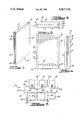
  • FIG. 1 is a perspective view of a flow-through porous electrode structure for an electrochemical system having a circulating electrolyte according to the present invention.
  • FIG. 2 is a top elevation view of the electrode structure shown in FIG. 1.
  • FIG. 3 is a side elevation view of the electrode structure shown in FIG. 1, particularly illustrating the spaced passage means according to the present invention in phantom lines.
  • FIG. 4 is a side elevation view of the electrode structure shown in FIG. 1, taken generally along the lines 4--4 of FIG. 3.
  • FIG. 5 is a fragmentary top elevation view of a comb-type cell element employing the flow-through porous electrode structure according to the present invention.
  • the electrode structure 10 includes a single unitary electrically conductive porous member 12 which is generally rectangular in shape.
  • the electrode member 12 includes two planar opposing faces 14 and 16 which each provide a reaction surface for electrochemical electron-transfer reactions of the same polarity. Accordingly, the electrode member 12 may be characterized as a unipolar electrode which has two active surfaces for oxidizing or reducing an electrochemical species.
  • this electrochemical species is chlorine, and the electrode member 12 is typically referred to as the "chlorine" or positive electrode.
  • chloride ions are oxidized at the "chlorine" electrode to generate chlorine gas, while during discharge dissolved chlorine is reduced at this electrode.
  • the electrode member 12 may be constructed from any suitable electrically conductive material which is both electrochemically active and chemically resistant or inert to the electrolyte and other chemical entities with which it will come into contact.
  • the electrode member 12 be constructed from a porous graphite, such as Union Carbide Corp. PG-60 graphite or Airco Speer 37-G graphite.
  • a porous graphite such as Union Carbide Corp. PG-60 graphite or Airco Speer 37-G graphite.
  • other graphites and electrically conductive porous materials may be employed, such as ruthenized titanium.
  • the electrode member 12 is shown to be provided with a plurality of vertically spaced, generally horizontally disposed passageways 18 for distributing the circulating electrolyte through the electrode.
  • the passageways 18 extend generally from a first side 20 of the electrode member 12 substantially across the width of the electrode member.
  • the electrode member 12 is also provided with a generally vertically disposed, outwardly opening channel 22, which is formed along the first side 20 of the electrode member for conveying the circulating electrolyte to the passageways 18.
  • the channel 22 is also formed with an outwardly projecting barrier portion 24 which operates to prevent electrolyte flow out through the bottom of the electrode member 12 in cooperation with a bus bar structure to be described with reference to FIG. 5.
  • the electrode member 12 is also provided with a generally vertically disposed venting passageway 26 which is in communication with each of the passageways 18 for facilitating the release of any undissolved gas present in the passageways 18. Since the electrode member 12 is porous, both gas and liquid will permeate the electrode structure, by working their way from the passageways 18 through the pores of the electrode member 12 to the exterior opposing faces 14 and 16 of the electrode member. However, depending upon the porousity of the electrode member 12, the viscosity of the electrolyte, and the amount of undissolved gas entrained with the electrolyte, the venting passageway 26 will serve to ensure that no undissolved gas is trapped within the electrode structure.
  • the venting passage 26 be disposed in close proximity to a second side 28 of the electrode member 12.
  • the distance between the second side 28 of the electrode member 12 and the edge of the venting passageway 26 is approximately one half of the distance between the passageways 18.
  • the passageways 18 have a generally circular cross section which is less than one third of the thickness of the electrode member 12.
  • shape and cross sectional magnitude of the passageways 18 may be varied depending upon the particular application of the electrode structure 10.
  • the electrode member 12 is provided with a total of twenty passageways 18, the number of these passageways may also vary in accordance with the particular application of the electrode structure 10. In one form of the present invention, it is preferred that the number of passageways 18 be between five and thirty-five, and that these passageways be equally spaced.
  • One important advantage of the present invention with respect to electrode structures having a large internal cavity is a substantial increase in the amount of electrically conductive porous material used to construct the electrode member 12.
  • a substantial increase in the amount of graphite contained in the electrode member will be provided in order to fill the areas between the passageways 18.
  • This increase in graphite has the combined effect of significantly increasing the mechanical strength of the electrode structure 10 and enhancing the electroconductivity of the electrode structure.
  • the passageways 18 according to the present invention permit the electrode structure to operate as a single electrode member which permits the conduction of electricity generally throughout the electrode structure.
  • This enhanced electroconductivity of the electrode structure 10 has also been found to enhance the voltaic characteristics of the porous electrodes in the zinc chloride battery cells. This increase in the voltaic performance during both charge and discharge is also believed to be due in part to a more uniform current distribution throughout the electrode structure 10 and/or an increase in the electrochemical activity of the electrode structure as a result of a more intense activation process.
  • the presence of the graphite between the passageways 18 will support or reinforce the structure along substantially the entire height and width of the electrode member 12. Accordingly, any tendency of the exterior faces 14 and 16 of the electrode member 12 to bow outwardly is resisted or prevented by the graphite provided between the passageways 18.
  • the passageways 18, as well as the venting passageway 26, are mechanically formed in the electrode member 12 by a suitable drilling mechanism. Since this drilling process may leave some graphite debris within the passageways, it is preferred that the passageways be cleaned with an appropriate wire brush and rinsed with deionized water before further use. Although this machining process will inevitably affect the cost of manufacturing the electrode structure 10, it should be noted that this cost will be offset, at least in part, by the elimination of the plastic or other nonconductive frame previously used to provide the internal cavity between two electrode members.
  • FIG. 5 a fragmentary top elevation view of a comb-type cell element 30 employing the flow-through porous electrode structure according to the present invention is shown.
  • the cell element 30 includes an electrically conductive bus member 32 having two generally planar opposing faces 34 and 36.
  • a plurality of porous electrode structures 38 are attached to the exterior face 34 of the bus member 32 via a press or interference fit connection.
  • the cell element 32 is also provided with a plurality of electrode structures 40 which are attached to the exterior face 36 of the bus member 32 via a similar press or interference fit connection. It should be noted that the electrode structures 38 and 40 are laterally staggered to permit the interdigitation of adjacent comb-type cell elements in the electrochemical system.
  • the electrode structures 38 in the comb-type cell element 30 each comprise flow-through porous electrode structures corresponding to the electrode structure 10 illustrated in FIGS. 1 through 4.
  • the electrode structures 40 each comprise a single electrode member adapted to have a polarity opposing that of the electrode structures 38.
  • the electrode structures 40 each are constructed from a dense or fine grained graphite which is generally both liquid and gas impermeable, such as Union Carbide Corp. CS grade graphite.
  • the bus member 32 is also comprised of a dense or fine grain graphite which has been preferably coated with a nonconductive material or otherwise masked from participating in any electrochemical reactions.
  • the comb-type cell element 30 is also provided with a plurality of feed tubes 42 which are adapted to be nestingly received in a channel 44 of the electrode structures 38 (generally corresponding to the channel 22 of the electrode structure 10).
  • the feed tubes 42 serve to convey the circulating electrolyte to each of the electrode structures 38.
  • suitable conduit means may be provided in the appropriate application to serve this function.
  • the feed tubes 42 may be made from any suitable electrically nonconductive material which is chemically resistant or inert to the electrolyte and other chemical entities with which they will come in contact.
  • each of the electrode structures 38 includes a barrier corresponding to the barrier 24 of electrode structure 10 for preventing the flow of electrolyte through the bottom of the electrode structures.
  • the electrode structures 38 When the electrode structures 38 are appropriately mounted to the bus member 32, these barrier portions will be in contact with the exterior face 34 of the bus member to block the flow of electrolyte.
  • a press or interference fit connection is illustrated in FIG. 5, it should be appreciated that other suitable mounting techniques may be employed in the appropriate application. Additionally, it is contemplated that the bus member 32 could itself be provided with suitable channels or other electrolyte conveying means in the place of the channels 44 of the electrode structures 38.
  • the flow-through porous electrode structures 10 and 38 may have the same exterior dimensions as that employed for previous electrodes in the appropriate electrochemical systems.
  • the flow-through porous electrode structures 10 and 38 may be employed in the cell elements without otherwise affecting the cell geometry.
  • other sizes and shapes of the electrode structures 10 and 28 may be provided in the appropriate application.

Landscapes

  • Engineering & Computer Science (AREA)
  • Manufacturing & Machinery (AREA)
  • Chemical & Material Sciences (AREA)
  • Chemical Kinetics & Catalysis (AREA)
  • Electrochemistry (AREA)
  • General Chemical & Material Sciences (AREA)
  • Hybrid Cells (AREA)
  • Inert Electrodes (AREA)

Abstract

A flow-through porous electrode structure for electrochemical systems having flowing electrolytes is disclosed. The flow-through porous electrode structure includes a single porous electrode having two planar opposing faces, each of which provides a reaction surface for electrochemical electron-transfer reactions of the same polarity. The porous electrode features spaced passage means which extends at least in part through the electrode between the opposing faces for distributing the circulating electrolyte through the electrode. The passage means comprises a plurality of vertically spaced, generally horizontally disposed passageways extending from a first side of the porous member. These passageways having a generally circular cross section and extend substantially across the width of the porous electrode member.

Description

BACKGROUND AND SUMMARY OF THE INVENTION
The present invention relates generally to electrode constructions for electrochemical systems, and particularly to flow-through porous electrodes for energy storage battery systems having circulating electrolytes.
Energy storage battery systems of the type referred to herein include one or more of the metal-halogen battery systems, such as a zinc-chloride battery system. These metal-halogen battery systems generally are comprised of three basic components, namely an electrode stack section, an electrolyte circulation subsystem, and a store subsystem. The electrode stack section typically includes a plurality of cells connected together electrically in various series and parallel combinations to achieve a desired operating voltage and current at the battery terminals over a charge/discharge battery cycle. Each cell is comprised of a positive and negative electrode which are both in contact with an aqueous metal-halogen electrolyte. The electrolyte circulation subsystem operates to circulate the metal-halogen electrolyte from a reservoir through each of the cells in the electrode stack in order to replenish the metal and halogen electrolyte components as they are oxidized or reduced in the cells during the battery cycle. In a closed, self-contained metal-halogen battery system, the storage subsystem is used to contain the halogen gas or liquid which is liberated from the cells during the charging of the battery system for subsequent return to the cells during the discharging of the battery system. In the zinc-chloride battery system, chlorine gas is liberated from the positive electrodes of the cells and stored in the form of chlorine hydrate. Chlorine hydrate is a solid which is formed by the store subsystem in a process analogous to the process of freezing water where chlorine is included in the ice crystal.
With reference to the general operation of a zinc-chloride battery system, an electrolyte pump operates to circulate the aqueous zinc-chloride electrolyte from a reservoir to each of the positive "chlorine" electrodes in the electrode stack. These chlorine electrodes are typically made of porous graphite, and the electrolyte passes through the pores of the chlorine electrodes into a space between the chlorine electrodes and the opposing negative or "zinc" electrodes. The electrolyte then flows up between the opposing electrodes or otherwise out of the cells in the electrode stack and back to the electrolyte reservoir or sump.
During the charging of the zinc-chloride battery system, zinc metal is deposited on the zinc electrode substrates and chlorine gas is liberated or generated at the chlorine electrode. The chlorine gas is collected in a suitable conduit, and then mixed with a chilled liquid to form chlorine hydrate. A gas pump is typically employed to draw the chlorine gas from the electrode stack and mix it with the chilled liquid, (i.e., generally either zinc-chloride electrolyte or water). The chlorine hydrate is then deposited in a store container until the battery system is to be discharged.
During the discharging of the zinc-chloride battery system, the chlorine hydrate is decomposed by permitting temperature to increase, such as by circulating a warm liquid through the store container. The chlorine gas thereby recovered is returned to the electrode stack via the electrolyte circulation subsystem, where it is reduced at the chlorine electrodes. Simultaneously, the zinc metal is dissolved off of the zinc electrode substrates, and power is available at the battery terminals.
Over the course of the zinc-chloride battery charge/discharge cycle, the concentration of the electrolyte varies as a result of the electrochemical reactions occurring at the electrodes in the cells of the electrode stack. At the beginning of charge, the concentration of zinc-chloride in the aqueous electrolyte may typically be 2.0 Molar. As the charging portion of the cycle progresses, the electrolyte concentration will gradually decrease with the depletion of zinc and chlorine ions from the electrolyte. When the battery system is fully charged, the electrolyte concentration will typically be reduced to 0.5 Molar. Then, as the battery system is discharged, the electrolyte concentration will gradually swing upwardly and return to the original 2.0 Molar concentration when the battery system is completely or fully discharged.
Further discussion of the structure and operation of zinc-chloride battery systems may be found in the following commonly assigned patents: Symons U.S. Pat. No. 3,713,888 entitled "Process For Electrical Energy Using Solid Halogen Hydrates"; Symons U.S. Pat. No. 5,809,578 entitled "Process For Forming And Storing Halogen Hydrate In A Battery"; Carr et al U.S. Pat. No. 3,909,298 entitled "Batteries Comprising Vented Electrodes And Method Of using Same"; Carr U.S. Pat. No. 4,100,332 entitled "Comb Type Bipolar Electrode Elements And Battery Stack Thereof". Such systems are also described in published reports prepared by the assignee herein, such as "Development of the Zinc-Chloride Battery for Utility Applications", Interim Report EM-1417, May 1980, and "Development of the Zinc-Chloride Battery for Utility Applications", Interim Report EM-1051, April 1979, both prepared for the Electric Power Research Institute, Palo Alto, Calif. The specific teachings of the aforementioned cited references are incorporated herein by reference.
The present invention is directed to an improved flow-through porous electrode structure for electrochemical systems having circulating electrolytes, and which is also especially advantageous in zinc-chloride battery systems. Prior unipolar porous electrode structures for zinc-chloride battery systems have generally comprised two electrode members which were either separated by a non-conductive frame or profiled to form an internal cavity between the two members. One of these two approaches is discussed in detail in the commonly assigned Carr et al U.S. Pat. No. 4,241,150, entitled "Method For Control Of Edge Effects Of Oxidant Electrode", which is hereby incorporated by reference. A detailed discussion of the other of these approaches may be found in the "Development of the Zinc-Chloride Battery for Utility Applications" report, May, 1980, identified above. While these prior approaches have their respective advantages, one drawback is their relative vulnerability to bowing and breakage. With the internal cavity of these prior approaches, a substantial portion of the surface area of the electrodes members was unsupported with respect to transversely directed forces. Accordingly, the electrolyte flowing through the porous electrode members from the internal cavity would have a tendency to bow both electrode members outwardly. Although efforts have been to reinforce the two electrode members of these prior designs, these efforts have been limited to reinforcing only the center of the electrodes, such as by employing a pin to connect the two electrodes together at the center.
When graphite is used to construct the porous electrode members in zinc-chloride battery systems, these electrodes typically undergo a "activation" process to decrease the oxidation and reduction chlorine overvoltages of these electrodes. A detailed discussion of typical activation processes may be found in the following commonly assigned patents: Hart, U.S. Pat. No. 4,120,774 entitled "Reduction Of Electrode Overvoltage"; Laetham et al, U.S. Pat. No. 4,273,839 entitled "Activating Carbonaceous Electrodes". The specific teachings of these references are hereby incorporated by reference. Due to the nature of these activation processes, the porous graphite electrodes are placed in a substantially more stressful environment than encountered during normal battery operation. Depending on the intensity and length of these activation processes, the tendency of the prior porous electrodes to bow or break is exacerbated due to the severity of this environment. As will be appreciated by those skilled in the art, any deformation of the electrodes will alter the cell geometry, and thereby adversely affect the performance of the cell.
Accordingly, it is a principle object of the present invention to provide an improved flow-through porous electrode structure for electrochemical systems having circulating electrolytes.
It is a more specific object of the present invention to provide a flow-through porous electrode structure which has increased mechanical strength to resist any tendency towards bowing, breakage, or other deformation.
It is another object of the present invention to provide a flow-through porous electrode structure which has the ability to withstand a severe activation process to achieve enhanced voltaic performance of the electrode and/or decrease the time required for activation.
It is a further object of the present invention to provide a flow-through porous electrode structure which controls the flow of electrolyte through the electrode, yet also achieves a uniform distribution of electrolyte flow through the electrode.
It is an additional object of the present invention to provide a flow-through porous electrode structure for a zinc-chloride battery system which may readily be employed in a comb-type cell element providing the basic building block for constructing electrode stacks.
To achieve the foregoing object, the present invention provides a flow-through porous electrode structure generally comprising a porous electrode having two planar opposing faces, each of which provides a reaction surface for electron-transfer reactions of the same polarity. The porous electrode includes spaced passage means which extends at least in part through the electrode between the opposing faces for distributing the circulating electrolyte through the electrode. In a preferred form of the invention, the porous electrode comprises a single electrically conductive porous member which has the same outer dimensions as those employed for prior electrode structures of the same type. The passage means comprises a plurality of vertically spaced, generally horizontal disposed passageways extending from a first side of the porous member. These passageways have a generally circular cross-section and extend substantially across the width of the porous electrode member.
Additional advantages and features of the present invention will become apparent from a reading of the detailed description of the preferred embodiment which makes reference to the following set of drawings in which:
BRIEF DESCRIPTION OF THE DRAWINGS
FIG. 1 is a perspective view of a flow-through porous electrode structure for an electrochemical system having a circulating electrolyte according to the present invention.
FIG. 2 is a top elevation view of the electrode structure shown in FIG. 1.
FIG. 3 is a side elevation view of the electrode structure shown in FIG. 1, particularly illustrating the spaced passage means according to the present invention in phantom lines.
FIG. 4 is a side elevation view of the electrode structure shown in FIG. 1, taken generally along the lines 4--4 of FIG. 3.
FIG. 5 is a fragmentary top elevation view of a comb-type cell element employing the flow-through porous electrode structure according to the present invention.
DETAILED DESCRIPTION OF THE PREFERRED EMBODIMENT
Referring to FIG. 1, a perspective view of a flow-through porous electrode structure 10 for an electrochemical system having a circulating electrolyte is shown. The electrode structure 10 includes a single unitary electrically conductive porous member 12 which is generally rectangular in shape. The electrode member 12 includes two planar opposing faces 14 and 16 which each provide a reaction surface for electrochemical electron-transfer reactions of the same polarity. Accordingly, the electrode member 12 may be characterized as a unipolar electrode which has two active surfaces for oxidizing or reducing an electrochemical species. In the zinc-chloride battery system, this electrochemical species is chlorine, and the electrode member 12 is typically referred to as the "chlorine" or positive electrode. During the charging of a zinc-chloride battery system, chloride ions are oxidized at the "chlorine" electrode to generate chlorine gas, while during discharge dissolved chlorine is reduced at this electrode.
Depending upon the particular electrochemical system in which the electrode structure 10 is employed, the electrode member 12 may be constructed from any suitable electrically conductive material which is both electrochemically active and chemically resistant or inert to the electrolyte and other chemical entities with which it will come into contact. In the zinc-chloride battery system, it is preferred that the electrode member 12 be constructed from a porous graphite, such as Union Carbide Corp. PG-60 graphite or Airco Speer 37-G graphite. However, it should be appreciated that other graphites and electrically conductive porous materials may be employed, such as ruthenized titanium.
Referring now to FIGS. 1 through 4, the electrode member 12 is shown to be provided with a plurality of vertically spaced, generally horizontally disposed passageways 18 for distributing the circulating electrolyte through the electrode. As may best be seen with respect to FIG. 3, the passageways 18 extend generally from a first side 20 of the electrode member 12 substantially across the width of the electrode member. The electrode member 12 is also provided with a generally vertically disposed, outwardly opening channel 22, which is formed along the first side 20 of the electrode member for conveying the circulating electrolyte to the passageways 18. The channel 22 is also formed with an outwardly projecting barrier portion 24 which operates to prevent electrolyte flow out through the bottom of the electrode member 12 in cooperation with a bus bar structure to be described with reference to FIG. 5. The electrode member 12 is also provided with a generally vertically disposed venting passageway 26 which is in communication with each of the passageways 18 for facilitating the release of any undissolved gas present in the passageways 18. Since the electrode member 12 is porous, both gas and liquid will permeate the electrode structure, by working their way from the passageways 18 through the pores of the electrode member 12 to the exterior opposing faces 14 and 16 of the electrode member. However, depending upon the porousity of the electrode member 12, the viscosity of the electrolyte, and the amount of undissolved gas entrained with the electrolyte, the venting passageway 26 will serve to ensure that no undissolved gas is trapped within the electrode structure. In order to facilitate a uniform distribution of electrolyte through the electrode member 12, it is preferred that the venting passage 26 be disposed in close proximity to a second side 28 of the electrode member 12. In one form of the present inventio, the distance between the second side 28 of the electrode member 12 and the edge of the venting passageway 26 is approximately one half of the distance between the passageways 18.
As may best be seen with reference to FIG. 4, the passageways 18 have a generally circular cross section which is less than one third of the thickness of the electrode member 12. However, it should be appreciated that the shape and cross sectional magnitude of the passageways 18 may be varied depending upon the particular application of the electrode structure 10. Similarly, although the electrode member 12 is provided with a total of twenty passageways 18, the number of these passageways may also vary in accordance with the particular application of the electrode structure 10. In one form of the present invention, it is preferred that the number of passageways 18 be between five and thirty-five, and that these passageways be equally spaced. Since the size, number and spacing of these passageways will affect the distribution of electrolyte through the electrode member 12, the dimensions for these variables should be selected to provide for a substantially uniform distribution of electrolyte flow through the electrode member. Additionally, another consideration which would be expected to significantly affect the dimensions of the above variables would be the hydraulic effect of the passageways 18 on the electrolyte circulation. With the elimination of the large internal cavity employed in prior unipolar electrode structures of this type, a significant increase in the pressure drop across electrode structure 10 would be expected due to the constriction of electrolyte flow through the passageways 18. However, it has been found that the passageways according to the present invention do not appreciably affect the pressure drop across the electrode structure 10 while still providing a uniform distribution of electrolyte flow through the electrode member 12.
One important advantage of the present invention with respect to electrode structures having a large internal cavity, is a substantial increase in the amount of electrically conductive porous material used to construct the electrode member 12. Thus, for example, where graphite is employed to construct the electrode member 12, a substantial increase in the amount of graphite contained in the electrode member will be provided in order to fill the areas between the passageways 18. This increase in graphite has the combined effect of significantly increasing the mechanical strength of the electrode structure 10 and enhancing the electroconductivity of the electrode structure. Contrary to prior electrode structures where the internal cavity separated two generally independent electrode members, the passageways 18 according to the present invention permit the electrode structure to operate as a single electrode member which permits the conduction of electricity generally throughout the electrode structure. This enhanced electroconductivity of the electrode structure 10 has also been found to enhance the voltaic characteristics of the porous electrodes in the zinc chloride battery cells. This increase in the voltaic performance during both charge and discharge is also believed to be due in part to a more uniform current distribution throughout the electrode structure 10 and/or an increase in the electrochemical activity of the electrode structure as a result of a more intense activation process. As to the increased mechanical strength of the electrode structure 10, it should be appreciated that the presence of the graphite between the passageways 18 will support or reinforce the structure along substantially the entire height and width of the electrode member 12. Accordingly, any tendency of the exterior faces 14 and 16 of the electrode member 12 to bow outwardly is resisted or prevented by the graphite provided between the passageways 18.
In one form of the present invention, the passageways 18, as well as the venting passageway 26, are mechanically formed in the electrode member 12 by a suitable drilling mechanism. Since this drilling process may leave some graphite debris within the passageways, it is preferred that the passageways be cleaned with an appropriate wire brush and rinsed with deionized water before further use. Although this machining process will inevitably affect the cost of manufacturing the electrode structure 10, it should be noted that this cost will be offset, at least in part, by the elimination of the plastic or other nonconductive frame previously used to provide the internal cavity between two electrode members.
Referring to FIG. 5, a fragmentary top elevation view of a comb-type cell element 30 employing the flow-through porous electrode structure according to the present invention is shown. The cell element 30 includes an electrically conductive bus member 32 having two generally planar opposing faces 34 and 36. A plurality of porous electrode structures 38 are attached to the exterior face 34 of the bus member 32 via a press or interference fit connection. The cell element 32 is also provided with a plurality of electrode structures 40 which are attached to the exterior face 36 of the bus member 32 via a similar press or interference fit connection. It should be noted that the electrode structures 38 and 40 are laterally staggered to permit the interdigitation of adjacent comb-type cell elements in the electrochemical system. To illustrate this interdigitation of adjacent cell elements, the electrode structures from adjacent cell elements are indicated by their corresponding reference numeralsl primed. A more detailed discussion of these comb-type cell elements may be found in the Carr U.S. Pat. No. 4,100,332, entitled "Comb-Type Bipolar Electrode Elements and Battery Stacks Therefor" identified above.
The electrode structures 38 in the comb-type cell element 30 each comprise flow-through porous electrode structures corresponding to the electrode structure 10 illustrated in FIGS. 1 through 4. The electrode structures 40 each comprise a single electrode member adapted to have a polarity opposing that of the electrode structures 38. In the zinc-chloride battery system, the electrode structures 40 each are constructed from a dense or fine grained graphite which is generally both liquid and gas impermeable, such as Union Carbide Corp. CS grade graphite. The bus member 32 is also comprised of a dense or fine grain graphite which has been preferably coated with a nonconductive material or otherwise masked from participating in any electrochemical reactions.
The comb-type cell element 30 is also provided with a plurality of feed tubes 42 which are adapted to be nestingly received in a channel 44 of the electrode structures 38 (generally corresponding to the channel 22 of the electrode structure 10). The feed tubes 42 serve to convey the circulating electrolyte to each of the electrode structures 38. However, it should be appreciated that other suitable conduit means may be provided in the appropriate application to serve this function. The feed tubes 42 may be made from any suitable electrically nonconductive material which is chemically resistant or inert to the electrolyte and other chemical entities with which they will come in contact. While it is preferred that DuPont Teflon (tetrafluorinated ethylene) be employed to construct the feed tubes 42, other suitable plastic materials which may be employed are Penwalde Kinard (polyvinylidene fluoride), General Tire and Rubber Corp., Boltron polyvinylchloride (4008-2124), or any of the other appropriate materials described in Section 33 of The Development of the Zinc-Chloride Battery for Utility Applications, April 1979 report identified earlier. It should also be noted that each of the electrode structures 38 includes a barrier corresponding to the barrier 24 of electrode structure 10 for preventing the flow of electrolyte through the bottom of the electrode structures. When the electrode structures 38 are appropriately mounted to the bus member 32, these barrier portions will be in contact with the exterior face 34 of the bus member to block the flow of electrolyte. Although a press or interference fit connection is illustrated in FIG. 5, it should be appreciated that other suitable mounting techniques may be employed in the appropriate application. Additionally, it is contemplated that the bus member 32 could itself be provided with suitable channels or other electrolyte conveying means in the place of the channels 44 of the electrode structures 38.
Another advantage of the present invention is that the flow-through porous electrode structures 10 and 38 may have the same exterior dimensions as that employed for previous electrodes in the appropriate electrochemical systems. Thus, in a zinc-chloride battery system which employs a comb-type cell element as the basic building block for constructing large electrode stacks, the flow-through porous electrode structures 10 and 38 may be employed in the cell elements without otherwise affecting the cell geometry. However, it should be appreciated that other sizes and shapes of the electrode structures 10 and 28 may be provided in the appropriate application.
It will be appreciated that the above disclosed embodiment is well calculated to achieve the aforementioned objects of the present invention. In addition, it is evident that those skilled in the art, once given the benefit of the foregoing disclosure, may now make modificiations of the specific embodiment described herein without departing from the spirit of the present invention. Such modifications are to be considered within the scope fo the present invention which is limited solely by the scope and spirit of the appended claims.
Claims (6)

What is claimed is:
1. An electrode assembly for metal-halogen pumped electrolyte battery comprising:
electrically conductive elongated bus member having generally opposing faces;
a porous unitary electrode having two generally planar opposing faces, each of which provide a reaction surface for electron-transfer reactions of the same polarity;
said electrode being generally rectangular and defining lengthwise and widthwise dimensions;
said porous electrode being connected by means of interference fit to one of said opposing faces of said bus member such that said lengthwise and widthwise dimensions are orthogonal to said bus member;
said porous electrode having first and second parallel sides extending lengthwise along said opposing faces, said first side contacting said bus member;
a channel formed along said first side and extending substantially the entire lengthwise dimension of said electrode, said channel having a barrier portion disposed in an end of said channel, said barrier portion cooperating with said bus bar to inhibit electrolyte flow through the bottom of said electrode;
a plurality of parallel passageways extending within the interior of said electrode and parallel to said widthwise dimension, said passageways communicating with said channel and terminating within the interior of said electrode and adjacent said second side;
a venting passageway extending within the interior of said electrode and parallel to said lengthwise dimension, said venting passageway communicating with said parallel passageways and adjacent said second side;
feed tube disposed at least partially within said channel for introducing electrolyte into said channel.
2. The electrode assembly of claim 1 wherein said porous electrode comprises a graphite material.
3. The electrode assembly of claim 1 wherein said parallel passageways are spaced a predetermined first distance apart and wherein said venting passageway is disposed a second distance from said second side, said second distance being less than said first distance.
4. The electrode assembly of claim 3 wherein said second distance is approximately one-half said first distance.
5. The electrode assembly of claim 1 further comprising at least twenty generally equally spaced parallel passageways.
6. The electrode assembly of claim 1 wherein said feed tube is constructed of a plastic material.
US06/656,893 1984-10-01 1984-10-01 Flow-through porous electrodes Expired - Fee Related US4567120A (en)

Priority Applications (2)

Application Number Priority Date Filing Date Title
US06/656,893 US4567120A (en) 1984-10-01 1984-10-01 Flow-through porous electrodes
JP60217781A JPH0821385B2 (en) 1984-10-01 1985-09-30 Flow-porous electrode

Applications Claiming Priority (1)

Application Number Priority Date Filing Date Title
US06/656,893 US4567120A (en) 1984-10-01 1984-10-01 Flow-through porous electrodes

Publications (1)

Publication Number Publication Date
US4567120A true US4567120A (en) 1986-01-28

Family

ID=24635009

Family Applications (1)

Application Number Title Priority Date Filing Date
US06/656,893 Expired - Fee Related US4567120A (en) 1984-10-01 1984-10-01 Flow-through porous electrodes

Country Status (2)

Country Link
US (1) US4567120A (en)
JP (1) JPH0821385B2 (en)

Cited By (13)

* Cited by examiner, † Cited by third party
Publication number Priority date Publication date Assignee Title
US5045415A (en) * 1988-12-13 1991-09-03 Pita Witehira Electrode plate structure
US20100009243A1 (en) * 2007-01-16 2010-01-14 Primus Power Corporation Electrochemical energy cell system
US20100021805A1 (en) * 2007-01-16 2010-01-28 Primus Power Corporation Electrochemical energy generation system
US20110200853A1 (en) * 2010-02-12 2011-08-18 Primus Power Corporation Shunt current interruption in electrochemical energy generation system
US20110223451A1 (en) * 2010-09-08 2011-09-15 Primus Power Corporation Metal electrode assembly for flow batteries
US8137831B1 (en) 2011-06-27 2012-03-20 Primus Power Corporation Electrolyte flow configuration for a metal-halogen flow battery
US20120298526A1 (en) * 2011-05-27 2012-11-29 Atlantis Life Systems Incorporated Method and apparatus for electrochemical treatment of contaminated water or wastewater
US8450001B2 (en) 2010-09-08 2013-05-28 Primus Power Corporation Flow batter with radial electrolyte distribution
US8928327B2 (en) 2012-11-20 2015-01-06 Primus Power Corporation Mass distribution indication of flow battery state of charge
US8945739B2 (en) 2012-04-06 2015-02-03 Primus Power Corporation Fluidic architecture for metal-halogen flow battery
US9478803B2 (en) 2011-06-27 2016-10-25 Primus Power Corporation Electrolyte flow configuration for a metal-halogen flow battery
US9490496B2 (en) 2013-03-08 2016-11-08 Primus Power Corporation Reservoir for multiphase electrolyte flow control
US10290891B2 (en) 2016-01-29 2019-05-14 Primus Power Corporation Metal-halogen flow battery bipolar electrode assembly, system, and method

Citations (14)

* Cited by examiner, † Cited by third party
Publication number Priority date Publication date Assignee Title
US3713888A (en) * 1970-06-26 1973-01-30 Oxy Metal Finishing Corp Process for electrical energy using solid halogen hydrates
US3772085A (en) * 1971-11-18 1973-11-13 Occidental Energy Dev Co Method and apparatus for improving efficiency of high energy density batteries of metal-metal halide-halogen type by boundary layer
US3773560A (en) * 1971-11-18 1973-11-20 Occidental Energy Dev Co Circulation of electrolyte over a metal electrode of a cell in a high energy density battery
US3813301A (en) * 1971-11-18 1974-05-28 Occidental Energy Dev Co Process of charging and discharging a metal halogen cell
US3849202A (en) * 1971-12-20 1974-11-19 Co General D Electricite Method of manufacturing a metal-air battery
US3909298A (en) * 1971-11-18 1975-09-30 Energy Dev Ass Batteries comprising vented electrodes and method of using same
US3954502A (en) * 1973-08-31 1976-05-04 Energy Development Associates Bipolar electrode for cell of high energy density secondary battery
US4071660A (en) * 1976-04-26 1978-01-31 Energy Development Associates Electrode for a zinc-chloride battery and batteries containing the same
US4100332A (en) * 1977-02-22 1978-07-11 Energy Development Associates Comb type bipolar electrode elements and battery stacks thereof
US4120774A (en) * 1977-01-24 1978-10-17 Energy Development Associates Reduction of electrode overvoltage
US4127701A (en) * 1971-11-18 1978-11-28 Energy Development Associates Refuelable electrical energy storage device
US4414291A (en) * 1980-12-24 1983-11-08 United Technologies Corporation Method for reducing electrolyte loss from an electrochemical cell
US4444851A (en) * 1982-06-28 1984-04-24 Energy Research Corporation Fuel cell stack
US4481266A (en) * 1983-03-25 1984-11-06 Littauer Ernest L Reactive metal battery having continuous supply of cathode reactant

Patent Citations (15)

* Cited by examiner, † Cited by third party
Publication number Priority date Publication date Assignee Title
US3809578A (en) * 1970-06-26 1974-05-07 Occidental Energy Dev Co Process for forming and storing halogen hydrate in a battery
US3713888A (en) * 1970-06-26 1973-01-30 Oxy Metal Finishing Corp Process for electrical energy using solid halogen hydrates
US3909298A (en) * 1971-11-18 1975-09-30 Energy Dev Ass Batteries comprising vented electrodes and method of using same
US3773560A (en) * 1971-11-18 1973-11-20 Occidental Energy Dev Co Circulation of electrolyte over a metal electrode of a cell in a high energy density battery
US3813301A (en) * 1971-11-18 1974-05-28 Occidental Energy Dev Co Process of charging and discharging a metal halogen cell
US3772085A (en) * 1971-11-18 1973-11-13 Occidental Energy Dev Co Method and apparatus for improving efficiency of high energy density batteries of metal-metal halide-halogen type by boundary layer
US4127701A (en) * 1971-11-18 1978-11-28 Energy Development Associates Refuelable electrical energy storage device
US3849202A (en) * 1971-12-20 1974-11-19 Co General D Electricite Method of manufacturing a metal-air battery
US3954502A (en) * 1973-08-31 1976-05-04 Energy Development Associates Bipolar electrode for cell of high energy density secondary battery
US4071660A (en) * 1976-04-26 1978-01-31 Energy Development Associates Electrode for a zinc-chloride battery and batteries containing the same
US4120774A (en) * 1977-01-24 1978-10-17 Energy Development Associates Reduction of electrode overvoltage
US4100332A (en) * 1977-02-22 1978-07-11 Energy Development Associates Comb type bipolar electrode elements and battery stacks thereof
US4414291A (en) * 1980-12-24 1983-11-08 United Technologies Corporation Method for reducing electrolyte loss from an electrochemical cell
US4444851A (en) * 1982-06-28 1984-04-24 Energy Research Corporation Fuel cell stack
US4481266A (en) * 1983-03-25 1984-11-06 Littauer Ernest L Reactive metal battery having continuous supply of cathode reactant

Cited By (25)

* Cited by examiner, † Cited by third party
Publication number Priority date Publication date Assignee Title
US5045415A (en) * 1988-12-13 1991-09-03 Pita Witehira Electrode plate structure
US8236445B2 (en) 2007-01-16 2012-08-07 Primus Power Corporation Electrochemical energy system
US20100009243A1 (en) * 2007-01-16 2010-01-14 Primus Power Corporation Electrochemical energy cell system
US20100021805A1 (en) * 2007-01-16 2010-01-28 Primus Power Corporation Electrochemical energy generation system
US20110070468A9 (en) * 2007-01-16 2011-03-24 Primus Power Corporation Electrochemical energy cell system
US8956745B2 (en) 2007-01-16 2015-02-17 Primus Power Corporation Metal halogen electrochemical cell system
US8415042B2 (en) 2007-01-16 2013-04-09 Primus Power Corporation Metal halogen electrochemical cell system
US8039161B2 (en) 2007-01-16 2011-10-18 Primus Power Corporation Metal halogen electrochemical cell system
US8114541B2 (en) 2007-01-16 2012-02-14 Primus Power Corporation Electrochemical energy generation system
US8268480B1 (en) 2007-01-16 2012-09-18 Primus Power Corporation Electrochemical energy system
US8273472B2 (en) 2010-02-12 2012-09-25 Primus Power Corporation Shunt current interruption in electrochemical energy generation system
US20110200853A1 (en) * 2010-02-12 2011-08-18 Primus Power Corporation Shunt current interruption in electrochemical energy generation system
US20110223451A1 (en) * 2010-09-08 2011-09-15 Primus Power Corporation Metal electrode assembly for flow batteries
US8450001B2 (en) 2010-09-08 2013-05-28 Primus Power Corporation Flow batter with radial electrolyte distribution
US8202641B2 (en) 2010-09-08 2012-06-19 Primus Power Corporation Metal electrode assembly for flow batteries
US20120298526A1 (en) * 2011-05-27 2012-11-29 Atlantis Life Systems Incorporated Method and apparatus for electrochemical treatment of contaminated water or wastewater
US8137831B1 (en) 2011-06-27 2012-03-20 Primus Power Corporation Electrolyte flow configuration for a metal-halogen flow battery
US9478803B2 (en) 2011-06-27 2016-10-25 Primus Power Corporation Electrolyte flow configuration for a metal-halogen flow battery
US9130217B2 (en) 2012-04-06 2015-09-08 Primus Power Corporation Fluidic architecture for metal-halogen flow battery
US8945739B2 (en) 2012-04-06 2015-02-03 Primus Power Corporation Fluidic architecture for metal-halogen flow battery
US9627704B2 (en) 2012-04-06 2017-04-18 Primus Power Corporation Fluidic architecture for metal-halogen flow battery
US8933701B2 (en) 2012-11-20 2015-01-13 Primus Power Corporation Mass distribution indication of flow battery state of charge
US8928327B2 (en) 2012-11-20 2015-01-06 Primus Power Corporation Mass distribution indication of flow battery state of charge
US9490496B2 (en) 2013-03-08 2016-11-08 Primus Power Corporation Reservoir for multiphase electrolyte flow control
US10290891B2 (en) 2016-01-29 2019-05-14 Primus Power Corporation Metal-halogen flow battery bipolar electrode assembly, system, and method

Also Published As

Publication number Publication date
JPS61165959A (en) 1986-07-26
JPH0821385B2 (en) 1996-03-04

Similar Documents

Publication Publication Date Title
US4180623A (en) Electrically rechargeable battery
US4567120A (en) Flow-through porous electrodes
US5650239A (en) Method of electrode reconditioning
CA1149864A (en) Electrochemical cell
US4948681A (en) Terminal electrode
US4555454A (en) Reinforced consumable electrode, electrochemical cell and method
US4746585A (en) Comb-type bipolar stack
US3954502A (en) Bipolar electrode for cell of high energy density secondary battery
KR101696034B1 (en) Hybride Flow Battery and Electrolyte Solution for The Same
US4185143A (en) Water activated batteries
US3909298A (en) Batteries comprising vented electrodes and method of using same
DE2422577B2 (en) Rechargeable galvanic cell and method of operating this cell
AU556873B2 (en) Reactive metal battery having continuous supply of cathode reactant
GB2098238A (en) An electrochemical cell
EP3427324B1 (en) Electrode solutions and electrochemical cells and batteries therefrom
DE2507396A1 (en) ELECTROCHEMICAL CELL
EP0034492B1 (en) Electrochemical device having means for reducing shunt current
GB1472517A (en) Multi-cell galvanic batteries
CA2085139C (en) Method of operating metal-halogen battery
US9184454B1 (en) Mixing arrangement for a flow cell of an energy storage system
KR20010015693A (en) Electrochemical generators producing electricity by oxidising a metal and reducing an oxidising gas
US4288507A (en) Control of edge effects of oxidant electrode
US4241150A (en) Method for control of edge effects of oxidant electrode
CA1190594A (en) Electrochemical device
HU196533B (en) Lead accumulator, preferably for long-lasting uniform employment

Legal Events

Date Code Title Description
AS Assignment

Owner name: ENERGY DEVELOPMENT ASSOCIATES 1100 WEST WHITCOMB A

Free format text: ASSIGNMENT OF ASSIGNORS INTEREST.;ASSIGNORS:JORNE, JACOB;ROAYAIE, EMAD;SHAH, ATUL;REEL/FRAME:004319/0390

Effective date: 19840731

FEPP Fee payment procedure

Free format text: PAYOR NUMBER ASSIGNED (ORIGINAL EVENT CODE: ASPN); ENTITY STATUS OF PATENT OWNER: LARGE ENTITY

FPAY Fee payment

Year of fee payment: 4

FPAY Fee payment

Year of fee payment: 8

REMI Maintenance fee reminder mailed
LAPS Lapse for failure to pay maintenance fees
FP Lapsed due to failure to pay maintenance fee

Effective date: 19980128

STCH Information on status: patent discontinuation

Free format text: PATENT EXPIRED DUE TO NONPAYMENT OF MAINTENANCE FEES UNDER 37 CFR 1.362