US4317159A - AC Capacitor and impregnant therefor - Google Patents
AC Capacitor and impregnant therefor Download PDFInfo
- Publication number
- US4317159A US4317159A US06/101,618 US10161879A US4317159A US 4317159 A US4317159 A US 4317159A US 10161879 A US10161879 A US 10161879A US 4317159 A US4317159 A US 4317159A
- Authority
- US
- United States
- Prior art keywords
- fluid
- isocyanate
- dinp
- capacitor according
- dielectric
- Prior art date
- Legal status (The legal status is an assumption and is not a legal conclusion. Google has not performed a legal analysis and makes no representation as to the accuracy of the status listed.)
- Expired - Lifetime
Links
Images
Classifications
-
- H—ELECTRICITY
- H01—ELECTRIC ELEMENTS
- H01B—CABLES; CONDUCTORS; INSULATORS; SELECTION OF MATERIALS FOR THEIR CONDUCTIVE, INSULATING OR DIELECTRIC PROPERTIES
- H01B3/00—Insulators or insulating bodies characterised by the insulating materials; Selection of materials for their insulating or dielectric properties
- H01B3/18—Insulators or insulating bodies characterised by the insulating materials; Selection of materials for their insulating or dielectric properties mainly consisting of organic substances
- H01B3/20—Insulators or insulating bodies characterised by the insulating materials; Selection of materials for their insulating or dielectric properties mainly consisting of organic substances liquids, e.g. oils
-
- H—ELECTRICITY
- H01—ELECTRIC ELEMENTS
- H01G—CAPACITORS; CAPACITORS, RECTIFIERS, DETECTORS, SWITCHING DEVICES, LIGHT-SENSITIVE OR TEMPERATURE-SENSITIVE DEVICES OF THE ELECTROLYTIC TYPE
- H01G4/00—Fixed capacitors; Processes of their manufacture
- H01G4/002—Details
- H01G4/018—Dielectrics
- H01G4/20—Dielectrics using combinations of dielectrics from more than one of groups H01G4/02 - H01G4/06
- H01G4/22—Dielectrics using combinations of dielectrics from more than one of groups H01G4/02 - H01G4/06 impregnated
- H01G4/221—Dielectrics using combinations of dielectrics from more than one of groups H01G4/02 - H01G4/06 impregnated characterised by the composition of the impregnant
Definitions
- This invention relates to an AC capacitor containing as its impregnant system a dielectric fluid containing an aliphatic or aromatic isocyanate to improve the life characteristics of the capacitor.
- dielectric fluid impregnated capacitors used polychlorinated biphenyls or PCB's.
- Environmental concerns have caused a reduction in their usage, and non-halogenated organic liquids are being used more frequently.
- Some of these non-halogenated materials are ester-based fluids, frequently stabilized by epoxides.
- metallized AC capacitors impregnated with them show a capacitance loss on life testing. This loss may be caused by corona, traces of water or acids, or incomplete impregnation of wound sections.
- the isocyanates also appear to scavenge trace amounts of water and acids and react with them releasing carbon dioxide that is either evacuated during vacuum impregnation or is present in small enough amounts to cause no observable harmful effect.
- the isocyanate would also react with water, active hydrogen, or residual alcohol. Most likely, the unreacted isocyanate scavenges any water, acid, alcohol, and/or hydrogen present, accounting for the reduced loss of capacitance on AC life test of metallized capacitors.
- isocyanates tried were effective in reducing capacitance loss of metallized capacitors on AC life test.
- the choice of isocyanate will generally be governed by considerations of safety, solubility in the primary impregnant, and other electrical properties.
- the dielectric fluids generally used in AC capacitors are ester-based fluids such as 2-ethyl-hexylphthalate or diisononylphthalate, and aromatic hydrocarbons such as isopropyl biphenyl or phenyl xylyl ethane.
- An epoxide is usually present as a stabilizer, particularly with the two phthalates.
- the metallized capacitors that utilize the dielectric fluid containing the isocyanate utilize film separators rather than paper.
- the isocyanate additive has been used in non-metallized capacitors, but, since the relatively massive foil electrodes in these are not destroyed as easily as metallized ones are, the effect on capacitance loss is not as apparent. However, an improvement would be expected by use of an isocyanate additive in metallized kraft paper capacitors.
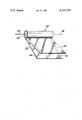
- FIGURE depicts a partly unwound capacitor section in which the improved dielectric composition of the present invention is used as the impregnant.
- a metallized film section 10 such as is shown partly unrolled in the FIGURE, consists of two metallized-film electrodes 12 and 14 e.g., aluminized polypropylene.
- the electrodes 12 and 14 are provided with unmetallized margins 13 and 15, respectively, which are oppositely positioned in the winding 10 so that the metallized portion of each electrode is available for lead contact at only one edge of the winding.
- the ends of the wound section 10 are covered with metallic spray or solder 20, and tabs or leads 16 and 18 are connected thereby to electrodes 12 and 14, respectively.
- the section 10 is impregnated with the dielectric composition of the present invention preferably by vacuum impregnation methods known to the capacitor art.
- Each of the following examples involves groups of aluminized polypropylene capacitors impregnated under identical conditions. All were made with 0.32 mil polypropylene which is normally rated at 330-370 V AC. Each group consisted of three capacitors, identified as follows: (A)--wound units not heat cured before impregnation, (B)--pressed oval units, and (C)--wound units heat cured before impregnation. Pressed oval units are wound on a large cylindrical mandrel, the mandrel is removed, and the wound section is pressed into an oval shape prior to the application of metal spray or solder to the ends.
- the impregnants employed in the examples were diisononylphthalate (DINP), dioctyl sebacate (DIOS), diisodecyl phthalate (DIDP), a tetraester of pentaerythritol (PE), an ester of tripentaerythritol (tri-PE), dixylyl ethane (DIXE), diallylphthalate (DAP), a poly-alpha-olefin (PAO), and an aromatic-modified poly-alpha-olefin (Ar-PAO).
- the isocyanate additives in the examples are stock products characterized as: a C-36 aliphatic diisocyanate with 14% free isocyanate (ADI), a polymethylene polyphenyl isocyanate with 31.7% free isocyanate (PPI), a diphenyl methane diisocyanate with 33.4% free isocyanate (MDI), a diphenyl methane diisocyanate prepolymer with 7-9% free isocyanate (MDIP), a diisocyanate prepolymer mixture free of toluene diisocyanate (DPP), and a liquid rincinoleate urethane prepolymer (RUP) containing diphenyl methane diisocyanate and higher polymers consistent with polymethylene polyphenyl isocyanate averaging three aromatic groups per molecule.
- ADI free isocyanate
- PPI polymethylene polyphenyl isocyanate with 31.7% free isocyanate
- MDI
- life test data showing capacitance loss as a percent of capacitance change are presented for various impregnants with and without isocyanate addition.
- the life tests were carried out at 500 V, 80° C., and 60 Hz.
- isocyanate addition improved capacitance loss.
- the impregnant was diisononyl phthalate (DINP) with and without isocyanate. Units that were heat cured before impregnation (C) were used throughout; test conditions were the same as Example 1.
- diisononyl phthalate (DINP) was the impregnant in units that were not heat cured before impregnation (A) and in pressed oval units (B). Test conditions were as in Example 1.
- the groups of capacitors in this series were life tested at 415 V, 100° C., and 60 Hz.
- the base fluid was diisononyl phthalate (DINP), and both laboratory and plant impregnation samples were run.
- the units were pressed ovals (B) or heat cured after impregnation (C).
Landscapes
- Engineering & Computer Science (AREA)
- Power Engineering (AREA)
- Chemical & Material Sciences (AREA)
- Oil, Petroleum & Natural Gas (AREA)
- Physics & Mathematics (AREA)
- Spectroscopy & Molecular Physics (AREA)
- Manufacturing & Machinery (AREA)
- Microelectronics & Electronic Packaging (AREA)
- Fixed Capacitors And Capacitor Manufacturing Machines (AREA)
- Organic Insulating Materials (AREA)
Abstract
An AC metallized film capacitor having a plurality of electrodes separated by a dielectric spacer contains as its impregnant system a dielectric fluid and 1-20% of an aliphatic or aromatic isocyanate having unreacted NCO groups to improve life characteristics.
Description
This invention relates to an AC capacitor containing as its impregnant system a dielectric fluid containing an aliphatic or aromatic isocyanate to improve the life characteristics of the capacitor.
For quite a while, dielectric fluid impregnated capacitors used polychlorinated biphenyls or PCB's. Environmental concerns have caused a reduction in their usage, and non-halogenated organic liquids are being used more frequently. Some of these non-halogenated materials are ester-based fluids, frequently stabilized by epoxides. Even if these liquids are stabilized, e.g., against hydrolysis, metallized AC capacitors impregnated with them show a capacitance loss on life testing. This loss may be caused by corona, traces of water or acids, or incomplete impregnation of wound sections.
It is an object of this invention to provide an AC capacitor utilizing a dielectric fluid with improved life characteristics or allowing higher operating voltages.
These features are attained in this invention by using an aliphatic or aromatic isocyanate with unreacted NCO groups as an additive in the dielectric fluid.
The actual mechanism of the isocyanate additive is not known. Since these materials are imperfect insulators, it would appear that their presence may allow any charge which might build up in a capacitor on the edges of the foil or metallized film to be bridged and leak off rather than accumulating, and thus may increase the life and perhaps corona start voltages of the capacitor.
The isocyanates also appear to scavenge trace amounts of water and acids and react with them releasing carbon dioxide that is either evacuated during vacuum impregnation or is present in small enough amounts to cause no observable harmful effect. The isocyanate would also react with water, active hydrogen, or residual alcohol. Most likely, the unreacted isocyanate scavenges any water, acid, alcohol, and/or hydrogen present, accounting for the reduced loss of capacitance on AC life test of metallized capacitors.
All isocyanates tried were effective in reducing capacitance loss of metallized capacitors on AC life test. The choice of isocyanate will generally be governed by considerations of safety, solubility in the primary impregnant, and other electrical properties.
The dielectric fluids generally used in AC capacitors are ester-based fluids such as 2-ethyl-hexylphthalate or diisononylphthalate, and aromatic hydrocarbons such as isopropyl biphenyl or phenyl xylyl ethane. An epoxide is usually present as a stabilizer, particularly with the two phthalates.
The metallized capacitors that utilize the dielectric fluid containing the isocyanate utilize film separators rather than paper. The isocyanate additive has been used in non-metallized capacitors, but, since the relatively massive foil electrodes in these are not destroyed as easily as metallized ones are, the effect on capacitance loss is not as apparent. However, an improvement would be expected by use of an isocyanate additive in metallized kraft paper capacitors.
The sole FIGURE depicts a partly unwound capacitor section in which the improved dielectric composition of the present invention is used as the impregnant.
Life characteristics of AC metallized film capacitors have been found to be improved through the use of a dielectric composition containing a diisocyanate. A metallized film section 10, such as is shown partly unrolled in the FIGURE, consists of two metallized- film electrodes 12 and 14 e.g., aluminized polypropylene. The electrodes 12 and 14 are provided with unmetallized margins 13 and 15, respectively, which are oppositely positioned in the winding 10 so that the metallized portion of each electrode is available for lead contact at only one edge of the winding. The ends of the wound section 10 are covered with metallic spray or solder 20, and tabs or leads 16 and 18 are connected thereby to electrodes 12 and 14, respectively. The section 10 is impregnated with the dielectric composition of the present invention preferably by vacuum impregnation methods known to the capacitor art.
Each of the following examples involves groups of aluminized polypropylene capacitors impregnated under identical conditions. All were made with 0.32 mil polypropylene which is normally rated at 330-370 V AC. Each group consisted of three capacitors, identified as follows: (A)--wound units not heat cured before impregnation, (B)--pressed oval units, and (C)--wound units heat cured before impregnation. Pressed oval units are wound on a large cylindrical mandrel, the mandrel is removed, and the wound section is pressed into an oval shape prior to the application of metal spray or solder to the ends.
The impregnants employed in the examples were diisononylphthalate (DINP), dioctyl sebacate (DIOS), diisodecyl phthalate (DIDP), a tetraester of pentaerythritol (PE), an ester of tripentaerythritol (tri-PE), dixylyl ethane (DIXE), diallylphthalate (DAP), a poly-alpha-olefin (PAO), and an aromatic-modified poly-alpha-olefin (Ar-PAO).
The isocyanate additives in the examples are stock products characterized as: a C-36 aliphatic diisocyanate with 14% free isocyanate (ADI), a polymethylene polyphenyl isocyanate with 31.7% free isocyanate (PPI), a diphenyl methane diisocyanate with 33.4% free isocyanate (MDI), a diphenyl methane diisocyanate prepolymer with 7-9% free isocyanate (MDIP), a diisocyanate prepolymer mixture free of toluene diisocyanate (DPP), and a liquid rincinoleate urethane prepolymer (RUP) containing diphenyl methane diisocyanate and higher polymers consistent with polymethylene polyphenyl isocyanate averaging three aromatic groups per molecule.
In the following examples, life test data showing capacitance loss as a percent of capacitance change (%ΔC) are presented for various impregnants with and without isocyanate addition. In Examples 1 through 4, the life tests were carried out at 500 V, 80° C., and 60 Hz. In all these examples, isocyanate addition improved capacitance loss.
In this series of tests, various impregnants with and without liquid rincinoleate urethane prepolymer (RUP) were tested for 2000 hrs in units that were not heat cured before impregnation (A) and pressed oval units (B). Capacitance readings were taken at 250 hrs, 500 hrs, 1000 hrs, 1500 hrs, and 2000 hrs; capacitance loss is reported as a percent change (%ΔC).
______________________________________
                % Δ C
Impregnant     Unit   250    500  1000 1500 2000
System         Type   hrs    hrs  hrs  hrs  hrs
______________________________________
DIOS           A      4.6    15.6 54.1 --   --
               A      4.5    15.2 48.9 --   --
               B      3.0    13.5 27.5 --   --
tri-PE         A      2.8    7.1  13.0 17.2 --
               A      3.1    9.8  16.7 24.2 --
               B      2.2    7.0  15.5 22.4 28.5
tri-PE +       A      2.3    5.9  10.6 14.3 18.2
10% DAP        A      2.5    6.4  12.2 16.5 23.3
               B      1.5    3.6  8.5  13.3 20.5
DINP +         A      0.8    1.2  1.4  1.6  1.7
20% RUP        A      0.7    1.1  1.4  1.7  1.8
               B      0.8    0.7  0.9  1.0  1.0
DINP +         A      2.3    5.0  10.2 15.6 39.8
20% DAP        A      2.3    5.2  10.7 15.6 48.4
               B      1.8    4.2  8.7  13.1 20.3
DINP + 10%     A      0.7    1.1  1.4  1.8  2.3
DAP + 20% RUP  A      0.9    1.4  1.7  2.0  2.5
               B      0.5    0.4  0.6  0.7  0.8
DIPN + 10%     A      1.6    2.3  3.1  3.4  3.7
DAP + 10% RUP  A      1.6    2.3  3.0  3.2  3.5
               B      0.1    0.4  0.7  0.5  0.6
DINP +         A      1.6    2.1  2.7  2.8  3.2
20% RUP        A      1.3    2.0  2.6  2.8  3.2
               B      0.3    0.6  --   --   --
PE + 10%       A      1.5    2.3  3.3  3.8  4.2
DAP + 10% RUP  A      1.3    2.2  3.2  3.6  4.0
               B      0.3    0.6  0.8  0.7  1.0
PE + 20%       A      1.0    1.7  2.6  3.1  3.6
RUP            A      1.2    1.9  2.9  3.3  3.8
               B      0.7    1.0  --   --   --
______________________________________
In this example another series of impregnants were tested with and without isocyanate in units that were heat cured before impregnation (C) and pressed oval units (B) under the same life test conditions as Example 1.
              TABLE 2
______________________________________
Impregnant  Unit      % Δ C
System      Type      250 hrs     500 hrs
______________________________________
PAO +       C         099         1.47
20% ADI     C         0.80        1.02
            B         77.9        --
Ar-PAO +    C         1.05        1.46
10% ADI     C         0.87        1.16
            B         2.59        76.6
DIXE +      C         0.82        1.09
10% ADI     C         0.87        1.23
            B         0.43        0.52
DIDP        C         1.67        4.77
            C         1.89        4.84
            B         0.57        2.84
DIOS +      C         0.73        1.02
20% RUP     C         0.55        0.66
            B         0.27        0.23
DINP        C         1.11        3.43
            C         1.16        3.31
            B         1.51        5.39
______________________________________
The difference in the 250 hr data between the dioctyl sebacate (DIOS) containing isocyanate above and that without any additive in Table 1 shows the beneficial effect of the isocyanate.
In this example, the impregnant was diisononyl phthalate (DINP) with and without isocyanate. Units that were heat cured before impregnation (C) were used throughout; test conditions were the same as Example 1.
              TABLE 3
______________________________________
Impregnant    % Δ C
System        250hrs       500hrs
______________________________________
DINP          0.96         1.85
              1.01         1.91
              1.13         1.98
DINP +        0.48         0.68
5% RUP        0.57         0.68
              0.43         0.61
DINP +        0.59         0.79
10% RUP       0.55         0.69
              0.60         0.73
DINP +        0.28         0.32
20% RUP       0.20         0.31
              0.25         0.40
DINP +        0.39         0.51
5% ADI        0.38         0.49
              0.47         0.69
DINP +        0.69         0.89
10% ADI       0.67         0.89
              0.70         0.92
DINP +        0.32         0.39
20% ADI       0.55         0.66
              0.60         0.80
DINP +        0.64         0.94
10% PPI       0.51         0.73
              0.59         0.79
DINP +        0.20         0.26
20% PPI       0.18         0.32
              0.24         0.32
DINP +        0.50         0.62
10% MDI       0.44         0.54
              0.45         0.62
DINP +        0.65         0.75
10% MDIP      0.58         0.77
              0.53         0.59
______________________________________
Again, the isocyanates improved the loss of capacitance over the base fluid.
In this example, diisononyl phthalate (DINP) was the impregnant in units that were not heat cured before impregnation (A) and in pressed oval units (B). Test conditions were as in Example 1.
              TABLE 4
______________________________________
Impregnant
          Unit     %ΔC
System    Type     250hrs    500hrs  1000hrs
______________________________________
DINP +    A        1.8       2.6     3.56
1% RUP    A        1.8       1.6     2.89
          B        0.6       0.9     1.93
DINP +    A        1.2       1.9     2.62
2% RUP    A        1.4       2.1     2.75
          B        0.4       0.3     0.71
DINP +    A        1.3       1.9     2.99
5% RUP    A        0.9       1.5     2.45
          B        0.4       0.3     0.48
DINP +    A        0.9       1.3     2.03
10% RUP   A        1.1       1.6     2.35
          B        0.3       0.3     0.50
DINP +    A        1.6       2.1     2.94
20% DPP   A        1.1       1.7     2.39
          B        0.1       +0.1    0.57
DINP +    A        0.8       1.1     1.67
20% ADI   A        1.0       1.5     2.35
          B        0.4       0.5     0.67
______________________________________
The groups of capacitors in this series were life tested at 415 V, 100° C., and 60 Hz. The base fluid was diisononyl phthalate (DINP), and both laboratory and plant impregnation samples were run. The units were pressed ovals (B) or heat cured after impregnation (C).
              TABLE 5
______________________________________
Impregnant Unit       %ΔC
System     Type       250 hrs    500 hrs
______________________________________
DINP       C          0.28        0.59
(lab)      C          0.39       1.12
           B          0.21       0.15
DINP       C          0.13       +0.12
(plant)    C          0.04       +0.12
           B          0.03       +0.22
DINP +     C          0.06       +0.37
5% ADI     C          0.10       +0.24
           B          0.45       0.03
DINP +     C          0.12       +0.33
10% ADI    C          0.01       +0.36
           B          0.51       0.21
DINP +     C          0.03       +0.37
20% ADI    C          0.17       +0.26
           B          0.44       0.23
DINP +     C          +0.05      +0.32
10% RUP    C          0          +0.28
           B          +1.27      +1.77
DINP +     C          0.04       +0.23
20% RUP    C          0.02       +0.25
           B          +0.01      +0.31
______________________________________
The above shows that electrode area is not being lost, and, where there is a gain, this may be normal reading error and/or slight shrinkage of the film (since the test temperature is higher). Compared with the preceding tables, the above data also show that life tests at 415 V, 60 Hz, and 100° C. are less destructive than those at 500 V, 60 Hz, and 80° C., or that test voltage is more critical than test temperature. Where capacitance loss has been the limiting factor determining operating voltage, the use of isocyanate additives may permit higher operating voltages.
Claims (6)
1. An AC metallized film capacitor comprising two contiguously wound aluminized polypropylene films impregnated with a dielectric fluid selected from the group consisting of ester and hydrocarbon dielectric fluids containing 1 to 20% of an isocyanate containing unreacted isocyanate groups as additive to improve AC life, said isocyanate being selected from the group consisting of a C36 -aliphatic diisocyanate, a polymethylene polyphenyl isocyanate, a diphenylmethane diisocyanate, a diphenylmethane diisocyanate prepolymer, a liquid rincinoleate urethane prepolymer, and a toluenediisocyanate-free diisocyanate prepolymer.
2. An AC capacitor according to claim 1 wherein said dielectric fluid is an ester fluid.
3. An AC capacitor according to claim 2 wherein said fluid is selected from diisononyl phthalate, dioctyl sebacate, diisodecyl phthalate, a tetraester of pentaerythritol, or an ester of tripentaerythritol.
4. An AC capacitor according to claim 3 wherein said fluid contains up to 20% diallyl phthalate.
5. An AC capacitor according to claim 1 wherein said dielectric fluid is a hydrocarbon fluid.
6. An AC capacitor according to claim 5 wherein said fluid is selected from a poly-alpha-olefin dielectric fluid, an aromatic-modified poly-alpha-olefin dielectric fluid, or dixylyl ethane.
Priority Applications (1)
| Application Number | Priority Date | Filing Date | Title |
|---|---|---|---|
| US06/101,618 US4317159A (en) | 1979-12-10 | 1979-12-10 | AC Capacitor and impregnant therefor |
Applications Claiming Priority (1)
| Application Number | Priority Date | Filing Date | Title |
|---|---|---|---|
| US06/101,618 US4317159A (en) | 1979-12-10 | 1979-12-10 | AC Capacitor and impregnant therefor |
Publications (1)
| Publication Number | Publication Date |
|---|---|
| US4317159A true US4317159A (en) | 1982-02-23 |
Family
ID=22285589
Family Applications (1)
| Application Number | Title | Priority Date | Filing Date |
|---|---|---|---|
| US06/101,618 Expired - Lifetime US4317159A (en) | 1979-12-10 | 1979-12-10 | AC Capacitor and impregnant therefor |
Country Status (1)
| Country | Link |
|---|---|
| US (1) | US4317159A (en) |
Cited By (12)
| Publication number | Priority date | Publication date | Assignee | Title |
|---|---|---|---|---|
| US4449163A (en) * | 1983-02-28 | 1984-05-15 | Sprague Electric Company | AC Capacitor and impregnant therefor |
| US4467395A (en) * | 1983-02-25 | 1984-08-21 | Sprague Electric Company | AC Metallized capacitor and impregnant therefor |
| EP0136772A3 (en) * | 1983-08-19 | 1985-05-22 | Kureha Kagaku Kogyo Kabushiki Kaisha | Impregnating oil for use as the dielectric medium of capacitors |
| US4580189A (en) * | 1985-03-12 | 1986-04-01 | Sprague Electric Company | Dry metallized film capacitor |
| GB2172432A (en) * | 1985-03-12 | 1986-09-17 | Sprague Electric Co | Self-healing metallized film capacitor |
| US4897761A (en) * | 1988-05-10 | 1990-01-30 | Magnetek Universal Mfg. Corp. | Metallized film capacitor |
| US4931900A (en) * | 1988-05-10 | 1990-06-05 | Magnetek Universal Mfg., Corp. | Dielectric fluid for a metallized film capacitor |
| GB2236761A (en) * | 1989-10-09 | 1991-04-17 | Bridgestone Corp | Electrorheological fluids |
| FR2750245A1 (en) * | 1996-06-19 | 1997-12-26 | Atochem Elf Sa | IMPREGNANTS FOR SELF-REGENERATING CAPACITORS |
| US5708558A (en) * | 1995-07-13 | 1998-01-13 | Commonwealth Sprague Capacitor Inc. | Capacitor having dielectric material containing calcium oxide |
| US9799454B1 (en) | 2017-05-09 | 2017-10-24 | Celem Passive Components Ltd. | High power capacitor |
| JPWO2022065295A1 (en) * | 2020-09-23 | 2022-03-31 |
Citations (12)
| Publication number | Priority date | Publication date | Assignee | Title |
|---|---|---|---|---|
| US2593829A (en) * | 1949-01-13 | 1952-04-22 | Bayer Ag | Electrical capacitor and foil therefor |
| US2806190A (en) * | 1952-11-06 | 1957-09-10 | Sprague Electric Co | Low power factor capacitor |
| DE1039643B (en) | 1952-11-12 | 1958-09-25 | Siemens Ag | Moisture-sensitive electrical components such as condensers, cables, etc. like |
| CA640983A (en) * | 1962-05-08 | Rosenberg Joseph | Electrical device and dielectric material therefor | |
| US3420778A (en) * | 1966-07-21 | 1969-01-07 | Simplex Wire & Cable Co | Voltage stabilized liquid dielectrics |
| US3466314A (en) * | 1966-01-03 | 1969-09-09 | Monsanto Co | Silicon compounds |
| GB1350089A (en) | 1970-07-13 | 1974-04-18 | Mallory & Co Inc P R | Capacitors |
| US3987348A (en) * | 1974-09-16 | 1976-10-19 | General Electric Company | Partially impregnated capacitor |
| US4019996A (en) * | 1974-07-16 | 1977-04-26 | Rhone-Poulenc Industries | Dielectric compositions |
| GB1482587A (en) | 1973-09-07 | 1977-08-10 | Ericsson Telefon Ab L M | Producing a capacitor |
| US4060583A (en) * | 1975-02-28 | 1977-11-29 | Minnesota Mining And Manufacturing Company | Electrically insulating composition |
| US4142223A (en) * | 1976-03-24 | 1979-02-27 | General Electric Company | Capacitor with a stabilized non halogenated impregnant |
-
1979
- 1979-12-10 US US06/101,618 patent/US4317159A/en not_active Expired - Lifetime
Patent Citations (12)
| Publication number | Priority date | Publication date | Assignee | Title |
|---|---|---|---|---|
| CA640983A (en) * | 1962-05-08 | Rosenberg Joseph | Electrical device and dielectric material therefor | |
| US2593829A (en) * | 1949-01-13 | 1952-04-22 | Bayer Ag | Electrical capacitor and foil therefor |
| US2806190A (en) * | 1952-11-06 | 1957-09-10 | Sprague Electric Co | Low power factor capacitor |
| DE1039643B (en) | 1952-11-12 | 1958-09-25 | Siemens Ag | Moisture-sensitive electrical components such as condensers, cables, etc. like |
| US3466314A (en) * | 1966-01-03 | 1969-09-09 | Monsanto Co | Silicon compounds |
| US3420778A (en) * | 1966-07-21 | 1969-01-07 | Simplex Wire & Cable Co | Voltage stabilized liquid dielectrics |
| GB1350089A (en) | 1970-07-13 | 1974-04-18 | Mallory & Co Inc P R | Capacitors |
| GB1482587A (en) | 1973-09-07 | 1977-08-10 | Ericsson Telefon Ab L M | Producing a capacitor |
| US4019996A (en) * | 1974-07-16 | 1977-04-26 | Rhone-Poulenc Industries | Dielectric compositions |
| US3987348A (en) * | 1974-09-16 | 1976-10-19 | General Electric Company | Partially impregnated capacitor |
| US4060583A (en) * | 1975-02-28 | 1977-11-29 | Minnesota Mining And Manufacturing Company | Electrically insulating composition |
| US4142223A (en) * | 1976-03-24 | 1979-02-27 | General Electric Company | Capacitor with a stabilized non halogenated impregnant |
Cited By (19)
| Publication number | Priority date | Publication date | Assignee | Title |
|---|---|---|---|---|
| US4467395A (en) * | 1983-02-25 | 1984-08-21 | Sprague Electric Company | AC Metallized capacitor and impregnant therefor |
| US4449163A (en) * | 1983-02-28 | 1984-05-15 | Sprague Electric Company | AC Capacitor and impregnant therefor |
| EP0136772A3 (en) * | 1983-08-19 | 1985-05-22 | Kureha Kagaku Kogyo Kabushiki Kaisha | Impregnating oil for use as the dielectric medium of capacitors |
| US4594642A (en) * | 1983-08-19 | 1986-06-10 | Kureha Kagaku Kogyo Kabushiki Kaisha | Impregnating oil for a capacitor comprising two metallized plastic films and the capacitor impregnated with the oil |
| US4580189A (en) * | 1985-03-12 | 1986-04-01 | Sprague Electric Company | Dry metallized film capacitor |
| GB2172432A (en) * | 1985-03-12 | 1986-09-17 | Sprague Electric Co | Self-healing metallized film capacitor |
| US4897761A (en) * | 1988-05-10 | 1990-01-30 | Magnetek Universal Mfg. Corp. | Metallized film capacitor |
| US4931900A (en) * | 1988-05-10 | 1990-06-05 | Magnetek Universal Mfg., Corp. | Dielectric fluid for a metallized film capacitor |
| GB2236761A (en) * | 1989-10-09 | 1991-04-17 | Bridgestone Corp | Electrorheological fluids |
| US5106521A (en) * | 1989-10-09 | 1992-04-21 | Bridgestone Corporation | Electrorheological fluids comprising carbonaceous particulates dispersed in electrical insulating oily medium containing a compound having specific functional groups |
| GB2236761B (en) * | 1989-10-09 | 1993-09-15 | Bridgestone Corp | An electrorheological fluid |
| US5708558A (en) * | 1995-07-13 | 1998-01-13 | Commonwealth Sprague Capacitor Inc. | Capacitor having dielectric material containing calcium oxide |
| FR2750245A1 (en) * | 1996-06-19 | 1997-12-26 | Atochem Elf Sa | IMPREGNANTS FOR SELF-REGENERATING CAPACITORS |
| EP0814487A1 (en) * | 1996-06-19 | 1997-12-29 | Elf Atochem S.A. | Impregnants for self-healing capacitors |
| US6048618A (en) * | 1996-06-19 | 2000-04-11 | Elf Atochem S.A. | Impregnating compounds for self-healing capacitors |
| CN1087477C (en) * | 1996-06-19 | 2002-07-10 | 埃勒夫阿托化学有限公司 | Impergnating compounds for self-healing capacitors |
| US9799454B1 (en) | 2017-05-09 | 2017-10-24 | Celem Passive Components Ltd. | High power capacitor |
| JPWO2022065295A1 (en) * | 2020-09-23 | 2022-03-31 | ||
| JP7463539B2 (en) | 2020-09-23 | 2024-04-08 | 株式会社指月電機製作所 | Film capacitor |
Similar Documents
| Publication | Publication Date | Title |
|---|---|---|
| US4317159A (en) | AC Capacitor and impregnant therefor | |
| US4388669A (en) | Polyglycol dielectric capacitor fluid | |
| CA1154503A (en) | Electrical capacitors | |
| JPS60193204A (en) | Electrically insulating oil | |
| US4266264A (en) | Meta isopropyl biphenyl insulated electrical apparatus | |
| EP1390958B1 (en) | Dielectric fluid | |
| JPH0357606B2 (en) | ||
| US4024442A (en) | Capacitor and capacitor electrolyte | |
| US4108789A (en) | Dielectric compositions containing benzyl esters | |
| US3754173A (en) | Stabilized ester impregnated capacitor | |
| US4294715A (en) | Impregnating agent and its use | |
| US4290926A (en) | Non-halogenated impregnant for capacitors comprising an aromatic carboxylic acid ester and an alkene | |
| CA1070102A (en) | Electrical capacitor having an improved dielectric system and method of processing the capacitor | |
| US4229777A (en) | High voltage dual dielectric capacitor roll | |
| US4121275A (en) | Ester dielectric fluid containing tert-butyl anthraquinone | |
| US4190682A (en) | Process for impregnating a capacitor with a non-halogenated impregnant | |
| US3796934A (en) | Capacitor with non-halogenated impregnant | |
| EP3780046A1 (en) | Separator for aluminum electrolytic capacitors, and aluminum electrolytic capacitor | |
| US3996505A (en) | Capacitor with liquid polybutene dielectric | |
| US4422962A (en) | Polyglycol dielectric capacitor fluid | |
| US4142223A (en) | Capacitor with a stabilized non halogenated impregnant | |
| US4931900A (en) | Dielectric fluid for a metallized film capacitor | |
| EP0136772B1 (en) | Impregnating oil for use as the dielectric medium of capacitors | |
| US3016481A (en) | Capacitor | |
| EP0104786B1 (en) | Capacitor comprising metallized polypropylene film |
Legal Events
| Date | Code | Title | Description |
|---|---|---|---|
| AS | Assignment |
Owner name: SPRAGUE ELECTRIC COMPANY, NORTH ADAMS, MASS. A COR Free format text: ASSIGNMENT OF ASSIGNORS INTEREST.;ASSIGNOR:DEQUASIE, ANDREW;REEL/FRAME:003913/0924 Effective date: 19810102 Owner name: SPRAGUE ELECTRIC COMPANY, A CORP OF MASS., MASSACH Free format text: ASSIGNMENT OF ASSIGNORS INTEREST;ASSIGNOR:DEQUASIE, ANDREW;REEL/FRAME:003913/0924 Effective date: 19810102 |
|
| STCF | Information on status: patent grant |
Free format text: PATENTED CASE |