US4293973A - Floor cleaning device - Google Patents
Floor cleaning device Download PDFInfo
- Publication number
- US4293973A US4293973A US06/087,105 US8710579A US4293973A US 4293973 A US4293973 A US 4293973A US 8710579 A US8710579 A US 8710579A US 4293973 A US4293973 A US 4293973A
- Authority
- US
- United States
- Prior art keywords
- cleaning device
- bristles
- bristle
- floor cleaning
- holding plate
- Prior art date
- Legal status (The legal status is an assumption and is not a legal conclusion. Google has not performed a legal analysis and makes no representation as to the accuracy of the status listed.)
- Expired - Lifetime
Links
- 238000004140 cleaning Methods 0.000 title claims abstract description 32
- 239000004033 plastic Substances 0.000 claims abstract description 6
- 229920003023 plastic Polymers 0.000 claims abstract description 6
- 239000004952 Polyamide Substances 0.000 claims abstract description 4
- 229920002647 polyamide Polymers 0.000 claims abstract description 4
- 239000000463 material Substances 0.000 claims description 3
- 238000009999 singeing Methods 0.000 abstract description 3
- 239000011324 bead Substances 0.000 description 4
- 239000000835 fiber Substances 0.000 description 2
- 238000004519 manufacturing process Methods 0.000 description 2
- 241001408846 Agrostis curtisii Species 0.000 description 1
- 239000003082 abrasive agent Substances 0.000 description 1
- 230000008878 coupling Effects 0.000 description 1
- 238000010168 coupling process Methods 0.000 description 1
- 238000005859 coupling reaction Methods 0.000 description 1
- 239000011120 plywood Substances 0.000 description 1
Images
Classifications
-
- A—HUMAN NECESSITIES
- A47—FURNITURE; DOMESTIC ARTICLES OR APPLIANCES; COFFEE MILLS; SPICE MILLS; SUCTION CLEANERS IN GENERAL
- A47L—DOMESTIC WASHING OR CLEANING; SUCTION CLEANERS IN GENERAL
- A47L11/00—Machines for cleaning floors, carpets, furniture, walls, or wall coverings
- A47L11/40—Parts or details of machines not provided for in groups A47L11/02 - A47L11/38, or not restricted to one of these groups, e.g. handles, arrangements of switches, skirts, buffers, levers
- A47L11/4036—Parts or details of the surface treating tools
- A47L11/4038—Disk shaped surface treating tools
-
- A—HUMAN NECESSITIES
- A47—FURNITURE; DOMESTIC ARTICLES OR APPLIANCES; COFFEE MILLS; SPICE MILLS; SUCTION CLEANERS IN GENERAL
- A47L—DOMESTIC WASHING OR CLEANING; SUCTION CLEANERS IN GENERAL
- A47L11/00—Machines for cleaning floors, carpets, furniture, walls, or wall coverings
- A47L11/02—Floor surfacing or polishing machines
- A47L11/10—Floor surfacing or polishing machines motor-driven
- A47L11/14—Floor surfacing or polishing machines motor-driven with rotating tools
- A47L11/16—Floor surfacing or polishing machines motor-driven with rotating tools the tools being disc brushes
- A47L11/164—Parts or details of the brushing tools
Definitions
- the invention relates to floor cleaning equipment of the kind having a holding plate from the lower face of which there projects a multiplicity of bristles with beaded ends distributed over the lower surface of the plate, for imparting movement to a cleaning pad.
- a disadvantage of this kind of floor cleaning equipment lies in the fact that the cleaning pad moved around by the bristles cannot follow irregularities in the floor satisfactorily, and the use of a compressible intermediate layer does not afford a substantial improvement.
- An object of the invention is to solve the problem of producing floor cleaning equipment of the kind described in the introduction, and to improve it in such a way that the cleaning pad can follow irregularities in the floor better.
- Another object of the invention is to enable the manufacture of such holding plates equipped with bristles in a simpler and more economical manner than hitherto.
- a number of tufts of bristles distributed over and projecting from the lower face of the holding plate, have bristles of different lengths, each tuft being made up of at least one bristle bent in U-shape so as to provide legs of different length, the longer of which has a bead or head at its extremity.
- the cleaning pad which normally consists of a plastic fiber fleece or mat, now rests on a large number of bristles which are flexible and can also penetrate to different depths in the fleece, the cleaning pad as a whole can follow any irregularities on the floor much better.
- manufacture of such holding plates equipped with tufts of bristles is relatively simple and can be carried out with automatic industrial machines.
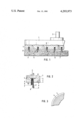
- FIG. 1 is a side view of the cleaning equipment with a rotatable holding plate, partially in section;
- FIG. 2 is a vertical section through the axis of a bore having a tuft of bristles secured in it, and
- FIG. 3 is a bottom view of a broken-off portion of the holding plate shown in FIG. 1.
- the cleaning device shown in FIG. 1 comprises a circular holding plate 1 made of a synthetic plastic material, plywood sheet or the like.
- a shaft 2 is rigidly connected to the plate 1 and can be connected by a releasable coupling to a cleaning machine equipped with a drive motor and known per se, for rotating the shaft 2 and the holding plate 1 together.
- a floor cleaning pad 3 is secured with the aid of bristles 7.
- the floor cleaning pad 3 normally consists of a synthetic plastic fiber fleece of a known type, which may, if desired, incorporate an abrasive material.
- a multiplicity of tufts 5 of bristles is inserted in the holding plate 1, distributed over its entire surface.
- the lower face 9 of the plate contains a large number of approximately cylindrical or truncated-cone-shaped cavities or bores 4 which accommodate the tufts 5 of bristles which are secured to the base of the bore in a known way by a wire loop 8.
- Each tuft 5 of bristles consists preferably of three to eight, most preferably six, individual springy bristles 10 of different lengths, which are bent double at the base of the bore, and the ends of which project beyond the lower face 9 of the plate. At least one of the longer bristle ends of each tuft is provided at its outer end with a bead 6 which is preferably produced by singeing.
- the bristles penetrate into the matted cleaning pad 3 and hold the pad securely when the plate is lifted up from the floor.
- the cleaning pad 3 can be released from the bristles by a gentle downward tug.
- the bores at least in the central region of the plate, have a longitudinal axis which extends at right angles to the lower face 9 of the plate.
- the bores 4 are preferably tapered, with the result that the inserted bristles 7 extend along the wall of the bore so that they diverge outwards from the base of the bore, as shown in the drawing.
- the bristles are of different lengths.
- the length of these bristles projecting beyond the lower face 9 of the plate is preferably from 5 to 20 mm.
- the individual bristles, which are made of plastics material, preferably of a polyamide, have a thickness of 0.4-0.8 mm, and preferably approximately 0.6 mm. Polyamide bristles are easily beaded at the tip with local application of heat, even singeing.
- the depth of the bores 4 is preferably in the range from 6 to 8 mm and their diameter preferably between 2.9 and 3.3 mm.
- the length a of the longer bristles is about 10 mm
- the length b of the shorter bristles is about 6 mm measured from where these bristles project from the face 9 of the holding plate 1.
- the angle ⁇ of the apex of the conical surface of the bore 4 is in the range from 2° to 10°, preferably about 5° to 8°.
Landscapes
- Brushes (AREA)
Abstract
A matted fleece cleaning pad is supported on a number of spread-out tufts of bristles set in cavities of a holding plate, the bristles of each tuft being of different length and made of a synthetic plastic, preferably a polyamide. By this arrangement, the cleaning pad can be held springily, so that it can follow irregularities in the floor. The longer bristles are beaded at their ends by singeing, so that the cleaning pad does not fall off when the holding plate is lifted up from the floor.
Description
The invention relates to floor cleaning equipment of the kind having a holding plate from the lower face of which there projects a multiplicity of bristles with beaded ends distributed over the lower surface of the plate, for imparting movement to a cleaning pad.
A disadvantage of this kind of floor cleaning equipment lies in the fact that the cleaning pad moved around by the bristles cannot follow irregularities in the floor satisfactorily, and the use of a compressible intermediate layer does not afford a substantial improvement.
An object of the invention is to solve the problem of producing floor cleaning equipment of the kind described in the introduction, and to improve it in such a way that the cleaning pad can follow irregularities in the floor better. Another object of the invention is to enable the manufacture of such holding plates equipped with bristles in a simpler and more economical manner than hitherto.
Briefly, a number of tufts of bristles, distributed over and projecting from the lower face of the holding plate, have bristles of different lengths, each tuft being made up of at least one bristle bent in U-shape so as to provide legs of different length, the longer of which has a bead or head at its extremity.
Since the cleaning pad, which normally consists of a plastic fiber fleece or mat, now rests on a large number of bristles which are flexible and can also penetrate to different depths in the fleece, the cleaning pad as a whole can follow any irregularities on the floor much better. The beads, driven into the pad, hold it when the bristled plate is lifted from the floor. In addition, the manufacture of such holding plates equipped with tufts of bristles is relatively simple and can be carried out with automatic industrial machines.
An illustrative practical embodiment of the invention is shown in the annexed drawing, in which:
FIG. 1 is a side view of the cleaning equipment with a rotatable holding plate, partially in section;
FIG. 2 is a vertical section through the axis of a bore having a tuft of bristles secured in it, and
FIG. 3 is a bottom view of a broken-off portion of the holding plate shown in FIG. 1.
The cleaning device shown in FIG. 1 comprises a circular holding plate 1 made of a synthetic plastic material, plywood sheet or the like. A shaft 2 is rigidly connected to the plate 1 and can be connected by a releasable coupling to a cleaning machine equipped with a drive motor and known per se, for rotating the shaft 2 and the holding plate 1 together. At a short distance from the lower face 9 of the plate a floor cleaning pad 3 is secured with the aid of bristles 7. The floor cleaning pad 3 normally consists of a synthetic plastic fiber fleece of a known type, which may, if desired, incorporate an abrasive material.
A multiplicity of tufts 5 of bristles is inserted in the holding plate 1, distributed over its entire surface. The lower face 9 of the plate contains a large number of approximately cylindrical or truncated-cone-shaped cavities or bores 4 which accommodate the tufts 5 of bristles which are secured to the base of the bore in a known way by a wire loop 8. Each tuft 5 of bristles consists preferably of three to eight, most preferably six, individual springy bristles 10 of different lengths, which are bent double at the base of the bore, and the ends of which project beyond the lower face 9 of the plate. At least one of the longer bristle ends of each tuft is provided at its outer end with a bead 6 which is preferably produced by singeing. With these end beads, the bristles penetrate into the matted cleaning pad 3 and hold the pad securely when the plate is lifted up from the floor. The cleaning pad 3 can be released from the bristles by a gentle downward tug. As shown in the drawings, there is a substantial difference in length between the unbeaded short legs and the beaded long legs of the bent-double bristles, and a smaller variation in the length of the longer beaded legs of the bristles of the tuft.
The bores, at least in the central region of the plate, have a longitudinal axis which extends at right angles to the lower face 9 of the plate. Preferably, there are more tufts of bristles per unit of area near the edge of the plate than in the center. The bores 4 are preferably tapered, with the result that the inserted bristles 7 extend along the wall of the bore so that they diverge outwards from the base of the bore, as shown in the drawing.
As can be seen in FIG. 2, the bristles are of different lengths. The length of these bristles projecting beyond the lower face 9 of the plate is preferably from 5 to 20 mm. There are typically from 100 to 400 , and preferably approximately 200 to 300 , tufts 5 of bristles per dm2 of plate surface, arranged as partially shown in FIG. 3, for example. The individual bristles, which are made of plastics material, preferably of a polyamide, have a thickness of 0.4-0.8 mm, and preferably approximately 0.6 mm. Polyamide bristles are easily beaded at the tip with local application of heat, even singeing.
The depth of the bores 4 is preferably in the range from 6 to 8 mm and their diameter preferably between 2.9 and 3.3 mm. The length a of the longer bristles is about 10 mm, the length b of the shorter bristles is about 6 mm measured from where these bristles project from the face 9 of the holding plate 1. The angle α of the apex of the conical surface of the bore 4 is in the range from 2° to 10°, preferably about 5° to 8°.
Claims (12)
1. A floor cleaning device of the kind having a holding plate from the lower face of which there projects a multiplicity of bristles distributed over the lower face, at least some of which have beaded ends for carrying along a cleaning pad, having the improvement which consists in that:
said holding plate has a number of bores, open at the bottom, in each of which at least one bristle is held which is bent over to provide legs of different length and is secured by means of a loop passing through the bend of each bristle in said bore, said legs diverging outwardly from the bore in which the bristle is secured;
the longer leg of at least one bristle in each bore is beaded at its end, and
a multiplicity of said bristle-equipped bores is distributed over the lower face of the holding plate and both the shorter leg and longer leg of each bristle of said bores projects on the lower face of the holding plate.
2. A floor cleaning device as defined in claim 1, in which at least two bristles are secured in each bore.
3. A floor cleaning device as defined in claim 2, in which the longer leg of each bristle is beaded at its extremity.
4. A floor cleaning device as defined in claim 3, in which the longer legs of the bristles in the same bore are of different lengths.
5. A floor cleaning device as defined in claim 1, 2, 3, or 4, in which the longer bristle legs project from the lower face of the holding plate by about 10 mm and the shorter bristle legs project from the lower face of the holding plate by about 6 mm.
6. A floor cleaning device as defined in claim 1, 2, 3 or 4, in which the length of the bristles projecting from the lower face of the holding plate is in the range from 5 to 20 mm.
7. A floor cleaning device as defined in claim 1, 2, 3 or 4, in which there are between 100 to 400 of said bores containing bristles per dm2 of lower plate surface.
8. A floor cleaning device as defined in claim 7, in which there are between 200 to 300 tufts of bristles per dm2 of lower plate surface.
9. A floor cleaning device as defined in claim 1, 2, 3 or 4, in which the bristles have a thickness of between 0.4 and 0.8 mm and are made of a synthetic plastic material.
10. A floor cleaning device as defined in claim 9 in which the bristles are made of a polyamide.
11. A floor cleaning device as defined in claim 1, 2, 3 or 4, in which in substantially every tuft in one of said bores the longest bristle leg projects at least twice as far from the holding plate as does the shortest bristle leg.
12. A floor cleaning device as defined in claim 1, 2, 3 or 4, in which there are more of said bristle-containing bores per unit of holding plate area near the plate edge than in the plate center.
Priority Applications (1)
| Application Number | Priority Date | Filing Date | Title |
|---|---|---|---|
| US06/087,105 US4293973A (en) | 1979-10-22 | 1979-10-22 | Floor cleaning device |
Applications Claiming Priority (1)
| Application Number | Priority Date | Filing Date | Title |
|---|---|---|---|
| US06/087,105 US4293973A (en) | 1979-10-22 | 1979-10-22 | Floor cleaning device |
Publications (1)
| Publication Number | Publication Date |
|---|---|
| US4293973A true US4293973A (en) | 1981-10-13 |
Family
ID=22203144
Family Applications (1)
| Application Number | Title | Priority Date | Filing Date |
|---|---|---|---|
| US06/087,105 Expired - Lifetime US4293973A (en) | 1979-10-22 | 1979-10-22 | Floor cleaning device |
Country Status (1)
| Country | Link |
|---|---|
| US (1) | US4293973A (en) |
Cited By (3)
| Publication number | Priority date | Publication date | Assignee | Title |
|---|---|---|---|---|
| US4910826A (en) * | 1988-09-29 | 1990-03-27 | Americo | Surface working pad assembly |
| US5579554A (en) * | 1994-08-25 | 1996-12-03 | Plazanet; Maurice | Drive disk for the tool of a machine for the repair and/or maintenance of floors |
| US20220313408A1 (en) * | 2017-10-27 | 2022-10-06 | Sunstar Americas, Inc. | Powered toothbrush bristle head |
Citations (4)
| Publication number | Priority date | Publication date | Assignee | Title |
|---|---|---|---|---|
| US3527001A (en) * | 1967-06-01 | 1970-09-08 | Minnesota Mining & Mfg | Holder for abrasive product |
| US3728075A (en) * | 1971-04-13 | 1973-04-17 | Servicemaster Ind | Method of shampooing carpet on location |
| US4114225A (en) * | 1977-07-11 | 1978-09-19 | Malish Brush & Specialty Company | Brush-like mounting device |
| US4161050A (en) * | 1977-07-01 | 1979-07-17 | Kao Soap Co., Ltd. | Hair brush |
-
1979
- 1979-10-22 US US06/087,105 patent/US4293973A/en not_active Expired - Lifetime
Patent Citations (4)
| Publication number | Priority date | Publication date | Assignee | Title |
|---|---|---|---|---|
| US3527001A (en) * | 1967-06-01 | 1970-09-08 | Minnesota Mining & Mfg | Holder for abrasive product |
| US3728075A (en) * | 1971-04-13 | 1973-04-17 | Servicemaster Ind | Method of shampooing carpet on location |
| US4161050A (en) * | 1977-07-01 | 1979-07-17 | Kao Soap Co., Ltd. | Hair brush |
| US4114225A (en) * | 1977-07-11 | 1978-09-19 | Malish Brush & Specialty Company | Brush-like mounting device |
Cited By (4)
| Publication number | Priority date | Publication date | Assignee | Title |
|---|---|---|---|---|
| US4910826A (en) * | 1988-09-29 | 1990-03-27 | Americo | Surface working pad assembly |
| EP0361505A3 (en) * | 1988-09-29 | 1991-04-10 | Americo | Surface working pad assemmbly |
| US5579554A (en) * | 1994-08-25 | 1996-12-03 | Plazanet; Maurice | Drive disk for the tool of a machine for the repair and/or maintenance of floors |
| US20220313408A1 (en) * | 2017-10-27 | 2022-10-06 | Sunstar Americas, Inc. | Powered toothbrush bristle head |
Similar Documents
| Publication | Publication Date | Title |
|---|---|---|
| US20150135455A1 (en) | Hair Brush For Smoothing Hair | |
| US5377378A (en) | Dry cleaning pad | |
| KR100709397B1 (en) | toothbrush | |
| US20040130203A1 (en) | Brush head and method of manufacturing such a brush head | |
| US5010616A (en) | Slanted handle broom | |
| JPH02124272A (en) | Polishing pad and making thereof | |
| CN109068838A (en) | Household brush or hygienic brush device | |
| US4074385A (en) | Carpet cleaning brush | |
| US5050262A (en) | Floor maintenance brush or the like | |
| US4349933A (en) | Curling push-broom | |
| US1642465A (en) | Tooth and massage brush | |
| US4293973A (en) | Floor cleaning device | |
| US4418438A (en) | Rotary carpet cleaning pad | |
| US5597212A (en) | Method for forming integral fused contructions | |
| US3574880A (en) | Rotary brush | |
| RU2197160C2 (en) | Method for manufacture of bristle articles | |
| US3820186A (en) | Elongated hole brush | |
| CA1124966A (en) | Cleaning pad holding plate for a floor cleaning device | |
| GB2028115A (en) | Floor cleaning device | |
| JP5433369B2 (en) | Cleaning tool | |
| US3531815A (en) | Buffing device | |
| US2734212A (en) | Brush structure | |
| JPH01284222A (en) | Sponge scrubbing brush and its manufacture | |
| US20100024142A1 (en) | Non-planar brush | |
| US3477763A (en) | Brush and method of producing the same |
Legal Events
| Date | Code | Title | Description |
|---|---|---|---|
| STCF | Information on status: patent grant |
Free format text: PATENTED CASE |