US4189761A - Non-aqueous electrolytic capacitor electrolyte - Google Patents
Non-aqueous electrolytic capacitor electrolyte Download PDFInfo
- Publication number
- US4189761A US4189761A US05/824,147 US82414777A US4189761A US 4189761 A US4189761 A US 4189761A US 82414777 A US82414777 A US 82414777A US 4189761 A US4189761 A US 4189761A
- Authority
- US
- United States
- Prior art keywords
- diethylphosphate
- solvent
- electrolyte according
- salt
- butyrolactone
- Prior art date
- Legal status (The legal status is an assumption and is not a legal conclusion. Google has not performed a legal analysis and makes no representation as to the accuracy of the status listed.)
- Expired - Lifetime
Links
Images
Classifications
-
- H—ELECTRICITY
- H01—ELECTRIC ELEMENTS
- H01G—CAPACITORS; CAPACITORS, RECTIFIERS, DETECTORS, SWITCHING DEVICES, LIGHT-SENSITIVE OR TEMPERATURE-SENSITIVE DEVICES OF THE ELECTROLYTIC TYPE
- H01G9/00—Electrolytic capacitors, rectifiers, detectors, switching devices, light-sensitive or temperature-sensitive devices; Processes of their manufacture
- H01G9/004—Details
- H01G9/022—Electrolytes; Absorbents
Definitions
- This invention relates to an electrolytic capacitor and more particularly to a non-aqueous electrolyte for an electrolytic capacitor, especially an aluminum electrolytic capacitor.
- electrolytic capacitors comprise an anode of a so-called valve metal which has an oxide film on it in contact with an electrolyte.
- valve metal which has an oxide film on it in contact with an electrolyte.
- Two of the most commonly used metals are aluminum and tantalum.
- Aluminum is widely used because of its lower density, lower cost, availability in high-purity form, and relative ease of reformation.
- aqueous electrolytes are restricted generally to operation above the freezing-point and below the boiling-point of the solvent, i.e., water.
- the solvent i.e., water.
- ethylene glycol has a lower freezing-point and a higher boiling-point than water, its resistivity at low temperatures is unsatisfactory.
- N,N-dimethylformamide another preferred solvent, has a low freezing-point but a boiling-point below that of ethylene glycol.
- an electrolyte solvent should have a high dielectric constant and be chemically neutral to the electrodes and the dielectric oxide.
- solvents include 4-butyrolactone, 3-methoxypropionitrile, propylene carbonate, methyl carbitol, and butyl cellosolve.
- the other product that might have been expected, an amide is the product of ammonolysis of triethylphosphate.
- both 100 MHz proton NMR and phosphorus NMR spectra indicate that the reaction proceeds quite cleanly to give the first product with less than 1% of the amide being formed.
- the reaction takes place with primary, secondary, and tertiary amines. When tertiary amines are used, the cation formed is a quaternary ammonium ion, and this has been confirmed via picrate derivatives. In all cases, the products were viscous, colored syrups. Conductivities were between 4400 and 6300 ⁇ cm for the undiluted products.
- Anode 11 is of aluminum or tantalum and has an insulating oxide layer on its surface.
- Cathode 12 may be also made of aluminum or tantalum and is preferably etched. The anode is also preferably etched.
- Films 13 and 14 are spacers and may be of paper, polymer film or a combination of these.
- Tabs 15 and 16 are connected to electrodes 11 and 12 respectively to function as terminals for capacitance section 10.
- N-butylpiperidinium dibutylphosphate is listed as piperidine-tributylphosphate
- N-ethyltributylammonium diethylphosphate is listed as tributylamine-triethylphosphate.
- the amines used are piperidine, piperazine, morpholine, N-methylmorpholine, ethanolamine, triethylamine, and tributylamine.
- the phosphates used are trimethylphosphate, triethylphosphate, and tributylphosphate.
- the salts obtained from the specific products listed in the tables are N-butylpiperidinium dibutylphosphate, N-methylpiperidinium dimethylphosphate, N-ethylpiperidinium diethylphosphate, N-ethyl-2-hydroxyethylammonium diethylphosphate, N-methyl-2-hydroxyethylammonium dimethylphosphate, tetraethylammonium diethylphosphate, N-methyltriethylammonium dimethylphosphate, N-ethyltributylammonium diethylphosphate, N-ethyl,N-methylmorpholinium diethylphosphate, N-ethylmorpholinium diethylphosphate, and N,N'-diethylpiperazinium bis-diethylphosphate.
- Resistivity data at 25° C. in ohm-cm ( ⁇ cm) are presented for various salts in a variety of solvents.
- the amount of solute in whole-number percent in each solvent is given also in Table I. In most cases, about 1 gm water may be present.
- V max maximum formation voltages at various temperatures are given in Table II for aluminum foil along with resistivity in ohm-cm ( ⁇ cm) at 25° C. for the particular formulation.
- Methyltriethylammonium dimethylphosphate was prepared by reaction of 70.8 g. of trimethylphosphate and 50.5 g. of triethylamine in 50 ml. of acetonitrile and then removing the acetonitrile.
- the resistivity was 1020 ⁇ -cm.
- a 36% solution of this material is N,N-dimethylformamide had a resistivity of 85 ohm-cm, and the maximum formation voltage for tantalum foil at 25° C. was 145 V.
- a set of 6 aluminum electrolytic capacitors was constructed using the following electrolyte formulation: 20 g N-ethylpiperidinium diethylphosphate (Et 3 PO 4 -piperidine), 120 g 4-butyrolactone, and 3 g H 2 O.
- the capacitors were of 250 V rating and made with etched and formed aluminum anode foil. Life test data at 200 VDC and 125° C., capacitance in ⁇ F, dissipation factor, and leakage current in ⁇ A at 0 hr. and 2000 hr. are presented in Table III.
Landscapes
- Engineering & Computer Science (AREA)
- Power Engineering (AREA)
- Chemical & Material Sciences (AREA)
- Chemical Kinetics & Catalysis (AREA)
- Electrochemistry (AREA)
- Microelectronics & Electronic Packaging (AREA)
- Electric Double-Layer Capacitors Or The Like (AREA)
Abstract
A non-aqueous electrolyte for an electrolytic capacitor contains as solute a salt obtained from an amine and a trialkyl phosphate.
Description
This invention relates to an electrolytic capacitor and more particularly to a non-aqueous electrolyte for an electrolytic capacitor, especially an aluminum electrolytic capacitor.
As is well-known, electrolytic capacitors comprise an anode of a so-called valve metal which has an oxide film on it in contact with an electrolyte. Two of the most commonly used metals are aluminum and tantalum. Aluminum is widely used because of its lower density, lower cost, availability in high-purity form, and relative ease of reformation.
Many electrolytes for aluminum capacitors have unsatisfactory low- and/or high- temperature characteristics. Thus, aqueous electrolytes are restricted generally to operation above the freezing-point and below the boiling-point of the solvent, i.e., water. While ethylene glycol has a lower freezing-point and a higher boiling-point than water, its resistivity at low temperatures is unsatisfactory. N,N-dimethylformamide, another preferred solvent, has a low freezing-point but a boiling-point below that of ethylene glycol.
Beside having a low-freezing and a high-boiling point, an electrolyte solvent should have a high dielectric constant and be chemically neutral to the electrodes and the dielectric oxide. Such solvents include 4-butyrolactone, 3-methoxypropionitrile, propylene carbonate, methyl carbitol, and butyl cellosolve.
Unfortunately, many solutes which have been used in the past with non-aqueous solvents, especially dimethylformamide, are not necessarily useful with other non-aqueous solvents, e.g., 4-butyrolactone.
It is an object of this invention to provide an electrolyte with improved high- and low- temperature operating characteristics.
It is a further object of this invention to provide solutes suitable for use in non-aqueous solvents, especially 4-butyrolactone.
These objects have been attained through the use as solutes of salts obtained from a trialkylphosphate and an amine. These materials may be prepared by refluxing of a trialkylphosphate and an amine for 12-24 hrs. In the course of this reaction, the trialkylphosphate is converted to a dialkylphosphate anion, and the amine is alkylated to an alkyl-substituted ammonium ion. For example, the reaction of piperidine and triethylphosphate yields N-ethylpiperidinium diethylphosphate which is the product that would result from the neutralization of diethylphosphoric acid with N-ethylpiperidine. The other product that might have been expected, an amide, is the product of ammonolysis of triethylphosphate. However, both 100 MHz proton NMR and phosphorus NMR spectra indicate that the reaction proceeds quite cleanly to give the first product with less than 1% of the amide being formed. The reaction takes place with primary, secondary, and tertiary amines. When tertiary amines are used, the cation formed is a quaternary ammonium ion, and this has been confirmed via picrate derivatives. In all cases, the products were viscous, colored syrups. Conductivities were between 4400 and 6300 Ω cm for the undiluted products.
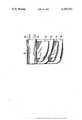
Referring now to the appended drawing, a capacitance section 10 is shown in a partly unrolled condition. Anode 11 is of aluminum or tantalum and has an insulating oxide layer on its surface. Cathode 12 may be also made of aluminum or tantalum and is preferably etched. The anode is also preferably etched. Films 13 and 14 are spacers and may be of paper, polymer film or a combination of these. Tabs 15 and 16 are connected to electrodes 11 and 12 respectively to function as terminals for capacitance section 10.
In the examples that follow, the solutes are listed in the tables according to starting materials. Thus, N-butylpiperidinium dibutylphosphate is listed as piperidine-tributylphosphate, and N-ethyltributylammonium diethylphosphate is listed as tributylamine-triethylphosphate. The amines used are piperidine, piperazine, morpholine, N-methylmorpholine, ethanolamine, triethylamine, and tributylamine. The phosphates used are trimethylphosphate, triethylphosphate, and tributylphosphate. The salts obtained from the specific products listed in the tables are N-butylpiperidinium dibutylphosphate, N-methylpiperidinium dimethylphosphate, N-ethylpiperidinium diethylphosphate, N-ethyl-2-hydroxyethylammonium diethylphosphate, N-methyl-2-hydroxyethylammonium dimethylphosphate, tetraethylammonium diethylphosphate, N-methyltriethylammonium dimethylphosphate, N-ethyltributylammonium diethylphosphate, N-ethyl,N-methylmorpholinium diethylphosphate, N-ethylmorpholinium diethylphosphate, and N,N'-diethylpiperazinium bis-diethylphosphate. These salts were evaluated in the following solvents: N,N-dimethylformamide (DMF), 4-butyrolactone (BLO), 3-methoxypropionitrile (MPN), acetonitrile (ACN), ethyleneglycol (glycol), propylene carbonate (Pr carbonate), diethyleneglycolmethylether (Me carbitol), ethyleneglycol monobutylether (Bu cellosolve), and mixtures of these.
Resistivity data at 25° C. in ohm-cm (Ω cm) are presented for various salts in a variety of solvents. The amount of solute in whole-number percent in each solvent is given also in Table I. In most cases, about 1 gm water may be present.
              Table I
______________________________________
Salt formed from
reaction of  %        Solvent       Ω cm
______________________________________
Piperidine-  (40%)    MPN           664
 tributylphosphate
             (33%)    MPN           1030
             (25%)    BLO           1073
             (20%)    glycol        1008
             (20%)    Pr carbonate  1030
             (33%)    Me carbitol   2360
Piperidine-  (25%)    BLO           305
 trimethylphosphate
Piperidine-  (25%)    DMF           337
 triethylphosphate
             (24%)    MPN           408
             (25%)    Bu cellosolve 1115
             (24%)    Me carbitol   837
             (25%)    glycol        485
             (25%)    Pr carbonate  506
Ethanolamine-
             (26%)    DMF           909
 triethylphosphate
             (24%)    glycol        734
             (33%)    Bu cellosolve 1459
             (25%)    Pr Carbonate  2231
             (35%)    Me carbitol   1780
             (24%)    BLO           1973
             (25%)    MPN           1287
Ethanolamine-
             (33%)    glycol        405
 trimethylphosphate
             (10%)    DMF           855
Triethylamine-
             (50%)    glycol        493
 triethylphosphate
             (12%)    glycol-MPN(40:60
                                    270
                       by wt.)
             (21%)    glycol-MPN(26:74
                                    184
                       by wt.)
Triethylamine-
             (46%)    glycol        311
 trimethylphosphate
             (65%)    glycol        202
             (25%)    DMF           146
             (33%)    DMF           75
tributylamine-
             (20%)    BLO           743
 triethylphosphate
             (10%)    DMF           570
N-methylmorpholine-
 triethylphosphate
             (20%)    BLO           333
morpholine-  (25%)    DMF           417
 triethylphosphate
             (33%)    glycol        686
             (25%)    Me carbitol   1502
             (25%)    BLO           686
             (35%)    Bu cellosolve 2016
             (25%)    Pr carbonate  807
             (33%)    MPN           601
______________________________________
Maximum formation voltages (Vmax) at various temperatures are given in Table II for aluminum foil along with resistivity in ohm-cm (Ω cm) at 25° C. for the particular formulation.
              Table II
______________________________________
Formulation   Ω cm
                      Vmax.sub.25
                               Vmax.sub.105
                                      Vmax.sub.125
______________________________________
10g   Et.sub.3 PO.sub.4 -
      tributylamine
90g   DMF
2g    H.sub.3 BO.sub.3
1g    H.sub.2 O   396     293    --     495
10g   Et.sub.3 PO.sub.4 -
      piperidine
90g   BLO
3g    H.sub.2 O   477     372    188    --
10g   Et.sub.3 PO.sub.4 -
      piperazine
90g   BLO
3g    H.sub.2 O   1580    295    --     267
10g   Et.sub.3 PO.sub.4 -
      morpholine
90g   DMF
2g    H.sub.3 BO.sub.3
1g    H.sub.2 O   438     465    425    --
10g   Et.sub.3 PO.sub.4 -
      morpholine
90g   BLO         981     500    492    227
17g   Et.sub.3 PO.sub.4 -
      morpholine
78g   BLO         610     480    383    430
17g   Et.sub.3 PO.sub.4 -
      morpholine
68g   BLO
1g    H.sub.2 O   406     450    445    --
20g   Et.sub.3 PO.sub.4 -
      morpholine
80g   BLO
1g    H.sub.2 O   506     450    455    --
40g   Me.sub.3 PO.sub.4 -
      piperidine
160g  BLO
3%    H.sub.2 O   324     465    177    --
20g   Et.sub.3 PO.sub.4 -
      tributylamine
80g   BLO
1%    H.sub.2 O   702     228    174    --
35g   Me.sub.3 PO.sub.4 -
      ethanolamine
35g   glycol
3%    H.sub.2 O   918     155     94    --
______________________________________
This example shows the usefulness of this type of electrolyte system for tantalum foil. Methyltriethylammonium dimethylphosphate was prepared by reaction of 70.8 g. of trimethylphosphate and 50.5 g. of triethylamine in 50 ml. of acetonitrile and then removing the acetonitrile. The resistivity was 1020 Ω-cm. A 36% solution of this material is N,N-dimethylformamide had a resistivity of 85 ohm-cm, and the maximum formation voltage for tantalum foil at 25° C. was 145 V.
A set of 6 aluminum electrolytic capacitors was constructed using the following electrolyte formulation: 20 g N-ethylpiperidinium diethylphosphate (Et3 PO4 -piperidine), 120 g 4-butyrolactone, and 3 g H2 O. The capacitors were of 250 V rating and made with etched and formed aluminum anode foil. Life test data at 200 VDC and 125° C., capacitance in μF, dissipation factor, and leakage current in μA at 0 hr. and 2000 hr. are presented in Table III.
              Table III
______________________________________
         0 hrs.       2000 hrs.
Capacitor  μF   DF      μA
                                μF DF    μA
______________________________________
1          12.44   3.91    3.8  12.20 4.19  1.9
2          11.96   3.88    3.4  11.65 4.79  2.6
3          11.88   4.07    2.9  11.61 3.99  1.6
4          12.25   3.81    6.4  11.97 4.34  1.9
5          12.01   3.50    3.8  11.73 3.64  2.0
6          11.61   3.98    4.9  11.31 3.84  1.6
Average    12.02   3.86    4.2  11.74 4.13  1.9
______________________________________
It is seen that capacitance and dissipation factor remained virtually unchanged, or changed only slightly, and leakage current improved. Temperature stability (average of the six units) is presented below.
              Table IV
______________________________________
Temperature
           μF   DF     Impedance Ω
                                   Impedance ratio
______________________________________
125° C.
           13.14   2.56   101      0.96
25° C.
           12.59   4.22   105      1.0
-55° C.
           10.41   61.3   149      1.42
______________________________________
These results show a 17% capacitance decrease and a 42% impedance increase at -55° C. which is excellent for aluminum capacitors. These tables show that these capacitors are remarkably stable under operating conditions and over a wide temperature range.
Claims (11)
1. An electrolyte for an electrolytic capacitor comprising a non-aqueous electrolytic capacitor solvent and as solute an alkyl substituted-ammonium dialkylphosphate salt selected from the group consisting of those obtained from the reaction of a trialkylphosphate and a cyclic amine or an aliphatic tertiary amine, said reaction effecting the conversion of said trialkylphosphate to a dialkylphosphate ion and the alkylation of said amine to an alkyl-substituted ammonium ion.
2. An electrolyte according to claim 1 wherein said trialkylphosphate is trimethylphosphate, triethylphosphate, or tributyl phosphate.
3. An electrolyte according to claim 1 wherein said amine is morpholine, N-methylmorpholine, piperidine, piperazine, triethylamine, or tributylamine.
4. An electrolyte according to claim 1 wherein said nonaqueous solvent is 4-butyrolactone, 3-methyoxypropionitrile, propylene carbonate, N,N-dimethylformamide, ethyleneglycol, diethyleneglycolmonomethylether, ethyleneglycol monobutylether, acetonitrile, or mixtures thereof.
5. An electrolyte according to claim 1 wherein said salt is N-butylpiperidinium dibutylphosphate, N-ethylpiperidinium diethylphosphate, N-methylpiperidinium dimethylphosphate, N-ethylmorpholinium diethylphosphate, N,N'-diethylpiperazinium bis-diethylphosphate, N-ethyl,N-methylmorpholinium diethylphosphate, N-ethyltributylammonium diethylphosphate, N-methyltriethylammonium dimethylphosphate, or tetraethylammonium diethylphosphate.
6. An electrolyte according to claim 1 wherein said salt is N-ethyltributylammonium diethylphosphate and said solvent is N,N-dimethylformamide or 4-butyrolactone.
7. An electrolyte according to claim 1 wherein said salt is N-ethylpiperidinium diethylphosphate and said solvent is 4-butyrolactone.
8. An electrolyte according to claim 1 wherein said salt is N-ethylmorpholinium diethylphosphate and said solvent is 4-butyrolactone.
9. An electrolyte according to claim 1 wherein said salt is N-methylpiperidinium dimethylphosphate and said solvent is 4-butyrolactone.
10. An electrolyte according to claim 1 wherein said salt is methyltriethylammonium dimethylphosphate and said solvent is N,N-dimethylformamide.
11. An electrolytic capacitor including a formed anode electrode, a cathode electrode, and a liquid electrolyte in contact therewith comprising a nonaqueous electrolytic capacitor solvent and dissolved therein as solute an alkyl substituted-ammonium dialkylphosphate selected from the group consisting of those obtained from the reaction of a trialkylphosphate and a cyclic amine or an aliphatic tertiary amine, said reaction effecting the conversion of said trialkylphosphate to a dialkylphosphate ion and the alkylation of said amine to an alkyl-substituted ammonium ion.
Priority Applications (1)
| Application Number | Priority Date | Filing Date | Title |
|---|---|---|---|
| US05/824,147 US4189761A (en) | 1977-08-12 | 1977-08-12 | Non-aqueous electrolytic capacitor electrolyte |
Applications Claiming Priority (1)
| Application Number | Priority Date | Filing Date | Title |
|---|---|---|---|
| US05/824,147 US4189761A (en) | 1977-08-12 | 1977-08-12 | Non-aqueous electrolytic capacitor electrolyte |
Publications (1)
| Publication Number | Publication Date |
|---|---|
| US4189761A true US4189761A (en) | 1980-02-19 |
Family
ID=25240710
Family Applications (1)
| Application Number | Title | Priority Date | Filing Date |
|---|---|---|---|
| US05/824,147 Expired - Lifetime US4189761A (en) | 1977-08-12 | 1977-08-12 | Non-aqueous electrolytic capacitor electrolyte |
Country Status (1)
| Country | Link |
|---|---|
| US (1) | US4189761A (en) |
Cited By (21)
| Publication number | Priority date | Publication date | Assignee | Title |
|---|---|---|---|---|
| US4428028A (en) | 1977-03-03 | 1984-01-24 | Sprague Electric Company | Electrolytic capacitor |
| JPS6132509A (en) * | 1984-07-25 | 1986-02-15 | 昭和電工株式会社 | Electrolyte for driving electrolytic condenser |
| US4664830A (en) * | 1985-07-17 | 1987-05-12 | Nippon Chemi-Con Corp. | Electrolyte for electrolytic capacitor |
| EP0208301A3 (en) * | 1985-07-08 | 1988-04-27 | Matsushita Electric Industrial Co., Ltd. | Non-aqueous liquid electrolyte for electrolytic capacitors and electrolytic capacitors using same |
| US4762630A (en) * | 1986-03-28 | 1988-08-09 | Nippon Chemi-Con Corporation | Electrolyte for electrolytic capacitor |
| US4975806A (en) * | 1989-05-17 | 1990-12-04 | Aerovox M | Electrolytic capacitor and electrolyte therefore |
| WO1999034381A1 (en) * | 1997-12-31 | 1999-07-08 | Covalent Associates, Inc. | Asymmetric organic alkyl ethyl carbonates for non-aqueous power sources |
| US6459565B1 (en) * | 2001-06-11 | 2002-10-01 | Kemet Electronics Corporation | Surface mount aluminum capacitor having anode foil anodized in an aqueous phosphate solution |
| JP2003313170A (en) * | 2002-04-23 | 2003-11-06 | Tosoh Corp | Method for producing cyclic amidinium organic acid salt |
| US20040199015A1 (en) * | 2002-04-24 | 2004-10-07 | Kanako Yuyama | Ionic liquid, method of dehydration, electrical double layer capacitor, and secondary battery |
| GB2412912B (en) * | 2004-04-07 | 2007-07-11 | Univ York | Use of ammonium ionic liquids |
| US20090256105A1 (en) * | 2006-06-20 | 2009-10-15 | Sanyo Chemical Industries, Ltd. | Electrolytic solution for aluminum electrolytic capacitors, and aluminum electrolytic capacitor using the same |
| US20100029927A1 (en) * | 2007-02-14 | 2010-02-04 | Eastman Chemical Company | Regioselectively substituted cellulose esters produced in a carboxylated ionic liquid process and products produced therefrom |
| JP2012524144A (en) * | 2009-04-15 | 2012-10-11 | イーストマン ケミカル カンパニー | Regioselectively substituted cellulose esters produced by the tetraalkylammonium alkyl phosphate ionic liquid process and products produced therefrom |
| US8541133B2 (en) | 2010-10-27 | 2013-09-24 | Toyota Motor Engineering & Manufacturing North America, Inc. | Electrochemical device with a magnesium anode and a stable, safe electrolyte compatible with sulfur |
| US8729253B2 (en) | 2011-04-13 | 2014-05-20 | Eastman Chemical Company | Cellulose ester optical films |
| US20140168855A1 (en) * | 2011-08-04 | 2014-06-19 | Universite Francois Rabelais | Novel ionic liquids that can be used as part of the electrolyte composition for energy storage devices |
| US9156918B2 (en) | 2008-02-13 | 2015-10-13 | Eastman Chemical Company | Treatment of cellulose esters |
| US9175096B2 (en) | 2008-02-13 | 2015-11-03 | Eastman Chemical Company | Regioselectively substituted cellulose esters produced in a halogenated ionic liquid process and products produced therefrom |
| US9777074B2 (en) | 2008-02-13 | 2017-10-03 | Eastman Chemical Company | Regioselectively substituted cellulose esters produced in a halogenated ionic liquid process and products produced therefrom |
| US10174129B2 (en) | 2007-02-14 | 2019-01-08 | Eastman Chemical Company | Regioselectively substituted cellulose esters produced in a carboxylated ionic liquid process and products produced therefrom |
Citations (7)
| Publication number | Priority date | Publication date | Assignee | Title |
|---|---|---|---|---|
| US2934682A (en) * | 1956-07-05 | 1960-04-26 | Sprague Electric Co | Electrolytes |
| US2934681A (en) * | 1956-06-11 | 1960-04-26 | Sprague Electric Co | Electrolytes |
| US2965690A (en) * | 1958-01-10 | 1960-12-20 | Sprague Electric Co | Electrical capacitors |
| US3003089A (en) * | 1958-06-27 | 1961-10-03 | Spragne Electric Company | Non-aqueous electrolyte |
| US3138746A (en) * | 1960-05-02 | 1964-06-23 | Francis J P J Burger | Electrolytic capacitors and electrolyte therefor |
| US3196111A (en) * | 1961-11-23 | 1965-07-20 | Plessey Co Ltd | Tantalum capacitor electrolyte |
| US3300693A (en) * | 1966-06-28 | 1967-01-24 | Sprague Electric Co | Capacitor with low resistivity electrolyte and high voltage range |
-
1977
- 1977-08-12 US US05/824,147 patent/US4189761A/en not_active Expired - Lifetime
Patent Citations (7)
| Publication number | Priority date | Publication date | Assignee | Title |
|---|---|---|---|---|
| US2934681A (en) * | 1956-06-11 | 1960-04-26 | Sprague Electric Co | Electrolytes |
| US2934682A (en) * | 1956-07-05 | 1960-04-26 | Sprague Electric Co | Electrolytes |
| US2965690A (en) * | 1958-01-10 | 1960-12-20 | Sprague Electric Co | Electrical capacitors |
| US3003089A (en) * | 1958-06-27 | 1961-10-03 | Spragne Electric Company | Non-aqueous electrolyte |
| US3138746A (en) * | 1960-05-02 | 1964-06-23 | Francis J P J Burger | Electrolytic capacitors and electrolyte therefor |
| US3196111A (en) * | 1961-11-23 | 1965-07-20 | Plessey Co Ltd | Tantalum capacitor electrolyte |
| US3300693A (en) * | 1966-06-28 | 1967-01-24 | Sprague Electric Co | Capacitor with low resistivity electrolyte and high voltage range |
Cited By (40)
| Publication number | Priority date | Publication date | Assignee | Title |
|---|---|---|---|---|
| US4428028A (en) | 1977-03-03 | 1984-01-24 | Sprague Electric Company | Electrolytic capacitor |
| JPS6132509A (en) * | 1984-07-25 | 1986-02-15 | 昭和電工株式会社 | Electrolyte for driving electrolytic condenser |
| EP0208301A3 (en) * | 1985-07-08 | 1988-04-27 | Matsushita Electric Industrial Co., Ltd. | Non-aqueous liquid electrolyte for electrolytic capacitors and electrolytic capacitors using same |
| US4664830A (en) * | 1985-07-17 | 1987-05-12 | Nippon Chemi-Con Corp. | Electrolyte for electrolytic capacitor |
| US4762630A (en) * | 1986-03-28 | 1988-08-09 | Nippon Chemi-Con Corporation | Electrolyte for electrolytic capacitor |
| US4975806A (en) * | 1989-05-17 | 1990-12-04 | Aerovox M | Electrolytic capacitor and electrolyte therefore |
| WO1999034381A1 (en) * | 1997-12-31 | 1999-07-08 | Covalent Associates, Inc. | Asymmetric organic alkyl ethyl carbonates for non-aqueous power sources |
| US5986879A (en) * | 1997-12-31 | 1999-11-16 | Covalent Associates | Asymmetric organic alkyl ethyl carbonates for non-aqueous power sources |
| US6459565B1 (en) * | 2001-06-11 | 2002-10-01 | Kemet Electronics Corporation | Surface mount aluminum capacitor having anode foil anodized in an aqueous phosphate solution |
| US20020186521A1 (en) * | 2001-06-11 | 2002-12-12 | Kemet Electronics Corporation | Surface mount aluminum capacitor having anode foil anodized in an aqueous phosphate solution |
| US6808615B2 (en) | 2001-06-11 | 2004-10-26 | Kemet Electronics Corporation | Surface mount aluminum capacitor having anode foil anodized in an aqueous phosphate solution |
| JP2003313170A (en) * | 2002-04-23 | 2003-11-06 | Tosoh Corp | Method for producing cyclic amidinium organic acid salt |
| US20040199015A1 (en) * | 2002-04-24 | 2004-10-07 | Kanako Yuyama | Ionic liquid, method of dehydration, electrical double layer capacitor, and secondary battery |
| US7167353B2 (en) * | 2002-04-24 | 2007-01-23 | Nisshinbo Industries, Inc. | Ionic liquid, method of dehydration, electrical double layer capacitor, and secondary battery |
| KR100970918B1 (en) * | 2002-04-24 | 2010-07-16 | 닛신보 홀딩스 가부시키 가이샤 | Ionic liquids and dehydration methods, and electric double layer capacitors, and secondary cells |
| US9328220B2 (en) | 2004-04-07 | 2016-05-03 | Innovia Films Limited | Liquids |
| US8992798B2 (en) | 2004-04-07 | 2015-03-31 | Innovia Films Limited | Liquids |
| US20070185330A1 (en) * | 2004-04-07 | 2007-08-09 | The University Of York | Liquids |
| GB2412912B (en) * | 2004-04-07 | 2007-07-11 | Univ York | Use of ammonium ionic liquids |
| US8784686B2 (en) | 2004-04-07 | 2014-07-22 | Innovia Films Limited | Liquids |
| US8177994B2 (en) * | 2006-06-20 | 2012-05-15 | Sanyo Chemical Industries, Ltd. | Electrolytic solution for aluminum electrolytic capacitors, and aluminum electrolytic capacitor using the same |
| US20090256105A1 (en) * | 2006-06-20 | 2009-10-15 | Sanyo Chemical Industries, Ltd. | Electrolytic solution for aluminum electrolytic capacitors, and aluminum electrolytic capacitor using the same |
| US20100029927A1 (en) * | 2007-02-14 | 2010-02-04 | Eastman Chemical Company | Regioselectively substituted cellulose esters produced in a carboxylated ionic liquid process and products produced therefrom |
| US10174129B2 (en) | 2007-02-14 | 2019-01-08 | Eastman Chemical Company | Regioselectively substituted cellulose esters produced in a carboxylated ionic liquid process and products produced therefrom |
| US9834516B2 (en) | 2007-02-14 | 2017-12-05 | Eastman Chemical Company | Regioselectively substituted cellulose esters produced in a carboxylated ionic liquid process and products produced therefrom |
| US9156918B2 (en) | 2008-02-13 | 2015-10-13 | Eastman Chemical Company | Treatment of cellulose esters |
| US9777074B2 (en) | 2008-02-13 | 2017-10-03 | Eastman Chemical Company | Regioselectively substituted cellulose esters produced in a halogenated ionic liquid process and products produced therefrom |
| US9175096B2 (en) | 2008-02-13 | 2015-11-03 | Eastman Chemical Company | Regioselectively substituted cellulose esters produced in a halogenated ionic liquid process and products produced therefrom |
| US8871924B2 (en) | 2009-04-15 | 2014-10-28 | Eastman Chemical Company | Regioselectively substituted cellulose esters produced in a tetraalkylammonium alkylphosphate ionic liquid process and products produced therefrom |
| US9926384B2 (en) | 2009-04-15 | 2018-03-27 | Eastman Chemical Company | Regioselectively substituted cellulose esters produced in a tetraalkylammonium alkylphosphate ionic liquid process and products produced therefrom |
| JP2012524144A (en) * | 2009-04-15 | 2012-10-11 | イーストマン ケミカル カンパニー | Regioselectively substituted cellulose esters produced by the tetraalkylammonium alkyl phosphate ionic liquid process and products produced therefrom |
| US8541133B2 (en) | 2010-10-27 | 2013-09-24 | Toyota Motor Engineering & Manufacturing North America, Inc. | Electrochemical device with a magnesium anode and a stable, safe electrolyte compatible with sulfur |
| US9096691B2 (en) | 2011-04-13 | 2015-08-04 | Eastman Chemical Company | Cellulose ester optical films |
| US8729253B2 (en) | 2011-04-13 | 2014-05-20 | Eastman Chemical Company | Cellulose ester optical films |
| US9796791B2 (en) | 2011-04-13 | 2017-10-24 | Eastman Chemical Company | Cellulose ester optical films |
| US9975967B2 (en) | 2011-04-13 | 2018-05-22 | Eastman Chemical Company | Cellulose ester optical films |
| US10494447B2 (en) | 2011-04-13 | 2019-12-03 | Eastman Chemical Company | Cellulose ester optical films |
| US10836835B2 (en) | 2011-04-13 | 2020-11-17 | Eastman Chemical Company | Cellulose ester optical films |
| US20140168855A1 (en) * | 2011-08-04 | 2014-06-19 | Universite Francois Rabelais | Novel ionic liquids that can be used as part of the electrolyte composition for energy storage devices |
| US9396884B2 (en) * | 2011-08-04 | 2016-07-19 | Commissariat à l'énergie atomique et aux énergies alternatives | Ionic liquids that can be used as part of the electrolyte composition for energy storage devices |
Similar Documents
| Publication | Publication Date | Title |
|---|---|---|
| US4189761A (en) | Non-aqueous electrolytic capacitor electrolyte | |
| US4469610A (en) | Electrolyte for an electrolytic capacitor | |
| US4812951A (en) | Electrolytic capacitor and electrolyte therefor | |
| US20060024577A1 (en) | Electrolyte solution and use thereof | |
| US4541037A (en) | Aluminum electrolytic capacitor | |
| US3300693A (en) | Capacitor with low resistivity electrolyte and high voltage range | |
| EP0543311B1 (en) | Electrolytic solution for electrolytic capacitor | |
| US4509094A (en) | Electrolytic capacitor for at least 150 V service | |
| US4376713A (en) | AC Electrolytic capacitor electrolyte | |
| US4580194A (en) | Aluminum electrolytic capacitor | |
| US5485346A (en) | Electrolyte for driving electrolytic capacitor and the electrolytic capacitor | |
| EP1278216A1 (en) | Electrolytic solution for electrolytic capacitor and electrolytic capacitor using the same | |
| US4830785A (en) | Electrolyte for electrolytic capacitor | |
| JPH04196511A (en) | Electric double layer capacitor | |
| US4479167A (en) | Electrolytic capacitor | |
| US4242722A (en) | Capacitor containing anthranilate electrolyte | |
| US4762632A (en) | Electrolyte for electrolytic capacitor | |
| US4762634A (en) | Electrolyte for electrolytic capacitor | |
| US4428028A (en) | Electrolytic capacitor | |
| KR0169781B1 (en) | An electroyte for al electrolytic condenser | |
| US3454840A (en) | Electrolyte for electrolytic capacitors | |
| US7079378B2 (en) | Electrolytic solution for electrolytic capacitor and electrolytic capacitor using the same | |
| US4101458A (en) | Electrolyte for electrolytic capacitors | |
| KR0169778B1 (en) | An electrolyte for al electrolytic condenser | |
| KR940003740B1 (en) | Electrolyte and electrolytic condenser |
Legal Events
| Date | Code | Title | Description |
|---|---|---|---|
| AS | Assignment |
Owner name: UNITED CHEMI-CON MANUFACTURING, INC., NORTH CAROLI Free format text: ASSIGNMENT OF ASSIGNORS INTEREST.;ASSIGNOR:SPRAGUE ELECTRIC COMPANY;REEL/FRAME:006483/0442 Effective date: 19920903 |