US4145417A - Benzodiazepines - Google Patents
Benzodiazepines Download PDFInfo
- Publication number
- US4145417A US4145417A US05/666,383 US66638376A US4145417A US 4145417 A US4145417 A US 4145417A US 66638376 A US66638376 A US 66638376A US 4145417 A US4145417 A US 4145417A
- Authority
- US
- United States
- Prior art keywords
- lower alkyl
- phenyl
- group
- benzodiazepine
- compound
- Prior art date
- Legal status (The legal status is an assumption and is not a legal conclusion. Google has not performed a legal analysis and makes no representation as to the accuracy of the status listed.)
- Expired - Lifetime
Links
- 229940049706 benzodiazepine Drugs 0.000 title description 9
- 150000001557 benzodiazepines Chemical class 0.000 title description 2
- 238000000034 method Methods 0.000 claims abstract description 8
- XPAZAEVQMWOYMA-UHFFFAOYSA-N 4-oxido-5h-1,4-benzodiazepin-4-ium Chemical class C1[N+]([O-])=CC=NC2=CC=CC=C21 XPAZAEVQMWOYMA-UHFFFAOYSA-N 0.000 claims abstract description 7
- 239000002253 acid Substances 0.000 claims abstract description 6
- 125000002485 formyl group Chemical class [H]C(*)=O 0.000 claims abstract description 5
- 238000002360 preparation method Methods 0.000 claims abstract description 5
- 150000003839 salts Chemical class 0.000 claims abstract description 5
- 125000000217 alkyl group Chemical group 0.000 claims description 26
- 150000001875 compounds Chemical class 0.000 claims description 26
- VEXZGXHMUGYJMC-UHFFFAOYSA-N Hydrochloric acid Chemical compound Cl VEXZGXHMUGYJMC-UHFFFAOYSA-N 0.000 claims description 14
- 125000001997 phenyl group Chemical group [H]C1=C([H])C([H])=C(*)C([H])=C1[H] 0.000 claims description 13
- NBBJYMSMWIIQGU-UHFFFAOYSA-N Propionic aldehyde Chemical compound CCC=O NBBJYMSMWIIQGU-UHFFFAOYSA-N 0.000 claims description 12
- ZTQSAGDEMFDKMZ-UHFFFAOYSA-N Butyraldehyde Chemical compound CCCC=O ZTQSAGDEMFDKMZ-UHFFFAOYSA-N 0.000 claims description 11
- 239000000460 chlorine Substances 0.000 claims description 10
- 150000001299 aldehydes Chemical class 0.000 claims description 9
- 229910052801 chlorine Inorganic materials 0.000 claims description 9
- 125000002496 methyl group Chemical group [H]C([H])([H])* 0.000 claims description 9
- 239000000203 mixture Substances 0.000 claims description 7
- 125000003342 alkenyl group Chemical group 0.000 claims description 6
- 125000001495 ethyl group Chemical group [H]C([H])([H])C([H])([H])* 0.000 claims description 6
- 229910052739 hydrogen Inorganic materials 0.000 claims description 6
- -1 1,4-benzodiazepine compound Chemical class 0.000 claims description 5
- STNBWSGSQNTDES-UHFFFAOYSA-N 1-[(7-chloro-4-oxido-5-phenyl-3h-1,4-benzodiazepin-4-ium-2-yl)-methylamino]butan-1-ol;hydrochloride Chemical compound Cl.[O-][N+]=1CC(N(C)C(O)CCC)=NC2=CC=C(Cl)C=C2C=1C1=CC=CC=C1 STNBWSGSQNTDES-UHFFFAOYSA-N 0.000 claims description 5
- ZXJFFGZSQCXNGG-UHFFFAOYSA-N 1-[(7-chloro-4-oxido-5-phenyl-3h-1,4-benzodiazepin-4-ium-2-yl)-methylamino]propan-1-ol;hydrochloride Chemical compound Cl.[O-][N+]=1CC(N(C)C(O)CC)=NC2=CC=C(Cl)C=C2C=1C1=CC=CC=C1 ZXJFFGZSQCXNGG-UHFFFAOYSA-N 0.000 claims description 5
- 125000003545 alkoxy group Chemical group 0.000 claims description 5
- 125000004414 alkyl thio group Chemical group 0.000 claims description 5
- 125000004093 cyano group Chemical group *C#N 0.000 claims description 5
- 125000005059 halophenyl group Chemical group 0.000 claims description 5
- 239000001257 hydrogen Substances 0.000 claims description 5
- 125000000449 nitro group Chemical group [O-][N+](*)=O 0.000 claims description 5
- 125000006501 nitrophenyl group Chemical group 0.000 claims description 5
- 125000004076 pyridyl group Chemical group 0.000 claims description 5
- 125000002023 trifluoromethyl group Chemical group FC(F)(F)* 0.000 claims description 5
- 125000001797 benzyl group Chemical group [H]C1=C([H])C([H])=C(C([H])=C1[H])C([H])([H])* 0.000 claims description 4
- 229910052736 halogen Inorganic materials 0.000 claims description 4
- 150000002367 halogens Chemical group 0.000 claims description 4
- 230000002936 tranquilizing effect Effects 0.000 claims description 4
- 230000001624 sedative effect Effects 0.000 claims description 3
- 239000003085 diluting agent Substances 0.000 claims description 2
- 230000001225 therapeutic effect Effects 0.000 claims description 2
- 150000002431 hydrogen Chemical group 0.000 claims 4
- 125000001309 chloro group Chemical group Cl* 0.000 claims 2
- 101150108015 STR6 gene Proteins 0.000 claims 1
- 239000007864 aqueous solution Substances 0.000 claims 1
- 229940053197 benzodiazepine derivative antiepileptics Drugs 0.000 abstract 2
- 101100386054 Saccharomyces cerevisiae (strain ATCC 204508 / S288c) CYS3 gene Proteins 0.000 abstract 1
- 101150035983 str1 gene Proteins 0.000 abstract 1
- OKKJLVBELUTLKV-UHFFFAOYSA-N Methanol Chemical compound OC OKKJLVBELUTLKV-UHFFFAOYSA-N 0.000 description 27
- 239000000047 product Substances 0.000 description 19
- RTZKZFJDLAIYFH-UHFFFAOYSA-N Diethyl ether Chemical compound CCOCC RTZKZFJDLAIYFH-UHFFFAOYSA-N 0.000 description 17
- KFZMGEQAYNKOFK-UHFFFAOYSA-N Isopropanol Chemical compound CC(C)O KFZMGEQAYNKOFK-UHFFFAOYSA-N 0.000 description 11
- 239000013078 crystal Substances 0.000 description 9
- HEMHJVSKTPXQMS-UHFFFAOYSA-M sodium hydroxide Inorganic materials [OH-].[Na+] HEMHJVSKTPXQMS-UHFFFAOYSA-M 0.000 description 8
- XLYOFNOQVPJJNP-UHFFFAOYSA-N water Substances O XLYOFNOQVPJJNP-UHFFFAOYSA-N 0.000 description 8
- ZAMOUSCENKQFHK-UHFFFAOYSA-N Chlorine atom Chemical compound [Cl] ZAMOUSCENKQFHK-UHFFFAOYSA-N 0.000 description 7
- QCQCHGYLTSGIGX-GHXANHINSA-N 4-[[(3ar,5ar,5br,7ar,9s,11ar,11br,13as)-5a,5b,8,8,11a-pentamethyl-3a-[(5-methylpyridine-3-carbonyl)amino]-2-oxo-1-propan-2-yl-4,5,6,7,7a,9,10,11,11b,12,13,13a-dodecahydro-3h-cyclopenta[a]chrysen-9-yl]oxy]-2,2-dimethyl-4-oxobutanoic acid Chemical compound N([C@@]12CC[C@@]3(C)[C@]4(C)CC[C@H]5C(C)(C)[C@@H](OC(=O)CC(C)(C)C(O)=O)CC[C@]5(C)[C@H]4CC[C@@H]3C1=C(C(C2)=O)C(C)C)C(=O)C1=CN=CC(C)=C1 QCQCHGYLTSGIGX-GHXANHINSA-N 0.000 description 5
- 238000000354 decomposition reaction Methods 0.000 description 5
- 238000000655 nuclear magnetic resonance spectrum Methods 0.000 description 5
- FKLJPTJMIBLJAV-UHFFFAOYSA-N Compound IV Chemical compound O1N=C(C)C=C1CCCCCCCOC1=CC=C(C=2OCCN=2)C=C1 FKLJPTJMIBLJAV-UHFFFAOYSA-N 0.000 description 4
- YMWUJEATGCHHMB-UHFFFAOYSA-N Dichloromethane Chemical compound ClCCl YMWUJEATGCHHMB-UHFFFAOYSA-N 0.000 description 4
- 238000004458 analytical method Methods 0.000 description 4
- 125000004123 n-propyl group Chemical group [H]C([H])([H])C([H])([H])C([H])([H])* 0.000 description 4
- QTBSBXVTEAMEQO-UHFFFAOYSA-N Acetic acid Chemical compound CC(O)=O QTBSBXVTEAMEQO-UHFFFAOYSA-N 0.000 description 3
- LFQSCWFLJHTTHZ-UHFFFAOYSA-N Ethanol Chemical compound CCO LFQSCWFLJHTTHZ-UHFFFAOYSA-N 0.000 description 3
- KWYUFKZDYYNOTN-UHFFFAOYSA-M Potassium hydroxide Chemical compound [OH-].[K+] KWYUFKZDYYNOTN-UHFFFAOYSA-M 0.000 description 3
- 239000002585 base Substances 0.000 description 3
- KRKNYBCHXYNGOX-UHFFFAOYSA-N citric acid Chemical compound OC(=O)CC(O)(C(O)=O)CC(O)=O KRKNYBCHXYNGOX-UHFFFAOYSA-N 0.000 description 3
- 239000002244 precipitate Substances 0.000 description 3
- 239000000932 sedative agent Substances 0.000 description 3
- 239000002904 solvent Substances 0.000 description 3
- 238000001228 spectrum Methods 0.000 description 3
- 238000002560 therapeutic procedure Methods 0.000 description 3
- HTSGKJQDMSTCGS-UHFFFAOYSA-N 1,4-bis(4-chlorophenyl)-2-(4-methylphenyl)sulfonylbutane-1,4-dione Chemical compound C1=CC(C)=CC=C1S(=O)(=O)C(C(=O)C=1C=CC(Cl)=CC=1)CC(=O)C1=CC=C(Cl)C=C1 HTSGKJQDMSTCGS-UHFFFAOYSA-N 0.000 description 2
- QQUIWIVTEWQHKA-UHFFFAOYSA-N 3h-1,4-benzodiazepine Chemical class C1=NCC=NC2=CC=CC=C21 QQUIWIVTEWQHKA-UHFFFAOYSA-N 0.000 description 2
- KZBUYRJDOAKODT-UHFFFAOYSA-N Chlorine Chemical compound ClCl KZBUYRJDOAKODT-UHFFFAOYSA-N 0.000 description 2
- VZCYOOQTPOCHFL-OWOJBTEDSA-N Fumaric acid Chemical compound OC(=O)\C=C\C(O)=O VZCYOOQTPOCHFL-OWOJBTEDSA-N 0.000 description 2
- 238000005481 NMR spectroscopy Methods 0.000 description 2
- NBIIXXVUZAFLBC-UHFFFAOYSA-N Phosphoric acid Chemical compound OP(O)(O)=O NBIIXXVUZAFLBC-UHFFFAOYSA-N 0.000 description 2
- 241000786363 Rhampholeon spectrum Species 0.000 description 2
- 125000003118 aryl group Chemical group 0.000 description 2
- 150000004846 azetes Chemical class 0.000 description 2
- 125000003310 benzodiazepinyl group Chemical group N1N=C(C=CC2=C1C=CC=C2)* 0.000 description 2
- 125000004432 carbon atom Chemical group C* 0.000 description 2
- 210000003169 central nervous system Anatomy 0.000 description 2
- 238000006243 chemical reaction Methods 0.000 description 2
- NLFBCYMMUAKCPC-KQQUZDAGSA-N ethyl (e)-3-[3-amino-2-cyano-1-[(e)-3-ethoxy-3-oxoprop-1-enyl]sulfanyl-3-oxoprop-1-enyl]sulfanylprop-2-enoate Chemical compound CCOC(=O)\C=C\SC(=C(C#N)C(N)=O)S\C=C\C(=O)OCC NLFBCYMMUAKCPC-KQQUZDAGSA-N 0.000 description 2
- 238000001914 filtration Methods 0.000 description 2
- IXCSERBJSXMMFS-UHFFFAOYSA-N hydrogen chloride Substances Cl.Cl IXCSERBJSXMMFS-UHFFFAOYSA-N 0.000 description 2
- 229910000041 hydrogen chloride Inorganic materials 0.000 description 2
- 239000000543 intermediate Substances 0.000 description 2
- 238000002844 melting Methods 0.000 description 2
- 230000008018 melting Effects 0.000 description 2
- BDAGIHXWWSANSR-UHFFFAOYSA-N methanoic acid Natural products OC=O BDAGIHXWWSANSR-UHFFFAOYSA-N 0.000 description 2
- VLTRZXGMWDSKGL-UHFFFAOYSA-N perchloric acid Chemical compound OCl(=O)(=O)=O VLTRZXGMWDSKGL-UHFFFAOYSA-N 0.000 description 2
- 239000003208 petroleum Substances 0.000 description 2
- 239000011541 reaction mixture Substances 0.000 description 2
- 238000010992 reflux Methods 0.000 description 2
- 229920006395 saturated elastomer Polymers 0.000 description 2
- 239000007787 solid Substances 0.000 description 2
- 239000000725 suspension Substances 0.000 description 2
- VZCYOOQTPOCHFL-UHFFFAOYSA-N trans-butenedioic acid Natural products OC(=O)C=CC(O)=O VZCYOOQTPOCHFL-UHFFFAOYSA-N 0.000 description 2
- SVUOLADPCWQTTE-UHFFFAOYSA-N 1h-1,2-benzodiazepine Chemical compound N1N=CC=CC2=CC=CC=C12 SVUOLADPCWQTTE-UHFFFAOYSA-N 0.000 description 1
- 125000003903 2-propenyl group Chemical group [H]C([*])([H])C([H])=C([H])[H] 0.000 description 1
- BMYNFMYTOJXKLE-UHFFFAOYSA-N 3-azaniumyl-2-hydroxypropanoate Chemical compound NCC(O)C(O)=O BMYNFMYTOJXKLE-UHFFFAOYSA-N 0.000 description 1
- OSWFIVFLDKOXQC-UHFFFAOYSA-N 4-(3-methoxyphenyl)aniline Chemical compound COC1=CC=CC(C=2C=CC(N)=CC=2)=C1 OSWFIVFLDKOXQC-UHFFFAOYSA-N 0.000 description 1
- ZCYVEMRRCGMTRW-UHFFFAOYSA-N 7553-56-2 Chemical compound [I] ZCYVEMRRCGMTRW-UHFFFAOYSA-N 0.000 description 1
- WKBOTKDWSSQWDR-UHFFFAOYSA-N Bromine atom Chemical compound [Br] WKBOTKDWSSQWDR-UHFFFAOYSA-N 0.000 description 1
- PXGOKWXKJXAPGV-UHFFFAOYSA-N Fluorine Chemical compound FF PXGOKWXKJXAPGV-UHFFFAOYSA-N 0.000 description 1
- DGAQECJNVWCQMB-PUAWFVPOSA-M Ilexoside XXIX Chemical compound C[C@@H]1CC[C@@]2(CC[C@@]3(C(=CC[C@H]4[C@]3(CC[C@@H]5[C@@]4(CC[C@@H](C5(C)C)OS(=O)(=O)[O-])C)C)[C@@H]2[C@]1(C)O)C)C(=O)O[C@H]6[C@@H]([C@H]([C@@H]([C@H](O6)CO)O)O)O.[Na+] DGAQECJNVWCQMB-PUAWFVPOSA-M 0.000 description 1
- 241001465754 Metazoa Species 0.000 description 1
- GRYLNZFGIOXLOG-UHFFFAOYSA-N Nitric acid Chemical compound O[N+]([O-])=O GRYLNZFGIOXLOG-UHFFFAOYSA-N 0.000 description 1
- OFOBLEOULBTSOW-UHFFFAOYSA-N Propanedioic acid Natural products OC(=O)CC(O)=O OFOBLEOULBTSOW-UHFFFAOYSA-N 0.000 description 1
- 206010039897 Sedation Diseases 0.000 description 1
- KDYFGRWQOYBRFD-UHFFFAOYSA-N Succinic acid Natural products OC(=O)CCC(O)=O KDYFGRWQOYBRFD-UHFFFAOYSA-N 0.000 description 1
- QAOWNCQODCNURD-UHFFFAOYSA-N Sulfuric acid Chemical compound OS(O)(=O)=O QAOWNCQODCNURD-UHFFFAOYSA-N 0.000 description 1
- 235000011054 acetic acid Nutrition 0.000 description 1
- 239000003513 alkali Substances 0.000 description 1
- 229910000147 aluminium phosphate Inorganic materials 0.000 description 1
- 230000002686 anti-diuretic effect Effects 0.000 description 1
- 230000003110 anti-inflammatory effect Effects 0.000 description 1
- 239000011260 aqueous acid Substances 0.000 description 1
- 238000009835 boiling Methods 0.000 description 1
- GDTBXPJZTBHREO-UHFFFAOYSA-N bromine Substances BrBr GDTBXPJZTBHREO-UHFFFAOYSA-N 0.000 description 1
- 229910052794 bromium Inorganic materials 0.000 description 1
- KDYFGRWQOYBRFD-NUQCWPJISA-N butanedioic acid Chemical compound O[14C](=O)CC[14C](O)=O KDYFGRWQOYBRFD-NUQCWPJISA-N 0.000 description 1
- 125000004369 butenyl group Chemical group C(=CCC)* 0.000 description 1
- 239000002775 capsule Substances 0.000 description 1
- ZGNIYAPHJAPRMA-UHFFFAOYSA-N chlorine azide Chemical compound ClN=[N+]=[N-] ZGNIYAPHJAPRMA-UHFFFAOYSA-N 0.000 description 1
- 238000002425 crystallisation Methods 0.000 description 1
- 238000001035 drying Methods 0.000 description 1
- 230000000694 effects Effects 0.000 description 1
- 229910052731 fluorine Inorganic materials 0.000 description 1
- 239000011737 fluorine Substances 0.000 description 1
- 235000019253 formic acid Nutrition 0.000 description 1
- 239000001530 fumaric acid Substances 0.000 description 1
- 125000005843 halogen group Chemical group 0.000 description 1
- 125000000623 heterocyclic group Chemical group 0.000 description 1
- 125000006038 hexenyl group Chemical group 0.000 description 1
- 150000003840 hydrochlorides Chemical class 0.000 description 1
- 125000004435 hydrogen atom Chemical group [H]* 0.000 description 1
- 125000002887 hydroxy group Chemical group [H]O* 0.000 description 1
- 230000000147 hypnotic effect Effects 0.000 description 1
- 238000002329 infrared spectrum Methods 0.000 description 1
- 150000007529 inorganic bases Chemical class 0.000 description 1
- 239000011630 iodine Substances 0.000 description 1
- 229910052740 iodine Inorganic materials 0.000 description 1
- 125000001449 isopropyl group Chemical group [H]C([H])([H])C([H])(*)C([H])([H])[H] 0.000 description 1
- VZCYOOQTPOCHFL-UPHRSURJSA-N maleic acid Chemical compound OC(=O)\C=C/C(O)=O VZCYOOQTPOCHFL-UPHRSURJSA-N 0.000 description 1
- 239000011976 maleic acid Substances 0.000 description 1
- 238000004519 manufacturing process Methods 0.000 description 1
- 239000000463 material Substances 0.000 description 1
- 150000007522 mineralic acids Chemical class 0.000 description 1
- 125000004108 n-butyl group Chemical group [H]C([H])([H])C([H])([H])C([H])([H])C([H])([H])* 0.000 description 1
- 125000001280 n-hexyl group Chemical group C(CCCCC)* 0.000 description 1
- 229910017604 nitric acid Inorganic materials 0.000 description 1
- 150000007524 organic acids Chemical class 0.000 description 1
- 150000007530 organic bases Chemical class 0.000 description 1
- 230000000144 pharmacologic effect Effects 0.000 description 1
- 235000011007 phosphoric acid Nutrition 0.000 description 1
- 230000000506 psychotropic effect Effects 0.000 description 1
- 230000036280 sedation Effects 0.000 description 1
- 229940125723 sedative agent Drugs 0.000 description 1
- 238000004611 spectroscopical analysis Methods 0.000 description 1
- 239000007858 starting material Substances 0.000 description 1
- 238000003756 stirring Methods 0.000 description 1
- 239000001117 sulphuric acid Substances 0.000 description 1
- 235000011149 sulphuric acid Nutrition 0.000 description 1
- 239000000829 suppository Substances 0.000 description 1
- 238000003786 synthesis reaction Methods 0.000 description 1
- 239000006188 syrup Substances 0.000 description 1
- 235000020357 syrup Nutrition 0.000 description 1
- 239000003826 tablet Substances 0.000 description 1
- 239000003204 tranquilizing agent Substances 0.000 description 1
- 125000000391 vinyl group Chemical group [H]C([*])=C([H])[H] 0.000 description 1
- 229920002554 vinyl polymer Polymers 0.000 description 1
- 238000005406 washing Methods 0.000 description 1
Images


Classifications
-
- C—CHEMISTRY; METALLURGY
- C07—ORGANIC CHEMISTRY
- C07D—HETEROCYCLIC COMPOUNDS
- C07D243/00—Heterocyclic compounds containing seven-membered rings having two nitrogen atoms as the only ring hetero atoms
- C07D243/06—Heterocyclic compounds containing seven-membered rings having two nitrogen atoms as the only ring hetero atoms having the nitrogen atoms in positions 1 and 4
- C07D243/10—Heterocyclic compounds containing seven-membered rings having two nitrogen atoms as the only ring hetero atoms having the nitrogen atoms in positions 1 and 4 condensed with carbocyclic rings or ring systems
- C07D243/14—1,4-Benzodiazepines; Hydrogenated 1,4-benzodiazepines
- C07D243/16—1,4-Benzodiazepines; Hydrogenated 1,4-benzodiazepines substituted in position 5 by aryl radicals
- C07D243/18—1,4-Benzodiazepines; Hydrogenated 1,4-benzodiazepines substituted in position 5 by aryl radicals substituted in position 2 by nitrogen, oxygen or sulfur atoms
- C07D243/20—Nitrogen atoms
-
- C—CHEMISTRY; METALLURGY
- C07—ORGANIC CHEMISTRY
- C07D—HETEROCYCLIC COMPOUNDS
- C07D401/00—Heterocyclic compounds containing two or more hetero rings, having nitrogen atoms as the only ring hetero atoms, at least one ring being a six-membered ring with only one nitrogen atom
- C07D401/02—Heterocyclic compounds containing two or more hetero rings, having nitrogen atoms as the only ring hetero atoms, at least one ring being a six-membered ring with only one nitrogen atom containing two hetero rings
- C07D401/04—Heterocyclic compounds containing two or more hetero rings, having nitrogen atoms as the only ring hetero atoms, at least one ring being a six-membered ring with only one nitrogen atom containing two hetero rings directly linked by a ring-member-to-ring-member bond
-
- C—CHEMISTRY; METALLURGY
- C07—ORGANIC CHEMISTRY
- C07D—HETEROCYCLIC COMPOUNDS
- C07D487/00—Heterocyclic compounds containing nitrogen atoms as the only ring hetero atoms in the condensed system, not provided for by groups C07D451/00 - C07D477/00
- C07D487/02—Heterocyclic compounds containing nitrogen atoms as the only ring hetero atoms in the condensed system, not provided for by groups C07D451/00 - C07D477/00 in which the condensed system contains two hetero rings
- C07D487/04—Ortho-condensed systems
Definitions
- novel 1,4-benzodiazepine-4-oxide aldehyde adducts of the invention are aldehyde adducts of benzodiazepines unsaturated at the 1 position, referred to as 3H-1,4-benzodiazepines.
- 3H-1,4-benzodiazepines are known, and are useful as sedatives and tranquilizers in the field of human therapy.
- the azeto- 1,4!- benzodiazepine ring structure is an entirely new heterocyclic ring structure.
- novel aldehyde adducts of 1,4-benzodiazepine-4-oxides of the invention have the general formula I. ##STR2## in which the symbols are as defined below.
- the parent 1,4-benzodiazopino-4-oxides have the general formula II ##STR3## in which the symbols are as defined below.
- the novel azeto- 1,4!-benzodiazepines of the invention have the general formula III in which the symbols are as defined below.
- R 1 represents a hydrogen or halogen atom or a trifluoromethyl, cyano, nitro, lower alkyl, lower alkoxy or lower alkylthio group
- R 2 represents a lower alkyl, hydroxy-(lower alkyl), lower alkenyl or benzyl group
- R 3 represents a lower alkyl group
- a phenyl, (lower alkyl)-phenyl, nitrophenyl, halophenyl or pyridyl group a phenyl, (lower alkyl)-phenyl, nitrophenyl, halophenyl or pyridyl group.
- halogen means bromine, chlorine, fluorine, or iodine.
- lower alkyl refers to both straight-chain and branched-chain alkyl groups containing from 1 to 10 carbon atoms, for example, methyl, ethyl, n-propyl, iso-propyl, n-butyl, n-amyl and n-hexyl.
- lower alkenyl means both straight-chain and branched-chain alkenyl groups containing from 2 to 6 carbon atoms, for example vinyl, allyl, butenyl, hexenyl and isobutenyl.
- the compounds I can be prepared according to the invention by reacting, in aqueous acid, a solution of a 1,4-benzodiazepine-4-oxide of the general formula IV ##STR4## (in which the symbols are as above defined) with an excess, preferably 3 or more molar equivalents, of an aldehyde having the general formula R 3 CHO in which R 3 is as above defined.
- the compound IV is preferably used in solution in aqueous hydrochloric acid, in which case the product is the hydrochloride salt, V ##STR5##
- the compound IV or its hydrochloride salt is preferably dissolved in aqueous hydrochloric acid so as to provide a molar ratio of acid: base of 2 or more.
- the amount of water should be sufficient to ensure that the compound remains in solution, from 300 to 500 ml of water generally being sufficient to dissolve 1 mole of compound IV.
- the aldehyde R 3 --CHO is preferably added in an amount of 3 to 6 moles, advantageously about 4 moles, per mole of compound IV.
- Stirring is preferably continued for up to 72 hours, generally 60 to 72 hours, at room temperature to enable the reaction to proceed sufficiently near to completion.
- the product generally precipitates gradually during this time. If no precipitate forms even after 72 hours, the reaction mixture may be stirred with methylene dichloride for 24 hours, during which a crystalline product is generally precipitated. If no precipitate forms even after this treatment, the methylene dichloride layer may be separated and the product precipitated by addition of an excess of diethyl ether and petroleum spirit.
- the product I may be purified by filtering, washing with water, drying and recrystallizing from a suitable solvent; preferably without using any heat.
- the compounds I are of value not only by virtue of their pharmacological properties but as intermediates in the preparation of compounds II and III.
- the parent compounds II can be prepared merely by crystallizing the compounds I from a boiling solvent such as isopropyl alcohol, whereupon the aldehyde dissociates from the 1,4-benzodiazepine aldehyde adduct to yield compounds II as described in British Pat. No. 1,359,287.
- a boiling solvent such as isopropyl alcohol
- the invention also provides a method of making the compounds of the general formula III which comprises treating a compound of the general formula I with an organic or inorganic base, preferably a strong base such as sodium or potassium hydroxide.
- an organic or inorganic base preferably a strong base such as sodium or potassium hydroxide.
- the products III are azetes with a fundamentally new stable ring structure that is of major importance from a theoretical point of view as leading the way to a large number of new syntheses.
- the products III also show promise as pharmacologically valuable compounds, with indications of an action on the central nervous system, as well as possible anti-inflammatory and diuretic properties.
- the preparation of the azetes III may be carried out by reacting a solution or suspension of a compound I, for example in methanol, ethanol or isopropanol, with the base.
- the reaction is preferably allowed to continue at room temperature for several hours, during which time the product crystallizes.
- the product III may be isolated by filtration and washed with water until free from alkali. They may be converted into their acid addition salts according to the invention by treatment with suitable pharmacologically acceptable organic or inorganic acids, for example hydrochloric acid, hydrobromic acid, nitric acid, sulphuric acid, acetic acid, formic acid, phosphoric acid, perchloric acid, succinic acid, maleic acid, citric acid or fumaric acid.
- the hydrochloride salts have been found to be perfectly stable.
- Both the compounds I and the compounds III show the psychotropic action on the central nervous system commonly associated with the benzodiazepine ring, giving the compounds tranquillizing, sedative and hypnotic properties.
- the invention accordingly provides therapeutic compositions comprising one or more compounds of the general formula I or III or acid addition salts thereof in admixture with a pharmacologically acceptable diluent or carrier.
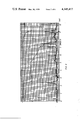
- the infrared (IR) spectrum of the product is shown in FIG. 1 of the drawings, and the nuclear magnetic resonance (NMR) spectrum is shown as FIG. 2.
- NMR nuclear magnetic resonance
- One of the exchangeable protons may be the proton of the hydrochloride salt.
- Example 1 The procedure of Example 1 was repeated, using 18 ml of n-butyraldehyde in place of the propionaldehyde.
- Example 1 The product of Example 1, the n-propionaldehyde adduct of 7-chloro-2-(N-methyl-1-hydroxypropylamino)-5-phenyl-3H-1,4-benzodiazepine-4-oxide hydrochloride, (1 g) was dissolved by refluxing for 5 to 10 minutes with isopropyl alcohol (15 ml) and left at room temperature for two days to evaporate. The crystals which formed were collected and triturated with a mixture of methanol and ether.
- Example 2 The product of Example 2, the n-butyraldehyde adduct of 7-chloro-2-(N-methyl-1-hydroxybutylamino)-5-phenyl-3H-1,4-benzodiazepine-4-oxide hydrochloride, (500 mg) was dissolved by refluxing for 5 to 10 minutes with isopropyl alcohol (5 ml) and left at room temperature for two days to evaporate. The gummy residue was triturated with a mixture of methanol and ether.
Landscapes
- Chemical & Material Sciences (AREA)
- Organic Chemistry (AREA)
- Nitrogen Condensed Heterocyclic Rings (AREA)
- Pharmaceuticals Containing Other Organic And Inorganic Compounds (AREA)
- Plural Heterocyclic Compounds (AREA)
Abstract
Novel aldehyde adducts of 1,4-benzodiazepine-4-oxides, novel azeto- 1,4!-benzodiazepine derivatives derived therefrom, acid addition salts thereof and methods for their preparation. The aldehyde adducts have the general formula I; the azeto- 1,4!-benzodiazepine derivatives have the general formula III. ##STR1##
Description
This is a division, of application Ser. No. 576,921, filed May 12, 1975, now U.S. Pat. No. 4,061,745.
The novel 1,4-benzodiazepine-4-oxide aldehyde adducts of the invention are aldehyde adducts of benzodiazepines unsaturated at the 1 position, referred to as 3H-1,4-benzodiazepines. 3H-1,4-benzodiazepines are known, and are useful as sedatives and tranquilizers in the field of human therapy. The azeto- 1,4!- benzodiazepine ring structure is an entirely new heterocyclic ring structure.
It is an object of the invention to provide novel aldehyde adducts of 1,4-benzodiazepin-4-oxides which are useful in the fields of human and animal therapy and as intermediates in the preparation of other useful compounds.
It is also an object of the invention to provide novel azeto- 1,4!-benzodiazepine compounds which are themselves useful in both of the above fields of therapy.
The novel aldehyde adducts of 1,4-benzodiazepine-4-oxides of the invention have the general formula I. ##STR2## in which the symbols are as defined below. The parent 1,4-benzodiazopino-4-oxides have the general formula II ##STR3## in which the symbols are as defined below. The novel azeto- 1,4!-benzodiazepines of the invention have the general formula III in which the symbols are as defined below.
In the above formula I to III:
R1 represents a hydrogen or halogen atom or a trifluoromethyl, cyano, nitro, lower alkyl, lower alkoxy or lower alkylthio group;
R2 represents a lower alkyl, hydroxy-(lower alkyl), lower alkenyl or benzyl group;
R3 represents a lower alkyl group; and R4 represents
a phenyl, (lower alkyl)-phenyl, nitrophenyl, halophenyl or pyridyl group.
As used herein, the term "halogen" means bromine, chlorine, fluorine, or iodine. The term "lower alkyl" refers to both straight-chain and branched-chain alkyl groups containing from 1 to 10 carbon atoms, for example, methyl, ethyl, n-propyl, iso-propyl, n-butyl, n-amyl and n-hexyl. The term "lower alkenyl" means both straight-chain and branched-chain alkenyl groups containing from 2 to 6 carbon atoms, for example vinyl, allyl, butenyl, hexenyl and isobutenyl.
The compounds of the general formula I and their acid addition salts are products in which there can be identified by infrared and proton magnetic resonance spectroscopy the elements of a benzodiazepine ring and the proton magnetic resonance spectrum of which shows a shift at about δ =9.7p.p.m. assignable to the aldehydic protons.
The compounds I can be prepared according to the invention by reacting, in aqueous acid, a solution of a 1,4-benzodiazepine-4-oxide of the general formula IV ##STR4## (in which the symbols are as above defined) with an excess, preferably 3 or more molar equivalents, of an aldehyde having the general formula R3 CHO in which R3 is as above defined. The compound IV is preferably used in solution in aqueous hydrochloric acid, in which case the product is the hydrochloride salt, V ##STR5## The compound IV or its hydrochloride salt is preferably dissolved in aqueous hydrochloric acid so as to provide a molar ratio of acid: base of 2 or more. The amount of water should be sufficient to ensure that the compound remains in solution, from 300 to 500 ml of water generally being sufficient to dissolve 1 mole of compound IV.
The aldehyde R3 --CHO is preferably added in an amount of 3 to 6 moles, advantageously about 4 moles, per mole of compound IV. Stirring is preferably continued for up to 72 hours, generally 60 to 72 hours, at room temperature to enable the reaction to proceed sufficiently near to completion. The product generally precipitates gradually during this time. If no precipitate forms even after 72 hours, the reaction mixture may be stirred with methylene dichloride for 24 hours, during which a crystalline product is generally precipitated. If no precipitate forms even after this treatment, the methylene dichloride layer may be separated and the product precipitated by addition of an excess of diethyl ether and petroleum spirit.
The product I may be purified by filtering, washing with water, drying and recrystallizing from a suitable solvent; preferably without using any heat.
Certain suitable starting materials of the general formula IV are described and claimed in British Pat. No. 864,824, 972,969 and 986,903.
The compounds I are of value not only by virtue of their pharmacological properties but as intermediates in the preparation of compounds II and III.
The parent compounds II can be prepared merely by crystallizing the compounds I from a boiling solvent such as isopropyl alcohol, whereupon the aldehyde dissociates from the 1,4-benzodiazepine aldehyde adduct to yield compounds II as described in British Pat. No. 1,359,287.
The invention also provides a method of making the compounds of the general formula III which comprises treating a compound of the general formula I with an organic or inorganic base, preferably a strong base such as sodium or potassium hydroxide. The products III are azetes with a fundamentally new stable ring structure that is of major importance from a theoretical point of view as leading the way to a large number of new syntheses. The products III also show promise as pharmacologically valuable compounds, with indications of an action on the central nervous system, as well as possible anti-inflammatory and diuretic properties.
The preparation of the azetes III may be carried out by reacting a solution or suspension of a compound I, for example in methanol, ethanol or isopropanol, with the base. The reaction is preferably allowed to continue at room temperature for several hours, during which time the product crystallizes. The product III may be isolated by filtration and washed with water until free from alkali. They may be converted into their acid addition salts according to the invention by treatment with suitable pharmacologically acceptable organic or inorganic acids, for example hydrochloric acid, hydrobromic acid, nitric acid, sulphuric acid, acetic acid, formic acid, phosphoric acid, perchloric acid, succinic acid, maleic acid, citric acid or fumaric acid. In particular, the hydrochloride salts have been found to be perfectly stable.
Both the compounds I and the compounds III show the psychotropic action on the central nervous system commonly associated with the benzodiazepine ring, giving the compounds tranquillizing, sedative and hypnotic properties. To produce a tranquillizing effect they would be administered at a dosage of from 1 mg to 10 mg depending on the age and condition of the patient. In larger doses they produce sedation, and when the sedative dose is increased they have hynotic effects. They can be applied in the form of tablets, capsules, suppositories or syrup, or in injectable form. The invention accordingly provides therapeutic compositions comprising one or more compounds of the general formula I or III or acid addition salts thereof in admixture with a pharmacologically acceptable diluent or carrier.
The following Examples illustrate the invention but are not to be regarded as limiting it in any way.
To a solution of 7-chloro-2-methylamino-5-phenyl-3H-1,3-benzodiazepine-4-oxide hydrochloride (16.8 g) in water (200 ml) in a 500 ml round-bottomed flask equipped with a magnetic stirrer there was added concentrated hydrochloric acid (5.5 ml) and n-propionaldehyde (15 ml). The flask was stoppered and the reaction mixture was stirred for 72 hours. A solid was precipitated and was filtered, washed with water (2 × 25 ml), pressed well and air dried. The solid was then recrystallized from a cold mixture of methanol, ether and petroleum ether and formed colourless crystals melting at 198°-4° C. with decomposition. The yield of the n-propionaldehyde adduct of 7-chloro-2-(N-methyl-1-hydroxypropylamino)-5-phenyl-3H-1,4-benzodiazepine-4-oxide hydrochloride (Compound V; R1 =chlorine in the 7-position, R2 =methyl, R3 =ethyl, R4 =phenyl) was 2.6 grams.
The results of analysis were as follows:
Calculated for C22 H27 Cl2 N3 O3 : C=58.4%; H=6.0%; N=9.3% Found: C=58.6%; H=6.0%; N=9.4%
The infrared (IR) spectrum of the product is shown in FIG. 1 of the drawings, and the nuclear magnetic resonance (NMR) spectrum is shown as FIG. 2. In the NMR spectrum the following shifts can be assigned to given groups.
__________________________________________________________________________
δ(p.p.m.)
               Assignation to:
__________________________________________________________________________
1.00 (triplet) CH.sub.3)
                           Two-C.sub.2 H.sub.5 groups
1.28-1.9 (complex multiplet)
               CH.sub.2
2.94 (complex singlet)
               NCH.sub.3
3.4-5 (complex multiplet)
7.3-7.9 (complex multiplet)
               aromatic protons.
9.68 (broad singlet)
               aldehydic proton.
__________________________________________________________________________
The NMR spectrum after deuteration is shown as FIG. 3 of the drawings and shows that although there are exchangeable protons, as indicated by the additional shift at (δ=3.5 p.p.m.) for example, there is no change in the shift at (δ=9.68 p.p.m.). One of the exchangeable protons may be the proton of the hydrochloride salt.
The procedure of Example 1 was repeated, using 18 ml of n-butyraldehyde in place of the propionaldehyde. The product was isolated and recrystallized as in Example 1 and there were obtained 2.4 grams of colourless crystals of the n-butyraldehyde adduct of 7-chloro-2-(N-methyl-1-hydroxybutylamino)-5-phenyl-3H-1,4-benzodiazepine-4-oxide hydrochloride (compound V; R1 =chlorine in the 7-position, R2 =methyl, R3 =n-propyl, R4 =phenyl) which melted at 193° C. with decomposition.
The results of analysis of the product are as follows:
Calculated for C24 H31 Cl2 N3 O3 : C=60.0%; H=6.5%; N=8.8% Found: C=59.9%; H=6.4%; N=8.8%
The IR spectrum of the product is shown in FIG. 4 of the drawings and the NMR spectrum is shown in FIG. 5. In the NMR spectrum the following shifts can be assigned to given groups:
__________________________________________________________________________
δ(p.p.m.) Assignation to:
__________________________________________________________________________
0.76-1 (complex multiplet)
                CH.sub.3
                            Two-CH.sub.2 CH.sub.2 CH.sub.3 groups
1.3-1.74 (complex multiplet)
                CH.sub.2
2.97 (doublet)  NCH.sub.3
3.75-4.95 (complex multiplet)
7.46-7.8 (complex multiplet)
                aromatic protons.
9.68 (broad singlet)
                aldehydic proton.
__________________________________________________________________________
The NMR spectrum after deuteration is shown in FIG. 6 of the drawings and shows that although there are exchangeable protons, as indicated by the additional shift at (δ=3.85 p.p.m.) for example, there is no change on deuteration in the shift at (δ=9.68 p.p.m.). Exchangeable protons may be the protons of the hydrogen chloride salt and of the hydroxy group.
The product of Example 1, the n-propionaldehyde adduct of 7-chloro-2-(N-methyl-1-hydroxypropylamino)-5-phenyl-3H-1,4-benzodiazepine-4-oxide hydrochloride, (1 g) was dissolved by refluxing for 5 to 10 minutes with isopropyl alcohol (15 ml) and left at room temperature for two days to evaporate. The crystals which formed were collected and triturated with a mixture of methanol and ether. The yield of 7-chloro-2-(N-methyl-1-hydroxypropylamino)-5phenyl-3H-1,4-benzodiazepine-4-oxide hydrochloride (compound II; R1 =chlorine in the 7-position; R2 =methyl; R3 =ethyl; R4 =phenyl) was 240 mg. M.P. 192°-4° (with decomposition). The I.R. spectrum was identical to a sample prepared as described in Example 2 of British Patent No. 1,359,287.
The product of Example 2, the n-butyraldehyde adduct of 7-chloro-2-(N-methyl-1-hydroxybutylamino)-5-phenyl-3H-1,4-benzodiazepine-4-oxide hydrochloride, (500 mg) was dissolved by refluxing for 5 to 10 minutes with isopropyl alcohol (5 ml) and left at room temperature for two days to evaporate. The gummy residue was triturated with a mixture of methanol and ether. The yield of crystalline product of 7-chloro-2-(N-methyl-1-hydroxybutylamino)-5-phenyl-3H-1,4-benzodiazepine-4-oxide hydrochloride (compound II; R1 =chlorine in the 7-position; R2 =methyl; R3 =n-propyl; R4 =phenyl) was 50 mg, melting at 194° C. to 195° C. with decomposition. The I.R. spectrum was identical to a sample prepared as described in Example 3 of British Pat. No. 1,359,287.
40% aqueous sodium hydroxide solution (6 ml) was added to a stirred suspension or solution of the n-propionaldehyde adduct of 7-chloro-2-(N-methyl-1-hydroxypropylamino)-5-phenyl-3H-1,4-benzodiazepine-4-oxide hydrochloride of Example 3 (4.5 g) in methanol (120 ml). The mixture was left standing for 18 hours at room temperature. Crystals that precipitated were filtered and washed with a little methanol followed by water. The yield of pale yellowish crystals of 6-chloro-2-ethyl-9-methyl-4-phenyl-9H-azeto- 2,3-b! 1,4!-benzodiazepine (compound III; R1 =chlorine in the 6-positon; R2 =methyl; R3 =ethyl; R4 =phenyl) was 2 g,M.P. 194° C. to 195° C. This material contains a trace of methanol as solvent of crystallisation.
The results of analysis were as follows: Calculated for C10 H16 Cl N3 : C=70.9%; H=5.0%; N=13.1%
Found: C=70.7%; H=5.2%; N=13.0%
40% aqueous sodium hydroxide solution (6 ml) was added to a stirred solution of the n-butyraldehyde adduct of 7-chloro-2-(N-methyl-1-hydroxybutylamino)-5-phenyl-3H-1,4-benzodiazepine-4-oxide hydrochloride of Example 4 (4.8 g) in methanol (60 ml). The mixture was left standing for 18 hours at room temperature. Crystals that precipitated were filtered and washed with a little methanol followed by water. The yield of needle-like soft crystals of 6-chloro-9-methyl-4-phenyl-2-propyl-9H-azeto 2,3-b! 1,4!-benzodiazepine (compound III; R1 =chlorine in the 6-position; R2 =methyl; R3 =n-propyl; R4 =phenyl) was 1.5 g, M.P. 179° C. to 180° C.
The results of analysis were as follows:
Calculated for C20 H18 ClN3 : C=71.5%; H=5.4%; N=12.5% Found: C=71.2% H=5.4%; N=12.6%
The 6-chloro-2-ethyl-9-methyl-4-phenyl-9H-azeto- 2.3-b! 1,4! benzodiazepine of Example 5 (322 mg) was treated with a saturated methanolic hydrogen chloride solution (10 ml) and diluted with diethyl ether to obtain colourless crystals. The yield of the hydrochloride salt of 6-chloro-2-ethyl-4-phenyl-9-methyl-9H-azeto- 2,3-b! 1,4!-benzodiazepine was 300 mg. The product melted at 189° C. to 190° C. with decomposition.
The 6-chloro-9-methyl-4-phenyl-2-propyl-9H-azeto- 2,3-b! 1,4!-benzodiazepine of Example 6 (336 mg) was treated with saturated methanolic hydrogen chloride (10 ml) and diluted with diethyl ether to obtain colourless crystals. The yield of the hydrochloride salt of 6-chloro-9-methyl-4-phenyl-2-propyl-9H-azeto- 2,3-b! 1,4!-benzodiazepine was 270 mg. The product melted at 183° C. to 184° C. with decon position.
Claims (13)
1. A compound of the formula ##STR6## wherein R1 represents hydrogen, halogen, a trifluoromethyl group, cyano, nitro, lower alkyl, lower alkoxy or lower alkylthio group;
R2 represents lower alkyl, hydroxy-(lower alkyl), lower alkenyl or a benzyl group;
R3 represents a lower alkyl group; and
R4 represents phenyl, (lower alkyl)-phenyl, nitrophenyl, halophenyl or a pyridyl group.
2. The n-propionaldehyde adduct of 7-chloro-2-(N-methyl-1-hydroxypropylamino)-5-phenyl-3H-1,4-benzodiazepine-4-oxide hydrochloride.
3. The n-butyraldehyde adduct of 7-chloro-2-(N-methyl-1-hydroxybutylamino)-5-phenyl-3H-1,4-benzodiazepine-4-oxide hydrochloride.
4. A compound according to claim 1 wherein R4 is phenyl.
5. A compound according to claim 4 wherein R1 is chlorine.
6. A compound according to claim 5 wherein R2 is methyl or ethyl.
7. Process for the preparation of a compound according to claim 1 which comprises reacting an aqueous solution of a 1,4-benzodiazepine-4-oxide of the formula ##STR7## wherein R1 represents hydrogen, haloen, a trifluoromethyl group, cyano, nitro, lower alkyl, lower alkoxy or lower alkylthio group;
R2 represents a lower alkyl radical; and
R4 represents a phenyl, (lower alkyl)-phenyl, nitrophenyl, halophenyl or pyridyl group with an aldehyde having the general formula R3 CHO in which R3 represents a lower alkyl group, the mol ratio of said aldehyde to said 1,4-benzodiazepine-4-oxide being at least 3:1.
8. A process according to claim 7, carried out at or below room temperature.
9. A process according to claim 7 wherein R4 is phenyl.
10. A process according to claim 9 wherein R1 is chlorine.
11. A process according to claim 10 wherein R2 is methyl or ethyl.
12. A process for producing a compound of the formula ##STR8## R1 is hydrogen, halogen, a trifluoromethyl group, cyano, nitro, lower alkyl, lower alkoxy or a lower alkylthio group;
R2 is a lower alkyl, hydroxy-(lower alkyl), lower alkenyl or benzyl group;
R3 represents a lower alkyl group; and
R4 represents phenyl, (lower alkyl)-phenyl, nitrophenyl, halophenyl or a pyridyl group which comprises contacting 1,4-benzodiazepine-4-oxide of the formula ##STR9## wherein R1, R2 and R4 have the previously assigned significance with at least 3 mols of an aldehyde of the formula R3 CHO wherein R3 is a lower alkyl group per mol of said 1,4-benzodiazepine compound, in the presence of an aqueous hydrochloric acid.
13. A therapeutic composition comprising a tranquilizing, sedating or hypnotizing amount of a compound of the formula ##STR10## wherein R1 represents hydrogen, halogen, a trifluoromethyl group, cyano, nitro, lower alkyl, lower alkoxy or lower alkyl thio group;
R2 represents lower alkyl, hydroxy-(lower alkyl), lower alkenyl or a benzyl group;
R3 represents a lower alkyl group; and
R4 represents phenyl, (lower alkyl)-phenyl, nitrophenyl, halophenyl, a pyridyl group, or an acid addition salt thereof in admixture with a pharmacologically acceptable diluent or carrier.
Applications Claiming Priority (3)
| Application Number | Priority Date | Filing Date | Title |
|---|---|---|---|
| GB2119574A GB1448894A (en) | 1974-05-14 | 1974-05-14 | Benzodiazepines |
| GB21195/74 | 1974-05-14 | ||
| US05/576,921 US4061745A (en) | 1974-05-14 | 1975-05-12 | Azeto [2,3-b][1,4] benzo diazepines |
Related Parent Applications (1)
| Application Number | Title | Priority Date | Filing Date |
|---|---|---|---|
| US05/576,921 Division US4061745A (en) | 1974-05-14 | 1975-05-12 | Azeto [2,3-b][1,4] benzo diazepines |
Publications (1)
| Publication Number | Publication Date |
|---|---|
| US4145417A true US4145417A (en) | 1979-03-20 |
Family
ID=26255204
Family Applications (1)
| Application Number | Title | Priority Date | Filing Date |
|---|---|---|---|
| US05/666,383 Expired - Lifetime US4145417A (en) | 1974-05-14 | 1976-03-12 | Benzodiazepines |
Country Status (1)
| Country | Link |
|---|---|
| US (1) | US4145417A (en) |
Citations (4)
| Publication number | Priority date | Publication date | Assignee | Title |
|---|---|---|---|---|
| US2893992A (en) * | 1959-07-07 | I ii i i | ||
| GB1359287A (en) * | 1973-02-20 | 1974-07-10 | Ddsa Pharmaceuticals Ltd | Substituted hydroxymethyl benzodiazepines |
| GB1359286A (en) * | 1973-02-20 | 1974-07-10 | Ddsa Pharmaceuticals Ltd | Hydroxymethyl benzodiazepine derivatives |
| DE2521497A1 (en) * | 1974-05-14 | 1975-11-27 | Ddsa Pharmaceuticals Ltd | ALDEHYDE ADDUCTS FROM 1,4-BENZODIAZEPINE-4-OXIDEN, AZETO-SQUARE BRACKETS ON 1.4-SQUARE BRACKETS TO -BENZODIAZEPINE, PROCESS FOR THE PREPARATION OF THESE COMPOUNDS AND THESE COMPOUNDS AS ACTIVE INGREDIENTS |
-
1976
- 1976-03-12 US US05/666,383 patent/US4145417A/en not_active Expired - Lifetime
Patent Citations (4)
| Publication number | Priority date | Publication date | Assignee | Title |
|---|---|---|---|---|
| US2893992A (en) * | 1959-07-07 | I ii i i | ||
| GB1359287A (en) * | 1973-02-20 | 1974-07-10 | Ddsa Pharmaceuticals Ltd | Substituted hydroxymethyl benzodiazepines |
| GB1359286A (en) * | 1973-02-20 | 1974-07-10 | Ddsa Pharmaceuticals Ltd | Hydroxymethyl benzodiazepine derivatives |
| DE2521497A1 (en) * | 1974-05-14 | 1975-11-27 | Ddsa Pharmaceuticals Ltd | ALDEHYDE ADDUCTS FROM 1,4-BENZODIAZEPINE-4-OXIDEN, AZETO-SQUARE BRACKETS ON 1.4-SQUARE BRACKETS TO -BENZODIAZEPINE, PROCESS FOR THE PREPARATION OF THESE COMPOUNDS AND THESE COMPOUNDS AS ACTIVE INGREDIENTS |
Non-Patent Citations (1)
| Title |
|---|
| Katritzky, Quarterly Reviews, 1956, vol. 10, pp. 395-406. * |
Similar Documents
| Publication | Publication Date | Title |
|---|---|---|
| US4855298A (en) | 6-Halo-1,2,3,4-tetrahydroquinazoline-4-spiro-4-imidazolidine-2,2'5'-triones useful for the treatment and prophylaxis of diabetic complications | |
| US4098786A (en) | Benzodiazepin derivatives | |
| JPH0314315B2 (en) | ||
| US3988345A (en) | Imidazoline derivatives and the preparation thereof | |
| SU648104A3 (en) | Method of obtaining 1,4-diazepine derivatives | |
| SU1342415A3 (en) | Method of producing derivatives of pyridazine | |
| US3575985A (en) | Pyridinium compounds | |
| US3903164A (en) | Pharmacodynamically active amino alkyloxim ethers | |
| US4061745A (en) | Azeto [2,3-b][1,4] benzo diazepines | |
| US3178434A (en) | Substituted x-amino-carbostyrils | |
| JPS634544B2 (en) | ||
| US3971814A (en) | Benzo(b)thiophene derivatives | |
| US3929783A (en) | 1-Substituted-4-phenyl-4H-{8 1,2,4{9 triazolo{8 3,4-C{9 {8 1,4{9 {0 benzothiazines or benzoxazines | |
| Callejo et al. | A convenient preparation of [1, 2, 4] triazolo [1, 5-a] pyridines from acetohydrazide derivatives. Synthetic and mechanistic aspects | |
| US3086972A (en) | Aza-thiaxanthene derivatives | |
| US4089953A (en) | 1,5-Benzodiazocines | |
| US4116956A (en) | Benzodiazepine derivatives | |
| US4146713A (en) | Method of preparing 3-morpholino-2-cyanoacrylamide | |
| US4016162A (en) | 6-Morpholino-3-substituted phenyl-S-triazolo[4,3-b]pyridazines | |
| US3697532A (en) | 5-methyldipyrazolo {8 3,4-b;3{40 ,4{40 -d{9 {0 pyridin-3(2h)-ones | |
| US3927015A (en) | 2-(3-Hydroxyaminomethyl-S-triazol-4-yl)benzophenones | |
| IE59475B1 (en) | Furo-(3,4-c)-pyridine derivatives | |
| US3846412A (en) | Dihydro-2-amino-isoquinolines and their derivatives | |
| US3773746A (en) | 1,1'-azo bis(1h-imidazo(1,2-a)pyridinium dibromide compounds | |
| US4244869A (en) | Benzodiazepine derivatives and process of making them |