US4110297A - Wire enamel with low soldering temperature - Google Patents
Wire enamel with low soldering temperature Download PDFInfo
- Publication number
- US4110297A US4110297A US05/722,823 US72282376A US4110297A US 4110297 A US4110297 A US 4110297A US 72282376 A US72282376 A US 72282376A US 4110297 A US4110297 A US 4110297A
- Authority
- US
- United States
- Prior art keywords
- weight
- acid
- coating composition
- composition
- solvent
- Prior art date
- Legal status (The legal status is an assumption and is not a legal conclusion. Google has not performed a legal analysis and makes no representation as to the accuracy of the status listed.)
- Expired - Lifetime
Links
- 210000003298 dental enamel Anatomy 0.000 title description 6
- 238000005476 soldering Methods 0.000 title description 3
- 150000002148 esters Chemical class 0.000 claims abstract description 13
- 239000012948 isocyanate Substances 0.000 claims abstract description 13
- 150000002513 isocyanates Chemical class 0.000 claims abstract description 13
- 239000000203 mixture Substances 0.000 claims abstract description 13
- 239000011347 resin Substances 0.000 claims abstract description 13
- 229920005989 resin Polymers 0.000 claims abstract description 13
- 229920002635 polyurethane Polymers 0.000 claims abstract description 10
- 239000004814 polyurethane Substances 0.000 claims abstract description 10
- 239000011248 coating agent Substances 0.000 claims abstract description 9
- 238000000576 coating method Methods 0.000 claims abstract description 9
- 229920001169 thermoplastic Polymers 0.000 claims abstract description 9
- 239000004416 thermosoftening plastic Substances 0.000 claims abstract description 9
- 239000003054 catalyst Substances 0.000 claims abstract description 8
- 239000002320 enamel (paints) Substances 0.000 claims abstract description 5
- 125000002887 hydroxy group Chemical group [H]O* 0.000 claims abstract description 5
- 239000002904 solvent Substances 0.000 claims description 12
- QTWJRLJHJPIABL-UHFFFAOYSA-N 2-methylphenol;3-methylphenol;4-methylphenol Chemical compound CC1=CC=C(O)C=C1.CC1=CC=CC(O)=C1.CC1=CC=CC=C1O QTWJRLJHJPIABL-UHFFFAOYSA-N 0.000 claims description 10
- CTQNGGLPUBDAKN-UHFFFAOYSA-N O-Xylene Chemical compound CC1=CC=CC=C1C CTQNGGLPUBDAKN-UHFFFAOYSA-N 0.000 claims description 10
- 239000008096 xylene Substances 0.000 claims description 10
- 239000008199 coating composition Substances 0.000 claims description 9
- 239000007795 chemical reaction product Substances 0.000 claims description 7
- 125000005442 diisocyanate group Chemical group 0.000 claims description 7
- DVKJHBMWWAPEIU-UHFFFAOYSA-N toluene 2,4-diisocyanate Chemical compound CC1=CC=C(N=C=O)C=C1N=C=O DVKJHBMWWAPEIU-UHFFFAOYSA-N 0.000 claims description 6
- 150000002009 diols Chemical class 0.000 claims description 5
- 150000008064 anhydrides Chemical class 0.000 claims description 4
- 238000009835 boiling Methods 0.000 claims description 4
- 239000011280 coal tar Substances 0.000 claims description 4
- 150000001991 dicarboxylic acids Chemical class 0.000 claims description 4
- 239000007787 solid Substances 0.000 claims description 4
- 239000002253 acid Substances 0.000 claims description 3
- 238000004821 distillation Methods 0.000 claims description 3
- ISWSIDIOOBJBQZ-UHFFFAOYSA-N Phenol Chemical compound OC1=CC=CC=C1 ISWSIDIOOBJBQZ-UHFFFAOYSA-N 0.000 claims description 2
- ZJCCRDAZUWHFQH-UHFFFAOYSA-N Trimethylolpropane Chemical compound CCC(CO)(CO)CO ZJCCRDAZUWHFQH-UHFFFAOYSA-N 0.000 claims description 2
- 150000007513 acids Chemical class 0.000 claims description 2
- XNGIFLGASWRNHJ-UHFFFAOYSA-N phthalic acid Chemical compound OC(=O)C1=CC=CC=C1C(O)=O XNGIFLGASWRNHJ-UHFFFAOYSA-N 0.000 claims description 2
- ARCGXLSVLAOJQL-UHFFFAOYSA-N trimellitic acid Chemical compound OC(=O)C1=CC=C(C(O)=O)C(C(O)=O)=C1 ARCGXLSVLAOJQL-UHFFFAOYSA-N 0.000 claims 2
- 125000004432 carbon atom Chemical group C* 0.000 claims 1
- IFDVQVHZEKPUSC-UHFFFAOYSA-N cyclohex-3-ene-1,2-dicarboxylic acid Chemical compound OC(=O)C1CCC=CC1C(O)=O IFDVQVHZEKPUSC-UHFFFAOYSA-N 0.000 claims 1
- QSAWQNUELGIYBC-UHFFFAOYSA-N cyclohexane-1,2-dicarboxylic acid Chemical compound OC(=O)C1CCCCC1C(O)=O QSAWQNUELGIYBC-UHFFFAOYSA-N 0.000 claims 1
- UFDHBDMSHIXOKF-UHFFFAOYSA-N tetrahydrophthalic acid Natural products OC(=O)C1=C(C(O)=O)CCCC1 UFDHBDMSHIXOKF-UHFFFAOYSA-N 0.000 claims 1
- 239000003849 aromatic solvent Substances 0.000 abstract description 4
- 239000000463 material Substances 0.000 description 7
- -1 urethane ester Chemical class 0.000 description 5
- 238000012360 testing method Methods 0.000 description 4
- UHOVQNZJYSORNB-UHFFFAOYSA-N Benzene Chemical compound C1=CC=CC=C1 UHOVQNZJYSORNB-UHFFFAOYSA-N 0.000 description 3
- LYCAIKOWRPUZTN-UHFFFAOYSA-N Ethylene glycol Chemical compound OCCO LYCAIKOWRPUZTN-UHFFFAOYSA-N 0.000 description 3
- YXFVVABEGXRONW-UHFFFAOYSA-N Toluene Chemical compound CC1=CC=CC=C1 YXFVVABEGXRONW-UHFFFAOYSA-N 0.000 description 3
- 239000001488 sodium phosphate Substances 0.000 description 3
- WNLRTRBMVRJNCN-UHFFFAOYSA-N adipic acid Chemical compound OC(=O)CCCCC(O)=O WNLRTRBMVRJNCN-UHFFFAOYSA-N 0.000 description 2
- 125000003118 aryl group Chemical group 0.000 description 2
- WERYXYBDKMZEQL-UHFFFAOYSA-N butane-1,4-diol Chemical compound OCCCCO WERYXYBDKMZEQL-UHFFFAOYSA-N 0.000 description 2
- 238000006243 chemical reaction Methods 0.000 description 2
- 229920001971 elastomer Polymers 0.000 description 2
- 230000032050 esterification Effects 0.000 description 2
- 238000005886 esterification reaction Methods 0.000 description 2
- 238000009413 insulation Methods 0.000 description 2
- IQPQWNKOIGAROB-UHFFFAOYSA-N isocyanate group Chemical group [N-]=C=O IQPQWNKOIGAROB-UHFFFAOYSA-N 0.000 description 2
- 239000000126 substance Substances 0.000 description 2
- OVBFMUAFNIIQAL-UHFFFAOYSA-N 1,4-diisocyanatobutane Chemical compound O=C=NCCCCN=C=O OVBFMUAFNIIQAL-UHFFFAOYSA-N 0.000 description 1
- KNIUHBNRWZGIQQ-UHFFFAOYSA-N 7-diethoxyphosphinothioyloxy-4-methylchromen-2-one Chemical compound CC1=CC(=O)OC2=CC(OP(=S)(OCC)OCC)=CC=C21 KNIUHBNRWZGIQQ-UHFFFAOYSA-N 0.000 description 1
- RYGMFSIKBFXOCR-UHFFFAOYSA-N Copper Chemical compound [Cu] RYGMFSIKBFXOCR-UHFFFAOYSA-N 0.000 description 1
- JOYRKODLDBILNP-UHFFFAOYSA-N Ethyl urethane Chemical compound CCOC(N)=O JOYRKODLDBILNP-UHFFFAOYSA-N 0.000 description 1
- OFOBLEOULBTSOW-UHFFFAOYSA-N Malonic acid Chemical compound OC(=O)CC(O)=O OFOBLEOULBTSOW-UHFFFAOYSA-N 0.000 description 1
- HDONYZHVZVCMLR-UHFFFAOYSA-N N=C=O.N=C=O.CC1CCCCC1 Chemical compound N=C=O.N=C=O.CC1CCCCC1 HDONYZHVZVCMLR-UHFFFAOYSA-N 0.000 description 1
- 239000001361 adipic acid Substances 0.000 description 1
- 235000011037 adipic acid Nutrition 0.000 description 1
- 150000004945 aromatic hydrocarbons Chemical class 0.000 description 1
- 239000002981 blocking agent Substances 0.000 description 1
- 239000007859 condensation product Substances 0.000 description 1
- 238000004534 enameling Methods 0.000 description 1
- RTZKZFJDLAIYFH-UHFFFAOYSA-N ether Substances CCOCC RTZKZFJDLAIYFH-UHFFFAOYSA-N 0.000 description 1
- XXMIOPMDWAUFGU-UHFFFAOYSA-N hexane-1,6-diol Chemical compound OCCCCCCO XXMIOPMDWAUFGU-UHFFFAOYSA-N 0.000 description 1
- 150000002440 hydroxy compounds Chemical class 0.000 description 1
- 238000002844 melting Methods 0.000 description 1
- 230000008018 melting Effects 0.000 description 1
- 238000002156 mixing Methods 0.000 description 1
- LPXPSTWBTULMJE-UHFFFAOYSA-N n-phenylbutan-1-imine Chemical compound CCCC=NC1=CC=CC=C1 LPXPSTWBTULMJE-UHFFFAOYSA-N 0.000 description 1
- 239000004033 plastic Substances 0.000 description 1
- 229920003023 plastic Polymers 0.000 description 1
- 239000000047 product Substances 0.000 description 1
- 229920006395 saturated elastomer Polymers 0.000 description 1
- 150000003330 sebacic acids Chemical class 0.000 description 1
- 230000035939 shock Effects 0.000 description 1
- 229910000679 solder Inorganic materials 0.000 description 1
- 239000010902 straw Substances 0.000 description 1
- 238000012956 testing procedure Methods 0.000 description 1
Images
Classifications
-
- H—ELECTRICITY
- H01—ELECTRIC ELEMENTS
- H01B—CABLES; CONDUCTORS; INSULATORS; SELECTION OF MATERIALS FOR THEIR CONDUCTIVE, INSULATING OR DIELECTRIC PROPERTIES
- H01B3/00—Insulators or insulating bodies characterised by the insulating materials; Selection of materials for their insulating or dielectric properties
- H01B3/18—Insulators or insulating bodies characterised by the insulating materials; Selection of materials for their insulating or dielectric properties mainly consisting of organic substances
- H01B3/30—Insulators or insulating bodies characterised by the insulating materials; Selection of materials for their insulating or dielectric properties mainly consisting of organic substances plastics; resins; waxes
- H01B3/302—Polyurethanes or polythiourethanes; Polyurea or polythiourea
-
- C—CHEMISTRY; METALLURGY
- C08—ORGANIC MACROMOLECULAR COMPOUNDS; THEIR PREPARATION OR CHEMICAL WORKING-UP; COMPOSITIONS BASED THEREON
- C08G—MACROMOLECULAR COMPOUNDS OBTAINED OTHERWISE THAN BY REACTIONS ONLY INVOLVING UNSATURATED CARBON-TO-CARBON BONDS
- C08G18/00—Polymeric products of isocyanates or isothiocyanates
- C08G18/06—Polymeric products of isocyanates or isothiocyanates with compounds having active hydrogen
- C08G18/08—Processes
- C08G18/10—Prepolymer processes involving reaction of isocyanates or isothiocyanates with compounds having active hydrogen in a first reaction step
-
- C—CHEMISTRY; METALLURGY
- C08—ORGANIC MACROMOLECULAR COMPOUNDS; THEIR PREPARATION OR CHEMICAL WORKING-UP; COMPOSITIONS BASED THEREON
- C08G—MACROMOLECULAR COMPOUNDS OBTAINED OTHERWISE THAN BY REACTIONS ONLY INVOLVING UNSATURATED CARBON-TO-CARBON BONDS
- C08G18/00—Polymeric products of isocyanates or isothiocyanates
- C08G18/06—Polymeric products of isocyanates or isothiocyanates with compounds having active hydrogen
- C08G18/70—Polymeric products of isocyanates or isothiocyanates with compounds having active hydrogen characterised by the isocyanates or isothiocyanates used
- C08G18/72—Polyisocyanates or polyisothiocyanates
- C08G18/80—Masked polyisocyanates
- C08G18/8061—Masked polyisocyanates masked with compounds having only one group containing active hydrogen
-
- Y—GENERAL TAGGING OF NEW TECHNOLOGICAL DEVELOPMENTS; GENERAL TAGGING OF CROSS-SECTIONAL TECHNOLOGIES SPANNING OVER SEVERAL SECTIONS OF THE IPC; TECHNICAL SUBJECTS COVERED BY FORMER USPC CROSS-REFERENCE ART COLLECTIONS [XRACs] AND DIGESTS
- Y10—TECHNICAL SUBJECTS COVERED BY FORMER USPC
- Y10T—TECHNICAL SUBJECTS COVERED BY FORMER US CLASSIFICATION
- Y10T428/00—Stock material or miscellaneous articles
- Y10T428/29—Coated or structually defined flake, particle, cell, strand, strand portion, rod, filament, macroscopic fiber or mass thereof
- Y10T428/2913—Rod, strand, filament or fiber
- Y10T428/2933—Coated or with bond, impregnation or core
- Y10T428/2938—Coating on discrete and individual rods, strands or filaments
-
- Y—GENERAL TAGGING OF NEW TECHNOLOGICAL DEVELOPMENTS; GENERAL TAGGING OF CROSS-SECTIONAL TECHNOLOGIES SPANNING OVER SEVERAL SECTIONS OF THE IPC; TECHNICAL SUBJECTS COVERED BY FORMER USPC CROSS-REFERENCE ART COLLECTIONS [XRACs] AND DIGESTS
- Y10—TECHNICAL SUBJECTS COVERED BY FORMER USPC
- Y10T—TECHNICAL SUBJECTS COVERED BY FORMER US CLASSIFICATION
- Y10T428/00—Stock material or miscellaneous articles
- Y10T428/29—Coated or structually defined flake, particle, cell, strand, strand portion, rod, filament, macroscopic fiber or mass thereof
- Y10T428/2913—Rod, strand, filament or fiber
- Y10T428/2933—Coated or with bond, impregnation or core
- Y10T428/294—Coated or with bond, impregnation or core including metal or compound thereof [excluding glass, ceramic and asbestos]
Definitions
- This invention relates to wire enamel. More particularly, this invention relates to a coating composition capable of forming an insulative coating on wire to provide a very low temperature solderability while maintaining satisfactory insulative properties.
- the need for a low solderability temperature is, for most materials, the antithesis of the equally important need for good insulation properties such as a high thermoplastic flow temperature.
- a particular coating composition which provides a surprisingly low solderability temperature yet provides a satisfactory thermoplastic flow temperature.
- a wire enamel coating composition capable of forming an insulative coating on a wire is provided, characterized by a solderability of less than 1 second at a temperature of about 285°-315° C and a thermoplastic flow temperature of at least 230° C and comprising 25-27 parts by weight of a polyurethane ester resin containing 4-10% by weight free hydroxyl content and 23-25 parts by weight of a blocked isocyanate, with the balance of the parts, i.e., 48-52 parts by weight of a solvent capable of dissolving the resin and the blocked isocyanate and containing at least 45% by weight of cresylic acid.
- One-tenth of one percent ot ten percent, by weight of the solids, of a catalyst is used to accelerate the reaction between the polyurethane ester resin and the blocked isocyanate.
- a wire enamel is prepared by mixing together about 25-27 parts by weight of a polyurethane ester resin containing 4-10% by weight free hydroxyl content with about 23-25 parts by weight of a blocked isocyanate. The resulting solids are dissolved in an aromatic solvent solution containing about 48-52 parts by weight of the total solution.
- the polyurethane ester resin preferably is a reaction product of a diisocyanate such as toluene diisocyanate (TDI) with an ester such as the esterification product of a diol with a dicarboxylic acid wherein the esterification is carried out with a sufficient excess of diol to provide an ester having a very low acid number resulting in a hydroxyl content in the reaction product of the diisocyanate with the ester of 4-10%.
- TDI toluene diisocyanate
- Examples of materials which can be used to form the urethane ester resins include diisocyanates including aromatic diisocyanates such as toluene diisocyanate, aliphatic diisocyanates such as tetramethylene diisocyanate, and cycloaliphatic diisocyanates such as methyl cyclohexane diisocyanate; longer chain diols including aliphatic diols such as 1, 4 butane diol and 1, 6 hexane diol, and ester diols such as the reaction product of two moles of ethylene glycol with one mole of adipic acid, or similar ether diols; and saturated dicarboxylic acids including aromatic discarboxylic acids capable of forming an anhydride such as, for example, orthophthalic acid or tetrahydrophthalic sebacic acids.
- Specific examples of such esters useful in the practice of the invention are E-339 Polyurethane Ester available from the Mobay Chemical Company
- the blocked isocyanate may be a diisocyanate having both of the isocyanate groups blocked.
- An example of such material would be the reaction product of a molar amount of trimethylol propane with 3 moles of toluene diisocyanate with the free isocyanate groups of the reaction product blocked by an appropriate blocking agent such as phenol or other equivalent hydroxy compounds.
- Other blocked isocyanates useful in the invention are described in U.S. Pat. No. 3,650,788. Examples of materials commercially available include Mondur S available from the Mobay Chemical Company or PDG 710 available from the P. D. George Company of St. Louis.
- the aromatic solvents may comprise one or more of a number of materials containing at least 45% by weight of cresylic acid and must provide sufficient solubility for the urethane and isocyanate resins discussed above.
- the balance of the solvent may be one or more aromatic hydrocarbons such as xylene, toluene, benzene or the like.
- the solvent comprises 45-70% by weight of cresylic acid 0-50% by weight of WES oil, and 0-30% by weight of xylene wherein the sum total amount of WES oil and xylene equals 30-55% by weight.
- cresylic acid has a boiling point of at least 200° C, and the balance of the solvent has a boiling point of less than 200° C.
- the solvent in the coating composition comprises approximately 70% by weight of cresylic acid, and approximately 30% by weight of xylene.
- the aromatic mixture of solvents comprises about 48-52% by weight of cresylic acid, about 24-26% by weight of a high boiling aromatic solvent known in the trade as WES oil (wire enamel solvent), and 24-26% by weight of xylene.
- WES oil is a semi-refined coal tar distillate, straw to dark amber in color, characterized by distillation of 10% to not below 165° C, 70% to not above 190° C and 95% to not above 235° C.
- An appropriate catalyst is used to promote the reaction of the polyurethane ester resin with the blocked isocyanate. Such catalysts are well known to those skilled in the art.
- the catalyst is added in an amount of about 1% by weight of the solids.
- a preferred catalyst is Rubber Accelerator 808, a butyraldehyde-aniline condensation product available from the E. I. duPont de Nemours Company.
- a wire enamel coating composition was made using 26 parts by weight of E-339 Polyurethane Ester Resin, 24 parts by weight Mondur S blocked isocyanate resin, 25 parts by weight cresylic acid, 12.5 parts by weight WES oil, and 12.5 parts by weight xylene. To this composition was added 1% by total weight of the E-339 and Mondur S of duPont Rubber Accelerator Catalyst 808. The composition was applied to a No. 37 AWG copper wire to provide an average coating thickness of 0.00035 inch or a build of 0.0007 inch.
- the coating was cured in a conventional continuous wire enameling oven with a bottom oven zone to top oven zone temperature range of 120°-350° C during a residence time of 15 seconds per coat with 3 coats applied.
- the sample of the coated wire was then assembled to a test fixture and dipped into a soldering pot at 302° C (575° F). The enamel was found to disintegrate in less than 1 second at this temperature.
- the standard NEMA test (MW-1000-1973-50.1.1) for thermoplastic flow was conducted comprising placing two wires coated with the coating composition in contact at right angles with each wire connected to one terminal of 110-volt A.C. power supply. A 50 gram weight was placed on the wire and the assembly placed in an oven and the temperature slowly raised in increments of about 3°-5° C per minute. The wires were connected to an alarm which would sound when the wires touched one another, signifying that both of the wires had cut through the insulative coating. On the average, the alarm went off at about 230° C indicating that the wire enamel insulative coating was able to withstand a temperature of up to that point before cutting through.
Landscapes
- Chemical & Material Sciences (AREA)
- Health & Medical Sciences (AREA)
- Chemical Kinetics & Catalysis (AREA)
- Medicinal Chemistry (AREA)
- Polymers & Plastics (AREA)
- Organic Chemistry (AREA)
- Physics & Mathematics (AREA)
- Spectroscopy & Molecular Physics (AREA)
- Paints Or Removers (AREA)
- Polyurethanes Or Polyureas (AREA)
Abstract
A wire enamel coating composition capable of forming an insulative coating on a wire to provide a solderability of less than 1 second at temperatures as low as 285°-315° C. and a thermoplastic flow temperature of at least 230° C. comprising a predetermined ratio of a polyurethane ester resin having a free hydroxyl content of 4-10% by weight and a blocked isocyanate; at least one aromatic solvent, and a catalyst.
Description
This application is a continuation-in-part of Ser. No. 531,458, filed Dec. 11, 1974, now U.S. Pat. No. 3,988,251.
This invention relates to wire enamel. More particularly, this invention relates to a coating composition capable of forming an insulative coating on wire to provide a very low temperature solderability while maintaining satisfactory insulative properties.
Requirements for fast and reliable soldering require increased use of preassembled components which are subsequently dipped into a solder pot to decompose the insulation from the wire, for example, and cause it to be at the same time soldered to a terminal. The speed requirement in addition to the presence of other plastic materials in the preassembled package necessitates an insulated coating which will be capable of melting or disintegrating at as low a temperature as possible. Conversely, however, increased safety requirements mandate the need for an insulative material which will be capable of withstanding temporarily higher than normal operating temperatures such as, for example, when a short occurs causing a wire to heat up. The latter property can be defined as thermoplastic flow. Prescribed testing procedures by the National Electrical Manufacturers Association (NEMA) define the conditions under which the thermoplastic flow temperature of a wire is determined.
Basically, the need for a low solderability temperature is, for most materials, the antithesis of the equally important need for good insulation properties such as a high thermoplastic flow temperature. Quite surprisingly, however, we have found a particular coating composition which provides a surprisingly low solderability temperature yet provides a satisfactory thermoplastic flow temperature.
In accordance with the invention, a wire enamel coating composition capable of forming an insulative coating on a wire is provided, characterized by a solderability of less than 1 second at a temperature of about 285°-315° C and a thermoplastic flow temperature of at least 230° C and comprising 25-27 parts by weight of a polyurethane ester resin containing 4-10% by weight free hydroxyl content and 23-25 parts by weight of a blocked isocyanate, with the balance of the parts, i.e., 48-52 parts by weight of a solvent capable of dissolving the resin and the blocked isocyanate and containing at least 45% by weight of cresylic acid. One-tenth of one percent ot ten percent, by weight of the solids, of a catalyst is used to accelerate the reaction between the polyurethane ester resin and the blocked isocyanate.
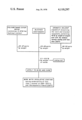
The sole drawing of the invention is a flowsheet illustrating the components.
In accordance with the invention, a wire enamel is prepared by mixing together about 25-27 parts by weight of a polyurethane ester resin containing 4-10% by weight free hydroxyl content with about 23-25 parts by weight of a blocked isocyanate. The resulting solids are dissolved in an aromatic solvent solution containing about 48-52 parts by weight of the total solution.
The polyurethane ester resin preferably is a reaction product of a diisocyanate such as toluene diisocyanate (TDI) with an ester such as the esterification product of a diol with a dicarboxylic acid wherein the esterification is carried out with a sufficient excess of diol to provide an ester having a very low acid number resulting in a hydroxyl content in the reaction product of the diisocyanate with the ester of 4-10%.
Examples of materials which can be used to form the urethane ester resins include diisocyanates including aromatic diisocyanates such as toluene diisocyanate, aliphatic diisocyanates such as tetramethylene diisocyanate, and cycloaliphatic diisocyanates such as methyl cyclohexane diisocyanate; longer chain diols including aliphatic diols such as 1, 4 butane diol and 1, 6 hexane diol, and ester diols such as the reaction product of two moles of ethylene glycol with one mole of adipic acid, or similar ether diols; and saturated dicarboxylic acids including aromatic discarboxylic acids capable of forming an anhydride such as, for example, orthophthalic acid or tetrahydrophthalic sebacic acids. Specific examples of such esters useful in the practice of the invention are E-339 Polyurethane Ester available from the Mobay Chemical Company or Desmodur D-70 available from Farbenfabriken Bayer.
The blocked isocyanate may be a diisocyanate having both of the isocyanate groups blocked. An example of such material would be the reaction product of a molar amount of trimethylol propane with 3 moles of toluene diisocyanate with the free isocyanate groups of the reaction product blocked by an appropriate blocking agent such as phenol or other equivalent hydroxy compounds. Other blocked isocyanates useful in the invention are described in U.S. Pat. No. 3,650,788. Examples of materials commercially available include Mondur S available from the Mobay Chemical Company or PDG 710 available from the P. D. George Company of St. Louis.
The aromatic solvents may comprise one or more of a number of materials containing at least 45% by weight of cresylic acid and must provide sufficient solubility for the urethane and isocyanate resins discussed above. The balance of the solvent may be one or more aromatic hydrocarbons such as xylene, toluene, benzene or the like.
In a preferred embodiment, the solvent comprises 45-70% by weight of cresylic acid 0-50% by weight of WES oil, and 0-30% by weight of xylene wherein the sum total amount of WES oil and xylene equals 30-55% by weight. In this preferred embodiment, cresylic acid has a boiling point of at least 200° C, and the balance of the solvent has a boiling point of less than 200° C.
In an alternate embodiment, the solvent in the coating composition comprises approximately 70% by weight of cresylic acid, and approximately 30% by weight of xylene.
In the most preferred embodiment, the aromatic mixture of solvents comprises about 48-52% by weight of cresylic acid, about 24-26% by weight of a high boiling aromatic solvent known in the trade as WES oil (wire enamel solvent), and 24-26% by weight of xylene. WES oil is a semi-refined coal tar distillate, straw to dark amber in color, characterized by distillation of 10% to not below 165° C, 70% to not above 190° C and 95% to not above 235° C.
An appropriate catalyst is used to promote the reaction of the polyurethane ester resin with the blocked isocyanate. Such catalysts are well known to those skilled in the art. The catalyst is added in an amount of about 1% by weight of the solids. A preferred catalyst is Rubber Accelerator 808, a butyraldehyde-aniline condensation product available from the E. I. duPont de Nemours Company.
To further illustrate the invention, a wire enamel coating composition was made using 26 parts by weight of E-339 Polyurethane Ester Resin, 24 parts by weight Mondur S blocked isocyanate resin, 25 parts by weight cresylic acid, 12.5 parts by weight WES oil, and 12.5 parts by weight xylene. To this composition was added 1% by total weight of the E-339 and Mondur S of duPont Rubber Accelerator Catalyst 808. The composition was applied to a No. 37 AWG copper wire to provide an average coating thickness of 0.00035 inch or a build of 0.0007 inch. The coating was cured in a conventional continuous wire enameling oven with a bottom oven zone to top oven zone temperature range of 120°-350° C during a residence time of 15 seconds per coat with 3 coats applied. The sample of the coated wire was then assembled to a test fixture and dipped into a soldering pot at 302° C (575° F). The enamel was found to disintegrate in less than 1 second at this temperature.
To further test the efficacy of the coating composition, the standard NEMA tests such as continuity, dielectric strength, heat shock and thermoplastic flow, were all successfully conducted on the samples. The standard NEMA test (MW-1000-1973-50.1.1) for thermoplastic flow was conducted comprising placing two wires coated with the coating composition in contact at right angles with each wire connected to one terminal of 110-volt A.C. power supply. A 50 gram weight was placed on the wire and the assembly placed in an oven and the temperature slowly raised in increments of about 3°-5° C per minute. The wires were connected to an alarm which would sound when the wires touched one another, signifying that both of the wires had cut through the insulative coating. On the average, the alarm went off at about 230° C indicating that the wire enamel insulative coating was able to withstand a temperature of up to that point before cutting through.
Claims (10)
1. A wire enamel coating composition capable of forming an insulative coating on a wire characterized by a solderability of less than 1 second at a temperature of about 285°-315° C and a thermoplastic flow temperature of at least 230° C and comprising:
(a) 25-27 parts by weight of a polyurethane ester resin containing 4-10% by weight free hydroxyl content;
(b) 23-25 parts by weight of a blocked isocyanate;
(c) about 48-52 parts by weight of a solvent capable of dissolving said resin and said blocked isocyanate and containing at least 45% by weight of cresylic acid, with the balance of the solvent having a boiling point of less than 200° C; and
(d) 0.1 to 10.0% by weight of solids of a catalyst.
2. The wire enamel coating composition of claim 1 wherein said polyurethane ester resin comprises the reaction product of a diol, a saturated dicarboxylic acid and a diisocyanate.
3. The composition of claim 2 wherein said diol has at least 4 carbon atoms.
4. The composition of claim 2 wherein said diisocyanate comprises toluene diisocyanate.
5. The composition of claim 2 wherein said saturated dicarboxylic acid comprises a diacid capable of forming an anhydride.
6. The composition of claim 5 wherein said saturated dicarboxylic acid capable of forming an anhydride is selected from the class consisting of orthophthalic acid, tetrahydrophthalic acid, hexahydrophthalic acid, trimellitic acid and anhydrides of said acids.
7. The coating composition of claim 1 wherein said blocked isocyanate comprises the reaction product of trimethylol propane, toluene diisocyanate and phenol.
8. The coating composition of claim 1 wherein the balance of said solvent is selected from the group consisting of:
(a) a semi-refined coal tar distillate characterized by distillation of 10% to not below 165° C, 70% to not above 190° C and 95% to not above 235° C;
(b) xylene; and
(c) mixtures thereof.
9. The coating composition of claim 8 wherein said solvent comprises:
(a) 50-70% by weight of cresylic acid;
(b) 0-50% by weight of a semirefined coal tar distillate characterized by distillation of
(1) 10% to not below 165° C,
(2) 70% to not above 190° C, and
(3) 95% to not above 235° C; and
(c) 0-30% by weight of xylene, wherein the sum total amount of said coal tar distillate and xylene equals 30-50% by weight.
10. The coating composition of claim 8 wherein said solvent comprises approximately 70% by weight of cresylic acid and approximately 30% by weight of xylene.
Applications Claiming Priority (1)
| Application Number | Priority Date | Filing Date | Title |
|---|---|---|---|
| US05/531,458 US3988251A (en) | 1974-12-11 | 1974-12-11 | Wire enamel with low soldering temperature |
Related Parent Applications (1)
| Application Number | Title | Priority Date | Filing Date |
|---|---|---|---|
| US05/531,458 Continuation-In-Part US3988251A (en) | 1974-12-11 | 1974-12-11 | Wire enamel with low soldering temperature |
Publications (1)
| Publication Number | Publication Date |
|---|---|
| US4110297A true US4110297A (en) | 1978-08-29 |
Family
ID=24117723
Family Applications (2)
| Application Number | Title | Priority Date | Filing Date |
|---|---|---|---|
| US05/531,458 Expired - Lifetime US3988251A (en) | 1974-12-11 | 1974-12-11 | Wire enamel with low soldering temperature |
| US05/722,823 Expired - Lifetime US4110297A (en) | 1974-12-11 | 1976-09-13 | Wire enamel with low soldering temperature |
Family Applications Before (1)
| Application Number | Title | Priority Date | Filing Date |
|---|---|---|---|
| US05/531,458 Expired - Lifetime US3988251A (en) | 1974-12-11 | 1974-12-11 | Wire enamel with low soldering temperature |
Country Status (1)
| Country | Link |
|---|---|
| US (2) | US3988251A (en) |
Cited By (3)
| Publication number | Priority date | Publication date | Assignee | Title |
|---|---|---|---|---|
| US4997891A (en) * | 1986-09-08 | 1991-03-05 | Schenectady Chemicals, Inc. | High temperature resistant fast soldering wire enamel |
| US5145722A (en) * | 1989-04-11 | 1992-09-08 | Hughes Aircraft Company | Method and composition for protecting and enhancing the solderability of metallic surfaces |
| US6376073B1 (en) * | 1999-09-30 | 2002-04-23 | Tai-Electric Wire & Cable Co., Ltd. | High frequency-resistant thermosetting coatings and high frequency-resistant enamelled wires produced therefrom |
Families Citing this family (3)
| Publication number | Priority date | Publication date | Assignee | Title |
|---|---|---|---|---|
| CA1055794A (en) * | 1974-01-12 | 1979-06-05 | Sumitomo Electric Industries, Ltd. | Enameled wires |
| US4734463A (en) * | 1985-12-24 | 1988-03-29 | E. I. Du Pont De Nemours And Company | Hydroxy group-containing modified polyester with polymerized lactone monomers |
| US4694051A (en) * | 1986-12-19 | 1987-09-15 | E. I. Du Pont De Nemours And Company | Chip resistant coating composition III |
Citations (4)
| Publication number | Priority date | Publication date | Assignee | Title |
|---|---|---|---|---|
| US3174950A (en) * | 1961-01-23 | 1965-03-23 | Upjohn Co | Polyurethanes from tris(beta-hydroxyethyl)isocyanurate and diphenylmethane diisocyanate |
| US3245960A (en) * | 1961-11-13 | 1966-04-12 | Gen Motors Corp | Polyurethane coatings for electrical conductors and the like |
| US3514500A (en) * | 1964-08-04 | 1970-05-26 | Ici Ltd | Polymer dispersions and dispersants |
| US3652471A (en) * | 1969-07-28 | 1972-03-28 | Westinghouse Electric Corp | Polyester amide-imide wire enamels |
-
1974
- 1974-12-11 US US05/531,458 patent/US3988251A/en not_active Expired - Lifetime
-
1976
- 1976-09-13 US US05/722,823 patent/US4110297A/en not_active Expired - Lifetime
Patent Citations (4)
| Publication number | Priority date | Publication date | Assignee | Title |
|---|---|---|---|---|
| US3174950A (en) * | 1961-01-23 | 1965-03-23 | Upjohn Co | Polyurethanes from tris(beta-hydroxyethyl)isocyanurate and diphenylmethane diisocyanate |
| US3245960A (en) * | 1961-11-13 | 1966-04-12 | Gen Motors Corp | Polyurethane coatings for electrical conductors and the like |
| US3514500A (en) * | 1964-08-04 | 1970-05-26 | Ici Ltd | Polymer dispersions and dispersants |
| US3652471A (en) * | 1969-07-28 | 1972-03-28 | Westinghouse Electric Corp | Polyester amide-imide wire enamels |
Cited By (3)
| Publication number | Priority date | Publication date | Assignee | Title |
|---|---|---|---|---|
| US4997891A (en) * | 1986-09-08 | 1991-03-05 | Schenectady Chemicals, Inc. | High temperature resistant fast soldering wire enamel |
| US5145722A (en) * | 1989-04-11 | 1992-09-08 | Hughes Aircraft Company | Method and composition for protecting and enhancing the solderability of metallic surfaces |
| US6376073B1 (en) * | 1999-09-30 | 2002-04-23 | Tai-Electric Wire & Cable Co., Ltd. | High frequency-resistant thermosetting coatings and high frequency-resistant enamelled wires produced therefrom |
Also Published As
| Publication number | Publication date |
|---|---|
| US3988251A (en) | 1976-10-26 |
Similar Documents
| Publication | Publication Date | Title |
|---|---|---|
| US3523143A (en) | Curing of epoxy resins with an acid terminated polyester and a polycarboxylic acid anhydride | |
| US3555113A (en) | Blends of polymeric amide-imide-ester wire enamels and conductors insulated therewith | |
| US3342780A (en) | Reaction product of a dibasic polycarboxylic acid and tris (2-hydroxyethyl) isocyanurate | |
| US4431758A (en) | Heat resistant resin composition comprising reaction product of polyamideimide resin, alcohol and acid component. | |
| US2691004A (en) | Oil-modified acidic polyester-ethoxyline resinous compositions | |
| US3652471A (en) | Polyester amide-imide wire enamels | |
| US2935487A (en) | Polyester-polyisocyanate insulating materials | |
| US3988251A (en) | Wire enamel with low soldering temperature | |
| US4131693A (en) | Hardenable polyesterurethane composition for producing a directly tinnable wire | |
| US4115342A (en) | Wire enamel with low soldering temperature | |
| US3174950A (en) | Polyurethanes from tris(beta-hydroxyethyl)isocyanurate and diphenylmethane diisocyanate | |
| US4104221A (en) | Process for making water diluted electroinsulation enamels | |
| US4496715A (en) | Amide-imide-ester wire enamels | |
| US3201276A (en) | Insulated conductor having undercoat of isocyanurate modified polyester and overcoat of polyethylene terephthalate | |
| US3931418A (en) | Process for the production of insulating coatings on electrical conductors | |
| US4614782A (en) | Heat resistant resin composition | |
| US3749688A (en) | Modified coal-tar-pitch compositions and process for preparing same | |
| US3296335A (en) | Process for providing electrically insulated conductors and coating composition for same | |
| US5382647A (en) | Polyurethane-based friable sealing compound | |
| US3122451A (en) | Wire insulated with polyester resin from benzene tricarboxylic acids and method of insulating | |
| US3245960A (en) | Polyurethane coatings for electrical conductors and the like | |
| US3252944A (en) | Urethane coating composition for electrical conductors and method | |
| US3928290A (en) | Enameling varnishes based on aromatic carboxylates reacted with polyisocyanates and polyols | |
| US4137211A (en) | Wire coating solution | |
| US3375224A (en) | Polyurethane impregnating and bonding resin |
Legal Events
| Date | Code | Title | Description |
|---|---|---|---|
| AS | Assignment |
Owner name: BARCLAYSAMERICAN/BUSINESS CREDIT, INC., 530 N. WAT Free format text: SECURITY INTEREST;ASSIGNOR:REA MAGNET WIRE COMPANY, INC., A CORP. OF DE.;REEL/FRAME:004520/0105 Effective date: 19860306 Owner name: BARCLAYSAMERICAN/BUSINESS CREDIT, INC., A CORP. OF Free format text: SECURITY INTEREST;ASSIGNOR:REA MAGNET WIRE COMPANY, INC., A CORP. OF DE.;REEL/FRAME:004520/0105 Effective date: 19860306 |