US4022637A - Method for separation of water soluble carbohydrates - Google Patents
Method for separation of water soluble carbohydrates Download PDFInfo
- Publication number
- US4022637A US4022637A US05/660,288 US66028876A US4022637A US 4022637 A US4022637 A US 4022637A US 66028876 A US66028876 A US 66028876A US 4022637 A US4022637 A US 4022637A
- Authority
- US
- United States
- Prior art keywords
- carbohydrate
- rich fraction
- separation
- column
- water soluble
- Prior art date
- Legal status (The legal status is an assumption and is not a legal conclusion. Google has not performed a legal analysis and makes no representation as to the accuracy of the status listed.)
- Expired - Lifetime
Links
- 150000001720 carbohydrates Chemical class 0.000 title claims abstract description 112
- 235000014633 carbohydrates Nutrition 0.000 title claims abstract description 111
- 238000000926 separation method Methods 0.000 title claims abstract description 35
- XLYOFNOQVPJJNP-UHFFFAOYSA-N water Substances O XLYOFNOQVPJJNP-UHFFFAOYSA-N 0.000 title claims abstract description 33
- 238000000034 method Methods 0.000 title claims abstract description 32
- 239000012527 feed solution Substances 0.000 claims abstract description 17
- 239000000243 solution Substances 0.000 claims abstract description 13
- 238000005194 fractionation Methods 0.000 claims abstract description 10
- WQZGKKKJIJFFOK-GASJEMHNSA-N Glucose Natural products OC[C@H]1OC(O)[C@H](O)[C@@H](O)[C@@H]1O WQZGKKKJIJFFOK-GASJEMHNSA-N 0.000 claims description 35
- WQZGKKKJIJFFOK-VFUOTHLCSA-N beta-D-glucose Chemical compound OC[C@H]1O[C@@H](O)[C@H](O)[C@@H](O)[C@@H]1O WQZGKKKJIJFFOK-VFUOTHLCSA-N 0.000 claims description 35
- 239000008103 glucose Substances 0.000 claims description 32
- 229930091371 Fructose Natural products 0.000 claims description 20
- 239000005715 Fructose Substances 0.000 claims description 20
- 238000010828 elution Methods 0.000 claims description 11
- 239000000126 substance Substances 0.000 claims description 8
- 239000003456 ion exchange resin Substances 0.000 claims description 5
- 229920003303 ion-exchange polymer Polymers 0.000 claims description 5
- 125000004122 cyclic group Chemical group 0.000 claims description 2
- BJHIKXHVCXFQLS-UYFOZJQFSA-N fructose group Chemical group OCC(=O)[C@@H](O)[C@H](O)[C@H](O)CO BJHIKXHVCXFQLS-UYFOZJQFSA-N 0.000 claims 3
- RFSUNEUAIZKAJO-ARQDHWQXSA-N Fructose Chemical compound OC[C@H]1O[C@](O)(CO)[C@@H](O)[C@@H]1O RFSUNEUAIZKAJO-ARQDHWQXSA-N 0.000 description 17
- 239000011347 resin Substances 0.000 description 16
- 229920005989 resin Polymers 0.000 description 16
- 229920001542 oligosaccharide Polymers 0.000 description 10
- 150000002482 oligosaccharides Chemical class 0.000 description 10
- 229920001467 poly(styrenesulfonates) Polymers 0.000 description 8
- NWUYHJFMYQTDRP-UHFFFAOYSA-N 1,2-bis(ethenyl)benzene;1-ethenyl-2-ethylbenzene;styrene Chemical compound C=CC1=CC=CC=C1.CCC1=CC=CC=C1C=C.C=CC1=CC=CC=C1C=C NWUYHJFMYQTDRP-UHFFFAOYSA-N 0.000 description 5
- OYPRJOBELJOOCE-UHFFFAOYSA-N Calcium Chemical compound [Ca] OYPRJOBELJOOCE-UHFFFAOYSA-N 0.000 description 5
- 239000003729 cation exchange resin Substances 0.000 description 5
- PJVXUVWGSCCGHT-ZPYZYFCMSA-N (2r,3s,4r,5r)-2,3,4,5,6-pentahydroxyhexanal;(3s,4r,5r)-1,3,4,5,6-pentahydroxyhexan-2-one Chemical compound OC[C@@H](O)[C@@H](O)[C@H](O)[C@@H](O)C=O.OC[C@@H](O)[C@@H](O)[C@H](O)C(=O)CO PJVXUVWGSCCGHT-ZPYZYFCMSA-N 0.000 description 3
- 239000008121 dextrose Substances 0.000 description 3
- 150000003839 salts Chemical class 0.000 description 3
- 229910052791 calcium Inorganic materials 0.000 description 2
- 239000011575 calcium Substances 0.000 description 2
- 230000007423 decrease Effects 0.000 description 2
- 230000000694 effects Effects 0.000 description 2
- 239000012535 impurity Substances 0.000 description 2
- 238000004064 recycling Methods 0.000 description 2
- 229910052712 strontium Inorganic materials 0.000 description 2
- CIOAGBVUUVVLOB-UHFFFAOYSA-N strontium atom Chemical compound [Sr] CIOAGBVUUVVLOB-UHFFFAOYSA-N 0.000 description 2
- CDVZCUKHEYPEQS-FOASUZNUSA-N (2s,3r,4r)-2,3,4,5-tetrahydroxypentanal;(2r,3s,4r)-2,3,4,5-tetrahydroxypentanal Chemical compound OC[C@@H](O)[C@H](O)[C@@H](O)C=O.OC[C@@H](O)[C@@H](O)[C@H](O)C=O CDVZCUKHEYPEQS-FOASUZNUSA-N 0.000 description 1
- LSNNMFCWUKXFEE-UHFFFAOYSA-M Bisulfite Chemical compound OS([O-])=O LSNNMFCWUKXFEE-UHFFFAOYSA-M 0.000 description 1
- BHPQYMZQTOCNFJ-UHFFFAOYSA-N Calcium cation Chemical compound [Ca+2] BHPQYMZQTOCNFJ-UHFFFAOYSA-N 0.000 description 1
- BVKZGUZCCUSVTD-UHFFFAOYSA-L Carbonate Chemical compound [O-]C([O-])=O BVKZGUZCCUSVTD-UHFFFAOYSA-L 0.000 description 1
- 229920002307 Dextran Polymers 0.000 description 1
- 229930006000 Sucrose Natural products 0.000 description 1
- CZMRCDWAGMRECN-UGDNZRGBSA-N Sucrose Chemical compound O[C@H]1[C@H](O)[C@@H](CO)O[C@@]1(CO)O[C@@H]1[C@H](O)[C@@H](O)[C@H](O)[C@@H](CO)O1 CZMRCDWAGMRECN-UGDNZRGBSA-N 0.000 description 1
- 239000007864 aqueous solution Substances 0.000 description 1
- 229910001424 calcium ion Inorganic materials 0.000 description 1
- 230000015556 catabolic process Effects 0.000 description 1
- 229940023913 cation exchange resins Drugs 0.000 description 1
- 239000007857 degradation product Substances 0.000 description 1
- 238000010790 dilution Methods 0.000 description 1
- 239000012895 dilution Substances 0.000 description 1
- 230000002255 enzymatic effect Effects 0.000 description 1
- 125000000524 functional group Chemical group 0.000 description 1
- 229930182830 galactose Natural products 0.000 description 1
- 239000011521 glass Substances 0.000 description 1
- 238000010438 heat treatment Methods 0.000 description 1
- 235000019534 high fructose corn syrup Nutrition 0.000 description 1
- OAKJQQAXSVQMHS-UHFFFAOYSA-O hydrazinium(1+) Chemical compound [NH3+]N OAKJQQAXSVQMHS-UHFFFAOYSA-O 0.000 description 1
- 238000005342 ion exchange Methods 0.000 description 1
- 238000006317 isomerization reaction Methods 0.000 description 1
- 239000007788 liquid Substances 0.000 description 1
- 230000014759 maintenance of location Effects 0.000 description 1
- 239000000463 material Substances 0.000 description 1
- 239000000203 mixture Substances 0.000 description 1
- 150000002894 organic compounds Chemical class 0.000 description 1
- 239000002245 particle Substances 0.000 description 1
- 239000000047 product Substances 0.000 description 1
- 150000003440 styrenes Chemical class 0.000 description 1
- 239000000758 substrate Substances 0.000 description 1
- 239000005720 sucrose Substances 0.000 description 1
Images

Classifications
-
- C—CHEMISTRY; METALLURGY
- C07—ORGANIC CHEMISTRY
- C07H—SUGARS; DERIVATIVES THEREOF; NUCLEOSIDES; NUCLEOTIDES; NUCLEIC ACIDS
- C07H1/00—Processes for the preparation of sugar derivatives
- C07H1/06—Separation; Purification
Definitions
- This invention relates to a method for the separation of water soluble carbohydrates from a feed solution containing carbohydrates A and B in major amounts by the utilization of a fractionation medium.
- Carbohydrate A has a volume distribution coefficient at least 0.05 units greater than carbohydrate B when determined on said medium. The method comprises:
- FIG. 1 shows a diagrammatic arrangement of the method for the separation of carbohydrates from a water solution.
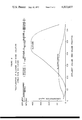
- FIG. II graphically depicts the separation of glucose from other carbohydrates.
- the volume distribution coefficient (D) is determined by the procedure of Olaf Samuelson, Methods in Carbohydrate Chemistry, VI, 1972, pp. 65-75, using the formula: ##EQU1## where v is the retention volume (volume of effluent to attain peak maximum dry substance concentration), x is the volume of the fractionation medium and y is the interstitial volume of the medium.
- a number of types of fractionation media may be used in the method of the present invention so long as the volume distribution coefficients of the carbohydrates sought to be separated thereon differ by at least 0.05 units.
- the volume coefficients will differ by at least 0.1 units and most preferably by at least 0.2 units.
- the preferred fractionation media are porous particulate ion exchange resins.
- Table I below, the volume distribution coefficients of various carbohydrates on a number of resins are illustrated:
- Fructose-and glucose-containing solutions may be produced by processes well known in the art, such as the inversion of sucrose and the alkaline and enzymatic isomerization of glucose. Because of the low levels of impurities generally contained in enzymatically produced glucose-fructose solutions, such are preferred feed solutions in the present process. The presence of excessive quantities of impurities, such as saccharide degradation products, salts and the like, may decrease the effectiveness of the resin over extended periods of use.
- the temperature, concentration of feed solution, height of column, particular fractionation medium utilized, number of recycles, volume of fractions and contact period all affect the efficiency of the separation.
- the temperature at which separation is affected should not be so high as to cause breakdown of the carbohydrates and it must not be so low as to increase the viscosity of the solution to such a degree that the flow rate thereof through the column is deleteriously affected. In general, temperatures from about 40° to about 80° C. provide satisfactory results.
- the method of the present invention may be performed in an apparatus depicted in the diagrammatic arrangement shown in FIG. I.
- Components of the apparatus shown in FIG. I are identified as follows:
- heating means 8 for maintaining the temperature of the column of resin constant
- valves 1 to 7 for directing the flow of the various fractions to and from the column in accordance with the desired method of operation.
- volume of feed solution Volume of carbohydrate B rich fraction
- volume of elution water Volume of carbohydrate A rich fraction
- volume of feed solution, elution water and recycle fractions can be varied within the constraints of the above relationships. Choice of volumes to satisfy the above stated equalities are identified below as predetermined.
- column 6 is substantially full of a water-immersed resin. Valves 1 and 5 are opened and all other valves are closed. A predetermined volume of feed solution containing carbohydrates A and B is transferred from reservoir 1 through pump 7 to the top of column 6. The effluent from the column is directed through valve 5 and stored in tank 5. When the predetermined volume of feed liquor has been introduced via pump 7 to column 6 valve 1 is closed and valve 6 opened. The stored liquor in tank 5 is pumped to the column and the effluent continues to be directed to tank 5 for a predetermined volume. Valve 5 is then closed and valve 4 is opened. The remaining liquor in tank 5 is then pumped to the column while the carbohydrate B rich effluent is directed through valve 4 and collected in tank 4.
- the volume collected in tank 4 is about equal to the volume of feed liquor previously introduced. Valves 4 and 6 are then closed and valve 7 opened and the effluent rich in B but too dilute for use as product is recycled to the column directly. Valve 7 is then closed and valves 2 and 3 are opened. Elution water is introduced to column 6 and the carbohydrate A rich effluent liquor collected in tank 3. When the elution water has been introduced valves 2 and 3 are closed and valve 7 opened to recycle directly the liquor which is rich in carbohydrate A but too highly contaminated with carbohydrate B. After this recycling step the cycle is begun again by introducing feed liquor through valve 1 and storing the effluent which is rich in carbohydrate B, but highly contaminated with carbohydrate A in tank 5.
- the above described separation procedure may be performed continuously utilizing automatic sensing devices whereby the amounts of the various fractions are electronically determined so that valves depicted in the drawings are opened and closed according to a programmed sequence.
- This example illustrates the separation of fructose and glucose from an enzymatically produced fructose-glucose containing solution.
- a double-walled glass column having a 2.42 cm I.D. was filled with the calcium form of Dowex 50W-X4 cation exchange resin to a depth of 305 cm.
- the resin had a particle size of 35 to 70 U.S. Standard mesh.
- Water at 70° C. was circulated through the column jacket to maintain the temperature of the resin at 68° C.
- An enzymatically produced fructose-glucose containing solution having a dry substance of 50 percent was fractionated on the resin column using a 10 ml/min flow rate in accordance with the method of the present invention.
- Table II The sequence of collecting and recycling fractions shown in Table II below was repeated 12 times to approach equilibrium of the system.
- Recycles I and III were returned directly to the fractionation column. Recycle II was stored until the feed liquor was introduced into the column and then Recycle II was introduced into the column.
- This Example illustrates the separation of glucose from other carbohydrates in an enzymatically produced glucose containing solution.
- a column of cation exchange resin described in Example I was prepared except that the resin volume was 1420 cm 3 .
- Recycles I and III were returned directly to the column. Recycle II was stored until the feed liquor had been introduced into the column. The sequence was repeated nineteen times to approach equilibrium of the system and then the carbohydrate content of the collected fractions and of the feed liquor were determined and are set forth in Table V below:
- FIG. II a graph is set forth relating effluent volumes at equilibrium to the concentration of glucose and oligosaccharides. The relative slope and dispositions of the oligosaccharide and glucose curves are constant under these conditions.
Landscapes
- Chemical & Material Sciences (AREA)
- Organic Chemistry (AREA)
- Engineering & Computer Science (AREA)
- Health & Medical Sciences (AREA)
- Biochemistry (AREA)
- Biotechnology (AREA)
- General Health & Medical Sciences (AREA)
- Genetics & Genomics (AREA)
- Molecular Biology (AREA)
- Life Sciences & Earth Sciences (AREA)
- Treatment Of Liquids With Adsorbents In General (AREA)
- Preparation Of Compounds By Using Micro-Organisms (AREA)
- Saccharide Compounds (AREA)
Abstract
A method for the separation of water soluble carbohydrates from a feed solution by the utilization of a fractionation medium. The solution contains carbohydrates A and B in major amounts and carbohydrate A has a volume distribution coefficient at least 0.05 units greater than carbohydrate B when determined on said medium.
Description
There are a number of publications and patents which disclose methods of separating water soluble carbohydrates and other materials. British Pat. No. 731,335 discloses the separation of a mixture of at least two water soluble organic compounds each having an ionization constant of not more than 1.4 × 10- 3. In this separation method, cation exchange resins which contain sulphonate radicals as the functional groups are utilized. U.S. Pat. No. 3,044,904 to Serbia and U.S. Pat. Nos. 3,044,905 and 3,044,906 both to Lefevre, disclose the utilization of various salts of a nuclearly sulfonated styrene resin to separate dextrose and fructose. In U.S. Pat. No. 3,184,334 to Sargent the separation of dextran from fructose by the utilization of ion exchange resins in the salt form and acid-and salt-forms is disclosed and U.S. Pat. No. 3,483,031 to Lauer et al. teaches the separation of glucose and fructose by using an ion exchange resin charged with calcium ions.
There are a number of problems associated with the separation of various water soluble carbohydrates by the use of resins. Generally, large quantities of water are involved with such separations and, due to the dilution factors involved, removal of water to obtain the carbohydrates in a relatively pure and concentrated state requires high energy costs. Moreover, the equipment necessary to effect an efficient separation is generally quite complex and requires a number of holding tanks or similar devices and thereby entails a costly capital investment. Gross, Intl. Sugar J., Vol 73, p. 330 (1971), discloses a partial solution to this problem whereby holding tanks, used for storage of recycle liquid, are eliminated by the utilization of two columns of resins positioned in series. However, this process does not result in the desired degree of separation.
It is a principal object of the present invention to provide an efficient and economical method for separating carbohydrates from aqueous solutions which overcomes the problems heretofore encountered in such separations.
It is another object of the present invention to provide an effective method for separating carbohydrates wherein minimum amounts of water are utilized.
It is still another object of the present invention to provide a method for separating carbohydrates wherein only one recycle holding tank is necessary.
Other objects and advantages of this invention will be apparent from the following discussion and drawings.
This invention relates to a method for the separation of water soluble carbohydrates from a feed solution containing carbohydrates A and B in major amounts by the utilization of a fractionation medium. Carbohydrate A has a volume distribution coefficient at least 0.05 units greater than carbohydrate B when determined on said medium. The method comprises:
I. Admitting sequentially predetermined volumes of the feed solution and elution water to a column of the medium;
II. Separating the effluent from the column sequentially into the following fractions:
(a) carbohydrate A rich fraction,
(b) carbohydrate A rich fraction highly contaminated with carbohydrate B,
(c) carbohydrate B rich fraction highly contaminated with carbohydrate A,
(d) carbohydrate B rich fraction and
(e) dilute carbohydrate B rich fraction;
III. Admitting sequentially into the column:
(a) carbohydrate A rich fraction highly contaminated with carbohydrate B,
(b) a volume of feed solution approximately equal to the volume of carbohydrate B rich fraction,
(c) carbohydrate B rich fraction highly contaminated with carbohydrate A,
(d) dilute carbohydrate B rich fraction and
(e) a volume of elution water approximately equal to the volume of the carbohydrate A rich fraction, the carbohydrate A rich fraction highly contaminated with carbohydrate B and the dilute carbohydrate B rich fraction being recycled directly to the column and the carbohydrate B rich fraction highly contaminated with carbohydrate A being collected while the feed solution is introduced into the column and then admitting said collected fraction into the column and
IV. Repeating steps II and III in a cyclic manner.
FIG. 1 shows a diagrammatic arrangement of the method for the separation of carbohydrates from a water solution.
FIG. II graphically depicts the separation of glucose from other carbohydrates.
For purposes of the present invention, the volume distribution coefficient (D) is determined by the procedure of Olaf Samuelson, Methods in Carbohydrate Chemistry, VI, 1972, pp. 65-75, using the formula: ##EQU1## where v is the retention volume (volume of effluent to attain peak maximum dry substance concentration), x is the volume of the fractionation medium and y is the interstitial volume of the medium.
A number of types of fractionation media may be used in the method of the present invention so long as the volume distribution coefficients of the carbohydrates sought to be separated thereon differ by at least 0.05 units. Preferably, the volume coefficients will differ by at least 0.1 units and most preferably by at least 0.2 units.
The preferred fractionation media are porous particulate ion exchange resins. In Table I, below, the volume distribution coefficients of various carbohydrates on a number of resins are illustrated:
                                  TABLE I
__________________________________________________________________________
 Volume Distribution Coefficients of Various Carbohydrates On Ion
Exchange Resins
__________________________________________________________________________
Temperature
       Ion Exchange
               Ionic
° C
        Resin  Form   Xylose
                          Arabinose
                                Galactose
                                      Dextrose
                                           Fructose
__________________________________________________________________________
40     Dowex 1-X8
               Bisulfite              1.49 0.95
40     Dowex 1-X4
               Carbonate
                      1.47
                          1.27  1.27
40     Dowex 50W-X4
               Hydrazinium
                      1.90
                          2.31  2.30  2.09 1.10
40     Dowex 50W-X4
               Calcium
                      1.15
                          1.35
70     Dowex 50W-X4
               Calcium
                      1.07
                          1.21  1.11  1.00 1.22
40     Dowex 50W-X4
               Strontium
                      1.14
                          1.28        1.05 1.33
70     Dowex 50W-X4
               Strontium
                      1.13
                          1.23  1.18
__________________________________________________________________________
While the present method has application for the separation of a wide variety of carbohydrates, it is contemplated that it will be most applicable for the separation of fructose and glucose. Fructose-and glucose-containing solutions may be produced by processes well known in the art, such as the inversion of sucrose and the alkaline and enzymatic isomerization of glucose. Because of the low levels of impurities generally contained in enzymatically produced glucose-fructose solutions, such are preferred feed solutions in the present process. The presence of excessive quantities of impurities, such as saccharide degradation products, salts and the like, may decrease the effectiveness of the resin over extended periods of use.
The temperature, concentration of feed solution, height of column, particular fractionation medium utilized, number of recycles, volume of fractions and contact period all affect the efficiency of the separation.
The temperature at which separation is affected should not be so high as to cause breakdown of the carbohydrates and it must not be so low as to increase the viscosity of the solution to such a degree that the flow rate thereof through the column is deleteriously affected. In general, temperatures from about 40° to about 80° C. provide satisfactory results.
The method of the present invention may be performed in an apparatus depicted in the diagrammatic arrangement shown in FIG. I. Components of the apparatus shown in FIG. I are identified as follows:
reservoir or source of feed solution 1,
reservoir or source of elution water 2,
pump 7 for circulating various fractions,
heating means 8 for maintaining the temperature of the column of resin constant and
The following relationships must be satisfied to return recycle fractions directly to the column without storage.
(1) Volume of feed solution = Volume of carbohydrate B rich fraction
(2) Volume of elution water = Volume of carbohydrate A rich fraction
(3) The volume of water which is initially displaced from the resin bed by the feed solutions prior to emergence of carbohydrate A plus the volume of carbohydrate A rich fraction must equal the cycle volume (total volume of carbohydrate A rich fraction, carbohydrate B rich fraction and recycle fractions). Note: The volume of water which is displaced from the resin will vary with different carbohydrates.
The volume of feed solution, elution water and recycle fractions can be varied within the constraints of the above relationships. Choice of volumes to satisfy the above stated equalities are identified below as predetermined.
At the start of the present process, column 6 is substantially full of a water-immersed resin. Valves 1 and 5 are opened and all other valves are closed. A predetermined volume of feed solution containing carbohydrates A and B is transferred from reservoir 1 through pump 7 to the top of column 6. The effluent from the column is directed through valve 5 and stored in tank 5. When the predetermined volume of feed liquor has been introduced via pump 7 to column 6 valve 1 is closed and valve 6 opened. The stored liquor in tank 5 is pumped to the column and the effluent continues to be directed to tank 5 for a predetermined volume. Valve 5 is then closed and valve 4 is opened. The remaining liquor in tank 5 is then pumped to the column while the carbohydrate B rich effluent is directed through valve 4 and collected in tank 4. The volume collected in tank 4 is about equal to the volume of feed liquor previously introduced. Valves 4 and 6 are then closed and valve 7 opened and the effluent rich in B but too dilute for use as product is recycled to the column directly. Valve 7 is then closed and valves 2 and 3 are opened. Elution water is introduced to column 6 and the carbohydrate A rich effluent liquor collected in tank 3. When the elution water has been introduced valves 2 and 3 are closed and valve 7 opened to recycle directly the liquor which is rich in carbohydrate A but too highly contaminated with carbohydrate B. After this recycling step the cycle is begun again by introducing feed liquor through valve 1 and storing the effluent which is rich in carbohydrate B, but highly contaminated with carbohydrate A in tank 5.
Since the dry substance concentration of the stored recycle fraction decreases during collection, the introduction of this fraction to the top of storage tank 5 will result in a layering effect which maintains the concentration gradient emerging from the column. Withdrawing this recycle fraction from the bottom of the tank allows the introduction of higher dry substance concentrations at the start of the recycle step.
The above described separation procedure may be performed continuously utilizing automatic sensing devices whereby the amounts of the various fractions are electronically determined so that valves depicted in the drawings are opened and closed according to a programmed sequence.
While the present method has been particularly described in regard to the separation of two carbohydrates, it should be understood that the separation process may be carried out so that an individual carbohydrate may be separated from a group of carbohydrates or that one group of carbohydrates may be separated from another group of carbohydrates.
This example illustrates the separation of fructose and glucose from an enzymatically produced fructose-glucose containing solution.
A double-walled glass column having a 2.42 cm I.D. was filled with the calcium form of Dowex 50W-X4 cation exchange resin to a depth of 305 cm. The resin had a particle size of 35 to 70 U.S. Standard mesh. Water at 70° C. was circulated through the column jacket to maintain the temperature of the resin at 68° C. An enzymatically produced fructose-glucose containing solution having a dry substance of 50 percent was fractionated on the resin column using a 10 ml/min flow rate in accordance with the method of the present invention. The sequence of collecting and recycling fractions shown in Table II below was repeated 12 times to approach equilibrium of the system.
                                  TABLE II
__________________________________________________________________________
 Separation of Glucose and Fructose on Calcium Form of Cation Exchange
Resin
__________________________________________________________________________
Influent                     Effluent
                    Volume             Volume
       Fraction     (ml)     Fraction  (ml)
__________________________________________________________________________
Recycle I           160 glucose rich fraction
                                       328
  (glucose rich fraction highly
  contaminated with fructose)
Feed                120 Recycle I (glucose rich
                                       160
  (fructose containing solution)
                        fraction highly contami-
                        nated with fructose)
Recycle II          260 Recycle II (fructose rich
                                       260
  (fructose rich fraction highly
                        fraction highly contami-
  contaminated with glucose)
                        nated with glucose)
Recycle III         160 fructose rich fraction
                                       120
  (dilute fructose rich fraction)
Elution water       328 Recycle III (dilute
                                       160
                        fructose rich fraction)
__________________________________________________________________________
Recycles I and III were returned directly to the fractionation column. Recycle II was stored until the feed liquor was introduced into the column and then Recycle II was introduced into the column.
At the end of the 12th cycle the carbohydrate content of the collected fractions and of the feed solution were determined and are set forth below:
              TABLE III
______________________________________
           Percent
           Dry     Carbohydrates %
Fraction     Substance Dextrose Fructose
                                       Other
______________________________________
Feed         49.9      48.4     43.0   8.6
Glucose rich fraction
             13.9      79.5      7.4   13.1
Fructose rich fraction
             20.7       2.0     97.0   1.0
______________________________________
This Example illustrates the separation of glucose from other carbohydrates in an enzymatically produced glucose containing solution.
A column of cation exchange resin described in Example I was prepared except that the resin volume was 1420 cm3.
An enzymatically produced glucose containing solution having a dry substance content of 53.5 percent was fractionated on the resin column using a 10 ml/min flow rate in accordance with the method of the present invention.
The separation sequence followed is set forth in Table IV below:
                                  TABLE IV
__________________________________________________________________________
Separation of Glucose and Oligosaccharides on Calcium Form of Cation
Exchange Resin
__________________________________________________________________________
Influent                  Effluent
                     Volume                Volume
        Fraction     (ml) Fraction
                                (ml)
__________________________________________________________________________
Recycle I            160  Oligosaccharide rich fraction
                                           300
  (oligosaccharide rich fraction
  highly contaminated with glucose)
Feed                 130  Recycle I (oligosaccharide
                                           150
  (glucose containing substrate)
                          rich fraction highly con-
                          taminated with glucose
Recycle II           250  Recycle II (glucose rich frac-
                                           250
  (glucose rich fraction highly
                          tion highly contaminated with
  contaminated with oligosaccharides)
                          oligosaccharides)
Recycle III          150  Glucose rich fraction
                                           130
  (dilute glucose rich fraction)
Elution water        300  Recycle III (dilute glucose
                                           130
                          rich fraction)
__________________________________________________________________________
Recycles I and III were returned directly to the column. Recycle II was stored until the feed liquor had been introduced into the column. The sequence was repeated nineteen times to approach equilibrium of the system and then the carbohydrate content of the collected fractions and of the feed liquor were determined and are set forth in Table V below:
              TABLE V
______________________________________
        Percent    Carbohydrates %
 Fraction Dry Substance
                       Glucose  Oligosaccharides
______________________________________
Feed      53.5         79.5     19.8
Oligosaccharide
           6.3         22.9     76.4
rich fraction
Glucose rich
          35.6         95.4      3.7
fraction
______________________________________
In FIG. II, a graph is set forth relating effluent volumes at equilibrium to the concentration of glucose and oligosaccharides. The relative slope and dispositions of the oligosaccharide and glucose curves are constant under these conditions.
Claims (9)
1. A method for the separation of water soluble carbohydrates from a feed solution by the utilization of a fractionation medium wherein the solution contains carbohydrates A and B in major amounts and carbohydrate A has a volume distribution coefficient of at least 0.05 units greater than carbohydrate B when determined on said medium comprising:
I. sequentially admitting predetermined volumes of the feed solution and elution water to a column of said medium;
Ii. separating the effluent from the column sequentially into the following fractions:
a. carbohydrate A rich fraction,
b. carbohydrate A rich fraction highly contaminated with carbohydrate B,
c. carbohydrate B rich fraction highly contaminated with carbohydrate A,
d. carbohydrate B rich fraction, and
e. dilute carbohydrate B rich fraction,
Iii. admitting sequentially into the column:
a. carbohydrate A rich fraction highly contaminated with carbohydrate B,
b. a volume of feed solution approximately equal to carbohydrate B rich fraction,
c. carbohydrate B rich fraction highly contaminated with carbohydrate A,
d. dilute carbohydrate B rich fraction,
e. a volume of elution water approximately equal to the volume of the carbohydrate A rich frction, the carbohydrate A rich fraction highly contaminated with carbohydrate B and the dilute carbohydrate B rich fraction being recycled directly to the column and the carbohydrate B rich fraction highly contaminated with carbohydrate A being collected while the feed solution is introduced into the column and then admitting said collected fraction into the column, and
Iv. repeating steps II and III in a cyclic manner.
2. A method for the separation of water soluble carbohydrates as defined in claim 1, wherein carbohydrate A has a volume distribution coefficient of at least 0.1 units greater than carbohydrate B when determined on the medium.
3. A method for the separation of water soluble carbohydrates as defined in claim 2, wherein carbohydrate A has a volume distribution coefficient of at least 0.2 units greater than carbohydrate B when determined on the medium.
4. A method for the separation of water soluble carbohydrates as defined in claim 2, wherein the medium comprises porous particulate ion exchange resins.
5. A method for the separation of water soluble carbohydrates as defined in claim 2, wherein carbohydrate A is glucose and carbohydrate B is fructose.
6. A method for the separation of water soluble carbohydrates as defined in claim 4, wherein carbohydrate A is glucose and carbohydrate B is fructose.
7. A method for the separation of water soluble carbohydrates as defined in claim 6, wherein the column of said fractionation medium is maintained at a temperature of from about 40° to about 80° C.
8. A method for the separation of water soluble carbohydrates as defined in claim 7, wherein the carbohydrate B rich fraction highly contaminated with carbohydrate A is collected in a storage tank by directing said fraction into the top of said tank, and withdrawing said fraction from the bottom of said tank thereby maintaining the dry substance concentration gradient of said fraction.
9. A method for the separation of water soluble carbohydrates as defined in claim 8, wherein carbohydrate A is glucose and carbohydrate B is fructose.
Priority Applications (4)
| Application Number | Priority Date | Filing Date | Title |
|---|---|---|---|
| US05/660,288 US4022637A (en) | 1976-02-23 | 1976-02-23 | Method for separation of water soluble carbohydrates |
| CA271,638A CA1075236A (en) | 1976-02-23 | 1977-02-11 | Method for separation of water soluble carbohydrates |
| DE19772707762 DE2707762A1 (en) | 1976-02-23 | 1977-02-21 | PROCESS FOR SEPARATING WATER-SOLUBLE CARBOHYDRATES |
| FI770573A FI63256C (en) | 1976-02-23 | 1977-02-22 | FOER FARING FOER SEPARERANDE AV VATTENLOESLIGA KOLHYDRATER FRAON VATTENLOESNING |
Applications Claiming Priority (1)
| Application Number | Priority Date | Filing Date | Title |
|---|---|---|---|
| US05/660,288 US4022637A (en) | 1976-02-23 | 1976-02-23 | Method for separation of water soluble carbohydrates |
Publications (1)
| Publication Number | Publication Date |
|---|---|
| US4022637A true US4022637A (en) | 1977-05-10 |
Family
ID=24648887
Family Applications (1)
| Application Number | Title | Priority Date | Filing Date |
|---|---|---|---|
| US05/660,288 Expired - Lifetime US4022637A (en) | 1976-02-23 | 1976-02-23 | Method for separation of water soluble carbohydrates |
Country Status (4)
| Country | Link |
|---|---|
| US (1) | US4022637A (en) |
| CA (1) | CA1075236A (en) |
| DE (1) | DE2707762A1 (en) |
| FI (1) | FI63256C (en) |
Cited By (19)
| Publication number | Priority date | Publication date | Assignee | Title |
|---|---|---|---|---|
| DE2756496A1 (en) * | 1976-12-21 | 1978-07-06 | Mitsubishi Chem Ind | METHOD OF OPERATING A SIMULATED MOVING BED |
| US4104078A (en) * | 1976-06-16 | 1978-08-01 | Fisons Limited | Method for separation of dextrans |
| US4156618A (en) * | 1976-09-07 | 1979-05-29 | Asahi-Dow Limited | Process for separating ketoses and aldoses |
| EP0010769A3 (en) * | 1978-11-02 | 1980-05-28 | Mitsubishi Chemical Industries Limited | Adsorption separation method and apparatus therefor |
| US4325742A (en) * | 1981-02-05 | 1982-04-20 | Uop Inc. | Rare earth cation exchanged adsorbents for carbohydrate separations |
| US4384898A (en) * | 1980-07-31 | 1983-05-24 | Nihon Shokuhin Kako Co., Ltd. | Process for producing cyclodextrins |
| US4402832A (en) * | 1982-08-12 | 1983-09-06 | Uop Inc. | High efficiency continuous separation process |
| EP0117997A1 (en) * | 1980-07-24 | 1984-09-12 | Rikagaku Kenkyusho | Process for producing cyclodextrins |
| US4472203A (en) * | 1980-09-08 | 1984-09-18 | Japan Organo Co., Ltd. | Method for the separation of glucose and fructose |
| US4478721A (en) * | 1982-08-12 | 1984-10-23 | Uop Inc. | High efficiency continuous separation process |
| US4478723A (en) * | 1981-06-15 | 1984-10-23 | Asahi Kasei Kogyo Kabushiki Kaisha | Adsorptive separation method |
| US4487198A (en) * | 1982-07-28 | 1984-12-11 | Kabushiki Kaisha Hayashibara Seibutsu Kagaku Kenkyujo | Process for producing a high-purity maltose |
| US4498991A (en) * | 1984-06-18 | 1985-02-12 | Uop Inc. | Serial flow continuous separation process |
| US4521252A (en) * | 1981-10-26 | 1985-06-04 | Kabushiki Kaisha Hayashibara Seibutsu Kagaku Kenkyujo | Process for producing a high-purity isomaltose |
| USRE33047E (en) * | 1981-08-03 | 1989-09-05 | Kabusihiki Kaisha Hayashibara Seibutsu Kagaku Kenkyujo | Process for producing a high-purity maltose |
| US4927757A (en) * | 1988-07-29 | 1990-05-22 | Idaho Research Foundation, Inc. | Production of substantially pure fructose |
| WO1991018000A1 (en) * | 1990-05-22 | 1991-11-28 | Center For Innovative Technology | Isolation of oligosaccharides from biomass |
| US5831082A (en) * | 1996-05-28 | 1998-11-03 | Shin Dong Bang Corporation | Process for obtaining, by separation, highly pure water-soluble polydextrose |
| US6352845B1 (en) | 1999-02-10 | 2002-03-05 | Eastman Chemical Company | Corn fiber for the production of advanced chemicals and materials: separation of monosaccharides and methods thereof |
Citations (7)
| Publication number | Priority date | Publication date | Assignee | Title |
|---|---|---|---|---|
| GB731335A (en) | 1952-11-24 | 1955-06-08 | Dow Chemical Co | Separation of water-soluble organic compounds |
| US3044905A (en) * | 1960-02-15 | 1962-07-17 | Dow Chemical Co | Separation of fructose from glucose using cation exchange resin salts |
| US3044906A (en) * | 1960-02-15 | 1962-07-17 | Dow Chemical Co | Separation of fructose from glucose using a cation exchange resin salt |
| US3044904A (en) * | 1960-02-15 | 1962-07-17 | Central Aguirre Sugar Company | Separation of dextrose and levulose |
| US3184334A (en) * | 1962-04-30 | 1965-05-18 | Dow Chemical Co | Separation of dextran from fructose using ion exchange resins |
| US3416961A (en) * | 1964-01-07 | 1968-12-17 | Colonial Sugar Refining Co | Process for the separation of fructose and glucose |
| US3483031A (en) * | 1965-08-05 | 1969-12-09 | Boehringer & Soehne Gmbh | Method of recovering pure glucose and fructose from sucrose or from sucrose-containing invert sugars |
-
1976
- 1976-02-23 US US05/660,288 patent/US4022637A/en not_active Expired - Lifetime
-
1977
- 1977-02-11 CA CA271,638A patent/CA1075236A/en not_active Expired
- 1977-02-21 DE DE19772707762 patent/DE2707762A1/en not_active Withdrawn
- 1977-02-22 FI FI770573A patent/FI63256C/en not_active IP Right Cessation
Patent Citations (7)
| Publication number | Priority date | Publication date | Assignee | Title |
|---|---|---|---|---|
| GB731335A (en) | 1952-11-24 | 1955-06-08 | Dow Chemical Co | Separation of water-soluble organic compounds |
| US3044905A (en) * | 1960-02-15 | 1962-07-17 | Dow Chemical Co | Separation of fructose from glucose using cation exchange resin salts |
| US3044906A (en) * | 1960-02-15 | 1962-07-17 | Dow Chemical Co | Separation of fructose from glucose using a cation exchange resin salt |
| US3044904A (en) * | 1960-02-15 | 1962-07-17 | Central Aguirre Sugar Company | Separation of dextrose and levulose |
| US3184334A (en) * | 1962-04-30 | 1965-05-18 | Dow Chemical Co | Separation of dextran from fructose using ion exchange resins |
| US3416961A (en) * | 1964-01-07 | 1968-12-17 | Colonial Sugar Refining Co | Process for the separation of fructose and glucose |
| US3483031A (en) * | 1965-08-05 | 1969-12-09 | Boehringer & Soehne Gmbh | Method of recovering pure glucose and fructose from sucrose or from sucrose-containing invert sugars |
Non-Patent Citations (2)
| Title |
|---|
| D. Gross, Int. Sugar Journal, 73 (874), 330-334 (1971). |
| D. W. Simpson et al., Ind. Eng. Chem. 46(9), 1958-1962 (1954). |
Cited By (27)
| Publication number | Priority date | Publication date | Assignee | Title |
|---|---|---|---|---|
| US4104078A (en) * | 1976-06-16 | 1978-08-01 | Fisons Limited | Method for separation of dextrans |
| US4156618A (en) * | 1976-09-07 | 1979-05-29 | Asahi-Dow Limited | Process for separating ketoses and aldoses |
| US4182633A (en) * | 1976-12-21 | 1980-01-08 | Mitsubishi Chemical Industries Limited | Process of the operation of a simulated moving bed |
| DE2756496A1 (en) * | 1976-12-21 | 1978-07-06 | Mitsubishi Chem Ind | METHOD OF OPERATING A SIMULATED MOVING BED |
| EP0010769A3 (en) * | 1978-11-02 | 1980-05-28 | Mitsubishi Chemical Industries Limited | Adsorption separation method and apparatus therefor |
| US4332623A (en) * | 1978-11-02 | 1982-06-01 | Mitsubishi Chemical Industries, Ltd. | Adsorption separation method and apparatus thereof |
| EP0117997A1 (en) * | 1980-07-24 | 1984-09-12 | Rikagaku Kenkyusho | Process for producing cyclodextrins |
| US4384898A (en) * | 1980-07-31 | 1983-05-24 | Nihon Shokuhin Kako Co., Ltd. | Process for producing cyclodextrins |
| US4472203A (en) * | 1980-09-08 | 1984-09-18 | Japan Organo Co., Ltd. | Method for the separation of glucose and fructose |
| US4325742A (en) * | 1981-02-05 | 1982-04-20 | Uop Inc. | Rare earth cation exchanged adsorbents for carbohydrate separations |
| US4478723A (en) * | 1981-06-15 | 1984-10-23 | Asahi Kasei Kogyo Kabushiki Kaisha | Adsorptive separation method |
| USRE33047E (en) * | 1981-08-03 | 1989-09-05 | Kabusihiki Kaisha Hayashibara Seibutsu Kagaku Kenkyujo | Process for producing a high-purity maltose |
| US4521252A (en) * | 1981-10-26 | 1985-06-04 | Kabushiki Kaisha Hayashibara Seibutsu Kagaku Kenkyujo | Process for producing a high-purity isomaltose |
| US4487198A (en) * | 1982-07-28 | 1984-12-11 | Kabushiki Kaisha Hayashibara Seibutsu Kagaku Kenkyujo | Process for producing a high-purity maltose |
| US4478721A (en) * | 1982-08-12 | 1984-10-23 | Uop Inc. | High efficiency continuous separation process |
| US4402832A (en) * | 1982-08-12 | 1983-09-06 | Uop Inc. | High efficiency continuous separation process |
| US4498991A (en) * | 1984-06-18 | 1985-02-12 | Uop Inc. | Serial flow continuous separation process |
| US4927757A (en) * | 1988-07-29 | 1990-05-22 | Idaho Research Foundation, Inc. | Production of substantially pure fructose |
| WO1991018000A1 (en) * | 1990-05-22 | 1991-11-28 | Center For Innovative Technology | Isolation of oligosaccharides from biomass |
| US5831082A (en) * | 1996-05-28 | 1998-11-03 | Shin Dong Bang Corporation | Process for obtaining, by separation, highly pure water-soluble polydextrose |
| US6352845B1 (en) | 1999-02-10 | 2002-03-05 | Eastman Chemical Company | Corn fiber for the production of advanced chemicals and materials: separation of monosaccharides and methods thereof |
| US6388069B1 (en) | 1999-02-10 | 2002-05-14 | Eastman Chemical Company | Corn fiber for the production of advanced chemicals and materials:arabinoxylan and arabinoxylan derivatives made therefrom |
| US6586212B1 (en) | 1999-02-10 | 2003-07-01 | Eastman Chemical Company | Corn fiber for the production of advanced chemicals and materials: derivatizable cellulose and cellulose derivatives made therefrom |
| US6589760B1 (en) | 1999-02-10 | 2003-07-08 | Eastman Chemical Company | Methods of separating a corn fiber lipid fraction from corn fiber |
| US20030188340A1 (en) * | 1999-02-10 | 2003-10-02 | Eastman Chemical Company | Methods of separating a corn fiber lipid fraction from corn fiber |
| US20030199087A1 (en) * | 1999-02-10 | 2003-10-23 | Eastman Chemical Company | Methods of separating a corn fiber lipid fraction from corn fiber |
| US20030207407A1 (en) * | 1999-02-10 | 2003-11-06 | Eastman Chemical Company | Corn fiber for the production of advanced chemicals and materials: derivatizable cellulose and cellulose derivatives made therefrom |
Also Published As
| Publication number | Publication date |
|---|---|
| FI63256C (en) | 1983-05-10 |
| CA1075236A (en) | 1980-04-08 |
| FI63256B (en) | 1983-01-31 |
| FI770573A7 (en) | 1977-08-24 |
| DE2707762A1 (en) | 1977-09-29 |
Similar Documents
| Publication | Publication Date | Title |
|---|---|---|
| US4022637A (en) | Method for separation of water soluble carbohydrates | |
| SU1126203A3 (en) | Method for chromatographically separating polyols | |
| US3044904A (en) | Separation of dextrose and levulose | |
| US5538637A (en) | Process for separating acid-sugar mixtures using ion exclusion chromatography | |
| EP1348037B2 (en) | Use of a weakly acid cation exchange resin for chromatographic separation of carbohydrates | |
| US3817787A (en) | Method for separating monosaccharides from mixtures including di-, and higher saccharides | |
| JP4984203B2 (en) | Monosaccharide recovery from solutions using weakly acidic cation exchange resins for chromatographic separation. | |
| RU2110317C1 (en) | Method of fractioning sulfite cooking liquor | |
| US3044905A (en) | Separation of fructose from glucose using cation exchange resin salts | |
| CA1326850C (en) | Method for the recovery of betaine from molasses | |
| US4880513A (en) | Method and apparatus for generating acid and base regenerants and the use thereof to regenerate ion-exchange resins | |
| CA1083989A (en) | Method for the separation of water soluble polyols | |
| GB1083500A (en) | Process and apparatus for the separation of fructose and glucose | |
| US3684574A (en) | Method of producing sweet syrup by resin isomerization of dextrose syrup | |
| US4172185A (en) | Method of regenerating weak base ion exchange resins with a solution of carbonic acid | |
| US2860091A (en) | Treatment of polyhydric solutions | |
| US3990943A (en) | Process for the enzymatic isomerization of glucose to levulose | |
| US4336140A (en) | Water purification process | |
| EP0553126A1 (en) | METHOD FOR PRODUCING GLUCOSE AND FRUCTOSE FROM SUCROSE. | |
| US3690948A (en) | Process of making high d.e. fructose containing syrups | |
| US3498795A (en) | Superseeding of kht in wine | |
| GB1382450A (en) | Continuous ion exchange process and apparatus | |
| US5106638A (en) | Process for decolorizing and demineralizing fruit juice and must | |
| DE2738120B2 (en) | Device for the thermal regeneration of masses in water treatment plants | |
| GB760524A (en) | Improvements relating to the recovery of chromic or phosphoric acid |