US3961053A - Substituted carbinol derivatives - Google Patents
Substituted carbinol derivatives Download PDFInfo
- Publication number
- US3961053A US3961053A US05/524,620 US52462074A US3961053A US 3961053 A US3961053 A US 3961053A US 52462074 A US52462074 A US 52462074A US 3961053 A US3961053 A US 3961053A
- Authority
- US
- United States
- Prior art keywords
- compound
- dien
- formula
- propadienylestra
- compounds
- Prior art date
- Legal status (The legal status is an assumption and is not a legal conclusion. Google has not performed a legal analysis and makes no representation as to the accuracy of the status listed.)
- Expired - Lifetime
Links
- OKKJLVBELUTLKV-UHFFFAOYSA-N Methanol Chemical class OC OKKJLVBELUTLKV-UHFFFAOYSA-N 0.000 title description 9
- 230000035558 fertility Effects 0.000 claims abstract description 10
- 230000012173 estrus Effects 0.000 claims abstract description 7
- 150000001875 compounds Chemical class 0.000 claims description 89
- 238000000034 method Methods 0.000 claims description 34
- 239000000203 mixture Substances 0.000 claims description 33
- 125000004432 carbon atom Chemical group C* 0.000 claims description 14
- 125000002496 methyl group Chemical group [H]C([H])([H])* 0.000 claims description 14
- 125000000217 alkyl group Chemical group 0.000 claims description 10
- 125000004435 hydrogen atom Chemical group [H]* 0.000 claims description 7
- 230000001276 controlling effect Effects 0.000 claims description 6
- 125000002339 acetoacetyl group Chemical group O=C([*])C([H])([H])C(=O)C([H])([H])[H] 0.000 claims description 5
- 125000001589 carboacyl group Chemical group 0.000 claims description 5
- 241000124008 Mammalia Species 0.000 claims description 4
- 239000007787 solid Substances 0.000 claims description 4
- 239000003937 drug carrier Substances 0.000 claims description 3
- 239000008194 pharmaceutical composition Substances 0.000 claims description 3
- 230000001105 regulatory effect Effects 0.000 claims description 3
- 101000701936 Homo sapiens Signal peptidase complex subunit 1 Proteins 0.000 claims description 2
- 102100030313 Signal peptidase complex subunit 1 Human genes 0.000 claims 1
- 241001465754 Metazoa Species 0.000 abstract description 4
- 230000027758 ovulation cycle Effects 0.000 abstract description 2
- RTZKZFJDLAIYFH-UHFFFAOYSA-N Diethyl ether Chemical compound CCOCC RTZKZFJDLAIYFH-UHFFFAOYSA-N 0.000 description 47
- 239000000243 solution Substances 0.000 description 32
- -1 e.g. Chemical group 0.000 description 29
- WYURNTSHIVDZCO-UHFFFAOYSA-N Tetrahydrofuran Chemical compound C1CCOC1 WYURNTSHIVDZCO-UHFFFAOYSA-N 0.000 description 28
- 238000006243 chemical reaction Methods 0.000 description 22
- 239000000047 product Substances 0.000 description 22
- YMWUJEATGCHHMB-UHFFFAOYSA-N Dichloromethane Chemical compound ClCCl YMWUJEATGCHHMB-UHFFFAOYSA-N 0.000 description 17
- 239000002904 solvent Substances 0.000 description 15
- XLYOFNOQVPJJNP-UHFFFAOYSA-N water Substances O XLYOFNOQVPJJNP-UHFFFAOYSA-N 0.000 description 15
- CSCPPACGZOOCGX-UHFFFAOYSA-N Acetone Chemical compound CC(C)=O CSCPPACGZOOCGX-UHFFFAOYSA-N 0.000 description 14
- YLQBMQCUIZJEEH-UHFFFAOYSA-N tetrahydrofuran Natural products C=1C=COC=1 YLQBMQCUIZJEEH-UHFFFAOYSA-N 0.000 description 14
- RYHBNJHYFVUHQT-UHFFFAOYSA-N 1,4-Dioxane Chemical compound C1COCCO1 RYHBNJHYFVUHQT-UHFFFAOYSA-N 0.000 description 13
- UHOVQNZJYSORNB-UHFFFAOYSA-N Benzene Chemical compound C1=CC=CC=C1 UHOVQNZJYSORNB-UHFFFAOYSA-N 0.000 description 12
- FAPWRFPIFSIZLT-UHFFFAOYSA-M Sodium chloride Chemical compound [Na+].[Cl-] FAPWRFPIFSIZLT-UHFFFAOYSA-M 0.000 description 12
- INQOMBQAUSQDDS-UHFFFAOYSA-N iodomethane Chemical compound IC INQOMBQAUSQDDS-UHFFFAOYSA-N 0.000 description 12
- 238000003756 stirring Methods 0.000 description 11
- JUJWROOIHBZHMG-UHFFFAOYSA-N Pyridine Chemical compound C1=CC=NC=C1 JUJWROOIHBZHMG-UHFFFAOYSA-N 0.000 description 10
- HEMHJVSKTPXQMS-UHFFFAOYSA-M Sodium hydroxide Chemical compound [OH-].[Na+] HEMHJVSKTPXQMS-UHFFFAOYSA-M 0.000 description 9
- YXFVVABEGXRONW-UHFFFAOYSA-N Toluene Chemical compound CC1=CC=CC=C1 YXFVVABEGXRONW-UHFFFAOYSA-N 0.000 description 9
- 239000003153 chemical reaction reagent Substances 0.000 description 9
- QTBSBXVTEAMEQO-UHFFFAOYSA-N Acetic acid Chemical compound CC(O)=O QTBSBXVTEAMEQO-UHFFFAOYSA-N 0.000 description 7
- QGZKDVFQNNGYKY-UHFFFAOYSA-N Ammonia Chemical compound N QGZKDVFQNNGYKY-UHFFFAOYSA-N 0.000 description 7
- 229960004132 diethyl ether Drugs 0.000 description 7
- 239000011541 reaction mixture Substances 0.000 description 7
- WFDIJRYMOXRFFG-UHFFFAOYSA-N Acetic anhydride Chemical compound CC(=O)OC(C)=O WFDIJRYMOXRFFG-UHFFFAOYSA-N 0.000 description 6
- 238000006683 Mannich reaction Methods 0.000 description 6
- 239000002775 capsule Substances 0.000 description 6
- 239000003795 chemical substances by application Substances 0.000 description 6
- 239000004615 ingredient Substances 0.000 description 6
- 229910052744 lithium Inorganic materials 0.000 description 6
- 239000011780 sodium chloride Substances 0.000 description 6
- VYPSYNLAJGMNEJ-UHFFFAOYSA-N Silicium dioxide Chemical compound O=[Si]=O VYPSYNLAJGMNEJ-UHFFFAOYSA-N 0.000 description 5
- 238000001816 cooling Methods 0.000 description 5
- 239000000262 estrogen Substances 0.000 description 5
- 125000001495 ethyl group Chemical group [H]C([H])([H])C([H])([H])* 0.000 description 5
- 238000001704 evaporation Methods 0.000 description 5
- 230000006870 function Effects 0.000 description 5
- 239000007788 liquid Substances 0.000 description 5
- 239000002609 medium Substances 0.000 description 5
- UMJSCPRVCHMLSP-UHFFFAOYSA-N pyridine Natural products COC1=CC=CN=C1 UMJSCPRVCHMLSP-UHFFFAOYSA-N 0.000 description 5
- 229920006395 saturated elastomer Polymers 0.000 description 5
- XUOQKQRMICQUQC-AOIWGVFYSA-N (8s,13s,14s)-13-methylspiro[1,2,4,6,7,8,12,14,15,16-decahydrocyclopenta[a]phenanthrene-3,2'-1,3-dioxolane]-17-one Chemical compound C([C@@H]1C2=CC[C@]3([C@H]1CCC3=O)C)CC(C1)=C2CCC21OCCO2 XUOQKQRMICQUQC-AOIWGVFYSA-N 0.000 description 4
- WHXSMMKQMYFTQS-UHFFFAOYSA-N Lithium Chemical compound [Li] WHXSMMKQMYFTQS-UHFFFAOYSA-N 0.000 description 4
- NTIZESTWPVYFNL-UHFFFAOYSA-N Methyl isobutyl ketone Chemical compound CC(C)CC(C)=O NTIZESTWPVYFNL-UHFFFAOYSA-N 0.000 description 4
- UIHCLUNTQKBZGK-UHFFFAOYSA-N Methyl isobutyl ketone Natural products CCC(C)C(C)=O UIHCLUNTQKBZGK-UHFFFAOYSA-N 0.000 description 4
- 241000700159 Rattus Species 0.000 description 4
- PMZURENOXWZQFD-UHFFFAOYSA-L Sodium Sulfate Chemical compound [Na+].[Na+].[O-]S([O-])(=O)=O PMZURENOXWZQFD-UHFFFAOYSA-L 0.000 description 4
- 239000002253 acid Substances 0.000 description 4
- 229910000091 aluminium hydride Inorganic materials 0.000 description 4
- 230000033228 biological regulation Effects 0.000 description 4
- 230000000694 effects Effects 0.000 description 4
- 239000000706 filtrate Substances 0.000 description 4
- 238000001914 filtration Methods 0.000 description 4
- 238000000926 separation method Methods 0.000 description 4
- 239000011734 sodium Substances 0.000 description 4
- 239000007858 starting material Substances 0.000 description 4
- BDHFUVZGWQCTTF-UHFFFAOYSA-N sulfonic acid Chemical compound OS(=O)=O BDHFUVZGWQCTTF-UHFFFAOYSA-N 0.000 description 4
- 239000006188 syrup Substances 0.000 description 4
- 235000020357 syrup Nutrition 0.000 description 4
- HZNVUJQVZSTENZ-UHFFFAOYSA-N 2,3-dichloro-5,6-dicyano-1,4-benzoquinone Chemical compound ClC1=C(Cl)C(=O)C(C#N)=C(C#N)C1=O HZNVUJQVZSTENZ-UHFFFAOYSA-N 0.000 description 3
- WEVYAHXRMPXWCK-UHFFFAOYSA-N Acetonitrile Chemical compound CC#N WEVYAHXRMPXWCK-UHFFFAOYSA-N 0.000 description 3
- 229910021591 Copper(I) chloride Inorganic materials 0.000 description 3
- FYYHWMGAXLPEAU-UHFFFAOYSA-N Magnesium Chemical compound [Mg] FYYHWMGAXLPEAU-UHFFFAOYSA-N 0.000 description 3
- BQCADISMDOOEFD-UHFFFAOYSA-N Silver Chemical compound [Ag] BQCADISMDOOEFD-UHFFFAOYSA-N 0.000 description 3
- UIIMBOGNXHQVGW-UHFFFAOYSA-M Sodium bicarbonate Chemical compound [Na+].OC([O-])=O UIIMBOGNXHQVGW-UHFFFAOYSA-M 0.000 description 3
- 229960000583 acetic acid Drugs 0.000 description 3
- 229910052784 alkaline earth metal Inorganic materials 0.000 description 3
- AZDRQVAHHNSJOQ-UHFFFAOYSA-N alumane Chemical compound [AlH3] AZDRQVAHHNSJOQ-UHFFFAOYSA-N 0.000 description 3
- 238000007796 conventional method Methods 0.000 description 3
- OXBLHERUFWYNTN-UHFFFAOYSA-M copper(I) chloride Chemical compound [Cu]Cl OXBLHERUFWYNTN-UHFFFAOYSA-M 0.000 description 3
- 239000013078 crystal Substances 0.000 description 3
- 229940045803 cuprous chloride Drugs 0.000 description 3
- WASQWSOJHCZDFK-UHFFFAOYSA-N diketene Chemical compound C=C1CC(=O)O1 WASQWSOJHCZDFK-UHFFFAOYSA-N 0.000 description 3
- XQKRYBXCYCKQLL-UHFFFAOYSA-N dimethylaminomethanol Chemical group CN(C)CO XQKRYBXCYCKQLL-UHFFFAOYSA-N 0.000 description 3
- 238000001035 drying Methods 0.000 description 3
- 230000008020 evaporation Effects 0.000 description 3
- 150000002500 ions Chemical class 0.000 description 3
- 239000012280 lithium aluminium hydride Substances 0.000 description 3
- 229910052749 magnesium Inorganic materials 0.000 description 3
- 239000011777 magnesium Substances 0.000 description 3
- 230000007778 menstrual function Effects 0.000 description 3
- LDYUIVOAQFHBIO-UHFFFAOYSA-N n,n-dimethylprop-1-yn-1-amine Chemical compound CC#CN(C)C LDYUIVOAQFHBIO-UHFFFAOYSA-N 0.000 description 3
- QIQXTHQIDYTFRH-UHFFFAOYSA-N octadecanoic acid Chemical compound CCCCCCCCCCCCCCCCCC(O)=O QIQXTHQIDYTFRH-UHFFFAOYSA-N 0.000 description 3
- 230000003647 oxidation Effects 0.000 description 3
- 238000007254 oxidation reaction Methods 0.000 description 3
- 230000001072 progestational effect Effects 0.000 description 3
- 125000001436 propyl group Chemical group [H]C([*])([H])C([H])([H])C([H])([H])[H] 0.000 description 3
- 150000003839 salts Chemical class 0.000 description 3
- 239000004332 silver Substances 0.000 description 3
- 229910052708 sodium Inorganic materials 0.000 description 3
- 230000003637 steroidlike Effects 0.000 description 3
- AZQWKYJCGOJGHM-UHFFFAOYSA-N 1,4-benzoquinone Chemical compound O=C1C=CC(=O)C=C1 AZQWKYJCGOJGHM-UHFFFAOYSA-N 0.000 description 2
- CSDQQAQKBAQLLE-UHFFFAOYSA-N 4-(4-chlorophenyl)-4,5,6,7-tetrahydrothieno[3,2-c]pyridine Chemical compound C1=CC(Cl)=CC=C1C1C(C=CS2)=C2CCN1 CSDQQAQKBAQLLE-UHFFFAOYSA-N 0.000 description 2
- 241000416162 Astragalus gummifer Species 0.000 description 2
- IJGRMHOSHXDMSA-UHFFFAOYSA-N Atomic nitrogen Chemical compound N#N IJGRMHOSHXDMSA-UHFFFAOYSA-N 0.000 description 2
- RYGMFSIKBFXOCR-UHFFFAOYSA-N Copper Chemical compound [Cu] RYGMFSIKBFXOCR-UHFFFAOYSA-N 0.000 description 2
- 229920002261 Corn starch Polymers 0.000 description 2
- VMQMZMRVKUZKQL-UHFFFAOYSA-N Cu+ Chemical compound [Cu+] VMQMZMRVKUZKQL-UHFFFAOYSA-N 0.000 description 2
- PIICEJLVQHRZGT-UHFFFAOYSA-N Ethylenediamine Chemical compound NCCN PIICEJLVQHRZGT-UHFFFAOYSA-N 0.000 description 2
- VEXZGXHMUGYJMC-UHFFFAOYSA-N Hydrochloric acid Chemical compound Cl VEXZGXHMUGYJMC-UHFFFAOYSA-N 0.000 description 2
- DGAQECJNVWCQMB-PUAWFVPOSA-M Ilexoside XXIX Chemical compound C[C@@H]1CC[C@@]2(CC[C@@]3(C(=CC[C@H]4[C@]3(CC[C@@H]5[C@@]4(CC[C@@H](C5(C)C)OS(=O)(=O)[O-])C)C)[C@@H]2[C@]1(C)O)C)C(=O)O[C@H]6[C@@H]([C@H]([C@@H]([C@H](O6)CO)O)O)O.[Na+] DGAQECJNVWCQMB-PUAWFVPOSA-M 0.000 description 2
- GUBGYTABKSRVRQ-QKKXKWKRSA-N Lactose Natural products OC[C@H]1O[C@@H](O[C@H]2[C@H](O)[C@@H](O)C(O)O[C@@H]2CO)[C@H](O)[C@@H](O)[C@H]1O GUBGYTABKSRVRQ-QKKXKWKRSA-N 0.000 description 2
- 241000282898 Sus scrofa Species 0.000 description 2
- DKGAVHZHDRPRBM-UHFFFAOYSA-N Tert-Butanol Chemical compound CC(C)(C)O DKGAVHZHDRPRBM-UHFFFAOYSA-N 0.000 description 2
- 229920001615 Tragacanth Polymers 0.000 description 2
- 239000013543 active substance Substances 0.000 description 2
- 150000001342 alkaline earth metals Chemical class 0.000 description 2
- 150000004645 aluminates Chemical class 0.000 description 2
- 229910052782 aluminium Inorganic materials 0.000 description 2
- 229910021529 ammonia Inorganic materials 0.000 description 2
- 239000002585 base Substances 0.000 description 2
- 125000000484 butyl group Chemical group [H]C([*])([H])C([H])([H])C([H])([H])C([H])([H])[H] 0.000 description 2
- 229910052802 copper Inorganic materials 0.000 description 2
- 239000010949 copper Substances 0.000 description 2
- 239000008120 corn starch Substances 0.000 description 2
- 230000006003 cornification Effects 0.000 description 2
- 210000000981 epithelium Anatomy 0.000 description 2
- 230000001076 estrogenic effect Effects 0.000 description 2
- 239000012065 filter cake Substances 0.000 description 2
- 238000009472 formulation Methods 0.000 description 2
- 229910052733 gallium Inorganic materials 0.000 description 2
- 239000012362 glacial acetic acid Substances 0.000 description 2
- 239000010931 gold Substances 0.000 description 2
- 125000005843 halogen group Chemical group 0.000 description 2
- 150000004678 hydrides Chemical class 0.000 description 2
- 230000007062 hydrolysis Effects 0.000 description 2
- 238000006460 hydrolysis reaction Methods 0.000 description 2
- 239000012442 inert solvent Substances 0.000 description 2
- 229910052740 iodine Inorganic materials 0.000 description 2
- 125000002346 iodo group Chemical group I* 0.000 description 2
- 239000008101 lactose Substances 0.000 description 2
- 239000000463 material Substances 0.000 description 2
- 125000004123 n-propyl group Chemical group [H]C([H])([H])C([H])([H])C([H])([H])* 0.000 description 2
- 229910052757 nitrogen Inorganic materials 0.000 description 2
- 229910052700 potassium Inorganic materials 0.000 description 2
- BWHMMNNQKKPAPP-UHFFFAOYSA-L potassium carbonate Chemical compound [K+].[K+].[O-]C([O-])=O BWHMMNNQKKPAPP-UHFFFAOYSA-L 0.000 description 2
- 238000005956 quaternization reaction Methods 0.000 description 2
- 239000012429 reaction media Substances 0.000 description 2
- 238000010992 reflux Methods 0.000 description 2
- 239000000741 silica gel Substances 0.000 description 2
- 229910002027 silica gel Inorganic materials 0.000 description 2
- 229910052709 silver Inorganic materials 0.000 description 2
- SQGYOTSLMSWVJD-UHFFFAOYSA-N silver(1+) nitrate Chemical compound [Ag+].[O-]N(=O)=O SQGYOTSLMSWVJD-UHFFFAOYSA-N 0.000 description 2
- 229910052938 sodium sulfate Inorganic materials 0.000 description 2
- 235000011152 sodium sulphate Nutrition 0.000 description 2
- 150000003431 steroids Chemical class 0.000 description 2
- 239000000725 suspension Substances 0.000 description 2
- 239000000454 talc Substances 0.000 description 2
- 229910052623 talc Inorganic materials 0.000 description 2
- 235000012222 talc Nutrition 0.000 description 2
- 150000003512 tertiary amines Chemical class 0.000 description 2
- 238000012360 testing method Methods 0.000 description 2
- 235000010487 tragacanth Nutrition 0.000 description 2
- 239000000196 tragacanth Substances 0.000 description 2
- 229940116362 tragacanth Drugs 0.000 description 2
- 238000005406 washing Methods 0.000 description 2
- QARAXUHORATRQJ-UHFFFAOYSA-N 1,4-dioxane;pyridine Chemical compound C1COCCO1.C1=CC=NC=C1 QARAXUHORATRQJ-UHFFFAOYSA-N 0.000 description 1
- VXNZUUAINFGPBY-UHFFFAOYSA-N 1-Butene Chemical group CCC=C VXNZUUAINFGPBY-UHFFFAOYSA-N 0.000 description 1
- IXPNQXFRVYWDDI-UHFFFAOYSA-N 1-methyl-2,4-dioxo-1,3-diazinane-5-carboximidamide Chemical compound CN1CC(C(N)=N)C(=O)NC1=O IXPNQXFRVYWDDI-UHFFFAOYSA-N 0.000 description 1
- IIZPXYDJLKNOIY-JXPKJXOSSA-N 1-palmitoyl-2-arachidonoyl-sn-glycero-3-phosphocholine Chemical compound CCCCCCCCCCCCCCCC(=O)OC[C@H](COP([O-])(=O)OCC[N+](C)(C)C)OC(=O)CCC\C=C/C\C=C/C\C=C/C\C=C/CCCCC IIZPXYDJLKNOIY-JXPKJXOSSA-N 0.000 description 1
- BKOOMYPCSUNDGP-UHFFFAOYSA-N 2-methylbut-2-ene Chemical group CC=C(C)C BKOOMYPCSUNDGP-UHFFFAOYSA-N 0.000 description 1
- NLXLAEXVIDQMFP-UHFFFAOYSA-N Ammonia chloride Chemical class [NH4+].[Cl-] NLXLAEXVIDQMFP-UHFFFAOYSA-N 0.000 description 1
- CPELXLSAUQHCOX-UHFFFAOYSA-M Bromide Chemical compound [Br-] CPELXLSAUQHCOX-UHFFFAOYSA-M 0.000 description 1
- OYPRJOBELJOOCE-UHFFFAOYSA-N Calcium Chemical compound [Ca] OYPRJOBELJOOCE-UHFFFAOYSA-N 0.000 description 1
- 229910021589 Copper(I) bromide Inorganic materials 0.000 description 1
- VGGSQFUCUMXWEO-UHFFFAOYSA-N Ethene Chemical compound C=C VGGSQFUCUMXWEO-UHFFFAOYSA-N 0.000 description 1
- 239000005977 Ethylene Substances 0.000 description 1
- KRHYYFGTRYWZRS-UHFFFAOYSA-M Fluoride anion Chemical compound [F-] KRHYYFGTRYWZRS-UHFFFAOYSA-M 0.000 description 1
- 102100035233 Furin Human genes 0.000 description 1
- GYHNNYVSQQEPJS-UHFFFAOYSA-N Gallium Chemical compound [Ga] GYHNNYVSQQEPJS-UHFFFAOYSA-N 0.000 description 1
- 229910003771 Gold(I) chloride Inorganic materials 0.000 description 1
- 101001022148 Homo sapiens Furin Proteins 0.000 description 1
- 101001128694 Homo sapiens Neuroendocrine convertase 1 Proteins 0.000 description 1
- 101000601394 Homo sapiens Neuroendocrine convertase 2 Proteins 0.000 description 1
- 101001072067 Homo sapiens Proprotein convertase subtilisin/kexin type 4 Proteins 0.000 description 1
- 101000828971 Homo sapiens Signal peptidase complex subunit 3 Proteins 0.000 description 1
- 101000979222 Hydra vulgaris PC3-like endoprotease variant A Proteins 0.000 description 1
- 101000979221 Hydra vulgaris PC3-like endoprotease variant B Proteins 0.000 description 1
- 229910021055 KNH2 Inorganic materials 0.000 description 1
- 239000005909 Kieselgur Substances 0.000 description 1
- WOFVPNPAVMKHCX-UHFFFAOYSA-N N#C[Au](C#N)C#N Chemical class N#C[Au](C#N)C#N WOFVPNPAVMKHCX-UHFFFAOYSA-N 0.000 description 1
- 229910002651 NO3 Inorganic materials 0.000 description 1
- 229910018954 NaNH2 Inorganic materials 0.000 description 1
- 102100032132 Neuroendocrine convertase 1 Human genes 0.000 description 1
- 102100037732 Neuroendocrine convertase 2 Human genes 0.000 description 1
- NHNBFGGVMKEFGY-UHFFFAOYSA-N Nitrate Chemical compound [O-][N+]([O-])=O NHNBFGGVMKEFGY-UHFFFAOYSA-N 0.000 description 1
- 241000283973 Oryctolagus cuniculus Species 0.000 description 1
- ZLMJMSJWJFRBEC-UHFFFAOYSA-N Potassium Chemical compound [K] ZLMJMSJWJFRBEC-UHFFFAOYSA-N 0.000 description 1
- 241000288906 Primates Species 0.000 description 1
- 108010022052 Proprotein Convertase 5 Proteins 0.000 description 1
- 102100036371 Proprotein convertase subtilisin/kexin type 4 Human genes 0.000 description 1
- 102100036365 Proprotein convertase subtilisin/kexin type 5 Human genes 0.000 description 1
- 102100038946 Proprotein convertase subtilisin/kexin type 6 Human genes 0.000 description 1
- 101710180552 Proprotein convertase subtilisin/kexin type 6 Proteins 0.000 description 1
- 102100038950 Proprotein convertase subtilisin/kexin type 7 Human genes 0.000 description 1
- 101710180647 Proprotein convertase subtilisin/kexin type 7 Proteins 0.000 description 1
- 229910021607 Silver chloride Inorganic materials 0.000 description 1
- 229920002472 Starch Polymers 0.000 description 1
- QAOWNCQODCNURD-UHFFFAOYSA-L Sulfate Chemical compound [O-]S([O-])(=O)=O QAOWNCQODCNURD-UHFFFAOYSA-L 0.000 description 1
- GOPYZMJAIPBUGX-UHFFFAOYSA-N [O-2].[O-2].[Mn+4] Chemical class [O-2].[O-2].[Mn+4] GOPYZMJAIPBUGX-UHFFFAOYSA-N 0.000 description 1
- 125000002777 acetyl group Chemical group [H]C([H])([H])C(*)=O 0.000 description 1
- 230000002378 acidificating effect Effects 0.000 description 1
- 125000002252 acyl group Chemical group 0.000 description 1
- 239000002671 adjuvant Substances 0.000 description 1
- 239000003513 alkali Substances 0.000 description 1
- 125000002947 alkylene group Chemical group 0.000 description 1
- XAGFODPZIPBFFR-UHFFFAOYSA-N aluminium Chemical compound [Al] XAGFODPZIPBFFR-UHFFFAOYSA-N 0.000 description 1
- 150000001412 amines Chemical class 0.000 description 1
- 150000001414 amino alcohols Chemical group 0.000 description 1
- 125000000129 anionic group Chemical group 0.000 description 1
- 239000012736 aqueous medium Substances 0.000 description 1
- 239000008346 aqueous phase Substances 0.000 description 1
- 239000007864 aqueous solution Substances 0.000 description 1
- 150000001491 aromatic compounds Chemical class 0.000 description 1
- 125000003118 aryl group Chemical group 0.000 description 1
- NVQOFWZLYDVFMU-UHFFFAOYSA-N azane;oxolane Chemical compound N.C1CCOC1 NVQOFWZLYDVFMU-UHFFFAOYSA-N 0.000 description 1
- 230000015572 biosynthetic process Effects 0.000 description 1
- 230000037396 body weight Effects 0.000 description 1
- 238000009835 boiling Methods 0.000 description 1
- 229910052794 bromium Inorganic materials 0.000 description 1
- 125000001246 bromo group Chemical group Br* 0.000 description 1
- RDHPKYGYEGBMSE-UHFFFAOYSA-N bromoethane Chemical compound CCBr RDHPKYGYEGBMSE-UHFFFAOYSA-N 0.000 description 1
- 239000000872 buffer Substances 0.000 description 1
- 125000000480 butynyl group Chemical group [*]C#CC([H])([H])C([H])([H])[H] 0.000 description 1
- 229910052791 calcium Inorganic materials 0.000 description 1
- 239000011575 calcium Substances 0.000 description 1
- 229910052799 carbon Inorganic materials 0.000 description 1
- 239000003054 catalyst Substances 0.000 description 1
- 239000007795 chemical reaction product Substances 0.000 description 1
- 229910052801 chlorine Inorganic materials 0.000 description 1
- 125000001309 chloro group Chemical group Cl* 0.000 description 1
- WORJEOGGNQDSOE-UHFFFAOYSA-N chloroform;methanol Chemical compound OC.ClC(Cl)Cl WORJEOGGNQDSOE-UHFFFAOYSA-N 0.000 description 1
- 238000004587 chromatography analysis Methods 0.000 description 1
- 230000000536 complexating effect Effects 0.000 description 1
- 229940125890 compound Ia Drugs 0.000 description 1
- 230000021615 conjugation Effects 0.000 description 1
- RFKZUAOAYVHBOY-UHFFFAOYSA-M copper(1+);acetate Chemical compound [Cu+].CC([O-])=O RFKZUAOAYVHBOY-UHFFFAOYSA-M 0.000 description 1
- NKNDPYCGAZPOFS-UHFFFAOYSA-M copper(i) bromide Chemical compound Br[Cu] NKNDPYCGAZPOFS-UHFFFAOYSA-M 0.000 description 1
- 239000002178 crystalline material Substances 0.000 description 1
- 238000002425 crystallisation Methods 0.000 description 1
- 230000008025 crystallization Effects 0.000 description 1
- 150000004292 cyclic ethers Chemical class 0.000 description 1
- 210000001504 deciduoma Anatomy 0.000 description 1
- 230000001419 dependent effect Effects 0.000 description 1
- 238000010511 deprotection reaction Methods 0.000 description 1
- 230000001627 detrimental effect Effects 0.000 description 1
- 238000011161 development Methods 0.000 description 1
- 238000010790 dilution Methods 0.000 description 1
- 239000012895 dilution Substances 0.000 description 1
- 239000002552 dosage form Substances 0.000 description 1
- 229940011871 estrogen Drugs 0.000 description 1
- 239000012259 ether extract Substances 0.000 description 1
- ZKQFHRVKCYFVCN-UHFFFAOYSA-N ethoxyethane;hexane Chemical compound CCOCC.CCCCCC ZKQFHRVKCYFVCN-UHFFFAOYSA-N 0.000 description 1
- 125000002534 ethynyl group Chemical group [H]C#C* 0.000 description 1
- 230000001747 exhibiting effect Effects 0.000 description 1
- 238000000605 extraction Methods 0.000 description 1
- PCHJSUWPFVWCPO-UHFFFAOYSA-N gold Chemical compound [Au] PCHJSUWPFVWCPO-UHFFFAOYSA-N 0.000 description 1
- 229910052737 gold Inorganic materials 0.000 description 1
- FDWREHZXQUYJFJ-UHFFFAOYSA-M gold monochloride Chemical compound [Cl-].[Au+] FDWREHZXQUYJFJ-UHFFFAOYSA-M 0.000 description 1
- 125000004051 hexyl group Chemical group [H]C([H])([H])C([H])([H])C([H])([H])C([H])([H])C([H])([H])C([H])([H])* 0.000 description 1
- XMBWDFGMSWQBCA-UHFFFAOYSA-N hydrogen iodide Chemical compound I XMBWDFGMSWQBCA-UHFFFAOYSA-N 0.000 description 1
- 125000002887 hydroxy group Chemical group [H]O* 0.000 description 1
- 239000005457 ice water Substances 0.000 description 1
- 230000005764 inhibitory process Effects 0.000 description 1
- 229940102213 injectable suspension Drugs 0.000 description 1
- 229910052500 inorganic mineral Inorganic materials 0.000 description 1
- 125000001449 isopropyl group Chemical group [H]C([H])([H])C([H])(*)C([H])([H])[H] 0.000 description 1
- 239000010410 layer Substances 0.000 description 1
- 235000010445 lecithin Nutrition 0.000 description 1
- 239000000787 lecithin Substances 0.000 description 1
- 229940067606 lecithin Drugs 0.000 description 1
- AFRJJFRNGGLMDW-UHFFFAOYSA-N lithium amide Chemical compound [Li+].[NH2-] AFRJJFRNGGLMDW-UHFFFAOYSA-N 0.000 description 1
- OTCKOJUMXQWKQG-UHFFFAOYSA-L magnesium bromide Chemical compound [Mg+2].[Br-].[Br-] OTCKOJUMXQWKQG-UHFFFAOYSA-L 0.000 description 1
- 229910001623 magnesium bromide Inorganic materials 0.000 description 1
- 238000004519 manufacturing process Methods 0.000 description 1
- 230000002175 menstrual effect Effects 0.000 description 1
- 239000002184 metal Substances 0.000 description 1
- 229910001509 metal bromide Inorganic materials 0.000 description 1
- 229910052987 metal hydride Inorganic materials 0.000 description 1
- 150000004681 metal hydrides Chemical class 0.000 description 1
- 229910021645 metal ion Inorganic materials 0.000 description 1
- XMYQHJDBLRZMLW-UHFFFAOYSA-N methanolamine Chemical compound NCO XMYQHJDBLRZMLW-UHFFFAOYSA-N 0.000 description 1
- VUQUOGPMUUJORT-UHFFFAOYSA-N methyl 4-methylbenzenesulfonate Chemical compound COS(=O)(=O)C1=CC=C(C)C=C1 VUQUOGPMUUJORT-UHFFFAOYSA-N 0.000 description 1
- 230000001035 methylating effect Effects 0.000 description 1
- 235000010755 mineral Nutrition 0.000 description 1
- 239000011707 mineral Substances 0.000 description 1
- 125000000740 n-pentyl group Chemical group [H]C([H])([H])C([H])([H])C([H])([H])C([H])([H])C([H])([H])* 0.000 description 1
- 230000007935 neutral effect Effects 0.000 description 1
- 125000004433 nitrogen atom Chemical group N* 0.000 description 1
- 229910000069 nitrogen hydride Inorganic materials 0.000 description 1
- 125000000962 organic group Chemical group 0.000 description 1
- 239000012044 organic layer Substances 0.000 description 1
- 239000011368 organic material Substances 0.000 description 1
- 239000003960 organic solvent Substances 0.000 description 1
- 239000007800 oxidant agent Substances 0.000 description 1
- TWNQGVIAIRXVLR-UHFFFAOYSA-N oxo(oxoalumanyloxy)alumane Chemical compound O=[Al]O[Al]=O TWNQGVIAIRXVLR-UHFFFAOYSA-N 0.000 description 1
- 239000003208 petroleum Substances 0.000 description 1
- 239000008024 pharmaceutical diluent Substances 0.000 description 1
- 230000000144 pharmacologic effect Effects 0.000 description 1
- 239000012071 phase Substances 0.000 description 1
- 239000011591 potassium Substances 0.000 description 1
- 229910000027 potassium carbonate Inorganic materials 0.000 description 1
- 239000002244 precipitate Substances 0.000 description 1
- 239000000583 progesterone congener Substances 0.000 description 1
- 125000001501 propionyl group Chemical group O=C([*])C([H])([H])C([H])([H])[H] 0.000 description 1
- 125000006239 protecting group Chemical group 0.000 description 1
- 238000005086 pumping Methods 0.000 description 1
- 150000003242 quaternary ammonium salts Chemical class 0.000 description 1
- 150000004053 quinones Chemical class 0.000 description 1
- 150000003254 radicals Chemical class 0.000 description 1
- 239000000376 reactant Substances 0.000 description 1
- 238000011084 recovery Methods 0.000 description 1
- 238000001953 recrystallisation Methods 0.000 description 1
- 239000013557 residual solvent Substances 0.000 description 1
- 230000000717 retained effect Effects 0.000 description 1
- 229910001961 silver nitrate Inorganic materials 0.000 description 1
- 235000010413 sodium alginate Nutrition 0.000 description 1
- 239000000661 sodium alginate Substances 0.000 description 1
- 229940005550 sodium alginate Drugs 0.000 description 1
- ODZPKZBBUMBTMG-UHFFFAOYSA-N sodium amide Chemical compound [NH2-].[Na+] ODZPKZBBUMBTMG-UHFFFAOYSA-N 0.000 description 1
- 235000017557 sodium bicarbonate Nutrition 0.000 description 1
- 229910000030 sodium bicarbonate Inorganic materials 0.000 description 1
- JVBXVOWTABLYPX-UHFFFAOYSA-L sodium dithionite Chemical compound [Na+].[Na+].[O-]S(=O)S([O-])=O JVBXVOWTABLYPX-UHFFFAOYSA-L 0.000 description 1
- AKHNMLFCWUSKQB-UHFFFAOYSA-L sodium thiosulfate Chemical compound [Na+].[Na+].[O-]S([O-])(=O)=S AKHNMLFCWUSKQB-UHFFFAOYSA-L 0.000 description 1
- 235000019345 sodium thiosulphate Nutrition 0.000 description 1
- 238000010561 standard procedure Methods 0.000 description 1
- 238000007655 standard test method Methods 0.000 description 1
- 239000008107 starch Substances 0.000 description 1
- 235000019698 starch Nutrition 0.000 description 1
- LMBFAGIMSUYTBN-MPZNNTNKSA-N teixobactin Chemical compound C([C@H](C(=O)N[C@@H]([C@@H](C)CC)C(=O)N[C@@H](CO)C(=O)N[C@H](CCC(N)=O)C(=O)N[C@H]([C@@H](C)CC)C(=O)N[C@@H]([C@@H](C)CC)C(=O)N[C@@H](CO)C(=O)N[C@H]1C(N[C@@H](C)C(=O)N[C@@H](C[C@@H]2NC(=N)NC2)C(=O)N[C@H](C(=O)O[C@H]1C)[C@@H](C)CC)=O)NC)C1=CC=CC=C1 LMBFAGIMSUYTBN-MPZNNTNKSA-N 0.000 description 1
- UGNWTBMOAKPKBL-UHFFFAOYSA-N tetrachloro-1,4-benzoquinone Chemical compound ClC1=C(Cl)C(=O)C(Cl)=C(Cl)C1=O UGNWTBMOAKPKBL-UHFFFAOYSA-N 0.000 description 1
- 238000004809 thin layer chromatography Methods 0.000 description 1
Images

Classifications
-
- C—CHEMISTRY; METALLURGY
- C07—ORGANIC CHEMISTRY
- C07J—STEROIDS
- C07J1/00—Normal steroids containing carbon, hydrogen, halogen or oxygen, not substituted in position 17 beta by a carbon atom, e.g. estrane, androstane
- C07J1/0051—Estrane derivatives
- C07J1/0081—Substituted in position 17 alfa and 17 beta
- C07J1/0088—Substituted in position 17 alfa and 17 beta the substituent in position 17 alfa being an unsaturated hydrocarbon group
- C07J1/0092—Alkenyl derivatives
Definitions
- This invention relates to substituted steroids. More particularly it relates to pharmaceutical compositions containing steroidal 17 ⁇ -allenyl 17 ⁇ -carbinol derivatives and to the use thereof.
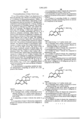
- substituted carbinols of this invention may be represented by the following structural formula I ##SPC1##
- R a is alkyl having 1 to 3 carbon atoms, e.g. methyl, ethyl, n-propyl and isopropyl, and is preferably unbranched;
- R b is a hydrogen atom, methyl, acetoacetyl or lower alkanoyl having 2 to 4 carbon atoms, e.g. acetyl, propionyl or butynyl.
- R a has the above stated significance, and each of R', R" and R'" is independently lower alkyl having 1 to 3 carbon atoms, e.g., methyl, ethyl and propyl; methyl being preferred, P is a protected form of rings A, B and C, as indicated below; and Y is halo having an atomic weight of from 35 to 127 or the residue of a sulfonic acid, e.g., Cl, Br, I, mesylate ion, tosylate ion or the like, preferably I.
- a sulfonic acid e.g., Cl, Br, I, mesylate ion, tosylate ion or the like, preferably I.
- the organo metallo reagent (IV) has the composition ##EQU1## wherein X is an active metal or magnesium bromide or iodide, e.g., Li, K, Na, Al/3, Zn/2, -MgBr, or -MgI, and is prepared by methods disclosed in the literature; and R' and R" have the above stated significance.
- X is an active metal or magnesium bromide or iodide, e.g., Li, K, Na, Al/3, Zn/2, -MgBr, or -MgI, and is prepared by methods disclosed in the literature; and R' and R" have the above stated significance.
- Compound (III) is prepared by treating a corresponding 17-ketosteroid (II) with reagent (IV) in a solvent at a temperature of -30° to 100°C., preferably -20° to 50°C. followed by standard hydrolysis of the resulting adduct in neutral or basic aqueous medium, e.g., water or saturated ammonium chloride solution.
- a solvent e.g., water or saturated ammonium chloride solution.
- the solvent used is dependent upon the composition of the organo-metallo reagent.
- the solvent may be ether or tetrahydrofuran
- the solvent may be liquid ammonia-ether, liquid ammonia-tetrahydrofuran, dioxane, pyridine or dioxane-pyridine.
- X Li
- X Li
- Compound (V) is prepared by treating compound (III) with compound (VI) in a solvent such as acetone, etc., at a temperature of -20°C. to 30°C. This is represented by step a 2 .
- the temperature and solvent are not critical.
- Compound (Ip) is prepared by treating in a solvent compound (V) with a complex hydride reagent (VII) such as Li Al H 4 , at a temperature of -80° to 80°C.
- the solvent may be ether, tetrahydrofuran, pyridine or the like. This is represented by step a 3 . Again, neither temperature nor solvents are critical.
- the compounds of Formula I where R b is alkanoyl may be obtained using standard methods for acylating a tertiary hydroxy group, e.g., by use of an acylating agent in the presence of a strong acidic catalyst.
- the compounds of Formula I where R b is methyl may be obtained in a manner known per se, for instance by treating a compound Ip at a temperature of about -30°C. to 30°C. with 1-1.2 equivalents of strong base (e.g. NaNH 2 or KNH 2 in liquid ammonia or LiCH 3 in ether) to form a 17-O-anion of compound Ip, and treating the latter, in the same mixture, with 1-50 equivalents of methyl iodide.
- strong base e.g. NaNH 2 or KNH 2 in liquid ammonia or LiCH 3 in ether
- Compounds of Formula I wherein R b is acetoacetyl are obtainable by reacting a compound of Formula I bearing a 17 ⁇ -hydroxy group with a suitable reagent, e.g., diketene, under conventional conditions employed in carrying out such a reaction.
- a 17 ⁇ -hydroxy bearing compound of Formula I may be reacted with diketene in an inert organic solvent, e.g., benzene or toluene or mixture thereof, in the presence of a small amount of organic tertiary amine base, e.g., pyridine, at relatively low temperatures, e.g., at from about -5° to +35°C.
- R c is lower alkyl, e.g., being from 1 to 4 carbon atoms, such as methyl, ethyl, propyl or butyl.
- the compounds of Formula III may be prepared by the following Reaction Scheme B, wherein R a , R', R" and P are as defined above. ##SPC4##
- step b 1 is a Mannich-type reaction involving the ethynyl group in VIII; it can be carried out under conditions known to be operative in Mannich reactions of this type.
- step b 1 is carried out with geminal amino alcohols of the type ##EQU2## (R' and R" being as defined above) in the presence of Cu + ions and small amounts of weak acid, (e.g., acetic acid), at temperatures of 10° to 80°C., preferably from about 50° to 70°C. in an inert solvent, such as dioxane and tetrahydrofuran.
- weak acid e.g., acetic acid
- the starting materials and reagents are known and may be prepared by methods described in the literature, or where not known may be prepared in a manner analogous to that for preparing the known compounds.
- R 1 and R 2 which may be the same or different, each signify an alkyl radical of 1 to 3 carbon atoms,
- R 1 and R 2 together with the nitrogen atom to which they are attached, form a pyrrolidino, piperidino, or homopiperidino radical,
- R 3 signifies an alkyl radical of 1 to 3 carbon atoms
- X - signifies the anionic residue of a mineral or organic sulphonic acid, other than a fluoride ion;
- alkyl radical suitable as R 1 , R 2 and R 3 are understood as including methyl, ethyl, n-propyl and isopropyl radicals, but preferably being unbranched: ##SPC5##
- Step A employs a modified Mannich reaction.
- Compounds of formula B are obtained by treating by a Mannich-type reaction (Step A) a 17 ⁇ -ethynyl 17 ⁇ -hydroxy-steroid of the formula A with an aminomethanol, i.e. a compound of formula X ##EQU3## in which R 1 and R 2 are as defined above, in the presence of a monovalent coinage metal ion, i.e., Cu(I), Au(I) or Ag, preferably Cu(I).
- a monovalent coinage metal ion i.e., Cu(I), Au(I) or Ag, preferably Cu(I).
- Step A is conveniently carried out at a temperature of from 20° to 80°C., preferably from 20° to 30°C.
- the reaction may be carried out in a solvent, e.g. in an ether such as diethylether, tetrahydrofuran or p-dioxane, and in the presence of a salt, adduct or complex of copper, silver or gold capable of providing monovalent ions under the reaction conditions.
- suitable salts may be given cuprous chloride, cuprous bromide, cuprous nitrate, cuprous acetate, silver or gold (I) chloride or bromide, or silver nitrate; cuprous chloride being preferred.
- complexes may be given copper, silver and gold cyanides. Where any of the reactants is liquid under the reaction conditions, such may be used in excess to serve as reaction medium.
- a preferred solvent is p-dioxane.
- a preferred Compound X is dimethylaminomethanol.
- Step B the quaternization, may be carried out in conventional manner for preparing a quaternary ammonium salt from a tertiary amine.
- a suitable reaction temperature is from -20° to 100°C.
- a compound of formula R 3 X is liquid under the reaction conditions, such may be used in excess to serve as reaction medium.
- a solvent such as acetone or acetonitrile may be used.
- Ions suitable as X include a monovalent ion of a halogen atom having an atomic weight of from 34 to 128; i.e., chloro, bromo, or iodo, or the residue of a sulfonic acid, e.g.
- R 3 X are methyl iodide and methyl p-toluenesulphonate.
- reagents be used such that each of R 1 , R 2 and R 3 is methyl and X is iodo.
- Step C of Reaction Scheme C compounds of formula D are obtained by reducing a compound of formula C.
- the reduction may be carried out by use of a complex metal hydride, using a hydride ion source selected from compounds of formula XIa ##EQU4## in which Y signifies an alkali or alkaline earth metal, M signifies aluminum, or gallium, and
- Z 1 , z 2 and Z 3 which may be the same or different, each signify a hydrogen atom, an alkyl or alkoxy radical of 1 to 6 carbon atoms or an alkoxyalkoxy radical wherein the alkyl portion has from 1 to 6 carbon atoms and alkylene portion has from 2 to 6 carbon atoms,
- alkyl and alkoxy radicals mentioned above in connection with Compounds of formulas XIa and XIb are understood to include as the alkyl portion thereof methyl, ethyl, propyl, butyl, amyl and hexyl, including isomers where such exist, but are preferably unbranched; and the alkylene radicals are understood to include ethylene, n-propylene, n-butylene, n-amylene and n-hexylene radicals.
- the aprotic medium may, for example, be an ether, such as diethyl ether, tetrahydrofuran or dioxane, or an aromatic compound such as benzene, toluene or pyridine.
- the medium may be a single material or a mixture.
- a suitable reaction temperature is from -40° to +120°C., e.g. the boiling temperature of the reaction mixture.
- Preferred reaction temperatures are from -10° to +50°C. Whilst higher temperatures result in faster reaction rates, lower temperatures tend to give purer products. It is preferable to exclude moisture from the reaction mixture.
- hydride ion sources may be given lithium aluminium hydride, sodium dihydro bis-(2-methoxy ethoxy) aluminate, lithium gallium hydride, magnesium aluminium hydride, lithium diisobutylmethyl aluminium hydride, lithium trimethoxy aluminium hydride and diethyl aluminium hydride, lithium aluminium hydride and sodium dihydro bis-(2-methoxy ethoxy) aluminate being preferred.
- alkaline earth metals are divalent
- Y + has, for the sake of simplicity, been shown as monovalent.
- significances of Y may be given lithium, potassium, calcium and magnesium.
- Step D Compounds Ia are obtained by oxidation of the 3-hydroxy function of a compound of formula D.
- the oxidation may be carried out in conventional manner.
- Suitable oxidizing agents include quinones, such as p-benzoquinone, chloranil or 2,3-dichloro-5,6-dicyanobenzoquinone, (DDQ) and activated manganese dioxide, preferably 2,3-dicyano-5,6-dichlorobenzoquinone.
- the oxidation is preferably carried out at a temperature of from 10° to 50°C., more preferably from 20° to 30°C.
- an inert solvent e.g. a cyclic ether such as dioxane, or a tertiary alkanol such as t-butanol, is employed.
- Step D Compounds of formula D employed in Step D are mixtures of 3 ⁇ ,17 ⁇ -diols and 3 ⁇ ,17 ⁇ -diols. Such a mixture results from the reduction of the 3-oxo function of a compound of formula C during Step C.
- Step D the 3-hydroxy function of a compound of formula D is oxidized to an oxo function regardless of its isomeric configuration. Hence the proportion of 3 ⁇ - to 3 ⁇ -hydroxy isomers constituting a compound of formula II employed in Step D is unimportant.
- Reagents and starting materials used in the abovedescribed processes e.g. compound of formulae II, IV, VI, VII, VIII, IX, X, R 3 X, XIa, XIb and A are known and may be prepared by methods described in the literature, or where not known, may be prepared by methods analogous to those for preparing the known compounds. Many of these compounds are obtainable commercially.
- Step A when using a 3-hydroxy analog of the Compound of formula A, Step A can be carried out using in place of the conditions of the modified Mannich reaction described above in connection with Reaction Scheme C, the conventional Mannich reaction conditions described in connection with step b 1 of Reaction Scheme B.
- the above-described modified Mannich reaction technique may be applied to carry out step b 1 (in the procedure of Reaction Scheme B) to obtain Compounds of formula III as such technique is applicable to 3-oxo steroidal compounds whether in protected or unprotected form.
- substituted carbinol derivatives represented by formula (I) above are useful because they possess pharmacological properties in animals.
- such compounds are useful as agents in the control of fertility including the control and regulation of estrus or the menstrual function in warm-blooded animals, as they possess progestational activity as indicated by standard tests, such as the clauberg test, e.g. the method basically described in Endocrinology 63 (1958) 464 wherein the rabbit is given from 0.0025 to 1.0 milligram of active agent.
- These compounds may be combined with a pharmaceutically acceptable carrier or adjuvant. They may be administered orally or parenterally.
- the dosage will vary depending upon known factors such as the mode of administration utilized and the particular compound employed. However, in general, satisfactory results are obtained in warm-blooded animals, i.e. birds and mammals, when the compounds are administered at a daily dosage of from about 0.0025 milligram to 50 milligrams, e.g. from about 0.01 milligram to 2 milligrams. It will be appreciated by those skilled in the art that the daily dosage level is not directly related to body weight.
- Dosage forms suitable for internal administration comprise from about 0.0025 milligram to 50 milligrams, e.g. from about 0.005 milligram to about 2 milligrams, of the compound in admixture with a solid or liquid pharmaceutical carrier or diluent, solid forms, e.g. tablets and capsules, being preferred.
- the compounds of formula I are also useful as agents in the control and regulation of the menstrual or estrus function.
- compounds of formula (I) may be administered alone in the manner and dosage described above, or in combination with a suitable estrogenic agent, the latter, for example at a dosage of about 0.1 milligram.
- the estrogenic agent may be admixed with a compound of formula I; or, alternatively, the estrogenic agent may be administered alone in the first part of the menstrual cycle and in admixture with the compound of formula I in the latter days of the cycle of the host, i.e. a higher primate.
- the compounds 17 ⁇ -propadienylestra-4,9-dien-17 ⁇ -ol-3-one, 17 ⁇ -acetoacetoxy-17 ⁇ -propadienylestra-4,9-dien-3-one and 17 ⁇ -acetoxy, 17 ⁇ -propadienylestra-4,9-dien-3-one are particularly useful as fertility control agents as they have in addition to their progestational activity, estrogenic activity as well as estrogen-antagonistic activity when administered orally or parenterally at daily dosages of from about 0.025 milligram to 30 milligrams, e.g. from about 0.1 milligram to 0.5 milligram.
- the three above-mentioned activities can be observed in the white rat by standard test methods; e.g. the progestational activity can be demonstrated by the rat deciduoma method described by Yochim and DeFeo (Endocrinology 71:134, 1962), the estrogenic activity can be demonstrated by observation of cornification of vaginal epithelium of adult female ovariectomized white rats, e.g. by the method of Biggers and Claringbold, and estrogen-antagonistic activity can be demonstrated by observation of inhibition of cornification of vaginal epithelium of adult ovariectomized female white rats caused by standard estrogens.
- the progestational activity can be demonstrated by the rat deciduoma method described by Yochim and DeFeo (Endocrinology 71:134, 1962)
- the estrogenic activity can be demonstrated by observation of cornification of vaginal epithelium of adult female ovariectomized white rats, e.g. by the method of Biggers and Clar
- Compounds I are especially useful in estrus regulation in swine at daily doses more suitably of from about 3 to 30 milligrams, preferably about 4 to 15 milligrams, based on the observation that cystic follicles are not formed. This property is particularly surprising in view of the fact that the formation of cystic follicles is a common result in attempts to regulate estrus in swine with other steriods.
- Aqueous 2 N NaOH solution (100 ml.) is added and the mixture concentrated in vacuo at temperatures not exceeding 30°C. until the total volume is 100 ml.
- the concentrated mixture is then extracted with ether (5 ⁇ 25 ml.), using a centrifuge to facilitate separation from the salt-containing aqueous phase.
- the product* of this step (1) (a 1 ) is obtained by evaporating the dried ethereal solutions and pumping off any excess dimethylaminopropyne present.
- step 3 of the product of step 3, i.e., 3-ethylenedioxy-17 ⁇ -propadienylestra-5(10),9(11)-dien-17 ⁇ -ol is dissolved in a mixture of 25 ml. of methanol and 0.8 ml. of 11 N aqueous hydrochloric acid and is kept at 30°C. for 30 minutes. After dilution with 50 ml. of water, the product is extracted with methylene chloride (5 ⁇ 8 ml.). Evaporation of the dried methylene chloride solutions, followed by recrystallization of the residue from methanol yields the title compound, 17 ⁇ -propadienylestra-4,9-17 ⁇ -ol-3-one.
- a total of 5.2 g. of lithium is added portionwise to 500 ml of ethylenediamine stirred and maintained at a temperature of 50- 60° under nitrogen. After the addition is complete, the resulting blue solution is heated to 95° for 1 hour when a pale yellow reaction mixture is obtained which is then cooled to 10° and 58 g. of dimethylaminopropyne is added dropwise over 5 minutes. Stirring is continued at room temperature for 1 hour, when a solution of 11 g. of 3-ethylenedioxyestra-5(10),9(11)- dien-17-one in 150 ml. of tetrahydrofuran is added. The mixture is now stirred at room temperature for 24 hours. After cooling (ice-water), 1000 ml.
- the thus-obtained intermediate compound may be utilized in the same manner as the product obtained in Step 1 of Example 2 to obtain 17 ⁇ -propadienylestra-4,9-dien-17 ⁇ -ol-3-one.
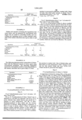
- a representative formulation suitable for oral administration is a tablet prepared by standard tabletting techniques which contain the following:Ingredients Part by Weight______________________________________17 ⁇ -Propadienylestra-4,9- dien-17 ⁇ -ol-3-one .05Tragacanth 2Lactose 89.45Corn starch 5Talcum 3Magnesium stearate 0.50______________________________________
- Tablets and capsules containing the ingredients indicated below may be prepared by conventional techniques and are useful in controlling fertility and regulating the menstrual function in the manner described above given daily to a host.
- Tablets and capsules containing the ingredients indicated below may be prepared by conventional techniques and are useful in controlling fertility and controlling and regulating estrus in large domestic mammals in the manner described above given daily to said host.
- the following pharmaceutical composition is formulated with the indicated amount of active agent using conventional techniques.
- the injectable suspension represents a formulation useful in controlling fertility in the manner described above given daily to a host.
- 326 g. of 17 ⁇ -ethynylestra-4,9-dien-17 ⁇ -ol-3-one is dissolved in 3.26 liters of p-dioxane, and 29 g. of cuprous chloride then added thereto and stirred for 5 minutes at room temperature. 290 Ml. of dimethylaminomethanol is then added and the mixture stirred for 45 minutes. While stirring is continued, 12 liters of water is slowly added. 6 liters of saturated aqueous sodium chloride solution is then added and stirring continued for 30 minutes, resulting in separation of the reaction product as crystals.
- the crystalline product is recovered by filtration, washed with 5 liters of water, then dried under vacuum, to obtain 17 ⁇ -(3'-dimethylamino-prop-1'-yn-1'-yl) 4,9-dien-17 ⁇ -ol-3-one, m.p. 147°-151°C.
- a suspension is formed by mixing 480 g. of the product of Step B with 14.4 liters of dry tetrahydrofuran (THF) with vigorous stirring. 600 ml. of a 70% benzene solution of sodium bis(2-methoxyethoxy) aluminum hydride* (w/v) is diluted with dry THF to 1200 ml. and is added to the stirred suspension over a period of 30 minutes at room temperature. Stirring is then continued for 6 hours. With vigorous stirring, 575 ml. of water is slowly added to the reaction mixture, so that the temperature does not rise above 35°. Stirring is then continued for 3 hours. 100 g.
- 311 g. of the product of Step C are dissolved in 3.2 liters of p-dioxane, and 1300 ml. of a solution of 255 g. of 2,3-dichloro-5,6-dicyanobenzoquinone (DDQ) in p-dioxane, is slowly added thereto, with stirring, so that the temperature does not rise above 35°. Stirring is then continued at room temperature for 1.5 hours, resulting in the separation of a crystalline material. The crystalline material is collected on a filter, and washed with 500 ml. of p-dioxane. The filtrate and wash are combined and, with stirring, 1.5 liters of an aqueous solution of 36.0 g.
- DDQ 2,3-dichloro-5,6-dicyanobenzoquinone
- the column is then washed with 4 liters of diethyl ether, which is then concentrated under vacuum to a volume of 1 to 1.5 liters. Crystals of the title product are obtained by cooling the concentrated solution in an ice bath. The crystalline product is recovered by filtration and washed with 300 ml. of an ice-cold mixture of hexane-ether (1:1) to obtain the refined product, m.p. 111°to 113°. Additional product can be recovered from the wash and filtrate, if desired.
Landscapes
- Chemical & Material Sciences (AREA)
- Organic Chemistry (AREA)
- Health & Medical Sciences (AREA)
- General Health & Medical Sciences (AREA)
- Steroid Compounds (AREA)
Abstract
13-alkyl-17 alpha -propadienylgona-4,9-dien-17 beta -ol-3-ones and their 17 beta -oxygenated derivatives are useful in control of fertility and estrus or the menstrual cycle in warm blooded animals.
Description
This is a continuation, of copending application Serial No. 358,345 filed May 8, 1973 (now abandoned) which in turn is a continuation-in-part of copending application U.S. Ser. No. 314,833 filed Dec. 13, 1972 now abandoned which in turn is a division of then copending application Serial No. 71,279 filed Sept. 10, 1970, (now U.S. Pat. No. 3,719,670), which in turn is a continuation-in-part of then copending application 778,777 filed Nov. 25, 1968 (now abandoned).
This invention relates to substituted steroids. More particularly it relates to pharmaceutical compositions containing steroidal 17α-allenyl 17β-carbinol derivatives and to the use thereof.
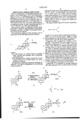
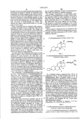
The substituted carbinols of this invention may be represented by the following structural formula I ##SPC1##
wherein
Ra is alkyl having 1 to 3 carbon atoms, e.g. methyl, ethyl, n-propyl and isopropyl, and is preferably unbranched; and
Rb is a hydrogen atom, methyl, acetoacetyl or lower alkanoyl having 2 to 4 carbon atoms, e.g. acetyl, propionyl or butynyl.
The process for preparing compounds of formula (I) where Rb = H, may be represented by the following reaction scheme A: ##SPC2##
wherein Ra has the above stated significance, and each of R', R" and R'" is independently lower alkyl having 1 to 3 carbon atoms, e.g., methyl, ethyl and propyl; methyl being preferred, P is a protected form of rings A, B and C, as indicated below; and Y is halo having an atomic weight of from 35 to 127 or the residue of a sulfonic acid, e.g., Cl, Br, I, mesylate ion, tosylate ion or the like, preferably I.
The organo metallo reagent (IV) has the composition ##EQU1## wherein X is an active metal or magnesium bromide or iodide, e.g., Li, K, Na, Al/3, Zn/2, -MgBr, or -MgI, and is prepared by methods disclosed in the literature; and R' and R" have the above stated significance.
Compound (III) is prepared by treating a corresponding 17-ketosteroid (II) with reagent (IV) in a solvent at a temperature of -30° to 100°C., preferably -20° to 50°C. followed by standard hydrolysis of the resulting adduct in neutral or basic aqueous medium, e.g., water or saturated ammonium chloride solution. The solvent used is dependent upon the composition of the organo-metallo reagent. For example, if X is MgBr, MgI or Li, the solvent may be ether or tetrahydrofuran, if X is Na, the solvent may be liquid ammonia-ether, liquid ammonia-tetrahydrofuran, dioxane, pyridine or dioxane-pyridine. Particularly advantageous is the use of X=Li in the presence of complexing amines, e.g., ethylene diamine. This process is represented by step a1. The temperature and solvent are not critical.
Compound (V) is prepared by treating compound (III) with compound (VI) in a solvent such as acetone, etc., at a temperature of -20°C. to 30°C. This is represented by step a2. The temperature and solvent are not critical.
Compound (Ip) is prepared by treating in a solvent compound (V) with a complex hydride reagent (VII) such as Li Al H4, at a temperature of -80° to 80°C. The solvent may be ether, tetrahydrofuran, pyridine or the like. This is represented by step a3. Again, neither temperature nor solvents are critical.
The compounds of Formula I where Rb is alkanoyl may be obtained using standard methods for acylating a tertiary hydroxy group, e.g., by use of an acylating agent in the presence of a strong acidic catalyst. For example, a compound Ip may be converted into a Compound I where Rb =OCOCH3 by use of e.g., acetic anhydride in which calcium hydride had previously been suspended.
The compounds of Formula I where Rb is methyl may be obtained in a manner known per se, for instance by treating a compound Ip at a temperature of about -30°C. to 30°C. with 1-1.2 equivalents of strong base (e.g. NaNH2 or KNH2 in liquid ammonia or LiCH3 in ether) to form a 17-O-anion of compound Ip, and treating the latter, in the same mixture, with 1-50 equivalents of methyl iodide.
Compounds of Formula I wherein Rb is acetoacetyl are obtainable by reacting a compound of Formula I bearing a 17β-hydroxy group with a suitable reagent, e.g., diketene, under conventional conditions employed in carrying out such a reaction. For example, a 17β-hydroxy bearing compound of Formula I may be reacted with diketene in an inert organic solvent, e.g., benzene or toluene or mixture thereof, in the presence of a small amount of organic tertiary amine base, e.g., pyridine, at relatively low temperatures, e.g., at from about -5° to +35°C.
The disclosure below respecting protective groups pertains as well to the above described method for methylating and acylating compounds Ip and III.
Certain compounds of Formula (II) and protected forms thereof are known and may be prepared by methods disclosed in the literature; and those compounds not specifically disclosed may be prepared according to analogous methods from known materials.
Conventional recovery techniques are utilized for obtaining the compounds of Formula (I), e.g., crystallization, column or layer chromatography, etc.
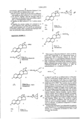
The above-mentioned protected forms P of the steroidal compounds include the structures P1 and P2 embracing rings A, B and C. ##SPC3##
wherein Rc is lower alkyl, e.g., being from 1 to 4 carbon atoms, such as methyl, ethyl, propyl or butyl. "Deprotection" can be achieved in conventional ways; i.e., with P1 and P2, hydrolysis in acid medium followed by conjugation of the double bonds in acid or basic medium. The above-described "protected" forms are advantageously retained until compound Ip where Rb =H or CH3 is obtained, which compound may then be deprotected as described above to obtain the unprotected form of a compound I where Rb =H or CH3. A compound of formula I wherein Rb =H can then be converted if desired to a particular compound of Formula I where Rb =acyl, by conventional means.
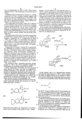
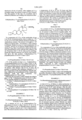
In accordance with an additional aspect of this invention the compounds of Formula III may be prepared by the following Reaction Scheme B, wherein Ra, R', R" and P are as defined above. ##SPC4##
In this scheme, step b1 is a Mannich-type reaction involving the ethynyl group in VIII; it can be carried out under conditions known to be operative in Mannich reactions of this type. Preferably, however, step b1 is carried out with geminal amino alcohols of the type ##EQU2## (R' and R" being as defined above) in the presence of Cu+ ions and small amounts of weak acid, (e.g., acetic acid), at temperatures of 10° to 80°C., preferably from about 50° to 70°C. in an inert solvent, such as dioxane and tetrahydrofuran.
In the above-described procedures, the starting materials and reagents are known and may be prepared by methods described in the literature, or where not known may be prepared in a manner analogous to that for preparing the known compounds.
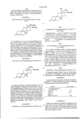
An advantageous alternative method of preparing a Compound I in which Rb is a hydrogen atom, i.e. a Compound Ia is a multi-step procedure which may be conveniently represented by Reaction Scheme C, below, in which R2 is as defined above, and
either R1 and R2, which may be the same or different, each signify an alkyl radical of 1 to 3 carbon atoms,
or R1 and R2, together with the nitrogen atom to which they are attached, form a pyrrolidino, piperidino, or homopiperidino radical,
R3 signifies an alkyl radical of 1 to 3 carbon atoms; and
X- signifies the anionic residue of a mineral or organic sulphonic acid, other than a fluoride ion;
(alkyl radical suitable as R1, R2 and R3 are understood as including methyl, ethyl, n-propyl and isopropyl radicals, but preferably being unbranched): ##SPC5##
With respect to Reaction Scheme C, above, it will be noted that compounds A are unprotected forms of Compounds VIII of Reaction Scheme B, and that whereas step b1 is a conventional Mannich reaction, Step A employs a modified Mannich reaction. Accordingly, Compounds of formula B are obtained by treating by a Mannich-type reaction (Step A) a 17Δ-ethynyl 17β-hydroxy-steroid of the formula A with an aminomethanol, i.e. a compound of formula X ##EQU3## in which R1 and R2 are as defined above, in the presence of a monovalent coinage metal ion, i.e., Cu(I), Au(I) or Ag, preferably Cu(I). Step A is conveniently carried out at a temperature of from 20° to 80°C., preferably from 20° to 30°C. The reaction may be carried out in a solvent, e.g. in an ether such as diethylether, tetrahydrofuran or p-dioxane, and in the presence of a salt, adduct or complex of copper, silver or gold capable of providing monovalent ions under the reaction conditions. As Examples of suitable salts may be given cuprous chloride, cuprous bromide, cuprous nitrate, cuprous acetate, silver or gold (I) chloride or bromide, or silver nitrate; cuprous chloride being preferred. As Examples of complexes may be given copper, silver and gold cyanides. Where any of the reactants is liquid under the reaction conditions, such may be used in excess to serve as reaction medium. A preferred solvent is p-dioxane. A preferred Compound X is dimethylaminomethanol.
Compounds of formula C are obtainable by quaternization (Step B) of a 17α-dialkylaminopropynyl bearing steroid, i.e., a compound of formula B, with a compound of the formula
R.sup.3 X
in which R3 and X are as defined above. Step B, the quaternization, may be carried out in conventional manner for preparing a quaternary ammonium salt from a tertiary amine. A suitable reaction temperature is from -20° to 100°C. Where a compound of formula R3 X is liquid under the reaction conditions, such may be used in excess to serve as reaction medium. Alternatively, a solvent, such as acetone or acetonitrile may be used. Ions suitable as X include a monovalent ion of a halogen atom having an atomic weight of from 34 to 128; i.e., chloro, bromo, or iodo, or the residue of a sulfonic acid, e.g. of an alkylsulfonic acid such as a mesylate ion, or of an aromatic sulfonic acid, such as a tosylate ion, or the like. Preferred compounds of formula R3 X are methyl iodide and methyl p-toluenesulphonate. Thus, it is particularly preferred that reagents be used such that each of R1, R2 and R3 is methyl and X is iodo.
In Step C of Reaction Scheme C, compounds of formula D are obtained by reducing a compound of formula C. The reduction may be carried out by use of a complex metal hydride, using a hydride ion source selected from compounds of formula XIa ##EQU4## in which Y signifies an alkali or alkaline earth metal, M signifies aluminum, or gallium, and
Z1, z2 and Z3, which may be the same or different, each signify a hydrogen atom, an alkyl or alkoxy radical of 1 to 6 carbon atoms or an alkoxyalkoxy radical wherein the alkyl portion has from 1 to 6 carbon atoms and alkylene portion has from 2 to 6 carbon atoms,
and compounds of formula XIb ##EQU5## in which M is as defined above, and Z4 and Z5, which may be the same or different, each signify a hydrogen atom or an alkyl radical of 1 to 6 carbon atoms,
in an aprotic medium not detrimental to the reaction.
The alkyl and alkoxy radicals mentioned above in connection with Compounds of formulas XIa and XIb are understood to include as the alkyl portion thereof methyl, ethyl, propyl, butyl, amyl and hexyl, including isomers where such exist, but are preferably unbranched; and the alkylene radicals are understood to include ethylene, n-propylene, n-butylene, n-amylene and n-hexylene radicals.
In Step C, the aprotic medium may, for example, be an ether, such as diethyl ether, tetrahydrofuran or dioxane, or an aromatic compound such as benzene, toluene or pyridine. The medium may be a single material or a mixture. A suitable reaction temperature is from -40° to +120°C., e.g. the boiling temperature of the reaction mixture. Preferred reaction temperatures, however, are from -10° to +50°C. Whilst higher temperatures result in faster reaction rates, lower temperatures tend to give purer products. It is preferable to exclude moisture from the reaction mixture.
As representative of hydride ion sources may be given lithium aluminium hydride, sodium dihydro bis-(2-methoxy ethoxy) aluminate, lithium gallium hydride, magnesium aluminium hydride, lithium diisobutylmethyl aluminium hydride, lithium trimethoxy aluminium hydride and diethyl aluminium hydride, lithium aluminium hydride and sodium dihydro bis-(2-methoxy ethoxy) aluminate being preferred. In the formula XIa, given above, although, as will be appreciated, alkaline earth metals are divalent, Y+ has, for the sake of simplicity, been shown as monovalent. As examples of significances of Y may be given lithium, potassium, calcium and magnesium.
In Step D, Compounds Ia are obtained by oxidation of the 3-hydroxy function of a compound of formula D. The oxidation may be carried out in conventional manner. Suitable oxidizing agents include quinones, such as p-benzoquinone, chloranil or 2,3-dichloro-5,6-dicyanobenzoquinone, (DDQ) and activated manganese dioxide, preferably 2,3-dicyano-5,6-dichlorobenzoquinone. The oxidation is preferably carried out at a temperature of from 10° to 50°C., more preferably from 20° to 30°C. Preferably an inert solvent, e.g. a cyclic ether such as dioxane, or a tertiary alkanol such as t-butanol, is employed.
Compounds of formula D employed in Step D are mixtures of 3α,17β-diols and 3β,17β-diols. Such a mixture results from the reduction of the 3-oxo function of a compound of formula C during Step C. In Step D the 3-hydroxy function of a compound of formula D is oxidized to an oxo function regardless of its isomeric configuration. Hence the proportion of 3α- to 3β-hydroxy isomers constituting a compound of formula II employed in Step D is unimportant.
Reagents and starting materials used in the abovedescribed processes, e.g. compound of formulae II, IV, VI, VII, VIII, IX, X, R3 X, XIa, XIb and A are known and may be prepared by methods described in the literature, or where not known, may be prepared by methods analogous to those for preparing the known compounds. Many of these compounds are obtainable commercially.
Alternative to the process of Reaction Scheme C, described above, there may be used as starting material, a 3-hydroxy analog of a Compound of formula A, in place of a Compound of formula A, and by applying the method of each of Steps A and B obtain the 3-hydroxy analogs of compounds of formulae B and C, respectively. The product obtained by applying the method of Step C to a 3-hydroxy analog of a Compound of formula C will, however, be the same as a Compound of formula D, albeit the ratio of 3α- to 3β-hydroxy isomers may vary. This, however, is unimportant, as noted above, and the desired compound of formula Ia can then be obtained by application of Step D. If desired, when using a 3-hydroxy analog of the Compound of formula A, Step A can be carried out using in place of the conditions of the modified Mannich reaction described above in connection with Reaction Scheme C, the conventional Mannich reaction conditions described in connection with step b1 of Reaction Scheme B. In addition, if so desired, the above-described modified Mannich reaction technique may be applied to carry out step b1 (in the procedure of Reaction Scheme B) to obtain Compounds of formula III as such technique is applicable to 3-oxo steroidal compounds whether in protected or unprotected form.
The substituted carbinol derivatives represented by formula (I) above are useful because they possess pharmacological properties in animals. In particular, such compounds are useful as agents in the control of fertility including the control and regulation of estrus or the menstrual function in warm-blooded animals, as they possess progestational activity as indicated by standard tests, such as the clauberg test, e.g. the method basically described in Endocrinology 63 (1958) 464 wherein the rabbit is given from 0.0025 to 1.0 milligram of active agent.
These compounds may be combined with a pharmaceutically acceptable carrier or adjuvant. They may be administered orally or parenterally. The dosage will vary depending upon known factors such as the mode of administration utilized and the particular compound employed. However, in general, satisfactory results are obtained in warm-blooded animals, i.e. birds and mammals, when the compounds are administered at a daily dosage of from about 0.0025 milligram to 50 milligrams, e.g. from about 0.01 milligram to 2 milligrams. It will be appreciated by those skilled in the art that the daily dosage level is not directly related to body weight. Dosage forms suitable for internal administration comprise from about 0.0025 milligram to 50 milligrams, e.g. from about 0.005 milligram to about 2 milligrams, of the compound in admixture with a solid or liquid pharmaceutical carrier or diluent, solid forms, e.g. tablets and capsules, being preferred.
As noted above, the compounds of formula I are also useful as agents in the control and regulation of the menstrual or estrus function. For such uses, compounds of formula (I) may be administered alone in the manner and dosage described above, or in combination with a suitable estrogenic agent, the latter, for example at a dosage of about 0.1 milligram. For the regulation of the menstrual function, the estrogenic agent may be admixed with a compound of formula I; or, alternatively, the estrogenic agent may be administered alone in the first part of the menstrual cycle and in admixture with the compound of formula I in the latter days of the cycle of the host, i.e. a higher primate.
The compounds 17α-propadienylestra-4,9-dien-17β-ol-3-one, 17β-acetoacetoxy-17α-propadienylestra-4,9-dien-3-one and 17β-acetoxy, 17α-propadienylestra-4,9-dien-3-one are particularly useful as fertility control agents as they have in addition to their progestational activity, estrogenic activity as well as estrogen-antagonistic activity when administered orally or parenterally at daily dosages of from about 0.025 milligram to 30 milligrams, e.g. from about 0.1 milligram to 0.5 milligram. It will be readily appreciated by those skilled in the art that compounds concurrently exhibiting the three above-mentioned properties are highly desirable as they can be used to obtain efficient fertility control at advantageously low dosage levels and thereby minimizes undesirable side-effects commonly associated with standard fertility control agents, e.g. those which comprise an estrogenic agent with a progestational agent.
The three above-mentioned activities can be observed in the white rat by standard test methods; e.g. the progestational activity can be demonstrated by the rat deciduoma method described by Yochim and DeFeo (Endocrinology 71:134, 1962), the estrogenic activity can be demonstrated by observation of cornification of vaginal epithelium of adult female ovariectomized white rats, e.g. by the method of Biggers and Claringbold, and estrogen-antagonistic activity can be demonstrated by observation of inhibition of cornification of vaginal epithelium of adult ovariectomized female white rats caused by standard estrogens.
For example, Compounds I, as particularly represented by 17α-propadienylestra-4,9-dien-17β-ol-3-one, are especially useful in estrus regulation in swine at daily doses more suitably of from about 3 to 30 milligrams, preferably about 4 to 15 milligrams, based on the observation that cystic follicles are not formed. This property is particularly surprising in view of the fact that the formation of cystic follicles is a common result in attempts to regulate estrus in swine with other steriods.
This invention is illustrated but not limited by the following examples, wherein all temperatures are Centragrade, and room temperature is 20° to 30°C., unless indicated otherwise.
To a Grignard mixture, prepared from 1.50 g. of magnesium, 4.68 g. of ethyl bromide and 70 ml. of tetrahydrofuran, there is dropwise added 5.3 g. of dimethylaminopropyne, dissolved in 10 ml. of tetrahydrofuran. After the evolution of ethaneceases, a solution of 1.888 g. of 3-ethylenedioxyestra-5(10),9(11)-dien-17-one in 30 ml. of tetrahydrofuran is dropwise added, the temperature being maintained at 0°-5°C. during the addition and 20°-25° for 4 further hours. Aqueous 2 N NaOH solution (100 ml.) is added and the mixture concentrated in vacuo at temperatures not exceeding 30°C. until the total volume is 100 ml. The concentrated mixture is then extracted with ether (5 × 25 ml.), using a centrifuge to facilitate separation from the salt-containing aqueous phase. The product* of this step (1) (a1) is obtained by evaporating the dried ethereal solutions and pumping off any excess dimethylaminopropyne present.
2 g. of 17α-dimethylaminopropynyl-3-ethylenedioxyestra-5(10),9(11)-dien-17.beta.-ol (product of step 1) is dissolved in 30 ml. of acetone. After addition of 3.2 g. of methyl iodide, the mixture is kept at 8° for 18 hours. The title product of this step (2) crystallizes and is isolated by filtration and washing with anhydrous ether.
To a suspension of 2.75 g. of the methiodide of step 2, in 50 ml. of tetrahydrofuran, there is added, at -75°, 9.3 ml. of a 0.525 molar lithium aluminum hydride-tetrahydrofuran solution. The mixture is brought to -10° where it is stirred until (˜90 minutes) a clear solution is obtained. Finally it is kept at room temperature for 12 hours. 100 ml. of 2 N aqueous NaOH solution containing 50 mg. ditert.-butylcresol is added and the mixture concentrated in vacuo until the total volume is 100 ml. Extraction with 5 × 20 ml. ether on the centrifuge, drying the ethereal solutions over K2 CO3 and evaporation gives the title product, 3-ethylenedioxy-17α-propadienylestra-5(10),9(11)-dien-17β-ol.
3 G. of the product of step 3, i.e., 3-ethylenedioxy-17α -propadienylestra-5(10),9(11)-dien-17β-ol is dissolved in a mixture of 25 ml. of methanol and 0.8 ml. of 11 N aqueous hydrochloric acid and is kept at 30°C. for 30 minutes. After dilution with 50 ml. of water, the product is extracted with methylene chloride (5 × 8 ml.). Evaporation of the dried methylene chloride solutions, followed by recrystallization of the residue from methanol yields the title compound, 17α-propadienylestra-4,9-17β-ol-3-one.
Following the procedure of this example but using in place of the 3-ethylenedioxyestra-5(10),9(11)-dien-17-one starting material an equivalent amount of
a. 13-Ethyl- 3 -ethylenedioxygona-5(10),9(11)-dien-17-one; or
b. 3 -ethylenedioxy-13-n-propylgona-5(10),9(11)-dien-17-one, there is obtained:
a. 13-Ethyl-17α-propadienylgona-4,9-dien-17β-ol-3-one; or
b. 17α-propadienyl-13-n-propylgona-4,9-dien-17β-ol-3-one.
To a solution of 2.5 g. of 3-ethylenedioxy-17α-ethynylestra-5,(10),9(11)-dien-17β-ol in 25 ml. of dioxane, is added 2.5 ml. of dimethyl-amino methanol, 80 mg. of cuprous chloride and 1.4 ml. of glacial acetic acid. The stirred reaction mixture is then maintained at a temperature of 60 to 70° for 21/2 hours and then cooled and diluted with ice/water containing sufficient sodium bicarbonate to insure that the solution remains basic. The organic material is extracted with methylene chloride and the solution so obtained dried over sulfate and evaporated. The residue is crystallized from acetone-petroleum ether (b.p.60- 90°); 1/1, to yield 17α-dimethylaminopropynyl-3-ethylenedioxyestra-5(10),9,(11)-dien-17.beta.-ol, m.p. 161- 163°.
To a solution of 2.6 g. 17α-dimethylaminopropynyl-3-ethylenedioxy-estra- 5(10),9(11)-dien-17β-ol in 70 ml. of acetone is added 20 ml of methyl iodide. The solution is kept at a temperature of 5° for 18 hours and then the solvent removed and the residue is crystallized from acetone to yield the product, i.e., the methiodide salt of 17α-dimethylaminopropynyl-3 -ethylenedioxyestra-5(10),9(11)-dien-17β-ol, m.p. 229°230°.
To a suspension of 3.2 g. of the methiodide salt (prepared in Step 2), in 100 ml. of anhydrous tetrahydrofuran under ice cooling is added dropwise 16 ml. of a 0.85 M solution of lithium aluminum hydride in tetrahydrofuran. The reaction mixture is allowed to warm to room temperature and stirred for a total of 11/2 hours by which time solution is almost complete. Water is then added under cooling to decompose the excess hydride reagent, and on continued addition of water, a solid precipitates. This is isolated and dissolved in methylene dichloride. The organic solution is dried over sodium sulfate evaporated to yield 3-ethylenedioxy-17α-propadienylestra-5(10),9(11)-dien-17β-ol.
Using the product of Step 3, above and repeating the procedure described in Step 4 of Example 1, yields the title compound, 17α-propadienylestra-4,9-dien-17β-ol-3-one.
A total of 5.2 g. of lithium is added portionwise to 500 ml of ethylenediamine stirred and maintained at a temperature of 50- 60° under nitrogen. After the addition is complete, the resulting blue solution is heated to 95° for 1 hour when a pale yellow reaction mixture is obtained which is then cooled to 10° and 58 g. of dimethylaminopropyne is added dropwise over 5 minutes. Stirring is continued at room temperature for 1 hour, when a solution of 11 g. of 3-ethylenedioxyestra-5(10),9(11)- dien-17-one in 150 ml. of tetrahydrofuran is added. The mixture is now stirred at room temperature for 24 hours. After cooling (ice-water), 1000 ml. of saturated aqueous sodium chloride are added and the resulting organic layer is separated. After drying over sodium sulfate, the solvent is removed and the residue is crystallized from acetone/pet. ether, 1/1, to yield 17α-dimethylaminopropynyl-3-ethylenedioxyestra-5(10),9,(1)-dien- 17β-ol, m.p. 161°- 163°.
The thus-obtained intermediate compound may be utilized in the same manner as the product obtained in Step 1 of Example 2 to obtain 17α-propadienylestra-4,9-dien-17β-ol-3-one.
To a solution of 1.0 g. of 17α-propadienylestra-4,9-dien-17β-ol-3-one in a mixture of 18.5 ml. of benzene, 9.25 ml. of toluene and 0.23 ml. of pyridine, there is dropwise added, at 0°, 1.8 ml. of diketene, dissolved in 9 ml. of benzene. The mixture is then kept at 25° for 3 hours. The product is isolated by washing the mixture with ice-cold 0.1 N sodium hydroxide and water, drying over anhydrous sodium sulfate, evaporating to dryness and purifying the oil thus obtained by chromatoplate techniques (silica gel S development: CHCL3 -MeOH 98/2 ): [α]D = -245.0 (C=1, CHCL3).
A mixture of 0.050 g. of calcium hydride in 5 ml. of acetic anhydride is refluxed for 1 hour then 0.5 g. of 17α-propadienylestra-4,9-dien-17β-ol-3-one is added and refluxing continued for 3 more hours. After cooling, the mixture is poured on ice and extracted with methylene chloride. The methylene chloride solution is washed with aqueous saturated sodium bicarbonate and then water, dried over anhydrous sodium sulfate and evaporated to give the oily product which is further purified by thin layer chromatography on silica gel (chloroform-methanol: 98/2). [α]D = -233.4 (C=1, CHCL3).
Repeating Steps 1, 2 and 3 of Example 1, but using 3,3 -dimethoxy-17α-ethynylestra-5(10), 9(11)-dien-17-one in place of the 3-ethylenedioxyestra-5(10), 9(11)-dien-17-one used therein, there is obtained analogously 3,3-dimethoxy-17α-propadienylestra-5(10),9(11)- dien-17β-ol.
To a solution of lithium amide in liquid ammonia (prepared from 73.5 mg. Li and 26 ml of NH3) there is added a solution of 3.55 g of 3,3-dimethoxy-17α-propadienylestra- 5(10), 9(11)-dien-17β-ol in 50 ml of ether. After 2 hours at refluxing ammonia temperature, 2.5 g of methyl iodide is added and the ammonia allowed to escape. Addition of 50 ml of water and separation of the ether phase (and ether washup) followed by the evaporation of the dried ethereal solutions yields the title compound, 3,3,17β-trimethoxy-17α-propadienylestra-5(10), 9(11)- diene.
Treating the product of step 2, above, by the procedure of step 4 of Example 1 yields the title product, 17β-methoxy-17α -propadienylestra-4,9-dien-3-one.
A representative formulation suitable for oral administration is a tablet prepared by standard tabletting techniques which contain the following:Ingredients Part by Weight______________________________________17α-Propadienylestra-4,9- dien-17β-ol-3-one .05Tragacanth 2Lactose 89.45Corn starch 5Talcum 3Magnesium stearate 0.50______________________________________
Tablets and capsules containing the ingredients indicated below may be prepared by conventional techniques and are useful in controlling fertility and regulating the menstrual function in the manner described above given daily to a host.
______________________________________
                  Weight (mg.)
Ingredients         (a) Tablet (b) Capsule
______________________________________
17α-Propadienylestra-4,9-dien-
 17β-ol-3-one  0.5        0.5
Tragacanth          10         --
Lactose             247.0      299.5
Corn starch         25         --
Talcum              15         --
Mangesium stearate  2.5        --
Total               300.0 mg.  300.0 mg.
______________________________________
Tablets and capsules containing the ingredients indicated below may be prepared by conventional techniques and are useful in controlling fertility and controlling and regulating estrus in large domestic mammals in the manner described above given daily to said host.
__________________________________________________________________________
                         Weight (mg.)
Ingredients       (a) Tablet
                         (b) Capsule
                                (c) Capsule
__________________________________________________________________________
17α-propadienylestra-4,9-dien-
 17β-ol-3-one
                  6      6      10
Tragacanth        10     --     --
Lactose           241.5  294    490
Corn Starch       25     --     --
Talcum            15     --     --
Mangesium stearate
                  2.5    --     --
Total             300.0 mg.
                         300 mg.
                                500 mg.
__________________________________________________________________________
The following pharmaceutical composition is formulated with the indicated amount of active agent using conventional techniques. The injectable suspension represents a formulation useful in controlling fertility in the manner described above given daily to a host.
______________________________________
Ingredients            Weight %
______________________________________
17α -Propadienylestra-4,9-dien-
 17β-ol-3-one     1.0
Sodium alginate        0.5
Lecithin               0.5
Sodium chloride        as desired
Buffer agent to adjust pH for
desired stability      as desired
Water                  to desired
                       volume
______________________________________
17α-(3'-dimethylamino-prop-1'-yn-1'-yl)-estra- 4,9-dien-17β-ol-3-one.
326 g. of 17α-ethynylestra-4,9-dien-17β-ol-3-one is dissolved in 3.26 liters of p-dioxane, and 29 g. of cuprous chloride then added thereto and stirred for 5 minutes at room temperature. 290 Ml. of dimethylaminomethanol is then added and the mixture stirred for 45 minutes. While stirring is continued, 12 liters of water is slowly added. 6 liters of saturated aqueous sodium chloride solution is then added and stirring continued for 30 minutes, resulting in separation of the reaction product as crystals. The crystalline product is recovered by filtration, washed with 5 liters of water, then dried under vacuum, to obtain 17α -(3'-dimethylamino-prop-1'-yn-1'-yl) 4,9-dien-17β-ol-3-one, m.p. 147°-151°C.
17α-(3'-dimethylamino-prop-1'-yn-1'-yl)-estra- 4,9-dien-17β-ol-3-one methyl iodide.
To 375.5 g. of the product of Step A, above, is added 6 liters of acetone and the mixture stirred for 30 minutes at 40°. 50 g. of celite (diatomaceous earth) is then added. While warm, the mixture is filtered, and the filter cake washed with 600 ml. of acetone. The combined filtrate and wash are cooled to room temperature, then 106 ml. of methyl iodide is added thereto with stirring, and stirring is continued for 30 minutes. With stirring, 7 liters of diethyl ether are then added. The mixture is then cooled in an ice bath with stirring for 30 minutes, resulting in separation of the product as crystals, which are recovered by filtration. The crystalline product is washed with 1 liter of diethyl ether, and then dried at room temperature under vacuum to obtain the title methyl iodide salt, m.p. 213°to 215° (which should be protected from light).
A suspension is formed by mixing 480 g. of the product of Step B with 14.4 liters of dry tetrahydrofuran (THF) with vigorous stirring. 600 ml. of a 70% benzene solution of sodium bis(2-methoxyethoxy) aluminum hydride* (w/v) is diluted with dry THF to 1200 ml. and is added to the stirred suspension over a period of 30 minutes at room temperature. Stirring is then continued for 6 hours. With vigorous stirring, 575 ml. of water is slowly added to the reaction mixture, so that the temperature does not rise above 35°. Stirring is then continued for 3 hours. 100 g. of celite is then added to the reaction mixture which is then filtered, and the filter cake washed with 3 liters of THF. The combined filtrate and wash are then neutralized with glacial acetic acid (about 200 ml.) The neutralized solution is then concentrated under vacuum, displacing the THF with 5 liters of methyl isobutyl ketone (MIBK). The MIBK solution is washed first with 700 ml. water containing 10 g. of sodium thiosulfate, then with 700 ml. of water, and then twice with 500 ml. portions of saturated aqueous sodium chloride solution. The MIBK solution is then concentrated to a syrup under vacuum, and then maintained under high vacuum to remove residual solvents to obtain 17α-propadienylestra-4,9-dien-3,17β-diol as a yellow syrup.
311 g. of the product of Step C are dissolved in 3.2 liters of p-dioxane, and 1300 ml. of a solution of 255 g. of 2,3-dichloro-5,6-dicyanobenzoquinone (DDQ) in p-dioxane, is slowly added thereto, with stirring, so that the temperature does not rise above 35°. Stirring is then continued at room temperature for 1.5 hours, resulting in the separation of a crystalline material. The crystalline material is collected on a filter, and washed with 500 ml. of p-dioxane. The filtrate and wash are combined and, with stirring, 1.5 liters of an aqueous solution of 36.0 g. of sodium hydrosulfite and 76.0 g. of anhydrous potassium carbonate, added thereto. The mixture is then stirred for an additional 15 minutes, and then added to a mixture of 4 liters of saturated aqueous sodium chloride and 6 liters of water. The resulting mixture is then extracted 5 times with 1 liter portions of diethyl ether. The combined ether extracts are washed twice with 1 liter portions of saturated aqueous sodium chloride. The ethereal solution is concentrated, under vacuum, to obtain a syrup, from which residual p-dioxane is removed by high vacuum. The syrup is then dissolved in a minimum amount of diethyl ether, and the resulting solution charged to a column of 600 g. of aluminum oxide. The column is then washed with 4 liters of diethyl ether, which is then concentrated under vacuum to a volume of 1 to 1.5 liters. Crystals of the title product are obtained by cooling the concentrated solution in an ice bath. The crystalline product is recovered by filtration and washed with 300 ml. of an ice-cold mixture of hexane-ether (1:1) to obtain the refined product, m.p. 111°to 113°. Additional product can be recovered from the wash and filtrate, if desired.
Claims (12)
1. A pharmaceutical composition suitable for internal administration comprising an amount of a compound of the formula ##SPC12##
wherein
Ra is alkyl having 1 to 3 carbon atoms; and
Rb is a hydrogen atom, methyl, acetoacetyl or lower alkanoyl having 2 to 4 carbon atoms effective in controlling fertility in a mammal and a
3. A composition of claim 1 wherein the compound is present in an amount of
4. A composition of claim 1 wherein the compound is
5. A composition of claim 4 wherein the compound is present in an amount of
6. A method of controlling fertility in a mammal comprising internally administering thereto an amount of a compound of the formula ##SPC13##
wherein
Ra is alkyl having 1 to 3 carbon atoms; and
Rb is a hydrogen atom, methyl, acetoacetyl or lower alkanoyl having 2
7. A method of claim 6 wherein the compound is
9. A method of claim 8 wherein the compound is administered at a daily
10. A method of regulating estrus in an adult female pig which comprises internally administering thereto from about 3 milligrams to 30 milligrams per day of a compound of the formula ##SPC14##
wherein
Ra is alkyl having 1 to 3 carbon atoms; and
Rb is a hydrogen atom, methyl, acetoacetyl or lower alkanoyl having 2
11. A method of claim 10 in which the amount of compound administered is
12. A method of claim 11 wherein the compound is
13. A composition of claim 1 wherein the compound is present in an amount
14. A method of claim 6 wherein the compound is administered in admixture with solid pharmaceutical carrier.
Priority Applications (1)
| Application Number | Priority Date | Filing Date | Title |
|---|---|---|---|
| US05/524,620 US3961053A (en) | 1973-05-08 | 1974-11-18 | Substituted carbinol derivatives |
Applications Claiming Priority (2)
| Application Number | Priority Date | Filing Date | Title |
|---|---|---|---|
| US35834573A | 1973-05-08 | 1973-05-08 | |
| US05/524,620 US3961053A (en) | 1973-05-08 | 1974-11-18 | Substituted carbinol derivatives |
Related Parent Applications (1)
| Application Number | Title | Priority Date | Filing Date |
|---|---|---|---|
| US35834573A Continuation | 1973-05-08 | 1973-05-08 |
Publications (1)
| Publication Number | Publication Date |
|---|---|
| US3961053A true US3961053A (en) | 1976-06-01 |
Family
ID=27000025
Family Applications (1)
| Application Number | Title | Priority Date | Filing Date |
|---|---|---|---|
| US05/524,620 Expired - Lifetime US3961053A (en) | 1973-05-08 | 1974-11-18 | Substituted carbinol derivatives |
Country Status (1)
| Country | Link |
|---|---|
| US (1) | US3961053A (en) |
Cited By (2)
| Publication number | Priority date | Publication date | Assignee | Title |
|---|---|---|---|---|
| US4870066A (en) * | 1986-08-11 | 1989-09-26 | The University Of Kentucky Research Foundation | Method and composition for safely delaying parturition and synchronizing farrowing in swine |
| EP0780397A3 (en) * | 1995-12-22 | 1997-07-23 | JENAPHARM GmbH | New 17alpha-Cyanomethylestra-4,9-dien-derivatives, a process for the production of these compounds and pharmaceutical compositions containing them |
Citations (2)
| Publication number | Priority date | Publication date | Assignee | Title |
|---|---|---|---|---|
| US3453295A (en) * | 1966-08-29 | 1969-07-01 | Syntex Corp | Process for preparing 3-keto-19-nor-delta**4,9(10) steroids |
| US3803183A (en) * | 1973-01-10 | 1974-04-09 | Sandoz Ag | Preparation of 3-oxo-17alpha-propadienyl-substituted steroids |
-
1974
- 1974-11-18 US US05/524,620 patent/US3961053A/en not_active Expired - Lifetime
Patent Citations (2)
| Publication number | Priority date | Publication date | Assignee | Title |
|---|---|---|---|---|
| US3453295A (en) * | 1966-08-29 | 1969-07-01 | Syntex Corp | Process for preparing 3-keto-19-nor-delta**4,9(10) steroids |
| US3803183A (en) * | 1973-01-10 | 1974-04-09 | Sandoz Ag | Preparation of 3-oxo-17alpha-propadienyl-substituted steroids |
Cited By (2)
| Publication number | Priority date | Publication date | Assignee | Title |
|---|---|---|---|---|
| US4870066A (en) * | 1986-08-11 | 1989-09-26 | The University Of Kentucky Research Foundation | Method and composition for safely delaying parturition and synchronizing farrowing in swine |
| EP0780397A3 (en) * | 1995-12-22 | 1997-07-23 | JENAPHARM GmbH | New 17alpha-Cyanomethylestra-4,9-dien-derivatives, a process for the production of these compounds and pharmaceutical compositions containing them |
Similar Documents
| Publication | Publication Date | Title |
|---|---|---|
| US5095129A (en) | 19,11 β-bridged steroids, their manufacture and pharmaceutical preparations containing them | |
| HU196825B (en) | Process for producing 10-substituted steroids and pharmaceutical compositions comprising the same | |
| US6864248B2 (en) | Androgenic steroid compounds and a method of making and using the same | |
| DK168444B1 (en) | 7beta-methyl or 7beta-ethyl-11-aminophenyl steroid compounds, processes for their preparation and pharmaceutical preparations containing them | |
| EP0077040A1 (en) | 3-Oxaestra-17-acetonitrile and unsaturated analogs, a process for their preparation and pharmaceutical compositions containing said compounds | |
| US5723455A (en) | Antiandrogenic agents and related pharmaceutical compositions and methods of use | |
| US3961053A (en) | Substituted carbinol derivatives | |
| JPS62158300A (en) | 10β-alkynylestrene derivatives and their production method | |
| US3766224A (en) | 15-methyl-substituted steroids | |
| US4684636A (en) | Antiandrogenic sulfonylsteroidopyrazoles and processes for preparation method of use and compositions thereof | |
| US3210388A (en) | 13alpha-fluoro-17beta-methyl-18-nor steroids | |
| US5446178A (en) | Process for preparing 19,11β-bridged steroids | |
| CS203912B2 (en) | Process for preparing derivatives of estradiene | |
| US3391165A (en) | Synthesis of gon-5(10)-enes | |
| US5438134A (en) | Process for the production of unsaturated 17 α-cyanomethyl-17 β-h | |
| US4055562A (en) | Process for preparing pregn-20-yne compounds and novel product produced thereby | |
| DE2309328A1 (en) | 3-KETO-7 (ALPHA, BETA) -LOW.-ALKYLDELTA HIGH 5-STEROIDS AND THE PROCESS FOR THEIR PRODUCTION | |
| US3983112A (en) | 17β-Ethynyl-3,17α-estradiol and derivatives thereof | |
| EP0286578A1 (en) | 4,15-Disubstituted 4-androsten-3,17-diones, and process for their preparation | |
| US3351639A (en) | 17-alkyl-20-keto substituted pregnenes, pregnadienes and methods of preparing the same | |
| US3709878A (en) | 8 alpha-methyl-substituted-steroids | |
| US3984474A (en) | 4,5-Secoandrostanes | |
| US3798215A (en) | Propadienyl-substituted carbinols | |
| US3876670A (en) | 11,11-dimethyl-substituted steroids | |
| US3378548A (en) | 16beta-alkylthio-17beta-hydroxy-steroids and 17-acylates thereof |