US3939201A - Esters - Google Patents
Esters Download PDFInfo
- Publication number
- US3939201A US3939201A US05/414,584 US41458473A US3939201A US 3939201 A US3939201 A US 3939201A US 41458473 A US41458473 A US 41458473A US 3939201 A US3939201 A US 3939201A
- Authority
- US
- United States
- Prior art keywords
- pvc
- triesters
- plasticizer
- plasticizers
- triester
- Prior art date
- Legal status (The legal status is an assumption and is not a legal conclusion. Google has not performed a legal analysis and makes no representation as to the accuracy of the status listed.)
- Expired - Lifetime
Links
- 150000002148 esters Chemical class 0.000 title description 15
- 150000005691 triesters Chemical class 0.000 claims abstract description 34
- 125000004432 carbon atom Chemical group C* 0.000 claims abstract description 11
- 239000000203 mixture Substances 0.000 claims description 8
- 125000000217 alkyl group Chemical group 0.000 claims description 6
- 125000001183 hydrocarbyl group Chemical group 0.000 claims description 4
- 125000003118 aryl group Chemical group 0.000 claims description 3
- 239000004014 plasticizer Substances 0.000 abstract description 30
- 239000004800 polyvinyl chloride Substances 0.000 abstract description 27
- 229920000915 polyvinyl chloride Polymers 0.000 abstract description 26
- 239000002253 acid Substances 0.000 abstract description 11
- 150000002762 monocarboxylic acid derivatives Chemical class 0.000 abstract description 3
- 238000000034 method Methods 0.000 description 10
- VLKZOEOYAKHREP-UHFFFAOYSA-N n-Hexane Chemical compound CCCCCC VLKZOEOYAKHREP-UHFFFAOYSA-N 0.000 description 8
- 150000007513 acids Chemical class 0.000 description 6
- 239000011347 resin Substances 0.000 description 6
- 229920005989 resin Polymers 0.000 description 6
- MQIUGAXCHLFZKX-UHFFFAOYSA-N Di-n-octyl phthalate Chemical class CCCCCCCCOC(=O)C1=CC=CC=C1C(=O)OCCCCCCCC MQIUGAXCHLFZKX-UHFFFAOYSA-N 0.000 description 5
- 239000000047 product Substances 0.000 description 5
- ZJCCRDAZUWHFQH-UHFFFAOYSA-N Trimethylolpropane Chemical compound CCC(CO)(CO)CO ZJCCRDAZUWHFQH-UHFFFAOYSA-N 0.000 description 4
- 238000004458 analytical method Methods 0.000 description 4
- BJQHLKABXJIVAM-UHFFFAOYSA-N bis(2-ethylhexyl) phthalate Chemical compound CCCCC(CC)COC(=O)C1=CC=CC=C1C(=O)OCC(CC)CCCC BJQHLKABXJIVAM-UHFFFAOYSA-N 0.000 description 4
- 238000010438 heat treatment Methods 0.000 description 4
- -1 hydrocarbon radical Chemical class 0.000 description 4
- 238000002156 mixing Methods 0.000 description 4
- XLYOFNOQVPJJNP-UHFFFAOYSA-N water Substances O XLYOFNOQVPJJNP-UHFFFAOYSA-N 0.000 description 4
- 230000004580 weight loss Effects 0.000 description 4
- UHOVQNZJYSORNB-UHFFFAOYSA-N Benzene Chemical compound C1=CC=CC=C1 UHOVQNZJYSORNB-UHFFFAOYSA-N 0.000 description 3
- 229920012485 Plasticized Polyvinyl chloride Polymers 0.000 description 3
- 229910052799 carbon Inorganic materials 0.000 description 3
- 150000001875 compounds Chemical class 0.000 description 3
- 229920001971 elastomer Polymers 0.000 description 3
- 229910052739 hydrogen Inorganic materials 0.000 description 3
- 229920003023 plastic Polymers 0.000 description 3
- 239000004033 plastic Substances 0.000 description 3
- 229920000642 polymer Polymers 0.000 description 3
- 239000003381 stabilizer Substances 0.000 description 3
- OWVAEQAOZDETGQ-UHFFFAOYSA-N 2,2-bis(benzoyloxymethyl)butyl benzoate Chemical compound C=1C=CC=CC=1C(=O)OCC(COC(=O)C=1C=CC=CC=1)(CC)COC(=O)C1=CC=CC=C1 OWVAEQAOZDETGQ-UHFFFAOYSA-N 0.000 description 2
- OKTJSMMVPCPJKN-UHFFFAOYSA-N Carbon Chemical compound [C] OKTJSMMVPCPJKN-UHFFFAOYSA-N 0.000 description 2
- 239000004215 Carbon black (E152) Substances 0.000 description 2
- UFHFLCQGNIYNRP-UHFFFAOYSA-N Hydrogen Chemical compound [H][H] UFHFLCQGNIYNRP-UHFFFAOYSA-N 0.000 description 2
- 125000001931 aliphatic group Chemical group 0.000 description 2
- 230000032050 esterification Effects 0.000 description 2
- 238000005886 esterification reaction Methods 0.000 description 2
- 238000000605 extraction Methods 0.000 description 2
- 229930195733 hydrocarbon Natural products 0.000 description 2
- 239000001257 hydrogen Substances 0.000 description 2
- 239000000314 lubricant Substances 0.000 description 2
- 238000004519 manufacturing process Methods 0.000 description 2
- 239000002904 solvent Substances 0.000 description 2
- 239000000126 substance Substances 0.000 description 2
- OBETXYAYXDNJHR-SSDOTTSWSA-M (2r)-2-ethylhexanoate Chemical compound CCCC[C@@H](CC)C([O-])=O OBETXYAYXDNJHR-SSDOTTSWSA-M 0.000 description 1
- DURPTKYDGMDSBL-UHFFFAOYSA-N 1-butoxybutane Chemical compound CCCCOCCCC DURPTKYDGMDSBL-UHFFFAOYSA-N 0.000 description 1
- WPWHSFAFEBZWBB-UHFFFAOYSA-N 1-butyl radical Chemical compound [CH2]CCC WPWHSFAFEBZWBB-UHFFFAOYSA-N 0.000 description 1
- PRSAGIYUOZRPGY-UHFFFAOYSA-M 1-methyl-1-azoniabicyclo[2.2.2]octane;hydroxide Chemical compound [OH-].C1CC2CC[N+]1(C)CC2 PRSAGIYUOZRPGY-UHFFFAOYSA-M 0.000 description 1
- 241000582786 Monoplex Species 0.000 description 1
- KRADHMIOFJQKEZ-UHFFFAOYSA-N Tri-2-ethylhexyl trimellitate Chemical compound CCCCC(CC)COC(=O)C1=CC=C(C(=O)OCC(CC)CCCC)C(C(=O)OCC(CC)CCCC)=C1 KRADHMIOFJQKEZ-UHFFFAOYSA-N 0.000 description 1
- 230000002378 acidificating effect Effects 0.000 description 1
- OBETXYAYXDNJHR-UHFFFAOYSA-N alpha-ethylcaproic acid Natural products CCCCC(CC)C(O)=O OBETXYAYXDNJHR-UHFFFAOYSA-N 0.000 description 1
- QVGXLLKOCUKJST-UHFFFAOYSA-N atomic oxygen Chemical compound [O] QVGXLLKOCUKJST-UHFFFAOYSA-N 0.000 description 1
- 229910052788 barium Inorganic materials 0.000 description 1
- DSAJWYNOEDNPEQ-UHFFFAOYSA-N barium atom Chemical compound [Ba] DSAJWYNOEDNPEQ-UHFFFAOYSA-N 0.000 description 1
- SYXNHFZRGOWGBG-UHFFFAOYSA-N benzoic acid;hexanoic acid Chemical compound CCCCCC(O)=O.OC(=O)C1=CC=CC=C1 SYXNHFZRGOWGBG-UHFFFAOYSA-N 0.000 description 1
- 238000009835 boiling Methods 0.000 description 1
- 239000006227 byproduct Substances 0.000 description 1
- ITQVEYJXZXMBTR-UHFFFAOYSA-L cadmium(2+);dodecanoate Chemical compound [Cd+2].CCCCCCCCCCCC([O-])=O.CCCCCCCCCCCC([O-])=O ITQVEYJXZXMBTR-UHFFFAOYSA-L 0.000 description 1
- SHZIWNPUGXLXDT-UHFFFAOYSA-N caproic acid ethyl ester Natural products CCCCCC(=O)OCC SHZIWNPUGXLXDT-UHFFFAOYSA-N 0.000 description 1
- 230000003197 catalytic effect Effects 0.000 description 1
- 238000006243 chemical reaction Methods 0.000 description 1
- 239000003795 chemical substances by application Substances 0.000 description 1
- 230000000052 comparative effect Effects 0.000 description 1
- 238000013329 compounding Methods 0.000 description 1
- 239000000806 elastomer Substances 0.000 description 1
- 238000005516 engineering process Methods 0.000 description 1
- 238000001704 evaporation Methods 0.000 description 1
- 230000008020 evaporation Effects 0.000 description 1
- 239000000945 filler Substances 0.000 description 1
- 239000000499 gel Substances 0.000 description 1
- 150000002430 hydrocarbons Chemical class 0.000 description 1
- 238000007654 immersion Methods 0.000 description 1
- 238000010348 incorporation Methods 0.000 description 1
- 239000004615 ingredient Substances 0.000 description 1
- 229910052500 inorganic mineral Inorganic materials 0.000 description 1
- 239000007788 liquid Substances 0.000 description 1
- 238000011068 loading method Methods 0.000 description 1
- 239000000463 material Substances 0.000 description 1
- 239000011707 mineral Substances 0.000 description 1
- 150000002763 monocarboxylic acids Chemical class 0.000 description 1
- 238000000465 moulding Methods 0.000 description 1
- 239000012299 nitrogen atmosphere Substances 0.000 description 1
- 239000003960 organic solvent Substances 0.000 description 1
- 239000001301 oxygen Substances 0.000 description 1
- 229910052760 oxygen Inorganic materials 0.000 description 1
- 239000002245 particle Substances 0.000 description 1
- NQPDZGIKBAWPEJ-UHFFFAOYSA-N pentanoic acid group Chemical group C(CCCC)(=O)O NQPDZGIKBAWPEJ-UHFFFAOYSA-N 0.000 description 1
- 239000000049 pigment Substances 0.000 description 1
- 239000000843 powder Substances 0.000 description 1
- 238000002360 preparation method Methods 0.000 description 1
- 150000003254 radicals Chemical class 0.000 description 1
- 239000000376 reactant Substances 0.000 description 1
- 238000010992 reflux Methods 0.000 description 1
- 239000008149 soap solution Substances 0.000 description 1
- 239000000243 solution Substances 0.000 description 1
- 238000001179 sorption measurement Methods 0.000 description 1
- 238000010998 test method Methods 0.000 description 1
- 238000005406 washing Methods 0.000 description 1
- 238000003809 water extraction Methods 0.000 description 1
Images
Classifications
-
- C—CHEMISTRY; METALLURGY
- C07—ORGANIC CHEMISTRY
- C07C—ACYCLIC OR CARBOCYCLIC COMPOUNDS
- C07C69/00—Esters of carboxylic acids; Esters of carbonic or haloformic acids
- C07C69/02—Esters of acyclic saturated monocarboxylic acids having the carboxyl group bound to an acyclic carbon atom or to hydrogen
- C07C69/22—Esters of acyclic saturated monocarboxylic acids having the carboxyl group bound to an acyclic carbon atom or to hydrogen having three or more carbon atoms in the acid moiety
- C07C69/30—Esters of acyclic saturated monocarboxylic acids having the carboxyl group bound to an acyclic carbon atom or to hydrogen having three or more carbon atoms in the acid moiety esterified with trihydroxylic compounds
-
- C—CHEMISTRY; METALLURGY
- C07—ORGANIC CHEMISTRY
- C07C—ACYCLIC OR CARBOCYCLIC COMPOUNDS
- C07C69/00—Esters of carboxylic acids; Esters of carbonic or haloformic acids
- C07C69/76—Esters of carboxylic acids having a carboxyl group bound to a carbon atom of a six-membered aromatic ring
Definitions
- the present invention is related to esters, particularly esters useful as plasticizers in polymers such as polyvinyl chloride (PVC).
- PVC polyvinyl chloride
- Plasticizers for use in PVC are described in chapter 5 of H. A. Sarvetnick's book “Polyvinyl Chloride,” V. Nostrand Publishing Co., 1969.
- U.S. Pat. No. 1,929,453 to W. L. Semon is an early patent disclosing the production of rubbery gels by combining an organic solvent, such as an ester, with PVC.
- plasticizers are used in polymers other than PVC, it has been said that PVC applications consume approximately 80% of the total plasticizer production.
- dioctylphthalates are the most widely used plasticizers for PVC.
- Triethanolmethane has been disclosed as a reactant to prepare 1-methylquinuclidinium hydroxide, Chem. Listy, Vol. 50, p. 1624-9 (1956) by R. Luker et al, Univ. of Prague.
- triesters of triethanolmethane do not appear to have been disclosed, nor the use of such triesters in PVC as a plasticizer.
- a new compound namely a triester of triethanolmethane and a monocarboxylic acid, wherein said acid has from 3 to 15 carbon atoms.
- the triester can be described by the following formula: ##EQU1## wherein R 1 , and R 2 and R 3 are hydrocarbyl groups having from 2 to 14 carbon atoms.
- hydrocarbyl is used herein to mean a hydrocarbon radical with one free bond; that is, a radical composed of hydrogen and carbon as, for example, a butyl radical.
- R 1 , R 2 and R 3 are aryl or alkyl groups having from 6 to 8 carbon atoms. I have found that alkyl groups give especially advantageous results as plasticizers, particularly alkyl groups containing from 6 to 8 carbon atoms.
- the present invention is based on my finding that triesters of triethanolmethane (TEM) when used as a plasticizer give very good properties to PVC, and furthermore that the triesters of TEM are unexpectedly better as plasticizers in PVC than the corresponding esters of trimethylolpropane (TMP). Still further, I have found that certain triesters of TEM such as triethanolmethanetri-2-ethylhexanoate and triethanolmethanetrihexanoate are unexpectedly superior to dioctylphthalate in resultant flexibility-temperature properties in PVC containing the ester as a plasticizer.
- TEM triethanolmethane
- esters in PVC as plasticizers
- the manner, including the amounts, in which the esters of the present invention are used in PVC is in accordance with conditions so as to effectively use the esters as a plasticizer.
- the amount of the ester used in the plasticizer is in general in accordance with typical prior art amounts, and other conditions such as the use of a stabilizer and the like are in accordance with techniques so as to achieve effective plasticizing of the PVC.
- plasticizer is used herein to mean a material incorporated in a plastic to increase its workability and its flexibility. In order for the plasticizer to function, it must be intimately incorporated into the resin (plastic). This is most commonly accomplished by the hot-compounding method of plasticization. In this method the resin and the plasticizer are heated and mixed until a single homogenous phase is obtained. For example, PVC particles and the desired plasticizer are mixed and fluxed together in a Banbury mixer or on a two-roll rubber mill at about 150° to 170°C. Other ingredients such as stabilizers, pigments, fillers, lubricants, etc., may also be included. The mixture first becomes homogenous and then forms a sheet around one roll. This sheet is the plasticized PVC, useful for innumerable applications.
- the esters of this invention are high-boiling liquids which are readily mixed with PVC powder and then hot-rolled to a final plasticized-PVC product.
- plasticizers into resins include: (1) the dry-blending method, wherein the two substances are stirred together for a short time at 50° to 60°C., and then by heating briefly to about 160°C. during further processing the resin becomes plasticized; or (2) the solvent method wherein the resin and the plasticizer are dissolved in a suitable solvent and the plasticized product is recovered by evaporation.
- Methods of incorporation of plasticizers into resins or plastics are disclosed in "The Encyclopedia of Polymer Science and Technology," Vol. 10 (1969), particularly at p. 228.
- Preferred amounts of the triesters of the present invention for use in PVC are between about 3 and 70 weight percent, more preferably between about 20 and 50 weight percent.
- a new PVC composition is provided, namely PVC containing the triesters of the following formula: ##EQU2## wherein R 1 , R 2 and R 3 are hydrocarbyl groups having from 2 to 14 carbon atoms. It is, of course, to be understood that the triester is used in PVC in sufficient amount to be an effective plasticizer.
- Satisfactory acids used to produce the esters of the present invention are monocarboxylic acids having from 3 to 15 carbon atoms.
- the acids used to form the triesters of the present invention are hydrocarbon in structure except for the carboxylic group, that is, the acids preferably are composed of hydrogen and carbon except for the oxygen of the carboxylic group.
- Aliphatic and aromatic monocarboxylic acids are preferred, and saturated aliphatic acids are especially preferred.
- Preferred acids include propionic, pentanoic, octanoic, decanoic, dodecanoic, 3-methyloctanoic, 4-methylpentanoic, o-ethylbenzoic, p-isopropylbenzoic, m-toluic, mixed amylbenzoic, etc. Mixtures of acids are also satisfactory, thereby giving triesters having more than one kind of acid in the molecule. I have found that particularly preferred acids are those having from 6 to 8 carbon atoms, most preferably the C 6 - C 8 aliphatic monocarboxylic acids.
- the triesters of the present invention are readily prepared by esterification procedures known in the art. For example, a mixture of 1 mol of TEM and 3 mols of a monocarboxylic acid is heated to temperatures in excess of 50°C., preferably 90°C., in the presence of a catalytic amount of a mineral acid, e.g., hydrochloric or sulfuric, until about 3 mols of water are evolved and removed through an appropriate condenser. Azeotroping agents, such as benzene, can be added to aid in removing the water of reaction. When esterification is complete, the excess acidic substances are removed by a basic extraction or washing. In general, the triesters are then ready for use. For extreme-purity product, the triester may be distilled, preferably under reduced pressure.
- triesters may be prepared by mixing TEM and the desired acid in a molar ratio of about 1:3, and then heating at temperatures in excess of 100°C. to drive off the by-product water.
- the crude ester product is generally pure enough for many plasticizing applications.
- Hardness A slightly modified Shore Durometer Hardness Test, as described on page 87 of the reference, was utilized. In this test, the initial value (0 sec.) of the hardness of a 70-mil sheet is determined using the Shore Durometer with a 2-pound (A) loading.
- Flex (T F ) Temperature This test was carried out by the well-known method of Clash and Berg (Ind. & Eng. Chem. 34, 1218 (1942). In this test, the angular twist of a rectangular test specimen is determined by applying a controlled torque of 5.68 ⁇ 10 3 dyne-cm to the sample 5 seconds after exposure to various low test temperatures. The temperature at which the angular twist is 200° of arc is then taken as the "flex" (T F ) temperature. Flex temperature is defined as "the lower temperature limit of the compound's usefulness as an elastomer".
- trimethanolpropane is very close to that of triethanolmethane, as shown below: ##EQU3##
- Plasticizers No. 1 or No. 2 in accordance with the present invention that is, triester No. 1 (triethanolmethanetri-2-ethylhexanoate) or No. 2 (triethanolmethanetrihexanoate) given in Table II compared to the widely used prior art ester (dioctylphthalate), No. 5 in Table II, shows that triesters Nos. 1 and 2, in accordance with the present invention, afford a marked advantage as plasticizers over the commercially used dioctylphthalate. Also, the No. 3 triester (triethanolmethanetribenzoate) compared to No.
- the triesters of triethanolmethane are also useful as synthetic lubricants.
- the triesters of this invention have superior viscosity index (V.I.) values as compared to the corresponding trieters of trimethylolpropane. These results are presented in Table III.
Landscapes
- Chemical & Material Sciences (AREA)
- Organic Chemistry (AREA)
- Compositions Of Macromolecular Compounds (AREA)
- Organic Low-Molecular-Weight Compounds And Preparation Thereof (AREA)
Abstract
Triesters of triethanolmethane and a monocarboxylic acid, wherein said acid has from 3 to 15 carbon atoms. The triesters are particularly useful as plasticizers in polyvinyl chloride.
Description
The present invention is related to esters, particularly esters useful as plasticizers in polymers such as polyvinyl chloride (PVC).
Plasticizers for use in PVC are described in chapter 5 of H. A. Sarvetnick's book "Polyvinyl Chloride," V. Nostrand Publishing Co., 1969. U.S. Pat. No. 1,929,453 to W. L. Semon is an early patent disclosing the production of rubbery gels by combining an organic solvent, such as an ester, with PVC. Although plasticizers are used in polymers other than PVC, it has been said that PVC applications consume approximately 80% of the total plasticizer production.
In accordance with 1966 statistics as reported in the aforementioned Sarvetnick reference, dioctylphthalates are the most widely used plasticizers for PVC.
Triethanolmethane has been disclosed as a reactant to prepare 1-methylquinuclidinium hydroxide, Chem. Listy, Vol. 50, p. 1624-9 (1956) by R. Luker et al, Univ. of Prague. However, triesters of triethanolmethane do not appear to have been disclosed, nor the use of such triesters in PVC as a plasticizer.
According to the present invention, a new compound is provided, namely a triester of triethanolmethane and a monocarboxylic acid, wherein said acid has from 3 to 15 carbon atoms.
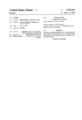
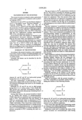
Generally, the triester can be described by the following formula: ##EQU1## wherein R1, and R2 and R3 are hydrocarbyl groups having from 2 to 14 carbon atoms.
The term "hydrocarbyl" is used herein to mean a hydrocarbon radical with one free bond; that is, a radical composed of hydrogen and carbon as, for example, a butyl radical.
Preferably R1, R2 and R3 are aryl or alkyl groups having from 6 to 8 carbon atoms. I have found that alkyl groups give especially advantageous results as plasticizers, particularly alkyl groups containing from 6 to 8 carbon atoms.
Among other factors, the present invention is based on my finding that triesters of triethanolmethane (TEM) when used as a plasticizer give very good properties to PVC, and furthermore that the triesters of TEM are unexpectedly better as plasticizers in PVC than the corresponding esters of trimethylolpropane (TMP). Still further, I have found that certain triesters of TEM such as triethanolmethanetri-2-ethylhexanoate and triethanolmethanetrihexanoate are unexpectedly superior to dioctylphthalate in resultant flexibility-temperature properties in PVC containing the ester as a plasticizer.
The use of esters in PVC as plasticizers is known in the art. The manner, including the amounts, in which the esters of the present invention are used in PVC is in accordance with conditions so as to effectively use the esters as a plasticizer. Thus, the amount of the ester used in the plasticizer is in general in accordance with typical prior art amounts, and other conditions such as the use of a stabilizer and the like are in accordance with techniques so as to achieve effective plasticizing of the PVC.
The term "plasticizer" is used herein to mean a material incorporated in a plastic to increase its workability and its flexibility. In order for the plasticizer to function, it must be intimately incorporated into the resin (plastic). This is most commonly accomplished by the hot-compounding method of plasticization. In this method the resin and the plasticizer are heated and mixed until a single homogenous phase is obtained. For example, PVC particles and the desired plasticizer are mixed and fluxed together in a Banbury mixer or on a two-roll rubber mill at about 150° to 170°C. Other ingredients such as stabilizers, pigments, fillers, lubricants, etc., may also be included. The mixture first becomes homogenous and then forms a sheet around one roll. This sheet is the plasticized PVC, useful for innumerable applications. The esters of this invention are high-boiling liquids which are readily mixed with PVC powder and then hot-rolled to a final plasticized-PVC product.
Other satisfactory methods of incorporating plasticizers into resins are known. These include: (1) the dry-blending method, wherein the two substances are stirred together for a short time at 50° to 60°C., and then by heating briefly to about 160°C. during further processing the resin becomes plasticized; or (2) the solvent method wherein the resin and the plasticizer are dissolved in a suitable solvent and the plasticized product is recovered by evaporation. Methods of incorporation of plasticizers into resins or plastics are disclosed in "The Encyclopedia of Polymer Science and Technology," Vol. 10 (1969), particularly at p. 228.
Preferred amounts of the triesters of the present invention for use in PVC are between about 3 and 70 weight percent, more preferably between about 20 and 50 weight percent.
Thus, in accordance with the present invention, a new PVC composition is provided, namely PVC containing the triesters of the following formula: ##EQU2## wherein R1, R2 and R3 are hydrocarbyl groups having from 2 to 14 carbon atoms. It is, of course, to be understood that the triester is used in PVC in sufficient amount to be an effective plasticizer.
I have found that especially good plasticizing results are obtained with triethanolmethanetri-2-ethylhexanoate and triethanolmethanetrihexanoate.
Satisfactory acids used to produce the esters of the present invention are monocarboxylic acids having from 3 to 15 carbon atoms. Preferably the acids used to form the triesters of the present invention are hydrocarbon in structure except for the carboxylic group, that is, the acids preferably are composed of hydrogen and carbon except for the oxygen of the carboxylic group. Aliphatic and aromatic monocarboxylic acids are preferred, and saturated aliphatic acids are especially preferred. Preferred acids include propionic, pentanoic, octanoic, decanoic, dodecanoic, 3-methyloctanoic, 4-methylpentanoic, o-ethylbenzoic, p-isopropylbenzoic, m-toluic, mixed amylbenzoic, etc. Mixtures of acids are also satisfactory, thereby giving triesters having more than one kind of acid in the molecule. I have found that particularly preferred acids are those having from 6 to 8 carbon atoms, most preferably the C6 - C8 aliphatic monocarboxylic acids.
The triesters of the present invention are readily prepared by esterification procedures known in the art. For example, a mixture of 1 mol of TEM and 3 mols of a monocarboxylic acid is heated to temperatures in excess of 50°C., preferably 90°C., in the presence of a catalytic amount of a mineral acid, e.g., hydrochloric or sulfuric, until about 3 mols of water are evolved and removed through an appropriate condenser. Azeotroping agents, such as benzene, can be added to aid in removing the water of reaction. When esterification is complete, the excess acidic substances are removed by a basic extraction or washing. In general, the triesters are then ready for use. For extreme-purity product, the triester may be distilled, preferably under reduced pressure.
Alternatively, triesters may be prepared by mixing TEM and the desired acid in a molar ratio of about 1:3, and then heating at temperatures in excess of 100°C. to drive off the by-product water. In this case, the crude ester product is generally pure enough for many plasticizing applications.
Preparation of triethanolmethanetri-2-ethylhexanoate: A 100-ml, round-bottom flask, equipped with a thermometer and condenser with a Dean-Stark trap, was charged with 15.6 g (0.105 mol) of triethanolmethane, 43.2 g (0.300 mol) of 2-ethylhexanoic acid and 10 g of dibutyl ether. The resulting mixture was heated to the reflux under a nitrogen atmosphere. After 25.5 hours of heating, 0.74 g (0.005 mol of triethanolmethane was added and heating was continued for an additional 41 hours. During this time, 5.35 g (0.298 mol) of water was recovered in the trap. Then the solution was evaporated on a rotary vacuum evaporator at 200°C under about 10 mm pressure. In this way, there was obtained 46.1 g of triethanolmethanetri-2-ethylhexanoate. Analysis, calculated for C31 O6 H58 : C, 70.68%; H, 11.11%. The analysis found experimentally was: C, 69.58%; H, 10.79%. Infrared analysis showed strong adsorption bands at 2940, 1720, 1460, 1380, 1170 and 980 cm..sup.-1.
Other triesters were prepared in essentially the same way. These are listed in Table I.
              TABLE I
______________________________________
Triesters of Triethanolmethane
Triester Product
                              Di-2-ethylhexano-
Analysis
        Hexanoate  Benzoate   ate monobenzoate
______________________________________
%C, calc.
        67.48      73.03      71.39
found   67.59      72.80      69.86
%H, calc.
        10.48      6.31       9.59
found   10.32      6.22       9.49
Infrared,
cm.sup..sup.-1
        2950       2960       2950
        1740       1710       1720
        1460       1600       1455
        1170       1450       1270
        1100       1275       1180
                   1110       1110
                    710        715
______________________________________
The above triesters and comparative prior art esters were then incorporated into PVC by mixing 39 grams of PVC, 26 grams of triester and 0.65 gram of a commercial barium/cadmium laurate stabilizer. Mixing was accomplished by working the mixture on a rubber mill for 10 minutes at 310° to 320°F. The resulting sheets were then molded (using a conventional PVC mold) into film sheets 4 inches × 4 inches, in either 10-mil or 70-mil thicknesses. Molding temperature was 330°F. These films were then tested by the methods described in "Plasticizers: Paraplex and Monoplex", Rohm and Haas Co., 1960, pp. 84-89. The following tests were carried out:
1. Volatility -- The details of the test are given in the above reference at page 84. In general, the weight loss of a PVC film containing a plasticizer at 90°C. for 24 hours is measured and reported as percent weight loss.
2. Soapy Water Extraction -- The details of this test are in the above publication, pp. 85-86. In general, the weight loss of a plasticized PVC sample immersed in a 1% aqueous soap solution at 90°C. for 24 hours is measured and reported as percent weight loss.
3. Hexane Extraction -- The details of the test method are given in the above-cited reference, page 86. In general, the loss in weight of a PVC film containing a plasticizer is determined after 2 hours' immersion in n-hexane at 25°C.
4. Hardness: A slightly modified Shore Durometer Hardness Test, as described on page 87 of the reference, was utilized. In this test, the initial value (0 sec.) of the hardness of a 70-mil sheet is determined using the Shore Durometer with a 2-pound (A) loading.
5. Flex (TF) Temperature: This test was carried out by the well-known method of Clash and Berg (Ind. & Eng. Chem. 34, 1218 (1942). In this test, the angular twist of a rectangular test specimen is determined by applying a controlled torque of 5.68 × 10³ dyne-cm to the sample 5 seconds after exposure to various low test temperatures. The temperature at which the angular twist is 200° of arc is then taken as the "flex" (TF) temperature. Flex temperature is defined as "the lower temperature limit of the compound's usefulness as an elastomer".
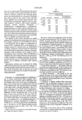
The results of the above tests on PVC containing representative examples of the triesters of the present invention are given in Table II.
                                  TABLE II
__________________________________________________________________________
PLASTICIZER TEST RESULTS*
                          Test Results
Test                      Volatility
                                Soapy H.sub.2 O
                                        Hexane
                                             Hardness
                                                   Flex Temp.
No.  Plasticizer Incorporated
                          Loss, %
                                Loss, % Loss, %
                                             Shore A
                                                   °C.
__________________________________________________________________________
1    Triethanolmethanetri-2-ethylhexanoate
                          2.0   7.5     37.5 82    -49
2    Triethanolmethanetrihexanoate
                          5.3   26.6    27.3 75    -53
3    Triethanolmethanetribenzoate
                          1.7   15.5    0.6  88     0
4    Triethanolmethanedi-2-ethylhexanoate-
     benzoate             3.1   15.7    16.2 81    -28
5    Dioctylphthalate**   14.4  13.1    33.0 75    -33
6    Tri-2--ethylhexyltrimellitate**
                          0.7   (0.4)***
                                        36.0 81    -27
7    Trimethylolpropanetri-2-ethylhexanoate
                          9.1   14.4    37.7 90    -27
8    Trimethylolpropanetrihexanoate
                          19.0  24.1    38.5 76    -43
9    Trimethylolpropanetribenzoate
                          2.5   13.8    0.2  95    +12
10   Trimethylolpropanedi-2-ethylhexanoate-
monobenzoate              Incompatible
__________________________________________________________________________
  *All values are the averages of duplicate tests
  **Commercial plasticizers
 ***Weight increase
The results given in Table II show that the triesters of the present invention have excellent plasticizing properties. Especially important are the "flex" temperatures, which are surprisingly low when compared with the "flex" temperatures of the corresponding trimethylolpropane triesters (runs 1, 2, 3 and 4 compared to runs 7, 8, 9 and 10, respectively).
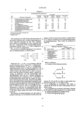
The structure of trimethanolpropane is very close to that of triethanolmethane, as shown below: ##EQU3##
Plasticizers No. 1 or No. 2 in accordance with the present invention, that is, triester No. 1 (triethanolmethanetri-2-ethylhexanoate) or No. 2 (triethanolmethanetrihexanoate) given in Table II compared to the widely used prior art ester (dioctylphthalate), No. 5 in Table II, shows that triesters Nos. 1 and 2, in accordance with the present invention, afford a marked advantage as plasticizers over the commercially used dioctylphthalate. Also, the No. 3 triester (triethanolmethanetribenzoate) compared to No. 9 (trimethylolpropanetribenzoate) shows that the triester in accordance with the present invention, prepared using TEM, has an especially low flex temperature compared to the homolog compound which was made from trimethylolpropane instead of TEM. Thus, even though the No. 3 item of Table II did not have an especially low flex temperature, it did have an unexpectedly better flex temperature than did the corresponding homolog, No. 9, the latter being outside the scope of the present invention.
The triesters of triethanolmethane are also useful as synthetic lubricants. In conventional viscosity tests, the triesters of this invention have superior viscosity index (V.I.) values as compared to the corresponding trieters of trimethylolpropane. These results are presented in Table III.
              TABLE III
______________________________________
TRIESTER VISCOSITY AND V.I.
Run                    Viscosity (cstks)
No.  Triester Tested   100°F.
                                210°F.
                                       V.I.
______________________________________
1    Triethanolmethanetri-2-
      ethylhexanoate   24.35    4.29    84
2    Triethanolmethane-
      trihexanoate     12.10    3.178  143
3    Trimethylolpropanetri-
      2-ethylhexanoate 33.62    4.648   28
4    Trimethylolpropanetri-
      hexanoate        13.68    3.139  100
______________________________________
Claims (5)
1. A triester of the following formula: ##EQU4## wherein R1, R2 and R3 are alkyl or hydrocarbyl aryl groups having from 2 to 14 carbon atoms.
2. A composition in accordance with claim 1, wherein R1, R2 and R3 are aryl or alkyl groups of 6 to 8 carbon atoms.
3. A composition in accordance with claim 1 wherein R1, R2 and R3 are alkyl groups of 6 to 8 carbon atoms.
4. Triethanolmethanetri-2-ethylhexanoate.
5. Triethanolmethanetrihexanoate.
Priority Applications (2)
| Application Number | Priority Date | Filing Date | Title |
|---|---|---|---|
| US05/414,584 US3939201A (en) | 1973-11-09 | 1973-11-09 | Esters |
| US05/607,632 US3970631A (en) | 1973-11-09 | 1975-08-25 | Triesters of triethanolmethane and monocarboxylic acids as plasticizers for polyvinyl chloride |
Applications Claiming Priority (1)
| Application Number | Priority Date | Filing Date | Title |
|---|---|---|---|
| US05/414,584 US3939201A (en) | 1973-11-09 | 1973-11-09 | Esters |
Related Child Applications (1)
| Application Number | Title | Priority Date | Filing Date |
|---|---|---|---|
| US05/607,632 Division US3970631A (en) | 1973-11-09 | 1975-08-25 | Triesters of triethanolmethane and monocarboxylic acids as plasticizers for polyvinyl chloride |
Publications (1)
| Publication Number | Publication Date |
|---|---|
| US3939201A true US3939201A (en) | 1976-02-17 |
Family
ID=23642078
Family Applications (1)
| Application Number | Title | Priority Date | Filing Date |
|---|---|---|---|
| US05/414,584 Expired - Lifetime US3939201A (en) | 1973-11-09 | 1973-11-09 | Esters |
Country Status (1)
| Country | Link |
|---|---|
| US (1) | US3939201A (en) |
Cited By (15)
| Publication number | Priority date | Publication date | Assignee | Title |
|---|---|---|---|---|
| US4482409A (en) * | 1983-05-23 | 1984-11-13 | The United States Of America As Represented By The Secretary Of The Air Force | Plasticizer system for propellant compositions |
| US4656214A (en) * | 1984-10-16 | 1987-04-07 | Exxon Research & Engineering Co. | Stain resistant plasticizers and compositions |
| US5820777A (en) * | 1993-03-10 | 1998-10-13 | Henkel Corporation | Blended polyol ester lubricants for refrigerant heat transfer fluids |
| US5851968A (en) * | 1994-05-23 | 1998-12-22 | Henkel Corporation | Increasing the electrical resistivity of ester lubricants, especially for use with hydrofluorocarbon refrigerants |
| US5906769A (en) * | 1992-06-03 | 1999-05-25 | Henkel Corporation | Polyol ester lubricants for refrigerating compressors operating at high temperatures |
| US5976399A (en) * | 1992-06-03 | 1999-11-02 | Henkel Corporation | Blended polyol ester lubricants for refrigerant heat transfer fluids |
| US6167576B1 (en) | 1999-12-09 | 2001-01-02 | Jimmie L. Sollami | Ventilated toilet seat |
| WO2001000722A1 (en) * | 1999-06-30 | 2001-01-04 | Perstorp Ab | Plasticiser for polymeric compositions |
| US6183662B1 (en) | 1992-06-03 | 2001-02-06 | Henkel Corporation | Polyol ester lubricants, especially those compatible with mineral oils, for refrigerating compressors operating at high temperatures |
| US6221272B1 (en) | 1992-06-03 | 2001-04-24 | Henkel Corporation | Polyol ester lubricants for hermetically sealed refrigerating compressors |
| WO2002053635A1 (en) * | 2001-01-05 | 2002-07-11 | Lg Chem, Ltd. | Trimethylolpropane ester-based plasticizer composition for polyvinyl chloride resin |
| US20030181556A1 (en) * | 2001-04-11 | 2003-09-25 | Jiamin Lang | Plastisol compositions comprising vinyl chloride polymers and mixtures of aromatic and aliphatic esters of diols as plasticizers |
| US7018558B2 (en) | 1999-06-09 | 2006-03-28 | Cognis Corporation | Method of improving performance of refrigerant systems |
| US20080021141A1 (en) * | 2006-07-21 | 2008-01-24 | Arendt William D | Plastisol Compositions |
| WO2012026861A1 (en) | 2010-08-23 | 2012-03-01 | Perstorp Ab | Non-phthalic plasticiser |
-
1973
- 1973-11-09 US US05/414,584 patent/US3939201A/en not_active Expired - Lifetime
Non-Patent Citations (1)
| Title |
|---|
| chem. Abstracts, 70:29717 (1969). * |
Cited By (24)
| Publication number | Priority date | Publication date | Assignee | Title |
|---|---|---|---|---|
| US4482409A (en) * | 1983-05-23 | 1984-11-13 | The United States Of America As Represented By The Secretary Of The Air Force | Plasticizer system for propellant compositions |
| US4656214A (en) * | 1984-10-16 | 1987-04-07 | Exxon Research & Engineering Co. | Stain resistant plasticizers and compositions |
| US6296782B1 (en) | 1992-06-03 | 2001-10-02 | Henkel Corporation | Polyol ester lubricants for refrigerator compressors operating at high temperatures |
| US6666985B2 (en) | 1992-06-03 | 2003-12-23 | Cognis Corporation | Polyol ester lubricants for hermetically sealed refrigerating compressors |
| US5906769A (en) * | 1992-06-03 | 1999-05-25 | Henkel Corporation | Polyol ester lubricants for refrigerating compressors operating at high temperatures |
| US5976399A (en) * | 1992-06-03 | 1999-11-02 | Henkel Corporation | Blended polyol ester lubricants for refrigerant heat transfer fluids |
| US6551524B2 (en) | 1992-06-03 | 2003-04-22 | Cognis Corporation | Polyol ester lubricants, especially those compatible with mineral oils, for refrigerating compressors operating at high temperatures |
| US6183662B1 (en) | 1992-06-03 | 2001-02-06 | Henkel Corporation | Polyol ester lubricants, especially those compatible with mineral oils, for refrigerating compressors operating at high temperatures |
| US6221272B1 (en) | 1992-06-03 | 2001-04-24 | Henkel Corporation | Polyol ester lubricants for hermetically sealed refrigerating compressors |
| US5820777A (en) * | 1993-03-10 | 1998-10-13 | Henkel Corporation | Blended polyol ester lubricants for refrigerant heat transfer fluids |
| US5851968A (en) * | 1994-05-23 | 1998-12-22 | Henkel Corporation | Increasing the electrical resistivity of ester lubricants, especially for use with hydrofluorocarbon refrigerants |
| US6551523B1 (en) | 1995-06-07 | 2003-04-22 | Cognis Corporation | Blended polyol ester lubricants for refrigerant heat transfer fluids |
| US7018558B2 (en) | 1999-06-09 | 2006-03-28 | Cognis Corporation | Method of improving performance of refrigerant systems |
| WO2001000722A1 (en) * | 1999-06-30 | 2001-01-04 | Perstorp Ab | Plasticiser for polymeric compositions |
| US6167576B1 (en) | 1999-12-09 | 2001-01-02 | Jimmie L. Sollami | Ventilated toilet seat |
| US20030065073A1 (en) * | 2001-01-05 | 2003-04-03 | Kye-Seok Lee | Trimethylolpropane ester-based plasticizer composition for polyvinyl chloride resin |
| US6831121B2 (en) | 2001-01-05 | 2004-12-14 | Lg Chem, Ltd. | Trimethylolpropane ester-based plasticizer composition for polyvinyl chloride resin |
| EP1353988A4 (en) * | 2001-01-05 | 2005-01-19 | Lg Chemical Ltd | Trimethylolpropane ester-based plasticizer composition for polyvinyl chloride resin |
| WO2002053635A1 (en) * | 2001-01-05 | 2002-07-11 | Lg Chem, Ltd. | Trimethylolpropane ester-based plasticizer composition for polyvinyl chloride resin |
| US20030181556A1 (en) * | 2001-04-11 | 2003-09-25 | Jiamin Lang | Plastisol compositions comprising vinyl chloride polymers and mixtures of aromatic and aliphatic esters of diols as plasticizers |
| US6933337B2 (en) * | 2001-04-11 | 2005-08-23 | Jiamin Lang | Plastisol compositions comprising vinyl chloride polymers and mixtures of aromatic and aliphatic esters of diols as plasticizers |
| US20080021141A1 (en) * | 2006-07-21 | 2008-01-24 | Arendt William D | Plastisol Compositions |
| US8034860B2 (en) | 2006-07-21 | 2011-10-11 | Eastman Specialties Holdings Corporation | Organosol plastisol compositions |
| WO2012026861A1 (en) | 2010-08-23 | 2012-03-01 | Perstorp Ab | Non-phthalic plasticiser |
Similar Documents
| Publication | Publication Date | Title |
|---|---|---|
| US3939201A (en) | Esters | |
| CN107922671B (en) | Plasticizer composition, resin composition and method for producing the same | |
| KR20100029978A (en) | A plasticizer and the composition of polyvinylchloride resin comprised the same | |
| KR960006549B1 (en) | Antifouling plasticizer composition and preparation method thereof | |
| US20110166271A1 (en) | Plasticiser and polyvinyl chloride (pvc) resin containing the same | |
| CN110536920A (en) | Citric acid ester plasticizer and resin composition containing same | |
| KR101419062B1 (en) | New plasticizer for polyvinylchloride resin | |
| US4620026A (en) | Monomeric plasticizers for halogen-containing resins | |
| CN109153815B (en) | Plasticizer composition and resin composition containing the same | |
| US3135785A (en) | Di(pentaerythritol trimonocarboxylate) alkylene dicarboxylate | |
| CN107614585A (en) | Plasticizer composition, resin composition and preparation method thereof | |
| EP2441748A2 (en) | Novel plasticizer for a polyvinyl chloride resin | |
| EP0178778A1 (en) | Novel Pyromellitate plasticizers and vinyl chloride compositions | |
| US3970631A (en) | Triesters of triethanolmethane and monocarboxylic acids as plasticizers for polyvinyl chloride | |
| US4173541A (en) | Polynuclear hindered phenols and stabilized organic materials containing the phenols | |
| US2700656A (en) | Plasticized polyvinyl chloride compositions | |
| US4654390A (en) | Monomeric plasticizers for halogen-containing resins | |
| US4035559A (en) | Novel aromatic polyvinyl compounds | |
| CN110832019B (en) | Plasticizer composition and resin composition containing the same | |
| US2757157A (en) | Esters of pentanediols and their use as plasticizers for vinyl-type polymers | |
| TWI903086B (en) | Triester-based plasticizer composition and resin composition comprising the same | |
| CN108779291B (en) | Preparation method of ester composition | |
| US3433661A (en) | Plasticizer compositions consisting of polynuclear aromatic compounds | |
| US4072647A (en) | Polyvinyl chloride plastic compositions | |
| CA1264163A (en) | Citrate esters and methods |