US3833142A - Method of sealing plastic containers - Google Patents
Method of sealing plastic containers Download PDFInfo
- Publication number
- US3833142A US3833142A US00287402A US28740272A US3833142A US 3833142 A US3833142 A US 3833142A US 00287402 A US00287402 A US 00287402A US 28740272 A US28740272 A US 28740272A US 3833142 A US3833142 A US 3833142A
- Authority
- US
- United States
- Prior art keywords
- container
- film
- plastic
- acrylonitrile
- styrene
- Prior art date
- Legal status (The legal status is an assumption and is not a legal conclusion. Google has not performed a legal analysis and makes no representation as to the accuracy of the status listed.)
- Expired - Lifetime
Links
- 229920003023 plastic Polymers 0.000 title claims abstract description 30
- 239000004033 plastic Substances 0.000 title claims abstract description 30
- 238000000034 method Methods 0.000 title claims abstract description 28
- 238000007789 sealing Methods 0.000 title claims abstract description 13
- PPBRXRYQALVLMV-UHFFFAOYSA-N Styrene Chemical compound C=CC1=CC=CC=C1 PPBRXRYQALVLMV-UHFFFAOYSA-N 0.000 claims description 26
- NLHHRLWOUZZQLW-UHFFFAOYSA-N Acrylonitrile Chemical compound C=CC#N NLHHRLWOUZZQLW-UHFFFAOYSA-N 0.000 claims description 13
- VVQNEPGJFQJSBK-UHFFFAOYSA-N Methyl methacrylate Chemical compound COC(=O)C(C)=C VVQNEPGJFQJSBK-UHFFFAOYSA-N 0.000 claims description 13
- -1 polyethylene Polymers 0.000 claims description 11
- 229920000642 polymer Polymers 0.000 claims description 9
- 239000004698 Polyethylene Substances 0.000 claims description 8
- 229920000573 polyethylene Polymers 0.000 claims description 8
- BZHJMEDXRYGGRV-UHFFFAOYSA-N Vinyl chloride Chemical compound ClC=C BZHJMEDXRYGGRV-UHFFFAOYSA-N 0.000 claims description 7
- 239000000203 mixture Substances 0.000 claims description 7
- 229920001328 Polyvinylidene chloride Polymers 0.000 claims description 6
- 229920002857 polybutadiene Polymers 0.000 claims description 6
- 239000005033 polyvinylidene chloride Substances 0.000 claims description 6
- 229920001897 terpolymer Polymers 0.000 claims description 6
- 239000005062 Polybutadiene Substances 0.000 claims description 5
- 239000010408 film Substances 0.000 abstract description 47
- 239000010409 thin film Substances 0.000 abstract description 6
- 230000015572 biosynthetic process Effects 0.000 description 10
- 239000000463 material Substances 0.000 description 8
- 235000010746 mayonnaise Nutrition 0.000 description 7
- 239000008268 mayonnaise Substances 0.000 description 7
- LYCAIKOWRPUZTN-UHFFFAOYSA-N Ethylene glycol Chemical compound OCCO LYCAIKOWRPUZTN-UHFFFAOYSA-N 0.000 description 6
- 229920001577 copolymer Polymers 0.000 description 6
- 239000002184 metal Substances 0.000 description 5
- KKEYFWRCBNTPAC-UHFFFAOYSA-N Terephthalic acid Chemical compound OC(=O)C1=CC=C(C(O)=O)C=C1 KKEYFWRCBNTPAC-UHFFFAOYSA-N 0.000 description 4
- 230000004888 barrier function Effects 0.000 description 4
- 239000004743 Polypropylene Substances 0.000 description 3
- XTXRWKRVRITETP-UHFFFAOYSA-N Vinyl acetate Chemical compound CC(=O)OC=C XTXRWKRVRITETP-UHFFFAOYSA-N 0.000 description 3
- 239000000853 adhesive Substances 0.000 description 3
- 230000001070 adhesive effect Effects 0.000 description 3
- 235000013399 edible fruits Nutrition 0.000 description 3
- 229920001971 elastomer Polymers 0.000 description 3
- 239000005022 packaging material Substances 0.000 description 3
- 239000002985 plastic film Substances 0.000 description 3
- 229920006255 plastic film Polymers 0.000 description 3
- 229920001155 polypropylene Polymers 0.000 description 3
- 229920000915 polyvinyl chloride Polymers 0.000 description 3
- 239000004800 polyvinyl chloride Substances 0.000 description 3
- 239000005060 rubber Substances 0.000 description 3
- 241000219198 Brassica Species 0.000 description 2
- 235000003351 Brassica cretica Nutrition 0.000 description 2
- 235000003343 Brassica rupestris Nutrition 0.000 description 2
- BVKZGUZCCUSVTD-UHFFFAOYSA-L Carbonate Chemical compound [O-]C([O-])=O BVKZGUZCCUSVTD-UHFFFAOYSA-L 0.000 description 2
- BAPJBEWLBFYGME-UHFFFAOYSA-N Methyl acrylate Chemical compound COC(=O)C=C BAPJBEWLBFYGME-UHFFFAOYSA-N 0.000 description 2
- 239000004793 Polystyrene Substances 0.000 description 2
- QKSKPIVNLNLAAV-UHFFFAOYSA-N bis(2-chloroethyl) sulfide Chemical compound ClCCSCCCl QKSKPIVNLNLAAV-UHFFFAOYSA-N 0.000 description 2
- 235000014121 butter Nutrition 0.000 description 2
- 239000003795 chemical substances by application Substances 0.000 description 2
- UUAGAQFQZIEFAH-UHFFFAOYSA-N chlorotrifluoroethylene Chemical group FC(F)=C(F)Cl UUAGAQFQZIEFAH-UHFFFAOYSA-N 0.000 description 2
- 230000008602 contraction Effects 0.000 description 2
- 229920001903 high density polyethylene Polymers 0.000 description 2
- 239000004700 high-density polyethylene Substances 0.000 description 2
- 230000006698 induction Effects 0.000 description 2
- 229920000554 ionomer Polymers 0.000 description 2
- 235000015110 jellies Nutrition 0.000 description 2
- 239000008274 jelly Substances 0.000 description 2
- 235000010460 mustard Nutrition 0.000 description 2
- 239000011087 paperboard Substances 0.000 description 2
- 229920006122 polyamide resin Polymers 0.000 description 2
- 229920000728 polyester Polymers 0.000 description 2
- 229920002223 polystyrene Polymers 0.000 description 2
- 235000014438 salad dressings Nutrition 0.000 description 2
- OEPOKWHJYJXUGD-UHFFFAOYSA-N 2-(3-phenylmethoxyphenyl)-1,3-thiazole-4-carbaldehyde Chemical compound O=CC1=CSC(C=2C=C(OCC=3C=CC=CC=3)C=CC=2)=N1 OEPOKWHJYJXUGD-UHFFFAOYSA-N 0.000 description 1
- VGGSQFUCUMXWEO-UHFFFAOYSA-N Ethene Chemical compound C=C VGGSQFUCUMXWEO-UHFFFAOYSA-N 0.000 description 1
- JIGUQPWFLRLWPJ-UHFFFAOYSA-N Ethyl acrylate Chemical compound CCOC(=O)C=C JIGUQPWFLRLWPJ-UHFFFAOYSA-N 0.000 description 1
- 239000005977 Ethylene Substances 0.000 description 1
- VEXZGXHMUGYJMC-UHFFFAOYSA-N Hydrochloric acid Chemical compound Cl VEXZGXHMUGYJMC-UHFFFAOYSA-N 0.000 description 1
- QVGXLLKOCUKJST-UHFFFAOYSA-N atomic oxygen Chemical compound [O] QVGXLLKOCUKJST-UHFFFAOYSA-N 0.000 description 1
- 125000003178 carboxy group Chemical group [H]OC(*)=O 0.000 description 1
- 239000005025 cast polypropylene Substances 0.000 description 1
- 239000002131 composite material Substances 0.000 description 1
- 230000003247 decreasing effect Effects 0.000 description 1
- 239000000796 flavoring agent Substances 0.000 description 1
- 235000019634 flavors Nutrition 0.000 description 1
- 229920002457 flexible plastic Polymers 0.000 description 1
- 239000011888 foil Substances 0.000 description 1
- 239000007789 gas Substances 0.000 description 1
- 239000011521 glass Substances 0.000 description 1
- 229920001519 homopolymer Polymers 0.000 description 1
- 238000010030 laminating Methods 0.000 description 1
- 229920001684 low density polyethylene Polymers 0.000 description 1
- 239000004702 low-density polyethylene Substances 0.000 description 1
- 229910021645 metal ion Inorganic materials 0.000 description 1
- 239000000178 monomer Substances 0.000 description 1
- 229920001778 nylon Polymers 0.000 description 1
- 239000005026 oriented polypropylene Substances 0.000 description 1
- 239000001301 oxygen Substances 0.000 description 1
- 229910052760 oxygen Inorganic materials 0.000 description 1
- 238000004806 packaging method and process Methods 0.000 description 1
- PNJWIWWMYCMZRO-UHFFFAOYSA-N pent‐4‐en‐2‐one Natural products CC(=O)CC=C PNJWIWWMYCMZRO-UHFFFAOYSA-N 0.000 description 1
- 239000004417 polycarbonate Substances 0.000 description 1
- 229920000515 polycarbonate Polymers 0.000 description 1
- 229920005668 polycarbonate resin Polymers 0.000 description 1
- 239000004431 polycarbonate resin Substances 0.000 description 1
- 229920006267 polyester film Polymers 0.000 description 1
- 229920001195 polyisoprene Polymers 0.000 description 1
- QQONPFPTGQHPMA-UHFFFAOYSA-N propylene Natural products CC=C QQONPFPTGQHPMA-UHFFFAOYSA-N 0.000 description 1
- 125000004805 propylene group Chemical group [H]C([H])([H])C([H])([*:1])C([H])([H])[*:2] 0.000 description 1
- 239000007787 solid Substances 0.000 description 1
Images
Classifications
-
- B—PERFORMING OPERATIONS; TRANSPORTING
- B65—CONVEYING; PACKING; STORING; HANDLING THIN OR FILAMENTARY MATERIAL
- B65D—CONTAINERS FOR STORAGE OR TRANSPORT OF ARTICLES OR MATERIALS, e.g. BAGS, BARRELS, BOTTLES, BOXES, CANS, CARTONS, CRATES, DRUMS, JARS, TANKS, HOPPERS, FORWARDING CONTAINERS; ACCESSORIES, CLOSURES, OR FITTINGS THEREFOR; PACKAGING ELEMENTS; PACKAGES
- B65D41/00—Caps, e.g. crown caps or crown seals, i.e. members having parts arranged for engagement with the external periphery of a neck or wall defining a pouring opening or discharge aperture; Protective cap-like covers for closure members, e.g. decorative covers of metal foil or paper
- B65D41/02—Caps or cap-like covers without lines of weakness, tearing strips, tags, or like opening or removal devices
- B65D41/20—Caps or cap-like covers with membranes, e.g. arranged to be pierced
-
- B—PERFORMING OPERATIONS; TRANSPORTING
- B65—CONVEYING; PACKING; STORING; HANDLING THIN OR FILAMENTARY MATERIAL
- B65D—CONTAINERS FOR STORAGE OR TRANSPORT OF ARTICLES OR MATERIALS, e.g. BAGS, BARRELS, BOTTLES, BOXES, CANS, CARTONS, CRATES, DRUMS, JARS, TANKS, HOPPERS, FORWARDING CONTAINERS; ACCESSORIES, CLOSURES, OR FITTINGS THEREFOR; PACKAGING ELEMENTS; PACKAGES
- B65D51/00—Closures not otherwise provided for
- B65D51/18—Arrangements of closures with protective outer cap-like covers or of two or more co-operating closures
- B65D51/20—Caps, lids, or covers co-operating with an inner closure arranged to be opened by piercing, cutting, or tearing
-
- B—PERFORMING OPERATIONS; TRANSPORTING
- B65—CONVEYING; PACKING; STORING; HANDLING THIN OR FILAMENTARY MATERIAL
- B65D—CONTAINERS FOR STORAGE OR TRANSPORT OF ARTICLES OR MATERIALS, e.g. BAGS, BARRELS, BOTTLES, BOXES, CANS, CARTONS, CRATES, DRUMS, JARS, TANKS, HOPPERS, FORWARDING CONTAINERS; ACCESSORIES, CLOSURES, OR FITTINGS THEREFOR; PACKAGING ELEMENTS; PACKAGES
- B65D79/00—Kinds or details of packages, not otherwise provided for
- B65D79/005—Packages having deformable parts for indicating or neutralizing internal pressure-variations by other means than venting
- B65D79/0087—Packages having deformable parts for indicating or neutralizing internal pressure-variations by other means than venting the deformable part being located in a closure, e.g. in caps or lids
-
- B—PERFORMING OPERATIONS; TRANSPORTING
- B65—CONVEYING; PACKING; STORING; HANDLING THIN OR FILAMENTARY MATERIAL
- B65D—CONTAINERS FOR STORAGE OR TRANSPORT OF ARTICLES OR MATERIALS, e.g. BAGS, BARRELS, BOTTLES, BOXES, CANS, CARTONS, CRATES, DRUMS, JARS, TANKS, HOPPERS, FORWARDING CONTAINERS; ACCESSORIES, CLOSURES, OR FITTINGS THEREFOR; PACKAGING ELEMENTS; PACKAGES
- B65D2251/00—Details relating to container closures
- B65D2251/0003—Two or more closures
- B65D2251/0006—Upper closure
- B65D2251/0015—Upper closure of the 41-type
-
- B—PERFORMING OPERATIONS; TRANSPORTING
- B65—CONVEYING; PACKING; STORING; HANDLING THIN OR FILAMENTARY MATERIAL
- B65D—CONTAINERS FOR STORAGE OR TRANSPORT OF ARTICLES OR MATERIALS, e.g. BAGS, BARRELS, BOTTLES, BOXES, CANS, CARTONS, CRATES, DRUMS, JARS, TANKS, HOPPERS, FORWARDING CONTAINERS; ACCESSORIES, CLOSURES, OR FITTINGS THEREFOR; PACKAGING ELEMENTS; PACKAGES
- B65D2251/00—Details relating to container closures
- B65D2251/0003—Two or more closures
- B65D2251/0068—Lower closure
- B65D2251/0093—Membrane
Definitions
- the result of container wall collapse is that the collapsed wall may stress craze ,at the edges of the collapsed area with resultant structural'failure of the container and, of -course, leakage of the contents.
- Bubble formation in or around'the contents of the container is less serious from the standpoint of the freshness or continued usefulness of the contents,'however, it detractsfrom'the overall appearance of the packaged goods and therefore results in decreased sales.
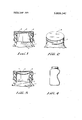
- FIG. 1 is an enlarged semi-diagrammatic view of a closed container showing the seal of the present invention before deflection.
- My novel method comprises sealing the mouth or neck of such a container with a l-l-O mil thick film of a flexible plastic which deflects under small differential pressures i.e. 1 pound per square inch above-enumerated properties may be used in my invention.
- a flexible plastic which deflects under small differential pressures i.e. 1 pound per square inch above-enumerated properties may be used in my invention.
- the nylons i.e., polyamide resins
- polymers of vinyl chloride such as polyvinyl chloride and copolymers of vinyl chloride with up to about 45 percent 'by weight
- a comonomer known to copolymerize therewith such as vinyl acetate, styrene, acrylonitrile, methyl acrylate etc.
- polymers of the a-olefins such as polyethylene, polypropylene, and copolymers of ethylene and propylene with one another and with other copolymerizable monomers such as vinyl acetate, methyl methacrylate, etc. including oriented and cast polypropylene and high density and low density polyethylene; polyvinylidene chloride and copolymers of vinylidene chloride; fluorohalocarbon polymers such as homopolymers and copolymers of chlorotrifluoroethylene, ionomers, i.e.
- laminated films wherein two or more films are bonded together with a laminating agent; heat or co--extruded films wherein two or more layers of polymers are extruded simultaneously and brought together while still in an amorphous and semiamolten stage etc. can also be used as the sealed filmin .my novel containers.
- the plastic film may be sealed to the plastic container by any appropriate means including'art recognized methods such as heat sealing by direct pressure heat; sonic sealing by a mechanical high frequency field; heat sealing by high frequency induction field KHz-2 MHz); adhesion sealing byprecoating'the film or lip of the container with an adhesive to create a torque pressure seal as the closure is installed and the like.
- the film can be applied to the neck or mouth of the container as a flexible, preferably tamperproof, single or multilayer barrier secured to the lip of the container inside the breathable closure.
- the barrier film maybe installed prior to the closure application or may be incorporated within the closure design so that merely applying the closure and sealing, such as by high frequency induction, creates the finished container.
- vacuum or pressure formed inner liners with radial flexible rings which indent for pressure equalization which are sealed as above; folded, metallic inner seals which open downward for pressure equalization and sealed as above; straight, rigid diaphragm seals which contact a straight necked wall for pressure equalization by slipping and spin welded, co-injected systems applied by a mechanical slip clutch within the neck of the container and the like can also be used.
- the closure area above the barrier film is equilibrated with the outside atmospheric pressure since the closure breathes and the pressure therefore acts upon the barrier film to deflect it into the container rather than on the container itself.
- Any type of material may be used for the breathable closure, i.e., plastic, metal, composites, foil etc. withoutdetracting from the scope of the instant invention.
- Metal closures are preferred and generally are used threaded and fitted with permeable, unwaxed paperboard liners. These closures enable the film to be heat sealed with a radio-frequency field, as described above, wherein the heat from the metal closure induced by the field transfers to the plastic film by conduction to seal the film to the container.
- breathable By breathable is meant that vapors, gases etc. can pass through the closure either due to the fact that the closure is produced from a material which is permeable thereto or because the closure can be modified so as to prevent it from creating an air-tight seal with the container to which it is applied.
- plastic container which has a tendency to be susceptible to wall collapse or bubble formation in or around the contents thereof may be sealed according to my novel method.
- Containers manufactured from any of the above specified plastics including polyvinyl chloride, polyethylene, polypropylene, rubber modified polystyrene etc. can be used in my inventive process to produce my novel containers.
- One plastic material which is preferably used to produce containers which may be sealed according to my invention is that comprising a blend of l) a terpolymer of methyl methacrylate, styrene and acrylonitrile and (2) polybutadiene grafted with methyl methacrylate, styrene and acrylonitrile. This material is well known in the art and is further described in US. Pat. No. 3,524,536 as are containers made therefrom, said patent hereby being incorporated herein by reference.
- FIG. 1 shows the neck of a container of the instant invention wherein plastic container 1, having contents 2 therein, such as mayonnaise, and possessing headspace 3, is sealed across its mouth with a film of plastic 6 which conforms to the physical requirements set forth above.
- the container is capped with closure 4 which has threads thereon adapted to engage with threads 7 on the container.
- the closure contains a breathable liner 5 composed of, for example, a vaporpermeable cardboard.
- the plastic film 6 is shown in FIG. 2 affixed to the container mouth, closure 4 having been removed from threads 7.
- plastic seal 6 will deflect, as shown in FIG. 3, due to the equalization of the pressure in the headspace with the atmospheric pressure around the container. Since the film 6 is thinner than the container wall, collapse of the wall, as shown in FIG. 4, is avoided and deflection of the seal occurs instead.
- Examples of types of foodstuffs which generally tend to cause wall collapse in plastic containers in which they are packaged clue to their tendency to either contract during temperature changes or absorb or otherwise take up oxygen include mustard, mayonnaise, semi-solid salad dressings and the like.
- Examples of foodstuffs which are susceptible to the formation of bubbles therein while packaged in plastic containers include jelly, jam, hot fill, non-carbonated fruit drinks, marmalades, fruit butters and the like.
- EXAMPLE 1 To a gallon bottle of 10 mil minimum wall thickness produced from a blend of a terpolymer of methyl methacrylate, styrene and acrylonitrile (71/19/10) and polybutadiene rubber grafted with methyl methacrylate, styrene and acrylonitrile (7/2/1 and containing 20 percent rubber is added a full compliment of mayonnaise. A threaded metal closure is then fitted with a vapor permeable, unwaxed paperboard liner over which is placed a 2 mil film of a commerically available threelayer film of polyvinylidene chloride having polyethylene adhered to both sides thereof.
- the breathable closure is screwed onto the container which is then subjected to a radio frequency field of 600 KHz.
- the resultant packaged material is then stored at varying temperatures 55-75F. for 6 months.
- the closure is then opened.
- the walls of the container are not collapsed to any degree but the multilayer film is deflected into the container about 1 inch. After breaking the film, the mayonnaise is tested and judged fresh.
- Example 2 The procedure of Example 1 is again followed except that the 2 mil film is produced from a copolymer of vinyl chloride and vinyl acetate (/5). Again, a fresh mayonnaise is recovered after 6 months storage. The container has not exhibited any wall collapse.
- Example 4 The film of Example 1 is replaced by a similar film produced from polypropylene. Again, excellent results are observed.
- Example 5 The film of Example 2 is replaced by a similar film of a commercially available polyamide resin. No container wall collapse or spoilage of contents is recorded.
- EXAMPLE 6 A film produced from a copolymer of chlorotrifluoroethylene and ethyl acrylate (90/10) is substituted for the film of Example 1. Similar results are achieved.
- Example 7 The procedure of Example 5 is again followed except the 2 mil film is produced from a commercially available ionomer and the bottle is made of polyethylene. Again, wall collapse of the bottle is prevented and the mayonnaise is determined to be fresh.
- EXAMPLE 8 A commercially available polyester film (terephthalic acid and ethylene glycol) is substituted for the 2 mil film of Example 3 and sealed to the lip of the bottle with an available polyester adhesive. Pressure closing of the breathable closure seals the film to the bottle such that no wall collapse of the bottle occurs and the packaged contents (mustard) shows no loss of potency or flavor after 3 months storage.
- EXAMPLE 9 A 6 oz. jar (12 mil wall thickness) produced from the packaging material of claim 1 and containing blackberry jam is sealed at the mouth thereof with a 3 mil film of commercially available polycarbonate resin in a threaded metal closure as set forth in said claim. After 4 months of storage at room temperature, no bubble formation is observed in the jam. Upon opening the jar it is noticed that the carbonate film has deflected three-fourths inch into the jar. The contents of the jar are judged fresh after breaking the film seal.
- Example 10 The procedure of Example 1 is again followed except that the packaged content is salad dressing. Similar results are observed.
- Example 12 The procedure of Example 1 is again followed except that the container is in the form of a tub and the content is fruit butter. The film deflects one-eighth inch after 3 months storage. No wall collapse or bubble formation occurs.
- EXAMPLE 13 The procedure of Example 2 is again followed except that the closure is produced from polyvinyl chloride as is the bottle. The film is sealed to the bottle with a commercially available adhesive composition. No wall collapse of the bottle occurs after 6 months storage at the specified temperatures.
- Example 14 The procedure of Example 9 is again followed except that the jar is produced from a high impact rubber modified polystyrene and marmalade is packaged therein. Again no bubble formation occurs upon 4 months storage at room temperature.
- a method of preventing wall collapse of a plastic container or bubble development in or around contents packaged in such container which comprises sealing the neck of such a container with a 1-10 mil film of a plastic which is substantially vapor impermeable, flexible, deflects at at least 1 lb./in. pressure and stretches without rupturing as it deflects and placing a breathable closure over said seal.
- said container is composed of a blend of (l) a terpolymer of methyl methacrylate, styrene and acrylonitrile and (2) polybutadiene grafted with methyl methacrylate, styrene and acrylonitrile.
- a method according to claim 1 wherein said film is polyvinylidene chloride having polyethylene'coated on each side thereof.
- a container according to claim 7 wherein said film is polyvinylidene chloride having polyethylene coated on each side thereof.
Landscapes
- Engineering & Computer Science (AREA)
- Mechanical Engineering (AREA)
- Laminated Bodies (AREA)
- Containers Having Bodies Formed In One Piece (AREA)
Abstract
A method of sealing plastic containers so as to prevent wall collapse thereof or bubble development in or around the contents thereof wherein a thin film of stretchable plastic is sealed over the mouth of the container and a breathable closure is fitted over said film and the resultant container per se, are disclosed.
Description
United States" Patent Owen et al. Sept. 3,1974
[54] METHOD OF SEALING PLASTIC 2,646,183 7/1953 Pellett 215 40 CONTAINERS 3,330,720 7/1967 Stevens 2l5/40 X 3,501,042 3/1970 Risch 215/40 [7 51 Inventors: Haven Trask O e C e e; 3,524,536 2/1970 Terenzi 206/4531 Charles William Deeley, Fairfield, 3,632,004 1/1972 Grimes 215/40 FOREIGN PATENTS OR APPLICATIONS [73] Awgma'az Amman cyanamd 969,658 9/1964 Great Britain 215/40 Stamford, Conn. [22] Filed: I Sept. 8, 1972 Primary Examiner-Donald F. Norton 1 [211 pp No 287 402 Attorney, Agent, or Firm- -Frank M. Van Riet 57 ABSTRACT 52] ms. c1. ...215/35 1 2151337 1 s 1 Int. Cl .1111; 865d 51/18 A memd Seamg Plalstlc as to P [58] Field of Search 215/38 R 40 37 R- COIIaPSe there of bubble devebpmem 1 around the contents thereof wherein a thin film of stretchable plastic is sealed over the mouth of the con- [56] References Cited tainer and a breathable closure is fitted over said film UNITED STATES PATENTS and the resultant container per se, are disclosed. 2,077,992 4 1937 15 4 0 ,10 Claims, 4 Drawing ig METHOD OF SEALING PLASTIC CONTAINERS BACKGROUND OF THE INVENTION DESCRIPTION OF THE INVENTION INCLUDING PREFERRED EMBODIMENTS As mentioned briefly above, I have now discovered The packaging of products, especially foodstuffs, in 5 a'method of preventing wall collapse in-plastic containplastic containers has become increasingly more prevalent in'recent years. Specialty packaging materials and systems have consequently been developed to accommodate the increased demands therefor.
With the increased usage of such plastics as packaging materials, there developed a series of problems attendant to these materials which were not common to glass containers. Two of vthemost-important of the problems relative .tothe usage 'of plastic containers are (1) wall collapse of the containerdue to (-a) permeation or (b) volume contraction of its contents caused by temperature change and (2) bubble formation in the contents and/or at the interface between the container and the contents caused by excessive vacuum within the container headspace.
The result of container wall collapse, other than detracting from the-aesthetic value of the container, is that the collapsed wall may stress craze ,at the edges of the collapsed area with resultant structural'failure of the container and, of -course, leakage of the contents.
Bubble formation in or around'the contents of the container is less serious from the standpoint of the freshness or continued usefulness of the contents,'however, it detractsfrom'the overall appearance of the packaged goods and therefore results in decreased sales.
SUMMARY I have now found thatthe problems of container wall collapse and/or bubble formation of or around the con tents of plastic containers can be overcome by sealing a thin film of a stretchable plastic over the mouth of the container after filling and-before closing the container with a breathable closure. The result of the thin film over the container neck is that any permeation or volume contraction of the contents which occurs and would usually cause wall collapse of the container causes collapse of the thin film instead. As a result, the walls of the container remain intactand the film, being flexible, is allowed to distort, deflect, collapse-etc. until the container is opened by the ultimate consumer of the contents and the film is broken. Similarly, the distortion of the flexible film seal upon vacuum formation in the headspace prevents bubble formation in the container contents and at the interface between the container and the contents.
FIG. 1 is an enlarged semi-diagrammatic view of a closed container showing the seal of the present invention before deflection.
ers, specifically, jars, jugs, bottles, tubs etc., or bubble development in and/or around contents packaged in such containers. My novel method comprises sealing the mouth or neck of such a container with a l-l-O mil thick film of a flexible plastic which deflects under small differential pressures i.e. 1 pound per square inch above-enumerated properties may be used in my invention. Among the materials found useful for this purpose are the nylons i.e., polyamide resins; polymers of vinyl chloride such as polyvinyl chloride and copolymers of vinyl chloride with up to about 45 percent 'by weight,
of a comonomer known to copolymerize therewith such as vinyl acetate, styrene, acrylonitrile, methyl acrylate etc.; polymers of the a-olefins such as polyethylene, polypropylene, and copolymers of ethylene and propylene with one another and with other copolymerizable monomers such as vinyl acetate, methyl methacrylate, etc. including oriented and cast polypropylene and high density and low density polyethylene; polyvinylidene chloride and copolymers of vinylidene chloride; fluorohalocarbon polymers such as homopolymers and copolymers of chlorotrifluoroethylene, ionomers, i.e. various polymers which have'been reacted at their available carboxyl groups with metal ions; polyesters such as those produced from terephthalic acid and ethylene glycol; polycarbonates, polyisoprene .hydrochloride and the like. A more specific discussion of materials useful as the thin film in the present invention can be found in Modern Plastic Encyclopedia, Volume 44, No. 74, pages 129-154, July 1971, which article is hereby incorporated herein by reference.
Additionally, laminated films wherein two or more films are bonded together with a laminating agent; heat or co--extruded films wherein two or more layers of polymers are extruded simultaneously and brought together while still in an amorphous and semiamolten stage etc. can also be used as the sealed filmin .my novel containers.
The plastic film may be sealed to the plastic container by any appropriate means including'art recognized methods such as heat sealing by direct pressure heat; sonic sealing by a mechanical high frequency field; heat sealing by high frequency induction field KHz-2 MHz); adhesion sealing byprecoating'the film or lip of the container with an adhesive to create a torque pressure seal as the closure is installed and the like.
The film can be applied to the neck or mouth of the container as a flexible, preferably tamperproof, single or multilayer barrier secured to the lip of the container inside the breathable closure. The barrier film maybe installed prior to the closure application or may be incorporated within the closure design so that merely applying the closure and sealing, such as by high frequency induction, creates the finished container. Furthermore, vacuum or pressure formed inner liners with radial flexible rings which indent for pressure equalization which are sealed as above; folded, metallic inner seals which open downward for pressure equalization and sealed as above; straight, rigid diaphragm seals which contact a straight necked wall for pressure equalization by slipping and spin welded, co-injected systems applied by a mechanical slip clutch within the neck of the container and the like can also be used. In any case, the closure area above the barrier film is equilibrated with the outside atmospheric pressure since the closure breathes and the pressure therefore acts upon the barrier film to deflect it into the container rather than on the container itself.
Any type of material may be used for the breathable closure, i.e., plastic, metal, composites, foil etc. withoutdetracting from the scope of the instant invention. Metal closures are preferred and generally are used threaded and fitted with permeable, unwaxed paperboard liners. These closures enable the film to be heat sealed with a radio-frequency field, as described above, wherein the heat from the metal closure induced by the field transfers to the plastic film by conduction to seal the film to the container.
By breathable is meant that vapors, gases etc. can pass through the closure either due to the fact that the closure is produced from a material which is permeable thereto or because the closure can be modified so as to prevent it from creating an air-tight seal with the container to which it is applied.
Any type of plastic container which has a tendency to be susceptible to wall collapse or bubble formation in or around the contents thereof may be sealed according to my novel method. Containers manufactured from any of the above specified plastics including polyvinyl chloride, polyethylene, polypropylene, rubber modified polystyrene etc. can be used in my inventive process to produce my novel containers. One plastic material which is preferably used to produce containers which may be sealed according to my invention is that comprising a blend of l) a terpolymer of methyl methacrylate, styrene and acrylonitrile and (2) polybutadiene grafted with methyl methacrylate, styrene and acrylonitrile. This material is well known in the art and is further described in US. Pat. No. 3,524,536 as are containers made therefrom, said patent hereby being incorporated herein by reference.
FIG. 1 shows the neck of a container of the instant invention wherein plastic container 1, having contents 2 therein, such as mayonnaise, and possessing headspace 3, is sealed across its mouth with a film of plastic 6 which conforms to the physical requirements set forth above. The container is capped with closure 4 which has threads thereon adapted to engage with threads 7 on the container. The closure contains a breathable liner 5 composed of, for example, a vaporpermeable cardboard.
The plastic film 6 is shown in FIG. 2 affixed to the container mouth, closure 4 having been removed from threads 7.
After the filled, sealed container 1 has been stored over a period of time sufficient to cause a vacuum or pressure reduction in the headspace 3, plastic seal 6 will deflect, as shown in FIG. 3, due to the equalization of the pressure in the headspace with the atmospheric pressure around the container. Since the film 6 is thinner than the container wall, collapse of the wall, as shown in FIG. 4, is avoided and deflection of the seal occurs instead.
Examples of types of foodstuffs which generally tend to cause wall collapse in plastic containers in which they are packaged clue to their tendency to either contract during temperature changes or absorb or otherwise take up oxygen include mustard, mayonnaise, semi-solid salad dressings and the like. Examples of foodstuffs which are susceptible to the formation of bubbles therein while packaged in plastic containers include jelly, jam, hot fill, non-carbonated fruit drinks, marmalades, fruit butters and the like.
The following examples are set forth for purposes of illustration only and are not meant to be construed as limitations on the present invention except as set forth in the appended claims. All parts and percentages are by weight unless otherwise specified.
EXAMPLE 1 To a gallon bottle of 10 mil minimum wall thickness produced from a blend of a terpolymer of methyl methacrylate, styrene and acrylonitrile (71/19/10) and polybutadiene rubber grafted with methyl methacrylate, styrene and acrylonitrile (7/2/1 and containing 20 percent rubber is added a full compliment of mayonnaise. A threaded metal closure is then fitted with a vapor permeable, unwaxed paperboard liner over which is placed a 2 mil film of a commerically available threelayer film of polyvinylidene chloride having polyethylene adhered to both sides thereof. The breathable closure is screwed onto the container which is then subjected to a radio frequency field of 600 KHz. The resultant packaged material is then stored at varying temperatures 55-75F. for 6 months. The closure is then opened. The walls of the container are not collapsed to any degree but the multilayer film is deflected into the container about 1 inch. After breaking the film, the mayonnaise is tested and judged fresh.
A similar bottle containing the same mayonnaise but having no three-layer film over the mouth thereof, stress cracks after wall collapse in 5 weeks. The contents of the container are judged inedible.
EXAMPLE 2 The procedure of Example 1 is again followed except that the 2 mil film is produced from a copolymer of vinyl chloride and vinyl acetate (/5). Again, a fresh mayonnaise is recovered after 6 months storage. The container has not exhibited any wall collapse.
EXAMPLE 3 Again following the procedure of Example 1 except that the 2 mil film is produced from high density polyethylene, similar results are achieved.
EXAMPLE 4 The film of Example 1 is replaced by a similar film produced from polypropylene. Again, excellent results are observed.
EXAMPLE 5 The film of Example 2 is replaced by a similar film of a commercially available polyamide resin. No container wall collapse or spoilage of contents is recorded.
EXAMPLE 6 A film produced from a copolymer of chlorotrifluoroethylene and ethyl acrylate (90/10) is substituted for the film of Example 1. Similar results are achieved.
EXAMPLE 7 The procedure of Example 5 is again followed except the 2 mil film is produced from a commercially available ionomer and the bottle is made of polyethylene. Again, wall collapse of the bottle is prevented and the mayonnaise is determined to be fresh.
EXAMPLE 8 A commercially available polyester film (terephthalic acid and ethylene glycol) is substituted for the 2 mil film of Example 3 and sealed to the lip of the bottle with an available polyester adhesive. Pressure closing of the breathable closure seals the film to the bottle such that no wall collapse of the bottle occurs and the packaged contents (mustard) shows no loss of potency or flavor after 3 months storage.
EXAMPLE 9 A 6 oz. jar (12 mil wall thickness) produced from the packaging material of claim 1 and containing blackberry jam is sealed at the mouth thereof with a 3 mil film of commercially available polycarbonate resin in a threaded metal closure as set forth in said claim. After 4 months of storage at room temperature, no bubble formation is observed in the jam. Upon opening the jar it is noticed that the carbonate film has deflected three-fourths inch into the jar. The contents of the jar are judged fresh after breaking the film seal.
A similar jar devoid of said carbonate seal developes bubbles in the jam after 2 weeks.
EXAMPLE 10 The procedure of Example 1 is again followed except that the packaged content is salad dressing. Similar results are observed.
EXAMPLE 1 l Jelly is substituted for the jam of Example 9. Again no bubbles are observed after 4 months storage.
EXAMPLE 12 The procedure of Example 1 is again followed except that the container is in the form of a tub and the content is fruit butter. The film deflects one-eighth inch after 3 months storage. No wall collapse or bubble formation occurs.
EXAMPLE 13 The procedure of Example 2 is again followed except that the closure is produced from polyvinyl chloride as is the bottle. The film is sealed to the bottle with a commercially available adhesive composition. No wall collapse of the bottle occurs after 6 months storage at the specified temperatures.
EXAMPLE 14 The procedure of Example 9 is again followed except that the jar is produced from a high impact rubber modified polystyrene and marmalade is packaged therein. Again no bubble formation occurs upon 4 months storage at room temperature.
We claim:
1. A method of preventing wall collapse of a plastic container or bubble development in or around contents packaged in such container which comprises sealing the neck of such a container with a 1-10 mil film of a plastic which is substantially vapor impermeable, flexible, deflects at at least 1 lb./in. pressure and stretches without rupturing as it deflects and placing a breathable closure over said seal.
2. A method according to claim 1 wherein said container is composed of a blend of (l) a terpolymer of methyl methacrylate, styrene and acrylonitrile and (2) polybutadiene grafted with methyl methacrylate, styrene and acrylonitrile.
3. A method according to claim 1 wherein said film is heat sealed to said container.
4. A method according to claim 1 wherein said film is adhesion sealed to said container.
5. A method according to claim 1 wherein said film is a polymer or vinyl chloride.
6. A method according to claim 1 wherein said film is polyvinylidene chloride having polyethylene'coated on each side thereof.
7. A plastic container having a neck sealed with a l-lO mil film of a plastic which is flexible, deflects at at least 1 lb./in. pressure, is substantially vapor impermeable and stretches without rupturing as it deflects and a breathable closure over said seal.
8. A container according to claim 7 wherein said container is produced from a blend of (1) a terpolymer of methyl methacrylate, styrene and acrylonitrile and (2) polybutadiene grafted with methyl methacrylate, styrene and acrylonitrile.
9. A container according to claim 7 wherein said film is a polymer of vinyl chloride.
10. A container according to claim 7 wherein said film is polyvinylidene chloride having polyethylene coated on each side thereof.
Claims (10)
1. A method of preventing wall collapse of a plastic container or bubble development in or around contents packaged in such container which comprises sealing the neck of such a container with a 1-10 mil film of a plastic which is substantially vapor impermeable, flexible, deflects at at least 1 lb./in.2 pressure and stretches without rupturing as it deflects and placing a breathable closure over said seal.
2. A method according to claim 1 wherein said container is composed of a blend of (1) a terpolymer of methyl methacrylate, styrene and acrylonitrile and (2) polybutadiene grafted with methyl methacrylate, styrene and acrylonitrile.
3. A method according to claim 1 wherein said film is heat sealed to said container.
4. A method according to claim 1 wherein said film is adhesion sealed to said container.
5. A method according to claim 1 wherein said film is a polymer or vinyl chloride.
6. A method according to claim 1 wherein said film is polyvinylidene chloride having polyethylene coated on each side thereof.
7. A plastic container having a neck sealed with a 1-10 mil film of a plastic which is flexible, deflects at at least 1 lb./in.2 pressure, is substantially vapor impermeable and stretches without rupturing as it deflects and a breathable closure over said seal.
8. A container according to claim 7 wherein said container is produced from a blend of (1) a terpolymer of methyl methacrylate, styrene and acrylonitrile and (2) polybutadiene grafted with methyl methacrylate, styrene and acrylonitrile.
9. A container according to claim 7 wherein said film is a polymer of vinyl chloride.
10. A container according to claim 7 wherein said film is polyvinylidene chloride having polyethylene coated on each side thereof.
Priority Applications (1)
| Application Number | Priority Date | Filing Date | Title |
|---|---|---|---|
| US00287402A US3833142A (en) | 1972-09-08 | 1972-09-08 | Method of sealing plastic containers |
Applications Claiming Priority (1)
| Application Number | Priority Date | Filing Date | Title |
|---|---|---|---|
| US00287402A US3833142A (en) | 1972-09-08 | 1972-09-08 | Method of sealing plastic containers |
Publications (1)
| Publication Number | Publication Date |
|---|---|
| US3833142A true US3833142A (en) | 1974-09-03 |
Family
ID=23102744
Family Applications (1)
| Application Number | Title | Priority Date | Filing Date |
|---|---|---|---|
| US00287402A Expired - Lifetime US3833142A (en) | 1972-09-08 | 1972-09-08 | Method of sealing plastic containers |
Country Status (1)
| Country | Link |
|---|---|
| US (1) | US3833142A (en) |
Cited By (16)
| Publication number | Priority date | Publication date | Assignee | Title |
|---|---|---|---|---|
| US4815616A (en) * | 1988-02-29 | 1989-03-28 | The Dow Chemical Company | Angled dispensing closure |
| WO1992000889A1 (en) * | 1990-07-13 | 1992-01-23 | J.G. Finneran Associates | Sealed snap top cap |
| WO1993011053A1 (en) * | 1991-12-02 | 1993-06-10 | J.G. Finneran Associates | Sealed snap top cap with locking collar and pull tab |
| US5662230A (en) * | 1990-07-13 | 1997-09-02 | J. G. Finneran Associates | Crimp top seal for vials |
| US5772057A (en) * | 1990-07-13 | 1998-06-30 | J.G. Finneran Associates, Inc. | Crimp top seal for vials |
| WO1998055374A1 (en) * | 1997-06-04 | 1998-12-10 | Lawson Mardon Sutton Ltd. | A container closure |
| US20060222798A1 (en) * | 2005-04-05 | 2006-10-05 | Brandenburg Jeffrey S | Packaging materials and methods of making and using same |
| US20070031673A1 (en) * | 2003-08-11 | 2007-02-08 | Daniel Bode | Curable polymeric water based coating compositions and resulting coatings with barrier properties for gases and laminate structures |
| US20080083693A1 (en) * | 2006-10-05 | 2008-04-10 | Gottlieb Norman J | Pressure equalization cap and bottle for use therewith |
| US20080302755A1 (en) * | 2005-10-11 | 2008-12-11 | Ribi Pack S.P.A. | Tamperproof Cap For Sealing Bottles Using A Stretchable Plastic Polymer Membrane On A Hollow Frame Within A Preformed Rigid Cover |
| US20090179032A1 (en) * | 2008-01-11 | 2009-07-16 | Ball Corporation | Method and Apparatus for Providing A Positive Pressure in the Headspace of a Plastic Container |
| CH699800A1 (en) * | 2008-10-29 | 2010-04-30 | Alpla Werke | Closure for plastic containers, especially plastic bottles. |
| US20120175384A1 (en) * | 2009-09-22 | 2012-07-12 | Medmix Systems Ag | Sealed container comprising a displaceable piston |
| WO2014135552A1 (en) * | 2013-03-06 | 2014-09-12 | Nestec S.A. | Container for aseptic content |
| US11077990B2 (en) * | 2017-12-21 | 2021-08-03 | Davion, Inc. | Packaging system for medicated starch-based powder formulations |
| US11426374B2 (en) * | 2015-02-12 | 2022-08-30 | Terra Biological LLC | Modification of the pH and other physical properties of oxaloacetic acid to allow for enhanced stability and multiple delivery systems |
Citations (7)
| Publication number | Priority date | Publication date | Assignee | Title |
|---|---|---|---|---|
| US2077992A (en) * | 1935-04-17 | 1937-04-20 | Gutmann & Co Ferd | Container closure |
| US2646183A (en) * | 1950-09-08 | 1953-07-21 | Owens Illinois Glass Co | Container closure |
| GB969658A (en) * | 1962-01-11 | 1964-09-16 | Metal Box Co Ltd | Improvements in or relating to bottles made from synthetic thermoplastic materials |
| US3330720A (en) * | 1965-05-18 | 1967-07-11 | Minnesota Mining & Mfg | Closure liner |
| US3501042A (en) * | 1968-06-05 | 1970-03-17 | Anchor Hocking Glass Corp | Clean release innerseal |
| US3524536A (en) * | 1965-04-05 | 1970-08-18 | American Cyanamid Co | Packaged products utilizing a resin composition as a packaging material |
| US3632004A (en) * | 1969-09-17 | 1972-01-04 | Shell Oil Co | Fused container closure and means facilitating removal of the same |
-
1972
- 1972-09-08 US US00287402A patent/US3833142A/en not_active Expired - Lifetime
Patent Citations (7)
| Publication number | Priority date | Publication date | Assignee | Title |
|---|---|---|---|---|
| US2077992A (en) * | 1935-04-17 | 1937-04-20 | Gutmann & Co Ferd | Container closure |
| US2646183A (en) * | 1950-09-08 | 1953-07-21 | Owens Illinois Glass Co | Container closure |
| GB969658A (en) * | 1962-01-11 | 1964-09-16 | Metal Box Co Ltd | Improvements in or relating to bottles made from synthetic thermoplastic materials |
| US3524536A (en) * | 1965-04-05 | 1970-08-18 | American Cyanamid Co | Packaged products utilizing a resin composition as a packaging material |
| US3330720A (en) * | 1965-05-18 | 1967-07-11 | Minnesota Mining & Mfg | Closure liner |
| US3501042A (en) * | 1968-06-05 | 1970-03-17 | Anchor Hocking Glass Corp | Clean release innerseal |
| US3632004A (en) * | 1969-09-17 | 1972-01-04 | Shell Oil Co | Fused container closure and means facilitating removal of the same |
Cited By (28)
| Publication number | Priority date | Publication date | Assignee | Title |
|---|---|---|---|---|
| US4815616A (en) * | 1988-02-29 | 1989-03-28 | The Dow Chemical Company | Angled dispensing closure |
| US5857579A (en) * | 1990-07-13 | 1999-01-12 | J. G. Finneran Associates | Crimp top seal for vials |
| US5662230A (en) * | 1990-07-13 | 1997-09-02 | J. G. Finneran Associates | Crimp top seal for vials |
| US5772057A (en) * | 1990-07-13 | 1998-06-30 | J.G. Finneran Associates, Inc. | Crimp top seal for vials |
| WO1992000889A1 (en) * | 1990-07-13 | 1992-01-23 | J.G. Finneran Associates | Sealed snap top cap |
| WO1993011053A1 (en) * | 1991-12-02 | 1993-06-10 | J.G. Finneran Associates | Sealed snap top cap with locking collar and pull tab |
| AU736017B2 (en) * | 1997-06-04 | 2001-07-26 | Lawson Mardon (Sutton) Limited | A container assembly |
| GB2325924B (en) * | 1997-06-04 | 2001-04-18 | Lawson Mardon Sutton Ltd | A container closure |
| US20020125249A1 (en) * | 1997-06-04 | 2002-09-12 | Ian Baird-Smith | An open ended container closure including a flexible membrane and a rigid cap |
| US20080017646A1 (en) * | 1997-06-04 | 2008-01-24 | Baird-Smith Ian G | open ended container closure including a flexible membrane and a rigid cap |
| US8348079B2 (en) | 1997-06-04 | 2013-01-08 | Lawson Mardon Sutton Ltd. | Apparatus and method for closing off the open end of a container with a removable flexible membrane covered by a rigid cap |
| WO1998055374A1 (en) * | 1997-06-04 | 1998-12-10 | Lawson Mardon Sutton Ltd. | A container closure |
| US8247051B2 (en) * | 2003-08-11 | 2012-08-21 | The Glidden Company | Curable polymeric water based coating compositions and resulting coatings with barrier properties for gases and laminate structures |
| US20070031673A1 (en) * | 2003-08-11 | 2007-02-08 | Daniel Bode | Curable polymeric water based coating compositions and resulting coatings with barrier properties for gases and laminate structures |
| US20060222798A1 (en) * | 2005-04-05 | 2006-10-05 | Brandenburg Jeffrey S | Packaging materials and methods of making and using same |
| US20080302755A1 (en) * | 2005-10-11 | 2008-12-11 | Ribi Pack S.P.A. | Tamperproof Cap For Sealing Bottles Using A Stretchable Plastic Polymer Membrane On A Hollow Frame Within A Preformed Rigid Cover |
| US20080083693A1 (en) * | 2006-10-05 | 2008-04-10 | Gottlieb Norman J | Pressure equalization cap and bottle for use therewith |
| US20090179032A1 (en) * | 2008-01-11 | 2009-07-16 | Ball Corporation | Method and Apparatus for Providing A Positive Pressure in the Headspace of a Plastic Container |
| US8342344B2 (en) | 2008-01-11 | 2013-01-01 | Amcor Rigid Plastics Usa, Inc. | Method and apparatus for providing a positive pressure in the headspace of a plastic container |
| CH699800A1 (en) * | 2008-10-29 | 2010-04-30 | Alpla Werke | Closure for plastic containers, especially plastic bottles. |
| US20120175384A1 (en) * | 2009-09-22 | 2012-07-12 | Medmix Systems Ag | Sealed container comprising a displaceable piston |
| WO2014135552A1 (en) * | 2013-03-06 | 2014-09-12 | Nestec S.A. | Container for aseptic content |
| CN105008241A (en) * | 2013-03-06 | 2015-10-28 | 雀巢产品技术援助有限公司 | Container for aseptic content |
| US20160031623A1 (en) * | 2013-03-06 | 2016-02-04 | Nestec S.A. | Container for aseptic content |
| CN105008241B (en) * | 2013-03-06 | 2018-02-06 | 雀巢产品技术援助有限公司 | Container for sterile inclusion |
| US9981795B2 (en) * | 2013-03-06 | 2018-05-29 | Nestec S.A. | Container for aseptic content |
| US11426374B2 (en) * | 2015-02-12 | 2022-08-30 | Terra Biological LLC | Modification of the pH and other physical properties of oxaloacetic acid to allow for enhanced stability and multiple delivery systems |
| US11077990B2 (en) * | 2017-12-21 | 2021-08-03 | Davion, Inc. | Packaging system for medicated starch-based powder formulations |
Similar Documents
| Publication | Publication Date | Title |
|---|---|---|
| US3833142A (en) | Method of sealing plastic containers | |
| US4542029A (en) | Hot filled container | |
| US4685273A (en) | Method of forming a long shelf-life food package | |
| US4818577A (en) | Synthetic liner capable of resisting chemical attack and high temperature | |
| US3360382A (en) | Method of packaging meat | |
| US3402874A (en) | Container closure | |
| US20080017646A1 (en) | open ended container closure including a flexible membrane and a rigid cap | |
| JP4188835B2 (en) | Packaging laminate for hermetically sterilizable packaging containers | |
| WO1998006636A1 (en) | Removable sealing closure with closure attachment means | |
| JPH0219263A (en) | Gilled cover and method of opening and closing vessel using said gilled cover and manufacture of said gilled cover | |
| BRPI0914986B1 (en) | composite packaging and manufacturing process | |
| JPH01315438A (en) | Container closure and material used therein | |
| JPS62208365A (en) | Cover for vessel | |
| US3857506A (en) | Plastic container | |
| GB1461673A (en) | Packaging ''ntainer | |
| US3460951A (en) | Method for forming a closure for bottles and other containers | |
| US3243070A (en) | Cap for polystyrene container | |
| US2563316A (en) | Article of manufacture and method | |
| WO1991017093A1 (en) | A composite closure, disk and package | |
| JPH0314464A (en) | Hermet vessel | |
| JPS5993646A (en) | Plastic vessel with label | |
| JPH04114872A (en) | Glass container sealing method and cap | |
| CN211520368U (en) | Dampproofing aluminium foil seals gasket | |
| JP3576112B2 (en) | Pickle packaging | |
| JPS6045143A (en) | Vessel for pressure content |