US3336158A - Method of rendering articles water-repellent - Google Patents
Method of rendering articles water-repellent Download PDFInfo
- Publication number
- US3336158A US3336158A US348280A US34828064A US3336158A US 3336158 A US3336158 A US 3336158A US 348280 A US348280 A US 348280A US 34828064 A US34828064 A US 34828064A US 3336158 A US3336158 A US 3336158A
- Authority
- US
- United States
- Prior art keywords
- weight
- acetate
- percent
- zinc
- employed
- Prior art date
- Legal status (The legal status is an assumption and is not a legal conclusion. Google has not performed a legal analysis and makes no representation as to the accuracy of the status listed.)
- Expired - Lifetime
Links
- 239000005871 repellent Substances 0.000 title claims description 22
- 238000000034 method Methods 0.000 title claims description 18
- 238000009877 rendering Methods 0.000 title claims description 16
- 239000004246 zinc acetate Substances 0.000 claims description 41
- -1 POLYSILOXANE Polymers 0.000 claims description 33
- 239000000839 emulsion Substances 0.000 claims description 25
- 229910052751 metal Inorganic materials 0.000 claims description 24
- 239000002184 metal Substances 0.000 claims description 24
- 229920001296 polysiloxane Polymers 0.000 claims description 23
- XLYOFNOQVPJJNP-UHFFFAOYSA-N water Substances O XLYOFNOQVPJJNP-UHFFFAOYSA-N 0.000 claims description 17
- 230000002940 repellent Effects 0.000 claims description 14
- 238000001035 drying Methods 0.000 claims description 10
- LYTNHSCLZRMKON-UHFFFAOYSA-L oxygen(2-);zirconium(4+);diacetate Chemical compound [O-2].[Zr+4].CC([O-])=O.CC([O-])=O LYTNHSCLZRMKON-UHFFFAOYSA-L 0.000 claims description 10
- 229920001843 polymethylhydrosiloxane Polymers 0.000 claims description 10
- HCHKCACWOHOZIP-UHFFFAOYSA-N Zinc Chemical compound [Zn] HCHKCACWOHOZIP-UHFFFAOYSA-N 0.000 claims description 9
- 239000011701 zinc Substances 0.000 claims description 9
- 229910052725 zinc Inorganic materials 0.000 claims description 9
- QCWXUUIWCKQGHC-UHFFFAOYSA-N Zirconium Chemical compound [Zr] QCWXUUIWCKQGHC-UHFFFAOYSA-N 0.000 claims description 3
- 229910052726 zirconium Inorganic materials 0.000 claims description 3
- DJWUNCQRNNEAKC-UHFFFAOYSA-L zinc acetate Chemical compound [Zn+2].CC([O-])=O.CC([O-])=O DJWUNCQRNNEAKC-UHFFFAOYSA-L 0.000 claims 3
- ZOIORXHNWRGPMV-UHFFFAOYSA-N acetic acid;zinc Chemical compound [Zn].CC(O)=O.CC(O)=O ZOIORXHNWRGPMV-UHFFFAOYSA-N 0.000 description 38
- 239000004744 fabric Substances 0.000 description 14
- 238000005406 washing Methods 0.000 description 10
- 239000003995 emulsifying agent Substances 0.000 description 9
- SRWMQSFFRFWREA-UHFFFAOYSA-M zinc formate Chemical compound [Zn+2].[O-]C=O SRWMQSFFRFWREA-UHFFFAOYSA-M 0.000 description 9
- UEGPKNKPLBYCNK-UHFFFAOYSA-L magnesium acetate Chemical compound [Mg+2].CC([O-])=O.CC([O-])=O UEGPKNKPLBYCNK-UHFFFAOYSA-L 0.000 description 8
- 239000011654 magnesium acetate Substances 0.000 description 8
- 235000011285 magnesium acetate Nutrition 0.000 description 8
- 229940069446 magnesium acetate Drugs 0.000 description 8
- CMOAHYOGLLEOGO-UHFFFAOYSA-N oxozirconium;dihydrochloride Chemical compound Cl.Cl.[Zr]=O CMOAHYOGLLEOGO-UHFFFAOYSA-N 0.000 description 7
- XLOMVQKBTHCTTD-UHFFFAOYSA-N Zinc monoxide Chemical compound [Zn]=O XLOMVQKBTHCTTD-UHFFFAOYSA-N 0.000 description 6
- 230000000694 effects Effects 0.000 description 6
- 239000000835 fiber Substances 0.000 description 6
- YJGJRYWNNHUESM-UHFFFAOYSA-J triacetyloxystannyl acetate Chemical compound [Sn+4].CC([O-])=O.CC([O-])=O.CC([O-])=O.CC([O-])=O YJGJRYWNNHUESM-UHFFFAOYSA-J 0.000 description 6
- 238000009736 wetting Methods 0.000 description 6
- 229920000742 Cotton Polymers 0.000 description 5
- 229920000297 Rayon Polymers 0.000 description 5
- 239000003054 catalyst Substances 0.000 description 5
- 150000001875 compounds Chemical class 0.000 description 5
- 229910000765 intermetallic Inorganic materials 0.000 description 5
- 239000007921 spray Substances 0.000 description 5
- 238000003756 stirring Methods 0.000 description 5
- 239000004372 Polyvinyl alcohol Substances 0.000 description 4
- GWEVSGVZZGPLCZ-UHFFFAOYSA-N Titan oxide Chemical compound O=[Ti]=O GWEVSGVZZGPLCZ-UHFFFAOYSA-N 0.000 description 4
- 239000000203 mixture Substances 0.000 description 4
- QIQXTHQIDYTFRH-UHFFFAOYSA-N octadecanoic acid Chemical compound CCCCCCCCCCCCCCCCCC(O)=O QIQXTHQIDYTFRH-UHFFFAOYSA-N 0.000 description 4
- 229920002451 polyvinyl alcohol Polymers 0.000 description 4
- OGIDPMRJRNCKJF-UHFFFAOYSA-N titanium oxide Inorganic materials [Ti]=O OGIDPMRJRNCKJF-UHFFFAOYSA-N 0.000 description 4
- 239000004677 Nylon Substances 0.000 description 3
- 125000001931 aliphatic group Chemical group 0.000 description 3
- 239000003795 chemical substances by application Substances 0.000 description 3
- 238000005108 dry cleaning Methods 0.000 description 3
- 230000002209 hydrophobic effect Effects 0.000 description 3
- 229910000464 lead oxide Inorganic materials 0.000 description 3
- 229920001778 nylon Polymers 0.000 description 3
- YEXPOXQUZXUXJW-UHFFFAOYSA-N oxolead Chemical compound [Pb]=O YEXPOXQUZXUXJW-UHFFFAOYSA-N 0.000 description 3
- 229920000728 polyester Polymers 0.000 description 3
- 239000002964 rayon Substances 0.000 description 3
- XOLBLPGZBRYERU-UHFFFAOYSA-N tin dioxide Chemical compound O=[Sn]=O XOLBLPGZBRYERU-UHFFFAOYSA-N 0.000 description 3
- 229910001887 tin oxide Inorganic materials 0.000 description 3
- 239000011787 zinc oxide Substances 0.000 description 3
- UIIMBOGNXHQVGW-UHFFFAOYSA-M Sodium bicarbonate Chemical compound [Na+].OC([O-])=O UIIMBOGNXHQVGW-UHFFFAOYSA-M 0.000 description 2
- 125000004432 carbon atom Chemical group C* 0.000 description 2
- 125000002091 cationic group Chemical group 0.000 description 2
- 229920002301 cellulose acetate Polymers 0.000 description 2
- 239000004567 concrete Substances 0.000 description 2
- 229920001577 copolymer Polymers 0.000 description 2
- 239000004205 dimethyl polysiloxane Substances 0.000 description 2
- 235000013870 dimethyl polysiloxane Nutrition 0.000 description 2
- 239000000463 material Substances 0.000 description 2
- 229920000435 poly(dimethylsiloxane) Polymers 0.000 description 2
- 229920002239 polyacrylonitrile Polymers 0.000 description 2
- 150000003242 quaternary ammonium salts Chemical class 0.000 description 2
- RYYKJJJTJZKILX-UHFFFAOYSA-M sodium octadecanoate Chemical compound [Na+].CCCCCCCCCCCCCCCCCC([O-])=O RYYKJJJTJZKILX-UHFFFAOYSA-M 0.000 description 2
- 229920002994 synthetic fiber Polymers 0.000 description 2
- XOOUIPVCVHRTMJ-UHFFFAOYSA-L zinc stearate Chemical compound [Zn+2].CCCCCCCCCCCCCCCCCC([O-])=O.CCCCCCCCCCCCCCCCCC([O-])=O XOOUIPVCVHRTMJ-UHFFFAOYSA-L 0.000 description 2
- NLHHRLWOUZZQLW-UHFFFAOYSA-N Acrylonitrile Chemical compound C=CC#N NLHHRLWOUZZQLW-UHFFFAOYSA-N 0.000 description 1
- FYYHWMGAXLPEAU-UHFFFAOYSA-N Magnesium Chemical compound [Mg] FYYHWMGAXLPEAU-UHFFFAOYSA-N 0.000 description 1
- 229920001213 Polysorbate 20 Polymers 0.000 description 1
- XUIMIQQOPSSXEZ-UHFFFAOYSA-N Silicon Chemical compound [Si] XUIMIQQOPSSXEZ-UHFFFAOYSA-N 0.000 description 1
- ATJFFYVFTNAWJD-UHFFFAOYSA-N Tin Chemical compound [Sn] ATJFFYVFTNAWJD-UHFFFAOYSA-N 0.000 description 1
- 229920002978 Vinylon Polymers 0.000 description 1
- 239000002253 acid Substances 0.000 description 1
- 125000000129 anionic group Chemical group 0.000 description 1
- 239000007864 aqueous solution Substances 0.000 description 1
- SXPWTBGAZSPLHA-UHFFFAOYSA-M cetalkonium chloride Chemical compound [Cl-].CCCCCCCCCCCCCCCC[N+](C)(C)CC1=CC=CC=C1 SXPWTBGAZSPLHA-UHFFFAOYSA-M 0.000 description 1
- 229960000228 cetalkonium chloride Drugs 0.000 description 1
- 239000011248 coating agent Substances 0.000 description 1
- 238000000576 coating method Methods 0.000 description 1
- 230000001419 dependent effect Effects 0.000 description 1
- LIKFHECYJZWXFJ-UHFFFAOYSA-N dimethyldichlorosilane Chemical compound C[Si](C)(Cl)Cl LIKFHECYJZWXFJ-UHFFFAOYSA-N 0.000 description 1
- 238000007598 dipping method Methods 0.000 description 1
- 230000001804 emulsifying effect Effects 0.000 description 1
- 150000002148 esters Chemical class 0.000 description 1
- 230000001747 exhibiting effect Effects 0.000 description 1
- 239000011521 glass Substances 0.000 description 1
- 238000010438 heat treatment Methods 0.000 description 1
- 229910052749 magnesium Inorganic materials 0.000 description 1
- 239000011777 magnesium Substances 0.000 description 1
- 150000002739 metals Chemical class 0.000 description 1
- 239000000123 paper Substances 0.000 description 1
- 239000000256 polyoxyethylene sorbitan monolaurate Substances 0.000 description 1
- 235000010486 polyoxyethylene sorbitan monolaurate Nutrition 0.000 description 1
- 229910052710 silicon Inorganic materials 0.000 description 1
- 239000010703 silicon Substances 0.000 description 1
- 239000000344 soap Substances 0.000 description 1
- 235000017557 sodium bicarbonate Nutrition 0.000 description 1
- 229910000030 sodium bicarbonate Inorganic materials 0.000 description 1
- 159000000000 sodium salts Chemical class 0.000 description 1
- 239000000243 solution Substances 0.000 description 1
- 238000005507 spraying Methods 0.000 description 1
- 238000007655 standard test method Methods 0.000 description 1
- 229940094938 stannous 2-ethylhexanoate Drugs 0.000 description 1
- BDHFUVZGWQCTTF-UHFFFAOYSA-M sulfonate Chemical compound [O-]S(=O)=O BDHFUVZGWQCTTF-UHFFFAOYSA-M 0.000 description 1
- 239000012209 synthetic fiber Substances 0.000 description 1
- 239000004758 synthetic textile Substances 0.000 description 1
- 239000004753 textile Substances 0.000 description 1
- KSBAEPSJVUENNK-UHFFFAOYSA-L tin(ii) 2-ethylhexanoate Chemical compound [Sn+2].CCCCC(CC)C([O-])=O.CCCCC(CC)C([O-])=O KSBAEPSJVUENNK-UHFFFAOYSA-L 0.000 description 1
- 238000009423 ventilation Methods 0.000 description 1
- 239000002023 wood Substances 0.000 description 1
- 150000003751 zinc Chemical class 0.000 description 1
Images
Classifications
-
- D—TEXTILES; PAPER
- D06—TREATMENT OF TEXTILES OR THE LIKE; LAUNDERING; FLEXIBLE MATERIALS NOT OTHERWISE PROVIDED FOR
- D06M—TREATMENT, NOT PROVIDED FOR ELSEWHERE IN CLASS D06, OF FIBRES, THREADS, YARNS, FABRICS, FEATHERS OR FIBROUS GOODS MADE FROM SUCH MATERIALS
- D06M15/00—Treating fibres, threads, yarns, fabrics, or fibrous goods made from such materials, with macromolecular compounds; Such treatment combined with mechanical treatment
- D06M15/19—Treating fibres, threads, yarns, fabrics, or fibrous goods made from such materials, with macromolecular compounds; Such treatment combined with mechanical treatment with synthetic macromolecular compounds
- D06M15/37—Macromolecular compounds obtained otherwise than by reactions only involving carbon-to-carbon unsaturated bonds
- D06M15/643—Macromolecular compounds obtained otherwise than by reactions only involving carbon-to-carbon unsaturated bonds containing silicon in the main chain
Definitions
- This invention relates to the method of rendering articles water-repellent. More particularly, the invention pertains to a novel method of rendering articles water-repellent, compn'sing applying a polysiloxane having -a methylhydrogensiloxane unit, such as methylhydrogenpolysiloxane.
- Methylhydrogenpolysiloxane is known in the art as a silicon water-repelling agent.
- the articles treated with said agent are normally baked or cured at a temperature higher than 150 C., but the resultant Wash durability and dry-cleaning resistance are not always satisfactory.
- a catalyst such as zinc or stannous 2-ethylhexanoate, zirconium oxychloride, zinc acetate, sodium bicarbonate and the like.
- the application of said catalyst does not necessarily exclude the necessity of baking or curing at a high temperature, and the resultant effects are confined to improvements in the wash durability and the like qualities of the treated articles.
- the application of said method is restricted to the treatment of nylon, polyester, cellulose acetate and the like hydrophobic fibers and fabrics, producing almost no marked durability in cotton, linen viscose rayon stable, polyvinyl alcohol and the like hydrophilic fibers and fabrics, and the resultant water-repellency is markedly deteriorated even by a single washing. Consequently, the prior art in general can hardly be applied to the articles having poor heat resistance.
- the primary object of the present invention is accordingly to provide a method for rendering articles waterrepellent which can be applied without subjecting the wetted articles to heat processing, such as baking or curmg.
- Another object of the present invention is to provide a method for rendering articles water-repellent, wherein the drying of the treated articles can be carried out at room temperature, producing a marked water-repellency.
- a further object of the present invention is to provide a method for rendering articles water-repellent, wherein the wash durability, resistance to dry cleaning, and other properties of the resultant articles can be markedly improved.
- a still further object of the present invention is to provide a method for rendering articles water-repellent, which can be applied not only to the hydrophobic fibers and fabrics but to cotton, rayon, staple, polyvinyl alcohol and the like hydrophilic fibers and fabrics, producing a marked durability, dry-cleaning resistance and the like desirable effects.
- the present invention is based upon the discovery that a metallic compound applied in a small quantity in admixture With a catalyst, such as zinc acetate or zinc formate, which is employed in association with a polysiloxane having a methylhydrogensiloxane unit in the order of at least 50 weight percent, produces marked effects which cannot be achieved by the single application of said catalyst, rendering it completely possible to carry out the dry processing of the resultant articles at room temperature, and imparting a marked water-repellency and durability not only to the hydrophobic but to the hydrophilic fibers and fabrics as well.
- a catalyst such as zinc acetate or zinc formate
- the po'lysiloxanes employed as a water-repelling agent in the present invention are methylhydrogenpolysiloxane, copolymers of methylhydrogendichlorosiloxane and dimethyldichlorosilane, mixtures of methylhydrogenpolysiloxane and dimethylpolysiloxane and the like materials having a methylhydrogensiloxane unit in the order of more than 50 Weight percent.
- the resultant water-repellency can be increased with a rise in the number of said unit present in the materials employed.
- any of the aforespecified polysiloxanes is employed by emulsifying in a concentration of from 1 to 10 weight percent. Particularly desirable results are obtained with a concentration of about 3 weight percent.
- the emulsifying agent employed in the present invention are cationic emulsifiers, such as quaternary ammonium salt; anionic emulsifiers, such as dialkyl ester of suc-cinic sulfonate, alkylbenzene sulfonate and aliphatic acid soaps; and nonionic emulsifiers, such as polyoxyethylenesorbitanmonolaurate and polyoxyethylenesorbitanmonoolate.
- anionic emulsifiers such as dialkyl ester of suc-cinic sulfonate, alkylbenzene sulfonate and aliphatic acid soaps
- nonionic emulsifiers such as polyoxyethylenesorbitanmonolaurate and polyoxyethylenesorbitanmonoolate.
- zinc acetate in admixture with at least one species of metallic compounds, such as zirconyl acetate, tin acetate, magnesium acetate, zinc salts of higher aliphatic acids having from 8 to 18 carbon atoms, sodium salts of higher aliphatic acids having from 8 to 18 carbon atoms, zirconium oxychloride, Zinc oxide, titanium oxide, tin oxide and lead oxide.
- Zinc formate can also be used in the place of zinc acetate, producing the same results as zinc acetate does.
- the desired effects can be obtained when any of the aforespecified metallic compounds is employed singly or in admixture in a very small metal weight in relation to the zinc Weight of the aforesaid catalyst.
- the metal weight of each metallic compound is determined in terms of the zinc weight of zinc acetate or zinc formate as 1, and in which the value is on the average because the value fluctuates in accordance with the articles to be treated and the emulsifier to be employed:
- any of the af-orespecified metallic compounds and zinc acetate or zinc formate are employed in the order of from 1 to 15 percent, preferably from 8 to 12 percent, by total metal weight in relation to the polysiloxane employed. Particularly desirable results are obtained when said metallic compound and zinc acetate or zinc formate are employed in the order of about 10 percent by total metal weight.
- the articles which can be treated according to the principles of the present invention include not only nylon, polyester, cellulose acetate, polyacrylonitrile and copolymers of acrylonitrile, all in the form of fibers, fabrics and fabricated articles, but cotton, linen, viscose rayon staple, polyvinyl alcohol and other hydrophilic synthetic fibers, fabrics and fabricated articles.
- Articles of paper, wood, glass, concrete and metals can also be treated according to the principles of the present invention, producing a marked extent of water-repellency.
- any of the aforespecified metallic compounds is added in association with zinc acetate or zinc formate to the emulsion containing any of the aforespecified polysiloxanes.
- the article to be treated is wetted with the resultant emulsion by a suitable method, such as dipping, coating, spraying or the like, and allowed to dry at room temperature, namely from 10 to 40 C. or thereabout, for a day or two.
- the period of time required for drying the wetted articles is dependent upon the species of the emulsifier and the metallic compound employed and of the articles to be treated, inclusive of other external factors, such as atmospheric temperature, moisture, ventilation and the like, although the period of time extending from one to two days is enough under normal atmospheric conditions.
- Heat may be applied for accelerating the dry processing, but the application of heat is not essential in the present invention, because there is, as stated before, no need in the invention of decomposing the emulsifier by means of heating.
- the objects of the present invention can also be materialized when the article to be treated is first wetted with an emulsion containing any of the aforespecified polysiloxances in the order of concentration from 1 to 10 weight percent, and then the resultant article, after drying, is wetted with a solution containing zinc acetate or zinc formate and any of the aforespecified metallic compounds in the order of concentration from 1 to 10 percent by total metal weight, the range of concentration of the metallic compound employed in relation with zinc acetate or zinc formate being as specified before.
- Example 1 To 0.9 gram of benzylcetyldimethylammonium chloride dissolved in a slight amount of water, there were added 90 grams of methylhydrogenpolysiloxane, and the mixture was dispersed with stirring for 5 minutes in 59.1 cc. of water to make up 150 grams of aqueous emulsion containing 60 weight percent of methylhydrogenpolysiloxane. The resultant emulsion was diluted with water to a concentration of 3 weight percent. There were then added with stirring zinc acetate and zirconium oxychloride in the order of respectively percent and 0.2 percent by metal weight in relation to the polysiloxane weight present in the emulsion.
- Example 2 To a 3 percent methylhydrogenpolysiloxane emulsion prepared in accordance with the manners as described in Example 1, there were added with stirring zinc acetate and zinc stearate in the order of respectively 10 percent and 0.3 percent by metal weight in relation to the polysiloxane weight present in the emulsion. Cuprammonium rayon fabrics were then dipped in the resultant emulsion, squeezed and dried in the same manners as described in Example 1. Spray rating before and after was-hing was 100, producing an excelled good band and agreeable soft touch.
- Example 3 To a 3 percent aqueous methylhydrogenpolysiloxane emulsion prepared in accordance with the manners as described in Example 1, there were added with stirring zinc acetate and magnesium acetate in the order of respectively 7 percent and 3 percent by metal Weight in relation to the polysiloxane weight present in the emulsion. The resultant emulsion was then applied to polyvinyl alcohol fabrics (Vinylon, Kurashiki Rayon Kabushiki-kaisha, Osaka, Japan), and the treated articles were squeezed and dried in the same manners as described in Example 1. Spray rating before and after washing was 100, producing an excelled good hand and agreeable soft touch.
- Vinylon Kurashiki Rayon Kabushiki-kaisha, Osaka, Japan
- Example 4 To 3 percent methylhydrogenpolysiloxane emulsion prepared in accordance with the manners as described in Example 1, there were added with stirring zinc acetate and titanium oxide in the order of respectively 10 percent and 1 percent by metal weight in relation to the polysiloxane weight present in the emulsion. The resultant emulsion was then sprayed onto concrete pavements in the order of 1/m. and the pavements were allowed to dry for 48 hours at atmospheric temperature ranging from 24 to 33 C., producing a marked water-repellency as compared with non-treated pavements.
- Example 5 Cotton poplin fabrics were dipped for 30 minutes at room temperature in a 3 percent aqueous methylhydrogenpolysiloxane emulsion prepared in accordance with the manners as described in Example 1, squeezed to the orderof about 2 times the original Weight and dried at room temperature. The resultant fabrics were then dipped for 30 minutes at room temperature in an aqueous solution containing 5 percent of zinc acetate and 1 percent of sodium stearate by metal Weight, squeezed to the order of about 2 times the weight of said fabrics, and dried at room temperature for 36 hours. Spray rating before and after washing was 100, exhibiting an excelled good hand and soft touch. All the room temperatures employed were from 24 to 30 C.
- a process for rendering articles water repellent comprising wetting the article to be treated with an aqueous emulsion containing 1 to 10 weight percent of a polysiloxane having a methyl hydrogen siloxane unit in the order of at least 50 weight percent, zinc acetate and zirconyl acetate, the quantity of zirconyl acetate employed being in the order of from 36 to parts by weight of zirconium in the zirconyl acetate per 1 part by Weight of zinc in the zinc acetate, the total quantity of zinc acetate and zirconyl acetate being 1 to 15 percent by total metal weight in relation to the polysiloxane employed, and drying the wetted article at roomtemperature to provide said article with a Water repellent finish resistant to Washmg.
- a process for rendering articles water repellent comprising wetting the article to be treated With an aqueous emulsion containing 1 to weight percent of a polysiloxane having a methyl hydrogen siloxane unit in the order of at least 50 Weight percent, zinc acetate and tin acetate, the quantity of tin acetate employed being in the order of from to parts by weight of tin in the tin acetate per 1 part by Weight of zinc in the zinc acetate, the total quantity of zinc acetate and tin acetate being 1 to percent by total metal Weight in relation to the polysiloxane employed, and drying the wetted article at room temperature to provide said article with a water repellent finish resistant to washing.
- a process for rendering articles water repellent comprising wetting the article to be treated with an aqueous emulsion containing 1 to 10 Weight percent of a polysiloxane having a methyl hydrogen siloxane unit in the order of at least 50 Weight percent, zinc acetate and magnesium acetate, the quantity of magnesium acetate employed being in the order of from V to /2 parts by Weight of magnesium in the magnesium acetate per 1 part by weight of zinc in the zinc acetate, the total quantity of zinc acetate and magnesium acetate being 1 to 15 percent by total metal weight in relation to the polysiloxane employed, and drying the wetted article at room temperature to provide said article with a water repellent finish resistant to Washing.
- a process for rendering articles water repellent comprising Wetting the article to be treated with an aqueous emulsion containing 1 to 10 Weight percent of a polysiloxane having a methyl hydrogen siloxane unit in the order of at least 50 Weight percent, zinc acetate and zirconium oxychloride, the quantity of zirconium oxychloride employed being in the order of from to ,6 parts by weight of zirconium in the zirconium oxychloride per 1 part by Weight of zinc in the zinc acetate, the total quantity of zinc acetate and zirconium oxychloride being 1 to 15 percent by total metal Weight in relation to the polysiloxane employed, and drying the wetted article at room temperature to provide said article with a water repellent finish resistant to washing.
- a process for rendering articles water repellent comprising Wetting the article to be treated with an aqueous emulsion containing 1 to 10 Weight percent of a polysiloxane having a methyl hydrogen siloxane unit in the order of at least weight percent, zinc acetate and one stearate species selected from the group consisting of Zinc stearate and sodium stearate, the quantity of said stearate species being in the order of from to parts by Weight of metal of the respective stearate per 1 part by weight of zinc in the zinc acetate, the total quantity of zinc acetate and said stearate species being 1 to 15 percent by total metal Weight in relation to the polysiloxane employed and drying the wetted article at room temperature to provide said article with a Water repellent finish resistant to washing.
- a process for rendering articles Water repellent comprising wetting the article to be treated with an aqueous emulsion containing 1 to 10 Weight percent of a polysiloxane having a methyl hydrogen siloxane unit in the order of at least 50 weight percent, zinc acetate and one oxide species selected from the group consisting of zinc oxide, titanium oxide, tin oxide and lead oxide, the quantity of said oxide species being in the order of to parts by Weight of metal of the respective oxide, the total quantity of zinc acetate and said oxide species being 1 to 15 percent by total metal weight in relation to the polysiloxane employed and drying the wetted article at room temperature to provide said article with a water repellent finish resistant to washing.
Landscapes
- Chemical & Material Sciences (AREA)
- Chemical Kinetics & Catalysis (AREA)
- Engineering & Computer Science (AREA)
- Textile Engineering (AREA)
- Materials Applied To Surfaces To Minimize Adherence Of Mist Or Water (AREA)
- Compositions Of Macromolecular Compounds (AREA)
- Treatments For Attaching Organic Compounds To Fibrous Goods (AREA)
Description
United States Patent C) 3,336,158 METHOD OF RENDERING ARTICLES WATER-REPELLENT Nobuaki Wada, Ibaraki-shi, Kazumune Nakao, Higashisumiyoshi-ku, Osaka-shi, Toshiya Tsuji, Yao-shi, Osakafu, and Mitsugi Shibata, Fushimi-ku, Kyoto-shi, Japan, assignors to The Governor of Osaka-fu, and to Nihon Mengyo Gijutsu Kenkyuso, a foundation of Japan, both of Osaka-ski, Japan No Drawing. Filed Feb. 28, 1964, Ser. No. 348,280
6 Claims. (Cl. 117161) This invention relates to the method of rendering articles water-repellent. More particularly, the invention pertains to a novel method of rendering articles water-repellent, compn'sing applying a polysiloxane having -a methylhydrogensiloxane unit, such as methylhydrogenpolysiloxane.
Methylhydrogenpolysiloxane is known in the art as a silicon water-repelling agent. -In order to produce in a single application satisfactory Water-repellent effects, the articles treated with said agent are normally baked or cured at a temperature higher than 150 C., but the resultant Wash durability and dry-cleaning resistance are not always satisfactory. In the prior art, there is accordingly employed a catalyst, such as zinc or stannous 2-ethylhexanoate, zirconium oxychloride, zinc acetate, sodium bicarbonate and the like. The application of said catalyst, however, does not necessarily exclude the necessity of baking or curing at a high temperature, and the resultant effects are confined to improvements in the wash durability and the like qualities of the treated articles. The application of said method, moreover, is restricted to the treatment of nylon, polyester, cellulose acetate and the like hydrophobic fibers and fabrics, producing almost no marked durability in cotton, linen viscose rayon stable, polyvinyl alcohol and the like hydrophilic fibers and fabrics, and the resultant water-repellency is markedly deteriorated even by a single washing. Consequently, the prior art in general can hardly be applied to the articles having poor heat resistance.
There is disclosed in the United States Patent 2,588,365 a method comprising applying a mixture of methylhydrogenpolysiloxane and dimethylpolysiloxane at a temperature ranging from 100 to 475 F. However, it remains also impracticable for said patent to achieve the desired water-repellency without subjecting the wetted articles to a heat processing in order to thermally decompose the emulsifier, insofar as said mixture is employed in the form of emulsion.
The primary object of the present invention is accordingly to provide a method for rendering articles waterrepellent which can be applied without subjecting the wetted articles to heat processing, such as baking or curmg.
Another object of the present invention is to provide a method for rendering articles water-repellent, wherein the drying of the treated articles can be carried out at room temperature, producing a marked water-repellency.
A further object of the present invention is to provide a method for rendering articles water-repellent, wherein the wash durability, resistance to dry cleaning, and other properties of the resultant articles can be markedly improved.
A still further object of the present invention is to provide a method for rendering articles water-repellent, which can be applied not only to the hydrophobic fibers and fabrics but to cotton, rayon, staple, polyvinyl alcohol and the like hydrophilic fibers and fabrics, producing a marked durability, dry-cleaning resistance and the like desirable effects.
The present invention is based upon the discovery that a metallic compound applied in a small quantity in admixture With a catalyst, such as zinc acetate or zinc formate, which is employed in association with a polysiloxane having a methylhydrogensiloxane unit in the order of at least 50 weight percent, produces marked effects which cannot be achieved by the single application of said catalyst, rendering it completely possible to carry out the dry processing of the resultant articles at room temperature, and imparting a marked water-repellency and durability not only to the hydrophobic but to the hydrophilic fibers and fabrics as well.
The po'lysiloxanes employed as a water-repelling agent in the present invention are methylhydrogenpolysiloxane, copolymers of methylhydrogendichlorosiloxane and dimethyldichlorosilane, mixtures of methylhydrogenpolysiloxane and dimethylpolysiloxane and the like materials having a methylhydrogensiloxane unit in the order of more than 50 Weight percent. The resultant water-repellency can be increased with a rise in the number of said unit present in the materials employed.
In the present invention, any of the aforespecified polysiloxanes is employed by emulsifying in a concentration of from 1 to 10 weight percent. Particularly desirable results are obtained with a concentration of about 3 weight percent.
The emulsifying agent employed in the present invention are cationic emulsifiers, such as quaternary ammonium salt; anionic emulsifiers, such as dialkyl ester of suc-cinic sulfonate, alkylbenzene sulfonate and aliphatic acid soaps; and nonionic emulsifiers, such as polyoxyethylenesorbitanmonolaurate and polyoxyethylenesorbitanmonoolate. The most desirable effects are obtained with cationic emulsifiers, particularly with quaternary ammonium salt.
In the present invention, there is employed zinc acetate in admixture with at least one species of metallic compounds, such as zirconyl acetate, tin acetate, magnesium acetate, zinc salts of higher aliphatic acids having from 8 to 18 carbon atoms, sodium salts of higher aliphatic acids having from 8 to 18 carbon atoms, zirconium oxychloride, Zinc oxide, titanium oxide, tin oxide and lead oxide. Zinc formate can also be used in the place of zinc acetate, producing the same results as zinc acetate does.
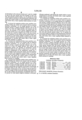
In the present invention, the desired effects can be obtained when any of the aforespecified metallic compounds is employed singly or in admixture in a very small metal weight in relation to the zinc Weight of the aforesaid catalyst. In the following table are shown the desirable weight range of application, wherein the metal weight of each metallic compound is determined in terms of the zinc weight of zinc acetate or zinc formate as 1, and in which the value is on the average because the value fluctuates in accordance with the articles to be treated and the emulsifier to be employed:
In the present invention, any of the af-orespecified metallic compounds and zinc acetate or zinc formate are employed in the order of from 1 to 15 percent, preferably from 8 to 12 percent, by total metal weight in relation to the polysiloxane employed. Particularly desirable results are obtained when said metallic compound and zinc acetate or zinc formate are employed in the order of about 10 percent by total metal weight.
The articles which can be treated according to the principles of the present invention include not only nylon, polyester, cellulose acetate, polyacrylonitrile and copolymers of acrylonitrile, all in the form of fibers, fabrics and fabricated articles, but cotton, linen, viscose rayon staple, polyvinyl alcohol and other hydrophilic synthetic fibers, fabrics and fabricated articles. Articles of paper, wood, glass, concrete and metals can also be treated according to the principles of the present invention, producing a marked extent of water-repellency.
In actual operation, any of the aforespecified metallic compounds is added in association with zinc acetate or zinc formate to the emulsion containing any of the aforespecified polysiloxanes. The article to be treated is wetted with the resultant emulsion by a suitable method, such as dipping, coating, spraying or the like, and allowed to dry at room temperature, namely from 10 to 40 C. or thereabout, for a day or two. The period of time required for drying the wetted articles is dependent upon the species of the emulsifier and the metallic compound employed and of the articles to be treated, inclusive of other external factors, such as atmospheric temperature, moisture, ventilation and the like, although the period of time extending from one to two days is enough under normal atmospheric conditions. Heat may be applied for accelerating the dry processing, but the application of heat is not essential in the present invention, because there is, as stated before, no need in the invention of decomposing the emulsifier by means of heating.
The objects of the present invention can also be materialized when the article to be treated is first wetted with an emulsion containing any of the aforespecified polysiloxances in the order of concentration from 1 to 10 weight percent, and then the resultant article, after drying, is wetted with a solution containing zinc acetate or zinc formate and any of the aforespecified metallic compounds in the order of concentration from 1 to 10 percent by total metal weight, the range of concentration of the metallic compound employed in relation with zinc acetate or zinc formate being as specified before.
In order to provide a fuller understanding of the present invention, there are presented the following examples which are illustrative only, and in which spray rating was determined in association with the American Association of Textile Chemists and Colorists standard test method:
Example 1 To 0.9 gram of benzylcetyldimethylammonium chloride dissolved in a slight amount of water, there were added 90 grams of methylhydrogenpolysiloxane, and the mixture was dispersed with stirring for 5 minutes in 59.1 cc. of water to make up 150 grams of aqueous emulsion containing 60 weight percent of methylhydrogenpolysiloxane. The resultant emulsion was diluted with water to a concentration of 3 weight percent. There were then added with stirring zinc acetate and zirconium oxychloride in the order of respectively percent and 0.2 percent by metal weight in relation to the polysiloxane weight present in the emulsion. In the resultant emulsion were dipped cotton poplin fabrics for about 30 minutes, squeezed to the order of about 2 times the original weight, and dried at room temperature ranging from 24 to 30 C. for 36 hours. Spray rating before and after washing was 100, and the treated fabrics exhibited an excelled good hand and soft touch.
The same results as stated above were obtained with 9 percent by metal weight of zinc formate employed in the place of aforesaid zinc acetate.
Almost the same results as stated above were also produced on the nylon, polyester and polyacrylonitrile fabrics treated in the same manners as described above.
4 Example 2 To a 3 percent methylhydrogenpolysiloxane emulsion prepared in accordance with the manners as described in Example 1, there were added with stirring zinc acetate and zinc stearate in the order of respectively 10 percent and 0.3 percent by metal weight in relation to the polysiloxane weight present in the emulsion. Cuprammonium rayon fabrics were then dipped in the resultant emulsion, squeezed and dried in the same manners as described in Example 1. Spray rating before and after was-hing was 100, producing an excelled good band and agreeable soft touch.
Example 3 To a 3 percent aqueous methylhydrogenpolysiloxane emulsion prepared in accordance with the manners as described in Example 1, there were added with stirring zinc acetate and magnesium acetate in the order of respectively 7 percent and 3 percent by metal Weight in relation to the polysiloxane weight present in the emulsion. The resultant emulsion was then applied to polyvinyl alcohol fabrics (Vinylon, Kurashiki Rayon Kabushiki-kaisha, Osaka, Japan), and the treated articles were squeezed and dried in the same manners as described in Example 1. Spray rating before and after washing was 100, producing an excelled good hand and agreeable soft touch.
Almost the same results were obtained with zinc acetate and zirconyl acetate employed in the place of the aforespecified zinc acetate and magnesium acetate in the order of respectively 10 percent and 0.01 percent by metal weight, and with zinc acetate and tin acetate employed in the place of aforespecified zinc acetate and magnesium acetate in the order of 10 percent and 0.5 percent respectively by metal weight.
Example 4 To 3 percent methylhydrogenpolysiloxane emulsion prepared in accordance with the manners as described in Example 1, there were added with stirring zinc acetate and titanium oxide in the order of respectively 10 percent and 1 percent by metal weight in relation to the polysiloxane weight present in the emulsion. The resultant emulsion was then sprayed onto concrete pavements in the order of 1/m. and the pavements were allowed to dry for 48 hours at atmospheric temperature ranging from 24 to 33 C., producing a marked water-repellency as compared with non-treated pavements.
Almost the same water-repellency was obtained with any of zinc oxide, tin oxide and lead oxide employed in the order of 1 percent by metal weight in the place of the aforespecified titanium oxide.
Example 5 Cotton poplin fabrics were dipped for 30 minutes at room temperature in a 3 percent aqueous methylhydrogenpolysiloxane emulsion prepared in accordance with the manners as described in Example 1, squeezed to the orderof about 2 times the original Weight and dried at room temperature. The resultant fabrics were then dipped for 30 minutes at room temperature in an aqueous solution containing 5 percent of zinc acetate and 1 percent of sodium stearate by metal Weight, squeezed to the order of about 2 times the weight of said fabrics, and dried at room temperature for 36 hours. Spray rating before and after washing was 100, exhibiting an excelled good hand and soft touch. All the room temperatures employed were from 24 to 30 C.
We claim:
1. A process for rendering articles water repellent comprising wetting the article to be treated with an aqueous emulsion containing 1 to 10 weight percent of a polysiloxane having a methyl hydrogen siloxane unit in the order of at least 50 weight percent, zinc acetate and zirconyl acetate, the quantity of zirconyl acetate employed being in the order of from 36 to parts by weight of zirconium in the zirconyl acetate per 1 part by Weight of zinc in the zinc acetate, the total quantity of zinc acetate and zirconyl acetate being 1 to 15 percent by total metal weight in relation to the polysiloxane employed, and drying the wetted article at roomtemperature to provide said article with a Water repellent finish resistant to Washmg.
2. A process for rendering articles water repellent comprising wetting the article to be treated With an aqueous emulsion containing 1 to weight percent of a polysiloxane having a methyl hydrogen siloxane unit in the order of at least 50 Weight percent, zinc acetate and tin acetate, the quantity of tin acetate employed being in the order of from to parts by weight of tin in the tin acetate per 1 part by Weight of zinc in the zinc acetate, the total quantity of zinc acetate and tin acetate being 1 to percent by total metal Weight in relation to the polysiloxane employed, and drying the wetted article at room temperature to provide said article with a water repellent finish resistant to washing.
3. A process for rendering articles water repellent comprising wetting the article to be treated with an aqueous emulsion containing 1 to 10 Weight percent of a polysiloxane having a methyl hydrogen siloxane unit in the order of at least 50 Weight percent, zinc acetate and magnesium acetate, the quantity of magnesium acetate employed being in the order of from V to /2 parts by Weight of magnesium in the magnesium acetate per 1 part by weight of zinc in the zinc acetate, the total quantity of zinc acetate and magnesium acetate being 1 to 15 percent by total metal weight in relation to the polysiloxane employed, and drying the wetted article at room temperature to provide said article with a water repellent finish resistant to Washing.
4. A process for rendering articles water repellent comprising Wetting the article to be treated with an aqueous emulsion containing 1 to 10 Weight percent of a polysiloxane having a methyl hydrogen siloxane unit in the order of at least 50 Weight percent, zinc acetate and zirconium oxychloride, the quantity of zirconium oxychloride employed being in the order of from to ,6 parts by weight of zirconium in the zirconium oxychloride per 1 part by Weight of zinc in the zinc acetate, the total quantity of zinc acetate and zirconium oxychloride being 1 to 15 percent by total metal Weight in relation to the polysiloxane employed, and drying the wetted article at room temperature to provide said article with a water repellent finish resistant to washing.
5. A process for rendering articles water repellent comprising Wetting the article to be treated with an aqueous emulsion containing 1 to 10 Weight percent of a polysiloxane having a methyl hydrogen siloxane unit in the order of at least weight percent, zinc acetate and one stearate species selected from the group consisting of Zinc stearate and sodium stearate, the quantity of said stearate species being in the order of from to parts by Weight of metal of the respective stearate per 1 part by weight of zinc in the zinc acetate, the total quantity of zinc acetate and said stearate species being 1 to 15 percent by total metal Weight in relation to the polysiloxane employed and drying the wetted article at room temperature to provide said article with a Water repellent finish resistant to washing.
6. A process for rendering articles Water repellent comprising wetting the article to be treated with an aqueous emulsion containing 1 to 10 Weight percent of a polysiloxane having a methyl hydrogen siloxane unit in the order of at least 50 weight percent, zinc acetate and one oxide species selected from the group consisting of zinc oxide, titanium oxide, tin oxide and lead oxide, the quantity of said oxide species being in the order of to parts by Weight of metal of the respective oxide, the total quantity of zinc acetate and said oxide species being 1 to 15 percent by total metal weight in relation to the polysiloxane employed and drying the wetted article at room temperature to provide said article with a water repellent finish resistant to washing.
References Cited UNITED STATES PATENTS 2,3 86,259 10/1945 Norton 117-123 2,588,367 3/1952 Dennett 117--155 X 2,588,393 3/1952 Kauppi 26( l8 2,645,629 7/ 1953 Nitzsche 1l7161 X 2,789,956 4/1957 Eder 117161 X 2,934,519 4/1960 Clark 117161 WILLIAM D. MARTIN, Primary Examiner. T. G. DAVIS, Assistant Examiner.
Claims (1)
1. A PROCESS FOR RENDERING ARTICLES WATER REPELLENT COMPRISING WETTING THE ARTICLE TO BE TREATED WITH AN AQUEOUS EMULSION CONTAINING 1 TO 10 WEIGHT PERCENT OF A POLYSILOXANE HAVING A METHYL HYDROGEN SILOXANE UNIT IN THE ORDER OF AT LEAST 50 WEIGHT PERCENT, ZINC ACETATE AND ZIRCONYL ACETATE, THE QUANTITY OF ZIRCONYL ACETATE EMPLOYED BEING IN THE ORDER OF FROM 1/10,000 TO 1/10 PARTS BY WEIGHT OF ZIRCONIUM IN THE ZIRCONYL ACETATE PER 1 PART BY WEIGHT OF ZINC IN THE ZINC ACETATE, THE TOTAL QUANTITY OF ZINC ACETATE AND ZIRCONYL ACETATE BEING 1 TO 15 PERCENT BY TOTAL METAL WEIGHT IN RELATION TO THE POLYSILOXANE EMPLOYED, AND DRYING THE WETTED ARTICLE AT ROOM TEMPERATURE TO PROVIDE SAID ARTICLE WITH A WATER REPELLENT FINISH RESISTANT TO WASHING.
Priority Applications (1)
| Application Number | Priority Date | Filing Date | Title |
|---|---|---|---|
| US348280A US3336158A (en) | 1964-02-28 | 1964-02-28 | Method of rendering articles water-repellent |
Applications Claiming Priority (1)
| Application Number | Priority Date | Filing Date | Title |
|---|---|---|---|
| US348280A US3336158A (en) | 1964-02-28 | 1964-02-28 | Method of rendering articles water-repellent |
Publications (1)
| Publication Number | Publication Date |
|---|---|
| US3336158A true US3336158A (en) | 1967-08-15 |
Family
ID=23367347
Family Applications (1)
| Application Number | Title | Priority Date | Filing Date |
|---|---|---|---|
| US348280A Expired - Lifetime US3336158A (en) | 1964-02-28 | 1964-02-28 | Method of rendering articles water-repellent |
Country Status (1)
| Country | Link |
|---|---|
| US (1) | US3336158A (en) |
Cited By (4)
| Publication number | Priority date | Publication date | Assignee | Title |
|---|---|---|---|---|
| US3496000A (en) * | 1965-04-01 | 1970-02-17 | Porvair Ltd | Method of making artificial leather |
| US3691512A (en) * | 1970-09-16 | 1972-09-12 | Pyle National Co | Impregnated ceramic insulators and method of making same |
| US3958073A (en) * | 1970-01-29 | 1976-05-18 | Fidenza S.A. Vetraria S.P.A. | Properties of glass surfaces |
| US4306990A (en) * | 1980-07-18 | 1981-12-22 | Edward Goodman | Cleaning and protective composition and method |
Citations (6)
| Publication number | Priority date | Publication date | Assignee | Title |
|---|---|---|---|---|
| US2386259A (en) * | 1942-07-30 | 1945-10-09 | Gen Electric | Waterproofing treatment of materials |
| US2588367A (en) * | 1950-05-04 | 1952-03-11 | Dow Corning | Rendering cellulosic material nonadherent to adhesives |
| US2588393A (en) * | 1952-03-11 | Organosiloxane coating composition | ||
| US2645629A (en) * | 1950-12-30 | 1953-07-14 | Wacker Chemie Gmbh | Accelerated condensing organopolysiloxane compositions |
| US2789956A (en) * | 1952-07-09 | 1957-04-23 | Wacker Chemie Gmbh | Methylhydrogenpolysiloxane composition for treating textile |
| US2934519A (en) * | 1960-04-26 | Room temperature curing silicone |
-
1964
- 1964-02-28 US US348280A patent/US3336158A/en not_active Expired - Lifetime
Patent Citations (6)
| Publication number | Priority date | Publication date | Assignee | Title |
|---|---|---|---|---|
| US2588393A (en) * | 1952-03-11 | Organosiloxane coating composition | ||
| US2934519A (en) * | 1960-04-26 | Room temperature curing silicone | ||
| US2386259A (en) * | 1942-07-30 | 1945-10-09 | Gen Electric | Waterproofing treatment of materials |
| US2588367A (en) * | 1950-05-04 | 1952-03-11 | Dow Corning | Rendering cellulosic material nonadherent to adhesives |
| US2645629A (en) * | 1950-12-30 | 1953-07-14 | Wacker Chemie Gmbh | Accelerated condensing organopolysiloxane compositions |
| US2789956A (en) * | 1952-07-09 | 1957-04-23 | Wacker Chemie Gmbh | Methylhydrogenpolysiloxane composition for treating textile |
Cited By (4)
| Publication number | Priority date | Publication date | Assignee | Title |
|---|---|---|---|---|
| US3496000A (en) * | 1965-04-01 | 1970-02-17 | Porvair Ltd | Method of making artificial leather |
| US3958073A (en) * | 1970-01-29 | 1976-05-18 | Fidenza S.A. Vetraria S.P.A. | Properties of glass surfaces |
| US3691512A (en) * | 1970-09-16 | 1972-09-12 | Pyle National Co | Impregnated ceramic insulators and method of making same |
| US4306990A (en) * | 1980-07-18 | 1981-12-22 | Edward Goodman | Cleaning and protective composition and method |
Similar Documents
| Publication | Publication Date | Title |
|---|---|---|
| US2386259A (en) | Waterproofing treatment of materials | |
| US2957785A (en) | Aqueous metastable dispersion of tetravalent organo-tin compounds treating process | |
| US2774690A (en) | Water repellent treatment utilizing a methylhydrogenpolysiloxane and a titanium compound | |
| US2893898A (en) | Method of rendering materials water-repellent | |
| US2381863A (en) | Method of fungusproofing textiles | |
| US3268465A (en) | Composition and method of treating fabrics | |
| US2735791A (en) | Waterproofing compositions and their | |
| US2789956A (en) | Methylhydrogenpolysiloxane composition for treating textile | |
| US3617198A (en) | Method of reducing the amount of free formaldehyde in sensitized fabric for postcure durable press processing | |
| US3336158A (en) | Method of rendering articles water-repellent | |
| US2728692A (en) | Method of preventing shrinkage of wool | |
| SE336116B (en) | ||
| US3227579A (en) | Water repellent compositions | |
| US3009829A (en) | Impregnating composition, method of applying same to asbestos, and article produced thereby | |
| US3262810A (en) | Glass cloth | |
| US2328431A (en) | Process for rendering textile materials water repellent | |
| US2615824A (en) | Method and composition for imparting water resistance to textile material | |
| US4097643A (en) | Compositions comprising (1) a copolymer formed from an unsaturated acid and (2) an epoxy group-containing silane are useful textile and paper finishing materials | |
| US3291634A (en) | Method of rendering articles water repellent | |
| ES457787A1 (en) | Process for treating textiles with reactive polymers | |
| US3323944A (en) | Process and composition for improving the mechanical properties of flameproofed cellulosic textile materials | |
| US2335582A (en) | Fabric and finish | |
| US3009833A (en) | Rendering fibrous materials water-repellent | |
| US2859137A (en) | Coating textiles with methyl silicone resin and n, n'-diphenyl guanidine | |
| US3243391A (en) | Composition and process for treating cellulosic materials to make them flame-retardant |