US3236589A - Method of working up cellulose waste liquor containing sodium and sulfur - Google Patents
Method of working up cellulose waste liquor containing sodium and sulfur Download PDFInfo
- Publication number
- US3236589A US3236589A US188915A US18891562A US3236589A US 3236589 A US3236589 A US 3236589A US 188915 A US188915 A US 188915A US 18891562 A US18891562 A US 18891562A US 3236589 A US3236589 A US 3236589A
- Authority
- US
- United States
- Prior art keywords
- gas
- conduit
- liquor
- sulfur
- reaction products
- Prior art date
- Legal status (The legal status is an assumption and is not a legal conclusion. Google has not performed a legal analysis and makes no representation as to the accuracy of the status listed.)
- Expired - Lifetime
Links
- 238000000034 method Methods 0.000 title claims description 25
- NINIDFKCEFEMDL-UHFFFAOYSA-N Sulfur Chemical compound [S] NINIDFKCEFEMDL-UHFFFAOYSA-N 0.000 title claims description 15
- 229910052717 sulfur Inorganic materials 0.000 title claims description 15
- 239000011593 sulfur Substances 0.000 title claims description 15
- 239000002699 waste material Substances 0.000 title claims description 14
- DGAQECJNVWCQMB-PUAWFVPOSA-M Ilexoside XXIX Chemical compound C[C@@H]1CC[C@@]2(CC[C@@]3(C(=CC[C@H]4[C@]3(CC[C@@H]5[C@@]4(CC[C@@H](C5(C)C)OS(=O)(=O)[O-])C)C)[C@@H]2[C@]1(C)O)C)C(=O)O[C@H]6[C@@H]([C@H]([C@@H]([C@H](O6)CO)O)O)O.[Na+] DGAQECJNVWCQMB-PUAWFVPOSA-M 0.000 title claims description 7
- 229910052708 sodium Inorganic materials 0.000 title claims description 7
- 239000011734 sodium Substances 0.000 title claims description 7
- 239000001913 cellulose Substances 0.000 title claims description 6
- 229920002678 cellulose Polymers 0.000 title claims description 6
- 239000007789 gas Substances 0.000 claims description 61
- CDBYLPFSWZWCQE-UHFFFAOYSA-L Sodium Carbonate Chemical compound [Na+].[Na+].[O-]C([O-])=O CDBYLPFSWZWCQE-UHFFFAOYSA-L 0.000 claims description 26
- RAHZWNYVWXNFOC-UHFFFAOYSA-N Sulphur dioxide Chemical compound O=S=O RAHZWNYVWXNFOC-UHFFFAOYSA-N 0.000 claims description 26
- 238000006243 chemical reaction Methods 0.000 claims description 23
- 238000002485 combustion reaction Methods 0.000 claims description 18
- 239000007795 chemical reaction product Substances 0.000 claims description 16
- 238000010438 heat treatment Methods 0.000 claims description 16
- 229910052739 hydrogen Inorganic materials 0.000 claims description 12
- 230000001603 reducing effect Effects 0.000 claims description 12
- 229910000029 sodium carbonate Inorganic materials 0.000 claims description 12
- GEHJYWRUCIMESM-UHFFFAOYSA-L sodium sulfite Chemical compound [Na+].[Na+].[O-]S([O-])=O GEHJYWRUCIMESM-UHFFFAOYSA-L 0.000 claims description 12
- 239000001257 hydrogen Substances 0.000 claims description 11
- UFHFLCQGNIYNRP-UHFFFAOYSA-N Hydrogen Chemical class [H][H] UFHFLCQGNIYNRP-UHFFFAOYSA-N 0.000 claims description 9
- 239000000567 combustion gas Substances 0.000 claims description 8
- 238000011084 recovery Methods 0.000 claims description 7
- 239000007787 solid Substances 0.000 claims description 7
- 239000000126 substance Substances 0.000 claims description 7
- 238000005979 thermal decomposition reaction Methods 0.000 claims description 7
- 235000010265 sodium sulphite Nutrition 0.000 claims description 6
- 150000003464 sulfur compounds Chemical class 0.000 claims description 2
- CURLTUGMZLYLDI-UHFFFAOYSA-N Carbon dioxide Chemical compound O=C=O CURLTUGMZLYLDI-UHFFFAOYSA-N 0.000 description 20
- 239000002956 ash Substances 0.000 description 18
- IJGRMHOSHXDMSA-UHFFFAOYSA-N Atomic nitrogen Chemical compound N#N IJGRMHOSHXDMSA-UHFFFAOYSA-N 0.000 description 14
- RWSOTUBLDIXVET-UHFFFAOYSA-N Dihydrogen sulfide Chemical compound S RWSOTUBLDIXVET-UHFFFAOYSA-N 0.000 description 14
- 229910000037 hydrogen sulfide Inorganic materials 0.000 description 14
- UGFAIRIUMAVXCW-UHFFFAOYSA-N Carbon monoxide Chemical compound [O+]#[C-] UGFAIRIUMAVXCW-UHFFFAOYSA-N 0.000 description 12
- 229910002092 carbon dioxide Inorganic materials 0.000 description 10
- 239000001569 carbon dioxide Substances 0.000 description 10
- 238000000197 pyrolysis Methods 0.000 description 10
- XLYOFNOQVPJJNP-UHFFFAOYSA-N water Substances O XLYOFNOQVPJJNP-UHFFFAOYSA-N 0.000 description 10
- 229910002091 carbon monoxide Inorganic materials 0.000 description 9
- 239000000446 fuel Substances 0.000 description 9
- 235000002918 Fraxinus excelsior Nutrition 0.000 description 8
- QVGXLLKOCUKJST-UHFFFAOYSA-N atomic oxygen Chemical compound [O] QVGXLLKOCUKJST-UHFFFAOYSA-N 0.000 description 8
- 239000001301 oxygen Substances 0.000 description 8
- 229910052760 oxygen Inorganic materials 0.000 description 8
- OKTJSMMVPCPJKN-UHFFFAOYSA-N Carbon Chemical compound [C] OKTJSMMVPCPJKN-UHFFFAOYSA-N 0.000 description 7
- 229910052799 carbon Inorganic materials 0.000 description 7
- 229910052757 nitrogen Inorganic materials 0.000 description 7
- 239000000470 constituent Substances 0.000 description 6
- 239000003546 flue gas Substances 0.000 description 6
- PMZURENOXWZQFD-UHFFFAOYSA-L Sodium Sulfate Chemical compound [Na+].[Na+].[O-]S([O-])(=O)=O PMZURENOXWZQFD-UHFFFAOYSA-L 0.000 description 5
- 229910052938 sodium sulfate Inorganic materials 0.000 description 5
- 235000011152 sodium sulphate Nutrition 0.000 description 5
- 239000002737 fuel gas Substances 0.000 description 4
- 239000000203 mixture Substances 0.000 description 4
- 239000003921 oil Substances 0.000 description 4
- 239000002245 particle Substances 0.000 description 4
- RHZUVFJBSILHOK-UHFFFAOYSA-N anthracen-1-ylmethanolate Chemical compound C1=CC=C2C=C3C(C[O-])=CC=CC3=CC2=C1 RHZUVFJBSILHOK-UHFFFAOYSA-N 0.000 description 3
- 239000003830 anthracite Substances 0.000 description 3
- 238000010586 diagram Methods 0.000 description 3
- 229930195733 hydrocarbon Natural products 0.000 description 3
- 150000002430 hydrocarbons Chemical class 0.000 description 3
- 239000000843 powder Substances 0.000 description 3
- 239000011541 reaction mixture Substances 0.000 description 3
- 239000002918 waste heat Substances 0.000 description 3
- UQSXHKLRYXJYBZ-UHFFFAOYSA-N Iron oxide Chemical compound [Fe]=O UQSXHKLRYXJYBZ-UHFFFAOYSA-N 0.000 description 2
- LSNNMFCWUKXFEE-UHFFFAOYSA-N Sulfurous acid Chemical compound OS(O)=O LSNNMFCWUKXFEE-UHFFFAOYSA-N 0.000 description 2
- UCKMPCXJQFINFW-UHFFFAOYSA-N Sulphide Chemical compound [S-2] UCKMPCXJQFINFW-UHFFFAOYSA-N 0.000 description 2
- 239000006096 absorbing agent Substances 0.000 description 2
- 238000010521 absorption reaction Methods 0.000 description 2
- 230000006735 deficit Effects 0.000 description 2
- 238000003795 desorption Methods 0.000 description 2
- 230000000694 effects Effects 0.000 description 2
- 238000001704 evaporation Methods 0.000 description 2
- 230000008020 evaporation Effects 0.000 description 2
- 150000002431 hydrogen Chemical class 0.000 description 2
- 239000007788 liquid Substances 0.000 description 2
- 239000000463 material Substances 0.000 description 2
- 239000012495 reaction gas Substances 0.000 description 2
- AKHNMLFCWUSKQB-UHFFFAOYSA-L sodium thiosulfate Chemical compound [Na+].[Na+].[O-]S([O-])(=O)=S AKHNMLFCWUSKQB-UHFFFAOYSA-L 0.000 description 2
- 235000019345 sodium thiosulphate Nutrition 0.000 description 2
- 239000000725 suspension Substances 0.000 description 2
- LSNNMFCWUKXFEE-UHFFFAOYSA-M Bisulfite Chemical compound OS([O-])=O LSNNMFCWUKXFEE-UHFFFAOYSA-M 0.000 description 1
- 239000004215 Carbon black (E152) Substances 0.000 description 1
- BVKZGUZCCUSVTD-UHFFFAOYSA-L Carbonate Chemical compound [O-]C([O-])=O BVKZGUZCCUSVTD-UHFFFAOYSA-L 0.000 description 1
- QAOWNCQODCNURD-UHFFFAOYSA-L Sulfate Chemical compound [O-]S([O-])(=O)=O QAOWNCQODCNURD-UHFFFAOYSA-L 0.000 description 1
- 239000003513 alkali Substances 0.000 description 1
- 230000015572 biosynthetic process Effects 0.000 description 1
- 239000003054 catalyst Substances 0.000 description 1
- 239000003245 coal Substances 0.000 description 1
- 238000000354 decomposition reaction Methods 0.000 description 1
- 230000006866 deterioration Effects 0.000 description 1
- 238000001035 drying Methods 0.000 description 1
- -1 e.g. Substances 0.000 description 1
- 239000000374 eutectic mixture Substances 0.000 description 1
- 239000000295 fuel oil Substances 0.000 description 1
- 230000004927 fusion Effects 0.000 description 1
- 239000002440 industrial waste Substances 0.000 description 1
- 239000011872 intimate mixture Substances 0.000 description 1
- 238000004519 manufacturing process Methods 0.000 description 1
- 230000008018 melting Effects 0.000 description 1
- 238000002844 melting Methods 0.000 description 1
- VUZPPFZMUPKLLV-UHFFFAOYSA-N methane;hydrate Chemical compound C.O VUZPPFZMUPKLLV-UHFFFAOYSA-N 0.000 description 1
- 239000003595 mist Substances 0.000 description 1
- 230000007935 neutral effect Effects 0.000 description 1
- 230000003647 oxidation Effects 0.000 description 1
- 238000007254 oxidation reaction Methods 0.000 description 1
- 239000003209 petroleum derivative Substances 0.000 description 1
- 230000000750 progressive effect Effects 0.000 description 1
- 150000003839 salts Chemical class 0.000 description 1
- 238000000926 separation method Methods 0.000 description 1
- 229940079827 sodium hydrogen sulfite Drugs 0.000 description 1
- 235000010267 sodium hydrogen sulphite Nutrition 0.000 description 1
- 150000004763 sulfides Chemical class 0.000 description 1
- LSNNMFCWUKXFEE-UHFFFAOYSA-L sulfite Chemical class [O-]S([O-])=O LSNNMFCWUKXFEE-UHFFFAOYSA-L 0.000 description 1
- 150000003467 sulfuric acid derivatives Chemical class 0.000 description 1
- 150000004764 thiosulfuric acid derivatives Chemical class 0.000 description 1
- 238000009827 uniform distribution Methods 0.000 description 1
- 239000005418 vegetable material Substances 0.000 description 1
- 238000005406 washing Methods 0.000 description 1
- 239000002023 wood Substances 0.000 description 1
Images


Classifications
-
- D—TEXTILES; PAPER
- D21—PAPER-MAKING; PRODUCTION OF CELLULOSE
- D21C—PRODUCTION OF CELLULOSE BY REMOVING NON-CELLULOSE SUBSTANCES FROM CELLULOSE-CONTAINING MATERIALS; REGENERATION OF PULPING LIQUORS; APPARATUS THEREFOR
- D21C11/00—Regeneration of pulp liquors or effluent waste waters
- D21C11/12—Combustion of pulp liquors
- D21C11/125—Decomposition of the pulp liquors in reducing atmosphere or in the absence of oxidants, i.e. gasification or pyrolysis
-
- Y—GENERAL TAGGING OF NEW TECHNOLOGICAL DEVELOPMENTS; GENERAL TAGGING OF CROSS-SECTIONAL TECHNOLOGIES SPANNING OVER SEVERAL SECTIONS OF THE IPC; TECHNICAL SUBJECTS COVERED BY FORMER USPC CROSS-REFERENCE ART COLLECTIONS [XRACs] AND DIGESTS
- Y10—TECHNICAL SUBJECTS COVERED BY FORMER USPC
- Y10S—TECHNICAL SUBJECTS COVERED BY FORMER USPC CROSS-REFERENCE ART COLLECTIONS [XRACs] AND DIGESTS
- Y10S423/00—Chemistry of inorganic compounds
- Y10S423/03—Papermaking liquor
Definitions
- This invention relates to a method of working up cellulose waste liquors containing sodium and sulfur.
- the more or less concentrated liquor is atomized in the absence of air or other foreign gases at the top of a reaction tower the walls of which are indirectly heated to a temperature in the range of 700 to 800 C.
- the finely divided liquid drops fall down through the tower during drying and thermal decomposition or pyrolysis of the component organic matters.
- the pyrolysis residue consists substantially of sodium carbonate which, however, contains some sodium sulfate, sodium thiosulfate, carbon and silicate-like matters.
- the major part of the sulfurpasses over into the gas which is rich in carbon dioxide and hydrogen but contains, in addition, carbon monoxide, hydrogen sulfide, hydrocarbons and varying amounts of nitrogen.
- the gas is burnt for the indirect heating of the reaction tower.
- the sulfur in the. gas may be recovered as hydrogen sulfide. If the gas isburnt without such recovery, the sulfur will be present in the flue gases as sulfur dioxide which may be extracted during formation of sulfite by a water solution ofthe pyrolysis residue, which consists essentially of sodium carbonate.
- the temperature required for the reduction of sodium sulfate with carbon in accordance with Equation 5 varies with inter alia the activity of the carbon.
- anthracite powder was used previously. As this powder has a comparatively low activity, the reduction does not start to run at any appreciable velocity until towards 700 C., and it is usually completed at above 1000 C.
- the carbon formed by the pyrolysis of the liquor is present in an intimate mixture with the salts and is much more strongly active than the anthracite, for which reason the reduction of the sulfate may be effected at a considerably lower temperature than with anthracite.
- hydrogen is capable of reducing the sodium sulfate at a comparatively low temperature.
- the reduction runs at SOD-850 C. if it is carried out in the presence of some iron oxide which acts as a catalyst.
- Evaporation and pyrolysis by indirect heating of the atomized liquor is a very difiicult technical problem on account of inter allia difliculties concerning material and a progressive deterioration of the heat transfer coefiicient of the wall of the furnace by reason of the wall becoming coated with coke-like matters containing alkali. It is also hard to impart to the gas suspension the temperature necessary for the previously mentioned reactions to run as completely as possible towards the right of the equations set out hereinbefore, with satisfactory velocity. In liquors having a low calorific value, that is, liquors from production of high yield pulps (yields from to more than percent) the gas obtained by the pyrolysis does not suffice for heating the retort either.
- One main object of the present invention is to overcome said inconveniencies and difficulties.
- One main feature of the present invention is based on the observation that the desired high temperatures are attainable by direct heating of the liquor in parallel flow with, and by means of, a gas heated to a high temperature.
- Said gas may consist of steam, carbon dioxide, carbon monoxide, hydrogen or nitrogen or mixtures of at least two of these components.
- a further object of the present invention is to produce in a cheap and rational manner a gas heated to the high temperature required, by burning in close connection with the reaction vessel a fuel preferably having a low ash content.
- fuel may be constituted by gaseous or liquid petroleum products, water gas (carbon monoxide+hydrogen), generator gas, pyrolysis gas and similar gaseous fuels.
- part of the liquor may serve as fuel by being injected directly into the combustion chamber connected to the reaction vessel.
- black coal and similar fuels may be used, but because of their comparatively high ash content, some contaminating of the liquor ashes recovered must be taken into account.
- the combustion may take place at deficit as well as excess air or oxygen but in the case of an excess the remaining percentage of oxygen in the gas must not be allowed to exceed the limits for a reducing atmosphere to be maintained in the reaction vessel.
- a predetermined con-tent of oxygen may even be desired, as heat will be set free in the reaction mixture by partial oxidation of the liquor components, or reaction products primarily formed of said components, which lowers the requirement of additional fuel and contributes to a more uniform distribution of temperature in the reactor.
- the combustion gas will be poor in nitrogen but rich in reducing constituents.
- the percentage of hydrogen sulfide of the gas will be higher, which facilitates the recovery of sulfur.
- the flue gases freed from sulfur may be used to advantage 1 in this case as a fuel gas, but when the content of organic matters of the liquor is low, additional fuel may be necessary for maintaining the temperature and/ or reducing furnace atmosphere required.
- heat carrier and reducing gas there may also be used a typical reducing gas such as water gas (a mixture of substantially CO and H generator gas (a mixture of carbon monoxide and nitrogen with varying amounts of hydrogen and carbon dioxide) or, in some cases, reactor gas rich in hydrogen and carbon dioxide (cf. Example 3 below).
- the heat carrier may also consist of steam superheated to a high temperature. The superheating may be effected in recuperators (by heat exchange through a wall) or in regenerators having stationary or travelling heating bodies.
- the reactor or reactor vessel to be used in the practice of the present invention may be constructed and the waste liquor may be supplied in various ways.
- a vertical shaft or retort furnace may be used, in the top section of which there are various devices for introducing finely divided liquor and heating gas, which is suitably supplied tangentially.
- the water in the drops will be gasified, after which the reactions previously referred to may set in.
- the temperature is adjusted in such a way as to prevent the ash particles from assuming such a high temperature that they tend to melt and stick to the wall of the furnace.
- the risk hereof will be far less in the direct heating according to the invention than when the heat is supplied through the wall.
- the reactor may also be formed as an inclined rotary furnace having devices for supplying liquor and heating gas in its top section. Also, this embodiment permits introduction of the liquor in a highly disintegrated form, though the liquor may also be permitted to flow into, or may be injected into, the reactor. It will dry and pass through the furnace in a powdered or granulated state. Also in this case, the temperature must be adjusted so as to prevent the ash components from melting and adhering to the wall of the furnace.
- the reactor gas is preferably conducted through a dry cyclone for separating soaring ash particles. Its heat content may be utilized in a waste heat boiler, for direct liquor concentrating and in other suitable ways familiar to an expert in the field of art in consideration.
- the gas may be purified of hydrogen sulfide in accordance with known methods, the clean gas may be burnt for generating heat and the hydrogen sulfide recovered may be converted into sulfur dioxide, which is caused to react with the sodium carbonate obtained in the process.
- the combustion may also be effected before the hydrogen sulfide is separated, and the combustion gas may be washed with a solution of the pyrolysis residue for converting the component sodium carbonate into sodium sulfite or hydrogen sulfite.
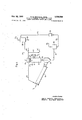
- Example 1 A plant comprising the apparatus units required for recovering chemicals in accordance with the present invention may be disposedas is illustrated in FIG. 1.
- Oil and air supplied through conduits 1 and 2 are fed into a burner 3 connected to reaction tower 7.
- the combustion gas produced by the combustion of the oil and air in the burner 3 is introduced tangentially into the top section of the reaction tower through a conduit 4.
- Concentrated waste liquor is introduced centrally through a conduit 5 and an atomizing nozzle 6.
- the liquor mist whirls down through the reactor 7 while its ash constituents are dried, pyrolized and converted.
- the amount of oil burnt is controlled so as to prevent the temperature of the ash particles from surpassing 750 C., that is, said temperature is maintained below the fusion temperature of the ashes.
- the reaction mixture passes through a conduit 8 to a cyclone 9 wherein the ash constituents are separated in the form of a loose powder essentially consisting of sodium carbonate.
- the gases pass through a conduit 10 to a steam boiler 12 with associated economizer indicated at 14.
- the boiler is provided with a fire place for burning combustible gaseous constituents component of the gas, primarily hydrogen and carbon monoxide.
- the necessary air is supplied through a conduit 11.
- Steam is discharged through a conduit 13, feed water is supplied through a conduit 15 and the flue gas escapes through a conduit 16.
- the percentage of the sulfur dioxide of the gas is so low that it does not pay to recover the sulfur dioxide by washing the gas with sodium carbonate.
- Example 2 A second way of arranging the chemical recovery is illustrated in FIG. 2.
- Gas generated in the process and poor in nitrogen, is burnt with oxygen, if desired mixed with steam and/or carbon dioxide for lowering the combustion temperature in the burner 3.
- the gas, oxygen and steam are supplied through conduits 19, 2a and 2b respectively. If necessary the gas is supplemented with another fuel, e.g., fuel oil, which is supplied through the conduit 1.
- Combustion gas and concentrated liquor are introduced into the reaction tower 7 through conduits 4 and 5 and a nozzle 6 in the same way as is described in connection with FIG. 1.
- the reaction mixture from the tower 7 is conducted through a conduit 8 to the cyclone 9, wherein the ash constituents are separated.
- the cleaned gas passes through the conduit 10 to the waste heat boiler 12 with associated economizer 14.
- the flue gas escapes through a conduit 27 and sodium sulfite solution formed in plant 26 by reaction of the sulfur dioxide with the soda is conducted away through a conduit 28.
- Ashes separated in the cyclone 9, which ashes consist essentially of sodium carbonate, are conveyed through a conduit 17 to a dissolving vessel 29 to which water is supplied through a conduit 30.
- Example 3 In the embodiment illustrated in FIG. 3, part of the gas generated in the process, which gas is poor in nitrogen, is used as heating gas and the remaining part is used as fuel gas for heating the heating gas.
- the fuel gas is introduced through a conduit 19a into a combustion chamber 34 together with preheated air arriving through the conduit 2 after having passed a heat exchanger 37. If required also oil supplied through the conduit 1 is burnt.
- Liquor is introduced into the top section of the reaction tower through the conduit 5 and the atomizing nozzle 6.
- Hot recirculated reaction gas is also supplied through a conduit 35, said gas being withdrawn from a place behind the cyclone 9.
- the heating gas is heated indirectly by heat exchange in the combustion chamber 34 and is introduced further down into the reactor 7 through the conduit 4 for raising the temperature to the required level.
- Solid constituents are separated in the cyclone 9.
- a determined part of the gas discharged from the cyclone is recirculated, as already stated, through the conduit 35 to the top section of the reactor.
- the remaining gas i.e., the gas newly formed in the process, gives off its heat in the heat exchanger 37 to the combustion air entering through conduit 2.
- the cooled gas passes through a conduit 38 to the hydrogen sulfide washer 18.
- the desulfurized gas escapes through the conduit 19 and is utilized partly as a fuel gas (through conduit 19a) and partly as a heating gas (through a conduit 19b).
- the desorption gas from the hydrogen sulfide washer which gas essentially consists of hydrogen sulfide and carbon dioxide, is discharged through the conduit 21, the combustion chamber 24 and the absorption plant 26 for further working up in accordance with the embodiment of the process illustrated in FIG. 2. Also the ashes separated in the cyclone which are discharged through the conduit 17 to the elements 29, 32 and 26 are treated in the same manner as in the embodiment according to FIG. 2.
- Example 4 A fourth method of performing the chemical recovery within the scope of the present invention is illustrated in FIG. 4.
- Concentrated liquor and highly superheated steam, if desired admixed with some air, are introduced tangentially into the top section of a rotary kiln or furnace 70 through a conduit 45.
- Liquor is allowed to enter the furnace through the conduit 5.
- Gas and ashes escape through the conduit 8 to the cyclone 9.
- the ashes are discharged and treated as described in connection with FIGS. 2 and 3.
- the gas cleaned in the cyclone delivers its heat while the major part of the water is condensed in the waste heat boiler 12 and associated economizer and cooler 14.
- Feed water is supplied through the conduit 15, condensate is withdrawn through a conduit 42 and steam is withdrawn through the conduits 13 and 40.
- a part of the steam generated passes by way of a conduit 41 to a combined combustion chamber and superheater 44 and from there to the top section of the rotary furnace through the conduit 45.
- Air may be added to the steam through a conduit 46.
- the gas cooled in the economizer passes through the conduit 16 to the combustion chamber 44 wherein it is burnt with air, if desired while supplementary sulfur is being introduced. Air and sulfur are supplied through the conduits 43 and 23.
- the cooled flue gas containing sulfur dioxide escapes through the conduit to the sulfur dioxide absorber 26 wherein it is washed with a solution of the ashes in the same way as disclosed in connection with FIG. 2.
- the apparatus units referred to in the examples are only shown by way of principle and may be formed in their details and modified in many different ways.
- the rotary furnace shown in FIG. 4 may be introduced into the diagram shown in FIGS. 1-3 instead of the vertical tower reactor, and this may in turn be substituted for the rotary furnace of the diagram of FIG. 4.
- a tower reactor and a rotary furnace may be connected in series.
- a plurality of combinations between the various diagrams are possible, and smaller auxiliary units must of course be interposed between the main units.
- a method of treating cellulose waste liquors containing sodium and sulfur compounds for the recovery of chemical components of said liquors comprising:
- said preheated reducing gas for the thermal decomposition of the liquor is selected from the group consisting of water vapor, carbon dioxide, carbon monoxide, hydrogen, nitrogen and mixtures thereof.
Landscapes
- Paper (AREA)
Description
1966 R. B. REINHALL ETAL 3,236,589
METHOD OF WORKING UP CELLULOSE WASTE LIQUOR CONTAINING SODIUM AND SULFUR Filed Jan. 31, 1962 4 Sheets-$heet 1 IN VENT-0R9.
ROLF BERT/L REINHALL BERT/L SIXTEN GEOTH Feb. 22, 1966 R. B. REINHALL ETAL 3,236,539
METHOD OF WORKING UP CELLULQSE WASTE LIQUOR CONTAINING SODIUM AND SULFUR Filed Jan. I51, 1962 4 Sheets-Sheet 2 Fig. 2
IN VENTOE 9.
ROLF BERT/l. REINHALL. BERT/L SIX TEN GEOTH Fell 1966 R. B. REINHALL ETAL 3,236,539
METHOD OF WORKING UP CELLULOSE WASTE LIQUOR CONTAINING SODIUM AND SULFUR Filed Jan. 31, 1962 4 Sheets-Sheet 5 IN VENTOEQ ROLF BERT/L EE/NHALL. BERT/L. S/XTEN GEOTH 4 Sheets-Sheet 4.
INVEN TORG 1966 R. B. REINHALL ETAL METHOD OF WORKING UP CELLULOSE WASTE LIQUOR CONTAINING SODIUM AND SULFUR Filed Jan. 51, 1962 ROLF BERT". REINHALL BERT'IL QIXTEN GROTH United States Patent Ofiflce Patented Feb. 22, 1966 3,236,589 METHOD OF WORKING UP CELLULOSE WASTE LIQUOR CONTAINING SODIUM AND SULFUR -Rolf Bertil Reinhall, Lidingo, and Berti] Sixten Groth, Stockholm, Sweden Filed Jan. 31, 1962, Ser. No. 188,915 Claims priority, application Sweden, Feb. 3, 1961,
(Filed under Rule 47(2) and 35 U.S.C. 116) 4 Claims. (CI. 23-48) This invention relates to a method of working up cellulose waste liquors containing sodium and sulfur.
Among. the methods proposed for recovering chemicals in waste liquors from the treatment of wood and other vegetable materials with sodium sulfite solutions, evaporation of the liquor and pyrolysis of the concentrated. liquor in highly disintegrated or atomized form has recently found particular attention. This method has been described inter alia in Tappi (The Journal of the Technical Association of the Pulp and Paper Industry), vol. 40 (1957), pp. 86672, 41 (1958), pp. 110116 and 312-217, and 43 (1960), pp. 678-683. The Atomized Suspension Technique is defined as a new method of recovering solid matters from industrial waste liquors and simular Waste liquors. When applied to waste liquor from neutral sulfite treatment, the more or less concentrated liquor is atomized in the absence of air or other foreign gases at the top of a reaction tower the walls of which are indirectly heated to a temperature in the range of 700 to 800 C. The finely divided liquid drops fall down through the tower during drying and thermal decomposition or pyrolysis of the component organic matters. The pyrolysis residue consists substantially of sodium carbonate which, however, contains some sodium sulfate, sodium thiosulfate, carbon and silicate-like matters. The major part of the sulfurpasses over into the gas which is rich in carbon dioxide and hydrogen but contains, in addition, carbon monoxide, hydrogen sulfide, hydrocarbons and varying amounts of nitrogen. After separation of solid matters, tar, etc., the gas is burnt for the indirect heating of the reaction tower. Before the combustion, the sulfur in the. gas may be recovered as hydrogen sulfide. If the gas isburnt without such recovery, the sulfur will be present in the flue gases as sulfur dioxide which may be extracted during formation of sulfite by a water solution ofthe pyrolysis residue, which consists essentially of sodium carbonate.
Among the reactions which may occur in connection with the pyrolysis, there may be mentioned: decomposition of organic matters to carbon, hydrocarbons, etc.; reactions between carbon water vapor and carbon dioxide, reduction of inorganic sulfur combinations component of the liquor, such as sulfates, sulfites and thiosulfates to sulfides by means of free carbon, carbon monoxide or hydrogen; and reaction of the sulfide formed with carbon dioxide and steam to carbonate and free hydrogen sulfide, as represented by the following equations Organic"matters C, hydrocarbon s,
Sodium sulfite and sodium thiosulfate react in an analogous way as sodium sulfate.
The temperature required for the reduction of sodium sulfate with carbon in accordance with Equation 5 varies with inter alia the activity of the carbon. In this technique anthracite powder was used previously. As this powder has a comparatively low activity, the reduction does not start to run at any appreciable velocity until towards 700 C., and it is usually completed at above 1000 C. The carbon formed by the pyrolysis of the liquor is present in an intimate mixture with the salts and is much more strongly active than the anthracite, for which reason the reduction of the sulfate may be effected at a considerably lower temperature than with anthracite. Also, hydrogen is capable of reducing the sodium sulfate at a comparatively low temperature. As disclosed in the German patent specifications Nos. 559,- 314 and 566,987, for example, the reduction runs at SOD-850 C. if it is carried out in the presence of some iron oxide which acts as a catalyst.
Evaporation and pyrolysis by indirect heating of the atomized liquor is a very difiicult technical problem on account of inter allia difliculties concerning material and a progressive deterioration of the heat transfer coefiicient of the wall of the furnace by reason of the wall becoming coated with coke-like matters containing alkali. It is also hard to impart to the gas suspension the temperature necessary for the previously mentioned reactions to run as completely as possible towards the right of the equations set out hereinbefore, with satisfactory velocity. In liquors having a low calorific value, that is, liquors from production of high yield pulps (yields from to more than percent) the gas obtained by the pyrolysis does not suffice for heating the retort either.
One main object of the present invention is to overcome said inconveniencies and difficulties.
One main feature of the present invention is based on the observation that the desired high temperatures are attainable by direct heating of the liquor in parallel flow with, and by means of, a gas heated to a high temperature. Said gas may consist of steam, carbon dioxide, carbon monoxide, hydrogen or nitrogen or mixtures of at least two of these components.
A further object of the present invention is to produce in a cheap and rational manner a gas heated to the high temperature required, by burning in close connection with the reaction vessel a fuel preferably having a low ash content. Such fuel may be constituted by gaseous or liquid petroleum products, water gas (carbon monoxide+hydrogen), generator gas, pyrolysis gas and similar gaseous fuels. In connection with waste liquors which are rich in organic matters and consequently have comparatively high calorific values, part of the liquor may serve as fuel by being injected directly into the combustion chamber connected to the reaction vessel. Also black coal and similar fuels may be used, but because of their comparatively high ash content, some contaminating of the liquor ashes recovered must be taken into account.
The combustion may take place at deficit as well as excess air or oxygen but in the case of an excess the remaining percentage of oxygen in the gas must not be allowed to exceed the limits for a reducing atmosphere to be maintained in the reaction vessel. In some cases a predetermined con-tent of oxygen may even be desired, as heat will be set free in the reaction mixture by partial oxidation of the liquor components, or reaction products primarily formed of said components, which lowers the requirement of additional fuel and contributes to a more uniform distribution of temperature in the reactor. On the other hand, in connection with liquors poor in organic matters, it may be advisable to perform the combustion with a deficit of oxygen in order to raise the content of reducing components in the reaction gas, such as carbon monoxide, hydrogen and free carbon.
If the combustion is conducted with oxygen or oxygen mixed with steam and/ or carbon dioxide, the combustion gas will be poor in nitrogen but rich in reducing constituents. The percentage of hydrogen sulfide of the gas will be higher, which facilitates the recovery of sulfur.
The flue gases freed from sulfur may be used to advantage 1 in this case as a fuel gas, but when the content of organic matters of the liquor is low, additional fuel may be necessary for maintaining the temperature and/ or reducing furnace atmosphere required.
As heat carrier and reducing gas there may also be used a typical reducing gas such as water gas (a mixture of substantially CO and H generator gas (a mixture of carbon monoxide and nitrogen with varying amounts of hydrogen and carbon dioxide) or, in some cases, reactor gas rich in hydrogen and carbon dioxide (cf. Example 3 below). The heat carrier may also consist of steam superheated to a high temperature. The superheating may be effected in recuperators (by heat exchange through a wall) or in regenerators having stationary or travelling heating bodies.
The reactor or reactor vessel to be used in the practice of the present invention may be constructed and the waste liquor may be supplied in various ways. A vertical shaft or retort furnace may be used, in the top section of which there are various devices for introducing finely divided liquor and heating gas, which is suitably supplied tangentially. During the fall through the shaft furnace, the water in the drops will be gasified, after which the reactions previously referred to may set in. By controlling the feed of fuel, the temperature is adjusted in such a way as to prevent the ash particles from assuming such a high temperature that they tend to melt and stick to the wall of the furnace. However, the risk hereof will be far less in the direct heating according to the invention than when the heat is supplied through the wall. Sodium carbonate, sodi-um sulfide and sodium sulfate melt at 851, 1180 and 884 C., respectively, but as eutectic mixtures are formed, at least transiently, the temperature should be adjusted in such a way that the temperature of the ash particles does not exceed 750 to 800 C. Also, with regard to the durability of the furnace material, higher temperature should be avoided. The reactor may also be formed as an inclined rotary furnace having devices for supplying liquor and heating gas in its top section. Also, this embodiment permits introduction of the liquor in a highly disintegrated form, though the liquor may also be permitted to flow into, or may be injected into, the reactor. It will dry and pass through the furnace in a powdered or granulated state. Also in this case, the temperature must be adjusted so as to prevent the ash components from melting and adhering to the wall of the furnace.
The reactor gas is preferably conducted through a dry cyclone for separating soaring ash particles. Its heat content may be utilized in a waste heat boiler, for direct liquor concentrating and in other suitable ways familiar to an expert in the field of art in consideration. The gas may be purified of hydrogen sulfide in accordance with known methods, the clean gas may be burnt for generating heat and the hydrogen sulfide recovered may be converted into sulfur dioxide, which is caused to react with the sodium carbonate obtained in the process. The combustion may also be effected before the hydrogen sulfide is separated, and the combustion gas may be washed with a solution of the pyrolysis residue for converting the component sodium carbonate into sodium sulfite or hydrogen sulfite.
With reference to FIGS. 14 of the accompanying drawings the following examples will illustrate some methods of carrying out the recovery of chemicals within the scope of the present invention. In the various figures the same reference characters are used for the same or equivalent parts.
Example 1 A plant comprising the apparatus units required for recovering chemicals in accordance with the present invention may be disposedas is illustrated in FIG. 1. Oil and air supplied through conduits 1 and 2 are fed into a burner 3 connected to reaction tower 7. The combustion gas produced by the combustion of the oil and air in the burner 3 is introduced tangentially into the top section of the reaction tower through a conduit 4. Concentrated waste liquor is introduced centrally through a conduit 5 and an atomizing nozzle 6. The liquor mist whirls down through the reactor 7 while its ash constituents are dried, pyrolized and converted. The amount of oil burnt is controlled so as to prevent the temperature of the ash particles from surpassing 750 C., that is, said temperature is maintained below the fusion temperature of the ashes. The reaction mixture passes through a conduit 8 to a cyclone 9 wherein the ash constituents are separated in the form of a loose powder essentially consisting of sodium carbonate. The gases pass through a conduit 10 to a steam boiler 12 with associated economizer indicated at 14. The boiler is provided with a fire place for burning combustible gaseous constituents component of the gas, primarily hydrogen and carbon monoxide. The necessary air is supplied through a conduit 11. Steam is discharged through a conduit 13, feed water is supplied through a conduit 15 and the flue gas escapes through a conduit 16. Generally, the percentage of the sulfur dioxide of the gas is so low that it does not pay to recover the sulfur dioxide by washing the gas with sodium carbonate.
Example 2 A second way of arranging the chemical recovery is illustrated in FIG. 2. Gas generated in the process and poor in nitrogen, is burnt with oxygen, if desired mixed with steam and/or carbon dioxide for lowering the combustion temperature in the burner 3. The gas, oxygen and steam are supplied through conduits 19, 2a and 2b respectively. If necessary the gas is supplemented with another fuel, e.g., fuel oil, which is supplied through the conduit 1. Combustion gas and concentrated liquor are introduced into the reaction tower 7 through conduits 4 and 5 and a nozzle 6 in the same way as is described in connection with FIG. 1. The reaction mixture from the tower 7 is conducted through a conduit 8 to the cyclone 9, wherein the ash constituents are separated. The cleaned gas passes through the conduit 10 to the waste heat boiler 12 with associated economizer 14. However, contrary to FIG. 1, no air is supplied. Steam is withdrawn from the boiler through the conduit 13 and feed water is supplied through the conduit 15. The cooled flue gas escapes through the conduit 16 to a hydrogen sulfide washer 18. The desulfurized gas is conveyed through a conduit 19 to the burner 3. Any excess gas escapes through a conduit 39. The desorption gas from the hydrogen sulfide washer 18 is conveyed through a conduit 21 to a combustion chamber 24 into which air is introduced through a conduit 22 and possible supplementary sulfur is introduced through a conduit 23. The sulfur dioxide containing gas formed in chamber 24 by combustion of the hydrogen sulfide is discharged through a conduit 25 to an absorption plant 26 wherein it is washed with a solution of soda supplied through a conduit 33. The flue gas escapes through a conduit 27 and sodium sulfite solution formed in plant 26 by reaction of the sulfur dioxide with the soda is conducted away through a conduit 28. Ashes separated in the cyclone 9, which ashes consist essentially of sodium carbonate, are conveyed through a conduit 17 to a dissolving vessel 29 to which water is supplied through a conduit 30. The
solution obtained is discharged through a conduit 31, a filter 32 and the conduit 33 to the sulfur dioxide absorber 26.
Example 3 In the embodiment illustrated in FIG. 3, part of the gas generated in the process, which gas is poor in nitrogen, is used as heating gas and the remaining part is used as fuel gas for heating the heating gas. The fuel gas is introduced through a conduit 19a into a combustion chamber 34 together with preheated air arriving through the conduit 2 after having passed a heat exchanger 37. If required also oil supplied through the conduit 1 is burnt. Liquor is introduced into the top section of the reaction tower through the conduit 5 and the atomizing nozzle 6. Hot recirculated reaction gas is also supplied through a conduit 35, said gas being withdrawn from a place behind the cyclone 9. The heating gas is heated indirectly by heat exchange in the combustion chamber 34 and is introduced further down into the reactor 7 through the conduit 4 for raising the temperature to the required level. Solid constituents are separated in the cyclone 9. A determined part of the gas discharged from the cyclone is recirculated, as already stated, through the conduit 35 to the top section of the reactor. The remaining gas, i.e., the gas newly formed in the process, gives off its heat in the heat exchanger 37 to the combustion air entering through conduit 2. The cooled gas passes through a conduit 38 to the hydrogen sulfide washer 18. The desulfurized gas escapes through the conduit 19 and is utilized partly as a fuel gas (through conduit 19a) and partly as a heating gas (through a conduit 19b). The desorption gas from the hydrogen sulfide washer, which gas essentially consists of hydrogen sulfide and carbon dioxide, is discharged through the conduit 21, the combustion chamber 24 and the absorption plant 26 for further working up in accordance with the embodiment of the process illustrated in FIG. 2. Also the ashes separated in the cyclone which are discharged through the conduit 17 to the elements 29, 32 and 26 are treated in the same manner as in the embodiment according to FIG. 2.
Example 4 A fourth method of performing the chemical recovery within the scope of the present invention is illustrated in FIG. 4. Concentrated liquor and highly superheated steam, if desired admixed with some air, are introduced tangentially into the top section of a rotary kiln or furnace 70 through a conduit 45. Liquor is allowed to enter the furnace through the conduit 5. Gas and ashes escape through the conduit 8 to the cyclone 9. The ashes are discharged and treated as described in connection with FIGS. 2 and 3. The gas cleaned in the cyclone delivers its heat while the major part of the water is condensed in the waste heat boiler 12 and associated economizer and cooler 14. Feed water is supplied through the conduit 15, condensate is withdrawn through a conduit 42 and steam is withdrawn through the conduits 13 and 40. A part of the steam generated passes by way of a conduit 41 to a combined combustion chamber and superheater 44 and from there to the top section of the rotary furnace through the conduit 45. Air may be added to the steam through a conduit 46. The gas cooled in the economizer passes through the conduit 16 to the combustion chamber 44 wherein it is burnt with air, if desired while supplementary sulfur is being introduced. Air and sulfur are supplied through the conduits 43 and 23. The cooled flue gas containing sulfur dioxide escapes through the conduit to the sulfur dioxide absorber 26 wherein it is washed with a solution of the ashes in the same way as disclosed in connection with FIG. 2.
The apparatus units referred to in the examples are only shown by way of principle and may be formed in their details and modified in many different ways. The rotary furnace shown in FIG. 4 may be introduced into the diagram shown in FIGS. 1-3 instead of the vertical tower reactor, and this may in turn be substituted for the rotary furnace of the diagram of FIG. 4. Possibly a tower reactor and a rotary furnace may be connected in series. A plurality of combinations between the various diagrams are possible, and smaller auxiliary units must of course be interposed between the main units. In certain cases it is conceivable to conduct, in the embodiments of FIGS. 3 and 4, heating gas and liquor in countercurrent in the reactor 7 or 70, respectively.
While several embodiments of the invention have been shown and described, it is to be understood that this is for purpose of illustration only, and that the invention is not to be limited thereby, but its scope is to be determined by the appended claims.
What we claim is:
1. A method of treating cellulose waste liquors containing sodium and sulfur compounds for the recovery of chemical components of said liquors, said method comprising:
(1) thermally decomposing the liquor by directly contacting the same in a reaction zone with a preheated reducing gas flowing concurrently therewith through said zone;
(2) separating from one another the solid and gaseous reaction products of said thermal decomposition;
(3) removing sulfur components from said gaseous reaction products;
(4) heating one portion of the desulfurized gaseous reaction products by indirect contact thereof with hot combustion gases, said combustion gases comprising another portion of said desulfurized gaseous reaction products;
(5) returning said first-named portion of said indirectly heated desulfurized gaseous reaction products to said reaction zone to serve as preheated reducing gas for said thermal decomposition of the liquor in said reaction zone;
(6) treating the hydrogen sulfide-containing gas component of said gaseous reaction product to form sulfur dioxide by combustion of said component with air;
(7) recovering sodium carbonate from said solid reaction products; and
(8) forming sodium sulfite solution by reacting said sulfur dioxide with said sodium carbonate.
2. A method as defined in claim 1, wherein said preheated reducing gas for the thermal decomposition of the liquor is selected from the group consisting of water vapor, carbon dioxide, carbon monoxide, hydrogen, nitrogen and mixtures thereof.
3. A method as defined in claim 1, wherein the waste liquor is introduced into said reaction zone in an atomized state.
4. A method as defined in claim 1, wherein a portion of said gaseous reaction products of said thermal decomposition is recirculated directly to said reaction zone.
References Cited by the Examiner UNITED STATES PATENTS 424,756 4/ 1890 Blackman 2348 1,605,927 11/1926 Drewsen 23-48 1,702,588 2/1929 Bradley 2348 2,261,995 11/ 1941 Greenawalt 2348 2,535,730 12/1950 Gadret 2348 2,792,350 5/1957 Bradley et al. 2348X 3,005,686 10/1961 Haas 2348X 3,020,195 2/1962 Bradley et al. 2348X 3,073,672 1/1963 Cederquist 2348 3,083,077 3/1963 Bjorkman et al. 2348 MAURICE A. BRINDISI, Primary Examiner.
GEORGE D. MITCHELL, Examiner.
Claims (1)
1. A METHOD OF TREATING CELLULOSE WASTE LIQUORS CONTAINING SODIUM AND SULFUR COMPOUNDS FOR THE RECOVERY OF CHEMICAL COMPONENTS OF SAID LIQUORS, SAID METHOD COMPRISING: (1) THERMALLY DECOMPOSING THE LIQUOR BY DIRECTLY CONTACTING THE SAME IN A REACTION ZONE WITH A PREHEATED REDUCING GAS FLOWING CONCURRENTLY THEREWITH THROUGH SAID ZONE; (2) SEPARATING FROM ONE ANOTHER THE SOLID AND GASEOUS REACTION PRODUCTS OF SAID THERMAL DECOMPOSITION; (3) REMOVING SULFUR COMPONENTS FROM SAID GASEOUS REACTION PRODUCTS; (4) HEATING ONE PORTION OF THE DESULFURIZED GASEOUS REACTION PRODUCTS BY INDIRECT CONTACT THEREOF WITH HOT COMBUSTION GASES, SAID COMBUSTION GASES COMPRISING ANOTHER PORTION OF SAID DESULFURIZED GASEOUS REACTION PRODUCTS; (5) RETURNING SAID FIRST-NAMED PORTION OF SAID INDIRECTLY HEATED DESULFURIZED GASEOUS REACTION PRODUCTS TO SAID REACTION ZONE TO SERVE AS PREHEATED REDUCING GAS FOR SAID THERMAL DECOMPOSITION OF THE LIQUOR IN SAID REACTION ZONE; (6) TREATING THE HYDROGEN SULFIDE-CONTAINING GAS COMPONENT OF SAID GASEOUS REACTION PRODUCT TO FORM SULFUR DIOXIDE BY COMBUSTION OF SAID COMPONENT WITH AIR; (7) RECOVERING SODIUM CARBONATE FROM SAID SOLID REACTION PRODUCTS; AND (8) FORMING SODIUM SULFITE SOLUTION BY REACTING SAID SULFUR DIOXIDE WITH SAID SODIUM CARBONATE.
Applications Claiming Priority (1)
| Application Number | Priority Date | Filing Date | Title |
|---|---|---|---|
| SE113761 | 1961-02-03 |
Publications (1)
| Publication Number | Publication Date |
|---|---|
| US3236589A true US3236589A (en) | 1966-02-22 |
Family
ID=20257647
Family Applications (1)
| Application Number | Title | Priority Date | Filing Date |
|---|---|---|---|
| US188915A Expired - Lifetime US3236589A (en) | 1961-02-03 | 1962-01-31 | Method of working up cellulose waste liquor containing sodium and sulfur |
Country Status (5)
| Country | Link |
|---|---|
| US (1) | US3236589A (en) |
| DE (1) | DE1288419B (en) |
| FI (1) | FI43943C (en) |
| FR (1) | FR1319466A (en) |
| GB (1) | GB998467A (en) |
Cited By (13)
| Publication number | Priority date | Publication date | Assignee | Title |
|---|---|---|---|---|
| US3323858A (en) * | 1964-08-21 | 1967-06-06 | Lummus Co | Process for recovering the alkali metal content of spent pulping liquor |
| US3336101A (en) * | 1962-11-01 | 1967-08-15 | Billeruds Ab | Recovery of chemicals from black liquor |
| US3353906A (en) * | 1964-08-25 | 1967-11-21 | Lummus Co | Method of recovering chemicals from spent pulping liquors |
| US3365268A (en) * | 1964-08-19 | 1968-01-23 | Pulp Paper Res Inst | Production of ammonia from the organic materials present in spent pulping liquors with the simultaneous recovery of the pulping base and sulphur values present in said liquors |
| US3401010A (en) * | 1964-09-17 | 1968-09-10 | Lummus Co | Preparation of alkali metal carbonates from the corresponding sulfates or sulfides |
| US3438728A (en) * | 1967-05-15 | 1969-04-15 | North American Rockwell | Two-stage regeneration of absorbent for sulfur oxides |
| US3438727A (en) * | 1967-05-15 | 1969-04-15 | North American Rockwell | Absorbent regeneration using carbon regenerant |
| US3438733A (en) * | 1967-05-15 | 1969-04-15 | North American Rockwell | Sulfur production using carbon regenerant |
| US3770399A (en) * | 1971-10-22 | 1973-11-06 | Sun Research Development | Coal gasification process |
| WO1980001490A1 (en) * | 1979-01-16 | 1980-07-24 | Battelle Memorial Institute | Black-liquor processing |
| EP0205778A1 (en) * | 1985-05-18 | 1986-12-30 | Kraftanlagen AG. | Sulphite pulping process for preparing cellulose pulp from lignocellulosic materials with recovery of the pulping chemicals |
| US5328563A (en) * | 1991-09-27 | 1994-07-12 | A. Ahlstrom Corporation | Method of treating material containing sodium sulphate and/or sodium carbonate in a pulp mill |
| US5582683A (en) * | 1994-04-19 | 1996-12-10 | International Paper Company | Method for the recovery of chemical values from black liquor in multiple streams of different chemical values |
Families Citing this family (4)
| Publication number | Priority date | Publication date | Assignee | Title |
|---|---|---|---|---|
| EP0041050A1 (en) * | 1980-05-27 | 1981-12-02 | Battelle Memorial Institute | Process for treating the waste liquors spent upon the digestion of lignocellulosic materials during paper pulp production according to the sulphite or bisulphite process |
| SE454188B (en) * | 1984-10-19 | 1988-04-11 | Skf Steel Eng Ab | MAKE RECYCLING CHEMICALS FROM MASS DISPENSER |
| SE501782C2 (en) * | 1993-09-17 | 1995-05-15 | Flaekt Ab | Method and apparatus for selectively removing hydrogen sulfide from a gas |
| RU2425917C1 (en) * | 2010-03-16 | 2011-08-10 | Общество с ограниченной ответственностью "Научно-технический центр по разработке прогрессивного оборудования" (ООО "НТЦ РПО") | Method to produce sulfate cellulose |
Citations (10)
| Publication number | Priority date | Publication date | Assignee | Title |
|---|---|---|---|---|
| US424756A (en) * | 1890-04-01 | Henry blackman | ||
| US1605927A (en) * | 1922-04-03 | 1926-11-09 | Drewsen Viggo | Sodium-monosulphite waste-liquor-recovery process |
| US1702588A (en) * | 1921-11-05 | 1929-02-19 | Bradley Mckeefe Corp | Production of alkali-metal carbonates |
| US2261995A (en) * | 1938-07-08 | 1941-11-11 | John E Greenawalt | Method of burning black liquor |
| US2535730A (en) * | 1947-10-08 | 1950-12-26 | Gascogne Papeteries | Process for the treatment of waste liquors derived from cellulose manufacture |
| US2792350A (en) * | 1954-04-01 | 1957-05-14 | Western Precipitation Corp | Treatment of sodium base sulfite residual liquor |
| US3005686A (en) * | 1958-05-05 | 1961-10-24 | Weyerhaeuser Co | Sodium sulfite recovery process |
| US3020195A (en) * | 1960-02-29 | 1962-02-06 | Glatfelter Co P H | Production of potassium compounds |
| US3073672A (en) * | 1959-04-15 | 1963-01-15 | Stora Kopparbergs Bergslags Ab | Method of gasifying sulphurous cellulose waste liquors |
| US3083077A (en) * | 1959-05-29 | 1963-03-26 | Billeruds Ab | Method for the recovery of sodium carbonate from alkali-containing spent cellulose liquors |
-
1962
- 1962-01-31 US US188915A patent/US3236589A/en not_active Expired - Lifetime
- 1962-02-02 FI FI620218A patent/FI43943C/en active
- 1962-02-02 FR FR886842A patent/FR1319466A/en not_active Expired
- 1962-02-02 GB GB4076/62A patent/GB998467A/en not_active Expired
- 1962-02-02 DE DED38051A patent/DE1288419B/en active Pending
Patent Citations (10)
| Publication number | Priority date | Publication date | Assignee | Title |
|---|---|---|---|---|
| US424756A (en) * | 1890-04-01 | Henry blackman | ||
| US1702588A (en) * | 1921-11-05 | 1929-02-19 | Bradley Mckeefe Corp | Production of alkali-metal carbonates |
| US1605927A (en) * | 1922-04-03 | 1926-11-09 | Drewsen Viggo | Sodium-monosulphite waste-liquor-recovery process |
| US2261995A (en) * | 1938-07-08 | 1941-11-11 | John E Greenawalt | Method of burning black liquor |
| US2535730A (en) * | 1947-10-08 | 1950-12-26 | Gascogne Papeteries | Process for the treatment of waste liquors derived from cellulose manufacture |
| US2792350A (en) * | 1954-04-01 | 1957-05-14 | Western Precipitation Corp | Treatment of sodium base sulfite residual liquor |
| US3005686A (en) * | 1958-05-05 | 1961-10-24 | Weyerhaeuser Co | Sodium sulfite recovery process |
| US3073672A (en) * | 1959-04-15 | 1963-01-15 | Stora Kopparbergs Bergslags Ab | Method of gasifying sulphurous cellulose waste liquors |
| US3083077A (en) * | 1959-05-29 | 1963-03-26 | Billeruds Ab | Method for the recovery of sodium carbonate from alkali-containing spent cellulose liquors |
| US3020195A (en) * | 1960-02-29 | 1962-02-06 | Glatfelter Co P H | Production of potassium compounds |
Cited By (14)
| Publication number | Priority date | Publication date | Assignee | Title |
|---|---|---|---|---|
| US3336101A (en) * | 1962-11-01 | 1967-08-15 | Billeruds Ab | Recovery of chemicals from black liquor |
| US3365268A (en) * | 1964-08-19 | 1968-01-23 | Pulp Paper Res Inst | Production of ammonia from the organic materials present in spent pulping liquors with the simultaneous recovery of the pulping base and sulphur values present in said liquors |
| US3323858A (en) * | 1964-08-21 | 1967-06-06 | Lummus Co | Process for recovering the alkali metal content of spent pulping liquor |
| US3353906A (en) * | 1964-08-25 | 1967-11-21 | Lummus Co | Method of recovering chemicals from spent pulping liquors |
| US3401010A (en) * | 1964-09-17 | 1968-09-10 | Lummus Co | Preparation of alkali metal carbonates from the corresponding sulfates or sulfides |
| US3438727A (en) * | 1967-05-15 | 1969-04-15 | North American Rockwell | Absorbent regeneration using carbon regenerant |
| US3438728A (en) * | 1967-05-15 | 1969-04-15 | North American Rockwell | Two-stage regeneration of absorbent for sulfur oxides |
| US3438733A (en) * | 1967-05-15 | 1969-04-15 | North American Rockwell | Sulfur production using carbon regenerant |
| DE1769352A1 (en) * | 1967-05-15 | 1971-11-25 | North American Rockwell | Regeneration of an absorbent using a carbon regenerant |
| US3770399A (en) * | 1971-10-22 | 1973-11-06 | Sun Research Development | Coal gasification process |
| WO1980001490A1 (en) * | 1979-01-16 | 1980-07-24 | Battelle Memorial Institute | Black-liquor processing |
| EP0205778A1 (en) * | 1985-05-18 | 1986-12-30 | Kraftanlagen AG. | Sulphite pulping process for preparing cellulose pulp from lignocellulosic materials with recovery of the pulping chemicals |
| US5328563A (en) * | 1991-09-27 | 1994-07-12 | A. Ahlstrom Corporation | Method of treating material containing sodium sulphate and/or sodium carbonate in a pulp mill |
| US5582683A (en) * | 1994-04-19 | 1996-12-10 | International Paper Company | Method for the recovery of chemical values from black liquor in multiple streams of different chemical values |
Also Published As
| Publication number | Publication date |
|---|---|
| FR1319466A (en) | 1963-03-01 |
| FI43943C (en) | 1971-07-12 |
| GB998467A (en) | 1965-07-14 |
| FI43943B (en) | 1971-03-31 |
| DE1288419B (en) | 1969-01-30 |
Similar Documents
| Publication | Publication Date | Title |
|---|---|---|
| US3236589A (en) | Method of working up cellulose waste liquor containing sodium and sulfur | |
| US4682985A (en) | Gasification of black liquor | |
| US4808264A (en) | Process for chemicals and energy recovery from waste liquors | |
| FI67415C (en) | FOERFARANDE FOER BEHANDLING AV SULFATAVLUT | |
| US4773918A (en) | Black liquor gasification process | |
| CZ37695A3 (en) | Process for preparing a production gas and apparatus for making the same | |
| US3784676A (en) | Removing sulphur from hydrocarbons | |
| US3909212A (en) | Removal of sulfur from carbonaceous fuels | |
| US8500954B2 (en) | Method and apparatus for processing black liquor of pulp mill | |
| JPS63152494A (en) | Energy and chemicals recovery method in pulp making method | |
| US4135968A (en) | Spent liquor treatment | |
| US3323858A (en) | Process for recovering the alkali metal content of spent pulping liquor | |
| US3574051A (en) | Recovery of black liquor | |
| US20110120662A1 (en) | Method and equipment for treatment of black liquor at pulp mill | |
| US2285876A (en) | Waste sulphite liquor recovery | |
| US3083077A (en) | Method for the recovery of sodium carbonate from alkali-containing spent cellulose liquors | |
| US3073672A (en) | Method of gasifying sulphurous cellulose waste liquors | |
| US3595806A (en) | Method for the production of activated carbon by partial oxidation of atomized cellulose pulping liquor | |
| US5984987A (en) | Black liquor gasification process | |
| CA1089162A (en) | Fluidized bed treatment of kraft black liquor with h.sub.2s absorption | |
| US5683550A (en) | Method and apparatus for increasing recovery boiler capacity by withdrawing combustible gas from the furnace | |
| US3676064A (en) | Methods for the treatment of spent sulfite pulping liquors and the recovery of chemical pulping values therefrom | |
| US3111377A (en) | Treatment of sulfite spent liquor | |
| US3717545A (en) | Process for treating waste liquors | |
| US3674630A (en) | Kraft liquor recovery system including physically isolated oxidation and reduction stages |