US2653473A - Apparatus for determining properties of resins - Google Patents
Apparatus for determining properties of resins Download PDFInfo
- Publication number
- US2653473A US2653473A US176601A US17660150A US2653473A US 2653473 A US2653473 A US 2653473A US 176601 A US176601 A US 176601A US 17660150 A US17660150 A US 17660150A US 2653473 A US2653473 A US 2653473A
- Authority
- US
- United States
- Prior art keywords
- binder
- chamber
- fibrous
- air
- solution
- Prior art date
- Legal status (The legal status is an assumption and is not a legal conclusion. Google has not performed a legal analysis and makes no representation as to the accuracy of the status listed.)
- Expired - Lifetime
Links
- 229920005989 resin Polymers 0.000 title description 4
- 239000011347 resin Substances 0.000 title description 4
- 239000011230 binding agent Substances 0.000 description 43
- 239000000243 solution Substances 0.000 description 15
- 238000012360 testing method Methods 0.000 description 13
- 239000000835 fiber Substances 0.000 description 10
- 238000006116 polymerization reaction Methods 0.000 description 9
- 239000003365 glass fiber Substances 0.000 description 8
- 229920001187 thermosetting polymer Polymers 0.000 description 8
- 239000004634 thermosetting polymer Substances 0.000 description 6
- 229920000642 polymer Polymers 0.000 description 4
- WSFSSNUMVMOOMR-UHFFFAOYSA-N Formaldehyde Chemical compound O=C WSFSSNUMVMOOMR-UHFFFAOYSA-N 0.000 description 3
- 239000007864 aqueous solution Substances 0.000 description 3
- SLGWESQGEUXWJQ-UHFFFAOYSA-N formaldehyde;phenol Chemical compound O=C.OC1=CC=CC=C1 SLGWESQGEUXWJQ-UHFFFAOYSA-N 0.000 description 3
- 239000011521 glass Substances 0.000 description 3
- 229920001568 phenolic resin Polymers 0.000 description 3
- 238000006243 chemical reaction Methods 0.000 description 2
- 238000004519 manufacturing process Methods 0.000 description 2
- QSHDDOUJBYECFT-UHFFFAOYSA-N mercury Chemical compound [Hg] QSHDDOUJBYECFT-UHFFFAOYSA-N 0.000 description 2
- 229910052753 mercury Inorganic materials 0.000 description 2
- 230000001105 regulatory effect Effects 0.000 description 2
- 239000007787 solid Substances 0.000 description 2
- 239000003039 volatile agent Substances 0.000 description 2
- 239000003513 alkali Substances 0.000 description 1
- 238000010960 commercial process Methods 0.000 description 1
- 230000007547 defect Effects 0.000 description 1
- 230000002950 deficient Effects 0.000 description 1
- 238000007599 discharging Methods 0.000 description 1
- 230000000694 effects Effects 0.000 description 1
- 239000004744 fabric Substances 0.000 description 1
- 239000002657 fibrous material Substances 0.000 description 1
- 239000010419 fine particle Substances 0.000 description 1
- 230000005484 gravity Effects 0.000 description 1
- 238000010438 heat treatment Methods 0.000 description 1
- 238000003780 insertion Methods 0.000 description 1
- 230000037431 insertion Effects 0.000 description 1
- 238000007689 inspection Methods 0.000 description 1
- 238000009413 insulation Methods 0.000 description 1
- 239000000463 material Substances 0.000 description 1
- 229910052751 metal Inorganic materials 0.000 description 1
- 239000002184 metal Substances 0.000 description 1
- 238000000034 method Methods 0.000 description 1
- 239000000203 mixture Substances 0.000 description 1
- 238000012986 modification Methods 0.000 description 1
- 230000004048 modification Effects 0.000 description 1
- 238000011017 operating method Methods 0.000 description 1
- 239000002685 polymerization catalyst Substances 0.000 description 1
- 230000000379 polymerizing effect Effects 0.000 description 1
- 238000002360 preparation method Methods 0.000 description 1
- 230000000452 restraining effect Effects 0.000 description 1
- 239000007921 spray Substances 0.000 description 1
- 239000000126 substance Substances 0.000 description 1
- 238000011179 visual inspection Methods 0.000 description 1
- 239000002699 waste material Substances 0.000 description 1
- XLYOFNOQVPJJNP-UHFFFAOYSA-N water Substances O XLYOFNOQVPJJNP-UHFFFAOYSA-N 0.000 description 1
Images
Classifications
-
- G—PHYSICS
- G01—MEASURING; TESTING
- G01N—INVESTIGATING OR ANALYSING MATERIALS BY DETERMINING THEIR CHEMICAL OR PHYSICAL PROPERTIES
- G01N33/00—Investigating or analysing materials by specific methods not covered by groups G01N1/00 - G01N31/00
- G01N33/26—Oils; Viscous liquids; Paints; Inks
Definitions
- thermosetting polymer denotes a substance that is capable of conversion as by heat into an infusible resin.
- one practice is to spray an aqueous solution of a thermosetting polymer, such asphenol formaldehyde in the A stage of polymerization, onto a mass ofglass fibers arranged in any sort of pattern, usually in a helter-skelter jackstraw relation. Subsequently, the fibrous mass is heated to evaporate the water and advance the binder to the final or C stage and, in this manner, effect the bonding action. In such an integral form, the fibrous product has many useful applications, for example, as thermal insulation. 7
- a thermosetting polymer such asphenol formaldehyde
- the binder Because of the large part it plays, the binder must be suppliedfor industrial purposes in appreciable quantities. It is difiicult to prepare such large lotsand at the same time accurately control all portions with respect to the final specifications required. For instance, it frequently occurs that some of the binder is green or undercured even for the A stage of polymerization. When such a preparation is used as a binder, the undercured portions escape as volatiles resulting in poor binder efiiciency. Also, since the times and conditions for binder application and cure are constant in a continuous commercial process, failure of the binder to perform its assigned part to the degree and in the time contemplated results in poorly bonded products.
- thermosetting polymer when used as a fiber binder, it is spread out as a fine film between the'fiber junctures. Consequently, its surface area is increased many thousandfold, especially as compared to when it is molded as a single, integral article. In such a form it is therefore considerably more susceptible to the variousagencies of attack such as the surface alkali of the glass, the polymerization catalyst remaining in the thermosetting polymer, and the like.
- the principal object of the present invention is to provide improved means for quickly determining the properties of a binder for fibrous matter.
- a leading object is to provide means for the quick and accurate determination of binder efficiency.
- Another object is to provide means for determining binder properties for fibrous material by tests conducted substantially on the binder alone.
- the invention relates to apparatus for poly merizing a thermosetting polymer and collecting those polymers that are at least of a predetermined molecular weight.
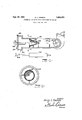
- Figure 1 is a semi-schematic vertical longitudinal cross-section of one form of the invention.
- Figure 2 is a transverse section of the form of Figure 1 taken along the line 2-2.
- a chamber or compartment I 0 is provided with a porous fibrous restraining wall I I.
- the wall usually has a conical or bag-like shape and is supported in an open mesh metal screen or adapter 42 having a similar shape.
- the assembly is pointed with its open end toward the entrance of the chamber.
- the particular configuration or arrangement of the fibrous wall is not critical, but it is preferable to use the same type of fibers and in 3 the same space relation for a given type of binder under test as will be met in practice in order to simulate actual conditions of use as much as possible.
- an unbonded fibrous mass is used for the wall if it is desired to examine or test the resulting bond made by the binder solution under test.
- the fibers used are continuous and woven into a cloth in order to distribute the fibers evenly over the surface of the supporting screen and provide mass integrity to the fibrous wall.
- it is not necessary to use an unbonded fibrous wall if a bonded one is first preheated to remove volatiles remaining in the binder or on I the wall from a previous test and thereby prevent erroneous results for subsequent tests.
- One end of the chamber is hinged as at 13 and provided with a handle [4 to provide means of access to the interior.
- a handle [4 to provide means of access to the interior.
- the chamber is exhausted by a fan l5 which may be of the centrifugal type discharging through a duct It.
- An orifice plate Il may be used in conjunction with conventional manometers (not shown) to measure the rate of air flow through the chamber.
- the fan In practice, while the fan is being driven by a motor, a known amount of a solution of an uncured binder of known percentage composition is flowed or pumped at a uniform rate into the chamber in through the inlet tube It. The discharge end of the latter is pointed into a blast of air supplied under constant pressure from the tube is so that the binder solution is atomized into many fine particles.
- the exhaust fan I 5 uniformly draws into the chamber through the inlet tube a quantity of air preheated in the oven Zl.
- the oven may be heated by small radiant gas-fired burners or electric coils. Its temperature may be manually regulated with reference to the temperature of the air as it enters the chamber as indicated by the thermocouple 22.
- the efficiency of the binder under the conditions of test may be calculated. Its color may also at this time be noted.
- Various other tests may be made if desired. For example,the strength-of the bond, its brittleness, the flexural 'strength'of the bonded mass, and the like may be determined by inspection or conventional tests.
- the operating conditions such as temperature, rates of flow of binder solution, air, and the like, although uniform fora given test, are not an essential part of the invention and may be widely varied to meet various demandsydepending on the type of binder used, the conditions of itsa'p'plication, and similar factors.
- the binder solution is an aqueous solution of phenol formaldehyde in the A stage of polymerization, the following operating procedure has been found to be satisfactory.
- a hollow cone of glass fibers was heat cleaned for two hours at 900 weighed to the nearest 0.01 gram, and then placed in a supporting screen or adapter positioned in a reaction chamber of the present invention. With the chamber door 'closed, the exhaust fan was started after which compressed air was admitted through the atomizing tube and adjusted to 30 p. s. i. g.
- the total amount of air flowing through the chamber was regulated by adjusting a damper in the discharge duct until the readings before and after the orifice plate were approximately 0.07 to 0.10 inch of mercury and 4.3 to 4.5 inches of mercury, respectively.
- thermocouple positioned as shown in the drawing. This corresponded to a temperature of 330 to 380 F. at the area occupied by the glass fiber cone.
- E is the efiiciencyz; the increase in Weight of the cone; G the specific gravity of the binder solution; V the volume of the solution used; and S the percent solids in the solution.
- the efficiency of a binder solution may be quickly and accurately determined.
- the color of the binder in its final stage of polymerization and other properties of the bonded mass may in a likemanner be easily obtained. Further, there is no interruption with factory procedure so that factory time, apparatus and quality products need not be sacrificed to-obtainthese results.
- Apparatus for determining the efliciencyof a thermosetting binder comprising a tubular chamber substantially enclosed and having an access door atone end, separate inlets into said chamber at the same end for 'a thermosetting binder solution in-the A stage of polymerization, for compressed air, and for heated air, wherein the discharge end of the binder inlet is substantially at right angles and in-close proximity to the discharge end of the compressed air inlet, a preheater stationed in series with the heated air inlet, an air exhausting means positioned at the other end of said chamber.
- a glass fiber cartridge having a conical shape disposed within said chamber with its open end facing the discharge end of said compressed air inlet, and an orifice plate disposed within said chamber.
- Apparatus for quickly and accurately determining binder properties comprising a chamber, a conical fibrous glass member adapted for easy insertion and removal from said chamber,
- fan means for exhausting air from said chamber, an air inlet port for said chamber, said air inlet port having an air preheater connected therewith, said fan means and said air inlet port being disposed on opposite sides of said conical fibrous glass member in said chamber, and means for introducing a solution of binder into said chamber, said latter means being disposed on that side of said conical fibrous glass member which is adjacent said air inlet port.
- Apparatus for determining binder properties comprising a chamber, a conical screen member supported within said chamber, a removable, conical fibrous glass member adapted for nesting within said screen member, fan means for exhausting air from said chamber,
- an air inlet port for said chamber said air inlet port having a heating means connected therewith, said fan means being adapted for pulling heated air through said conical fibrous glass member, and means for introducing binder into said chamber adjacent said air inlet port.
Landscapes
- Health & Medical Sciences (AREA)
- Life Sciences & Earth Sciences (AREA)
- Chemical & Material Sciences (AREA)
- Engineering & Computer Science (AREA)
- Food Science & Technology (AREA)
- Medicinal Chemistry (AREA)
- Physics & Mathematics (AREA)
- Analytical Chemistry (AREA)
- Biochemistry (AREA)
- General Health & Medical Sciences (AREA)
- General Physics & Mathematics (AREA)
- Immunology (AREA)
- Pathology (AREA)
- Reinforced Plastic Materials (AREA)
Description
P 29, 1953 A. SIMISON 2,653,473
APPARATUS FOR DETERMINING PROPERTIES OF RESINS Filed July 29, 1950 Patented Sept. 29, 1953 APPARATUS FOR DETERMINING PROPERTIES OF RESINS Allen L. Simison, Ottawa Hills, Toledo, Ohio, assignor to Owens-Corning Fiberglas Corporation, a corporation of Delaware Application July 29, 1950, Serial No. 176,601
2 Claims. 1
such as those made of glass, have round, smooth,v
non-cohering surfaces, a mass of such fibres lacks self integrity and unification. Accordingly it is customary to apply a binder such as a thermosetting polymer to the fibrous mass and efiect an artificial bond at the fiber junctures, thereby to impart mass integrity. As used herein, the term thermosetting polymer denotes a substance that is capable of conversion as by heat into an infusible resin.
For instance, one practice is to spray an aqueous solution of a thermosetting polymer, such asphenol formaldehyde in the A stage of polymerization, onto a mass ofglass fibers arranged in any sort of pattern, usually in a helter-skelter jackstraw relation. Subsequently, the fibrous mass is heated to evaporate the water and advance the binder to the final or C stage and, in this manner, effect the bonding action. In such an integral form, the fibrous product has many useful applications, for example, as thermal insulation. 7
Because of the large part it plays, the binder must be suppliedfor industrial purposes in appreciable quantities. It is difiicult to prepare such large lotsand at the same time accurately control all portions with respect to the final specifications required. For instance, it frequently occurs that some of the binder is green or undercured even for the A stage of polymerization. When such a preparation is used as a binder, the undercured portions escape as volatiles resulting in poor binder efiiciency. Also, since the times and conditions for binder application and cure are constant in a continuous commercial process, failure of the binder to perform its assigned part to the degree and in the time contemplated results in poorly bonded products.
' Further, when a thermosetting polymer is used as a fiber binder, it is spread out as a fine film between the'fiber junctures. Consequently, its surface area is increased many thousandfold, especially as compared to when it is molded as a single, integral article. In such a form it is therefore considerably more susceptible to the variousagencies of attack such as the surface alkali of the glass, the polymerization catalyst remaining in the thermosetting polymer, and the like.
Experience has shown that in certain cases, the color of a binder after polymerization to the final stage foretells its probable future dependability and resistance to such attack. For example, where phenol formaldehyde, a very commonly used binder, is red to black in color after final polymerization, it can be expected subsequently to become soft and appreciably lose its ability to bind the fibers one to another. But if it is orange to brown, such latent defect is not present and the binder can be expected to perform its intended function for an acceptable length of time.
Before the present invention, it was necessary to take factory time and factory apparatus to test a binder solution to determine if it met these and other specifications. If it so happened that the binder was defective in one or more properties, not only was this valuable time lost from production, but there was an appreciable waste of the fibers and of other materials used in the manufacturing steps, of labor, and the like.
The principal object of the present invention is to provide improved means for quickly determining the properties of a binder for fibrous matter.
A leading object is to provide means for the quick and accurate determination of binder efficiency.
Another object is to provide means for determining binder properties for fibrous material by tests conducted substantially on the binder alone.
More specific objects and advantages are apparent from the following description, which merely discloses and illustrates the invention and is not intended to limit the claims.
The invention relates to apparatus for poly merizing a thermosetting polymer and collecting those polymers that are at least of a predetermined molecular weight.
Figure 1 is a semi-schematic vertical longitudinal cross-section of one form of the invention; and
Figure 2 is a transverse section of the form of Figure 1 taken along the line 2-2.
Referring to these drawings, a chamber or compartment I 0 is provided with a porous fibrous restraining wall I I. The wall usually has a conical or bag-like shape and is supported in an open mesh metal screen or adapter 42 having a similar shape. The assembly is pointed with its open end toward the entrance of the chamber. The particular configuration or arrangement of the fibrous wall is not critical, but it is preferable to use the same type of fibers and in 3 the same space relation for a given type of binder under test as will be met in practice in order to simulate actual conditions of use as much as possible.
Frequently an unbonded fibrous mass is used for the wall if it is desired to examine or test the resulting bond made by the binder solution under test. In some cases where this practice is followed, the fibers used are continuous and woven into a cloth in order to distribute the fibers evenly over the surface of the supporting screen and provide mass integrity to the fibrous wall. However, it is not necessary to use an unbonded fibrous wall if a bonded one is first preheated to remove volatiles remaining in the binder or on I the wall from a previous test and thereby prevent erroneous results for subsequent tests.
One end of the chamber is hinged as at 13 and provided with a handle [4 to provide means of access to the interior. In this way, the fibrous cone or bag may be easily removed or inserted, for example, when determining its tare r final weight or for visual inspection. The chamber is exhausted by a fan l5 which may be of the centrifugal type discharging through a duct It. An orifice plate Il may be used in conjunction with conventional manometers (not shown) to measure the rate of air flow through the chamber.
In practice, while the fan is being driven by a motor, a known amount of a solution of an uncured binder of known percentage composition is flowed or pumped at a uniform rate into the chamber in through the inlet tube It. The discharge end of the latter is pointed into a blast of air supplied under constant pressure from the tube is so that the binder solution is atomized into many fine particles. At the same time, the exhaust fan I 5 uniformly draws into the chamber through the inlet tube a quantity of air preheated in the oven Zl. The oven may be heated by small radiant gas-fired burners or electric coils. Its temperature may be manually regulated with reference to the temperature of the air as it enters the chamber as indicated by the thermocouple 22.
The combination of heat and increased surface area quickly polymerize the binder. Those polymers thereby created or already present in the binder solution, which under the temperature and time of exposure of the test are still fairly volatile due to a low molecular weight, ipass through the porous wall 'I l and are "exhausted to the atmosphere through the duct Hi. The remaining polymers of a higher molecular weight are entrapped on the wall 1 I. This residue represents that portion of the binder which actually would be utilized 'in a bonding action.
Consequently, knowing how much binder was fed to the chamber and by determining the weight of the polymers deposited on the wall H, the efficiency of the binder under the conditions of test may be calculated. Its color may also at this time be noted. Various other tests may be made if desired. For example,the strength-of the bond, its brittleness, the flexural 'strength'of the bonded mass, and the like may be determined by inspection or conventional tests.
It should be understood that the operating conditions such as temperature, rates of flow of binder solution, air, and the like, although uniform fora given test, are not an essential part of the invention and may be widely varied to meet various demandsydepending on the type of binder used, the conditions of itsa'p'plication, and similar factors. However, as an example and with no intent to limit the invention, when the fibers are glass and the binder solution is an aqueous solution of phenol formaldehyde in the A stage of polymerization, the following operating procedure has been found to be satisfactory.
A hollow cone of glass fibers was heat cleaned for two hours at 900 weighed to the nearest 0.01 gram, and then placed in a supporting screen or adapter positioned in a reaction chamber of the present invention. With the chamber door 'closed, the exhaust fan was started after which compressed air was admitted through the atomizing tube and adjusted to 30 p. s. i. g.
The total amount of air flowing through the chamber was regulated by adjusting a damper in the discharge duct until the readings before and after the orifice plate were approximately 0.07 to 0.10 inch of mercury and 4.3 to 4.5 inches of mercury, respectively.
At this point the preheater was started and the unit brought to operating temperatures. For this run these conditions were a temperature of 482 F. plus or minus 3 F. as indicated by a thermocouple positioned as shown in the drawing. This corresponded to a temperature of 330 to 380 F. at the area occupied by the glass fiber cone.
Next 1-0 cubic centimeters of an aqueous solution of phenol formaldehyde in the A stage of polymerization, adjusted to 50% solids, were introduced into the chamber over a period of five minutes through the tubular inlet reserved for the binder solution. Subsequently an additional five minute .period was allowed for the polymerization to take place after which the operation was halted. The cone was then removed, allowed to come to room temperature, and weighed to the nearest 0.01 gram.
At this time thecone was also visually 'inspected. The formula then used for calculating the efliciency of the binder solution under test was as follows:
W Percent E wherein E is the efiiciencyz; the increase in Weight of the cone; G the specific gravity of the binder solution; V the volume of the solution used; and S the percent solids in the solution.
By the present invention, the efficiency of a binder solution may be quickly and accurately determined. The color of the binder in its final stage of polymerization and other properties of the bonded mass may in a likemanner be easily obtained. Further, there is no interruption with factory procedure so that factory time, apparatus and quality products need not be sacrificed to-obtainthese results.
Various modifications and changes may ;be made in the invention within the spirit of the disclosure'and the appended claims.
-I claim:
1. Apparatus for determining the efliciencyof a thermosetting binder comprising a tubular chamber substantially enclosed and having an access door atone end, separate inlets into said chamber at the same end for 'a thermosetting binder solution in-the A stage of polymerization, for compressed air, and for heated air, wherein the discharge end of the binder inlet is substantially at right angles and in-close proximity to the discharge end of the compressed air inlet, a preheater stationed in series with the heated air inlet, an air exhausting means positioned at the other end of said chamber. an
exhaust duct at the same end, a glass fiber cartridge having a conical shape disposed within said chamber with its open end facing the discharge end of said compressed air inlet, and an orifice plate disposed within said chamber.
2. Apparatus for quickly and accurately determining binder properties comprising a chamber, a conical fibrous glass member adapted for easy insertion and removal from said chamber,
, fan means for exhausting air from said chamber, an air inlet port for said chamber, said air inlet port having an air preheater connected therewith, said fan means and said air inlet port being disposed on opposite sides of said conical fibrous glass member in said chamber, and means for introducing a solution of binder into said chamber, said latter means being disposed on that side of said conical fibrous glass member which is adjacent said air inlet port.
3. Apparatus for determining binder properties comprising a chamber, a conical screen member supported within said chamber, a removable, conical fibrous glass member adapted for nesting within said screen member, fan means for exhausting air from said chamber,
an air inlet port for said chamber, said air inlet port having a heating means connected therewith, said fan means being adapted for pulling heated air through said conical fibrous glass member, and means for introducing binder into said chamber adjacent said air inlet port.
ALLEN L. SIMISON.
References Cited in the file of this patent UNITED STATES PATENTS Number Name Date 1,185,821 Pittman et al June 6, 1916 1,834,687 Davis Dec, 1, 1931 1,884,486 Zavertnik, Jr. Oct. 25, 1932 1,938,876 Yakata Dec. 12, 1933 1,961,921 Bowen June 5, 1934 2,072,872 Finkelstein Mar. 9, 1937 2,403,740 Muench July 9, 1946 2,550,465 Gorski Apr. 24, 1951 FOREIGN PATENTS Number Country Date 406,512 Great Britain Mar. 7, 1934
Priority Applications (1)
| Application Number | Priority Date | Filing Date | Title |
|---|---|---|---|
| US176601A US2653473A (en) | 1950-07-29 | 1950-07-29 | Apparatus for determining properties of resins |
Applications Claiming Priority (1)
| Application Number | Priority Date | Filing Date | Title |
|---|---|---|---|
| US176601A US2653473A (en) | 1950-07-29 | 1950-07-29 | Apparatus for determining properties of resins |
Publications (1)
| Publication Number | Publication Date |
|---|---|
| US2653473A true US2653473A (en) | 1953-09-29 |
Family
ID=22645039
Family Applications (1)
| Application Number | Title | Priority Date | Filing Date |
|---|---|---|---|
| US176601A Expired - Lifetime US2653473A (en) | 1950-07-29 | 1950-07-29 | Apparatus for determining properties of resins |
Country Status (1)
| Country | Link |
|---|---|
| US (1) | US2653473A (en) |
Cited By (3)
| Publication number | Priority date | Publication date | Assignee | Title |
|---|---|---|---|---|
| US2703488A (en) * | 1954-02-16 | 1955-03-08 | Lewis H Gevantman | Fog mist chamber |
| US2857756A (en) * | 1954-08-09 | 1958-10-28 | George Evans Corp | Method of and apparatus for mixing fibrous material and powdered material |
| US3164749A (en) * | 1961-02-13 | 1965-01-05 | Ibm | Electronic component packaging |
Citations (9)
| Publication number | Priority date | Publication date | Assignee | Title |
|---|---|---|---|---|
| US1185821A (en) * | 1915-12-30 | 1916-06-06 | George L Pittman | Dust-separator. |
| US1834687A (en) * | 1927-12-08 | 1931-12-01 | Moraine Products Company | Manufacture of powdered metals |
| US1884486A (en) * | 1928-12-19 | 1932-10-25 | Barrett Co | Impregnating process |
| US1938876A (en) * | 1930-11-21 | 1933-12-12 | Takata Yoshio | Process and apparatus for producing pulverized lead |
| GB406512A (en) * | 1932-05-19 | 1934-03-01 | Mo Och Domsjoe Wallboard Compa | Apparatus for the impregnation of porous boards |
| US1961921A (en) * | 1930-02-15 | 1934-06-05 | Percy P Bowen | Screen separator |
| US2072872A (en) * | 1933-10-31 | 1937-03-09 | Finkelstein Leo | Apparatus for testing filters |
| US2403740A (en) * | 1942-12-31 | 1946-07-09 | Celotex Corp | Apparatus for separating shot particles from mineral wool |
| US2550465A (en) * | 1948-07-29 | 1951-04-24 | Owens Corning Fiberglass Corp | Insulating material |
-
1950
- 1950-07-29 US US176601A patent/US2653473A/en not_active Expired - Lifetime
Patent Citations (9)
| Publication number | Priority date | Publication date | Assignee | Title |
|---|---|---|---|---|
| US1185821A (en) * | 1915-12-30 | 1916-06-06 | George L Pittman | Dust-separator. |
| US1834687A (en) * | 1927-12-08 | 1931-12-01 | Moraine Products Company | Manufacture of powdered metals |
| US1884486A (en) * | 1928-12-19 | 1932-10-25 | Barrett Co | Impregnating process |
| US1961921A (en) * | 1930-02-15 | 1934-06-05 | Percy P Bowen | Screen separator |
| US1938876A (en) * | 1930-11-21 | 1933-12-12 | Takata Yoshio | Process and apparatus for producing pulverized lead |
| GB406512A (en) * | 1932-05-19 | 1934-03-01 | Mo Och Domsjoe Wallboard Compa | Apparatus for the impregnation of porous boards |
| US2072872A (en) * | 1933-10-31 | 1937-03-09 | Finkelstein Leo | Apparatus for testing filters |
| US2403740A (en) * | 1942-12-31 | 1946-07-09 | Celotex Corp | Apparatus for separating shot particles from mineral wool |
| US2550465A (en) * | 1948-07-29 | 1951-04-24 | Owens Corning Fiberglass Corp | Insulating material |
Cited By (3)
| Publication number | Priority date | Publication date | Assignee | Title |
|---|---|---|---|---|
| US2703488A (en) * | 1954-02-16 | 1955-03-08 | Lewis H Gevantman | Fog mist chamber |
| US2857756A (en) * | 1954-08-09 | 1958-10-28 | George Evans Corp | Method of and apparatus for mixing fibrous material and powdered material |
| US3164749A (en) * | 1961-02-13 | 1965-01-05 | Ibm | Electronic component packaging |
Similar Documents
| Publication | Publication Date | Title |
|---|---|---|
| US7781512B2 (en) | Control of product in curing ovens for formaldehyde-free glass fiber products | |
| US5318990A (en) | Fibrous glass binders | |
| US8003170B2 (en) | Control of pre-cured product moisture for formaldehyde-free fiberglass products | |
| CN102413895B (en) | Method for production of refractory filter | |
| US20240417496A1 (en) | B-stageable aqueous binder compositions | |
| US2527628A (en) | Process for producing a matrix containing particulate fillers | |
| US7872062B2 (en) | Control of pH in formaldehyde-free binder systems | |
| US2711365A (en) | Abrasive articles and method of making | |
| US2976574A (en) | Chemical process and product | |
| US2746608A (en) | Filter element and method of making same | |
| CN110475809A (en) | Method for impregnating reinforcing fibers with polyaryletherketone and semi-finished products obtained therefrom | |
| US3876405A (en) | Glass fiber coating process | |
| CA1203995A (en) | Measuring and controlling degree of cure of carbonaceous polymeric materials | |
| CN107219147B (en) | Method for evaluating heat resistance test of road fiber | |
| US4920159A (en) | Friction resistant composition | |
| CN215668301U (en) | Special thermosetting resin fiber continuous production equipment for prepreg | |
| JP5907573B2 (en) | Management method for determining the cured state of glass fiber products | |
| Marceau et al. | Thermal ageing of PMR15 polyimide matrix | |
| US2439604A (en) | Insulating confined spaces | |
| EP0590112B1 (en) | Odourless acoustic and thermal insulation | |
| DK169665B1 (en) | Basic, aqueous, thermosetting adhesive mixture for treating discontinuous mineral fibers, and method of making insulating materials using such a blend. | |
| TWI746362B (en) | A method of forming an impregnated filtering member | |
| US1566165A (en) | Method of making articles from rubberized-fiber composition | |
| JP7509780B2 (en) | METHOD FOR ADJUSTING THE AMOUNT OF DILUTION WATER IN A BINDER COMPOSITION AND CORRESPONDING CALCULATION UNIT - Patent application | |
| CA1105214A (en) | Phenolic resin bonded friction materials |