US2527825A - Manufacture of xylene isomers - Google Patents
Manufacture of xylene isomers Download PDFInfo
- Publication number
- US2527825A US2527825A US754574A US75457447A US2527825A US 2527825 A US2527825 A US 2527825A US 754574 A US754574 A US 754574A US 75457447 A US75457447 A US 75457447A US 2527825 A US2527825 A US 2527825A
- Authority
- US
- United States
- Prior art keywords
- reaction
- hydrogen fluoride
- xylene
- hydrocarbon
- mixture
- Prior art date
- Legal status (The legal status is an assumption and is not a legal conclusion. Google has not performed a legal analysis and makes no representation as to the accuracy of the status listed.)
- Expired - Lifetime
Links
Images


Classifications
-
- C—CHEMISTRY; METALLURGY
- C07—ORGANIC CHEMISTRY
- C07C—ACYCLIC OR CARBOCYCLIC COMPOUNDS
- C07C5/00—Preparation of hydrocarbons from hydrocarbons containing the same number of carbon atoms
- C07C5/22—Preparation of hydrocarbons from hydrocarbons containing the same number of carbon atoms by isomerisation
- C07C5/27—Rearrangement of carbon atoms in the hydrocarbon skeleton
- C07C5/2729—Changing the branching point of an open chain or the point of substitution on a ring
- C07C5/2732—Catalytic processes
- C07C5/274—Catalytic processes with inorganic acids; with salts or anhydrides of acids
- C07C5/2748—Acids of halogen; Salts thereof
-
- Y—GENERAL TAGGING OF NEW TECHNOLOGICAL DEVELOPMENTS; GENERAL TAGGING OF CROSS-SECTIONAL TECHNOLOGIES SPANNING OVER SEVERAL SECTIONS OF THE IPC; TECHNICAL SUBJECTS COVERED BY FORMER USPC CROSS-REFERENCE ART COLLECTIONS [XRACs] AND DIGESTS
- Y10—TECHNICAL SUBJECTS COVERED BY FORMER USPC
- Y10S—TECHNICAL SUBJECTS COVERED BY FORMER USPC CROSS-REFERENCE ART COLLECTIONS [XRACs] AND DIGESTS
- Y10S585/00—Chemistry of hydrocarbon compounds
- Y10S585/8995—Catalyst and recycle considerations
- Y10S585/901—Catalyst and recycle considerations with recycle, rehabilitation, or preservation of solvent, diluent, or mass action agent
Definitions
- This invention relates to a new and improved process for effecting formation of substituted aromatic hydrocarbons with hydrogen fluoride catalysis, and, more particularly, to conversions involving formation of alkyl aromatic compounds by alkyl transfer reactions and especially by isomerization.
- Hydrogen fluoride catalysis of substituted aromatic hydrocarbon reactions is known, but since hydrogen fluoride is immiscible with such hydrocarbons, it has been found necessary to subject the reaction mixture to vigorous agitation in order to obtain adequate conversions in such catalytic reactions.
- Suitable agitation equipment which will insure adequate conversion within reasonable time intervals with hydrogen fluoride catalysis involves expensive equipment, but, more important, a material increase in the hazards of operation.
- a rotating agitator shaft running into an otherwise sealed reactor introduces significant dangers to operating personnel and equipment, since failure of a shaft bearing and/or shaft sealing devices permits escape of the extremely hazardous chemical, hydrogen fluoride.
- Large reactors with large volumes of reagents are involved, as previously explained, and elimination or reduction of this hazard from agitation and agitators has unfoldd.
- Another object is to provide a process for efficient catalysis of aromatic hydrocarbon conversions with a normally immiscible hydrogen fluoride catalyst in a simple sealed reactor and without the necessity for a long residence time in a. correspondingly large volume agitated reaction Z0116.
- Figure 1 is a diagrammatic flow sheet of a process and apparatus illustrating the principles of this invention.
- Figures 2 and 3 show an alternative form of process and apparatus; and
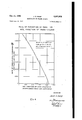
- Figure 4 is a graph illustrating the detrimental effects on conversion rate of mixing reaction feed with reaction product in theprocess of this invention.
- the step of maintaining a difierential in hydrocarbon composition from inlet to outlet of the reaction zone accomplishes several major objectives, including (1) reduction of loss from relatively slow side reactions, (2) an increase in the overall conversion rate through the reaction zone resulting in a decrease in the necessary reaction time for a given conversion, (3) elimination of the previously noted hazards attending agitation of hydrogen fluoride in large volume reactors, and (4) good reaction control.
- zone I2 The hydrogen fluoride catalyst and hydrocarbon components are blended or solubilized in zone I2 to form a single phase by any suitable mixing device, preferably without mechanical agitation.
- any suitable mixing device preferably without mechanical agitation.
- Known fluid injection methods of mixing normally sufl'lce, although mechanical agitators are not precluded, since zone I2 is of relatively small volume c. g., 1/10 to 1/100 the volume of the reactor or less) and hazards of large volume mechanical agitators are not involved.
- reactor I6 constructed and arranged to prevent substantial dilution of hydrocarbon at the inlet feed end I! with converted hydrocarbons at the outlet end 18.
- reactor I6 is in the form of a sealed vessel constructed and arranged to provide a substantially quiescent reaction zone with a differential in hydrocarbon composition from inlet l! to outlet l8.
- Baflie plates i5 and 20, respectively, serve to compartmentalize reactor l6 and insure prevention of cross currents which might tend to blur or obliterate the desired differentials in hydrocarbon composition.
- reaction rate would be about .005, whereas for the same conversion and maintenance of a differential in hydrocarbon composition from .025 para at inlet to 90% of theoretical equilibrium at outlet, the reaction rate is the statistical average of the high rate (.028) for low para with the low rate (.005) for high para content and from the graph would be about three times as high in the differential or quiescent reaction zone as in the mixed reaction zone.
- dilution of feed with later stage reaction mixtures may be avoided by maintaining streamline, as distinguished from turbulent, flow through the reaction zone.
- the desired state of diflerential in hydrocarbon composition through the reaction zone may be viewed either as if in instantaneous static state or in a dynamic stabilized state.
- in Fig. 1 are not mixed with fluid particles in a position represented by dotted line 22.
- the single phase reaction mixture may be visualized as continuously entering and leaving a diflerential reaction zone ASi (shown in Fig. l as a cross-hatched vertical strip) without mixing of inlet feed with outlet reactants except as AS; becomes very small.
- ASi shown in Fig. l as a cross-hatched vertical strip
- the inlet and outlet boundaries of A81 show a change or differential in hydrocarbon composition.
- changes in hydrocarbon composition throughout the length of the reactor would approximate the shape of the curve of Fig. 4.
- This afiords maximum overall conversion capacityand yield for any given set of operating conditions; that is to say, the change in hydrocarbon composition from ASi at inlet II to AS: at outlet it corresponds to the conversion obtained in the reaction zone.
- reaction mixture flows through sealed reactor I 6 without agitation while being maintained in single phase and under desired reaction conditions.
- Hydrocarbon efliuent, together with hydrogen fluoride catalyst, is withdrawn through outlet line 23 by way of cooler 24 to separation stage 26.
- cooler 24 serves to break the reaction mixture into two phases by reduction of temperature to a point below that of miscibility of hydrocarbon with hydrogen fluoride.
- the hydrogen fluoride phase may be separated from the oil phase at 26 and discharged through outlet line 21, pump 28, through valve-controlled line 29, to be recycled to the isomerization zone or removed from the system via line 3! as desired.
- Fresh catalyst may be introduced to the system by means of inlet line 32.
- Hydrocarbon conversion products are withdrawn from separator 26 by line 33 and recovered.
- this recovery may be effected by selective crystallization of the para xylene, filtration of crystals from the mother liquor and return of mother liquor to the isomerization feed for additional conversion of isomers to the desired prodnot.
- the invention is applicable to various aromatic hydrocarbon conversion reactions in which hydrogen fluoride is an eflective catalyst.
- Exemplary reactions are isomerization, disproportionation, alkylation and de-alkylation.
- the invention can be applied with particular ad-- vantage in the isomerization of alkyl benzenes, especially xylenes, since it has been discovered that hydrogen fluoride and xylene feeds can be solubilized and rendered miscible merely by raiscontain up to about 0.5% water, and such aning the temperature thereof to 300 to 400 F., for hydrous hydrogen fluoride is preferred as a cataexample, and that after blending at these elelyst, although small amounts of water, for exvated temperatures and under suflicient pressure ample, 2 to are not precluded.
- the pp temperature imit for is mreaction mixture selectively promotes the isomereri at 0f xylenes being primarily determined ization reaction, i. e., the same fractional cony permissible Pressures necessary to maintain versions of meta or ortho xylene to para xylene,
- Suitable proportions of diluent are in exmethyl group at the nucleus,.300-375 F. is desira cess of 10% and desirably in the order of able, and a temperature of from about 310-350 by Volume based on the total feed In display has been fovud Preferable for the isomeriza' portionation and alkylation reactions blending tion of xylenes wlth anhydrous hydrogen fluoride.
- the maxlmum Contact tune is deter catalyst activity or at least to keep and control mi e primarily by permissible Plant size, reduction in activity to a minimum, the hydrothough the danger of increasing relatively slow carbon feed and. diluent desirably should be dried side reactions is increased by inordinately long prior t ontacting with the hydrogen fluoride contacts. Ge e y. thirty minutes is a maxicatalyst.
- benzene toluene or xylene may be Operativeness, relatively high Propmtmns (if alkylated with an olefin under conditions such drogen fluoride are necessary to effect the homothat the olefin, aromatic and catalyst form a s n us isomerization ap r pl f single phase.
- the alkylation product may or about 60 to volume per cent of anhydrous HF may ot be soluble in the reaction phase, de-
- l i based on the total reaction mixture is preferred. pending upon it Smaller am are Operable, but at least When the reaction product is soluble, a process by volume is desirable for xylene isomerization such as shown in t drawing 111 be utilized under the conditions herein recommended.
- the 70 w t alkylated aromatic product is maximum proportion of catalyst is determined miscible with the hydrogen fluoride phase, it may p i ar ly y acceptable lilimt Size, but more than be allowed to separate and be removed without by volume based on total reaction mixture the necessity of markedly cooling the reaction ordinarily is not warranted. mixture below reaction temperatures.
- anhydrous hydrogen fluoride may 7 Other alkylation reactions, such as alkylation relative molecular weight.
- tertiary butyl benzene as a diluent or as an alkylation agent (the tertiary butyl group being transferred to the isobutane by disproportionation) for isobutane with or without isobutene in the hydrocarbon feed.
- alkyl aromatics such as ethyl xylene
- De-alkylation of alkyl aromatics, such as ethyl xylene is embraced by the present invention and may be effected under conditions such as previously described with respect to isomerization of xylenes.
- Disproportionation reactions are advantaphase by the process of a velocity which exceeds the critical velocity below which non-turbulent flow occurs.
- critical velocities are a well-understood phenomenon readily determined for dence time sions.
- the efllciency of the reaction zone is increased and a near approximation of stream-line flow is obtained in the apparatus and process of Fig. 2 by means of an eddy eliminator which serves to straighten the lines of flow in reaction chamber 49 and thereby increase the 'difierential in hydrocarbon composition.
- the eddy eliminator Si is in the form of a mul tiplicity of tubes 52 of relatively small diameter. These tubes are shown in the detailed cross-section of Fig. 3 and will be seen to fill the reaction chamber in the eddy elimination zone.
- reaction mixture entering the inlet of chamber 49 at relatively high velocities is immediately reason of the increase in cross chamber 49.
- the isomerized xylenes pass from reaction chamber 49 by way of outlet conduit 54 and cooler 56 to the settler 51. Reduction of the temperature of the reaction mixture by cooler 56 should be below the temperature of complete miscibility, for example, F. or lower and thereby
- the isomerized hydrocarbon phase in settler 51 passes through outlet 6
- Residual hydrogen fluoride catalyst prestionated as here indicated into four principal types of components: 1) an overhead fraction boiling below the xylene isomers and comprising hydrocarbon diluent, ii. any, together with disproportionation products which are more volatile than and higher molecular weight range.
- the mixture of xylene isomers is withdrawn from fractionating column 66 by way of line 61 to isomer recovery unit 88.
- isomer recovery unit 68 will comprise a suitable system for separating one or more of the xylene isomers as,
- Diluent toluene, propane, cyclopentane or cyciohexane for example
- xylene disproportionation products boiling below the xylenes themselves are removed from fractionating column 66 by way of overhead outlet 12.
- header 11 are brought to reaction temperature by preheater 84 and flow by way of inlet 86 with condenser 13.
- a portion of the overhead may be returned through valve-controlled reflux line 14 to improve the fractionation in column 56.
- the diluent and lighter disproportionation products are recycled at least in part to the reaction zone and as here shown flow by way of line 16 to recycle header Tl. Desired portions of the diluent or disproportionation products may be removed by way of valve-controlled line 18.
- C9 disproportionation products of the xylenes flow from fractionating column 66 by way of line quantities are removed through valve-controlled
- the various recycle stocks combined in the xylene feed and hydrogen fluoride catalyst through mixer 48. These recycle hydrocarbons serve to suppress disproportionation and to promote selective formation of the desired xylene isomer or isomers.
- alkyl transfer or alkyl transfer reaction are utilized in the appended claims to embrace generic reactions in which an alkyl group is shifted in position on an aromatic ring (as in isomerization) or is removed from the ring, or is added to the ring (as in disproportionation for instance).
- a continuous process for isomerizing a xylene comprising the steps of blending a xylene charging stock with anhydrous liquid hydrogen fluoride, at a temperature of 250 to 400 F., the proportion of said hydrogen fluoride being equal to 40 to 90% of the total liquid mixture, thus forming a single liquid phase blend, thereafter immediately passing said blend through a reaction zone in non-turbulent flow, whereby the mixture downstream is substantially unmixed with the upstream reaction mixture, while maintaining the temperature at about 250 to 400 F. in said reaction zone.
- liquid hydrogen fluoride contains minor amounts of water not exceeding 5%.
Landscapes
- Chemical & Material Sciences (AREA)
- Organic Chemistry (AREA)
- Inorganic Chemistry (AREA)
- Chemical Kinetics & Catalysis (AREA)
- Organic Low-Molecular-Weight Compounds And Preparation Thereof (AREA)
- Catalysts (AREA)
Description
3 Sheets-Sheet 2 J. D. KEMP MANUFACTURE OF XYLENE ISOMERS Oct. 31, 1950 Filed June 13, 1947 KUDQOQQ INVENTOR Jaco Q Kemp ATTORNEYS Oct. 31, 1950 J. D. KEMP 2,527,825
MANUFACTURE OF XYLENE ISOMERS Filed June 15, 1947 3 Sheets-Sheet 3 RATE OF FORMATION OF PARA VS.
MOL FRACTION OF PARA-XYLENE 0.024 (a 95 MOL HF 326F 0.3- q': 0.4% H20 //v HF lN/T/AL M'OL \FRA'CT/ON META'= g 0.020 I 3? o s 2&0000 I MOL FRACTION OF PARA -XYLENE /N HYDROCARBONREACT/ON MIXTURE=B INVEN TOR Jacob Q Ai /77,0
A TTORNE rs Patented Get. 31, 1950 UNITED STATES PATENT OFFICE Jacob D. Kemp, Richmond, Calif., assignor to California Research Corporation, San Francisco, Calif., a corporation of Delaware Application June 13, 1947, Serial No. 754,574
Claims.
This invention relates to a new and improved process for effecting formation of substituted aromatic hydrocarbons with hydrogen fluoride catalysis, and, more particularly, to conversions involving formation of alkyl aromatic compounds by alkyl transfer reactions and especially by isomerization.
Hydrogen fluoride catalysis of substituted aromatic hydrocarbon reactions is known, but since hydrogen fluoride is immiscible with such hydrocarbons, it has been found necessary to subject the reaction mixture to vigorous agitation in order to obtain adequate conversions in such catalytic reactions.
In general organic reactions are slow, and hydrogen fluoride catalyzed aromatic hydrocarbon conversions are no exception. This general characteristic necessitates vigorous agitation throughout a relatively long reaction period which, in turn, means that relatively large volumes of reactants and hydrogen fluoride must be agitated in order to insure adequate contacting of the hydrocarbon oil phase with the immiscible hydrogen fluoride catalyst phase.
Suitable agitation equipment which will insure adequate conversion within reasonable time intervals with hydrogen fluoride catalysis involves expensive equipment, but, more important, a material increase in the hazards of operation. A rotating agitator shaft running into an otherwise sealed reactor introduces significant dangers to operating personnel and equipment, since failure of a shaft bearing and/or shaft sealing devices permits escape of the extremely hazardous chemical, hydrogen fluoride. Large reactors with large volumes of reagents are involved, as previously explained, and elimination or reduction of this hazard from agitation and agitators has duced.
Another object is to provide a process for efficient catalysis of aromatic hydrocarbon conversions with a normally immiscible hydrogen fluoride catalyst in a simple sealed reactor and without the necessity for a long residence time in a. correspondingly large volume agitated reaction Z0116.
Other objects and advantages will be apparent from the following description and drawing, wherein Figure 1 is a diagrammatic flow sheet of a process and apparatus illustrating the principles of this invention. Figures 2 and 3 show an alternative form of process and apparatus; and Figure 4 is a graph illustrating the detrimental effects on conversion rate of mixing reaction feed with reaction product in theprocess of this invention.
It has been discovered that the foregoing objects and advantages can be obtained by continuously passing the hydrocarbon and hydrogen fluoride catalyst through a relatively small volume solubilizing or blending zone to form a substantially homogeneous liquid phase mixture of hydrogen fluoride and hydrocarbon feed, then passing said single phase liquid mixture through a relatively large volume single phase liquid reaction zone, and maintaining a differential in hydrocarbon composition through said reaction zone by preventing substantial dilution of hydrocarbon at the inlet with converted hydrocarbon at the outlet of said reaction zone. The step of maintaining a difierential in hydrocarbon composition from inlet to outlet of the reaction zone, despite the fact that only a single phase reaction system is utilized, accomplishes several major objectives, including (1) reduction of loss from relatively slow side reactions, (2) an increase in the overall conversion rate through the reaction zone resulting in a decrease in the necessary reaction time for a given conversion, (3) elimination of the previously noted hazards attending agitation of hydrogen fluoride in large volume reactors, and (4) good reaction control.
Reference to Figure 1 of the drawing will reveal one preferred form of process and apparatus for racticing the invention wherein hydrocarbon feed'passes through inlet pump [0 and heat exchanger to blending zone l2, which also receives hydrogen fluoride catalyst admitted by way of inlet line l3 and heat exchanger M. The hydrocarbon feed and hydrogen fluoride catalyst are solubilized or blended in zone l2 to form a single phase reaction mixture. Various solubilizing or blendingprocedures may be utilized, depending upon the hydrocarbon reactants, as hereinafter discussed in more detail. When the feed is a xylene fraction, blending can be effected very simply.
The hydrogen fluoride catalyst and hydrocarbon components are blended or solubilized in zone I2 to form a single phase by any suitable mixing device, preferably without mechanical agitation. Known fluid injection methods of mixing normally sufl'lce, although mechanical agitators are not precluded, since zone I2 is of relatively small volume c. g., 1/10 to 1/100 the volume of the reactor or less) and hazards of large volume mechanical agitators are not involved.
at reaction temperature.
The single phase mixture next flows to reactor l6 constructed and arranged to prevent substantial dilution of hydrocarbon at the inlet feed end I! with converted hydrocarbons at the outlet end 18. As here shown, reactor I6 is in the form of a sealed vessel constructed and arranged to provide a substantially quiescent reaction zone with a differential in hydrocarbon composition from inlet l! to outlet l8. Baflie plates i5 and 20, respectively, serve to compartmentalize reactor l6 and insure prevention of cross currents which might tend to blur or obliterate the desired differentials in hydrocarbon composition.
The significance of difierential in hydrocarbon compositions in the single phase reaction zone will be better understood by reference to Figure 4 wherein, for illustrative purposes, the relationship bctween isomerization rates for conversion of meta xylene to para xylene is plotted against concentration of para xylene in the reaction mixture. From the graph of Figure 4, it is clear that the rate of conversion of meta xylene to para xylene as measured by the rate of formation of para xylene drops rapidly with increasing para content of the feed. If, for example, reactor it were operated with complete mixing and at 90% conversion to theoretical equilibrium concentrations, the reaction rate would be about .005, whereas for the same conversion and maintenance of a differential in hydrocarbon composition from .025 para at inlet to 90% of theoretical equilibrium at outlet, the reaction rate is the statistical average of the high rate (.028) for low para with the low rate (.005) for high para content and from the graph would be about three times as high in the differential or quiescent reaction zone as in the mixed reaction zone.
In accordance with the invention, dilution of feed with later stage reaction mixtures may be avoided by maintaining streamline, as distinguished from turbulent, flow through the reaction zone. The desired state of diflerential in hydrocarbon composition through the reaction zone may be viewed either as if in instantaneous static state or in a dynamic stabilized state. Thus, at any given time fluid particles flowing in a straight line from a position represented by dotted line 2| in Fig. 1 are not mixed with fluid particles in a position represented by dotted line 22. (In the isomerization of meta xylene for example the particles in position 22 have a higher para content than those in position 21 by reason of their longer reaction time.) At any given instant a series of fluid particles extending from inlet to outlet and spaced along the path of fluid flow would show 4 successive differential increases in content of converted hydrocarbons.
From a dynamic viewpoint, the single phase reaction mixture may be visualized as continuously entering and leaving a diflerential reaction zone ASi (shown in Fig. l as a cross-hatched vertical strip) without mixing of inlet feed with outlet reactants except as AS; becomes very small. Thus, the inlet and outlet boundaries of A81 show a change or differential in hydrocarbon composition. When plotted against position in the reactor, changes in hydrocarbon composition throughout the length of the reactor would approximate the shape of the curve of Fig. 4. This afiords maximum overall conversion capacityand yield for any given set of operating conditions; that is to say, the change in hydrocarbon composition from ASi at inlet II to AS: at outlet it corresponds to the conversion obtained in the reaction zone.
It should be understood that as AS approaches 0, mixing occurs, since individual molecules are known to move with respect to each other. However, it is equally clear that no mixing occurs between ASi at the inlet and AS2 at the outlet of the overall reaction zone. Likewise, by providing a continuous series of small reaction zones where mixing may take place within each zone but not substantially between different zones of the series, a diiierential in hydrocarbon composition can be maintained and the process of this invention utilized since, in the aggregate, the series of small zones provide an overall reaction zone in which feed hydrocarbons are not diluted 0! mixed with subsequently formed hydrocarbons at or substantially nearer the exit side.
Returning to the description of Figure l, the reaction mixture flows through sealed reactor I 6 without agitation while being maintained in single phase and under desired reaction conditions. Hydrocarbon efliuent, together with hydrogen fluoride catalyst, is withdrawn through outlet line 23 by way of cooler 24 to separation stage 26. In the case of xylene isomerization, cooler 24 serves to break the reaction mixture into two phases by reduction of temperature to a point below that of miscibility of hydrocarbon with hydrogen fluoride. Thus, an upper oil phase saturated with hydrogen fluoride and a lower hydrogen fluoride phase saturated with xylenes-are formed. The hydrogen fluoride phase may be separated from the oil phase at 26 and discharged through outlet line 21, pump 28, through valve-controlled line 29, to be recycled to the isomerization zone or removed from the system via line 3! as desired. Fresh catalyst may be introduced to the system by means of inlet line 32.
Hydrocarbon conversion products are withdrawn from separator 26 by line 33 and recovered. In the production of para xylene, for example, this recovery may be effected by selective crystallization of the para xylene, filtration of crystals from the mother liquor and return of mother liquor to the isomerization feed for additional conversion of isomers to the desired prodnot.
As previously stated, the invention is applicable to various aromatic hydrocarbon conversion reactions in which hydrogen fluoride is an eflective catalyst. Exemplary reactions are isomerization, disproportionation, alkylation and de-alkylation.
The invention can be applied with particular ad-- vantage in the isomerization of alkyl benzenes, especially xylenes, since it has been discovered that hydrogen fluoride and xylene feeds can be solubilized and rendered miscible merely by raiscontain up to about 0.5% water, and such aning the temperature thereof to 300 to 400 F., for hydrous hydrogen fluoride is preferred as a cataexample, and that after blending at these elelyst, although small amounts of water, for exvated temperatures and under suflicient pressure ample, 2 to are not precluded. Water in to maintain both the hydrogen fluoride and the 5 the hydrogen fluoride reduces the activity of the hydrocarbon in liquid phase, the homogeneous catalyst by decreasing the moi fraction of HF, reaction mixture can again be readily separated and consequentl reduces either the reaction rate upon dompletion f he reaction by merely coolor the capacity of the system for hydrocarbon if ing to a temperature below that of complete the amount of catalyst is increased to yield an miscibility, for example, 100 F. or lower. The equivalent HF mol fraction. An additional loss miscib i y of y e arb phas w hyof 35% in activit has been noted for HF condrogen fluoride at elevated temperatures is not taining 2 to 4% water when compared to andestroyed by large amounts of preferred diluents hydrous HF in an equivalent mol fraction.
for the isomerization reaction, such as benzene, Likewise, the presence of water tends to detolue e an ethyl benzene, Or by t Presence 0f crease miscibility of the hydrogen fluoride catahieher a omatic disn op i products. lyst with the hydrocarbon. Both the lower miscisuch as ethyl to uen or ethyl xy bility and the lower catalytic activity may be Suitable reaction conditions for the isomerizacompensated for to some extent by raising the tion of xylenes will be apparent from the followtemperature of operations.
in A tempera u e f a ve about 250 F- is The presence of a diluent miscible with the operative. the pp temperature imit for is mreaction mixture selectively promotes the isomereri at 0f xylenes being primarily determined ization reaction, i. e., the same fractional cony permissible Pressures necessary to maintain versions of meta or ortho xylene to para xylene,
qu d phase. ra ly. p ra ur s higher for example, are obtained in diluted solutions as than 400 F. are not warranted and tend to in- 5 in more concentrated ones under othe rwise comtroduce or increase side reactions. L ss Severe parable conditions. Second order reactions, such condit temperatures lower @011- as dis-proportionation, are selectively reduced by tact t mes, or bo h. a ccep a and even prefdilution of the reaction mixture. Additionally, erable for isomerization of ethyl and higher moit has been found that by using tolu ne a a lecular weight aliphatic side chains on a benzene t, losses by disproportionation of xylenes nucleus. Proportions of catalyst and hydrocarbon are reduced over and above t reduction n. ma e j e t b n sc b at reaction tained with substantially inert diluents, such as tempera ures- E hyl gr ps are much more easily propane and cyclopentane. For these reasons, it isomerized at the ar c nucleus than are is preferred to effect the'isomerization reaction methyl g p and temperatures 9 F in the presence of a diluent, most desirably toluwill be found suitable for such higher alkyl chains, ene ith xylene isomerization, F other 11. provided suitable precautions are taken to insure alkyl benzenes, the preferred t; is mono blending of the hydrogen fluoride catalyst with alkyl benzene in which the lkyl group is like an the hydrocarbon feed to produce a single phase alkyl group of the dialkyl benzene being isomerreactio milliliter In the isomerization of a 10 ized. Suitable proportions of diluent are in exmethyl group at the nucleus,.300-375 F. is desira cess of 10% and desirably in the order of able, and a temperature of from about 310-350 by Volume based on the total feed In display has been fovud Preferable for the isomeriza' portionation and alkylation reactions blending tion of xylenes wlth anhydrous hydrogen fluoride. agents or duuents will be found desirable, in Contact time (that is, resdence time at reaction 45 some instances, to increase miscibility of the temperature in Smgle Phase under isomenzmg hydrocarbon phase with hydrogen fluoride cataconditions) for a given conversion in the isomerlyst ization reaction is a function of tempefatme- Pressure is not critical except that it should 7 4 cat y concentration and feed composition be sumcientl high to maintain reactants and Ordina i y. a m r of about 1 minute will be to catalyst in liquid phase. In order to maintain required, and the maxlmum Contact tune is deter catalyst activity or at least to keep and control mi e primarily by permissible Plant size, reduction in activity to a minimum, the hydrothough the danger of increasing relatively slow carbon feed and. diluent desirably should be dried side reactions is increased by inordinately long prior t ontacting with the hydrogen fluoride contacts. Ge e y. thirty minutes is a maxicatalyst. Anysuitable drying process may be mum and five to twen y minutes is Presently adopted, for example, by contacting the hydroregarded as Optimum forisomeiization Of xylenes arbon feed bauxite or other porous adwith anhydrous hydrogen fluoride in the proporsorbents for water. tionsd sand at h temperatures herem recom- Other examples of aromatic hydrocarbon conmen e versions with hydrogen fluoride catalysis to which Catalyst in the leactlon i the invention is applicable are illustrated by the may be Van-ed wld ly. Although not critical to following; benzene toluene or xylene may be Operativeness, relatively high Propmtmns (if alkylated with an olefin under conditions such drogen fluoride are necessary to effect the homothat the olefin, aromatic and catalyst form a s n us isomerization ap r pl f single phase. The alkylation product may or about 60 to volume per cent of anhydrous HF may ot be soluble in the reaction phase, de-
l i based on the total reaction mixture is preferred. pending upon it Smaller am are Operable, but at least When the reaction product is soluble, a process by volume is desirable for xylene isomerization such as shown in t drawing 111 be utilized under the conditions herein recommended. The 70 w t alkylated aromatic product is maximum proportion of catalyst is determined miscible with the hydrogen fluoride phase, it may p i ar ly y acceptable lilimt Size, but more than be allowed to separate and be removed without by volume based on total reaction mixture the necessity of markedly cooling the reaction ordinarily is not warranted. mixture below reaction temperatures.
Commercial anhydrous hydrogen fluoride may 7 Other alkylation reactions, such as alkylation relative molecular weight.
- may be used geously eflected in single of 50 to 250 F. Thus, tertiary butyl benzene as a diluent or as an alkylation agent (the tertiary butyl group being transferred to the isobutane by disproportionation) for isobutane with or without isobutene in the hydrocarbon feed. De-alkylation of alkyl aromatics, such as ethyl xylene is embraced by the present invention and may be effected under conditions such as previously described with respect to isomerization of xylenes.
Disproportionation reactions are advantaphase by the process of a velocity which exceeds the critical velocity below which non-turbulent flow occurs. Such critical velocities are a well-understood phenomenon readily determined for dence time sions.
The efllciency of the reaction zone is increased and a near approximation of stream-line flow is obtained in the apparatus and process of Fig. 2 by means of an eddy eliminator which serves to straighten the lines of flow in reaction chamber 49 and thereby increase the 'difierential in hydrocarbon composition. As here shown the eddy eliminator Si is in the form of a mul tiplicity of tubes 52 of relatively small diameter. These tubes are shown in the detailed cross-section of Fig. 3 and will be seen to fill the reaction chamber in the eddy elimination zone. Thus, reaction mixture entering the inlet of chamber 49 at relatively high velocities is immediately reason of the increase in cross chamber 49. However, the momentum or impulse of the high velocity reaction mixture entering chamber 49 tends to produce eddy currents and thereby short-circuit or obliterate difl'erentials in hydrocarbon composition which it is desired to maintain in the reaction chamber. These eddies ar smoothed out and eliminated by flow of the reaction mixture through the series of parallel tubes 52 and the reaction mixture proceeds in substantially stream-line flow from the outlet 53 of eddy elimination tubes 52 through the remainder of chamber 49.
The isomerized xylenes pass from reaction chamber 49 by way of outlet conduit 54 and cooler 56 to the settler 51. Reduction of the temperature of the reaction mixture by cooler 56 should be below the temperature of complete miscibility, for example, F. or lower and thereby The isomerized hydrocarbon phase in settler 51 passes through outlet 6| to catalyst removal unit 62. Residual hydrogen fluoride catalyst prestionated as here indicated into four principal types of components: 1) an overhead fraction boiling below the xylene isomers and comprising hydrocarbon diluent, ii. any, together with disproportionation products which are more volatile than and higher molecular weight range.
The mixture of xylene isomers is withdrawn from fractionating column 66 by way of line 61 to isomer recovery unit 88. Usually isomer recovery unit 68 will comprise a suitable system for separating one or more of the xylene isomers as,
xylene return line 1|.
Diluent (toluene, propane, cyclopentane or cyciohexane for example) together with xylene disproportionation products boiling below the xylenes themselves are removed from fractionating column 66 by way of overhead outlet 12. and
' line 83.
header 11 are brought to reaction temperature by preheater 84 and flow by way of inlet 86 with condenser 13. A portion of the overhead may be returned through valve-controlled reflux line 14 to improve the fractionation in column 56. Preferably the diluent and lighter disproportionation products are recycled at least in part to the reaction zone and as here shown flow by way of line 16 to recycle header Tl. Desired portions of the diluent or disproportionation products may be removed by way of valve-controlled line 18.
C9 disproportionation products of the xylenes flow from fractionating column 66 by way of line quantities are removed through valve-controlled The various recycle stocks combined in the xylene feed and hydrogen fluoride catalyst through mixer 48. These recycle hydrocarbons serve to suppress disproportionation and to promote selective formation of the desired xylene isomer or isomers.
The terms alkyl transfer or alkyl transfer reaction are utilized in the appended claims to embrace generic reactions in which an alkyl group is shifted in position on an aromatic ring (as in isomerization) or is removed from the ring, or is added to the ring (as in disproportionation for instance).
Obviously many modifications and variations of the invention as hereinbefore set forth may be made without departing from the spirit and scope thereof, and only such limitations should be imposed as are indicated in the appended claims.
I claim:
1. A continuous process for isomerizing a xylene comprising the steps of blending a xylene charging stock with anhydrous liquid hydrogen fluoride, at a temperature of 250 to 400 F., the proportion of said hydrogen fluoride being equal to 40 to 90% of the total liquid mixture, thus forming a single liquid phase blend, thereafter immediately passing said blend through a reaction zone in non-turbulent flow, whereby the mixture downstream is substantially unmixed with the upstream reaction mixture, while maintaining the temperature at about 250 to 400 F. in said reaction zone.
2. The method as defined in claim 1 wherein the xylenecharging stock and hydrogen fluoride are blended and passed through the reaction zone at a temperature in the range about 310 F. to 350 F. v
3. The method as defined in claim 1 wherein the proportion of hydrogen fluoride is equal to 60 to 85 volume per cent of the total liquid mixture.
4. The method as defined in claim 1 wherein the proportion of hydrogen fluoride is equal to 60 to 85 volume per cent of the total liquid mixture and the xylene charging stock and hydrogen fluoride are blended and passed through the reaction zone at a temperature in the range about 310 F. to 350 F.
5. The method as defined in claim 1, wherein the liquid hydrogen fluoride contains minor amounts of water not exceeding 5%.
JACOB D. KEMP.
REFERENCES CITED The following references are of record in the,
file of this patent:
iii
UNITED STATES PATENTS
Claims (1)
1. A CONTINUOUS PROCESS FOR ISOMERIZING A XYLENE COMPRISING THE STEPS OF BLENDING A XYLENE CHARGING STOCK WITH ANHYDROUS LIQUID HYDROGEN FLUORIDE, AT A TEMPERATURE OF 250 TO 400*F., THE PROPORTION OF SAID HYDROGEN FLUORIDE BEING EQUAL TO 40 TO 90% OF THE TOTAL LIQUID MIXTURE, THUS FORMING A SINGLE LIQUID PHASE BLEND, THEREAFTER IMMEDIATELY PASSING SAID BLEND THROUGH A REACTION ZONE IN NON-TURBULENT FLOW, WHEREBY THE MIXTURE DOWNSTREAM IS SUBSTANTIALLY UNMIXED WITH THE UPSTREAM REACTION MIXTURE, WHILE MAINTAINING THE TEMPERATURE AT ABOUT 250 TO 400*F. IN SAID REACTION ZONE.
Priority Applications (1)
| Application Number | Priority Date | Filing Date | Title |
|---|---|---|---|
| US754574A US2527825A (en) | 1947-06-13 | 1947-06-13 | Manufacture of xylene isomers |
Applications Claiming Priority (1)
| Application Number | Priority Date | Filing Date | Title |
|---|---|---|---|
| US754574A US2527825A (en) | 1947-06-13 | 1947-06-13 | Manufacture of xylene isomers |
Publications (1)
| Publication Number | Publication Date |
|---|---|
| US2527825A true US2527825A (en) | 1950-10-31 |
Family
ID=25035398
Family Applications (1)
| Application Number | Title | Priority Date | Filing Date |
|---|---|---|---|
| US754574A Expired - Lifetime US2527825A (en) | 1947-06-13 | 1947-06-13 | Manufacture of xylene isomers |
Country Status (1)
| Country | Link |
|---|---|
| US (1) | US2527825A (en) |
Cited By (3)
| Publication number | Priority date | Publication date | Assignee | Title |
|---|---|---|---|---|
| US2662925A (en) * | 1951-06-29 | 1953-12-15 | Standard Oil Co | Isomerization of xylenes |
| US2873584A (en) * | 1954-12-02 | 1959-02-17 | Phillips Petroleum Co | Contactor and torque control device |
| US5254769A (en) * | 1991-06-21 | 1993-10-19 | Mitsubishi Gas Chemical Company, Inc. | Method of isomerization of dimethylnaphthalenes |
Citations (4)
| Publication number | Priority date | Publication date | Assignee | Title |
|---|---|---|---|---|
| US2379368A (en) * | 1942-10-05 | 1945-06-26 | Phillips Petroleum Co | Hydrocarbon alkylation process |
| US2403785A (en) * | 1943-10-07 | 1946-07-09 | Dow Chemical Co | Alkylation method |
| US2416184A (en) * | 1943-03-29 | 1947-02-18 | Pan American Refining Corp | Conversion of hydrocarbons |
| US2425559A (en) * | 1943-03-11 | 1947-08-12 | Kellogg M W Co | Catalytic conversion of alkyl aromatic hydrocarbons |
-
1947
- 1947-06-13 US US754574A patent/US2527825A/en not_active Expired - Lifetime
Patent Citations (4)
| Publication number | Priority date | Publication date | Assignee | Title |
|---|---|---|---|---|
| US2379368A (en) * | 1942-10-05 | 1945-06-26 | Phillips Petroleum Co | Hydrocarbon alkylation process |
| US2425559A (en) * | 1943-03-11 | 1947-08-12 | Kellogg M W Co | Catalytic conversion of alkyl aromatic hydrocarbons |
| US2416184A (en) * | 1943-03-29 | 1947-02-18 | Pan American Refining Corp | Conversion of hydrocarbons |
| US2403785A (en) * | 1943-10-07 | 1946-07-09 | Dow Chemical Co | Alkylation method |
Cited By (3)
| Publication number | Priority date | Publication date | Assignee | Title |
|---|---|---|---|---|
| US2662925A (en) * | 1951-06-29 | 1953-12-15 | Standard Oil Co | Isomerization of xylenes |
| US2873584A (en) * | 1954-12-02 | 1959-02-17 | Phillips Petroleum Co | Contactor and torque control device |
| US5254769A (en) * | 1991-06-21 | 1993-10-19 | Mitsubishi Gas Chemical Company, Inc. | Method of isomerization of dimethylnaphthalenes |
Similar Documents
| Publication | Publication Date | Title |
|---|---|---|
| US3080438A (en) | Catalytic alkylation process | |
| US2491618A (en) | Catalytic contacting apparatus | |
| US2775620A (en) | Production of bis (hydroxyaryl) substituted compounds | |
| US2232674A (en) | Method for carrying out chemical reactions | |
| US2379368A (en) | Hydrocarbon alkylation process | |
| US2592428A (en) | Polymerization of propylene with liquid phosphoric acid | |
| US2376119A (en) | Process for the alkylation of aromatic compounds | |
| US3213157A (en) | Catalytic alkylation method and apparatus | |
| US2454869A (en) | Alkylation method | |
| US2374511A (en) | Process for effecting catalytic reactions | |
| US3249649A (en) | Catalytic alkylation | |
| US3501536A (en) | Alkylation with spiralling flow path of reactants and alkylate | |
| US2903344A (en) | Alkylation apparatus | |
| US2409389A (en) | Alkylation process | |
| US4072730A (en) | Process for alkylating aromatic hydrocarbons | |
| US2852581A (en) | Process and apparatus for alkylation of hydrocarbons | |
| US3098108A (en) | Coalescing sulphuric acid-hydrocarbon emulsions | |
| US3547806A (en) | Prevention of corrosion and fouling in a hydrocarbon conversion process | |
| US2859259A (en) | Alkylation of hydrocarbons | |
| US2403181A (en) | Process for the isomerization of low-boiling saturated hydrocarbons | |
| US2392962A (en) | Alkylation process | |
| US2527824A (en) | Manufacture of xylene isomers | |
| US2890251A (en) | Catalytic reactor | |
| US3998903A (en) | Alkylation with separate butene streams including isobutylene | |
| US2280710A (en) | Isomerization process |