US2258771A - Process for the recovery of chlorine from nitrosyl chloride-con-taining gases - Google Patents
Process for the recovery of chlorine from nitrosyl chloride-con-taining gases Download PDFInfo
- Publication number
- US2258771A US2258771A US238806A US23880638A US2258771A US 2258771 A US2258771 A US 2258771A US 238806 A US238806 A US 238806A US 23880638 A US23880638 A US 23880638A US 2258771 A US2258771 A US 2258771A
- Authority
- US
- United States
- Prior art keywords
- chlorine
- nitrosyl chloride
- sulfur monochloride
- sulfur
- temperature
- Prior art date
- Legal status (The legal status is an assumption and is not a legal conclusion. Google has not performed a legal analysis and makes no representation as to the accuracy of the status listed.)
- Expired - Lifetime
Links
- ZAMOUSCENKQFHK-UHFFFAOYSA-N Chlorine atom Chemical compound [Cl] ZAMOUSCENKQFHK-UHFFFAOYSA-N 0.000 title description 65
- 239000000460 chlorine Substances 0.000 title description 65
- 229910052801 chlorine Inorganic materials 0.000 title description 65
- MWUXSHHQAYIFBG-UHFFFAOYSA-N Nitric oxide Chemical group O=[N] MWUXSHHQAYIFBG-UHFFFAOYSA-N 0.000 title description 35
- 239000007789 gas Substances 0.000 title description 29
- 238000000034 method Methods 0.000 title description 18
- 238000011084 recovery Methods 0.000 title description 9
- PXJJSXABGXMUSU-UHFFFAOYSA-N disulfur dichloride Chemical compound ClSSCl PXJJSXABGXMUSU-UHFFFAOYSA-N 0.000 description 76
- 239000004157 Nitrosyl chloride Substances 0.000 description 66
- VPCDQGACGWYTMC-UHFFFAOYSA-N nitrosyl chloride Chemical compound ClN=O VPCDQGACGWYTMC-UHFFFAOYSA-N 0.000 description 65
- 235000019392 nitrosyl chloride Nutrition 0.000 description 65
- 229940060038 chlorine Drugs 0.000 description 64
- 235000017168 chlorine Nutrition 0.000 description 64
- 239000007788 liquid Substances 0.000 description 27
- 239000007795 chemical reaction product Substances 0.000 description 23
- 238000006243 chemical reaction Methods 0.000 description 19
- 239000000203 mixture Substances 0.000 description 17
- 239000000047 product Substances 0.000 description 17
- FWMUJAIKEJWSSY-UHFFFAOYSA-N sulfur dichloride Chemical compound ClSCl FWMUJAIKEJWSSY-UHFFFAOYSA-N 0.000 description 17
- 238000001816 cooling Methods 0.000 description 9
- DAMJCWMGELCIMI-UHFFFAOYSA-N benzyl n-(2-oxopyrrolidin-3-yl)carbamate Chemical compound C=1C=CC=CC=1COC(=O)NC1CCNC1=O DAMJCWMGELCIMI-UHFFFAOYSA-N 0.000 description 7
- 238000004821 distillation Methods 0.000 description 7
- HYJODZUSLXOFNC-UHFFFAOYSA-N [S].[Cl] Chemical compound [S].[Cl] HYJODZUSLXOFNC-UHFFFAOYSA-N 0.000 description 6
- GRYLNZFGIOXLOG-UHFFFAOYSA-N Nitric acid Chemical compound O[N+]([O-])=O GRYLNZFGIOXLOG-UHFFFAOYSA-N 0.000 description 5
- 229910001963 alkali metal nitrate Inorganic materials 0.000 description 5
- 238000002156 mixing Methods 0.000 description 5
- 229910017604 nitric acid Inorganic materials 0.000 description 5
- 229910001514 alkali metal chloride Inorganic materials 0.000 description 4
- 239000003054 catalyst Substances 0.000 description 4
- 238000004519 manufacturing process Methods 0.000 description 4
- 239000002585 base Substances 0.000 description 3
- 238000010992 reflux Methods 0.000 description 3
- 238000011282 treatment Methods 0.000 description 3
- PXHVJJICTQNCMI-UHFFFAOYSA-N Nickel Chemical compound [Ni] PXHVJJICTQNCMI-UHFFFAOYSA-N 0.000 description 2
- 230000005587 bubbling Effects 0.000 description 2
- 239000000470 constituent Substances 0.000 description 2
- 239000008246 gaseous mixture Substances 0.000 description 2
- 238000010438 heat treatment Methods 0.000 description 2
- 229910021578 Iron(III) chloride Inorganic materials 0.000 description 1
- 229910000861 Mg alloy Inorganic materials 0.000 description 1
- JIVHUINRFVJUJH-UHFFFAOYSA-N N(=O)Cl.[Cl] Chemical compound N(=O)Cl.[Cl] JIVHUINRFVJUJH-UHFFFAOYSA-N 0.000 description 1
- OMYALARYISBTSJ-UHFFFAOYSA-N S(Cl)Cl.[S]Cl Chemical compound S(Cl)Cl.[S]Cl OMYALARYISBTSJ-UHFFFAOYSA-N 0.000 description 1
- 238000009621 Solvay process Methods 0.000 description 1
- 229910000831 Steel Inorganic materials 0.000 description 1
- NINIDFKCEFEMDL-UHFFFAOYSA-N Sulfur Chemical compound [S] NINIDFKCEFEMDL-UHFFFAOYSA-N 0.000 description 1
- 229910052787 antimony Inorganic materials 0.000 description 1
- WATWJIUSRGPENY-UHFFFAOYSA-N antimony atom Chemical compound [Sb] WATWJIUSRGPENY-UHFFFAOYSA-N 0.000 description 1
- 150000001875 compounds Chemical class 0.000 description 1
- 239000004035 construction material Substances 0.000 description 1
- 238000005336 cracking Methods 0.000 description 1
- NGDNCZPCIZNCQS-UHFFFAOYSA-N ctk3j8699 Chemical compound Cl=S NGDNCZPCIZNCQS-UHFFFAOYSA-N 0.000 description 1
- RBTARNINKXHZNM-UHFFFAOYSA-K iron trichloride Chemical compound Cl[Fe](Cl)Cl RBTARNINKXHZNM-UHFFFAOYSA-K 0.000 description 1
- 239000000463 material Substances 0.000 description 1
- 229910052751 metal Inorganic materials 0.000 description 1
- 239000002184 metal Substances 0.000 description 1
- 229910052759 nickel Inorganic materials 0.000 description 1
- -1 nitrosyl chloride-sulfur monochloride Chemical compound 0.000 description 1
- 238000005215 recombination Methods 0.000 description 1
- 230000006798 recombination Effects 0.000 description 1
- 239000010959 steel Substances 0.000 description 1
- 239000011593 sulfur Substances 0.000 description 1
- 229910052717 sulfur Inorganic materials 0.000 description 1
- 239000012808 vapor phase Substances 0.000 description 1
- 230000008016 vaporization Effects 0.000 description 1
Images
Classifications
-
- C—CHEMISTRY; METALLURGY
- C01—INORGANIC CHEMISTRY
- C01B—NON-METALLIC ELEMENTS; COMPOUNDS THEREOF; METALLOIDS OR COMPOUNDS THEREOF NOT COVERED BY SUBCLASS C01C
- C01B17/00—Sulfur; Compounds thereof
- C01B17/45—Compounds containing sulfur and halogen, with or without oxygen
- C01B17/4507—Compounds containing sulfur and halogen, with or without oxygen containing sulfur and halogen only
- C01B17/4538—Compounds containing sulfur and halogen, with or without oxygen containing sulfur and halogen only containing sulfur and chlorine only
-
- C—CHEMISTRY; METALLURGY
- C01—INORGANIC CHEMISTRY
- C01B—NON-METALLIC ELEMENTS; COMPOUNDS THEREOF; METALLOIDS OR COMPOUNDS THEREOF NOT COVERED BY SUBCLASS C01C
- C01B21/00—Nitrogen; Compounds thereof
- C01B21/082—Compounds containing nitrogen and non-metals and optionally metals
- C01B21/083—Compounds containing nitrogen and non-metals and optionally metals containing one or more halogen atoms
- C01B21/084—Compounds containing nitrogen and non-metals and optionally metals containing one or more halogen atoms containing also one or more oxygen atoms, e.g. nitrosyl halides
- C01B21/0842—Halides of nitrogen oxides
- C01B21/0846—Nitrosyl chloride
-
- C—CHEMISTRY; METALLURGY
- C01—INORGANIC CHEMISTRY
- C01B—NON-METALLIC ELEMENTS; COMPOUNDS THEREOF; METALLOIDS OR COMPOUNDS THEREOF NOT COVERED BY SUBCLASS C01C
- C01B7/00—Halogens; Halogen acids
- C01B7/01—Chlorine; Hydrogen chloride
- C01B7/07—Purification ; Separation
- C01B7/0743—Purification ; Separation of gaseous or dissolved chlorine
Definitions
- the combined chlorine in nitrosyl chloride may be advantageously recovered from nitrosyl chloride as elemental chlorine by reacting the nitrosyl chloride with sulfur monochloride to produce a reaction product containing appreciable amounts of sulfur dichloride, and treating the reaction product thus obtained to recover free chlorine therefrom.
- the residue from the latter treatment comprising chiefly sulfur monochloride, may be utilized to react with additional quantities of nitrosyl chloride.
- nitrosyl chloride may be reacted with sulfur monochloride, the products of the reaction contacted with liquid sulfurmonochloride, and the resultant solution distilled to recover free chlorine.
- the steps of reacting the nitrosyl chloride with sulfur monochloride and of absorbing the products of the reaction in sulfur monochloride may be combined into one operation by bubbling nitrosyl chloride through liquid sulfur monochloride at temperatures of from 100 to 120 C. in the presence of relatively small amounts of a catalyst such as ferric chloride.
- Higher percentage conversions of nitrosyl chloride than those obtained by bubbling nitrosyl chloride through sulfur monochloride may be obtained by heating the nitrosyl chloride to temperatures sufiiciently high to crack it, partially at least, into nitric oxide and free chlorine, cooling the cracked gas rapidly to avoid recombination of the nitric oxide and chlorine, and then passing the cooled, cracked gas through liquid sulfur monochloride; when operating in this manner the nitrosyl chloride is passed through the cracker at aspace velocity between about 100 and about 1000 or more, e.
- nitrosyl chloride may be obtained by contacting the nitrosyl chloride after cracking and cooling with sulfur monochloride solution in a scrubber.
- the nitrosyl chloride gas is passed through a cracker at a space velocity between about 100 and about 1000 or more, e. g., a space velocity of about 200, a pressure of about one atmosphere or more, and a temperature between about 100 and about 500 C., preferably between about 400 and about 500 C., and the cracked gases thus obtained are then cooled rapidly to a temperature of about 30 C.
- the cooled, cracked gases are contacted with liquid sulfur monochloride at a temperature between about 13 and about 0., preferably between about 30 and about 50 C., by passing the gas through a scrubber countercurrent to a stream of sulfur monochloride.
- the sulfur monochloride should preferably contain a relatively small amount of a catalyst to assist the reaction; about 0.01% of antimony trichloride has been found to be suitable.
- the resulting sulfur monochloride-liquor is then withdrawn from the scrubber and distilled to recover free chlorine therefrom.
- the process of my invention may also be car ried out by passing mixtures of nitrosyl chloride and sulfur monochloride vapors through a vessel maintained at a temperature between about and about 500 0., preferably between about 300 and about 400 0., cooling the resulting gases to condense a liquid sulfur-chlorine product, and distilling the condensate to recover free chlorine therefrom.
- mixtures of nitrosyl chloride and sulfur monochloride vapors having a molal ratio of nitrosyl chloride to sulfur monochloride of from about 0.5 to about 5, preferably between about 0.5 and about 2.0, are passed at a space velocity of from about 100 to about 300 through the heated vessel and the resulting gases then cooled to a temperature between'about 20 and about 40 C. to recover a liquid sulfur-chlorine product which may be distilled to recover free chlorine.
- the preferred embodiment of the process of my invention involves vaporizing a quantity of sulfur monochloride, mixing the sulfur monochloride vapor with nitrosyl chloride, passing the mixture of vapors through a cracker to cause the nitrosyl chloride to be dissociated, to some extent at least, into nitric oxide and chlorine and also to cause the cracked gases to react with the sulfur monochloride vapors, contacting the resultant product with a flow of liquid sulfur monochloride in a scrubber, and distilling the solution thus produced to recover free chlorine therefrom.
- the vapor phase reaction of sulfur monochloride and nitrosyl chloride may be carried out under a variety of conditions of temperature, pressure, space velocity, and nitrosyl chloride-sulfur monochloride ratios.
- the temperature may vary from about 100 to about 500 C., but preferably the reaction is carried out at about 400 C.
- a pressure of one atmosphere is preferably used, but pressures above or below one atmosphere may be used if desired, e. g., pressures ranging between about 0.7 and about atmospheres.
- the space velocity of the mixed nitrosyl chloride and sulfur monochloride vapors passing through the cracker may vary up to 1000 or more; preferably a space velocity of 200 is used.
- nitrosyl chloride and sulfur monochloride containing equimoleoular proportions of the two constituents; however, if desired the ratio of nitrosyl chloride to sulfur monochloride may var between about 0.5 and about 5.0.
- the hot gaseous mixture leaving the cracker is then rapidly cooled to' a temperature between about and about 40 C. and scrubbed with an amount of liquid sulfur monochloride approximately equal to that mixed with the nitrosyl chloride vapors prior to passage into the cracker.
- the sulfur monochloride liquid should preferably contain a relatively small amount of a catalyst, e. g., approximately 0.01% of antimony trichloride, to cause substantially all the chlorine contained in the cracked gases to react with the sulfur monochloride.
- This treatment with the sulfur monochloride is preferably carried out at a pressure of one atmosphere and at a temperature of between about and about 50 0.; however, pressures ranging from about 0.7 to about 10 atmospheres and temperatures of from about 10 to about 100 C. may be used.
- the sulfur monochloride under these conditions absorbs practically all the chlorine, sulfur monochloride and sulfur dichloride contained in the product from the cracker; the remaining constituents of the product, namely, nitric oxide and unreacted nitrosyl chloride, are not absorbed in the sulfur monochloride to a substantial extent but leave the scrubber as gases and may be utilized as desired; for example, the-nitric oxide may be separated from the nitrosyl chloride and used in the manufacture of nitric acid, the nitrosyl chloride thus recovered being employed in accordance with this invention. Any sulfur monochloride vapors which leave the scrubber in the exit gas may be recovered in any suitable manner, such as, by cooling the gases to condense the sulfur monochloride.
- the liquor withdrawn from the scrubber comprises essentially a mixture of sulfur dichloride and sulfur monochloride containing about atom chlorine. This mixture is then distilled to produce free chlorine and sulfur monochloride.
- the distillation may suitably be carried out in a bubble cap tower having from 10 to 30 plates, using a reflux ratio of between 3 and 4.
- the pressure at which the distillation is carried out may vary between about one and about 10 atmospheres; I prefer to operate at a pressure of about 10 atmospheres.
- the temperatures at which the boiler of the bubble cap tower and the condenser are maintained will, of course, vary depending. upon the pressure at which the distillation is carried out; thus, for example, at a pressure of one atmosphere it is advantageous to conduct the distillation at a temperature of about 138 C.
- My invention is also applicable to the,treat ment of nitrosyl chloride-chlorine mixtures produced in the manufacture of alkali metal nitrates by the reaction of alkali metal chlorides with nitric acid.
- it is most advantageous to, contact the mixture with sulfur monochloride to absorb the chlorine in the mixture, and then to treat the unabsorbed nitrosyl chloride in accordance with any one of the abovedescribed methods for recovering chlorine therefrom.
- nitrosyl chloride and sulfur monochloride vapor are passed into NOCl-i-SzClz reactor I.
- the gases are heated to a temperature of about 400 C. at a pressure of about one atmosphere, whereby a gaseous product comprising sulfur monochloride, sulfur dichloride, chlorine, nitric oxide, and nitrosyl chloride is produced and Withdrawn from reactor I.
- This gaseous product is then cooled to a temperature between about 20 and about 40 C.
- the apparatus in which the process of my invention is practiced should be constructed of material which resists the corrosive action of various compounds with which it comes in contact.
- Apparatus in which sulfur chlorides are to be treated should be constructed either of nickel or of Dow metal (a magnesium alloy); where the apparatus is merely subjected to the corrosive action of chlorine, steel is suitable as a construction material.
- Example 1 Equimo1ecular amounts of nitrosyl chloride and sulfur monochloride vapors were mixed, preheated to a temperature of about 300 C. by indirect contact. with hot gases obtained as described hereinbelow, and passed at a space velocity of about 200 through a container maintained at. a temperature of about 400 C. and a pressure of about one atmosphere.
- the sulfur monochloride liquor absorbed practically all the sulfur monochloride, chlorine, and sulfur dichloride contained in the product from the cracker, whereas the nitric oxide and unreacted nitrosyl chloride remained unabsorbed and were withdrawn at the top of the scrubber.
- the sulfur-chlorine product was subjected at the base of the scrubber to a temperature of about 90 C. in order to evaporate the small amount of nitrosyl chloride present in said liquor before its removal from the scrubber. This liquor, which contained about atom chlorine, was then transferred to a bubble cap tower having 20 plates.
- the sulfur-chlorine product from the scrubber was distilled at a pressure of about 10 atmospheres and a temperature of about 255 C., employing a reflux ratio of about 3.5, whereby substantially pure chlorine was recovered in a condenser at the top of the tower maintained at a temperature of about 36 C.
- the residue from this distillation was divided, part thereof being returned for reaction with additional quantities of nitrosyl chloride and the remainder being utilized in the scrubber, as described above.
- Example 2.--Nitrosyl chloride was passed at a space velocity of about 200 through a container
- the hot gases leaving the container were used to preheat the maintained at a temperature of about 400! and a pressure of about one atmosphere;
- the hot gases leaving. the container were. cooled. rapidly to av temperature of about 30 C. andwere then passed into a scrubber wherein the gas was contacted at a pressure of about one atmosphere and a temperature of about 30.Qjcountercurrently with a downwardly descending flowv of liquid sulfur monochloride containing about 0.01% antimony trichloride, about. one mol: ofsulfur monochloride being introduced into the scrubber per mol of nitrosyl chloride fed. to the cracker.
- the cracked gas reacted with the monochloride to produce a liquor containing: about 5'7 atom chlorine and a gas which was. withdrawn at the top of the scrubber comprising nitric oxide and unreacted nitrosyl chloride.
- the sulfur monochloride liquor containing. the dissolved gases was subjected at the base of: the scrubber to a temperature of about C. to evaporate any nitrosyl chloride dissolved therein.v
- This liquor was then withdrawn from the scrub ber, passed to a bubble capv tower having 2G plates, and distilled at a pressure of about 10 atmos, pheres and a temperature of about 255 C., em: ploying a reflux radio of about 3.3..
- Substantially pure chlorine was recovered in a condenser at the top. of the tower maintained at a temperature of about 36 C.
- the residue which consisted chiefly of sulfur monochloride was utilized. to react with additional quantities of nitrosyl chloride, as described above.
- a process for the recovery of elemental chlorine from nitrosyl chloride-containing gases the steps which comprise mixing sulfur monochloride vapors with an approximately equimolecular amount of nitrosyl chloride, passing the mixture of vapors through a container heated to between about and about 500 C. to form a reaction product having a higher chlorine content than the sulfur monochloride and comprising sulfur dichloride, cooling the hot reaction product leaving the container rapidly to a temperature between about 20 and about 40 C., contacting the reaction product containing nitric oxide, chlorine and sulfur dichloride, with liquid sulfur monochloride, to effect reaction between chlorine in said reaction product and the liquid sulfur monochloride, and distilling the solution thus obtained to recover elemental chlorine.
- reaction product having a higher chlorine content than the sulfur monochloride and comprising sulfur dichloride
- cooling the hot reaction product leaving the container rapidly to a temperature between about 20 and about 40 C. contacting the reaction product containing nitric oxide, chlorine and sulfur dichloride, with liquid sulfur monochloride, to effect reaction between chlorine in said reaction product and the liquid sulfur monochloride, and distilling the solution thus obtained to recover elemental chlorine.
- reaction product having a higher chlorine content than the sulfur monochloride and comprising sulfur dichloride
- cooling the hot reaction product leaving the container rapidly to a temperature between about 20 and about 40 0. contacting the reaction product containing nitric oxide, chlorine and sulfur dichloride, with liquid sulfur monochloride, to eifect reaction between chlorine in said reaction product and the liquid sulfur monochloride, and distilling the solution thus obtained to recover elemental chlorine.
- reaction product having a higher chlorine content than the sulfur monochloride and comprising sulfur dichloride
- cooling the hot reaction product leaving the container rapidly to a temperature between about 20 and about 40 C. contacting the reaction product containing nitric oxide, chlorine and sulfur dichloride, with liquid sulfur monochloride containing about 0.01% antimony trichloride, to eifect reaction between chlorine in said reaction product and the liquid sulfur monochloride, withdrawing nitric oxide and unreacted nitrosyl chloride from the vessel in which the cooled reaction product is contacted with sulfur monochloride, and distilling the solution thus obtained at a pressure of about 10 atmospheres to recover elemental chlorine.
- step 6 which comprises contacting a mixture of nitric oxide, chlorine, sulfur dichloride, nitrosyl chloride and sulfur monochloride with liquid sulfur monochloride in the presence of antimony trichloride at a temperature between about 10 and about 100 C. to eifect reaction between chlorine and liquid sulfur monochloride.
Landscapes
- Chemical & Material Sciences (AREA)
- Organic Chemistry (AREA)
- Inorganic Chemistry (AREA)
- Treating Waste Gases (AREA)
- Inorganic Compounds Of Heavy Metals (AREA)
Description
Patented Oct. 14, 1941 UNlTED GFHCE PROCESS FDR THE RECOVERY OF CHLO- RINE FROM NITROSYL CHLORIDE-CON- TAINING GASES William C. Klingelhoefer, Syracuse, N. Y., assignor to The Solvay Process Company, New York, N. Y., a corporation of New York Application November 4, 1938, Serial No. 238,800
6 Claims.
taining gases produced in the manufacture of alkali metal nitrates by the reaction of nitric acid with alkali metal chlorides.
In the process for producing alkali metal nitrates by the reaction of alkali metal chlorides with nitric acid, a gaseous mixture containing approximately equimolecular proportions of chlorine and nitrosyl chloride results; i. e., onethird of the chlorine in the reaction products is in combined form in the nitrosyl chloride. In many cases, it is highly desirable to recover the combined chlorine in nitrosyl chloride as elemental chlorine.
It is the object of this invention to provide a simple and economical method for the recovery of elemental chlorine from nitrosyl chloride.
I have discovered that the combined chlorine in nitrosyl chloride may be advantageously recovered from nitrosyl chloride as elemental chlorine by reacting the nitrosyl chloride with sulfur monochloride to produce a reaction product containing appreciable amounts of sulfur dichloride, and treating the reaction product thus obtained to recover free chlorine therefrom. The residue from the latter treatment, comprising chiefly sulfur monochloride, may be utilized to react with additional quantities of nitrosyl chloride.
The process of my invention may be carried out in a variety of ways. For example, nitrosyl chloride may be reacted with sulfur monochloride, the products of the reaction contacted with liquid sulfurmonochloride, and the resultant solution distilled to recover free chlorine. The steps of reacting the nitrosyl chloride with sulfur monochloride and of absorbing the products of the reaction in sulfur monochloride may be combined into one operation by bubbling nitrosyl chloride through liquid sulfur monochloride at temperatures of from 100 to 120 C. in the presence of relatively small amounts of a catalyst such as ferric chloride. Higher percentage conversions of nitrosyl chloride than those obtained by bubbling nitrosyl chloride through sulfur monochloride may be obtained by heating the nitrosyl chloride to temperatures sufiiciently high to crack it, partially at least, into nitric oxide and free chlorine, cooling the cracked gas rapidly to avoid recombination of the nitric oxide and chlorine, and then passing the cooled, cracked gas through liquid sulfur monochloride; when operating in this manner the nitrosyl chloride is passed through the cracker at aspace velocity between about 100 and about 1000 or more, e. g., a space velocity of about 200, a pressure of about one atmosphere or more, and a temperature between about 100 and about 500 0., preferably between about 400 and about 500 0., and the liquid sulfur monochloride is maintained at a temperature between about 30 and about 50 C. It is also advantageous to add relatively small amounts of catalysts such as antimony trichlorideto the sulfur monochloride into which the cracked gases are passed.
I have also found that still higher conversions of nitrosyl chloride may be obtained by contacting the nitrosyl chloride after cracking and cooling with sulfur monochloride solution in a scrubber. When operating in this manner the nitrosyl chloride gas is passed through a cracker at a space velocity between about 100 and about 1000 or more, e. g., a space velocity of about 200, a pressure of about one atmosphere or more, and a temperature between about 100 and about 500 C., preferably between about 400 and about 500 C., and the cracked gases thus obtained are then cooled rapidly to a temperature of about 30 C. The cooled, cracked gases are contacted with liquid sulfur monochloride at a temperature between about 13 and about 0., preferably between about 30 and about 50 C., by passing the gas through a scrubber countercurrent to a stream of sulfur monochloride. The sulfur monochloride should preferably contain a relatively small amount of a catalyst to assist the reaction; about 0.01% of antimony trichloride has been found to be suitable. The resulting sulfur monochloride-liquor is then withdrawn from the scrubber and distilled to recover free chlorine therefrom.
The process of my invention may also be car ried out by passing mixtures of nitrosyl chloride and sulfur monochloride vapors through a vessel maintained at a temperature between about and about 500 0., preferably between about 300 and about 400 0., cooling the resulting gases to condense a liquid sulfur-chlorine product, and distilling the condensate to recover free chlorine therefrom. In accordance with this embodiment of my invention, mixtures of nitrosyl chloride and sulfur monochloride vapors having a molal ratio of nitrosyl chloride to sulfur monochloride of from about 0.5 to about 5, preferably between about 0.5 and about 2.0, are passed at a space velocity of from about 100 to about 300 through the heated vessel and the resulting gases then cooled to a temperature between'about 20 and about 40 C. to recover a liquid sulfur-chlorine product which may be distilled to recover free chlorine.
The preferred embodiment of the process of my invention involves vaporizing a quantity of sulfur monochloride, mixing the sulfur monochloride vapor with nitrosyl chloride, passing the mixture of vapors through a cracker to cause the nitrosyl chloride to be dissociated, to some extent at least, into nitric oxide and chlorine and also to cause the cracked gases to react with the sulfur monochloride vapors, contacting the resultant product with a flow of liquid sulfur monochloride in a scrubber, and distilling the solution thus produced to recover free chlorine therefrom. The vapor phase reaction of sulfur monochloride and nitrosyl chloride may be carried out under a variety of conditions of temperature, pressure, space velocity, and nitrosyl chloride-sulfur monochloride ratios. Thus, for example, the temperature may vary from about 100 to about 500 C., but preferably the reaction is carried out at about 400 C. A pressure of one atmosphere is preferably used, but pressures above or below one atmosphere may be used if desired, e. g., pressures ranging between about 0.7 and about atmospheres. The space velocity of the mixed nitrosyl chloride and sulfur monochloride vapors passing through the cracker may vary up to 1000 or more; preferably a space velocity of 200 is used. I prefer to use a mixture of nitrosyl chloride and sulfur monochloride containing equimoleoular proportions of the two constituents; however, if desired the ratio of nitrosyl chloride to sulfur monochloride may var between about 0.5 and about 5.0.
The hot gaseous mixture leaving the cracker is then rapidly cooled to' a temperature between about and about 40 C. and scrubbed with an amount of liquid sulfur monochloride approximately equal to that mixed with the nitrosyl chloride vapors prior to passage into the cracker. The sulfur monochloride liquid should preferably contain a relatively small amount of a catalyst, e. g., approximately 0.01% of antimony trichloride, to cause substantially all the chlorine contained in the cracked gases to react with the sulfur monochloride. This treatment with the sulfur monochloride is preferably carried out at a pressure of one atmosphere and at a temperature of between about and about 50 0.; however, pressures ranging from about 0.7 to about 10 atmospheres and temperatures of from about 10 to about 100 C. may be used. The sulfur monochloride under these conditions absorbs practically all the chlorine, sulfur monochloride and sulfur dichloride contained in the product from the cracker; the remaining constituents of the product, namely, nitric oxide and unreacted nitrosyl chloride, are not absorbed in the sulfur monochloride to a substantial extent but leave the scrubber as gases and may be utilized as desired; for example, the-nitric oxide may be separated from the nitrosyl chloride and used in the manufacture of nitric acid, the nitrosyl chloride thus recovered being employed in accordance with this invention. Any sulfur monochloride vapors which leave the scrubber in the exit gas may be recovered in any suitable manner, such as, by cooling the gases to condense the sulfur monochloride. While practically all of the uncracked and unreacted nitrosyl chloride passes through the scrubber unabsorbed, a small amount is absorbed by the sulfur monochloride liquor. The nitrosyl chloride thus absorbed is, however, removed before the liquor is removed from the bottom of the scrubber by operating the scrubber in such a manner that a small portion of the liquor is vaporized at the bottom of the scrubber, thus serving to remove substantially all the nitrosyl chloride dissolved in the liquor before its withdrawal from the scrubber.
The liquor withdrawn from the scrubber comprises essentially a mixture of sulfur dichloride and sulfur monochloride containing about atom chlorine. This mixture is then distilled to produce free chlorine and sulfur monochloride. The distillation may suitably be carried out in a bubble cap tower having from 10 to 30 plates, using a reflux ratio of between 3 and 4. The pressure at which the distillation is carried out may vary between about one and about 10 atmospheres; I prefer to operate at a pressure of about 10 atmospheres. The temperatures at which the boiler of the bubble cap tower and the condenser are maintained will, of course, vary depending. upon the pressure at which the distillation is carried out; thus, for example, at a pressure of one atmosphere it is advantageous to conduct the distillation at a temperature of about 138 C. and to maintain the condenser at a temperature of about 35 C. to condense the chlorine evolved; whereas operating under a pressure of 10 atmospheres the distillation may be carried out at a temperature of about 255 C. and the condenser may be maintained at a temperature of about 36 C. By distilling the sulfur monochloride-sulfur dichloride mixture obtained in accordance with my invention in this manner it is possible to obtain a pure chlorine distillate; the residue is essentially sulfur monochlorid and may be utilized either to react with additional quantities of nitrosyl chloride in the cracker or to scrub the products of the reaction, asdescribed above.
My invention is also applicable to the,treat ment of nitrosyl chloride-chlorine mixtures produced in the manufacture of alkali metal nitrates by the reaction of alkali metal chlorides with nitric acid. When treating such mixtures in accordance with my invention, it is most advantageous to, contact the mixture with sulfur monochloride to absorb the chlorine in the mixture, and then to treat the unabsorbed nitrosyl chloride in accordance with any one of the abovedescribed methods for recovering chlorine therefrom.
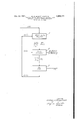
In the accompanying drawing forming a part of this specification, a preferred manner of carrying out the process of my invention is illustrated. As shown in the drawing, nitrosyl chloride and sulfur monochloride vapor are passed into NOCl-i-SzClz reactor I. In reactor l the gases are heated to a temperature of about 400 C. at a pressure of about one atmosphere, whereby a gaseous product comprising sulfur monochloride, sulfur dichloride, chlorine, nitric oxide, and nitrosyl chloride is produced and Withdrawn from reactor I. This gaseous product is then cooled to a temperature between about 20 and about 40 C. and passed to S2012 scrubber 2, wherein it is contacted countercurrently with a flow of liquid sulfur monochloride containing about 0.01% antimony trichloride at a pressure of about one atmosphere and at a temperature between about 30 and about 50 C. Substantially all the sulfur monochloride, sulfur dichloride, and chlorine contained in the product from reactor I is absorbed in the liquid sulfur monochloride in scrubber 2;, the nitric oxide and, substantially all the nitrosyl chloride passing through scrubber 2: unabsorbed. Scrubber 2. is provided at its base with means to heat the sulfur-chlorine product liquor to remove any nitrosyl chloride dissolved therein so that a sulfur-chlorine product substantially free of nitric oxide and nitrosyl chloride is withdrawn; from scrubber 2. This liquor is then passed to C12, still 3, wherein the liquor isldistilled at a pressure of from about one to about atmospheres to recover a substantially pure chlorine dis-tillate. The residue from this distillation consists chiefly of sulfur monochloride and is returned either to reactor 1 or scrubber 2.
The apparatus in which the process of my invention is practiced should be constructed of material which resists the corrosive action of various compounds with which it comes in contact. Apparatus in which sulfur chlorides are to be treated should be constructed either of nickel or of Dow metal (a magnesium alloy); where the apparatus is merely subjected to the corrosive action of chlorine, steel is suitable as a construction material.
The following examples are illustrative of the process of m invention.
Example 1.-Equimo1ecular amounts of nitrosyl chloride and sulfur monochloride vapors were mixed, preheated to a temperature of about 300 C. by indirect contact. with hot gases obtained as described hereinbelow, and passed at a space velocity of about 200 through a container maintained at. a temperature of about 400 C. and a pressure of about one atmosphere.
gases entering the container, as described above, and were then cooled rapidly to a temperature of about C. The resultant product was then introduced directly into a scrubber and passed up through the scrubber at a pressure of about one atmosphere and at a temperature of about 30 C. countercurrent to a downwardly descending stream of liquid sulfur monochloride containing about 0.01% antimony trichloride, about one mol of liquid sulfur monochloride being introduced into the scrubber, exclusive of that from the cracker, per mol of nitrosyl chloride fed to the cracker. The sulfur monochloride liquor absorbed practically all the sulfur monochloride, chlorine, and sulfur dichloride contained in the product from the cracker, whereas the nitric oxide and unreacted nitrosyl chloride remained unabsorbed and were withdrawn at the top of the scrubber. The sulfur-chlorine product was subjected at the base of the scrubber to a temperature of about 90 C. in order to evaporate the small amount of nitrosyl chloride present in said liquor before its removal from the scrubber. This liquor, which contained about atom chlorine, Was then transferred to a bubble cap tower having 20 plates. In this tower the sulfur-chlorine product from the scrubber was distilled at a pressure of about 10 atmospheres and a temperature of about 255 C., employing a reflux ratio of about 3.5, whereby substantially pure chlorine was recovered in a condenser at the top of the tower maintained at a temperature of about 36 C. The residue from this distillation was divided, part thereof being returned for reaction with additional quantities of nitrosyl chloride and the remainder being utilized in the scrubber, as described above.
Example 2.--Nitrosyl chloride was passed at a space velocity of about 200 through a container The hot gases leaving the container were used to preheat the maintained at a temperature of about 400! and a pressure of about one atmosphere; The hot gases leaving. the container were. cooled. rapidly to av temperature of about 30 C. andwere then passed into a scrubber wherein the gas was contacted at a pressure of about one atmosphere and a temperature of about 30.Qjcountercurrently with a downwardly descending flowv of liquid sulfur monochloride containing about 0.01% antimony trichloride, about. one mol: ofsulfur monochloride being introduced into the scrubber per mol of nitrosyl chloride fed. to the cracker. The cracked gas reacted with the monochloride to produce a liquor containing: about 5'7 atom chlorine and a gas which was. withdrawn at the top of the scrubber comprising nitric oxide and unreacted nitrosyl chloride. The sulfur monochloride liquor containing. the dissolved gases was subjected at the base of: the scrubber to a temperature of about C. to evaporate any nitrosyl chloride dissolved therein.v This liquor was then withdrawn from the scrub ber, passed to a bubble capv tower having 2G plates, and distilled at a pressure of about 10 atmos, pheres and a temperature of about 255 C., em: ploying a reflux radio of about 3.3.. Substantially pure chlorine was recovered in a condenser at the top. of the tower maintained at a temperature of about 36 C. The residue which consisted chiefly of sulfur monochloride was utilized. to react with additional quantities of nitrosyl chloride, as described above.
It is seen from the above description that bythe process of my invention chlorine may be recovered from nitrosyl chloride as elemental ch10 rine in a simple and economical. manner. This invention is of considerable value in the manue facture of alkali metal nitrates by the reaction of alkali metal chlorides with nitric acid for, by operating in accordance with my invention, practically all of the combined chlorine which is converted to nitrosyl chloride in the manufacture of the alkali metal nitrates may be recovered as elemental chlorine and sold as such.
I claim:
1. In a process for the recovery of elemental chlorine from nitrosyl chloride-containing gases, the steps which comprise mixing sulfur monochloride vapors with an approximately equimolecular amount of nitrosyl chloride, passing the mixture of vapors through a container heated to between about and about 500 C. to form a reaction product having a higher chlorine content than the sulfur monochloride and comprising sulfur dichloride, cooling the hot reaction product leaving the container rapidly to a temperature between about 20 and about 40 C., contacting the reaction product containing nitric oxide, chlorine and sulfur dichloride, with liquid sulfur monochloride, to effect reaction between chlorine in said reaction product and the liquid sulfur monochloride, and distilling the solution thus obtained to recover elemental chlorine.
2. In a process for the recovery of elemental chlorine from nitrosyl chloride, the steps which comprise mixing sulfur monochloride vapors with an approximately equimolecular amount of nitrosyl chloride, passing the mixture of vapors through a container heated to between about 100 and about 500 C. at a pressure between about 0.7 and about 10 atmospheres to form a reaction product having a higher chlorine content than the sulfur monochloride and comprising sulfur dichloride, cooling the hot reaction product leaving the container rapidly to a temperature between about 20 and about 40 C., contacting the reaction product containing nitric oxide, chlorine and sulfur dichloride, with liquid sulfur monochloride, to effect reaction between chlorine in said reaction product and the liquid sulfur monochloride, and distilling the solution thus obtained to recover elemental chlorine.
3. In a process for the recovery of elemental chlorine from nitrosyl chloride, the steps which comprise mixing sulfur monochloride vapors with an approximately equimolecular amount of nitrosyl chloride, passing the mixture of vapors through a container heated to between about 100 and about 500 C. at a space velocity of between about 10 and about 1000 to form a reaction product having a higher chlorine content than the sulfur monochloride and comprising sulfur dichloride, cooling the hot reaction product leaving the container rapidly to a temperature between about 20 and about 40 0., contacting the reaction product containing nitric oxide, chlorine and sulfur dichloride, with liquid sulfur monochloride, to eifect reaction between chlorine in said reaction product and the liquid sulfur monochloride, and distilling the solution thus obtained to recover elemental chlorine.
4. In a process for the recovery of elemental chlorine from nitrosyl chloride, the steps which comprise mixing sulfur monochloride vapors with an approximately equimolecular amount of nitrosyl chloride, passing the mixture of Vapors through a container heated to about 400 C. at a pressure of about one atmosphere and a space velocity of about 200 to form a reaction product having a higher chlorine content than the sulfur monochloride and comprising sulfur dichloride, cooling the hot reaction product leaving the container rapidly to a temperature between about 20 and about 40 C., contacting the reaction product containing nitric oxide, chlorine and sulfur dichloride, with liquid sulfur monochloride containing about 0.01% antimony trichloride, to eifect reaction between chlorine in said reaction product and the liquid sulfur monochloride, withdrawing nitric oxide and unreacted nitrosyl chloride from the vessel in which the cooled reaction product is contacted with sulfur monochloride, and distilling the solution thus obtained at a pressure of about 10 atmospheres to recover elemental chlorine.
5. In a process for the recovery of elemental chlorine from nitrosyl chloride containing gases, the steps which comprise heating a mixture of nitrosyl chloride and sulfur monochloride vapor at a temperature in the range about 100 to 500 0., cooling the hot reaction product rapidly, contacting the cooled reaction product containing nitric oxide, chlorine and sulfur dichloride with liquid sulfur monochloride at a temperature between about 10 and about 100 C. to effect reaction between chlorine in said reaction product and the liquid sulfur monochloride, and distilling the solution thus obtained to recover elemental chlorine.
6. In a process for the recovery of elemental chlorine from nitrosyl chloride containing gases, the step which comprises contacting a mixture of nitric oxide, chlorine, sulfur dichloride, nitrosyl chloride and sulfur monochloride with liquid sulfur monochloride in the presence of antimony trichloride at a temperature between about 10 and about 100 C. to eifect reaction between chlorine and liquid sulfur monochloride.
WILLIAM C. KLINGELHOEFER.
Priority Applications (1)
| Application Number | Priority Date | Filing Date | Title |
|---|---|---|---|
| US238806A US2258771A (en) | 1938-11-04 | 1938-11-04 | Process for the recovery of chlorine from nitrosyl chloride-con-taining gases |
Applications Claiming Priority (1)
| Application Number | Priority Date | Filing Date | Title |
|---|---|---|---|
| US238806A US2258771A (en) | 1938-11-04 | 1938-11-04 | Process for the recovery of chlorine from nitrosyl chloride-con-taining gases |
Publications (1)
| Publication Number | Publication Date |
|---|---|
| US2258771A true US2258771A (en) | 1941-10-14 |
Family
ID=22899382
Family Applications (1)
| Application Number | Title | Priority Date | Filing Date |
|---|---|---|---|
| US238806A Expired - Lifetime US2258771A (en) | 1938-11-04 | 1938-11-04 | Process for the recovery of chlorine from nitrosyl chloride-con-taining gases |
Country Status (1)
| Country | Link |
|---|---|
| US (1) | US2258771A (en) |
Cited By (2)
| Publication number | Priority date | Publication date | Assignee | Title |
|---|---|---|---|---|
| US2861040A (en) * | 1955-02-28 | 1958-11-18 | Hooker Chemical Corp | Removal of chlorine from chlorinewater solutions |
| US3219413A (en) * | 1961-10-13 | 1965-11-23 | Hooker Chemical Corp | Process for production of sulfur dichloride |
-
1938
- 1938-11-04 US US238806A patent/US2258771A/en not_active Expired - Lifetime
Cited By (2)
| Publication number | Priority date | Publication date | Assignee | Title |
|---|---|---|---|---|
| US2861040A (en) * | 1955-02-28 | 1958-11-18 | Hooker Chemical Corp | Removal of chlorine from chlorinewater solutions |
| US3219413A (en) * | 1961-10-13 | 1965-11-23 | Hooker Chemical Corp | Process for production of sulfur dichloride |
Similar Documents
| Publication | Publication Date | Title |
|---|---|---|
| US3816599A (en) | Hydrogen chloride recovery | |
| US3174262A (en) | Chemical process and apparatus for recovery of ethylene oxide | |
| US2320257A (en) | Process for drying nitrosyl chloride gas | |
| GB1391091A (en) | Production of ethylene dichloride | |
| US3233978A (en) | Process for producing chlorine and recovering substantially pure hydrogen chloride from the hot reaction product | |
| US3197515A (en) | Process for preparing dichlorethylene and mixtures thereof with vinylidene chloride | |
| US3109864A (en) | Oxidation of hydrocarbons | |
| US3250595A (en) | Method of producing carbon bisulfide | |
| US3574276A (en) | Method for transporting acetylene | |
| US2779663A (en) | Recovery of thionyl chloride | |
| US2690815A (en) | Recovery of hf | |
| US2761761A (en) | Method for concentrating dilute nitric acid | |
| US2658088A (en) | Chlorination of ethylene in dilute mixtures | |
| US4102986A (en) | Process for the continuous manufacture of nitrous oxide | |
| US2215450A (en) | Process for the production of a nitrate | |
| US2258772A (en) | Process of recovering chlorine from nitrosyl chloride-containing gases | |
| US2533581A (en) | Hydrogen peroxide by the partial oxidation of hydrocarbons | |
| US2276079A (en) | Process for production of chlorine and sodium sulphate | |
| US3454645A (en) | Method of preparing ethylenediamine | |
| US2181559A (en) | Process for producing a nitrate | |
| US4018873A (en) | Processes for the preparation of concentrated nitric acid | |
| US2296763A (en) | Process for the production of chlorine and metal nitrate | |
| US3330877A (en) | Process for the chlorination of unsaturated hydrocarbons and unsaturated chlorohydrocarbons | |
| US2138017A (en) | Process for the decomposition of nitrosyl chloride | |
| US2092383A (en) | Process for the production of alkali metal nitrates by reaction of alkali metal chlorides and nitric acid |