US20220177434A1 - Modulators of mas-related g-protein receptor x2 and related products and methods - Google Patents
Modulators of mas-related g-protein receptor x2 and related products and methods Download PDFInfo
- Publication number
- US20220177434A1 US20220177434A1 US17/506,447 US202117506447A US2022177434A1 US 20220177434 A1 US20220177434 A1 US 20220177434A1 US 202117506447 A US202117506447 A US 202117506447A US 2022177434 A1 US2022177434 A1 US 2022177434A1
- Authority
- US
- United States
- Prior art keywords
- alkyl
- alkenyl
- independently
- heterocyclyl
- aryl
- Prior art date
- Legal status (The legal status is an assumption and is not a legal conclusion. Google has not performed a legal analysis and makes no representation as to the accuracy of the status listed.)
- Granted
Links
- 0 CC.[1*]C(=O)CC1CCC(CC2=CC([6*])=[W]c3c([2*])c([3*])c([4*])c([5*])c32)CC1 Chemical compound CC.[1*]C(=O)CC1CCC(CC2=CC([6*])=[W]c3c([2*])c([3*])c([4*])c([5*])c32)CC1 0.000 description 29
- LHHWDXBIZCYSOS-BGYRXZFFSA-N CCC(=O)Cc1cccc(C(=O)N[C@H]2CC[C@@H](Nc3cc(C(F)(F)F)nc4ccc(Cl)cc34)CC2)c1 Chemical compound CCC(=O)Cc1cccc(C(=O)N[C@H]2CC[C@@H](Nc3cc(C(F)(F)F)nc4ccc(Cl)cc34)CC2)c1 LHHWDXBIZCYSOS-BGYRXZFFSA-N 0.000 description 3
- PUJKRAFNRMDMNO-HDICACEKSA-N CCc1ccccc1C(=O)N[C@H]1CC[C@@H](Nc2cc(C(F)(F)F)nc3ccccc23)CC1 Chemical compound CCc1ccccc1C(=O)N[C@H]1CC[C@@H](Nc2cc(C(F)(F)F)nc3ccccc23)CC1 PUJKRAFNRMDMNO-HDICACEKSA-N 0.000 description 3
- HDPHYFDVJWIKOV-HSUGXJITSA-N *.*.CO[C@@H]1O[C@H](C(=O)N[C@H]2CC[C@@H](Nc3cc(C(F)(F)F)nc4ccc(Cl)cc34)CC2)[C@H]2OC(C)(C)O[C@H]21.S.S Chemical compound *.*.CO[C@@H]1O[C@H](C(=O)N[C@H]2CC[C@@H](Nc3cc(C(F)(F)F)nc4ccc(Cl)cc34)CC2)[C@H]2OC(C)(C)O[C@H]21.S.S HDPHYFDVJWIKOV-HSUGXJITSA-N 0.000 description 2
- FKDVVIHVNFVBQT-SBVROGBSSA-N *.*.COc1ccccc1[C@@H]1OC(=O)C[C@H]1C(=O)N[C@H]1CC[C@@H](Nc2cc(C(F)(F)F)nc3ccc(Cl)cc23)CC1 Chemical compound *.*.COc1ccccc1[C@@H]1OC(=O)C[C@H]1C(=O)N[C@H]1CC[C@@H](Nc2cc(C(F)(F)F)nc3ccc(Cl)cc23)CC1 FKDVVIHVNFVBQT-SBVROGBSSA-N 0.000 description 2
- RAJWKDZOCJNJTD-OGWHTMIXSA-N *.*.O=C(N[C@H]1CC[C@@H](Nc2cc(C(F)(F)F)nc3ccc(Cl)cc23)CC1)[C@@H]1C[C@H]1c1ccccc1F Chemical compound *.*.O=C(N[C@H]1CC[C@@H](Nc2cc(C(F)(F)F)nc3ccc(Cl)cc23)CC1)[C@@H]1C[C@H]1c1ccccc1F RAJWKDZOCJNJTD-OGWHTMIXSA-N 0.000 description 2
- LFPKSQWKUHDPLM-ZDJZOQRLSA-N *.CC(C)C[C@H](CC(N)=O)CC(=O)N[C@H]1CC[C@@H](Nc2cc(C(F)(F)F)nc3ccc(Cl)cc23)CC1.S Chemical compound *.CC(C)C[C@H](CC(N)=O)CC(=O)N[C@H]1CC[C@@H](Nc2cc(C(F)(F)F)nc3ccc(Cl)cc23)CC1.S LFPKSQWKUHDPLM-ZDJZOQRLSA-N 0.000 description 2
- LJTOMNAACRZFTQ-IEGUWTFLSA-N *.COC(=O)N[C@@H](C(=O)N[C@H]1CC[C@@H](Nc2cc(C(F)(F)F)nc3ccc(Cl)cc23)CC1)c1ccccc1 Chemical compound *.COC(=O)N[C@@H](C(=O)N[C@H]1CC[C@@H](Nc2cc(C(F)(F)F)nc3ccc(Cl)cc23)CC1)c1ccccc1 LJTOMNAACRZFTQ-IEGUWTFLSA-N 0.000 description 2
- ITDWFXUIZMBRRS-DSLYHHEISA-N *.O=C(N[C@@H]1CCCC[C@@H]1C(=O)N[C@H]1CC[C@@H](Nc2cc(C(F)(F)F)nc3ccc(Cl)cc23)CC1)c1ccccc1.S Chemical compound *.O=C(N[C@@H]1CCCC[C@@H]1C(=O)N[C@H]1CC[C@@H](Nc2cc(C(F)(F)F)nc3ccc(Cl)cc23)CC1)c1ccccc1.S ITDWFXUIZMBRRS-DSLYHHEISA-N 0.000 description 2
- YAFVNGHIVQSXQQ-SJSLCGAOSA-N *.O=C(N[C@H]1CC[C@@H](Nc2cc(C(F)(F)F)nc3ccccc23)CC1)[C@H]1C[C@@H]1c1ccccc1.S.S Chemical compound *.O=C(N[C@H]1CC[C@@H](Nc2cc(C(F)(F)F)nc3ccccc23)CC1)[C@H]1C[C@@H]1c1ccccc1.S.S YAFVNGHIVQSXQQ-SJSLCGAOSA-N 0.000 description 2
- CTZLBZGICQTOLU-BVFVYWQFSA-N *.[H][C@](Cc1c[nH]c2ccccc12)(NC(C)=O)C(=O)N[C@H]1CC[C@@H](Nc2cc(C(F)(F)F)nc3ccc(Cl)cc23)CC1 Chemical compound *.[H][C@](Cc1c[nH]c2ccccc12)(NC(C)=O)C(=O)N[C@H]1CC[C@@H](Nc2cc(C(F)(F)F)nc3ccc(Cl)cc23)CC1 CTZLBZGICQTOLU-BVFVYWQFSA-N 0.000 description 2
- NQBIIYJIDPOXPC-BGYRXZFFSA-N C=C(Cc1ccccc1)C(=O)N[C@H]1CC[C@@H](Nc2cc(C(F)(F)F)nc3ccc(Cl)cc23)CC1 Chemical compound C=C(Cc1ccccc1)C(=O)N[C@H]1CC[C@@H](Nc2cc(C(F)(F)F)nc3ccc(Cl)cc23)CC1 NQBIIYJIDPOXPC-BGYRXZFFSA-N 0.000 description 2
- FDHGRNSPOKUYTJ-FLCJAFJVSA-N C=CC12CCC(C(=O)N[C@H]3CC[C@@H](Nc4cc(C(F)(F)F)nc5ccc(Cl)cc45)CC3)(CC1)CO2 Chemical compound C=CC12CCC(C(=O)N[C@H]3CC[C@@H](Nc4cc(C(F)(F)F)nc5ccc(Cl)cc45)CC3)(CC1)CO2 FDHGRNSPOKUYTJ-FLCJAFJVSA-N 0.000 description 2
- OXHGZDSPCGRVFE-HDICACEKSA-N CC(=O)Cc1cc(C(=O)N[C@H]2CC[C@@H](Nc3cc(C(F)(F)F)nc4ccc(Cl)cc34)CC2)ccn1 Chemical compound CC(=O)Cc1cc(C(=O)N[C@H]2CC[C@@H](Nc3cc(C(F)(F)F)nc4ccc(Cl)cc34)CC2)ccn1 OXHGZDSPCGRVFE-HDICACEKSA-N 0.000 description 2
- XTSGGWDOWOKYIZ-BGYRXZFFSA-N CC(=O)Cc1ccc(C)c(C(=O)N[C@H]2CC[C@@H](Nc3cc(C(F)(F)F)nc4ccc(Cl)cc34)CC2)c1 Chemical compound CC(=O)Cc1ccc(C)c(C(=O)N[C@H]2CC[C@@H](Nc3cc(C(F)(F)F)nc4ccc(Cl)cc34)CC2)c1 XTSGGWDOWOKYIZ-BGYRXZFFSA-N 0.000 description 2
- XLRRECWEIYMOMC-HDICACEKSA-N CC(=O)N1CCC(C(=O)N[C@H]2CC[C@@H](Nc3cc(C(F)(F)F)nc4ccccc34)CC2)CC1 Chemical compound CC(=O)N1CCC(C(=O)N[C@H]2CC[C@@H](Nc3cc(C(F)(F)F)nc4ccccc34)CC2)CC1 XLRRECWEIYMOMC-HDICACEKSA-N 0.000 description 2
- REBXKEHRXNGRAU-GASCZTMLSA-N CC(=O)NCCC(=O)N[C@H]1CC[C@@H](Nc2cc(C(F)(F)F)nc3ccc(Cl)cc23)CC1 Chemical compound CC(=O)NCCC(=O)N[C@H]1CC[C@@H](Nc2cc(C(F)(F)F)nc3ccc(Cl)cc23)CC1 REBXKEHRXNGRAU-GASCZTMLSA-N 0.000 description 2
- WOXJPVPQFAZKKY-IYBDPMFKSA-N CC(=O)NCCCC(=O)N[C@H]1CC[C@@H](Nc2cc(C(F)(F)F)nc3ccc(Cl)cc23)CC1 Chemical compound CC(=O)NCCCC(=O)N[C@H]1CC[C@@H](Nc2cc(C(F)(F)F)nc3ccc(Cl)cc23)CC1 WOXJPVPQFAZKKY-IYBDPMFKSA-N 0.000 description 2
- UCOVUYXDZRXPNI-KDURUIRLSA-N CC(=O)Nc1ccc(C(=O)N[C@H]2CC[C@@H](Nc3cc(C(F)(F)F)nc4ccc(Cl)cc34)CC2)cc1 Chemical compound CC(=O)Nc1ccc(C(=O)N[C@H]2CC[C@@H](Nc3cc(C(F)(F)F)nc4ccc(Cl)cc34)CC2)cc1 UCOVUYXDZRXPNI-KDURUIRLSA-N 0.000 description 2
- HSFLMJSWOCVFLW-KDURUIRLSA-N CC(=O)Nc1ccc(C(=O)N[C@H]2CC[C@@H](Nc3cc(C(F)(F)F)nc4ccccc34)CC2)cc1 Chemical compound CC(=O)Nc1ccc(C(=O)N[C@H]2CC[C@@H](Nc3cc(C(F)(F)F)nc4ccccc34)CC2)cc1 HSFLMJSWOCVFLW-KDURUIRLSA-N 0.000 description 2
- JTCNUOMIANLIGI-HDICACEKSA-N CC(=O)Nc1cccc(C(=O)N[C@H]2CC[C@@H](Nc3cc(C(F)(F)F)nc4ccc(Cl)cc34)CC2)c1 Chemical compound CC(=O)Nc1cccc(C(=O)N[C@H]2CC[C@@H](Nc3cc(C(F)(F)F)nc4ccc(Cl)cc34)CC2)c1 JTCNUOMIANLIGI-HDICACEKSA-N 0.000 description 2
- ULUJVJIFTSVXSA-CALCHBBNSA-N CC(=O)Nc1ccccc1C(=O)N[C@H]1CC[C@@H](Nc2cc(C(F)(F)F)nc3ccc(Cl)cc23)CC1 Chemical compound CC(=O)Nc1ccccc1C(=O)N[C@H]1CC[C@@H](Nc2cc(C(F)(F)F)nc3ccc(Cl)cc23)CC1 ULUJVJIFTSVXSA-CALCHBBNSA-N 0.000 description 2
- RWZSDAWBLAPQEI-HDICACEKSA-N CC(=O)Oc1cccc(C(=O)N[C@H]2CC[C@@H](Nc3cc(C(F)(F)F)nc4ccc(Cl)cc34)CC2)c1 Chemical compound CC(=O)Oc1cccc(C(=O)N[C@H]2CC[C@@H](Nc3cc(C(F)(F)F)nc4ccc(Cl)cc34)CC2)c1 RWZSDAWBLAPQEI-HDICACEKSA-N 0.000 description 2
- NRVZBZBZTSHHMP-OYRHEFFESA-N CC(=O)c1ccc(OCCCC(=O)N[C@H]2CC[C@@H](Nc3cc(C(F)(F)F)nc4ccc(Cl)cc34)CC2)cc1 Chemical compound CC(=O)c1ccc(OCCCC(=O)N[C@H]2CC[C@@H](Nc3cc(C(F)(F)F)nc4ccc(Cl)cc34)CC2)cc1 NRVZBZBZTSHHMP-OYRHEFFESA-N 0.000 description 2
- UYFATVXDPFNARY-DFVIVQSZSA-N CC(C#N)c1cccc(C(=O)N[C@H]2CC[C@@H](Nc3cc(C(F)(F)F)nc4ccc(Cl)cc34)CC2)c1 Chemical compound CC(C#N)c1cccc(C(=O)N[C@H]2CC[C@@H](Nc3cc(C(F)(F)F)nc4ccc(Cl)cc34)CC2)c1 UYFATVXDPFNARY-DFVIVQSZSA-N 0.000 description 2
- RERLOCXRINHDQI-UHFFFAOYSA-N CC(C)(C(=O)NC1CCC(Nc2cc(C(F)(F)F)nc3ccc(Cl)cc23)CC1)c1ccc(Cl)cc1 Chemical compound CC(C)(C(=O)NC1CCC(Nc2cc(C(F)(F)F)nc3ccc(Cl)cc23)CC1)c1ccc(Cl)cc1 RERLOCXRINHDQI-UHFFFAOYSA-N 0.000 description 2
- FRJYIFZNYXUBTQ-OYRHEFFESA-N CC(C)(C)C(=O)Cc1cccc(C(=O)N[C@H]2CC[C@@H](Nc3cc(C(F)(F)F)nc4ccc(Cl)cc34)CC2)c1 Chemical compound CC(C)(C)C(=O)Cc1cccc(C(=O)N[C@H]2CC[C@@H](Nc3cc(C(F)(F)F)nc4ccc(Cl)cc34)CC2)c1 FRJYIFZNYXUBTQ-OYRHEFFESA-N 0.000 description 2
- HCZVZPZNPOOELR-GASCZTMLSA-N CC(C)(C)c1cc(C(=O)N[C@H]2CC[C@@H](Nc3cc(C(F)(F)F)nc4ccc(Cl)cc34)CC2)[nH]n1 Chemical compound CC(C)(C)c1cc(C(=O)N[C@H]2CC[C@@H](Nc3cc(C(F)(F)F)nc4ccc(Cl)cc34)CC2)[nH]n1 HCZVZPZNPOOELR-GASCZTMLSA-N 0.000 description 2
- USLYTJGQLSNVIK-BGYRXZFFSA-N CC(C)(C)c1ccc(C(=O)N[C@H]2CC[C@@H](Nc3cc(C(F)(F)F)nc4ccccc34)CC2)cc1 Chemical compound CC(C)(C)c1ccc(C(=O)N[C@H]2CC[C@@H](Nc3cc(C(F)(F)F)nc4ccccc34)CC2)cc1 USLYTJGQLSNVIK-BGYRXZFFSA-N 0.000 description 2
- SEUVEFLQSZAJPX-GASCZTMLSA-N CC(C)(C)n1cc(C(=O)N[C@H]2CC[C@@H](Nc3cc(C(F)(F)F)nc4ccc(Cl)cc34)CC2)nn1 Chemical compound CC(C)(C)n1cc(C(=O)N[C@H]2CC[C@@H](Nc3cc(C(F)(F)F)nc4ccc(Cl)cc34)CC2)nn1 SEUVEFLQSZAJPX-GASCZTMLSA-N 0.000 description 2
- MPYXUDZTFNYZJB-OYRHEFFESA-N CC(C)C(=O)Cc1cccc(C(=O)N[C@H]2CC[C@@H](Nc3cc(C(F)(F)F)nc4ccc(Cl)cc34)CC2)c1 Chemical compound CC(C)C(=O)Cc1cccc(C(=O)N[C@H]2CC[C@@H](Nc3cc(C(F)(F)F)nc4ccc(Cl)cc34)CC2)c1 MPYXUDZTFNYZJB-OYRHEFFESA-N 0.000 description 2
- JUCVOBCDFCJDFL-OKILXGFUSA-N CC(C)C(=O)N[C@H]1CC[C@@H](Nc2cc(C(F)(F)F)nc3ccccc23)CC1 Chemical compound CC(C)C(=O)N[C@H]1CC[C@@H](Nc2cc(C(F)(F)F)nc3ccccc23)CC1 JUCVOBCDFCJDFL-OKILXGFUSA-N 0.000 description 2
- YWURIEMNISHAHM-IYBDPMFKSA-N CC(C)CCC(=O)N[C@H]1CC[C@@H](Nc2cc(C(F)(F)F)nc3ccccc23)CC1 Chemical compound CC(C)CCC(=O)N[C@H]1CC[C@@H](Nc2cc(C(F)(F)F)nc3ccccc23)CC1 YWURIEMNISHAHM-IYBDPMFKSA-N 0.000 description 2
- AZYKTDUWCWREKH-CALCHBBNSA-N CC(C)Cc1cc(C(=O)N[C@H]2CC[C@@H](Nc3cc(C(F)(F)F)nc4ccc(Cl)cc34)CC2)n(C)n1 Chemical compound CC(C)Cc1cc(C(=O)N[C@H]2CC[C@@H](Nc3cc(C(F)(F)F)nc4ccc(Cl)cc34)CC2)n(C)n1 AZYKTDUWCWREKH-CALCHBBNSA-N 0.000 description 2
- NEKWOVXQHKODTB-GASCZTMLSA-N CC(C)c1cc(C(=O)N[C@H]2CC[C@@H](Nc3cc(C(F)(F)F)nc4ccc(Cl)cc34)CC2)n[nH]1 Chemical compound CC(C)c1cc(C(=O)N[C@H]2CC[C@@H](Nc3cc(C(F)(F)F)nc4ccc(Cl)cc34)CC2)n[nH]1 NEKWOVXQHKODTB-GASCZTMLSA-N 0.000 description 2
- XOLRTXCWZAOVCR-SWMWDTCVSA-N CC/C=C(\C(=O)N[C@H]1CC[C@@H](Nc2cc(C(F)(F)F)nc3ccc(Cl)cc23)CC1)c1csc(N)n1 Chemical compound CC/C=C(\C(=O)N[C@H]1CC[C@@H](Nc2cc(C(F)(F)F)nc3ccc(Cl)cc23)CC1)c1csc(N)n1 XOLRTXCWZAOVCR-SWMWDTCVSA-N 0.000 description 2
- XBFRLMFDSSVEOM-ULZZTYQWSA-N CC1(C(=O)N[C@H]2CC[C@@H](Nc3cc(C(F)(F)F)nc4ccc(Cl)cc34)CC2)CC(c2ccc(F)cc2)=NO1 Chemical compound CC1(C(=O)N[C@H]2CC[C@@H](Nc3cc(C(F)(F)F)nc4ccc(Cl)cc34)CC2)CC(c2ccc(F)cc2)=NO1 XBFRLMFDSSVEOM-ULZZTYQWSA-N 0.000 description 2
- OTQXKIDNPYVVOU-GASCZTMLSA-N CC1(C)C(C(=O)N[C@H]2CC[C@@H](Nc3cc(C(F)(F)F)nc4ccccc34)CC2)C1(C)C Chemical compound CC1(C)C(C(=O)N[C@H]2CC[C@@H](Nc3cc(C(F)(F)F)nc4ccccc34)CC2)C1(C)C OTQXKIDNPYVVOU-GASCZTMLSA-N 0.000 description 2
- RGSDWMPRLRWHHE-UHFFFAOYSA-N CC1(C)CC(C(=O)NC2CCC(Nc3cc(C(F)(F)F)nc4ccc(Cl)cc34)CC2)CCO1 Chemical compound CC1(C)CC(C(=O)NC2CCC(Nc3cc(C(F)(F)F)nc4ccc(Cl)cc34)CC2)CCO1 RGSDWMPRLRWHHE-UHFFFAOYSA-N 0.000 description 2
- ROMQRPDXBILYFU-UGMUHNRKSA-N CC1(C)[C@]2(C)CC[C@]1(C(=O)NC1CCC(Nc3cc(C(F)(F)F)nc4ccc(Cl)cc34)CC1)OC2=O.S.S Chemical compound CC1(C)[C@]2(C)CC[C@]1(C(=O)NC1CCC(Nc3cc(C(F)(F)F)nc4ccc(Cl)cc34)CC1)OC2=O.S.S ROMQRPDXBILYFU-UGMUHNRKSA-N 0.000 description 2
- LFLFBRINUUTDQQ-KDURUIRLSA-N CC1=NN(c2ccc(C(=O)N[C@H]3CC[C@@H](Nc4cc(C(F)(F)F)nc5ccc(Cl)cc45)CC3)cc2)C(=O)C1 Chemical compound CC1=NN(c2ccc(C(=O)N[C@H]3CC[C@@H](Nc4cc(C(F)(F)F)nc5ccc(Cl)cc45)CC3)cc2)C(=O)C1 LFLFBRINUUTDQQ-KDURUIRLSA-N 0.000 description 2
- HTLLPTLOWKAMHU-PDQNWUSWSA-N CC1C(C(=O)N[C@H]2CC[C@@H](Cc3cc(C(F)(F)F)nc4ccc(Cl)cc34)CC2)CC2CC1C2(C)C Chemical compound CC1C(C(=O)N[C@H]2CC[C@@H](Cc3cc(C(F)(F)F)nc4ccc(Cl)cc34)CC2)CC2CC1C2(C)C HTLLPTLOWKAMHU-PDQNWUSWSA-N 0.000 description 2
- QZZCWUQCMKOOTQ-YOFSQIOKSA-N CCC(C(=O)N[C@H]1CC[C@@H](Nc2cc(C(F)(F)F)nc3ccccc23)CC1)c1ccccc1 Chemical compound CCC(C(=O)N[C@H]1CC[C@@H](Nc2cc(C(F)(F)F)nc3ccccc23)CC1)c1ccccc1 QZZCWUQCMKOOTQ-YOFSQIOKSA-N 0.000 description 2
- BRCVSXITOXTPTF-GASCZTMLSA-N CCCCC(=O)N[C@H]1CC[C@@H](Nc2cc(C(F)(F)F)nc3ccc(Cl)cc23)CC1 Chemical compound CCCCC(=O)N[C@H]1CC[C@@H](Nc2cc(C(F)(F)F)nc3ccc(Cl)cc23)CC1 BRCVSXITOXTPTF-GASCZTMLSA-N 0.000 description 2
- IIIZWFZTXCGSMW-HDICACEKSA-N CCCS(=O)(=O)Cc1ccc(F)c(C(=O)N[C@H]2CC[C@@H](Nc3cc(C(F)(F)F)nc4ccc(Cl)cc34)CC2)c1F Chemical compound CCCS(=O)(=O)Cc1ccc(F)c(C(=O)N[C@H]2CC[C@@H](Nc3cc(C(F)(F)F)nc4ccc(Cl)cc34)CC2)c1F IIIZWFZTXCGSMW-HDICACEKSA-N 0.000 description 2
- VPISGSHKTBNEIC-BGYRXZFFSA-N CCCc1cccc(C(=O)N[C@H]2CC[C@@H](Nc3cc(C(F)(F)F)nc4ccc(Cl)cc34)CC2)c1 Chemical compound CCCc1cccc(C(=O)N[C@H]2CC[C@@H](Nc3cc(C(F)(F)F)nc4ccc(Cl)cc34)CC2)c1 VPISGSHKTBNEIC-BGYRXZFFSA-N 0.000 description 2
- DRZPXVADVAKZAA-OKILXGFUSA-N CCCc1nnsc1C(=O)N[C@H]1CC[C@@H](Nc2cc(C(F)(F)F)nc3ccc(Cl)cc23)CC1 Chemical compound CCCc1nnsc1C(=O)N[C@H]1CC[C@@H](Nc2cc(C(F)(F)F)nc3ccc(Cl)cc23)CC1 DRZPXVADVAKZAA-OKILXGFUSA-N 0.000 description 2
- MCFJQTUHVQVEAF-IYBDPMFKSA-N CCOC(=O)C1(C(=O)N[C@H]2CC[C@@H](Nc3cc(C(F)(F)F)nc4ccc(Cl)cc34)CC2)CCC1 Chemical compound CCOC(=O)C1(C(=O)N[C@H]2CC[C@@H](Nc3cc(C(F)(F)F)nc4ccc(Cl)cc34)CC2)CCC1 MCFJQTUHVQVEAF-IYBDPMFKSA-N 0.000 description 2
- ODLLLJRNTNKCBA-HDICACEKSA-N CCOc1ccc(C(=O)N[C@H]2CC[C@@H](Nc3cc(C(F)(F)F)nc4ccccc34)CC2)cc1 Chemical compound CCOc1ccc(C(=O)N[C@H]2CC[C@@H](Nc3cc(C(F)(F)F)nc4ccccc34)CC2)cc1 ODLLLJRNTNKCBA-HDICACEKSA-N 0.000 description 2
- JHSRAWKONYZAQA-HDICACEKSA-N CCOc1cccc(C(=O)N[C@H]2CC[C@@H](Nc3cc(C(F)(F)F)nc4ccccc34)CC2)c1 Chemical compound CCOc1cccc(C(=O)N[C@H]2CC[C@@H](Nc3cc(C(F)(F)F)nc4ccccc34)CC2)c1 JHSRAWKONYZAQA-HDICACEKSA-N 0.000 description 2
- YBHXOCZMQATXCT-KDURUIRLSA-N CCc1ccc2nc(C(F)(F)F)cc(N[C@H]3CC[C@@H](NC(=O)c4ccc(F)cc4)CC3)c2c1 Chemical compound CCc1ccc2nc(C(F)(F)F)cc(N[C@H]3CC[C@@H](NC(=O)c4ccc(F)cc4)CC3)c2c1 YBHXOCZMQATXCT-KDURUIRLSA-N 0.000 description 2
- RYIZSMXFWJBCGQ-KDURUIRLSA-N CCc1cccc(C(=O)N[C@H]2CC[C@@H](Nc3cc(C(F)(F)F)nc4ccc(Cl)cc34)CC2)c1 Chemical compound CCc1cccc(C(=O)N[C@H]2CC[C@@H](Nc3cc(C(F)(F)F)nc4ccc(Cl)cc34)CC2)c1 RYIZSMXFWJBCGQ-KDURUIRLSA-N 0.000 description 2
- PQDGLGWNTCYAIZ-GASCZTMLSA-N CCn1nccc1C(=O)N[C@H]1CC[C@@H](Nc2cc(C(F)(F)F)nc3ccc(Cl)cc23)CC1 Chemical compound CCn1nccc1C(=O)N[C@H]1CC[C@@H](Nc2cc(C(F)(F)F)nc3ccc(Cl)cc23)CC1 PQDGLGWNTCYAIZ-GASCZTMLSA-N 0.000 description 2
- ATLGTUWHKIFLHI-BGYRXZFFSA-N CN(C)C(=O)Cc1cccc(C(=O)N[C@H]2CC[C@@H](Nc3cc(C(F)(F)F)nc4ccc(Cl)cc34)CC2)c1 Chemical compound CN(C)C(=O)Cc1cccc(C(=O)N[C@H]2CC[C@@H](Nc3cc(C(F)(F)F)nc4ccc(Cl)cc34)CC2)c1 ATLGTUWHKIFLHI-BGYRXZFFSA-N 0.000 description 2
- SAIROUGMNXETTA-OKILXGFUSA-N CN(C)C(=S)SCC(=O)N[C@H]1CC[C@@H](Nc2cc(C(F)(F)F)nc3ccc(Cl)cc23)CC1 Chemical compound CN(C)C(=S)SCC(=O)N[C@H]1CC[C@@H](Nc2cc(C(F)(F)F)nc3ccc(Cl)cc23)CC1 SAIROUGMNXETTA-OKILXGFUSA-N 0.000 description 2
- CULMDBQFABQRJL-AQKKSAQBSA-N CN(C)C(C(=O)N[C@H]1CC[C@@H](Nc2cc(C(F)(F)F)nc3ccc(Cl)cc23)CC1)c1cnn(C)c1 Chemical compound CN(C)C(C(=O)N[C@H]1CC[C@@H](Nc2cc(C(F)(F)F)nc3ccc(Cl)cc23)CC1)c1cnn(C)c1 CULMDBQFABQRJL-AQKKSAQBSA-N 0.000 description 2
- GHHWKTINFFFVGK-IYBDPMFKSA-N CN(C)c1c(F)cc(C(=O)N[C@H]2CC[C@@H](Nc3cc(C(F)(F)F)nc4ccccc34)CC2)cc1F Chemical compound CN(C)c1c(F)cc(C(=O)N[C@H]2CC[C@@H](Nc3cc(C(F)(F)F)nc4ccccc34)CC2)cc1F GHHWKTINFFFVGK-IYBDPMFKSA-N 0.000 description 2
- HXKWJRSFTFXERC-KDURUIRLSA-N CN(C)c1cc(C#N)cc(C(=O)N[C@H]2CC[C@@H](Nc3cc(C(F)(F)F)nc4ccccc34)CC2)c1 Chemical compound CN(C)c1cc(C#N)cc(C(=O)N[C@H]2CC[C@@H](Nc3cc(C(F)(F)F)nc4ccccc34)CC2)c1 HXKWJRSFTFXERC-KDURUIRLSA-N 0.000 description 2
- SAHQJUBATQCTLW-CALCHBBNSA-N CN(C)c1cc(C(=O)N[C@H]2CC[C@@H](Nc3cc(C(F)(F)F)nc4ccccc34)CC2)ccc1C(F)(F)F Chemical compound CN(C)c1cc(C(=O)N[C@H]2CC[C@@H](Nc3cc(C(F)(F)F)nc4ccccc34)CC2)ccc1C(F)(F)F SAHQJUBATQCTLW-CALCHBBNSA-N 0.000 description 2
- WNJPEQKDLBPUGT-CALCHBBNSA-N CN(C)c1cc(C(=O)N[C@H]2CC[C@@H](Nc3cc(C(F)(F)F)nc4ccccc34)CC2)ccn1 Chemical compound CN(C)c1cc(C(=O)N[C@H]2CC[C@@H](Nc3cc(C(F)(F)F)nc4ccccc34)CC2)ccn1 WNJPEQKDLBPUGT-CALCHBBNSA-N 0.000 description 2
- GHXSGSLFDXKYMW-HDICACEKSA-N CN(C)c1cc(F)cc(C(=O)N[C@H]2CC[C@@H](Nc3cc(C(F)(F)F)nc4ccccc34)CC2)c1 Chemical compound CN(C)c1cc(F)cc(C(=O)N[C@H]2CC[C@@H](Nc3cc(C(F)(F)F)nc4ccccc34)CC2)c1 GHXSGSLFDXKYMW-HDICACEKSA-N 0.000 description 2
- SFKAVHNMVQCOTO-HDICACEKSA-N CN(C)c1ccc(C(=O)N[C@H]2CC[C@@H](Nc3cc(C(F)(F)F)nc4ccc(Cl)cc34)CC2)cc1 Chemical compound CN(C)c1ccc(C(=O)N[C@H]2CC[C@@H](Nc3cc(C(F)(F)F)nc4ccc(Cl)cc34)CC2)cc1 SFKAVHNMVQCOTO-HDICACEKSA-N 0.000 description 2
- PZNSAZDVUSKDEC-IYBDPMFKSA-N CN(C)c1ccc(C(=O)N[C@H]2CC[C@@H](Nc3cc(C(F)(F)F)nc4ccccc34)CC2)c(F)c1 Chemical compound CN(C)c1ccc(C(=O)N[C@H]2CC[C@@H](Nc3cc(C(F)(F)F)nc4ccccc34)CC2)c(F)c1 PZNSAZDVUSKDEC-IYBDPMFKSA-N 0.000 description 2
- SJFHPVOVVDZBBU-HDICACEKSA-N CN(C)c1ccc(C(=O)N[C@H]2CC[C@@H](Nc3cc(C(F)(F)F)nc4ccccc34)CC2)cc1 Chemical compound CN(C)c1ccc(C(=O)N[C@H]2CC[C@@H](Nc3cc(C(F)(F)F)nc4ccccc34)CC2)cc1 SJFHPVOVVDZBBU-HDICACEKSA-N 0.000 description 2
- UGDLBFGXYIIMFV-CALCHBBNSA-N CN(C)c1ccc(C(=O)N[C@H]2CC[C@@H](Nc3cc(C(F)(F)F)nc4ccccc34)CC2)cc1F Chemical compound CN(C)c1ccc(C(=O)N[C@H]2CC[C@@H](Nc3cc(C(F)(F)F)nc4ccccc34)CC2)cc1F UGDLBFGXYIIMFV-CALCHBBNSA-N 0.000 description 2
- MRVVGTTULMWRHK-IYBDPMFKSA-N CN(C)c1ccc(C(=O)N[C@H]2CC[C@@H](Nc3cc(C(F)(F)F)nc4ccccc34)CC2)nc1 Chemical compound CN(C)c1ccc(C(=O)N[C@H]2CC[C@@H](Nc3cc(C(F)(F)F)nc4ccccc34)CC2)nc1 MRVVGTTULMWRHK-IYBDPMFKSA-N 0.000 description 2
- ITNZBWIIRQWPJV-IYBDPMFKSA-N CN(C)c1ccc(F)c(C(=O)N[C@H]2CC[C@@H](Nc3cc(C(F)(F)F)nc4ccccc34)CC2)c1 Chemical compound CN(C)c1ccc(F)c(C(=O)N[C@H]2CC[C@@H](Nc3cc(C(F)(F)F)nc4ccccc34)CC2)c1 ITNZBWIIRQWPJV-IYBDPMFKSA-N 0.000 description 2
- OGGSDPNCLBVHEZ-UEDWGHLCSA-N CN(C)c1ccc2c(CC(=O)N[C@H]3CC[C@@H](Cc4cc(C(F)(F)F)nc5ccc(Cl)cc45)CC3)cc(=O)oc2c1 Chemical compound CN(C)c1ccc2c(CC(=O)N[C@H]3CC[C@@H](Cc4cc(C(F)(F)F)nc5ccc(Cl)cc45)CC3)cc(=O)oc2c1 OGGSDPNCLBVHEZ-UEDWGHLCSA-N 0.000 description 2
- FAPWRDRLSWGLNK-HDICACEKSA-N CN(C)c1cccc(C(=O)N[C@H]2CC[C@@H](Nc3cc(C(F)(F)F)nc4ccccc34)CC2)c1 Chemical compound CN(C)c1cccc(C(=O)N[C@H]2CC[C@@H](Nc3cc(C(F)(F)F)nc4ccccc34)CC2)c1 FAPWRDRLSWGLNK-HDICACEKSA-N 0.000 description 2
- MTZHPSDYSZNTIH-HDICACEKSA-N CN(C)c1cccc(OCC(=O)N[C@H]2CC[C@@H](Nc3cc(C(F)(F)F)nc4ccc(Cl)cc34)CC2)c1 Chemical compound CN(C)c1cccc(OCC(=O)N[C@H]2CC[C@@H](Nc3cc(C(F)(F)F)nc4ccc(Cl)cc34)CC2)c1 MTZHPSDYSZNTIH-HDICACEKSA-N 0.000 description 2
- GSBXPGHGRYRZHK-IYBDPMFKSA-N CN(C)c1ccnc(C(=O)N[C@H]2CC[C@@H](Nc3cc(C(F)(F)F)nc4ccccc34)CC2)c1 Chemical compound CN(C)c1ccnc(C(=O)N[C@H]2CC[C@@H](Nc3cc(C(F)(F)F)nc4ccccc34)CC2)c1 GSBXPGHGRYRZHK-IYBDPMFKSA-N 0.000 description 2
- PPXMLRNEWSTGQC-KDURUIRLSA-N CN1CCN(C)c2cc(C(=O)N[C@H]3CC[C@@H](Nc4cc(C(F)(F)F)nc5ccc(Cl)cc45)CC3)ccc21 Chemical compound CN1CCN(C)c2cc(C(=O)N[C@H]3CC[C@@H](Nc4cc(C(F)(F)F)nc5ccc(Cl)cc45)CC3)ccc21 PPXMLRNEWSTGQC-KDURUIRLSA-N 0.000 description 2
- FRKHKNGAWXAVSD-KDURUIRLSA-N CN1CCN(c2ccc(C(=O)N[C@H]3CC[C@@H](Nc4cc(C(F)(F)F)nc5ccc(Cl)cc45)CC3)c(Cl)c2)CC1 Chemical compound CN1CCN(c2ccc(C(=O)N[C@H]3CC[C@@H](Nc4cc(C(F)(F)F)nc5ccc(Cl)cc45)CC3)c(Cl)c2)CC1 FRKHKNGAWXAVSD-KDURUIRLSA-N 0.000 description 2
- JZLVBMPFAVJPDW-OYRHEFFESA-N CN1CCN(c2ccc(C(=O)N[C@H]3CC[C@@H](Nc4cc(C(F)(F)F)nc5ccccc45)CC3)cc2)CC1 Chemical compound CN1CCN(c2ccc(C(=O)N[C@H]3CC[C@@H](Nc4cc(C(F)(F)F)nc5ccccc45)CC3)cc2)CC1 JZLVBMPFAVJPDW-OYRHEFFESA-N 0.000 description 2
- PEUHCNQIWUHRML-HDICACEKSA-N CNC(=O)c1cccc(C(=O)N[C@H]2CC[C@@H](Nc3cc(C(F)(F)F)nc4ccc(Cl)cc34)CC2)c1 Chemical compound CNC(=O)c1cccc(C(=O)N[C@H]2CC[C@@H](Nc3cc(C(F)(F)F)nc4ccc(Cl)cc34)CC2)c1 PEUHCNQIWUHRML-HDICACEKSA-N 0.000 description 2
- VWDHWJTWYMJLPL-HDICACEKSA-N CNc1ccc(C(=O)N[C@H]2CC[C@@H](Nc3cc(C(F)(F)F)nc4ccc(Cl)cc34)CC2)cc1 Chemical compound CNc1ccc(C(=O)N[C@H]2CC[C@@H](Nc3cc(C(F)(F)F)nc4ccc(Cl)cc34)CC2)cc1 VWDHWJTWYMJLPL-HDICACEKSA-N 0.000 description 2
- KYSWSERUHWQBJR-IYBDPMFKSA-N CNc1ccccc1C(=O)N[C@H]1CC[C@@H](Nc2cc(C(F)(F)F)nc3ccc(Cl)cc23)CC1 Chemical compound CNc1ccccc1C(=O)N[C@H]1CC[C@@H](Nc2cc(C(F)(F)F)nc3ccc(Cl)cc23)CC1 KYSWSERUHWQBJR-IYBDPMFKSA-N 0.000 description 2
- KONZJWYGRMKWHF-HDICACEKSA-N COC(=O)c1ccc(C(=O)N[C@H]2CC[C@@H](Nc3cc(C(F)(F)F)nc4ccc(Cl)cc34)CC2)cc1 Chemical compound COC(=O)c1ccc(C(=O)N[C@H]2CC[C@@H](Nc3cc(C(F)(F)F)nc4ccc(Cl)cc34)CC2)cc1 KONZJWYGRMKWHF-HDICACEKSA-N 0.000 description 2
- DWVMBGOTKOZWLC-HDICACEKSA-N COC(=O)c1cccc(C(=O)N[C@H]2CC[C@@H](Nc3cc(C(F)(F)F)nc4ccc(Cl)cc34)CC2)c1 Chemical compound COC(=O)c1cccc(C(=O)N[C@H]2CC[C@@H](Nc3cc(C(F)(F)F)nc4ccc(Cl)cc34)CC2)c1 DWVMBGOTKOZWLC-HDICACEKSA-N 0.000 description 2
- SKKZZFOSEYLYIE-OYRHEFFESA-N COCCC(=O)Cc1cccc(C(=O)N[C@H]2CC[C@@H](Nc3cc(C(F)(F)F)nc4ccc(Cl)cc34)CC2)c1 Chemical compound COCCC(=O)Cc1cccc(C(=O)N[C@H]2CC[C@@H](Nc3cc(C(F)(F)F)nc4ccc(Cl)cc34)CC2)c1 SKKZZFOSEYLYIE-OYRHEFFESA-N 0.000 description 2
- SRDLOGDXBJXUEQ-OKILXGFUSA-N COc1cc(C(=O)N[C@H]2CC[C@@H](Nc3cc(C(F)(F)F)nc4ccc(Cl)cc34)CC2)c(Cl)cn1 Chemical compound COc1cc(C(=O)N[C@H]2CC[C@@H](Nc3cc(C(F)(F)F)nc4ccc(Cl)cc34)CC2)c(Cl)cn1 SRDLOGDXBJXUEQ-OKILXGFUSA-N 0.000 description 2
- FOQHOYZGQFZCEL-OKILXGFUSA-N COc1cc(C(=O)N[C@H]2CC[C@@H](Nc3cc(C(F)(F)F)nc4ccc(Cl)cc34)CC2)nc(OC)n1 Chemical compound COc1cc(C(=O)N[C@H]2CC[C@@H](Nc3cc(C(F)(F)F)nc4ccc(Cl)cc34)CC2)nc(OC)n1 FOQHOYZGQFZCEL-OKILXGFUSA-N 0.000 description 2
- YHXRNSUIHJNSPL-IYBDPMFKSA-N COc1cc(C(=O)N[C@H]2CC[C@@H](Nc3cc(C(F)(F)F)nc4ccccc34)CC2)ccn1 Chemical compound COc1cc(C(=O)N[C@H]2CC[C@@H](Nc3cc(C(F)(F)F)nc4ccccc34)CC2)ccn1 YHXRNSUIHJNSPL-IYBDPMFKSA-N 0.000 description 2
- WPMHAQLIIPZXPA-IYBDPMFKSA-N COc1cc(Cl)ccc1C(=O)N[C@H]1CC[C@@H](Nc2cc(C(F)(F)F)nc3ccccc23)CC1 Chemical compound COc1cc(Cl)ccc1C(=O)N[C@H]1CC[C@@H](Nc2cc(C(F)(F)F)nc3ccccc23)CC1 WPMHAQLIIPZXPA-IYBDPMFKSA-N 0.000 description 2
- JPBBFTYQDURDRK-IYBDPMFKSA-N COc1cc(F)ccc1C(=O)N[C@H]1CC[C@@H](Nc2cc(C(F)(F)F)nc3ccccc23)CC1 Chemical compound COc1cc(F)ccc1C(=O)N[C@H]1CC[C@@H](Nc2cc(C(F)(F)F)nc3ccccc23)CC1 JPBBFTYQDURDRK-IYBDPMFKSA-N 0.000 description 2
- IIUKNWGZWIBXEP-CALCHBBNSA-N COc1cc(N(C)C)ccc1C(=O)N[C@H]1CC[C@@H](Nc2cc(C(F)(F)F)nc3ccccc23)CC1 Chemical compound COc1cc(N(C)C)ccc1C(=O)N[C@H]1CC[C@@H](Nc2cc(C(F)(F)F)nc3ccccc23)CC1 IIUKNWGZWIBXEP-CALCHBBNSA-N 0.000 description 2
- FILKLSXFIMIREX-IYBDPMFKSA-N COc1ccc(C(=O)N[C@H]2CC[C@@H](Nc3cc(C(F)(F)F)nc4ccc(Cl)cc34)CC2)c(C)n1 Chemical compound COc1ccc(C(=O)N[C@H]2CC[C@@H](Nc3cc(C(F)(F)F)nc4ccc(Cl)cc34)CC2)c(C)n1 FILKLSXFIMIREX-IYBDPMFKSA-N 0.000 description 2
- XBVGDXPEIKXNDM-CALCHBBNSA-N COc1ccc(C(=O)N[C@H]2CC[C@@H](Nc3cc(C(F)(F)F)nc4ccc(Cl)cc34)CC2)cc1 Chemical compound COc1ccc(C(=O)N[C@H]2CC[C@@H](Nc3cc(C(F)(F)F)nc4ccc(Cl)cc34)CC2)cc1 XBVGDXPEIKXNDM-CALCHBBNSA-N 0.000 description 2
- HSIYWEJZOBWQLD-CALCHBBNSA-N COc1ccc(C(=O)N[C@H]2CC[C@@H](Nc3cc(C(F)(F)F)nc4ccccc34)CC2)c(C)c1 Chemical compound COc1ccc(C(=O)N[C@H]2CC[C@@H](Nc3cc(C(F)(F)F)nc4ccccc34)CC2)c(C)c1 HSIYWEJZOBWQLD-CALCHBBNSA-N 0.000 description 2
- MRQAYDGOVNOCOT-IYBDPMFKSA-N COc1ccc(C(=O)N[C@H]2CC[C@@H](Nc3cc(C(F)(F)F)nc4ccccc34)CC2)cc1F Chemical compound COc1ccc(C(=O)N[C@H]2CC[C@@H](Nc3cc(C(F)(F)F)nc4ccccc34)CC2)cc1F MRQAYDGOVNOCOT-IYBDPMFKSA-N 0.000 description 2
- QSMFPCOOCOGYHX-HDICACEKSA-N COc1ccc(C(=O)N[C@H]2CC[C@@H](Nc3cc(C(F)(F)F)nc4ccccc34)CC2)cc1N(C)C Chemical compound COc1ccc(C(=O)N[C@H]2CC[C@@H](Nc3cc(C(F)(F)F)nc4ccccc34)CC2)cc1N(C)C QSMFPCOOCOGYHX-HDICACEKSA-N 0.000 description 2
- KIVWIFDNAFNEGS-IYBDPMFKSA-N COc1ccc(Cl)cc1C(=O)N[C@H]1CC[C@@H](Nc2cc(C(F)(F)F)nc3ccccc23)CC1 Chemical compound COc1ccc(Cl)cc1C(=O)N[C@H]1CC[C@@H](Nc2cc(C(F)(F)F)nc3ccccc23)CC1 KIVWIFDNAFNEGS-IYBDPMFKSA-N 0.000 description 2
- QPTGYNZLDOWXMT-OYRHEFFESA-N COc1ccc(Cn2cc(C(=O)N[C@H]3CC[C@@H](Nc4cc(C(F)(F)F)nc5ccc(Cl)cc45)CC3)cn2)cc1 Chemical compound COc1ccc(Cn2cc(C(=O)N[C@H]3CC[C@@H](Nc4cc(C(F)(F)F)nc5ccc(Cl)cc45)CC3)cn2)cc1 QPTGYNZLDOWXMT-OYRHEFFESA-N 0.000 description 2
- LAHCUQSFEJBRPR-UHFFFAOYSA-N COc1ccc2[nH]c(C)c(CC(=O)NC3CCC(Nc4cc(C(F)(F)F)nc5ccc(Cl)cc45)CC3)c2c1 Chemical compound COc1ccc2[nH]c(C)c(CC(=O)NC3CCC(Nc4cc(C(F)(F)F)nc5ccc(Cl)cc45)CC3)c2c1 LAHCUQSFEJBRPR-UHFFFAOYSA-N 0.000 description 2
- USAMCVWTWUJJPS-CALCHBBNSA-N COc1ccc2oc(C(=O)N[C@H]3CC[C@@H](Nc4cc(C(F)(F)F)nc5ccc(Cl)cc45)CC3)cc2c1 Chemical compound COc1ccc2oc(C(=O)N[C@H]3CC[C@@H](Nc4cc(C(F)(F)F)nc5ccc(Cl)cc45)CC3)cc2c1 USAMCVWTWUJJPS-CALCHBBNSA-N 0.000 description 2
- DJLMQFJWECQPTB-CALCHBBNSA-N COc1cccc(C(=O)N[C@H]2CC[C@@H](Nc3cc(C(F)(F)F)nc4ccc(Cl)cc34)CC2)c1 Chemical compound COc1cccc(C(=O)N[C@H]2CC[C@@H](Nc3cc(C(F)(F)F)nc4ccc(Cl)cc34)CC2)c1 DJLMQFJWECQPTB-CALCHBBNSA-N 0.000 description 2
- OCGSONLCQQGGMX-CALCHBBNSA-N COc1cccc(C(=O)N[C@H]2CC[C@@H](Nc3cc(C(F)(F)F)nc4ccccc34)CC2)c1 Chemical compound COc1cccc(C(=O)N[C@H]2CC[C@@H](Nc3cc(C(F)(F)F)nc4ccccc34)CC2)c1 OCGSONLCQQGGMX-CALCHBBNSA-N 0.000 description 2
- WCDIIWCZJGXRQO-GASCZTMLSA-N COc1cccc(C(=O)N[C@H]2CC[C@@H](Nc3cc(C(F)(F)F)nc4ccccc34)CC2)n1 Chemical compound COc1cccc(C(=O)N[C@H]2CC[C@@H](Nc3cc(C(F)(F)F)nc4ccccc34)CC2)n1 WCDIIWCZJGXRQO-GASCZTMLSA-N 0.000 description 2
- NCKKUHSLOFJADB-JLYLLQBASA-N COc1cccc(N2CC(C(=O)N[C@H]3CC[C@@H](Nc4cc(C(F)(F)F)nc5ccc(Cl)cc45)CC3)CC2=O)c1 Chemical compound COc1cccc(N2CC(C(=O)N[C@H]3CC[C@@H](Nc4cc(C(F)(F)F)nc5ccc(Cl)cc45)CC3)CC2=O)c1 NCKKUHSLOFJADB-JLYLLQBASA-N 0.000 description 2
- ILPWGHQJKZELEE-CALCHBBNSA-N COc1cccc2cc(C(=O)N[C@H]3CC[C@@H](Nc4cc(C(F)(F)F)nc5ccc(Cl)cc45)CC3)oc12 Chemical compound COc1cccc2cc(C(=O)N[C@H]3CC[C@@H](Nc4cc(C(F)(F)F)nc5ccc(Cl)cc45)CC3)oc12 ILPWGHQJKZELEE-CALCHBBNSA-N 0.000 description 2
- VAUGMSPNCDXOJL-BGYRXZFFSA-N COc1ccccc1-c1ccc(C(=O)N[C@H]2CC[C@@H](Nc3cc(C(F)(F)F)nc4ccc(Cl)cc34)CC2)cn1 Chemical compound COc1ccccc1-c1ccc(C(=O)N[C@H]2CC[C@@H](Nc3cc(C(F)(F)F)nc4ccc(Cl)cc34)CC2)cn1 VAUGMSPNCDXOJL-BGYRXZFFSA-N 0.000 description 2
- KJJCQYJQBSVXHV-IYBDPMFKSA-N COc1ccccc1C(=O)N[C@H]1CC[C@@H](Nc2cc(C(F)(F)F)nc3ccc(Cl)cc23)CC1 Chemical compound COc1ccccc1C(=O)N[C@H]1CC[C@@H](Nc2cc(C(F)(F)F)nc3ccc(Cl)cc23)CC1 KJJCQYJQBSVXHV-IYBDPMFKSA-N 0.000 description 2
- TYMBDZAJFOVDGD-IYBDPMFKSA-N COc1ccccc1C(=O)N[C@H]1CC[C@@H](Nc2cc(C(F)(F)F)nc3ccccc23)CC1 Chemical compound COc1ccccc1C(=O)N[C@H]1CC[C@@H](Nc2cc(C(F)(F)F)nc3ccccc23)CC1 TYMBDZAJFOVDGD-IYBDPMFKSA-N 0.000 description 2
- MYJPZBOLXUAKDF-GASCZTMLSA-N COc1cnccc1C(=O)N[C@H]1CC[C@@H](Nc2cc(C(F)(F)F)nc3ccccc23)CC1 Chemical compound COc1cnccc1C(=O)N[C@H]1CC[C@@H](Nc2cc(C(F)(F)F)nc3ccccc23)CC1 MYJPZBOLXUAKDF-GASCZTMLSA-N 0.000 description 2
- DZULJIKIRUGUMT-TXEJJXNPSA-N COc1nc(C(F)(F)F)c(C(=O)N[C@H]2CC[C@@H](Nc3cc(C(F)(F)F)nc4ccc(Cl)cc34)CC2)s1 Chemical compound COc1nc(C(F)(F)F)c(C(=O)N[C@H]2CC[C@@H](Nc3cc(C(F)(F)F)nc4ccc(Cl)cc34)CC2)s1 DZULJIKIRUGUMT-TXEJJXNPSA-N 0.000 description 2
- CFZZMBJVJKRBOU-HDICACEKSA-N CS(=O)(=O)Oc1ccc(CC(=O)N[C@H]2CC[C@@H](Nc3cc(C(F)(F)F)nc4ccc(Cl)cc34)CC2)cc1 Chemical compound CS(=O)(=O)Oc1ccc(CC(=O)N[C@H]2CC[C@@H](Nc3cc(C(F)(F)F)nc4ccc(Cl)cc34)CC2)cc1 CFZZMBJVJKRBOU-HDICACEKSA-N 0.000 description 2
- MYRMNAANNGDRTR-KDURUIRLSA-N CS(=O)(=O)c1ccc(C(=O)CCC(=O)N[C@H]2CC[C@@H](Nc3cc(C(F)(F)F)nc4ccc(Cl)cc34)CC2)cc1 Chemical compound CS(=O)(=O)c1ccc(C(=O)CCC(=O)N[C@H]2CC[C@@H](Nc3cc(C(F)(F)F)nc4ccc(Cl)cc34)CC2)cc1 MYRMNAANNGDRTR-KDURUIRLSA-N 0.000 description 2
- FPZZFUPRTLOMQL-GASCZTMLSA-N CS(=O)(=O)c1ccc(C(=O)N[C@H]2CC[C@@H](Nc3cc(C(F)(F)F)nc4ccc(Cl)cc34)CC2)c(Cl)c1 Chemical compound CS(=O)(=O)c1ccc(C(=O)N[C@H]2CC[C@@H](Nc3cc(C(F)(F)F)nc4ccc(Cl)cc34)CC2)c(Cl)c1 FPZZFUPRTLOMQL-GASCZTMLSA-N 0.000 description 2
- FAQSNBMIXKFERT-OKILXGFUSA-N CSc1ccc(C(=O)N[C@H]2CC[C@@H](Nc3cc(C(F)(F)F)nc4ccc(Cl)cc34)CC2)s1 Chemical compound CSc1ccc(C(=O)N[C@H]2CC[C@@H](Nc3cc(C(F)(F)F)nc4ccc(Cl)cc34)CC2)s1 FAQSNBMIXKFERT-OKILXGFUSA-N 0.000 description 2
- VNEFJHOMVMNGKE-BETUJISGSA-N CSc1ncc(Br)c(C(=O)N[C@H]2CC[C@@H](Nc3cc(C(F)(F)F)nc4ccc(Cl)cc34)CC2)n1 Chemical compound CSc1ncc(Br)c(C(=O)N[C@H]2CC[C@@H](Nc3cc(C(F)(F)F)nc4ccc(Cl)cc34)CC2)n1 VNEFJHOMVMNGKE-BETUJISGSA-N 0.000 description 2
- KZVACVFZRXASJN-UHFFFAOYSA-N Cc1c(C(=O)NC2CCC(Nc3cc(C(F)(F)F)nc4ccc(Cl)cc34)CC2)cnn1-c1ccc(Cl)cc1 Chemical compound Cc1c(C(=O)NC2CCC(Nc3cc(C(F)(F)F)nc4ccc(Cl)cc34)CC2)cnn1-c1ccc(Cl)cc1 KZVACVFZRXASJN-UHFFFAOYSA-N 0.000 description 2
- NUTPRRZZCFOHKF-CALCHBBNSA-N Cc1c(C(=O)N[C@H]2CC[C@@H](Nc3cc(C(F)(F)F)nc4ccc(Cl)cc34)CC2)oc2ccccc12 Chemical compound Cc1c(C(=O)N[C@H]2CC[C@@H](Nc3cc(C(F)(F)F)nc4ccc(Cl)cc34)CC2)oc2ccccc12 NUTPRRZZCFOHKF-CALCHBBNSA-N 0.000 description 2
- LXQXVJIXWDCYJR-IYBDPMFKSA-N Cc1c(Cl)cccc1C(=O)N[C@H]1CC[C@@H](Nc2cc(C(F)(F)F)nc3ccccc23)CC1 Chemical compound Cc1c(Cl)cccc1C(=O)N[C@H]1CC[C@@H](Nc2cc(C(F)(F)F)nc3ccccc23)CC1 LXQXVJIXWDCYJR-IYBDPMFKSA-N 0.000 description 2
- JSOGDPFSEUVRPJ-IYBDPMFKSA-N Cc1c(F)cccc1C(=O)N[C@H]1CC[C@@H](Nc2cc(C(F)(F)F)nc3ccccc23)CC1 Chemical compound Cc1c(F)cccc1C(=O)N[C@H]1CC[C@@H](Nc2cc(C(F)(F)F)nc3ccccc23)CC1 JSOGDPFSEUVRPJ-IYBDPMFKSA-N 0.000 description 2
- OQWVTFWURWDLIH-IYBDPMFKSA-N Cc1cc(C(=O)N[C@H]2CC[C@@H](Nc3cc(C(F)(F)F)nc4ccccc34)CC2)c(C)o1 Chemical compound Cc1cc(C(=O)N[C@H]2CC[C@@H](Nc3cc(C(F)(F)F)nc4ccccc34)CC2)c(C)o1 OQWVTFWURWDLIH-IYBDPMFKSA-N 0.000 description 2
- OOXRFHIPBNWDST-CALCHBBNSA-N Cc1cc(C(=O)N[C@H]2CC[C@@H](Nc3cc(C(F)(F)F)nc4ccccc34)CC2)ccc1F Chemical compound Cc1cc(C(=O)N[C@H]2CC[C@@H](Nc3cc(C(F)(F)F)nc4ccccc34)CC2)ccc1F OOXRFHIPBNWDST-CALCHBBNSA-N 0.000 description 2
- NZYHPOQTNDMVHZ-KDURUIRLSA-N Cc1cc(C(=O)N[C@H]2CC[C@@H](Nc3cc(C(F)(F)F)nc4ccccc34)CC2)ccc1N(C)C Chemical compound Cc1cc(C(=O)N[C@H]2CC[C@@H](Nc3cc(C(F)(F)F)nc4ccccc34)CC2)ccc1N(C)C NZYHPOQTNDMVHZ-KDURUIRLSA-N 0.000 description 2
- XOUBSLMUSRCTEX-CALCHBBNSA-N Cc1cc(C(=O)N[C@H]2CC[C@@H](Nc3cc(C(F)(F)F)nc4ccccc34)CC2)ccn1 Chemical compound Cc1cc(C(=O)N[C@H]2CC[C@@H](Nc3cc(C(F)(F)F)nc4ccccc34)CC2)ccn1 XOUBSLMUSRCTEX-CALCHBBNSA-N 0.000 description 2
- CHZURXDPOUWBNW-GASCZTMLSA-N Cc1cc(C(=O)N[C@H]2CC[C@@H](Nc3cc(C(F)(F)F)nc4ccccc34)CC2)nn1C Chemical compound Cc1cc(C(=O)N[C@H]2CC[C@@H](Nc3cc(C(F)(F)F)nc4ccccc34)CC2)nn1C CHZURXDPOUWBNW-GASCZTMLSA-N 0.000 description 2
- SZMYLTXPBXFCHW-IYBDPMFKSA-N Cc1cc(C(=O)N[C@H]2CC[C@@H](Nc3cc(C(F)(F)F)nc4ccccc34)CC2)sc1C Chemical compound Cc1cc(C(=O)N[C@H]2CC[C@@H](Nc3cc(C(F)(F)F)nc4ccccc34)CC2)sc1C SZMYLTXPBXFCHW-IYBDPMFKSA-N 0.000 description 2
- IVZXWUBRMFXQRN-GASCZTMLSA-N Cc1cc(C(F)(F)F)nn1CC(=O)N[C@H]1CC[C@@H](Nc2cc(C(F)(F)F)nc3ccc(Cl)cc23)CC1 Chemical compound Cc1cc(C(F)(F)F)nn1CC(=O)N[C@H]1CC[C@@H](Nc2cc(C(F)(F)F)nc3ccc(Cl)cc23)CC1 IVZXWUBRMFXQRN-GASCZTMLSA-N 0.000 description 2
- SUUSURIQRURZQQ-IYBDPMFKSA-N Cc1cc(C)c(C(=O)N[C@H]2CC[C@@H](Nc3cc(C(F)(F)F)nc4ccc(Cl)cc34)CC2)c(Cl)n1 Chemical compound Cc1cc(C)c(C(=O)N[C@H]2CC[C@@H](Nc3cc(C(F)(F)F)nc4ccc(Cl)cc34)CC2)c(Cl)n1 SUUSURIQRURZQQ-IYBDPMFKSA-N 0.000 description 2
- YXVPXOQLLQZNFL-KDURUIRLSA-N Cc1cc(C)cc(C(=O)N[C@H]2CC[C@@H](Nc3cc(C(F)(F)F)nc4ccccc34)CC2)c1 Chemical compound Cc1cc(C)cc(C(=O)N[C@H]2CC[C@@H](Nc3cc(C(F)(F)F)nc4ccccc34)CC2)c1 YXVPXOQLLQZNFL-KDURUIRLSA-N 0.000 description 2
- HIIVOFZEKLRRCF-GASCZTMLSA-N Cc1cc(CC(=O)N[C@H]2CC[C@@H](Nc3cc(C(F)(F)F)nc4ccc(Cl)cc34)CC2)on1 Chemical compound Cc1cc(CC(=O)N[C@H]2CC[C@@H](Nc3cc(C(F)(F)F)nc4ccc(Cl)cc34)CC2)on1 HIIVOFZEKLRRCF-GASCZTMLSA-N 0.000 description 2
- NPAKCMQIVAUCBA-HDICACEKSA-N Cc1cc(N(C)C)ccc1C(=O)N[C@H]1CC[C@@H](Nc2cc(C(F)(F)F)nc3ccccc23)CC1 Chemical compound Cc1cc(N(C)C)ccc1C(=O)N[C@H]1CC[C@@H](Nc2cc(C(F)(F)F)nc3ccccc23)CC1 NPAKCMQIVAUCBA-HDICACEKSA-N 0.000 description 2
- BWHKTQLFZGHGST-IYBDPMFKSA-N Cc1cc2nc[nH]c2cc1C(=O)N[C@H]1CC[C@@H](Nc2cc(C(F)(F)F)nc3ccc(Cl)cc23)CC1 Chemical compound Cc1cc2nc[nH]c2cc1C(=O)N[C@H]1CC[C@@H](Nc2cc(C(F)(F)F)nc3ccc(Cl)cc23)CC1 BWHKTQLFZGHGST-IYBDPMFKSA-N 0.000 description 2
- NYRIODIPKXQKEU-CALCHBBNSA-N Cc1cc2ncc(C(=O)N[C@H]3CC[C@@H](Nc4cc(C(F)(F)F)nc5ccc(Cl)cc45)CC3)cn2n1 Chemical compound Cc1cc2ncc(C(=O)N[C@H]3CC[C@@H](Nc4cc(C(F)(F)F)nc5ccc(Cl)cc45)CC3)cn2n1 NYRIODIPKXQKEU-CALCHBBNSA-N 0.000 description 2
- IJGKSIVMQJGJIU-GASCZTMLSA-N Cc1ccc(C(=O)N[C@H]2CC[C@@H](Nc3cc(C(F)(F)F)nc4ccccc34)CC2)c(F)c1F Chemical compound Cc1ccc(C(=O)N[C@H]2CC[C@@H](Nc3cc(C(F)(F)F)nc4ccccc34)CC2)c(F)c1F IJGKSIVMQJGJIU-GASCZTMLSA-N 0.000 description 2
- MFAISBWQHNRHBC-GASCZTMLSA-N Cc1ccc(C(=O)N[C@H]2CC[C@@H](Nc3cc(C(F)(F)F)nc4ccccc34)CC2)s1 Chemical compound Cc1ccc(C(=O)N[C@H]2CC[C@@H](Nc3cc(C(F)(F)F)nc4ccccc34)CC2)s1 MFAISBWQHNRHBC-GASCZTMLSA-N 0.000 description 2
- AHWZRKRXTANYNL-KDURUIRLSA-N Cc1ccc(C)c(OCC(=O)N[C@H]2CC[C@@H](Nc3cc(C(F)(F)F)nc4ccc(Cl)cc34)CC2)c1 Chemical compound Cc1ccc(C)c(OCC(=O)N[C@H]2CC[C@@H](Nc3cc(C(F)(F)F)nc4ccc(Cl)cc34)CC2)c1 AHWZRKRXTANYNL-KDURUIRLSA-N 0.000 description 2
- PVNVSZPVAWYJBX-GASCZTMLSA-N Cc1ccc(F)c(C(=O)N[C@H]2CC[C@@H](Nc3cc(C(F)(F)F)nc4ccccc34)CC2)c1F Chemical compound Cc1ccc(F)c(C(=O)N[C@H]2CC[C@@H](Nc3cc(C(F)(F)F)nc4ccccc34)CC2)c1F PVNVSZPVAWYJBX-GASCZTMLSA-N 0.000 description 2
- WIBOSCMVSXLUNR-HDICACEKSA-N Cc1ccc2cc(C(=O)N[C@H]3CC[C@@H](Nc4cc(C(F)(F)F)nc5ccc(Cl)cc45)CC3)sc2c1 Chemical compound Cc1ccc2cc(C(=O)N[C@H]3CC[C@@H](Nc4cc(C(F)(F)F)nc5ccc(Cl)cc45)CC3)sc2c1 WIBOSCMVSXLUNR-HDICACEKSA-N 0.000 description 2
- PRGUFOSXBNSWQI-HDICACEKSA-N Cc1ccc2nc(C(F)(F)F)cc(N[C@H]3CC[C@@H](NC(=O)c4ccc(F)cc4)CC3)c2c1 Chemical compound Cc1ccc2nc(C(F)(F)F)cc(N[C@H]3CC[C@@H](NC(=O)c4ccc(F)cc4)CC3)c2c1 PRGUFOSXBNSWQI-HDICACEKSA-N 0.000 description 2
- DEQBYWCQVFDLCO-OYRHEFFESA-N Cc1cccc(-c2cnccc2C(=O)N[C@H]2CC[C@@H](Nc3cc(C(F)(F)F)nc4ccc(Cl)cc34)CC2)c1 Chemical compound Cc1cccc(-c2cnccc2C(=O)N[C@H]2CC[C@@H](Nc3cc(C(F)(F)F)nc4ccc(Cl)cc34)CC2)c1 DEQBYWCQVFDLCO-OYRHEFFESA-N 0.000 description 2
- GKJIDUTUWNVIDD-HDICACEKSA-N Cc1cccc(C(=O)N[C@H]2CC[C@@H](Nc3cc(C(F)(F)F)nc4ccccc34)CC2)c1C Chemical compound Cc1cccc(C(=O)N[C@H]2CC[C@@H](Nc3cc(C(F)(F)F)nc4ccccc34)CC2)c1C GKJIDUTUWNVIDD-HDICACEKSA-N 0.000 description 2
- AWCOJFJMSBYKGZ-IYBDPMFKSA-N Cc1cccc(C(=O)N[C@H]2CC[C@@H](Nc3cc(C(F)(F)F)nc4ccccc34)CC2)c1Cl Chemical compound Cc1cccc(C(=O)N[C@H]2CC[C@@H](Nc3cc(C(F)(F)F)nc4ccccc34)CC2)c1Cl AWCOJFJMSBYKGZ-IYBDPMFKSA-N 0.000 description 2
- FAJYQXQEIREFBC-IYBDPMFKSA-N Cc1cccc(C(=O)N[C@H]2CC[C@@H](Nc3cc(C(F)(F)F)nc4ccccc34)CC2)n1 Chemical compound Cc1cccc(C(=O)N[C@H]2CC[C@@H](Nc3cc(C(F)(F)F)nc4ccccc34)CC2)n1 FAJYQXQEIREFBC-IYBDPMFKSA-N 0.000 description 2
- FHKFIQHJIBBKJT-BGYRXZFFSA-N Cc1cccc(CC(=O)N[C@H]2CC[C@@H](Nc3cc(C(F)(F)F)nc4ccc(Cl)cc34)CC2)c1C Chemical compound Cc1cccc(CC(=O)N[C@H]2CC[C@@H](Nc3cc(C(F)(F)F)nc4ccc(Cl)cc34)CC2)c1C FHKFIQHJIBBKJT-BGYRXZFFSA-N 0.000 description 2
- LSFLNBPTIWSZBD-HDICACEKSA-N Cc1cccc2c1cc(C(=O)N[C@H]1CC[C@@H](Nc3cc(C(F)(F)F)nc4ccc(Cl)cc34)CC1)n2C Chemical compound Cc1cccc2c1cc(C(=O)N[C@H]1CC[C@@H](Nc3cc(C(F)(F)F)nc4ccc(Cl)cc34)CC1)n2C LSFLNBPTIWSZBD-HDICACEKSA-N 0.000 description 2
- UARKXCWJYJOVJH-CALCHBBNSA-N Cc1ccccc1C(=O)N[C@H]1CC[C@@H](Nc2cc(C(F)(F)F)nc3ccccc23)CC1 Chemical compound Cc1ccccc1C(=O)N[C@H]1CC[C@@H](Nc2cc(C(F)(F)F)nc3ccccc23)CC1 UARKXCWJYJOVJH-CALCHBBNSA-N 0.000 description 2
- NPHSGYRAXIOUSO-SZPZYZBQSA-N Cc1ccccc1C(=O)Nc1ccc(C(=O)N[C@H]2CC[C@@H](Nc3cc(C(F)(F)F)nc4ccc(Cl)cc34)CC2)c(C)c1 Chemical compound Cc1ccccc1C(=O)Nc1ccc(C(=O)N[C@H]2CC[C@@H](Nc3cc(C(F)(F)F)nc4ccc(Cl)cc34)CC2)c(C)c1 NPHSGYRAXIOUSO-SZPZYZBQSA-N 0.000 description 2
- LNHJYPXQJKFOQV-IYBDPMFKSA-N Cc1ccnc(C(=O)N[C@H]2CC[C@@H](Nc3cc(C(F)(F)F)nc4ccccc34)CC2)c1 Chemical compound Cc1ccnc(C(=O)N[C@H]2CC[C@@H](Nc3cc(C(F)(F)F)nc4ccccc34)CC2)c1 LNHJYPXQJKFOQV-IYBDPMFKSA-N 0.000 description 2
- VXFBLHRFFLRLOS-GASCZTMLSA-N Cc1ccoc1C(=O)N[C@H]1CC[C@@H](Nc2cc(C(F)(F)F)nc3ccccc23)CC1 Chemical compound Cc1ccoc1C(=O)N[C@H]1CC[C@@H](Nc2cc(C(F)(F)F)nc3ccccc23)CC1 VXFBLHRFFLRLOS-GASCZTMLSA-N 0.000 description 2
- BTXVGTJUVZUNCI-GASCZTMLSA-N Cc1ccsc1C(=O)N[C@H]1CC[C@@H](Nc2cc(C(F)(F)F)nc3ccccc23)CC1 Chemical compound Cc1ccsc1C(=O)N[C@H]1CC[C@@H](Nc2cc(C(F)(F)F)nc3ccccc23)CC1 BTXVGTJUVZUNCI-GASCZTMLSA-N 0.000 description 2
- OPUUYMHCVZEXOM-OKILXGFUSA-N Cc1cnoc1C(=O)N[C@H]1CC[C@@H](Nc2cc(C(F)(F)F)nc3ccccc23)CC1 Chemical compound Cc1cnoc1C(=O)N[C@H]1CC[C@@H](Nc2cc(C(F)(F)F)nc3ccccc23)CC1 OPUUYMHCVZEXOM-OKILXGFUSA-N 0.000 description 2
- AJJXZKIAILOHAE-IYBDPMFKSA-N Cc1coc(C)c1C(=O)N[C@H]1CC[C@@H](Nc2cc(C(F)(F)F)nc3ccccc23)CC1 Chemical compound Cc1coc(C)c1C(=O)N[C@H]1CC[C@@H](Nc2cc(C(F)(F)F)nc3ccccc23)CC1 AJJXZKIAILOHAE-IYBDPMFKSA-N 0.000 description 2
- QMUOKLFGZGXYHC-GASCZTMLSA-N Cc1csc(C(=O)N[C@H]2CC[C@@H](Nc3cc(C(F)(F)F)nc4ccccc34)CC2)c1 Chemical compound Cc1csc(C(=O)N[C@H]2CC[C@@H](Nc3cc(C(F)(F)F)nc4ccccc34)CC2)c1 QMUOKLFGZGXYHC-GASCZTMLSA-N 0.000 description 2
- LBVQPKLIIKPYAW-IYBDPMFKSA-N Cc1csc(C(=O)N[C@H]2CC[C@@H](Nc3cc(C(F)(F)F)nc4ccccc34)CC2)c1C Chemical compound Cc1csc(C(=O)N[C@H]2CC[C@@H](Nc3cc(C(F)(F)F)nc4ccccc34)CC2)c1C LBVQPKLIIKPYAW-IYBDPMFKSA-N 0.000 description 2
- IEXPDCVKARSORZ-VHRNVKJDSA-N Cc1csc(C(C)C(=O)N[C@H]2CC[C@@H](Nc3cc(C(F)(F)F)nc4ccc(Cl)cc34)CC2)n1 Chemical compound Cc1csc(C(C)C(=O)N[C@H]2CC[C@@H](Nc3cc(C(F)(F)F)nc4ccc(Cl)cc34)CC2)n1 IEXPDCVKARSORZ-VHRNVKJDSA-N 0.000 description 2
- SLSIZLFMRGRDKT-CALCHBBNSA-N Cc1nc(-c2ccccn2)sc1C(=O)N[C@H]1CC[C@@H](Nc2cc(C(F)(F)F)nc3ccc(Cl)cc23)CC1 Chemical compound Cc1nc(-c2ccccn2)sc1C(=O)N[C@H]1CC[C@@H](Nc2cc(C(F)(F)F)nc3ccc(Cl)cc23)CC1 SLSIZLFMRGRDKT-CALCHBBNSA-N 0.000 description 2
- BHFZOPAUEUIUPE-GASCZTMLSA-N Cc1nc(C(=O)N[C@H]2CC[C@@H](Nc3cc(C(F)(F)F)nc4ccc(Cl)cc34)CC2)c(C)o1 Chemical compound Cc1nc(C(=O)N[C@H]2CC[C@@H](Nc3cc(C(F)(F)F)nc4ccc(Cl)cc34)CC2)c(C)o1 BHFZOPAUEUIUPE-GASCZTMLSA-N 0.000 description 2
- BCRDCCGXPKDQAP-CALCHBBNSA-N Cc1nc(N(C)C)ccc1C(=O)N[C@H]1CC[C@@H](Nc2cc(C(F)(F)F)nc3ccccc23)CC1 Chemical compound Cc1nc(N(C)C)ccc1C(=O)N[C@H]1CC[C@@H](Nc2cc(C(F)(F)F)nc3ccccc23)CC1 BCRDCCGXPKDQAP-CALCHBBNSA-N 0.000 description 2
- IMIJUAKTRYINQQ-OKILXGFUSA-N Cc1ncsc1C(=O)N[C@H]1CC[C@@H](Nc2cc(C(F)(F)F)nc3ccccc23)CC1 Chemical compound Cc1ncsc1C(=O)N[C@H]1CC[C@@H](Nc2cc(C(F)(F)F)nc3ccccc23)CC1 IMIJUAKTRYINQQ-OKILXGFUSA-N 0.000 description 2
- JFJWDDGNJSDXLZ-IYBDPMFKSA-N Cc1nn(C)c(C)c1C(=O)N[C@H]1CC[C@@H](Nc2cc(C(F)(F)F)nc3ccc(Cl)cc23)CC1 Chemical compound Cc1nn(C)c(C)c1C(=O)N[C@H]1CC[C@@H](Nc2cc(C(F)(F)F)nc3ccc(Cl)cc23)CC1 JFJWDDGNJSDXLZ-IYBDPMFKSA-N 0.000 description 2
- JHUIKRJWLRRWJZ-GASCZTMLSA-N Cc1noc(C)c1C(=O)N[C@H]1CC[C@@H](Nc2cc(C(F)(F)F)nc3ccccc23)CC1 Chemical compound Cc1noc(C)c1C(=O)N[C@H]1CC[C@@H](Nc2cc(C(F)(F)F)nc3ccccc23)CC1 JHUIKRJWLRRWJZ-GASCZTMLSA-N 0.000 description 2
- NSUNZYNJSVRWLU-OKILXGFUSA-N Cc1nocc1C(=O)N[C@H]1CC[C@@H](Nc2cc(C(F)(F)F)nc3ccc(Cl)cc23)CC1 Chemical compound Cc1nocc1C(=O)N[C@H]1CC[C@@H](Nc2cc(C(F)(F)F)nc3ccc(Cl)cc23)CC1 NSUNZYNJSVRWLU-OKILXGFUSA-N 0.000 description 2
- IYAUUFYJSJSQFP-OKILXGFUSA-N Cc1nocc1C(=O)N[C@H]1CC[C@@H](Nc2cc(C(F)(F)F)nc3ccccc23)CC1 Chemical compound Cc1nocc1C(=O)N[C@H]1CC[C@@H](Nc2cc(C(F)(F)F)nc3ccccc23)CC1 IYAUUFYJSJSQFP-OKILXGFUSA-N 0.000 description 2
- IIDKLEPGKAVINE-CALCHBBNSA-N Cc1oc2ccccc2c1C(=O)N[C@H]1CC[C@@H](Nc2cc(C(F)(F)F)nc3ccccc23)CC1 Chemical compound Cc1oc2ccccc2c1C(=O)N[C@H]1CC[C@@H](Nc2cc(C(F)(F)F)nc3ccccc23)CC1 IIDKLEPGKAVINE-CALCHBBNSA-N 0.000 description 2
- KHRUMLKXJUXYQO-UHFFFAOYSA-N Cn1c(C#N)ccc1CC(=O)NC1CCC(Nc2cc(C(F)(F)F)nc3ccc(Cl)cc23)CC1 Chemical compound Cn1c(C#N)ccc1CC(=O)NC1CCC(Nc2cc(C(F)(F)F)nc3ccc(Cl)cc23)CC1 KHRUMLKXJUXYQO-UHFFFAOYSA-N 0.000 description 2
- RWCPTJHAEQUMMS-KDURUIRLSA-N Cn1cc(CC(=O)N[C@H]2CC[C@@H](Nc3cc(C(F)(F)F)nc4ccc(Cl)cc34)CC2)c2ccccc21 Chemical compound Cn1cc(CC(=O)N[C@H]2CC[C@@H](Nc3cc(C(F)(F)F)nc4ccc(Cl)cc34)CC2)c2ccccc21 RWCPTJHAEQUMMS-KDURUIRLSA-N 0.000 description 2
- DGVJSQIBEOEAPD-BETUJISGSA-N Cn1cc(I)c(C(=O)N[C@H]2CC[C@@H](Nc3cc(C(F)(F)F)nc4ccc(Cl)cc34)CC2)n1 Chemical compound Cn1cc(I)c(C(=O)N[C@H]2CC[C@@H](Nc3cc(C(F)(F)F)nc4ccc(Cl)cc34)CC2)n1 DGVJSQIBEOEAPD-BETUJISGSA-N 0.000 description 2
- PFVLTZFKFCARCG-CALCHBBNSA-N Cn1cc(NC(=O)OC(C)(C)C)cc1C(=O)N[C@H]1CC[C@@H](Nc2cc(C(F)(F)F)nc3ccc(Cl)cc23)CC1 Chemical compound Cn1cc(NC(=O)OC(C)(C)C)cc1C(=O)N[C@H]1CC[C@@H](Nc2cc(C(F)(F)F)nc3ccc(Cl)cc23)CC1 PFVLTZFKFCARCG-CALCHBBNSA-N 0.000 description 2
- HKPCKEOBWOLRLL-IYBDPMFKSA-N Cn1ccc2c(C(=O)N[C@H]3CC[C@@H](Nc4cc(C(F)(F)F)nc5ccccc45)CC3)ccnc21 Chemical compound Cn1ccc2c(C(=O)N[C@H]3CC[C@@H](Nc4cc(C(F)(F)F)nc5ccccc45)CC3)ccnc21 HKPCKEOBWOLRLL-IYBDPMFKSA-N 0.000 description 2
- UHSUPXXIKSIQNT-CALCHBBNSA-N Cn1cnc2cc(C(=O)N[C@H]3CC[C@@H](Nc4cc(C(F)(F)F)nc5ccc(Cl)cc45)CC3)ccc2c1=O Chemical compound Cn1cnc2cc(C(=O)N[C@H]3CC[C@@H](Nc4cc(C(F)(F)F)nc5ccc(Cl)cc45)CC3)ccc2c1=O UHSUPXXIKSIQNT-CALCHBBNSA-N 0.000 description 2
- JUUMVMAFGFVDPH-CALCHBBNSA-N Cn1cnc2ccc(C(=O)N[C@H]3CC[C@@H](Nc4cc(C(F)(F)F)nc5ccccc45)CC3)cc21 Chemical compound Cn1cnc2ccc(C(=O)N[C@H]3CC[C@@H](Nc4cc(C(F)(F)F)nc5ccccc45)CC3)cc21 JUUMVMAFGFVDPH-CALCHBBNSA-N 0.000 description 2
- TWNLHOCFYPNPHG-UHFFFAOYSA-N Cn1nc(C(=O)NC2CCC(Nc3cc(C(F)(F)F)nc4ccc(Cl)cc34)CC2)c2c1CCCC2 Chemical compound Cn1nc(C(=O)NC2CCC(Nc3cc(C(F)(F)F)nc4ccc(Cl)cc34)CC2)c2c1CCCC2 TWNLHOCFYPNPHG-UHFFFAOYSA-N 0.000 description 2
- YNYUUPNJHNPXCI-TXEJJXNPSA-N Cn1nc(C(F)F)c(C(=O)N[C@H]2CC[C@@H](Nc3cc(C(F)(F)F)nc4ccc(Cl)cc34)CC2)c1Cl Chemical compound Cn1nc(C(F)F)c(C(=O)N[C@H]2CC[C@@H](Nc3cc(C(F)(F)F)nc4ccc(Cl)cc34)CC2)c1Cl YNYUUPNJHNPXCI-TXEJJXNPSA-N 0.000 description 2
- SVJVZUBKVLYZQK-IYBDPMFKSA-N Cn1nc2ccccc2c1C(=O)N[C@H]1CC[C@@H](Nc2cc(C(F)(F)F)nc3ccc(Cl)cc23)CC1 Chemical compound Cn1nc2ccccc2c1C(=O)N[C@H]1CC[C@@H](Nc2cc(C(F)(F)F)nc3ccc(Cl)cc23)CC1 SVJVZUBKVLYZQK-IYBDPMFKSA-N 0.000 description 2
- BYJMJHIGUJJUGR-BETUJISGSA-N Cn1ncc(Br)c1C(=O)N[C@H]1CC[C@@H](Nc2cc(C(F)(F)F)nc3ccc(Cl)cc23)CC1 Chemical compound Cn1ncc(Br)c1C(=O)N[C@H]1CC[C@@H](Nc2cc(C(F)(F)F)nc3ccc(Cl)cc23)CC1 BYJMJHIGUJJUGR-BETUJISGSA-N 0.000 description 2
- PHIALFHZQRYISE-HDICACEKSA-N Cn1ncc2cc(C(=O)N[C@H]3CC[C@@H](Nc4cc(C(F)(F)F)nc5ccccc45)CC3)ccc21 Chemical compound Cn1ncc2cc(C(=O)N[C@H]3CC[C@@H](Nc4cc(C(F)(F)F)nc5ccccc45)CC3)ccc21 PHIALFHZQRYISE-HDICACEKSA-N 0.000 description 2
- WJOLEDLPIYVBOI-HDICACEKSA-N Cn1ncc2ccc(C(=O)N[C@H]3CC[C@@H](Nc4cc(C(F)(F)F)nc5ccccc45)CC3)cc21 Chemical compound Cn1ncc2ccc(C(=O)N[C@H]3CC[C@@H](Nc4cc(C(F)(F)F)nc5ccccc45)CC3)cc21 WJOLEDLPIYVBOI-HDICACEKSA-N 0.000 description 2
- DTCRXIQDLQWFAU-BETUJISGSA-N Cn1nnc2c(C(=O)N[C@H]3CC[C@@H](Nc4cc(C(F)(F)F)nc5ccc(Cl)cc45)CC3)ncn2c1=O Chemical compound Cn1nnc2c(C(=O)N[C@H]3CC[C@@H](Nc4cc(C(F)(F)F)nc5ccc(Cl)cc45)CC3)ncn2c1=O DTCRXIQDLQWFAU-BETUJISGSA-N 0.000 description 2
- HALXBQCRGFSBRO-OKILXGFUSA-N N#CC1(C(=O)N[C@H]2CC[C@@H](Nc3cc(C(F)(F)F)nc4ccc(Cl)cc34)CC2)CC1 Chemical compound N#CC1(C(=O)N[C@H]2CC[C@@H](Nc3cc(C(F)(F)F)nc4ccc(Cl)cc34)CC2)CC1 HALXBQCRGFSBRO-OKILXGFUSA-N 0.000 description 2
- UOUJGOWBZZIZHZ-BETUJISGSA-N N#Cc1c(Cl)c(F)cc(C(=O)N[C@H]2CC[C@@H](Nc3cc(C(F)(F)F)nc4ccc(Cl)cc34)CC2)c1Cl Chemical compound N#Cc1c(Cl)c(F)cc(C(=O)N[C@H]2CC[C@@H](Nc3cc(C(F)(F)F)nc4ccc(Cl)cc34)CC2)c1Cl UOUJGOWBZZIZHZ-BETUJISGSA-N 0.000 description 2
- JBZJQLHFNGPQGA-IYBDPMFKSA-N N#Cc1cc(C(=O)N[C@H]2CC[C@@H](Nc3cc(C(F)(F)F)nc4ccccc34)CC2)ccn1 Chemical compound N#Cc1cc(C(=O)N[C@H]2CC[C@@H](Nc3cc(C(F)(F)F)nc4ccccc34)CC2)ccn1 JBZJQLHFNGPQGA-IYBDPMFKSA-N 0.000 description 2
- NJYHSUACOZNEFQ-OKILXGFUSA-N N#Cc1ccc(C(=O)N[C@H]2CC[C@@H](Nc3cc(C(F)(F)F)nc4ccccc34)CC2)s1 Chemical compound N#Cc1ccc(C(=O)N[C@H]2CC[C@@H](Nc3cc(C(F)(F)F)nc4ccccc34)CC2)s1 NJYHSUACOZNEFQ-OKILXGFUSA-N 0.000 description 2
- GPBSVXMFHOVTDV-CALCHBBNSA-N N#Cc1ccc(C(=O)N[C@H]2CC[C@@H](Nc3nc(C(F)(F)F)nc4ccccc34)CC2)cc1 Chemical compound N#Cc1ccc(C(=O)N[C@H]2CC[C@@H](Nc3nc(C(F)(F)F)nc4ccccc34)CC2)cc1 GPBSVXMFHOVTDV-CALCHBBNSA-N 0.000 description 2
- AXRCIRQZOFOMIN-HDICACEKSA-N N#Cc1cccc(C(=O)N[C@H]2CC[C@@H](Nc3cc(C(F)(F)F)nc4ccccc34)CC2)c1 Chemical compound N#Cc1cccc(C(=O)N[C@H]2CC[C@@H](Nc3cc(C(F)(F)F)nc4ccccc34)CC2)c1 AXRCIRQZOFOMIN-HDICACEKSA-N 0.000 description 2
- XUWLAUYVHQLEHN-GASCZTMLSA-N N#Cc1cccc(C(=O)N[C@H]2CC[C@@H](Nc3cc(C(F)(F)F)nc4ccccc34)CC2)n1 Chemical compound N#Cc1cccc(C(=O)N[C@H]2CC[C@@H](Nc3cc(C(F)(F)F)nc4ccccc34)CC2)n1 XUWLAUYVHQLEHN-GASCZTMLSA-N 0.000 description 2
- ULYJITZYKOZXTD-CALCHBBNSA-N N#Cc1cccc(C(=O)N[C@H]2CC[C@@H](Nc3nc(C(F)(F)F)nc4ccccc34)CC2)c1 Chemical compound N#Cc1cccc(C(=O)N[C@H]2CC[C@@H](Nc3nc(C(F)(F)F)nc4ccccc34)CC2)c1 ULYJITZYKOZXTD-CALCHBBNSA-N 0.000 description 2
- KITZNUXNICLNDN-CALCHBBNSA-N N#Cc1ccccc1C(=O)N[C@H]1CC[C@@H](Nc2cc(C(F)(F)F)nc3ccccc23)CC1 Chemical compound N#Cc1ccccc1C(=O)N[C@H]1CC[C@@H](Nc2cc(C(F)(F)F)nc3ccccc23)CC1 KITZNUXNICLNDN-CALCHBBNSA-N 0.000 description 2
- COJCALLZIDUFSR-GASCZTMLSA-N N#Cc1ccsc1C(=O)N[C@H]1CC[C@@H](Nc2cc(C(F)(F)F)nc3ccccc23)CC1 Chemical compound N#Cc1ccsc1C(=O)N[C@H]1CC[C@@H](Nc2cc(C(F)(F)F)nc3ccccc23)CC1 COJCALLZIDUFSR-GASCZTMLSA-N 0.000 description 2
- CTRXLFYXBHGYTC-GASCZTMLSA-N N#Cc1csc(C(=O)N[C@H]2CC[C@@H](Nc3cc(C(F)(F)F)nc4ccccc34)CC2)c1 Chemical compound N#Cc1csc(C(=O)N[C@H]2CC[C@@H](Nc3cc(C(F)(F)F)nc4ccccc34)CC2)c1 CTRXLFYXBHGYTC-GASCZTMLSA-N 0.000 description 2
- FQSNSDGJNJPHQJ-HBBFGDNQSA-N N=C1NC(C(=O)N[C@H]2CC[C@@H](Nc3cc(C(F)(F)F)nc4ccc(Cl)cc34)CC2)CS1 Chemical compound N=C1NC(C(=O)N[C@H]2CC[C@@H](Nc3cc(C(F)(F)F)nc4ccc(Cl)cc34)CC2)CS1 FQSNSDGJNJPHQJ-HBBFGDNQSA-N 0.000 description 2
- ZPENLXXEVULMTH-WVOQPWCKSA-N O=C(/C=C/c1c[nH]cn1)N[C@H]1CC[C@@H](Nc2cc(C(F)(F)F)nc3ccc(Cl)cc23)CC1 Chemical compound O=C(/C=C/c1c[nH]cn1)N[C@H]1CC[C@@H](Nc2cc(C(F)(F)F)nc3ccc(Cl)cc23)CC1 ZPENLXXEVULMTH-WVOQPWCKSA-N 0.000 description 2
- JSYYCXYVEKEWPG-PLHISQJUSA-N O=C(CC1CC2CCC1C2)N[C@H]1CC[C@@H](Nc2cc(C(F)(F)F)nc3ccc(Cl)cc23)CC1 Chemical compound O=C(CC1CC2CCC1C2)N[C@H]1CC[C@@H](Nc2cc(C(F)(F)F)nc3ccc(Cl)cc23)CC1 JSYYCXYVEKEWPG-PLHISQJUSA-N 0.000 description 2
- ICRVWMFWHYADQO-QRQCMCJISA-N O=C(CC1OCCc2ccccc21)N[C@H]1CC[C@@H](Nc2cc(C(F)(F)F)nc3ccc(Cl)cc23)CC1 Chemical compound O=C(CC1OCCc2ccccc21)N[C@H]1CC[C@@H](Nc2cc(C(F)(F)F)nc3ccc(Cl)cc23)CC1 ICRVWMFWHYADQO-QRQCMCJISA-N 0.000 description 2
- GTTYQGPVZGQMSW-UHFFFAOYSA-N O=C(CCC(=O)N1CCOCC1)NC1CCC(Cc2cc(C(F)(F)F)nc3ccc(Cl)cc23)CC1 Chemical compound O=C(CCC(=O)N1CCOCC1)NC1CCC(Cc2cc(C(F)(F)F)nc3ccc(Cl)cc23)CC1 GTTYQGPVZGQMSW-UHFFFAOYSA-N 0.000 description 2
- VFVARHHBRQXVQQ-BGYRXZFFSA-N O=C(CCC(=O)N[C@H]1CC[C@@H](Nc2cc(C(F)(F)F)nc3ccc(Cl)cc23)CC1)CCc1cccnc1 Chemical compound O=C(CCC(=O)N[C@H]1CC[C@@H](Nc2cc(C(F)(F)F)nc3ccc(Cl)cc23)CC1)CCc1cccnc1 VFVARHHBRQXVQQ-BGYRXZFFSA-N 0.000 description 2
- ZIALHDYMSCVMIG-VSOVRNOCSA-N O=C(CCC1NC(=S)N(c2ccccc2)C1=O)N[C@H]1CC[C@@H](Nc2cc(C(F)(F)F)nc3ccc(Cl)cc23)CC1 Chemical compound O=C(CCC1NC(=S)N(c2ccccc2)C1=O)N[C@H]1CC[C@@H](Nc2cc(C(F)(F)F)nc3ccc(Cl)cc23)CC1 ZIALHDYMSCVMIG-VSOVRNOCSA-N 0.000 description 2
- KZCOXTHLMKMZLR-SZPZYZBQSA-N O=C(CCCCC(=O)OCc1ccccc1)N[C@H]1CC[C@@H](Nc2cc(C(F)(F)F)nc3ccc(Cl)cc23)CC1 Chemical compound O=C(CCCCC(=O)OCc1ccccc1)N[C@H]1CC[C@@H](Nc2cc(C(F)(F)F)nc3ccc(Cl)cc23)CC1 KZCOXTHLMKMZLR-SZPZYZBQSA-N 0.000 description 2
- RTNZUIOJYPRRSC-BGYRXZFFSA-N O=C(CCCCC(=O)c1cccnc1)N[C@H]1CC[C@@H](Nc2cc(C(F)(F)F)nc3ccc(Cl)cc23)CC1 Chemical compound O=C(CCCCC(=O)c1cccnc1)N[C@H]1CC[C@@H](Nc2cc(C(F)(F)F)nc3ccc(Cl)cc23)CC1 RTNZUIOJYPRRSC-BGYRXZFFSA-N 0.000 description 2
- ANDUCMSITWEBLR-HDICACEKSA-N O=C(CCCN1C(=O)c2ccccc2C1=O)N[C@H]1CC[C@@H](Nc2cc(C(F)(F)F)nc3ccc(Cl)cc23)CC1 Chemical compound O=C(CCCN1C(=O)c2ccccc2C1=O)N[C@H]1CC[C@@H](Nc2cc(C(F)(F)F)nc3ccc(Cl)cc23)CC1 ANDUCMSITWEBLR-HDICACEKSA-N 0.000 description 2
- TUKKUBVSNLKMEW-HDICACEKSA-N O=C(CCOc1cccc(F)c1)N[C@H]1CC[C@@H](Nc2cc(C(F)(F)F)nc3ccc(Cl)cc23)CC1 Chemical compound O=C(CCOc1cccc(F)c1)N[C@H]1CC[C@@H](Nc2cc(C(F)(F)F)nc3ccc(Cl)cc23)CC1 TUKKUBVSNLKMEW-HDICACEKSA-N 0.000 description 2
- IXDIPRGZOZHKNC-HDICACEKSA-N O=C(CCc1cc(Br)ccc1F)N[C@H]1CC[C@@H](Nc2cc(C(F)(F)F)nc3ccc(Cl)cc23)CC1 Chemical compound O=C(CCc1cc(Br)ccc1F)N[C@H]1CC[C@@H](Nc2cc(C(F)(F)F)nc3ccc(Cl)cc23)CC1 IXDIPRGZOZHKNC-HDICACEKSA-N 0.000 description 2
- MSABBVZDHOHOBU-UHFFFAOYSA-N O=C(CCc1ccc(Cl)c(F)c1)NC1CCC(Nc2cc(C(F)(F)F)nc3ccc(Cl)cc23)CC1 Chemical compound O=C(CCc1ccc(Cl)c(F)c1)NC1CCC(Nc2cc(C(F)(F)F)nc3ccc(Cl)cc23)CC1 MSABBVZDHOHOBU-UHFFFAOYSA-N 0.000 description 2
- WIVNVLGSEDPQOR-KDURUIRLSA-N O=C(CCc1ccccc1)N[C@H]1CC[C@@H](Nc2cc(C(F)(F)F)nc3ccccc23)CC1 Chemical compound O=C(CCc1ccccc1)N[C@H]1CC[C@@H](Nc2cc(C(F)(F)F)nc3ccccc23)CC1 WIVNVLGSEDPQOR-KDURUIRLSA-N 0.000 description 2
- IAYJFWGTGXXPLN-GASCZTMLSA-N O=C(CCc1nccs1)N[C@H]1CC[C@@H](Nc2cc(C(F)(F)F)nc3ccc(Cl)cc23)CC1 Chemical compound O=C(CCc1nccs1)N[C@H]1CC[C@@H](Nc2cc(C(F)(F)F)nc3ccc(Cl)cc23)CC1 IAYJFWGTGXXPLN-GASCZTMLSA-N 0.000 description 2
- DJCONBGJBFRFSW-GASCZTMLSA-N O=C(CCn1cncn1)N[C@H]1CC[C@@H](Nc2cc(C(F)(F)F)nc3ccc(Cl)cc23)CC1 Chemical compound O=C(CCn1cncn1)N[C@H]1CC[C@@H](Nc2cc(C(F)(F)F)nc3ccc(Cl)cc23)CC1 DJCONBGJBFRFSW-GASCZTMLSA-N 0.000 description 2
- APCVRNRADAEEHR-CALCHBBNSA-N O=C(CN1C(=O)COc2ccccc21)N[C@H]1CC[C@@H](Nc2cc(C(F)(F)F)nc3ccc(Cl)cc23)CC1 Chemical compound O=C(CN1C(=O)COc2ccccc21)N[C@H]1CC[C@@H](Nc2cc(C(F)(F)F)nc3ccc(Cl)cc23)CC1 APCVRNRADAEEHR-CALCHBBNSA-N 0.000 description 2
- NGIASFXDIQSKDN-CALCHBBNSA-N O=C(CS(=O)(=O)c1ccccc1)N[C@H]1CC[C@@H](Nc2cc(C(F)(F)F)nc3ccc(Cl)cc23)CC1 Chemical compound O=C(CS(=O)(=O)c1ccccc1)N[C@H]1CC[C@@H](Nc2cc(C(F)(F)F)nc3ccc(Cl)cc23)CC1 NGIASFXDIQSKDN-CALCHBBNSA-N 0.000 description 2
- ZMJLPYGUWMCDAR-SFWXZAADSA-N O=C(C[C@H]1CC[C@@H](Nc2cc(C(F)(F)F)nc3ccc(Cl)cc23)CC1)C1CC2C=CC1C2 Chemical compound O=C(C[C@H]1CC[C@@H](Nc2cc(C(F)(F)F)nc3ccc(Cl)cc23)CC1)C1CC2C=CC1C2 ZMJLPYGUWMCDAR-SFWXZAADSA-N 0.000 description 2
- ONIQPCBGOFPBRG-GASCZTMLSA-N O=C(Cc1c(F)cccc1F)C(=O)N[C@H]1CC[C@@H](Nc2cc(C(F)(F)F)nc3ccc(Cl)cc23)CC1 Chemical compound O=C(Cc1c(F)cccc1F)C(=O)N[C@H]1CC[C@@H](Nc2cc(C(F)(F)F)nc3ccc(Cl)cc23)CC1 ONIQPCBGOFPBRG-GASCZTMLSA-N 0.000 description 2
- NEIUHRRVAZHMLL-UHFFFAOYSA-N O=C(Cc1c(F)cccc1OC(F)F)NC1CCC(Nc2cc(C(F)(F)F)nc3ccc(Cl)cc23)CC1 Chemical compound O=C(Cc1c(F)cccc1OC(F)F)NC1CCC(Nc2cc(C(F)(F)F)nc3ccc(Cl)cc23)CC1 NEIUHRRVAZHMLL-UHFFFAOYSA-N 0.000 description 2
- SUARJKOKUCZVEA-CALCHBBNSA-N O=C(Cc1c[nH]c2cccc(Cl)c12)N[C@H]1CC[C@@H](Nc2cc(C(F)(F)F)nc3ccc(Cl)cc23)CC1 Chemical compound O=C(Cc1c[nH]c2cccc(Cl)c12)N[C@H]1CC[C@@H](Nc2cc(C(F)(F)F)nc3ccc(Cl)cc23)CC1 SUARJKOKUCZVEA-CALCHBBNSA-N 0.000 description 2
- DILJITDDEXVENL-HDICACEKSA-N O=C(Cc1cc(F)cc(Cl)c1)N[C@H]1CC[C@@H](Nc2cc(C(F)(F)F)nc3ccc(Cl)cc23)CC1 Chemical compound O=C(Cc1cc(F)cc(Cl)c1)N[C@H]1CC[C@@H](Nc2cc(C(F)(F)F)nc3ccc(Cl)cc23)CC1 DILJITDDEXVENL-HDICACEKSA-N 0.000 description 2
- BSZSDQRWYLLFIW-HDICACEKSA-N O=C(Cc1ccc(Cl)cc1)N[C@H]1CC[C@@H](Nc2cc(C(F)(F)F)nc3ccccc23)CC1 Chemical compound O=C(Cc1ccc(Cl)cc1)N[C@H]1CC[C@@H](Nc2cc(C(F)(F)F)nc3ccccc23)CC1 BSZSDQRWYLLFIW-HDICACEKSA-N 0.000 description 2
- AYBWGVLEBNAMHP-HDICACEKSA-N O=C(Cc1ccc(F)cc1)N[C@H]1CC[C@@H](Nc2cc(C(F)(F)F)nc3ccccc23)CC1 Chemical compound O=C(Cc1ccc(F)cc1)N[C@H]1CC[C@@H](Nc2cc(C(F)(F)F)nc3ccccc23)CC1 AYBWGVLEBNAMHP-HDICACEKSA-N 0.000 description 2
- TUBRMEDPTWDBSI-CALCHBBNSA-N O=C(Cc1ccc(F)cc1)N[C@H]1CC[C@@H](Nc2nc(C(F)(F)F)nc3ccccc23)CC1 Chemical compound O=C(Cc1ccc(F)cc1)N[C@H]1CC[C@@H](Nc2nc(C(F)(F)F)nc3ccccc23)CC1 TUBRMEDPTWDBSI-CALCHBBNSA-N 0.000 description 2
- VPBDVGKDWROBNK-HDICACEKSA-N O=C(Cc1ccccc1)N[C@H]1CC[C@@H](Nc2cc(C(F)(F)F)nc3ccccc23)CC1 Chemical compound O=C(Cc1ccccc1)N[C@H]1CC[C@@H](Nc2cc(C(F)(F)F)nc3ccccc23)CC1 VPBDVGKDWROBNK-HDICACEKSA-N 0.000 description 2
- GZMKICFIOBOOCQ-IYBDPMFKSA-N O=C(Cc1ccsc1)N[C@H]1CC[C@@H](Nc2cc(C(F)(F)F)nc3ccc(Cl)cc23)CC1 Chemical compound O=C(Cc1ccsc1)N[C@H]1CC[C@@H](Nc2cc(C(F)(F)F)nc3ccc(Cl)cc23)CC1 GZMKICFIOBOOCQ-IYBDPMFKSA-N 0.000 description 2
- CZCLTWTVFJAVFP-CALCHBBNSA-N O=C(Cc1cnc2ccccn12)N[C@H]1CC[C@@H](Nc2cc(C(F)(F)F)nc3ccc(Cl)cc23)CC1 Chemical compound O=C(Cc1cnc2ccccn12)N[C@H]1CC[C@@H](Nc2cc(C(F)(F)F)nc3ccc(Cl)cc23)CC1 CZCLTWTVFJAVFP-CALCHBBNSA-N 0.000 description 2
- XMTWGQRRNFWVMB-IYBDPMFKSA-N O=C(Cc1n[nH]c2ccc(Cl)cc12)N[C@H]1CC[C@@H](Nc2cc(C(F)(F)F)nc3ccc(Cl)cc23)CC1 Chemical compound O=C(Cc1n[nH]c2ccc(Cl)cc12)N[C@H]1CC[C@@H](Nc2cc(C(F)(F)F)nc3ccc(Cl)cc23)CC1 XMTWGQRRNFWVMB-IYBDPMFKSA-N 0.000 description 2
- LLDSIECWYRMYJE-IYBDPMFKSA-N O=C(Cc1noc2ccccc12)N[C@H]1CC[C@@H](Nc2cc(C(F)(F)F)nc3ccc(Cl)cc23)CC1 Chemical compound O=C(Cc1noc2ccccc12)N[C@H]1CC[C@@H](Nc2cc(C(F)(F)F)nc3ccc(Cl)cc23)CC1 LLDSIECWYRMYJE-IYBDPMFKSA-N 0.000 description 2
- IMAVKRIMAJNQAB-KDURUIRLSA-N O=C(Cn1ccc2ccccc21)N[C@H]1CC[C@@H](Nc2cc(C(F)(F)F)nc3ccc(Cl)cc23)CC1 Chemical compound O=C(Cn1ccc2ccccc21)N[C@H]1CC[C@@H](Nc2cc(C(F)(F)F)nc3ccc(Cl)cc23)CC1 IMAVKRIMAJNQAB-KDURUIRLSA-N 0.000 description 2
- HRPULVJRJPVFIL-GASCZTMLSA-N O=C(Cn1ccnc1)N[C@H]1CC[C@@H](Nc2cc(C(F)(F)F)nc3ccc(Cl)cc23)CC1 Chemical compound O=C(Cn1ccnc1)N[C@H]1CC[C@@H](Nc2cc(C(F)(F)F)nc3ccc(Cl)cc23)CC1 HRPULVJRJPVFIL-GASCZTMLSA-N 0.000 description 2
- YGWFBSCSDWBXPE-UHFFFAOYSA-N O=C(NC1CCC(Nc2cc(C(F)(F)F)nc3ccc(Cl)cc23)CC1)c1cc2cc(F)cnc2[nH]1 Chemical compound O=C(NC1CCC(Nc2cc(C(F)(F)F)nc3ccc(Cl)cc23)CC1)c1cc2cc(F)cnc2[nH]1 YGWFBSCSDWBXPE-UHFFFAOYSA-N 0.000 description 2
- URFUZJBYRYGUTF-UHFFFAOYSA-N O=C(NC1CCC(Nc2cc(C(F)(F)F)nc3ccc(Cl)cc23)CC1)c1cc2n(n1)CCCC2 Chemical compound O=C(NC1CCC(Nc2cc(C(F)(F)F)nc3ccc(Cl)cc23)CC1)c1cc2n(n1)CCCC2 URFUZJBYRYGUTF-UHFFFAOYSA-N 0.000 description 2
- SFOWYFLAMYOYBU-UHFFFAOYSA-N O=C(NC1CCC(Nc2cc(C(F)(F)F)nc3ccc(Cl)cc23)CC1)c1ccc(-c2noc(C3CC3)n2)cc1 Chemical compound O=C(NC1CCC(Nc2cc(C(F)(F)F)nc3ccc(Cl)cc23)CC1)c1ccc(-c2noc(C3CC3)n2)cc1 SFOWYFLAMYOYBU-UHFFFAOYSA-N 0.000 description 2
- URZLFHJEJGUJPU-UHFFFAOYSA-N O=C(NC1CCC(Nc2cc(C(F)(F)F)nc3ccc(Cl)cc23)CC1)c1ccc(F)c(OC(F)(F)F)c1 Chemical compound O=C(NC1CCC(Nc2cc(C(F)(F)F)nc3ccc(Cl)cc23)CC1)c1ccc(F)c(OC(F)(F)F)c1 URZLFHJEJGUJPU-UHFFFAOYSA-N 0.000 description 2
- MGSBNEZIIHIMTE-UHFFFAOYSA-N O=C(NC1CCC(Nc2cc(C(F)(F)F)nc3ccc(Cl)cc23)CC1)c1ccc2[nH]c(-c3ccncc3)nc2c1 Chemical compound O=C(NC1CCC(Nc2cc(C(F)(F)F)nc3ccc(Cl)cc23)CC1)c1ccc2[nH]c(-c3ccncc3)nc2c1 MGSBNEZIIHIMTE-UHFFFAOYSA-N 0.000 description 2
- CBJVCOBVUWYEPL-UHFFFAOYSA-N O=C(NC1CCC(Nc2cc(C(F)(F)F)nc3ccc(Cl)cc23)CC1)c1ncn2ccccc12 Chemical compound O=C(NC1CCC(Nc2cc(C(F)(F)F)nc3ccc(Cl)cc23)CC1)c1ncn2ccccc12 CBJVCOBVUWYEPL-UHFFFAOYSA-N 0.000 description 2
- ZSLVLWCNEXULDL-IZIMYZCQSA-N O=C(N[C@@H](Cc1ccccc1)C(=O)CC1CCC(Nc2cc(C(F)(F)F)nc3ccc(Cl)cc23)CC1)c1cnccn1.S Chemical compound O=C(N[C@@H](Cc1ccccc1)C(=O)CC1CCC(Nc2cc(C(F)(F)F)nc3ccc(Cl)cc23)CC1)c1cnccn1.S ZSLVLWCNEXULDL-IZIMYZCQSA-N 0.000 description 2
- NKECQJSKVPOKTO-HDICACEKSA-N O=C(N[C@H]1CC[C@@H](Nc2cc(C(F)(F)F)nc3ccc(Cl)cc23)CC1)C1=CC(c2ccccc2F)=NC1 Chemical compound O=C(N[C@H]1CC[C@@H](Nc2cc(C(F)(F)F)nc3ccc(Cl)cc23)CC1)C1=CC(c2ccccc2F)=NC1 NKECQJSKVPOKTO-HDICACEKSA-N 0.000 description 2
- JGZHKUBKMOMATL-GASCZTMLSA-N O=C(N[C@H]1CC[C@@H](Nc2cc(C(F)(F)F)nc3ccc(Cl)cc23)CC1)C1=CCCCO1 Chemical compound O=C(N[C@H]1CC[C@@H](Nc2cc(C(F)(F)F)nc3ccc(Cl)cc23)CC1)C1=CCCCO1 JGZHKUBKMOMATL-GASCZTMLSA-N 0.000 description 2
- ISOGSEFSCXIMKF-KDURUIRLSA-N O=C(N[C@H]1CC[C@@H](Nc2cc(C(F)(F)F)nc3ccc(Cl)cc23)CC1)C1=Cc2cc(Cl)ccc2OC1 Chemical compound O=C(N[C@H]1CC[C@@H](Nc2cc(C(F)(F)F)nc3ccc(Cl)cc23)CC1)C1=Cc2cc(Cl)ccc2OC1 ISOGSEFSCXIMKF-KDURUIRLSA-N 0.000 description 2
- CALBBMUSGLRCML-ZNXRZULTSA-N O=C(N[C@H]1CC[C@@H](Nc2cc(C(F)(F)F)nc3ccc(Cl)cc23)CC1)C1CC(=O)N(C2CCCC2)C1 Chemical compound O=C(N[C@H]1CC[C@@H](Nc2cc(C(F)(F)F)nc3ccc(Cl)cc23)CC1)C1CC(=O)N(C2CCCC2)C1 CALBBMUSGLRCML-ZNXRZULTSA-N 0.000 description 2
- PVXAYLXJWLKQMD-NHJWOMDBSA-N O=C(N[C@H]1CC[C@@H](Nc2cc(C(F)(F)F)nc3ccc(Cl)cc23)CC1)C1CCC(=O)N1c1ccccc1 Chemical compound O=C(N[C@H]1CC[C@@H](Nc2cc(C(F)(F)F)nc3ccc(Cl)cc23)CC1)C1CCC(=O)N1c1ccccc1 PVXAYLXJWLKQMD-NHJWOMDBSA-N 0.000 description 2
- BQRGRSBXPJEOLO-BGYRXZFFSA-N O=C(N[C@H]1CC[C@@H](Nc2cc(C(F)(F)F)nc3ccc(Cl)cc23)CC1)C1CCN(C(=O)c2ccccc2Cl)CC1 Chemical compound O=C(N[C@H]1CC[C@@H](Nc2cc(C(F)(F)F)nc3ccc(Cl)cc23)CC1)C1CCN(C(=O)c2ccccc2Cl)CC1 BQRGRSBXPJEOLO-BGYRXZFFSA-N 0.000 description 2
- FDKZJFFFARAWKF-OYRHEFFESA-N O=C(N[C@H]1CC[C@@H](Nc2cc(C(F)(F)F)nc3ccc(Cl)cc23)CC1)C1CCN(Cc2ccccn2)CC1 Chemical compound O=C(N[C@H]1CC[C@@H](Nc2cc(C(F)(F)F)nc3ccc(Cl)cc23)CC1)C1CCN(Cc2ccccn2)CC1 FDKZJFFFARAWKF-OYRHEFFESA-N 0.000 description 2
- GXYAMDQOMDPDBI-BGYRXZFFSA-N O=C(N[C@H]1CC[C@@H](Nc2cc(C(F)(F)F)nc3ccc(Cl)cc23)CC1)C1CCN(c2ccc(C(F)(F)F)cn2)CC1 Chemical compound O=C(N[C@H]1CC[C@@H](Nc2cc(C(F)(F)F)nc3ccc(Cl)cc23)CC1)C1CCN(c2ccc(C(F)(F)F)cn2)CC1 GXYAMDQOMDPDBI-BGYRXZFFSA-N 0.000 description 2
- RUYBJTWACMRGMQ-NHJWOMDBSA-N O=C(N[C@H]1CC[C@@H](Nc2cc(C(F)(F)F)nc3ccc(Cl)cc23)CC1)C1CCc2cc(F)ccc2O1 Chemical compound O=C(N[C@H]1CC[C@@H](Nc2cc(C(F)(F)F)nc3ccc(Cl)cc23)CC1)C1CCc2cc(F)ccc2O1 RUYBJTWACMRGMQ-NHJWOMDBSA-N 0.000 description 2
- ZCWAVZVSZVQPED-VHRNVKJDSA-N O=C(N[C@H]1CC[C@@H](Nc2cc(C(F)(F)F)nc3ccc(Cl)cc23)CC1)C1CCc2nc[nH]c2C1 Chemical compound O=C(N[C@H]1CC[C@@H](Nc2cc(C(F)(F)F)nc3ccc(Cl)cc23)CC1)C1CCc2nc[nH]c2C1 ZCWAVZVSZVQPED-VHRNVKJDSA-N 0.000 description 2
- HCPDKQRUUJFBEH-XVQYUUQNSA-N O=C(N[C@H]1CC[C@@H](Nc2cc(C(F)(F)F)nc3ccc(Cl)cc23)CC1)C1COc2ccccc2O1 Chemical compound O=C(N[C@H]1CC[C@@H](Nc2cc(C(F)(F)F)nc3ccc(Cl)cc23)CC1)C1COc2ccccc2O1 HCPDKQRUUJFBEH-XVQYUUQNSA-N 0.000 description 2
- DLUCIHWZAKBEGY-QRTHJKPMSA-N O=C(N[C@H]1CC[C@@H](Nc2cc(C(F)(F)F)nc3ccc(Cl)cc23)CC1)C1CSC(c2cccnc2)=N1 Chemical compound O=C(N[C@H]1CC[C@@H](Nc2cc(C(F)(F)F)nc3ccc(Cl)cc23)CC1)C1CSC(c2cccnc2)=N1 DLUCIHWZAKBEGY-QRTHJKPMSA-N 0.000 description 2
- ZHAYIVMARCEBSW-GASCZTMLSA-N O=C(N[C@H]1CC[C@@H](Nc2cc(C(F)(F)F)nc3ccc(Cl)cc23)CC1)N1CCCC1 Chemical compound O=C(N[C@H]1CC[C@@H](Nc2cc(C(F)(F)F)nc3ccc(Cl)cc23)CC1)N1CCCC1 ZHAYIVMARCEBSW-GASCZTMLSA-N 0.000 description 2
- ZQSBWVMUKYCCAH-OKILXGFUSA-N O=C(N[C@H]1CC[C@@H](Nc2cc(C(F)(F)F)nc3ccc(Cl)cc23)CC1)c1[nH]nc2ncccc12 Chemical compound O=C(N[C@H]1CC[C@@H](Nc2cc(C(F)(F)F)nc3ccc(Cl)cc23)CC1)c1[nH]nc2ncccc12 ZQSBWVMUKYCCAH-OKILXGFUSA-N 0.000 description 2
- XMJVJZYDRQHVCU-TXEJJXNPSA-N O=C(N[C@H]1CC[C@@H](Nc2cc(C(F)(F)F)nc3ccc(Cl)cc23)CC1)c1[nH]ncc1Cl Chemical compound O=C(N[C@H]1CC[C@@H](Nc2cc(C(F)(F)F)nc3ccc(Cl)cc23)CC1)c1[nH]ncc1Cl XMJVJZYDRQHVCU-TXEJJXNPSA-N 0.000 description 2
- JADVLBPAPBFZGR-BETUJISGSA-N O=C(N[C@H]1CC[C@@H](Nc2cc(C(F)(F)F)nc3ccc(Cl)cc23)CC1)c1c(I)ccnc1Cl Chemical compound O=C(N[C@H]1CC[C@@H](Nc2cc(C(F)(F)F)nc3ccc(Cl)cc23)CC1)c1c(I)ccnc1Cl JADVLBPAPBFZGR-BETUJISGSA-N 0.000 description 2
- RDKZZTJKDDLNMB-GASCZTMLSA-N O=C(N[C@H]1CC[C@@H](Nc2cc(C(F)(F)F)nc3ccc(Cl)cc23)CC1)c1c[nH]c2ncc(C(F)(F)F)cc12 Chemical compound O=C(N[C@H]1CC[C@@H](Nc2cc(C(F)(F)F)nc3ccc(Cl)cc23)CC1)c1c[nH]c2ncc(C(F)(F)F)cc12 RDKZZTJKDDLNMB-GASCZTMLSA-N 0.000 description 2
- FQJKWEKMSKIDDD-IYBDPMFKSA-N O=C(N[C@H]1CC[C@@H](Nc2cc(C(F)(F)F)nc3ccc(Cl)cc23)CC1)c1cc(-c2ccccc2Cl)[nH]n1 Chemical compound O=C(N[C@H]1CC[C@@H](Nc2cc(C(F)(F)F)nc3ccc(Cl)cc23)CC1)c1cc(-c2ccccc2Cl)[nH]n1 FQJKWEKMSKIDDD-IYBDPMFKSA-N 0.000 description 2
- FQOBOSJPBSHAKY-GASCZTMLSA-N O=C(N[C@H]1CC[C@@H](Nc2cc(C(F)(F)F)nc3ccc(Cl)cc23)CC1)c1cc(-c2ccco2)on1 Chemical compound O=C(N[C@H]1CC[C@@H](Nc2cc(C(F)(F)F)nc3ccc(Cl)cc23)CC1)c1cc(-c2ccco2)on1 FQOBOSJPBSHAKY-GASCZTMLSA-N 0.000 description 2
- UEGRNEMFVQMMCC-CALCHBBNSA-N O=C(N[C@H]1CC[C@@H](Nc2cc(C(F)(F)F)nc3ccc(Cl)cc23)CC1)c1cc(-n2ccnc2)ccn1 Chemical compound O=C(N[C@H]1CC[C@@H](Nc2cc(C(F)(F)F)nc3ccc(Cl)cc23)CC1)c1cc(-n2ccnc2)ccn1 UEGRNEMFVQMMCC-CALCHBBNSA-N 0.000 description 2
- MPEBQOSHYPYMHG-GASCZTMLSA-N O=C(N[C@H]1CC[C@@H](Nc2cc(C(F)(F)F)nc3ccc(Cl)cc23)CC1)c1cc(Br)c2cn[nH]c2c1 Chemical compound O=C(N[C@H]1CC[C@@H](Nc2cc(C(F)(F)F)nc3ccc(Cl)cc23)CC1)c1cc(Br)c2cn[nH]c2c1 MPEBQOSHYPYMHG-GASCZTMLSA-N 0.000 description 2
- LWDLASQVUUVSDC-CALCHBBNSA-N O=C(N[C@H]1CC[C@@H](Nc2cc(C(F)(F)F)nc3ccc(Cl)cc23)CC1)c1cc(Br)cc2cc[nH]c12 Chemical compound O=C(N[C@H]1CC[C@@H](Nc2cc(C(F)(F)F)nc3ccc(Cl)cc23)CC1)c1cc(Br)cc2cc[nH]c12 LWDLASQVUUVSDC-CALCHBBNSA-N 0.000 description 2
- AIYCGBRMQYODIX-GASCZTMLSA-N O=C(N[C@H]1CC[C@@H](Nc2cc(C(F)(F)F)nc3ccc(Cl)cc23)CC1)c1cc(Cl)nn1-c1ncccc1Cl Chemical compound O=C(N[C@H]1CC[C@@H](Nc2cc(C(F)(F)F)nc3ccc(Cl)cc23)CC1)c1cc(Cl)nn1-c1ncccc1Cl AIYCGBRMQYODIX-GASCZTMLSA-N 0.000 description 2
- ZDDNXDBYAWEPFX-CALCHBBNSA-N O=C(N[C@H]1CC[C@@H](Nc2cc(C(F)(F)F)nc3ccc(Cl)cc23)CC1)c1cc2c(s1)CCCC2 Chemical compound O=C(N[C@H]1CC[C@@H](Nc2cc(C(F)(F)F)nc3ccc(Cl)cc23)CC1)c1cc2c(s1)CCCC2 ZDDNXDBYAWEPFX-CALCHBBNSA-N 0.000 description 2
- FUDYBFHLKIDOCZ-CALCHBBNSA-N O=C(N[C@H]1CC[C@@H](Nc2cc(C(F)(F)F)nc3ccc(Cl)cc23)CC1)c1cc2cc(F)ccc2o1 Chemical compound O=C(N[C@H]1CC[C@@H](Nc2cc(C(F)(F)F)nc3ccc(Cl)cc23)CC1)c1cc2cc(F)ccc2o1 FUDYBFHLKIDOCZ-CALCHBBNSA-N 0.000 description 2
- MFZRZHQOVKKAFA-CALCHBBNSA-N O=C(N[C@H]1CC[C@@H](Nc2cc(C(F)(F)F)nc3ccc(Cl)cc23)CC1)c1cc2ccccc2o1 Chemical compound O=C(N[C@H]1CC[C@@H](Nc2cc(C(F)(F)F)nc3ccc(Cl)cc23)CC1)c1cc2ccccc2o1 MFZRZHQOVKKAFA-CALCHBBNSA-N 0.000 description 2
- GGLFPORPPHNHEQ-IYBDPMFKSA-N O=C(N[C@H]1CC[C@@H](Nc2cc(C(F)(F)F)nc3ccc(Cl)cc23)CC1)c1cc2ccccn2n1 Chemical compound O=C(N[C@H]1CC[C@@H](Nc2cc(C(F)(F)F)nc3ccc(Cl)cc23)CC1)c1cc2ccccn2n1 GGLFPORPPHNHEQ-IYBDPMFKSA-N 0.000 description 2
- BUAJELHFJKRHHI-CALCHBBNSA-N O=C(N[C@H]1CC[C@@H](Nc2cc(C(F)(F)F)nc3ccc(Cl)cc23)CC1)c1ccc(F)cc1 Chemical compound O=C(N[C@H]1CC[C@@H](Nc2cc(C(F)(F)F)nc3ccc(Cl)cc23)CC1)c1ccc(F)cc1 BUAJELHFJKRHHI-CALCHBBNSA-N 0.000 description 2
- JROJVKWBFRETCE-IYBDPMFKSA-N O=C(N[C@H]1CC[C@@H](Nc2cc(C(F)(F)F)nc3ccc(Cl)cc23)CC1)c1ccc(O)cc1 Chemical compound O=C(N[C@H]1CC[C@@H](Nc2cc(C(F)(F)F)nc3ccc(Cl)cc23)CC1)c1ccc(O)cc1 JROJVKWBFRETCE-IYBDPMFKSA-N 0.000 description 2
- LEHWRDXIHIXEPD-KDURUIRLSA-N O=C(N[C@H]1CC[C@@H](Nc2cc(C(F)(F)F)nc3ccc(Cl)cc23)CC1)c1ccc(OC(F)F)c(OCC2CC2)c1 Chemical compound O=C(N[C@H]1CC[C@@H](Nc2cc(C(F)(F)F)nc3ccc(Cl)cc23)CC1)c1ccc(OC(F)F)c(OCC2CC2)c1 LEHWRDXIHIXEPD-KDURUIRLSA-N 0.000 description 2
- IEEXVUKLJOVEIW-PSWAGMNNSA-N O=C(N[C@H]1CC[C@@H](Nc2cc(C(F)(F)F)nc3ccc(Cl)cc23)CC1)c1ccc(OCc2ccc3ccccc3n2)cc1 Chemical compound O=C(N[C@H]1CC[C@@H](Nc2cc(C(F)(F)F)nc3ccc(Cl)cc23)CC1)c1ccc(OCc2ccc3ccccc3n2)cc1 IEEXVUKLJOVEIW-PSWAGMNNSA-N 0.000 description 2
- YTOFORLJQSSYEB-CALCHBBNSA-N O=C(N[C@H]1CC[C@@H](Nc2cc(C(F)(F)F)nc3ccc(Cl)cc23)CC1)c1ccc(Oc2cccnc2)o1 Chemical compound O=C(N[C@H]1CC[C@@H](Nc2cc(C(F)(F)F)nc3ccc(Cl)cc23)CC1)c1ccc(Oc2cccnc2)o1 YTOFORLJQSSYEB-CALCHBBNSA-N 0.000 description 2
- QNZNBQNGXQJOCF-OKILXGFUSA-N O=C(N[C@H]1CC[C@@H](Nc2cc(C(F)(F)F)nc3ccc(Cl)cc23)CC1)c1ccc2[nH]ncc2c1F Chemical compound O=C(N[C@H]1CC[C@@H](Nc2cc(C(F)(F)F)nc3ccc(Cl)cc23)CC1)c1ccc2[nH]ncc2c1F QNZNBQNGXQJOCF-OKILXGFUSA-N 0.000 description 2
- GABPGMCJIBLNRR-BGYRXZFFSA-N O=C(N[C@H]1CC[C@@H](Nc2cc(C(F)(F)F)nc3ccc(Cl)cc23)CC1)c1ccc2c(c1)CNCC2 Chemical compound O=C(N[C@H]1CC[C@@H](Nc2cc(C(F)(F)F)nc3ccc(Cl)cc23)CC1)c1ccc2c(c1)CNCC2 GABPGMCJIBLNRR-BGYRXZFFSA-N 0.000 description 2
- SQMDGLNEKCZBBC-CALCHBBNSA-N O=C(N[C@H]1CC[C@@H](Nc2cc(C(F)(F)F)nc3ccc(Cl)cc23)CC1)c1ccc2cnccc2n1 Chemical compound O=C(N[C@H]1CC[C@@H](Nc2cc(C(F)(F)F)nc3ccc(Cl)cc23)CC1)c1ccc2cnccc2n1 SQMDGLNEKCZBBC-CALCHBBNSA-N 0.000 description 2
- KUXJWPKQIHJONA-GASCZTMLSA-N O=C(N[C@H]1CC[C@@H](Nc2cc(C(F)(F)F)nc3ccc(Cl)cc23)CC1)c1ccc2nc(Cl)sc2c1 Chemical compound O=C(N[C@H]1CC[C@@H](Nc2cc(C(F)(F)F)nc3ccc(Cl)cc23)CC1)c1ccc2nc(Cl)sc2c1 KUXJWPKQIHJONA-GASCZTMLSA-N 0.000 description 2
- VQSAUTNMAOHGCB-HDICACEKSA-N O=C(N[C@H]1CC[C@@H](Nc2cc(C(F)(F)F)nc3ccc(Cl)cc23)CC1)c1ccc2oc(=O)ccc2c1 Chemical compound O=C(N[C@H]1CC[C@@H](Nc2cc(C(F)(F)F)nc3ccc(Cl)cc23)CC1)c1ccc2oc(=O)ccc2c1 VQSAUTNMAOHGCB-HDICACEKSA-N 0.000 description 2
- PTCAZXSNIQGCJB-KDURUIRLSA-N O=C(N[C@H]1CC[C@@H](Nc2cc(C(F)(F)F)nc3ccc(Cl)cc23)CC1)c1cccc(-n2cccn2)c1 Chemical compound O=C(N[C@H]1CC[C@@H](Nc2cc(C(F)(F)F)nc3ccc(Cl)cc23)CC1)c1cccc(-n2cccn2)c1 PTCAZXSNIQGCJB-KDURUIRLSA-N 0.000 description 2
- XCDRNHUHAGWRKK-HDICACEKSA-N O=C(N[C@H]1CC[C@@H](Nc2cc(C(F)(F)F)nc3ccc(Cl)cc23)CC1)c1cccc(-n2cncn2)c1 Chemical compound O=C(N[C@H]1CC[C@@H](Nc2cc(C(F)(F)F)nc3ccc(Cl)cc23)CC1)c1cccc(-n2cncn2)c1 XCDRNHUHAGWRKK-HDICACEKSA-N 0.000 description 2
- MPDXESJMVGKECU-OKILXGFUSA-N O=C(N[C@H]1CC[C@@H](Nc2cc(C(F)(F)F)nc3ccc(Cl)cc23)CC1)c1cccc(Cl)c1I Chemical compound O=C(N[C@H]1CC[C@@H](Nc2cc(C(F)(F)F)nc3ccc(Cl)cc23)CC1)c1cccc(Cl)c1I MPDXESJMVGKECU-OKILXGFUSA-N 0.000 description 2
- WWPAMZUEMLQEQS-KDURUIRLSA-N O=C(N[C@H]1CC[C@@H](Nc2cc(C(F)(F)F)nc3ccc(Cl)cc23)CC1)c1cccc(N2CCCC2=O)c1 Chemical compound O=C(N[C@H]1CC[C@@H](Nc2cc(C(F)(F)F)nc3ccc(Cl)cc23)CC1)c1cccc(N2CCCC2=O)c1 WWPAMZUEMLQEQS-KDURUIRLSA-N 0.000 description 2
- LTQJUUYSTNWYTR-IYBDPMFKSA-N O=C(N[C@H]1CC[C@@H](Nc2cc(C(F)(F)F)nc3ccc(Cl)cc23)CC1)c1cccc(SC(F)(F)F)c1 Chemical compound O=C(N[C@H]1CC[C@@H](Nc2cc(C(F)(F)F)nc3ccc(Cl)cc23)CC1)c1cccc(SC(F)(F)F)c1 LTQJUUYSTNWYTR-IYBDPMFKSA-N 0.000 description 2
- RRSKUVBPPGRVMA-PSWAGMNNSA-N O=C(N[C@H]1CC[C@@H](Nc2cc(C(F)(F)F)nc3ccc(Cl)cc23)CC1)c1cccc2c1CN(Cc1ccccc1)C2 Chemical compound O=C(N[C@H]1CC[C@@H](Nc2cc(C(F)(F)F)nc3ccc(Cl)cc23)CC1)c1cccc2c1CN(Cc1ccccc1)C2 RRSKUVBPPGRVMA-PSWAGMNNSA-N 0.000 description 2
- RGQCSYXJDVLRGG-IYBDPMFKSA-N O=C(N[C@H]1CC[C@@H](Nc2cc(C(F)(F)F)nc3ccc(Cl)cc23)CC1)c1cccc2cn[nH]c12 Chemical compound O=C(N[C@H]1CC[C@@H](Nc2cc(C(F)(F)F)nc3ccc(Cl)cc23)CC1)c1cccc2cn[nH]c12 RGQCSYXJDVLRGG-IYBDPMFKSA-N 0.000 description 2
- UWLDPBAKNUJIAA-GASCZTMLSA-N O=C(N[C@H]1CC[C@@H](Nc2cc(C(F)(F)F)nc3ccc(Cl)cc23)CC1)c1cccc2ncsc12 Chemical compound O=C(N[C@H]1CC[C@@H](Nc2cc(C(F)(F)F)nc3ccc(Cl)cc23)CC1)c1cccc2ncsc12 UWLDPBAKNUJIAA-GASCZTMLSA-N 0.000 description 2
- AEERFIMWFVGGPL-KDURUIRLSA-N O=C(N[C@H]1CC[C@@H](Nc2cc(C(F)(F)F)nc3ccc(Cl)cc23)CC1)c1cccn1-c1ccccc1 Chemical compound O=C(N[C@H]1CC[C@@H](Nc2cc(C(F)(F)F)nc3ccc(Cl)cc23)CC1)c1cccn1-c1ccccc1 AEERFIMWFVGGPL-KDURUIRLSA-N 0.000 description 2
- MAXLEGQMWXBLDV-OKILXGFUSA-N O=C(N[C@H]1CC[C@@H](Nc2cc(C(F)(F)F)nc3ccc(Cl)cc23)CC1)c1ccn(CC(F)F)n1 Chemical compound O=C(N[C@H]1CC[C@@H](Nc2cc(C(F)(F)F)nc3ccc(Cl)cc23)CC1)c1ccn(CC(F)F)n1 MAXLEGQMWXBLDV-OKILXGFUSA-N 0.000 description 2
- RJAPNEQJPMZUBV-KDURUIRLSA-N O=C(N[C@H]1CC[C@@H](Nc2cc(C(F)(F)F)nc3ccc(Cl)cc23)CC1)c1ccnc(N2CCOCC2)c1 Chemical compound O=C(N[C@H]1CC[C@@H](Nc2cc(C(F)(F)F)nc3ccc(Cl)cc23)CC1)c1ccnc(N2CCOCC2)c1 RJAPNEQJPMZUBV-KDURUIRLSA-N 0.000 description 2
- VMCUUMVWQHFESK-GASCZTMLSA-N O=C(N[C@H]1CC[C@@H](Nc2cc(C(F)(F)F)nc3ccc(Cl)cc23)CC1)c1ccnc2[nH]ccc12 Chemical compound O=C(N[C@H]1CC[C@@H](Nc2cc(C(F)(F)F)nc3ccc(Cl)cc23)CC1)c1ccnc2[nH]ccc12 VMCUUMVWQHFESK-GASCZTMLSA-N 0.000 description 2
- NDBFTICJKWCSOS-GASCZTMLSA-N O=C(N[C@H]1CC[C@@H](Nc2cc(C(F)(F)F)nc3ccc(Cl)cc23)CC1)c1ccoc1 Chemical compound O=C(N[C@H]1CC[C@@H](Nc2cc(C(F)(F)F)nc3ccc(Cl)cc23)CC1)c1ccoc1 NDBFTICJKWCSOS-GASCZTMLSA-N 0.000 description 2
- FXQVIDLFRDQZRL-GASCZTMLSA-N O=C(N[C@H]1CC[C@@H](Nc2cc(C(F)(F)F)nc3ccc(Cl)cc23)CC1)c1cn2ccncc2n1 Chemical compound O=C(N[C@H]1CC[C@@H](Nc2cc(C(F)(F)F)nc3ccc(Cl)cc23)CC1)c1cn2ccncc2n1 FXQVIDLFRDQZRL-GASCZTMLSA-N 0.000 description 2
- COUKWDHQCLPPAS-BETUJISGSA-N O=C(N[C@H]1CC[C@@H](Nc2cc(C(F)(F)F)nc3ccc(Cl)cc23)CC1)c1cnc(C(F)F)cn1 Chemical compound O=C(N[C@H]1CC[C@@H](Nc2cc(C(F)(F)F)nc3ccc(Cl)cc23)CC1)c1cnc(C(F)F)cn1 COUKWDHQCLPPAS-BETUJISGSA-N 0.000 description 2
- DJVQYIIOHGYVBJ-GASCZTMLSA-N O=C(N[C@H]1CC[C@@H](Nc2cc(C(F)(F)F)nc3ccc(Cl)cc23)CC1)c1cnc2ncccn12 Chemical compound O=C(N[C@H]1CC[C@@H](Nc2cc(C(F)(F)F)nc3ccc(Cl)cc23)CC1)c1cnc2ncccn12 DJVQYIIOHGYVBJ-GASCZTMLSA-N 0.000 description 2
- NOTPTTCKHVDGTA-KDURUIRLSA-N O=C(N[C@H]1CC[C@@H](Nc2cc(C(F)(F)F)nc3ccc(Cl)cc23)CC1)c1cncc(-c2cccs2)c1 Chemical compound O=C(N[C@H]1CC[C@@H](Nc2cc(C(F)(F)F)nc3ccc(Cl)cc23)CC1)c1cncc(-c2cccs2)c1 NOTPTTCKHVDGTA-KDURUIRLSA-N 0.000 description 2
- BTAKBPPGAPRNQQ-BETUJISGSA-N O=C(N[C@H]1CC[C@@H](Nc2cc(C(F)(F)F)nc3ccc(Cl)cc23)CC1)c1cnco1 Chemical compound O=C(N[C@H]1CC[C@@H](Nc2cc(C(F)(F)F)nc3ccc(Cl)cc23)CC1)c1cnco1 BTAKBPPGAPRNQQ-BETUJISGSA-N 0.000 description 2
- SADGWGWUXWOXHG-CALCHBBNSA-N O=C(N[C@H]1CC[C@@H](Nc2cc(C(F)(F)F)nc3ccc(Cl)cc23)CC1)c1cnn(-c2cccc(F)c2)c1C(F)(F)F Chemical compound O=C(N[C@H]1CC[C@@H](Nc2cc(C(F)(F)F)nc3ccc(Cl)cc23)CC1)c1cnn(-c2cccc(F)c2)c1C(F)(F)F SADGWGWUXWOXHG-CALCHBBNSA-N 0.000 description 2
- RIFQURMQYKEORG-HDICACEKSA-N O=C(N[C@H]1CC[C@@H](Nc2cc(C(F)(F)F)nc3ccc(Cl)cc23)CC1)c1cnn(-c2cccnc2)c1 Chemical compound O=C(N[C@H]1CC[C@@H](Nc2cc(C(F)(F)F)nc3ccc(Cl)cc23)CC1)c1cnn(-c2cccnc2)c1 RIFQURMQYKEORG-HDICACEKSA-N 0.000 description 2
- RISPWIGZQLMUKZ-OKILXGFUSA-N O=C(N[C@H]1CC[C@@H](Nc2cc(C(F)(F)F)nc3ccc(Cl)cc23)CC1)c1cnnc(Cl)c1 Chemical compound O=C(N[C@H]1CC[C@@H](Nc2cc(C(F)(F)F)nc3ccc(Cl)cc23)CC1)c1cnnc(Cl)c1 RISPWIGZQLMUKZ-OKILXGFUSA-N 0.000 description 2
- PWUXZERKJOAUBD-TXEJJXNPSA-N O=C(N[C@H]1CC[C@@H](Nc2cc(C(F)(F)F)nc3ccc(Cl)cc23)CC1)c1csnn1 Chemical compound O=C(N[C@H]1CC[C@@H](Nc2cc(C(F)(F)F)nc3ccc(Cl)cc23)CC1)c1csnn1 PWUXZERKJOAUBD-TXEJJXNPSA-N 0.000 description 2
- OUAOFRQKUQBVGS-OKILXGFUSA-N O=C(N[C@H]1CC[C@@H](Nc2cc(C(F)(F)F)nc3ccc(Cl)cc23)CC1)c1n[nH]c2c1COCC2 Chemical compound O=C(N[C@H]1CC[C@@H](Nc2cc(C(F)(F)F)nc3ccc(Cl)cc23)CC1)c1n[nH]c2c1COCC2 OUAOFRQKUQBVGS-OKILXGFUSA-N 0.000 description 2
- KHVRONHYHUBUCQ-TXEJJXNPSA-N O=C(N[C@H]1CC[C@@H](Nc2cc(C(F)(F)F)nc3ccc(Cl)cc23)CC1)c1nc(Br)cs1 Chemical compound O=C(N[C@H]1CC[C@@H](Nc2cc(C(F)(F)F)nc3ccc(Cl)cc23)CC1)c1nc(Br)cs1 KHVRONHYHUBUCQ-TXEJJXNPSA-N 0.000 description 2
- GMJBVSAGKXONTG-BETUJISGSA-N O=C(N[C@H]1CC[C@@H](Nc2cc(C(F)(F)F)nc3ccc(Cl)cc23)CC1)c1nc(F)ccc1F Chemical compound O=C(N[C@H]1CC[C@@H](Nc2cc(C(F)(F)F)nc3ccc(Cl)cc23)CC1)c1nc(F)ccc1F GMJBVSAGKXONTG-BETUJISGSA-N 0.000 description 2
- URTPTFOVOVTFKA-GASCZTMLSA-N O=C(N[C@H]1CC[C@@H](Nc2cc(C(F)(F)F)nc3ccc(Cl)cc23)CC1)c1nc2ccccc2o1 Chemical compound O=C(N[C@H]1CC[C@@H](Nc2cc(C(F)(F)F)nc3ccc(Cl)cc23)CC1)c1nc2ccccc2o1 URTPTFOVOVTFKA-GASCZTMLSA-N 0.000 description 2
- LTGVSAJSQJRXRM-PHIMTYICSA-N O=C(N[C@H]1CC[C@@H](Nc2cc(C(F)(F)F)nc3ccc(Cl)cc23)CC1)c1snc(Cl)c1Cl Chemical compound O=C(N[C@H]1CC[C@@H](Nc2cc(C(F)(F)F)nc3ccc(Cl)cc23)CC1)c1snc(Cl)c1Cl LTGVSAJSQJRXRM-PHIMTYICSA-N 0.000 description 2
- JDYAVVLWEKUJPS-CALCHBBNSA-N O=C(N[C@H]1CC[C@@H](Nc2cc(C(F)(F)F)nc3ccc(F)cc23)CC1)c1ccc(F)cc1 Chemical compound O=C(N[C@H]1CC[C@@H](Nc2cc(C(F)(F)F)nc3ccc(F)cc23)CC1)c1ccc(F)cc1 JDYAVVLWEKUJPS-CALCHBBNSA-N 0.000 description 2
- VYIWMCVNBVVEEC-KDURUIRLSA-N O=C(N[C@H]1CC[C@@H](Nc2cc(C(F)(F)F)nc3ccccc23)CC1)C1=Cc2ccccc2OC1 Chemical compound O=C(N[C@H]1CC[C@@H](Nc2cc(C(F)(F)F)nc3ccccc23)CC1)C1=Cc2ccccc2OC1 VYIWMCVNBVVEEC-KDURUIRLSA-N 0.000 description 2
- HJBYMPXICZPSJZ-OKILXGFUSA-N O=C(N[C@H]1CC[C@@H](Nc2cc(C(F)(F)F)nc3ccccc23)CC1)C1CC1 Chemical compound O=C(N[C@H]1CC[C@@H](Nc2cc(C(F)(F)F)nc3ccccc23)CC1)C1CC1 HJBYMPXICZPSJZ-OKILXGFUSA-N 0.000 description 2
- FTLPUMNCSHJQSR-CALCHBBNSA-N O=C(N[C@H]1CC[C@@H](Nc2cc(C(F)(F)F)nc3ccccc23)CC1)C1CCCCC1 Chemical compound O=C(N[C@H]1CC[C@@H](Nc2cc(C(F)(F)F)nc3ccccc23)CC1)C1CCCCC1 FTLPUMNCSHJQSR-CALCHBBNSA-N 0.000 description 2
- LJTSTYBRBFJGAS-OKILXGFUSA-N O=C(N[C@H]1CC[C@@H](Nc2cc(C(F)(F)F)nc3ccccc23)CC1)c1c(F)cccc1Cl Chemical compound O=C(N[C@H]1CC[C@@H](Nc2cc(C(F)(F)F)nc3ccccc23)CC1)c1c(F)cccc1Cl LJTSTYBRBFJGAS-OKILXGFUSA-N 0.000 description 2
- CZJQTCGRZJRJDH-GASCZTMLSA-N O=C(N[C@H]1CC[C@@H](Nc2cc(C(F)(F)F)nc3ccccc23)CC1)c1cc(Cl)ccc1F Chemical compound O=C(N[C@H]1CC[C@@H](Nc2cc(C(F)(F)F)nc3ccccc23)CC1)c1cc(Cl)ccc1F CZJQTCGRZJRJDH-GASCZTMLSA-N 0.000 description 2
- YEAPFXIANUSFTQ-OKILXGFUSA-N O=C(N[C@H]1CC[C@@H](Nc2cc(C(F)(F)F)nc3ccccc23)CC1)c1cc(Cl)cs1 Chemical compound O=C(N[C@H]1CC[C@@H](Nc2cc(C(F)(F)F)nc3ccccc23)CC1)c1cc(Cl)cs1 YEAPFXIANUSFTQ-OKILXGFUSA-N 0.000 description 2
- JSOODRPTEOMADP-OKILXGFUSA-N O=C(N[C@H]1CC[C@@H](Nc2cc(C(F)(F)F)nc3ccccc23)CC1)c1cc(F)c(F)c(F)c1 Chemical compound O=C(N[C@H]1CC[C@@H](Nc2cc(C(F)(F)F)nc3ccccc23)CC1)c1cc(F)c(F)c(F)c1 JSOODRPTEOMADP-OKILXGFUSA-N 0.000 description 2
- FDRHWLLHKZCZNZ-CALCHBBNSA-N O=C(N[C@H]1CC[C@@H](Nc2cc(C(F)(F)F)nc3ccccc23)CC1)c1cc(F)cc(F)c1 Chemical compound O=C(N[C@H]1CC[C@@H](Nc2cc(C(F)(F)F)nc3ccccc23)CC1)c1cc(F)cc(F)c1 FDRHWLLHKZCZNZ-CALCHBBNSA-N 0.000 description 2
- KGGRPTJLPPEWMU-GASCZTMLSA-N O=C(N[C@H]1CC[C@@H](Nc2cc(C(F)(F)F)nc3ccccc23)CC1)c1cc(F)ccc1F Chemical compound O=C(N[C@H]1CC[C@@H](Nc2cc(C(F)(F)F)nc3ccccc23)CC1)c1cc(F)ccc1F KGGRPTJLPPEWMU-GASCZTMLSA-N 0.000 description 2
- VWRMVYBBLQJEHQ-OKILXGFUSA-N O=C(N[C@H]1CC[C@@H](Nc2cc(C(F)(F)F)nc3ccccc23)CC1)c1cc(F)cs1 Chemical compound O=C(N[C@H]1CC[C@@H](Nc2cc(C(F)(F)F)nc3ccccc23)CC1)c1cc(F)cs1 VWRMVYBBLQJEHQ-OKILXGFUSA-N 0.000 description 2
- BGDZZVJNWBAXKZ-KDURUIRLSA-N O=C(N[C@H]1CC[C@@H](Nc2cc(C(F)(F)F)nc3ccccc23)CC1)c1cc2ccccc2cn1 Chemical compound O=C(N[C@H]1CC[C@@H](Nc2cc(C(F)(F)F)nc3ccccc23)CC1)c1cc2ccccc2cn1 BGDZZVJNWBAXKZ-KDURUIRLSA-N 0.000 description 2
- ZNSBNGJHUJEEHH-CALCHBBNSA-N O=C(N[C@H]1CC[C@@H](Nc2cc(C(F)(F)F)nc3ccccc23)CC1)c1cc2ccccc2o1 Chemical compound O=C(N[C@H]1CC[C@@H](Nc2cc(C(F)(F)F)nc3ccccc23)CC1)c1cc2ccccc2o1 ZNSBNGJHUJEEHH-CALCHBBNSA-N 0.000 description 2
- QKWLHAFORKDBCQ-CALCHBBNSA-N O=C(N[C@H]1CC[C@@H](Nc2cc(C(F)(F)F)nc3ccccc23)CC1)c1cc2ccccc2s1 Chemical compound O=C(N[C@H]1CC[C@@H](Nc2cc(C(F)(F)F)nc3ccccc23)CC1)c1cc2ccccc2s1 QKWLHAFORKDBCQ-CALCHBBNSA-N 0.000 description 2
- GCZDDSAUTHINKH-BETUJISGSA-N O=C(N[C@H]1CC[C@@H](Nc2cc(C(F)(F)F)nc3ccccc23)CC1)c1ccc(C(F)(F)F)s1 Chemical compound O=C(N[C@H]1CC[C@@H](Nc2cc(C(F)(F)F)nc3ccccc23)CC1)c1ccc(C(F)(F)F)s1 GCZDDSAUTHINKH-BETUJISGSA-N 0.000 description 2
- MMPZEILQPKTQSS-CALCHBBNSA-N O=C(N[C@H]1CC[C@@H](Nc2cc(C(F)(F)F)nc3ccccc23)CC1)c1ccc(Cl)cc1 Chemical compound O=C(N[C@H]1CC[C@@H](Nc2cc(C(F)(F)F)nc3ccccc23)CC1)c1ccc(Cl)cc1 MMPZEILQPKTQSS-CALCHBBNSA-N 0.000 description 2
- GXSFWLDANOPCNR-BETUJISGSA-N O=C(N[C@H]1CC[C@@H](Nc2cc(C(F)(F)F)nc3ccccc23)CC1)c1ccc(Cl)s1 Chemical compound O=C(N[C@H]1CC[C@@H](Nc2cc(C(F)(F)F)nc3ccccc23)CC1)c1ccc(Cl)s1 GXSFWLDANOPCNR-BETUJISGSA-N 0.000 description 2
- KLVWHOXFLRGXBA-GASCZTMLSA-N O=C(N[C@H]1CC[C@@H](Nc2cc(C(F)(F)F)nc3ccccc23)CC1)c1ccc(F)c(F)c1 Chemical compound O=C(N[C@H]1CC[C@@H](Nc2cc(C(F)(F)F)nc3ccccc23)CC1)c1ccc(F)c(F)c1 KLVWHOXFLRGXBA-GASCZTMLSA-N 0.000 description 2
- VYNIFSXVKSCSDI-CALCHBBNSA-N O=C(N[C@H]1CC[C@@H](Nc2cc(C(F)(F)F)nc3ccccc23)CC1)c1ccc(F)cc1 Chemical compound O=C(N[C@H]1CC[C@@H](Nc2cc(C(F)(F)F)nc3ccccc23)CC1)c1ccc(F)cc1 VYNIFSXVKSCSDI-CALCHBBNSA-N 0.000 description 2
- FOLVDRQYOVGWKN-GASCZTMLSA-N O=C(N[C@H]1CC[C@@H](Nc2cc(C(F)(F)F)nc3ccccc23)CC1)c1ccc(F)cc1F Chemical compound O=C(N[C@H]1CC[C@@H](Nc2cc(C(F)(F)F)nc3ccccc23)CC1)c1ccc(F)cc1F FOLVDRQYOVGWKN-GASCZTMLSA-N 0.000 description 2
- VFNPBGQWOMNZIS-BETUJISGSA-N O=C(N[C@H]1CC[C@@H](Nc2cc(C(F)(F)F)nc3ccccc23)CC1)c1ccc(F)s1 Chemical compound O=C(N[C@H]1CC[C@@H](Nc2cc(C(F)(F)F)nc3ccccc23)CC1)c1ccc(F)s1 VFNPBGQWOMNZIS-BETUJISGSA-N 0.000 description 2
- ZZMLLHKEQHUNIX-KDURUIRLSA-N O=C(N[C@H]1CC[C@@H](Nc2cc(C(F)(F)F)nc3ccccc23)CC1)c1ccc(N2CCC2)cc1 Chemical compound O=C(N[C@H]1CC[C@@H](Nc2cc(C(F)(F)F)nc3ccccc23)CC1)c1ccc(N2CCC2)cc1 ZZMLLHKEQHUNIX-KDURUIRLSA-N 0.000 description 2
- OBILFSGWKMOJRS-BGYRXZFFSA-N O=C(N[C@H]1CC[C@@H](Nc2cc(C(F)(F)F)nc3ccccc23)CC1)c1ccc(N2CCCC2)cc1 Chemical compound O=C(N[C@H]1CC[C@@H](Nc2cc(C(F)(F)F)nc3ccccc23)CC1)c1ccc(N2CCCC2)cc1 OBILFSGWKMOJRS-BGYRXZFFSA-N 0.000 description 2
- YNZQCULJPSWIPZ-BGYRXZFFSA-N O=C(N[C@H]1CC[C@@H](Nc2cc(C(F)(F)F)nc3ccccc23)CC1)c1ccc(N2CCOCC2)cc1 Chemical compound O=C(N[C@H]1CC[C@@H](Nc2cc(C(F)(F)F)nc3ccccc23)CC1)c1ccc(N2CCOCC2)cc1 YNZQCULJPSWIPZ-BGYRXZFFSA-N 0.000 description 2
- MWTRIJRZFWHABV-GASCZTMLSA-N O=C(N[C@H]1CC[C@@H](Nc2cc(C(F)(F)F)nc3ccccc23)CC1)c1ccc2c(c1)OC(F)(F)O2 Chemical compound O=C(N[C@H]1CC[C@@H](Nc2cc(C(F)(F)F)nc3ccccc23)CC1)c1ccc2c(c1)OC(F)(F)O2 MWTRIJRZFWHABV-GASCZTMLSA-N 0.000 description 2
- XXUZTKFOFKDFIH-IYBDPMFKSA-N O=C(N[C@H]1CC[C@@H](Nc2cc(C(F)(F)F)nc3ccccc23)CC1)c1ccc2c(c1)OCO2 Chemical compound O=C(N[C@H]1CC[C@@H](Nc2cc(C(F)(F)F)nc3ccccc23)CC1)c1ccc2c(c1)OCO2 XXUZTKFOFKDFIH-IYBDPMFKSA-N 0.000 description 2
- LGTUALMJKLJVJH-IYBDPMFKSA-N O=C(N[C@H]1CC[C@@H](Nc2cc(C(F)(F)F)nc3ccccc23)CC1)c1ccc2ncccc2n1 Chemical compound O=C(N[C@H]1CC[C@@H](Nc2cc(C(F)(F)F)nc3ccccc23)CC1)c1ccc2ncccc2n1 LGTUALMJKLJVJH-IYBDPMFKSA-N 0.000 description 2
- NSVHMKXEBMWYMG-IYBDPMFKSA-N O=C(N[C@H]1CC[C@@H](Nc2cc(C(F)(F)F)nc3ccccc23)CC1)c1ccc2ncsc2c1 Chemical compound O=C(N[C@H]1CC[C@@H](Nc2cc(C(F)(F)F)nc3ccccc23)CC1)c1ccc2ncsc2c1 NSVHMKXEBMWYMG-IYBDPMFKSA-N 0.000 description 2
- AKRMJFFMRVUIRN-GASCZTMLSA-N O=C(N[C@H]1CC[C@@H](Nc2cc(C(F)(F)F)nc3ccccc23)CC1)c1ccc2nonc2c1 Chemical compound O=C(N[C@H]1CC[C@@H](Nc2cc(C(F)(F)F)nc3ccccc23)CC1)c1ccc2nonc2c1 AKRMJFFMRVUIRN-GASCZTMLSA-N 0.000 description 2
- XLGKLTMLLOOGSO-IYBDPMFKSA-N O=C(N[C@H]1CC[C@@H](Nc2cc(C(F)(F)F)nc3ccccc23)CC1)c1ccc2scnc2c1 Chemical compound O=C(N[C@H]1CC[C@@H](Nc2cc(C(F)(F)F)nc3ccccc23)CC1)c1ccc2scnc2c1 XLGKLTMLLOOGSO-IYBDPMFKSA-N 0.000 description 2
- NUCMRBAFKOHVMW-CALCHBBNSA-N O=C(N[C@H]1CC[C@@H](Nc2cc(C(F)(F)F)nc3ccccc23)CC1)c1cccc(Cl)c1 Chemical compound O=C(N[C@H]1CC[C@@H](Nc2cc(C(F)(F)F)nc3ccccc23)CC1)c1cccc(Cl)c1 NUCMRBAFKOHVMW-CALCHBBNSA-N 0.000 description 2
- FICLGJBRBREYPE-OKILXGFUSA-N O=C(N[C@H]1CC[C@@H](Nc2cc(C(F)(F)F)nc3ccccc23)CC1)c1cccc(Cl)c1Cl Chemical compound O=C(N[C@H]1CC[C@@H](Nc2cc(C(F)(F)F)nc3ccccc23)CC1)c1cccc(Cl)c1Cl FICLGJBRBREYPE-OKILXGFUSA-N 0.000 description 2
- PXMBGFAOLAAUOU-OKILXGFUSA-N O=C(N[C@H]1CC[C@@H](Nc2cc(C(F)(F)F)nc3ccccc23)CC1)c1cccc(Cl)c1F Chemical compound O=C(N[C@H]1CC[C@@H](Nc2cc(C(F)(F)F)nc3ccccc23)CC1)c1cccc(Cl)c1F PXMBGFAOLAAUOU-OKILXGFUSA-N 0.000 description 2
- UNGQDAJZZNMARI-CALCHBBNSA-N O=C(N[C@H]1CC[C@@H](Nc2cc(C(F)(F)F)nc3ccccc23)CC1)c1cccc(F)c1 Chemical compound O=C(N[C@H]1CC[C@@H](Nc2cc(C(F)(F)F)nc3ccccc23)CC1)c1cccc(F)c1 UNGQDAJZZNMARI-CALCHBBNSA-N 0.000 description 2
- DUTJDQRKSYQNJG-OKILXGFUSA-N O=C(N[C@H]1CC[C@@H](Nc2cc(C(F)(F)F)nc3ccccc23)CC1)c1cccc(F)c1Cl Chemical compound O=C(N[C@H]1CC[C@@H](Nc2cc(C(F)(F)F)nc3ccccc23)CC1)c1cccc(F)c1Cl DUTJDQRKSYQNJG-OKILXGFUSA-N 0.000 description 2
- QSGWDYVIMVHGHH-OKILXGFUSA-N O=C(N[C@H]1CC[C@@H](Nc2cc(C(F)(F)F)nc3ccccc23)CC1)c1cccc(F)c1F Chemical compound O=C(N[C@H]1CC[C@@H](Nc2cc(C(F)(F)F)nc3ccccc23)CC1)c1cccc(F)c1F QSGWDYVIMVHGHH-OKILXGFUSA-N 0.000 description 2
- SKASMIMPENMREY-CALCHBBNSA-N O=C(N[C@H]1CC[C@@H](Nc2cc(C(F)(F)F)nc3ccccc23)CC1)c1ccccc1 Chemical compound O=C(N[C@H]1CC[C@@H](Nc2cc(C(F)(F)F)nc3ccccc23)CC1)c1ccccc1 SKASMIMPENMREY-CALCHBBNSA-N 0.000 description 2
- MAGNYVSOKVENPL-GASCZTMLSA-N O=C(N[C@H]1CC[C@@H](Nc2cc(C(F)(F)F)nc3ccccc23)CC1)c1ccccc1Cl Chemical compound O=C(N[C@H]1CC[C@@H](Nc2cc(C(F)(F)F)nc3ccccc23)CC1)c1ccccc1Cl MAGNYVSOKVENPL-GASCZTMLSA-N 0.000 description 2
- WQBGXZAYFYLIOG-GASCZTMLSA-N O=C(N[C@H]1CC[C@@H](Nc2cc(C(F)(F)F)nc3ccccc23)CC1)c1ccccc1F Chemical compound O=C(N[C@H]1CC[C@@H](Nc2cc(C(F)(F)F)nc3ccccc23)CC1)c1ccccc1F WQBGXZAYFYLIOG-GASCZTMLSA-N 0.000 description 2
- ULQOYRRNFDRNAM-GASCZTMLSA-N O=C(N[C@H]1CC[C@@H](Nc2cc(C(F)(F)F)nc3ccccc23)CC1)c1ccccc1OC(F)F Chemical compound O=C(N[C@H]1CC[C@@H](Nc2cc(C(F)(F)F)nc3ccccc23)CC1)c1ccccc1OC(F)F ULQOYRRNFDRNAM-GASCZTMLSA-N 0.000 description 2
- AWHDMAGUKBRIDP-GASCZTMLSA-N O=C(N[C@H]1CC[C@@H](Nc2cc(C(F)(F)F)nc3ccccc23)CC1)c1ccccn1 Chemical compound O=C(N[C@H]1CC[C@@H](Nc2cc(C(F)(F)F)nc3ccccc23)CC1)c1ccccn1 AWHDMAGUKBRIDP-GASCZTMLSA-N 0.000 description 2
- FBUDQLLAAIWFII-IYBDPMFKSA-N O=C(N[C@H]1CC[C@@H](Nc2cc(C(F)(F)F)nc3ccccc23)CC1)c1cccnc1 Chemical compound O=C(N[C@H]1CC[C@@H](Nc2cc(C(F)(F)F)nc3ccccc23)CC1)c1cccnc1 FBUDQLLAAIWFII-IYBDPMFKSA-N 0.000 description 2
- WXJOYVBCMMZIDO-OKILXGFUSA-N O=C(N[C@H]1CC[C@@H](Nc2cc(C(F)(F)F)nc3ccccc23)CC1)c1ccco1 Chemical compound O=C(N[C@H]1CC[C@@H](Nc2cc(C(F)(F)F)nc3ccccc23)CC1)c1ccco1 WXJOYVBCMMZIDO-OKILXGFUSA-N 0.000 description 2
- RKHYPDWHQVBARH-OKILXGFUSA-N O=C(N[C@H]1CC[C@@H](Nc2cc(C(F)(F)F)nc3ccccc23)CC1)c1cccs1 Chemical compound O=C(N[C@H]1CC[C@@H](Nc2cc(C(F)(F)F)nc3ccccc23)CC1)c1cccs1 RKHYPDWHQVBARH-OKILXGFUSA-N 0.000 description 2
- ATSFRNBYOVYREX-GASCZTMLSA-N O=C(N[C@H]1CC[C@@H](Nc2cc(C(F)(F)F)nc3ccccc23)CC1)c1ccnc(C(F)(F)F)c1 Chemical compound O=C(N[C@H]1CC[C@@H](Nc2cc(C(F)(F)F)nc3ccccc23)CC1)c1ccnc(C(F)(F)F)c1 ATSFRNBYOVYREX-GASCZTMLSA-N 0.000 description 2
- IDTXXOKGSFLMDX-GASCZTMLSA-N O=C(N[C@H]1CC[C@@H](Nc2cc(C(F)(F)F)nc3ccccc23)CC1)c1ccnc(C(F)F)c1 Chemical compound O=C(N[C@H]1CC[C@@H](Nc2cc(C(F)(F)F)nc3ccccc23)CC1)c1ccnc(C(F)F)c1 IDTXXOKGSFLMDX-GASCZTMLSA-N 0.000 description 2
- SEMGWLCIJFRCCA-CALCHBBNSA-N O=C(N[C@H]1CC[C@@H](Nc2cc(C(F)(F)F)nc3ccccc23)CC1)c1ccnc2ccccc12 Chemical compound O=C(N[C@H]1CC[C@@H](Nc2cc(C(F)(F)F)nc3ccccc23)CC1)c1ccnc2ccccc12 SEMGWLCIJFRCCA-CALCHBBNSA-N 0.000 description 2
- QGXMXCNEECKYMP-IYBDPMFKSA-N O=C(N[C@H]1CC[C@@H](Nc2cc(C(F)(F)F)nc3ccccc23)CC1)c1ccncc1 Chemical compound O=C(N[C@H]1CC[C@@H](Nc2cc(C(F)(F)F)nc3ccccc23)CC1)c1ccncc1 QGXMXCNEECKYMP-IYBDPMFKSA-N 0.000 description 2
- OFQYPAVBWYCBGK-GASCZTMLSA-N O=C(N[C@H]1CC[C@@H](Nc2cc(C(F)(F)F)nc3ccccc23)CC1)c1ccnnc1 Chemical compound O=C(N[C@H]1CC[C@@H](Nc2cc(C(F)(F)F)nc3ccccc23)CC1)c1ccnnc1 OFQYPAVBWYCBGK-GASCZTMLSA-N 0.000 description 2
- VZDBURLOBBUXQL-IYBDPMFKSA-N O=C(N[C@H]1CC[C@@H](Nc2cc(C(F)(F)F)nc3ccccc23)CC1)c1coc2ccccc12 Chemical compound O=C(N[C@H]1CC[C@@H](Nc2cc(C(F)(F)F)nc3ccccc23)CC1)c1coc2ccccc12 VZDBURLOBBUXQL-IYBDPMFKSA-N 0.000 description 2
- LKWWPGRSXSAUFU-HDICACEKSA-N O=C(N[C@H]1CC[C@@H](Nc2cc(C(F)(F)F)nc3ccccc23)CC1)c1nccc2ccccc12 Chemical compound O=C(N[C@H]1CC[C@@H](Nc2cc(C(F)(F)F)nc3ccccc23)CC1)c1nccc2ccccc12 LKWWPGRSXSAUFU-HDICACEKSA-N 0.000 description 2
- MJBGXNDHJFTXBB-BETUJISGSA-N O=C(N[C@H]1CC[C@@H](Nc2cc(C(F)(F)F)nc3ccccc23)CC1)c1sccc1C(F)(F)F Chemical compound O=C(N[C@H]1CC[C@@H](Nc2cc(C(F)(F)F)nc3ccccc23)CC1)c1sccc1C(F)(F)F MJBGXNDHJFTXBB-BETUJISGSA-N 0.000 description 2
- FKDBYWOVQOZMJB-BETUJISGSA-N O=C(N[C@H]1CC[C@@H](Nc2cc(C(F)(F)F)nc3ccccc23)CC1)c1sccc1Cl Chemical compound O=C(N[C@H]1CC[C@@H](Nc2cc(C(F)(F)F)nc3ccccc23)CC1)c1sccc1Cl FKDBYWOVQOZMJB-BETUJISGSA-N 0.000 description 2
- QINASNZAMOGNSS-BETUJISGSA-N O=C(N[C@H]1CC[C@@H](Nc2cc(C(F)(F)F)nc3ccccc23)CC1)c1sccc1F Chemical compound O=C(N[C@H]1CC[C@@H](Nc2cc(C(F)(F)F)nc3ccccc23)CC1)c1sccc1F QINASNZAMOGNSS-BETUJISGSA-N 0.000 description 2
- QAYWCLYJOOBTBE-CALCHBBNSA-N O=C(N[C@H]1CC[C@@H](Nc2cc(C(F)F)nc3ccc(Cl)cc23)CC1)c1ccc(F)cc1 Chemical compound O=C(N[C@H]1CC[C@@H](Nc2cc(C(F)F)nc3ccc(Cl)cc23)CC1)c1ccc(F)cc1 QAYWCLYJOOBTBE-CALCHBBNSA-N 0.000 description 2
- GHSOGIJQBAKGQE-CALCHBBNSA-N O=C(N[C@H]1CC[C@@H](Nc2cc(C(F)F)nc3ccc(F)cc23)CC1)c1ccc(F)cc1 Chemical compound O=C(N[C@H]1CC[C@@H](Nc2cc(C(F)F)nc3ccc(F)cc23)CC1)c1ccc(F)cc1 GHSOGIJQBAKGQE-CALCHBBNSA-N 0.000 description 2
- WLRQJVATIIYIQB-IYBDPMFKSA-N O=C(N[C@H]1CC[C@@H](Nc2nc(C(F)(F)F)nc3ccc(Cl)cc23)CC1)c1ccc(F)cc1 Chemical compound O=C(N[C@H]1CC[C@@H](Nc2nc(C(F)(F)F)nc3ccc(Cl)cc23)CC1)c1ccc(F)cc1 WLRQJVATIIYIQB-IYBDPMFKSA-N 0.000 description 2
- ZGGDOLKUGHPFPP-IYBDPMFKSA-N O=C(N[C@H]1CC[C@@H](Nc2nc(C(F)(F)F)nc3ccc(F)cc23)CC1)c1ccc(F)cc1 Chemical compound O=C(N[C@H]1CC[C@@H](Nc2nc(C(F)(F)F)nc3ccc(F)cc23)CC1)c1ccc(F)cc1 ZGGDOLKUGHPFPP-IYBDPMFKSA-N 0.000 description 2
- PYSNSOPWBLELBK-IYBDPMFKSA-N O=C(N[C@H]1CC[C@@H](Nc2nc(C(F)(F)F)nc3ccccc23)CC1)c1ccc(F)cc1 Chemical compound O=C(N[C@H]1CC[C@@H](Nc2nc(C(F)(F)F)nc3ccccc23)CC1)c1ccc(F)cc1 PYSNSOPWBLELBK-IYBDPMFKSA-N 0.000 description 2
- XZVZHDAUIDEYAD-IYBDPMFKSA-N O=C(N[C@H]1CC[C@@H](Nc2nc(C(F)F)nc3ccc(F)cc23)CC1)c1ccc(F)cc1 Chemical compound O=C(N[C@H]1CC[C@@H](Nc2nc(C(F)F)nc3ccc(F)cc23)CC1)c1ccc(F)cc1 XZVZHDAUIDEYAD-IYBDPMFKSA-N 0.000 description 2
- SIZNYBPLQWELAD-IYBDPMFKSA-N O=C(N[C@H]1CC[C@@H](Nc2nc(C(F)F)nc3ccccc23)CC1)c1ccc(F)cc1 Chemical compound O=C(N[C@H]1CC[C@@H](Nc2nc(C(F)F)nc3ccccc23)CC1)c1ccc(F)cc1 SIZNYBPLQWELAD-IYBDPMFKSA-N 0.000 description 2
- IKFYFNHATHXOBD-IZAXUBKRSA-N O=C(Nc1ccc(F)cc1)C1(C(=O)N[C@H]2CC[C@@H](Nc3cc(C(F)(F)F)nc4ccc(Cl)cc34)CC2)CC1 Chemical compound O=C(Nc1ccc(F)cc1)C1(C(=O)N[C@H]2CC[C@@H](Nc3cc(C(F)(F)F)nc4ccc(Cl)cc34)CC2)CC1 IKFYFNHATHXOBD-IZAXUBKRSA-N 0.000 description 2
- WNDBCRBLRZFDRE-FNVQZUBTSA-N O=C1C=CC(=O)N1C[C@H]1CC[C@H](C(=O)N[C@H]2CC[C@@H](Nc3cc(C(F)(F)F)nc4ccc(Cl)cc34)CC2)CC1 Chemical compound O=C1C=CC(=O)N1C[C@H]1CC[C@H](C(=O)N[C@H]2CC[C@@H](Nc3cc(C(F)(F)F)nc4ccc(Cl)cc34)CC2)CC1 WNDBCRBLRZFDRE-FNVQZUBTSA-N 0.000 description 2
- SBPIELQCEMTSNA-GASCZTMLSA-N O=C1CC(C(=O)N[C@H]2CC[C@@H](Nc3cc(C(F)(F)F)nc4ccc(Cl)cc34)CC2)=CC=N1 Chemical compound O=C1CC(C(=O)N[C@H]2CC[C@@H](Nc3cc(C(F)(F)F)nc4ccc(Cl)cc34)CC2)=CC=N1 SBPIELQCEMTSNA-GASCZTMLSA-N 0.000 description 2
- MUWVRLRIDBXINE-MCPYQZEQSA-N O=C1CC(C(=O)N[C@H]2CC[C@@H](Nc3cc(C(F)(F)F)nc4ccc(Cl)cc34)CC2)c2cc(Cl)ccc21 Chemical compound O=C1CC(C(=O)N[C@H]2CC[C@@H](Nc3cc(C(F)(F)F)nc4ccc(Cl)cc34)CC2)c2cc(Cl)ccc21 MUWVRLRIDBXINE-MCPYQZEQSA-N 0.000 description 2
- WFAUGFFCFWUMNJ-IYBDPMFKSA-N O=C1CC2(C1)CC(C(=O)N[C@H]1CC[C@@H](Nc3cc(C(F)(F)F)nc4ccc(Cl)cc34)CC1)C2 Chemical compound O=C1CC2(C1)CC(C(=O)N[C@H]1CC[C@@H](Nc3cc(C(F)(F)F)nc4ccc(Cl)cc34)CC1)C2 WFAUGFFCFWUMNJ-IYBDPMFKSA-N 0.000 description 2
- MWHPBIKKKXVWOA-BETUJISGSA-N O=C1CCC(C(=O)N[C@H]2CC[C@@H](Nc3cc(C(F)(F)F)nc4ccc(Cl)cc34)CC2)=NN1 Chemical compound O=C1CCC(C(=O)N[C@H]2CC[C@@H](Nc3cc(C(F)(F)F)nc4ccc(Cl)cc34)CC2)=NN1 MWHPBIKKKXVWOA-BETUJISGSA-N 0.000 description 2
- WZBFAPLUHJRUOE-BGYRXZFFSA-N O=C1CCc2ccc(C(=O)N[C@H]3CC[C@@H](Nc4cc(C(F)(F)F)nc5ccc(Cl)cc45)CC3)cc2C1 Chemical compound O=C1CCc2ccc(C(=O)N[C@H]3CC[C@@H](Nc4cc(C(F)(F)F)nc5ccc(Cl)cc45)CC3)cc2C1 WZBFAPLUHJRUOE-BGYRXZFFSA-N 0.000 description 2
- CZWUQFLBCHLVPD-OKILXGFUSA-N O=C1Nc2c(C(=O)N[C@H]3CC[C@@H](Nc4cc(C(F)(F)F)nc5ccc(Cl)cc45)CC3)cccc2C1=O Chemical compound O=C1Nc2c(C(=O)N[C@H]3CC[C@@H](Nc4cc(C(F)(F)F)nc5ccc(Cl)cc45)CC3)cccc2C1=O CZWUQFLBCHLVPD-OKILXGFUSA-N 0.000 description 2
- XHDBAWNUGVEBFA-UBKAUKJESA-N S.[H][C@@](CC(=O)CC(C)(C)C)(C(=O)N[C@H]1CC[C@@H](Nc2cc(C(F)(F)F)nc3ccc(Cl)cc23)CC1)C(C)(C)C Chemical compound S.[H][C@@](CC(=O)CC(C)(C)C)(C(=O)N[C@H]1CC[C@@H](Nc2cc(C(F)(F)F)nc3ccc(Cl)cc23)CC1)C(C)(C)C XHDBAWNUGVEBFA-UBKAUKJESA-N 0.000 description 2
- VPSGVMQLWGXFJL-WBWOGKSNSA-N S.[H][C@@]1(C(=O)N[C@H]2CC[C@@H](Nc3cc(C(F)(F)F)nc4ccc(Cl)cc34)CC2)CCN=C(C)C1 Chemical compound S.[H][C@@]1(C(=O)N[C@H]2CC[C@@H](Nc3cc(C(F)(F)F)nc4ccc(Cl)cc34)CC2)CCN=C(C)C1 VPSGVMQLWGXFJL-WBWOGKSNSA-N 0.000 description 2
- FRFBIDDPZDTARD-HRMSIUJGSA-N S.[H][C@](CC(C)=O)(Cc1ccc(OC(C)=O)cc1)C(=O)N[C@H]1CC[C@@H](Nc2cc(C(F)(F)F)nc3ccc(Cl)cc23)CC1 Chemical compound S.[H][C@](CC(C)=O)(Cc1ccc(OC(C)=O)cc1)C(=O)N[C@H]1CC[C@@H](Nc2cc(C(F)(F)F)nc3ccc(Cl)cc23)CC1 FRFBIDDPZDTARD-HRMSIUJGSA-N 0.000 description 2
- ZKGQZCWZSQJRQD-GASCZTMLSA-N [H]n1c(C(=O)N[C@H]2CC[C@@H](Nc3cc(C(F)(F)F)nc4ccc(Cl)cc34)CC2)cc2sc(C)cc21 Chemical compound [H]n1c(C(=O)N[C@H]2CC[C@@H](Nc3cc(C(F)(F)F)nc4ccc(Cl)cc34)CC2)cc2sc(C)cc21 ZKGQZCWZSQJRQD-GASCZTMLSA-N 0.000 description 2
- STZZPPBPHMVOSS-KDURUIRLSA-N [H]n1c(CCC)nc2cc(C(=O)N[C@H]3CC[C@@H](Nc4cc(C(F)(F)F)nc5ccc(Cl)cc45)CC3)cc(C)c21 Chemical compound [H]n1c(CCC)nc2cc(C(=O)N[C@H]3CC[C@@H](Nc4cc(C(F)(F)F)nc5ccc(Cl)cc45)CC3)cc(C)c21 STZZPPBPHMVOSS-KDURUIRLSA-N 0.000 description 2
- MGHMRSZHGFAQJE-GASCZTMLSA-N [H]n1cc(C(=O)N[C@H]2CC[C@@H](Nc3cc(C(F)(F)F)nc4ccc(Cl)cc34)CC2)c2c(F)cccc21 Chemical compound [H]n1cc(C(=O)N[C@H]2CC[C@@H](Nc3cc(C(F)(F)F)nc4ccc(Cl)cc34)CC2)c2c(F)cccc21 MGHMRSZHGFAQJE-GASCZTMLSA-N 0.000 description 2
- BLRBCWDQSAKRGF-TXEJJXNPSA-N [H]n1cnc(C(=O)N[C@H]2CC[C@@H](Nc3cc(C(F)(F)F)nc4ccc(Cl)cc34)CC2)c(Cl)c1=N Chemical compound [H]n1cnc(C(=O)N[C@H]2CC[C@@H](Nc3cc(C(F)(F)F)nc4ccc(Cl)cc34)CC2)c(Cl)c1=N BLRBCWDQSAKRGF-TXEJJXNPSA-N 0.000 description 2
- SXPYWBNQLSYDFP-QZJOPURQSA-N C.C.S.[H][C@](CC)(C(=O)N[C@H]1CC[C@@H](Nc2cc(C(F)(F)F)nc3ccc(Cl)cc23)CC1)N1CCCC1=O Chemical compound C.C.S.[H][C@](CC)(C(=O)N[C@H]1CC[C@@H](Nc2cc(C(F)(F)F)nc3ccc(Cl)cc23)CC1)N1CCCC1=O SXPYWBNQLSYDFP-QZJOPURQSA-N 0.000 description 1
- RFXZUCKOKFCPIB-SVMVAKDDSA-N CC(C)(C)OC(=O)N[C@@H](Cn1cccn1)C(=O)N[C@H]1CC[C@@H](Nc2cc(C(F)(F)F)nc3ccc(Cl)cc23)CC1 Chemical compound CC(C)(C)OC(=O)N[C@@H](Cn1cccn1)C(=O)N[C@H]1CC[C@@H](Nc2cc(C(F)(F)F)nc3ccc(Cl)cc23)CC1 RFXZUCKOKFCPIB-SVMVAKDDSA-N 0.000 description 1
- FOHWAPCXVTVDEM-HVAUNIHXSA-N CC(C)(C)OC(=O)N[C@@H](Cn1cccn1)C(=O)N[C@H]1CC[C@@H](Nc2cc(C(F)(F)F)nc3ccc(Cl)cc23)CC1.S Chemical compound CC(C)(C)OC(=O)N[C@@H](Cn1cccn1)C(=O)N[C@H]1CC[C@@H](Nc2cc(C(F)(F)F)nc3ccc(Cl)cc23)CC1.S FOHWAPCXVTVDEM-HVAUNIHXSA-N 0.000 description 1
- OMYJGGLHSMFWJU-UHFFFAOYSA-N CCC(=O)Oc1cccc(C(=O)NC2CCC(Nc3cc(C(F)(F)F)nc4ccc(Cl)cc34)CC2)c1 Chemical compound CCC(=O)Oc1cccc(C(=O)NC2CCC(Nc3cc(C(F)(F)F)nc4ccc(Cl)cc34)CC2)c1 OMYJGGLHSMFWJU-UHFFFAOYSA-N 0.000 description 1
- OMYJGGLHSMFWJU-HDICACEKSA-N CCC(=O)Oc1cccc(C(=O)N[C@H]2CC[C@@H](Nc3cc(C(F)(F)F)nc4ccc(Cl)cc34)CC2)c1 Chemical compound CCC(=O)Oc1cccc(C(=O)N[C@H]2CC[C@@H](Nc3cc(C(F)(F)F)nc4ccc(Cl)cc34)CC2)c1 OMYJGGLHSMFWJU-HDICACEKSA-N 0.000 description 1
- YOUPYDCXOZQJAG-BGYRXZFFSA-N CCCC(=O)Nc1ccc(C(=O)N[C@H]2CC[C@@H](Nc3cc(C(F)(F)F)nc4ccc(Cl)cc34)CC2)cc1C Chemical compound CCCC(=O)Nc1ccc(C(=O)N[C@H]2CC[C@@H](Nc3cc(C(F)(F)F)nc4ccc(Cl)cc34)CC2)cc1C YOUPYDCXOZQJAG-BGYRXZFFSA-N 0.000 description 1
- GZIWACXWBBAESR-YJHAWODKSA-N CCCC(=O)Nc1ccc(C(=O)N[C@H]2CC[C@@H](Nc3cc(C(F)(F)F)nc4ccc(Cl)cc34)CC2)cc1C.CCCC(=O)Nc1ccc(C(=O)N[C@H]2CC[C@@H](Nc3cc(C(F)(F)F)nc4ccc(Cl)cc34)CC2)cc1C.CCCC(=O)Nc1ccc(C(=O)N[C@H]2CC[C@@H](Nc3cc(C(F)(F)F)nc4ccc(Cl)cc34)CC2)cc1C Chemical compound CCCC(=O)Nc1ccc(C(=O)N[C@H]2CC[C@@H](Nc3cc(C(F)(F)F)nc4ccc(Cl)cc34)CC2)cc1C.CCCC(=O)Nc1ccc(C(=O)N[C@H]2CC[C@@H](Nc3cc(C(F)(F)F)nc4ccc(Cl)cc34)CC2)cc1C.CCCC(=O)Nc1ccc(C(=O)N[C@H]2CC[C@@H](Nc3cc(C(F)(F)F)nc4ccc(Cl)cc34)CC2)cc1C GZIWACXWBBAESR-YJHAWODKSA-N 0.000 description 1
- WORNMRWLNIZFLX-HDICACEKSA-N CNc1ccc2nc(C(F)(F)F)cc(N[C@H]3CC[C@@H](NC(=O)c4ccc(N(C)C)cc4)CC3)c2c1 Chemical compound CNc1ccc2nc(C(F)(F)F)cc(N[C@H]3CC[C@@H](NC(=O)c4ccc(N(C)C)cc4)CC3)c2c1 WORNMRWLNIZFLX-HDICACEKSA-N 0.000 description 1
- SYVYVXXPMIVHBN-TXEJJXNPSA-N COc1ccc(C(=O)N[C@H]2CC[C@@H](N)CC2)cc1.Cl Chemical compound COc1ccc(C(=O)N[C@H]2CC[C@@H](N)CC2)cc1.Cl SYVYVXXPMIVHBN-TXEJJXNPSA-N 0.000 description 1
- QTMIEVRGSSWWIU-CALCHBBNSA-N COc1ccc(C(=O)N[C@H]2CC[C@@H](Nc3cc(C(F)(F)F)nc4ccccc34)CC2)cc1 Chemical compound COc1ccc(C(=O)N[C@H]2CC[C@@H](Nc3cc(C(F)(F)F)nc4ccccc34)CC2)cc1 QTMIEVRGSSWWIU-CALCHBBNSA-N 0.000 description 1
- VCRBNOYHMBHOCX-UHFFFAOYSA-N COc1ccc(F)c(C(=O)NC2CCC(Cc3cc(C(F)(F)F)nc4ccc(Cl)cc34)CC2)c1Cl Chemical compound COc1ccc(F)c(C(=O)NC2CCC(Cc3cc(C(F)(F)F)nc4ccc(Cl)cc34)CC2)c1Cl VCRBNOYHMBHOCX-UHFFFAOYSA-N 0.000 description 1
- IAOXCYHYZXTTEX-UHFFFAOYSA-N COc1ccc(F)c(C(=O)NC2CCC(Nc3cc(C(F)(F)F)nc4ccc(Cl)cc34)CC2)c1Cl Chemical compound COc1ccc(F)c(C(=O)NC2CCC(Nc3cc(C(F)(F)F)nc4ccc(Cl)cc34)CC2)c1Cl IAOXCYHYZXTTEX-UHFFFAOYSA-N 0.000 description 1
- YTKIELSZDKKJEY-UHFFFAOYSA-N COc1ccc2c(c1)OCC(C(=O)NC1CCC(Nc3cc(C(F)(F)F)nc4ccc(Cl)cc34)CC1)C2 Chemical compound COc1ccc2c(c1)OCC(C(=O)NC1CCC(Nc3cc(C(F)(F)F)nc4ccc(Cl)cc34)CC1)C2 YTKIELSZDKKJEY-UHFFFAOYSA-N 0.000 description 1
- YTKIELSZDKKJEY-JLYLLQBASA-N COc1ccc2c(c1)OCC(C(=O)N[C@H]1CC[C@@H](Nc3cc(C(F)(F)F)nc4ccc(Cl)cc34)CC1)C2 Chemical compound COc1ccc2c(c1)OCC(C(=O)N[C@H]1CC[C@@H](Nc3cc(C(F)(F)F)nc4ccc(Cl)cc34)CC1)C2 YTKIELSZDKKJEY-JLYLLQBASA-N 0.000 description 1
- REEIPRPWIOODIH-KDURUIRLSA-N CS(=O)(=O)Cc1cccc(C(=O)N[C@H]2CC[C@@H](Nc3cc(C(F)(F)F)nc4ccc(Cl)cc34)CC2)c1 Chemical compound CS(=O)(=O)Cc1cccc(C(=O)N[C@H]2CC[C@@H](Nc3cc(C(F)(F)F)nc4ccc(Cl)cc34)CC2)c1 REEIPRPWIOODIH-KDURUIRLSA-N 0.000 description 1
- ODBXXTKMFZUQSK-CALCHBBNSA-N Cc1cc(F)c(C(=O)N[C@H]2CC[C@@H](Nc3cc(C(F)(F)F)nc4ccccc34)CC2)cc1N(C)C Chemical compound Cc1cc(F)c(C(=O)N[C@H]2CC[C@@H](Nc3cc(C(F)(F)F)nc4ccccc34)CC2)cc1N(C)C ODBXXTKMFZUQSK-CALCHBBNSA-N 0.000 description 1
- GOUMEHMZIWYDIZ-KDURUIRLSA-N Cc1ccc(C(=O)N[C@H]2CC[C@@H](Nc3cc(C(F)(F)F)nc4ccccc34)CC2)cc1N(C)C Chemical compound Cc1ccc(C(=O)N[C@H]2CC[C@@H](Nc3cc(C(F)(F)F)nc4ccccc34)CC2)cc1N(C)C GOUMEHMZIWYDIZ-KDURUIRLSA-N 0.000 description 1
- UTYVIHPSFWLVNJ-SHTZXODSSA-N Cc1cnc(C(=O)N[C@H]2CC[C@H](Nc3cc(C(F)(F)F)nc4ccc(Cl)cc34)CC2)c[n+]1[O-] Chemical compound Cc1cnc(C(=O)N[C@H]2CC[C@H](Nc3cc(C(F)(F)F)nc4ccc(Cl)cc34)CC2)c[n+]1[O-] UTYVIHPSFWLVNJ-SHTZXODSSA-N 0.000 description 1
- TXEBCWVHHRLNBX-TXEJJXNPSA-N Cl.N[C@H]1CC[C@@H](NC(=O)c2ccc(F)cc2)CC1 Chemical compound Cl.N[C@H]1CC[C@@H](NC(=O)c2ccc(F)cc2)CC1 TXEBCWVHHRLNBX-TXEJJXNPSA-N 0.000 description 1
- AZVMADBOTKXTNW-HDICACEKSA-N N#Cc1ccc2nc(C(F)(F)F)cc(N[C@H]3CC[C@@H](NC(=O)c4ccc(F)cc4)CC3)c2c1 Chemical compound N#Cc1ccc2nc(C(F)(F)F)cc(N[C@H]3CC[C@@H](NC(=O)c4ccc(F)cc4)CC3)c2c1 AZVMADBOTKXTNW-HDICACEKSA-N 0.000 description 1
- GFWKAORJSVYLNA-UHFFFAOYSA-N O=C(NC1CC2CC1CC2Nc1cc(C(F)(F)F)nc2ccccc12)c1ccc(F)cc1 Chemical compound O=C(NC1CC2CC1CC2Nc1cc(C(F)(F)F)nc2ccccc12)c1ccc(F)cc1 GFWKAORJSVYLNA-UHFFFAOYSA-N 0.000 description 1
- GFWKAORJSVYLNA-MFZRAQRFSA-N O=C(NC1CC2CC1C[C@@H]2Nc1cc(C(F)(F)F)nc2ccccc12)c1ccc(F)cc1 Chemical compound O=C(NC1CC2CC1C[C@@H]2Nc1cc(C(F)(F)F)nc2ccccc12)c1ccc(F)cc1 GFWKAORJSVYLNA-MFZRAQRFSA-N 0.000 description 1
- ZKRZKPSUALXVGA-CALCHBBNSA-N O=C(N[C@H]1CC[C@@H](Nc2cc(C(F)(F)F)nc3ccc(C(F)(F)F)cc23)CC1)c1ccc(F)cc1 Chemical compound O=C(N[C@H]1CC[C@@H](Nc2cc(C(F)(F)F)nc3ccc(C(F)(F)F)cc23)CC1)c1ccc(F)cc1 ZKRZKPSUALXVGA-CALCHBBNSA-N 0.000 description 1
- QPBSUODLCULMCJ-GASCZTMLSA-N O=C(N[C@H]1CC[C@@H](Nc2cc(C(F)(F)F)nc3ccc(Cl)cc23)CC1)c1cccc2c1OCO2 Chemical compound O=C(N[C@H]1CC[C@@H](Nc2cc(C(F)(F)F)nc3ccc(Cl)cc23)CC1)c1cccc2c1OCO2 QPBSUODLCULMCJ-GASCZTMLSA-N 0.000 description 1
- ROXGNBLMHMGYIL-KBGJBQQCSA-N O=C(N[C@H]1CC[C@@H](Nc2cc(C(F)(F)F)nc3ccc(Cl)cc23)CC1)c1cccc2c1OCO2.S Chemical compound O=C(N[C@H]1CC[C@@H](Nc2cc(C(F)(F)F)nc3ccc(Cl)cc23)CC1)c1cccc2c1OCO2.S ROXGNBLMHMGYIL-KBGJBQQCSA-N 0.000 description 1
- RJACMMCODYGTMX-CALCHBBNSA-N O=C(N[C@H]1CC[C@@H](Nc2cc(C(F)(F)F)nc3ccc(Cl)cc23)CC1)c1ccccc1 Chemical compound O=C(N[C@H]1CC[C@@H](Nc2cc(C(F)(F)F)nc3ccc(Cl)cc23)CC1)c1ccccc1 RJACMMCODYGTMX-CALCHBBNSA-N 0.000 description 1
- YIUIUROKXBVWKD-CALCHBBNSA-N O=C(N[C@H]1CC[C@@H](Nc2cc(C(F)F)nc3ccccc23)CC1)c1ccc(F)cc1 Chemical compound O=C(N[C@H]1CC[C@@H](Nc2cc(C(F)F)nc3ccccc23)CC1)c1ccc(F)cc1 YIUIUROKXBVWKD-CALCHBBNSA-N 0.000 description 1
- UGEDRYRXNAQGSE-MSKHWYCGSA-N S.[H][C@](CC)(C(=O)N[C@H]1CC[C@@H](Nc2cc(C(F)(F)F)nc3ccc(Cl)cc23)CC1)N1CCCC1=O Chemical compound S.[H][C@](CC)(C(=O)N[C@H]1CC[C@@H](Nc2cc(C(F)(F)F)nc3ccc(Cl)cc23)CC1)N1CCCC1=O UGEDRYRXNAQGSE-MSKHWYCGSA-N 0.000 description 1
- GVVNVIVRHHMQTH-HDICACEKSA-N [C-]#[N+]c1ccc(C(=O)N[C@H]2CC[C@@H](Nc3cc(C(F)(F)F)nc4ccccc34)CC2)cc1 Chemical compound [C-]#[N+]c1ccc(C(=O)N[C@H]2CC[C@@H](Nc3cc(C(F)(F)F)nc4ccccc34)CC2)cc1 GVVNVIVRHHMQTH-HDICACEKSA-N 0.000 description 1
- IEJITKQCKPVCSL-FZNQNYSPSA-N [H]n1cc(C(=O)C[C@H]2CC[C@@H](Nc3cc(C(F)F)nc4ccc(Cl)cc34)CC2)c(=O)c2ncccc21 Chemical compound [H]n1cc(C(=O)C[C@H]2CC[C@@H](Nc3cc(C(F)F)nc4ccc(Cl)cc34)CC2)c(=O)c2ncccc21 IEJITKQCKPVCSL-FZNQNYSPSA-N 0.000 description 1
Classifications
-
- A—HUMAN NECESSITIES
- A61—MEDICAL OR VETERINARY SCIENCE; HYGIENE
- A61K—PREPARATIONS FOR MEDICAL, DENTAL OR TOILETRY PURPOSES
- A61K31/00—Medicinal preparations containing organic active ingredients
- A61K31/33—Heterocyclic compounds
- A61K31/395—Heterocyclic compounds having nitrogen as a ring hetero atom, e.g. guanethidine or rifamycins
- A61K31/435—Heterocyclic compounds having nitrogen as a ring hetero atom, e.g. guanethidine or rifamycins having six-membered rings with one nitrogen as the only ring hetero atom
- A61K31/47—Quinolines; Isoquinolines
- A61K31/4706—4-Aminoquinolines; 8-Aminoquinolines, e.g. chloroquine, primaquine
-
- C—CHEMISTRY; METALLURGY
- C07—ORGANIC CHEMISTRY
- C07D—HETEROCYCLIC COMPOUNDS
- C07D215/00—Heterocyclic compounds containing quinoline or hydrogenated quinoline ring systems
- C07D215/02—Heterocyclic compounds containing quinoline or hydrogenated quinoline ring systems having no bond between the ring nitrogen atom and a non-ring member or having only hydrogen atoms or carbon atoms directly attached to the ring nitrogen atom
- C07D215/16—Heterocyclic compounds containing quinoline or hydrogenated quinoline ring systems having no bond between the ring nitrogen atom and a non-ring member or having only hydrogen atoms or carbon atoms directly attached to the ring nitrogen atom with hetero atoms or with carbon atoms having three bonds to hetero atoms with at the most one bond to halogen, e.g. ester or nitrile radicals, directly attached to ring carbon atoms
- C07D215/38—Nitrogen atoms
- C07D215/42—Nitrogen atoms attached in position 4
- C07D215/44—Nitrogen atoms attached in position 4 with aryl radicals attached to said nitrogen atoms
-
- A—HUMAN NECESSITIES
- A61—MEDICAL OR VETERINARY SCIENCE; HYGIENE
- A61K—PREPARATIONS FOR MEDICAL, DENTAL OR TOILETRY PURPOSES
- A61K31/00—Medicinal preparations containing organic active ingredients
- A61K31/33—Heterocyclic compounds
- A61K31/395—Heterocyclic compounds having nitrogen as a ring hetero atom, e.g. guanethidine or rifamycins
- A61K31/495—Heterocyclic compounds having nitrogen as a ring hetero atom, e.g. guanethidine or rifamycins having six-membered rings with two or more nitrogen atoms as the only ring heteroatoms, e.g. piperazine or tetrazines
- A61K31/505—Pyrimidines; Hydrogenated pyrimidines, e.g. trimethoprim
- A61K31/517—Pyrimidines; Hydrogenated pyrimidines, e.g. trimethoprim ortho- or peri-condensed with carbocyclic ring systems, e.g. quinazoline, perimidine
-
- A—HUMAN NECESSITIES
- A61—MEDICAL OR VETERINARY SCIENCE; HYGIENE
- A61K—PREPARATIONS FOR MEDICAL, DENTAL OR TOILETRY PURPOSES
- A61K31/00—Medicinal preparations containing organic active ingredients
- A61K31/33—Heterocyclic compounds
- A61K31/395—Heterocyclic compounds having nitrogen as a ring hetero atom, e.g. guanethidine or rifamycins
- A61K31/435—Heterocyclic compounds having nitrogen as a ring hetero atom, e.g. guanethidine or rifamycins having six-membered rings with one nitrogen as the only ring hetero atom
- A61K31/47—Quinolines; Isoquinolines
- A61K31/4709—Non-condensed quinolines and containing further heterocyclic rings
-
- A—HUMAN NECESSITIES
- A61—MEDICAL OR VETERINARY SCIENCE; HYGIENE
- A61P—SPECIFIC THERAPEUTIC ACTIVITY OF CHEMICAL COMPOUNDS OR MEDICINAL PREPARATIONS
- A61P17/00—Drugs for dermatological disorders
- A61P17/04—Antipruritics
-
- A—HUMAN NECESSITIES
- A61—MEDICAL OR VETERINARY SCIENCE; HYGIENE
- A61P—SPECIFIC THERAPEUTIC ACTIVITY OF CHEMICAL COMPOUNDS OR MEDICINAL PREPARATIONS
- A61P29/00—Non-central analgesic, antipyretic or antiinflammatory agents, e.g. antirheumatic agents; Non-steroidal antiinflammatory drugs [NSAID]
-
- A—HUMAN NECESSITIES
- A61—MEDICAL OR VETERINARY SCIENCE; HYGIENE
- A61P—SPECIFIC THERAPEUTIC ACTIVITY OF CHEMICAL COMPOUNDS OR MEDICINAL PREPARATIONS
- A61P37/00—Drugs for immunological or allergic disorders
- A61P37/02—Immunomodulators
- A61P37/06—Immunosuppressants, e.g. drugs for graft rejection
-
- A—HUMAN NECESSITIES
- A61—MEDICAL OR VETERINARY SCIENCE; HYGIENE
- A61P—SPECIFIC THERAPEUTIC ACTIVITY OF CHEMICAL COMPOUNDS OR MEDICINAL PREPARATIONS
- A61P37/00—Drugs for immunological or allergic disorders
- A61P37/08—Antiallergic agents
-
- C—CHEMISTRY; METALLURGY
- C07—ORGANIC CHEMISTRY
- C07D—HETEROCYCLIC COMPOUNDS
- C07D239/00—Heterocyclic compounds containing 1,3-diazine or hydrogenated 1,3-diazine rings
- C07D239/70—Heterocyclic compounds containing 1,3-diazine or hydrogenated 1,3-diazine rings condensed with carbocyclic rings or ring systems
- C07D239/72—Quinazolines; Hydrogenated quinazolines
- C07D239/86—Quinazolines; Hydrogenated quinazolines with hetero atoms directly attached in position 4
- C07D239/94—Nitrogen atoms
-
- C—CHEMISTRY; METALLURGY
- C07—ORGANIC CHEMISTRY
- C07D—HETEROCYCLIC COMPOUNDS
- C07D401/00—Heterocyclic compounds containing two or more hetero rings, having nitrogen atoms as the only ring hetero atoms, at least one ring being a six-membered ring with only one nitrogen atom
- C07D401/02—Heterocyclic compounds containing two or more hetero rings, having nitrogen atoms as the only ring hetero atoms, at least one ring being a six-membered ring with only one nitrogen atom containing two hetero rings
- C07D401/12—Heterocyclic compounds containing two or more hetero rings, having nitrogen atoms as the only ring hetero atoms, at least one ring being a six-membered ring with only one nitrogen atom containing two hetero rings linked by a chain containing hetero atoms as chain links
-
- C—CHEMISTRY; METALLURGY
- C07—ORGANIC CHEMISTRY
- C07D—HETEROCYCLIC COMPOUNDS
- C07D401/00—Heterocyclic compounds containing two or more hetero rings, having nitrogen atoms as the only ring hetero atoms, at least one ring being a six-membered ring with only one nitrogen atom
- C07D401/14—Heterocyclic compounds containing two or more hetero rings, having nitrogen atoms as the only ring hetero atoms, at least one ring being a six-membered ring with only one nitrogen atom containing three or more hetero rings
-
- C—CHEMISTRY; METALLURGY
- C07—ORGANIC CHEMISTRY
- C07D—HETEROCYCLIC COMPOUNDS
- C07D405/00—Heterocyclic compounds containing both one or more hetero rings having oxygen atoms as the only ring hetero atoms, and one or more rings having nitrogen as the only ring hetero atom
- C07D405/02—Heterocyclic compounds containing both one or more hetero rings having oxygen atoms as the only ring hetero atoms, and one or more rings having nitrogen as the only ring hetero atom containing two hetero rings
- C07D405/12—Heterocyclic compounds containing both one or more hetero rings having oxygen atoms as the only ring hetero atoms, and one or more rings having nitrogen as the only ring hetero atom containing two hetero rings linked by a chain containing hetero atoms as chain links
-
- C—CHEMISTRY; METALLURGY
- C07—ORGANIC CHEMISTRY
- C07D—HETEROCYCLIC COMPOUNDS
- C07D409/00—Heterocyclic compounds containing two or more hetero rings, at least one ring having sulfur atoms as the only ring hetero atoms
- C07D409/02—Heterocyclic compounds containing two or more hetero rings, at least one ring having sulfur atoms as the only ring hetero atoms containing two hetero rings
- C07D409/12—Heterocyclic compounds containing two or more hetero rings, at least one ring having sulfur atoms as the only ring hetero atoms containing two hetero rings linked by a chain containing hetero atoms as chain links
-
- C—CHEMISTRY; METALLURGY
- C07—ORGANIC CHEMISTRY
- C07D—HETEROCYCLIC COMPOUNDS
- C07D409/00—Heterocyclic compounds containing two or more hetero rings, at least one ring having sulfur atoms as the only ring hetero atoms
- C07D409/14—Heterocyclic compounds containing two or more hetero rings, at least one ring having sulfur atoms as the only ring hetero atoms containing three or more hetero rings
-
- C—CHEMISTRY; METALLURGY
- C07—ORGANIC CHEMISTRY
- C07D—HETEROCYCLIC COMPOUNDS
- C07D413/00—Heterocyclic compounds containing two or more hetero rings, at least one ring having nitrogen and oxygen atoms as the only ring hetero atoms
- C07D413/02—Heterocyclic compounds containing two or more hetero rings, at least one ring having nitrogen and oxygen atoms as the only ring hetero atoms containing two hetero rings
- C07D413/12—Heterocyclic compounds containing two or more hetero rings, at least one ring having nitrogen and oxygen atoms as the only ring hetero atoms containing two hetero rings linked by a chain containing hetero atoms as chain links
-
- C—CHEMISTRY; METALLURGY
- C07—ORGANIC CHEMISTRY
- C07D—HETEROCYCLIC COMPOUNDS
- C07D413/00—Heterocyclic compounds containing two or more hetero rings, at least one ring having nitrogen and oxygen atoms as the only ring hetero atoms
- C07D413/14—Heterocyclic compounds containing two or more hetero rings, at least one ring having nitrogen and oxygen atoms as the only ring hetero atoms containing three or more hetero rings
-
- C—CHEMISTRY; METALLURGY
- C07—ORGANIC CHEMISTRY
- C07D—HETEROCYCLIC COMPOUNDS
- C07D417/00—Heterocyclic compounds containing two or more hetero rings, at least one ring having nitrogen and sulfur atoms as the only ring hetero atoms, not provided for by group C07D415/00
- C07D417/02—Heterocyclic compounds containing two or more hetero rings, at least one ring having nitrogen and sulfur atoms as the only ring hetero atoms, not provided for by group C07D415/00 containing two hetero rings
- C07D417/12—Heterocyclic compounds containing two or more hetero rings, at least one ring having nitrogen and sulfur atoms as the only ring hetero atoms, not provided for by group C07D415/00 containing two hetero rings linked by a chain containing hetero atoms as chain links
-
- C—CHEMISTRY; METALLURGY
- C07—ORGANIC CHEMISTRY
- C07D—HETEROCYCLIC COMPOUNDS
- C07D417/00—Heterocyclic compounds containing two or more hetero rings, at least one ring having nitrogen and sulfur atoms as the only ring hetero atoms, not provided for by group C07D415/00
- C07D417/14—Heterocyclic compounds containing two or more hetero rings, at least one ring having nitrogen and sulfur atoms as the only ring hetero atoms, not provided for by group C07D415/00 containing three or more hetero rings
-
- C—CHEMISTRY; METALLURGY
- C07—ORGANIC CHEMISTRY
- C07D—HETEROCYCLIC COMPOUNDS
- C07D471/00—Heterocyclic compounds containing nitrogen atoms as the only ring hetero atoms in the condensed system, at least one ring being a six-membered ring with one nitrogen atom, not provided for by groups C07D451/00 - C07D463/00
- C07D471/02—Heterocyclic compounds containing nitrogen atoms as the only ring hetero atoms in the condensed system, at least one ring being a six-membered ring with one nitrogen atom, not provided for by groups C07D451/00 - C07D463/00 in which the condensed system contains two hetero rings
- C07D471/04—Ortho-condensed systems
-
- C—CHEMISTRY; METALLURGY
- C07—ORGANIC CHEMISTRY
- C07D—HETEROCYCLIC COMPOUNDS
- C07D487/00—Heterocyclic compounds containing nitrogen atoms as the only ring hetero atoms in the condensed system, not provided for by groups C07D451/00 - C07D477/00
- C07D487/02—Heterocyclic compounds containing nitrogen atoms as the only ring hetero atoms in the condensed system, not provided for by groups C07D451/00 - C07D477/00 in which the condensed system contains two hetero rings
- C07D487/04—Ortho-condensed systems
-
- C—CHEMISTRY; METALLURGY
- C07—ORGANIC CHEMISTRY
- C07D—HETEROCYCLIC COMPOUNDS
- C07D491/00—Heterocyclic compounds containing in the condensed ring system both one or more rings having oxygen atoms as the only ring hetero atoms and one or more rings having nitrogen atoms as the only ring hetero atoms, not provided for by groups C07D451/00 - C07D459/00, C07D463/00, C07D477/00 or C07D489/00
- C07D491/02—Heterocyclic compounds containing in the condensed ring system both one or more rings having oxygen atoms as the only ring hetero atoms and one or more rings having nitrogen atoms as the only ring hetero atoms, not provided for by groups C07D451/00 - C07D459/00, C07D463/00, C07D477/00 or C07D489/00 in which the condensed system contains two hetero rings
- C07D491/04—Ortho-condensed systems
- C07D491/044—Ortho-condensed systems with only one oxygen atom as ring hetero atom in the oxygen-containing ring
- C07D491/052—Ortho-condensed systems with only one oxygen atom as ring hetero atom in the oxygen-containing ring the oxygen-containing ring being six-membered
-
- C—CHEMISTRY; METALLURGY
- C07—ORGANIC CHEMISTRY
- C07D—HETEROCYCLIC COMPOUNDS
- C07D493/00—Heterocyclic compounds containing oxygen atoms as the only ring hetero atoms in the condensed system
- C07D493/02—Heterocyclic compounds containing oxygen atoms as the only ring hetero atoms in the condensed system in which the condensed system contains two hetero rings
- C07D493/04—Ortho-condensed systems
-
- C—CHEMISTRY; METALLURGY
- C07—ORGANIC CHEMISTRY
- C07D—HETEROCYCLIC COMPOUNDS
- C07D495/00—Heterocyclic compounds containing in the condensed system at least one hetero ring having sulfur atoms as the only ring hetero atoms
- C07D495/02—Heterocyclic compounds containing in the condensed system at least one hetero ring having sulfur atoms as the only ring hetero atoms in which the condensed system contains two hetero rings
- C07D495/04—Ortho-condensed systems
Definitions
- the invention relates to modulators of the Mas-related G-protein coupled receptor X2, to products containing the same, as well as to methods of their use and preparation.
- MRGPRs Mas-related G-protein receptors
- MRGPR D, E, F and G Some of the other four receptors (MRGPR X1, X2, X3 and X4) have counterparts in higher species including dogs and horses, but they do not have a single corresponding ortholog in rodents.
- MRGPRX2 corresponds functionally to mouse mrgprb2 and dog MRGPRX2 in mast cells.
- MRGPRX2 and its ortholog receptors mediate disorders including pseudo-allergic reactions including pseudo-allergic drug reactions, chronic itch (e.g., pruritus), inflammation disorders, pain disorders, skin disorders, wound healing, cardiovascular disease, and lung inflammation/COPD.
- chronic itch e.g., pruritus
- inflammation disorders e.g., pain disorders, skin disorders, wound healing, cardiovascular disease, and lung inflammation/COPD.
- both mrgprb2 and MRGPRX2 expression is largely restricted to mast cells.
- Mast cells are innate immune cells that primarily reside at sites exposed to the external environment, such as the skin, oral/gastrointestinal mucosa and respiratory tract.
- mast cells express numerous receptors that respond to mechanical and chemical stimuli. Upon activation, classically by IgE, mast cells release pre-formed mediators from granules (e.g., histamine, proteases, and heparin) and newly synthesized mediators (e.g., thromboxane, prostaglandin D2, leukotriene C4, tumor necrosis factor alpha, eosinol chemotactor factor, and platelet-activating factor) that elicit allergic and inflammatory responses. Histamine dilates post-capillary venules, activates the endothelium, and increases blood vessel permeability.
- mediators e.g., histamine, proteases, and heparin
- newly synthesized mediators e.g., thromboxane, prostaglandin D2, leukotriene C4, tumor necrosis factor alpha, eosinol chemotactor factor, and platelet-activating factor
- MRGPRX2 and mrgprb2 mediate immunoglobulin E (IgE) independent activation of mast cells.
- IgE immunoglobulin E
- MRGPRX2 and mrgprb2 are receptors for (or sensitive to activation by) various ligands, including basic secretagogues (small cationic molecules), certain drugs (e.g., cationic peptidergic drugs), neuropeptides, and antimicrobial peptides, and thus are important for non-IgE mediated pseudo-allergic reactions, inflammation, pain, and itch conditions.
- Mast cells may also contribute to the progression of autoimmune disorders by promoting chronic inflammation in the local tissue microenvironment and ultimately polarizing toward a T h 17 immune response.
- modulating MRGPRX2 or MRGPRX2 ortholog allows for treatment of autoimmune diseases, pseudo-allergic drug reactions, pain, itch, and inflammatory disorders such as inflammatory bowel disease, urticaria, sinusitis, asthma, rosacea, endometriosis, and other MRGPRX2 or MRGPRX2 ortholog dependent conditions as explained in more detail below.
- a method of treating a MRGPRX2 or a MRGPRX2 ortholog dependent condition by administering to a subject in need thereof an effective amount of the pharmaceutical composition of the modulator compounds of the present invention.
- methods are provided for modulating a MRGPRX2 by contacting the MRGPRX2 with an effective amount of a compound having structure (I):
- methods are provided for treating an MRGPRX2 or MRGPRX2 ortholog dependent condition by administering to a subject in need thereof an effective amount of a compound having structure (I) or a pharmaceutically acceptable salt, isomer, hydrate, solvate or isotope thereof.
- the methods of treating the MRGPRX2 or MRGPRX2 ortholog dependent condition comprise administering an effective amount of a compound of structure (I) with formula (1A), (1B) or (1C) as defined herein, or a pharmaceutically acceptable salt, isomer, hydrate, solvate or isotope thereof.
- compositions comprising a carrier or excipient and a compound having formula (IA), (1B) or (1C) or a pharmaceutically acceptable salt, isomer, hydrate, solvate or isotope thereof.
- compounds are provided having formula (1A), (1B) or (1C) as defined herein, or a pharmaceutically acceptable salt, isomer, hydrate, solvate or isotope thereof.
- compounds are provided having one or more of the structures disclosed herein, or a pharmaceutically acceptable salt, isomer, hydrate, solvate or isotope thereof.
- the invention relates to modulators of the MRGPRX2, to products containing the same, as well as to methods of their use and preparation.
- This invention is based, in part, on the identification MRGPRX2 modulator compounds.
- Both mrgprb2 and MRGPRX2 are expressed in mast cells and dorsal root ganglia.
- Both MRGPRX2 and mrgprb2 are receptors for (or sensitive to activation by) a diverse group of ligands, including basic secretagogues, certain drugs, neuropeptides, antimicrobial peptides, and thus are important for pseudo-allergic reactions, itch, pain, or inflammatory disorders upon exposure.
- MRGPRs appear to be sensory receptors that recognize their external environment to exogenous or endogenous signals/chemicals. These receptors likely respond to multiple chemical ligands/agonists.
- MRGPRX2 recognizes Compound 48/80, Substance P, mastoparan, icatibant, ciprofloxacin, and tracurium, as agonist signals.
- molecules of this invention modulate MRGPRX2 by functioning as inverse agonists that are capable of blocking multiple chemical entities, and/or as competitive antagonists that can specifically block individual ligands. In one embodiment, such modulations are selective against other MRGPRs, such as MRGPRX1, X3 and/or X4.
- Modulating MRGPRX2 means that the compound interacts with the MRGPRX2 in a manner such that it functions as an inverse agonist to the receptor, and/or as a competitive antagonist to the receptor. In one embodiment, such modulation is partially or fully selective against other MRGPRs, such as MRGPRX1, X3 and/or X4.
- MRGPR refers to one or more of the Mas-related G protein coupled receptors, which are a group of orphan receptors with limited expression in very specialized tissues (e.g., in mast cells and dorsal root ganglia) and barrier tissues. There are eight related receptors in this class expressed in humans, only 4 of which have readily identifiable orthologs in other species (i.e., MRGPRD, E, F and G). Some of the other four receptors (MRGPRX1, X2, X3 and X4) have counterparts in higher species including dogs and horses, but they do not have a single corresponding ortholog in rodents.
- MRGPRX2 also referred to as “MRGX2,” or “MGRG3,” refers to a member of the MRGPR family that is expressed on mast cells and capable of mediating IgE independent activation (e.g., mast cell degranulation) in response to ligand binding.
- IgE independent activation e.g., mast cell degranulation
- An exemplary human MRGPRX2 amino acid sequence is set forth in Uniprot Q96LB1.
- MRGPRX2 ortholog refers to genes in non-human species including dogs and horses that have evolved through speciation events.
- Effective amount refers to a quantity of a specified agent sufficient to achieve a desired effect in a subject being treated with that agent. Ideally, an effective amount of an agent is an amount sufficient to inhibit or treat the disease without causing substantial toxicity in the subject. The effective amount of an agent will be dependent on the subject being treated, the severity of the affliction, and the manner of administration of the pharmaceutical composition. Methods of determining an effective amount of the disclosed compound sufficient to achieve a desired effect in a subject will be understood by those of skill in the art in light of this disclosure.
- Alkyl means a saturated or unsaturated straight chain or branched alkyl group having from 1 to 8 carbon atoms, in some embodiments from 1 to 6 carbon atoms, in some embodiments from 1 to 4 carbon atoms, and in some embodiments from 1 to 3 carbon atoms.
- saturated straight chain alkyl groups include, but are not limited to, methyl, ethyl, n-propyl, n-butyl, n-pentyl-, n-hexyl, n-heptyl, and n-octyl groups.
- branched alkyl groups include, but are not limited to, isopropyl, iso-butyl, sec-butyl, t-butyl, neopentyl, isopentyl, and 2,2-dimethylpropyl groups.
- An unsaturated alkyl includes alkenyl and alkynyl as defined below.
- Alkenyl means a straight chain or branched alkenyl group having from 2 to 8 carbon atoms, in some embodiments from 2 to 6 carbon atoms, in some embodiments from 2 to 4 carbon atoms, and in some embodiments from 2 to 3 carbon atoms. Alkenyl groups are unsaturated hydrocarbons that contain at least one carbon-carbon double bond. Examples of lower alkenyl groups include, but are not limited to, vinyl, propenyl, butenyl, pentenyl, and hexenyl.
- Alkynyl means a straight chain or branched alkynyl group having from 2 to 8 carbon atoms, in some embodiments from 2 to 6 carbon atoms, in some embodiments from 2 to 4 carbon atoms, and in some embodiments from 2 to 3 carbon atoms.
- Alkynyl groups are unsaturated hydrocarbons that contain at least one carbon-carbon triple bond. Examples of alkynyl groups include, but are not limited to, ethynyl, propynyl, butynyl, pentynyl, and hexynyl.
- Halo or “halogen” refers to fluorine, chlorine, bromine, and iodine.
- Haldroxy refers to —OH.
- Cyano refers to —CN.
- Amino refers to —NH 2 , —NHalkyl or N(alkyl) 2 , wherein alkyl is as defined above.
- Examples of amino include, but are not limited to —NH 2 , —NHCH 3 , —N(CH 3 ) 2 , and the like.
- Haloalkyl refers to alkyl as defined above with one or more hydrogen atoms replaced with halogen.
- Examples of lower haloalkyl groups include, but are not limited to, —CF 3 , —CHF 2 , and the like.
- Alkoxy refers to alkyl as defined above joined by way of an oxygen atom (i.e., —O-alkyl).
- alkoxy groups include, but are not limited to, methoxy, ethoxy, n-propoxy, n-butoxy, isopropoxy, sec-butoxy, tert-butoxy, and the like.
- Haloalkoxy refers to haloalkyl as defined above joined by way of an oxygen atom (i.e., —O-haloalkyl).
- oxygen atom i.e., —O-haloalkyl
- lower haloalkoxy groups include, but are not limited to, —OCF 3 , and the like.
- Cycloalkyl refers to alkyl groups forming a ring structure, which can be substituted or unsubstituted, wherein the ring is either completely saturated, partially unsaturated, or fully unsaturated, wherein if there is unsaturation, the conjugation of the pi-electrons in the ring do not give rise to aromaticity.
- Examples of cycloalkyl include, but are not limited to, cyclopropyl, cyclobutyl, cyclopentyl, cyclohexyl, cycloheptyl, and cyclooctyl groups.
- the cycloalkyl group has 3 to 8 ring members, whereas in other embodiments the number of ring carbon atoms range from 3 to 5, 3 to 6, or 3 to 7.
- Cycloalkyl groups further include polycyclic cycloalkyl groups such as, but not limited to, norbornyl, adamantyl, bornyl, camphenyl, isocamphenyl, and carenyl groups, and fused rings such as, but not limited to, decalinyl, and the like.
- Aryl groups are cyclic aromatic hydrocarbons that do not contain heteroatoms.
- Representative aryl groups include, but are not limited to, phenyl, azulenyl, heptalenyl, biphenyl, indacenyl, fluorenyl, phenanthrenyl, triphenylenyl, pyrenyl, naphthacenyl, chrysenyl, biphenylenyl, anthracenyl, and naphthyl groups.
- aryl groups contain 6-14 carbons in the ring portions of the groups.
- aryl and aryl groups include fused rings wherein at least one ring, but not necessarily all rings, are aromatic, such as fused aromatic-aliphatic ring systems (e.g., indanyl, tetrahydronaphthyl, and the like).
- aryl is phenyl or naphthyl, and in another embodiment aryl is phenyl.
- Carbocycle refers to alkyl groups forming a ring structure, which can be substituted or unsubstituted, wherein the ring is either completely saturated, partially unsaturated, or fully unsaturated, wherein if there is unsaturation, the conjugation of the pi-electrons in the ring may give rise to aromaticity.
- carbocycle includes cycloalkyl as defined above.
- carbocycle includes aryl as defined above.
- Heterocycle refers to aromatic and non-aromatic ring moieties containing 3 or more ring members, of which one or more is a heteroatom such as, but not limited to, N, O, S, or P.
- heterocyclyl include 3 to 20 ring members, whereas other such groups have 3 to 15 ring members.
- At least one ring contains a heteroatom, but every ring in a polycyclic system need not contain a heteroatom.
- a dioxolanyl ring and a benzdioxolanyl ring system are both heterocyclyl groups within the meaning herein.
- Heterocyclyl groups also include fused ring species including those having fused aromatic and non-aromatic groups.
- a heterocyclyl group also includes polycyclic ring systems containing a heteroatom such as, but not limited to, quinuclidyl, and also includes heterocyclyl groups that have substituents, including but not limited to alkyl, halo, amino, hydroxy, cyano, carboxy, nitro, thio, or alkoxy groups, bonded to one of the ring members.
- a heterocyclyl group as defined herein can be a heteroaryl group or a partially or completely saturated cyclic group including at least one ring heteroatom.
- Heterocyclyl groups include, but are not limited to, pyrrolidinyl, furanyl, tetrahydrofuranyl, dioxolanyl, piperidinyl, piperazinyl, morpholinyl, pyrrolyl, pyrazolyl, triazolyl, tetrazolyl, oxazolyl, isoxazolyl, thiazolyl, pyridinyl, thiophenyl, benzothiophenyl, benzofuranyl, dihydrobenzofuranyl, indolyl, dihydroindolyl, azaindolyl, indazolyl, benzimidazolyl, azabenzimidazolyl, benzoxazolyl, benzothiazolyl, benzothiadiazolyl, imidazopyridinyl, isoxazolopyridinyl, thianaphthalenyl, purinyl, xanthinyl,
- heterocyclyl includes heteroaryl
- Heteroaryl refers to aromatic ring moieties containing 5 or more ring members, of which, one or more is a heteroatom such as, but not limited to, N, O, and S.
- Heteroaryl groups include, but are not limited to, groups such as pyrrolyl, pyrazolyl, pyridinyl, pyridazinyl, pyrimidyl, pyrazyl, pyrazinyl, pyrimidinyl, thienyl, triazolyl, tetrazolyl, triazinyl, thiazolyl, thiophenyl, oxazolyl, isoxazolyl, benzothiophenyl, benzofuranyl, indolyl, azaindolyl, indazolyl, benzimidazolyl, azabenzimidazolyl, benzoxazolyl, benzothiazolyl, benzothiadiazolyl, imidazopyridin
- heteroaryl and “heteroaryl groups” include fused ring compounds such as wherein at least one ring, but not necessarily all rings, are aromatic, including tetrahydroquinolinyl, tetrahydroisoquinolinyl, indolyl, and 2,3-dihydro indolyl.
- Racemic is used herein to encompass all chiral, diastereomeric or racemic forms of a structure (also referred to as a stereoisomer, as opposed to a structural or positional isomer), unless a particular stereochemistry or isomeric form is specifically indicated.
- Such compounds can be enriched or resolved optical isomers at any or all asymmetric atoms as are apparent from the depictions, at any degree of enrichment.
- racemic and diastereomeric mixtures, as well as the individual optical isomers can be synthesized so as to be substantially free of their enantiomeric or diastereomeric partners, and these are all within the scope of certain embodiments of the invention.
- the isomers resulting from the presence of a chiral center comprise a pair of nonsuperimposable-isomers that are called “enantiomers.”
- Single enantiomers of a pure compound are optically active (i.e., they are capable of rotating the plane of plane polarized light and designated R or S).
- isolated optical isomer means a compound which has been substantially purified from the corresponding optical isomer(s) of the same formula.
- the isolated isomer may be at least about 80%, at least 80% or at least 85% pure by weight. In other embodiments, the isolated isomer is at least 90% pure or at least 98% pure, or at least 99% pure by weight.
- substantially enantiomerically or diastereomerically pure means a level of enantiomeric or diastereomeric enrichment of one enantiomer with respect to the other enantiomer or diastereomer of at least about 80%, and more specifically in excess of 80%, 85%, 90%, 95%, 98%, 99%, 99.5% or 99.9%.
- racemate and “racemic mixture” refer to an equal mixture of two enantiomers.
- a racemate is labeled “( ⁇ )” because it is not optically active (i.e., will not rotate plane-polarized light in either direction since its constituent enantiomers cancel each other out).
- All compounds with an asterisk (*) adjacent to a tertiary or quaternary carbon are optically active isomers, which may be purified from the respective racemate and/or synthesized by appropriate chiral synthesis.
- a “hydrate” is a compound that exists in combination with water molecules.
- the combination can include water in stoichiometric quantities, such as a monohydrate or a dihydrate, or can include water in random amounts.
- a “hydrate” refers to a solid form; that is, a compound in a water solution, while it may be hydrated, is not a hydrate as the term is used herein.
- a “solvate” is similar to a hydrate except that a solvent other that water is present.
- a solvent other that water For example, methanol or ethanol can form an “alcoholate”, which can again be stoichiometric or non-stoichiometric.
- a “solvate” refers to a solid form; that is, a compound in a solvent solution, while it may be solvated, is not a solvate as the term is used herein.
- “Isotope” refers to atoms with the same number of protons but a different number of neutrons, and an isotope of a compound of structure (I) includes any such compound wherein one or more atoms are replaced by an isotope of that atom.
- carbon 12 the most common form of carbon, has six protons and six neutrons, whereas carbon 13 has six protons and seven neutrons, and carbon 14 has six protons and eight neutrons.
- Hydrogen has two stable isotopes, deuterium (one proton and one neutron) and tritium (one proton and two neutrons). While fluorine has a number of isotopes, fluorine-19 is longest-lived.
- an isotope of a compound having the structure of structure (I) includes, but not limited to, compounds of structure (I) wherein one or more carbon 12 atoms are replaced by carbon-13 and/or carbon-14 atoms, wherein one or more hydrogen atoms are replaced with deuterium and/or tritium, and/or wherein one or more fluorine atoms are replaced by fluorine-19.
- Salt generally refers to an organic compound, such as a carboxylic acid or an amine, in ionic form, in combination with a counter ion.
- acids in their anionic form and cations
- bases in the cationic form and anions
- pharmaceutically acceptable refers an agent that has been approved for human consumption and is generally non-toxic.
- pharmaceutically acceptable salt refers to nontoxic inorganic or organic acid and/or base addition salts (see, e.g., Lit et al., Salt Selection for Basic Drugs, Int. J. Pharm., 33, 201-217, 1986) (incorporated by reference herein).
- Pharmaceutically acceptable base addition salts of compounds of the invention include, for example, metallic salts including alkali metal, alkaline earth metal, and transition metal salts such as, for example, calcium, magnesium, potassium, sodium, and zinc salts.
- Pharmaceutically acceptable base addition salts also include organic salts made from basic amines such as, for example, N,N′dibenzylethylenediamine, chloroprocaine, choline, diethanolamine, ethylenediamine, meglumine (N-methylglucamine), and procaine.
- Pharmaceutically acceptable acid addition salts may be prepared from an inorganic acid or from an organic acid.
- inorganic acids include hydrochloric, hydrobromic, hydriodic, nitric, carbonic, sulfuric, and phosphoric acids.
- Appropriate organic acids may be selected from aliphatic, cycloaliphatic, aromatic, aromatic aliphatic, heterocyclic, carboxylic, and sulfonic classes of organic acids, examples of which include formic, acetic, propionic, succinic, glycolic, gluconic, lactic, malic, tartaric, citric, ascorbic, glucuronic, maleic, fumaric, pyruvic, aspartic, glutamic, benzoic, anthranilic, 4-hydroxybenzoic, phenylacetic, mandelic, hippuric, malonic, oxalic, embonic (pamoic), methanesulfonic, ethanesulfonic, benzenesulfonic,
- the compounds of the disclosure may contain one or more centers of geometric asymmetry and may thus give rise to enantiomers, diastereomers, and other stereoisomeric forms that are defined, in terms of absolute stereochemistry, as (R)- or (S)- or, as (D)- or (L)- for amino acids.
- Embodiments thus include all such possible isomers, as well as their racemic and optically pure forms.
- Optically active (+) and ( ⁇ ), (R)- and (S)-, or (D)- and (L)-isomers may be prepared using chiral synthons or chiral reagents, or resolved using conventional techniques, for example, chromatography and fractional crystallization.
- Conventional techniques for the preparation/isolation of individual enantiomers include chiral synthesis from a suitable optically pure precursor or resolution of the racemate (or the racemate of a salt or derivative) using, for example, chiral high pressure liquid chromatography (HPLC).
- HPLC high pressure liquid chromatography
- salts may be useful, for example as intermediates in the synthesis of compounds having the structure of Formula I, for example in their purification by recrystallization.
- MRGPRX2 or MRGPRX2 ortholog dependent condition means a condition where the activation, over sensitization, or desensitization of MRGPRX2 or its ortholog by a natural or synthetic ligand initiates, mediates, sustains, or augments a pathological condition.
- a natural or synthetic ligand initiates, mediates, sustains, or augments a pathological condition.
- some cationic peptidergic drugs cause pseudo-allergic reactions in patients.
- MRGPRX2 is sensitive to (or activated by) secretagogues, cationic peptidergic drugs, including icatibant, leuprolide, or ganirelix, neutral and anionic peptidergic drugs (e.g., exenatide, glucagon, liraglutide, enfuviritide, colistimethate), non-steroidal agonist (atracurium mivacurium), non-steroidal antagonist drugs, neuropeptides, and antimicrobial peptides.
- overexpression of MRGPRX2 and/or overactivity MRGPRX2 may also render mast cells more susceptible to activation by endogenous and/or exogenous ligands. Without limited by theory, it is to be understood that by modulating MRGPRX2, pseudo-allergic reactions, itch, pain, inflammatory or autoimmune disorders can be eased.
- the MRGPRX2 dependent condition is a condition that is caused by IgE independent activation of MRGPRX2.
- IgE independent activation of MRGPRX2 is capable of inducing mast cell degranulation.
- IgE independent mast cell activation associated with some cases of chronic urticaria and other mast cell mediated conditions, which are not responsive to current anti-IgE or antihistamine therapies.
- the compounds of the present disclosure may be used for treating an MRGPRX2 dependent condition caused by IgE independent activation of MRGPRX2 and that would benefit from modulating MRGPRX2.
- the MRGPRX2 dependent condition is an itch associated condition, a pain associated condition, a pseudo-allergic reaction, or an autoimmune or inflammatory disorder.
- pseudo-allergic reaction refers to an IgE-independent allergic reaction, characterized by histamine release, inflammation, airway contraction, or any combination thereof.
- a pseudo-allergic reaction may be an analphylactic reaction.
- a pseudo-allergic reaction may be caused by a range of cationic substances, collectively called basic secretagogues, including inflammatory peptides and drugs associated with allergic-type reactions.
- the method of present invention is provided to treat a pseudo-allergic reaction, such as pseudo-allergic reactions caused by secretagogues, cationic peptidergic drugs, anionic peptidergic drugs, neutral peptidergic drugs, non-steroidal antagonist drugs, neuropeptides, and antimicrobial peptides.
- the pseudo-allergic reaction is caused by MCD peptide, Substance P, VIP, PACAP, dynorphin, somatostatin, Compound 48/80, cortistatin-14, mastoparan, melettin, cathelicidin peptides, ciprofloxacin, vancomycin, leuprolide, goserelin, histrelin, triptorelin, cetrorelix, ganirelix, degarelix, octreotide, lanreotide, pasireotide, sermorelin, tesamorelin, icatibant, glatiramer acetate, teriparatide, pramlintide, bleomycin, exenatide, glucagon, liraglutide, enfuvirtide, colistimethate, succinylcholine, tubocurarine, atracurium, mivacurium, and rocuronium.
- itch associated condition means pruritus (including acute and chronic pruritus) associated with any condition.
- the itch sensation can originate, e.g., from the peripheral nervous system (e.g., dermal or neuropathic itch) or from the central nervous system (e.g., neuropathic, neurogenic or psychogenic itch).
- the method of present invention is provided to treat an itch associated condition, such as chronic itch; contact dermatitis; Allergic blepharitis; Anaphylaxis; Anaphylactoid drug reactions; Anaphylactic shock; Anemia; Atopic dermatitis; Bullous pemphigoid; Candidiasis; Chicken pox; end-stage renal failure; hemodialysis; Cholestatic pruritis; Chronic urticaria; Contact dermatitis, Atopic Dermatitis; Dermatitis herpetiformis; Diabetes; Drug allergy, Dry skin; Dyshidrotic dermatitis; Ectopic eczema; Eosinophilic fasciitis; Epidermolysis bullosa; Erythrasma; Food allergy; Folliculitis; Fungal skin infection; Hemorrhoids; Herpes; HIV infection; Hodgkin's disease; Hyperthyroidism; lodinated contrast dye allergy; Iron deficiency anemia; Kidney disease; Leukemia, Porphy
- the phrase “pain associated condition” means any pain due to a medical condition.
- a pain associated condition such as Acute Pain, Advanced Prostate Cancer, AIDS-Related Pain, Ankylosing Spondylitis, Arachnoiditis, Arthritis, Arthrofibrosis, Ataxic Cerebral Palsy, Autoimmune Atrophic Gastritis, Avascular Necrosis, Back Pain, Behcet's Disease (Syndrome), Burning Mouth Syndrome, Bursitis, Cancer Pain, Carpal Tunnel, Cauda Equina Syndrome, Central Pain Syndrome, Cerebral Palsy, Cervical Stenosis, Charcot-Marie-Tooth (CMT) Disease, Chronic Fatigue Syndrome (CFS), Chronic Functional Abdominal Pain (CFAP), Chronic Pain, Chronic Pancreatitis, Chronic Pelvic Pain Syndrome, Collapsed Lung (Pneumothorax), Complex Regional Pain Syndrome (RSD), Corneal Neuropathic Pain, Cr
- autoimmune disorder means a disease or disorder arising from and/or directed against an individual's own tissues or organs, or a co-segregate or manifestation thereof, or resulting condition therefrom.
- various clinical and laboratory markers of autoimmune diseases may exist including, but not limited to, hypergammaglobulinemia, high levels of autoantibodies, antigen-antibody complex deposits in tissues, clinical benefit from corticosteroid or immunosuppressive treatments, and lymphoid cell aggregates in affected tissues.
- the method of present invention is provided to treat an autoimmune disorder, such as chronic inflammation, mast cell activation syndrome, Multiple Sclerosis, Steven Johnson's Syndrome, Toxic Epidermal Necrolysis, appendicitis, bursitis, cutaneous lupus, colitis, cystitis, dermatitis, phlebitis, reflex sympathetic dystrophy/complex regional pain syndrome (rsd/crps), rhinitis, tendonitis, tonsillitis, acne vulgaris, sinusitis, rosacea, psoriasis, graft-versus-host disease, reactive airway disorder, asthma, airway infection, allergic rhinitis, autoinflammatory disease, celiac disease, chronic prostatitis, diverticulitis, glomerulonephritis, hidradenitis suppurativa, hypersensitivities, intestinal disorder, epithelial intestinal disorder, inflammatory bowel disease, irritable bowel syndrome, Crohn's Disease, ulcerative co
- cancer associated condition means any disease arising from the proliferation of malignant cancerous cells.
- a cancer/tumor associated condition such as adenoid cystic carcinoma, adrenal gland tumor, amyloidosis, anal cancer, appendix cancer, astrocytoma, ataxia-telangiectasia, beckwith-wiedemann syndrome, cholangiocarcinoma, birt-hogg-dube syndrome, bone cancer, brain stem glioma, brain tumor, breast cancer (inflammatory, metastatic, male), prostrate, basal cell, melanoma, colon, colorectal, bladder, kidney cancer, lacrimal gland cancer, laryngeal and hypopharyngeal cancer, lung cancer (non-small cell, small cell), leukemia (acute lymphoblastic, acute lymphocytic, acute myeloid, B cell prolymphocytic, chronic lymphocytic, chronic myeloid,
- leukemia acute lymphoblastic, acute lymphocytic, acute myeloid
- the term “administration” refers to providing a compound, or a pharmaceutical composition comprising the compound as described herein.
- the compound or composition can be administered by another person to the subject or it can be self-administered by the subject.
- routes of administration are oral, parenteral (e.g., intravenous), or topical.
- treatment refers to an intervention that ameliorates a sign or symptom of a disease or pathological condition.
- treatment also refers to any observable beneficial effect of the treatment.
- the beneficial effect can be evidenced, for example, by a delayed onset of clinical symptoms of the disease in a susceptible subject, a reduction in severity of some or all clinical symptoms of the disease, a slower progression of the disease, a reduction in the number of relapses of the disease, an improvement in the overall health or well-being of the subject, or by other parameters well known in the art that are specific to the particular disease.
- a prophylactic treatment is a treatment administered to a subject who does not exhibit signs of a disease or exhibits only early signs, for the purpose of decreasing the risk of developing pathology.
- a therapeutic treatment is a treatment administered to a subject after signs and symptoms of the disease have developed.
- the term “subject” refers to an animal (e.g., a mammal, such as a human, dog or horse).
- a subject to be treated according to the methods described herein may be one who has been diagnosed with a MRGPRX2 dependent condition or MRGPRX2 orthologB2 dependent condition, such as a pseudo-allergic reaction, an itch associated condition, a pain associated condition, inflammatory or an autoimmune disorder. Diagnosis may be performed by any method or technique known in the art.
- a subject to be treated according to the present disclosure may have been subjected to standard tests or may have been identified, without examination, as one at risk due to the presence of one or more risk factors associated with the disease or condition.
- the term “patient” may be used interchangeably with the term “subject.”
- a subject may refer to an adult or pediatric subject.
- the Federal Food, Drug, and Cosmetic Act defines “pediatric” as a subject aged 21 or younger at the time of their diagnosis or treatment.
- Pediatric subpopulations are further characterized as: (i) neonates—from birth through the first 28 days of life; (ii) infants—from 29 days to less than 2 years; (iii) children—2 years to less than 12 years; and (iv) adolescents—aged 12 through 21.
- an approved regulatory label may include phrasing that specifically modifies the range of a pediatric population, such as, for example, pediatric patients up to 22 years of age.
- the method of treating a subject having a MRGPRX2 dependent condition further comprises administering to the subject a pharmaceutically effective amount of a second therapeutic agent.
- the itch associated condition is a pseudo-allergic condition.
- the second therapeutic agent is an antihistamine, such as an H1 receptor antagonist or an H2 receptor antagonist.
- the second therapeutic agent is an H1 receptor antagonist antihistamine, such as levocetirizine, loratadine, fexofenadine, cetirizine, desloratadine, olopatadine, diphenhydramine, cyproheptadine or hydroxyzine pamoate.
- the second therapeutic agent is a H2 receptor antagonist, such as cimetidine, nizatidine, ranitidine or famotidine.
- the second therapeutic agent is a leukotriene receptor antagonist or leukotriene synthesis inhibitor, such as montelukast, zafirlukast, pranlukast, or 5-lipoxygenase inhibitor (e.g., zileuton, hypericum perforatum).
- the second therapeutic agent is an immunomodulatory agent such as Omalizumab or immunoglobulin therapy.
- the second therapeutic agent is a corticosteroid, such as hydrocortisone, cortisone, ethamethasoneb, triamcinolone, prednisone, prednisolone, or fludrocortisone.
- the second therapeutic agent is a tricylic antidepressant that can relieve itch such as doxepin, amitriptyline or nortriptyline.
- the second therapeutic agent is an anti-inflammatory drug such as dapsone, sulfasalazine, hydroxycholoroquine or colchicine.
- the second therapeutic agent is an immunosuppressant such as cyclosporine, methotrexate, mycophenolic acid or tacromilus.
- the second therapeutic agent may be administered simultaneously, separately, or sequentially with the compounds of the present disclosure. If administered simultaneously, the second therapeutic agent and compound of the present disclosure may be administered in separate dosage forms or in the same dosage form.
- a method of treating a subject having an itch associated condition comprising administering to the subject a pharmaceutically effective amount of a compound having structure (I) or a pharmaceutically acceptable salt, isomer, hydrate, solvate or isotope thereof, or a pharmaceutical composition thereof.
- the itch associated condition is urticaria, pruritus, atopic dermatitis, dry skin, psoriasis, contact dermatitis, or eczema.
- a method of treating a subject having an inflammation or autoimmune associated condition comprising administering to the subject a pharmaceutically effective amount of a compound having structure (I) or a pharmaceutically acceptable salt, isomer, hydrate, solvate or isotope thereof, or a pharmaceutical composition thereof.
- the inflammation or autoimmune associated condition is sinusitis, asthma, rosacea, or endometriosis.
- a method of treating a subject having a pain associated condition comprising administering to the subject a pharmaceutically effective amount of a compound having structure (I) or a pharmaceutically acceptable salt, isomer, hydrate, solvate or isotope thereof, or a pharmaceutical composition thereof.
- the pain associated condition is chronic pelvic pain syndrome, endometriosis pain, fibromyalgia, migraine or postoperative pain.
- One embodiment provides a method of modulating a Mas-Related G-Protein Receptor (MRGPR) X2 or a MRGPRX2 ortholog by contacting the MRGPRX2 or MRGPRX2 ortholog with an effective amount of a compound having structure (1):
- R 1 is cycloalkyl, aryl, heterocyclyl, —(CH 2 ) n Q, —CHQR, or —CQ(R) 2 where Q is C 1-6 alkyl, aryl, cycloalkyl, heterocyclyl, —OR, —CH 2 C(O)OR, —C(O)OR, —C(O)NHR, —OC(O)R, —CX 3 , —CX 2 H, —C(X)H 2 , —CN, —N(R) 2 , —N(R)C(O)R, —N(R)C(O)OR, or —N(R)S(O) 2 R, where R 1 and/or Q is optionally substituted with one or more R q ;
- each R is independently H, C 1-6 alkyl, C 2-6 alkenyl, C 2-6 alkynyl, alkylamino, —(CH 2 ) n R′, X, aryl, cycloalkyl, heteroaryl, or heterocyclyl, or two R groups together with the atom to which it is attached forms a carbocycle;
- each R q is independently C 1-6 alkyl, C 2-6 alkenyl, C 2-6 alkynyl, aryl, cycloalkyl, heteroaryl, heterocyclyl, —OR, —O(CH 2 ) n R, —OX 3 , —OX 2 H, —O(X)H 2 , —C(O)OR, —C(O)R, —OC(O)R, X, —CX 3 , —CX 2 H, —C(X)H 2 , —CN, —N(R) 2 , —N(R)C(O)R, —N(R)S(O) 2 R, S(O) 2 R, —C(H)Q′R, or —(CH 2 ) n Q′ where Q′ is selected from C 1-6 alkyl, aryl, cycloalkyl, heterocyclyl, OR′, —C(O)OR′, —OC(O
- R 2 , R 4 , and R 6 are at each occurrence, independently H, C 1-6 alkyl, C 2-6 alkenyl, C 2-6 alkynyl, aryl, cycloalkyl, heteroaryl, heterocyclyl, —OR, —C(O)OR, —OC(O)R, X, —CX 3 , —CX 2 H, —C(X)H 2 , C(X) 2 R, —C(X)(R) 2 , —CN, —N(R) 2 , —N(R)C(O)R, —N(R)S(O) 2 R, or S(O) 2 R;
- R 3 is at each occurrence, independently C 1-6 alkyl, C 2-6 alkenyl, H, OH, F, Br, I, —N(R) 2 , —N(R)C(O)R, —N(R)C(O)OR, or —N(R)S(O) 2 R;
- R 6 is at each occurrence, independently H, C 1-6 alkyl, C 2-6 alkenyl, X, —CF 3 , —CF 2 H, —C(F)H 2 , C(F) 2 R, or —C(F)(R) 2 ;
- each R x is independently H, C 1-6 alkyl, C 2-6 alkenyl, C 2-6 alkynyl, aryl, cycloalkyl, heteroaryl, heterocyclyl, —OR, —C(O)OR, —OC(O)R, X, —CX 3 , —CX 2 H, —C(X)H 2 , —CN, —N(R) 2 , —N(R)C(O)R, —N(R)S(O) 2 R, and S(O) 2 R;
- each R′ is independently H, C 1-6 alkyl, C 2-6 alkenyl, C 2-6 alkynyl, aryl, cycloalkyl, heteroaryl, or heterocyclyl;
- W is N or CR W ;
- Z is N or CR z ;
- R W is C 1-6 alkyl, C 2-6 alkenyl, C 2-6 alkynyl, H, aryl, cycloalkyl, heteroaryl, or heterocyclyl;
- R z is C 1-6 alkyl, C 2-6 alkenyl, H, OH, F, Br, I, —N(R) 2 , —N(R)C(O)R, —N(R)C(O)OR, or —N(R)S(O) 2 R;
- each X is independently F, Cl, Br, and I;
- n is independently 0, 1, 2, 3, 4 and 5.
- a method of treating an MRGPRX2 or a MRGPRX2 ortholog dependent condition is provided, by administering to a subject in need thereof an effective amount of a compound having structure (I):
- R 1 is cycloalkyl, aryl, heterocyclyl, —(CH 2 ) n Q, —CHQR, or —CQ(R) 2 where Q is C 1-6 alkyl, aryl, cycloalkyl, heterocyclyl, —OR, —CH 2 C(O)OR, —C(O)OR, —C(O)NHR, —OC(O)R, —CX 3 , —CX 2 H, —C(X)H 2 , —CN, —N(R) 2 , —N(R)C(O)R, —N(R)C(O)OR, or —N(R)S(O) 2 R, where R′ and/or Q is optionally substituted with one or more R q ;
- each R is independently H, C 1-6 alkyl, C 2-6 alkenyl, C 2-6 alkynyl, alkylamino, —(CH 2 ) n R′, X, aryl, cycloalkyl, heteroaryl, or heterocyclyl, or two R groups together with the atom to which it is attached forms a carbocycle;
- each R q is independently C 1-6 alkyl, C 2-6 alkenyl, C 2-6 alkynyl, aryl, cycloalkyl, heteroaryl, heterocyclyl, —OR, —O(CH 2 ) n R, —OX 3 , —OX 2 H, —O(X)H 2 , —C(O)OR, —C(O)R, —OC(O)R, X, —CX 3 , —CX 2 H, —C(X)H 2 , —CN, —N(R) 2 , —N(R)C(O)R, —N(R)S(O) 2 R, S(O) 2 R, —C(H)Q′R, or —(CH 2 ) n Q′ where Q′ is selected from C 1-6 alkyl, aryl, cycloalkyl, heterocyclyl, OR′, —C(O)OR′, —OC(O
- R 2 , R 4 , and R 6 are at each occurrence, independently H, C 1-6 alkyl, C 2-6 alkenyl, C 2-6 alkynyl, aryl, cycloalkyl, heteroaryl, heterocyclyl, —OR, —C(O)OR, —OC(O)R, X, —CX 3 , —CX 2 H, —C(X)H 2 , C(X) 2 R, —C(X)(R) 2 , —CN, —N(R) 2 , —N(R)C(O)R, —N(R)S(O) 2 R, or S(O) 2 R;
- R 3 is at each occurrence, independently C 1-6 alkyl, C 2-6 alkenyl, H, OH, F, Br, I, —N(R) 2 , —N(R)C(O)R, —N(R)C(O)OR, or —N(R)S(O) 2 R;
- R 6 is at each occurrence, independently H, C 1-6 alkyl, C 2-6 alkenyl, X, —CF 3 , —CF 2 H, —C(F)H 2 , C(F) 2 R, or —C(F)(R) 2 ;
- each R x is independently H, C 1-6 alkyl, C 2-6 alkenyl, C 2-6 alkynyl, aryl, cycloalkyl, heteroaryl, heterocyclyl, —OR, —C(O)OR, —OC(O)R, X, —CX 3 , —CX 2 H, —C(X)H 2 , —CN, —N(R) 2 , —N(R)C(O)R, —N(R)S(O) 2 R, and S(O) 2 R;
- each R′ is independently H, C 1-6 alkyl, C 2-6 alkenyl, C 2-6 alkynyl, aryl, cycloalkyl, heteroaryl, or heterocyclyl;
- W is N or CR W ;
- Z is N or CR z ;
- R W is C 1-6 alkyl, C 2-6 alkenyl, C 2-6 alkynyl, H, aryl, cycloalkyl, heteroaryl, or heterocyclyl;
- R z is C 1-6 alkyl, C 2-6 alkenyl, H, OH, F, Br, I, —N(R) 2 , —N(R)C(O)R, —N(R)C(O)OR, or —N(R)S(O) 2 R;
- each X is independently F, Cl, Br, and I;
- n is independently 0, 1, 2, 3, 4 and 5.
- the MRGPRX2 or the MRGPRX2 ortholog dependent condition is a pseudo-allergic reaction, an itch associated condition, a pain associated condition, or an inflammatory or autoimmune disorder.
- the itch associated condition is chronic itch; contact dermatitis; Allergic blepharitis; Anemia; Atopic dermatitis; Bullous pemphigoid; Candidiasis; Chicken pox; end-stage renal failure; hemodialysis; Chronic urticaria; Contact dermatitis, Atopic Dermatitis; Dermatitis herpetiformis; Diabetes; Drug allergy, Dry skin; Dyshidrotic dermatitis; Ectopic eczema; Eosinophilic fasciitis; Epidermolysis bullosa; Erythrasma; Food allergy; Folliculitis; Fungal skin infection; Hemorrhoids; Herpes; HIV infection; Hodgkin's disease; Hyperthyroidism; lodinated contrast dye allergy; Iron deficiency anemia; Kidney disease; Leukemia, porphyrias; Lymphoma; Malignancy; Mastocystosis; Multiple myeloma; Neurodermatitis; Onchocercias
- the itch associated condition is urticaria, pruritus, atopic dermatitis, dry skin, psoriasis, contact dermatitis, or eczema.
- the pain associated condition is Acute Pain, Advanced Prostate Cancer, AIDS-Related Pain, Ankylosing Spondylitis, Arachnoiditis, Arthritis, Arthrofibrosis, Ataxic Cerebral Palsy, Autoimmune Atrophic Gastritis, Avascular Necrosis, Back Pain, Behcet's Disease (Syndrome), Burning Mouth Syndrome, Bursitis, Cancer Pain, Carpal Tunnel, Cauda Equina Syndrome, Central Pain Syndrome, Cerebral Palsy, Cervical Stenosis, Charcot-Marie-Tooth (CMT) Disease, Chronic Fatigue Syndrome (CFS), Chronic Functional Abdominal Pain (CFAP), Chronic Pain, Chronic Pancreatitis, Chronic Pelvic Pain Syndrome, Collapsed Lung (Pneumothorax), Complex Regional Pain Syndrome (RSD), Corneal Neuropathic Pain, Crohn's Disease, Degenerative Disc Disease, Dental Pain, Dercum's Disease, Dermatomyositis, Diabetic Peripheral Neuropathy
- the inflammatory or autoimmune disorder provided is chronic inflammation, mast cell activation syndrome, Multiple Sclerosis, Steven Johnson's Syndrome, Toxic Epidermal Necrolysis, appendicitis, bursitis, cutaneous lupus, colitis, cystitis, dermatitis, phlebitis, reflex sympathetic dystrophy/complex regional pain syndrome (rsd/crps), rhinitis, tendonitis, tonsillitis, acne vulgaris, sinusitis, rosacea, psoriasis, graft-versus-host disease, reactive airway disorder, asthma, airway infection, autoinflammatory disease, celiac disease, chronic prostatitis, diverticulitis, glomerulonephritis, hidradenitis suppurativa, hypersensitivities, intestinal disorder, epithelial intestinal disorder, inflammatory bowel disease, irritable bowel syndrome, Crohn's Disease, ulcerative colitis, lupus erythematous, interstitial
- methods of modulating MRGPRX2 or a MRGPRX2 ortholog with structures having formula (IA), (IB) or (IC) or a pharmaceutically acceptable salt, isomer, hydrate, solvate or isotope are provided.
- methods of treating an MRGPRX2 condition or a MRGPRX2 ortholog dependent condition by administering to a subject in need thereof a compound having formula (IA), (IB) or (IC) or a pharmaceutically acceptable salt, isomer, hydrate, solvate or isotope.
- Another embodiment provides a method where the compound of structure (I) is formula (IA):
- R 1a is cycloalkyl, —(CH 2 ) n Q, —CHQR, or —CQ(R) 2
- Q is cycloalkyl, —OR, —CH 2 C(O)OR, —C(O)OR, —C(O)NHR, —OC(O)R, —CX 3 , —CX 2 H, —C(X)H 2 , —CN, —N(R) 2 , —N(R)C(O)R, —N(R)C(O)OR, or —N(R)S(O) 2 R, and
- R 1a and/or Q is optionally substituted with one or more R q .
- R 1b is aryl, —(CH 2 ) n Q, —CHQR, or —CQ(R) 2 ,
- Q is aryl, —OR, —CH 2 C(O)OR, —C(O)OR, —C(O)NHR, —OC(O)R, —CX 3 , —CX 2 H, —C(X)H 2 , —CN, —N(R) 2 , —N(R)C(O)R, —N(R)C(O)OR, or —N(R)S(O) 2 R, and
- R 1b and/or Q is optionally substituted with one or more R q .
- R 1c is heterocyclyl, —(CH 2 ) n Q, —CHQR, or —CQ(R) 2 ,
- Q is heterocyclyl, —OR, —CH 2 C(O)OR, —C(O)OR, —C(O)NHR, —OC(O)R, —CX 3 , —CX 2 H, —C(X)H 2 , —CN, —N(R) 2 , —N(R)C(O)R, —N(R)C(O)OR, or —N(R)S(O) 2 R, and
- R 1c and/or Q is optionally substituted with one or more R q .
- One embodiment provides a pharmaceutical composition
- a pharmaceutical composition comprising a carrier or excipient having a compound of structure (IA):
- R 1a is cycloalkyl, —(CH 2 ) n Q, —CHQR, or —CQ(R) 2 ;
- Q is cycloalkyl, —OR, —CH 2 C(O)OR, —C(O)OR, —C(O)NHR, —OC(O)R, —CX 3 , —CX 2 H, —C(X)H 2 , —CN, —N(R) 2 , —N(R)C(O)R, —N(R)C(O)OR, or —N(R)S(O) 2 R, where R 1a and/or Q is optionally substituted with one or more R q ;
- each R is independently H, C 1-6 alkyl, C 2-6 alkenyl, C 2-6 alkynyl, alkylamino, —(CH 2 ) n R′, X, aryl, cycloalkyl, heteroaryl, or heterocyclyl, or two R groups together with the atom to which it is attached forms a carbocycle;
- each R q is independently C 1-6 alkyl, C 2-6 alkenyl, C 2-6 alkynyl, aryl, cycloalkyl, heteroaryl, heterocyclyl, —OR, —O(CH 2 ) n R, —OX 3 , —OX 2 H, —O(X)H 2 , —C(O)OR, —C(O)R, —OC(O)R, X, —CX 3 , —CX 2 H, —C(X)H 2 , —CN, —N(R) 2 , —N(R)C(O)R, —N(R)S(O) 2 R, S(O) 2 R, —C(H)Q′R, or —(CH 2 ) n Q′ where Q′ is selected from C 1-6 alkyl, aryl, cycloalkyl, heterocyclyl, OR′, —C(O)OR′, —OC(O
- R 2 , R 4 , and R 6 are at each occurrence, independently H, C 1-6 alkyl, C 2-6 alkenyl, C 2-6 alkynyl, aryl, cycloalkyl, heteroaryl, heterocyclyl, —OR, —C(O)OR, —OC(O)R, X, —CX 3 , —CX 2 H, —C(X)H 2 , C(X) 2 R, —C(X)(R) 2 , —CN, —N(R) 2 , —N(R)C(O)R, —N(R)S(O) 2 R, or S(O) 2 R;
- R 3 is at each occurrence, independently C 1-6 alkyl, C 2-6 alkenyl, H, OH, F, Br, I, —N(R) 2 , —N(R)C(O)R, —N(R)C(O)OR, or —N(R)S(O) 2 R;
- R 6 is at each occurrence, independently H, C 1-6 alkyl, C 2-6 alkenyl, X, —CF 3 , —CF 2 H, —C(F)H 2 , C(F) 2 R, or —C(F)(R) 2 ;
- each R x is independently H, C 1-6 alkyl, C 2-6 alkenyl, C 2-6 alkynyl, aryl, cycloalkyl, heteroaryl, heterocyclyl, —OR, —C(O)OR, —OC(O)R, X, —CX 3 , —CX 2 H, —C(X)H 2 , —CN, —N(R) 2 , —N(R)C(O)R, —N(R)S(O) 2 R, and S(O) 2 R;
- each R′ is independently H, C 1-6 alkyl, C 2-6 alkenyl, C 2-6 alkynyl, aryl, cycloalkyl, heteroaryl, or heterocyclyl;
- W is N or CR W ;
- Z is N or CR z ;
- R W is C 1-6 alkyl, C 2-6 alkenyl, C 2-6 alkynyl, H, aryl, cycloalkyl, heteroaryl, or heterocyclyl;
- R z is C 1-6 alkyl, C 2-6 alkenyl, H, OH, F, Br, I, —N(R) 2 , —N(R)C(O)R, —N(R)C(O)OR, or —N(R)S(O) 2 R;
- each X is independently F, Cl, Br, and I;
- n is independently 0, 1, 2, 3, 4 and 5.
- Another embodiment provides a pharmaceutical composition
- a pharmaceutical composition comprising a carrier or excipient having a compound of structure (IB):
- R 1b is aryl, —(CH 2 ) n Q, —CHQR, or —CQ(R) 2 ,
- Q is aryl, —OR, —CH 2 C(O)OR, —C(O)OR, —C(O)NHR, —OC(O)R, —CX 3 , —CX 2 H, —C(X)H 2 , —CN, —N(R) 2 , —N(R)C(O)R, —N(R)C(O)OR, or —N(R)S(O) 2 R, where R 1b and/or Q is optionally substituted with one or more R q ;
- each R is independently H, C 1-6 alkyl, C 2-6 alkenyl, C 2-6 alkynyl, alkylamino, —(CH 2 ) n R′, X, aryl, cycloalkyl, heteroaryl, or heterocyclyl, or two R groups together with the atom to which it is attached forms a carbocycle;
- each R q is independently C 1-6 alkyl, C 2-6 alkenyl, C 2-6 alkynyl, aryl, cycloalkyl, heteroaryl, heterocyclyl, —OR, —O(CH 2 ) n R, —OX 3 , —OX 2 H, —O(X)H 2 , —C(O)OR, —C(O)R, —OC(O)R, X, —CX 3 , —CX 2 H, —C(X)H 2 , —CN, —N(R) 2 , —N(R)C(O)R, —N(R)S(O) 2 R, S(O) 2 R, —C(H)Q′R, or —(CH 2 ) n Q′ where Q′ is selected from C 1-6 alkyl, aryl, cycloalkyl, heterocyclyl, OR′, —C(O)OR′, —OC(O
- R 2 , R 4 , and R 6 are at each occurrence, independently H, C 1-6 alkyl, C 2-6 alkenyl, C 2-6 alkynyl, aryl, cycloalkyl, heteroaryl, heterocyclyl, —OR, —C(O)OR, —OC(O)R, X, —CX 3 , —CX 2 H, —C(X)H 2 , C(X) 2 R, —C(X)(R) 2 , —CN, —N(R) 2 , —N(R)C(O)R, —N(R)S(O) 2 R, or S(O) 2 R;
- R 3 is at each occurrence, independently C 1-6 alkyl, C 2-6 alkenyl, H, OH, F, Br, I, —N(R) 2 , —N(R)C(O)R, —N(R)C(O)OR, or —N(R)S(O) 2 R;
- R 6 is at each occurrence, independently H, C 1-6 alkyl, C 2-6 alkenyl, X, —CF 3 , —CF 2 H, —C(F)H 2 , C(F) 2 R, or —C(F)(R) 2 ;
- each R x is independently H, C 1-6 alkyl, C 2-6 alkenyl, C 2-6 alkynyl, aryl, cycloalkyl, heteroaryl, heterocyclyl, —OR, —C(O)OR, —OC(O)R, X, —CX 3 , —CX 2 H, —C(X)H 2 , —CN, —N(R) 2 , —N(R)C(O)R, —N(R)S(O) 2 R, and S(O) 2 R;
- each R′ is independently H, C 1-6 alkyl, C 2-6 alkenyl, C 2-6 alkynyl, aryl, cycloalkyl, heteroaryl, or heterocyclyl;
- W is N or CR W ;
- Z is N or CR z ;
- R W is C 1-6 alkyl, C 2-6 alkenyl, C 2-6 alkynyl, H, aryl, cycloalkyl, heteroaryl, or heterocyclyl;
- R z is C 1-6 alkyl, C 2-6 alkenyl, H, OH, F, Br, I, —N(R) 2 , —N(R)C(O)R, —N(R)C(O)OR, or —N(R)S(O) 2 R;
- each X is independently F, Cl, Br, and I;
- n is independently 0, 1, 2, 3, 4 and 5;
- R 1b is not 3,4-difluorophenyl
- R 1b is not 3,5-difluorophenyl
- R 1b is not 3,5-difluorophenyl.
- composition comprising a carrier or excipient having a compound of structure (IC):
- R 1c is heterocyclyl, —(CH 2 ) n Q, —CHQR, or —CQ(R) 2 ,
- Q is heterocyclyl, —OR, —CH 2 C(O)OR, —C(O)OR, —C(O)NHR, —OC(O)R, —CX 3 , —CX 2 H, —C(X)H 2 , —CN, —N(R) 2 , —N(R)C(O)R, —N(R)C(O)OR, or —N(R)S(O) 2 R, where R 1c and/or Q is optionally substituted with one or more R q ;
- each R is independently H, C 1-6 alkyl, C 2-6 alkenyl, C 2-6 alkynyl, alkylamino, —(CH 2 ) n R′, X, aryl, cycloalkyl, heteroaryl, or heterocyclyl, or two R groups together with the atom to which it is attached forms a carbocycle;
- each R q is independently C 1-6 alkyl, C 2-6 alkenyl, C 2-6 alkynyl, aryl, cycloalkyl, heteroaryl, heterocyclyl, —OR, —O(CH 2 ) n R, —OX 3 , —OX 2 H, —O(X)H 2 , —C(O)OR, —C(O)R, —OC(O)R, X, —CX 3 , —CX 2 H, —C(X)H 2 , —CN, —N(R) 2 , —N(R)C(O)R, —N(R)S(O) 2 R, S(O) 2 R, —C(H)Q′R, or —(CH 2 ) n Q′ where Q′ is selected from C 1-6 alkyl, aryl, cycloalkyl, heterocyclyl, OR′, —C(O)OR′, —OC(O
- R 2 , R 4 , and R 6 are at each occurrence, independently H, C 1-6 alkyl, C 2-6 alkenyl, C 2-6 alkynyl, aryl, cycloalkyl, heteroaryl, heterocyclyl, —OR, —C(O)OR, —OC(O)R, X, —CX 3 , —CX 2 H, —C(X)H 2 , C(X) 2 R, —C(X)(R) 2 , —CN, —N(R) 2 , —N(R)C(O)R, —N(R)S(O) 2 R, or S(O) 2 R;
- R 3 is at each occurrence, independently C 1-6 alkyl, C 2-6 alkenyl, H, OH, F, Br, I, —N(R) 2 , —N(R)C(O)R, —N(R)C(O)OR, or —N(R)S(O) 2 R;
- R 6 is at each occurrence, independently H, C 1-6 alkyl, C 2-6 alkenyl, X, —CF 3 , —CF 2 H, —C(F)H 2 , C(F) 2 R, or —C(F)(R) 2 ;
- each R x is independently H, C 1-6 alkyl, C 2-6 alkenyl, C 2-6 alkynyl, aryl, cycloalkyl, heteroaryl, heterocyclyl, —OR, —C(O)OR, —OC(O)R, X, —CX 3 , —CX 2 H, —C(X)H 2 , —CN, —N(R) 2 , —N(R)C(O)R, —N(R)S(O) 2 R, and S(O) 2 R;
- each R′ is independently H, C 1-6 alkyl, C 2-6 alkenyl, C 2-6 alkynyl, aryl, cycloalkyl, heteroaryl, or heterocyclyl;
- W is N or CR W ;
- Z is N or CR z ;
- R W is C 1-6 alkyl, C 2-6 alkenyl, C 2-6 alkynyl, H, aryl, cycloalkyl, heteroaryl, or heterocyclyl;
- R z is C 1-6 alkyl, C 2-6 alkenyl, H, OH, F, Br, I, —N(R) 2 , —N(R)C(O)R, —N(R)C(O)OR, or —N(R)S(O) 2 R;
- each X is independently F, Cl, Br, and I;
- n is independently 0, 1, 2, 3, 4 and 5;
- R 1b is not 2-phenoxy pyridine.
- One embodiment provides a compound having formula (IA):
- R 1a is cycloalkyl, —(CH 2 ) n Q, —CHQR, or —CQ(R) 2 ;
- Q is cycloalkyl, —OR, —CH 2 C(O)OR, —C(O)OR, —C(O)NHR, —OC(O)R, —CX 3 , —CX 2 H, —C(X)H 2 , —CN, —N(R) 2 , —N(R)C(O)R, —N(R)C(O)OR, or —N(R)S(O) 2 R, where R 1a and/or Q is optionally substituted with one or more R q ;
- each R is independently H, C 1-6 alkyl, C 2-6 alkenyl, C 2-6 alkynyl, alkylamino, —(CH 2 ) n R′, X, aryl, cycloalkyl, heteroaryl, or heterocyclyl, or two R groups together with the atom to which it is attached forms a carbocycle;
- each R q is independently C 1-6 alkyl, C 2-6 alkenyl, C 2-6 alkynyl, aryl, cycloalkyl, heteroaryl, heterocyclyl, —OR, —O(CH 2 ) n R, —OX 3 , —OX 2 H, —O(X)H 2 , —C(O)OR, —C(O)R, —OC(O)R, X, —CX 3 , —CX 2 H, —C(X)H 2 , —CN, —N(R) 2 , —N(R)C(O)R, —N(R)S(O) 2 R, S(O) 2 R, —C(H)Q′R, or —(CH 2 ) n Q′ where Q′ is selected from C 1-6 alkyl, aryl, cycloalkyl, heterocyclyl, OR′, —C(O)OR′, —OC(O
- R 2 , R 4 , and R 6 are at each occurrence, independently H, C 1-6 alkyl, C 2-6 alkenyl, C 2-6 alkynyl, aryl, cycloalkyl, heteroaryl, heterocyclyl, —OR, —C(O)OR, —OC(O)R, X, —CX 3 , —CX 2 H, —C(X)H 2 , C(X) 2 R, —C(X)(R) 2 , —CN, —N(R) 2 , —N(R)C(O)R, —N(R)S(O) 2 R, or S(O) 2 R;
- R 3 is at each occurrence, independently C 1-6 alkyl, C 2-6 alkenyl, H, OH, F, Br, I, —N(R) 2 , —N(R)C(O)R, —N(R)C(O)OR, or —N(R)S(O) 2 R;
- R 6 is at each occurrence, independently H, C 1-6 alkyl, C 2-6 alkenyl, X, —CF 3 , —CF 2 H, —C(F)H 2 , C(F) 2 R, or —C(F)(R) 2 ;
- each R x is independently H, C 1-6 alkyl, C 2-6 alkenyl, C 2-6 alkynyl, aryl, cycloalkyl, heteroaryl, heterocyclyl, —OR, —C(O)OR, —OC(O)R, X, —CX 3 , —CX 2 H, —C(X)H 2 , —CN, —N(R) 2 , —N(R)C(O)R, —N(R)S(O) 2 R, and S(O) 2 R;
- each R′ is independently H, C 1-6 alkyl, C 2-6 alkenyl, C 2-6 alkynyl, aryl, cycloalkyl, heteroaryl, or heterocyclyl;
- W is N or CR W ;
- Z is N or CR z ;
- R W is C 1-6 alkyl, C 2-6 alkenyl, C 2-6 alkynyl, H, aryl, cycloalkyl, heteroaryl, or heterocyclyl;
- R z is C 1-6 alkyl, C 2-6 alkenyl, H, OH, F, Br, I, —N(R) 2 , —N(R)C(O)R, —N(R)C(O)OR, or —N(R)S(O) 2 R;
- each X is independently F, Cl, Br, and I;
- n is independently 0, 1, 2, 3, 4 and 5.
- Another embodiment provides a compound having formula (IB):
- R 1b is aryl, —(CH 2 ) n Q, —CHQR, or —CQ(R) 2 ;
- Q is aryl, —OR, —CH 2 C(O)OR, —C(O)OR, —C(O)NHR, —OC(O)R, —CX 3 , —CX 2 H, —C(X)H 2 , —CN, —N(R) 2 , —N(R)C(O)R, —N(R)C(O)OR, or —N(R)S(O) 2 R, where R 1b and/or Q is optionally substituted with one or more R q ;
- each R is independently H, C 1-6 alkyl, C 2-6 alkenyl, C 2-6 alkynyl, alkylamino, —(CH 2 ) n R′, X, aryl, cycloalkyl, heteroaryl, or heterocyclyl, or two R groups together with the atom to which it is attached forms a carbocycle;
- each R q is independently C 1-6 alkyl, C 2-6 alkenyl, C 2-6 alkynyl, aryl, cycloalkyl, heteroaryl, heterocyclyl, —OR, —O(CH 2 ) n R, —OX 3 , —OX 2 H, —O(X)H 2 , —C(O)OR, —C(O)R, —OC(O)R, X, —CX 3 , —CX 2 H, —C(X)H 2 , —CN, —N(R) 2 , —N(R)C(O)R, —N(R)S(O) 2 R, S(O) 2 R, —C(H)Q′R, or —(CH 2 ) n Q′ where Q′ is selected from C 1-6 alkyl, aryl, cycloalkyl, heterocyclyl, OR′, —C(O)OR′, —OC(O
- R 2 , R 4 , and R 6 are at each occurrence, independently H, C 1-6 alkyl, C 2-6 alkenyl, C 2-6 alkynyl, aryl, cycloalkyl, heteroaryl, heterocyclyl, —OR, —C(O)OR, —OC(O)R, X, —CX 3 , —CX 2 H, —C(X)H 2 , C(X) 2 R, —C(X)(R) 2 , —CN, —N(R) 2 , —N(R)C(O)R, —N(R)S(O) 2 R, or S(O) 2 R;
- R 3 is at each occurrence, independently C 1-6 alkyl, C 2-6 alkenyl, H, OH, F, Br, I, —N(R) 2 , —N(R)C(O)R, —N(R)C(O)OR, or —N(R)S(O) 2 R;
- R 6 is at each occurrence, independently H, C 1-6 alkyl, C 2-6 alkenyl, X, —CF 3 , —CF 2 H, —C(F)H 2 , C(F) 2 R, or —C(F)(R) 2 ;
- each R x is independently H, C 1-6 alkyl, C 2-6 alkenyl, C 2-6 alkynyl, aryl, cycloalkyl, heteroaryl, heterocyclyl, —OR, —C(O)OR, —OC(O)R, X, —CX 3 , —CX 2 H, —C(X)H 2 , —CN, —N(R) 2 , —N(R)C(O)R, —N(R)S(O) 2 R, and S(O) 2 R;
- each R′ is independently H, C 1-6 alkyl, C 2-6 alkenyl, C 2-6 alkynyl, aryl, cycloalkyl, heteroaryl, or heterocyclyl;
- W is N or CR W ;
- Z is N or CR z ;
- R W is C 1-6 alkyl, C 2-6 alkenyl, C 2-6 alkynyl, H, aryl, cycloalkyl, heteroaryl, or heterocyclyl;
- R z is C 1-6 alkyl, C 2-6 alkenyl, H, OH, F, Br, I, —N(R) 2 , —N(R)C(O)R, —N(R)C(O)OR, or —N(R)S(O) 2 R;
- each X is independently F, Cl, Br, and I;
- n is independently 0, 1, 2, 3, 4 and 5;
- R 1b is not 3,4-difluorophenyl
- R 1b is not 3,5-difluorophenyl
- R 1b is not 3,5-difluorophenyl.
- R 1c is heterocyclyl, —(CH 2 ) n Q, —CHQR, or —CQ(R) 2 ;
- Q is heterocyclyl, —OR, —CH 2 C(O)OR, —C(O)OR, —C(O)NHR, —OC(O)R, —CX 3 , —CX 2 H, —C(X)H 2 , —CN, —N(R) 2 , —N(R)C(O)R, —N(R)C(O)OR, or —N(R)S(O) 2 R, where R 1c and/or Q is optionally substituted with one or more R q ;
- each R is independently H, C 1-6 alkyl, C 2-6 alkenyl, C 2-6 alkynyl, alkylamino, —(CH 2 ) n R′, X, aryl, cycloalkyl, heteroaryl, or heterocyclyl, or two R groups together with the atom to which it is attached forms a carbocycle;
- each R q is independently C 1-6 alkyl, C 2-6 alkenyl, C 2-6 alkynyl, aryl, cycloalkyl, heteroaryl, heterocyclyl, —OR, —O(CH 2 ) n R, —OX 3 , —OX 2 H, —O(X)H 2 , —C(O)OR, —C(O)R, —OC(O)R, X, —CX 3 , —CX 2 H, —C(X)H 2 , —CN, —N(R) 2 , —N(R)C(O)R, —N(R)S(O) 2 R, S(O) 2 R, —C(H)Q′R, or —(CH 2 ) n Q′ where Q′ is selected from C 1-6 alkyl, aryl, cycloalkyl, heterocyclyl, OR′, —C(O)OR′, —OC(O
- R 2 , R 4 , and R 6 are at each occurrence, independently H, C 1-6 alkyl, C 2-6 alkenyl, C 2-6 alkynyl, aryl, cycloalkyl, heteroaryl, heterocyclyl, —OR, —C(O)OR, —OC(O)R, X, —CX 3 , —CX 2 H, —C(X)H 2 , C(X) 2 R, —C(X)(R) 2 , —CN, —N(R) 2 , —N(R)C(O)R, —N(R)S(O) 2 R, or S(O) 2 R;
- R 3 is at each occurrence, independently C 1-6 alkyl, C 2-6 alkenyl, H, OH, F, Br, I, —N(R) 2 , —N(R)C(O)R, —N(R)C(O)OR, or —N(R)S(O) 2 R;
- R 6 is at each occurrence, independently H, C 1-6 alkyl, C 2-6 alkenyl, X, —CF 3 , —CF 2 H, —C(F)H 2 , C(F) 2 R, or —C(F)(R) 2 ;
- each R x is independently H, C 1-6 alkyl, C 2-6 alkenyl, C 2-6 alkynyl, aryl, cycloalkyl, heteroaryl, heterocyclyl, —OR, —C(O)OR, —OC(O)R, X, —CX 3 , —CX 2 H, —C(X)H 2 , —CN, —N(R) 2 , —N(R)C(O)R, —N(R)S(O) 2 R, and S(O) 2 R;
- each R′ is independently H, C 1-6 alkyl, C 2-6 alkenyl, C 2-6 alkynyl, aryl, cycloalkyl, heteroaryl, or heterocyclyl;
- W is N or CR W ;
- Z is N or CR z ;
- R W is C 1-6 alkyl, C 2-6 alkenyl, C 2-6 alkynyl, H, aryl, cycloalkyl, heteroaryl, or heterocyclyl;
- R z is C 1-6 alkyl, C 2-6 alkenyl, H, OH, F, Br, I, —N(R) 2 , —N(R)C(O)R, —N(R)C(O)OR, or —N(R)S(O) 2 R;
- each X is independently F, Cl, Br, and I;
- n is independently 0, 1, 2, 3, 4 and 5; and 4
- R 1b is not 2-phenoxy pyridine.
- a compound is selected from any one of the compounds listed in Table I, or a pharmaceutically acceptable salt, isomer, hydrate, solvate or isotope thereof.
- Representative compounds of structure (1), as well as formulas (IA) through (1C) as applicable, include, but not limited to, any one of the compounds listed below in their IUPAC names as well as a pharmaceutically acceptable salt, isomer, hydrate, solvate or isotope thereof.
- the invention provides a pharmaceutical composition
- a pharmaceutical composition comprising a compound of structure (I) or any one of formulas (IA) through (1C), or a pharmaceutically acceptable salt, isomer, hydrate, solvate or isotope thereof, together with at least one pharmaceutically acceptable carrier, diluent, or excipient.
- the active compound will usually be mixed with a carrier, or diluted by a carrier, or enclosed within a carrier which can be in the form of an ampoule, capsule, sachet, paper, or other container.
- the active compound When the active compound is mixed with a carrier, or when the carrier serves as a diluent, it can be solid, semi-solid, or liquid material that acts as a vehicle, excipient, or medium for the active compound.
- the active compound can be adsorbed on a granular solid carrier, for example contained in a sachet.
- suitable carriers are water, salt solutions, alcohols, polyethylene glycols, polyhydroxyethoxylated castor oil, peanut oil, olive oil, gelatin, lactose, terra alba, sucrose, dextrin, magnesium carbonate, sugar, cyclodextrin, amylose, magnesium stearate, talc, gelatin, agar, pectin, acacia, stearic acid, or lower alkyl ethers of cellulose, silicic acid, fatty acids, fatty acid amines, fatty acid monoglycerides and diglycerides, pentaerythritol fatty acid esters, polyoxyethylene, hydroxymethylcellulose, and polyvinylpyrrolidone.
- the carrier or diluent can include any sustained release material known in the art, such as glyceryl monostearate or glyceryl diste
- the term “pharmaceutical composition” refers to a composition containing one or more of the compounds described herein, or a pharmaceutically acceptable isomer, racemate, hydrate, solvate, isotope or salt thereof, formulated with a pharmaceutically acceptable carrier, which can also include other additives, and manufactured or sold with the approval of a governmental regulatory agency as part of a therapeutic regimen for the treatment of disease in a mammal.
- compositions can be formulated, for example, for oral administration in unit dosage form (e.g., a tablet, capsule, caplet, gelcap, or syrup); for topical administration (e.g., as a cream, gel, lotion, or ointment); for intravenous administration (e.g., as a sterile solution free of particulate emboli and in a solvent system suitable for intravenous use); for administration to a pediatric subject (e.g., solution, syrup, suspension, elixir, powder for reconstitution as suspension or solution, dispersible/effervescent tablet, chewable tablet, lollipop, freezer pops, troches, oral thin strips, orally disintegrating tablet, orally disintegrating strip, and sprinkle oral powder or granules); or in any other formulation described herein.
- unit dosage form e.g., a tablet, capsule, caplet, gelcap, or syrup
- topical administration e.g., as a cream, gel, lotion, or ointment
- the pharmaceutical composition comprising a compound of structure (I) or any one of formulas (IA) through (1C), or a pharmaceutically acceptable salt, isomer, hydrate, solvate or isotope thereof, with at least one pharmaceutically acceptable carrier, diluent, or excipient further comprises a second therapeutic agent.
- the second therapeutic agent is an antihistamine, such as an H1 receptor antagonist or an H2 receptor antagonist.
- the second therapeutic agent is an H1 receptor antagonist antihistamine, such as levocetirizine, loratadine, fexofenadine, cetirizine, desloratadine, olopatadine, diphenhydramine, cyproheptadine or hydroxyzine pamoate.
- the second therapeutic agent is a H2 receptor antagonist, such as cimetidine, nizatidine, ranitidine or famotidine.
- the second therapeutic agent is a leukotriene receptor antagonist or leukotriene synthesis inhibitor, such as montelukast, zafirlukast, pranlukast, or 5-lipoxygenase inhibitor (e.g., zileuton, hypericum perforatum).
- the second therapeutic agent is an immunomodulatory agent such as Omalizumab or immunoglobulin therapy.
- the second therapeutic agent is a corticosteroid, such as hydrocortisone, cortisone, ethamethasoneb, triamcinolone, prednisone, prednisolone, or fludrocortisone.
- the second therapeutic agent is a tricylic antidepressant that can relieve itch such as doxepin, amitriptyline or nortriptyline.
- the second therapeutic agent is an anti-inflammatory drug such as dapsone, sulfasalazine, hydroxycholoroquine or colchicine.
- the second therapeutic agent is an immunosuppressant such as cyclosporine, methotrexate, mycophenolic acid or tacromilus.
- the term “pharmaceutically acceptable carrier” refers to any ingredient other than the disclosed compounds, or a pharmaceutically acceptable isomer, racemate, hydrate, solvate, isotope or salt thereof (e.g., a carrier capable of suspending or dissolving the active compound) and having the properties of being nontoxic and non-inflammatory in a patient.
- Excipients may include, for example: antiadherents, antioxidants, binders, coatings, compression aids, disintegrants, dyes (colors), emollients, emulsifiers, fillers (diluents), film formers or coatings, flavors, fragrances, glidants (flow enhancers), lubricants, preservatives, printing inks, sorbents, suspending or dispersing agents, sweeteners, or waters of hydration.
- antiadherents antioxidants, binders, coatings, compression aids, disintegrants, dyes (colors), emollients, emulsifiers, fillers (diluents), film formers or coatings, flavors, fragrances, glidants (flow enhancers), lubricants, preservatives, printing inks, sorbents, suspending or dispersing agents, sweeteners, or waters of hydration.
- excipients include, but are not limited to: butylated hydroxytoluene (BHT), calcium carbonate, calcium phosphate (dibasic), calcium stearate, croscarmellose, crosslinked polyvinyl pyrrolidone, citric acid, crospovidone, cysteine, ethylcellulose, gelatin, hydroxypropyl cellulose, hydroxypropyl methylcellulose, lactose, magnesium stearate, maltitol, mannitol, methionine, methylcellulose, methyl paraben, microcrystalline cellulose, polyethylene glycol, polyvinyl pyrrolidone, povidone, pregelatinized starch, propyl paraben, retinyl palmitate, shellac, silicon dioxide, sodium carboxymethyl cellulose, sodium citrate, sodium starch glycolate, sorbitol, starch (corn), stearic acid, stearic acid, sucrose, talc, titanium dioxide, vitamin A, B
- the formulations can be mixed with auxiliary agents which do not deleteriously react with the active compounds.
- auxiliary agents which do not deleteriously react with the active compounds.
- Such additives can include wetting agents, emulsifying and suspending agents, salt for influencing osmotic pressure, buffers and/or coloring substances, preserving agents, sweetening agents, or flavoring agents.
- the compositions can also be sterilized if desired.
- the route of administration can be any route which effectively transports the active compound of the invention to the appropriate or desired site of action, such as oral, nasal, pulmonary, buccal, subdermal, intradermal, transdermal, or parenteral, including intravenous, subcutaneous and/or intramuscular.
- the route of administration is oral. In another embodiment, the route of administration is topical.
- Dosage forms can be administered once a day, or more than once a day, such as twice or thrice daily. Alternatively, dosage forms can be administered less frequently than daily, such as every other day, or weekly, if found to be advisable by a prescribing physician or drug's prescribing information.
- Dosing regimens include, for example, dose titration to the extent necessary or useful for the indication to be treated, thus allowing the patient's body to adapt to the treatment, to minimize or avoid unwanted side effects associated with the treatment, and/or to maximize the therapeutic effect of the present compounds.
- Other dosage forms include delayed or controlled-release forms. Suitable dosage regimens and/or forms include those set out, for example, in the latest edition of the Physicians' Desk Reference, incorporated herein by reference.
- Proper dosages for pediatric patients can be determined using known methods, including weight, age, body surface area, and models such as Simcyp® Pediatric Simulation modeling (CERTARA, Princeton, N.J.) which can be used to establish a pharmacokinetic approach for dosing that takes into account patient age, ontogeny of the clearance pathways to eliminate a compound of any one of formulas (IA) through (1C), and body surface area (BSA).
- the dosage form is formulated to provide a pediatric dose from about 30% to about 100% of an adult dose, or about 35%, 40%, 45%, 50%, 55%, 60%, 65%, 70%, 75%, 80%, 85%, 90%, 95%, or 100% of an adult dose.
- the invention provides an oral pharmaceutical composition comprising a compound of structure (I) or any one of formulas (IA) through (1C), or a pharmaceutically acceptable salt, isomer, hydrate, solvate or isotope thereof, together with at least one pharmaceutically acceptable oral carrier, diluent, or excipient.
- the invention provides a topical pharmaceutical composition comprising a compound of structure (I) or any one of formulas (IA) through (1C), or a pharmaceutically acceptable salt, isomer, hydrate, solvate or isotope thereof, together with at least one pharmaceutically acceptable topical carrier, diluent, or excipient.
- the oral pharmaceutical composition is provided to treat cholestatic pruritus, wherein the dosage regimen is, for example, once a day.
- the topical pharmaceutical composition is provided to treat atopic dermatitis.
- a composition of a compound described herein including formulating a compound of the invention with a pharmaceutically acceptable carrier or diluent.
- the pharmaceutically acceptable carrier or diluent is suitable for oral administration.
- the methods can further include the step of formulating the composition into a tablet or capsule.
- the pharmaceutically acceptable carrier or diluent is suitable for parenteral administration.
- the methods further include the step of lyophilizing the composition to form a lyophilized preparation.
- the composition is formulated into a pediatric dosage form suitable for treating a pediatric subject.
- the invention provides a compound having structure (I) or any one of formulas (IA) through (1C), or a pharmaceutically acceptable salt, isomer, hydrate, solvate or isotope thereof.
- Such compounds can be synthesized using standard synthetic techniques known to those skilled in the art.
- compounds of the present invention can be synthesized using appropriately modified synthetic procedures set forth in the following Examples and Reaction Schemes.
- reaction may be carried out in any suitable solvent, or other reagents to perform the transformation[s] necessary.
- suitable solvents are protic or aprotic solvents which are substantially non-reactive with the reactants, the intermediates or products at the temperatures at which the reactions are carried out (i.e., temperatures which may range from the freezing to boiling temperatures).
- a given reaction may be carried out in one solvent or a mixture of more than one solvent.
- suitable solvents for a particular work-up following the reaction may be employed.
- All reagents, for which the synthesis is not described in the experimental part, are either commercially available, or are known compounds or may be formed from known compounds by known methods by a person skilled in the art.
- the compounds and intermediates produced according to the methods of the invention may require purification. Purification of organic compounds is well known to a person skilled in the art and there may be several ways of purifying the same compound. In some cases, no purification may be necessary. In some cases, the compounds may be purified by crystallization. In some cases, impurities may be stirred out using a suitable solvent.
- the compounds may be purified by chromatography, particularly flash column chromatography, using purpose-made or prepacked silica gel cartridges and eluents such as gradients of solvents such as heptane, ether, ethyl acetate, acetonitrile, ethanol and the like.
- the compounds may be purified by preparative HPLC using methods as described.
- Purification methods as described herein may provide compounds of the present invention which possess a sufficiently basic or acidic functionality in the form of a salt, such as, in the case of a compound of the present invention which is sufficiently basic, a trifluoroacetate or formate salt, or, in the case of a compound of the present invention which is sufficiently acidic, an ammonium salt.
- a salt of this type can either be transformed into its free base or free acid form, respectively, by various methods known to a person skilled in the art, or be used as salts in subsequent biological assays. It is to be understood that the specific form of a compound of the present invention as isolated and as described herein is not necessarily the only form in which said compound can be applied to a biological assay in order to quantify the specific biological activity.
- Chemical names were generated using the ChemDraw naming software (Version 17.0.0.206) by PerkinElmer Informatics, Inc. In some cases, generally accepted names of commercially available reagents were used in place of names generated by the naming software.
- Method 1 Shimadzu LCMS-2020 System equipped with a Kinetex EVO C18 2.1 ⁇ 30 mm, (5 um particles), using H2O with 0.0375% Trifluoroacetic Acid as the mobile phase A, and MeCN with 0.01875% Trifluoroacetic Acid as the mobile phase B.
- An ESI detector in positive mode was used. The gradient was 5% B at 0.00 min and 5-90% B at 0.00-0.80 min, 90-95% B at 0.80-0.12 min, and then 95-5% B in 0.01 min, hold on 5% B for 0.34 min, the flow rate was 1.5 ml/min.
- Method 2 Agilent 1200 System equipped with a Kinetex C18 50 ⁇ 2.1 mm, (5 um particles), using H2O with 0.037% Trifluoroacetic Acid as the mobile phase A, and MeCN with 0.018% Trifluoroacetic Acid as the mobile phase B.
- An ESI detector in positive mode was used. The gradient was 5% B at 0.00 min and 5-90% B at 0.00-0.80 min, 90-95% B at 0.80-0.12 min, and then 95-5% B in 0.01 min, hold on 5% B for 0.34 min, the flow rate was 1.5 ml/min.
- Method 3 Agilent 1260 Infinity II System equipped with an Agilent Poroshell 120 EC-18, 2.7 ⁇ m, 4.6 ⁇ 100 mm column at 30° C., using H 2 O with 0.1% formic acid as the mobile phase A, and MeCN with 0.1% formic acid as the mobile phase B.
- An ESI detector in positive mode was used. The gradient was 5-95% mobile phase B over 12 min then held at 95% for 1.8 min, then return to 10% mobile phase B over 0.2 min. The flow rate was 1 mL/min.
- Method 4 Agilent 1290 Infinity II System equipped with an Agilent Poroshell 120 EC-18, 1.9 ⁇ m, 2.1 ⁇ 50 mm column at 35° C., using H2O with 0.1% formic acid as the mobile phase A, and MeCN with 0.1% formic acid as the mobile phase B.
- An ESI detector in positive mode was used. The gradient was 20-95% mobile phase B over 0.8 min then held at 95% for 0.7 mins, then return to 20% mobile phase B over 0.7 min. The flow rate was 0.7 mL/min.
- Method 5 Agilent 1290 Infinity II System equipped with an Agilent Poroshell 120 EC-18, 2.7 ⁇ m, 4.61 ⁇ 100 mm column at 35° C., using H2O with 0.1% formic acid as the mobile phase A, and MeCN with 0.1% formic acid as the mobile phase B.
- An ESI detector in positive mode was used. The gradient was 5-95% mobile phase B over 8.0 min then held at 95% for 1.8 mins, then return to 20% mobile phase B over 0.2 min. The flow rate was 0.7 mL/min.
- Method 6 Agilent 1260 Infinity II System equipped with an Agilent Poroshell 120 EC-18, 2.7 ⁇ m, 4.6 ⁇ 100 mm column at 30° C., using H2O with 0.1% formic acid as the mobile phase A, and MeCN with 0.1% formic acid as the mobile phase B.
- An ESI detector in positive mode was used. The gradient was 5-95% mobile phase B over 5 min then held at 95% for 1.8 min, then return to 20% mobile phase B over 0.2 min. The flow rate was 1 mL/min.
- Method 7 Shimadzu LCMS-2020 System equipped with a Kinetex EVO C18 2.1 ⁇ 30 mm, (Sum particles), using H2O with 0.0375% Trifluoroacetic Acid as the mobile phase A, and MeCN with 0.01875% Trifluoroacetic Acid as the mobile phase B.
- An ESI detector in positive mode was used. The gradient was 5% B at 0.00 min and 5-95% B at 0.00-0.8 min, 95-95% B at 0.80-1.09 min, and then 95-5% B in 0.01 min, hold on 5% B for 0.1 min, the flow rate was 1.5 ml/min.
- Method 8 Agilent 1200 System equipped with an Xbridge Shield RP18 2.1*50 mm column (Sum particles), using H2O with 10 mM NH4HCO3 as the mobile phase A, and MeCN as the mobile phase B. An ESI detector in positive mode was used. The gradient was 5-95% B in 0.30 min and 30-95% B at 0.30-0.80 min, hold on 95% B for 0.4 min, and then 95-5% B in 0.01 min, the flow rate was 1.5 ml/min.
- the pyridine, dichloromethane (DCM), tetrahydrofuran (THF), and toluene used in the procedures were from Aldrich Sure-Seal bottles kept under nitrogen (N 2 ). Other solvents were used as is. All reactions were stirred magnetically, and temperatures are external reaction temperatures. Chromatographies were typically carried out using a Combiflash Rf flash purification system (Teledyne Isco) equipped with Redisep (Teledyne Isco) Rf Gold Normal-Phase silica gel (SiO 2 ) columns or by using a similar system.
- DCM dichloromethane
- THF tetrahydrofuran
- toluene used in the procedures were from Aldrich Sure-Seal bottles kept under nitrogen (N 2 ). Other solvents were used as is. All reactions were stirred magnetically, and temperatures are external reaction temperatures. Chromatographies were typically carried out using a Combiflash Rf flash purification system (Teledyn
- Preparative HPLC purifications were typically performed using one of the following systems: 1) Waters System equipped with a Waters 2489 uv/vis detector, an Aquity QDA detector, a Waters xBridge Prep C18 5 ⁇ m OBD, 30 ⁇ 150 mm column, and eluting with various gradients of H 2 O/MeCN (0.1% formic acid) at a 30 mL/min flow rate, 2) Teledyne Isco ACCQPrep® HP150 UV system equipped with a Waters xBridge Prep C18 5 ⁇ m OBD, 30 ⁇ 150 mm column, and eluting with various gradients of H 2 O/MeCN (0.1% formic acid) at a 42.5 mL/min flow rate, or 3) column: Phenomenex Synergi C18 150 ⁇ 30 mm-4 ⁇ m; mobile phase: [H 2 O (0.225% formic acid)-MeCN]; B %: 55%-85%, 12 min) and were typically concentrated using
- EA ethyl acetate
- TAA triethylamine
- H2O sodium chloride
- NaCl sodium chloride
- HCl hydrogen chloride
- DMSO dimethyl sulfoxide
- DIBAL diisobutylaluminium hydride
- TFA trifluoroacetic acid
- DMAP 4-dimethylaminopyridine
- DPPA diphenylphosphoryl azide
- BPO benzoyl peroxide
- dppf 1,1′-bis(diphenylphosphino)ferrocene
- dppf bis(pinacolato)diboron
- B 2 pin 2 tetrahydrofuran
- DABSO 1,4-diazabicyclo[2.2.2]octane bis(sulfur dioxide) adduct
- DABSO hexafluorophosphate azabenzotri
- the filtrate was purified by pre-HPLC (column: Waters Xbridge 150 ⁇ 25 mm ⁇ 5 um; mobile phase: [water (10 mM NH4HCO3)-ACN]; B %: 50%-80%, 9 min) to afford 4-fluoro-N-[(1s,4s)-4- ⁇ [2,6-bis(trifluoromethyl)quinazolin-4-yl]amino ⁇ cyclohexyl]benzamide (45 mg, 89.93 umol, 27.03% yield).
- reaction mixture was filtered and the filtrate purified by prep HPLC (ISCO ACCQPrep 150) to yield 4-cyano-N-((1S,4S)-4-((2-(trifluoromethyl)quinolin-4-yl)amino)cyclohexyl) benzamide (35.3 mg, 80.5 ⁇ mol, 56% yield).
- reaction mixture was filtered and purified by reversed phase prep HPLC (35-->55% 0.1% formic acid in MeCN and 0.1% formic acid in H 2 O) to afford N-((1S,4S)-3-((6-chloro-2-(trifluoromethyl)quinolin-3-yl)amino)cyclohexyl)-3-(3-methylureido) benzamide (24.7 mg, 47.5 ⁇ mol, 54%).
- reaction mixture was filtered and purified by reversed phase prep HPLC (35-->55% 0.1% formic acid in MeCN and 0.1% formic acid in H2O) to afford N-((1S,4S)-3-((6-chloro-2-(trifluoromethyl)quinolin-3-yl)amino)cyclohexyl)-3-(methylsulfonamido) benzamide (19.1 mg, 35.3 ⁇ mol, 40%).
- CHO cells stably transfected to express human MRGPRX2 were maintained in an incubator at 37° C. with 5% CO2 and grown in F12 (HAM) media with 10% fetal bovine serum (FBS), 1% Glutamax, 1% penicillin/streptomycin, 800 ⁇ g/mL Geneticin (G418), and 300 ⁇ g/mL Hygromycin B.
- Activity data for selected MRGPRX2 antagonists are displayed in Table 5.
- the activity ranges are denoted as follows: “+++++” denotes antagonist activity ⁇ 100 nM; “++++” denotes antagonist activity between 100 and 500 nM; “+++” denotes activity between 501 and 1000 nM; “++” denotes activity between 1001 and 2500 nM; and “+” denotes activity >2500 nM
- Human LAD2 cells were maintained in an incubator at 37° C. with 5% CO 2 and cultured in StemPro-34 serum-free media (Gibco 10639011) supplemented with 2 mM L-glutamine, 100 U/ml penicillin, 50 mg/ml streptomycin and 100 ng/ml SCF (Invitrogen PEP0860), at a concentration of 2-5 ⁇ 10 5 cells/mL, with hemidepletion every 1-2 weeks.
- StemPro-34 serum-free media Gibco 10639011
- 2 mM L-glutamine 100 U/ml penicillin
- 50 mg/ml streptomycin 50 mg/ml streptomycin
- 100 ng/ml SCF Invitrogen PEP0860
- Assay Buffer final concentrations 10 mM HEPES, 137 mM NaCl, 5.6 mM D-glucose, 2.7 mM KCl, 1 mM MgCl, 1.8 mM CaICl 2 , 0.4 mM Na 2 HPO 4 .7H 2 O, 0.04% B
- Antagonist compounds solubilized at 10 mM in DMSO were diluted in Assay Buffer to 10 ⁇ final desired concentrations as a 10-point curve (10 ⁇ M final top concentration with 1:3 serial dilutions) and 10 ⁇ L added per well. Plates were then incubated for 1 hour at 37° C. Agonists were diluted in Assay Buffer to 10 ⁇ desired concentrations and 10 ⁇ L of the appropriate agonist added to each well. The final concentration of Cortistatin-14 (Tocris 3374) used in antagonist assays was 500 nM. Final concentrations of DMSO were kept consistent across the plate. Plates were then incubated in a warm air oven for 30 minutes at 37° C., followed by centrifugation at 4° C.
- the percentage degranulation (percent beta-hexosaminidase release) was calculated as 100 ⁇ (supernatant values)/(supernatant+lysate values), followed by analysis using GraphPad Prism software to calculate an IC 50 value for each compound.
- Activity data for selected MRGPRX2 antagonists in the Mast Cell Beta-Hexosaminidase Release Assay are displayed in Table 6.
- the activity ranges are denoted as follows: “+++++” denotes antagonist activity ⁇ 100 nM; “++++” denotes antagonist activity between 100 and 500 nM; “+++” denotes activity between 501 and 1000 nM; “++” denotes activity between 1001 and 2500 nM; and “+” denotes activity >2500 nM
- mice 8-10-week-old C57BL/6J (strain 000664; Jackson Laboratories) or MrgprX2 knockin (Mrgb2Kl; Escient Pharmaceuticals Inc.) mice were anesthetized with isoflurane and shaved on the back 4-6 days prior to the beginning of the study. On the day of the study, mice were dosed either with vehicle or test compound at 100, 30, 20, 10 or 3 mg/kg 3 hours prior to Evans blue injection. Animals were restrained and injected intravenously (IV) with 200 ⁇ l of 1% Evans Blue (cat. no. 313-13-6; Fisher Chemical) in 0.9% saline, before being placed under isoflurane.
- IV intravenously
- Evans Blue cat. no. 313-13-6; Fisher Chemical
- Evans blue dye was extracted from the tissue by adding 1 ml of Formamide (BP227-500; Fisher Scientific) in the tube which was then vortexed covered in foil and placed at 55° C. overnight. 200 ⁇ l of extracted dye in formamide was then placed into a 96 well plate in duplicate along with a standard curve of known Evans blue concentration standards. The plate was read at 620 nM on a plate reader and the results were expressed as g of dye per mg tissue. Statistical tests were performed with the software Graphpad Prism 8 (Graphpad Software). Data is expressed as mean and standard error of mean. Unpaired t-Tests were used to compare the statistical difference between groups.
Landscapes
- Chemical & Material Sciences (AREA)
- Organic Chemistry (AREA)
- Health & Medical Sciences (AREA)
- Medicinal Chemistry (AREA)
- Pharmacology & Pharmacy (AREA)
- Life Sciences & Earth Sciences (AREA)
- Animal Behavior & Ethology (AREA)
- General Health & Medical Sciences (AREA)
- Public Health (AREA)
- Veterinary Medicine (AREA)
- Immunology (AREA)
- General Chemical & Material Sciences (AREA)
- Bioinformatics & Cheminformatics (AREA)
- Chemical Kinetics & Catalysis (AREA)
- Nuclear Medicine, Radiotherapy & Molecular Imaging (AREA)
- Engineering & Computer Science (AREA)
- Epidemiology (AREA)
- Pulmonology (AREA)
- Pain & Pain Management (AREA)
- Transplantation (AREA)
- Rheumatology (AREA)
- Dermatology (AREA)
- Pharmaceuticals Containing Other Organic And Inorganic Compounds (AREA)
- Preparation Of Compounds By Using Micro-Organisms (AREA)
- Peptides Or Proteins (AREA)
- Nitrogen Condensed Heterocyclic Rings (AREA)
- Saccharide Compounds (AREA)
- Plural Heterocyclic Compounds (AREA)
- Heterocyclic Carbon Compounds Containing A Hetero Ring Having Oxygen Or Sulfur (AREA)
- Acyclic And Carbocyclic Compounds In Medicinal Compositions (AREA)
Abstract

Description
- The invention relates to modulators of the Mas-related G-protein coupled receptor X2, to products containing the same, as well as to methods of their use and preparation.
- Mas-related G-protein receptors (MRGPRs) are a group of orphan receptors with limited expression in very specialized tissues. Very little is known about the function of most of these receptors. There are eight related receptors in this class expressed in humans, only four of which have readily identifiable orthologs in other species (i.e., MRGPR D, E, F and G). Some of the other four receptors (MRGPR X1, X2, X3 and X4) have counterparts in higher species including dogs and horses, but they do not have a single corresponding ortholog in rodents.
- This invention is based, in part, on the identification of MRGPRX2 or MRGPRX2 ortholog modulator compounds. MRGPRX2 corresponds functionally to mouse mrgprb2 and dog MRGPRX2 in mast cells. MRGPRX2 and its ortholog receptors mediate disorders including pseudo-allergic reactions including pseudo-allergic drug reactions, chronic itch (e.g., pruritus), inflammation disorders, pain disorders, skin disorders, wound healing, cardiovascular disease, and lung inflammation/COPD. In one embodiment, both mrgprb2 and MRGPRX2 expression is largely restricted to mast cells. Mast cells are innate immune cells that primarily reside at sites exposed to the external environment, such as the skin, oral/gastrointestinal mucosa and respiratory tract. Mast cells express numerous receptors that respond to mechanical and chemical stimuli. Upon activation, classically by IgE, mast cells release pre-formed mediators from granules (e.g., histamine, proteases, and heparin) and newly synthesized mediators (e.g., thromboxane, prostaglandin D2, leukotriene C4, tumor necrosis factor alpha, eosinol chemotactor factor, and platelet-activating factor) that elicit allergic and inflammatory responses. Histamine dilates post-capillary venules, activates the endothelium, and increases blood vessel permeability. This causes local edema, warmth, redness, and chemotaxis of other inflammatory cells to the site of release. Histamine also contributes to neuronal sensitization that leads to pain or itch. MRGPRX2 and mrgprb2 mediate immunoglobulin E (IgE) independent activation of mast cells. MRGPRX2 and mrgprb2 are receptors for (or sensitive to activation by) various ligands, including basic secretagogues (small cationic molecules), certain drugs (e.g., cationic peptidergic drugs), neuropeptides, and antimicrobial peptides, and thus are important for non-IgE mediated pseudo-allergic reactions, inflammation, pain, and itch conditions. Mast cells may also contribute to the progression of autoimmune disorders by promoting chronic inflammation in the local tissue microenvironment and ultimately polarizing toward a Th17 immune response. Thus, modulating MRGPRX2 or MRGPRX2 ortholog allows for treatment of autoimmune diseases, pseudo-allergic drug reactions, pain, itch, and inflammatory disorders such as inflammatory bowel disease, urticaria, sinusitis, asthma, rosacea, endometriosis, and other MRGPRX2 or MRGPRX2 ortholog dependent conditions as explained in more detail below.
- In one embodiment is provided, a method of treating a MRGPRX2 or a MRGPRX2 ortholog dependent condition by administering to a subject in need thereof an effective amount of the pharmaceutical composition of the modulator compounds of the present invention.
- Accordingly, in an embodiment, methods are provided for modulating a MRGPRX2 by contacting the MRGPRX2 with an effective amount of a compound having structure (I):
-

- or a pharmaceutically acceptable salt, isomer, hydrate, solvate or isotope thereof, wherein W, Z, R1, R2, R3, R4, R5, R6 and Rx are as defined herein.
- In another embodiment, methods are provided for treating an MRGPRX2 or MRGPRX2 ortholog dependent condition by administering to a subject in need thereof an effective amount of a compound having structure (I) or a pharmaceutically acceptable salt, isomer, hydrate, solvate or isotope thereof.
- In one embodiment, the methods of treating the MRGPRX2 or MRGPRX2 ortholog dependent condition are provided which comprise administering an effective amount of a compound of structure (I) with formula (1A), (1B) or (1C) as defined herein, or a pharmaceutically acceptable salt, isomer, hydrate, solvate or isotope thereof.
- In yet other embodiments, pharmaceutical compositions are provided comprising a carrier or excipient and a compound having formula (IA), (1B) or (1C) or a pharmaceutically acceptable salt, isomer, hydrate, solvate or isotope thereof.
- In another embodiment, compounds are provided having formula (1A), (1B) or (1C) as defined herein, or a pharmaceutically acceptable salt, isomer, hydrate, solvate or isotope thereof.
- In another embodiment, compounds are provided having one or more of the structures disclosed herein, or a pharmaceutically acceptable salt, isomer, hydrate, solvate or isotope thereof.
- As mentioned above, the invention relates to modulators of the MRGPRX2, to products containing the same, as well as to methods of their use and preparation. This invention is based, in part, on the identification MRGPRX2 modulator compounds. Both mrgprb2 and MRGPRX2 are expressed in mast cells and dorsal root ganglia. Both MRGPRX2 and mrgprb2 are receptors for (or sensitive to activation by) a diverse group of ligands, including basic secretagogues, certain drugs, neuropeptides, antimicrobial peptides, and thus are important for pseudo-allergic reactions, itch, pain, or inflammatory disorders upon exposure.
- MRGPRs appear to be sensory receptors that recognize their external environment to exogenous or endogenous signals/chemicals. These receptors likely respond to multiple chemical ligands/agonists. For example, MRGPRX2 recognizes Compound 48/80, Substance P, mastoparan, icatibant, ciprofloxacin, and tracurium, as agonist signals. In certain embodiments, molecules of this invention modulate MRGPRX2 by functioning as inverse agonists that are capable of blocking multiple chemical entities, and/or as competitive antagonists that can specifically block individual ligands. In one embodiment, such modulations are selective against other MRGPRs, such as MRGPRX1, X3 and/or X4.
- As used herein, the following terms have the meaning defined below, unless the context indicates otherwise.
- “Modulating” MRGPRX2 means that the compound interacts with the MRGPRX2 in a manner such that it functions as an inverse agonist to the receptor, and/or as a competitive antagonist to the receptor. In one embodiment, such modulation is partially or fully selective against other MRGPRs, such as MRGPRX1, X3 and/or X4.
- “MRGPR” refers to one or more of the Mas-related G protein coupled receptors, which are a group of orphan receptors with limited expression in very specialized tissues (e.g., in mast cells and dorsal root ganglia) and barrier tissues. There are eight related receptors in this class expressed in humans, only 4 of which have readily identifiable orthologs in other species (i.e., MRGPRD, E, F and G). Some of the other four receptors (MRGPRX1, X2, X3 and X4) have counterparts in higher species including dogs and horses, but they do not have a single corresponding ortholog in rodents.
- “MRGPRX2,” also referred to as “MRGX2,” or “MGRG3,” refers to a member of the MRGPR family that is expressed on mast cells and capable of mediating IgE independent activation (e.g., mast cell degranulation) in response to ligand binding. An exemplary human MRGPRX2 amino acid sequence is set forth in Uniprot Q96LB1.
- MRGPRX2 ortholog refers to genes in non-human species including dogs and horses that have evolved through speciation events.
- “Effective amount” refers to a quantity of a specified agent sufficient to achieve a desired effect in a subject being treated with that agent. Ideally, an effective amount of an agent is an amount sufficient to inhibit or treat the disease without causing substantial toxicity in the subject. The effective amount of an agent will be dependent on the subject being treated, the severity of the affliction, and the manner of administration of the pharmaceutical composition. Methods of determining an effective amount of the disclosed compound sufficient to achieve a desired effect in a subject will be understood by those of skill in the art in light of this disclosure.
- “Alkyl” means a saturated or unsaturated straight chain or branched alkyl group having from 1 to 8 carbon atoms, in some embodiments from 1 to 6 carbon atoms, in some embodiments from 1 to 4 carbon atoms, and in some embodiments from 1 to 3 carbon atoms. Examples of saturated straight chain alkyl groups include, but are not limited to, methyl, ethyl, n-propyl, n-butyl, n-pentyl-, n-hexyl, n-heptyl, and n-octyl groups. Examples of branched alkyl groups include, but are not limited to, isopropyl, iso-butyl, sec-butyl, t-butyl, neopentyl, isopentyl, and 2,2-dimethylpropyl groups. An unsaturated alkyl includes alkenyl and alkynyl as defined below.
- “Alkenyl” means a straight chain or branched alkenyl group having from 2 to 8 carbon atoms, in some embodiments from 2 to 6 carbon atoms, in some embodiments from 2 to 4 carbon atoms, and in some embodiments from 2 to 3 carbon atoms. Alkenyl groups are unsaturated hydrocarbons that contain at least one carbon-carbon double bond. Examples of lower alkenyl groups include, but are not limited to, vinyl, propenyl, butenyl, pentenyl, and hexenyl.
- “Alkynyl” means a straight chain or branched alkynyl group having from 2 to 8 carbon atoms, in some embodiments from 2 to 6 carbon atoms, in some embodiments from 2 to 4 carbon atoms, and in some embodiments from 2 to 3 carbon atoms. Alkynyl groups are unsaturated hydrocarbons that contain at least one carbon-carbon triple bond. Examples of alkynyl groups include, but are not limited to, ethynyl, propynyl, butynyl, pentynyl, and hexynyl.
- “Halo” or “halogen” refers to fluorine, chlorine, bromine, and iodine.
- “Hydroxy” refers to —OH.
- “Cyano” refers to —CN.
- Amino refers to —NH2, —NHalkyl or N(alkyl)2, wherein alkyl is as defined above. Examples of amino include, but are not limited to —NH2, —NHCH3, —N(CH3)2, and the like.
- “Haloalkyl” refers to alkyl as defined above with one or more hydrogen atoms replaced with halogen. Examples of lower haloalkyl groups include, but are not limited to, —CF3, —CHF2, and the like.
- “Alkoxy” refers to alkyl as defined above joined by way of an oxygen atom (i.e., —O-alkyl). Examples of alkoxy groups include, but are not limited to, methoxy, ethoxy, n-propoxy, n-butoxy, isopropoxy, sec-butoxy, tert-butoxy, and the like.
- “Haloalkoxy” refers to haloalkyl as defined above joined by way of an oxygen atom (i.e., —O-haloalkyl). Examples of lower haloalkoxy groups include, but are not limited to, —OCF3, and the like.
- “Cycloalkyl” refers to alkyl groups forming a ring structure, which can be substituted or unsubstituted, wherein the ring is either completely saturated, partially unsaturated, or fully unsaturated, wherein if there is unsaturation, the conjugation of the pi-electrons in the ring do not give rise to aromaticity. Examples of cycloalkyl include, but are not limited to, cyclopropyl, cyclobutyl, cyclopentyl, cyclohexyl, cycloheptyl, and cyclooctyl groups. In some embodiments, the cycloalkyl group has 3 to 8 ring members, whereas in other embodiments the number of ring carbon atoms range from 3 to 5, 3 to 6, or 3 to 7. Cycloalkyl groups further include polycyclic cycloalkyl groups such as, but not limited to, norbornyl, adamantyl, bornyl, camphenyl, isocamphenyl, and carenyl groups, and fused rings such as, but not limited to, decalinyl, and the like.
- “Aryl” groups are cyclic aromatic hydrocarbons that do not contain heteroatoms. Representative aryl groups include, but are not limited to, phenyl, azulenyl, heptalenyl, biphenyl, indacenyl, fluorenyl, phenanthrenyl, triphenylenyl, pyrenyl, naphthacenyl, chrysenyl, biphenylenyl, anthracenyl, and naphthyl groups. In some embodiments, aryl groups contain 6-14 carbons in the ring portions of the groups. The terms “aryl” and “aryl groups” include fused rings wherein at least one ring, but not necessarily all rings, are aromatic, such as fused aromatic-aliphatic ring systems (e.g., indanyl, tetrahydronaphthyl, and the like). In one embodiment, aryl is phenyl or naphthyl, and in another embodiment aryl is phenyl.
- “Carbocycle” refers to alkyl groups forming a ring structure, which can be substituted or unsubstituted, wherein the ring is either completely saturated, partially unsaturated, or fully unsaturated, wherein if there is unsaturation, the conjugation of the pi-electrons in the ring may give rise to aromaticity. In one embodiment, carbocycle includes cycloalkyl as defined above. In another embodiment, carbocycle includes aryl as defined above.
- “Heterocycle” refers to aromatic and non-aromatic ring moieties containing 3 or more ring members, of which one or more is a heteroatom such as, but not limited to, N, O, S, or P. In some embodiments, heterocyclyl include 3 to 20 ring members, whereas other such groups have 3 to 15 ring members. At least one ring contains a heteroatom, but every ring in a polycyclic system need not contain a heteroatom. For example, a dioxolanyl ring and a benzdioxolanyl ring system (methylenedioxyphenyl ring system) are both heterocyclyl groups within the meaning herein.
- Heterocyclyl groups also include fused ring species including those having fused aromatic and non-aromatic groups. A heterocyclyl group also includes polycyclic ring systems containing a heteroatom such as, but not limited to, quinuclidyl, and also includes heterocyclyl groups that have substituents, including but not limited to alkyl, halo, amino, hydroxy, cyano, carboxy, nitro, thio, or alkoxy groups, bonded to one of the ring members. A heterocyclyl group as defined herein can be a heteroaryl group or a partially or completely saturated cyclic group including at least one ring heteroatom. Heterocyclyl groups include, but are not limited to, pyrrolidinyl, furanyl, tetrahydrofuranyl, dioxolanyl, piperidinyl, piperazinyl, morpholinyl, pyrrolyl, pyrazolyl, triazolyl, tetrazolyl, oxazolyl, isoxazolyl, thiazolyl, pyridinyl, thiophenyl, benzothiophenyl, benzofuranyl, dihydrobenzofuranyl, indolyl, dihydroindolyl, azaindolyl, indazolyl, benzimidazolyl, azabenzimidazolyl, benzoxazolyl, benzothiazolyl, benzothiadiazolyl, imidazopyridinyl, isoxazolopyridinyl, thianaphthalenyl, purinyl, xanthinyl, adeninyl, guaninyl, quinolinyl, isoquinolinyl, tetrahydroquinolinyl, quinoxalinyl, and quinazolinyl groups.
- In one embodiment, heterocyclyl includes heteroaryl.
- “Heteroaryl” refers to aromatic ring moieties containing 5 or more ring members, of which, one or more is a heteroatom such as, but not limited to, N, O, and S. Heteroaryl groups include, but are not limited to, groups such as pyrrolyl, pyrazolyl, pyridinyl, pyridazinyl, pyrimidyl, pyrazyl, pyrazinyl, pyrimidinyl, thienyl, triazolyl, tetrazolyl, triazinyl, thiazolyl, thiophenyl, oxazolyl, isoxazolyl, benzothiophenyl, benzofuranyl, indolyl, azaindolyl, indazolyl, benzimidazolyl, azabenzimidazolyl, benzoxazolyl, benzothiazolyl, benzothiadiazolyl, imidazopyridinyl, isoxazolopyridinyl, thianaphthalenyl, purinyl, xanthinyl, adeninyl, guaninyl, quinolinyl, isoquinolinyl, tetrahydroquinolinyl, tetrahydroisoquinolinyl, quinoxalinyl, and quinazolinyl groups. The terms “heteroaryl” and “heteroaryl groups” include fused ring compounds such as wherein at least one ring, but not necessarily all rings, are aromatic, including tetrahydroquinolinyl, tetrahydroisoquinolinyl, indolyl, and 2,3-dihydro indolyl.
- “Isomer” is used herein to encompass all chiral, diastereomeric or racemic forms of a structure (also referred to as a stereoisomer, as opposed to a structural or positional isomer), unless a particular stereochemistry or isomeric form is specifically indicated. Such compounds can be enriched or resolved optical isomers at any or all asymmetric atoms as are apparent from the depictions, at any degree of enrichment. Both racemic and diastereomeric mixtures, as well as the individual optical isomers can be synthesized so as to be substantially free of their enantiomeric or diastereomeric partners, and these are all within the scope of certain embodiments of the invention. The isomers resulting from the presence of a chiral center comprise a pair of nonsuperimposable-isomers that are called “enantiomers.” Single enantiomers of a pure compound are optically active (i.e., they are capable of rotating the plane of plane polarized light and designated R or S).
- “Isolated optical isomer” means a compound which has been substantially purified from the corresponding optical isomer(s) of the same formula. For example, the isolated isomer may be at least about 80%, at least 80% or at least 85% pure by weight. In other embodiments, the isolated isomer is at least 90% pure or at least 98% pure, or at least 99% pure by weight.
- “Substantially enantiomerically or diastereomerically” pure means a level of enantiomeric or diastereomeric enrichment of one enantiomer with respect to the other enantiomer or diastereomer of at least about 80%, and more specifically in excess of 80%, 85%, 90%, 95%, 98%, 99%, 99.5% or 99.9%.
- The terms “racemate” and “racemic mixture” refer to an equal mixture of two enantiomers. A racemate is labeled “(±)” because it is not optically active (i.e., will not rotate plane-polarized light in either direction since its constituent enantiomers cancel each other out). All compounds with an asterisk (*) adjacent to a tertiary or quaternary carbon are optically active isomers, which may be purified from the respective racemate and/or synthesized by appropriate chiral synthesis.
- A “hydrate” is a compound that exists in combination with water molecules. The combination can include water in stoichiometric quantities, such as a monohydrate or a dihydrate, or can include water in random amounts. As the term is used herein a “hydrate” refers to a solid form; that is, a compound in a water solution, while it may be hydrated, is not a hydrate as the term is used herein.
- A “solvate” is similar to a hydrate except that a solvent other that water is present. For example, methanol or ethanol can form an “alcoholate”, which can again be stoichiometric or non-stoichiometric. As the term is used herein a “solvate” refers to a solid form; that is, a compound in a solvent solution, while it may be solvated, is not a solvate as the term is used herein.
- “Isotope” refers to atoms with the same number of protons but a different number of neutrons, and an isotope of a compound of structure (I) includes any such compound wherein one or more atoms are replaced by an isotope of that atom. For example, carbon 12, the most common form of carbon, has six protons and six neutrons, whereas carbon 13 has six protons and seven neutrons, and carbon 14 has six protons and eight neutrons. Hydrogen has two stable isotopes, deuterium (one proton and one neutron) and tritium (one proton and two neutrons). While fluorine has a number of isotopes, fluorine-19 is longest-lived. Thus, an isotope of a compound having the structure of structure (I) includes, but not limited to, compounds of structure (I) wherein one or more carbon 12 atoms are replaced by carbon-13 and/or carbon-14 atoms, wherein one or more hydrogen atoms are replaced with deuterium and/or tritium, and/or wherein one or more fluorine atoms are replaced by fluorine-19.
- “Salt” generally refers to an organic compound, such as a carboxylic acid or an amine, in ionic form, in combination with a counter ion. For example, salts formed between acids in their anionic form and cations are referred to as “acid addition salts”. Conversely, salts formed between bases in the cationic form and anions are referred to as “base addition salts.”
- The term “pharmaceutically acceptable” refers an agent that has been approved for human consumption and is generally non-toxic. For example, the term “pharmaceutically acceptable salt” refers to nontoxic inorganic or organic acid and/or base addition salts (see, e.g., Lit et al., Salt Selection for Basic Drugs, Int. J. Pharm., 33, 201-217, 1986) (incorporated by reference herein).
- Pharmaceutically acceptable base addition salts of compounds of the invention include, for example, metallic salts including alkali metal, alkaline earth metal, and transition metal salts such as, for example, calcium, magnesium, potassium, sodium, and zinc salts. Pharmaceutically acceptable base addition salts also include organic salts made from basic amines such as, for example, N,N′dibenzylethylenediamine, chloroprocaine, choline, diethanolamine, ethylenediamine, meglumine (N-methylglucamine), and procaine.
- Pharmaceutically acceptable acid addition salts may be prepared from an inorganic acid or from an organic acid. Examples of inorganic acids include hydrochloric, hydrobromic, hydriodic, nitric, carbonic, sulfuric, and phosphoric acids. Appropriate organic acids may be selected from aliphatic, cycloaliphatic, aromatic, aromatic aliphatic, heterocyclic, carboxylic, and sulfonic classes of organic acids, examples of which include formic, acetic, propionic, succinic, glycolic, gluconic, lactic, malic, tartaric, citric, ascorbic, glucuronic, maleic, fumaric, pyruvic, aspartic, glutamic, benzoic, anthranilic, 4-hydroxybenzoic, phenylacetic, mandelic, hippuric, malonic, oxalic, embonic (pamoic), methanesulfonic, ethanesulfonic, benzenesulfonic, panthothenic, trifluoromethanesulfonic, 2-hydroxyethanesulfonic, p-toluenesulfonic, sulfanilic, cyclohexylaminosulfonic, stearic, alginic, βhydroxybutyric, salicylic, -galactaric, and galacturonic acid.
- The compounds of the disclosure (i.e., compounds of structure (I) and embodiments thereof), or their pharmaceutically acceptable salts may contain one or more centers of geometric asymmetry and may thus give rise to enantiomers, diastereomers, and other stereoisomeric forms that are defined, in terms of absolute stereochemistry, as (R)- or (S)- or, as (D)- or (L)- for amino acids. Embodiments thus include all such possible isomers, as well as their racemic and optically pure forms. Optically active (+) and (−), (R)- and (S)-, or (D)- and (L)-isomers may be prepared using chiral synthons or chiral reagents, or resolved using conventional techniques, for example, chromatography and fractional crystallization. Conventional techniques for the preparation/isolation of individual enantiomers include chiral synthesis from a suitable optically pure precursor or resolution of the racemate (or the racemate of a salt or derivative) using, for example, chiral high pressure liquid chromatography (HPLC). When the compounds described herein contain olefinic double bonds or other centers of geometric asymmetry, and unless specified otherwise, it is intended that the compounds include both E and Z geometric isomers. Likewise, all tautomeric forms are also included.
- Although pharmaceutically unacceptable salts are not generally useful as medicaments, such salts may be useful, for example as intermediates in the synthesis of compounds having the structure of Formula I, for example in their purification by recrystallization.
- As used herein, the phrase “MRGPRX2 or MRGPRX2 ortholog dependent condition” means a condition where the activation, over sensitization, or desensitization of MRGPRX2 or its ortholog by a natural or synthetic ligand initiates, mediates, sustains, or augments a pathological condition. For example, it is known that some cationic peptidergic drugs cause pseudo-allergic reactions in patients. MRGPRX2 is sensitive to (or activated by) secretagogues, cationic peptidergic drugs, including icatibant, leuprolide, or ganirelix, neutral and anionic peptidergic drugs (e.g., exenatide, glucagon, liraglutide, enfuviritide, colistimethate), non-steroidal agonist (atracurium mivacurium), non-steroidal antagonist drugs, neuropeptides, and antimicrobial peptides. Moreover, overexpression of MRGPRX2 and/or overactivity MRGPRX2 may also render mast cells more susceptible to activation by endogenous and/or exogenous ligands. Without limited by theory, it is to be understood that by modulating MRGPRX2, pseudo-allergic reactions, itch, pain, inflammatory or autoimmune disorders can be eased.
- In some embodiments, the MRGPRX2 dependent condition is a condition that is caused by IgE independent activation of MRGPRX2. IgE independent activation of MRGPRX2 is capable of inducing mast cell degranulation. For example, IgE independent mast cell activation associated with some cases of chronic urticaria and other mast cell mediated conditions, which are not responsive to current anti-IgE or antihistamine therapies. Thus, the compounds of the present disclosure may be used for treating an MRGPRX2 dependent condition caused by IgE independent activation of MRGPRX2 and that would benefit from modulating MRGPRX2.
- In some embodiments, the MRGPRX2 dependent condition is an itch associated condition, a pain associated condition, a pseudo-allergic reaction, or an autoimmune or inflammatory disorder.
- As used herein the phrase “pseudo-allergic reaction” refers to an IgE-independent allergic reaction, characterized by histamine release, inflammation, airway contraction, or any combination thereof. A pseudo-allergic reaction may be an analphylactic reaction. A pseudo-allergic reaction may be caused by a range of cationic substances, collectively called basic secretagogues, including inflammatory peptides and drugs associated with allergic-type reactions. Thus, in one embodiment, the method of present invention is provided to treat a pseudo-allergic reaction, such as pseudo-allergic reactions caused by secretagogues, cationic peptidergic drugs, anionic peptidergic drugs, neutral peptidergic drugs, non-steroidal antagonist drugs, neuropeptides, and antimicrobial peptides. In one embodiment, the pseudo-allergic reaction is caused by MCD peptide, Substance P, VIP, PACAP, dynorphin, somatostatin, Compound 48/80, cortistatin-14, mastoparan, melettin, cathelicidin peptides, ciprofloxacin, vancomycin, leuprolide, goserelin, histrelin, triptorelin, cetrorelix, ganirelix, degarelix, octreotide, lanreotide, pasireotide, sermorelin, tesamorelin, icatibant, glatiramer acetate, teriparatide, pramlintide, bleomycin, exenatide, glucagon, liraglutide, enfuvirtide, colistimethate, succinylcholine, tubocurarine, atracurium, mivacurium, and rocuronium.
- As used herein, the phrase “itch associated condition” means pruritus (including acute and chronic pruritus) associated with any condition. The itch sensation can originate, e.g., from the peripheral nervous system (e.g., dermal or neuropathic itch) or from the central nervous system (e.g., neuropathic, neurogenic or psychogenic itch). Thus, in one embodiment, the method of present invention is provided to treat an itch associated condition, such as chronic itch; contact dermatitis; Allergic blepharitis; Anaphylaxis; Anaphylactoid drug reactions; Anaphylactic shock; Anemia; Atopic dermatitis; Bullous pemphigoid; Candidiasis; Chicken pox; end-stage renal failure; hemodialysis; Cholestatic pruritis; Chronic urticaria; Contact dermatitis, Atopic Dermatitis; Dermatitis herpetiformis; Diabetes; Drug allergy, Dry skin; Dyshidrotic dermatitis; Ectopic eczema; Eosinophilic fasciitis; Epidermolysis bullosa; Erythrasma; Food allergy; Folliculitis; Fungal skin infection; Hemorrhoids; Herpes; HIV infection; Hodgkin's disease; Hyperthyroidism; lodinated contrast dye allergy; Iron deficiency anemia; Kidney disease; Leukemia, Porphyrias; Lymphoma; Mast cell activation syndrome; Malignancy; Mastocystosis; Multiple myeloma; Neurodermatitis; Onchocerciasis; Paget's disease; Pediculosis; Polycythemia rubra vera; Prurigo nodularis; Lichen Planus; Lichen Sclerosis; Pruritus ani; Pseudo-allergic reactions; Pseudorabies; Psoriasis; Rectal prolapse; Sarcoidosis granulomas; Scabies; Schistosomiasis; Scleroderma, Severe stress, Stasia dermatitis; Swimmer's itch; Thyroid disease; Tinea cruris; Uremic Pruritus; Rosacea; Cutaneous amyloidosis; Scleroderma; Acne; wound healing; burn healing; ocular itch; and Urticaria.
- As used herein, the phrase “pain associated condition” means any pain due to a medical condition. Thus, in one embodiment, the method of present invention is provided to treat a pain associated condition, such as Acute Pain, Advanced Prostate Cancer, AIDS-Related Pain, Ankylosing Spondylitis, Arachnoiditis, Arthritis, Arthrofibrosis, Ataxic Cerebral Palsy, Autoimmune Atrophic Gastritis, Avascular Necrosis, Back Pain, Behcet's Disease (Syndrome), Burning Mouth Syndrome, Bursitis, Cancer Pain, Carpal Tunnel, Cauda Equina Syndrome, Central Pain Syndrome, Cerebral Palsy, Cervical Stenosis, Charcot-Marie-Tooth (CMT) Disease, Chronic Fatigue Syndrome (CFS), Chronic Functional Abdominal Pain (CFAP), Chronic Pain, Chronic Pancreatitis, Chronic Pelvic Pain Syndrome, Collapsed Lung (Pneumothorax), Complex Regional Pain Syndrome (RSD), Corneal Neuropathic Pain, Crohn's Disease, Degenerative Disc Disease, Dental Pain, Dercum's Disease, Dermatomyositis, Diabetic Peripheral Neuropathy (DPN), Dystonia, Ehlers-Danlos Syndrome (EDS), Endometriosis, Eosinophilia-Myalgia Syndrome (EMS), Erythromelalgia, Fibromyalgia, Gout, Headaches, Herniated disc, Hydrocephalus, Intercostal Neuraligia, Interstitial Cystitis, Irritable Bowel syndrome (IBS), Juvenile Dermatositis (Dermatomyositis), Knee Injury, Leg Pain, Loin Pain-Haematuria Syndrome, Lupus, Lyme Disease, Medullary Sponge Kidney (MSK), Meralgia Paresthetica, Mesothelioma, Migraine, Musculoskeletal pain, Myofascial Pain, Myositis, Neck Pain, Neuropathic Pain, Occipital Neuralgia, Osteoarthritis, Paget's Disease, Parsonage Turner Syndrome, Pelvic Pain, Periodontitis Pain, Peripheral Neuropathy, Phantom Limb Pain, Pinched Nerve, Polycystic Kidney Disease, Polymyalgia Rhuematica, Polymyositis, Porphyria, Post Herniorraphy Pain Syndrome, Post Mastectomy, Postoperative Pain, Pain Syndrome, Post Stroke Pain, Post Thorocotomy Pain Syndrome, Postherpetic Neuralgia (Shingles), Post-Polio Syndrome, Primary Lateral Sclerosis, Psoriatic Arthritis, Pudendal Neuralgia, Radiculopathy, Raynaud's Disease, Rheumatoid Arthritis (RA), Sacroiliac Joint Dysfunction, Sarcoidosi, Scheuemann's Kyphosis Disease, Sciatica, Scoliosis, Shingles (Herpes Zoster), Sjogren's Syndrome, Spasmodic Torticollis, Sphincter of Oddi Dysfunction, Spinal Cerebellum Ataxia (SCA Ataxia), Spinal Cord Injury, Spinal Stenosis, Syringomyelia, Tarlov Cysts, Transverse Myelitis, Trigeminal Neuralgia, Neuropathic Pain, Ulcerative Colitis, Vascular Pain and Vulvodynia.
- As used herein, the term “autoimmune disorder”, or “inflammatory disorder” means a disease or disorder arising from and/or directed against an individual's own tissues or organs, or a co-segregate or manifestation thereof, or resulting condition therefrom. Typically, various clinical and laboratory markers of autoimmune diseases may exist including, but not limited to, hypergammaglobulinemia, high levels of autoantibodies, antigen-antibody complex deposits in tissues, clinical benefit from corticosteroid or immunosuppressive treatments, and lymphoid cell aggregates in affected tissues. Thus, in one embodiment, the method of present invention is provided to treat an autoimmune disorder, such as chronic inflammation, mast cell activation syndrome, Multiple Sclerosis, Steven Johnson's Syndrome, Toxic Epidermal Necrolysis, appendicitis, bursitis, cutaneous lupus, colitis, cystitis, dermatitis, phlebitis, reflex sympathetic dystrophy/complex regional pain syndrome (rsd/crps), rhinitis, tendonitis, tonsillitis, acne vulgaris, sinusitis, rosacea, psoriasis, graft-versus-host disease, reactive airway disorder, asthma, airway infection, allergic rhinitis, autoinflammatory disease, celiac disease, chronic prostatitis, diverticulitis, glomerulonephritis, hidradenitis suppurativa, hypersensitivities, intestinal disorder, epithelial intestinal disorder, inflammatory bowel disease, irritable bowel syndrome, Crohn's Disease, ulcerative colitis, lupus erythematous, interstitial cystitis, otitis, pelvic inflammatory disease, endometrial pain, reperfusion injury, rheumatic fever, rheumatoid arthritis, sarcoidosis, transplant rejection, psoriasis, lung inflammation, chronic obstructive pulmonary disease, permanent sputum eosiniophilia, eosinophilic leukemia, eosinophilic esophagitis, eosinophilic gastritis, mast cell gastrointestinal disease, hypereosinophilic syndrome, aspirin-exacerbated respiratory disease, nasal polyposis, chronic rhinosinusitis, antibody-dependent cell-mediated cytotoxicity, neurofibromatosis, swannamatoisis, tubulointerstitial nephritis, glomerulonephritis, diabetic nephropathy, allograft rejection, amyloidosis, renovascular ischemia, reflux nephropathy, polycystic kidney disease, liver fibrosis/cirrhosis, autoimmune liver disease, Biliary atresia, acute and chronic Hepatitis B and C virus, Liver tumors and cancer, Alcoholic liver disease, Polycystic liver disease, Liver cholangiocarcinoma, neuromyelitis optica spectum disorder, cardiovascular disease, and vasculitis.
- As used herein the phrase “cancer associated condition” means any disease arising from the proliferation of malignant cancerous cells. Thus, in one embodiment, the method of present invention is provided to treat a cancer/tumor associated condition, such as adenoid cystic carcinoma, adrenal gland tumor, amyloidosis, anal cancer, appendix cancer, astrocytoma, ataxia-telangiectasia, beckwith-wiedemann syndrome, cholangiocarcinoma, birt-hogg-dube syndrome, bone cancer, brain stem glioma, brain tumor, breast cancer (inflammatory, metastatic, male), prostrate, basal cell, melanoma, colon, colorectal, bladder, kidney cancer, lacrimal gland cancer, laryngeal and hypopharyngeal cancer, lung cancer (non-small cell, small cell), leukemia (acute lymphoblastic, acute lymphocytic, acute myeloid, B cell prolymphocytic, chronic lymphocytic, chronic myeloid, chronic T cell lymphocytic, eosinophilic), Liver Cancer, Li-Fraumei syndrome, lymphoma (Hodgkin and non-hodgkin), lynch syndrome, mastocytosis, medulloblastoma, meningioma, mesothelioma, multiple endocrine neoplasia, multiple myeloma, MUTYH-associated polyposis, myelodyspastic syndrome, nasal cavity and paranasal sinus cancer, neurobastoma, neuroendocrine tyymors, neurofibromatosis, penile cancer, parathyroid cancer, ovarian fallopian tube and peritoneal cancer, osteosarcoma, pituitary gland tumor, pleupulmonary blastoma, oral and oropharyngeal, thyroid, uterine, pancreatic, carney complex, brain and spinal cord cancer, cervical cancer, cowden syndrome, craniopharyngioma, desmoid tumor, desmoplatic infantile ganglioglioma, ependymoma, esophageal cancer, ewing sarcoma, eye cancer, eyelid cancer, familial adenomatous polyposis, familial GIST, familial malignant melanoma, familial pancreatic cancer, gallbladder cancer, gastrointestinal stromal tumor, germ cell tumor, gestational trophoblastic disease, head and neck cancer, hereditary breast and ovarian cancer, hereditary diffuse gastric cancer, hereditary, leiomyomastosis and renal cell cancer, hereditary pancreatitis, herediatary papillary renal carcinoma, hereditary mixed polyposis syndrome, HIV/AIDS related cancers, retinoblastoma, rhabdomyosarcoma, salivary glanc cancer, Kaposi sarcoma, small bowel cancer, stomach cancer, testicular cancer, thymoma and thymic carcinoma, thyroid cancer, vaginal cancer, culver cancer, werner syndrome and Xeroderma pigmentosum.
- As used herein, the term “administration” refers to providing a compound, or a pharmaceutical composition comprising the compound as described herein. The compound or composition can be administered by another person to the subject or it can be self-administered by the subject. Non-limiting examples of routes of administration are oral, parenteral (e.g., intravenous), or topical.
- As used herein, the term “treatment” refers to an intervention that ameliorates a sign or symptom of a disease or pathological condition. As used herein, the terms “treatment”, “treat” and “treating,” with reference to a disease, pathological condition or symptom, also refers to any observable beneficial effect of the treatment. The beneficial effect can be evidenced, for example, by a delayed onset of clinical symptoms of the disease in a susceptible subject, a reduction in severity of some or all clinical symptoms of the disease, a slower progression of the disease, a reduction in the number of relapses of the disease, an improvement in the overall health or well-being of the subject, or by other parameters well known in the art that are specific to the particular disease. A prophylactic treatment is a treatment administered to a subject who does not exhibit signs of a disease or exhibits only early signs, for the purpose of decreasing the risk of developing pathology. A therapeutic treatment is a treatment administered to a subject after signs and symptoms of the disease have developed.
- As used herein, the term “subject” refers to an animal (e.g., a mammal, such as a human, dog or horse). A subject to be treated according to the methods described herein may be one who has been diagnosed with a MRGPRX2 dependent condition or MRGPRX2 orthologB2 dependent condition, such as a pseudo-allergic reaction, an itch associated condition, a pain associated condition, inflammatory or an autoimmune disorder. Diagnosis may be performed by any method or technique known in the art. One skilled in the art will understand that a subject to be treated according to the present disclosure may have been subjected to standard tests or may have been identified, without examination, as one at risk due to the presence of one or more risk factors associated with the disease or condition. The term “patient” may be used interchangeably with the term “subject.” A subject may refer to an adult or pediatric subject.
- The Federal Food, Drug, and Cosmetic Act defines “pediatric” as a subject aged 21 or younger at the time of their diagnosis or treatment. Pediatric subpopulations are further characterized as: (i) neonates—from birth through the first 28 days of life; (ii) infants—from 29 days to less than 2 years; (iii) children—2 years to less than 12 years; and (iv) adolescents—aged 12 through 21. Despite the definition, depending on the susceptible patient population and clinical trial evaluation, an approved regulatory label may include phrasing that specifically modifies the range of a pediatric population, such as, for example, pediatric patients up to 22 years of age.
- In another embodiment, the method of treating a subject having a MRGPRX2 dependent condition (e.g., an itch associated condition, a pain associated condition, a pseudo-allergic reaction, or an inflammatory or autoimmune disorder) described herein further comprises administering to the subject a pharmaceutically effective amount of a second therapeutic agent. In one embodiment, the itch associated condition is a pseudo-allergic condition.
- In one embodiment, the second therapeutic agent is an antihistamine, such as an H1 receptor antagonist or an H2 receptor antagonist. In one embodiment, the second therapeutic agent is an H1 receptor antagonist antihistamine, such as levocetirizine, loratadine, fexofenadine, cetirizine, desloratadine, olopatadine, diphenhydramine, cyproheptadine or hydroxyzine pamoate. In one embodiment, the second therapeutic agent is a H2 receptor antagonist, such as cimetidine, nizatidine, ranitidine or famotidine. In one embodiment, the second therapeutic agent is a leukotriene receptor antagonist or leukotriene synthesis inhibitor, such as montelukast, zafirlukast, pranlukast, or 5-lipoxygenase inhibitor (e.g., zileuton, hypericum perforatum). In one embodiment, the second therapeutic agent is an immunomodulatory agent such as Omalizumab or immunoglobulin therapy. In one embodiment, the second therapeutic agent is a corticosteroid, such as hydrocortisone, cortisone, ethamethasoneb, triamcinolone, prednisone, prednisolone, or fludrocortisone. In one embodiment, the second therapeutic agent is a tricylic antidepressant that can relieve itch such as doxepin, amitriptyline or nortriptyline. In one embodiment, the second therapeutic agent is an anti-inflammatory drug such as dapsone, sulfasalazine, hydroxycholoroquine or colchicine. In one embodiment, the second therapeutic agent is an immunosuppressant such as cyclosporine, methotrexate, mycophenolic acid or tacromilus.
- The second therapeutic agent may be administered simultaneously, separately, or sequentially with the compounds of the present disclosure. If administered simultaneously, the second therapeutic agent and compound of the present disclosure may be administered in separate dosage forms or in the same dosage form.
- In another embodiment, a method of treating a subject having an itch associated condition is provided, the method comprising administering to the subject a pharmaceutically effective amount of a compound having structure (I) or a pharmaceutically acceptable salt, isomer, hydrate, solvate or isotope thereof, or a pharmaceutical composition thereof. In one embodiment, the itch associated condition is urticaria, pruritus, atopic dermatitis, dry skin, psoriasis, contact dermatitis, or eczema. In another embodiment, a method of treating a subject having an inflammation or autoimmune associated condition is provided, the method comprising administering to the subject a pharmaceutically effective amount of a compound having structure (I) or a pharmaceutically acceptable salt, isomer, hydrate, solvate or isotope thereof, or a pharmaceutical composition thereof. In one embodiment, the inflammation or autoimmune associated condition is sinusitis, asthma, rosacea, or endometriosis.
- In another embodiment, a method of treating a subject having a pain associated condition is provided, the method comprising administering to the subject a pharmaceutically effective amount of a compound having structure (I) or a pharmaceutically acceptable salt, isomer, hydrate, solvate or isotope thereof, or a pharmaceutical composition thereof. In one embodiment, the pain associated condition is chronic pelvic pain syndrome, endometriosis pain, fibromyalgia, migraine or postoperative pain.
- One embodiment provides a method of modulating a Mas-Related G-Protein Receptor (MRGPR) X2 or a MRGPRX2 ortholog by contacting the MRGPRX2 or MRGPRX2 ortholog with an effective amount of a compound having structure (1):
-

- or a pharmaceutically acceptable salt, isomer, hydrate, solvate or isotope thereof, wherein:
- R1 is cycloalkyl, aryl, heterocyclyl, —(CH2)nQ, —CHQR, or —CQ(R)2 where Q is C1-6 alkyl, aryl, cycloalkyl, heterocyclyl, —OR, —CH2C(O)OR, —C(O)OR, —C(O)NHR, —OC(O)R, —CX3, —CX2H, —C(X)H2, —CN, —N(R)2, —N(R)C(O)R, —N(R)C(O)OR, or —N(R)S(O)2R, where R1 and/or Q is optionally substituted with one or more Rq;
- each R is independently H, C1-6 alkyl, C2-6 alkenyl, C2-6 alkynyl, alkylamino, —(CH2)nR′, X, aryl, cycloalkyl, heteroaryl, or heterocyclyl, or two R groups together with the atom to which it is attached forms a carbocycle;
- each Rq is independently C1-6 alkyl, C2-6 alkenyl, C2-6 alkynyl, aryl, cycloalkyl, heteroaryl, heterocyclyl, —OR, —O(CH2)nR, —OX3, —OX2H, —O(X)H2, —C(O)OR, —C(O)R, —OC(O)R, X, —CX3, —CX2H, —C(X)H2, —CN, —N(R)2, —N(R)C(O)R, —N(R)S(O)2R, S(O)2R, —C(H)Q′R, or —(CH2)nQ′ where Q′ is selected from C1-6 alkyl, aryl, cycloalkyl, heterocyclyl, OR′, —C(O)OR′, —OC(O)R′, —CX3, —CX2H, —C(X)H2, —CN, —N(R′)2, —N(R′)C(O)R′, and —N(R′)S(O)2R′;
- R2, R4, and R6 are at each occurrence, independently H, C1-6 alkyl, C2-6 alkenyl, C2-6 alkynyl, aryl, cycloalkyl, heteroaryl, heterocyclyl, —OR, —C(O)OR, —OC(O)R, X, —CX3, —CX2H, —C(X)H2, C(X)2R, —C(X)(R)2, —CN, —N(R)2, —N(R)C(O)R, —N(R)S(O)2R, or S(O)2R;
- R3 is at each occurrence, independently C1-6 alkyl, C2-6 alkenyl, H, OH, F, Br, I, —N(R)2, —N(R)C(O)R, —N(R)C(O)OR, or —N(R)S(O)2R;
- R6 is at each occurrence, independently H, C1-6 alkyl, C2-6 alkenyl, X, —CF3, —CF2H, —C(F)H2, C(F)2R, or —C(F)(R)2;
- each Rx is independently H, C1-6 alkyl, C2-6 alkenyl, C2-6 alkynyl, aryl, cycloalkyl, heteroaryl, heterocyclyl, —OR, —C(O)OR, —OC(O)R, X, —CX3, —CX2H, —C(X)H2, —CN, —N(R)2, —N(R)C(O)R, —N(R)S(O)2R, and S(O)2R;
- each R′ is independently H, C1-6 alkyl, C2-6 alkenyl, C2-6 alkynyl, aryl, cycloalkyl, heteroaryl, or heterocyclyl;
- W is N or CRW;
- Z is N or CRz;
- RW is C1-6 alkyl, C2-6 alkenyl, C2-6 alkynyl, H, aryl, cycloalkyl, heteroaryl, or heterocyclyl;
- Rz is C1-6 alkyl, C2-6 alkenyl, H, OH, F, Br, I, —N(R)2, —N(R)C(O)R, —N(R)C(O)OR, or —N(R)S(O)2R;
- each X is independently F, Cl, Br, and I; and
- n is independently 0, 1, 2, 3, 4 and 5.
- In another embodiment, a method of treating an MRGPRX2 or a MRGPRX2 ortholog dependent condition is provided, by administering to a subject in need thereof an effective amount of a compound having structure (I):
-

- or a pharmaceutically acceptable salt, isomer, hydrate, solvate or isotope thereof, wherein:
- R1 is cycloalkyl, aryl, heterocyclyl, —(CH2)nQ, —CHQR, or —CQ(R)2 where Q is C1-6 alkyl, aryl, cycloalkyl, heterocyclyl, —OR, —CH2C(O)OR, —C(O)OR, —C(O)NHR, —OC(O)R, —CX3, —CX2H, —C(X)H2, —CN, —N(R)2, —N(R)C(O)R, —N(R)C(O)OR, or —N(R)S(O)2R, where R′ and/or Q is optionally substituted with one or more Rq;
- each R is independently H, C1-6 alkyl, C2-6 alkenyl, C2-6 alkynyl, alkylamino, —(CH2)nR′, X, aryl, cycloalkyl, heteroaryl, or heterocyclyl, or two R groups together with the atom to which it is attached forms a carbocycle;
- each Rq is independently C1-6 alkyl, C2-6 alkenyl, C2-6 alkynyl, aryl, cycloalkyl, heteroaryl, heterocyclyl, —OR, —O(CH2)nR, —OX3, —OX2H, —O(X)H2, —C(O)OR, —C(O)R, —OC(O)R, X, —CX3, —CX2H, —C(X)H2, —CN, —N(R)2, —N(R)C(O)R, —N(R)S(O)2R, S(O)2R, —C(H)Q′R, or —(CH2)nQ′ where Q′ is selected from C1-6 alkyl, aryl, cycloalkyl, heterocyclyl, OR′, —C(O)OR′, —OC(O)R′, —CX3, —CX2H, —C(X)H2, —CN, —N(R′)2, —N(R′)C(O)R′, and —N(R′)S(O)2R′;
- R2, R4, and R6 are at each occurrence, independently H, C1-6 alkyl, C2-6 alkenyl, C2-6 alkynyl, aryl, cycloalkyl, heteroaryl, heterocyclyl, —OR, —C(O)OR, —OC(O)R, X, —CX3, —CX2H, —C(X)H2, C(X)2R, —C(X)(R)2, —CN, —N(R)2, —N(R)C(O)R, —N(R)S(O)2R, or S(O)2R;
- R3 is at each occurrence, independently C1-6 alkyl, C2-6 alkenyl, H, OH, F, Br, I, —N(R)2, —N(R)C(O)R, —N(R)C(O)OR, or —N(R)S(O)2R;
- R6 is at each occurrence, independently H, C1-6 alkyl, C2-6 alkenyl, X, —CF3, —CF2H, —C(F)H2, C(F)2R, or —C(F)(R)2;
- each Rx is independently H, C1-6 alkyl, C2-6 alkenyl, C2-6 alkynyl, aryl, cycloalkyl, heteroaryl, heterocyclyl, —OR, —C(O)OR, —OC(O)R, X, —CX3, —CX2H, —C(X)H2, —CN, —N(R)2, —N(R)C(O)R, —N(R)S(O)2R, and S(O)2R;
- each R′ is independently H, C1-6 alkyl, C2-6 alkenyl, C2-6 alkynyl, aryl, cycloalkyl, heteroaryl, or heterocyclyl;
- W is N or CRW;
- Z is N or CRz;
- RW is C1-6 alkyl, C2-6 alkenyl, C2-6 alkynyl, H, aryl, cycloalkyl, heteroaryl, or heterocyclyl;
- Rz is C1-6 alkyl, C2-6 alkenyl, H, OH, F, Br, I, —N(R)2, —N(R)C(O)R, —N(R)C(O)OR, or —N(R)S(O)2R;
- each X is independently F, Cl, Br, and I; and
- n is independently 0, 1, 2, 3, 4 and 5.
- In yet another embodiment, the MRGPRX2 or the MRGPRX2 ortholog dependent condition is a pseudo-allergic reaction, an itch associated condition, a pain associated condition, or an inflammatory or autoimmune disorder.
- In one embodiment, the itch associated condition is chronic itch; contact dermatitis; Allergic blepharitis; Anemia; Atopic dermatitis; Bullous pemphigoid; Candidiasis; Chicken pox; end-stage renal failure; hemodialysis; Chronic urticaria; Contact dermatitis, Atopic Dermatitis; Dermatitis herpetiformis; Diabetes; Drug allergy, Dry skin; Dyshidrotic dermatitis; Ectopic eczema; Eosinophilic fasciitis; Epidermolysis bullosa; Erythrasma; Food allergy; Folliculitis; Fungal skin infection; Hemorrhoids; Herpes; HIV infection; Hodgkin's disease; Hyperthyroidism; lodinated contrast dye allergy; Iron deficiency anemia; Kidney disease; Leukemia, porphyrias; Lymphoma; Malignancy; Mastocystosis; Multiple myeloma; Neurodermatitis; Onchocerciasis; Paget's disease; Pediculosis; Polycythemia rubra vera; Prurigo nodularis; Lichen Planus; Lichen Sclerosis; Pruritus ani; Pseudorabies; Psoriasis; Rectal prolapse; Sarcoidosis granulomas; Scabies; Schistosomiasis; Scleroderma, Severe stress, Stasia dermatitis; Swimmer's itch; Thyroid disease; Tinea cruris; Rosacea; Cutaneous amyloidosis; Scleroderma; Acne; wound healing; burn healing; ocular itch; or Urticaria.
- In a specific embodiment, the itch associated condition is urticaria, pruritus, atopic dermatitis, dry skin, psoriasis, contact dermatitis, or eczema.
- In one embodiment, the pain associated condition is Acute Pain, Advanced Prostate Cancer, AIDS-Related Pain, Ankylosing Spondylitis, Arachnoiditis, Arthritis, Arthrofibrosis, Ataxic Cerebral Palsy, Autoimmune Atrophic Gastritis, Avascular Necrosis, Back Pain, Behcet's Disease (Syndrome), Burning Mouth Syndrome, Bursitis, Cancer Pain, Carpal Tunnel, Cauda Equina Syndrome, Central Pain Syndrome, Cerebral Palsy, Cervical Stenosis, Charcot-Marie-Tooth (CMT) Disease, Chronic Fatigue Syndrome (CFS), Chronic Functional Abdominal Pain (CFAP), Chronic Pain, Chronic Pancreatitis, Chronic Pelvic Pain Syndrome, Collapsed Lung (Pneumothorax), Complex Regional Pain Syndrome (RSD), Corneal Neuropathic Pain, Crohn's Disease, Degenerative Disc Disease, Dental Pain, Dercum's Disease, Dermatomyositis, Diabetic Peripheral Neuropathy (DPN), Dystonia, Ehlers-Danlos Syndrome (EDS), Endometriosis, Eosinophilia-Myalgia Syndrome (EMS), Erythromelalgia, Fibromyalgia, Gout, Headaches, Herniated disc, Hydrocephalus, Intercostal Neuraligia, Interstitial Cystitis, Irritable Bowel syndrome (IBS), Juvenile Dermatositis (Dermatomyositis), Knee Injury, Leg Pain, Loin Pain-Haematuria Syndrome, Lupus, Lyme Disease, Medullary Sponge Kidney (MSK), Meralgia Paresthetica, Mesothelioma, Migraine, Musculoskeletal pain, Myofascial Pain, Myositis, Neck Pain, Neuropathic Pain, Occipital Neuralgia, Osteoarthritis, Paget's Disease, Parsonage Turner Syndrome, Pelvic Pain, Periodontitis Pain, Peripheral Neuropathy, Phantom Limb Pain, Pinched Nerve, Polycystic Kidney Disease, Polymyalgia Rhuematica, Polymyositis, Porphyria, Post Herniorraphy Pain Syndrome, Post Mastectomy, Postoperative Pain, Pain Syndrome, Post Stroke Pain, Post Thorocotomy Pain Syndrome, Postherpetic Neuralgia (Shingles), Post-Polio Syndrome, Primary Lateral Sclerosis, Psoriatic Arthritis, Pudendal Neuralgia, Radiculopathy, Raynaud's Disease, Rheumatoid Arthritis (RA), Sacroiliac Joint Dysfunction, Sarcoidosi, Scheuemann's Kyphosis Disease, Sciatica, Scoliosis, Shingles (Herpes Zoster), Sjogren's Syndrome, Spasmodic Torticollis, Sphincter of Oddi Dysfunction, Spinal Cerebellum Ataxia (SCA Ataxia), Spinal Cord Injury, Spinal Stenosis, Syringomyelia, Tarlov Cysts, Transverse Myelitis, Trigeminal Neuralgia, Neuropathic Pain, Ulcerative Colitis, Vascular Pain or Vulvodynia.
- In yet another embodiment, the inflammatory or autoimmune disorder provided is chronic inflammation, mast cell activation syndrome, Multiple Sclerosis, Steven Johnson's Syndrome, Toxic Epidermal Necrolysis, appendicitis, bursitis, cutaneous lupus, colitis, cystitis, dermatitis, phlebitis, reflex sympathetic dystrophy/complex regional pain syndrome (rsd/crps), rhinitis, tendonitis, tonsillitis, acne vulgaris, sinusitis, rosacea, psoriasis, graft-versus-host disease, reactive airway disorder, asthma, airway infection, autoinflammatory disease, celiac disease, chronic prostatitis, diverticulitis, glomerulonephritis, hidradenitis suppurativa, hypersensitivities, intestinal disorder, epithelial intestinal disorder, inflammatory bowel disease, irritable bowel syndrome, Crohn's Disease, ulcerative colitis, lupus erythematous, interstitial cystitis, otitis, pelvic inflammatory disease, endometrial pain, reperfusion injury, rheumatic fever, rheumatoid arthritis, sarcoidosis, transplant rejection, psoriasis, lung inflammation, chronic obstructive pulmonary disease, cardiovascular disease, or vasculitis.
- In one embodiment is provided, methods of modulating MRGPRX2 or a MRGPRX2 ortholog with structures having formula (IA), (IB) or (IC) or a pharmaceutically acceptable salt, isomer, hydrate, solvate or isotope.
- In another embodiment is provided, methods of treating an MRGPRX2 condition or a MRGPRX2 ortholog dependent condition by administering to a subject in need thereof a compound having formula (IA), (IB) or (IC) or a pharmaceutically acceptable salt, isomer, hydrate, solvate or isotope.
- Another embodiment provides a method where the compound of structure (I) is formula (IA):
-

- or a pharmaceutically acceptable salt, isomer, hydrate, solvate or isotope thereof, wherein:
- R1a is cycloalkyl, —(CH2)nQ, —CHQR, or —CQ(R)2, Q is cycloalkyl, —OR, —CH2C(O)OR, —C(O)OR, —C(O)NHR, —OC(O)R, —CX3, —CX2H, —C(X)H2, —CN, —N(R)2, —N(R)C(O)R, —N(R)C(O)OR, or —N(R)S(O)2R, and
- where R1a and/or Q is optionally substituted with one or more Rq.
- In yet another embodiment, is provided a method where the compound of structure (I) is formula (IB):
-

- or a pharmaceutically acceptable salt, isomer, hydrate, solvate or isotope thereof, wherein:
- R1b is aryl, —(CH2)nQ, —CHQR, or —CQ(R)2,
- Q is aryl, —OR, —CH2C(O)OR, —C(O)OR, —C(O)NHR, —OC(O)R, —CX3, —CX2H, —C(X)H2, —CN, —N(R)2, —N(R)C(O)R, —N(R)C(O)OR, or —N(R)S(O)2R, and
- where R1b and/or Q is optionally substituted with one or more Rq.
- In another embodiment, is provided a method where the compound of structure (I) is formula (IC):
-

- or a pharmaceutically acceptable salt, isomer, hydrate, solvate or isotope thereof, wherein:
- R1c is heterocyclyl, —(CH2)nQ, —CHQR, or —CQ(R)2,
- Q is heterocyclyl, —OR, —CH2C(O)OR, —C(O)OR, —C(O)NHR, —OC(O)R, —CX3, —CX2H, —C(X)H2, —CN, —N(R)2, —N(R)C(O)R, —N(R)C(O)OR, or —N(R)S(O)2R, and
- where R1c and/or Q is optionally substituted with one or more Rq.
- One embodiment provides a pharmaceutical composition comprising a carrier or excipient having a compound of structure (IA):
-

- or a pharmaceutically acceptable salt, isomer, hydrate, solvate or isotope thereof, wherein:
- R1a is cycloalkyl, —(CH2)nQ, —CHQR, or —CQ(R)2;
- Q is cycloalkyl, —OR, —CH2C(O)OR, —C(O)OR, —C(O)NHR, —OC(O)R, —CX3, —CX2H, —C(X)H2, —CN, —N(R)2, —N(R)C(O)R, —N(R)C(O)OR, or —N(R)S(O)2R, where R1a and/or Q is optionally substituted with one or more Rq;
- each R is independently H, C1-6 alkyl, C2-6 alkenyl, C2-6 alkynyl, alkylamino, —(CH2)nR′, X, aryl, cycloalkyl, heteroaryl, or heterocyclyl, or two R groups together with the atom to which it is attached forms a carbocycle;
- each Rq is independently C1-6 alkyl, C2-6 alkenyl, C2-6 alkynyl, aryl, cycloalkyl, heteroaryl, heterocyclyl, —OR, —O(CH2)nR, —OX3, —OX2H, —O(X)H2, —C(O)OR, —C(O)R, —OC(O)R, X, —CX3, —CX2H, —C(X)H2, —CN, —N(R)2, —N(R)C(O)R, —N(R)S(O)2R, S(O)2R, —C(H)Q′R, or —(CH2)nQ′ where Q′ is selected from C1-6 alkyl, aryl, cycloalkyl, heterocyclyl, OR′, —C(O)OR′, —OC(O)R′, —CX3, —CX2H, —C(X)H2, —CN, —N(R′)2, —N(R′)C(O)R′, and —N(R′)S(O)2R′;
- R2, R4, and R6 are at each occurrence, independently H, C1-6 alkyl, C2-6 alkenyl, C2-6 alkynyl, aryl, cycloalkyl, heteroaryl, heterocyclyl, —OR, —C(O)OR, —OC(O)R, X, —CX3, —CX2H, —C(X)H2, C(X)2R, —C(X)(R)2, —CN, —N(R)2, —N(R)C(O)R, —N(R)S(O)2R, or S(O)2R;
- R3 is at each occurrence, independently C1-6 alkyl, C2-6 alkenyl, H, OH, F, Br, I, —N(R)2, —N(R)C(O)R, —N(R)C(O)OR, or —N(R)S(O)2R;
- R6 is at each occurrence, independently H, C1-6 alkyl, C2-6 alkenyl, X, —CF3, —CF2H, —C(F)H2, C(F)2R, or —C(F)(R)2;
- each Rx is independently H, C1-6 alkyl, C2-6 alkenyl, C2-6 alkynyl, aryl, cycloalkyl, heteroaryl, heterocyclyl, —OR, —C(O)OR, —OC(O)R, X, —CX3, —CX2H, —C(X)H2, —CN, —N(R)2, —N(R)C(O)R, —N(R)S(O)2R, and S(O)2R;
- each R′ is independently H, C1-6 alkyl, C2-6 alkenyl, C2-6 alkynyl, aryl, cycloalkyl, heteroaryl, or heterocyclyl;
- W is N or CRW;
- Z is N or CRz;
- RW is C1-6 alkyl, C2-6 alkenyl, C2-6 alkynyl, H, aryl, cycloalkyl, heteroaryl, or heterocyclyl;
- Rz is C1-6 alkyl, C2-6 alkenyl, H, OH, F, Br, I, —N(R)2, —N(R)C(O)R, —N(R)C(O)OR, or —N(R)S(O)2R;
- each X is independently F, Cl, Br, and I; and
- n is independently 0, 1, 2, 3, 4 and 5.
- Another embodiment provides a pharmaceutical composition comprising a carrier or excipient having a compound of structure (IB):
-

- or a pharmaceutically acceptable salt, isomer, hydrate, solvate or isotope thereof, wherein:
- R1b is aryl, —(CH2)nQ, —CHQR, or —CQ(R)2,
- Q is aryl, —OR, —CH2C(O)OR, —C(O)OR, —C(O)NHR, —OC(O)R, —CX3, —CX2H, —C(X)H2, —CN, —N(R)2, —N(R)C(O)R, —N(R)C(O)OR, or —N(R)S(O)2R, where R1b and/or Q is optionally substituted with one or more Rq;
- each R is independently H, C1-6 alkyl, C2-6 alkenyl, C2-6 alkynyl, alkylamino, —(CH2)nR′, X, aryl, cycloalkyl, heteroaryl, or heterocyclyl, or two R groups together with the atom to which it is attached forms a carbocycle;
- each Rq is independently C1-6 alkyl, C2-6 alkenyl, C2-6 alkynyl, aryl, cycloalkyl, heteroaryl, heterocyclyl, —OR, —O(CH2)nR, —OX3, —OX2H, —O(X)H2, —C(O)OR, —C(O)R, —OC(O)R, X, —CX3, —CX2H, —C(X)H2, —CN, —N(R)2, —N(R)C(O)R, —N(R)S(O)2R, S(O)2R, —C(H)Q′R, or —(CH2)nQ′ where Q′ is selected from C1-6 alkyl, aryl, cycloalkyl, heterocyclyl, OR′, —C(O)OR′, —OC(O)R′, —CX3, —CX2H, —C(X)H2, —CN, —N(R′)2, —N(R′)C(O)R′, and —N(R′)S(O)2R′;
- R2, R4, and R6 are at each occurrence, independently H, C1-6 alkyl, C2-6 alkenyl, C2-6 alkynyl, aryl, cycloalkyl, heteroaryl, heterocyclyl, —OR, —C(O)OR, —OC(O)R, X, —CX3, —CX2H, —C(X)H2, C(X)2R, —C(X)(R)2, —CN, —N(R)2, —N(R)C(O)R, —N(R)S(O)2R, or S(O)2R;
- R3 is at each occurrence, independently C1-6 alkyl, C2-6 alkenyl, H, OH, F, Br, I, —N(R)2, —N(R)C(O)R, —N(R)C(O)OR, or —N(R)S(O)2R;
- R6 is at each occurrence, independently H, C1-6 alkyl, C2-6 alkenyl, X, —CF3, —CF2H, —C(F)H2, C(F)2R, or —C(F)(R)2;
- each Rx is independently H, C1-6 alkyl, C2-6 alkenyl, C2-6 alkynyl, aryl, cycloalkyl, heteroaryl, heterocyclyl, —OR, —C(O)OR, —OC(O)R, X, —CX3, —CX2H, —C(X)H2, —CN, —N(R)2, —N(R)C(O)R, —N(R)S(O)2R, and S(O)2R;
- each R′ is independently H, C1-6 alkyl, C2-6 alkenyl, C2-6 alkynyl, aryl, cycloalkyl, heteroaryl, or heterocyclyl;
- W is N or CRW;
- Z is N or CRz;
- RW is C1-6 alkyl, C2-6 alkenyl, C2-6 alkynyl, H, aryl, cycloalkyl, heteroaryl, or heterocyclyl;
- Rz is C1-6 alkyl, C2-6 alkenyl, H, OH, F, Br, I, —N(R)2, —N(R)C(O)R, —N(R)C(O)OR, or —N(R)S(O)2R;
- each X is independently F, Cl, Br, and I;
- n is independently 0, 1, 2, 3, 4 and 5;
- with the proviso that when Rz is —NH2, then Rx is not —CH2CN;
- with the proviso that when R6 is Cl, then R1b is not 3,4-difluorophenyl;
- with the proviso that when R6 is H, then R1b is not 3,5-difluorophenyl; and
- with the proviso that when R6 is —CF3, then R1b is not 3,5-difluorophenyl.
- Yet another embodiment, provides a pharmaceutical composition comprising a carrier or excipient having a compound of structure (IC):
-

- or a pharmaceutically acceptable salt, isomer, hydrate, solvate or isotope thereof, wherein:
- R1c is heterocyclyl, —(CH2)nQ, —CHQR, or —CQ(R)2,
- Q is heterocyclyl, —OR, —CH2C(O)OR, —C(O)OR, —C(O)NHR, —OC(O)R, —CX3, —CX2H, —C(X)H2, —CN, —N(R)2, —N(R)C(O)R, —N(R)C(O)OR, or —N(R)S(O)2R, where R1c and/or Q is optionally substituted with one or more Rq;
- each R is independently H, C1-6 alkyl, C2-6 alkenyl, C2-6 alkynyl, alkylamino, —(CH2)nR′, X, aryl, cycloalkyl, heteroaryl, or heterocyclyl, or two R groups together with the atom to which it is attached forms a carbocycle;
- each Rq is independently C1-6 alkyl, C2-6 alkenyl, C2-6 alkynyl, aryl, cycloalkyl, heteroaryl, heterocyclyl, —OR, —O(CH2)nR, —OX3, —OX2H, —O(X)H2, —C(O)OR, —C(O)R, —OC(O)R, X, —CX3, —CX2H, —C(X)H2, —CN, —N(R)2, —N(R)C(O)R, —N(R)S(O)2R, S(O)2R, —C(H)Q′R, or —(CH2)nQ′ where Q′ is selected from C1-6 alkyl, aryl, cycloalkyl, heterocyclyl, OR′, —C(O)OR′, —OC(O)R′, —CX3, —CX2H, —C(X)H2, —CN, —N(R′)2, —N(R′)C(O)R′, and —N(R′)S(O)2R′;
- R2, R4, and R6 are at each occurrence, independently H, C1-6 alkyl, C2-6 alkenyl, C2-6 alkynyl, aryl, cycloalkyl, heteroaryl, heterocyclyl, —OR, —C(O)OR, —OC(O)R, X, —CX3, —CX2H, —C(X)H2, C(X)2R, —C(X)(R)2, —CN, —N(R)2, —N(R)C(O)R, —N(R)S(O)2R, or S(O)2R;
- R3 is at each occurrence, independently C1-6 alkyl, C2-6 alkenyl, H, OH, F, Br, I, —N(R)2, —N(R)C(O)R, —N(R)C(O)OR, or —N(R)S(O)2R;
- R6 is at each occurrence, independently H, C1-6 alkyl, C2-6 alkenyl, X, —CF3, —CF2H, —C(F)H2, C(F)2R, or —C(F)(R)2;
- each Rx is independently H, C1-6 alkyl, C2-6 alkenyl, C2-6 alkynyl, aryl, cycloalkyl, heteroaryl, heterocyclyl, —OR, —C(O)OR, —OC(O)R, X, —CX3, —CX2H, —C(X)H2, —CN, —N(R)2, —N(R)C(O)R, —N(R)S(O)2R, and S(O)2R;
- each R′ is independently H, C1-6 alkyl, C2-6 alkenyl, C2-6 alkynyl, aryl, cycloalkyl, heteroaryl, or heterocyclyl;
- W is N or CRW;
- Z is N or CRz;
- RW is C1-6 alkyl, C2-6 alkenyl, C2-6 alkynyl, H, aryl, cycloalkyl, heteroaryl, or heterocyclyl;
- Rz is C1-6 alkyl, C2-6 alkenyl, H, OH, F, Br, I, —N(R)2, —N(R)C(O)R, —N(R)C(O)OR, or —N(R)S(O)2R;
- each X is independently F, Cl, Br, and I;
- n is independently 0, 1, 2, 3, 4 and 5; and
- with the proviso that when R6 is Cl, then R1b is not 2-phenoxy pyridine.
- One embodiment provides a compound having formula (IA):
-

- or a pharmaceutically acceptable salt, isomer, hydrate, solvate or isotope thereof, wherein:
- R1a is cycloalkyl, —(CH2)nQ, —CHQR, or —CQ(R)2;
- Q is cycloalkyl, —OR, —CH2C(O)OR, —C(O)OR, —C(O)NHR, —OC(O)R, —CX3, —CX2H, —C(X)H2, —CN, —N(R)2, —N(R)C(O)R, —N(R)C(O)OR, or —N(R)S(O)2R, where R1a and/or Q is optionally substituted with one or more Rq;
- each R is independently H, C1-6 alkyl, C2-6 alkenyl, C2-6 alkynyl, alkylamino, —(CH2)nR′, X, aryl, cycloalkyl, heteroaryl, or heterocyclyl, or two R groups together with the atom to which it is attached forms a carbocycle;
- each Rq is independently C1-6 alkyl, C2-6 alkenyl, C2-6 alkynyl, aryl, cycloalkyl, heteroaryl, heterocyclyl, —OR, —O(CH2)nR, —OX3, —OX2H, —O(X)H2, —C(O)OR, —C(O)R, —OC(O)R, X, —CX3, —CX2H, —C(X)H2, —CN, —N(R)2, —N(R)C(O)R, —N(R)S(O)2R, S(O)2R, —C(H)Q′R, or —(CH2)nQ′ where Q′ is selected from C1-6 alkyl, aryl, cycloalkyl, heterocyclyl, OR′, —C(O)OR′, —OC(O)R′, —CX3, —CX2H, —C(X)H2, —CN, —N(R′)2, —N(R′)C(O)R′, and —N(R′)S(O)2R′;
- R2, R4, and R6 are at each occurrence, independently H, C1-6 alkyl, C2-6 alkenyl, C2-6 alkynyl, aryl, cycloalkyl, heteroaryl, heterocyclyl, —OR, —C(O)OR, —OC(O)R, X, —CX3, —CX2H, —C(X)H2, C(X)2R, —C(X)(R)2, —CN, —N(R)2, —N(R)C(O)R, —N(R)S(O)2R, or S(O)2R;
- R3 is at each occurrence, independently C1-6 alkyl, C2-6 alkenyl, H, OH, F, Br, I, —N(R)2, —N(R)C(O)R, —N(R)C(O)OR, or —N(R)S(O)2R;
- R6 is at each occurrence, independently H, C1-6 alkyl, C2-6 alkenyl, X, —CF3, —CF2H, —C(F)H2, C(F)2R, or —C(F)(R)2;
- each Rx is independently H, C1-6 alkyl, C2-6 alkenyl, C2-6 alkynyl, aryl, cycloalkyl, heteroaryl, heterocyclyl, —OR, —C(O)OR, —OC(O)R, X, —CX3, —CX2H, —C(X)H2, —CN, —N(R)2, —N(R)C(O)R, —N(R)S(O)2R, and S(O)2R;
- each R′ is independently H, C1-6 alkyl, C2-6 alkenyl, C2-6 alkynyl, aryl, cycloalkyl, heteroaryl, or heterocyclyl;
- W is N or CRW;
- Z is N or CRz;
- RW is C1-6 alkyl, C2-6 alkenyl, C2-6 alkynyl, H, aryl, cycloalkyl, heteroaryl, or heterocyclyl;
- Rz is C1-6 alkyl, C2-6 alkenyl, H, OH, F, Br, I, —N(R)2, —N(R)C(O)R, —N(R)C(O)OR, or —N(R)S(O)2R;
- each X is independently F, Cl, Br, and I; and
- n is independently 0, 1, 2, 3, 4 and 5.
- Another embodiment provides a compound having formula (IB):
-

- or a pharmaceutically acceptable salt, isomer, hydrate, solvate or isotope thereof, wherein:
- R1b is aryl, —(CH2)nQ, —CHQR, or —CQ(R)2;
- Q is aryl, —OR, —CH2C(O)OR, —C(O)OR, —C(O)NHR, —OC(O)R, —CX3, —CX2H, —C(X)H2, —CN, —N(R)2, —N(R)C(O)R, —N(R)C(O)OR, or —N(R)S(O)2R, where R1b and/or Q is optionally substituted with one or more Rq;
- each R is independently H, C1-6 alkyl, C2-6 alkenyl, C2-6 alkynyl, alkylamino, —(CH2)nR′, X, aryl, cycloalkyl, heteroaryl, or heterocyclyl, or two R groups together with the atom to which it is attached forms a carbocycle;
- each Rq is independently C1-6 alkyl, C2-6 alkenyl, C2-6 alkynyl, aryl, cycloalkyl, heteroaryl, heterocyclyl, —OR, —O(CH2)nR, —OX3, —OX2H, —O(X)H2, —C(O)OR, —C(O)R, —OC(O)R, X, —CX3, —CX2H, —C(X)H2, —CN, —N(R)2, —N(R)C(O)R, —N(R)S(O)2R, S(O)2R, —C(H)Q′R, or —(CH2)nQ′ where Q′ is selected from C1-6 alkyl, aryl, cycloalkyl, heterocyclyl, OR′, —C(O)OR′, —OC(O)R′, —CX3, —CX2H, —C(X)H2, —CN, —N(R′)2, —N(R′)C(O)R′, and —N(R′)S(O)2R′;
- R2, R4, and R6 are at each occurrence, independently H, C1-6 alkyl, C2-6 alkenyl, C2-6 alkynyl, aryl, cycloalkyl, heteroaryl, heterocyclyl, —OR, —C(O)OR, —OC(O)R, X, —CX3, —CX2H, —C(X)H2, C(X)2R, —C(X)(R)2, —CN, —N(R)2, —N(R)C(O)R, —N(R)S(O)2R, or S(O)2R;
- R3 is at each occurrence, independently C1-6 alkyl, C2-6 alkenyl, H, OH, F, Br, I, —N(R)2, —N(R)C(O)R, —N(R)C(O)OR, or —N(R)S(O)2R;
- R6 is at each occurrence, independently H, C1-6 alkyl, C2-6 alkenyl, X, —CF3, —CF2H, —C(F)H2, C(F)2R, or —C(F)(R)2;
- each Rx is independently H, C1-6 alkyl, C2-6 alkenyl, C2-6 alkynyl, aryl, cycloalkyl, heteroaryl, heterocyclyl, —OR, —C(O)OR, —OC(O)R, X, —CX3, —CX2H, —C(X)H2, —CN, —N(R)2, —N(R)C(O)R, —N(R)S(O)2R, and S(O)2R;
- each R′ is independently H, C1-6 alkyl, C2-6 alkenyl, C2-6 alkynyl, aryl, cycloalkyl, heteroaryl, or heterocyclyl;
- W is N or CRW;
- Z is N or CRz;
- RW is C1-6 alkyl, C2-6 alkenyl, C2-6 alkynyl, H, aryl, cycloalkyl, heteroaryl, or heterocyclyl;
- Rz is C1-6 alkyl, C2-6 alkenyl, H, OH, F, Br, I, —N(R)2, —N(R)C(O)R, —N(R)C(O)OR, or —N(R)S(O)2R;
- each X is independently F, Cl, Br, and I;
- n is independently 0, 1, 2, 3, 4 and 5;
- with the proviso that when Rz is —NH2, then Rx is not —CH2CN;
- with the proviso that when R6 is Cl, then R1b is not 3,4-difluorophenyl;
- with the proviso that when R6 is H, then R1b is not 3,5-difluorophenyl; and
- with the proviso that when R6 is —CF3, then R1b is not 3,5-difluorophenyl.
- Yet another embodiment provides a compound having formula (IC):
-

- or a pharmaceutically acceptable salt, isomer, hydrate, solvate or isotope thereof, wherein:
- R1c is heterocyclyl, —(CH2)nQ, —CHQR, or —CQ(R)2;
- Q is heterocyclyl, —OR, —CH2C(O)OR, —C(O)OR, —C(O)NHR, —OC(O)R, —CX3, —CX2H, —C(X)H2, —CN, —N(R)2, —N(R)C(O)R, —N(R)C(O)OR, or —N(R)S(O)2R, where R1c and/or Q is optionally substituted with one or more Rq;
- each R is independently H, C1-6 alkyl, C2-6 alkenyl, C2-6 alkynyl, alkylamino, —(CH2)nR′, X, aryl, cycloalkyl, heteroaryl, or heterocyclyl, or two R groups together with the atom to which it is attached forms a carbocycle;
- each Rq is independently C1-6 alkyl, C2-6 alkenyl, C2-6 alkynyl, aryl, cycloalkyl, heteroaryl, heterocyclyl, —OR, —O(CH2)nR, —OX3, —OX2H, —O(X)H2, —C(O)OR, —C(O)R, —OC(O)R, X, —CX3, —CX2H, —C(X)H2, —CN, —N(R)2, —N(R)C(O)R, —N(R)S(O)2R, S(O)2R, —C(H)Q′R, or —(CH2)nQ′ where Q′ is selected from C1-6 alkyl, aryl, cycloalkyl, heterocyclyl, OR′, —C(O)OR′, —OC(O)R′, —CX3, —CX2H, —C(X)H2, —CN, —N(R′)2, —N(R′)C(O)R′, and —N(R′)S(O)2R′;
- R2, R4, and R6 are at each occurrence, independently H, C1-6 alkyl, C2-6 alkenyl, C2-6 alkynyl, aryl, cycloalkyl, heteroaryl, heterocyclyl, —OR, —C(O)OR, —OC(O)R, X, —CX3, —CX2H, —C(X)H2, C(X)2R, —C(X)(R)2, —CN, —N(R)2, —N(R)C(O)R, —N(R)S(O)2R, or S(O)2R;
- R3 is at each occurrence, independently C1-6 alkyl, C2-6 alkenyl, H, OH, F, Br, I, —N(R)2, —N(R)C(O)R, —N(R)C(O)OR, or —N(R)S(O)2R;
- R6 is at each occurrence, independently H, C1-6 alkyl, C2-6 alkenyl, X, —CF3, —CF2H, —C(F)H2, C(F)2R, or —C(F)(R)2;
- each Rx is independently H, C1-6 alkyl, C2-6 alkenyl, C2-6 alkynyl, aryl, cycloalkyl, heteroaryl, heterocyclyl, —OR, —C(O)OR, —OC(O)R, X, —CX3, —CX2H, —C(X)H2, —CN, —N(R)2, —N(R)C(O)R, —N(R)S(O)2R, and S(O)2R;
- each R′ is independently H, C1-6 alkyl, C2-6 alkenyl, C2-6 alkynyl, aryl, cycloalkyl, heteroaryl, or heterocyclyl;
- W is N or CRW;
- Z is N or CRz;
- RW is C1-6 alkyl, C2-6 alkenyl, C2-6 alkynyl, H, aryl, cycloalkyl, heteroaryl, or heterocyclyl;
- Rz is C1-6 alkyl, C2-6 alkenyl, H, OH, F, Br, I, —N(R)2, —N(R)C(O)R, —N(R)C(O)OR, or —N(R)S(O)2R;
- each X is independently F, Cl, Br, and I;
- n is independently 0, 1, 2, 3, 4 and 5; and 4
- with the proviso that when R6 is Cl, then R1b is not 2-phenoxy pyridine.
- In one embodiment, a compound is selected from any one of the compounds listed in Table I, or a pharmaceutically acceptable salt, isomer, hydrate, solvate or isotope thereof.
-
TABLE I Representative compounds having Structure (I) Structure Cpd No. 
1-1 
1-2 
1-3 
1-4 
1-5 
1-6 
1-7 
1-8 
1-9 
2-1 
2-2 
3-1 
3-2 
3-3 
3-4 
3-5 
3-6 
3-7 
3-8 
3-9 
3-10 
3-11 
3-12 
3-13 
3-14 
3-15 
3-16 
3-17 
3-18 
3-19 
3-20 
3-21 
3-22 
3-23 
3-24 
3-25 
3-26 
3-27 
3-28 
3-29 
3-30 
3-31 
3-32 
3-33 
3-34 
3-35 
3-36 
3-37 
3-38 
3-39 
3-40 
3-41 
3-42 
3-43 
3-44 
3-45 
3-46 
4-1 
4-2 
4-3 
4-4 
4-5 
4-6 
4-7 
4-8 
4-9 
4-10 
4-11 
4-12 
4-13 
4-14 
4-15 
4-16 
4-17 
4-18 
4-19 
4-20 
4-21 
4-22 
4-23 
4-24 
4-25 
4-26 
4-27 
4-28 
4-29 
4-30 
4-31 
4-32 
4-33 
4-34 
4-35 
4-36 
4-37 
4-38 
4-39 
4-40 
4-41 
4-42 
4-43 
4-44 
4-45 
4-46 
4-47 
4-48 
4-49 
4-50 
4-51 
4-52 
4-53 
4-54 
4-55 
4-56 
4-57 
4-58 
4-59 
4-60 
4-61 
4-62 
4-63 
4-64 
4-65 
4-66 
4-67 
4-68 
4-69 
4-70 
4-71 
4-72 
4-73 
4-74 
4-75 
4-76 
4-77 
4-78 
4-79 
4-80 
4-81 
4-82 
4-83 
4-84 
4-85 
4-86 
4-87 
4-88 
4-89 
4-90 
4-91 
4-92 
4-93 
4-94 
4-95 
4-96 
4-97 
4-98 
4-99 
4-100 
4-101 
4-102 
4-103 
4-104 
4-105 
4-106 
4-107 
4-108 
4-109 
4-110 
4-111 
4-112 
4-113 
4-114 
4-115 
4-116 
4-117 
4-118 
4-119 
4-120 
4-121 
4-122 
4-123 
4-124 
4-125 
4-126 
4-127 
4-128 
4-129 
4-130 
4-131 
4-132 
4-133 
4-134 
4-135 
4-136 
4-137 
4-138 
4-139 
4-140 
4-141 
4-142 
4-143 
4-144 
4-145 
4-146 
4-147 
4-148 
4-149 
4-150 
4-151 
4-152 
4-153 
4-154 
4-155 
4-156 
4-157 
4-158 
4-159 
4-160 
4-161 
4-162 
4-163 
4-164 
4-165 
4-166 
4-167 
4-168 
4-169 
4-170 
4-171 
4-172 
4-173 
4-174 
4-175 
4-176 
4-177 
4-178 
4-179 
4-180 
4-181 
4-182 
4-183 
4-184 
4-185 
4-186 
4-187 
4-188 
4-189 
4-190 
4-191 
4-192 
4-193 
4-194 
4-195 
4-196 
4-197 
4-198 
4-199 
4-200 
4-201 
4-202 
4-203 
4-204 
4-205 
4-206 
4-207 
4-208 
4-209 
4-210 
4-211 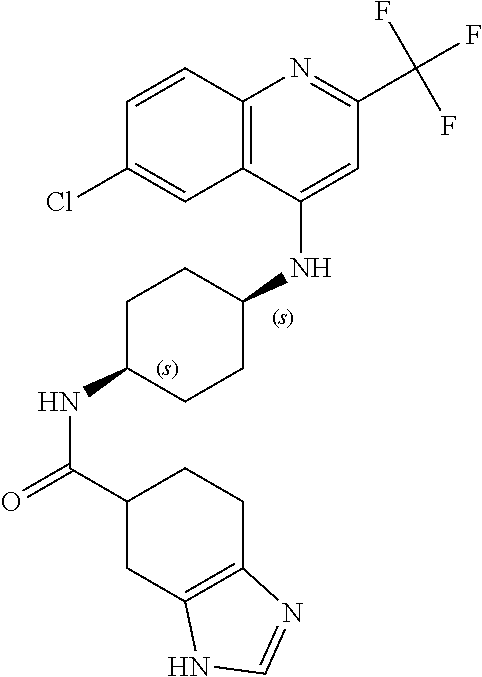
4-212 
4-213 
4-214 
4-215 
4-216 
4-217 
4-218 
4-219 
4-220 
4-221 
4-222 
4-223 
4-224 
4-225 
4-226 
4-227 
4-228 
4-229 
4-230 
4-231 
4-232 
4-233 
4-234 
4-235 
4-236 
4-237 
4-238 
4-239 
4-240 
4-241 
4-242 
4-243 
4-244 
4-245 
4-246 
4-247 
4-248 
4-249 
4-250 
4-251 
4-252 
4-253 
4-254 
4-255 
4-256 
4-257 
4-258 
4-259 
4-260 
4-261 
4-262 
4-263 
4-264 
4-265 
4-266 
4-267 
4-268 
4-269 
4-270 
4-271 
4-272 
4-273 
4-274 
4-275 
4-276 
4-277 
4-278 
4-279 
4-280 
4-281 
4-282 
4-283 
4-284 
4-285 
4-286 
4-287 
4-288 
4-289 
4-290 
4-291 
4-292 
4-293 
4-294 
4-295 
4-296 
4-297 
4-298 
4-299 
4-300 
4-301 
4-302 
4-303 
4-304 
4-305 
4-306 
4-307 
4-308 
4-309 
4-310 
4-311 
4-312 
4-313 
4-314 
4-315 
4-316 - Representative compounds of structure (1), as well as formulas (IA) through (1C) as applicable, include, but not limited to, any one of the compounds listed below in their IUPAC names as well as a pharmaceutically acceptable salt, isomer, hydrate, solvate or isotope thereof.
- 4-fluoro-N-[(1s,4s)-4-{[2-(difluoromethyl)-6-fluoroquinolin-4-yl]amino}cyclohexyl]benzamide;
- 4-fluoro-N-[(1s,4s)-4-{[6-ethyl-2-(trifluoromethyl)quinolin-4-yl]amino}cyclohexyl]benzamide;
- 4-fluoro-N-[(1s,4s)-4-{[6-chloro-2-(difluoromethyl)quinolin-4-yl]amino}cyclohexyl]benzamide;
- 4-fluoro-N-[(1s,4s)-4-{[6-fluoro-2-(trifluoromethyl)quinolin-4-yl]amino}cyclohexyl]benzamide;
- 4-fluoro-N-[(1s,4s)-4-{[6-chloro-2-(trifluoromethyl)quinolin-4-yl]amino}cyclohexyl]benzamide;
- 4-fluoro-N-[(1s,4s)-4-{[6-methyl-2-(trifluoromethyl)quinolin-4-yl]amino}cyclohexyl]benzamide;
- 4-fluoro-N-[(1s,4s)-4-{[2-(trifluoromethyl)quinazolin-4-yl]amino}cyclohexyl]benzamide;
- 4-fluoro-N-[(1s,4s)-4-{[6-fluoro-2-(trifluoromethyl)quinazolin-4-yl]amino}cyclohexyl]benzamide;
- 4-fluoro-N-[(1s,4s)-4-{[2-(difluoromethyl)quinazolin-4-yl]amino}cyclohexyl]benzamide;
- 4-fluoro-N-[(1s,4s)-4-{[6-chloro-2-(trifluoromethyl)quinazolin-4-yl]amino}cyclohexyl]benzamide;
- 4-fluoro-N-[(1s,4s)-4-{[2-(difluoromethyl)-6-fluoroquinazolin-4-yl]amino}cyclohexyl]benzamide;
- 4-fluoro-N-[(1s,4s)-4-{[2-(trifluoromethyl)quinolin-4-yl]amino}cyclohexyl]benzamide;
- 4-chloro-N-[(1s,4s)-4-{[2-(trifluoromethyl)quinolin-4-yl]amino}cyclohexyl]benzamide;
- N-[(1s,4s)-4-{[2-(trifluoromethyl)quinolin-4-yl]amino}cyclohexyl]cyclopropanecarboxamide;
- 2-chloro-N-[(1s,4s)-4-{[2-(trifluoromethyl)quinolin-4-yl]amino}cyclohexyl]benzamide; 3-chloro-N-[(1s,4s)-4-{[2-(trifluoromethyl)quinolin-4-yl]amino}cyclohexyl]benzamide;
- 2,3-difluoro-N-[(1s,4s)-4-{[2-(trifluoromethyl)quinolin-4-yl]amino}cyclohexyl]benzamide;
- 2,5-difluoro-N-[(1s,4s)-4-{[2-(trifluoromethyl)quinolin-4-yl]amin}cyclohexyl]benzamide;
- 3,4-difluoro-N-[(1s,4s)-4-{[2-(trifluoromethyl)quinolin-4-yl]amino}cyclohexyl]benzamide;
- 3,5-difluoro-N-[(1s,4s)-4-{[2-(trifluoromethyl)quinolin-4-yl]amino}cyclohexyl]benzamide;
- 2,4-difluoro-N-[(1s,4s)-4-{[2-(trifluoromethyl)quinolin-4-yl]amino}cyclohexyl]benzamide;
- N-[(1s,4s)-4-{[2-(trifluoromethyl)quinolin-4-yl]amino}cyclohexyl]pyridine-4-carboxamide;
- N-[(1s,4s)-4-{[2-(trifluoromethyl)quinolin-4-yl]amino}cyclohexyl]cyclohexanecarboxamide;
- N-[(1s,4s)-4-{[2-(trifluoromethyl)quinolin-4-yl]amino}cyclohexyl]pyridine-3-carboxamide;
- N-[(1s,4s)-4-{[2-(trifluoromethyl)quinolin-4-yl]amino}cyclohexyl]pyridine-2-carboxamide;
- 2-methyl-N-[(1s,4s)-4-{[2-(trifluoromethyl)quinolin-4- yl]amino}cyclohexyl]propanamide;
- N-[(1s,4s)-4-{[2-(trifluoromethyl)quinolin-4-yl]amino}cyclohexyl]-1-benzofuran-2-carboxamide;
- 2-phenyl-N-[(1s,4s)-4-{[2-(trifluoromethyl)quinolin-4-yl]amino}cyclohexyl]butanamide;
- 4-(dimethylamino)-N-[(1s,4s)-4-{[2-(trifluoromethyl)quinolin-4-yl]amino}cyclohexyl]benzamide;
- 3-(dimethylamino)-N-[(1s,4s)-4-{[2-(trifluoromethyl)quinolin-4-yl]amino}cyclohexyl]benzamide;
- 3-fluoro-4-methoxy-N-[(1s,4s)-4-{[2-(trifluoromethyl)quinolin-4-yl]amino}cyclohexyl]benzamide;
- 1-acetyl-N-[(1s,4s)-4-{[2-(trifluoromethyl)quinolin-4-yl]amino}cyclohexyl]piperidine-4-carboxamide;
- 4-methyl-N-[(1s,4s)-4-{[2-(trifluoromethyl)quinolin-4-yl]amino}cyclohexyl]pentanamide;
- 2-methyl-N-[(1s,4s)-4-{[2-(trifluoromethyl)quinolin-4-yl]amino}cyclohexyl]benzamide;
- N-[(1s,4s)-4-{[2-(trifluoromethyl)quinolin-4-yl]amino}cyclohexyl]benzamide;
- 3-methyl-N-[(1s,4s)-4-{[2-(trifluoromethyl)quinolin-4-yl]amino}cyclohexyl]furan-2-carboxamide;
- N-[(1s,4s)-4-{[2-(trifluoromethyl)quinolin-4-yl]amino}cyclohexyl]-2H-1,3-benzodioxole -5-carboxamide;
- N-[(1s,4s)-4-{[2-(trifluoromethyl)quinolin-4-yl]amino}cyclohexyl]furan-2-carboxamide;
- 2-(4-chlorophenyl)-N-[(1s,4s)-4-{[2-(trifluoromethyl)quinolin-4-yl]amino}cyclohexyl]acetamide;
- 5-chloro-2-fluoro-N-[(1s,4s)-4-{[2-(trifluoromethyl)quinolin-4-yl]amino}cyclohexyl]benzamide;
- N-[(1s,4s)-4-{[2-(trifluoromethyl)quinolin-4-yl]amino}cyclohexyl]thiophene-2-carboxamide;
- N-[(1s,4s)-4-{[2-(trifluoromethyl)quinolin-4-yl]amino}cyclohexyl]-1-benzothiophene-2-carboxamide;
- 4-tert-butyl-N-[(1s,4s)-4-{[2-(trifluoromethyl)quinolin-4-yl]amino}cyclohexyl]benzamide;
- 2,5-dimethyl-N-[(1s,4s)-4-{[2-(trifluoromethyl)quinolin-4-yl]amino}cyclohexyl]furan-3-carboxamide;
- 2-phenyl-N-[(1s,4s)-4-{[2-(trifluoromethyl)quinolin-4-yl]amino}cyclohexyl]acetamide;
- 4-methyl-N-[(1s,4s)-4-{[2-(trifluoromethyl)quinolin-4-yl]amino}cyclohexyl]thiophene-2-carboxamide;
- 3-cyano-N-[(1s,4s)-4-{[2-(trifluoromethyl)quinolin-4-yl]amino}cyclohexyl]benzamide;
- 3-fluoro-N-[(1s,4s)-4-{[2-(trifluoromethyl)quinolin-4-yl]amino}cyclohexyl]benzamide;
- 2-fluoro-N-[(1s,4s)-4-{[2-(trifluoromethyl)quinolin-4-yl]amino}cyclohexyl]benzamide;
- 3-methoxy-N-[(1s,4s)-4-{[2-(trifluoromethyl)quinolin-4-yl]amino}cyclohexyl]benzamide;
- 2-methoxy-N-[(1s,4s)-4-{[2-(trifluoromethyl)quinolin-4-yl]amino}cyclohexyl]benzamide;
- 4-fluoro-N-(5-{[2-(trifluoromethyl)quinolin-4-yl]amino}bicyclo[2.2.1]heptan-2-yl)benzamide;
- 3,5-dimethyl-N-[(1s,4s)-4-{[2-(trifluoromethyl)quinolin-4-yl]amino}cyclohexyl]-1,2-oxazole-4-carboxamide;
- 2,3-dimethyl-N-[(1s,4s)-4-{[2-(trifluoromethyl)quinolin-4-yl]amino}cyclohexyl]benzamide;
- 3-phenyl-N-[(1s,4s)-4-{[2-(trifluoromethyl)quinolin-4-yl]amino}cyclohexyl]propanamide;
- 4-fluoro-3-methyl-N-[(1s,4s)-4-{[2-(trifluoromethyl)quinolin-4-yl]amino}cyclohexyl]benzamide;
- 2-(4-fluorophenyl)-N-[(1s,4s)-4-{[2-(trifluoromethyl)quinolin-4-yl]amino}cyclohexyl]acetamide;
- 4-(morpholin-4-yl)-N-[(1s,4s)-4-{[2-(trifluoromethyl)quinolin-4-yl]amino}cyclohexyl]benzamide;
- N-(4-{[6-chloro-2-(trifluoromethyl)quinolin-4-yl]amino}cyclohexyl)-4-(morpholin-4-yl)-4-oxobutanamide;
- ethyl 1-{[(1s,4s)-4-{[6-chloro-2-(trifluoromethyl)quinolin-4-yl]amino}cyclohexyl]carbamoyl}cyclobutane-1-carboxylate;
- 2-[3-(dimethylamino)phenoxy]-N-[(1s,4s)-4-{[6-chloro-2-(trifluoromethyl)quinolin-4-yl]amino}cyclohexyl]acetamide;
- 2,5-dimethyl-N-[(1s,4s)-4-{[6-chloro-2-(trifluoromethyl)quinolin-4-yl]amino}cyclohexyl]-1,3-oxazole-4-carboxamide;
- N-(4-{[6-chloro-2-(trifluoromethyl)quinolin-4-yl]amino}cyclohexyl)-1-(4-chlorophenyl)-5-methyl-1H-pyrazole-4-carboxamide;
- N-(4-{[6-chloro-2-(trifluoromethyl)quinolin-4-yl]amino}cyclohexyl)-3-(4-chloro-3-fluorophenyl)propanamide;
- (2S)—N-(4-{[6-chloro-2-(trifluoromethyl)quinolin-4-yl]amino}cyclohexyl)-3-phenyl-2-[(pyrazin-2-yl)formamido]propanamide;
- 2-chloro-N-(4-{[6-chloro-2-(trifluoromethyl)quinolin-4-yl]amino}cyclohexyl)-6-fluoro-3-methoxybenzamide;
- N-(4-{[6-chloro-2-(trifluoromethyl)quinolin-4-yl]amino}cyclohexyl)-4-fluoro-3-(trifluoromethoxy)benzamide;
- N-(4-{[6-chloro-2-(trifluoromethyl)quinolin-4-yl]amino}cyclohexyl)-2-(4-chlorophenyl)-2-methylpropanamide;
- 4-(4-methylpiperazin-1-yl)-N-[(1s,4s)-4-{[2-(trifluoromethyl)quinolin-4-yl]amino}cyclohexyl]benzamide;
- N-(4-{[6-chloro-2-(trifluoromethyl)quinolin-4-yl]amino}cyclohexyl)-1-methyl-4,5,6,7-tetrahydro -1H-indazole-3-carboxamide;
- N-(4-{[6-chloro-2-(trifluoromethyl)quinolin-4-yl]amino}cyclohexyl)-2,2-dimethyloxane-4-carboxamide;
- (1S,4S)-N-(4{[6-chloro-2-(trifluoromethyl)quinolin-4-yl]amino}cyclohexyl)-4,7,7-trimethyl -3-oxo-2-oxabicyclo[2.2.1]heptane-1-carboxamide;
- N-(4-{[6-chloro-2-(trifluoromethyl)quinolin-4-yl]amino}cyclohexyl)-2-(pyridin-4-yl)-1H-1,3-benzodiazole-5-carboxamide;
- N-(4-{[6-chloro-2-(trifluoromethyl)quinolin-4-yl]amino}cyclohexyl)-5-fluoro-1H-pyrrolo [2,3-b]pyridine-2-carboxamide;
- (2S)-2-(2-oxopyrrolidin-1-yl)-N-[(1s,4s)-4-{[6-chloro-2-(trifluoromethyl)quinolin-4-yl]amino}cyclohexyl]butanamide;
- 4-(4-acetylphenoxy)-N-[(1s,4s)-4-{[6-chloro-2-(trifluoromethyl)quinolin-4-yl]amino}cyclohexyl]butanamide;
- 2-(2,3-dimethylphenyl)-N-[(1s,4s)-4-{[6-chloro-2-(trifluoromethy)quinolin-4-yl]amino}cyclohexyl]acetamide;
- 4-[(25)-2-acetamido-2-{[(1s,4s)-4-{[6-chloro-2-(trifluoromethyl)quinolin-4-yl]amino}cyclohexyl]carbamoyl}ethyl]phenyl acetate;
- 3-chloro-2-iodo-N-[(1s,4s)-4-{[6-chloro-2-(trifluoromethyl)quinolin-4-yl]amino}cyclohexyl]benzamide;
- 1,4-dimethyl-N-[(1s,4s)-4-{[6-chloro-2-(trifluoromethyl)quinolin-4-yl]amino}cyclohexyl]-1,2,3,4-tetrahydroquinoxaline-6-carboxamide;
- 7-methoxy-N-[(1s,4s)-4-{[6-chloro-2-(trifluoromethyl)quinolin-4-yl]amino}cyclohexyl]-3,4-dihydro-2H-1-benzopyran-3-carboxamide;
- (25)-2-[(tert-butylcarbamoyl)amino]-3,3-dimethyl-N-[(1s,4s)-4-{[6-chloro-2-(trifluoromethyl)quinolin-4-yl]amino}cyclohexyl]butanamide;
- 6-methyl-N-[(1s,4s)-4-{[6-chloro-2-(trifluoromethyl)quinolin-4-yl]amino}cyclohexyl]-1-benzothiophene-2-carboxamide;
- 6-chloro-3-oxo-N-[(1s,4s)-4-{[6-chloro-2-(trifluoromethyl)quinolin-4-yl]amino}cyclohexyl]-2,3-dihydro-1H-indene-1-carboxamide;
- 3,4-dichloro-N-[(1s,4s)-4-{[6-chloro-2-(trifluoromethyl)quinolin-4-yl]amino}cyclohexyl]-1,2-thiazole-5-carboxamide;
- N-[(1s,4s)-4-{[6-chloro-2-(trifluoromethyl)quinolin-4-yl]amino}cyclohexyl]-3-(1,3-thiazol -2-yl)propanamide;
- N-[(1s,4s)-4-{[6-chloro-2-(trifluoromethyl)quinolin-4-yl]amino}cyclohexyl]-3-(1H-1,2,4-triazol -1-yl)benzamide;
- 4-fluoro-N-[(1s,4s)-4-{[6-chloro-2-(trifluoromethyl)quinolin-4-yl]amino}cyclohexyl]-1H -indole-3-carboxamide;
- 2-methyl-4-(2-methylbenzamido)-N-[(1s,4s)-4-{[6-chloro-2-(trifluoromethyl)quinolin -4-yl]amino}cyclohexyl]benzamide;
- N-[(1s,4s)-4-{[6-chloro-2-(trifluoromethyl)quinolin-4-yl]amino}cyclohexyl]-3,4-dihydro-2H-pyran-6-carboxamide;
- 2-acetamido-N-[(1s,4s)-4-{[6-chloro-2-(trifluoromethyl)quinolin-4-yl]amino}cyclohexyl]benzamide;
- N-[(1,2S)-2-{[(1s,4s)-4-{[6-chloro-2-(trifluoromethyl)quinolin-4-yl]amino}cyclohexyl]carbamoyl}cyclohexyl]benzamide;
- 1-(pyridin-3-yI)-N-[(1s,4s)-4-{[6-chloro-2-(trifluoromethyl)quinolin-4-yl]amino}cyclohexyl]-1H-pyrazole-4-carboxamide;
- 3-chloro-1-(3-chloropyridin-2-yl)-N-[(1s,4s)-4-{[6-chloro-2-(trifluoromethyl)quinolin-4-yl]amino}cyclohexyl]-1H-pyrazole-5-carboxamide;
- (3aS,45,611,6aR)-6-methoxy-2,2-dimethyl-N-[(1s,4s)-4-{[6-chloro-2-(trifluoromethyl)quinolin-4-yl]amino}cyclohexy]-tetrahydro-2H-furo[3,4-d][1,3]dioxole-4-carboxamide;
- N-(2,6-difluorophenyI)-N′-[(1s,4s)-4-{[6-chloro-2-(trifluoromethyl)quinolin-4-yl]amino}cyclohexyl]ethanediamide;
- 3-{[(1s,4s)-4-{[6-chloro-2-(trifluoromethyl)quinolin-4-yl]amino}cyclohexyl]carbamoyl}phenyl propanoate;
- 3-(5-bromo-2-fluorophenyl)-N-[(1s,4s)-4-{[6-chloro-2-(trifluoromethyl)quinolin-4-yl]amino}cyclohexyl]propanamide;
- 4-butanamido-3-methyl-N-[(1s,4s)-4-{[6-chloro-2-(trifluoromethyl)quinolin-4-yl]amino}cyclohexyl]benzamide;
- 1-(3-fluorophenyI)-N-[(1s,4s)-4-{[6-chloro-2-(trifluoromethyl)quinolin-4-yl]amino}cyclohexyl]-5-(trifluoromethyl)-1H-pyrazole-4-carboxamide;
- 1-tert-butyl-N-[(1s,4s)-4-{[6-chloro-2-(trifluoromethyl)quinolin-4-yl]amino}cyclohexyl]-1H-1,2,3-triazole-4-carboxamide;
- 2-(methylamino)-N-[(1s,4s)-4-{[6-chloro-2-(trifluoromethyl)quinolin-4-yl]amino}cyclohexyl]benzamide;
- (211,311)-2-(2-methoxyphenyl)-5-oxo-N-[(1s,4s)-4-{[6-chloro-2-(trifluoromethyl)quinolin-4-yl]amino}cyclohexyl]oxolane-3-carboxamide;
- (111,211)-2-(2-fluorophenyl)-N-[(1s,4s)-4-{[6-chloro-2-(trifluoromethyl)quinolin-4-yl]amino}cyclohexyl]cyclopropane-1-carboxamide;
- N-[(1s,4s)-4-{[6-chloro-2-(trifluoromethyl)quinolin-4-yl]amino}cyclohexyl]-5-(thiophen-2-yppyridine-3-carboxamide;
- 2,6-dimethoxy-N-[(1s,4s)-4-{[6-chloro-2-(trifluoromethyl)quinolin-4-yl]amino}cyclohexyl]pyrimidine-4-carboxamide;
- 6-oxo-N-[(1s,4s)-4-{[6-chloro-2-(trifluoromethyl)quinolin-4-yl]amino}cyclohexyl]-1,4,5,6-tetrahydropyridazine-3-carboxamide;
- 2-(1-methyl-1H-indo1-3-yl)-N-[(1s,4s)-4-{[6-chloro-2-(trifluoromethyl)quinolin-4-yl]amino}cyclohexyl]acetamide;
- 6-chloro-N-[(1s,4s)-4-{[6-chloro-2-(trifluoromethyl)quinolin-4-yl]amino}cyclohexyl]-2H-chromene-3-carboxamide;
- 2-chloro-N-[(1s,4s)-4-{[6-chloro-2-(trifluoromethyl)quinolin-4-yl]amino}cyclohexyl]-1,3-benzothiazole-6-carboxamide;
- 2-(3-chloro-5-fluorophenyl)-N-[(1s,4s)-4-{[6-chloro-2-(trifluoromethyl)quinolin-4-yl]amino}cyclohexyl]acetamide;
- 2-(4-chloro-1H-indo1-3-yl)-N-[(1s,4s)-4-{[6-chloro-2-(trifluoromethyl)quinolin-4-yl]amino}cyclohexyl]acetamide;
- 6-methoxy-2-methyl-N-[(1s,4s)-4-{[6-chloro-2-(trifluoromethyl)quinolin-4-yl]amino}cyclohexyl]pyridine-3-carboxamide;
- N-[(1s,4s)-4-{[6-chloro-2-(trifluoromethyl)quinolin-4-yl]amino}cyclohexyl]-1H,4H,6H,7H-pyrano[4,3-c]pyrazole-3-carboxamide;
- N-[(1s,4s)-4-{[6-chloro-2-(trifluoromethyl)quinolin-4-yl]amino}cyclohexyl]bicyclo[2.2.1]hept-5-ene-2-carboxamide;
- N-[(1s,4s)-4-{[6-chloro-2-(trifluoromethyl)quinolin-4-yl]amino}cyclohexyl]-1,3-oxazole -5-carboxamide;
- 2-imino-N-[(1s,4s)-4-{[6-chloro-2-(trifluoromethyl)quinolin-4-yl]amino}cyclohexyl]-1,3-thiazolidine-4-carboxamide;
- (211)-2-acetamido-3-(1H-indo1-3-yl)-N-[(1s,4s)-4-{[6-chloro-2-(trifluoromethyl)quinolin -4-yl]amino}cyclohexyl]propanamide;
- 5-chloro-3-(difluoromethyl)-1-methyl-N-[(1s,4s)-4-{[6-chloro-2-(trifluoromethyl)quinolin-4-yl]amino}cyclohexyl]-1H-pyrazole-4-carboxamide;
- 2-{bicyclo[2.2.1]heptan-2-yl}-N-[(1s,4s)-4-{[6-chloro-2-(trifluoromethyl)quinolin-4-yl]amino}cyclohexyl]acetamide;
- 4-bromo-N-[(1s,4s)-4-{[6-chloro-2-(trifluoromethyl)quinolin-4-yl]aminolcyc}ohexyl]-1,3-thiazole-2-carboxamide;
- benzyl N-(3-{[(1s,4s)-4-{[6-chloro-2-(trifluoromethyl)quinolin-4-yl]amino}cyclohexyl]carbamoyl}propyl)carbamate;
- 5-(methylsulfanyl)-N-[(1s,4s)-4-{[6-chloro-2-(trifluoromethyl)quinolin-4-yl]amino}cyclohexyl]thiophene-2-carboxamide;
- 3-acetamido-N-[(1s,4s)-4-{[6-chloro-2-(trifluoromethyl)quinolin-4-yl]amino}cyclohexyl]benzamide;
- 2-benzyl-N-[(1s,4s)-4-{[6-chloro-2-(trifluoromethyl)quinolin-4-yl]amino}cyclohexyl]prop-2-enamide;
- 5-bromo-2-(methylsulfanyI)-N-[(1s,4s)-4-{[6-chloro-2-(trifluoromethyl)quinolin-4-yl]amino}cyclohexyl]pyrimidine-4-carboxamide;
- 3-(2-oxopyrrolidin-1-yI)-N-[(1s,4s)-4-{[6-chloro-2-(trifluoromethyl)quinolin-4-yl]amino}cyclohexyl]benzamide;
- 6-(dimethylamino)-2-methyl-N-[(1s,4s)-4-{[2-(trifluoromethyl)quinolin-4-yl]amino}cyclohexyl]pyridine-3-carboxamide;
- N-[(1s,4s)-4-{[6-chloro-2-(trifluoromethyl)quinolin-4-yl]amino}cyclohexyl]-1H -indazole-7-carboxamide;
- 2-chloro-4-iodo-N-[(1s,4s)-4-{[6-chloro-2-(trifluoromethyl)quinolin-4-yl]amino}cyclohexyl]pyridine-3-carboxamide;
- N-[(1s,4s)-4-{[6-chloro-2-(trifluoromethyl)quinolin-4-yl]amino}cyclohexyl]-2,3-dihydro -1,4-benzodioxine-2-carboxamide;
- 2-methyl-5-{[(1r,40-4-{[6-chloro-2-(trifluoromethyl)quinolin-4-yl]amino}cyclohexyl]carbamoyl}pyrazin-1-ium-1-olate;
- 6-chloro-N-[(1s,4s)-4-{[6-chloro-2-(trifluoromethyl)quinolin-4-yl]amino}cyclohexyl]pyridazine-4-carboxamide;
- N-[(1s,4s)-4-{[6-chloro-2-(trifluoromethyl)quinolin-4-yl]amino}cyclohexyl]-1,2,3,4-tetrahydroisoquinoline-7-carboxamide;
- 3-(methylamino)-N-[(1s,4s)-4-{[6-chloro-2-(trifluoromethyl)quinolin-4-yl]amino}cyclohexyl]benzamide;
- 4-bromo-1-methyl-N-[(1s,4s)-4-{[6-chloro-2-(trifluoromethyl)quinolin-4-yl]amino}cyclohexyl]-1H-pyrazole-5-carboxamide;
- N-[(1s,4s)-4-{[6-chloro-2-(trifluoromethyl)quinolin-4-yl]amino}cyclohexyl]-3-[(trifluoromethypsulfanyl]benzamide;
- 2-(5-chloro-1H-indazol-3-yl)-N-[(1s,4s)-4-{[6-chloro-2-(trifluoromethyl)quinolin-4-yl]amino}cyclohexyl]acetamide;
- (22)-2-(2-amino-1,3-thiazol-4-yl)-N-[(1s,4s)-4-{[6-chloro-2-(trifluoromethyl)quinolin-4-yl]amino}cyclohexyl]pent-2-enamide;
- 2-chloro-4,6-dimethyl-N-[(1s,4s)-4-{[6-chloro-2-(trifluoromethyl)quinolin-4-yl]amino}cyclohexyl]pyridine-3-carboxamide;
- methyl N-[(11)-phenyl({[(1s,4s)-4-{[6-chloro-2-(trifluoromethyl)quinolin-4-yl]amino}cyclohexyl]carbamoyl})methyl]carbamate;
- 5-bromo-N-[(1s,4s)-4-{[6-chloro-2-(trifluoromethyl)quinolin-4-yl]amino}cyclohexyl]-1H-indole-7-carboxamide;
- 2-(ethylamino)-N-[(1s,4s)-4-{[6-chloro-2-(trifluoromethyl)quinolin-4-yl]amino}cyclohexyl]acetamide;
- tert-butyl N-(1-methyl-5-{[(1s,4s)-4-{[6-chloro-2-(trifluoromethyl)quinolin-4-yl]amino}cyclohexyl]carbamoyl}-1H-pyrrol-3-yl)carbamate;
- (2E)-3-(1H-imidazol-4-yl)-N-[(1s,4s)-4-{[6-chloro-2-(trifluoromethyl)quinolin-4-yl]amino}cyclohexyl]prop-2-enamide;
- 4-(methylamino)-N-[(1s,4s)-4-{[6-chloro-2-(trifluoromethyl)quinolin-4-yl]amino}cyclohexyl]benzamide;
- 4-iodo-1-methyl-N-[(1s,4s)-4-{[6-chloro-2-(trifluoromethyl)quinolin-4-yl]amino}cyclohexyl]-1H-pyrazole-3-carboxamide;
- 4-bromo-N-[(1s,4s)-4-{[6-chloro-2-(trifluoromethyl)quinolin-4-yl]amino}cyclohexyl]-1H-indazole-6-carboxamide;
- 3-acetamido-N-[(1s,4s)-4-{[6-chloro-2-(trifluoromethyl)quinolin-4-yl]amino}cyclohexyl]propanamide;
- N-[(1s,4s)-4-{[6-chloro-2-(trifluoromethyl)quinolin-4-yl]amino}cyclohexyl]-1-benzofuran-2-carboxamide;
- 5-methoxy-N-[(1s,4s)-4-{[6-chloro-2-(trifluoromethyl)quinolin-4-yl]amino}cyclohexyl]-1-benzofuran-2-carboxamide;
- 5-fluoro-N-[(1s,4s)-4-{[6-chloro-2-(trifluoromethyl)quinolin-4-yl]amino}cyclohexyl]-1-benzofuran-2-carboxamide;
- 4-acetamido-N-[(1s,4s)-4-{[6-chloro-2-(trifluoromethyl)quinolin-4-yl]amino}cyclohexyl]butanamide;
- 3-methoxy-N-[(1s,4s)-4-{[6-chloro-2-(trifluoromethyl)quinolin-4-yl]amino}cyclohexyl]benzamide;
- 2-methoxy-N-[(1s,4s)-4-{[6-chloro-2-(trifluoromethyl)quinolin-4-yl]amino}cyclohexyl]benzamide;
- N-[(1s,4s)-4-{[6-chloro-2-(trifluoromethyl)quinolin-4-yl]amino}cyclohexyl]pyrrolidine -1-carboxamide;
- 4-fluoro-N-[(1s,4s)-4-{[2-(difluoromethyl)quinolin-4-yl]amino}cyclohexyl]benzamide;
- 4-fluoro-N-[(1s,4s)-4-{[6-cyano-2-(trifluoromethyl)quinolin-4-yl]amino}cyclohexyl]benzamide;
- 4-(dimethylamino)-N-[(1s,4s)-4-{[6-(methylamino)-2-(trifluoromethyl)quinolin-4-yl]amino}cyclohexyl]benzamide;
- 4-fluoro-N-[(1s,4s)-4-{[2,6-bis(trifluoromethyl)quinazolin-4-yl]amino}cyclohexyl]benzamide;
- N-[(1s,4s)-4-{[6-chloro-2-(trifluoromethyl)quinolin-4-yl]amino}cyclohexyl]benzamide;
- 4-cyano-N-[(1s,4s)-4-{[2-(trifluoromethyl)quinolin-4-yl]amino}cyclohexyl]benzamide;
- 4-cyano-N-[(1s, 4s)-4-{[2-(triflouromethyl)quinolin-4-yl]amino}cyclohexyl]benzamide;
- 4-methoxy-N-[(1s,4s)-4-{[2-(trifluoromethyl)quinolin-4-yl]amino}cyclohexyl]benzamide;
- 3-[(methylcarbamoyDamino]-N-[(1s,4s)-4-{[6-chloro-2-(trifluoromethyl)quinolin-4-yl]amino}cyclohexyl]benzamide;
- 3-methanesulfonamido-N-[(1s,4s)-4-{[6-chloro-2-(trifluoromethyl)quinolin-4-yl]amino}cyclohexyl]benzamide;
- 3,4-dimethyl-N-[(1s,4s)-4-{[2-(trifluoromethyl)quinolin-4-yl]amino}cyclohexyl]thiophene-2-carboxamide;
- 4-(dimethylamino)-N-[(1s,4s)-4-{[6-acetamido-2-(trifluoromethyl)quinolin-4-yl]amino}cyclohexyl]benzamide;
- N-[(1s,4s)-4-{[2-(trifluoromethyl)quinolin-4-yl]amino}cyclohexyl]-1-benzofuran-3-carboxamide;
- methyl 4-[(4-{[6-chloro-2-(trifluoromethyl)quinolin-4-yl]amino}cyclohexyl)carbamoyl]benzoate;
- N-[(1s,4s)-4-{[6-chloro-2-(trifluoromethyl)quinolin-4-yl]amino}cyclohexyl]-2H -pyrazolo[3,4-b]pyridine-3-carboxamide;
- 2-(3-oxo-3,4-dihydro-2H-1,4-benzoxazin-4-yl)-N-[(1s,4s)-4-{[6-chloro-2-(trifluoromethyl)quinolin-4-yl]amino}cyclohexyl]acetamide;
- 2-acetamido-N-[(1s,4s)-4-{[6-chloro-2-(trifluoromethyl)quinolin-4-yl]amino}cyclohexyl]pyridine-4-carboxamide;
- 3-(2-fluorophenyl)-N-[(1s,4s)-4-{[6-chloro-2-(trifluoromethyl)quinolin-4-yl]amino}cyclohexyl]-1H-pyrazole-5-carboxamide;
- N-[(1s,4s)-4-{[6-chloro-2-(trifluoromethyl)quinolin-4-yl]amino}cyclohexyl]-2H-1,3-benzodioxole-4-carboxamide;
- (3R)-3-(2-methylpropyI)-N′-[(1s,4s)-4-{[6-chloro-2-(trifluoromethyl)quinolin-4-yl]amino}cyclohexyl]pentanediamide;
- N-[(1s,4s)-4-{[6-chloro-2-(trifluoromethyl)quinolin-4-yl]amino}cyclohexyl]imidazo[1,2-a]pyrimidine-3-carboxamide;
- 2-(1,2-benzoxazol-3-yl)-N-[(1s,4s)-4-{[6-chloro-2-(trifluoromethyl)quinolin-4-yl]amino}cyclohexyl]acetamide;
- 7-methoxy-N-[(1s,4s)-4-{[6-chloro-2-(trifluoromethyl)quinolin-4-yl]amino}cyclohexyl]-1-benzofuran-2-carboxamide;
- 1-cyano-N-[(1s,4s)-4-{[6-chloro-2-(trifluoromethyl)quinolin-4-yl]amino}cyclohexyl]cyclopropane-1-carboxamide;
- N-[(1s,4s)-4-{[6-chloro-2-(trifluoromethyl)quinolin-4-yl]amino}cyclohexyl]-1,6-naphthyridine-2-carboxamide;
- 1-(2-chlorobenzoyI)-N-[(1s,4s)-4-{[6-chloro-2-(trifluoromethyl)quinolin-4-yl]amino}cyclohexyl]piperidine-4-carboxamide;
- 2-chloro-4-methanesulfonyl-N-[(1s,4s)-4-{[6-chloro-2-(trifluoromethyl)quinolin-4-yl]amino}cyclohexyl]benzamide;
- 2-(1H-imidazol-1-yl)-N-[(1s,4s)-4-{[6-chloro-2-(trifluoromethyl)quinolin-4-yl]amino}cyclohexyl]acetamide;
- 3-tert-butyl-N-[(1s,4s)-4-{[6-chloro-2-(trifluoromethyl)quinolin-4-yl]amino}cyclohexyl]-1H-pyrazole-5-carboxamide;
- 4-[(pyridin-3-yl)formamido]-N-[(1s,4s)-4-{[6-chloro-2-(trifluoromethyl)quinolin-4-yl]amino}cyclohexyl]butanamide;
- 5-(propan-2-yI)-N-[(1s,4s)-4-{[6-chloro-2-(trifluoromethyl)quinolin-4-yl]amino}cyclohexyl]-1H-pyrazole-3-carboxamide;
- 5-(2-chlorophenyI)-N-[(1s,4s)-4-{[6-chloro-2-(trifluoromethyl)quinolin-4-yl]amino}cyclohexyl]-1H-pyrazole-3-carboxamide;
- 1-methyl-3-(2-methylpropyl)-N-[(1s,4s)-4-{[6-chloro-2-(trifluoromethyl)quinolin-4-yl]amino}cyclohexyl]-1H-pyrazole-5-carboxamide;
- N-[(1s,4s)-4{[6-chloro-2-(trifluoromethyl)quinolin-4-yl]amino}cyclohexyl]-1-[5-(trifluoromethyl)pyridin-2-yl]piperidine-4-carboxamide;
- 2-(1H-indo1-1-yl)-N-[(1s,4s)-4-{[6-chloro-2-(trifluoromethyl)quinolin-4-yl]amino}cyclohexyl]acetamide;
- 2-(morpholin-4-yI)-N-[(1s,4s)-4-{[6-chloro-2-(trifluoromethyl)quinolin-4-yl]amino}cyclohexyl]pyridine-4-carboxamide;
- N-[(1s,4s)-4-{[6-chloro-2-(trifluoromethyl)quinolin-4-yl]amino}cyclohexyl]-2-(thiophen-3-yl)acetamide;
- 3-(3-fluorophenoxy)-N-[(1s,4s)-4-{[6-chloro-2-(trifluoromethyl)quinolin-4-yl]amino}cyclohexyl]propanamide;
- 1-cyclopentyl-5-oxo-N-[(1s,4s)-4-{[6-chloro-2-(trifluoromethyl)quinolin-4-yl]amino}cyclohexyl]pyrrolidine-3-carboxamide;
- 2-oxo-N-[(1s,4s)-4-{[6-chloro-2-(trifluoromethyl)quinolin-4-yl]amino}cyclohexyl]-2,3-dihydropyridine-4-carboxamide;
- 2-(2,5-dimethylphenoxy)-N-[(1s,4s)-4-{[6-chloro-2-(trifluoromethyl)quinolin-4-yl]amino}cyclohexyl]acetamide;
- N-[(1s,4s)-4-{[6-chloro-2-(trifluoromethyl)quinolin-4-yl]amino}cyclohexyl]-4,5,6,7-tetrahydro-1-benzothiophene-2-carboxamide;
- N-[(1s,4s)-4-{[6-chloro-2-(trifluoromethyl)quinolin-4-yl]amino}cyclohexyl]-1H -pyrrolo[2,3-b]pyridine-4-carboxamide;
- 2-{imidazo[1,2-a]pyridin-3-yl}-N-[(1s,4s)-4-{[6-chloro-2-(trifluoromethyl)quinolin-4-yl]amino}cyclohexyl]acetamide;
- 2-[5-methyl-3-(trifluoromethyl)-1H-pyrazol-1-yl]-N-[(1s,4s)-4-{[6-chloro-2-(trifluoromethyl)quinolin-4-yl]amino}cyclohexyl]acetamide;
- 1-ethyl-N-[(1s,4s)-4-{[6-chloro-2-(trifluoromethyl)quinolin-4-yl]amino}cyclohexyl]-1H -pyrazole-5-carboxamide;
- 3,6-difluoro-N-[(1s,4s)-4-{[6-chloro-2-(trifluoromethyl)quinolin-4-yl]amino}cyclohexyl]pyridine-2-carboxamide;
- N-[(1s,4s)-4-{[6-chloro-2-(trifluoromethyl)quinolin-4-yl]amino}cyclohexyl]-3-(1H-1,2,4-triazol-1-yl)propanamide;
- 2-oxo-N-[(1s,4s)-4-{[6-chloro-2-(trifluoromethyl)quinolin-4-yl]amino}cyclohexyl]-2H -chromene-6-carboxamide;
- 4-methyl-2-(pyridin-2-yl)-N-[(1s,4s)-4-{[6-chloro-2-(trifluoromethyl)quinolin-4-yl]amino}cyclohexyl]-1,3-thiazole-5-carboxamide;
- 4-(1,3-dioxo-2,3-dihydro-1H-isoindo1-2-yl)-N-[(1s,4s)-4-{[6-chloro-2-(trifluoromethyl)quinolin-4-yl]amino}cyclohexyl]butanamide;
- 2-(benzenesulfonyl)-N-[(1s,4s)-4-{[6-chloro-2-(trifluoromethyl)quinolin-4-yl]amino}cyclohexyl]acetamide;
- 4-({[(1s,4s)-4-{[6-chloro-2-(trifluoromethyl)quinolin-4-yl]amino}cyclohexyl]carbamoyl}methyl)phenyl methanesulfonate;
- 4-(4-methanesulfonylphenyl)-4-oxo-N-[(1s,4s)-4-{[6-chloro-2-(trifluoromethyl)quinolin-4-yl]amino}cyclohexyl]butanamide;
- N-[(1s,4s)-4-{[6-chloro-2-(trifluoromethyl)quinolin-4-yl]amino}cyclohexyl]imidazo[1,2-a]pyrazine-2-carboxamide;
- 5-(furan-2-yl)-N-[(1s,4s)-4-{[6-chloro-2-(trifluoromethyl)quinolin-4-yl]amino}cyclohexyl]-1,2-oxazole-3-carboxamide;
- 1-[(pyridin-2-Amethyl]-N-[(1s,4s)-4-{[6-chloro-2-(trifluoromethyl)quinolin-4-yl]amino}cyclohexyl]piperidine-4-carboxamide;
- 4-(3-methyl-5-oxo-4,5-dihydro-1H-pyrazol-1-yl)-N-[(1s,4s)-4-{[6-chloro-2-(trifluoromethyl)quinolin-4-yl]amino}cyclohexyl]benzamide;
- 4-fluoro-N-[(1s,4s)-4-{[6-chloro-2-(trifluoromethyl)quinolin-4-yl]amino}cyclohexyl]-1H -indazole-5-carboxamide;
- 3-(1-cyanoethyl)-N-[(1s,4s)-4-{[6-chloro-2-(trifluoromethyl)quinolin-4-yl]amino}cyclohexyl]benzamide;
- N-[(1s,4s)-4-{[6-chloro-2-(trifluoromethyl)quinolin-4-yl]amino}cyclohexyl]-1,3-benzothiazole-7-carboxamide;
- 2-[7-(dimethylamino)-2-oxo-2H-chromen-4-yl]-N-[(1s,4s)-4-{[6-chloro-2-(trifluoromethyl)quinolin-4-yl]amino}cyclohexyl]acetamide;
- 6-oxo-N-[(1s,4s)-4-{[6-chloro-2-(trifluoromethyl)quinolin-4-yl]amino}cyclohexyl]spiro[3.3]heptane-2-carboxamide;
- 5-chloro-2-methoxy-N-[(1s,4s)-4-{[6-chloro-2-(trifluoromethyl)quinolin-4-yl]amino}cyclohexyl]pyridine-4-carboxamide;
- 3-methyl-N-[(1s,4s)-4-{[6-chloro-2-(trifluoromethyl)quinolin-4-yl]amino}cyclohexyl]-1-benzofuran-2-carboxamide;
- 1-phenyl-N-[(1s,4s)-4-{[6-chloro-2-(trifluoromethyl)quinolin-4-yl]amino}cyclohexyl]-1H-pyrrole-2-carboxamide;
- 2-(3-methyl-1,2-oxazol-5-yl)-N-[(1s,4s)-4-{[6-chloro-2-(trifluoromethyl)quinolin-4-yl]amino}cyclohexyl]acetamide;
- 2,3-dioxo-N-[(1s,4s)-4-{[6-chloro-2-(trifluoromethyl)quinolin-4-yl]amino}cyclohexyl]-2,3-dihydro-1H-indole-7-carboxamide;
- N-[(1s,4s)-4-{[6-chloro-2-(trifluoromethyl)quinolin-4-yl]amino}cyclohexyl]pyrazolo[1,5-a]pyridine-2-carboxamide;
- 6-fluoro-N-[(1s,4s)-4-{[6-chloro-2-(trifluoromethyl)quinolin-4-yl]amino}cyclohexyl]-3,4-dihydro-2H-1-benzopyran-2-carboxamide;
- 2-[(dimethylcarbamothioyl)sulfanyl]-N-[(1s,4s)-4-{[6-chloro-2-(trifluoromethyl)quinolin-4-yl]amino}cyclohexyl]acetamide;
- 3-(cyclopropylmethoxy)-4-(difluoromethoxy)-N-[(1s,4s)-4-{[6-chloro-2-(trifluoromethyl)quinolin-4-yl]amino}cyclohexyl]benzamide;
- 5-(difluoromethyl)-N-[(1s,4s)-4-{[6-chloro-2-(trifluoromethyl)quinolin-4-yl]amino}cyclohexyl]pyrazine-2-carboxamide;
- (45)-2-methyl-N-[(1s,4s)-4-{[6-chloro-2-(trifluoromethyl)quinolin-4-yl]amino}cyclohexyl]-3,4,5,6-tetrahydropyrimidine-4-carboxamide;
- 3-methyl-4-oxo-N-[(1s,4s)-4-{[6-chloro-2-(trifluoromethyl)quinolin-4-yl]amino}cyclohexyl]-3H,4H-imidazo[4,3-d][1,2,3,5]tetrazine-8-carboxamide;
- 4-[(quinolin-2-yl)methoxy]-N-[(1s,4s)-4-{[6-chloro-2-(trifluoromethyl)quinolin-4-yl]amino}cyclohexyl]benzamide;
- 2,6-difluoro-3-(propane-1-sulfonamido)-N-[(1s,4s)-4-{[6-chloro-2-(trifluoromethyl)quinolin-4-yl]amino}cyclohexyl]benzamide;
- 2-chloro-4-(4-methylpiperazin-1-yl)-N-[(1s,4s)-4-{[6-chloro-2-(trifluoromethyl)quinolin-4-yl]amino}cyclohexyl]benzamide;
- 4-oxo-N-[(1s,4s)-4-{[6-chloro-2-(trifluoromethyl)quinolin-4-yl]amino}cyclohexyl]-1,4-dihydro-1,5-naphthyridine-3-carboxamide;
- 2-methyl-N-[(1s,4s)-4-{[6-chloro-2-(trifluoromethyl)quinolin-4-yl]amino}cyclohexyl]-4H-thieno[3,2-b]pyrrole-5-carboxamide;
- (1r,40-4-[(2,5-dioxo-2,5-dihydro-1H-pyrrol-1-yl)methyl]-N-[(1s,4s)-4-{[6-chloro-2-(trifluoromethyl)quinolin-4-yl]amino}cyclohexyl]cyclohexane-1-carboxamide;
- N1-(4-fluorophenyl)-Nr1-[(1s,4s)-4-{[6-chloro-2-(trifluoromethyl)quinolin-4-yl]amino}cyclohexyl]cyclopropane-1,1-dicarboxamide;
- 3-(5-oxo-1-phenyl-2-sulfanylideneimidazolidin-4-yl)-N-[(1s,4s)-4-{[6-chloro-2-(trifluoromethyl)quinolin-4-yl]amino}cyclohexyl]propanamide;
- 5-chloro-6-imino-N-[(1s,4s)-4-{[6-chloro-2-(trifluoromethyl)quinolin-4-yl]amino}cyclohexyl]-1,6-dihydropyrimidine-4-carboxamide;
- 2-methyl-N-[(1s,4s)-4-{[6-chloro-2-(trifluoromethyl)quinolin-4-yl]amino}cyclohexyl]-2H-indazole-3-carboxamide;
- 2,4-dichloro-3-cyano-5-fluoro-N-[(1s,4s)-4-{[6-chloro-2-(trifluoromethyl)quinolin-4-yl]amino}cyclohexyl]benzamide;
- 1-[(4-methoxyphenyl)methyl]-N-[(1s,4s)-4-{[6-chloro-2-(trifluoromethyl)quinolin-4-yl]amino}cyclohexyl]-1H-pyrazole-4-carboxamide;
- tert-butyl N-[(15)-2-(1H-pyrazol-1-yl)-1-{[(1s,4s)-4-{[6-chloro-2-(trifluoromethyl)quinolin-4-yl]amino}cyclohexyl]carbamoyl}ethyl]carbamate;
- 2-benzyl-N-[(1s,4s)-4-{[6-chloro-2-(trifluoromethyl)quinolin-4-yl]amino}cyclohexyl]-2,3-dihydro-1H-isoindole-4-carboxamide;
- N-[(1s,4s)-4-{[6-chloro-2-(trifluoromethyl)quinolin-4-yl]amino}cyclohexyl]-5-(trifluoromethyl)-1H-pyrrolo[2,3-b]pyridine-3-carboxamide;
- 6-(2-methoxyphenyl)-N-[(1s,4s)-4-{[6-chloro-2-(trifluoromethyl)quinolin-4-yl]amino}cyclohexyl]pyridine-3-carboxamide;
- 2-methoxy-N-[(1s,4s)-4-{[6-chloro-2-(trifluoromethyl)quinolin-4-yl]amino}cyclohexyl]-4-(trifluoromethyl)-1,3-thiazole-5-carboxamide;
- 3-(4-fluorophenyl)-5-methyl-N-[(1s,4s)-4-{[6-chloro-2-(trifluoromethyl)quinolin-4-yl]amino}cyclohexyl]-4,5-dihydro-1,2-oxazole-5-carboxamide;
- 3-(3-methylphenyl)-N-[(1s,4s)-4-{[6-chloro-2-(trifluoromethyl)quinolin-4-yl]amino}cyclohexyl]pyridine-4-carboxamide;
- 2-(pyridin-3-yI)-N-[(1s,4s)-4-{[6-chloro-2-(trifluoromethyl)quinolin-4-yl]amino}cyclohexyl]-4,5-dihydro-1,3-thiazole-4-carboxamide;
- 5-oxo-1-phenyl-N-[(1s,4s)-4-{[6-chloro-2-(trifluoromethyl)quinolin-4-yl]amino}cyclohexyl]pyrrolidine-2-carboxamide;
- 5-(pyridin-3-yloxy)-N-[(1s,4s)-4-{[6-chloro-2-(trifluoromethyl)quinolin-4-yl]amino}cyclohexyl]furan-2-carboxamide;
- 2-methyl-N-[(1s,4s)-4-{[6-chloro-2-(trifluoromethyl)quinolin-4-yl]amino}cyclohexyl]pyrazolo[1,5-a]pyrimidine-6-carboxamide;
- 3-methyl-4-oxo-N-[(1s,4s)-4-{[6-chloro-2-(trifluoromethyl)quinolin-4-yl]amino}cyclohexyl]-3,4-dihydroquinazoline-7-carboxamide;
- 2-(3,4-dihydro-1H-2-benzopyran-1-yI)-N-[(1s,4s)-4-{[6-chloro-2-(trifluoromethyl)quinolin-4-yl]amino}cyclohexyl]acetamide;
- 1,4-dimethyl-N-[(1s,4s)-4-{[6-chloro-2-(trifluoromethyl)quinolin-4-yl]amino}cyclohexyl]-1H-indole-2-carboxamide;
- 4-(1H-imidazol-1-yl)-N-[(1s,4s)-4-{[6-chloro-2-(trifluoromethyl)quinolin-4-yl]amino}cyclohexyl]pyridine-2-carboxamide;
- 2-(dimethylamino)-2-(1-methyl-1H-pyrazol-4-yl)-N-[(1s,4s)-4-{[6-chloro-2-(trifluoromethyl)quinolin-4-yl]amino}cyclohexyl]acetamide;
- 2,6,6-trimethyl-N-[(1s,4s)-4-{[6-chloro-2-(trifluoromethyl)quinolin-4-yl]amino}cyclohexyl]bicyclo[3.1.1]heptane-3-carboxamide;
- 1-ethenyl-N-[(1s,4s)-4-{[6-chloro-2-(trifluoromethyl)quinolin-4-yl]amino}cyclohexyl]-2-oxabicyclo[2.2.2]octane-4-carboxamide;
- 1-(2,2-difluoroethyl)-N-[(1s,4s)-4-{[6-chloro-2-(trifluoromethyl)quinolin-4-yl]amino}cyclohexyl]-1H-pyrazole-3-carboxamide;
- 2-(4-methyl-1,3-thiazol-2-yl)-N-[(1s,4s)-4-{[6-chloro-2-(trifluoromethyl)quinolin-4-yl]amino}cyclohexyl]propanamide;
- 5-methyl-N-[(1s,4s)-4-{[6-chloro-2-(trifluoromethyl)quinolin-4-yl]amino}cyclohexyl]-1H-1,3-benzodiazole-6-carboxamide;
- N-(4-{[6-chloro-2-(trifluoromethyl)quinolin-4-yl]amino}cyclohexyl)-4H,5H,6H,7H -pyrazolo[1,5-a]pyridine-2-carboxamide;
- N-(4-{[6-chloro-2-(trifluoromethyl)quinolin-4-yl]amino}cyclohexyl)-2-(5-cyano-1-methyl-1H-pyrrol-2-ypacetamide;
- N-(4-{[6-chloro-2-(trifluoromethyl)quinolin-4-yl]amino}cyclohexyl)imidazo[1,5-a]pyridine-1-carboxamide;
- N-(4-{[6-chloro-2-(trifluoromethyl)quinolin-4-yl]amino}cyclohexyl)-2-[2-(difluoromethoxy)-6-fluorophenyl]acetamide;
- 4-propyl-N-[(1s,4s)-4-{[6-chloro-2-(trifluoromethyl)quinolin-4-yl]amino}cyclohexyl]-1,2,3-thiadiazole-5-carboxamide;
- N-(4-{[6-chloro-2-(trifluoromethyl)quinolin-4-yl]amino}cyclohexyl)-2-(5-methoxy-2-methyl-1H-indo1-3-ypacetamide;
- N-(4-{[6-chloro-2-(trifluoromethyl)quinolin-4-yl]amino}cyclohexyl)-4-(5-cyclopropyl -1,2,4-oxadiazol-3-yl)benzamide;
- N-[(1s,4s)-4-{[6-chloro-2-(trifluoromethy)quinolin-4-yl]amino}cyclohexyl]-4,5,6,7-tetrahydro-1H-1,3-benzodiazole-6-carboxamide;
- N′-[(pyridin-3-yOmethyl]-N-[(1s,4s)-4-{[6-chloro-2-(trifluoromethyl)quinolin-4-yl]amino}cyclohexyl]butanediamide;
- 1-(3-methoxyphenyl)-5-oxo-N-[(1s,4s)-4-{[6-chloro-2-(trifluoromethyl)quinolin-4-yl]amino}cyclohexyl]pyrrolidine-3-carboxamide;
- 7-methyl-2-propyl-N-[(1s,4s)-4-{[6-chloro-2-(trifluoromethyl)quinolin-4-yl]amino}cyclohexyl]-1H-1,3-benzodiazole-5-carboxamide;
- 3-(dimethylamino)-N-[(1s,4s)-4-{[2-(trifluoromethyl)quinolin-4-yl]amino}cyclohexyl]-4-(trifluoromethyl)benzamide;
- 2-cyano-N-[(1s,4s)-4-{[2-(trifluoromethyl)quinolin-4-yl]amino}cyclohexyl]benzamide;
- 1-methyl-N-[(1s,4s)-4-{[2-(trifluoromethyl)quinolin-4-yl]amino}cyclohexyl]-1H-1,3-benzodiazole-6-carboxamide;
- 4-methoxy-2-methyl-N-[(1s,4s)-4-{[2-(trifluoromethyl)quinolin-4-yl]amino}cyclohexyl]benzamide;
- 1-methyl-N-[(1s,4s)-4-{[2-(trifluoromethyl)quinolin-4-yl]amino}cyclohexyl]-1H -indazole-6-carboxamide;
- 1-methyl-N-[(1s,4s)-4-{[2-(trifluoromethyl)quinolin-4-yl]amino}cyclohexyl]-1H -indazole-5-carboxamide;
- N-[(1s,4s)-4-{[2-(trifluoromethyl)quinolin-4-yl]amino}cyclohexyl]-1,3-benzothiazole-5-carboxamide;
- N-[(1s,4s)-4-{[2-(trifluoromethyl)quinolin-4-yl]amino}cyclohexyl]-1,3-benzothiazole-6-carboxamide;
- 6-methyl-N-[(1s,4s)-4-{[2-(trifluoromethyl)quinolin-4-yl]amino}cyclohexyl]pyridine-2-carboxamide;
- 2-methyl-N-[(1s,4s)-4-{[2-(trifluoromethyl)quinolin-4-yl]amino}cyclohexyl]pyridine-4-carboxamide;
- N-[(1s,4s)-4-{[2-(trifluoromethyl)quinolin-4-yl]amino}cyclohexyl]isoquinoline-3-carboxamide;
- 3-methyl-N-[(1s,4s)-4-{[2-(trifluoromethyl)quinolin-4-yl]amino}cyclohexyl]-1,2-oxazole-4-carboxamide;
- 4-methyl-N-[(1s,4s)-4-{[2-(trifluoromethyl)quinolin-4-yl]amino}cyclohexyl]pyridine-2-carboxamide;
- 2-methoxy-N-[(1s,4s)-4-{[2-(trifluoromethyl)quinolin-4-yl]amino}cyclohexyl]pyridine -4-carboxamide;
- N-[(1s,4s)-4-{[2-(trifluoromethyl)quinolin-4-yl]amino}cyclohexyl]quinoline-4-carboxamide;
- N-[(1s,4s)-4-{[2-(trifluoromethyl)quinolin-4-yl]amino}cyclohexyl]isoquinoline-1-carboxamide;
- N-[(1s,4s)-4-{[2-(trifluoromethyl)quinolin-4-yl]amino}cyclohexyl]-2-(trifluoromethyl)pyridine-4-carboxamide;
- 4-methyl-N-[(1s,4s)-4-{[2-(trifluoromethyl)quinolin-4-yl]amino}cyclohexyl]-1,2-oxazole-5-carboxamide;
- 2,4-dimethyl-N-[(1s,4s)-4-{[2-(trifluoromethyl)quinolin-4-yl]amino}cyclohexyl]furan-3-carboxamide;
- 4-(dimethylamino)-2-methyl-N-[(1s,4s)-4-{[2-(trifluoromethyl)quinolin-4-yl]amino}cyclohexyl]benzamide;
- 4-(dimethylamino)-2-fluoro-N-[(1s,4s)-4-{[2-(trifluoromethyl)quinolin-4-yl]amino}cyclohexyl]benzamide;
- 4-(dimethylamino)-3-fluoro-N-[(1s,4s)-4-{[2-(trifluoromethyl)quinolin-4-yl]amino}cyclohexyl]benzamide;
- 5-methyl-N-[(1s,4s)-4-{[2-(trifluoromethyl)quinolin-4-yl]amino}cyclohexyl]thiophene -2-carboxamide;
- 3-methyl-N-[(1s,4s)-4-{[2-(trifluoromethyl)quinolin-4-yl]amino}cyclohexyl]thiophene -2-carboxamide;
- 3-fluoro-N-[(1s,4s)-4-{[2-(trifluoromethyl)quinolin-4-yl]amino}cyclohexyl]thiophene-2-carboxamide;
- 5-chloro-N-[(1s,4s)-4-{[2-(trifluoromethyl)quinolin-4-yl]amino}cyclohexyl]thiophene-2-carboxamide;
- 5-cyano-N-[(1s,4s)-4-{[2-(trifluoromethyl)quinolin-4-yl]amino}cyclohexyl]thiophene-2-carboxamide;
- 4-cyano-N-[(1s,4s)-4-{[2-(trifluoromethyl)quinolin-4-yl]amino}cyclohexyl]thiophene-2-carboxamide;
- 4-fluoro-N-[(1s,4s)-4-{[2-(trifluoromethyl)quinolin-4-yl]amino}cyclohexyl]thiophene-2-carboxamide;
- N-[(1s,4s)-4-{[2-(trifluoromethyl)quinolin-4-yl]amino}cyclohexyl]pyridazine-4-carboxamide;
- 5-fluoro-N-[(1s,4s)-4-{[2-(trifluoromethyl)quinolin-4-yl]amino}cyclohexyl]thiophene-2-carboxamide;
- N-[(1s,4s)-4-{[2-(trifluoromethyl)quinolin-4-yl]amino}cyclohexyl]-5-(trifluoromethypthiophene-2-carboxamide;
- N-[(1s,4s)-4-{[2-(trifluoromethyl)quinolin-4-yl]amino}cyclohexyl]-3-(trifluoromethypthiophene-2-carboxamide;
- 3-(dimethylamino)-5-fluoro-N-[(1s,4s)-4-{[2-(trifluoromethyl)quinolin-4-yl]amino}cyclohexyl]benzamide;
- 3-cyano-N-[(1s,4s)-4-{[2-(trifluoromethyl)quinolin-4-yl]amino}cyclohexyl]thiophene-2-carboxamide;
- 4-chloro-N-[(1s,4s)-4-{[2-(trifluoromethyl)quinolin-4-yl]amino}cyclohexyl]thiophene-2-carboxamide;
- 4,5-dimethyl-N-[(1s,4s)-4-{[2-(trifluoromethyl)quinolin-4-yl]amino}cyclohexyl]thiophene-2-carboxamide;
- 4-(dimethylamino)-2-methoxy-N-[(1s,4s)-4-{[2-(trifluoromethyl)quinolin-4-yl]amino}cyclohexyl]benzamide;
- 3-cyano-5-(dimethylamino)-N-[(1s,4s)-4-{[2-(trifluoromethyl)quinolin-4-yl]amino}cyclohexyl]benzamide;
- 5-(dimethylamino)-2-fluoro-N-[(1s,4s)-4-{[2-(trifluoromethyl)quinolin-4-yl]amino}cyclohexyl]benzamide;
- 1-methyl-N-[(1s,4s)-4-{[2-(trifluoromethyl)quinolin-4-yl]amino}cyclohexyl]-1H -pyrrolo[2,3-b]pyridine-4-carboxamide;
- 3-(dimethylamino)-4-methyl-N-[(1s,4s)-4-{[2-(trifluoromethyl)quinolin-4-yl]amino}cyclohexyl]benzamide;
- 3-(dimethylamino)-4-methoxy-N-[(1s,4s)-4-{[2-(trifluoromethyl)quinolin-4-yl]amino}cyclohexyl]benzamide;
- 4-(dimethylamino)-3-methyl-N-[(1s,4s)-4-{[2-(trifluoromethyl)quinolin-4-yl]amino}cyclohexyl]benzamide;
- 2-(dimethylamino)-N-[(1s,4s)-4-{[2-(trifluoromethyl)quinolin-4-yl]amino}cyclohexyl]pyridine-4-carboxamide;
- 6-cyano-N-[(1s,4s)-4-{[2-(trifluoromethyl)quinolin-4-yl]amino}cyclohexyl]pyridine-2-carboxamide;
- 2-cyano-N-[(1s,4s)-4-{[2-(trifluoromethyl)quinolin-4-yl]amino}cyclohexyl]pyridine-4-carboxamide;
- 4-(dimethylamino)-N-[(1s,4s)-4-{[2-(trifluoromethyl)quinolin-4-yl]amino}cyclohexyl]pyridine-2-carboxamide;
- 5-(dimethylamino)-N-[(1s,4s)-4-{[2-(trifluoromethyl)quinolin-4-yl]amino}cyclohexyl]pyridine-2-carboxamide;
- N-[(1s,4s)-4-{[2-(trifluoromethyl)quinolin-4-yl]amino}cyclohexyl]-1,5-naphthyridine-2-carboxamide;
- 2-(difluoromethyl)-N-[(1s,4s)-4-{[2-(trifluoromethyl)quinolin-4-yl]amino}cyclohexyl]pyridine-4-carboxamide;
- 3-methoxy-N-[(1s,4s)-4-{[2-(trifluoromethyl)quinolin-4-yl]amino}cyclohexyl]pyridine-4-carboxamide;
- 6-methoxy-N-[(1s,4s)-4-{[2-(trifluoromethyl)quinolin-4-yl]amino}cyclohexyl]pyridine-2-carboxamide;
- 4-(dimethylamino)-3,5-difluoro-N-[(1s,4s)-4-{[2-(trifluoromethyl)quinolin-4-yl]amino}cyclohexyl]benzamide;
- 4-(pyrrolidin-1-yl)-N-[(1s,4s)-4-{[2-(trifluoromethyl)quinolin-4-yl]amino}cyclohexyl]benzamide;
- 4-(azetidin-1-yl)-N-[(1s,4s)-4-{[2-(trifluoromethyl)quinolin-4-yl]amino}cyclohexyl]benzamide;
- 2-methyl-N-[(1s,4s)-4-{[2-(trifluoromethyl)quinolin-4-yl]amino}cyclohexyl]-1-benzofuran-3-carboxamide;
- 3-{[(1s,4s)-4-{[6-chloro-2-(trifluoromethyl)quinolin-4-yl]amino}cyclohexyl]carbamoyl}phenyl acetate;
- N1-methyl-N3-[(1s,4s)-4-{[6-chloro-2-(trifluoromethyl)quinolin-4-yl]amino}cyclohexyl]benzene-1,3-dicarboxamide;
- 3-(1H-pyrazol-1-yl)-N-[(1s,4s)-4-{[6-chloro-2-(trifluoromethyl)quinolin-4-yl]amino}cyclohexyl]benzamide;
- 3-(2,2-dimethylpropanamido)-N-[(1s,4s)-4-{[6-chloro-2-(trifluoromethyl)quinolin-4-yl]amino}cyclohexyl]benzamide;
- N-[(1s,4s)-4-{[6-chloro-2-(trifluoromethyl)quinolin-4-yl]amino}cyclohexyl]-1,3-benzoxazole-2-carboxamide;
- 3-(2-methylpropanamido)-N-[(1s,4s)-4-{[6-chloro-2-(trifluoromethyl)quinolin-4-yl]amino}cyclohexyl]benzamide;
- methyl 3-{[(1s,4s)-4-{[6-chloro-2-(trifluoromethyl)quinolin-4-yl]amino}cyclohexyl]carbamoyl}benzoate;
- 3-[(dimethylcarbamoyl)amino]-N-[(1s,4s)-4-{[6-chloro-2-(trifluoromethyl)quinolin-4-yl]amino}cyclohexyl]benzamide;
- 3-(ethylamino)-N-[(1s,4s)-4-{[6-chloro-2-(trifluoromethyl)quinolin-4-yl]amino}cyclohexyl]benzamide;
- 2-oxo-N-[(1s,4s)-4-{[6-chloro-2-(trifluoromethyl)quinolin-4-yl]amino}cyclohexyl]-1,2,3,4-tetrahydroquinoline-7-carboxamide;
- 3-propanamido-N-[(1s,4s)-4-{[6-chloro-2-(trifluoromethyl)quinolin-4-yl]amino}cyclohexyl]benzamide;
- 3-(3-methoxypropanamido)-N-[(1s,4s)-4-{[6-chloro-2-(trifluoromethyl)quinolin-4-yl]amino}cyclohexyl]benzamide;
- 5-acetamido-2-methyl-N-[(1s,4s)-4-{[6-chloro-2-(trifluoromethyl)quinolin-4-yl]amino}cyclohexyl]benzamide;
- 2-(4-fluorophenyI)-N-[(1s,4s)-4-{[2-(trifluoromethyl)quinazolin-4-yl]amino}cyclohexyl]acetamide;
- 3-cyano-N-[(1s,4s)-4-{[2-(trifluoromethyl)quinazolin-4-yl]amino}cyclohexyl]benzamide;
- 4-cyano-N-[(1s,4s)-4-{[2-(trifluoromethyl)quinazolin-4-yl]amino}cyclohexyl]benzamide;
- 4-(dimethylamino)-N-[(1s,4s)-4-{[6-chloro-2-(trifluoromethyl)quinolin-4-yl]amino}cyclohexyl]benzamide;
- 4-acetamido-N-[(1s,4s)-4-{[6-chloro-2-(trifluoromethyl)quinolin-4-yl]amino}cyclohexyl]benzamide;
- 4-hydroxy-N-[(1s,4s)-4-{[6-chloro-2-(trifluoromethyl)quinolin-4-yl]amino}cyclohexyl]benzamide;
- 4-methoxy-N-[(1s,4s)-4-{[6-chloro-2-(trifluoromethyl)quinolin-4-yl]amino}cyclohexyl]benzamide;
- 3,5-dimethyl-N-[(1s,4s)-4-{[2-(trifluoromethyl)quinolin-4-yl]amino}cyclohexyl]benzamide;
- (15,25)-2-phenyl-N-[(1s,4s)-4-{[2-(trifluoromethyl)quinolin-4-yl]amino}cyclohexyl]cyclopropane-1-carboxamide;
- 3-chloro-N-[(1s,4s)-4-{[2-(trifluoromethyl)quinolin-4-yl]amino}cyclohexyl]thiophene-2-carboxamide;
- N-[(1s,4s)-4-{[2-(trifluoromethyl)quinolin-4-yl]amino}cyclohexyl]-2,1,3-benzoxadiazole-5-carboxamide;
- 4-ethoxy-N-[(1s,4s)-4-{[2-(trifluoromethyl)quinolin-4-yl]amino}cyclohexyl]benzamide;
- 3-ethoxy-N-[(1s,4s)-4-{[2-(trifluoromethyl)quinolin-4-yl]amino}cyclohexyl]benzamide;
- 2,3-difluoro-4-methyl-N-[(1s,4s)-4-{[2-(trifluoromethyl)quinolin-4-yl]amino}cyclohexyl]benzamide;
- 2,6-difluoro-3-methyl-N-[(1s,4s)-4-{[2-(trifluoromethyl)quinolin-4-yl]amino}cyclohexyl]benzamide;
- 2-chloro-6-fluoro-N-[(1s,4s)-4-{[2-(trifluoromethyl)quinolin-4-yl]amino}cyclohexyl]benzamide;
- 3-chloro-2-fluoro-N-[(1s,4s)-4-{[2-(trifluoromethyl)quinolin-4-yl]amino}cyclohexyl]benzamide;
- 3,4,5-trifluoro-N-[(1s,4s)-4-{[2-(trifluoromethyl)quinolin-4-yl]amino}cyclohexyl]benzamide;
- N-[(1s,4s)-4-{[2-(trifluoromethyl)quinolin-4-yl]amino}cyclohexyl]-2H-chromene-3-carboxamide;
- 4-acetamido-N-[(1s,4s)-4-{[2-(trifluoromethyl)quinolin-4-yl]amino}cyclohexyl]benzamide;
- 2-(difluoromethoxy)-N-[(1s,4s)-4-{[2-(trifluoromethyl)quinolin-4-yl]amino}cyclohexyl]benzamide;
- 4-fluoro-2-methoxy-N-[(1s,4s)-4-{[2-(trifluoromethyl)quinolin-4-yl]amino}cyclohexyl]benzamide;
- 4-chloro-2-methoxy-N-[(1s,4s)-4-{[2-(trifluoromethyl)quinolin-4-yl]amino}cyclohexyl]benzamide;
- 5-chloro-2-methoxy-N-[(1s,4s)-4-{[2-(trifluoromethyl)quinolin-4-yl]amino}cyclohexyl]benzamide;
- 2-ethyl-N-[(1s,4s)-4-{[2-(trifluoromethyl)quinolin-4-yl]amino}cyclohexyl]benzamide;
- 2,2-difluoro-N-[(1s,4s)-4-{[2-(trifluoromethyl)quinolin-4-yl]amino}cyclohexyl]-2H-1,3-benzodioxole-5-carboxamide;
- 4-methyl-N-[(1s,4s)-4-{[2-(trifluoromethyl)quinolin-4-yl]amino}cyclohexyl]-1,3-thiazole-5-carboxamide;
- 3-fluoro-2-methyl-N-[(1s,4s)-4-{[2-(trifluoromethyl)quinolin-4-yl]amino}cyclohexyl]benzamide;
- 3-chloro-2-methyl-N-[(1s,4s)-4-{[2-(trifluoromethyl)quinolin-4-yl]amino}cyclohexyl]benzamide;
- 2-chloro-3-fluoro-N-[(1s,4s)-4-{[2-(trifluoromethyl)quinolin-4-yl]amino}cyclohexyl]benzamide;
- 2,3-dichloro-N-[(1s,4s)-4-{[2-(trifluoromethyl)quinolin-4-yl]amino}cyclohexyl]benzamide;
- 2-chloro-3-methyl-N-[(1s,4s)-4-{[2-(trifluoromethyl)quinolin-4-yl]amino}cyclohexyl]benzamide;
- 1,5-dimethyl-N-[(1s,4s)-4-{[2-(trifluoromethyl)quinolin-4-yl]amino}cyclohexyl]-1H -pyrazole-3-carboxamide;
- 2,2,3,3-tetramethyl-N-[(1s,4s)-4-{[2-(trifluoromethyl)quinolin-4-yl]amino}cyclohexyl]cyclopropane-1-carboxamide;
- 4-chloro-N-[(1s,4s)-4-{[6-chloro-2-(trifluoromethyl)quinolin-4-yl]amino}cyclohexyl]-1H-pyrazole-5-carboxamide;
- N-[(1s,4s)-4-{[6-chloro-2-(trifluoromethyl)quinolin-4-yl]amino}cyclohexyl]-1,2,3-thiadiazole-4-carboxamide;
- 3-methyl-N-[(1s,4s)-4-{[6-chloro-2-(trifluoromethyl)quinolin-4-yl]amino}cyclohexyl]-1,2-oxazole-4-carboxamide;
- 1,3,5-trimethyl-N-[(1s,4s)-4-{[6-chloro-2-(trifluoromethyl)quinolin-4-yl]amino}cyclohexyl]-1H-pyrazole-4-carboxamide; and
- N-[(1s,4s)-4-{[6-chloro-2-(trifluoromethyl)quinolin-4-yl]amino}cyclohexyl]furan-3-carboxamide.
- In certain embodiments, the invention provides a pharmaceutical composition comprising a compound of structure (I) or any one of formulas (IA) through (1C), or a pharmaceutically acceptable salt, isomer, hydrate, solvate or isotope thereof, together with at least one pharmaceutically acceptable carrier, diluent, or excipient. For example, the active compound will usually be mixed with a carrier, or diluted by a carrier, or enclosed within a carrier which can be in the form of an ampoule, capsule, sachet, paper, or other container. When the active compound is mixed with a carrier, or when the carrier serves as a diluent, it can be solid, semi-solid, or liquid material that acts as a vehicle, excipient, or medium for the active compound. The active compound can be adsorbed on a granular solid carrier, for example contained in a sachet. Some examples of suitable carriers are water, salt solutions, alcohols, polyethylene glycols, polyhydroxyethoxylated castor oil, peanut oil, olive oil, gelatin, lactose, terra alba, sucrose, dextrin, magnesium carbonate, sugar, cyclodextrin, amylose, magnesium stearate, talc, gelatin, agar, pectin, acacia, stearic acid, or lower alkyl ethers of cellulose, silicic acid, fatty acids, fatty acid amines, fatty acid monoglycerides and diglycerides, pentaerythritol fatty acid esters, polyoxyethylene, hydroxymethylcellulose, and polyvinylpyrrolidone. Similarly, the carrier or diluent can include any sustained release material known in the art, such as glyceryl monostearate or glyceryl distearate, alone or mixed with a wax.
- As used herein, the term “pharmaceutical composition” refers to a composition containing one or more of the compounds described herein, or a pharmaceutically acceptable isomer, racemate, hydrate, solvate, isotope or salt thereof, formulated with a pharmaceutically acceptable carrier, which can also include other additives, and manufactured or sold with the approval of a governmental regulatory agency as part of a therapeutic regimen for the treatment of disease in a mammal. Pharmaceutical compositions can be formulated, for example, for oral administration in unit dosage form (e.g., a tablet, capsule, caplet, gelcap, or syrup); for topical administration (e.g., as a cream, gel, lotion, or ointment); for intravenous administration (e.g., as a sterile solution free of particulate emboli and in a solvent system suitable for intravenous use); for administration to a pediatric subject (e.g., solution, syrup, suspension, elixir, powder for reconstitution as suspension or solution, dispersible/effervescent tablet, chewable tablet, lollipop, freezer pops, troches, oral thin strips, orally disintegrating tablet, orally disintegrating strip, and sprinkle oral powder or granules); or in any other formulation described herein. Conventional procedures and ingredients for the selection and preparation of suitable formulations are described, for example, in Remington: The Science and Practice of Pharmacy, 21st Ed., Gennaro, Ed., Lippencott Williams & Wilkins (2005) and in The United States Pharmacopeia: The National Formulary (USP 36 NF31), published in 2013.
- In some embodiments, the pharmaceutical composition comprising a compound of structure (I) or any one of formulas (IA) through (1C), or a pharmaceutically acceptable salt, isomer, hydrate, solvate or isotope thereof, with at least one pharmaceutically acceptable carrier, diluent, or excipient further comprises a second therapeutic agent.
- In one embodiment, the second therapeutic agent is an antihistamine, such as an H1 receptor antagonist or an H2 receptor antagonist. In one embodiment, the second therapeutic agent is an H1 receptor antagonist antihistamine, such as levocetirizine, loratadine, fexofenadine, cetirizine, desloratadine, olopatadine, diphenhydramine, cyproheptadine or hydroxyzine pamoate. In one embodiment, the second therapeutic agent is a H2 receptor antagonist, such as cimetidine, nizatidine, ranitidine or famotidine. In one embodiment, the second therapeutic agent is a leukotriene receptor antagonist or leukotriene synthesis inhibitor, such as montelukast, zafirlukast, pranlukast, or 5-lipoxygenase inhibitor (e.g., zileuton, hypericum perforatum). In one embodiment, the second therapeutic agent is an immunomodulatory agent such as Omalizumab or immunoglobulin therapy. In one embodiment, the second therapeutic agent is a corticosteroid, such as hydrocortisone, cortisone, ethamethasoneb, triamcinolone, prednisone, prednisolone, or fludrocortisone. In one embodiment, the second therapeutic agent is a tricylic antidepressant that can relieve itch such as doxepin, amitriptyline or nortriptyline. In one embodiment, the second therapeutic agent is an anti-inflammatory drug such as dapsone, sulfasalazine, hydroxycholoroquine or colchicine. In one embodiment, the second therapeutic agent is an immunosuppressant such as cyclosporine, methotrexate, mycophenolic acid or tacromilus.
- In one embodiment, the second therapeutic agent is an H1 receptor antagonist antihistamine, such as levocetirizine, loratadine, fexofenadine, cetirizine, desloratadine, olopatadine, diphenhydramine, cyproheptadine or hydroxyzine pamoate. In one embodiment, the second therapeutic agent is a H2 receptor antagonist, such as cimetidine, nizatidine, ranitidine or famotidine. In one embodiment, the second therapeutic agent is a leukotriene receptor antagonist or leukotriene synthesis inhibitor, such as montelukast, zafirlukast, pranlukast, or 5-lipoxygenase inhibitor (e.g., zileuton, hypericum perforatum). In one embodiment, the second therapeutic agent is an immunomodulatory agent such as Omalizumab or immunoglobulin therapy. In one embodiment, the second therapeutic agent is a corticosteroid, such as hydrocortisone, cortisone, ethamethasoneb, triamcinolone, prednisone, prednisolone, or fludrocortisone. In one embodiment, the second therapeutic agent is a tricylic antidepressant that can relieve itch such as doxepin, amitriptyline or nortriptyline. In one embodiment, the second therapeutic agent is an anti-inflammatory drug such as dapsone, sulfasalazine, hydroxycholoroquine or colchicine. In one embodiment, the second therapeutic agent is an immunosuppressant such as cyclosporine, methotrexate, mycophenolic acid or tacromilus.
- As used herein, the term “pharmaceutically acceptable carrier” refers to any ingredient other than the disclosed compounds, or a pharmaceutically acceptable isomer, racemate, hydrate, solvate, isotope or salt thereof (e.g., a carrier capable of suspending or dissolving the active compound) and having the properties of being nontoxic and non-inflammatory in a patient. Excipients may include, for example: antiadherents, antioxidants, binders, coatings, compression aids, disintegrants, dyes (colors), emollients, emulsifiers, fillers (diluents), film formers or coatings, flavors, fragrances, glidants (flow enhancers), lubricants, preservatives, printing inks, sorbents, suspending or dispersing agents, sweeteners, or waters of hydration. Exemplary excipients include, but are not limited to: butylated hydroxytoluene (BHT), calcium carbonate, calcium phosphate (dibasic), calcium stearate, croscarmellose, crosslinked polyvinyl pyrrolidone, citric acid, crospovidone, cysteine, ethylcellulose, gelatin, hydroxypropyl cellulose, hydroxypropyl methylcellulose, lactose, magnesium stearate, maltitol, mannitol, methionine, methylcellulose, methyl paraben, microcrystalline cellulose, polyethylene glycol, polyvinyl pyrrolidone, povidone, pregelatinized starch, propyl paraben, retinyl palmitate, shellac, silicon dioxide, sodium carboxymethyl cellulose, sodium citrate, sodium starch glycolate, sorbitol, starch (corn), stearic acid, stearic acid, sucrose, talc, titanium dioxide, vitamin A, vitamin E, vitamin C, and xylitol.
- The formulations can be mixed with auxiliary agents which do not deleteriously react with the active compounds. Such additives can include wetting agents, emulsifying and suspending agents, salt for influencing osmotic pressure, buffers and/or coloring substances, preserving agents, sweetening agents, or flavoring agents. The compositions can also be sterilized if desired.
- The route of administration can be any route which effectively transports the active compound of the invention to the appropriate or desired site of action, such as oral, nasal, pulmonary, buccal, subdermal, intradermal, transdermal, or parenteral, including intravenous, subcutaneous and/or intramuscular. In one embodiment, the route of administration is oral. In another embodiment, the route of administration is topical.
- Dosage forms can be administered once a day, or more than once a day, such as twice or thrice daily. Alternatively, dosage forms can be administered less frequently than daily, such as every other day, or weekly, if found to be advisable by a prescribing physician or drug's prescribing information. Dosing regimens include, for example, dose titration to the extent necessary or useful for the indication to be treated, thus allowing the patient's body to adapt to the treatment, to minimize or avoid unwanted side effects associated with the treatment, and/or to maximize the therapeutic effect of the present compounds. Other dosage forms include delayed or controlled-release forms. Suitable dosage regimens and/or forms include those set out, for example, in the latest edition of the Physicians' Desk Reference, incorporated herein by reference.
- Proper dosages for pediatric patients can be determined using known methods, including weight, age, body surface area, and models such as Simcyp® Pediatric Simulation modeling (CERTARA, Princeton, N.J.) which can be used to establish a pharmacokinetic approach for dosing that takes into account patient age, ontogeny of the clearance pathways to eliminate a compound of any one of formulas (IA) through (1C), and body surface area (BSA). In one embodiment, the dosage form is formulated to provide a pediatric dose from about 30% to about 100% of an adult dose, or about 35%, 40%, 45%, 50%, 55%, 60%, 65%, 70%, 75%, 80%, 85%, 90%, 95%, or 100% of an adult dose.
- In one embodiment, the invention provides an oral pharmaceutical composition comprising a compound of structure (I) or any one of formulas (IA) through (1C), or a pharmaceutically acceptable salt, isomer, hydrate, solvate or isotope thereof, together with at least one pharmaceutically acceptable oral carrier, diluent, or excipient. In another embodiment, the invention provides a topical pharmaceutical composition comprising a compound of structure (I) or any one of formulas (IA) through (1C), or a pharmaceutically acceptable salt, isomer, hydrate, solvate or isotope thereof, together with at least one pharmaceutically acceptable topical carrier, diluent, or excipient. For example, the oral pharmaceutical composition is provided to treat cholestatic pruritus, wherein the dosage regimen is, for example, once a day. In one embodiment, the topical pharmaceutical composition is provided to treat atopic dermatitis.
- In another embodiment, there are provided methods of making a composition of a compound described herein including formulating a compound of the invention with a pharmaceutically acceptable carrier or diluent. In some embodiments, the pharmaceutically acceptable carrier or diluent is suitable for oral administration. In some such embodiments, the methods can further include the step of formulating the composition into a tablet or capsule. In other embodiments, the pharmaceutically acceptable carrier or diluent is suitable for parenteral administration. In some such embodiments, the methods further include the step of lyophilizing the composition to form a lyophilized preparation. In some embodiments, the composition is formulated into a pediatric dosage form suitable for treating a pediatric subject.
- In certain embodiments, the invention provides a compound having structure (I) or any one of formulas (IA) through (1C), or a pharmaceutically acceptable salt, isomer, hydrate, solvate or isotope thereof. Such compounds can be synthesized using standard synthetic techniques known to those skilled in the art. For example, compounds of the present invention can be synthesized using appropriately modified synthetic procedures set forth in the following Examples and Reaction Schemes.
- To this end, the reactions, processes, and synthetic methods described herein are not limited to the specific conditions described in the following experimental section, but rather are intended as a guide to one with suitable skill in this field. For example, reactions may be carried out in any suitable solvent, or other reagents to perform the transformation[s] necessary. Generally, suitable solvents are protic or aprotic solvents which are substantially non-reactive with the reactants, the intermediates or products at the temperatures at which the reactions are carried out (i.e., temperatures which may range from the freezing to boiling temperatures). A given reaction may be carried out in one solvent or a mixture of more than one solvent. Depending on the particular reaction, suitable solvents for a particular work-up following the reaction may be employed.
- All reagents, for which the synthesis is not described in the experimental part, are either commercially available, or are known compounds or may be formed from known compounds by known methods by a person skilled in the art. The compounds and intermediates produced according to the methods of the invention may require purification. Purification of organic compounds is well known to a person skilled in the art and there may be several ways of purifying the same compound. In some cases, no purification may be necessary. In some cases, the compounds may be purified by crystallization. In some cases, impurities may be stirred out using a suitable solvent. In some cases, the compounds may be purified by chromatography, particularly flash column chromatography, using purpose-made or prepacked silica gel cartridges and eluents such as gradients of solvents such as heptane, ether, ethyl acetate, acetonitrile, ethanol and the like. In some cases, the compounds may be purified by preparative HPLC using methods as described.
- Purification methods as described herein may provide compounds of the present invention which possess a sufficiently basic or acidic functionality in the form of a salt, such as, in the case of a compound of the present invention which is sufficiently basic, a trifluoroacetate or formate salt, or, in the case of a compound of the present invention which is sufficiently acidic, an ammonium salt. A salt of this type can either be transformed into its free base or free acid form, respectively, by various methods known to a person skilled in the art, or be used as salts in subsequent biological assays. It is to be understood that the specific form of a compound of the present invention as isolated and as described herein is not necessarily the only form in which said compound can be applied to a biological assay in order to quantify the specific biological activity.
- Chemical names were generated using the ChemDraw naming software (Version 17.0.0.206) by PerkinElmer Informatics, Inc. In some cases, generally accepted names of commercially available reagents were used in place of names generated by the naming software.
- 1H NMR (400 MHz) spectra were obtained in solution of deuterochloroform (CDCl3), deuteromethanol (CD3OD) or dimethyl sulfoxide-D6 (DMSO). HPLC retention times, purities, and mass spectra (LCMS) were obtained using one of the following methods:
- Method 1: Shimadzu LCMS-2020 System equipped with a Kinetex EVO C18 2.1×30 mm, (5 um particles), using H2O with 0.0375% Trifluoroacetic Acid as the mobile phase A, and MeCN with 0.01875% Trifluoroacetic Acid as the mobile phase B. An ESI detector in positive mode was used. The gradient was 5% B at 0.00 min and 5-90% B at 0.00-0.80 min, 90-95% B at 0.80-0.12 min, and then 95-5% B in 0.01 min, hold on 5% B for 0.34 min, the flow rate was 1.5 ml/min.
- Method 2: Agilent 1200 System equipped with a Kinetex C18 50×2.1 mm, (5 um particles), using H2O with 0.037% Trifluoroacetic Acid as the mobile phase A, and MeCN with 0.018% Trifluoroacetic Acid as the mobile phase B. An ESI detector in positive mode was used. The gradient was 5% B at 0.00 min and 5-90% B at 0.00-0.80 min, 90-95% B at 0.80-0.12 min, and then 95-5% B in 0.01 min, hold on 5% B for 0.34 min, the flow rate was 1.5 ml/min.
- Method 3: Agilent 1260 Infinity II System equipped with an Agilent Poroshell 120 EC-18, 2.7 μm, 4.6×100 mm column at 30° C., using H2O with 0.1% formic acid as the mobile phase A, and MeCN with 0.1% formic acid as the mobile phase B. An ESI detector in positive mode was used. The gradient was 5-95% mobile phase B over 12 min then held at 95% for 1.8 min, then return to 10% mobile phase B over 0.2 min. The flow rate was 1 mL/min.
- Method 4: Agilent 1290 Infinity II System equipped with an Agilent Poroshell 120 EC-18, 1.9 μm, 2.1×50 mm column at 35° C., using H2O with 0.1% formic acid as the mobile phase A, and MeCN with 0.1% formic acid as the mobile phase B. An ESI detector in positive mode was used. The gradient was 20-95% mobile phase B over 0.8 min then held at 95% for 0.7 mins, then return to 20% mobile phase B over 0.7 min. The flow rate was 0.7 mL/min.
- Method 5: Agilent 1290 Infinity II System equipped with an Agilent Poroshell 120 EC-18, 2.7 μm, 4.61×100 mm column at 35° C., using H2O with 0.1% formic acid as the mobile phase A, and MeCN with 0.1% formic acid as the mobile phase B. An ESI detector in positive mode was used. The gradient was 5-95% mobile phase B over 8.0 min then held at 95% for 1.8 mins, then return to 20% mobile phase B over 0.2 min. The flow rate was 0.7 mL/min.
- Method 6: Agilent 1260 Infinity II System equipped with an Agilent Poroshell 120 EC-18, 2.7 μm, 4.6×100 mm column at 30° C., using H2O with 0.1% formic acid as the mobile phase A, and MeCN with 0.1% formic acid as the mobile phase B. An ESI detector in positive mode was used. The gradient was 5-95% mobile phase B over 5 min then held at 95% for 1.8 min, then return to 20% mobile phase B over 0.2 min. The flow rate was 1 mL/min.
- Method 7: Shimadzu LCMS-2020 System equipped with a Kinetex EVO C18 2.1×30 mm, (Sum particles), using H2O with 0.0375% Trifluoroacetic Acid as the mobile phase A, and MeCN with 0.01875% Trifluoroacetic Acid as the mobile phase B. An ESI detector in positive mode was used. The gradient was 5% B at 0.00 min and 5-95% B at 0.00-0.8 min, 95-95% B at 0.80-1.09 min, and then 95-5% B in 0.01 min, hold on 5% B for 0.1 min, the flow rate was 1.5 ml/min. LCMS-5-95AB_1.2 min.lcm
- Method 8: Agilent 1200 System equipped with an Xbridge Shield RP18 2.1*50 mm column (Sum particles), using H2O with 10 mM NH4HCO3 as the mobile phase A, and MeCN as the mobile phase B. An ESI detector in positive mode was used. The gradient was 5-95% B in 0.30 min and 30-95% B at 0.30-0.80 min, hold on 95% B for 0.4 min, and then 95-5% B in 0.01 min, the flow rate was 1.5 ml/min.
- The pyridine, dichloromethane (DCM), tetrahydrofuran (THF), and toluene used in the procedures were from Aldrich Sure-Seal bottles kept under nitrogen (N2). Other solvents were used as is. All reactions were stirred magnetically, and temperatures are external reaction temperatures. Chromatographies were typically carried out using a Combiflash Rf flash purification system (Teledyne Isco) equipped with Redisep (Teledyne Isco) Rf Gold Normal-Phase silica gel (SiO2) columns or by using a similar system.
- Preparative HPLC purifications were typically performed using one of the following systems: 1) Waters System equipped with a Waters 2489 uv/vis detector, an Aquity QDA detector, a Waters xBridge Prep C18 5 μm OBD, 30×150 mm column, and eluting with various gradients of H2O/MeCN (0.1% formic acid) at a 30 mL/min flow rate, 2) Teledyne Isco ACCQPrep® HP150 UV system equipped with a Waters xBridge Prep C18 5 μm OBD, 30×150 mm column, and eluting with various gradients of H2O/MeCN (0.1% formic acid) at a 42.5 mL/min flow rate, or 3) column: Phenomenex Synergi C18 150×30 mm-4 μm; mobile phase: [H2O (0.225% formic acid)-MeCN]; B %: 55%-85%, 12 min) and were typically concentrated using a Genevac EZ-2.
- The following additional abbreviations are used: ethyl acetate (EA), triethylamine (TEA), water (H2O, sodium chloride (NaCl), Hydrochloridric acid (HCl), methanol (MeOH), dimethyl sulfoxide (DMSO), silica gel (SiO2), diisobutylaluminium hydride (DIBAL), trifluoroacetic acid (TFA), 4-dimethylaminopyridine (DMAP), diphenylphosphoryl azide (DPPA), benzoyl peroxide (BPO), 1,1′-bis(diphenylphosphino)ferrocene (dppf), bis(pinacolato)diboron (B2pin2), tetrahydrofuran (THF), 1,4-diazabicyclo[2.2.2]octane bis(sulfur dioxide) adduct (DABSO), hexafluorophosphate azabenzotriazole tetramethyl uronium (HATU), hydroxybenzotriazole (H OBt), N-methyl morpholine (NMM), N-Bromosuccinimide (NBS), diisopropylethyl amine (DIPEA or DIEA), diethyl azodicarboxylate (DEAD), diisopropyl azodicarboxylate (DIAD), 2-[2-(dicyclohexylphosphino)phenyl]-N-methylindole (CM-Phos), triflic acid (TfOH), I-ethyl-3-(3-dimethylaminopropyl) carbodiimide hydrochloride (EDC), isopropanol (IPA), dimethylformamide (DMF), dimethyl acetamide (DMA), dichloromethane (DCM), 1,2-dichloroethane (DCE), acetonitrile (MeCN or ACN), 1,1′-thiocarbonyldiimidazole (TCDI), petroleum ether (PE), not determined (ND), retention time (RT), molecular weight (mw), room temperature (rt), hour (h), and not applicable (N/A).
-

-

- To a mixture of tert-butyl cis-N-(4-aminocyclohexyl)carbamate (1.35 g, 6.31 mmol, 1 eq) and TEA (1.28 g, 12.61 mmol, 1.76 mL, 2 eq) in DCM (20 mL) was added 4-fluorobenzoyl chloride (1 g, 6.31 mmol, 757.58 uL, 1 eq) at 0° C., then the reaction mixture was stirred at 25° C. for 0.5 hr. The reaction mixture was concentrated to give a residue that was purified by silica on column chromatography eluted by PE/EtOAc=10:1 to 1:1. Tert-butyl N-[4-[(4-fluorobenzoyl)amino]cyclohexyl]carbamate (2 g, 5.95 mmol, 94.27% yield) was obtained.
- A mixture of tert-butyl N-[4-[(4-fluorobenzoyl)amino]cyclohexyl]carbamate (2 g, 5.95 mmol, 1 eq) in HCl/EtOAc (4 M, 5 mL, 3.36 eq) was stirred at 25° C. for 1 hr. The reaction mixture was concentrated to give N-(4-aminocyclohexyl)-4-fluoro-benzamide (1.5 g, 5.50 mmol, 92.50% yield, HCl). It was used in the next step directly.
-

- To a mixture of tert-butyl N-(4-aminocyclohexyl)carbamate (5 g, 23.33 mmol, 1 eq), 4-methoxybenzoic acid (3.55 g, 23.33 mmol, 1 eq) and DIPEA (9.05 g, 69.99 mmol, 12.19 mL, 3 eq) in DMF (50 mL) was added HATU (13.31 g, 35.00 mmol, 1.5 eq), then the brown solution was stirred at 25° C. for 12 hr. The reaction mixture was poured into water (100 mL) and extracted by ethyl acetate (2×100 mL). The combined organic phase was dried and concentrated under vacuo to give a residue that was purified by silica on column chromatography eluted by petroleum ether/ethyl acetate=1:1. Tert-butyl N-[4-[(4-methoxybenzoyl)amino]cyclohexyl]carbamate (7.6 g, 21.81 mmol, 93.49% yield) was obtained.
- LCMS-ESI (m/z) calculated: 348.4 found 349.2 [M+H]+, RT=0.895 min (Method 1).
- A mixture of tert-butyl N-[4-[(4-methoxybenzoyl)amino]cyclohexyl]carbamate (7.6 g, 21.81 mmol, 1 eq) in HCl/dioxane (4 M, 54.53 mL, 10 eq) was stirred at 30° C. for 1 hr. The reaction mixture was concentrated under vacuo to give a residue. The residue was dissolved in MeOH (200 mL) and neutralized by basic resin by stirring for 1 hr. After filtration of the resin, the filtrate was concentrated and lyophilized to give N-(4-aminocyclohexyl)-4-methoxy-benzamide (5 g, 20.14 mmol, 92.31% yield).
- LCMS-ESI (m/z) calculated: 248.3 found 249.2 [M+H]+, RT=0.756 min (Method 1)
-

-

- To PPA (26.85 mmol, 10 mL, 5.00 eq) was added aniline (0.5 g, 5.37 mmol, 490.20 uL, 1 eq) and ethyl 4,4-difluoro-3-oxobutanoate (891.92 mg, 5.37 mmol, 1 eq) at 140° C. The reaction mixture was stirred at 140° C. for 12 hr. The reaction mixture was poured into water (50 mL) and extracted by ethyl acetate (4×50 mL). The combined organic layers were dried and concentrated under vacuo to give a residue. The residue was mixed with petroleum ether/ethyl acetate=5:1(50 mL) and stirred for 1 h, then the mixture was filtered and washed by petroleum ether (20 mL). The filter cake was dried under vacuo to give 2-(difluoromethyl)quinolin-4-ol (470 mg, 2.41 mmol, 44.85% yield).
- 1H NMR (400 MHz, DMSO-d6) δ ppm 8.11 (d, J=8.19 Hz, 1H) 7.68-7.83 (m, 2H) 7.43 (br t, J=7.03 Hz, 1H) 6.89-7.19 (m, 1H) 6.47 (br s, 1H).
- To a solution of 2-(difluoromethyl)quinolin-4-ol (200 mg, 1.02 mmol, 1 eq) in DCE (4 mL) was added POCl3 (785.65 mg, 5.12 mmol, 476.15 uL, 5 eq) dropwise at 0° C. for 5 min. Then the mixture was stirred at 80° C. for 3 hr. The reaction mixture was concentrated under reduced pressure to give a residue that was dissolved in ethyl acetate (20 mL) and washed by water (2×10 mL). The organic phase was dried and concentrated under vacuo to afford 4-chloro-2-(difluoromethyl)quinoline (200 mg, 936.28 umol, 91.36% yield).
- LCMS-ESI (m/z) calculated: 213.61 found 214.1 [M+H]+, RT=0.938 min (Method 1).
- A solution of 4-chloro-2-(difluoromethyl)quinoline (100 mg, 468.14 umol, 1 eq), cis-N-(4-aminocyclohexyl)-4-fluoro-benzamide (127.68 mg, 468.14 umol, 1 eq, HCl) and DIPEA (302.52 mg, 2.34 mmol, 407.71 uL, 5 eq) in DMSO (4 mL) was stirred at 130° C. for 12 hr. The reaction mixture was poured into water (10 mL) and extracted by ethyl acetate (2×10 mL), the combined organic layer was dried and concentrated under reduced pressure to give a residue. The residue was purified by prep-HPLC (column: Zhongpu RD-C18 150×25 mm×3 um; mobile phase: [water (0.225% FA)-ACN]; B %: 18%-48%, 10 min) to give 4-fluoro-N-[(1s,4s)-4-{[2-(difluoromethyl)quinolin-4-yl]amino}cyclohexyl]benzamide (5.5 mg, 13.30 umol, 2.84% yield, 100% purity).
- LCMS-ESI (m/z) calculated: 413.4 found 414.2 [M+H]+, RT=0.97 min (Method 8)
- 1H NMR (400 MHz, METHANOL-d4) δ ppm 8.23 (dd, J=8.44, 0.81 Hz, 1H) 7.87-7.94 (m, 3H) 7.72 (ddd, J=8.38, 6.94, 1.31 Hz, 1H) 7.54 (ddd, J=8.32, 7.00, 1.19 Hz, 1H) 7.16-7.23 (m, 2H) 6.53-6.83 (m, 2H) 4.10 (br d, J=4.38 Hz, 1H) 3.85-3.95 (m, 1H) 1.87-2.08 (m, 8H)
-

- To a solution of PPA (100 g, 1.00 eq) at 140° C. was added 4-bromoaniline (5 g, 29.07 mmol, 1 eq) and ethyl 4,4,4-trifluoro-3-oxo-butanoate (5.35 g, 29.07 mmol, 4.25 mL, 1 eq). The mixture was stirred at 140° C. for 2 hr. The reaction mixture was diluted with water (400 mL) and extracted with ethyl acetate (2×800 mL). The combined organic layers were dried over anhydrous sodium sulfate, filtered, and concentrated under reduced pressure to give a residue. The crude product 6-bromo-2-(trifluoromethyl)quinolin-4-ol (6.5 g, 19.14 mmol, 65.85% yield, 86% purity) was used into the next step without further purification.
- 1H NMR (400 MHz, DMSO-d6) δ=12.14 (s, 1H), 8.27 (s, 1H), 7.89 (s, 2H), 7.05 (s, 1H).
- To a solution of 6-bromo-2-(trifluoromethyl)quinolin-4-ol (100 mg, 342.41 umol, 1 eq) in DMF (5 mL) was added Pd(PPh3)4 (17.01 mg, 14.72 umol, 0.05 eq), DPPF (32.65 mg, 58.89 umol, 0.2 eq), Zn(CN)2 (34.58 mg, 294.47 umol, 18.69 uL, 1 eq) and Zn (1.93 mg, 29.45 umol, 0.1 eq). The flask was purged with nitrogen and the mixture stirred at 100° C. for 12 hr. The reaction mixture was diluted with water (50 mL) and extracted with dichloromethane (2×50 mL). The combined organic layers were dried over anhydrous sodium sulfate, filtered, and concentrated under reduced pressure to give a residue. The crude product was triturated with ethyl acetate at 25° C. for 20 min. Compound 4-hydroxy-2-(trifluoromethyl)quinoline-6-carbonitrile (100 mg, crude) was obtained.
- LCMS-ESI (m/z) calculated: 238.17 found 239.1 [M+H]+, RT=0.94 min (Method 2)
- 1H NMR (400 MHz, DMSO-d6) δ=8.62 (s, 1H), 8.09-7.94 (m, 3H), 7.24 (s, 1H).
- To a solution of 4-hydroxy-2-(trifluoromethyl)quinoline-6-carbonitrile (100 mg, 335.90 umol, 1 eq) in DCE (3 mL) was added POCl3 (412.04 mg, 2.69 mmol, 249.72 uL, 8 eq) at 0° C. The mixture was stirred at 80° C. for 12 h. The reaction mixture was diluted with ice water (20 mL) and extracted with dichloromethane (2×20 mL). The combined organic layers were dried over anhydrous sodium sulfate, filtered, and concentrated under reduced pressure to give a residue. The crude product 4-chloro-2-(trifluoromethyl)quinoline-6-carbonitrile (100 mg, 292.27 umol, 87.01% yield, 75% purity) was used into the next step without further purification.
- To a solution of 4-chloro-2-(trifluoromethyl)quinoline-6-carbonitrile (80 mg, 233.82 umol, 75% purity, 1 eq) and cis-N-(4-aminocyclohexyl)-4-fluoro-benzamide (63.77 mg, 233.82 umol, 1 eq, HCl) in DMSO (2 mL) was added DIEA (151.10 mg, 1.17 mmol, 203.63 uL, 5 eq). The mixture was stirred at 130° C. for 12 h. After return to rt, the mixture reaction was filtered and the filtrate was purified by prep-HPLC (column: Phenomenex Luna C18 200×40 mm×10 um; mobile phase: [water (0.2% FA)-ACN]; B %: 40%-70%, 8 min) to give desired 4-fluoro-N-[(1s,4s)-4-{[6-cyano-2-(trifluoromethyl)quinolin-4-yl]amino} cyclohexyl] benzamide (26.1 mg, 57.18 umol, 24.46% yield, 100% purity).
- LCMS-ESI (m/z) calculated: 456.44 found 457.2 [M+H]+, RT=1.019 min (Method 2)
- 1H NMR (400 MHz, DMSO-d6) δ=9.16 (d, J=0.8 Hz, 1H), 8.20 (d, J=6 Hz, 1H), 8.04-8.01 (m, 2H), 7.99-7.94 (m, 2H), 7.65 (d, J=6 Hz, 1H), 7.32-7.27 (m, 2H), 6.93 (s, 1H), 3.96-3.91 (m, 2H), 1.96-1.92 (m, 4H), 1.82-1.73 (m, 4H).
-

- To a solution of 6-bromo-4-chloro-2-(trifluoromethyl)quinoline (900 mg, 2.90 mmol, 1 eq) and cis-N-(4-aminocyclohexyl)-4-(dimethylamino)benzamide (1.73 g, 5.80 mmol, 2 eq, HCl) in NMP (10 mL) was added DIPEA (1.87 g, 14.49 mmol, 2.52 mL, 5 eq), then the reaction mixture was stirred at 130° C. for 12 hr. The mixture was poured into water (50 mL) and extracted with ethyl acetate (3×30 mL). The combined organic layers were dried over Na2SO4, filtered, and concentrated under reduced pressure. The crude product was purified by column chromatography (SiO2, Petroleum ether/Ethyl acetate=2/1 to 1/1) to afford N-[[(1S,4S)-4-[[6-bromo-2-(trifluoromethyl)-4-quinolyl]amino]cyclohexyl]-4-(dimethylamino)benzamide (1.2 g, 2.24 mmol, 77.32% yield).
- LCMS-ESI (m/z) calculated: 535.4 found 535.2/537.2 [M+H]+, RT=0.927 min (Method 1).
- A mixture of N-[4-[[6-bromo-2-(trifluoromethyl)-4-quinolyl]amino]cyclohexyl]-4-(dimethylamino) benzamide (100 mg, 186.78 umol, 1 eq), 1-(4-methoxyphenyl)-N-methyl-methanamine (56.48 mg, 373.56 umol, 54.84 uL, 2 eq), Cs2CO3 (121.71 mg, 373.56 umol, 2 eq) and RuPhos Pd G3 (15.62 mg, 18.68 umol, 0.1 eq) in Dioxane (2 mL) was stirred at 100° C. for 12 hr under N2 atmosphere. The reaction mixture was poured into water (10 mL) and extracted by ethyl acetate (3×10 mL). The combined organic layers were dried and concentrated under vacuo to give a residue that residue was purified by prep-TLC (petroleum ether/ethyl acetate=1:1) to give 4-(dimethylamino)-N-[4-[[6-[(4-methoxyphenyl)methyl-methyl-amino]-2-(trifluoromethyl)-4-quinolyl]amino]cyclohexyl]benzamide (100 mg, 165.10 umol, 88.39% yield)
- LCMS-ESI (m/z) calculated: 605.69; found 606.5 M+H]+, RT=0.917 min (Method 1).
- A mixture of 4-(dimethylamino)-N-[[(1S,4S)-4-[[6-[(4-methoxyphenyl)methyl-methyl-amino]-2-(trifluoromethyl)-4-quinolyl]amino]cyclohexyl]benzamide (80 mg, 132.08 umol, 1 eq) in TFA (0.5 mL) was stirred at 80° C. for 12 hr. The reaction mixture was poured into water (10 mL) and extracted by ethyl acetate (3×10 mL). The combined organic layers were dried and concentrated under vacuo to give a residue. The residue was purified by prep-TLC (ethyl acetate) to give 4-(dimethyl amino)-N-[(1s,4s)-4-{[6-(methylamino)-2-(trifluoromethyl)quinolin-4-yl]amino} cyclohexyl]benzamide (14.1 mg, 27.65 umol, 20.93% yield).
- LCMS-ESI (m/z) calculated: 485.55; found 486.3 M+H]+, RT=0.9994 min (Method 8).
- 1H NMR (400 MHz, DMSO-d6) δ ppm 7.76 (d, J=9.01 Hz, 2H) 7.71 (d, J=6.25 Hz, 1H) 7.61 (d, J=9.13 Hz, 1H) 7.14 (dd, J=9.13, 2.38 Hz, 1H) 6.92 (d, J=2.13 Hz, 1H) 6.69 (d, J=9.01 Hz, 2H) 6.63 (s, 1H) 6.54 (d, J=6.38 Hz, 1H) 6.21 (q, J=4.79 Hz, 1H) 3.91-4.01 (m, 1H) 3.67-3.76 (m, 1H) 2.96 (s, 6H) 2.86 (d, J=5.00 Hz, 3H) 1.85-2.00 (m, 4H) 1.64-1.84 (m, 4H).
- The compounds in Table 1 were prepared following the procedures described for Example 2A.
-
TABLE 1 Purity Structure Cpd No. Purity RT MW m/z Ion Method 
1-1 1.005 431.435 432.1 [M + H]+ Method 8 
1-2 0.931 459.489 460.2 [M + H]+ Method 2 
1-3 1.047 447.89 448.1 [M + H]+ Method 8 
1-4 9.743 449.43 450.2 [M + H]+ Method 3 
1-5 10.449 465.88 466.1 [M + H]+ Method 3 
1-6 8.762 445.46 446.2 [M + H]+ Method 3 
1-7 9.474 432.42 433.1 [M + H]+ Method 3 
1-8 9.818 450.41 451.1 [M + H]+ Method 3 
1-9 7.992 414.43 415.2 [M + H]+ Method 3 -

-

- A mixture of methyl 2-amino-5-(trifluoromethyl)benzoate (500 mg, 2.28 mmol, 1 eq) and NaOH (7 M, 650.05 uL, 1.99 eq) in MeOH (5 mL) was stirred at 40° C. at 2 h. The mixture was cooled to 10° C. and acidified to pH=5˜6. The precipitate was collected by filtration. The solid (465 mg, 2.27 mmol, 99.36% yield) was used without purification in the next step.
- 1H NMR (400 MHz, DMSO-d6) δ=7.92 (bs, 1H), 7.49 (d, J=20.2 Hz, 1H), 6.82 (d, J=20.2 Hz, 1H).
- A mixture of 2-amino-5-(trifluoromethyl)benzoic acid (450 mg, 2.19 mmol, 1 eq) in SOCl2 (5.22 g, 43.87 mmol, 3.18 mL, 20 eq) was stirred at 80° C. for 1 h. The mixture was concentrated, diluted with THF (50 mL) and the mixture was slowly poured into NH3.H2O (100 mL, 33% purity). The mixture was extracted with EtOAc (100 mL) and concentrated. The crude (430 mg, 2.11 mmol, 96.02% yield) was directly used into next step without further purification.
- 1H NMR (400 MHz, DMSO-d6) δ ppm 6.78-6.84 (m, 1H) 7.13-7.22 (m, 2H) 7.22-7.31 (m, 1H) 7.37-7.44 (m, 1H) 7.86-7.90 (m, 1H) 7.92-8.08 (m, 1H).
- A mixture of 2-amino-5-(trifluoromethyl)benzamide (300 mg, 1.47 mmol, 1 eq) and EtONa (400 mg, 5.88 mmol, 4 eq) in EtOH (12 mL) was stirred at 80° C. for 1 h. Then ethyl 2,2,2-trifluoroacetate (420.00 mg, 2.96 mmol, 407.77 uL, 2.01 eq) was added and the mixture was stirred for 3 h. EtONa (400 mg, 5.88 mmol, 4 eq) was added to the mixture and stirred at 80° C. for 16 h. The mixture was concentrated, water (50 mL) was added. The solution was acidified to pH=3 with 1N HCl and a solid precipitated out. The solid was collected by filtration. The crude (320 mg, 998.08 umol, 67.92% yield) was used without further purification in the next step.
- LCMS-ESI (m/z) calculated: 282.14; found 283.1 M+H]+, RT=0.873 min (Method 1).
- A mixture of 2,6-bis(trifluoromethyl)quinazolin-4-ol (320 mg, 1.13 mmol, 1 eq), POCl3 (1.74 g, 11.34 mmol, 1.05 mL, 10 eq) in ACN (3 mL) was stirred at 80° C. for 2 h. The mixture was cooled to 20° C., quenched with water (20 mL), extracted with EtOAc (3×30 mL). The combined organic layers were concentrated and the crude (280 mg, 899.84 umol, 79.34% yield) used as is in the next step.
- A mixture of 4-chloro-2,6-bis(trifluoromethyl)quinazoline (100 mg, 332.68 umol, 1 eq), N-((1S,4S)-4-aminocyclohexyl)-4-fluorobenzamide (96.18 mg, 352.64 umol, 1.06 eq, HCl) and DIEA (128.70 mg, 995.81 umol, 173.45 uL, 2.99 eq) in NMP (1 mL) was stirred at 130° C. for 16 h. The mixture was cooled to 20° C. and filtered. The filtrate was purified by pre-HPLC (column: Waters Xbridge 150×25 mm×5 um; mobile phase: [water (10 mM NH4HCO3)-ACN]; B %: 50%-80%, 9 min) to afford 4-fluoro-N-[(1s,4s)-4-{[2,6-bis(trifluoromethyl)quinazolin-4-yl]amino}cyclohexyl]benzamide (45 mg, 89.93 umol, 27.03% yield).
- LCMS-ESI (m/z) calculated: 500.41; found 501.3 [M+H]+, Rt=1.048 min (Method 1).
- 1H NMR (400 MHz, CHLOROFORM-d) δ=8.14-8.08 (m, 2H), 8.06-8.01 (m, 1H), 7.87-7.79 (m, 2H), 7.18 (br s, 1H), 6.20-6.09 (m, 2H), 4.59-4.51 (m, 1H), 4.30-4.22 (m, 1H), 2.13-2.00 (m, 1H), 2.15-2.00 (m, 3H), 1.99-1.85 (m, 4H).
- The compounds listed in Table 2 were made using the procedures for Example 3A:
-
TABLE 2 Cpd Purity Purity Structure No. RT MW m/z Ion Method 
2-1 1.029 466.86 467.3 [M + H]+ Method 1 
2-2 0.916 432.423 432.9 [M + H]+ Method 2 -

-

- The mixture of 4-chloroaniline (10 g, 78.39 mmol, 1 eq) and ethyl 4,4,4-trifluoro-3-oxo-butanoate (17.32 g, 94.06 mmol, 13.74 mL, 1.2 eq) in PPA (100 mL) was stirred at 130° C. for 2 h. The reaction mixture was poured into water (500 mL) slowly. The white precipitate was filtered to give 6-chloro-2-(trifluoromethyl)quinolin-4-ol (16 g, 64.62 mmol, 82.44% yield).
- 1H NMR (400 MHz, DMSO-d6) δ=13.37-11.29 (br s, 1H), 8.15 (br s, 1H), 8.01 (br d, J=5.0 Hz, 1H), 7.84 (dd, J=2.1, 9.0 Hz, 1H), 7.32-6.94 (s, 1H).
- To a mixture of 6-chloro-2-(trifluoromethyl)quinolin-4-ol (16 g, 64.62 mmol, 1 eq) was added POCl3 (188.26 g, 1.23 mol, 114.10 mL, 19 eq) in portions at 20° C. under N2. The mixture was stirred at 90° C. for 2 hours. The reaction mixture was concentrated. The residue was poured into water (500 mL) dropwise then extracted with EtOAc (3×100 mL). The combined organic layers were dried over Na2SO4, filtered and concentrated under reduced pressure to give 4,6-dichloro-2-(trifluoromethyl)quinoline (17 g, 63.90 mmol, 98.88% yield). It was used as is in the next step.
- 1H NMR (400 MHz, DMSO-d6) δ=8.34 (s, 1H), 8.28 (d, J=2.2 Hz, 1H), 8.25 (d, J=9.0 Hz, 1H), 8.03 (dd, J=2.3, 9.0 Hz, 1H).
- To a mixture of 4,6-dichloro-2-(trifluoromethyl)quinoline (6.9 g, 25.94 mmol, 1 eq) and tert-butyl cis-N-(4-aminocyclohexyl)carbamate (6.11 g, 28.53 mmol, 1.1 eq) in DMSO (50 mL) was added DIPEA (6.70 g, 51.87 mmol, 9.03 mL, 2 eq) in one portion at 20° C. The mixture was stirred at 130° C. for 16 hours then quenched with water (100 mL) at rt. The crude was diluted with water (200 mL) and extracted with EtOAc (3×100 mL). The combined organic layers were washed with brine (3×100 mL), dried over Na2SO4, filtered and concentrated under reduced pressure to give tert-butyl N-[4-[[6-chloro-2-(trifluoromethyl)-4-quinolyl]amino]cyclohexyl]carbamate (13.68 g, crude). It was used without further purification in the next step.
- LCMS-ESI (m/z) calculated: 443.9; found 446.4 [M+H]+, Rt=1.031 min (Method 1).
- To tert-butyl tert-butyl N-[4-[[6-chloro-2-(trifluoromethyl)-4-quinolyl]amino]cyclohexyl]carbamate (13.68 g, 30.82 mmol, 1 eq) was added HCl/dioxane (50 mL) in one portion at 20° C. The mixture was stirred at 20° C. for 30 mins then concentrated under reduced pressure to give a residue. The crude product was triturated with EtOAC (100 mL) at 25° C. for 30 min, filtered. The filtrate was concentrated under reduced pressure to yield N4-[6-chloro-2-(trifluoromethyl)-4-quinolyl]cyclohexane-1,4-diamine (9 g, 25.89 mmol, 84.01% yield).
- LCMS-ESI (m/z) calculated: 343.9; found 344.2 [M+H]+, Rt=0.755 min (Method 1)
- 1H NMR (400 MHz, DMSO-d6) δ=8.73-8.67 (m, 1H), 8.10-7.99 (m, 2H), 7.97-7.89 (m, 1H), 7.81-7.74 (m, 1H), 7.36 (br d, J=5.1 Hz, 1H), 6.83-6.78 (m, 1H), 3.93-3.86 (m, 1H), 3.24-3.16 (m, 1H), 2.03-1.94 (m, 2H), 1.85-1.72 (m, 6H).
- To a stirred solution of (1S,4S)—N1-(6-chloro-2-(trifluoromethyl)quinolin-4-yl)cyclohexane-1,3-diamine hydrochloride (75 mg, 1 Eq, 0.20 mmol) in DMF (2 mL) was added DIPEA (0.10 g, 0.14 mL, 4 Eq, 0.79 mmol), followed by benzoyl chloride (29 mg, 24 μL, 1.05 Eq, 0.21 mmol). The resulting mixture was stirred at room temperature overnight. The reaction mixture was filtered and the filtrate was directly purified by prep HPLC (ISCO ACCQPrep 150) to afford N-((1S,4S)-4-((6-chloro-2-(trifluoromethyl)quinolin-4-yl)amino)cyclohexyl)benzamide (34 mg, 76 μmol, 38%).
- 1H NMR (400 MHz, DMSO-d6) δ 8.66 (s, 1H), 8.16 (d, J=6.3 Hz, 1H), 7.95-7.84 (m, 3H), 7.76 (d, J=9.1 Hz, 1H), 7.55-7.43 (m, 3H), 7.36 (d, J=6.2 Hz, 1H), 6.83 (s, 1H), 4.01-3.93 (m, 1H), 3.88-3.80 (m, 1H), 2.02-1.88 (m, 4H), 1.83-1.68 (m, 4H).
-

- To a solution of 4-chloro-2-(trifluoromethyl)quinoline (1.00 g, 1 Eq, 4.32 mmol) and tert-butyl ((1S,4S)-4-aminocyclohexyl)carbamate (925 mg, 1 Eq, 4.32 mmol) in DMSO (12 mL) was added DIPEA (2.23 g, 3.0 mL, 4 Eq, 17.3 mmol). The solution was stirred at 130° C. After stirring for 20 hours, the reaction mixture was cooled to room temperature, diluted with water and extracted with EtOAc (3×20 mL). The organic layers were combined, washed with brine and concentrated under reduced pressure. The residue was purified by flash column chromatography (ISCO Gold 80 g, 0-80% EtOAc/hexanes, 11 CV ramp, EtOAc/hexanes) to yield tert-butyl ((1S,4S)-4-((2-(trifluoromethyl)quinolin-4-yl)amino)cyclohexyl)carbamate (1.079 g, 2.635 mmol, 61.0%). The product was used as is in the next step without further purification.
- LCMS-ESI (m/z) calculated: 409.45; found 410.2 [M+H]+, Rt=5.275 min (Method 6).
- To a solution of tert-butyl ((1S,4S)-4-((2-(trifluoromethyl)quinolin-4-yl)amino)cyclohexyl) carbamate (1.079 g, 1 Eq, 2.635 mmol) in 1,4-Dioxane (15 mL) was added 4M hydrogen chloride in 1,4-dioxane (960.8 mg, 6.588 mL, 4.00 molar, 10 Eq, 26.35 mmol). The resulting mixture was stirred at room temperature. After stirring for 20 hrs, the reaction mixture was filtered, and the filter cake was washed with diethyl ether and dried under high vacuum to yield (1S,4S)—N1-(2-(trifluoromethyl)quinolin-4-yl)cyclohexane-1,4-diamine hydrochloride.
- LCMS-ESI (m/z) calculated: 309.45; found 310.2 [M+H]+, Rt=2.794 min (Method 6)
- To a solution of (1S,4S)—N1-(2-(trifluoromethyl)quinolin-4-yl)cyclohexane-1,3-diamine hydrochloride (50 mg, 1 Eq, 0.14 mmol) in DMF (2 mL) was added DIPEA (75 mg, 0.10 mL, 4 Eq, 0.58 mmol), followed by 4-cyanobenzoyl chloride (24 mg, 1 Eq, 0.14 mmol). The resulting mixture was stirred at room temperature for 1 hour. The reaction mixture was filtered and the filtrate purified by prep HPLC (ISCO ACCQPrep 150) to yield 4-cyano-N-((1S,4S)-4-((2-(trifluoromethyl)quinolin-4-yl)amino)cyclohexyl) benzamide (35.3 mg, 80.5 μmol, 56% yield).
- LCMS-ESI (m/z) calculated: 438.45; found 439.2 [M+H]+, Rt=7.958 min (Method 3)
- 1H NMR (400 MHz, DMSO-d6) δ 8.53-8.35 (m, 2H), 8.03 (d, J=8.1 Hz, 2H), 7.97 (d, J=8.1 Hz, 2H), 7.90 (d, J=8.4 Hz, 1H), 7.75 (t, J=7.6 Hz, 1H), 7.58 (t, J=7.6 Hz, 1H), 7.21 (d, J=6.4 Hz, 1H), 6.80 (s, 1H), 4.04-3.93 (m, 1H), 3.89-3.78 (m, 1H), 2.03-1.88 (m, 4H), 1.86-1.68 (m, 4H).
-

- To a solution of (1S,4S)—N1-(2-(trifluoromethyl)quinolin-4-yl)cyclohexane-1,3-diamine hydrochloride (50 mg, 1 Eq, 0.14 mmol) in DMF (2 mL) was added with DIPEA (75 mg, 0.10 mL, 4 Eq, 0.58 mmol), followed by 4-methoxybenzoyl chloride (25 mg, 20 μL, 1 Eq, 0.14 mmol). The resulting mixture was stirred at room temperature. After stirring for 1 hour, the reaction mixture was filtered, and the filtrate purified by prep HPLC (ISCO ACCQPrep 150) to yield 4-methoxy-N-((1S,4S)-4-((2-(trifluoromethyl)quinolin-4-yl)amino) cyclohexyl)benzamide (37.6 mg, 84.8 μmol, 59% yield).
- LCMS-ESI (m/z) calculated: 443.47; found 444.2 [M+H]+, Rt=7.961 min (Method 3)
- 1H NMR (400 MHz, DMSO-d6) δ 8.46 (d, J=8.5 Hz, 1H), 7.95 (d, J=6.4 Hz, 1H), 7.92-7.82 (m, 3H), 7.75 (t, J=7.6 Hz, 1H), 7.58 (t, J=7.6 Hz, 1H), 7.19 (d, J=6.4 Hz, 1H), 7.03-6.94 (m, 2H), 6.79 (s, 1H), 4.00-3.92 (m, 1H), 3.89-3.82 (m, 1H), 3.81 (s, 3H), 2.01-1.87 (m, 4H), 1.82-1.66 (m, 4H).
- The compounds listed in Table 3 were prepared using the procedures for Example 4A:
-
TABLE 3 Purity Structure Cpd No. Purity RT MW m/z Ion Method 
3-1 0.797 431.435 432.2 [M + H]+ Method 1 
3-2 0.891 419.492 420.2 [M + H]+ Method 2 
3-3 0.866 427.471 428.2 [M + H]+ Method 2 
3-4 0.879 427.471 428.2 [M + H]+ Method 2 
3-5 0.827 432.447 433.3 [M + H]+ Method 2 
3-6 0.897 441.498 442.2 [M + H]+ Method 2 
3-7 0.882 441.498 442.2 [M + H]+ Method 2 
3-8 0.914 445.462 446.2 [M + H]+ Method 2 
3-9 0.781 445.462 446.1 [M + H]+ Method 2 
3-10 0.916 447.89 448.1 [M + H]+ Method 2 
3-11 0.693 377.411 378.1 [M + H]+ Method 2 
3-12 0.889 447.89 448.2 [M + H]+ Method 2 
3-13 0.935 447.89 448.2 [M + H]+ Method 2 
3-14 0.804 449.425 450.1 [M + H]+ Method 2 
3-15 0.803 449.425 450.1 [M + H]+ Method 2 
3-16 0.811 449.425 450.1 [M + H]+ Method 2 
3-17 0.819 449.425 450.1 [M + H]+ Method 2 
3-18 0.911 449.425 450.2 [M + H]+ Method 2 
3-19 0.74 414.432 415.2 [M + H]+ Method 2 
3-20 0.746 414.432 415.2 [M + H]+ Method 2 
3-21 0.756 414.432 415.1 [M + H]+ Method 2 
3-22 0.704 379.427 380.1 [M + H]+ Method 2 
3-23 0.925 453.465 454.2 [M + H]+ Method 2 
3-24 0.924 455.525 456.2 [M + H]+ Method 2 
3-25 0.858 456.513 457.2 [M + H]+ Method 2 
3-26 0.806 456.513 457.2 [M + H]+ Method 2 
3-27 0.894 461.461 462.2 [M + H]+ Method 2 
3-28 0.765 462.517 463.2 [M + H]+ Method 2 
3-29 0.787 407.481 408.2 [M + H]+ Method 2 
3-30 0.881 413.444 414.2 [M + H]+ Method 2 
3-31 0.883 417.432 418 [M + H]+ Method 2 
3-32 0.811 457.45 458.1 [M + H]+ Method 1 
3-33 0.775 403.41 404.1 [M + H]+ Method 1 
3-34 0.844 461.91 462.1 [M + H]+ Method 1 
3-35 0.851 465.88 466.1 [M + H]+ Method 1 
3-36 0.799 419.47 420 [M + H]+ Method 1 
3-37 0.873 469.53 470.1 [M + H]+ Method 1 
3-38 0.895 469.55 470.2 [M + H]+ Method 1 
3-39 0.825 431.46 432.1 [M + H]+ Method 1 
3-40 0.829 433.49 434.1 [M + H]+ Method 1 
3-41 8.096 438.45 439.2 [M + H]+ Method 3 
3-42 8.432 431.44 432.2 [M + H]+ Method 3 
3-43 8.294 431.44 432.2 [M + H]+ Method 3 
3-44 8.250 443.47 444.2 [M + H]+ Method 3 
3-45 8.449 443.47 444.2 [M + H]+ Method 3 
3-46 8.802 443.45 444.2 [M + H]+ Method 3 -

-

- To a stirring solution of (1S,3R)-N1-(6-chloro-2-(trifluoromethyl)quinolin-3-yl)cyclohexane-1,3-diamine hydrochloride (30 mg, 1 Eq, 87 μmol) in DMF (1.5 mL) was added 3-(3-methylureido)benzoic acid (17 mg, 1 Eq, 87 μmol) HATU (36 mg, 1.1 Eq, 96 μmol) and N-ethyl-N-isopropylpropan-2-amine (DIPEA) (34 mg, 46 μL, 3 Eq, 0.26 mmol). The reaction mixture was stirred at room temperature overnight. The reaction mixture was filtered and purified by reversed phase prep HPLC (35-->55% 0.1% formic acid in MeCN and 0.1% formic acid in H2O) to afford N-((1S,4S)-3-((6-chloro-2-(trifluoromethyl)quinolin-3-yl)amino)cyclohexyl)-3-(3-methylureido) benzamide (24.7 mg, 47.5 μmol, 54%).
- LCMS-ESI (m/z) calculated: 519.95; found 520.2 [M+H]+, Rt=8.243 min (Method 3).
- 1H NMR (400 MHz, DMSO-d6) δ 8.65 (d, J=10.5 Hz, 2H), 8.06 (d, J=7.2 Hz, 1H), 7.91 (d, J=7.9 Hz, 1H), 7.79-7.74 (m, 2H), 7.62 (d, J=8.5 Hz, 1H), 7.41-7.27 (m, 3H), 6.83 (s, 1H), 6.05-6.00 (m, 1H), 4.00-3.96 (m, 1H), 3.89-3.81 (m, 1H), 2.65 (app d, J=4.6 Hz, 3H), 1.82-1.67 (m, 4H).
-

- To a stirring solution of (1S,3R)-N1-(6-chloro-2-(trifluoromethyl)quinolin-3-yl)cyclohexane-1,3-diamine hydrochloride (30 mg, 1 Eq, 87 μmol) in DMF (1.5 mL) was added 3-(methylsulfonamido)benzoic acid (19 mg, 1 Eq, 87 μmol) HATU (36 mg, 1.1 Eq, 96 μmol) and N-ethyl-N-isopropylpropan-2-amine (DIPEA) (34 mg, 46 μL, 3 Eq, 0.26 mmol). The reaction mixture was stirred at room temperature overnight. The reaction mixture was filtered and purified by reversed phase prep HPLC (35-->55% 0.1% formic acid in MeCN and 0.1% formic acid in H2O) to afford N-((1S,4S)-3-((6-chloro-2-(trifluoromethyl)quinolin-3-yl)amino)cyclohexyl)-3-(methylsulfonamido) benzamide (19.1 mg, 35.3 μmol, 40%).
- LCMS-ESI (m/z) calculated: 540-99; found 541.1 [M+H]+, Rt=8.941 min (Method 3)
- 1H NMR (400 MHz, DMSO-d6) δ 9.87 (br s, 1H), 8.68 (s, 1H), 8.19 (d, J=7.4 Hz, 1H), 7.76 (d, J=9.1 Hz, 1H), 7.67 (s, 1H), 7.62 (d, J=7.4 Hz, 1H), 7.43 (t, J=7.8 Hz, 1H), 7.39-7.33 (m, 2H), 6.83 (s, 1H), 4.01-3.93 (m, 1H), 3.89-3.81 (m, 1H), 3.00 (s, 3H), 2.02-1.88 (m, 4H), 1.83-1.68 (m, 4H).
- Compounds in Table 4 were prepared using procedures described for Example 5A.
-
TABLE 4 Cpd Purity Purity Structure No. RT MW m/z Ion Method 
4-1 0.829 498.55 499.2 [M + H]+ Method 1 
4-2 0.739 511.593 512.2 [M + H]+ Method 1 
4-3 0.927 532.01 532.1 [M + H]+ Method 2 
4-4 0.842 504.94 505.2 [M + H]+ Method 8 
4-5 0.915 476.93 477.1 [M + H]+ Method 1 
4-6 0.886 492.93 493.1 [M + H]+ Method 1 
4-7 0.865 504.94 505.1 [M + H]+ Method 1 
4-8 0.842 476.93 477.1 [M + H]+ Method 1 
4-9 0.882 476.93 477.1 [M + H]+ Method 1 
4-10 .861 512.96 513 [M + H]+ Method 2 
4-11 .941 497.94 498.1 [M + H]+ Method 2 
4-12 .865 520.98 521.1 [M + H]+ Method 2 
4-13 .85 466.89 467 [M + H]+ Method 2 
4-14 1.001 562.42 561.9 [M + H]+ Method 2 
4-15 1.001 528.37 529.9 [M + H]+ Method 2 
4-16 .953 597.04 597 [M + H]+ Method 2 
4-17 .957 530.34 529.8 [M + H]+ Method 2 
4-18 1.041 549.87 549.9 [M + H]+ Method 2 
4-19 1.05 524.41 523.9 [M + H]+ Method 2 
4-20 .986 505.97 505.9 [M + H]+ Method 2 
4-21 .925 483.96 483.9 [M + H]+ Method 2 
4-22 .885 523.98 524.1 [M + H]+ Method 2 
4-23 .859 565 565 [M + H]+ Method 2 
4-24 .953 505.9 505.9 [M + H]+ Method 2 
4-25 .906 496.96 497.3 [M + H]+ Method 2 
4-26 .95 548 548.4 [M + H]+ Method 2 
4-27 1.001 489.97 490.3 [M + H]+ Method 2 
4-28 .925 591.03 591.4 [M + H]+ Method 2 
4-29 1.01 608.22 607.8 [M + H]+ Method 2 
4-30 .993 533.98 534.2 [M + H]+ Method 2 
4-31 .989 556.07 556.2 [M + H]+ Method 2 
4-32 1.052 518 518 [M + H]+ Method 2 
4-33 .961 536.38 536.1 [M + H]+ Method 2 
4-34 1.028 523.78 525 [M + H]+ Method 2 
4-35 .887 482.95 483.1 [M + H]+ Method 2 
4-36 .934 514.94 515.1 [M + H]+ Method 2 
4-37 .966 504.91 505.1 [M + H]+ Method 2 
4-38 .989 595.06 595.1 [M + H]+ Method 2 
4-39 .953 453.89 453.9 [M + H]+ Method 2 
4-40 .982 573.06 573.1 [M + H]+ Method 2 
4-41 .819 514.94 515.2 [M + H]+ Method 2 
4-42 .922 583.82 585 [M + H]+ Method 2 
4-43 .951 543.97 544.1 [M + H]+ Method 2 
4-44 .938 526.89 527.1 [M + H]+ Method 2 
4-45 .953 519.95 520.1 [M + H]+ Method 2 
4-46 .976 572.83 574 [M + H]+ Method 2 
4-47 .924 547.02 547.2 [M + H]+ Method 2 
4-48 .982 599.94 600.1 [M + H]+ Method 2 
4-49 .937 494.95 495.1 [M + H]+ Method 2 
4-50 .92 561.99 562.1 [M + H]+ Method 2 
4-51 .963 505.94 506.1 [M + H]+ Method 2 
4-52 .936 530.99 531.1 [M + H]+ Method 2 
4-53 1 509.91 510.3 [M + H]+ Method 1 
4-54 0.842 467.88 468.1 [M + H]+ Method 1 
4-55 0.978 514.98 515.3 [M + H]+ Method 1 
4-56 1 536.38 536.1 [M + H]+ Method 1 
4-57 0.973 539.4 539 [M + H]+ Method 1 
4-58 0.83 514.35 514 [M + H]+ Method 1 
4-59 0.966 535.39 535.3 [M + H]+ Method 1 
4-60 0.879 493.92 494.3 [M + H]+ Method 1 
4-61 0.963 463.93 464.3 [M + H]+ Method 1 
4-62 0.872 438.84 439.2 [M + H]+ Method 1 
4-63 0.885 471.93 472.1 [M + H]+ Method 8 
4-64 0.88 572.03 572.2 [M + H]+ Method 1 
4-65 0.913 536.33 536.1 [M + H]+ Method 1 
4-66 0.959 479.97 480.2 [M + H]+ Method 1 
4-67 0.905 533.79 532.9 [M + H]+ Method 1 
4-68 0.856 563.02 563 [M + H]+ Method 1 
4-69 0.888 500 500.1 [M + H]+ Method 1 
4-70 0.902 487.95 488.2 [M + H]+ Method 1 
4-71 0.892 574.85 573.9 [M + H]+ Method 1 
4-72 0.933 530.98 531.1 [M + H]+ Method 2 
4-73 0.748 471.528 472.2 [M + H]+ Method 1 
4-74 0.849 487.91 488 [M + H]+ Method 1 
4-75 0.919 609.21 609 [M + H]+ Method 1 
4-76 0.913 505.92 506.2 [M + H]+ Method 1 
4-77 0.869 479.89 480.1 [M + H]+ Method 1 
4-78 0.889 484.3 483.9 [M + H]+ Method 1 
4-79 0.747 502.97 503.1 [M + H]+ Method 1 
4-80 0.869 530.77 531.9 [M + H]+ Method 1 
4-81 1.038 547.94 548 [M + H]+ Method 1 
4-82 0.863 536.38 536 [M + H]+ Method 1 
4-83 0.781 524 524 [M + H]+ Method 1 
4-84 0.954 511.37 510.9 [M + H]+ Method 1 
4-85 0.894 534.96 535.1 [M + H]+ Method 1 
4-86 1.066 565.82 566.9 [M + H]+ Method 1 
4-87 0.756 428.88 429.1 [M + H]+ Method 1 
4-88 0.95 566.02 566.1 [M + H]+ Method 1 
4-89 0.758 463.89 464.1 [M + H]+ Method 1 
4-90 0.851 577.77 577.9 [M + H]+ Method 1 
4-91 0.892 566.81 568.1 [M + H]+ Method 1 
4-92 0.498 456.89 457.1 [M + H]+ Method 1 
4-93 0.775 487.91 488.3 [M + H]+ Method 1 
4-94 0.706 517.93 518.2 [M + H]+ Method 1 
4-95 0.785 505.9 506.1 [M + H]+ Method 1 
4-96 0.858 470.92 471.3 [M + H]+ Method 1 
4-97 0.732 477.91 478.4 [M + H]+ Method 7 
4-98 0.681 477.91 478.1 [M + H]+ Method 7 
4-99 0.602 440.9 441.1 [M + H]+ Method 7 
4-100 0.66 463.89 464.1 [M + H]+ Method 7 
4-101 0.727 477.91 478.1 [M + H]+ Method 7 
4-102 0.656 490.96 491.1 [M + H]+ Method 7 
4-103 0.587 504.94 505 [M + H]+ Method 7 
4-104 10.387 524.511 525.2 [M + H]+ Method 3 
4-105 0.966 505.92 506.1 [M + H]+ Method 2 
4-106 0.87 472.29 472 [M + H]+ Method 1 
4-107 0.891 455.88 456 [M + H]+ Method 1 
4-108 0.884 452.86 453.1 [M + H]+ Method 1 
4-109 0.913 479.93 480.3 [M + H]+ Method 1 
4-110 0.928 437.85 438.2 [M + H]+ Method 1 
4-111 0.913 488.9 489.3 [M + H]+ Method 2 
4-112 0.933 532.95 533.1 [M + H]+ Method 2 
4-113 0.875 505.93 506.1 [M + H]+ Method 2 
4-114 0.978 531.94 532.3 [M + H]+ Method 2 
4-115 0.983 491.9 492.1 [M + H]+ Method 2 
4-116 0.9 513 513.2 [M + H]+ Method 2 
4-117 0.875 488.9 489.1 [M + H]+ Method 2 
4-118 0.95 502.92 503.1 [M + H]+ Method 2 
4-119 1.008 517.93 518.1 [M + H]+ Method 2 
4-120 0.933 436.86 437.1 [M + H]+ Method 2 
4-121 0.9 499.92 500.1 [M + H]+ Method 2 
4-122 0.933 593.47 593.1 [M + H]+ Method 2 
4-123 0.925 560.41 560.1 [M + H]+ Method 2 
4-124 0.789 451.88 452.1 [M + H]+ Method 2 
4-125 0.947 493.96 494.2 [M + H]+ Method 2 
4-126 0.822 533.98 534.2 [M + H]+ Method 2 
4-127 0.932 479.93 480.1 [M + H]+ Method 2 
4-128 0.983 548.39 548.1 [M + H]+ Method 2 
4-129 0.99 507.99 508.2 [M + H]+ Method 2 
4-130 0.958 600.01 600.2 [M + H]+ Method 2 
4-131 0.975 500.95 501.1 [M + H]+ Method 2 
4-132 0.839 533.98 534.2 [M + H]+ Method 2 
4-133 0.93 467.94 468.1 [M + H]+ Method 2 
4-134 0.967 509.93 510.1 [M + H]+ Method 2 
4-135 0.912 523 523.2 [M + H]+ Method 2 
4-136 0.844 464.87 465.1 [M + H]+ Method 2 
4-137 1.047 505.97 506.1 [M + H]+ Method 2 
4-138 1.038 508 508.1 [M + H]+ Method 2 
4-139 0.884 487.91 488.1 [M + H]+ Method 2 
4-140 0.805 501.94 502.1 [M + H]+ Method 2 
4-141 0.967 533.9 534.1 [M + H]+ Method 2 
4-142 0.831 465.91 466.1 [M + H]+ Method 2 
4-143 0.843 484.86 485 [M + H]+ Method 2 
4-144 0.739 466.89 467.1 [M + H]+ Method 2 
4-145 0.827 515.92 516.1 [M + H]+ Method 2 
4-146 0.88 546.01 546 [M + H]+ Method 2 
4-147 0.84 558.99 559.1 [M + H]+ Method 2 
4-148 0.832 525.97 526 [M + H]+ Method 2 
4-149 0.83 556 556 [M + H]+ Method 2 
4-150 0.811 582.04 582 [M + H]+ Method 2 
4-151 0.798 488.9 489 [M + H]+ Method 2 
4-152 0.9 504.89 505 [M + H]+ Method 2 
4-153 0.714 546.04 546 [M + H]+ Method 2 
4-154 0.916 543.98 544.3 [M + H]+ Method 2 
4-155 0.94 505.9 506.3 [M + H]+ Method 2 
4-156 0.966 500.95 501.3 [M + H]+ Method 2 
4-157 0.964 504.96 505.3 [M + H]+ Method 2 
4-158 0.957 573.01 573.4 [M + H]+ Method 2 
4-159 0.905 479.93 480.3 [M + H]+ Method 2 
4-160 0.963 513.34 513.3 [M + H]+ Method 2 
4-161 1.045 501.93 502.3 [M + H]+ Method 2 
4-162 0.996 512.96 513.3 [M + H]+ Method 2 
4-163 0.901 466.89 467.3 [M + H]+ Method 2 
4-164 0.925 516.91 517.3 [M + H]+ Method 2 
4-165 0.959 487.91 488.2 [M + H]+ Method 2 
4-166 1.015 521.94 522.3 [M + H]+ Method 2 
4-167 0.942 505.02 505.3 [M + H]+ Method 2 
4-168 1.044 583.98 584.4 [M + H]+ Method 2 
4-169 0.975 499.87 500.3 [M + H]+ Method 2 
4-170 0.8 467.92 468.3 [M + H]+ Method 2 
4-171 0.904 520.9 521.3 [M + H]+ Method 2 
4-172 0.975 605.06 605.4 [M + H]+ Method 2 
4-173 0.963 605.02 605.3 [M + H]+ Method 2 
4-174 0.884 580.48 580.2 [M + H]+ Method 2 
4-175 0.856 515.92 516.1 [M + H]+ Method 2 
4-176 1.003 506.97 507.1 [M + H]+ Method 2 
4-177 0.956 563.02 563.2 [M + H]+ Method 2 
4-178 1.001 548.97 549.1 [M + H]+ Method 2 
4-179 0.943 590.06 590.1 [M + H]+ Method 2 
4-180 0.878 499.32 499 [M + H]+ Method 2 
4-181 0.973 501.94 502.1 [M + H]+ Method 2 
4-182 1.009 559.77 559.2 [M + H]+ Method 2 
4-183 0.977 558 558.3 [M + H]+ Method 2 
4-184 0.983 581.04 581.4 [M + H]+ Method 2 
4-185 0.879 579.06 579.4 [M + H]+ Method 2 
4-186 0.979 555.91 556.3 [M + H]+ Method 2 
4-187 0.942 555 555.4 [M + H]+ Method 2 
4-188 0.996 552.92 553.3 [M + H]+ Method 2 
4-189 1.016 548.97 549.3 [M + H]+ Method 2 
4-190 0.93 539 539.4 [M + H]+ Method 2 
4-191 0.932 534 534.3 [M + H]+ Method 2 
4-192 0.918 530.98 531.3 [M + H]+ Method 2 
4-193 0.929 530.93 531.3 [M + H]+ Method 2 
4-194 0.937 502.93 503.3 [M + H]+ Method 2 
4-195 0.909 529.95 530.3 [M + H]+ Method 2 
4-196 0.969 517.98 518.3 [M + H]+ Method 2 
4-197 1.058 514.98 515.3 [M + H]+ Method 2 
4-198 0.856 514.94 515.3 [M + H]+ Method 2 
4-199 0.817 508.97 509.4 [M + H]+ Method 2 
4-200 1.08 508.03 508.4 [M + H]+ Method 2 
4-201 0.978 507.98 508.4 [M + H]+ Method 2 
4-202 0.942 501.89 502.3 [M + H]+ Method 2 
4-203 0.941 496.98 497.3 [M + H]+ Method 2 
4-204 0.833 501.94 502.3 [M + H]+ Method 2 
4-205 0.955 491.94 492 [M + H]+ Method 2 
4-206 0.936 489.93 490 [M + H]+ Method 2 
4-207 0.941 487.91 488 [M + H]+ Method 2 
4-208 0.979 545.91 546 [M + H]+ Method 2 
4-209 0.999 497.97 498.3 [M + H]+ Method 2 
4-210 0.959 545 545 [M + H]+ Method 2 
4-211 1.01 555.99 556 [M + H]+ Method 2 
4-212 0.812 491.94 492.3 [M + H]+ Method 2 
4-213 0.793 533.98 534.2 [M + H]+ Method 2 
4-214 0.933 561 561.2 [M + H]+ Method 2 
4-215 0.857 544.02 544 [M + H]+ Method 2 
4-216 9.250 447.52 448.2 [M + H]+ Method 3 
4-217 7.386 438.454 439.2 [M + H]+ Method 3 
4-218 4.908 467.496 468.2 [M + H]+ Method 3 
4-219 8.256 457.497 458.2 [M + H]+ Method 3 
4-220 7.522 467.496 468.2 [M + H]+ Method 3 
4-221 7.301 467.496 468.2 [M + H]+ Method 3 
4-222 7.488 470.51 471.1 [M + H]+ Method 3 
4-223 7.463 470.51 471.2 [M + H]+ Method 3 
4-224 8.613 428.459 429.2 [M + H]+ Method 3 
4-225 5.126 428.459 429.2 [M + H]+ Method 3 
4-226 9.377 464.492 465.2 [M + H]+ Method 3 
4-227 7.202 418.42 419.2 [M + H]+ Method 3 
4-228 8.520 428.459 429.2 [M + H]+ Method 3 
4-229 7.734 444.458 445.2 [M + H]+ Method 3 
4-230 6.965 464.492 465.2 [M + H]+ Method 3 
4-231 9.413 464.492 465.2 [M + H]+ Method 3 
4-232 8.852 482.43 483.2 [M + H]+ Method 3 
4-233 8.045 418.42 419.2 [M + H]+ Method 3 
4-234 8.348 431.459 432.3 [M + H]+ Method 3 
4-235 8.099 470.54 471.2 [M + H]+ Method 3 
4-236 9.331 474.504 475.2 [M + H]+ Method 3 
4-237 8.981 474.504 475.2 [M + H]+ Method 3 
4-238 8.615 433.49 434.2 [M + H]+ Method 3 
4-239 8.603 433.49 434.2 [M + H]+ Method 3 
4-240 8.620 437.46 438.2 [M + H]+ Method 3 
4-241 9.502 453.91 454.1 [M + H]+ Method 3 
4-242 8.646 444.48 445.2 [M + H]+ Method 3 
4-243 8.307 444.48 445.2 [M + H]+ Method 3 
4-244 8.635 437.46 438.2 [M + H]+ Method 3 
4-245 5.715 415.42 416.2 [M + H]+ Method 3 
4-246 8.814 437.46 438.1 [M + H]+ Method 3 
4-247 10.106 487.46 488.1 [M + H]+ Method 3 
4-248 9.151 487.46 488.1 [M + H]+ Method 3 
4-249 9.334 474.504 475.2 [M + H]+ Method 3 
4-250 8.013 444.48 445.2 [M + H]+ Method 3 
4-251 9.272 453.91 454.2 [M + H]+ Method 3 
4-252 9.208 447.52 448.2 [M + H]+ Method 3 
4-253 8.857 486.539 487.2 [M + H]+ Method 3 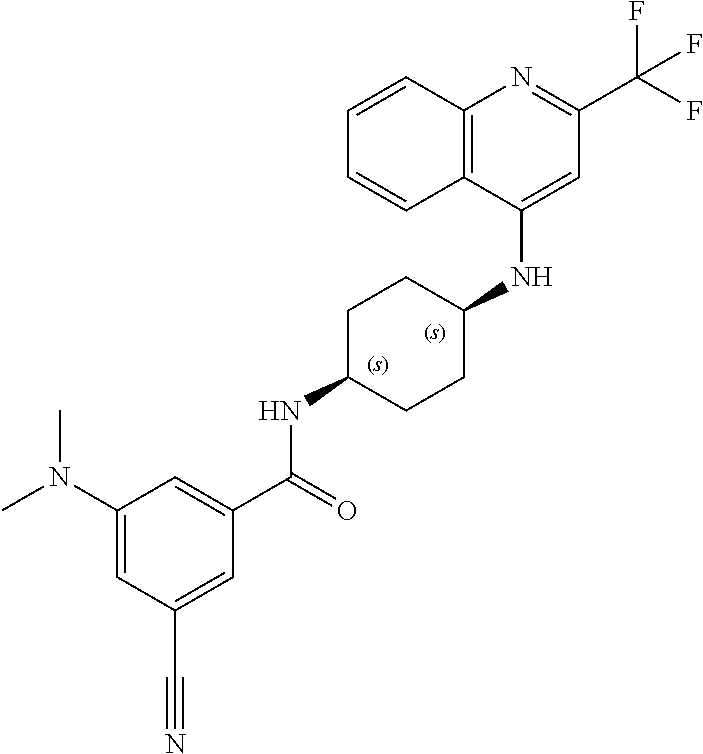
4-254 9.153 481.523 482.2 [M + H]+ Method 3 
4-255 8.717 474.504 475.2 [M + H]+ Method 3 
4-256 7.352 467.496 468.2 [M + H]+ Method 3 
4-257 5.696 470.54 471.2 [M + H]+ Method 3 
4-258 4.876 486.539 487.2 [M + H]+ Method 3 
4-259 6.297 470.54 471.3 [M + H]+ Method 3 
4-260 4.770 457.501 458.2 [M + H]+ Method 3 
4-261 8.287 439.442 440.2 [M + H]+ Method 3 
4-262 7.460 439.442 440.2 [M + H]+ Method 3 
4-263 4.716 457.501 458.2 [M + H]+ Method 3 
4-264 7.909 457.501 458.2 [M + H]+ Method 3 
4-265 7.519 465.48 466.2 [M + H]+ Method 3 
4-266 7.642 464.44 465.2 [M + H]+ Method 3 
4-267 6.205 444.458 445.2 [M + H]+ Method 3 
4-268 8.701 444.458 445.2 [M + H]+ Method 3 
4-269 9.621 492.494 493.2 [M + H]+ Method 3 
4-270 9.222 482.551 483.3 [M + H]+ Method 3 
4-271 8.388 468.524 469.3 [M + H]+ Method 3 
4-272 8.85 453.465 454.2 [M + H]+ Method 3 
4-273 9.249 467.492 468.2 [M + H]+ Method 3 
4-274 9.847 505.92 506.2 [M + H]+ Method 3 
4-275 8.283 504.94 505.2 [M + H]+ Method 3 
4-276 10.099 513.95 514.2 [M + H]+ Method 3 
4-277 10.156 547.02 547.2 [M + H]+ Method 3 
4-278 10.645 488.9 489.2 [M + H]+ Method 3 
4-279 9.564, 9.602 532.99 533.2 [M + H]+ Method 3 
4-280 10.149 505.92 506.2 [M + H]+ Method 3 
4-281 8.602 533.98 534.2 [M + H]+ Method 3 
4-282 9.38 490.96 491.2 [M + H]+ Method 3 
4-283 8.369 516.95 517.2 [M + H]+ Method 3 
4-284 9.052 518.97 519.2 [M + H]+ Method 3 
4-285 8.73 548.99 549.2 [M + H]+ Method 3 
4-286 8.533 518.97 519.2 [M + H]+ Method 3 
4-287 9.265 446.45 447.2 [M + H]+ Method 3 
4-288 9.384 439.442 440.2 [M + H]+ Method 3 
4-289 9.283 439.442 440.2 [M + H]+ Method 3 
4-290 0.858 441.498 442.1 [M + H]+ Method 1 
4-291 0.848 453.509 454.1 [M + H]+ Method 1 
4-292 0.833 455.441 456.1 [M + H]+ Method 1 
4-293 0.841 453.91 454 [M + H]+ Method 1 
4-294 0.839 457.497 458.1 [M + H]+ Method 1 
4-295 0.837 457.497 458.1 [M + H]+ Method 1 
4-296 0.857 463.452 464.1 [M + H]+ Method 1 
4-297 0.83 463.452 464.1 [M + H]+ Method 1 
4-298 0.814 465.88 466.1 [M + H]+ Method 1 
4-299 0.843 465.88 466 [M + H]+ Method 1 
4-300 0.856 467.415 468.1 [M + H]+ Method 1 
4-301 0.855 467.492 468.1 [M + H]+ Method 1 
4-302 0.776 470.496 471.1 [M + H]+ Method 1 
4-303 0.826 479.451 480.1 [M + H]+ Method 1 
4-304 0.841 461.461 462.1 [M + H]+ Method 1 
4-305 0.858 477.91 478.1 [M + H]+ Method 1 
4-306 0.862 477.91 478.1 [M + H]+ Method 1 
4-307 0.837 441.498 442.1 [M + H]+ Method 1 

4-308 0.865 493.434 494.1 [M + H]+ Method 1 
4-309 0.774 434.48 435 [M + H]+ Method 1 
4-310 0.826 445.462 446.1 [M + H]+ Method 1 
4-311 0.847 461.91 462.1 [M + H]+ Method 1 
4-312 0.819 465.88 466.1 [M + H]+ Method 1 
4-313 0.84 482.33 482 [M + H]+ Method 1 
4-314 0.832 461.91 462.1 [M + H]+ Method 1 
4-315 0.778 431.463 432.1 [M + H]+ Method 1 
4-316 0.864 433.519 434.1 [M + H]+ Method 1 - CHO cells stably transfected to express human MRGPRX2 were maintained in an incubator at 37° C. with 5% CO2 and grown in F12 (HAM) media with 10% fetal bovine serum (FBS), 1% Glutamax, 1% penicillin/streptomycin, 800 μg/mL Geneticin (G418), and 300 μg/mL Hygromycin B.
- Cells were plated in a 383-well assay plate at 20,000 cells per well in 12 μL of Opti-MEM and kept in an incubator overnight. On the day of the assay, compounds solubilized at 10 mM in DMSO were added as a 10-point curve (30 uM final top concentration with 1:3 serial dilutions) using a Tecan D300E digital dispenser. Agonists were diluted in assay buffer (final concentrations of 5.7 mM Tris-HCl, 43 mM NaCl, 50 mM LiCl, pH=8) and 2 μL of the agonist Cortistatin 14 (CPC Scientific, catalog CORT-002) are added to each well. Final concentrations of agonists were 0.3 μM Cortistatin. Final concentrations of DMSO were kept consistent across the plate. Plates were incubated in the dark for 1 h at 37° C. and then for 1 h at room temperature. IP-1 standards and HTRF detection reagents were added according to the IP-One-Gq Kit purchased from Cisbio (part number 62IPAPEJ) and incubated in the dark for 1 h at room temperature. The plate was read on a Molecular Devices SpectraMax iD5 plate reader. The HTRF ratio was calculated from the raw data and graphed using GraphPad Prism to calculate an IC50 value for each compound.
- Activity data for selected MRGPRX2 antagonists (versus 0.3 uM Corstitatin agonist) are displayed in Table 5. The activity ranges are denoted as follows: “+++++” denotes antagonist activity <100 nM; “++++” denotes antagonist activity between 100 and 500 nM; “+++” denotes activity between 501 and 1000 nM; “++” denotes activity between 1001 and 2500 nM; and “+” denotes activity >2500 nM
-
TABLE 5 MRGPR2 MRGPR2 Antagonist Antagonist Cpd No. Activity Cpd No. Activity Example 5A +++++ 1-3 ++++ Example 5B +++++ 4-173 ++++ 4-7 +++++ 3-12 ++++ 4-23 +++++ 4-243 +++ 4-103 +++++ 4-251 +++ 4-8 ++++ 4-57 +++ 4-164 ++++ 3-27 +++ 4-272 ++++ 3-36 +++ 4-123 ++++ 3-21 +++ 4-282 ++++ 4-107 +++ 4-283 ++++ 4-258 +++ 4-145 ++++ 4-6 +++ 3-30 ++++ 4-241 +++ 4-102 ++++ 4-60 +++ 4-279 ++++ 4-90 +++ 4-281 ++++ 4-200 ++ 3-25 ++++ 4-209 ++ 3-42 ++++ 4-230 ++ 4-242 ++ 4-265 ++ 4-129 ++ 3-24 ++ 4-141 ++ 4-19 + 4-162 ++ 4-122 + 4-291 ++ 4-134 + - Human LAD2 cells (NIH) were maintained in an incubator at 37° C. with 5% CO2 and cultured in StemPro-34 serum-free media (Gibco 10639011) supplemented with 2 mM L-glutamine, 100 U/ml penicillin, 50 mg/ml streptomycin and 100 ng/ml SCF (Invitrogen PEP0860), at a concentration of 2-5×10⁵ cells/mL, with hemidepletion every 1-2 weeks.
- Cells were transferred to SCF-Free medium at 2.5×10⁵ cells/mL and kept in an incubator overnight. On the day of the assay, cells were washed twice in Assay Buffer (final concentrations 10 mM HEPES, 137 mM NaCl, 5.6 mM D-glucose, 2.7 mM KCl, 1 mM MgCl, 1.8 mM CaICl2, 0.4 mM Na2HPO4.7H2O, 0.04% BSA, pH=7.4) and plated in a 96-well v-bottom plate at 20,000 cells per well in 80 μL Assay Buffer. Antagonist compounds solubilized at 10 mM in DMSO were diluted in Assay Buffer to 10× final desired concentrations as a 10-point curve (10 μM final top concentration with 1:3 serial dilutions) and 10 μL added per well. Plates were then incubated for 1 hour at 37° C. Agonists were diluted in Assay Buffer to 10× desired concentrations and 10 μL of the appropriate agonist added to each well. The final concentration of Cortistatin-14 (Tocris 3374) used in antagonist assays was 500 nM. Final concentrations of DMSO were kept consistent across the plate. Plates were then incubated in a warm air oven for 30 minutes at 37° C., followed by centrifugation at 4° C. for 5 minutes at 450×g. 50 μL supernatant from each well was then transferred to a 96-well flat bottom plate containing 100 μL substrate solution per well (3.5 mg/mL p-Nitrophenyl-N-acetyl-β-D-glucosaminide (Sigma 487052) in Citrate Buffer containing a final concentration of 40 mM Citric Acid, 20 mM Na2HPO4.7H2O, pH=4.5). To the cell pellets left in the remaining assay buffer, 150 μL 0.1% Triton-X-100 was then added to each well, resuspended by pipetting up and down, and 50 μL cell lysates transferred to a second 96-well flat bottom plate containing 100 μL substrate solution per well. Plates containing transferred supernatant and cell lysates were then incubated in a warm air oven for 90 minutes at 37° C. After incubation, 50 μL of 400 mM Glycine buffer (pH 10.7) was added into each well and the plate was read on a Molecular Devices SpectraMax iD5 plate reader (absorbance at 405 nm with reference filter at 620 nm). After background subtraction, the percentage degranulation (percent beta-hexosaminidase release) was calculated as 100×(supernatant values)/(supernatant+lysate values), followed by analysis using GraphPad Prism software to calculate an IC50 value for each compound.
- Activity data for selected MRGPRX2 antagonists in the Mast Cell Beta-Hexosaminidase Release Assay are displayed in Table 6. The activity ranges are denoted as follows: “+++++” denotes antagonist activity <100 nM; “++++” denotes antagonist activity between 100 and 500 nM; “+++” denotes activity between 501 and 1000 nM; “++” denotes activity between 1001 and 2500 nM; and “+” denotes activity >2500 nM
-
TABLE 6 MRGPR2 Antagonist Cpd No. Activity 4-139 +++++ 4-9 +++++ Example 5B ++++ 4-7 ++++ 1-5 ++++ 3-25 ++++ 1-4 ++++ 3-10 ++++ 4-288 +++ 3-30 +++ 1-7 +++ - 8-10-week-old C57BL/6J (strain 000664; Jackson Laboratories) or MrgprX2 knockin (Mrgb2Kl; Escient Pharmaceuticals Inc.) mice were anesthetized with isoflurane and shaved on the back 4-6 days prior to the beginning of the study. On the day of the study, mice were dosed either with vehicle or test compound at 100, 30, 20, 10 or 3 mg/kg 3 hours prior to Evans blue injection. Animals were restrained and injected intravenously (IV) with 200 μl of 1% Evans Blue (cat. no. 313-13-6; Fisher Chemical) in 0.9% saline, before being placed under isoflurane. Ten minutes after IV injections animals were maintained under anesthesia and injected intradermally with 25 μl of vehicle PBS, cortistatin-14 (C-14; 300 nM; cat. no. 3374; Tocris Bioscience); Icatibant (HOE-140; 38 μM; Cat no. 3014; Tocris Bioscience) or goat anti-mouse IgE (50 μg/ml; ab9162; Abcam). Ten minutes after intradermal injection animals were photographed and sacrificed. The skin around the injection site was punctured with an 8 mm circular dermal punch and weighed and placed in 1.5 ml Eppendorf tubes. Evans blue dye was extracted from the tissue by adding 1 ml of Formamide (BP227-500; Fisher Scientific) in the tube which was then vortexed covered in foil and placed at 55° C. overnight. 200 μl of extracted dye in formamide was then placed into a 96 well plate in duplicate along with a standard curve of known Evans blue concentration standards. The plate was read at 620 nM on a plate reader and the results were expressed as g of dye per mg tissue. Statistical tests were performed with the software Graphpad Prism 8 (Graphpad Software). Data is expressed as mean and standard error of mean. Unpaired t-Tests were used to compare the statistical difference between groups.
- The various embodiments described above can be combined to provide further embodiments. All of the U.S. patents, U.S. patent application publications, U.S. patent applications, foreign patents, foreign patent applications and non-patent publications referred to in this specification and/or listed in the Application Data Sheet are incorporated herein by reference, in their entirety. Aspects of the embodiments can be modified, if necessary, to employ concepts of the various patents, applications and publications to provide yet further embodiments.
- These and other changes can be made to the embodiments in light of the above-detailed description. In general, in the following claims, the terms used should not be construed to limit the claims to the specific embodiments disclosed in the specification and the claims, but should be construed to include all possible embodiments along with the full scope of equivalents to which such claims are entitled. Accordingly, the claims are not limited by the disclosure.
- This application claims the benefit of priority to U.S. Provisional Application No. 63/094,864, filed Oct. 21, 2020, which application is hereby incorporated by reference in its entirety
Claims (18)


Priority Applications (2)
| Application Number | Priority Date | Filing Date | Title |
|---|---|---|---|
| US17/506,447 US11970452B2 (en) | 2020-10-21 | 2021-10-20 | Modulators of mas-related G-protein receptor X2 and related products and methods |
| US18/615,563 US12384748B2 (en) | 2020-10-21 | 2024-03-25 | Modulators of mas-related g-protein receptor X2 and related products and methods |
Applications Claiming Priority (2)
| Application Number | Priority Date | Filing Date | Title |
|---|---|---|---|
| US202063094864P | 2020-10-21 | 2020-10-21 | |
| US17/506,447 US11970452B2 (en) | 2020-10-21 | 2021-10-20 | Modulators of mas-related G-protein receptor X2 and related products and methods |
Related Child Applications (1)
| Application Number | Title | Priority Date | Filing Date |
|---|---|---|---|
| US18/615,563 Division US12384748B2 (en) | 2020-10-21 | 2024-03-25 | Modulators of mas-related g-protein receptor X2 and related products and methods |
Publications (2)
| Publication Number | Publication Date |
|---|---|
| US20220177434A1 true US20220177434A1 (en) | 2022-06-09 |
| US11970452B2 US11970452B2 (en) | 2024-04-30 |
Family
ID=78599251
Family Applications (2)
| Application Number | Title | Priority Date | Filing Date |
|---|---|---|---|
| US17/506,447 Active US11970452B2 (en) | 2020-10-21 | 2021-10-20 | Modulators of mas-related G-protein receptor X2 and related products and methods |
| US18/615,563 Active US12384748B2 (en) | 2020-10-21 | 2024-03-25 | Modulators of mas-related g-protein receptor X2 and related products and methods |
Family Applications After (1)
| Application Number | Title | Priority Date | Filing Date |
|---|---|---|---|
| US18/615,563 Active US12384748B2 (en) | 2020-10-21 | 2024-03-25 | Modulators of mas-related g-protein receptor X2 and related products and methods |
Country Status (9)
| Country | Link |
|---|---|
| US (2) | US11970452B2 (en) |
| EP (1) | EP4232042A1 (en) |
| JP (1) | JP2023546912A (en) |
| KR (1) | KR20230092958A (en) |
| CN (1) | CN116710434A (en) |
| AU (1) | AU2021365836A1 (en) |
| CA (1) | CA3195589A1 (en) |
| IL (1) | IL302246A (en) |
| WO (1) | WO2022087083A1 (en) |
Cited By (1)
| Publication number | Priority date | Publication date | Assignee | Title |
|---|---|---|---|---|
| WO2025011633A1 (en) * | 2023-07-13 | 2025-01-16 | 北京普祺医药科技股份有限公司 | Antagonist of mas-related g protein-coupled receptor x2 and use thereof |
Families Citing this family (11)
| Publication number | Priority date | Publication date | Assignee | Title |
|---|---|---|---|---|
| JP2025521596A (en) * | 2022-06-24 | 2025-07-10 | エサイエント ファーマシューティカルズ,インコーポレイティド | Triazole Derivatives as Modulators of the MAS-Associated G Protein Receptor D - Patent application |
| US20250084063A1 (en) | 2023-08-18 | 2025-03-13 | Incyte Corporation | Bicyclic heterocycles as mrgprx2 antagonists |
| WO2025044946A1 (en) * | 2023-08-25 | 2025-03-06 | 武汉人福创新药物研发中心有限公司 | Compound acting as mrgprx2 antagonist, and preparation method therefor and use thereof |
| CN120152963B (en) * | 2023-09-28 | 2025-11-18 | 四川大学华西医院 | A class of analgesic compounds, their preparation methods and uses |
| WO2025119372A2 (en) * | 2023-12-08 | 2025-06-12 | 武汉人福创新药物研发中心有限公司 | Mrgprx2 antagonist and use thereof |
| US20250243208A1 (en) | 2024-01-25 | 2025-07-31 | Incyte Corporation | Bicyclic heterocycles as mrgprx2 antagonists |
| WO2025163461A1 (en) * | 2024-02-02 | 2025-08-07 | 삼진제약주식회사 | Novel compound as mas-related g-protein coupled receptor member x2 (mrgprx2) antagonists and pharmaceutical composition comprising same |
| WO2025222040A1 (en) | 2024-04-19 | 2025-10-23 | Escient Pharmaceuticals, Inc. | Mrgprx2 modulators for use in treating mrgprx2 dependent conditions in subjects with low ige |
| WO2025264860A2 (en) | 2024-06-18 | 2025-12-26 | Yale University | Methods of treating post-covid airway disease |
| WO2026035726A1 (en) * | 2024-08-07 | 2026-02-12 | Arcus Biosciences, Inc. | Piperidylurea compounds and methods of use thereof |
| WO2026064344A1 (en) * | 2024-09-17 | 2026-03-26 | Solu Therapeutics, Inc. | Heterobifunctional molecules for binding mrgx2 and methods of treating medical conditions using same |
Citations (3)
| Publication number | Priority date | Publication date | Assignee | Title |
|---|---|---|---|---|
| WO2003070244A1 (en) * | 2002-02-22 | 2003-08-28 | Abbott Laboratories | Antagonist of melanin concentrating hormone and their uses |
| US6818772B2 (en) * | 2002-02-22 | 2004-11-16 | Abbott Laboratories | Antagonists of melanin concentrating hormone effects on the melanin concentrating hormone receptor |
| US20230065217A1 (en) * | 2020-09-25 | 2023-03-02 | Escient Pharmaceuticals, Inc. | Modulators of mas-related g-protein receptor x2 and related products and methods |
Family Cites Families (6)
| Publication number | Priority date | Publication date | Assignee | Title |
|---|---|---|---|---|
| CA2806332C (en) * | 2010-07-30 | 2017-11-14 | Oncotherapy Science, Inc. | Quinoline derivatives and melk inhibitors containing the same |
| CN104105691A (en) * | 2011-11-08 | 2014-10-15 | 艾尼纳制药公司 | Modulators of the g protein-coupled mas receptor and the treatment of disorders related thereto |
| US10696971B2 (en) | 2014-08-01 | 2020-06-30 | The Johns Hopkins University | MrgprX2/MrgprB2 expressing cell based assay to detect pseudo-allergic drug reactions and to identify blockers to prevent the adverse reactions |
| EP3200788B1 (en) | 2014-09-30 | 2019-09-18 | Merck Sharp & Dohme Corp. | Inhibitors of irak4 activity |
| WO2016118632A1 (en) * | 2015-01-20 | 2016-07-28 | The General Hospital Corporation | Prevention and treatment of itch with an mrgpr antagonist |
| MX374346B (en) * | 2015-08-27 | 2025-03-06 | Pfizer | FUSED BICYCLIC ARYL OR HETEROARYL COMPOUNDS AS MODULATORS OF INTERLEUKIN 1 RECEPTOR-ASSOCIATED KINASE 4 (IRAK4). |
-
2021
- 2021-10-20 US US17/506,447 patent/US11970452B2/en active Active
- 2021-10-20 AU AU2021365836A patent/AU2021365836A1/en not_active Abandoned
- 2021-10-20 CN CN202180071819.5A patent/CN116710434A/en not_active Withdrawn
- 2021-10-20 KR KR1020237016505A patent/KR20230092958A/en not_active Ceased
- 2021-10-20 WO PCT/US2021/055774 patent/WO2022087083A1/en not_active Ceased
- 2021-10-20 IL IL302246A patent/IL302246A/en unknown
- 2021-10-20 CA CA3195589A patent/CA3195589A1/en active Pending
- 2021-10-20 JP JP2023524151A patent/JP2023546912A/en active Pending
- 2021-10-20 EP EP21806573.8A patent/EP4232042A1/en not_active Withdrawn
-
2024
- 2024-03-25 US US18/615,563 patent/US12384748B2/en active Active
Patent Citations (3)
| Publication number | Priority date | Publication date | Assignee | Title |
|---|---|---|---|---|
| WO2003070244A1 (en) * | 2002-02-22 | 2003-08-28 | Abbott Laboratories | Antagonist of melanin concentrating hormone and their uses |
| US6818772B2 (en) * | 2002-02-22 | 2004-11-16 | Abbott Laboratories | Antagonists of melanin concentrating hormone effects on the melanin concentrating hormone receptor |
| US20230065217A1 (en) * | 2020-09-25 | 2023-03-02 | Escient Pharmaceuticals, Inc. | Modulators of mas-related g-protein receptor x2 and related products and methods |
Non-Patent Citations (1)
| Title |
|---|
| International Immunopharmacology 70 (2019) 417–427 (Year: 2019) * |
Cited By (1)
| Publication number | Priority date | Publication date | Assignee | Title |
|---|---|---|---|---|
| WO2025011633A1 (en) * | 2023-07-13 | 2025-01-16 | 北京普祺医药科技股份有限公司 | Antagonist of mas-related g protein-coupled receptor x2 and use thereof |
Also Published As
| Publication number | Publication date |
|---|---|
| CN116710434A (en) | 2023-09-05 |
| JP2023546912A (en) | 2023-11-08 |
| US12384748B2 (en) | 2025-08-12 |
| AU2021365836A9 (en) | 2024-06-13 |
| WO2022087083A1 (en) | 2022-04-28 |
| KR20230092958A (en) | 2023-06-26 |
| IL302246A (en) | 2023-06-01 |
| US20240351987A1 (en) | 2024-10-24 |
| CA3195589A1 (en) | 2022-04-28 |
| EP4232042A1 (en) | 2023-08-30 |
| AU2021365836A1 (en) | 2023-06-08 |
| US11970452B2 (en) | 2024-04-30 |
Similar Documents
| Publication | Publication Date | Title |
|---|---|---|
| US11970452B2 (en) | Modulators of mas-related G-protein receptor X2 and related products and methods | |
| US12275707B2 (en) | Modulators of mas-related g-protein receptor X2 and related products and methods | |
| US12129244B2 (en) | Modulators of Mas-related G-protein receptor X2 and related products and methods | |
| US11952346B2 (en) | Modulators of mas-related G-protein receptor X2 and related products and methods | |
| KR102601320B1 (en) | PYRIDO[3,4-d]PYRIMIDINE DERIVATIVE AND PHARMACEUTICALLY ACCEPTABLE SALT THEREOF | |
| WO2022140520A1 (en) | Modulators of mas-related g-protein receptor x2 and related products and methods | |
| US20110136781A1 (en) | Imidazotriazines and imidazopyrimidines as kinase inhibitors | |
| US20180186815A1 (en) | Pharmaceutical compositions, methods for their preparation and their use in the treatment of cancer | |
| RU2841536C1 (en) | Modulators of mas-bound g-protein receptor x2 and related products and methods |
Legal Events
| Date | Code | Title | Description |
|---|---|---|---|
| FEPP | Fee payment procedure |
Free format text: ENTITY STATUS SET TO UNDISCOUNTED (ORIGINAL EVENT CODE: BIG.); ENTITY STATUS OF PATENT OWNER: LARGE ENTITY |
|
| STPP | Information on status: patent application and granting procedure in general |
Free format text: DOCKETED NEW CASE - READY FOR EXAMINATION |
|
| STPP | Information on status: patent application and granting procedure in general |
Free format text: NON FINAL ACTION MAILED |
|
| STPP | Information on status: patent application and granting procedure in general |
Free format text: RESPONSE TO NON-FINAL OFFICE ACTION ENTERED AND FORWARDED TO EXAMINER |
|
| STPP | Information on status: patent application and granting procedure in general |
Free format text: NOTICE OF ALLOWANCE MAILED -- APPLICATION RECEIVED IN OFFICE OF PUBLICATIONS |
|
| ZAAB | Notice of allowance mailed |
Free format text: ORIGINAL CODE: MN/=. |
|
| AS | Assignment |
Owner name: ESCIENT PHARMACEUTICALS, INC., CALIFORNIA Free format text: ASSIGNMENT OF ASSIGNORS INTEREST;ASSIGNORS:LANIER, MARION;BOEHM, MARCUS;HUANG, LIMING;AND OTHERS;REEL/FRAME:066535/0022 Effective date: 20211019 |
|
| STPP | Information on status: patent application and granting procedure in general |
Free format text: PUBLICATIONS -- ISSUE FEE PAYMENT VERIFIED |
|
| STCF | Information on status: patent grant |
Free format text: PATENTED CASE |
|
| CC | Certificate of correction |