US20170280720A1 - Arginine methyltransferase inhibitors and uses thereof - Google Patents
Arginine methyltransferase inhibitors and uses thereof Download PDFInfo
- Publication number
- US20170280720A1 US20170280720A1 US15/511,514 US201515511514A US2017280720A1 US 20170280720 A1 US20170280720 A1 US 20170280720A1 US 201515511514 A US201515511514 A US 201515511514A US 2017280720 A1 US2017280720 A1 US 2017280720A1
- Authority
- US
- United States
- Prior art keywords
- optionally substituted
- compound
- alkyl
- heterocyclyl
- certain embodiments
- Prior art date
- Legal status (The legal status is an assumption and is not a legal conclusion. Google has not performed a legal analysis and makes no representation as to the accuracy of the status listed.)
- Abandoned
Links
- 0 *.*N(*)CCN(C)CC1=CC=CC#C1.CC.CC Chemical compound *.*N(*)CCN(C)CC1=CC=CC#C1.CC.CC 0.000 description 102
- KKKICECACXPIBI-UHFFFAOYSA-N C1=CC=NC=C1.CC.CC(C)C Chemical compound C1=CC=NC=C1.CC.CC(C)C KKKICECACXPIBI-UHFFFAOYSA-N 0.000 description 2
- GUXLACULEOJQEZ-UHFFFAOYSA-N C=C(C)N1CCC(CC(C)C)CC1.CC(C)CC1CCNCC1 Chemical compound C=C(C)N1CCC(CC(C)C)CC1.CC(C)CC1CCNCC1 GUXLACULEOJQEZ-UHFFFAOYSA-N 0.000 description 2
- PBTQDWKAYSPJPK-UHFFFAOYSA-N C=C1CCC2=CC(C(C)C)=CN=C2N1.CC(C)C1=CN=C2NC(=O)COC2=C1.CC(C)C1=CN=CC(C(=O)N(C)CCC2=NC=CC=C2)=C1.COC1=CC(CNC(=O)C2=CC(C(C)C)=CN=C2)=CC=C1 Chemical compound C=C1CCC2=CC(C(C)C)=CN=C2N1.CC(C)C1=CN=C2NC(=O)COC2=C1.CC(C)C1=CN=CC(C(=O)N(C)CCC2=NC=CC=C2)=C1.COC1=CC(CNC(=O)C2=CC(C(C)C)=CN=C2)=CC=C1 PBTQDWKAYSPJPK-UHFFFAOYSA-N 0.000 description 2
- CYYIUZQATHOCPR-UHFFFAOYSA-N C=C1N(C)C2=CC=C(C(C)C)C=C2N1C Chemical compound C=C1N(C)C2=CC=C(C(C)C)C=C2N1C CYYIUZQATHOCPR-UHFFFAOYSA-N 0.000 description 2
- TVONZMVUQGUXOI-UHFFFAOYSA-N C=C1NC2=CC=C(C(C)C)C=C2N1C1=CC=CC=C1 Chemical compound C=C1NC2=CC=C(C(C)C)C=C2N1C1=CC=CC=C1 TVONZMVUQGUXOI-UHFFFAOYSA-N 0.000 description 2
- IMKSJSRUSSLRNG-UHFFFAOYSA-N CC(=O)C1=CC(CC(C)C)=CC=C1.CC(C)CC1=CC=CC(C(=O)N2CCCC2)=C1.CC(C)CC1=CC=CC(C(=O)N2CCCCC2)=C1.CC(C)CC1=CC=CC(C(=O)N2CCN(C)CC2)=C1.CC(C)CC1=CC=CC(C(=O)N2CCOCC2)=C1.CC(C)CC1=CC=CC(OC2=CC=CC=C2)=C1 Chemical compound CC(=O)C1=CC(CC(C)C)=CC=C1.CC(C)CC1=CC=CC(C(=O)N2CCCC2)=C1.CC(C)CC1=CC=CC(C(=O)N2CCCCC2)=C1.CC(C)CC1=CC=CC(C(=O)N2CCN(C)CC2)=C1.CC(C)CC1=CC=CC(C(=O)N2CCOCC2)=C1.CC(C)CC1=CC=CC(OC2=CC=CC=C2)=C1 IMKSJSRUSSLRNG-UHFFFAOYSA-N 0.000 description 2
- HSIBLBXEGWVKPN-UHFFFAOYSA-N CC(=O)CC(C)C.CC(C)CC1=CC=CC=C1.CC(C)CCN1CCN(C)CC1.COCCC(C)C Chemical compound CC(=O)CC(C)C.CC(C)CC1=CC=CC=C1.CC(C)CCN1CCN(C)CC1.COCCC(C)C HSIBLBXEGWVKPN-UHFFFAOYSA-N 0.000 description 2
- OWVSUCXFPFWCCB-UHFFFAOYSA-N CC(=O)N1CCC(Cn2cnc3ccc(-c4ccc(CNCCN)cc4)cc32)CC1 Chemical compound CC(=O)N1CCC(Cn2cnc3ccc(-c4ccc(CNCCN)cc4)cc32)CC1 OWVSUCXFPFWCCB-UHFFFAOYSA-N 0.000 description 2
- YLXJQIMCUVYASH-UHFFFAOYSA-N CC(C)C(=O)N1CC2=C(C1)N=CC=C2.CC(C)C(=O)N1CC2=C(C=CC=C2)C1.CC(C)C(=O)N1CCC(F)(F)C1.CC(C)C(=O)N1CCC(F)C1.CC(C)C(=O)N1CCC1.CC(C)C(=O)N1CCC2=C(C=CC=C2)C1.CC(C)C(=O)N1CCCC1.CC(C)C(=O)N1CCCCC1.CC(C)C(=O)N1CCN(C)C(=O)C1.CC(C)C(=O)N1CCN(C)CC1=O.CC(C)C(=O)N1CCOCC1.CC(C)C(=O)N1CCSCC1.COC1CCN(C(=O)C(C)C)C1 Chemical compound CC(C)C(=O)N1CC2=C(C1)N=CC=C2.CC(C)C(=O)N1CC2=C(C=CC=C2)C1.CC(C)C(=O)N1CCC(F)(F)C1.CC(C)C(=O)N1CCC(F)C1.CC(C)C(=O)N1CCC1.CC(C)C(=O)N1CCC2=C(C=CC=C2)C1.CC(C)C(=O)N1CCCC1.CC(C)C(=O)N1CCCCC1.CC(C)C(=O)N1CCN(C)C(=O)C1.CC(C)C(=O)N1CCN(C)CC1=O.CC(C)C(=O)N1CCOCC1.CC(C)C(=O)N1CCSCC1.COC1CCN(C(=O)C(C)C)C1 YLXJQIMCUVYASH-UHFFFAOYSA-N 0.000 description 2
- VKMWAXYIYCBAFQ-UHFFFAOYSA-N CC(C)C(=O)N1CCCC1.CC(C)C(=O)N1CCCN(C)CC1.CC(C)C(=O)N1CCN(C)CC1 Chemical compound CC(C)C(=O)N1CCCC1.CC(C)C(=O)N1CCCN(C)CC1.CC(C)C(=O)N1CCN(C)CC1 VKMWAXYIYCBAFQ-UHFFFAOYSA-N 0.000 description 2
- UMRCBOHCUIHSAP-FYBBWCNBSA-N CC(C)C(C)C.CC(C)C(C)C1=CC=CC=C1.CC(C)CC1=CC=CC=C1.CC(C)[C@@H](C)C1=CC=CC=C1 Chemical compound CC(C)C(C)C.CC(C)C(C)C1=CC=CC=C1.CC(C)CC1=CC=CC=C1.CC(C)[C@@H](C)C1=CC=CC=C1 UMRCBOHCUIHSAP-FYBBWCNBSA-N 0.000 description 2
- SYMUJNIKRKMCMD-JVHRSVAASA-N CC(C)C(C)C1=CC=CC=C1.CC(C)CC1=C(F)C=CC=C1F.CC(C)CC1=CC=C(Cl)C=C1.CC(C)CC1=CC=C(F)C=C1.CC(C)CC1=CC=CC(Cl)=C1.CC(C)CC1=CC=CC(F)=C1.CC(C)CC1=CC=CC=C1.CC(C)CC1=CC=CC=C1Cl.CC(C)CC1=CC=CC=C1F.CC(C)[C@@H](C)C1=CC=CC=C1.CC(C)[C@H](C)C1=CC=CC=C1 Chemical compound CC(C)C(C)C1=CC=CC=C1.CC(C)CC1=C(F)C=CC=C1F.CC(C)CC1=CC=C(Cl)C=C1.CC(C)CC1=CC=C(F)C=C1.CC(C)CC1=CC=CC(Cl)=C1.CC(C)CC1=CC=CC(F)=C1.CC(C)CC1=CC=CC=C1.CC(C)CC1=CC=CC=C1Cl.CC(C)CC1=CC=CC=C1F.CC(C)[C@@H](C)C1=CC=CC=C1.CC(C)[C@H](C)C1=CC=CC=C1 SYMUJNIKRKMCMD-JVHRSVAASA-N 0.000 description 2
- MXLMTQWGSQIYOW-UHFFFAOYSA-N CC(C)C(C)O Chemical compound CC(C)C(C)O MXLMTQWGSQIYOW-UHFFFAOYSA-N 0.000 description 2
- WBICFBMUXGPYAP-UHFFFAOYSA-N CC(C)C.CC(C)C(=O)N(C)C1CCOCC1.CC(C)C(=O)NC1CCCCC1.CC(C)C(=O)NC1CCOCC1.CC(C)C(=O)NCC1CCOCC1.CC(C)N(C)CC1CC1.CC(C)N1CCOCC1.CCN(C(C)C)C1CCOCC1 Chemical compound CC(C)C.CC(C)C(=O)N(C)C1CCOCC1.CC(C)C(=O)NC1CCCCC1.CC(C)C(=O)NC1CCOCC1.CC(C)C(=O)NCC1CCOCC1.CC(C)N(C)CC1CC1.CC(C)N1CCOCC1.CCN(C(C)C)C1CCOCC1 WBICFBMUXGPYAP-UHFFFAOYSA-N 0.000 description 2
- ACGXRLBPTWPJTP-UHFFFAOYSA-N CC(C)C1=CC=C2CN(C)C(=O)C2=C1 Chemical compound CC(C)C1=CC=C2CN(C)C(=O)C2=C1 ACGXRLBPTWPJTP-UHFFFAOYSA-N 0.000 description 2
- KOTVNNCGXBWVIX-UHFFFAOYSA-N CC(C)C1=CCOCC1 Chemical compound CC(C)C1=CCOCC1 KOTVNNCGXBWVIX-UHFFFAOYSA-N 0.000 description 2
- LRCMZPVVFRECQR-UHFFFAOYSA-N CC(C)C1CCCC2=C1C=CC=C2 Chemical compound CC(C)C1CCCC2=C1C=CC=C2 LRCMZPVVFRECQR-UHFFFAOYSA-N 0.000 description 2
- PJCOSMRGELAAMU-UHFFFAOYSA-N CC(C)CC(=O)CCC1=NN(C)C=C1.CC(C)CC(=O)CCC1CCOCC1 Chemical compound CC(C)CC(=O)CCC1=NN(C)C=C1.CC(C)CC(=O)CCC1CCOCC1 PJCOSMRGELAAMU-UHFFFAOYSA-N 0.000 description 2
- AIQPMKNWOZYLDC-UHFFFAOYSA-N CC(C)CC1=CC=NC=C1.CC(C)CC1=CN2C=CSC2=N1.CC(C)CC1=CN=CC=C1.CC(C)CC1=NC=CC=C1.CC(C)CC1=NC=CS1.CC(C)CC1CCOCC1.CC1=C(CC(C)C)C=NN1C.CC1=NN(C)C(CC(C)C)=C1 Chemical compound CC(C)CC1=CC=NC=C1.CC(C)CC1=CN2C=CSC2=N1.CC(C)CC1=CN=CC=C1.CC(C)CC1=NC=CC=C1.CC(C)CC1=NC=CS1.CC(C)CC1CCOCC1.CC1=C(CC(C)C)C=NN1C.CC1=NN(C)C(CC(C)C)=C1 AIQPMKNWOZYLDC-UHFFFAOYSA-N 0.000 description 2
- XLQHPDJSGOLXCN-UHFFFAOYSA-N CC(C)CC1=CC=NC=C1.CC(C)CC1=CN=CC=C1.CC(C)CC1CC1.CCC(C)C Chemical compound CC(C)CC1=CC=NC=C1.CC(C)CC1=CN=CC=C1.CC(C)CC1CC1.CCC(C)C XLQHPDJSGOLXCN-UHFFFAOYSA-N 0.000 description 2
- RDVLDXHWXFLYEF-UHFFFAOYSA-N CC(C)CC1CCCCC1.CC(C)CC1CCN(C)CC1 Chemical compound CC(C)CC1CCCCC1.CC(C)CC1CCN(C)CC1 RDVLDXHWXFLYEF-UHFFFAOYSA-N 0.000 description 2
- RVTGUJHPTNFAHD-UHFFFAOYSA-N CC(C)CC1CCCN(C)C1.CC(C)CC1CCN(C)CC1 Chemical compound CC(C)CC1CCCN(C)C1.CC(C)CC1CCN(C)CC1 RVTGUJHPTNFAHD-UHFFFAOYSA-N 0.000 description 2
- AXGOVXZTQMCZGM-UHFFFAOYSA-N CC(C)CC1CCN(C)CC1 Chemical compound CC(C)CC1CCN(C)CC1 AXGOVXZTQMCZGM-UHFFFAOYSA-N 0.000 description 2
- XAMASUSJDXZFOX-UHFFFAOYSA-N CC(C)N1CCC(C(F)(F)F)CC1.CC(C)N1CCC1.CC(C)N1CCCC(C#N)C1.CC(C)N1CCCC1.CC(C)N1CCCCC1.CC(C)N1CCOCC1.COC1CCN(C(C)C)CC1 Chemical compound CC(C)N1CCC(C(F)(F)F)CC1.CC(C)N1CCC1.CC(C)N1CCCC(C#N)C1.CC(C)N1CCCC1.CC(C)N1CCCCC1.CC(C)N1CCOCC1.COC1CCN(C(C)C)CC1 XAMASUSJDXZFOX-UHFFFAOYSA-N 0.000 description 2
- PTFYOVULBHUDHR-UHFFFAOYSA-N CC(C)n1ncc2c(C(=O)N(C)Cc3cccnc3)cc(-c3cccc(CN(C)CCN)c3)nc21 Chemical compound CC(C)n1ncc2c(C(=O)N(C)Cc3cccnc3)cc(-c3cccc(CN(C)CCN)c3)nc21 PTFYOVULBHUDHR-UHFFFAOYSA-N 0.000 description 2
- VATXHCFDCRIVHH-UHFFFAOYSA-N CC(C)n1ncc2c(C(=O)N3CCC(F)C3)cc(-c3cccc(CN(C)CCN)c3)nc21 Chemical compound CC(C)n1ncc2c(C(=O)N3CCC(F)C3)cc(-c3cccc(CN(C)CCN)c3)nc21 VATXHCFDCRIVHH-UHFFFAOYSA-N 0.000 description 2
- PLDCXXIDUVWPPO-UHFFFAOYSA-N CC(C)n1ncc2c(C(=O)NC3CCOCC3)cc(-c3cccc(CN(C)CCN)c3)nc21 Chemical compound CC(C)n1ncc2c(C(=O)NC3CCOCC3)cc(-c3cccc(CN(C)CCN)c3)nc21 PLDCXXIDUVWPPO-UHFFFAOYSA-N 0.000 description 2
- KNISKUPSEYRZAL-UHFFFAOYSA-N CC(C)n1ncc2c(C(=O)NCc3ccccc3F)cc(-c3cccc(CN(C)CCN)c3)nc21 Chemical compound CC(C)n1ncc2c(C(=O)NCc3ccccc3F)cc(-c3cccc(CN(C)CCN)c3)nc21 KNISKUPSEYRZAL-UHFFFAOYSA-N 0.000 description 2
- QAQFVYXJOJZLDV-UHFFFAOYSA-N CC(C)n1ncc2c(NC3CC3)cc(-c3cccc(CN(C)CCN)c3)nc21 Chemical compound CC(C)n1ncc2c(NC3CC3)cc(-c3cccc(CN(C)CCN)c3)nc21 QAQFVYXJOJZLDV-UHFFFAOYSA-N 0.000 description 2
- DQRVSMMMJCBONX-UHFFFAOYSA-N CC.CC(C)CC1=CC=CC=C1 Chemical compound CC.CC(C)CC1=CC=CC=C1 DQRVSMMMJCBONX-UHFFFAOYSA-N 0.000 description 2
- AGMGBHUZCRWNSK-UHFFFAOYSA-N CC.CC(C)c1ccc2c(ccn2C)c1 Chemical compound CC.CC(C)c1ccc2c(ccn2C)c1 AGMGBHUZCRWNSK-UHFFFAOYSA-N 0.000 description 2
- KOAIBGXLLQGBIG-UHFFFAOYSA-N CC.CC.CC(C)CC1CCCN(C)C1.CC(C)CC1CCN(C)CC1 Chemical compound CC.CC.CC(C)CC1CCCN(C)C1.CC(C)CC1CCN(C)CC1 KOAIBGXLLQGBIG-UHFFFAOYSA-N 0.000 description 2
- QWSFIASFSZSSII-UHFFFAOYSA-N CC.CC.CC(C)c1ncc2cn(C)nc2n1.CC(C)c1ncc2cnn(C)c2n1 Chemical compound CC.CC.CC(C)c1ncc2cn(C)nc2n1.CC(C)c1ncc2cnn(C)c2n1 QWSFIASFSZSSII-UHFFFAOYSA-N 0.000 description 2
- ABRPEUSGHKKLQR-UHFFFAOYSA-N CC.CC.CC.CC.CC(C)N1CCC1.CC(C)N1CCCC1.CC(C)N1CCCCC1.CC(C)N1CCOCC1 Chemical compound CC.CC.CC.CC.CC(C)N1CCC1.CC(C)N1CCCC1.CC(C)N1CCCCC1.CC(C)N1CCOCC1 ABRPEUSGHKKLQR-UHFFFAOYSA-N 0.000 description 2
- QVIOUGKAMUBVIP-UHFFFAOYSA-N CC.CC.CC.CC.CC.CC(C)c1ccc2cn(C)nc2c1.CC(C)c1ccc2cnn(C)c2c1.CC(C)c1cccc2c1cnn2C.CC(C)c1cccc2nn(C)cc12.CC(C)c1cnc2c(ccn2C)c1 Chemical compound CC.CC.CC.CC.CC.CC(C)c1ccc2cn(C)nc2c1.CC(C)c1ccc2cnn(C)c2c1.CC(C)c1cccc2c1cnn2C.CC(C)c1cccc2nn(C)cc12.CC(C)c1cnc2c(ccn2C)c1 QVIOUGKAMUBVIP-UHFFFAOYSA-N 0.000 description 2
- SDHYGAUOCHFYSR-UHFFFAOYSA-N CC1=CC(CC(C)C)=CC=C1 Chemical compound CC1=CC(CC(C)C)=CC=C1 SDHYGAUOCHFYSR-UHFFFAOYSA-N 0.000 description 2
- ADBMRBVPWAPYFV-UHFFFAOYSA-N CC1=CN=C(C(C)C)S1 Chemical compound CC1=CN=C(C(C)C)S1 ADBMRBVPWAPYFV-UHFFFAOYSA-N 0.000 description 2
- AKRJXOYALOGLHQ-UHFFFAOYSA-N CCCC(=O)CC(C)C Chemical compound CCCC(=O)CC(C)C AKRJXOYALOGLHQ-UHFFFAOYSA-N 0.000 description 2
- FQHWLUCWQHGGGN-UHFFFAOYSA-N CCCCN(C)Cc1cccc(-c2cc(C(=O)NCc3cc(C)on3)c3cnn(C(C)C)c3n2)c1 Chemical compound CCCCN(C)Cc1cccc(-c2cc(C(=O)NCc3cc(C)on3)c3cnn(C(C)C)c3n2)c1 FQHWLUCWQHGGGN-UHFFFAOYSA-N 0.000 description 2
- SMQNOJQPVBVSKV-UHFFFAOYSA-N CCCCN(C)Cc1cccc(-c2cc(NS(C)(=O)=O)c3cnn(C(C)C)c3n2)c1 Chemical compound CCCCN(C)Cc1cccc(-c2cc(NS(C)(=O)=O)c3cnn(C(C)C)c3n2)c1 SMQNOJQPVBVSKV-UHFFFAOYSA-N 0.000 description 2
- HJWSBEGWLPDROK-UHFFFAOYSA-N CCS(=O)(=O)Nc1cc(-c2cccc(CN(C)CCN)c2)nc2c1cnn2C(C)C Chemical compound CCS(=O)(=O)Nc1cc(-c2cccc(CN(C)CCN)c2)nc2c1cnn2C(C)C HJWSBEGWLPDROK-UHFFFAOYSA-N 0.000 description 2
- ZXEMQDBAJUZZIE-UHFFFAOYSA-N CN(CCN)Cc1cccc(-c2cc(C(=O)NC3CCOCC3)c3cnn(C4CC4)c3n2)c1 Chemical compound CN(CCN)Cc1cccc(-c2cc(C(=O)NC3CCOCC3)c3cnn(C4CC4)c3n2)c1 ZXEMQDBAJUZZIE-UHFFFAOYSA-N 0.000 description 2
- ACCBSTVHGNWVBQ-UHFFFAOYSA-N CS(=O)(=O)N1CCC(Cn2cnc3ccc(-c4ccc(CNCCN)cc4)cc32)CC1 Chemical compound CS(=O)(=O)N1CCC(Cn2cnc3ccc(-c4ccc(CNCCN)cc4)cc32)CC1 ACCBSTVHGNWVBQ-UHFFFAOYSA-N 0.000 description 2
- WPDTWAZBSWYAFK-UHFFFAOYSA-N NCCNCc1ccc(-c2ccc3ncn(CC4CCNCC4)c3c2)cc1 Chemical compound NCCNCc1ccc(-c2ccc3ncn(CC4CCNCC4)c3c2)cc1 WPDTWAZBSWYAFK-UHFFFAOYSA-N 0.000 description 2
- HSQOGRKBZJBYRQ-UHFFFAOYSA-N C1=CC2=C(C=C1)C1CCC2C1.C1CC2CCC1CC2 Chemical compound C1=CC2=C(C=C1)C1CCC2C1.C1CC2CCC1CC2 HSQOGRKBZJBYRQ-UHFFFAOYSA-N 0.000 description 1
- PAFIQLDHICGNGO-UHFFFAOYSA-N C1=CC2=CC=CN2N=C1.C1=CC2=CC=NC=C2N1.C1=CC2=CC=NC=C2O1.C1=CC2=CC=NC=C2S1.C1=CC2=CC=NN2C=C1.C1=CC2=CCC=C2C=C1.C1=CC2=CCC=C2C=C1.C1=CC2=CCC=C2C=C1.C1=CC2=CCC=C2C=N1.C1=CC2=CCC=C2C=N1.C1=CC2=CCC=C2C=N1.C1=CC2=CCC=C2N=C1.C1=CC2=CCC=C2N=C1.C1=CC2=CCC=C2N=C1.C1=CC2=CCN=C2C=C1.C1=CC2=CCN=C2C=C1.C1=CC2=CCN=C2C=C1.C1=CC2=CCN=C2C=N1.C1=CC2=CN=CC=C2C1.C1=CC2=CN=CC=C2O1.C1=CC2=CN=CC=C2S1.C1=CC2=CN=CN2C=C1.C1=CC2=NC=CN2C=C1.C1=CC=C2NC=CC2=C1.C1=CC=C2NC=CC2=C1.C1=CC=C2NC=NC2=C1.C1=CC=C2OC=CC2=C1.C1=CC=C2OC=CC2=C1.C1=CC=C2OC=NC2=C1.C1=CC=C2SC=CC2=C1.C1=CC=C2SC=CC2=C1.C1=CC=C2SC=NC2=C1.C1=CN2C=CC=C2N=C1.C1=CN2C=CN=CC2=C1.C1=CN2C=NC=CC2=C1.C1=CN=C2C=CCC2=C1.C1=CN=C2C=COC2=C1.C1=CN=C2C=CSC2=C1.C1=CN=C2NC=CC2=C1.C1=CN=C2NN=CC2=C1.C1=CN=C2OC=CC2=C1.C1=CN=C2OC=CC2=C1.C1=CN=C2SC=CC2=C1.C1=CN=C2SC=CC2=C1.C1=NC=NC2=CCC=C12.C1=NC=NC2=CCC=C12.C1=NC=NC2=CCC=C12 Chemical compound C1=CC2=CC=CN2N=C1.C1=CC2=CC=NC=C2N1.C1=CC2=CC=NC=C2O1.C1=CC2=CC=NC=C2S1.C1=CC2=CC=NN2C=C1.C1=CC2=CCC=C2C=C1.C1=CC2=CCC=C2C=C1.C1=CC2=CCC=C2C=C1.C1=CC2=CCC=C2C=N1.C1=CC2=CCC=C2C=N1.C1=CC2=CCC=C2C=N1.C1=CC2=CCC=C2N=C1.C1=CC2=CCC=C2N=C1.C1=CC2=CCC=C2N=C1.C1=CC2=CCN=C2C=C1.C1=CC2=CCN=C2C=C1.C1=CC2=CCN=C2C=C1.C1=CC2=CCN=C2C=N1.C1=CC2=CN=CC=C2C1.C1=CC2=CN=CC=C2O1.C1=CC2=CN=CC=C2S1.C1=CC2=CN=CN2C=C1.C1=CC2=NC=CN2C=C1.C1=CC=C2NC=CC2=C1.C1=CC=C2NC=CC2=C1.C1=CC=C2NC=NC2=C1.C1=CC=C2OC=CC2=C1.C1=CC=C2OC=CC2=C1.C1=CC=C2OC=NC2=C1.C1=CC=C2SC=CC2=C1.C1=CC=C2SC=CC2=C1.C1=CC=C2SC=NC2=C1.C1=CN2C=CC=C2N=C1.C1=CN2C=CN=CC2=C1.C1=CN2C=NC=CC2=C1.C1=CN=C2C=CCC2=C1.C1=CN=C2C=COC2=C1.C1=CN=C2C=CSC2=C1.C1=CN=C2NC=CC2=C1.C1=CN=C2NN=CC2=C1.C1=CN=C2OC=CC2=C1.C1=CN=C2OC=CC2=C1.C1=CN=C2SC=CC2=C1.C1=CN=C2SC=CC2=C1.C1=NC=NC2=CCC=C12.C1=NC=NC2=CCC=C12.C1=NC=NC2=CCC=C12 PAFIQLDHICGNGO-UHFFFAOYSA-N 0.000 description 1
- SBMBAFHOFMNBLF-UHFFFAOYSA-N C1=CC2=CC=NC=C2N1.C1=CC2=CC=NC=C2O1.C1=CC2=CC=NC=C2S1.C1=CC2=CC=NN=C2N1.C1=CC2=CC=NN=C2O1.C1=CC2=CC=NN=C2S1.C1=CC2=CCC=C2N=N1.C1=CC2=CCC=C2N=N1.C1=CC2=CCC=C2N=N1.C1=CC2=CCN=C2C=N1.C1=CC2=CCN=C2C=N1.C1=CC2=CCN=C2C=N1.C1=CC2=CCN=C2N=C1.C1=CC2=CCN=C2N=C1.C1=CC2=CN=CC=C2C1.C1=CC2=CN=CC=C2O1.C1=CC2=CN=CC=C2S1.C1=CC2=NCC=C2C=N1.C1=CC2=NCC=C2C=N1.C1=CC2=NCC=C2C=N1.C1=CC2=NCC=C2N=C1.C1=CC2=NN=CC=C2C1.C1=CC2=NN=CC=C2O1.C1=CC2=NN=CC=C2S1.C1=CC2=NOC=C2N=C1.C1=CC2=NSC=C2N=C1.C1=CN=C2C=CCC2=C1.C1=CN=C2C=COC2=C1.C1=CN=C2C=CSC2=C1.C1=CN=C2N=COC2=C1.C1=CN=C2N=CSC2=C1.C1=CN=C2NC=CC2=N1.C1=CN=C2NC=NC2=C1.C1=CN=C2OC=CC2=N1.C1=CN=C2OC=NC2=C1.C1=CN=C2SC=CC2=N1.C1=CN=C2SC=NC2=C1.C1=NC2=CCC=C2N=C1.C1=NC2=CCC=C2N=C1.C1=NC2=CCC=C2N=C1.C1=NC=C2N=CCC2=C1.C1=NC=C2N=COC2=C1.C1=NC=C2N=CSC2=C1.C1=NC=C2OC=NC2=C1.C1=NC=C2SC=NC2=C1 Chemical compound C1=CC2=CC=NC=C2N1.C1=CC2=CC=NC=C2O1.C1=CC2=CC=NC=C2S1.C1=CC2=CC=NN=C2N1.C1=CC2=CC=NN=C2O1.C1=CC2=CC=NN=C2S1.C1=CC2=CCC=C2N=N1.C1=CC2=CCC=C2N=N1.C1=CC2=CCC=C2N=N1.C1=CC2=CCN=C2C=N1.C1=CC2=CCN=C2C=N1.C1=CC2=CCN=C2C=N1.C1=CC2=CCN=C2N=C1.C1=CC2=CCN=C2N=C1.C1=CC2=CN=CC=C2C1.C1=CC2=CN=CC=C2O1.C1=CC2=CN=CC=C2S1.C1=CC2=NCC=C2C=N1.C1=CC2=NCC=C2C=N1.C1=CC2=NCC=C2C=N1.C1=CC2=NCC=C2N=C1.C1=CC2=NN=CC=C2C1.C1=CC2=NN=CC=C2O1.C1=CC2=NN=CC=C2S1.C1=CC2=NOC=C2N=C1.C1=CC2=NSC=C2N=C1.C1=CN=C2C=CCC2=C1.C1=CN=C2C=COC2=C1.C1=CN=C2C=CSC2=C1.C1=CN=C2N=COC2=C1.C1=CN=C2N=CSC2=C1.C1=CN=C2NC=CC2=N1.C1=CN=C2NC=NC2=C1.C1=CN=C2OC=CC2=N1.C1=CN=C2OC=NC2=C1.C1=CN=C2SC=CC2=N1.C1=CN=C2SC=NC2=C1.C1=NC2=CCC=C2N=C1.C1=NC2=CCC=C2N=C1.C1=NC2=CCC=C2N=C1.C1=NC=C2N=CCC2=C1.C1=NC=C2N=COC2=C1.C1=NC=C2N=CSC2=C1.C1=NC=C2OC=NC2=C1.C1=NC=C2SC=NC2=C1 SBMBAFHOFMNBLF-UHFFFAOYSA-N 0.000 description 1
- XUBRRHHGYHPBCT-UHFFFAOYSA-N C1=CC2=CC=NN2C=N1.C1=CC2=CC=NN2N=C1.C1=CC2=CC=NN=C2N1.C1=CC2=CN=CN2C=N1.C1=CC2=CN=CN2N=C1.C1=CC2=CN=CN=C2N1.C1=CC2=CN=CN=C2N1.C1=CC2=CN=CN=C2O1.C1=CC2=CN=CN=C2S1.C1=CC2=CN=NC=C2N1.C1=CC2=CN=NC=C2N1.C1=CC2=CN=NC=C2O1.C1=CC2=CN=NC=C2S1.C1=CC2=CN=NN2C=C1.C1=CC2=NC=CN2C=C1.C1=CC2=NC=CN2C=N1.C1=CC2=NC=CN2N=C1.C1=CC2=NC=NC=C2C1.C1=CC2=NC=NC=C2N1.C1=CC2=NC=NC=C2O1.C1=CC2=NC=NC=C2S1.C1=CC2=NC=NN2C=C1.C1=CC2=NCN=C2C=N1.C1=CC2=NCN=C2N=C1.C1=CC2=NN=CC=C2N1.C1=CN2C=CC=C2N=C1.C1=CN2C=CN=C2C=N1.C1=CN2C=CN=C2N=C1.C1=CN2C=CN=CC2=C1.C1=CN2C=CN=NC2=C1.C1=CN2C=NC=NC2=C1.C1=CN2C=NN=CC2=C1.C1=CN2N=CC=C2C=N1.C1=CN2N=CC=C2N=C1.C1=CN2N=CC=NC2=C1.C1=CN2N=CN=CC2=C1.C1=CN=C2N=CNC2=C1.C1=CN=C2NC=NC2=C1.C1=CN=C2NC=NC2=N1.C1=CN=C2NN=CC2=N1.C1=NC=C2N=CNC2=C1.C1=NC=C2N=CNC2=N1.C1=NC=C2NC=NC2=C1.C1=NC=C2NC=NC2=N1.C1=NN=C2NC=NC2=C1 Chemical compound C1=CC2=CC=NN2C=N1.C1=CC2=CC=NN2N=C1.C1=CC2=CC=NN=C2N1.C1=CC2=CN=CN2C=N1.C1=CC2=CN=CN2N=C1.C1=CC2=CN=CN=C2N1.C1=CC2=CN=CN=C2N1.C1=CC2=CN=CN=C2O1.C1=CC2=CN=CN=C2S1.C1=CC2=CN=NC=C2N1.C1=CC2=CN=NC=C2N1.C1=CC2=CN=NC=C2O1.C1=CC2=CN=NC=C2S1.C1=CC2=CN=NN2C=C1.C1=CC2=NC=CN2C=C1.C1=CC2=NC=CN2C=N1.C1=CC2=NC=CN2N=C1.C1=CC2=NC=NC=C2C1.C1=CC2=NC=NC=C2N1.C1=CC2=NC=NC=C2O1.C1=CC2=NC=NC=C2S1.C1=CC2=NC=NN2C=C1.C1=CC2=NCN=C2C=N1.C1=CC2=NCN=C2N=C1.C1=CC2=NN=CC=C2N1.C1=CN2C=CC=C2N=C1.C1=CN2C=CN=C2C=N1.C1=CN2C=CN=C2N=C1.C1=CN2C=CN=CC2=C1.C1=CN2C=CN=NC2=C1.C1=CN2C=NC=NC2=C1.C1=CN2C=NN=CC2=C1.C1=CN2N=CC=C2C=N1.C1=CN2N=CC=C2N=C1.C1=CN2N=CC=NC2=C1.C1=CN2N=CN=CC2=C1.C1=CN=C2N=CNC2=C1.C1=CN=C2NC=NC2=C1.C1=CN=C2NC=NC2=N1.C1=CN=C2NN=CC2=N1.C1=NC=C2N=CNC2=C1.C1=NC=C2N=CNC2=N1.C1=NC=C2NC=NC2=C1.C1=NC=C2NC=NC2=N1.C1=NN=C2NC=NC2=C1 XUBRRHHGYHPBCT-UHFFFAOYSA-N 0.000 description 1
- JEJVPDQDJNQHCS-UHFFFAOYSA-N C1=CC2=CC=NN2N=N1.C1=CC2=CC=NN=C2O1.C1=CC2=CC=NN=C2S1.C1=CC2=CN=CN=C2O1.C1=CC2=CN=CN=C2S1.C1=CC2=CN=NC=C2O1.C1=CC2=CN=NC=C2S1.C1=CC2=NC=NC=C2O1.C1=CC2=NC=NC=C2S1.C1=CC2=NN=CC=C2O1.C1=CC2=NN=CC=C2S1.C1=CC2=NN=NN2C=C1.C1=CC2=NON=C2C=N1.C1=CC2=NON=C2N=C1.C1=CC2=NSN=C2C=N1.C1=CC2=NSN=C2N=C1.C1=CN2N=CC=C2N=N1.C1=CN=C2N=COC2=C1.C1=CN=C2N=CSC2=C1.C1=CN=C2OC=NC2=C1.C1=CN=C2OC=NC2=N1.C1=CN=C2ON=CC2=N1.C1=CN=C2SC=NC2=C1.C1=CN=C2SC=NC2=N1.C1=CN=C2SN=CC2=N1.C1=NC2=CC=NN2N=C1.C1=NC2=CN=NC=C2N1.C1=NC2=CN=NC=C2O1.C1=NC2=CN=NC=C2S1.C1=NC=C2N=COC2=C1.C1=NC=C2N=COC2=N1.C1=NC=C2N=CSC2=C1.C1=NC=C2N=CSC2=N1.C1=NC=C2OC=NC2=C1.C1=NC=C2OC=NC2=N1.C1=NC=C2SC=NC2=C1.C1=NC=C2SC=NC2=N1.C1=NC=NC2=CC=NN12.C1=NC=NN2N=CC=C12.C1=NN=C2N=CNC2=C1.C1=NN=C2N=COC2=C1.C1=NN=C2N=CSC2=C1.C1=NN=C2OC=NC2=C1.C1=NN=C2SC=NC2=C1.C1=NN=CN2N=CC=C12 Chemical compound C1=CC2=CC=NN2N=N1.C1=CC2=CC=NN=C2O1.C1=CC2=CC=NN=C2S1.C1=CC2=CN=CN=C2O1.C1=CC2=CN=CN=C2S1.C1=CC2=CN=NC=C2O1.C1=CC2=CN=NC=C2S1.C1=CC2=NC=NC=C2O1.C1=CC2=NC=NC=C2S1.C1=CC2=NN=CC=C2O1.C1=CC2=NN=CC=C2S1.C1=CC2=NN=NN2C=C1.C1=CC2=NON=C2C=N1.C1=CC2=NON=C2N=C1.C1=CC2=NSN=C2C=N1.C1=CC2=NSN=C2N=C1.C1=CN2N=CC=C2N=N1.C1=CN=C2N=COC2=C1.C1=CN=C2N=CSC2=C1.C1=CN=C2OC=NC2=C1.C1=CN=C2OC=NC2=N1.C1=CN=C2ON=CC2=N1.C1=CN=C2SC=NC2=C1.C1=CN=C2SC=NC2=N1.C1=CN=C2SN=CC2=N1.C1=NC2=CC=NN2N=C1.C1=NC2=CN=NC=C2N1.C1=NC2=CN=NC=C2O1.C1=NC2=CN=NC=C2S1.C1=NC=C2N=COC2=C1.C1=NC=C2N=COC2=N1.C1=NC=C2N=CSC2=C1.C1=NC=C2N=CSC2=N1.C1=NC=C2OC=NC2=C1.C1=NC=C2OC=NC2=N1.C1=NC=C2SC=NC2=C1.C1=NC=C2SC=NC2=N1.C1=NC=NC2=CC=NN12.C1=NC=NN2N=CC=C12.C1=NN=C2N=CNC2=C1.C1=NN=C2N=COC2=C1.C1=NN=C2N=CSC2=C1.C1=NN=C2OC=NC2=C1.C1=NN=C2SC=NC2=C1.C1=NN=CN2N=CC=C12 JEJVPDQDJNQHCS-UHFFFAOYSA-N 0.000 description 1
- CXGDYLJVQOPSMN-UHFFFAOYSA-N C1=CC2=CC=NN2N=N1.C1=CC2=NC=CN2C=N1.C1=CC2=NC=CN2N=C1.C1=CC2=NC=CN2N=N1.C1=CC2=NC=NN2N=N1.C1=CN2C=CN=C2C=N1.C1=CN2C=CN=C2N=C1.C1=CN2C=CN=C2N=N1.C1=CN2C=CN=NC2=C1.C1=CN2C=NC=NC2=C1.C1=CN2C=NC=NC2=N1.C1=CN2C=NN=CC2=C1.C1=CN2C=NN=CC2=N1.C1=CN2N=CC=C2N=N1.C1=CN2N=CC=NC2=C1.C1=CN2N=CC=NC2=N1.C1=CN2N=CN=C2N=N1.C1=CN2N=CN=CC2=C1.C1=CN2N=CN=CC2=N1.C1=CN2N=NC=CC2=C1.C1=NC2=CC=NN2N=C1.C1=NC2=NC=NN2N=C1.C1=NC=NC2=CC=NN12.C1=NC=NC2=NC=NN12.C1=NC=NN2N=CC=C12.C1=NC=NN2N=CN=C12.C1=NN=CN2N=CC=C12.C1=NN=CN2N=CN=C12 Chemical compound C1=CC2=CC=NN2N=N1.C1=CC2=NC=CN2C=N1.C1=CC2=NC=CN2N=C1.C1=CC2=NC=CN2N=N1.C1=CC2=NC=NN2N=N1.C1=CN2C=CN=C2C=N1.C1=CN2C=CN=C2N=C1.C1=CN2C=CN=C2N=N1.C1=CN2C=CN=NC2=C1.C1=CN2C=NC=NC2=C1.C1=CN2C=NC=NC2=N1.C1=CN2C=NN=CC2=C1.C1=CN2C=NN=CC2=N1.C1=CN2N=CC=C2N=N1.C1=CN2N=CC=NC2=C1.C1=CN2N=CC=NC2=N1.C1=CN2N=CN=C2N=N1.C1=CN2N=CN=CC2=C1.C1=CN2N=CN=CC2=N1.C1=CN2N=NC=CC2=C1.C1=NC2=CC=NN2N=C1.C1=NC2=NC=NN2N=C1.C1=NC=NC2=CC=NN12.C1=NC=NC2=NC=NN12.C1=NC=NN2N=CC=C12.C1=NC=NN2N=CN=C12.C1=NN=CN2N=CC=C12.C1=NN=CN2N=CN=C12 CXGDYLJVQOPSMN-UHFFFAOYSA-N 0.000 description 1
- UFWIBTONFRDIAS-UHFFFAOYSA-N C1=CC=C2C=CC=CC2=C1 Chemical compound C1=CC=C2C=CC=CC2=C1 UFWIBTONFRDIAS-UHFFFAOYSA-N 0.000 description 1
- WLKQOMRTLOAMQW-UHFFFAOYSA-N C1CCC2(CC1)CC2.C1CCC2(CC1)CCC2.C1CCC2(CC1)CCCC2.C1CCC2(CC1)CCCC2 Chemical compound C1CCC2(CC1)CC2.C1CCC2(CC1)CCC2.C1CCC2(CC1)CCCC2.C1CCC2(CC1)CCCC2 WLKQOMRTLOAMQW-UHFFFAOYSA-N 0.000 description 1
- XDTMQSROBMDMFD-UHFFFAOYSA-N C1CCCCC1 Chemical compound C1CCCCC1 XDTMQSROBMDMFD-UHFFFAOYSA-N 0.000 description 1
- CCBIWHYVKHLRGG-UHFFFAOYSA-N C1CCOC1.C=CB1OC(C)(C)C(C)(C)O1.C=COS(=O)(=O)C(F)(F)F.CC1(C)OB(B2OC(C)(C)C(C)(C)O2)OC1(C)C.[H]CC=O Chemical compound C1CCOC1.C=CB1OC(C)(C)C(C)(C)O1.C=COS(=O)(=O)C(F)(F)F.CC1(C)OB(B2OC(C)(C)C(C)(C)O2)OC1(C)C.[H]CC=O CCBIWHYVKHLRGG-UHFFFAOYSA-N 0.000 description 1
- FHXRQJWJDWDMNJ-UHFFFAOYSA-N C=CCn1ncc2c(C(=O)NCC3CCOCC3)cc(-c3cccc(CN(C)CCCC)c3)nc21 Chemical compound C=CCn1ncc2c(C(=O)NCC3CCOCC3)cc(-c3cccc(CN(C)CCCC)c3)nc21 FHXRQJWJDWDMNJ-UHFFFAOYSA-N 0.000 description 1
- PQMGZCFOAQZMCM-UHFFFAOYSA-N CC(=O)N1CCC(Cn2ncc3ccc(-c4ccc(CNCCN)cc4)cc32)CC1 Chemical compound CC(=O)N1CCC(Cn2ncc3ccc(-c4ccc(CNCCN)cc4)cc32)CC1 PQMGZCFOAQZMCM-UHFFFAOYSA-N 0.000 description 1
- HHAPAHUJIVPZMG-UHFFFAOYSA-N CC(=O)c1cccc(Cn2ncc3ccc(-c4ccc(CNCCN)cc4)cc32)c1 Chemical compound CC(=O)c1cccc(Cn2ncc3ccc(-c4ccc(CNCCN)cc4)cc32)c1 HHAPAHUJIVPZMG-UHFFFAOYSA-N 0.000 description 1
- MQJWOXGBWFODQR-UHFFFAOYSA-N CC(C)(C)C(=O)Cn1cnc2cc(-c3ccc(CCCCN)cc3)ccc21 Chemical compound CC(C)(C)C(=O)Cn1cnc2cc(-c3ccc(CCCCN)cc3)ccc21 MQJWOXGBWFODQR-UHFFFAOYSA-N 0.000 description 1
- QZJDCZSBCOZUCM-UHFFFAOYSA-N CC(C)(C)N.CC(C)(C)N1N=CC2=C(Cl)N=C(Cl)N=C21.CC(C)(C)N1N=CC2=C(NC3CCOCC3)N=C(Cl)N=C21.CCCCN(C)CC1=CC=CC(C2=NC(NC3CCOCC3)=C3C=NN(C(C)(C)C)C3=N2)=C1.CCCCN(C)CC1=CC=CC(C2=NC(NC3CCOCC3)=C3C=NN(C(C)(C)C)C3=N2)=C1.CN(CCN(C)C(=O)OC(C)(C)C)CC1=CC=CC(B2OC(C)(C)C(C)(C)O2)=C1.CN(CCN(C)C(=O)OC(C)(C)C)CC1=CC=CC(C2=NC(NC3CCOCC3)=C3C=NN(C(C)(C)C)C3=N2)=C1.Cl.N.NC1CCOCC1.O=CC1=C(Cl)N=C(Cl)N=C1Cl Chemical compound CC(C)(C)N.CC(C)(C)N1N=CC2=C(Cl)N=C(Cl)N=C21.CC(C)(C)N1N=CC2=C(NC3CCOCC3)N=C(Cl)N=C21.CCCCN(C)CC1=CC=CC(C2=NC(NC3CCOCC3)=C3C=NN(C(C)(C)C)C3=N2)=C1.CCCCN(C)CC1=CC=CC(C2=NC(NC3CCOCC3)=C3C=NN(C(C)(C)C)C3=N2)=C1.CN(CCN(C)C(=O)OC(C)(C)C)CC1=CC=CC(B2OC(C)(C)C(C)(C)O2)=C1.CN(CCN(C)C(=O)OC(C)(C)C)CC1=CC=CC(C2=NC(NC3CCOCC3)=C3C=NN(C(C)(C)C)C3=N2)=C1.Cl.N.NC1CCOCC1.O=CC1=C(Cl)N=C(Cl)N=C1Cl QZJDCZSBCOZUCM-UHFFFAOYSA-N 0.000 description 1
- CUDJOWMVFOPZAZ-UHFFFAOYSA-N CC(C)(C)OC(=O)NC1CCOCC1.CCCCN(C)CC1=CC=CC(C2=NC(N(C)C3CCOCC3)=C3C=NN(C4CC4)C3=N2)=C1.CCCCN(C)CC1=CC=CC(C2=NC(N(C)C3CCOCC3)=C3C=NN(C4CC4)C3=N2)=C1.CCl(=N)C1CCOCC1.CN(C(=O)OC(C)(C)C)C1CCOCC1.CN(C1=C2C=NN(C3CC3)C2=NC(Cl)=N1)C1CCOCC1.CN(CCN(C)C(=O)OC(C)(C)C)CC1=CC=CC(B2OC(C)(C)C(C)(C)O2)=C1.CN(CCN(C)C(=O)OC(C)(C)C)CC1=CC=CC(C2=NC(N(C)C3CCOCC3)=C3C=NN(C4CC4)C3=N2)=C1.ClC1=NC(Cl)=C2C=NN(C3CC3)C2=N1.NC1CCOCC1 Chemical compound CC(C)(C)OC(=O)NC1CCOCC1.CCCCN(C)CC1=CC=CC(C2=NC(N(C)C3CCOCC3)=C3C=NN(C4CC4)C3=N2)=C1.CCCCN(C)CC1=CC=CC(C2=NC(N(C)C3CCOCC3)=C3C=NN(C4CC4)C3=N2)=C1.CCl(=N)C1CCOCC1.CN(C(=O)OC(C)(C)C)C1CCOCC1.CN(C1=C2C=NN(C3CC3)C2=NC(Cl)=N1)C1CCOCC1.CN(CCN(C)C(=O)OC(C)(C)C)CC1=CC=CC(B2OC(C)(C)C(C)(C)O2)=C1.CN(CCN(C)C(=O)OC(C)(C)C)CC1=CC=CC(C2=NC(N(C)C3CCOCC3)=C3C=NN(C4CC4)C3=N2)=C1.ClC1=NC(Cl)=C2C=NN(C3CC3)C2=N1.NC1CCOCC1 CUDJOWMVFOPZAZ-UHFFFAOYSA-N 0.000 description 1
- NQRMTOKLHZNAQH-UHFFFAOYSA-N CC(C)C(C)c1ccccc1 Chemical compound CC(C)C(C)c1ccccc1 NQRMTOKLHZNAQH-UHFFFAOYSA-N 0.000 description 1
- GBJFLNRHJCCBKX-UHFFFAOYSA-N CC(C)C1=C2C=CC=NC2=CC=C1.CC(C)C1=C2N=CC=CC2=CC=C1.CC(C)C1=CC2=CC=CC=C2N=C1.CC(C)C1=CC=C2C=CC=NC2=C1.CC(C)C1=CC=C2N=CC=CC2=C1.CC(C)C1=CC=NC2=CC=CC=C21.CC(C)C1=NC2=CC=CC=C2C=C1 Chemical compound CC(C)C1=C2C=CC=NC2=CC=C1.CC(C)C1=C2N=CC=CC2=CC=C1.CC(C)C1=CC2=CC=CC=C2N=C1.CC(C)C1=CC=C2C=CC=NC2=C1.CC(C)C1=CC=C2N=CC=CC2=C1.CC(C)C1=CC=NC2=CC=CC=C21.CC(C)C1=NC2=CC=CC=C2C=C1 GBJFLNRHJCCBKX-UHFFFAOYSA-N 0.000 description 1
- YMTSJFXFKGIMOP-UHFFFAOYSA-N CC(C)C1=C2N=C(Cl)C=C(N3CCOCC3)N2N=C1.CCCCN(C)CC1=CC=CC(B2OC(C)(C)C(C)(C)O2)=C1.CCCCN(C)CC1=CC=CC(C2=NC3=C(C(C)C)C=NN3C(N3CCOCC3)=C2)=C1.CCCCN(C)CC1=CC=CC(C2=NC3=C(C(C)C)C=NN3C(N3CCOCC3)=C2)=C1.CCCCN(C)CC1=CC=CC(C2=NC3=C(C(C)C)C=NN3C(N3CCOCC3)=C2)=C1.O=CO Chemical compound CC(C)C1=C2N=C(Cl)C=C(N3CCOCC3)N2N=C1.CCCCN(C)CC1=CC=CC(B2OC(C)(C)C(C)(C)O2)=C1.CCCCN(C)CC1=CC=CC(C2=NC3=C(C(C)C)C=NN3C(N3CCOCC3)=C2)=C1.CCCCN(C)CC1=CC=CC(C2=NC3=C(C(C)C)C=NN3C(N3CCOCC3)=C2)=C1.CCCCN(C)CC1=CC=CC(C2=NC3=C(C(C)C)C=NN3C(N3CCOCC3)=C2)=C1.O=CO YMTSJFXFKGIMOP-UHFFFAOYSA-N 0.000 description 1
- NLMFYHSSFPVJQS-UHFFFAOYSA-N CC(C)C1=CC=CC2=C1CCCC2.CC(C)C1=CC=CC=C1 Chemical compound CC(C)C1=CC=CC2=C1CCCC2.CC(C)C1=CC=CC=C1 NLMFYHSSFPVJQS-UHFFFAOYSA-N 0.000 description 1
- FVHUMKDJTUVLMI-UHFFFAOYSA-N CC(C)C1=CC=CO1.CC(C)C1=CC=CS1.CC(C)C1=CC=NC1.CC(C)C1=CC=NN1C.CC(C)C1=CCN=C1.CC(C)C1=CN(C)N=C1.CC(C)C1=COC=C1.CC(C)C1=CSC=C1.CC(C)C1=NCC=C1.CC(C)C1=NN(C)C=C1.CC1=NC(C(C)C)=CS1.CC1=NC=C(C(C)C)S1 Chemical compound CC(C)C1=CC=CO1.CC(C)C1=CC=CS1.CC(C)C1=CC=NC1.CC(C)C1=CC=NN1C.CC(C)C1=CCN=C1.CC(C)C1=CN(C)N=C1.CC(C)C1=COC=C1.CC(C)C1=CSC=C1.CC(C)C1=NCC=C1.CC(C)C1=NN(C)C=C1.CC1=NC(C(C)C)=CS1.CC1=NC=C(C(C)C)S1 FVHUMKDJTUVLMI-UHFFFAOYSA-N 0.000 description 1
- DUZZTIVCLUHSBK-UHFFFAOYSA-N CC(C)C1=CC=CO1.CC(C)C1=CCN=C1.CC(C)C1=CN(C)N=C1.CC(C)C1=COC=C1.CC(C)C1=CSC=C1.CC1=NC=C(C(C)C)S1 Chemical compound CC(C)C1=CC=CO1.CC(C)C1=CCN=C1.CC(C)C1=CN(C)N=C1.CC(C)C1=COC=C1.CC(C)C1=CSC=C1.CC1=NC=C(C(C)C)S1 DUZZTIVCLUHSBK-UHFFFAOYSA-N 0.000 description 1
- CAUATAOBXQIXMZ-UHFFFAOYSA-N CC(C)C1CCCCN1.CC(C)C1CCCCO1.CC(C)C1CCCNC1.CC(C)C1CCCOC1.CC(C)C1CCNCC1.CC(C)C1CCOCC1 Chemical compound CC(C)C1CCCCN1.CC(C)C1CCCCO1.CC(C)C1CCCNC1.CC(C)C1CCCOC1.CC(C)C1CCNCC1.CC(C)C1CCOCC1 CAUATAOBXQIXMZ-UHFFFAOYSA-N 0.000 description 1
- IXTPKTWRCURDJK-UHFFFAOYSA-N CC(C)C1CCCCO1.CC(C)C1CCCOC1.CC(C)N1CCOCC1 Chemical compound CC(C)C1CCCCO1.CC(C)C1CCCOC1.CC(C)N1CCOCC1 IXTPKTWRCURDJK-UHFFFAOYSA-N 0.000 description 1
- BIJLBPFAQDZNGE-UHFFFAOYSA-N CC(C)CC(=O)Nc1cc(-c2cccc(CN(C)CCN)c2)nc2c1cnn2C(C)C Chemical compound CC(C)CC(=O)Nc1cc(-c2cccc(CN(C)CCN)c2)nc2c1cnn2C(C)C BIJLBPFAQDZNGE-UHFFFAOYSA-N 0.000 description 1
- UPGXGVPGVKASJD-UHFFFAOYSA-N CC(C)CC1=CC=C2N=CC=CN12.CC(C)CC1=CC=CC2=C(CC(C)C)C=NN12.CC(C)CC1=CC=CC=N1.CC(C)CC1=CC=CN=C1.CC(C)CC1=CC=NC=C1.CC(C)CC1=CCC=N1.CC(C)CC1=CCC=N1.CC(C)CC1=CN(C)C=N1.CC(C)CC1=CN(C)C=N1.CC(C)CC1=CN2C=CSC2=N1.CC(C)CC1=CN=C2C=CC=CN12.CC(C)CC1=NC=CN1C.CC(C)CC1=NC=CS1.CC(C)CC1=NN(C)C=C1.CC1=C(CC(C)C)C=NN1C.CC1=CC(CC(C)C)=NC1.CC1=NN(C)C(CC(C)C)=C1.COC1=NC(C)=CC(C)=C1CC(C)C Chemical compound CC(C)CC1=CC=C2N=CC=CN12.CC(C)CC1=CC=CC2=C(CC(C)C)C=NN12.CC(C)CC1=CC=CC=N1.CC(C)CC1=CC=CN=C1.CC(C)CC1=CC=NC=C1.CC(C)CC1=CCC=N1.CC(C)CC1=CCC=N1.CC(C)CC1=CN(C)C=N1.CC(C)CC1=CN(C)C=N1.CC(C)CC1=CN2C=CSC2=N1.CC(C)CC1=CN=C2C=CC=CN12.CC(C)CC1=NC=CN1C.CC(C)CC1=NC=CS1.CC(C)CC1=NN(C)C=C1.CC1=C(CC(C)C)C=NN1C.CC1=CC(CC(C)C)=NC1.CC1=NN(C)C(CC(C)C)=C1.COC1=NC(C)=CC(C)=C1CC(C)C UPGXGVPGVKASJD-UHFFFAOYSA-N 0.000 description 1
- PRVQNLYSDHWYNQ-UHFFFAOYSA-N CC(C)CC1=CC=C2N=CC=CN12.CC(C)CC1=CC=CC2=CC=NN21.CC(C)CC1=CC=CC=N1.CC(C)CC1=CC=CN=C1.CC(C)CC1=CC=NC=C1.CC(C)CC1=CCC=N1.CC(C)CC1=CCC=N1.CC(C)CC1=CN(C)C=N1.CC(C)CC1=CN(C)C=N1.CC(C)CC1=CN(C)C=N1.CC(C)CC1=CN2C=CSC2=N1.CC(C)CC1=CN=C2C=CC=CN12.CC(C)CC1=NC=CN1C.CC(C)CC1=NC=CS1.CC(C)CC1=NN(C)C=C1.CC1=C(CC(C)C)C=NN1C.CC1=CC(CC(C)C)=NC1.CC1=NN(C)C(CC(C)C)=C1.COC1=NC(C)=CC(C)=C1CC(C)C Chemical compound CC(C)CC1=CC=C2N=CC=CN12.CC(C)CC1=CC=CC2=CC=NN21.CC(C)CC1=CC=CC=N1.CC(C)CC1=CC=CN=C1.CC(C)CC1=CC=NC=C1.CC(C)CC1=CCC=N1.CC(C)CC1=CCC=N1.CC(C)CC1=CN(C)C=N1.CC(C)CC1=CN(C)C=N1.CC(C)CC1=CN(C)C=N1.CC(C)CC1=CN2C=CSC2=N1.CC(C)CC1=CN=C2C=CC=CN12.CC(C)CC1=NC=CN1C.CC(C)CC1=NC=CS1.CC(C)CC1=NN(C)C=C1.CC1=C(CC(C)C)C=NN1C.CC1=CC(CC(C)C)=NC1.CC1=NN(C)C(CC(C)C)=C1.COC1=NC(C)=CC(C)=C1CC(C)C PRVQNLYSDHWYNQ-UHFFFAOYSA-N 0.000 description 1
- LBFARFXCVXDDHN-UHFFFAOYSA-N CC(C)N(c1nc(-c2cc(CN(C)CCNC)ccc2)c2)NCc1c2NS(N(C)C)(=O)=O Chemical compound CC(C)N(c1nc(-c2cc(CN(C)CCNC)ccc2)c2)NCc1c2NS(N(C)C)(=O)=O LBFARFXCVXDDHN-UHFFFAOYSA-N 0.000 description 1
- KIXBWCLRZYHOFS-UHFFFAOYSA-N CC(C)N1N=CC2=C(C(=O)NC3CCOCC3)C=C(C3=CC=CC(CN(C)CCN(C)C(=O)OC(C)(C)C)=C3)N=C21.CC(C)N1N=CC2=C(C(=O)O)C=C(C3=CC=CC(CN(C)CCN(C)C(=O)OC(C)(C)C)=C3)N=C21.CCCCN(C)CC1=CC(C2=CC(C(=O)NC3CCOCC3)=C3C=NN(C(C)C)C3=N2)=CC=C1.NC1CCOCC1.[H]N(C)CCN(C)CC1=CC(C2=CC(C(=O)NC3CCOCC3)=C3C=NN(C(C)C)C3=N2)=CC=C1 Chemical compound CC(C)N1N=CC2=C(C(=O)NC3CCOCC3)C=C(C3=CC=CC(CN(C)CCN(C)C(=O)OC(C)(C)C)=C3)N=C21.CC(C)N1N=CC2=C(C(=O)O)C=C(C3=CC=CC(CN(C)CCN(C)C(=O)OC(C)(C)C)=C3)N=C21.CCCCN(C)CC1=CC(C2=CC(C(=O)NC3CCOCC3)=C3C=NN(C(C)C)C3=N2)=CC=C1.NC1CCOCC1.[H]N(C)CCN(C)CC1=CC(C2=CC(C(=O)NC3CCOCC3)=C3C=NN(C(C)C)C3=N2)=CC=C1 KIXBWCLRZYHOFS-UHFFFAOYSA-N 0.000 description 1
- VUNDFXODCKYQCJ-UHFFFAOYSA-N CC(C)N1N=CC2=C1N=C(C1=CC(CN(C)CCN(C)C(=O)OC(C)(C)C)=CC=C1)C=C2Cl.CCCCN(C)CC1=CC=CC(C2=NC3=C(C=NN3C(C)C)C(C3=CN(C)N=C3)=C2)=C1.CCCCN(C)CC1=CC=CC(C2=NC3=C(C=NN3C(C)C)C(C3=CN(C)N=C3)=C2)=C1.CCCCN(C)CC1=CC=CC(C2=NC3=C(C=NN3C(C)C)C(C3=CN(C)N=C3)=C2)=C1.CN1C=C(B2OC(C)(C)C(C)(C)O2)C=N1 Chemical compound CC(C)N1N=CC2=C1N=C(C1=CC(CN(C)CCN(C)C(=O)OC(C)(C)C)=CC=C1)C=C2Cl.CCCCN(C)CC1=CC=CC(C2=NC3=C(C=NN3C(C)C)C(C3=CN(C)N=C3)=C2)=C1.CCCCN(C)CC1=CC=CC(C2=NC3=C(C=NN3C(C)C)C(C3=CN(C)N=C3)=C2)=C1.CCCCN(C)CC1=CC=CC(C2=NC3=C(C=NN3C(C)C)C(C3=CN(C)N=C3)=C2)=C1.CN1C=C(B2OC(C)(C)C(C)(C)O2)C=N1 VUNDFXODCKYQCJ-UHFFFAOYSA-N 0.000 description 1
- SECXMEOYTYNJGY-UHFFFAOYSA-N CC(C)N1N=CC2=C1N=C(C1=CC(CN(C)CCN)=CC=C1)C=C2Cl.CC(C)N1N=CC2=C1N=C(C1=CC(CN(C)CCN)=CC=C1)C=C2N1CCOCC1.CC(C)N1N=CC2=C1N=C(C1=CC(CN(C)CCNC(=O)OC(C)(C)C)=CC=C1)C=C2N1CCOCC1.CC(C)N1N=CC2=C1N=C(C1=CC=CC(CN(C)CCN)=C1)C=C2N1CCOCC1.CC(C)N1N=CC2=C1N=C(Cl)C=C2Cl.CCCN(C)CC1=CC=CC(B2OC(C)(C)C(C)(C)O2)=C1 Chemical compound CC(C)N1N=CC2=C1N=C(C1=CC(CN(C)CCN)=CC=C1)C=C2Cl.CC(C)N1N=CC2=C1N=C(C1=CC(CN(C)CCN)=CC=C1)C=C2N1CCOCC1.CC(C)N1N=CC2=C1N=C(C1=CC(CN(C)CCNC(=O)OC(C)(C)C)=CC=C1)C=C2N1CCOCC1.CC(C)N1N=CC2=C1N=C(C1=CC=CC(CN(C)CCN)=C1)C=C2N1CCOCC1.CC(C)N1N=CC2=C1N=C(Cl)C=C2Cl.CCCN(C)CC1=CC=CC(B2OC(C)(C)C(C)(C)O2)=C1 SECXMEOYTYNJGY-UHFFFAOYSA-N 0.000 description 1
- CALXQAWBWPZELB-UHFFFAOYSA-N CC(C)N1NC=C2C1=CC(c1cccc(CN(C)CCN)c1)=CC2C(NCc1ccccc1)=O Chemical compound CC(C)N1NC=C2C1=CC(c1cccc(CN(C)CCN)c1)=CC2C(NCc1ccccc1)=O CALXQAWBWPZELB-UHFFFAOYSA-N 0.000 description 1
- ANVTVSQATYPVHC-UHFFFAOYSA-N CC(C)N1c2cc(-c3ccc(CNCCN)cc3)ccc2NC1 Chemical compound CC(C)N1c2cc(-c3ccc(CNCCN)cc3)ccc2NC1 ANVTVSQATYPVHC-UHFFFAOYSA-N 0.000 description 1
- NQRMTOKLHZNAQH-SNVBAGLBSA-N CC(C)[C@@H](C)c1ccccc1 Chemical compound CC(C)[C@@H](C)c1ccccc1 NQRMTOKLHZNAQH-SNVBAGLBSA-N 0.000 description 1
- NQRMTOKLHZNAQH-JTQLQIEISA-N CC(C)[C@H](C)c1ccccc1 Chemical compound CC(C)[C@H](C)c1ccccc1 NQRMTOKLHZNAQH-JTQLQIEISA-N 0.000 description 1
- JMTZEBKWSJZPPM-UHFFFAOYSA-N CC(C)[n](c1nc(-c2cc(CN(C)CCNC)ccc2)c2)ncc1c2-c(cc1)ccc1O Chemical compound CC(C)[n](c1nc(-c2cc(CN(C)CCNC)ccc2)c2)ncc1c2-c(cc1)ccc1O JMTZEBKWSJZPPM-UHFFFAOYSA-N 0.000 description 1
- YQTGQHGANZTTJZ-UHFFFAOYSA-N CC(C)[n](c1nc(-c2cc(CN(C)CCNC)ccc2)c2)ncc1c2-c1c[n](C)nc1 Chemical compound CC(C)[n](c1nc(-c2cc(CN(C)CCNC)ccc2)c2)ncc1c2-c1c[n](C)nc1 YQTGQHGANZTTJZ-UHFFFAOYSA-N 0.000 description 1
- LHKFQMBTENQZDF-UHFFFAOYSA-N CC(C)[n](c1nc(-c2cc(CN(C)CCNC)ccc2)c2)ncc1c2-c1c[o]cc1 Chemical compound CC(C)[n](c1nc(-c2cc(CN(C)CCNC)ccc2)c2)ncc1c2-c1c[o]cc1 LHKFQMBTENQZDF-UHFFFAOYSA-N 0.000 description 1
- UUWSVWUIOZAZHE-UHFFFAOYSA-N CC(C)[n](c1nc(-c2cc(CN(C)CCNC)ccc2)c2)ncc1c2C(NCc1c[n](C)cn1)=O Chemical compound CC(C)[n](c1nc(-c2cc(CN(C)CCNC)ccc2)c2)ncc1c2C(NCc1c[n](C)cn1)=O UUWSVWUIOZAZHE-UHFFFAOYSA-N 0.000 description 1
- PIIMRIVPSVDLDQ-UHFFFAOYSA-N CC(C)[n](c1nc(-c2cc(CN(C)CCNC)ccc2)c2)ncc1c2Nc1ccncc1 Chemical compound CC(C)[n](c1nc(-c2cc(CN(C)CCNC)ccc2)c2)ncc1c2Nc1ccncc1 PIIMRIVPSVDLDQ-UHFFFAOYSA-N 0.000 description 1
- UCIVZVKSGQMODC-UHFFFAOYSA-N CC(C)[n](c1nc(-c2cccc(CN(C)CCNC)c2)c2)ncc1c2-c1c[s]c(C)n1 Chemical compound CC(C)[n](c1nc(-c2cccc(CN(C)CCNC)c2)c2)ncc1c2-c1c[s]c(C)n1 UCIVZVKSGQMODC-UHFFFAOYSA-N 0.000 description 1
- OEDWBYGYHFCGCX-UHFFFAOYSA-N CC(C)[n](c1nc(-c2cccc(CN(C)CCNC)c2)c2)ncc1c2C(N(C)CC(F)(F)F)=O Chemical compound CC(C)[n](c1nc(-c2cccc(CN(C)CCNC)c2)c2)ncc1c2C(N(C)CC(F)(F)F)=O OEDWBYGYHFCGCX-UHFFFAOYSA-N 0.000 description 1
- FRKZNQDJUWQGAO-UHFFFAOYSA-N CC(C)[n](c1nc(-c2cccc(CN(C)CCNC)c2)c2)ncc1c2C(NC1CC1)=O Chemical compound CC(C)[n](c1nc(-c2cccc(CN(C)CCNC)c2)c2)ncc1c2C(NC1CC1)=O FRKZNQDJUWQGAO-UHFFFAOYSA-N 0.000 description 1
- LMLVQAGWVJMNAE-UHFFFAOYSA-N CC(C)[n]1ncc(C(C2)NC3CCOCC3)c1N(C)C2c1cccc(CN(C)CCN)c1 Chemical compound CC(C)[n]1ncc(C(C2)NC3CCOCC3)c1N(C)C2c1cccc(CN(C)CCN)c1 LMLVQAGWVJMNAE-UHFFFAOYSA-N 0.000 description 1
- GHAVFQIVXNKHQZ-UHFFFAOYSA-N CC(C)[n]1ncc(c(C(NCCCC(NCc2n[n](C)cc2)=O)=O)c2)c1nc2-c1cccc(CN(C)CCNC)c1 Chemical compound CC(C)[n]1ncc(c(C(NCCCC(NCc2n[n](C)cc2)=O)=O)c2)c1nc2-c1cccc(CN(C)CCNC)c1 GHAVFQIVXNKHQZ-UHFFFAOYSA-N 0.000 description 1
- PUACTIIESPYWSI-UHFFFAOYSA-N CC(C)c1cnccc1 Chemical compound CC(C)c1cnccc1 PUACTIIESPYWSI-UHFFFAOYSA-N 0.000 description 1
- OUHYPNHNOZTHIA-UHFFFAOYSA-N CC(C)n1cc2c(C(=O)NC3CCOCC3)cc(-c3cccc(CN(C)CCN)c3)nc2n1 Chemical compound CC(C)n1cc2c(C(=O)NC3CCOCC3)cc(-c3cccc(CN(C)CCN)c3)nc2n1 OUHYPNHNOZTHIA-UHFFFAOYSA-N 0.000 description 1
- IRHHOKGWCDVGQV-UHFFFAOYSA-N CC(C)n1cc2c(C(=O)NCC3CCOCC3)cc(-c3cccc(CN(C)CCN)c3)nc2n1 Chemical compound CC(C)n1cc2c(C(=O)NCC3CCOCC3)cc(-c3cccc(CN(C)CCN)c3)nc2n1 IRHHOKGWCDVGQV-UHFFFAOYSA-N 0.000 description 1
- TZYMNADVJDPGEN-UHFFFAOYSA-N CC(C)n1cc2c(Cl)cc(-c3cccc(CN(C)CCN)c3)nc2n1 Chemical compound CC(C)n1cc2c(Cl)cc(-c3cccc(CN(C)CCN)c3)nc2n1 TZYMNADVJDPGEN-UHFFFAOYSA-N 0.000 description 1
- VTOSAWMCIULSRX-UHFFFAOYSA-N CC(C)n1cc2c(N)cc(-c3cccc(CN(C)CCN)c3)nc2n1 Chemical compound CC(C)n1cc2c(N)cc(-c3cccc(CN(C)CCN)c3)nc2n1 VTOSAWMCIULSRX-UHFFFAOYSA-N 0.000 description 1
- VUIJMYQZOPZMNL-UHFFFAOYSA-N CC(C)n1cnc2cc(-c3ccc(CN(C)CCN)cc3)ccc21 Chemical compound CC(C)n1cnc2cc(-c3ccc(CN(C)CCN)cc3)ccc21 VUIJMYQZOPZMNL-UHFFFAOYSA-N 0.000 description 1
- HFJXCHMVTRPXPF-UHFFFAOYSA-N CC(C)n1cnc2cc(-c3cccc(CN(C)CCN)c3)ccc21 Chemical compound CC(C)n1cnc2cc(-c3cccc(CN(C)CCN)c3)ccc21 HFJXCHMVTRPXPF-UHFFFAOYSA-N 0.000 description 1
- WCVSWPSYTADWEH-UHFFFAOYSA-N CC(C)n1cnc2ccc(-c3ccc(CNCCN)cc3)cc21 Chemical compound CC(C)n1cnc2ccc(-c3ccc(CNCCN)cc3)cc21 WCVSWPSYTADWEH-UHFFFAOYSA-N 0.000 description 1
- UFQMTYJZPVKMNA-UHFFFAOYSA-N CC(C)n1ncc2c(-c3ccco3)cc(-c3cccc(CN(C)CCN)c3)nc21 Chemical compound CC(C)n1ncc2c(-c3ccco3)cc(-c3cccc(CN(C)CCN)c3)nc21 UFQMTYJZPVKMNA-UHFFFAOYSA-N 0.000 description 1
- AYWFFAJAEYNNSZ-UHFFFAOYSA-N CC(C)n1ncc2c(C(=O)N(C)C3CCOCC3)cc(-c3cccc(CN(C)CCN)c3)nc21 Chemical compound CC(C)n1ncc2c(C(=O)N(C)C3CCOCC3)cc(-c3cccc(CN(C)CCN)c3)nc21 AYWFFAJAEYNNSZ-UHFFFAOYSA-N 0.000 description 1
- JNRSYAYPROFENB-UHFFFAOYSA-N CC(C)n1ncc2c(C(=O)N(C)CC3CCOCC3)cc(-c3cccc(CN(C)CCN)c3)nc21 Chemical compound CC(C)n1ncc2c(C(=O)N(C)CC3CCOCC3)cc(-c3cccc(CN(C)CCN)c3)nc21 JNRSYAYPROFENB-UHFFFAOYSA-N 0.000 description 1
- SPRKFWDWWYLTCA-UHFFFAOYSA-N CC(C)n1ncc2c(C(=O)N(C)Cc3ccc(F)cc3)cc(-c3cccc(CN(C)CCN)c3)nc21 Chemical compound CC(C)n1ncc2c(C(=O)N(C)Cc3ccc(F)cc3)cc(-c3cccc(CN(C)CCN)c3)nc21 SPRKFWDWWYLTCA-UHFFFAOYSA-N 0.000 description 1
- XZYMQMHJFFZLLK-UHFFFAOYSA-N CC(C)n1ncc2c(C(=O)N(C)Cc3cccc(Cl)c3)cc(-c3cccc(CN(C)CCN)c3)nc21 Chemical compound CC(C)n1ncc2c(C(=O)N(C)Cc3cccc(Cl)c3)cc(-c3cccc(CN(C)CCN)c3)nc21 XZYMQMHJFFZLLK-UHFFFAOYSA-N 0.000 description 1
- BSKRNKXESVDLKE-UHFFFAOYSA-N CC(C)n1ncc2c(C(=O)N(C)Cc3cccc(F)c3)cc(-c3cccc(CN(C)CCN)c3)nc21 Chemical compound CC(C)n1ncc2c(C(=O)N(C)Cc3cccc(F)c3)cc(-c3cccc(CN(C)CCN)c3)nc21 BSKRNKXESVDLKE-UHFFFAOYSA-N 0.000 description 1
- PKPBCVGYIGAEDL-UHFFFAOYSA-N CC(C)n1ncc2c(C(=O)N(C)Cc3ccccc3)cc(-c3cccc(CN(C)CCN)c3)nc21 Chemical compound CC(C)n1ncc2c(C(=O)N(C)Cc3ccccc3)cc(-c3cccc(CN(C)CCN)c3)nc21 PKPBCVGYIGAEDL-UHFFFAOYSA-N 0.000 description 1
- XGRDNQFUCFNUDV-UHFFFAOYSA-N CC(C)n1ncc2c(C(=O)N(C)Cc3ccccc3)cc(-c3cccc(CNCCN)c3)nc21 Chemical compound CC(C)n1ncc2c(C(=O)N(C)Cc3ccccc3)cc(-c3cccc(CNCCN)c3)nc21 XGRDNQFUCFNUDV-UHFFFAOYSA-N 0.000 description 1
- JTCPFFGRZQGRAL-UHFFFAOYSA-N CC(C)n1ncc2c(C(=O)N(C)Cc3ccccc3Cl)cc(-c3cccc(CN(C)CCN)c3)nc21 Chemical compound CC(C)n1ncc2c(C(=O)N(C)Cc3ccccc3Cl)cc(-c3cccc(CN(C)CCN)c3)nc21 JTCPFFGRZQGRAL-UHFFFAOYSA-N 0.000 description 1
- GKEFGWKENRQFKK-UHFFFAOYSA-N CC(C)n1ncc2c(C(=O)N(C)Cc3ccccc3F)cc(-c3cccc(CN(C)CCN)c3)nc21 Chemical compound CC(C)n1ncc2c(C(=O)N(C)Cc3ccccc3F)cc(-c3cccc(CN(C)CCN)c3)nc21 GKEFGWKENRQFKK-UHFFFAOYSA-N 0.000 description 1
- XIVISOXQWIXQBK-UHFFFAOYSA-N CC(C)n1ncc2c(C(=O)N(C)Cc3ccccn3)cc(-c3cccc(CN(C)CCN)c3)nc21 Chemical compound CC(C)n1ncc2c(C(=O)N(C)Cc3ccccn3)cc(-c3cccc(CN(C)CCN)c3)nc21 XIVISOXQWIXQBK-UHFFFAOYSA-N 0.000 description 1
- QRCIXNFZLMAVCJ-QFIPXVFZSA-N CC(C)n1ncc2c(C(=O)N(C)[C@@H](C)c3ccccc3)cc(-c3cccc(CN(C)CCN)c3)cc21 Chemical compound CC(C)n1ncc2c(C(=O)N(C)[C@@H](C)c3ccccc3)cc(-c3cccc(CN(C)CCN)c3)cc21 QRCIXNFZLMAVCJ-QFIPXVFZSA-N 0.000 description 1
- AXGGRYIZHLAWKK-NRFANRHFSA-N CC(C)n1ncc2c(C(=O)N(C)[C@@H](C)c3ccccc3)cc(-c3cccc(CN(C)CCN)c3)nc21 Chemical compound CC(C)n1ncc2c(C(=O)N(C)[C@@H](C)c3ccccc3)cc(-c3cccc(CN(C)CCN)c3)nc21 AXGGRYIZHLAWKK-NRFANRHFSA-N 0.000 description 1
- MOYJHLNZJXXMOQ-UHFFFAOYSA-N CC(C)n1ncc2c(C(=O)N3CCC(F)(F)C3)cc(-c3cccc(CN(C)CCN)c3)nc21 Chemical compound CC(C)n1ncc2c(C(=O)N3CCC(F)(F)C3)cc(-c3cccc(CN(C)CCN)c3)nc21 MOYJHLNZJXXMOQ-UHFFFAOYSA-N 0.000 description 1
- IDJAOVWZNSEKSK-UHFFFAOYSA-N CC(C)n1ncc2c(C(=O)N3CCC3)cc(-c3cccc(CN(C)CCN)c3)nc21 Chemical compound CC(C)n1ncc2c(C(=O)N3CCC3)cc(-c3cccc(CN(C)CCN)c3)nc21 IDJAOVWZNSEKSK-UHFFFAOYSA-N 0.000 description 1
- LIESARMDZOSWFJ-UHFFFAOYSA-N CC(C)n1ncc2c(C(=O)N3CCCCC3)cc(-c3cccc(CN(C)CCN)c3)nc21 Chemical compound CC(C)n1ncc2c(C(=O)N3CCCCC3)cc(-c3cccc(CN(C)CCN)c3)nc21 LIESARMDZOSWFJ-UHFFFAOYSA-N 0.000 description 1
- BQHZWDYKCQUKHS-UHFFFAOYSA-N CC(C)n1ncc2c(C(=O)N3CCCCC3)cc(-c3cccc(CNCCN)c3)nc21 Chemical compound CC(C)n1ncc2c(C(=O)N3CCCCC3)cc(-c3cccc(CNCCN)c3)nc21 BQHZWDYKCQUKHS-UHFFFAOYSA-N 0.000 description 1
- PEBICOGENYEFDS-UHFFFAOYSA-N CC(C)n1ncc2c(C(=O)N3CCN(C)C(=O)C3)cc(-c3cccc(CN(C)CCN)c3)nc21 Chemical compound CC(C)n1ncc2c(C(=O)N3CCN(C)C(=O)C3)cc(-c3cccc(CN(C)CCN)c3)nc21 PEBICOGENYEFDS-UHFFFAOYSA-N 0.000 description 1
- OGTISWUYTSPCGA-UHFFFAOYSA-N CC(C)n1ncc2c(C(=O)N3CCOCC3)cc(-c3cccc(CN(C)CCN)c3)nc21 Chemical compound CC(C)n1ncc2c(C(=O)N3CCOCC3)cc(-c3cccc(CN(C)CCN)c3)nc21 OGTISWUYTSPCGA-UHFFFAOYSA-N 0.000 description 1
- NKPCRVYSJANYHC-UHFFFAOYSA-N CC(C)n1ncc2c(C(=O)N3CCSCC3)cc(-c3cccc(CN(C)CCN)c3)nc21 Chemical compound CC(C)n1ncc2c(C(=O)N3CCSCC3)cc(-c3cccc(CN(C)CCN)c3)nc21 NKPCRVYSJANYHC-UHFFFAOYSA-N 0.000 description 1
- PUUAQFBYPTWTGB-UHFFFAOYSA-N CC(C)n1ncc2c(C(=O)N3CCc4ccccc4C3)cc(-c3cccc(CCCCN)c3)nc21 Chemical compound CC(C)n1ncc2c(C(=O)N3CCc4ccccc4C3)cc(-c3cccc(CCCCN)c3)nc21 PUUAQFBYPTWTGB-UHFFFAOYSA-N 0.000 description 1
- VTXSSCKHCQEFEF-UHFFFAOYSA-N CC(C)n1ncc2c(C(=O)N3CCc4ccccc4C3)cc(-c3cccc(CN(C)CCN)c3)nc21 Chemical compound CC(C)n1ncc2c(C(=O)N3CCc4ccccc4C3)cc(-c3cccc(CN(C)CCN)c3)nc21 VTXSSCKHCQEFEF-UHFFFAOYSA-N 0.000 description 1
- WRAUEZFVCPGYDN-UHFFFAOYSA-N CC(C)n1ncc2c(C(=O)NC3CC3)cc(-c3cccc(CN(C)CCN)c3)nc21 Chemical compound CC(C)n1ncc2c(C(=O)NC3CC3)cc(-c3cccc(CN(C)CCN)c3)nc21 WRAUEZFVCPGYDN-UHFFFAOYSA-N 0.000 description 1
- YGWXNKBHTPGFTQ-UHFFFAOYSA-N CC(C)n1ncc2c(C(=O)NC3CCOC3)cc(-c3cccc(CN(C)CCN)c3)nc21 Chemical compound CC(C)n1ncc2c(C(=O)NC3CCOC3)cc(-c3cccc(CN(C)CCN)c3)nc21 YGWXNKBHTPGFTQ-UHFFFAOYSA-N 0.000 description 1
- FSHGNTPRYBUSCG-UHFFFAOYSA-N CC(C)n1ncc2c(C(=O)NC3CCOCC3)cc(-c3cccc(CN(C)CCCC4CC4)c3)nc21 Chemical compound CC(C)n1ncc2c(C(=O)NC3CCOCC3)cc(-c3cccc(CN(C)CCCC4CC4)c3)nc21 FSHGNTPRYBUSCG-UHFFFAOYSA-N 0.000 description 1
- QKTRJUGPNFCWEM-UHFFFAOYSA-N CC(C)n1ncc2c(C(=O)NCC(F)(F)F)cc(-c3cccc(CN(C)CCN)c3)nc21 Chemical compound CC(C)n1ncc2c(C(=O)NCC(F)(F)F)cc(-c3cccc(CN(C)CCN)c3)nc21 QKTRJUGPNFCWEM-UHFFFAOYSA-N 0.000 description 1
- JARBFESDYDUODU-UHFFFAOYSA-N CC(C)n1ncc2c(C(=O)NCC3CCN(C)CC3)cc(-c3cccc(CN(C)CCN(C)C)c3)nc21 Chemical compound CC(C)n1ncc2c(C(=O)NCC3CCN(C)CC3)cc(-c3cccc(CN(C)CCN(C)C)c3)nc21 JARBFESDYDUODU-UHFFFAOYSA-N 0.000 description 1
- SZCDYKRAKVORGI-UHFFFAOYSA-N CC(C)n1ncc2c(C(=O)NCC3CCOCC3)cc(-c3cccc(CN(C)CCCC4CC4)c3)nc21 Chemical compound CC(C)n1ncc2c(C(=O)NCC3CCOCC3)cc(-c3cccc(CN(C)CCCC4CC4)c3)nc21 SZCDYKRAKVORGI-UHFFFAOYSA-N 0.000 description 1
- PBIXKZAZUMMULX-UHFFFAOYSA-N CC(C)n1ncc2c(C(=O)NCC3CCOCC3)cc(-c3cccc(CN(C)CCCC4CCC4)c3)nc21 Chemical compound CC(C)n1ncc2c(C(=O)NCC3CCOCC3)cc(-c3cccc(CN(C)CCCC4CCC4)c3)nc21 PBIXKZAZUMMULX-UHFFFAOYSA-N 0.000 description 1
- QXCDGMNTKWJCCR-UHFFFAOYSA-N CC(C)n1ncc2c(C(=O)NCC3CCOCC3)cc(-c3cccc(CN(C)CCN)c3)nc21 Chemical compound CC(C)n1ncc2c(C(=O)NCC3CCOCC3)cc(-c3cccc(CN(C)CCN)c3)nc21 QXCDGMNTKWJCCR-UHFFFAOYSA-N 0.000 description 1
- QYIQKESTQLTQSW-UHFFFAOYSA-N CC(C)n1ncc2c(C(=O)NCC3COC3)cc(-c3cccc(CN(C)CCN)c3)nc21 Chemical compound CC(C)n1ncc2c(C(=O)NCC3COC3)cc(-c3cccc(CN(C)CCN)c3)nc21 QYIQKESTQLTQSW-UHFFFAOYSA-N 0.000 description 1
- FVXDLRBHVZIYFF-UHFFFAOYSA-N CC(C)n1ncc2c(C(=O)NCc3c(F)cccc3F)cc(-c3cccc(CN(C)CCN)c3)nc21 Chemical compound CC(C)n1ncc2c(C(=O)NCc3c(F)cccc3F)cc(-c3cccc(CN(C)CCN)c3)nc21 FVXDLRBHVZIYFF-UHFFFAOYSA-N 0.000 description 1
- IQMXXDMUFVCAJF-UHFFFAOYSA-N CC(C)n1ncc2c(C(=O)NCc3c(F)cccc3F)cc(-c3cccc(CNCCN)c3)nc21 Chemical compound CC(C)n1ncc2c(C(=O)NCc3c(F)cccc3F)cc(-c3cccc(CNCCN)c3)nc21 IQMXXDMUFVCAJF-UHFFFAOYSA-N 0.000 description 1
- CYKSHDDPLRDZAX-UHFFFAOYSA-N CC(C)n1ncc2c(C(=O)NCc3ccc(F)cc3)cc(-c3cccc(CN(C)CCN)c3)nc21 Chemical compound CC(C)n1ncc2c(C(=O)NCc3ccc(F)cc3)cc(-c3cccc(CN(C)CCN)c3)nc21 CYKSHDDPLRDZAX-UHFFFAOYSA-N 0.000 description 1
- FOXJDWBWICUYGL-UHFFFAOYSA-N CC(C)n1ncc2c(C(=O)NCc3cccc(F)c3)cc(-c3cccc(CN(C)CCN)c3)nc21 Chemical compound CC(C)n1ncc2c(C(=O)NCc3cccc(F)c3)cc(-c3cccc(CN(C)CCN)c3)nc21 FOXJDWBWICUYGL-UHFFFAOYSA-N 0.000 description 1
- BNTRVFLJYXQHEK-UHFFFAOYSA-N CC(C)n1ncc2c(C(=O)NCc3cccc4ccnn34)cc(-c3cccc(CN(C)CCN)c3)nc21 Chemical compound CC(C)n1ncc2c(C(=O)NCc3cccc4ccnn34)cc(-c3cccc(CN(C)CCN)c3)nc21 BNTRVFLJYXQHEK-UHFFFAOYSA-N 0.000 description 1
- ZBIMUORRNVTCPB-UHFFFAOYSA-N CC(C)n1ncc2c(C(=O)NCc3ccccc3)cc(-c3cccc(CN(C)CCN)c3)cc21 Chemical compound CC(C)n1ncc2c(C(=O)NCc3ccccc3)cc(-c3cccc(CN(C)CCN)c3)cc21 ZBIMUORRNVTCPB-UHFFFAOYSA-N 0.000 description 1
- NCUAHXDDXUGSIO-UHFFFAOYSA-N CC(C)n1ncc2c(C(=O)NCc3ccccc3)cc(-c3cccc(CNCCN)c3)cc21 Chemical compound CC(C)n1ncc2c(C(=O)NCc3ccccc3)cc(-c3cccc(CNCCN)c3)cc21 NCUAHXDDXUGSIO-UHFFFAOYSA-N 0.000 description 1
- OQMAQKSFMPHNGA-UHFFFAOYSA-N CC(C)n1ncc2c(C(=O)NCc3ccccc3)cc(-c3cccc(CNCCN)c3)nc21 Chemical compound CC(C)n1ncc2c(C(=O)NCc3ccccc3)cc(-c3cccc(CNCCN)c3)nc21 OQMAQKSFMPHNGA-UHFFFAOYSA-N 0.000 description 1
- RPVLPSSLJJMWBC-UHFFFAOYSA-N CC(C)n1ncc2c(C(=O)NCc3ccccc3Cl)cc(-c3cccc(CN(C)CCN)c3)nc21 Chemical compound CC(C)n1ncc2c(C(=O)NCc3ccccc3Cl)cc(-c3cccc(CN(C)CCN)c3)nc21 RPVLPSSLJJMWBC-UHFFFAOYSA-N 0.000 description 1
- RYKFBNCFCYLLNS-UHFFFAOYSA-N CC(C)n1ncc2c(C(=O)NCc3ccccc3F)cc(-c3cccc(CNCCN)c3)nc21 Chemical compound CC(C)n1ncc2c(C(=O)NCc3ccccc3F)cc(-c3cccc(CNCCN)c3)nc21 RYKFBNCFCYLLNS-UHFFFAOYSA-N 0.000 description 1
- TVUSXZDBHBSBME-UHFFFAOYSA-N CC(C)n1ncc2c(C(=O)NCc3cccnc3)cc(-c3cccc(CN(C)CCN)c3)nc21 Chemical compound CC(C)n1ncc2c(C(=O)NCc3cccnc3)cc(-c3cccc(CN(C)CCN)c3)nc21 TVUSXZDBHBSBME-UHFFFAOYSA-N 0.000 description 1
- JFDAISBVLYFMBV-UHFFFAOYSA-N CC(C)n1ncc2c(C(=O)NCc3ccn(C)n3)cc(-c3cccc(CN(C)CCN)c3)nc21 Chemical compound CC(C)n1ncc2c(C(=O)NCc3ccn(C)n3)cc(-c3cccc(CN(C)CCN)c3)nc21 JFDAISBVLYFMBV-UHFFFAOYSA-N 0.000 description 1
- AFQFSFPRFZWNTD-UHFFFAOYSA-N CC(C)n1ncc2c(C(=O)NCc3ccncc3)cc(-c3cccc(CN(C)CCN)c3)nc21 Chemical compound CC(C)n1ncc2c(C(=O)NCc3ccncc3)cc(-c3cccc(CN(C)CCN)c3)nc21 AFQFSFPRFZWNTD-UHFFFAOYSA-N 0.000 description 1
- XVOBJLDXPTYWNI-UHFFFAOYSA-N CC(C)n1ncc2c(C(=O)NCc3ccncc3)cc(-c3cccc(CNCCN)c3)nc21 Chemical compound CC(C)n1ncc2c(C(=O)NCc3ccncc3)cc(-c3cccc(CNCCN)c3)nc21 XVOBJLDXPTYWNI-UHFFFAOYSA-N 0.000 description 1
- ZIUBPWXRHQJHLO-UHFFFAOYSA-N CC(C)n1ncc2c(C(=O)NCc3cn(C)cn3)cc(-c3cccc(CN(C)CCN)c3)nc21 Chemical compound CC(C)n1ncc2c(C(=O)NCc3cn(C)cn3)cc(-c3cccc(CN(C)CCN)c3)nc21 ZIUBPWXRHQJHLO-UHFFFAOYSA-N 0.000 description 1
- OZOQGBOEXONSHJ-UHFFFAOYSA-N CC(C)n1ncc2c(C(=O)NCc3cnc4ccccn34)cc(-c3cccc(CN(C)CCN)c3)nc21 Chemical compound CC(C)n1ncc2c(C(=O)NCc3cnc4ccccn34)cc(-c3cccc(CN(C)CCN)c3)nc21 OZOQGBOEXONSHJ-UHFFFAOYSA-N 0.000 description 1
- IYHWTLDKOSSJEW-UHFFFAOYSA-N CC(C)n1ncc2c(C(=O)NCc3cncn3C)cc(-c3cccc(CN(C)CCN)c3)nc21 Chemical compound CC(C)n1ncc2c(C(=O)NCc3cncn3C)cc(-c3cccc(CN(C)CCN)c3)nc21 IYHWTLDKOSSJEW-UHFFFAOYSA-N 0.000 description 1
- CSSPFSQLIGEBOA-UHFFFAOYSA-N CC(C)n1ncc2c(C(=O)NCc3nccn3C)cc(-c3cccc(CN(C)CCN)c3)nc21 Chemical compound CC(C)n1ncc2c(C(=O)NCc3nccn3C)cc(-c3cccc(CN(C)CCN)c3)nc21 CSSPFSQLIGEBOA-UHFFFAOYSA-N 0.000 description 1
- HALLWSYRCZGOQJ-UHFFFAOYSA-N CC(C)n1ncc2c(C(=O)NCc3nccs3)cc(-c3cccc(CN(C)CCN)c3)nc21 Chemical compound CC(C)n1ncc2c(C(=O)NCc3nccs3)cc(-c3cccc(CN(C)CCN)c3)nc21 HALLWSYRCZGOQJ-UHFFFAOYSA-N 0.000 description 1
- OMBKZMPNQGHEJU-NRFANRHFSA-N CC(C)n1ncc2c(C(=O)N[C@@H](C)c3ccccc3)cc(-c3cccc(CN(C)CCN)c3)cc21 Chemical compound CC(C)n1ncc2c(C(=O)N[C@@H](C)c3ccccc3)cc(-c3cccc(CN(C)CCN)c3)cc21 OMBKZMPNQGHEJU-NRFANRHFSA-N 0.000 description 1
- MIKFFOVKTBIOSO-FQEVSTJZSA-N CC(C)n1ncc2c(C(=O)N[C@@H](C)c3ccccc3)cc(-c3cccc(CN(C)CCN)c3)nc21 Chemical compound CC(C)n1ncc2c(C(=O)N[C@@H](C)c3ccccc3)cc(-c3cccc(CN(C)CCN)c3)nc21 MIKFFOVKTBIOSO-FQEVSTJZSA-N 0.000 description 1
- USOOVAMUUBQTHX-FQEVSTJZSA-N CC(C)n1ncc2c(C(=O)N[C@@H](C)c3ccccc3)cc(-c3cccc(CNCCN)c3)cc21 Chemical compound CC(C)n1ncc2c(C(=O)N[C@@H](C)c3ccccc3)cc(-c3cccc(CNCCN)c3)cc21 USOOVAMUUBQTHX-FQEVSTJZSA-N 0.000 description 1
- GHCJWETVAOKQSL-IBGZPJMESA-N CC(C)n1ncc2c(C(=O)N[C@@H](C)c3ccccc3)cc(-c3cccc(CNCCN)c3)nc21 Chemical compound CC(C)n1ncc2c(C(=O)N[C@@H](C)c3ccccc3)cc(-c3cccc(CNCCN)c3)nc21 GHCJWETVAOKQSL-IBGZPJMESA-N 0.000 description 1
- JFGLWHSNMDUHNZ-UHFFFAOYSA-N CC(C)n1ncc2c(N3CCOCC3)cc(-c3cccc(CN(C)CCCC4CC4)c3)nc21 Chemical compound CC(C)n1ncc2c(N3CCOCC3)cc(-c3cccc(CN(C)CCCC4CC4)c3)nc21 JFGLWHSNMDUHNZ-UHFFFAOYSA-N 0.000 description 1
- AUEIEFIXDNUIOB-UHFFFAOYSA-N CC(C)n1ncc2c(N3CCOCC3)cc(-c3cccc(CN(C)CCN)c3)nc21 Chemical compound CC(C)n1ncc2c(N3CCOCC3)cc(-c3cccc(CN(C)CCN)c3)nc21 AUEIEFIXDNUIOB-UHFFFAOYSA-N 0.000 description 1
- OQMAVYAKYJPUCO-UHFFFAOYSA-N CC(C)n1ncc2c(NC(=O)N(C)C)cc(-c3cccc(CN(C)CCN)c3)nc21 Chemical compound CC(C)n1ncc2c(NC(=O)N(C)C)cc(-c3cccc(CN(C)CCN)c3)nc21 OQMAVYAKYJPUCO-UHFFFAOYSA-N 0.000 description 1
- RGHUUKKBNDZMBJ-UHFFFAOYSA-N CC(C)n1ncc2c(NC(=O)NC3CCOCC3)cc(-c3cccc(CN(C)CCN)c3)nc21 Chemical compound CC(C)n1ncc2c(NC(=O)NC3CCOCC3)cc(-c3cccc(CN(C)CCN)c3)nc21 RGHUUKKBNDZMBJ-UHFFFAOYSA-N 0.000 description 1
- WIQJFCPJAHJZGD-UHFFFAOYSA-N CC(C)n1ncc2c(NC(=O)OCc3ccccc3)cc(-c3cccc(CN(C)CCN)c3)nc21 Chemical compound CC(C)n1ncc2c(NC(=O)OCc3ccccc3)cc(-c3cccc(CN(C)CCN)c3)nc21 WIQJFCPJAHJZGD-UHFFFAOYSA-N 0.000 description 1
- OCXFSALZRARGFF-UHFFFAOYSA-N CC(C)n1ncc2c(NC3CCOCC3)cc(-c3cccc(CN(C)CCN)c3)nc21 Chemical compound CC(C)n1ncc2c(NC3CCOCC3)cc(-c3cccc(CN(C)CCN)c3)nc21 OCXFSALZRARGFF-UHFFFAOYSA-N 0.000 description 1
- YJTSZIYRCYVGHN-UHFFFAOYSA-N CC(C)n1ncc2c(NCC(=O)O)cc(-c3cccc(CN(C)CCN)c3)nc21 Chemical compound CC(C)n1ncc2c(NCC(=O)O)cc(-c3cccc(CN(C)CCN)c3)nc21 YJTSZIYRCYVGHN-UHFFFAOYSA-N 0.000 description 1
- ORFBZFPJOOSQOD-UHFFFAOYSA-N CC(C)n1ncc2c(NS(=O)(=O)N(C)C)cc(-c3cccc(CN(C)CCN)c3)nc21 Chemical compound CC(C)n1ncc2c(NS(=O)(=O)N(C)C)cc(-c3cccc(CN(C)CCN)c3)nc21 ORFBZFPJOOSQOD-UHFFFAOYSA-N 0.000 description 1
- JAHCFHLYYIZUDX-UHFFFAOYSA-N CC(CC(C)N1C2CCCCCCCCC2)C(CNC(c2cc(-c3ccc(CNCCN)cc3)cnc2)=O)C1=O Chemical compound CC(CC(C)N1C2CCCCCCCCC2)C(CNC(c2cc(-c3ccc(CNCCN)cc3)cnc2)=O)C1=O JAHCFHLYYIZUDX-UHFFFAOYSA-N 0.000 description 1
- DSWFCRUOLIMPEZ-UHFFFAOYSA-N CC.CC(C)N1C=C2C=CC=CC2=C1 Chemical compound CC.CC(C)N1C=C2C=CC=CC2=C1 DSWFCRUOLIMPEZ-UHFFFAOYSA-N 0.000 description 1
- JXBARGPKVRVDDN-UHFFFAOYSA-N CC.CC(C)N1C=CC2=CC=CC=C21 Chemical compound CC.CC(C)N1C=CC2=CC=CC=C21 JXBARGPKVRVDDN-UHFFFAOYSA-N 0.000 description 1
- GKZGUQOPEYSPEY-UHFFFAOYSA-N CC.CC.CC(C)C(=O)NCC1=CC=CN(C)C1=O.CC(C)NCC1=CC=CN(C)C1=O Chemical compound CC.CC.CC(C)C(=O)NCC1=CC=CN(C)C1=O.CC(C)NCC1=CC=CN(C)C1=O GKZGUQOPEYSPEY-UHFFFAOYSA-N 0.000 description 1
- PVHSMVSTGOVENR-UHFFFAOYSA-N CC.CC.CC.CC(C)C1=CC=CC=N1.CC(C)C1=CC=NC=C1.CC(C)C1=CN=CC=C1 Chemical compound CC.CC.CC.CC(C)C1=CC=CC=N1.CC(C)C1=CC=NC=C1.CC(C)C1=CN=CC=C1 PVHSMVSTGOVENR-UHFFFAOYSA-N 0.000 description 1
- RJRFPNUGTVFCPH-UHFFFAOYSA-N CC.CC.CC.CC.CC.CC(C)C1=C2N=CC=CN2N=C1.CC(C)C1=CC=NC2=CC=NN21.CC(C)C1=CN2N=CC=C2N=C1.CC(C)C1=NC2=CC=NN2C=C1.CC(C)C1=NN2C=CC=NC2=C1 Chemical compound CC.CC.CC.CC.CC.CC(C)C1=C2N=CC=CN2N=C1.CC(C)C1=CC=NC2=CC=NN21.CC(C)C1=CN2N=CC=C2N=C1.CC(C)C1=NC2=CC=NN2C=C1.CC(C)C1=NN2C=CC=NC2=C1 RJRFPNUGTVFCPH-UHFFFAOYSA-N 0.000 description 1
- ZIGRBOMFWUUJRC-UHFFFAOYSA-N CC.CC.CC.CC.CC.CC(C)C1=CC(=O)N(C)C=C1.CC(C)C1=CC=CC(=O)N1C.CC(C)C1=CC=CN(C)C1=O.CC(C)C1=CN(C)C(=O)C=C1.CC(C)N1C=CC=CC1=O Chemical compound CC.CC.CC.CC.CC.CC(C)C1=CC(=O)N(C)C=C1.CC(C)C1=CC=CC(=O)N1C.CC(C)C1=CC=CN(C)C1=O.CC(C)C1=CN(C)C(=O)C=C1.CC(C)N1C=CC=CC1=O ZIGRBOMFWUUJRC-UHFFFAOYSA-N 0.000 description 1
- QWIRAAQLQMGSDI-UHFFFAOYSA-N CC.CN1C=C2C=CC=CC2=C1 Chemical compound CC.CN1C=C2C=CC=CC2=C1 QWIRAAQLQMGSDI-UHFFFAOYSA-N 0.000 description 1
- FHFQMDPLMDQLCA-UHFFFAOYSA-N CC.CN1C=CC2=CC=CC=C21 Chemical compound CC.CN1C=CC2=CC=CC=C21 FHFQMDPLMDQLCA-UHFFFAOYSA-N 0.000 description 1
- BYBFJCANEXNBNO-UHFFFAOYSA-N CC1=C(CN(C)CCN)C=NN1.CC1=CC(=O)NC(C)=C1.CC1=CC(O)=NC(C)=C1.CC1=NNC=C1CN(C)CCN Chemical compound CC1=C(CN(C)CCN)C=NN1.CC1=CC(=O)NC(C)=C1.CC1=CC(O)=NC(C)=C1.CC1=NNC=C1CN(C)CCN BYBFJCANEXNBNO-UHFFFAOYSA-N 0.000 description 1
- ZCQPDBQKKZQFEV-UHFFFAOYSA-N CC1=CC(C)=C(CNC(=O)C(C)C)C(=O)N1.CC1=CC(C)=C(CNC(C)C)C(=O)N1 Chemical compound CC1=CC(C)=C(CNC(=O)C(C)C)C(=O)N1.CC1=CC(C)=C(CNC(C)C)C(=O)N1 ZCQPDBQKKZQFEV-UHFFFAOYSA-N 0.000 description 1
- AIXPCCLLVSYDGT-UHFFFAOYSA-N CC1=NN(C(C)C)C2=C1C(C1CCOCC1)=CC(C1=CC(CN(C)CCN)=CC=C1)=N2.CC1=NN(C(C)C)C2=C1C(Cl)=CC(C1=CC(CN(C)CCNC(=O)OC(C)(C)C)=CC=C1)=N2.CC1=NN(C(C)C)C2=C1C(Cl)=CC(Cl)=N2.CC1=NN(C(C)C)C2=C1C(N1CCOCC1)=CC(C1=CC(CN(C)CCN)=CC=C1)=N2.CC1=NN(C(C)C)C2=C1C(N1CCOCC1)=CC(C1=CC(CN(C)CCNC(=O)OC(C)(C)C)=CC=C1)=N2.CCCN(C)CC1=CC=CC(B2OC(C)(C)C(C)(C)O2)=C1 Chemical compound CC1=NN(C(C)C)C2=C1C(C1CCOCC1)=CC(C1=CC(CN(C)CCN)=CC=C1)=N2.CC1=NN(C(C)C)C2=C1C(Cl)=CC(C1=CC(CN(C)CCNC(=O)OC(C)(C)C)=CC=C1)=N2.CC1=NN(C(C)C)C2=C1C(Cl)=CC(Cl)=N2.CC1=NN(C(C)C)C2=C1C(N1CCOCC1)=CC(C1=CC(CN(C)CCN)=CC=C1)=N2.CC1=NN(C(C)C)C2=C1C(N1CCOCC1)=CC(C1=CC(CN(C)CCNC(=O)OC(C)(C)C)=CC=C1)=N2.CCCN(C)CC1=CC=CC(B2OC(C)(C)C(C)(C)O2)=C1 AIXPCCLLVSYDGT-UHFFFAOYSA-N 0.000 description 1
- NDFDIPHLLDFBAY-UHFFFAOYSA-N CCC(=O)Nc1cc(-c2cccc(CN(C)CCN)c2)nc2c1cnn2C(C)C Chemical compound CCC(=O)Nc1cc(-c2cccc(CN(C)CCN)c2)nc2c1cnn2C(C)C NDFDIPHLLDFBAY-UHFFFAOYSA-N 0.000 description 1
- KTXRGJAVHXHUFP-UHFFFAOYSA-N CCC12C(NCC3NCCCC3)NC(C3CC(CN(C)CCNC)CCC3)NC1N(C1CC1)NC2 Chemical compound CCC12C(NCC3NCCCC3)NC(C3CC(CN(C)CCNC)CCC3)NC1N(C1CC1)NC2 KTXRGJAVHXHUFP-UHFFFAOYSA-N 0.000 description 1
- DPUVDZBLMKKFFQ-UHFFFAOYSA-N CCCCCN(C)Cc1cccc(-c2cc(C(=O)NCC3CCOCC3)c3cnn(C(C)C)c3n2)c1 Chemical compound CCCCCN(C)Cc1cccc(-c2cc(C(=O)NCC3CCOCC3)c3cnn(C(C)C)c3n2)c1 DPUVDZBLMKKFFQ-UHFFFAOYSA-N 0.000 description 1
- FRYLWGDTQPEGRY-UHFFFAOYSA-N CCCCN(C)Cc1cc(-c2cc(C(=O)NC3CCOCC3)c3cnn(C(C)C)c3n2)ccc1F Chemical compound CCCCN(C)Cc1cc(-c2cc(C(=O)NC3CCOCC3)c3cnn(C(C)C)c3n2)ccc1F FRYLWGDTQPEGRY-UHFFFAOYSA-N 0.000 description 1
- HDNAJJKZALQLRN-UHFFFAOYSA-N CCCCN(C)Cc1cccc(-c2cc(-c3ccc(F)cc3)c3cnn(C(C)C)c3n2)c1 Chemical compound CCCCN(C)Cc1cccc(-c2cc(-c3ccc(F)cc3)c3cnn(C(C)C)c3n2)c1 HDNAJJKZALQLRN-UHFFFAOYSA-N 0.000 description 1
- MMINVHPLFQQIMO-UHFFFAOYSA-N CCCCN(C)Cc1cccc(-c2cc(-c3ccc(O)cc3)c3cnn(C(C)C)c3n2)c1 Chemical compound CCCCN(C)Cc1cccc(-c2cc(-c3ccc(O)cc3)c3cnn(C(C)C)c3n2)c1 MMINVHPLFQQIMO-UHFFFAOYSA-N 0.000 description 1
- FQAYGZSIPKFXOJ-UHFFFAOYSA-N CCCCN(C)Cc1cccc(-c2cc(-c3ccco3)c3cnn(C(C)C)c3n2)c1 Chemical compound CCCCN(C)Cc1cccc(-c2cc(-c3ccco3)c3cnn(C(C)C)c3n2)c1 FQAYGZSIPKFXOJ-UHFFFAOYSA-N 0.000 description 1
- WXGPRKIUSXMEEQ-UHFFFAOYSA-N CCCCN(C)Cc1cccc(-c2cc(-c3ccncc3)c3cnn(C(C)C)c3n2)c1 Chemical compound CCCCN(C)Cc1cccc(-c2cc(-c3ccncc3)c3cnn(C(C)C)c3n2)c1 WXGPRKIUSXMEEQ-UHFFFAOYSA-N 0.000 description 1
- ZPAXPWYTGZJXNA-UHFFFAOYSA-N CCCCN(C)Cc1cccc(-c2cc(-c3ccoc3)c3cnn(C(C)C)c3n2)c1 Chemical compound CCCCN(C)Cc1cccc(-c2cc(-c3ccoc3)c3cnn(C(C)C)c3n2)c1 ZPAXPWYTGZJXNA-UHFFFAOYSA-N 0.000 description 1
- IPQGAXVCJMIAAK-UHFFFAOYSA-N CCCCN(C)Cc1cccc(-c2cc(-c3ccsc3)c3cnn(C(C)C)c3n2)c1 Chemical compound CCCCN(C)Cc1cccc(-c2cc(-c3ccsc3)c3cnn(C(C)C)c3n2)c1 IPQGAXVCJMIAAK-UHFFFAOYSA-N 0.000 description 1
- XLGFKBQGLNTKSW-UHFFFAOYSA-N CCCCN(C)Cc1cccc(-c2cc(-c3cnn(C)c3)c3cnn(C(C)C)c3n2)c1 Chemical compound CCCCN(C)Cc1cccc(-c2cc(-c3cnn(C)c3)c3cnn(C(C)C)c3n2)c1 XLGFKBQGLNTKSW-UHFFFAOYSA-N 0.000 description 1
- QAOVKRDSFANMSF-UHFFFAOYSA-N CCCCN(C)Cc1cccc(-c2cc(-c3csc(C)n3)c3cnn(C(C)C)c3n2)c1 Chemical compound CCCCN(C)Cc1cccc(-c2cc(-c3csc(C)n3)c3cnn(C(C)C)c3n2)c1 QAOVKRDSFANMSF-UHFFFAOYSA-N 0.000 description 1
- RNJHWPFTTRZQDW-UHFFFAOYSA-N CCCCN(C)Cc1cccc(-c2cc(C#N)c3cnn(C(C)C)c3n2)c1 Chemical compound CCCCN(C)Cc1cccc(-c2cc(C#N)c3cnn(C(C)C)c3n2)c1 RNJHWPFTTRZQDW-UHFFFAOYSA-N 0.000 description 1
- KEEUDYWFOAPWNW-UHFFFAOYSA-N CCCCN(C)Cc1cccc(-c2cc(C(=O)CC)c3cnn(C(C)C)c3n2)c1 Chemical compound CCCCN(C)Cc1cccc(-c2cc(C(=O)CC)c3cnn(C(C)C)c3n2)c1 KEEUDYWFOAPWNW-UHFFFAOYSA-N 0.000 description 1
- VQRBGNFVZSWEBD-UHFFFAOYSA-N CCCCN(C)Cc1cccc(-c2cc(C(=O)CCCC(=O)CCC3CCOCC3)c3cnn(C(C)C)c3n2)c1 Chemical compound CCCCN(C)Cc1cccc(-c2cc(C(=O)CCCC(=O)CCC3CCOCC3)c3cnn(C(C)C)c3n2)c1 VQRBGNFVZSWEBD-UHFFFAOYSA-N 0.000 description 1
- LMNZBAGSPVOWEF-UHFFFAOYSA-N CCCCN(C)Cc1cccc(-c2cc(C(=O)CCCC(=O)CCc3ccn(C)n3)c3cnn(C(C)C)c3n2)c1 Chemical compound CCCCN(C)Cc1cccc(-c2cc(C(=O)CCCC(=O)CCc3ccn(C)n3)c3cnn(C(C)C)c3n2)c1 LMNZBAGSPVOWEF-UHFFFAOYSA-N 0.000 description 1
- NQJGTRZAPKBLHF-UHFFFAOYSA-N CCCCN(C)Cc1cccc(-c2cc(C(=O)CCCCC(=O)NCC3CCOCC3)c3cnn(C(C)C)c3n2)c1 Chemical compound CCCCN(C)Cc1cccc(-c2cc(C(=O)CCCCC(=O)NCC3CCOCC3)c3cnn(C(C)C)c3n2)c1 NQJGTRZAPKBLHF-UHFFFAOYSA-N 0.000 description 1
- RCWDDAQFYCYIJJ-UHFFFAOYSA-N CCCCN(C)Cc1cccc(-c2cc(C(=O)CCCCC(=O)NCc3ccn(C)n3)c3cnn(C(C)C)c3n2)c1 Chemical compound CCCCN(C)Cc1cccc(-c2cc(C(=O)CCCCC(=O)NCc3ccn(C)n3)c3cnn(C(C)C)c3n2)c1 RCWDDAQFYCYIJJ-UHFFFAOYSA-N 0.000 description 1
- RBZXGRDVZAGMRN-UHFFFAOYSA-N CCCCN(C)Cc1cccc(-c2cc(C(=O)CCCCCC(=O)CCC3CCOCC3)c3cnn(C(C)C)c3n2)c1 Chemical compound CCCCN(C)Cc1cccc(-c2cc(C(=O)CCCCCC(=O)CCC3CCOCC3)c3cnn(C(C)C)c3n2)c1 RBZXGRDVZAGMRN-UHFFFAOYSA-N 0.000 description 1
- IVJBXFZNWHGFBW-UHFFFAOYSA-N CCCCN(C)Cc1cccc(-c2cc(C(=O)CCCCCC(=O)CCc3ccn(C)n3)c3cnn(C(C)C)c3n2)c1 Chemical compound CCCCN(C)Cc1cccc(-c2cc(C(=O)CCCCCC(=O)CCc3ccn(C)n3)c3cnn(C(C)C)c3n2)c1 IVJBXFZNWHGFBW-UHFFFAOYSA-N 0.000 description 1
- KWQUSMRVAYMPBG-UHFFFAOYSA-N CCCCN(C)Cc1cccc(-c2cc(C(=O)CCCCCCC(=O)NCC3CCOCC3)c3cnn(C(C)C)c3n2)c1 Chemical compound CCCCN(C)Cc1cccc(-c2cc(C(=O)CCCCCCC(=O)NCC3CCOCC3)c3cnn(C(C)C)c3n2)c1 KWQUSMRVAYMPBG-UHFFFAOYSA-N 0.000 description 1
- JFWPXBKSPARVOP-UHFFFAOYSA-N CCCCN(C)Cc1cccc(-c2cc(C(=O)CCCCCCC(=O)NCc3ccn(C)n3)c3cnn(C(C)C)c3n2)c1 Chemical compound CCCCN(C)Cc1cccc(-c2cc(C(=O)CCCCCCC(=O)NCc3ccn(C)n3)c3cnn(C(C)C)c3n2)c1 JFWPXBKSPARVOP-UHFFFAOYSA-N 0.000 description 1
- LYJLILGDCQLFPU-UHFFFAOYSA-N CCCCN(C)Cc1cccc(-c2cc(C(=O)N(C)C(C)c3ccccc3)c3cnn(C(C)C)c3n2)c1 Chemical compound CCCCN(C)Cc1cccc(-c2cc(C(=O)N(C)C(C)c3ccccc3)c3cnn(C(C)C)c3n2)c1 LYJLILGDCQLFPU-UHFFFAOYSA-N 0.000 description 1
- NBGFSQPGMXESNK-UHFFFAOYSA-N CCCCN(C)Cc1cccc(-c2cc(C(=O)N(C)C3CC3)c3cnn(C(C)C)c3n2)c1 Chemical compound CCCCN(C)Cc1cccc(-c2cc(C(=O)N(C)C3CC3)c3cnn(C(C)C)c3n2)c1 NBGFSQPGMXESNK-UHFFFAOYSA-N 0.000 description 1
- FFFSZKATVBCTKU-UHFFFAOYSA-N CCCCN(C)Cc1cccc(-c2cc(C(=O)N(C)C3CCOCC3)c3cnn(C(C)C)c3n2)c1 Chemical compound CCCCN(C)Cc1cccc(-c2cc(C(=O)N(C)C3CCOCC3)c3cnn(C(C)C)c3n2)c1 FFFSZKATVBCTKU-UHFFFAOYSA-N 0.000 description 1
- JJIPGVAOWNDVNN-UHFFFAOYSA-N CCCCN(C)Cc1cccc(-c2cc(C(=O)N(C)CC(F)(F)F)c3cnn(C(C)C)c3n2)c1 Chemical compound CCCCN(C)Cc1cccc(-c2cc(C(=O)N(C)CC(F)(F)F)c3cnn(C(C)C)c3n2)c1 JJIPGVAOWNDVNN-UHFFFAOYSA-N 0.000 description 1
- JEVKQWSIDZJZBE-UHFFFAOYSA-N CCCCN(C)Cc1cccc(-c2cc(C(=O)N(C)CC3CCOCC3)c3cnn(C(C)C)c3n2)c1 Chemical compound CCCCN(C)Cc1cccc(-c2cc(C(=O)N(C)CC3CCOCC3)c3cnn(C(C)C)c3n2)c1 JEVKQWSIDZJZBE-UHFFFAOYSA-N 0.000 description 1
- VYMPCHVGQAWNOU-UHFFFAOYSA-N CCCCN(C)Cc1cccc(-c2cc(C(=O)N(C)Cc3ccc(F)cc3)c3cnn(C(C)C)c3n2)c1 Chemical compound CCCCN(C)Cc1cccc(-c2cc(C(=O)N(C)Cc3ccc(F)cc3)c3cnn(C(C)C)c3n2)c1 VYMPCHVGQAWNOU-UHFFFAOYSA-N 0.000 description 1
- QSGYQOJMVZZLBK-UHFFFAOYSA-N CCCCN(C)Cc1cccc(-c2cc(C(=O)N(C)Cc3cccc(Cl)c3)c3cnn(C(C)C)c3n2)c1 Chemical compound CCCCN(C)Cc1cccc(-c2cc(C(=O)N(C)Cc3cccc(Cl)c3)c3cnn(C(C)C)c3n2)c1 QSGYQOJMVZZLBK-UHFFFAOYSA-N 0.000 description 1
- AUACPXIPCCOBKY-UHFFFAOYSA-N CCCCN(C)Cc1cccc(-c2cc(C(=O)N(C)Cc3cccc(F)c3)c3cnn(C(C)C)c3n2)c1 Chemical compound CCCCN(C)Cc1cccc(-c2cc(C(=O)N(C)Cc3cccc(F)c3)c3cnn(C(C)C)c3n2)c1 AUACPXIPCCOBKY-UHFFFAOYSA-N 0.000 description 1
- CAKHBZWYMXSYFN-UHFFFAOYSA-N CCCCN(C)Cc1cccc(-c2cc(C(=O)N(C)Cc3ccccc3)c3cnn(C(C)C)c3n2)c1 Chemical compound CCCCN(C)Cc1cccc(-c2cc(C(=O)N(C)Cc3ccccc3)c3cnn(C(C)C)c3n2)c1 CAKHBZWYMXSYFN-UHFFFAOYSA-N 0.000 description 1
- BMNHDBCRQXNNPJ-UHFFFAOYSA-N CCCCN(C)Cc1cccc(-c2cc(C(=O)N(C)Cc3ccccc3F)c3cnn(C(C)C)c3n2)c1 Chemical compound CCCCN(C)Cc1cccc(-c2cc(C(=O)N(C)Cc3ccccc3F)c3cnn(C(C)C)c3n2)c1 BMNHDBCRQXNNPJ-UHFFFAOYSA-N 0.000 description 1
- WYHYGNBZHIXINW-UHFFFAOYSA-N CCCCN(C)Cc1cccc(-c2cc(C(=O)N(C)Cc3ccccn3)c3cnn(C(C)C)c3n2)c1 Chemical compound CCCCN(C)Cc1cccc(-c2cc(C(=O)N(C)Cc3ccccn3)c3cnn(C(C)C)c3n2)c1 WYHYGNBZHIXINW-UHFFFAOYSA-N 0.000 description 1
- SNYRKSFQIYZZML-UHFFFAOYSA-N CCCCN(C)Cc1cccc(-c2cc(C(=O)N(C)Cc3cccnc3)c3cnn(C(C)C)c3n2)c1 Chemical compound CCCCN(C)Cc1cccc(-c2cc(C(=O)N(C)Cc3cccnc3)c3cnn(C(C)C)c3n2)c1 SNYRKSFQIYZZML-UHFFFAOYSA-N 0.000 description 1
- WECZOUXUHMSICK-UHFFFAOYSA-N CCCCN(C)Cc1cccc(-c2cc(C(=O)N(CC)Cc3cccnc3)c3cnn(C(C)C)c3n2)c1 Chemical compound CCCCN(C)Cc1cccc(-c2cc(C(=O)N(CC)Cc3cccnc3)c3cnn(C(C)C)c3n2)c1 WECZOUXUHMSICK-UHFFFAOYSA-N 0.000 description 1
- BBNKLCLONABBRD-UHFFFAOYSA-N CCCCN(C)Cc1cccc(-c2cc(C(=O)N3CCC(F)(F)C3)c3cnn(C(C)C)c3n2)c1 Chemical compound CCCCN(C)Cc1cccc(-c2cc(C(=O)N3CCC(F)(F)C3)c3cnn(C(C)C)c3n2)c1 BBNKLCLONABBRD-UHFFFAOYSA-N 0.000 description 1
- MFDQGSOAESUTSR-UHFFFAOYSA-N CCCCN(C)Cc1cccc(-c2cc(C(=O)N3CCC(F)C3)c3cnn(C(C)C)c3n2)c1 Chemical compound CCCCN(C)Cc1cccc(-c2cc(C(=O)N3CCC(F)C3)c3cnn(C(C)C)c3n2)c1 MFDQGSOAESUTSR-UHFFFAOYSA-N 0.000 description 1
- QMDBEBFUOCGPRY-UHFFFAOYSA-N CCCCN(C)Cc1cccc(-c2cc(C(=O)N3CCC(OC)C3)c3cnn(C(C)C)c3n2)c1 Chemical compound CCCCN(C)Cc1cccc(-c2cc(C(=O)N3CCC(OC)C3)c3cnn(C(C)C)c3n2)c1 QMDBEBFUOCGPRY-UHFFFAOYSA-N 0.000 description 1
- ARNHUPSJRCGGQD-UHFFFAOYSA-N CCCCN(C)Cc1cccc(-c2cc(C(=O)N3CCC3)c3cnn(C(C)C)c3n2)c1 Chemical compound CCCCN(C)Cc1cccc(-c2cc(C(=O)N3CCC3)c3cnn(C(C)C)c3n2)c1 ARNHUPSJRCGGQD-UHFFFAOYSA-N 0.000 description 1
- SDRHAOAHRHQTDM-UHFFFAOYSA-N CCCCN(C)Cc1cccc(-c2cc(C(=O)N3CCCCC3)c3cnn(C(C)C)c3n2)c1 Chemical compound CCCCN(C)Cc1cccc(-c2cc(C(=O)N3CCCCC3)c3cnn(C(C)C)c3n2)c1 SDRHAOAHRHQTDM-UHFFFAOYSA-N 0.000 description 1
- SDDHHRFQTTYFOX-UHFFFAOYSA-N CCCCN(C)Cc1cccc(-c2cc(C(=O)N3CCN(C)C(=O)C3)c3cnn(C(C)C)c3n2)c1 Chemical compound CCCCN(C)Cc1cccc(-c2cc(C(=O)N3CCN(C)C(=O)C3)c3cnn(C(C)C)c3n2)c1 SDDHHRFQTTYFOX-UHFFFAOYSA-N 0.000 description 1
- PVTNZGUKYZLCGW-UHFFFAOYSA-N CCCCN(C)Cc1cccc(-c2cc(C(=O)N3CCOCC3)c3cnn(C(C)C)c3n2)c1 Chemical compound CCCCN(C)Cc1cccc(-c2cc(C(=O)N3CCOCC3)c3cnn(C(C)C)c3n2)c1 PVTNZGUKYZLCGW-UHFFFAOYSA-N 0.000 description 1
- MQVKSHKXITXONE-UHFFFAOYSA-N CCCCN(C)Cc1cccc(-c2cc(C(=O)N3CCSCC3)c3cnn(C(C)C)c3n2)c1 Chemical compound CCCCN(C)Cc1cccc(-c2cc(C(=O)N3CCSCC3)c3cnn(C(C)C)c3n2)c1 MQVKSHKXITXONE-UHFFFAOYSA-N 0.000 description 1
- RXFVWCPQHDVIOA-UHFFFAOYSA-N CCCCN(C)Cc1cccc(-c2cc(C(=O)N3CCc4ccccc4C3)c3cnn(C(C)C)c3n2)c1 Chemical compound CCCCN(C)Cc1cccc(-c2cc(C(=O)N3CCc4ccccc4C3)c3cnn(C(C)C)c3n2)c1 RXFVWCPQHDVIOA-UHFFFAOYSA-N 0.000 description 1
- SYGCRIVWUUBTEB-UHFFFAOYSA-N CCCCN(C)Cc1cccc(-c2cc(C(=O)N3Cc4ccccc4C3)c3cnn(C(C)C)c3n2)c1 Chemical compound CCCCN(C)Cc1cccc(-c2cc(C(=O)N3Cc4ccccc4C3)c3cnn(C(C)C)c3n2)c1 SYGCRIVWUUBTEB-UHFFFAOYSA-N 0.000 description 1
- HZKQIFCRSMMFIH-UHFFFAOYSA-N CCCCN(C)Cc1cccc(-c2cc(C(=O)N3Cc4cccnc4C3)c3cnn(C(C)C)c3n2)c1 Chemical compound CCCCN(C)Cc1cccc(-c2cc(C(=O)N3Cc4cccnc4C3)c3cnn(C(C)C)c3n2)c1 HZKQIFCRSMMFIH-UHFFFAOYSA-N 0.000 description 1
- YOFCNFWRFGLQRK-UHFFFAOYSA-N CCCCN(C)Cc1cccc(-c2cc(C(=O)NC(C)c3ccccc3)c3cn(C4CCOCC4)nc3n2)c1 Chemical compound CCCCN(C)Cc1cccc(-c2cc(C(=O)NC(C)c3ccccc3)c3cn(C4CCOCC4)nc3n2)c1 YOFCNFWRFGLQRK-UHFFFAOYSA-N 0.000 description 1
- RHZXXGCMNAFHKR-UHFFFAOYSA-N CCCCN(C)Cc1cccc(-c2cc(C(=O)NC(C)c3ccccc3)c3cnn(C4CCOCC4)c3n2)c1 Chemical compound CCCCN(C)Cc1cccc(-c2cc(C(=O)NC(C)c3ccccc3)c3cnn(C4CCOCC4)c3n2)c1 RHZXXGCMNAFHKR-UHFFFAOYSA-N 0.000 description 1
- KCMRNNUHGOURFZ-UHFFFAOYSA-N CCCCN(C)Cc1cccc(-c2cc(C(=O)NC3CC3)c3cnn(C(C)C)c3n2)c1 Chemical compound CCCCN(C)Cc1cccc(-c2cc(C(=O)NC3CC3)c3cnn(C(C)C)c3n2)c1 KCMRNNUHGOURFZ-UHFFFAOYSA-N 0.000 description 1
- UFNHIXZWOSQQLZ-UHFFFAOYSA-N CCCCN(C)Cc1cccc(-c2cc(C(=O)NC3CCOC3)c3cnn(C(C)C)c3n2)c1 Chemical compound CCCCN(C)Cc1cccc(-c2cc(C(=O)NC3CCOC3)c3cnn(C(C)C)c3n2)c1 UFNHIXZWOSQQLZ-UHFFFAOYSA-N 0.000 description 1
- VKMRDTKNXWKREP-UHFFFAOYSA-N CCCCN(C)Cc1cccc(-c2cc(C(=O)NC3CCOCC3)c3cnn(C(C)C)c3n2)c1 Chemical compound CCCCN(C)Cc1cccc(-c2cc(C(=O)NC3CCOCC3)c3cnn(C(C)C)c3n2)c1 VKMRDTKNXWKREP-UHFFFAOYSA-N 0.000 description 1
- YWIFSUHRZALXPZ-UHFFFAOYSA-N CCCCN(C)Cc1cccc(-c2cc(C(=O)NC3CCOCC3)c3cnn(C)c3n2)c1 Chemical compound CCCCN(C)Cc1cccc(-c2cc(C(=O)NC3CCOCC3)c3cnn(C)c3n2)c1 YWIFSUHRZALXPZ-UHFFFAOYSA-N 0.000 description 1
- UKWPTHZRIPHWPH-UHFFFAOYSA-N CCCCN(C)Cc1cccc(-c2cc(C(=O)NC3CCOCC3)c3cnn(C4CC4)c3n2)c1 Chemical compound CCCCN(C)Cc1cccc(-c2cc(C(=O)NC3CCOCC3)c3cnn(C4CC4)c3n2)c1 UKWPTHZRIPHWPH-UHFFFAOYSA-N 0.000 description 1
- GMOKZXVYMWCCRX-UHFFFAOYSA-N CCCCN(C)Cc1cccc(-c2cc(C(=O)NC3CCOCC3)c3cnn(C4CCC4)c3n2)c1 Chemical compound CCCCN(C)Cc1cccc(-c2cc(C(=O)NC3CCOCC3)c3cnn(C4CCC4)c3n2)c1 GMOKZXVYMWCCRX-UHFFFAOYSA-N 0.000 description 1
- AIIOVKQVXHBMOQ-UHFFFAOYSA-N CCCCN(C)Cc1cccc(-c2cc(C(=O)NC3CCOCC3)c3cnn(CC(F)(F)F)c3n2)c1 Chemical compound CCCCN(C)Cc1cccc(-c2cc(C(=O)NC3CCOCC3)c3cnn(CC(F)(F)F)c3n2)c1 AIIOVKQVXHBMOQ-UHFFFAOYSA-N 0.000 description 1
- ALIAWMFMOISLEO-UHFFFAOYSA-N CCCCN(C)Cc1cccc(-c2cc(C(=O)NC3CCOCC3)c3cnn(CC)c3n2)c1 Chemical compound CCCCN(C)Cc1cccc(-c2cc(C(=O)NC3CCOCC3)c3cnn(CC)c3n2)c1 ALIAWMFMOISLEO-UHFFFAOYSA-N 0.000 description 1
- CVRZPWYSDUZXOG-UHFFFAOYSA-N CCCCN(C)Cc1cccc(-c2cc(C(=O)NC3CCOCC3)c3cnn(CC4CC4)c3n2)c1 Chemical compound CCCCN(C)Cc1cccc(-c2cc(C(=O)NC3CCOCC3)c3cnn(CC4CC4)c3n2)c1 CVRZPWYSDUZXOG-UHFFFAOYSA-N 0.000 description 1
- OEYZYUACOMMEGG-UHFFFAOYSA-N CCCCN(C)Cc1cccc(-c2cc(C(=O)NCC(F)(F)F)c3cnn(C(C)C)c3n2)c1 Chemical compound CCCCN(C)Cc1cccc(-c2cc(C(=O)NCC(F)(F)F)c3cnn(C(C)C)c3n2)c1 OEYZYUACOMMEGG-UHFFFAOYSA-N 0.000 description 1
- ZDCZHPSGNUNJQR-UHFFFAOYSA-N CCCCN(C)Cc1cccc(-c2cc(C(=O)NCC)c3cnn(C(C)C)c3n2)c1 Chemical compound CCCCN(C)Cc1cccc(-c2cc(C(=O)NCC)c3cnn(C(C)C)c3n2)c1 ZDCZHPSGNUNJQR-UHFFFAOYSA-N 0.000 description 1
- SJENXIQFFFYFHF-UHFFFAOYSA-N CCCCN(C)Cc1cccc(-c2cc(C(=O)NCC3CCOCC3)c3cnn(C(C)C)c3n2)c1 Chemical compound CCCCN(C)Cc1cccc(-c2cc(C(=O)NCC3CCOCC3)c3cnn(C(C)C)c3n2)c1 SJENXIQFFFYFHF-UHFFFAOYSA-N 0.000 description 1
- MQYLMDNEMMXIAU-UHFFFAOYSA-N CCCCN(C)Cc1cccc(-c2cc(C(=O)NCC3CCOCC3)c3cnn(C)c3n2)c1 Chemical compound CCCCN(C)Cc1cccc(-c2cc(C(=O)NCC3CCOCC3)c3cnn(C)c3n2)c1 MQYLMDNEMMXIAU-UHFFFAOYSA-N 0.000 description 1
- GJJNXSYMDJFMFR-UHFFFAOYSA-N CCCCN(C)Cc1cccc(-c2cc(C(=O)NCC3CCOCC3)c3cnn(C4CC4)c3n2)c1 Chemical compound CCCCN(C)Cc1cccc(-c2cc(C(=O)NCC3CCOCC3)c3cnn(C4CC4)c3n2)c1 GJJNXSYMDJFMFR-UHFFFAOYSA-N 0.000 description 1
- ZSYWQVWSXNKXLE-UHFFFAOYSA-N CCCCN(C)Cc1cccc(-c2cc(C(=O)NCC3CCOCC3)c3cnn(C4CCC4)c3n2)c1 Chemical compound CCCCN(C)Cc1cccc(-c2cc(C(=O)NCC3CCOCC3)c3cnn(C4CCC4)c3n2)c1 ZSYWQVWSXNKXLE-UHFFFAOYSA-N 0.000 description 1
- GRWBLEGTSMUWLZ-UHFFFAOYSA-N CCCCN(C)Cc1cccc(-c2cc(C(=O)NCC3CCOCC3)c3cnn(CC#N)c3n2)c1 Chemical compound CCCCN(C)Cc1cccc(-c2cc(C(=O)NCC3CCOCC3)c3cnn(CC#N)c3n2)c1 GRWBLEGTSMUWLZ-UHFFFAOYSA-N 0.000 description 1
- DWWYGPGHSPOCIO-UHFFFAOYSA-N CCCCN(C)Cc1cccc(-c2cc(C(=O)NCC3CCOCC3)c3cnn(CC(F)(F)F)c3n2)c1 Chemical compound CCCCN(C)Cc1cccc(-c2cc(C(=O)NCC3CCOCC3)c3cnn(CC(F)(F)F)c3n2)c1 DWWYGPGHSPOCIO-UHFFFAOYSA-N 0.000 description 1
- DQIHBDNSYVALMO-UHFFFAOYSA-N CCCCN(C)Cc1cccc(-c2cc(C(=O)NCC3CCOCC3)c3cnn(CC)c3n2)c1 Chemical compound CCCCN(C)Cc1cccc(-c2cc(C(=O)NCC3CCOCC3)c3cnn(CC)c3n2)c1 DQIHBDNSYVALMO-UHFFFAOYSA-N 0.000 description 1
- RXHZYZXMALIADF-UHFFFAOYSA-N CCCCN(C)Cc1cccc(-c2cc(C(=O)NCC3CCOCC3)c3cnn(CC4CC4)c3n2)c1 Chemical compound CCCCN(C)Cc1cccc(-c2cc(C(=O)NCC3CCOCC3)c3cnn(CC4CC4)c3n2)c1 RXHZYZXMALIADF-UHFFFAOYSA-N 0.000 description 1
- RWXQLDPAXQCPSO-UHFFFAOYSA-N CCCCN(C)Cc1cccc(-c2cc(C(=O)NCC3CCOCC3)c3cnn(Cc4ccccn4)c3n2)c1 Chemical compound CCCCN(C)Cc1cccc(-c2cc(C(=O)NCC3CCOCC3)c3cnn(Cc4ccccn4)c3n2)c1 RWXQLDPAXQCPSO-UHFFFAOYSA-N 0.000 description 1
- UUIIRCLUVOXBIR-UHFFFAOYSA-N CCCCN(C)Cc1cccc(-c2cc(C(=O)NCC3CCOCC3)c3cnn(Cc4cccnc4)c3n2)c1 Chemical compound CCCCN(C)Cc1cccc(-c2cc(C(=O)NCC3CCOCC3)c3cnn(Cc4cccnc4)c3n2)c1 UUIIRCLUVOXBIR-UHFFFAOYSA-N 0.000 description 1
- GNNNEFNJXDGSMS-UHFFFAOYSA-N CCCCN(C)Cc1cccc(-c2cc(C(=O)NCC3COC3)c3cnn(C(C)C)c3n2)c1 Chemical compound CCCCN(C)Cc1cccc(-c2cc(C(=O)NCC3COC3)c3cnn(C(C)C)c3n2)c1 GNNNEFNJXDGSMS-UHFFFAOYSA-N 0.000 description 1
- FUCBDQGJOABRBD-UHFFFAOYSA-N CCCCN(C)Cc1cccc(-c2cc(C(=O)NCc3c(F)cccc3F)c3cnn(C(C)C)c3n2)c1 Chemical compound CCCCN(C)Cc1cccc(-c2cc(C(=O)NCc3c(F)cccc3F)c3cnn(C(C)C)c3n2)c1 FUCBDQGJOABRBD-UHFFFAOYSA-N 0.000 description 1
- COXAJYTXXPWJSR-UHFFFAOYSA-N CCCCN(C)Cc1cccc(-c2cc(C(=O)NCc3cc(C)nn3C)c3cnn(C(C)C)c3n2)c1 Chemical compound CCCCN(C)Cc1cccc(-c2cc(C(=O)NCc3cc(C)nn3C)c3cnn(C(C)C)c3n2)c1 COXAJYTXXPWJSR-UHFFFAOYSA-N 0.000 description 1
- UNHNSQNBNNGLQW-UHFFFAOYSA-N CCCCN(C)Cc1cccc(-c2cc(C(=O)NCc3ccc(F)cc3)c3cnn(C(C)C)c3n2)c1 Chemical compound CCCCN(C)Cc1cccc(-c2cc(C(=O)NCc3ccc(F)cc3)c3cnn(C(C)C)c3n2)c1 UNHNSQNBNNGLQW-UHFFFAOYSA-N 0.000 description 1
- BFXKLMVELPDWST-UHFFFAOYSA-N CCCCN(C)Cc1cccc(-c2cc(C(=O)NCc3cccc(F)c3)c3cnn(C(C)C)c3n2)c1 Chemical compound CCCCN(C)Cc1cccc(-c2cc(C(=O)NCc3cccc(F)c3)c3cnn(C(C)C)c3n2)c1 BFXKLMVELPDWST-UHFFFAOYSA-N 0.000 description 1
- WZEBSPZDCYQWDK-UHFFFAOYSA-N CCCCN(C)Cc1cccc(-c2cc(C(=O)NCc3cccc4ccnn34)c3cnn(C(C)C)c3n2)c1 Chemical compound CCCCN(C)Cc1cccc(-c2cc(C(=O)NCc3cccc4ccnn34)c3cnn(C(C)C)c3n2)c1 WZEBSPZDCYQWDK-UHFFFAOYSA-N 0.000 description 1
- CRJLTGVSZGMYPX-UHFFFAOYSA-N CCCCN(C)Cc1cccc(-c2cc(C(=O)NCc3ccccc3Cl)c3cnn(C(C)C)c3n2)c1 Chemical compound CCCCN(C)Cc1cccc(-c2cc(C(=O)NCc3ccccc3Cl)c3cnn(C(C)C)c3n2)c1 CRJLTGVSZGMYPX-UHFFFAOYSA-N 0.000 description 1
- YQOJLOJAJSQVIH-UHFFFAOYSA-N CCCCN(C)Cc1cccc(-c2cc(C(=O)NCc3ccccc3F)c3cnn(C(C)C)c3n2)c1 Chemical compound CCCCN(C)Cc1cccc(-c2cc(C(=O)NCc3ccccc3F)c3cnn(C(C)C)c3n2)c1 YQOJLOJAJSQVIH-UHFFFAOYSA-N 0.000 description 1
- XMZAMHDXGZBFEP-UHFFFAOYSA-N CCCCN(C)Cc1cccc(-c2cc(C(=O)NCc3ccccn3)c3cnn(C(C)C)c3n2)c1 Chemical compound CCCCN(C)Cc1cccc(-c2cc(C(=O)NCc3ccccn3)c3cnn(C(C)C)c3n2)c1 XMZAMHDXGZBFEP-UHFFFAOYSA-N 0.000 description 1
- AACZPNJHNVITKP-UHFFFAOYSA-N CCCCN(C)Cc1cccc(-c2cc(C(=O)NCc3cccnc3)c3cnn(C(C)C)c3n2)c1 Chemical compound CCCCN(C)Cc1cccc(-c2cc(C(=O)NCc3cccnc3)c3cnn(C(C)C)c3n2)c1 AACZPNJHNVITKP-UHFFFAOYSA-N 0.000 description 1
- ZHXSLLDPLZCBIM-UHFFFAOYSA-N CCCCN(C)Cc1cccc(-c2cc(C(=O)NCc3ccncc3)c3cnn(C(C)C)c3n2)c1 Chemical compound CCCCN(C)Cc1cccc(-c2cc(C(=O)NCc3ccncc3)c3cnn(C(C)C)c3n2)c1 ZHXSLLDPLZCBIM-UHFFFAOYSA-N 0.000 description 1
- YFHFIZLPLIAUPF-UHFFFAOYSA-N CCCCN(C)Cc1cccc(-c2cc(C(=O)NCc3cn(C)cn3)c3cnn(C(C)C)c3n2)c1 Chemical compound CCCCN(C)Cc1cccc(-c2cc(C(=O)NCc3cn(C)cn3)c3cnn(C(C)C)c3n2)c1 YFHFIZLPLIAUPF-UHFFFAOYSA-N 0.000 description 1
- DIGJEIJVGJVCTK-UHFFFAOYSA-N CCCCN(C)Cc1cccc(-c2cc(C(=O)NCc3cn4cccc(C)c4n3)c3cnn(C(C)C)c3n2)c1 Chemical compound CCCCN(C)Cc1cccc(-c2cc(C(=O)NCc3cn4cccc(C)c4n3)c3cnn(C(C)C)c3n2)c1 DIGJEIJVGJVCTK-UHFFFAOYSA-N 0.000 description 1
- BJBXWZWVSYTXLQ-UHFFFAOYSA-N CCCCN(C)Cc1cccc(-c2cc(C(=O)NCc3cnc4ccccn34)c3cnn(C(C)C)c3n2)c1 Chemical compound CCCCN(C)Cc1cccc(-c2cc(C(=O)NCc3cnc4ccccn34)c3cnn(C(C)C)c3n2)c1 BJBXWZWVSYTXLQ-UHFFFAOYSA-N 0.000 description 1
- VLODENXAIMCSGL-UHFFFAOYSA-N CCCCN(C)Cc1cccc(-c2cc(C(=O)NCc3cncn3C)c3cnn(C(C)C)c3n2)c1 Chemical compound CCCCN(C)Cc1cccc(-c2cc(C(=O)NCc3cncn3C)c3cnn(C(C)C)c3n2)c1 VLODENXAIMCSGL-UHFFFAOYSA-N 0.000 description 1
- HRAMYFJLNTZSRP-UHFFFAOYSA-N CCCCN(C)Cc1cccc(-c2cc(C(=O)NCc3cnn(C)c3C)c3cnn(C(C)C)c3n2)c1 Chemical compound CCCCN(C)Cc1cccc(-c2cc(C(=O)NCc3cnn(C)c3C)c3cnn(C(C)C)c3n2)c1 HRAMYFJLNTZSRP-UHFFFAOYSA-N 0.000 description 1
- OIXUGERMYYKLSN-UHFFFAOYSA-N CCCCN(C)Cc1cccc(-c2cc(C(=O)NCc3nccn3C)c3cnn(C(C)C)c3n2)c1 Chemical compound CCCCN(C)Cc1cccc(-c2cc(C(=O)NCc3nccn3C)c3cnn(C(C)C)c3n2)c1 OIXUGERMYYKLSN-UHFFFAOYSA-N 0.000 description 1
- UKCZAGLHEGSTNL-UHFFFAOYSA-N CCCCN(C)Cc1cccc(-c2cc(C(=O)NCc3nccs3)c3cnn(C(C)C)c3n2)c1 Chemical compound CCCCN(C)Cc1cccc(-c2cc(C(=O)NCc3nccs3)c3cnn(C(C)C)c3n2)c1 UKCZAGLHEGSTNL-UHFFFAOYSA-N 0.000 description 1
- UHQLZEAHPLMKGH-VWLOTQADSA-N CCCCN(C)Cc1cccc(-c2cc(C(=O)N[C@@H](C)c3ccccc3)c3cn(Cc4ccccc4)nc3n2)c1 Chemical compound CCCCN(C)Cc1cccc(-c2cc(C(=O)N[C@@H](C)c3ccccc3)c3cn(Cc4ccccc4)nc3n2)c1 UHQLZEAHPLMKGH-VWLOTQADSA-N 0.000 description 1
- XMVLYMLODCWPPT-DEOSSOPVSA-N CCCCN(C)Cc1cccc(-c2cc(C(=O)N[C@@H](C)c3ccccc3)c3cn(Cc4ccccc4F)nc3n2)c1 Chemical compound CCCCN(C)Cc1cccc(-c2cc(C(=O)N[C@@H](C)c3ccccc3)c3cn(Cc4ccccc4F)nc3n2)c1 XMVLYMLODCWPPT-DEOSSOPVSA-N 0.000 description 1
- BXYUJBOHAWXJAC-DEOSSOPVSA-N CCCCN(C)Cc1cccc(-c2cc(C(=O)N[C@@H](C)c3ccccc3)c3cn(Cc4ccccn4)nc3n2)c1 Chemical compound CCCCN(C)Cc1cccc(-c2cc(C(=O)N[C@@H](C)c3ccccc3)c3cn(Cc4ccccn4)nc3n2)c1 BXYUJBOHAWXJAC-DEOSSOPVSA-N 0.000 description 1
- JTTCGKRGNDXNSA-DEOSSOPVSA-N CCCCN(C)Cc1cccc(-c2cc(C(=O)N[C@@H](C)c3ccccc3)c3cn(Cc4cccnc4)nc3n2)c1 Chemical compound CCCCN(C)Cc1cccc(-c2cc(C(=O)N[C@@H](C)c3ccccc3)c3cn(Cc4cccnc4)nc3n2)c1 JTTCGKRGNDXNSA-DEOSSOPVSA-N 0.000 description 1
- HGHVVMQBUCTHAA-DEOSSOPVSA-N CCCCN(C)Cc1cccc(-c2cc(C(=O)N[C@@H](C)c3ccccc3)c3cn(Cc4ccncc4)nc3n2)c1 Chemical compound CCCCN(C)Cc1cccc(-c2cc(C(=O)N[C@@H](C)c3ccccc3)c3cn(Cc4ccncc4)nc3n2)c1 HGHVVMQBUCTHAA-DEOSSOPVSA-N 0.000 description 1
- HGJMISAVVJPZDY-QHCPKHFHSA-N CCCCN(C)Cc1cccc(-c2cc(C(=O)N[C@@H](C)c3ccccc3)c3cnn(-c4ccccn4)c3n2)c1 Chemical compound CCCCN(C)Cc1cccc(-c2cc(C(=O)N[C@@H](C)c3ccccc3)c3cnn(-c4ccccn4)c3n2)c1 HGJMISAVVJPZDY-QHCPKHFHSA-N 0.000 description 1
- CMTHOAVQOOSGQQ-QFIPXVFZSA-N CCCCN(C)Cc1cccc(-c2cc(C(=O)N[C@@H](C)c3ccccc3)c3cnn(C(C)C)c3n2)c1 Chemical compound CCCCN(C)Cc1cccc(-c2cc(C(=O)N[C@@H](C)c3ccccc3)c3cnn(C(C)C)c3n2)c1 CMTHOAVQOOSGQQ-QFIPXVFZSA-N 0.000 description 1
- IQLPEICCPDVRHA-NRFANRHFSA-N CCCCN(C)Cc1cccc(-c2cc(C(=O)N[C@@H](C)c3ccccc3)c3cnn(CC)c3n2)c1 Chemical compound CCCCN(C)Cc1cccc(-c2cc(C(=O)N[C@@H](C)c3ccccc3)c3cnn(CC)c3n2)c1 IQLPEICCPDVRHA-NRFANRHFSA-N 0.000 description 1
- HJWDBCZDMBBNLY-VWLOTQADSA-N CCCCN(C)Cc1cccc(-c2cc(C(=O)N[C@@H](C)c3ccccc3)c3cnn(Cc4ccccc4)c3n2)c1 Chemical compound CCCCN(C)Cc1cccc(-c2cc(C(=O)N[C@@H](C)c3ccccc3)c3cnn(Cc4ccccc4)c3n2)c1 HJWDBCZDMBBNLY-VWLOTQADSA-N 0.000 description 1
- FHJIMPQUSUPCRP-DEOSSOPVSA-N CCCCN(C)Cc1cccc(-c2cc(C(=O)N[C@@H](C)c3ccccc3)c3cnn(Cc4ccccc4F)c3n2)c1 Chemical compound CCCCN(C)Cc1cccc(-c2cc(C(=O)N[C@@H](C)c3ccccc3)c3cnn(Cc4ccccc4F)c3n2)c1 FHJIMPQUSUPCRP-DEOSSOPVSA-N 0.000 description 1
- MFMNSDFAIHWCAI-DEOSSOPVSA-N CCCCN(C)Cc1cccc(-c2cc(C(=O)N[C@@H](C)c3ccccc3)c3cnn(Cc4ccccn4)c3n2)c1 Chemical compound CCCCN(C)Cc1cccc(-c2cc(C(=O)N[C@@H](C)c3ccccc3)c3cnn(Cc4ccccn4)c3n2)c1 MFMNSDFAIHWCAI-DEOSSOPVSA-N 0.000 description 1
- XODKECKFIJVKAD-DEOSSOPVSA-N CCCCN(C)Cc1cccc(-c2cc(C(=O)N[C@@H](C)c3ccccc3)c3cnn(Cc4cccnc4)c3n2)c1 Chemical compound CCCCN(C)Cc1cccc(-c2cc(C(=O)N[C@@H](C)c3ccccc3)c3cnn(Cc4cccnc4)c3n2)c1 XODKECKFIJVKAD-DEOSSOPVSA-N 0.000 description 1
- CHBHQYIALZKDDJ-DEOSSOPVSA-N CCCCN(C)Cc1cccc(-c2cc(C(=O)N[C@@H](C)c3ccccc3)c3cnn(Cc4ccncc4)c3n2)c1 Chemical compound CCCCN(C)Cc1cccc(-c2cc(C(=O)N[C@@H](C)c3ccccc3)c3cnn(Cc4ccncc4)c3n2)c1 CHBHQYIALZKDDJ-DEOSSOPVSA-N 0.000 description 1
- LMTQXESYMOUSKB-UHFFFAOYSA-N CCCCN(C)Cc1cccc(-c2cc(C(=O)OCC)c3cnn(C(C)C)c3n2)c1 Chemical compound CCCCN(C)Cc1cccc(-c2cc(C(=O)OCC)c3cnn(C(C)C)c3n2)c1 LMTQXESYMOUSKB-UHFFFAOYSA-N 0.000 description 1
- LZUOHDWTJISXHZ-UHFFFAOYSA-N CCCCN(C)Cc1cccc(-c2cc(C(=O)OCC)c3cnn(CC(F)(F)F)c3n2)c1 Chemical compound CCCCN(C)Cc1cccc(-c2cc(C(=O)OCC)c3cnn(CC(F)(F)F)c3n2)c1 LZUOHDWTJISXHZ-UHFFFAOYSA-N 0.000 description 1
- SHMCNVNUTAYKEX-UHFFFAOYSA-N CCCCN(C)Cc1cccc(-c2cc(C(F)(F)F)c3cnn(C(C)C)c3n2)c1 Chemical compound CCCCN(C)Cc1cccc(-c2cc(C(F)(F)F)c3cnn(C(C)C)c3n2)c1 SHMCNVNUTAYKEX-UHFFFAOYSA-N 0.000 description 1
- ZHCLBVLKDYWLGU-UHFFFAOYSA-N CCCCN(C)Cc1cccc(-c2cc(C(O)C3CCOCC3)c3cnn(C(C)C)c3n2)c1 Chemical compound CCCCN(C)Cc1cccc(-c2cc(C(O)C3CCOCC3)c3cnn(C(C)C)c3n2)c1 ZHCLBVLKDYWLGU-UHFFFAOYSA-N 0.000 description 1
- GDTATDVMGYCTMD-UHFFFAOYSA-N CCCCN(C)Cc1cccc(-c2cc(C(O)CC)c3cnn(C(C)C)c3n2)c1 Chemical compound CCCCN(C)Cc1cccc(-c2cc(C(O)CC)c3cnn(C(C)C)c3n2)c1 GDTATDVMGYCTMD-UHFFFAOYSA-N 0.000 description 1
- JYQSKGVYHVDHEY-UHFFFAOYSA-N CCCCN(C)Cc1cccc(-c2cc(C(O)c3ccncc3)c3cnn(C(C)C)c3n2)c1 Chemical compound CCCCN(C)Cc1cccc(-c2cc(C(O)c3ccncc3)c3cnn(C(C)C)c3n2)c1 JYQSKGVYHVDHEY-UHFFFAOYSA-N 0.000 description 1
- KUSSWNJGUXCARB-UHFFFAOYSA-N CCCCN(C)Cc1cccc(-c2cc(C3=CCOCC3)c3cnn(C(C)C)c3n2)c1 Chemical compound CCCCN(C)Cc1cccc(-c2cc(C3=CCOCC3)c3cnn(C(C)C)c3n2)c1 KUSSWNJGUXCARB-UHFFFAOYSA-N 0.000 description 1
- MBCSYHODSGNACM-UHFFFAOYSA-N CCCCN(C)Cc1cccc(-c2cc(CCC)c3cnn(C(C)C)c3n2)c1 Chemical compound CCCCN(C)Cc1cccc(-c2cc(CCC)c3cnn(C(C)C)c3n2)c1 MBCSYHODSGNACM-UHFFFAOYSA-N 0.000 description 1
- FRNFAWVXBMMUQH-UHFFFAOYSA-N CCCCN(C)Cc1cccc(-c2cc(CN(C)OC)c3cnn(C(C)C)c3n2)c1 Chemical compound CCCCN(C)Cc1cccc(-c2cc(CN(C)OC)c3cnn(C(C)C)c3n2)c1 FRNFAWVXBMMUQH-UHFFFAOYSA-N 0.000 description 1
- WFWHMDWZBWYUPZ-UHFFFAOYSA-N CCCCN(C)Cc1cccc(-c2cc(CO)c3cnn(C(C)C)c3n2)c1 Chemical compound CCCCN(C)Cc1cccc(-c2cc(CO)c3cnn(C(C)C)c3n2)c1 WFWHMDWZBWYUPZ-UHFFFAOYSA-N 0.000 description 1
- YTEYAIRFIQQFOC-UHFFFAOYSA-N CCCCN(C)Cc1cccc(-c2cc(N(C)C)c3cnn(C(C)C)c3n2)c1 Chemical compound CCCCN(C)Cc1cccc(-c2cc(N(C)C)c3cnn(C(C)C)c3n2)c1 YTEYAIRFIQQFOC-UHFFFAOYSA-N 0.000 description 1
- AWSYTVLQKOZDMJ-UHFFFAOYSA-N CCCCN(C)Cc1cccc(-c2cc(N(C)C3CC3)c3cnn(C(C)C)c3n2)c1 Chemical compound CCCCN(C)Cc1cccc(-c2cc(N(C)C3CC3)c3cnn(C(C)C)c3n2)c1 AWSYTVLQKOZDMJ-UHFFFAOYSA-N 0.000 description 1
- OOQIWKIFIXUUEG-UHFFFAOYSA-N CCCCN(C)Cc1cccc(-c2cc(N(CC3CC3)CC3CC3)c3cnn(C(C)C)c3n2)c1 Chemical compound CCCCN(C)Cc1cccc(-c2cc(N(CC3CC3)CC3CC3)c3cnn(C(C)C)c3n2)c1 OOQIWKIFIXUUEG-UHFFFAOYSA-N 0.000 description 1
- XQXKZGUOXHXWII-UHFFFAOYSA-N CCCCN(C)Cc1cccc(-c2cc(N)c3cnn(C(C)C)c3n2)c1 Chemical compound CCCCN(C)Cc1cccc(-c2cc(N)c3cnn(C(C)C)c3n2)c1 XQXKZGUOXHXWII-UHFFFAOYSA-N 0.000 description 1
- YNEYCPBZMNZWSY-UHFFFAOYSA-N CCCCN(C)Cc1cccc(-c2cc(N3CCC(C#N)CC3)c3cnn(C(C)C)c3n2)c1 Chemical compound CCCCN(C)Cc1cccc(-c2cc(N3CCC(C#N)CC3)c3cnn(C(C)C)c3n2)c1 YNEYCPBZMNZWSY-UHFFFAOYSA-N 0.000 description 1
- UTLIKCQSACSCSB-UHFFFAOYSA-N CCCCN(C)Cc1cccc(-c2cc(N3CCC(C(F)(F)F)CC3)c3cnn(C(C)C)c3n2)c1 Chemical compound CCCCN(C)Cc1cccc(-c2cc(N3CCC(C(F)(F)F)CC3)c3cnn(C(C)C)c3n2)c1 UTLIKCQSACSCSB-UHFFFAOYSA-N 0.000 description 1
- JPAWNMYGLARSNO-UHFFFAOYSA-N CCCCN(C)Cc1cccc(-c2cc(N3CCC(OC)CC3)c3cnn(C(C)C)c3n2)c1 Chemical compound CCCCN(C)Cc1cccc(-c2cc(N3CCC(OC)CC3)c3cnn(C(C)C)c3n2)c1 JPAWNMYGLARSNO-UHFFFAOYSA-N 0.000 description 1
- PXOHWDBTMRHIFP-UHFFFAOYSA-N CCCCN(C)Cc1cccc(-c2cc(N3CCC3)c3cnn(C(C)C)c3n2)c1 Chemical compound CCCCN(C)Cc1cccc(-c2cc(N3CCC3)c3cnn(C(C)C)c3n2)c1 PXOHWDBTMRHIFP-UHFFFAOYSA-N 0.000 description 1
- KXLRMLMMXDAWHU-UHFFFAOYSA-N CCCCN(C)Cc1cccc(-c2cc(N3CCCC(C#N)C3)c3cnn(C(C)C)c3n2)c1 Chemical compound CCCCN(C)Cc1cccc(-c2cc(N3CCCC(C#N)C3)c3cnn(C(C)C)c3n2)c1 KXLRMLMMXDAWHU-UHFFFAOYSA-N 0.000 description 1
- STDLPVDYLALPQQ-UHFFFAOYSA-N CCCCN(C)Cc1cccc(-c2cc(N3CCCC3)c3cnn(C(C)C)c3n2)c1 Chemical compound CCCCN(C)Cc1cccc(-c2cc(N3CCCC3)c3cnn(C(C)C)c3n2)c1 STDLPVDYLALPQQ-UHFFFAOYSA-N 0.000 description 1
- FGXKSMBOIXCVHB-UHFFFAOYSA-N CCCCN(C)Cc1cccc(-c2cc(N3CCCCC3)c3cnn(C(C)C)c3n2)c1 Chemical compound CCCCN(C)Cc1cccc(-c2cc(N3CCCCC3)c3cnn(C(C)C)c3n2)c1 FGXKSMBOIXCVHB-UHFFFAOYSA-N 0.000 description 1
- QQHCMURFFBNOTQ-UHFFFAOYSA-N CCCCN(C)Cc1cccc(-c2cc(N3CCOCC3)c3cnn(C(C)C)c3n2)c1 Chemical compound CCCCN(C)Cc1cccc(-c2cc(N3CCOCC3)c3cnn(C(C)C)c3n2)c1 QQHCMURFFBNOTQ-UHFFFAOYSA-N 0.000 description 1
- HNZTXKJFLQHLGW-UHFFFAOYSA-N CCCCN(C)Cc1cccc(-c2cc(N3CCOCC3)n3ncc(C(C)C)c3n2)c1 Chemical compound CCCCN(C)Cc1cccc(-c2cc(N3CCOCC3)n3ncc(C(C)C)c3n2)c1 HNZTXKJFLQHLGW-UHFFFAOYSA-N 0.000 description 1
- BYGBKECVUUEBHM-UHFFFAOYSA-N CCCCN(C)Cc1cccc(-c2cc(NC(=O)N(C)C)c3cnn(C(C)C)c3n2)c1 Chemical compound CCCCN(C)Cc1cccc(-c2cc(NC(=O)N(C)C)c3cnn(C(C)C)c3n2)c1 BYGBKECVUUEBHM-UHFFFAOYSA-N 0.000 description 1
- UUJWPLPFOSSMSP-UHFFFAOYSA-N CCCCN(C)Cc1cccc(-c2cc(NC(=O)NC(C)C)c3cnn(C(C)C)c3n2)c1 Chemical compound CCCCN(C)Cc1cccc(-c2cc(NC(=O)NC(C)C)c3cnn(C(C)C)c3n2)c1 UUJWPLPFOSSMSP-UHFFFAOYSA-N 0.000 description 1
- SBIBQTJNGFMPCV-UHFFFAOYSA-N CCCCN(C)Cc1cccc(-c2cc(NC(=O)NC)c3cnn(C(C)C)c3n2)c1 Chemical compound CCCCN(C)Cc1cccc(-c2cc(NC(=O)NC)c3cnn(C(C)C)c3n2)c1 SBIBQTJNGFMPCV-UHFFFAOYSA-N 0.000 description 1
- NDEMLBDSGQBVKC-UHFFFAOYSA-N CCCCN(C)Cc1cccc(-c2cc(NC(=O)NC3CCOCC3)c3cnn(C(C)C)c3n2)c1 Chemical compound CCCCN(C)Cc1cccc(-c2cc(NC(=O)NC3CCOCC3)c3cnn(C(C)C)c3n2)c1 NDEMLBDSGQBVKC-UHFFFAOYSA-N 0.000 description 1
- SUUAHOBZUTZEKO-UHFFFAOYSA-N CCCCN(C)Cc1cccc(-c2cc(NC(=O)OC)c3cnn(C(C)C)c3n2)c1 Chemical compound CCCCN(C)Cc1cccc(-c2cc(NC(=O)OC)c3cnn(C(C)C)c3n2)c1 SUUAHOBZUTZEKO-UHFFFAOYSA-N 0.000 description 1
- XGLIQJODTCBNRC-UHFFFAOYSA-N CCCCN(C)Cc1cccc(-c2cc(NC(=O)OCC)c3cnn(C(C)C)c3n2)c1 Chemical compound CCCCN(C)Cc1cccc(-c2cc(NC(=O)OCC)c3cnn(C(C)C)c3n2)c1 XGLIQJODTCBNRC-UHFFFAOYSA-N 0.000 description 1
- PDYDMUPYOPYINH-UHFFFAOYSA-N CCCCN(C)Cc1cccc(-c2cc(NC)c3cnn(C(C)C)c3n2)c1 Chemical compound CCCCN(C)Cc1cccc(-c2cc(NC)c3cnn(C(C)C)c3n2)c1 PDYDMUPYOPYINH-UHFFFAOYSA-N 0.000 description 1
- IOJNOMMNCPYZAV-UHFFFAOYSA-N CCCCN(C)Cc1cccc(-c2cc(NC3CC3)c3cnn(C(C)C)c3n2)c1 Chemical compound CCCCN(C)Cc1cccc(-c2cc(NC3CC3)c3cnn(C(C)C)c3n2)c1 IOJNOMMNCPYZAV-UHFFFAOYSA-N 0.000 description 1
- YTTDHEXGGCBGNJ-UHFFFAOYSA-N CCCCN(C)Cc1cccc(-c2cc(NC3CCOCC3)c3cnn(C(C)C)c3n2)c1 Chemical compound CCCCN(C)Cc1cccc(-c2cc(NC3CCOCC3)c3cnn(C(C)C)c3n2)c1 YTTDHEXGGCBGNJ-UHFFFAOYSA-N 0.000 description 1
- HFBNZTMGKQFOEQ-UHFFFAOYSA-N CCCCN(C)Cc1cccc(-c2cc(NC3COC3)c3cnn(C(C)C)c3n2)c1 Chemical compound CCCCN(C)Cc1cccc(-c2cc(NC3COC3)c3cnn(C(C)C)c3n2)c1 HFBNZTMGKQFOEQ-UHFFFAOYSA-N 0.000 description 1
- AJPZALJBOVYDJQ-UHFFFAOYSA-N CCCCN(C)Cc1cccc(-c2cc(NCC)c3cnn(C(C)C)c3n2)c1 Chemical compound CCCCN(C)Cc1cccc(-c2cc(NCC)c3cnn(C(C)C)c3n2)c1 AJPZALJBOVYDJQ-UHFFFAOYSA-N 0.000 description 1
- NXAAMVBSWKUWJL-UHFFFAOYSA-N CCCCN(C)Cc1cccc(-c2cc(NCC3CC3)c3cnn(C(C)C)c3n2)c1 Chemical compound CCCCN(C)Cc1cccc(-c2cc(NCC3CC3)c3cnn(C(C)C)c3n2)c1 NXAAMVBSWKUWJL-UHFFFAOYSA-N 0.000 description 1
- VXZVDCKSIVPUPP-UHFFFAOYSA-N CCCCN(C)Cc1cccc(-c2cc(NS(=O)(=O)C(F)(F)F)c3cnn(C(C)C)c3n2)c1 Chemical compound CCCCN(C)Cc1cccc(-c2cc(NS(=O)(=O)C(F)(F)F)c3cnn(C(C)C)c3n2)c1 VXZVDCKSIVPUPP-UHFFFAOYSA-N 0.000 description 1
- XCNPOUHRMSZIDK-UHFFFAOYSA-N CCCCN(C)Cc1cccc(-c2cc(NS(=O)(=O)CC)c3cnn(C(C)C)c3n2)c1 Chemical compound CCCCN(C)Cc1cccc(-c2cc(NS(=O)(=O)CC)c3cnn(C(C)C)c3n2)c1 XCNPOUHRMSZIDK-UHFFFAOYSA-N 0.000 description 1
- VJMZFDRRTSNNJG-UHFFFAOYSA-N CCCCN(C)Cc1cccc(-c2cc(NS(=O)(=O)N(C)C)c3cnn(C(C)C)c3n2)c1 Chemical compound CCCCN(C)Cc1cccc(-c2cc(NS(=O)(=O)N(C)C)c3cnn(C(C)C)c3n2)c1 VJMZFDRRTSNNJG-UHFFFAOYSA-N 0.000 description 1
- LRTABTHLKAXWMG-UHFFFAOYSA-N CCCCN(C)Cc1cccc(-c2cc(Nc3ccncc3)c3cnn(C(C)C)c3n2)c1 Chemical compound CCCCN(C)Cc1cccc(-c2cc(Nc3ccncc3)c3cnn(C(C)C)c3n2)c1 LRTABTHLKAXWMG-UHFFFAOYSA-N 0.000 description 1
- COOCORORCXBLTA-UHFFFAOYSA-N CCCCN(C)Cc1cccc(-c2cc(Nc3ncc(C)s3)c3cnn(C(C)C)c3n2)c1 Chemical compound CCCCN(C)Cc1cccc(-c2cc(Nc3ncc(C)s3)c3cnn(C(C)C)c3n2)c1 COOCORORCXBLTA-UHFFFAOYSA-N 0.000 description 1
- GETMLADUDFAUOD-UHFFFAOYSA-N CCCCN(C)Cc1cccc(-c2cc(OC)c3cnn(C(C)C)c3n2)c1 Chemical compound CCCCN(C)Cc1cccc(-c2cc(OC)c3cnn(C(C)C)c3n2)c1 GETMLADUDFAUOD-UHFFFAOYSA-N 0.000 description 1
- LBUVFOMFJABIDZ-UHFFFAOYSA-N CCCCN(C)Cc1cccc(-c2cc(OC3CCOC3)c3cnn(C(C)C)c3n2)c1 Chemical compound CCCCN(C)Cc1cccc(-c2cc(OC3CCOC3)c3cnn(C(C)C)c3n2)c1 LBUVFOMFJABIDZ-UHFFFAOYSA-N 0.000 description 1
- FHBIKHOBOPIKCM-UHFFFAOYSA-N CCCCN(C)Cc1cccc(-c2cc(OC3CCOCC3)c3cnn(C(C)C)c3n2)c1 Chemical compound CCCCN(C)Cc1cccc(-c2cc(OC3CCOCC3)c3cnn(C(C)C)c3n2)c1 FHBIKHOBOPIKCM-UHFFFAOYSA-N 0.000 description 1
- JGLDLJBFRYFRNR-UHFFFAOYSA-N CCCCN(C)Cc1cccc(-c2cc(OCC(F)(F)F)c3cnn(C(C)C)c3n2)c1 Chemical compound CCCCN(C)Cc1cccc(-c2cc(OCC(F)(F)F)c3cnn(C(C)C)c3n2)c1 JGLDLJBFRYFRNR-UHFFFAOYSA-N 0.000 description 1
- RWLASDAJQOIBNT-UHFFFAOYSA-N CCCCN(C)Cc1cccc(-c2cc(OCC)c3cnn(C(C)C)c3n2)c1 Chemical compound CCCCN(C)Cc1cccc(-c2cc(OCC)c3cnn(C(C)C)c3n2)c1 RWLASDAJQOIBNT-UHFFFAOYSA-N 0.000 description 1
- NPOSAEMUDITKRB-UHFFFAOYSA-N CCCCN(C)Cc1cccc(-c2cc(OCC3CC3)c3cnn(C(C)C)c3n2)c1 Chemical compound CCCCN(C)Cc1cccc(-c2cc(OCC3CC3)c3cnn(C(C)C)c3n2)c1 NPOSAEMUDITKRB-UHFFFAOYSA-N 0.000 description 1
- BWAKTBBZAWBXOB-UHFFFAOYSA-N CCCCN(C)Cc1cccc(-c2cc(Oc3ccccc3)c3cnn(C(C)C)c3n2)c1 Chemical compound CCCCN(C)Cc1cccc(-c2cc(Oc3ccccc3)c3cnn(C(C)C)c3n2)c1 BWAKTBBZAWBXOB-UHFFFAOYSA-N 0.000 description 1
- RXAPBZGBXZSTOF-UHFFFAOYSA-N CCCCN(C)Cc1cccc(-c2ccc3c(c2)ncn3C(C)C)c1 Chemical compound CCCCN(C)Cc1cccc(-c2ccc3c(c2)ncn3C(C)C)c1 RXAPBZGBXZSTOF-UHFFFAOYSA-N 0.000 description 1
- QRZWACVEQPWDLU-UHFFFAOYSA-N CCCCN(C)Cc1cccc(-c2ccc3c(c2)ncn3CCOC)c1 Chemical compound CCCCN(C)Cc1cccc(-c2ccc3c(c2)ncn3CCOC)c1 QRZWACVEQPWDLU-UHFFFAOYSA-N 0.000 description 1
- JDYQZRKRMDOJBY-UHFFFAOYSA-N CCCCN(C)Cc1cccc(-c2ccc3cn(Cc4ccccc4)nc3n2)c1 Chemical compound CCCCN(C)Cc1cccc(-c2ccc3cn(Cc4ccccc4)nc3n2)c1 JDYQZRKRMDOJBY-UHFFFAOYSA-N 0.000 description 1
- RNUMOZDOMXUKKA-UHFFFAOYSA-N CCCCN(C)Cc1cccc(-c2ccc3cnn(C(C)C)c3c2)c1 Chemical compound CCCCN(C)Cc1cccc(-c2ccc3cnn(C(C)C)c3c2)c1 RNUMOZDOMXUKKA-UHFFFAOYSA-N 0.000 description 1
- ULNPIQKTFNVPOU-UHFFFAOYSA-N CCCCN(C)Cc1cccc(-c2ccc3cnn(C(C)C)c3n2)c1 Chemical compound CCCCN(C)Cc1cccc(-c2ccc3cnn(C(C)C)c3n2)c1 ULNPIQKTFNVPOU-UHFFFAOYSA-N 0.000 description 1
- PGBDGYFANUFMIK-UHFFFAOYSA-N CCCCN(C)Cc1cccc(-c2ccc3ncn(C(C)C)c3c2)c1 Chemical compound CCCCN(C)Cc1cccc(-c2ccc3ncn(C(C)C)c3c2)c1 PGBDGYFANUFMIK-UHFFFAOYSA-N 0.000 description 1
- BWMNRKIKLWWZDZ-UHFFFAOYSA-N CCCCN(C)Cc1cccc(-c2ccc3ncn(C)c3c2)c1 Chemical compound CCCCN(C)Cc1cccc(-c2ccc3ncn(C)c3c2)c1 BWMNRKIKLWWZDZ-UHFFFAOYSA-N 0.000 description 1
- WVCHXUBOPWPRDU-UHFFFAOYSA-N CCCCN(C)Cc1cccc(-c2cnc3c(c2)c(Br)nn3CC2CCOCC2)c1 Chemical compound CCCCN(C)Cc1cccc(-c2cnc3c(c2)c(Br)nn3CC2CCOCC2)c1 WVCHXUBOPWPRDU-UHFFFAOYSA-N 0.000 description 1
- GIZQCSADKCQSSA-UHFFFAOYSA-N CCCCN(C)Cc1cccc(-c2cnc3c(c2)c(C2CC2)nn3CC2CCOCC2)c1 Chemical compound CCCCN(C)Cc1cccc(-c2cnc3c(c2)c(C2CC2)nn3CC2CCOCC2)c1 GIZQCSADKCQSSA-UHFFFAOYSA-N 0.000 description 1
- AZHSUWNRGXLUNQ-UHFFFAOYSA-N CCCCN(C)Cc1cccc(-c2nc(C(=O)NCc3cn4ccsc4n3)c3cnn(C4CC4)c3n2)c1 Chemical compound CCCCN(C)Cc1cccc(-c2nc(C(=O)NCc3cn4ccsc4n3)c3cnn(C4CC4)c3n2)c1 AZHSUWNRGXLUNQ-UHFFFAOYSA-N 0.000 description 1
- RGZCOYGUHCVRIK-UHFFFAOYSA-N CCCCN(C)Cc1cccc(-c2nc(N(C)C3CCOCC3)c3cnn(C4CC4)c3n2)c1 Chemical compound CCCCN(C)Cc1cccc(-c2nc(N(C)C3CCOCC3)c3cnn(C4CC4)c3n2)c1 RGZCOYGUHCVRIK-UHFFFAOYSA-N 0.000 description 1
- MFDPQGFANSBCKE-UHFFFAOYSA-N CCCCN(C)Cc1cccc(-c2nc(N3CCOCC3)c3cnn(C(C)C)c3n2)c1 Chemical compound CCCCN(C)Cc1cccc(-c2nc(N3CCOCC3)c3cnn(C(C)C)c3n2)c1 MFDPQGFANSBCKE-UHFFFAOYSA-N 0.000 description 1
- FTIJCSBCWNDILJ-UHFFFAOYSA-N CCCCN(C)Cc1cccc(-c2nc(NC3CC3)c3cnn(C4CC4)c3n2)c1 Chemical compound CCCCN(C)Cc1cccc(-c2nc(NC3CC3)c3cnn(C4CC4)c3n2)c1 FTIJCSBCWNDILJ-UHFFFAOYSA-N 0.000 description 1
- NBYGVRIPBYDKRL-UHFFFAOYSA-N CCCCN(C)Cc1cccc(-c2nc(NC3CCOCC3)c3cnn(C(C)(C)C)c3n2)c1 Chemical compound CCCCN(C)Cc1cccc(-c2nc(NC3CCOCC3)c3cnn(C(C)(C)C)c3n2)c1 NBYGVRIPBYDKRL-UHFFFAOYSA-N 0.000 description 1
- XOOYMQORZXMMNP-UHFFFAOYSA-N CCCCN(C)Cc1cccc(-c2nc(NC3CCOCC3)c3cnn(C4CC4)c3n2)c1 Chemical compound CCCCN(C)Cc1cccc(-c2nc(NC3CCOCC3)c3cnn(C4CC4)c3n2)c1 XOOYMQORZXMMNP-UHFFFAOYSA-N 0.000 description 1
- OIRLYRNOIYUSPR-UHFFFAOYSA-N CCCCN(C)Cc1cccc(-c2nc(NCc3cc(C)nn3C)c3cnn(C4CC4)c3n2)c1 Chemical compound CCCCN(C)Cc1cccc(-c2nc(NCc3cc(C)nn3C)c3cnn(C4CC4)c3n2)c1 OIRLYRNOIYUSPR-UHFFFAOYSA-N 0.000 description 1
- YWNZLRYMEZCWEI-UHFFFAOYSA-N CCCCN(C)Cc1cccc(-c2nc(NCc3ccccn3)c3cnn(C4CC4)c3n2)c1 Chemical compound CCCCN(C)Cc1cccc(-c2nc(NCc3ccccn3)c3cnn(C4CC4)c3n2)c1 YWNZLRYMEZCWEI-UHFFFAOYSA-N 0.000 description 1
- RROSBWGHTIOCHU-UHFFFAOYSA-N CCCCN(C)Cc1cccc(-c2nc(NCc3cccnc3)c3cnn(C4CC4)c3n2)c1 Chemical compound CCCCN(C)Cc1cccc(-c2nc(NCc3cccnc3)c3cnn(C4CC4)c3n2)c1 RROSBWGHTIOCHU-UHFFFAOYSA-N 0.000 description 1
- RKVIZZLQVSDEQT-UHFFFAOYSA-N CCCCN(C)Cc1cccc(-c2nc(NCc3ccncc3)c3cnn(C4CC4)c3n2)c1 Chemical compound CCCCN(C)Cc1cccc(-c2nc(NCc3ccncc3)c3cnn(C4CC4)c3n2)c1 RKVIZZLQVSDEQT-UHFFFAOYSA-N 0.000 description 1
- DBNSNXVBERTVKC-UHFFFAOYSA-N CCCCN(C)Cc1cccc(-c2nc(NCc3cn4ccsc4n3)c3cnn(C4CC4)c3n2)c1 Chemical compound CCCCN(C)Cc1cccc(-c2nc(NCc3cn4ccsc4n3)c3cnn(C4CC4)c3n2)c1 DBNSNXVBERTVKC-UHFFFAOYSA-N 0.000 description 1
- WNKXSLRVSUPDKJ-UHFFFAOYSA-N CCCCN(C)Cc1cccc(-c2nc(NCc3cnn(C)c3C)c3cnn(C4CC4)c3n2)c1 Chemical compound CCCCN(C)Cc1cccc(-c2nc(NCc3cnn(C)c3C)c3cnn(C4CC4)c3n2)c1 WNKXSLRVSUPDKJ-UHFFFAOYSA-N 0.000 description 1
- BOYMEJDBLMJCOK-UHFFFAOYSA-N CCCCN(C)Cc1cccc(-c2nc(NCc3nccs3)c3cnn(C4CC4)c3n2)c1 Chemical compound CCCCN(C)Cc1cccc(-c2nc(NCc3nccs3)c3cnn(C4CC4)c3n2)c1 BOYMEJDBLMJCOK-UHFFFAOYSA-N 0.000 description 1
- CIURMXNDTURKEK-UHFFFAOYSA-N CCN(C)C(=O)c1cc(-c2cccc(CN(C)CCN)c2)nc2c1cnn2C(C)C Chemical compound CCN(C)C(=O)c1cc(-c2cccc(CN(C)CCN)c2)nc2c1cnn2C(C)C CIURMXNDTURKEK-UHFFFAOYSA-N 0.000 description 1
- IDIJYXOYYHZNJE-UHFFFAOYSA-N CCN(Cc1cccnc1)C(=O)c1cc(-c2cccc(CN(C)CCN)c2)nc2c1cnn2C(C)C Chemical compound CCN(Cc1cccnc1)C(=O)c1cc(-c2cccc(CN(C)CCN)c2)nc2c1cnn2C(C)C IDIJYXOYYHZNJE-UHFFFAOYSA-N 0.000 description 1
- YKFNAZKKJIXIDE-UHFFFAOYSA-N CCOC(=O)Nc1cc(-c2cccc(CN(C)CCN)c2)nc2c1cnn2C(C)C Chemical compound CCOC(=O)Nc1cc(-c2cccc(CN(C)CCN)c2)nc2c1cnn2C(C)C YKFNAZKKJIXIDE-UHFFFAOYSA-N 0.000 description 1
- BGFZXYQEGGBVNQ-UHFFFAOYSA-N CCOC(c1c(cn[n]2CC(F)(F)F)c2nc(-c2cc(CN(C)CCNC)ccc2)c1)=O Chemical compound CCOC(c1c(cn[n]2CC(F)(F)F)c2nc(-c2cc(CN(C)CCNC)ccc2)c1)=O BGFZXYQEGGBVNQ-UHFFFAOYSA-N 0.000 description 1
- ATHONHXZQDOHRF-UHFFFAOYSA-N CN(C(=O)c1cccc(Cn2cnc3ccc(-c4ccc(CNCCN)cc4)cc32)c1)C1CCCC1 Chemical compound CN(C(=O)c1cccc(Cn2cnc3ccc(-c4ccc(CNCCN)cc4)cc32)c1)C1CCCC1 ATHONHXZQDOHRF-UHFFFAOYSA-N 0.000 description 1
- PVSICKLZEINFHZ-UHFFFAOYSA-N CN(C)C(=O)c1ccc(Cn2cnc3ccc(-c4ccc(CNCCN)cc4)cc32)cc1 Chemical compound CN(C)C(=O)c1ccc(Cn2cnc3ccc(-c4ccc(CNCCN)cc4)cc32)cc1 PVSICKLZEINFHZ-UHFFFAOYSA-N 0.000 description 1
- NJPVXMIGVMWSSX-UHFFFAOYSA-N CN(C)C(=O)c1cccc(Cn2cnc3ccc(-c4ccc(CNCCN)cc4)cc32)c1 Chemical compound CN(C)C(=O)c1cccc(Cn2cnc3ccc(-c4ccc(CNCCN)cc4)cc32)c1 NJPVXMIGVMWSSX-UHFFFAOYSA-N 0.000 description 1
- DHOJGAKKOFWFEE-UHFFFAOYSA-N CN(CCN)Cc1ccc(-c2ccc3ncn(-c4ccccc4)c3c2)cc1 Chemical compound CN(CCN)Cc1ccc(-c2ccc3ncn(-c4ccccc4)c3c2)cc1 DHOJGAKKOFWFEE-UHFFFAOYSA-N 0.000 description 1
- KJCGUABZASDBIC-UHFFFAOYSA-N CN(CCN)Cc1cccc(-c2cc(C(=O)CC3CCOCC3)cc(N(C)CC3CC3)c2)c1 Chemical compound CN(CCN)Cc1cccc(-c2cc(C(=O)CC3CCOCC3)cc(N(C)CC3CC3)c2)c1 KJCGUABZASDBIC-UHFFFAOYSA-N 0.000 description 1
- VNZQMGTWOBLXCV-UHFFFAOYSA-N CN(CCN)Cc1cccc(-c2cc(C(=O)CCC3CCOCC3)cc(N(C)CC3CC3)c2)c1 Chemical compound CN(CCN)Cc1cccc(-c2cc(C(=O)CCC3CCOCC3)cc(N(C)CC3CC3)c2)c1 VNZQMGTWOBLXCV-UHFFFAOYSA-N 0.000 description 1
- KIIMZIFFWBSQIH-UHFFFAOYSA-N CN(CCN)Cc1cccc(-c2cc(C(=O)NC3CCOCC3)c3cnn(C)c3n2)c1 Chemical compound CN(CCN)Cc1cccc(-c2cc(C(=O)NC3CCOCC3)c3cnn(C)c3n2)c1 KIIMZIFFWBSQIH-UHFFFAOYSA-N 0.000 description 1
- YYBQHCLPDDRQHT-UHFFFAOYSA-N CN(CCN)Cc1cccc(-c2cc(C(=O)NC3CCOCC3)c3cnn(CC(F)(F)F)c3n2)c1 Chemical compound CN(CCN)Cc1cccc(-c2cc(C(=O)NC3CCOCC3)c3cnn(CC(F)(F)F)c3n2)c1 YYBQHCLPDDRQHT-UHFFFAOYSA-N 0.000 description 1
- PEHRQRVMLMALKJ-UHFFFAOYSA-N CN(CCN)Cc1cccc(-c2ccc(C(=O)NC3CCOCC3)c(N(C)CC3CC3)c2)c1 Chemical compound CN(CCN)Cc1cccc(-c2ccc(C(=O)NC3CCOCC3)c(N(C)CC3CC3)c2)c1 PEHRQRVMLMALKJ-UHFFFAOYSA-N 0.000 description 1
- PYNRUZFOBBFRPG-UHFFFAOYSA-N CN(CCN)Cc1cccc(-c2ccc(C(=O)NCC3CCOCC3)c(N(C)CC3CC3)c2)c1 Chemical compound CN(CCN)Cc1cccc(-c2ccc(C(=O)NCC3CCOCC3)c(N(C)CC3CC3)c2)c1 PYNRUZFOBBFRPG-UHFFFAOYSA-N 0.000 description 1
- NUARWXYRSYUVPM-UHFFFAOYSA-N CN(CCN)Cc1cccc(-c2nc(N(C)C3CCOCC3)c3cnn(C4CC4)c3n2)c1 Chemical compound CN(CCN)Cc1cccc(-c2nc(N(C)C3CCOCC3)c3cnn(C4CC4)c3n2)c1 NUARWXYRSYUVPM-UHFFFAOYSA-N 0.000 description 1
- XHCPKYXMLFWVDW-UHFFFAOYSA-N CN(CCN)Cc1cccc(-c2nc(NC3CC3)c3cnn(C4CC4)c3n2)c1 Chemical compound CN(CCN)Cc1cccc(-c2nc(NC3CC3)c3cnn(C4CC4)c3n2)c1 XHCPKYXMLFWVDW-UHFFFAOYSA-N 0.000 description 1
- SBSNXGWRQABVOZ-UHFFFAOYSA-N CN(CCN)Cc1cccc(-c2nc(NC3CCOCC3)c3cnn(C(C)(C)C)c3n2)c1 Chemical compound CN(CCN)Cc1cccc(-c2nc(NC3CCOCC3)c3cnn(C(C)(C)C)c3n2)c1 SBSNXGWRQABVOZ-UHFFFAOYSA-N 0.000 description 1
- DJKFONWNHXVMLO-UHFFFAOYSA-N CN(CCN)Cc1cccc(-c2nc(NC3CCOCC3)c3cnn(C4CC4)c3n2)c1 Chemical compound CN(CCN)Cc1cccc(-c2nc(NC3CCOCC3)c3cnn(C4CC4)c3n2)c1 DJKFONWNHXVMLO-UHFFFAOYSA-N 0.000 description 1
- FCSFHOTXBZVUIL-UHFFFAOYSA-N CN(CCN)Cc1cccc(-c2nc(NCc3cccnc3)c3cnn(C4CC4)c3n2)c1 Chemical compound CN(CCN)Cc1cccc(-c2nc(NCc3cccnc3)c3cnn(C4CC4)c3n2)c1 FCSFHOTXBZVUIL-UHFFFAOYSA-N 0.000 description 1
- XRGHPHZLAOIANT-UHFFFAOYSA-N CN(CCN)Cc1cccc(-c2nc(NCc3ccncc3)c3cnn(C4CC4)c3n2)c1 Chemical compound CN(CCN)Cc1cccc(-c2nc(NCc3ccncc3)c3cnn(C4CC4)c3n2)c1 XRGHPHZLAOIANT-UHFFFAOYSA-N 0.000 description 1
- XDRLYCMCAIYSKZ-UHFFFAOYSA-N CN(CCN)Cc1cccc(-c2nc(NCc3cn4ccsc4n3)c3cnn(C4CC4)c3n2)c1 Chemical compound CN(CCN)Cc1cccc(-c2nc(NCc3cn4ccsc4n3)c3cnn(C4CC4)c3n2)c1 XDRLYCMCAIYSKZ-UHFFFAOYSA-N 0.000 description 1
- PNDZDESLAWABQX-UHFFFAOYSA-N CN(CCN)Cc1cccc(-c2nc(NCc3nccs3)c3cnn(C4CC4)c3n2)c1 Chemical compound CN(CCN)Cc1cccc(-c2nc(NCc3nccs3)c3cnn(C4CC4)c3n2)c1 PNDZDESLAWABQX-UHFFFAOYSA-N 0.000 description 1
- JTFQUDDEUYTIKR-UHFFFAOYSA-N CN(CCc1ccccn1)C(=O)c1cncc(-c2ccc(CCCCN)cc2)c1 Chemical compound CN(CCc1ccccn1)C(=O)c1cncc(-c2ccc(CCCCN)cc2)c1 JTFQUDDEUYTIKR-UHFFFAOYSA-N 0.000 description 1
- MJQRPRNWGXKFMA-UHFFFAOYSA-N CN1CCCC(Cn2cnc3ccc(-c4ccc(CNCCN)cc4)cc32)C1 Chemical compound CN1CCCC(Cn2cnc3ccc(-c4ccc(CNCCN)cc4)cc32)C1 MJQRPRNWGXKFMA-UHFFFAOYSA-N 0.000 description 1
- RIMKJZWJIBZASW-UHFFFAOYSA-N CN1CCCN(C(=O)c2cccc(Cn3cnc4ccc(-c5ccc(CNCCN)cc5)cc43)c2)CC1 Chemical compound CN1CCCN(C(=O)c2cccc(Cn3cnc4ccc(-c5ccc(CNCCN)cc5)cc43)c2)CC1 RIMKJZWJIBZASW-UHFFFAOYSA-N 0.000 description 1
- ICFFQLQSYHZEAN-UHFFFAOYSA-N CN1CCN(C(=O)c2cccc(Cn3cnc4ccc(-c5ccc(CNCCN)cc5)cc43)c2)CC1 Chemical compound CN1CCN(C(=O)c2cccc(Cn3cnc4ccc(-c5ccc(CNCCN)cc5)cc43)c2)CC1 ICFFQLQSYHZEAN-UHFFFAOYSA-N 0.000 description 1
- LFPTUECFPMTLBA-UHFFFAOYSA-N CN1CCN(C(=O)c2cccc(Cn3ncc4ccc(-c5ccc(CNCCN)cc5)cc43)c2)CC1 Chemical compound CN1CCN(C(=O)c2cccc(Cn3ncc4ccc(-c5ccc(CNCCN)cc5)cc43)c2)CC1 LFPTUECFPMTLBA-UHFFFAOYSA-N 0.000 description 1
- ALMWZXPFMUWURK-UHFFFAOYSA-N CN1CCN(CCCC(=O)c2cccc(Cn3cnc4ccc(-c5ccc(CNCCN)cc5)cc43)c2)CC1 Chemical compound CN1CCN(CCCC(=O)c2cccc(Cn3cnc4ccc(-c5ccc(CNCCN)cc5)cc43)c2)CC1 ALMWZXPFMUWURK-UHFFFAOYSA-N 0.000 description 1
- BMJRMBIKXNGKLP-UHFFFAOYSA-N CNC(=O)c1cc(-c2cccc(CCCCN)c2)nc2c1cnn2C(C)C Chemical compound CNC(=O)c1cc(-c2cccc(CCCCN)c2)nc2c1cnn2C(C)C BMJRMBIKXNGKLP-UHFFFAOYSA-N 0.000 description 1
- OFFZZTCELUALOU-UHFFFAOYSA-N CNCCN(C)Cc1cccc(-c2cc(C(NC3CCOCC3)=O)c(cn[n]3CC4CC4)c3n2)c1 Chemical compound CNCCN(C)Cc1cccc(-c2cc(C(NC3CCOCC3)=O)c(cn[n]3CC4CC4)c3n2)c1 OFFZZTCELUALOU-UHFFFAOYSA-N 0.000 description 1
- NTQWMBGMKXTGDD-UHFFFAOYSA-N CNCCN(C)Cc1cccc(-c2cc(C(NCC3CCOCC3)=O)c(cn[n]3CC#N)c3n2)c1 Chemical compound CNCCN(C)Cc1cccc(-c2cc(C(NCC3CCOCC3)=O)c(cn[n]3CC#N)c3n2)c1 NTQWMBGMKXTGDD-UHFFFAOYSA-N 0.000 description 1
- WMIOYSIUEAXQAN-UHFFFAOYSA-N CNCCN(C)Cc1cccc(-c2ccc3ncn(C4CCOCC4)c3c2)c1 Chemical compound CNCCN(C)Cc1cccc(-c2ccc3ncn(C4CCOCC4)c3c2)c1 WMIOYSIUEAXQAN-UHFFFAOYSA-N 0.000 description 1
- GZQKFUOTXSYFJU-UHFFFAOYSA-N CNCCN(C)Cc1cccc(-c2cnc3c(c2)OCC(=O)N3)c1 Chemical compound CNCCN(C)Cc1cccc(-c2cnc3c(c2)OCC(=O)N3)c1 GZQKFUOTXSYFJU-UHFFFAOYSA-N 0.000 description 1
- VQAXVLUHJUTMBG-UHFFFAOYSA-N CNCCN(C)Cc1cccc(C2N(C)C3N(C4CC4)NCC3C(NCC3NC4SCCN4C3)N2)c1 Chemical compound CNCCN(C)Cc1cccc(C2N(C)C3N(C4CC4)NCC3C(NCC3NC4SCCN4C3)N2)c1 VQAXVLUHJUTMBG-UHFFFAOYSA-N 0.000 description 1
- WVBOOWIANGMAJT-UHFFFAOYSA-N COC(=O)Nc1cc(-c2cccc(CN(C)CCN)c2)nc2c1cnn2C(C)C Chemical compound COC(=O)Nc1cc(-c2cccc(CN(C)CCN)c2)nc2c1cnn2C(C)C WVBOOWIANGMAJT-UHFFFAOYSA-N 0.000 description 1
- BJYHSFNRBJQLKV-UHFFFAOYSA-N COC1CCN(C(=O)c2cc(-c3cccc(CN(C)CCN)c3)nc3c2cnn3C(C)C)C1 Chemical compound COC1CCN(C(=O)c2cc(-c3cccc(CN(C)CCN)c3)nc3c2cnn3C(C)C)C1 BJYHSFNRBJQLKV-UHFFFAOYSA-N 0.000 description 1
- IAUXQDWTQQKDIC-UHFFFAOYSA-N COCCNC(=O)c1cccc(Cn2cnc3ccc(-c4ccc(CNCCN)cc4)cc32)c1 Chemical compound COCCNC(=O)c1cccc(Cn2cnc3ccc(-c4ccc(CNCCN)cc4)cc32)c1 IAUXQDWTQQKDIC-UHFFFAOYSA-N 0.000 description 1
- WAVGABJLYNVUJE-UHFFFAOYSA-N COc1cc(C)cc(C)c1CNC(=O)c1cc(-c2cccc(CN(C)CCN(C)C)c2)nc2c1cnn2C(C)C Chemical compound COc1cc(C)cc(C)c1CNC(=O)c1cc(-c2cccc(CN(C)CCN(C)C)c2)nc2c1cnn2C(C)C WAVGABJLYNVUJE-UHFFFAOYSA-N 0.000 description 1
- IPGOUFBTEGMPMJ-UHFFFAOYSA-N COc1ccc(-n2cnc3ccc(-c4ccc(CNCCN)cc4)cc32)cc1 Chemical compound COc1ccc(-n2cnc3ccc(-c4ccc(CNCCN)cc4)cc32)cc1 IPGOUFBTEGMPMJ-UHFFFAOYSA-N 0.000 description 1
- IXAQLCTWJLUEBV-UHFFFAOYSA-N COc1ccc(Cn2cnc3ccc(-c4ccc(CN(C)CCN)cc4)cc32)cc1 Chemical compound COc1ccc(Cn2cnc3ccc(-c4ccc(CN(C)CCN)cc4)cc32)cc1 IXAQLCTWJLUEBV-UHFFFAOYSA-N 0.000 description 1
- VBFIAGMEZZAQKV-UHFFFAOYSA-N COc1ccc(Cn2cnc3ccc(-c4ccc(CNCCN)cc4)cc32)cc1 Chemical compound COc1ccc(Cn2cnc3ccc(-c4ccc(CNCCN)cc4)cc32)cc1 VBFIAGMEZZAQKV-UHFFFAOYSA-N 0.000 description 1
- AIEJXYZHFTUGBO-UHFFFAOYSA-N COc1ccc(Cn2cnc3ccc(-c4cccc(CCCCN)c4)cc32)cc1 Chemical compound COc1ccc(Cn2cnc3ccc(-c4cccc(CCCCN)c4)cc32)cc1 AIEJXYZHFTUGBO-UHFFFAOYSA-N 0.000 description 1
- HVQXPBCNWGRSJH-UHFFFAOYSA-N COc1ccc(Cn2ncc3ccc(-c4ccc(CNCCN)cc4)cc32)cc1 Chemical compound COc1ccc(Cn2ncc3ccc(-c4ccc(CNCCN)cc4)cc32)cc1 HVQXPBCNWGRSJH-UHFFFAOYSA-N 0.000 description 1
- PBJFTYGIRWVCLU-UHFFFAOYSA-N COc1cccc(-n2cnc3ccc(-c4ccc(CNCCN)cc4)cc32)c1 Chemical compound COc1cccc(-n2cnc3ccc(-c4ccc(CNCCN)cc4)cc32)c1 PBJFTYGIRWVCLU-UHFFFAOYSA-N 0.000 description 1
- GAOWCZHOTNINJI-UHFFFAOYSA-N COc1cccc(CCn2cnc3ccc(-c4ccc(CNCCN)cc4)cc32)c1 Chemical compound COc1cccc(CCn2cnc3ccc(-c4ccc(CNCCN)cc4)cc32)c1 GAOWCZHOTNINJI-UHFFFAOYSA-N 0.000 description 1
- WHIXJQZSHGOLDJ-UHFFFAOYSA-N COc1cccc(CN2c3cc(-c4ccc(CNCCN)cc4)ccc3NC2)c1 Chemical compound COc1cccc(CN2c3cc(-c4ccc(CNCCN)cc4)ccc3NC2)c1 WHIXJQZSHGOLDJ-UHFFFAOYSA-N 0.000 description 1
- OHSHQIWINYYBFJ-UHFFFAOYSA-N COc1cccc(CNC(=O)c2cncc(-c3ccc(CNCCN)cc3)c2)c1 Chemical compound COc1cccc(CNC(=O)c2cncc(-c3ccc(CNCCN)cc3)c2)c1 OHSHQIWINYYBFJ-UHFFFAOYSA-N 0.000 description 1
- CRGJZDBUQYITLK-UHFFFAOYSA-N COc1cccc(Cn2cnc3ccc(-c4ccc(CN(C)CCN)cc4)cc32)c1 Chemical compound COc1cccc(Cn2cnc3ccc(-c4ccc(CN(C)CCN)cc4)cc32)c1 CRGJZDBUQYITLK-UHFFFAOYSA-N 0.000 description 1
- JLOLDWAGZJYRQW-UHFFFAOYSA-N COc1cccc(Cn2cnc3ccc(-c4ccc(CNCCN)cc4)cc32)c1 Chemical compound COc1cccc(Cn2cnc3ccc(-c4ccc(CNCCN)cc4)cc32)c1 JLOLDWAGZJYRQW-UHFFFAOYSA-N 0.000 description 1
- KTUXONOPUBQZHD-UHFFFAOYSA-N COc1ccccc1Cn1cnc2ccc(-c3ccc(CNCCN)cc3)cc21 Chemical compound COc1ccccc1Cn1cnc2ccc(-c3ccc(CNCCN)cc3)cc21 KTUXONOPUBQZHD-UHFFFAOYSA-N 0.000 description 1
- NOUDUTHHMXFUFC-UHFFFAOYSA-N COc1nc(C)cc(C)c1CNC(=O)c1cc(-c2cccc(CCCCN)c2)nc2c1cnn2C(C)C Chemical compound COc1nc(C)cc(C)c1CNC(=O)c1cc(-c2cccc(CCCCN)c2)nc2c1cnn2C(C)C NOUDUTHHMXFUFC-UHFFFAOYSA-N 0.000 description 1
- MYXICMAWYWAPOK-UHFFFAOYSA-N CS(=O)(=O)c1ccc(Cn2cnc3ccc(-c4ccc(CNCCN)cc4)cc32)cc1 Chemical compound CS(=O)(=O)c1ccc(Cn2cnc3ccc(-c4ccc(CNCCN)cc4)cc32)cc1 MYXICMAWYWAPOK-UHFFFAOYSA-N 0.000 description 1
- UYZSTZVOAFEGIA-QHCPKHFHSA-N C[C@@H](c1ccccc1)NC(c1c(cn[n]2Cc3cccnc3)c2nc(-c2cc(CN(C)CCNC)ccc2)c1)=O Chemical compound C[C@@H](c1ccccc1)NC(c1c(cn[n]2Cc3cccnc3)c2nc(-c2cc(CN(C)CCNC)ccc2)c1)=O UYZSTZVOAFEGIA-QHCPKHFHSA-N 0.000 description 1
- HFHQIAHWIUBLDM-UHFFFAOYSA-N Cc1c(C(=O)CC2CCOCC2)cc(-c2cccc(CN(C)CCN)c2)cc1N(C)CC1CC1 Chemical compound Cc1c(C(=O)CC2CCOCC2)cc(-c2cccc(CN(C)CCN)c2)cc1N(C)CC1CC1 HFHQIAHWIUBLDM-UHFFFAOYSA-N 0.000 description 1
- RAASAKLDXIGORO-UHFFFAOYSA-N Cc1c(C(=O)CCC2CCOCC2)cc(-c2cccc(CN(C)CCN)c2)cc1N(C)CC1CC1 Chemical compound Cc1c(C(=O)CCC2CCOCC2)cc(-c2cccc(CN(C)CCN)c2)cc1N(C)CC1CC1 RAASAKLDXIGORO-UHFFFAOYSA-N 0.000 description 1
- UQPLHJVMYQHEPW-UHFFFAOYSA-N Cc1c(CNC(=O)c2cc(-c3cccc(CN(C)CCN)c3)nc3c2cnn3C(C)C)cnn1C Chemical compound Cc1c(CNC(=O)c2cc(-c3cccc(CN(C)CCN)c3)nc3c2cnn3C(C)C)cnn1C UQPLHJVMYQHEPW-UHFFFAOYSA-N 0.000 description 1
- WUJRRIQTCXIYLG-UHFFFAOYSA-N Cc1c(CNc2nc(-c3cccc(CN(C)CCN)c3)nc3c2cnn3C2CC2)cnn1C Chemical compound Cc1c(CNc2nc(-c3cccc(CN(C)CCN)c3)nc3c2cnn3C2CC2)cnn1C WUJRRIQTCXIYLG-UHFFFAOYSA-N 0.000 description 1
- VKGQINSLZOCQBE-UHFFFAOYSA-N Cc1c(N(C)CC2CC2)cc(-c2cccc(CN(C)CCN)c2)cc1N1CCOCC1 Chemical compound Cc1c(N(C)CC2CC2)cc(-c2cccc(CN(C)CCN)c2)cc1N1CCOCC1 VKGQINSLZOCQBE-UHFFFAOYSA-N 0.000 description 1
- CZDAVNVAQMMSEV-UHFFFAOYSA-N Cc1cc(CNC(=O)c2cc(-c3cccc(CN(C)CCN)c3)nc3c2cnn3C(C)C)no1 Chemical compound Cc1cc(CNC(=O)c2cc(-c3cccc(CN(C)CCN)c3)nc3c2cnn3C(C)C)no1 CZDAVNVAQMMSEV-UHFFFAOYSA-N 0.000 description 1
- CPWDQXYZAPEXCR-UHFFFAOYSA-N Cc1ccc(-n2cnc3cc(-c4ccc(CCCCN)cc4)ccc32)cc1 Chemical compound Cc1ccc(-n2cnc3cc(-c4ccc(CCCCN)cc4)ccc32)cc1 CPWDQXYZAPEXCR-UHFFFAOYSA-N 0.000 description 1
- XADKCUKWPCHZAW-UHFFFAOYSA-N Cc1ccc(Cn2cnc3ccc(-c4ccc(CNCCN)cc4)cc32)cc1 Chemical compound Cc1ccc(Cn2cnc3ccc(-c4ccc(CNCCN)cc4)cc32)cc1 XADKCUKWPCHZAW-UHFFFAOYSA-N 0.000 description 1
- HTDJEUYVWYBQRL-UHFFFAOYSA-N Cc1cccc(-n2cnc3ccc(-c4ccc(CNCCN)cc4)cc32)c1 Chemical compound Cc1cccc(-n2cnc3ccc(-c4ccc(CNCCN)cc4)cc32)c1 HTDJEUYVWYBQRL-UHFFFAOYSA-N 0.000 description 1
- QZQWKIRVTDFWRA-UHFFFAOYSA-N Cc1cccc(CCn2cnc3ccc(-c4ccc(CNCCN)cc4)cc32)c1 Chemical compound Cc1cccc(CCn2cnc3ccc(-c4ccc(CNCCN)cc4)cc32)c1 QZQWKIRVTDFWRA-UHFFFAOYSA-N 0.000 description 1
- SLDFIJVNNIWROT-UHFFFAOYSA-N Cc1cccc(Cn2cnc3ccc(-c4ccc(CNCCN)cc4)cc32)c1 Chemical compound Cc1cccc(Cn2cnc3ccc(-c4ccc(CNCCN)cc4)cc32)c1 SLDFIJVNNIWROT-UHFFFAOYSA-N 0.000 description 1
- RXRUMZDFFWQEFZ-UHFFFAOYSA-N Cc1ccccc1Cn1cnc2ccc(-c3ccc(CNCCN)cc3)cc21 Chemical compound Cc1ccccc1Cn1cnc2ccc(-c3ccc(CNCCN)cc3)cc21 RXRUMZDFFWQEFZ-UHFFFAOYSA-N 0.000 description 1
- VAKVXYNDSXRYIO-UHFFFAOYSA-N Cc1nn(C(C)C)c2nc(-c3cccc(CN(C)CCN)c3)cc(N3CCOCC3)c12 Chemical compound Cc1nn(C(C)C)c2nc(-c3cccc(CN(C)CCN)c3)cc(N3CCOCC3)c12 VAKVXYNDSXRYIO-UHFFFAOYSA-N 0.000 description 1
- BNQOCQAKBHVGHT-UHFFFAOYSA-N Cn1cnc2ccc(-c3ccc(CNCCN)cc3)cc21 Chemical compound Cn1cnc2ccc(-c3ccc(CNCCN)cc3)cc21 BNQOCQAKBHVGHT-UHFFFAOYSA-N 0.000 description 1
- KXEBSKTYFJPORN-UHFFFAOYSA-N N#Cc1ccc(-n2cnc3ccc(-c4ccc(CNCCN)cc4)cc32)cc1 Chemical compound N#Cc1ccc(-n2cnc3ccc(-c4ccc(CNCCN)cc4)cc32)cc1 KXEBSKTYFJPORN-UHFFFAOYSA-N 0.000 description 1
- URBDGVQREGSDJK-UHFFFAOYSA-N N#Cc1ccc(Cn2cnc3ccc(-c4ccc(CNCCN)cc4)cc32)cc1 Chemical compound N#Cc1ccc(Cn2cnc3ccc(-c4ccc(CNCCN)cc4)cc32)cc1 URBDGVQREGSDJK-UHFFFAOYSA-N 0.000 description 1
- RWMKFIVUTGNWPN-UHFFFAOYSA-N N#Cc1cccc(Cn2cnc3ccc(-c4ccc(CNCCN)cc4)cc32)c1 Chemical compound N#Cc1cccc(Cn2cnc3ccc(-c4ccc(CNCCN)cc4)cc32)c1 RWMKFIVUTGNWPN-UHFFFAOYSA-N 0.000 description 1
- SUJLXHVVALUTDX-UHFFFAOYSA-N NCCCCc1ccc(-c2cnc3c(c2)CCC(=O)C3)cc1 Chemical compound NCCCCc1ccc(-c2cnc3c(c2)CCC(=O)C3)cc1 SUJLXHVVALUTDX-UHFFFAOYSA-N 0.000 description 1
- CRQOOPQOBNLMSS-UHFFFAOYSA-N NCCNCc(cc1)ccc1-c(cc1)cc2c1NCN2c1ccccc1 Chemical compound NCCNCc(cc1)ccc1-c(cc1)cc2c1NCN2c1ccccc1 CRQOOPQOBNLMSS-UHFFFAOYSA-N 0.000 description 1
- PJXKBNXATJTLNN-UHFFFAOYSA-N NCCNCc1ccc(-c2ccc3c(c2)N(c2ccccc2)C(=O)N3)cc1 Chemical compound NCCNCc1ccc(-c2ccc3c(c2)N(c2ccccc2)C(=O)N3)cc1 PJXKBNXATJTLNN-UHFFFAOYSA-N 0.000 description 1
- QMCRDTWDMHYVNE-UHFFFAOYSA-N NCCNCc1ccc(-c2ccc3cnn(C4CCCCC4)c3c2)cc1 Chemical compound NCCNCc1ccc(-c2ccc3cnn(C4CCCCC4)c3c2)cc1 QMCRDTWDMHYVNE-UHFFFAOYSA-N 0.000 description 1
- DVFQHQQVOPTJGX-UHFFFAOYSA-N NCCNCc1ccc(-c2ccc3cnn(CC4CCNCC4)c3c2)cc1 Chemical compound NCCNCc1ccc(-c2ccc3cnn(CC4CCNCC4)c3c2)cc1 DVFQHQQVOPTJGX-UHFFFAOYSA-N 0.000 description 1
- YHZFQQNETNSOPR-UHFFFAOYSA-N NCCNCc1ccc(-c2ccc3cnn(Cc4cccc(C(=O)N5CCCC5)c4)c3c2)cc1 Chemical compound NCCNCc1ccc(-c2ccc3cnn(Cc4cccc(C(=O)N5CCCC5)c4)c3c2)cc1 YHZFQQNETNSOPR-UHFFFAOYSA-N 0.000 description 1
- OBJLFMCVHGTFOP-UHFFFAOYSA-N NCCNCc1ccc(-c2ccc3cnn(Cc4cccc(C(=O)N5CCCCC5)c4)c3c2)cc1 Chemical compound NCCNCc1ccc(-c2ccc3cnn(Cc4cccc(C(=O)N5CCCCC5)c4)c3c2)cc1 OBJLFMCVHGTFOP-UHFFFAOYSA-N 0.000 description 1
- NGXHRKXVNTXZJM-UHFFFAOYSA-N NCCNCc1ccc(-c2ccc3cnn(Cc4cccc(C(=O)N5CCOCC5)c4)c3c2)cc1 Chemical compound NCCNCc1ccc(-c2ccc3cnn(Cc4cccc(C(=O)N5CCOCC5)c4)c3c2)cc1 NGXHRKXVNTXZJM-UHFFFAOYSA-N 0.000 description 1
- PDAZKTPYZUKLSW-UHFFFAOYSA-N NCCNCc1ccc(-c2ccc3cnn(Cc4cccc(Oc5ccccc5)c4)c3c2)cc1 Chemical compound NCCNCc1ccc(-c2ccc3cnn(Cc4cccc(Oc5ccccc5)c4)c3c2)cc1 PDAZKTPYZUKLSW-UHFFFAOYSA-N 0.000 description 1
- NWALTMNZUDIVPC-UHFFFAOYSA-N NCCNCc1ccc(-c2ccc3cnn(Cc4ccncc4)c3c2)cc1 Chemical compound NCCNCc1ccc(-c2ccc3cnn(Cc4ccncc4)c3c2)cc1 NWALTMNZUDIVPC-UHFFFAOYSA-N 0.000 description 1
- RPBGVIAFODMFBR-UHFFFAOYSA-N NCCNCc1ccc(-c2ccc3ncn(-c4ccccc4)c3c2)cc1 Chemical compound NCCNCc1ccc(-c2ccc3ncn(-c4ccccc4)c3c2)cc1 RPBGVIAFODMFBR-UHFFFAOYSA-N 0.000 description 1
- VQRAYEQAWRNDPX-UHFFFAOYSA-N NCCNCc1ccc(-c2ccc3ncn(C4CCCC4)c3c2)cc1 Chemical compound NCCNCc1ccc(-c2ccc3ncn(C4CCCC4)c3c2)cc1 VQRAYEQAWRNDPX-UHFFFAOYSA-N 0.000 description 1
- ICBBIDAXDKSPBR-UHFFFAOYSA-N NCCNCc1ccc(-c2ccc3ncn(C4CCCCC4)c3c2)cc1 Chemical compound NCCNCc1ccc(-c2ccc3ncn(C4CCCCC4)c3c2)cc1 ICBBIDAXDKSPBR-UHFFFAOYSA-N 0.000 description 1
- PYQGNNUZVOABOW-UHFFFAOYSA-N NCCNCc1ccc(-c2ccc3ncn(CC4CCCNC4)c3c2)cc1 Chemical compound NCCNCc1ccc(-c2ccc3ncn(CC4CCCNC4)c3c2)cc1 PYQGNNUZVOABOW-UHFFFAOYSA-N 0.000 description 1
- CFFNPEXQISCPQY-UHFFFAOYSA-N NCCNCc1ccc(-c2ccc3ncn(CCc4cccc(Cl)c4)c3c2)cc1 Chemical compound NCCNCc1ccc(-c2ccc3ncn(CCc4cccc(Cl)c4)c3c2)cc1 CFFNPEXQISCPQY-UHFFFAOYSA-N 0.000 description 1
- WKOKKGJYRHFLLI-UHFFFAOYSA-N NCCNCc1ccc(-c2ccc3ncn(Cc4ccc(C(=O)N5CCCC5)cc4)c3c2)cc1 Chemical compound NCCNCc1ccc(-c2ccc3ncn(Cc4ccc(C(=O)N5CCCC5)cc4)c3c2)cc1 WKOKKGJYRHFLLI-UHFFFAOYSA-N 0.000 description 1
- WHFVCNWUSWALGD-UHFFFAOYSA-N NCCNCc1ccc(-c2ccc3ncn(Cc4cccc(C(=O)N5CCCC5)c4)c3c2)cc1 Chemical compound NCCNCc1ccc(-c2ccc3ncn(Cc4cccc(C(=O)N5CCCC5)c4)c3c2)cc1 WHFVCNWUSWALGD-UHFFFAOYSA-N 0.000 description 1
- CLCQMMCJFQADLV-UHFFFAOYSA-N NCCNCc1ccc(-c2ccc3ncn(Cc4cccc(C(=O)NC5CC5)c4)c3c2)cc1 Chemical compound NCCNCc1ccc(-c2ccc3ncn(Cc4cccc(C(=O)NC5CC5)c4)c3c2)cc1 CLCQMMCJFQADLV-UHFFFAOYSA-N 0.000 description 1
- CBRUGSCPWZVAPG-UHFFFAOYSA-N NCCNCc1ccc(-c2ccc3ncn(Cc4cccc(C(=O)NC5CCCC5)c4)c3c2)cc1 Chemical compound NCCNCc1ccc(-c2ccc3ncn(Cc4cccc(C(=O)NC5CCCC5)c4)c3c2)cc1 CBRUGSCPWZVAPG-UHFFFAOYSA-N 0.000 description 1
- WMQQDWWZNCBOJP-UHFFFAOYSA-N NCCNCc1ccc(-c2ccc3ncn(Cc4cccc(C(=O)NC5CCCCC5)c4)c3c2)cc1 Chemical compound NCCNCc1ccc(-c2ccc3ncn(Cc4cccc(C(=O)NC5CCCCC5)c4)c3c2)cc1 WMQQDWWZNCBOJP-UHFFFAOYSA-N 0.000 description 1
- BSXDKNTZRNPJJF-UHFFFAOYSA-N NCCNCc1ccc(-c2ccc3ncn(Cc4cccc(C(=O)NC5CCCc6ccccc65)c4)c3c2)cc1 Chemical compound NCCNCc1ccc(-c2ccc3ncn(Cc4cccc(C(=O)NC5CCCc6ccccc65)c4)c3c2)cc1 BSXDKNTZRNPJJF-UHFFFAOYSA-N 0.000 description 1
- KMNZUTYLQZSAMD-UHFFFAOYSA-N NCCNCc1ccc(-c2ccc3ncn(Cc4cccc(C(=O)NC5CCOCC5)c4)c3c2)cc1 Chemical compound NCCNCc1ccc(-c2ccc3ncn(Cc4cccc(C(=O)NC5CCOCC5)c4)c3c2)cc1 KMNZUTYLQZSAMD-UHFFFAOYSA-N 0.000 description 1
- IKNCRLDTLWDONZ-UHFFFAOYSA-N NCCNCc1ccc(-c2ccc3ncn(Cc4cccc(C(=O)NCc5ccccc5)c4)c3c2)cc1 Chemical compound NCCNCc1ccc(-c2ccc3ncn(Cc4cccc(C(=O)NCc5ccccc5)c4)c3c2)cc1 IKNCRLDTLWDONZ-UHFFFAOYSA-N 0.000 description 1
- QTFDVIJJFZXKKI-UHFFFAOYSA-N NCCNCc1ccc(-c2ccc3ncn(Cc4cccc(C(=O)Nc5cccc6c5CCCC6)c4)c3c2)cc1 Chemical compound NCCNCc1ccc(-c2ccc3ncn(Cc4cccc(C(=O)Nc5cccc6c5CCCC6)c4)c3c2)cc1 QTFDVIJJFZXKKI-UHFFFAOYSA-N 0.000 description 1
- CPYHJJWKTYEBJR-UHFFFAOYSA-N NCCNCc1ccc(-c2ccc3ncn(Cc4cccc(C(=O)Nc5ccccc5)c4)c3c2)cc1 Chemical compound NCCNCc1ccc(-c2ccc3ncn(Cc4cccc(C(=O)Nc5ccccc5)c4)c3c2)cc1 CPYHJJWKTYEBJR-UHFFFAOYSA-N 0.000 description 1
- BSGSVEYPWIXYBP-UHFFFAOYSA-N NCCNCc1ccc(-c2cnc3c(c2)OCC(=O)N3)cc1 Chemical compound NCCNCc1ccc(-c2cnc3c(c2)OCC(=O)N3)cc1 BSGSVEYPWIXYBP-UHFFFAOYSA-N 0.000 description 1
Classifications
-
- A—HUMAN NECESSITIES
- A01—AGRICULTURE; FORESTRY; ANIMAL HUSBANDRY; HUNTING; TRAPPING; FISHING
- A01N—PRESERVATION OF BODIES OF HUMANS OR ANIMALS OR PLANTS OR PARTS THEREOF; BIOCIDES, e.g. AS DISINFECTANTS, AS PESTICIDES OR AS HERBICIDES; PEST REPELLANTS OR ATTRACTANTS; PLANT GROWTH REGULATORS
- A01N47/00—Biocides, pest repellants or attractants, or plant growth regulators containing organic compounds containing a carbon atom not being member of a ring and having no bond to a carbon or hydrogen atom, e.g. derivatives of carbonic acid
- A01N47/08—Biocides, pest repellants or attractants, or plant growth regulators containing organic compounds containing a carbon atom not being member of a ring and having no bond to a carbon or hydrogen atom, e.g. derivatives of carbonic acid the carbon atom having one or more single bonds to nitrogen atoms
- A01N47/10—Carbamic acid derivatives, i.e. containing the group —O—CO—N<; Thio analogues thereof
-
- C—CHEMISTRY; METALLURGY
- C07—ORGANIC CHEMISTRY
- C07D—HETEROCYCLIC COMPOUNDS
- C07D471/00—Heterocyclic compounds containing nitrogen atoms as the only ring hetero atoms in the condensed system, at least one ring being a six-membered ring with one nitrogen atom, not provided for by groups C07D451/00 - C07D463/00
- C07D471/02—Heterocyclic compounds containing nitrogen atoms as the only ring hetero atoms in the condensed system, at least one ring being a six-membered ring with one nitrogen atom, not provided for by groups C07D451/00 - C07D463/00 in which the condensed system contains two hetero rings
- C07D471/04—Ortho-condensed systems
-
- C—CHEMISTRY; METALLURGY
- C07—ORGANIC CHEMISTRY
- C07D—HETEROCYCLIC COMPOUNDS
- C07D209/00—Heterocyclic compounds containing five-membered rings, condensed with other rings, with one nitrogen atom as the only ring hetero atom
- C07D209/02—Heterocyclic compounds containing five-membered rings, condensed with other rings, with one nitrogen atom as the only ring hetero atom condensed with one carbocyclic ring
- C07D209/04—Indoles; Hydrogenated indoles
- C07D209/10—Indoles; Hydrogenated indoles with substituted hydrocarbon radicals attached to carbon atoms of the hetero ring
-
- C—CHEMISTRY; METALLURGY
- C07—ORGANIC CHEMISTRY
- C07D—HETEROCYCLIC COMPOUNDS
- C07D233/00—Heterocyclic compounds containing 1,3-diazole or hydrogenated 1,3-diazole rings, not condensed with other rings
- C07D233/54—Heterocyclic compounds containing 1,3-diazole or hydrogenated 1,3-diazole rings, not condensed with other rings having two double bonds between ring members or between ring members and non-ring members
-
- C—CHEMISTRY; METALLURGY
- C07—ORGANIC CHEMISTRY
- C07D—HETEROCYCLIC COMPOUNDS
- C07D241/00—Heterocyclic compounds containing 1,4-diazine or hydrogenated 1,4-diazine rings
- C07D241/02—Heterocyclic compounds containing 1,4-diazine or hydrogenated 1,4-diazine rings not condensed with other rings
-
- C—CHEMISTRY; METALLURGY
- C07—ORGANIC CHEMISTRY
- C07D—HETEROCYCLIC COMPOUNDS
- C07D277/00—Heterocyclic compounds containing 1,3-thiazole or hydrogenated 1,3-thiazole rings
- C07D277/02—Heterocyclic compounds containing 1,3-thiazole or hydrogenated 1,3-thiazole rings not condensed with other rings
- C07D277/20—Heterocyclic compounds containing 1,3-thiazole or hydrogenated 1,3-thiazole rings not condensed with other rings having two or three double bonds between ring members or between ring members and non-ring members
-
- C—CHEMISTRY; METALLURGY
- C07—ORGANIC CHEMISTRY
- C07D—HETEROCYCLIC COMPOUNDS
- C07D487/00—Heterocyclic compounds containing nitrogen atoms as the only ring hetero atoms in the condensed system, not provided for by groups C07D451/00 - C07D477/00
- C07D487/02—Heterocyclic compounds containing nitrogen atoms as the only ring hetero atoms in the condensed system, not provided for by groups C07D451/00 - C07D477/00 in which the condensed system contains two hetero rings
- C07D487/04—Ortho-condensed systems
-
- A—HUMAN NECESSITIES
- A61—MEDICAL OR VETERINARY SCIENCE; HYGIENE
- A61K—PREPARATIONS FOR MEDICAL, DENTAL OR TOILETRY PURPOSES
- A61K38/00—Medicinal preparations containing peptides
- A61K38/16—Peptides having more than 20 amino acids; Gastrins; Somatostatins; Melanotropins; Derivatives thereof
- A61K38/43—Enzymes; Proenzymes; Derivatives thereof
- A61K38/45—Transferases (2)
Definitions
- Epigenetic regulation of gene expression is an important biological determinant of protein production and cellular differentiation and plays a significant pathogenic role in a number of human diseases.
- Epigenetic regulation involves heritable modification of genetic material without changing its nucleotide sequence.
- epigenetic regulation is mediated by selective and reversible modification (e.g., methylation) of DNA and proteins (e.g., histones) that control the conformational transition between transcriptionally active and inactive states of chromatin.
- methyltransferases e.g., arginine methyltransferases
- arginine methyltransferases Disease-associated chromatin-modifying enzymes (e.g., arginine methyltransferases) play a role in diseases such as proliferative disorders, autoimmune disorders, muscular disorders, vascular disorders, metabolic disorders, and neurological disorders.
- diseases such as proliferative disorders, autoimmune disorders, muscular disorders, vascular disorders, metabolic disorders, and neurological disorders.
- Arginine methyltransferases are attractive targets for modulation given their role in the regulation of diverse biological processes. It has now been found that compounds described herein, and pharmaceutically acceptable salts and compositions thereof, are useful as inhibitors of arginine methyltransferases. Such compounds are of Formula (I):
- Ring A, R 1 , m, R 3a , R 3b , and R x are as defined herein.
- compositions which comprise a compound described herein (e.g., a compound of Formula (I)), or a pharmaceutically acceptable salt thereof, and optionally a pharmaceutically acceptable excipient.
- compounds described herein inhibit activity of an arginine methyltransferase (RMT) (e.g., PRMT1, PRMT3, CARM1, PRMT6, and/or PRMT8).
- RMT arginine methyltransferase
- methods of inhibiting an arginine methyltransferase comprise contacting the arginine methyltransferase with an effective amount of a compound of Formula (I), or a pharmaceutically acceptable salt thereof.
- the RMT may be purified or crude, and may be present in a cell, tissue, or a subject. Thus, such methods encompass inhibition of RMT activity both in vitro and in vivo.
- the RMT is wild-type.
- the RMT is overexpressed.
- the RMT is a mutant. In certain embodiments, the RMT is in a cell. In some embodiments, the RMT is expressed at normal levels in a subject, but the subject would benefit from RMT inhibition (e.g., because the subject has one or more mutations in an RMT substrate that causes an increase in methylation of the substrate with normal levels of RMT). In some embodiments, the RMT is in a subject known or identified as having abnormal RMT activity (e.g., overexpression).
- methods of modulating gene expression in a cell comprise contacting a cell with an effective amount of a compound of Formula (I), or a pharmaceutically acceptable salt thereof, or a pharmaceutical composition thereof.
- the cell in culture in vitro.
- cell is in an animal, e.g., a human.
- methods of modulating transcription in a cell comprise contacting a cell with an effective amount of a compound of Formula (I), or a pharmaceutically acceptable salt thereof, or a pharmaceutical composition thereof.
- the cell in culture in vitro.
- the cell is in an animal, e.g., a human.
- methods of treating an RMT-mediated disorder comprising administering to a subject suffering from an RMT-mediated disorder an effective amount of a compound described herein (e.g., a compound of Formula (I)), or a pharmaceutically acceptable salt thereof, or a pharmaceutical composition thereof.
- the RMT-mediated disorder is a proliferative disorder.
- compounds described herein are useful for treating cancer.
- compounds described herein are useful for treating breast cancer, prostate cancer, lung cancer, colon cancer, bladder cancer, or leukemia.
- the RMT-mediated disorder is a muscular disorder. In certain embodiments, the RMT-mediated disorder is an autoimmune disorder. In certain embodiments, the RMT-mediated disorder is a neurological disorder. In certain embodiments, the RMT-mediated disorder is a vascular disorder. In certain embodiments, the RMT-mediated disorder is a metabolic disorder.
- Compounds described herein are also useful for the study of arginine methyltransferases in biological and pathological phenomena, the study of intracellular signal transduction pathways mediated by arginine methyltransferases, and the comparative evaluation of new RMT inhibitors.
- Compounds described herein can comprise one or more asymmetric centers, and thus can exist in various isomeric forms, e.g., enantiomers and/or diastereomers.
- the compounds described herein can be in the form of an individual enantiomer, diastereomer or geometric isomer, or can be in the form of a mixture of stereoisomers, including racemic mixtures and mixtures enriched in one or more stereoisomer.
- Isomers can be isolated from mixtures by methods known to those skilled in the art, including chiral high pressure liquid chromatography (HPLC) and the formation and crystallization of chiral salts; or preferred isomers can be prepared by asymmetric syntheses.
- HPLC high pressure liquid chromatography
- structures depicted herein are also meant to include compounds that differ only in the presence of one or more isotopically enriched atoms.
- compounds having the present structures except for the replacement of hydrogen by deuterium or tritium, replacement of 19 F with 18 F, or the replacement of a carbon by a 13 C- or 14 C-enriched carbon are within the scope of the disclosure.
- Such compounds are useful, for example, as analytical tools or probes in biological assays.
- C 1-6 alkyl is intended to encompass, C 1 , C 2 , C 3 , C 4 , C 5 , C 6 , C 1-6 , C 1-5 , C 1-4 , C 1-3 , C 1-2 , C 2-6 , C 2-5 , C 2-4 , C 2-3 , C 3-6 , C 3-5 , C 3-4 , C 4-6 , C 4-5 , and C 5-6 alkyl.
- Radical refers to a point of attachment on a particular group. Radical includes divalent radicals of a particular group.
- Alkyl refers to a radical of a straight-chain or branched saturated hydrocarbon group having from 1 to 20 carbon atoms (“C 1-20 alkyl”). In some embodiments, an alkyl group has 1 to 10 carbon atoms (“C 1-10 alkyl”). In some embodiments, an alkyl group has 1 to 9 carbon atoms (“C 1-9 alkyl”). In some embodiments, an alkyl group has 1 to 8 carbon atoms (“C 1-8 alkyl”). In some embodiments, an alkyl group has 1 to 7 carbon atoms (“C 1-7 alkyl”). In some embodiments, an alkyl group has 1 to 6 carbon atoms (“C 1-6 alkyl”).
- an alkyl group has 1 to 5 carbon atoms (“C 1-5 alkyl”). In some embodiments, an alkyl group has 1 to 4 carbon atoms (“C 1-4 alkyl”). In some embodiments, an alkyl group has 1 to 3 carbon atoms (“C 1-3 alkyl”). In some embodiments, an alkyl group has 1 to 2 carbon atoms (“C 1-2 alkyl”). In some embodiments, an alkyl group has 1 carbon atom (“C 1 alkyl”). In some embodiments, an alkyl group has 2 to 6 carbon atoms (“C 2-6 alkyl”).
- C 1-6 alkyl groups include methyl (C 1 ), ethyl (C 2 ), n-propyl (C 3 ), isopropyl (C 3 ), n-butyl (C 4 ), tert-butyl (C 4 ), sec-butyl (C 4 ), iso-butyl (C 4 ), n-pentyl (C 5 ), 3-pentanyl (C 5 ), amyl (C 5 ), neopentyl (C 5 ), 3-methyl-2-butanyl (C 5 ), tertiary amyl (C 5 ), and n-hexyl (C 6 ).
- alkyl groups include n-heptyl (C 7 ), n-octyl (C 8 ) and the like.
- each instance of an alkyl group is independently optionally substituted, e.g., unsubstituted (an “unsubstituted alkyl”) or substituted (a “substituted alkyl”) with one or more substituents.
- the alkyl group is unsubstituted C 1-10 alkyl (e.g., —CH 3 ). In certain embodiments, the alkyl group is substituted C 1-10 alkyl.
- haloalkyl is a substituted alkyl group as defined herein wherein one or more of the hydrogen atoms are independently replaced by a halogen, e.g., fluoro, bromo, chloro, or iodo.
- Perhaloalkyl is a subset of haloalkyl, and refers to an alkyl group wherein all of the hydrogen atoms are independently replaced by a halogen, e.g., fluoro, bromo, chloro, or iodo.
- the haloalkyl moiety has 1 to 8 carbon atoms (“C 1-8 haloalkyl”).
- the haloalkyl moiety has 1 to 6 carbon atoms (“C 1-6 haloalkyl”). In some embodiments, the haloalkyl moiety has 1 to 4 carbon atoms (“C 1-4 haloalkyl”). In some embodiments, the haloalkyl moiety has 1 to 3 carbon atoms (“C 1-3 haloalkyl”). In some embodiments, the haloalkyl moiety has 1 to 2 carbon atoms (“C 1-2 haloalkyl”). In some embodiments, all of the haloalkyl hydrogen atoms are replaced with fluoro to provide a perfluoroalkyl group.
- haloalkyl hydrogen atoms are replaced with chloro to provide a “perchloroalkyl” group.
- haloalkyl groups include —CF 3 , —CF 2 CF 3 , —CF 2 CF 2 CF 3 , —CCl 3 , —CFCl 2 , —CF 2 Cl, and the like.
- an alkyl group is substituted with one or more halogens.
- Perhaloalkyl is a substituted alkyl group as defined herein wherein all of the hydrogen atoms are independently replaced by a halogen, e.g., fluoro, bromo, chloro, or iodo.
- the alkyl moiety has 1 to 8 carbon atoms (“C 1-8 perhaloalkyl”).
- the alkyl moiety has 1 to 6 carbon atoms (“C 1-6 perhaloalkyl”).
- the alkyl moiety has 1 to 4 carbon atoms (“C 1 perhaloalkyl”).
- the alkyl moiety has 1 to 3 carbon atoms (“C 1-3 perhaloalkyl”). In some embodiments, the alkyl moiety has 1 to 2 carbon atoms (“C 1-2 perhaloalkyl”). In some embodiments, all of the hydrogen atoms are replaced with fluoro. In some embodiments, all of the hydrogen atoms are replaced with chloro. Examples of perhaloalkyl groups include —CF 3 , —CF 2 CF 3 , —CF 2 CF 2 CF 3 , —CCl 3 , —CFCl 2 , —CF 2 Cl, and the like.
- Alkenyl refers to a radical of a straight-chain or branched hydrocarbon group having from 2 to 20 carbon atoms and one or more carbon-carbon double bonds (e.g., 1, 2, 3, or 4 double bonds), and optionally one or more triple bonds (e.g., 1, 2, 3, or 4 triple bonds) (“C 2-20 alkenyl”). In certain embodiments, alkenyl does not comprise triple bonds. In some embodiments, an alkenyl group has 2 to 10 carbon atoms (“C 2-10 alkenyl”). In some embodiments, an alkenyl group has 2 to 9 carbon atoms (“C 2-9 alkenyl”). In some embodiments, an alkenyl group has 2 to 8 carbon atoms (“C 2-8 alkenyl”).
- an alkenyl group has 2 to 7 carbon atoms (“C 2-7 alkenyl”). In some embodiments, an alkenyl group has 2 to 6 carbon atoms (“C 2-6 alkenyl”). In some embodiments, an alkenyl group has 2 to 5 carbon atoms (“C 2-5 alkenyl”). In some embodiments, an alkenyl group has 2 to 4 carbon atoms (“C 2-4 alkenyl”). In some embodiments, an alkenyl group has 2 to 3 carbon atoms (“C 2-3 alkenyl”). In some embodiments, an alkenyl group has 2 carbon atoms (“C 2 alkenyl”).
- the one or more carbon-carbon double bonds can be internal (such as in 2-butenyl) or terminal (such as in 1-butenyl).
- Examples of C 2-4 alkenyl groups include ethenyl (C 2 ), 1-propenyl (C 3 ), 2-propenyl (C 3 ), 1-butenyl (C 4 ), 2-butenyl (C 4 ), butadienyl (C 4 ), and the like.
- Examples of C 2-6 alkenyl groups include the aforementioned C 2-4 alkenyl groups as well as pentenyl (C 5 ), pentadienyl (C 5 ), hexenyl (C 6 ), and the like.
- alkenyl examples include heptenyl (C 7 ), octenyl (C 8 ), octatrienyl (C 8 ), and the like.
- each instance of an alkenyl group is independently optionally substituted, e.g., unsubstituted (an “unsubstituted alkenyl”) or substituted (a “substituted alkenyl”) with one or more substituents.
- the alkenyl group is unsubstituted C 2-10 alkenyl.
- the alkenyl group is substituted C 2-10 alkenyl.
- Alkynyl refers to a radical of a straight-chain or branched hydrocarbon group having from 2 to 20 carbon atoms and one or more carbon-carbon triple bonds (e.g., 1, 2, 3, or 4 triple bonds), and optionally one or more double bonds (e.g., 1, 2, 3, or 4 double bonds) (“C 2-20 alkynyl”). In certain embodiments, alkynyl does not comprise double bonds. In some embodiments, an alkynyl group has 2 to 10 carbon atoms (“C 2-10 alkynyl”). In some embodiments, an alkynyl group has 2 to 9 carbon atoms (“C 2-9 alkynyl”).
- an alkynyl group has 2 to 8 carbon atoms (“C 2-8 alkynyl”). In some embodiments, an alkynyl group has 2 to 7 carbon atoms (“C 2-7 alkynyl”). In some embodiments, an alkynyl group has 2 to 6 carbon atoms (“C 2-6 alkynyl”). In some embodiments, an alkynyl group has 2 to 5 carbon atoms (“C 2-5 alkynyl”). In some embodiments, an alkynyl group has 2 to 4 carbon atoms (“C 2-4 alkynyl”). In some embodiments, an alkynyl group has 2 to 3 carbon atoms (“C 2-3 alkynyl”).
- an alkynyl group has 2 carbon atoms (“C 2 alkynyl”).
- the one or more carbon-carbon triple bonds can be internal (such as in 2-butynyl) or terminal (such as in 1-butynyl).
- Examples of C 2-4 alkynyl groups include, without limitation, ethynyl (C 2 ), 1-propynyl (C 3 ), 2-propynyl (C 3 ), 1-butynyl (C 4 ), 2-butynyl (C 4 ), and the like.
- C 2-6 alkenyl groups include the aforementioned C 2-4 alkynyl groups as well as pentynyl (C 5 ), hexynyl (C 6 ), and the like. Additional examples of alkynyl include heptynyl (C 7 ), octynyl (C 8 ), and the like.
- each instance of an alkynyl group is independently optionally substituted, e.g., unsubstituted (an “unsubstituted alkynyl”) or substituted (a “substituted alkynyl”) with one or more substituents.
- the alkynyl group is unsubstituted C 2-10 alkynyl.
- the alkynyl group is substituted C 2-10 alkynyl.
- “Fused” or “ortho-fused” are used interchangeably herein, and refer to two rings that have two atoms and one bond in common, e.g.,
- Bridged refers to a ring system containing (1) a bridgehead atom or group of atoms which connect two or more non-adjacent positions of the same ring; or (2) a bridgehead atom or group of atoms which connect two or more positions of different rings of a ring system and does not thereby form an ortho-fused ring, e.g.,
- “Spiro” or “Spiro-fused” refers to a group of atoms which connect to the same atom of a carbocyclic or heterocyclic ring system (geminal attachment), thereby forming a ring, e.g.,
- Spiro-fusion at a bridgehead atom is also contemplated.
- Carbocyclyl or “carbocyclic” refers to a radical of a non-aromatic cyclic hydrocarbon group having from 3 to 14 ring carbon atoms (“C 3-14 carbocyclyl”) and zero heteroatoms in the non-aromatic ring system.
- a carbocyclyl group refers to a radical of a non-aromatic cyclic hydrocarbon group having from 3 to 10 ring carbon atoms (“C 3-10 carbocyclyl”) and zero heteroatoms in the non-aromatic ring system.
- a carbocyclyl group has 3 to 8 ring carbon atoms (“C 3-8 carbocyclyl”).
- a carbocyclyl group has 3 to 6 ring carbon atoms (“C 3-6 carbocyclyl”). In some embodiments, a carbocyclyl group has 3 to 6 ring carbon atoms (“C 3-6 carbocyclyl”). In some embodiments, a carbocyclyl group has 5 to 10 ring carbon atoms (“C 5-10 carbocyclyl”).
- Exemplary C 3-6 carbocyclyl groups include, without limitation, cyclopropyl (C 3 ), cyclopropenyl (C 3 ), cyclobutyl (C 4 ), cyclobutenyl (C 4 ), cyclopentyl (C 5 ), cyclopentenyl (C 5 ), cyclohexyl (C 6 ), cyclohexenyl (C 6 ), cyclohexadienyl (C 6 ), and the like.
- Exemplary C 3-8 carbocyclyl groups include, without limitation, the aforementioned C 3-6 carbocyclyl groups as well as cycloheptyl (C 7 ), cycloheptenyl (C 7 ), cycloheptadienyl (C 7 ), cycloheptatrienyl (C 7 ), cyclooctyl (C 8 ), cyclooctenyl (C 8 ), bicyclo[2.2.1]heptanyl (C 7 ), bicyclo[2.2.2]octanyl (C 8 ), and the like.
- Exemplary C 3-10 carbocyclyl groups include, without limitation, the aforementioned C 3-8 carbocyclyl groups as well as cyclononyl (C 9 ), cyclononenyl (C 9 ), cyclodecyl (C 10 ), cyclodecenyl (C 10 ), octahydro-1H-indenyl (C 9 ), decahydronaphthalenyl (C 10 ), spiro[4.5]decanyl (C 10 ), and the like.
- the carbocyclyl group is either monocyclic (“monocyclic carbocyclyl”) or is a fused, bridged or spiro-fused ring system such as a bicyclic system (“bicyclic carbocyclyl”) and can be saturated or can be partially unsaturated.
- “Carbocyclyl” also includes ring systems wherein the carbocyclyl ring, as defined above, is fused with one or more aryl or heteroaryl groups wherein the point of attachment is on the carbocyclyl ring, and in such instances, the number of carbons continue to designate the number of carbons in the carbocyclic ring system.
- each instance of a carbocyclyl group is independently optionally substituted, e.g., unsubstituted (an “unsubstituted carbocyclyl”) or substituted (a “substituted carbocyclyl”) with one or more substituents.
- the carbocyclyl group is unsubstituted C 3-10 carbocyclyl.
- the carbocyclyl group is a substituted C 3-10 carbocyclyl.
- “carbocyclyl” is a monocyclic, saturated carbocyclyl group having from 3 to 14 ring carbon atoms (“C 3-14 cycloalkyl”). In some embodiments, “carbocyclyl” is a monocyclic, saturated carbocyclyl group having from 3 to 10 ring carbon atoms (“C 3-10 cycloalkyl”). In some embodiments, a cycloalkyl group has 3 to 8 ring carbon atoms (“C 3-8 cycloalkyl”). In some embodiments, a cycloalkyl group has 3 to 6 ring carbon atoms (“C 3-6 cycloalkyl”).
- a cycloalkyl group has 5 to 6 ring carbon atoms (“C 5-6 cycloalkyl”). In some embodiments, a cycloalkyl group has 5 to 10 ring carbon atoms (“C 5-10 cycloalkyl”). Examples of C 5-6 cycloalkyl groups include cyclopentyl (C 5 ) and cyclohexyl (C 5 ). Examples of C 3-6 cycloalkyl groups include the aforementioned C 5-6 cycloalkyl groups as well as cyclopropyl (C 3 ) and cyclobutyl (C 4 ).
- C 3-8 cycloalkyl groups include the aforementioned C 3-6 cycloalkyl groups as well as cycloheptyl (C 7 ) and cyclooctyl (C 8 ).
- each instance of a cycloalkyl group is independently unsubstituted (an “unsubstituted cycloalkyl”) or substituted (a “substituted cycloalkyl”) with one or more substituents.
- the cycloalkyl group is unsubstituted C 3-10 cycloalkyl.
- the cycloalkyl group is substituted C 3-10 cycloalkyl.
- Heterocyclyl refers to a radical of a 3- to 14-membered non-aromatic ring system having ring carbon atoms and 1 to 4 ring heteroatoms, wherein each heteroatom is independently selected from nitrogen, oxygen, and sulfur (“3-14 membered heterocyclyl”).
- heterocyclyl or heterocyclic refers to a radical of a 3-10 membered non-aromatic ring system having ring carbon atoms and 1-4 ring heteroatoms, wherein each heteroatom is independently selected from nitrogen, oxygen, and sulfur (“3-10 membered heterocyclyl”).
- heterocyclyl groups that contain one or more nitrogen atoms, the point of attachment can be a carbon or nitrogen atom, as valency permits.
- a heterocyclyl group can either be monocyclic (“monocyclic heterocyclyl”) or a fused, bridged or spiro-fused ring system such as a bicyclic system (“bicyclic heterocyclyl”), and can be saturated or can be partially unsaturated.
- Heterocyclyl bicyclic ring systems can include one or more heteroatoms in one or both rings.
- Heterocyclyl also includes ring systems wherein the heterocyclyl ring, as defined above, is fused with one or more carbocyclyl groups wherein the point of attachment is either on the carbocyclyl or heterocyclyl ring, or ring systems wherein the heterocyclyl ring, as defined above, is fused with one or more aryl or heteroaryl groups, wherein the point of attachment is on the heterocyclyl ring, and in such instances, the number of ring members continue to designate the number of ring members in the heterocyclyl ring system.
- each instance of heterocyclyl is independently optionally substituted, e.g., unsubstituted (an “unsubstituted heterocyclyl”) or substituted (a “substituted heterocyclyl”) with one or more substituents.
- the heterocyclyl group is unsubstituted 3-10 membered heterocyclyl. In certain embodiments, the heterocyclyl group is substituted 3-10 membered heterocyclyl.
- a heterocyclyl group is a 5-10 membered non-aromatic ring system having ring carbon atoms and 1-4 ring heteroatoms, wherein each heteroatom is independently selected from nitrogen, oxygen, and sulfur (“5-10 membered heterocyclyl”).
- a heterocyclyl group is a 5-8 membered non-aromatic ring system having ring carbon atoms and 1-4 ring heteroatoms, wherein each heteroatom is independently selected from nitrogen, oxygen, and sulfur (“5-8 membered heterocyclyl”).
- a heterocyclyl group is a 5-6 membered non-aromatic ring system having ring carbon atoms and 1-4 ring heteroatoms, wherein each heteroatom is independently selected from nitrogen, oxygen, and sulfur (“5-6 membered heterocyclyl”).
- the 5-6 membered heterocyclyl has 1-3 ring heteroatoms independently selected from nitrogen, oxygen, and sulfur.
- the 5-6 membered heterocyclyl has 1-2 ring heteroatoms independently selected from nitrogen, oxygen, and sulfur.
- the 5-6 membered heterocyclyl has one ring heteroatom selected from nitrogen, oxygen, and sulfur.
- Exemplary 3-membered heterocyclyl groups containing one heteroatom include, without limitation, azirdinyl, oxiranyl, and thiiranyl.
- Exemplary 4-membered heterocyclyl groups containing one heteroatom include, without limitation, azetidinyl, oxetanyl, and thietanyl.
- Exemplary 5-membered heterocyclyl groups containing one heteroatom include, without limitation, tetrahydrofuranyl, dihydrofuranyl, tetrahydrothiophenyl, dihydrothiophenyl, pyrrolidinyl, dihydropyrrolyl, and pyrrolyl-2,5-dione.
- Exemplary 5-membered heterocyclyl groups containing two heteroatoms include, without limitation, dioxolanyl, oxasulfuranyl, disulfuranyl, and oxazolidin-2-one.
- Exemplary 5-membered heterocyclyl groups containing three heteroatoms include, without limitation, triazolinyl, oxadiazolinyl, and thiadiazolinyl.
- Exemplary 6-membered heterocyclyl groups containing one heteroatom include, without limitation, piperidinyl, tetrahydropyranyl, dihydropyridinyl, and thianyl.
- Exemplary 6-membered heterocyclyl groups containing two heteroatoms include, without limitation, piperazinyl, morpholinyl, dithianyl, and dioxanyl.
- Exemplary 6-membered heterocyclyl groups containing three heteroatoms include, without limitation, triazinanyl.
- Exemplary 7-membered heterocyclyl groups containing one heteroatom include, without limitation, azepanyl, oxepanyl and thiepanyl.
- Exemplary 8-membered heterocyclyl groups containing one heteroatom include, without limitation, azocanyl, oxecanyl, and thiocanyl.
- Exemplary 5-membered heterocyclyl groups fused to a C 6 aryl ring include, without limitation, indolinyl, isoindolinyl, dihydrobenzofuranyl, dihydrobenzothienyl, benzoxazolinonyl, and the like.
- Exemplary 6-membered heterocyclyl groups fused to an aryl ring include, without limitation, tetrahydroquinolinyl, tetrahydroisoquinolinyl, and the like.
- Aryl refers to a radical of a monocyclic or polycyclic (e.g., bicyclic or tricyclic) 4n+2 aromatic ring system (e.g., having 6, 10, or 14 ⁇ electrons shared in a cyclic array) having 6-14 ring carbon atoms and zero heteroatoms provided in the aromatic ring system (“C 6-14 aryl”).
- an aryl group has six ring carbon atoms (“C 6 aryl”; e.g., phenyl).
- an aryl group has ten ring carbon atoms (“C 10 aryl”; e.g., naphthyl such as 1-naphthyl and 2-naphthyl).
- an aryl group has fourteen ring carbon atoms (“C 1-4 aryl”; e.g., anthracyl).
- Aryl also includes ring systems wherein the aryl ring, as defined above, is fused with one or more carbocyclyl or heterocyclyl groups wherein the radical or point of attachment is on the aryl ring, and in such instances, the number of carbon atoms continue to designate the number of carbon atoms in the aryl ring system.
- each instance of an aryl group is independently optionally substituted, e.g., unsubstituted (an “unsubstituted aryl”) or substituted (a “substituted aryl”) with one or more substituents.
- the aryl group is unsubstituted C 6-14 aryl. In certain embodiments, the aryl group is substituted C 6-14 aryl.
- Heteroaryl refers to a radical of a 5-14 membered monocyclic or polycyclic (e.g., bicyclic or tricyclic) 4n+2 aromatic ring system (e.g., having 6 or 10 ⁇ electrons shared in a cyclic array) having ring carbon atoms and 1-4 ring heteroatoms provided in the aromatic ring system, wherein each heteroatom is independently selected from nitrogen, oxygen, and sulfur (“5-14 membered heteroaryl”).
- heteroaryl refers to a radical of a 5-10 membered monocyclic or bicyclic 4n+2 aromatic ring system having ring carbon atoms and 1-4 ring heteroatoms provided in the aromatic ring system, wherein each heteroatom is independently selected from nitrogen, oxygen and sulfur (“5-10 membered heteroaryl”).
- heteroaryl groups that contain one or more nitrogen atoms the point of attachment can be a carbon or nitrogen atom, as valency permits.
- Heteroaryl bicyclic ring systems can include one or more heteroatoms in one or both rings.
- Heteroaryl includes ring systems wherein the heteroaryl ring, as defined above, is fused with one or more carbocyclyl or heterocyclyl groups wherein the point of attachment is on the heteroaryl ring, and in such instances, the number of ring members continue to designate the number of ring members in the heteroaryl ring system. “Heteroaryl” also includes ring systems wherein the heteroaryl ring, as defined above, is fused with one or more aryl groups wherein the point of attachment is either on the aryl or heteroaryl ring, and in such instances, the number of ring members designates the number of ring members in the fused (aryl/heteroaryl) ring system.
- Bicyclic heteroaryl groups wherein one ring does not contain a heteroatom e.g., indolyl, quinolinyl, carbazolyl, and the like
- the point of attachment can be on either ring, e.g., either the ring bearing a heteroatom (e.g., 2-indolyl) or the ring that does not contain a heteroatom (e.g., 5-indolyl).
- a heteroaryl group is a 5-14 membered aromatic ring system having ring carbon atoms and 1-4 ring heteroatoms provided in the aromatic ring system, wherein each heteroatom is independently selected from nitrogen, oxygen, and sulfur (“5-14 membered heteroaryl”).
- a heteroaryl group is a 5-10 membered aromatic ring system having ring carbon atoms and 1-4 ring heteroatoms provided in the aromatic ring system, wherein each heteroatom is independently selected from nitrogen, oxygen, and sulfur (“5-10 membered heteroaryl”).
- a heteroaryl group is a 5-8 membered aromatic ring system having ring carbon atoms and 1-4 ring heteroatoms provided in the aromatic ring system, wherein each heteroatom is independently selected from nitrogen, oxygen, and sulfur (“5-8 membered heteroaryl”).
- a heteroaryl group is a 5-6 membered aromatic ring system having ring carbon atoms and 1-4 ring heteroatoms provided in the aromatic ring system, wherein each heteroatom is independently selected from nitrogen, oxygen, and sulfur (“5-6 membered heteroaryl”).
- the 5-6 membered heteroaryl has 1-3 ring heteroatoms independently selected from nitrogen, oxygen, and sulfur.
- the 5-6 membered heteroaryl has 1-2 ring heteroatoms independently selected from nitrogen, oxygen, and sulfur. In some embodiments, the 5-6 membered heteroaryl has 1 ring heteroatom selected from nitrogen, oxygen, and sulfur. In certain embodiments, each instance of a heteroaryl group is independently optionally substituted, e.g., unsubstituted (“unsubstituted heteroaryl”) or substituted (“substituted heteroaryl”) with one or more substituents. In certain embodiments, the heteroaryl group is unsubstituted 5-14 membered heteroaryl. In certain embodiments, the heteroaryl group is substituted 5-14 membered heteroaryl.
- Exemplary 5-membered heteroaryl groups containing one heteroatom include, without limitation, pyrrolyl, furanyl and thiophenyl.
- Exemplary 5-membered heteroaryl groups containing two heteroatoms include, without limitation, imidazolyl, pyrazolyl, oxazolyl, isoxazolyl, thiazolyl, and isothiazolyl.
- Exemplary 5-membered heteroaryl groups containing three heteroatoms include, without limitation, triazolyl, oxadiazolyl, and thiadiazolyl.
- Exemplary 5-membered heteroaryl groups containing four heteroatoms include, without limitation, tetrazolyl.
- Exemplary 6-membered heteroaryl groups containing one heteroatom include, without limitation, pyridinyl.
- Exemplary 6-membered heteroaryl groups containing two heteroatoms include, without limitation, pyridazinyl, pyrimidinyl, and pyrazinyl.
- Exemplary 6-membered heteroaryl groups containing three or four heteroatoms include, without limitation, triazinyl and tetrazinyl, respectively.
- Exemplary 7-membered heteroaryl groups containing one heteroatom include, without limitation, azepinyl, oxepinyl, and thiepinyl.
- Exemplary 6,6-bicyclic heteroaryl groups include, without limitation, naphthyridinyl, pteridinyl, quinolinyl, isoquinolinyl, cinnolinyl, quinoxalinyl, phthalazinyl, and quinazolinyl.
- Exemplary 5,6-bicyclic heteroaryl groups include, without limitation, any one of the following formulae:
- the point of attachment can be any carbon or nitrogen atom, as valency permits.
- Partially unsaturated refers to a group that includes at least one double or triple bond.
- the term “partially unsaturated” is intended to encompass rings having multiple sites of unsaturation, but is not intended to include aromatic groups (e.g., aryl or heteroaryl groups) as herein defined.
- saturated refers to a group that does not contain a double or triple bond, i.e., contains all single bonds.
- alkyl, alkenyl, alkynyl, carbocyclyl, heterocyclyl, aryl, and heteroaryl groups, as defined herein, are optionally substituted (e.g., “substituted” or “unsubstituted” alkyl, “substituted” or “unsubstituted” alkenyl, “substituted” or “unsubstituted” alkynyl, “substituted” or “unsubstituted” carbocyclyl, “substituted” or “unsubstituted” heterocyclyl, “substituted” or “unsubstituted” aryl or “substituted” or “unsubstituted” heteroaryl group).
- substituted means that at least one hydrogen present on a group (e.g., a carbon or nitrogen atom) is replaced with a permissible substituent, e.g., a substituent which upon substitution results in a stable compound, e.g., a compound which does not spontaneously undergo transformation such as by rearrangement, cyclization, elimination, or other reaction.
- a “substituted” group has a substituent at one or more substitutable positions of the group, and when more than one position in any given structure is substituted, the substituent is either the same or different at each position.
- substituted is contemplated to include substitution with all permissible substituents of organic compounds, including any of the substituents described herein that results in the formation of a stable compound.
- the present disclosure contemplates any and all such combinations in order to arrive at a stable compound.
- heteroatoms such as nitrogen may have hydrogen substituents and/or any suitable substituent as described herein which satisfy the valencies of the heteroatoms and results in the formation of a stable moiety.
- Exemplary carbon atom substituents include, but are not limited to, halogen, —CN, —NO 2 , —N 3 , —SO 2 H, —SO 3 H, —OH, —OR aa , —ON(R bb ) 2 , —N(R bb ) 2 , —N(R bb ) 3 + X ⁇ , —N(OR cc )R bb , —SH, —SR aa , —SSR cc , —C( ⁇ O)R aa , —CO 2 H, —CHO, —C(OR cc ) 2 , —CO 2 R aa , —OC( ⁇ O)R aa , —OCO 2 R aa , —C( ⁇ O)N(R bb ) 2 , —OC( ⁇ O)N(R bb ) 2 , —NR bb C
- each instance of R aa is, independently, selected from C 1-10 alkyl, C 1-10 perhaloalkyl, C 2-10 alkenyl, C 2-10 alkynyl, C 3-10 carbocyclyl, 3-14 membered heterocyclyl, C 6-14 aryl, and 5-14 membered heteroaryl, or two R aa groups are joined to form a 3-14 membered heterocyclyl or 5-14 membered heteroaryl ring, wherein each alkyl, alkenyl, alkynyl, carbocyclyl, heterocyclyl, aryl, and heteroaryl is independently substituted with 0, 1, 2, 3, 4, or 5 R dd groups;
- each instance of R bb is, independently, selected from hydrogen, —OH, —OR aa , —N(R cc ) 2 , —CN, —C( ⁇ O)R aa , —C( ⁇ O)N(R cc ) 2 , —CO 2 R aa , —SO 2 R aa , —C( ⁇ NR cc )OR aa , —C( ⁇ NR cc )N(R cc ) 2 , —SO 2 N(R cc ) 2 , —SO 2 R cc , —SO 2 OR cc , —SOR aa , —C( ⁇ S)N(R cc ) 2 , —C( ⁇ O)SR cc , —C( ⁇ S)SR cc , —P( ⁇ O) 2 R aa , —P( ⁇ O)(R aa ) 2 ,
- each instance of R cc is, independently, selected from hydrogen, C 1-10 alkyl, C 1-10 perhaloalkyl, C 2-10 alkenyl, C 2-10 alkynyl, C 3-10 carbocyclyl, 3-14 membered heterocyclyl, C 6-14 aryl, and 5-14 membered heteroaryl, or two R cc groups are joined to form a 3-14 membered heterocyclyl or 5-14 membered heteroaryl ring, wherein each alkyl, alkenyl, alkynyl, carbocyclyl, heterocyclyl, aryl, and heteroaryl is independently substituted with 0, 1, 2, 3, 4, or 5 R dd groups;
- each instance of R dd is, independently, selected from halogen, —CN, —NO 2 , —N 3 , —SO 2 H, —SO 3 H, —OH, —OR ee , —ON(R ff ) 2 , —N(R ff ) 2 , —N(R ff ) 3 + X ⁇ , —N(OR ee )R ff , —SH, —SR ee , —SSR ee , —C( ⁇ O)R ee , —CO 2 H, —CO 2 R ee , —OC( ⁇ O)R ee , —OCO 2 R ee , —C( ⁇ O)N(R ff ) 2 , —OC( ⁇ O)N(R ff ) 2 , —NR ff C( ⁇ O)R ee , —NR ff CO 2 R
- each instance of R ee is, independently, selected from C 1-6 alkyl, C 1-6 perhaloalkyl, C 2-6 alkenyl, C 2-6 alkynyl, C 3-10 carbocyclyl, C 6-10 aryl, 3-10 membered heterocyclyl, and 3-10 membered heteroaryl, wherein each alkyl, alkenyl, alkynyl, carbocyclyl, heterocyclyl, aryl, and heteroaryl is independently substituted with 0, 1, 2, 3, 4, or 5 R gg groups;
- each instance of R ff is, independently, selected from hydrogen, C 1-6 alkyl, C 1-6 perhaloalkyl, C 2-6 alkenyl, C 2-6 alkynyl, C 3-10 carbocyclyl, 3-10 membered heterocyclyl, C 6-10 aryl and 5-10 membered heteroaryl, or two R ff groups are joined to form a 3-14 membered heterocyclyl or 5-14 membered heteroaryl ring, wherein each alkyl, alkenyl, alkynyl, carbocyclyl, heterocyclyl, aryl, and heteroaryl is independently substituted with 0, 1, 2, 3, 4, or 5 R gg groups; and
- each instance of R gg is, independently, halogen, —CN, —NO 2 , —N 3 , —SO 2 H, —SO 3 H, —OH, —OC 1-6 alkyl, —ON(C 1-6 alkyl) 2 , —N(C 1-6 alkyl) 2 , —N(C 1-6 alkyl) 3 + X ⁇ , —NH(C 1-6 alkyl) 2 + X ⁇ , —NH 2 (C 1-6 alkyl) + X ⁇ , —NH 3 + X ⁇ , —N(OC 1-6 alkyl)(C 1-6 alkyl), —N(OH)(C 1-6 alkyl), —NH(OH), —SH, —SC 1-6 alkyl, —SS(C 1-6 alkyl), —C( ⁇ O)(C 1-6 alkyl), —CO 2 H, —CO 2 (C 1-6 alkyl), —OC( ⁇ O)
- a “counterion” or “anionic counterion” is a negatively charged group associated with a cationic quaternary amino group in order to maintain electronic neutrality.
- exemplary counterions include halide ions (e.g., F ⁇ , Cl ⁇ , Br ⁇ , I ⁇ ), NO 3 ⁇ , ClO 4 ⁇ , OH ⁇ , H 2 PO 4 ⁇ , HSO 4 ⁇ , sulfonate ions (e.g., methansulfonate, trifluoromethanesulfonate, p-toluenesulfonate, benzenesulfonate, 10-camphor sulfonate, naphthalene-2-sulfonate, naphthalene-1-sulfonic acid-5-sulfonate, ethan-1-sulfonic acid-2-sulfonate, and the like), and carboxylate ions (e.g., acetate,
- Halo or “halogen” refers to fluorine (fluoro, —F), chlorine (chloro, —Cl), bromine (bromo, —Br), or iodine (iodo, —I).
- Nitrogen atoms can be substituted or unsubstituted as valency permits, and include primary, secondary, tertiary, and quarternary nitrogen atoms.
- Exemplary nitrogen atom substitutents include, but are not limited to, hydrogen, —OH, —OR aa , —N(R cc ) 2 , —CN, —C( ⁇ O)R aa , —C( ⁇ O)N(R cc ) 2 , —CO 2 R aa , —SO 2 R aa , —C( ⁇ NR bb )R aa , —C( ⁇ NR cc )OR aa , —C( ⁇ NR cc )N(R cc ) 2 , —SO 2 N(R cc ) 2 , —SO 2 R cc , —SO 2 OR cc , —SOR aa , —C( ⁇ S)N(R
- the substituent present on a nitrogen atom is a nitrogen protecting group (also referred to as an amino protecting group).
- Nitrogen protecting groups include, but are not limited to, —OH, —OR′, —N(R cc ) 2 , —C( ⁇ O)R aa , —C( ⁇ O)N(R cc ) 2 , —CO 2 R aa , —SO 2 R aa , —C( ⁇ NR cc )R aa , —C( ⁇ NR cc )OR aa , —C( ⁇ NR cc )N(R cc ) 2 , —SO 2 N(R cc ) 2 , —SO 2 R cc , —SO 2 OR cc , —SOR aa , —C( ⁇ S)N(R cc ) 2 , —C( ⁇ O)SR cc , —C( ⁇ S)
- Nitrogen protecting groups are well known in the art and include those described in detail in Protecting Groups in Organic Synthesis , T. W. Greene and P. G. M. Wuts, 3 rd edition, John Wiley & Sons, 1999, incorporated herein by reference.
- Amide nitrogen protecting groups include, but are not limited to, formamide, acetamide, chloroacetamide, trichloroacetamide, trifluoroacetamide, phenylacetamide, 3-phenylpropanamide, picolinamide, 3-pyridylcarboxamide, N-benzoylphenylalanyl derivative, benzamide, p-phenylbenzamide, o-nitophenylacetamide, o-nitrophenoxyacetamide, acetoacetamide, (N′-dithiobenzyloxyacylamino)acetamide, 3-(p-hydroxyphenyl)propanamide, 3-(o-nitrophenyl)propanamide, 2-methyl-2-(o-nitrophenoxy)propanamide, 2-methyl-2-(o-phenylazophenoxy)propanamide, 4-chlorobutanamide, 3-methyl-3-nitrobutanamide, o-nitrocinnamide, N
- Carbamate nitrogen protecting groups include, but are not limited to, methyl carbamate, ethyl carbamante, 9-fluorenylmethyl carbamate (Fmoc), 9-(2-sulfo)fluorenylmethyl carbamate, 9-(2,7-dibromo)fluoroenylmethyl carbamate, 2,7-di-t-butyl-[9-(10,10-dioxo-10,10,10,10-tetrahydrothioxanthyl)]methyl carbamate (DBD-Tmoc), 4-methoxyphenacyl carbamate (Phenoc), 2,2,2-trichloroethyl carbamate (Troc), 2-trimethylsilylethyl carbamate (Teoc), 2-phenylethyl carbamate (hZ), 1-(1-adamantyl)-1-methylethyl carbamate (Ad
- Sulfonamide nitrogen protecting groups include, but are not limited to, p-toluenesulfonamide (Ts), benzenesulfonamide, 2,3,6,-trimethyl-4-methoxybenzenesulfonamide (Mtr), 2,4,6-trimethoxybenzenesulfonamide (Mtb), 2,6-dimethyl-4-methoxybenzenesulfonamide (Pme), 2,3,5,6-tetramethyl-4-methoxybenzenesulfonamide (Mte), 4-methoxybenzenesulfonamide (Mbs), 2,4,6-trimethylbenzenesulfonamide (Mts), 2,6-dimethoxy-4-methylbenzenesulfonamide (iMds), 2,2,5,7,8-pentamethylchroman-6-sulfonamide (Pmc), methanesulfonamide (Ms),
- Ts p-toluenesulfonamide
- nitrogen protecting groups include, but are not limited to, phenothiazinyl-(10)-acyl derivative, N′-p-toluenesulfonylaminoacyl derivative, N′-phenylaminothioacyl derivative, N-benzoylphenylalanyl derivative, N-acetylmethionine derivative, 4,5-diphenyl-3-oxazolin-2-one, N-phthalimide, N-dithiasuccinimide (Dts), N-2,3-diphenylmaleimide, N-2,5-dimethylpyrrole, N-1,1,4,4-tetramethyldisilylazacyclopentane adduct (STABASE), 5-substituted 1,3-dimethyl-1,3,5-triazacyclohexan-2-one, 5-substituted 1,3-dibenzyl-1,3,5-triazacyclohexan-2-one, 1-substituted 3,5-dinitro-4
- the substituent present on an oxygen atom is an oxygen protecting group (also referred to as a hydroxyl protecting group).
- Oxygen protecting groups include, but are not limited to, —R aa , —N(R bb ) 2 , —C( ⁇ O)SR aa , —C( ⁇ O)R aa , —CO 2 R aa , —C( ⁇ O)N(R bb ) 2 , —C( ⁇ NR bb )R aa , —C( ⁇ NR bb )OR aa , —C( ⁇ NR bb )N(R bb ) 2 , —S( ⁇ O)R aa , —SO 2 R aa , —Si(R aa ) 3 , —P(R cc ) 2 , —P(R cc ) 3 , —P( ⁇ O) 2 R aa ,
- Oxygen protecting groups are well known in the art and include those described in detail in Protecting Groups in Organic Synthesis , T. W. Greene and P. G. M. Wuts, 3 rd edition, John Wiley & Sons, 1999, incorporated herein by reference.
- oxygen protecting groups include, but are not limited to, methyl, methoxylmethyl (MOM), methylthiomethyl (MTM), t-butylthiomethyl, (phenyldimethylsilyl)methoxymethyl (SMOM), benzyloxymethyl (BOM), p-methoxybenzyloxymethyl (PMBM), (4-methoxyphenoxy)methyl (p-AOM), guaiacolmethyl (GUM), t-butoxymethyl, 4-pentenyloxymethyl (POM), siloxymethyl, 2-methoxyethoxymethyl (MEM), 2,2,2-trichloroethoxymethyl, bis(2-chloroethoxy)methyl, 2-(trimethylsilyl)ethoxymethyl (SEMOR), tetrahydropyranyl (THP), 3-bromotetrahydropyranyl, tetrahydrothiopyranyl, 1-methoxycyclohexyl, 4-methoxytetrahydropyranyl (MTHP), 4-meth
- the substituent present on a sulfur atom is a sulfur protecting group (also referred to as a thiol protecting group).
- Sulfur protecting groups include, but are not limited to, —R aa , —N(R bb ) 2 , —C( ⁇ O)SR aa , —C( ⁇ O)R aa , —CO 2 R aa , —C( ⁇ O)N(R bb ) 2 , —C( ⁇ NR bb )R aa , —C( ⁇ NR bb )OR aa , —C( ⁇ NR bb )N(R bb ) 2 , —S( ⁇ O)R aa , —SO 2 R aa , —Si(R aa ) 3 , —P(R cc ) 2 , —P(R cc ) 3 , —P( ⁇ O) 2 R aa
- Sulfur protecting groups are well known in the art and include those described in detail in Protecting Groups in Organic Synthesis , T. W. Greene and P. G. M. Wuts, 3 rd edition, John Wiley & Sons, 1999, incorporated herein by reference.
- “Pharmaceutically acceptable salt” refers to those salts which are, within the scope of sound medical judgment, suitable for use in contact with the tissues of humans and other animals without undue toxicity, irritation, allergic response, and the like, and are commensurate with a reasonable benefit/risk ratio.
- Pharmaceutically acceptable salts are well known in the art. For example, Berge et al. describe pharmaceutically acceptable salts in detail in J. Pharmaceutical Sciences (1977) 66:1-19.
- Pharmaceutically acceptable salts of the compounds describe herein include those derived from suitable inorganic and organic acids and bases.
- Examples of pharmaceutically acceptable, nontoxic acid addition salts are salts of an amino group formed with inorganic acids such as hydrochloric acid, hydrobromic acid, phosphoric acid, sulfuric acid and perchloric acid or with organic acids such as acetic acid, oxalic acid, maleic acid, tartaric acid, citric acid, succinic acid, or malonic acid or by using other methods used in the art such as ion exchange.
- inorganic acids such as hydrochloric acid, hydrobromic acid, phosphoric acid, sulfuric acid and perchloric acid
- organic acids such as acetic acid, oxalic acid, maleic acid, tartaric acid, citric acid, succinic acid, or malonic acid or by using other methods used in the art such as ion exchange.
- salts include adipate, alginate, ascorbate, aspartate, benzenesulfonate, benzoate, bisulfate, borate, butyrate, camphorate, camphorsulfonate, citrate, cyclopentanepropionate, digluconate, dodecylsulfate, ethanesulfonate, formate, fumarate, glucoheptonate, glycerophosphate, gluconate, hemisulfate, heptanoate, hexanoate, hydroiodide, 2-hydroxy-ethanesulfonate, lactobionate, lactate, laurate, lauryl sulfate, malate, maleate, malonate, methanesulfonate, 2-naphthalenesulfonate, nicotinate, nitrate, oleate, oxalate, palmitate, pamoate, pectinate,
- Salts derived from appropriate bases include alkali metal, alkaline earth metal, ammonium and N + (C 1-4 alkyl) 4 salts.
- Representative alkali or alkaline earth metal salts include sodium, lithium, potassium, calcium, magnesium, and the like.
- Further pharmaceutically acceptable salts include, when appropriate, quaternary salts.
- a “subject” to which administration is contemplated includes, but is not limited to, humans (e.g., a male or female of any age group, e.g., a pediatric subject (e.g, infant, child, adolescent) or adult subject (e.g., young adult, middle-aged adult or senior adult)) and/or other non-human animals, for example, non-human mammals (e.g., primates (e.g., cynomolgus monkeys, rhesus monkeys); commercially relevant mammals such as cattle, pigs, horses, sheep, goats, cats, and/or dogs), birds (e.g., commercially relevant birds such as chickens, ducks, geese, and/or turkeys), rodents (e.g., rats and/or mice), reptiles, amphibians, and fish.
- the non-human animal is a mammal.
- the non-human animal may be a male or female at any stage of development.
- Treat,” “treating” and “treatment” encompasses an action that occurs while a subject is suffering from a condition which reduces the severity of the condition or retards or slows the progression of the condition (“therapeutic treatment”). “Treat,” “treating” and “treatment” also encompasses an action that occurs before a subject begins to suffer from the condition and which inhibits or reduces the severity of the condition (“prophylactic treatment”).
- an “effective amount” of a compound refers to an amount sufficient to elicit the desired biological response, e.g., treat the condition.
- the effective amount of a compound described herein may vary depending on such factors as the desired biological endpoint, the pharmacokinetics of the compound, the condition being treated, the mode of administration, and the age and health of the subject.
- An effective amount encompasses therapeutic and prophylactic treatment.
- a “therapeutically effective amount” of a compound is an amount sufficient to provide a therapeutic benefit in the treatment of a condition or to delay or minimize one or more symptoms associated with the condition.
- a therapeutically effective amount of a compound means an amount of therapeutic agent, alone or in combination with other therapies, which provides a therapeutic benefit in the treatment of the condition.
- the term “therapeutically effective amount” can encompass an amount that improves overall therapy, reduces or avoids symptoms or causes of the condition, or enhances the therapeutic efficacy of another therapeutic agent.
- a “prophylactically effective amount” of a compound is an amount sufficient to prevent a condition, or one or more symptoms associated with the condition or prevent its recurrence.
- a prophylactically effective amount of a compound means an amount of a therapeutic agent, alone or in combination with other agents, which provides a prophylactic benefit in the prevention of the condition.
- the term “prophylactically effective amount” can encompass an amount that improves overall prophylaxis or enhances the prophylactic efficacy of another prophylactic agent.
- methyltransferase represents transferase class enzymes that are able to transfer a methyl group from a donor molecule to an acceptor molecule, e.g., an amino acid residue of a protein or a nucleic base of a DNA molecule.
- Methytransferases typically use a reactive methyl group bound to sulfur in S-adenosyl methionine (SAM) as the methyl donor.
- SAM S-adenosyl methionine
- a methyltransferase described herein is a protein methyltransferase.
- a methyltransferase described herein is a histone methyltransferase.
- Histone methyltransferases are histone-modifying enzymes, (including histone-lysine N-methyltransferase and histone-arginine N-methyltransferase), that catalyze the transfer of one or more methyl groups to lysine and arginine residues of histone proteins.
- a methyltransferase described herein is a histone-arginine N-methyltransferase.
- RMT arginine methyltransferase
- Ring A is optionally substituted aryl, optionally substituted pyridinyl, optionally substituted bicyclic heteroaryl with one, three, or four nitrogen atoms, optionally substituted indazolyl, optionally substituted azaindolyl, or optionally substituted benzoimidazolyl;
- n 0, 1, 2, 3, or 4;
- R x is optionally substituted C 1-4 alkyl or optionally substituted C 3-4 cycloalkyl
- each of R 3a and R 3b is independently hydrogen, optionally substituted C 1-4 alkyl, or optionally substituted C 3-4 cycloalkyl;
- each instance of R 1 is independently hydrogen, halogen, —CN, —NO 2 , —N 3 , optionally substituted alkyl, optionally substituted alkenyl, optionally substituted alkynyl, optionally substituted carbocyclyl, optionally substituted aryl, optionally substituted heterocyclyl, optionally substituted heteroaryl, —OR A , —N(R B ) 2 , —C( ⁇ O)R A , —C( ⁇ O)OR A , —OC( ⁇ O)R A , —C( ⁇ O)N(R B ) 2 , —NR B C( ⁇ O)R A , —OC( ⁇ O)N(R B ) 2 , —NR B C( ⁇ O)OR A , —NR B C( ⁇ O)N(R B ) 2 , —S( ⁇ O)R A , —OS( ⁇ O) 2 R A , —SO 2 R A , —NR B SO 2
- each instance of R A is independently hydrogen, optionally substituted alkyl, optionally substituted alkenyl, optionally substituted alkynyl, optionally substituted carbocyclyl, optionally substituted heterocyclyl, optionally substituted aryl, optionally substituted heteroaryl;
- each instance of R B is independently hydrogen, optionally substituted alkyl, optionally substituted alkenyl, optionally substituted alkynyl, optionally substituted carbocyclyl, optionally substituted heterocyclyl, optionally substituted aryl, optionally substituted heteroaryl;
- a provided compound is of Formula (I-a):
- a provided compound is of Formula (I-b):
- m is 0, 1, 2, 3, or 4. In certain embodiments, m is 0. In certain embodiments, m is 1. In certain embodiments, m is 2. In certain embodiments, m is 3. In certain embodiments, m is 4.
- each instance of R 1 is independently hydrogen, halogen, —CN, —NO 2 , —N 3 , optionally substituted alkyl, optionally substituted alkenyl, optionally substituted alkynyl, optionally substituted carbocyclyl, optionally substituted aryl, optionally substituted heterocyclyl, optionally substituted heteroaryl, —OR A , —N(R B ) 2 , —C( ⁇ O)R A , —C( ⁇ O)OR A , —OC( ⁇ O) R A , —C( ⁇ O)N(R B ) 2 , —NR B C( ⁇ O)R A , —OC( ⁇ O)N(R B ) 2 , —NR B C( ⁇ O)OR A ,
- R 1 is independently hydrogen, halogen, —CN, —NO 2 , —N 3 , or optionally substituted alkyl.
- each instance of R 1 is independently hydrogen, halogen, or optionally substituted C 1-6 alkyl.
- R 1 is independently hydrogen.
- R 1 is independently halogen (e.g. F, Cl, Br, or I).
- R 1 is optionally substituted alkyl.
- R 1 is substituted alkyl.
- R 1 is unsubstituted alkyl (e.g. methyl or ethyl).
- a provided compound is of one of the following formulae:
- Ring A, R 3a , R 3b , and IV are as described herein; and each instance of R 1a and R 1b is independently hydrogen, halogen, or optionally substituted C 1-6 alkyl.
- a provided compound is of one of the following formulae:
- Ring A, R 3a , R 3b , and IV are as described herein; and each instance of R 1a and R 1b is independently hydrogen, halogen, or optionally substituted C 1-6 alkyl.
- R 1a is halogen (e.g. F, Cl, Br, or I). In certain embodiments, R 1a is optionally substituted C 1-6 alkyl. In certain embodiments, R 1a is unsubstituted C 1-6 alkyl (e.g. methyl or ethyl).
- R 1b is hydrogen. In certain embodiments, R 1b is halogen (e.g. F, Cl, Br, or I). In certain embodiments, R 1b is optionally substituted C 1-6 alkyl. In certain embodiments, R 1b is unsubstituted C 1-6 alkyl (e.g. methyl or ethyl).
- R 1a is hydrogen and R 1b is halogen (e.g. F, Cl, Br, or I).
- R 1a is unsubstituted C 1-6 alkyl (e.g. methyl or ethyl) and R 1b is hydrogen.
- R 1a is optionally substituted C 1-6 alkyl and R 1b is hydrogen.
- R 1b is hydrogen and R 1a is halogen (e.g. F, Cl, Br, or I).
- R 1b is unsubstituted C 1-6 alkyl (e.g. methyl or ethyl) and R 1a is hydrogen.
- R 1b is optionally substituted C 1-6 alkyl and R 1a is hydrogen.
- IV is optionally substituted C 1-4 alkyl or optionally substituted C 3-4 cycloalkyl. In certain embodiments, IV is optionally substituted C 1-4 alkyl. In certain embodiments, IV is substituted C 1-4 alkyl. In certain embodiments, IV is unsubstituted C 1-4 alkyl (e.g. methyl or ethyl). In certain embodiments, R x is optionally substituted C 3-4 cycloalkyl (e.g. cyclopropyl).
- R 3a is hydrogen, optionally substituted C 1-4 alkyl, or optionally substituted C 3-4 cycloalkyl. In certain embodiments, R 3a is hydrogen. In certain embodiments, R 3a is optionally substituted C 1-4 alkyl. In certain embodiments, R 3a is substituted C 1-4 alkyl. In certain embodiments, R 3a is unsubstituted C 1-4 alkyl (e.g. methyl or ethyl). In certain embodiments, R 3a is optionally substituted C 3-4 cycloalkyl (e.g. cyclopropyl).
- R 3b is hydrogen, optionally substituted C 1-4 alkyl, or optionally substituted C 3-4 cycloalkyl.
- R 3a is hydrogen.
- R 3b is optionally substituted C 1-4 alkyl.
- R 3b is substituted C 1-4 alkyl.
- R 3b is unsubstituted C 1-4 alkyl (e.g. methyl or ethyl).
- R 3b is optionally substituted C 3-4 cycloalkyl (e.g. cyclopropyl).
- R 3a and R 3b are both hydrogen.
- R 3a is hydrogen and R 3b is optionally substituted C 1-4 alkyl.
- R 3a is hydrogen and R 3b is unsubstituted C 1-4 alkyl (e.g. methyl).
- each of R 3a and R 3b is independently optionally substituted C 1-4 alkyl.
- each of R 3a and R 3b is independently unsubstituted C 1-4 alkyl.
- R 3a and R 3b are both methyl.
- Ring A is optionally substituted aryl, optionally substituted five-membered heteroaryl, optionally substituted six-membered hereoaryl, or optionally substituted bicyclic heteroaryl.
- Ring A is optionally substituted aryl, optionally substituted pyridinyl, optionally substituted bicyclic heteroaryl with one, two, three, or four nitrogen ring atoms.
- Ring A is optionally substituted aryl, optionally substituted pyridinyl, optionally substituted bicyclic heteroaryl with one, three, or four nitrogen ring atoms, optionally substituted indazolyl, optionally substituted azaindolyl, or optionally substituted benzoimidazolyl. In certain embodiments, Ring A is optionally substituted aryl. In certain embodiments, Ring A is optionally substituted phenyl. In certain embodiments, Ring A is unsubstituted phenyl. In certain embodiments, Ring A is substituted phenyl. In certain embodiments, Ring A is mono-substituted phenyl.
- Ring A is di-substituted phenyl. In certain embodiments, Ring A is tri-substituted phenyl. In certain embodiments, Ring A is tetra-substituted phenyl. In certain embodiments, Ring A is penta-substituted phenyl. In certain embodiments, Ring A is optionally substituted pyridinyl. In certain embodiments, Ring A is optionally substituted bicyclic heteroaryl with one, two, three, or four nitrogen ring atoms. In certain embodiments, Ring A is an optionally substituted 6,5-membered heteroaryl ring or an optionally substituted 5,6-membered heteroaryl ring.
- Ring A is an optionally substituted monocyclic 5-membered heteroaryl ring fused with an optionally substituted monocyclic 6-membered aryl ring. In certain embodiments, Ring A is an optionally substituted monocyclic 5-membered heteroaryl ring fused with an optionally substituted monocyclic 6-membered heteroaryl ring.
- the point of attachment of Ring A to the phenyl ring in Formula (I) may be at any atom of Ring A, as valency permits.
- Ring A is of one of the following formulae:
- each of V 1 , V 2 , V 3 , V 4 , V 5 , V 6 , V 7 , V 8 , V 9 , V 10 , V 11 , V 12 , V 13 , V 14 , V 15 , V 16 , V 17 , V 18 , V 19 , and V 20 is independently O, S, N, NR C , C, or CR CV , as valency permits;
- each instance of R NV is independently selected from the group consisting of hydrogen, optionally substituted acyl, optionally substituted alkyl, optionally substituted alkenyl, optionally substituted alkynyl, optionally substituted carbocyclyl, optionally substituted heterocyclyl, optionally substituted aryl, optionally substituted heteroaryl, and a nitrogen protecting group;
- each instance of R CV is independently selected from the group consisting of hydrogen, halogen, —CN, —NO 2 , —N 3 , optionally substituted acyl, optionally substituted alkyl, optionally substituted alkenyl, optionally substituted alkynyl, optionally substituted carbocyclyl, optionally substituted heterocyclyl, optionally substituted aryl, optionally substituted heteroaryl, —OR CVa , —N(R CVa ) 2 , —SR CVa , —C( ⁇ O)R CVa , C( ⁇ O)OR CVa , —OC( ⁇ O)R CVa , —C( ⁇ O)N(R CVa ) 2 , —NR CVa C( ⁇ O)R CVa , —OC( ⁇ O)N(R CVa ) 2 , —NR CVa C( ⁇ O)OR CVa , —NR CVa C( ⁇ O)N(R CVa ) 2 , —NR CV
- each occurrence of R CVa is independently selected from the group consisting of hydrogen, optionally substituted acyl, optionally substituted alkyl, optionally substituted alkenyl, optionally substituted alkynyl, optionally substituted carbocyclyl, optionally substituted heterocyclyl, optionally substituted aryl, optionally substituted heteroaryl, a nitrogen protecting group when attached to a nitrogen atom, an oxygen protecting group when attached to an oxygen atom, and a sulfur protecting group when attached to a sulfur atom, or two R CVa groups are joined to form an optionally substituted heterocyclic ring.
- Ring A is optionally substituted bicyclic heteroaryl with one nitrogen ring atom.
- Ring A is of one of Formulae (i-1)-(i-4), wherein each of V 1 , V 2 , V 3 , V 4 , V 5 , V 6 , V 7 , V 8 , and V 9 is independently C, CR CV , N or NR NV , provided that only one of V 1 , V 2 , V 3 , V 4 , V 5 , V 6 , V 7 , V 8 , and V 9 is N or NR NV .
- Ring A is optionally substituted indolyl.
- Ring A is of one of the following formulae:
- Ring A is of one of the following formulae:
- Ring A is optionally substituted isoindolyl. In certain embodiments, Ring A is of the formula
- Ring A is of the formula
- cv is 0, 1, 2, 3, 4, 5, or 6, as valency permits; and the point of attachment is one any carbon ring atom.
- Ring A is optionally substituted bicyclic heteroaryl with two nitrogen ring atoms.
- Ring A is of one of Formulae (i-1)-(i-4), wherein each of V 1 , V 2 , V 3 , V 4 , V 5 , V 6 , V 7 , V 8 , and V 9 is independently C, CR CV , N or NR NV , provided that only two of V 1 , V 2 , V 3 , V 4 , V 5 , V 6 , V 7 , V 8 , and V 9 are N or NR NV .
- Ring A is optionally substituted indazolyl, optionally substituted azaindolyl, or optionally substituted benzoimidazolyl. In certain embodiments, Ring A is optionally substituted indazolyl. In certain embodiments, Ring A is of one of the following formulae:
- Ring A is optionally substituted azaindolyl. In certain embodiments, Ring A is of one of the following formulae:
- Ring A is optionally substituted benzoimidazolyl. In certain embodiments, Ring A is of one of the following formulae:
- R NV and R CV are as defined herein; and cv1 is 0, 1, 2, 3, or 4, as valency permits.
- Ring A is optionally substituted bicyclic heteroaryl with three nitrogen ring atoms.
- Ring A is of one of Formulae (i-1)-(i-4), wherein each of V 1 , V 2 , V 3 , V 4 , V 5 , V 6 , V 7 , V 8 , and V 9 is independently C, CR CV , N or NR NV , provided that only three of V 1 , V 2 , V 3 , V 4 , V 5 , V 6 , V 7 , V 8 , and V 9 are N or NR NV .
- Ring A is optionally substituted pyrazolo-pyridinyl.
- Ring A is of one of the following formulae:
- Ring A is of one of the following formulae:
- Ring A is optionally substituted pyrazolo[1,5-a]pyrimidinyl. In certain embodiments, Ring A is of one of the following formulae:
- R NV and R CV are as defined herein; and cv2 is 0, 1, 2, or 3, as valency permits.
- Ring A is optionally substituted bicyclic heteroaryl with four nitrogen ring atoms.
- Ring A is of one of Formulae (i-1)-(i-4), wherein each of V 1 , V 2 , V 3 , V 4 , V 5 , V 6 , V 7 , V 8 , and V 9 is independently C, CR CV , N or NR NV , provided that only four of V 1 , V 2 , V 3 , V 4 , V 5 , V 6 , V 7 , V 8 , and V 9 is N or NR NV .
- Ring A is optionally substituted pyrazolo[3,4-d]pyrimidine.
- Ring A is of one of the following formulae:
- R NV and R CV are as defined herein; and cv3 is 0, 1, or 2, as valency permits.
- Ring A is optionally substituted phenyl of Formula (A-1):
- each of R 2a , R 2b , R 2c , R 2d , and R 2e is independently hydrogen, halogen, —CN, —NO 2 , —N 3 , optionally substituted alkyl, optionally substituted alkenyl, optionally substituted alkynyl, optionally substituted carbocyclyl, optionally substituted aryl, optionally substituted heterocyclyl, optionally substituted heteroaryl, —OR A , —N(R B ) 2 , —C( ⁇ O)R A , —C( ⁇ O)OR A , —OC( ⁇ O)R A , —C( ⁇ O)N(R B ) 2 , —NR B C( ⁇ O)R A , —OC( ⁇ O)N(R B ) 2 , —NR B C( ⁇ O)OR A , —NR B C( ⁇ O)N(R B ) 2 , —S( ⁇ O)R A , —OS(
- At least one of R 2a , R 2b , R 2c , R 2d , and R 2e is hydrogen. In certain embodiments, at least two of R 2a , R 2b , R 2c , R 2d , and R 2e is hydrogen. In certain embodiments, at least three of R 2a , R 2b , R 2c , R 2d , and R 2e is hydrogen. In certain embodiments, one of R 2a , R 2b , R 2c , R 2d , and R 2e is hydrogen. In certain embodiments, two of R 2a , R 2b , R 2c , R 2d , and R 2e are hydrogen.
- R 2a , R 2b , R 2c , R 2d , and R 2e is hydrogen. In certain embodiments, four of R 2a , R 2b , R 2c , R 2d , and R 2e is hydrogen.
- At least one of R is a halogen, —CN, —NO 2 , —N 3 , optionally substituted alkyl, optionally substituted alkenyl, optionally substituted alkynyl, optionally substituted carbocyclyl, optionally substituted aryl, optionally substituted heterocyclyl, optionally substituted heteroaryl, —OR A , —N(R B ) 2 , —C( ⁇ O)R A , —C( ⁇ O)OR A , —OC( ⁇ O)R A , —C( ⁇ O)N(R B ) 2 , —NR B C( ⁇ O)R A , —OC( ⁇ O)N(R B ) 2 , —NR B C( ⁇ O)OR A , —NR B C( ⁇ O)N(R B ) 2 , —S( ⁇ O)R A , —OS( ⁇ O) 2 R A , —SO 2 R A , —NR
- R 2a , R 2b , R 2c , R 2d , and R 2e are halogen, —CN, —NO 2 , —N 3 , optionally substituted alkyl, optionally substituted alkenyl, optionally substituted alkynyl, optionally substituted carbocyclyl, optionally substituted aryl, optionally substituted heterocyclyl, optionally substituted heteroaryl, —OR A , —N(R B ) 2 , —C( ⁇ O)R A , —C( ⁇ O)OR A , —OC( ⁇ O)R A , —C( ⁇ O)N(R B ) 2 , —NR B C( ⁇ O)R A , —OC( ⁇ O)N(R B ) 2 , —NR B C( ⁇ O)OR A , —NR B C( ⁇ O)N(R B ) 2 , —S( ⁇ O)R A , —NR B C( ⁇ O)N
- R 2a , R 2b , R 2c , R 2d , and R 2e are halogen, —CN, —NO 2 , —N 3 , optionally substituted alkyl, optionally substituted alkenyl, optionally substituted alkynyl, optionally substituted carbocyclyl, optionally substituted aryl, optionally substituted heterocyclyl, optionally substituted heteroaryl, —OR A , —N(R B ) 2 , —C( ⁇ O)R A , —C( ⁇ O)OR A , —OC( ⁇ O)R A , —C( ⁇ O)N(R B ) 2 , —NR B C( ⁇ O)R A , —OC( ⁇ O)N(R B ) 2 , —NR B C( ⁇ O)OR A , —NR B C( ⁇ O)N(R B ) 2 , —S( ⁇ O)R A , —NR B C( ⁇ O)N
- Ring A is of one of the following formulae:
- R 2a is independently hydrogen, halogen, —CN, —NO 2 , —N 3 , optionally substituted alkyl, optionally substituted alkenyl, optionally substituted alkynyl, optionally substituted carbocyclyl, optionally substituted aryl, optionally substituted heterocyclyl, optionally substituted heteroaryl, —OR A , —N(R B ) 2 , —C( ⁇ O)R A , —C( ⁇ O)OR A , —OC( ⁇ O)R A , —C( ⁇ O)N(R B ) 2 , —NR B C( ⁇ O)R A , —OC( ⁇ O)N(R B ) 2 , —NR B C( ⁇ O)OR A .
- R 2a is hydrogen.
- R 2a is halogen (e.g. F, Cl, Br, or I).
- R 2a is optionally substituted alkyl, optionally substituted alkenyl, optionally substitute
- R 2b is independently hydrogen, halogen, —CN, —NO 2 , —N 3 , optionally substituted alkyl, optionally substituted alkenyl, optionally substituted alkynyl, optionally substituted carbocyclyl, optionally substituted aryl, optionally substituted heterocyclyl, optionally substituted heteroaryl, —OR A , —N(R B ) 2 , —C( ⁇ O)R A , —C( ⁇ O)OR A , —OC( ⁇ O)R A , —C( ⁇ O)N(R B ) 2 , —NR B C( ⁇ O)R A , —OC( ⁇ O)N(R B ) 2 , —NR B C( ⁇ O)OR A .
- R 2b is hydrogen. In certain embodiments, R 2b is halogen (e.g. F, Cl, Br, or I). In certain embodiments, R 2b is optionally substituted alkyl. In certain embodiments, R 2b is —N(R B ) 2 or —C( ⁇ O)N(R B ) 2 , wherein R B is as defined herein. In certain embodiments, R 2b is —N(R B ) 2 ; and each instance of R B is independently hydrogen or optionally substituted alkyl. In certain embodiments, R 2b is —NHR B or —N(CH 3 )R B , wherein R B is hydrogen or optionally substituted alkyl.
- R 2b is —N(CH 3 )R B , wherein R B is substituted alkyl. In certain embodiments, R 2b is —N(CH 3 )R B , wherein R B is —C 1-6 alkyl-carbocyclyl (e.g. —CH 2 -cyclopropyl). In certain embodiments, R 2b is —C( ⁇ O)N(R B ) 2 , wherein each instance of R B is independently hydrogen, optionally substituted alkyl, or optionally substituted heterocyclyl.
- R 2b is —C( ⁇ O)NHR B or —C( ⁇ O)N(CH 3 )R B , wherein R B is independently hydrogen, optionally substituted alkyl, or optionally substituted heterocyclyl. In certain embodiments, R 2b is —C( ⁇ O)NHR B , wherein R B is optionally substituted heterocyclyl. In certain embodiments, R 2b is —C( ⁇ O)NHR B , wherein R B is unsubstituted heterocyclyl (e.g. tetrahydropyranyl). In certain embodiments, R 2b is —C( ⁇ O)NHR B , wherein R B is optionally substituted alkyl.
- R 2b is —C( ⁇ O)NHR B , wherein R B is substituted alkyl. In certain embodiments, R 2b is —C( ⁇ O)NHR B , wherein R B is C 1-6 alkyl-heterocyclyl (e.g. —CH 2 -tetrahydropyranyl).
- R 2c is independently hydrogen, halogen, —CN, —NO 2 , —N 3 , optionally substituted alkyl, optionally substituted alkenyl, optionally substituted alkynyl, optionally substituted carbocyclyl, optionally substituted aryl, optionally substituted heterocyclyl, optionally substituted heteroaryl, —OR A , —N(R B ) 2 , —C( ⁇ O)R A , —C( ⁇ O)OR A , —OC( ⁇ O)R A , —C( ⁇ O)N(R B ) 2 , —NR B C( ⁇ O)R A , —OC( ⁇ O)N(R B ) 2 , —NR B C( ⁇ O)OR A .
- R 2c is hydrogen. In certain embodiments, R 2c is halogen (e.g. F, Cl, Br, or I). In certain embodiments, R 2c is optionally substituted alkyl. In certain embodiments, R 2c is optionally substituted C 1-6 alkyl (substituted such as C 1-6 haloalkyl or unsubstituted such as methyl or ethyl). In certain embodiments, R 2c is —C( ⁇ O)N(R B ) 2 , wherein each instance of R B is independently hydrogen, optionally substituted alkyl, or optionally substituted heterocyclyl.
- R B is independently hydrogen, optionally substituted alkyl, or optionally substituted heterocyclyl.
- R 2c is —C( ⁇ O)NHR B or —C( ⁇ O)N(CH 3 )R B , wherein R B is independently hydrogen, optionally substituted alkyl, or optionally substituted heterocyclyl. In certain embodiments, R 2c is —C( ⁇ O)NHR B , wherein R B is optionally substituted heterocyclyl. In certain embodiments, R 2c is —C( ⁇ O)NHR B , wherein R B is unsubstituted heterocyclyl (e.g. tetrahydropyranyl). In certain embodiments, R 2c is —C( ⁇ O)NHR B , wherein R B is optionally substituted alkyl.
- R 2c is —C( ⁇ O)NHR B , wherein R B is substituted alkyl. In certain embodiments, R 2c is —C( ⁇ O)NHR B , wherein R B is C 1-6 alkyl-heterocyclyl (e.g. —CH 2 -tetrahydropyranyl).
- R 2d is independently hydrogen, halogen, —CN, —NO 2 , —N 3 , optionally substituted alkyl, optionally substituted alkenyl, optionally substituted alkynyl, optionally substituted carbocyclyl, optionally substituted aryl, optionally substituted heterocyclyl, optionally substituted heteroaryl, —OR A , —N(R B ) 2 , —C( ⁇ O)R A , —C( ⁇ O)OR A , —OC( ⁇ O)R A , —C( ⁇ O)N(R B ) 2 , —NR B C( ⁇ O)R A , —OC( ⁇ O)N(R B ) 2 , —NR B C( ⁇ O)OR A .
- R 2d is hydrogen. In certain embodiments, R 2d is halogen (e.g. F, Cl, Br, or I). In certain embodiments, R 2d is optionally substituted alkyl. In certain embodiments, R 2d is —N(R B ) 2 or —C( ⁇ O)N(R B ) 2 , wherein R B is as defined herein. In certain embodiments, R 2d is —N(R B ) 2 ; and each instance of R B is independently hydrogen, optionally substituted alkyl, or optionally substituted heterocyclyl.
- R 2d is —NHR B , —N(CH 3 )R B , or —N(C 2 H 5 )R B , wherein R B is hydrogen, optionally substituted alkyl, or optionally substituted heterocyclyl.
- R 2d is —N(CH 3 )R B or —N(C 2 H 5 )R B , wherein R B is substituted alkyl.
- R 2d is —N(CH 3 )R B or —N(C 2 H 5 )R B , wherein R B is —C 1-6 alkyl-carbocyclyl (e.g. —CH 2 -cyclopropyl).
- R 2d is —N(CH 3 )R B or —N(C 2 H 5 )R B , wherein R B is optionally substituted heterocyclyl (e.g. substituted or unsubstituted tetrahydropyranyl).
- R 2d is —C( ⁇ O)N(R B ) 2 , wherein each instance of R B is independently hydrogen, optionally substituted alkyl, or optionally substituted heterocyclyl.
- R 2d is —C( ⁇ O)N(R B ) 2 , wherein each instance of R B is independently optionally substituted alkyl or optionally substituted heterocyclyl.
- R 2d is —C( ⁇ O)N(R B ) 2 , wherein each instance of R B is independently substituted alkyl or unsubstituted heterocyclyl. In certain embodiments, R 2d is —C( ⁇ O)N(R B ) 2 , wherein each instance of R B is independently —C 1-4 alkyl-heterocyclyl (e.g. —CH 2 -tetrahydropyranyl) and unsubstituted heterocyclyl (e.g. tetrahydropyranyl). In certain embodiments, R 2d is —N(R B ) 2 or —C( ⁇ O)N(R B ) 2 , wherein two R B taken together with the intervening nitrogen form optionally substituted heterocyclyl.
- R 2e is independently hydrogen, halogen, —CN, —NO 2 , —N 3 , optionally substituted alkyl, optionally substituted alkenyl, optionally substituted alkynyl, optionally substituted carbocyclyl, optionally substituted aryl, optionally substituted heterocyclyl, optionally substituted heteroaryl, —OR A , —N(R B ) 2 , —C( ⁇ O)R A , —C( ⁇ O)OR A , —OC( ⁇ O)R A , —C( ⁇ O)N(R B ) 2 , —NR B C( ⁇ O)R A , —OC( ⁇ O)N(R B ) 2 , —NR B C( ⁇ O)OR A .
- R 2e is hydrogen.
- R 2e is halogen (e.g. F, Cl, Br, or I).
- R 2e is optionally substituted alkyl, optionally substituted alkenyl, optionally substitute
- each of R 2b , R 2c , and R 2d is independently of one of the following formulae:
- Ring A is of the formula:
- each of R N2a and R N2b is independently hydrogen, optionally substituted alkyl, or optionally substituted aryl.
- R N2a is hydrogen.
- R N2a is optionally substituted phenyl.
- R N2b is hydrogen.
- R N2b is optionally substituted phenyl.
- R N2a is hydrogen and R N2b is optionally substituted phenyl.
- Ring A is of the formula:
- Ring A is of the formula:
- R N2c is optionally substituted alkyl.
- R N2c is unsubstituted C 1-6 alkyl (e.g. methyl or ethyl).
- Ring A is optionally substituted pyridinyl of Formula (A-3)
- each instance of R 4 is independently hydrogen, halogen, —CN, —NO 2 , —N 3 , optionally substituted alkyl, optionally substituted alkenyl, optionally substituted alkynyl, optionally substituted carbocyclyl, optionally substituted aryl, optionally substituted heterocyclyl, optionally substituted heteroaryl, —OR A , —N(R B ) 2 , —C( ⁇ O)R A , —C( ⁇ O)OR A , —OC( ⁇ O)R A , —C( ⁇ O)N(R B ) 2 , —NR B C( ⁇ O)R A , —OC( ⁇ O)N(R B ) 2 , —NR B C( ⁇ O)OR A , —NR B C( ⁇ O)N(R B ) 2 , —S( ⁇ O)R A , —OS( ⁇ O) 2 R A , —SO 2 R A , —NR B SO 2
- p 0, 1, 2, or 3;
- R B and another R 4 taken together with the intervening atoms form optionally substituted heterocyclyl.
- p is 0. In certain embodiments, p is 1. In certain embodiments, p is 2. In certain embodiments, p is 3.
- Ring A is of one of the following formulae:
- Ring A is of one of the following formulae:
- R 4a is independently hydrogen, halogen, —CN, —NO 2 , —N 3 , optionally substituted alkyl, optionally substituted alkenyl, optionally substituted alkynyl, optionally substituted carbocyclyl, optionally substituted aryl, optionally substituted heterocyclyl, optionally substituted heteroaryl, —OR A , —N(R B ) 2 , —C( ⁇ O)R A , —C( ⁇ O)OR A , —OC( ⁇ O)R A , —C( ⁇ O)N(R B ) 2 , —NR B C( ⁇ O)R A , —OC( ⁇ O)N(R B ) 2 , —NR B C( ⁇ O)OR A , —NR B C( ⁇ O)N(R B ) 2 , —S( ⁇ O)R A , —OS( ⁇ O) 2 R A , —SO 2 R A , —NR B SO 2 R A
- each instance of R 4 is independently hydrogen, halogen, —CN, —NO 2 , —N 3 , optionally substituted alkyl, optionally substituted alkenyl, optionally substituted alkynyl, optionally substituted carbocyclyl, optionally substituted aryl, optionally substituted heterocyclyl, optionally substituted heteroaryl, —OR A , —N(R B ) 2 , —C( ⁇ O)R A , —C( ⁇ O)OR A , —OC( ⁇ O)R A , —C( ⁇ O)N(R B ) 2 , —NR B C( ⁇ O)R A , —OC( ⁇ O)N(R B ) 2 , —NR B C( ⁇ O)OR A , —NR B C( ⁇ O)N(R B ) 2 , —S( ⁇ O)R A , —OS( ⁇ O) 2 R A , —SO 2 R A ,
- R 4 is independently hydrogen, optionally substituted C 1-6 alkyl, —OR A , —NR B C( ⁇ O)R A , or —C( ⁇ O)N(R B ) 2 , wherein R A and R B are as generally defined herein.
- R 4 is independently hydrogen, optionally substituted C 1-6 alkyl, —OR A , —NR B C( ⁇ O)R A , or —C( ⁇ O)N(R B ) 2 , wherein R A is hydrogen or optionally substituted alkyl; and R B is hydrogen or optionally substituted alkyl.
- R 4 is independently hydrogen, optionally substituted C 1-6 alkyl, —OR A , —NHC( ⁇ O)R A , —C( ⁇ O)NHR B , or —C( ⁇ O)N(CH 3 )R B , wherein R A and R B is as generally defined herein.
- R 4 is independently hydrogen, optionally substituted C 1-6 alkyl, —OR A , —NHC( ⁇ O)R A , —C( ⁇ O)NHR B , or —C( ⁇ O)N(CH 3 )R B , wherein R A is hydrogen or optionally substituted alkyl; and R B is optionally substituted —C 1-4 alkyl-heteroaryl or optionally substituted —C 1-4 alkyl-phenyl; or R A and R B taken together with the intervening atoms form optionally substituted heterocyclyl; or R B and another R 4 taken together with the intervening atoms form optionally substituted heterocyclyl.
- each instance of R 4a is independently hydrogen, halogen, —CN, —NO 2 , —N 3 , optionally substituted alkyl, optionally substituted alkenyl, optionally substituted alkynyl, optionally substituted carbocyclyl, optionally substituted aryl, optionally substituted heterocyclyl, optionally substituted heteroaryl, —OR A , —N(R B ) 2 , —C( ⁇ O)R A , —C( ⁇ O)OR A , —OC( ⁇ O)R A , —C( ⁇ O)N(R B ) 2 , —NR B C( ⁇ O)R A , —OC( ⁇ O)N(R B ) 2 , —NR B C( ⁇ O)OR A , —NR B C( ⁇ O)N(R B ) 2 , —S( ⁇ O)R A , —OS( ⁇ O) 2 R A , —SO 2 R A ,
- R 4a is independently hydrogen, optionally substituted C 1-6 alkyl, —OR A , —NR B C( ⁇ O)R A , or —C( ⁇ O)N(R B ) 2 , wherein R A and R B are as generally defined herein.
- R 4a is independently hydrogen, optionally substituted C 1-6 alkyl, —OR A , —NR B C( ⁇ O)R A , or —C( ⁇ O)N(R B ) 2 , wherein R A is hydrogen or optionally substituted alkyl; and R B is hydrogen or optionally substituted alkyl.
- R 4a is independently hydrogen, optionally substituted C 1-6 alkyl, —OR A , —NHC( ⁇ O)R A , —C( ⁇ O)NHR B , or —C( ⁇ O)N(CH 3 )R B , wherein R A and R B is as generally defined herein.
- R 4a is independently hydrogen, optionally substituted C 1-6 alkyl, —OR A , —NHC( ⁇ O)R A , —C( ⁇ O)NHR B , or —C( ⁇ O)N(CH 3 )R B , wherein R A is hydrogen or optionally substituted alkyl; and R B is optionally substituted —C 1-4 alkyl-heteroaryl or optionally substituted —C 1-4 alkyl-phenyl; or R A and R B taken together with the intervening atoms form optionally substituted heterocyclyl; or R B and another R 4a taken together with the intervening atoms form optionally substituted heterocyclyl.
- Ring A is one of the following formulae:
- Ring A is of Formula (A-4)
- each instance of R 5 is independently hydrogen, halogen, —CN, —NO 2 , —N 3 , optionally substituted alkyl, optionally substituted alkenyl, optionally substituted alkynyl, optionally substituted carbocyclyl, optionally substituted aryl, optionally substituted heterocyclyl, optionally substituted heteroaryl, —OR A , —N(R B ) 2 , —C( ⁇ O)R A , —C( ⁇ O)OR A , —OC( ⁇ O)R A , —C( ⁇ O)N(R B ) 2 , —NR B C( ⁇ O)R A , —OC( ⁇ O)N(R B ) 2 , —NR B C( ⁇ O)OR A , —NR B C( ⁇ O)N(R B ) 2 , —S( ⁇ O)R A , —OS( ⁇ O) 2 R A , —SO 2 R A , —NR B SO 2
- q 0, 1, 2, 3, 4, or 5;
- each instance of R N4 is independently hydrogen, optionally substituted alkyl, optionally substituted alkenyl, optionally substituted alkynyl, optionally substituted carbocyclyl, optionally substituted heterocyclyl, optionally substituted aryl, optionally substituted heteroaryl, or a nitrogen protecting group;
- R B and another R 5 taken together with the intervening atoms form optionally substituted heterocyclyl.
- q is 0. In certain embodiments, q is 1. In certain embodiments, q is 2. In certain embodiments, q is 3. In certain embodiments, q is 4. In certain embodiments, q is 5.
- Ring A is of Formula (A-4a)
- R 5 is independently hydrogen, halogen, —CN, —NO 2 , —N 3 , optionally substituted alkyl, optionally substituted alkenyl, optionally substituted alkynyl, optionally substituted carbocyclyl, optionally substituted aryl, optionally substituted heterocyclyl, optionally substituted heteroaryl, —OR A , —N(R B ) 2 , —C( ⁇ O)R A , —C( ⁇ O)OR A , —OC( ⁇ O)R A , —C( ⁇ O)N(R B ) 2 , —NR B C( ⁇ O)R A , —OC( ⁇ O)N(R B ) 2 , —NR B C( ⁇ O)OR A , —NR B C( ⁇ O)N(R B ) 2 , —S( ⁇ O)R A , —OS( ⁇ O) 2 R A , —SO 2 R A , —NR B
- R 5 is hydrogen. In certain embodiments, R 5 is halogen (e.g. F, Cl, Br, or I). In certain embodiments, R 5 is optionally substituted C 1-6 alkyl. In certain embodiments, R 5 is unsubstituted C 1-6 alkyl (e.g. methyl or ethyl).
- each instance of R N4 is independently hydrogen, optionally substituted alkyl, optionally substituted alkenyl, optionally substituted alkynyl, optionally substituted carbocyclyl, optionally substituted heterocyclyl, optionally substituted aryl, optionally substituted heteroaryl, or a nitrogen protecting group.
- R N4 is hydrogen.
- R N4 is optionally substituted alkyl (e.g. substituted or unsubstituted methyl).
- R N4 is a nitrogen protecting group.
- R N4 is a optionally substituted acyl (e.g. acetyl).
- Ring A is one of the following formulae:
- each instance of R 6 is independently hydrogen, halogen, —CN, —NO 2 , —N 3 , optionally substituted alkyl, optionally substituted alkenyl, optionally substituted alkynyl, optionally substituted carbocyclyl, optionally substituted aryl, optionally substituted heterocyclyl, optionally substituted heteroaryl, —OR A , —N(R B ) 2 , —C( ⁇ O)R A , —C( ⁇ O)OR A , —OC( ⁇ O)R A , —C( ⁇ O)N(R B ) 2 , —NR B C( ⁇ O)R A , —OC( ⁇ O)N(R B ) 2 , —NR B C( ⁇ O)OR A , —NR B C( ⁇ O)N(R B ) 2 , —S( ⁇ O)R A , —OS( ⁇ O) 2 R A , —SO 2 R A , —NR B SO 2
- s 0, 1, 2, 3, or 4;
- each instance of R N5 is independently hydrogen, optionally substituted alkyl, optionally substituted alkenyl, optionally substituted alkynyl, optionally substituted carbocyclyl, optionally substituted heterocyclyl, optionally substituted aryl, optionally substituted heteroaryl, or a nitrogen protecting group.
- s is 0. In certain embodiments, s is 1. In certain embodiments, s is 2. In certain embodiments, s is 3. In certain embodiments, s is 4.
- Ring A is of one of the following formulae:
- each instance of R N5 is independently hydrogen, optionally substituted alkyl, optionally substituted alkenyl, optionally substituted alkynyl, optionally substituted carbocyclyl, optionally substituted heterocyclyl, optionally substituted aryl, optionally substituted heteroaryl, or a nitrogen protecting group.
- R N5 is hydrogen, optionally substituted alkyl, or —C( ⁇ O)NHR B ; and R B is as generally defined herein.
- R N5 is hydrogen, optionally substituted alkyl, or —C( ⁇ O)NHR B ; and R B is hydrogen or optionally substituted alkyl.
- R N5 is hydrogen.
- R N5 is optionally substituted C 1-6 alkyl.
- R N5 is unsubstituted C 1-6 alkyl (e.g. methyl, ethyl, n-propyl, or iso-propyl).
- R N5 is substituted C 1-6 alkyl.
- R N5 is of Formula (i):
- R 7 is hydrogen, optionally substituted alkyl, —OR A , —C( ⁇ O)R A , or —C( ⁇ O)N(R B ) 2 ; and R A and R B are as generally defined herein.
- R 7 is hydrogen or optionally substituted alkyl.
- R 7 is —OR A , —C( ⁇ O)R A , or —C( ⁇ O)N(R B ) 2 ; and R A and R B are as defined herein.
- R 7 is —OR A , —C( ⁇ O)R A , or —C( ⁇ O)N(R B ) 2 ; and each instance of R A is optionally substituted alkyl, optionally substituted phenyl, or optionally substituted heterocyclyl; and each instance of R B is independently hydrogen or optionally substituted alkyl; or two R B taken together with the intervening nitrogen form optionally substituted heterocyclyl.
- R N5 is of one of the following formulae:
- R N5 is of Formula (ii):
- R N7 is hydrogen, optionally substituted alkyl, or a nitrogen protecting group.
- R N7 is hydrogen. In certain embodiments, R N7 is a nitrogen protecting group. In certain embodiments, R N7 is acyl (e.g. acetyl). In certain embodiments, R N7 is of one of the following formulae:
- each instance of R 6 is independently hydrogen, halogen, —CN, —NO 2 , —N 3 , optionally substituted alkyl, optionally substituted alkenyl, optionally substituted alkynyl, optionally substituted carbocyclyl, optionally substituted aryl, optionally substituted heterocyclyl, optionally substituted heteroaryl, —OR A , —N(R B ) 2 , —C( ⁇ O)R A , —C( ⁇ O)OR A , —OC( ⁇ O)R A , —C( ⁇ O)N(R B ) 2 , —NR B C( ⁇ O)R A , —OC( ⁇ O)N(R B ) 2 , —NR B C( ⁇ O)OR A , —NR B C( ⁇ O)N(R B ) 2 , —S( ⁇ O)R A , —OS( ⁇ O) 2 R A , —SO 2 R A ,
- R 6 is hydrogen. In certain embodiments, R 6 is halogen (e.g. F, Cl, Br, or I). In certain embodiments, R 6 is optionally substituted C 1-6 alkyl. In certain embodiments, R 6 is unsubstituted C 1-6 alkyl (e.g. methyl, ethyl, n-propyl, or isopropyl). In certain embodiments, R 6 is —C( ⁇ O)N(R B ) 2 , wherein R B is as generally defined herein. In certain embodiments, R 6 is —C( ⁇ O)N(R B ) 2 , wherein R B is independently hydrogen or optionally substituted alkyl.
- R B is independently hydrogen or optionally substituted alkyl.
- R 6 is —C( ⁇ O)NHR B or —C( ⁇ O)N(CH 3 )R B , wherein R B is as generally defined herein. In certain embodiments, R 6 is —C( ⁇ O)NHR B or —C( ⁇ O)N(CH 3 )R B , wherein R B is independently hydrogen or optionally substituted alkyl. In certain embodiments, R 6 is —C( ⁇ O)NHR B or —C( ⁇ O)N(CH 3 )R B , wherein R B is substituted alkyl.
- R 6 is —C( ⁇ O)NHR B or —C( ⁇ O)N(CH 3 )R B , wherein R B is optionally substituted —C 1-6 alkyl-phenyl. In certain embodiments, R 6 is —C( ⁇ O)NHR B or —C( ⁇ O)N(CH 3 )R B , wherein R B is one of the following formulae:
- R 6 is —C( ⁇ O)NHR B or —C( ⁇ O)N(CH 3 )R B , wherein R B is optionally substituted —C 1-6 alkyl-hetero aryl.
- Ring A is of one of the following formulae:
- R N5 is hydrogen and R 6 is unsubstituted C 1-6 alkyl (e.g. methyl).
- Ring A is of one of the following formulae:
- each instance of R A1 and R A2 is independently hydrogen, halogen, —CN, —NO 2 , —N 3 , optionally substituted alkyl, optionally substituted alkenyl, optionally substituted alkynyl, optionally substituted carbocyclyl, optionally substituted aryl, optionally substituted heterocyclyl, optionally substituted heteroaryl, —OR A , —N(R B ) 2 , —C( ⁇ O)R A , —C( ⁇ O)OR A , —OC( ⁇ O)R A , —C( ⁇ O)N(R B ) 2 , —NR B C( ⁇ O)R A , —OC( ⁇ O)N(R B ) 2 , —NR B C( ⁇ O)OR A , —NR B C( ⁇ O)N(R B ) 2 , —S( ⁇ O)R A , —OS( ⁇ O) 2 R A , —SO 2 R A ,
- z 0, 1, 2, or 3;
- each instance of R A is independently hydrogen, optionally substituted alkyl, optionally substituted alkenyl, optionally substituted alkynyl, optionally substituted carbocyclyl, optionally substituted heterocyclyl, optionally substituted aryl, optionally substituted heteroaryl, an oxygen protecting group;
- each instance of R AN and R B is independently hydrogen, optionally substituted alkyl, optionally substituted alkenyl, optionally substituted alkynyl, optionally substituted carbocyclyl, optionally substituted heterocyclyl, optionally substituted aryl, optionally substituted heteroaryl, or a nitrogen protecting group;
- R A and R B taken together with the intervening atoms form optionally substituted heterocyclyl.
- z is 0, 1, 2, or 3. In certain embodiments, z is 0. In certain embodiments, z is 1. In certain embodiments, z is 2. In certain embodiments, z is 3.
- R AN is independently hydrogen, optionally substituted alkyl, optionally substituted alkenyl, optionally substituted alkynyl, optionally substituted carbocyclyl, optionally substituted heterocyclyl, optionally substituted aryl, or optionally substituted heteroaryl.
- R AN is hydrogen, optionally substituted alkyl, optionally substituted aryl, optionally substituted carbocyclyl, or optionally substituted heterocyclyl.
- R AN is hydrogen.
- R AN is optionally substituted alkyl.
- R AN is unsubstituted alkyl (e.g. methyl, ethyl, n-propyl, or isopropyl).
- R AN is substituted alkyl.
- R AN is of formula:
- h 0, 1, 2, 3, or 4;
- i 0, 1, 2, 3, 4, or 5;
- each instance of R 8 is independently hydrogen, halogen, —CN, —NO 2 , —N 3 , optionally substituted alkyl, optionally substituted alkenyl, optionally substituted alkynyl, optionally substituted carbocyclyl, optionally substituted aryl, optionally substituted heterocyclyl, optionally substituted heteroaryl, —OR A , —N(R B ) 2 , —C( ⁇ O)R A , —C( ⁇ O)OR A , —OC( ⁇ O)R A , —C( ⁇ O)N(R B ) 2 , —NR B C( ⁇ O)R A , —OC( ⁇ O)N(R B ) 2 , —NR B C( ⁇ O)OR A , —NR B C( ⁇ O)N(R B ) 2 , —S( ⁇ O)R A , —OS( ⁇ O) 2 R A , —SO 2 R A , —NR B SO 2
- R A and R B are as defined herein.
- h is 0. In certain embodiments, h is 1. In certain embodiments, h is 2. In certain embodiments, h is 3. In certain embodiments, h is 4.
- i is 0. In certain embodiments, i is 1. In certain embodiments, i is 2. In certain embodiments, i is 3. In certain embodiments, i is 4. In certain embodiments, i is 5.
- R AN is of one of the following formulae:
- R 8 is independently hydrogen, halogen, —CN, —NO 2 , —N 3 , optionally substituted alkyl, optionally substituted alkenyl, optionally substituted alkynyl, optionally substituted carbocyclyl, optionally substituted aryl, optionally substituted heterocyclyl, optionally substituted heteroaryl, —OR A , —N(R B ) 2 , —C( ⁇ O)R A , —C( ⁇ O)OR A , —OC( ⁇ O)R A , —C( ⁇ O)N(R B ) 2 , —NR B C( ⁇ O)R A , —OC( ⁇ O)N(R B ) 2 , —NR B C( ⁇ O)OR A , —NR B C( ⁇ O)N(R B ) 2 , —S( ⁇ O)R A , —OS( ⁇ O) 2 R A , —SO 2 R A , —NR B
- R 8 is hydrogen. In certain embodiments, R 8 is halogen (e.g. F, Cl, Br, or I). In certain embodiments, R 8 is —CN. In certain embodiments, R 8 is optionally substituted alkyl. In certain embodiments, R 8 is unsubstituted alkyl (e.g. methyl or ethyl). In certain embodiments, R 8 is —OR A ; and R A is as generally defined herein. In certain embodiments, R 8 is —OR A ; and R A is optionally substituted alkyl or an oxygen protecting group. In certain embodiments, R 8 is —OR A ; and R A is substituted alkyl.
- R 8 is —OR A ; and R A is unsubstituted alkyl (e.g. methyl). In certain embodiments, R 8 is —SO 2 R A ; and R A is optionally substituted alkyl. In certain embodiments, R 8 is —SO 2 R A ; and R A is unsubstituted alkyl (e.g. methyl). In certain embodiments, R 8 is —C( ⁇ O)N(R B ) 2 , wherein each instance of R B is as generally defined herein.
- R 8 is —C( ⁇ O)N(R B ) 2 , wherein each instance of R B is independently hydrogen, optionally substituted alkyl, optionally substituted carbocyclyl, optionally substituted heterocyclyl, optionally substituted aryl, optionally substituted heteroaryl, or a nitrogen protecting group; or two R B taken together with the intervening nitrogen form optionally substituted heterocyclyl.
- R 8 is —C( ⁇ O)NHR B or —C( ⁇ O)N(CH 3 )R B , wherein R B is independently hydrogen, optionally substituted alkyl, optionally substituted carbocyclyl, optionally substituted heterocyclyl, optionally substituted aryl, optionally substituted heteroaryl, or a nitrogen protecting group.
- R 8 is —C( ⁇ O)NHR B or —C( ⁇ O)N(CH 3 )R B , wherein R B is hydrogen or optionally substituted alkyl.
- R 8 is —C( ⁇ O)NHR B or —C( ⁇ O)N(CH 3 )R B , wherein R B is unsubstituted alkyl (e.g. methyl or ethyl). In certain embodiments, R 8 is —C( ⁇ O)NHR B or —C( ⁇ O)N(CH 3 )R B , wherein R B is substituted alkyl. In certain embodiments, R 8 is —C( ⁇ O)NHR B or —C( ⁇ O)N(CH 3 )R B , wherein R B is substituted alkyl.
- R 8 is —C( ⁇ O)NHR B or —C( ⁇ O)N(CH 3 )R B
- R B is optionally substituted —C 1-4 alkyl-alkoxy, optionally substituted —C 1-4 alkyl-aryl, optionally substituted —C 1-4 alkyl-heterocyclyl, or optionally substituted —C 1-4 alkyl-acyl.
- R 8 is —C( ⁇ O)NHR B or —C( ⁇ O)N(CH 3 )R B
- R B is of one of the following formulae:
- R 8 is —C( ⁇ O)NHR B or —C( ⁇ O)N(CH 3 )R B
- R B is optionally substituted carbocyclyl (e.g. cyclopropyl, cyclopentyl, cyclohexyl, or
- R 8 is —C( ⁇ O)NHR B or —C( ⁇ O)N(CH 3 )R B , and R B is optionally substituted heterocyclyl (e.g. substituted or unsubstituted tetrahydropyranyl).
- R 8 is —C( ⁇ O)N(R B ) 2 , wherein two R B taken together with the intervening nitrogen form optionally substituted heterocyclyl (e.g. optionally substituted pyrrolidine, optionally substituted piperidine, optionally substituted piperazine, optionally substituted azepane, optionally substituted diazepane).
- R 8 is of one of the following formulae:
- R AN is of the formula
- each instance of j is 0, 1, 2, 3, or 4;
- each instance of k is 0, 1, 2, 3, 4, 5, or 6, as valency permits;
- each instance of R 9 is independently hydrogen, halogen, —CN, —NO 2 , —N 3 , optionally substituted alkyl, optionally substituted alkenyl, optionally substituted alkynyl, optionally substituted carbocyclyl, optionally substituted aryl, optionally substituted heterocyclyl, optionally substituted heteroaryl, —OR A , —N(R B ) 2 , —C( ⁇ O)R A , —C( ⁇ O)OR A , —OC( ⁇ O)R A , —C( ⁇ O)N(R B ) 2 , —NR B C( ⁇ O)R A , —OC( ⁇ O)N(R B ) 2 , —NR B C( ⁇ O)OR A , —NR B C( ⁇ O)N(R B ) 2 , —S( ⁇ O)R A , —OS( ⁇ O) 2 R A , —SO 2 R A , —NR B SO 2
- each instance of R N9 is independently hydrogen, optionally substituted alkyl, optionally substituted alkenyl, optionally substituted alkynyl, optionally substituted carbocyclyl, optionally substituted heterocyclyl, optionally substituted aryl, or optionally substituted heteroaryl.
- j is 0. In certain embodiments, j is 1. In certain embodiments, j is 2. In certain embodiments, j is 3. In certain embodiments, j is 4.
- k is 0. In certain embodiments, k is 1. In certain embodiments, k is 2. In certain embodiments, k is 3. In certain embodiments, k is 4. In certain embodiments, k is 5. In certain embodiments, k is 6.
- R AN is of one of the following formulae:
- each instance of R N9 is independently hydrogen, optionally substituted alkyl, optionally substituted alkenyl, optionally substituted alkynyl, optionally substituted carbocyclyl, optionally substituted heterocyclyl, optionally substituted aryl, or optionally substituted heteroaryl.
- R N9 is hydrogen, optionally substituted alkyl, or a nitrogen protecting group.
- R N9 is hydrogen.
- R N9 is optionally substituted alkyl.
- R N9 is unsubstituted alkyl (e.g. methyl).
- R N9 is substituted alkyl.
- R N9 is a nitrogen protecting group (e.g. acyl).
- R N9 is —C( ⁇ O)CH 3 .
- R N9 is —SO 2 —CH 3 .
- each instance of R 9 is independently hydrogen, halogen, —CN, —NO 2 , —N 3 , optionally substituted alkyl, optionally substituted alkenyl, optionally substituted alkynyl, optionally substituted carbocyclyl, optionally substituted aryl, optionally substituted heterocyclyl, optionally substituted heteroaryl, —OR A , —N(R B ) 2 , —C( ⁇ O)R A , —C( ⁇ O)OR A , —OC( ⁇ O)R A , —C( ⁇ O)N(R B ) 2 , —NR B C( ⁇ O)R A , —OC( ⁇ O)N(R B ) 2 , —NR B C( ⁇ O)OR A , —NR B C( ⁇ O)N(R B ) 2 , —S( ⁇ O)R A , —OS( ⁇ O) 2 R A , —SO 2 R A ,
- R AN is optionally substituted carbocyclyl. In certain embodiments, R AN is unsubstituted carbocyclyl (e.g. cyclopropyl, cyclobutyl, or cyclopentyl).
- R AN is optionally substituted heterocyclyl. In certain embodiments, R AN is substituted tetrahydropyranyl. In certain embodiments, R AN is unsubstituted tetrahydropyranyl. In certain embodiments, R AN is substituted piperidine. In certain embodiments, R AN is unsubstituted piperidine. In certain embodiments, R AN is one of the following formulae:
- R A1 is independently hydrogen, halogen, —CN, —NO 2 , —N 3 , optionally substituted alkyl, optionally substituted alkenyl, optionally substituted alkynyl, optionally substituted carbocyclyl, optionally substituted aryl, optionally substituted heterocyclyl, optionally substituted heteroaryl, —OR A , —N(R B ) 2 , —C( ⁇ O)R A , —C( ⁇ O)OR A , —OC( ⁇ O)R A , —C( ⁇ O)N(R B ) 2 , —NR B C( ⁇ O)R A , —OC( ⁇ O)N(R B ) 2 , —NR B C( ⁇ O)OR A , —NR B C( ⁇ O)N(R B ) 2 , —S( ⁇ O)R A , —OS( ⁇ O) 2 R A , —SO 2 R A , —NR
- R A1 is hydrogen, optionally substituted alkyl, optionally substituted aryl, or optionally substituted heteroaryl. In certain embodiments, R A1 is hydrogen. In certain embodiments, R A1 is substituted C 1-6 alkyl. In certain embodiments, R A1 is optionally substituted —C 1-4 alkyl-aryl. In certain embodiments, R A1 is optionally substituted —CH 2 -monosubstituted-phenyl. In certain embodiments, R A1 is of formula
- R A1 is substituted phenyl (e.g. o-methoxy-phenyl). In certain embodiments, R A1 is optionally substituted heteroaryl. In certain embodiments, R A1 is substituted quinolinyl. In certain embodiments, R A1 is unsubstituted quinolinyl. In certain embodiments, R A1 is one of the following formulae:
- Ring A is one of the following formulae
- each instance of R 10 is independently hydrogen, halogen, —CN, —NO 2 , —N 3 , optionally substituted alkyl, optionally substituted alkenyl, optionally substituted alkynyl, optionally substituted carbocyclyl, optionally substituted aryl, optionally substituted heterocyclyl, optionally substituted heteroaryl, —OR A , —N(R B ) 2 , —C( ⁇ O)R A , —C( ⁇ O)OR A , —OC( ⁇ O)R A , —C( ⁇ O)N(R B ) 2 , —NR B C( ⁇ O)R A , —OC( ⁇ O)N(R B ) 2 , —NR B C( ⁇ O)OR A , —NR B C( ⁇ O)N(R B ) 2 , —S( ⁇ O)R A , —OS( ⁇ O) 2 R A , —SO 2 R A , —NR B SO 2
- r is 0, 1, 2, 3, or 4, as valency permits
- each instance of R N10 is independently hydrogen, optionally substituted alkyl, optionally substituted alkenyl, optionally substituted alkynyl, optionally substituted carbocyclyl, optionally substituted heterocyclyl, optionally substituted aryl, optionally substituted heteroaryl, or a nitrogen protecting group.
- Ring A is of the formula:
- Ring A is of the formula:
- each instance of R 10 is independently hydrogen, halogen, —CN, —NO 2 , —N 3 , optionally substituted alkyl, optionally substituted alkenyl, optionally substituted alkynyl, optionally substituted carbocyclyl, optionally substituted aryl, optionally substituted heterocyclyl, optionally substituted heteroaryl, —OR A , —N(R B ) 2 , —C( ⁇ O)R A , —C( ⁇ O)OR A , —OC( ⁇ O)R A , —C( ⁇ O)N(R B ) 2 , —NR B C( ⁇ O)R A , —OC( ⁇ O)N(R B ) 2 , —NR B C( ⁇ O)OR A , —NR B C( ⁇ O)N(R B ) 2 , —S( ⁇ O)R A , —OS( ⁇ O) 2 R A , —SO 2 R A ,
- each instance of R 10 is independently optionally substituted C 1-6 alkyl or optionally substituted six-membered heterocyclyl.
- R 10 is unsubstituted C 1-6 alkyl (e.g. methyl, ethyl, n-propyl, or isopropyl).
- R 10 is unsubstituted six-membered heterocyclyl (e.g. morpholinyl).
- R 10 is of one of the following formulae:
- R 10 is halogen or optionally substituted carbocyclyl. In certain embodiments, R 10 is halogen (e.g. F, Cl, Br, or I). In certain embodiments, R 10 is optionally substituted C 3-6 carbocyclyl. In certain embodiments, R 10 is cyclopropyl.
- Ring A is of one of the following formulae:
- each of R 10a and R 10b is independently hydrogen, halogen, —CN, —NO 2 , —N 3 , optionally substituted alkyl, optionally substituted alkenyl, optionally substituted alkynyl, optionally substituted carbocyclyl, optionally substituted aryl, optionally substituted heterocyclyl, optionally substituted heteroaryl, —OR A , —N(R B ) 2 , —C( ⁇ O)R A , —C( ⁇ O)OR A , —OC( ⁇ O)R A , —C( ⁇ O)N(R B ) 2 , —NR B C( ⁇ O)R A , —OC( ⁇ O)N(R B ) 2 , —NR B C( ⁇ O)OR A , —NR B C( ⁇ O)N(R B ) 2 , —S( ⁇ O)R A , —OS( ⁇ O) 2 R A , —SO 2 R A , —
- each instance of R N10 is independently hydrogen, optionally substituted alkyl, optionally substituted alkenyl, optionally substituted alkynyl, optionally substituted carbocyclyl, optionally substituted heterocyclyl, optionally substituted aryl, optionally substituted heteroaryl, or a nitrogen protecting group.
- R N10 is hydrogen.
- R N10 is optionally substituted C 1-6 alkyl.
- R N10 is unsubstituted C 1-6 alkyl (e.g. methyl, ethyl, n-propyl, isopropyl, or tert-butyl).
- R N10 is substituted C 1-6 alkyl.
- R N10 is R N10 is C 1-6 haloalkyl. In certain embodiments, R N10 is —CH 2 —CF 3 . In certain embodiments, R N10 is —C 1-4 alkyl-cyano (e.g. —CH 2 —CN). In certain embodiments, R N10 is —C 1-4 alkyl-alkenyl (e.g. —CH 2 —CH ⁇ CH 2 ). In certain embodiments, R N10 is —C 1-4 alkyl-aryl (e.g. —CH 2 -phenyl or —CH 2 -o-F-phenyl). In certain embodiments, R N10 is —C 1-4 alkyl-carbocyclyl (e.g.
- R N10 is —CH 2 -cyclopropyl).
- R N10 is —C 1-4 alkyl-heteroaryl (e.g. —CH 2 -pyridinyl).
- R N10 is —C 1-6 alkyl-heterocyclyl (e.g. —CH 2 — tetrahydropyranyl).
- R N10 is optionally substituted carbocyclyl.
- R N10 is cyclobutyl or cyclopropyl.
- R N10 is optionally substituted heterocyclyl.
- R N10 is substituted tetrahydropyranyl.
- R N10 is unsubstituted tetrahydropyranyl. In certain embodiments, R N10 is optionally substituted heteroaryl. In certain embodiments, R N10 is substituted or unsubstituted pyridinyl. In certain embodiments, R N10 is substituted pyridinyl. In certain embodiments, R N10 is unsubstituted pyridinyl.
- R 10a is independently hydrogen, halogen, —CN, —NO 2 , —N 3 , optionally substituted alkyl, optionally substituted alkenyl, optionally substituted alkynyl, optionally substituted carbocyclyl, optionally substituted aryl, optionally substituted heterocyclyl, optionally substituted heteroaryl, —OR A , —N(R B ) 2 , —C( ⁇ O)R A , —C( ⁇ O)OR A , —OC( ⁇ O)R A , —C( ⁇ O)N(R B ) 2 , —NR B C( ⁇ O)R A , —OC( ⁇ O)N(R B ) 2 , —NR B C( ⁇ O)OR A , —NR B C( ⁇ O)N(R B ) 2 , —S( ⁇ O)R A , —OS( ⁇ O) 2 R A , —SO 2 R A , —NR
- R 10a is hydrogen, halogen, —CN, optionally substituted alkyl, optionally substituted alkenyl, optionally substituted carbocyclyl, optionally substituted aryl, optionally substituted heterocyclyl, optionally substituted heteroaryl, —OR A , —N(R B ) 2 , —C( ⁇ O)R A , —C( ⁇ O)N(R B ) 2 , —NR B C( ⁇ O)R A , or —NR B C( ⁇ O)N(R B ) 2 .
- R 10a is hydrogen.
- R 10a is halogen (e.g. F, Cl, Br, or I).
- R 10a is CN.
- R 10a is optionally substituted C 1-6 alkyl.
- R 10a is unsubstituted C 1-6 alkyl (e.g. methyl, ethyl, n-propyl, or isopropyl).
- R 10a is substituted C 1-6 alkyl.
- R 10a is C 1-6 haloalkyl (e.g. CF 3 ).
- R 10a is —C 1-6 alkyl-OH.
- R 10a is —CH 2 OH.
- R 10a is of the formula
- X 10a is optionally substituted alkyl, optionally substituted alkenyl, optionally substituted alkynyl, optionally substituted carbocyclyl, optionally substituted heterocyclyl, optionally substituted aryl, or optionally substituted heteroaryl.
- X 10a is unsubstituted C 1-6 alkyl (e.g. methyl or ethyl).
- X 10a is unsubstituted six-membered heteroaryl.
- X 10a is substituted or unsubstituted pyridinyl.
- X 10a is substituted heterocyclyl.
- X 10a is unsubstituted heterocyclyl (e.g. tetrahydropyranyl).
- R 10a is optionally substituted alkenyl. In certain embodiments, R 10a is of the formula
- R 10a is optionally substituted aryl. In certain embodiments, R 10a is optionally substituted phenyl. In certain embodiments, R 10a is p-OH-phenyl or p-F-phenyl. In certain embodiments, R 10a is optionally substituted heterocyclyl. In certain embodiments, R 10a is optionally substituted four-membered, five-membered, or six-membered heterocyclyl.
- R 10a is of one of the following formulae:
- e 0, 1, 2, 3, or 4, as valency permits
- each instance of R E is independently hydrogen, halogen, —CN, —NO 2 , —N 3 , —OH, optionally substituted alkyl, optionally substituted alkenyl, optionally substituted alkynyl, optionally substituted carbocyclyl, optionally substituted aryl, optionally substituted heterocyclyl, optionally substituted heteroaryl, optionally substituted alkoxy, or optionally substituted amino.
- e is 0. In certain embodiments, e is 1. In certain embodiments, e is 2. In certain embodiments, e is 3. In certain embodiments, e is 4.
- R E is independently hydrogen, halogen, —CN, —NO 2 , —N 3 , —OH, optionally substituted alkyl, optionally substituted alkenyl, optionally substituted alkynyl, optionally substituted carbocyclyl, optionally substituted aryl, optionally substituted heterocyclyl, optionally substituted heteroaryl, optionally substituted alkoxy, or optionally substituted amino.
- R E is hydrogen, halogen, CN or optionally substituted alkyl.
- R E is hydrogen.
- R E is halogen.
- R E is CN.
- R E is unsubstituted alkyl (e.g. methyl or ethyl).
- R E is substituted alkyl.
- R E is CF 3 or methoxy.
- R 10a is one of the following formulae:
- R 10a is optionally substituted heteroaryl. In certain embodiments, R 10a is optionally substituted five-membered heteroaryl. In certain embodiments, R 10a is unsubstituted five-membered heteroaryl. In certain embodiments, R 10a is thiophenyl, furanyl, thiazolyl, or pyrazolyl. In certain embodiments, R 10a is substituted five-membered heteroaryl. In certain embodiments, R 10a is one of the following formulae:
- R 10a is optionally substituted six-membered heteroaryl. In certain embodiments, R 10a is substituted or unsubstituted pyridinyl. In certain embodiments, R 10a is —OR A ; and R A is optionally substituted alkyl, optionally substituted carbocyclyl, optionally substituted heterocyclyl, optionally substituted aryl, or an oxygen protecting group. R A is unsubstituted C 1-6 alkyl (e.g. methyl or ethyl). In certain embodiments, R 10a is —OR A ; and R A is substituted C 1-6 alkyl.
- R 10a is —OR A ; and R A is C 1-6 haloalkyl or —C 1-6 alkyl-carbocyclyl. In certain embodiments, R 10a is —OR A ; and R A is —CH 2 —CF 3 or —CH 2 -cyclopropyl. In certain embodiments, R 10a is —OR A ; and R A is optionally substituted phenyl. In certain embodiments, R 10a is —OR A ; and R A is unsubstituted phenyl. In certain embodiments, R 10a is —OR A ; and R A is optionally substituted heterocyclyl.
- R 10a is —OR A ; and R A is unsubstituted five-membered heterocyclyl (e.g. tetrahydrofuranyl) or unsubstituted six-membered heterocyclyl (e.g. tetrahydropyranyl).
- R 10a is —N(R B ) 2 ; and each instance of R B is independently hydrogen, optionally substituted alkyl, optionally substituted carbocyclyl, optionally substituted aryl, optionally substituted heteroaryl, or a nitrogen protecting group.
- R 10a is —NHR B or —N(CH 3 )R B ; and R B is independently hydrogen, optionally substituted alkyl, optionally substituted carbocyclyl, optionally substituted aryl, optionally substituted heteroaryl, or a nitrogen protecting group.
- R 10a is —NHR B or —N(CH 3 )R B ; and R B is hydrogen.
- R 10a is —NHR B or —N(CH 3 )R B ; and R B is unsubstituted C 1-6 alkyl (e.g. methyl or ethyl).
- R 10a is —NHR B or —N(CH 3 )R B ; and R B is substituted C 1-6 alkyl.
- R 10a is —NHR B or —N(CH 3 )R B ; and R B is optionally substituted —C 1-4 alkyl-carbocyclyl, optionally substituted —C 1-4 alkyl-heteroaryl, optionally substituted —C 1-4 alkyl-heterocyclyl, or optionally substituted —C 1-4 alkyl-CO 2 X 10B ; and X 10B is hydrogen or optionally substituted alkyl.
- R 10a is —NHR B or —N(CH 3 )R B ; and R B is one of the following formulae:
- R 10a is —NHR B or —N(CH 3 )R B ; and R B is optionally substituted C 3-6 carbocyclyl (e.g. substituted or unsubstituted cyclopropyl).
- R 10a is —NHR B or —N(CH 3 )R B ; and R B is optionally substituted heterocyclyl (e.g. substituted or unsubstituted tetrahydropyranyl or substituted or unsubstituted oxetanyl).
- R 10a is —NHR B or —N(CH 3 )R B ; and R B is optionally substituted heteroaryl.
- R 10a is —NHR B or —N(CH 3 )R B ; and R B is optionally substituted thiazolyl
- R 10a is —NHR B or —N(CH 3 )R B ; and R B is a nitrogen protecting group. In certain embodiments, R 10a is —NHR B or —N(CH 3 )R B ; and R B is —SO 2 —X 10S ; X 10S is optionally substituted alkyl or —N(R SB ) 2 ; and each instance of R SB is hydrogen or optionally substituted alkyl.
- R 10a is —NHR B or —N(CH 3 )R B ; and R B is —SO 2 —N(CH 3 ) 2 , —SO 2 —CH 3 , —SO 2 —C 2 H 5 , or —SO 2 —CF 3 .
- R 10a is —C( ⁇ O)N(R B ) 2 ; and each instance of R B is independently hydrogen, optionally substituted alkyl, optionally substituted carbocyclyl, optionally substituted aryl, optionally substituted heteroaryl, or a nitrogen protecting group; or two R B taken together with the intervening nitrogen form optionally substituted heterocyclyl.
- R 10a is —C( ⁇ O)NHR B or —C( ⁇ O)N(CH 3 )R B .
- R B is hydrogen or optionally substituted C 1-6 alkyl.
- R B is unsubstituted C 1-6 alkyl (e.g. methyl or ethyl).
- R B is substituted C 1-6 alkyl. In certain embodiments, R B is C 1-6 haloalkyl (e.g. —CH 2 —CF 3 ). In certain embodiments, R B is optionally substituted —C 1-4 alkyl-carbocyclyl (e.g. —CH 2 -cyclopropyl). In certain embodiments, R B is optionally substituted —C 1-4 alkyl-heteroaryl. In certain embodiments, R B is one of the following formulae:
- R B is optionally substituted —C 1-4 alkyl-heterocyclyl. In certain embodiments, R B is one of the following formulae:
- R B is optionally substituted —C 1-4 alkyl-phenyl. In certain embodiments, R B is one of the following formulae:
- R B is optionally substituted carbocyclyl (substituted or unsubstituted cyclopropyl). In certain embodiments, R B is optionally substituted heterocyclyl (substituted or unsubstituted tetrahydrofuranyl or substituted or unsubstituted tetrahydropyranyl).
- R 10a is —C( ⁇ O)N(R B ) 2 and two R B taken together with the intervening nitrogen form optionally substituted heterocyclyl. In certain embodiments, R 10a is one of the following formulae:
- R 10a is —C( ⁇ O)OR A ; and R A is optionally substituted alkyl. In certain embodiments, R 10a is —C( ⁇ O)OC 2 H 5 . In certain embodiments, R 10a is C( ⁇ O)R A ; and R A is optionally substituted alkyl. In certain embodiments, R 10a is —C( ⁇ O)C 2 H 5 .
- R 10a is —NR B C( ⁇ O)OR A ; and R A is optionally substituted alkyl; and R B is hydrogen or optionally substituted alkyl.
- R 10a is —NHC( ⁇ O)OR A ; and R A is optionally substituted alkyl.
- R 10a is —NHC( ⁇ O)OR A ; and R A is unsubstituted alkyl (e.g. methyl or ethyl).
- R 10a is —NHC( ⁇ O)OR A ; and R A is substituted C 1-6 alkyl.
- R 10a is —NHC( ⁇ O)OR A ; and R A is C 1-6 alkyl-aryl (e.g. —CH 2 -Ph).
- R 10a is —NR B C( ⁇ O)N(R B ) 2 ; and each instance of R B is independently hydrogen; optionally substituted alkyl; or optionally substituted heterocyclyl.
- R 10a is —NHC( ⁇ O)N(R B ) 2 and each instance of R B is independently hydrogen; optionally substituted alkyl; or optionally substituted heterocyclyl.
- R 10a is —NHC( ⁇ O)NHR B or —NHC( ⁇ O)N(CH 3 )R B ; and R B is unsubstituted C 1-6 alkyl (e.g. methyl, ethyl, n-propyl, or isopropyl).
- R 10a is —NHC( ⁇ O)NHR B or —NHC( ⁇ O)N(CH 3 )R B ; and R B is optionally substituted heterocyclyl (substituted or unsubstituted tetrahydropyranyl).
- R 10a is —C( ⁇ O)N(R B ) 2 ; and each instance of R B is as generally defined herein. In certain embodiments, R 10a is —C( ⁇ O)N(R B ) 2 ; and each instance of R B is independently hydrogen, optionally substituted alkyl, optionally substituted carbocyclyl, optionally substituted heterocyclyl, optionally substituted heteroaryl. In certain embodiments, R 10a is —C( ⁇ O)NHR B or —C( ⁇ O)N(CH 3 )R B ; and R B is hydrogen or optionally substituted alkyl.
- R 10a is —C( ⁇ O)NHR B or —C( ⁇ O)N(CH 3 )R B ; and R B is optionally substituted C 1-6 alkyl-heteroaryl or optionally substituted C 1-6 alkyl-heterocyclyl. In certain embodiments, R 10a is —C( ⁇ O)NHR B or —C( ⁇ O)N(CH 3 )R B ; and R B is of the formula:
- v is 1, 2, 3, 4, 5, 6, or 7; and X 11 is optionally substituted heterocyclyl or optionally substituted five-membered heteroaryl. In certain embodiments, X 11 is optionally substituted tetrahydropyranyl. In certain embodiments, X 11 is optionally substituted pyrazole. In certain embodiments, R B is of one of the following formulae:
- v is 1. In certain embodiments, v is 2. In certain embodiments, v is 3. In certain embodiments, v is 4. In certain embodiments, v is 5. In certain embodiments, v is 6. In certain embodiments, v is 7.
- R 10b is independently hydrogen, halogen, —CN, —NO 2 , —N 3 , optionally substituted alkyl, optionally substituted alkenyl, optionally substituted alkynyl, optionally substituted carbocyclyl, optionally substituted aryl, optionally substituted heterocyclyl, optionally substituted heteroaryl, —OR A , —N(R B ) 2 , —C( ⁇ O)R A , —C( ⁇ O)OR A , —OC( ⁇ O)R A , —C( ⁇ O)N(R B ) 2 , —NR B C( ⁇ O)R A , —OC( ⁇ O)N(R B ) 2 , —NR B C( ⁇ O)OR A , —NR B C( ⁇ O)N(R B ) 2 , —S( ⁇ O)R A , —OS( ⁇ O) 2 R A , —SO 2 R A , —NR
- R 10b is hydrogen or optionally substituted C 1-6 alkyl. In certain embodiments, R 10b is hydrogen. In certain embodiments, R 10b is optionally substituted C 1-6 alkyl. In certain embodiments, R 10b is substituted C 1-6 alkyl (e.g. C 1-6 haloalkyl). In certain embodiments, R 10b is unsubstituted C 1-6 alkyl (e.g. methyl or ethyl).
- Ring A is one of the following formulae
- each instance of R 12 is independently hydrogen, halogen, —CN, —NO 2 , —N 3 , optionally substituted alkyl, optionally substituted alkenyl, optionally substituted alkynyl, optionally substituted carbocyclyl, optionally substituted aryl, optionally substituted heterocyclyl, optionally substituted heteroaryl, —OR A , —N(R B ) 2 , —C( ⁇ O)R A , —C( ⁇ O)OR A , —OC( ⁇ O)R A , —C( ⁇ O)N(R B ) 2 , —NR B C( ⁇ O)R A , —OC( ⁇ O)N(R B ) 2 , —NR B C( ⁇ O)OR A , —NR B C( ⁇ O)N(R B ) 2 , —S( ⁇ O)R A , —OS( ⁇ O) 2 R A , —SO 2 R A , —NR B SO 2
- w 0, 1, or 2;
- each instance of R N12 is independently hydrogen, optionally substituted alkyl, optionally substituted alkenyl, optionally substituted alkynyl, optionally substituted carbocyclyl, optionally substituted heterocyclyl, optionally substituted aryl, optionally substituted heteroaryl, or a nitrogen protecting group.
- Ring A is one of the following formulae
- w is 0. In certain embodiments, w is 1. In certain embodiments, w is 2.
- each instance of R N12 is independently hydrogen, optionally substituted alkyl, optionally substituted alkenyl, optionally substituted alkynyl, optionally substituted carbocyclyl, optionally substituted heterocyclyl, optionally substituted aryl, optionally substituted heteroaryl, or a nitrogen protecting group.
- R N12 is hydrogen.
- R N12 is optionally substituted alkyl.
- R N12 is unsubstituted C 1-6 alkyl (e.g. methyl, ethyl, n-propyl, i-propyl, n-butyl, s-butyl, or t-butyl).
- each instance of R 12 is independently hydrogen, halogen, —CN, —NO 2 , —N 3 , optionally substituted alkyl, optionally substituted alkenyl, optionally substituted alkynyl, optionally substituted carbocyclyl, optionally substituted aryl, optionally substituted heterocyclyl, optionally substituted heteroaryl, —OR A , —N(R B ) 2 , —C( ⁇ O)R A , —C( ⁇ O)OR A , —OC( ⁇ O)R A , —C( ⁇ O)N(R B ) 2 , —NR B C( ⁇ O)R A , —OC( ⁇ O)N(R B ) 2 , —NR B C( ⁇ O)OR A , —NR B C( ⁇ O)N(R B ) 2 , —S( ⁇ O)R A , —OS( ⁇ O) 2 R A , —SO 2 R A ,
- R 12 is —N(R B ) 2 or —C( ⁇ O)N(R B ) 2 , wherein each instance of R B is independently hydrogen, optionally substituted alkyl, optionally substituted carbocyclyl, optionally substituted heterocyclyl, optionally substituted aryl, or optionally substituted heteroaryl.
- R 12 is —NHR B , —N(CH 3 )R B , —C( ⁇ O)NHR B , or, —C( ⁇ O)N(CH 3 )R B .
- R B is hydrogen.
- R B is unsubstituted C 1-6 alkyl (e.g. methyl or ethyl).
- R B is substituted C 1-6 alkyl (e.g. optionally substituted —C 1-6 alkyl-heterocyclyl or optionally substituted —C 1-6 alkyl-heteroaryl). In certain embodiments R B is one of the following formulae:
- R B is optionally substituted carbocyclyl. In certain embodiments, R B is unsubstituted carbocyclyl (e.g. cyclopropyl). In certain embodiments, R B is substituted carbocyclyl. In certain embodiments, R B is optionally substituted heterocyclyl. In certain embodiments, R B is unsubstituted heterocyclyl (e.g. tetrahydropyranyl). In certain embodiments, R B is substituted heterocyclyl.
- each instance of R A is independently hydrogen, optionally substituted alkyl, optionally substituted alkenyl, optionally substituted alkynyl, optionally substituted carbocyclyl, optionally substituted heterocyclyl, optionally substituted aryl, optionally substituted heteroaryl, or an oxygen protecting group.
- R A is hydrogen.
- R A is optionally substituted alkyl.
- R A is unsubstituted alkyl (e.g. methyl or ethyl).
- R A is substituted alkyl (e.g.
- R A is an oxygen protecting group.
- R A is optionally substituted acyl (e.g. acetyl).
- each instance of R B is independently hydrogen, optionally substituted alkyl, optionally substituted alkenyl, optionally substituted alkynyl, optionally substituted carbocyclyl, optionally substituted heterocyclyl, optionally substituted aryl, optionally substituted heteroaryl, or a nitrogen protecting group.
- R B is hydrogen.
- R B is optionally substituted alkyl.
- R B is unsubstituted alkyl (e.g. methyl or ethyl).
- R B is substituted alkyl (e.g.
- R B is an nitrogen protecting group.
- R B is acyl (e.g. acetyl).
- two R B taken together with the intervening nitrogen form optionally substituted heterocyclyl.
- R A and R B taken together with the intervening atoms form optionally substituted heterocyclyl.
- the optional substituent on Ring A is not an optionally substituted pyridone. In certain embodiments, the optional substituent directly attached to Ring A is not an optionally substituted pyridone. In certain embodiments, the optional substituent on the substituents directly attached to Ring A is not an optionally substituted pyridone. In certain embodiments, the aforementioned pyridone is of one of following formulae:
- each instance of R py is independently hydrogen, halogen, —CN, —NO 2 , —N 3 , optionally substituted alkyl, optionally substituted alkenyl, optionally substituted alkynyl, optionally substituted carbocyclyl, optionally substituted aryl, optionally substituted heterocyclyl, optionally substituted heteroaryl, hydroxyl, optionally substituted alkoxy, or optionally substituted amino; each instance of R ny is optionally substituted alkyl, optionally substituted alkenyl, optionally substituted alkynyl, optionally substituted carbocyclyl, optionally substituted aryl, optionally substituted heterocyclyl, optionally substituted heteroaryl, or a nitrogen protecting group; and py is 0, 1, 2, or 3 as valency permits.
- py is 1.
- R py is independently halogen or optionally substituted alkyl (e.g. substituted or unsubstituted methyl).
- R ny is hydrogen.
- R ny is a nitrogen protecting group.
- the direct substituent on Ring A is not one of the following formulae:
- the direct substituent on Ring A is not one of the following formulae:
- a provided compound is a compound selected from any one of the compounds provided in Table 1, or a pharmaceutically acceptable salt thereof.
- 0.0890206 0.0438976 7.368296 22. 0.095181 — 0.00896985 3.111431875 23. 0.0970511 11.645 0.18517 — 24. 0.0974407 0.849044 0.0713198 — 25. 0.104841 — 0.03292 — 26. 0.105621 — 0.0265699 2.151714333 27. 0.106085 — 0.00425324 0.3871179 28. 0.113839 — 12.2163 — 29. 0.11397 — 0.0924223 5.214214 30. 0.11834 — 0.851942 — 31. 0.127729 0.857927 0.0217183 — 32. 0.12795 — 7.03575 — 33.
- 0.294958 0.421079 11.6555 — 71. 0.3021 — 0.0106491 10.9637801 72. 0.303103 — 0.108969 5.36446875 73. 0.305971 50 0.380834 20 74. 0.308506 — 0.0384203 20 75. 0.312198 — 10 — 76. 0.316563 — 0.0131801 1.63390022 77. 0.31749 0.25798 — — 78. 0.337451 — 0.0179602 13.00588865 79. 0.340612 — 0.0145118 20 80. 0.344937 0.16135 4.81338 — 81. 0.359154 0.321218 4.2658 — 82.
- 0.782943 0.00796 10.76721905 127. 0.801863 0.0744947 — — 128. 0.807979 — 0.0307518 20 129. 0.821448 0.121644 12.8834 — 130. 0.833471 — 0.130789 11.4563534 131. 0.841454 0.370826 2.83576 — 132 0.847657 0.0571775 7.20875 — 133. 0.865965 — 0.0119939 11.53197265 134. 0.924571 — 0.333903 — 135. 0.931537 0.168842 4.92312 — 136. 0.934308 50 0.04548 — 137.
- a provided compound is not one of the compounds listed in Table 2.
- a provided compound is not one of the compounds disclosed in the following patents and patent applications: U.S. Pat. Nos. 8,598,167 and 8,410,088; and International Patent Application Nos: PCT/US2012/033662, PCT/US2013/065126, PCT/US2013/077048, PCT/US2013/077086, PCT/US2014/047238, PCT/US2014/047282, and PCT/2013/065127, all of which are incorporated by references herein.
- a provided compound inhibits an RMT (e.g., PRMT1, PRMT3, CARM1, PRMT6, and/or PRMT8). In certain embodiments, a provided compound inhibits wild-type PRMT1, PRMT3, CARM1, PRMT6, and/or PRMT8. In certain embodiments, a provided compound inhibits a mutant RMT. In certain embodiments, a provided compound inhibits PRMT1, PRMT3, CARM1, PRMT6, and/or PRMT8, e.g., as measured in an assay described herein. In certain embodiments, the RMT is from a human.
- a provided compound inhibits an RMT (e.g., PRMT1, PRMT3, CARM1, PRMT6, and/or PRMT8) at an IC 50 less than or equal to 10 ⁇ M. In certain embodiments, a provided compound inhibits an RMT (e.g., PRMT1, PRMT3, CARM1, PRMT6, and/or PRMT8) at an IC 50 less than or equal to 1 ⁇ M. In certain embodiments, a provided compound inhibits an RMT (e.g., PRMT1, PRMT3, CARM1, PRMT6, and/or PRMT8) at an IC 50 less than or equal to 0.1 ⁇ M.
- a provided compound inhibits an RMT (e.g., PRMT1, PRMT3, CARM1, PRMT6, and/or PRMT8) at an IC50 less than or equal to 0.01 ⁇ M. In certain embodiments, a provided compound inhibits an RMT (e.g., PRMT1, PRMT3, CARM1, PRMT6, and/or PRMT8) in a cell at an EC 30 less than or equal to 10 ⁇ M. In certain embodiments, a provided compound inhibits an RMT (e.g., PRMT1, PRMT3, CARM1, PRMT6, and/or PRMT8) in a cell at an EC 30 less than or equal to 12 ⁇ M.
- RMT e.g., PRMT1, PRMT3, CARM1, PRMT6, and/or PRMT8
- a provided compound inhibits an RMT (e.g., PRMT1, PRMT3, CARM1, PRMT6, and/or PRMT8) in a cell at an EC 30 less than or equal to 3 ⁇ M. In certain embodiments, a provided compound inhibits PRMT1 in a cell at an EC 30 less than or equal to 12 ⁇ M. In certain embodiments, a provided compound inhibits PRMT1 in a cell at an EC 30 less than or equal to 3 ⁇ M. In certain embodiments, a provided compound inhibits an RMT (e.g., PRMT1, PRMT3, CARM1, PRMT6, and/or PRMT8) in a cell at an EC 30 less than or equal to 1 ⁇ M.
- RMT e.g., PRMT1, PRMT3, CARM1, PRMT6, and/or PRMT8
- a provided compound inhibits an RMT (e.g., PRMT1, PRMT3, CARM1, PRMT6, and/or PRMT8) in a cell at an EC 30 less than or equal to 0.1 ⁇ M. In certain embodiments, a provided compound inhibits cell proliferation at an EC 50 less than or equal to 10 ⁇ M. In certain embodiments, a provided compound inhibits cell proliferation at an EC 50 less than or equal to 1 ⁇ M. In certain embodiments, a provided compound inhibits cell proliferation at an EC 50 less than or equal to 0.1 ⁇ M.
- RMT e.g., PRMT1, PRMT3, CARM1, PRMT6, and/or PRMT8
- the RMT can be wild-type, or any mutant or variant.
- compositions comprising a compound described herein, e.g., a compound of Formula (I), or a pharmaceutically acceptable salt thereof, as described herein, and optionally a pharmaceutically acceptable excipient.
- a compound described herein, or salts thereof may be present in various forms, such as amorphous, hydrates, solvates, or polymorphs.
- a provided composition comprises two or more compounds described herein.
- a compound described herein, or a pharmaceutically acceptable salt thereof is provided in an effective amount in the pharmaceutical composition. In certain embodiments, the effective amount is a therapeutically effective amount.
- the effective amount is an amount effective for inhibiting an RMT (e.g., PRMT1, PRMT3, CARM1, PRMT6, and/or PRMT8). In certain embodiments, the effective amount is an amount effective for treating an RMT-mediated disorder (e.g., a PRMT1-, PRMT3-, CARM1-, PRMT6-, and/or PRMT8-mediated disorder). In certain embodiments, the effective amount is a prophylactically effective amount. In certain embodiments, the effective amount is an amount effective to prevent an RMT-mediated disorder.
- an RMT e.g., PRMT1, PRMT3, CARM1, PRMT6, and/or PRMT8.
- compositions agents include any and all solvents, diluents, or other liquid vehicles, dispersions, suspension aids, surface active agents, isotonic agents, thickening or emulsifying agents, preservatives, solid binders, lubricants, and the like, as suited to the particular dosage form desired.
- General considerations in formulation and/or manufacture of pharmaceutical compositions agents can be found, for example, in Remington's Pharmaceutical Sciences , Sixteenth Edition, E. W. Martin (Mack Publishing Co., Easton, Pa., 1980), and Remington: The Science and Practice of Pharmacy, 21st Edition (Lippincott Williams & Wilkins, 2005).
- compositions described herein can be prepared by any method known in the art of pharmacology. In general, such preparatory methods include the steps of bringing a compound described herein (the “active ingredient”) into association with a carrier and/or one or more other accessory ingredients, and then, if necessary and/or desirable, shaping and/or packaging the product into a desired single- or multi-dose unit.
- compositions can be prepared, packaged, and/or sold in bulk, as a single unit dose, and/or as a plurality of single unit doses.
- a “unit dose” is discrete amount of the pharmaceutical composition comprising a predetermined amount of the active ingredient.
- the amount of the active ingredient is generally equal to the dosage of the active ingredient which would be administered to a subject and/or a convenient fraction of such a dosage such as, for example, one-half or one-third of such a dosage.
- Relative amounts of the active ingredient, the pharmaceutically acceptable excipient, and/or any additional ingredients in a pharmaceutical composition of the present disclosure will vary, depending upon the identity, size, and/or condition of the subject treated and further depending upon the route by which the composition is to be administered.
- the composition may comprise between 0.1% and 100% (w/w) active ingredient.
- a pharmaceutical composition described herein is sterilized.
- compositions used in the manufacture of provided pharmaceutical compositions include inert diluents, dispersing and/or granulating agents, surface active agents and/or emulsifiers, disintegrating agents, binding agents, preservatives, buffering agents, lubricating agents, and/or oils. Excipients such as cocoa butter and suppository waxes, coloring agents, coating agents, sweetening, flavoring, and perfuming agents may also be present in the composition.
- Exemplary diluents include calcium carbonate, sodium carbonate, calcium phosphate, dicalcium phosphate, calcium sulfate, calcium hydrogen phosphate, sodium phosphate lactose, sucrose, cellulose, microcrystalline cellulose, kaolin, mannitol, sorbitol, inositol, sodium chloride, dry starch, cornstarch, powdered sugar, and mixtures thereof.
- Exemplary granulating and/or dispersing agents include potato starch, corn starch, tapioca starch, sodium starch glycolate, clays, alginic acid, guar gum, citrus pulp, agar, bentonite, cellulose and wood products, natural sponge, cation-exchange resins, calcium carbonate, silicates, sodium carbonate, cross-linked poly(vinyl-pyrrolidone) (crospovidone), sodium carboxymethyl starch (sodium starch glycolate), carboxymethyl cellulose, cross-linked sodium carboxymethyl cellulose (croscarmellose), methylcellulose, pregelatinized starch (starch 1500), microcrystalline starch, water insoluble starch, calcium carboxymethyl cellulose, magnesium aluminum silicate (Veegum), sodium lauryl sulfate, quaternary ammonium compounds, and mixtures thereof.
- crospovidone cross-linked poly(vinyl-pyrrolidone)
- sodium carboxymethyl starch sodium starch glycolate
- Exemplary surface active agents and/or emulsifiers include natural emulsifiers (e.g., acacia, agar, alginic acid, sodium alginate, tragacanth, chondrux, cholesterol, xanthan, pectin, gelatin, egg yolk, casein, wool fat, cholesterol, wax, and lecithin), colloidal clays (e.g., bentonite (aluminum silicate) and Veegum (magnesium aluminum silicate)), long chain amino acid derivatives, high molecular weight alcohols (e.g., stearyl alcohol, cetyl alcohol, oleyl alcohol, triacetin monostearate, ethylene glycol distearate, glyceryl monostearate, and propylene glycol monostearate, polyvinyl alcohol), carbomers (e.g., carboxy polymethylene, polyacrylic acid, acrylic acid polymer, and carboxyvinyl polymer), carrageenan, cellulos
- Exemplary binding agents include starch (e.g., cornstarch and starch paste), gelatin, sugars (e.g., sucrose, glucose, dextrose, dextrin, molasses, lactose, lactitol, mannitol, etc.), natural and synthetic gums (e.g., acacia, sodium alginate, extract of Irish moss, panwar gum, ghatti gum, mucilage of isapol husks, carboxymethylcellulose, methylcellulose, ethylcellulose, hydroxyethylcellulose, hydroxypropyl cellulose, hydroxypropyl methylcellulose, microcrystalline cellulose, cellulose acetate, poly(vinyl-pyrrolidone), magnesium aluminum silicate (Veegum), and larch arabogalactan), alginates, polyethylene oxide, polyethylene glycol, inorganic calcium salts, silicic acid, polymethacrylates, waxes, water, alcohol, and/or mixtures thereof
- Exemplary preservatives include antioxidants, chelating agents, antimicrobial preservatives, antifungal preservatives, alcohol preservatives, acidic preservatives, and other preservatives.
- antioxidants include alpha tocopherol, ascorbic acid, acorbyl palmitate, butylated hydroxyanisole, butylated hydroxytoluene, monothioglycerol, potassium metabisulfite, propionic acid, propyl gallate, sodium ascorbate, sodium bisulfite, sodium metabisulfite, and sodium sulfite.
- Exemplary chelating agents include ethylenediaminetetraacetic acid (EDTA) and salts and hydrates thereof (e.g., sodium edetate, disodium edetate, trisodium edetate, calcium disodium edetate, dipotassium edetate, and the like), citric acid and salts and hydrates thereof (e.g., citric acid monohydrate), fumaric acid and salts and hydrates thereof, malic acid and salts and hydrates thereof, phosphoric acid and salts and hydrates thereof, and tartaric acid and salts and hydrates thereof.
- EDTA ethylenediaminetetraacetic acid
- salts and hydrates thereof e.g., sodium edetate, disodium edetate, trisodium edetate, calcium disodium edetate, dipotassium edetate, and the like
- citric acid and salts and hydrates thereof e.g., citric acid mono
- antimicrobial preservatives include benzalkonium chloride, benzethonium chloride, benzyl alcohol, bronopol, cetrimide, cetylpyridinium chloride, chlorhexidine, chlorobutanol, chlorocresol, chloroxylenol, cresol, ethyl alcohol, glycerin, hexetidine, imidurea, phenol, phenoxyethanol, phenylethyl alcohol, phenylmercuric nitrate, propylene glycol, and thimerosal.
- antifungal preservatives include butyl paraben, methyl paraben, ethyl paraben, propyl paraben, benzoic acid, hydroxybenzoic acid, potassium benzoate, potassium sorbate, sodium benzoate, sodium propionate, and sorbic acid.
- Exemplary alcohol preservatives include ethanol, polyethylene glycol, phenol, phenolic compounds, bisphenol, chlorobutanol, hydroxybenzoate, and phenylethyl alcohol.
- Exemplary acidic preservatives include vitamin A, vitamin C, vitamin E, beta-carotene, citric acid, acetic acid, dehydroacetic acid, ascorbic acid, sorbic acid, and phytic acid.
- preservatives include tocopherol, tocopherol acetate, deteroxime mesylate, cetrimide, butylated hydroxyanisol (BHA), butylated hydroxytoluened (BHT), ethylenediamine, sodium lauryl sulfate (SLS), sodium lauryl ether sulfate (SLES), sodium bisulfite, sodium metabisulfite, potassium sulfite, potassium metabisulfite, Glydant Plus, Phenonip, methylparaben, Germall 115, Germaben II, Neolone, Kathon, and Euxyl.
- the preservative is an anti-oxidant.
- the preservative is a chelating agent.
- Exemplary buffering agents include citrate buffer solutions, acetate buffer solutions, phosphate buffer solutions, ammonium chloride, calcium carbonate, calcium chloride, calcium citrate, calcium glubionate, calcium gluceptate, calcium gluconate, D-gluconic acid, calcium glycerophosphate, calcium lactate, propanoic acid, calcium levulinate, pentanoic acid, dibasic calcium phosphate, phosphoric acid, tribasic calcium phosphate, calcium hydroxide phosphate, potassium acetate, potassium chloride, potassium gluconate, potassium mixtures, dibasic potassium phosphate, monobasic potassium phosphate, potassium phosphate mixtures, sodium acetate, sodium bicarbonate, sodium chloride, sodium citrate, sodium lactate, dibasic sodium phosphate, monobasic sodium phosphate, sodium phosphate mixtures, tromethamine, magnesium hydroxide, aluminum hydroxide, alginic acid, pyrogen-free water, isotonic saline, Ringer
- Exemplary lubricating agents include magnesium stearate, calcium stearate, stearic acid, silica, talc, malt, glyceryl behanate, hydrogenated vegetable oils, polyethylene glycol, sodium benzoate, sodium acetate, sodium chloride, leucine, magnesium lauryl sulfate, sodium lauryl sulfate, and mixtures thereof.
- Exemplary natural oils include almond, apricot kernel, avocado, babassu, bergamot, black current seed, borage, cade, camomile, canola, caraway, carnauba, castor, cinnamon, cocoa butter, coconut, cod liver, coffee, corn, cotton seed, emu, eucalyptus, evening primrose, fish, flaxseed, geraniol, gourd, grape seed, hazel nut, hyssop, isopropyl myristate, jojoba, kukui nut, lavandin, lavender, lemon, litsea cubeba , macademia nut, mallow, mango seed, meadowfoam seed, mink, nutmeg, olive, orange, orange roughy, palm, palm kernel, peach kernel, peanut, poppy seed, pumpkin seed, rapeseed, rice bran, rosemary, safflower, sandalwood, sasquana, savoury, sea buck
- Exemplary synthetic oils include, but are not limited to, butyl stearate, caprylic triglyceride, capric triglyceride, cyclomethicone, diethyl sebacate, dimethicone 360, isopropyl myristate, mineral oil, octyldodecanol, oleyl alcohol, silicone oil, and mixtures thereof.
- Liquid dosage forms for oral and parenteral administration include pharmaceutically acceptable emulsions, microemulsions, solutions, suspensions, syrups and elixirs.
- the liquid dosage forms may comprise inert diluents commonly used in the art such as, for example, water or other solvents, solubilizing agents and emulsifiers such as ethyl alcohol, isopropyl alcohol, ethyl carbonate, ethyl acetate, benzyl alcohol, benzyl benzoate, propylene glycol, 1,3-butylene glycol, dimethylformamide, oils (e.g., cottonseed, groundnut, corn, germ, olive, castor, and sesame oils), glycerol, tetrahydrofurfuryl alcohol, polyethylene glycols and fatty acid esters of sorbitan, and mixtures thereof.
- inert diluents commonly used in the art such as, for example, water or other solvents, so
- the oral compositions can include adjuvants such as wetting agents, emulsifying and suspending agents, sweetening, flavoring, and perfuming agents.
- adjuvants such as wetting agents, emulsifying and suspending agents, sweetening, flavoring, and perfuming agents.
- solubilizing agents such as CremophorTM, alcohols, oils, modified oils, glycols, polysorbates, cyclodextrins, polymers, and mixtures thereof.
- sterile injectable aqueous or oleaginous suspensions can be formulated according to the known art using suitable dispersing or wetting agents and suspending agents.
- the sterile injectable preparation can be a sterile injectable solution, suspension or emulsion in a nontoxic parenterally acceptable diluent or solvent, for example, as a solution in 1,3-butanediol.
- acceptable vehicles and solvents that can be employed are water, Ringer's solution, U.S.P. and isotonic sodium chloride solution.
- sterile, fixed oils are conventionally employed as a solvent or suspending medium.
- any bland fixed oil can be employed including synthetic mono- or diglycerides.
- fatty acids such as oleic acid are used in the preparation of injectables.
- the injectable formulations can be sterilized, for example, by filtration through a bacterial-retaining filter, or by incorporating sterilizing agents in the form of sterile solid compositions which can be dissolved or dispersed in sterile water or other sterile injectable medium prior to use.
- compositions for rectal or vaginal administration are typically suppositories which can be prepared by mixing the compounds described herein with suitable non-irritating excipients or carriers such as cocoa butter, polyethylene glycol or a suppository wax which are solid at ambient temperature but liquid at body temperature and therefore melt in the rectum or vaginal cavity and release the active ingredient.
- suitable non-irritating excipients or carriers such as cocoa butter, polyethylene glycol or a suppository wax which are solid at ambient temperature but liquid at body temperature and therefore melt in the rectum or vaginal cavity and release the active ingredient.
- Solid dosage forms for oral administration include capsules, tablets, pills, powders, and granules.
- the active ingredient is mixed with at least one inert, pharmaceutically acceptable excipient or carrier such as sodium citrate or dicalcium phosphate and/or a) fillers or extenders such as starches, lactose, sucrose, glucose, mannitol, and silicic acid, b) binders such as, for example, carboxymethylcellulose, alginates, gelatin, polyvinylpyrrolidinone, sucrose, and acacia, c) humectants such as glycerol, d) disintegrating agents such as agar, calcium carbonate, potato or tapioca starch, alginic acid, certain silicates, and sodium carbonate, e) solution retarding agents such as paraffin, f) absorption accelerators such as quaternary ammonium compounds, g) wetting agents such as, for example, cetyl alcohol and glycerol mono
- Solid compositions of a similar type can be employed as fillers in soft and hard-filled gelatin capsules using such excipients as lactose or milk sugar as well as high molecular weight polyethylene glycols and the like.
- the solid dosage forms of tablets, dragees, capsules, pills, and granules can be prepared with coatings and shells such as enteric coatings and other coatings well known in the pharmaceutical formulating art. They may optionally comprise opacifying agents and can be of a composition that they release the active ingredient(s) only, or preferentially, in a certain part of the intestinal tract, optionally, in a delayed manner. Examples of embedding compositions which can be used include polymeric substances and waxes.
- Solid compositions of a similar type can be employed as fillers in soft and hard-filled gelatin capsules using such excipients as lactose or milk sugar as well as high molecular weight polyethylene glycols and the like.
- the active ingredient can be in micro-encapsulated form with one or more excipients as noted above.
- the solid dosage forms of tablets, dragees, capsules, pills, and granules can be prepared with coatings and shells such as enteric coatings, release controlling coatings and other coatings well known in the pharmaceutical formulating art.
- the active ingredient can be admixed with at least one inert diluent such as sucrose, lactose, or starch.
- Such dosage forms may comprise, as is normal practice, additional substances other than inert diluents, e.g., tableting lubricants and other tableting aids such a magnesium stearate and microcrystalline cellulose.
- the dosage forms may comprise buffering agents. They may optionally comprise opacifying agents and can be of a composition that they release the active ingredient(s) only, or preferentially, in a certain part of the intestinal tract, optionally, in a delayed manner.
- opacifying agents include polymeric substances and waxes.
- Dosage forms for topical and/or transdermal administration of a provided compound may include ointments, pastes, creams, lotions, gels, powders, solutions, sprays, inhalants and/or patches.
- the active ingredient is admixed under sterile conditions with a pharmaceutically acceptable carrier and/or any desired preservatives and/or buffers as can be required.
- the present disclosure encompasses the use of transdermal patches, which often have the added advantage of providing controlled delivery of an active ingredient to the body.
- Such dosage forms can be prepared, for example, by dissolving and/or dispensing the active ingredient in the proper medium.
- the rate can be controlled by either providing a rate controlling membrane and/or by dispersing the active ingredient in a polymer matrix and/or gel.
- Formulations suitable for topical administration include, but are not limited to, liquid and/or semi liquid preparations such as liniments, lotions, oil in water and/or water in oil emulsions such as creams, ointments and/or pastes, and/or solutions and/or suspensions.
- Topically-administrable formulations may, for example, comprise from about 1% to about 10% (w/w) active ingredient, although the concentration of the active ingredient can be as high as the solubility limit of the active ingredient in the solvent.
- Formulations for topical administration may further comprise one or more of the additional ingredients described herein.
- a provided pharmaceutical composition can be prepared, packaged, and/or sold in a formulation suitable for pulmonary administration via the buccal cavity.
- a formulation may comprise dry particles which comprise the active ingredient and which have a diameter in the range from about 0.5 to about 7 nanometers or from about 1 to about 6 nanometers.
- Such compositions are conveniently in the form of dry powders for administration using a device comprising a dry powder reservoir to which a stream of propellant can be directed to disperse the powder and/or using a self propelling solvent/powder dispensing container such as a device comprising the active ingredient dissolved and/or suspended in a low-boiling propellant in a sealed container.
- Such powders comprise particles wherein at least 98% of the particles by weight have a diameter greater than 0.5 nanometers and at least 95% of the particles by number have a diameter less than 7 nanometers. Alternatively, at least 95% of the particles by weight have a diameter greater than 1 nanometer and at least 90% of the particles by number have a diameter less than 6 nanometers.
- Dry powder compositions may include a solid fine powder diluent such as sugar and are conveniently provided in a unit dose form.
- Low boiling propellants generally include liquid propellants having a boiling point of below 65° F. at atmospheric pressure. Generally the propellant may constitute 50 to 99.9% (w/w) of the composition, and the active ingredient may constitute 0.1 to 20% (w/w) of the composition.
- the propellant may further comprise additional ingredients such as a liquid non-ionic and/or solid anionic surfactant and/or a solid diluent (which may have a particle size of the same order as particles comprising the active ingredient).
- compositions formulated for pulmonary delivery may provide the active ingredient in the form of droplets of a solution and/or suspension.
- Such formulations can be prepared, packaged, and/or sold as aqueous and/or dilute alcoholic solutions and/or suspensions, optionally sterile, comprising the active ingredient, and may conveniently be administered using any nebulization and/or atomization device.
- Such formulations may further comprise one or more additional ingredients including, but not limited to, a flavoring agent such as saccharin sodium, a volatile oil, a buffering agent, a surface active agent, and/or a preservative such as methylhydroxybenzoate.
- the droplets provided by this route of administration may have an average diameter in the range from about 0.1 to about 200 nanometers.
- Formulations described herein as being useful for pulmonary delivery are useful for intranasal delivery of a pharmaceutical composition.
- Another formulation suitable for intranasal administration is a coarse powder comprising the active ingredient and having an average particle from about 0.2 to 500 micrometers. Such a formulation is administered by rapid inhalation through the nasal passage from a container of the powder held close to the nares.
- Formulations for nasal administration may, for example, comprise from about as little as 0.1% (w/w) and as much as 100% (w/w) of the active ingredient, and may comprise one or more of the additional ingredients described herein.
- a provided pharmaceutical composition can be prepared, packaged, and/or sold in a formulation for buccal administration.
- Such formulations may, for example, be in the form of tablets and/or lozenges made using conventional methods, and may contain, for example, 0.1 to 20% (w/w) active ingredient, the balance comprising an orally dissolvable and/or degradable composition and, optionally, one or more of the additional ingredients described herein.
- formulations for buccal administration may comprise a powder and/or an aerosolized and/or atomized solution and/or suspension comprising the active ingredient.
- Such powdered, aerosolized, and/or aerosolized formulations, when dispersed may have an average particle and/or droplet size in the range from about 0.1 to about 200 nanometers, and may further comprise one or more of the additional ingredients described
- a provided pharmaceutical composition can be prepared, packaged, and/or sold in a formulation for ophthalmic administration.
- Such formulations may, for example, be in the form of eye drops including, for example, a 0.1/1.0% (w/w) solution and/or suspension of the active ingredient in an aqueous or oily liquid carrier.
- Such drops may further comprise buffering agents, salts, and/or one or more other of the additional ingredients described herein.
- Other opthalmically-administrable formulations which are useful include those which comprise the active ingredient in microcrystalline form and/or in a liposomal preparation. Ear drops and/or eye drops are contemplated as being within the scope of this disclosure.
- compositions suitable for administration to humans are principally directed to pharmaceutical compositions which are suitable for administration to humans, it will be understood by the skilled artisan that such compositions are generally suitable for administration to animals of all sorts. Modification of pharmaceutical compositions suitable for administration to humans in order to render the compositions suitable for administration to various animals is well understood, and the ordinarily skilled veterinary pharmacologist can design and/or perform such modification with ordinary experimentation.
- compositions provided herein are typically formulated in dosage unit form for ease of administration and uniformity of dosage. It will be understood, however, that the total daily usage of provided compositions will be decided by the attending physician within the scope of sound medical judgment.
- the specific therapeutically effective dose level for any particular subject or organism will depend upon a variety of factors including the disease, disorder, or condition being treated and the severity of the disorder; the activity of the specific active ingredient employed; the specific composition employed; the age, body weight, general health, sex and diet of the subject; the time of administration, route of administration, and rate of excretion of the specific active ingredient employed; the duration of the treatment; drugs used in combination or coincidental with the specific active ingredient employed; and like factors well known in the medical arts.
- the compounds and compositions provided herein can be administered by any route, including enteral (e.g., oral), parenteral, intravenous, intramuscular, intra-arterial, intramedullary, intrathecal, subcutaneous, intraventricular, transdermal, interdermal, rectal, intravaginal, intraperitoneal, topical (as by powders, ointments, creams, and/or drops), mucosal, nasal, bucal, sublingual; by intratracheal instillation, bronchial instillation, and/or inhalation; and/or as an oral spray, nasal spray, and/or aerosol.
- enteral e.g., oral
- parenteral intravenous, intramuscular, intra-arterial, intramedullary
- intrathecal subcutaneous, intraventricular, transdermal, interdermal, rectal, intravaginal, intraperitoneal
- topical as by powders, ointments, creams, and/or drops
- mucosal nasal,
- Specifically contemplated routes are oral administration, intravenous administration (e.g., systemic intravenous injection), regional administration via blood and/or lymph supply, and/or direct administration to an affected site.
- intravenous administration e.g., systemic intravenous injection
- regional administration via blood and/or lymph supply
- direct administration to an affected site.
- the most appropriate route of administration will depend upon a variety of factors including the nature of the agent (e.g., its stability in the environment of the gastrointestinal tract), and/or the condition of the subject (e.g., whether the subject is able to tolerate oral administration).
- the exact amount of a compound required to achieve an effective amount will vary from subject to subject, depending, for example, on species, age, and general condition of a subject, severity of the side effects or disorder, identity of the particular compound(s), mode of administration, and the like.
- the desired dosage can be delivered three times a day, two times a day, once a day, every other day, every third day, every week, every two weeks, every three weeks, or every four weeks.
- the desired dosage can be delivered using multiple administrations (e.g., two, three, four, five, six, seven, eight, nine, ten, eleven, twelve, thirteen, fourteen, or more administrations).
- an effective amount of a compound for administration one or more times a day to a 70 kg adult human may comprise about 0.0001 mg to about 3000 mg, about 0.0001 mg to about 2000 mg, about 0.0001 mg to about 1000 mg, about 0.001 mg to about 1000 mg, about 0.01 mg to about 1000 mg, about 0.1 mg to about 1000 mg, about 1 mg to about 1000 mg, about 1 mg to about 100 mg, about 10 mg to about 1000 mg, or about 100 mg to about 1000 mg, of a compound per unit dosage form.
- a compound described herein may be administered at dosage levels sufficient to deliver from about 0.001 mg/kg to about 1000 mg/kg, from about 0.01 mg/kg to about mg/kg, from about 0.1 mg/kg to about 40 mg/kg, from about 0.5 mg/kg to about 30 mg/kg, from about 0.01 mg/kg to about 10 mg/kg, from about 0.1 mg/kg to about 10 mg/kg, or from about 1 mg/kg to about 25 mg/kg, of subject body weight per day, one or more times a day, to obtain the desired therapeutic effect.
- a compound described herein is administered one or more times per day, for multiple days. In some embodiments, the dosing regimen is continued for days, weeks, months, or years.
- dose ranges as described herein provide guidance for the administration of provided pharmaceutical compositions to an adult.
- the amount to be administered to, for example, a child or an adolescent can be determined by a medical practitioner or person skilled in the art and can be lower or the same as that administered to an adult.
- a compound or composition, as described herein can be administered in combination with one or more additional therapeutically active agents.
- a compound or composition provided herein is administered in combination with one or more additional therapeutically active agents that improve its bioavailability, reduce and/or modify its metabolism, inhibit its excretion, and/or modify its distribution within the body.
- the therapy employed may achieve a desired effect for the same disorder, and/or it may achieve different effects.
- the compound or composition can be administered concurrently with, prior to, or subsequent to, one or more additional therapeutically active agents.
- the additional therapeutically active agent is a compound of Formula (I).
- the additional therapeutically active agent is not a compound of Formula (I).
- each agent will be administered at a dose and/or on a time schedule determined for that agent.
- the additional therapeutically active agent utilized in this combination can be administered together in a single composition or administered separately in different compositions.
- the particular combination to employ in a regimen will take into account compatibility of a provided compound with the additional therapeutically active agent and/or the desired therapeutic effect to be achieved.
- it is expected that additional therapeutically active agents utilized in combination be utilized at levels that do not exceed the levels at which they are utilized individually. In some embodiments, the levels utilized in combination will be lower than those utilized individually.
- Exemplary additional therapeutically active agents include, but are not limited to, small organic molecules such as drug compounds (e.g., compounds approved by the U.S. Food and Drug Administration as provided in the Code of Federal Regulations (CFR)), peptides, proteins, carbohydrates, monosaccharides, oligosaccharides, polysaccharides, nucleoproteins, mucoproteins, lipoproteins, synthetic polypeptides or proteins, small molecules linked to proteins, glycoproteins, steroids, nucleic acids, DNAs, RNAs, nucleotides, nucleosides, oligonucleotides, antisense oligonucleotides, lipids, hormones, vitamins, and cells.
- drug compounds e.g., compounds approved by the U.S. Food and Drug Administration as provided in the Code of Federal Regulations (CFR)
- CFR Code of Federal Regulations
- peptides e.g., compounds approved by the U.S. Food and Drug Administration as provided in the Code of Federal Regulations (
- an additional therapeutically active agent is prednisolone, dexamethasone, doxorubicin, vincristine, mafosfamide, cisplatin, carboplatin, Ara-C, rituximab, azacitadine, panobinostat, vorinostat, everolimus, rapamycin, ATRA (all-trans retinoic acid), daunorubicin, decitabine, Vidaza, mitoxantrone, or IBET-151.
- kits e.g., pharmaceutical packs.
- the kits provided may comprise a provided pharmaceutical composition or compound and a container (e.g., a vial, ampule, bottle, syringe, and/or dispenser package, or other suitable container).
- a container e.g., a vial, ampule, bottle, syringe, and/or dispenser package, or other suitable container.
- provided kits may optionally further include a second container comprising a pharmaceutical excipient for dilution or suspension of a provided pharmaceutical composition or compound.
- a provided pharmaceutical composition or compound provided in the container and the second container are combined to form one unit dosage form.
- a provided kits further includes instructions for use.
- RMT e.g., PRMT1, PRMT3, CARM1, PRMT6, and/or PRMT8
- methods of treating an RMT-mediated disorder in a subject comprise administering an effective amount of a compound described herein (e.g., a compound of Formula (I)), or a pharmaceutically acceptable salt thereof), to a subject in need of treatment.
- the effective amount is a therapeutically effective amount.
- the effective amount is a prophylactically effective amount.
- the subject is suffering from a RMT-mediated disorder.
- the subject is susceptible to a RMT-mediated disorder.
- RMT-mediated disorder means any disease, disorder, or other pathological condition in which an RMT (e.g., PRMT1, PRMT3, CARM1, PRMT6, and/or PRMT8) is known to play a role. Accordingly, in some embodiments, the present disclosure relates to treating or lessening the severity of one or more diseases in which an RMT is known to play a role.
- the present disclosure provides a method of inhibiting an RMT comprising contacting the RMT with an effective amount of a compound described herein (e.g., a compound of Formula (I)), or a pharmaceutically acceptable salt thereof.
- the RMT may be purified or crude, and may be present in a cell, tissue, or subject.
- the method is an in vitro method, e.g., such as an assay method. It will be understood by one of ordinary skill in the art that inhibition of an RMT does not necessarily require that all of the RMT be occupied by an inhibitor at once.
- Exemplary levels of inhibition of an RMT include at least 10% inhibition, about 10% to about 25% inhibition, about 25% to about 50% inhibition, about 50% to about 75% inhibition, at least 50% inhibition, at least 75% inhibition, about 80% inhibition, about 90% inhibition, and greater than 90% inhibition.
- a method of inhibiting RMT activity in a subject in need thereof comprising administering to the subject an effective amount of a compound described herein (e.g., a compound of Formula (I)), or a pharmaceutically acceptable salt thereof, or a pharmaceutical composition thereof.
- a compound described herein e.g., a compound of Formula (I)
- a pharmaceutically acceptable salt thereof e.g., a pharmaceutical composition thereof.
- a method of modulating gene expression in a cell which comprises contacting a cell with an effective amount of a compound of Formula (I), or a pharmaceutically acceptable salt thereof.
- the cell is in culture in vitro.
- the cell is in an animal, e.g., a human.
- the cell is in a subject in need of treatment.
- a method of modulating transcription in a cell which comprises contacting a cell with an effective amount of a compound of Formula (I), or a pharmaceutically acceptable salt thereof.
- the cell is in culture in vitro.
- the cell is in an animal, e.g., a human.
- the cell is in a subject in need of treatment.
- a method is provided of selecting a therapy for a subject having a disease associated with an RMT-mediated disorder or mutation comprising the steps of determining the presence of an RMT-mediated disorder or gene mutation in an RMT gene (e.g., a PRMT1, PRMT3, CARM1, PRMT6, and/or PRMT8 gene) or and selecting, based on the presence of an RMT-mediated disorder a gene mutation in the RMT gene a therapy that includes the administration of a provided compound.
- the disease is cancer.
- a method of treatment for a subject in need thereof comprising the steps of determining the presence of an RMT-mediated disorder or a gene mutation in the RMT gene and treating the subject in need thereof, based on the presence of a RMT-mediated disorder or gene mutation in the RMT gene with a therapy that includes the administration of a provided compound.
- the subject is a cancer patient.
- a compound provided herein is useful in treating a proliferative disorder, such as cancer.
- a proliferative disorder such as cancer.
- protein arginine methylation by PRMTs is a modification that has been implicated in signal transduction, gene transcription, DNA repair and mRNA splicing, among others; and overexpression of PRMTs within these pathways is often associated with various cancers.
- compounds which inhibit the action of PRMTs, as provided herein, are effective in the treatment of cancer.
- compounds provided herein are effective in treating cancer through the inhibition of PRMT1.
- PRMT1 overexpression has been observed in various human cancers, including, but not limited to, breast cancer, prostate cancer, lung cancer, colon cancer, bladder cancer, and leukemia.
- PRMT1 specifically deposits an asymmetric dimethylarginine (aDMA) mark on histone H4 at arginine 3 (H4R3me2a), and this mark is associated with transcription activation.
- aDMA asymmetric dimethylarginine
- H4R3me2a histone H4 at arginine 3
- the methylation status of H4R3 positively correlates with increasing tumor grade and can be used to predict the risk of prostate cancer recurrence (Seligson et al., Nature 2005 435, 1262-1266).
- inhibitors of PRMT1, as described herein are useful in treating cancers associated with the methylation status of H4R3, e.g., prostate cancer.
- the methylarginine effector molecule TDRD3 interacts with the H4R3me2a mark, and overexpression of TDRD3 is linked to poor prognosis for the survival of patients with breast cancer (Nagahata et al., Cancer Sci. 2004 95, 218-225).
- inhibitors of PRMT1, as described herein are useful in treating cancers associated with overexpression of TDRD3, e.g., breast cancer, as inhibition of PRMT1 leads to a decrease in methylation of H4R3, thereby preventing the association of overexpressed TDRD3 with H4R3me2a.
- PRMT1 is known to have non-histone substrates.
- PRMT1 when localized to the cytoplasm, methylates proteins that are involved in signal transduction pathways, e.g., the estrogen receptor (ER).
- ER estrogen receptor
- inhibitors of PRMT1 are useful in treating cancers associated with ER ⁇ methylation, e.g., breast cancer.
- PRMT1 has been shown to be involved in the regulation of leukemia development.
- SRC-associated in mitosis 68 kDa protein is a well-characterized PRMT1 substrate, and when either SAM68 or PRMT1 is fused directly to the myeloid/lymphoid leukemia (MLL) gene, these fusion proteins can activate MLL oncogenic properties, implying that the methylation of SAM68 by PRMT1 is a critical signal for the development of leukemia (Cheung et al., Nature Cell Biol. 2007 9, 1208-1215). Accordingly, in some embodiments, inhibitors of PRMT1, as described herein, are useful in treating cancers associated with SAM68 methylation, e.g., leukemia.
- MLL myeloid/lymphoid leukemia
- PRMT1 is implicated in leukemia development through its interaction with AE9a, a splice isoform of AML1-ETO (Shia et al., Blood 2012 119:4953-62). Knockdown of PRMT1 affects expression of certain AE9a-activated genes and suppresses AE9a's self-renewal capability. It has also been shown that AE9a recruits PRMT1 to AE9a activated gene promoters, which leads to increased H4 Arg3 methylation, H3 Lys9/14 acetylation, and transcription activated.
- inhibitors of PRMT1, as described herein are useful in treating cancers associated with AML1-ETO, e.g., leukemia.
- the inhibition of PRMT1, e.g., by compounds described herein is beneficial in the treatment of cancer.
- compounds provided herein are effective in treating cancer through the inhibition of PRMT3.
- the DAL1 tumor suppressor protein has been shown to interact with PRMT3 and inhibits its methyltransferase activity (Singh et al., Oncogene 2004 23, 7761-7771).
- Epigenetic downregulation of DAL1 has been reported in several cancers (e.g., meningiomas and breast cancer), thus PRMT3 is expected to display increased activity, and cancers that display DAL1 silencing may, in some aspects, be good targets for PRMT3 inhibitors, e.g., those described herein.
- the inhibition of PRMT3, e.g., by compounds described herein is beneficial in the treatment of cancer.
- compounds provided herein are effective in treating cancer through the inhibition of PRMT4, also known as CARM1.
- PRMT4 levels have been shown to be elevated in castration-resistant prostate cancer (CRPC), as well as in aggressive breast tumors (Hong et al., Cancer 2004 101, 83-89; Majumder et al., Prostate 2006 66, 1292-1301).
- inhibitors of PRMT4, as described herein are useful in treating cancers associated with PRMT4 overexpression.
- PRMT4 has also been shown to affect ER ⁇ -dependent breast cancer cell differentiation and proliferation (Al-Dhaheri et al., Cancer Res.
- PRMT4 inhibitors as described herein, are useful in treating ER ⁇ -dependent breast cancer by inhibiting cell differentiation and proliferation.
- PRMT4 has been shown to be recruited to the promoter of E2F1 (which encodes a cell cycle regulator) as a transcriptional co-activator (Frietze et al., Cancer Res. 2008 68, 301-306).
- E2F1 which encodes a cell cycle regulator
- PRMT4-mediated upregulation of E2F1 expression may contribute to cancer progression and chemoresistance as increased abundance of E2F1 triggers invasion and metastasis by activating growth receptor signaling pathways, which in turn promote an antiapoptotic tumor environment (Engelmann and Pützer, Cancer Res 2012 72; 571).
- the inhibition of PRMT4, e.g., by compounds provided herein is useful in treating cancers associated with E2F1 upregulation.
- the inhibition of PRMT4, e.g., by compounds described herein is beneficial in the treatment of cancer.
- compounds provided herein are effective in treating cancer through the inhibition of PRMT6.
- PRMT6 has been reported to be overexpressed in a number of cancers, e.g., bladder and lung cancer (Yoshimatsu et al., Int. J. Cancer 2011 128, 562-573).
- the inhibition of PRMT6, by compounds provided herein is useful in treating cancers associated with PRMT6 overexpression.
- PRMT6 is primarily thought to function as a transcriptional repressor, although it has also been reported that PRMT6 functions as a co-activator of nuclear receptors.
- PRMT6 suppresses the expression of thrombospondin 1 (TSP1; also known as THBS1; a potent natural inhibitor of angiogenesis and endothelial cell migration) and p21 (a natural inhibitor of cyclin dependent kinase), thereby contributing to cancer development and progression (Michaud-Levesque and Richard, J. Biol. Chem. 2009 284, 21338-21346; Kleinschmidt et al., PLoS ONE 2012 7, e41446).
- TTP1 thrombospondin 1
- p21 a natural inhibitor of cyclin dependent kinase
- compounds provided herein are effective in treating cancer through the inhibition of PRMT8.
- PRMT8 deep-sequencing efforts of cancer genomes (e.g., COSMIC) have revealed that of all the PRMTs, PRMT8 is reported to be the most mutated. Of 106 sequenced genomes, 15 carry mutations in the PRMT8 coding region, and nine of these result in an amino acid change (Forbes et al., Nucleic Acids Res. 2011 39, D945-D950). Because of its high rate of mutation in cancer, PRMT8 is thought to contribute to the initiation or progression of cancer. Thus, without being bound by any particular mechanism, the inhibition of PRMT8, e.g., by compounds described herein, is beneficial in the treatment of cancer.
- compounds described herein are useful for treating a cancer including, but not limited to, acoustic neuroma, adenocarcinoma, adrenal gland cancer, anal cancer, angiosarcoma (e.g., lymphangiosarcoma, lymphangioendotheliosarcoma, hemangiosarcoma), appendix cancer, benign monoclonal gammopathy, biliary cancer (e.g., cholangiocarcinoma), bladder cancer, breast cancer (e.g., adenocarcinoma of the breast, papillary carcinoma of the breast, mammary cancer, medullary carcinoma of the breast), brain cancer (e.g., meningioma; glioma, e.g., astrocytoma, oligodendroglioma; medulloblastoma), bronchus cancer, carcinoid tumor, cervical cancer (e.g., cervical adenocarcinoma),
- HCC hepatocellular cancer
- lung cancer e.g., bronchogenic carcinoma, small cell lung cancer (SCLC), non-small cell lung cancer (NSCLC), adenocarcinoma of the lung
- myelofibrosis MF
- chronic idiopathic myelofibrosis chronic myelocytic leukemia (CML), chronic neutrophilic leukemia (CNL), hypereosinophilic syndrome (HES)
- neuroblastoma e.g., neurofibromatosis (NF) type 1 or type 2, schwannomatosis
- neuroendocrine cancer e.g., gastroenteropancreatic neuroendoctrine tumor (GEP-NET), carcinoid tumor
- osteosarcoma ovarian cancer (e.g., cystadenocarcinoma, ovarian embryonal carcinoma, ovarian adenocarcinoma), papillary adenocarcinoma, pancreatic cancer (e.g., pancreatic andenocarcinoma, intraductal papillary mucinous neoplasm (IPMN), Islet cell tumors), penile cancer (e.g., Paget's disease of the pen
- a compound provided herein is useful in treating diseases associated with increased levels of circulating asymmetric dimethylarginine (aDMA), e.g., cardiovascular disease, diabetes, kidney failure, renal disease, pulmonary disease, etc.
- Circulating aDMA is produced by the proteolysis of asymmetrically dimethylated proteins.
- PRMTs which mediate aDMA methylation include, e.g., PRMT1, PRMT3, PRMT4, PRMT6, and PRMT8.
- aDMA levels are directly involved in various diseases as aDMA is an endogenous competitive inhibitor of nitric oxide synthase (NOS), thereby reducing the production of nitric oxide (NO) (Vallance et al., J. Cardiovasc.
- NO functions as a potent vasodilator in endothelial vessels, and as such inhibiting its production has major consequences on the cardiovascular system.
- PRMT1 is a major enzyme that generates aDMA
- the dysregulation of its activity is likely to regulate cardiovascular diseases (Boger et al., Ann. Med. 2006 38:126-36), and other pathophysiological conditions such as diabetes mellitus (Sydow et al., Vasc. Med. 2005 10 (Suppl.
- the inhibition of PRMTs results in the decrease of circulating aDMA, which is beneficial in the treatment of diseases associated with increased levels of circulating aDMA, e.g., cardiovascular disease, diabetes, kidney failure, renal disease, pulmonary disease, etc.
- a compound described herein is useful for treating or preventing vascular diseases.
- a compound provided herein is useful in treating metabolic disorders.
- PRMT1 has been shown to enhance mRNA levels of FoxO1 target genes in gluconeogenesis, which results in increased hepatic glucose production, and knockdown of PRMT promotes inhibition of FoxO1 activity and thus inhibition of hepatic gluconeogenesis (Choi et al., Hepatology 2012 56:1546-56).
- genetic haploinsufficiency of Prmt1 has been shown to reduce blood glucose levels in mouse models.
- the inhibition of PRMT1, e.g., by compounds described herein is beneficial in the treating of metabolic disorders, such as diabetes.
- a provided compound is useful in treating type I diabetes.
- a provided compound is useful in treating type II diabetes.
- a compound provided herein is useful in treating muscular dystrophies.
- PRMT1 methylate the nuclear poly(A)-binding protein (PABPN1) in a region located near its C-terminus (Perreault et al., J. Biol. Chem. 2007 282:7552-62).
- PABPN1 nuclear poly(A)-binding protein
- This domain is involved in the aggregation of the PABPN1 protein, and abnormal aggregation of this protein is involved in the disease oculopharyngeal muscular dystrophy (Davies et al., Int. J. Biochem. Cell. Biol. 2006 38:1457-62).
- the inhibition of PRMTs is beneficial in the treatment of muscular dystrophies, e.g., oculopharyngeal muscular dystrophy, by decreasing the amount of methylation of PABPN1, thereby decreasing the amount of PABPN1 aggregation.
- CARM1 is also the most abundant PRMT expressed in skeletal muscle cells, and has been found to selectively control the pathways modulating glycogen metabolism, and associated AMPK (AMP-activated protein kinase) and p38 MAPK (mitogen-activated protein kinase) expression. See, e.g., Wang et al., Biochem (2012) 444:323-331.
- inhibitors of CARM1, as described herein are useful in treating metabolic disorders, e.g., for example skeletal muscle metabolic disorders, e.g., glycogen and glucose metabolic disorders.
- Exemplary skeletal muscle metabolic disorders include, but are not limited to, Acid Maltase Deficiency (Glycogenosis type 2; Pompe disease), Debrancher deficiency (Glycogenosis type 3), Phosphorylase deficiency (McArdle's; GSD 5), X-linked syndrome (GSD9D), Autosomal recessive syndrome (GSD9B), Tarui's disease (Glycogen storage disease VII; GSD 7), Phosphoglycerate Mutase deficiency (Glycogen storage disease X; GSDX; GSD 10), Lactate dehydrogenase A deficiency (GSD 11), Branching enzyme deficiency (GSD 4), Aldolase A (muscle) deficiency, ⁇ -Enolase deficiency, Triosephosphate isomerase (TIM) deficiency, Lafora's disease (Progressive myoclonic epilepsy 2), Glycogen storage disease (Mus
- a compound provided herein is useful in treating autoimmune disease.
- PRMT inhibitors may be valuable for the treatment of autoimmune diseases, e.g., rheumatoid arthritis.
- PRMTs are known to modify and regulate several critical immunomodulatory proteins. For example, post-translational modifications (e.g., arginine methylation), within T cell receptor signaling cascades allow T lymphocytes to initiate a rapid and appropriate immune response to pathogens.
- Co-engagement of the CD28 costimulatory receptor with the T cell receptor elevates PRMT activity and cellular protein arginine methylation, including methylation of the guanine nucleotide exchange factor Vav1 (Blanchet et al., J. Exp. Med. 2005 202:371-377).
- PRMT inhibitors are thus expected to diminish methylation of the guanine exchange factor Vav1, resulting in diminished IL-2 production.
- siRNA directed against PRMT5 was shown to both inhibit NFAT-driven promoter activity and IL-2 secretion (Richard et al., Biochem J. 2005 388:379-386).
- PRMT1 is known to cooperate with PRMT4 to enhance NFkB p65-driven transcription and facilitate the transcription of p65 target genes like TNF ⁇ (Covic et al., Embo. J. 2005 24:85-96).
- PRMT1 and/or PRMT4 inhibitors are useful in treating autoimmune disease by decreasing the transcription of p65 target genes like TNF ⁇ .
- These examples demonstrate an important role for arginine methylation in inflammation.
- the inhibition of PRMTs e.g., by compounds described herein, is beneficial in the treatment of autoimmune diseases.
- a compound provided herein is useful in treating neurological disorders, such as amyotrophic lateral sclerosis (ALS).
- ALS amyotrophic lateral sclerosis
- TLS/FUS a gene involved in ALS, TLS/FUS, often contains mutated arginines in certain familial forms of this disease (Kwiatkowski et al., Science 2009 323:1205-8). These mutants are retained in the cytoplasm, which is similar to reports documenting the role arginine methylation plays in nuclear-cytoplasmic shuffling (Shen et al., Genes Dev. 1998 12:679-91).
- PRMT e.g., PRMT1
- TLS/FUS is methylated on at least 20 arginine residues.
- the inhibition of PRMTs are useful in treating ALS by decreasing the amount of TLS/FUS arginine methylation.
- Scheme 1 shows an exemplary general synthesis route to pyrazole compounds of formula I, wherein R W′ is either the same as R W or is precursor of R W and L 1′ is either the same as L 1 or is a precursor of L 1 and R W , L 1 , R x , R 3 , X, Y and Z are as defined above.
- iodopyrazole carboxaldehydes of general formula XI are allowed to react with mono-Boc protected ethylenediamines XII under reductive amination conditions (e.g. sodium cyanoborohydride and catalytic acid such as acetic acid) in an appropriate solvent such as methanol to give intermediates of general formula XIII.
- reductive amination conditions e.g. sodium cyanoborohydride and catalytic acid such as acetic acid
- Boc deprotection of intermediates of general formula XV-a gives acetylene compounds of formula VI-a.
- Boc deprotection of intermediates of general formula XV-b gives olefin compounds of formula VI-b.
- Suzuki reaction of intermediates of general formula XIII with pinacol boranes of general formula XIVc in which L 1′ is bond, R W′ is a heterocycloalkenyl or cycloalkenyl group and Q is a pinacol borane group yields intermediates of general formula XV-c in which L 1′ is bond and R W′ is a heterocycloalkenyl or cycloalkenyl group.
- compounds of formula I wherein L 1 is bond and R W is a heterocyclyl or carbocyclyl group can be prepared by hydrogenation of intermediates of formula XV-c followed by Boc deprotection.
- compounds of formula I where L 1 is —O— can be synthesized from intermediates of general formula XIII by Goldberg reaction with alcohols of formula R W OH followed by Boc deprotection.
- compounds of formula I where L 1 is —N(R B )— can be synthesized from intermediates of general formula XIII by palladium catalyzed Buchwald coupling reaction conditions with amines of formula R W N(R B )H followed by Boc deprotection.
- compounds of formula I where L 1 is —C( ⁇ O)NR B — can be synthesized from intermediates of general formula XIII under known copper catalyzed coupling reaction conditions of amides with aryliodides using copper iodide an amine ligand and a base with amides of formula R W C( ⁇ O)NHR B followed by Boc deprotection.
- Scheme 1.1 shows an alternative general synthesis route to pyrazole compounds of Formula (I), that involves reversal in the order of the first two steps of the reaction sequence detailed for Scheme 1.0.
- iodopyrazole carboxaldehydes of general formula XI are coupled with compounds or reagents of general formula XIV (e.g. via Suzuki reaction with pinacol boranes of general formula XIVc in which L 1′ is bond, R W′ is a heterocycloalkenyl or cycloalkenyl group and Q is a pinacol borane group) and in a second step the corresponding reductive amination reaction to yield common intermediates of general formula XV is a carried out.
- iodopyrazole carboxaldehydes of general formula XI may be prepared from suitable known pyrazole compound intermediates by established synthetic chemistry methods. Standard methods include direct iodination of a pyrazole 3-carboxylate and Sandmeyer reaction of a 3-amino pyrazole 4-carboxylate.
- iodopyrazole carboxaldehydes can be derived from iodopyrazole carboxylates by reduction to a hydroxymethyl group followed by oxidation to carboxaldehyde.
- mono-Boc protected ethylenediamines XII can be synthesized by standard methods known in the literature for derivatizing or preparing ethylenediamines.
- intermediates of formula XII may be prepared by treatment of the corresponding unprotected diamine precursors with Boc 2 O and purifying the mixture of mono and dibocylated products.
- pyrazole compounds of general formula II can be prepared from iodopyrazole carboxaldehydes of general formula XXI as depicted in Scheme 2.
- R 4 is hydrogen compounds of general formula II are equivalent to compounds of general formula III which are tautomers.
- R 4′ is a protecting group such as tetrahydropyranylyl (THP) which maybe cleaved to hydrogen under acidic conditions in the final Boc-deprotection step.
- THP tetrahydropyranylyl
- iodopyrazole carboxaldehydes of general formula XXI can be prepared as depicted in Scheme 3.
- iodopyrazole carboxaldehydes of general formula XXI can be prepared as depicted in Scheme 4 which also provides iodopyrazole carboxyaldehydes of general formula XXXI.
- alkylation of intermediates of general formula XXX gives a mixture of pyrazole nitrogen alkylated isomers which are separated by chromatography to give pure isomers XXI and XXXI.
- pyrazole compounds of general formula III can be prepared from iodopyrazole carboxaldehydes of general formula XXXI as depicted in Scheme 5.
- pyrazole compounds of general formula IV can be prepared from iodopyrazole carboxaldehydes of general formula XLI as depicted in Scheme 6.
- R 4 is hydrogen compounds of general formula IV are equivalent to compounds of general formula V which are tautomers.
- R 4′ in intermediate XLI may be a selected protecting group such as tetrahydropyranyl (THP) which can be cleaved to hydrogen under acidic conditions in the final Boc-deprotection step.
- THP tetrahydropyranyl
- iodopyrazole carboxaldehydes of general formula XLI and LI can be prepared as depicted in Scheme 7.
- an R 4 group of iodopyrazole carboxaldehydes may be introduced by alkylation of intermediates of formula XLVII. This reaction can give a mixture of intermediate compounds of formulas XLI and LI which may be separated by chromatography.
- THP protected intermediates of formula XLVI can be used to prepare compounds of formula IV where R 4 ⁇ H as also depicted in Scheme 7.
- pyrazole compounds of general formula V can be prepared from iodopyrazole carboxaldehydes of general formula LI as depicted in Scheme 8.
- boronic acids or esters of general formula XIVa, XIVb and XIVc are commercially available.
- compounds of general formula XIVa, and XIVb can also be prepared from alkenyl bromides and terminal alkynes using standard methods such as treatment with n-BuLi followed by trapping the intermediate lithium species with trimethylborate.
- compounds of general formula XIVc can be prepared from the corresponding cyclic ketones LX via intermediate enol triflates as depicted in Scheme 9.
- reactions were heated using conventional hotplate apparatus or heating mantle or microwave irradiation equipment. Reactions were conducted with or without stirring, under atmospheric or elevated pressure in either open or closed vessels. Reaction progress was monitored using conventional techniques such as TLC, HPLC, UPLC, or LCMS using instrumentation and methods described below. Reactions were quenched and crude compounds isolated using conventional methods as described in the specific examples provided. Solvent removal was carried out with or without heating, under atmospheric or reduced pressure, using either a rotary or centrifugal evaporator.
- Step 1 tert-butyl 2-((3-(1-isopropyl-4-(tetrahydro-2H-pyran-4-ylcarbamoyl)-1H-pyrazolo[3,4-b]pyridin-6-yl)benzyl)(methyl)amino)ethyl(methyl)carbamate
- Step 2 Synthesis of 1-isopropyl-6-(3-((methyl(2-(methylamino)ethyl)amino) methyl)phenyl)-N-(tetrahydro-2H-pyran-4-yl)-1H-pyrazolo[3,4-b]pyridine-4-carboxamide
- Step 1 Synthesis of tert-butyl 2-((3-(4-chloro-1-isopropyl-3-methyl-1H-pyrazolo[3,4-b]pyridin-6-yl)benzyl)(methyl)amino)ethylcarbamate
- Step 2 Synthesis of tert-butyl 2-((3-(1-isopropyl-3-methyl-4-morpholino-1H-pyrazolo[3,4-b]pyridin-6-yl)benzyl)(methyl)amino)ethylcarbamate
- Step 3 Synthesis of N1-(3-(1-isopropyl-3-methyl-4-morpholino-1H-pyrazolo[3,4-b]pyridin-6-yl)benzyl)-N1-methylethane-1,2-diamine
- Step 1 Synthesis of tert-butyl 2-((3-(1-isopropyl-4-(1-methyl-1H-pyrazol-4-yl)-1H-pyrazolo[3,4-b]pyridin-6-yl)benzyl)(methyl)amino)ethyl(methyl)carbamate
- the reaction vessel was capped, placed in a microwave reactor and irradiated for 30 min at external temperature of 150° C.
- the reaction mixture was cooled down to room temperature, diluted with dichloromethane (40 mL) and washed with water (50 mL ⁇ 3).
- Step 2 Synthesis of N1-(3-(1-isopropyl-4-(1-methyl-1H-pyrazol-4-yl)-1H-pyrazolo[3,4-b]pyridin-6-yl)benzyl)-N1,N2-dimethylethane-1,2-diamine
- Step 1 Synthesis of tert-butyl 2-((3-(4-chloro-1-isopropyl-1H-pyrazolo[3,4-b]pyridin-6-yl)benzyl)(methyl)amino) ethylcarbamate
- Step 2 Synthesis of tert-butyl 2-((3-(1-isopropyl-4-morpholino-1H-pyrazolo[3,4-b]pyridin-6-yl)benzyl)(methyl)amino)ethylcarbamate
- Step 3 Synthesis of N1-(3-(1-isopropyl-4-morpholino-1H-pyrazolo[3,4-b]pyridin-6-yl)benzyl)-N1-methylethane-1,2-diamine
- Step 1 Synthesis of tert-butyl tetrahydro-2H-pyran-4-ylcarbamate
- Step 2 Synthesis of tert-butyl methyl (tetrahydro-2H-pyran-4-yl)carbamate
- Step 4 Synthesis of 6-chloro-1-cyclopropyl-N-methyl-N-(tetrahydro-2H-pyran-4-yl)-1H-pyrazolo[3,4-d]pyrimidin-4-amine
- Step 5 Synthesis of tert-butyl 2-((3-(1-cyclopropyl-4-(methyl(tetrahydro-2H-pyran-4-yl)amino)-1H-pyrazolo[3,4-d]pyrimidin-6-yl)benzyl)(methyl)amino) ethyl(methyl)carbamate
- Step 6 Synthesis of N1-(3-(1-cyclopropyl-4-(methyl(tetrahydro-2H-pyran-4-yl)amino)-1H-pyrazolo[3,4-d]pyrimidin-6-yl)benzyl)-N1,N2-dimethylethane-1,2-diamine
- Step 2 Synthesis of 1-tert-butyl-6-chloro-N-(tetrahydro-2H-pyran-4-yl)-1H-pyrazolo[3,4-d]pyrimidin-4-amine
- Step 3 tert-butyl 2-((3-(1-tert-butyl-4-(tetrahydro-2H-pyran-4-ylamino)-1H-pyrazolo[3,4-d]pyrimidin-6-yl)benzyl)(methyl)amino)ethyl(methyl)carbamate
- Step 4 Synthesis of N1-(3-(1-tert-butyl-4-(tetrahydro-2H-pyran-4-ylamino)-1H-pyrazolo[3,4-d]pyrimidin-6-yl)benzyl)-N1,N2-dimethylethane-1,2-diamine
- Step 1 tert-butyl 2-((3-(3-isopropyl-7-morpholinopyrazolo[1,5-a]pyrimidin-5-yl)benzyl)(methyl)amino)ethyl(methyl)carbamate
- Step 2 Synthesis of N1-(3-(3-isopropyl-7-morpholinopyrazolo[1,5-a]pyrimidin-5-yl)benzyl)-N1,N2-dimethylethane-1,2-diamine formate
- SAM S-adenosylmethionine
- SAH S-adenosylhomocysteine
- bicine Tween20
- dimethylsulfoxide DMSO
- bovine skin gelatin BSG
- Tris(2-carboxyethyl)phosphine hydrochloride solution TCEP
- 3 H-SAM was purchase from American Radiolabeled Chemicals with a specific activity of 80 Ci/mmol.
- 384-well streptavidin Flashplates were purchased from PerkinElmer.
- Peptide representative of human histone H4 residues 36-50 was synthesized with an N-terminal linker-affinity tag motif and a C-terminal amide cap by 21 st Century Biochemicals.
- the peptide was purified by high-performance liquid chromatography (HPLC) to greater than 95% purity and confirmed by liquid chromatography mass spectrometry (LC-MS).
- HPLC high-performance liquid chromatography
- LC-MS liquid chromatography mass spectrometry
- Full-length human PRMT1 isoform 1 (NM_001536.5) transcript clone was amplified from an HEK 293 cDNA library, incorporating flanking 5′ sequence encoding a FLAG tag (DYKDDDDK) (SEQ ID NO.: 2) fused directly to Met 1 of PRMT1.
- the amplified gene was subcloned into pFastBacI (Life Technologies) modified to encode an N-terminal GST tag and a TEV cleavage sequence (MSPILGYWKIKGLVQPTRLLLEYLEEKYEEHLYERDEGDKWRNKKFELGLEFPNLP YYIDGDVKLTQSMAIIRYIADKHNMLGGCPKERAEISMLEGAVLDIRYGVSRIAYSK DFETLKVDFLSKLPEMLKMFEDRLCHKTYLNGDHVTHPDFMLYDALDVVLYMDPM CLDAFPKLVCFKKRIEAIPQIDKYLKSSKYIAWPLQGWQATFGGGDHPPKSDENLYF QGGNS)(SEQ ID NO.: 3) fused to Asp of the Flag tag of PRMT1.
- Recombinant baculovirus were generated according to Bac-to-Bac kit instructions (Life Technologies). Protein over-expression was accomplished by infecting exponentially growing High Five insect cell culture at 1.5 ⁇ 10 6 cell/ml with 1:100 ratio of virus. Infections were carried out at 27° C. for 48 hours, harvested by centrifugation, and stored at ⁇ 80° C. for purification.
- Expressed full-length human GST-tagged PRMT1 protein was purified from cell paste by glutathione sepharose affinity chromatography after equilibration of the resin with 50 mM phosphate buffer, 200 mM NaCl, 5% glycerol, 5 mM ⁇ -mercaptoethanol, pH7.8 (Buffer A).
- GST-tagged PRMT1 was eluted with 50 mM Tris, 2 mM glutathione, pH 7.8, dialysed in buffer A and concentrated to 1 mg/mL. The purity of recovered protein was 73%.
- Compounds in 100% DMSO (1 ul) were spotted into a polypropylene 384-well V-bottom plates (Greiner) using a Platemate Plus outfitted with a 384-channel head (Thermo Scientific).
- DMSO (1 ul) was added to Columns 11, 12, 23, 24, rows A-H for the maximum signal control and 1 ul of SAH, a known product and inhibitor of PRMT1, was added to columns 11, 12, 23, 24, rows I-P for the minimum signal control.
- the final concentrations of the components were as follows: PRMT1 was 0.5 nM, 3 H-SAM was 200 nM, non-radiolabeled SAM was 1.5 uM, peptide was 20 nM, SAH in the minimum signal control wells was 1 mM, and the DMSO concentration was 2%.
- the assays were stopped by the addition of non-radiolabeled SAM (10 ul) to a final concentration of 300 uM, which dilutes the 3 H-SAM to a level where its incorporation into the peptide substrate is no longer detectable.
- 50 ul of the reaction in the 384-well polypropylene plate was then transferred to a 384-well Flashplate and the biotinylated peptides were allowed to bind to the streptavidin surface for at least 1 hour before being washed once with 0.1% Tween20 in a Biotek ELx405 plate washer.
- the plates were then read in a PerkinElmer TopCount plate reader to measure the quantity of 3 H-labeled peptide bound to the Flashplate surface, measured as disintegrations per minute (dpm) or alternatively, referred to as counts per minute (cpm).
- top and bottom are the normally allowed to float, but may be fixed at 100 or 0 respectively in a 3-parameter fit.
- the Hill Coefficient normally allowed to float but may also be fixed at 1 in a 3-parameter fit.
- Y is the % inhibition and X is the compound concentration.
- SAM S-adenosylmethionine
- SAH S-adenosylhomocysteine
- bicine Tween20
- dimethylsulfoxide (DMSO) bovine skin gelatin
- BSG bovine skin gelatin
- sodium butyrate Tris(2-carboxyethyl)phosphine hydrochloride solution
- TCEP Tris(2-carboxyethyl)phosphine hydrochloride solution
- Peptide representative of human histone H4 residues 36-50 was synthesized with an N-terminal linker-affinity tag motif and a C-terminal amide cap by 21 st Century Biochemicals.
- the peptide was purified by high-performance liquid chromatography (HPLC) to greater than 95% purity and confirmed by liquid chromatography mass spectrometry (LC-MS).
- HPLC high-performance liquid chromatography
- LC-MS liquid chromatography mass spectrometry
- Full-length human PRMT6 (NM_018137.2) transcript clone was amplified from an HEK 293 cDNA library, incorporating a flanking 5′ sequence encoding a FLAG tag (MDYKDDDDK) (SEQ ID NO.: 6) fused directly to Ser 2 of PRMT6 and a 3′ sequence encoding a hexa His sequence (HHHHHH) (SEQ ID NO.: 17) fused directly to Asp 375.
- the amplified gene was subcloned into pFastBacMam (Viva Biotech).
- Expressed full-length human Flag- and His-tagged PRMT6 protein was purified from cell paste by NiNTA agarose affinity chromatography after equilibration of the resin with buffer containing 50 mM Tris, 300 mM NaCl, 10% glycerol, pH 7.8 (Buffer Ni-A). Column was washed with 20 mM imidazole in the same buffer and Flag-PRMT6-His was eluted with 150 mM imidazole. Pooled fractions were dialysed against buffer Ni-A and further purified by anti-flag M2 affinity chromatography. Flag-PRMT6-His was eluted with 200 ug/ml FLAG peptide in the same buffer. Pooled fractions were dialysed in 20 mM Tris, 150 mM NaCl, 10% glycerol and 5 mM ⁇ -mercaptoethanol, pH 7.8. The purity of recovered protein was 95%.
- Compounds in 100% DMSO (1 ul) were spotted into a polypropylene 384-well V-bottom plates (Greiner) using a Platemate Plus outfitted with a 384-channel head (Thermo Scientific).
- DMSO (1 ul) was added to Columns 11, 12, 23, 24, rows A-H for the maximum signal control and 1 ul of SAH, a known product and inhibitor of PRMT6, was added to columns 11, 12, 23, 24, rows I-P for the minimum signal control.
- the assays were stopped by the addition of non-radiolabeled SAM (10 ul) to a final concentration of 400 uM, which dilutes the 3 H-SAM to a level where its incorporation into the peptide substrate is no longer detectable.
- 50 ul of the reaction in the 384-well polypropylene plate was then transferred to a 384-well Flashplate and the biotinylated peptides were allowed to bind to the streptavidin surface for at least 1 hour before being washed once with 0.1% Tween20 in a Biotek ELx405 plate washer.
- the plates were then read in a PerkinElmer TopCount plate reader to measure the quantity of 3 H-labeled peptide bound to the Flashplate surface, measured as disintegrations per minute (dpm) or alternatively, referred to as counts per minute (cpm).
- top and bottom are the normally allowed to float, but may be fixed at 100 or 0 respectively in a 3-parameter fit.
- the Hill Coefficient normally allowed to float but may also be fixed at 1 in a 3-parameter fit.
- Y is the % inhibition and X is the compound concentration.
- SAM S-adenosylmethionine
- SAH S-adenosylhomocysteine
- bicine Tween20
- dimethylsulfoxide (DMSO) bovine skin gelatin
- BSG bovine skin gelatin
- IPTG isopropyl- ⁇ -D-thiogalactopyranoside
- TCEP Tris(2-carboxyethyl)phosphine hydrochloride solution
- 3 H-SAM was purchase from American Radiolabeled Chemicals with a specific activity of 80 Ci/mmol.
- 384-well streptavidin Flashplates were purchased from PerkinElmer.
- Peptide representative of human histone H4 residues 31-45 was synthesized with an N-terminal linker-affinity tag motif and a C-terminal amide cap by 21 st Century Biochemicals.
- the peptide was purified by high-performance liquid chromatography (HPLC) to greater than 95% purity and confirmed by liquid chromatography mass spectrometry (LC-MS).
- HPLC high-performance liquid chromatography
- LC-MS liquid chromatography mass spectrometry
- E. coli (BL21(DE3) Gold, Stratagene) made competent by the CaCl 2 method were transformed with the PRMT8 construct and ampicillin selection. Protein over-expression was accomplished by growing the PRMT8 expressing E. coli clone and inducing expression with 0.3 mM IPTG at 16° C. The culture was grown for 12 hours, harvested by centrifugation, and stored at ⁇ 80° C. for purification.
- Expressed full-length human GST-tagged PRMT8 protein was purified from cell paste by glutathione sepharose affinity chromatography after the resin was equilibrated with 50 mM phosphate buffer, 200 mM NaCl, 5% glycerol, 5 mM ⁇ -mercaptoethanol, pH7.8 (Buffer A).
- GST-tagged PRMT8 was eluted with 50 mM Tris, 2 mM glutathione, pH 7.8. Pooled fractions were cleaved by thrombin (10U) and dialysed in buffer A. GST was removed by reloading the cleaved protein sample onto glutathione sepharose column and PRMT8 was collected in the flow-through fractions.
- PRMT8 was purified further by ceramic hydroxyapatite chromatography. The column was washed with 50 mM phosphate buffer, 100 mM NaCl, 5% glycerol, 5 mM ⁇ -mercaptoethanol, pH 7.8 and PRMT8 was eluted by 100 mM phosphate in the same buffer. Protein was concentrated and buffer was exchanged to 50 mM Tris, 300 mM NaCl, 10% glycerol, 5 mM ⁇ -mercaptoethanol, pH 7.8 by ultrafiltration. The purity of recovered protein was 89%.
- Compounds in 100% DMSO (1 ul) were spotted into a polypropylene 384-well V-bottom plates (Greiner) using a Platemate Plus outfitted with a 384-channel head (Thermo Scientific).
- DMSO (1 ul) was added to Columns 11, 12, 23, 24, rows A-H for the maximum signal control and 1 ul of SAH, a known product and inhibitor of PRMT8, was added to columns 11, 12, 23, 24, rows I-P for the minimum signal control.
- the assays were stopped by the addition of non-radiolabeled SAM (10 ul) to a final concentration of 400 uM, which dilutes the 3 H-SAM to a level where its incorporation into the peptide substrate is no longer detectable.
- 50 ul of the reaction in the 384-well polypropylene plate was then transferred to a 384-well Flashplate and the biotinylated peptides were allowed to bind to the streptavidin surface for at least 1 hour before being washed once with 0.1% Tween20 in a Biotek ELx405 plate washer.
- the plates were then read in a PerkinElmer TopCount plate reader to measure the quantity of 3 H-labeled peptide bound to the Flashplate surface, measured as disintegrations per minute (dpm) or alternatively, referred to as counts per minute (cpm).
- top and bottom are the normally allowed to float, but may be fixed at 100 or 0 respectively in a 3-parameter fit.
- the Hill Coefficient normally allowed to float but may also be fixed at 1 in a 3-parameter fit.
- Y is the % inhibition and X is the compound concentration.
- SAM S-adenosylmethionine
- SAH S-adenosylhomocysteine
- bicine Tween20
- dimethylsulfoxide (DMSO) bovine skin gelatin
- BSG bovine skin gelatin
- IPTG isopropyl- ⁇ -D-thiogalactopyranoside
- TCEP Tris(2-carboxyethyl)phosphine hydrochloride solution
- 3 H-SAM was purchase from American Radiolabeled Chemicals with a specific activity of 80 Ci/mmol.
- 384-well streptavidin Flashplates were purchased from PerkinElmer.
- Peptide containing the classic RMT substrate motif was synthesized with an N-terminal linker-affinity tag motif and a C-terminal amide cap by 21 st Century Biochemicals.
- the peptide was purified by high-performance liquid chromatography (HPLC) to greater than 95% purity and confirmed by liquid chromatography mass spectrometry (LC-MS).
- HPLC high-performance liquid chromatography
- LC-MS liquid chromatography mass spectrometry
- NM_005788.3 Full-length human PRMT3 (NM_005788.3) isoform 1 transcript clone was amplified from an HEK 293 cDNA library and subcloned into pGEX-KG (GE Life Sciences).
- the resulting construct encodes an N-terminal GST tag and a thrombin cleavage sequence (MSPILGYWKIKGLVQPTRLLLEYLEEKYEEHLYERDEGDKWRNKKFELGLEFPNLP YYIDGDVKLTQSMAIIRYIADKHNMLGGCPKERAEISMLEGAVLDIRYGVSRIAYSK DFETLKVDFLSKLPEMLKMFEDRLCHKTYLNGDHVTHPDFMLYDALDVVLYMDPM CLDAFPKLVCFKKRIEAIPQIDKYLKSSKYIAWPLQGWQATFGGGDHPPKSDLVPRG S) (SEQ ID NO.: 12) fused directly to Cys 2 of PRMT3.
- E. coli (BL21(DE3) Gold, Stratagene) made competent by the CaCl 2 method were transformed with the PRMT3 construct and ampicillin selection. Protein over-expression was accomplished by growing the PRMT3 expressing E. coli clone and inducing expression with 0.3 mM IPTG at 16° C. The culture was grown for 12 hours, harvested by centrifugation, and stored at ⁇ 80° C. for purification.
- Expressed full-length human GST-tagged PRMT3 protein was purified from cell paste by glutathione sepharose affinity chromatography after equilibration of the resin with 50 mM phosphate buffer, 200 mM NaCl, 5% glycerol, 1 mM EDTA, 5 mM ⁇ -mercaptoethanol, pH6.5 (Buffer A).
- GST-tagged PRMT3 was eluted with 50 mM Tris, 2 mM glutathione, pH 7.1 and 50 mM Tris, 20 mM glutathione, pH 7.1.
- Compounds in 100% DMSO (1 ul) were spotted into a polypropylene 384-well V-bottom plates (Greiner) using a Platemate Plus outfitted with a 384-channel head (Thermo Scientific).
- DMSO (1 ul) was added to Columns 11, 12, 23, 24, rows A-H for the maximum signal control and 1 ul of SAH, a known product and inhibitor of PRMT3, was added to columns 11, 12, 23, 24, rows I-P for the minimum signal control.
- the final concentrations of the components were as follows: PRMT3 was 0.5 nM, 3 H-SAM was 100 nM, non-radiolabeled SAM was 1.8 uM, peptide was 330 nM, SAH in the minimum signal control wells was 1 mM, and the DMSO concentration was 2%.
- the assays were stopped by the addition of potassium chloride (10 ul) to a final concentration of 100 mM.
- top and bottom are the normally allowed to float, but may be fixed at 100 or 0 respectively in a 3-parameter fit.
- the Hill Coefficient normally allowed to float but may also be fixed at 1 in a 3-parameter fit.
- Y is the % inhibition and X is the compound concentration.
- SAM S-adenosylmethionine
- SAH S-adenosylhomocysteine
- bicine Tween20
- dimethylsulfoxide (DMSO) bovine skin gelatin
- BSG bovine skin gelatin
- sodium butyrate Tris(2-carboxyethyl)phosphine hydrochloride solution
- TCEP Tris(2-carboxyethyl)phosphine hydrochloride solution
- Peptide representative of human histone H3 residues 16-30 was synthesized with an N-terminal linker-affinity tag motif and a C-terminal amide cap by 21 st Century Biochemicals.
- the peptide was purified by high-performance liquid chromatography (HPLC) to greater than 95% purity and confirmed by liquid chromatography mass spectrometry (LC-MS).
- HPLC high-performance liquid chromatography
- LC-MS liquid chromatography mass spectrometry
- the sequence was Biot-Ahx-PRKQLATKAARKSAP-amide and contained a monomethylated arginine at position 26 (SEQ ID NO.: 14).
- Human CARM1 (PRMT4) (NM_199141.1) transcript clone was amplified from an HEK 293 cDNA library, incorporating a flanking 5′ sequence encoding a FLAG tag (MDYKDDDDK) (SEQ ID NO.: 6) fused directly to Ala 2 of CARM1 and 3′ sequence encoding a hexa His sequence (EGHHHHHH) (SEQ ID NO.: 15) fused directly to Ser 608.
- the gene sequence encoding isoform1 containing a deletion of amino acids 539-561 was amplified subsequently and subcloned into pFastBacMam (Viva Biotech).
- Expressed full-length human Flag- and His-tagged CARM1 protein was purified from cell paste by anti-flag M2 affinity chromatography with resin equilibrated with buffer containing 20 mM Tris, 150 mM NaCl, 5% glycerol, pH 7.8. Column was washed with 500 mM NaCl in buffer A and Flag-CARM1-His was eluted with 200 ug/ml FLAG peptide in buffer A. Pooled fractions were dialyzed in 20 mM Tris, 150 mM NaCl, 5% glycerol and 1 mM DTT, pH 7.8. The purity of recovered protein was 94.
- Compounds in 100% DMSO (1 ul) were spotted into a polypropylene 384-well V-bottom plates (Greiner) using a Platemate Plus outfitted with a 384-channel head (Thermo Scientific).
- DMSO (1 ul) was added to Columns 11, 12, 23, 24, rows A-H for the maximum signal control and 1 ul of SAH, a known product and inhibitor of CARM1, was added to columns 11, 12, 23, 24, rows I-P for the minimum signal control.
- the assays were stopped by the addition of non-radiolabeled SAM (10 ul) to a final concentration of 300 uM, which dilutes the 3 H-SAM to a level where its incorporation into the peptide substrate is no longer detectable.
- 50 ul of the reaction in the 384-well polypropylene plate was then transferred to a 384-well Flashplate and the biotinylated peptides were allowed to bind to the streptavidin surface for at least 1 hour before being washed once with 0.1% Tween20 in a Biotek ELx405 plate washer.
- the plates were then read in a PerkinElmer TopCount plate reader to measure the quantity of 3 H-labeled peptide bound to the Flashplate surface, measured as disintegrations per minute (dpm) or alternatively, referred to as counts per minute (cpm).
- top and bottom are the normally allowed to float, but may be fixed at 100 or 0 respectively in a 3-parameter fit.
- the Hill Coefficient normally allowed to float but may also be fixed at 1 in a 3-parameter fit.
- Y is the % inhibition and X is the compound concentration.
- RKO adherent cells were purchased from ATCC (American Type Culture Collection), Manassas, Va., USA.
- DMEM/Glutamax medium, penicillin-streptomycin, heat inactivated fetal bovine serum, 0.05% trypsin and D-PBS were purchased from Life Technologies, Grand Island, N.Y., USA.
- Odyssey blocking buffer, 800CW goat anti-rabbit IgG (H+L) antibody, and Licor Odyssey infrared scanner were purchased from Licor Biosciences, Lincoln, Nebr., USA.
- Mono-methyl arginine antibody was purchased from Cell Signaling Technology, Danvers, Mass., USA.
- Methanol was purchased from VWR, Franklin, Mass., USA. 10% Tween 20 was purchased from KPL, Inc., Gaithersburg, Md., USA.
- DRAQS was purchased from Biostatus Limited, Sheffieldshire, UK.
- RKO adherent cells were maintained in growth medium (DMEM/Glutamax medium supplemented with 10% v/v heat inactivated fetal bovine serum and 100 units/mL penicillin-streptomycin) and cultured at 37° C. under 5% CO 2 .
- growth medium DMEM/Glutamax medium supplemented with 10% v/v heat inactivated fetal bovine serum and 100 units/mL penicillin-streptomycin
- RKO cells were seeded in assay medium at a concentration of 20,000 cells per mL to a poly-D-lysine coated 384 well culture plate (BD Biosciences 356697) with 50 ⁇ L per well.
- Compound (100 nL) from a 96-well source plate was added directly to 384 well cell plate. Plates were incubated at 37° C., 5% CO 2 for 72 hours. After three days of incubation, plates were brought to room temperature outside of the incubator for ten minutes and blotted on paper towels to remove cell media. 50 ⁇ L of ice cold 100% methanol was added directly to each well and incubated for 30 min at room temperature.
- Each plate included fourteen control wells of DMSO only treatment (minimum activation) as well as fourteen control wells for maximum activation treated with 20 ⁇ M of a reference compound. The average of the ratio values for each control type was calculated and used to determine the percent activation for each test well in the plate.
- Reference compound was serially diluted three-fold in DMSO for a total of nine test concentrations, beginning at 20 ⁇ M. Percent activation was determined and EC 30 curves were generated using triplicate wells per concentration of compound.
- Percent ⁇ ⁇ Activation 100 - ( ( ( ( Individual ⁇ ⁇ Test ⁇ ⁇ Sample ⁇ ⁇ Ratio ) - ( Minimum ⁇ ⁇ Activation ⁇ ⁇ ⁇ Ratio ) ) ( ( Maximum ⁇ ⁇ Activation ⁇ ⁇ Ratio ) - ( Minimum ⁇ ⁇ Activation ⁇ ⁇ Ratio ) ) * 100 )
- RKO cells were seeded in assay medium at a concentration of 30,000 cells per mL to a poly-D-lysine coated 384 well culture plate (BD Biosciences 356697) with 50 ⁇ L per well.
- Compound (100 nL) from a 96-well source plate was added directly to 384 well cell plate. Plates were incubated at 37° C., 5% CO2 for 48 hours. After two days of incubation, plates were brought to room temperature outside of the incubator for ten minutes and blotted on paper towels to remove cell media. Cells were fixed for 20 minutes at room temperature by adding 50 ⁇ l of 8% PFA followed by aspiration of supernatant with the Biotek EL406 plate washer.
- Cells were then permeabilized by addition of 50 ⁇ L of ice cold 100% methanol directly to each well and incubated for 30 min at room temperature. After 30 min, plates were transferred to a Biotek EL406 plate washer and washed 2 times with 100 ⁇ L per well of wash buffer (1 ⁇ PBS). Next 60 ⁇ L per well of Odyssey blocking buffer (Odyssey Buffer with 0.1% Tween 20 (v/v)) were added to each plate and incubated 1 hour at room temperature. Blocking buffer was removed and 20 ⁇ L per well of primary antibody was added (asymmetric-methyl PABP1) diluted 1:400 in Odyssey buffer with 0.1% Tween 20 (v/v)) and plates were incubated overnight (16 hours) at 4° C.
- Odyssey blocking buffer Odyssey Buffer with 0.1% Tween 20 (v/v)
- Plates were washed 5 times with 100 ⁇ L per well of wash buffer. Next 20 ⁇ L per well of secondary antibody was added (1:800 800CW goat anti-rabbit IgG (H+L) antibody, 1:2000 DRAQS in Odyssey buffer with 0.1% Tween 20 (v/v)) and incubated for 1 hour at room temperature. The plates were washed 5 times with 100 ⁇ L per well wash buffer then 2 times with 100 ⁇ L per well of water. Plates were allowed to dry at room temperature then imaged on the Licor Odyssey machine which measures integrated intensity at 700 nm and 800 nm wavelengths. Both 700 and 800 channels were scanned.
- Each plate included fourteen control wells of DMSO only treatment (minimum inhibition) as well as fourteen control wells for maximum inhibition treated with 20 ⁇ M of a reference compound. The average of the ratio values for each control type was calculated and used to determine the percent activation for each test well in the plate. Reference compound was serially diluted three-fold in DMSO for a total of nine test concentrations, beginning at 20 ⁇ M. Percent inhibition was determined and IC50 curves were generated using triplicate wells per concentration of compound.
- Percentage ⁇ ⁇ Inhibition 100 - ( ( Minimum ⁇ ⁇ Inhibition ⁇ ⁇ Ratio ) - ( Individual ⁇ ⁇ Test ⁇ ⁇ Sample ⁇ ⁇ Ratio ) ( Minimum ⁇ ⁇ Inhibition ⁇ ⁇ Ratio ) ⁇ ( Maximum ⁇ ⁇ Inhibition ⁇ ⁇ Ratio ) ) ⁇ 100
Landscapes
- Chemical & Material Sciences (AREA)
- Organic Chemistry (AREA)
- Life Sciences & Earth Sciences (AREA)
- Agronomy & Crop Science (AREA)
- Pest Control & Pesticides (AREA)
- Plant Pathology (AREA)
- Health & Medical Sciences (AREA)
- Engineering & Computer Science (AREA)
- Dentistry (AREA)
- General Health & Medical Sciences (AREA)
- Wood Science & Technology (AREA)
- Zoology (AREA)
- Environmental Sciences (AREA)
- Pharmaceuticals Containing Other Organic And Inorganic Compounds (AREA)
- Plural Heterocyclic Compounds (AREA)
Abstract
Described herein are compounds of Formula (I), pharmaceutically acceptable salts thereof, and pharmaceutical compositions thereof. Compounds described herein are useful for inhibiting arginine methyltransferase activity. Methods of using the compounds for treating arginine methyltransferase-mediated disorders are also described.

Description
- The present application claims priority under 35 U.S.C. §119(e) to U.S. provisional patent application, U.S. Ser. No. 62/051,846, filed Sep. 17, 2015, the entire contents of which is incorporated herein by reference.
- Epigenetic regulation of gene expression is an important biological determinant of protein production and cellular differentiation and plays a significant pathogenic role in a number of human diseases.
- Epigenetic regulation involves heritable modification of genetic material without changing its nucleotide sequence. Typically, epigenetic regulation is mediated by selective and reversible modification (e.g., methylation) of DNA and proteins (e.g., histones) that control the conformational transition between transcriptionally active and inactive states of chromatin. These covalent modifications can be controlled by enzymes such as methyltransferases (e.g., arginine methyltransferases), many of which are associated with specific genetic alterations that can cause human disease.
- Disease-associated chromatin-modifying enzymes (e.g., arginine methyltransferases) play a role in diseases such as proliferative disorders, autoimmune disorders, muscular disorders, vascular disorders, metabolic disorders, and neurological disorders. Thus, there is a need for the development of small molecules that are capable of inhibiting the activity of arginine methyltransferases.
- Arginine methyltransferases are attractive targets for modulation given their role in the regulation of diverse biological processes. It has now been found that compounds described herein, and pharmaceutically acceptable salts and compositions thereof, are useful as inhibitors of arginine methyltransferases. Such compounds are of Formula (I):
-

- or pharmaceutically acceptable salts thereof, wherein Ring A, R1, m, R3a, R3b, and Rx are as defined herein.
- In some embodiments, pharmaceutical compositions are provided which comprise a compound described herein (e.g., a compound of Formula (I)), or a pharmaceutically acceptable salt thereof, and optionally a pharmaceutically acceptable excipient.
- In certain embodiments, compounds described herein inhibit activity of an arginine methyltransferase (RMT) (e.g., PRMT1, PRMT3, CARM1, PRMT6, and/or PRMT8). In certain embodiments, methods of inhibiting an arginine methyltransferase are provided which comprise contacting the arginine methyltransferase with an effective amount of a compound of Formula (I), or a pharmaceutically acceptable salt thereof. The RMT may be purified or crude, and may be present in a cell, tissue, or a subject. Thus, such methods encompass inhibition of RMT activity both in vitro and in vivo. In certain embodiments, the RMT is wild-type. In certain embodiments, the RMT is overexpressed. In certain embodiments, the RMT is a mutant. In certain embodiments, the RMT is in a cell. In some embodiments, the RMT is expressed at normal levels in a subject, but the subject would benefit from RMT inhibition (e.g., because the subject has one or more mutations in an RMT substrate that causes an increase in methylation of the substrate with normal levels of RMT). In some embodiments, the RMT is in a subject known or identified as having abnormal RMT activity (e.g., overexpression).
- In certain embodiments, methods of modulating gene expression in a cell are provided which comprise contacting a cell with an effective amount of a compound of Formula (I), or a pharmaceutically acceptable salt thereof, or a pharmaceutical composition thereof. In certain embodiments, the cell in culture in vitro. In certain embodiments, cell is in an animal, e.g., a human.
- In certain embodiments, methods of modulating transcription in a cell are provided which comprise contacting a cell with an effective amount of a compound of Formula (I), or a pharmaceutically acceptable salt thereof, or a pharmaceutical composition thereof. In certain embodiments, the cell in culture in vitro. In certain embodiments, the cell is in an animal, e.g., a human.
- In some embodiments, methods of treating an RMT-mediated disorder (e.g., a PRMT1-, PRMT3-, CARM1-, PRMT6-, or PRMT8-mediated disorder) are provided which comprise administering to a subject suffering from an RMT-mediated disorder an effective amount of a compound described herein (e.g., a compound of Formula (I)), or a pharmaceutically acceptable salt thereof, or a pharmaceutical composition thereof. In certain embodiments, the RMT-mediated disorder is a proliferative disorder. In certain embodiments, compounds described herein are useful for treating cancer. In certain embodiments, compounds described herein are useful for treating breast cancer, prostate cancer, lung cancer, colon cancer, bladder cancer, or leukemia. In certain embodiments, the RMT-mediated disorder is a muscular disorder. In certain embodiments, the RMT-mediated disorder is an autoimmune disorder. In certain embodiments, the RMT-mediated disorder is a neurological disorder. In certain embodiments, the RMT-mediated disorder is a vascular disorder. In certain embodiments, the RMT-mediated disorder is a metabolic disorder.
- Compounds described herein are also useful for the study of arginine methyltransferases in biological and pathological phenomena, the study of intracellular signal transduction pathways mediated by arginine methyltransferases, and the comparative evaluation of new RMT inhibitors.
- This application refers to various issued patent, published patent applications, journal articles, and other publications, all of which are incorporated herein by reference.
- Definitions of specific functional groups and chemical terms are described in more detail below. The chemical elements are identified in accordance with the Periodic Table of the Elements, CAS version, Handbook of Chemistry and Physics, 75th Ed., inside cover, and specific functional groups are generally defined as described therein. Additionally, general principles of organic chemistry, as well as specific functional moieties and reactivity, are described in Thomas Sorrell, Organic Chemistry, University Science Books, Sausalito, 1999; Smith and March, March's Advanced Organic Chemistry, 5th Edition, John Wiley & Sons, Inc., New York, 2001; Larock, Comprehensive Organic Transformations, VCH Publishers, Inc., New York, 1989; and Carruthers, Some Modern Methods of Organic Synthesis, 3rd Edition, Cambridge University Press, Cambridge, 1987.
- Compounds described herein can comprise one or more asymmetric centers, and thus can exist in various isomeric forms, e.g., enantiomers and/or diastereomers. For example, the compounds described herein can be in the form of an individual enantiomer, diastereomer or geometric isomer, or can be in the form of a mixture of stereoisomers, including racemic mixtures and mixtures enriched in one or more stereoisomer. Isomers can be isolated from mixtures by methods known to those skilled in the art, including chiral high pressure liquid chromatography (HPLC) and the formation and crystallization of chiral salts; or preferred isomers can be prepared by asymmetric syntheses. See, for example, Jacques et al., Enantiomers, Racemates and Resolutions (Wiley Interscience, New York, 1981); Wilen et al., Tetrahedron 33:2725 (1977); Eliel, Stereochemistry of Carbon Compounds (McGraw-Hill, NY, 1962); and Wilen, Tables of Resolving Agents and Optical Resolutions p. 268 (E. L. Eliel, Ed., Univ. of Notre Dame Press, Notre Dame, Ind. 1972). The present disclosure additionally encompasses compounds described herein as individual isomers substantially free of other isomers, and alternatively, as mixtures of various isomers.
- It is to be understood that the compounds of the present invention may be depicted as different tautomers. It should also be understood that when compounds have tautomeric forms, all tautomeric forms are intended to be included in the scope of the present invention, and the naming of any compound described herein does not exclude any tautomer form.
-

- It is to be understood that the following two structures are meant to be equivalent and used interchangeably:
-

- Unless otherwise stated, structures depicted herein are also meant to include compounds that differ only in the presence of one or more isotopically enriched atoms. For example, compounds having the present structures except for the replacement of hydrogen by deuterium or tritium, replacement of 19F with 18F, or the replacement of a carbon by a 13C- or 14C-enriched carbon are within the scope of the disclosure. Such compounds are useful, for example, as analytical tools or probes in biological assays.
- When a range of values is listed, it is intended to encompass each value and sub-range within the range. For example “C1-6 alkyl” is intended to encompass, C1, C2, C3, C4, C5, C6, C1-6, C1-5, C1-4, C1-3, C1-2, C2-6, C2-5, C2-4, C2-3, C3-6, C3-5, C3-4, C4-6, C4-5, and C5-6 alkyl.
- “Radical” refers to a point of attachment on a particular group. Radical includes divalent radicals of a particular group.
- “Alkyl” refers to a radical of a straight-chain or branched saturated hydrocarbon group having from 1 to 20 carbon atoms (“C1-20 alkyl”). In some embodiments, an alkyl group has 1 to 10 carbon atoms (“C1-10 alkyl”). In some embodiments, an alkyl group has 1 to 9 carbon atoms (“C1-9 alkyl”). In some embodiments, an alkyl group has 1 to 8 carbon atoms (“C1-8 alkyl”). In some embodiments, an alkyl group has 1 to 7 carbon atoms (“C1-7 alkyl”). In some embodiments, an alkyl group has 1 to 6 carbon atoms (“C1-6 alkyl”). In some embodiments, an alkyl group has 1 to 5 carbon atoms (“C1-5 alkyl”). In some embodiments, an alkyl group has 1 to 4 carbon atoms (“C1-4 alkyl”). In some embodiments, an alkyl group has 1 to 3 carbon atoms (“C1-3 alkyl”). In some embodiments, an alkyl group has 1 to 2 carbon atoms (“C1-2 alkyl”). In some embodiments, an alkyl group has 1 carbon atom (“C1 alkyl”). In some embodiments, an alkyl group has 2 to 6 carbon atoms (“C2-6 alkyl”). Examples of C1-6 alkyl groups include methyl (C1), ethyl (C2), n-propyl (C3), isopropyl (C3), n-butyl (C4), tert-butyl (C4), sec-butyl (C4), iso-butyl (C4), n-pentyl (C5), 3-pentanyl (C5), amyl (C5), neopentyl (C5), 3-methyl-2-butanyl (C5), tertiary amyl (C5), and n-hexyl (C6). Additional examples of alkyl groups include n-heptyl (C7), n-octyl (C8) and the like. In certain embodiments, each instance of an alkyl group is independently optionally substituted, e.g., unsubstituted (an “unsubstituted alkyl”) or substituted (a “substituted alkyl”) with one or more substituents. In certain embodiments, the alkyl group is unsubstituted C1-10 alkyl (e.g., —CH3). In certain embodiments, the alkyl group is substituted C1-10 alkyl.
- As used herein, “haloalkyl” is a substituted alkyl group as defined herein wherein one or more of the hydrogen atoms are independently replaced by a halogen, e.g., fluoro, bromo, chloro, or iodo. “Perhaloalkyl” is a subset of haloalkyl, and refers to an alkyl group wherein all of the hydrogen atoms are independently replaced by a halogen, e.g., fluoro, bromo, chloro, or iodo. In some embodiments, the haloalkyl moiety has 1 to 8 carbon atoms (“C1-8 haloalkyl”). In some embodiments, the haloalkyl moiety has 1 to 6 carbon atoms (“C1-6 haloalkyl”). In some embodiments, the haloalkyl moiety has 1 to 4 carbon atoms (“C1-4 haloalkyl”). In some embodiments, the haloalkyl moiety has 1 to 3 carbon atoms (“C1-3 haloalkyl”). In some embodiments, the haloalkyl moiety has 1 to 2 carbon atoms (“C1-2 haloalkyl”). In some embodiments, all of the haloalkyl hydrogen atoms are replaced with fluoro to provide a perfluoroalkyl group. In some embodiments, all of the haloalkyl hydrogen atoms are replaced with chloro to provide a “perchloroalkyl” group. Examples of haloalkyl groups include —CF3, —CF2CF3, —CF2CF2CF3, —CCl3, —CFCl2, —CF2Cl, and the like.
- In some embodiments, an alkyl group is substituted with one or more halogens. “Perhaloalkyl” is a substituted alkyl group as defined herein wherein all of the hydrogen atoms are independently replaced by a halogen, e.g., fluoro, bromo, chloro, or iodo. In some embodiments, the alkyl moiety has 1 to 8 carbon atoms (“C1-8 perhaloalkyl”). In some embodiments, the alkyl moiety has 1 to 6 carbon atoms (“C1-6 perhaloalkyl”). In some embodiments, the alkyl moiety has 1 to 4 carbon atoms (“C1 perhaloalkyl”). In some embodiments, the alkyl moiety has 1 to 3 carbon atoms (“C1-3 perhaloalkyl”). In some embodiments, the alkyl moiety has 1 to 2 carbon atoms (“C1-2 perhaloalkyl”). In some embodiments, all of the hydrogen atoms are replaced with fluoro. In some embodiments, all of the hydrogen atoms are replaced with chloro. Examples of perhaloalkyl groups include —CF3, —CF2CF3, —CF2CF2CF3, —CCl3, —CFCl2, —CF2Cl, and the like.
- “Alkenyl” refers to a radical of a straight-chain or branched hydrocarbon group having from 2 to 20 carbon atoms and one or more carbon-carbon double bonds (e.g., 1, 2, 3, or 4 double bonds), and optionally one or more triple bonds (e.g., 1, 2, 3, or 4 triple bonds) (“C2-20 alkenyl”). In certain embodiments, alkenyl does not comprise triple bonds. In some embodiments, an alkenyl group has 2 to 10 carbon atoms (“C2-10 alkenyl”). In some embodiments, an alkenyl group has 2 to 9 carbon atoms (“C2-9 alkenyl”). In some embodiments, an alkenyl group has 2 to 8 carbon atoms (“C2-8 alkenyl”). In some embodiments, an alkenyl group has 2 to 7 carbon atoms (“C2-7 alkenyl”). In some embodiments, an alkenyl group has 2 to 6 carbon atoms (“C2-6 alkenyl”). In some embodiments, an alkenyl group has 2 to 5 carbon atoms (“C2-5 alkenyl”). In some embodiments, an alkenyl group has 2 to 4 carbon atoms (“C2-4 alkenyl”). In some embodiments, an alkenyl group has 2 to 3 carbon atoms (“C2-3 alkenyl”). In some embodiments, an alkenyl group has 2 carbon atoms (“C2 alkenyl”). The one or more carbon-carbon double bonds can be internal (such as in 2-butenyl) or terminal (such as in 1-butenyl). Examples of C2-4 alkenyl groups include ethenyl (C2), 1-propenyl (C3), 2-propenyl (C3), 1-butenyl (C4), 2-butenyl (C4), butadienyl (C4), and the like. Examples of C2-6 alkenyl groups include the aforementioned C2-4 alkenyl groups as well as pentenyl (C5), pentadienyl (C5), hexenyl (C6), and the like. Additional examples of alkenyl include heptenyl (C7), octenyl (C8), octatrienyl (C8), and the like. In certain embodiments, each instance of an alkenyl group is independently optionally substituted, e.g., unsubstituted (an “unsubstituted alkenyl”) or substituted (a “substituted alkenyl”) with one or more substituents. In certain embodiments, the alkenyl group is unsubstituted C2-10 alkenyl. In certain embodiments, the alkenyl group is substituted C2-10 alkenyl.
- “Alkynyl” refers to a radical of a straight-chain or branched hydrocarbon group having from 2 to 20 carbon atoms and one or more carbon-carbon triple bonds (e.g., 1, 2, 3, or 4 triple bonds), and optionally one or more double bonds (e.g., 1, 2, 3, or 4 double bonds) (“C2-20 alkynyl”). In certain embodiments, alkynyl does not comprise double bonds. In some embodiments, an alkynyl group has 2 to 10 carbon atoms (“C2-10 alkynyl”). In some embodiments, an alkynyl group has 2 to 9 carbon atoms (“C2-9 alkynyl”). In some embodiments, an alkynyl group has 2 to 8 carbon atoms (“C2-8 alkynyl”). In some embodiments, an alkynyl group has 2 to 7 carbon atoms (“C2-7 alkynyl”). In some embodiments, an alkynyl group has 2 to 6 carbon atoms (“C2-6 alkynyl”). In some embodiments, an alkynyl group has 2 to 5 carbon atoms (“C2-5 alkynyl”). In some embodiments, an alkynyl group has 2 to 4 carbon atoms (“C2-4 alkynyl”). In some embodiments, an alkynyl group has 2 to 3 carbon atoms (“C2-3 alkynyl”). In some embodiments, an alkynyl group has 2 carbon atoms (“C2 alkynyl”). The one or more carbon-carbon triple bonds can be internal (such as in 2-butynyl) or terminal (such as in 1-butynyl). Examples of C2-4 alkynyl groups include, without limitation, ethynyl (C2), 1-propynyl (C3), 2-propynyl (C3), 1-butynyl (C4), 2-butynyl (C4), and the like. Examples of C2-6 alkenyl groups include the aforementioned C2-4 alkynyl groups as well as pentynyl (C5), hexynyl (C6), and the like. Additional examples of alkynyl include heptynyl (C7), octynyl (C8), and the like. In certain embodiments, each instance of an alkynyl group is independently optionally substituted, e.g., unsubstituted (an “unsubstituted alkynyl”) or substituted (a “substituted alkynyl”) with one or more substituents. In certain embodiments, the alkynyl group is unsubstituted C2-10 alkynyl. In certain embodiments, the alkynyl group is substituted C2-10 alkynyl.
- “Fused” or “ortho-fused” are used interchangeably herein, and refer to two rings that have two atoms and one bond in common, e.g.,
-

- “Bridged” refers to a ring system containing (1) a bridgehead atom or group of atoms which connect two or more non-adjacent positions of the same ring; or (2) a bridgehead atom or group of atoms which connect two or more positions of different rings of a ring system and does not thereby form an ortho-fused ring, e.g.,
-

- “Spiro” or “Spiro-fused” refers to a group of atoms which connect to the same atom of a carbocyclic or heterocyclic ring system (geminal attachment), thereby forming a ring, e.g.,
-

- Spiro-fusion at a bridgehead atom is also contemplated.
- “Carbocyclyl” or “carbocyclic” refers to a radical of a non-aromatic cyclic hydrocarbon group having from 3 to 14 ring carbon atoms (“C3-14 carbocyclyl”) and zero heteroatoms in the non-aromatic ring system. In certain embodiments, a carbocyclyl group refers to a radical of a non-aromatic cyclic hydrocarbon group having from 3 to 10 ring carbon atoms (“C3-10 carbocyclyl”) and zero heteroatoms in the non-aromatic ring system. In some embodiments, a carbocyclyl group has 3 to 8 ring carbon atoms (“C3-8 carbocyclyl”). In some embodiments, a carbocyclyl group has 3 to 6 ring carbon atoms (“C3-6 carbocyclyl”). In some embodiments, a carbocyclyl group has 3 to 6 ring carbon atoms (“C3-6 carbocyclyl”). In some embodiments, a carbocyclyl group has 5 to 10 ring carbon atoms (“C5-10 carbocyclyl”). Exemplary C3-6 carbocyclyl groups include, without limitation, cyclopropyl (C3), cyclopropenyl (C3), cyclobutyl (C4), cyclobutenyl (C4), cyclopentyl (C5), cyclopentenyl (C5), cyclohexyl (C6), cyclohexenyl (C6), cyclohexadienyl (C6), and the like. Exemplary C3-8 carbocyclyl groups include, without limitation, the aforementioned C3-6 carbocyclyl groups as well as cycloheptyl (C7), cycloheptenyl (C7), cycloheptadienyl (C7), cycloheptatrienyl (C7), cyclooctyl (C8), cyclooctenyl (C8), bicyclo[2.2.1]heptanyl (C7), bicyclo[2.2.2]octanyl (C8), and the like. Exemplary C3-10 carbocyclyl groups include, without limitation, the aforementioned C3-8 carbocyclyl groups as well as cyclononyl (C9), cyclononenyl (C9), cyclodecyl (C10), cyclodecenyl (C10), octahydro-1H-indenyl (C9), decahydronaphthalenyl (C10), spiro[4.5]decanyl (C10), and the like. As the foregoing examples illustrate, in certain embodiments, the carbocyclyl group is either monocyclic (“monocyclic carbocyclyl”) or is a fused, bridged or spiro-fused ring system such as a bicyclic system (“bicyclic carbocyclyl”) and can be saturated or can be partially unsaturated. “Carbocyclyl” also includes ring systems wherein the carbocyclyl ring, as defined above, is fused with one or more aryl or heteroaryl groups wherein the point of attachment is on the carbocyclyl ring, and in such instances, the number of carbons continue to designate the number of carbons in the carbocyclic ring system. In certain embodiments, each instance of a carbocyclyl group is independently optionally substituted, e.g., unsubstituted (an “unsubstituted carbocyclyl”) or substituted (a “substituted carbocyclyl”) with one or more substituents. In certain embodiments, the carbocyclyl group is unsubstituted C3-10 carbocyclyl. In certain embodiments, the carbocyclyl group is a substituted C3-10 carbocyclyl.
- In some embodiments, “carbocyclyl” is a monocyclic, saturated carbocyclyl group having from 3 to 14 ring carbon atoms (“C3-14 cycloalkyl”). In some embodiments, “carbocyclyl” is a monocyclic, saturated carbocyclyl group having from 3 to 10 ring carbon atoms (“C3-10 cycloalkyl”). In some embodiments, a cycloalkyl group has 3 to 8 ring carbon atoms (“C3-8 cycloalkyl”). In some embodiments, a cycloalkyl group has 3 to 6 ring carbon atoms (“C3-6 cycloalkyl”). In some embodiments, a cycloalkyl group has 5 to 6 ring carbon atoms (“C5-6 cycloalkyl”). In some embodiments, a cycloalkyl group has 5 to 10 ring carbon atoms (“C5-10 cycloalkyl”). Examples of C5-6 cycloalkyl groups include cyclopentyl (C5) and cyclohexyl (C5). Examples of C3-6 cycloalkyl groups include the aforementioned C5-6 cycloalkyl groups as well as cyclopropyl (C3) and cyclobutyl (C4). Examples of C3-8 cycloalkyl groups include the aforementioned C3-6 cycloalkyl groups as well as cycloheptyl (C7) and cyclooctyl (C8). In certain embodiments, each instance of a cycloalkyl group is independently unsubstituted (an “unsubstituted cycloalkyl”) or substituted (a “substituted cycloalkyl”) with one or more substituents. In certain embodiments, the cycloalkyl group is unsubstituted C3-10 cycloalkyl. In certain embodiments, the cycloalkyl group is substituted C3-10 cycloalkyl.
- “Heterocyclyl” or “heterocyclic” refers to a radical of a 3- to 14-membered non-aromatic ring system having ring carbon atoms and 1 to 4 ring heteroatoms, wherein each heteroatom is independently selected from nitrogen, oxygen, and sulfur (“3-14 membered heterocyclyl”). In certain embodiments, heterocyclyl or heterocyclic refers to a radical of a 3-10 membered non-aromatic ring system having ring carbon atoms and 1-4 ring heteroatoms, wherein each heteroatom is independently selected from nitrogen, oxygen, and sulfur (“3-10 membered heterocyclyl”). In heterocyclyl groups that contain one or more nitrogen atoms, the point of attachment can be a carbon or nitrogen atom, as valency permits. A heterocyclyl group can either be monocyclic (“monocyclic heterocyclyl”) or a fused, bridged or spiro-fused ring system such as a bicyclic system (“bicyclic heterocyclyl”), and can be saturated or can be partially unsaturated. Heterocyclyl bicyclic ring systems can include one or more heteroatoms in one or both rings. “Heterocyclyl” also includes ring systems wherein the heterocyclyl ring, as defined above, is fused with one or more carbocyclyl groups wherein the point of attachment is either on the carbocyclyl or heterocyclyl ring, or ring systems wherein the heterocyclyl ring, as defined above, is fused with one or more aryl or heteroaryl groups, wherein the point of attachment is on the heterocyclyl ring, and in such instances, the number of ring members continue to designate the number of ring members in the heterocyclyl ring system. In certain embodiments, each instance of heterocyclyl is independently optionally substituted, e.g., unsubstituted (an “unsubstituted heterocyclyl”) or substituted (a “substituted heterocyclyl”) with one or more substituents. In certain embodiments, the heterocyclyl group is unsubstituted 3-10 membered heterocyclyl. In certain embodiments, the heterocyclyl group is substituted 3-10 membered heterocyclyl.
- In some embodiments, a heterocyclyl group is a 5-10 membered non-aromatic ring system having ring carbon atoms and 1-4 ring heteroatoms, wherein each heteroatom is independently selected from nitrogen, oxygen, and sulfur (“5-10 membered heterocyclyl”). In some embodiments, a heterocyclyl group is a 5-8 membered non-aromatic ring system having ring carbon atoms and 1-4 ring heteroatoms, wherein each heteroatom is independently selected from nitrogen, oxygen, and sulfur (“5-8 membered heterocyclyl”). In some embodiments, a heterocyclyl group is a 5-6 membered non-aromatic ring system having ring carbon atoms and 1-4 ring heteroatoms, wherein each heteroatom is independently selected from nitrogen, oxygen, and sulfur (“5-6 membered heterocyclyl”). In some embodiments, the 5-6 membered heterocyclyl has 1-3 ring heteroatoms independently selected from nitrogen, oxygen, and sulfur. In some embodiments, the 5-6 membered heterocyclyl has 1-2 ring heteroatoms independently selected from nitrogen, oxygen, and sulfur. In some embodiments, the 5-6 membered heterocyclyl has one ring heteroatom selected from nitrogen, oxygen, and sulfur.
- Exemplary 3-membered heterocyclyl groups containing one heteroatom include, without limitation, azirdinyl, oxiranyl, and thiiranyl. Exemplary 4-membered heterocyclyl groups containing one heteroatom include, without limitation, azetidinyl, oxetanyl, and thietanyl. Exemplary 5-membered heterocyclyl groups containing one heteroatom include, without limitation, tetrahydrofuranyl, dihydrofuranyl, tetrahydrothiophenyl, dihydrothiophenyl, pyrrolidinyl, dihydropyrrolyl, and pyrrolyl-2,5-dione. Exemplary 5-membered heterocyclyl groups containing two heteroatoms include, without limitation, dioxolanyl, oxasulfuranyl, disulfuranyl, and oxazolidin-2-one. Exemplary 5-membered heterocyclyl groups containing three heteroatoms include, without limitation, triazolinyl, oxadiazolinyl, and thiadiazolinyl. Exemplary 6-membered heterocyclyl groups containing one heteroatom include, without limitation, piperidinyl, tetrahydropyranyl, dihydropyridinyl, and thianyl. Exemplary 6-membered heterocyclyl groups containing two heteroatoms include, without limitation, piperazinyl, morpholinyl, dithianyl, and dioxanyl. Exemplary 6-membered heterocyclyl groups containing three heteroatoms include, without limitation, triazinanyl. Exemplary 7-membered heterocyclyl groups containing one heteroatom include, without limitation, azepanyl, oxepanyl and thiepanyl. Exemplary 8-membered heterocyclyl groups containing one heteroatom include, without limitation, azocanyl, oxecanyl, and thiocanyl. Exemplary 5-membered heterocyclyl groups fused to a C6 aryl ring (also referred to herein as a 5,6-bicyclic heterocyclic ring) include, without limitation, indolinyl, isoindolinyl, dihydrobenzofuranyl, dihydrobenzothienyl, benzoxazolinonyl, and the like. Exemplary 6-membered heterocyclyl groups fused to an aryl ring (also referred to herein as a 6,6-bicyclic heterocyclic ring) include, without limitation, tetrahydroquinolinyl, tetrahydroisoquinolinyl, and the like.
- “Aryl” refers to a radical of a monocyclic or polycyclic (e.g., bicyclic or tricyclic) 4n+2 aromatic ring system (e.g., having 6, 10, or 14 π electrons shared in a cyclic array) having 6-14 ring carbon atoms and zero heteroatoms provided in the aromatic ring system (“C6-14 aryl”). In some embodiments, an aryl group has six ring carbon atoms (“C6 aryl”; e.g., phenyl). In some embodiments, an aryl group has ten ring carbon atoms (“C10 aryl”; e.g., naphthyl such as 1-naphthyl and 2-naphthyl). In some embodiments, an aryl group has fourteen ring carbon atoms (“C1-4 aryl”; e.g., anthracyl). “Aryl” also includes ring systems wherein the aryl ring, as defined above, is fused with one or more carbocyclyl or heterocyclyl groups wherein the radical or point of attachment is on the aryl ring, and in such instances, the number of carbon atoms continue to designate the number of carbon atoms in the aryl ring system. In certain embodiments, each instance of an aryl group is independently optionally substituted, e.g., unsubstituted (an “unsubstituted aryl”) or substituted (a “substituted aryl”) with one or more substituents. In certain embodiments, the aryl group is unsubstituted C6-14 aryl. In certain embodiments, the aryl group is substituted C6-14 aryl.
- “Heteroaryl” refers to a radical of a 5-14 membered monocyclic or polycyclic (e.g., bicyclic or tricyclic) 4n+2 aromatic ring system (e.g., having 6 or 10 π electrons shared in a cyclic array) having ring carbon atoms and 1-4 ring heteroatoms provided in the aromatic ring system, wherein each heteroatom is independently selected from nitrogen, oxygen, and sulfur (“5-14 membered heteroaryl”). In certain embodiments, heteroaryl refers to a radical of a 5-10 membered monocyclic or bicyclic 4n+2 aromatic ring system having ring carbon atoms and 1-4 ring heteroatoms provided in the aromatic ring system, wherein each heteroatom is independently selected from nitrogen, oxygen and sulfur (“5-10 membered heteroaryl”). In heteroaryl groups that contain one or more nitrogen atoms, the point of attachment can be a carbon or nitrogen atom, as valency permits. Heteroaryl bicyclic ring systems can include one or more heteroatoms in one or both rings. “Heteroaryl” includes ring systems wherein the heteroaryl ring, as defined above, is fused with one or more carbocyclyl or heterocyclyl groups wherein the point of attachment is on the heteroaryl ring, and in such instances, the number of ring members continue to designate the number of ring members in the heteroaryl ring system. “Heteroaryl” also includes ring systems wherein the heteroaryl ring, as defined above, is fused with one or more aryl groups wherein the point of attachment is either on the aryl or heteroaryl ring, and in such instances, the number of ring members designates the number of ring members in the fused (aryl/heteroaryl) ring system. Bicyclic heteroaryl groups wherein one ring does not contain a heteroatom (e.g., indolyl, quinolinyl, carbazolyl, and the like) the point of attachment can be on either ring, e.g., either the ring bearing a heteroatom (e.g., 2-indolyl) or the ring that does not contain a heteroatom (e.g., 5-indolyl).
- In some embodiments, a heteroaryl group is a 5-14 membered aromatic ring system having ring carbon atoms and 1-4 ring heteroatoms provided in the aromatic ring system, wherein each heteroatom is independently selected from nitrogen, oxygen, and sulfur (“5-14 membered heteroaryl”). In some embodiments, a heteroaryl group is a 5-10 membered aromatic ring system having ring carbon atoms and 1-4 ring heteroatoms provided in the aromatic ring system, wherein each heteroatom is independently selected from nitrogen, oxygen, and sulfur (“5-10 membered heteroaryl”). In some embodiments, a heteroaryl group is a 5-8 membered aromatic ring system having ring carbon atoms and 1-4 ring heteroatoms provided in the aromatic ring system, wherein each heteroatom is independently selected from nitrogen, oxygen, and sulfur (“5-8 membered heteroaryl”). In some embodiments, a heteroaryl group is a 5-6 membered aromatic ring system having ring carbon atoms and 1-4 ring heteroatoms provided in the aromatic ring system, wherein each heteroatom is independently selected from nitrogen, oxygen, and sulfur (“5-6 membered heteroaryl”). In some embodiments, the 5-6 membered heteroaryl has 1-3 ring heteroatoms independently selected from nitrogen, oxygen, and sulfur. In some embodiments, the 5-6 membered heteroaryl has 1-2 ring heteroatoms independently selected from nitrogen, oxygen, and sulfur. In some embodiments, the 5-6 membered heteroaryl has 1 ring heteroatom selected from nitrogen, oxygen, and sulfur. In certain embodiments, each instance of a heteroaryl group is independently optionally substituted, e.g., unsubstituted (“unsubstituted heteroaryl”) or substituted (“substituted heteroaryl”) with one or more substituents. In certain embodiments, the heteroaryl group is unsubstituted 5-14 membered heteroaryl. In certain embodiments, the heteroaryl group is substituted 5-14 membered heteroaryl.
- Exemplary 5-membered heteroaryl groups containing one heteroatom include, without limitation, pyrrolyl, furanyl and thiophenyl. Exemplary 5-membered heteroaryl groups containing two heteroatoms include, without limitation, imidazolyl, pyrazolyl, oxazolyl, isoxazolyl, thiazolyl, and isothiazolyl. Exemplary 5-membered heteroaryl groups containing three heteroatoms include, without limitation, triazolyl, oxadiazolyl, and thiadiazolyl. Exemplary 5-membered heteroaryl groups containing four heteroatoms include, without limitation, tetrazolyl. Exemplary 6-membered heteroaryl groups containing one heteroatom include, without limitation, pyridinyl. Exemplary 6-membered heteroaryl groups containing two heteroatoms include, without limitation, pyridazinyl, pyrimidinyl, and pyrazinyl. Exemplary 6-membered heteroaryl groups containing three or four heteroatoms include, without limitation, triazinyl and tetrazinyl, respectively. Exemplary 7-membered heteroaryl groups containing one heteroatom include, without limitation, azepinyl, oxepinyl, and thiepinyl. Exemplary 6,6-bicyclic heteroaryl groups include, without limitation, naphthyridinyl, pteridinyl, quinolinyl, isoquinolinyl, cinnolinyl, quinoxalinyl, phthalazinyl, and quinazolinyl. Exemplary 5,6-bicyclic heteroaryl groups include, without limitation, any one of the following formulae:
-


- In any of the monocyclic or bicyclic heteroaryl groups, the point of attachment can be any carbon or nitrogen atom, as valency permits.
- “Partially unsaturated” refers to a group that includes at least one double or triple bond. The term “partially unsaturated” is intended to encompass rings having multiple sites of unsaturation, but is not intended to include aromatic groups (e.g., aryl or heteroaryl groups) as herein defined. Likewise, “saturated” refers to a group that does not contain a double or triple bond, i.e., contains all single bonds.
- In some embodiments, alkyl, alkenyl, alkynyl, carbocyclyl, heterocyclyl, aryl, and heteroaryl groups, as defined herein, are optionally substituted (e.g., “substituted” or “unsubstituted” alkyl, “substituted” or “unsubstituted” alkenyl, “substituted” or “unsubstituted” alkynyl, “substituted” or “unsubstituted” carbocyclyl, “substituted” or “unsubstituted” heterocyclyl, “substituted” or “unsubstituted” aryl or “substituted” or “unsubstituted” heteroaryl group). In general, the term “substituted”, whether preceded by the term “optionally” or not, means that at least one hydrogen present on a group (e.g., a carbon or nitrogen atom) is replaced with a permissible substituent, e.g., a substituent which upon substitution results in a stable compound, e.g., a compound which does not spontaneously undergo transformation such as by rearrangement, cyclization, elimination, or other reaction. Unless otherwise indicated, a “substituted” group has a substituent at one or more substitutable positions of the group, and when more than one position in any given structure is substituted, the substituent is either the same or different at each position. The term “substituted” is contemplated to include substitution with all permissible substituents of organic compounds, including any of the substituents described herein that results in the formation of a stable compound. The present disclosure contemplates any and all such combinations in order to arrive at a stable compound. For purposes of this disclosure, heteroatoms such as nitrogen may have hydrogen substituents and/or any suitable substituent as described herein which satisfy the valencies of the heteroatoms and results in the formation of a stable moiety.
- Exemplary carbon atom substituents include, but are not limited to, halogen, —CN, —NO2, —N3, —SO2H, —SO3H, —OH, —ORaa, —ON(Rbb)2, —N(Rbb)2, —N(Rbb)3 +X−, —N(ORcc)Rbb, —SH, —SRaa, —SSRcc, —C(═O)Raa, —CO2H, —CHO, —C(ORcc)2, —CO2Raa, —OC(═O)Raa, —OCO2Raa, —C(═O)N(Rbb)2, —OC(═O)N(Rbb)2, —NRbbC(═O)Raa, —NRbbCO2Raa, —NRbbC(═O)N(Rbb)2, —C(═NRbb)Raa, —C(═NRbb)ORaa, —OC(═NRbb)Raa, —OC(═NRbb)ORaa, —C(═NRbb)N(Rbb)2, —OC(═NRbb)N(Rbb)2, —NRbbC(═NRbb)N(Rbb)2, —C(═O)NRbbSO2Raa, —NRbbSO2Raa, —SO2N(Rbb)2, —SO2Raa, —SO2ORaa, —OSO2Raa, —S(═O)Raa, —OS(═O)Raa, —Si(Raa)3, —OSi(Raa)3—C(═S)N(Rbb)2, —C(═O)SRaa, —C(═S)SRaa, —SC(═S)SRaa, —SC(═O)SRaa, —OC(═O)SRaa, —SC(═O)ORaa, —SC(═O)Raa, —P(═O)2Raa, —OP(═O)2Raa, —P(═O)(Raa)2, —OP(═O)(Raa)2, —OP(═O)(ORcc)2, —P(═O)2N(Rbb)2, —OP(═O)2N(Rbb)2, —P(═O)(NRbb)2, —OP(═O)(NRbb)2, —NRbbP(═O)(ORcc)2, —NRbbP(═O)(NRbb)2, —P(Rcc)2, —P(Rcc)3, —OP(Rcc)2, —OP(Rcc)3, —B(Raa)2, —B(ORcc)2, —BRaa(ORcc), C1-10 alkyl, C1-10 perhaloalkyl, C2-10 alkenyl, C2-10 alkynyl, C3-10 carbocyclyl, 3-14 membered heterocyclyl, C6-14 aryl, and 5-14 membered heteroaryl, wherein each alkyl, alkenyl, alkynyl, carbocyclyl, heterocyclyl, aryl, and heteroaryl is independently substituted with 0, 1, 2, 3, 4, or 5 Rdd groups;
- or two geminal hydrogens on a carbon atom are replaced with the group ═O, ═S, ═NN(Rbb)2, ═NNRbbC(═O)Raa, ═NNRbbC(═O)ORaa, ═NNRbbS(═O)2Raa, ═NRbb, or ═NORcc;
- each instance of Raa is, independently, selected from C1-10 alkyl, C1-10 perhaloalkyl, C2-10 alkenyl, C2-10 alkynyl, C3-10 carbocyclyl, 3-14 membered heterocyclyl, C6-14 aryl, and 5-14 membered heteroaryl, or two Raa groups are joined to form a 3-14 membered heterocyclyl or 5-14 membered heteroaryl ring, wherein each alkyl, alkenyl, alkynyl, carbocyclyl, heterocyclyl, aryl, and heteroaryl is independently substituted with 0, 1, 2, 3, 4, or 5 Rdd groups;
- each instance of Rbb is, independently, selected from hydrogen, —OH, —ORaa, —N(Rcc)2, —CN, —C(═O)Raa, —C(═O)N(Rcc)2, —CO2Raa, —SO2Raa, —C(═NRcc)ORaa, —C(═NRcc)N(Rcc)2, —SO2N(Rcc)2, —SO2Rcc, —SO2ORcc, —SORaa, —C(═S)N(Rcc)2, —C(═O)SRcc, —C(═S)SRcc, —P(═O)2Raa, —P(═O)(Raa)2, —P(═O)2N(Rcc)2, —P(═O)(NRcc)2, C1-10 alkyl, C1-10 perhaloalkyl, C2-10 alkenyl, C2-10 alkynyl, C3-10 carbocyclyl, 3-14 membered heterocyclyl, C6-14 aryl, and 5-14 membered heteroaryl, or two Rbb groups are joined to form a 3-14 membered heterocyclyl or 5-14 membered heteroaryl ring, wherein each alkyl, alkenyl, alkynyl, carbocyclyl, heterocyclyl, aryl, and heteroaryl is independently substituted with 0, 1, 2, 3, 4, or 5 Rdd groups;
- each instance of Rcc is, independently, selected from hydrogen, C1-10 alkyl, C1-10 perhaloalkyl, C2-10 alkenyl, C2-10 alkynyl, C3-10 carbocyclyl, 3-14 membered heterocyclyl, C6-14 aryl, and 5-14 membered heteroaryl, or two Rcc groups are joined to form a 3-14 membered heterocyclyl or 5-14 membered heteroaryl ring, wherein each alkyl, alkenyl, alkynyl, carbocyclyl, heterocyclyl, aryl, and heteroaryl is independently substituted with 0, 1, 2, 3, 4, or 5 Rdd groups;
- each instance of Rdd is, independently, selected from halogen, —CN, —NO2, —N3, —SO2H, —SO3H, —OH, —ORee, —ON(Rff)2, —N(Rff)2, —N(Rff)3 +X−, —N(ORee)Rff, —SH, —SRee, —SSRee, —C(═O)Ree, —CO2H, —CO2Ree, —OC(═O)Ree, —OCO2Ree, —C(═O)N(Rff)2, —OC(═O)N(Rff)2, —NRffC(═O)Ree, —NRffCO2Ree, —NRffC(═O)N(Rff)2, —C(═NRff)ORee, —OC(═NRff)Ree, —OC(═NRff)ORee, —C(═NRff)N(Rff)2, —OC(═NRff)N(Rff)2, —NRffC(═NRff)N(Rff)2, —NRffSO2Ree, —SO2N(Rff)2, —SO2Ree, —SO2ORee, —OSO2Ree, —S(═O)Ree, —Si(Ree)3, —OSi(Ree)3, —C(═S)N(Rff)2, —C(═O)SRee, —C(═S)SRee, —SC(═S)SRee, —P(═O)2Ree, —P(═O)(Ree)2, —OP(═O)(Ree)2, —OP(═O)(ORee)2, C1-6 alkyl, C1-6 perhaloalkyl, C2-6 alkenyl, C2-6 alkynyl, C3-10 carbocyclyl, 3-10 membered heterocyclyl, C6-10 aryl, 5-10 membered heteroaryl, wherein each alkyl, alkenyl, alkynyl, carbocyclyl, heterocyclyl, aryl, and heteroaryl is independently substituted with 0, 1, 2, 3, 4, or 5 Rgg groups, or two geminal Rdd substituents can be joined to form ═O or ═S;
- each instance of Ree is, independently, selected from C1-6 alkyl, C1-6 perhaloalkyl, C2-6 alkenyl, C2-6 alkynyl, C3-10 carbocyclyl, C6-10 aryl, 3-10 membered heterocyclyl, and 3-10 membered heteroaryl, wherein each alkyl, alkenyl, alkynyl, carbocyclyl, heterocyclyl, aryl, and heteroaryl is independently substituted with 0, 1, 2, 3, 4, or 5 Rgg groups;
- each instance of Rff is, independently, selected from hydrogen, C1-6 alkyl, C1-6 perhaloalkyl, C2-6 alkenyl, C2-6 alkynyl, C3-10 carbocyclyl, 3-10 membered heterocyclyl, C6-10 aryl and 5-10 membered heteroaryl, or two Rff groups are joined to form a 3-14 membered heterocyclyl or 5-14 membered heteroaryl ring, wherein each alkyl, alkenyl, alkynyl, carbocyclyl, heterocyclyl, aryl, and heteroaryl is independently substituted with 0, 1, 2, 3, 4, or 5 Rgg groups; and
- each instance of Rgg is, independently, halogen, —CN, —NO2, —N3, —SO2H, —SO3H, —OH, —OC1-6 alkyl, —ON(C1-6 alkyl)2, —N(C1-6 alkyl)2, —N(C1-6 alkyl)3 +X−, —NH(C1-6 alkyl)2 +X−, —NH2(C1-6 alkyl)+X−, —NH3 +X−, —N(OC1-6 alkyl)(C1-6 alkyl), —N(OH)(C1-6 alkyl), —NH(OH), —SH, —SC1-6 alkyl, —SS(C1-6 alkyl), —C(═O)(C1-6 alkyl), —CO2H, —CO2(C1-6 alkyl), —OC(═O)(C1-6 alkyl), —OCO2(C1-6 alkyl), —C(═O)NH2, —C(═O)N(C1-6 alkyl)2, —OC(═O)NH(C1-6 alkyl), —NHC(═O)(C1-6 alkyl), —N(C1-6 alkyl)C(═O)(C1-6 alkyl), —NHCO2(C1-6 alkyl), —NHC(═O)N(C1-6 alkyl)2, —NHC(═O)NH(C1-6 alkyl), —NHC(═O)NH2, —C(═NH)O(C1-6 alkyl), —OC(═NH)(C1-6 alkyl), —OC(═NH)OC1-6 alkyl, —C(═NH)N(C1-6 alkyl)2, —C(═NH)NH(C1-6 alkyl), —C(═NH)NH2, —OC(═NH)N(C1-6 alkyl)2, —OC(NH)NH(C1-6 alkyl), —OC(NH)NH2, —NHC(NH)N(C1-6 alkyl)2, —NHC(═NH)NH2, —NHSO2 (C1-6 alkyl), —SO2N(C1-6 alkyl)2, —SO2NH(C1-6 alkyl), —SO2NH2, —SO2C1-6 alkyl, —SO2OC1-6 alkyl, —OSO2C1-6 alkyl, —SOC1-6 alkyl, —Si(C1-6 alkyl)3, —OSi(C1-6 alkyl)3-C(═S)N(C1-6 alkyl)2, C(═S)NH(C1-6 alkyl), C(═S)NH2, —C(═O)S(C1-6 alkyl), —C(═S)SC1-6 alkyl, —SC(═S)SC1-6 alkyl, —P(═O)2(C1-6 alkyl), —P(═O)(C1-6 alkyl)2, —OP(═O)(C1-6 alkyl)2, —OP(═O)(OC1-6 alkyl)2, C1-6 alkyl, C1-6 perhaloalkyl, C2-6 alkenyl, C2-6 alkynyl, C3-10 carbocyclyl, C6-10 aryl, 3-10 membered heterocyclyl, 5-10 membered heteroaryl; or two geminal Rgg substituents can be joined to form ═O or ═S; wherein X− is a counterion.
- A “counterion” or “anionic counterion” is a negatively charged group associated with a cationic quaternary amino group in order to maintain electronic neutrality. Exemplary counterions include halide ions (e.g., F−, Cl−, Br−, I−), NO3 −, ClO4 −, OH−, H2PO4 −, HSO4 −, sulfonate ions (e.g., methansulfonate, trifluoromethanesulfonate, p-toluenesulfonate, benzenesulfonate, 10-camphor sulfonate, naphthalene-2-sulfonate, naphthalene-1-sulfonic acid-5-sulfonate, ethan-1-sulfonic acid-2-sulfonate, and the like), and carboxylate ions (e.g., acetate, ethanoate, propanoate, benzoate, glycerate, lactate, tartrate, glycolate, and the like).
- “Halo” or “halogen” refers to fluorine (fluoro, —F), chlorine (chloro, —Cl), bromine (bromo, —Br), or iodine (iodo, —I).
- Nitrogen atoms can be substituted or unsubstituted as valency permits, and include primary, secondary, tertiary, and quarternary nitrogen atoms. Exemplary nitrogen atom substitutents include, but are not limited to, hydrogen, —OH, —ORaa, —N(Rcc)2, —CN, —C(═O)Raa, —C(═O)N(Rcc)2, —CO2Raa, —SO2Raa, —C(═NRbb)Raa, —C(═NRcc)ORaa, —C(═NRcc)N(Rcc)2, —SO2N(Rcc)2, —SO2Rcc, —SO2ORcc, —SORaa, —C(═S)N(Rcc)2, C(O)1SRcc, —C(═S)SRcc, —P(═O)2Raa, —P(═O)(Raa)2, —P(═O)2N(Rcc)2, —P(═O)(NRcc)2, C1-10 alkyl, C1-10 perhaloalkyl, C2-10 alkenyl, C2-10 alkynyl, C3-10 carbocyclyl, 3-14 membered heterocyclyl, C6-14 aryl, and 5-14 membered heteroaryl, or two Rcc groups attached to a nitrogen atom are joined to form a 3-14 membered heterocyclyl or 5-14 membered heteroaryl ring, wherein each alkyl, alkenyl, alkynyl, carbocyclyl, heterocyclyl, aryl, and heteroaryl is independently substituted with 0, 1, 2, 3, 4, or 5 Rdd groups, and wherein Raa, Rbb, Rcc and Rdd are as defined above.
- In certain embodiments, the substituent present on a nitrogen atom is a nitrogen protecting group (also referred to as an amino protecting group). Nitrogen protecting groups include, but are not limited to, —OH, —OR′, —N(Rcc)2, —C(═O)Raa, —C(═O)N(Rcc)2, —CO2Raa, —SO2Raa, —C(═NRcc)Raa, —C(═NRcc)ORaa, —C(═NRcc)N(Rcc)2, —SO2N(Rcc)2, —SO2Rcc, —SO2ORcc, —SORaa, —C(═S)N(Rcc)2, —C(═O)SRcc, —C(═S)SRcc, C1-10 alkyl (e.g., aralkyl, heteroaralkyl), C2-10 alkenyl, C2-10 alkynyl, C3-10 carbocyclyl, 3-14 membered heterocyclyl, C6-14 aryl, and 5-14 membered heteroaryl groups, wherein each alkyl, alkenyl, alkynyl, carbocyclyl, heterocyclyl, aralkyl, aryl, and heteroaryl is independently substituted with 0, 1, 2, 3, 4, or 5 Rdd groups, and wherein Raa, Rbb, Rcc, and Rdd are as defined herein. Nitrogen protecting groups are well known in the art and include those described in detail in Protecting Groups in Organic Synthesis, T. W. Greene and P. G. M. Wuts, 3rd edition, John Wiley & Sons, 1999, incorporated herein by reference.
- Amide nitrogen protecting groups (e.g., —C(═O)Raa) include, but are not limited to, formamide, acetamide, chloroacetamide, trichloroacetamide, trifluoroacetamide, phenylacetamide, 3-phenylpropanamide, picolinamide, 3-pyridylcarboxamide, N-benzoylphenylalanyl derivative, benzamide, p-phenylbenzamide, o-nitophenylacetamide, o-nitrophenoxyacetamide, acetoacetamide, (N′-dithiobenzyloxyacylamino)acetamide, 3-(p-hydroxyphenyl)propanamide, 3-(o-nitrophenyl)propanamide, 2-methyl-2-(o-nitrophenoxy)propanamide, 2-methyl-2-(o-phenylazophenoxy)propanamide, 4-chlorobutanamide, 3-methyl-3-nitrobutanamide, o-nitrocinnamide, N-acetylmethionine, o-nitrobenzamide, and o-(benzoyloxymethyl)benzamide.
- Carbamate nitrogen protecting groups (e.g., —C(═O)ORaa) include, but are not limited to, methyl carbamate, ethyl carbamante, 9-fluorenylmethyl carbamate (Fmoc), 9-(2-sulfo)fluorenylmethyl carbamate, 9-(2,7-dibromo)fluoroenylmethyl carbamate, 2,7-di-t-butyl-[9-(10,10-dioxo-10,10,10,10-tetrahydrothioxanthyl)]methyl carbamate (DBD-Tmoc), 4-methoxyphenacyl carbamate (Phenoc), 2,2,2-trichloroethyl carbamate (Troc), 2-trimethylsilylethyl carbamate (Teoc), 2-phenylethyl carbamate (hZ), 1-(1-adamantyl)-1-methylethyl carbamate (Adpoc), 1,1-dimethyl-2-haloethyl carbamate, 1,1-dimethyl-2,2-dibromoethyl carbamate (DB-t-BOC), 1,1-dimethyl-2,2,2-trichloroethyl carbamate (TCBOC), 1-methyl-1-(4-biphenylyl)ethyl carbamate (Bpoc), 1-(3,5-di-t-butylphenyl)-1-methylethyl carbamate (t-Bumeoc), 2-(2′- and 4′-pyridyl)ethyl carbamate (Pyoc), 2-(N,N-dicyclohexylcarboxamido)ethyl carbamate, t-butyl carbamate (BOC), 1-adamantyl carbamate (Adoc), vinyl carbamate (Voc), allyl carbamate (Alloc), 1-isopropylallyl carbamate (Ipaoc), cinnamyl carbamate (Coc), 4-nitrocinnamyl carbamate (Noc), 8-quinolyl carbamate, N-hydroxypiperidinyl carbamate, alkyldithio carbamate, benzyl carbamate (Cbz), p-methoxybenzyl carbamate (Moz), p-nitobenzyl carbamate, p-bromobenzyl carbamate, p-chlorobenzyl carbamate, 2,4-dichlorobenzyl carbamate, 4-methylsulfinylbenzyl carbamate (Msz), 9-anthrylmethyl carbamate, diphenylmethyl carbamate, 2-methylthioethyl carbamate, 2-methylsulfonylethyl carbamate, 2-(p-toluenesulfonyl)ethyl carbamate, [2-(1,3-dithianyl)]methyl carbamate (Dmoc), 4-methylthiophenyl carbamate (Mtpc), 2,4-dimethylthiophenyl carbamate (Bmpc), 2-phosphonioethyl carbamate (Peoc), 2-triphenylphosphonioisopropyl carbamate (Ppoc), 1,1-dimethyl-2-cyanoethyl carbamate, m-chloro-p-acyloxybenzyl carbamate, p-(dihydroxyboryl)benzyl carbamate, 5-benzisoxazolylmethyl carbamate, 2-(trifluoromethyl)-6-chromonylmethyl carbamate (Tcroc), m-nitrophenyl carbamate, 3,5-dimethoxybenzyl carbamate, o-nitrobenzyl carbamate, 3,4-dimethoxy-6-nitrobenzyl carbamate, phenyl(o-nitrophenyl)methyl carbamate, t-amyl carbamate, S-benzyl thiocarbamate, p-cyanobenzyl carbamate, cyclobutyl carbamate, cyclohexyl carbamate, cyclopentyl carbamate, cyclopropylmethyl carbamate, p-decyloxybenzyl carbamate, 2,2-dimethoxyacylvinyl carbamate, o-(N,N-dimethylcarboxamido)benzyl carbamate, 1,1-dimethyl-3-(N,N-dimethylcarboxamido)propyl carbamate, 1,1-dimethylpropynyl carbamate, di(2-pyridyl)methyl carbamate, 2-furanylmethyl carbamate, 2-iodoethyl carbamate, isoborynl carbamate, isobutyl carbamate, isonicotinyl carbamate, p-(p′-methoxyphenylazo)benzyl carbamate, 1-methylcyclobutyl carbamate, 1-methylcyclohexyl carbamate, 1-methyl-1-cyclopropylmethyl carbamate, 1-methyl-1-(3,5-dimethoxyphenyl)ethyl carbamate, 1-methyl-1-(p-phenylazophenyl)ethyl carbamate, 1-methyl-1-phenylethyl carbamate, 1-methyl-1-(4-pyridyl)ethyl carbamate, phenyl carbamate, p-(phenylazo)benzyl carbamate, 2,4,6-tri-t-butylphenyl carbamate, 4-(trimethylammonium)benzyl carbamate, and 2,4,6-trimethylbenzyl carbamate.
- Sulfonamide nitrogen protecting groups (e.g., —S(═O)2Raa) include, but are not limited to, p-toluenesulfonamide (Ts), benzenesulfonamide, 2,3,6,-trimethyl-4-methoxybenzenesulfonamide (Mtr), 2,4,6-trimethoxybenzenesulfonamide (Mtb), 2,6-dimethyl-4-methoxybenzenesulfonamide (Pme), 2,3,5,6-tetramethyl-4-methoxybenzenesulfonamide (Mte), 4-methoxybenzenesulfonamide (Mbs), 2,4,6-trimethylbenzenesulfonamide (Mts), 2,6-dimethoxy-4-methylbenzenesulfonamide (iMds), 2,2,5,7,8-pentamethylchroman-6-sulfonamide (Pmc), methanesulfonamide (Ms), β-trimethylsilylethanesulfonamide (SES), 9-anthracenesulfonamide, 4-(4′,8′-dimethoxynaphthylmethyl)benzenesulfonamide (DNMBS), benzylsulfonamide, trifluoromethylsulfonamide, and phenacylsulfonamide.
- Other nitrogen protecting groups include, but are not limited to, phenothiazinyl-(10)-acyl derivative, N′-p-toluenesulfonylaminoacyl derivative, N′-phenylaminothioacyl derivative, N-benzoylphenylalanyl derivative, N-acetylmethionine derivative, 4,5-diphenyl-3-oxazolin-2-one, N-phthalimide, N-dithiasuccinimide (Dts), N-2,3-diphenylmaleimide, N-2,5-dimethylpyrrole, N-1,1,4,4-tetramethyldisilylazacyclopentane adduct (STABASE), 5-substituted 1,3-dimethyl-1,3,5-triazacyclohexan-2-one, 5-substituted 1,3-dibenzyl-1,3,5-triazacyclohexan-2-one, 1-substituted 3,5-dinitro-4-pyridone, N-methylamine, N-allylamine, N-[2-(trimethylsilyl)ethoxy]methylamine (SEM), N-3-acetoxypropylamine, N-(1-isopropyl-4-nitro-2-oxo-3-pyroolin-3-yl)amine, quaternary ammonium salts, N-benzylamine, N-di(4-methoxyphenyl)methylamine, N-5-dibenzosuberylamine, N-triphenylmethylamine (Tr), N-[(4-methoxyphenyl)diphenylmethyl]amine (MMTr), N-9-phenylfluorenylamine (PhF), N-2,7-dichloro-9-fluorenylmethyleneamine, N-ferrocenylmethylamino (Fcm), N-2-picolylamino N′-oxide, N-1,1-dimethylthiomethyleneamine, N-benzylideneamine, N-p-methoxybenzylideneamine, N-diphenylmethyleneamine, N-[(2-pyridyl)mesityl]methyleneamine, N—(N′,N′-dimethylaminomethylene)amine, N,N′-isopropylidenediamine, N-p-nitrobenzylideneamine, N-salicylideneamine, N-5-chlorosalicylideneamine, N-(5-chloro-2-hydroxyphenyl)phenylmethyleneamine, N-cyclohexylideneamine, N-(5,5-dimethyl-3-oxo-1-cyclohexenyl)amine, N-borane derivative, N-diphenylborinic acid derivative, N-[phenyl(pentaacylchromium- or tungsten)acyl]amine, N-copper chelate, N-zinc chelate, N-nitroamine, N-nitrosoamine, amine N-oxide, diphenylphosphinamide (Dpp), dimethylthiophosphinamide (Mpt), diphenylthiophosphinamide (Ppt), dialkyl phosphoramidates, dibenzyl phosphoramidate, diphenyl phosphoramidate, benzenesulfenamide, o-nitrobenzenesulfenamide (Nps), 2,4-dinitrobenzenesulfenamide, pentachlorobenzenesulfenamide, 2-nitro-4-methoxybenzenesulfenamide, triphenylmethylsulfenamide, and 3-nitropyridinesulfenamide (Npys).
- In certain embodiments, the substituent present on an oxygen atom is an oxygen protecting group (also referred to as a hydroxyl protecting group). Oxygen protecting groups include, but are not limited to, —Raa, —N(Rbb)2, —C(═O)SRaa, —C(═O)Raa, —CO2Raa, —C(═O)N(Rbb)2, —C(═NRbb)Raa, —C(═NRbb)ORaa, —C(═NRbb)N(Rbb)2, —S(═O)Raa, —SO2Raa, —Si(Raa)3, —P(Rcc)2, —P(Rcc)3, —P(═O)2Raa, —P(═O)(Raa)2, —P(═O)(ORcc)2, —P(═O)2N(Rbb)2, and —P(═O)(NRbb)2, wherein Raa, Rbb, and Rcc are as defined herein. Oxygen protecting groups are well known in the art and include those described in detail in Protecting Groups in Organic Synthesis, T. W. Greene and P. G. M. Wuts, 3rd edition, John Wiley & Sons, 1999, incorporated herein by reference.
- Exemplary oxygen protecting groups include, but are not limited to, methyl, methoxylmethyl (MOM), methylthiomethyl (MTM), t-butylthiomethyl, (phenyldimethylsilyl)methoxymethyl (SMOM), benzyloxymethyl (BOM), p-methoxybenzyloxymethyl (PMBM), (4-methoxyphenoxy)methyl (p-AOM), guaiacolmethyl (GUM), t-butoxymethyl, 4-pentenyloxymethyl (POM), siloxymethyl, 2-methoxyethoxymethyl (MEM), 2,2,2-trichloroethoxymethyl, bis(2-chloroethoxy)methyl, 2-(trimethylsilyl)ethoxymethyl (SEMOR), tetrahydropyranyl (THP), 3-bromotetrahydropyranyl, tetrahydrothiopyranyl, 1-methoxycyclohexyl, 4-methoxytetrahydropyranyl (MTHP), 4-methoxytetrahydrothiopyranyl, 4-methoxytetrahydrothiopyranyl S,S-dioxide, 1-[(2-chloro-4-methyl)phenyl]-4-methoxypiperidin-4-yl (CTMP), 1,4-dioxan-2-yl, tetrahydrofuranyl, tetrahydrothiofuranyl, 2,3,3a,4,5,6,7,7a-octahydro-7,8,8-trimethyl-4,7-methanobenzofuran-2-yl, 1-ethoxyethyl, 1-(2-chloroethoxy)ethyl, 1-methyl-1-methoxyethyl, 1-methyl-1-benzyloxyethyl, 1-methyl-1-benzyloxy-2-fluoroethyl, 2,2,2-trichloroethyl, 2-trimethylsilylethyl, 2-(phenylselenyl)ethyl, t-butyl, allyl, p-chlorophenyl, p-methoxyphenyl, 2,4-dinitrophenyl, benzyl (Bn), p-methoxybenzyl, 3,4-dimethoxybenzyl, o-nitrobenzyl, p-nitrobenzyl, p-halobenzyl, 2,6-dichlorobenzyl, p-cyanobenzyl, p-phenylbenzyl, 2-picolyl, 4-picolyl, 3-methyl-2-picolyl N-oxido, diphenylmethyl, p,p′-dinitrobenzhydryl, 5-dibenzosuberyl, triphenylmethyl, α-naphthyldiphenylmethyl, p-methoxyphenyldiphenylmethyl, di(p-methoxyphenyl)phenylmethyl, tri(p-methoxyphenyl)methyl, 4-(4′-bromophenacyloxyphenyl)diphenylmethyl, 4,4′,4″-tris(4,5-dichlorophthalimidophenyl)methyl, 4,4′,4″-tris(levulinoyloxyphenyl)methyl, 4,4′,4″-tris(benzoyloxyphenyl)methyl, 3-(imidazol-1-yl)bis(4′,4″-dimethoxyphenyl)methyl, 1,1-bis(4-methoxyphenyl)-1′-pyrenylmethyl, 9-anthryl, 9-(9-phenyl)xanthenyl, 9-(9-phenyl-10-oxo)anthryl, 1,3-benzodisulfuran-2-yl, benzisothiazolyl S,S-dioxido, trimethylsilyl (TMS), triethylsilyl (TES), triisopropylsilyl (TIPS), dimethylisopropylsilyl (IPDMS), diethylisopropylsilyl (DEIPS), dimethylthexylsilyl, t-butyldimethylsilyl (TBDMS), t-butyldiphenylsilyl (TBDPS), tribenzylsilyl, tri-p-xylylsilyl, triphenylsilyl, diphenylmethylsilyl (DPMS), t-butylmethoxyphenylsilyl (TBMPS), formate, benzoylformate, acetate, chloroacetate, dichloroacetate, trichloroacetate, trifluoroacetate, methoxyacetate, triphenylmethoxyacetate, phenoxyacetate, p-chlorophenoxyacetate, 3-phenylpropionate, 4-oxopentanoate (levulinate), 4,4-(ethylenedithio)pentanoate (levulinoyldithioacetal), pivaloate, adamantoate, crotonate, 4-methoxycrotonate, benzoate, p-phenylbenzoate, 2,4,6-trimethylbenzoate (mesitoate), t-butyl carbonate (BOC), alkyl methyl carbonate, 9-fluorenylmethyl carbonate (Fmoc), alkyl ethyl carbonate, alkyl 2,2,2-trichloroethyl carbonate (Troc), 2-(trimethylsilyl)ethyl carbonate (TMSEC), 2-(phenylsulfonyl) ethyl carbonate (Psec), 2-(triphenylphosphonio) ethyl carbonate (Peoc), alkyl isobutyl carbonate, alkyl vinyl carbonate, alkyl allyl carbonate, alkyl p-nitrophenyl carbonate, alkyl benzyl carbonate, alkyl p-methoxybenzyl carbonate, alkyl 3,4-dimethoxybenzyl carbonate, alkyl o-nitrobenzyl carbonate, alkyl p-nitrobenzyl carbonate, alkyl S-benzyl thiocarbonate, 4-ethoxy-1-napththyl carbonate, methyl dithiocarbonate, 2-iodobenzoate, 4-azidobutyrate, 4-nitro-4-methylpentanoate, o-(dibromomethyl)benzoate, 2-formylbenzenesulfonate, 2-(methylthiomethoxy)ethyl, 4-(methylthiomethoxy)butyrate, 2-(methylthiomethoxymethyl)benzoate, 2,6-dichloro-4-methylphenoxyacetate, 2,6-dichloro-4-(1,1,3,3-tetramethylbutyl)phenoxyacetate, 2,4-bis(1,1-dimethylpropyl)phenoxyacetate, chlorodiphenylacetate, isobutyrate, monosuccinoate, (E)-2-methyl-2-butenoate, o-(methoxyacyl)benzoate, a-naphthoate, nitrate, alkyl N,N,N′,N′-tetramethylphosphorodiamidate, alkyl N-phenylcarbamate, borate, dimethylphosphinothioyl, alkyl 2,4-dinitrophenylsulfenate, sulfate, methanesulfonate (mesylate), benzylsulfonate, and tosylate (Ts).
- In certain embodiments, the substituent present on a sulfur atom is a sulfur protecting group (also referred to as a thiol protecting group). Sulfur protecting groups include, but are not limited to, —Raa, —N(Rbb)2, —C(═O)SRaa, —C(═O)Raa, —CO2Raa, —C(═O)N(Rbb)2, —C(═NRbb)Raa, —C(═NRbb)ORaa, —C(═NRbb)N(Rbb)2, —S(═O)Raa, —SO2Raa, —Si(Raa)3, —P(Rcc)2, —P(Rcc)3, —P(═O)2Raa, —P(═O)(Raa)2, —P(═O)(ORcc)2, —P(═O)2N(Rbb)2, and —P(═O)(NRbb)2, wherein Raa, Rbb, and Rcc are as defined herein. Sulfur protecting groups are well known in the art and include those described in detail in Protecting Groups in Organic Synthesis, T. W. Greene and P. G. M. Wuts, 3rd edition, John Wiley & Sons, 1999, incorporated herein by reference.
- These and other exemplary substituents are described in more detail in the Detailed Description, Examples, and claims. The present disclosure is not intended to be limited in any manner by the above exemplary listing of substituents.
- “Pharmaceutically acceptable salt” refers to those salts which are, within the scope of sound medical judgment, suitable for use in contact with the tissues of humans and other animals without undue toxicity, irritation, allergic response, and the like, and are commensurate with a reasonable benefit/risk ratio. Pharmaceutically acceptable salts are well known in the art. For example, Berge et al. describe pharmaceutically acceptable salts in detail in J. Pharmaceutical Sciences (1977) 66:1-19. Pharmaceutically acceptable salts of the compounds describe herein include those derived from suitable inorganic and organic acids and bases. Examples of pharmaceutically acceptable, nontoxic acid addition salts are salts of an amino group formed with inorganic acids such as hydrochloric acid, hydrobromic acid, phosphoric acid, sulfuric acid and perchloric acid or with organic acids such as acetic acid, oxalic acid, maleic acid, tartaric acid, citric acid, succinic acid, or malonic acid or by using other methods used in the art such as ion exchange. Other pharmaceutically acceptable salts include adipate, alginate, ascorbate, aspartate, benzenesulfonate, benzoate, bisulfate, borate, butyrate, camphorate, camphorsulfonate, citrate, cyclopentanepropionate, digluconate, dodecylsulfate, ethanesulfonate, formate, fumarate, glucoheptonate, glycerophosphate, gluconate, hemisulfate, heptanoate, hexanoate, hydroiodide, 2-hydroxy-ethanesulfonate, lactobionate, lactate, laurate, lauryl sulfate, malate, maleate, malonate, methanesulfonate, 2-naphthalenesulfonate, nicotinate, nitrate, oleate, oxalate, palmitate, pamoate, pectinate, persulfate, 3-phenylpropionate, phosphate, picrate, pivalate, propionate, stearate, succinate, sulfate, tartrate, thiocyanate, p-toluenesulfonate, undecanoate, valerate salts, and the like. Salts derived from appropriate bases include alkali metal, alkaline earth metal, ammonium and N+(C1-4alkyl)4 salts. Representative alkali or alkaline earth metal salts include sodium, lithium, potassium, calcium, magnesium, and the like. Further pharmaceutically acceptable salts include, when appropriate, quaternary salts.
- A “subject” to which administration is contemplated includes, but is not limited to, humans (e.g., a male or female of any age group, e.g., a pediatric subject (e.g, infant, child, adolescent) or adult subject (e.g., young adult, middle-aged adult or senior adult)) and/or other non-human animals, for example, non-human mammals (e.g., primates (e.g., cynomolgus monkeys, rhesus monkeys); commercially relevant mammals such as cattle, pigs, horses, sheep, goats, cats, and/or dogs), birds (e.g., commercially relevant birds such as chickens, ducks, geese, and/or turkeys), rodents (e.g., rats and/or mice), reptiles, amphibians, and fish. In certain embodiments, the non-human animal is a mammal. The non-human animal may be a male or female at any stage of development. A non-human animal may be a transgenic animal.
- “Condition,” “disease,” and “disorder” are used interchangeably herein.
- “Treat,” “treating” and “treatment” encompasses an action that occurs while a subject is suffering from a condition which reduces the severity of the condition or retards or slows the progression of the condition (“therapeutic treatment”). “Treat,” “treating” and “treatment” also encompasses an action that occurs before a subject begins to suffer from the condition and which inhibits or reduces the severity of the condition (“prophylactic treatment”).
- An “effective amount” of a compound refers to an amount sufficient to elicit the desired biological response, e.g., treat the condition. As will be appreciated by those of ordinary skill in this art, the effective amount of a compound described herein may vary depending on such factors as the desired biological endpoint, the pharmacokinetics of the compound, the condition being treated, the mode of administration, and the age and health of the subject. An effective amount encompasses therapeutic and prophylactic treatment.
- A “therapeutically effective amount” of a compound is an amount sufficient to provide a therapeutic benefit in the treatment of a condition or to delay or minimize one or more symptoms associated with the condition. A therapeutically effective amount of a compound means an amount of therapeutic agent, alone or in combination with other therapies, which provides a therapeutic benefit in the treatment of the condition. The term “therapeutically effective amount” can encompass an amount that improves overall therapy, reduces or avoids symptoms or causes of the condition, or enhances the therapeutic efficacy of another therapeutic agent.
- A “prophylactically effective amount” of a compound is an amount sufficient to prevent a condition, or one or more symptoms associated with the condition or prevent its recurrence. A prophylactically effective amount of a compound means an amount of a therapeutic agent, alone or in combination with other agents, which provides a prophylactic benefit in the prevention of the condition. The term “prophylactically effective amount” can encompass an amount that improves overall prophylaxis or enhances the prophylactic efficacy of another prophylactic agent.
- As used herein, the term “methyltransferase” represents transferase class enzymes that are able to transfer a methyl group from a donor molecule to an acceptor molecule, e.g., an amino acid residue of a protein or a nucleic base of a DNA molecule. Methytransferases typically use a reactive methyl group bound to sulfur in S-adenosyl methionine (SAM) as the methyl donor. In some embodiments, a methyltransferase described herein is a protein methyltransferase. In some embodiments, a methyltransferase described herein is a histone methyltransferase. Histone methyltransferases (HMT) are histone-modifying enzymes, (including histone-lysine N-methyltransferase and histone-arginine N-methyltransferase), that catalyze the transfer of one or more methyl groups to lysine and arginine residues of histone proteins. In certain embodiments, a methyltransferase described herein is a histone-arginine N-methyltransferase.
- As generally described above, provided herein are compounds useful as arginine methyltransferase (RMT) inhibitors. In some embodiments, the present disclosure provides a compound of Formula (I):
-

- or a pharmaceutically acceptable salt thereof,
wherein - Ring A is optionally substituted aryl, optionally substituted pyridinyl, optionally substituted bicyclic heteroaryl with one, three, or four nitrogen atoms, optionally substituted indazolyl, optionally substituted azaindolyl, or optionally substituted benzoimidazolyl;
- m is 0, 1, 2, 3, or 4;
- Rx is optionally substituted C1-4 alkyl or optionally substituted C3-4 cycloalkyl; and
- each of R3a and R3b is independently hydrogen, optionally substituted C1-4 alkyl, or optionally substituted C3-4 cycloalkyl;
- each instance of R1 is independently hydrogen, halogen, —CN, —NO2, —N3, optionally substituted alkyl, optionally substituted alkenyl, optionally substituted alkynyl, optionally substituted carbocyclyl, optionally substituted aryl, optionally substituted heterocyclyl, optionally substituted heteroaryl, —ORA, —N(RB)2, —C(═O)RA, —C(═O)ORA, —OC(═O)RA, —C(═O)N(RB)2, —NRBC(═O)RA, —OC(═O)N(RB)2, —NRBC(═O)ORA, —NRBC(═O)N(RB)2, —S(═O)RA, —OS(═O)2RA, —SO2RA, —NRBSO2RA, or —SO2N(RB)2;
- each instance of RA is independently hydrogen, optionally substituted alkyl, optionally substituted alkenyl, optionally substituted alkynyl, optionally substituted carbocyclyl, optionally substituted heterocyclyl, optionally substituted aryl, optionally substituted heteroaryl; and
- each instance of RB is independently hydrogen, optionally substituted alkyl, optionally substituted alkenyl, optionally substituted alkynyl, optionally substituted carbocyclyl, optionally substituted heterocyclyl, optionally substituted aryl, optionally substituted heteroaryl;
- or two RB taken together with the intervening nitrogen form optionally substituted heterocyclyl;
- or RA and RB taken together with the intervening atoms form optionally substituted heterocyclyl; and
- provided that the optional substituent on Ring A is not an optionally substituted pyridone.
- In certain embodiments, a provided compound is of Formula (I-a):
-

- or a pharmaceutically acceptable salt thereof.
- In certain embodiments, a provided compound is of Formula (I-b):
-

- or a pharmaceutically acceptable salt thereof.
- As generally defined herein, m is 0, 1, 2, 3, or 4. In certain embodiments, m is 0. In certain embodiments, m is 1. In certain embodiments, m is 2. In certain embodiments, m is 3. In certain embodiments, m is 4.
- As generally defined herein, each instance of R1 is independently hydrogen, halogen, —CN, —NO2, —N3, optionally substituted alkyl, optionally substituted alkenyl, optionally substituted alkynyl, optionally substituted carbocyclyl, optionally substituted aryl, optionally substituted heterocyclyl, optionally substituted heteroaryl, —ORA, —N(RB)2, —C(═O)RA, —C(═O)ORA, —OC(═O)R A, —C(═O)N(RB)2, —NRBC(═O)RA, —OC(═O)N(RB)2, —NRBC(═O)ORA,
- —NRBC(═O)N(RB)2, —S(═O)RA, —OS(═O)2RA, —SO2RA, —NRBSO2RA, or —SO2N(RB)2. In certain embodiments, R1 is independently hydrogen, halogen, —CN, —NO2, —N3, or optionally substituted alkyl. In certain embodiments, each instance of R1 is independently hydrogen, halogen, or optionally substituted C1-6 alkyl. In certain embodiments, R1 is independently hydrogen. In certain embodiments, R1 is independently halogen (e.g. F, Cl, Br, or I). In certain embodiments, R1 is optionally substituted alkyl. In certain embodiments, R1 is substituted alkyl. In certain embodiments, R1 is unsubstituted alkyl (e.g. methyl or ethyl).
- In certain embodiments, a provided compound is of one of the following formulae:
-

- or a pharmaceutically acceptable salt thereof, wherein Ring A, R3a, R3b, and IV are as described herein; and each instance of R1a and R1b is independently hydrogen, halogen, or optionally substituted C1-6 alkyl.
- In certain embodiments, a provided compound is of one of the following formulae:
-

- or a pharmaceutically acceptable salt thereof, wherein Ring A, R3a, R3b, and IV are as described herein; and each instance of R1a and R1b is independently hydrogen, halogen, or optionally substituted C1-6 alkyl.
- In certain embodiments, R1a is halogen (e.g. F, Cl, Br, or I). In certain embodiments, R1a is optionally substituted C1-6 alkyl. In certain embodiments, R1a is unsubstituted C1-6 alkyl (e.g. methyl or ethyl).
- In certain embodiments, R1b is hydrogen. In certain embodiments, R1b is halogen (e.g. F, Cl, Br, or I). In certain embodiments, R1b is optionally substituted C1-6 alkyl. In certain embodiments, R1b is unsubstituted C1-6 alkyl (e.g. methyl or ethyl).
- In certain embodiments, R1a is hydrogen and R1b is halogen (e.g. F, Cl, Br, or I). In certain embodiments, R1a is unsubstituted C1-6 alkyl (e.g. methyl or ethyl) and R1b is hydrogen. In certain embodiments, R1a is optionally substituted C1-6 alkyl and R1b is hydrogen. In certain embodiments, R1b is hydrogen and R1a is halogen (e.g. F, Cl, Br, or I). In certain embodiments, R1b is unsubstituted C1-6 alkyl (e.g. methyl or ethyl) and R1a is hydrogen. In certain embodiments, R1b is optionally substituted C1-6 alkyl and R1a is hydrogen.
- As generally defined herein, IV is optionally substituted C1-4 alkyl or optionally substituted C3-4 cycloalkyl. In certain embodiments, IV is optionally substituted C1-4 alkyl. In certain embodiments, IV is substituted C1-4 alkyl. In certain embodiments, IV is unsubstituted C1-4 alkyl (e.g. methyl or ethyl). In certain embodiments, Rx is optionally substituted C3-4 cycloalkyl (e.g. cyclopropyl).
- As generally defined herein, R3a is hydrogen, optionally substituted C1-4 alkyl, or optionally substituted C3-4 cycloalkyl. In certain embodiments, R3a is hydrogen. In certain embodiments, R3a is optionally substituted C1-4 alkyl. In certain embodiments, R3a is substituted C1-4 alkyl. In certain embodiments, R3a is unsubstituted C1-4 alkyl (e.g. methyl or ethyl). In certain embodiments, R3a is optionally substituted C3-4 cycloalkyl (e.g. cyclopropyl).
- As generally defined herein, R3b is hydrogen, optionally substituted C1-4 alkyl, or optionally substituted C3-4 cycloalkyl. In certain embodiments, R3a is hydrogen. In certain embodiments, R3b is optionally substituted C1-4 alkyl. In certain embodiments, R3b is substituted C1-4 alkyl. In certain embodiments, R3b is unsubstituted C1-4 alkyl (e.g. methyl or ethyl). In certain embodiments, R3b is optionally substituted C3-4 cycloalkyl (e.g. cyclopropyl).
- As generally defined herein, R3a and R3b are both hydrogen. In certain embodiments, R3a is hydrogen and R3b is optionally substituted C1-4 alkyl. In certain embodiments, R3a is hydrogen and R3b is unsubstituted C1-4 alkyl (e.g. methyl). In certain embodiments, each of R3a and R3b is independently optionally substituted C1-4 alkyl. In certain embodiments, each of R3a and R3b is independently unsubstituted C1-4 alkyl. In certain embodiments, R3a and R3b are both methyl.
- As generally defined herein, Ring A is optionally substituted aryl, optionally substituted five-membered heteroaryl, optionally substituted six-membered hereoaryl, or optionally substituted bicyclic heteroaryl. In certain embodiments, Ring A is optionally substituted aryl, optionally substituted pyridinyl, optionally substituted bicyclic heteroaryl with one, two, three, or four nitrogen ring atoms. In certain embodiments, Ring A is optionally substituted aryl, optionally substituted pyridinyl, optionally substituted bicyclic heteroaryl with one, three, or four nitrogen ring atoms, optionally substituted indazolyl, optionally substituted azaindolyl, or optionally substituted benzoimidazolyl. In certain embodiments, Ring A is optionally substituted aryl. In certain embodiments, Ring A is optionally substituted phenyl. In certain embodiments, Ring A is unsubstituted phenyl. In certain embodiments, Ring A is substituted phenyl. In certain embodiments, Ring A is mono-substituted phenyl. In certain embodiments, Ring A is di-substituted phenyl. In certain embodiments, Ring A is tri-substituted phenyl. In certain embodiments, Ring A is tetra-substituted phenyl. In certain embodiments, Ring A is penta-substituted phenyl. In certain embodiments, Ring A is optionally substituted pyridinyl. In certain embodiments, Ring A is optionally substituted bicyclic heteroaryl with one, two, three, or four nitrogen ring atoms. In certain embodiments, Ring A is an optionally substituted 6,5-membered heteroaryl ring or an optionally substituted 5,6-membered heteroaryl ring. In certain embodiments, Ring A is an optionally substituted monocyclic 5-membered heteroaryl ring fused with an optionally substituted monocyclic 6-membered aryl ring. In certain embodiments, Ring A is an optionally substituted monocyclic 5-membered heteroaryl ring fused with an optionally substituted monocyclic 6-membered heteroaryl ring. The point of attachment of Ring A to the phenyl ring in Formula (I) may be at any atom of Ring A, as valency permits. In certain embodiments, Ring A is of one of the following formulae:
-

- wherein
- each of V1, V2, V3, V4, V5, V6, V7, V8, V9, V10, V11, V12, V13, V14, V15, V16, V17, V18, V19, and V20 is independently O, S, N, NRC, C, or CRCV, as valency permits;
- each instance of RNV is independently selected from the group consisting of hydrogen, optionally substituted acyl, optionally substituted alkyl, optionally substituted alkenyl, optionally substituted alkynyl, optionally substituted carbocyclyl, optionally substituted heterocyclyl, optionally substituted aryl, optionally substituted heteroaryl, and a nitrogen protecting group;
- each instance of RCV is independently selected from the group consisting of hydrogen, halogen, —CN, —NO2, —N3, optionally substituted acyl, optionally substituted alkyl, optionally substituted alkenyl, optionally substituted alkynyl, optionally substituted carbocyclyl, optionally substituted heterocyclyl, optionally substituted aryl, optionally substituted heteroaryl, —ORCVa, —N(RCVa)2, —SRCVa, —C(═O)RCVa, C(═O)ORCVa, —OC(═O)RCVa, —C(═O)N(RCVa)2, —NRCVaC(═O)RCVa, —OC(═O)N(RCVa)2, —NRCVaC(═O)ORCVa, —NRCVaC(═O)N(RCVa)2, —S(═O)RCVa, —OS(═O)2RCVa, —SO2RCVa, NRBSO2RCVa, or SO2N(RCVa)2
- wherein each occurrence of RCVa is independently selected from the group consisting of hydrogen, optionally substituted acyl, optionally substituted alkyl, optionally substituted alkenyl, optionally substituted alkynyl, optionally substituted carbocyclyl, optionally substituted heterocyclyl, optionally substituted aryl, optionally substituted heteroaryl, a nitrogen protecting group when attached to a nitrogen atom, an oxygen protecting group when attached to an oxygen atom, and a sulfur protecting group when attached to a sulfur atom, or two RCVa groups are joined to form an optionally substituted heterocyclic ring.
- In certain embodiments, Ring A is optionally substituted bicyclic heteroaryl with one nitrogen ring atom. In certain embodiments, Ring A is of one of Formulae (i-1)-(i-4), wherein each of V1, V2, V3, V4, V5, V6, V7, V8, and V9 is independently C, CRCV, N or NRNV, provided that only one of V1, V2, V3, V4, V5, V6, V7, V8, and V9 is N or NRNV. In certain embodiments, Ring A is optionally substituted indolyl. In certain embodiments, Ring A is of one of the following formulae:
-

- In certain embodiments, Ring A is of one of the following formulae:
-

- wherein cv is 0, 1, 2, 3, 4, 5, or 6, as valency permits; and the point of attachment is one any carbon ring atom. In certain embodiments, Ring A is optionally substituted isoindolyl. In certain embodiments, Ring A is of the formula
-

- In certain embodiments, Ring A is of the formula
-

- wherein cv is 0, 1, 2, 3, 4, 5, or 6, as valency permits; and the point of attachment is one any carbon ring atom.
- In certain embodiments, Ring A is optionally substituted bicyclic heteroaryl with two nitrogen ring atoms. In certain embodiments, Ring A is of one of Formulae (i-1)-(i-4), wherein each of V1, V2, V3, V4, V5, V6, V7, V8, and V9 is independently C, CRCV, N or NRNV, provided that only two of V1, V2, V3, V4, V5, V6, V7, V8, and V9 are N or NRNV. In certain embodiments, Ring A is optionally substituted indazolyl, optionally substituted azaindolyl, or optionally substituted benzoimidazolyl. In certain embodiments, Ring A is optionally substituted indazolyl. In certain embodiments, Ring A is of one of the following formulae:
-

- wherein RNV and RCV are as defined herein; and cv1 is 0, 1, 2, 3, or 4, as valency permits. In certain embodiments, Ring A is optionally substituted azaindolyl. In certain embodiments, Ring A is of one of the following formulae:
-

- wherein RNV and RCV are as defined herein; and cv1 is 0, 1, 2, 3, or 4, as valency permits. In certain embodiments, Ring A is optionally substituted benzoimidazolyl. In certain embodiments, Ring A is of one of the following formulae:
-

- wherein RNV and RCV are as defined herein; and cv1 is 0, 1, 2, 3, or 4, as valency permits.
- In certain embodiments, Ring A is optionally substituted bicyclic heteroaryl with three nitrogen ring atoms. In certain embodiments, Ring A is of one of Formulae (i-1)-(i-4), wherein each of V1, V2, V3, V4, V5, V6, V7, V8, and V9 is independently C, CRCV, N or NRNV, provided that only three of V1, V2, V3, V4, V5, V6, V7, V8, and V9 are N or NRNV. In certain embodiments, Ring A is optionally substituted pyrazolo-pyridinyl. In certain embodiments, Ring A is of one of the following formulae:
-

- wherein RNV and RCV are as defined herein; and cv2 is 0, 1, 2, or 3, as valency permits. In certain embodiments, Ring A is of one of the following formulae:
-

- wherein RNV and RCV are as defined herein; and cv2 is 0, 1, 2, or 3, as valency permits. In certain embodiments, Ring A is optionally substituted pyrazolo[1,5-a]pyrimidinyl. In certain embodiments, Ring A is of one of the following formulae:
-

- wherein RNV and RCV are as defined herein; and cv2 is 0, 1, 2, or 3, as valency permits.
- In certain embodiments, Ring A is optionally substituted bicyclic heteroaryl with four nitrogen ring atoms. In certain embodiments, Ring A is of one of Formulae (i-1)-(i-4), wherein each of V1, V2, V3, V4, V5, V6, V7, V8, and V9 is independently C, CRCV, N or NRNV, provided that only four of V1, V2, V3, V4, V5, V6, V7, V8, and V9 is N or NRNV. In certain embodiments, Ring A is optionally substituted pyrazolo[3,4-d]pyrimidine. In certain embodiments, Ring A is of one of the following formulae:
-

- wherein RNV and RCV are as defined herein; and cv3 is 0, 1, or 2, as valency permits.
- In certain embodiments, Ring A is optionally substituted phenyl of Formula (A-1):
-

- wherein each of R2a, R2b, R2c, R2d, and R2e is independently hydrogen, halogen, —CN, —NO2, —N3, optionally substituted alkyl, optionally substituted alkenyl, optionally substituted alkynyl, optionally substituted carbocyclyl, optionally substituted aryl, optionally substituted heterocyclyl, optionally substituted heteroaryl, —ORA, —N(RB)2, —C(═O)RA, —C(═O)ORA, —OC(═O)RA, —C(═O)N(RB)2, —NRBC(═O)RA, —OC(═O)N(RB)2, —NRBC(═O)ORA, —NRBC(═O)N(RB)2, —S(═O)RA, —OS(═O)2RA, —SO2RA, —NRBSO2RA, or —SO2N(RB)2.
- In certain embodiments, at least one of R2a, R2b, R2c, R2d, and R2e is hydrogen. In certain embodiments, at least two of R2a, R2b, R2c, R2d, and R2e is hydrogen. In certain embodiments, at least three of R2a, R2b, R2c, R2d, and R2e is hydrogen. In certain embodiments, one of R2a, R2b, R2c, R2d, and R2e is hydrogen. In certain embodiments, two of R2a, R2b, R2c, R2d, and R2e are hydrogen. In certain embodiments, three of R2a, R2b, R2c, R2d, and R2e is hydrogen. In certain embodiments, four of R2a, R2b, R2c, R2d, and R2e is hydrogen. In certain embodiments, at least one of R is a halogen, —CN, —NO2, —N3, optionally substituted alkyl, optionally substituted alkenyl, optionally substituted alkynyl, optionally substituted carbocyclyl, optionally substituted aryl, optionally substituted heterocyclyl, optionally substituted heteroaryl, —ORA, —N(RB)2, —C(═O)RA, —C(═O)ORA, —OC(═O)RA, —C(═O)N(RB)2, —NRBC(═O)RA, —OC(═O)N(RB)2, —NRBC(═O)ORA, —NRBC(═O)N(RB)2, —S(═O)RA, —OS(═O)2RA, —SO2RA, —NRBSO2RA, or —SO2N(RB)2. In certain embodiments, at least two of R2a, R2b, R2c, R2d, and R2e are halogen, —CN, —NO2, —N3, optionally substituted alkyl, optionally substituted alkenyl, optionally substituted alkynyl, optionally substituted carbocyclyl, optionally substituted aryl, optionally substituted heterocyclyl, optionally substituted heteroaryl, —ORA, —N(RB)2, —C(═O)RA, —C(═O)ORA, —OC(═O)RA, —C(═O)N(RB)2, —NRBC(═O)RA, —OC(═O)N(RB)2, —NRBC(═O)ORA, —NRBC(═O)N(RB)2, —S(═O)RA, —OS(═O)2RA, —SO2RA, —NRBSO2RA, or —SO2N(RB)2. In certain embodiments, at least three of R2a, R2b, R2c, R2d, and R2e are halogen, —CN, —NO2, —N3, optionally substituted alkyl, optionally substituted alkenyl, optionally substituted alkynyl, optionally substituted carbocyclyl, optionally substituted aryl, optionally substituted heterocyclyl, optionally substituted heteroaryl, —ORA, —N(RB)2, —C(═O)RA, —C(═O)ORA, —OC(═O)RA, —C(═O)N(RB)2, —NRBC(═O)RA, —OC(═O)N(RB)2, —NRBC(═O)ORA, —NRBC(═O)N(RB)2, —S(═O)RA, —OS(═O)2RA, —SO2RA, —NRBSO2RA, or —SO2N(RB)2.
- In certain embodiments, Ring A is of one of the following formulae:
-

- As generally defined herein, R2a is independently hydrogen, halogen, —CN, —NO2, —N3, optionally substituted alkyl, optionally substituted alkenyl, optionally substituted alkynyl, optionally substituted carbocyclyl, optionally substituted aryl, optionally substituted heterocyclyl, optionally substituted heteroaryl, —ORA, —N(RB)2, —C(═O)RA, —C(═O)ORA, —OC(═O)RA, —C(═O)N(RB)2, —NRBC(═O)RA, —OC(═O)N(RB)2, —NRBC(═O)ORA. In certain embodiments, R2a is hydrogen. In certain embodiments, R2a is halogen (e.g. F, Cl, Br, or I). In certain embodiments, R2a is optionally substituted alkyl.
- As generally defined herein, R2b is independently hydrogen, halogen, —CN, —NO2, —N3, optionally substituted alkyl, optionally substituted alkenyl, optionally substituted alkynyl, optionally substituted carbocyclyl, optionally substituted aryl, optionally substituted heterocyclyl, optionally substituted heteroaryl, —ORA, —N(RB)2, —C(═O)RA, —C(═O)ORA, —OC(═O)RA, —C(═O)N(RB)2, —NRBC(═O)RA, —OC(═O)N(RB)2, —NRBC(═O)ORA. In certain embodiments, R2b is hydrogen. In certain embodiments, R2b is halogen (e.g. F, Cl, Br, or I). In certain embodiments, R2b is optionally substituted alkyl. In certain embodiments, R2b is —N(RB)2 or —C(═O)N(RB)2, wherein RB is as defined herein. In certain embodiments, R2b is —N(RB)2; and each instance of RB is independently hydrogen or optionally substituted alkyl. In certain embodiments, R2b is —NHRB or —N(CH3)RB, wherein RB is hydrogen or optionally substituted alkyl. In certain embodiments, R2b is —N(CH3)RB, wherein RB is substituted alkyl. In certain embodiments, R2b is —N(CH3)RB, wherein RB is —C1-6alkyl-carbocyclyl (e.g. —CH2-cyclopropyl). In certain embodiments, R2b is —C(═O)N(RB)2, wherein each instance of RB is independently hydrogen, optionally substituted alkyl, or optionally substituted heterocyclyl. In certain embodiments, R2b is —C(═O)NHRB or —C(═O)N(CH3)RB, wherein RB is independently hydrogen, optionally substituted alkyl, or optionally substituted heterocyclyl. In certain embodiments, R2b is —C(═O)NHRB, wherein RB is optionally substituted heterocyclyl. In certain embodiments, R2b is —C(═O)NHRB, wherein RB is unsubstituted heterocyclyl (e.g. tetrahydropyranyl). In certain embodiments, R2b is —C(═O)NHRB, wherein RB is optionally substituted alkyl. In certain embodiments, R2b is —C(═O)NHRB, wherein RB is substituted alkyl. In certain embodiments, R2b is —C(═O)NHRB, wherein RB is C1-6alkyl-heterocyclyl (e.g. —CH2-tetrahydropyranyl).
- As generally defined herein, R2c is independently hydrogen, halogen, —CN, —NO2, —N3, optionally substituted alkyl, optionally substituted alkenyl, optionally substituted alkynyl, optionally substituted carbocyclyl, optionally substituted aryl, optionally substituted heterocyclyl, optionally substituted heteroaryl, —ORA, —N(RB)2, —C(═O)RA, —C(═O)ORA, —OC(═O)RA, —C(═O)N(RB)2, —NRBC(═O)RA, —OC(═O)N(RB)2, —NRBC(═O)ORA. In certain embodiments, R2c is hydrogen. In certain embodiments, R2c is halogen (e.g. F, Cl, Br, or I). In certain embodiments, R2c is optionally substituted alkyl. In certain embodiments, R2c is optionally substituted C1-6 alkyl (substituted such as C1-6haloalkyl or unsubstituted such as methyl or ethyl). In certain embodiments, R2c is —C(═O)N(RB)2, wherein each instance of RB is independently hydrogen, optionally substituted alkyl, or optionally substituted heterocyclyl. In certain embodiments, R2c is —C(═O)NHRB or —C(═O)N(CH3)RB, wherein RB is independently hydrogen, optionally substituted alkyl, or optionally substituted heterocyclyl. In certain embodiments, R2c is —C(═O)NHRB, wherein RB is optionally substituted heterocyclyl. In certain embodiments, R2c is —C(═O)NHRB, wherein RB is unsubstituted heterocyclyl (e.g. tetrahydropyranyl). In certain embodiments, R2c is —C(═O)NHRB, wherein RB is optionally substituted alkyl. In certain embodiments, R2c is —C(═O)NHRB, wherein RB is substituted alkyl. In certain embodiments, R2c is —C(═O)NHRB, wherein RB is C1-6alkyl-heterocyclyl (e.g. —CH2-tetrahydropyranyl).
- As generally defined herein, R2d is independently hydrogen, halogen, —CN, —NO2, —N3, optionally substituted alkyl, optionally substituted alkenyl, optionally substituted alkynyl, optionally substituted carbocyclyl, optionally substituted aryl, optionally substituted heterocyclyl, optionally substituted heteroaryl, —ORA, —N(RB)2, —C(═O)RA, —C(═O)ORA, —OC(═O)RA, —C(═O)N(RB)2, —NRBC(═O)RA, —OC(═O)N(RB)2, —NRBC(═O)ORA. In certain embodiments, R2d is hydrogen. In certain embodiments, R2d is halogen (e.g. F, Cl, Br, or I). In certain embodiments, R2d is optionally substituted alkyl. In certain embodiments, R2d is —N(RB)2 or —C(═O)N(RB)2, wherein RB is as defined herein. In certain embodiments, R2d is —N(RB)2; and each instance of RB is independently hydrogen, optionally substituted alkyl, or optionally substituted heterocyclyl. In certain embodiments, R2d is —NHRB, —N(CH3)RB, or —N(C2H5)RB, wherein RB is hydrogen, optionally substituted alkyl, or optionally substituted heterocyclyl. In certain embodiments, R2d is —N(CH3)RB or —N(C2H5)RB, wherein RB is substituted alkyl. In certain embodiments, R2d is —N(CH3)RB or —N(C2H5)RB, wherein RB is —C1-6alkyl-carbocyclyl (e.g. —CH2-cyclopropyl). In certain embodiments, R2d is —N(CH3)RB or —N(C2H5)RB, wherein RB is optionally substituted heterocyclyl (e.g. substituted or unsubstituted tetrahydropyranyl). In certain embodiments, R2d is —C(═O)N(RB)2, wherein each instance of RB is independently hydrogen, optionally substituted alkyl, or optionally substituted heterocyclyl. In certain embodiments, R2d is —C(═O)N(RB)2, wherein each instance of RB is independently optionally substituted alkyl or optionally substituted heterocyclyl. In certain embodiments, R2d is —C(═O)N(RB)2, wherein each instance of RB is independently substituted alkyl or unsubstituted heterocyclyl. In certain embodiments, R2d is —C(═O)N(RB)2, wherein each instance of RB is independently —C1-4alkyl-heterocyclyl (e.g. —CH2-tetrahydropyranyl) and unsubstituted heterocyclyl (e.g. tetrahydropyranyl). In certain embodiments, R2d is —N(RB)2 or —C(═O)N(RB)2, wherein two RB taken together with the intervening nitrogen form optionally substituted heterocyclyl.
- As generally defined herein, R2e is independently hydrogen, halogen, —CN, —NO2, —N3, optionally substituted alkyl, optionally substituted alkenyl, optionally substituted alkynyl, optionally substituted carbocyclyl, optionally substituted aryl, optionally substituted heterocyclyl, optionally substituted heteroaryl, —ORA, —N(RB)2, —C(═O)RA, —C(═O)ORA, —OC(═O)RA, —C(═O)N(RB)2, —NRBC(═O)RA, —OC(═O)N(RB)2, —NRBC(═O)ORA. In certain embodiments, R2e is hydrogen. In certain embodiments, R2e is halogen (e.g. F, Cl, Br, or I). In certain embodiments, R2e is optionally substituted alkyl.
- In certain embodiments, each of R2b, R2c, and R2d is independently of one of the following formulae:
-

- In certain embodiments, Ring A is of the formula:
-

- wherein each of RN2a and RN2b is independently hydrogen, optionally substituted alkyl, or optionally substituted aryl. In certain embodiments, RN2a is hydrogen. In certain embodiments, RN2a is optionally substituted phenyl. In certain embodiments, RN2b is hydrogen. In certain embodiments, RN2b is optionally substituted phenyl. In certain embodiments, RN2a is hydrogen and RN2b is optionally substituted phenyl.
- In certain embodiments, Ring A is of the formula:
-

- In certain embodiments, Ring A is of the formula:
-

- wherein RN2c is optionally substituted alkyl. In certain embodiments, RN2c is unsubstituted C1-6 alkyl (e.g. methyl or ethyl).
- In certain embodiments, Ring A is optionally substituted pyridinyl of Formula (A-3)
-

- wherein
- each instance of R4 is independently hydrogen, halogen, —CN, —NO2, —N3, optionally substituted alkyl, optionally substituted alkenyl, optionally substituted alkynyl, optionally substituted carbocyclyl, optionally substituted aryl, optionally substituted heterocyclyl, optionally substituted heteroaryl, —ORA, —N(RB)2, —C(═O)RA, —C(═O)ORA, —OC(═O)RA, —C(═O)N(RB)2, —NRBC(═O)RA, —OC(═O)N(RB)2, —NRBC(═O)ORA, —NRBC(═O)N(RB)2, —S(═O)RA, —OS(═O)2RA, —SO2RA, —NRBSO2RA, or —SO2N(RB)2; and
- p is 0, 1, 2, or 3;
- or RB and another R4 taken together with the intervening atoms form optionally substituted heterocyclyl.
- In certain embodiments, p is 0. In certain embodiments, p is 1. In certain embodiments, p is 2. In certain embodiments, p is 3.
- In certain embodiments, Ring A is of one of the following formulae:
-

- In certain embodiments, Ring A is of one of the following formulae:
-

- wherein
- R4a is independently hydrogen, halogen, —CN, —NO2, —N3, optionally substituted alkyl, optionally substituted alkenyl, optionally substituted alkynyl, optionally substituted carbocyclyl, optionally substituted aryl, optionally substituted heterocyclyl, optionally substituted heteroaryl, —ORA, —N(RB)2, —C(═O)RA, —C(═O)ORA, —OC(═O)RA, —C(═O)N(RB)2, —NRBC(═O)RA, —OC(═O)N(RB)2, —NRBC(═O)ORA, —NRBC(═O)N(RB)2, —S(═O)RA, —OS(═O)2RA, —SO2RA, —NRBSO2RA, or —SO2N(RB)2.
- As generally defined herein, each instance of R4 is independently hydrogen, halogen, —CN, —NO2, —N3, optionally substituted alkyl, optionally substituted alkenyl, optionally substituted alkynyl, optionally substituted carbocyclyl, optionally substituted aryl, optionally substituted heterocyclyl, optionally substituted heteroaryl, —ORA, —N(RB)2, —C(═O)RA, —C(═O)ORA, —OC(═O)RA, —C(═O)N(RB)2, —NRBC(═O)RA, —OC(═O)N(RB)2, —NRBC(═O)ORA, —NRBC(═O)N(RB)2, —S(═O)RA, —OS(═O)2RA, —SO2RA, —NRBSO2RA, or —SO2N(RB)2. In certain embodiments, R4 is independently hydrogen, optionally substituted C1-6 alkyl, —ORA, —NRBC(═O)RA, or —C(═O)N(RB)2, wherein RA and RB are as generally defined herein. In certain embodiments, R4 is independently hydrogen, optionally substituted C1-6 alkyl, —ORA, —NRBC(═O)RA, or —C(═O)N(RB)2, wherein RA is hydrogen or optionally substituted alkyl; and RB is hydrogen or optionally substituted alkyl. In certain embodiments, R4 is independently hydrogen, optionally substituted C1-6 alkyl, —ORA, —NHC(═O)RA, —C(═O)NHRB, or —C(═O)N(CH3)RB, wherein RA and RB is as generally defined herein. In certain embodiments, R4 is independently hydrogen, optionally substituted C1-6 alkyl, —ORA, —NHC(═O)RA, —C(═O)NHRB, or —C(═O)N(CH3)RB, wherein RA is hydrogen or optionally substituted alkyl; and RB is optionally substituted —C1-4alkyl-heteroaryl or optionally substituted —C1-4alkyl-phenyl; or RA and RB taken together with the intervening atoms form optionally substituted heterocyclyl; or RB and another R4 taken together with the intervening atoms form optionally substituted heterocyclyl.
- As generally defined herein, each instance of R4a is independently hydrogen, halogen, —CN, —NO2, —N3, optionally substituted alkyl, optionally substituted alkenyl, optionally substituted alkynyl, optionally substituted carbocyclyl, optionally substituted aryl, optionally substituted heterocyclyl, optionally substituted heteroaryl, —ORA, —N(RB)2, —C(═O)RA, —C(═O)ORA, —OC(═O)RA, —C(═O)N(RB)2, —NRBC(═O)RA, —OC(═O)N(RB)2, —NRBC(═O)ORA, —NRBC(═O)N(RB)2, —S(═O)RA, —OS(═O)2RA, —SO2RA, —NRBSO2RA, or —SO2N(RB)2. In certain embodiments, R4a is independently hydrogen, optionally substituted C1-6 alkyl, —ORA, —NRBC(═O)RA, or —C(═O)N(RB)2, wherein RA and RB are as generally defined herein. In certain embodiments, R4a is independently hydrogen, optionally substituted C1-6 alkyl, —ORA, —NRBC(═O)RA, or —C(═O)N(RB)2, wherein RA is hydrogen or optionally substituted alkyl; and RB is hydrogen or optionally substituted alkyl. In certain embodiments, R4a is independently hydrogen, optionally substituted C1-6 alkyl, —ORA, —NHC(═O)RA, —C(═O)NHRB, or —C(═O)N(CH3)RB, wherein RA and RB is as generally defined herein. In certain embodiments, R4a is independently hydrogen, optionally substituted C1-6 alkyl, —ORA, —NHC(═O)RA, —C(═O)NHRB, or —C(═O)N(CH3)RB, wherein RA is hydrogen or optionally substituted alkyl; and RB is optionally substituted —C1-4alkyl-heteroaryl or optionally substituted —C1-4alkyl-phenyl; or RA and RB taken together with the intervening atoms form optionally substituted heterocyclyl; or RB and another R4a taken together with the intervening atoms form optionally substituted heterocyclyl.
- In certain embodiments, Ring A is one of the following formulae:
-

- In certain embodiments, Ring A is of Formula (A-4)
-

- wherein
- each instance of R5 is independently hydrogen, halogen, —CN, —NO2, —N3, optionally substituted alkyl, optionally substituted alkenyl, optionally substituted alkynyl, optionally substituted carbocyclyl, optionally substituted aryl, optionally substituted heterocyclyl, optionally substituted heteroaryl, —ORA, —N(RB)2, —C(═O)RA, —C(═O)ORA, —OC(═O)RA, —C(═O)N(RB)2, —NRBC(═O)RA, —OC(═O)N(RB)2, —NRBC(═O)ORA, —NRBC(═O)N(RB)2, —S(═O)RA, —OS(═O)2RA, —SO2RA, —NRBSO2RA, or —SO2N(RB)2;
- q is 0, 1, 2, 3, 4, or 5; and
- each instance of RN4 is independently hydrogen, optionally substituted alkyl, optionally substituted alkenyl, optionally substituted alkynyl, optionally substituted carbocyclyl, optionally substituted heterocyclyl, optionally substituted aryl, optionally substituted heteroaryl, or a nitrogen protecting group;
- or RB and another R5 taken together with the intervening atoms form optionally substituted heterocyclyl.
- In certain embodiments, q is 0. In certain embodiments, q is 1. In certain embodiments, q is 2. In certain embodiments, q is 3. In certain embodiments, q is 4. In certain embodiments, q is 5.
- In certain embodiments, Ring A is of Formula (A-4a)
-

- As generally defined herein, R5 is independently hydrogen, halogen, —CN, —NO2, —N3, optionally substituted alkyl, optionally substituted alkenyl, optionally substituted alkynyl, optionally substituted carbocyclyl, optionally substituted aryl, optionally substituted heterocyclyl, optionally substituted heteroaryl, —ORA, —N(RB)2, —C(═O)RA, —C(═O)ORA, —OC(═O)RA, —C(═O)N(RB)2, —NRBC(═O)RA, —OC(═O)N(RB)2, —NRBC(═O)ORA, —NRBC(═O)N(RB)2, —S(═O)RA, —OS(═O)2RA, —SO2RA, —NRBSO2RA, or —SO2N(RB)2. In certain embodiments, R5 is hydrogen. In certain embodiments, R5 is halogen (e.g. F, Cl, Br, or I). In certain embodiments, R5 is optionally substituted C1-6 alkyl. In certain embodiments, R5 is unsubstituted C1-6 alkyl (e.g. methyl or ethyl).
- As generally defined herein, each instance of RN4 is independently hydrogen, optionally substituted alkyl, optionally substituted alkenyl, optionally substituted alkynyl, optionally substituted carbocyclyl, optionally substituted heterocyclyl, optionally substituted aryl, optionally substituted heteroaryl, or a nitrogen protecting group. In certain embodiments, RN4 is hydrogen. In certain embodiments, RN4 is optionally substituted alkyl (e.g. substituted or unsubstituted methyl). In certain embodiments, RN4 is a nitrogen protecting group. In certain embodiments, RN4 is a optionally substituted acyl (e.g. acetyl).
- In certain embodiments, Ring A is one of the following formulae:
-

- wherein
- each instance of R6 is independently hydrogen, halogen, —CN, —NO2, —N3, optionally substituted alkyl, optionally substituted alkenyl, optionally substituted alkynyl, optionally substituted carbocyclyl, optionally substituted aryl, optionally substituted heterocyclyl, optionally substituted heteroaryl, —ORA, —N(RB)2, —C(═O)RA, —C(═O)ORA, —OC(═O)RA, —C(═O)N(RB)2, —NRBC(═O)RA, —OC(═O)N(RB)2, —NRBC(═O)ORA, —NRBC(═O)N(RB)2, —S(═O)RA, —OS(═O)2RA, —SO2RA, —NRBSO2RA, or —SO2N(RB)2; and
- s is 0, 1, 2, 3, or 4;
- each instance of RN5 is independently hydrogen, optionally substituted alkyl, optionally substituted alkenyl, optionally substituted alkynyl, optionally substituted carbocyclyl, optionally substituted heterocyclyl, optionally substituted aryl, optionally substituted heteroaryl, or a nitrogen protecting group.
- In certain embodiments, s is 0. In certain embodiments, s is 1. In certain embodiments, s is 2. In certain embodiments, s is 3. In certain embodiments, s is 4.
- In certain embodiments, Ring A is of one of the following formulae:
-

- As generally defined herein, each instance of RN5 is independently hydrogen, optionally substituted alkyl, optionally substituted alkenyl, optionally substituted alkynyl, optionally substituted carbocyclyl, optionally substituted heterocyclyl, optionally substituted aryl, optionally substituted heteroaryl, or a nitrogen protecting group. In certain embodiments, RN5 is hydrogen, optionally substituted alkyl, or —C(═O)NHRB; and RB is as generally defined herein. In certain embodiments, RN5 is hydrogen, optionally substituted alkyl, or —C(═O)NHRB; and RB is hydrogen or optionally substituted alkyl. In certain embodiments, RN5 is hydrogen. In certain embodiments, RN5 is optionally substituted C1-6 alkyl. In certain embodiments, RN5 is unsubstituted C1-6 alkyl (e.g. methyl, ethyl, n-propyl, or iso-propyl). In certain embodiments, RN5 is substituted C1-6 alkyl.
- In certain embodiments, RN5 is of Formula (i):
-

- wherein R7 is hydrogen, optionally substituted alkyl, —ORA, —C(═O)RA, or —C(═O)N(RB)2; and RA and RB are as generally defined herein.
- In certain embodiments, R7 is hydrogen or optionally substituted alkyl. In certain embodiments, R7 is —ORA, —C(═O)RA, or —C(═O)N(RB)2; and RA and RB are as defined herein. In certain embodiments, R7 is —ORA, —C(═O)RA, or —C(═O)N(RB)2; and each instance of RA is optionally substituted alkyl, optionally substituted phenyl, or optionally substituted heterocyclyl; and each instance of RB is independently hydrogen or optionally substituted alkyl; or two RB taken together with the intervening nitrogen form optionally substituted heterocyclyl.
- In certain embodiments, RN5 is of one of the following formulae:
-

- In certain embodiments, RN5 is of Formula (ii):
-

- wherein RN7 is hydrogen, optionally substituted alkyl, or a nitrogen protecting group.
- In certain embodiments, RN7 is hydrogen. In certain embodiments, RN7 is a nitrogen protecting group. In certain embodiments, RN7 is acyl (e.g. acetyl). In certain embodiments, RN7 is of one of the following formulae:
-

- As generally defined herein, each instance of R6 is independently hydrogen, halogen, —CN, —NO2, —N3, optionally substituted alkyl, optionally substituted alkenyl, optionally substituted alkynyl, optionally substituted carbocyclyl, optionally substituted aryl, optionally substituted heterocyclyl, optionally substituted heteroaryl, —ORA, —N(RB)2, —C(═O)RA, —C(═O)ORA, —OC(═O)RA, —C(═O)N(RB)2, —NRBC(═O)RA, —OC(═O)N(RB)2, —NRBC(═O)ORA, —NRBC(═O)N(RB)2, —S(═O)RA, —OS(═O)2RA, —SO2RA, —NRBSO2RA, or —SO2N(RB)2; and RA and RB are as generally defined herein. In certain embodiments, R6 is hydrogen. In certain embodiments, R6 is halogen (e.g. F, Cl, Br, or I). In certain embodiments, R6 is optionally substituted C1-6 alkyl. In certain embodiments, R6 is unsubstituted C1-6 alkyl (e.g. methyl, ethyl, n-propyl, or isopropyl). In certain embodiments, R6 is —C(═O)N(RB)2, wherein RB is as generally defined herein. In certain embodiments, R6 is —C(═O)N(RB)2, wherein RB is independently hydrogen or optionally substituted alkyl. In certain embodiments, R6 is —C(═O)NHRB or —C(═O)N(CH3)RB, wherein RB is as generally defined herein. In certain embodiments, R6 is —C(═O)NHRB or —C(═O)N(CH3)RB, wherein RB is independently hydrogen or optionally substituted alkyl. In certain embodiments, R6 is —C(═O)NHRB or —C(═O)N(CH3)RB, wherein RB is substituted alkyl. In certain embodiments, R6 is —C(═O)NHRB or —C(═O)N(CH3)RB, wherein RB is optionally substituted —C1-6alkyl-phenyl. In certain embodiments, R6 is —C(═O)NHRB or —C(═O)N(CH3)RB, wherein RB is one of the following formulae:
-

- In certain embodiments, R6 is —C(═O)NHRB or —C(═O)N(CH3)RB, wherein RB is optionally substituted —C1-6alkyl-hetero aryl.
- In certain embodiments, Ring A is of one of the following formulae:
-

- In certain embodiments, RN5 is hydrogen and R6 is unsubstituted C1-6 alkyl (e.g. methyl).
- In certain embodiments, Ring A is of one of the following formulae:
-

- wherein
- each instance of RA1 and RA2 is independently hydrogen, halogen, —CN, —NO2, —N3, optionally substituted alkyl, optionally substituted alkenyl, optionally substituted alkynyl, optionally substituted carbocyclyl, optionally substituted aryl, optionally substituted heterocyclyl, optionally substituted heteroaryl, —ORA, —N(RB)2, —C(═O)RA, —C(═O)ORA, —OC(═O)RA, —C(═O)N(RB)2, —NRBC(═O)RA, —OC(═O)N(RB)2, —NRBC(═O)ORA, —NRBC(═O)N(RB)2, —S(═O)RA, —OS(═O)2RA, —SO2RA, —NRBSO2RA, or —SO2N(RB)2;
- z is 0, 1, 2, or 3;
- each instance of RA is independently hydrogen, optionally substituted alkyl, optionally substituted alkenyl, optionally substituted alkynyl, optionally substituted carbocyclyl, optionally substituted heterocyclyl, optionally substituted aryl, optionally substituted heteroaryl, an oxygen protecting group; and
- each instance of RAN and RB is independently hydrogen, optionally substituted alkyl, optionally substituted alkenyl, optionally substituted alkynyl, optionally substituted carbocyclyl, optionally substituted heterocyclyl, optionally substituted aryl, optionally substituted heteroaryl, or a nitrogen protecting group;
- or two RB taken together with the intervening nitrogen form optionally substituted heterocyclyl;
- or RA and RB taken together with the intervening atoms form optionally substituted heterocyclyl.
- As generally defined herein, z is 0, 1, 2, or 3. In certain embodiments, z is 0. In certain embodiments, z is 1. In certain embodiments, z is 2. In certain embodiments, z is 3.
- As generally defined herein, RAN is independently hydrogen, optionally substituted alkyl, optionally substituted alkenyl, optionally substituted alkynyl, optionally substituted carbocyclyl, optionally substituted heterocyclyl, optionally substituted aryl, or optionally substituted heteroaryl. In certain embodiments, RAN is hydrogen, optionally substituted alkyl, optionally substituted aryl, optionally substituted carbocyclyl, or optionally substituted heterocyclyl. In certain embodiments, RAN is hydrogen. In certain embodiments, RAN is optionally substituted alkyl. In certain embodiments, RAN is unsubstituted alkyl (e.g. methyl, ethyl, n-propyl, or isopropyl). In certain embodiments, RAN is substituted alkyl.
- In certain embodiments, RAN is of formula:
-

- wherein
- h is 0, 1, 2, 3, or 4;
- i is 0, 1, 2, 3, 4, or 5;
- each instance of R8 is independently hydrogen, halogen, —CN, —NO2, —N3, optionally substituted alkyl, optionally substituted alkenyl, optionally substituted alkynyl, optionally substituted carbocyclyl, optionally substituted aryl, optionally substituted heterocyclyl, optionally substituted heteroaryl, —ORA, —N(RB)2, —C(═O)RA, —C(═O)ORA, —OC(═O)RA, —C(═O)N(RB)2, —NRBC(═O)RA, —OC(═O)N(RB)2, —NRBC(═O)ORA, —NRBC(═O)N(RB)2, —S(═O)RA, —OS(═O)2RA, —SO2RA, —NRBSO2RA, or —SO2N(RB)2; and
- RA and RB are as defined herein.
- In certain embodiments, h is 0. In certain embodiments, h is 1. In certain embodiments, h is 2. In certain embodiments, h is 3. In certain embodiments, h is 4.
- In certain embodiments, i is 0. In certain embodiments, i is 1. In certain embodiments, i is 2. In certain embodiments, i is 3. In certain embodiments, i is 4. In certain embodiments, i is 5.
- In certain embodiments, RAN is of one of the following formulae:
-

- As generally defined herein, R8 is independently hydrogen, halogen, —CN, —NO2, —N3, optionally substituted alkyl, optionally substituted alkenyl, optionally substituted alkynyl, optionally substituted carbocyclyl, optionally substituted aryl, optionally substituted heterocyclyl, optionally substituted heteroaryl, —ORA, —N(RB)2, —C(═O)RA, —C(═O)ORA, —OC(═O)RA, —C(═O)N(RB)2, —NRBC(═O)RA, —OC(═O)N(RB)2, —NRBC(═O)ORA, —NRBC(═O)N(RB)2, —S(═O)RA, —OS(═O)2RA, —SO2RA, —NRBSO2RA, or —SO2N(RB)2. In certain embodiments, R8 is hydrogen. In certain embodiments, R8 is halogen (e.g. F, Cl, Br, or I). In certain embodiments, R8 is —CN. In certain embodiments, R8 is optionally substituted alkyl. In certain embodiments, R8 is unsubstituted alkyl (e.g. methyl or ethyl). In certain embodiments, R8 is —ORA; and RA is as generally defined herein. In certain embodiments, R8 is —ORA; and RA is optionally substituted alkyl or an oxygen protecting group. In certain embodiments, R8 is —ORA; and RA is substituted alkyl. In certain embodiments, R8 is —ORA; and RA is unsubstituted alkyl (e.g. methyl). In certain embodiments, R8 is —SO2RA; and RA is optionally substituted alkyl. In certain embodiments, R8 is —SO2RA; and RA is unsubstituted alkyl (e.g. methyl). In certain embodiments, R8 is —C(═O)N(RB)2, wherein each instance of RB is as generally defined herein. In certain embodiments, R8 is —C(═O)N(RB)2, wherein each instance of RB is independently hydrogen, optionally substituted alkyl, optionally substituted carbocyclyl, optionally substituted heterocyclyl, optionally substituted aryl, optionally substituted heteroaryl, or a nitrogen protecting group; or two RB taken together with the intervening nitrogen form optionally substituted heterocyclyl. In certain embodiments, R8 is —C(═O)NHRB or —C(═O)N(CH3)RB, wherein RB is independently hydrogen, optionally substituted alkyl, optionally substituted carbocyclyl, optionally substituted heterocyclyl, optionally substituted aryl, optionally substituted heteroaryl, or a nitrogen protecting group. In certain embodiments, R8 is —C(═O)NHRB or —C(═O)N(CH3)RB, wherein RB is hydrogen or optionally substituted alkyl. In certain embodiments, R8 is —C(═O)NHRB or —C(═O)N(CH3)RB, wherein RB is unsubstituted alkyl (e.g. methyl or ethyl). In certain embodiments, R8 is —C(═O)NHRB or —C(═O)N(CH3)RB, wherein RB is substituted alkyl. In certain embodiments, R8 is —C(═O)NHRB or —C(═O)N(CH3)RB, wherein RB is substituted alkyl. In certain embodiments, R8 is —C(═O)NHRB or —C(═O)N(CH3)RB, and RB is optionally substituted —C1-4alkyl-alkoxy, optionally substituted —C1-4alkyl-aryl, optionally substituted —C1-4alkyl-heterocyclyl, or optionally substituted —C1-4alkyl-acyl. In certain embodiments, R8 is —C(═O)NHRB or —C(═O)N(CH3)RB, and RB is of one of the following formulae:
-

- In certain embodiments, R8 is —C(═O)NHRB or —C(═O)N(CH3)RB, and RB is optionally substituted carbocyclyl (e.g. cyclopropyl, cyclopentyl, cyclohexyl, or
-

- In certain embodiments, R8 is —C(═O)NHRB or —C(═O)N(CH3)RB, and RB is optionally substituted heterocyclyl (e.g. substituted or unsubstituted tetrahydropyranyl). In certain embodiments, R8 is —C(═O)N(RB)2, wherein two RB taken together with the intervening nitrogen form optionally substituted heterocyclyl (e.g. optionally substituted pyrrolidine, optionally substituted piperidine, optionally substituted piperazine, optionally substituted azepane, optionally substituted diazepane). In certain embodiments, R8 is of one of the following formulae:
-

- In certain embodiments, RAN is of the formula
-

- wherein
- each instance of j is 0, 1, 2, 3, or 4;
- each instance of k is 0, 1, 2, 3, 4, 5, or 6, as valency permits;
- each instance of R9 is independently hydrogen, halogen, —CN, —NO2, —N3, optionally substituted alkyl, optionally substituted alkenyl, optionally substituted alkynyl, optionally substituted carbocyclyl, optionally substituted aryl, optionally substituted heterocyclyl, optionally substituted heteroaryl, —ORA, —N(RB)2, —C(═O)RA, —C(═O)ORA, —OC(═O)RA, —C(═O)N(RB)2, —NRBC(═O)RA, —OC(═O)N(RB)2, —NRBC(═O)ORA, —NRBC(═O)N(RB)2, —S(═O)RA, —OS(═O)2RA, —SO2RA, —NRBSO2RA, or —SO2N(RB)2; and
- each instance of RN9 is independently hydrogen, optionally substituted alkyl, optionally substituted alkenyl, optionally substituted alkynyl, optionally substituted carbocyclyl, optionally substituted heterocyclyl, optionally substituted aryl, or optionally substituted heteroaryl.
- In certain embodiments, j is 0. In certain embodiments, j is 1. In certain embodiments, j is 2. In certain embodiments, j is 3. In certain embodiments, j is 4.
- In certain embodiments, k is 0. In certain embodiments, k is 1. In certain embodiments, k is 2. In certain embodiments, k is 3. In certain embodiments, k is 4. In certain embodiments, k is 5. In certain embodiments, k is 6.
- In certain embodiments, RAN is of one of the following formulae:
-

- As generally defined herein, each instance of RN9 is independently hydrogen, optionally substituted alkyl, optionally substituted alkenyl, optionally substituted alkynyl, optionally substituted carbocyclyl, optionally substituted heterocyclyl, optionally substituted aryl, or optionally substituted heteroaryl. In certain embodiments, RN9 is hydrogen, optionally substituted alkyl, or a nitrogen protecting group. In certain embodiments, RN9 is hydrogen. In certain embodiments, RN9 is optionally substituted alkyl. In certain embodiments, RN9 is unsubstituted alkyl (e.g. methyl). In certain embodiments, RN9 is substituted alkyl. In certain embodiments, RN9 is a nitrogen protecting group (e.g. acyl). In certain embodiments, RN9 is —C(═O)CH3. In certain embodiments, RN9 is —SO2—CH3.
- As generally defined herein, each instance of R9 is independently hydrogen, halogen, —CN, —NO2, —N3, optionally substituted alkyl, optionally substituted alkenyl, optionally substituted alkynyl, optionally substituted carbocyclyl, optionally substituted aryl, optionally substituted heterocyclyl, optionally substituted heteroaryl, —ORA, —N(RB)2, —C(═O)RA, —C(═O)ORA, —OC(═O)RA, —C(═O)N(RB)2, —NRBC(═O)RA, —OC(═O)N(RB)2, —NRBC(═O)ORA, —NRBC(═O)N(RB)2, —S(═O)RA, —OS(═O)2RA, —SO2RA, —NRBSO2RA, or —SO2N(RB)2. In certain embodiments, R9 is hydrogen. In certain embodiments, R9 is optionally substituted alkyl (e.g. substituted or unsubstituted methyl).
- In certain embodiments, RAN is optionally substituted carbocyclyl. In certain embodiments, RAN is unsubstituted carbocyclyl (e.g. cyclopropyl, cyclobutyl, or cyclopentyl).
- In certain embodiments, RAN is optionally substituted heterocyclyl. In certain embodiments, RAN is substituted tetrahydropyranyl. In certain embodiments, RAN is unsubstituted tetrahydropyranyl. In certain embodiments, RAN is substituted piperidine. In certain embodiments, RAN is unsubstituted piperidine. In certain embodiments, RAN is one of the following formulae:
-

- As generally defined herein, RA1 is independently hydrogen, halogen, —CN, —NO2, —N3, optionally substituted alkyl, optionally substituted alkenyl, optionally substituted alkynyl, optionally substituted carbocyclyl, optionally substituted aryl, optionally substituted heterocyclyl, optionally substituted heteroaryl, —ORA, —N(RB)2, —C(═O)RA, —C(═O)ORA, —OC(═O)RA, —C(═O)N(RB)2, —NRBC(═O)RA, —OC(═O)N(RB)2, —NRBC(═O)ORA, —NRBC(═O)N(RB)2, —S(═O)RA, —OS(═O)2RA, —SO2RA, —NRBSO2RA, or —SO2N(RB)2. In certain embodiments, RA1 is hydrogen, optionally substituted alkyl, optionally substituted aryl, or optionally substituted heteroaryl. In certain embodiments, RA1 is hydrogen. In certain embodiments, RA1 is substituted C1-6 alkyl. In certain embodiments, RA1 is optionally substituted —C1-4alkyl-aryl. In certain embodiments, RA1 is optionally substituted —CH2-monosubstituted-phenyl. In certain embodiments, RA1 is of formula
-

- In certain embodiments, RA1 is substituted phenyl (e.g. o-methoxy-phenyl). In certain embodiments, RA1 is optionally substituted heteroaryl. In certain embodiments, RA1 is substituted quinolinyl. In certain embodiments, RA1 is unsubstituted quinolinyl. In certain embodiments, RA1 is one of the following formulae:
-

- In certain embodiments, Ring A is one of the following formulae
-

- wherein
- each instance of R10 is independently hydrogen, halogen, —CN, —NO2, —N3, optionally substituted alkyl, optionally substituted alkenyl, optionally substituted alkynyl, optionally substituted carbocyclyl, optionally substituted aryl, optionally substituted heterocyclyl, optionally substituted heteroaryl, —ORA, —N(RB)2, —C(═O)RA, —C(═O)ORA, —OC(═O)RA, —C(═O)N(RB)2, —NRBC(═O)RA, —OC(═O)N(RB)2, —NRBC(═O)ORA, —NRBC(═O)N(RB)2, —S(═O)RA, —OS(═O)2RA, —SO2RA, —NRBSO2RA, or —SO2N(RB)2;
- r is 0, 1, 2, 3, or 4, as valency permits; and
- each instance of RN10 is independently hydrogen, optionally substituted alkyl, optionally substituted alkenyl, optionally substituted alkynyl, optionally substituted carbocyclyl, optionally substituted heterocyclyl, optionally substituted aryl, optionally substituted heteroaryl, or a nitrogen protecting group.
- In certain embodiments, Ring A is of the formula:
-

- In certain embodiments, Ring A is of the formula:
-

- As generally defined herein, each instance of R10 is independently hydrogen, halogen, —CN, —NO2, —N3, optionally substituted alkyl, optionally substituted alkenyl, optionally substituted alkynyl, optionally substituted carbocyclyl, optionally substituted aryl, optionally substituted heterocyclyl, optionally substituted heteroaryl, —ORA, —N(RB)2, —C(═O)RA, —C(═O)ORA, —OC(═O)RA, —C(═O)N(RB)2, —NRBC(═O)RA, —OC(═O)N(RB)2, —NRBC(═O)ORA, —NRBC(═O)N(RB)2, —S(═O)RA, —OS(═O)2RA, —SO2RA, —NRBSO2RA, or —SO2N(RB)2. In certain embodiments, each instance of R10 is independently optionally substituted C1-6 alkyl or optionally substituted six-membered heterocyclyl. In certain embodiments, R10 is unsubstituted C1-6 alkyl (e.g. methyl, ethyl, n-propyl, or isopropyl). In certain embodiments, R10 is unsubstituted six-membered heterocyclyl (e.g. morpholinyl). In certain embodiments, R10 is of one of the following formulae:
-

- In certain embodiments, R10 is halogen or optionally substituted carbocyclyl. In certain embodiments, R10 is halogen (e.g. F, Cl, Br, or I). In certain embodiments, R10 is optionally substituted C3-6 carbocyclyl. In certain embodiments, R10 is cyclopropyl.
- In certain embodiments, Ring A is of one of the following formulae:
-

- wherein
- each of R10a and R10b is independently hydrogen, halogen, —CN, —NO2, —N3, optionally substituted alkyl, optionally substituted alkenyl, optionally substituted alkynyl, optionally substituted carbocyclyl, optionally substituted aryl, optionally substituted heterocyclyl, optionally substituted heteroaryl, —ORA, —N(RB)2, —C(═O)RA, —C(═O)ORA, —OC(═O)RA, —C(═O)N(RB)2, —NRBC(═O)RA, —OC(═O)N(RB)2, —NRBC(═O)ORA, —NRBC(═O)N(RB)2, —S(═O)RA, —OS(═O)2RA, —SO2RA, —NRBSO2RA, or —SO2N(RB)2; and each instance of RN10 is independently hydrogen, optionally substituted alkyl, optionally substituted alkenyl, optionally substituted alkynyl, optionally substituted carbocyclyl, optionally substituted heterocyclyl, optionally substituted aryl, optionally substituted heteroaryl, or a nitrogen protecting group.
- As generally defined herein, each instance of RN10 is independently hydrogen, optionally substituted alkyl, optionally substituted alkenyl, optionally substituted alkynyl, optionally substituted carbocyclyl, optionally substituted heterocyclyl, optionally substituted aryl, optionally substituted heteroaryl, or a nitrogen protecting group. In certain embodiments, RN10 is hydrogen. In certain embodiments, RN10 is optionally substituted C1-6 alkyl. In certain embodiments, RN10 is unsubstituted C1-6 alkyl (e.g. methyl, ethyl, n-propyl, isopropyl, or tert-butyl). In certain embodiments, RN10 is substituted C1-6 alkyl. In certain embodiments, RN10 is RN10 is C1-6 haloalkyl. In certain embodiments, RN10 is —CH2—CF3. In certain embodiments, RN10 is —C1-4alkyl-cyano (e.g. —CH2—CN). In certain embodiments, RN10 is —C1-4alkyl-alkenyl (e.g. —CH2—CH═CH2). In certain embodiments, RN10 is —C1-4alkyl-aryl (e.g. —CH2-phenyl or —CH2-o-F-phenyl). In certain embodiments, RN10 is —C1-4alkyl-carbocyclyl (e.g. —CH2-cyclopropyl). In certain embodiments, RN10 is —C1-4alkyl-heteroaryl (e.g. —CH2-pyridinyl). In certain embodiments, RN10 is —C1-6alkyl-heterocyclyl (e.g. —CH2— tetrahydropyranyl). In certain embodiments, RN10 is optionally substituted carbocyclyl. In certain embodiments, RN10 is cyclobutyl or cyclopropyl. In certain embodiments, RN10 is optionally substituted heterocyclyl. In certain embodiments, RN10 is substituted tetrahydropyranyl. In certain embodiments, RN10 is unsubstituted tetrahydropyranyl. In certain embodiments, RN10 is optionally substituted heteroaryl. In certain embodiments, RN10 is substituted or unsubstituted pyridinyl. In certain embodiments, RN10 is substituted pyridinyl. In certain embodiments, RN10 is unsubstituted pyridinyl.
- As generally defined herein, R10a is independently hydrogen, halogen, —CN, —NO2, —N3, optionally substituted alkyl, optionally substituted alkenyl, optionally substituted alkynyl, optionally substituted carbocyclyl, optionally substituted aryl, optionally substituted heterocyclyl, optionally substituted heteroaryl, —ORA, —N(RB)2, —C(═O)RA, —C(═O)ORA, —OC(═O)RA, —C(═O)N(RB)2, —NRBC(═O)RA, —OC(═O)N(RB)2, —NRBC(═O)ORA, —NRBC(═O)N(RB)2, —S(═O)RA, —OS(═O)2RA, —SO2RA, —NRBSO2RA, or —SO2N(RB)2. In certain embodiments, R10a is hydrogen, halogen, —CN, optionally substituted alkyl, optionally substituted alkenyl, optionally substituted carbocyclyl, optionally substituted aryl, optionally substituted heterocyclyl, optionally substituted heteroaryl, —ORA, —N(RB)2, —C(═O)RA, —C(═O)N(RB)2, —NRBC(═O)RA, or —NRBC(═O)N(RB)2. In certain embodiments, R10a is hydrogen. R10a is halogen (e.g. F, Cl, Br, or I). In certain embodiments, R10a is CN. In certain embodiments, R10a is optionally substituted C1-6 alkyl. In certain embodiments, R10a is unsubstituted C1-6 alkyl (e.g. methyl, ethyl, n-propyl, or isopropyl). In certain embodiments, R10a is substituted C1-6 alkyl. R10a is C1-6 haloalkyl (e.g. CF3). In certain embodiments, R10a is —C1-6alkyl-OH. In certain embodiments, R10a is —CH2OH. In certain embodiments, R10a is of the formula
-

- wherein X10a is optionally substituted alkyl, optionally substituted alkenyl, optionally substituted alkynyl, optionally substituted carbocyclyl, optionally substituted heterocyclyl, optionally substituted aryl, or optionally substituted heteroaryl. In certain embodiments, X10a is unsubstituted C1-6 alkyl (e.g. methyl or ethyl). In certain embodiments, X10a is unsubstituted six-membered heteroaryl. In certain embodiments, X10a is substituted or unsubstituted pyridinyl. In certain embodiments, X10a is substituted heterocyclyl. In certain embodiments, X10a is unsubstituted heterocyclyl (e.g. tetrahydropyranyl).
- In certain embodiments, R10a is optionally substituted alkenyl. In certain embodiments, R10a is of the formula
-

- In certain embodiments, R10a is optionally substituted aryl. In certain embodiments, R10a is optionally substituted phenyl. In certain embodiments, R10a is p-OH-phenyl or p-F-phenyl. In certain embodiments, R10a is optionally substituted heterocyclyl. In certain embodiments, R10a is optionally substituted four-membered, five-membered, or six-membered heterocyclyl.
- In certain embodiments, R10a is of one of the following formulae:
-

- wherein
- e is 0, 1, 2, 3, or 4, as valency permits; and
- each instance of RE is independently hydrogen, halogen, —CN, —NO2, —N3, —OH, optionally substituted alkyl, optionally substituted alkenyl, optionally substituted alkynyl, optionally substituted carbocyclyl, optionally substituted aryl, optionally substituted heterocyclyl, optionally substituted heteroaryl, optionally substituted alkoxy, or optionally substituted amino.
- In certain embodiments, e is 0. In certain embodiments, e is 1. In certain embodiments, e is 2. In certain embodiments, e is 3. In certain embodiments, e is 4.
- As generally defined herein, RE is independently hydrogen, halogen, —CN, —NO2, —N3, —OH, optionally substituted alkyl, optionally substituted alkenyl, optionally substituted alkynyl, optionally substituted carbocyclyl, optionally substituted aryl, optionally substituted heterocyclyl, optionally substituted heteroaryl, optionally substituted alkoxy, or optionally substituted amino. In certain embodiments, RE is hydrogen, halogen, CN or optionally substituted alkyl. In certain embodiments, RE is hydrogen. In certain embodiments, RE is halogen. In certain embodiments, RE is CN. In certain embodiments, RE is unsubstituted alkyl (e.g. methyl or ethyl). In certain embodiments, RE is substituted alkyl. In certain embodiments, RE is CF3 or methoxy.
- In certain embodiments, R10a is one of the following formulae:
-

- In certain embodiments, R10a is optionally substituted heteroaryl. In certain embodiments, R10a is optionally substituted five-membered heteroaryl. In certain embodiments, R10a is unsubstituted five-membered heteroaryl. In certain embodiments, R10a is thiophenyl, furanyl, thiazolyl, or pyrazolyl. In certain embodiments, R10a is substituted five-membered heteroaryl. In certain embodiments, R10a is one of the following formulae:
-

- In certain embodiments, R10a is optionally substituted six-membered heteroaryl. In certain embodiments, R10a is substituted or unsubstituted pyridinyl. In certain embodiments, R10a is —ORA; and RA is optionally substituted alkyl, optionally substituted carbocyclyl, optionally substituted heterocyclyl, optionally substituted aryl, or an oxygen protecting group. RA is unsubstituted C1-6 alkyl (e.g. methyl or ethyl). In certain embodiments, R10a is —ORA; and RA is substituted C1-6 alkyl. In certain embodiments, R10a is —ORA; and RA is C1-6 haloalkyl or —C1-6 alkyl-carbocyclyl. In certain embodiments, R10a is —ORA; and RA is —CH2—CF3 or —CH2-cyclopropyl. In certain embodiments, R10a is —ORA; and RA is optionally substituted phenyl. In certain embodiments, R10a is —ORA; and RA is unsubstituted phenyl. In certain embodiments, R10a is —ORA; and RA is optionally substituted heterocyclyl. In certain embodiments, R10a is —ORA; and RA is unsubstituted five-membered heterocyclyl (e.g. tetrahydrofuranyl) or unsubstituted six-membered heterocyclyl (e.g. tetrahydropyranyl). In certain embodiments, R10a is —N(RB)2; and each instance of RB is independently hydrogen, optionally substituted alkyl, optionally substituted carbocyclyl, optionally substituted aryl, optionally substituted heteroaryl, or a nitrogen protecting group. In certain embodiments, R10a is —NHRB or —N(CH3)RB; and RB is independently hydrogen, optionally substituted alkyl, optionally substituted carbocyclyl, optionally substituted aryl, optionally substituted heteroaryl, or a nitrogen protecting group. In certain embodiments, R10a is —NHRB or —N(CH3)RB; and RB is hydrogen. In certain embodiments, R10a is —NHRB or —N(CH3)RB; and RB is unsubstituted C1-6 alkyl (e.g. methyl or ethyl). In certain embodiments, R10a is —NHRB or —N(CH3)RB; and RB is substituted C1-6 alkyl. In certain embodiments, R10a is —NHRB or —N(CH3)RB; and RB is optionally substituted —C1-4alkyl-carbocyclyl, optionally substituted —C1-4alkyl-heteroaryl, optionally substituted —C1-4alkyl-heterocyclyl, or optionally substituted —C1-4alkyl-CO2X10B; and X10B is hydrogen or optionally substituted alkyl.
- In certain embodiments, R10a is —NHRB or —N(CH3)RB; and RB is one of the following formulae:
-

- In certain embodiments, R10a is —NHRB or —N(CH3)RB; and RB is optionally substituted C3-6 carbocyclyl (e.g. substituted or unsubstituted cyclopropyl). In certain embodiments, R10a is —NHRB or —N(CH3)RB; and RB is optionally substituted heterocyclyl (e.g. substituted or unsubstituted tetrahydropyranyl or substituted or unsubstituted oxetanyl). In certain embodiments, R10a is —NHRB or —N(CH3)RB; and RB is optionally substituted heteroaryl. In certain embodiments, R10a is —NHRB or —N(CH3)RB; and RB is optionally substituted thiazolyl
-

- In certain embodiments, R10a is —NHRB or —N(CH3)RB; and RB is a nitrogen protecting group. In certain embodiments, R10a is —NHRB or —N(CH3)RB; and RB is —SO2—X10S; X10S is optionally substituted alkyl or —N(RSB)2; and each instance of RSB is hydrogen or optionally substituted alkyl. In certain embodiments, R10a is —NHRB or —N(CH3)RB; and RB is —SO2—N(CH3)2, —SO2—CH3, —SO2—C2H5, or —SO2—CF3.
- In certain embodiments, R10a is —C(═O)N(RB)2; and each instance of RB is independently hydrogen, optionally substituted alkyl, optionally substituted carbocyclyl, optionally substituted aryl, optionally substituted heteroaryl, or a nitrogen protecting group; or two RB taken together with the intervening nitrogen form optionally substituted heterocyclyl. In certain embodiments, R10a is —C(═O)NHRB or —C(═O)N(CH3)RB. In certain embodiments, RB is hydrogen or optionally substituted C1-6 alkyl. In certain embodiments, RB is unsubstituted C1-6 alkyl (e.g. methyl or ethyl). In certain embodiments, RB is substituted C1-6 alkyl. In certain embodiments, RB is C1-6 haloalkyl (e.g. —CH2—CF3). In certain embodiments, RB is optionally substituted —C1-4alkyl-carbocyclyl (e.g. —CH2-cyclopropyl). In certain embodiments, RB is optionally substituted —C1-4alkyl-heteroaryl. In certain embodiments, RB is one of the following formulae:
-

- In certain embodiments, RB is optionally substituted —C1-4alkyl-heterocyclyl. In certain
embodiments, RB is one of the following formulae: -

- In certain embodiments, RB is optionally substituted —C1-4alkyl-phenyl. In certain embodiments, RB is one of the following formulae:
-

- In certain embodiments, RB is optionally substituted carbocyclyl (substituted or unsubstituted cyclopropyl). In certain embodiments, RB is optionally substituted heterocyclyl (substituted or unsubstituted tetrahydrofuranyl or substituted or unsubstituted tetrahydropyranyl).
- In certain embodiments, R10a is —C(═O)N(RB)2 and two RB taken together with the intervening nitrogen form optionally substituted heterocyclyl. In certain embodiments, R10a is one of the following formulae:
-

- In certain embodiments, R10a is —C(═O)ORA; and RA is optionally substituted alkyl. In certain embodiments, R10a is —C(═O)OC2H5. In certain embodiments, R10a is C(═O)RA; and RA is optionally substituted alkyl. In certain embodiments, R10a is —C(═O)C2H5.
- In certain embodiments, R10a is —NRBC(═O)ORA; and RA is optionally substituted alkyl; and RB is hydrogen or optionally substituted alkyl. In certain embodiments, R10a is —NHC(═O)ORA; and RA is optionally substituted alkyl. In certain embodiments, R10a is —NHC(═O)ORA; and RA is unsubstituted alkyl (e.g. methyl or ethyl). In certain embodiments, R10a is —NHC(═O)ORA; and RA is substituted C1-6 alkyl. In certain embodiments, R10a is —NHC(═O)ORA; and RA is C1-6 alkyl-aryl (e.g. —CH2-Ph).
- In certain embodiments, R10a is —NRBC(═O)N(RB)2; and each instance of RB is independently hydrogen; optionally substituted alkyl; or optionally substituted heterocyclyl. In certain embodiments, R10a is —NHC(═O)N(RB)2 and each instance of RB is independently hydrogen; optionally substituted alkyl; or optionally substituted heterocyclyl. In certain embodiments, R10a is —NHC(═O)NHRB or —NHC(═O)N(CH3)RB; and RB is unsubstituted C1-6 alkyl (e.g. methyl, ethyl, n-propyl, or isopropyl). In certain embodiments, R10a is —NHC(═O)NHRB or —NHC(═O)N(CH3)RB; and RB is optionally substituted heterocyclyl (substituted or unsubstituted tetrahydropyranyl).
- In certain embodiments, R10a is —C(═O)N(RB)2; and each instance of RB is as generally defined herein. In certain embodiments, R10a is —C(═O)N(RB)2; and each instance of RB is independently hydrogen, optionally substituted alkyl, optionally substituted carbocyclyl, optionally substituted heterocyclyl, optionally substituted heteroaryl. In certain embodiments, R10a is —C(═O)NHRB or —C(═O)N(CH3)RB; and RB is hydrogen or optionally substituted alkyl. In certain embodiments, R10a is —C(═O)NHRB or —C(═O)N(CH3)RB; and RBis optionally substituted C1-6alkyl-heteroaryl or optionally substituted C1-6alkyl-heterocyclyl. In certain embodiments, R10a is —C(═O)NHRB or —C(═O)N(CH3)RB; and RB is of the formula:
-

- wherein v is 1, 2, 3, 4, 5, 6, or 7; and X11 is optionally substituted heterocyclyl or optionally substituted five-membered heteroaryl. In certain embodiments, X11 is optionally substituted tetrahydropyranyl. In certain embodiments, X11 is optionally substituted pyrazole. In certain embodiments, RB is of one of the following formulae:
-

- In certain embodiments, v is 1. In certain embodiments, v is 2. In certain embodiments, v is 3. In certain embodiments, v is 4. In certain embodiments, v is 5. In certain embodiments, v is 6. In certain embodiments, v is 7.
- As generally defined herein, R10b is independently hydrogen, halogen, —CN, —NO2, —N3, optionally substituted alkyl, optionally substituted alkenyl, optionally substituted alkynyl, optionally substituted carbocyclyl, optionally substituted aryl, optionally substituted heterocyclyl, optionally substituted heteroaryl, —ORA, —N(RB)2, —C(═O)RA, —C(═O)ORA, —OC(═O)RA, —C(═O)N(RB)2, —NRBC(═O)RA, —OC(═O)N(RB)2, —NRBC(═O)ORA, —NRBC(═O)N(RB)2, —S(═O)RA, —OS(═O)2RA, —SO2RA, —NRBSO2RA, or —SO2N(RB)2. In certain embodiments, R10b is hydrogen or optionally substituted C1-6 alkyl. In certain embodiments, R10b is hydrogen. In certain embodiments, R10b is optionally substituted C1-6 alkyl. In certain embodiments, R10b is substituted C1-6 alkyl (e.g. C1-6 haloalkyl). In certain embodiments, R10b is unsubstituted C1-6 alkyl (e.g. methyl or ethyl).
- In certain embodiments, Ring A is one of the following formulae
-

- wherein
- each instance of R12 is independently hydrogen, halogen, —CN, —NO2, —N3, optionally substituted alkyl, optionally substituted alkenyl, optionally substituted alkynyl, optionally substituted carbocyclyl, optionally substituted aryl, optionally substituted heterocyclyl, optionally substituted heteroaryl, —ORA, —N(RB)2, —C(═O)RA, —C(═O)ORA, —OC(═O)RA, —C(═O)N(RB)2, —NRBC(═O)RA, —OC(═O)N(RB)2, —NRBC(═O)ORA, —NRBC(═O)N(RB)2, —S(═O)RA, —OS(═O)2RA, —SO2RA, —NRBSO2RA, or —SO2N(RB)2;
- w is 0, 1, or 2; and
- each instance of RN12 is independently hydrogen, optionally substituted alkyl, optionally substituted alkenyl, optionally substituted alkynyl, optionally substituted carbocyclyl, optionally substituted heterocyclyl, optionally substituted aryl, optionally substituted heteroaryl, or a nitrogen protecting group.
- In certain embodiments, Ring A is one of the following formulae
-

- In certain embodiments, w is 0. In certain embodiments, w is 1. In certain embodiments, w is 2.
- As generally defined herein, each instance of RN12 is independently hydrogen, optionally substituted alkyl, optionally substituted alkenyl, optionally substituted alkynyl, optionally substituted carbocyclyl, optionally substituted heterocyclyl, optionally substituted aryl, optionally substituted heteroaryl, or a nitrogen protecting group. In certain embodiments, RN12 is hydrogen. In certain embodiments, RN12 is optionally substituted alkyl. In certain embodiments, RN12 is unsubstituted C1-6 alkyl (e.g. methyl, ethyl, n-propyl, i-propyl, n-butyl, s-butyl, or t-butyl).
- As generally defined herein, each instance of R12 is independently hydrogen, halogen, —CN, —NO2, —N3, optionally substituted alkyl, optionally substituted alkenyl, optionally substituted alkynyl, optionally substituted carbocyclyl, optionally substituted aryl, optionally substituted heterocyclyl, optionally substituted heteroaryl, —ORA, —N(RB)2, —C(═O)RA, —C(═O)ORA, —OC(═O)RA, —C(═O)N(RB)2, —NRBC(═O)RA, —OC(═O)N(RB)2, —NRBC(═O)ORA, —NRBC(═O)N(RB)2, —S(═O)RA, —OS(═O)2RA, —SO2RA, —NRBSO2RA, or —SO2N(RB)2; and wherein RA and RB are as generally defined herein. In certain embodiments, R12 is —N(RB)2 or —C(═O)N(RB)2, wherein each instance of RB is independently hydrogen, optionally substituted alkyl, optionally substituted carbocyclyl, optionally substituted heterocyclyl, optionally substituted aryl, or optionally substituted heteroaryl. In certain embodiments, R12 is —NHRB, —N(CH3)RB, —C(═O)NHRB, or, —C(═O)N(CH3)RB. In certain embodiments, RB is hydrogen. In certain embodiments, RB is unsubstituted C1-6 alkyl (e.g. methyl or ethyl). In certain embodiments, RB is substituted C1-6 alkyl (e.g. optionally substituted —C1-6 alkyl-heterocyclyl or optionally substituted —C1-6 alkyl-heteroaryl). In certain embodiments RB is one of the following formulae:
-

- In certain embodiments, RB is optionally substituted carbocyclyl. In certain embodiments, RB is unsubstituted carbocyclyl (e.g. cyclopropyl). In certain embodiments, RB is substituted carbocyclyl. In certain embodiments, RB is optionally substituted heterocyclyl. In certain embodiments, RB is unsubstituted heterocyclyl (e.g. tetrahydropyranyl). In certain embodiments, RB is substituted heterocyclyl.
- As generally defined herein, each instance of RA is independently hydrogen, optionally substituted alkyl, optionally substituted alkenyl, optionally substituted alkynyl, optionally substituted carbocyclyl, optionally substituted heterocyclyl, optionally substituted aryl, optionally substituted heteroaryl, or an oxygen protecting group. In certain embodiments, RA is hydrogen. In certain embodiments, RA is optionally substituted alkyl. In certain embodiments, RA is unsubstituted alkyl (e.g. methyl or ethyl). In certain embodiments, RA is substituted alkyl (e.g. haloalkyl, alkyl-carboxylate, alkyl-heteroaryl, alkyl-heterocyclyl, or alkyl-carbocyclyl). In certain embodiments, RA is an oxygen protecting group. In certain embodiments, RA is optionally substituted acyl (e.g. acetyl).
- As generally defined herein, each instance of RB is independently hydrogen, optionally substituted alkyl, optionally substituted alkenyl, optionally substituted alkynyl, optionally substituted carbocyclyl, optionally substituted heterocyclyl, optionally substituted aryl, optionally substituted heteroaryl, or a nitrogen protecting group. In certain embodiments, RB is hydrogen. In certain embodiments, RB is optionally substituted alkyl. In certain embodiments, RB is unsubstituted alkyl (e.g. methyl or ethyl). In certain embodiments, RB is substituted alkyl (e.g. haloalkyl, alkyl-carboxylate, alkyl-heteroaryl, alkyl-heterocyclyl, or alkyl-carbocyclyl). In certain embodiments, RB is an nitrogen protecting group. In certain embodiments, RB is acyl (e.g. acetyl). In certain embodiments, two RB taken together with the intervening nitrogen form optionally substituted heterocyclyl. In certain embodiments, RA and RB taken together with the intervening atoms form optionally substituted heterocyclyl.
- In certain embodiments, the optional substituent on Ring A is not an optionally substituted pyridone. In certain embodiments, the optional substituent directly attached to Ring A is not an optionally substituted pyridone. In certain embodiments, the optional substituent on the substituents directly attached to Ring A is not an optionally substituted pyridone. In certain embodiments, the aforementioned pyridone is of one of following formulae:
-

- wherein each instance of Rpy is independently hydrogen, halogen, —CN, —NO2, —N3, optionally substituted alkyl, optionally substituted alkenyl, optionally substituted alkynyl, optionally substituted carbocyclyl, optionally substituted aryl, optionally substituted heterocyclyl, optionally substituted heteroaryl, hydroxyl, optionally substituted alkoxy, or optionally substituted amino; each instance of Rny is optionally substituted alkyl, optionally substituted alkenyl, optionally substituted alkynyl, optionally substituted carbocyclyl, optionally substituted aryl, optionally substituted heterocyclyl, optionally substituted heteroaryl, or a nitrogen protecting group; and py is 0, 1, 2, or 3 as valency permits. In certain embodiments, py is 1. In certain embodiments, Rpy is independently halogen or optionally substituted alkyl (e.g. substituted or unsubstituted methyl). In certain embodiments, Rny is hydrogen. In certain embodiments, Rny is a nitrogen protecting group.
- In certain embodiments, the direct substituent on Ring A is not one of the following formulae:
-

- In certain embodiments, the direct substituent on Ring A is not one of the following formulae:
-

- In certain embodiments, a provided compound is a compound selected from any one of the compounds provided in Table 1, or a pharmaceutically acceptable salt thereof.
-
TABLE 1 Exemplified Compounds and Biological Activities PABP1 Cpd PRMT1_ PRMT5_ CARM1_ ICW IC50 No Compound Structure IC50 (μM) IC50 (μM) IC50 (μM) (μM) 1. 
0.0193359 — 0.00356443 — 2. 
0.0216873 — 0.0168488 — 3. 
0.0266803 — 0.0459801 — 4. 
0.0348445 — 1.40031 — 5. 
0.0368604 — 0.0032441 20 6. 
0.0369003 — 0.023836 0.39021525 7. 
0.0451898 22.458 6.828 — 8. 
0.0470403 15.9507 3.86688 — 9. 
0.0473097 — 0.00759408 20 10. 
0.0484797 — 0.0451596 — 11. 
0.0515597 — 0.0328398 3.435765175 12. 
0.0593766 — 0.0793049 — 13. 
0.0661805 — 1.71311 — 14. 
0.0691704 — 0.135301 20 15. 
0.0696194 10.7622 0.973218 — 16. 
0.0696402 5.69286 4.08207 — 17. 
0.0696803 — 0.00841793 20 18. 
0.0728065 — 0.0058263 0.4419752 19. 
0.0822546 34.7372 12.5888 — 20. 
0.0849905 — 0.0140272 3.3299304 21. 
0.0890206 — 0.0438976 7.368296 22. 
0.095181 — 0.00896985 3.111431875 23. 
0.0970511 11.645 0.18517 — 24. 
0.0974407 0.849044 0.0713198 — 25. 
0.104841 — 0.03292 — 26. 
0.105621 — 0.0265699 2.151714333 27. 
0.106085 — 0.00425324 0.3871179 28. 
0.113839 — 12.2163 — 29. 
0.11397 — 0.0924223 5.214214 30. 
0.11834 — 0.851942 — 31. 
0.127729 0.857927 0.0217183 — 32. 
0.12795 — 7.03575 — 33. 
0.139869 — 0.0797499 — 34. 
0.145399 — 10 — 35. 
0.15196 — 4.95713 3.0499844 36. 
0.153308 50 15.8406 — 37. 
0.154099 — 0.00547004 — 38. 
0.159221 — 0.0186724 4.118318 39. 
0.164309 — 6.79298 20 40. 
0.167989 — 0.00713515 — 41. 
0.172347 — 0.0134202 5.9368516 42. 
0.184778 — 0.0840531 — 43. 
0.18756 — 0.176332 20 44. 
0.188665 50 0.0185834 — 45. 
0.194281 — 0.0841008 20 46. 
0.196308 — 10 — 47. 
0.208959 — 0.0223898 — 48. 
0.212452 — 0.154421 — 49. 
0.213162 — 0.0124447 1.2928301 50. 
0.223131 — 0.0275797 — 51. 
0.225918 — 0.0167498 5.389238417 52. 
0.22616 — 0.00403567 — 53. 
0.228481 — 0.0198999 3.47453335 54. 
0.230553 — 0.0260802 20 55. 
0.235538 — 0.0354601 4.81112185 56. 
0.237509 — 0.21921 16.833904 57. 
0.237608 — 0.0184673 20 58. 
0.238798 — 0.0221658 3.199702225 59. 
0.244236 — 0.706985 15.48297 60. 
0.247543 — 0.0172467 — 61. 
0.248788 — 0.00521651 5.660200483 62. 
0.257935 — 0.0208142 — 63. 
0.26199 — 0.0169727 — 64. 
0.270817 — 0.0249419 — 65. 
0.27145 — 0.00838997 — 66. 
0.27429 — 0.00631852 20 67. 
0.274739 — 0.02813 — 68. 
0.276905 — 0.00984155 — 69. 
0.281988 — 0.0195261 — 70. 
0.294958 0.421079 11.6555 — 71. 
0.3021 — 0.0106491 10.9637801 72. 
0.303103 — 0.108969 5.36446875 73. 
0.305971 50 0.380834 20 74. 
0.308506 — 0.0384203 20 75. 
0.312198 — 10 — 76. 
0.316563 — 0.0131801 1.63390022 77. 
0.31749 0.25798 — — 78. 
0.337451 — 0.0179602 13.00588865 79. 
0.340612 — 0.0145118 20 80. 
0.344937 0.16135 4.81338 — 81. 
0.359154 0.321218 4.2658 — 82. 
0.374878 0.235546 8.12737 — 83. 
0.377799 — 0.025691 — 84. 
0.386688 27.6688 0.0137129 13.29513 85. 
0.390994 — 0.0139687 2.582685583 86. 
0.396972 — 0.0081099 3.459822333 87. 
0.412278 — 0.036831 2.1656329 88. 
0.413343 — 0.0164594 — 89. 
0.413933 0.417052 — — 90. 
0.429932 0.125382 — — 91. 
0.431301 0.501649 — — 92. 
0.432126 — 6.48754 — 93. 
0.432673 — 0.0105898 1.6539789 94. 
0.445995 0.0887749 4.27376 — 95. 
0.450952 200 0.0364805 6.802524 96. 
0.451149 — 0.00841841 12.53906635 97. 
0.451643 0.0659437 8.19276 — 98. 
0.455754 — 0.0324097 1.597369575 99. 
0.457028 — 0.0113437 1.5395674 100. 
0.477035 50 3.69948 — 101. 
0.488424 — 0.00511311 6.308677033 102. 
0.492334 — 0.0223501 10.92276495 103. 
0.517107 — 0.0576669 10.30731495 104. 
0.530726 0.100249 4.11984 — 105. 
0.547823 — 0.0180793 1.355853267 106. 
0.557982 0.177722 14.8919 — 107. 
0.562245 — 0.0257591 11.81944003 108. 
0.568297 — 0.0103674 1.13423494 109. 
0.569876 — 0.00501753 10.65808715 110. 
0.583231 0.272848 10.5947 — 111. 
0.585221 — 0.130569 11.92712232 112. 
0.588458 — 0.0238561 — 113. 
0.604151 0.366317 — — 114. 
0.617164 — 0.01795 20 115. 
0.629405 0.34325 6.87354 — 116. 
0.640288 — 0.0234214 2.62035085 117. 
0.642178 — 0.033424 — 118. 
0.667775 — 0.0179763 — 119. 
0.714234 — 0.00477277 1.365948925 120. 
0.71839 — 0.0355984 1.529891425 121. 
0.72078 — 0.0702476 7.4509711 122. 
0.725221 — 0.0135039 — 123. 
0.766311 — 0.0295948 4.7790361 124. 
0.769556 — 0.0754606 17.756671 125. 
0.782619 — 0.0758002 — 126. 
0.782943 — 0.00796 10.76721905 127. 
0.801863 0.0744947 — — 128. 
0.807979 — 0.0307518 20 129. 
0.821448 0.121644 12.8834 — 130. 
0.833471 — 0.130789 11.4563534 131. 
0.841454 0.370826 2.83576 — 132 
0.847657 0.0571775 7.20875 — 133. 
0.865965 — 0.0119939 11.53197265 134. 
0.924571 — 0.333903 — 135. 
0.931537 0.168842 4.92312 — 136. 
0.934308 50 0.04548 — 137. 
0.985191 — 0.00606034 9.622678667 138. 
1.03588 — 0.0186733 7.741451917 139. 
1.05051 — 0.0373414 4.8561333 140. 
1.08689 0.128448 — 12.53906635 141. 
1.10581 0.32748 5.80885 — 142. 
1.10676 — 0.00943084 2.7665276 143. 
1.11143 0.281417 5.61695 — 144. 
1.2007 — 0.0267439 8.461852 145. 
1.27186 0.0798997 8.00314 — 146. 
1.33254 0.173185 — — 147. 
1.33257 0.129485 — — 148. 
1.4777 — 0.0109304 0.971704767 149. 
1.53208 0.238183 — — 150. 
1.60291 23.9205 0.274309 — 151. 
1.65982 — 0.0920712 20 152. 
1.68854 0.31586 — — 153. 
1.7071 — 0.19455 20 154. 
2.28934 — 0.0469429 — 155. 
2.29975 — 0.11466 — 156. 
2.40536 0.338192 2.61108 — 157. 
2.43338 0.417504 4.59992 — 158. 
3.01912 — 0.0385399 13.5181072 159. 
3.13733 — 0.175239 20 160. 
4.09508 35.874 0.0279734 — 161. 
4.16956 — 0.168889 11.3379862 162. 
4.32195 50 0.0915694 — 163 
4.40569 — 0.160797 11.5573771 164. 
4.49925 — 0.357981 11.89456755 165. 
4.53044 0.250231 — — 166. 
5.0946 0.404071 31.7088 — 167. 
5.88613 — 0.098199 5.136234875 168. 
7.81196 — 0.0233247 — 169. 
10 — 0.124892 13.34304783 170. 
10 — 0.263743 20 171. 
— — 0.00504999 0.9520275 172. 
— — 0.00566996 3.141475 173. 
— — 0.0059271 3.306424175 174. 
— — 0.00610598 5.040449925 175. 
— — 0.00693762 11.48881918 176. 
— — 0.00728971 0.86519225 177. 
— — 0.00734565 — 178. 
— — 0.00751001 — 179. 
— — 0.00888097 4.87229415 180. 
— 200 0.00890001 0.8965305 181. 
— — 0.00963475 0.7326637 182. 
— 12.0896 0.0102538 3.549769133 183. 
— — 0.0116201 1.969586833 184. 
— — 0.0116501 185. 
— — 0.0117201 10.75364033 186. 
— — 0.0117201 1.400954 187. 
— — 0.0120199 6.0942329 188. 
— — 0.01229 8.308730733 189. 
— — 0.0123861 1.885007433 190. 
— — 0.0124983 2.46110245 191. 
— — 0.0129101 192. 
— — 0.01309 — 193. 
— 0.790224 0.013487 — 194. 
— — 0.0136399 1.1990311 195. 
— — 0.0139475 1.6583695 196. 
— — 0.0142801 — 197. 
— — 0.01501 1.6592784 198. 
— — 0.01513 20 199. 
— — 0.015884 2.179738833 200. 
— — 0.0167498 — 201. 
— — 0.0182182 3.0499844 202. 
— — 0.0190944 1.9911807 203. 
— — 0.0192199 — 204. 
— — 0.0192398 — 205. 
— — 0.019584 5.753696425 206. 
— — 0.0196599 20 207. 
— — 0.0206125 1.63757915 208. 
— — 0.02072 5.5432166 209. 
— — 0.0216701 20 210. 
— — 0.0223841 2.0046122 211. 
— — 0.0239001 3.2522322 212. 
— — 0.0249299 1.8005038 213. 
— — 0.0254337 — 214. 
— — 0.0265852 20 215. 
— — 0.02913 2.242611433 216. 
— — 0.0298676 — 217. 
— — 0.0299502 5.6910847 218. 
— — 0.0308802 — 219. 
— — 0.0315552 — 220. 
— — 0.0324699 1.235610367 221. 
— — 0.0326017 — 222. 
— — 0.0343804 3.8175828 223. 
— — 0.03532 3.4675366 224. 
— — 0.0374697 8.467277 225. 
— — 0.0380803 — 226. 
— — 0.0394803 — 227. 
— — 0.0399103 4.736308 228. 
— — 0.0412411 1.9124658 229. 
— — 0.0413152 2.24534937 230. 
— — 0.04139 7.62628 231. 
— — 0.0421993 20 232. 
— — 0.0423604 1.5062592 233. 
— — 0.0426217 0.843111667 234. 
— — 0.0432903 2.759729 235. 
— — 0.04579 20 236. 
— — 0.0459897 — 237. 
— 1.48177 0.0480596 — 238. 
— — 0.0480795 20 239. 
— — 0.04904 20 240. 
— 7.4184 0.0496501 — 241. 
— — 0.0509695 5.6910847 242. 
— 0.235473 0.0519302 — 243. 
— — 0.0519506 20 244. 
— 2.82859 0.0530506 — 245. 
— — 0.0535994 20 246. 
— 0.577285 0.0543201 — 247. 
— — 0.0547205 20 248. 
— — 0.0554805 — 249. 
— — 0.0572796 — 250. 
— 0.816207 0.0582694 — 251. 
— 47.2661 0.0591303 — 252. 
— — 0.0592976 20 253. 
— — 0.0612746 6.0942329 254. 
— — 0.0618401 5.523701 255. 
— — 0.0623003 3.8669055 256. 
— 50 0.0630645 9.560372 257. 
— — 0.0635097 10.343119 258. 
— — 0.0641993 18.54362 259. 
— — 0.06699 20 260. 
— — 0.0681899 20 261. 
— — 0.0693506 20 262. 
— — 0.0702393 10.15098017 263. 
— 7.72521 0.0721947 20 264. 
— — 0.0740509 — 265. 
— — 0.0744201 10.330071 266. 
— 1.79081 0.0748894 — 267. 
— — 0.0752299 — 268. 
— — 0.0773304 — 269. 
— 13.116 0.0799209 — 270. 
— — 0.0809693 5.1425218 271. 
— — 0.0814198 20 272. 
— — 0.0847501 20 273. 
— — 0.0877109 14.539342 274. 
— — 0.0893409 20 275. 
— — 0.0928358 20 276. 
— — 0.09415 20 277. 
— — 0.105361 7.201077 278. 
— 8.72952 0.109769 — 279. 
— — 0.112551 18.65676267 280. 
— — 0.113099 9.491225 281. 
— 17.3672 0.127571 — 282. 
— — 0.13002 8.200357767 283. 
— 29.175 0.13053 — 284. 
— — 0.136921 20 285. 
— — 0.138871 — 286. 
— — 0.148024 7.1490376 287. 
— 4.17427 0.152929 — 288. 
— — 0.158782 3.44376665 289. 
— — 0.162789 16.922321 290. 
— — 0.167462 20 291. 
— — 0.167622 — 292. 
— — 0.17062 14.02066033 293. 
— — 0.173341 17.5807455 294. 
— — 0.177439 4.018413317 295. 
— — 0.180501 12.3952038 296. 
— — 0.182591 15.73100625 297. 
— — 0.189483 20 298. 
— — 0.200263 9.622678667 299. 
— — 0.203198 — 300. 
— 34.2531 0.2054 6.3821123 301. 
— — 0.209199 15.4653755 302. 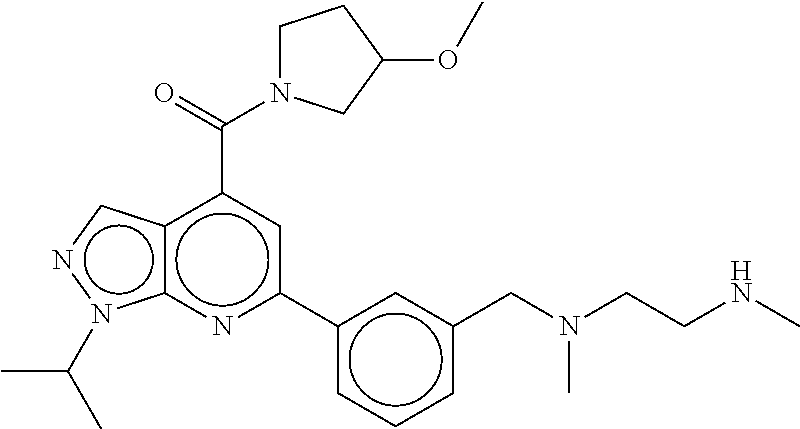
— — 0.233169 — 303. 
— 13.3156 0.235277 — 304. 
— 0.67041 0.23947 — 305. 
— — 0.240082 — 306. 
— — 0.242834 — 307. 
— — 0.24996 20 308. 
— — 0.253586 — 309. 
— 1.07039 0.272302 — 310. 
— — 0.283302 — 311. 
— — 0.293481 14.161012 312. 
— — 0.310764 — 313. 
— — 0.311864 — 314. 
— — 0.334003 — 315. 
— — 0.368337 — 316. 
— — 0.379371 — 317. 
— — 0.385541 — 318. 
— — 0.397897 — 319. 
— — 0.401218 20 320. 
— — 0.410474 — 321. 
— — 0.453232 — 322. 
— — 0.456394 — 323. 
— 0.126917 0.756102 — 324. 
— 0.0972748 0.886891 — 325. 
— 0.0253402 1.02982 — 326. 
— 0.170085 1.26675 — 327. 
— 0.072816 1.5968 — 328. 
— 0.0805175 2.19377 — 329. 
— 0.135964 2.47708 — 330. 
— 0.0524095 2.71569 — 331. 
— 0.117587 2.80796 — 332. 
— 0.0859301 2.84387 — 333. 
— 0.0947088 3.0571 — 334. 
— 0.466904 3.13322 — 335. 
— 0.0738066 3.51172 — 336. 
— 0.066535 5.11741 — 337. 
— 0.0332581 5.34983 — 338. 
— 0.438639 5.52606 — 339. 
— 0.134774 5.68159 — 340. 
— 0.104591 5.94292 — 341. 
— 0.0873233 6.07981 — 342. 
— 0.110309 6.47754 — 343. 
— 0.118724 8.8869 — 344. 
— 0.0675718 8.95901 — 345. 
— 0.11438 9.38923 — 346. 
— 0.115782 10 — 347. 
— 0.181458 10 — 348. 
— 0.435427 10 — 349. 
— 0.117 — — 350. 
— 0.171666 — — 351. 
— 0.235361 — — 352. 
— 0.324803 — — 353. 
— 0.350655 — — 354. 
— 0.452044 — — 355. 
0.512295 — 10 12.8090625 356. 
0.755032 0.376872 24.2952 — 357. 
— 0.393482 — — 358. 
0.0784784 — 6.29038 — - In certain embodiments, a provided compound is not one of the compounds listed in Table 2.
-
TABLE 2 Biological Evaluation of compounds using the assay as provided in the examples PABP1 Cpd PRMT1_ PRMT5_ CARM1_ ICW IC50 No Compound Structure IC50 (μM) IC50 (μM) IC50 (μM) (μM) 359. 
4.66387 — 50 — 360. 
0.253817 15.4071 0.0195413 0.933556075 361. 
4.26531 50 0.254095 — 362. 
0.10445 — 1.98408 20 363. 
— 50 — — 364. 
— — 50 — 365. 
7.4879 49.0462 0.0143998 — 366. 
2.3979 4.19943 1.38695 — 367. 
0.182751 — 0.183878 6.477584 368. 
0.0865615 — 0.00610874 1.005110111 369. 
— — 0.501013 — 370. 
0.417504 50 7.25989 — 371. 
11.8016 50 28.3413 — 372. 
0.0595896 — 4.30586 20 373. 
0.06473 14.7398 5.76793 — 374. 
0.0730601 44.3249 9.83181 — 375. 
0.100691 50 — — 376. 
0.201711 24.3916 — — 377. 
0.204202 36.4586 — — 378. 
0.297228 66.6249 19.6481 — 379. 
0.334958 2.12208 6.56561 — 380. 
0.34004 50 — — 381. 
0.128139 0.399062 9.94719 — 382. 
0.177317 — 0.00900877 — 383. 
0.211997 — 0.00839142 — 384. 
0.219528 — 0.0187973 — 385. 
0.231948 — 0.00711345 — 386. 
1.60635 — 0.208728 — 387. 
— — 0.0971897 10.865537 388. 
— — 0.148549 20 389. 
— — 0.232119 — 390. 
— 0.472444 17.5283 — 391. 
1.21551 30.4804 0.141351 — - In certain embodiments, a provided compound is not one of the compounds disclosed in the following patents and patent applications: U.S. Pat. Nos. 8,598,167 and 8,410,088; and International Patent Application Nos: PCT/US2012/033662, PCT/US2013/065126, PCT/US2013/077048, PCT/US2013/077086, PCT/US2014/047238, PCT/US2014/047282, and PCT/2013/065127, all of which are incorporated by references herein.
- In certain embodiments, a provided compound inhibits an RMT (e.g., PRMT1, PRMT3, CARM1, PRMT6, and/or PRMT8). In certain embodiments, a provided compound inhibits wild-type PRMT1, PRMT3, CARM1, PRMT6, and/or PRMT8. In certain embodiments, a provided compound inhibits a mutant RMT. In certain embodiments, a provided compound inhibits PRMT1, PRMT3, CARM1, PRMT6, and/or PRMT8, e.g., as measured in an assay described herein. In certain embodiments, the RMT is from a human. In certain embodiments, a provided compound inhibits an RMT (e.g., PRMT1, PRMT3, CARM1, PRMT6, and/or PRMT8) at an IC50 less than or equal to 10 μM. In certain embodiments, a provided compound inhibits an RMT (e.g., PRMT1, PRMT3, CARM1, PRMT6, and/or PRMT8) at an IC50 less than or equal to 1 μM. In certain embodiments, a provided compound inhibits an RMT (e.g., PRMT1, PRMT3, CARM1, PRMT6, and/or PRMT8) at an IC50 less than or equal to 0.1 μM. In certain embodiments, a provided compound inhibits an RMT (e.g., PRMT1, PRMT3, CARM1, PRMT6, and/or PRMT8) at an IC50 less than or equal to 0.01 μM. In certain embodiments, a provided compound inhibits an RMT (e.g., PRMT1, PRMT3, CARM1, PRMT6, and/or PRMT8) in a cell at an EC30 less than or equal to 10 μM. In certain embodiments, a provided compound inhibits an RMT (e.g., PRMT1, PRMT3, CARM1, PRMT6, and/or PRMT8) in a cell at an EC30 less than or equal to 12 μM. In certain embodiments, a provided compound inhibits an RMT (e.g., PRMT1, PRMT3, CARM1, PRMT6, and/or PRMT8) in a cell at an EC30 less than or equal to 3 μM. In certain embodiments, a provided compound inhibits PRMT1 in a cell at an EC30 less than or equal to 12 μM. In certain embodiments, a provided compound inhibits PRMT1 in a cell at an EC30 less than or equal to 3 μM. In certain embodiments, a provided compound inhibits an RMT (e.g., PRMT1, PRMT3, CARM1, PRMT6, and/or PRMT8) in a cell at an EC30 less than or equal to 1 μM. In certain embodiments, a provided compound inhibits an RMT (e.g., PRMT1, PRMT3, CARM1, PRMT6, and/or PRMT8) in a cell at an EC30 less than or equal to 0.1 μM. In certain embodiments, a provided compound inhibits cell proliferation at an EC50 less than or equal to 10 μM. In certain embodiments, a provided compound inhibits cell proliferation at an EC50 less than or equal to 1 μM. In certain embodiments, a provided compound inhibits cell proliferation at an EC50 less than or equal to 0.1 μM.
- It will be understood by one of ordinary skill in the art that the RMT can be wild-type, or any mutant or variant.
- The present disclosure provides pharmaceutical compositions comprising a compound described herein, e.g., a compound of Formula (I), or a pharmaceutically acceptable salt thereof, as described herein, and optionally a pharmaceutically acceptable excipient. It will be understood by one of ordinary skill in the art that the compounds described herein, or salts thereof, may be present in various forms, such as amorphous, hydrates, solvates, or polymorphs. In certain embodiments, a provided composition comprises two or more compounds described herein. In certain embodiments, a compound described herein, or a pharmaceutically acceptable salt thereof, is provided in an effective amount in the pharmaceutical composition. In certain embodiments, the effective amount is a therapeutically effective amount. In certain embodiments, the effective amount is an amount effective for inhibiting an RMT (e.g., PRMT1, PRMT3, CARM1, PRMT6, and/or PRMT8). In certain embodiments, the effective amount is an amount effective for treating an RMT-mediated disorder (e.g., a PRMT1-, PRMT3-, CARM1-, PRMT6-, and/or PRMT8-mediated disorder). In certain embodiments, the effective amount is a prophylactically effective amount. In certain embodiments, the effective amount is an amount effective to prevent an RMT-mediated disorder.
- Pharmaceutically acceptable excipients include any and all solvents, diluents, or other liquid vehicles, dispersions, suspension aids, surface active agents, isotonic agents, thickening or emulsifying agents, preservatives, solid binders, lubricants, and the like, as suited to the particular dosage form desired. General considerations in formulation and/or manufacture of pharmaceutical compositions agents can be found, for example, in Remington's Pharmaceutical Sciences, Sixteenth Edition, E. W. Martin (Mack Publishing Co., Easton, Pa., 1980), and Remington: The Science and Practice of Pharmacy, 21st Edition (Lippincott Williams & Wilkins, 2005).
- Pharmaceutical compositions described herein can be prepared by any method known in the art of pharmacology. In general, such preparatory methods include the steps of bringing a compound described herein (the “active ingredient”) into association with a carrier and/or one or more other accessory ingredients, and then, if necessary and/or desirable, shaping and/or packaging the product into a desired single- or multi-dose unit.
- Pharmaceutical compositions can be prepared, packaged, and/or sold in bulk, as a single unit dose, and/or as a plurality of single unit doses. As used herein, a “unit dose” is discrete amount of the pharmaceutical composition comprising a predetermined amount of the active ingredient. The amount of the active ingredient is generally equal to the dosage of the active ingredient which would be administered to a subject and/or a convenient fraction of such a dosage such as, for example, one-half or one-third of such a dosage.
- Relative amounts of the active ingredient, the pharmaceutically acceptable excipient, and/or any additional ingredients in a pharmaceutical composition of the present disclosure will vary, depending upon the identity, size, and/or condition of the subject treated and further depending upon the route by which the composition is to be administered. By way of example, the composition may comprise between 0.1% and 100% (w/w) active ingredient.
- In some embodiments, a pharmaceutical composition described herein is sterilized.
- Pharmaceutically acceptable excipients used in the manufacture of provided pharmaceutical compositions include inert diluents, dispersing and/or granulating agents, surface active agents and/or emulsifiers, disintegrating agents, binding agents, preservatives, buffering agents, lubricating agents, and/or oils. Excipients such as cocoa butter and suppository waxes, coloring agents, coating agents, sweetening, flavoring, and perfuming agents may also be present in the composition.
- Exemplary diluents include calcium carbonate, sodium carbonate, calcium phosphate, dicalcium phosphate, calcium sulfate, calcium hydrogen phosphate, sodium phosphate lactose, sucrose, cellulose, microcrystalline cellulose, kaolin, mannitol, sorbitol, inositol, sodium chloride, dry starch, cornstarch, powdered sugar, and mixtures thereof.
- Exemplary granulating and/or dispersing agents include potato starch, corn starch, tapioca starch, sodium starch glycolate, clays, alginic acid, guar gum, citrus pulp, agar, bentonite, cellulose and wood products, natural sponge, cation-exchange resins, calcium carbonate, silicates, sodium carbonate, cross-linked poly(vinyl-pyrrolidone) (crospovidone), sodium carboxymethyl starch (sodium starch glycolate), carboxymethyl cellulose, cross-linked sodium carboxymethyl cellulose (croscarmellose), methylcellulose, pregelatinized starch (starch 1500), microcrystalline starch, water insoluble starch, calcium carboxymethyl cellulose, magnesium aluminum silicate (Veegum), sodium lauryl sulfate, quaternary ammonium compounds, and mixtures thereof.
- Exemplary surface active agents and/or emulsifiers include natural emulsifiers (e.g., acacia, agar, alginic acid, sodium alginate, tragacanth, chondrux, cholesterol, xanthan, pectin, gelatin, egg yolk, casein, wool fat, cholesterol, wax, and lecithin), colloidal clays (e.g., bentonite (aluminum silicate) and Veegum (magnesium aluminum silicate)), long chain amino acid derivatives, high molecular weight alcohols (e.g., stearyl alcohol, cetyl alcohol, oleyl alcohol, triacetin monostearate, ethylene glycol distearate, glyceryl monostearate, and propylene glycol monostearate, polyvinyl alcohol), carbomers (e.g., carboxy polymethylene, polyacrylic acid, acrylic acid polymer, and carboxyvinyl polymer), carrageenan, cellulosic derivatives (e.g., carboxymethylcellulose sodium, powdered cellulose, hydroxymethyl cellulose, hydroxypropyl cellulose, hydroxypropyl methylcellulose, methylcellulose), sorbitan fatty acid esters (e.g., polyoxyethylene sorbitan monolaurate (Tween 20), polyoxyethylene sorbitan (Tween 60), polyoxyethylene sorbitan monooleate (Tween 80), sorbitan monopalmitate (Span 40), sorbitan monostearate (Span 60], sorbitan tristearate (Span 65), glyceryl monooleate, sorbitan monooleate (Span 80)), polyoxyethylene esters (e.g., polyoxyethylene monostearate (Myrj 45), polyoxyethylene hydrogenated castor oil, polyethoxylated castor oil, polyoxymethylene stearate, and Solutol), sucrose fatty acid esters, polyethylene glycol fatty acid esters (e.g., Cremophor™), polyoxyethylene ethers, (e.g., polyoxyethylene lauryl ether (Brij 30)), poly(vinyl-pyrrolidone), diethylene glycol monolaurate, triethanolamine oleate, sodium oleate, potassium oleate, ethyl oleate, oleic acid, ethyl laurate, sodium lauryl sulfate, Pluronic F68, Poloxamer 188, cetrimonium bromide, cetylpyridinium chloride, benzalkonium chloride, docusate sodium, and/or mixtures thereof.
- Exemplary binding agents include starch (e.g., cornstarch and starch paste), gelatin, sugars (e.g., sucrose, glucose, dextrose, dextrin, molasses, lactose, lactitol, mannitol, etc.), natural and synthetic gums (e.g., acacia, sodium alginate, extract of Irish moss, panwar gum, ghatti gum, mucilage of isapol husks, carboxymethylcellulose, methylcellulose, ethylcellulose, hydroxyethylcellulose, hydroxypropyl cellulose, hydroxypropyl methylcellulose, microcrystalline cellulose, cellulose acetate, poly(vinyl-pyrrolidone), magnesium aluminum silicate (Veegum), and larch arabogalactan), alginates, polyethylene oxide, polyethylene glycol, inorganic calcium salts, silicic acid, polymethacrylates, waxes, water, alcohol, and/or mixtures thereof.
- Exemplary preservatives include antioxidants, chelating agents, antimicrobial preservatives, antifungal preservatives, alcohol preservatives, acidic preservatives, and other preservatives.
- Exemplary antioxidants include alpha tocopherol, ascorbic acid, acorbyl palmitate, butylated hydroxyanisole, butylated hydroxytoluene, monothioglycerol, potassium metabisulfite, propionic acid, propyl gallate, sodium ascorbate, sodium bisulfite, sodium metabisulfite, and sodium sulfite.
- Exemplary chelating agents include ethylenediaminetetraacetic acid (EDTA) and salts and hydrates thereof (e.g., sodium edetate, disodium edetate, trisodium edetate, calcium disodium edetate, dipotassium edetate, and the like), citric acid and salts and hydrates thereof (e.g., citric acid monohydrate), fumaric acid and salts and hydrates thereof, malic acid and salts and hydrates thereof, phosphoric acid and salts and hydrates thereof, and tartaric acid and salts and hydrates thereof. Exemplary antimicrobial preservatives include benzalkonium chloride, benzethonium chloride, benzyl alcohol, bronopol, cetrimide, cetylpyridinium chloride, chlorhexidine, chlorobutanol, chlorocresol, chloroxylenol, cresol, ethyl alcohol, glycerin, hexetidine, imidurea, phenol, phenoxyethanol, phenylethyl alcohol, phenylmercuric nitrate, propylene glycol, and thimerosal.
- Exemplary antifungal preservatives include butyl paraben, methyl paraben, ethyl paraben, propyl paraben, benzoic acid, hydroxybenzoic acid, potassium benzoate, potassium sorbate, sodium benzoate, sodium propionate, and sorbic acid.
- Exemplary alcohol preservatives include ethanol, polyethylene glycol, phenol, phenolic compounds, bisphenol, chlorobutanol, hydroxybenzoate, and phenylethyl alcohol. Exemplary acidic preservatives include vitamin A, vitamin C, vitamin E, beta-carotene, citric acid, acetic acid, dehydroacetic acid, ascorbic acid, sorbic acid, and phytic acid.
- Other preservatives include tocopherol, tocopherol acetate, deteroxime mesylate, cetrimide, butylated hydroxyanisol (BHA), butylated hydroxytoluened (BHT), ethylenediamine, sodium lauryl sulfate (SLS), sodium lauryl ether sulfate (SLES), sodium bisulfite, sodium metabisulfite, potassium sulfite, potassium metabisulfite, Glydant Plus, Phenonip, methylparaben, Germall 115, Germaben II, Neolone, Kathon, and Euxyl. In certain embodiments, the preservative is an anti-oxidant. In other embodiments, the preservative is a chelating agent.
- Exemplary buffering agents include citrate buffer solutions, acetate buffer solutions, phosphate buffer solutions, ammonium chloride, calcium carbonate, calcium chloride, calcium citrate, calcium glubionate, calcium gluceptate, calcium gluconate, D-gluconic acid, calcium glycerophosphate, calcium lactate, propanoic acid, calcium levulinate, pentanoic acid, dibasic calcium phosphate, phosphoric acid, tribasic calcium phosphate, calcium hydroxide phosphate, potassium acetate, potassium chloride, potassium gluconate, potassium mixtures, dibasic potassium phosphate, monobasic potassium phosphate, potassium phosphate mixtures, sodium acetate, sodium bicarbonate, sodium chloride, sodium citrate, sodium lactate, dibasic sodium phosphate, monobasic sodium phosphate, sodium phosphate mixtures, tromethamine, magnesium hydroxide, aluminum hydroxide, alginic acid, pyrogen-free water, isotonic saline, Ringer's solution, ethyl alcohol, and mixtures thereof.
- Exemplary lubricating agents include magnesium stearate, calcium stearate, stearic acid, silica, talc, malt, glyceryl behanate, hydrogenated vegetable oils, polyethylene glycol, sodium benzoate, sodium acetate, sodium chloride, leucine, magnesium lauryl sulfate, sodium lauryl sulfate, and mixtures thereof.
- Exemplary natural oils include almond, apricot kernel, avocado, babassu, bergamot, black current seed, borage, cade, camomile, canola, caraway, carnauba, castor, cinnamon, cocoa butter, coconut, cod liver, coffee, corn, cotton seed, emu, eucalyptus, evening primrose, fish, flaxseed, geraniol, gourd, grape seed, hazel nut, hyssop, isopropyl myristate, jojoba, kukui nut, lavandin, lavender, lemon, litsea cubeba, macademia nut, mallow, mango seed, meadowfoam seed, mink, nutmeg, olive, orange, orange roughy, palm, palm kernel, peach kernel, peanut, poppy seed, pumpkin seed, rapeseed, rice bran, rosemary, safflower, sandalwood, sasquana, savoury, sea buckthorn, sesame, shea butter, silicone, soybean, sunflower, tea tree, thistle, tsubaki, vetiver, walnut, and wheat germ oils. Exemplary synthetic oils include, but are not limited to, butyl stearate, caprylic triglyceride, capric triglyceride, cyclomethicone, diethyl sebacate, dimethicone 360, isopropyl myristate, mineral oil, octyldodecanol, oleyl alcohol, silicone oil, and mixtures thereof.
- Liquid dosage forms for oral and parenteral administration include pharmaceutically acceptable emulsions, microemulsions, solutions, suspensions, syrups and elixirs. In addition to the active ingredients, the liquid dosage forms may comprise inert diluents commonly used in the art such as, for example, water or other solvents, solubilizing agents and emulsifiers such as ethyl alcohol, isopropyl alcohol, ethyl carbonate, ethyl acetate, benzyl alcohol, benzyl benzoate, propylene glycol, 1,3-butylene glycol, dimethylformamide, oils (e.g., cottonseed, groundnut, corn, germ, olive, castor, and sesame oils), glycerol, tetrahydrofurfuryl alcohol, polyethylene glycols and fatty acid esters of sorbitan, and mixtures thereof. Besides inert diluents, the oral compositions can include adjuvants such as wetting agents, emulsifying and suspending agents, sweetening, flavoring, and perfuming agents. In certain embodiments for parenteral administration, the compounds described herein are mixed with solubilizing agents such as Cremophor™, alcohols, oils, modified oils, glycols, polysorbates, cyclodextrins, polymers, and mixtures thereof.
- Injectable preparations, for example, sterile injectable aqueous or oleaginous suspensions can be formulated according to the known art using suitable dispersing or wetting agents and suspending agents. The sterile injectable preparation can be a sterile injectable solution, suspension or emulsion in a nontoxic parenterally acceptable diluent or solvent, for example, as a solution in 1,3-butanediol. Among the acceptable vehicles and solvents that can be employed are water, Ringer's solution, U.S.P. and isotonic sodium chloride solution. In addition, sterile, fixed oils are conventionally employed as a solvent or suspending medium. For this purpose any bland fixed oil can be employed including synthetic mono- or diglycerides. In addition, fatty acids such as oleic acid are used in the preparation of injectables.
- The injectable formulations can be sterilized, for example, by filtration through a bacterial-retaining filter, or by incorporating sterilizing agents in the form of sterile solid compositions which can be dissolved or dispersed in sterile water or other sterile injectable medium prior to use.
- In order to prolong the effect of a drug, it is often desirable to slow the absorption of the drug from subcutaneous or intramuscular injection. This can be accomplished by the use of a liquid suspension of crystalline or amorphous material with poor water solubility. The rate of absorption of the drug then depends upon its rate of dissolution which, in turn, may depend upon crystal size and crystalline form. Alternatively, delayed absorption of a parenterally administered drug form is accomplished by dissolving or suspending the drug in an oil vehicle.
- Compositions for rectal or vaginal administration are typically suppositories which can be prepared by mixing the compounds described herein with suitable non-irritating excipients or carriers such as cocoa butter, polyethylene glycol or a suppository wax which are solid at ambient temperature but liquid at body temperature and therefore melt in the rectum or vaginal cavity and release the active ingredient.
- Solid dosage forms for oral administration include capsules, tablets, pills, powders, and granules. In such solid dosage forms, the active ingredient is mixed with at least one inert, pharmaceutically acceptable excipient or carrier such as sodium citrate or dicalcium phosphate and/or a) fillers or extenders such as starches, lactose, sucrose, glucose, mannitol, and silicic acid, b) binders such as, for example, carboxymethylcellulose, alginates, gelatin, polyvinylpyrrolidinone, sucrose, and acacia, c) humectants such as glycerol, d) disintegrating agents such as agar, calcium carbonate, potato or tapioca starch, alginic acid, certain silicates, and sodium carbonate, e) solution retarding agents such as paraffin, f) absorption accelerators such as quaternary ammonium compounds, g) wetting agents such as, for example, cetyl alcohol and glycerol monostearate, h) absorbents such as kaolin and bentonite clay, and i) lubricants such as talc, calcium stearate, magnesium stearate, solid polyethylene glycols, sodium lauryl sulfate, and mixtures thereof. In the case of capsules, tablets and pills, the dosage form may comprise buffering agents.
- Solid compositions of a similar type can be employed as fillers in soft and hard-filled gelatin capsules using such excipients as lactose or milk sugar as well as high molecular weight polyethylene glycols and the like. The solid dosage forms of tablets, dragees, capsules, pills, and granules can be prepared with coatings and shells such as enteric coatings and other coatings well known in the pharmaceutical formulating art. They may optionally comprise opacifying agents and can be of a composition that they release the active ingredient(s) only, or preferentially, in a certain part of the intestinal tract, optionally, in a delayed manner. Examples of embedding compositions which can be used include polymeric substances and waxes. Solid compositions of a similar type can be employed as fillers in soft and hard-filled gelatin capsules using such excipients as lactose or milk sugar as well as high molecular weight polyethylene glycols and the like.
- The active ingredient can be in micro-encapsulated form with one or more excipients as noted above. The solid dosage forms of tablets, dragees, capsules, pills, and granules can be prepared with coatings and shells such as enteric coatings, release controlling coatings and other coatings well known in the pharmaceutical formulating art. In such solid dosage forms the active ingredient can be admixed with at least one inert diluent such as sucrose, lactose, or starch. Such dosage forms may comprise, as is normal practice, additional substances other than inert diluents, e.g., tableting lubricants and other tableting aids such a magnesium stearate and microcrystalline cellulose. In the case of capsules, tablets, and pills, the dosage forms may comprise buffering agents. They may optionally comprise opacifying agents and can be of a composition that they release the active ingredient(s) only, or preferentially, in a certain part of the intestinal tract, optionally, in a delayed manner. Examples of embedding compositions which can be used include polymeric substances and waxes.
- Dosage forms for topical and/or transdermal administration of a provided compound may include ointments, pastes, creams, lotions, gels, powders, solutions, sprays, inhalants and/or patches. Generally, the active ingredient is admixed under sterile conditions with a pharmaceutically acceptable carrier and/or any desired preservatives and/or buffers as can be required. Additionally, the present disclosure encompasses the use of transdermal patches, which often have the added advantage of providing controlled delivery of an active ingredient to the body. Such dosage forms can be prepared, for example, by dissolving and/or dispensing the active ingredient in the proper medium. Alternatively or additionally, the rate can be controlled by either providing a rate controlling membrane and/or by dispersing the active ingredient in a polymer matrix and/or gel.
- Formulations suitable for topical administration include, but are not limited to, liquid and/or semi liquid preparations such as liniments, lotions, oil in water and/or water in oil emulsions such as creams, ointments and/or pastes, and/or solutions and/or suspensions. Topically-administrable formulations may, for example, comprise from about 1% to about 10% (w/w) active ingredient, although the concentration of the active ingredient can be as high as the solubility limit of the active ingredient in the solvent. Formulations for topical administration may further comprise one or more of the additional ingredients described herein.
- A provided pharmaceutical composition can be prepared, packaged, and/or sold in a formulation suitable for pulmonary administration via the buccal cavity. Such a formulation may comprise dry particles which comprise the active ingredient and which have a diameter in the range from about 0.5 to about 7 nanometers or from about 1 to about 6 nanometers. Such compositions are conveniently in the form of dry powders for administration using a device comprising a dry powder reservoir to which a stream of propellant can be directed to disperse the powder and/or using a self propelling solvent/powder dispensing container such as a device comprising the active ingredient dissolved and/or suspended in a low-boiling propellant in a sealed container. Such powders comprise particles wherein at least 98% of the particles by weight have a diameter greater than 0.5 nanometers and at least 95% of the particles by number have a diameter less than 7 nanometers. Alternatively, at least 95% of the particles by weight have a diameter greater than 1 nanometer and at least 90% of the particles by number have a diameter less than 6 nanometers. Dry powder compositions may include a solid fine powder diluent such as sugar and are conveniently provided in a unit dose form.
- Low boiling propellants generally include liquid propellants having a boiling point of below 65° F. at atmospheric pressure. Generally the propellant may constitute 50 to 99.9% (w/w) of the composition, and the active ingredient may constitute 0.1 to 20% (w/w) of the composition. The propellant may further comprise additional ingredients such as a liquid non-ionic and/or solid anionic surfactant and/or a solid diluent (which may have a particle size of the same order as particles comprising the active ingredient).
- Pharmaceutical compositions formulated for pulmonary delivery may provide the active ingredient in the form of droplets of a solution and/or suspension. Such formulations can be prepared, packaged, and/or sold as aqueous and/or dilute alcoholic solutions and/or suspensions, optionally sterile, comprising the active ingredient, and may conveniently be administered using any nebulization and/or atomization device. Such formulations may further comprise one or more additional ingredients including, but not limited to, a flavoring agent such as saccharin sodium, a volatile oil, a buffering agent, a surface active agent, and/or a preservative such as methylhydroxybenzoate. The droplets provided by this route of administration may have an average diameter in the range from about 0.1 to about 200 nanometers.
- Formulations described herein as being useful for pulmonary delivery are useful for intranasal delivery of a pharmaceutical composition. Another formulation suitable for intranasal administration is a coarse powder comprising the active ingredient and having an average particle from about 0.2 to 500 micrometers. Such a formulation is administered by rapid inhalation through the nasal passage from a container of the powder held close to the nares.
- Formulations for nasal administration may, for example, comprise from about as little as 0.1% (w/w) and as much as 100% (w/w) of the active ingredient, and may comprise one or more of the additional ingredients described herein. A provided pharmaceutical composition can be prepared, packaged, and/or sold in a formulation for buccal administration. Such formulations may, for example, be in the form of tablets and/or lozenges made using conventional methods, and may contain, for example, 0.1 to 20% (w/w) active ingredient, the balance comprising an orally dissolvable and/or degradable composition and, optionally, one or more of the additional ingredients described herein. Alternately, formulations for buccal administration may comprise a powder and/or an aerosolized and/or atomized solution and/or suspension comprising the active ingredient. Such powdered, aerosolized, and/or aerosolized formulations, when dispersed, may have an average particle and/or droplet size in the range from about 0.1 to about 200 nanometers, and may further comprise one or more of the additional ingredients described herein.
- A provided pharmaceutical composition can be prepared, packaged, and/or sold in a formulation for ophthalmic administration. Such formulations may, for example, be in the form of eye drops including, for example, a 0.1/1.0% (w/w) solution and/or suspension of the active ingredient in an aqueous or oily liquid carrier. Such drops may further comprise buffering agents, salts, and/or one or more other of the additional ingredients described herein. Other opthalmically-administrable formulations which are useful include those which comprise the active ingredient in microcrystalline form and/or in a liposomal preparation. Ear drops and/or eye drops are contemplated as being within the scope of this disclosure.
- Although the descriptions of pharmaceutical compositions provided herein are principally directed to pharmaceutical compositions which are suitable for administration to humans, it will be understood by the skilled artisan that such compositions are generally suitable for administration to animals of all sorts. Modification of pharmaceutical compositions suitable for administration to humans in order to render the compositions suitable for administration to various animals is well understood, and the ordinarily skilled veterinary pharmacologist can design and/or perform such modification with ordinary experimentation.
- Compounds provided herein are typically formulated in dosage unit form for ease of administration and uniformity of dosage. It will be understood, however, that the total daily usage of provided compositions will be decided by the attending physician within the scope of sound medical judgment. The specific therapeutically effective dose level for any particular subject or organism will depend upon a variety of factors including the disease, disorder, or condition being treated and the severity of the disorder; the activity of the specific active ingredient employed; the specific composition employed; the age, body weight, general health, sex and diet of the subject; the time of administration, route of administration, and rate of excretion of the specific active ingredient employed; the duration of the treatment; drugs used in combination or coincidental with the specific active ingredient employed; and like factors well known in the medical arts.
- The compounds and compositions provided herein can be administered by any route, including enteral (e.g., oral), parenteral, intravenous, intramuscular, intra-arterial, intramedullary, intrathecal, subcutaneous, intraventricular, transdermal, interdermal, rectal, intravaginal, intraperitoneal, topical (as by powders, ointments, creams, and/or drops), mucosal, nasal, bucal, sublingual; by intratracheal instillation, bronchial instillation, and/or inhalation; and/or as an oral spray, nasal spray, and/or aerosol. Specifically contemplated routes are oral administration, intravenous administration (e.g., systemic intravenous injection), regional administration via blood and/or lymph supply, and/or direct administration to an affected site. In general the most appropriate route of administration will depend upon a variety of factors including the nature of the agent (e.g., its stability in the environment of the gastrointestinal tract), and/or the condition of the subject (e.g., whether the subject is able to tolerate oral administration).
- The exact amount of a compound required to achieve an effective amount will vary from subject to subject, depending, for example, on species, age, and general condition of a subject, severity of the side effects or disorder, identity of the particular compound(s), mode of administration, and the like. The desired dosage can be delivered three times a day, two times a day, once a day, every other day, every third day, every week, every two weeks, every three weeks, or every four weeks. In certain embodiments, the desired dosage can be delivered using multiple administrations (e.g., two, three, four, five, six, seven, eight, nine, ten, eleven, twelve, thirteen, fourteen, or more administrations).
- In certain embodiments, an effective amount of a compound for administration one or more times a day to a 70 kg adult human may comprise about 0.0001 mg to about 3000 mg, about 0.0001 mg to about 2000 mg, about 0.0001 mg to about 1000 mg, about 0.001 mg to about 1000 mg, about 0.01 mg to about 1000 mg, about 0.1 mg to about 1000 mg, about 1 mg to about 1000 mg, about 1 mg to about 100 mg, about 10 mg to about 1000 mg, or about 100 mg to about 1000 mg, of a compound per unit dosage form.
- In certain embodiments, a compound described herein may be administered at dosage levels sufficient to deliver from about 0.001 mg/kg to about 1000 mg/kg, from about 0.01 mg/kg to about mg/kg, from about 0.1 mg/kg to about 40 mg/kg, from about 0.5 mg/kg to about 30 mg/kg, from about 0.01 mg/kg to about 10 mg/kg, from about 0.1 mg/kg to about 10 mg/kg, or from about 1 mg/kg to about 25 mg/kg, of subject body weight per day, one or more times a day, to obtain the desired therapeutic effect.
- In some embodiments, a compound described herein is administered one or more times per day, for multiple days. In some embodiments, the dosing regimen is continued for days, weeks, months, or years.
- It will be appreciated that dose ranges as described herein provide guidance for the administration of provided pharmaceutical compositions to an adult. The amount to be administered to, for example, a child or an adolescent can be determined by a medical practitioner or person skilled in the art and can be lower or the same as that administered to an adult.
- It will be also appreciated that a compound or composition, as described herein, can be administered in combination with one or more additional therapeutically active agents. In certain embodiments, a compound or composition provided herein is administered in combination with one or more additional therapeutically active agents that improve its bioavailability, reduce and/or modify its metabolism, inhibit its excretion, and/or modify its distribution within the body. It will also be appreciated that the therapy employed may achieve a desired effect for the same disorder, and/or it may achieve different effects.
- The compound or composition can be administered concurrently with, prior to, or subsequent to, one or more additional therapeutically active agents. In certain embodiments, the additional therapeutically active agent is a compound of Formula (I). In certain embodiments, the additional therapeutically active agent is not a compound of Formula (I). In general, each agent will be administered at a dose and/or on a time schedule determined for that agent. In will further be appreciated that the additional therapeutically active agent utilized in this combination can be administered together in a single composition or administered separately in different compositions. The particular combination to employ in a regimen will take into account compatibility of a provided compound with the additional therapeutically active agent and/or the desired therapeutic effect to be achieved. In general, it is expected that additional therapeutically active agents utilized in combination be utilized at levels that do not exceed the levels at which they are utilized individually. In some embodiments, the levels utilized in combination will be lower than those utilized individually.
- Exemplary additional therapeutically active agents include, but are not limited to, small organic molecules such as drug compounds (e.g., compounds approved by the U.S. Food and Drug Administration as provided in the Code of Federal Regulations (CFR)), peptides, proteins, carbohydrates, monosaccharides, oligosaccharides, polysaccharides, nucleoproteins, mucoproteins, lipoproteins, synthetic polypeptides or proteins, small molecules linked to proteins, glycoproteins, steroids, nucleic acids, DNAs, RNAs, nucleotides, nucleosides, oligonucleotides, antisense oligonucleotides, lipids, hormones, vitamins, and cells. In certain embodiments, an additional therapeutically active agent is prednisolone, dexamethasone, doxorubicin, vincristine, mafosfamide, cisplatin, carboplatin, Ara-C, rituximab, azacitadine, panobinostat, vorinostat, everolimus, rapamycin, ATRA (all-trans retinoic acid), daunorubicin, decitabine, Vidaza, mitoxantrone, or IBET-151.
- Also encompassed by the present disclosure are kits (e.g., pharmaceutical packs). The kits provided may comprise a provided pharmaceutical composition or compound and a container (e.g., a vial, ampule, bottle, syringe, and/or dispenser package, or other suitable container). In some embodiments, provided kits may optionally further include a second container comprising a pharmaceutical excipient for dilution or suspension of a provided pharmaceutical composition or compound. In some embodiments, a provided pharmaceutical composition or compound provided in the container and the second container are combined to form one unit dosage form. In some embodiments, a provided kits further includes instructions for use.
- Compounds and compositions described herein are generally useful for the inhibition of RMT (e.g., PRMT1, PRMT3, CARM1, PRMT6, and/or PRMT8). In some embodiments, methods of treating an RMT-mediated disorder in a subject are provided which comprise administering an effective amount of a compound described herein (e.g., a compound of Formula (I)), or a pharmaceutically acceptable salt thereof), to a subject in need of treatment. In certain embodiments, the effective amount is a therapeutically effective amount. In certain embodiments, the effective amount is a prophylactically effective amount. In certain embodiments, the subject is suffering from a RMT-mediated disorder. In certain embodiments, the subject is susceptible to a RMT-mediated disorder.
- As used herein, the term “RMT-mediated disorder” means any disease, disorder, or other pathological condition in which an RMT (e.g., PRMT1, PRMT3, CARM1, PRMT6, and/or PRMT8) is known to play a role. Accordingly, in some embodiments, the present disclosure relates to treating or lessening the severity of one or more diseases in which an RMT is known to play a role.
- In some embodiments, the present disclosure provides a method of inhibiting an RMT comprising contacting the RMT with an effective amount of a compound described herein (e.g., a compound of Formula (I)), or a pharmaceutically acceptable salt thereof. The RMT may be purified or crude, and may be present in a cell, tissue, or subject. Thus, such methods encompass both inhibition of in vitro and in vivo RMT activity. In certain embodiments, the method is an in vitro method, e.g., such as an assay method. It will be understood by one of ordinary skill in the art that inhibition of an RMT does not necessarily require that all of the RMT be occupied by an inhibitor at once. Exemplary levels of inhibition of an RMT (e.g., PRMT1, PRMT3, CARM1, PRMT6, and/or PRMT8) include at least 10% inhibition, about 10% to about 25% inhibition, about 25% to about 50% inhibition, about 50% to about 75% inhibition, at least 50% inhibition, at least 75% inhibition, about 80% inhibition, about 90% inhibition, and greater than 90% inhibition.
- In some embodiments, provided is a method of inhibiting RMT activity in a subject in need thereof (e.g., a subject diagnosed as having an RMT-mediated disorder) comprising administering to the subject an effective amount of a compound described herein (e.g., a compound of Formula (I)), or a pharmaceutically acceptable salt thereof, or a pharmaceutical composition thereof.
- In certain embodiments, provided is a method of modulating gene expression in a cell which comprises contacting a cell with an effective amount of a compound of Formula (I), or a pharmaceutically acceptable salt thereof. In certain embodiments, the cell is in culture in vitro. In certain embodiments, the cell is in an animal, e.g., a human. In certain embodiments, the cell is in a subject in need of treatment.
- In certain embodiments, provided is a method of modulating transcription in a cell which comprises contacting a cell with an effective amount of a compound of Formula (I), or a pharmaceutically acceptable salt thereof. In certain embodiments, the cell is in culture in vitro. In certain embodiments, the cell is in an animal, e.g., a human. In certain embodiments, the cell is in a subject in need of treatment.
- In certain embodiments, a method is provided of selecting a therapy for a subject having a disease associated with an RMT-mediated disorder or mutation comprising the steps of determining the presence of an RMT-mediated disorder or gene mutation in an RMT gene (e.g., a PRMT1, PRMT3, CARM1, PRMT6, and/or PRMT8 gene) or and selecting, based on the presence of an RMT-mediated disorder a gene mutation in the RMT gene a therapy that includes the administration of a provided compound. In certain embodiments, the disease is cancer.
- In certain embodiments, a method of treatment is provided for a subject in need thereof comprising the steps of determining the presence of an RMT-mediated disorder or a gene mutation in the RMT gene and treating the subject in need thereof, based on the presence of a RMT-mediated disorder or gene mutation in the RMT gene with a therapy that includes the administration of a provided compound. In certain embodiments, the subject is a cancer patient.
- In some embodiments, a compound provided herein is useful in treating a proliferative disorder, such as cancer. For example, while not being bound to any particular mechanism, protein arginine methylation by PRMTs is a modification that has been implicated in signal transduction, gene transcription, DNA repair and mRNA splicing, among others; and overexpression of PRMTs within these pathways is often associated with various cancers. Thus, compounds which inhibit the action of PRMTs, as provided herein, are effective in the treatment of cancer.
- In some embodiments, compounds provided herein are effective in treating cancer through the inhibition of PRMT1. For example, PRMT1 overexpression has been observed in various human cancers, including, but not limited to, breast cancer, prostate cancer, lung cancer, colon cancer, bladder cancer, and leukemia. In one example, PRMT1 specifically deposits an asymmetric dimethylarginine (aDMA) mark on histone H4 at arginine 3 (H4R3me2a), and this mark is associated with transcription activation. In prostate cancer, the methylation status of H4R3 positively correlates with increasing tumor grade and can be used to predict the risk of prostate cancer recurrence (Seligson et al., Nature 2005 435, 1262-1266). Thus, in some embodiments, inhibitors of PRMT1, as described herein, are useful in treating cancers associated with the methylation status of H4R3, e.g., prostate cancer. Additionally, the methylarginine effector molecule TDRD3 interacts with the H4R3me2a mark, and overexpression of TDRD3 is linked to poor prognosis for the survival of patients with breast cancer (Nagahata et al., Cancer Sci. 2004 95, 218-225). Thus, in some embodiments, inhibitors of PRMT1, as described herein, are useful in treating cancers associated with overexpression of TDRD3, e.g., breast cancer, as inhibition of PRMT1 leads to a decrease in methylation of H4R3, thereby preventing the association of overexpressed TDRD3 with H4R3me2a. In other examples, PRMT1 is known to have non-histone substrates. For example, PRMT1, when localized to the cytoplasm, methylates proteins that are involved in signal transduction pathways, e.g., the estrogen receptor (ER). The expression status of ER in breast cancer is critical for prognosis of the disease, and both genomic and non-genomic ER pathways have been implicated in the pathogenesis of breast cancer. For example, it has been shown that PRMT1 methylates ERα, and that ERα methylation is required for the assembly of ERα with SRC (a proto-oncogene tyrosine-protein kinase) and focal adhesion kinase (FAK). Further, the silencing of endogenous PRMT1 resulted in the inability of estrogen to activate AKT. These results suggested that PRMT1-mediated ERα methylation is required for the activation of the SRC-PI3K-FAK cascade and AKT, coordinating cell proliferation and survival. Thus, hypermethylation of ERα in breast cancer is thought to cause hyperactivation of this signaling pathway, providing a selective survival advantage to tumor cells (Le Romancer et al., Mol. Cell 2008 31, 212-221; Le Romancer et al., Steroids 2010 75, 560-564). Accordingly, in some embodiments, inhibitors of PRMT1, as described herein, are useful in treating cancers associated with ERα methylation, e.g., breast cancer. In yet another example, PRMT1 has been shown to be involved in the regulation of leukemia development. For example, SRC-associated in mitosis 68 kDa protein (SAM68; also known as KHDRBS1) is a well-characterized PRMT1 substrate, and when either SAM68 or PRMT1 is fused directly to the myeloid/lymphoid leukemia (MLL) gene, these fusion proteins can activate MLL oncogenic properties, implying that the methylation of SAM68 by PRMT1 is a critical signal for the development of leukemia (Cheung et al., Nature Cell Biol. 2007 9, 1208-1215). Accordingly, in some embodiments, inhibitors of PRMT1, as described herein, are useful in treating cancers associated with SAM68 methylation, e.g., leukemia. In still another example, PRMT1 is implicated in leukemia development through its interaction with AE9a, a splice isoform of AML1-ETO (Shia et al., Blood 2012 119:4953-62). Knockdown of PRMT1 affects expression of certain AE9a-activated genes and suppresses AE9a's self-renewal capability. It has also been shown that AE9a recruits PRMT1 to AE9a activated gene promoters, which leads to increased H4 Arg3 methylation, H3 Lys9/14 acetylation, and transcription activated. Accordingly, in some embodiments, inhibitors of PRMT1, as described herein, are useful in treating cancers associated with AML1-ETO, e.g., leukemia. Thus, without being bound by any particular mechanism, the inhibition of PRMT1, e.g., by compounds described herein, is beneficial in the treatment of cancer.
- In some embodiments, compounds provided herein are effective in treating cancer through the inhibition of PRMT3. In one example, the DAL1 tumor suppressor protein has been shown to interact with PRMT3 and inhibits its methyltransferase activity (Singh et al., Oncogene 2004 23, 7761-7771). Epigenetic downregulation of DAL1 has been reported in several cancers (e.g., meningiomas and breast cancer), thus PRMT3 is expected to display increased activity, and cancers that display DAL1 silencing may, in some aspects, be good targets for PRMT3 inhibitors, e.g., those described herein. Thus, without being bound by any particular mechanism, the inhibition of PRMT3, e.g., by compounds described herein, is beneficial in the treatment of cancer.
- In some embodiments, compounds provided herein are effective in treating cancer through the inhibition of PRMT4, also known as CARM1. For example, PRMT4 levels have been shown to be elevated in castration-resistant prostate cancer (CRPC), as well as in aggressive breast tumors (Hong et al., Cancer 2004 101, 83-89; Majumder et al., Prostate 2006 66, 1292-1301). Thus, in some embodiments, inhibitors of PRMT4, as described herein, are useful in treating cancers associated with PRMT4 overexpression. PRMT4 has also been shown to affect ERα-dependent breast cancer cell differentiation and proliferation (Al-Dhaheri et al., Cancer Res. 2011 71, 2118-2128), thus in some aspects PRMT4 inhibitors, as described herein, are useful in treating ERα-dependent breast cancer by inhibiting cell differentiation and proliferation. In another example, PRMT4 has been shown to be recruited to the promoter of E2F1 (which encodes a cell cycle regulator) as a transcriptional co-activator (Frietze et al., Cancer Res. 2008 68, 301-306). Thus, PRMT4-mediated upregulation of E2F1 expression may contribute to cancer progression and chemoresistance as increased abundance of E2F1 triggers invasion and metastasis by activating growth receptor signaling pathways, which in turn promote an antiapoptotic tumor environment (Engelmann and Pützer, Cancer Res 2012 72; 571). Accordingly, in some embodiments, the inhibition of PRMT4, e.g., by compounds provided herein, is useful in treating cancers associated with E2F1 upregulation. Thus, without being bound by any particular mechanism, the inhibition of PRMT4, e.g., by compounds described herein, is beneficial in the treatment of cancer.
- In some embodiments, compounds provided herein are effective in treating cancer through the inhibition of PRMT6. For example, PRMT6 has been reported to be overexpressed in a number of cancers, e.g., bladder and lung cancer (Yoshimatsu et al., Int. J. Cancer 2011 128, 562-573). Thus, in some embodiments, the inhibition of PRMT6, by compounds provided herein, is useful in treating cancers associated with PRMT6 overexpression. In some aspects, PRMT6 is primarily thought to function as a transcriptional repressor, although it has also been reported that PRMT6 functions as a co-activator of nuclear receptors. For example, as a transcriptional repressor, PRMT6 suppresses the expression of thrombospondin 1 (TSP1; also known as THBS1; a potent natural inhibitor of angiogenesis and endothelial cell migration) and p21 (a natural inhibitor of cyclin dependent kinase), thereby contributing to cancer development and progression (Michaud-Levesque and Richard, J. Biol. Chem. 2009 284, 21338-21346; Kleinschmidt et al., PLoS ONE 2012 7, e41446). Accordingly, in some embodiments, the inhibition of PRMT6, by compounds provided herein, is useful in treating cancer by preventing the repression of THBs1 and/or p21. Thus, without being bound by any particular mechanism, the inhibition of PRMT6, e.g., by compounds described herein, is beneficial in the treatment of cancer.
- In some embodiments, compounds provided herein are effective in treating cancer through the inhibition of PRMT8. For example, deep-sequencing efforts of cancer genomes (e.g., COSMIC) have revealed that of all the PRMTs, PRMT8 is reported to be the most mutated. Of 106 sequenced genomes, 15 carry mutations in the PRMT8 coding region, and nine of these result in an amino acid change (Forbes et al., Nucleic Acids Res. 2011 39, D945-D950). Because of its high rate of mutation in cancer, PRMT8 is thought to contribute to the initiation or progression of cancer. Thus, without being bound by any particular mechanism, the inhibition of PRMT8, e.g., by compounds described herein, is beneficial in the treatment of cancer.
- In some embodiments, compounds described herein are useful for treating a cancer including, but not limited to, acoustic neuroma, adenocarcinoma, adrenal gland cancer, anal cancer, angiosarcoma (e.g., lymphangiosarcoma, lymphangioendotheliosarcoma, hemangiosarcoma), appendix cancer, benign monoclonal gammopathy, biliary cancer (e.g., cholangiocarcinoma), bladder cancer, breast cancer (e.g., adenocarcinoma of the breast, papillary carcinoma of the breast, mammary cancer, medullary carcinoma of the breast), brain cancer (e.g., meningioma; glioma, e.g., astrocytoma, oligodendroglioma; medulloblastoma), bronchus cancer, carcinoid tumor, cervical cancer (e.g., cervical adenocarcinoma), choriocarcinoma, chordoma, craniopharyngioma, colorectal cancer (e.g., colon cancer, rectal cancer, colorectal adenocarcinoma), epithelial carcinoma, ependymoma, endotheliosarcoma (e.g., Kaposi's sarcoma, multiple idiopathic hemorrhagic sarcoma), endometrial cancer (e.g., uterine cancer, uterine sarcoma), esophageal cancer (e.g., adenocarcinoma of the esophagus, Barrett's adenocarinoma), Ewing sarcoma, eye cancer (e.g., intraocular melanoma, retinoblastoma), familiar hypereosinophilia, gall bladder cancer, gastric cancer (e.g., stomach adenocarcinoma), gastrointestinal stromal tumor (GIST), head and neck cancer (e.g., head and neck squamous cell carcinoma, oral cancer (e.g., oral squamous cell carcinoma (OSCC), throat cancer (e.g., laryngeal cancer, pharyngeal cancer, nasopharyngeal cancer, oropharyngeal cancer)), hematopoietic cancers (e.g., leukemia such as acute lymphocytic leukemia (ALL) (e.g., B-cell ALL, T-cell ALL), acute myelocytic leukemia (AML) (e.g., B-cell AML, T-cell AML), chronic myelocytic leukemia (CML) (e.g., B-cell CML, T-cell CML), and chronic lymphocytic leukemia (CLL) (e.g., B-cell CLL, T-cell CLL); lymphoma such as Hodgkin lymphoma (HL) (e.g., B-cell HL, T-cell HL) and non-Hodgkin lymphoma (NHL) (e.g., B-cell NHL such as diffuse large cell lymphoma (DLCL) (e.g., diffuse large B-cell lymphoma (DLBCL)), follicular lymphoma, chronic lymphocytic leukemia/small lymphocytic lymphoma (CLL/SLL), mantle cell lymphoma (MCL), marginal zone B-cell lymphomas (e.g., mucosa-associated lymphoid tissue (MALT) lymphomas, nodal marginal zone B-cell lymphoma, splenic marginal zone B-cell lymphoma), primary mediastinal B-cell lymphoma, Burkitt lymphoma, lymphoplasmacytic lymphoma (e.g., “Waldenström's macroglobulinemia”), hairy cell leukemia (HCL), immunoblastic large cell lymphoma, precursor B-lymphoblastic lymphoma and primary central nervous system (CNS) lymphoma; and T-cell NHL such as precursor T-lymphoblastic lymphoma/leukemia, peripheral T-cell lymphoma (PTCL) (e.g., cutaneous T-cell lymphoma (CTCL) (e.g., mycosis fungiodes, Sezary syndrome), angioimmunoblastic T-cell lymphoma, extranodal natural killer T-cell lymphoma, enteropathy type T-cell lymphoma, subcutaneous panniculitis-like T-cell lymphoma, anaplastic large cell lymphoma); a mixture of one or more leukemia/lymphoma as described above; and multiple myeloma (MM)), heavy chain disease (e.g., alpha chain disease, gamma chain disease, mu chain disease), hemangioblastoma, inflammatory myofibroblastic tumors, immunocytic amyloidosis, kidney cancer (e.g., nephroblastoma a.k.a. Wilms' tumor, renal cell carcinoma), liver cancer (e.g., hepatocellular cancer (HCC), malignant hepatoma), lung cancer (e.g., bronchogenic carcinoma, small cell lung cancer (SCLC), non-small cell lung cancer (NSCLC), adenocarcinoma of the lung), leiomyosarcoma (LMS), mastocytosis (e.g., systemic mastocytosis), myelodysplastic syndrome (MDS), mesothelioma, myeloproliferative disorder (MPD) (e.g., polycythemia Vera (PV), essential thrombocytosis (ET), agnogenic myeloid metaplasia (AMM) a.k.a. myelofibrosis (MF), chronic idiopathic myelofibrosis, chronic myelocytic leukemia (CML), chronic neutrophilic leukemia (CNL), hypereosinophilic syndrome (HES)), neuroblastoma, neurofibroma (e.g., neurofibromatosis (NF) type 1 or type 2, schwannomatosis), neuroendocrine cancer (e.g., gastroenteropancreatic neuroendoctrine tumor (GEP-NET), carcinoid tumor), osteosarcoma, ovarian cancer (e.g., cystadenocarcinoma, ovarian embryonal carcinoma, ovarian adenocarcinoma), papillary adenocarcinoma, pancreatic cancer (e.g., pancreatic andenocarcinoma, intraductal papillary mucinous neoplasm (IPMN), Islet cell tumors), penile cancer (e.g., Paget's disease of the penis and scrotum), pinealoma, primitive neuroectodermal tumor (PNT), prostate cancer (e.g., prostate adenocarcinoma), rectal cancer, rhabdomyosarcoma, salivary gland cancer, skin cancer (e.g., squamous cell carcinoma (SCC), keratoacanthoma (KA), melanoma, basal cell carcinoma (BCC)), small bowel cancer (e.g., appendix cancer), soft tissue sarcoma (e.g., malignant fibrous histiocytoma (MFH), liposarcoma, malignant peripheral nerve sheath tumor (MPNST), chondrosarcoma, fibrosarcoma, myxosarcoma), sebaceous gland carcinoma, sweat gland carcinoma, synovioma, testicular cancer (e.g., seminoma, testicular embryonal carcinoma), thyroid cancer (e.g., papillary carcinoma of the thyroid, papillary thyroid carcinoma (PTC), medullary thyroid cancer), urethral cancer, vaginal cancer and vulvar cancer (e.g., Paget's disease of the vulva).
- In some embodiments, a compound provided herein is useful in treating diseases associated with increased levels of circulating asymmetric dimethylarginine (aDMA), e.g., cardiovascular disease, diabetes, kidney failure, renal disease, pulmonary disease, etc. Circulating aDMA is produced by the proteolysis of asymmetrically dimethylated proteins. PRMTs which mediate aDMA methylation include, e.g., PRMT1, PRMT3, PRMT4, PRMT6, and PRMT8. aDMA levels are directly involved in various diseases as aDMA is an endogenous competitive inhibitor of nitric oxide synthase (NOS), thereby reducing the production of nitric oxide (NO) (Vallance et al., J. Cardiovasc. Pharmacol. 1992 20 (Suppl. 12):S60-2). NO functions as a potent vasodilator in endothelial vessels, and as such inhibiting its production has major consequences on the cardiovascular system. For example, since PRMT1 is a major enzyme that generates aDMA, the dysregulation of its activity is likely to regulate cardiovascular diseases (Boger et al., Ann. Med. 2006 38:126-36), and other pathophysiological conditions such as diabetes mellitus (Sydow et al., Vasc. Med. 2005 10 (Suppl. 1):S35-43), kidney failure (Vallance et al., Lancet 1992 339:572-5), and chronic pulmonary diseases (Zakrzewicz et al., BMC Pulm. Med. 2009 9:5). Additionally, it has been demonstrated that the expression of PRMT1 and PRMT3 are increased in coronary heart disease (Chen et al., Basic Res. Cardiol. 2006 101:346-53). In another example, aDMA elevation is seen in patients with renal failure, due to impaired clearance of this metabolite from the circulation (Jacobi et al., Am. J. Nephrol. 2008 28:224-37). Thus, circulating aDMA levels is observed in many pathophysiological situations. Accordingly, without being bound by any particular mechanism, the inhibition of PRMTs, e.g., by compounds described herein, results in the decrease of circulating aDMA, which is beneficial in the treatment of diseases associated with increased levels of circulating aDMA, e.g., cardiovascular disease, diabetes, kidney failure, renal disease, pulmonary disease, etc. In certain embodiments, a compound described herein is useful for treating or preventing vascular diseases.
- In some embodiments, a compound provided herein is useful in treating metabolic disorders. For example, PRMT1 has been shown to enhance mRNA levels of FoxO1 target genes in gluconeogenesis, which results in increased hepatic glucose production, and knockdown of PRMT promotes inhibition of FoxO1 activity and thus inhibition of hepatic gluconeogenesis (Choi et al., Hepatology 2012 56:1546-56). Additionally, genetic haploinsufficiency of Prmt1 has been shown to reduce blood glucose levels in mouse models. Thus, without being bound by any particular mechanism, the inhibition of PRMT1, e.g., by compounds described herein, is beneficial in the treating of metabolic disorders, such as diabetes. In some embodiments, a provided compound is useful in treating type I diabetes. In some embodiments, a provided compound is useful in treating type II diabetes.
- In some embodiments, a compound provided herein is useful in treating muscular dystrophies. For example, PRMT1, as well as PRMT3 and PRMT6, methylate the nuclear poly(A)-binding protein (PABPN1) in a region located near its C-terminus (Perreault et al., J. Biol. Chem. 2007 282:7552-62). This domain is involved in the aggregation of the PABPN1 protein, and abnormal aggregation of this protein is involved in the disease oculopharyngeal muscular dystrophy (Davies et al., Int. J. Biochem. Cell. Biol. 2006 38:1457-62). Thus, without being bound by any particular mechanism, the inhibition of PRMTs, e.g., by compounds described herein, is beneficial in the treatment of muscular dystrophies, e.g., oculopharyngeal muscular dystrophy, by decreasing the amount of methylation of PABPN1, thereby decreasing the amount of PABPN1 aggregation.
- CARM1 is also the most abundant PRMT expressed in skeletal muscle cells, and has been found to selectively control the pathways modulating glycogen metabolism, and associated AMPK (AMP-activated protein kinase) and p38 MAPK (mitogen-activated protein kinase) expression. See, e.g., Wang et al., Biochem (2012) 444:323-331. Thus, in some embodiments, inhibitors of CARM1, as described herein, are useful in treating metabolic disorders, e.g., for example skeletal muscle metabolic disorders, e.g., glycogen and glucose metabolic disorders. Exemplary skeletal muscle metabolic disorders include, but are not limited to, Acid Maltase Deficiency (Glycogenosis type 2; Pompe disease), Debrancher deficiency (Glycogenosis type 3), Phosphorylase deficiency (McArdle's; GSD 5), X-linked syndrome (GSD9D), Autosomal recessive syndrome (GSD9B), Tarui's disease (Glycogen storage disease VII; GSD 7), Phosphoglycerate Mutase deficiency (Glycogen storage disease X; GSDX; GSD 10), Lactate dehydrogenase A deficiency (GSD 11), Branching enzyme deficiency (GSD 4), Aldolase A (muscle) deficiency, β-Enolase deficiency, Triosephosphate isomerase (TIM) deficiency, Lafora's disease (Progressive myoclonic epilepsy 2), Glycogen storage disease (Muscle, Type 0, Phosphoglucomutase 1 Deficiency (GSD 14)), and Glycogenin Deficiency (GSD 15).
- In some embodiments, a compound provided herein is useful in treating autoimmune disease. For example, several lines of evidence strongly suggest that PRMT inhibitors may be valuable for the treatment of autoimmune diseases, e.g., rheumatoid arthritis. PRMTs are known to modify and regulate several critical immunomodulatory proteins. For example, post-translational modifications (e.g., arginine methylation), within T cell receptor signaling cascades allow T lymphocytes to initiate a rapid and appropriate immune response to pathogens. Co-engagement of the CD28 costimulatory receptor with the T cell receptor elevates PRMT activity and cellular protein arginine methylation, including methylation of the guanine nucleotide exchange factor Vav1 (Blanchet et al., J. Exp. Med. 2005 202:371-377). PRMT inhibitors are thus expected to diminish methylation of the guanine exchange factor Vav1, resulting in diminished IL-2 production. In agreement, siRNA directed against PRMT5 was shown to both inhibit NFAT-driven promoter activity and IL-2 secretion (Richard et al., Biochem J. 2005 388:379-386). In another example, PRMT1 is known to cooperate with PRMT4 to enhance NFkB p65-driven transcription and facilitate the transcription of p65 target genes like TNFα (Covic et al., Embo. J. 2005 24:85-96). Thus, in some embodiments, PRMT1 and/or PRMT4 inhibitors, e.g., those described herein, are useful in treating autoimmune disease by decreasing the transcription of p65 target genes like TNFα. These examples demonstrate an important role for arginine methylation in inflammation. Thus, without being bound by any particular mechanism, the inhibition of PRMTs, e.g., by compounds described herein, is beneficial in the treatment of autoimmune diseases.
- In some embodiments, a compound provided herein is useful in treating neurological disorders, such as amyotrophic lateral sclerosis (ALS). For example, a gene involved in ALS, TLS/FUS, often contains mutated arginines in certain familial forms of this disease (Kwiatkowski et al., Science 2009 323:1205-8). These mutants are retained in the cytoplasm, which is similar to reports documenting the role arginine methylation plays in nuclear-cytoplasmic shuffling (Shen et al., Genes Dev. 1998 12:679-91). This implicates PRMT, e.g., PRMT1, function in this disease, as it was demonstrated that TLS/FUS is methylated on at least 20 arginine residues (Rappsilber et al., Anal. Chem. 2003 75:3107-14). Thus, in some embodiments, the inhibition of PRMTs, e.g., by compounds provided herein, are useful in treating ALS by decreasing the amount of TLS/FUS arginine methylation.
-

- Scheme 1 shows an exemplary general synthesis route to pyrazole compounds of formula I, wherein RW′ is either the same as RW or is precursor of RW and L1′ is either the same as L1 or is a precursor of L1 and RW, L1, Rx, R3, X, Y and Z are as defined above. In the first step iodopyrazole carboxaldehydes of general formula XI are allowed to react with mono-Boc protected ethylenediamines XII under reductive amination conditions (e.g. sodium cyanoborohydride and catalytic acid such as acetic acid) in an appropriate solvent such as methanol to give intermediates of general formula XIII. In certain embodiments, Sonagashira reaction of intermediates of general formula XIII with boronic acids or boronic esters of general formula XIV in which L1′ is an acetylene linker and Q is a boronic acid or boronic ester group in the presence of a palladium catalyst (e.g. PdCl2(dppf)) and a base (e.g. potassium carbonate) in an organic solvent (e.g. toluene) at elevated temperature yields intermediates of general formula XV-a in which L1′ is an acetylene linker. Boc deprotection of intermediates of general formula XV-a gives acetylene compounds of formula VI-a. In certain embodiments, Suzuki reaction of intermediates of general formula XIII with boronic acids or boronic esters of general formula XIV in which L1′ is a trans-olefin linker and Q is a boronic acid or boronic ester group in the presence of a palladium catalyst (e.g. PdCl2(dppf)) and a base (e.g. potassium carbonate) in an organic solvent (e.g. toluene) at elevated temperature yields intermediates of general formula XV-b in which L1′ is an olefin linker. Boc deprotection of intermediates of general formula XV-b gives olefin compounds of formula VI-b. In certain embodiments, Suzuki reaction of intermediates of general formula XIII with pinacol boranes of general formula XIVc in which L1′ is bond, RW′ is a heterocycloalkenyl or cycloalkenyl group and Q is a pinacol borane group yields intermediates of general formula XV-c in which L1′ is bond and RW′ is a heterocycloalkenyl or cycloalkenyl group. In certain embodiments, compounds of formula I wherein L1 is bond and RW is a heterocyclyl or carbocyclyl group can be prepared by hydrogenation of intermediates of formula XV-c followed by Boc deprotection. In certain embodiments, compounds of formula I where L1 is —O— can be synthesized from intermediates of general formula XIII by Goldberg reaction with alcohols of formula RWOH followed by Boc deprotection. In certain embodiments, compounds of formula I where L1 is —N(RB)— can be synthesized from intermediates of general formula XIII by palladium catalyzed Buchwald coupling reaction conditions with amines of formula RWN(RB)H followed by Boc deprotection. In certain embodiments, compounds of formula I where L1 is —C(═O)NRB— can be synthesized from intermediates of general formula XIII under known copper catalyzed coupling reaction conditions of amides with aryliodides using copper iodide an amine ligand and a base with amides of formula RWC(═O)NHRB followed by Boc deprotection.
- Scheme 1.1 shows an alternative general synthesis route to pyrazole compounds of Formula (I), that involves reversal in the order of the first two steps of the reaction sequence detailed for Scheme 1.0. Thus, in the first step iodopyrazole carboxaldehydes of general formula XI are coupled with compounds or reagents of general formula XIV (e.g. via Suzuki reaction with pinacol boranes of general formula XIVc in which L1′ is bond, RW′ is a heterocycloalkenyl or cycloalkenyl group and Q is a pinacol borane group) and in a second step the corresponding reductive amination reaction to yield common intermediates of general formula XV is a carried out.
-

- In certain embodiments, iodopyrazole carboxaldehydes of general formula XI may be prepared from suitable known pyrazole compound intermediates by established synthetic chemistry methods. Standard methods include direct iodination of a pyrazole 3-carboxylate and Sandmeyer reaction of a 3-amino pyrazole 4-carboxylate. In certain embodiments, iodopyrazole carboxaldehydes can be derived from iodopyrazole carboxylates by reduction to a hydroxymethyl group followed by oxidation to carboxaldehyde. In certain embodiments, mono-Boc protected ethylenediamines XII can be synthesized by standard methods known in the literature for derivatizing or preparing ethylenediamines. For example intermediates of formula XII may be prepared by treatment of the corresponding unprotected diamine precursors with Boc2O and purifying the mixture of mono and dibocylated products. In certain embodiments, pyrazole compounds of general formula II can be prepared from iodopyrazole carboxaldehydes of general formula XXI as depicted in Scheme 2. In certain embodiments where R4 is hydrogen compounds of general formula II are equivalent to compounds of general formula III which are tautomers. In certain embodiments, R4′ is a protecting group such as tetrahydropyranylyl (THP) which maybe cleaved to hydrogen under acidic conditions in the final Boc-deprotection step. In certain embodiments, iodopyrazole carboxaldehydes of general formula XXI can be prepared as depicted in Scheme 3.
-

-

- In certain embodiments, iodopyrazole carboxaldehydes of general formula XXI can be prepared as depicted in Scheme 4 which also provides iodopyrazole carboxyaldehydes of general formula XXXI. In certain embodiments, alkylation of intermediates of general formula XXX gives a mixture of pyrazole nitrogen alkylated isomers which are separated by chromatography to give pure isomers XXI and XXXI. In certain embodiments, pyrazole compounds of general formula III can be prepared from iodopyrazole carboxaldehydes of general formula XXXI as depicted in Scheme 5.
-

-

- In certain embodiments, pyrazole compounds of general formula IV can be prepared from iodopyrazole carboxaldehydes of general formula XLI as depicted in Scheme 6. In certain embodiments where R4 is hydrogen compounds of general formula IV are equivalent to compounds of general formula V which are tautomers. In certain embodiments where R4 in compounds of formula IV is hydrogen, R4′ in intermediate XLI may be a selected protecting group such as tetrahydropyranyl (THP) which can be cleaved to hydrogen under acidic conditions in the final Boc-deprotection step.
-

- In certain embodiments, iodopyrazole carboxaldehydes of general formula XLI and LI can be prepared as depicted in Scheme 7. In certain embodiments, an R4 group of iodopyrazole carboxaldehydes may be introduced by alkylation of intermediates of formula XLVII. This reaction can give a mixture of intermediate compounds of formulas XLI and LI which may be separated by chromatography. In certain embodiments, THP protected intermediates of formula XLVI can be used to prepare compounds of formula IV where R4═H as also depicted in Scheme 7.
-

- In certain embodiments, pyrazole compounds of general formula V can be prepared from iodopyrazole carboxaldehydes of general formula LI as depicted in Scheme 8.
-

- In certain embodiments, boronic acids or esters of general formula XIVa, XIVb and XIVc are commercially available. In certain embodiments, compounds of general formula XIVa, and XIVb can also be prepared from alkenyl bromides and terminal alkynes using standard methods such as treatment with n-BuLi followed by trapping the intermediate lithium species with trimethylborate. In certain embodiments, compounds of general formula XIVc can be prepared from the corresponding cyclic ketones LX via intermediate enol triflates as depicted in Scheme 9.
-

- In order that the invention described herein may be more fully understood, the following examples are set forth. It should be understood that these examples are for illustrative purposes only and are not to be construed as limiting this invention in any manner.
- General methods and experimental procedures for preparing and characterizing compounds of the present invention are set forth below. Wherever needed, reactions were heated using conventional hotplate apparatus or heating mantle or microwave irradiation equipment. Reactions were conducted with or without stirring, under atmospheric or elevated pressure in either open or closed vessels. Reaction progress was monitored using conventional techniques such as TLC, HPLC, UPLC, or LCMS using instrumentation and methods described below. Reactions were quenched and crude compounds isolated using conventional methods as described in the specific examples provided. Solvent removal was carried out with or without heating, under atmospheric or reduced pressure, using either a rotary or centrifugal evaporator.
- Compound purification was carried out as needed using a variety of traditional methods including, but not limited to, preparative chromatography under acidic, neutral, or basic conditions using either normal phase or reverse phase HPLC or flash columns or Prep-TLC plates. Compound purity and mass confirmations were conducted using standard HPLC and/or UPLC and/or MS spectrometers and/or LCMS and/or GC equipment (e.g., including, but not limited to the following instrumentation: Waters Alliance 2695 with 2996 PDA detector connected with ZQ detector and ESI source; Shimadzu LDMS-2020; Waters Acquity H Class with PDA detector connected with SQ detector and ESI source; Agilent 1100 Series with PDA detector; Waters Alliance 2695 with 2998 PDA detector; AB SCIEX API 2000 with ESI source; Agilent 7890 GC). Exemplified compounds were dissolved in either MeOH or MeCN to a concentration of approximately 1 mg/mL and analyzed by injection of 0.5-10 μL into an appropriate LCMS system using the methods provided in the following table:
-
MS Heat MS Flow Block Detector Mobile Mobile Rate Temp Voltage Method Column Phase A Phase B (mL/min) Gradient Profile (° C.) (kV) A Shim-pack Water/0.05% ACN/0.05% 1 5% to 100% B in 2.0 250 1.5 XR-ODS TFA TFA minutes, 100% B for 2.2 μm 1.1 minutes, 100% to 3.0 × 50 mm 5% B in 0.2 minutes, then stop B Gemini-NX Water/ ACN 1 5% to 100% B in 2.0 200 0.75 3 μm C18 0.04% minutes, 100% B for 110A Ammonia 1.1 minutes, 100% to 5% B in 0.1 minutes, then stop C Shim-pack Water/0.05% ACN/0.05% 1 5% to 100% B in 2.0 250 0.85 XR-ODS FA FA minutes, 100% B for 1.6 μm 1.1 minutes, 100% to 2.0 × 50 mm 5% B in 0.1 minutes, then stop D Shim-pack Water/0.05% ACN/0.05% 1 5% to 100% B in 2.0 250 0.95 XR-ODS TFA TFA minutes, 100% B for 2.2 μm 1.1 minutes, 100% to 3.0 × 50 mm 5% B in 0.1 minutes, then stop E Waters Water/0.05% ACN/0.05% 0.9 5% to 100% B in 2.0 250 1.5 Xselect C18 FA FA minutes, 100% B for 3.5 μm 1.2 minutes, 100% to 3.0 × 50 mm 5% B in 0.1 minutes, then stop F Shim-pack Water/0.05% ACN/0.05% 1 5% to 80% B in 3.25 200 0.95 XR-ODS TFA TFA minutes, 80% B for 2.2 μm 1.35 minutes, 80% to 3.0 × 50 mm 5% B in 0.3 minutes, then stop G Shim-pack Water/0.05% ACN/0.05% 1 5% to 70% B in 2.50 200 0.95 XR-ODS TFA TFA minutes, 70% B for 2.2 μm 0.70 minutes, 70% to 3.0 × 50 mm 5% B in 0.1 minutes, then stop H Shim-pack Water/0.05% ACN/0.05% 1 5% to 100% B in 2.20 250 0.95 XR-ODS TFA TFA minutes, 100% B for 2.2 μm 1.00 minutes, 100% to 3.0 × 50 mm 5% B in 0.1 minutes, then stop I Shim-pack Water/0.05% ACN/0.05% 1 5% to 100% B in 1.20 250 0.95 XR-ODS TFA TFA minutes, 100% B for 2.2 μm 1.00 minutes, 100% to 3.0 × 50 mm 5% B in 0.1 minutes, then stop J Shim-pack Water/0.05% ACN/0.05% 1 5% to 70% B in 3.20 250 0.95 XR-ODS TFA TFA minutes, 70% B for 2.2 μm 0.75 minutes, 70% to 3.0 × 50 mm 5% B in 0.35 minutes, then stop K Shim-pack Water/0.05% ACN/0.05% 1 5% to 80% B in 3.00 250 1.5 XR-ODS TFA TFA minutes, 80% B for 0.8 2.2 μm minutes, 80% to 5% B 3.0 × 50 mm in 0.1 minutes, then stop L Shim-pack Water/0.05% ACN/0.05% 1 5% to 100% B in 3.00 250 1.5 XR-ODS TFA TFA minutes, 100% B for 2.2 μm 0.8 minutes, 100% to 3.0 × 50 mm 5% B in 0.1 minutes, then stop M Shim-pack Water/0.05% ACN/0.05% 1 5% to 100% B in 2.20 250 1.5 XR-ODS TFA TFA minutes, 100% B for 2.2 μm 1.00 minutes, 100% to 3.0 × 50 mm 5% B in 0.1 minutes, then stop N Shim-pack Water/0.05% ACN/0.05% 1 5% to 80% B in 2.20 250 1.5 XR-ODS TFA TFA minutes, 80% B for 1.0 2.2 μm minutes, 80% to 5% B 3.0 × 50 mm in 0.1 minutes, then stop O Zorbax Water/0.05% ACN/0.05% 1 5% to 70 B in 8.00 250 1.5 Eclipse Plus TFA TFA minutes, 70% B for 2.0 C18 minutes, then stop 4.6 × 100 mm P Shim-pack Water/0.05% ACN/0.05% 1 5% to 65% B in 3.00 250 1.5 XR-ODS TFA TFA minutes, 65% B for 2.2 μm 0.80 minutes, 100% to 3.0 × 50 mm 5% B in 0.1 minutes, then stop Q Shim-pack Water/0.05% ACN/0.05% 1 5% to 60% B in 2.50 250 0.95 XR-ODS TFA TFA minutes, 60% B for 0.7 2.2 μm minutes, 60% to 5% B 3.0 × 50 mm in 0.1 minutes, then stop R Shim-pack Water/0.05% ACN/0.05% 1 5% to 50% B in 2.50 250 0.95 XR-ODS TFA TFA minutes, 50% B for 0.7 2.2 μm minutes, 50% to 5% B 3.0 × 50 mm in 0.1 minutes, then stop S XBridge Water/0.05% ACN/0.05% 1 5% to 95% B in 2.20 250 0.9 C18 3.5 μm TFA TFA minutes, 95% B for 3.0 × 50 mm 1.00 minutes, 95% to 5% B in 0.1 minutes, then stop T Shim-pack Water/0.05% ACN/0.05% 0.7 5% to 100% B in 2.0 250 0.85 XR-ODS FA FA minutes, 100% B for 1.6 μm 1.1 minutes, 100% to 2.0 × 50 mm 5% B in 0.1 minutes, then stop U Shim-pack Water/0.05% ACN/0.05% 1 5% to 40% B in 2.50 250 0.95 XR-ODS TFA TFA minutes, 40% B for 0.7 2.2 μm minutes, 40% to 5% B 3.0 × 50 mm in 0.1 minutes, then stop V Shim-pack Water/0.05% ACN/0.05% 1 5% to 60% B in 4.20 200 1.05 XR-ODS TFA TFA minutes, 60% B for 1.0 2.2 μm minutes, 60% to 5% B 3.0 × 50 mm in 0.1 minutes, then stop W Shim-pack Water/0.05% ACN/0.05% 1 5% to 100% B in 2.20 200 0.95 XR-ODS TFA TFA minutes, 100% B for 2.2 μm 1.00 minutes, 100% to 3.0 × 50 mm 5% B in 0.1 minutes, then stop X Shim-pack Water/0.05% ACN/0.05% 0.7 5% to 100% B in 2.0 200 0.85 XR-ODS FA FA minutes, 100% B for 1.6 μm 1.1 minutes, 100% to 2.0 × 50 mm 5% B in 0.1 minutes, then stop Y Ecliplis Plus Water/0.05% ACN 1 5% to 100% B in 2.0 250 1 C18 3.5 μm TFA minutes, 100% B for 4.6 × 50 mm 1.0 minutes, 100% to 5% B in 0.1 minutes, then stop Z Ecliplis Plus Water/10 mM ACN/5% 1 5% to 100% B in 2.0 250 1.1 C18 3.5 μm ammonium water minutes, 100% B for 4.6 × 50 mm carbonate 1.0 minutes, 100% to 5% B in 0.1 minutes, then stop A1 Shim-pack Water/0.05% ACN 1 5% to 100% B in 2.0 250 1 XR-ODS TFA minutes, 100% B for 2.2 μm 1.0 minutes, 100% to 3.0 × 50 mm 5% B in 0.1 minutes, then stop A2 Ecliplis Plus Water/10 mM ACN 1 5% to 100% B in 2.0 250 0.95 C18 3.5 μm ammonium minutes, 100% B for 4.6 × 50 mm acetate 1.4 minutes, 100% to 5% B in 0.1 minutes, then stop A3 Acquity Water/5 mM ACN/0.1% 0.55 5% B at 0.01 min up to BEH C18 ammonium FA 0.4 min, 35% B at 0.8 min, 1.7 μm 2.1 × acetate/ 55% B at 1.2 min, 50 mm 0.1% FA 100% B in 1.3 minutes, at 2.5 min up to 3.30 min, 5% B at 3.31 min up to 4.0 min, then stop A4 Shim-pack Water/0.05% ACN/0.05% 1 5% to 30% B in 8.0 250 1.5 XR-ODS TFA TFA minutes, 30% B for 2.0 3.0 × 50 mm minutes, then stop A5 Shim-pack Water/0.05% ACN/0.05% 1 5% to 100% B in 2.2 250 1.5 XR-ODS TFA TFA minutes, 100% B for 3.0 × 50 mm 1.0 minutes, 100% to 5% B in 0.1 minutes, then stop A6 Atlantis Water/0.05% ACN/0.05% 0.8 95% to 60% B in 4.0 250 1.5 HILIC TFA TFA minutes, 60% B for 4.0 3.0 × 100 mm minutes, then stop A7 Shim-pack Water/0.05% ACN/0.05% 1 5% B for 0.5 minutes, 250 1.5 XR-ODS TFA TFA 5% to 75% B at 2.2 3.0 × 50 mm minutes, 100% B for 1.0 minutes, 100% to 5% B in 0.1 minutes, then stop A8 Zorbax SB- Water/0.05% ACN/0.05% 1.2 5% to 70% B in 10.0 250 1.05 C18 TFA TFA minutes, 70% B for 5.0 5 μm minutes, then stop 4.6 × 150 mm A9 Shim-pack Water/0.05% ACN/0.05% 1 5% to 40% B in 4.4 250 0.95 XR-ODS TFA TFA minutes, 40% B for 0.9 3.0 × 50 mm minutes, then stop A10 Atlantis T3 Water/0.05% ACN/0.05% 1 5% to 50% B in 8.0 200 1.05 3 μm TFA TFA minutes, 50% B for 2.0 4.6 × 100 mm minutes, then stop A11 Shim-pack Water/0.05% ACN/0.05% 1 5% B for 0.5 minutes, 250 1.50 XR-ODS TFA TFA 5% to 100% B in 1.7 3.0 × 50 mm minutes, 100% B for 1.0 minute, 100% to 5% B in 0.1 minute, then stop - Compound structure confirmations were carried out using standard 300 or 400 MHz NMR spectrometers with NOe's conducted whenever necessary.
- The following abbreviations are used herein:
-
Abbreviation Meaning ACN acetonitrile atm. atmosphere DCM dichloromethane DHP dihydropyran DIBAL diisobutyl aluminum hydride DIEA diisopropyl ethylamine DMF dimethyl formamide DMF-DMA dimethyl formamide dimethyl acetal DMSO dimethyl sulfoxide dppf 1,1′-bis(diphenylphosphino)ferrocene EA ethyl acetate ESI electrospray ionization EtOH ethanol FA formic acid GC gas chromatography h hour Hex hexanes HMDS hexamethyl disilazide HPLC high performance liquid chromatography IPA isopropanol LCMS liquid chromatography/mass spectrometry MeOH methanol min minutes NBS N-bromo succinimide NCS N-chloro succinimide NIS N-iodo succinimide NMR nuclear magnetic resonance NOe nuclear Overhauser effect Prep. preparative PTSA para-toluene sulfonic acid Rf retardation factor rt room temperature RT retention time sat. saturated SGC silica gel chromatography TBAF tetrabutyl ammonium fluoride TEA triethylamine TFA trifluoroacetic acid THF tetrahydrofuran TLC thin layer chromatography UPLC ultra performance liquid chromatography LiHMDS lithium hexamethyldisilazide TMAD tetramethyl azocarboxamide -

- To a solution of 6-(3-(((2-(tert-butoxycarbonyl(methyl)amino)ethyl)(methyl)amino) methyl)phenyl)-1-isopropyl-1H-pyrazolo[3,4-b]pyridine-4-carboxylic acid (120 mg, 0.25 mmol) in DCM (2 mL) was added HOAT (60 mg, 0.38 mmol) and HATU (150 mg, 0.38 mmol); the mixture was stirred at room temperature for 5 min. and treated with slow addition of tetrahydro-2H-pyran-4-amine (50 mg, 0.5 mmol). The reaction mixture was further stirred at the same temperature for 1 h, it was then diluted with DCM (10 mL) and washed with water (5 mL×2). The organic layer was dried over Na2SO4, filtered and concentrated to render a residue which was purified by chromatographic column on silicagel to give tert-butyl 2-((3-(1-isopropyl-4-(tetrahydro-2H-pyran-4-yl carbamoyl)-1H-pyrazolo[3,4-b]pyridin-6-yl)benzyl)(methyl)amino) ethyl(methyl)carbamate as a white solid (110 mg, 78% yield). ESI-LCMS (m/z): 565 [M+1]+
- A solution of tert-Butyl 2-((3-(1-isopropyl-4-(tetrahydro-2H-pyran-4-yl carbamoyl)-1H-pyrazolo[3,4-b]pyridin-6-yl)benzyl)(methyl)amino)ethyl(methyl) carbamate (110 mg, 0.19 mmol) in 3:4 TFA:DCM (3.5 ml) was stirred at room temperature for 2 h. The solvent was then removed in vacuo and the residue was dissolved in MeOH (3 ml), treated with ammonia till pH 7-8 and concentrated. The residue was purified by preparative HPLC to give 1-isopropyl-6-(3-((methyl(2-(methylamino)ethyl)amino) methyl)phenyl)-N-(tetrahydro-2H-pyran-4-yl)-1H-pyrazolo[3,4-b]pyridine-4-carboxamide as a yellow solid (25 mg, 27% yield). ESI-LCMS (m/z): 465.4 found for [M+H]+. 1HNMR (500 MHz, CD3OD) δ ppm: 8.32 (s, 1H), 8.24 (s, 1H), 8.18 (d, J=7.5, 1H), 8.07 (s, 1H), 7.52-7.49 (m, 2H), 5.47-5.44 (m, 1H), 4.23 (m, 1H), 4.05-4.02 (m, 2H), 3.69 (s, 2H), 3.60-3.56 (m, 2H), 2.81-2.79 (m, 2H), 2.64-2.62 (m, 2H), 2.41 (s, 3H), 2.31 (s, 3H), 2.02-1.99 (m, 2H), 1.78-1.75 (m, 2H), 1.63-1.62 (m, 6H).
-

- A solution of 4,6-dichloro-1-isopropyl-3-methyl-1H-pyrazolo[3,4-b]pyridine (500 mg, 2.05 mmol) in degassed dioxane (9 mL) and water (3 mL) was added tert-butyl 2-(methyl(3-(4,4,5,5-tetramethyl-1,3,2-dioxaborolan-2-yl)benzyl)amino)ethylcarbamate (1 g, 2.56 mmol), NaHCO3 (344 mg, 4.1 mmol) and Pd(PPh3)4 (118 mg, 0.1 mmol) and the mixture was stirred at 100° C. for 1 h under N2 atmosphere. After being cooled down to room temperature the mixture was concentrated under reduced pressure, diluted with water (10 mL) and the resulting aqueous solution was extracted with DCM (40 mL×3). The combined organic layer were washed with brine (50 mL), dried over Na2SO4, filtered and concentrated in vacuo. The residue was purified by chromatographic column on silicagel eluted with 10% EtOAc in petroleum ether to give tert-butyl 2-((3-(4-chloro-1-isopropyl-3-methyl-1H-pyrazolo[3,4-b]pyridin-6-yl)benzyl)(methyl)amino)ethylcarbamate (0.97 g, 100% yield) as a colorless oil. ESI-LCMS (m/z): 472.2 found for [M+1]+.
- A solution of tert-butyl 2-((3-(4-chloro-1-isopropyl-3-methyl-1H-pyrazolo[3,4-b]pyridin-6-yl)benzyl)(methyl)amino)ethylcarbamate (0.99 g, 2.1 mmol) in neat morpholine (10 mL) was stirred at 120° C. for 16 h. The mixture was cooled down to room temperature and concentrated to reneder a residue that was purified by chromatographic column on silicagel eluted with 1% to 10% EtOAc in petroleum ether to give tert-butyl 2-((3-(1-isopropyl-3-methyl-4-morpholino-1H-pyrazolo[3,4-b]pyridin-6-yl)benzyl)(methyl)amino)ethylcarbamate (0.8 g, yield 73%) as a yellow solid. ESI-LCMS (m/z): 523.4 found for [M+1]+.
- A solution of tert-butyl 2-((3-(1-isopropyl-3-methyl-4-morpholino-1H-pyrazolo[3,4-b]pyridin-6-yl)benzyl)(methyl)amino)ethylcarbamate (0.72 g, 1.38 mmol) in 4 N HCl in dioxane (20 mL) was stirred at room temperature for 4 h and then concentrated under reduced pressure. The residue was dissolved in water, the pH adjusted to 8-9 by addition of ammonia and the mixture was extracted with DCM (50 mL×3). The combined organic layer were washed with brine (80 mL), dried over Na2SO4, filtered and concentrated. The residue was purified by preparative HPLC to give N1-(3-(1-isopropyl-3-methyl-4-morpholino-1H-pyrazolo[3,4-b]pyridin-6-yl)benzyl)-N1-methylethane-1,2-diamine (33 mg, 81%) as white solid. ESI-LCMS (m/z): 423.4 found for [M+1]+1. HNMR (500 MHz, MeOD) δ ppm: 8.08 (s, 1H), 8.00 (d, J=3 Hz, 1H), 7.47-7.41 (m, 2H), 7.02 (s, 1H), 5.33-5.30 (m, 1H), 3.92 (m, 4H), 3.64 (s, 2H), 3.28 (m, 4H), 2.82-2.80 (m, 2H), 2.64 (s, 3H), 2.56-2.53 (m, 2H), 2.28 (s, 3H), 1.56-1.55 (m, 6H).
-

- To a solution of tert-butyl 2-(((3-(4-chloro-1-isopropyl-1H-pyrazolo[3,4-b]pyridin-6-yl)benzyl)(methyl)amino)ethyl(methyl)carbamate (110 mg, 0.23 mmol) in degassed DMF (2 mL) and H2O (0.5 ml) was added 1-methyl-4-(4,4,5,5-tetramethyl-1,3,2-dioxaborolan-2-yl)-1H-pyrazole (100 mg, 0.46 mmol), Pd(dppf)Cl2 (20 mg, 0.023 mmol) and Cs2CO3 (225 mg, 0.69 mmol). The reaction vessel was capped, placed in a microwave reactor and irradiated for 30 min at external temperature of 150° C. The reaction mixture was cooled down to room temperature, diluted with dichloromethane (40 mL) and washed with water (50 mL×3). The organic layer was concentrated in vacuo and the residue was purified by preparative TLC on silicagel developed with 50% EtOAc in petroleum ether to give tert-butyl 2-((3-(1-isopropyl-4-(1-methyl-1H-pyrazol-4-yl)-1H-pyrazolo[3,4-b]pyridin-6-yl)benzyl)(methyl)amino)ethyl(methyl)carbamate as a yellow oil (90 mg, 75% yield). ESI-LCMS (m/z): 518.4 found for [M+1]+.
- A solution of tert-butyl 2-((3-(1-isopropyl-4-(1-methyl-1H-pyrazol-4-yl)-1H-pyrazolo[3,4-b]pyridin-6-yl)benzyl)(methyl)amino)ethyl(methyl)carbamate (90 mg, 0.17 mmol) in 4.0 M HCl in dioxane solution (8 mL) was stirred at room temperature for 1 h; the volatiles were removed in vacuo and the resulting residue was purified by preparative HPLC to give N1-(3-(1-isopropyl-4-(1-methyl-1H-pyrazol-4-yl)-1H-pyrazolo[3,4-b]pyridin-6-yl)benzyl)-N1,N2-dimethylethane-1,2-diamine as a white solid (60 mg, 83% yield). ESI-LCMS (m/z): 418.3 found for [M+H]+. 1HNMR (500 MHz, CD3OD) δ ppm: 8.47 (s, 1H), 8.35 (s, 1H), 8.25 (s, 1H), 8.19 (s, 1H), 8.12 (d, J=5 Hz, 1H), 7.86 (s, 1H), 7.51-7.44 (m, 2H), 5.45-5.42 (m, 1H), 4.02 (s, 3H), 3.67 (s, 2H), 2.82-2.80 (m, 2H), 2.64-2.62 (m, 2H), 2.41 (s, 3H), 2.31 (s, 3H), 1.63-1.61 (d, 6H).
-

- To a solution of 4,6-dichloro-1-isopropyl-1H-pyrazolo[3,4-b]pyridine (1 g, 4.37 mmol) and tert-butyl 2-(methyl(3-(4,4,5,5-tetramethyl-1,3,2-dioxaborolan-2-yl)benzyl)amino)ethylcarbamate (2 g, 5.13 mmol) in degassed dioxane (15 mL) and water (5 mL) was added NaHCO3 (0.73 g, 8.7 mmol) and Pd(PPh3)4 (252 mg, 0.22 mmol) and the mixture was stirred at 100° C. for 1.5 h under N2 atmosphere. After being cooled down to room temperature, the reaction mixture was concentrated under reduced pressure, diluted with water (10 mL) and the resulting aqueous solution was extracted with DCM (50 mL×3). The combined organic layer were washed with brine (50 mL), dried over Na2SO4, filtered and concentrated in vacuo. The residue was purified by chromatographic column on silicagel eluted with 1% to 10% EtOAc in petroleum ether to give tert-butyl 2-((3-(4-chloro-1-isopropyl-1H-pyrazolo[3,4-b]pyridin-6-yl)benzyl)(methyl)amino) ethylcarbamate as a colorless oil. (1.9 g, 95% yield). ESI-LCMS (m/z): 458.2 found for [M+1]+.
- A solution of tert-butyl 2-((3-(4-chloro-1-isopropyl-1H-pyrazolo[3,4-b]pyridin-6-yl)benzyl)(methyl)amino) ethylcarbamate (1.9 g, 4.13 mmol) in neat morpholine (20 mL) was stirred at 120° C. for 16 h. The mixture was cooled down to room temperature, concentrated under vacuo and the resulting residue was purified by chromatographic column on silicagel eluted with 0% to 10% EtOAc in petroleum ether to give tert-butyl 2-((3-(1-isopropyl-4-morpholino-1H-pyrazolo[3,4-b]pyridin-6-yl)benzyl)(methyl)amino)ethylcarbamate (1.7 g, 81% yield) as a yellow solid. ESI-LCMS (m/z): 509.4 found for [M+1]+.
- A solution of tert-butyl 2-((3-(1-isopropyl-4-morpholino-1H-pyrazolo[3,4-b]pyridin-6-yl)benzyl)(methyl)amino)ethylcarbamate (1.7 g, 3.34 mmol) in 4N HCl in dioxane (35 mL) was stirred at room temperature for 4 h. The reaction mixture was then concentrated under reduced pressure and the residue was dissolved in water and treated with ammonia till pH 8˜9. This solution was extracted with DCM (50 mL×3), the combined organic layer were washed with brine (80 mL), dried over Na2SO4, filtered and concentrated to give N1-(3-(1-isopropyl-4-morpholino-1H-pyrazolo[3,4-b]pyridin-6-yl)benzyl)-N1-methylethane-1,2-diamine (1.1 g, 81% yield) as yellow solid. ESI-LCMS (m/z): 409.2 found for [M+1]+. 1HNMR (400 MHz, MeOD) δ ppm: 8.17 (s, 1H), 8.06 (s, 1H), 7.99-7.98 (m, 2H), 7.48-7.42 (m, 2H), 5.38-5.35 (m, 1H), 3.93-3.91 (m, 4H), 3.72-3.66 (m, 6H), 2.84-2.81 (m, 2H), 2.58-2.55 (m, 2H), 2.30 (s, 3H), 1.58-1.55 (m, 6H).
-

- To a solution of tetrahydro-2H-pyran-4-amine (2 g, 19.8 mmol) in DCM (24 mL) was added di-tert-butyl dicarbonate (6.5 g, 29.8 mmol) and triethylamine (4 g, 39.6 mmol). The reaction mixture was stirred at room temperature for 2 h.; diluted with diethyl ether (150 mL) and then washed with saturated NH4Cl solution (70 mL×2) and brine (70 mL×2). The organic layer was dried over anhydrous MgSO4, filtered, and concentrated in vacuo to give tert-butyl tetrahydro-2H-pyran-4-ylcarbamate as a white solid (5.1 g, crude), which was used into next step without further purification. 1HNMR (500 MHz, CD3OD) δ ppm: 3.94-3.91 (m, 2H), 3.56-3.53 (m, 1H), 3.48-3.43 (m, 2H), 1.83-1.80 (m, 2H), 1.52-1.51 (m, 2H), 1.45 (s, 9H).
- A solution of tert-butyl tetrahydro-2H-pyran-4-ylcarbamate (1 g, 5 mmol) in DMF (20 mL) stirred at 0° C. under N2 (balloon) was treated sodium hydride (60% in oil, 1 g, 25 mmol), the suspension was stirred for 5 min and then treated with slow addition of neat CH3I (1.4 g, 10 mmol, 0.61 ml) at 0° C. The cooling bath was removed and the reaction mixture was further stirred at room temperature for 1 h.; diluted with EtOAc (150 mL), and washed with water (100 ml×4). The organic layer was concentrated in vacuo to give tert-butyl methyl(tetrahydro-2H-pyran-4-yl) carbamate as a brown oil (1.6 g, crude), which was used into next step without further purification. 1HNMR (500 MHz, CDCl3) δ ppm: 4.02-3.99 (m, 2H), 3.46-3.41 (m, 2H), 2.74 (s, 3H), 1.76-1.71 (m, 1H), 1.59-1.56 (m, 2H), 1.46 (S, 9H), 1.33-1.25 (m, 1H).
- A solution of tert-butyl methyl (tetrahydro-2H-pyran-4-yl)carbamate (1.6 g) in 4N HCl in dioxane (33 mL) was stirred at room temperature for 1 h.; the volatiles were removed in rotary evaporator and the residue was dissolved in water (50 mL) and treated with ammonia till pH 8˜9. This solution was extracted with ether (50 ml×5), the organic layers were combined, and concentrated in vacuo to give N-methyl-tetrahydro-2H-pyran-4-amine hydrochloride as a white solid (430 mg, 57% yield for two steps); which was used as such for the next step without further purification. 1HNMR (500 MHz, DMSO) δ ppm: 3.92-3.89 (m, 2H), 3.31-3.26 (m, 2H), 3.16-3.15 (m, 1H), 2.50-2.48 (s, 3H), 1.95-1.92 (m, 2H), 1.60-1.56 (m, 2H).
- To a solution of 4,6-dichloro-1-cyclopropyl-1H-pyrazolo[3,4-d]pyrimidine (335 mg, 1.47 mmol) in EtOH (8 mL) was added N-methyl-tetrahydro-2H-pyran-4-amine hydrochloride (344 mg, 2.27 mmol) and triethylamine (312 mg, 3.08 mmol). The reaction mixture was stirred at room temperature for 16 h. and then the mixture was concentrated in vacuo. The residue was dissolved in EtOAc (70 mL) and washed with water (50 mL×3). The organic layer was concentrated in vacuo to give 6-chloro-1-cyclopropyl-N-methyl-N-(tetrahydro-2H-pyran-4-yl)-1H-pyrazolo[3,4-d]pyrimidin-4-amine as a light yellow solid (440 mg, 98% yield), which was used directly for the next step without further purification. ESI-LCMS: 308.1 found for [M+1]+.
- To a solution of 6-chloro-1-cyclopropyl-N-methyl-N-(tetrahydro-2H-pyran-4-yl)-1H-pyrazolo[3,4-d]pyrimidin-4-amine (220 mg, 0.72 mmol) in degassed 1,4-dioxane (9 mL) and H2O (3 ml) was added tert-butyl methyl(2-(methyl(3-(4,4,5,5-tetramethyl-1,3,2-dioxaborolan-2-yl)benzyl)amino)ethyl) carbamate (350 mg, 0.86 mmol), NaHCO3 (182 mg, 2.16 mmol) and Pd(PPh3)4 (84 mg, 0.072 mmol) and the mixture was stirred at 100° C. for 16 h under N2 atmosphere. The reaction mixture was then concentrated in vacuo, diluted with water (80 mL) and the resulting mixture was extracted with EtOAc (50 mL×3). The organic layers were combined and concentrated in vacuo. The residue was purified by chromatographic column on silicagel eluted with 15% petroleum ether in ether to give tert-butyl 2-((3-(1-cyclopropyl-4-(methyl(tetrahydro-2H-pyran-4-yl)amino)-1H-pyrazolo[3,4-d]pyrimidin-6-yl)benzyl)(methyl)amino)ethyl(methyl)carbamate as a light yellow solid (300 mg, 76% yield). ESI-LCMS: 550.3 found for [M+1]+.
- A solution of tert-butyl 2-((3-(1-cyclopropyl-4-(methyl(tetrahydro-2H-pyran-4-yl)amino)-1H-pyrazolo[3,4-d]pyrimidin-6-yl)benzyl)(methyl)amino)ethyl(methyl) carbamate (300 mg) in 4.0 M HCl solution in dioxane (10 mL) was stirred at room temperature for 1 h.; the solvent was then removed in rotary evaporator and the resulting residue was purified by preparative HPLC to give N1-(3-(1-cyclopropyl-4-(methyl(tetrahydro-2H-pyran-4-yl)amino)-1H-pyrazolo[3,4-d]pyrimidin-6-yl)benzyl)-N1,N2-dimethylethane-1,2-diamine as a light yellow solid (33 mg, 13% yield). ESI-LCMS (m/z): 450.4 found for [M+H]+. 1HNMR (500 MHz, CD3OD) δ ppm: 8.47 (s, 1H), 8.39 (t, 1H), 8.03 (s, 1H), 7.46 (d, J=4.5 Hz, 2H), 5.35 (m, 1H), 4.13 (dd, J=4.5 and 4.0 Hz, 2H), 3.93 (m, 1H), 3.69-3.65 (m, 4H), 3.33 (s, 3H), 2.73-2.70 (t, 2H), 2.62-2.59 (t, 2H), 2.35 (s, 3H), 2.30 (s, 3H), 2.09-1.97 (m, 2H), 1.80-1.77 (m, 2H), 1.32-1.31 (m, 2H), 1.17-1.16 (m, 2H).
-

- To a solution of 2,4,6-trichloropyrimidine-5-carbaldehyde (5.0 g, 23.8 mmol) in EtOH (100 mL), stirred at −78° C. was added Et3N (7.18 g, 71.1 mmol) followed by tert-butylhydrazine hydrochloride (2.97 g, 23.8 mmol) and the mixture was further stirred at the same temperature for 1 h.; the cooling bath was then removed and the mixture allowed to warm to room temperature for over 2 h. The reaction mixture was concentrated and the resulting residue was purified by chromatographic column on silicagel eluted with 15% EtOAc in petroleum ether to give 1-tert-butyl-4,6-dichloro-1H-pyrazolo[3,4-d]pyrimidine (5 g, 86% yield) as white solid. ESI-LCMS (m/z): 245.1 found for [M+H]+.
- A solution of 1-tert-butyl-4,6-dichloro-1H-pyrazolo[3,4-d]pyrimidine (1 g, 4.08 mmol); Et3N (1.442 g, 14.28 mmol) and tetrahydro-2H-pyran-4-amine (618 mg, 6.12 mmol) in THF (40 mL) was stirred at room temperature for 2 h; the mixture was then concentrated and the residue was purified by chromatographic column on silicagel eluted with 33% EtOAc in petroleum ether to give 1-tert-butyl-6-chloro-N-(tetrahydro-2H-pyran-4-yl)-1H-pyrazolo[3,4-d]pyrimidin-4-amine (1 g, 78% yield) as a white solid. ESI-LCMS (m/z): 310.1 found for [M+H]+.
- A solution of 1-tert-butyl-6-chloro-N-(tetrahydro-2H-pyran-4-yl)-1H-pyrazolo[3,4-d]pyrimidin-4-amine (310 mg, 1 mmol) in degassed dioxane (5 mL) and water (1 mL) was treated with tert-butyl methyl(2-(methyl(3-(4,4,5,5-tetramethyl-1,3,2-dioxaborolan-2-yl)benzyl)amino)ethyl) carbamate (485 mg, 1.2 mmol), Pd(PPh3)4 (115 mg, 0.1 mmol), and Na2CO3 (318 mg, 3 mmol) and the reaction mixture was stirred at 100° C. for 6 h. under N2 atmosphere. The reaction mixture was then cooled down to room temperature, diluted with water (100 mL) and the resulting mixture was extracted with EtOAc (50 mL×3). The combined organic layers were dried over Na2SO4, concentrated and the resulting residue was purified by chromatographic column on silicagel eluted with 25% petroleum ether in EtOAc to give tert-butyl 2-((3-(1-tert-butyl-4-(tetrahydro-2H-pyran-4-ylamino)-1H-pyrazolo[3,4-d]pyrimidin-6-yl)benzyl)(methyl)amino) ethyl(methyl)carbamate (496 mg, 90% yield) as a white solid. ESI-LCMS (m/z): 552.3 found for [M+H]+.
- A solution of tert-butyl 2-((3-(1-tert-butyl-4-(tetrahydro-2H-pyran-4-ylamino)-1H-pyrazolo[3,4-d]pyrimidin-6-yl)benzyl)(methyl)amino)ethyl(methyl)carbamate (496 mg, 0.9 mmol) in 1:1 DCM:TFA (20 mL) was stirred at room temperature for 16 h.; the mixture was then concentrated under vacuum, the resulting residue was dissolved in MeOH (10 ml) and the solution was adjusted to pH 7-8 with ammonia. The mixture was concentrated and the residue was purified by preparative HPLC to give N1-(3-(1-tert-butyl-4-(tetrahydro-2H-pyran-4-ylamino)-1H-pyrazolo[3,4-d]pyrimidin-6-yl)benzyl)-N1,N2-dimethylethane-1,2-diamine (325 mg, 80% yield) as a white solid. ESI-LCMS (m/z): 452.4 found for [M+H]+. 1HNMR (400 MHz, CDCl3) δ ppm: 8.41-8.39 (m, 2H), 7.99 (s, 1H), 7.52-7.45 (m, 2H), 4.55-4.54 (m, 1H), 4.05 (d, J=9.6, 2H), 3.73 (s, 2H), 3.66-3.62 (m, 2H), 3.15-3.13 (m, 2H), 2.74 (s, 2H), 2.64 (s, 3H), 2.35 (s, 3H); 2.13-2.10 (m, 2H), 1.84 (s, 9H), 1.78-1.70 (m, 2H).
-

- A solution of 4-(5-chloro-3-isopropylpyrazolo[1,5-a]pyrimidin-7-yl)morpholine (150 mg, 0.54 mmol) in degassed dioxane (12 mL) and H2O (4 mL) was treated with Na2CO3 (172 mg, 1.6 mmol), Pd(PPh3)4 (180 mg, 0.16 mmol) and tert-butyl methyl(2-(methyl(3-(4,4,5,5-tetramethyl-1,3,2-dioxaborolan-2-yl)benzyl)amino)ethyl)carbamate (324 mg, 0.8 mmol). The system was purged with N2 stream and stirred at 100° C. for 2 h, then cooled down to room temperature, concentrated and diluted with water (10 mL). The mixture was extracted with EtOAc (20 mL×2), the combined organic layers were dried over Na2SO4, filtered and concentrate to render a residue which was purified by chromatographic column on silicagel eluted with 20% EtOAc in petroleum ether to give tert-butyl 2-((3-(3-isopropyl-7-morpholinopyrazolo[1,5-a]pyrimidin-5-yl)benzyl)(methyl)amino)ethyl(methyl)carbamate (142 mg, 50% yield) as a white solid. ESI-LCMS (m/z): 523.4 [M+1]+.
- A solution of tert-butyl 2-((3-(3-isopropyl-7-morpholinopyrazolo[1,5-a]pyrimidin-5-yl)benzyl)(methyl)amino)ethyl(methyl)carbamate (142 mg, 0.27 mmol) in 50% TFA in DCM (4 mL) was stirred at room temperature for 1 h. The solvent was then removed in vacuo, the resulting residue was dissolved in MeOH (3 ml) and the solution pH was adjusted 7-8 with ammonia. After removal of volatiles under vacuo, the resulting residue was purified by preparative HPLC to give N1-(3-(3-isopropyl-7-morpholinopyrazolo[1,5-a]pyrimidin-5-yl)benzyl)-N1,N2-dimethylethane-1,2-diamine formate as a white solid (62 mg, 35% yield). ESI-LCMS (m/z): 423.3 found for [M+H]+. 1HNMR (500 MHz, CD3OD) δ ppm: 8.42 (bs, 1H), 8.12 (s, 1H), 8.08-8.05 (m, 1H), 7.99 (s, 1H), 7.56-7.50 (m, 2H), 6.73 (s, 1H), 3.96-3.95 (m, 4H), 3.80-3.75 (m, 4H), 3.73 (s, 2H), 3.43-3.36 (m, 1H), 3.18-3.15 (m, 2H), 2.77-2.74 (m, 2H), 2.67 (s, 3H), 2.35 (s, 3H), 1.45-1.42 (m, 6H).
- General Materials.
- S-adenosylmethionine (SAM), S-adenosylhomocysteine (SAH), bicine, Tween20, dimethylsulfoxide (DMSO), bovine skin gelatin (BSG), and Tris(2-carboxyethyl)phosphine hydrochloride solution (TCEP) were purchased from Sigma-Aldrich at the highest level of purity possible. 3H-SAM was purchase from American Radiolabeled Chemicals with a specific activity of 80 Ci/mmol. 384-well streptavidin Flashplates were purchased from PerkinElmer.
- Substrates.
- Peptide representative of human histone H4 residues 36-50 was synthesized with an N-terminal linker-affinity tag motif and a C-terminal amide cap by 21st Century Biochemicals. The peptide was purified by high-performance liquid chromatography (HPLC) to greater than 95% purity and confirmed by liquid chromatography mass spectrometry (LC-MS). The sequence was Biot-Ahx-RLARRGGVKRISGLI-amide (SEQ ID NO.: 1).
- Molecular Biology:
- Full-length human PRMT1 isoform 1 (NM_001536.5) transcript clone was amplified from an HEK 293 cDNA library, incorporating flanking 5′ sequence encoding a FLAG tag (DYKDDDDK) (SEQ ID NO.: 2) fused directly to Met 1 of PRMT1. The amplified gene was subcloned into pFastBacI (Life Technologies) modified to encode an N-terminal GST tag and a TEV cleavage sequence (MSPILGYWKIKGLVQPTRLLLEYLEEKYEEHLYERDEGDKWRNKKFELGLEFPNLP YYIDGDVKLTQSMAIIRYIADKHNMLGGCPKERAEISMLEGAVLDIRYGVSRIAYSK DFETLKVDFLSKLPEMLKMFEDRLCHKTYLNGDHVTHPDFMLYDALDVVLYMDPM CLDAFPKLVCFKKRIEAIPQIDKYLKSSKYIAWPLQGWQATFGGGDHPPKSDENLYF QGGNS)(SEQ ID NO.: 3) fused to Asp of the Flag tag of PRMT1.
- Protein Expression.
- Recombinant baculovirus were generated according to Bac-to-Bac kit instructions (Life Technologies). Protein over-expression was accomplished by infecting exponentially growing High Five insect cell culture at 1.5×10⁶ cell/ml with 1:100 ratio of virus. Infections were carried out at 27° C. for 48 hours, harvested by centrifugation, and stored at −80° C. for purification.
- Protein Purification.
- Expressed full-length human GST-tagged PRMT1 protein was purified from cell paste by glutathione sepharose affinity chromatography after equilibration of the resin with 50 mM phosphate buffer, 200 mM NaCl, 5% glycerol, 5 mM β-mercaptoethanol, pH7.8 (Buffer A). GST-tagged PRMT1 was eluted with 50 mM Tris, 2 mM glutathione, pH 7.8, dialysed in buffer A and concentrated to 1 mg/mL. The purity of recovered protein was 73%. Reference: Wasilko, D. J. and S. E. Lee: “TIPS: titerless infected-cells preservation and scale-up” Bioprocess J., 5 (2006), pp. 29-32.
- Predicted Translations:
-
GST-tagged PRMT1 (SEQ ID NO.: 4) MSPILGYWKIKGLVQPTRLLLEYLEEKYEEHLYERDEGDKWRNKKFELGL EFPNLPYYIDGDVKLTQSMAIIRYIADKHNMLGGCPKERAEISMLEGAVL DIRYGVSRIAYSKDFETLKVDFLSKLPEMLKMFEDRLCHKTYLNGDHVTH PDFMLYDALDVVLYMDPMCLDAFPKLVCFKKRIEAIPQIDKYLKSSKYIA WPLQGWQATFGGGDHPPKSDENLYFQGGNSDYKDDDDKMAAAEAANCIME NFVATLANGMSLQPPLEEVSCGQAESSEKPNAEDMTSKDYYFDSYAHFGI HEEMLKDEVRTLTYRNSMFHNRHLFKDKVVLDVGSGTGILCMFAAKAGAR KVIGIECSSISDYAVKIVKANKLDHVVTIIKGKVEEVELPVEKVDIIISE WMGYCLFYESMLNTVLYARDKWLAPDGLIFPDRATLYVTAIEDRQYKDYK IHWWENVYGFDMSCIKDVAIKEPLVDVVDPKQLVTNACLIKEVDIYTVKV EDLTFTSPFCLQVKRNDYVHALVAYFNIEFTRCHKRTGFSTSPESPYTHW KQTVFYMEDYLTVKTGEEIFGTIGMRPNAKNNRDLDFTIDLDFKGQLCEL SCSTDYRMR - General Procedure for PRMT1 Enzyme Assays on Peptide Substrates.
- The assays were all performed in a buffer consisting of 20 mM Bicine (pH=7.6), 1 mM TCEP, 0.005% BSG, and 0.002% Tween 20, prepared on the day of use. Compounds in 100% DMSO (1 ul) were spotted into a polypropylene 384-well V-bottom plates (Greiner) using a Platemate Plus outfitted with a 384-channel head (Thermo Scientific). DMSO (1 ul) was added to Columns 11, 12, 23, 24, rows A-H for the maximum signal control and 1 ul of SAH, a known product and inhibitor of PRMT1, was added to columns 11, 12, 23, 24, rows I-P for the minimum signal control. A cocktail (40 ul) containing the PRMT1 enzyme was added by Multidrop Combi (Thermo-Fisher). The compounds were allowed to incubate with PRMT1 for 30 min at room temperature, then a cocktail (10 ul) containing SAM and peptide was added to initiate the reaction (final volume=51 ul). The final concentrations of the components were as follows: PRMT1 was 0.5 nM, 3H-SAM was 200 nM, non-radiolabeled SAM was 1.5 uM, peptide was 20 nM, SAH in the minimum signal control wells was 1 mM, and the DMSO concentration was 2%. The assays were stopped by the addition of non-radiolabeled SAM (10 ul) to a final concentration of 300 uM, which dilutes the 3H-SAM to a level where its incorporation into the peptide substrate is no longer detectable. 50 ul of the reaction in the 384-well polypropylene plate was then transferred to a 384-well Flashplate and the biotinylated peptides were allowed to bind to the streptavidin surface for at least 1 hour before being washed once with 0.1% Tween20 in a Biotek ELx405 plate washer. The plates were then read in a PerkinElmer TopCount plate reader to measure the quantity of 3H-labeled peptide bound to the Flashplate surface, measured as disintegrations per minute (dpm) or alternatively, referred to as counts per minute (cpm).
-
- Where dpm=disintegrations per minute, cmpd=signal in assay well, and min and max are the respective minimum and maximum signal controls.
-
- Where top and bottom are the normally allowed to float, but may be fixed at 100 or 0 respectively in a 3-parameter fit. The Hill Coefficient normally allowed to float but may also be fixed at 1 in a 3-parameter fit. Y is the % inhibition and X is the compound concentration.
- General Materials.
- S-adenosylmethionine (SAM), S-adenosylhomocysteine (SAH), bicine, Tween20, dimethylsulfoxide (DMSO), bovine skin gelatin (BSG), sodium butyrate and Tris(2-carboxyethyl)phosphine hydrochloride solution (TCEP) were purchased from Sigma-Aldrich at the highest level of purity possible. 3H-SAM was purchase from American Radiolabeled Chemicals with a specific activity of 80 Ci/mmol. 384-well streptavidin Flashplates were purchased from PerkinElmer.
- Substrates.
- Peptide representative of human histone H4 residues 36-50 was synthesized with an N-terminal linker-affinity tag motif and a C-terminal amide cap by 21st Century Biochemicals. The peptide was purified by high-performance liquid chromatography (HPLC) to greater than 95% purity and confirmed by liquid chromatography mass spectrometry (LC-MS). The sequence was Biot-Ahx-RLARRGGVKRISGLI-amide and contained a monomethylated lysine at position 44 (SEQ ID NO.: 5).
- Molecular Biology:
- Full-length human PRMT6 (NM_018137.2) transcript clone was amplified from an HEK 293 cDNA library, incorporating a flanking 5′ sequence encoding a FLAG tag (MDYKDDDDK) (SEQ ID NO.: 6) fused directly to Ser 2 of PRMT6 and a 3′ sequence encoding a hexa His sequence (HHHHHH) (SEQ ID NO.: 17) fused directly to Asp 375. The amplified gene was subcloned into pFastBacMam (Viva Biotech).
- Protein Expression.
- Recombinant baculovirus were generated according to Bac-to-Bac kit instructions (Life Technologies). Protein over-expression was accomplished by infecting exponentially growing HEK 293F cell culture at 1.3×10⁶ cell/ml with virus (MOI=10) in the presence of 8 mM sodium butyrate. Infections were carried out at 37° C. for 48 hours, harvested by centrifugation, and stored at −80° C. for purification.
- Protein Purification.
- Expressed full-length human Flag- and His-tagged PRMT6 protein was purified from cell paste by NiNTA agarose affinity chromatography after equilibration of the resin with buffer containing 50 mM Tris, 300 mM NaCl, 10% glycerol, pH 7.8 (Buffer Ni-A). Column was washed with 20 mM imidazole in the same buffer and Flag-PRMT6-His was eluted with 150 mM imidazole. Pooled fractions were dialysed against buffer Ni-A and further purified by anti-flag M2 affinity chromatography. Flag-PRMT6-His was eluted with 200 ug/ml FLAG peptide in the same buffer. Pooled fractions were dialysed in 20 mM Tris, 150 mM NaCl, 10% glycerol and 5 mM β-mercaptoethanol, pH 7.8. The purity of recovered protein was 95%.
- Predicted Translations:
-
Flag-PRMT6-His (SEQ ID NO.: 7) MDYKDDDDKSQPKKRKLESGGGGEGGEGTEEEDGAEREAALERPRRTKRE RDQLYYECYSDVSVHEEMIADRVRTDAYRLGILRNWAALRGKTVLDVGAG TGILSIFCAQAGARRVYAVEASAIWQQAREVVRFNGLEDRVHVLPGPVET VELPEQVDAIVSEWMGYGLLHESMLSSVLHARTKWLKEGGLLLPASAELF IAPISDQMLEWRLGFWSQVKQHYGVDMSCLEGFATRCLMGHSEIVVQGLS GEDVLARPQRFAQLELSRAGLEQELEAGVGGRFRCSCYGSAPMHGFAIWF QVTFPGGESEKPLVLSTSPFHPATHWKQALLYLNEPVQVEQDTDVSGEIT LLPSRDNPRRLRVLLRYKVGDQEEKTKDFAMEDHHHHHH - General Procedure for PRMT6 Enzyme Assays on Peptide Substrates.
- The assays were all performed in a buffer consisting of 20 mM Bicine (pH=7.6), 1 mM TCEP, 0.005% BSG, and 0.002% Tween 20, prepared on the day of use. Compounds in 100% DMSO (1 ul) were spotted into a polypropylene 384-well V-bottom plates (Greiner) using a Platemate Plus outfitted with a 384-channel head (Thermo Scientific). DMSO (1 ul) was added to Columns 11, 12, 23, 24, rows A-H for the maximum signal control and 1 ul of SAH, a known product and inhibitor of PRMT6, was added to columns 11, 12, 23, 24, rows I-P for the minimum signal control. A cocktail (40 ul) containing the PRMT6 enzyme was added by Multidrop Combi (Thermo-Fisher). The compounds were allowed to incubate with PRMT6 for 30 min at room temperature, then a cocktail (10 ul) containing SAM and peptide was added to initiate the reaction (final volume=51 ul). The final concentrations of the components were as follows: PRMT6 was 1 nM, 3H-SAM was 200 nM, non-radiolabeled SAM was 250 nM, peptide was 75 nM, SAH in the minimum signal control wells was 1 mM, and the DMSO concentration was 2%. The assays were stopped by the addition of non-radiolabeled SAM (10 ul) to a final concentration of 400 uM, which dilutes the 3H-SAM to a level where its incorporation into the peptide substrate is no longer detectable. 50 ul of the reaction in the 384-well polypropylene plate was then transferred to a 384-well Flashplate and the biotinylated peptides were allowed to bind to the streptavidin surface for at least 1 hour before being washed once with 0.1% Tween20 in a Biotek ELx405 plate washer. The plates were then read in a PerkinElmer TopCount plate reader to measure the quantity of 3H-labeled peptide bound to the Flashplate surface, measured as disintegrations per minute (dpm) or alternatively, referred to as counts per minute (cpm).
-
- Where dpm=disintegrations per minute, cmpd=signal in assay well, and min and max are the respective minimum and maximum signal controls.
-
- Where top and bottom are the normally allowed to float, but may be fixed at 100 or 0 respectively in a 3-parameter fit. The Hill Coefficient normally allowed to float but may also be fixed at 1 in a 3-parameter fit. Y is the % inhibition and X is the compound concentration.
- General Materials.
- S-adenosylmethionine (SAM), S-adenosylhomocysteine (SAH), bicine, Tween20, dimethylsulfoxide (DMSO), bovine skin gelatin (BSG), isopropyl-β-D-thiogalactopyranoside (IPTG), and Tris(2-carboxyethyl)phosphine hydrochloride solution (TCEP) were purchased from Sigma-Aldrich at the highest level of purity possible. 3H-SAM was purchase from American Radiolabeled Chemicals with a specific activity of 80 Ci/mmol. 384-well streptavidin Flashplates were purchased from PerkinElmer.
- Substrates.
- Peptide representative of human histone H4 residues 31-45 was synthesized with an N-terminal linker-affinity tag motif and a C-terminal amide cap by 21st Century Biochemicals. The peptide was purified by high-performance liquid chromatography (HPLC) to greater than 95% purity and confirmed by liquid chromatography mass spectrometry (LC-MS). The sequence was Biot-Ahx-KPAIRRLARRGGVKR-amide (SEQ ID NO.: 8).
- Molecular Biology:
- Full-length human PRMT8 (NM_019854.4) isoform 1 transcript clone was amplified from an HEK 293 cDNA library and subcloned into pGEX-4T-1 (GE Life Sciences). The resulting construct encodes an N-terminal GST tag and a thrombin cleavage sequence (MSPILGYWKIKGLVQPTRLLLEYLEEKYEEHLYERDEGDKWRNKKFELGLEFPNLP YYIDGDVKLTQSMAIIRYIADKHNMLGGCPKERAEISMLEGAVLDIRYGVSRIAYSK DFETLKVDFLSKLPEMLKMFEDRLCHKTYLNGDHVTHPDFMLYDALDVVLYMDPM CLDAFPKLVCFKKRIEAIPQIDKYLKSSKYIAWPLQGWQATFGGGDHPPKSDLVPRG SPEF) (SEQ ID NO.: 9) fused directly to Met 1 of PRMT8.
- Protein Expression.
- E. coli (BL21(DE3) Gold, Stratagene) made competent by the CaCl2 method were transformed with the PRMT8 construct and ampicillin selection. Protein over-expression was accomplished by growing the PRMT8 expressing E. coli clone and inducing expression with 0.3 mM IPTG at 16° C. The culture was grown for 12 hours, harvested by centrifugation, and stored at −80° C. for purification.
- Protein Purification.
- Expressed full-length human GST-tagged PRMT8 protein was purified from cell paste by glutathione sepharose affinity chromatography after the resin was equilibrated with 50 mM phosphate buffer, 200 mM NaCl, 5% glycerol, 5 mM β-mercaptoethanol, pH7.8 (Buffer A). GST-tagged PRMT8 was eluted with 50 mM Tris, 2 mM glutathione, pH 7.8. Pooled fractions were cleaved by thrombin (10U) and dialysed in buffer A. GST was removed by reloading the cleaved protein sample onto glutathione sepharose column and PRMT8 was collected in the flow-through fractions. PRMT8 was purified further by ceramic hydroxyapatite chromatography. The column was washed with 50 mM phosphate buffer, 100 mM NaCl, 5% glycerol, 5 mM β-mercaptoethanol, pH 7.8 and PRMT8 was eluted by 100 mM phosphate in the same buffer. Protein was concentrated and buffer was exchanged to 50 mM Tris, 300 mM NaCl, 10% glycerol, 5 mM β-mercaptoethanol, pH 7.8 by ultrafiltration. The purity of recovered protein was 89%.
- Predicted Translations:
-
GST-tagged PRMT8 (SEQ ID NO.: 10) MSPILGYWKIKGLVQPTRLLLEYLEEKYEEHLYERDEGDKWRNKKFELGL EFPNLPYYIDGDVKLTQSMAIIRYIADKHNMLGGCPKERAEISMLEGAVL DIRYGVSRIAYSKDFETLKVDFLSKLPEMLKMFEDRLCHKTYLNGDHVTH PDFMLYDALDVVLYMDPMCLDAFPKLVCFKKRIEAIPQIDKYLKSSKYIA WPLQGWQATFGGGDHPPKSDLVPRGSPEFMGMKHSSRCLLLRRKMAENAA ESTEVNSPPSQPPQPVVPAKPVQCVHHVSTQPSCPGRGKMSKLLNPEEMT SRDYYFDSYAHFGIHEEMLKDEVRTLTYRNSMYHNKHVFKDKVVLDVGSG TGILSMFAAKAGAKKVFGIECSSISDYSEKIIKANHLDNIITIFKGKVEE VELPVEKVDIIISEWMGYCLFYESMLNTVIFARDKWLKPGGLMFPDRAAL YVVAIEDRQYKDFKIHWWENVYGFDMTCIRDVAMKEPLVDIVDPKQVVTN ACLIKEVDIYTVKTEELSFTSAFCLQIQRNDYVHALVTYFNIEFTKCHKK MGFSTAPDAPYTHWKQTVFYLEDYLTVRRGEEIYGTISMKPNAKNVRDLD FTVDLDFKGQLCETSVSNDYKMR - General Procedure for PRMT8 Enzyme Assays on Peptide Substrates.
- The assays were all performed in a buffer consisting of 20 mM Bicine (pH=7.6), 1 mM TCEP, 0.005% BSG, and 0.002% Tween 20, prepared on the day of use. Compounds in 100% DMSO (1 ul) were spotted into a polypropylene 384-well V-bottom plates (Greiner) using a Platemate Plus outfitted with a 384-channel head (Thermo Scientific). DMSO (1 ul) was added to Columns 11, 12, 23, 24, rows A-H for the maximum signal control and 1 ul of SAH, a known product and inhibitor of PRMT8, was added to columns 11, 12, 23, 24, rows I-P for the minimum signal control. A cocktail (40 ul) containing the PRMT8 enzyme was added by Multidrop Combi (Thermo-Fisher). The compounds were allowed to incubate with PRMT8 for 30 min at room temperature, then a cocktail (10 ul) containing 3H-SAM and peptide was added to initiate the reaction (final volume=51 ul). The final concentrations of the components were as follows: PRMT8 was 1.5 nM, 3H-SAM was 50 nM, non-radiolabeled SAM was 550 nM, peptide was 150 nM, SAH in the minimum signal control wells was 1 mM, and the DMSO concentration was 2%. The assays were stopped by the addition of non-radiolabeled SAM (10 ul) to a final concentration of 400 uM, which dilutes the 3H-SAM to a level where its incorporation into the peptide substrate is no longer detectable. 50 ul of the reaction in the 384-well polypropylene plate was then transferred to a 384-well Flashplate and the biotinylated peptides were allowed to bind to the streptavidin surface for at least 1 hour before being washed once with 0.1% Tween20 in a Biotek ELx405 plate washer. The plates were then read in a PerkinElmer TopCount plate reader to measure the quantity of 3H-labeled peptide bound to the Flashplate surface, measured as disintegrations per minute (dpm) or alternatively, referred to as counts per minute (cpm).
-
- Where dpm=disintegrations per minute, cmpd=signal in assay well, and min and max are the respective minimum and maximum signal controls.
-
- Where top and bottom are the normally allowed to float, but may be fixed at 100 or 0 respectively in a 3-parameter fit. The Hill Coefficient normally allowed to float but may also be fixed at 1 in a 3-parameter fit. Y is the % inhibition and X is the compound concentration.
- General Materials.
- S-adenosylmethionine (SAM), S-adenosylhomocysteine (SAH), bicine, Tween20, dimethylsulfoxide (DMSO), bovine skin gelatin (BSG),), isopropyl-β-D-thiogalactopyranoside (IPTG), and Tris(2-carboxyethyl)phosphine hydrochloride solution (TCEP) were purchased from Sigma-Aldrich at the highest level of purity possible. 3H-SAM was purchase from American Radiolabeled Chemicals with a specific activity of 80 Ci/mmol. 384-well streptavidin Flashplates were purchased from PerkinElmer.
- Substrates.
- Peptide containing the classic RMT substrate motif was synthesized with an N-terminal linker-affinity tag motif and a C-terminal amide cap by 21st Century Biochemicals. The peptide was purified by high-performance liquid chromatography (HPLC) to greater than 95% purity and confirmed by liquid chromatography mass spectrometry (LC-MS). The sequence was Biot-Ahx-GGRGGFGGRGGFGGRGGFG-amide (SEQ ID NO.: 11).
- Molecular Biology:
- Full-length human PRMT3 (NM_005788.3) isoform 1 transcript clone was amplified from an HEK 293 cDNA library and subcloned into pGEX-KG (GE Life Sciences). The resulting construct encodes an N-terminal GST tag and a thrombin cleavage sequence (MSPILGYWKIKGLVQPTRLLLEYLEEKYEEHLYERDEGDKWRNKKFELGLEFPNLP YYIDGDVKLTQSMAIIRYIADKHNMLGGCPKERAEISMLEGAVLDIRYGVSRIAYSK DFETLKVDFLSKLPEMLKMFEDRLCHKTYLNGDHVTHPDFMLYDALDVVLYMDPM CLDAFPKLVCFKKRIEAIPQIDKYLKSSKYIAWPLQGWQATFGGGDHPPKSDLVPRG S) (SEQ ID NO.: 12) fused directly to Cys 2 of PRMT3.
- Protein Expression.
- E. coli (BL21(DE3) Gold, Stratagene) made competent by the CaCl2 method were transformed with the PRMT3 construct and ampicillin selection. Protein over-expression was accomplished by growing the PRMT3 expressing E. coli clone and inducing expression with 0.3 mM IPTG at 16° C. The culture was grown for 12 hours, harvested by centrifugation, and stored at −80° C. for purification.
- Protein Purification.
- Expressed full-length human GST-tagged PRMT3 protein was purified from cell paste by glutathione sepharose affinity chromatography after equilibration of the resin with 50 mM phosphate buffer, 200 mM NaCl, 5% glycerol, 1 mM EDTA, 5 mM β-mercaptoethanol, pH6.5 (Buffer A). GST-tagged PRMT3 was eluted with 50 mM Tris, 2 mM glutathione, pH 7.1 and 50 mM Tris, 20 mM glutathione, pH 7.1. Pooled fractions were dialysed in 20 mM Tris, 50 mM NaCl, 5% glycerol, 1 mM EDTA, 1 mM DTT, pH7.5 (Buffer B) and applied to a Q Sepharose Fast Flow column. GST-tagged PRMT3 was eluted by 500 mM NaCl in buffer B. Pooled fractions were dialyzed in 25 mM phosphate buffer, 100 mM NaCl, 5% glycerol, 2 mM DTT, pH 6.8 (Buffer C) and loaded on to a ceramic hydroxyapatite column. GST-tagged PRMT3 eluted with 25-400 mM phosphate in buffer C. Protein was concentrated and buffer was exchanged to 20 mM Tris, 150 mM NaCl, 5% glycerol, 5 mM β-mercaptoethanol, pH7.8 by ultrafiltration. The purity of recovered protein was 70%.
- Predicted Translations:
-
GST-tagged PRMT3 (SEQ ID NO.: 13) MSPILGYWKIKGLVQPTRLLLEYLEEKYEEHLYERDEGDKWRNKKFELGL EFPNLPYYIDGDVKLTQSMAIIRYIADKHNMLGGCPKERAEISMLEGAVL DIRYGVSRIAYSKDFETLKVDFLSKLPEMLKMFEDRLCHKTYLNGDHVTH PDFMLYDALDVVLYMDPMCLDAFPKLVCFKKRIEAIPQIDKYLKSSKYIA WPLQGWQATFGGGDHPPKSDLVPRGSCSLASGATGGRGAVENEEDLPELS DSGDEAAWEDEDDADLPHGKQQTPCLFCNRLFTSAEETFSHCKSEHQFNI DSMVHKHGLEFYGYIKLINFIRLKNPTVEYMNSIYNPVPWEKEEYLKPVL EDDLLLQFDVEDLYEPVSVPFSYPNGLSENTSVVEKLKHMEARALSAEAA LARAREDLQKMKQFAQDFVMHTDVRTCSSSTSVIADLQEDEDGVYFSSYG HYGIHEEMLKDKIRTESYRDFIYQNPHIFKDKVVLDVGCGTGILSMFAAK AGAKKVLGVDQSEILYQAMDIIRLNKLEDTITLIKGKIEEVHLPVEKVDV IISEWMGYFLLFESMLDSVLYAKNKYLAKGGSVYPDICTISLVAVSDVNK HADRIAFWDDVYGFKMSCMKKAVIPEAVVEVLDPKTLISEPCGIKHIDCH TTSISDLEFSSDFTLKITRTSMCTAIAGYFDIYFEKNCHNRVVFSTGPQS TKTHWKQTVFLLEKPFSVKAGEALKGKVTVHKNKKDPRSLTVTLTLNNST QTYGLQ - General Procedure for PRMT3 Enzyme Assays on Peptide Substrates.
- The assays were all performed in a buffer consisting of 20 mM Bicine (pH=7.6), 1 mM TCEP, 0.005% BSG, and 0.002% Tween 20, prepared on the day of use. Compounds in 100% DMSO (1 ul) were spotted into a polypropylene 384-well V-bottom plates (Greiner) using a Platemate Plus outfitted with a 384-channel head (Thermo Scientific). DMSO (1 ul) was added to Columns 11, 12, 23, 24, rows A-H for the maximum signal control and 1 ul of SAH, a known product and inhibitor of PRMT3, was added to columns 11, 12, 23, 24, rows I-P for the minimum signal control. A cocktail (40 ul) containing the PRMT3 enzyme was added by Multidrop Combi (Thermo-Fisher). The compounds were allowed to incubate with PRMT3 for 30 min at room temperature, then a cocktail (10 ul) containing SAM and peptide was added to initiate the reaction (final volume=51 ul). The final concentrations of the components were as follows: PRMT3 was 0.5 nM, 3H-SAM was 100 nM, non-radiolabeled SAM was 1.8 uM, peptide was 330 nM, SAH in the minimum signal control wells was 1 mM, and the DMSO concentration was 2%. The assays were stopped by the addition of potassium chloride (10 ul) to a final concentration of 100 mM. 50 ul of the reaction in the 384-well polypropylene plate was then transferred to a 384-well Flashplate and the biotinylated peptides were allowed to bind to the streptavidin surface for at least 1 hour before being washed once with 0.1% Tween20 in a Biotek ELx405 plate washer. The plates were then read in a PerkinElmer TopCount plate reader to measure the quantity of 3H-labeled peptide bound to the Flashplate surface, measured as disintegrations per minute (dpm) or alternatively, referred to as counts per minute (cpm).
-
- Where dpm=disintegrations per minute, cmpd=signal in assay well, and min and max are the respective minimum and maximum signal controls.
-
- Where top and bottom are the normally allowed to float, but may be fixed at 100 or 0 respectively in a 3-parameter fit. The Hill Coefficient normally allowed to float but may also be fixed at 1 in a 3-parameter fit. Y is the % inhibition and X is the compound concentration.
- General Materials.
- S-adenosylmethionine (SAM), S-adenosylhomocysteine (SAH), bicine, Tween20, dimethylsulfoxide (DMSO), bovine skin gelatin (BSG), sodium butyrate and Tris(2-carboxyethyl)phosphine hydrochloride solution (TCEP) were purchased from Sigma-Aldrich at the highest level of purity possible. 3H-SAM was purchase from American Radiolabeled Chemicals with a specific activity of 80 Ci/mmol. 384-well streptavidin Flashplates were purchased from PerkinElmer.
- Substrates.
- Peptide representative of human histone H3 residues 16-30 was synthesized with an N-terminal linker-affinity tag motif and a C-terminal amide cap by 21st Century Biochemicals. The peptide was purified by high-performance liquid chromatography (HPLC) to greater than 95% purity and confirmed by liquid chromatography mass spectrometry (LC-MS). The sequence was Biot-Ahx-PRKQLATKAARKSAP-amide and contained a monomethylated arginine at position 26 (SEQ ID NO.: 14).
- Molecular Biology:
- Human CARM1 (PRMT4) (NM_199141.1) transcript clone was amplified from an HEK 293 cDNA library, incorporating a flanking 5′ sequence encoding a FLAG tag (MDYKDDDDK) (SEQ ID NO.: 6) fused directly to Ala 2 of CARM1 and 3′ sequence encoding a hexa His sequence (EGHHHHHH) (SEQ ID NO.: 15) fused directly to Ser 608. The gene sequence encoding isoform1 containing a deletion of amino acids 539-561 was amplified subsequently and subcloned into pFastBacMam (Viva Biotech).
- Protein Expression.
- Recombinant baculovirus were generated according to Bac-to-Bac kit instructions (Life Technologies). Protein over-expression was accomplished by infecting exponentially growing HEK 293F cell culture at 1.3×10⁶ cell/ml with virus (MOI=10) in the presence of 8 mM sodium butyrate. Infections were carried out at 37° C. for 48 hours, harvested by centrifugation, and stored at −80° C. for purification.
- Protein Purification.
- Expressed full-length human Flag- and His-tagged CARM1 protein was purified from cell paste by anti-flag M2 affinity chromatography with resin equilibrated with buffer containing 20 mM Tris, 150 mM NaCl, 5% glycerol, pH 7.8. Column was washed with 500 mM NaCl in buffer A and Flag-CARM1-His was eluted with 200 ug/ml FLAG peptide in buffer A. Pooled fractions were dialyzed in 20 mM Tris, 150 mM NaCl, 5% glycerol and 1 mM DTT, pH 7.8. The purity of recovered protein was 94.
- Predicted Translations:
-
Flag-CARM1-His (SEQ ID NO.: 16) MDYKDDDDKAAAAAAVGPGAGGAGSAVPGGAGPCATVSVFPGARLLTIGD ANGEIQRHAEQQALRLEVRAGPDSAGIALYSHEDVCVFKCSVSRETECSR VGKQSFIITLGCNSVLIQFATPNDFCSFYNILKTCRGHTLERSVFSERTE ESSAVQYFQFYGYLSQQQNMMQDYVRTGTYQRAILQNHTDFKDKIVLDVG CGSGILSFFAAQAGARKIYAVEASTMAQHAEVLVKSNNLTDRIVVIPGKV EEVSLPEQVDIIISEPMGYMLFNERMLESYLHAKKYLKPSGNMFPTIGDV HLAPFTDEQLYMEQFTKANFWYQPSFHGVDLSALRGAAVDEYFRQPVVDT FDIRILMAKSVKYTVNFLEAKEGDLHRIEIPFKFHMLHSGLVHGLAFWFD VAFIGSIMTVWLSTAPTEPLTHWYQVRCLFQSPLFAKAGDTLSGTCLLIA NKRQSYDISIVAQVDQTGSKSSNLLDLKNPFFRYTGTTPSPPPGSHYTSP SENMWNTGSTYNLSSGMAVAGMPTAYDLSSVIASGSSVGHNNLIPLGSSG AQGSGGGSTSAHYAVNSQFTMGGPAISMASPMSIPTNTMHYGSEGHHHHH H - General Procedure for CARM1 Enzyme Assays on Peptide Substrates.
- The assays were all performed in a buffer consisting of 20 mM Bicine (pH=7.6), 1 mM TCEP, 0.005% BSG, and 0.002% Tween 20, prepared on the day of use. Compounds in 100% DMSO (1 ul) were spotted into a polypropylene 384-well V-bottom plates (Greiner) using a Platemate Plus outfitted with a 384-channel head (Thermo Scientific). DMSO (1 ul) was added to Columns 11, 12, 23, 24, rows A-H for the maximum signal control and 1 ul of SAH, a known product and inhibitor of CARM1, was added to columns 11, 12, 23, 24, rows I-P for the minimum signal control. A cocktail (40 ul) containing the CARM1 enzyme was added by Multidrop Combi (Thermo-Fisher). The compounds were allowed to incubate with CARM1 for 30 min at room temperature, then a cocktail (10 ul) containing 3H-SAM and peptide was added to initiate the reaction (final volume=51 ul). The final concentrations of the components were as follows: CARM1 was 0.25 nM, 3H-SAM was 30 nM, peptide was 250 nM, SAH in the minimum signal control wells was 1 mM, and the DMSO concentration was 2%. The assays were stopped by the addition of non-radiolabeled SAM (10 ul) to a final concentration of 300 uM, which dilutes the 3H-SAM to a level where its incorporation into the peptide substrate is no longer detectable. 50 ul of the reaction in the 384-well polypropylene plate was then transferred to a 384-well Flashplate and the biotinylated peptides were allowed to bind to the streptavidin surface for at least 1 hour before being washed once with 0.1% Tween20 in a Biotek ELx405 plate washer. The plates were then read in a PerkinElmer TopCount plate reader to measure the quantity of 3H-labeled peptide bound to the Flashplate surface, measured as disintegrations per minute (dpm) or alternatively, referred to as counts per minute (cpm).
-
- Where dpm=disintegrations per minute, cmpd=signal in assay well, and min and max are the respective minimum and maximum signal controls.
-
- Where top and bottom are the normally allowed to float, but may be fixed at 100 or 0 respectively in a 3-parameter fit. The Hill Coefficient normally allowed to float but may also be fixed at 1 in a 3-parameter fit. Y is the % inhibition and X is the compound concentration.
- RKO methylation assay
- RKO adherent cells were purchased from ATCC (American Type Culture Collection), Manassas, Va., USA. DMEM/Glutamax medium, penicillin-streptomycin, heat inactivated fetal bovine serum, 0.05% trypsin and D-PBS were purchased from Life Technologies, Grand Island, N.Y., USA. Odyssey blocking buffer, 800CW goat anti-rabbit IgG (H+L) antibody, and Licor Odyssey infrared scanner were purchased from Licor Biosciences, Lincoln, Nebr., USA. Mono-methyl arginine antibody was purchased from Cell Signaling Technology, Danvers, Mass., USA. Methanol was purchased from VWR, Franklin, Mass., USA. 10% Tween 20 was purchased from KPL, Inc., Gaithersburg, Md., USA. DRAQS was purchased from Biostatus Limited, Leicestershire, UK.
- RKO adherent cells were maintained in growth medium (DMEM/Glutamax medium supplemented with 10% v/v heat inactivated fetal bovine serum and 100 units/mL penicillin-streptomycin) and cultured at 37° C. under 5% CO2.
- Cell Treatment, in Cell Western (ICW) for Detection of Mono-Methyl Arginine and DNA Content.
- RKO cells were seeded in assay medium at a concentration of 20,000 cells per mL to a poly-D-lysine coated 384 well culture plate (BD Biosciences 356697) with 50 μL per well. Compound (100 nL) from a 96-well source plate was added directly to 384 well cell plate. Plates were incubated at 37° C., 5% CO2 for 72 hours. After three days of incubation, plates were brought to room temperature outside of the incubator for ten minutes and blotted on paper towels to remove cell media. 50 μL of ice cold 100% methanol was added directly to each well and incubated for 30 min at room temperature. After 30 min, plates were transferred to a Biotek EL406 plate washer and washed 2 times with 100 μL per well of wash buffer (1×PBS). Next 60 μL per well of Odyssey blocking buffer (Odyssey Buffer with 0.1% Tween 20 (v/v)) were added to each plate and incubated 1 hour at room temperature. Blocking buffer was removed and 20 μL per well of primary antibody was added (mono-methyl arginine diluted 1:200 in Odyssey buffer with 0.1% Tween 20 (v/v)) and plates were incubated overnight (16 hours) at 4° C. Plates were washed 5 times with 100 μL per well of wash buffer. Next 20 μL per well of secondary antibody was added (1:200 800CW goat anti-rabbit IgG (H+L) antibody, 1:1000 DRAQS (Biostatus limited) in Odyssey buffer with 0.1% Tween 20 (v/v)) and incubated for 1 hour at room temperature. The plates were washed 5 times with 100 μL per well wash buffer then 2 times with 100 μL per well of water. Plates were allowed to dry at room temperature then imaged on the Licor Odyssey machine which measures integrated intensity at 700 nm and 800 nm wavelengths. Both 700 and 800 channels were scanned.
- Calculations:
- First, the ratio for each well was determined by:
-
- Each plate included fourteen control wells of DMSO only treatment (minimum activation) as well as fourteen control wells for maximum activation treated with 20 μM of a reference compound. The average of the ratio values for each control type was calculated and used to determine the percent activation for each test well in the plate. Reference compound was serially diluted three-fold in DMSO for a total of nine test concentrations, beginning at 20 μM. Percent activation was determined and EC30 curves were generated using triplicate wells per concentration of compound.
-
- RKO cells were seeded in assay medium at a concentration of 30,000 cells per mL to a poly-D-lysine coated 384 well culture plate (BD Biosciences 356697) with 50 μL per well. Compound (100 nL) from a 96-well source plate was added directly to 384 well cell plate. Plates were incubated at 37° C., 5% CO2 for 48 hours. After two days of incubation, plates were brought to room temperature outside of the incubator for ten minutes and blotted on paper towels to remove cell media. Cells were fixed for 20 minutes at room temperature by adding 50 μl of 8% PFA followed by aspiration of supernatant with the Biotek EL406 plate washer. Cells were then permeabilized by addition of 50 μL of ice cold 100% methanol directly to each well and incubated for 30 min at room temperature. After 30 min, plates were transferred to a Biotek EL406 plate washer and washed 2 times with 100 μL per well of wash buffer (1×PBS). Next 60 μL per well of Odyssey blocking buffer (Odyssey Buffer with 0.1% Tween 20 (v/v)) were added to each plate and incubated 1 hour at room temperature. Blocking buffer was removed and 20 μL per well of primary antibody was added (asymmetric-methyl PABP1) diluted 1:400 in Odyssey buffer with 0.1% Tween 20 (v/v)) and plates were incubated overnight (16 hours) at 4° C. Plates were washed 5 times with 100 μL per well of wash buffer. Next 20 μL per well of secondary antibody was added (1:800 800CW goat anti-rabbit IgG (H+L) antibody, 1:2000 DRAQS in Odyssey buffer with 0.1% Tween 20 (v/v)) and incubated for 1 hour at room temperature. The plates were washed 5 times with 100 μL per well wash buffer then 2 times with 100 μL per well of water. Plates were allowed to dry at room temperature then imaged on the Licor Odyssey machine which measures integrated intensity at 700 nm and 800 nm wavelengths. Both 700 and 800 channels were scanned.
- Calculations:
- First, the ratio for each well was determined by:
-
- Each plate included fourteen control wells of DMSO only treatment (minimum inhibition) as well as fourteen control wells for maximum inhibition treated with 20 μM of a reference compound. The average of the ratio values for each control type was calculated and used to determine the percent activation for each test well in the plate. Reference compound was serially diluted three-fold in DMSO for a total of nine test concentrations, beginning at 20 μM. Percent inhibition was determined and IC50 curves were generated using triplicate wells per concentration of compound.
-
- The foregoing has been a description of certain non-limiting embodiments of the invention. Those of ordinary skill in the art will appreciate that various changes and modifications to this description may be made without departing from the spirit or scope of the present invention, as defined in the following claims.
Claims (393)
1. A compound of Formula (I):

or a pharmaceutically acceptable salt thereof,
wherein:
Ring A is optionally substituted aryl, optionally substituted pyridinyl, optionally substituted bicyclic heteroaryl with one, three, or four nitrogen ring atoms, optionally substituted indazolyl, optionally substituted azaindolyl, or optionally substituted benzoimidazolyl;
m is 0, 1, 2, 3, or 4;
Rx is optionally substituted C1-4 alkyl or optionally substituted C3-4 cycloalkyl; and
each of R3a and R3b is independently hydrogen, optionally substituted C1-4 alkyl, or optionally substituted C3-4 cycloalkyl;
each instance of R1 is independently hydrogen, halogen, —CN, —NO2, —N3, optionally substituted alkyl, optionally substituted alkenyl, optionally substituted alkynyl, optionally substituted carbocyclyl, optionally substituted aryl, optionally substituted heterocyclyl, optionally substituted heteroaryl, —ORA, —N(RB)2, —C(═O)RA, —C(═O)ORA, —OC(═O)RA, —C(═O)N(RB)2, —NRBC(═O)RA, —OC(═O)N(RB)2, —NRBC(═O)ORA, —NRBC(═O)N(RB)2, —S(═O)RA, —OS(═O)2RA, —SO2RA, —NRBSO2RA, or —SO2N(RB)2;
each instance of RA is independently hydrogen, optionally substituted alkyl, optionally substituted alkenyl, optionally substituted alkynyl, optionally substituted carbocyclyl, optionally substituted heterocyclyl, optionally substituted aryl, optionally substituted heteroaryl, an oxygen protecting group; and
each instance of RB is independently hydrogen, optionally substituted alkyl, optionally substituted alkenyl, optionally substituted alkynyl, optionally substituted carbocyclyl, optionally substituted heterocyclyl, optionally substituted aryl, optionally substituted heteroaryl, or a nitrogen protecting group;
or two RB taken together with the intervening nitrogen form optionally substituted heterocyclyl;
or RA and RB taken together with the intervening atoms form optionally substituted heterocyclyl; and
provided that the optional substituent on Ring A is not an optionally substituted pyridone.
2. The compound of claim 1 , wherein the compound is of Formula (I-a):

3. The compound of claim 1 , wherein the compound is of Formula (I-al):

or a pharmaceutically acceptable salt thereof; wherein each instance of R1a and R1b is independently hydrogen, halogen, or optionally substituted C1-6 alkyl.
4. The compound of claim 3 , wherein R1a is hydrogen.
5. The compound of claim 3 , wherein R1a is halogen.
6. The compound of claim 3 , wherein R1a is F.
7. The compound of claim 3 , wherein R1a is unsubstituted C1-6 alkyl.
8. The compound of claim 3 , wherein R1a is methyl.
9. The compound of any one of claims 3 -8 , wherein R1b is hydrogen.
10. The compound of any one of claims 3 -8 , wherein R1b is halogen.
11. The compound of any one of claim 10 , wherein R1b is F.
12. The compound of any one of claims 3 -8 , wherein R1b is unsubstituted C1-6 alkyl.
13. The compound of claim 12 , wherein R1b is methyl.
14. The compound of claim 1 , wherein the compound is of Formula (I-b):

or a pharmaceutically acceptable salt thereof.
15. The compound of claim 14 , wherein m is 0.
16. The compound of claim 14 , wherein m is 1.
17. The compound of claim 14 or 16 , wherein R1 is hydrogen.
18. The compound of claim 14 or 16 , wherein R1 is unsubstituted C1-6 alkyl.
19. The compound of claim 18 , wherein R1 is methyl.
20. The compound of any one of claims 1 -19 , wherein Ring A is an optionally substituted aryl.
21. The compound of claim 20 , wherein Ring A is optionally substituted phenyl of Formula (A-1):

wherein each of R2a, R2b, R2c, R2d, and R2e is independently hydrogen, halogen, —CN, —NO2, —N3, optionally substituted alkyl, optionally substituted alkenyl, optionally substituted alkynyl, optionally substituted carbocyclyl, optionally substituted aryl, optionally substituted heterocyclyl, optionally substituted heteroaryl, —ORA, —N(RB)2, —C(═O)RA, —C(═O)ORA, —OC(═O)RA, —C(═O)N(RB)2, —NRBC(═O)RA, —OC(═O)N(RB)2, —NRBC(═O)ORA, —NRBC(═O)N(RB)2, —S(═O)RA, —OS(═O)2RA, —SO2RA, —NRBSO2RA, or —SO2N(RB)2.
22. The compound of claim 21 , wherein Ring A is of one of the following formulae:

23. The compound of any one of claims 21 -22 , wherein R2b is —N(RB)2 or —C(═O)N(RB)2.
24. The compound of any one of claims 21 -23 , wherein R2b is —N(RB)2; and each instance of RB is independently hydrogen or optionally substituted alkyl.
25. The compound of any one of claims 21 -24 , wherein R2b is —N(CH3)RB, wherein RB is hydrogen or optionally substituted alkyl.
26. The compound of claim 25 , wherein RB is —CH2-cyclopropyl.
27. The compound of claim 23 , wherein R2b is —C(═O)N(RB)2, wherein each instance of RB is independently hydrogen, optionally substituted alkyl, or optionally substituted heterocyclyl.
28. The compound of claim 27 , wherein R2b is —C(═O)NHRB.
29. The compound of claim 28 , wherein RB is tetrahydropyranyl.
30. The compound of claim 28 , wherein RB is substituted alkyl.
31. The compound of claim 30 , wherein RB is —C1-6alkyl-heterocyclyl.
32. The compound of claim 31 , wherein RB is —CH2-tetrahydropyranyl.
33. The compound of any one of claims 21 -32 , wherein R2c is optionally substituted alkyl or —C(═O)N(RB)2.
34. The compound of claim 33 , wherein R2c is unsubstituted C1-6 alkyl.
35. The compound of claim 34 , wherein R2c is methyl.
36. The compound of claim 33 , wherein R2c is —C(═O)N(RB)2; and each instance of RB is independently hydrogen, optionally substituted alkyl, or optionally substituted heterocyclyl.
37. The compound of claim 36 , wherein R2c is —C(═O)NHRB; and RB is optionally substituted C1-6 alkyl or optionally substituted heterocyclyl.
38. The compound of claim 37 , wherein RB is substituted C1-6 alkyl.
39. The compound of claim 38 , wherein RB is —CH2-tetrahydropyranyl.
40. The compound of claim 37 , wherein RB is unsubstituted C1-6 alkyl.
41. The compound of claim 40 , wherein RB is methyl.
42. The compound of claim 37 , wherein RB is unsubstituted heterocyclyl.
43. The compound of claim 42 , wherein RB is tetrahydropyranyl.
44. The compound of any one of claims 21 -43 , wherein R2d is —N(RB)2 or —C(═O)N(RB)2.
45. The compound of claim 44 , wherein R2d is —N(RB)2; and each instance of RB is independently hydrogen, optionally substituted alkyl, optionally substituted heterocyclyl.
46. The compound of claim 45 , wherein R2d is —N(CH3)RB or —N(C2H5)RB.
47. The compound of claim 46 , wherein RB is substituted alkyl.
48. The compound of claim 46 , wherein RB is —C1-4alkyl-carbocyclyl.
49. The compound of claim 46 , wherein RB is —CH2-cyclopropyl.
50. The compound of claim 46 , wherein RB is optionally substituted heterocyclyl.
51. The compound of claim 46 , wherein RB is tetrahydropyranyl.
52. The compound of claim 44 , wherein R2d is —C(═O)N(RB)2; and each instance of RB is independently hydrogen, optionally substituted alkyl, or optionally substituted heterocyclyl.
53. The compound of claim 48 , wherein RB is substituted alkyl.
54. The compound of claim 53 , wherein RB is —C1-4alkyl-heterocyclyl.
55. The compound of claim 54 , wherein RB is —CH2-tetrahydropyranyl.
56. The compound of claim 52 , wherein RB is unsubstituted heterocyclyl.
57. The compound of claim 56 , wherein RB is tetrahydropyranyl.
58. The compound of claim 44 , wherein two RB taken together with the intervening nitrogen form optionally substituted heterocyclyl.
59. The compound of any one of claims 21 -58 , wherein each of R2b, R2c, and R2d is independently of one of the following formulae:

60. The compound of claim 22 , wherein Ring A is of the formula:

wherein each of RN2a and RN2b is independently hydrogen, optionally substituted alkyl, or optionally substituted aryl.
61. The compound of claim 60 , wherein RN2a is hydrogen.
62. RN2b The compound of any one of claims 60 -61 , wherein R is optionally substituted phenyl.
63. The compound of claim 62 , wherein Ring A is of the formula:

64. The compound of claim 22 , wherein Ring A is of the formula:

wherein RN2c is optionally substituted alkyl.
65. The compound of claim 64 , wherein RN2C is unsubstituted C1-6 alkyl.
66. The compound of any one of claims 65 , wherein RN2C is methyl or ethyl.
67. The compound of any one of claims 1 -19 , wherein Ring A is of Formula (A-3)

wherein:
each instance of R4 is independently hydrogen, halogen, —CN, —NO2, —N3, optionally substituted alkyl, optionally substituted alkenyl, optionally substituted alkynyl, optionally substituted carbocyclyl, optionally substituted aryl, optionally substituted heterocyclyl, optionally substituted heteroaryl, —ORA, —N(RB)2, —C(═O)RA, —C(═O)ORA, —OC(═O)RA, —C(═O)N(RB)2, —NRBC(═O)RA, —OC(═O)N(RB)2, —NRBC(═O)ORA, —NRBC(═O)N(RB)2, —S(═O)RA, —OS(═O)2RA, —SO2RA, —NRBSO2RA, or —SO2N(RB)2; and
p is 0, 1, 2, or 3;
or RB and another R4 taken together with the intervening atoms form optionally substituted heterocyclyl.
68. The compound of claim 67 , wherein p is 1.
69. The compound of claim 67 , wherein p is 2.
70. The compound of claim 67 , wherein Ring A is of one of the following formulae:

wherein:
R4a is independently hydrogen, halogen, —CN, —NO2, —N3, optionally substituted alkyl, optionally substituted alkenyl, optionally substituted alkynyl, optionally substituted carbocyclyl, optionally substituted aryl, optionally substituted heterocyclyl, optionally substituted heteroaryl, —ORA, —N(RB)2, —C(═O)RA, —C(═O)ORA, —OC(═O)RA, —C(═O)N(RB)2, —NRBC(═O)RA, —OC(═O)N(RB)2, —NRBC(═O)ORA, —NRBC(═O)N(RB)2, —S(═O)RA, —OS(═O)2RA, —SO2RA, —NRBSO2RA, or —SO2N(RB)2.
71. The compound of claim 70 , wherein each instance of R4 and R4a is independently hydrogen, optionally substituted C1-6 alkyl, —ORA, —NRBC(═O)RA, or —C(═O)N(RB)2.
72. The compound of claim 71 , wherein RB is hydrogen or optionally substituted alkyl.
73. The compound of claim 70 , wherein R4 and R4a is independently hydrogen, optionally substituted C1-6 alkyl, —ORA, —NHC(═O)RA, —C(═O)NHRB, or —C(═O)N(CH3)RB.
74. The compound of claim 73 , wherein RA is hydrogen or optionally substituted alkyl; and RB is optionally substituted —C1-4alkyl-heteroaryl or optionally substituted —C1-4alkyl-phenyl.
75. The compound of any one of claims 67 -74 , wherein RA and RB taken together with the intervening atoms form optionally substituted heterocyclyl.
76. The compound of any one of claims 67 -74 , wherein RB and another R4 taken together with the intervening atoms form optionally substituted heterocyclyl.
77. The compound of any one of claims 67 -76 , wherein Ring A is one of the following formulae:

78. The compound of any one of claims 1 -19 , wherein Ring A is of Formula (A-4):

wherein:
each instance of R5 is independently hydrogen, halogen, —CN, —NO2, —N3, optionally substituted alkyl, optionally substituted alkenyl, optionally substituted alkynyl, optionally substituted carbocyclyl, optionally substituted aryl, optionally substituted heterocyclyl, optionally substituted heteroaryl, —ORA, —N(RB)2, —C(═O)RA, —C(═O)ORA, —OC(═O)RA, —C(═O)N(RB)2, —NRBC(═O)RA, —OC(═O)N(RB)2, —NRBC(═O)ORA, —NRBC(═O)N(RB)2, —S(═O)RA, —OS(═O)2RA, —SO2RA, —NRBSO2RA, or —SO2N(RB)2;
q is 0, 1, 2, 3, 4, or 5; and
each instance of RN4 is independently hydrogen, optionally substituted alkyl, optionally substituted alkenyl, optionally substituted alkynyl, optionally substituted carbocyclyl, optionally substituted heterocyclyl, optionally substituted aryl, optionally substituted heteroaryl, or a nitrogen protecting group;
or RB and another R5 taken together with the intervening atoms form optionally substituted heterocyclyl.
79. The compound of claim 78 , wherein Ring A is of Formula (A-4a):

80. The compound of claim 79 , wherein R5 is optionally substituted C1-6 alkyl.
81. The compound of claim 80 , wherein R5 is unsubstituted C1-6 alkyl.
82. The compound of claim 82 , wherein R5 is methyl.
83. The compound of any one of claims 1 -19 , wherein Ring A is one of the following formulae:

wherein:
each instance of R6 is independently hydrogen, halogen, —CN, —NO2, —N3, optionally substituted alkyl, optionally substituted alkenyl, optionally substituted alkynyl, optionally substituted carbocyclyl, optionally substituted aryl, optionally substituted heterocyclyl, optionally substituted heteroaryl, —ORA, —N(RB)2, —C(═O)RA, —C(═O)ORA, —OC(═O)RA, —C(═O)N(RB)2, —NRBC(═O)RA, —OC(═O)N(RB)2, —NRBC(═O)ORA, —NRBC(═O)N(RB)2, —S(═O)RA, —OS(═O)2RA, —SO2RA, —NRBSO2RA, or —SO2N(RB)2; and
s is 0, 1, 2, 3, or 4;
each instance of RN5 is independently hydrogen, optionally substituted alkyl, optionally substituted alkenyl, optionally substituted alkynyl, optionally substituted carbocyclyl, optionally substituted heterocyclyl, optionally substituted aryl, optionally substituted heteroaryl, or a nitrogen protecting group.
84. The compound of claim 83 , wherein s is 1.
85. The compound of claim 83 , wherein s is 2.
86. The compound of any one of claims 83 -85 , wherein Ring A is of one of the following formulae:

87. The compound of any one of claims 83 -86 , wherein RN5 is hydrogen, optionally substituted alkyl, or —C(═O)NHRB; and RB is hydrogen or optionally substituted alkyl.
88. The compound of claim 87 , wherein RN5 is hydrogen.
89. The compound of claim 87 , wherein RN5 is unsubstituted C1-6 alkyl.
90. The compound of claim 89 , wherein RN5 is isopropyl.
91. The compound of claim 89 , wherein RN5 is substituted alkyl.
92. The compound of claim 91 , wherein RN5 is of Formula (i):

wherein R7 is hydrogen, optionally substituted alkyl, —ORA, —C(═O)RA, or —C(═O)N(RB)2.
93. The compound of claim 92 , wherein:
each instance of RA is independently optionally substituted alkyl, optionally substituted phenyl, or optionally substituted heterocyclyl; and
each instance of RB is independently optionally substituted alkyl;
or two RB taken together with the intervening nitrogen form optionally substituted heterocyclyl.
94. The compound of claim 92 or 93 , wherein RN5 is of one of the following formulae:

95. The compound of claim 91 , wherein RN5 is of Formula (ii):

wherein RN7 is hydrogen, optionally substituted alkyl, or a nitrogen protecting group.
96. The compound of claim 95 , wherein RN7 is hydrogen.
97. The compound of claim 95 , wherein RN7 is a nitrogen protecting group.
98. The compound of claim 95 , wherein RN7 is acyl.
99. The compound of claim 95 , wherein RN7 is of one of the following formulae:

100. The compound of any one of claims 83 -99 , wherein R6 is —C(═O)N(RB)2.
101. The compound of claim 100 , wherein each instance of RB is independently hydrogen or optionally substituted alkyl.
102. The compound of claim 101 , wherein R6 is —C(═O)NHRB.
103. The compound of claim 102 , wherein R6 is —C(═O)N(CH3)RB.
104. The compound of any one of claims 100 -103 , wherein RB is substituted alkyl.
105. The compound of claim 104 , wherein RB is optionally substituted —C1-6alkyl-phenyl.
106. The compound of claim 105 , wherein RB is of one of the following formulae:

107. The compound of claim 104 , wherein RB is optionally substituted —C1-6alkyl-heteroaryl.
108. The compound of claim 83 , wherein Ring A is of one of the following formulae:

109. The compound of claim 108 , wherein RN5 is hydrogen.
110. The compound of any one of claims 108 -109 , wherein R6 is unsubstituted C1-6 alkyl.
111. The compound of claim 110 , wherein R6 is methyl.
112. The compound of any one of claims 1 -19 , wherein Ring A is of one of the following formulae:

wherein:
each instance of RA1 and RA2 is independently hydrogen, halogen, —CN, —NO2, —N3, optionally substituted alkyl, optionally substituted alkenyl, optionally substituted alkynyl, optionally substituted carbocyclyl, optionally substituted aryl, optionally substituted heterocyclyl, optionally substituted heteroaryl, —ORA, —N(RB)2, —C(═O)RA, —C(═O)ORA, —OC(═O)RA, —C(═O)N(RB)2, —NRBC(═O)RA, —OC(═O)N(RB)2, —NRBC(═O)ORA, —NRBC(═O)N(RB)2, —S(═O)RA, —OS(═O)2RA, —SO2RA, —NRBSO2RA, or —SO2N(RB)2;
z is 0, 1, 2, or 3;
each instance of RA is independently hydrogen, optionally substituted alkyl, optionally substituted alkenyl, optionally substituted alkynyl, optionally substituted carbocyclyl, optionally substituted heterocyclyl, optionally substituted aryl, optionally substituted heteroaryl, an oxygen protecting group; and
each instance of RAN and RB is independently hydrogen, optionally substituted alkyl, optionally substituted alkenyl, optionally substituted alkynyl, optionally substituted carbocyclyl, optionally substituted heterocyclyl, optionally substituted aryl, optionally substituted heteroaryl, or a nitrogen protecting group;
or two RB taken together with the intervening nitrogen form optionally substituted heterocyclyl;
or RA and RB taken together with the intervening atoms form optionally substituted heterocyclyl.
113. The compound of claim 112 , wherein RAN is hydrogen, optionally substituted alkyl, optionally substituted aryl, optionally substituted carbocyclyl, or optionally substituted heterocyclyl.
114. The compound of claim 113 , wherein RAN is hydrogen.
115. The compound of any one of claims 112 -113 , wherein RAN is optionally substituted alkyl.
116. The compound of claim 115 , wherein RAN is unsubstituted alkyl.
117. The compound of claim 116 , wherein RAN is methyl, ethyl, n-propyl, or isopropyl.
118. The compound of claim 117 , wherein RAN is substituted alkyl.
119. The compound of claim 118 , wherein RAN is of Formula

wherein:
h is 0, 1, 2, 3, or 4;
i is 0, 1, 2, 3, 4, or 5; and
each instance of R8 is independently hydrogen, halogen, —CN, —NO2, —N3, optionally substituted alkyl, optionally substituted alkenyl, optionally substituted alkynyl, optionally substituted carbocyclyl, optionally substituted aryl, optionally substituted heterocyclyl, optionally substituted heteroaryl, —ORA, —N(RB)2, —C(═O)RA, —C(═O)ORA, —OC(═O)RA, —C(═O)N(RB)2, —NRBC(═O)RA, —OC(═O)N(RB)2, —NRBC(═O)ORA, —NRBC(═O)N(RB)2, —S(═O)RA, —OS(═O)2RA, —SO2RA, —NRBSO2RA, or —SO2N(RB)2.
120. The compound of claim 119 , wherein i is 0.
121. The compound of claim 119 , wherein i is 1.
122. The compound of claim 119 , wherein i is 2.
123. The compound of any one of claims 119 -122 , wherein his 1.
124. The compound of any one of claims 119 -122 , wherein his 2.
125. The compound of claim 112 -124 , wherein RAN is of one of the following formulae:

126. The compound of any one of claims 119 -125 , wherein R8 is CN.
127. The compound of any one of claims 119 -125 , wherein R8 is halogen.
128. The compound of claim 127 , wherein R8 is Cl.
129. The compound of any one of claims 119 -125 , wherein R8 is unsubstituted alkyl.
130. The compound of claim 129 , wherein R8 is methyl.
131. The compound of any one of claims 119 -125 , wherein R8 is —ORA; and RA is optionally substituted alkyl.
132. The compound of claim 131 , wherein R8 is —OCH3.
133. The compound of any one of claims 119 -125 , wherein R8 is —SO2RA; and RA is optionally substituted alkyl.
134. The compound of claim 133 , wherein R8 is —SO2CH3.
135. The compound of any one of claims 119 -125 , wherein R8 is —C(═O)N(RB)2.
136. The compound of claim 135 , wherein:
each instance of RB is independently hydrogen, optionally substituted alkyl, optionally substituted carbocyclyl, optionally substituted heterocyclyl, optionally substituted aryl, optionally substituted heteroaryl, or a nitrogen protecting group;
or two RB taken together with the intervening nitrogen form optionally substituted heterocyclyl.
137. The compound of claim 135 , wherein R8 is —C(═O)NHRB or —C(═O)N(CH3)RB.
138. The compound of any one of claims 135 -137 , wherein RB is hydrogen or optionally substituted alkyl.
139. The compound of claim 138 , wherein RB is unsubstituted alkyl.
140. The compound of claim 139 , wherein RB is methyl.
141. The compound of claim 138 , wherein RB is substituted alkyl.
142. The compound of claim 141 , wherein RB is optionally substituted —C1-4alkyl-alkoxy, optionally substituted —C1-4alkyl-aryl, optionally substituted —C1-4alkyl-heterocyclyl, or optionally substituted —C1-4alkyl-acyl.
143. The compound of claim 142 , wherein RB is of one of the following formulae:

144. The compound of any one of claims 135 -137 , wherein RB is optionally substituted carbocyclyl.
145. The compound of claim 144 , wherein RB is cyclopropyl, cyclopentyl, cyclohexyl, or

146. The compound of any one of claims 135 -137 , wherein RB is optionally substituted phenyl.
147. The compound of claim 146 , wherein RB is of one of the following formulae:

148. The compound of any one of claims 135 -137 , wherein RB is optionally substituted heterocyclyl.
149. The compound of claim 148 , wherein RB is tetrahydropyranyl.
150. The compound of any one of claims 135 -137 , wherein two RB taken together with the intervening nitrogen form optionally substituted heterocyclyl.
151. The compound of claim 150 , wherein R8 is one of the following formulae:

152. The compound of claim 118 , wherein RAN is of the formula

wherein:
each instance of j is 0, 1, 2, 3, or 4;
each instance of k is 0, 1, 2, 3, 4, 5, or 6, as valency permits;
each instance of R9 is independently hydrogen, halogen, —CN, —NO2, —N3, optionally substituted alkyl, optionally substituted alkenyl, optionally substituted alkynyl, optionally substituted carbocyclyl, optionally substituted aryl, optionally substituted heterocyclyl, optionally substituted heteroaryl, —ORA, —N(RB)2, —C(═O)RA, —C(═O)ORA, —OC(═O)RA, —C(═O)N(RB)2, —NRBC(═O)RA, —OC(═O)N(RB)2, —NRBC(═O)ORA, —NRBC(═O)N(RB)2, —S(═O)RA, —OS(═O)2RA, —SO2RA, —NRBSO2RA, or —SO2N(RB)2;
each instance of RN9 is independently hydrogen, optionally substituted alkyl, optionally substituted alkenyl, optionally substituted alkynyl, optionally substituted carbocyclyl, optionally substituted heterocyclyl, optionally substituted aryl, or optionally substituted heteroaryl.
153. The compound of claim 152 , wherein RAN is of one of the following formulae:

154. The compound of any one of claims 52 -153 , wherein RN9 is hydrogen, optionally substituted alkyl, or a nitrogen protecting group.
155. The compound of claim 154 , wherein RN9 is hydrogen.
156. The compound of claim 154 , wherein RN9 is unsubstituted alkyl.
157. The compound of claim 156 , wherein RN9 is methyl.
158. The compound of claim 154 , wherein RN9 is a nitrogen protecting group.
159. The compound of claim 158 , wherein RN9 is acetyl.
160. The compound of claim 158 , wherein RN9 is —SO2—CH3.
161. The compound of claim 118 , wherein RAN is optionally substituted carbocyclyl.
162. The compound of claim 161 , wherein RAN is cyclopentyl.
163. The compound of claim 118 , wherein RAN is optionally substituted heterocyclyl.
164. The compound of claim 163 , wherein RAN is tetrahydropyranyl or piperidine.
165. The compound of any one of claims 112 -164 , wherein RA1 is hydrogen, optionally substituted alkyl, optionally substituted aryl, or optionally substituted heteroaryl.
166. The compound of claim 165 , wherein RA2 is hydrogen.
167. The compound of claim 165 , wherein RA2 is substituted C1-6 alkyl.
168. The compound of claim 167 , wherein RA2 is optionally substituted —C1-4alkyl-aryl.
169. The compound of claim 168 , wherein RA2 is optionally substituted —CH2-monosubstituted-phenyl.
170. The compound of claim 169 , wherein RA2 is

171. The compound of claim 165 , wherein RA2 is substituted phenyl.
172. The compound of claim 171 , wherein RA2 is o-methoxy-phenyl.
173. The compound of claim 165 , wherein RA2 is optionally substituted heteroaryl.
174. The compound of claim 173 , wherein RA2 is quinolinyl.
175. The compound of claim 114 , wherein z is 0.
176. The compound of claim 114 , wherein z is 1.
177. The compound of any one of claims 1 -19 , wherein Ring A is one of the following formulae:

wherein:
each instance of R10 is independently hydrogen, halogen, —CN, —NO2, —N3, optionally substituted alkyl, optionally substituted alkenyl, optionally substituted alkynyl, optionally substituted carbocyclyl, optionally substituted aryl, optionally substituted heterocyclyl, optionally substituted heteroaryl, —ORA, —N(RB)2, —C(═O)RA, —C(═O)ORA, —OC(═O)RA, —C(═O)N(RB)2, —NRBC(═O)RA, —OC(═O)N(RB)2, —NRBC(═O)ORA, —NRBC(═O)N(RB)2, —S(═O)RA, —OS(═O)2RA, —SO2RA, —NRBSO2RA, or —SO2N(RB)2;
r is 0, 1, 2, 3, or 4, as valency permits; and
each instance of RN10 is independently hydrogen, optionally substituted alkyl, optionally substituted alkenyl, optionally substituted alkynyl, optionally substituted carbocyclyl, optionally substituted heterocyclyl, optionally substituted aryl, optionally substituted heteroaryl, or a nitrogen protecting group.
178. The compound of claim 177 , wherein Ring A is of the formula:

179. The compound of claim 178 , wherein each instance of R10 is independently optionally substituted C1-6 alkyl or optionally substituted six-membered heterocyclyl.
180. The compound of claim 179 , wherein each instance of R10 is independently unsubstituted C1-6 alkyl or unsubstituted six-membered heterocyclyl.
181. The compound of claim 180 , wherein R10 is isopropyl or morpholinyl.
182. The compound of any one of claims 178 -181 , wherein R1\110 is hydrogen.
183. The compound of claim 177 , wherein Ring A is of the formula:

184. The compound of claim 183 , wherein RN10 is optionally substituted C1-6 alkyl.
185. The compound of claim 184 , wherein RN10 is substituted C1-6 alkyl.
186. The compound of claim 185 , wherein RN10 is —C1-6alkyl-heterocyclyl.
187. The compound of claim 186 , wherein RN10 is —CH2-tetrahydropyranyl.
188. The compound of any one of claims 183 -187 , wherein R10 is halogen or optionally substituted carbocyclyl.
189. The compound of any one of claims 183 -187 , wherein R10 is halogen or optionally substituted C3-6 carbocyclyl.
190. The compound of claim 189 , wherein R10 is cyclopropyl.
191. The compound of claim 189 , wherein R10 is Br.
192. The compound of claim 177 , wherein Ring A is of one of the following formulae:

wherein:
each of R10a and R10b is independently hydrogen, halogen, —CN, —NO2, —N3, optionally substituted alkyl, optionally substituted alkenyl, optionally substituted alkynyl, optionally substituted carbocyclyl, optionally substituted aryl, optionally substituted heterocyclyl, optionally substituted heteroaryl, —ORA, —N(RB)2, —C(═O)RA, —C(═O)ORA, —OC(═O)RA, —C(═O)N(RB)2, —NRBC(═O)RA, —OC(═O)N(RB)2, —NRBC(═O)ORA, —NRBC(═O)N(RB)2, —S(═O)RA, —OS(═O)2RA, —SO2RA, —NRBSO2RA, or —SO2N(RB)2; and
each instance of RN10 is independently hydrogen, optionally substituted alkyl, optionally substituted alkenyl, optionally substituted alkynyl, optionally substituted carbocyclyl, optionally substituted heterocyclyl, optionally substituted aryl, optionally substituted heteroaryl, or a nitrogen protecting group.
193. The compound of claim 192 , wherein each instance of RN10 is independently hydrogen, optionally substituted alkyl, optionally substituted carbocyclyl, optionally substituted heterocyclyl, optionally substituted aryl, optionally substituted heteroaryl.
194. The compound of any one of claims 192 -193 , wherein RN10 is hydrogen.
195. The compound of any one of claims 192 -193 , wherein RN10 is optionally substituted C1-6 alkyl.
196. The compound of claim 195 , wherein RN10 is unsubstituted C1-6 alkyl.
197. The compound of claim 196 , wherein RN10 is methyl, ethyl, isopropyl, or tert-butyl.
198. The compound of claim 195 , wherein RN10 is substituted C1-6 alkyl.
199. The compound of claim 198 , wherein RN10 is C1-6 haloalkyl, —C1-4alkyl-cyano, —C1-4 alkyl-alkenyl, —C1-4alkyl-aryl, —C1-4alkyl-carbocyclyl, or —C1-4alkyl-heteroaryl.
200. The compound of claim 199 , wherein RN10 is —CH2—CF3, —CH2—CN, —CH2—CH═CH2, —CH2-pyridinyl, —CH2-cyclopropyl, —CH2-phenyl, or —CH2-o-F-phenyl.
201. The compound of claims 192 -193 , wherein RN10 is optionally substituted carbocyclyl.
202. The compound of claim 201 , wherein RN10 is cyclobutyl or cyclopropyl.
203. The compound of claims 192 -193 , wherein RN10 is optionally substituted heterocyclyl.
204. The compound of claim 203 , wherein RN10 is tetrahydropyranyl.
205. The compound of claims 192 -193 , wherein RN10 is optionally substituted heteroaryl.
206. The compound of claim 205 , wherein RN10 is pyridinyl.
207. The compound of any one of claims 192 -206 , wherein R10a is hydrogen, halogen, —CN, optionally substituted alkyl, optionally substituted alkenyl, optionally substituted carbocyclyl, optionally substituted aryl, optionally substituted heterocyclyl, optionally substituted heteroaryl, —ORA, —N(RB)2, —C(═O)RA, —C(═O)N(RB)2, —NRBC(═O)RA, or —NRBC(═O)N(RB)2.
208. The compound of claim 207 , wherein R10a is hydrogen.
209. The compound of claim 207 , wherein R10a is halogen.
210. The compound of claim 209 , wherein R10a is Cl.
211. The compound of claim 207 , wherein R10a is CN.
212. The compound of claim 207 , wherein R10a is optionally substituted C1-6 alkyl.
213. The compound of claim 212 , wherein R10a is unsubstituted C1-6 alkyl.
214. The compound of claim 213 , wherein R10a is methyl, ethyl, n-propyl, or isopropyl.
215. The compound of claim 212 , wherein R10a is substituted C1-6 alkyl.
216. The compound of claim 215 , wherein R10a is C1-6 haloalkyl.
217. The compound of claim 216 , wherein R10a is CF3.
218. The compound of claim 215 , wherein R10a is —C1-6alkyl-OH.
219. The compound of claim 218 , wherein R10a is —CH2OH.
220. The compound of claim 215 , wherein R10a is of the formula:

wherein X10a is optionally substituted alkyl, optionally substituted alkenyl, optionally substituted alkynyl, optionally substituted carbocyclyl, optionally substituted heterocyclyl, optionally substituted aryl, or optionally substituted heteroaryl.
221. The compound of claim 220 , wherein X10a is unsubstituted C1-6 alkyl.
222. The compound of claim 221 , wherein X10a is ethyl.
223. The compound of claim 222 , wherein X10a is unsubstituted six-membered heteroaryl.
224. The compound of claim 223 , wherein X10a is pyridinyl.
225. The compound of claim 220 , wherein X10a is unsubstituted heterocyclyl.
226. The compound of claim 225 , wherein X10a is tetrahydropyranyl.
227. The compound of claim 220 , wherein R10a is optionally substituted alkenyl.
228. The compound of claim 227 , wherein R10a is of the formula

229. The compound of claim 220 , wherein R10a is optionally substituted aryl.
230. The compound of claim 229 , wherein R10a is optionally substituted phenyl.
231. The compound of claim 230 , wherein R10a is p-OH-phenyl or p-F-phenyl.
232. The compound of claim 220 , wherein R10a is optionally substituted heterocyclyl.
233. The compound of claim 232 , wherein R10a is optionally substituted four-membered, five-membered, or six-membered heterocyclyl.
234. The compound of claim 233 , wherein R10a is of one of the following formulae:

wherein:
e is 0, 1, 2, 3, or 4, as valency permits; and
each instance of RE is independently hydrogen, halogen, —CN, —NO2, —N3, —OH, optionally substituted alkyl, optionally substituted alkenyl, optionally substituted alkynyl, optionally substituted carbocyclyl, optionally substituted aryl, optionally substituted heterocyclyl, optionally substituted heteroaryl, optionally substituted alkoxy, or optionally substituted amino.
235. The compound of claim 234 , wherein e is 0.
236. The compound of claim 234 , wherein e is 1.
237. The compound of any one of claims 234 -236 , wherein RE is CN or optionally substituted alkyl.
238. The compound of claim 237 , wherein RE is CN.
239. The compound of claim 237 , wherein RE is substituted alkyl.
240. The compound of claim 239 , wherein RE is CF3 or methoxy.
241. The compound of any one of claims 234 -240 , wherein R10a is one of the following formulae:

242. The compound of claim 207 , wherein R10a is optionally substituted heteroaryl.
243. The compound of claim 242 , wherein R10a is optionally substituted five-membered heteroaryl.
244. The compound of claim 243 , wherein R10a is thiophenyl, furanyl, thiazolyl, or pyrazolyl.
245. The compound of claim 244 , wherein R10a is one of the following formulae:

246. The compound of claim 242 , wherein R10a is optionally substituted six-membered heteroaryl.
247. The compound of claim 246 , wherein R10a is pyridinyl.
248. The compound of claim 207 , wherein R10a is —ORA; and RA is optionally substituted alkyl, optionally substituted carbocyclyl, optionally substituted heterocyclyl, optionally substituted aryl, or an oxygen protecting group.
249. The compound of claim 248 , wherein RA is unsubstituted C1-6 alkyl.
250. The compound of claim 249 , wherein RA is methyl or ethyl.
251. The compound of claim 248 , wherein RA is substituted C1-6 alkyl.
252. The compound of claim 251 , wherein RA is C1-6 haloalkyl or —C1-6 alkyl-carbocyclyl.
253. The compound of claim 252 , wherein RA is —CH2—CF3 or —CH2-cyclopropyl.
254. The compound of claim 248 , wherein RA is optionally substituted phenyl.
255. The compound of claim 254 , wherein RA is unsubstituted phenyl.
256. The compound of claim 248 , wherein RA is optionally substituted heterocyclyl.
257. The compound of claim 248 , wherein RA is unsubstituted five-membered heterocyclyl or unsubstituted six-membered heterocyclyl.
258. The compound of claim 257 , wherein RA is tetrahydrofuranyl or tetrahydropyranyl.
259. The compound of claim 207 , wherein R10a is —N(RB)2; and each instance of RB is independently hydrogen, optionally substituted alkyl, optionally substituted carbocyclyl, optionally substituted aryl, optionally substituted heteroaryl, or a nitrogen protecting group.
260. The compound of claim 259 , wherein R10a is —NHRB.
261. The compound of claim 259 , wherein R10a is —N(CH3)RB.
262. The compound of any one of claims 259 -261 , wherein RB is hydrogen.
263. The compound of any one of claims 259 -261 , wherein RB is unsubstituted C1-6 alkyl.
264. The compound of claim 263 , wherein RB is methyl or ethyl.
265. The compound of any one of claims 259 -261 , wherein RB is substituted C1-6 alkyl.
266. The compound of claim 265 , wherein RB is optionally substituted —C1-4alkyl-carbocyclyl, optionally substituted —C1-4alkyl-heteroaryl, optionally substituted —C1-4alkyl-heterocyclyl, or optionally substituted —C1-4alkyl-CO2X10B; and X10B is hydrogen or optionally substituted alkyl.
267. The compound of claim 266 , wherein RB is one of the following formulae:

268. The compound of any one of claims 259 -261 , wherein RB is optionally substituted C3-6 carbocyclyl.
269. The compound of claim 268 , wherein RB is cyclopropyl.
270. The compound of any one of claims 259 -261 , wherein RB is optionally substituted heterocyclyl.
271. The compound of claim 270 , wherein RB is tetrahydropyranyl or oxetanyl.
272. The compound of any one of claims 259 -261 , wherein RB is optionally substituted heteroaryl.
273. The compound of claim 272 , wherein RB is optionally substituted thiazolyl.
274. The compound of claim 273 , wherein RB is of the formula

275. The compound of any one of claims 259 -261 , wherein RB is a nitrogen protecting group.
276. The compound of claim 275 , wherein:
RB is —SO2—X10S;
X10S is optionally substituted alkyl or —N(RSB)2; and
each instance of RSB is hydrogen or optionally substituted alkyl.
277. The compound of claim 276 , wherein RB is —SO2—N(CH3)2, —SO2—CH3, —SO2—C2H5, or —SO2—CF3.
278. The compound of claim 207 , wherein R10a is —C(═O)N(RB)2; and each instance of RB is independently hydrogen, optionally substituted alkyl, optionally substituted carbocyclyl, optionally substituted aryl, optionally substituted heteroaryl, or a nitrogen protecting group; or two RB taken together with the intervening nitrogen form optionally substituted heterocyclyl.
279. The compound of claim 278 , wherein R10a is —C(═O)NHRB.
280. The compound of claim 78 , wherein R10a is —C(═O)N(CH3)RB.
281. The compound of any one of claims 278 -280 , wherein RB is hydrogen.
282. The compound of any one of claims 278 -280 , wherein RB is optionally substituted C1-6 alkyl.
283. The compound of claim 282 , wherein RB is unsubstituted C1-6 alkyl.
284. The compound of claim 283 , wherein RB is methyl or ethyl.
285. The compound of claim 282 , wherein RB is substituted C1-6 alkyl.
286. The compound of claim 285 , wherein RB is C1-6 haloalkyl.
287. The compound of claim 286 , wherein RB is —CH2—CF3.
288. The compound of claim 285 , wherein RB is optionally substituted —C1-4alkyl-carbocyclyl.
289. The compound of claim 288 , wherein RB is —CH2-cyclopropyl.
290. The compound of claim 285 , wherein RB is optionally substituted —C1-4alkyl-heteroaryl.
291. The compound of claim 290 , wherein RB is one of the following formulae:

292. The compound of claim 285 , wherein RB is optionally substituted —C1-4alkyl-heterocyclyl.
293. The compound of claim 92 , wherein RB is one of the following formulae:

294. The compound of claim 285 , wherein RB is optionally substituted —C1-4alkyl-phenyl.
295. The compound of claim 294 , wherein RB is one of the following formulae:

296. The compound of claims 278 -280 , wherein RB is optionally substituted carbocyclyl.
297. The compound of claim 297 , wherein RB is cyclopropyl.
298. The compound of claims 278 -280 , wherein RB is optionally substituted heterocyclyl.
299. The compound of claim 298 , wherein RB is tetrahydrofuranyl or tetrahydropyranyl.
300. The compound of claim 299 , wherein two RB taken together with the intervening nitrogen form an optionally substituted heterocyclyl.
301. The compound of claim 300 , wherein R10a is one of the following formulae:

302. The compound of claim 207 , wherein R10a is —C(═O)ORA; and RA is optionally substituted alkyl.
303. The compound of claim 302 , wherein lea is —C(═O)OC2H5.
304. The compound of claim 207 , wherein R10a is —C(═O)RA; and RA is optionally substituted alkyl.
305. The compound of claim 304 , wherein R10a is —C(═O)C2H5.
306. The compound of claim 207 , wherein R10a is —NRBC(═O)ORA; RA is optionally substituted alkyl; and RB is hydrogen or optionally substituted alkyl.
307. The compound of claim 306 , wherein RB is hydrogen.
308. The compound of claim 306 , wherein RA is unsubstituted C1-6 alkyl.
309. The compound of claim 308 , wherein RA is methyl or ethyl.
310. The compound of claim 306 , wherein RA is substituted C1-6 alkyl.
311. The compound of claim 310 , wherein RA is C1-6 alkyl-aryl.
312. The compound of claim 311 , wherein RA is —CH2-Ph.
313. The compound of claim 207 , wherein R10a is —NRBC(═O)N(RB)2; and each instance of RB is hydrogen; optionally substituted alkyl; or optionally substituted heterocyclyl.
314. The compound of claim 313 , wherein R10a is —NHC(═O)N(RB)2.
315. The compound of claim 314 , wherein R10a is —NHC(═O)NHRB or —NHC(═O)N(CH3)RB.
316. The compound of any one of claims 313 -315 , wherein RB is unsubstituted C1-6 alkyl.
317. The compound of claim 316 , wherein RB is methyl, ethyl, or isopropyl.
318. The compound of any one of claims 313 -315 , wherein RB is optionally substituted heterocyclyl.
319. The compound of claim 318 , wherein RB is tetrahydropyranyl.
320. The compound of claim 207 , wherein R10a is —C(═O)N(RB)2; and each instance of RB is hydrogen or optionally substituted alkyl.
321. The compound of claim 320 , wherein R10a is —C(═O)NHRB.
322. The compound of claim 321 , wherein RB is optionally substituted C1-6alkyl-heteroaryl or optionally substituted C1-6alkyl-heterocyclyl.
323. The compound of any one of claims 320 -322 , wherein RB is of the formula:

wherein:
v is 1, 2, 3, 4, 5, 6, or 7; and
X11 is optionally substituted heterocyclyl or optionally substituted five-membered heteroaryl.
324. The compound of claim 323 , wherein RB is of one of the following formulae:

325. The compound of any one of claims 323 -324 , wherein v is 2.
326. The compound of claims 323 -324 , wherein v is 3.
327. The compound of claims 323 -324 , wherein v is 4.
328. The compound of claims 323 -324 , wherein v is 5.
329. The compound of any one of claims 207 -328 , wherein R10b is hydrogen or optionally substituted C1-6 alkyl.
330. The compound of claim 329 , wherein R10b is hydrogen.
331. The compound of claim 329 , wherein R10b is unsubstituted C1-6 alkyl.
332. The compound of claim 331 , wherein R10b is methyl.
333. The compound of any one of claims 1 -19 , wherein Ring A is one of the following formulae:

wherein:
each instance of R12 is independently hydrogen, halogen, —CN, —NO2, —N3, optionally substituted alkyl, optionally substituted alkenyl, optionally substituted alkynyl, optionally substituted carbocyclyl, optionally substituted aryl, optionally substituted heterocyclyl, optionally substituted heteroaryl, —ORA, —N(RB)2, —C(═O)RA, —C(═O)ORA, —OC(═O)RA, —C(═O)N(RB)2, —NRBC(═O)RA, —OC(═O)N(RB)2, —NRBC(═O)ORA, —NRBC(═O)N(RB)2, —S(═O)RA, —OS(═O)2RA, —SO2RA, —NRBSO2RA, or —SO2N(RB)2;
w is 0, 1, or 2; and
each instance of RN12 is independently hydrogen, optionally substituted alkyl, optionally substituted alkenyl, optionally substituted alkynyl, optionally substituted carbocyclyl, optionally substituted heterocyclyl, optionally substituted aryl, optionally substituted heteroaryl, or a nitrogen protecting group.
334. The compound of claim 333 , wherein Ring A is one of the following formulae

335. The compound of any one of claims 333 -334 , wherein RN12 is hydrogen or optionally substituted alkyl.
336. The compound of claim 335 , wherein RN12 is hydrogen.
337. The compound of claim 336 , wherein RN12 is optionally substituted C1-6 alkyl.
338. The compound of claim 337 , wherein RN12 is unsubstituted C1-6 alkyl.
339. The compound of claim 338 , wherein RN12 is isopropyl or tert-butyl.
340. The compound of any one of claims 333 -339 , wherein R′2 is —N(RB)2 or —C(═O)N(RB)2, wherein each instance of RB is independently hydrogen, optionally substituted alkyl, optionally substituted carbocyclyl, optionally substituted heterocyclyl, optionally substituted aryl, or optionally substituted heteroaryl.
341. The compound of any one of claims 333 -340 , wherein R′2 is —NHRB, —N(CH3)RB, —C(═O)NHRB, or, —C(═O)N(CH3)RB.
342. The compound of any one of claims 333 -341 , wherein RB is hydrogen.
343. The compound of any one of claims 333 -341 , wherein RB is optionally substituted C1-6 alkyl.
344. The compound of claim 343 , wherein RB is unsubstituted C1-6 alkyl.
345. The compound of claim 344 , wherein RB is methyl.
346. The compound of claim 343 , wherein RB is substituted C1-6 alkyl.
347. The compound of claim 346 , wherein RB is optionally substituted —C1-6 alkyl-heterocyclyl or optionally substituted —C1-6 alkyl-heteroaryl.
348. The compound of any one of claim 347 , wherein RB is one of the following formulae:

349. The compound of any one of claims 334 -341 , wherein RB is optionally substituted carbocyclyl.
350. The compound of claim 349 , wherein RB is cyclopropyl.
351. The compound of any one of claims 334 -341 , wherein RB is optionally substituted heterocyclyl.
352. The compound of claim 351 , wherein RB is unsubstituted heterocyclyl.
353. The compound of claim 352 , wherein RB is tetrahydropyranyl.
354. The compound of any one of claims 1 -353 , wherein IV is optionally substituted C1-4 alkyl.
355. The compound of claim 354 , wherein IV is unsubstituted C1-4 alkyl.
356. The compound of claim 355 , wherein IV is methyl.
357. The compound of any one of claims 1 -356 , wherein R3a is hydrogen.
358. The compound of any one of claims 1 -357 , wherein R3a is optionally substituted C1-4 alkyl.
359. The compound of claim 358 , wherein R3a is unsubstituted C1-4 alkyl.
360. The compound of claim 359 , wherein R3a is methyl.
361. The compound of any one of claims 1 -360 , wherein R3b is hydrogen.
362. The compound of any one of claims 1 -361 , wherein R3b is optionally substituted C1-4 alkyl.
363. The compound of claim 362 , wherein R3b is methyl.
364. The compound of any one of claims 1 -363 , wherein R3b is optionally substituted C3-4 cyclcoalkyl.
365. The compound of claim 364 , wherein R3b is cyclopropyl.
366. The compound of claim 1 , wherein the compound is selected from the group consisting of the compounds depicted in Table 1, and pharmaceutically acceptable salts thereof.
367. The compound of claim 1 , wherein the compound is not one of the compounds depicted in Table 2.
368. A pharmaceutical composition comprising a compound of any one of claims 1 -367 or a pharmaceutically acceptable salt thereof, and a pharmaceutically acceptable excipient.
369. A kit or packaged pharmaceutical comprising a compound of any one of claims 1 -367 or a pharmaceutically acceptable salt thereof, and instructions for use thereof.
370. A method of inhibiting an arginine methyl tranferase (RMT) comprising contacting a cell with an effective amount of a compound of any one of claims 1 -367 or a pharmaceutically acceptable salt thereof.
371. The method of claim 370 , wherein the arginine methyl transferase is PRMT1.
372. The method of claim 370 , wherein the arginine methyl transferase is PRMT6.
373. The method of claim 370 , wherein the arginine methyl transferase is PRMT3.
374. The method of claim 370 , wherein the arginine methyl transferase is PRMT8.
375. The method of claim 70 , wherein the arginine methyl transferase is CARM1.
376. A method of modulating gene expression comprising contacting a cell with an effective amount of a compound of any one of claims 1 -367 or a pharmaceutically acceptable salt thereof.
377. A method of modulating transcription comprising contacting a cell with an effective amount of a compound of any one of claims 1 -367 or a pharmaceutically acceptable salt thereof.
378. The method of any one of claims 370 -377 , wherein the cell is in vitro.
379. The method of any one of claims 370 -377 , wherein the cell is in a subject.
380. A method of treating a RMT-mediated disorder, comprising administering to a subject in need thereof a therapeutically effective amount of a compound of any one of claims 1 -367 , or a pharmaceutically acceptable salt thereof, or a pharmaceutical composition of claim 368 .
381. The method of claim 380 , wherein the RMT-mediated disorder is a PRMT1-mediated disorder.
382. The method of claim 380 , wherein the RMT-mediated disorder is a PRMT6-mediated disorder.
383. The method of claim 380 , wherein the RMT-mediated disorder is a PRMT3-mediated disorder.
384. The method of claim 380 , wherein the RMT-mediated disorder is a PRMT8-mediated disorder.
385. The method of claim 380 , wherein the RMT-mediated disorder is a CARM1-mediated disorder.
386. The method of claim 380 , wherein the disorder is a proliferative disorder.
387. The method of claim 386 , wherein the disorder is cancer.
388. The method of claim 380 , wherein the disorder is a neurological disorder.
389. The method of claim 388 , wherein the disorder is amyotrophic lateral sclerosis.
390. The method of claim 380 , wherein the disorder is a muscular dystrophy.
391. The method of claim 380 , wherein the disorder is an autoimmune disorder.
392. The method of claim 380 , wherein the disorder is a vascular disorder.
393. The method of claim 380 , wherein the disorder is a metabolic disorder.
Priority Applications (1)
| Application Number | Priority Date | Filing Date | Title |
|---|---|---|---|
| US15/511,514 US20170280720A1 (en) | 2014-09-17 | 2015-09-17 | Arginine methyltransferase inhibitors and uses thereof |
Applications Claiming Priority (3)
| Application Number | Priority Date | Filing Date | Title |
|---|---|---|---|
| US201462051846P | 2014-09-17 | 2014-09-17 | |
| US15/511,514 US20170280720A1 (en) | 2014-09-17 | 2015-09-17 | Arginine methyltransferase inhibitors and uses thereof |
| PCT/US2015/050675 WO2016044585A1 (en) | 2014-09-17 | 2015-09-17 | Arginine methyltransferase inhibitors and uses thereof |
Publications (1)
| Publication Number | Publication Date |
|---|---|
| US20170280720A1 true US20170280720A1 (en) | 2017-10-05 |
Family
ID=55533850
Family Applications (1)
| Application Number | Title | Priority Date | Filing Date |
|---|---|---|---|
| US15/511,514 Abandoned US20170280720A1 (en) | 2014-09-17 | 2015-09-17 | Arginine methyltransferase inhibitors and uses thereof |
Country Status (2)
| Country | Link |
|---|---|
| US (1) | US20170280720A1 (en) |
| WO (1) | WO2016044585A1 (en) |
Cited By (16)
| Publication number | Priority date | Publication date | Assignee | Title |
|---|---|---|---|---|
| US10081603B2 (en) | 2013-03-14 | 2018-09-25 | Epizyme Inc. | Arginine methyltransferase inhibitors and uses thereof |
| US10118931B2 (en) | 2013-03-15 | 2018-11-06 | Epizyme, Inc. | CARM1 inhibitors and uses thereof |
| US10118918B2 (en) | 2012-12-21 | 2018-11-06 | Epizyme, Inc. | PRMT5 inhibitors and uses thereof |
| US10150758B2 (en) | 2012-12-21 | 2018-12-11 | Epizyme, Inc. | PRMT5 inhibitors and uses thereof |
| US10227307B2 (en) | 2013-03-14 | 2019-03-12 | Epizyme, Inc. | PRMT1 inhibitors and uses thereof |
| US10307413B2 (en) | 2012-12-21 | 2019-06-04 | Epizyme, Inc. | Tetrahydro- and dihydro-isoquinoline PRMT5 inhibitors and uses thereof |
| US10632103B2 (en) | 2013-03-14 | 2020-04-28 | Epizyme, Inc. | Arginine methyltransferase inhibitors and uses thereof |
| US10653693B2 (en) | 2014-08-04 | 2020-05-19 | Epizyme, Inc. | PRMT5 inhibitors and uses thereof |
| WO2020142485A1 (en) * | 2018-12-31 | 2020-07-09 | Icahn School Of Medicine At Mount Sinai | Kinase inhibitor compounds and compositions and methods of use |
| US20220119384A1 (en) * | 2015-09-23 | 2022-04-21 | The Regents Of The University Of California | Potent antiviral pyrazolopyridine compounds |
| WO2022242696A1 (en) * | 2021-05-21 | 2022-11-24 | 上海赛岚生物科技有限公司 | Arginine methyltransferase inhibitor and use thereof |
| US11547712B2 (en) | 2017-11-20 | 2023-01-10 | Icahn School Of Medicine At Mount Sinai | Kinase inhibitor compounds and compositions and methods of use |
| US11607402B2 (en) | 2019-06-28 | 2023-03-21 | Als Therapy Development Institute | Inhibition of dipeptide repeat proteins |
| US11788064B2 (en) | 2018-01-05 | 2023-10-17 | Icahn School Of Medicine At Mount Sinai | Method of increasing proliferation of pancreatic beta cells, treatment method, and composition |
| US11866427B2 (en) | 2018-03-20 | 2024-01-09 | Icahn School Of Medicine At Mount Sinai | Kinase inhibitor compounds and compositions and methods of use |
| US12419865B2 (en) | 2018-12-06 | 2025-09-23 | Arisan Therapeutics Inc. | Compounds for the treatment of arenavirus infection |
Families Citing this family (20)
| Publication number | Priority date | Publication date | Assignee | Title |
|---|---|---|---|---|
| US9908887B2 (en) | 2012-12-21 | 2018-03-06 | Epizyme, Inc. | PRMT5 inhibitors and uses thereof |
| JP2016505002A (en) | 2012-12-21 | 2016-02-18 | エピザイム,インコーポレイティド | PRMT5 inhibitors containing dihydroisoquinoline or tetrahydroisoquinoline and uses thereof |
| US9394258B2 (en) | 2013-03-14 | 2016-07-19 | Epizyme, Inc. | Arginine methyltransferase inhibitors and uses thereof |
| WO2014153172A1 (en) | 2013-03-14 | 2014-09-25 | Epizyme, Inc. | Pyrazole derivatives as prmt1 inhibitors and uses thereof |
| EP2970181B1 (en) | 2013-03-14 | 2017-06-07 | Epizyme, Inc. | Arginine methyltransferase inhibitors and uses thereof |
| US9133189B2 (en) | 2013-03-14 | 2015-09-15 | Epizyme, Inc. | Arginine methyltransferase inhibitors and uses thereof |
| JP2016514164A (en) | 2013-03-14 | 2016-05-19 | エピザイム,インコーポレイティド | Pyrazole derivatives and their use as arginine methyltransferase inhibitors |
| EP2970266B1 (en) | 2013-03-15 | 2018-01-31 | Epizyme, Inc. | 1-phenoxy-3-(alkylamino)-propan-2-ol derivatives as carm1 inhibitors and uses thereof |
| US10933068B2 (en) * | 2016-05-26 | 2021-03-02 | Sonic Master Limited | Modulators of DUX4 for regulation of muscle function |
| US11352328B2 (en) | 2016-07-12 | 2022-06-07 | Arisan Therapeutics Inc. | Heterocyclic compounds for the treatment of arenavirus |
| WO2018036414A1 (en) * | 2016-08-23 | 2018-03-01 | 北京诺诚健华医药科技有限公司 | Fused heterocyclic derivative, preparation method therefor and medical use thereof |
| BR112020017541A2 (en) * | 2018-03-01 | 2020-12-22 | Board Of Regents, The University Of Texas System | STRUCTURAL FORMULA I COMPOUND OR SAME SALT, PHARMACEUTICAL COMPOSITION, METHOD FOR PRMT INHIBITION, METHOD FOR MODULAR GENE EXPRESSION, AND METHOD FOR TREATING A DISEASE MEDIATED BY PRMT |
| WO2019196720A1 (en) * | 2018-04-08 | 2019-10-17 | 中国科学院上海药物研究所 | Arginine methyltransferase inhibitor, pharmaceutical composition thereof and use thereof |
| US11077101B1 (en) | 2018-07-18 | 2021-08-03 | Tango Therapeutics, Inc. | Compounds and methods of use |
| CN109320499B (en) * | 2018-11-14 | 2020-09-08 | 沈阳药科大学 | Pyrrole-3-formamide compound and preparation method and application thereof |
| US12403137B2 (en) | 2019-10-28 | 2025-09-02 | Tango Therapeutics, Inc. | Compounds and methods of use |
| CN110845474B (en) * | 2019-11-07 | 2021-01-12 | 四川大学 | Target I-type PRMT compound and preparation method and application thereof |
| CN116568677B (en) | 2020-07-31 | 2026-07-28 | 探戈医药股份有限公司 | Piperidin-1-yl-N-pyridin-3-yl-2-oxoacetamide derivatives useful for the treatment of MTAP deficiency and/or MTA accumulating cancers |
| EP4434972A1 (en) * | 2023-03-22 | 2024-09-25 | Eberhard-Karls-Universität Tübingen | Atm kinase inhibitors |
| CN116655619A (en) * | 2023-06-05 | 2023-08-29 | 南京康立凯医药科技有限公司 | A kind of 2H-indazole compound and its preparation method and application |
Family Cites Families (5)
| Publication number | Priority date | Publication date | Assignee | Title |
|---|---|---|---|---|
| US20060235037A1 (en) * | 2005-04-15 | 2006-10-19 | Purandare Ashok V | Heterocyclic inhibitors of protein arginine methyl transferases |
| US8063071B2 (en) * | 2007-10-31 | 2011-11-22 | GlaxoSmithKline, LLC | Chemical compounds |
| JP2010503656A (en) * | 2006-09-13 | 2010-02-04 | アストラゼネカ アクチボラグ | Spiro-oxazolidinone compounds and their use as metabotropic glutamate receptor potentiators |
| US8338437B2 (en) * | 2007-02-28 | 2012-12-25 | Methylgene Inc. | Amines as small molecule inhibitors |
| WO2009110985A2 (en) * | 2008-02-29 | 2009-09-11 | Renovis, Inc. | Amide compounds, compositions and uses thereof |
-
2015
- 2015-09-17 US US15/511,514 patent/US20170280720A1/en not_active Abandoned
- 2015-09-17 WO PCT/US2015/050675 patent/WO2016044585A1/en not_active Ceased
Cited By (28)
| Publication number | Priority date | Publication date | Assignee | Title |
|---|---|---|---|---|
| US10118918B2 (en) | 2012-12-21 | 2018-11-06 | Epizyme, Inc. | PRMT5 inhibitors and uses thereof |
| US10150758B2 (en) | 2012-12-21 | 2018-12-11 | Epizyme, Inc. | PRMT5 inhibitors and uses thereof |
| US10307413B2 (en) | 2012-12-21 | 2019-06-04 | Epizyme, Inc. | Tetrahydro- and dihydro-isoquinoline PRMT5 inhibitors and uses thereof |
| US10391089B2 (en) | 2012-12-21 | 2019-08-27 | Epizyme, Inc. | PRMT5 inhibitors and uses therof |
| US10980794B2 (en) | 2012-12-21 | 2021-04-20 | Epizyme, Inc. | PRMT5 inhibitors and uses thereof |
| US10800743B2 (en) | 2013-03-14 | 2020-10-13 | Epizyme, Inc. | Arginine methyltransferase inhibitors and uses thereof |
| US10081603B2 (en) | 2013-03-14 | 2018-09-25 | Epizyme Inc. | Arginine methyltransferase inhibitors and uses thereof |
| US10227307B2 (en) | 2013-03-14 | 2019-03-12 | Epizyme, Inc. | PRMT1 inhibitors and uses thereof |
| US10632103B2 (en) | 2013-03-14 | 2020-04-28 | Epizyme, Inc. | Arginine methyltransferase inhibitors and uses thereof |
| US11512053B2 (en) | 2013-03-14 | 2022-11-29 | Epizyme, Inc. | Arginine methyltransferase inhibitors and uses thereof |
| US11185531B2 (en) | 2013-03-14 | 2021-11-30 | Epizyme, Inc. | Arginine methyltransferase inhibitors and uses thereof |
| US11834455B2 (en) | 2013-03-15 | 2023-12-05 | Epizyme, Inc. | Carm1 inhibitors and uses thereof |
| US10118931B2 (en) | 2013-03-15 | 2018-11-06 | Epizyme, Inc. | CARM1 inhibitors and uses thereof |
| US10633389B2 (en) | 2013-03-15 | 2020-04-28 | Epizyme, Inc. | CARM1 inhibitors and uses thereof |
| US10653693B2 (en) | 2014-08-04 | 2020-05-19 | Epizyme, Inc. | PRMT5 inhibitors and uses thereof |
| US11787799B2 (en) * | 2015-09-23 | 2023-10-17 | The Regents Of The University Of California | Potent antiviral pyrazolopyridine compounds |
| US20220119384A1 (en) * | 2015-09-23 | 2022-04-21 | The Regents Of The University Of California | Potent antiviral pyrazolopyridine compounds |
| US11547712B2 (en) | 2017-11-20 | 2023-01-10 | Icahn School Of Medicine At Mount Sinai | Kinase inhibitor compounds and compositions and methods of use |
| US11788064B2 (en) | 2018-01-05 | 2023-10-17 | Icahn School Of Medicine At Mount Sinai | Method of increasing proliferation of pancreatic beta cells, treatment method, and composition |
| US12630803B2 (en) | 2018-01-05 | 2026-05-19 | Icahn School Of Medicine At Mount Sinai | Method of increasing proliferation of pancreatic beta cells, treatment method, and composition |
| US11866427B2 (en) | 2018-03-20 | 2024-01-09 | Icahn School Of Medicine At Mount Sinai | Kinase inhibitor compounds and compositions and methods of use |
| US12421232B2 (en) | 2018-03-20 | 2025-09-23 | Icahn School Of Medicine At Mount Sinai | Kinase inhibitor compounds and compositions and methods of use |
| US12419865B2 (en) | 2018-12-06 | 2025-09-23 | Arisan Therapeutics Inc. | Compounds for the treatment of arenavirus infection |
| WO2020142485A1 (en) * | 2018-12-31 | 2020-07-09 | Icahn School Of Medicine At Mount Sinai | Kinase inhibitor compounds and compositions and methods of use |
| US11607402B2 (en) | 2019-06-28 | 2023-03-21 | Als Therapy Development Institute | Inhibition of dipeptide repeat proteins |
| US11857534B2 (en) | 2019-06-28 | 2024-01-02 | Als Therapy Development Institute | Inhibition of dipeptide repeat proteins |
| US12318365B2 (en) | 2019-06-28 | 2025-06-03 | Als Therapy Development Institute | Inhibition of dipeptide repeat proteins |
| WO2022242696A1 (en) * | 2021-05-21 | 2022-11-24 | 上海赛岚生物科技有限公司 | Arginine methyltransferase inhibitor and use thereof |
Also Published As
| Publication number | Publication date |
|---|---|
| WO2016044585A1 (en) | 2016-03-24 |
Similar Documents
| Publication | Publication Date | Title |
|---|---|---|
| US11185531B2 (en) | Arginine methyltransferase inhibitors and uses thereof | |
| US10227307B2 (en) | PRMT1 inhibitors and uses thereof | |
| US9630961B2 (en) | Arginine methyltransferase inhibitors and uses thereof | |
| US9045455B2 (en) | Arginine methyltransferase inhibitors and uses thereof | |
| US9732041B2 (en) | Arginine methyltransferase inhibitors and uses thereof | |
| US10039748B2 (en) | PRMT1 inhibitors and uses thereof | |
| US9943504B2 (en) | Arginine methyltransferase inhibitors and uses thereof | |
| US8952026B2 (en) | PRMT1 inhibitors and uses thereof | |
| US9365527B2 (en) | Arginine methyltransferase inhibitors and uses thereof | |
| WO2016044585A1 (en) | Arginine methyltransferase inhibitors and uses thereof |
Legal Events
| Date | Code | Title | Description |
|---|---|---|---|
| STCB | Information on status: application discontinuation |
Free format text: ABANDONED -- FAILURE TO RESPOND TO AN OFFICE ACTION |
|
| AS | Assignment |
Owner name: BIOPHARMA CREDIT PLC, UNITED KINGDOM Free format text: SECURITY INTEREST;ASSIGNOR:EPIZYME, INC.;REEL/FRAME:051057/0848 Effective date: 20191118 |
|
| AS | Assignment |
Owner name: EPIZYME, INC., MASSACHUSETTS Free format text: TERMINATION AND RELEASE OF SECURITY INTEREST IN PATENTS AT REEL/FRAME: 051057/0848;ASSIGNOR:BIOPHARMA CREDIT PLC;REEL/FRAME:061165/0501 Effective date: 20220812 |