US20090215727A1 - Inhibition of atp-mediated, p2x7 dependent pathways by pyridoxal-5-phosphate and vitamin b6 related compounds - Google Patents
Inhibition of atp-mediated, p2x7 dependent pathways by pyridoxal-5-phosphate and vitamin b6 related compounds Download PDFInfo
- Publication number
- US20090215727A1 US20090215727A1 US11/913,654 US91365406A US2009215727A1 US 20090215727 A1 US20090215727 A1 US 20090215727A1 US 91365406 A US91365406 A US 91365406A US 2009215727 A1 US2009215727 A1 US 2009215727A1
- Authority
- US
- United States
- Prior art keywords
- disease
- patient
- phosphate
- pyridoxal
- group
- Prior art date
- Legal status (The legal status is an assumption and is not a legal conclusion. Google has not performed a legal analysis and makes no representation as to the accuracy of the status listed.)
- Abandoned
Links
- NGVDGCNFYWLIFO-UHFFFAOYSA-N pyridoxal 5'-phosphate Chemical compound CC1=NC=C(COP(O)(O)=O)C(C=O)=C1O NGVDGCNFYWLIFO-UHFFFAOYSA-N 0.000 title claims abstract description 89
- 235000007682 pyridoxal 5'-phosphate Nutrition 0.000 title claims description 83
- 239000011589 pyridoxal 5'-phosphate Substances 0.000 title claims description 83
- 229960001327 pyridoxal phosphate Drugs 0.000 title claims description 10
- 230000001419 dependent effect Effects 0.000 title abstract description 19
- 230000037361 pathway Effects 0.000 title abstract description 17
- 150000001875 compounds Chemical class 0.000 title description 45
- LXNHXLLTXMVWPM-UHFFFAOYSA-N pyridoxine Chemical compound CC1=NC=C(CO)C(CO)=C1O LXNHXLLTXMVWPM-UHFFFAOYSA-N 0.000 title description 27
- 229940011671 vitamin b6 Drugs 0.000 title description 14
- 230000001404 mediated effect Effects 0.000 title description 12
- 230000005764 inhibitory process Effects 0.000 title description 4
- 206010061218 Inflammation Diseases 0.000 claims abstract description 79
- 230000004054 inflammatory process Effects 0.000 claims abstract description 79
- 208000037265 diseases, disorders, signs and symptoms Diseases 0.000 claims abstract description 63
- 201000010099 disease Diseases 0.000 claims abstract description 49
- 102100037602 P2X purinoceptor 7 Human genes 0.000 claims abstract description 48
- 101710189965 P2X purinoceptor 7 Proteins 0.000 claims abstract description 47
- 238000011282 treatment Methods 0.000 claims abstract description 39
- 208000024827 Alzheimer disease Diseases 0.000 claims abstract description 19
- 230000004044 response Effects 0.000 claims abstract description 14
- 208000002814 Autosomal Recessive Polycystic Kidney Diseases 0.000 claims abstract description 12
- 208000017354 Autosomal recessive polycystic kidney disease Diseases 0.000 claims abstract description 12
- 208000003174 Brain Neoplasms Diseases 0.000 claims abstract description 12
- 201000009030 Carcinoma Diseases 0.000 claims abstract description 12
- 208000001132 Osteoporosis Diseases 0.000 claims abstract description 12
- 206010060862 Prostate cancer Diseases 0.000 claims abstract description 12
- 208000000236 Prostatic Neoplasms Diseases 0.000 claims abstract description 12
- 208000032839 leukemia Diseases 0.000 claims abstract description 12
- 230000004770 neurodegeneration Effects 0.000 claims abstract description 12
- 208000015122 neurodegenerative disease Diseases 0.000 claims abstract description 12
- 208000020431 spinal cord injury Diseases 0.000 claims abstract description 12
- 201000008827 tuberculosis Diseases 0.000 claims abstract description 12
- 206010012601 diabetes mellitus Diseases 0.000 claims abstract description 10
- 230000002265 prevention Effects 0.000 claims abstract description 10
- 238000000034 method Methods 0.000 claims description 67
- 150000003839 salts Chemical class 0.000 claims description 33
- 208000027866 inflammatory disease Diseases 0.000 claims description 22
- 208000030159 metabolic disease Diseases 0.000 claims description 21
- 208000011231 Crohn disease Diseases 0.000 claims description 20
- 206010035664 Pneumonia Diseases 0.000 claims description 20
- 206010039073 rheumatoid arthritis Diseases 0.000 claims description 17
- 230000037396 body weight Effects 0.000 claims description 16
- 230000015572 biosynthetic process Effects 0.000 claims description 15
- 208000036110 Neuroinflammatory disease Diseases 0.000 claims description 14
- 208000035475 disorder Diseases 0.000 claims description 14
- 208000023275 Autoimmune disease Diseases 0.000 claims description 13
- 201000004624 Dermatitis Diseases 0.000 claims description 12
- 206010040070 Septic Shock Diseases 0.000 claims description 11
- 208000037976 chronic inflammation Diseases 0.000 claims description 11
- 230000006020 chronic inflammation Effects 0.000 claims description 11
- 201000010063 epididymitis Diseases 0.000 claims description 11
- 208000002557 hidradenitis Diseases 0.000 claims description 11
- 201000006417 multiple sclerosis Diseases 0.000 claims description 11
- 206010028417 myasthenia gravis Diseases 0.000 claims description 11
- 201000001245 periodontitis Diseases 0.000 claims description 11
- 230000036303 septic shock Effects 0.000 claims description 11
- 206010060937 Amniotic cavity infection Diseases 0.000 claims description 10
- 206010003011 Appendicitis Diseases 0.000 claims description 10
- 206010006448 Bronchiolitis Diseases 0.000 claims description 10
- 206010006811 Bursitis Diseases 0.000 claims description 10
- 208000008158 Chorioamnionitis Diseases 0.000 claims description 10
- 206010010741 Conjunctivitis Diseases 0.000 claims description 10
- 206010011841 Dacryoadenitis acquired Diseases 0.000 claims description 10
- 208000004145 Endometritis Diseases 0.000 claims description 10
- 208000004232 Enteritis Diseases 0.000 claims description 10
- 201000011275 Epicondylitis Diseases 0.000 claims description 10
- 206010016228 Fasciitis Diseases 0.000 claims description 10
- 208000001640 Fibromyalgia Diseases 0.000 claims description 10
- 208000007882 Gastritis Diseases 0.000 claims description 10
- 208000005577 Gastroenteritis Diseases 0.000 claims description 10
- 201000008197 Laryngitis Diseases 0.000 claims description 10
- 201000009906 Meningitis Diseases 0.000 claims description 10
- 208000003926 Myelitis Diseases 0.000 claims description 10
- 208000009525 Myocarditis Diseases 0.000 claims description 10
- 201000002481 Myositis Diseases 0.000 claims description 10
- 206010031149 Osteitis Diseases 0.000 claims description 10
- 208000005141 Otitis Diseases 0.000 claims description 10
- 206010033645 Pancreatitis Diseases 0.000 claims description 10
- 206010034038 Parotitis Diseases 0.000 claims description 10
- 201000007100 Pharyngitis Diseases 0.000 claims description 10
- 206010035742 Pneumonitis Diseases 0.000 claims description 10
- 206010036774 Proctitis Diseases 0.000 claims description 10
- 208000007893 Salpingitis Diseases 0.000 claims description 10
- 206010040047 Sepsis Diseases 0.000 claims description 10
- 206010051379 Systemic Inflammatory Response Syndrome Diseases 0.000 claims description 10
- 208000000491 Tendinopathy Diseases 0.000 claims description 10
- 206010043255 Tendonitis Diseases 0.000 claims description 10
- 208000006374 Uterine Cervicitis Diseases 0.000 claims description 10
- 206010046851 Uveitis Diseases 0.000 claims description 10
- 206010046914 Vaginal infection Diseases 0.000 claims description 10
- 201000008100 Vaginitis Diseases 0.000 claims description 10
- 206010047115 Vasculitis Diseases 0.000 claims description 10
- 206010052428 Wound Diseases 0.000 claims description 10
- 208000027418 Wounds and injury Diseases 0.000 claims description 10
- 206010000269 abscess Diseases 0.000 claims description 10
- 206010003230 arteritis Diseases 0.000 claims description 10
- 206010003246 arthritis Diseases 0.000 claims description 10
- 208000010217 blepharitis Diseases 0.000 claims description 10
- 208000018339 bone inflammation disease Diseases 0.000 claims description 10
- 206010006451 bronchitis Diseases 0.000 claims description 10
- 206010008323 cervicitis Diseases 0.000 claims description 10
- 208000003167 cholangitis Diseases 0.000 claims description 10
- 201000001352 cholecystitis Diseases 0.000 claims description 10
- 230000001684 chronic effect Effects 0.000 claims description 10
- 206010009887 colitis Diseases 0.000 claims description 10
- 201000003146 cystitis Diseases 0.000 claims description 10
- 201000004400 dacryoadenitis Diseases 0.000 claims description 10
- 201000001981 dermatomyositis Diseases 0.000 claims description 10
- 208000019258 ear infection Diseases 0.000 claims description 10
- 206010014599 encephalitis Diseases 0.000 claims description 10
- 206010014665 endocarditis Diseases 0.000 claims description 10
- 208000010227 enterocolitis Diseases 0.000 claims description 10
- 208000007565 gingivitis Diseases 0.000 claims description 10
- 208000006454 hepatitis Diseases 0.000 claims description 10
- 231100000283 hepatitis Toxicity 0.000 claims description 10
- 201000007162 hidradenitis suppurativa Diseases 0.000 claims description 10
- 208000009326 ileitis Diseases 0.000 claims description 10
- 201000004614 iritis Diseases 0.000 claims description 10
- 208000004396 mastitis Diseases 0.000 claims description 10
- 201000008383 nephritis Diseases 0.000 claims description 10
- 206010030306 omphalitis Diseases 0.000 claims description 10
- 208000005963 oophoritis Diseases 0.000 claims description 10
- 201000005737 orchitis Diseases 0.000 claims description 10
- 208000008494 pericarditis Diseases 0.000 claims description 10
- 206010034674 peritonitis Diseases 0.000 claims description 10
- 208000001297 phlebitis Diseases 0.000 claims description 10
- 208000008423 pleurisy Diseases 0.000 claims description 10
- 201000007094 prostatitis Diseases 0.000 claims description 10
- 206010039083 rhinitis Diseases 0.000 claims description 10
- 201000009890 sinusitis Diseases 0.000 claims description 10
- 208000003265 stomatitis Diseases 0.000 claims description 10
- 201000004595 synovitis Diseases 0.000 claims description 10
- 201000004415 tendinitis Diseases 0.000 claims description 10
- 206010044008 tonsillitis Diseases 0.000 claims description 10
- 208000002003 vulvitis Diseases 0.000 claims description 10
- 206010051728 Bone erosion Diseases 0.000 claims description 9
- 206010009900 Colitis ulcerative Diseases 0.000 claims description 9
- 208000022559 Inflammatory bowel disease Diseases 0.000 claims description 9
- 208000018737 Parkinson disease Diseases 0.000 claims description 9
- 208000021386 Sjogren Syndrome Diseases 0.000 claims description 9
- 208000030886 Traumatic Brain injury Diseases 0.000 claims description 9
- 201000006704 Ulcerative Colitis Diseases 0.000 claims description 9
- 208000028169 periodontal disease Diseases 0.000 claims description 9
- 230000009529 traumatic brain injury Effects 0.000 claims description 9
- 206010025135 lupus erythematosus Diseases 0.000 claims description 6
- 230000003247 decreasing effect Effects 0.000 claims description 2
- 230000009885 systemic effect Effects 0.000 claims 2
- 206010067584 Type 1 diabetes mellitus Diseases 0.000 abstract description 6
- 230000024279 bone resorption Effects 0.000 abstract description 5
- 230000011164 ossification Effects 0.000 abstract description 5
- 210000004027 cell Anatomy 0.000 description 61
- ZKHQWZAMYRWXGA-UHFFFAOYSA-N Adenosine triphosphate Natural products C1=NC=2C(N)=NC=NC=2N1C1OC(COP(O)(=O)OP(O)(=O)OP(O)(O)=O)C(O)C1O ZKHQWZAMYRWXGA-UHFFFAOYSA-N 0.000 description 58
- 230000000694 effects Effects 0.000 description 24
- RADKZDMFGJYCBB-UHFFFAOYSA-N Pyridoxal Chemical compound CC1=NC=C(CO)C(C=O)=C1O RADKZDMFGJYCBB-UHFFFAOYSA-N 0.000 description 23
- 238000012545 processing Methods 0.000 description 18
- 230000003833 cell viability Effects 0.000 description 17
- 239000002158 endotoxin Substances 0.000 description 17
- 229920006008 lipopolysaccharide Polymers 0.000 description 17
- NHZMQXZHNVQTQA-UHFFFAOYSA-N pyridoxamine Chemical compound CC1=NC=C(CO)C(CN)=C1O NHZMQXZHNVQTQA-UHFFFAOYSA-N 0.000 description 16
- PHEDXBVPIONUQT-UHFFFAOYSA-N Cocarcinogen A1 Natural products CCCCCCCCCCCCCC(=O)OC1C(C)C2(O)C3C=C(C)C(=O)C3(O)CC(CO)=CC2C2C1(OC(C)=O)C2(C)C PHEDXBVPIONUQT-UHFFFAOYSA-N 0.000 description 12
- PHEDXBVPIONUQT-RGYGYFBISA-N phorbol 13-acetate 12-myristate Chemical compound C([C@]1(O)C(=O)C(C)=C[C@H]1[C@@]1(O)[C@H](C)[C@H]2OC(=O)CCCCCCCCCCCCC)C(CO)=C[C@H]1[C@H]1[C@]2(OC(C)=O)C1(C)C PHEDXBVPIONUQT-RGYGYFBISA-N 0.000 description 12
- 239000011726 vitamin B6 Substances 0.000 description 11
- 230000006907 apoptotic process Effects 0.000 description 10
- 230000001225 therapeutic effect Effects 0.000 description 10
- 241000700159 Rattus Species 0.000 description 9
- -1 derivatives Substances 0.000 description 9
- 239000008194 pharmaceutical composition Substances 0.000 description 9
- 239000000243 solution Substances 0.000 description 9
- 235000008164 pyridoxal Nutrition 0.000 description 8
- 239000011674 pyridoxal Substances 0.000 description 8
- 229960003581 pyridoxal Drugs 0.000 description 8
- 235000008151 pyridoxamine Nutrition 0.000 description 8
- 239000011699 pyridoxamine Substances 0.000 description 8
- 239000002253 acid Substances 0.000 description 7
- 239000002552 dosage form Substances 0.000 description 7
- 230000035899 viability Effects 0.000 description 7
- 235000019158 vitamin B6 Nutrition 0.000 description 7
- 239000003814 drug Substances 0.000 description 6
- ZMJGSOSNSPKHNH-UHFFFAOYSA-N pyridoxamine 5'-phosphate Chemical compound CC1=NC=C(COP(O)(O)=O)C(CN)=C1O ZMJGSOSNSPKHNH-UHFFFAOYSA-N 0.000 description 6
- 235000008160 pyridoxine Nutrition 0.000 description 6
- 239000011677 pyridoxine Substances 0.000 description 6
- WHOMFKWHIQZTHY-UHFFFAOYSA-L pyridoxine 5'-phosphate(2-) Chemical compound CC1=NC=C(COP([O-])([O-])=O)C(CO)=C1O WHOMFKWHIQZTHY-UHFFFAOYSA-L 0.000 description 6
- 102000004127 Cytokines Human genes 0.000 description 5
- 108090000695 Cytokines Proteins 0.000 description 5
- 108010002352 Interleukin-1 Proteins 0.000 description 5
- 102000000589 Interleukin-1 Human genes 0.000 description 5
- 241001465754 Metazoa Species 0.000 description 5
- 101001098238 Rattus norvegicus P2X purinoceptor 7 Proteins 0.000 description 5
- 238000002835 absorbance Methods 0.000 description 5
- 239000013543 active substance Substances 0.000 description 5
- 230000030833 cell death Effects 0.000 description 5
- 239000003937 drug carrier Substances 0.000 description 5
- 239000012458 free base Substances 0.000 description 5
- ZUFQODAHGAHPFQ-UHFFFAOYSA-N pyridoxine hydrochloride Chemical compound Cl.CC1=NC=C(CO)C(CO)=C1O ZUFQODAHGAHPFQ-UHFFFAOYSA-N 0.000 description 5
- 102000005962 receptors Human genes 0.000 description 5
- 108020003175 receptors Proteins 0.000 description 5
- 231100000002 MTT assay Toxicity 0.000 description 4
- 238000000134 MTT assay Methods 0.000 description 4
- 241000124008 Mammalia Species 0.000 description 4
- 239000000654 additive Substances 0.000 description 4
- 239000002585 base Substances 0.000 description 4
- 238000004113 cell culture Methods 0.000 description 4
- 239000000203 mixture Substances 0.000 description 4
- 231100000252 nontoxic Toxicity 0.000 description 4
- 230000003000 nontoxic effect Effects 0.000 description 4
- 239000000047 product Substances 0.000 description 4
- AWJJLYZBWRIBCZ-UGTJMOTHSA-N 3'-O-(4-Benzoyl)benzoyl ATP Chemical compound O([C@@H]1[C@@H](COP(O)(=O)OP(O)(=O)OP(O)(O)=O)O[C@H]([C@@H]1O)N1C=2N=CN=C(C=2N=C1)N)C(=O)C(C=C1)=CC=C1C(=O)C1=CC=CC=C1 AWJJLYZBWRIBCZ-UGTJMOTHSA-N 0.000 description 3
- IAZDPXIOMUYVGZ-UHFFFAOYSA-N Dimethylsulphoxide Chemical compound CS(C)=O IAZDPXIOMUYVGZ-UHFFFAOYSA-N 0.000 description 3
- 238000005719 Graham synthesis reaction Methods 0.000 description 3
- FAPWRFPIFSIZLT-UHFFFAOYSA-M Sodium chloride Chemical compound [Na+].[Cl-] FAPWRFPIFSIZLT-UHFFFAOYSA-M 0.000 description 3
- 150000007513 acids Chemical class 0.000 description 3
- 230000004913 activation Effects 0.000 description 3
- 150000001412 amines Chemical class 0.000 description 3
- 239000005557 antagonist Substances 0.000 description 3
- 239000002775 capsule Substances 0.000 description 3
- 239000003795 chemical substances by application Substances 0.000 description 3
- 238000002474 experimental method Methods 0.000 description 3
- 238000009472 formulation Methods 0.000 description 3
- 238000001727 in vivo Methods 0.000 description 3
- 230000028709 inflammatory response Effects 0.000 description 3
- 239000003112 inhibitor Substances 0.000 description 3
- 210000002540 macrophage Anatomy 0.000 description 3
- 238000012423 maintenance Methods 0.000 description 3
- 210000001616 monocyte Anatomy 0.000 description 3
- 239000002243 precursor Substances 0.000 description 3
- 108090000765 processed proteins & peptides Proteins 0.000 description 3
- 230000028327 secretion Effects 0.000 description 3
- 210000000813 small intestine Anatomy 0.000 description 3
- 238000003786 synthesis reaction Methods 0.000 description 3
- 238000012360 testing method Methods 0.000 description 3
- VZCYOOQTPOCHFL-UHFFFAOYSA-N trans-butenedioic acid Natural products OC(=O)C=CC(O)=O VZCYOOQTPOCHFL-UHFFFAOYSA-N 0.000 description 3
- MZOFCQQQCNRIBI-VMXHOPILSA-N (3s)-4-[[(2s)-1-[[(2s)-1-[[(1s)-1-carboxy-2-hydroxyethyl]amino]-4-methyl-1-oxopentan-2-yl]amino]-5-(diaminomethylideneamino)-1-oxopentan-2-yl]amino]-3-[[2-[[(2s)-2,6-diaminohexanoyl]amino]acetyl]amino]-4-oxobutanoic acid Chemical compound OC[C@@H](C(O)=O)NC(=O)[C@H](CC(C)C)NC(=O)[C@H](CCCN=C(N)N)NC(=O)[C@H](CC(O)=O)NC(=O)CNC(=O)[C@@H](N)CCCCN MZOFCQQQCNRIBI-VMXHOPILSA-N 0.000 description 2
- HBAQYPYDRFILMT-UHFFFAOYSA-N 8-[3-(1-cyclopropylpyrazol-4-yl)-1H-pyrazolo[4,3-d]pyrimidin-5-yl]-3-methyl-3,8-diazabicyclo[3.2.1]octan-2-one Chemical class C1(CC1)N1N=CC(=C1)C1=NNC2=C1N=C(N=C2)N1C2C(N(CC1CC2)C)=O HBAQYPYDRFILMT-UHFFFAOYSA-N 0.000 description 2
- 238000002965 ELISA Methods 0.000 description 2
- 108090001005 Interleukin-6 Proteins 0.000 description 2
- MBBZMMPHUWSWHV-BDVNFPICSA-N N-methylglucamine Chemical compound CNC[C@H](O)[C@@H](O)[C@H](O)[C@H](O)CO MBBZMMPHUWSWHV-BDVNFPICSA-N 0.000 description 2
- 108060008682 Tumor Necrosis Factor Proteins 0.000 description 2
- 102000000852 Tumor Necrosis Factor-alpha Human genes 0.000 description 2
- 125000001931 aliphatic group Chemical group 0.000 description 2
- 229910052784 alkaline earth metal Inorganic materials 0.000 description 2
- 210000004369 blood Anatomy 0.000 description 2
- 239000008280 blood Substances 0.000 description 2
- 239000000969 carrier Substances 0.000 description 2
- 150000001768 cations Chemical class 0.000 description 2
- 239000006143 cell culture medium Substances 0.000 description 2
- 238000007796 conventional method Methods 0.000 description 2
- 230000007423 decrease Effects 0.000 description 2
- 208000037765 diseases and disorders Diseases 0.000 description 2
- 229940079593 drug Drugs 0.000 description 2
- 210000002216 heart Anatomy 0.000 description 2
- 230000002401 inhibitory effect Effects 0.000 description 2
- 239000007788 liquid Substances 0.000 description 2
- 230000007774 longterm Effects 0.000 description 2
- VZCYOOQTPOCHFL-UPHRSURJSA-N maleic acid Chemical compound OC(=O)\C=C/C(O)=O VZCYOOQTPOCHFL-UPHRSURJSA-N 0.000 description 2
- 238000004519 manufacturing process Methods 0.000 description 2
- 239000002207 metabolite Substances 0.000 description 2
- 229910052751 metal Inorganic materials 0.000 description 2
- 239000002184 metal Substances 0.000 description 2
- 150000002739 metals Chemical class 0.000 description 2
- QPJVMBTYPHYUOC-UHFFFAOYSA-N methyl benzoate Chemical compound COC(=O)C1=CC=CC=C1 QPJVMBTYPHYUOC-UHFFFAOYSA-N 0.000 description 2
- 210000003205 muscle Anatomy 0.000 description 2
- 229920001184 polypeptide Polymers 0.000 description 2
- 102000004196 processed proteins & peptides Human genes 0.000 description 2
- 238000007493 shaping process Methods 0.000 description 2
- 239000011780 sodium chloride Substances 0.000 description 2
- 239000007787 solid Substances 0.000 description 2
- 210000002784 stomach Anatomy 0.000 description 2
- 208000024891 symptom Diseases 0.000 description 2
- 229940124597 therapeutic agent Drugs 0.000 description 2
- 238000002560 therapeutic procedure Methods 0.000 description 2
- 231100000419 toxicity Toxicity 0.000 description 2
- 230000001988 toxicity Effects 0.000 description 2
- UFTFJSFQGQCHQW-UHFFFAOYSA-N triformin Chemical compound O=COCC(OC=O)COC=O UFTFJSFQGQCHQW-UHFFFAOYSA-N 0.000 description 2
- 210000001186 vagus nerve Anatomy 0.000 description 2
- 210000001177 vas deferen Anatomy 0.000 description 2
- HCSBTDBGTNZOAB-UHFFFAOYSA-N 2,3-dinitrobenzoic acid Chemical compound OC(=O)C1=CC=CC([N+]([O-])=O)=C1[N+]([O-])=O HCSBTDBGTNZOAB-UHFFFAOYSA-N 0.000 description 1
- LBLYYCQCTBFVLH-UHFFFAOYSA-M 2-methylbenzenesulfonate Chemical compound CC1=CC=CC=C1S([O-])(=O)=O LBLYYCQCTBFVLH-UHFFFAOYSA-M 0.000 description 1
- ZKHQWZAMYRWXGA-KQYNXXCUSA-J ATP(4-) Chemical compound C1=NC=2C(N)=NC=NC=2N1[C@@H]1O[C@H](COP([O-])(=O)OP([O-])(=O)OP([O-])([O-])=O)[C@@H](O)[C@H]1O ZKHQWZAMYRWXGA-KQYNXXCUSA-J 0.000 description 1
- QTBSBXVTEAMEQO-UHFFFAOYSA-M Acetate Chemical compound CC([O-])=O QTBSBXVTEAMEQO-UHFFFAOYSA-M 0.000 description 1
- LSNNMFCWUKXFEE-UHFFFAOYSA-M Bisulfite Chemical compound OS([O-])=O LSNNMFCWUKXFEE-UHFFFAOYSA-M 0.000 description 1
- 108091003079 Bovine Serum Albumin Proteins 0.000 description 1
- CPELXLSAUQHCOX-UHFFFAOYSA-M Bromide Chemical compound [Br-] CPELXLSAUQHCOX-UHFFFAOYSA-M 0.000 description 1
- 241001260012 Bursa Species 0.000 description 1
- OYPRJOBELJOOCE-UHFFFAOYSA-N Calcium Chemical compound [Ca] OYPRJOBELJOOCE-UHFFFAOYSA-N 0.000 description 1
- 102100035904 Caspase-1 Human genes 0.000 description 1
- 108090000426 Caspase-1 Proteins 0.000 description 1
- VEXZGXHMUGYJMC-UHFFFAOYSA-M Chloride anion Chemical compound [Cl-] VEXZGXHMUGYJMC-UHFFFAOYSA-M 0.000 description 1
- KRKNYBCHXYNGOX-UHFFFAOYSA-K Citrate Chemical compound [O-]C(=O)CC(O)(CC([O-])=O)C([O-])=O KRKNYBCHXYNGOX-UHFFFAOYSA-K 0.000 description 1
- RGHNJXZEOKUKBD-SQOUGZDYSA-M D-gluconate Chemical compound OC[C@@H](O)[C@@H](O)[C@H](O)[C@@H](O)C([O-])=O RGHNJXZEOKUKBD-SQOUGZDYSA-M 0.000 description 1
- FEWJPZIEWOKRBE-JCYAYHJZSA-N Dextrotartaric acid Chemical compound OC(=O)[C@H](O)[C@@H](O)C(O)=O FEWJPZIEWOKRBE-JCYAYHJZSA-N 0.000 description 1
- PIICEJLVQHRZGT-UHFFFAOYSA-N Ethylenediamine Chemical compound NCCN PIICEJLVQHRZGT-UHFFFAOYSA-N 0.000 description 1
- VZCYOOQTPOCHFL-OWOJBTEDSA-N Fumaric acid Chemical compound OC(=O)\C=C\C(O)=O VZCYOOQTPOCHFL-OWOJBTEDSA-N 0.000 description 1
- 241000282412 Homo Species 0.000 description 1
- 101001033249 Homo sapiens Interleukin-1 beta Proteins 0.000 description 1
- 206010020772 Hypertension Diseases 0.000 description 1
- DGAQECJNVWCQMB-PUAWFVPOSA-M Ilexoside XXIX Chemical compound C[C@@H]1CC[C@@]2(CC[C@@]3(C(=CC[C@H]4[C@]3(CC[C@@H]5[C@@]4(CC[C@@H](C5(C)C)OS(=O)(=O)[O-])C)C)[C@@H]2[C@]1(C)O)C)C(=O)O[C@H]6[C@@H]([C@H]([C@@H]([C@H](O6)CO)O)O)O.[Na+] DGAQECJNVWCQMB-PUAWFVPOSA-M 0.000 description 1
- 102000019223 Interleukin-1 receptor Human genes 0.000 description 1
- 108050006617 Interleukin-1 receptor Proteins 0.000 description 1
- JVTAAEKCZFNVCJ-UHFFFAOYSA-M Lactate Chemical compound CC(O)C([O-])=O JVTAAEKCZFNVCJ-UHFFFAOYSA-M 0.000 description 1
- FYYHWMGAXLPEAU-UHFFFAOYSA-N Magnesium Chemical compound [Mg] FYYHWMGAXLPEAU-UHFFFAOYSA-N 0.000 description 1
- OFOBLEOULBTSOW-UHFFFAOYSA-L Malonate Chemical compound [O-]C(=O)CC([O-])=O OFOBLEOULBTSOW-UHFFFAOYSA-L 0.000 description 1
- AFVFQIVMOAPDHO-UHFFFAOYSA-N Methanesulfonic acid Chemical compound CS(O)(=O)=O AFVFQIVMOAPDHO-UHFFFAOYSA-N 0.000 description 1
- 229910002651 NO3 Inorganic materials 0.000 description 1
- NHNBFGGVMKEFGY-UHFFFAOYSA-N Nitrate Chemical compound [O-][N+]([O-])=O NHNBFGGVMKEFGY-UHFFFAOYSA-N 0.000 description 1
- MUBZPKHOEPUJKR-UHFFFAOYSA-N Oxalic acid Chemical compound OC(=O)C(O)=O MUBZPKHOEPUJKR-UHFFFAOYSA-N 0.000 description 1
- 101710189973 P2X purinoceptor 1 Proteins 0.000 description 1
- 102100040444 P2X purinoceptor 1 Human genes 0.000 description 1
- 102100040479 P2X purinoceptor 2 Human genes 0.000 description 1
- 101710189968 P2X purinoceptor 2 Proteins 0.000 description 1
- 102100040460 P2X purinoceptor 3 Human genes 0.000 description 1
- 101710189970 P2X purinoceptor 3 Proteins 0.000 description 1
- 102100037601 P2X purinoceptor 4 Human genes 0.000 description 1
- 101710189967 P2X purinoceptor 4 Proteins 0.000 description 1
- 102100037603 P2X purinoceptor 5 Human genes 0.000 description 1
- 101710189969 P2X purinoceptor 5 Proteins 0.000 description 1
- 102100037606 P2X purinoceptor 6 Human genes 0.000 description 1
- 101710190089 P2X purinoceptor 6 Proteins 0.000 description 1
- 229910019142 PO4 Inorganic materials 0.000 description 1
- NBIIXXVUZAFLBC-UHFFFAOYSA-L Phosphate ion(2-) Chemical compound OP([O-])([O-])=O NBIIXXVUZAFLBC-UHFFFAOYSA-L 0.000 description 1
- 241000053208 Porcellio laevis Species 0.000 description 1
- ZLMJMSJWJFRBEC-UHFFFAOYSA-N Potassium Chemical compound [K] ZLMJMSJWJFRBEC-UHFFFAOYSA-N 0.000 description 1
- XBDQKXXYIPTUBI-UHFFFAOYSA-M Propionate Chemical compound CCC([O-])=O XBDQKXXYIPTUBI-UHFFFAOYSA-M 0.000 description 1
- 102000002294 Purinergic P2X Receptors Human genes 0.000 description 1
- 108010000836 Purinergic P2X Receptors Proteins 0.000 description 1
- 102000000033 Purinergic Receptors Human genes 0.000 description 1
- 108010080192 Purinergic Receptors Proteins 0.000 description 1
- 238000000692 Student's t-test Methods 0.000 description 1
- QAOWNCQODCNURD-UHFFFAOYSA-L Sulfate Chemical compound [O-]S([O-])(=O)=O QAOWNCQODCNURD-UHFFFAOYSA-L 0.000 description 1
- LSNNMFCWUKXFEE-UHFFFAOYSA-N Sulfurous acid Chemical compound OS(O)=O LSNNMFCWUKXFEE-UHFFFAOYSA-N 0.000 description 1
- 241000906446 Theraps Species 0.000 description 1
- 102000040945 Transcription factor Human genes 0.000 description 1
- 108091023040 Transcription factor Proteins 0.000 description 1
- DTQVDTLACAAQTR-UHFFFAOYSA-M Trifluoroacetate Chemical compound [O-]C(=O)C(F)(F)F DTQVDTLACAAQTR-UHFFFAOYSA-M 0.000 description 1
- IPBVNPXQWQGGJP-UHFFFAOYSA-N acetic acid phenyl ester Natural products CC(=O)OC1=CC=CC=C1 IPBVNPXQWQGGJP-UHFFFAOYSA-N 0.000 description 1
- 230000009471 action Effects 0.000 description 1
- 239000004480 active ingredient Substances 0.000 description 1
- 230000001464 adherent effect Effects 0.000 description 1
- 239000000556 agonist Substances 0.000 description 1
- 239000003513 alkali Substances 0.000 description 1
- 150000001342 alkaline earth metals Chemical class 0.000 description 1
- AEMOLEFTQBMNLQ-BKBMJHBISA-N alpha-D-galacturonic acid Chemical compound O[C@H]1O[C@H](C(O)=O)[C@H](O)[C@H](O)[C@H]1O AEMOLEFTQBMNLQ-BKBMJHBISA-N 0.000 description 1
- 230000037354 amino acid metabolism Effects 0.000 description 1
- 150000001413 amino acids Chemical class 0.000 description 1
- 239000003963 antioxidant agent Substances 0.000 description 1
- 159000000032 aromatic acids Chemical class 0.000 description 1
- 210000001367 artery Anatomy 0.000 description 1
- 150000007514 bases Chemical class 0.000 description 1
- JUHORIMYRDESRB-UHFFFAOYSA-N benzathine Chemical compound C=1C=CC=CC=1CNCCNCC1=CC=CC=C1 JUHORIMYRDESRB-UHFFFAOYSA-N 0.000 description 1
- SRSXLGNVWSONIS-UHFFFAOYSA-M benzenesulfonate Chemical compound [O-]S(=O)(=O)C1=CC=CC=C1 SRSXLGNVWSONIS-UHFFFAOYSA-M 0.000 description 1
- 229940077388 benzenesulfonate Drugs 0.000 description 1
- WPYMKLBDIGXBTP-UHFFFAOYSA-N benzoic acid Chemical compound OC(=O)C1=CC=CC=C1 WPYMKLBDIGXBTP-UHFFFAOYSA-N 0.000 description 1
- 210000000013 bile duct Anatomy 0.000 description 1
- 239000011230 binding agent Substances 0.000 description 1
- 230000004071 biological effect Effects 0.000 description 1
- 238000009640 blood culture Methods 0.000 description 1
- 210000004204 blood vessel Anatomy 0.000 description 1
- 210000000988 bone and bone Anatomy 0.000 description 1
- 210000004556 brain Anatomy 0.000 description 1
- 210000000621 bronchi Anatomy 0.000 description 1
- 210000003123 bronchiole Anatomy 0.000 description 1
- 239000000872 buffer Substances 0.000 description 1
- 229910052791 calcium Inorganic materials 0.000 description 1
- 239000011575 calcium Substances 0.000 description 1
- 230000009460 calcium influx Effects 0.000 description 1
- 125000003178 carboxy group Chemical group [H]OC(*)=O 0.000 description 1
- 230000000747 cardiac effect Effects 0.000 description 1
- 210000004413 cardiac myocyte Anatomy 0.000 description 1
- 238000005119 centrifugation Methods 0.000 description 1
- 210000003679 cervix uteri Anatomy 0.000 description 1
- 238000006243 chemical reaction Methods 0.000 description 1
- 230000035605 chemotaxis Effects 0.000 description 1
- 239000012069 chiral reagent Substances 0.000 description 1
- KVSASDOGYIBWTA-UHFFFAOYSA-N chloro benzoate Chemical compound ClOC(=O)C1=CC=CC=C1 KVSASDOGYIBWTA-UHFFFAOYSA-N 0.000 description 1
- VDANGULDQQJODZ-UHFFFAOYSA-N chloroprocaine Chemical compound CCN(CC)CCOC(=O)C1=CC=C(N)C=C1Cl VDANGULDQQJODZ-UHFFFAOYSA-N 0.000 description 1
- 229960002023 chloroprocaine Drugs 0.000 description 1
- OEYIOHPDSNJKLS-UHFFFAOYSA-N choline Chemical compound C[N+](C)(C)CCO OEYIOHPDSNJKLS-UHFFFAOYSA-N 0.000 description 1
- 229960001231 choline Drugs 0.000 description 1
- 210000001072 colon Anatomy 0.000 description 1
- 239000003086 colorant Substances 0.000 description 1
- 230000002860 competitive effect Effects 0.000 description 1
- 210000000795 conjunctiva Anatomy 0.000 description 1
- 210000002808 connective tissue Anatomy 0.000 description 1
- 230000001276 controlling effect Effects 0.000 description 1
- 230000002596 correlated effect Effects 0.000 description 1
- 230000003013 cytotoxicity Effects 0.000 description 1
- 231100000135 cytotoxicity Toxicity 0.000 description 1
- 235000005911 diet Nutrition 0.000 description 1
- 230000000378 dietary effect Effects 0.000 description 1
- ZBCBWPMODOFKDW-UHFFFAOYSA-N diethanolamine Chemical compound OCCNCCO ZBCBWPMODOFKDW-UHFFFAOYSA-N 0.000 description 1
- 229940043237 diethanolamine Drugs 0.000 description 1
- NBIIXXVUZAFLBC-UHFFFAOYSA-M dihydrogenphosphate Chemical compound OP(O)([O-])=O NBIIXXVUZAFLBC-UHFFFAOYSA-M 0.000 description 1
- 239000003085 diluting agent Substances 0.000 description 1
- XPPKVPWEQAFLFU-UHFFFAOYSA-J diphosphate(4-) Chemical compound [O-]P([O-])(=O)OP([O-])([O-])=O XPPKVPWEQAFLFU-UHFFFAOYSA-J 0.000 description 1
- 235000011180 diphosphates Nutrition 0.000 description 1
- LOKCTEFSRHRXRJ-UHFFFAOYSA-I dipotassium trisodium dihydrogen phosphate hydrogen phosphate dichloride Chemical compound P(=O)(O)(O)[O-].[K+].P(=O)(O)([O-])[O-].[Na+].[Na+].[Cl-].[K+].[Cl-].[Na+] LOKCTEFSRHRXRJ-UHFFFAOYSA-I 0.000 description 1
- 239000002270 dispersing agent Substances 0.000 description 1
- 239000003995 emulsifying agent Substances 0.000 description 1
- 210000001174 endocardium Anatomy 0.000 description 1
- 210000004696 endometrium Anatomy 0.000 description 1
- 210000002472 endoplasmic reticulum Anatomy 0.000 description 1
- 239000003623 enhancer Substances 0.000 description 1
- 239000002662 enteric coated tablet Substances 0.000 description 1
- 210000000918 epididymis Anatomy 0.000 description 1
- 235000020774 essential nutrients Nutrition 0.000 description 1
- 229940012017 ethylenediamine Drugs 0.000 description 1
- 210000001723 extracellular space Anatomy 0.000 description 1
- 210000000744 eyelid Anatomy 0.000 description 1
- 210000003195 fascia Anatomy 0.000 description 1
- 239000012894 fetal calf serum Substances 0.000 description 1
- 230000004907 flux Effects 0.000 description 1
- 230000006870 function Effects 0.000 description 1
- 210000000232 gallbladder Anatomy 0.000 description 1
- 210000001035 gastrointestinal tract Anatomy 0.000 description 1
- 230000014509 gene expression Effects 0.000 description 1
- 210000004195 gingiva Anatomy 0.000 description 1
- 229940050410 gluconate Drugs 0.000 description 1
- 230000004153 glucose metabolism Effects 0.000 description 1
- 210000002288 golgi apparatus Anatomy 0.000 description 1
- 239000008187 granular material Substances 0.000 description 1
- 239000001963 growth medium Substances 0.000 description 1
- 150000003278 haem Chemical class 0.000 description 1
- 230000036541 health Effects 0.000 description 1
- BHEPBYXIRTUNPN-UHFFFAOYSA-N hydridophosphorus(.) (triplet) Chemical compound [PH] BHEPBYXIRTUNPN-UHFFFAOYSA-N 0.000 description 1
- XMBWDFGMSWQBCA-UHFFFAOYSA-N hydrogen iodide Chemical compound I XMBWDFGMSWQBCA-UHFFFAOYSA-N 0.000 description 1
- QAOWNCQODCNURD-UHFFFAOYSA-M hydrogensulfate Chemical compound OS([O-])(=O)=O QAOWNCQODCNURD-UHFFFAOYSA-M 0.000 description 1
- 125000002887 hydroxy group Chemical group [H]O* 0.000 description 1
- 210000003405 ileum Anatomy 0.000 description 1
- 230000006698 induction Effects 0.000 description 1
- 230000003960 inflammatory cascade Effects 0.000 description 1
- 230000002757 inflammatory effect Effects 0.000 description 1
- 230000004941 influx Effects 0.000 description 1
- 239000004615 ingredient Substances 0.000 description 1
- 230000019189 interleukin-1 beta production Effects 0.000 description 1
- 239000007928 intraperitoneal injection Substances 0.000 description 1
- 230000002427 irreversible effect Effects 0.000 description 1
- KQNPFQTWMSNSAP-UHFFFAOYSA-N isobutyric acid Chemical compound CC(C)C(O)=O KQNPFQTWMSNSAP-UHFFFAOYSA-N 0.000 description 1
- 210000003734 kidney Anatomy 0.000 description 1
- 230000002147 killing effect Effects 0.000 description 1
- 238000011813 knockout mouse model Methods 0.000 description 1
- 210000004561 lacrimal apparatus Anatomy 0.000 description 1
- 210000002429 large intestine Anatomy 0.000 description 1
- 210000000867 larynx Anatomy 0.000 description 1
- 230000000670 limiting effect Effects 0.000 description 1
- 210000004185 liver Anatomy 0.000 description 1
- 210000004072 lung Anatomy 0.000 description 1
- 210000002751 lymph Anatomy 0.000 description 1
- 229910052749 magnesium Inorganic materials 0.000 description 1
- 239000011777 magnesium Substances 0.000 description 1
- 210000005075 mammary gland Anatomy 0.000 description 1
- IWYDHOAUDWTVEP-UHFFFAOYSA-M mandelate Chemical compound [O-]C(=O)C(O)C1=CC=CC=C1 IWYDHOAUDWTVEP-UHFFFAOYSA-M 0.000 description 1
- 230000007246 mechanism Effects 0.000 description 1
- 230000028161 membrane depolarization Effects 0.000 description 1
- 210000002418 meninge Anatomy 0.000 description 1
- 125000005341 metaphosphate group Chemical group 0.000 description 1
- 229940095102 methyl benzoate Drugs 0.000 description 1
- 150000007522 mineralic acids Chemical class 0.000 description 1
- 238000012544 monitoring process Methods 0.000 description 1
- 210000004877 mucosa Anatomy 0.000 description 1
- 210000004165 myocardium Anatomy 0.000 description 1
- 239000002858 neurotransmitter agent Substances 0.000 description 1
- 230000007935 neutral effect Effects 0.000 description 1
- WWZKQHOCKIZLMA-UHFFFAOYSA-M octanoate Chemical compound CCCCCCCC([O-])=O WWZKQHOCKIZLMA-UHFFFAOYSA-M 0.000 description 1
- 239000006186 oral dosage form Substances 0.000 description 1
- 210000000056 organ Anatomy 0.000 description 1
- 150000007524 organic acids Chemical class 0.000 description 1
- 235000005985 organic acids Nutrition 0.000 description 1
- 210000001672 ovary Anatomy 0.000 description 1
- 210000003101 oviduct Anatomy 0.000 description 1
- 210000002741 palatine tonsil Anatomy 0.000 description 1
- 210000000496 pancreas Anatomy 0.000 description 1
- 210000003681 parotid gland Anatomy 0.000 description 1
- 230000004963 pathophysiological condition Effects 0.000 description 1
- 210000003516 pericardium Anatomy 0.000 description 1
- 210000004303 peritoneum Anatomy 0.000 description 1
- 230000035699 permeability Effects 0.000 description 1
- 239000000546 pharmaceutical excipient Substances 0.000 description 1
- 239000003186 pharmaceutical solution Substances 0.000 description 1
- 210000003800 pharynx Anatomy 0.000 description 1
- 229940049953 phenylacetate Drugs 0.000 description 1
- WLJVXDMOQOGPHL-UHFFFAOYSA-N phenylacetic acid Chemical compound OC(=O)CC1=CC=CC=C1 WLJVXDMOQOGPHL-UHFFFAOYSA-N 0.000 description 1
- 239000010452 phosphate Substances 0.000 description 1
- NBIIXXVUZAFLBC-UHFFFAOYSA-K phosphate Chemical compound [O-]P([O-])([O-])=O NBIIXXVUZAFLBC-UHFFFAOYSA-K 0.000 description 1
- 239000002953 phosphate buffered saline Substances 0.000 description 1
- 150000003904 phospholipids Chemical class 0.000 description 1
- XNGIFLGASWRNHJ-UHFFFAOYSA-L phthalate(2-) Chemical compound [O-]C(=O)C1=CC=CC=C1C([O-])=O XNGIFLGASWRNHJ-UHFFFAOYSA-L 0.000 description 1
- 230000000704 physical effect Effects 0.000 description 1
- 230000004962 physiological condition Effects 0.000 description 1
- 239000002504 physiological saline solution Substances 0.000 description 1
- 239000006187 pill Substances 0.000 description 1
- 210000004224 pleura Anatomy 0.000 description 1
- 239000002798 polar solvent Substances 0.000 description 1
- 239000011148 porous material Substances 0.000 description 1
- 230000009090 positive inotropic effect Effects 0.000 description 1
- 239000011591 potassium Substances 0.000 description 1
- 229910052700 potassium Inorganic materials 0.000 description 1
- 239000000843 powder Substances 0.000 description 1
- 238000002360 preparation method Methods 0.000 description 1
- 239000003755 preservative agent Substances 0.000 description 1
- 230000000861 pro-apoptotic effect Effects 0.000 description 1
- MFDFERRIHVXMIY-UHFFFAOYSA-N procaine Chemical compound CCN(CC)CCOC(=O)C1=CC=C(N)C=C1 MFDFERRIHVXMIY-UHFFFAOYSA-N 0.000 description 1
- 229960004919 procaine Drugs 0.000 description 1
- 230000008569 process Effects 0.000 description 1
- 230000035755 proliferation Effects 0.000 description 1
- 210000002307 prostate Anatomy 0.000 description 1
- 230000006337 proteolytic cleavage Effects 0.000 description 1
- 229940121374 purinergic receptor antagonist Drugs 0.000 description 1
- 235000019171 pyridoxine hydrochloride Nutrition 0.000 description 1
- 239000011764 pyridoxine hydrochloride Substances 0.000 description 1
- 229960004172 pyridoxine hydrochloride Drugs 0.000 description 1
- 239000003642 reactive oxygen metabolite Substances 0.000 description 1
- 229940044551 receptor antagonist Drugs 0.000 description 1
- 239000002464 receptor antagonist Substances 0.000 description 1
- 230000007115 recruitment Effects 0.000 description 1
- 210000000664 rectum Anatomy 0.000 description 1
- 230000009467 reduction Effects 0.000 description 1
- 230000001105 regulatory effect Effects 0.000 description 1
- 210000005227 renal system Anatomy 0.000 description 1
- 230000002441 reversible effect Effects 0.000 description 1
- 229940116351 sebacate Drugs 0.000 description 1
- CXMXRPHRNRROMY-UHFFFAOYSA-L sebacate(2-) Chemical compound [O-]C(=O)CCCCCCCCC([O-])=O CXMXRPHRNRROMY-UHFFFAOYSA-L 0.000 description 1
- 230000003248 secreting effect Effects 0.000 description 1
- 210000003625 skull Anatomy 0.000 description 1
- 210000000329 smooth muscle myocyte Anatomy 0.000 description 1
- 239000011734 sodium Substances 0.000 description 1
- 229910052708 sodium Inorganic materials 0.000 description 1
- 159000000000 sodium salts Chemical group 0.000 description 1
- 241000894007 species Species 0.000 description 1
- 210000000278 spinal cord Anatomy 0.000 description 1
- 238000012453 sprague-dawley rat model Methods 0.000 description 1
- 239000003381 stabilizer Substances 0.000 description 1
- 230000010473 stable expression Effects 0.000 description 1
- 238000010561 standard procedure Methods 0.000 description 1
- 238000007619 statistical method Methods 0.000 description 1
- 230000000638 stimulation Effects 0.000 description 1
- TYFQFVWCELRYAO-UHFFFAOYSA-L suberate(2-) Chemical compound [O-]C(=O)CCCCCCC([O-])=O TYFQFVWCELRYAO-UHFFFAOYSA-L 0.000 description 1
- KDYFGRWQOYBRFD-UHFFFAOYSA-L succinate(2-) Chemical compound [O-]C(=O)CCC([O-])=O KDYFGRWQOYBRFD-UHFFFAOYSA-L 0.000 description 1
- 239000013589 supplement Substances 0.000 description 1
- 239000004094 surface-active agent Substances 0.000 description 1
- 238000013268 sustained release Methods 0.000 description 1
- 239000007939 sustained release tablet Substances 0.000 description 1
- 239000012730 sustained-release form Substances 0.000 description 1
- 210000001258 synovial membrane Anatomy 0.000 description 1
- 238000012353 t test Methods 0.000 description 1
- 239000003826 tablet Substances 0.000 description 1
- 229940095064 tartrate Drugs 0.000 description 1
- 210000002435 tendon Anatomy 0.000 description 1
- 210000001550 testis Anatomy 0.000 description 1
- 239000002562 thickening agent Substances 0.000 description 1
- 210000001519 tissue Anatomy 0.000 description 1
- 238000012090 tissue culture technique Methods 0.000 description 1
- 230000000451 tissue damage Effects 0.000 description 1
- 231100000827 tissue damage Toxicity 0.000 description 1
- 125000005270 trialkylamine group Chemical group 0.000 description 1
- 210000003954 umbilical cord Anatomy 0.000 description 1
- 210000001745 uvea Anatomy 0.000 description 1
- 210000003462 vein Anatomy 0.000 description 1
- 229940088594 vitamin Drugs 0.000 description 1
- 229930003231 vitamin Natural products 0.000 description 1
- 235000013343 vitamin Nutrition 0.000 description 1
- 239000011782 vitamin Substances 0.000 description 1
- 150000003722 vitamin derivatives Chemical class 0.000 description 1
- 210000003905 vulva Anatomy 0.000 description 1
- 238000005303 weighing Methods 0.000 description 1
- 238000001262 western blot Methods 0.000 description 1
- 230000029663 wound healing Effects 0.000 description 1
Images




Classifications
-
- A—HUMAN NECESSITIES
- A61—MEDICAL OR VETERINARY SCIENCE; HYGIENE
- A61K—PREPARATIONS FOR MEDICAL, DENTAL OR TOILETRY PURPOSES
- A61K31/00—Medicinal preparations containing organic active ingredients
- A61K31/66—Phosphorus compounds
- A61K31/675—Phosphorus compounds having nitrogen as a ring hetero atom, e.g. pyridoxal phosphate
-
- A—HUMAN NECESSITIES
- A61—MEDICAL OR VETERINARY SCIENCE; HYGIENE
- A61P—SPECIFIC THERAPEUTIC ACTIVITY OF CHEMICAL COMPOUNDS OR MEDICINAL PREPARATIONS
- A61P29/00—Non-central analgesic, antipyretic or antiinflammatory agents, e.g. antirheumatic agents; Non-steroidal antiinflammatory drugs [NSAID]
Definitions
- ATP acts on cells via P2-purinergic receptors to trigger a number of different responses including secretion, chemotaxis, proliferation, transcription factor activation and cytotoxicity (Di Virigilio et al, 2001).
- ATP can also be a powerful pro-apoptotic agent mediating its effects through the specific activation of P2X7 receptors (Apasov et al, 1995, Zoeteweij et al, 1996), one of seven known P2-purinergic receptors.
- Vitamin B 6 is an essential nutrient for human health.
- a metabolically active form of the vitamin is pyridoxal-5′-phosphate (P5P) and it is involved as a cofactor in many enzymatically controlled reactions including amino acid metabolism, glucose metabolism, heme synthesis, phospholipid synthesis and neurotransmitter synthesis.
- P5P pyridoxal-5′-phosphate
- Several dietary compounds can function as a precursor to P5P. These include pyridoxine, pyridoxal, pyridoxamine as well as P5P itself.
- the term vitamin B 6 usually refers to pyridoxine hydrochloride as this is the most commonly available vitamin B 6 supplement available.
- Vitamin B 6 related compounds include a variety of known analogues, metabolites, derivatives, or precursors, as described and discussed below.
- P5P inhibits the effects of extra-cellular ATP in a number of different tissue types including the heart (Want et al, 1999, CanAm Bioresearch, 2003) vagus nerve (Trezise et al, 1994), vas deferens (Trezise et al, 1994) and smooth muscle cells (Lal et al, 1993).
- Previously published studies have shown that P5P inhibits ATP induced calcium influx in freshly isolated adult rat cardiomyocytes (Wang et al, 1999, CanAm Bioresearch, 2003), and the positive inotropic effects of ATP on isolated perfused rat hearts (Wang et al, 1999, CanAm Bioresearch, 2003).
- P2 purinergic receptors There are currently seven known P2 purinergic receptors, P2X1, P2X2, P2X3, P2X4, P2X5, P2X6, and P2X7, which are known to form heteromeric complexes among themselves. ATP is known to act on P2X7.
- P5P has been shown to have some antagonist effect on P2 receptors, for example P2X7 receptor, but has been found to have significant species-dependent variability in its potency, which has raised questions of effectiveness and method of action (Hibell, 2001).
- the antagonist effect of P5P on P2X7 receptors is currently the basis of some uncertainty, as it is unclear whether it is a competitive, an irreversible, or a partially reversible antagonist (Michel, 2000).
- High activity of P2X7 receptor has been found to be implicated in epithelial cancer (Coutinho-Silva et al, 2005), leukemia (Zhang et al, 2004), brain tumors (Guo et al, 2004), spinal cord injury (Wang, 2004), tuberculosis (Mancino et al, 2001), Alzheimer's Disease (Parvathenani et al, 2003), neurodegenerative diseases generally (LeFewin et al, 2002), autosomal recessive polycystic kidney disease (Hillman et al, 2004), diabetes, including type I diabetes (Elliott and Higgins, 2004), prostate cancer (Slater et al, 2004), osteoporosis, bone formation and resorption (Ke et al, 2003), rheumatoid arthritis, multiple sclerosis, myasthenia gravis, Crohn's disease, Septic shock, and periodontal infection (Mühl et al., 2003).
- Interleukin-1 is an important inflammatory mediator produced in abundance by activated monocytes and macrophages (Dinarello, 1996). Inflammation and inflammation response is implicated in a large variety of diseases. An inflammation response, in turn, can trigger a wound healing response. However, chronic inflammation, or an inappropriate inflammatory response can lead to the formation of a chronic wound. Chronic inflammation may also lead to tissue damage through the excess release of reactive oxygen species. Inappropriate inflammatory response may also lead to abscess formation. Systemic inflammatory response syndrome, such as sepsis, occurs when inflammation overwhelms the whole organism.
- Inflammation of organs has been implicated in such diseases or disorders as appendicitis (inflammation of the appendix), arteritis (inflammation of the arteries), arthritis (inflammation of the joints), blepharitis (inflammation of the eyelids), bronchiolitis (inflammation of the bronchioles), bronchitis (inflammation of the bronchi), bursitis (inflammation of the bursa), cervicitis (inflammation of the cervix), cholangitis (inflammation of the bile duct), cholecystitis (inflammation of the gallbladder), chorioamnionitis (inflammation of the amniotic sac), colitis (inflammation of the colon), conjunctivitis (inflammation of the conjunctiva), cystitis (inflammation of the bladder), dacryoadenitis (inflammation of the lacrimal gland), dermatitis (inflammation
- IL-1 biological activity is derived from two related but distinct polypeptides, IL-1 ⁇ and IL-1 ⁇ (Dinarello, 1996 and 1998).
- IL-1 ⁇ activity has been correlated to ATP levels, as discussed below.
- lipopolysaccharide/ATP-induced secretion of IL-1 ⁇ ex vivo has been found to be completely suppressed in blood cultures obtained from P2X7 knockout mice, however, the relationship between P2X7 and IL-1 ⁇ is poorly understood (Muhl, 2003).
- Human IL-1 is synthesized as a 31 kDa pro-cytokine that is incompetent to bind to the type 1 IL-1 receptor (Mosely et al, 1987). To gain activity, pro-IL-1 ⁇ must be cleaved by caspase-1 to yield a 17 kDa carboxyl terminus-derived polypeptide (Thornberry et al, 1992; Ceretti et al, 1992). IL-1 ⁇ is released from monocytes and macrophages via an atypical secretory mechanism that does not involve the endoplasmic reticulum and Golgi complex (Rubartelli et al, 1990). Release of IL-1 ⁇ from cells stimulated to produce this cytokine is generally an inefficient process.
- cytokine-producing cells To promote the efficient proteolytic cleavage of pro-IL-1 and release of the 17 kDa mature peptide, the cytokine-producing cells must be treated with a secretion stimulus such as adenosine triphosphate (ATP; Perregaux et al, 1998; Laliberte et al, 1999; Grahames et al, 1999).
- a secretion stimulus such as adenosine triphosphate (ATP; Perregaux et al, 1998; Laliberte et al, 1999; Grahames et al, 1999).
- Extracellular ATP has been found to markedly accelerate the rate of processing and release of IL-1 ⁇ in both monocytes and macrophages that have been primed with lipopolysacchamides (LPS; Laliberte et al, 1999; Grahames et al, 1999; Perregaux et al, 1998).
- LPS lipopolysacchamides
- the ATP induced changes are mediated via the activation of P2X7 purinergic receptors (Grahames et al, 1999; Labassi et al, 2002), which, in turn, accelerate the processing and release of IL-1 ⁇ (Perregaux et al, 1992; Perregaux et al, 1994; Perregaux et al, 1998).
- the present invention is directed to a novel use for pyridoxal-5-phosphate (P5P).
- the present invention is directed to a method of modulating P2X7 comprising administering a therapeutically effective amount of P5P or a pharmaceutically acceptable salt thereof to a patient in need thereof.
- Another aspect of the present invention is the method wherein the therapeutically effective amount of pyridoxal-5′-phosphate is between 0.5 and 50 mg/kg body weight.
- Another aspect of the present invention is the method wherein the therapeutically effective amount of pyridoxal-5′-phosphate is between 1 and 15 mg/kg body weight.
- Another aspect of the present invention is the method wherein the patient is human.
- Another aspect of the present invention is the method wherein the patient has a disease or metabolic disorder.
- Another aspect of the present invention is the method wherein the metabolic disorder is epithelial cancer, leukemia, brain tumor, spinal cord injury, tuberculosis, Alzheimer's Disease, neurodegenerative disease, autosomal recessive polycystic kidney disease, diabetes, prostate cancer, osteoporosis, autoimmune disease, rheumatoid arthritis, multiple sclerosis, myasthenia gravis, Crohn's disease, Septic shock, or periodontal infection.
- the metabolic disorder is epithelial cancer, leukemia, brain tumor, spinal cord injury, tuberculosis, Alzheimer's Disease, neurodegenerative disease, autosomal recessive polycystic kidney disease, diabetes, prostate cancer, osteoporosis, autoimmune disease, rheumatoid arthritis, multiple sclerosis, myasthenia gravis, Crohn's disease, Septic shock, or periodontal infection.
- Another aspect of the present invention is the method wherein the autoimmune disease is selected from lupus erythematosis and rheumatoid arthritis.
- Another aspect of the present invention is the method wherein the diabetes is type I diabetes.
- Another aspect of the present invention is directed to a method of controlling or mediating inflammation response comprising administering a therapeutically effective amount of P5P or a pharmaceutically acceptable salt thereof to a patient in need thereof.
- Another aspect of the present invention is directed to a method of decreasing or mediating IL-1 ⁇ levels in a patient in need thereof comprising administering a therapeutically effective amount of P5P or a pharmaceutically acceptable salt thereof to the patient.
- Another aspect of the present invention is the method wherein the disease or metabolic disorder is an inflammatory disease or disorder.
- Another aspect of the present invention is the method wherein the disease or metabolic disorder is a disease or disorder characterized by having IL-1 ⁇ levels that are higher than normal, either locally or systemically.
- the inflammatory disease or disorder is a chronic wound, chronic inflammation, abscess formation, systemic inflammatory response syndrome, including sepsis, appendicitis, arteritis, arthritis, blepharitis, bronchiolitis, bronchitis, bursitis, cervicitis, cholangitis, cholecystitis, chorioamnionitis, colitis, conjunctivitis, cystitis, dacryoadenitis, dermatitis, dermatomyositis, encephalitis, endocarditis, endometritis, enteritis, enterocolitis, epicondylitis, epididymitis, fasciitis, fibrositis, gastritis, gastroenteritis, gingivitis, hepatitis, hidradenitis suppurativa, ileitis, ulceris, laryngitis, mastitis, meningitis
- systemic inflammatory response syndrome including se
- inflammatory disease or disorder is one specifically characterized by increased levels of IL-1 ⁇ .
- diseases or disorders include inflammatory bowel disease, ulcerative colitis, Crohn's disease, Sjogren's Syndrome, bone erosion, neuroinflammatory diseases such as Alzheimer's disease, Parkinson's disease, and traumatic brain injury, as well as periodontal disease.
- Another aspect of the present invention is the use of a therapeutically effective amount of P5P or a pharmaceutically acceptable salt thereof for the treatment or prevention of a metabolic disorder selected from the group consisting of: epithelial cancer, leukemia, brain tumor, spinal cord injury, tuberculosis, Alzheimer's Disease, neurodegenerative disease, autosomal recessive polycystic kidney disease, diabetes, prostate cancer, osteoporosis, autoimmune disease, rheumatoid arthritis, multiple sclerosis, myasthenia gravis, Crohn's disease, Septic shock, and periodontal infection.
- a metabolic disorder selected from the group consisting of: epithelial cancer, leukemia, brain tumor, spinal cord injury, tuberculosis, Alzheimer's Disease, neurodegenerative disease, autosomal recessive polycystic kidney disease, diabetes, prostate cancer, osteoporosis, autoimmune disease, rheumatoid arthritis, multiple sclerosis, myasthenia gravis, Crohn's
- Another aspect of the present invention is the use of a therapeutically effective amount of P5P or a pharmaceutically acceptable salt thereof for the treatment or prevention of an inflammatory disease or disorder selected from the group consisting of: chronic wound, chronic inflammation, abscess formation, systemic inflammatory response syndrome, including sepsis, appendicitis, arteritis, arthritis, blepharitis, bronchiolitis, bronchitis, bursitis, cervicitis, cholangitis, cholecystitis, chorioamnionitis, colitis, conjunctivitis, cystitis, dacryoadenitis, dermatitis, dermatomyositis, encephalitis, endocarditis, endometritis, enteritis, enterocolitis, epicondylitis, epididymitis, fasciitis, fibrositis, gastritis, gastroenteritis, gingivitis, hepatitis, hidradenitis
- Another aspect of the present invention is the use of a therapeutically effective amount of P5P or a pharmaceutically acceptable salt thereof for the treatment or prevention of an inflammatory disease characterized by higher than normal levels of IL-1 ⁇ selected from the group consisting of inflammatory bowel disease, ulcerative colitis, Crohn's disease, Sjogren's Syndrome, bone erosion, neuroinflammatory diseases (such as Alzheimer's disease, Parkinson's disease, and traumatic brain injury), and periodontal disease.
- an inflammatory disease characterized by higher than normal levels of IL-1 ⁇ selected from the group consisting of inflammatory bowel disease, ulcerative colitis, Crohn's disease, Sjogren's Syndrome, bone erosion, neuroinflammatory diseases (such as Alzheimer's disease, Parkinson's disease, and traumatic brain injury), and periodontal disease.
- Another aspect of the present invention is the use wherein the therapeutically effective amount of pyridoxal-5′-phosphate is between 0.5 and 50 mg/kg body weight.
- Another aspect of the present invention is the use wherein the therapeutically effective amount of pyridoxal-5′-phosphate is between 1 and 15 mg/kg body weight.
- kits comprising P5P and instructions for the use of the same for treatment of a disease or disorder described above.
- Another aspect of the present invention is the use of P5P in the preparation of a medicament for the treatment of any of the diseases or disorders described above.
- FIG. 1 shows cell viability in parent HEK 293 cells treated with varying concentrations of ATP.
- FIG. 2 shows cell viability in HEK 293 cells stably expressing rat P2X7, treated with varying concentrations of ATP.
- FIG. 3 shows cell viability in parent HEK 293 cells, treated with 2 ⁇ M of ATP 30 minutes following treatment with varying concentrations of P5P.
- FIG. 4 shows cell viability in HEK 293 cells stably expressing rat P2X7, treated with 0.4 ⁇ M of ATP 30 minutes following treatment with varying concentrations of P5P.
- FIG. 5 shows the effect of various concentrations of pyridoxine (0, 0.5, 1.5, 5, 15, 50, 150 ⁇ M) on ATP (5 mM) induced IL-1 ⁇ processing and release from PMA/LPS stimulated THP-1 cells.
- FIG. 6 shows the effect of various concentrations of pyridoxine phosphate (0, 0.5, 1.5, 5, 15, 50, 150 ⁇ M) on ATP (5 mM) induced IL-1 ⁇ processing and release from PMA/LPS stimulated THP-1 cells.
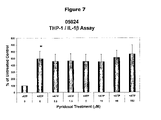
- FIG. 7 shows the effect of various concentrations of pyridoxal (0, 0.5, 1.5, 5, 15, 50, 150 ⁇ M) on ATP (5 mM) induced IL-1 ⁇ processing and release from PMA/LPS stimulated THP-1 cells.
- FIG. 8 shows the effect of various concentrations of pyridoxal phosphate (0, 0.5, 1.5, 5, 15, 50, 150 ⁇ M) on ATP (5 mM) induced IL-1 ⁇ processing and release from PMA/LPS stimulated THP-1 cells.
- FIG. 9 shows the effect of various concentrations of pyridoxamine (0, 0.5, 1.5, 5, 15, 50, 150 ⁇ M) on ATP (5 mM) induced IL-1 ⁇ processing and release from PMA/LPS stimulated THP-1 cells.
- FIG. 10 shows the effect of various concentrations of pyridoxamine phosphate (0, 0.5, 1.5, 5, 15, 50, 150 ⁇ M) on ATP (5 mM) induced IL-1 ⁇ processing and release from PMA/LPS stimulated THP-1 cells.
- P5P functions as a P2-purinergic receptor antagonist. Furthermore, the present inventor has now shown that P5P functions as an efficient P2X7 receptor antagonist.
- the present inventor has also found that P5P functions as an inhibitor of IL-1 ⁇ release or expression. Surprisingly, the present inventor has also found that this IL-1 ⁇ inhibition activity is not a characteristic of other Vitamin B6 related compounds, such as pyridoxal, pyridoxamine, and the like, and appears to be unique to P5P.
- vitamin B6 related compound means any vitamin B6 precursor, metabolite, derivative, or analogue thereof.
- examples of vitamin B6 related compounds include but are not limited to pyridoxal-5-phosphate (P5P), pyridoxal, pyridoxine, pyridoxine phosphate, pyridoxamine, and pyridoxamine phosphate.
- the invention also includes pharmaceutically acceptable salts of the compounds of the invention.
- the compounds of the invention are capable of forming both pharmaceutically acceptable acid addition and/or base salts.
- Pharmaceutically acceptable acid addition salts of the compounds of the invention include salts derived from nontoxic inorganic acids such as hydrochloric, nitric, phosphoric, sulfuric, hydrobromic, hydriodic, hydrofluoric, phosphorous, and the like, as well as the salts derived from nontoxic organic acids, such as aliphatic mono- and di-carboxylic acids, phenyl-substituted alkanoic acids, hydroxy alkanoic acids, alkanedioic acids, aromatic acids, aliphatic and aromatic sulfonic acids, etc.
- Such salts thus include sulfate, pyrosulfate, bisulfate, sulfite, bisulfite, nitrate, phosphate, monohydrogenphosphate, dihydrogenphosphate, metaphosphate, pyrophosphate, chloride, bromide, iodide, acetate, trifluoroacetate, propionate, caprylate, isobutyrate, oxalate, malonate, succinate, suberate, sebacate, fumarate, maleate, mandelate, benzoate, chlorobenzoate, methylbenzoate, dinitrobenzoate, phthalate, benzenesulfonate, toluenesulfonate, phenylacetate, citrate, lactate, maleate, tartrate, methanesulfonate, and the like.
- salts of amino acids such as arginate and the like and gluconate, galacturonate, n-methyl glucamine, etc. (see Berge et al, 1977).
- pharmaceutically acceptable salts also includes any pharmaceutically acceptable base salt including, but not limited to, amine salts, trialkyl amine salts and the like. Such salts can be formed quite readily by those skilled in the art using standard techniques.
- the acid addition salts of the basic compounds are prepared by contacting the free base form with a sufficient amount of the desired acid to produce the salt in the conventional manner.
- the free base form may be regenerated by contacting the salt form with a base and isolating the free base in the conventional manner.
- the free base forms differ from their respective salt forms somewhat in certain physical properties such as solubility in polar solvents, but otherwise the salts are equivalent to their respective free base for purposes of the present invention.
- Base salts are formed with metals or amines, such as alkali and alkaline earth metals or organic amines. Examples of metals used as cations include, but are not limited to, sodium, potassium, magnesium, and calcium. Examples of suitable amines are N,N′-dibenzylethylenediamine, chloroprocaine, choline, diethanolamine, ethylenediamine, N-methylglucamine, and procaine.
- Some of the compounds described herein contain one or more asymmetric centers and this may give raise to enantiomers, disasteriomers, and other stereroisomeric forms which may be defined in terms of absolute stereochemistry as (R)- or (S)-.
- the present invention is meant to include all such possible diasteriomers and enantiomers as well as their racemic and optically pure forms.
- Optically active (R)- and (S)-isomers may be prepared using chiral synthons or chiral reagents, or resolved using conventional techniques.
- the compounds described herein contain olefinic double bonds or other centres of geometric symmetry, and unless specified otherwise, it is intended that the compounds include both E and A geometric isomers. Likewise all tautomeric forms are intended to be included.
- a pharmaceutical composition comprises a pharmaceutically acceptable carrier and a compound.
- a pharmaceutically acceptable carrier includes, but is not limited to, physiological saline, ringers, phosphate buffered saline, and other carriers known in the art.
- compositions may also include additives, for example, stabilizers, antioxidants, colorants, excipients, binders, thickeners, dispersing agents, readsorpotion enhancers, buffers, surfactants, preservatives, emulsifiers, isotonizing agents, and diluents.
- additives for example, stabilizers, antioxidants, colorants, excipients, binders, thickeners, dispersing agents, readsorpotion enhancers, buffers, surfactants, preservatives, emulsifiers, isotonizing agents, and diluents.
- Pharmaceutically acceptable carriers and additives are chosen such that side effects from the pharmaceutical compound are minimized and the performance of the compound is not canceled or inhibited to such an extent that treatment is ineffective.
- compositions containing a pharmaceutically acceptable carrier and a compound suitable for use in methods of the invention are known to those of skill in the art. All methods may include the step of bringing the compound in association with the carrier and additives. In general, the formulations are prepared by uniformly and intimately bringing the compound of the invention into association with a liquid carrier or a finely divided solid carrier or both, and then, if necessary, shaping the product into the desired unit dosage form.
- P5P or a pharmaceutically acceptable salt thereof can be formulated into pharmaceutically acceptable unit dosage forms by conventional methods known to the pharmaceutical art.
- An effective but nontoxic quantity of the compound can be employed in treatment.
- the therapeutic compound of P5P or a pharmaceutically acceptable salt thereof can be administered in enteral unit dosage forms, such as, for example, tablets, sustained-release tablets, enteric coated tablets, capsules, sustained-release capsules, enteric coated capsules, pills, powders, granules, solutions, and the like. They can also be administered parenterally, such as, for example, subcutaneously, intramuscularly, intradermally, intramammarally, intravenously, and other administrative methods known in the art.
- P5P or a pharmaceutically acceptable salt thereof as described above may be administered alone in a unit dosage form, preferably the compound is administered in admixture as a pharmaceutical composition.
- an “effective” amount or a “therapeutically effective amount” of a drug or pharmacologically active agent is meant a nontoxic but sufficient amount of the drug or agent to provide the desired effect.
- the amount that is “effective” will vary from subject to subject, depending on the age and general condition of the individual, the particular active agent or agents, and the like. Thus, it is not always possible to specify an exact “effective amount.” However, an appropriate “effective” amount in any individual case may be determined by one of ordinary skill in the art using routine experimentation.
- a therapeutic compound can be administered, for example, after a disease state has been diagnosed.
- a therapeutic compound can also be administered before the onset of an event or disease state.
- a therapeutic compound as defined above can be formulated into a pharmaceutical composition for use in methods of the invention.
- the ordinarily skilled physician or veterinarian will readily determine and prescribe a therapeutically effective amount of P5P or a pharmaceutically acceptable salt thereof to modulate P2X7 dependent pathways, inflammation response, or extracellular levels of IL-1 ⁇ . In so proceeding, the physician or veterinarian could employ relatively low dosages at first, subsequently increasing the dose until a maximum response is obtained.
- the particular disease, the severity of the disease, the extent of cell death or stress, the compound to be administered, the route of administration, and the characteristics of the mammal to be treated, for example, age, sex, and weight can be considered in determining the effective amount to administer.
- a therapeutic amount is in a range of about 0.1-100 mg/kg of a patient's body weight, in another embodiment in the range of about 0.5-50 mg/kg of a patient's body weight, per daily dose.
- the compound can be administered for periods of short or long duration. Although some individual situations can warrant to the contrary, short-term administration, for example, 30 days or less, of doses larger than 25 mg/kg of a patient's body weight is chosen when compared to long-term administration. When long-term administration, for example, months or years, is utilized, the suggested dose generally should not exceed 25 mg/kg of a patient's body weight.
- a therapeutically effective amount of P5P or a pharmaceutically acceptable salt thereof for modulating P2X7 activity, inflammation response, or extracellular levels of IL-1 ⁇ , or for treating a disease, disorder or symptom in which P2X7, an inflammation response, or IL-1 ⁇ is implicated, can be administered prior to, concurrently with, or after the onset of the disease, disorder, or symptom.
- a therapeutic compound of the invention can be administered concurrently with or subsequent to compounds that are already known to be suitable for treating the disease state.
- Concurrent administration and “concurrently administering” as used herein includes administering a therapeutic compound and a known therapy in admixture such as, for example, in a pharmaceutical composition or in solution, or as separate components, such as, for example, separate pharmaceutical compositions or solutions administered consecutively, simultaneously, or at different times but not so distant in time such that the therapeutic compound and the known therapy cannot interact and a lower dosage amount of the active ingredient cannot be administered.
- P5P or a pharmaceutically acceptable salt thereof can be administered orally.
- Preferred oral dosage forms contain a therapeutically effective unit dose of each active agent, wherein the unit dose is suitable for a once-daily oral administration.
- the therapeutic effective unit dose of any of the active agents will depend on number of factors, which will be apparent to those skilled in the art and in light of the disclosure herein. In particular these factors include: the identity of the compound to be administered, the formulation, the route of administration employed, the patient's gender, age, and weight, and the severity of the condition being treated and the presence of concurrent illness affecting the gastrointestinal tract, the hepatobillary system and the renal system.
- compositions containing a pharmaceutically acceptable carrier and P5P or a pharmaceutically acceptable salt thereof are known to those of skill in the art.
- All methods can include the step of bringing the compound of the invention in association with the carrier and additives.
- the formulations generally are prepared by uniformly and intimately bringing the compound of the invention into association with a liquid carrier or a finely divided solid carrier or both, and then, if necessary, shaping the product into the desired unit dosage form.
- a solution of a therapeutic compound may be prepared by simply mixing P5P with a pharmaceutically acceptable solution, for example, buffered aqueous saline solution at a neutral or alkaline pH, at a temperature of at least room temperature and under sterile conditions.
- a pharmaceutically acceptable solution for example, buffered aqueous saline solution at a neutral or alkaline pH, at a temperature of at least room temperature and under sterile conditions.
- the P5P solution is prepared immediately prior to administration to the mammal.
- the prepared solution can be stored under sterile, refrigerated conditions.
- the P5P solution can be stored in containers suitable for protecting the P5P solution from the light, such as amber-colored vials or bottles.
- the compounds of the invention may be particularly useful in animal disorders (veterinarian indications), and particularly mammals.
- the invention further provides diagnostic and pharmaceutical packs and kits comprising one or more containers filled with one or more of the ingredients of the aforementioned compositions of the invention.
- Associated with such container(s) can be a notice in the form prescribed by a governmental agency regulating the manufacture, use or sale of pharmaceuticals or biological products, reflecting approval by the agency of the manufacture, use or sale of the product for human administration.
- P2X7 receptor has been found to be implicated in a wide variety of diseases, such as epithelial cancer, leukemia, brain tumors, spinal cord injury, tuberculosis, Alzheimer's Disease, neurodegenerative diseases generally, autosomal recessive polycystic kidney disease, diabetes, including type I diabetes, prostate cancer, osteoporosis, bone formation and resorption, rheumatoid arthritis, multiple sclerosis, myasthenia gravis, Crohn's disease, Septic shock, and periodontal infection.
- diseases such as epithelial cancer, leukemia, brain tumors, spinal cord injury, tuberculosis, Alzheimer's Disease, neurodegenerative diseases generally, autosomal recessive polycystic kidney disease, diabetes, including type I diabetes, prostate cancer, osteoporosis, bone formation and resorption, rheumatoid arthritis, multiple sclerosis, myasthenia gravis, Crohn's disease, Septic shock, and periodontal infection.
- ATP-mediated P2X7 dependent pathways such as apoptosis may be desirable in the prevention, maintenance, treatment or cure of these disease states.
- inhibitors of ATP-mediated P2X7 receptor-dependent pathways such as apoptosis would be desirable, as useful therapeutic agents for the prevention, maintenance, treatment or cure of diseases in which P2X7-dependent pathways such as apoptosis are a factor, for example, epithelial cancer, leukemia, brain tumors spinal cord injury, tuberculosis, Alzheimer's Disease, neurodegenerative diseases, autosomal recessive polycystic kidney disease, diabetes, including type I diabetes, prostate cancer, osteoporosis, bone formation and resorption, rheumatoid arthritis, multiple sclerosis, myasthenia gravis, Crohn's disease, Septic shock, and periodontal infection.
- P5P protects cells from ATP-mediated, P2X7 dependent apoptosis, an indicator of the shutting down of ATP-mediated, P2X7 dependent pathways.
- P5P can be used to inhibit the P2X7-dependent pathways, such as apoptosis, and can prevent the triggering of such pathways in diseases in which P2X7 has been implicated.
- P5P can therefore be used as effective treatments for the modulation of P2X7, and for diseases in which prevention of P2X7-dependent pathways such as apoptosis is desirable, such as epithelial cancer, leukemia, brain tumors spinal cord injury, tuberculosis, Alzheimer's Disease, neurodegenerative diseases, autosomal recessive polycystic kidney disease, diabetes, including type I diabetes, prostate cancer, osteoporosis, bone formation and resorption, rheumatoid arthritis, multiple sclerosis, myasthenia gravis, Crohn's disease, Septic shock, and periodontal infection.
- diseases in which prevention of P2X7-dependent pathways such as apoptosis is desirable, such as epithelial cancer, leukemia, brain tumors spinal cord injury, tuberculosis, Alzheimer's Disease, neurodegenerative diseases, autosomal recessive polycystic kidney disease, diabetes, including type I diabetes, prostate cancer, osteoporosis, bone formation and
- the inventors have also surmised that inhibition of ATP-mediated P2X7 pathways can result in a mediation of inflammation response, and a modulation of extracellular levels of IL-1 ⁇ .
- inhibitors of ATP-mediated P2X7 receptor-dependent pathways such as apoptosis would be desirable, as useful therapeutic agents for the prevention, maintenance, treatment or cure of diseases or disorders in which it is desired to reduce an inflammatory response, diseases in which IL-1 ⁇ is implicated, or diseases in which a reduction in levels of extracellular IL-1 ⁇ is desired, in order to prevent, maintain, treat or cure the disease.
- Such diseases or disorders include classic inflammatory diseases such as chronic wound, chronic inflammation, abscess formation, systemic inflammatory response syndrome, including sepsis, appendicitis, arteritis, arthritis, blepharitis, bronchiolitis, bronchitis, bursitis, cervicitis, cholangitis, cholecystitis, chorioamnionitis, colitis, conjunctivitis, cystitis, dacryoadenitis, dermatitis, dermatomyositis, encephalitis, endocarditis, endometritis, enteritis, enterocolitis, epicondylitis, epididymitis, fasciitis, fibrositis, gastritis, gastroenteritis, gingivitis, hepatitis, hidradenitis suppurativa, ileitis, ulceris, laryngitis, mastitis, meningitis, myelitis, myocardi
- Such diseases or disorders also include diseases and disorders in which high extracellular IL-1 ⁇ levels have been specifically implicated, such as inflammatory bowel disease, ulcerative colitis, Crohn's disease, Sjogren's Syndrome, bone erosion, neuroinflammatory diseases such as Alzheimer's disease, Parkinson's disease, and traumatic brain injury, as well as periodontal disease.
- P5P decreases processing and release of IL-1 ⁇ .
- P5P can be used to inhibit the P2X7-dependent release of IL-1 ⁇ , and the resultant inflammatory cascade.
- P5P can therefore be used as effective treatments for the modulation of IL-1 ⁇ , and the modulation of inflammation in general, and for diseases or disorders in which modulation of IL-1 ⁇ or modulation of inflammation is desirable, such as chronic wound, chronic inflammation, abscess formation, systemic inflammatory response syndrome, including sepsis, appendicitis, arteritis, arthritis, blepharitis, bronchiolitis, bronchitis, bursitis, cervicitis, cholangitis, cholecystitis, chorioamnionitis, colitis, conjunctivitis, cystitis, dacryoadenitis, dermatitis, dermatomyositis, encephalitis, endocarditis, endometritis, enteritis, enterocolitis, epicondylitis, epididymitis, fasciitis, fibrositis, gastritis, gastroenteritis, gingivitis, hepatitis, hidr
- B6 related compounds such as pyridoxine, pyridoxine phosphate, pyridoxal, pyridoxamine, and pyridoxamine phosphate were not effective in inhibiting IL-1 ⁇ processing and release.
- P5P is uniquely effective, among the B6 related compounds tested, in inhibiting the processing and release of IL-1 ⁇ .
- HEK 293 cells were stably transfected to express rat P2X7 receptor, using standard tissue culture techniques (Surprenant et al, 1996). The cell line was known to not express any of the other P2X receptors (Schachter et al, 1997). Stable expression of P2X7 was confirmed by Western blot (results not shown).
- HEK 293 cells and HEK 293 cells expressing rat P2X7 (HEK 293 P2X7 (rat) cells) were treated with ATP (Sigma, A9062) to determine the effects of ATP on the viability of the cells.
- Cell viability was determined using an MTT assay (Wen, 2003). Cells were treated with between 0 and 2 ⁇ M of ATP. MTT was added to the cell cultures 180 minutes after ATP treatment. The MTT assay was performed 60 minutes after the addition of MTT. Cell viability was directly correlatable to the absorbance of 550 nm light by the cell culture, with a higher absorbance meaning higher cell viability. The cell culture media was removed and the cells were solubilized using DMSO. The absorbance of the solubilized cells was read.
- FIG. 1 shows the cell viability in parent HEK 293 cells. Up to 2 ⁇ M of ATP treatment did not significantly affect the viability of parent cells.
- FIG. 2 shows the cell viability in HEK 293 P2X7 (rat) cells.
- Cells expressing rat P2X7 exhibited significant loss in cell viability starting at 0.4 ⁇ M of ATP treatment.
- This Example establishes the conditions required to trigger P2X7-dependent pathways, such as apoptosis, using, as an indicator, the killing of cells in an ATP-mediated, P2X7-dependent cell death.
- HEK 293 and HEK 293 P2X7 (rat) cells were treated with 0 to 50 ⁇ M of P5P, a vitamin B6 related compound, in sodium salt form (Chemistry Department, CanAm Bioresearch Inc.). Thirty minutes later, cells were treated with 0.4 ⁇ M ATP, to determine the effects of ATP on the viability of the MC-1 treated cells. Control cells received sham treatment of P5P, and sham treatment of ATP.
- MTT MTT assay
- FIG. 3 shows the cell viability in HEK 293 cells.
- Control cells received sham treatment of P5P and sham treatment of ATP.
- Cells in the “0” column received sham treatment of P5P but were treated with ATP.
- 0.4 ⁇ M of ATP treatment did not significantly affect the viability of HEK 293 cells.
- P5P treatment also did not have any significant effect on the viability of the cells.
- FIG. 4 shows the cell viability in HEK 293 P2X7 (rat) cells.
- rat P2X exhibited significant loss in cell viability when treated with ATP.
- Treatment of from 1.5 to 15 ⁇ M of P5P did not significantly affect this viability.
- cell viability was significantly improved. In fact, there was no significant difference between the viability of ATP treated cells that had been “innoculated” with P5P, and control cells.
- THP-1 non-adherent, monocytic cells were pre-treated with phorbol-12-myristate-13-acetate (PMA), which differentiated the cells into macrophage-like cells. Briefly, approximately 8 ⁇ 10 6 THP-1 cells were harvested, pelleted, resuspended in media to which PMA was added at a final concentration of 0.5 ⁇ M. The cells were incubated for 3 hours, then collected, washed, and plated.
- PMA phorbol-12-myristate-13-acetate
- LPS lipopolysaccharide
- test compound pyridoxine phosphate, pyridoxal, P5P, pyridoxamine, or pyridoxamine phosphate
- the test compound pyridoxine phosphate, pyridoxal, P5P, pyridoxamine, or pyridoxamine phosphate
- media were pretreated for 30 minutes, then the media was replaced with media containing 5 mM ATP as well as the test compound. Cells were exposed to ATP for one hour. Media was then collected and the amount of IL-1 ⁇ in the media was determined using a human IL-1 ⁇ ELISA (R&D Systems).
- FIGS. 5-10 show the effect of the test compound (pyridoxine, pyridoxine phosphate, pyridoxal, P5P, pyridoxamine, and pyridoxamine phosphate, respectively) at various concentrations (0, 0.5, 1.5, 5, 15, 50 and 150 ⁇ M on ATP (5 mM) induced IL-1 ⁇ processing and release from PMA/LPS stimulated THP-1 cells.
- IL-1 ⁇ levels were measured in the cell culture media by ELISA and the results are expressed as a percent of the untreated (baseline) controls.
- Examples 1-2 are repeated, substituting BzATP for ATP.
- BzATP is known to be a specific agonist of P2X7 receptors. This Example yields results consistent with Examples 1-4, further establishing that the pathway utilized is a P2X7 dependent pathway.
- Plasma samples are transferred to heparinized tubes and plasma is separated by centrifugation. Plasma is assayed for IL-1 ⁇ , [IL-6 and TNF- ⁇ ].
Landscapes
- Health & Medical Sciences (AREA)
- Life Sciences & Earth Sciences (AREA)
- Veterinary Medicine (AREA)
- Chemical & Material Sciences (AREA)
- Public Health (AREA)
- Medicinal Chemistry (AREA)
- General Health & Medical Sciences (AREA)
- Animal Behavior & Ethology (AREA)
- Pharmacology & Pharmacy (AREA)
- Epidemiology (AREA)
- Chemical Kinetics & Catalysis (AREA)
- Organic Chemistry (AREA)
- Nuclear Medicine, Radiotherapy & Molecular Imaging (AREA)
- General Chemical & Material Sciences (AREA)
- Rheumatology (AREA)
- Pain & Pain Management (AREA)
- Pharmaceuticals Containing Other Organic And Inorganic Compounds (AREA)
Abstract
P5P can be used as effective treatments for the modulation of P2X7, IL-1β, and inflammation response, and for diseases in which prevention of P2X7-dependent pathways or prevention of release of IL-1β is desirable, such as epithelial cancer, leukemia, brain tumors, spinal cord injury, tuberculosis, Alzheimer's Disease, neurodegenerative diseases, autosomal recessive polycystic kidney disease, diabetes, including type I diabetes, prostate cancer, and osteoporosis, bone formation and resorption.
Description
- This patent claims priority to U.S. provisional patent application 60/677,830, filed on May 5, 2005, which is incorporated herein in its entirety.
- Increasing evidence suggests that substantial amounts of ATP can accumulate in the extra-cellular space under a variety of physiological and pathophysiological conditions (Vassort, 2001, Harden et al, 1994, Dubyak et al, 1993). ATP acts on cells via P2-purinergic receptors to trigger a number of different responses including secretion, chemotaxis, proliferation, transcription factor activation and cytotoxicity (Di Virigilio et al, 2001). In addition, ATP can also be a powerful pro-apoptotic agent mediating its effects through the specific activation of P2X7 receptors (Apasov et al, 1995, Zoeteweij et al, 1996), one of seven known P2-purinergic receptors. When ATP binds to P2X7 receptors it facilitates a rapid bi-directional flux of cations thereby triggering depolarization, collapse of the Na+ and K+ gradients, and massive influx of Ca2+. Furthermore, continued stimulation of P2X7 receptors causes formation of large, nonspecific pores, allowing permeability of molecules up to 800 Da via recruitment of a distinct pore-forming moiety (Zanovello et al, 1990, Zheng et al, 1991, Surprenant et al, 1996).
- Vitamin B6 is an essential nutrient for human health. A metabolically active form of the vitamin is pyridoxal-5′-phosphate (P5P) and it is involved as a cofactor in many enzymatically controlled reactions including amino acid metabolism, glucose metabolism, heme synthesis, phospholipid synthesis and neurotransmitter synthesis. Several dietary compounds can function as a precursor to P5P. These include pyridoxine, pyridoxal, pyridoxamine as well as P5P itself. The term vitamin B6 usually refers to pyridoxine hydrochloride as this is the most commonly available vitamin B6 supplement available. However, Vitamin B6 related compounds include a variety of known analogues, metabolites, derivatives, or precursors, as described and discussed below.
- Several studies have shown that P5P inhibits the effects of extra-cellular ATP in a number of different tissue types including the heart (Want et al, 1999, CanAm Bioresearch, 2003) vagus nerve (Trezise et al, 1994), vas deferens (Trezise et al, 1994) and smooth muscle cells (Lal et al, 1993). Previously published studies have shown that P5P inhibits ATP induced calcium influx in freshly isolated adult rat cardiomyocytes (Wang et al, 1999, CanAm Bioresearch, 2003), and the positive inotropic effects of ATP on isolated perfused rat hearts (Wang et al, 1999, CanAm Bioresearch, 2003). In addition, several published studies have shown that P5P inhibits ATP-binding to the cardiac sacrolemma (Wang et al, 1999), vagus nerve (Trezise et al, 1994) and vas deferens (Trezise et al, 1994).
- There are currently seven known P2 purinergic receptors, P2X1, P2X2, P2X3, P2X4, P2X5, P2X6, and P2X7, which are known to form heteromeric complexes among themselves. ATP is known to act on P2X7. However, until now, it has not been known to what degree each P2-purinergic receptor is affected by P5P or any other vitamin B6 related compounds, and whether P2-purinergic receptors are affected by vitamin B6 related compounds in different manners. P5P has been shown to have some antagonist effect on P2 receptors, for example P2X7 receptor, but has been found to have significant species-dependent variability in its potency, which has raised questions of effectiveness and method of action (Hibell, 2001). The antagonist effect of P5P on P2X7 receptors is currently the basis of some uncertainty, as it is unclear whether it is a competitive, an irreversible, or a partially reversible antagonist (Michel, 2000).
- High activity of P2X7 receptor has been found to be implicated in epithelial cancer (Coutinho-Silva et al, 2005), leukemia (Zhang et al, 2004), brain tumors (Guo et al, 2004), spinal cord injury (Wang, 2004), tuberculosis (Mancino et al, 2001), Alzheimer's Disease (Parvathenani et al, 2003), neurodegenerative diseases generally (LeFeuvre et al, 2002), autosomal recessive polycystic kidney disease (Hillman et al, 2004), diabetes, including type I diabetes (Elliott and Higgins, 2004), prostate cancer (Slater et al, 2004), osteoporosis, bone formation and resorption (Ke et al, 2003), rheumatoid arthritis, multiple sclerosis, myasthenia gravis, Crohn's disease, Septic shock, and periodontal infection (Mühl et al., 2003).
- Interleukin-1 (IL-1) is an important inflammatory mediator produced in abundance by activated monocytes and macrophages (Dinarello, 1996). Inflammation and inflammation response is implicated in a large variety of diseases. An inflammation response, in turn, can trigger a wound healing response. However, chronic inflammation, or an inappropriate inflammatory response can lead to the formation of a chronic wound. Chronic inflammation may also lead to tissue damage through the excess release of reactive oxygen species. Inappropriate inflammatory response may also lead to abscess formation. Systemic inflammatory response syndrome, such as sepsis, occurs when inflammation overwhelms the whole organism. Inflammation of organs has been implicated in such diseases or disorders as appendicitis (inflammation of the appendix), arteritis (inflammation of the arteries), arthritis (inflammation of the joints), blepharitis (inflammation of the eyelids), bronchiolitis (inflammation of the bronchioles), bronchitis (inflammation of the bronchi), bursitis (inflammation of the bursa), cervicitis (inflammation of the cervix), cholangitis (inflammation of the bile duct), cholecystitis (inflammation of the gallbladder), chorioamnionitis (inflammation of the amniotic sac), colitis (inflammation of the colon), conjunctivitis (inflammation of the conjunctiva), cystitis (inflammation of the bladder), dacryoadenitis (inflammation of the lacrimal gland), dermatitis (inflammation of the skin), dermatomyositis (inflammation of the skin and muscles), encephalitis (inflammation of the brain), endocarditis (inflammation of the endocardium), endometritis (inflammation of the endometrium), enteritis (inflammation of the small intestine), enterocolitis (inflammation of the small and large intestines), epicondylitis (inflammation of the epicondyle), epididymitis (inflammation of the epididymis), fasciitis (inflammation of the fascia), fibrositis (inflammation of fibrous connective tissue), gastritis (inflammation of the stomach), gastroenteritis (inflammation of the stomach and small intestine), gingivitis (inflammation of the gingiva), hepatitis (inflammation of the liver), hidradenitis suppurativa (inflammation of the apocrine sweat glands), ileitis (inflammation of the ileum), iritis (inflammation of the iris), laryngitis (inflammation of the larynx), mastitis (inflammation of the mammary gland), meningitis (inflammation of the meninges), myelitis (inflammation of the spinal cord), myocarditis (inflammation of the myocardium), myositis (inflammation of the muscle), nephritis (inflammation of the kidney), omphalitis (inflammation of the umbilical cord), oophoritis (inflammation of the ovaries), orchitis (inflammation of the testicle), osteitis (inflammation of the bone), otitis (inflammation of the ear), pancreatitis (inflammation of the pancreas), parotitis (inflammation of the parotid gland), pericarditis (inflammation of the pericardium), peritonitis (inflammation of the peritoneum), pharyngitis (inflammation of the pharynx), pleuritis (inflammation of the pleura), phlebitis (inflammation of the veins), pneumonia/pneumonitis (inflammation of the lungs), proctitis (inflammation of the rectum), prostatitis (inflammation of the prostate), rhinitis (inflammation of the nasal lining), salpingitis (inflammation of the fallopian tubes), sinusitis (inflammation of the sinus of the skull), stomatitis (inflammation of the mouth), synovitis (inflammation of the synovial membrane), tendonitis (inflammation of the tendon), tonsillitis (inflammation of the tonsils), uveitis (inflammation of the uvea), vaginitis (inflammation of the vaginal mucosa), vasculitis (inflammation of the blood vessels or lymph vessels), and vulvitis (inflammation of the vulva).
- IL-1 biological activity is derived from two related but distinct polypeptides, IL-1α and IL-1β (Dinarello, 1996 and 1998). IL-1β activity has been correlated to ATP levels, as discussed below. Interestingly, lipopolysaccharide/ATP-induced secretion of IL-1β ex vivo has been found to be completely suppressed in blood cultures obtained from P2X7 knockout mice, however, the relationship between P2X7 and IL-1β is poorly understood (Muhl, 2003).
- Human IL-1 is synthesized as a 31 kDa pro-cytokine that is incompetent to bind to the
type 1 IL-1 receptor (Mosely et al, 1987). To gain activity, pro-IL-1β must be cleaved by caspase-1 to yield a 17 kDa carboxyl terminus-derived polypeptide (Thornberry et al, 1992; Ceretti et al, 1992). IL-1β is released from monocytes and macrophages via an atypical secretory mechanism that does not involve the endoplasmic reticulum and Golgi complex (Rubartelli et al, 1990). Release of IL-1β from cells stimulated to produce this cytokine is generally an inefficient process. The majority of newly synthesized cytokine molecules remains cell associated and/or are degraded (Hogquist et al, 1991; Perregaux et al, 1998; Chin et al, 1993). To promote the efficient proteolytic cleavage of pro-IL-1 and release of the 17 kDa mature peptide, the cytokine-producing cells must be treated with a secretion stimulus such as adenosine triphosphate (ATP; Perregaux et al, 1998; Laliberte et al, 1999; Grahames et al, 1999). - Extracellular ATP has been found to markedly accelerate the rate of processing and release of IL-1β in both monocytes and macrophages that have been primed with lipopolysacchamides (LPS; Laliberte et al, 1999; Grahames et al, 1999; Perregaux et al, 1998). The ATP induced changes are mediated via the activation of P2X7 purinergic receptors (Grahames et al, 1999; Labassi et al, 2002), which, in turn, accelerate the processing and release of IL-1β (Perregaux et al, 1992; Perregaux et al, 1994; Perregaux et al, 1998).
- The present invention is directed to a novel use for pyridoxal-5-phosphate (P5P).
- More particularly, the present invention is directed to a method of modulating P2X7 comprising administering a therapeutically effective amount of P5P or a pharmaceutically acceptable salt thereof to a patient in need thereof.
- Another aspect of the present invention is the method wherein the therapeutically effective amount of pyridoxal-5′-phosphate is between 0.5 and 50 mg/kg body weight.
- Another aspect of the present invention is the method wherein the therapeutically effective amount of pyridoxal-5′-phosphate is between 1 and 15 mg/kg body weight.
- Another aspect of the present invention is the method wherein the patient is human.
- Another aspect of the present invention is the method wherein the patient has a disease or metabolic disorder.
- Another aspect of the present invention is the method wherein the metabolic disorder is epithelial cancer, leukemia, brain tumor, spinal cord injury, tuberculosis, Alzheimer's Disease, neurodegenerative disease, autosomal recessive polycystic kidney disease, diabetes, prostate cancer, osteoporosis, autoimmune disease, rheumatoid arthritis, multiple sclerosis, myasthenia gravis, Crohn's disease, Septic shock, or periodontal infection.
- Another aspect of the present invention is the method wherein the autoimmune disease is selected from lupus erythematosis and rheumatoid arthritis.
- Another aspect of the present invention is the method wherein the diabetes is type I diabetes.
- Another aspect of the present invention is directed to a method of controlling or mediating inflammation response comprising administering a therapeutically effective amount of P5P or a pharmaceutically acceptable salt thereof to a patient in need thereof.
- Another aspect of the present invention is directed to a method of decreasing or mediating IL-1β levels in a patient in need thereof comprising administering a therapeutically effective amount of P5P or a pharmaceutically acceptable salt thereof to the patient.
- Another aspect of the present invention is the method wherein the disease or metabolic disorder is an inflammatory disease or disorder.
- Another aspect of the present invention is the method wherein the disease or metabolic disorder is a disease or disorder characterized by having IL-1β levels that are higher than normal, either locally or systemically.
- Another aspect of the present invention is the method wherein the inflammatory disease or disorder is a chronic wound, chronic inflammation, abscess formation, systemic inflammatory response syndrome, including sepsis, appendicitis, arteritis, arthritis, blepharitis, bronchiolitis, bronchitis, bursitis, cervicitis, cholangitis, cholecystitis, chorioamnionitis, colitis, conjunctivitis, cystitis, dacryoadenitis, dermatitis, dermatomyositis, encephalitis, endocarditis, endometritis, enteritis, enterocolitis, epicondylitis, epididymitis, fasciitis, fibrositis, gastritis, gastroenteritis, gingivitis, hepatitis, hidradenitis suppurativa, ileitis, iritis, laryngitis, mastitis, meningitis, myelitis, myocarditis, myositis, nephritis, omphalitis, oophoritis, orchitis, osteitis, otitis, pancreatitis, parotitis, pericarditis, peritonitis, pharyngitis, pleuritis, phlebitis, pneumonia/pneumonitis, proctitis, prostatitis, rhinitis, salpingitis, sinusitis, stomatitis, synovitis, tendonitis, tonsillitis, uveitis, vaginitis, vasculitis, or vulvitis.
- Another aspect of the present invention is the method wherein the inflammatory disease or disorder is one specifically characterized by increased levels of IL-1β. Such diseases or disorders include inflammatory bowel disease, ulcerative colitis, Crohn's disease, Sjogren's Syndrome, bone erosion, neuroinflammatory diseases such as Alzheimer's disease, Parkinson's disease, and traumatic brain injury, as well as periodontal disease.
- Another aspect of the present invention is the use of a therapeutically effective amount of P5P or a pharmaceutically acceptable salt thereof for the treatment or prevention of a metabolic disorder selected from the group consisting of: epithelial cancer, leukemia, brain tumor, spinal cord injury, tuberculosis, Alzheimer's Disease, neurodegenerative disease, autosomal recessive polycystic kidney disease, diabetes, prostate cancer, osteoporosis, autoimmune disease, rheumatoid arthritis, multiple sclerosis, myasthenia gravis, Crohn's disease, Septic shock, and periodontal infection.
- Another aspect of the present invention is the use of a therapeutically effective amount of P5P or a pharmaceutically acceptable salt thereof for the treatment or prevention of an inflammatory disease or disorder selected from the group consisting of: chronic wound, chronic inflammation, abscess formation, systemic inflammatory response syndrome, including sepsis, appendicitis, arteritis, arthritis, blepharitis, bronchiolitis, bronchitis, bursitis, cervicitis, cholangitis, cholecystitis, chorioamnionitis, colitis, conjunctivitis, cystitis, dacryoadenitis, dermatitis, dermatomyositis, encephalitis, endocarditis, endometritis, enteritis, enterocolitis, epicondylitis, epididymitis, fasciitis, fibrositis, gastritis, gastroenteritis, gingivitis, hepatitis, hidradenitis suppurativa, ileitis, iritis, laryngitis, mastitis, meningitis, myelitis, myocarditis, myositis, nephritis, omphalitis, oophoritis, orchitis, osteitis, otitis, pancreatitis, parotitis, pericarditis, peritonitis, pharyngitis, pleuritis, phlebitis, pneumonia/pneumonitis, proctitis, prostatitis, rhinitis, salpingitis, sinusitis, stomatitis, synovitis, tendonitis, tonsillitis, uveitis, vaginitis, vasculitis, or vulvitis.
- Another aspect of the present invention is the use of a therapeutically effective amount of P5P or a pharmaceutically acceptable salt thereof for the treatment or prevention of an inflammatory disease characterized by higher than normal levels of IL-1β selected from the group consisting of inflammatory bowel disease, ulcerative colitis, Crohn's disease, Sjogren's Syndrome, bone erosion, neuroinflammatory diseases (such as Alzheimer's disease, Parkinson's disease, and traumatic brain injury), and periodontal disease.
- Another aspect of the present invention is the use wherein the therapeutically effective amount of pyridoxal-5′-phosphate is between 0.5 and 50 mg/kg body weight.
- Another aspect of the present invention is the use wherein the therapeutically effective amount of pyridoxal-5′-phosphate is between 1 and 15 mg/kg body weight.
- Another aspect of the present invention is a kit comprising P5P and instructions for the use of the same for treatment of a disease or disorder described above.
- Another aspect of the present invention is the use of P5P in the preparation of a medicament for the treatment of any of the diseases or disorders described above.
-
FIG. 1 shows cell viability inparent HEK 293 cells treated with varying concentrations of ATP. -
FIG. 2 shows cell viability inHEK 293 cells stably expressing rat P2X7, treated with varying concentrations of ATP. -
FIG. 3 shows cell viability inparent HEK 293 cells, treated with 2 μM of ATP 30 minutes following treatment with varying concentrations of P5P. -
FIG. 4 shows cell viability inHEK 293 cells stably expressing rat P2X7, treated with 0.4 μM of ATP 30 minutes following treatment with varying concentrations of P5P. -
FIG. 5 shows the effect of various concentrations of pyridoxine (0, 0.5, 1.5, 5, 15, 50, 150 μM) on ATP (5 mM) induced IL-1β processing and release from PMA/LPS stimulated THP-1 cells. -
FIG. 6 shows the effect of various concentrations of pyridoxine phosphate (0, 0.5, 1.5, 5, 15, 50, 150 μM) on ATP (5 mM) induced IL-1β processing and release from PMA/LPS stimulated THP-1 cells. -
FIG. 7 shows the effect of various concentrations of pyridoxal (0, 0.5, 1.5, 5, 15, 50, 150 μM) on ATP (5 mM) induced IL-1β processing and release from PMA/LPS stimulated THP-1 cells. -
FIG. 8 shows the effect of various concentrations of pyridoxal phosphate (0, 0.5, 1.5, 5, 15, 50, 150 μM) on ATP (5 mM) induced IL-1β processing and release from PMA/LPS stimulated THP-1 cells. -
FIG. 9 shows the effect of various concentrations of pyridoxamine (0, 0.5, 1.5, 5, 15, 50, 150 μM) on ATP (5 mM) induced IL-1β processing and release from PMA/LPS stimulated THP-1 cells. -
FIG. 10 shows the effect of various concentrations of pyridoxamine phosphate (0, 0.5, 1.5, 5, 15, 50, 150 μM) on ATP (5 mM) induced IL-1β processing and release from PMA/LPS stimulated THP-1 cells. - The present inventor has shown that P5P functions as a P2-purinergic receptor antagonist. Furthermore, the present inventor has now shown that P5P functions as an efficient P2X7 receptor antagonist.
- The present inventor has also found that P5P functions as an inhibitor of IL-1β release or expression. Surprisingly, the present inventor has also found that this IL-1β inhibition activity is not a characteristic of other Vitamin B6 related compounds, such as pyridoxal, pyridoxamine, and the like, and appears to be unique to P5P.
- As used herein, “vitamin B6 related compound”, means any vitamin B6 precursor, metabolite, derivative, or analogue thereof. Examples of vitamin B6 related compounds include but are not limited to pyridoxal-5-phosphate (P5P), pyridoxal, pyridoxine, pyridoxine phosphate, pyridoxamine, and pyridoxamine phosphate.
- The invention also includes pharmaceutically acceptable salts of the compounds of the invention. The compounds of the invention are capable of forming both pharmaceutically acceptable acid addition and/or base salts. Pharmaceutically acceptable acid addition salts of the compounds of the invention include salts derived from nontoxic inorganic acids such as hydrochloric, nitric, phosphoric, sulfuric, hydrobromic, hydriodic, hydrofluoric, phosphorous, and the like, as well as the salts derived from nontoxic organic acids, such as aliphatic mono- and di-carboxylic acids, phenyl-substituted alkanoic acids, hydroxy alkanoic acids, alkanedioic acids, aromatic acids, aliphatic and aromatic sulfonic acids, etc. Such salts thus include sulfate, pyrosulfate, bisulfate, sulfite, bisulfite, nitrate, phosphate, monohydrogenphosphate, dihydrogenphosphate, metaphosphate, pyrophosphate, chloride, bromide, iodide, acetate, trifluoroacetate, propionate, caprylate, isobutyrate, oxalate, malonate, succinate, suberate, sebacate, fumarate, maleate, mandelate, benzoate, chlorobenzoate, methylbenzoate, dinitrobenzoate, phthalate, benzenesulfonate, toluenesulfonate, phenylacetate, citrate, lactate, maleate, tartrate, methanesulfonate, and the like. Also contemplated are salts of amino acids such as arginate and the like and gluconate, galacturonate, n-methyl glucamine, etc. (see Berge et al, 1977). The term “pharmaceutically acceptable salts” also includes any pharmaceutically acceptable base salt including, but not limited to, amine salts, trialkyl amine salts and the like. Such salts can be formed quite readily by those skilled in the art using standard techniques.
- The acid addition salts of the basic compounds are prepared by contacting the free base form with a sufficient amount of the desired acid to produce the salt in the conventional manner. The free base form may be regenerated by contacting the salt form with a base and isolating the free base in the conventional manner. The free base forms differ from their respective salt forms somewhat in certain physical properties such as solubility in polar solvents, but otherwise the salts are equivalent to their respective free base for purposes of the present invention. Base salts are formed with metals or amines, such as alkali and alkaline earth metals or organic amines. Examples of metals used as cations include, but are not limited to, sodium, potassium, magnesium, and calcium. Examples of suitable amines are N,N′-dibenzylethylenediamine, chloroprocaine, choline, diethanolamine, ethylenediamine, N-methylglucamine, and procaine.
- Some of the compounds described herein contain one or more asymmetric centers and this may give raise to enantiomers, disasteriomers, and other stereroisomeric forms which may be defined in terms of absolute stereochemistry as (R)- or (S)-. The present invention is meant to include all such possible diasteriomers and enantiomers as well as their racemic and optically pure forms. Optically active (R)- and (S)-isomers may be prepared using chiral synthons or chiral reagents, or resolved using conventional techniques. When the compounds described herein contain olefinic double bonds or other centres of geometric symmetry, and unless specified otherwise, it is intended that the compounds include both E and A geometric isomers. Likewise all tautomeric forms are intended to be included.
- Although it is possible for a compound suitable for use in methods of the invention to be administered alone in a unit dosage form, preferably the compound is administered in admixture as a pharmaceutical composition suitable for use in methods of the invention. A pharmaceutical composition comprises a pharmaceutically acceptable carrier and a compound. A pharmaceutically acceptable carrier includes, but is not limited to, physiological saline, ringers, phosphate buffered saline, and other carriers known in the art. Pharmaceutical compositions may also include additives, for example, stabilizers, antioxidants, colorants, excipients, binders, thickeners, dispersing agents, readsorpotion enhancers, buffers, surfactants, preservatives, emulsifiers, isotonizing agents, and diluents. Pharmaceutically acceptable carriers and additives are chosen such that side effects from the pharmaceutical compound are minimized and the performance of the compound is not canceled or inhibited to such an extent that treatment is ineffective.
- Methods of preparing pharmaceutical compositions containing a pharmaceutically acceptable carrier and a compound suitable for use in methods of the invention are known to those of skill in the art. All methods may include the step of bringing the compound in association with the carrier and additives. In general, the formulations are prepared by uniformly and intimately bringing the compound of the invention into association with a liquid carrier or a finely divided solid carrier or both, and then, if necessary, shaping the product into the desired unit dosage form.
- A physician or veterinarian of ordinary skill can readily determine a subject who is or may be suffering from a disease state that could implicate P2X7 dependent pathways such as P2X7 dependent apoptosis, inflammation response, or increased extracellular levels of IL-1β. Regardless of the route of administration selected, P5P or a pharmaceutically acceptable salt thereof can be formulated into pharmaceutically acceptable unit dosage forms by conventional methods known to the pharmaceutical art. An effective but nontoxic quantity of the compound can be employed in treatment.
- The therapeutic compound of P5P or a pharmaceutically acceptable salt thereof can be administered in enteral unit dosage forms, such as, for example, tablets, sustained-release tablets, enteric coated tablets, capsules, sustained-release capsules, enteric coated capsules, pills, powders, granules, solutions, and the like. They can also be administered parenterally, such as, for example, subcutaneously, intramuscularly, intradermally, intramammarally, intravenously, and other administrative methods known in the art.
- Although it is possible for P5P or a pharmaceutically acceptable salt thereof as described above to be administered alone in a unit dosage form, preferably the compound is administered in admixture as a pharmaceutical composition.
- By an “effective” amount or a “therapeutically effective amount” of a drug or pharmacologically active agent is meant a nontoxic but sufficient amount of the drug or agent to provide the desired effect. The amount that is “effective” will vary from subject to subject, depending on the age and general condition of the individual, the particular active agent or agents, and the like. Thus, it is not always possible to specify an exact “effective amount.” However, an appropriate “effective” amount in any individual case may be determined by one of ordinary skill in the art using routine experimentation.
- A therapeutic compound can be administered, for example, after a disease state has been diagnosed. A therapeutic compound can also be administered before the onset of an event or disease state.
- A therapeutic compound as defined above can be formulated into a pharmaceutical composition for use in methods of the invention.
- The ordinarily skilled physician or veterinarian will readily determine and prescribe a therapeutically effective amount of P5P or a pharmaceutically acceptable salt thereof to modulate P2X7 dependent pathways, inflammation response, or extracellular levels of IL-1β. In so proceeding, the physician or veterinarian could employ relatively low dosages at first, subsequently increasing the dose until a maximum response is obtained. Typically, the particular disease, the severity of the disease, the extent of cell death or stress, the compound to be administered, the route of administration, and the characteristics of the mammal to be treated, for example, age, sex, and weight, can be considered in determining the effective amount to administer. In one embodiment of the invention, a therapeutic amount is in a range of about 0.1-100 mg/kg of a patient's body weight, in another embodiment in the range of about 0.5-50 mg/kg of a patient's body weight, per daily dose. The compound can be administered for periods of short or long duration. Although some individual situations can warrant to the contrary, short-term administration, for example, 30 days or less, of doses larger than 25 mg/kg of a patient's body weight is chosen when compared to long-term administration. When long-term administration, for example, months or years, is utilized, the suggested dose generally should not exceed 25 mg/kg of a patient's body weight.
- A therapeutically effective amount of P5P or a pharmaceutically acceptable salt thereof for modulating P2X7 activity, inflammation response, or extracellular levels of IL-1β, or for treating a disease, disorder or symptom in which P2X7, an inflammation response, or IL-1β is implicated, can be administered prior to, concurrently with, or after the onset of the disease, disorder, or symptom.
- A therapeutic compound of the invention can be administered concurrently with or subsequent to compounds that are already known to be suitable for treating the disease state. “Concurrent administration” and “concurrently administering” as used herein includes administering a therapeutic compound and a known therapy in admixture such as, for example, in a pharmaceutical composition or in solution, or as separate components, such as, for example, separate pharmaceutical compositions or solutions administered consecutively, simultaneously, or at different times but not so distant in time such that the therapeutic compound and the known therapy cannot interact and a lower dosage amount of the active ingredient cannot be administered.
- It is to be understood that this invention is not limited to specific dosage forms, carriers, or the like, and as such may vary. It is also to be understood that the terminology used herein is for the purpose of describing particular embodiments only, and is not intended to be limiting.
- P5P or a pharmaceutically acceptable salt thereof can be administered orally. Preferred oral dosage forms contain a therapeutically effective unit dose of each active agent, wherein the unit dose is suitable for a once-daily oral administration. The therapeutic effective unit dose of any of the active agents will depend on number of factors, which will be apparent to those skilled in the art and in light of the disclosure herein. In particular these factors include: the identity of the compound to be administered, the formulation, the route of administration employed, the patient's gender, age, and weight, and the severity of the condition being treated and the presence of concurrent illness affecting the gastrointestinal tract, the hepatobillary system and the renal system. Methods for determining dosage and toxicity are well known in the art with studies generally beginning in animals and then in humans if no significant animal toxicity is observed. The appropriateness of the dosage can be assessed by monitoring triglyceride levels. Where the dose provided does not cause triglyceride levels to decline to normal or tolerable levels, following at least 2 to 4 weeks of treatment, the dose can be increased.
- Methods of preparing pharmaceutical compositions containing a pharmaceutically acceptable carrier and P5P or a pharmaceutically acceptable salt thereof are known to those of skill in the art.
- All methods can include the step of bringing the compound of the invention in association with the carrier and additives. The formulations generally are prepared by uniformly and intimately bringing the compound of the invention into association with a liquid carrier or a finely divided solid carrier or both, and then, if necessary, shaping the product into the desired unit dosage form.
- Generally, a solution of a therapeutic compound, for example P5P, may be prepared by simply mixing P5P with a pharmaceutically acceptable solution, for example, buffered aqueous saline solution at a neutral or alkaline pH, at a temperature of at least room temperature and under sterile conditions. In one embodiment, the P5P solution is prepared immediately prior to administration to the mammal. However, if the P5P solution is prepared at a time more than immediately prior to the administration to the mammal, the prepared solution can be stored under sterile, refrigerated conditions. Furthermore, the P5P solution can be stored in containers suitable for protecting the P5P solution from the light, such as amber-colored vials or bottles.
- The compounds of the invention may be particularly useful in animal disorders (veterinarian indications), and particularly mammals.
- The invention further provides diagnostic and pharmaceutical packs and kits comprising one or more containers filled with one or more of the ingredients of the aforementioned compositions of the invention. Associated with such container(s) can be a notice in the form prescribed by a governmental agency regulating the manufacture, use or sale of pharmaceuticals or biological products, reflecting approval by the agency of the manufacture, use or sale of the product for human administration.
- As previously discussed, high activity of P2X7 receptor has been found to be implicated in a wide variety of diseases, such as epithelial cancer, leukemia, brain tumors, spinal cord injury, tuberculosis, Alzheimer's Disease, neurodegenerative diseases generally, autosomal recessive polycystic kidney disease, diabetes, including type I diabetes, prostate cancer, osteoporosis, bone formation and resorption, rheumatoid arthritis, multiple sclerosis, myasthenia gravis, Crohn's disease, Septic shock, and periodontal infection. This suggested to the Inventors that P2X7 receptor may be involved in these disease states.
- The inventors have surmised that therefore inhibition of ATP-mediated P2X7 dependent pathways such as apoptosis may be desirable in the prevention, maintenance, treatment or cure of these disease states. Thus, inhibitors of ATP-mediated P2X7 receptor-dependent pathways such as apoptosis would be desirable, as useful therapeutic agents for the prevention, maintenance, treatment or cure of diseases in which P2X7-dependent pathways such as apoptosis are a factor, for example, epithelial cancer, leukemia, brain tumors spinal cord injury, tuberculosis, Alzheimer's Disease, neurodegenerative diseases, autosomal recessive polycystic kidney disease, diabetes, including type I diabetes, prostate cancer, osteoporosis, bone formation and resorption, rheumatoid arthritis, multiple sclerosis, myasthenia gravis, Crohn's disease, Septic shock, and periodontal infection.
- Surprisingly, the present inventors have, in a series of elegant experiments, discovered that P5P protects cells from ATP-mediated, P2X7 dependent apoptosis, an indicator of the shutting down of ATP-mediated, P2X7 dependent pathways. Thus P5P can be used to inhibit the P2X7-dependent pathways, such as apoptosis, and can prevent the triggering of such pathways in diseases in which P2X7 has been implicated. P5P can therefore be used as effective treatments for the modulation of P2X7, and for diseases in which prevention of P2X7-dependent pathways such as apoptosis is desirable, such as epithelial cancer, leukemia, brain tumors spinal cord injury, tuberculosis, Alzheimer's Disease, neurodegenerative diseases, autosomal recessive polycystic kidney disease, diabetes, including type I diabetes, prostate cancer, osteoporosis, bone formation and resorption, rheumatoid arthritis, multiple sclerosis, myasthenia gravis, Crohn's disease, Septic shock, and periodontal infection.
- The inventors have also surmised that inhibition of ATP-mediated P2X7 pathways can result in a mediation of inflammation response, and a modulation of extracellular levels of IL-1β. Thus, inhibitors of ATP-mediated P2X7 receptor-dependent pathways such as apoptosis would be desirable, as useful therapeutic agents for the prevention, maintenance, treatment or cure of diseases or disorders in which it is desired to reduce an inflammatory response, diseases in which IL-1β is implicated, or diseases in which a reduction in levels of extracellular IL-1β is desired, in order to prevent, maintain, treat or cure the disease. Such diseases or disorders include classic inflammatory diseases such as chronic wound, chronic inflammation, abscess formation, systemic inflammatory response syndrome, including sepsis, appendicitis, arteritis, arthritis, blepharitis, bronchiolitis, bronchitis, bursitis, cervicitis, cholangitis, cholecystitis, chorioamnionitis, colitis, conjunctivitis, cystitis, dacryoadenitis, dermatitis, dermatomyositis, encephalitis, endocarditis, endometritis, enteritis, enterocolitis, epicondylitis, epididymitis, fasciitis, fibrositis, gastritis, gastroenteritis, gingivitis, hepatitis, hidradenitis suppurativa, ileitis, iritis, laryngitis, mastitis, meningitis, myelitis, myocarditis, myositis, nephritis, omphalitis, oophoritis, orchitis, osteitis, otitis, pancreatitis, parotitis, pericarditis, peritonitis, pharyngitis, pleuritis, phlebitis, pneumonia/pneumonitis, proctitis, prostatitis, rhinitis, salpingitis, sinusitis, stomatitis, synovitis, tendonitis, tonsillitis, uveitis, vaginitis, vasculitis, or vulvitis. Such diseases or disorders also include diseases and disorders in which high extracellular IL-1β levels have been specifically implicated, such as inflammatory bowel disease, ulcerative colitis, Crohn's disease, Sjogren's Syndrome, bone erosion, neuroinflammatory diseases such as Alzheimer's disease, Parkinson's disease, and traumatic brain injury, as well as periodontal disease.
- Surprisingly, the present inventors have, in a series of elegant experiments, discovered that P5P decreases processing and release of IL-1β. Thus P5P can be used to inhibit the P2X7-dependent release of IL-1β, and the resultant inflammatory cascade. P5P can therefore be used as effective treatments for the modulation of IL-1β, and the modulation of inflammation in general, and for diseases or disorders in which modulation of IL-1β or modulation of inflammation is desirable, such as chronic wound, chronic inflammation, abscess formation, systemic inflammatory response syndrome, including sepsis, appendicitis, arteritis, arthritis, blepharitis, bronchiolitis, bronchitis, bursitis, cervicitis, cholangitis, cholecystitis, chorioamnionitis, colitis, conjunctivitis, cystitis, dacryoadenitis, dermatitis, dermatomyositis, encephalitis, endocarditis, endometritis, enteritis, enterocolitis, epicondylitis, epididymitis, fasciitis, fibrositis, gastritis, gastroenteritis, gingivitis, hepatitis, hidradenitis suppurativa, ileitis, iritis, laryngitis, mastitis, meningitis, myelitis, myocarditis, myositis, nephritis, omphalitis, oophoritis, orchitis, osteitis, otitis, pancreatitis, parotitis, pericarditis, peritonitis, pharyngitis, pleuritis, phlebitis, pneumonia/pneumonitis, proctitis, prostatitis, rhinitis, salpingitis, sinusitis, stomatitis, synovitis, tendonitis, tonsillitis, uveitis, vaginitis, vasculitis, vulvitis, and diseases and disorders in which IL-1β has specifically been implicated, such as inflammatory bowel disease, ulcerative colitis, Crohn's disease, Sjogren's Syndrome, bone erosion, neuroinflammatory diseases such as Alzheimer's disease, Parkinson's disease, and traumatic brain injury, as well as periodontal disease.
- Surprisingly and unexpectedly, the present inventors have found that most tested B6 related compounds, such as pyridoxine, pyridoxine phosphate, pyridoxal, pyridoxamine, and pyridoxamine phosphate were not effective in inhibiting IL-1β processing and release. A surprising discovery is that P5P is uniquely effective, among the B6 related compounds tested, in inhibiting the processing and release of IL-1β.
- This invention will be further characterized by the following examples. These examples are not meant to limit the scope of the invention, which has been fully set forth in the foregoing description. Variations within the scope of the invention will be apparent to those skilled in the art.
-
HEK 293 cells were stably transfected to express rat P2X7 receptor, using standard tissue culture techniques (Surprenant et al, 1996). The cell line was known to not express any of the other P2X receptors (Schachter et al, 1997). Stable expression of P2X7 was confirmed by Western blot (results not shown). - Parent (HEK 293) cells, and
HEK 293 cells expressing rat P2X7 (HEK 293 P2X7 (rat) cells) were treated with ATP (Sigma, A9062) to determine the effects of ATP on the viability of the cells. Cell viability was determined using an MTT assay (Wen, 2003). Cells were treated with between 0 and 2 μM of ATP. MTT was added to the cell cultures 180 minutes after ATP treatment. The MTT assay was performed 60 minutes after the addition of MTT. Cell viability was directly correlatable to the absorbance of 550 nm light by the cell culture, with a higher absorbance meaning higher cell viability. The cell culture media was removed and the cells were solubilized using DMSO. The absorbance of the solubilized cells was read. -
FIG. 1 shows the cell viability inparent HEK 293 cells. Up to 2 μM of ATP treatment did not significantly affect the viability of parent cells. -
FIG. 2 shows the cell viability inHEK 293 P2X7 (rat) cells. Cells expressing rat P2X7 exhibited significant loss in cell viability starting at 0.4 μM of ATP treatment. - This Example establishes the conditions required to trigger P2X7-dependent pathways, such as apoptosis, using, as an indicator, the killing of cells in an ATP-mediated, P2X7-dependent cell death.
-
HEK 293 andHEK 293 P2X7 (rat) cells were treated with 0 to 50 μM of P5P, a vitamin B6 related compound, in sodium salt form (Chemistry Department, CanAm Bioresearch Inc.). Thirty minutes later, cells were treated with 0.4 μM ATP, to determine the effects of ATP on the viability of the MC-1 treated cells. Control cells received sham treatment of P5P, and sham treatment of ATP. - Cell viability was determined using an MTT assay [16]. MTT was added to the cell cultures 180 minutes after ATP treatment. The MTT assay was performed 60 minutes after the addition of MTT. Cell viability was directly correlatable to the absorbance of 550 nm light by the cell culture, with a higher absorbance meaning higher cell viability.
-
FIG. 3 shows the cell viability inHEK 293 cells. Control cells received sham treatment of P5P and sham treatment of ATP. Cells in the “0” column received sham treatment of P5P but were treated with ATP. As seen inFIG. 1 , 0.4 μM of ATP treatment did not significantly affect the viability ofHEK 293 cells. As such, P5P treatment also did not have any significant effect on the viability of the cells. -
FIG. 4 shows the cell viability inHEK 293 P2X7 (rat) cells. As consistent withFIG. 2 , cells expressing rat P2X exhibited significant loss in cell viability when treated with ATP. Treatment of from 1.5 to 15 μM of P5P did not significantly affect this viability. However, when treated with 50 μM of P5P, half an hour before the ATP treatment, cell viability was significantly improved. In fact, there was no significant difference between the viability of ATP treated cells that had been “innoculated” with P5P, and control cells. - This Example establishes that P5P treatment at sufficient concentration protects cells from ATP-mediated, P2X7 dependent, pathways such as apoptosis.
- THP-1 non-adherent, monocytic cells (ATCC) were pre-treated with phorbol-12-myristate-13-acetate (PMA), which differentiated the cells into macrophage-like cells. Briefly, approximately 8×10⁶ THP-1 cells were harvested, pelleted, resuspended in media to which PMA was added at a final concentration of 0.5 μM. The cells were incubated for 3 hours, then collected, washed, and plated.
- The next day, the cells were treated with lipopolysaccharide (LPS) to stimulate IL-1β production. Briefly, the media was removed and replaced with RPI media+10% fetal calf serum containing 100 ng/ml of LPS. Cells were incubated for an additional 24 hours.
- Media was then changed, and the test compound (pyridoxine phosphate, pyridoxal, P5P, pyridoxamine, or pyridoxamine phosphate) was added to a final concentration of 0, 0.5, 1.5, 5, 15, 50 or 150 μM. Cells were pretreated for 30 minutes, then the media was replaced with media containing 5 mM ATP as well as the test compound. Cells were exposed to ATP for one hour. Media was then collected and the amount of IL-1β in the media was determined using a human IL-1β ELISA (R&D Systems).
- Results were expressed as the mean±sem. Statistical analysis was performed using bulk t-test (Medistats).
FIGS. 5-10 show the effect of the test compound (pyridoxine, pyridoxine phosphate, pyridoxal, P5P, pyridoxamine, and pyridoxamine phosphate, respectively) at various concentrations (0, 0.5, 1.5, 5, 15, 50 and 150 μM on ATP (5 mM) induced IL-1β processing and release from PMA/LPS stimulated THP-1 cells. IL-1β levels were measured in the cell culture media by ELISA and the results are expressed as a percent of the untreated (baseline) controls. - The results showed that treatment of PMA/LPS primed THP-1 cells with ATP caused a significant increase in the processing and release of IL-1β into the culture media (#=P<0.05, ##=P<0.01 and ###=P<0.001). Treatment of the cells with pyridoxine, pyridoxine phosphate, pyridoxal, pyridoxamine, or pyridoxamine phosphate had no significant effect on the ATP-induced processing and release of IL-1β at any of the concentrations tested (*=P<0.05, **=P<0.01 and ***=P<0.001). Treatment of the cells with P5P, however, significantly inhibited the ATP induced processing and release of IL-1β (*=p<0.05,**=P<0.01 and ***=P<0.001).
- Examples 1-2 are repeated, substituting BzATP for ATP. BzATP is known to be a specific agonist of P2X7 receptors. This Example yields results consistent with Examples 1-4, further establishing that the pathway utilized is a P2X7 dependent pathway.
- Sprague-Dawley rats weighing approximately 300 g are treated with 1, 3, or 10 mg/kg P5P (or a saline control). Thirty minutes later (t=30), the animals are given a 50 μg/kg intraperitoneal injection of LPS (or a saline control). Temperature of the animals is measured, and a blood sample is collected at 240 minutes post-treatment (t=240).
- Blood samples are transferred to heparinized tubes and plasma is separated by centrifugation. Plasma is assayed for IL-1β, [IL-6 and TNF-α].
- The experiment confirms that LPS treatment in vivo causes a significant increase in the processing and release of IL-1β [IL-6 and TNF-α] into the plasma. In vivo treatment with P5P significantly inhibits processing and release of IL-1β in vivo.
-
- Apasov et al (1995) Immunol Rev 146:5-19.
- Berge et al., (1977) J Pharmaceutical Science 66:1-19
- CanAm Bioresearch (2003) MC1-PCe-02-03-01-47.
- CanAm Bioresearch (2003) MC1-PCe-08-03-01-360.
- Ceretti D P et al (1992) Science 256:97-100.
- Chessell I P et al (1998) Br J Pharmacol 124:1314-1320.
- Chin J and Kostura M J (1993) J Immunol 151:5574-5585.
- Coutinho-Silva R. et al. (2005) Blood 87: 2095-2147.
- Dinarello C A (1998) Int Rev Immunol 16:457-499.
- Di Virigilio et al (2001) Blood 97:587-600.
- Dubyak G R et al (1993) Am I Physiol 265:577-606.
- Elliott J I and Higgins C F (2004) Diabetes 53(8):2012-7
- Grahames C B A et al (1999) Br J Pharm 127:1915-1921.
- Gudipaty L et al (2003) Am J Physiol Cell Physiol 285:286-299.
- Guo L H et al (2004) J. Neuroimmunol 152(1-2):67-72
- Harden T K et al (1994) Annu Rev Pharmacol Toxicol 35:541-579.
- Hibell et al., (2001) J. Pharmacol. Exp. Therap. 296:947-957
- Hillman K A et al (2004) Biochem Biophys Res Commun 322(2):434-9
- Hogquist K A et al (1991) J Immunol 147:2181-2186.
- Humphreys B D et al (1998) Mol Pharmacol 54:22-32.
- Ke H Z et al 2003 Mol Endocrinol 17(7) 1356-67
- Labasi J M et al (2002) J Immunol 168:6436-6445.
- Lal K J et al (1993) Clin Exper Hypertension 15:489-500.
- Laliberte R E, et al (1999) J Biol Chem 274:36944-36951.
- LeFeuvre R et al (2002) Eur J Pharmacol 447(2-3) 261-9
- Mancino G et al (2001) J Biol Regul Homeost Agents 15(3) 286-93
- Michel A. D. et al (2000) British J. Pharmacol. 130, 513-520
- Mosely B, et al., (1987) J Biol Chem 262:2941-2944.
- Muhl et al (2003) Eur J Pharmacol 482(325-328)
- Murgia M et al (1993) J Biol Chem 268:8199-8203
- Parvathenani L K et al (2003) J Biol Chem 278(15):13309-17
- Perregaux D G, et al (1992) J Immunol 149:1294-1303.
- Perregaux D G and Gabel C A (1994) J Biol Chem 269:15195-15203.
- Perregaux D G and Gabel C A (1998) J Immunol 160:2469-2477.
- Rutartelli A, et al (1990) EMBO J 9:1503-1510.
- Schachter J B et al (1997) Neuropharm 36:1181-1187.
- Slater M et al (2004) Histopathology 44(3)206-15
- Surprenant et al (1996) Science 272:735-738.
- Thornberry N A, et al (1992) Nature 356:768-774.
- Trezise D J et al (1994) Eup 3 Pharm 259:295-300.
- Vassort G (2001) 81:767-807.
- Verhoef P A et al (2003) J Immunol 170:5728-5738.
- Virginio C et al (1999) J Physiol 519:335-346.
- Wang X (2004) Nat Med 10(8): 821-7
- Wang X et al (1999) Moll Cell Cardiol 31:1063-1072.
- Wen L T et al (2003) Mol Pharmacol 63:706-713.
- Zanovello et al (1990) J Immunol 145:1545-1550.
- Zhang X J et al (2004) Leuk Res 28(12):1313-22
- Zheng et al (1991) J Cell Biol 112:279-288.
- Zoeteweij et al (1996) Hepatology 23:858-865.
Claims (50)
1. A method of modulating P2X7 in a patient in need thereof comprising administering a therapeutically effective amount of pyridoxal-5-phosphate or a pharmaceutically acceptable salt thereof to the patient.
2. A method of controlling or mediating inflammation response in a patient in need thereof comprising administering a therapeutically effective amount of pyridoxal-5-phosphate or a pharmaceutically acceptable salt thereof to the patient.
3. A method of decreasing or mediating IL-1β levels in a patient in need thereof comprising administering a therapeutically effective amount of pyridoxal-5-phosphate or a pharmaceutically acceptable salt thereof to the patient.
4. The method according to claim 3 , wherein the therapeutically effective amount of pyridoxal-5′-phosphate is between 0.5 and 50 mg/kg body weight.
5. The method according to claim 4 , wherein the therapeutically effective amount of pyridoxal-5′-phosphate is between 1 and 15 mg/kg body weight.
6. The method according to claim 3 , wherein the patient is human.
7. The method according to claim 3 , wherein the patient has a disease or metabolic disorder.
8. The method according to claim 7 , wherein the disease or metabolic disorder is selected from the group consisting of: epithelial cancer, leukemia, brain tumor, spinal cord injury, tuberculosis, Alzheimer's Disease, neurodegenerative disease, autosomal recessive polycystic kidney disease, diabetes, prostate cancer, osteoporosis, autoimmune disease, rheumatoid arthritis, multiple sclerosis, myasthenia gravis, Crohn's disease, septic shock, and periodontal infection.
9. The method according to claim 8 , wherein the autoimmune disease is selected from lupus erythematosis and rheumatoid arthritis.
10. (canceled)
11. The method of claim 7 wherein the disease or metabolic disorder is an inflammatory disease or disorder.
12. The method of claim 11 wherein the inflammatory disease or disorder is selected from the group consisting of: chronic wound, chronic inflammation, abscess formation, systemic inflammatory response syndrome, including sepsis, appendicitis, arteritis, arthritis, blepharitis, bronchiolitis, bronchitis, bursitis, cervicitis, cholangitis, cholecystitis, chorioamnionitis, colitis, conjunctivitis, cystitis, dacryoadenitis, dermatitis, dermatomyositis, encephalitis, endocarditis, endometritis, enteritis, enterocolitis, epicondylitis, epididymitis, fasciitis, fibrositis, gastritis, gastroenteritis, gingivitis, hepatitis, hidradenitis suppurativa, ileitis, iritis, laryngitis, mastitis, meningitis, myelitis, myocarditis, myositis, nephritis, omphalitis, oophoritis, orchitis, osteitis, otitis, pancreatitis, parotitis, pericarditis, peritonitis, pharyngitis, pleuritis, phlebitis, pneumonia/pneumonitis, proctitis, prostatitis, rhinitis, salpingitis, sinusitis, stomatitis, synovitis, tendonitis, tonsillitis, uveitis, vaginitis, vasculitis, and vulvitis.
13. The method of claim 7 wherein patient has higher systemtic or local IL-1β levels than a patient without the disease or metabolic disorder.
14. The method of claim 13 wherein the disease or metabolic disorder is selected from the group consisting of: inflammatory bowel disease, ulcerative colitis, Crohn's disease, Sjogren's Syndrome, bone erosion, neuroinflammatory diseases and periodontal disease.
15. The method of claim 14 wherein the neuroinflammatory disease is selected from the group consisting of: Alzheimer's disease, Parkinson's disease, and traumatic brain injury.
16. A method of treating a disease or metabolic disorder selected from the group consisting of: epithelial cancer, leukemia, brain tumor, spinal cord injury, tuberculosis, neurodegenerative disease, autosomal recessive polycystic kidney disease, diabetes, prostate cancer, osteoporosis, autoimmune disease, rheumatoid arthritis, multiple sclerosis, myasthenia gravis, Crohn's disease, septic shock, periodontal infection, chronic wound, chronic inflammation, abscess formation, systemic inflammatory response syndrome, sepsis, appendicitis, arteritis, arthritis, blepharitis, bronchiolitis, bronchitis, bursitis, cervicitis, cholangitis, cholecystitis, chorioamnionitis, colitis, conjunctivitis, cystitis, dacryoadenitis, dermatitis, dermatomyositis, encephalitis, endocarditis, endometritis, enteritis, enterocolitis, epicondylitis, epididymitis, fasciitis, fibrositis, gastritis, gastroenteritis, gingivitis, hepatitis, hidradenitis suppurativa, ileitis, iritis, laryngitis, mastitis, meningitis, myelitis, myocarditis, myositis, nephritis, omphalitis, oophoritis, orchitis, osteitis, otitis, pancreatitis, parotitis, pericarditis, peritonitis, pharyngitis, pleuritis, phlebitis, pneumonia/pneumonitis, proctitis, prostatitis, rhinitis, salpingitis, sinusitis, stomatitis, synovitis, tendonitis, tonsillitis, uveitis, vaginitis, vasculitis, vulvitis, inflammatory bowel disease, ulcerative colitis, Crohn's disease, Sjogren's Syndrome, bone erosion, neuroinflammatory diseases and periodontal disease in a patient in need thereof, comprising administering a therapeutically effective amount of pyridoxal-5-phosphate or a pharmaceutically acceptable salt thereof to the patient.
17. The method of claim 16 wherein the autoimmune disease is selected from lupus erythematosis and rheumatoid arthritis.
18-22. (canceled)
23. The method of claim 16 wherein the neuroinflammatory disease is selected from the group consisting of: Alzheimer's disease, Parkinson's disease and traumatic brain injury.
24. The method of claim 16 , wherein the therapeutically effective amount of pyridoxal-5′-phosphate is about 0.5 to about 50 mg/kg body weight.
25. The use according to claim 24 , wherein the therapeutically effective amount of pyridoxal-5′-phosphate is about 1 to about 15 mg/kg body weight.
26. A kit comprising:
a) a therapeutically effective amount of pyridoxal-5-phosphate; and
b) instructions for the administration of the pyridoxal-5-phosphate for the treatment or prevention of a disease or disorder treatable by modulating P2X7.
27. The kit of claim 26 wherein the disease or disorder is selected from the group consisting of: epithelial cancer, leukemia, brain tumor, spinal cord injury, tuberculosis, neurodegenerative disease, autosomal recessive polycystic kidney disease, prostate cancer, osteoporosis, autoimmune disease, rheumatoid arthritis, multiple sclerosis, myasthenia gravis, Crohn's disease, Septic shock, periodontal infection, chronic wound, chronic inflammation, abscess formation, systemic inflammatory response syndrome, including sepsis, appendicitis, arteritis, arthritis, blepharitis, bronchiolitis, bronchitis, bursitis, cervicitis, cholangitis, cholecystitis, chorioamnionitis, colitis, conjunctivitis, cystitis, dacryoadenitis, dermatitis, dermatomyositis, encephalitis, endocarditis, endometritis, enteritis, enterocolitis, epicondylitis, epididymitis, fasciitis, fibrositis, gastritis, gastroenteritis, gingivitis, hepatitis, hidradenitis suppurativa, ileitis, iritis, laryngitis, mastitis, meningitis, myelitis, myocarditis, myositis, nephritis, omphalitis, oophoritis, orchitis, osteitis, otitis, pancreatitis, parotitis, pericarditis, peritonitis, pharyngitis, pleuritis, phlebitis, pneumonia/pneumonitis, proctitis, prostatitis, rhinitis, salpingitis, sinusitis, stomatitis, synovitis, tendonitis, tonsillitis, uveitis, vaginitis, vasculitis, vulvitis, inflammatory bowel disease, ulcerative colitis, Crohn's disease, Sjogren's Syndrome, bone erosion, neuroinflammatory disease, and periodontal disease.
28. The kit of claim 27 wherein the autoimmune disease is selected from the group consisting of lupus erythematosis and rheumatoid arthritis.
29. (canceled)
30. The kit of claim 27 wherein the neuroinflammatory disease is selected from the group consisting of Alzheimer's disease, Parkinson's disease and traumatic brain injury.
31-34. (canceled)
35. The method according to claim 1 , wherein the therapeutically effective amount of pyridoxal-5′-phosphate is about 0.5 to about 50 mg/kg body weight.
36. The method according to claim 2 , wherein the therapeutically effective amount of pyridoxal-5′-phosphate is about 1 to about 15 mg/kg body weight.
37. The method according to claim 1 , wherein the patient is human.
38. The method according to claim 1 , wherein the patient has a disease or metabolic disorder.
39. The method according to claim 5 , wherein the disease or metabolic disorder is selected from the group consisting of: epithelial cancer, leukemia, brain tumor, spinal cord injury, tuberculosis, Alzheimer's Disease, neurodegenerative disease, autosomal recessive polycystic kidney disease, prostate cancer, osteoporosis, autoimmune disease, rheumatoid arthritis, multiple sclerosis, myasthenia gravis, Crohn's disease, Septic shock, and periodontal infection.
40. The method according to claim 6 , wherein the autoimmune disease is lupus erythematosis or rheumatoid arthritis.
41. The method of claim 5 , wherein the disease or metabolic disorder is an inflammatory disease or disorder.
42. The method of claim 8 , wherein the inflammatory disease or disorder is selected from the group consisting of: chronic wound, chronic inflammation, abscess formation, systemic inflammatory response syndrome, sepsis, appendicitis, arteritis, arthritis, blepharitis, bronchiolitis, bronchitis, bursitis, cervicitis, cholangitis, cholecystitis, chorioamnionitis, colitis, conjunctivitis, cystitis, dacryoadenitis, dermatitis, dermatomyositis, encephalitis, endocarditis, endometritis, enteritis, enterocolitis, epicondylitis, epididymitis, fasciitis, fibrositis, gastritis, gastroenteritis, gingivitis, hepatitis, hidradenitis suppurativa, ileitis, iritis, laryngitis, mastitis, meningitis, myelitis, myocarditis, myositis, nephritis, omphalitis, oophoritis, orchitis, osteitis, otitis, pancreatitis, parotitis, pericarditis, peritonitis, pharyngitis, pleuritis, phlebitis, pneumonia/pneumonitis, proctitis, prostatitis, rhinitis, salpingitis, sinusitis, stomatitis, synovitis, tendonitis, tonsillitis, uveitis, vaginitis, vasculitis, and vulvitis.
43. The method of claim 5 , wherein the patient has higher systemic or local IL-1β levels than a patient without the disease or metabolic disorder.
44. The method of claim 10 , wherein the disease or metabolic disorder is selected from the group consisting of: inflammatory bowel disease, ulcerative colitis, Crohn's disease, Sjogren's Syndrome, bone erosion, neuroinflammatory diseases and periodontal disease.
45. The method of claim 11 , wherein the neuroinflammatory disease is selected from the group consisting of: Alzheimer's disease, Parkinson's disease, and traumatic brain injury.
46. The method according to claim 13 , wherein the therapeutically effective amount of pyridoxal-5′-phosphate is about 0.5 to about 50 mg/kg body weight.
47. The method according to claim 14 , wherein the therapeutically effective amount of pyridoxal-5′-phosphate is about 1 to about 15 mg/kg body weight.
48. The method according to claim 13 , wherein the patient is human.
49. The method according to claim 13 , wherein the patient has a disease or metabolic disorder.
50. The method according to claim 17 , wherein the disease or metabolic disorder is selected from the group consisting of: epithelial cancer, leukemia, brain tumor, spinal cord injury, tuberculosis, Alzheimer's Disease, neurodegenerative disease, autosomal recessive polycystic kidney disease, prostate cancer, osteoporosis, autoimmune disease, rheumatoid arthritis, multiple sclerosis, myasthenia gravis, Crohn's disease, Septic shock, and periodontal infection.
51. The method according to claim 18, wherein the autoimmune disease is lupus erythematosis or rheumatoid arthritis.
52. The method of claim 17 , wherein the disease or metabolic disorder is an inflammatory disease or disorder.
53. The method of claim 20, wherein the inflammatory disease or disorder is selected from the group consisting of: chronic wound, chronic inflammation, abscess formation, systemic inflammatory response syndrome, sepsis, appendicitis, arteritis, arthritis, blepharitis, bronchiolitis, bronchitis, bursitis, cervicitis, cholangitis, cholecystitis, chorioamnionitis, colitis, conjunctivitis, cystitis, dacryoadenitis, dermatitis, dermatomyositis, encephalitis, endocarditis, endometritis, enteritis, enterocolitis, epicondylitis, epididymitis, fasciitis, fibrositis, gastritis, gastroenteritis, gingivitis, hepatitis, hidradenitis suppurativa, ileitis, iritis, laryngitis, mastitis, meningitis, myelitis, myocarditis, myositis, nephritis, omphalitis, oophoritis, orchitis, osteitis, otitis, pancreatitis, parotitis, pericarditis, peritonitis, pharyngitis, pleuritis, phlebitis, pneumonia/pneumonitis, proctitis, prostatitis, rhinitis, salpingitis, sinusitis, stomatitis, synovitis, tendonitis, tonsillitis, uveitis, vaginitis, vasculitis, and vulvitis.
54. The method of claim 17 , wherein the patient has higher systemic or local IL-1β levels than a patient without the disease or metabolic disorder.
55. The method of claim 22, wherein the disease or metabolic disorder is selected from the group consisting of: inflammatory bowel disease, ulcerative colitis, Crohn's disease, Sjogren's Syndrome, bone erosion, neuroinflammatory diseases and periodontal disease.
56. The method of claim 23 , wherein the neuroinflammatory disease is selected from the group consisting of: Alzheimer's disease, Parkinson's disease, and traumatic brain injury.
57. The method according to claim 37 , wherein the patient is human.
Priority Applications (1)
| Application Number | Priority Date | Filing Date | Title |
|---|---|---|---|
| US11/913,654 US20090215727A1 (en) | 2005-05-05 | 2006-05-05 | Inhibition of atp-mediated, p2x7 dependent pathways by pyridoxal-5-phosphate and vitamin b6 related compounds |
Applications Claiming Priority (3)
| Application Number | Priority Date | Filing Date | Title |
|---|---|---|---|
| US67783005P | 2005-05-05 | 2005-05-05 | |
| PCT/CA2006/000717 WO2006136004A1 (en) | 2005-05-05 | 2006-05-05 | Inhibition of atp-mediated, p2x7 dependent pathways by pyridoxal-5-phosphaste and vitamin b6 related compounds |
| US11/913,654 US20090215727A1 (en) | 2005-05-05 | 2006-05-05 | Inhibition of atp-mediated, p2x7 dependent pathways by pyridoxal-5-phosphate and vitamin b6 related compounds |
Publications (1)
| Publication Number | Publication Date |
|---|---|
| US20090215727A1 true US20090215727A1 (en) | 2009-08-27 |
Family
ID=37570051
Family Applications (1)
| Application Number | Title | Priority Date | Filing Date |
|---|---|---|---|
| US11/913,654 Abandoned US20090215727A1 (en) | 2005-05-05 | 2006-05-05 | Inhibition of atp-mediated, p2x7 dependent pathways by pyridoxal-5-phosphate and vitamin b6 related compounds |
Country Status (4)
| Country | Link |
|---|---|
| US (1) | US20090215727A1 (en) |
| EP (1) | EP1885376A1 (en) |
| CA (1) | CA2607541A1 (en) |
| WO (1) | WO2006136004A1 (en) |
Cited By (17)
| Publication number | Priority date | Publication date | Assignee | Title |
|---|---|---|---|---|
| US20110110959A1 (en) * | 2008-07-04 | 2011-05-12 | Julian Alexander Barden | Anti-p2x7 peptides and epitopes |
| WO2011072012A2 (en) | 2009-12-08 | 2011-06-16 | Vanderbilt University | Improved methods and compositions for vein harvest and autografting |
| US8658385B2 (en) | 2007-09-14 | 2014-02-25 | Biosceptre International Limited | Purinergic (P2X) receptors in extra-cellular body fluid |
| US8709425B2 (en) | 2001-01-17 | 2014-04-29 | Biosceptre International Limited | Antibodies to non-functional P2X7 receptor |
| US8835609B2 (en) | 2009-12-24 | 2014-09-16 | Biosceptre International Limited | Antigen binding sites to non-functional oligomeric P2X7 receptors and methods of use thereof |
| US9127059B2 (en) | 2009-08-20 | 2015-09-08 | Biosceptre International Limited | Anti P2X7 receptor antibodies and fragments thereof |
| US9181320B2 (en) | 2007-09-14 | 2015-11-10 | Biosceptre International Limited | Peptides for generating an antibody selectively binding to a non-ATP-binding P2X7 receptor but not to an ATP-binding P2X7 receptor |
| US20150335627A1 (en) * | 2012-08-01 | 2015-11-26 | Maoxing Yue | Pharmaceutical composition for promoting nerve injury restoration and application thereof |
| US20160030327A1 (en) * | 2013-03-12 | 2016-02-04 | Emily A. STEIN | Dental composition comprising chelator and base |
| US9562094B2 (en) | 2010-09-10 | 2017-02-07 | Biosceptre (Aust) Pty Ltd | Companion animal treatments |
| US9566318B2 (en) | 2011-07-01 | 2017-02-14 | Biosceptre (Aust) Pty Ltd | Combination therapy |
| WO2017070660A1 (en) * | 2015-10-23 | 2017-04-27 | Baylor College Of Medicine | Targeting p2 purinergic receptors to treat hepatocellular carcinoma (hcc) |
| WO2019074898A1 (en) * | 2017-10-09 | 2019-04-18 | Alsatech, Inc. | Disaggregation of alpha-synuclein with small molecules |
| WO2019079691A1 (en) * | 2017-10-19 | 2019-04-25 | Jean Jiang | Small molecules for the treatment of autoimmune disorders |
| CN111184720A (en) * | 2020-02-10 | 2020-05-22 | 广州医科大学附属第二医院 | Use of vitamin B6 for preparing medicine for treating leukemia |
| CN115040513A (en) * | 2022-06-24 | 2022-09-13 | 合肥瀚微生物科技有限公司 | Application of vitamin B6 and its preparation in the preparation of medicines for preventing and/or treating infection or inflammation-related diseases |
| WO2024060834A1 (en) * | 2022-09-19 | 2024-03-28 | 重庆医科大学附属第一医院 | Use of fluoropyridoxal in preparing medicament against cancer |
Families Citing this family (12)
| Publication number | Priority date | Publication date | Assignee | Title |
|---|---|---|---|---|
| US7442689B2 (en) | 2000-02-29 | 2008-10-28 | Medicure International Inc. | Cardioprotective phosphonates and malonates |
| US7459468B2 (en) | 2004-10-28 | 2008-12-02 | Medicure International, Inc. | Aryl sulfonic pyridoxines as antiplatelet agents |
| BRPI0910034B1 (en) | 2008-03-25 | 2022-02-08 | Affectis Pharmaceuticals Ag | P2X7R ANTAGONISTS AND PHARMACEUTICAL COMPOSITIONS THAT COMPRISE THEM |
| JP2010143859A (en) * | 2008-12-19 | 2010-07-01 | Kowa Co | Medicine for preventing and/or treating uvea flame |
| AU2010237302A1 (en) | 2009-04-14 | 2011-12-01 | Affectis Pharmaceuticals Ag | Novel P2X7R antagonists and their use |
| EP2542670A2 (en) | 2010-03-05 | 2013-01-09 | President and Fellows of Harvard College | Induced dendritic cell compositions and uses thereof |
| SG185400A1 (en) | 2010-05-14 | 2012-12-28 | Affectis Pharmaceuticals Ag | Novel methods for the preparation of p2x7r antagonists |
| JP2013249256A (en) * | 2010-09-15 | 2013-12-12 | Astellas Pharma Inc | Fat liver disease therapeutic agent |
| WO2012110190A1 (en) | 2011-02-17 | 2012-08-23 | Affectis Pharmaceuticals Ag | Novel p2x7r antagonists and their use |
| WO2012163792A1 (en) | 2011-05-27 | 2012-12-06 | Affectis Pharmaceuticals Ag | Novel p2x7r antagonists and their use |
| WO2012163456A1 (en) | 2011-05-27 | 2012-12-06 | Affectis Pharmaceuticals Ag | Novel p2x7r antagonists and their use |
| DK3242680T3 (en) * | 2015-01-08 | 2021-11-01 | Selectimmune Pharma Ab | INTERLEUKIN-1 RECEPTOR ANTAGONIST FOR USE IN THE TREATMENT OF CYSTITIS |
Family Cites Families (1)
| Publication number | Priority date | Publication date | Assignee | Title |
|---|---|---|---|---|
| JP2006523206A (en) * | 2003-03-27 | 2006-10-12 | メディキュア インコーポレーテッド | Regulation of cell death |
-
2006
- 2006-05-05 CA CA002607541A patent/CA2607541A1/en not_active Abandoned
- 2006-05-05 EP EP06790515A patent/EP1885376A1/en not_active Withdrawn
- 2006-05-05 WO PCT/CA2006/000717 patent/WO2006136004A1/en not_active Ceased
- 2006-05-05 US US11/913,654 patent/US20090215727A1/en not_active Abandoned
Cited By (38)
| Publication number | Priority date | Publication date | Assignee | Title |
|---|---|---|---|---|
| US10450380B2 (en) | 2001-01-17 | 2019-10-22 | Biosceptre (Aust) Pty Ltd | Polypeptide immunogen for generating an antibody to non-functional P2X7 receptor |
| US8709425B2 (en) | 2001-01-17 | 2014-04-29 | Biosceptre International Limited | Antibodies to non-functional P2X7 receptor |
| US9663584B2 (en) | 2001-01-17 | 2017-05-30 | Biosceptre (Aust) Pty Ltd | Antibodies to non-functional P2X7 receptor |
| US9944701B2 (en) | 2007-09-14 | 2018-04-17 | Biosceptre (Aust) Pty Ltd | Methods of treating cancer with antibodies that bind P2X7 receptors |
| US10597451B2 (en) | 2007-09-14 | 2020-03-24 | Biosceptre (Aust) Pty Ltd | Methods of treating cancer with a P2X7 peptide |
| US9181320B2 (en) | 2007-09-14 | 2015-11-10 | Biosceptre International Limited | Peptides for generating an antibody selectively binding to a non-ATP-binding P2X7 receptor but not to an ATP-binding P2X7 receptor |
| US8658385B2 (en) | 2007-09-14 | 2014-02-25 | Biosceptre International Limited | Purinergic (P2X) receptors in extra-cellular body fluid |
| US9328155B2 (en) | 2008-07-04 | 2016-05-03 | Biosceptre (Aust) Pty Ltd | Peptides for inducing antibodies to a non-functional P2X7 receptor |
| US8597643B2 (en) | 2008-07-04 | 2013-12-03 | Biosceptre International Limited | Antibodies for binding to non-functional P2X7 receptors in trimeric form |
| US20110110959A1 (en) * | 2008-07-04 | 2011-05-12 | Julian Alexander Barden | Anti-p2x7 peptides and epitopes |
| US10238716B2 (en) | 2008-07-04 | 2019-03-26 | Biosceptre (Aust) Pty Ltd | Anti-P2X7 peptides and epitopes |
| US9127059B2 (en) | 2009-08-20 | 2015-09-08 | Biosceptre International Limited | Anti P2X7 receptor antibodies and fragments thereof |
| US10531654B2 (en) | 2009-12-08 | 2020-01-14 | Vanderbilt University | Methods and compositions for vein harvest and autografting |
| US8691556B2 (en) | 2009-12-08 | 2014-04-08 | Vanderbilt University | Methods and compositions for vein harvest and autografting |
| WO2011072012A2 (en) | 2009-12-08 | 2011-06-16 | Vanderbilt University | Improved methods and compositions for vein harvest and autografting |
| US20110190572A1 (en) * | 2009-12-08 | 2011-08-04 | Vanderbilt University | Methods and Compositions for Vein Harvest and Autografting |
| US10149470B2 (en) | 2009-12-08 | 2018-12-11 | Vanderbilt University | Methods and compositions for vein harvest and autografting |
| EP2848256A2 (en) | 2009-12-08 | 2015-03-18 | Vanderbilt University | Improved methods and compositions for vein harvest and autografting |
| US8835609B2 (en) | 2009-12-24 | 2014-09-16 | Biosceptre International Limited | Antigen binding sites to non-functional oligomeric P2X7 receptors and methods of use thereof |
| US9428587B2 (en) | 2009-12-24 | 2016-08-30 | Biosceptre International Limited | Antibodies to non-functional oligomeric P2X7 receptors and methods of use thereof |
| US9562094B2 (en) | 2010-09-10 | 2017-02-07 | Biosceptre (Aust) Pty Ltd | Companion animal treatments |
| US10232025B2 (en) | 2010-09-10 | 2019-03-19 | Biosceptre (Ausi) Pty Ltd | Method for minimising progression of cancer in companion animals |
| US9566318B2 (en) | 2011-07-01 | 2017-02-14 | Biosceptre (Aust) Pty Ltd | Combination therapy |
| US10543262B2 (en) | 2011-07-01 | 2020-01-28 | Biosceptre (Aust) Pty Ltd | Combination therapy utilizing P2X7 peptides |
| US10245308B2 (en) | 2011-07-01 | 2019-04-02 | Biosceptre (Aust) Pty Ltd | Combination therapy utilizing P2X7 peptides |
| US20150335627A1 (en) * | 2012-08-01 | 2015-11-26 | Maoxing Yue | Pharmaceutical composition for promoting nerve injury restoration and application thereof |
| US10537540B2 (en) * | 2012-08-01 | 2020-01-21 | Tongge Huang | Pharmaceutical composition for promoting nerve injury restoration and application thereof |
| US10117823B2 (en) * | 2013-03-12 | 2018-11-06 | Primal Therapies, Inc. | Dental composition comprising chelator and base |
| US20160030327A1 (en) * | 2013-03-12 | 2016-02-04 | Emily A. STEIN | Dental composition comprising chelator and base |
| US11491100B2 (en) | 2013-03-12 | 2022-11-08 | Primal Therapies, Inc. | Dermal composition comprising chelator and base |
| US20230149285A1 (en) * | 2013-03-12 | 2023-05-18 | Primal Therapies, Inc. | Dental composition comprising chelator and base |
| WO2017070660A1 (en) * | 2015-10-23 | 2017-04-27 | Baylor College Of Medicine | Targeting p2 purinergic receptors to treat hepatocellular carcinoma (hcc) |
| WO2019074898A1 (en) * | 2017-10-09 | 2019-04-18 | Alsatech, Inc. | Disaggregation of alpha-synuclein with small molecules |
| WO2019079691A1 (en) * | 2017-10-19 | 2019-04-25 | Jean Jiang | Small molecules for the treatment of autoimmune disorders |
| US11400096B2 (en) | 2017-10-19 | 2022-08-02 | Board Of Regents, The University Of Texas System | Small molecules for the treatment of autoimmune disorders |
| CN111184720A (en) * | 2020-02-10 | 2020-05-22 | 广州医科大学附属第二医院 | Use of vitamin B6 for preparing medicine for treating leukemia |
| CN115040513A (en) * | 2022-06-24 | 2022-09-13 | 合肥瀚微生物科技有限公司 | Application of vitamin B6 and its preparation in the preparation of medicines for preventing and/or treating infection or inflammation-related diseases |
| WO2024060834A1 (en) * | 2022-09-19 | 2024-03-28 | 重庆医科大学附属第一医院 | Use of fluoropyridoxal in preparing medicament against cancer |
Also Published As
| Publication number | Publication date |
|---|---|
| WO2006136004A1 (en) | 2006-12-28 |
| EP1885376A1 (en) | 2008-02-13 |
| CA2607541A1 (en) | 2006-12-28 |
Similar Documents
| Publication | Publication Date | Title |
|---|---|---|
| US20090215727A1 (en) | Inhibition of atp-mediated, p2x7 dependent pathways by pyridoxal-5-phosphate and vitamin b6 related compounds | |
| Perregaux et al. | Identification and characterization of a novel class of interleukin-1 post-translational processing inhibitors | |
| US11826363B2 (en) | Therapeutic agent for solid cancers, which comprises Axl inhibitor as active ingredient | |
| US11180521B2 (en) | Nicotinamide riboside analogs, pharmaceutical compositions, and uses thereof | |
| HU226057B1 (en) | N6 heterocyclic substituted adenosine derivatives, their use for production of pharmaceutical compositions and pharmaceutical compositions containing them | |
| JPH09183727A (en) | Protective for nerve | |
| HK1251472A1 (en) | Methods of treating hyperalgesia | |
| HRP980322A2 (en) | COMPOSITIONS FOR TREATING AND PREVENTING ARTERIAL THROMBOSIS AND USE OF A FACTOR Xa INHIBITOR ON ITS OWN AND/OR COMBINED WITH A PLATELET ANTIAGGREGATING AGENT | |
| TW202045162A (en) | Methods of inhibiting kinases | |
| EA024042B1 (en) | Method of reducing intraocular pressure in humans | |
| WO2018053373A1 (en) | Uses of satl-inducible kinase (sik) inhibitors for treating osteoporosis | |
| NZ541521A (en) | Spongosine (2-methoxyadenosine) analogs for the treatment of pain | |
| CA3019091A1 (en) | Medicament | |
| EP3227296B1 (en) | A deuterated triazolopyridazine as a kinase modulator | |
| US20220362189A1 (en) | Combination therapy with acetyl-leucine and miglustat | |
| EP3368522B1 (en) | Pyridine or pyrimidine derivatives | |
| EP3484467B1 (en) | Combination of pure 5-ht6 receptor antagonists with acetylcholinesterase inhibitors | |
| EP3411365B1 (en) | Pyrazol-pyridine derivatives as eaat3 inhibitors | |
| US20220152077A1 (en) | Adenosine receptor agonists | |
| SK8572003A3 (en) | Histamine receptor antagonists | |
| US20090264383A1 (en) | Inhibitor of Adenylyl Cyclase for Treating a Disorder of the Circadian Rhythm | |
| US11180499B2 (en) | Phosphodiesterase inhibitors | |
| EP4454649A1 (en) | Use of opioid for treatment of autism spectrum disorders | |
| US20070191311A1 (en) | P2x receptor inhibitor | |
| US20230181574A1 (en) | Acyl-protein thioesterase inhibitor for the treatment and/or prevention of huntington's disease |
Legal Events
| Date | Code | Title | Description |
|---|---|---|---|
| AS | Assignment |
Owner name: MEDICURE INTERNATIONAL INC., BARBADOS Free format text: ASSIGNMENT OF ASSIGNORS INTEREST;ASSIGNOR:DOUGLAS, DEBORAH;REEL/FRAME:020994/0605 Effective date: 20071120 |
|
| STCB | Information on status: application discontinuation |
Free format text: ABANDONED -- FAILURE TO RESPOND TO AN OFFICE ACTION |