US20090074878A1 - Non-Toxic Water Soluble Inorganice Antimicrobal Polymer and Related Methods - Google Patents
Non-Toxic Water Soluble Inorganice Antimicrobal Polymer and Related Methods Download PDFInfo
- Publication number
- US20090074878A1 US20090074878A1 US11/887,988 US88798806A US2009074878A1 US 20090074878 A1 US20090074878 A1 US 20090074878A1 US 88798806 A US88798806 A US 88798806A US 2009074878 A1 US2009074878 A1 US 2009074878A1
- Authority
- US
- United States
- Prior art keywords
- polymer
- water soluble
- cation
- soluble inorganic
- concrobium
- Prior art date
- Legal status (The legal status is an assumption and is not a legal conclusion. Google has not performed a legal analysis and makes no representation as to the accuracy of the status listed.)
- Abandoned
Links
- 229920000642 polymer Polymers 0.000 title claims abstract description 57
- XLYOFNOQVPJJNP-UHFFFAOYSA-N water Substances O XLYOFNOQVPJJNP-UHFFFAOYSA-N 0.000 title claims abstract description 32
- 231100000252 nontoxic Toxicity 0.000 title claims abstract description 26
- 230000003000 nontoxic effect Effects 0.000 title claims abstract description 26
- 238000000034 method Methods 0.000 title claims description 23
- 230000003377 anti-microbal effect Effects 0.000 title 1
- -1 alkali metal cations Chemical class 0.000 claims abstract description 38
- 244000005700 microbiome Species 0.000 claims abstract description 33
- 229910052783 alkali metal Inorganic materials 0.000 claims abstract description 16
- 239000000725 suspension Substances 0.000 claims abstract description 16
- 230000000415 inactivating effect Effects 0.000 claims abstract description 14
- 230000000845 anti-microbial effect Effects 0.000 claims abstract description 10
- 229910019142 PO4 Inorganic materials 0.000 claims abstract description 8
- 239000010452 phosphate Substances 0.000 claims abstract description 8
- 239000001257 hydrogen Substances 0.000 claims abstract description 6
- 229910052739 hydrogen Inorganic materials 0.000 claims abstract description 6
- 239000010408 film Substances 0.000 claims description 36
- CDBYLPFSWZWCQE-UHFFFAOYSA-L Sodium Carbonate Chemical compound [Na+].[Na+].[O-]C([O-])=O CDBYLPFSWZWCQE-UHFFFAOYSA-L 0.000 claims description 30
- 229920000592 inorganic polymer Polymers 0.000 claims description 17
- 229910000029 sodium carbonate Inorganic materials 0.000 claims description 15
- RYFMWSXOAZQYPI-UHFFFAOYSA-K trisodium phosphate Chemical compound [Na+].[Na+].[Na+].[O-]P([O-])([O-])=O RYFMWSXOAZQYPI-UHFFFAOYSA-K 0.000 claims description 15
- 229910000406 trisodium phosphate Inorganic materials 0.000 claims description 15
- 239000000243 solution Substances 0.000 claims description 14
- 239000011248 coating agent Substances 0.000 claims description 12
- 238000000576 coating method Methods 0.000 claims description 12
- UIIMBOGNXHQVGW-UHFFFAOYSA-M Sodium bicarbonate Chemical compound [Na+].OC([O-])=O UIIMBOGNXHQVGW-UHFFFAOYSA-M 0.000 claims description 10
- 239000003513 alkali Substances 0.000 claims description 10
- 238000001035 drying Methods 0.000 claims description 10
- NBIIXXVUZAFLBC-UHFFFAOYSA-N Phosphoric acid Chemical compound OP(O)(O)=O NBIIXXVUZAFLBC-UHFFFAOYSA-N 0.000 claims description 9
- 230000008569 process Effects 0.000 claims description 9
- 239000003973 paint Substances 0.000 claims description 8
- 239000001488 sodium phosphate Substances 0.000 claims description 8
- LWIHDJKSTIGBAC-UHFFFAOYSA-K tripotassium phosphate Chemical compound [K+].[K+].[K+].[O-]P([O-])([O-])=O LWIHDJKSTIGBAC-UHFFFAOYSA-K 0.000 claims description 8
- 235000019801 trisodium phosphate Nutrition 0.000 claims description 8
- 239000000843 powder Substances 0.000 claims description 7
- NPYPAHLBTDXSSS-UHFFFAOYSA-N Potassium ion Chemical compound [K+] NPYPAHLBTDXSSS-UHFFFAOYSA-N 0.000 claims description 6
- FKNQFGJONOIPTF-UHFFFAOYSA-N Sodium cation Chemical compound [Na+] FKNQFGJONOIPTF-UHFFFAOYSA-N 0.000 claims description 6
- 239000000499 gel Substances 0.000 claims description 6
- 239000011736 potassium bicarbonate Substances 0.000 claims description 5
- 229910000028 potassium bicarbonate Inorganic materials 0.000 claims description 5
- TYJJADVDDVDEDZ-UHFFFAOYSA-M potassium hydrogencarbonate Chemical compound [K+].OC([O-])=O TYJJADVDDVDEDZ-UHFFFAOYSA-M 0.000 claims description 5
- 229910000030 sodium bicarbonate Inorganic materials 0.000 claims description 5
- 229910000404 tripotassium phosphate Inorganic materials 0.000 claims description 5
- 239000000470 constituent Substances 0.000 claims description 4
- 239000007788 liquid Substances 0.000 claims description 4
- 238000004519 manufacturing process Methods 0.000 claims description 4
- BWHMMNNQKKPAPP-UHFFFAOYSA-L potassium carbonate Chemical compound [K+].[K+].[O-]C([O-])=O BWHMMNNQKKPAPP-UHFFFAOYSA-L 0.000 claims description 4
- 235000017557 sodium bicarbonate Nutrition 0.000 claims description 4
- 229910000147 aluminium phosphate Inorganic materials 0.000 claims description 3
- 235000015497 potassium bicarbonate Nutrition 0.000 claims description 3
- 235000019798 tripotassium phosphate Nutrition 0.000 claims description 3
- BNIILDVGGAEEIG-UHFFFAOYSA-L disodium hydrogen phosphate Chemical compound [Na+].[Na+].OP([O-])([O-])=O BNIILDVGGAEEIG-UHFFFAOYSA-L 0.000 claims description 2
- 229910000397 disodium phosphate Inorganic materials 0.000 claims description 2
- 238000002156 mixing Methods 0.000 claims description 2
- 229910000403 monosodium phosphate Inorganic materials 0.000 claims description 2
- 235000019799 monosodium phosphate Nutrition 0.000 claims description 2
- 229910052700 potassium Inorganic materials 0.000 claims description 2
- 239000011591 potassium Substances 0.000 claims description 2
- 239000011734 sodium Substances 0.000 claims description 2
- 229910052708 sodium Inorganic materials 0.000 claims description 2
- AJPJDKMHJJGVTQ-UHFFFAOYSA-M sodium dihydrogen phosphate Chemical compound [Na+].OP(O)([O-])=O AJPJDKMHJJGVTQ-UHFFFAOYSA-M 0.000 claims description 2
- 150000001768 cations Chemical class 0.000 claims 1
- 229920003169 water-soluble polymer Polymers 0.000 claims 1
- 239000007864 aqueous solution Substances 0.000 abstract description 16
- 239000004599 antimicrobial Substances 0.000 abstract description 7
- 230000000813 microbial effect Effects 0.000 abstract description 3
- 241000607142 Salmonella Species 0.000 description 30
- 230000000694 effects Effects 0.000 description 25
- 239000004744 fabric Substances 0.000 description 16
- 241000894006 Bacteria Species 0.000 description 14
- 239000000203 mixture Substances 0.000 description 13
- 239000013641 positive control Substances 0.000 description 11
- 210000004027 cell Anatomy 0.000 description 10
- 238000012360 testing method Methods 0.000 description 10
- 241000700605 Viruses Species 0.000 description 8
- 239000001963 growth medium Substances 0.000 description 8
- 241000714201 Feline calicivirus Species 0.000 description 7
- 238000002791 soaking Methods 0.000 description 7
- 231100000331 toxic Toxicity 0.000 description 7
- 230000002588 toxic effect Effects 0.000 description 7
- 229920001817 Agar Polymers 0.000 description 6
- HEMHJVSKTPXQMS-UHFFFAOYSA-M Sodium hydroxide Chemical compound [OH-].[Na+] HEMHJVSKTPXQMS-UHFFFAOYSA-M 0.000 description 6
- 239000008272 agar Substances 0.000 description 6
- 230000003115 biocidal effect Effects 0.000 description 6
- 239000000543 intermediate Substances 0.000 description 6
- 239000013642 negative control Substances 0.000 description 6
- 0 C[O-][P@]1(=O)O[P@]2(=O)[O-]C[C@H]3O4=C(O[C@@](C4)([O-]1)[O-]2)O1[C@H]2O1=P([O-])([O-])O[P@]([O-])(O)=O32 Chemical compound C[O-][P@]1(=O)O[P@]2(=O)[O-]C[C@H]3O4=C(O[C@@](C4)([O-]1)[O-]2)O1[C@H]2O1=P([O-])([O-])O[P@]([O-])(O)=O32 0.000 description 5
- 241001646719 Escherichia coli O157:H7 Species 0.000 description 5
- 241001138501 Salmonella enterica Species 0.000 description 5
- 229920002118 antimicrobial polymer Polymers 0.000 description 5
- 230000001332 colony forming effect Effects 0.000 description 5
- 239000001301 oxygen Substances 0.000 description 5
- 229910052760 oxygen Inorganic materials 0.000 description 5
- 238000004626 scanning electron microscopy Methods 0.000 description 5
- 235000017550 sodium carbonate Nutrition 0.000 description 5
- 241000588724 Escherichia coli Species 0.000 description 4
- FAPWRFPIFSIZLT-UHFFFAOYSA-M Sodium chloride Chemical compound [Na+].[Cl-] FAPWRFPIFSIZLT-UHFFFAOYSA-M 0.000 description 4
- 239000012530 fluid Substances 0.000 description 4
- 238000011534 incubation Methods 0.000 description 4
- WKBOTKDWSSQWDR-UHFFFAOYSA-N Bromine atom Chemical compound [Br] WKBOTKDWSSQWDR-UHFFFAOYSA-N 0.000 description 3
- LKJCCQYWXQUXRW-DLBZAZTESA-M C[O-][P@]1(=O)O[P@](=O)([O-]C[O-][P@@](C)(=O)[O-])[O-]C[O-]1 Chemical compound C[O-][P@]1(=O)O[P@](=O)([O-]C[O-][P@@](C)(=O)[O-])[O-]C[O-]1 LKJCCQYWXQUXRW-DLBZAZTESA-M 0.000 description 3
- 230000001464 adherent effect Effects 0.000 description 3
- GDTBXPJZTBHREO-UHFFFAOYSA-N bromine Substances BrBr GDTBXPJZTBHREO-UHFFFAOYSA-N 0.000 description 3
- 229910052794 bromium Inorganic materials 0.000 description 3
- 210000002421 cell wall Anatomy 0.000 description 3
- 230000006378 damage Effects 0.000 description 3
- 230000003247 decreasing effect Effects 0.000 description 3
- 230000002779 inactivation Effects 0.000 description 3
- 210000003292 kidney cell Anatomy 0.000 description 3
- NBIIXXVUZAFLBC-UHFFFAOYSA-K phosphate Chemical class [O-]P([O-])([O-])=O NBIIXXVUZAFLBC-UHFFFAOYSA-K 0.000 description 3
- 150000003013 phosphoric acid derivatives Chemical class 0.000 description 3
- 238000001878 scanning electron micrograph Methods 0.000 description 3
- 238000005507 spraying Methods 0.000 description 3
- OKTJSMMVPCPJKN-UHFFFAOYSA-N Carbon Chemical compound [C] OKTJSMMVPCPJKN-UHFFFAOYSA-N 0.000 description 2
- 241000282324 Felis Species 0.000 description 2
- 206010016952 Food poisoning Diseases 0.000 description 2
- 208000019331 Foodborne disease Diseases 0.000 description 2
- 241000233866 Fungi Species 0.000 description 2
- 241000714209 Norwalk virus Species 0.000 description 2
- 241000293869 Salmonella enterica subsp. enterica serovar Typhimurium Species 0.000 description 2
- 241001045770 Trichophyton mentagrophytes Species 0.000 description 2
- 238000007792 addition Methods 0.000 description 2
- 239000007900 aqueous suspension Substances 0.000 description 2
- 238000004630 atomic force microscopy Methods 0.000 description 2
- 239000003139 biocide Substances 0.000 description 2
- 230000015572 biosynthetic process Effects 0.000 description 2
- 238000006664 bond formation reaction Methods 0.000 description 2
- 229910052799 carbon Inorganic materials 0.000 description 2
- 238000005202 decontamination Methods 0.000 description 2
- 230000003588 decontaminative effect Effects 0.000 description 2
- 238000010790 dilution Methods 0.000 description 2
- 239000012895 dilution Substances 0.000 description 2
- LOKCTEFSRHRXRJ-UHFFFAOYSA-I dipotassium trisodium dihydrogen phosphate hydrogen phosphate dichloride Chemical compound P(=O)(O)(O)[O-].[K+].P(=O)(O)([O-])[O-].[Na+].[Na+].[Cl-].[K+].[Cl-].[Na+] LOKCTEFSRHRXRJ-UHFFFAOYSA-I 0.000 description 2
- 230000007613 environmental effect Effects 0.000 description 2
- 230000009931 harmful effect Effects 0.000 description 2
- 238000001198 high resolution scanning electron microscopy Methods 0.000 description 2
- WQYVRQLZKVEZGA-UHFFFAOYSA-N hypochlorite Chemical compound Cl[O-] WQYVRQLZKVEZGA-UHFFFAOYSA-N 0.000 description 2
- 230000002401 inhibitory effect Effects 0.000 description 2
- 230000005764 inhibitory process Effects 0.000 description 2
- 238000011081 inoculation Methods 0.000 description 2
- 239000010410 layer Substances 0.000 description 2
- 230000035772 mutation Effects 0.000 description 2
- 239000002245 particle Substances 0.000 description 2
- 239000002953 phosphate buffered saline Substances 0.000 description 2
- 230000009467 reduction Effects 0.000 description 2
- 239000002356 single layer Substances 0.000 description 2
- 239000000758 substrate Substances 0.000 description 2
- CPELXLSAUQHCOX-UHFFFAOYSA-M Bromide Chemical compound [Br-] CPELXLSAUQHCOX-UHFFFAOYSA-M 0.000 description 1
- ZAMOUSCENKQFHK-UHFFFAOYSA-N Chlorine atom Chemical compound [Cl] ZAMOUSCENKQFHK-UHFFFAOYSA-N 0.000 description 1
- 241000221204 Cryptococcus neoformans Species 0.000 description 1
- 241000195493 Cryptophyta Species 0.000 description 1
- 241000282326 Felis catus Species 0.000 description 1
- 208000005577 Gastroenteritis Diseases 0.000 description 1
- DGAQECJNVWCQMB-PUAWFVPOSA-M Ilexoside XXIX Chemical compound C[C@@H]1CC[C@@]2(CC[C@@]3(C(=CC[C@H]4[C@]3(CC[C@@H]5[C@@]4(CC[C@@H](C5(C)C)OS(=O)(=O)[O-])C)C)[C@@H]2[C@]1(C)O)C)C(=O)O[C@H]6[C@@H]([C@H]([C@@H]([C@H](O6)CO)O)O)O.[Na+] DGAQECJNVWCQMB-PUAWFVPOSA-M 0.000 description 1
- 241000237852 Mollusca Species 0.000 description 1
- 241000235395 Mucor Species 0.000 description 1
- XPPKVPWEQAFLFU-UHFFFAOYSA-L O.O=P([O-])([O-])OP(=O)([O-])[O-].O=P([O-])([O-])[O-].O=P([O-])([O-])[O-].[H+].[H+] Chemical compound O.O=P([O-])([O-])OP(=O)([O-])[O-].O=P([O-])([O-])[O-].O=P([O-])([O-])[O-].[H+].[H+] XPPKVPWEQAFLFU-UHFFFAOYSA-L 0.000 description 1
- 102000003992 Peroxidases Human genes 0.000 description 1
- 208000005374 Poisoning Diseases 0.000 description 1
- 241000589517 Pseudomonas aeruginosa Species 0.000 description 1
- 206010039438 Salmonella Infections Diseases 0.000 description 1
- 241000607726 Salmonella enterica subsp. enterica serovar Heidelberg Species 0.000 description 1
- 241001546666 Salmonella enterica subsp. enterica serovar Newport Species 0.000 description 1
- UIIMBOGNXHQVGW-DEQYMQKBSA-M Sodium bicarbonate-14C Chemical compound [Na+].O[14C]([O-])=O UIIMBOGNXHQVGW-DEQYMQKBSA-M 0.000 description 1
- 241000191967 Staphylococcus aureus Species 0.000 description 1
- 208000037386 Typhoid Diseases 0.000 description 1
- 230000002378 acidificating effect Effects 0.000 description 1
- 229910001413 alkali metal ion Inorganic materials 0.000 description 1
- 150000001447 alkali salts Chemical class 0.000 description 1
- 239000012670 alkaline solution Substances 0.000 description 1
- 229940027983 antiseptic and disinfectant quaternary ammonium compound Drugs 0.000 description 1
- QVGXLLKOCUKJST-UHFFFAOYSA-N atomic oxygen Chemical compound [O] QVGXLLKOCUKJST-UHFFFAOYSA-N 0.000 description 1
- 230000001580 bacterial effect Effects 0.000 description 1
- 244000052616 bacterial pathogen Species 0.000 description 1
- 230000030833 cell death Effects 0.000 description 1
- 239000013553 cell monolayer Substances 0.000 description 1
- YMKDRGPMQRFJGP-UHFFFAOYSA-M cetylpyridinium chloride Chemical compound [Cl-].CCCCCCCCCCCCCCCC[N+]1=CC=CC=C1 YMKDRGPMQRFJGP-UHFFFAOYSA-M 0.000 description 1
- 229960001927 cetylpyridinium chloride Drugs 0.000 description 1
- 230000008859 change Effects 0.000 description 1
- 239000000460 chlorine Substances 0.000 description 1
- 229910052801 chlorine Inorganic materials 0.000 description 1
- 238000011109 contamination Methods 0.000 description 1
- 210000004748 cultured cell Anatomy 0.000 description 1
- 230000000120 cytopathologic effect Effects 0.000 description 1
- 230000001419 dependent effect Effects 0.000 description 1
- 230000001066 destructive effect Effects 0.000 description 1
- 238000011161 development Methods 0.000 description 1
- 238000006471 dimerization reaction Methods 0.000 description 1
- 239000001177 diphosphate Substances 0.000 description 1
- XPPKVPWEQAFLFU-UHFFFAOYSA-J diphosphate(4-) Chemical class [O-]P([O-])(=O)OP([O-])([O-])=O XPPKVPWEQAFLFU-UHFFFAOYSA-J 0.000 description 1
- 235000011180 diphosphates Nutrition 0.000 description 1
- 201000010099 disease Diseases 0.000 description 1
- 208000037265 diseases, disorders, signs and symptoms Diseases 0.000 description 1
- 238000010894 electron beam technology Methods 0.000 description 1
- 210000002919 epithelial cell Anatomy 0.000 description 1
- 238000002474 experimental method Methods 0.000 description 1
- 210000003495 flagella Anatomy 0.000 description 1
- 238000005187 foaming Methods 0.000 description 1
- 230000037406 food intake Effects 0.000 description 1
- 238000010438 heat treatment Methods 0.000 description 1
- 239000000017 hydrogel Substances 0.000 description 1
- ZMZDMBWJUHKJPS-UHFFFAOYSA-N hydrogen thiocyanate Natural products SC#N ZMZDMBWJUHKJPS-UHFFFAOYSA-N 0.000 description 1
- 230000003993 interaction Effects 0.000 description 1
- 230000003834 intracellular effect Effects 0.000 description 1
- 239000004816 latex Substances 0.000 description 1
- 229920000126 latex Polymers 0.000 description 1
- 230000002934 lysing effect Effects 0.000 description 1
- 239000000463 material Substances 0.000 description 1
- 239000011159 matrix material Substances 0.000 description 1
- 230000005499 meniscus Effects 0.000 description 1
- 239000010445 mica Substances 0.000 description 1
- 229910052618 mica group Inorganic materials 0.000 description 1
- 238000012986 modification Methods 0.000 description 1
- 230000004048 modification Effects 0.000 description 1
- 230000000877 morphologic effect Effects 0.000 description 1
- 231100000350 mutagenesis Toxicity 0.000 description 1
- XULSCZPZVQIMFM-IPZQJPLYSA-N odevixibat Chemical compound C12=CC(SC)=C(OCC(=O)N[C@@H](C(=O)N[C@@H](CC)C(O)=O)C=3C=CC(O)=CC=3)C=C2S(=O)(=O)NC(CCCC)(CCCC)CN1C1=CC=CC=C1 XULSCZPZVQIMFM-IPZQJPLYSA-N 0.000 description 1
- 238000006384 oligomerization reaction Methods 0.000 description 1
- 229920002842 oligophosphate Polymers 0.000 description 1
- 239000007800 oxidant agent Substances 0.000 description 1
- 230000001590 oxidative effect Effects 0.000 description 1
- 230000001717 pathogenic effect Effects 0.000 description 1
- KHIWWQKSHDUIBK-UHFFFAOYSA-N periodic acid Chemical compound OI(=O)(=O)=O KHIWWQKSHDUIBK-UHFFFAOYSA-N 0.000 description 1
- 108040007629 peroxidase activity proteins Proteins 0.000 description 1
- 150000002978 peroxides Chemical class 0.000 description 1
- 231100000572 poisoning Toxicity 0.000 description 1
- 230000000607 poisoning effect Effects 0.000 description 1
- 229910000027 potassium carbonate Inorganic materials 0.000 description 1
- 235000011181 potassium carbonates Nutrition 0.000 description 1
- 239000002243 precursor Substances 0.000 description 1
- 230000001737 promoting effect Effects 0.000 description 1
- 150000003856 quaternary ammonium compounds Chemical class 0.000 description 1
- 206010039447 salmonellosis Diseases 0.000 description 1
- 230000009528 severe injury Effects 0.000 description 1
- 241000894007 species Species 0.000 description 1
- 239000007921 spray Substances 0.000 description 1
- 239000008223 sterile water Substances 0.000 description 1
- 238000003756 stirring Methods 0.000 description 1
- 239000000126 substance Substances 0.000 description 1
- 231100000167 toxic agent Toxicity 0.000 description 1
- 239000003440 toxic substance Substances 0.000 description 1
- 231100000419 toxicity Toxicity 0.000 description 1
- 230000001988 toxicity Effects 0.000 description 1
- 201000008297 typhoid fever Diseases 0.000 description 1
- 230000003612 virological effect Effects 0.000 description 1
Images


Classifications
-
- A—HUMAN NECESSITIES
- A01—AGRICULTURE; FORESTRY; ANIMAL HUSBANDRY; HUNTING; TRAPPING; FISHING
- A01N—PRESERVATION OF BODIES OF HUMANS OR ANIMALS OR PLANTS OR PARTS THEREOF; BIOCIDES, e.g. AS DISINFECTANTS, AS PESTICIDES OR AS HERBICIDES; PEST REPELLANTS OR ATTRACTANTS; PLANT GROWTH REGULATORS
- A01N59/00—Biocides, pest repellants or attractants, or plant growth regulators containing elements or inorganic compounds
- A01N59/26—Phosphorus; Compounds thereof
-
- C—CHEMISTRY; METALLURGY
- C09—DYES; PAINTS; POLISHES; NATURAL RESINS; ADHESIVES; COMPOSITIONS NOT OTHERWISE PROVIDED FOR; APPLICATIONS OF MATERIALS NOT OTHERWISE PROVIDED FOR
- C09D—COATING COMPOSITIONS, e.g. PAINTS, VARNISHES OR LACQUERS; FILLING PASTES; CHEMICAL PAINT OR INK REMOVERS; INKS; CORRECTING FLUIDS; WOODSTAINS; PASTES OR SOLIDS FOR COLOURING OR PRINTING; USE OF MATERIALS THEREFOR
- C09D5/00—Coating compositions, e.g. paints, varnishes or lacquers, characterised by their physical nature or the effects produced; Filling pastes
- C09D5/14—Paints containing biocides, e.g. fungicides, insecticides or pesticides
Definitions
- the present invention relates to non-toxic water soluble inorganic antimicrobial polymers and in particular to non-toxic water soluble inorganic antimicrobial polymers that can be used to inactivate microorganisms.
- the present invention also relates to methods for treating microorganisms with non-toxic water soluble inorganic antimicrobial polymers and to methods for preparing non-toxic water soluble inorganic antimicrobial polymers for inactivating microorganisms.
- compositions for inactivating microorganisms have been developed.
- a fundamental problem, however, with many of these compositions is that the active component is a toxic substance that has potentially harmful effects for humans and for other life forms not being treated by the composition.
- U.S. Pat. No. 6,869,620 to Moore at al. discloses a process for preparing concentrated aqueous solutions of biocidally active bromine and novel concentrated aqueous solutions that are useful precursors or intermediates for the production of biocidal solutions of active bromine.
- the process involves forming an acidic aqueous solution comprising alkali metal cations, bromide anions and sulfamate anions, feeding into the aqueous solution a source of alkali metal cations and chlorine-containing bromide oxidant and then raising the pH of the aqueous solution to at least about 10.
- bromine toxicity is well understood and demonstrated by its toxic effects in bacteria, algae and mollusks at concentrations of 5 wt % to 10 wt %.
- U.S. Pat. No. 6,866,870 to Day discloses a biocide composition with improved stability that is formed from a peroxide and a hypochlorite in a ratio of not less than 10:1. While the biocide composition has improved stability, it is however comprised of potentially toxic constituents.
- U.S. Pat. No. 6,866,869 to Guthrie et al. discloses a liquid antimicrobial composition comprising a mixture of iodide anions and thiocyanate anions, periodic acid (or an alkali salt thereof) and optionally, a peroxidase. This composition may also have toxic environmental effects.
- biocidal compositions are also problematic in that they ultimately have limited effectiveness at reducing microbial contamination overall.
- use of toxic compositions often results in the development of “super-bugs” as a direct consequence of mutations induced by toxic poisoning of the microorganism which leads to antibiotic resistance.
- a non-toxic water soluble inorganic polymer for inactivating microorganisms.
- a method of inactivating a microorganism by applying a coating solution comprising a non-toxic water soluble inorganic polymer includes the further step of drying the aqueous solution to form a film.
- the coating solution may be also be used as a fluid, film, gel or powder or as a constituent of a second solution, film, gel or powder.
- a process for preparing a non-toxic water soluble inorganic polymer comprising mixing an aqueous solution of alkali metal cations, phosphate anions, carbonate anions, and hydrogen ions to form an aqueous alkali solution.
- a film for inactivating microorganisms comprising a non-toxic water soluble inorganic polymer.
- a polymer suspension for inactivating microorganisms comprising about 2% to about 20% water soluble inorganic polymer.
- the present invention provides a non-toxic polymer that is effective in inactivating microorganisms including mold, fungus, spores, bacteria and virus, but is not harmful to the environment.
- the polymer is water soluble and is active in solution and as a dry film.
- FIG. 1 is a graph showing the effect of the polymer of the present invention in liquid form on E. coli 0157:H7;
- FIG. 2 is a graph showing the effect of the polymer of the present invention on E. coli 0157:H7 after drying;
- FIG. 3 is a graph showing the concentration dependent effect of the polymer of the present invention after drying on pathogenic E. coli 0157:H7;
- FIG. 4 is a graph showing the effect of the polymer of the present invention at lower concentration on E. coli 0157:H7 after drying;
- FIG. 5 are scanning electron micrographs of E. coli 0157:H7 showing the effects of treatment with the polymer of the present invention
- FIG. 6 is a graph showing the effect of the polymer of the present invention on Salmonella after drying
- FIG. 7 is a graph showing the effect of the polymer of the present invention in liquid form on Salmonella
- FIG. 8 is a scanning electron micrograph of a Salmonella bacterium after treatment with the polymer of the present invention.
- FIG. 9 is a scanning electron micrograph of the polymer of the present invention on cells infected with Feline Calicivirus;
- FIG. 10 are photographs showing the effect of the polymer on contaminated paint.
- FIG. 11 is a schematic drawing of the general structure of the polymer.
- the present invention relates to non-toxic water soluble inorganic anti-microbial polymers that can be used to inactivate microorganisms.
- the non-toxic water soluble inorganic anti-microbial polymer is a polymer with a phosphate dimer—alkali metal backbone.
- the polymer has the following general structure as illustrated by the schematic drawings set out below.
- Phosphate dimers are formed by oxygen bonding of phosphate anions in the presence of hydrogen ions and water.
- the phosphate dimers form polymeric structures by bonding with alkali metal ions, represented in the schematic drawing as X+, thereby providing a phosphate dimer—alkali metal backbone.
- the polymer can exist as an aqueous suspension of intermediates or as a dry film. As free water is removed from the aqueous suspension, the polymeric intermediates are brought into intimate contact with one another thereby forming a complex polymeric film.
- the polymeric film is in the form of a sheet-like material joined by alkali metal—oxygen bonds as set out below.
- the polymer is prepared from an aqueous solution of alkali metal cations, phosphate anions, carbonate anions, and hydrogen ions.
- the alkali metal cations may be any group 1 alkali metal cations, preferably sodium or potassium cations.
- the aqueous solution comprises preferably about 2 wt % to about 20 wt % of active polymer and is active between a pH 7 and 12.
- the aqueous solution will therefore contain a mixture of active polymer and alkali metal salts such as sodium bicarbonate, potassium bicarbonate, sodium carbonate, potassium carbonate, trisodium phosphate an tripotassium phosphate. Additionally the aqueous solution may contain phosphoric acid and diphosphates or higher oligophosphates.
- the aqueous solution comprises sodium carbonate (Na 2 CO 3 ), trisodium phosphate (Na 3 PO 4 ) and sodium biphosphate (Na 2 HPO 4 ) in a molar ratio of 3.6:0.6:1, alternatively sodium carbonate (Na 2 CO 3 ), trisodium phosphate (Na 3 PO 4 ) and phosphoric acid (H 3 PO 4 ) in a molar ratio of 10.8:3.8:1, further alternatively sodium bicarbonate (NHCO 3 ), sodium carbonate (Na 2 CO 3 ) and trisodium phosphate (Na 3 PO 4 ) in a molar ratio of 1:4:5, or potassium bicarbonate (KHCO 3 ), potassium carbonate (K 2 CO 3 ) and tripotassium phosphate (K 3 PO 4 ) in a molar ratio of 1:2.6:1.6. It will also be apparent to those skilled in the art, that the aqueous solution may contain other antimicrobial molecules of interest without deviating
- Dimerization and oligomerization of phosphate will be promoted in the aqueous solution with the addition of hydrogen ions, for example in the form of sodium bicarbonate (NaHCO 3 ), thereby promoting oxygen bond formation.
- hydrogen ions for example in the form of sodium bicarbonate (NaHCO 3 ), thereby promoting oxygen bond formation.
- the polymer of the present invention is effective as an antimicrobial agent in multiphase formats.
- the phosphate dimer and oligomer intermediates of the polymer comprise antimicrobial properties while in aqueous solution as a suspension.
- the polymer is effective while condensing (during oxygen bond formation), while forming a film, and when dry.
- the phosphate dimer and oligomer intermediates render microorganisms inactive by biocidal interaction of the polymeric intermediates with microorganisms.
- the polymer functions during the drying process as the polymer condenses and forms a hard, transparent film.
- the polymer acts as an antimicrobial agent by encapsulating microorganisms.
- the physical force exerted by the process results in structural damage to the microorganism. This physical destruction is attributed partly to the film formation and also to the destructive effects of a biological matrix passing through water and meniscus surface tension during the final stages of drying.
- the film As the film dries, it becomes bonded to the contact surface. In this form, it does not support further microbial growth.
- the film which remains on a surface after drying does not provide a suitable substrate for support, attachment, or growth of microorganisms on its surface as the prevalence of oxygen is displayed by the polymeric film and the resulting surface charge is not compatible with microorganisms. As such, the polymer inhibits further mutation and growth of inactivated microbes.
- the film As the film is water soluble, it may be washed away avoiding film build-up on surfaces.
- the polymer may be applied to microorganisms as a coating in either fluid, film, gel or powder form.
- the polymer may be sprayed onto a surface, incorporated into a hydrogel such as agar to form a thick layer, or sprinkled on a surface in powder format.
- a hydrogel such as agar to form a thick layer
- sprinkled on a surface in powder format Various other applications will also be apparent to those skilled in the art.
- the polymer preferably is applied to microorganisms as a coating solution which is then dried to form a film.
- the polymer may also be applied to microorganisms as a constituent of another fluid, film, gel or powder.
- the polymer has antimicrobial properties when incorporated into manufactured products, such as paint where the surface of a dried painted coating can enhance the properties of the polymer in the form of a polymeric film. Numerous other applications will be apparent to those persons skilled in the art.
- the list of microorganisms inactivated by the polymer include at least the following:
- Bacteria Spray and Dry: Escherichia coli , ATCC#35150 No Growth Pseudomonas aeruginosa , ATCC#15442 No Growth Salmonella choleraesuis , ATCC#10708 No Growth Salmonella choleraesuis , ATCC#14028 No Growth Salmonella choleraesuis , ATCC#6962 No Growth Salmonella choleraesuis , ATCC#8326 No Growth Staphylococcus aureus , ATCC#6538 No Growth Fungi Cryptococcus neoformans , ATCC#2344 No Growth Trichophyton mentagrophytes , ATCC#9533 No Growth Trichophyton mentagrophytes + Spores No Growth Mucor species + Conidia No Growth Black mold + Spores No Growth Pennicillium species + Spores No Growth Virus Feline Calicivirus, ATCC#VR-782 No Growth
- CFU colony forming units
- the growth of bacteria was determined by examining the number of colonies appearing on the agar plates after overnight incubation. As shown in the graph of FIG. 1 , the E coli bacteria in the positive control group grew to full capacity, while the test plates treated with Concrobium resulted in lower E coli growth. E coli inhibition increased with increasing Concrobium exposure time. The test plate representing 180-minute exposure of Concrobium, showed no E coli colony growth indicating complete reduction in E coli growth after 180 minutes exposure to Concrobium suspension.
- the growth of bacteria was measured in a spectrometer at a wavelength of OD600 and compared to a positive control (same number of E coli in CASO) and a negative control (Concrobium with no bacteria added).
- the E coli bacteria in the positive control grew to full density, while the test samples treated with Concrobium resulted in minimal E coli growth.
- the test sample representing 5 minutes of exposure to Concrobium indicated no E coli growth indicating complete inactivation of E. coli by 5 minutes with Concrobium in dry form.
- CFU colony-forming units
- CFUs colony-forming units
- the inhibitory effect of Concrobium was greatest at 100% concentration (a 2% polymer content) and decreased with increasing dilution. With 100% Concrobium, complete inactivation of E coli took place within 60 minutes of the bacteria being exposed to the Concrobium suspension.
- FIG. 5A A high resolution scanning electron microscopy (SEM) study was performed on a sample of E coli incubated with CASO ( FIG. 5A ) and a sample of E coli incubated with Concrobium ( FIG. 5B ).
- the samples were dropped onto carbon specimen carrier platforms and allowed to air dry under sterile conditions. They were then examined under a scanning electron microscope at 40,000 magnification.
- FIG. 5 there was severe damage to the E coli cell wall and intracellular contents upon treatment with Concrobium.
- the E coli cell is enveloped by the Concrobium film layer which is observed on all surfaces of the E coli cell.
- CFU colony-forming units
- the Salmonella bacteria in the positive control grew to full density, while the test samples treated with Concrobium resulted in minimal Salmonella growth.
- the test sample representing 10 minutes of exposure to Concrobium indicated no Salmonella growth indicating complete inactivation of Salmonella by 10 minutes with Concrobium in dry form.
- CFU colony-forming units
- the growth of Salmonella was determined by examining the number of colonies appearing on the agar plates after overnight incubation. As shown in the graph of FIG. 7 , the Salmonella bacteria in the positive control group grew to full capacity, while the test plates treated with Concrobium resulted in lower Salmonella growth. The test plate representing 60-minute exposure of Concrobium, showed no Salmonella colony growth indicating complete reduction in Salmonella growth after 60 minutes exposure to Concrobium suspension.
- a high resolution SEM study was performed on a sample of Salmonella incubated with CASO and a sample of Salmonella incubated with Concrobium.
- the samples were dropped onto carbon specimen carrier platforms and allowed to air dry under sterile conditions. They were then examined under a scanning electron microscope at 40,000 magnification.
- the untreated Salmonella showed bacteria of normal size and intact cell wall while the SEM of the treated sample (shown in FIG. 8 ) showed physical changes to the Salmonella following Concrobium incubation.
- the Salmonella and its flagella was encased in the dried Concrobium film, resulting in morphological damage to the cell wall and contents.
- Tables 1 and 2 show that heavily contaminated carpets are decontaminated by application of Concrobium.
- Feline Calicivirus ATCC # VR-782
- feline kidney cell CRFK ATCC #CCL-94
- the feline kidney cells were cultured to obtain sub-confluent cell monolayers and the following solution was added to the cultured cells:
- the test cells were examined using SEM at 120,000 magnification. The results showed that under normal conditions, the epithelial cell line grew as an adherent monolayer on the surface of the culture dishes. However, when the cells were infected with the virus, a cytopathic effect occurred. Cells were detached from the dishes (indicating cell death) and no adherent cells could be observed. When the cells were exposed to fluid Concrobium and treated with virus, a clear adherent monolayer of kidney cells were observed and no infectivity from the treated virus could be detected. Concrobium inhibited primary viral infectivity. As shown in FIG. 9 , the virus particles (light grey) are contained by the Concrobium film. The black holes are holes through the film, induced by the electron beam. A comparison of virus size indicates that the Concrobium film thickness covering the virus particles is about 40-70 nm.
- the dry film thickness and polymer formation was confirmed by atomic force microscopy (AFM).
- AFM atomic force microscopy
- the sample was sprayed onto a mica substrate and allowed to stand for 1 minute.
- Atomic force microscope profiling images were obtained with a SolverBio (NT-MDT, Moscow) operating in contact mode using a cantilever with nominal force constant of 0.58 N/m.
- the film thickness was measured as 60 nm +/ ⁇ 10nm.
- Piece 1. 0 ⁇ l, as negative control.
- Piece 2. 50 ⁇ l.
- Piece 3. 100 ⁇ l.
- Group 1 three untreated drywall pieces.
- Group 2. three pieces drywall treated with 2 mL original paint
- Group 3. three pieces of drywall treated with 2 mL of Concrobium.
- the drywall pieces were dried under sterile conditions.
Landscapes
- Life Sciences & Earth Sciences (AREA)
- Chemical & Material Sciences (AREA)
- Plant Pathology (AREA)
- Wood Science & Technology (AREA)
- Engineering & Computer Science (AREA)
- Dentistry (AREA)
- Health & Medical Sciences (AREA)
- Pest Control & Pesticides (AREA)
- Inorganic Chemistry (AREA)
- General Health & Medical Sciences (AREA)
- Agronomy & Crop Science (AREA)
- Zoology (AREA)
- Environmental Sciences (AREA)
- Materials Engineering (AREA)
- Organic Chemistry (AREA)
- Agricultural Chemicals And Associated Chemicals (AREA)
- Paints Or Removers (AREA)
Abstract
The present invention provides a non-toxic water soluble, inorganic anti-microbial polymer for inactivating microorganisms. The polymer is obtained by forming an aqueous solution comprising alkali metal cations, phosphate anions, carbonate anions, and hydrogen ions. The polymer has antimicrobial activity while in suspension and forms a hard, contiguous, encapsulating antimicrobial transparent film when dry. The film physically disrupts encapsulated microorganisms as it is formed and once formed does not support surface microbial growth.
Description
- The present invention relates to non-toxic water soluble inorganic antimicrobial polymers and in particular to non-toxic water soluble inorganic antimicrobial polymers that can be used to inactivate microorganisms. The present invention also relates to methods for treating microorganisms with non-toxic water soluble inorganic antimicrobial polymers and to methods for preparing non-toxic water soluble inorganic antimicrobial polymers for inactivating microorganisms.
- Several attempts have been made at developing compositions for inactivating microorganisms. A fundamental problem, however, with many of these compositions is that the active component is a toxic substance that has potentially harmful effects for humans and for other life forms not being treated by the composition.
- For example, U.S. Pat. No. 6,869,620 to Moore at al., discloses a process for preparing concentrated aqueous solutions of biocidally active bromine and novel concentrated aqueous solutions that are useful precursors or intermediates for the production of biocidal solutions of active bromine. The process involves forming an acidic aqueous solution comprising alkali metal cations, bromide anions and sulfamate anions, feeding into the aqueous solution a source of alkali metal cations and chlorine-containing bromide oxidant and then raising the pH of the aqueous solution to at least about 10. However, bromine toxicity is well understood and demonstrated by its toxic effects in bacteria, algae and mollusks at concentrations of 5 wt % to 10 wt %.
- U.S. Pat. No. 6,866,870 to Day, discloses a biocide composition with improved stability that is formed from a peroxide and a hypochlorite in a ratio of not less than 10:1. While the biocide composition has improved stability, it is however comprised of potentially toxic constituents.
- U.S. Pat. No. 6,864,269 to Compadre et al., describes the use of concentrated, non-foaming solutions of quaternary ammonium compounds and particularly cetyl pyridinium chloride at about 40 wt % as an antimicrobial agent. This composition may also have toxic environmental effects.
- U.S. Pat. No. 6,866,869 to Guthrie et al., discloses a liquid antimicrobial composition comprising a mixture of iodide anions and thiocyanate anions, periodic acid (or an alkali salt thereof) and optionally, a peroxidase. This composition may also have toxic environmental effects.
- The toxic nature of biocidal compositions is also problematic in that they ultimately have limited effectiveness at reducing microbial contamination overall. In particular, the use of toxic compositions often results in the development of “super-bugs” as a direct consequence of mutations induced by toxic poisoning of the microorganism which leads to antibiotic resistance.
- There therefore remains a need for a non-toxic antimicrobial agent that is useful for inactivating microorganisms and for decreasing the probability of further microorganism growth on the treatment surface.
- According to one aspect of the present invention, there is provided a non-toxic water soluble inorganic polymer for inactivating microorganisms.
- According to another aspect of the present invention, there is provided a method of inactivating a microorganism by applying a coating solution comprising a non-toxic water soluble inorganic polymer. In a preferred embodiment, the method includes the further step of drying the aqueous solution to form a film.
- The coating solution may be also be used as a fluid, film, gel or powder or as a constituent of a second solution, film, gel or powder.
- According to a another aspect of the present invention, there is provided a process for preparing a non-toxic water soluble inorganic polymer comprising mixing an aqueous solution of alkali metal cations, phosphate anions, carbonate anions, and hydrogen ions to form an aqueous alkali solution.
- According to another aspect of the invention, there is provided a non-toxic water soluble inorganic polymer of the following general formula, wherein X is any alkali metal cation, preferably sodium cation or potassium cation:
-

- According to another aspect of the present invention, there is provided a film for inactivating microorganisms, said film comprising a non-toxic water soluble inorganic polymer.
- According to a further aspect of the present invention, there is provided a polymer suspension for inactivating microorganisms, said polymer suspension comprising about 2% to about 20% water soluble inorganic polymer.
- The present invention provides a non-toxic polymer that is effective in inactivating microorganisms including mold, fungus, spores, bacteria and virus, but is not harmful to the environment. The polymer is water soluble and is active in solution and as a dry film.
- Other and preferred embodiments are described in the Detailed Description of the Preferred Embodiments together with examples and drawings described below.
- In drawings which illustrate by way of example only a preferred embodiment of the invention
-
FIG. 1 is a graph showing the effect of the polymer of the present invention in liquid form on E. coli 0157:H7; -
FIG. 2 is a graph showing the effect of the polymer of the present invention on E. coli 0157:H7 after drying; -
FIG. 3 is a graph showing the concentration dependent effect of the polymer of the present invention after drying on pathogenic E. coli 0157:H7; -
FIG. 4 is a graph showing the effect of the polymer of the present invention at lower concentration on E. coli 0157:H7 after drying; -
FIG. 5 are scanning electron micrographs of E. coli 0157:H7 showing the effects of treatment with the polymer of the present invention; -
FIG. 6 is a graph showing the effect of the polymer of the present invention on Salmonella after drying; -
FIG. 7 is a graph showing the effect of the polymer of the present invention in liquid form on Salmonella; -
FIG. 8 is a scanning electron micrograph of a Salmonella bacterium after treatment with the polymer of the present invention; -
FIG. 9 is a scanning electron micrograph of the polymer of the present invention on cells infected with Feline Calicivirus; -
FIG. 10 are photographs showing the effect of the polymer on contaminated paint; and, -
FIG. 11 is a schematic drawing of the general structure of the polymer. - The present invention relates to non-toxic water soluble inorganic anti-microbial polymers that can be used to inactivate microorganisms.
- In a preferred embodiment of the present invention, the non-toxic water soluble inorganic anti-microbial polymer is a polymer with a phosphate dimer—alkali metal backbone. The polymer has the following general structure as illustrated by the schematic drawings set out below.
-

- Phosphate dimers are formed by oxygen bonding of phosphate anions in the presence of hydrogen ions and water.
-

- The phosphate dimers form polymeric structures by bonding with alkali metal ions, represented in the schematic drawing as X+, thereby providing a phosphate dimer—alkali metal backbone.
- The polymer can exist as an aqueous suspension of intermediates or as a dry film. As free water is removed from the aqueous suspension, the polymeric intermediates are brought into intimate contact with one another thereby forming a complex polymeric film. The polymeric film is in the form of a sheet-like material joined by alkali metal—oxygen bonds as set out below.
-

- The polymer is prepared from an aqueous solution of alkali metal cations, phosphate anions, carbonate anions, and hydrogen ions. The alkali metal cations may be any
group 1 alkali metal cations, preferably sodium or potassium cations. - The aqueous solution comprises preferably about 2 wt % to about 20 wt % of active polymer and is active between a pH 7 and 12. The aqueous solution will therefore contain a mixture of active polymer and alkali metal salts such as sodium bicarbonate, potassium bicarbonate, sodium carbonate, potassium carbonate, trisodium phosphate an tripotassium phosphate. Additionally the aqueous solution may contain phosphoric acid and diphosphates or higher oligophosphates. Preferably the aqueous solution comprises sodium carbonate (Na2CO3), trisodium phosphate (Na3PO4) and sodium biphosphate (Na2HPO4) in a molar ratio of 3.6:0.6:1, alternatively sodium carbonate (Na2CO3), trisodium phosphate (Na3PO4) and phosphoric acid (H3PO4) in a molar ratio of 10.8:3.8:1, further alternatively sodium bicarbonate (NHCO3), sodium carbonate (Na2CO3) and trisodium phosphate (Na3PO4) in a molar ratio of 1:4:5, or potassium bicarbonate (KHCO3), potassium carbonate (K2CO3) and tripotassium phosphate (K3PO4) in a molar ratio of 1:2.6:1.6. It will also be apparent to those skilled in the art, that the aqueous solution may contain other antimicrobial molecules of interest without deviating from the invention as claimed.
- Dimerization and oligomerization of phosphate will be promoted in the aqueous solution with the addition of hydrogen ions, for example in the form of sodium bicarbonate (NaHCO3), thereby promoting oxygen bond formation.
- The polymer of the present invention is effective as an antimicrobial agent in multiphase formats. The phosphate dimer and oligomer intermediates of the polymer comprise antimicrobial properties while in aqueous solution as a suspension. Similarly, the polymer is effective while condensing (during oxygen bond formation), while forming a film, and when dry.
- As a suspension, the phosphate dimer and oligomer intermediates render microorganisms inactive by biocidal interaction of the polymeric intermediates with microorganisms.
- Preferably, the polymer functions during the drying process as the polymer condenses and forms a hard, transparent film. As the film is formed, the polymer acts as an antimicrobial agent by encapsulating microorganisms. As the film dries around the encapsulated microorganism, the physical force exerted by the process results in structural damage to the microorganism. This physical destruction is attributed partly to the film formation and also to the destructive effects of a biological matrix passing through water and meniscus surface tension during the final stages of drying.
- As the film dries, it becomes bonded to the contact surface. In this form, it does not support further microbial growth. The film which remains on a surface after drying does not provide a suitable substrate for support, attachment, or growth of microorganisms on its surface as the prevalence of oxygen is displayed by the polymeric film and the resulting surface charge is not compatible with microorganisms. As such, the polymer inhibits further mutation and growth of inactivated microbes. As the film is water soluble, it may be washed away avoiding film build-up on surfaces.
- The polymer may be applied to microorganisms as a coating in either fluid, film, gel or powder form. The polymer may be sprayed onto a surface, incorporated into a hydrogel such as agar to form a thick layer, or sprinkled on a surface in powder format. Various other applications will also be apparent to those skilled in the art.
- The polymer preferably is applied to microorganisms as a coating solution which is then dried to form a film.
- The polymer may also be applied to microorganisms as a constituent of another fluid, film, gel or powder. For example, the polymer has antimicrobial properties when incorporated into manufactured products, such as paint where the surface of a dried painted coating can enhance the properties of the polymer in the form of a polymeric film. Numerous other applications will be apparent to those persons skilled in the art.
- The efficacy of the polymer of the present invention will be apparent from the ensuing examples which demonstrate the effects of the polymer on microorganisms, including bacteria, virus and fungi.
- The list of microorganisms inactivated by the polymer, include at least the following:
-
Bacteria: Spray and Dry: Escherichia coli, ATCC#35150 No Growth Pseudomonas aeruginosa, ATCC#15442 No Growth Salmonella choleraesuis, ATCC#10708 No Growth Salmonella choleraesuis, ATCC#14028 No Growth Salmonella choleraesuis, ATCC#6962 No Growth Salmonella choleraesuis, ATCC#8326 No Growth Staphylococcus aureus, ATCC#6538 No Growth Fungi Cryptococcus neoformans, ATCC#2344 No Growth Trichophyton mentagrophytes, ATCC#9533 No Growth Trichophyton mentagrophytes + Spores No Growth Mucor species + Conidia No Growth Black mold + Spores No Growth Pennicillium species + Spores No Growth Virus Feline Calicivirus, ATCC#VR-782 No Growth - The following examples illustrate the various advantages of the preferred embodiments of the present invention.
- An alkali solution of about 2% polymer and sodium bicarbonate (NHCO3), sodium carbonate (Na2CO3) and trisodium phosphate (Na3PO4) in a molar ratio of 1:4:5 was used for each of the following examples. This alkali solution of polymer is referred to as Concrobium.
- Effect of Concrobium on E coli O157:H7
- About five million colony forming units (CFU) of E coli O157:H7 #35150 were thoroughly mixed with 5 mL of Concrobium and incubated at room temperature. At 5, 10, 30, 60 and 180 minutes respectively, an aliquot of 100 μl was removed, diluted and plated on an agar plate. The plates were incubated at 37° C. overnight. Positive and negative control plates were also prepared of E coli in CASO (growth medium) (positive control) and Concrobium suspension alone (negative control).
- The growth of bacteria was determined by examining the number of colonies appearing on the agar plates after overnight incubation. As shown in the graph of
FIG. 1 , the E coli bacteria in the positive control group grew to full capacity, while the test plates treated with Concrobium resulted in lower E coli growth. E coli inhibition increased with increasing Concrobium exposure time. The test plate representing 180-minute exposure of Concrobium, showed no E coli colony growth indicating complete reduction in E coli growth after 180 minutes exposure to Concrobium suspension. - About five million CFU of E coli O157:H7 ATCC #35150 were thoroughly mixed with 5 mL of Concrobium and incubated at room temperature. At for 5, 10, 30, 60 and 180 minutes respectively, an aliquot of 100 μl was removed and spread onto the surface of a sterile Petri dish. The surfaces of the Petri dishes were air-dried for one hour under sterile conditions after which 10 mL of culture broth (CASO) was added to each dish. The dishes were incubated at 37° C. overnight.
- The growth of bacteria was measured in a spectrometer at a wavelength of OD600 and compared to a positive control (same number of E coli in CASO) and a negative control (Concrobium with no bacteria added).
- As shown in the graph of
FIG. 2 , the E coli bacteria in the positive control grew to full density, while the test samples treated with Concrobium resulted in minimal E coli growth. The test sample representing 5 minutes of exposure to Concrobium indicated no E coli growth indicating complete inactivation of E. coli by 5 minutes with Concrobium in dry form. - About five million colony-forming units (CFU) of E coli O157:H7 #35150 were thoroughly mixed with 5 mL of each of the following and incubated at room temperature.
- 1. 0% Concrobium (CASO growth medium only)
- At 10, 60 and 120 minutes respectively, aliquots of 100 μl were plated onto the surface of a sterile Petri dish. The surfaces were air-dried for one hour under sterile conditions after which 10 mL of culture broth CASO was added to each dish. The dishes were incubated at 37° C. overnight. The growth of E coli bacteria was measured in a spectrometer at a wavelength of OD600.
- As shown in the graph of
FIG. 3 , 100% Concrobium (a 2% polymer solution) inhibited the growth of E coli at all three time points, while dilution of Concrobium with CASO (a polymer concentration of less than 2%) decreased its E coli inhibition effects. - About five million colony-forming units (CFUs) of E coli O157:H7 #35150 were thoroughly mixed with 5 mL of each of the following and incubated at room temperature. At for 10, 60 and 120 minutes respectively, aliquots of 100 μl were diluted and plated on agar plates. The plates were incubated at 37° C. overnight. The growth of E coli was measured upon examination of colony growth after overnight incubation.
- 1. 0% Concrobium (CASO only)
- As shown in
FIG. 4 , the inhibitory effect of Concrobium was greatest at 100% concentration (a 2% polymer content) and decreased with increasing dilution. With 100% Concrobium, complete inactivation of E coli took place within 60 minutes of the bacteria being exposed to the Concrobium suspension. - One million CFU of E coli O157:H7 were incubated with the following and samples of each were observed under a light microscope:
- 1. 1 mL of Concrobium, normal saline and 0.1 N (normal) sodium hydroxide
2. 1 mL of Concrobium and normal saline
3. 1 mL normal saline - The results showed that an alkaline solution of 0.1 N sodium hydroxide lysed the E. coli in suspension. However, neither Concrobium nor normal saline solution had a similar lysing effect on the E coli.
- A high resolution scanning electron microscopy (SEM) study was performed on a sample of E coli incubated with CASO (
FIG. 5A ) and a sample of E coli incubated with Concrobium (FIG. 5B ). The samples were dropped onto carbon specimen carrier platforms and allowed to air dry under sterile conditions. They were then examined under a scanning electron microscope at 40,000 magnification. As shown inFIG. 5 , there was severe damage to the E coli cell wall and intracellular contents upon treatment with Concrobium. The E coli cell is enveloped by the Concrobium film layer which is observed on all surfaces of the E coli cell. - Among the various pathogenic bacteria that are known to cause food-poisoning are members of the genus Salmonella. The ingestion of these organisms through contaminated food may lead to salmonellosis, a serious disease associated with gastroenteritis, typhoid, and parathyphoid. The following experiments were aimed to demonstrate that the water soluble inorganic antimicrobial polymer of the present invention also inhibits members of the Salmonella genus of bacteria. The test organisms were Salmonella choleraesuis serotypes Newport (Salmonella newport, ATCC#6962) and Heidelberg (Salmonella heidelberg, ATCC#8326), which are commonly reported in cases of food-poisoning.
- About five million colony-forming units (CFU) of each of the Salmonella strains were thoroughly mixed with 5 mL of Concrobium and incubated at room temperature. At 10, 60 and 120 minutes, aliquots of 100 μl were removed from each tube and spread onto the surface of sterile Petri dishes. The surfaces of the Petri dishes were air-dried for one hour under sterile conditions after which 10 mL of culture broth CASO was added to each dish. The dishes were incubated at 37° C. overnight. The growth of bacteria was measured in a spectrometer at a wavelength of OD600 and compared to a positive control (same number of Salmonella in CASO).
- As shown by the graph of
FIG. 6 , the Salmonella bacteria in the positive control grew to full density, while the test samples treated with Concrobium resulted in minimal Salmonella growth. The test sample representing 10 minutes of exposure to Concrobium indicated no Salmonella growth indicating complete inactivation of Salmonella by 10 minutes with Concrobium in dry form. - About five million colony-forming units (CFU) of each of the Salmonella strains were thoroughly mixed with 5 mL of Concrobium and incubated at room temperature. At 10, 60 and 120 minutes, aliquots of 100 μl were removed from each tube, diluted and plated onto agar plates. The plates were incubated at 37° C. overnight along with positive control plates prepared of Salmonella in CASO (growth medium).
- The growth of Salmonella was determined by examining the number of colonies appearing on the agar plates after overnight incubation. As shown in the graph of
FIG. 7 , the Salmonella bacteria in the positive control group grew to full capacity, while the test plates treated with Concrobium resulted in lower Salmonella growth. The test plate representing 60-minute exposure of Concrobium, showed no Salmonella colony growth indicating complete reduction in Salmonella growth after 60 minutes exposure to Concrobium suspension. - A high resolution SEM study was performed on a sample of Salmonella incubated with CASO and a sample of Salmonella incubated with Concrobium. The samples were dropped onto carbon specimen carrier platforms and allowed to air dry under sterile conditions. They were then examined under a scanning electron microscope at 40,000 magnification. The untreated Salmonella showed bacteria of normal size and intact cell wall while the SEM of the treated sample (shown in
FIG. 8 ) showed physical changes to the Salmonella following Concrobium incubation. After Concrobium treatment, the Salmonella and its flagella was encased in the dried Concrobium film, resulting in morphological damage to the cell wall and contents. - Several pieces of clean carpet (1 gram each) were contaminated with 10 million CFU of either E coli O157:H7 (ATCC #35150) or Salmonella, treated with CASO bacterial growth medium (positive control) or Concrobium and dried under sterile conditions. Samples were cultured overnight at 37° C. and treated according to Tables. 1 and 2.
-
TABLE 1 Decontamination of Carpets containing E. coli with Concrobium E coli Groups O157:H7 Treatment Culture Results 1 Not added Spraying with CASO and dry No growth 2 Not added Spraying with Concrobium and dry No growth 3 107 CFU Spraying with CASO and dry Full growth 4 107 CFU Soaking with CASO and dry Full growth 5 107 CFU Soaking with Concrobium and dry NO GROWTH -
TABLE 2 Decontamination of Carpets containing Salmonella with Concrobium Salmonella Culture Groups heidelberg Treatment Results 1 Not added Soaking with CASO and dry No growth 2 Not added Soaking with Concrobium and dry No growth 3 107 CFUs Soaking with CASO and dry Full growth 4 107 CFUs Soaking with Concrobium and dry NO GROWTH - Tables 1 and 2 show that heavily contaminated carpets are decontaminated by application of Concrobium.
- The effect of Concrobium on cat Calicivirus, which is recognized as the equivalent or surrogate for the human form of Norwalk virus, was tested under the following conditions.
- The infectivity of Feline Calicivirus (ATCC # VR-782) was tested by infecting the host cell line, feline kidney cell CRFK (ATCC #CCL-94), with the feline calicivirus.
- The feline kidney cells were cultured to obtain sub-confluent cell monolayers and the following solution was added to the cultured cells:
- 1. Growth media alone (negative control, normal conditions for the cells);
2. Growth media with untreated Feline Calicivirus VR-782 (positive control); and,
3. Growth media with Concrobium-treated Feline Calicivirus VR-782. - The test cells were examined using SEM at 120,000 magnification. The results showed that under normal conditions, the epithelial cell line grew as an adherent monolayer on the surface of the culture dishes. However, when the cells were infected with the virus, a cytopathic effect occurred. Cells were detached from the dishes (indicating cell death) and no adherent cells could be observed. When the cells were exposed to fluid Concrobium and treated with virus, a clear adherent monolayer of kidney cells were observed and no infectivity from the treated virus could be detected. Concrobium inhibited primary viral infectivity. As shown in
FIG. 9 , the virus particles (light grey) are contained by the Concrobium film. The black holes are holes through the film, induced by the electron beam. A comparison of virus size indicates that the Concrobium film thickness covering the virus particles is about 40-70 nm. - The dry film thickness and polymer formation was confirmed by atomic force microscopy (AFM). The sample was sprayed onto a mica substrate and allowed to stand for 1 minute. Atomic force microscope profiling images were obtained with a SolverBio (NT-MDT, Moscow) operating in contact mode using a cantilever with nominal force constant of 0.58 N/m. The film thickness was measured as 60 nm +/−10nm.
- The inhibitory effect of Concrobium on mold growth was demonstrated by treating nine pieces of cloth fabric (2 cm by 1 cm) under the following conditions:
- 1. three pieces of cloth were soaked in Concrobium for one minute;
2. three pieces of cloth were soaked in PBS (phosphate buffered saline) for one minute;
3. three pieces of cloth were untreated. - After soaking, the cloth samples were put into a Petri dish and allowed to dry under sterile conditions overnight.
- On
day 2, the sterile cloth samples were inoculated with pennicillium. The inoculation volume of mold culture for all groups was as follows, -
Piece 1.0 μl, as negative control. Piece 2.50 μl. Piece 3. 100 μl. - All samples were left to dry under sterile condition overnight.
- On
day 3, 10 mL of YM mold growth medium was added to each Petri dish and all samples were incubated at room temperature for 6 days. The growth status of mold on the cloth was observed by eye and recorded in Table 3. -
TABLE 3 Growth of Mold on Cloth Mold Inoculation Volume (μl) Groups 0 50 100 Group I - No growth No growth No growth Concrobium-treated Cloth Group II - PBS- No growth Mold covering half Mold covering all treated Cloth of the cloth the cloth Group III - Plain No growth Mold covering all Mold covering all Cloth the cloth the cloth - The results indicated that Concrobium inhibited mold growth on the cloth samples.
- 50 mL of Concrobium was mixed with 50 mL of Designer's Flat Interior Latex Wall Paint. The total mixture was then reduced to 50 mL by heating and stirring. The original paint was used as a control.
- Nine pieces of drywall, size of˜1.5 cm×3 cm, were tested as follows:
-
Group 1.three untreated drywall pieces. Group 2.three pieces drywall treated with 2 mL original paint Group 3. three pieces of drywall treated with 2 mL of Concrobium. - The drywall pieces were dried under sterile conditions.
- One piece from each group was used as a negative control (without adding black mold), and the two remaining pieces were exposed to 100 μl of black mold culture. Samples were kept in Petri dishes at 20° C. for three weeks and 1 mL of sterile water was added to each dish every two days to maintain the moisture. The results were recorded by photography as shown in
FIG. 10 . The photographs showed that mold grew on the untreated and original-paint-treated drywall pieces, but not on the Concrobium treated pieces. - Although the present invention has been shown and described with respect to its preferred embodiments and in the examples, it will be understood by those skilled in the art that other changes, modifications, additions and omissions may be made to the invention without departing from the substance and the scope of the present invention as defined by the attached claims.
Claims (26)
1. A non-toxic water soluble inorganic polymer for inactivating microorganisms.
2. The non-toxic water soluble inorganic polymer of claim 1 wherein the polymer has the following general formula, wherein X is any alkali metal cation, preferably sodium cation or potassium cation:
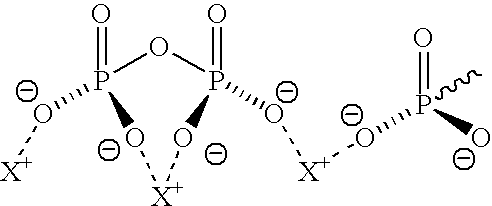
3. The non-toxic water soluble inorganic polymer of claim 2 , wherein the polymer is in the form of a suspension.
4. The non-toxic water soluble inorganic polymer of claim 1 wherein the polymer has the following general formula, wherein X is any alkali metal cation, preferably sodium cation or potassium cation:

5. The non-toxic water soluble inorganic polymer of claim 4 , wherein the polymer is in the form of a film.
6. A method of inactivating a microorganism by applying a coating solution comprising a non-toxic water soluble inorganic polymer.
7. The method of claim 6 , where the non-toxic water soluble inorganic polymer has the following general formula, wherein X is any alkali metal cation, preferably sodium cation or potassium cation:

8. The method of claim 6 wherein the coating solution is in the form of a liquid.
9. The method of claim 6 wherein the coating solution is in the form of a gel.
10. The method of claim 6 further comprising the step of drying the coating solution to form a film or powder.
11. The method of claim 10 , where the non-toxic water soluble inorganic polymer has the following general formula upon drying, wherein X is any alkali metal cation, preferably sodium cation or potassium cation:

12. The method of claim 6 , wherein the coating solution has a pH of between 7 and 12 and comprises from about 2 weight % to about 20 weight % of polymer.
13. The method of claim 6 , wherein the coating solution further comprises additional antimicrobial molecules.
14. A process for preparing the non-toxic inorganic water soluble polymer of claim 1 , said process comprising mixing alkali metal cations, phosphate anions, carbonate anions, and hydrogen ions to form an aqueous alkali solution.
15. The process of claim 14 , wherein the alkali metal cations are any group 1 cations, preferably sodium cations or potassium cations.
16. The process of claim 14 wherein the alkali solution comprises sodium carbonate (Na2CO3), trisodium phosphate (Na3PO4) and sodium biphosphate (Na2HPO4) in a molar ratio of 3.6:0.6:1.
17. The process of claim 14 wherein the alkali solution comprises sodium carbonate (Na2CO3), trisodium phosphate (Na3PO4) and phosphoric acid (H3PO4) in a molar ratio of 10.8:3.8:1.
18. The process of claim 14 wherein the alkali solution comprises sodium bicarbonate (NHCO3), sodium carbonate (Na2CO3) and trisodium phosphate (Na3PO4) in a molar ratio of 1:4:5.
19. The process of claim 14 wherein the alkali solution comprises potassium bicarbonate (KHCO3), potassium carbonate (K2CO3) and tripotassium phosphate (K3PO4) in a molar ratio of 1:2.6:1.6.
20. The process of claim 14 wherein the alkali solution comprises from about 2 wt % to about 20 wt % polymer.
21. A non-toxic water soluble inorganic polymer of the following general formula, wherein X is any alkali metal cation, preferably sodium cation or potassium cation:
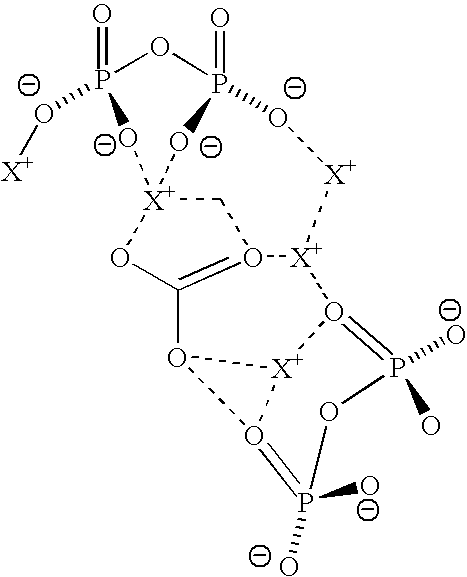
22. A film for inactivating microorganisms, said film comprising the non-toxic water soluble inorganic polymer of claim 1 .
23. A method of inactivating a microorganism by encapsulating the microorganism with the film of claim 22 .
24. A polymer suspension for inactivating microorganisms, said polymer suspension comprising about 2% to about 20% water soluble inorganic polymer.
25. A second solution or paint, film, gel or powder comprising the coating solution of claim 6 as a constituent.
26. (canceled)
Applications Claiming Priority (3)
| Application Number | Priority Date | Filing Date | Title |
|---|---|---|---|
| CA2504014 | 2005-04-13 | ||
| CA2504014A CA2504014C (en) | 2005-04-13 | 2005-04-13 | Non-toxic water soluble inorganic anti-microbial polymer and related methods |
| PCT/CA2006/000571 WO2006108293A1 (en) | 2005-04-13 | 2006-04-13 | Non-toxic water soluble inorganic anti-microbial polymer and related methods |
Publications (1)
| Publication Number | Publication Date |
|---|---|
| US20090074878A1 true US20090074878A1 (en) | 2009-03-19 |
Family
ID=37086581
Family Applications (1)
| Application Number | Title | Priority Date | Filing Date |
|---|---|---|---|
| US11/887,988 Abandoned US20090074878A1 (en) | 2005-04-13 | 2006-04-13 | Non-Toxic Water Soluble Inorganice Antimicrobal Polymer and Related Methods |
Country Status (7)
| Country | Link |
|---|---|
| US (1) | US20090074878A1 (en) |
| EP (1) | EP1874832A4 (en) |
| JP (1) | JP2008537722A (en) |
| CN (1) | CN101198628B (en) |
| AU (1) | AU2006235641B2 (en) |
| CA (1) | CA2504014C (en) |
| WO (1) | WO2006108293A1 (en) |
Cited By (5)
| Publication number | Priority date | Publication date | Assignee | Title |
|---|---|---|---|---|
| US20080131600A1 (en) * | 2006-12-04 | 2008-06-05 | Sqi Diagnostics Systems Inc. | Method for double-dip substrate spin optimization of coated micro array supports |
| US20080220980A1 (en) * | 2004-07-20 | 2008-09-11 | Umedik Inc. | Method to Measure Dynamic Internal Calibration True Dose Response Curves |
| US20080269075A1 (en) * | 2004-07-20 | 2008-10-30 | Umedik Inc. | Method and Device to Optimize Analyte and Antibody Substrate Binding by Least Energy Adsorption |
| US20200245616A1 (en) * | 2017-03-30 | 2020-08-06 | Siamons International Inc. | A Disinfectant Composition with Extended Antimicrobial Effects |
| US11395493B2 (en) | 2020-08-21 | 2022-07-26 | Ai Siamon | Surface coating compositions |
Families Citing this family (2)
| Publication number | Priority date | Publication date | Assignee | Title |
|---|---|---|---|---|
| AU2011225811B2 (en) * | 2010-03-12 | 2014-04-03 | Council Of Scientific & Industrial Research | A process for the preparation of inorganic hydrogels with alkali halides |
| US11000540B1 (en) * | 2019-11-22 | 2021-05-11 | Al Siamon | Treatment for reducing adverse events including chemotherapy discomfort and other conditions |
Citations (11)
| Publication number | Priority date | Publication date | Assignee | Title |
|---|---|---|---|---|
| US4913895A (en) * | 1986-07-24 | 1990-04-03 | Lion Corporation | Oral composition |
| US6184198B1 (en) * | 1998-06-16 | 2001-02-06 | Al Siamon | Cleaning solution |
| US20010043951A1 (en) * | 2000-03-30 | 2001-11-22 | Kyung Won Medical Co., Ltd. | Polyphosphate for use in promoting wound healing and scar abatement |
| US6864269B2 (en) * | 1996-04-12 | 2005-03-08 | University Of Arkansas | Concentrated, non-foaming solution of quarternary ammonium compounds and methods of use |
| US6866870B2 (en) * | 2002-09-11 | 2005-03-15 | Board Of Supervisors Of Louisiana State University And Agricultural And Mechanical College Through The Lsu Agcenter | Biocide composition and related methods |
| US6866869B2 (en) * | 2001-01-10 | 2005-03-15 | Basf Aktiengesellschaft | Liquid antimicrobial compositions |
| US6869620B2 (en) * | 2000-09-08 | 2005-03-22 | Albemarle Corporation | Production of concentrated biocidal solutions |
| US20080131600A1 (en) * | 2006-12-04 | 2008-06-05 | Sqi Diagnostics Systems Inc. | Method for double-dip substrate spin optimization of coated micro array supports |
| US20080220980A1 (en) * | 2004-07-20 | 2008-09-11 | Umedik Inc. | Method to Measure Dynamic Internal Calibration True Dose Response Curves |
| US20080269075A1 (en) * | 2004-07-20 | 2008-10-30 | Umedik Inc. | Method and Device to Optimize Analyte and Antibody Substrate Binding by Least Energy Adsorption |
| US20110065134A1 (en) * | 2007-12-03 | 2011-03-17 | Sq Diagnostics Systems Inc. | Synthetic peptides immuno-reactive with rheumatoid arthritis auto-antibodies |
Family Cites Families (3)
| Publication number | Priority date | Publication date | Assignee | Title |
|---|---|---|---|---|
| US4828621A (en) * | 1986-10-14 | 1989-05-09 | Al Siamon | Composition and method for anti-static protection |
| CA2421721C (en) * | 2000-09-08 | 2010-02-16 | Al Siamon | Therapeutic topical solution for skin and associated methods of use |
| WO2002045512A2 (en) * | 2000-12-05 | 2002-06-13 | S.I.P.C.A.M. Societa' Italiana Prodotti Chimici E Per L'agricoltura Milano S.P.A. | Polyphosphate microbicide for pre- and postharvest crop protecion |
-
2005
- 2005-04-13 CA CA2504014A patent/CA2504014C/en not_active Expired - Lifetime
-
2006
- 2006-04-13 EP EP06721818A patent/EP1874832A4/en not_active Withdrawn
- 2006-04-13 CN CN2006800211010A patent/CN101198628B/en not_active Expired - Lifetime
- 2006-04-13 JP JP2008505704A patent/JP2008537722A/en active Pending
- 2006-04-13 AU AU2006235641A patent/AU2006235641B2/en not_active Expired
- 2006-04-13 WO PCT/CA2006/000571 patent/WO2006108293A1/en not_active Ceased
- 2006-04-13 US US11/887,988 patent/US20090074878A1/en not_active Abandoned
Patent Citations (11)
| Publication number | Priority date | Publication date | Assignee | Title |
|---|---|---|---|---|
| US4913895A (en) * | 1986-07-24 | 1990-04-03 | Lion Corporation | Oral composition |
| US6864269B2 (en) * | 1996-04-12 | 2005-03-08 | University Of Arkansas | Concentrated, non-foaming solution of quarternary ammonium compounds and methods of use |
| US6184198B1 (en) * | 1998-06-16 | 2001-02-06 | Al Siamon | Cleaning solution |
| US20010043951A1 (en) * | 2000-03-30 | 2001-11-22 | Kyung Won Medical Co., Ltd. | Polyphosphate for use in promoting wound healing and scar abatement |
| US6869620B2 (en) * | 2000-09-08 | 2005-03-22 | Albemarle Corporation | Production of concentrated biocidal solutions |
| US6866869B2 (en) * | 2001-01-10 | 2005-03-15 | Basf Aktiengesellschaft | Liquid antimicrobial compositions |
| US6866870B2 (en) * | 2002-09-11 | 2005-03-15 | Board Of Supervisors Of Louisiana State University And Agricultural And Mechanical College Through The Lsu Agcenter | Biocide composition and related methods |
| US20080220980A1 (en) * | 2004-07-20 | 2008-09-11 | Umedik Inc. | Method to Measure Dynamic Internal Calibration True Dose Response Curves |
| US20080269075A1 (en) * | 2004-07-20 | 2008-10-30 | Umedik Inc. | Method and Device to Optimize Analyte and Antibody Substrate Binding by Least Energy Adsorption |
| US20080131600A1 (en) * | 2006-12-04 | 2008-06-05 | Sqi Diagnostics Systems Inc. | Method for double-dip substrate spin optimization of coated micro array supports |
| US20110065134A1 (en) * | 2007-12-03 | 2011-03-17 | Sq Diagnostics Systems Inc. | Synthetic peptides immuno-reactive with rheumatoid arthritis auto-antibodies |
Non-Patent Citations (1)
| Title |
|---|
| Tripod, "pH Values of Some Common Bases", retrieved from http://alkalinediet.tripod.com/values.htm, December 04, 2013. * |
Cited By (7)
| Publication number | Priority date | Publication date | Assignee | Title |
|---|---|---|---|---|
| US20080220980A1 (en) * | 2004-07-20 | 2008-09-11 | Umedik Inc. | Method to Measure Dynamic Internal Calibration True Dose Response Curves |
| US20080269075A1 (en) * | 2004-07-20 | 2008-10-30 | Umedik Inc. | Method and Device to Optimize Analyte and Antibody Substrate Binding by Least Energy Adsorption |
| US11422129B2 (en) | 2004-07-20 | 2022-08-23 | Sqi Diagnostics Systems Inc. | Method and device to optimize analyte and antibody substrate binding by least energy adsorption |
| US20080131600A1 (en) * | 2006-12-04 | 2008-06-05 | Sqi Diagnostics Systems Inc. | Method for double-dip substrate spin optimization of coated micro array supports |
| US8080279B2 (en) | 2006-12-04 | 2011-12-20 | Sqi Diagnostics Systems Inc. | Method for double-dip substrate spin optimization of coated micro array supports |
| US20200245616A1 (en) * | 2017-03-30 | 2020-08-06 | Siamons International Inc. | A Disinfectant Composition with Extended Antimicrobial Effects |
| US11395493B2 (en) | 2020-08-21 | 2022-07-26 | Ai Siamon | Surface coating compositions |
Also Published As
| Publication number | Publication date |
|---|---|
| CA2504014A1 (en) | 2006-10-13 |
| EP1874832A1 (en) | 2008-01-09 |
| JP2008537722A (en) | 2008-09-25 |
| EP1874832A4 (en) | 2012-03-28 |
| CA2504014C (en) | 2013-06-18 |
| CN101198628A (en) | 2008-06-11 |
| CN101198628B (en) | 2013-03-20 |
| WO2006108293A1 (en) | 2006-10-19 |
| AU2006235641A1 (en) | 2006-10-19 |
| AU2006235641B2 (en) | 2011-03-31 |
Similar Documents
| Publication | Publication Date | Title |
|---|---|---|
| Dong et al. | Investigation of Mg (OH) 2 nanoparticles as an antibacterial agent | |
| Arabi Shamsabadi et al. | Antimicrobial mode-of-action of colloidal Ti3C2T x MXene nanosheets | |
| Seo et al. | Attachment of Escherichia coli O157: H7 to lettuce leaf surface and bacterial viability in response to chlorine treatment as demonstrated by using confocal scanning laser microscopy | |
| Xu et al. | Role of reactive oxygen species in the antibacterial mechanism of silver nanoparticles on Escherichia coli O157: H7 | |
| Hasan et al. | Selective bactericidal activity of nanopatterned superhydrophobic cicada Psaltoda claripennis wing surfaces | |
| KR101308261B1 (en) | A multi-effect antimicrobial surface coating forming material and its preparation | |
| Barros et al. | A multi-purpose approach to the mechanisms of action of two biocides (benzalkonium chloride and dibromonitrilopropionamide): discussion of Pseudomonas fluorescens’ viability and death | |
| Oule et al. | Akwaton, polyhexamethylene-guanidine hydrochloride-based sporicidal disinfectant: a novel tool to fight bacterial spores and nosocomial infections | |
| CN104023532A (en) | LOW pH DISINFECTANT COMPOSITION | |
| CA2144533A1 (en) | Antimicrobial composition and method of preparation | |
| A Hemdan et al. | The destruction of Escherichia coli adhered to pipe surfaces in a model drinking water distribution system via various antibiofilm agents | |
| Lilly et al. | Inactivation of Bacillus anthracis spores by single-walled carbon nanotubes coupled with oxidizing antimicrobial chemicals | |
| Lu et al. | Effect of silver ion implantation on antibacterial ability of polyethylene food packing films | |
| CN104039154A (en) | Non-corrosive, stable concentrated solution of peracetic acid | |
| Zameer et al. | Development of a biofilm model for Listeria monocytogenes EGD-e | |
| Soltani et al. | Novel boronium salt exhibits substantial antibacterial activity when compared to a commercial quaternary ammonium disinfectant | |
| Paunova-Krasteva et al. | Destruction of Pseudomonas aeruginosa pre-formed biofilms by cationic polymer micelles bearing silver nanoparticles | |
| CA2504014C (en) | Non-toxic water soluble inorganic anti-microbial polymer and related methods | |
| Diggikar et al. | Silver-decorated orthorhombic nanotubes of lithium vanadium oxide: an impeder of bacterial growth and biofilm | |
| US20050148254A1 (en) | Light-activated biocidal polyelectrolytes | |
| Wang et al. | Biofilm eradication by in situ generation of reactive chlorine species on nano-CuO surfaces | |
| Ayres et al. | Effect of permeabilizing agents on antibacterial activity against a simple Pseudomonas aeruginosa biofilm | |
| Rajitha et al. | Assessment of alkylimidazolium chloride ionic liquid formulations for cleaning and disinfection of environmental surfaces | |
| Haggstrom et al. | Biocidal properties of metal oxide nanoparticles and their halogen adducts | |
| CA2604467A1 (en) | Non-toxic water soluble inorganic anti-microbial polymer and related methods |
Legal Events
| Date | Code | Title | Description |
|---|---|---|---|
| AS | Assignment |
Owner name: SIAMONS INTERNATIONAL INC., CANADA Free format text: ASSIGNMENT OF ASSIGNORS INTEREST;ASSIGNORS:LEA, PETER;SIAMON, AL;REEL/FRAME:020337/0037;SIGNING DATES FROM 20060322 TO 20060323 |
|
| STCB | Information on status: application discontinuation |
Free format text: ABANDONED -- FAILURE TO RESPOND TO AN OFFICE ACTION |