US20050124637A1 - Compounds and compositions as inhibitors of receptor tyrosine kinase activity - Google Patents
Compounds and compositions as inhibitors of receptor tyrosine kinase activity Download PDFInfo
- Publication number
- US20050124637A1 US20050124637A1 US10/917,578 US91757804A US2005124637A1 US 20050124637 A1 US20050124637 A1 US 20050124637A1 US 91757804 A US91757804 A US 91757804A US 2005124637 A1 US2005124637 A1 US 2005124637A1
- Authority
- US
- United States
- Prior art keywords
- methyl
- alkyl
- phenyl
- amino
- ethyl
- Prior art date
- Legal status (The legal status is an assumption and is not a legal conclusion. Google has not performed a legal analysis and makes no representation as to the accuracy of the status listed.)
- Abandoned
Links
- 150000001875 compounds Chemical class 0.000 title claims abstract description 173
- 230000000694 effects Effects 0.000 title claims abstract description 35
- 239000000203 mixture Substances 0.000 title description 58
- 239000003112 inhibitor Substances 0.000 title description 9
- 108091008598 receptor tyrosine kinases Proteins 0.000 title description 4
- 102000027426 receptor tyrosine kinases Human genes 0.000 title description 4
- 101100335081 Mus musculus Flt3 gene Proteins 0.000 claims abstract description 44
- 208000037265 diseases, disorders, signs and symptoms Diseases 0.000 claims abstract description 44
- 201000010099 disease Diseases 0.000 claims abstract description 33
- 108091000080 Phosphotransferase Proteins 0.000 claims abstract description 27
- 238000000034 method Methods 0.000 claims abstract description 27
- 102000020233 phosphotransferase Human genes 0.000 claims abstract description 27
- 101150028321 Lck gene Proteins 0.000 claims abstract description 17
- 101150056950 Ntrk2 gene Proteins 0.000 claims abstract description 14
- 101100272634 Mus musculus Bmx gene Proteins 0.000 claims abstract description 10
- 239000008194 pharmaceutical composition Chemical class 0.000 claims abstract description 8
- 102100027842 Fibroblast growth factor receptor 3 Human genes 0.000 claims abstract description 5
- 101710182396 Fibroblast growth factor receptor 3 Proteins 0.000 claims abstract description 5
- -1 C3-8heterocycloalkyl Chemical group 0.000 claims description 151
- 229910052739 hydrogen Inorganic materials 0.000 claims description 43
- 239000001257 hydrogen Substances 0.000 claims description 43
- 125000004169 (C1-C6) alkyl group Chemical group 0.000 claims description 37
- 150000003254 radicals Chemical class 0.000 claims description 35
- 150000003839 salts Chemical class 0.000 claims description 24
- 125000003118 aryl group Chemical group 0.000 claims description 23
- 125000000325 methylidene group Chemical group [H]C([H])=* 0.000 claims description 23
- 125000001072 heteroaryl group Chemical group 0.000 claims description 20
- 125000004435 hydrogen atom Chemical group [H]* 0.000 claims description 20
- 125000000592 heterocycloalkyl group Chemical group 0.000 claims description 15
- 125000002947 alkylene group Chemical group 0.000 claims description 14
- 125000000217 alkyl group Chemical group 0.000 claims description 13
- 125000004191 (C1-C6) alkoxy group Chemical group 0.000 claims description 12
- 125000000753 cycloalkyl group Chemical group 0.000 claims description 12
- 125000002496 methyl group Chemical group [H]C([H])([H])* 0.000 claims description 12
- 229910052757 nitrogen Inorganic materials 0.000 claims description 12
- UFHFLCQGNIYNRP-UHFFFAOYSA-N Hydrogen Chemical compound [H][H] UFHFLCQGNIYNRP-UHFFFAOYSA-N 0.000 claims description 11
- 230000005764 inhibitory process Effects 0.000 claims description 11
- 125000003161 (C1-C6) alkylene group Chemical group 0.000 claims description 10
- 125000006590 (C2-C6) alkenylene group Chemical group 0.000 claims description 10
- 125000006591 (C2-C6) alkynylene group Chemical group 0.000 claims description 10
- 239000003814 drug Substances 0.000 claims description 10
- 125000001997 phenyl group Chemical group [H]C1=C([H])C([H])=C(*)C([H])=C1[H] 0.000 claims description 10
- 125000004076 pyridyl group Chemical group 0.000 claims description 9
- 125000001313 C5-C10 heteroaryl group Chemical group 0.000 claims description 8
- GAWIXWVDTYZWAW-UHFFFAOYSA-N C[CH]O Chemical group C[CH]O GAWIXWVDTYZWAW-UHFFFAOYSA-N 0.000 claims description 8
- 125000001797 benzyl group Chemical group [H]C1=C([H])C([H])=C(C([H])=C1[H])C([H])([H])* 0.000 claims description 8
- 125000003386 piperidinyl group Chemical group 0.000 claims description 7
- 229940002612 prodrug Drugs 0.000 claims description 7
- 239000000651 prodrug Substances 0.000 claims description 7
- 125000000714 pyrimidinyl group Chemical group 0.000 claims description 7
- 241001465754 Metazoa Species 0.000 claims description 6
- 125000002777 acetyl group Chemical group [H]C([H])([H])C(*)=O 0.000 claims description 6
- 125000004356 hydroxy functional group Chemical group O* 0.000 claims description 6
- 125000004170 methylsulfonyl group Chemical group [H]C([H])([H])S(*)(=O)=O 0.000 claims description 6
- 125000004433 nitrogen atom Chemical group N* 0.000 claims description 6
- 125000000719 pyrrolidinyl group Chemical group 0.000 claims description 6
- HDLVNFVYHHCZMH-UHFFFAOYSA-N 1-[4-[[2-(2-methylmorpholin-4-yl)-9-(1,3-thiazol-4-yl)purin-6-yl]amino]phenyl]ethanone Chemical compound C1COC(C)CN1C1=NC(NC=2C=CC(=CC=2)C(C)=O)=C(N=CN2C=3N=CSC=3)C2=N1 HDLVNFVYHHCZMH-UHFFFAOYSA-N 0.000 claims description 5
- HTVDWFHDQKOGTL-UHFFFAOYSA-N 1-[4-[[2-[methyl-(1-methylpiperidin-4-yl)amino]-9-(1,3-thiazol-4-yl)purin-6-yl]amino]phenyl]ethanone Chemical compound N=1C(NC=2C=CC(=CC=2)C(C)=O)=C2N=CN(C=3N=CSC=3)C2=NC=1N(C)C1CCN(C)CC1 HTVDWFHDQKOGTL-UHFFFAOYSA-N 0.000 claims description 5
- LDHZCIGDONXTTL-CYBMUJFWSA-N 2-[(2r)-2-methylmorpholin-4-yl]-n-(4-methylsulfonylphenyl)-9-(1,3-thiazol-4-yl)purin-6-amine Chemical compound C1CO[C@H](C)CN1C1=NC(NC=2C=CC(=CC=2)S(C)(=O)=O)=C(N=CN2C=3N=CSC=3)C2=N1 LDHZCIGDONXTTL-CYBMUJFWSA-N 0.000 claims description 5
- 125000002541 furyl group Chemical group 0.000 claims description 5
- 125000002883 imidazolyl group Chemical group 0.000 claims description 5
- 238000004519 manufacturing process Methods 0.000 claims description 5
- NPQLFVCTJYKSRE-UHFFFAOYSA-N n-(4-methylsulfonylphenyl)-2-(4-morpholin-4-ylpiperidin-1-yl)-9-(1,3-thiazol-4-yl)purin-6-amine Chemical compound C1=CC(S(=O)(=O)C)=CC=C1NC1=NC(N2CCC(CC2)N2CCOCC2)=NC2=C1N=CN2C1=CSC=N1 NPQLFVCTJYKSRE-UHFFFAOYSA-N 0.000 claims description 5
- 230000007170 pathology Effects 0.000 claims description 5
- 125000004193 piperazinyl group Chemical group 0.000 claims description 5
- 125000003226 pyrazolyl group Chemical group 0.000 claims description 5
- 125000002023 trifluoromethyl group Chemical group FC(F)(F)* 0.000 claims description 5
- BJZSXNALNFWZMN-UHFFFAOYSA-N 6-n-(4-methylsulfonylphenyl)-2-n-(pyridin-2-ylmethyl)-9-(1,3-thiazol-4-yl)purine-2,6-diamine Chemical compound C1=CC(S(=O)(=O)C)=CC=C1NC1=NC(NCC=2N=CC=CC=2)=NC2=C1N=CN2C1=CSC=N1 BJZSXNALNFWZMN-UHFFFAOYSA-N 0.000 claims description 4
- 125000004202 aminomethyl group Chemical group [H]N([H])C([H])([H])* 0.000 claims description 4
- 125000000484 butyl group Chemical group [H]C([*])([H])C([H])([H])C([H])([H])C([H])([H])[H] 0.000 claims description 4
- 125000003917 carbamoyl group Chemical group [H]N([H])C(*)=O 0.000 claims description 4
- 150000004677 hydrates Chemical class 0.000 claims description 4
- 125000001449 isopropyl group Chemical group [H]C([H])([H])C([H])(*)C([H])([H])[H] 0.000 claims description 4
- 125000000449 nitro group Chemical group [O-][N+](*)=O 0.000 claims description 4
- 125000003373 pyrazinyl group Chemical group 0.000 claims description 4
- 125000006513 pyridinyl methyl group Chemical group 0.000 claims description 4
- VIDGEVXWRBIXGF-UHFFFAOYSA-N 2-n-methyl-2-n-(1-methylpiperidin-4-yl)-6-n-(4-morpholin-4-ylphenyl)-9-(1,3-thiazol-4-yl)purine-2,6-diamine Chemical compound N=1C(NC=2C=CC(=CC=2)N2CCOCC2)=C2N=CN(C=3N=CSC=3)C2=NC=1N(C)C1CCN(C)CC1 VIDGEVXWRBIXGF-UHFFFAOYSA-N 0.000 claims description 3
- 125000001995 cyclobutyl group Chemical group [H]C1([H])C([H])([H])C([H])(*)C1([H])[H] 0.000 claims description 3
- 125000000113 cyclohexyl group Chemical group [H]C1([H])C([H])([H])C([H])([H])C([H])(*)C([H])([H])C1([H])[H] 0.000 claims description 3
- 125000001511 cyclopentyl group Chemical group [H]C1([H])C([H])([H])C([H])([H])C([H])(*)C1([H])[H] 0.000 claims description 3
- 125000001624 naphthyl group Chemical group 0.000 claims description 3
- 239000012453 solvate Substances 0.000 claims description 3
- 125000001544 thienyl group Chemical group 0.000 claims description 3
- 125000006652 (C3-C12) cycloalkyl group Chemical group 0.000 claims description 2
- MSVSLTUVNJXOFJ-UHFFFAOYSA-N 1-[4-[[2-(2-methylmorpholin-4-yl)-9-thiophen-3-ylpurin-6-yl]amino]phenyl]ethanone Chemical compound C1COC(C)CN1C1=NC(NC=2C=CC(=CC=2)C(C)=O)=C(N=CN2C3=CSC=C3)C2=N1 MSVSLTUVNJXOFJ-UHFFFAOYSA-N 0.000 claims description 2
- DAMLBECXVPGAGG-UHFFFAOYSA-N 2-(2,2-dimethylmorpholin-4-yl)-n-(4-methylsulfonylphenyl)-9-(1,3-thiazol-4-yl)purin-6-amine Chemical compound C1COC(C)(C)CN1C1=NC(NC=2C=CC(=CC=2)S(C)(=O)=O)=C(N=CN2C=3N=CSC=3)C2=N1 DAMLBECXVPGAGG-UHFFFAOYSA-N 0.000 claims description 2
- BTNKCDVRGXWPJF-UHFFFAOYSA-N 2-(2,6-dimethylmorpholin-4-yl)-n-(4-dimethylphosphorylphenyl)-9-(1,3-thiazol-4-yl)purin-6-amine Chemical compound C1C(C)OC(C)CN1C1=NC(NC=2C=CC(=CC=2)P(C)(C)=O)=C(N=CN2C=3N=CSC=3)C2=N1 BTNKCDVRGXWPJF-UHFFFAOYSA-N 0.000 claims description 2
- LTOXMZDNCCMIDO-UHFFFAOYSA-N 2-(2,6-dimethylmorpholin-4-yl)-n-(4-dimethylphosphorylphenyl)-9-thiophen-3-ylpurin-6-amine Chemical compound C1C(C)OC(C)CN1C1=NC(NC=2C=CC(=CC=2)P(C)(C)=O)=C(N=CN2C3=CSC=C3)C2=N1 LTOXMZDNCCMIDO-UHFFFAOYSA-N 0.000 claims description 2
- IUNRDOUOHHDKOW-UHFFFAOYSA-N 2-(2,6-dimethylmorpholin-4-yl)-n-(4-methylsulfonylphenyl)-9-(1,3-thiazol-4-yl)purin-6-amine Chemical compound C1C(C)OC(C)CN1C1=NC(NC=2C=CC(=CC=2)S(C)(=O)=O)=C(N=CN2C=3N=CSC=3)C2=N1 IUNRDOUOHHDKOW-UHFFFAOYSA-N 0.000 claims description 2
- LDHZCIGDONXTTL-UHFFFAOYSA-N 2-(2-methylmorpholin-4-yl)-n-(4-methylsulfonylphenyl)-9-(1,3-thiazol-4-yl)purin-6-amine Chemical compound C1COC(C)CN1C1=NC(NC=2C=CC(=CC=2)S(C)(=O)=O)=C(N=CN2C=3N=CSC=3)C2=N1 LDHZCIGDONXTTL-UHFFFAOYSA-N 0.000 claims description 2
- VLSNUMDKAAFELT-UHFFFAOYSA-N 2-(azepan-1-yl)-n-(4-dimethylphosphorylphenyl)-9-(1,3-thiazol-4-yl)purin-6-amine Chemical compound C1=CC(P(C)(=O)C)=CC=C1NC1=NC(N2CCCCCC2)=NC2=C1N=CN2C1=CSC=N1 VLSNUMDKAAFELT-UHFFFAOYSA-N 0.000 claims description 2
- 125000000022 2-aminoethyl group Chemical group [H]C([*])([H])C([H])([H])N([H])[H] 0.000 claims description 2
- QATMZUPXEVTGNY-UHFFFAOYSA-N 2-n-cyclohexyl-2-n-methyl-6-n-(4-methylsulfinylphenyl)-9-(1,3-thiazol-4-yl)purine-2,6-diamine Chemical compound N=1C(NC=2C=CC(=CC=2)S(C)=O)=C2N=CN(C=3N=CSC=3)C2=NC=1N(C)C1CCCCC1 QATMZUPXEVTGNY-UHFFFAOYSA-N 0.000 claims description 2
- BBSZIEFLMXFJEU-UHFFFAOYSA-N 2-n-cyclohexyl-6-n-(4-dimethylphosphorylphenyl)-2-n-methyl-9-(1,3-thiazol-4-yl)purine-2,6-diamine Chemical compound N=1C(NC=2C=CC(=CC=2)P(C)(C)=O)=C2N=CN(C=3N=CSC=3)C2=NC=1N(C)C1CCCCC1 BBSZIEFLMXFJEU-UHFFFAOYSA-N 0.000 claims description 2
- QQCORSXFKIGCKP-UHFFFAOYSA-N 2-n-methyl-2-n-(1-methylpiperidin-4-yl)-6-n-(4-methylsulfonylphenyl)-9-(1,3-thiazol-4-yl)purine-2,6-diamine Chemical compound N=1C(NC=2C=CC(=CC=2)S(C)(=O)=O)=C2N=CN(C=3N=CSC=3)C2=NC=1N(C)C1CCN(C)CC1 QQCORSXFKIGCKP-UHFFFAOYSA-N 0.000 claims description 2
- VBWZIJRGIROQNR-UHFFFAOYSA-N 2-n-methyl-2-n-(1-methylpiperidin-4-yl)-6-n-(4-morpholin-4-ylphenyl)-9-thiophen-3-ylpurine-2,6-diamine Chemical compound N=1C(NC=2C=CC(=CC=2)N2CCOCC2)=C2N=CN(C3=CSC=C3)C2=NC=1N(C)C1CCN(C)CC1 VBWZIJRGIROQNR-UHFFFAOYSA-N 0.000 claims description 2
- UHHYAOQYDZINRF-UHFFFAOYSA-N 2-n-methyl-6-n-(4-methylsulfinylphenyl)-2-n-(oxan-4-yl)-9-(1,3-thiazol-4-yl)purine-2,6-diamine Chemical compound N=1C(NC=2C=CC(=CC=2)S(C)=O)=C2N=CN(C=3N=CSC=3)C2=NC=1N(C)C1CCOCC1 UHHYAOQYDZINRF-UHFFFAOYSA-N 0.000 claims description 2
- ODQNHKBOJXPIPV-UHFFFAOYSA-N 2-n-methyl-6-n-(4-methylsulfonylphenyl)-2-n-(pyridin-2-ylmethyl)-9-(1,3-thiazol-4-yl)purine-2,6-diamine Chemical compound N=1C(NC=2C=CC(=CC=2)S(C)(=O)=O)=C2N=CN(C=3N=CSC=3)C2=NC=1N(C)CC1=CC=CC=N1 ODQNHKBOJXPIPV-UHFFFAOYSA-N 0.000 claims description 2
- PVQIATGFIDZDBN-UHFFFAOYSA-N 2-n-methyl-6-n-(4-methylsulfonylphenyl)-2-n-(pyridin-2-ylmethyl)-9-thiophen-3-ylpurine-2,6-diamine Chemical compound N=1C(NC=2C=CC(=CC=2)S(C)(=O)=O)=C2N=CN(C3=CSC=C3)C2=NC=1N(C)CC1=CC=CC=N1 PVQIATGFIDZDBN-UHFFFAOYSA-N 0.000 claims description 2
- CSGULMOWSSPLSA-UHFFFAOYSA-N 2-n-methyl-6-n-(4-morpholin-4-ylphenyl)-2-n-(pyridin-2-ylmethyl)-9-thiophen-3-ylpurine-2,6-diamine Chemical compound N=1C(NC=2C=CC(=CC=2)N2CCOCC2)=C2N=CN(C3=CSC=C3)C2=NC=1N(C)CC1=CC=CC=N1 CSGULMOWSSPLSA-UHFFFAOYSA-N 0.000 claims description 2
- 125000000094 2-phenylethyl group Chemical group [H]C1=C([H])C([H])=C(C([H])=C1[H])C([H])([H])C([H])([H])* 0.000 claims description 2
- YVTRXKQRONFENH-GFCCVEGCSA-N 4-[[2-[(2r)-2-methylmorpholin-4-yl]-9-(1,3-thiazol-4-yl)purin-6-yl]amino]benzenesulfonamide Chemical compound C1CO[C@H](C)CN1C1=NC(NC=2C=CC(=CC=2)S(N)(=O)=O)=C(N=CN2C=3N=CSC=3)C2=N1 YVTRXKQRONFENH-GFCCVEGCSA-N 0.000 claims description 2
- KFZMGEQAYNKOFK-UHFFFAOYSA-N Isopropanol Chemical group CC(C)O KFZMGEQAYNKOFK-UHFFFAOYSA-N 0.000 claims description 2
- JMMZNNHGSMWUIA-UHFFFAOYSA-N [4-[2-(2-methylmorpholin-4-yl)-6-(4-methylsulfonylanilino)purin-9-yl]phenyl]methanol Chemical compound C1COC(C)CN1C1=NC(NC=2C=CC(=CC=2)S(C)(=O)=O)=C(N=CN2C=3C=CC(CO)=CC=3)C2=N1 JMMZNNHGSMWUIA-UHFFFAOYSA-N 0.000 claims description 2
- MZVQCMJNVPIDEA-UHFFFAOYSA-N [CH2]CN(CC)CC Chemical group [CH2]CN(CC)CC MZVQCMJNVPIDEA-UHFFFAOYSA-N 0.000 claims description 2
- NWJBUZVZGSGJOQ-UHFFFAOYSA-N azetidin-1-yl-[4-[[2-(4-morpholin-4-ylpiperidin-1-yl)-9-(1,3-thiazol-4-yl)purin-6-yl]amino]phenyl]methanone Chemical compound C=1C=C(NC=2C=3N=CN(C=3N=C(N=2)N2CCC(CC2)N2CCOCC2)C=2N=CSC=2)C=CC=1C(=O)N1CCC1 NWJBUZVZGSGJOQ-UHFFFAOYSA-N 0.000 claims description 2
- 125000003236 benzoyl group Chemical group [H]C1=C([H])C([H])=C(C([H])=C1[H])C(*)=O 0.000 claims description 2
- 125000004093 cyano group Chemical group *C#N 0.000 claims description 2
- 125000006639 cyclohexyl carbonyl group Chemical group 0.000 claims description 2
- 125000006255 cyclopropyl carbonyl group Chemical group [H]C1([H])C([H])([H])C1([H])C(*)=O 0.000 claims description 2
- 125000001301 ethoxy group Chemical group [H]C([H])([H])C([H])([H])O* 0.000 claims description 2
- 125000001495 ethyl group Chemical group [H]C([H])([H])C([H])([H])* 0.000 claims description 2
- 125000003784 fluoroethyl group Chemical group [H]C([H])(F)C([H])([H])* 0.000 claims description 2
- 125000002485 formyl group Chemical group [H]C(*)=O 0.000 claims description 2
- 125000004029 hydroxymethyl group Chemical group [H]OC([H])([H])* 0.000 claims description 2
- 125000003392 indanyl group Chemical group C1(CCC2=CC=CC=C12)* 0.000 claims description 2
- 125000005928 isopropyloxycarbonyl group Chemical group [H]C([H])([H])C([H])(OC(*)=O)C([H])([H])[H] 0.000 claims description 2
- 125000001786 isothiazolyl group Chemical group 0.000 claims description 2
- 125000004674 methylcarbonyl group Chemical group CC(=O)* 0.000 claims description 2
- 125000006518 morpholino carbonyl group Chemical group [H]C1([H])OC([H])([H])C([H])([H])N(C(*)=O)C1([H])[H] 0.000 claims description 2
- 125000006203 morpholinoethyl group Chemical group [H]C([H])(*)C([H])([H])N1C([H])([H])C([H])([H])OC([H])([H])C1([H])[H] 0.000 claims description 2
- 125000001064 morpholinomethyl group Chemical group [H]C([H])(*)N1C([H])([H])C([H])([H])OC([H])([H])C1([H])[H] 0.000 claims description 2
- OGBTXLYCCDPDQM-UHFFFAOYSA-N n-(4-dimethylphosphorylphenyl)-2-(2-ethylmorpholin-4-yl)-9-thiophen-3-ylpurin-6-amine Chemical compound C1COC(CC)CN1C1=NC(NC=2C=CC(=CC=2)P(C)(C)=O)=C(N=CN2C3=CSC=C3)C2=N1 OGBTXLYCCDPDQM-UHFFFAOYSA-N 0.000 claims description 2
- IQWFFMKRDBBZMH-UHFFFAOYSA-N n-(4-dimethylphosphorylphenyl)-2-(2-methylmorpholin-4-yl)-9-(1,3-thiazol-4-yl)purin-6-amine Chemical compound C1COC(C)CN1C1=NC(NC=2C=CC(=CC=2)P(C)(C)=O)=C(N=CN2C=3N=CSC=3)C2=N1 IQWFFMKRDBBZMH-UHFFFAOYSA-N 0.000 claims description 2
- ZWEOFKUHMWLAHR-UHFFFAOYSA-N n-(4-dimethylphosphorylphenyl)-2-(2-methylmorpholin-4-yl)-9-thiophen-3-ylpurin-6-amine Chemical compound C1COC(C)CN1C1=NC(NC=2C=CC(=CC=2)P(C)(C)=O)=C(N=CN2C3=CSC=C3)C2=N1 ZWEOFKUHMWLAHR-UHFFFAOYSA-N 0.000 claims description 2
- ZQLMNTJCPMDNGC-UHFFFAOYSA-N n-(4-dimethylphosphorylphenyl)-2-(3-methylpiperidin-1-yl)-9-(1,3-thiazol-4-yl)purin-6-amine Chemical compound C1C(C)CCCN1C1=NC(NC=2C=CC(=CC=2)P(C)(C)=O)=C(N=CN2C=3N=CSC=3)C2=N1 ZQLMNTJCPMDNGC-UHFFFAOYSA-N 0.000 claims description 2
- WBPBGDGXZQGBGX-UHFFFAOYSA-N n-(4-dimethylphosphorylphenyl)-2-[2-(fluoromethyl)morpholin-4-yl]-9-thiophen-3-ylpurin-6-amine Chemical compound C1=CC(P(C)(=O)C)=CC=C1NC1=NC(N2CC(CF)OCC2)=NC2=C1N=CN2C1=CSC=C1 WBPBGDGXZQGBGX-UHFFFAOYSA-N 0.000 claims description 2
- 125000001147 pentyl group Chemical group C(CCCC)* 0.000 claims description 2
- 239000000546 pharmaceutical excipient Substances 0.000 claims description 2
- 125000002924 primary amino group Chemical group [H]N([H])* 0.000 claims description 2
- 125000001436 propyl group Chemical group [H]C([*])([H])C([H])([H])C([H])([H])[H] 0.000 claims description 2
- 125000004673 propylcarbonyl group Chemical group 0.000 claims description 2
- 125000004548 quinolin-3-yl group Chemical group N1=CC(=CC2=CC=CC=C12)* 0.000 claims description 2
- 125000006223 tetrahydrofuranylmethyl group Chemical group 0.000 claims description 2
- 125000001412 tetrahydropyranyl group Chemical group 0.000 claims description 2
- 125000000335 thiazolyl group Chemical group 0.000 claims description 2
- 125000005302 thiazolylmethyl group Chemical group [H]C1=C([H])N=C(S1)C([H])([H])* 0.000 claims description 2
- 125000001475 halogen functional group Chemical group 0.000 claims 12
- 150000002431 hydrogen Chemical group 0.000 claims 12
- ZHIOURMORDQCJW-BWFPZVSSSA-N 2-[(2r)-2-methylmorpholin-4-yl]-n-(4-methylsulfinylphenyl)-9-(1,3-thiazol-4-yl)purin-6-amine Chemical compound C1CO[C@H](C)CN1C1=NC(NC=2C=CC(=CC=2)S(C)=O)=C(N=CN2C=3N=CSC=3)C2=N1 ZHIOURMORDQCJW-BWFPZVSSSA-N 0.000 claims 1
- IQQRYYPZVQTJLA-UHFFFAOYSA-N 2-n-methyl-6-n-(4-methylsulfonylphenyl)-2-n-(oxan-4-yl)-9-(1,3-thiazol-4-yl)purine-2,6-diamine Chemical compound N=1C(NC=2C=CC(=CC=2)S(C)(=O)=O)=C2N=CN(C=3N=CSC=3)C2=NC=1N(C)C1CCOCC1 IQQRYYPZVQTJLA-UHFFFAOYSA-N 0.000 claims 1
- LDXPYZTVBOTCDR-UHFFFAOYSA-N [4-[2-[methyl(pyridin-2-ylmethyl)amino]-6-(4-methylsulfonylanilino)purin-9-yl]phenyl]methanol Chemical compound N=1C(NC=2C=CC(=CC=2)S(C)(=O)=O)=C2N=CN(C=3C=CC(CO)=CC=3)C2=NC=1N(C)CC1=CC=CC=N1 LDXPYZTVBOTCDR-UHFFFAOYSA-N 0.000 claims 1
- 208000035475 disorder Diseases 0.000 abstract description 11
- JHOMIXKATLMPEJ-UHFFFAOYSA-N CC1=CC=C(C(=O)N2CCCCC2)C=C1 Chemical compound CC1=CC=C(C(=O)N2CCCCC2)C=C1 JHOMIXKATLMPEJ-UHFFFAOYSA-N 0.000 description 270
- YXFVVABEGXRONW-UHFFFAOYSA-N CC1=CC=CC=C1 Chemical compound CC1=CC=CC=C1 YXFVVABEGXRONW-UHFFFAOYSA-N 0.000 description 199
- QMHIMXFNBOYPND-UHFFFAOYSA-N CC1=CSC=N1 Chemical compound CC1=CSC=N1 QMHIMXFNBOYPND-UHFFFAOYSA-N 0.000 description 126
- KSMVBYPXNKCPAJ-UHFFFAOYSA-N CC1CCC(N)CC1 Chemical compound CC1CCC(N)CC1 KSMVBYPXNKCPAJ-UHFFFAOYSA-N 0.000 description 67
- LFQSCWFLJHTTHZ-UHFFFAOYSA-N Ethanol Chemical compound CCO LFQSCWFLJHTTHZ-UHFFFAOYSA-N 0.000 description 67
- OKKJLVBELUTLKV-UHFFFAOYSA-N methanol Substances OC OKKJLVBELUTLKV-UHFFFAOYSA-N 0.000 description 61
- 210000004027 cell Anatomy 0.000 description 58
- YMWUJEATGCHHMB-UHFFFAOYSA-N Dichloromethane Chemical compound ClCCl YMWUJEATGCHHMB-UHFFFAOYSA-N 0.000 description 57
- YYDNBUBMBZRNQQ-UHFFFAOYSA-N CC1=CC=C(S(C)(=O)=O)C=C1 Chemical compound CC1=CC=C(S(C)(=O)=O)C=C1 YYDNBUBMBZRNQQ-UHFFFAOYSA-N 0.000 description 48
- QENGPZGAWFQWCZ-UHFFFAOYSA-N CC1=CSC=C1 Chemical compound CC1=CSC=C1 QENGPZGAWFQWCZ-UHFFFAOYSA-N 0.000 description 45
- XEKOWRVHYACXOJ-UHFFFAOYSA-N Ethyl acetate Chemical compound CCOC(C)=O XEKOWRVHYACXOJ-UHFFFAOYSA-N 0.000 description 43
- NRGGMCIBEHEAIL-UHFFFAOYSA-N CCC1=NC=CC=C1 Chemical compound CCC1=NC=CC=C1 NRGGMCIBEHEAIL-UHFFFAOYSA-N 0.000 description 42
- ZEFLPHRHPMEVPM-UHFFFAOYSA-N CN(C)C1CCCC1 Chemical compound CN(C)C1CCCC1 ZEFLPHRHPMEVPM-UHFFFAOYSA-N 0.000 description 42
- IGWGXOHABPCPHZ-UHFFFAOYSA-N CC1=CC=C(S(=O)(=O)N2CCCCC2)C=C1 Chemical compound CC1=CC=C(S(=O)(=O)N2CCCCC2)C=C1 IGWGXOHABPCPHZ-UHFFFAOYSA-N 0.000 description 37
- 239000002904 solvent Substances 0.000 description 37
- 238000005160 1H NMR spectroscopy Methods 0.000 description 36
- JGFZNNIVVJXRND-UHFFFAOYSA-N N,N-Diisopropylethylamine (DIPEA) Chemical compound CCN(C(C)C)C(C)C JGFZNNIVVJXRND-UHFFFAOYSA-N 0.000 description 36
- 238000006243 chemical reaction Methods 0.000 description 36
- LRHPLDYGYMQRHN-UHFFFAOYSA-N N-Butanol Chemical compound CCCCO LRHPLDYGYMQRHN-UHFFFAOYSA-N 0.000 description 35
- GNKZMNRKLCTJAY-UHFFFAOYSA-N CC(=O)C1=CC=C(C)C=C1 Chemical compound CC(=O)C1=CC=C(C)C=C1 GNKZMNRKLCTJAY-UHFFFAOYSA-N 0.000 description 30
- 108091008794 FGF receptors Proteins 0.000 description 29
- 0 [1*]C1=NC(N([3*])[4*])=C2N=CN([2*])C2=N1 Chemical compound [1*]C1=NC(N([3*])[4*])=C2N=CN([2*])C2=N1 0.000 description 29
- 102000044168 Fibroblast Growth Factor Receptor Human genes 0.000 description 28
- IAZDPXIOMUYVGZ-WFGJKAKNSA-N Dimethyl sulfoxide Chemical compound [2H]C([2H])([2H])S(=O)C([2H])([2H])[2H] IAZDPXIOMUYVGZ-WFGJKAKNSA-N 0.000 description 26
- DHXVGJBLRPWPCS-UHFFFAOYSA-N C1CCOCC1 Chemical compound C1CCOCC1 DHXVGJBLRPWPCS-UHFFFAOYSA-N 0.000 description 25
- OSOUNOBYRMOXQQ-UHFFFAOYSA-N CC1=CC=CC(Cl)=C1 Chemical compound CC1=CC=CC(Cl)=C1 OSOUNOBYRMOXQQ-UHFFFAOYSA-N 0.000 description 24
- 201000003793 Myelodysplastic syndrome Diseases 0.000 description 24
- HPSJFXKHFLNPQM-UHFFFAOYSA-N CCCC1=CN=CN1 Chemical compound CCCC1=CN=CN1 HPSJFXKHFLNPQM-UHFFFAOYSA-N 0.000 description 23
- 239000000243 solution Substances 0.000 description 23
- 239000007787 solid Substances 0.000 description 22
- OKKJLVBELUTLKV-MZCSYVLQSA-N Deuterated methanol Chemical compound [2H]OC([2H])([2H])[2H] OKKJLVBELUTLKV-MZCSYVLQSA-N 0.000 description 20
- WEVYAHXRMPXWCK-UHFFFAOYSA-N Acetonitrile Chemical compound CC#N WEVYAHXRMPXWCK-UHFFFAOYSA-N 0.000 description 19
- OLAFVASCPJETBP-UHFFFAOYSA-N CC1=CC=C(N2CCOCC2)C=C1 Chemical compound CC1=CC=C(N2CCOCC2)C=C1 OLAFVASCPJETBP-UHFFFAOYSA-N 0.000 description 19
- 239000012043 crude product Substances 0.000 description 18
- WLRBDJDPMATIFH-UHFFFAOYSA-N CC1=CC=C(C(=O)N2CCC2)C=C1 Chemical compound CC1=CC=C(C(=O)N2CCC2)C=C1 WLRBDJDPMATIFH-UHFFFAOYSA-N 0.000 description 17
- AVMCKOKAHTULEY-UHFFFAOYSA-N CC1=CC=C(P(C)(C)=O)C=C1 Chemical compound CC1=CC=C(P(C)(C)=O)C=C1 AVMCKOKAHTULEY-UHFFFAOYSA-N 0.000 description 17
- 238000001704 evaporation Methods 0.000 description 17
- 230000008020 evaporation Effects 0.000 description 17
- 125000005843 halogen group Chemical group 0.000 description 17
- CDBYLPFSWZWCQE-UHFFFAOYSA-L Sodium Carbonate Chemical compound [Na+].[Na+].[O-]C([O-])=O CDBYLPFSWZWCQE-UHFFFAOYSA-L 0.000 description 16
- 235000019439 ethyl acetate Nutrition 0.000 description 16
- 230000035755 proliferation Effects 0.000 description 16
- 208000031261 Acute myeloid leukaemia Diseases 0.000 description 15
- 230000035772 mutation Effects 0.000 description 15
- VLKZOEOYAKHREP-UHFFFAOYSA-N n-Hexane Chemical class CCCCCC VLKZOEOYAKHREP-UHFFFAOYSA-N 0.000 description 15
- OIALIKXMLIAOSN-UHFFFAOYSA-N CCCC1=NC=CC=C1 Chemical compound CCCC1=NC=CC=C1 OIALIKXMLIAOSN-UHFFFAOYSA-N 0.000 description 14
- IAZDPXIOMUYVGZ-UHFFFAOYSA-N Dimethylsulphoxide Chemical compound CS(C)=O IAZDPXIOMUYVGZ-UHFFFAOYSA-N 0.000 description 14
- WYURNTSHIVDZCO-UHFFFAOYSA-N Tetrahydrofuran Chemical compound C1CCOC1 WYURNTSHIVDZCO-UHFFFAOYSA-N 0.000 description 14
- KJIFKLIQANRMOU-UHFFFAOYSA-N oxidanium;4-methylbenzenesulfonate Chemical compound O.CC1=CC=C(S(O)(=O)=O)C=C1 KJIFKLIQANRMOU-UHFFFAOYSA-N 0.000 description 14
- 239000011541 reaction mixture Substances 0.000 description 14
- 238000011282 treatment Methods 0.000 description 14
- ZMANZCXQSJIPKH-UHFFFAOYSA-N Triethylamine Chemical compound CCN(CC)CC ZMANZCXQSJIPKH-UHFFFAOYSA-N 0.000 description 13
- 239000002585 base Substances 0.000 description 13
- 239000000872 buffer Substances 0.000 description 13
- 229960001760 dimethyl sulfoxide Drugs 0.000 description 13
- 239000000047 product Substances 0.000 description 13
- 239000000758 substrate Substances 0.000 description 13
- LWIHDJKSTIGBAC-UHFFFAOYSA-K tripotassium phosphate Chemical compound [K+].[K+].[K+].[O-]P([O-])([O-])=O LWIHDJKSTIGBAC-UHFFFAOYSA-K 0.000 description 13
- IJGRMHOSHXDMSA-UHFFFAOYSA-N Atomic nitrogen Chemical compound N#N IJGRMHOSHXDMSA-UHFFFAOYSA-N 0.000 description 12
- 208000033776 Myeloid Acute Leukemia Diseases 0.000 description 12
- 238000001816 cooling Methods 0.000 description 12
- 208000032839 leukemia Diseases 0.000 description 12
- XLYOFNOQVPJJNP-UHFFFAOYSA-N water Substances O XLYOFNOQVPJJNP-UHFFFAOYSA-N 0.000 description 12
- YBDQLHBVNXARAU-ZCFIWIBFSA-N C[C@@H]1CCCCO1 Chemical compound C[C@@H]1CCCCO1 YBDQLHBVNXARAU-ZCFIWIBFSA-N 0.000 description 11
- 102100039064 Interleukin-3 Human genes 0.000 description 11
- 108010002386 Interleukin-3 Proteins 0.000 description 11
- 229940076264 interleukin-3 Drugs 0.000 description 11
- CAWHJQAVHZEVTJ-UHFFFAOYSA-N CC1=CN=CC=N1 Chemical compound CC1=CN=CC=N1 CAWHJQAVHZEVTJ-UHFFFAOYSA-N 0.000 description 10
- BTANRVKWQNVYAZ-UHFFFAOYSA-N CCC(C)O Chemical compound CCC(C)O BTANRVKWQNVYAZ-UHFFFAOYSA-N 0.000 description 10
- KDLHZDBZIXYQEI-UHFFFAOYSA-N Palladium Chemical compound [Pd] KDLHZDBZIXYQEI-UHFFFAOYSA-N 0.000 description 10
- HEDRZPFGACZZDS-MICDWDOJSA-N Trichloro(2H)methane Chemical compound [2H]C(Cl)(Cl)Cl HEDRZPFGACZZDS-MICDWDOJSA-N 0.000 description 10
- 238000003556 assay Methods 0.000 description 10
- 125000006239 protecting group Chemical group 0.000 description 10
- ITQTTZVARXURQS-UHFFFAOYSA-N CC1=CN=CC=C1 Chemical compound CC1=CN=CC=C1 ITQTTZVARXURQS-UHFFFAOYSA-N 0.000 description 9
- YBDQLHBVNXARAU-UHFFFAOYSA-N CC1CCCCO1 Chemical compound CC1CCCCO1 YBDQLHBVNXARAU-UHFFFAOYSA-N 0.000 description 9
- FVMCCWYUWHDLGS-UHFFFAOYSA-N CCCC1=NC(C)=CC=C1 Chemical compound CCCC1=NC(C)=CC=C1 FVMCCWYUWHDLGS-UHFFFAOYSA-N 0.000 description 9
- 239000007832 Na2SO4 Substances 0.000 description 9
- PMZURENOXWZQFD-UHFFFAOYSA-L Sodium Sulfate Chemical compound [Na+].[Na+].[O-]S([O-])(=O)=O PMZURENOXWZQFD-UHFFFAOYSA-L 0.000 description 9
- 239000003054 catalyst Substances 0.000 description 9
- 239000003795 chemical substances by application Substances 0.000 description 9
- 238000001914 filtration Methods 0.000 description 9
- 229910052938 sodium sulfate Inorganic materials 0.000 description 9
- RYHBNJHYFVUHQT-UHFFFAOYSA-N 1,4-Dioxane Chemical compound C1COCCO1 RYHBNJHYFVUHQT-UHFFFAOYSA-N 0.000 description 8
- KJRRQXYWFQKJIP-UHFFFAOYSA-N CC1=COC=C1 Chemical compound CC1=COC=C1 KJRRQXYWFQKJIP-UHFFFAOYSA-N 0.000 description 8
- UIIMBOGNXHQVGW-UHFFFAOYSA-M Sodium bicarbonate Chemical class [Na+].OC([O-])=O UIIMBOGNXHQVGW-UHFFFAOYSA-M 0.000 description 8
- 125000001309 chloro group Chemical group Cl* 0.000 description 8
- 238000003818 flash chromatography Methods 0.000 description 8
- 239000012074 organic phase Substances 0.000 description 8
- 229910000029 sodium carbonate Inorganic materials 0.000 description 8
- NPDACUSDTOMAMK-UHFFFAOYSA-N CC1=CC=C(Cl)C=C1 Chemical compound CC1=CC=C(Cl)C=C1 NPDACUSDTOMAMK-UHFFFAOYSA-N 0.000 description 7
- SZQCPPRPWDXLMM-UHFFFAOYSA-N CC1=CN(C)N=C1 Chemical compound CC1=CN(C)N=C1 SZQCPPRPWDXLMM-UHFFFAOYSA-N 0.000 description 7
- VNKYTQGIUYNRMY-UHFFFAOYSA-N CCCOC Chemical compound CCCOC VNKYTQGIUYNRMY-UHFFFAOYSA-N 0.000 description 7
- RTZKZFJDLAIYFH-UHFFFAOYSA-N Diethyl ether Chemical compound CCOCC RTZKZFJDLAIYFH-UHFFFAOYSA-N 0.000 description 7
- 150000001204 N-oxides Chemical class 0.000 description 7
- VYPSYNLAJGMNEJ-UHFFFAOYSA-N Silicium dioxide Chemical compound O=[Si]=O VYPSYNLAJGMNEJ-UHFFFAOYSA-N 0.000 description 7
- 239000002253 acid Substances 0.000 description 7
- 239000004480 active ingredient Substances 0.000 description 7
- 239000007864 aqueous solution Substances 0.000 description 7
- 210000000601 blood cell Anatomy 0.000 description 7
- 239000012458 free base Substances 0.000 description 7
- 239000000725 suspension Substances 0.000 description 7
- QTBSBXVTEAMEQO-UHFFFAOYSA-N Acetic acid Chemical compound CC(O)=O QTBSBXVTEAMEQO-UHFFFAOYSA-N 0.000 description 6
- XKRFYHLGVUSROY-UHFFFAOYSA-N Argon Chemical compound [Ar] XKRFYHLGVUSROY-UHFFFAOYSA-N 0.000 description 6
- KMTDMTZBNYGUNX-UHFFFAOYSA-N CC1=CC=C(CO)C=C1 Chemical compound CC1=CC=C(CO)C=C1 KMTDMTZBNYGUNX-UHFFFAOYSA-N 0.000 description 6
- AMIGMYIOHANALP-UHFFFAOYSA-N CCC1CCCN1CC Chemical compound CCC1CCCN1CC AMIGMYIOHANALP-UHFFFAOYSA-N 0.000 description 6
- HLNRRPIYRBBHSQ-UHFFFAOYSA-N CCCN1CCCC1 Chemical compound CCCN1CCCC1 HLNRRPIYRBBHSQ-UHFFFAOYSA-N 0.000 description 6
- VEXZGXHMUGYJMC-UHFFFAOYSA-N Hydrochloric acid Chemical compound Cl VEXZGXHMUGYJMC-UHFFFAOYSA-N 0.000 description 6
- TWRXJAOTZQYOKJ-UHFFFAOYSA-L Magnesium chloride Chemical compound [Mg+2].[Cl-].[Cl-] TWRXJAOTZQYOKJ-UHFFFAOYSA-L 0.000 description 6
- NBIIXXVUZAFLBC-UHFFFAOYSA-N Phosphoric acid Chemical compound OP(O)(O)=O NBIIXXVUZAFLBC-UHFFFAOYSA-N 0.000 description 6
- JUJWROOIHBZHMG-UHFFFAOYSA-N Pyridine Chemical compound C1=CC=NC=C1 JUJWROOIHBZHMG-UHFFFAOYSA-N 0.000 description 6
- 108060006706 SRC Proteins 0.000 description 6
- 102000001332 SRC Human genes 0.000 description 6
- HEMHJVSKTPXQMS-UHFFFAOYSA-M Sodium hydroxide Chemical compound [OH-].[Na+] HEMHJVSKTPXQMS-UHFFFAOYSA-M 0.000 description 6
- 210000001185 bone marrow Anatomy 0.000 description 6
- 238000004440 column chromatography Methods 0.000 description 6
- 239000000706 filtrate Substances 0.000 description 6
- 229910000160 potassium phosphate Inorganic materials 0.000 description 6
- 235000011009 potassium phosphates Nutrition 0.000 description 6
- 102000005962 receptors Human genes 0.000 description 6
- 108020003175 receptors Proteins 0.000 description 6
- UQJKCZYEAVHGFH-UHFFFAOYSA-N 6-chloro-2-fluoro-9-(oxan-2-yl)purine Chemical compound C12=NC(F)=NC(Cl)=C2N=CN1C1CCCCO1 UQJKCZYEAVHGFH-UHFFFAOYSA-N 0.000 description 5
- FEVALTJSQBFLEU-UHFFFAOYSA-N CC1=CC=C(S(C)=O)C=C1 Chemical compound CC1=CC=C(S(C)=O)C=C1 FEVALTJSQBFLEU-UHFFFAOYSA-N 0.000 description 5
- BTQZKHUEUDPRST-UHFFFAOYSA-N CC1=CC=CC(F)=C1 Chemical compound CC1=CC=CC(F)=C1 BTQZKHUEUDPRST-UHFFFAOYSA-N 0.000 description 5
- XIHHDIPVRCDUOT-UHFFFAOYSA-N CC1CCC(N(C)C)CC1 Chemical compound CC1CCC(N(C)C)CC1 XIHHDIPVRCDUOT-UHFFFAOYSA-N 0.000 description 5
- CZXVWYLYVPKBAR-UHFFFAOYSA-N CCC1CCN(C)CC1 Chemical compound CCC1CCN(C)CC1 CZXVWYLYVPKBAR-UHFFFAOYSA-N 0.000 description 5
- ZKUKXSWKWGHYKJ-UHFFFAOYSA-N CN1CCCCCC1 Chemical compound CN1CCCCCC1 ZKUKXSWKWGHYKJ-UHFFFAOYSA-N 0.000 description 5
- IWNBQXFSYAIRCJ-SSDOTTSWSA-N CN1CC[C@@H](N(C)C)C1 Chemical compound CN1CC[C@@H](N(C)C)C1 IWNBQXFSYAIRCJ-SSDOTTSWSA-N 0.000 description 5
- OSIGJGFTADMDOB-UHFFFAOYSA-N COC1=CC(C)=CC=C1 Chemical compound COC1=CC(C)=CC=C1 OSIGJGFTADMDOB-UHFFFAOYSA-N 0.000 description 5
- 208000034578 Multiple myelomas Diseases 0.000 description 5
- 206010035226 Plasma cell myeloma Diseases 0.000 description 5
- 238000010790 dilution Methods 0.000 description 5
- 239000012895 dilution Substances 0.000 description 5
- 229940079593 drug Drugs 0.000 description 5
- 230000014509 gene expression Effects 0.000 description 5
- 125000002346 iodo group Chemical group I* 0.000 description 5
- SYSQUGFVNFXIIT-UHFFFAOYSA-N n-[4-(1,3-benzoxazol-2-yl)phenyl]-4-nitrobenzenesulfonamide Chemical class C1=CC([N+](=O)[O-])=CC=C1S(=O)(=O)NC1=CC=C(C=2OC3=CC=CC=C3N=2)C=C1 SYSQUGFVNFXIIT-UHFFFAOYSA-N 0.000 description 5
- 239000002244 precipitate Substances 0.000 description 5
- 238000002953 preparative HPLC Methods 0.000 description 5
- 230000008569 process Effects 0.000 description 5
- 108090000765 processed proteins & peptides Proteins 0.000 description 5
- 238000002390 rotary evaporation Methods 0.000 description 5
- 229920006395 saturated elastomer Polymers 0.000 description 5
- 239000007858 starting material Substances 0.000 description 5
- DUHFVOOBUDLDQE-UHFFFAOYSA-N 1-[4-[[2-fluoro-9-(oxan-2-yl)purin-6-yl]amino]phenyl]ethanone Chemical compound C1=CC(C(=O)C)=CC=C1NC1=NC(F)=NC2=C1N=CN2C1OCCCC1 DUHFVOOBUDLDQE-UHFFFAOYSA-N 0.000 description 4
- QGZKDVFQNNGYKY-UHFFFAOYSA-N Ammonia Chemical compound N QGZKDVFQNNGYKY-UHFFFAOYSA-N 0.000 description 4
- BRKHZWFIIVVNTA-UHFFFAOYSA-N C1CCC(N2CCOCC2)CC1 Chemical compound C1CCC(N2CCOCC2)CC1 BRKHZWFIIVVNTA-UHFFFAOYSA-N 0.000 description 4
- KBHCTNGQJOEDDC-UHFFFAOYSA-N CC1=C/C2=C(\C=C/1)C(=O)CC2 Chemical compound CC1=C/C2=C(\C=C/1)C(=O)CC2 KBHCTNGQJOEDDC-UHFFFAOYSA-N 0.000 description 4
- AUJPGGARDMBNMW-UHFFFAOYSA-N CC1=CC=C(C(=O)N2CCOCC2)C=C1 Chemical compound CC1=CC=C(C(=O)N2CCOCC2)C=C1 AUJPGGARDMBNMW-UHFFFAOYSA-N 0.000 description 4
- LRLRAYMYEXQKID-UHFFFAOYSA-N CC1=CC=C(C(F)(F)F)C=C1 Chemical compound CC1=CC=C(C(F)(F)F)C=C1 LRLRAYMYEXQKID-UHFFFAOYSA-N 0.000 description 4
- UHBGYFCCKRAEHA-UHFFFAOYSA-N CC1=CC=C(C(N)=O)C=C1 Chemical compound CC1=CC=C(C(N)=O)C=C1 UHBGYFCCKRAEHA-UHFFFAOYSA-N 0.000 description 4
- JBZFWJJJLREXJO-UHFFFAOYSA-N CC1=CC=C(CN2CCOCC2)C=C1 Chemical compound CC1=CC=C(CN2CCOCC2)C=C1 JBZFWJJJLREXJO-UHFFFAOYSA-N 0.000 description 4
- WRWPPGUCZBJXKX-UHFFFAOYSA-N CC1=CC=C(F)C=C1 Chemical compound CC1=CC=C(F)C=C1 WRWPPGUCZBJXKX-UHFFFAOYSA-N 0.000 description 4
- RZXMPPFPUUCRFN-UHFFFAOYSA-N CC1=CC=C(N)C=C1 Chemical compound CC1=CC=C(N)C=C1 RZXMPPFPUUCRFN-UHFFFAOYSA-N 0.000 description 4
- IVSZLXZYQVIEFR-UHFFFAOYSA-N CC1=CC=CC(C)=C1 Chemical compound CC1=CC=CC(C)=C1 IVSZLXZYQVIEFR-UHFFFAOYSA-N 0.000 description 4
- UAEPNZWRGJTJPN-UHFFFAOYSA-N CC1CCCCC1 Chemical compound CC1CCCCC1 UAEPNZWRGJTJPN-UHFFFAOYSA-N 0.000 description 4
- OVRKATYHWPCGPZ-UHFFFAOYSA-N CC1CCOCC1 Chemical compound CC1CCOCC1 OVRKATYHWPCGPZ-UHFFFAOYSA-N 0.000 description 4
- DYUQAZSOFZSPHD-UHFFFAOYSA-N CCC(O)C1=CC=CC=C1 Chemical compound CCC(O)C1=CC=CC=C1 DYUQAZSOFZSPHD-UHFFFAOYSA-N 0.000 description 4
- BMRWNKZVCUKKSR-UHFFFAOYSA-N CCC(O)CO Chemical compound CCC(O)CO BMRWNKZVCUKKSR-UHFFFAOYSA-N 0.000 description 4
- MFEIKQPHQINPRI-UHFFFAOYSA-N CCC1=CN=CC=C1 Chemical compound CCC1=CN=CC=C1 MFEIKQPHQINPRI-UHFFFAOYSA-N 0.000 description 4
- IHMXVSZXHFTOFN-UHFFFAOYSA-N CCC1CCCO1 Chemical compound CCC1CCCO1 IHMXVSZXHFTOFN-UHFFFAOYSA-N 0.000 description 4
- JSHASCFKOSDFHY-UHFFFAOYSA-N CCCCN1CCCC1 Chemical compound CCCCN1CCCC1 JSHASCFKOSDFHY-UHFFFAOYSA-N 0.000 description 4
- 229910021595 Copper(I) iodide Inorganic materials 0.000 description 4
- CSNNHWWHGAXBCP-UHFFFAOYSA-L Magnesium sulfate Chemical compound [Mg+2].[O-][S+2]([O-])([O-])[O-] CSNNHWWHGAXBCP-UHFFFAOYSA-L 0.000 description 4
- 241000699670 Mus sp. Species 0.000 description 4
- 206010029888 Obliterative bronchiolitis Diseases 0.000 description 4
- 108091008606 PDGF receptors Proteins 0.000 description 4
- 102000004022 Protein-Tyrosine Kinases Human genes 0.000 description 4
- 108090000412 Protein-Tyrosine Kinases Proteins 0.000 description 4
- GVAZLCMBZLGBQV-UHFFFAOYSA-N [4-[(2-chloro-7h-purin-6-yl)amino]phenyl]-piperidin-1-ylmethanone Chemical compound C=12N=CNC2=NC(Cl)=NC=1NC(C=C1)=CC=C1C(=O)N1CCCCC1 GVAZLCMBZLGBQV-UHFFFAOYSA-N 0.000 description 4
- ZCHPKWUIAASXPV-UHFFFAOYSA-N acetic acid;methanol Chemical compound OC.CC(O)=O ZCHPKWUIAASXPV-UHFFFAOYSA-N 0.000 description 4
- 230000003213 activating effect Effects 0.000 description 4
- 230000004913 activation Effects 0.000 description 4
- 230000035578 autophosphorylation Effects 0.000 description 4
- 201000003848 bronchiolitis obliterans Diseases 0.000 description 4
- 208000023367 bronchiolitis obliterans with obstructive pulmonary disease Diseases 0.000 description 4
- LSXDOTMGLUJQCM-UHFFFAOYSA-M copper(i) iodide Chemical compound I[Cu] LSXDOTMGLUJQCM-UHFFFAOYSA-M 0.000 description 4
- OPQARKPSCNTWTJ-UHFFFAOYSA-L copper(ii) acetate Chemical compound [Cu+2].CC([O-])=O.CC([O-])=O OPQARKPSCNTWTJ-UHFFFAOYSA-L 0.000 description 4
- 230000002074 deregulated effect Effects 0.000 description 4
- 238000004895 liquid chromatography mass spectrometry Methods 0.000 description 4
- KVKFRMCSXWQSNT-UHFFFAOYSA-N n,n'-dimethylethane-1,2-diamine Chemical compound CNCCNC KVKFRMCSXWQSNT-UHFFFAOYSA-N 0.000 description 4
- HXITXNWTGFUOAU-UHFFFAOYSA-N phenylboronic acid Chemical compound OB(O)C1=CC=CC=C1 HXITXNWTGFUOAU-UHFFFAOYSA-N 0.000 description 4
- 239000000843 powder Substances 0.000 description 4
- 108090000623 proteins and genes Proteins 0.000 description 4
- 210000003491 skin Anatomy 0.000 description 4
- 238000002560 therapeutic procedure Methods 0.000 description 4
- FQEGZNLIOFLYNI-UHFFFAOYSA-N (4-aminophenyl)-piperidin-1-ylmethanone Chemical compound C1=CC(N)=CC=C1C(=O)N1CCCCC1 FQEGZNLIOFLYNI-UHFFFAOYSA-N 0.000 description 3
- QKNYBSVHEMOAJP-UHFFFAOYSA-N 2-amino-2-(hydroxymethyl)propane-1,3-diol;hydron;chloride Chemical compound Cl.OCC(N)(CO)CO QKNYBSVHEMOAJP-UHFFFAOYSA-N 0.000 description 3
- QHPYGWABRULGRD-UHFFFAOYSA-N 2-fluoro-n-(4-methylsulfonylphenyl)-9-(oxan-2-yl)purin-6-amine Chemical compound C1=CC(S(=O)(=O)C)=CC=C1NC1=NC(F)=NC2=C1N=CN2C1OCCCC1 QHPYGWABRULGRD-UHFFFAOYSA-N 0.000 description 3
- VAQSRTGFMKWNIH-UHFFFAOYSA-N 2-iodo-1,3-thiazole Chemical compound IC1=NC=CS1 VAQSRTGFMKWNIH-UHFFFAOYSA-N 0.000 description 3
- WBCKCDLLMPIUAD-UHFFFAOYSA-N 2-n-(4-aminocyclohexyl)-6-n-[3-(4-methylpiperazin-1-yl)phenyl]-9-phenylpurine-2,6-diamine Chemical compound C1CN(C)CCN1C1=CC=CC(NC=2C=3N=CN(C=3N=C(NC3CCC(N)CC3)N=2)C=2C=CC=CC=2)=C1 WBCKCDLLMPIUAD-UHFFFAOYSA-N 0.000 description 3
- VDTIGYKLTROQAH-UHFFFAOYSA-N 4-bromo-1,3-thiazole Chemical compound BrC1=CSC=N1 VDTIGYKLTROQAH-UHFFFAOYSA-N 0.000 description 3
- OWLNDOMSKANVBB-UHFFFAOYSA-N 6-chloro-2-fluoro-9-phenylpurine Chemical compound C12=NC(F)=NC(Cl)=C2N=CN1C1=CC=CC=C1 OWLNDOMSKANVBB-UHFFFAOYSA-N 0.000 description 3
- STQGQHZAVUOBTE-UHFFFAOYSA-N 7-Cyan-hept-2t-en-4,6-diinsaeure Natural products C1=2C(O)=C3C(=O)C=4C(OC)=CC=CC=4C(=O)C3=C(O)C=2CC(O)(C(C)=O)CC1OC1CC(N)C(O)C(C)O1 STQGQHZAVUOBTE-UHFFFAOYSA-N 0.000 description 3
- HBAQYPYDRFILMT-UHFFFAOYSA-N 8-[3-(1-cyclopropylpyrazol-4-yl)-1H-pyrazolo[4,3-d]pyrimidin-5-yl]-3-methyl-3,8-diazabicyclo[3.2.1]octan-2-one Chemical class C1(CC1)N1N=CC(=C1)C1=NNC2=C1N=C(N=C2)N1C2C(N(CC1CC2)C)=O HBAQYPYDRFILMT-UHFFFAOYSA-N 0.000 description 3
- CSCPPACGZOOCGX-UHFFFAOYSA-N Acetone Chemical compound CC(C)=O CSCPPACGZOOCGX-UHFFFAOYSA-N 0.000 description 3
- 208000024893 Acute lymphoblastic leukemia Diseases 0.000 description 3
- 206010005003 Bladder cancer Diseases 0.000 description 3
- 108091003079 Bovine Serum Albumin Proteins 0.000 description 3
- SWZUJPXFLKZGLI-UHFFFAOYSA-N CC1(C)CCCCO1 Chemical compound CC1(C)CCCCO1 SWZUJPXFLKZGLI-UHFFFAOYSA-N 0.000 description 3
- TUZLFHYUOUBZOK-UHFFFAOYSA-N CC1=CC=C(C(=O)C2CC2)C=C1 Chemical compound CC1=CC=C(C(=O)C2CC2)C=C1 TUZLFHYUOUBZOK-UHFFFAOYSA-N 0.000 description 3
- QBCBOOGQCPWDCW-UHFFFAOYSA-N CC1=CC=C(C(=O)N2CCN(C)CC2)C=C1 Chemical compound CC1=CC=C(C(=O)N2CCN(C)CC2)C=C1 QBCBOOGQCPWDCW-UHFFFAOYSA-N 0.000 description 3
- XXWPLMBYQJUAQQ-UHFFFAOYSA-N CC1=CC=C(C(=O)NCCO)C=C1 Chemical compound CC1=CC=C(C(=O)NCCO)C=C1 XXWPLMBYQJUAQQ-UHFFFAOYSA-N 0.000 description 3
- URLKBWYHVLBVBO-UHFFFAOYSA-N CC1=CC=C(C)C=C1 Chemical compound CC1=CC=C(C)C=C1 URLKBWYHVLBVBO-UHFFFAOYSA-N 0.000 description 3
- GWQOOADXMVQEFT-UHFFFAOYSA-N CC1=CC=C(C)S1 Chemical compound CC1=CC=C(C)S1 GWQOOADXMVQEFT-UHFFFAOYSA-N 0.000 description 3
- HMTSWYPNXFHGEP-UHFFFAOYSA-N CC1=CC=C(CN)C=C1 Chemical compound CC1=CC=C(CN)C=C1 HMTSWYPNXFHGEP-UHFFFAOYSA-N 0.000 description 3
- BOHCMQZJWOGWTA-UHFFFAOYSA-N CC1=CC=CC(C#N)=C1 Chemical compound CC1=CC=CC(C#N)=C1 BOHCMQZJWOGWTA-UHFFFAOYSA-N 0.000 description 3
- VJYXZJGDFJJDGF-UHFFFAOYSA-N CC1=CC=CC(C(F)(F)F)=C1 Chemical compound CC1=CC=CC(C(F)(F)F)=C1 VJYXZJGDFJJDGF-UHFFFAOYSA-N 0.000 description 3
- JJYPMNFTHPTTDI-UHFFFAOYSA-N CC1=CC=CC(N)=C1 Chemical compound CC1=CC=CC(N)=C1 JJYPMNFTHPTTDI-UHFFFAOYSA-N 0.000 description 3
- LMYVCXSKCQSIEQ-UHFFFAOYSA-N CC1=CC=CC2=C1C=CC=N2 Chemical compound CC1=CC=CC2=C1C=CC=N2 LMYVCXSKCQSIEQ-UHFFFAOYSA-N 0.000 description 3
- LVILGAOSPDLNRM-UHFFFAOYSA-N CC1=NC=NC=C1 Chemical compound CC1=NC=NC=C1 LVILGAOSPDLNRM-UHFFFAOYSA-N 0.000 description 3
- WUKRHPLDCANLIP-UHFFFAOYSA-N CC1CCCC(C)O1 Chemical compound CC1CCCC(C)O1 WUKRHPLDCANLIP-UHFFFAOYSA-N 0.000 description 3
- VJXRKZJMGVSXPX-UHFFFAOYSA-N CCC1=CC=NC=C1 Chemical compound CCC1=CC=NC=C1 VJXRKZJMGVSXPX-UHFFFAOYSA-N 0.000 description 3
- IIEWJVIFRVWJOD-UHFFFAOYSA-N CCC1CCCCC1 Chemical compound CCC1CCCCC1 IIEWJVIFRVWJOD-UHFFFAOYSA-N 0.000 description 3
- IHTNRDIBNXBSIF-UHFFFAOYSA-N CCC1CCCCO1 Chemical compound CCC1CCCCO1 IHTNRDIBNXBSIF-UHFFFAOYSA-N 0.000 description 3
- CIYAESDXUTVTAL-UHFFFAOYSA-N CCCC(=O)C1=CC=C(C)C=C1 Chemical compound CCCC(=O)C1=CC=C(C)C=C1 CIYAESDXUTVTAL-UHFFFAOYSA-N 0.000 description 3
- DJEQZVQFEPKLOY-UHFFFAOYSA-N CCCCN(C)C Chemical compound CCCCN(C)C DJEQZVQFEPKLOY-UHFFFAOYSA-N 0.000 description 3
- VTDIWMPYBAVEDY-UHFFFAOYSA-N CCCN1CCCCC1 Chemical compound CCCN1CCCCC1 VTDIWMPYBAVEDY-UHFFFAOYSA-N 0.000 description 3
- IHPHPGLJYCDONF-UHFFFAOYSA-N CCCNC(C)=O Chemical compound CCCNC(C)=O IHPHPGLJYCDONF-UHFFFAOYSA-N 0.000 description 3
- HTLZVHNRZJPSMI-UHFFFAOYSA-N CCN1CCCCC1 Chemical compound CCN1CCCCC1 HTLZVHNRZJPSMI-UHFFFAOYSA-N 0.000 description 3
- CHLICZRVGGXEOD-UHFFFAOYSA-N COC1=CC=C(C)C=C1 Chemical compound COC1=CC=C(C)C=C1 CHLICZRVGGXEOD-UHFFFAOYSA-N 0.000 description 3
- 206010008342 Cervix carcinoma Diseases 0.000 description 3
- PMATZTZNYRCHOR-CGLBZJNRSA-N Cyclosporin A Chemical class CC[C@@H]1NC(=O)[C@H]([C@H](O)[C@H](C)C\C=C\C)N(C)C(=O)[C@H](C(C)C)N(C)C(=O)[C@H](CC(C)C)N(C)C(=O)[C@H](CC(C)C)N(C)C(=O)[C@@H](C)NC(=O)[C@H](C)NC(=O)[C@H](CC(C)C)N(C)C(=O)[C@H](C(C)C)NC(=O)[C@H](CC(C)C)N(C)C(=O)CN(C)C1=O PMATZTZNYRCHOR-CGLBZJNRSA-N 0.000 description 3
- 229930105110 Cyclosporin A Natural products 0.000 description 3
- 108010036949 Cyclosporine Proteins 0.000 description 3
- UHDGCWIWMRVCDJ-CCXZUQQUSA-N Cytarabine Chemical compound O=C1N=C(N)C=CN1[C@H]1[C@@H](O)[C@H](O)[C@@H](CO)O1 UHDGCWIWMRVCDJ-CCXZUQQUSA-N 0.000 description 3
- NYQKOKIUSPAORM-UHFFFAOYSA-N FCC1CCCCO1 Chemical compound FCC1CCCCO1 NYQKOKIUSPAORM-UHFFFAOYSA-N 0.000 description 3
- OUYCCCASQSFEME-QMMMGPOBSA-N L-tyrosine Chemical compound OC(=O)[C@@H](N)CC1=CC=C(O)C=C1 OUYCCCASQSFEME-QMMMGPOBSA-N 0.000 description 3
- 229910021380 Manganese Chloride Inorganic materials 0.000 description 3
- GLFNIEUTAYBVOC-UHFFFAOYSA-L Manganese chloride Chemical compound Cl[Mn]Cl GLFNIEUTAYBVOC-UHFFFAOYSA-L 0.000 description 3
- 206010028980 Neoplasm Diseases 0.000 description 3
- NQRYJNQNLNOLGT-UHFFFAOYSA-N Piperidine Chemical compound C1CCNCC1 NQRYJNQNLNOLGT-UHFFFAOYSA-N 0.000 description 3
- 108010068588 Platelet-Derived Growth Factor alpha Receptor Proteins 0.000 description 3
- 102000001393 Platelet-Derived Growth Factor alpha Receptor Human genes 0.000 description 3
- 239000012980 RPMI-1640 medium Substances 0.000 description 3
- 208000007097 Urinary Bladder Neoplasms Diseases 0.000 description 3
- 208000006105 Uterine Cervical Neoplasms Diseases 0.000 description 3
- 208000027418 Wounds and injury Diseases 0.000 description 3
- GJWAPAVRQYYSTK-UHFFFAOYSA-N [(dimethyl-$l^{3}-silanyl)amino]-dimethylsilicon Chemical compound C[Si](C)N[Si](C)C GJWAPAVRQYYSTK-UHFFFAOYSA-N 0.000 description 3
- CWDCNMMQYMKHCL-UHFFFAOYSA-N [4-[(2-chloro-9-phenylpurin-6-yl)amino]phenyl]-piperidin-1-ylmethanone Chemical compound C=12N=CN(C=3C=CC=CC=3)C2=NC(Cl)=NC=1NC(C=C1)=CC=C1C(=O)N1CCCCC1 CWDCNMMQYMKHCL-UHFFFAOYSA-N 0.000 description 3
- VKRIBDJCMDQZHM-UHFFFAOYSA-N [4-[[2-[3-(dimethylamino)pyrrolidin-1-yl]-9-phenylpurin-6-yl]amino]phenyl]-piperidin-1-ylmethanone Chemical compound C1C(N(C)C)CCN1C1=NC(NC=2C=CC(=CC=2)C(=O)N2CCCCC2)=C(N=CN2C=3C=CC=CC=3)C2=N1 VKRIBDJCMDQZHM-UHFFFAOYSA-N 0.000 description 3
- JFKORUODURSSTQ-UHFFFAOYSA-N [4-[[9-phenyl-2-(quinolin-3-ylamino)purin-6-yl]amino]phenyl]-piperidin-1-ylmethanone Chemical compound C=1C=C(NC=2C=3N=CN(C=3N=C(NC=3C=C4C=CC=CC4=NC=3)N=2)C=2C=CC=CC=2)C=CC=1C(=O)N1CCCCC1 JFKORUODURSSTQ-UHFFFAOYSA-N 0.000 description 3
- 229910000147 aluminium phosphate Inorganic materials 0.000 description 3
- 229910052786 argon Inorganic materials 0.000 description 3
- 201000010881 cervical cancer Diseases 0.000 description 3
- 238000002512 chemotherapy Methods 0.000 description 3
- 229960001265 ciclosporin Drugs 0.000 description 3
- 230000006552 constitutive activation Effects 0.000 description 3
- VKIRRGRTJUUZHS-UHFFFAOYSA-N cyclohexane-1,4-diamine Chemical compound NC1CCC(N)CC1 VKIRRGRTJUUZHS-UHFFFAOYSA-N 0.000 description 3
- 230000006378 damage Effects 0.000 description 3
- STQGQHZAVUOBTE-VGBVRHCVSA-N daunorubicin Chemical compound O([C@H]1C[C@@](O)(CC=2C(O)=C3C(=O)C=4C=CC=C(C=4C(=O)C3=C(O)C=21)OC)C(C)=O)[C@H]1C[C@H](N)[C@H](O)[C@H](C)O1 STQGQHZAVUOBTE-VGBVRHCVSA-N 0.000 description 3
- 229960000975 daunorubicin Drugs 0.000 description 3
- 230000001419 dependent effect Effects 0.000 description 3
- VFRSADQPWYCXDG-LEUCUCNGSA-N ethyl (2s,5s)-5-methylpyrrolidine-2-carboxylate;2,2,2-trifluoroacetic acid Chemical compound OC(=O)C(F)(F)F.CCOC(=O)[C@@H]1CC[C@H](C)N1 VFRSADQPWYCXDG-LEUCUCNGSA-N 0.000 description 3
- 102000004632 fms-Like Tyrosine Kinase 3 Human genes 0.000 description 3
- 108010003374 fms-Like Tyrosine Kinase 3 Proteins 0.000 description 3
- 238000009472 formulation Methods 0.000 description 3
- 230000006870 function Effects 0.000 description 3
- 230000004927 fusion Effects 0.000 description 3
- 239000000499 gel Substances 0.000 description 3
- 230000012010 growth Effects 0.000 description 3
- RAXXELZNTBOGNW-UHFFFAOYSA-N imidazole Natural products C1=CNC=N1 RAXXELZNTBOGNW-UHFFFAOYSA-N 0.000 description 3
- 208000014674 injury Diseases 0.000 description 3
- 239000003446 ligand Substances 0.000 description 3
- 230000000670 limiting effect Effects 0.000 description 3
- 229910001629 magnesium chloride Inorganic materials 0.000 description 3
- 230000003211 malignant effect Effects 0.000 description 3
- 239000011565 manganese chloride Substances 0.000 description 3
- QJGQUHMNIGDVPM-UHFFFAOYSA-N nitrogen group Chemical group [N] QJGQUHMNIGDVPM-UHFFFAOYSA-N 0.000 description 3
- 239000012071 phase Substances 0.000 description 3
- 238000002360 preparation method Methods 0.000 description 3
- 235000018102 proteins Nutrition 0.000 description 3
- 102000004169 proteins and genes Human genes 0.000 description 3
- UMJSCPRVCHMLSP-UHFFFAOYSA-N pyridine Natural products COC1=CC=CN=C1 UMJSCPRVCHMLSP-UHFFFAOYSA-N 0.000 description 3
- 229910000030 sodium bicarbonate Inorganic materials 0.000 description 3
- 210000000130 stem cell Anatomy 0.000 description 3
- 229940124597 therapeutic agent Drugs 0.000 description 3
- 210000001519 tissue Anatomy 0.000 description 3
- 241001430294 unidentified retrovirus Species 0.000 description 3
- 201000005112 urinary bladder cancer Diseases 0.000 description 3
- CYPYTURSJDMMMP-WVCUSYJESA-N (1e,4e)-1,5-diphenylpenta-1,4-dien-3-one;palladium Chemical compound [Pd].[Pd].C=1C=CC=CC=1\C=C\C(=O)\C=C\C1=CC=CC=C1.C=1C=CC=CC=1\C=C\C(=O)\C=C\C1=CC=CC=C1.C=1C=CC=CC=1\C=C\C(=O)\C=C\C1=CC=CC=C1 CYPYTURSJDMMMP-WVCUSYJESA-N 0.000 description 2
- JRHPOFJADXHYBR-HTQZYQBOSA-N (1r,2r)-1-n,2-n-dimethylcyclohexane-1,2-diamine Chemical compound CN[C@@H]1CCCC[C@H]1NC JRHPOFJADXHYBR-HTQZYQBOSA-N 0.000 description 2
- PJYFXNZOOMGPIL-NUBCRITNSA-N (2r)-2-methylmorpholine;hydrochloride Chemical compound Cl.C[C@@H]1CNCCO1 PJYFXNZOOMGPIL-NUBCRITNSA-N 0.000 description 2
- GPRYKVSEZCQIHD-UHFFFAOYSA-N 1-(4-aminophenyl)ethanone Chemical compound CC(=O)C1=CC=C(N)C=C1 GPRYKVSEZCQIHD-UHFFFAOYSA-N 0.000 description 2
- PVOAHINGSUIXLS-UHFFFAOYSA-N 1-Methylpiperazine Chemical compound CN1CCNCC1 PVOAHINGSUIXLS-UHFFFAOYSA-N 0.000 description 2
- NRPWOFGYRQCJQH-UHFFFAOYSA-N 1-[4-[[2-(2-methylmorpholin-4-yl)-9-(oxan-2-yl)purin-6-yl]amino]phenyl]ethanone Chemical compound C1COC(C)CN1C1=NC(NC=2C=CC(=CC=2)C(C)=O)=C(N=CN2C3OCCCC3)C2=N1 NRPWOFGYRQCJQH-UHFFFAOYSA-N 0.000 description 2
- CSVPFJZKLDKWSA-UHFFFAOYSA-N 1-[4-[[2-[methyl-(1-methylpiperidin-4-yl)amino]-9-(oxan-2-yl)purin-6-yl]amino]phenyl]ethanone Chemical compound N=1C(NC=2C=CC(=CC=2)C(C)=O)=C2N=CN(C3OCCCC3)C2=NC=1N(C)C1CCN(C)CC1 CSVPFJZKLDKWSA-UHFFFAOYSA-N 0.000 description 2
- IIRKKCDXJIXWHI-UHFFFAOYSA-N 1-methyl-4-(3-nitrophenyl)piperazine Chemical compound C1CN(C)CCN1C1=CC=CC([N+]([O-])=O)=C1 IIRKKCDXJIXWHI-UHFFFAOYSA-N 0.000 description 2
- ASNBMEFTEPQHDX-UHFFFAOYSA-N 2,6-dichloro-9-(oxan-2-yl)purine Chemical compound C12=NC(Cl)=NC(Cl)=C2N=CN1C1CCCCO1 ASNBMEFTEPQHDX-UHFFFAOYSA-N 0.000 description 2
- LDDMKWCHTSTIRZ-UHFFFAOYSA-N 2-(2-methylmorpholin-4-yl)-n-[4-(oxan-4-ylsulfonyl)phenyl]-9-(1,3-thiazol-4-yl)purin-6-amine Chemical compound C1COC(C)CN1C1=NC(NC=2C=CC(=CC=2)S(=O)(=O)C2CCOCC2)=C(N=CN2C=3N=CSC=3)C2=N1 LDDMKWCHTSTIRZ-UHFFFAOYSA-N 0.000 description 2
- BTTUXUIQQBLIQE-UHFFFAOYSA-N 2-fluoro-7h-purine Chemical compound FC1=NC=C2NC=NC2=N1 BTTUXUIQQBLIQE-UHFFFAOYSA-N 0.000 description 2
- 125000004200 2-methoxyethyl group Chemical group [H]C([H])([H])OC([H])([H])C([H])([H])* 0.000 description 2
- LKLIHODBSCUMES-UHFFFAOYSA-N 2-n-(1-benzylpiperidin-4-yl)-9-phenyl-6-n-(4-piperidin-1-ylsulfonylphenyl)purine-2,6-diamine Chemical compound C=1C=C(NC=2C=3N=CN(C=3N=C(NC3CCN(CC=4C=CC=CC=4)CC3)N=2)C=2C=CC=CC=2)C=CC=1S(=O)(=O)N1CCCCC1 LKLIHODBSCUMES-UHFFFAOYSA-N 0.000 description 2
- DRURACFRNYRISI-UHFFFAOYSA-N 2-n-(4-aminocyclohexyl)-6-n-(4-morpholin-4-ylphenyl)-9-phenylpurine-2,6-diamine Chemical compound C1CC(N)CCC1NC1=NC(NC=2C=CC(=CC=2)N2CCOCC2)=C(N=CN2C=3C=CC=CC=3)C2=N1 DRURACFRNYRISI-UHFFFAOYSA-N 0.000 description 2
- RJGHJWKQCJAJEP-UHFFFAOYSA-N 3-(4-methylpiperazin-1-yl)aniline Chemical compound C1CN(C)CCN1C1=CC=CC(N)=C1 RJGHJWKQCJAJEP-UHFFFAOYSA-N 0.000 description 2
- GSDQYSSLIKJJOG-UHFFFAOYSA-N 4-chloro-2-(3-chloroanilino)benzoic acid Chemical compound OC(=O)C1=CC=C(Cl)C=C1NC1=CC=CC(Cl)=C1 GSDQYSSLIKJJOG-UHFFFAOYSA-N 0.000 description 2
- YYROPELSRYBVMQ-UHFFFAOYSA-N 4-toluenesulfonyl chloride Chemical compound CC1=CC=C(S(Cl)(=O)=O)C=C1 YYROPELSRYBVMQ-UHFFFAOYSA-N 0.000 description 2
- UNRIYCIDCQDGQE-UHFFFAOYSA-N 6-chloro-2-fluoro-7h-purine Chemical compound FC1=NC(Cl)=C2NC=NC2=N1 UNRIYCIDCQDGQE-UHFFFAOYSA-N 0.000 description 2
- 201000001320 Atherosclerosis Diseases 0.000 description 2
- DMEGYFMYUHOHGS-UHFFFAOYSA-N C1CCCCCC1 Chemical compound C1CCCCCC1 DMEGYFMYUHOHGS-UHFFFAOYSA-N 0.000 description 2
- DRKSMECTOWRXKP-UHFFFAOYSA-N CC(=O)N1CCN(C(=O)C2=CC=C(C)C=C2)CC1 Chemical compound CC(=O)N1CCN(C(=O)C2=CC=C(C)C=C2)CC1 DRKSMECTOWRXKP-UHFFFAOYSA-N 0.000 description 2
- QPUYECUOLPXSFR-UHFFFAOYSA-N CC1=C2/C=C\C=C/C2=CC=C1 Chemical compound CC1=C2/C=C\C=C/C2=CC=C1 QPUYECUOLPXSFR-UHFFFAOYSA-N 0.000 description 2
- DTBDAFLSBDGPEA-UHFFFAOYSA-N CC1=CC2=CC=CC=C2N=C1 Chemical compound CC1=CC2=CC=CC=C2N=C1 DTBDAFLSBDGPEA-UHFFFAOYSA-N 0.000 description 2
- VCZNNAKNUVJVGX-UHFFFAOYSA-N CC1=CC=C(C#N)C=C1 Chemical compound CC1=CC=C(C#N)C=C1 VCZNNAKNUVJVGX-UHFFFAOYSA-N 0.000 description 2
- WBCJYLZCQXJJKY-UHFFFAOYSA-N CC1=CC=C(C(=O)N2CCN(C(N)=O)CC2)C=C1 Chemical compound CC1=CC=C(C(=O)N2CCN(C(N)=O)CC2)C=C1 WBCJYLZCQXJJKY-UHFFFAOYSA-N 0.000 description 2
- BRCUSPLHYFOGLC-UHFFFAOYSA-N CC1=CC=C(C(=O)NC2CC2)C=C1 Chemical compound CC1=CC=C(C(=O)NC2CC2)C=C1 BRCUSPLHYFOGLC-UHFFFAOYSA-N 0.000 description 2
- USQYCMFPLFGORN-UHFFFAOYSA-N CC1=CC=C(C(=O)NCCN(C)C)C=C1 Chemical compound CC1=CC=C(C(=O)NCCN(C)C)C=C1 USQYCMFPLFGORN-UHFFFAOYSA-N 0.000 description 2
- AOHGCHQCJQQGKM-UHFFFAOYSA-N CC1=CC=C(C(=O)NCCN2CCOCC2)C=C1 Chemical compound CC1=CC=C(C(=O)NCCN2CCOCC2)C=C1 AOHGCHQCJQQGKM-UHFFFAOYSA-N 0.000 description 2
- GRUSXPIAJWRLRQ-UHFFFAOYSA-N CC1=CC=C(C(=O)OC(C)(C)C)C=C1 Chemical compound CC1=CC=C(C(=O)OC(C)(C)C)C=C1 GRUSXPIAJWRLRQ-UHFFFAOYSA-N 0.000 description 2
- GYBMIIMARPGPOJ-UHFFFAOYSA-N CC1=CC=C(N2CCN(C)CC2)C=C1 Chemical compound CC1=CC=C(N2CCN(C)CC2)C=C1 GYBMIIMARPGPOJ-UHFFFAOYSA-N 0.000 description 2
- DPJPLWXTUFSALB-UHFFFAOYSA-N CC1=CC=C(S(=O)(=O)C2CCOCC2)C=C1 Chemical compound CC1=CC=C(S(=O)(=O)C2CCOCC2)C=C1 DPJPLWXTUFSALB-UHFFFAOYSA-N 0.000 description 2
- LOQGRIZFMIRFTQ-UHFFFAOYSA-N CC1=CC=C(S(=O)(=O)N2CCN(C)CC2)C=C1 Chemical compound CC1=CC=C(S(=O)(=O)N2CCN(C)CC2)C=C1 LOQGRIZFMIRFTQ-UHFFFAOYSA-N 0.000 description 2
- LMYRWZFENFIFIT-UHFFFAOYSA-N CC1=CC=C(S(N)(=O)=O)C=C1 Chemical compound CC1=CC=C(S(N)(=O)=O)C=C1 LMYRWZFENFIFIT-UHFFFAOYSA-N 0.000 description 2
- PVFIDFYACCGDBG-UHFFFAOYSA-N CC1=CC=CC(N2CCN(C)CC2)=C1 Chemical compound CC1=CC=CC(N2CCN(C)CC2)=C1 PVFIDFYACCGDBG-UHFFFAOYSA-N 0.000 description 2
- BLHTXORQJNCSII-UHFFFAOYSA-N CC1=CN(C)C=N1 Chemical compound CC1=CN(C)C=N1 BLHTXORQJNCSII-UHFFFAOYSA-N 0.000 description 2
- BDJAEZRIGNCQBZ-UHFFFAOYSA-N CC1CCC1 Chemical compound CC1CCC1 BDJAEZRIGNCQBZ-UHFFFAOYSA-N 0.000 description 2
- JYDYHSHPBDZRPU-UHFFFAOYSA-N CC1CCCC(N)C1 Chemical compound CC1CCCC(N)C1 JYDYHSHPBDZRPU-UHFFFAOYSA-N 0.000 description 2
- MSXVEPNJUHWQHW-UHFFFAOYSA-N CCC(C)(C)O Chemical compound CCC(C)(C)O MSXVEPNJUHWQHW-UHFFFAOYSA-N 0.000 description 2
- CGZDWVZMOMDGBN-UHFFFAOYSA-N CCC1=NC=CS1 Chemical compound CCC1=NC=CS1 CGZDWVZMOMDGBN-UHFFFAOYSA-N 0.000 description 2
- LBETWQFXCZVMFP-UHFFFAOYSA-N CCC1=NOC(C)=C1 Chemical compound CCC1=NOC(C)=C1 LBETWQFXCZVMFP-UHFFFAOYSA-N 0.000 description 2
- CAARDVKATXZGKP-UHFFFAOYSA-N CCC1CCOCC1 Chemical compound CCC1CCOCC1 CAARDVKATXZGKP-UHFFFAOYSA-N 0.000 description 2
- DNSISZSEWVHGLH-UHFFFAOYSA-N CCCC(N)=O Chemical compound CCCC(N)=O DNSISZSEWVHGLH-UHFFFAOYSA-N 0.000 description 2
- OUFAIYJKJYGQOV-UHFFFAOYSA-N CCCC1=C(C)N=CS1 Chemical compound CCCC1=C(C)N=CS1 OUFAIYJKJYGQOV-UHFFFAOYSA-N 0.000 description 2
- MLAXEZHEGARMPE-UHFFFAOYSA-N CCCC1=CN=CC=C1 Chemical compound CCCC1=CN=CC=C1 MLAXEZHEGARMPE-UHFFFAOYSA-N 0.000 description 2
- SBBKUBSYOVDBBC-UHFFFAOYSA-N CCCCC1=CC=C(C)C=C1 Chemical compound CCCCC1=CC=C(C)C=C1 SBBKUBSYOVDBBC-UHFFFAOYSA-N 0.000 description 2
- HQABUPZFAYXKJW-UHFFFAOYSA-N CCCCN Chemical compound CCCCN HQABUPZFAYXKJW-UHFFFAOYSA-N 0.000 description 2
- MCMFEZDRQOJKMN-UHFFFAOYSA-N CCCCN1C=CN=C1 Chemical compound CCCCN1C=CN=C1 MCMFEZDRQOJKMN-UHFFFAOYSA-N 0.000 description 2
- LMRKVKPRHROQRR-UHFFFAOYSA-N CCCCN1CCOCC1 Chemical compound CCCCN1CCOCC1 LMRKVKPRHROQRR-UHFFFAOYSA-N 0.000 description 2
- ZUHZZVMEUAUWHY-UHFFFAOYSA-N CCCN(C)C Chemical compound CCCN(C)C ZUHZZVMEUAUWHY-UHFFFAOYSA-N 0.000 description 2
- PQZTVWVYCLIIJY-UHFFFAOYSA-N CCCN(CC)CC Chemical compound CCCN(CC)CC PQZTVWVYCLIIJY-UHFFFAOYSA-N 0.000 description 2
- NMILGIZTAZXMTM-UHFFFAOYSA-N CCCN1CCOCC1 Chemical compound CCCN1CCOCC1 NMILGIZTAZXMTM-UHFFFAOYSA-N 0.000 description 2
- MEKGGTFUDJLKHR-UHFFFAOYSA-N CCCNC(=O)C1=CC=C(C)C=C1 Chemical compound CCCNC(=O)C1=CC=C(C)C=C1 MEKGGTFUDJLKHR-UHFFFAOYSA-N 0.000 description 2
- UHNRLQRZRNKOKU-UHFFFAOYSA-N CCN(CC1=NC2=C(N1)C1=CC=C(C=C1N=C2N)C1=NNC=C1)C(C)=O Chemical compound CCN(CC1=NC2=C(N1)C1=CC=C(C=C1N=C2N)C1=NNC=C1)C(C)=O UHNRLQRZRNKOKU-UHFFFAOYSA-N 0.000 description 2
- BTVJTKWOCSGJDQ-UHFFFAOYSA-N CN1CCC(C(N)=O)CC1 Chemical compound CN1CCC(C(N)=O)CC1 BTVJTKWOCSGJDQ-UHFFFAOYSA-N 0.000 description 2
- PAMIQIKDUOTOBW-UHFFFAOYSA-N CN1CCCCC1 Chemical compound CN1CCCCC1 PAMIQIKDUOTOBW-UHFFFAOYSA-N 0.000 description 2
- RXYPXQSKLGGKOL-UHFFFAOYSA-N CN1CCN(C)CC1 Chemical compound CN1CCN(C)CC1 RXYPXQSKLGGKOL-UHFFFAOYSA-N 0.000 description 2
- OOTKJPZEEVPWCR-UHFFFAOYSA-N CNCc1ncccc1 Chemical compound CNCc1ncccc1 OOTKJPZEEVPWCR-UHFFFAOYSA-N 0.000 description 2
- WUKRHPLDCANLIP-KNVOCYPGSA-N C[C@H]1CCC[C@@H](C)O1 Chemical compound C[C@H]1CCC[C@@H](C)O1 WUKRHPLDCANLIP-KNVOCYPGSA-N 0.000 description 2
- 108020004635 Complementary DNA Proteins 0.000 description 2
- CMSMOCZEIVJLDB-UHFFFAOYSA-N Cyclophosphamide Chemical compound ClCCN(CCCl)P1(=O)NCCCO1 CMSMOCZEIVJLDB-UHFFFAOYSA-N 0.000 description 2
- 108020004414 DNA Proteins 0.000 description 2
- BUDQDWGNQVEFAC-UHFFFAOYSA-N Dihydropyran Chemical compound C1COC=CC1 BUDQDWGNQVEFAC-UHFFFAOYSA-N 0.000 description 2
- XTHFKEDIFFGKHM-UHFFFAOYSA-N Dimethoxyethane Chemical compound COCCOC XTHFKEDIFFGKHM-UHFFFAOYSA-N 0.000 description 2
- 206010013883 Dwarfism Diseases 0.000 description 2
- 102000004190 Enzymes Human genes 0.000 description 2
- 108090000790 Enzymes Proteins 0.000 description 2
- 101100127166 Escherichia coli (strain K12) kefB gene Proteins 0.000 description 2
- 208000034951 Genetic Translocation Diseases 0.000 description 2
- FBOZXECLQNJBKD-ZDUSSCGKSA-N L-methotrexate Chemical compound C=1N=C2N=C(N)N=C(N)C2=NC=1CN(C)C1=CC=C(C(=O)N[C@@H](CCC(O)=O)C(O)=O)C=C1 FBOZXECLQNJBKD-ZDUSSCGKSA-N 0.000 description 2
- 108091054455 MAP kinase family Proteins 0.000 description 2
- 102000043136 MAP kinase family Human genes 0.000 description 2
- MZRVEZGGRBJDDB-UHFFFAOYSA-N N-Butyllithium Chemical compound [Li]CCCC MZRVEZGGRBJDDB-UHFFFAOYSA-N 0.000 description 2
- LIMFPAAAIVQRRD-BCGVJQADSA-N N-[2-[(3S,4R)-3-fluoro-4-methoxypiperidin-1-yl]pyrimidin-4-yl]-8-[(2R,3S)-2-methyl-3-(methylsulfonylmethyl)azetidin-1-yl]-5-propan-2-ylisoquinolin-3-amine Chemical compound F[C@H]1CN(CC[C@H]1OC)C1=NC=CC(=N1)NC=1N=CC2=C(C=CC(=C2C=1)C(C)C)N1[C@@H]([C@H](C1)CS(=O)(=O)C)C LIMFPAAAIVQRRD-BCGVJQADSA-N 0.000 description 2
- PNZXMIKHJXIPEK-UHFFFAOYSA-N NC(=O)C1CCCCC1 Chemical compound NC(=O)C1CCCCC1 PNZXMIKHJXIPEK-UHFFFAOYSA-N 0.000 description 2
- NISGSNTVMOOSJQ-UHFFFAOYSA-N NC1CCCC1 Chemical compound NC1CCCC1 NISGSNTVMOOSJQ-UHFFFAOYSA-N 0.000 description 2
- IZABJZSRSPZBKN-AFARHQOCSA-N N[C@H]1CC[C@H](NC2=NC(NC3=CC=C(C(=O)N4CCCCC4)C=C3)=C3N=CN(C4=CC=CC=C4)C3=N2)CC1 Chemical compound N[C@H]1CC[C@H](NC2=NC(NC3=CC=C(C(=O)N4CCCCC4)C=C3)=C3N=CN(C4=CC=CC=C4)C3=N2)CC1 IZABJZSRSPZBKN-AFARHQOCSA-N 0.000 description 2
- 229910020700 Na3VO4 Inorganic materials 0.000 description 2
- 102000007339 Nerve Growth Factor Receptors Human genes 0.000 description 2
- 108010032605 Nerve Growth Factor Receptors Proteins 0.000 description 2
- XUWHAWMETYGRKB-UHFFFAOYSA-N O=C1CCCCN1 Chemical compound O=C1CCCCN1 XUWHAWMETYGRKB-UHFFFAOYSA-N 0.000 description 2
- HPXRVTGHNJAIIH-UHFFFAOYSA-N OC1CCCCC1 Chemical compound OC1CCCCC1 HPXRVTGHNJAIIH-UHFFFAOYSA-N 0.000 description 2
- 239000002033 PVDF binder Substances 0.000 description 2
- 102000011653 Platelet-Derived Growth Factor Receptors Human genes 0.000 description 2
- 102000001253 Protein Kinase Human genes 0.000 description 2
- 108091005682 Receptor kinases Proteins 0.000 description 2
- PLXBWHJQWKZRKG-UHFFFAOYSA-N Resazurin Chemical compound C1=CC(=O)C=C2OC3=CC(O)=CC=C3[N+]([O-])=C21 PLXBWHJQWKZRKG-UHFFFAOYSA-N 0.000 description 2
- FAPWRFPIFSIZLT-UHFFFAOYSA-M Sodium chloride Chemical compound [Na+].[Cl-] FAPWRFPIFSIZLT-UHFFFAOYSA-M 0.000 description 2
- 229920002472 Starch Polymers 0.000 description 2
- RAHZWNYVWXNFOC-UHFFFAOYSA-N Sulphur dioxide Chemical compound O=S=O RAHZWNYVWXNFOC-UHFFFAOYSA-N 0.000 description 2
- 229940100514 Syk tyrosine kinase inhibitor Drugs 0.000 description 2
- 210000001744 T-lymphocyte Anatomy 0.000 description 2
- FLAVLSZAKGPFMT-UHFFFAOYSA-N [4-[[2-[(4-aminocyclohexyl)amino]-7h-purin-6-yl]amino]phenyl]-piperidin-1-ylmethanone Chemical compound C1CC(N)CCC1NC1=NC(NC=2C=CC(=CC=2)C(=O)N2CCCCC2)=C(NC=N2)C2=N1 FLAVLSZAKGPFMT-UHFFFAOYSA-N 0.000 description 2
- IZABJZSRSPZBKN-UHFFFAOYSA-N [4-[[2-[(4-aminocyclohexyl)amino]-9-phenylpurin-6-yl]amino]phenyl]-piperidin-1-ylmethanone Chemical compound C1CC(N)CCC1NC1=NC(NC=2C=CC(=CC=2)C(=O)N2CCCCC2)=C(N=CN2C=3C=CC=CC=3)C2=N1 IZABJZSRSPZBKN-UHFFFAOYSA-N 0.000 description 2
- CLHBIHMYXYXFKP-UHFFFAOYSA-N [4-[[2-[2-(4-methyl-1,3-thiazol-5-yl)ethoxy]-9-thiophen-3-ylpurin-6-yl]amino]phenyl]-piperidin-1-ylmethanone Chemical compound N1=CSC(CCOC=2N=C3N(C4=CSC=C4)C=NC3=C(NC=3C=CC(=CC=3)C(=O)N3CCCCC3)N=2)=C1C CLHBIHMYXYXFKP-UHFFFAOYSA-N 0.000 description 2
- 230000001594 aberrant effect Effects 0.000 description 2
- 230000002159 abnormal effect Effects 0.000 description 2
- 230000005856 abnormality Effects 0.000 description 2
- 229910021529 ammonia Inorganic materials 0.000 description 2
- 238000004458 analytical method Methods 0.000 description 2
- 230000001028 anti-proliverative effect Effects 0.000 description 2
- 235000009582 asparagine Nutrition 0.000 description 2
- 230000008901 benefit Effects 0.000 description 2
- 125000002619 bicyclic group Chemical group 0.000 description 2
- 210000003969 blast cell Anatomy 0.000 description 2
- 238000010322 bone marrow transplantation Methods 0.000 description 2
- 239000012267 brine Substances 0.000 description 2
- 125000001246 bromo group Chemical group Br* 0.000 description 2
- FJDQFPXHSGXQBY-UHFFFAOYSA-L caesium carbonate Chemical compound [Cs+].[Cs+].[O-]C([O-])=O FJDQFPXHSGXQBY-UHFFFAOYSA-L 0.000 description 2
- 230000001413 cellular effect Effects 0.000 description 2
- 229940044683 chemotherapy drug Drugs 0.000 description 2
- 210000000349 chromosome Anatomy 0.000 description 2
- 239000006071 cream Substances 0.000 description 2
- 229960004397 cyclophosphamide Drugs 0.000 description 2
- 238000011393 cytotoxic chemotherapy Methods 0.000 description 2
- 231100000135 cytotoxicity Toxicity 0.000 description 2
- 230000003013 cytotoxicity Effects 0.000 description 2
- 230000007812 deficiency Effects 0.000 description 2
- 238000010511 deprotection reaction Methods 0.000 description 2
- 239000003085 diluting agent Substances 0.000 description 2
- 150000002009 diols Chemical group 0.000 description 2
- 238000002651 drug therapy Methods 0.000 description 2
- 239000012894 fetal calf serum Substances 0.000 description 2
- 238000001943 fluorescence-activated cell sorting Methods 0.000 description 2
- 230000002068 genetic effect Effects 0.000 description 2
- 239000001963 growth medium Substances 0.000 description 2
- 125000001188 haloalkyl group Chemical group 0.000 description 2
- 238000004128 high performance liquid chromatography Methods 0.000 description 2
- 238000002868 homogeneous time resolved fluorescence Methods 0.000 description 2
- 150000003840 hydrochlorides Chemical class 0.000 description 2
- 230000002519 immonomodulatory effect Effects 0.000 description 2
- 210000000987 immune system Anatomy 0.000 description 2
- 229960003444 immunosuppressant agent Drugs 0.000 description 2
- 230000001861 immunosuppressant effect Effects 0.000 description 2
- 239000003018 immunosuppressive agent Chemical class 0.000 description 2
- 238000000338 in vitro Methods 0.000 description 2
- 238000001727 in vivo Methods 0.000 description 2
- 238000010348 incorporation Methods 0.000 description 2
- 230000006698 induction Effects 0.000 description 2
- 208000015181 infectious disease Diseases 0.000 description 2
- 238000000021 kinase assay Methods 0.000 description 2
- 238000012417 linear regression Methods 0.000 description 2
- 210000001165 lymph node Anatomy 0.000 description 2
- 239000011777 magnesium Substances 0.000 description 2
- 229910052943 magnesium sulfate Inorganic materials 0.000 description 2
- 238000005259 measurement Methods 0.000 description 2
- 239000002609 medium Substances 0.000 description 2
- 239000012528 membrane Substances 0.000 description 2
- GLVAUDGFNGKCSF-UHFFFAOYSA-N mercaptopurine Chemical compound S=C1NC=NC2=C1NC=N2 GLVAUDGFNGKCSF-UHFFFAOYSA-N 0.000 description 2
- 229960000485 methotrexate Drugs 0.000 description 2
- 238000002156 mixing Methods 0.000 description 2
- 125000002950 monocyclic group Chemical group 0.000 description 2
- JPVGFCLANXEZQV-UHFFFAOYSA-N n-(4-methylsulfonylphenyl)-2-(4-morpholin-4-ylpiperidin-1-yl)-9-(oxan-2-yl)purin-6-amine Chemical compound C1=CC(S(=O)(=O)C)=CC=C1NC1=NC(N2CCC(CC2)N2CCOCC2)=NC2=C1N=CN2C1OCCCC1 JPVGFCLANXEZQV-UHFFFAOYSA-N 0.000 description 2
- 230000001537 neural effect Effects 0.000 description 2
- 231100000252 nontoxic Toxicity 0.000 description 2
- 230000003000 nontoxic effect Effects 0.000 description 2
- 239000002674 ointment Substances 0.000 description 2
- 239000012044 organic layer Substances 0.000 description 2
- 239000003960 organic solvent Substances 0.000 description 2
- 229910052763 palladium Inorganic materials 0.000 description 2
- 230000036961 partial effect Effects 0.000 description 2
- 230000000144 pharmacologic effect Effects 0.000 description 2
- 229920001223 polyethylene glycol Polymers 0.000 description 2
- 229920002981 polyvinylidene fluoride Polymers 0.000 description 2
- 239000003755 preservative agent Substances 0.000 description 2
- 230000002062 proliferating effect Effects 0.000 description 2
- 230000000069 prophylactic effect Effects 0.000 description 2
- 108060006633 protein kinase Proteins 0.000 description 2
- ZAHRKKWIAAJSAO-UHFFFAOYSA-N rapamycin Chemical class COCC(O)C(=C/C(C)C(=O)CC(OC(=O)C1CCCCN1C(=O)C(=O)C2(O)OC(CC(OC)C(=CC=CC=CC(C)CC(C)C(=O)C)C)CCC2C)C(C)CC3CCC(O)C(C3)OC)C ZAHRKKWIAAJSAO-UHFFFAOYSA-N 0.000 description 2
- 230000002829 reductive effect Effects 0.000 description 2
- 230000001105 regulatory effect Effects 0.000 description 2
- 238000012216 screening Methods 0.000 description 2
- 230000035945 sensitivity Effects 0.000 description 2
- 230000019491 signal transduction Effects 0.000 description 2
- 230000011664 signaling Effects 0.000 description 2
- 229960002930 sirolimus Drugs 0.000 description 2
- QFJCIRLUMZQUOT-HPLJOQBZSA-N sirolimus Chemical class C1C[C@@H](O)[C@H](OC)C[C@@H]1C[C@@H](C)[C@H]1OC(=O)[C@@H]2CCCCN2C(=O)C(=O)[C@](O)(O2)[C@H](C)CC[C@H]2C[C@H](OC)/C(C)=C/C=C/C=C/[C@@H](C)C[C@@H](C)C(=O)[C@H](OC)[C@H](O)/C(C)=C/[C@@H](C)C(=O)C1 QFJCIRLUMZQUOT-HPLJOQBZSA-N 0.000 description 2
- URGAHOPLAPQHLN-UHFFFAOYSA-N sodium aluminosilicate Chemical class [Na+].[Al+3].[O-][Si]([O-])=O.[O-][Si]([O-])=O URGAHOPLAPQHLN-UHFFFAOYSA-N 0.000 description 2
- HPALAKNZSZLMCH-UHFFFAOYSA-M sodium;chloride;hydrate Chemical compound O.[Na+].[Cl-] HPALAKNZSZLMCH-UHFFFAOYSA-M 0.000 description 2
- 210000000952 spleen Anatomy 0.000 description 2
- 239000003381 stabilizer Substances 0.000 description 2
- 238000011301 standard therapy Methods 0.000 description 2
- 235000019698 starch Nutrition 0.000 description 2
- 238000011476 stem cell transplantation Methods 0.000 description 2
- 239000000126 substance Substances 0.000 description 2
- 239000000829 suppository Substances 0.000 description 2
- 238000012360 testing method Methods 0.000 description 2
- 125000004187 tetrahydropyran-2-yl group Chemical group [H]C1([H])OC([H])(*)C([H])([H])C([H])([H])C1([H])[H] 0.000 description 2
- 230000001225 therapeutic effect Effects 0.000 description 2
- WYWHKKSPHMUBEB-UHFFFAOYSA-N tioguanine Chemical compound N1C(N)=NC(=S)C2=C1N=CN2 WYWHKKSPHMUBEB-UHFFFAOYSA-N 0.000 description 2
- 238000002054 transplantation Methods 0.000 description 2
- RIOQSEWOXXDEQQ-UHFFFAOYSA-N triphenylphosphine Chemical compound C1=CC=CC=C1P(C=1C=CC=CC=1)C1=CC=CC=C1 RIOQSEWOXXDEQQ-UHFFFAOYSA-N 0.000 description 2
- IHIXIJGXTJIKRB-UHFFFAOYSA-N trisodium vanadate Chemical compound [Na+].[Na+].[Na+].[O-][V]([O-])([O-])=O IHIXIJGXTJIKRB-UHFFFAOYSA-N 0.000 description 2
- 210000004509 vascular smooth muscle cell Anatomy 0.000 description 2
- ABJSOROVZZKJGI-OCYUSGCXSA-N (1r,2r,4r)-2-(4-bromophenyl)-n-[(4-chlorophenyl)-(2-fluoropyridin-4-yl)methyl]-4-morpholin-4-ylcyclohexane-1-carboxamide Chemical compound C1=NC(F)=CC(C(NC(=O)[C@H]2[C@@H](C[C@@H](CC2)N2CCOCC2)C=2C=CC(Br)=CC=2)C=2C=CC(Cl)=CC=2)=C1 ABJSOROVZZKJGI-OCYUSGCXSA-N 0.000 description 1
- GHYOCDFICYLMRF-UTIIJYGPSA-N (2S,3R)-N-[(2S)-3-(cyclopenten-1-yl)-1-[(2R)-2-methyloxiran-2-yl]-1-oxopropan-2-yl]-3-hydroxy-3-(4-methoxyphenyl)-2-[[(2S)-2-[(2-morpholin-4-ylacetyl)amino]propanoyl]amino]propanamide Chemical compound C1(=CCCC1)C[C@@H](C(=O)[C@@]1(OC1)C)NC([C@H]([C@@H](C1=CC=C(C=C1)OC)O)NC([C@H](C)NC(CN1CCOCC1)=O)=O)=O GHYOCDFICYLMRF-UTIIJYGPSA-N 0.000 description 1
- ZMKGDQSIRSGUDJ-VSROPUKISA-N (3s,6s,9s,12r,15s,18s,21s,24s,30s,33s)-33-[(e,1r,2r)-1-hydroxy-2-methylhex-4-enyl]-1,4,7,10,12,15,19,25,28-nonamethyl-6,9,18,24-tetrakis(2-methylpropyl)-3,21-di(propan-2-yl)-30-propyl-1,4,7,10,13,16,19,22,25,28,31-undecazacyclotritriacontane-2,5,8,11,14,1 Chemical compound CCC[C@@H]1NC(=O)[C@H]([C@H](O)[C@H](C)C\C=C\C)N(C)C(=O)[C@H](C(C)C)N(C)C(=O)[C@H](CC(C)C)N(C)C(=O)[C@H](CC(C)C)N(C)C(=O)[C@@H](C)NC(=O)[C@H](C)NC(=O)[C@H](CC(C)C)N(C)C(=O)[C@H](C(C)C)NC(=O)[C@H](CC(C)C)N(C)C(=O)CN(C)C1=O ZMKGDQSIRSGUDJ-VSROPUKISA-N 0.000 description 1
- CAKBAYWOHIUVHR-UHFFFAOYSA-N (4-nitrophenyl)-piperidin-1-ylmethanone Chemical compound C1=CC([N+](=O)[O-])=CC=C1C(=O)N1CCCCC1 CAKBAYWOHIUVHR-UHFFFAOYSA-N 0.000 description 1
- 125000004178 (C1-C4) alkyl group Chemical group 0.000 description 1
- 125000000229 (C1-C4)alkoxy group Chemical group 0.000 description 1
- 125000006376 (C3-C10) cycloalkyl group Chemical group 0.000 description 1
- FTNJQNQLEGKTGD-UHFFFAOYSA-N 1,3-benzodioxole Chemical compound C1=CC=C2OCOC2=C1 FTNJQNQLEGKTGD-UHFFFAOYSA-N 0.000 description 1
- UNILWMWFPHPYOR-KXEYIPSPSA-M 1-[6-[2-[3-[3-[3-[2-[2-[3-[[2-[2-[[(2r)-1-[[2-[[(2r)-1-[3-[2-[2-[3-[[2-(2-amino-2-oxoethoxy)acetyl]amino]propoxy]ethoxy]ethoxy]propylamino]-3-hydroxy-1-oxopropan-2-yl]amino]-2-oxoethyl]amino]-3-[(2r)-2,3-di(hexadecanoyloxy)propyl]sulfanyl-1-oxopropan-2-yl Chemical compound O=C1C(SCCC(=O)NCCCOCCOCCOCCCNC(=O)COCC(=O)N[C@@H](CSC[C@@H](COC(=O)CCCCCCCCCCCCCCC)OC(=O)CCCCCCCCCCCCCCC)C(=O)NCC(=O)N[C@H](CO)C(=O)NCCCOCCOCCOCCCNC(=O)COCC(N)=O)CC(=O)N1CCNC(=O)CCCCCN\1C2=CC=C(S([O-])(=O)=O)C=C2CC/1=C/C=C/C=C/C1=[N+](CC)C2=CC=C(S([O-])(=O)=O)C=C2C1 UNILWMWFPHPYOR-KXEYIPSPSA-M 0.000 description 1
- KMAQZIILEGKYQZ-UHFFFAOYSA-N 1-chloro-3-nitrobenzene Chemical compound [O-][N+](=O)C1=CC=CC(Cl)=C1 KMAQZIILEGKYQZ-UHFFFAOYSA-N 0.000 description 1
- IDINUJSAMVOPCM-UHFFFAOYSA-N 15-Deoxyspergualin Natural products NCCCNCCCCNC(=O)C(O)NC(=O)CCCCCCN=C(N)N IDINUJSAMVOPCM-UHFFFAOYSA-N 0.000 description 1
- HGUFODBRKLSHSI-UHFFFAOYSA-N 2,3,7,8-tetrachloro-dibenzo-p-dioxin Chemical compound O1C2=CC(Cl)=C(Cl)C=C2OC2=C1C=C(Cl)C(Cl)=C2 HGUFODBRKLSHSI-UHFFFAOYSA-N 0.000 description 1
- MKEJZKKVVUZXIS-UHFFFAOYSA-N 2,4-dibromo-1,3-thiazole Chemical compound BrC1=CSC(Br)=N1 MKEJZKKVVUZXIS-UHFFFAOYSA-N 0.000 description 1
- RMFWVOLULURGJI-UHFFFAOYSA-N 2,6-dichloro-7h-purine Chemical compound ClC1=NC(Cl)=C2NC=NC2=N1 RMFWVOLULURGJI-UHFFFAOYSA-N 0.000 description 1
- XGLVDUUYFKXKPL-UHFFFAOYSA-N 2-(2-methoxyethoxy)-n,n-bis[2-(2-methoxyethoxy)ethyl]ethanamine Chemical compound COCCOCCN(CCOCCOC)CCOCCOC XGLVDUUYFKXKPL-UHFFFAOYSA-N 0.000 description 1
- OKDSZGHNWGGSOR-UHFFFAOYSA-N 2-(2-methylmorpholin-4-yl)-n-(4-morpholin-4-ylphenyl)-9-(1,3-thiazol-4-yl)purin-6-amine Chemical compound C1COC(C)CN1C1=NC(NC=2C=CC(=CC=2)N2CCOCC2)=C(N=CN2C=3N=CSC=3)C2=N1 OKDSZGHNWGGSOR-UHFFFAOYSA-N 0.000 description 1
- XNIOWJUQPMKCIJ-UHFFFAOYSA-N 2-(benzylamino)ethanol Chemical compound OCCNCC1=CC=CC=C1 XNIOWJUQPMKCIJ-UHFFFAOYSA-N 0.000 description 1
- WOXFMYVTSLAQMO-UHFFFAOYSA-N 2-Pyridinemethanamine Chemical compound NCC1=CC=CC=N1 WOXFMYVTSLAQMO-UHFFFAOYSA-N 0.000 description 1
- PWXVZMDKNFYIMJ-UHFFFAOYSA-N 2-fluoro-n-(4-methylsulfanylphenyl)-9-(oxan-2-yl)purin-6-amine Chemical compound C1=CC(SC)=CC=C1NC1=NC(F)=NC2=C1N=CN2C1OCCCC1 PWXVZMDKNFYIMJ-UHFFFAOYSA-N 0.000 description 1
- PJYFXNZOOMGPIL-UHFFFAOYSA-N 2-methylmorpholin-4-ium;chloride Chemical class Cl.CC1CNCCO1 PJYFXNZOOMGPIL-UHFFFAOYSA-N 0.000 description 1
- SVNCRRZKBNSMIV-UHFFFAOYSA-N 3-Aminoquinoline Chemical compound C1=CC=CC2=CC(N)=CN=C21 SVNCRRZKBNSMIV-UHFFFAOYSA-N 0.000 description 1
- WEVYNIUIFUYDGI-UHFFFAOYSA-N 3-[6-[4-(trifluoromethoxy)anilino]-4-pyrimidinyl]benzamide Chemical compound NC(=O)C1=CC=CC(C=2N=CN=C(NC=3C=CC(OC(F)(F)F)=CC=3)C=2)=C1 WEVYNIUIFUYDGI-UHFFFAOYSA-N 0.000 description 1
- NHQDETIJWKXCTC-UHFFFAOYSA-N 3-chloroperbenzoic acid Chemical compound OOC(=O)C1=CC=CC(Cl)=C1 NHQDETIJWKXCTC-UHFFFAOYSA-N 0.000 description 1
- YKFROQCFVXOUPW-UHFFFAOYSA-N 4-(methylthio) aniline Chemical compound CSC1=CC=C(N)C=C1 YKFROQCFVXOUPW-UHFFFAOYSA-N 0.000 description 1
- XJEVFFNOMKXBLU-UHFFFAOYSA-N 4-methylsulfonylaniline Chemical compound CS(=O)(=O)C1=CC=C(N)C=C1 XJEVFFNOMKXBLU-UHFFFAOYSA-N 0.000 description 1
- PHNDZBFLOPIMSM-UHFFFAOYSA-N 4-morpholin-4-ylaniline Chemical compound C1=CC(N)=CC=C1N1CCOCC1 PHNDZBFLOPIMSM-UHFFFAOYSA-N 0.000 description 1
- SKDHHIUENRGTHK-UHFFFAOYSA-N 4-nitrobenzoyl chloride Chemical compound [O-][N+](=O)C1=CC=C(C(Cl)=O)C=C1 SKDHHIUENRGTHK-UHFFFAOYSA-N 0.000 description 1
- YYBXNWIRMJXEQJ-UHFFFAOYSA-N 4-piperidin-4-ylmorpholine Chemical compound C1CNCCC1N1CCOCC1 YYBXNWIRMJXEQJ-UHFFFAOYSA-N 0.000 description 1
- 206010069754 Acquired gene mutation Diseases 0.000 description 1
- 206010000830 Acute leukaemia Diseases 0.000 description 1
- 229920001817 Agar Polymers 0.000 description 1
- GUBGYTABKSRVRQ-XLOQQCSPSA-N Alpha-Lactose Chemical compound O[C@@H]1[C@@H](O)[C@@H](O)[C@@H](CO)O[C@H]1O[C@@H]1[C@@H](CO)O[C@H](O)[C@H](O)[C@H]1O GUBGYTABKSRVRQ-XLOQQCSPSA-N 0.000 description 1
- NLXLAEXVIDQMFP-UHFFFAOYSA-N Ammonia chloride Chemical compound [NH4+].[Cl-] NLXLAEXVIDQMFP-UHFFFAOYSA-N 0.000 description 1
- VHUUQVKOLVNVRT-UHFFFAOYSA-N Ammonium hydroxide Chemical compound [NH4+].[OH-] VHUUQVKOLVNVRT-UHFFFAOYSA-N 0.000 description 1
- DCXYFEDJOCDNAF-UHFFFAOYSA-N Asparagine Natural products OC(=O)C(N)CC(N)=O DCXYFEDJOCDNAF-UHFFFAOYSA-N 0.000 description 1
- 241000416162 Astragalus gummifer Species 0.000 description 1
- 208000023275 Autoimmune disease Diseases 0.000 description 1
- 101100222854 Bacillus subtilis (strain 168) czcO gene Proteins 0.000 description 1
- 208000019838 Blood disease Diseases 0.000 description 1
- FQFYYQDZNBMCDO-UHFFFAOYSA-N BrC1=CSC(Br)=N1.BrC1=CSC=N1 Chemical compound BrC1=CSC(Br)=N1.BrC1=CSC=N1 FQFYYQDZNBMCDO-UHFFFAOYSA-N 0.000 description 1
- BURKYGPMNKZDJY-SITOVRCPSA-N BrC1=CSC=N1.CN[C@H]1CCCC[C@@H]1NC.CS(=O)(=O)C1=CC=C(NC2=C3N=CNC3=NC(NCC3=NC=CC=C3)=N2)C=C1.CS(=O)(=O)C1=CC=C(NC2=C3\N=CN(C4=CSC=N4)\C3=N\C(NCC3=NC=CC=C3)=N\2)C=C1 Chemical compound BrC1=CSC=N1.CN[C@H]1CCCC[C@@H]1NC.CS(=O)(=O)C1=CC=C(NC2=C3N=CNC3=NC(NCC3=NC=CC=C3)=N2)C=C1.CS(=O)(=O)C1=CC=C(NC2=C3\N=CN(C4=CSC=N4)\C3=N\C(NCC3=NC=CC=C3)=N\2)C=C1 BURKYGPMNKZDJY-SITOVRCPSA-N 0.000 description 1
- GLMBDECICUQRRB-HFGVGIQYSA-N BrC1=CSC=N1.CN[C@H]1CCCC[C@@H]1NC.C[C@@H]1CN(C2=NC(NC3=CC=C(S(C)(=O)=O)C=C3)=C3N=CN(C4=CSC=N4)C3=N2)CCO1.C[C@@H]1CN(C2=NC(NC3=CC=C(S(C)(=O)=O)C=C3)=C3N=CNC3=N2)CCO1 Chemical compound BrC1=CSC=N1.CN[C@H]1CCCC[C@@H]1NC.C[C@@H]1CN(C2=NC(NC3=CC=C(S(C)(=O)=O)C=C3)=C3N=CN(C4=CSC=N4)C3=N2)CCO1.C[C@@H]1CN(C2=NC(NC3=CC=C(S(C)(=O)=O)C=C3)=C3N=CNC3=N2)CCO1 GLMBDECICUQRRB-HFGVGIQYSA-N 0.000 description 1
- IAGROJPXACRRDT-UHFFFAOYSA-N C1=CN=C(N2CCCCC2)N=C1 Chemical compound C1=CN=C(N2CCCCC2)N=C1 IAGROJPXACRRDT-UHFFFAOYSA-N 0.000 description 1
- VXIKDBJPBRMXBP-UHFFFAOYSA-N C1=CN=CC1 Chemical compound C1=CN=CC1 VXIKDBJPBRMXBP-UHFFFAOYSA-N 0.000 description 1
- PCASYHMMXWLNDQ-UHFFFAOYSA-N C1=COCCC1.CS(=O)(=O)C1=CC=C(NC2=NC(NCC3=NC=CC=C3)=NC3=C2N=CN3C2=CSC=N2)C=C1.ClCCl.FC1=NC(Cl)=C2N=CN(C3CCCCO3)C2=N1.FC1=NC(Cl)=C2N=CNC2=N1 Chemical compound C1=COCCC1.CS(=O)(=O)C1=CC=C(NC2=NC(NCC3=NC=CC=C3)=NC3=C2N=CN3C2=CSC=N2)C=C1.ClCCl.FC1=NC(Cl)=C2N=CN(C3CCCCO3)C2=N1.FC1=NC(Cl)=C2N=CNC2=N1 PCASYHMMXWLNDQ-UHFFFAOYSA-N 0.000 description 1
- XLSWEOGDHPRDKA-UHFFFAOYSA-N C1CCC(N2CCCC2)C1 Chemical compound C1CCC(N2CCCC2)C1 XLSWEOGDHPRDKA-UHFFFAOYSA-N 0.000 description 1
- RGSFGYAAUTVSQA-UHFFFAOYSA-N C1CCCC1 Chemical compound C1CCCC1 RGSFGYAAUTVSQA-UHFFFAOYSA-N 0.000 description 1
- ZSIQJIWKELUFRJ-UHFFFAOYSA-N C1CCCNCC1 Chemical compound C1CCCNCC1 ZSIQJIWKELUFRJ-UHFFFAOYSA-N 0.000 description 1
- UHHKSVZZTYJVEG-UHFFFAOYSA-N C1CCCOCC1 Chemical compound C1CCCOCC1 UHHKSVZZTYJVEG-UHFFFAOYSA-N 0.000 description 1
- YOSDTJYMDAEEAZ-UHFFFAOYSA-N CC(=O)C1=CC=C(C)S1 Chemical compound CC(=O)C1=CC=C(C)S1 YOSDTJYMDAEEAZ-UHFFFAOYSA-N 0.000 description 1
- KDISMIMTGUMORD-UHFFFAOYSA-N CC(=O)N1CCCCC1 Chemical compound CC(=O)N1CCCCC1 KDISMIMTGUMORD-UHFFFAOYSA-N 0.000 description 1
- KXIXHISTUVHOCY-UHFFFAOYSA-N CC(C)N1CCCCC1 Chemical compound CC(C)N1CCCCC1 KXIXHISTUVHOCY-UHFFFAOYSA-N 0.000 description 1
- AUHZEENZYGFFBQ-UHFFFAOYSA-N CC1=CC(C)=CC(C)=C1 Chemical compound CC1=CC(C)=CC(C)=C1 AUHZEENZYGFFBQ-UHFFFAOYSA-N 0.000 description 1
- YISYUYYETHYYMD-UHFFFAOYSA-N CC1=CC(F)=CC(F)=C1 Chemical compound CC1=CC(F)=CC(F)=C1 YISYUYYETHYYMD-UHFFFAOYSA-N 0.000 description 1
- WXPWZZHELZEVPO-UHFFFAOYSA-N CC1=CC=C(C(=O)C2=CC=CC=C2)C=C1 Chemical compound CC1=CC=C(C(=O)C2=CC=CC=C2)C=C1 WXPWZZHELZEVPO-UHFFFAOYSA-N 0.000 description 1
- QXMOFZGGGOFRPH-UHFFFAOYSA-N CC1=CC=C(C(=O)N2CCCC2)C=C1 Chemical compound CC1=CC=C(C(=O)N2CCCC2)C=C1 QXMOFZGGGOFRPH-UHFFFAOYSA-N 0.000 description 1
- LPNBBFKOUUSUDB-UHFFFAOYSA-N CC1=CC=C(C(=O)O)C=C1 Chemical compound CC1=CC=C(C(=O)O)C=C1 LPNBBFKOUUSUDB-UHFFFAOYSA-N 0.000 description 1
- QCWXDVFBZVHKLV-UHFFFAOYSA-N CC1=CC=C(C(C)(C)C)C=C1 Chemical compound CC1=CC=C(C(C)(C)C)C=C1 QCWXDVFBZVHKLV-UHFFFAOYSA-N 0.000 description 1
- XLPDVYGDNRIQFV-UHFFFAOYSA-N CC1=CC=C(C(C)(C)O)C=C1 Chemical compound CC1=CC=C(C(C)(C)O)C=C1 XLPDVYGDNRIQFV-UHFFFAOYSA-N 0.000 description 1
- JESIHYIJKKUWIS-UHFFFAOYSA-N CC1=CC=C(C(C)O)C=C1 Chemical compound CC1=CC=C(C(C)O)C=C1 JESIHYIJKKUWIS-UHFFFAOYSA-N 0.000 description 1
- DAVFJRVIVZOKKS-UHFFFAOYSA-N CC1=CC=C(CCO)C=C1 Chemical compound CC1=CC=C(CCO)C=C1 DAVFJRVIVZOKKS-UHFFFAOYSA-N 0.000 description 1
- FZMPLKVGINKUJZ-UHFFFAOYSA-N CC1=CC=C(F)C(F)=C1 Chemical compound CC1=CC=C(F)C(F)=C1 FZMPLKVGINKUJZ-UHFFFAOYSA-N 0.000 description 1
- CATAGJZATFZGMJ-UHFFFAOYSA-N CC1=CC=C(N2CCN(C)CC2)N=C1 Chemical compound CC1=CC=C(N2CCN(C)CC2)N=C1 CATAGJZATFZGMJ-UHFFFAOYSA-N 0.000 description 1
- XTYYDYKRHLNSGN-UHFFFAOYSA-N CC1=CC=C(S(=O)(=O)C2COC2)C=C1 Chemical compound CC1=CC=C(S(=O)(=O)C2COC2)C=C1 XTYYDYKRHLNSGN-UHFFFAOYSA-N 0.000 description 1
- LBPMTGVQINEWHK-GKFSYPMOSA-N CC1=CC=C(S(=O)(=O)Cl)C=C1.CCO.C[C@@H](O)CN(CCO)CC1=CC=CC=C1.C[C@@H]1CN(C2=NC3=C(N=CN3C3=CSC=N3)C(NC3=CC=C(S(C)(=O)=O)C=C3)=N2)CCO1.C[C@@H]1CN(CC2=CC=CC=C2)CCO1.C[C@@H]1CO1.Cl.Cl.Cl.OCCNCC1=CC=CC=C1.[H]N1CCO[C@H](C)C1 Chemical compound CC1=CC=C(S(=O)(=O)Cl)C=C1.CCO.C[C@@H](O)CN(CCO)CC1=CC=CC=C1.C[C@@H]1CN(C2=NC3=C(N=CN3C3=CSC=N3)C(NC3=CC=C(S(C)(=O)=O)C=C3)=N2)CCO1.C[C@@H]1CN(CC2=CC=CC=C2)CCO1.C[C@@H]1CO1.Cl.Cl.Cl.OCCNCC1=CC=CC=C1.[H]N1CCO[C@H](C)C1 LBPMTGVQINEWHK-GKFSYPMOSA-N 0.000 description 1
- ZPTVNYMJQHSSEA-UHFFFAOYSA-N CC1=CC=C([N+](=O)[O-])C=C1 Chemical compound CC1=CC=C([N+](=O)[O-])C=C1 ZPTVNYMJQHSSEA-UHFFFAOYSA-N 0.000 description 1
- GHPODDMCSOYWNE-UHFFFAOYSA-N CC1=CC=C2OCOC2=C1 Chemical compound CC1=CC=C2OCOC2=C1 GHPODDMCSOYWNE-UHFFFAOYSA-N 0.000 description 1
- RUZRTUMZFUOHHT-UHFFFAOYSA-N CC1=CC=CC(C(=O)N2CCN(C)CC2)=C1 Chemical compound CC1=CC=CC(C(=O)N2CCN(C)CC2)=C1 RUZRTUMZFUOHHT-UHFFFAOYSA-N 0.000 description 1
- TWCPZXMIPJDXCF-UHFFFAOYSA-N CC1=CC=CC(C(=O)NCCN(C)C)=C1 Chemical compound CC1=CC=CC(C(=O)NCCN(C)C)=C1 TWCPZXMIPJDXCF-UHFFFAOYSA-N 0.000 description 1
- GPSDUZXPYCFOSQ-UHFFFAOYSA-N CC1=CC=CC(C(=O)O)=C1 Chemical compound CC1=CC=CC(C(=O)O)=C1 GPSDUZXPYCFOSQ-UHFFFAOYSA-N 0.000 description 1
- RGXUCUWVGKLACF-UHFFFAOYSA-N CC1=CC=CC(CN)=C1 Chemical compound CC1=CC=CC(CN)=C1 RGXUCUWVGKLACF-UHFFFAOYSA-N 0.000 description 1
- JJCKHVUTVOPLBV-UHFFFAOYSA-N CC1=CC=CC(CO)=C1 Chemical compound CC1=CC=CC(CO)=C1 JJCKHVUTVOPLBV-UHFFFAOYSA-N 0.000 description 1
- FRQUHSBKTAMSDF-UHFFFAOYSA-N CC1=CC=CC(OCC2=CC=CC=C2)=C1 Chemical compound CC1=CC=CC(OCC2=CC=CC=C2)=C1 FRQUHSBKTAMSDF-UHFFFAOYSA-N 0.000 description 1
- QZYHIOPPLUPUJF-UHFFFAOYSA-N CC1=CC=CC([N+](=O)[O-])=C1 Chemical compound CC1=CC=CC([N+](=O)[O-])=C1 QZYHIOPPLUPUJF-UHFFFAOYSA-N 0.000 description 1
- CTQNGGLPUBDAKN-UHFFFAOYSA-N CC1=CC=CC=C1C Chemical compound CC1=CC=CC=C1C CTQNGGLPUBDAKN-UHFFFAOYSA-N 0.000 description 1
- MMZYCBHLNZVROM-UHFFFAOYSA-N CC1=CC=CC=C1F Chemical compound CC1=CC=CC=C1F MMZYCBHLNZVROM-UHFFFAOYSA-N 0.000 description 1
- PLAZTCDQAHEYBI-UHFFFAOYSA-N CC1=CC=CC=C1[N+](=O)[O-] Chemical compound CC1=CC=CC=C1[N+](=O)[O-] PLAZTCDQAHEYBI-UHFFFAOYSA-N 0.000 description 1
- XQQBUAPQHNYYRS-UHFFFAOYSA-N CC1=CC=CS1 Chemical compound CC1=CC=CS1 XQQBUAPQHNYYRS-UHFFFAOYSA-N 0.000 description 1
- JXSMDKCYNPJOFK-UHFFFAOYSA-N CC1=CN=C(S(C)(=O)=O)C=C1 Chemical compound CC1=CN=C(S(C)(=O)=O)C=C1 JXSMDKCYNPJOFK-UHFFFAOYSA-N 0.000 description 1
- TWGNOYAGHYUFFR-UHFFFAOYSA-N CC1=CN=CN=C1 Chemical compound CC1=CN=CN=C1 TWGNOYAGHYUFFR-UHFFFAOYSA-N 0.000 description 1
- XLSZMDLNRCVEIJ-UHFFFAOYSA-N CC1=CNC=N1 Chemical compound CC1=CNC=N1 XLSZMDLNRCVEIJ-UHFFFAOYSA-N 0.000 description 1
- IHSJVRLWGOHIIG-UHFFFAOYSA-N CC1=COC(C#N)=C1 Chemical compound CC1=COC(C#N)=C1 IHSJVRLWGOHIIG-UHFFFAOYSA-N 0.000 description 1
- BSKHPKMHTQYZBB-UHFFFAOYSA-N CC1=NC=CC=C1 Chemical compound CC1=NC=CC=C1 BSKHPKMHTQYZBB-UHFFFAOYSA-N 0.000 description 1
- VZWOXDYRBDIHMA-UHFFFAOYSA-N CC1=NC=CS1 Chemical compound CC1=NC=CS1 VZWOXDYRBDIHMA-UHFFFAOYSA-N 0.000 description 1
- MQWCXKGKQLNYQG-UHFFFAOYSA-N CC1CCC(O)CC1 Chemical compound CC1CCC(O)CC1 MQWCXKGKQLNYQG-UHFFFAOYSA-N 0.000 description 1
- PWZKIZAHIAGUMK-UHFFFAOYSA-N CC1CCN(CC2=CC=CC=C2)CC1 Chemical compound CC1CCN(CC2=CC=CC=C2)CC1 PWZKIZAHIAGUMK-UHFFFAOYSA-N 0.000 description 1
- ATUOYWHBWRKTHZ-UHFFFAOYSA-N CCC Chemical compound CCC ATUOYWHBWRKTHZ-UHFFFAOYSA-N 0.000 description 1
- FUXCCEDMMZBTRW-UHFFFAOYSA-N CCC1=CC=C(S(C)(=O)=O)C=C1 Chemical compound CCC1=CC=C(S(C)(=O)=O)C=C1 FUXCCEDMMZBTRW-UHFFFAOYSA-N 0.000 description 1
- AIUUAKHKOQFCKF-UHFFFAOYSA-N CCC1CCOC1 Chemical compound CCC1CCOC1 AIUUAKHKOQFCKF-UHFFFAOYSA-N 0.000 description 1
- FAOPZUAEZGKQNC-UHFFFAOYSA-N CCCC1=CNC=C1 Chemical compound CCCC1=CNC=C1 FAOPZUAEZGKQNC-UHFFFAOYSA-N 0.000 description 1
- JDRHIFCXIYRAKL-UHFFFAOYSA-N CCCC1CCCN1C Chemical compound CCCC1CCCN1C JDRHIFCXIYRAKL-UHFFFAOYSA-N 0.000 description 1
- IDFANOPDMXWIOP-UHFFFAOYSA-N CCCCCN(C)C Chemical compound CCCCCN(C)C IDFANOPDMXWIOP-UHFFFAOYSA-N 0.000 description 1
- QCOGKXLOEWLIDC-UHFFFAOYSA-N CCCCNC Chemical compound CCCCNC QCOGKXLOEWLIDC-UHFFFAOYSA-N 0.000 description 1
- GVWISOJSERXQBM-UHFFFAOYSA-N CCCNC Chemical compound CCCNC GVWISOJSERXQBM-UHFFFAOYSA-N 0.000 description 1
- WSWPHHNIHLTAHB-UHFFFAOYSA-N CCOC1=CC=C(C)C=C1 Chemical compound CCOC1=CC=C(C)C=C1 WSWPHHNIHLTAHB-UHFFFAOYSA-N 0.000 description 1
- IKFKTKLTADWXNX-UHFFFAOYSA-N CN(C)C1CCOCC1 Chemical compound CN(C)C1CCOCC1 IKFKTKLTADWXNX-UHFFFAOYSA-N 0.000 description 1
- NFQGQMBFMIIIOR-UHFFFAOYSA-N COC1=CC=C(C)C=N1 Chemical compound COC1=CC=C(C)C=N1 NFQGQMBFMIIIOR-UHFFFAOYSA-N 0.000 description 1
- SKTCDJAMAYNROS-UHFFFAOYSA-N COC1CCCC1 Chemical compound COC1CCCC1 SKTCDJAMAYNROS-UHFFFAOYSA-N 0.000 description 1
- HACIXUFIWAKFLS-UHFFFAOYSA-N COCC1CCCCO1 Chemical compound COCC1CCCCO1 HACIXUFIWAKFLS-UHFFFAOYSA-N 0.000 description 1
- AXIVYHHRJWUDES-JPWHTTBCSA-N CS(=O)(=O)C1=CC=C(NC2=C3N=CN(C4CCCCO4)C3=NC(F)=N2)C=C1.C[C@@H]1CN(C2=NC(NC3=CC=C(S(C)(=O)=O)C=C3)=C3N=CN(C4CCCCO4)C3=N2)CCO1.Cl.[H]N1CCO[C@H](C)C1 Chemical compound CS(=O)(=O)C1=CC=C(NC2=C3N=CN(C4CCCCO4)C3=NC(F)=N2)C=C1.C[C@@H]1CN(C2=NC(NC3=CC=C(S(C)(=O)=O)C=C3)=C3N=CN(C4CCCCO4)C3=N2)CCO1.Cl.[H]N1CCO[C@H](C)C1 AXIVYHHRJWUDES-JPWHTTBCSA-N 0.000 description 1
- XUULRWGLKIWHRD-UHFFFAOYSA-N CS(=O)(=O)C1=CC=C(NC2=C3\N=CN\C3=N\C(NCC3=NC=CC=C3)=N\2)C=C1.CS(=O)(=O)C1=CC=C(NC2=NC(NCC3=NC=CC=C3)=NC3=C2N=CN3C2CCCCO2)C=C1 Chemical compound CS(=O)(=O)C1=CC=C(NC2=C3\N=CN\C3=N\C(NCC3=NC=CC=C3)=N\2)C=C1.CS(=O)(=O)C1=CC=C(NC2=NC(NCC3=NC=CC=C3)=NC3=C2N=CN3C2CCCCO2)C=C1 XUULRWGLKIWHRD-UHFFFAOYSA-N 0.000 description 1
- YPALUBIDUPDNOX-UHFFFAOYSA-N CS(=O)(=O)C1=CC=C(NC2=NC(F)=NC3=C2N=CN3C2CCCCO2)C=C1.CS(=O)(=O)C1=CC=C(NC2=NC(NCC3=NC=CC=C3)=NC3=C2N=CN3C2CCCCO2)C=C1.NCC1=NC=CC=C1 Chemical compound CS(=O)(=O)C1=CC=C(NC2=NC(F)=NC3=C2N=CN3C2CCCCO2)C=C1.CS(=O)(=O)C1=CC=C(NC2=NC(NCC3=NC=CC=C3)=NC3=C2N=CN3C2CCCCO2)C=C1.NCC1=NC=CC=C1 YPALUBIDUPDNOX-UHFFFAOYSA-N 0.000 description 1
- KNMKTKIZDRACAU-UHFFFAOYSA-N CS(=O)(=O)C1=CC=C(NC2=NC(F)=NC3=C2N=CN3C2CCCCO2)C=C1.CSC1=CC=C(N)C=C1.CSC1=CC=C(NC2=NC(F)=NC3=C2N=CN3C2CCCCO2)C=C1.FC1=NC2=C(N=CN2C2CCCCO2)C(Cl)=N1 Chemical compound CS(=O)(=O)C1=CC=C(NC2=NC(F)=NC3=C2N=CN3C2CCCCO2)C=C1.CSC1=CC=C(N)C=C1.CSC1=CC=C(NC2=NC(F)=NC3=C2N=CN3C2CCCCO2)C=C1.FC1=NC2=C(N=CN2C2CCCCO2)C(Cl)=N1 KNMKTKIZDRACAU-UHFFFAOYSA-N 0.000 description 1
- 102000029330 CSK Tyrosine-Protein Kinase Human genes 0.000 description 1
- 108010069682 CSK Tyrosine-Protein Kinase Proteins 0.000 description 1
- CIRRIYMBYCYIRG-RXILTXNASA-N C[C@@H]1CN(C2=NC(NC3=CC=C(S(C)(=O)=O)C=C3)=C3N=CN(C4CCCCO4)C3=N2)CCO1.C[C@@H]1CN(C2=NC(NC3=CC=C(S(C)(=O)=O)C=C3)=C3N=CNC3=N2)CCO1 Chemical compound C[C@@H]1CN(C2=NC(NC3=CC=C(S(C)(=O)=O)C=C3)=C3N=CN(C4CCCCO4)C3=N2)CCO1.C[C@@H]1CN(C2=NC(NC3=CC=C(S(C)(=O)=O)C=C3)=C3N=CNC3=N2)CCO1 CIRRIYMBYCYIRG-RXILTXNASA-N 0.000 description 1
- SDGKUVSVPIIUCF-KNVOCYPGSA-N C[C@H]1CCC[C@@H](C)N1 Chemical compound C[C@H]1CCC[C@@H](C)N1 SDGKUVSVPIIUCF-KNVOCYPGSA-N 0.000 description 1
- JYDYHSHPBDZRPU-BQBZGAKWSA-N C[C@H]1CCC[C@H](N)C1 Chemical compound C[C@H]1CCC[C@H](N)C1 JYDYHSHPBDZRPU-BQBZGAKWSA-N 0.000 description 1
- LXHUMURIASXOCJ-UHFFFAOYSA-N Cc1cc(C(NCCNC)=O)ccc1 Chemical compound Cc1cc(C(NCCNC)=O)ccc1 LXHUMURIASXOCJ-UHFFFAOYSA-N 0.000 description 1
- 229940123587 Cell cycle inhibitor Drugs 0.000 description 1
- 208000037088 Chromosome Breakage Diseases 0.000 description 1
- XDTMQSROBMDMFD-UHFFFAOYSA-N Cyclohexane Chemical compound C1CCCCC1 XDTMQSROBMDMFD-UHFFFAOYSA-N 0.000 description 1
- 229940122204 Cyclooxygenase inhibitor Drugs 0.000 description 1
- FBPFZTCFMRRESA-FSIIMWSLSA-N D-Glucitol Natural products OC[C@H](O)[C@H](O)[C@@H](O)[C@H](O)CO FBPFZTCFMRRESA-FSIIMWSLSA-N 0.000 description 1
- FBPFZTCFMRRESA-KVTDHHQDSA-N D-Mannitol Chemical compound OC[C@@H](O)[C@@H](O)[C@H](O)[C@H](O)CO FBPFZTCFMRRESA-KVTDHHQDSA-N 0.000 description 1
- FBPFZTCFMRRESA-JGWLITMVSA-N D-glucitol Chemical compound OC[C@H](O)[C@@H](O)[C@H](O)[C@H](O)CO FBPFZTCFMRRESA-JGWLITMVSA-N 0.000 description 1
- 102100023401 Dual specificity mitogen-activated protein kinase kinase 6 Human genes 0.000 description 1
- 206010058314 Dysplasia Diseases 0.000 description 1
- KCXVZYZYPLLWCC-UHFFFAOYSA-N EDTA Chemical compound OC(=O)CN(CC(O)=O)CCN(CC(O)=O)CC(O)=O KCXVZYZYPLLWCC-UHFFFAOYSA-N 0.000 description 1
- 101150029707 ERBB2 gene Proteins 0.000 description 1
- 102100021587 Embryonic testis differentiation protein homolog A Human genes 0.000 description 1
- 101150025764 FGFR3 gene Proteins 0.000 description 1
- 206010016654 Fibrosis Diseases 0.000 description 1
- 101150072536 Flt3 gene Proteins 0.000 description 1
- GHASVSINZRGABV-UHFFFAOYSA-N Fluorouracil Chemical compound FC1=CNC(=O)NC1=O GHASVSINZRGABV-UHFFFAOYSA-N 0.000 description 1
- 108010010803 Gelatin Proteins 0.000 description 1
- WQZGKKKJIJFFOK-GASJEMHNSA-N Glucose Natural products OC[C@H]1OC(O)[C@H](O)[C@@H](O)[C@@H]1O WQZGKKKJIJFFOK-GASJEMHNSA-N 0.000 description 1
- DHMQDGOQFOQNFH-UHFFFAOYSA-N Glycine Chemical compound NCC(O)=O DHMQDGOQFOQNFH-UHFFFAOYSA-N 0.000 description 1
- 101000624426 Homo sapiens Dual specificity mitogen-activated protein kinase kinase 6 Proteins 0.000 description 1
- 101000898120 Homo sapiens Embryonic testis differentiation protein homolog A Proteins 0.000 description 1
- 101001057504 Homo sapiens Interferon-stimulated gene 20 kDa protein Proteins 0.000 description 1
- 101001055144 Homo sapiens Interleukin-2 receptor subunit alpha Proteins 0.000 description 1
- 101001063392 Homo sapiens Lymphocyte function-associated antigen 3 Proteins 0.000 description 1
- 101000932478 Homo sapiens Receptor-type tyrosine-protein kinase FLT3 Proteins 0.000 description 1
- 101000738771 Homo sapiens Receptor-type tyrosine-protein phosphatase C Proteins 0.000 description 1
- 101001059454 Homo sapiens Serine/threonine-protein kinase MARK2 Proteins 0.000 description 1
- 101000914514 Homo sapiens T-cell-specific surface glycoprotein CD28 Proteins 0.000 description 1
- 102100026878 Interleukin-2 receptor subunit alpha Human genes 0.000 description 1
- DCXYFEDJOCDNAF-REOHCLBHSA-N L-asparagine Chemical compound OC(=O)[C@@H](N)CC(N)=O DCXYFEDJOCDNAF-REOHCLBHSA-N 0.000 description 1
- GUBGYTABKSRVRQ-QKKXKWKRSA-N Lactose Natural products OC[C@H]1O[C@@H](O[C@H]2[C@H](O)[C@@H](O)C(O)O[C@@H]2CO)[C@H](O)[C@@H](O)[C@H]1O GUBGYTABKSRVRQ-QKKXKWKRSA-N 0.000 description 1
- 239000012448 Lithium borohydride Substances 0.000 description 1
- 102100030984 Lymphocyte function-associated antigen 3 Human genes 0.000 description 1
- FYYHWMGAXLPEAU-UHFFFAOYSA-N Magnesium Chemical compound [Mg] FYYHWMGAXLPEAU-UHFFFAOYSA-N 0.000 description 1
- 241000124008 Mammalia Species 0.000 description 1
- 229930195725 Mannitol Natural products 0.000 description 1
- 101100537961 Methanosarcina mazei (strain ATCC BAA-159 / DSM 3647 / Goe1 / Go1 / JCM 11833 / OCM 88) trkA2 gene Proteins 0.000 description 1
- 108700027649 Mitogen-Activated Protein Kinase 3 Proteins 0.000 description 1
- 108700015928 Mitogen-activated protein kinase 13 Proteins 0.000 description 1
- 102100024192 Mitogen-activated protein kinase 3 Human genes 0.000 description 1
- HZQDCMWJEBCWBR-UUOKFMHZSA-N Mizoribine Chemical compound OC1=C(C(=O)N)N=CN1[C@H]1[C@H](O)[C@H](O)[C@@H](CO)O1 HZQDCMWJEBCWBR-UUOKFMHZSA-N 0.000 description 1
- 101100334739 Mus musculus Fgfr3 gene Proteins 0.000 description 1
- PAFZNILMFXTMIY-UHFFFAOYSA-N NC1CCCCC1 Chemical compound NC1CCCCC1 PAFZNILMFXTMIY-UHFFFAOYSA-N 0.000 description 1
- UBLYEVLMRSPMOG-UHFFFAOYSA-N NCC1CCCC1 Chemical compound NCC1CCCC1 UBLYEVLMRSPMOG-UHFFFAOYSA-N 0.000 description 1
- ZMKGDQSIRSGUDJ-UHFFFAOYSA-N NVa2 cyclosporine Natural products CCCC1NC(=O)C(C(O)C(C)CC=CC)N(C)C(=O)C(C(C)C)N(C)C(=O)C(CC(C)C)N(C)C(=O)C(CC(C)C)N(C)C(=O)C(C)NC(=O)C(C)NC(=O)C(CC(C)C)N(C)C(=O)C(C(C)C)NC(=O)C(CC(C)C)N(C)C(=O)CN(C)C1=O ZMKGDQSIRSGUDJ-UHFFFAOYSA-N 0.000 description 1
- DRURACFRNYRISI-XUTJKUGGSA-N N[C@H]1CC[C@H](NC2=NC3=C(N=CN3C3=CC=CC=C3)C(NC3=CC=C(N4CCOCC4)C=C3)=N2)CC1 Chemical compound N[C@H]1CC[C@H](NC2=NC3=C(N=CN3C3=CC=CC=C3)C(NC3=CC=C(N4CCOCC4)C=C3)=N2)CC1 DRURACFRNYRISI-XUTJKUGGSA-N 0.000 description 1
- 241001045988 Neogene Species 0.000 description 1
- 206010029260 Neuroblastoma Diseases 0.000 description 1
- USUXZUJYGCGIHC-UHFFFAOYSA-N O=C(C1=CC=C(NC2=NC(N3C=CN=C3)=NC3=C2N=CN3C2=CC=CC=C2)C=C1)N1CCCCC1 Chemical compound O=C(C1=CC=C(NC2=NC(N3C=CN=C3)=NC3=C2N=CN3C2=CC=CC=C2)C=C1)N1CCCCC1 USUXZUJYGCGIHC-UHFFFAOYSA-N 0.000 description 1
- BUGOPWGPQGYYGR-UHFFFAOYSA-N O=S1(=O)CCCCC1 Chemical compound O=S1(=O)CCCCC1 BUGOPWGPQGYYGR-UHFFFAOYSA-N 0.000 description 1
- XCIXKGXIYUWCLL-UHFFFAOYSA-N OC1CCCC1 Chemical compound OC1CCCC1 XCIXKGXIYUWCLL-UHFFFAOYSA-N 0.000 description 1
- LMYJGUNNJIDROI-UHFFFAOYSA-N OC1CCOCC1 Chemical compound OC1CCOCC1 LMYJGUNNJIDROI-UHFFFAOYSA-N 0.000 description 1
- QJQZRLXDLORINA-UHFFFAOYSA-N OCCC1CCCCC1 Chemical compound OCCC1CCCCC1 QJQZRLXDLORINA-UHFFFAOYSA-N 0.000 description 1
- 208000012868 Overgrowth Diseases 0.000 description 1
- 229930012538 Paclitaxel Natural products 0.000 description 1
- 239000002202 Polyethylene glycol Substances 0.000 description 1
- 208000007541 Preleukemia Diseases 0.000 description 1
- GOOHAUXETOMSMM-UHFFFAOYSA-N Propylene oxide Chemical compound CC1CO1 GOOHAUXETOMSMM-UHFFFAOYSA-N 0.000 description 1
- 102000016971 Proto-Oncogene Proteins c-kit Human genes 0.000 description 1
- 108010014608 Proto-Oncogene Proteins c-kit Proteins 0.000 description 1
- 201000004681 Psoriasis Diseases 0.000 description 1
- GOOHAUXETOMSMM-GSVOUGTGSA-N R-propylene oxide Chemical compound C[C@@H]1CO1 GOOHAUXETOMSMM-GSVOUGTGSA-N 0.000 description 1
- 101150071831 RPS6KA1 gene Proteins 0.000 description 1
- 102000004278 Receptor Protein-Tyrosine Kinases Human genes 0.000 description 1
- 108090000873 Receptor Protein-Tyrosine Kinases Proteins 0.000 description 1
- 102100020718 Receptor-type tyrosine-protein kinase FLT3 Human genes 0.000 description 1
- 102100037422 Receptor-type tyrosine-protein phosphatase C Human genes 0.000 description 1
- 208000032411 Refractory with Excess of Blasts Anemia Diseases 0.000 description 1
- 206010039710 Scleroderma Diseases 0.000 description 1
- 102100028904 Serine/threonine-protein kinase MARK2 Human genes 0.000 description 1
- 206010041067 Small cell lung cancer Diseases 0.000 description 1
- DBMJMQXJHONAFJ-UHFFFAOYSA-M Sodium laurylsulphate Chemical compound [Na+].CCCCCCCCCCCCOS([O-])(=O)=O DBMJMQXJHONAFJ-UHFFFAOYSA-M 0.000 description 1
- 235000021355 Stearic acid Nutrition 0.000 description 1
- 229930006000 Sucrose Natural products 0.000 description 1
- CZMRCDWAGMRECN-UGDNZRGBSA-N Sucrose Chemical compound O[C@H]1[C@H](O)[C@@H](CO)O[C@@]1(CO)O[C@@H]1[C@H](O)[C@@H](O)[C@H](O)[C@@H](CO)O1 CZMRCDWAGMRECN-UGDNZRGBSA-N 0.000 description 1
- NINIDFKCEFEMDL-UHFFFAOYSA-N Sulfur Chemical compound [S] NINIDFKCEFEMDL-UHFFFAOYSA-N 0.000 description 1
- 102100027213 T-cell-specific surface glycoprotein CD28 Human genes 0.000 description 1
- QJJXYPPXXYFBGM-LFZNUXCKSA-N Tacrolimus Chemical compound C1C[C@@H](O)[C@H](OC)C[C@@H]1\C=C(/C)[C@@H]1[C@H](C)[C@@H](O)CC(=O)[C@H](CC=C)/C=C(C)/C[C@H](C)C[C@H](OC)[C@H]([C@H](C[C@H]2C)OC)O[C@@]2(O)C(=O)C(=O)N2CCCC[C@H]2C(=O)O1 QJJXYPPXXYFBGM-LFZNUXCKSA-N 0.000 description 1
- 208000007536 Thrombosis Diseases 0.000 description 1
- 229920001615 Tragacanth Polymers 0.000 description 1
- 102000040945 Transcription factor Human genes 0.000 description 1
- 108091023040 Transcription factor Proteins 0.000 description 1
- 239000007983 Tris buffer Substances 0.000 description 1
- 102000016548 Vascular Endothelial Growth Factor Receptor-1 Human genes 0.000 description 1
- 108010053096 Vascular Endothelial Growth Factor Receptor-1 Proteins 0.000 description 1
- 208000008383 Wilms tumor Diseases 0.000 description 1
- ULHRKLSNHXXJLO-UHFFFAOYSA-L Yo-Pro-1 Chemical compound [I-].[I-].C1=CC=C2C(C=C3N(C4=CC=CC=C4O3)C)=CC=[N+](CCC[N+](C)(C)C)C2=C1 ULHRKLSNHXXJLO-UHFFFAOYSA-L 0.000 description 1
- YGPZYYDTPXVBRA-RTDBHSBRSA-N [(2r,3s,4r,5r,6s)-2-[[(2r,3r,4r,5s,6r)-3-[[(3r)-3-dodecanoyloxytetradecanoyl]amino]-6-(hydroxymethyl)-5-phosphonooxy-4-[(3r)-3-tetradecanoyloxytetradecanoyl]oxyoxan-2-yl]oxymethyl]-3,6-dihydroxy-5-[[(3r)-3-hydroxytetradecanoyl]amino]oxan-4-yl] (3r)-3-hydr Chemical compound O1[C@H](CO)[C@@H](OP(O)(O)=O)[C@H](OC(=O)C[C@@H](CCCCCCCCCCC)OC(=O)CCCCCCCCCCCCC)[C@@H](NC(=O)C[C@@H](CCCCCCCCCCC)OC(=O)CCCCCCCCCCC)[C@@H]1OC[C@@H]1[C@@H](O)[C@H](OC(=O)C[C@H](O)CCCCCCCCCCC)[C@@H](NC(=O)C[C@H](O)CCCCCCCCCCC)[C@@H](O)O1 YGPZYYDTPXVBRA-RTDBHSBRSA-N 0.000 description 1
- GJWWYKMZBRHDFB-UHFFFAOYSA-N [4-[[2-[(4-aminocyclohexyl)amino]-9-thiophen-3-ylpurin-6-yl]amino]phenyl]-piperidin-1-ylmethanone Chemical compound C1CC(N)CCC1NC1=NC(NC=2C=CC(=CC=2)C(=O)N2CCCCC2)=C(N=CN2C3=CSC=C3)C2=N1 GJWWYKMZBRHDFB-UHFFFAOYSA-N 0.000 description 1
- ZKHQWZAMYRWXGA-KNYAHOBESA-N [[(2r,3s,4r,5r)-5-(6-aminopurin-9-yl)-3,4-dihydroxyoxolan-2-yl]methoxy-hydroxyphosphoryl] dihydroxyphosphoryl hydrogen phosphate Chemical compound C1=NC=2C(N)=NC=NC=2N1[C@@H]1O[C@H](COP(O)(=O)OP(O)(=O)O[32P](O)(O)=O)[C@@H](O)[C@H]1O ZKHQWZAMYRWXGA-KNYAHOBESA-N 0.000 description 1
- 239000002250 absorbent Substances 0.000 description 1
- 230000002745 absorbent Effects 0.000 description 1
- GPWHDDKQSYOYBF-UHFFFAOYSA-N ac1l2u0q Chemical compound Br[Br-]Br GPWHDDKQSYOYBF-UHFFFAOYSA-N 0.000 description 1
- 238000009825 accumulation Methods 0.000 description 1
- DPXJVFZANSGRMM-UHFFFAOYSA-N acetic acid;2,3,4,5,6-pentahydroxyhexanal;sodium Chemical compound [Na].CC(O)=O.OCC(O)C(O)C(O)C(O)C=O DPXJVFZANSGRMM-UHFFFAOYSA-N 0.000 description 1
- 230000002378 acidificating effect Effects 0.000 description 1
- 239000012190 activator Substances 0.000 description 1
- 239000002671 adjuvant Substances 0.000 description 1
- 239000008272 agar Substances 0.000 description 1
- 235000010419 agar Nutrition 0.000 description 1
- 235000010443 alginic acid Nutrition 0.000 description 1
- 239000000783 alginic acid Substances 0.000 description 1
- 229920000615 alginic acid Polymers 0.000 description 1
- 229960001126 alginic acid Drugs 0.000 description 1
- 150000004781 alginic acids Chemical class 0.000 description 1
- 125000003545 alkoxy group Chemical group 0.000 description 1
- SNAAJJQQZSMGQD-UHFFFAOYSA-N aluminum magnesium Chemical compound [Mg].[Al] SNAAJJQQZSMGQD-UHFFFAOYSA-N 0.000 description 1
- 235000001014 amino acid Nutrition 0.000 description 1
- 229940024606 amino acid Drugs 0.000 description 1
- 150000001413 amino acids Chemical class 0.000 description 1
- 239000000908 ammonium hydroxide Substances 0.000 description 1
- 208000007502 anemia Diseases 0.000 description 1
- 239000004037 angiogenesis inhibitor Substances 0.000 description 1
- 239000002260 anti-inflammatory agent Substances 0.000 description 1
- 239000002246 antineoplastic agent Substances 0.000 description 1
- 238000013459 approach Methods 0.000 description 1
- 239000008346 aqueous phase Substances 0.000 description 1
- 239000003125 aqueous solvent Substances 0.000 description 1
- 125000000732 arylene group Chemical group 0.000 description 1
- YCOXTKKNXUZSKD-UHFFFAOYSA-N as-o-xylenol Natural products CC1=CC=C(O)C=C1C YCOXTKKNXUZSKD-UHFFFAOYSA-N 0.000 description 1
- ZDQSOHOQTUFQEM-XCXYXIJFSA-N ascomycin Chemical class CC[C@H]1C=C(C)C[C@@H](C)C[C@@H](OC)[C@H]2O[C@@](O)([C@@H](C)C[C@H]2OC)C(=O)C(=O)N3CCCC[C@@H]3C(=O)O[C@H]([C@H](C)[C@@H](O)CC1=O)C(=C[C@@H]4CC[C@@H](O)[C@H](C4)OC)C ZDQSOHOQTUFQEM-XCXYXIJFSA-N 0.000 description 1
- ZDQSOHOQTUFQEM-PKUCKEGBSA-N ascomycin Chemical class C/C([C@H]1OC(=O)[C@@H]2CCCCN2C(=O)C(=O)[C@]2(O)O[C@@H]([C@H](C[C@H]2C)OC)[C@@H](OC)C[C@@H](C)C\C(C)=C/[C@H](C(C[C@H](O)[C@H]1C)=O)CC)=C\[C@@H]1CC[C@@H](O)[C@H](OC)C1 ZDQSOHOQTUFQEM-PKUCKEGBSA-N 0.000 description 1
- 229960001230 asparagine Drugs 0.000 description 1
- 150000001508 asparagines Chemical group 0.000 description 1
- 208000006673 asthma Diseases 0.000 description 1
- 229960002170 azathioprine Drugs 0.000 description 1
- LMEKQMALGUDUQG-UHFFFAOYSA-N azathioprine Chemical compound CN1C=NC([N+]([O-])=O)=C1SC1=NC=NC2=C1NC=N2 LMEKQMALGUDUQG-UHFFFAOYSA-N 0.000 description 1
- 230000004888 barrier function Effects 0.000 description 1
- 125000000499 benzofuranyl group Chemical group O1C(=CC2=C1C=CC=C2)* 0.000 description 1
- 125000004619 benzopyranyl group Chemical group O1C(C=CC2=C1C=CC=C2)* 0.000 description 1
- 125000004600 benzothiopyranyl group Chemical group S1C(C=CC2=C1C=CC=C2)* 0.000 description 1
- WQZGKKKJIJFFOK-VFUOTHLCSA-N beta-D-glucose Chemical compound OC[C@H]1O[C@@H](O)[C@H](O)[C@@H](O)[C@@H]1O WQZGKKKJIJFFOK-VFUOTHLCSA-N 0.000 description 1
- 239000011230 binding agent Substances 0.000 description 1
- 230000033228 biological regulation Effects 0.000 description 1
- 230000015572 biosynthetic process Effects 0.000 description 1
- 229960002685 biotin Drugs 0.000 description 1
- 239000011616 biotin Substances 0.000 description 1
- 210000004369 blood Anatomy 0.000 description 1
- 239000008280 blood Substances 0.000 description 1
- 230000037396 body weight Effects 0.000 description 1
- 238000009835 boiling Methods 0.000 description 1
- 210000000988 bone and bone Anatomy 0.000 description 1
- 230000014461 bone development Effects 0.000 description 1
- 230000008468 bone growth Effects 0.000 description 1
- 229950010231 brequinar Drugs 0.000 description 1
- PHEZJEYUWHETKO-UHFFFAOYSA-N brequinar Chemical compound N1=C2C=CC(F)=CC2=C(C(O)=O)C(C)=C1C(C=C1)=CC=C1C1=CC=CC=C1F PHEZJEYUWHETKO-UHFFFAOYSA-N 0.000 description 1
- 229910000024 caesium carbonate Inorganic materials 0.000 description 1
- 159000000007 calcium salts Chemical class 0.000 description 1
- 239000002775 capsule Substances 0.000 description 1
- 125000004432 carbon atom Chemical group C* 0.000 description 1
- 125000003178 carboxy group Chemical group [H]OC(*)=O 0.000 description 1
- 239000001768 carboxy methyl cellulose Substances 0.000 description 1
- 239000000969 carrier Substances 0.000 description 1
- 210000000845 cartilage Anatomy 0.000 description 1
- RZEKVGVHFLEQIL-UHFFFAOYSA-N celecoxib Chemical compound C1=CC(C)=CC=C1C1=CC(C(F)(F)F)=NN1C1=CC=C(S(N)(=O)=O)C=C1 RZEKVGVHFLEQIL-UHFFFAOYSA-N 0.000 description 1
- 229960000590 celecoxib Drugs 0.000 description 1
- 239000006143 cell culture medium Substances 0.000 description 1
- 230000003915 cell function Effects 0.000 description 1
- 230000004663 cell proliferation Effects 0.000 description 1
- 230000033077 cellular process Effects 0.000 description 1
- 239000001913 cellulose Substances 0.000 description 1
- 229920002678 cellulose Polymers 0.000 description 1
- 239000003638 chemical reducing agent Substances 0.000 description 1
- 201000002797 childhood leukemia Diseases 0.000 description 1
- 210000001612 chondrocyte Anatomy 0.000 description 1
- 238000004587 chromatography analysis Methods 0.000 description 1
- 230000001684 chronic effect Effects 0.000 description 1
- 239000007979 citrate buffer Substances 0.000 description 1
- 238000011260 co-administration Methods 0.000 description 1
- 229940126523 co-drug Drugs 0.000 description 1
- 238000000576 coating method Methods 0.000 description 1
- 210000001072 colon Anatomy 0.000 description 1
- 239000003086 colorant Substances 0.000 description 1
- 229940125797 compound 12 Drugs 0.000 description 1
- 239000003636 conditioned culture medium Substances 0.000 description 1
- 230000001276 controlling effect Effects 0.000 description 1
- 239000003246 corticosteroid Substances 0.000 description 1
- 229960001334 corticosteroids Drugs 0.000 description 1
- 230000008878 coupling Effects 0.000 description 1
- 238000010168 coupling process Methods 0.000 description 1
- 238000005859 coupling reaction Methods 0.000 description 1
- 125000001559 cyclopropyl group Chemical group [H]C1([H])C([H])([H])C1([H])* 0.000 description 1
- 229930182912 cyclosporin Natural products 0.000 description 1
- 108010019249 cyclosporin G Proteins 0.000 description 1
- 238000009799 cystectomy Methods 0.000 description 1
- 229960000684 cytarabine Drugs 0.000 description 1
- 229940127089 cytotoxic agent Drugs 0.000 description 1
- 230000003247 decreasing effect Effects 0.000 description 1
- 230000007547 defect Effects 0.000 description 1
- 230000002950 deficient Effects 0.000 description 1
- 238000001514 detection method Methods 0.000 description 1
- 239000008121 dextrose Substances 0.000 description 1
- 230000004069 differentiation Effects 0.000 description 1
- 238000006471 dimerization reaction Methods 0.000 description 1
- 239000007884 disintegrant Substances 0.000 description 1
- CNXMDTWQWLGCPE-UHFFFAOYSA-N ditert-butyl-(2-phenylphenyl)phosphane Chemical group CC(C)(C)P(C(C)(C)C)C1=CC=CC=C1C1=CC=CC=C1 CNXMDTWQWLGCPE-UHFFFAOYSA-N 0.000 description 1
- 239000002552 dosage form Substances 0.000 description 1
- 239000003937 drug carrier Substances 0.000 description 1
- 238000001035 drying Methods 0.000 description 1
- 239000003480 eluent Substances 0.000 description 1
- 239000003995 emulsifying agent Substances 0.000 description 1
- 239000000839 emulsion Substances 0.000 description 1
- 108700015053 epidermal growth factor receptor activity proteins Proteins 0.000 description 1
- 102000052116 epidermal growth factor receptor activity proteins Human genes 0.000 description 1
- 210000002615 epidermis Anatomy 0.000 description 1
- DEFVIWRASFVYLL-UHFFFAOYSA-N ethylene glycol bis(2-aminoethyl)tetraacetic acid Chemical compound OC(=O)CN(CC(O)=O)CCOCCOCCN(CC(O)=O)CC(O)=O DEFVIWRASFVYLL-UHFFFAOYSA-N 0.000 description 1
- VJJPUSNTGOMMGY-MRVIYFEKSA-N etoposide Chemical compound COC1=C(O)C(OC)=CC([C@@H]2C3=CC=4OCOC=4C=C3[C@@H](O[C@H]3[C@@H]([C@@H](O)[C@@H]4O[C@H](C)OC[C@H]4O3)O)[C@@H]3[C@@H]2C(OC3)=O)=C1 VJJPUSNTGOMMGY-MRVIYFEKSA-N 0.000 description 1
- 229960005420 etoposide Drugs 0.000 description 1
- 230000035558 fertility Effects 0.000 description 1
- 239000012091 fetal bovine serum Substances 0.000 description 1
- 230000004761 fibrosis Effects 0.000 description 1
- 239000012467 final product Substances 0.000 description 1
- 239000000796 flavoring agent Substances 0.000 description 1
- 235000019634 flavors Nutrition 0.000 description 1
- 239000012530 fluid Substances 0.000 description 1
- 125000001153 fluoro group Chemical group F* 0.000 description 1
- 229960002949 fluorouracil Drugs 0.000 description 1
- 235000003599 food sweetener Nutrition 0.000 description 1
- 125000000524 functional group Chemical group 0.000 description 1
- 239000008273 gelatin Substances 0.000 description 1
- 229920000159 gelatin Polymers 0.000 description 1
- 239000007903 gelatin capsule Substances 0.000 description 1
- 235000019322 gelatine Nutrition 0.000 description 1
- 235000011852 gelatine desserts Nutrition 0.000 description 1
- 210000004349 growth plate Anatomy 0.000 description 1
- 229910052736 halogen Inorganic materials 0.000 description 1
- 150000002367 halogens Chemical class 0.000 description 1
- 230000036541 health Effects 0.000 description 1
- 208000014951 hematologic disease Diseases 0.000 description 1
- 230000002489 hematologic effect Effects 0.000 description 1
- 210000003958 hematopoietic stem cell Anatomy 0.000 description 1
- 208000018706 hematopoietic system disease Diseases 0.000 description 1
- 231100000042 hematotoxic Toxicity 0.000 description 1
- 125000005842 heteroatom Chemical group 0.000 description 1
- XMBWDFGMSWQBCA-UHFFFAOYSA-N hydrogen iodide Chemical compound I XMBWDFGMSWQBCA-UHFFFAOYSA-N 0.000 description 1
- 238000005984 hydrogenation reaction Methods 0.000 description 1
- CBOIHMRHGLHBPB-UHFFFAOYSA-N hydroxymethyl Chemical compound O[CH2] CBOIHMRHGLHBPB-UHFFFAOYSA-N 0.000 description 1
- 239000012133 immunoprecipitate Substances 0.000 description 1
- 238000011534 incubation Methods 0.000 description 1
- 125000003453 indazolyl group Chemical group N1N=C(C2=C1C=CC=C2)* 0.000 description 1
- 125000001041 indolyl group Chemical group 0.000 description 1
- 230000002401 inhibitory effect Effects 0.000 description 1
- 239000007972 injectable composition Substances 0.000 description 1
- 150000007529 inorganic bases Chemical class 0.000 description 1
- 230000003993 interaction Effects 0.000 description 1
- 239000000543 intermediate Substances 0.000 description 1
- SNHMUERNLJLMHN-UHFFFAOYSA-N iodobenzene Chemical compound IC1=CC=CC=C1 SNHMUERNLJLMHN-UHFFFAOYSA-N 0.000 description 1
- 239000000644 isotonic solution Substances 0.000 description 1
- 125000000842 isoxazolyl group Chemical group 0.000 description 1
- 239000008101 lactose Substances 0.000 description 1
- 239000010410 layer Substances 0.000 description 1
- 229960000681 leflunomide Drugs 0.000 description 1
- VHOGYURTWQBHIL-UHFFFAOYSA-N leflunomide Chemical compound O1N=CC(C(=O)NC=2C=CC(=CC=2)C(F)(F)F)=C1C VHOGYURTWQBHIL-UHFFFAOYSA-N 0.000 description 1
- 231100000518 lethal Toxicity 0.000 description 1
- 230000001665 lethal effect Effects 0.000 description 1
- 210000000265 leukocyte Anatomy 0.000 description 1
- 239000006210 lotion Substances 0.000 description 1
- 239000000314 lubricant Substances 0.000 description 1
- 210000004072 lung Anatomy 0.000 description 1
- 239000006166 lysate Substances 0.000 description 1
- 210000002540 macrophage Anatomy 0.000 description 1
- 229910052749 magnesium Inorganic materials 0.000 description 1
- 239000000594 mannitol Substances 0.000 description 1
- 235000010355 mannitol Nutrition 0.000 description 1
- 239000011159 matrix material Substances 0.000 description 1
- 230000035800 maturation Effects 0.000 description 1
- 238000002844 melting Methods 0.000 description 1
- 230000008018 melting Effects 0.000 description 1
- 229960001428 mercaptopurine Drugs 0.000 description 1
- 229920000609 methyl cellulose Polymers 0.000 description 1
- 239000001923 methylcellulose Substances 0.000 description 1
- 235000010981 methylcellulose Nutrition 0.000 description 1
- HPNSFSBZBAHARI-UHFFFAOYSA-N micophenolic acid Natural products OC1=C(CC=C(C)CCC(O)=O)C(OC)=C(C)C2=C1C(=O)OC2 HPNSFSBZBAHARI-UHFFFAOYSA-N 0.000 description 1
- 230000005012 migration Effects 0.000 description 1
- 238000013508 migration Methods 0.000 description 1
- 150000007522 mineralic acids Chemical class 0.000 description 1
- KKZJGLLVHKMTCM-UHFFFAOYSA-N mitoxantrone Chemical compound O=C1C2=C(O)C=CC(O)=C2C(=O)C2=C1C(NCCNCCO)=CC=C2NCCNCCO KKZJGLLVHKMTCM-UHFFFAOYSA-N 0.000 description 1
- 229960001156 mitoxantrone Drugs 0.000 description 1
- 229950000844 mizoribine Drugs 0.000 description 1
- 230000004048 modification Effects 0.000 description 1
- 238000012986 modification Methods 0.000 description 1
- 239000003068 molecular probe Substances 0.000 description 1
- 239000002808 molecular sieve Substances 0.000 description 1
- 210000001616 monocyte Anatomy 0.000 description 1
- 229960004866 mycophenolate mofetil Drugs 0.000 description 1
- RTGDFNSFWBGLEC-SYZQJQIISA-N mycophenolate mofetil Chemical compound COC1=C(C)C=2COC(=O)C=2C(O)=C1C\C=C(/C)CCC(=O)OCCN1CCOCC1 RTGDFNSFWBGLEC-SYZQJQIISA-N 0.000 description 1
- 229960000951 mycophenolic acid Drugs 0.000 description 1
- HPNSFSBZBAHARI-RUDMXATFSA-N mycophenolic acid Chemical compound OC1=C(C\C=C(/C)CCC(O)=O)C(OC)=C(C)C2=C1C(=O)OC2 HPNSFSBZBAHARI-RUDMXATFSA-N 0.000 description 1
- 210000001167 myeloblast Anatomy 0.000 description 1
- XRYGCVVVDCEPRL-UHFFFAOYSA-N n,1-dimethylpiperidin-4-amine Chemical compound CNC1CCN(C)CC1 XRYGCVVVDCEPRL-UHFFFAOYSA-N 0.000 description 1
- AVAWMINJNRAQFS-UHFFFAOYSA-N n,n-dimethylpyrrolidin-3-amine Chemical compound CN(C)C1CCNC1 AVAWMINJNRAQFS-UHFFFAOYSA-N 0.000 description 1
- AJGFWSQGIZLMMX-UHFFFAOYSA-N n-(4-methylsulfonylphenyl)-2-morpholin-4-yl-9-(1,3-thiazol-4-yl)purin-6-amine Chemical compound C1=CC(S(=O)(=O)C)=CC=C1NC1=NC(N2CCOCC2)=NC2=C1N=CN2C1=CSC=N1 AJGFWSQGIZLMMX-UHFFFAOYSA-N 0.000 description 1
- BLUYEPLOXLPVCJ-INIZCTEOSA-N n-[(1s)-2-[4-(3-aminopropylamino)butylamino]-1-hydroxyethyl]-7-(diaminomethylideneamino)heptanamide Chemical compound NCCCNCCCCNC[C@H](O)NC(=O)CCCCCCNC(N)=N BLUYEPLOXLPVCJ-INIZCTEOSA-N 0.000 description 1
- YOHYSYJDKVYCJI-UHFFFAOYSA-N n-[3-[[6-[3-(trifluoromethyl)anilino]pyrimidin-4-yl]amino]phenyl]cyclopropanecarboxamide Chemical compound FC(F)(F)C1=CC=CC(NC=2N=CN=C(NC=3C=C(NC(=O)C4CC4)C=CC=3)C=2)=C1 YOHYSYJDKVYCJI-UHFFFAOYSA-N 0.000 description 1
- 101150091879 neo gene Proteins 0.000 description 1
- 201000008026 nephroblastoma Diseases 0.000 description 1
- 210000000653 nervous system Anatomy 0.000 description 1
- 239000002547 new drug Substances 0.000 description 1
- ZHCAAFJSYLFLPX-UHFFFAOYSA-N nitrocyclohexatriene Chemical group [O-][N+](=O)C1=CC=C=C[CH]1 ZHCAAFJSYLFLPX-UHFFFAOYSA-N 0.000 description 1
- 102000037979 non-receptor tyrosine kinases Human genes 0.000 description 1
- 108091008046 non-receptor tyrosine kinases Proteins 0.000 description 1
- QIQXTHQIDYTFRH-UHFFFAOYSA-N octadecanoic acid Chemical compound CCCCCCCCCCCCCCCCCC(O)=O QIQXTHQIDYTFRH-UHFFFAOYSA-N 0.000 description 1
- OQCDKBAXFALNLD-UHFFFAOYSA-N octadecanoic acid Natural products CCCCCCCC(C)CCCCCCCCC(O)=O OQCDKBAXFALNLD-UHFFFAOYSA-N 0.000 description 1
- 231100000590 oncogenic Toxicity 0.000 description 1
- 230000002246 oncogenic effect Effects 0.000 description 1
- 210000000056 organ Anatomy 0.000 description 1
- 150000007524 organic acids Chemical class 0.000 description 1
- 150000007530 organic bases Chemical class 0.000 description 1
- 239000003791 organic solvent mixture Substances 0.000 description 1
- 230000003204 osmotic effect Effects 0.000 description 1
- 210000002997 osteoclast Anatomy 0.000 description 1
- 230000002018 overexpression Effects 0.000 description 1
- 125000002971 oxazolyl group Chemical group 0.000 description 1
- 229960001592 paclitaxel Drugs 0.000 description 1
- 210000000496 pancreas Anatomy 0.000 description 1
- 239000006072 paste Substances 0.000 description 1
- 230000037361 pathway Effects 0.000 description 1
- 125000006340 pentafluoro ethyl group Chemical group FC(F)(F)C(F)(F)* 0.000 description 1
- 229940021222 peritoneal dialysis isotonic solution Drugs 0.000 description 1
- 229940080469 phosphocellulose Drugs 0.000 description 1
- FAIAAWCVCHQXDN-UHFFFAOYSA-N phosphorus trichloride Chemical compound ClP(Cl)Cl FAIAAWCVCHQXDN-UHFFFAOYSA-N 0.000 description 1
- 230000026731 phosphorylation Effects 0.000 description 1
- 238000006366 phosphorylation reaction Methods 0.000 description 1
- 230000000704 physical effect Effects 0.000 description 1
- 229920002401 polyacrylamide Polymers 0.000 description 1
- 125000003367 polycyclic group Chemical group 0.000 description 1
- 239000001267 polyvinylpyrrolidone Substances 0.000 description 1
- 229920000036 polyvinylpyrrolidone Polymers 0.000 description 1
- 235000013855 polyvinylpyrrolidone Nutrition 0.000 description 1
- 238000010837 poor prognosis Methods 0.000 description 1
- 230000002265 prevention Effects 0.000 description 1
- 230000002035 prolonged effect Effects 0.000 description 1
- 239000002599 prostaglandin synthase inhibitor Substances 0.000 description 1
- 210000005267 prostate cell Anatomy 0.000 description 1
- 238000000159 protein binding assay Methods 0.000 description 1
- 238000000746 purification Methods 0.000 description 1
- 239000010453 quartz Substances 0.000 description 1
- 238000010791 quenching Methods 0.000 description 1
- 230000000171 quenching effect Effects 0.000 description 1
- 125000002943 quinolinyl group Chemical group N1=C(C=CC2=CC=CC=C12)* 0.000 description 1
- 125000001567 quinoxalinyl group Chemical group N1=C(C=NC2=CC=CC=C12)* 0.000 description 1
- 230000006340 racemization Effects 0.000 description 1
- 230000005855 radiation Effects 0.000 description 1
- 230000009257 reactivity Effects 0.000 description 1
- 238000001953 recrystallisation Methods 0.000 description 1
- 238000010992 reflux Methods 0.000 description 1
- 238000011160 research Methods 0.000 description 1
- 230000004044 response Effects 0.000 description 1
- 208000037803 restenosis Diseases 0.000 description 1
- 206010039073 rheumatoid arthritis Diseases 0.000 description 1
- 125000006413 ring segment Chemical group 0.000 description 1
- 238000000926 separation method Methods 0.000 description 1
- 239000000741 silica gel Substances 0.000 description 1
- 229910002027 silica gel Inorganic materials 0.000 description 1
- 238000010898 silica gel chromatography Methods 0.000 description 1
- 239000000377 silicon dioxide Substances 0.000 description 1
- 208000000587 small cell lung carcinoma Diseases 0.000 description 1
- 210000000813 small intestine Anatomy 0.000 description 1
- 230000015590 smooth muscle cell migration Effects 0.000 description 1
- 229910000033 sodium borohydride Inorganic materials 0.000 description 1
- 239000012279 sodium borohydride Substances 0.000 description 1
- 235000019812 sodium carboxymethyl cellulose Nutrition 0.000 description 1
- 229920001027 sodium carboxymethylcellulose Polymers 0.000 description 1
- 239000011780 sodium chloride Substances 0.000 description 1
- 159000000000 sodium salts Chemical class 0.000 description 1
- AKHNMLFCWUSKQB-UHFFFAOYSA-L sodium thiosulfate Chemical class [Na+].[Na+].[O-]S([O-])(=O)=S AKHNMLFCWUSKQB-UHFFFAOYSA-L 0.000 description 1
- 230000037439 somatic mutation Effects 0.000 description 1
- 239000000600 sorbitol Substances 0.000 description 1
- 230000000087 stabilizing effect Effects 0.000 description 1
- 239000008107 starch Substances 0.000 description 1
- 239000008117 stearic acid Substances 0.000 description 1
- 238000003756 stirring Methods 0.000 description 1
- 239000005720 sucrose Substances 0.000 description 1
- 229910052717 sulfur Inorganic materials 0.000 description 1
- 239000011593 sulfur Substances 0.000 description 1
- 230000004083 survival effect Effects 0.000 description 1
- 239000003765 sweetening agent Substances 0.000 description 1
- 208000024891 symptom Diseases 0.000 description 1
- 230000002195 synergetic effect Effects 0.000 description 1
- QJJXYPPXXYFBGM-SHYZHZOCSA-N tacrolimus Natural products CO[C@H]1C[C@H](CC[C@@H]1O)C=C(C)[C@H]2OC(=O)[C@H]3CCCCN3C(=O)C(=O)[C@@]4(O)O[C@@H]([C@H](C[C@H]4C)OC)[C@@H](C[C@H](C)CC(=C[C@@H](CC=C)C(=O)C[C@H](O)[C@H]2C)C)OC QJJXYPPXXYFBGM-SHYZHZOCSA-N 0.000 description 1
- 239000000454 talc Substances 0.000 description 1
- 229910052623 talc Inorganic materials 0.000 description 1
- 235000012222 talc Nutrition 0.000 description 1
- 230000008685 targeting Effects 0.000 description 1
- RCINICONZNJXQF-MZXODVADSA-N taxol Chemical compound O([C@@H]1[C@@]2(C[C@@H](C(C)=C(C2(C)C)[C@H](C([C@]2(C)[C@@H](O)C[C@H]3OC[C@]3([C@H]21)OC(C)=O)=O)OC(=O)C)OC(=O)[C@H](O)[C@@H](NC(=O)C=1C=CC=CC=1)C=1C=CC=CC=1)O)C(=O)C1=CC=CC=C1 RCINICONZNJXQF-MZXODVADSA-N 0.000 description 1
- YLQBMQCUIZJEEH-UHFFFAOYSA-N tetrahydrofuran Natural products C=1C=COC=1 YLQBMQCUIZJEEH-UHFFFAOYSA-N 0.000 description 1
- RWRDLPDLKQPQOW-UHFFFAOYSA-N tetrahydropyrrole Substances C1CCNC1 RWRDLPDLKQPQOW-UHFFFAOYSA-N 0.000 description 1
- 125000003831 tetrazolyl group Chemical group 0.000 description 1
- 201000003896 thanatophoric dysplasia Diseases 0.000 description 1
- 230000008719 thickening Effects 0.000 description 1
- 229960003087 tioguanine Drugs 0.000 description 1
- 238000004448 titration Methods 0.000 description 1
- 239000012443 tonicity enhancing agent Substances 0.000 description 1
- 230000000699 topical effect Effects 0.000 description 1
- 231100000331 toxic Toxicity 0.000 description 1
- 230000002588 toxic effect Effects 0.000 description 1
- 239000000196 tragacanth Substances 0.000 description 1
- 235000010487 tragacanth Nutrition 0.000 description 1
- 229940116362 tragacanth Drugs 0.000 description 1
- 238000010361 transduction Methods 0.000 description 1
- 230000026683 transduction Effects 0.000 description 1
- 230000009466 transformation Effects 0.000 description 1
- 238000000844 transformation Methods 0.000 description 1
- 230000005945 translocation Effects 0.000 description 1
- 238000011269 treatment regimen Methods 0.000 description 1
- 125000001425 triazolyl group Chemical group 0.000 description 1
- 229910000404 tripotassium phosphate Inorganic materials 0.000 description 1
- LENZDBCJOHFCAS-UHFFFAOYSA-N tris Chemical compound OCC(N)(CO)CO LENZDBCJOHFCAS-UHFFFAOYSA-N 0.000 description 1
- 101150025395 trkA gene Proteins 0.000 description 1
- 101150113435 trkA1 gene Proteins 0.000 description 1
- 102000047459 trkC Receptor Human genes 0.000 description 1
- 108010064892 trkC Receptor Proteins 0.000 description 1
- 210000004026 tunica intima Anatomy 0.000 description 1
- OUYCCCASQSFEME-UHFFFAOYSA-N tyrosine Natural products OC(=O)C(N)CC1=CC=C(O)C=C1 OUYCCCASQSFEME-UHFFFAOYSA-N 0.000 description 1
- 239000003981 vehicle Substances 0.000 description 1
- 230000035899 viability Effects 0.000 description 1
- OGWKCGZFUXNPDA-XQKSVPLYSA-N vincristine Chemical compound C([N@]1C[C@@H](C[C@]2(C(=O)OC)C=3C(=CC4=C([C@]56[C@H]([C@@]([C@H](OC(C)=O)[C@]7(CC)C=CCN([C@H]67)CC5)(O)C(=O)OC)N4C=O)C=3)OC)C[C@@](C1)(O)CC)CC1=C2NC2=CC=CC=C12 OGWKCGZFUXNPDA-XQKSVPLYSA-N 0.000 description 1
- 229960004528 vincristine Drugs 0.000 description 1
- OGWKCGZFUXNPDA-UHFFFAOYSA-N vincristine Natural products C1C(CC)(O)CC(CC2(C(=O)OC)C=3C(=CC4=C(C56C(C(C(OC(C)=O)C7(CC)C=CCN(C67)CC5)(O)C(=O)OC)N4C=O)C=3)OC)CN1CCC1=C2NC2=CC=CC=C12 OGWKCGZFUXNPDA-UHFFFAOYSA-N 0.000 description 1
- 238000001262 western blot Methods 0.000 description 1
- 238000009736 wetting Methods 0.000 description 1
- 239000000080 wetting agent Substances 0.000 description 1
Classifications
-
- C—CHEMISTRY; METALLURGY
- C07—ORGANIC CHEMISTRY
- C07D—HETEROCYCLIC COMPOUNDS
- C07D473/00—Heterocyclic compounds containing purine ring systems
- C07D473/02—Heterocyclic compounds containing purine ring systems with oxygen, sulphur, or nitrogen atoms directly attached in positions 2 and 6
- C07D473/16—Heterocyclic compounds containing purine ring systems with oxygen, sulphur, or nitrogen atoms directly attached in positions 2 and 6 two nitrogen atoms
-
- A—HUMAN NECESSITIES
- A61—MEDICAL OR VETERINARY SCIENCE; HYGIENE
- A61P—SPECIFIC THERAPEUTIC ACTIVITY OF CHEMICAL COMPOUNDS OR MEDICINAL PREPARATIONS
- A61P11/00—Drugs for disorders of the respiratory system
- A61P11/06—Antiasthmatics
-
- A—HUMAN NECESSITIES
- A61—MEDICAL OR VETERINARY SCIENCE; HYGIENE
- A61P—SPECIFIC THERAPEUTIC ACTIVITY OF CHEMICAL COMPOUNDS OR MEDICINAL PREPARATIONS
- A61P17/00—Drugs for dermatological disorders
-
- A—HUMAN NECESSITIES
- A61—MEDICAL OR VETERINARY SCIENCE; HYGIENE
- A61P—SPECIFIC THERAPEUTIC ACTIVITY OF CHEMICAL COMPOUNDS OR MEDICINAL PREPARATIONS
- A61P17/00—Drugs for dermatological disorders
- A61P17/06—Antipsoriatics
-
- A—HUMAN NECESSITIES
- A61—MEDICAL OR VETERINARY SCIENCE; HYGIENE
- A61P—SPECIFIC THERAPEUTIC ACTIVITY OF CHEMICAL COMPOUNDS OR MEDICINAL PREPARATIONS
- A61P17/00—Drugs for dermatological disorders
- A61P17/16—Emollients or protectives, e.g. against radiation
-
- A—HUMAN NECESSITIES
- A61—MEDICAL OR VETERINARY SCIENCE; HYGIENE
- A61P—SPECIFIC THERAPEUTIC ACTIVITY OF CHEMICAL COMPOUNDS OR MEDICINAL PREPARATIONS
- A61P25/00—Drugs for disorders of the nervous system
-
- A—HUMAN NECESSITIES
- A61—MEDICAL OR VETERINARY SCIENCE; HYGIENE
- A61P—SPECIFIC THERAPEUTIC ACTIVITY OF CHEMICAL COMPOUNDS OR MEDICINAL PREPARATIONS
- A61P35/00—Antineoplastic agents
-
- A—HUMAN NECESSITIES
- A61—MEDICAL OR VETERINARY SCIENCE; HYGIENE
- A61P—SPECIFIC THERAPEUTIC ACTIVITY OF CHEMICAL COMPOUNDS OR MEDICINAL PREPARATIONS
- A61P35/00—Antineoplastic agents
- A61P35/02—Antineoplastic agents specific for leukemia
-
- A—HUMAN NECESSITIES
- A61—MEDICAL OR VETERINARY SCIENCE; HYGIENE
- A61P—SPECIFIC THERAPEUTIC ACTIVITY OF CHEMICAL COMPOUNDS OR MEDICINAL PREPARATIONS
- A61P43/00—Drugs for specific purposes, not provided for in groups A61P1/00-A61P41/00
-
- A—HUMAN NECESSITIES
- A61—MEDICAL OR VETERINARY SCIENCE; HYGIENE
- A61P—SPECIFIC THERAPEUTIC ACTIVITY OF CHEMICAL COMPOUNDS OR MEDICINAL PREPARATIONS
- A61P7/00—Drugs for disorders of the blood or the extracellular fluid
- A61P7/02—Antithrombotic agents; Anticoagulants; Platelet aggregation inhibitors
-
- A—HUMAN NECESSITIES
- A61—MEDICAL OR VETERINARY SCIENCE; HYGIENE
- A61P—SPECIFIC THERAPEUTIC ACTIVITY OF CHEMICAL COMPOUNDS OR MEDICINAL PREPARATIONS
- A61P9/00—Drugs for disorders of the cardiovascular system
- A61P9/10—Drugs for disorders of the cardiovascular system for treating ischaemic or atherosclerotic diseases, e.g. antianginal drugs, coronary vasodilators, drugs for myocardial infarction, retinopathy, cerebrovascula insufficiency, renal arteriosclerosis
-
- C—CHEMISTRY; METALLURGY
- C07—ORGANIC CHEMISTRY
- C07D—HETEROCYCLIC COMPOUNDS
- C07D473/00—Heterocyclic compounds containing purine ring systems
- C07D473/02—Heterocyclic compounds containing purine ring systems with oxygen, sulphur, or nitrogen atoms directly attached in positions 2 and 6
- C07D473/18—Heterocyclic compounds containing purine ring systems with oxygen, sulphur, or nitrogen atoms directly attached in positions 2 and 6 one oxygen and one nitrogen atom, e.g. guanine
-
- C—CHEMISTRY; METALLURGY
- C07—ORGANIC CHEMISTRY
- C07D—HETEROCYCLIC COMPOUNDS
- C07D473/00—Heterocyclic compounds containing purine ring systems
- C07D473/26—Heterocyclic compounds containing purine ring systems with an oxygen, sulphur, or nitrogen atom directly attached in position 2 or 6, but not in both
- C07D473/32—Nitrogen atom
- C07D473/34—Nitrogen atom attached in position 6, e.g. adenine
-
- C—CHEMISTRY; METALLURGY
- C07—ORGANIC CHEMISTRY
- C07D—HETEROCYCLIC COMPOUNDS
- C07D473/00—Heterocyclic compounds containing purine ring systems
- C07D473/40—Heterocyclic compounds containing purine ring systems with halogen atoms or perhalogeno-alkyl radicals directly attached in position 2 or 6
Definitions
- the invention provides a novel class of compounds, pharmaceutical compositions comprising such compounds and methods of using such compounds to treat or prevent diseases or disorders associated with cSRC, Lck, FGFR3, Flt3, TrkB, Bmx, and/or PFGFR ⁇ kinase activity.
- the protein kinases represent a large family of proteins, which play a central role in the regulation of a wide variety of cellular processes and maintaining control over cellular function.
- a partial, non-limiting, list of these kinases include: receptor tyrosine kinases such as Fms-like tyrosine kinase 3 (Flt3), platelet-derived growth factor receptor kinase (PDGF-R), the receptor kinase for stem cell factor, c-kit, the nerve growth factor receptor, trkB, and the fibroblast growth factor receptor (FGFR3); non-receptor tyrosine kinases such Abl and the fusion kinase BCR-Abl, Fes, Lck and Syk; and serine/threonine kinases such as b-RAF, MAP kinases (e.g., MKK6) and SAPK2 ⁇ .
- Aberrant kinase activity has been observed in many disease states including benign and mal
- novel compounds of this invention inhibit the activity of one or more protein kinases and are, therefore, expected to be useful in the treatment of kinase-associated diseases.
- the present invention provides compounds of Formula I:
- R 1 is selected from hydrogen, halo, C 1-6 alkyl, halo-substituted-C 1-6 alkyl, C 1-6 alkoxy, halo-substituted-C 1-6 alkoxy, —OXOR 5 , OXR 6 , —OXNR 5 R 6 , —OXONR 5 R 6 , —XR 6 , —XNR 5 R 6 and —XNR 7 XNR 7 R 7 ; wherein X is selected from a bond, C 1-6 alkylene, C 2-6 alkenylene and C 2-6 alkynylene; wherein R 7 is independently selected from hydrogen or C 1-6 alkyl;
- R 5 is selected from hydrogen, C 1-6 alkyl and —XOR 7 ; wherein X is selected from a bond, C 1-6 alkylene, C 2-6 alkenylene and C 2-6 alkynylene; and R 7 is independently selected from hydrogen or C 1-6 alkyl;
- R 6 is selected from hydrogen, C 1-6 alkyl, C 3-12 cycloalkylC 0-4 alkyl, C 3-8 heterocycloalkylC 0-4 alkyl, C 6-10 arylC 0-4 alkyl and C 5-10 heteroarylC 0-4 alkyl; or
- R 5 and R 6 together with the nitrogen atom to which both R 5 and R 6 are attached form C 3-8 heterocycloalkyl or C 5-8 heteroaryl; wherein a methylene of any heterocycloalkyl formed by R 5 and R 6 can be optionally replaced by —C(O)— or —S(O) 2 —;
- any aryl, heteroaryl, cycloalkyl or heterocycloalkyl of R 6 or the combination of R 5 and R 6 can be optionally substituted by 1 to 3 radicals independently selected from —XNR 7 R 7 , —XOR 7 , —XNR 7 R 7 , —XC(O)NR 7 R 7 , —XNR 7 C(O)R 7 , —XOR 7 , —XC(O)OR 7 , —XC(O)R 7 , C 1-6 alkyl, C 3-8 heterocycloalkyl, C 5-10 heteroaryl, C 3-12 cycloalkyl and C 6-10 arylC 0-4 alkyl; wherein any alkyl or alkylene of R 1 can optionally have a methylene replaced by a divalent radical selected from —NR 7 C(O)—, —C(O)NR 7 —, —NR 7 —, —C(O)—, —O—, —S—
- R 2 is selected from hydrogen, C 6-10 aryl and C 5-10 heteroaryl; wherein any aryl or heteroaryl of R 2 is optionally substituted with 1 to 3 radicals independently selected from —XNR 7 R 7 , —XOR 7 , —XOR 8 , —XC(O)OR 7 , —XC(O)R 7 , C 1-6 alkyl, C 1-6 alkoxy, nitro, cyano, hydroxy, halo and halo-substituted-C 1-6 alkyl; wherein X and R 7 are as described above; and R 8 is C 6-10 arylC 0-4 alkyl;
- R 3 is selected from hydrogen and C 1-6 alkyl
- R 4 is selected from C 3-12 cycloalkylC 0-4 alkyl, C 3-8 heterocycloalkylC 0-4 alkyl, C 6-10 arylC 0-4 alkyl and C 5-10 heteroarylC 0-4 alkyl; wherein any alkylene of R 4 can optionally have a methylene replaced by a divalent radical selected from —C(O)—, —S—, —S(O)— and —S(O) 2 —; wherein said aryl, heteroaryl, cycloalkyl or heterocycloalkyl of R 4 is optionally substituted by 1 to 3 radicals selected from halo, C 1-6 alkyl, C 1-6 alkoxy, halo-substituted-C 1-6 alkyl, halo-substituted-C 1-6 alkoxy, —XR 9 , —XOR 9 , —XS(O) 0-2 R 7 , —XS(O) 0
- the present invention provides a pharmaceutical composition which contains a compound of Formula I or a N-oxide derivative, individual isomers and mixture of isomers thereof; or a pharmaceutically acceptable salt thereof, in admixture with one or more suitable excipients.
- the present invention provides a method of treating a disease in an animal in which inhibition of cSRC, Lck, FGFR3, Flt3, TrkB, PDGFR ⁇ and/or Bmx activity can prevent, inhibit or ameliorate the pathology and/or symptomology of the disease, which method comprises administering to the animal a therapeutically effective amount of a compound of Formula I or a N-oxide derivative, individual isomers and mixture of isomers thereof, or a pharmaceutically acceptable salt thereof.
- the present invention provides the use of a compound of Formula I in the manufacture of a medicament for treating a disease in an animal in which cSRC, Lck, FGFR3, Flt3, TrkB, PDGFR ⁇ and/or Bmx activity contributes to the pathology and/or symptomology of the disease.
- the present invention provides a process for preparing compounds of Formula I and the N-oxide derivatives, prodrug derivatives, individual isomers and mixture of isomers thereof, and the pharmaceutically acceptable salts thereof.
- Alkyl as a group and as a structural element of other groups, for example halo-substituted-alkyl and alkoxy, can be either straight-chained or branched.
- C 1-4 -alkoxy includes, methoxy, ethoxy, and the like.
- Halo-substituted alkyl includes trifluoromethyl, pentafluoroethyl, and the like.
- Aryl means a monocyclic or fused bicyclic aromatic ring assembly containing six to ten ring carbon atoms.
- aryl may be phenyl or naphthyl, preferably phenyl.
- Arylene means a divalent radical derived from an aryl group.
- Heteroaryl is as defined for aryl where one or more of the ring members are a heteroatom.
- heteroaryl includes pyridyl, indolyl, indazolyl, quinoxalinyl, quinolinyl, benzofuranyl, benzopyranyl, benzothiopyranyl, benzo[1,3]dioxole, imidazolyl, benzo-imidazolyl, pyrimidinyl, furanyl, oxazolyl, isoxazolyl, triazolyl, tetrazolyl, pyrazolyl, thienyl, etc.
- Cycloalkyl means a saturated or partially unsaturated, monocyclic, fused bicyclic or bridged polycyclic ring assembly containing the number of ring atoms indicated.
- C 3-10 cycloalkyl includes cyclopropyl, cyclobutyl, cyclopentyl, cyclohexyl, etc.
- Heterocycloalkyl means cycloalkyl, as defined in this application, provided that one or more of the ring carbons indicated, are replaced by a moiety selected from —O—, —N ⁇ , —NR—, —C(O)—, —S—, —S(O)— or —S(O) 2 —, wherein R is hydrogen, C 1-4 alkyl or a nitrogen protecting group.
- C 3-8 heterocycloalkyl as used in this application to describe compounds of the invention includes morpholino, pyrrolidinyl, piperazinyl, piperidinyl, piperidinylone, 1,4-dioxa-8-aza-spiro[4.5]dec-8-yl, etc.
- Halogen (or halo) preferably represents chloro or fluoro, but may also be bromo or iodo.
- Treatment refers to a method of alleviating or abating a disease and/or its attendant symptoms.
- treatment includes both prophylactic or preventative treatment as well as curative or disease suppressive treatment, including treatment of patients at risk of contracting the disease or suspected to have contracted the disease as well as ill patients. This term further includes the treatment for the delay of progression of the disease.
- curative means efficacy in treating ongoing episodes involving deregulated Flt3 receptor tyrosine kinase activity.
- prophylactic means the prevention of the onset or recurrence of diseases involving deregulated Flt3 receptor tyrosine kinase activity.
- delay of progression means administration of the active compound to patients being in a pre-stage or in an early phase of the disease to be treated, in which patients for example a pre-form of the corresponding disease is diagnosed or which patients are in a condition, e.g. during a medical treatment or a condition resulting from an accident, under which it is likely that a corresponding disease will develop.
- the term “diseases involving deregulated Flt3 receptor tyrosine kinase activity” as used herein includes, but is not limited to, leukemias including acute myeloid leukemia (AML), AML with trilineage myelodysplasia (AML/TMDS), acute lymphoblastic leukemia (ALL), and myelodysplastic syndrome (MDS). This term also, specifically includes diseases resulting from Flt3 receptor mutation.
- AML acute myeloid leukemia
- AML/TMDS AML with trilineage myelodysplasia
- ALL acute lymphoblastic leukemia
- MDS myelodysplastic syndrome
- the invention provides a novel class of compounds, pharmaceutical compositions comprising such compounds and methods of using such compounds to treat or prevent diseases or disorders associated with cSRC, Lck, FGFR3, Flt3, TrkB, PDGFR ⁇ and/or Bmx kinase activity.
- the compounds show high potency toward the Flt3 and FGFR3 receptor kinases.
- R 1 is selected from hydrogen, halo, C 1-6 alkoxy, —OXOR 5 , —OXR 6 , —OXNR 5 R 6 , —OXONR 5 R 6 , —XR 6 , —XNR 7 XNR 7 R 7 and —XNR 5 R 6 ; wherein X is selected from a bond, C 1-6 alkylene, C 2-6 alkenylene and C 2-6 alkynylene;
- R 5 is selected from hydrogen, C 1-6 alkyl and —XOR 7 ; wherein X is selected from a bond, C 1-6 alkylene, C 2-6 alkenylene and C 2-6 alkynylene; and R 7 is independently selected from hydrogen or C 1-6 alkyl;
- R 6 is selected from hydrogen, C 1-6 alkyl, C 3-12 cycloalkylC 0-4 alkyl, C 3-8 heterocycloalkylC 0-4 alkyl, C 6-10 arylC 0-4 alkyl and C 5-10 heteroarylC 0-4 alkyl; R 6 is hydrogen or C 1-6 alkyl; or
- R 5 and R 6 together with the nitrogen atom to which both R 5 and R 6 are attached form C 3-8 heterocycloalkyl or C 5-8 heteroaryl; wherein a methylene of any heterocycloalkyl formed by R 5 and R 6 can be optionally replaced by —C(O)— and S(O) 2 ;
- any aryl, heteroaryl, cycloalkyl or heterocycloalkyl of R 6 or the combination of R 5 and R 6 can be optionally substituted by 1 to 3 radicals independently selected from —XNR 7 R 7 , —XC(O)NR 7 R 7 , —XOR 7 , —XNR 7 R 7 , —XNR 7 C(O)R 7 , —XOR 7 , —XC(O)R 7 , C 1-6 alkyl, C 3-8 heterocycloalkyl and C 6-10 arylC 0-4 alkyl; wherein any alkyl or alkylene of R 1 can optionally have a methylene replaced by a divalent radical selected from —NR 7 C(O)—,—C(O)NR 7 —, —NR 7 —, —O—; and wherein any alkyl or alkylene of R 1 can be optionally substituted by 1 to 3 radicals independently selected from C 5-8 heteroaryl, —NR 7 R
- R 2 is selected from hydrogen, C 6-10 aryl and C 5-10 heteroaryl; wherein any aryl or heteroaryl of R 2 is optionally substituted with 1 to 3 radicals independently selected from —XNR 7 R 7 , —XOR 7 , —XOR 8 , —XC(O)OR 7 , C 1-6 alkyl, C 1-6 alkoxy, nitro, cyano, halo, halo-substituted-C 1-6 alkoxy and halo-substituted-C 1-6 alkyl; wherein X and R 7 are as described above; and R 8 is C 6-10 arylC 0-4 alkyl;
- R 3 is hydrogen
- R 4 is selected from C 6-10 arylC 0-4 alkyl and C 5-10 heteroarylC 0-4 alkyl; wherein said aryl or heteroaryl of R 4 is substituted by 1 to 3 radicals selected from halo, —XR 9 , —XOR 9 , —XS(O) 2 R 7 , —XS(O) 2 R 9 , —XC(O)R 7 , —XC(O)OR 7 , —XP(O)R 7 R 7 , —XC(O)R 9 , —XC(O)NR 7 XNR 7 R 7 , —XC(O)NR 7 R 7 , —XC(O)NR 7 R 9 and —XC(O)NR 7 XOR 7 ; wherein X and R 7 are as described above; R 9 is C 3-8 heterocycloalkylC 0-4 alkyl; wherein R 9 is optionally substituted by 1 to 3 radicals selected from C 1-6
- R 1 is selected from hydrogen, halo, C 1-6 alkoxy, —OXOR 5 , —OXR 6 , —OXNR 5 R 6 , —OXONR 5 R 6 , —XR 6 and —XNR 5 R 6 ; wherein X is selected from a bond, C 1-6 alkylene, C 2-6 alkenylene and C 2-6 alkynylene; R 5 is selected from hydrogen, methyl, hydroxy-ethyl and methoxy-ethyl; R 6 is selected from hydrogen, phenyl, benzyl, cyclopentyl, cyclobutyl, dimethylamino-propenyl, cyclohexyl, 2,3-dihydroxy-propyl, piperidinyl, amino-carbonyl-ethyl, methyl-carbonyl-amino-ethyl, methyl-amino-ethyl, amino-propyl, methyl-amino-
- any aryl, heteroaryl, cycloalkyl or heterocycloalkyl of R 6 or the combination of R 5 and R 6 can be optionally substituted by 1 to 3 radicals independently selected from methyl-carbonyl, amino-methyl, amino-carbonyl, methyl-sulfonyl, methoxy, methoxy-methyl, formyl, fluoro-ethyl, hydroxy-ethyl, amino, dimethyl-amino, hydroxy, methyl, ethyl, acetyl, isopropyl, pyrrolidinyl, pyrimidinyl, morpholino, pyridinyl and benzyl; wherein any alkyl or alkylene of R 6 can optionally have a methylene replaced by a divalent radical selected from —NHC(O)— or —C(O)NH—; and wherein any alkyl or alkylene of R 6 can be optionally substituted by 1 to 2 radicals independently selected from amino,
- R 2 is selected from hydrogen, phenyl, thienyl, pyridinyl, pyrazolyl, thiazolyl, pyrazinyl, naphthyl, furanyl, benzo[1,3]dioxol-5-yl, isothiazolyl, imidazolyl and pyrimidinyl; wherein any aryl or heteroaryl of R 2 is optionally substituted with 1 to 3 radicals independently selected from methyl, isopropyl, halo, acetyl, trifluoromethyl, nitro, 1-hydroxy-ethyl, 1-hydroxy-1-methyl-ethyl, hydroxy-ethyl, hydroxy-methyl, formamyl, methoxy, benzyloxy, carboxy, amino, cyano, amino-carbonyl, amino-methyl and ethoxy.
- R 4 is selected from phenyl, benzyl, pyridinyl and 1-oxo-indan-5-yl; wherein said phenyl, benzyl, indanyl or pyridinyl is optionally substituted with halo, acetyl, trifluoromethyl, cyclopropyl-amino-carbonyl, azetidine-1-carbonyl, piperidinyl-carbonyl, morpholino, methyl-carbonyl, piperazinyl, methyl-sulfonyl, piperidinyl-sulfonyl, 4-methyl-piperazinyl-carbonyl, dimethyl-amino-ethyl-amino-carbonyl, morpholino-carbonyl, morpholino-methyl, amino-carbonyl, propyl-amino-carbonyl, hydroxy-ethyl-amino-carbonyl, morpholino-ethyl-a
- Preferred compounds of Formula I are detailed in the Examples and Tables 1, 2 and 3, below. Further preferred examples are selected from: N 6 -(4-Methanesulfinyl-phenyl)—N 2 -methyl-N 2 -(tetrahydro-pyran-4-yl)-9-thiazol-4-yl-9H-purine-2,6-diamine; (4-Methanesulfonyl-phenyl)-[2-(2-methyl-morpholin-4-yl)-9-thiazol-4-yl-9H-purin-6-yl]-amine; 1- ⁇ 4-[2-(2-Methyl-morpholin-4-yl)-9-thiazol-4-yl-9H-purin-6-ylamino]-phenyl ⁇ -ethanone; [4-(Dimethyl-phosphinoyl)-phenyl]-[2-(2-methyl-morpholin-4-yl)-9-thiazol-4-yl-9H-purin-6-yl]-amine;
- Compounds of the invention inhibit the activity of Flt3 receptor tyrosine kinases and, as such, are useful for treating diseases or disorders in which FLT3 activity contribute to the pathology and/or symptomology of the disease.
- Flt3 is a member of the type III receptor tyrosine kinase (RTK) family.
- Flt3 (fms-like tyrosine kinase) is also known as FLk-2 (fetal liver kinase 2).
- FLk-2 fetal liver kinase 2
- Aberrant expression of the Flt3 gene has been documented in both adult and childhood leukemias including acute myeloid leukemia (AML), AML with trilineage myelodysplasia (AML/TMDS), acute lymphoblastic leukemia (ALL), and myelodysplastic syndrome (MDS).
- Activating mutations of the Flt3 receptor have been found in about 35% of patients with acute myeloblastic leukemia (AML), and are associated with a poor prognosis.
- the most common mutation involves in-frame duplication within the juxtamembrane domain, with an additional 5-10% of patients having a point mutation at asparagine 835. Both of these mutations are associated with constitutive activation of the tyrosine kinase activity of Flt3, and result in proliferation and viability signals in the absence of ligand. Patients expressing the mutant form of the receptor have been shown to have a decreased chance for cure. Thus, there is accumulating evidence for a role for hyper-activated (mutated) Flt3 kinase activity in human leukemias and myelodysplastic syndrome. This has prompted the applicant to search for new inhibitors of the Flt3 receptor as a possible therapeutic approach in these patients, for whom current drug therapies offer little utility, and for such patients who have previously failed current available drug therapies and/or stem cell transplantation therapies.
- Leukemias generally result from an acquired (not inherited) genetic injury to the DNA of immature hematopoietic cells in the bone marrow, lymph nodes, spleen, or other organs of the blood and immune system. The effects are: the accelerated growth and blockage in the maturation of cells, resulting in the accumulation of cells called “leukemic blasts”, which do not function as normal blood cells; and a failure to produce normal marrow cells, leading to a deficiency of red cells (anemia), platelets and normal white cells. Blast cells are normally produced by bone marrow and usually develop into mature blood cells, comprising about 1 percent of all marrow cells. In leukemia, the blasts do not mature properly and accumulate in the bone marrow. In acute myeloid leukemia (AML), these are called myeloblasts while in acute lymphoblastic leukemia (ALL) they are known as lymphoblasts. Another leukemia is mixed-lineage leukemia (MLL).
- MML mixed-lineage le
- AML with trilineage myelodysplasia (AML/TMDS) relates to an uncommon form of leukemia characterized by a dyshematopoietic picture accompanying the acute leukemia, a poor response to induction chemotherapy, and a tendency to relapse with pure myelodysplastic syndrome.
- MDS Myelodysplastic Syndrome
- myelodysplastic Syndrome relates to a group of blood disorders in which the bone marrow stops functioning normally, resulting in a deficiency in the number of healthy blood cells.
- leukemia in which one type of blood cell is produced in large numbers, any and sometimes all types of blood cells are affected in MDS. At least 10,000 new cases occur annually in the United States. Up to one third of patients diagnosed with MDS go on to develop acute myeloid leukemia. For this reason the disease is sometimes referred to as preleukemia.
- Myelodysplastic syndrome is sometimes also called myelodysplasia dysmyelopoiesis or oligoblastic leukemia.
- MDS is also referred to as smoldering leukemia when high numbers of blast cells remain in the marrow.
- Myelodysplastic syndrome like leukemia, results from a genetic injury to the DNA of a single cell in the bone marrow.
- Certain abnormalities in chromosomes are present in MDS patients. These abnormalities are called translocations, which occur when a part of one chromosome breaks off and becomes attached to a broken part of a different chromosome. The same defects are frequently found in acute myeloid leukemia.
- MDS differs from leukemia because all of the patient's blood cells are abnormal and all are derived from the same damaged stem cell.
- the bone marrow contains a mixture of diseased and healthy blood cells.
- AML and advanced myelodysplastic syndromes are currently treated with high doses of cytotoxic chemotherapy drugs such cytosine arabinoside and daunorubicin.
- cytotoxic chemotherapy drugs such as cytosine arabinoside and daunorubicin.
- This type of treatment induces about 70% of patients to enter a hematological remission.
- more than half of the patients that enter remission will later relapse despite administration of chemotherapy over long periods of time.
- Bone marrow transplantation can cure up to 50-60% of patients who undergo the procedure, but only about one third of all patients with AML or MDS are eligible to receive a transplant.
- New and effective drugs are urgently needed to treat the patients who fail to enter remission with standard therapies, patients who later relapse, and patients that are not eligible for stem cell transplantation. Further, an effective new drug could be added to standard therapy with the reasonable expectation that it will result in improved induction chemotherapy for all patients.
- FGFR3 is part of a family of structurally related tyrosine kinase receptors encoded by 4 different genes. Specific point mutations in different domains of the FGFR3 gene lead to constitutive activation of the receptor and are associated with autosomal dominant skeletal disorders, multiple myeloma, and a large proportion of bladder and cervical cancer (Cappeln, et al, Nature, vol. 23). Activating mutations placed in the mouse FGFR3 gene and the targeting of activated FGFR3 to growth plate cartilage in mice result in dwarfism. Analogous to our concept, targeted disruption of FGFR3 in mice results in the overgrowth of long bones and vertebrae.
- FGFR3 missense somatic mutations (R248C, S249C, G372C, and K652E) have been identified in a large proportion of bladder cancer cells and in some cervical cancer cells, and these in fact are identical to the germinal activating mutations that cause than a tophoric dysplasia, a form of dwarfism lethal in the neonatal period.
- Compounds of the invention can have therapeutic utility for multiple myeloma by being more effective than current treatment, for bladder cancer by avoiding life-altering cystectomy, and for cervical cancer in those patients who wish to preserve future fertility.
- Compounds of the present invention can be used not only as a tumor-inhibiting substance, for example in small cell lung cancer, but also as an agent to treat non-malignant proliferative disorders, such as atherosclerosis, thrombosis, psoriasis, scleroderma and fibrosis, as well as for the protection of stem cells, for example to combat the hemotoxic effect of chemotherapeutic agents, such as 5-fluoruracil, and in asthma.
- Compounds of the invention can especially be used for the treatment of diseases, which respond to an inhibition of the PDGF receptor kinase.
- Compounds of the present invention show useful effects in the treatment of disorders arising as a result of transplantation, for example, allogenic transplantation, especially tissue rejection, such as especially obliterative bronchiolitis (OB), i.e. a chronic rejection of allogenic lung transplants.
- allogenic transplantation especially tissue rejection, such as especially obliterative bronchiolitis (OB), i.e. a chronic rejection of allogenic lung transplants.
- OB obliterative bronchiolitis
- OB obliterative bronchiolitis
- Compounds of the present invention are also effective in diseases associated with vascular smooth-muscle cell migration and proliferation (where PDGF and PDGF-R often also play a role), such as restenosis and atherosclerosis.
- diseases associated with vascular smooth-muscle cell migration and proliferation where PDGF and PDGF-R often also play a role
- PDGF and PDGF-R often also play a role
- These effects and the consequences thereof for the proliferation or migration of vascular smooth-muscle cells in vitro and in vivo can be demonstrated by administration of the compounds of the present invention, and also by investigating its effect on the thickening of the vascular intima following mechanical injury in vivo.
- the trk family of neurotrophin receptors promotes the survival, growth and differentiation of the neuronal and non-neuronal tissues.
- the TrkB protein is expressed in neuroendocrine-type cells in the small intestine and colon, in the alpha cells of the pancreas, in the monocytes and macrophages of the lymph nodes and of the spleen, and in the granular layers of the epidermis (Shibayama and Koizumi, 1996). Expression of the TrkB protein has been associated with an unfavorable progression of Wilms tumors and of neuroblastomas. TkrB is, moreover, expressed in cancerous prostate cells but not in normal cells.
- the signaling pathway downstream of the trk receptors involves the cascade of MAPK activation through the Shc, activated Ras, ERK-1 and ERK-2 genes, and the PLC-gammal transduction pathway (Sugimoto et al., 2001).
- c-Src transmits oncogenic signals of many receptors.
- over-expression of EGFR or HER2/neu in tumors leads to the constitutive activation of c-src, which is characteristic for the malignant cell but absent from the normal cell.
- mice deficient in the expression of c-src exhibit an osteopetrotic phenotype, indicating a key participation of c-src in osteoclast function and a possible involvement in related disorders.
- Fibroblast growth factor receptor 3 was shown to exert a negative regulatory effect on bone growth and an inhibition of chondrocyte proliferation.
- Thanatophoric dysplasia is caused by different mutations in fibroblast growth factor receptor 3, and one mutation, TDII FGFR3, has a constitutive tyrosine kinase activity which activates the transcription factor Stat1, leading to expression of a cell-cycle inhibitor, growth arrest and abnormal bone development (Su et al., Nature, 1997, 386, 288-292).
- FGFR3 is also often expressed in multiple myeloma-type cancers.
- Lck plays a role in T-cell signaling. Mice that lack the Lck gene have a poor ability to develop thymocytes. The function of Lck as a positive activator of T-cell signaling suggests that Lck inhibitors may be useful for treating autoimmune disease such as rheumatoid arthritis.
- the present invention further provides a method for preventing or treating any of the diseases or disorders described above in a subject in need of such treatment, which method comprises administering to said subject a therapeutically effective amount of a compound of Formula I or a pharmaceutically acceptable salt thereof.
- a therapeutically effective amount of a compound of Formula I or a pharmaceutically acceptable salt thereof for any of the above uses, the required dosage will vary depending on the mode of administration, the particular condition to be treated and the effect desired.
- compounds of the invention will be administered in therapeutically effective amounts via any of the usual and acceptable modes known in the art, either singly or in combination with one or more therapeutic agents.
- a therapeutically effective amount may vary widely depending on the severity of the disease, the age and relative health of the subject, the potency of the compound used and other factors. In general, satisfactory results are indicated to be obtained systemically at daily dosages of from about 0.03 to 2.5 mg/kg per body weight.
- An indicated daily dosage in the larger mammal, e.g. humans is in the range from about 0.5 mg to about 100 mg, conveniently administered, e.g. in divided doses up to four times a day or in retard form.
- Suitable unit dosage forms for oral administration comprise from ca. 1 to 50 mg active ingredient.
- Compounds of the invention can be administered as pharmaceutical compositions by any conventional route, in particular enterally, e.g., orally, e.g., in the form of tablets or capsules, or parenterally, e.g., in the form of injectable solutions or suspensions, topically, e.g., in the form of lotions, gels, ointments or creams, or in a nasal or suppository form.
- Pharmaceutical compositions comprising a compound of the present invention in free form or in a pharmaceutically acceptable salt form in association with at least one pharmaceutically acceptable carrier or diluent can be manufactured in a conventional manner by mixing, granulating or coating methods.
- oral compositions can be tablets or gelatin capsules comprising the active ingredient together with a) diluents, e.g., lactose, dextrose, sucrose, mannitol, sorbitol, cellulose and/or glycine; b) lubricants, e.g., silica, talcum, stearic acid, its magnesium or calcium salt and/or polyethyleneglycol; for tablets also c) binders, e.g., magnesium aluminum silicate, starch paste, gelatin, tragacanth, methylcellulose, sodium carboxymethylcellulose and or polyvinylpyrrolidone; if desired d) disintegrants, e.g., starches, agar, alginic acid or its sodium salt, or effervescent mixtures; and/or e) absorbents, colorants, flavors and sweeteners.
- diluents e.g., lactose, dextrose, sucrose,
- compositions can be aqueous isotonic solutions or suspensions, and suppositories can be prepared from fatty emulsions or suspensions.
- the compositions may be sterilized and/or contain adjuvants, such as preserving, stabilizing, wetting or emulsifying agents, solution promoters, salts for regulating the osmotic pressure and/or buffers. In addition, they may also contain other therapeutically valuable substances.
- Suitable formulations for transdermal applications include an effective amount of a compound of the present invention with a carrier.
- a carrier can include absorbable pharmacologically acceptable solvents to assist passage through the skin of the host.
- transdermal devices are in the form of a bandage comprising a backing member, a reservoir containing the compound optionally with carriers, optionally a rate controlling barrier to deliver the compound to the skin of the host at a controlled and predetermined rate over a prolonged period of time, and means to secure the device to the skin.
- Matrix transdermal formulations may also be used.
- Suitable formulations for topical application, e.g., to the skin and eyes, are preferably aqueous solutions, ointments, creams or gels well-known in the art. Such may contain solubilizers, stabilizers, tonicity enhancing agents, buffers and preservatives.
- Compounds of the invention can be administered in therapeutically effective amounts in combination with one or more therapeutic agents (pharmaceutical combinations) including radiation and bone marrow transplantation.
- therapeutic agents pharmaceutical agents
- Non-limiting examples of compounds which can be used in combination with compounds of the invention are cytotoxic chemotherapy drugs, such as cytosine arabinoside, daunorubicin, cyclophosphamide, VP-16, mitoxantrone, daunorubicin, cytarabine, methotrexate, vincristine, 6-thioguanine, 6-mercaptopurine, paclitaxel etc.
- an anti-angiogenic agent such as, but not limited to a cyclooxygenase inhibitor such as celecoxib, immunomodulatory or anti-inflammatory substances, for example, cyclosporin, rapamycin, or ascomycin, or immunosuppressant analogues thereof, for example cyclosporin A (CsA), cyclosporin G, FK-506,
- dosages of the co-administered compounds will of course vary depending on the type of co-drug employed, on the specific drug employed, on the condition being treated and so forth.
- the invention also provides for a pharmaceutical combinations, e.g. a kit, comprising a) a first agent which is a compound of the invention as disclosed herein, in free form or in pharmaceutically acceptable salt form, and b) at least one co-agent.
- a pharmaceutical combinations e.g. a kit, comprising a) a first agent which is a compound of the invention as disclosed herein, in free form or in pharmaceutically acceptable salt form, and b) at least one co-agent.
- the kit can comprise instructions for its administration.
- co-administration or “combined administration” or the like as utilized herein are meant to encompass administration of the selected therapeutic agents to a single patient, and are intended to include treatment regimens in which the agents are not necessarily administered by the same route of administration or at the same time.
- pharmaceutical combination means a product that results from the mixing or combining of more than one active ingredient and includes both fixed and non-fixed combinations of the active ingredients.
- fixed combination means that the active ingredients, e.g. a compound of Formula I and a co-agent, are both administered to a patient simultaneously in the form of a single entity or dosage.
- non-fixed combination means that the active ingredients, e.g. a compound of Formula I and a co-agent, are both administered to a patient as separate entities either simultaneously, concurrently or sequentially with no specific time limits, wherein such administration provides therapeutically effective levels of the 2 compounds in the body of the patient.
- cocktail therapy e.g. the administration of 3 or more active ingredients.
- the present invention also includes processes for the preparation of compounds of the invention.
- reactive functional groups for example hydroxy, amino, imino, thio or carboxy groups, where these are desired in the final product, to avoid their unwanted participation in the reactions.
- Conventional protecting groups can be used in accordance with standard practice, for example, see T. W. Greene and P. G. M. Wuts in “Protective Groups in Organic Chemistry”, John Wiley and Sons, 1991.
- R 1 , R 2 , R 3 and R 4 are as defined for Formula I in the Summary of the Invention
- PG represents a nitrogen protecting group (e.g., tetrahydro-pyran-2-yl, and the like)
- Z represents a halo group, for example iodo or chloro, preferably chloro.
- Compounds of Formula 3 can be prepared by reacting a compound of formula 2 with NHR 3 R 4 in the presence of a suitable solvent (e.g., ethanol, butanol, THF and the like) using an appropriate base (e.g., DIEA, Na 2 CO 3 and the like).
- a suitable solvent e.g., ethanol, butanol, THF and the like
- an appropriate base e.g., DIEA, Na 2 CO 3 and the like
- Compounds of formula 4 can be prepared by reacting a compound of formula 3 with RIH in the presence of a suitable solvent (e.g., DME, ethanol, butanol, THF and the like), optionally an appropriate catalyst (e.g., a Palladium catalyst or the like) and using an appropriate base (e.g., DIEA, Na 2 CO 3 and the like).
- Compounds of Formula I can be prepared by first removing the protecting group (PG) in the presence of a suitable catalyst (e.g. p-TSA, or the like) in a suitable solvent (e.g., MeOH, or the like). The reaction further proceeds by reacting a deprotected compound of formula 4 with R 2 Y, wherein Y represents a halo group, for example iodo, bromo or chloro. The reaction proceeds in the presence of a suitable solvent (e.g., DMF, dioxane or the like) using an appropriate base (e.g., Potassium Phosphate or the like), at a temperature range of about 70 to about 110° C. and can take up to 24 hours to complete.
- a suitable solvent e.g., DMF, dioxane or the like
- an appropriate base e.g., Potassium Phosphate or the like
- R 1 , R 2 , R 3 and R 4 are as defined for Formula I in the Summary of the Invention
- PG represents a nitrogen protecting group (e.g., tetrahydro-pyran-2-yl or the like)
- Z represents a halo group, for example iodo or chloro, preferably chloro.
- Compounds of Formula 3 can be prepared by reacting a compound of formula 2 with NHR 3 R 4 in the presence of a suitable solvent (e.g., ethanol, butanol, THF or the like) using an appropriate base (e.g., DIEA, Na 2 CO 3 or the like).
- a suitable solvent e.g., ethanol, butanol, THF or the like
- an appropriate base e.g., DIEA, Na 2 CO 3 or the like
- Compounds of formula 5 can be prepared by first removing the protecting group (PG) in the presence of a suitable catalyst (e.g. p-TSA, or the like) in a suitable solvent (e.g., MeOH, or the like).
- the reaction further proceeds by reacting a deprotected compound of formula 3 with R 2 B(OH) 2 in the presence of a suitable solvent (e.g., dioxane, methylene chloride, and the like) and a suitable catalyst (e.g. copper acetate, or the like) using an appropriate base (e.g., pyridine, TEA, or the like).
- a suitable solvent e.g., dioxane, methylene chloride, and the like
- a suitable catalyst e.g. copper acetate, or the like
- an appropriate base e.g., pyridine, TEA, or the like
- Compounds of Formula I can be prepared by reacting a compound of formula 5 with R 1 H in the presence of a suitable solvent (e.g., butanol, ethanol and the like) using an appropriate base (e.g., DIEA, Na 2 CO 3 or the like).
- R 1 , R 2 , R 3 and R 4 are as defined for Formula I in the Summary of the Invention and Z represents a halo group, for example iodo or chloro, preferably chloro.
- Compounds of formula 7 can be prepared by reacting a compound of formula 6 with R 2 B(OH) 2 in the presence of a suitable solvent (e.g., dioxane, methylene chloride and the like) and a suitable catalyst (e.g. copper acetate, or the like) using an appropriate base (e.g., pyridine, TEA or the like). The reaction proceeds in the temperature range of about 20 to about 80° C. and can take up to 168 hours to complete.
- a suitable solvent e.g., dioxane, methylene chloride and the like
- a suitable catalyst e.g. copper acetate, or the like
- an appropriate base e.g., pyridine, TEA or the like
- Compounds of formula 5 can be prepared by reacting a compound of formula 7 with NHR 3 R 4 in the presence of a suitable solvent (e.g., DME, ethanol, butanol, THF and the like), optionally with an appropriate catalyst (e.g., a palladium catalyst or the like) and using an appropriate base (e.g., DIEA, Na 2 CO 3 or the like).
- a suitable solvent e.g., DME, ethanol, butanol, THF and the like
- an appropriate catalyst e.g., a palladium catalyst or the like
- an appropriate base e.g., DIEA, Na 2 CO 3 or the like.
- Compounds of Formula I can be prepared by reacting a compound of formula 5 with R 1 H in the presence of a suitable solvent (e.g., butanol, ethanol, THF and the like) using an appropriate base (e.g., DIEA, Na 2 CO 3 or the like).
- a compound of the invention can be prepared as a pharmaceutically acceptable acid addition salt by reacting the free base form of the compound with a pharmaceutically acceptable inorganic or organic acid.
- a pharmaceutically acceptable base addition salt of a compound of the invention can be prepared by reacting the free acid form of the compound with a pharmaceutically acceptable inorganic or organic base.
- the salt forms of the compounds of the invention can be prepared using salts of the starting materials or intermediates.
- the free acid or free base forms of the compounds of the invention can be prepared from the corresponding base addition salt or acid addition salt from, respectively.
- a compound of the invention in an acid addition salt form can be converted to the corresponding free base by treating with a suitable base (e.g., ammonium hydroxide solution, sodium hydroxide, and the like).
- a suitable base e.g., ammonium hydroxide solution, sodium hydroxide, and the like.
- a compound of the invention in a base addition salt form can be converted to the corresponding free acid by treating with a suitable acid (e.g., hydrochloric acid, etc.)
- Compounds of the invention in unoxidized form can be prepared from N-oxides of compounds of the invention by treating with a reducing agent (e.g., sulfur, sulfur dioxide, triphenyl phosphine, lithium borohydride, sodium borohydride, phosphorus trichloride, tribromide, or the like) in a suitable inert organic solvent (e.g. acetonitrile, ethanol, aqueous dioxane, or the like) at 0 to 80° C.
- a reducing agent e.g., sulfur, sulfur dioxide, triphenyl phosphine, lithium borohydride, sodium borohydride, phosphorus trichloride, tribromide, or the like
- a suitable inert organic solvent e.g. acetonitrile, ethanol, aqueous dioxane, or the like
- Prodrug derivatives of the compounds of the invention can be prepared by methods known to those of ordinary skill in the art (e.g., for further details see Saulnier et al., (1994), Bioorganic and Medicinal Chemistry Letters, Vol. 4, p. 1985).
- appropriate prodrugs can be prepared by reacting a non-derivatized compound of the invention with a suitable carbamylating agent (e.g., 1,1-acyloxyalkylcarbanochloridate, para-nitrophenyl carbonate, or the like).
- Protected derivatives of the compounds of the invention can be made by means known to those of ordinary skill in the art. A detailed description of techniques applicable to the creation of protecting groups and their removal can be found in T. W. Greene, “Protecting Groups in Organic Chemistry”, 3 rd edition, John Wiley and Sons, Inc., 1999.
- Hydrates of compounds of the present invention can be conveniently prepared, or formed during the process of the invention, as solvates (e.g., hydrates). Hydrates of compounds of the present invention can be conveniently prepared by recrystallization from an aqueous/organic solvent mixture, using organic solvents such as dioxin, tetrahydrofuran or methanol.
- Compounds of the invention can be prepared as their individual stereoisomers by reacting a racemic mixture of the compound with an optically active resolving agent to form a pair of diastereoisomeric compounds, separating the diastereomers and recovering the optically pure enantiomers. While resolution of enantiomers can be carried out using covalent diastereomeric derivatives of the compounds of the invention, dissociable complexes are preferred (e.g., crystalline diastereomeric salts). Diastereomers have distinct physical properties (e.g., melting points, boiling points, solubilities, reactivity, etc.) and can be readily separated by taking advantage of these dissimilarities.
- the diastereomers can be separated by chromatography, or preferably, by separation/resolution techniques based upon differences in solubility.
- the optically pure enantiomer is then recovered, along with the resolving agent, by any practical means that would not result in racemization.
- a more detailed description of the techniques applicable to the resolution of stereoisomers of compounds from their racemic mixture can be found in Jean Jacques, Andre Collet, Samuel H. Wilen, “Enantiomers, Racemates and Resolutions”, John Wiley And Sons, Inc., 1981.
- the compounds of Formula I can be made by a process, which involves:
- the oily residue obtained after evaporation of ethanol is treated with ethyl acetate (250 mL) and water (200 mL).
- the aqueous phase is extracted with ethyl acetate (2 ⁇ 100 mL) and the combined organic phase dried with Na 2 SO 4 .
- the oily residue obtained is treated with p-toluenesulfonic acid monohydrate (3.80 g, 20 mmol) in methanol (100 mL) at 55° C. for 4 hours and the reaction monitored until deprotection is completed.
- a tube is charged with [4-(2-chloro-9-phenyl-9H-purin-6-ylamino)-phenyl)]-piperidin-1-ylmethanone (43 mg, 0.1 mmol), 3-aminoquinoline (21.6 mg, 0.15 mmol), tris(dibenzylideneacetone) dipalladium (0) (7 mg, 0.008 mmol), 2-(di-t-butylphosphino) biphenyl (8.9 mg, 0.03 mmol), potassium phosphate (100 mg, 0.47 mmol), evacuated, and backfilled with nitrogen. DME (0.7 mL) is added under nitrogen. The reaction mixture is stirred at 85° C. for 16 hours.
- 2-Fluoro-6-chloro-9-phenyl-9H-purine 50 mg, 0.20 mmol
- 4-morpholin-4-yl-phenylamine 39 mg, 0.22 mmol
- diisopropylethylamine 35 PL, 0.2 mmol
- 1-butanol 0.4 mL
- the reaction is stirred at 80° C. for 2 hours before trans-1,4-cyclohexanediamine (68 mg, 0.6 mmol) and diisopropylethylamine (70 ⁇ L, 0.4 mmol) are added.
- the reaction mixture is stirred at 110° C. overnight.
- the solvent is removed by rotary evaporation.
- the 1-methyl-4-(3-nitro-phenyl)-piperazine (1.2 g, 5.4 mmol) is dissolved in methanol (50 mL) and Pd/C (5%, 120 mg) is added to the solution. A hydrogen balloon is attached to the flask. The solution is stirred overnight at room temperature. After the reaction is complete, the Pd/C is filtered and the filtrate collected and concentrated by rotary evaporation, to give 3-(4-methyl-piperazin-1-yl)-phenylamine.
- 2-Fluoro-6-chloro-9-phenyl-9H-purine 50 mg, 0.20 mmol
- 3-(4-methyl-piperazin-1-yl)-phenylamine 42 mg, 0.22 mmol
- diisopropylethylamine 35 ⁇ L, 0.2 mmol
- the reaction is stirred at 80° C. for 2 hours before adding trans-1,4-cyclohexanediamine (68 mg, 0.6 mmol) and diisopropylethylamine (70 ⁇ L, 0.4 mmol).
- the reaction mixture is stirred at 110° C. overnight.
- 1-(4-Amino-phenyl)-ethanone (1.0 g, 7.4 mmol) is mixed with 2-fluoro-6-chloro-9-(tetrahydro-pyran-2-yl)-9H-purine (1.90 g, 7.4 mmol), diisopropylethylamine (1.54 mL, 8.9 mmol) and n-butanol 50 mL. The reaction is stirred in 95° C. for 14 hours.
- N,N′-Dimethylethylenediamine 46 mg, 0.52 mmol
- iodo-thiazole 53 mg, 0.26 mmol
- DMF dimethylethyl ether
- AcOH-MeOH 1:10, 1.6 mL
- N,N′-Dimethylethylenediamine 46 mg, 0.52 mmol
- iodo-thiazole 53 mg, 0.26 mmol
- DMF dimethylethyl ether
- AcOH-MeOH 1:10, 1.6 mL
- the mixture of the 2-fluoropurine substrate (4.6 g, 11.8 mmol) and 2-(aminomethyl) pyridine (15.0 g) is heated in an 84° C. oil bath, overnight.
- the mixture is distributed between ethyl acetate (200 mL) and water (200 mL).
- the organic phase is washed with NH 4 Cl (2 ⁇ 150 mL, saturated aqueous solution) and water (200 mL) and dried over Na 2 SO 4 . Evaporation of the solvent gives the crude product which is used in the next reaction without further purification.
- N-Benzylethanolamine (9.06 g, 60 mmol) is stirred with (R)-(+)-propylene oxide (6.96 g, 99%, 120 mmol) in a sealed tube at 45° C. overnight. Evaporation of the excess of propylene oxide in vacuo gives the diol residue which is used directly for the next step.
- the diol is dissolved in dioxane (60 mL, anhydrous). KOH (10.08 g, 180 mmol) and tris(3,6-dioxaheptyl)amine (200 mg, 0.62 mmol) are added and the mixture is cooled to 0° C. after which tosyl chloride (12.58 g, 66 mmol, in 60 mL anhydrous dioxane) is added dropwise. The reaction mixture is allowed to stir at 0° C. for 45 minutes after which it is warmed to room temperature and stirred for an additional 4 hours . The reaction mixture is filtered and the filtrate is evaporated in vacuo.
- the free base is converted to the HCl salt and recrystallized as follows:
- the free base obtained above is treated with HCl (2 M in ether, 50 mL) and subject to evaporation to yield the HCl salt.
- the salt (6.0 gram) is mixed with ethyl acetate (120 mL) and heated to reflux. EtOH is added dropwise cautiously until the entire solid has dissolved. Then it is cooled to room temperature and kept in the refrigerator overnight. The precipitate obtained is filtered to give pure product (2.8 g).
- 2,4-Dibromothiazole (5.00 g, 20.7 mmol) is placed in a flask which has been back filled with Argon three times.
- Anhydrous ether (82 mL) is added and the solution is cooled to ⁇ 78° C.
- n-Butyllithium (2.5 M in cyclohexane, 10.0 mL) is added and the reaction mixture is stirred for 90 minutes at ⁇ 78° C. before quenching with HCl/ether solution (2.0 m ⁇ 15 mL).
- the reaction mixture is warmed to room temperature.
- the mixture is washed with NaHCO 3 (saturated aqueous solution, 60 mL) and the organic phase is dried with Na 2 SO 4 . After evaporation, 4-bromothiazole is obtained as a crude product.
- 1-(4-Amino-phenyl)-ethanone (1.0 g, 7.4 mmol) is mixed with 2-fluoro-6-chloro-9-(tetrahydro-pyran-2-yl)-9H-purine (1.90 g, 7.4 mmol), diisopropylethylamine (1.54 mL, 8.9 mmol) and n-butanol 50 mL. The reaction is stirred in 95° C. for 14 hours.
- N,N′-Dimethylethylenediamine 46 mg, 0.52 mmol
- iodo-thiazole 53 mg, 0.26 mmol
- DMF dimethylethyl ether
- AcOH-MeOH 1:10, 1.6 mL
- the components of Table 1 combine to form compounds of Formula I, for example, the components of compound 13 combine to form N2-(1-Benzyl-piperidin-4-yl)-9-phenyl-N6-[4-(piperidine-1-sulfonyl)-phenyl]-9H-purine-2,6-diamine, having the following structure:
- the components of Table 2 combine to form compounds of Formula I.
- the components of compound 425 combine to form (4- ⁇ 2-[2-(4-methyl-thiazol-5-yl)-ethoxy]-9-thiophen-3-yl-9H-purin-6-ylamino ⁇ -phenyl)-piperidin-1-yl-methanone, having the following structure: TABLE 2 Physical Compound Data MS Number R 1 R 4 R 3 R 2 (m/z) M + 1 152 Cl H 469.3 153 CH 3 O— H 429.30 154 H H 399.30 155 H H 433.30 156 H H H 417.3 158 H H 389.3 160 H H 405.2 161 H H 401.2 162 H H 414.3 163 H H 429.2 164 H H 428.2 411 H 512.2 412 H 540.3 420 H H 379.2 423 CH 3 O— H 435.2 425 H 546.2 458 H 473.2 459 H 500.3 461 H 499.2 471 H 46
- the components of Table 3 combine to form compounds of Formula I, for example, the components of compound 605 combine to form [2-(2-Methyl-morpholin-4-yl)-9-thiazol-4-yl-9H-purin-6-yl]-[4-(tetrahydro-pyran-4-sulfonyl)-phenyl]-amine, having the following structure:
- the activity is assayed in the presence or absence of different concentrations of inhibitors, by measuring the incorporation of 33 P from ⁇ - 33 P-ATP into appropriate substrates.
- Tyrosine protein kinase assay with purified GST-Flt-3 is carried out in a final volume of 40 ⁇ L containing 500 ng of enzyme in kinase buffer (30 mM Tris-HCl (pH7.5), 3 mM MnCl 2 , 15 mM MgCl 2 , 1.5 mM DTT, 15 ⁇ M Na 3 VO 4 , 7.5 mg/ml PEG, 0.25 ⁇ M poly-EY(Glu, Tyr), 1% DMSO (at highest concentration of compound), 10 ⁇ M ATP and ⁇ - 33 P-ATP (0.1 ⁇ Ci)). Two solutions are made: the first solution of 10 ⁇ l contains the Flt-3 enzyme and the inhibitor.
- the second solution contains the substrate (poly-EY), ATP, and ⁇ - 33 P-ATP in 30 ⁇ l of kinase buffer. Both solutions are mixed on 96-well PVDF filter plates (Millipore, Bedford, Mass., USA), previously wetted with 70% ethanol and rinsed with 1M Tris (7.4). The reaction is incubated at room temperature for 20 minutes, stopped with 0.1% phosphoric acid and then filtered through the plate using a vacuum manifold, allowing the substrate to bind to the membrane. The plates are then washed 5 times with 0.1% phosphoric acid, mounted in Packard TopCount 96-well adapter plate, and 50 ⁇ L of MicroscintTM (Packard) is added to each well before counting.
- IC 50 values are calculated by linear regression analysis of the percentage inhibition of each compound (in duplicate) at eight concentrations (1:3 dilution from 1 ⁇ M to 0.0005 ⁇ M). In this assay, compounds of the invention have an IC 50 in the range of 0.1 nM to 2 ⁇ M.
- the general technique involves comparing the effects of possible inhibitors on cell lines that depend on mutant Flt3 for proliferation vs. cell lines that do not depend on mutant Flt3 for proliferation.
- Compounds that have differential activity are selected for further study.
- the cell lines used for the initial screening are sub-lines of Ba/F3 cells that are engineered to over-express mutant or wild-type (non-mutated) Flt3 following infection with a retrovirus expressing appropriate Flt3 cDNAs.
- the parent cell line, Ba/F3 is dependent on interleukin-3 for proliferation, and when deprived of IL-3, the cells rapidly cease proliferation and die.
- the retrovirus expresses Flt3 from the retrovirual LTR and the neo gene from an IRES site.
- Ba/F3 cells are selected in G418 and analyzed for expression of Flt3 by fluorescence activated cell sorting (FACS). Cell lines with two different Flt3 mutations are used.
- One mutant expresses a Flt-3 that has a 14 amino acid duplication in the juxtamembrane domain encoded by exon 11, the specific duplication being . . . VDFREYEYDLKWEF . . . (termed, Ba/F3-Flt3-ITD).
- the second mutation has a point mutation that converts asparagines at position 835 to tyrosine (termed Ba/F3-Flt3-D835Y). Both mutations lead to Flt-3 kinase activation and make it independent of IL-3 and the expressing cells grow in the absence of IL-3.
- Ba/F3 cells expressing wild type Flt3 are similarly generated and used as the “control” cell line. The parental (uninfected) cell line, and the wild-type “control” cell line remain dependent on IL-3 for proliferation.
- Ba/F3 cells (-control, -Flt3-ITD, or -Flt3-D835Y) are cultured up to 500,000 cells/mL in 30 mL cultures, with RPMI 1640 with 10% fetal calf serum as the culture medium.
- the medium for the control cells (but not the mutant-Flt3 cells) contains 10% conditioned medium from the WEHI-3B cell line as a source of IL-3.
- a 10 mM “stock” solution of each compound is made in dimethylsufoxide (DMSO). Dilutions are then made into RPMI 1640 with 10% fetal calf serum to create final drug concentrations ranging typically from 1 nM to 10 ⁇ M. Similar dilutions are made of DMSO to serve as vehicle controls. 48 hours after addition of compounds, cells are assayed for proliferation rate and cytotoxicity.
- DMSO dimethylsufoxide
- Yo-Pro-1 iodide (Molecular Probes) is added to the cells at a final concentration of 2.5 ⁇ M in NaCl/Na-citrate buffer. The cells are incubated with Yo-Pro for 10 minutes at room temperature and then read on a fluorimeter for determination of cytotoxicity. Next, the cells are lysed with NP40/EDTA/EGTA buffer, incubated at room temperature for 90 minutes and read for the determination of proliferation.
- ⁇ -Flt3 antibodies are used to immunoprecipitate Flt3 proteins before, and after, exposure to various concentrations of active compounds.
- the immuno-precipitated proteins are separated by sodium dodecyl sulfate polyacrylamide gels, transferred electrophoretically to PVDF membrane, and immunoblotted with an ⁇ -phospho- 591 Y-Flt3 antibody. This assay determines if compounds reduce the “autophosphorylation” levels of Flt3 characteristic of the mutated forms of the receptor.
- Compounds of the invention typically show antiproliferative activity against Flt3-ITD in the nanomolar range while being non-toxic against control-Flt3 up to 10 ⁇ M. Compounds of the invention also reduce the autophosphorylation activity of cellular Flt-3 in the nanomolar range.
- compounds of Formula I in free form or in pharmaceutically acceptable salt form, exhibit valuable pharmacological properties, for example, as indicated by the in vitro tests described in this application.
- compounds of Formula I preferably show an IC 50 in the range of 1 ⁇ 10 ⁇ 10 to 2 ⁇ 10 ⁇ 6 M, preferably less than 100 nM for Flt3 in the assays described above.
- ⁇ 4-[2-(4-amino-cyclohexylamino)-9-thiophen-3-yl-9H-purin-6-ylamino]-phenyl ⁇ -piperidin-1-yl-methanone has an IC 50 of 5 nM in the assay described by example 14 while showing an IC 50 of 7 nM in the assay described in example 13.
- the activity is assayed in the presence or absence of different concentrations of inhibitors, by measuring the phosphorylation of peptide substrate using HTRF.
- Tyrosine protein kinase assay with purified FGFR3 (Upstate) is carried out in a final volume of 10 ⁇ L containing 0.25 ⁇ g/mL of enzyme in kinase buffer (30 mM Tris-HCl pH7.5, 15 mM MgCl 2 , 4.5 mM MnCl 2 , 15 ⁇ M Na 3 VO 4 and 50 ⁇ g/mL BSA), and substrates (5 ⁇ g/mL biotin-poly-EY(Glu, Tyr) (CIS-US, Inc.) and 3 ⁇ M ATP).
- the first solution of 5 ⁇ l contains the FGFR3 enzyme in kinase buffer was first dispensed into 384-format Proxiplate® (Perkin-Elmer) followed by adding 50 nL of compounds dissolved in DMSO, then 5 ⁇ l of second solution contains the substrate (poly-EY) and ATP in kinase buffer was added to each wells.
- the reactions are incubated at room temperature for one hour, stopped by adding 10 ⁇ L of HTRF detection mixture, which contains 30 mM Tris-HCl pH7.5, 0.5 M KF, 50 mM ETDA, 0.2 mg/mL BSA, 15 ⁇ g/mL streptavidin-XL665 (CIS-US, Inc.) and 150 ng/mL cryptate conjugated anti-phosphotyrosine antibody (CIS-US, Inc.). After one hour of room temperature incubation to allow for streptavidin-biotin interaction, time resolved florescent signals are read on Analyst GT (Molecular Devices Corp.).
- IC 50 values are calculated by linear regression analysis of the percentage inhibition of each compound (in duplicate) at 12 concentrations (1:3 dilution from 10 ⁇ M to 0.05 nM). In this assay, compounds of the invention have an IC 50 in the range of 0.1 nM to 2 ⁇ M.
- the general technique involves comparing the effects of possible inhibitors on cell lines that depend on FGFR3 for proliferation vs. cell lines that do not depend on FGFR3 for proliferation.
- Compounds that have differential activity are selected for further study.
- the cell lines used for the initial screening are sub-lines of Ba/F3 cells that are engineered to over-express TEL-FGFR3 fusion following infection with a retrovirus expressing TEL-FGFR3 cDNAs.
- the parent cell line, Ba/F3 is dependent on interleukin-3 (IL-3) for proliferation, and when deprived of IL-3, the cells rapidly cease proliferation and die.
- IL-3 interleukin-3
- TEL-FGFR3 fusion leads to a ligand-independent FGFR3 dimerization and subsequent FGFR3 kinase activation and that makes over-expressed Ba/F3 cells grow in the absence of IL-3.
- Wild type Ba/F3 and transformed Ba/F3 (-TEL-FGFR3) cells are cultured up to 800,000 cells/mL in suspension, with RPMI 1640 supplemented with 10% fetal bovine serum as the culture medium.
- the medium for the control cells contains 10 ng/ml of recombinant IL-3 (R&D Research).
- a 10 mM “stock” solution of each compound is made in dimethylsufoxide (DMSO). Dilutions are then made into DMSO create final drug concentrations ranging typically from 0.05 nM to 10 ⁇ M. 48 hours after addition of compounds, cells are assayed for proliferation rate.
- AlamarBlue® (TREK Diagnostic Systems) is added to the cells at a final concentration of 10% in cell culture medium. The cells are incubated with AlamarBlue® for 4 hours in a 37° C. tissue culture incubator and then read on a fluorescence reader for determination of proliferation.
- phosphorylated TEL-FGFR3 protein levels in over-expressed Ba/F3 lysates after exposure to various concentrations of active compounds are detected in Western blot immunoblotted with anti-phosphorylated-FGFR3 antibody. This assay determines if compounds reduce the “autophosphorylation” levels of FGFR3 characteristic of the mutated forms of the receptor.
- Compounds of the invention typically show antiproliferative activity against TEL-FGFR3 in the nanomolar range while being non-toxic against wild type Ba/F3 up to 10 ⁇ M. Compounds of the invention also reduce the autophosphorylation activity of cellular TEL-FGFR3 in the nanomolar range.
- kinases are assessed for their ability to inhibit individual members of a panel of kinases (a partial, non-limiting list of kinases includes: cSRC, Lck, FGFR3, Flt3, TrkB and PFGFR ⁇ ).
- the compounds are tested in duplicates at a final concentration of 10 ⁇ M following this generic protocol.
- the kinase buffer composition and the substrates vary for the different kinases included in the “Upstate KinaseProfilerTM” panel.
- the compounds are tested in duplicates at a final concentration of 10 ⁇ M following this generic protocol.
- the kinase buffer composition and the substrates vary for the different kinases included in the “Upstate KinaseProfilerTM” panel.
- kinase buffer (2.5 ⁇ L, 10 ⁇ -containing MnCl 2 when required), active kinase (0.001-0.01 Units; 2.51 ⁇ L), specific or Poly(Glu4-Tyr) peptide (5-500 ⁇ M or 0.01 mg/ml) in kinase buffer and kinase buffer (50 ⁇ M; 5 ⁇ L) are mixed in an eppendorf on ice.
- a Mg/ATP mix (10 ⁇ L; 67.5 (or 33.75) mM MgCl 2 , 450 (or 225) ⁇ M ATP and 1 ⁇ Ci/ ⁇ l [ ⁇ - 32 P]-ATP (3000 Ci/mmol) is added and the reaction is incubated at about 30° C.
- the reaction mixture is spotted (20 ⁇ L) onto a 2 cm ⁇ 2 cm P81 (phosphocellulose, for positively charged peptide substrates) or Whatman No. 1 (for Poly (Glu4-Tyr) peptide substrate) paper square.
- the assay squares are washed 4 times, for 5 minutes each, with 0.75% phosphoric acid and washed once with acetone for 5 minutes.
- the assay squares are transferred to a scintillation vial, 5 ml scintillation cocktail are added and 32 P incorporation (cpm) to the peptide substrate is quantified with a Beckman scintillation counter. Percentage inhibition is calculated for each reaction.
- Compounds of Formula I at a concentration of 10 ⁇ M, preferably show a percentage inhibition of greater than 50%, preferably greater than 60%, more preferably greater than 70%, against cSRC, Lck, FGFR3, Flt3, TrkB and PFGFR ⁇ kinases.
- a percentage inhibition of greater than 50% preferably greater than 60%, more preferably greater than 70%, against cSRC, Lck, FGFR3, Flt3, TrkB and PFGFR ⁇ kinases.
- Compound 503 (4-Methanesulfonyl-phenyl)-(2-morpholin-4-yl-9-thiazol-4-yl-9H-purin-6-yl)-amine, shows the following inhibition profile: Abl (81%), Bmx (71%), c-Src (98%), Lck (99%), Flt3 (99%), TrkB (99%)
Landscapes
- Chemical & Material Sciences (AREA)
- Organic Chemistry (AREA)
- Health & Medical Sciences (AREA)
- General Chemical & Material Sciences (AREA)
- Medicinal Chemistry (AREA)
- Nuclear Medicine, Radiotherapy & Molecular Imaging (AREA)
- Chemical Kinetics & Catalysis (AREA)
- Pharmacology & Pharmacy (AREA)
- Life Sciences & Earth Sciences (AREA)
- Animal Behavior & Ethology (AREA)
- General Health & Medical Sciences (AREA)
- Public Health (AREA)
- Veterinary Medicine (AREA)
- Bioinformatics & Cheminformatics (AREA)
- Engineering & Computer Science (AREA)
- Dermatology (AREA)
- Hematology (AREA)
- Pulmonology (AREA)
- Cardiology (AREA)
- Vascular Medicine (AREA)
- Urology & Nephrology (AREA)
- Heart & Thoracic Surgery (AREA)
- Biomedical Technology (AREA)
- Neurology (AREA)
- Neurosurgery (AREA)
- Oncology (AREA)
- Toxicology (AREA)
- Diabetes (AREA)
- Pharmaceuticals Containing Other Organic And Inorganic Compounds (AREA)
Abstract
The invention provides a novel class of compounds, pharmaceutical compositions comprising such compounds and methods of using such compounds to treat or prevent diseases or disorders associated with cSRC, Lck, FGFR3, Flt3, TrkB, Bmx, and/or PFGFRα kinase activity.
Description
- This application claims the benefit of priority to U.S. Provisional Patent Applications: 60/495,406 filed 15 Aug. 2003; 60/524,357 filed 21 Nov. 2003; and 60/565,367 filed 26 Apr. 2004. The full disclosures of these applications are incorporated herein by reference in their entirety and for all purposes.
- 1. Field of the Invention
- The invention provides a novel class of compounds, pharmaceutical compositions comprising such compounds and methods of using such compounds to treat or prevent diseases or disorders associated with cSRC, Lck, FGFR3, Flt3, TrkB, Bmx, and/or PFGFRα kinase activity.
- 2. Background
- The protein kinases represent a large family of proteins, which play a central role in the regulation of a wide variety of cellular processes and maintaining control over cellular function. A partial, non-limiting, list of these kinases include: receptor tyrosine kinases such as Fms-like tyrosine kinase 3 (Flt3), platelet-derived growth factor receptor kinase (PDGF-R), the receptor kinase for stem cell factor, c-kit, the nerve growth factor receptor, trkB, and the fibroblast growth factor receptor (FGFR3); non-receptor tyrosine kinases such Abl and the fusion kinase BCR-Abl, Fes, Lck and Syk; and serine/threonine kinases such as b-RAF, MAP kinases (e.g., MKK6) and SAPK2β. Aberrant kinase activity has been observed in many disease states including benign and malignant proliferative disorders as well as diseases resulting from inappropriate activation of the immune and nervous systems.
- The novel compounds of this invention inhibit the activity of one or more protein kinases and are, therefore, expected to be useful in the treatment of kinase-associated diseases.
- In one aspect, the present invention provides compounds of Formula I:

- in which:
- R1 is selected from hydrogen, halo, C1-6alkyl, halo-substituted-C1-6alkyl, C1-6alkoxy, halo-substituted-C1-6alkoxy, —OXOR5, OXR6, —OXNR5R6, —OXONR5R6, —XR6, —XNR5R6 and —XNR7XNR7R7; wherein X is selected from a bond, C1-6alkylene, C2-6alkenylene and C2-6alkynylene; wherein R7 is independently selected from hydrogen or C1-6alkyl;
- R5 is selected from hydrogen, C1-6alkyl and —XOR7; wherein X is selected from a bond, C1-6alkylene, C2-6alkenylene and C2-6alkynylene; and R7 is independently selected from hydrogen or C1-6alkyl;
- R6 is selected from hydrogen, C1-6alkyl, C3-12cycloalkylC0-4alkyl, C3-8heterocycloalkylC0-4alkyl, C6-10arylC0-4alkyl and C5-10heteroarylC0-4alkyl; or
- R5 and R6 together with the nitrogen atom to which both R5 and R6 are attached form C3-8heterocycloalkyl or C5-8heteroaryl; wherein a methylene of any heterocycloalkyl formed by R5 and R6 can be optionally replaced by —C(O)— or —S(O)2—;
- wherein any aryl, heteroaryl, cycloalkyl or heterocycloalkyl of R6 or the combination of R5 and R6 can be optionally substituted by 1 to 3 radicals independently selected from —XNR7R7, —XOR7, —XNR7R7, —XC(O)NR7R7, —XNR7C(O)R7, —XOR7, —XC(O)OR7, —XC(O)R7, C1-6alkyl, C3-8heterocycloalkyl, C5-10heteroaryl, C3-12cycloalkyl and C6-10arylC0-4alkyl; wherein any alkyl or alkylene of R1 can optionally have a methylene replaced by a divalent radical selected from —NR7C(O)—, —C(O)NR7—, —NR7—, —C(O)—, —O—, —S—, —S(O)— and —S(O)2—; and wherein any alkyl or alkylene of R6 can be optionally substituted by 1 to 3 radicals independently selected from C5-8heteroaryl, —NR7R7, —C(O)NR7R7, —NR7C(O)R7, halo and hydroxy; wherein R7 is independently selected from hydrogen or C, 6alkyl;
- R2 is selected from hydrogen, C6-10aryl and C5-10heteroaryl; wherein any aryl or heteroaryl of R2 is optionally substituted with 1 to 3 radicals independently selected from —XNR7R7, —XOR7, —XOR8, —XC(O)OR7, —XC(O)R7, C1-6alkyl, C1-6alkoxy, nitro, cyano, hydroxy, halo and halo-substituted-C1-6alkyl; wherein X and R7 are as described above; and R8 is C6-10arylC0-4alkyl;
- R3 is selected from hydrogen and C1-6alkyl;
- R4 is selected from C3-12cycloalkylC0-4alkyl, C3-8heterocycloalkylC0-4alkyl, C6-10arylC0-4alkyl and C5-10heteroarylC0-4alkyl; wherein any alkylene of R4 can optionally have a methylene replaced by a divalent radical selected from —C(O)—, —S—, —S(O)— and —S(O)2—; wherein said aryl, heteroaryl, cycloalkyl or heterocycloalkyl of R4 is optionally substituted by 1 to 3 radicals selected from halo, C1-6alkyl, C1-6alkoxy, halo-substituted-C1-6alkyl, halo-substituted-C1-6alkoxy, —XR9, —XOR9, —XS(O)0-2R7, —XS(O)0-2R9, —XC(O)R7, —XC(O)OR7, —XP(O)R7R7, —XC(O)R9, —XC(O)NR7XNR7R7, —XC(O)NR7R7, —XC(O)NR7R9 and —XC(O)NR7XOR7; wherein X and R7 are as described above; R9 is selected from C3-12cycloalkylC0-4alkyl, C3-8heterocycloalkylC0-4alkyl, C6-10aryl and C5-10heteroaryl; wherein any aryl, heteroaryl, cycloalkyl or heterocycloalkyl of R9 is optionally substituted by 1 to 3 radicals selected from C1-6alkyl, —XC(O)R7 and —XC(O)NR7R7; wherein X and R7 are as described above; and the N-oxide derivatives, prodrug derivatives, protected derivatives, individual isomers and mixture of isomers thereof; and the pharmaceutically acceptable salts and solvates (e.g. hydrates) of such compounds.
- In a second aspect, the present invention provides a pharmaceutical composition which contains a compound of Formula I or a N-oxide derivative, individual isomers and mixture of isomers thereof; or a pharmaceutically acceptable salt thereof, in admixture with one or more suitable excipients.
- In a third aspect, the present invention provides a method of treating a disease in an animal in which inhibition of cSRC, Lck, FGFR3, Flt3, TrkB, PDGFRα and/or Bmx activity can prevent, inhibit or ameliorate the pathology and/or symptomology of the disease, which method comprises administering to the animal a therapeutically effective amount of a compound of Formula I or a N-oxide derivative, individual isomers and mixture of isomers thereof, or a pharmaceutically acceptable salt thereof.
- In a fourth aspect, the present invention provides the use of a compound of Formula I in the manufacture of a medicament for treating a disease in an animal in which cSRC, Lck, FGFR3, Flt3, TrkB, PDGFRα and/or Bmx activity contributes to the pathology and/or symptomology of the disease.
- In a fifth aspect, the present invention provides a process for preparing compounds of Formula I and the N-oxide derivatives, prodrug derivatives, individual isomers and mixture of isomers thereof, and the pharmaceutically acceptable salts thereof.
- “Alkyl” as a group and as a structural element of other groups, for example halo-substituted-alkyl and alkoxy, can be either straight-chained or branched. C1-4-alkoxy includes, methoxy, ethoxy, and the like. Halo-substituted alkyl includes trifluoromethyl, pentafluoroethyl, and the like.
- “Aryl” means a monocyclic or fused bicyclic aromatic ring assembly containing six to ten ring carbon atoms. For example, aryl may be phenyl or naphthyl, preferably phenyl. “Arylene” means a divalent radical derived from an aryl group. “Heteroaryl” is as defined for aryl where one or more of the ring members are a heteroatom. For example heteroaryl includes pyridyl, indolyl, indazolyl, quinoxalinyl, quinolinyl, benzofuranyl, benzopyranyl, benzothiopyranyl, benzo[1,3]dioxole, imidazolyl, benzo-imidazolyl, pyrimidinyl, furanyl, oxazolyl, isoxazolyl, triazolyl, tetrazolyl, pyrazolyl, thienyl, etc.
- “Cycloalkyl” means a saturated or partially unsaturated, monocyclic, fused bicyclic or bridged polycyclic ring assembly containing the number of ring atoms indicated. For example, C3-10cycloalkyl includes cyclopropyl, cyclobutyl, cyclopentyl, cyclohexyl, etc. “Heterocycloalkyl” means cycloalkyl, as defined in this application, provided that one or more of the ring carbons indicated, are replaced by a moiety selected from —O—, —N═, —NR—, —C(O)—, —S—, —S(O)— or —S(O)2—, wherein R is hydrogen, C1-4alkyl or a nitrogen protecting group. For example, C3-8heterocycloalkyl as used in this application to describe compounds of the invention includes morpholino, pyrrolidinyl, piperazinyl, piperidinyl, piperidinylone, 1,4-dioxa-8-aza-spiro[4.5]dec-8-yl, etc.
- “Halogen” (or halo) preferably represents chloro or fluoro, but may also be bromo or iodo.
- “Treat”, “treating” and “treatment” refer to a method of alleviating or abating a disease and/or its attendant symptoms. In the present description, the term “treatment” includes both prophylactic or preventative treatment as well as curative or disease suppressive treatment, including treatment of patients at risk of contracting the disease or suspected to have contracted the disease as well as ill patients. This term further includes the treatment for the delay of progression of the disease.
- The term “curative” as used herein means efficacy in treating ongoing episodes involving deregulated Flt3 receptor tyrosine kinase activity.
- The term “prophylactic” means the prevention of the onset or recurrence of diseases involving deregulated Flt3 receptor tyrosine kinase activity.
- The term “delay of progression” as used herein means administration of the active compound to patients being in a pre-stage or in an early phase of the disease to be treated, in which patients for example a pre-form of the corresponding disease is diagnosed or which patients are in a condition, e.g. during a medical treatment or a condition resulting from an accident, under which it is likely that a corresponding disease will develop.
- The term “diseases involving deregulated Flt3 receptor tyrosine kinase activity” as used herein includes, but is not limited to, leukemias including acute myeloid leukemia (AML), AML with trilineage myelodysplasia (AML/TMDS), acute lymphoblastic leukemia (ALL), and myelodysplastic syndrome (MDS). This term also, specifically includes diseases resulting from Flt3 receptor mutation.
- The invention provides a novel class of compounds, pharmaceutical compositions comprising such compounds and methods of using such compounds to treat or prevent diseases or disorders associated with cSRC, Lck, FGFR3, Flt3, TrkB, PDGFRα and/or Bmx kinase activity. In particular, the compounds show high potency toward the Flt3 and FGFR3 receptor kinases.
- In one embodiment, with reference to compounds of Formula I:
- R1 is selected from hydrogen, halo, C1-6alkoxy, —OXOR5, —OXR6, —OXNR5R6, —OXONR5R6, —XR6, —XNR7XNR7R7 and —XNR5R6; wherein X is selected from a bond, C1-6alkylene, C2-6alkenylene and C2-6alkynylene;
- R5 is selected from hydrogen, C1-6alkyl and —XOR7; wherein X is selected from a bond, C1-6alkylene, C2-6alkenylene and C2-6alkynylene; and R7 is independently selected from hydrogen or C1-6alkyl;
- R6 is selected from hydrogen, C1-6alkyl, C3-12cycloalkylC0-4alkyl, C3-8heterocycloalkylC0-4alkyl, C6-10arylC0-4alkyl and C5-10heteroarylC0-4alkyl; R6 is hydrogen or C1-6alkyl; or
- R5 and R6 together with the nitrogen atom to which both R5 and R6 are attached form C3-8heterocycloalkyl or C5-8heteroaryl; wherein a methylene of any heterocycloalkyl formed by R5 and R6 can be optionally replaced by —C(O)— and S(O)2;
- wherein any aryl, heteroaryl, cycloalkyl or heterocycloalkyl of R6 or the combination of R5 and R6 can be optionally substituted by 1 to 3 radicals independently selected from —XNR7R7, —XC(O)NR7R7, —XOR7, —XNR7R7, —XNR7C(O)R7, —XOR7, —XC(O)R7, C1-6alkyl, C3-8heterocycloalkyl and C6-10arylC0-4alkyl; wherein any alkyl or alkylene of R1 can optionally have a methylene replaced by a divalent radical selected from —NR7C(O)—,—C(O)NR7—, —NR7—, —O—; and wherein any alkyl or alkylene of R1 can be optionally substituted by 1 to 3 radicals independently selected from C5-8heteroaryl, —NR7R7, —C(O)NR7R7, —NR7C(O)R7, halo and hydroxy; wherein R7 is independently selected from hydrogen or C1-6alkyl;
- R2 is selected from hydrogen, C6-10aryl and C5-10heteroaryl; wherein any aryl or heteroaryl of R2 is optionally substituted with 1 to 3 radicals independently selected from —XNR7R7, —XOR7, —XOR8, —XC(O)OR7, C1-6alkyl, C1-6alkoxy, nitro, cyano, halo, halo-substituted-C1-6alkoxy and halo-substituted-C1-6alkyl; wherein X and R7 are as described above; and R8 is C6-10arylC0-4alkyl;
- R3 is hydrogen; and
- R4 is selected from C6-10arylC0-4alkyl and C5-10heteroarylC0-4alkyl; wherein said aryl or heteroaryl of R4 is substituted by 1 to 3 radicals selected from halo, —XR9, —XOR9, —XS(O)2R7, —XS(O)2R9, —XC(O)R7, —XC(O)OR7, —XP(O)R7R7, —XC(O)R9, —XC(O)NR7XNR7R7, —XC(O)NR7R7, —XC(O)NR7R9 and —XC(O)NR7XOR7; wherein X and R7 are as described above; R9 is C3-8heterocycloalkylC0-4alkyl; wherein R9 is optionally substituted by 1 to 3 radicals selected from C1-6alkyl, —XC(O)R7 and —XC(O)NR7R7; wherein X and R7 are as described above.
- In another embodiment, R1 is selected from hydrogen, halo, C1-6alkoxy, —OXOR5, —OXR6, —OXNR5R6, —OXONR5R6, —XR6 and —XNR5R6; wherein X is selected from a bond, C1-6alkylene, C2-6alkenylene and C2-6alkynylene; R5 is selected from hydrogen, methyl, hydroxy-ethyl and methoxy-ethyl; R6 is selected from hydrogen, phenyl, benzyl, cyclopentyl, cyclobutyl, dimethylamino-propenyl, cyclohexyl, 2,3-dihydroxy-propyl, piperidinyl, amino-carbonyl-ethyl, methyl-carbonyl-amino-ethyl, methyl-amino-ethyl, amino-propyl, methyl-amino-propyl, 1-hydroxymethyl-butyl, pentyl, butyl, propyl, methoxy-ethynyl, methoxy-ethenyl, dimethyl-amino-butyl, dimethyl-amino-ethyl, dimethyl-amino-propyl, tetrahydropyranyl, tetrahydrofuranyl-methyl, pyridinyl-methyl, a zepan-1-yl, [1,4]oxazepan-4-yl, piperidinyl-ethyl, diethyl-amino-ethyl, amino-butyl, amino-isopropyl, amino-ethyl, hydroxy-ethyl, 2-acetylamino-ethyl, carbamoyl-ethyl, 4-methyl-[1,4]diazepan-1-yl, 2-hydroxy-propyl, hydroxy-propyl, 2-hydroxy-2-methyl-propyl, methoxy-ethyl, amino-propyl, methyl-amino-propyl, 2-hydroxy-2-phenyl-ethyl, pyridinyl-ethyl, morpholino-propyl, morpholino-ethyl, pyrrolidinyl, pyrrolidinyl-methyl, pyrrolidinyl-ethyl, pyrrolidinyl-propyl, pyrazinyl, quinolin-3-yl, quinolin-5-yl, imidazolyl-ethyl, pyridinyl-methyl, phenethyl, tetrahydro-pyran-4-yl, pyrimidinyl, furanyl, isoxazolyl-methyl, pyridinyl, benzo[1,3]dioxol-5-yl, thiazolyl-ethyl and thiazolyl-methyl; or R5 and R6 together with the nitrogen atom to which both R5 and R6 are attached form pyrrolidinyl, piperazinyl, piperidinyl, imidazolyl, 3-oxo-piperazin-1-yl, [1,4]diazepan-1-yl, morpholino, 3-oxo-piperazin-1-yl, 1,1-dioxo-1λ6-thiomorpholin-4-yl or pyrazolyl;
- wherein any aryl, heteroaryl, cycloalkyl or heterocycloalkyl of R6 or the combination of R5 and R6 can be optionally substituted by 1 to 3 radicals independently selected from methyl-carbonyl, amino-methyl, amino-carbonyl, methyl-sulfonyl, methoxy, methoxy-methyl, formyl, fluoro-ethyl, hydroxy-ethyl, amino, dimethyl-amino, hydroxy, methyl, ethyl, acetyl, isopropyl, pyrrolidinyl, pyrimidinyl, morpholino, pyridinyl and benzyl; wherein any alkyl or alkylene of R6 can optionally have a methylene replaced by a divalent radical selected from —NHC(O)— or —C(O)NH—; and wherein any alkyl or alkylene of R6 can be optionally substituted by 1 to 2 radicals independently selected from amino, halo, piperidinyl and hydroxy.
- In another embodiment, R2 is selected from hydrogen, phenyl, thienyl, pyridinyl, pyrazolyl, thiazolyl, pyrazinyl, naphthyl, furanyl, benzo[1,3]dioxol-5-yl, isothiazolyl, imidazolyl and pyrimidinyl; wherein any aryl or heteroaryl of R2 is optionally substituted with 1 to 3 radicals independently selected from methyl, isopropyl, halo, acetyl, trifluoromethyl, nitro, 1-hydroxy-ethyl, 1-hydroxy-1-methyl-ethyl, hydroxy-ethyl, hydroxy-methyl, formamyl, methoxy, benzyloxy, carboxy, amino, cyano, amino-carbonyl, amino-methyl and ethoxy.
- In another embodiment, R4 is selected from phenyl, benzyl, pyridinyl and 1-oxo-indan-5-yl; wherein said phenyl, benzyl, indanyl or pyridinyl is optionally substituted with halo, acetyl, trifluoromethyl, cyclopropyl-amino-carbonyl, azetidine-1-carbonyl, piperidinyl-carbonyl, morpholino, methyl-carbonyl, piperazinyl, methyl-sulfonyl, piperidinyl-sulfonyl, 4-methyl-piperazinyl-carbonyl, dimethyl-amino-ethyl-amino-carbonyl, morpholino-carbonyl, morpholino-methyl, amino-carbonyl, propyl-amino-carbonyl, hydroxy-ethyl-amino-carbonyl, morpholino-ethyl-amino-carbonyl, 4-acetyl-piperazine-1-carbonyl, 4-amino-carbonyl-piperazine-1-carbonyl, phenyl-carbonyl, pyrrolidinyl-1-carbonyl, propyl-carbonyl, butyl, isopropyl-oxy-carbonyl, cyclohexyl-carbonyl, cyclopropyl-carbonyl, methyl-sulfonyl, dimethyl-phosphinoyl, 4-methyl-piperazinyl-sulfonyl, 1-oxo-indan-5-yl, oxetane-3-sulfonyl, amino-sulphonyl and tetrahydro-pyran-4-sulfonyl.
- Preferred compounds of Formula I are detailed in the Examples and Tables 1, 2 and 3, below. Further preferred examples are selected from: N6-(4-Methanesulfinyl-phenyl)—N2-methyl-N2-(tetrahydro-pyran-4-yl)-9-thiazol-4-yl-9H-purine-2,6-diamine; (4-Methanesulfonyl-phenyl)-[2-(2-methyl-morpholin-4-yl)-9-thiazol-4-yl-9H-purin-6-yl]-amine; 1-{4-[2-(2-Methyl-morpholin-4-yl)-9-thiazol-4-yl-9H-purin-6-ylamino]-phenyl}-ethanone; [4-(Dimethyl-phosphinoyl)-phenyl]-[2-(2-methyl-morpholin-4-yl)-9-thiazol-4-yl-9H-purin-6-yl]-amine; Azetidin-1-yl-{4-[2-(4-morpholin-4-yl-piperidin-1-yl)-9-thiazol-4-yl-9H-purin-6-ylamino]-phenyl}-methanone; 1-(4-{2-[Methyl-(1-methyl-piperidin-4-yl)-amino]-9-thiazol-4-yl-9H-purin-6-ylamino}-phenyl)-ethanone; 1-{4-[2-(2-Methyl-morpholin-4-yl)-9-thiophen-3-yl-9H-purin-6-ylamino]-phenyl}-ethanone; (4-Methanesulfonyl-phenyl)-[2-(4-morpholin-4-yl-piperidin-1-yl)-9-thiazol-4-yl-9H-purin-6-yl]-amine; N6-(4-Methanesulfonyl-phenyl)-N2-methyl-N2-(1-methyl-piperidin-4-yl)-9-thiazol-4-yl-9H-purine-2,6-diamine; [2-(2-Methyl-morpholin-4-yl)-9-thiazol-4-yl-9H-purin-6-yl]-(4-morpholin-4-yl-phenyl)-amine; N2-Methyl-N2-(1-methyl-piperidin-4-yl)-N6-(4-morpholin-4-yl-phenyl)-9-thiazol-4-yl-9H-purine-2,6-diamine; N2-Methyl-N2-(1-methyl-piperidin-4-yl)-N6-(4-morpholin-4-yl-phenyl)-9-thiophen-3-yl-9H-purine-2,6-diamine; [2-(2,2-Dimethyl-morpholin-4-yl)-9-thiazol-4-yl-9H-purin-6-yl]-(4-methanesulfonyl-phenyl)-amine; [2-(2,6-Dimethyl-morpholin-4-yl)-9-thiazol-4-yl-9H-purin-6-yl]-(4-methanesulfonyl-phenyl)-amine; [4-(Dimethyl-phosphinoyl)-phenyl]-[2-(2-ethyl-morpholin-4-yl)-9-thiophen-3-yl-9H-purin-6-yl]-amine; [4-(Dimethyl-phosphinoyl)-phenyl]-[2-(2-fluoromethyl-morpholin-4-yl)-9-thiophen-3-yl-9H-purin-6-yl]-amine; [2-(2,6-Dimethyl-morpholin-4-yl)-9-thiazol-4-yl-9H-purin-6-yl]-[4-(dimethyl-phosphinoyl)-phenyl]-amine; [2-(2,6-Dimethyl-morpholin-4-yl)-9-thiophen-3-yl-9H-purin-6-yl]-[4-(dimethyl-phosphinoyl)-phenyl]-amine; [4-(Dimethyl-phosphinoyl)-phenyl]-[2-(2-methyl-morpholin-4-yl)-9-thiophen-3-yl-9H-purin-6-yl]-amine; [4-(Dimethyl-phosphinoyl)-phenyl]-[2-(3-methyl-piperidin-1-yl)-9-thiazol-4-yl-9H-purin-6-yl]-amine; N6-(4-Methanesulfonyl-phenyl)-N2-methyl-N2-pyridin-2-ylmethyl-9-thiophen-3-yl-9H-purine-2,6-diamine; N2-Methyl-N6-(4-morpholin-4-yl-phenyl)-N2-pyridin-2-ylmethyl-9-thiophen-3-yl-9H-purine-2,6-diamine; (2-Azepan-1-yl-9-thiazol-4-yl-9H-purin-6-yl)-[4-(dimethyl-phosphinoyl)-phenyl]-amine; N2-Cyclohexyl-N6-[4-(dimethyl-phosphinoyl)-phenyl]-N2-methyl-9-thiazol-4-yl-9H-purine-2,6-diamine; N6-(4-Methanesulfonyl-phenyl)-N2-yl-9H-N2-(tetrahydro-pyran-4-yl)-9-thiazol-4-yl-9H-purine-2,6-diamine; N6-(4-Methanesulfonnyl-N2-pyridin-2-ylmethyl-9-thiazol-4-yl-9H-purine-2,6-diamine; N2-Cyclohexyl-N6-(4-methanesulfinyl-phenyl)-N2-methyl-9-thiazol-4-yl-9H-purine-2,6-diamine; R-(4-Methanesulfonyl-phenyl)-[2-(2-methyl-morpholin-4-yl)-9-thiazol-4-yl-9H-purin-6-yl]-amine; N6-(4-Methanesulfonyl-phenyl)-N2-methyl-N2-pyridin-2-ylmethyl-9-thiazol-4-yl-9H-purine-2,6-diamine; {4-[6-(4-Methanesulfonyphenylamino)-2-(methyl-pyridin-2-yl-methyl-amino)-purin-9-yl]-phenyl}-methanol; R-(4-Methanesulfonyl-phenyl)-[2-(2-methyl-morpholin-4-yl)-9-thiazol-4-yl-9H-purin-6-yl]-amine; R-4-[2-(2-Methyl-morpholin-4-yl)-9-thiazol-4-yl-9H-purin-6-ylamino]-benzenesulfonamide; and {4-[6-(4-Methanesulfonyl-phenylamino)-2-(2-methyl-morpholin-4-yl)-purin-9-yl]-phenyl}-methanol.
- Compounds of the invention inhibit the activity of Flt3 receptor tyrosine kinases and, as such, are useful for treating diseases or disorders in which FLT3 activity contribute to the pathology and/or symptomology of the disease.
- Flt3 is a member of the type III receptor tyrosine kinase (RTK) family. Flt3 (fms-like tyrosine kinase) is also known as FLk-2 (fetal liver kinase 2). Aberrant expression of the Flt3 gene has been documented in both adult and childhood leukemias including acute myeloid leukemia (AML), AML with trilineage myelodysplasia (AML/TMDS), acute lymphoblastic leukemia (ALL), and myelodysplastic syndrome (MDS). Activating mutations of the Flt3 receptor have been found in about 35% of patients with acute myeloblastic leukemia (AML), and are associated with a poor prognosis. The most common mutation involves in-frame duplication within the juxtamembrane domain, with an additional 5-10% of patients having a point mutation at asparagine 835. Both of these mutations are associated with constitutive activation of the tyrosine kinase activity of Flt3, and result in proliferation and viability signals in the absence of ligand. Patients expressing the mutant form of the receptor have been shown to have a decreased chance for cure. Thus, there is accumulating evidence for a role for hyper-activated (mutated) Flt3 kinase activity in human leukemias and myelodysplastic syndrome. This has prompted the applicant to search for new inhibitors of the Flt3 receptor as a possible therapeutic approach in these patients, for whom current drug therapies offer little utility, and for such patients who have previously failed current available drug therapies and/or stem cell transplantation therapies.
- Leukemias generally result from an acquired (not inherited) genetic injury to the DNA of immature hematopoietic cells in the bone marrow, lymph nodes, spleen, or other organs of the blood and immune system. The effects are: the accelerated growth and blockage in the maturation of cells, resulting in the accumulation of cells called “leukemic blasts”, which do not function as normal blood cells; and a failure to produce normal marrow cells, leading to a deficiency of red cells (anemia), platelets and normal white cells. Blast cells are normally produced by bone marrow and usually develop into mature blood cells, comprising about 1 percent of all marrow cells. In leukemia, the blasts do not mature properly and accumulate in the bone marrow. In acute myeloid leukemia (AML), these are called myeloblasts while in acute lymphoblastic leukemia (ALL) they are known as lymphoblasts. Another leukemia is mixed-lineage leukemia (MLL).
- The term “AML with trilineage myelodysplasia (AML/TMDS)” relates to an uncommon form of leukemia characterized by a dyshematopoietic picture accompanying the acute leukemia, a poor response to induction chemotherapy, and a tendency to relapse with pure myelodysplastic syndrome.
- The term “Myelodysplastic Syndrome (MDS)” relates to a group of blood disorders in which the bone marrow stops functioning normally, resulting in a deficiency in the number of healthy blood cells. Compared with leukemia, in which one type of blood cell is produced in large numbers, any and sometimes all types of blood cells are affected in MDS. At least 10,000 new cases occur annually in the United States. Up to one third of patients diagnosed with MDS go on to develop acute myeloid leukemia. For this reason the disease is sometimes referred to as preleukemia. Myelodysplastic syndrome is sometimes also called myelodysplasia dysmyelopoiesis or oligoblastic leukemia. MDS is also referred to as smoldering leukemia when high numbers of blast cells remain in the marrow.
- Myelodysplastic syndrome, like leukemia, results from a genetic injury to the DNA of a single cell in the bone marrow. Certain abnormalities in chromosomes are present in MDS patients. These abnormalities are called translocations, which occur when a part of one chromosome breaks off and becomes attached to a broken part of a different chromosome. The same defects are frequently found in acute myeloid leukemia. However, MDS differs from leukemia because all of the patient's blood cells are abnormal and all are derived from the same damaged stem cell. In leukemia patients, the bone marrow contains a mixture of diseased and healthy blood cells.
- AML and advanced myelodysplastic syndromes are currently treated with high doses of cytotoxic chemotherapy drugs such cytosine arabinoside and daunorubicin. This type of treatment induces about 70% of patients to enter a hematological remission. However, more than half of the patients that enter remission will later relapse despite administration of chemotherapy over long periods of time. Almost all of the patients who either fail to enter remission initially, or relapse later after obtaining remission, will ultimately die because of leukemia. Bone marrow transplantation can cure up to 50-60% of patients who undergo the procedure, but only about one third of all patients with AML or MDS are eligible to receive a transplant. New and effective drugs are urgently needed to treat the patients who fail to enter remission with standard therapies, patients who later relapse, and patients that are not eligible for stem cell transplantation. Further, an effective new drug could be added to standard therapy with the reasonable expectation that it will result in improved induction chemotherapy for all patients.
- FGFR3 is part of a family of structurally related tyrosine kinase receptors encoded by 4 different genes. Specific point mutations in different domains of the FGFR3 gene lead to constitutive activation of the receptor and are associated with autosomal dominant skeletal disorders, multiple myeloma, and a large proportion of bladder and cervical cancer (Cappellen, et al, Nature, vol. 23). Activating mutations placed in the mouse FGFR3 gene and the targeting of activated FGFR3 to growth plate cartilage in mice result in dwarfism. Analogous to our concept, targeted disruption of FGFR3 in mice results in the overgrowth of long bones and vertebrae. In addition, 20-25% of multiple myeloma cells contain a t(4;14)(p16.3;q32.3) chromosomal translocation with breakpoints on 4p16 located 50-100 kb centromeric to FGFR3. In rare cases of multiple myeloma, activating mutations of FGFR3 previously seen in skeletal disorders have been found and are always accompanied by this chromosomal translocation. Recently, FGFR3 missense somatic mutations (R248C, S249C, G372C, and K652E) have been identified in a large proportion of bladder cancer cells and in some cervical cancer cells, and these in fact are identical to the germinal activating mutations that cause than a tophoric dysplasia, a form of dwarfism lethal in the neonatal period. Compounds of the invention can have therapeutic utility for multiple myeloma by being more effective than current treatment, for bladder cancer by avoiding life-altering cystectomy, and for cervical cancer in those patients who wish to preserve future fertility.
- Compounds of the present invention, can be used not only as a tumor-inhibiting substance, for example in small cell lung cancer, but also as an agent to treat non-malignant proliferative disorders, such as atherosclerosis, thrombosis, psoriasis, scleroderma and fibrosis, as well as for the protection of stem cells, for example to combat the hemotoxic effect of chemotherapeutic agents, such as 5-fluoruracil, and in asthma. Compounds of the invention can especially be used for the treatment of diseases, which respond to an inhibition of the PDGF receptor kinase.
- Compounds of the present invention show useful effects in the treatment of disorders arising as a result of transplantation, for example, allogenic transplantation, especially tissue rejection, such as especially obliterative bronchiolitis (OB), i.e. a chronic rejection of allogenic lung transplants. In contrast to patients without OB, those with OB often show an elevated PDGF concentration in bronchoalveolar lavage fluids.
- Compounds of the present invention are also effective in diseases associated with vascular smooth-muscle cell migration and proliferation (where PDGF and PDGF-R often also play a role), such as restenosis and atherosclerosis. These effects and the consequences thereof for the proliferation or migration of vascular smooth-muscle cells in vitro and in vivo can be demonstrated by administration of the compounds of the present invention, and also by investigating its effect on the thickening of the vascular intima following mechanical injury in vivo.
- The trk family of neurotrophin receptors (trkA, trkB, trkC) promotes the survival, growth and differentiation of the neuronal and non-neuronal tissues. The TrkB protein is expressed in neuroendocrine-type cells in the small intestine and colon, in the alpha cells of the pancreas, in the monocytes and macrophages of the lymph nodes and of the spleen, and in the granular layers of the epidermis (Shibayama and Koizumi, 1996). Expression of the TrkB protein has been associated with an unfavorable progression of Wilms tumors and of neuroblastomas. TkrB is, moreover, expressed in cancerous prostate cells but not in normal cells. The signaling pathway downstream of the trk receptors involves the cascade of MAPK activation through the Shc, activated Ras, ERK-1 and ERK-2 genes, and the PLC-gammal transduction pathway (Sugimoto et al., 2001).
- The kinase, c-Src transmits oncogenic signals of many receptors. For example, over-expression of EGFR or HER2/neu in tumors leads to the constitutive activation of c-src, which is characteristic for the malignant cell but absent from the normal cell. On the other hand, mice deficient in the expression of c-src exhibit an osteopetrotic phenotype, indicating a key participation of c-src in osteoclast function and a possible involvement in related disorders.
- Fibroblast growth factor receptor 3 was shown to exert a negative regulatory effect on bone growth and an inhibition of chondrocyte proliferation. Thanatophoric dysplasia is caused by different mutations in fibroblast growth factor receptor 3, and one mutation, TDII FGFR3, has a constitutive tyrosine kinase activity which activates the transcription factor Stat1, leading to expression of a cell-cycle inhibitor, growth arrest and abnormal bone development (Su et al., Nature, 1997, 386, 288-292). FGFR3 is also often expressed in multiple myeloma-type cancers.
- Lck plays a role in T-cell signaling. Mice that lack the Lck gene have a poor ability to develop thymocytes. The function of Lck as a positive activator of T-cell signaling suggests that Lck inhibitors may be useful for treating autoimmune disease such as rheumatoid arthritis.
- In accordance with the foregoing, the present invention further provides a method for preventing or treating any of the diseases or disorders described above in a subject in need of such treatment, which method comprises administering to said subject a therapeutically effective amount of a compound of Formula I or a pharmaceutically acceptable salt thereof. For any of the above uses, the required dosage will vary depending on the mode of administration, the particular condition to be treated and the effect desired.
- In general, compounds of the invention will be administered in therapeutically effective amounts via any of the usual and acceptable modes known in the art, either singly or in combination with one or more therapeutic agents. A therapeutically effective amount may vary widely depending on the severity of the disease, the age and relative health of the subject, the potency of the compound used and other factors. In general, satisfactory results are indicated to be obtained systemically at daily dosages of from about 0.03 to 2.5 mg/kg per body weight. An indicated daily dosage in the larger mammal, e.g. humans, is in the range from about 0.5 mg to about 100 mg, conveniently administered, e.g. in divided doses up to four times a day or in retard form. Suitable unit dosage forms for oral administration comprise from ca. 1 to 50 mg active ingredient.
- Compounds of the invention can be administered as pharmaceutical compositions by any conventional route, in particular enterally, e.g., orally, e.g., in the form of tablets or capsules, or parenterally, e.g., in the form of injectable solutions or suspensions, topically, e.g., in the form of lotions, gels, ointments or creams, or in a nasal or suppository form. Pharmaceutical compositions comprising a compound of the present invention in free form or in a pharmaceutically acceptable salt form in association with at least one pharmaceutically acceptable carrier or diluent can be manufactured in a conventional manner by mixing, granulating or coating methods. For example, oral compositions can be tablets or gelatin capsules comprising the active ingredient together with a) diluents, e.g., lactose, dextrose, sucrose, mannitol, sorbitol, cellulose and/or glycine; b) lubricants, e.g., silica, talcum, stearic acid, its magnesium or calcium salt and/or polyethyleneglycol; for tablets also c) binders, e.g., magnesium aluminum silicate, starch paste, gelatin, tragacanth, methylcellulose, sodium carboxymethylcellulose and or polyvinylpyrrolidone; if desired d) disintegrants, e.g., starches, agar, alginic acid or its sodium salt, or effervescent mixtures; and/or e) absorbents, colorants, flavors and sweeteners. Injectable compositions can be aqueous isotonic solutions or suspensions, and suppositories can be prepared from fatty emulsions or suspensions. The compositions may be sterilized and/or contain adjuvants, such as preserving, stabilizing, wetting or emulsifying agents, solution promoters, salts for regulating the osmotic pressure and/or buffers. In addition, they may also contain other therapeutically valuable substances. Suitable formulations for transdermal applications include an effective amount of a compound of the present invention with a carrier. A carrier can include absorbable pharmacologically acceptable solvents to assist passage through the skin of the host. For example, transdermal devices are in the form of a bandage comprising a backing member, a reservoir containing the compound optionally with carriers, optionally a rate controlling barrier to deliver the compound to the skin of the host at a controlled and predetermined rate over a prolonged period of time, and means to secure the device to the skin. Matrix transdermal formulations may also be used. Suitable formulations for topical application, e.g., to the skin and eyes, are preferably aqueous solutions, ointments, creams or gels well-known in the art. Such may contain solubilizers, stabilizers, tonicity enhancing agents, buffers and preservatives.
- Compounds of the invention can be administered in therapeutically effective amounts in combination with one or more therapeutic agents (pharmaceutical combinations) including radiation and bone marrow transplantation. Non-limiting examples of compounds which can be used in combination with compounds of the invention are cytotoxic chemotherapy drugs, such as cytosine arabinoside, daunorubicin, cyclophosphamide, VP-16, mitoxantrone, daunorubicin, cytarabine, methotrexate, vincristine, 6-thioguanine, 6-mercaptopurine, paclitaxel etc., an anti-angiogenic agent, such as, but not limited to a cyclooxygenase inhibitor such as celecoxib, immunomodulatory or anti-inflammatory substances, for example, cyclosporin, rapamycin, or ascomycin, or immunosuppressant analogues thereof, for example cyclosporin A (CsA), cyclosporin G, FK-506, rapamycin, or comparable compounds, corticosteroids, cyclophosphamide, azathioprine, methotrexate, brequinar, leflunomide, mizoribine, mycophenolic acid, mycophenolate mofetil, 15-deoxyspergualin, immunosuppressant antibodies, especially monoclonal antibodies for leukocyte receptors, for example MHC, CD2, CD3, CD4, CD7, CD25, CD28, B7, CD45, CD58 or their ligands, or other immunomodulatory compounds, such as CTLA41g. Further, compounds of the invention can be combined with other inhibitors of signal transduction or other oncogene-targeted drugs to produce significant synergistic therapies.
- Where the compounds of the invention are administered in conjunction with other therapies, dosages of the co-administered compounds will of course vary depending on the type of co-drug employed, on the specific drug employed, on the condition being treated and so forth.
- The invention also provides for a pharmaceutical combinations, e.g. a kit, comprising a) a first agent which is a compound of the invention as disclosed herein, in free form or in pharmaceutically acceptable salt form, and b) at least one co-agent. The kit can comprise instructions for its administration.
- The terms “co-administration” or “combined administration” or the like as utilized herein are meant to encompass administration of the selected therapeutic agents to a single patient, and are intended to include treatment regimens in which the agents are not necessarily administered by the same route of administration or at the same time.
- The term “pharmaceutical combination” as used herein means a product that results from the mixing or combining of more than one active ingredient and includes both fixed and non-fixed combinations of the active ingredients. The term “fixed combination” means that the active ingredients, e.g. a compound of Formula I and a co-agent, are both administered to a patient simultaneously in the form of a single entity or dosage. The term “non-fixed combination” means that the active ingredients, e.g. a compound of Formula I and a co-agent, are both administered to a patient as separate entities either simultaneously, concurrently or sequentially with no specific time limits, wherein such administration provides therapeutically effective levels of the 2 compounds in the body of the patient. The latter also applies to cocktail therapy, e.g. the administration of 3 or more active ingredients.
- The present invention also includes processes for the preparation of compounds of the invention. In the reactions described, it can be necessary to protect reactive functional groups, for example hydroxy, amino, imino, thio or carboxy groups, where these are desired in the final product, to avoid their unwanted participation in the reactions. Conventional protecting groups can be used in accordance with standard practice, for example, see T. W. Greene and P. G. M. Wuts in “Protective Groups in Organic Chemistry”, John Wiley and Sons, 1991.
- Compounds of Formula I, in which R5 is hydrogen, can be prepared by proceeding as in the following Reaction Scheme I:

- in which R1, R2, R3 and R4 are as defined for Formula I in the Summary of the Invention, PG represents a nitrogen protecting group (e.g., tetrahydro-pyran-2-yl, and the like), and Z represents a halo group, for example iodo or chloro, preferably chloro.
- Compounds of Formula 3 can be prepared by reacting a compound of formula 2 with NHR3R4 in the presence of a suitable solvent (e.g., ethanol, butanol, THF and the like) using an appropriate base (e.g., DIEA, Na2CO3 and the like). Compounds of formula 4 can be prepared by reacting a compound of formula 3 with RIH in the presence of a suitable solvent (e.g., DME, ethanol, butanol, THF and the like), optionally an appropriate catalyst (e.g., a Palladium catalyst or the like) and using an appropriate base (e.g., DIEA, Na2CO3 and the like). Compounds of Formula I can be prepared by first removing the protecting group (PG) in the presence of a suitable catalyst (e.g. p-TSA, or the like) in a suitable solvent (e.g., MeOH, or the like). The reaction further proceeds by reacting a deprotected compound of formula 4 with R2Y, wherein Y represents a halo group, for example iodo, bromo or chloro. The reaction proceeds in the presence of a suitable solvent (e.g., DMF, dioxane or the like) using an appropriate base (e.g., Potassium Phosphate or the like), at a temperature range of about 70 to about 110° C. and can take up to 24 hours to complete.
- Compounds of Formula I can be prepared by proceeding as in the following Reaction Scheme II:

- in which R1, R2, R3 and R4 are as defined for Formula I in the Summary of the Invention, PG represents a nitrogen protecting group (e.g., tetrahydro-pyran-2-yl or the like), and Z represents a halo group, for example iodo or chloro, preferably chloro.
- Compounds of Formula 3 can be prepared by reacting a compound of formula 2 with NHR3R4 in the presence of a suitable solvent (e.g., ethanol, butanol, THF or the like) using an appropriate base (e.g., DIEA, Na2CO3 or the like). Compounds of formula 5 can be prepared by first removing the protecting group (PG) in the presence of a suitable catalyst (e.g. p-TSA, or the like) in a suitable solvent (e.g., MeOH, or the like). The reaction further proceeds by reacting a deprotected compound of formula 3 with R2B(OH)2 in the presence of a suitable solvent (e.g., dioxane, methylene chloride, and the like) and a suitable catalyst (e.g. copper acetate, or the like) using an appropriate base (e.g., pyridine, TEA, or the like). The reaction proceeds in the temperature range of about 20 to about 80° C. and can take up to 168 hours to complete. Compounds of Formula I can be prepared by reacting a compound of formula 5 with R1H in the presence of a suitable solvent (e.g., butanol, ethanol and the like) using an appropriate base (e.g., DIEA, Na2CO3 or the like).
- Compounds of Formula I can be prepared by proceeding as in the following Reaction Scheme III:

- in which R1, R2, R3 and R4 are as defined for Formula I in the Summary of the Invention and Z represents a halo group, for example iodo or chloro, preferably chloro.
- Compounds of formula 7 can be prepared by reacting a compound of formula 6 with R2B(OH)2 in the presence of a suitable solvent (e.g., dioxane, methylene chloride and the like) and a suitable catalyst (e.g. copper acetate, or the like) using an appropriate base (e.g., pyridine, TEA or the like). The reaction proceeds in the temperature range of about 20 to about 80° C. and can take up to 168 hours to complete. Compounds of formula 5 can be prepared by reacting a compound of formula 7 with NHR3R4 in the presence of a suitable solvent (e.g., DME, ethanol, butanol, THF and the like), optionally with an appropriate catalyst (e.g., a palladium catalyst or the like) and using an appropriate base (e.g., DIEA, Na2CO3 or the like). Compounds of Formula I can be prepared by reacting a compound of formula 5 with R1H in the presence of a suitable solvent (e.g., butanol, ethanol, THF and the like) using an appropriate base (e.g., DIEA, Na2CO3 or the like).
- A compound of the invention can be prepared as a pharmaceutically acceptable acid addition salt by reacting the free base form of the compound with a pharmaceutically acceptable inorganic or organic acid. Alternatively, a pharmaceutically acceptable base addition salt of a compound of the invention can be prepared by reacting the free acid form of the compound with a pharmaceutically acceptable inorganic or organic base. Alternatively, the salt forms of the compounds of the invention can be prepared using salts of the starting materials or intermediates.
- The free acid or free base forms of the compounds of the invention can be prepared from the corresponding base addition salt or acid addition salt from, respectively. For example a compound of the invention in an acid addition salt form can be converted to the corresponding free base by treating with a suitable base (e.g., ammonium hydroxide solution, sodium hydroxide, and the like). A compound of the invention in a base addition salt form can be converted to the corresponding free acid by treating with a suitable acid (e.g., hydrochloric acid, etc.)
- Compounds of the invention in unoxidized form can be prepared from N-oxides of compounds of the invention by treating with a reducing agent (e.g., sulfur, sulfur dioxide, triphenyl phosphine, lithium borohydride, sodium borohydride, phosphorus trichloride, tribromide, or the like) in a suitable inert organic solvent (e.g. acetonitrile, ethanol, aqueous dioxane, or the like) at 0 to 80° C.
- Prodrug derivatives of the compounds of the invention can be prepared by methods known to those of ordinary skill in the art (e.g., for further details see Saulnier et al., (1994), Bioorganic and Medicinal Chemistry Letters, Vol. 4, p. 1985). For example, appropriate prodrugs can be prepared by reacting a non-derivatized compound of the invention with a suitable carbamylating agent (e.g., 1,1-acyloxyalkylcarbanochloridate, para-nitrophenyl carbonate, or the like).
- Protected derivatives of the compounds of the invention can be made by means known to those of ordinary skill in the art. A detailed description of techniques applicable to the creation of protecting groups and their removal can be found in T. W. Greene, “Protecting Groups in Organic Chemistry”, 3rd edition, John Wiley and Sons, Inc., 1999.
- Compounds of the present invention can be conveniently prepared, or formed during the process of the invention, as solvates (e.g., hydrates). Hydrates of compounds of the present invention can be conveniently prepared by recrystallization from an aqueous/organic solvent mixture, using organic solvents such as dioxin, tetrahydrofuran or methanol.
- Compounds of the invention can be prepared as their individual stereoisomers by reacting a racemic mixture of the compound with an optically active resolving agent to form a pair of diastereoisomeric compounds, separating the diastereomers and recovering the optically pure enantiomers. While resolution of enantiomers can be carried out using covalent diastereomeric derivatives of the compounds of the invention, dissociable complexes are preferred (e.g., crystalline diastereomeric salts). Diastereomers have distinct physical properties (e.g., melting points, boiling points, solubilities, reactivity, etc.) and can be readily separated by taking advantage of these dissimilarities. The diastereomers can be separated by chromatography, or preferably, by separation/resolution techniques based upon differences in solubility. The optically pure enantiomer is then recovered, along with the resolving agent, by any practical means that would not result in racemization. A more detailed description of the techniques applicable to the resolution of stereoisomers of compounds from their racemic mixture can be found in Jean Jacques, Andre Collet, Samuel H. Wilen, “Enantiomers, Racemates and Resolutions”, John Wiley And Sons, Inc., 1981.
- In summary, the compounds of Formula I can be made by a process, which involves:
- (a) those of reaction schemes I, II and III, for example coupling compounds of formula 5 with R1H according to reaction schemes II or III; and
- (b) optionally converting a compound of the invention into a pharmaceutically acceptable salt;
- (c) optionally converting a salt form of a compound of the invention to a non-salt form;
- (d) optionally converting an unoxidized form of a compound of the invention into a pharmaceutically acceptable N-oxide;
- (e) optionally converting an N-oxide form of a compound of the invention to its unoxidized form;
- (f) optionally resolving an individual isomer of a compound of the invention from a mixture of isomers;
- (g) optionally converting a non-derivatized compound of the invention into a pharmaceutically acceptable prodrug derivative; and
- (h) optionally converting a prodrug derivative of a compound of the invention to its non-derivatized form.
- Insofar as the production of the starting materials is not particularly described, the compounds are known or can be prepared analogously to methods known in the art or as disclosed in the Examples hereinafter.
- One of skill in the art will appreciate that the above transformations are only representative of methods for preparation of the compounds of the present invention, and that other well known methods can similarly be used.
- The following examples provide detailed descriptions of the preparation of representative compounds and are offered to illustrate, but not to limit the present invention.
-

- To a solution of piperidine (18.0 g, 211.8 mmol) in dichloromethane (360 mL) at 0° C. is added 4-nitrobenzoyl chloride (18.6 g, 100 mmol) cautiously in several portions. The reaction mixture is stirred at room temperature for 10 minutes before it is washed with HCl (1%, 2×200 mL) solution and water (300 mL) and dried with Na2SO4. After evaporation of the solvent, (4-nitro-phenyl)-piperidin-1-yl-methanone (23.2 g, 99%) is obtained and used directly in hydrogenation (1.0 g of 10% Pd/C in 400 mL of ethanol). After filtration of the catalyst and evaporation of ethanol, (4-amino-phenyl)-piperidin-1-yl-methanone (19.6 g, 96%) is obtained.
- A mixture of 2,6-dichloropurine (18.80 g, 100 mmol), 3,4-dihydro-2H-pyran (12.62 g, 150 mmol), p-toluenesulfonic acid monohydrate (1.90 g, 10 mmol) and anhydrous dichloromethane (200 mL) is stirred at room temperature for 4 hours. After filtration, it is washed with Na2CO3 (10% aqueous, 100 mL), water (100 mL) and dried with Na2SO4. Evaporation of the solvent followed by titration with ethyl acetate (5 mL) and hexanes (60 mL) induces precipitate which upon filtration yields 2,6-dichloro-9-(tetrahydro-pyran-2-yl)-9H-purine (24.01 g, 88%).
- The mixture of 2,6-dichloro-9-(tetrahydro-pyran-2-yl)-9H-purine (5.44 g, 20 mmol), (4-amino-phenyl)-piperidin-1-yl-methanone (4.08 g, 20 mmol), diisopropylethylamine (24 mmol) and ethanol (100 mL) are refluxed for 24 hours. Then trans-1,4-cyclohexanediamine (6.84 g, 60 mmol) and diisopropylethylamine (24 mmol) are added and the mixture is refluxed for another 24 hours. The oily residue obtained after evaporation of ethanol is treated with ethyl acetate (250 mL) and water (200 mL). The aqueous phase is extracted with ethyl acetate (2×100 mL) and the combined organic phase dried with Na2SO4. After evaporation, the oily residue obtained is treated with p-toluenesulfonic acid monohydrate (3.80 g, 20 mmol) in methanol (100 mL) at 55° C. for 4 hours and the reaction monitored until deprotection is completed.
- Diisopropylethylamine is added to neutralize the mixture. The oily residue obtained is subjected to column chromatography (EtOAc: MeOH=9:1, then CH2Cl2:MeOH (containing ˜7N ammonia)=9:1) to give 2-(4-amino-cyclohexylamino)-6-[4-(piperidine-1-carbonyl)-phenylamino]-9H-purine (6.50 g, 75%).
- A reaction vial containing a mixture of 2-(4-amino-cyclohexylamino)-6-[4-(piperidine-1-carbonyl)-phenylamino]-9H-purine (86.8 mg, 0.2 mmol) prepared as above, copper(I) iodide (38.2 mg, 0.2 mmol) and potassium phosphate (170 mg, 0.8 mmol) is degassed and refilled with dry nitrogen. N,N′-Dimethylethylenediamine (35.3 mg, 43 μL, 0.4 mmol) and iodobenzene (40.8 mg, 0.2 mmol) in DMF (700 μL) are added and the mixture is stirred at 88° C. overnight. AcOH-MeOH (1:10, 1.5 mL) is added to neutralize the mixture followed by filtration through a syringe filter. Column chromatography (EtOAc: MeOH=9:1, then CH2Cl2:MeOH (containing ˜7N ammonia)=9:1) yields {4-[2-(4-amino-cyclohexylamino)-9-phenyl-9H-purin-6-ylamino]-phenyl}-piperidin-1-yl-methanone as a solid; 1H NMR 400 MHz (CD3OD) d 8.03 (s, 1H), 7.90-7.95 (m, 2H), 7.75-7.65 (m, 2H), 7.50-7.42 (m, 2H), 7.38-7.30 (m, 3H), 3.80-3.50 (m, 5H), 2.83-2.73 (m, 1H), 2.15-2.05 (m, 2H), 1.95-1.90 (m, 2H), 1.70-1.40 (m, 6H), 1.40-1.20 (m, 4H); MS m/z 511.3 (M+1).
-

- A mixture of 2,6-dichloro-9-(tetrahydra-pyran-2-yl)-9H-purine (10 g, 36.6 mmol), (4-amino-phenyl)-piperidin-1-yl-methanone (7.48 g, 36.6 mmol) and diisopropylethylamine (9.5 g, 73.5 mmol) in ethanol (110 ml) is refluxed overnight. The mixture is cooled down to room temperature and concentrated in vacuo to give [4-(2-chloro-9H-purin-6-ylamino)-phenyl]-piperidin-1-yl-methanone (14.7 g, 91%) as a dark yellow solid.
- A mixture of [4-(2-chloro-9H-purin-6-ylamino)-phenyl]-piperidin-1-yl-methanone (10 g, 22.7 mmol) and p-toluenesulfonic acid monohydrate (0.86 g, 4.5 mmol) in methanol (100 mL) is stirred for 2 hours at 50° C. The mixture is cooled down to room temperature and suspended in methanol. The precipitate is collected and washed with ethyl acetate to give [4-(2-chloro-9H-purin-6-ylamino)-phenyl]-piperidin-1-yl-methanone (7.69 g, 95%) as a pale yellow solid.
- To a suspension of activated molecular sieves (4.2 g) in dioxane (35 mL) is added [4-(2-chloro-9H-purin-6-ylamino)-phenyl]-piperidin-1-yl-methanone (4 g, 11.2 mmol), phenyl boronic acid (2.73 g, 22.4 mmol), copper acetate (3.05 g, 16.8 mmol) and pyridine (3.54 g, 44.8 mmol). The mixture is stirred at room temperature overnight and then heated at 40° C. for 5 hours. The mixture is cooled down to room temperature, diluted with THF (50 mL), filtered through Celite and washed with methanol. The filtrate is concentrated under reduced pressure and the residue is purified by flash column chromatography (MeOH/dichloromethane=1/50) to give [4-(2-chloro-9-phenyl-9H-purin-6-ylamino)-phenyl]-piperidin-1-yl-methanone (3.89 g, 80%) as a yellow solid; 1H NMR 400 MHz (CDCl3) d 8.17 (s, 1H), 8.06 (s, 1H), 7.93 (d, 2H, J=8.8 Hz), 7.69 (d, 2H, J=8.8 Hz), 7.58 (d, 2H, J=8 Hz), 7.49 (t, 3H, J=7.2 Hz), 7.41 (d, 1H, J=7.2 Hz), 2.93-2.90 (m, 4H), 2.18-1.96 (m, 2H), 1.58-1.53 (m, 4H), 1.35-1.29 (m, 2H); MS m/z 433.2 (M+1).
-

- A mixture of [4-(2-chloro-9-phenyl-9H-purin-6-ylamino)-phenyl)]-piperidin-1-ylmethanone (129 mg, 0.3 mmol) and 3-(dimethylamino)-pyrrolidine (103 mg, 0.9 mmol) in 1-butanol (0.6 mL) is stirred for 12 hours at 120° C. The mixture is cooled to room temperature and concentrated under reduced pressure. The residue is purified by flash column chromatography (MeOH/dichloromethane=1/50) to give {4-[2-(3-dimethylamino-pyrrolidin-1-yl)-9-phenyl-9H-purin-6-ylamino]-phenyl}-piperidin-1-yl-methanone (73.3 mg, 49%) as a dark pink solid; 1H NMR 400 MHz (MeOH-d4) d 8.22 (s, 1H), 7.95 (d, 2H, J=8.4 Hz), 7.83 (d, 2H, J=7.6 Hz), 7.53 (t, 2H, J=7.6 Hz), 7.43 (d, 1H, J=7.6 Hz), 7.40 (d, 2H, J=8.8 Hz), 4.04-3.96 (m, 1H), 3.94-3.83 (m, 1H), 3.70-3.36 (m, 6H), 2.95 (s, 6H), 2.51-2.46 (m, 1H), 2.25-2.19 (m, 1H), 1.78-1.47 (m, 6H); MS m/z 511.3 (M+1).
-

- In a quartz reaction vessel (2 mL) is added [4-(2-chloro-9-phenyl-9H-purin-6-yl-amino)-phenyl)]-piperidin-1-ylmethanone (43 mg, 0.1 mmol) and imidazole (20.4 mg, 0.3 mmol) in NMP (0.3 mL). The reaction vessel is then placed into the cavity of a microwave reactor (Emrys optimizer) and irradiated for 30 minutes at 200° C. The crude reaction mixture is purified by preparative HPLC to give the trifluoroacetate salt of 4-(2-imidazol-1-yl-9-phenyl-9H-purin-6-ylamino)-phenyl]piperidin-1-yl-methanone (18.7 mg) as a pale yellow solid; 1H NMR 400 MHz (MeOH-d4) d 9.52 (s, 1H), 8.58 (s, 1H), 8.26 (s, 1H), 7.91 (d, 2H, J=6.8 Hz), 7.86 (d, 2H, J=8.8 Hz), 7.65 (m, 3H), 7.56 (d, 1H, J=7.6 Hz), 7.51 (d, 2H, J=8.8 Hz), 3.70-3.49 (m, 4H), 1.77-1.60 (m, 6H); MS m/z 465.3 (M+1).
-

- A tube is charged with [4-(2-chloro-9-phenyl-9H-purin-6-ylamino)-phenyl)]-piperidin-1-ylmethanone (43 mg, 0.1 mmol), 3-aminoquinoline (21.6 mg, 0.15 mmol), tris(dibenzylideneacetone) dipalladium (0) (7 mg, 0.008 mmol), 2-(di-t-butylphosphino) biphenyl (8.9 mg, 0.03 mmol), potassium phosphate (100 mg, 0.47 mmol), evacuated, and backfilled with nitrogen. DME (0.7 mL) is added under nitrogen. The reaction mixture is stirred at 85° C. for 16 hours. The resulting pale brown suspension is cooled down to room temperature and purified by preparative HPLC to give the trifluoroacetate salt of {4-[9-phenyl-2-(quinolin-3-ylamino)-9H-purin-6-ylamino]-phenyl}-piperidin-1-yl-methanone (24.5 mg) as a yellow solid; 1H NMR 400 MHz (MeOH-d4) d 9.29 (d, 1H, J=2.4 Hz), 9.13 (d, 1H, J=2.0 Hz), 8.18 (s, 1H), 7.92 (d, 1H, J=8.4 Hz), 7.81-7.70 (m, 7H), 7.58 (t, 2H, J=8.0 Hz), 7.48 (t, 1H, J=7.2 Hz), 7.30 (d, 2H, J=8.4 Hz), 3.87-3.35 (m, 4H), 1.80-1.43 (m, 6H); MS m/z 541.3 (M+1).
-

- Molecular sieve (4A, 12.0 g) is dried under vacuum overnight at 150° C. and cooled down to room temperature. Then 2-fluoro-6-chloro-purine (6.0 g, 35 mmol), phenylboronic acid (8.3 g, 70 mmol), copper acetate (9.0 g, 52 mmol) and triethylamine (19 mL, 140 mmol) are added and mixed in dry dioxane (100 mL). The reaction mixture is stirred at room temperature for 2 days with a drying tube attached. After the reaction is complete, the reaction mixture is diluted in methylene chloride (200 mL), filtered through a Celite pad and washed with methylene chloride (200 mL). The organic phase is combined and the solvent is removed by rotary evaporation. The crude product is purified by flash silica gel column chromatography using hexanes/ethyl acetate (2:1) as eluent, to give 2-fluoro-6-chloro-9-phenyl-9H-purine (2.1 g, 24%) as light yellow solid, MS m/z 249.1 (M+1).
- 2-Fluoro-6-chloro-9-phenyl-9H-purine (50 mg, 0.20 mmol), 4-morpholin-4-yl-phenylamine (39 mg, 0.22 mmol) and diisopropylethylamine (35 PL, 0.2 mmol) are mixed in 1-butanol (0.4 mL). The reaction is stirred at 80° C. for 2 hours before trans-1,4-cyclohexanediamine (68 mg, 0.6 mmol) and diisopropylethylamine (70 μL, 0.4 mmol) are added. The reaction mixture is stirred at 110° C. overnight. The solvent is removed by rotary evaporation. The crude mixture is redissolved in DMSO and purified by HPLC to give the trifluoroacetate salt of N2-(4-amino-cyclohexyl)-N6-(4-morpholin-4-yl-phenyl)-9-phenyl-9H-purine-2,6-diamine as a white powder; 1H NMR 400 MHz (DMSO-d6) δ 9.29 (s, 1H), 8.23 (s, 1H), 7.84 (t, 4H, J=9.4 Hz), 7.51 (t, 2H, J=8.0 Hz), 7.35 (t, 1H, J=7.2 Hz), 6.84 (d, 2H, J=9.2 Hz), 6.48 (d, 1H, J=7.2 Hz), 3.71 (t, 4H, J=4.8 Hz), 3.57 (s, 1H), 3.01 (t, 4H, J=4.8 Hz), 1.93 (d, 2H, J=12 Hz), 1.77 (d, 2H, J=11.2 Hz), 1.24 (m, 4H), 0.90 (t, 1H, J=7.2 Hz); MS m/z 485.3 (M+1).
-

- 1-Chloro-3-nitro-benzene (1.0 g, 7 mmol) is mixed with 1-methyl-piperazine (2.0 mL) and the reaction is capped and stirred at 190° C. for 2 hours. After reaction, the excess 1-methyl-piperazine is removed by rotary evaporation to give the crude product as yellow oil. The crude product is purified by silica gel flash column to give 1.2 g of 1-methyl-4-(3-nitro-phenyl)-piperazine (yield 78%).
- The 1-methyl-4-(3-nitro-phenyl)-piperazine (1.2 g, 5.4 mmol) is dissolved in methanol (50 mL) and Pd/C (5%, 120 mg) is added to the solution. A hydrogen balloon is attached to the flask. The solution is stirred overnight at room temperature. After the reaction is complete, the Pd/C is filtered and the filtrate collected and concentrated by rotary evaporation, to give 3-(4-methyl-piperazin-1-yl)-phenylamine.
- 2-Fluoro-6-chloro-9-phenyl-9H-purine (50 mg, 0.20 mmol), 3-(4-methyl-piperazin-1-yl)-phenylamine (42 mg, 0.22 mmol) and diisopropylethylamine (35 μL, 0.2 mmol) are mixed in 1-butanol (0.4 mL). The reaction is stirred at 80° C. for 2 hours before adding trans-1,4-cyclohexanediamine (68 mg, 0.6 mmol) and diisopropylethylamine (70 μL, 0.4 mmol). The reaction mixture is stirred at 110° C. overnight. The solvent is removed by rotary evaporation and the crude product is redissolved in DMSO and purified by HPLC to give N2-(4-amino-cyclohexyl)-N6-[3-(4-methyl-piperazin-1-yl)-phenyl]-9-phenyl-9H-purine-2,6-diamine as a white powder; 1H NMR 400 MHz (DMSO-d6) δ 9.12 (s, 1H), 8.16 (s, 1H), 7.78 (d, 2H, J=6.0 Hz), 7.58 (d, 1H, J=7.6 Hz), 7.42 (m, 2H), 7.24 (m, 2H), 7.00 (t, 1H, J=8.0 Hz), 6.48 (m, 2H), 3.53 (s, 1H), 3.25 (m, 4H), 3.01 (t, 4H, J=4.8 Hz), 2.09 (s, 3H), 1.74 (m, 2H), 1.66 (s, 2H), 0.92 (m, 4H), 0.79 (t, 1H, J=7.2 Hz); MS m/z 498.3 (M+1).
-

- 1-(4-Amino-phenyl)-ethanone (1.0 g, 7.4 mmol) is mixed with 2-fluoro-6-chloro-9-(tetrahydro-pyran-2-yl)-9H-purine (1.90 g, 7.4 mmol), diisopropylethylamine (1.54 mL, 8.9 mmol) and n-butanol 50 mL. The reaction is stirred in 95° C. for 14 hours. After cooling down to the room temperature and removing the solvent, the crude product is purified by flash chromatography using MeOH/DCM (5%:95%) to get 1-{4-[2-Fluoro-9-(tetrahydro-pyran-2-yl)-9H-purin-6-ylamino]-phenyl}-ethanone white solid 2.49 g.
- 1-{4-[2-Fluoro-9-(tetrahydro-pyran-2-yl)-9H-purin-6-ylamino]-phenyl}-ethanone (100 mg, 0.28 mmol) is mixed with 2-methyl-morpholine HCl salt (58 mg, 0.45 mmol), diisopropylethylamine (121 μL, 0.70 mmol) and 5 mL n-butanol. The reaction is stirred in 100° C. for 14 hours. After cooling down and remove the solvent, the crude product is purified by flash chromatography using EA/Hexane (1:1) to get 1-{4-[2-(2-Methyl-morpholin-4-yl)-9-(tetrahydro-pyran-2-yl)-9H-purin-6-ylamino]-phenyl}-ethanone yellow solid 115 mg.
- 1-{4-[2-(2-Methyl-morpholin-4-yl)-9-(tetrahydro-pyran-2-yl)-9H-purin-6-ylamino]-phenyl}-ethanone (115 mg, 0.26 mmol) is dissolved in 10 mL ethanol and mixed with 200 μL TFA. The reaction is stirred in 60° C. for 2 hours. After cooling down to the room temperature and totally removing the solvent and TFA, the crude product is mixed with copper (I) iodide (50 mg, 0.26 mmol) and potassium phosphate (220 mg, 0.8 mmol) and degassed and refilled with dry nitrogen. N,N′-Dimethylethylenediamine (46 mg, 0.52 mmol) and iodo-thiazole (53 mg, 0.26 mmol) in DMF (4 mL) are added and the mixture is stirred at 90° C. for 14 hours. After cooling down to room temperature, AcOH-MeOH (1:10, 1.6 mL) is added to neutralize the mixture followed by filtration through a syringe filter. After removing the solvent, the crude product is dissolved in DMSO and purified by preparative HPLC to get the pale solid 1-{4-[2-(2-Methyl-morpholin-4-yl)-9-thiazol-4-yl-9H-purin-6-ylamino]-phenyl}-ethanone 71 mg. 1H NMR 600 MHz (DMSO-d6) δ 10.21 (s, 1H), 9.26 (d, 1H, J=2.2), 8.60 (s, 1H), 8.27 (d, 1H, J=2.0Hz), 8.07 (d, 2H, J=8.8 Hz), 7.95 (d, 2H, J=8.8 Hz), 4.50 (dd, 2H, J=3.0 Hz), 3.95 (dd, 1H, J=2.6Hz), 3.59 (m, 2H), 3.04 (m, 1H), 2.72 (m, 1H), 2.54 (s, 3H), 1.22(d, 3H, J=6.2Hz); MS m/z 436.2 (M+1).
-

- 4-Methanesulfonyl-phenylamine (1.27 g, 7.4 mmol) is mixed with 2-fluoro-6-chloro-9-(tetrahydro-pyran-2-yl)-9H-purine (1.90 g, 7.4 mmol), diisopropylethylamine (1.54 mL, 8.9 mmol) and n-butanol 50 mL. The reaction is stirred in 95° C. for 14 hours. After cooling down to the room temperature and removing the solvent, the crude product is purified by flash chromatography using MeOH/DCM (7%:93%) to get [2-Fluoro-9-(tetrahydro-pyran-2-yl)-9H-purin-6-yl]-(4-methanesulfonyl-phenyl)-amine white solid 2.75 g.
- [2-Fluoro-9-(tetrahydro-pyran-2-yl)-9H-purin-6-yl]-(4-methanesulfonyl-phenyl)-amine (110 mg, 0.28 mmol) is mixed with 4-Piperidin-4-yl-morpholine (76 mg, 0.45 mmol), diisopropylethylamine (121 μL, 0.70 mmol) and 5 mL n-butanol. The reaction is stirred in 100° C. for 14 hours. After cooling down and remove the solvent, the crude product is purified by flash chromatography using EA/Hexane (6:4) to get (4-Methanesulfonyl-phenyl)-[2-(4-morpholin-4-yl-piperidin-1-yl)-9-(tetrahydro-pyran-2-yl)-9H-purin-6-yl]-amine yellow solid 145 mg.
- (4-Methanesulfonyl-phenyl)-[2-(4-morpholin-4-yl-piperidin-1-yl)-9-(tetrahydro-pyran-2-yl)-9H-purin-6-yl]-amine (145 mg, 0.26 mmol) is dissolved in 10 mL ethanol and mixed with 200 μL TFA. The reaction is stirred in 60° C. for 2 hours. After cooling down to the room temperature and totally removing the solvent and TFA, the crude product is mixed with copper (I) iodide (50 mg, 0.26 mmol) and potassium phosphate (220 mg, 0.8 mmol) and degassed and refilled with dry nitrogen. N,N′-Dimethylethylenediamine (46 mg, 0.52 mmol) and iodo-thiazole (53 mg, 0.26 mmol) in DMF (4 mL) are added and the mixture is stirred at 90° C. for 14 hours. After cooling down to room temperature, AcOH-MeOH (1:10, 1.6 mL) is added to neutralize the mixture followed by filtration through a syringe filter. After removing the solvent, the crude product is dissolved in DMSO and purified by preparative HPLC to get the white solid (4-Methanesulfonyl-phenyl)-[2-(4-morpholin-4-yl-piperidin-1-yl)-9-thiazol-4-yl-9H-purin-6-yl]-amine 95 mg. 1H NMR 400 MHz (DMSO-d6) δ 10.44 (s, 1H), 9.41 (s, 1H), 8.72 (s, 1H), 8.40 (d, 1H, J=2.4 Hz), 8.31(d, 2H, J=8.8 Hz), 8.01 (d, 2H, J=8.0 Hz), 4.86 (d, 2H, J=12.8 Hz), 3.71 (s, 4H), 3.52 (m, 4H), 3.33(s, 3H), 3.15(t, 2H, J=12.0 Hz), 2.06 (d, 2H, J=11.2 Hz), 1.55 (m, 2H); MS m/z 541.3 (M+1).
-

- A mixture of 2-fluoro-6-chloropurine (17.26 g, 100 mmol), 3,4-dihydro-2H-pyran (12.62 g, 150 mmol) and p-toluenesulfonic acid monohydrate (1.90 g, 10 mmol) are dissolved in anhydrous dichloromethane (200 mL) and stirred at room temperature for 4 hours. The reaction mixture is filtered, washed with Na2CO3 (10% aqueous solution, 100 mL) and water (100 mL) and the organic layer dried with Na2SO4. Evaporation of the solvent results in an oil which is triturated with ethyl acetate (10 mL) and hexanes (60 mL) which induces precipitate formation. The product, 2-fluoro-6-chloro-9-(tetrahydro-pyran-2-yl)-9H-purine, is collected by filtration.

- A mixture of 2-fluoro-6-chloro-9-(tetrahydro-pyran-2-yl)-9H-purine (2.56 g, 10 mmol), 4-(methylthio)aniline (1.39 g, 10 mmol) and DIEA (1.93 g, 15 mmol) in ethanol (20 ml) is stirred overnight at 78° C. The mixture is cooled down to room temperature. Evaporation of the solvent followed by column chromatography (EtOAc/DCM from 10% to 30%) yields [2-Fluoro-9-(tetrahydro-pyran-2-yl)-9H-purin-6-yl]-(4-methylsulfanyl-phenyl)-amine as a white solid.
- To a solution of the compound obtained above (3.33 g, 9.25 mmol) in DCM (10 ml) is added 3-chloroperoxybenzoic acid (6.22 g, 77% maximum, 27.8 mmol) portion wise slowly (in an ice bath). After addition, the mixture is stirred at room temperature for another 2 hours. The mixture is diluted with DCM (50 ml) and the suspension is washed with saturated Na2S2O3 (50 ml) and saturated NaHCO3 (50 ml×2) until the organic phase is clear. The organic layer is further washed with water (50 ml) and brine (50 ml) and dried with MgSO4. Evaporation of the solvent followed by column chromatography (EtOAc/DCM from 30% to 70%) gives [2-fluoro-9-(tetrahydro-pyran-2-yl)-9H-purin-6-yl]-(4-methylsulfonyl-phenyl)-amine as a pale yellow solid.

- The mixture of the 2-fluoropurine substrate (4.6 g, 11.8 mmol) and 2-(aminomethyl) pyridine (15.0 g) is heated in an 84° C. oil bath, overnight. The mixture is distributed between ethyl acetate (200 mL) and water (200 mL). The organic phase is washed with NH4Cl (2×150 mL, saturated aqueous solution) and water (200 mL) and dried over Na2SO4. Evaporation of the solvent gives the crude product which is used in the next reaction without further purification.

- The compound obtained above (1.93 g, 4.02 mmol) is stirred with p-toluenesulfonic acid monohydrate (950 mg, 5.0 mmol) in methanol (20 mL) at 60° C. until the starting material is no longer be detected (monitored by TLC or LC-MS). Triethylamine (1.0 mL) is added. As the reaction mixture is cooled to room temperature precipitate forms which is collected by filtration to give the deprotected product.

- The deprotected 2,6-disubstituted purine (1.98 g, 5.0 mmol), Cul (475 mg, 2.50 mmol) and K3PO4 (3.18 g, 15 mmol) are combined in a flask (backfilled with argon). Trans-N,N′-dimethylcyclohexane-1,2-diamine (355 mg, 2.50 mmol) and 4-bromothiazole (932 mg, 88% pure, 5.0 mmol) in DMF (9.0 mL) is added and the mixture is stirred at 88° C. overnight. After the mixture is cooled to room temperature, acetic acid (1.0 mL) is added and the mixture is filtered through a syringe filter (washed with DMF). The filtrate purified by reverse-phase preparative LC-MS (acetonitrile/water/TFA gradient 10-90% CH3CN in 7.5 minutes, Ultro 120 5 μM C18Q, 75×30 mmID). The collected water/MeCN solution of the product is evaporated to remove the acetonitrile. NaHCO3 (saturated aqueous solution) is added to raise the pH to 9. DCM is used to extract the product and the organic phase is dried with Na2SO4. Evaporation of the solvent yielded the product as free base, N6-(4-Methanesulfonyl-phenyl)-N2-pyridin-2-ylmethyl-9-thiazol-4-yl-9H-purine-2,6-diamine as a white powder; 1H NMR 400 MHz (d-DMSO) δ 10.21 (s, 1H), 9.26 (s, 1H), 8.53-7.70 ( m, 9H), 7.42 (d, 1H, J=8.0 Hz,), 7.24 (t, 1H, J=6.0 Hz), 4.67 (d, 2H, J=5.6 Hz), 3.17 (s, 3H); MS m/z 479.3 (M+1).
-

- N-Benzylethanolamine (9.06 g, 60 mmol) is stirred with (R)-(+)-propylene oxide (6.96 g, 99%, 120 mmol) in a sealed tube at 45° C. overnight. Evaporation of the excess of propylene oxide in vacuo gives the diol residue which is used directly for the next step.
- The diol is dissolved in dioxane (60 mL, anhydrous). KOH (10.08 g, 180 mmol) and tris(3,6-dioxaheptyl)amine (200 mg, 0.62 mmol) are added and the mixture is cooled to 0° C. after which tosyl chloride (12.58 g, 66 mmol, in 60 mL anhydrous dioxane) is added dropwise. The reaction mixture is allowed to stir at 0° C. for 45 minutes after which it is warmed to room temperature and stirred for an additional 4 hours . The reaction mixture is filtered and the filtrate is evaporated in vacuo. HCl (2 N, 200 mL) is added to the product and the resulting acidic aqueous solution is washed with ethyl acetate (150 mL×2), the solution cooled to 0° C. and neutralized by adding NaOH. The product is then extracted with ethyl acetate. The organic phase is dried with Na2SO4 and then subjected to evaporation. The residue is chromatographed (5˜20% ethyl acetate in DCM) to give the cyclized product (6.66 g).
- The free base is converted to the HCl salt and recrystallized as follows: The free base obtained above is treated with HCl (2 M in ether, 50 mL) and subject to evaporation to yield the HCl salt. The salt (6.0 gram) is mixed with ethyl acetate (120 mL) and heated to reflux. EtOH is added dropwise cautiously until the entire solid has dissolved. Then it is cooled to room temperature and kept in the refrigerator overnight. The precipitate obtained is filtered to give pure product (2.8 g).
- A solution of the recrystallized salt (1.35 g, 5.94 mmol) in ethanol (30 mL) is hydrogenated over 10% Pd/C (0.20 g) under pressure (55 psi) at room temperature overnight. The mixture is filtered through celite (washed with EtOH) and the filtrate is evaporated to give oil. Addition of ether and subsequent evaporation gives R-2-methylmorpholine hydrochloride as solid.

- The mixture of the 2-fluoropurine substrate (4.6 g, 11.8 mmol), R-2-methylmorpholine hydrochloride (1.78 g, 12.9 mmol) and DIEA (3.78 g, 29.4 mmol) in ethanol (20 ml) is refluxed overnight. Ethanol is evaporated and the residue is redissolved in DCM (100 ml). It is washed with saturated NaHCO3 (50 ml), water (50 ml), brine (50 ml) and dried over MgSO4. Evaporation of the solvent followed by column chromatography (EtOAc/DCM from 30% to 50%) yields R-4-methanesulfonyl-phenyl)-[2-(2-methyl-morpholin-4-yl)-9-(tetrahydro-pyran-2-yl)-9H-purin-6-yl]-amine as pale brown solid.

- The compound obtained above (1.90 g, 4.02 mmol) is stirred with p-toluenesulfonic acid monohydrate (380 mg, 2.0 mmol) in methanol (20 mL) at 60° C. until the starting material is no longer detected (monitored by TLC or LC-MS). Triethylamine (0.5 mL) is added and ethanol is evaporated. Column chromatography (MeOH/DCM from 0 to 5%) yields the deprotection product.

- 2,4-Dibromothiazole (5.00 g, 20.7 mmol) is placed in a flask which has been back filled with Argon three times. Anhydrous ether (82 mL) is added and the solution is cooled to −78° C. n-Butyllithium (2.5 M in cyclohexane, 10.0 mL) is added and the reaction mixture is stirred for 90 minutes at −78° C. before quenching with HCl/ether solution (2.0 m×15 mL). The reaction mixture is warmed to room temperature. The mixture is washed with NaHCO3 (saturated aqueous solution, 60 mL) and the organic phase is dried with Na2SO4. After evaporation, 4-bromothiazole is obtained as a crude product.

- The deprotected 2,6-disubstituted purine (1.44 g, 3.71 mmol), Cul (352 mg, 1.86 mmol) and Cs2CO3 (3.62 g, 3.0 eq) are combined in a flask (previously backfilled with argon). Trans-N,N′-dimethylcyclohexane-1,2-diamine (264 mg, 1.86 mmol) and 4-bromothiazole (691 mg, 88% pure, 3.71 mmol) in DMF (8.0 mL) is added and the mixture is stirred at 88° C., overnight. After the mixture is cooled to room temperature, acetic acid (1.0 mL) is added and the mixture is filtered through a syringe filter (washed with DMF). The filtrate purified by reverse-phase preparative LC-MS (acetonitrile/water/TFA gradient 10-90% CH3CN in 7.5 minutes, Ultro 120 5 uM C18Q, 75×30 mmID). The collected water/MeCN solution of the product is evaporated to remove the acetonitrile. NaHCO3 (saturated aqueous solution) is added to raise the pH to 9. DCM is used to extract the product and the organic phase is dried with Na2SO4. Evaporation of the solvent yields R-(4-Methanesulfonyl-phenyl)-[2-(2-methyl-morpholin-4-yl)-9-thiazol-4-yl-9H-purin-6-yl]-amine as free base/white powder; 1H NMR 400 MHz (CDCl3 ) δ 9.69 (s, 1H), 8.87 (d, 1H, J=2.4 Hz), 8.83 (s, 1H), 8.26 (d, 1H, J=2.4 Hz), 8.07 (d, 2H, J=8.8 Hz), 7.95 (d, 2H, J=8.8 Hz), 4.53 (t, 2H, J=10.8 Hz), 4.10-4.07 (m, 1H), 3.74-3.65 (m, 2H), 3.25-3.10 (m, 1H), 3.08 (s, 3H), 2.90-2.84 (m, 1H), 1.33 (d, 3H, J=6.4 Hz); MS m/z 472.3 (M+1).
-

- 1-(4-Amino-phenyl)-ethanone (1.0 g, 7.4 mmol) is mixed with 2-fluoro-6-chloro-9-(tetrahydro-pyran-2-yl)-9H-purine (1.90 g, 7.4 mmol), diisopropylethylamine (1.54 mL, 8.9 mmol) and n-butanol 50 mL. The reaction is stirred in 95° C. for 14 hours. After cooling down to the room temperature and removing the solvent, the crude product is purified by flash chromatography using MeOH/DCM (5%:95%) to get 1-{4-[2-Fluoro-9-(tetrahydro-pyran-2-yl)-9H-purin-6-ylamino]-phenyl}-ethanone white solid 2.49 g.
- 1-{4-[2-Fluoro-9-(tetrahydro-pyran-2-yl)-9H-purin-6-ylamino]-phenyl}-ethanone (100 mg, 0.28 mmol) is mixed with methyl-(1-methyl-piperidin-4-yl)-amine (58 mg, 0.45 mmol), diisopropylethylamine (121 μL, 0.70 mmol) and 5 mL n-butanol. The reaction is stirred in 100° C. for 14 hours. After cooling down and remove the solvent, the crude product is purified by flash chromatography using EA/Hexane (1:1) to get 1-{4-[2-[Methyl-(1-methyl-piperidin-4-yl)-amino]-9-(tetrahydro-pyran-2-yl)-9H-purin-6-ylamino]-phenyl}-ethanone yellow solid 115 mg.
- 1-{4-[2-[Methyl-(1-methyl-piperidin-4-yl)-amino]-9-(tetrahydro-pyran-2-yl)-9H-purin-6-ylamino]-phenyl}-ethanone (115 mg, 0.26 mmol) is dissolved in 10 mL ethanol and mixed with 200 μL TFA. The reaction is stirred in 60° C. for 2 hours. After cooling down to the room temperature and totally removing the solvent and TFA, the crude product is mixed with copper (I) iodide (50 mg, 0.26 mmol) and potassium phosphate (220 mg, 0.8 mmol) and degassed and refilled with dry nitrogen. N,N′-Dimethylethylenediamine (46 mg, 0.52 mmol) and iodo-thiazole (53 mg, 0.26 mmol) in DMF (4 mL) are added and the mixture is stirred at 90° C. for 14 hours. After cooling down to room temperature, AcOH-MeOH (1:10, 1.6 mL) is added to neutralize the mixture followed by filtration through a syringe filter. After removing the solvent, the crude product is dissolved in DMSO and purified by preparative HPLC to get a pale solid 1-(4-{2-[Methyl-(1-methyl-piperidin-4-yl)-amino]-9-thiazol-4-yl-9H-purin-6-ylamino}-phenyl)-ethanone: 1H NMR 400 MHz (DMSO-d6) δ 10.22 (s, 1H), 9.28 (d, 1H, J=2.3), 8.61 (s, 1H), 8.25 (d, 1H, J=2.1Hz), 8.12 (d, 2H, J=8.7 Hz), 7.98 (d, 2H, J=8.7 Hz), 3.57 (m, 4H), 3.21 (t, 1H, J=4.6Hz), 3.10 (s, 3H), 2.79 (d, 3H, J=4.6 Hz), 2.55 (s, 3H), 2.00 (m, 4H) (MS m/z 463.3 (M+1).
- By repeating the procedures described in the above examples, using appropriate starting materials, the following compounds of Formula I, as identified in Tables 1, 2 and 3, are obtained.
TABLE 1 
Physical Compound Data MS Number R6 R5 R4 R3 R2 (m/z): M + 1 10 
H 
H 
515.3 11 
H 
H 
547.2 12 
H 
H 
511.3 Additional Physical Data for Compound 12 1H NMR 400 MHz (CD3OD) d 8.03 (s, 1H), 7.90-7.95 (m, 2H), 7.75-7.65 (m, 2H), 7.50-7.42 (m, 2H), 7.38-7.30 (m, 3H), 3.80-3.50 (m, 5H), 2.83-2.73 (m, 1H), 2.15-2.05 (m, 2H), 1.95-1.90 (m, 2H), 1.70-1.40 (m, 6H), 1.40-1.20 (m, 4H) 13 
H 
H 
623.2 14 
H 
H 
535.2 15 
CH3 
H 
521.2 16 
H 
H 
547.2 17 
H 
H 
547.2 18 
CH3 
H 
521.2 19 
CH3 
H 
535.2 20 
H 
H 
547.2 21 
H 
H 
545.2 22 
H 
H 
547.2 23 
H 
H 
507.2 24 
H 
H H 435.2 25 
H 
H 
567.4 26 
H 
H 
525.3 27 
H 
H 
525.3 28 
H 
H 
525.3 29 
H 
H 
529.3 30 
H 
H 
529.3 31 
H 
H 
529.3 32 
H 
H 
545.3 33 
H 
H 
545.3 34 
H 
H 
512.3 35 
H 
H 
517.3 Additional Physical Data for Compound 35 1H NMR 400 MHz (CD3OD) d 8.16 (s, 1H), 8.02-7.90 (m, 3H), 7.70-7.62 (m, 1H), 7.60-7.55 (m, 1H), 7.40 (d, 2H, J=8.4 Hz), 3.82-3.40 (m, 5H), 2.76-2.64 (m, 1H), 2.20-2.10 (m, 2H), 2.00-1.90 (m, 2H), 1.80-1.50 (m, 6H), 1.45-1.25 (m, 4H). 36 
H 
H 
579.3 37 
H 
H 
579.3 38 
H 
H 
556.3 39 (CH2)4N(CH3)2 H 
H 
549.3 40 (CH2)4NH2 H 
H 
521.3 41 (CH2)3N(CH3)2 H 
H 
535.3 42 (CH2)CH(CH3)NH2 H 
H 
507.2 43 (CH2)2NH2 H 
H 
493.2 44 (CH2)2OH (CH2)2OH 
H 
538.2 45 (CH2)2OH H 
H 
494.2 46 (CH2)2OH CH3 
H 
508.2 47 (CH2)2OCH3 (CH2)2OCH3 
H 
566.3 48 CH(C3H7)CH2OH H 
H 
536.3 49 
H 
H 
511.2 50 (CH2)3NH2 CH3 
H 
485.2 51 (CH2)3NHCH3 CH3 
H 
499.3 52 
H 
H 
511.3 53 (CH2)3NH2 H 
H 
471.3 54 
H 
H 
508.3 55 
H 
H 
556.3 56 
H 
H 
556.3 57 
H 
H 
541.2 58 
H 
H 
541.2 59 
H 
H 
541.2 60 
H 
H 
517.2 61 
H 
H 
531.2 62 
H 
H 
617.3 63 
H 
H 
555.2 64 
H 
H 
555.2 65 
H 
H 
526.2 66 
H 
H 
525.25 67 
H 
H 
536.25 68 
H 
H 
513.20 69 
H 
H 
540.30 70 
H 
H 
547.20 71 
H 
H 
539.30 72 
H 
H 
561.25 73 
H 
H 
547.20 74 
H 
H 
555.30 75 
CH3 
H 
533.3 76 
H 
H 
505.3 77 
H 
H 
505.3 78 
H 
H 
505.3 79 
H 
H 
541.3 80 
H 
H 
525.4 81 
H 
H 
546.2 82 
H 
H 
546.2 83 
H 
H 
517.3 84 
H 
H 
501.30 85 
H 
H 
555.3 86 
H 
H 
518.3 87 
H 
H 
513.20 88 
H 
H 
526.25 89 
H 
H 
514.20 90 
H 
H 
513.20 91 
H 
H 
526.30 92 
H 
H 
513.20 93 
H 
H 
528.25 94 
H 
H 
519.3 95 
H 
H 
519.3 96 
H 
H 
525.35 97 
H 
H 
541.3 98 
H 
H 
541.3 99 
H 
H 
488.3 100 
CH3 
H 
502.3 101 
H 
H 
472.3 102 
H 
H 
540.30 103 
H 
H 
540.30 104 
H 
H 
511.3 105 
H 
H 
525.3 106 
H 
H 
507.30 107 
H 
H 
495.3 108 
H 
H 
573.3 109 
H 
H 
505.3 110 
H 
H 
498.3 Additional Physical Data for Compound 110 1H NMR 400 MHz (DMSO-d6) δ 9.12 (s, 1H), 8.16 (s, 1H), 7.78 (d, 2H), 7.58 (d, 1H), 7.42 (m, 2H), 7.24 (m, 2H), 7.00 (t, 1H), 6.48 (m, 2H), 3.53 (s, 1H), 3.25 (m, 4H), 3.01 (t, 4H), 2.09 (s, 3H), 1.74 (m, 2H), 1.66 (s, 2H), 0.92 (m, 4H), 0.79 (t, 1H); MS m/z 498.3 (M + 1) 111 
H 
H 
498.3 112 
H 
H 
485.3 Additional Physical Data for Compound 112 1H NMR 400 MHz (DMSO-d6) δ 9.29 (s, 1H), 8.23 (s, 1H), 7.84 (t, 4H), 7.51 (t, 2H), 7.35 (t, 1H), 6.84 (d, 2H), 6.48 (d, 1H), 3.71 (t, 4H), 3.57 (s, 1H), 3.01 (t, 4H), 1.93 (d, 2H), 1.77 (d, 2H), 1.24 (m, 4H), 0.90 (t, 1H); MS m/z 485.3 (M + 1). 113 
H 
H 
499.2 114 
H 
H 
496.3 115 
H 
H 
519.40 116 
H 
H 
519.30 117 
H 
H 
523.30 118 
H 
H 
523.30 119 
H 
H 
530.30 120 
H 
H 
530.30 121 
H 
H 
535.30 122 
H 
H 
535.30 123 
H 
H 
472.3 Additional Physical Data for Compound 123 1H NMR 400 MHz (MeOH-d4) δ 8.06 (s, 1H), 7.86 (d, 2H), 7.67 (d, 2H), 7.44 (t, 2H), 7.34 (d, 2H), 7.30 (d, 2H), 3.87-3.95 (m, 1H), 3.34-3.44 (m, 4H), 3.21-3.23 (m, 2H), 1.45-1.69 (m, 6H), 1.09 (d, 3H). 124 
H 
H 
548.3 125 
H 
H 
548.3 126 
H 
H 
498.3 127 
H 
H 
492.3 128 
H 
H 
509.3 129 
H 
H 
543.3 130 
H 
H 
540.3 131 
H 
H 
540.3 Additional Physical Data for Compound 131 1H NMR 400 MHz (MeOH-d4) δ 8.73 (d, 2H), 8.25 (s, 1H), 8.07 (d, 2H), 8.03-7.74 (m, 3H), 7.70-7.60 (m, 1H), 7.57-7.49 (m, 1H), 7.45-7.28 (m, 3H), 4.79 (s, 2H), 3.80-3.38 (m, 4H), 1.79-1.52 (m, 6H). 132 
H 
H 
491.3 133 
H 
H 
505.3 Additional Physical Data for Compound 133 1H NMR 400 MHz (MeOH-d4) δ 8.30 (s, 1H), 7.96 (d, 2H), 7.89 (t, 1H), 7.87 (d, 2H), 7.78 (d, 1H), 7.64 (t, 2H), 7.61 (t, 1H), 7.44 (d, 2H), 7.36 (t, 1H), 6.90 (d, 1H), 3.48-3.75 (m, 4H), 1.45-1.78 (m, 6H) 134 
H 
H 
529.4 135 
H 
H 
573.4 136 
H 
H 
539.4 137 
H 
H 
525.3 138 
H 
H 
506.3 139 
H 
H 
525.3 140 
H 
H 
511.3 141 
H 
H 
511.3 Additional Physical Data for Compound 141 1H NMR 400 MHz (MeOH-d4) δ 8.22 (s, 1H), 7.95 (d, 2H), 7.83 (d, 2H), 7.53 (t, 2H), 7.43 (d, 1H), 7.40 (d, 2H), 4.04-3.96 (m, 1H), 3.94-3.83 (m, 2H), 3.70-3.36 (m, 6H), 2.95 (s, 6H), 2.51- 2.46 (m, 1H), 2.25-2.19 (m, 1H), 1.78-1.47 (m, 6H). 142 
H 
H 
440.20 143 
H 
H 
482.20 144 
H 
H 
484.20 145 
H 
H 
510.20 146 
H 
H 
553.30 147 
H 
H 
551.30 148 
H 
H 
523.20 149 
H 
H 
552.25 150 
H 
H 
522.3 Physical Data for Compound 150 1H NMR 400 MHz (MeOH-d4) δ 8.86 (s, 1H), 8.31 (s, 1H), 7.86 (d, 2H), 7.75 (d, 2H), 7.61 (d, 1H), 7.58 (d, 2H), 7.52 (d, 1H), 7.45-7.43 (m, 3H), 4.32 (t, 2H), 3.71-3.63 (m, 2H), 3.56-3.47 (m, 4H), 2.23 (q, 2H), 1.79-1.47 (m, 6H). 151 
H 
H 
511.3 406 
H 
H 
438.2 407 
H 
H 
437.2 408 
H 
H 
397.2 430 
H 
H 
493.2 431 
H 
H 
531.3 432 
H 
H 
531.3 433 
H 
H 
517.3 434 
H 
H 
478.2 435 
H 
H 
519.3 436 
H 
H 
479.2 437 
H 
H 
476.2 439 
H 
H 
476.2 442 
H 
H 
485.2 443 
H 
H 
499.3 444 
H 
H 
511.2 445 
H 
H 
499.2 446 
H 
H 
527.3 450 
H 
H 
485.2 460 
H 
H 
498.2 485 C4H9— H 
H 
477.2 486 
H 
H 
449.2 -

92 
H 
H 
513.20 93 
H 
H 
528.25 94 
H 
H 
519.3 95 
H 
H 
519.3 96 
H 
H 
525.35 97 
H 
H 
541.3 98 
H 
H 
541.3 99 
H 
H 
488.3 100 
CH3 
H 
502.3 101 
H 
H 
472.3 102 
H 
H 
540.30 103 
H 
H 
540.30 104 
H 
H 
511.3 105 
H 
H 
525.3 106 
H 
H 
507.30 107 
H 
H 
495.3 108 
H 
H 
573.3 109 
H 
H 
505.3 110 
H 
H 
498.3 Additional Physical Data for Compound 110 1H NMR 400 MHz (DMSO-d6) δ 9.12 (s, 1H), 8.16 (s, 1H), 7.78 (d, 2H), 7.58 (d, 1H), 7.42 (m, 2H), 7.24 (m, 2H), 7.00 (t, 1H), 6.48 (m, 2H), 3.53 (s, 1H), 3.25 (m, 4H), 3.01 (t, 4H), 2.09 (s, 3H), 1.74 (m, 2H), 1.66 (s, 2H), 0.92 (m, 4H), 0.79 (t, 1H); MS m/z 498.3 (M + 1) 111 
H 
H 
498.3 112 
H 
H 
485.3 Additional Physical Data for Compound 112 1H NMR 400 MHz (DMSO-d6) δ 9.29 (s, 1H), 8.23 (s, 1H), 7.84 (t, 4H), 7.51 (t, 2H), 7.35 (t, 1H), 6.84 (d, 2H), 6.48 (d, 1H), 3.71 (t, 4H), 3.57 (s, 1H), 3.01 (t, 4H), 1.93 (d, 2H), 1.77 (d, 2H), 1.24 (m, 4H), 0.90 (t, 1H); MS m/z 485.3 (M + 1) 113 
H 
H 
499.2 114 
H 
H 
496.3 115 
H 
H 
519.40 116 
H 
H 
519.30 117 
H 
H 
523.30 118 
H 
H 
523.30 119 
H 
H 
530.30 120 
H 
H 
530.30 121 
H 
H 
535.30 122 
H 
H 
535.30 123 
H 
H 
472.3 Additional Physical Data for Compound 123 1H NMR 400 MHz (MeOH-d4) δ 8.06 (s, 1H), 7.86 (d, 2H), 7.67 (d, 2H), 7.44 (t, 2H), 7.34 (d, 2H), 7.30 (d, 2H), 3.87-3.95 (m, 1H), 3.34-3.44 (m, 4H), 3.21-3.23 (m, 2H), 1.45-1.69 (m, 6H), 1.09 (d, 3H). 124 
H 
H 
548.3 125 
H 
H 
548.3 126 
H 
H 
498.3 127 
H 
H 
492.3 128 
H 
H 
509.3 129 
H 
H 
543.3 130 
H 
H 
540.3 131 
H 
H 
540.3 Additional Physical Data for Compound 131 1H NMR 400 MHz (MeOH-d4) δ 8.73 (d, 2H), 8.25 (s, 1H), 8.07 (d, 2H), 8.03-7.74 (m, 3H), 7.70-7.60 (m, 1H), 7.57-7.49 (m, 1H), 7.45-7.28 (m, 3H), 4.79 (s, 2H), 3.80-3.38 (m, 4H), 1.79- 1.52 (m, 6H). 132 
H 
H 
491.3 133 
H 
H 
505.3 Additional Physical Data for Compound 133 1H NMR 400 MHz (MeOH-d4) δ 8.30 (s, 1H), 7.96 (d, 2H), 7.89 (t, 1H), 7.87 (d, 2H), 7.78 (d, 1H), 7.64 (t, 2H), 7.61 (t, 1H), 7.44 (d, 2H), 7.36 (t, 1H), 6.90 (d, 1H), 3.48-3.75 (m, 4H), 1.45- 1.78 (m, 6H) 134 
H 
H 
529.4 135 
H 
H 
573.4 136 
H 
H 
539.4 137 
H 
H 
525.3 138 
H 
H 
506.3 139 
H 
H 
525.3 140 
H 
H 
511.3 141 
H 
H 
511.3 Additional Physical Data for Compound 141 1H NMR 400 MHz (MeOH-d4) δ 8.22 (s, 1H), 7.95 (d, 2H), 7.53 (t, 2H), 7.43 (d, 1H), 7.40 (d, 2H), 4.04-3.96 (m, 1H), 3.94-3.83 (m, 2H), 3.70-3.36 (m, 6H), 2.95 (s, 6H), 2.51- 2.46 (m, 1H), 2.25-2.19 (m, 1H), 1.78-1.47 (m, 6H). 143 
H 
H 
440.20 143 
H 
H 
482.20 144 
H 
H 
484.20 145 
H 
H 
510.20 146 
H 
H 
553.30 147 
H 
H 
551.30 148 
H 
H 
523.20 149 
H 
H 
552.25 150 
H 
H 
522.3 Physical Data for Compound 150 1H NMR 400 MHz (MeOH-d4) δ 8.86 (s, 1H), 8.31 (s, 1H), 7.86 (d, 2H), 7.75 (d, 2H), 7.61 (d, 1H), 7.58 (d, 2H), 7.52 (d, 1H), 7.45-7.43 (m, 3H), 4.32 (t, 2H), 3.71-3.63 (m, 2H), 3.56-3.47 (m, 4H), 2.23 (q, 2H), 1.79-1.47 (m, 6H). 151 
H 
H 
511.3 406 
H 
H 
438.2 407 
H 
H 
437.2 408 
H 
H 
397.2 430 
H 
H 
493.2 431 
H 
H 
531.3 432 
H 
H 
531.3 433 
H 
H 
517.3 434 
H 
H 
478.2 435 
H 
H 
519.3 436 
H 
H 
479.2 437 
H 
H 
476.2 439 
H 
H 
476.2 442 
H 
H 
485.2 443 
H 
H 
499.3 444 
H 
H 
511.2 445 
H 
H 
499.2 446 
H 
H 
527.3 450 
H 
H 
485.2 460 
H 
H 
498.2 485 C4H9— H 
H 
477.2 486 
H 
H 
449.2 - The components of Table 1 combine to form compounds of Formula I, for example, the components of compound 13 combine to form N2-(1-Benzyl-piperidin-4-yl)-9-phenyl-N6-[4-(piperidine-1-sulfonyl)-phenyl]-9H-purine-2,6-diamine, having the following structure:

- Similarly, the components of Table 2, combine to form compounds of Formula I. For example, the components of compound 425 combine to form (4-{2-[2-(4-methyl-thiazol-5-yl)-ethoxy]-9-thiophen-3-yl-9H-purin-6-ylamino}-phenyl)-piperidin-1-yl-methanone, having the following structure:
TABLE 2 

Physical Compound Data MS Number R1 R4 R3 R2 (m/z) M + 1 152 Cl 
H 
469.3 153 CH3O— 
H 
429.30 154 H 
H 
399.30 155 H 
H 
433.30 156 H 
H 
417.3 158 H 
H 
389.3 160 H 
H 
405.2 161 H 
H 
401.2 162 H 
H 
414.3 163 H 
H 
429.2 164 H 
H 
428.2 411 

H 
512.2 412 

H 
540.3 420 H 
H 
379.2 423 CH3O— 
H 
435.2 425 

H 
546.2 458 

H 
473.2 459 

H 
500.3 461 

H 
499.2 471 

H 
467.2 472 

H 
467.2 473 

H 
473.2 474 

H 
482.3 475 

H 
469.3 476 

H 
475.2 487 

H 
474.2 489 

H 
476.2 490 

H 
442.2 -
TABLE 3 
Physical Compound Data MS Number R1 R3 R4 R5 (m/z) M + 1 165 

H 
533.2 166 

H 
519.2 167 

H 
533.3 168 

H 
561.2 169 

H 
562.3 170 

H 
533.3 171 

H 
519.3 172 

H 
520.3 173 

H 
497.3 174 

H 
511.3 175 

H 
498.3 176 

H 
484.30 177 

H 
518.30 178 

H 
518.30 179 

H 
490.30 180 

H 
474.30 181 

H 
486.30 182 

H 
474.30 183 

H 
514.30 184 

H 
485.30 185 

H 
485.30 186 

H 
499.4 187 

H 
515.35 188 

H 
486.35 189 

H 
497.4 Additional Physical Data for Compound 189 1H NMR 400 MHz (DMSO-d6) δ 10.07 (s, 1H), 8.55 (s, 1H), 8.17 (s, 1H), 8.05 (d, 2H), 8.02 (d, 2H), 7.68 (t, 2H), 7.51 (t, 1H), 7.44 (d, 2H), 4.27 (s, 2H), 3.94-3.99 (m, 2H), 3.49- 3.57 (m, 4H), 3.28-3.45 (m, 2H), 1.58-1.75 (m, 6H). 192 

H 
193 

H 
545.30 194 

H 
529.40 195 

H 
541.40 196 

H 
501.40 197 

H 
517.40 199 

H 
513.40 200 

H 
526.40 201 

H 
541.40 202 

H 
540.40 203 

H 
497.3 204 

H 
465.3 Additional Physical Data for Compound 204 1H NMR 400 MHz (MeOH-d4) δ 9.52 (s, 1H), 8.58 (s, 1H), 8.26 (m, 1H), 7.91 (d, 2H), 7.86 (d, 2H), 7.65 (m, 3H), 7.56 (d, 1H), 7.51 (d, 2H), 3.49-3.70 (m, 4H), 1.60-1.77 (m, 6H). 205 

H 
498.3 206 

H 
525.4 207 

H 
484.3 208 

H 
525.3 209 

H 
511.4 410 

H 
483.3 413 

H 
466.2 415 

H 
483.4 416 

H 
483.2 417 

H 
491.3 418 

H 
499.3 419 

H 
497.3 421 

H 
442.2 422 

H 
504.2 424 

H 
512.2 427 

H 
504.3 429 

H 
518.2 438 

H 
515.2 440 

H 
515.2 441 

H 
488.2 462 

H 
468.3 463 

H 
475.2 464 

H 
474.2 465 

H 
470.2 466 

H 
476.2 467 

H 
456.3 468 

H 
462.2 469 

H 
500.3 470 

H 
506.3 477 

H 
491.2 478 

H 
449.2 479 

H 
448.2 480 

H 
475.2 481 

H 
463.2 482 

H 
490.2 484 

H 
485.2 488 

H 
483.2 491 

H 
440.2 492 

H 
456.2 494 

H 
517.3 495 

H 
490.3 496 

H 
451.3 497 

H 
436.2 498 

H 
476.2 499 

H 
421.3 500 

H 
449.2 501 

H 
492.2 502 

H 
504.2 Additional Information for Compound 502 1H NMR 400 MHz (CDCl3) δ 8.83 (d, 1H, J=1.6 Hz), 8.67 (s, 1H), 8.21 (d, 1H, J=2.0 Hz), 7.83 (d, 2H, J=8.4 Hz), 7.43 (d, 2H, J=8.4 Hz), 4.54 (t, 2H, J=12.8 Hz), 4.07-4.03 (m, 1H), 3.73-3.65 (m, 2H), 3.49-3.46 (m, 4H), 3.20-3.13 (m, 1H), 2.84-2.78 (m, 1H), 1.69-1.46 (m, 6H), 1.30 (d, 3H, J=6.4 Hz); 503 

H 
458.2 Additional Information for Compound 503 1H NMR 400 MHz (CDCl3) δ 8.83 (d, 1H, J=2 Hz), 8.60 (s, 1H), 8.47 (s, 1H), 8.17 (d, 1H, J=2 Hz), 7.99 (d, 2H, J=8.8 Hz), 7.93 (d, 2H, J=8.8 Hz), 3.89-3.80 (m, 8H), 3.07 (s, 3H); 504 

H 
472.3 Additional Information for Compound 504 1H NMR 400 MHz (CDCl3) δ 9.69 (s, 1H), 8.87 (d, 1H, J=2.4 Hz), 8.83 (s, 1H), 8.26 (d, 1H, J=2.4 Hz), 8.07 (d, 2H, J=8.8 Hz), 7.95 (d, 2H, J=8.8 Hz), 4.53 (t, 2H, J=10.8 Hz), 4.10-4.07 (m, 1H), 3.74-3.65 (m, 2H), 3.25-3.10 (m, 1H), 3.08 (s, 3H), 2.90-2.84 (m, 1H), 1.33 (d, 3H, J=6.4 Hz); 505 

H 
511.3 506 

H 
516.3 507 

H 
542.3 -
Compound Number 
Physical Data MS (m/z) M + 1 508 

H 
449.2 509 

H 
449.2 510 

H 
463.2 511 

H 
435.2 512 

H 
457.2 513 

H 
499.2 514 

H 
505.3 515 

H 
461.2 516 

H 
448.2 517 

H 
434.2 518 

H 
470.2 519 

H 
490.3 Additional Information for Compound 519 1H NMR 400 MHz (DMSO-d6) δ 10.22 (s, 1H), 9.65 (s, 1H), 9.30 (d, 1H, J=2.0 Hz) 8.65 (s, 1H), 8.32 (d, 1H, J=2.0 Hz), 7.80 (d, 2H, J=9.2 Hz), 7.66 (d, 2H, J=8.8 Hz), 4.81 (d, 2H, J=15.2 Hz), 4.37 (m, 2H), 4.05 (m, 2H), 3.33 (t, 2H, J=12.8 Hz), 3.26 (m, 6H), 2.30 (m, 2H), 1.25 (t, 3H, J=6.8 Hz); 520 

H 
490.3 521 

H 
504.2 522 

H 
490.3 523 

H 
546.3 Additional Information for Compound 523 1H NMR 400 MHz (DMSO-d6) δ 10.22 (s, 1H), 9.74 (s, 1H), 9.40 (d, 1H, J=2.0 Hz), 8.72 (s, 1H), 8.40 (d, 1H, J=2.8 Hz), 8.07 (d, 2H, J=8.8 Hz), 7.77 (d, 2H, J=9.2 Hz), 4.96 (d, 2H, J=13.2 Hz), 4.48 (m, 2H), 4.13 (m, 4H), 3.51 (m, 1H), 3.22 (m, 4H), 2.38 (m, 4H), 1.72 (m, 2H); 524 

H 
504.3 525 

H 
520.3 526 

H 
421.2 527 

H 
499.3 528 

H 
403.2 529 

H 
491.2 530 

H 
465.2 531 

H 
444.2 532 

H 
511.3 533 

H 
435.2 534 

H 
463.3 535 

H 
449.3 536 

H 
524.3 537 

H 
479.3 538 

H 
478.3 539 

H 
506.3 Additional Information for Compound 539 1H NMR 600 MHz (DMSO-d6) δ 9.59 (s, 1H), 9.27 (d, 1H, J=2.2), 8.52 (s, 1H), 8.22 (d, 1H, J=2.0 Hz), 7.77 (d, 2H, J=8.9 Hz), 6.97 (d, 2H, J=8.9 Hz), 4.78 (s, 1H), 3.76 (t, 4H, J=4.6 Hz), 3.57 (t, 4H, J=4.6 Hz), 3.09 (t, 4H, J=4.6 Hz), 3.06 (s, 3H), 2.85 (d, 3H, J=4.6 HZ), 1.96 (m, 4H) 540 

H 
505.3 541 

H 
486.3 542 

H 
490.3 543 

H 
485.3 544 

H 
464.2 545 

H 
486.3 546 

H 
484.2 547 

H 
488.2 548 

H 
484.2 549 

H 
502.2 550 

H 
486.2 551 
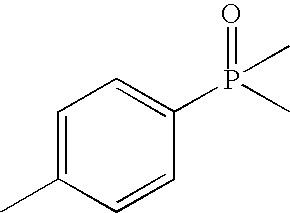
H 
483.2 552 

H 
487.2 553 

H 
540.3 554 

H 
479.2 550 

H 
485.3 551 

H 
484.2 552 

H 
483.2 553 

H 
469.2 554 

H 
472.2 555 

H 
486.3 556 

H 
468.3 557 

H 
569.3 558 

H 
492.2 559 

H 
486.2 560 

H 
493.3 561 

H 
499.3 562 

H 
500.3 563 

H 
472.2 564 

H 
507.3 565 

H 
513.3 566 

H 
514.3 567 

H 
464.2 568 

H 
470.2 569 

H 
471.2 570 

H 
500.3 571 

H 
503.2 572 

H 
507.3 573 

H 
482.2 574 

H 
492.3 575 

H 
468.2 576 

H 
482.2 577 

H 
470.2 578 

H 
492.3 579 

H 
511.3 580 

H 
470.2 581 

H 
469.2 582 

H 
472.2 583 

H 
486.2 584 

H 
472.2 585 

H 
472.2 586 

H 
454.2 587 

H 
467.2 588 

H 
456.2 589 

H 
520.2 590 

H 
520.2 591 

H 
516.3 592 

H 
487.2 593 

H 
495.3 594 

H 
473.3 595 

H 
485.2 596 

H 
494.2 597 

H 
509.2 598 

H 
509.2 599 

H 
523.3 600 

H 
470.2 601 

H 
473.2 602 

H 
480.3 603 

H 
463.2 604 

H 
549.3 605 

H 
541.3 606 

H 
607 

H 
608 

H 
609 

H 
610 

H 
473.3 - The components of Table 3 combine to form compounds of Formula I, for example, the components of compound 605 combine to form [2-(2-Methyl-morpholin-4-yl)-9-thiazol-4-yl-9H-purin-6-yl]-[4-(tetrahydro-pyran-4-sulfonyl)-phenyl]-amine, having the following structure:

- The efficacy of compounds of the invention for the treatment of diseases involving deregulated Flt3 and/or FGFR3 receptor tyrosine kinase activity is illustrated by the results of the following pharmacological tests (Examples 10 to 13). These examples illustrate the invention without in any way limiting its scope.
- The activity is assayed in the presence or absence of different concentrations of inhibitors, by measuring the incorporation of 33P from γ-33P-ATP into appropriate substrates.
- Tyrosine protein kinase assay with purified GST-Flt-3 is carried out in a final volume of 40 μL containing 500 ng of enzyme in kinase buffer (30 mM Tris-HCl (pH7.5), 3 mM MnCl2, 15 mM MgCl2, 1.5 mM DTT, 15 μM Na3VO4, 7.5 mg/ml PEG, 0.25 μM poly-EY(Glu, Tyr), 1% DMSO (at highest concentration of compound), 10 μM ATP and γ-33P-ATP (0.1 μCi)). Two solutions are made: the first solution of 10 μl contains the Flt-3 enzyme and the inhibitor. The second solution contains the substrate (poly-EY), ATP, and γ-33P-ATP in 30 μl of kinase buffer. Both solutions are mixed on 96-well PVDF filter plates (Millipore, Bedford, Mass., USA), previously wetted with 70% ethanol and rinsed with 1M Tris (7.4). The reaction is incubated at room temperature for 20 minutes, stopped with 0.1% phosphoric acid and then filtered through the plate using a vacuum manifold, allowing the substrate to bind to the membrane. The plates are then washed 5 times with 0.1% phosphoric acid, mounted in Packard TopCount 96-well adapter plate, and 50 μL of Microscint™ (Packard) is added to each well before counting.
- IC50 values are calculated by linear regression analysis of the percentage inhibition of each compound (in duplicate) at eight concentrations (1:3 dilution from 1 μM to 0.0005 μM). In this assay, compounds of the invention have an IC50 in the range of 0.1 nM to 2 μM.
- The general technique involves comparing the effects of possible inhibitors on cell lines that depend on mutant Flt3 for proliferation vs. cell lines that do not depend on mutant Flt3 for proliferation. Compounds that have differential activity (more than or equal to 10 fold difference in sensitivity between Flt3+ cell lines and Flt3− cell lines are selected for further study.
- The cell lines used for the initial screening are sub-lines of Ba/F3 cells that are engineered to over-express mutant or wild-type (non-mutated) Flt3 following infection with a retrovirus expressing appropriate Flt3 cDNAs. The parent cell line, Ba/F3 is dependent on interleukin-3 for proliferation, and when deprived of IL-3, the cells rapidly cease proliferation and die. The retrovirus expresses Flt3 from the retrovirual LTR and the neo gene from an IRES site. Ba/F3 cells are selected in G418 and analyzed for expression of Flt3 by fluorescence activated cell sorting (FACS). Cell lines with two different Flt3 mutations are used. One mutant expresses a Flt-3 that has a 14 amino acid duplication in the juxtamembrane domain encoded by exon 11, the specific duplication being . . . VDFREYEYDLKWEF . . . (termed, Ba/F3-Flt3-ITD). The second mutation has a point mutation that converts asparagines at position 835 to tyrosine (termed Ba/F3-Flt3-D835Y). Both mutations lead to Flt-3 kinase activation and make it independent of IL-3 and the expressing cells grow in the absence of IL-3. Ba/F3 cells expressing wild type Flt3 are similarly generated and used as the “control” cell line. The parental (uninfected) cell line, and the wild-type “control” cell line remain dependent on IL-3 for proliferation.
- Ba/F3 cells (-control, -Flt3-ITD, or -Flt3-D835Y) are cultured up to 500,000 cells/mL in 30 mL cultures, with RPMI 1640 with 10% fetal calf serum as the culture medium. The medium for the control cells, (but not the mutant-Flt3 cells) contains 10% conditioned medium from the WEHI-3B cell line as a source of IL-3. A 10 mM “stock” solution of each compound is made in dimethylsufoxide (DMSO). Dilutions are then made into RPMI 1640 with 10% fetal calf serum to create final drug concentrations ranging typically from 1 nM to 10 μM. Similar dilutions are made of DMSO to serve as vehicle controls. 48 hours after addition of compounds, cells are assayed for proliferation rate and cytotoxicity.
- Yo-Pro-1 iodide (Molecular Probes) is added to the cells at a final concentration of 2.5 μM in NaCl/Na-citrate buffer. The cells are incubated with Yo-Pro for 10 minutes at room temperature and then read on a fluorimeter for determination of cytotoxicity. Next, the cells are lysed with NP40/EDTA/EGTA buffer, incubated at room temperature for 90 minutes and read for the determination of proliferation.
- Compounds that are selectively more toxic to Ba/F3-Flt3-ITD cells than to wild type control Ba/F3 cells are further tested on the Flt3-D835Y expressing cells.
- Additionally, α-Flt3 antibodies are used to immunoprecipitate Flt3 proteins before, and after, exposure to various concentrations of active compounds. The immuno-precipitated proteins are separated by sodium dodecyl sulfate polyacrylamide gels, transferred electrophoretically to PVDF membrane, and immunoblotted with an α-phospho-591Y-Flt3 antibody. This assay determines if compounds reduce the “autophosphorylation” levels of Flt3 characteristic of the mutated forms of the receptor.
- Compounds of the invention typically show antiproliferative activity against Flt3-ITD in the nanomolar range while being non-toxic against control-Flt3 up to 10 μM. Compounds of the invention also reduce the autophosphorylation activity of cellular Flt-3 in the nanomolar range.
- Compounds of Formula I, in free form or in pharmaceutically acceptable salt form, exhibit valuable pharmacological properties, for example, as indicated by the in vitro tests described in this application. For example, compounds of Formula I preferably show an IC50 in the range of 1×10⁻¹⁰ to 2×10⁻⁶ M, preferably less than 100 nM for Flt3 in the assays described above. For example, {4-[2-(4-amino-cyclohexylamino)-9-thiophen-3-yl-9H-purin-6-ylamino]-phenyl}-piperidin-1-yl-methanone has an IC50 of 5 nM in the assay described by example 14 while showing an IC50 of 7 nM in the assay described in example 13.
- The activity is assayed in the presence or absence of different concentrations of inhibitors, by measuring the phosphorylation of peptide substrate using HTRF.
- Tyrosine protein kinase assay with purified FGFR3 (Upstate) is carried out in a final volume of 10 μL containing 0.25 μg/mL of enzyme in kinase buffer (30 mM Tris-HCl pH7.5, 15 mM MgCl2, 4.5 mM MnCl2, 15 μM Na3VO4 and 50 μg/mL BSA), and substrates (5 μg/mL biotin-poly-EY(Glu, Tyr) (CIS-US, Inc.) and 3 μM ATP). Two solutions are made: the first solution of 5 μl contains the FGFR3 enzyme in kinase buffer was first dispensed into 384-format Proxiplate® (Perkin-Elmer) followed by adding 50 nL of compounds dissolved in DMSO, then 5 μl of second solution contains the substrate (poly-EY) and ATP in kinase buffer was added to each wells. The reactions are incubated at room temperature for one hour, stopped by adding 10 μL of HTRF detection mixture, which contains 30 mM Tris-HCl pH7.5, 0.5 M KF, 50 mM ETDA, 0.2 mg/mL BSA, 15 μg/mL streptavidin-XL665 (CIS-US, Inc.) and 150 ng/mL cryptate conjugated anti-phosphotyrosine antibody (CIS-US, Inc.). After one hour of room temperature incubation to allow for streptavidin-biotin interaction, time resolved florescent signals are read on Analyst GT (Molecular Devices Corp.).
- IC50 values are calculated by linear regression analysis of the percentage inhibition of each compound (in duplicate) at 12 concentrations (1:3 dilution from 10 μM to 0.05 nM). In this assay, compounds of the invention have an IC50 in the range of 0.1 nM to 2 μM.
- The general technique involves comparing the effects of possible inhibitors on cell lines that depend on FGFR3 for proliferation vs. cell lines that do not depend on FGFR3 for proliferation. Compounds that have differential activity (more than or equal to 10 fold difference in sensitivity between FGFR3+ cell lines and FGFR3− cell lines are selected for further study.
- The cell lines used for the initial screening are sub-lines of Ba/F3 cells that are engineered to over-express TEL-FGFR3 fusion following infection with a retrovirus expressing TEL-FGFR3 cDNAs. The parent cell line, Ba/F3 is dependent on interleukin-3 (IL-3) for proliferation, and when deprived of IL-3, the cells rapidly cease proliferation and die. On the contrary, in the FGFR3 over-expressed Ba/F3 cells, TEL-FGFR3 fusion leads to a ligand-independent FGFR3 dimerization and subsequent FGFR3 kinase activation and that makes over-expressed Ba/F3 cells grow in the absence of IL-3.
- Wild type Ba/F3 and transformed Ba/F3 (-TEL-FGFR3) cells are cultured up to 800,000 cells/mL in suspension, with RPMI 1640 supplemented with 10% fetal bovine serum as the culture medium. The medium for the control cells contains 10 ng/ml of recombinant IL-3 (R&D Research). A 10 mM “stock” solution of each compound is made in dimethylsufoxide (DMSO). Dilutions are then made into DMSO create final drug concentrations ranging typically from 0.05 nM to 10 μM. 48 hours after addition of compounds, cells are assayed for proliferation rate. AlamarBlue® (TREK Diagnostic Systems) is added to the cells at a final concentration of 10% in cell culture medium. The cells are incubated with AlamarBlue® for 4 hours in a 37° C. tissue culture incubator and then read on a fluorescence reader for determination of proliferation.
- Additionally, phosphorylated TEL-FGFR3 protein levels in over-expressed Ba/F3 lysates after exposure to various concentrations of active compounds are detected in Western blot immunoblotted with anti-phosphorylated-FGFR3 antibody. This assay determines if compounds reduce the “autophosphorylation” levels of FGFR3 characteristic of the mutated forms of the receptor.
- Compounds of the invention typically show antiproliferative activity against TEL-FGFR3 in the nanomolar range while being non-toxic against wild type Ba/F3 up to 10 μM. Compounds of the invention also reduce the autophosphorylation activity of cellular TEL-FGFR3 in the nanomolar range.
- Compounds of the invention are assessed for their ability to inhibit individual members of a panel of kinases (a partial, non-limiting list of kinases includes: cSRC, Lck, FGFR3, Flt3, TrkB and PFGFRα). The compounds are tested in duplicates at a final concentration of 10 μM following this generic protocol. Note that the kinase buffer composition and the substrates vary for the different kinases included in the “Upstate KinaseProfiler™” panel. The compounds are tested in duplicates at a final concentration of 10 μM following this generic protocol. Note that the kinase buffer composition and the substrates vary for the different kinases included in the “Upstate KinaseProfiler™” panel. Kinase buffer (2.5 μL, 10×-containing MnCl2 when required), active kinase (0.001-0.01 Units; 2.51 μL), specific or Poly(Glu4-Tyr) peptide (5-500 μM or 0.01 mg/ml) in kinase buffer and kinase buffer (50 μM; 5 μL) are mixed in an eppendorf on ice. A Mg/ATP mix (10 μL; 67.5 (or 33.75) mM MgCl2, 450 (or 225) μM ATP and 1 μCi/μl [γ-32P]-ATP (3000 Ci/mmol)) is added and the reaction is incubated at about 30° C. for about 10 minutes. The reaction mixture is spotted (20 μL) onto a 2 cm×2 cm P81 (phosphocellulose, for positively charged peptide substrates) or Whatman No. 1 (for Poly (Glu4-Tyr) peptide substrate) paper square. The assay squares are washed 4 times, for 5 minutes each, with 0.75% phosphoric acid and washed once with acetone for 5 minutes. The assay squares are transferred to a scintillation vial, 5 ml scintillation cocktail are added and 32P incorporation (cpm) to the peptide substrate is quantified with a Beckman scintillation counter. Percentage inhibition is calculated for each reaction.
- Compounds of Formula I, at a concentration of 10 μM, preferably show a percentage inhibition of greater than 50%, preferably greater than 60%, more preferably greater than 70%, against cSRC, Lck, FGFR3, Flt3, TrkB and PFGFRα kinases. For example:
- (i) Compound 539, N2-Methyl-N2-(1-methyl-piperidin-4-yl)-N6-(4-morpholin-4-yl-phenyl)-9-thiazol-4-yl-9H-purine-2,6-diamine shows the following inhibition profile: Bmx (90%), c-Src (97%), Lck (99%), Flt3 (100%), Rsk1 (82%) and TrkB (99%);
- (ii) Compound 554 (Example 10), N6-(4-Methanesulfonyl-phenyl)-N2-pyridin-2-ylmethyl-9-thiazol-4-yl-9H-purine-2,6-diamine, shows the following inhibition profile: Abl (98%), Bmx (86%), c-Src (99%), Lck (95%), Flt3 (100%), FGFR3 (98%) and TrkB (99%); and
- (iii) Compound 503, (4-Methanesulfonyl-phenyl)-(2-morpholin-4-yl-9-thiazol-4-yl-9H-purin-6-yl)-amine, shows the following inhibition profile: Abl (81%), Bmx (71%), c-Src (98%), Lck (99%), Flt3 (99%), TrkB (99%)
- It is understood that the examples and embodiments described herein are for illustrative purposes only and that various modifications or changes in light thereof will be suggested to persons skilled in the art and are to be included within the spirit and purview of this application and scope of the appended claims. All publications, patents, and patent applications cited herein are hereby incorporated by reference for all purposes.
Claims (10)
1. A compound of Formula I:

in which:
R1 is selected from hydrogen, halo, C1-6alkyl, halo-substituted-C1-6alkyl, C1-6alkoxy, halo-substituted-C1-6alkoxy, —OXOR5, —OXR6, —OXNR5R6, —OXONR5R6, —XR6, —XNR5R6 and —XNR7XNR7R7; wherein X is selected from a bond, C1-6alkylene, C2-6alkenylene and C2-6alkynylene; wherein R7 is independently selected from hydrogen or C1-6alkyl;
R5 is selected from hydrogen, C1-6alkyl and —XOR7; wherein X is selected from a bond, C1-6alkylene, C2-6alkenylene and C2-6alkynylene; and R7 is independently selected from hydrogen or C1-6alkyl;
R6 is selected from hydrogen, C1-6alkyl, C3-12cycloalkylC0-4alkyl, C3-8heterocycloalkylC0-4alkyl, C6-10arylC0-4alkyl and C5-10heteroarylC0-4alkyl; or
R5 and R6 together with the nitrogen atom to which both R5 and R6 are attached form C3-8heterocycloalkyl or C5-8heteroaryl; wherein a methylene of any heterocycloalkyl formed by R5 and R6 can be optionally replaced by —C(O)— or —S(O)2—;
wherein any aryl, heteroaryl, cycloalkyl or heterocycloalkyl of R6 or the combination of R5 and R6 can be optionally substituted by 1 to 3 radicals independently selected from —XNR7R7, —XOR7, —XNR7R7, —XC(O)NR7R7, —XNR7C(O)R7, —XOR7, —XC(O)OR7, —XC(O)R7, C1-6alkyl, C3-8heterocycloalkyl, C5-10heteroaryl, C3-12cycloalkyl and C6-10arylC0-4alkyl; wherein any alkyl or alkylene of R1 can optionally have a methylene replaced by a divalent radical selected from —NR7C(O)—, —C(O)NR7—, —NR7—, —C(O)—, —O—, —S—, —S(O)— and —S(O)2—; and wherein any alkyl or alkylene of R6 can be optionally substituted by 1 to 3 radicals independently selected from C5-8heteroaryl, —NR7R7, —C(O)NR7R7, —NR7C(O)R7, halo and hydroxy; wherein R7 is independently selected from hydrogen or C1-6alkyl;
R2 is selected from hydrogen, C6-10aryl and C5-10heteroaryl; wherein any aryl or heteroaryl of R2 is optionally substituted with 1 to 3 radicals independently selected from —XNR7R7, —XOR7, —XOR8, —XC(O)OR7, —XC(O)R7, C1-6alkyl, C1-6alkoxy, nitro, cyano, hydroxy, halo and halo-substituted-C1-6alkyl; wherein X and R7 are as described above; and R8 is C6-10arylC0-4alkyl;
R3 is selected from hydrogen and C1-6alkyl;
R4 is selected from C3-12cycloalkylC0-4alkyl, C3-8heterocycloalkylC0-4alkyl, C6-10arylC0-4alkyl and C5-10heteroarylC0-4alkyl; wherein any alkylene of R4 can optionally have a methylene replaced by a divalent radical selected from —C(O)—, —S—, —S(O)— and —S(O)2—; wherein said aryl, heteroaryl, cycloalkyl or heterocycloalkyl of R4 is optionally substituted by 1 to 3 radicals selected from halo, C1-6alkyl, C1-6alkoxy, halo-substituted-C1-6alkyl, halo-substituted-C1-6alkoxy, —XR9, —XOR9, —XS(O)0-2R7, —XS(O)0-2R9, —XC(O)R7, —XC(O)OR7, —XP(O)R7R7, —XC(O)R9, —XC(O)NR7XNR7R7, —XC(O)NR7R7, —XC(O)NR7R9 and —XC(O)NR7XOR7; wherein X and R7 are as described above; R9 is selected from C3-12cycloalkylC0-4alkyl, C3-8heterocycloalkylC0-4alkyl, C6-10aryl and C5-10heteroaryl; wherein any aryl, heteroaryl, cycloalkyl or heterocycloalkyl of R9 is optionally substituted by 1 to 3 radicals selected from C1-6alkyl, —XC(O)R7 and —XC(O)NR7R7; wherein X and R7 are as described above; and the pharmaceutically acceptable salts, hydrates, solvates, isomers and prodrugs thereof.
2. The compound of claim 1 in which:
R1 is selected from hydrogen, halo, C1-6alkoxy, —OXOR5, —OXR6, —OXNR5R6, —OXONR5R6, —XR6, —XNR7XNR7R7 and —XNR5R6; wherein X is selected from a bond, C1-6alkylene, C2-6alkenylene and C2-6alkynylene;
R5 is selected from hydrogen, C1-6alkyl and —XOR7; wherein X is selected from a bond, C1-6alkylene, C2-6alkenylene and C2-6alkynylene; and R7 is independently selected from hydrogen or C1-6alkyl;
R6 is selected from hydrogen, C1-6alkyl, C3-12cycloalkylC0-4alkyl, C3-8heterocycloalkylC0-4alkyl, C6-10arylC0-4alkyl and C5-10heteroarylC0-4alkyl; R6 is hydrogen or C1-6alkyl; or
R5 and R6 together with the nitrogen atom to which both R5 and R6 are attached form C3-8heterocycloalkyl or C5-8heteroaryl; wherein a methylene of any heterocycloalkyl formed by R5 and R6 can be optionally replaced by —C(O)— and S(O)2;
wherein any aryl, heteroaryl, cycloalkyl or heterocycloalkyl of R6 or the combination of R5 and R6 can be optionally substituted by 1 to 3 radicals independently selected from —XNR7R7, —XC(O)NR7R7, —XOR7, —XNR7R7, —XNR7C(O)R7, —XOR7, —XC(O)R7, C1-6alkyl, C3-8heterocycloalkyl and C6-10arylC0-4alkyl; wherein any alkyl or alkylene of R1 can optionally have a methylene replaced by a divalent radical selected from —NR7C(O)—, —C(O)NR7—, —NR7—, —O—; and wherein any alkyl or alkylene of R1 can be optionally substituted by 1 to 3 radicals independently selected from C5-8heteroaryl, —NR7R7, —C(O)NR7R7, —NR7C(O)R7, halo and hydroxy; wherein R7 is independently selected from hydrogen or C1-6alkyl;
R2 is selected from hydrogen, C6-10aryl and C5-10heteroaryl; wherein any aryl or heteroaryl of R2 is optionally substituted with 1 to 3 radicals independently selected from —XNR7R7, —XOR7, —XOR8, —XC(O)OR7, C1-6alkyl, C1-6alkoxy, nitro, cyano, halo, halo-substituted-C1-6alkoxy and halo-substituted-C1-6alkyl; wherein X and R7 are as described above; and R8 is C6-10arylC0-4alkyl;
R3 is hydrogen; and
R4 is selected from C6-10arylC0-4alkyl and C5-10heteroarylC0-4alkyl; wherein said aryl or heteroaryl of R4 is substituted by 1 to 3 radicals selected from halo, —XR9, —XOR9, —XS(O)2R7, —XS(O)2R9, —XC(O)R7, —XC(O)OR7, —XP(O)R7R7, —XC(O)R9, —XC(O)NR7XNR7R7, —XC(O)NR7R7, —XC(O)NR7R9 and —XC(O)NR7XOR7; wherein X and R7 are as described above; R9 is C3-8heterocycloalkylC0-4alkyl; wherein R9 is optionally substituted by 1 to 3 radicals selected from C1-6alkyl, —XC(O)R7 and —XC(O)NR7R7; wherein X and R7 are as described above.
3. The compound of claim 2 in which R1 is selected from hydrogen, halo, C1-6alkoxy, —OXOR5, —OXR6, —OXNR5R6, —OXONR5R6, —XR6 and —XNR5R6; wherein X is selected from a bond, C1-6alkylene, C2-6alkenylene and C2-6alkynylene; R5 is selected from hydrogen, methyl, hydroxy-ethyl and methoxy-ethyl; R6 is selected from hydrogen, phenyl, benzyl, cyclopentyl, cyclobutyl, dimethylamino-propenyl, cyclohexyl, 2,3-dihydroxy-propyl, piperidinyl, amino-carbonyl-ethyl, methyl-carbonyl-amino-ethyl, methyl-amino-ethyl, amino-propyl, methyl-amino-propyl, 1-hydroxymethyl-butyl, pentyl, butyl, propyl, methoxy-ethynyl, methoxy-ethenyl, dimethyl-amino-butyl, dimethyl-amino-ethyl, dimethyl-amino-propyl, tetrahydropyranyl, tetrahydrofuranyl-methyl, pyridinyl-methyl, a zepan-1-yl, [1,4]oxazepan-4-yl, piperidinyl-ethyl, diethyl-amino-ethyl, amino-butyl, amino-isopropyl, amino-ethyl, hydroxy-ethyl, 2-acetylamino-ethyl, carbamoyl-ethyl, 4-methyl-[1,4]diazepan-1-yl, 2-hydroxy-propyl, hydroxy-propyl, 2-hydroxy-2-methyl-propyl, methoxy-ethyl, amino-propyl, methyl-amino-propyl, 2-hydroxy-2-phenyl-ethyl, pyridinyl-ethyl, morpholino-propyl, morpholino-ethyl, pyrrolidinyl, pyrrolidinyl-methyl, pyrrolidinyl-ethyl, pyrrolidinyl-propyl, pyrazinyl, quinolin-3-yl, quinolin-5-yl, imidazolyl-ethyl, pyridinyl-methyl, phenethyl, tetrahydro-pyran-4-yl, pyrimidinyl, furanyl, isoxazolyl-methyl, pyridinyl, benzo[1,3]dioxol-5-yl, thiazolyl-ethyl and thiazolyl-methyl; or R5 and R6 together with the nitrogen atom to which both R5 and R6 are attached form pyrrolidinyl, piperazinyl, piperidinyl, imidazolyl, 3-oxo-piperazin-1-yl, [1,4]diazepan-1-yl, morpholino, 3-oxo-piperazin-1-yl, 1,1-dioxo-1λ6-thiomorpholin-4-yl or pyrazolyl;
wherein any aryl, heteroaryl, cycloalkyl or heterocycloalkyl of R6 or the combination of R5 and R6 can be optionally substituted by 1 to 3 radicals independently selected from methyl-carbonyl, amino-methyl, amino-carbonyl, methyl-sulfonyl, methoxy, methoxy-methyl, formyl, fluoro-ethyl, hydroxy-ethyl, amino, dimethyl-amino, hydroxy, methyl, ethyl, acetyl, isopropyl, pyrrolidinyl, pyrimidinyl, morpholino, pyridinyl and benzyl; wherein any alkyl or alkylene of R6 can optionally have a methylene replaced by a divalent radical selected from —NHC(O)— or —C(O)NH—; and wherein any alkyl or alkylene of R6 can be optionally substituted by 1 to 2 radicals independently selected from amino, halo, piperidinyl and hydroxy.
4. The compound of claim 2 in which R2 is selected from hydrogen, phenyl, thienyl, pyridinyl, pyrazolyl, thiazolyl, pyrazinyl, naphthyl, furanyl, benzo[1,3]dioxol-5-yl, isothiazolyl, imidazolyl and pyrimidinyl; wherein any aryl or heteroaryl of R2 is optionally substituted with 1 to 3 radicals independently selected from methyl, isopropyl, halo, acetyl, trifluoromethyl, nitro, 1-hydroxy-ethyl, 1-hydroxy-1-methyl-ethyl, hydroxy-ethyl, hydroxy-methyl, formamyl, methoxy, benzyloxy, carboxy, amino, cyano, amino-carbonyl, amino-methyl and ethoxy.
5. The compound of claim 2 in which R4 is selected from phenyl, benzyl, pyridinyl and 1-oxo-indan-5-yl; wherein said phenyl, benzyl, indanyl or pyridinyl is optionally substituted with halo, acetyl, trifluoromethyl, cyclopropyl-amino-carbonyl, azetidine-1-carbonyl, piperidinyl-carbonyl, morpholino, methyl-carbonyl, piperazinyl, methyl-sulfonyl, piperidinyl-sulfonyl, 4-methyl-piperazinyl-carbonyl, dimethyl-amino-ethyl-amino-carbonyl, morpholino-carbonyl, morpholino-methyl, amino-carbonyl, propyl-amino-carbonyl, hydroxy-ethyl-amino-carbonyl, morpholino-ethyl-amino-carbonyl, 4-acetyl-piperazine-1-carbonyl, 4-amino-carbonyl-piperazine-1-carbonyl, phenyl-carbonyl, pyrrolidinyl-1-carbonyl, propyl-carbonyl, butyl, isopropyl-oxy-carbonyl, cyclohexyl-carbonyl, cyclopropyl-carbonyl, methyl-sulfonyl, dimethyl-phosphinoyl, 4-methyl-piperazinyl-sulfonyl, 1-oxo-indan-5-yl, oxetane-3-sulfonyl, amino-sulphonyl and tetrahydro-pyran-4-sulfonyl.
6. The compound of claim 2 selected from: N6-(4-Methanesulfinyl-phenyl)-N2-methyl-N2-(tetrahydro-pyran-4-yl)-9-thiazol-4-yl-9H-purine-2,6-diamine; (4-Methanesulfonyl-phenyl)-[2-(2-methyl-morpholin-4-yl)-9-thiazol-4-yl-9H-purin-6-yl]-amine; 1-{4-[2-(2-Methyl-morpholin-4-yl)-9-thiazol-4-yl-9H-purin-6-ylamino]-phenyl}-ethanone; [4-(Dimethyl-phosphinoyl)-phenyl]-[2-(2-methyl-morpholin-4-yl)-9-thiazol-4-yl-9H-purin-6-yl]-amine; Azetidin-1-yl-{4-[2-(4-morpholin-4-yl-piperidin-1-yl)-9-thiazol-4-yl-9H-purin-6-ylamino]-phenyl}-methanone; 1-(4-{2-[Methyl-(1-methyl-piperidin-4-yl)-amino]-9-thiazol-4-yl-9H-purin-6-ylamino}-phenyl)-ethanone; 1-{4-[2-(2-Methyl-morpholin-4-yl)-9-thiophen-3-yl-9H-purin-6-ylamino]-phenyl}-ethanone; (4-Methanesulfonyl-phenyl)-[2-(4-morpholin-4-yl-piperidin-1-yl)-9-thiazol-4-yl-9H-purin-6-yl]-amine; N6-(4-Methanesulfonyl-phenyl)-N2-methyl-N2-(1-methyl-piperidin-4-yl)-9-thiazol-4-yl-9H-purine-2,6-diamine; [2-(2-Methyl-morpholin-4-yl)-9-thiazol-4-yl-9H-purin-6-yl]-(4-morphol in-4-yl-phenyl)-amine; N2-Methyl-N2-(1-methyl-piperidin-4-yl)-N6-(4-morpholin-4-yl-phenyl)-9-thiazol-4-yl-9H-purine-2,6-diamine; N2-Methyl-N2-(1-methyl-piperidin-4-yl)-N6-(4-morpholin-4-yl-phenyl)-9-thiophen-3-yl-9H-purine-2,6-diamine; [2-(2,2-Dimethyl-morpholin-4-yl)-9-thiazol-4-yl-9H-purin-6-yl]-(4-methanesulfonyl-phenyl)-amine; [2-(2,6-Dimethyl-morpholin-4-yl)-9-thiazol-4-yl-9H-purin-6-yl]-(4-methanesulfonyl-phenyl)-amine; [4-(Dimethyl-phosphinoyl)-phenyl]-[2-(2-ethyl-morpholin-4-yl)-9-thiophen-3-yl-9H-purin-6-yl]-amine; [4-(Dimethyl-phosphinoyl)-phenyl]-[2-(2-fluoromethyl-morpholin-4-yl)-9-thiophen-3-yl-9H-purin-6-yl]-amine; [2-(2,6-Dimethyl-morpholin-4-yl)-9-thiazol-4-yl-9H-purin-6-yl]-[4-(dimethyl-phosphinoyl)-phenyl]-amine; [2-(2,6-Dimethyl-morpholin-4-yl)-9-thiophen-3-yl-9H-purin-6-yl]-[4-(dimethyl-phosphinoyl)-phenyl]-amine; [4-(Dimethyl-phosphinoyl)-phenyl]-[2-(2-methyl-morpholin-4-yl)-9-thiophen-3-yl-9H-purin-6-yl]-amine; [4-(Dimethyl-phosphinoyl)-phenyl]-[2-(3-methyl-piperidin-1-yl)-9-thiazol-4-yl-9H-purin-6-yl]-amine; N6-(4-Methanesulfonyl-phenyl)-N2-methyl-N2-pyridin-2-ylmethyl-9-thiophen-3-yl-9H-purine-2,6-diamine; N2-Methyl-N6-(4-morpholin-4-yl-phenyl)-N2-pyridin-2-ylmethyl-9-thiophen-3-yl-9H-purine-2,6-diamine; (2-Azepan-1-yl-9-thiazol-4-yl-9H-purin-6-yl)-[4-(dimethyl-phosphinoyl)-phenyl]-amine; N2-Cyclohexyl-N6-[4-(dimethyl-phosphinoyl)-phenyl]-N2-methyl-9-thiazol-4-yl-9H-purine-2,6-diamine; N6-(4-Methanesulfonyl-phenyl)-N2-methyl-N2-(tetrahydro-pyran-4-yl)-9-thiazol-4-yl-9H-purine-2,6-diamine; N6-(4-Methanesulfonyl-phenyl)-N2-pyridin-2-ylmethyl-9-thiazol-4-yl-9H-purine-2,6-diamine; N2-Cyclohexyl-N6-(4-methanesulfinyl-phenyl)-N2-methyl-9-thiazol-4-yl-9H-purine-2,6-diamine; R-(4-Methanesulfinyl-phenyl)-[2-(2-methyl-morpholin-4-yl)-9-thiazol-4-yl-9H-purin-6-yl]-amine; N6-(4-Methanesulfonyl-phenyl)-N2-methyl-N2-pyridin-2-ylmethyl-9-thiazol-4-yl-9H-purine-2,6-diamine; {4-[6-(4-Methanesulfonyl-phenylamino)-2-(methyl-pyridin-2-ylmethyl-amino)-purin-9-yl]-phenyl}-methanol; R-(4-Methanesulfonyl-phenyl)-[2-(2-methyl-morpholin-4-yl)-9-thiazol-4-yl-9H-purin-6-yl]-amine; R-4-[2-(2-Methyl-morpholin-4-yl)-9-thiazol-4-yl-9H-purin-6-ylamino]-benzenesulfonamide; and {4-[6-(4-Methanesulfonyl-phenylamino)-2-(2-methyl-morpholin-4-yl)-purin-9-yl]-phenyl}-methanol.
7. A pharmaceutical composition comprising a therapeutically effective amount of a compound of claim 1 in combination with a pharmaceutically acceptable excipient.
8. A method for treating a disease in an animal in which inhibition of kinase activity can prevent, inhibit or ameliorate the pathology and/or symptomology of the disease, which method comprises administering to the animal a therapeutically effective amount of a compound of claim 1 .
9. The method of claim 8 in which the kinase is selected from cSRC, Lck, FGFR3, Flt3, TrkB and Bmx kinases.
10. The use of a compound of claim 1 in the manufacture of a medicament for treating a disease in an animal in which the kinase activity of cSRC, Lck, FGFR3, Flt3, TrkB and/or Bmx contributes to the pathology and/or symptomology of the disease.
Priority Applications (2)
| Application Number | Priority Date | Filing Date | Title |
|---|---|---|---|
| US10/917,578 US20050124637A1 (en) | 2003-08-15 | 2004-08-13 | Compounds and compositions as inhibitors of receptor tyrosine kinase activity |
| US12/976,187 US20110092491A1 (en) | 2003-08-15 | 2010-12-22 | Compounds and Compositions as Inhibitors of Receptor Tyrosine Kinase Activity |
Applications Claiming Priority (4)
| Application Number | Priority Date | Filing Date | Title |
|---|---|---|---|
| US49540603P | 2003-08-15 | 2003-08-15 | |
| US52435703P | 2003-11-21 | 2003-11-21 | |
| US56536704P | 2004-04-26 | 2004-04-26 | |
| US10/917,578 US20050124637A1 (en) | 2003-08-15 | 2004-08-13 | Compounds and compositions as inhibitors of receptor tyrosine kinase activity |
Related Child Applications (1)
| Application Number | Title | Priority Date | Filing Date |
|---|---|---|---|
| US12/976,187 Continuation US20110092491A1 (en) | 2003-08-15 | 2010-12-22 | Compounds and Compositions as Inhibitors of Receptor Tyrosine Kinase Activity |
Publications (1)
| Publication Number | Publication Date |
|---|---|
| US20050124637A1 true US20050124637A1 (en) | 2005-06-09 |
Family
ID=34198974
Family Applications (2)
| Application Number | Title | Priority Date | Filing Date |
|---|---|---|---|
| US10/917,578 Abandoned US20050124637A1 (en) | 2003-08-15 | 2004-08-13 | Compounds and compositions as inhibitors of receptor tyrosine kinase activity |
| US12/976,187 Abandoned US20110092491A1 (en) | 2003-08-15 | 2010-12-22 | Compounds and Compositions as Inhibitors of Receptor Tyrosine Kinase Activity |
Family Applications After (1)
| Application Number | Title | Priority Date | Filing Date |
|---|---|---|---|
| US12/976,187 Abandoned US20110092491A1 (en) | 2003-08-15 | 2010-12-22 | Compounds and Compositions as Inhibitors of Receptor Tyrosine Kinase Activity |
Country Status (16)
| Country | Link |
|---|---|
| US (2) | US20050124637A1 (en) |
| EP (1) | EP1656378A4 (en) |
| JP (1) | JP2007502776A (en) |
| AU (2) | AU2004264419B2 (en) |
| BR (1) | BRPI0413563A (en) |
| CA (1) | CA2535620A1 (en) |
| CO (1) | CO5680404A2 (en) |
| EC (1) | ECSP066365A (en) |
| IL (1) | IL173392A0 (en) |
| IS (1) | IS8345A (en) |
| MA (1) | MA27997A1 (en) |
| MX (1) | MXPA06001758A (en) |
| NO (1) | NO20061074L (en) |
| SG (1) | SG145748A1 (en) |
| TN (1) | TNSN06053A1 (en) |
| WO (1) | WO2005016528A2 (en) |
Cited By (61)
| Publication number | Priority date | Publication date | Assignee | Title |
|---|---|---|---|---|
| US20040157864A1 (en) * | 2002-10-15 | 2004-08-12 | Irm Llc | Compositions and methods for inducing osteogenesis |
| US20060293330A1 (en) * | 2003-09-25 | 2006-12-28 | Janssen Pharmaceutica N.V. | Hiv replication inhibiting purine derivatives |
| US20070191380A1 (en) * | 2001-10-12 | 2007-08-16 | Irm Llc | Kinase inhibitor scaffolds and methods for their preparation |
| US20070197559A1 (en) * | 2004-03-02 | 2007-08-23 | Rajagopal Bakthavatchalam | Aryl substituted purine analogues |
| US20090042768A1 (en) * | 2005-05-16 | 2009-02-12 | Boulos Zacharie | Purine derivatives and their use for treatment of autoimmune diseases |
| US20100056494A1 (en) * | 2007-01-26 | 2010-03-04 | Irm Llc | Purine compounds and compositions as kinase inhibitors for the treatment of plasmodium related diseases |
| US20100105705A1 (en) * | 2007-03-28 | 2010-04-29 | Neurosearch A/S | Purinyl derivatives and their use as potassium channel modulators |
| US20100120797A1 (en) * | 2007-03-28 | 2010-05-13 | Neurosearch A/S | Purinyl derivatives and their use as potassium channel modulators |
| WO2010059418A1 (en) * | 2008-11-19 | 2010-05-27 | The Government Of The U.S.A. As Represented By The Secretary Of The Dept. Of Health & Human Services | Substituted triazine and purine compounds, methods of inhibiting cruzain and rhodesain and methods of treating chagas disease and african trypanosomiasis |
| US20100298336A1 (en) * | 2009-05-21 | 2010-11-25 | Giorgio Attardo | Pyrimidines as novel therapeutic agents |
| WO2010141406A2 (en) | 2009-06-01 | 2010-12-09 | Osi Pharmaceuticals, Inc. | Amino pyrimidine anticancer compounds |
| US20110077268A1 (en) * | 2008-03-14 | 2011-03-31 | Yi Liu | Kinase inhibitors and methods of use |
| US20110172228A1 (en) * | 2008-07-08 | 2011-07-14 | Pingda Ren | Kinase inhibitors and methods of use |
| US20110237607A1 (en) * | 2008-09-26 | 2011-09-29 | Neurosearch A/S | Substituted purinyl-pyrazol derivatives and their use as potassium channel modulators |
| US20110251217A1 (en) * | 2008-09-26 | 2011-10-13 | Neurosearch A/S | Substituted purinyl-pyrazol derivatives and their use as potassium channel modulators |
| US8193182B2 (en) | 2008-01-04 | 2012-06-05 | Intellikine, Inc. | Substituted isoquinolin-1(2H)-ones, and methods of use thereof |
| WO2012074951A1 (en) | 2010-11-29 | 2012-06-07 | OSI Pharmaceuticals, LLC | Macrocyclic kinase inhibitors |
| WO2012172043A1 (en) | 2011-06-15 | 2012-12-20 | Laboratoire Biodim | Purine derivatives and their use as pharmaceuticals for prevention or treatment of bacterial infections |
| US8476282B2 (en) | 2008-11-03 | 2013-07-02 | Intellikine Llc | Benzoxazole kinase inhibitors and methods of use |
| US8604032B2 (en) | 2010-05-21 | 2013-12-10 | Infinity Pharmaceuticals, Inc. | Chemical compounds, compositions and methods for kinase modulation |
| CN103501801A (en) * | 2011-03-01 | 2014-01-08 | 索隆-基特林癌症研究协会 | Parathyroid hormone analogs, compositions and uses thereof |
| US8642604B2 (en) | 2006-04-04 | 2014-02-04 | The Regents Of The University Of California | Substituted pyrazolo[3,2-d]pyrimidines as anti-cancer agents |
| US8697709B2 (en) | 2008-10-16 | 2014-04-15 | The Regents Of The University Of California | Fused ring heteroaryl kinase inhibitors |
| US8703778B2 (en) | 2008-09-26 | 2014-04-22 | Intellikine Llc | Heterocyclic kinase inhibitors |
| US8703777B2 (en) | 2008-01-04 | 2014-04-22 | Intellikine Llc | Certain chemical entities, compositions and methods |
| US8785454B2 (en) | 2009-05-07 | 2014-07-22 | Intellikine Llc | Heterocyclic compounds and uses thereof |
| US8785470B2 (en) | 2011-08-29 | 2014-07-22 | Infinity Pharmaceuticals, Inc. | Heterocyclic compounds and uses thereof |
| US8809349B2 (en) | 2011-01-10 | 2014-08-19 | Infinity Pharmaceuticals, Inc. | Processes for preparing isoquinolinones and solid forms of isoquinolinones |
| US8828998B2 (en) | 2012-06-25 | 2014-09-09 | Infinity Pharmaceuticals, Inc. | Treatment of lupus, fibrotic conditions, and inflammatory myopathies and other disorders using PI3 kinase inhibitors |
| US8901133B2 (en) | 2010-11-10 | 2014-12-02 | Infinity Pharmaceuticals, Inc. | Heterocyclic compounds and uses thereof |
| US8940742B2 (en) | 2012-04-10 | 2015-01-27 | Infinity Pharmaceuticals, Inc. | Heterocyclic compounds and uses thereof |
| US8969363B2 (en) | 2011-07-19 | 2015-03-03 | Infinity Pharmaceuticals, Inc. | Heterocyclic compounds and uses thereof |
| US8980899B2 (en) | 2009-10-16 | 2015-03-17 | The Regents Of The University Of California | Methods of inhibiting Ire1 |
| US8993580B2 (en) | 2008-03-14 | 2015-03-31 | Intellikine Llc | Benzothiazole kinase inhibitors and methods of use |
| US9012462B2 (en) | 2008-05-21 | 2015-04-21 | Ariad Pharmaceuticals, Inc. | Phosphorous derivatives as kinase inhibitors |
| US9056877B2 (en) | 2011-07-19 | 2015-06-16 | Infinity Pharmaceuticals, Inc. | Heterocyclic compounds and uses thereof |
| CN104788387A (en) * | 2015-04-17 | 2015-07-22 | 浙江海森药业有限公司 | Preparation method for high-purity rosuvastatin calcium |
| US9273077B2 (en) | 2008-05-21 | 2016-03-01 | Ariad Pharmaceuticals, Inc. | Phosphorus derivatives as kinase inhibitors |
| US9290496B2 (en) | 2013-11-21 | 2016-03-22 | Pfizer Inc. | Purine derivatives |
| US9295673B2 (en) | 2011-02-23 | 2016-03-29 | Intellikine Llc | Combination of mTOR inhibitors and P13-kinase inhibitors, and uses thereof |
| US9321772B2 (en) | 2011-09-02 | 2016-04-26 | The Regents Of The University Of California | Substituted pyrazolo[3,4-D]pyrimidines and uses thereof |
| US9359349B2 (en) | 2007-10-04 | 2016-06-07 | Intellikine Llc | Substituted quinazolines as kinase inhibitors |
| US9359365B2 (en) | 2013-10-04 | 2016-06-07 | Infinity Pharmaceuticals, Inc. | Heterocyclic compounds and uses thereof |
| US9481667B2 (en) | 2013-03-15 | 2016-11-01 | Infinity Pharmaceuticals, Inc. | Salts and solid forms of isoquinolinones and composition comprising and methods of using the same |
| US9512125B2 (en) | 2004-11-19 | 2016-12-06 | The Regents Of The University Of California | Substituted pyrazolo[3.4-D] pyrimidines as anti-inflammatory agents |
| US9611283B1 (en) | 2013-04-10 | 2017-04-04 | Ariad Pharmaceuticals, Inc. | Methods for inhibiting cell proliferation in ALK-driven cancers |
| US9629843B2 (en) | 2008-07-08 | 2017-04-25 | The Regents Of The University Of California | MTOR modulators and uses thereof |
| US9708348B2 (en) | 2014-10-03 | 2017-07-18 | Infinity Pharmaceuticals, Inc. | Trisubstituted bicyclic heterocyclic compounds with kinase activities and uses thereof |
| US9751888B2 (en) | 2013-10-04 | 2017-09-05 | Infinity Pharmaceuticals, Inc. | Heterocyclic compounds and uses thereof |
| US9775844B2 (en) | 2014-03-19 | 2017-10-03 | Infinity Pharmaceuticals, Inc. | Heterocyclic compounds and uses thereof |
| US9834518B2 (en) | 2011-05-04 | 2017-12-05 | Ariad Pharmaceuticals, Inc. | Compounds for inhibiting cell proliferation in EGFR-driven cancers |
| US9834571B2 (en) | 2012-05-05 | 2017-12-05 | Ariad Pharmaceuticals, Inc. | Compounds for inhibiting cell proliferation in EGFR-driven cancers |
| US9884848B2 (en) | 2012-06-26 | 2018-02-06 | Saniona A/S | Phenyl triazole derivative and its use for modulating the GABAA receptor complex |
| US10131668B2 (en) | 2012-09-26 | 2018-11-20 | The Regents Of The University Of California | Substituted imidazo[1,5-a]pYRAZINES for modulation of IRE1 |
| US10160761B2 (en) | 2015-09-14 | 2018-12-25 | Infinity Pharmaceuticals, Inc. | Solid forms of isoquinolinones, and process of making, composition comprising, and methods of using the same |
| US10759806B2 (en) | 2016-03-17 | 2020-09-01 | Infinity Pharmaceuticals, Inc. | Isotopologues of isoquinolinone and quinazolinone compounds and uses thereof as PI3K kinase inhibitors |
| US10919914B2 (en) | 2016-06-08 | 2021-02-16 | Infinity Pharmaceuticals, Inc. | Heterocyclic compounds and uses thereof |
| US11110096B2 (en) | 2014-04-16 | 2021-09-07 | Infinity Pharmaceuticals, Inc. | Combination therapies |
| US11147818B2 (en) | 2016-06-24 | 2021-10-19 | Infinity Pharmaceuticals, Inc. | Combination therapies |
| US11331313B2 (en) | 2017-05-22 | 2022-05-17 | Whitehead Institute For Biomedical Research | KCC2 expression enhancing compounds and uses thereof |
| US12213983B2 (en) | 2012-11-01 | 2025-02-04 | Infinity Pharmaceuticals, Inc. | Treatment of cancers using PI3 kinase isoform modulators |
Families Citing this family (38)
| Publication number | Priority date | Publication date | Assignee | Title |
|---|---|---|---|---|
| US7256196B1 (en) | 2003-12-09 | 2007-08-14 | The Procter & Gamble Company | Purine cytokine inhibitors |
| DE102005017259A1 (en) * | 2005-04-14 | 2006-10-19 | Merck Patent Gmbh | purine derivatives |
| DE602006019088D1 (en) | 2005-05-13 | 2011-02-03 | Irm Llc | COMPOUNDS AND COMPOSITIONS AS PROTEIN KINASE INHIBITORS |
| CN100526315C (en) * | 2005-06-16 | 2009-08-12 | 浙江医药股份有限公司新昌制药厂 | N2-quinoline or isoquinoline substituted purine derivative and its preparation method and uses |
| WO2007024680A1 (en) | 2005-08-22 | 2007-03-01 | Amgen Inc. | Pyrazolopyridine and pyrazolopyrimidine compounds useful as kinase enzymes modulators |
| JP5400388B2 (en) | 2005-12-15 | 2014-01-29 | ライジェル ファーマシューティカルズ, インコーポレイテッド | Kinase inhibitors and uses thereof |
| BRPI0722383A2 (en) | 2006-12-08 | 2012-06-05 | Irm Llc | protein kinase inhibiting compounds, compositions containing them as well as their uses |
| WO2008073687A2 (en) * | 2006-12-08 | 2008-06-19 | Irm Llc | Compounds and compositions as protein kinase inhibitors |
| CN101679422A (en) * | 2007-03-28 | 2010-03-24 | 阵列生物制药公司 | Imidazo[1,2-a]pyridine compounds as receptor tyrosine kinase inhibitors |
| CN101289449A (en) * | 2007-04-20 | 2008-10-22 | 浙江医药股份有限公司新昌制药厂 | 2, 6-dinitrogen-containing substituted purine derivative and preparation method and application thereof |
| WO2008135232A1 (en) * | 2007-05-02 | 2008-11-13 | Riccardo Cortese | Use and compositions of purine derivatives for the treatment of proliferative disorders |
| UA99459C2 (en) * | 2007-05-04 | 2012-08-27 | Астразенека Аб | 9-(pyrazol-3-yl)- 9h-purine-2-amine and 3-(pyraz0l-3-yl)-3h-imidazo[4,5-b]pyridin-5-amine derivatives and their use for the treatment of cancer |
| CZ302225B6 (en) * | 2007-07-04 | 2010-12-29 | Univerzita Palackého v Olomouci | Substituted 6-anilinopurine derivatives functioning as cytokine oxidase inhibitors and formulations containing such compounds |
| FR2920776B1 (en) * | 2007-09-12 | 2012-09-28 | Centre Nat Rech Scient | USE OF PURINE DERIVATIVES FOR THE MANUFACTURE OF A MEDICINAL PRODUCT |
| AU2013205510A1 (en) * | 2008-05-21 | 2013-05-16 | Ariad Pharmaceuticals, Inc. | Phosphorous derivatives as kinase inhibitors |
| EP2320907A4 (en) * | 2008-08-05 | 2012-09-05 | Merck Sharp & Dohme | THERAPEUTIC COMPOUNDS |
| EP2845856A1 (en) | 2009-06-29 | 2015-03-11 | Incyte Corporation | Pyrimidinones as PI3K inhibitors |
| US8759359B2 (en) | 2009-12-18 | 2014-06-24 | Incyte Corporation | Substituted heteroaryl fused derivatives as PI3K inhibitors |
| CA2790176A1 (en) | 2010-02-18 | 2011-08-25 | Centro Nacional De Investigaciones Oncologicas (Cnio) | Triazolo [4, 5 - b] pyridin derivatives |
| EP2558463A1 (en) | 2010-04-14 | 2013-02-20 | Incyte Corporation | Fused derivatives as i3 inhibitors |
| WO2011163195A1 (en) | 2010-06-21 | 2011-12-29 | Incyte Corporation | Fused pyrrole derivatives as pi3k inhibitors |
| TW201249844A (en) | 2010-12-20 | 2012-12-16 | Incyte Corp | N-(1-(substituted-phenyl)ethyl)-9H-purin-6-amines as PI3K inhibitors |
| WO2012125629A1 (en) | 2011-03-14 | 2012-09-20 | Incyte Corporation | Substituted diamino-pyrimidine and diamino-pyridine derivatives as pi3k inhibitors |
| US9126948B2 (en) | 2011-03-25 | 2015-09-08 | Incyte Holdings Corporation | Pyrimidine-4,6-diamine derivatives as PI3K inhibitors |
| UA121539C2 (en) | 2011-09-02 | 2020-06-25 | Інсайт Холдинґс Корпорейшн | HETEROCYCLYLAMINE AS RI3K INHIBITORS |
| US9493464B2 (en) | 2012-02-29 | 2016-11-15 | The Scripps Research Institute | Wee1 degradation inhibitors |
| AR090548A1 (en) | 2012-04-02 | 2014-11-19 | Incyte Corp | BICYCLIC AZAHETEROCICLOBENCILAMINS AS PI3K INHIBITORS |
| CN104418858B (en) * | 2013-08-30 | 2018-12-11 | 浙江医药股份有限公司新昌制药厂 | Nitrogenous substituted purine derivative of 2,6- bis- and preparation method thereof and its pharmaceutical composition and application |
| WO2015162518A1 (en) | 2014-04-25 | 2015-10-29 | Pfizer Inc. | Heteroaromatic compounds and their use as dopamine d1 ligands |
| US10077277B2 (en) | 2014-06-11 | 2018-09-18 | Incyte Corporation | Bicyclic heteroarylaminoalkyl phenyl derivatives as PI3K inhibitors |
| UA122332C2 (en) | 2015-02-27 | 2020-10-26 | Інсайт Корпорейшн | Salts of pi3k inhibitor and processes for their preparation |
| WO2016183063A1 (en) | 2015-05-11 | 2016-11-17 | Incyte Corporation | Crystalline forms of a pi3k inhibitor |
| WO2016183060A1 (en) | 2015-05-11 | 2016-11-17 | Incyte Corporation | Process for the synthesis of a phosphoinositide 3-kinase inhibitor |
| JP7082120B2 (en) | 2016-10-21 | 2022-06-07 | ニンバス ラクシュミ, インコーポレイテッド | TYK2 inhibitors and their use |
| CZ308029B6 (en) * | 2017-03-20 | 2019-11-06 | Univerzita Palackého v Olomouci | 2,6-Disubstituted-9-cyclopentyl-9H-purines, their use as medicaments and pharmaceutical preparations |
| MX2020012826A (en) | 2018-06-01 | 2021-03-09 | Incyte Corp | DOSAGE REGIMEN FOR THE TREATMENT OF DISORDERS RELATED TO PHOSPHATIDYLINOSITOL 3-KINASES (PI3K). |
| US12391694B2 (en) * | 2019-06-24 | 2025-08-19 | Merck Sharp & Dohme Llc | Process for the preparation of 2-fluoroadenine |
| KR20250121114A (en) | 2022-12-16 | 2025-08-11 | 아스트라제네카 아베 | 2,6,9-trisubstituted purine |
Citations (13)
| Publication number | Priority date | Publication date | Assignee | Title |
|---|---|---|---|---|
| US3041340A (en) * | 1962-06-26 | Method of preparing substituted | ||
| US3133065A (en) * | 1962-07-30 | 1964-05-12 | Abbott Lab | Purine derivatives |
| US4405781A (en) * | 1981-03-02 | 1983-09-20 | Polaroid Corporation | Method for preparing salts of 6-chloropurine |
| US5017578A (en) * | 1989-06-09 | 1991-05-21 | Hoechst-Roussel Pharmaceuticals Inc. | N-heteroaryl-purin-6-amines useful as analgesic and anticonvulsant agents |
| US5565566A (en) * | 1987-04-24 | 1996-10-15 | Discovery Therapeutics, Inc. | N6 -substituted 9-methyladenines: a new class of adenosine receptor antagonists |
| US5744424A (en) * | 1993-12-03 | 1998-04-28 | Caudill Seed Company, Inc. | Plant growth promoter composition comprising N-6-benzyladenine, an alcohol, and a metal hydroxide |
| US5866702A (en) * | 1996-08-02 | 1999-02-02 | Cv Therapeutics, Incorporation | Purine inhibitors of cyclin dependent kinase 2 |
| US6107301A (en) * | 1993-10-12 | 2000-08-22 | Dupont Pharmaceuticals Company | 1N-alkyl-N-arylpyrimidinamines and derivatives thereof |
| US6506762B1 (en) * | 1999-09-30 | 2003-01-14 | Neurogen Corporation | Certain alkylene diamine-substituted heterocycles |
| US20030045533A1 (en) * | 2001-02-08 | 2003-03-06 | Memory Pharmaceuticals Corp. | Phosphodiesterase 4 inhibitors |
| US20040157864A1 (en) * | 2002-10-15 | 2004-08-12 | Irm Llc | Compositions and methods for inducing osteogenesis |
| US6825184B2 (en) * | 2001-10-18 | 2004-11-30 | Boehringer Ingelheim Pharmaceuticals, Inc. | 1,4-Disubstituted benzo-fused urea compounds |
| US20050043328A1 (en) * | 2001-08-02 | 2005-02-24 | Karel Dolezal | Heterocyclic compound based on n6-substituted adenine, methods, of their preparation, their use for preparation of drugs, cosmetic preparations and growth regulators, pharmaceutical preparations, cosmetic preparations and growth regulators containing these compounds |
Family Cites Families (8)
| Publication number | Priority date | Publication date | Assignee | Title |
|---|---|---|---|---|
| EP0831829B1 (en) * | 1995-06-07 | 2003-08-20 | Pfizer Inc. | Heterocyclic ring-fused pyrimidine derivatives |
| JPH10512896A (en) * | 1995-11-14 | 1998-12-08 | フアルマシア・エ・アツプジヨン・エツセ・ピー・アー | Aryl and heteroaryl purine compounds |
| GB9613021D0 (en) * | 1996-06-21 | 1996-08-28 | Pharmacia Spa | Bicyclic 4-aralkylaminopyrimidine derivatives as tyrosine kinase inhibitors |
| GB9903762D0 (en) * | 1999-02-18 | 1999-04-14 | Novartis Ag | Organic compounds |
| GB9918035D0 (en) * | 1999-07-30 | 1999-09-29 | Novartis Ag | Organic compounds |
| AU7323000A (en) * | 1999-08-26 | 2001-04-10 | Plant Research International B.V. | Conditional inhibition of vegetative propagation |
| EP1444982A1 (en) * | 2003-02-06 | 2004-08-11 | Merckle Gmbh | The use of purine derivatives as selective kinase inhibitors |
| MX2009007944A (en) * | 2007-01-26 | 2009-08-07 | Irm Llc | Compounds and compositions as kinase inhibitors. |
-
2004
- 2004-08-13 MX MXPA06001758A patent/MXPA06001758A/en not_active Application Discontinuation
- 2004-08-13 SG SG200806062-6A patent/SG145748A1/en unknown
- 2004-08-13 BR BRPI0413563-6A patent/BRPI0413563A/en not_active IP Right Cessation
- 2004-08-13 US US10/917,578 patent/US20050124637A1/en not_active Abandoned
- 2004-08-13 AU AU2004264419A patent/AU2004264419B2/en not_active Ceased
- 2004-08-13 JP JP2006523409A patent/JP2007502776A/en active Pending
- 2004-08-13 CA CA002535620A patent/CA2535620A1/en not_active Abandoned
- 2004-08-13 WO PCT/US2004/026373 patent/WO2005016528A2/en not_active Ceased
- 2004-08-13 EP EP04781114A patent/EP1656378A4/en not_active Withdrawn
-
2006
- 2006-01-26 IL IL173392A patent/IL173392A0/en unknown
- 2006-02-14 TN TNP2006000053A patent/TNSN06053A1/en unknown
- 2006-02-14 EC EC2006006365A patent/ECSP066365A/en unknown
- 2006-02-17 MA MA28818A patent/MA27997A1/en unknown
- 2006-02-20 CO CO06016491A patent/CO5680404A2/en not_active Application Discontinuation
- 2006-03-06 NO NO20061074A patent/NO20061074L/en not_active Application Discontinuation
- 2006-03-09 IS IS8345A patent/IS8345A/en unknown
-
2009
- 2009-04-15 AU AU2009201480A patent/AU2009201480A1/en not_active Abandoned
-
2010
- 2010-12-22 US US12/976,187 patent/US20110092491A1/en not_active Abandoned
Patent Citations (14)
| Publication number | Priority date | Publication date | Assignee | Title |
|---|---|---|---|---|
| US3041340A (en) * | 1962-06-26 | Method of preparing substituted | ||
| US3133065A (en) * | 1962-07-30 | 1964-05-12 | Abbott Lab | Purine derivatives |
| US4405781A (en) * | 1981-03-02 | 1983-09-20 | Polaroid Corporation | Method for preparing salts of 6-chloropurine |
| US5565566A (en) * | 1987-04-24 | 1996-10-15 | Discovery Therapeutics, Inc. | N6 -substituted 9-methyladenines: a new class of adenosine receptor antagonists |
| US5017578A (en) * | 1989-06-09 | 1991-05-21 | Hoechst-Roussel Pharmaceuticals Inc. | N-heteroaryl-purin-6-amines useful as analgesic and anticonvulsant agents |
| US6107301A (en) * | 1993-10-12 | 2000-08-22 | Dupont Pharmaceuticals Company | 1N-alkyl-N-arylpyrimidinamines and derivatives thereof |
| US5744424A (en) * | 1993-12-03 | 1998-04-28 | Caudill Seed Company, Inc. | Plant growth promoter composition comprising N-6-benzyladenine, an alcohol, and a metal hydroxide |
| US5866702A (en) * | 1996-08-02 | 1999-02-02 | Cv Therapeutics, Incorporation | Purine inhibitors of cyclin dependent kinase 2 |
| US6506762B1 (en) * | 1999-09-30 | 2003-01-14 | Neurogen Corporation | Certain alkylene diamine-substituted heterocycles |
| US20030045533A1 (en) * | 2001-02-08 | 2003-03-06 | Memory Pharmaceuticals Corp. | Phosphodiesterase 4 inhibitors |
| US20050043328A1 (en) * | 2001-08-02 | 2005-02-24 | Karel Dolezal | Heterocyclic compound based on n6-substituted adenine, methods, of their preparation, their use for preparation of drugs, cosmetic preparations and growth regulators, pharmaceutical preparations, cosmetic preparations and growth regulators containing these compounds |
| US6825184B2 (en) * | 2001-10-18 | 2004-11-30 | Boehringer Ingelheim Pharmaceuticals, Inc. | 1,4-Disubstituted benzo-fused urea compounds |
| US20040157864A1 (en) * | 2002-10-15 | 2004-08-12 | Irm Llc | Compositions and methods for inducing osteogenesis |
| US7273864B2 (en) * | 2002-10-15 | 2007-09-25 | The Scripps Research Institute | Compositions and methods for inducing osteogenesis |
Cited By (122)
| Publication number | Priority date | Publication date | Assignee | Title |
|---|---|---|---|---|
| US20070191380A1 (en) * | 2001-10-12 | 2007-08-16 | Irm Llc | Kinase inhibitor scaffolds and methods for their preparation |
| US7273864B2 (en) * | 2002-10-15 | 2007-09-25 | The Scripps Research Institute | Compositions and methods for inducing osteogenesis |
| US20040157864A1 (en) * | 2002-10-15 | 2004-08-12 | Irm Llc | Compositions and methods for inducing osteogenesis |
| US20060293330A1 (en) * | 2003-09-25 | 2006-12-28 | Janssen Pharmaceutica N.V. | Hiv replication inhibiting purine derivatives |
| US8026245B2 (en) * | 2003-09-25 | 2011-09-27 | Janssen Pharmaceutica N.V. | HIV replication inhibiting purine derivatives |
| US20070197559A1 (en) * | 2004-03-02 | 2007-08-23 | Rajagopal Bakthavatchalam | Aryl substituted purine analogues |
| US9512125B2 (en) | 2004-11-19 | 2016-12-06 | The Regents Of The University Of California | Substituted pyrazolo[3.4-D] pyrimidines as anti-inflammatory agents |
| US20090042768A1 (en) * | 2005-05-16 | 2009-02-12 | Boulos Zacharie | Purine derivatives and their use for treatment of autoimmune diseases |
| US8080555B2 (en) * | 2005-05-16 | 2011-12-20 | Prometic Biosciences Inc. | Purine derivatives and their use for treatment of autoimmune diseases |
| US8642604B2 (en) | 2006-04-04 | 2014-02-04 | The Regents Of The University Of California | Substituted pyrazolo[3,2-d]pyrimidines as anti-cancer agents |
| US9493467B2 (en) | 2006-04-04 | 2016-11-15 | The Regents Of The University Of California | PI3 kinase antagonists |
| US20100056494A1 (en) * | 2007-01-26 | 2010-03-04 | Irm Llc | Purine compounds and compositions as kinase inhibitors for the treatment of plasmodium related diseases |
| US20100130516A1 (en) * | 2007-03-28 | 2010-05-27 | Neurosearch A/S | Purinyl derivatives and their use as potassium channel modulators |
| US20100152210A1 (en) * | 2007-03-28 | 2010-06-17 | Neuro Search A/S/ | Purinyl derivatives and their use as potassium channel modulators |
| US9340544B2 (en) | 2007-03-28 | 2016-05-17 | Ataxion, Inc. | Purinyl derivatives and their use as potassium channel modulators |
| US8362024B2 (en) * | 2007-03-28 | 2013-01-29 | Neurosearch A/S | Purinyl derivatives and their use as potassium channel modulators |
| US20100120797A1 (en) * | 2007-03-28 | 2010-05-13 | Neurosearch A/S | Purinyl derivatives and their use as potassium channel modulators |
| US20100105705A1 (en) * | 2007-03-28 | 2010-04-29 | Neurosearch A/S | Purinyl derivatives and their use as potassium channel modulators |
| US20120004246A1 (en) * | 2007-03-28 | 2012-01-05 | Neurosearch A/S | Purinyl derivatives and their use as potassium channel modulators |
| US9359349B2 (en) | 2007-10-04 | 2016-06-07 | Intellikine Llc | Substituted quinazolines as kinase inhibitors |
| US8193182B2 (en) | 2008-01-04 | 2012-06-05 | Intellikine, Inc. | Substituted isoquinolin-1(2H)-ones, and methods of use thereof |
| US11433065B2 (en) | 2008-01-04 | 2022-09-06 | Intellikine Llc | Certain chemical entities, compositions and methods |
| US9655892B2 (en) | 2008-01-04 | 2017-05-23 | Intellikine Llc | Certain chemical entities, compositions and methods |
| US8785456B2 (en) | 2008-01-04 | 2014-07-22 | Intellikine Llc | Substituted isoquinolin-1(2H)-ones, and methods of use thereof |
| US9216982B2 (en) | 2008-01-04 | 2015-12-22 | Intellikine Llc | Certain chemical entities, compositions and methods |
| US9822131B2 (en) | 2008-01-04 | 2017-11-21 | Intellikine Llc | Certain chemical entities, compositions and methods |
| US8703777B2 (en) | 2008-01-04 | 2014-04-22 | Intellikine Llc | Certain chemical entities, compositions and methods |
| US8637542B2 (en) | 2008-03-14 | 2014-01-28 | Intellikine, Inc. | Kinase inhibitors and methods of use |
| US9637492B2 (en) | 2008-03-14 | 2017-05-02 | Intellikine Llc | Benzothiazole kinase inhibitors and methods of use |
| US8993580B2 (en) | 2008-03-14 | 2015-03-31 | Intellikine Llc | Benzothiazole kinase inhibitors and methods of use |
| US20110077268A1 (en) * | 2008-03-14 | 2011-03-31 | Yi Liu | Kinase inhibitors and methods of use |
| US9273077B2 (en) | 2008-05-21 | 2016-03-01 | Ariad Pharmaceuticals, Inc. | Phosphorus derivatives as kinase inhibitors |
| US9012462B2 (en) | 2008-05-21 | 2015-04-21 | Ariad Pharmaceuticals, Inc. | Phosphorous derivatives as kinase inhibitors |
| US20110172228A1 (en) * | 2008-07-08 | 2011-07-14 | Pingda Ren | Kinase inhibitors and methods of use |
| US9096611B2 (en) | 2008-07-08 | 2015-08-04 | Intellikine Llc | Kinase inhibitors and methods of use |
| US9828378B2 (en) | 2008-07-08 | 2017-11-28 | Intellikine Llc | Kinase inhibitors and methods of use |
| US9629843B2 (en) | 2008-07-08 | 2017-04-25 | The Regents Of The University Of California | MTOR modulators and uses thereof |
| US8703778B2 (en) | 2008-09-26 | 2014-04-22 | Intellikine Llc | Heterocyclic kinase inhibitors |
| US9790228B2 (en) | 2008-09-26 | 2017-10-17 | Intellikine Llc | Heterocyclic kinase inhibitors |
| US20110251217A1 (en) * | 2008-09-26 | 2011-10-13 | Neurosearch A/S | Substituted purinyl-pyrazol derivatives and their use as potassium channel modulators |
| US9296742B2 (en) | 2008-09-26 | 2016-03-29 | Intellikine Llc | Heterocyclic kinase inhibitors |
| US8268838B2 (en) * | 2008-09-26 | 2012-09-18 | Neurosearch A/S | Substituted purinyl-pyrazole derivatives and their use as potassium channel modulators |
| US20110237607A1 (en) * | 2008-09-26 | 2011-09-29 | Neurosearch A/S | Substituted purinyl-pyrazol derivatives and their use as potassium channel modulators |
| US8697709B2 (en) | 2008-10-16 | 2014-04-15 | The Regents Of The University Of California | Fused ring heteroaryl kinase inhibitors |
| US8476431B2 (en) | 2008-11-03 | 2013-07-02 | Itellikine LLC | Benzoxazole kinase inhibitors and methods of use |
| US8476282B2 (en) | 2008-11-03 | 2013-07-02 | Intellikine Llc | Benzoxazole kinase inhibitors and methods of use |
| WO2010059418A1 (en) * | 2008-11-19 | 2010-05-27 | The Government Of The U.S.A. As Represented By The Secretary Of The Dept. Of Health & Human Services | Substituted triazine and purine compounds, methods of inhibiting cruzain and rhodesain and methods of treating chagas disease and african trypanosomiasis |
| US8785454B2 (en) | 2009-05-07 | 2014-07-22 | Intellikine Llc | Heterocyclic compounds and uses thereof |
| US9315505B2 (en) | 2009-05-07 | 2016-04-19 | Intellikine Llc | Heterocyclic compounds and uses thereof |
| US9040538B2 (en) * | 2009-05-21 | 2015-05-26 | Universite Laval | Pyrimidines as novel therapeutic agents |
| US9315521B2 (en) | 2009-05-21 | 2016-04-19 | UNIVERSITé LAVAL | Pyrimidines as novel therapeutic agents |
| US20100298336A1 (en) * | 2009-05-21 | 2010-11-25 | Giorgio Attardo | Pyrimidines as novel therapeutic agents |
| US8399433B2 (en) | 2009-06-01 | 2013-03-19 | OSI Pharmaceuticals, LLC | Amino pyrimidine anticancer compounds |
| US20110136764A1 (en) * | 2009-06-01 | 2011-06-09 | Osi Pharmaceuticals, Inc. | Amino pyrimidine anticancer compounds |
| US9096624B2 (en) | 2009-06-01 | 2015-08-04 | OSI Pharmaceuticals, LLC | Amino pyrimidine anticancer compounds |
| WO2010141406A2 (en) | 2009-06-01 | 2010-12-09 | Osi Pharmaceuticals, Inc. | Amino pyrimidine anticancer compounds |
| US8569323B2 (en) | 2009-07-15 | 2013-10-29 | Intellikine, Llc | Substituted isoquinolin-1(2H)-one compounds, compositions, and methods thereof |
| US9206182B2 (en) | 2009-07-15 | 2015-12-08 | Intellikine Llc | Substituted isoquinolin-1(2H)-one compounds, compositions, and methods thereof |
| US9522146B2 (en) | 2009-07-15 | 2016-12-20 | Intellikine Llc | Substituted Isoquinolin-1(2H)-one compounds, compositions, and methods thereof |
| US8980899B2 (en) | 2009-10-16 | 2015-03-17 | The Regents Of The University Of California | Methods of inhibiting Ire1 |
| US9181221B2 (en) | 2010-05-21 | 2015-11-10 | Infinity Pharmaceuticals, Inc. | Chemical compounds, compositions and methods for kinase modulation |
| US9738644B2 (en) | 2010-05-21 | 2017-08-22 | Infinity Pharmaceuticals, Inc. | Chemical compounds, compositions and methods for kinase modulation |
| US8604032B2 (en) | 2010-05-21 | 2013-12-10 | Infinity Pharmaceuticals, Inc. | Chemical compounds, compositions and methods for kinase modulation |
| US9388183B2 (en) | 2010-11-10 | 2016-07-12 | Infinity Pharmaceuticals, Inc. | Heterocyclic compounds and uses thereof |
| US8901133B2 (en) | 2010-11-10 | 2014-12-02 | Infinity Pharmaceuticals, Inc. | Heterocyclic compounds and uses thereof |
| WO2012074951A1 (en) | 2010-11-29 | 2012-06-07 | OSI Pharmaceuticals, LLC | Macrocyclic kinase inhibitors |
| US9133224B2 (en) | 2010-11-29 | 2015-09-15 | OSI Pharmaceuticals, LLC | Macrocyclic kinase inhibitors |
| US9290497B2 (en) | 2011-01-10 | 2016-03-22 | Infinity Pharmaceuticals, Inc. | Processes for preparing isoquinolinones and solid forms of isoquinolinones |
| USRE46621E1 (en) | 2011-01-10 | 2017-12-05 | Infinity Pharmaceuticals, Inc. | Processes for preparing isoquinolinones and solid forms of isoquinolinones |
| US8809349B2 (en) | 2011-01-10 | 2014-08-19 | Infinity Pharmaceuticals, Inc. | Processes for preparing isoquinolinones and solid forms of isoquinolinones |
| US10550122B2 (en) | 2011-01-10 | 2020-02-04 | Infinity Pharmaceuticals, Inc. | Solid forms of (S)-3-(1-(9H-purin-6-ylamino)ethyl)-8-chloro-2-phenylisoquinolin-1(2H)-one and methods of use thereof |
| US11312718B2 (en) | 2011-01-10 | 2022-04-26 | Infinity Pharmaceuticals, Inc. | Formulations of (S)-3-(1-(9H-purin-6-ylamino)ethyl)-8-chloro-2-phenylisoquinolin-1(2H)-one |
| US9840505B2 (en) | 2011-01-10 | 2017-12-12 | Infinity Pharmaceuticals, Inc. | Solid forms of (S)-3-(1-(9H-purin-6-ylamino)ethyl)-8-chloro-2-phenylisoquinolin-1 (2H)-one and methods of use thereof |
| US9295673B2 (en) | 2011-02-23 | 2016-03-29 | Intellikine Llc | Combination of mTOR inhibitors and P13-kinase inhibitors, and uses thereof |
| CN103501801A (en) * | 2011-03-01 | 2014-01-08 | 索隆-基特林癌症研究协会 | Parathyroid hormone analogs, compositions and uses thereof |
| US9834518B2 (en) | 2011-05-04 | 2017-12-05 | Ariad Pharmaceuticals, Inc. | Compounds for inhibiting cell proliferation in EGFR-driven cancers |
| WO2012172043A1 (en) | 2011-06-15 | 2012-12-20 | Laboratoire Biodim | Purine derivatives and their use as pharmaceuticals for prevention or treatment of bacterial infections |
| US8969363B2 (en) | 2011-07-19 | 2015-03-03 | Infinity Pharmaceuticals, Inc. | Heterocyclic compounds and uses thereof |
| US9605003B2 (en) | 2011-07-19 | 2017-03-28 | Infinity Pharmaceuticals, Inc. | Heterocyclic compounds and uses thereof |
| US9056877B2 (en) | 2011-07-19 | 2015-06-16 | Infinity Pharmaceuticals, Inc. | Heterocyclic compounds and uses thereof |
| US9718815B2 (en) | 2011-07-19 | 2017-08-01 | Infinity Pharmaceuticals, Inc. | Heterocyclic compounds and uses thereof |
| US9546180B2 (en) | 2011-08-29 | 2017-01-17 | Infinity Pharmaceuticals, Inc. | Heterocyclic compounds and uses thereof |
| US8785470B2 (en) | 2011-08-29 | 2014-07-22 | Infinity Pharmaceuticals, Inc. | Heterocyclic compounds and uses thereof |
| US9115141B2 (en) | 2011-08-29 | 2015-08-25 | Infinity Pharmaceuticals, Inc. | Substituted isoquinolinones and methods of treatment thereof |
| US9895373B2 (en) | 2011-09-02 | 2018-02-20 | The Regents Of The University Of California | Substituted pyrazolo[3,4-D]pyrimidines and uses thereof |
| US9321772B2 (en) | 2011-09-02 | 2016-04-26 | The Regents Of The University Of California | Substituted pyrazolo[3,4-D]pyrimidines and uses thereof |
| US8940742B2 (en) | 2012-04-10 | 2015-01-27 | Infinity Pharmaceuticals, Inc. | Heterocyclic compounds and uses thereof |
| US9255108B2 (en) | 2012-04-10 | 2016-02-09 | Infinity Pharmaceuticals, Inc. | Heterocyclic compounds and uses thereof |
| US9834571B2 (en) | 2012-05-05 | 2017-12-05 | Ariad Pharmaceuticals, Inc. | Compounds for inhibiting cell proliferation in EGFR-driven cancers |
| US8828998B2 (en) | 2012-06-25 | 2014-09-09 | Infinity Pharmaceuticals, Inc. | Treatment of lupus, fibrotic conditions, and inflammatory myopathies and other disorders using PI3 kinase inhibitors |
| US9527847B2 (en) | 2012-06-25 | 2016-12-27 | Infinity Pharmaceuticals, Inc. | Treatment of lupus, fibrotic conditions, and inflammatory myopathies and other disorders using PI3 kinase inhibitors |
| US9884848B2 (en) | 2012-06-26 | 2018-02-06 | Saniona A/S | Phenyl triazole derivative and its use for modulating the GABAA receptor complex |
| US10131668B2 (en) | 2012-09-26 | 2018-11-20 | The Regents Of The University Of California | Substituted imidazo[1,5-a]pYRAZINES for modulation of IRE1 |
| US10822340B2 (en) | 2012-09-26 | 2020-11-03 | The Regents Of The University Of California | Substituted imidazolopyrazine compounds and methods of using same |
| US11613544B2 (en) | 2012-09-26 | 2023-03-28 | The Regents Of The University Of California | Substituted imidazo[1,5-a]pyrazines for modulation of IRE1 |
| US12213983B2 (en) | 2012-11-01 | 2025-02-04 | Infinity Pharmaceuticals, Inc. | Treatment of cancers using PI3 kinase isoform modulators |
| US9481667B2 (en) | 2013-03-15 | 2016-11-01 | Infinity Pharmaceuticals, Inc. | Salts and solid forms of isoquinolinones and composition comprising and methods of using the same |
| US9611283B1 (en) | 2013-04-10 | 2017-04-04 | Ariad Pharmaceuticals, Inc. | Methods for inhibiting cell proliferation in ALK-driven cancers |
| US9828377B2 (en) | 2013-10-04 | 2017-11-28 | Infinity Pharmaceuticals, Inc. | Heterocyclic compounds and uses thereof |
| US12152032B2 (en) | 2013-10-04 | 2024-11-26 | Infinity Pharmaceuticals, Inc. | Heterocyclic compounds and uses thereof |
| US9359365B2 (en) | 2013-10-04 | 2016-06-07 | Infinity Pharmaceuticals, Inc. | Heterocyclic compounds and uses thereof |
| US10329299B2 (en) | 2013-10-04 | 2019-06-25 | Infinity Pharmaceuticals, Inc. | Heterocyclic compounds and uses thereof |
| US9751888B2 (en) | 2013-10-04 | 2017-09-05 | Infinity Pharmaceuticals, Inc. | Heterocyclic compounds and uses thereof |
| US9290496B2 (en) | 2013-11-21 | 2016-03-22 | Pfizer Inc. | Purine derivatives |
| US10675286B2 (en) | 2014-03-19 | 2020-06-09 | Infinity Pharmaceuticals, Inc. | Heterocyclic compounds and uses thereof |
| US9775844B2 (en) | 2014-03-19 | 2017-10-03 | Infinity Pharmaceuticals, Inc. | Heterocyclic compounds and uses thereof |
| US11541059B2 (en) | 2014-03-19 | 2023-01-03 | Infinity Pharmaceuticals, Inc. | Heterocyclic compounds and uses thereof |
| US11110096B2 (en) | 2014-04-16 | 2021-09-07 | Infinity Pharmaceuticals, Inc. | Combination therapies |
| US11944631B2 (en) | 2014-04-16 | 2024-04-02 | Infinity Pharmaceuticals, Inc. | Combination therapies |
| US9708348B2 (en) | 2014-10-03 | 2017-07-18 | Infinity Pharmaceuticals, Inc. | Trisubstituted bicyclic heterocyclic compounds with kinase activities and uses thereof |
| US10941162B2 (en) | 2014-10-03 | 2021-03-09 | Infinity Pharmaceuticals, Inc. | Heterocyclic compounds and uses thereof |
| US10253047B2 (en) | 2014-10-03 | 2019-04-09 | Infinity Pharmaceuticals, Inc. | Heterocyclic compounds and uses thereof |
| CN104788387A (en) * | 2015-04-17 | 2015-07-22 | 浙江海森药业有限公司 | Preparation method for high-purity rosuvastatin calcium |
| US11939333B2 (en) | 2015-09-14 | 2024-03-26 | Infinity Pharmaceuticals, Inc. | Solid forms of isoquinolinones, and process of making, composition comprising, and methods of using the same |
| US11247995B2 (en) | 2015-09-14 | 2022-02-15 | Infinity Pharmaceuticals, Inc. | Solid forms of isoquinolinones, and process of making, composition comprising, and methods of using the same |
| US10160761B2 (en) | 2015-09-14 | 2018-12-25 | Infinity Pharmaceuticals, Inc. | Solid forms of isoquinolinones, and process of making, composition comprising, and methods of using the same |
| US12384792B2 (en) | 2015-09-14 | 2025-08-12 | Twelve Therapeutics, Inc. | Solid forms of isoquinolinones, and process of making, composition comprising, and methods of using the same |
| US10759806B2 (en) | 2016-03-17 | 2020-09-01 | Infinity Pharmaceuticals, Inc. | Isotopologues of isoquinolinone and quinazolinone compounds and uses thereof as PI3K kinase inhibitors |
| US10919914B2 (en) | 2016-06-08 | 2021-02-16 | Infinity Pharmaceuticals, Inc. | Heterocyclic compounds and uses thereof |
| US11147818B2 (en) | 2016-06-24 | 2021-10-19 | Infinity Pharmaceuticals, Inc. | Combination therapies |
| US11331313B2 (en) | 2017-05-22 | 2022-05-17 | Whitehead Institute For Biomedical Research | KCC2 expression enhancing compounds and uses thereof |
| US12053465B2 (en) | 2017-05-22 | 2024-08-06 | Whitehead Institute For Biomedical Research | KCC2 expression enhancing compounds and uses thereof |
Also Published As
| Publication number | Publication date |
|---|---|
| AU2004264419B2 (en) | 2009-01-15 |
| WO2005016528A3 (en) | 2005-05-12 |
| US20110092491A1 (en) | 2011-04-21 |
| NO20061074L (en) | 2006-03-06 |
| MXPA06001758A (en) | 2006-08-11 |
| SG145748A1 (en) | 2008-09-29 |
| ECSP066365A (en) | 2006-08-30 |
| BRPI0413563A (en) | 2006-10-17 |
| AU2009201480A1 (en) | 2009-05-14 |
| CA2535620A1 (en) | 2005-02-24 |
| EP1656378A2 (en) | 2006-05-17 |
| EP1656378A4 (en) | 2011-05-11 |
| IS8345A (en) | 2006-03-09 |
| AU2004264419A1 (en) | 2005-02-24 |
| IL173392A0 (en) | 2006-06-11 |
| WO2005016528A2 (en) | 2005-02-24 |
| CO5680404A2 (en) | 2006-09-29 |
| MA27997A1 (en) | 2006-07-03 |
| JP2007502776A (en) | 2007-02-15 |
| TNSN06053A1 (en) | 2007-10-03 |
Similar Documents
| Publication | Publication Date | Title |
|---|---|---|
| US20110092491A1 (en) | Compounds and Compositions as Inhibitors of Receptor Tyrosine Kinase Activity | |
| US20100056494A1 (en) | Purine compounds and compositions as kinase inhibitors for the treatment of plasmodium related diseases | |
| US7763624B2 (en) | Substituted pyrazolo[3,4-d]pyrimidines as ACK-1 and LCK inhibitors | |
| US7642255B2 (en) | Compounds and compositions as protein kinase inhibitors | |
| US7902187B2 (en) | 6-substituted 2-(benzimidazolyl)purine and purinone derivatives for immunosuppression | |
| US9567342B2 (en) | Certain protein kinase inhibitors | |
| US7968557B2 (en) | Substituted pyrrolo[2,3-2]pyrimidines as protein kinase inhibitors | |
| US8101608B2 (en) | Compounds and compositions as protein kinase inhibitors | |
| US8592581B2 (en) | Trisubstituted purine derivatives | |
| US8362024B2 (en) | Purinyl derivatives and their use as potassium channel modulators | |
| US7776867B2 (en) | Furanopyrimidines | |
| US20100168182A1 (en) | Compounds and compositions as kinase inhibitors | |
| US20080214580A1 (en) | 6-substituted 2-(benzimidazolyl)purine and purinone derivatives for immunosuppression | |
| US20100324040A1 (en) | 9-(pyrazol-3-yl)-9h-purine-2-amine and 3-(pyrazol-3-yl) -3h-imidazo[4,5-b] pyridin-5- amine derivatives and their use for the treatment of cancer | |
| US20110183985A1 (en) | Substituted fused aryl and heteroaryl derivatives as pi3k inhibitors | |
| CN100447143C (en) | 6-substituted anilinopurines as RTK inhibitors | |
| KR20070017938A (en) | 6-Substituted Anilino Purine as RTV Inhibitor | |
| HK1139939B (en) | 2,6,9-substituted purine derivatives having antiproliferative properties |
Legal Events
| Date | Code | Title | Description |
|---|---|---|---|
| AS | Assignment |
Owner name: IRM LLC, BERMUDA Free format text: ASSIGNMENT OF ASSIGNORS INTEREST;ASSIGNORS:CHENG, DAI;DING, QIANG;HAN, DONG;AND OTHERS;SIGNING DATES FROM 20050204 TO 20050217;REEL/FRAME:024728/0453 |
|
| STCB | Information on status: application discontinuation |
Free format text: EXPRESSLY ABANDONED -- DURING EXAMINATION |