US20040054201A1 - Chiral polymeric salen catalyst, and a process for preparing chiral compounds from racemic epoxides by using them - Google Patents
Chiral polymeric salen catalyst, and a process for preparing chiral compounds from racemic epoxides by using them Download PDFInfo
- Publication number
- US20040054201A1 US20040054201A1 US10/450,643 US45064303A US2004054201A1 US 20040054201 A1 US20040054201 A1 US 20040054201A1 US 45064303 A US45064303 A US 45064303A US 2004054201 A1 US2004054201 A1 US 2004054201A1
- Authority
- US
- United States
- Prior art keywords
- chiral
- polymeric
- salen catalyst
- salen
- catalyst according
- Prior art date
- Legal status (The legal status is an assumption and is not a legal conclusion. Google has not performed a legal analysis and makes no representation as to the accuracy of the status listed.)
- Granted
Links
- 0 CCc(cc(*N)cc1C=*2[C@](CCCC3)[C@@]3*3=Cc(cc(C)cc4C)c4O*23)c1OC[O-] Chemical compound CCc(cc(*N)cc1C=*2[C@](CCCC3)[C@@]3*3=Cc(cc(C)cc4C)c4O*23)c1OC[O-] 0.000 description 7
- KTYFYDZVRYELJA-KIUMBYFVSA-N CCC1=CC(/C=N/[C@@H]2CCCC[C@H]2/N=C/C2=C(O)C(C(C)(C)C)=CC(CC3=CC(/C=N/[C@@H]4CCCC[C@H]4/N=C/C4=C(O)C(C(C)(C)C)=CC(C)=C4)=C(O)C(C(C)(C)C)=C3)=C2)=C(O)C(C(C)(C)C)=C1 Chemical compound CCC1=CC(/C=N/[C@@H]2CCCC[C@H]2/N=C/C2=C(O)C(C(C)(C)C)=CC(CC3=CC(/C=N/[C@@H]4CCCC[C@H]4/N=C/C4=C(O)C(C(C)(C)C)=CC(C)=C4)=C(O)C(C(C)(C)C)=C3)=C2)=C(O)C(C(C)(C)C)=C1 KTYFYDZVRYELJA-KIUMBYFVSA-N 0.000 description 2
- PQIVXHUQULEXBL-TZDZXNGBSA-C CC(=O)O[Co]123OC4=C(C=C(C(C)(C)C)C=C4C(C)(C)C)C=N1[C@@H]1CCCC[C@H]1N2=CC1=C(O3)C(C(C)(C)C)=CC(C(C)(C)C)=C1.CCC1=CC2=C(O[Co]34(P(F)(F)(F)(F)(F)F)OC5=C(C=C(CC6=CC7=C(O[Co]89(P(F)(F)(F)(F)(F)F)OC%10=C(C=C(C)C=C%10C(C)(C)C)C=N8[C@@H]8CCCC[C@H]8N9=C7)C(C(C)(C)C)=C6)C=C5C(C)(C)C)C=N3[C@@H]3CCCC[C@H]3N4=C2)C(C(C)(C)C)=C1.CCC1=CC2=C(O[Co]34(P(F)(F)(F)(F)(F)F)OC5=C(C=C(CC6=CC7=C(O[Co]89(P(F)(F)(F)(F)(F)F)OC%10=C(C=C(C)C=C%10C(C)(C)C)C=N8[C@@H]8CCCC[C@H]8N9=C7)C(C(C)(C)C)=C6)C=C5C(C)(C)C)C=N3[C@@H]3CCCC[C@H]3N4=C2)C(C(C)(C)C)=C1 Chemical compound CC(=O)O[Co]123OC4=C(C=C(C(C)(C)C)C=C4C(C)(C)C)C=N1[C@@H]1CCCC[C@H]1N2=CC1=C(O3)C(C(C)(C)C)=CC(C(C)(C)C)=C1.CCC1=CC2=C(O[Co]34(P(F)(F)(F)(F)(F)F)OC5=C(C=C(CC6=CC7=C(O[Co]89(P(F)(F)(F)(F)(F)F)OC%10=C(C=C(C)C=C%10C(C)(C)C)C=N8[C@@H]8CCCC[C@H]8N9=C7)C(C(C)(C)C)=C6)C=C5C(C)(C)C)C=N3[C@@H]3CCCC[C@H]3N4=C2)C(C(C)(C)C)=C1.CCC1=CC2=C(O[Co]34(P(F)(F)(F)(F)(F)F)OC5=C(C=C(CC6=CC7=C(O[Co]89(P(F)(F)(F)(F)(F)F)OC%10=C(C=C(C)C=C%10C(C)(C)C)C=N8[C@@H]8CCCC[C@H]8N9=C7)C(C(C)(C)C)=C6)C=C5C(C)(C)C)C=N3[C@@H]3CCCC[C@H]3N4=C2)C(C(C)(C)C)=C1 PQIVXHUQULEXBL-TZDZXNGBSA-C 0.000 description 1
- TYPOGZZOPZMJAO-OHRASPNLSA-K CC(C)(C)C1=CC2=C(O[Co]34(Br)OC5=C(C=C(C(C)(C)C)C=C5C(C)(C)C)/C=N\3[C@@H]3CCCC[C@H]3N4=C2)C(C(C)(C)C)=C1 Chemical compound CC(C)(C)C1=CC2=C(O[Co]34(Br)OC5=C(C=C(C(C)(C)C)C=C5C(C)(C)C)/C=N\3[C@@H]3CCCC[C@H]3N4=C2)C(C(C)(C)C)=C1 TYPOGZZOPZMJAO-OHRASPNLSA-K 0.000 description 1
- RFRPITPBRPLLFM-XFNJPYMVSA-J CCC1=CC2=C(O[Co]34(B(F)(F)(F)F)OC5=C(C=C(CC6=CC7=C(O[Co]89(B(F)(F)(F)F)OC%10=C(C=C(C)C=C%10C(C)(C)C)/C=N\8[C@@H]8CCCC[C@H]8N9=C7)C(C(C)(C)C)=C6)C=C5C(C)(C)C)C=N3[C@@H]3CCCC[C@H]3/N4=C/2)C(C(C)(C)C)=C1 Chemical compound CCC1=CC2=C(O[Co]34(B(F)(F)(F)F)OC5=C(C=C(CC6=CC7=C(O[Co]89(B(F)(F)(F)F)OC%10=C(C=C(C)C=C%10C(C)(C)C)/C=N\8[C@@H]8CCCC[C@H]8N9=C7)C(C(C)(C)C)=C6)C=C5C(C)(C)C)C=N3[C@@H]3CCCC[C@H]3/N4=C/2)C(C(C)(C)C)=C1 RFRPITPBRPLLFM-XFNJPYMVSA-J 0.000 description 1
- RFRPITPBRPLLFM-XJKSWIGDSA-J CCC1=CC2=C(O[Co]34(B(F)(F)(F)F)OC5=C(C=C(CC6=CC7=C(O[Co]89(B(F)(F)(F)F)OC%10=C(C=C(C)C=C%10C(C)(C)C)/C=N\8[C@H]8CCCC[C@@H]8N9=C7)C(C(C)(C)C)=C6)C=C5C(C)(C)C)C=N3[C@H]3CCCC[C@@H]3/N4=C/2)C(C(C)(C)C)=C1 Chemical compound CCC1=CC2=C(O[Co]34(B(F)(F)(F)F)OC5=C(C=C(CC6=CC7=C(O[Co]89(B(F)(F)(F)F)OC%10=C(C=C(C)C=C%10C(C)(C)C)/C=N\8[C@H]8CCCC[C@@H]8N9=C7)C(C(C)(C)C)=C6)C=C5C(C)(C)C)C=N3[C@H]3CCCC[C@@H]3/N4=C/2)C(C(C)(C)C)=C1 RFRPITPBRPLLFM-XJKSWIGDSA-J 0.000 description 1
- IXEJJQACNXFHMC-XFNJPYMVSA-H CCC1=CC2=C(O[Co]34(Br)OC5=C(C=C(CC6=CC7=C(O[Co]89(Br)OC%10=C(C=C(C)C=C%10C(C)(C)C)/C=N\8[C@@H]8CCCC[C@H]8N9=C7)C(C(C)(C)C)=C6)C=C5C(C)(C)C)C=N3[C@@H]3CCCC[C@H]3/N4=C/2)C(C(C)(C)C)=C1 Chemical compound CCC1=CC2=C(O[Co]34(Br)OC5=C(C=C(CC6=CC7=C(O[Co]89(Br)OC%10=C(C=C(C)C=C%10C(C)(C)C)/C=N\8[C@@H]8CCCC[C@H]8N9=C7)C(C(C)(C)C)=C6)C=C5C(C)(C)C)C=N3[C@@H]3CCCC[C@H]3/N4=C/2)C(C(C)(C)C)=C1 IXEJJQACNXFHMC-XFNJPYMVSA-H 0.000 description 1
- IXEJJQACNXFHMC-XJKSWIGDSA-H CCC1=CC2=C(O[Co]34(Br)OC5=C(C=C(CC6=CC7=C(O[Co]89(Br)OC%10=C(C=C(C)C=C%10C(C)(C)C)/C=N\8[C@H]8CCCC[C@@H]8N9=C7)C(C(C)(C)C)=C6)C=C5C(C)(C)C)C=N3[C@H]3CCCC[C@@H]3/N4=C/2)C(C(C)(C)C)=C1 Chemical compound CCC1=CC2=C(O[Co]34(Br)OC5=C(C=C(CC6=CC7=C(O[Co]89(Br)OC%10=C(C=C(C)C=C%10C(C)(C)C)/C=N\8[C@H]8CCCC[C@@H]8N9=C7)C(C(C)(C)C)=C6)C=C5C(C)(C)C)C=N3[C@H]3CCCC[C@@H]3/N4=C/2)C(C(C)(C)C)=C1 IXEJJQACNXFHMC-XJKSWIGDSA-H 0.000 description 1
- OQQGKDSIYBUADT-XFNJPYMVSA-H CCC1=CC2=C(O[Co]34(Cl)OC5=C(C=C(CC6=CC7=C(O[Co]89(Cl)OC%10=C(C=C(C)C=C%10C(C)(C)C)/C=N\8[C@@H]8CCCC[C@H]8N9=C7)C(C(C)(C)C)=C6)C=C5C(C)(C)C)C=N3[C@@H]3CCCC[C@H]3/N4=C/2)C(C(C)(C)C)=C1 Chemical compound CCC1=CC2=C(O[Co]34(Cl)OC5=C(C=C(CC6=CC7=C(O[Co]89(Cl)OC%10=C(C=C(C)C=C%10C(C)(C)C)/C=N\8[C@@H]8CCCC[C@H]8N9=C7)C(C(C)(C)C)=C6)C=C5C(C)(C)C)C=N3[C@@H]3CCCC[C@H]3/N4=C/2)C(C(C)(C)C)=C1 OQQGKDSIYBUADT-XFNJPYMVSA-H 0.000 description 1
- OQQGKDSIYBUADT-XJKSWIGDSA-H CCC1=CC2=C(O[Co]34(Cl)OC5=C(C=C(CC6=CC7=C(O[Co]89(Cl)OC%10=C(C=C(C)C=C%10C(C)(C)C)/C=N\8[C@H]8CCCC[C@@H]8N9=C7)C(C(C)(C)C)=C6)C=C5C(C)(C)C)C=N3[C@H]3CCCC[C@@H]3/N4=C/2)C(C(C)(C)C)=C1 Chemical compound CCC1=CC2=C(O[Co]34(Cl)OC5=C(C=C(CC6=CC7=C(O[Co]89(Cl)OC%10=C(C=C(C)C=C%10C(C)(C)C)/C=N\8[C@H]8CCCC[C@@H]8N9=C7)C(C(C)(C)C)=C6)C=C5C(C)(C)C)C=N3[C@H]3CCCC[C@@H]3/N4=C/2)C(C(C)(C)C)=C1 OQQGKDSIYBUADT-XJKSWIGDSA-H 0.000 description 1
- AEQQBYOGFRPXAH-XFNJPYMVSA-J CCC1=CC2=C(O[Co]34(P(F)(F)(F)(F)(F)F)OC5=C(C=C(CC6=CC7=C(O[Co]89(P(F)(F)(F)(F)(F)F)OC%10=C(C=C(C)C=C%10C(C)(C)C)/C=N\8[C@@H]8CCCC[C@H]8N9=C7)C(C(C)(C)C)=C6)C=C5C(C)(C)C)C=N3[C@@H]3CCCC[C@H]3/N4=C/2)C(C(C)(C)C)=C1 Chemical compound CCC1=CC2=C(O[Co]34(P(F)(F)(F)(F)(F)F)OC5=C(C=C(CC6=CC7=C(O[Co]89(P(F)(F)(F)(F)(F)F)OC%10=C(C=C(C)C=C%10C(C)(C)C)/C=N\8[C@@H]8CCCC[C@H]8N9=C7)C(C(C)(C)C)=C6)C=C5C(C)(C)C)C=N3[C@@H]3CCCC[C@H]3/N4=C/2)C(C(C)(C)C)=C1 AEQQBYOGFRPXAH-XFNJPYMVSA-J 0.000 description 1
- AEQQBYOGFRPXAH-XJKSWIGDSA-J CCC1=CC2=C(O[Co]34(P(F)(F)(F)(F)(F)F)OC5=C(C=C(CC6=CC7=C(O[Co]89(P(F)(F)(F)(F)(F)F)OC%10=C(C=C(C)C=C%10C(C)(C)C)/C=N\8[C@H]8CCCC[C@@H]8N9=C7)C(C(C)(C)C)=C6)C=C5C(C)(C)C)C=N3[C@H]3CCCC[C@@H]3/N4=C/2)C(C(C)(C)C)=C1 Chemical compound CCC1=CC2=C(O[Co]34(P(F)(F)(F)(F)(F)F)OC5=C(C=C(CC6=CC7=C(O[Co]89(P(F)(F)(F)(F)(F)F)OC%10=C(C=C(C)C=C%10C(C)(C)C)/C=N\8[C@H]8CCCC[C@@H]8N9=C7)C(C(C)(C)C)=C6)C=C5C(C)(C)C)C=N3[C@H]3CCCC[C@@H]3/N4=C/2)C(C(C)(C)C)=C1 AEQQBYOGFRPXAH-XJKSWIGDSA-J 0.000 description 1
Images


Classifications
-
- C—CHEMISTRY; METALLURGY
- C07—ORGANIC CHEMISTRY
- C07F—ACYCLIC, CARBOCYCLIC OR HETEROCYCLIC COMPOUNDS CONTAINING ELEMENTS OTHER THAN CARBON, HYDROGEN, HALOGEN, OXYGEN, NITROGEN, SULFUR, SELENIUM OR TELLURIUM
- C07F15/00—Compounds containing elements of Groups 8, 9, 10 or 18 of the Periodic Table
-
- C—CHEMISTRY; METALLURGY
- C07—ORGANIC CHEMISTRY
- C07F—ACYCLIC, CARBOCYCLIC OR HETEROCYCLIC COMPOUNDS CONTAINING ELEMENTS OTHER THAN CARBON, HYDROGEN, HALOGEN, OXYGEN, NITROGEN, SULFUR, SELENIUM OR TELLURIUM
- C07F11/00—Compounds containing elements of Groups 6 or 16 of the Periodic Table
- C07F11/005—Compounds containing elements of Groups 6 or 16 of the Periodic Table compounds without a metal-carbon linkage
-
- C—CHEMISTRY; METALLURGY
- C07—ORGANIC CHEMISTRY
- C07B—GENERAL METHODS OF ORGANIC CHEMISTRY; APPARATUS THEREFOR
- C07B53/00—Asymmetric syntheses
-
- C—CHEMISTRY; METALLURGY
- C07—ORGANIC CHEMISTRY
- C07C—ACYCLIC OR CARBOCYCLIC COMPOUNDS
- C07C29/00—Preparation of compounds having hydroxy or O-metal groups bound to a carbon atom not belonging to a six-membered aromatic ring
- C07C29/09—Preparation of compounds having hydroxy or O-metal groups bound to a carbon atom not belonging to a six-membered aromatic ring by hydrolysis
- C07C29/10—Preparation of compounds having hydroxy or O-metal groups bound to a carbon atom not belonging to a six-membered aromatic ring by hydrolysis of ethers, including cyclic ethers, e.g. oxiranes
- C07C29/103—Preparation of compounds having hydroxy or O-metal groups bound to a carbon atom not belonging to a six-membered aromatic ring by hydrolysis of ethers, including cyclic ethers, e.g. oxiranes of cyclic ethers
- C07C29/106—Preparation of compounds having hydroxy or O-metal groups bound to a carbon atom not belonging to a six-membered aromatic ring by hydrolysis of ethers, including cyclic ethers, e.g. oxiranes of cyclic ethers of oxiranes
-
- C—CHEMISTRY; METALLURGY
- C07—ORGANIC CHEMISTRY
- C07D—HETEROCYCLIC COMPOUNDS
- C07D301/00—Preparation of oxiranes
-
- C—CHEMISTRY; METALLURGY
- C07—ORGANIC CHEMISTRY
- C07D—HETEROCYCLIC COMPOUNDS
- C07D303/00—Compounds containing three-membered rings having one oxygen atom as the only ring hetero atom
- C07D303/02—Compounds containing oxirane rings
- C07D303/04—Compounds containing oxirane rings containing only hydrogen and carbon atoms in addition to the ring oxygen atoms
-
- C—CHEMISTRY; METALLURGY
- C07—ORGANIC CHEMISTRY
- C07F—ACYCLIC, CARBOCYCLIC OR HETEROCYCLIC COMPOUNDS CONTAINING ELEMENTS OTHER THAN CARBON, HYDROGEN, HALOGEN, OXYGEN, NITROGEN, SULFUR, SELENIUM OR TELLURIUM
- C07F15/00—Compounds containing elements of Groups 8, 9, 10 or 18 of the Periodic Table
- C07F15/0006—Compounds containing elements of Groups 8, 9, 10 or 18 of the Periodic Table compounds of the platinum group
- C07F15/0046—Ruthenium compounds
- C07F15/0053—Ruthenium compounds without a metal-carbon linkage
-
- C—CHEMISTRY; METALLURGY
- C07—ORGANIC CHEMISTRY
- C07F—ACYCLIC, CARBOCYCLIC OR HETEROCYCLIC COMPOUNDS CONTAINING ELEMENTS OTHER THAN CARBON, HYDROGEN, HALOGEN, OXYGEN, NITROGEN, SULFUR, SELENIUM OR TELLURIUM
- C07F15/00—Compounds containing elements of Groups 8, 9, 10 or 18 of the Periodic Table
- C07F15/02—Iron compounds
- C07F15/025—Iron compounds without a metal-carbon linkage
-
- C—CHEMISTRY; METALLURGY
- C07—ORGANIC CHEMISTRY
- C07F—ACYCLIC, CARBOCYCLIC OR HETEROCYCLIC COMPOUNDS CONTAINING ELEMENTS OTHER THAN CARBON, HYDROGEN, HALOGEN, OXYGEN, NITROGEN, SULFUR, SELENIUM OR TELLURIUM
- C07F15/00—Compounds containing elements of Groups 8, 9, 10 or 18 of the Periodic Table
- C07F15/06—Cobalt compounds
- C07F15/065—Cobalt compounds without a metal-carbon linkage
-
- C—CHEMISTRY; METALLURGY
- C07—ORGANIC CHEMISTRY
- C07F—ACYCLIC, CARBOCYCLIC OR HETEROCYCLIC COMPOUNDS CONTAINING ELEMENTS OTHER THAN CARBON, HYDROGEN, HALOGEN, OXYGEN, NITROGEN, SULFUR, SELENIUM OR TELLURIUM
- C07F9/00—Compounds containing elements of Groups 5 or 15 of the Periodic Table
- C07F9/005—Compounds of elements of Group 5 of the Periodic Table without metal-carbon linkages
-
- C—CHEMISTRY; METALLURGY
- C07—ORGANIC CHEMISTRY
- C07B—GENERAL METHODS OF ORGANIC CHEMISTRY; APPARATUS THEREFOR
- C07B2200/00—Indexing scheme relating to specific properties of organic compounds
- C07B2200/07—Optical isomers
Definitions
- the present invention relates to chiral polymeric salen catalysts and a process for preparing chiral compounds from racemic epoxides by using them. More particularly, the present invention is to provide chiral polymeric salen catalysts continuously usable without any activating process of used catalyst because it does not loose a catalytic activity during the reaction process, and their use for producing chiral compounds such as chiral epoxides and chiral 1,2-diols economically in high yield and high optical purity by performing stereoselective hydrolysis of racemic epoxides.
- a preparation method of chiral epichlohydrins as one of chiral expoxides is disclosed using microorganism in EP 431,970 and JP 90-257895 and 94-211822. However, it is not recommended because the productivity is low and it requires two-step process.
- Another preparation method of chiral epichlohydrins from chiral sulfonyloxyhaloalcohol derivatives obtained from mannitol derivatives is disclosed in U.S. Pat. No. 4,408,063; and J. Org. chem., Vol 43, 4876, 1978.
- Another preparation method of chiral epichlohydrins from 3-chloro-1,2-propanediol is also disclosed in Syn. Lett No. 12, 1927, 1999. However, these processes are required multi-step syntheses, so that they are also deficient to use for the industrial purpose.
- Methods for preparing chiral expoxides generally use a chiral catalyst having stereoselectivity which hydrolyzes stereoselectively only one isomer from racemic epoxides mixed 50 and 50 of each isomer and leaves the un-hydrolyzed isomer in the reaction medium.
- the chiral catalyst used for said stereoselective hydrolysis is usually expensive. Therefore, if it cannot be re-used, it becomes difficult to use for the industrial purpose.
- the present invention has been completed by developing novel chiral polymeric salen catalyst comprising a center metal and its counterions of PF 6 ⁇ or BF 4 ⁇ to prevent from loosing activities of chiral catalysts and racemization of chiral products because conventional chiral salen catalysts having acetate group (OAc) loose their activities or functional groups such as acetate groups thereof.
- OAc acetate group
- the chiral polymeric salen catalyst of the present invention not only keeps its activity but also provides excellent production of chiral epoxides without racemization by comprising a center metal and counterions of PF 6 ⁇ or BF 4 ⁇ . Further, when the chiral polymeric salen catalyst of the present invention is used in stereoselective hydrolysis of racemic epoxides, it may be easily recovered from the reaction mixture by simple filtration because it is insoluble polymer in solvent.
- an object of the present invention is to provide chiral polymeric salen catalysts which keep excellent catalytic activity after used, thus simplifying the manufacturing process since it does not require activation process of the used catalyst.
- Another object of the present invention is to provide an economical process for preparing chiral epoxides and chiral 1,2-diols from racemic epoxides by using said chiral polymeric salen catalyst in high yield and high optical purity since it does not contribute for racemization of produced products.
- FIG. 1 represents a graph comparing an optical purity of products produced by using conventional chiral salen catalyst having acetate group with that using the chiral polymeric salen catalyst of the present invention over reaction time.
- FIG. 2 represents a graph comparing an optical purity of products produced by using conventional chiral salen catalyst having acetate group with that using the chiral polymeric salen catalyst of the present invention over number of times it is used.
- FIG. 3 represents a grape comparing degrees of racemization of products produced by using conventional chiral salen catalyst having acetate group and conventional chiral salen catalyst having bromide group with that using the chiral polymeric salen catalyst of the present invention over reaction time.
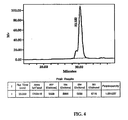
- FIG. 4 represents GPC data of polymeric salen ligand used in the preparation of the chiral polymeric salen catalyst of the present invention.
- the present invention provides chiral salen catalysts expressed by the following formula (1) suitable in preparation of chiral epoxides or chiral 1,2-diols from racemic epoxides,
- R 1 , R 2 , R 3 , X 1 , X 2 , X 3 , X 4 , X 5 , X 6 , Y 1 , and Y 2 represent individually a hydrogen atom, C 1 -C 6 alkyl, C 2 -C 6 alkenyl, C 2 -C 6 alkinyl, halogen, hydroxy, amino, thiol, nitro, amine, amide, carbonyl, carboxyl, silyl, ether, thioether, salenoether, ketone, aldehyde, ester, phosphoryl, phosphonate, phosphine, sulfonyl, or (CH 2 ) k -R 4 , where R 4 is phenyl, cycloalkyl, cycloalkenyl, heterocycle or polycycle and k is an integer of 0 to 8, or any of two can be bonded each other to represent carbocycle or heterocycle containing
- the present invention performs in the presence of said chiral polymeric salen catalyst of formula (1).
- the present invention is described in detail as set forth hereunder.
- the present invention relates to the chiral polymeric salen catalyst of formula (1) and the process for preparing optically pure epoxides or 1,2-diols from racemic epoxides by stereoselective hydrolysis in the presence of the chiral polymeric salen catalyst which can be reused continuously without an activation process after used and does not affect racemization of the produced products.
- the chiral polymeric salen catalyst of formula (1) can be prepared by reacting phenol derivative of formula (2) with diamine derivative of formula (3) to obtain a compound of formula (4) and introducing a center metal and counterions as described in Scheme 1,
- R 1 , R 2 , R 3 , X 1 , X 2 , X 3 , X 4 , X 5 , X 6 , Y 1 , Y 2 , Z, n and m are same as previously defined.
- the polymeric salen ligand of formula (4) in Scheme 1 may be prepared by known methods in J. Am. Chem. Soc., Vol. 79, 6000, 1957 ; Tetrahedron: Asymmetry, Vol. 8, No. 20, pp. 3481-3487, 1997; and Tetrahedron Letters, Vol. 41, pp. 10267-10271, 2000.
- the reaction of phenol derivative of formula (2) with diamine derivative of formula (3) is performed at 0° C. to 150 ° C.
- a solvent used in the reaction may be an alcohol such as methanol, ethanol, and propanol, dichloromethane, chloroform, or dichloroethane. The reaction is performed for at least 2 hours to obtain enough polymerization.
- the produced polymeric salen ligand of formula (4) is filtered, washed with water, ethanol, and hexane and dried.
- a center metal (M) is introduced to the polymeric salen ligand of formula (4) by reacting with a salt containing the center metal atom in an alcohol such as methanol, ethanol, propanol and the like at a temperature of 20 to 150° C.
- counterions (Z) are introduced to produce the desired polymeric salen catalyst of formula (1) by reacting with a salt containing counterions (Z) or ferrocenium derivatives in an organic solvent methanol, ethanol, propanol, dichloromethane, chloroform, dichloroethane, acetonitrile, tetrahydrofuran, tetrahydropyran, 1,4-dioxane and the like.
- R represents unsubstituted or halogen-substituted C 1 -C 10 alkyl, unsubstituted or halogen-substituted C 3 -C 8 cycloalkyl, or unsubstituted or halogen-substituted phenyl;
- I-RR represents a chiral polymeric salen catalyst of formula (1), where R 1 is a hydrogen atom;
- I-SS represents a chiral polymeric salen catalyst of formula (1), where R 2 is a hydrogen atom.
- FIGS. 1 and 2 are graphs comparing a reaction rate and stereoselectivity of conventional chiral polymeric salen catalyst having acetate group (comparative catalyst 1) with those of chiral polymeric salen catalyst (I-RR-1 or I-SS-1) of the present invention over reaction time.
- the use of the chiral polymeric salen catalyst of the present invention shows faster reaction rate and higher stereoselectivity (over 99% ee) than that of the conventional chiral salen catalyst having acetate group. It is further proved that the chiral polymeric salen catalyst of the present invention can be used continuously without any activation process, while the conventional chiral salen catalyst having acetate group has to be activated with acetic acid after each use, because it looses its catalytic activity and the reaction using recovered catalyst takes much longer to obtain over 99% ee of optical purity of the product than that using fresh catalyst.
- FIG. 3 represents a graph comparing degrees of racemization of products produced by using conventional chiral salen catalyst having acetate group (OAc; comparative catalyst 1) and conventional chiral salen catalyst having bromide group (Br; comparative catalyst 2) with that using the chiral polymeric salen catalyst (I-RR-1) of the present invention over reaction time.
- each 100 g of racemic epichlorohydrin was added to 0.25 mol % of the catalysts prepared in Examples 3 to 10 and cooled to 5 C. Each 13.6 g of water was added slowly to each reaction mixture and then stirred at 20° C. for 4 hrs. Each reaction mixture was filtered to recover each catalyst and then the filtrate was performed for fractional distillation to obtain (S)[or (R)]-epichlorohydrin. The recovered catalyst without any activation process was reused for another hydrolysis reaction of racemic epichlorohydrin continuously to obtain (S)[or (R)]-epichlorohydrin with over 99% ee of optical purity.
- (S)-Epichlorohydrin was prepared in the same manner as Experimental Example 1 by using the conventional chiral salen catalyst having acetate group (comparative catalyst 1). When the used catalyst was used for next reaction without any activation process, (S)-epichlorohydrin with 17% ee of optical purity was prepared. After the second reaction, the used catalyst was activated by a known method ( Science , Vol. 277, 936, 1997). The used catalyst was added in toluene and 2 equivalent of acetic acid and stirred for 1 hr under atmosphere condition and the solvent was then evaporated under pressure to obtain recovered catalyst.
- Example 3 2.8 g of the catalyst prepared in Example 3 (I-SS-1) or Example 4 (I-RR-1) was added to 148 g of racemic epibromohydrin and cooled to 5° C. 10.7 g of water was slowly added to the reaction mixture of which was stirred at 20° C. for 7 hrs. The reaction mixture was filtered to recover used catalyst and the filtrate was performed for fractional distillation under pressure to obtain (R) [or (S)]-epibromohydrin. The recovered catalyst was used for next reaction without any activation process to produce (R) [or (S)]-epibromohydrin with over 99% ee of optical purity.
- Example 3 2.8 g of the catalyst prepared in Example 3 (I-SS-1) or Example 4 (I-RR-1) was added to 78 g of racemic 1,2-epoxybutane and cooled to 5° C. 10.7 g of water was slowly added to the reaction mixture of which was stirred at 20° C. for 7 hrs. The reaction mixture was filtered to recover used catalyst and the filtrate was performed for fractional distillation under pressure to obtain (S) [or (R)]-1,2-epoxybutane. The recovered catalyst was used for next reaction without any activation process to produce (S) [or (R)]-1,2-epoxybutane with over 99% ee of optical purity.
- Example 3 2.8 g of the catalyst prepared in Example 3 (I-SS-1) or Example 4 (I-RR-1) was added to 78 g of racemic 1,2-epoxybutane and cooled to 5° C. 8.8 g of water was slowly added to the reaction mixture, which was stirred at 20° C. for 3 hrs. The reaction mixture was filtered to recover used catalyst and the filtrate was performed for fractional distillation under pressure to obtain first (S) [or (R)]-1,2-butandiol. The recovered catalyst was reused for next reaction without any activation process to produce (S) [or (R)]-1,2-butandiol with over 99% ee of optical purity and average yield of 80%.
- the chiral polymeric salen catalyst of the present invention can be recovered by simple filtration and reused without any activation process, which is a disadvantage associated with conventional chiral salen catalyst, and used in mass production of chiral epoxides or chiral 1,2-dials from racemic epoxides in high yield and high optical purity by stereoselective hydrolysis.
Landscapes
- Chemical & Material Sciences (AREA)
- Organic Chemistry (AREA)
- Organic Low-Molecular-Weight Compounds And Preparation Thereof (AREA)
- Catalysts (AREA)
- Epoxy Compounds (AREA)
- Low-Molecular Organic Synthesis Reactions Using Catalysts (AREA)
- Macromolecular Compounds Obtained By Forming Nitrogen-Containing Linkages In General (AREA)
- Polyesters Or Polycarbonates (AREA)
Abstract
Description
- The present invention relates to chiral polymeric salen catalysts and a process for preparing chiral compounds from racemic epoxides by using them. More particularly, the present invention is to provide chiral polymeric salen catalysts continuously usable without any activating process of used catalyst because it does not loose a catalytic activity during the reaction process, and their use for producing chiral compounds such as chiral epoxides and chiral 1,2-diols economically in high yield and high optical purity by performing stereoselective hydrolysis of racemic epoxides.
- Chiral expoxides or chiral 1,2-diols have been widely used to prepare pharmaceuticals and agriculture products having optical properties (U.S. Pat. No. 5,071,868 ; Tetrahedron Lett., Vol. 28, No. 16, 1783, 1987; J. Org. Chem., Vol. 64, 8741, 1999). Even if these chiral epoxides or chiral 1,2-diols having high optical purity are very useful industrially, use of these compounds has been restricted because the preparation of such compounds is too difficult to produce in a large scale with low manufacturing price.
- A preparation method of chiral epichlohydrins as one of chiral expoxides is disclosed using microorganism in EP 431,970 and JP 90-257895 and 94-211822. However, it is not recommended because the productivity is low and it requires two-step process. Another preparation method of chiral epichlohydrins from chiral sulfonyloxyhaloalcohol derivatives obtained from mannitol derivatives is disclosed in U.S. Pat. No. 4,408,063; and J. Org. chem., Vol 43, 4876, 1978. Another preparation method of chiral epichlohydrins from 3-chloro-1,2-propanediol is also disclosed in Syn. Lett No. 12, 1927, 1999. However, these processes are required multi-step syntheses, so that they are also deficient to use for the industrial purpose.
- Methods for preparing chiral expoxides generally use a chiral catalyst having stereoselectivity which hydrolyzes stereoselectively only one isomer from racemic epoxides mixed 50 and 50 of each isomer and leaves the un-hydrolyzed isomer in the reaction medium. However, the chiral catalyst used for said stereoselective hydrolysis is usually expensive. Therefore, if it cannot be re-used, it becomes difficult to use for the industrial purpose.
- Stereoselective hydrolyses of chiral epoxides using chiral salen catalyst as a chiral catalyst are recently disclosed in Science, Vol. 277, 936, 1997; U.S. Pat. Nos. 5,665,890 and 5,929,232; and WO00/09463 and WO91/14694. It has been reported that the use of chiral salen catalyst provides higher yield with higher optical purity compared to uses of other chiral catalysts. However, it is reported that after hydrolysis of a racemic epoxide using conventional chiral salen catalyst, the product chiral epoxide is racemized as time goes in pages 86-87 of WO00/09463. When this hydrolysis is performed for mass production, the racemization of the product becomes deepened since it takes longer to perform the distillation to obtain the desired product, thus resulting in decrease of optical purity of the chiral epoxide. Therefore, the use of chiral salen catalyst in the production of chiral epoxides is limited for the above-mentioned reasons.
- Further, when conventional chiral salen catalysts are reused, it requires an activation process after each use because activities thereof are rapidly decreased. Even if the catalyst is activated after used, the optical activity of the product prepared by using reused catalyst is remarkably lower than that of the product prepared by using fresh catalyst. Thus, there is limited to reuse. Such problems increase the manufacturing price of producing chiral epoxides.
- Consequently, demand to produce chiral compounds such as chiral epoxides or chiral 1,2-diols efficiently and economically has been highly increased with the importance of such compounds to prepare pharmaceuticals and agriculture products.
- The present invention has been completed by developing novel chiral polymeric salen catalyst comprising a center metal and its counterions of PF 6 − or BF4 − to prevent from loosing activities of chiral catalysts and racemization of chiral products because conventional chiral salen catalysts having acetate group (OAc) loose their activities or functional groups such as acetate groups thereof.
- In other words, it is important to select appropriate counterions bonded to the center metal in chiral salen catalysts used in stereoselective hydrolyses of racemic epoxides. For example, chiral catalysts having nucleophilic groups such as acetate and halogen group as counterions deteriorate optical purity of products and counterions bonded weakly to the center metal in chiral catalysts can be dissociated during the reaction process, resulting in diminished catalytic activity.
- The chiral polymeric salen catalyst of the present invention not only keeps its activity but also provides excellent production of chiral epoxides without racemization by comprising a center metal and counterions of PF 6 − or BF4 − . Further, when the chiral polymeric salen catalyst of the present invention is used in stereoselective hydrolysis of racemic epoxides, it may be easily recovered from the reaction mixture by simple filtration because it is insoluble polymer in solvent.
- Therefore, an object of the present invention is to provide chiral polymeric salen catalysts which keep excellent catalytic activity after used, thus simplifying the manufacturing process since it does not require activation process of the used catalyst.
- Another object of the present invention is to provide an economical process for preparing chiral epoxides and chiral 1,2-diols from racemic epoxides by using said chiral polymeric salen catalyst in high yield and high optical purity since it does not contribute for racemization of produced products.
- FIG. 1 represents a graph comparing an optical purity of products produced by using conventional chiral salen catalyst having acetate group with that using the chiral polymeric salen catalyst of the present invention over reaction time.
- FIG. 2 represents a graph comparing an optical purity of products produced by using conventional chiral salen catalyst having acetate group with that using the chiral polymeric salen catalyst of the present invention over number of times it is used.
- FIG. 3 represents a grape comparing degrees of racemization of products produced by using conventional chiral salen catalyst having acetate group and conventional chiral salen catalyst having bromide group with that using the chiral polymeric salen catalyst of the present invention over reaction time.
- FIG. 4 represents GPC data of polymeric salen ligand used in the preparation of the chiral polymeric salen catalyst of the present invention.
- The present invention provides chiral salen catalysts expressed by the following formula (1) suitable in preparation of chiral epoxides or chiral 1,2-diols from racemic epoxides,

- wherein R 1, R2, R3, X1, X2, X3, X4, X5, X6, Y1, and Y2 represent individually a hydrogen atom, C1-C6 alkyl, C2-C6 alkenyl, C2-C6 alkinyl, halogen, hydroxy, amino, thiol, nitro, amine, amide, carbonyl, carboxyl, silyl, ether, thioether, salenoether, ketone, aldehyde, ester, phosphoryl, phosphonate, phosphine, sulfonyl, or (CH2)k-R4, where R4 is phenyl, cycloalkyl, cycloalkenyl, heterocycle or polycycle and k is an integer of 0 to 8, or any of two can be bonded each other to represent carbocycle or heterocycle containing 4 to 10 atoms; M represents a metal atom chosen from Co, Cr, V, Fe, Mo, W, and Ru; Z represents PF6, or BF4; m is an integer of 8 to 20, and n is an integer of 1 to 6.
- In the stereoselective hydrolysis of racemic epoxides to chiral epoxides or chiral 1,2-diols, the present invention performs in the presence of said chiral polymeric salen catalyst of formula (1).
- The present invention is described in detail as set forth hereunder. The present invention relates to the chiral polymeric salen catalyst of formula (1) and the process for preparing optically pure epoxides or 1,2-diols from racemic epoxides by stereoselective hydrolysis in the presence of the chiral polymeric salen catalyst which can be reused continuously without an activation process after used and does not affect racemization of the produced products.
- The chiral polymeric salen catalyst of formula (1) can be prepared by reacting phenol derivative of formula (2) with diamine derivative of formula (3) to obtain a compound of formula (4) and introducing a center metal and counterions as described in
Scheme 1,
- wherein R 1, R2, R3, X1, X2, X3, X4, X5, X6, Y1, Y2, Z, n and m are same as previously defined.
- The polymeric salen ligand of formula (4) in
Scheme 1 may be prepared by known methods in J. Am. Chem. Soc., Vol. 79, 6000, 1957; Tetrahedron: Asymmetry, Vol. 8, No. 20, pp. 3481-3487, 1997; and Tetrahedron Letters, Vol. 41, pp. 10267-10271, 2000. The reaction of phenol derivative of formula (2) with diamine derivative of formula (3) is performed at 0° C. to 150 ° C. A solvent used in the reaction may be an alcohol such as methanol, ethanol, and propanol, dichloromethane, chloroform, or dichloroethane. The reaction is performed for at least 2 hours to obtain enough polymerization. The produced polymeric salen ligand of formula (4) is filtered, washed with water, ethanol, and hexane and dried. A center metal (M) is introduced to the polymeric salen ligand of formula (4) by reacting with a salt containing the center metal atom in an alcohol such as methanol, ethanol, propanol and the like at a temperature of 20 to 150° C. Further, counterions (Z) are introduced to produce the desired polymeric salen catalyst of formula (1) by reacting with a salt containing counterions (Z) or ferrocenium derivatives in an organic solvent methanol, ethanol, propanol, dichloromethane, chloroform, dichloroethane, acetonitrile, tetrahydrofuran, tetrahydropyran, 1,4-dioxane and the like. - The mechanism of preparing chiral epoxides or chiral 1,2-diols from racemic epoxides in the presence of the chiral polymeric salen catalyst of formula (1) by stereoselective hydrolysis is shown in
Scheme 2,
- wherein R represents unsubstituted or halogen-substituted C 1-C10 alkyl, unsubstituted or halogen-substituted C3-C8 cycloalkyl, or unsubstituted or halogen-substituted phenyl; I-RR represents a chiral polymeric salen catalyst of formula (1), where R1 is a hydrogen atom; I-SS represents a chiral polymeric salen catalyst of formula (1), where R2 is a hydrogen atom.
- The stereoselective hydrolysis of
Scheme 2 is described in more detail hereinafter. A racemic epoxide compound, 0.4-0.8 equivalents of water and over 0.001 mol % of a chiral polymeric salen catalyst, preferably 0.1-5 mol %, are reacted at a temperature of −10 to 30° C., preferably 4 to 25 C. The reaction can be performed in an organic solvent, but it is preferable to perform in the absence of any solvent. After the reaction is completed, a chiral polymeric salen catalyst is recovered by filtration and the filtrate is performed for fractional distillation to isolate chiral epoxide or chiral 1,2-diol. The recovered catalyst is re-used for hydrolysis of fresh racemic epoxide to produce chiral epoxide or chiral 1,2-diol without any activation process. - When the chiral polymeric salen catalyst of formula (1), where R 1 is a hydrogen atom, (hereafter referring to as “I-RR”) is used for the stereoselective hydrolysis, (R)-epoxide or (S)-1,2-diol is produced, while when the chiral polymeric salen catalyst of formula (1), where R2 is a hydrogen atom, (hereafter referring to as “I-SS”) is used, (S)-epoxide or (R)-1,2-diol is produced.
- FIGS. 1 and 2 are graphs comparing a reaction rate and stereoselectivity of conventional chiral polymeric salen catalyst having acetate group (comparative catalyst 1) with those of chiral polymeric salen catalyst (I-RR-1 or I-SS-1) of the present invention over reaction time.

- In FIGS. 1 and 2, the use of the chiral polymeric salen catalyst of the present invention shows faster reaction rate and higher stereoselectivity (over 99% ee) than that of the conventional chiral salen catalyst having acetate group. It is further proved that the chiral polymeric salen catalyst of the present invention can be used continuously without any activation process, while the conventional chiral salen catalyst having acetate group has to be activated with acetic acid after each use, because it looses its catalytic activity and the reaction using recovered catalyst takes much longer to obtain over 99% ee of optical purity of the product than that using fresh catalyst.
- FIG. 3 represents a graph comparing degrees of racemization of products produced by using conventional chiral salen catalyst having acetate group (OAc; comparative catalyst 1) and conventional chiral salen catalyst having bromide group (Br; comparative catalyst 2) with that using the chiral polymeric salen catalyst (I-RR-1) of the present invention over reaction time.

- In FIG. 3, when the chiral polymeric salen catalyst of the present invention is used, there is no or little of racemization over reaction of time, while when conventional chiral salen catalyst having acetate group (OAc; comparative catalyst 1) or conventional chiral salen catalyst having bromide group (Br; comparative catalyst 2) is used, the degree of racemization becomes higher over reaction time, resulting in lowering optical purity of the corresponding product because the conventional chiral salen catalysts contain counterions having a nuclophilic group. In the mass production of chiral epoxides, it will take longer reaction time to distill the desired product. Therefore, it is expected that use of the chiral polymeric salen catalyst of the present invention contributes to produce optically pure chiral epoxide, while use of the
comparative catalyst - Hereunder is given the more detailed description of the present invention using examples. However, it should not be construed as limiting the scope of the present invention.
-

- 21.6 g of (S,S)-1,2-diammoniumcyclohexane mono-(−)-tartrate and 22.6 g of potassium carbonate were dissolved in 110 mL of water and 440 mL of ethanol was added thereto. 30.1 g of 5,5′-methylene-di-3-t-butylsalicyl aldehyde dissolved in 250 mL of ethanol was added at the reflux temperature. After the reaction mixture was refluxed for 12 hrs while stirring, 110 mL of water was added thereto and the temperature was come down to 5° C. The reaction mixture was filtered, washed with 220 mL of water twice, 70 mL of ethanol and 70 mL of hexane, and dried to obtain the target product (32.8 g).
- IR (KBr, cm −1): 778, 800, 860, 1160, 1265, 1440, 1594, 1628, 2860, 2960; Average molecular weight (GPC):5856 (Polydispersity=1.06)
-

- The reaction was performed in the same manner as Example 1 except that (R,R)-1,2-diammoniumcyclohexane mono-(+)-tartrate was used instead of (S,S)-1,2-diammoniumcyclohexane mono-(−)-tartrate to obtain the target product (32.7 g).
- IR (KBr, cm −1):778, 800, 860, 1160, 1265, 1440, 1594, 1628, 2860, 2960; Average molecular weight (GPC, FIG. 4):5856 (Polydispersity=1.06)
-

- 1 Equivalent of (SS)-N-(3-t-butylsalicylidene)-N-(3—t-butyl-5-methylenesalicylidene)-1,2-cyclohexanediamine polymer and 1.2 equivalents of cobalt(II)acetate.4H 2O were added to ethanol and refluxed for 3 hrs while stirring. The reaction mixture was filtered at room temperature. The obtained solid, 1 equivalent of ferrocenium hexafluorophosphate and acetonitrile were mixed and refluxed for 1 hr while stirring. Acetonitrile was then evaporated under pressure. The residue was washed with hexane, followed by filtration to obtain the target product.
- IR(cm −1):849, 1032, 1165, 1231, 1335, 1387, 1437, 1538, 1572, 2864, 2948, 3481
-

- The reaction was performed in the same manner as Example 3 except that (R,R)-N-(3-t-butylsalicylidene)-N′-(3-t-butyl-5-methylenesalicylidene)-1,2-cyclohexanediamine polymer was used instead of (S,S)-N-(3-t-butylsalicylidene)-N′-(3-t-butyl-5-methylenesalicylidene)-1,2-cyclohexanediamine polymer to obtain the target product.
- IR(cm −1):849, 1032, 1165, 1231, 1335, 1387, 1437, 1538, 1572, 2864, 2948, 3481
-

- 1 Equivalent of (S,S)-N-(3-t-butylsalicylidene)-N′-(3-t-butyl-5 methylenesalicylidene)-1,2-cyclohexanediamine polymer and 1.2 equivalents of cobalt(II)acetate.4H 2O were added to ethanol and refluxed for 3 hrs while stirring. The reaction mixture was filtered at room temperature. The obtained solid, 1 equivalent of ferrocenium tetrafluoroborate and acetonitrile were mixed and refluxed for 1 hr while stirring. Acetonitrile was then evaporated under pressure. The residue was washed with hexane, followed by filtration to obtain the target product.
- IR(cm −1):841, 1031, 1164, 1229, 1336, 1383, 1438, 1544, 1571, 2862, 2954, 3484
-

- The reaction was performed in the same manner as Example 5 except that (R,R)-N-(3-t-butylsalicylidene)-N′-(3-t-butyl-5-methylenesalicylidene)-1,2-cyclohexanediamine polymer was used instead of (S,S)-N-(3-t-butylsalicylidene)-N′-(3-t-butyl-5-methylenesalicylidene)-1,2-cyclohexanediamine polymer to obtain the target product.
- IR(cm −1):841, 1031, 1164, 1229, 1336, 1383, 1438, 1544, 1571, 2862, 2954, 3484
-

- 1 Equivalent of (SS)-N-(3-t-butylsalicylidene)-N′-(3-t-butyl-5-methylenesalicylidene)-1,2-cyclohexanediamine polymer and 1.2 equivalents of cobalt(II)acetate.4H 2O were added to ethanol and refluxed for 3 hrs while stirring. The reaction mixture was filtered at room temperature. The obtained solid and 0.5 equivalent of bromine were added into dichloromethane and refluxed for 1 hr while stirring. Dichloromethane was then evaporated under pressure to obtain the target product.
-

- The reaction was performed in the same manner as Example 7 except that (R,R)-N-(3-t-butylsalicylidene)-N′-(3-t-butyl-5-methylenesalicylidene)-1,2-cyclohexanediamine polymer was used instead of (S,S)-N-(3-t-butylsalicylidene)-N′-(3-t-butyl-5-methylenesalicylidene)-1,2-cyclohexanediamine polymer to obtain the target product.
-

- 1 Equivalent of (S,S)-N-(3-t-butylsalicylidene)-N′-(3—t-butyl-5-methylenesalicylidene)-1,2-cyclohexanediamine polymer and 1.2 equivalents of cobalt(II)acetate.4H 2O were added to ethanol and refluxed for 3 hrs while stirring. The reaction mixture was filtered at room temperature. The obtained solid and 0.5 equivalent of chlorine were added into dichloromethane and refluxed for 1 hr while stirring. Dichloromethane was then evaporated under pressure to obtain the target product.
-

- The reaction was performed in the same manner as Example 9 except that (RR)-N-(3-t-butylsalicylidene)-N′-(3-t-butyl-5-methylenesalicylidene)-1,2-cyclohexanediamine polymer was used instead of (S,S)-N-(3-t-butylsalicylidene)-N′-(3-t-butyl-5-methylenesalicylidene)-1,2-cyclohexanediamine polymer to obtain the target product.
- Each 100 g of racemic epichlorohydrin was added to 0.25 mol % of the catalysts prepared in Examples 3 to 10 and cooled to 5 C. Each 13.6 g of water was added slowly to each reaction mixture and then stirred at 20° C. for 4 hrs. Each reaction mixture was filtered to recover each catalyst and then the filtrate was performed for fractional distillation to obtain (S)[or (R)]-epichlorohydrin. The recovered catalyst without any activation process was reused for another hydrolysis reaction of racemic epichlorohydrin continuously to obtain (S)[or (R)]-epichlorohydrin with over 99% ee of optical purity.
- (S)-Epichlorohydrin was prepared in the same manner as Experimental Example 1 by using the conventional chiral salen catalyst having acetate group (comparative catalyst 1). When the used catalyst was used for next reaction without any activation process, (S)-epichlorohydrin with 17% ee of optical purity was prepared. After the second reaction, the used catalyst was activated by a known method ( Science, Vol. 277, 936, 1997). The used catalyst was added in toluene and 2 equivalent of acetic acid and stirred for 1 hr under atmosphere condition and the solvent was then evaporated under pressure to obtain recovered catalyst. When the third reaction was performed by using the recovered catalyst, the reaction took 7 to 8 hrs under the same reaction condition to obtain (S)-epichlorohydrin with lower than 99% ee of optical purity, while it took only 4 hr when the fresh catalyst was used. The result was summarized in Table 1.
TABLE 1 Nos. of reaction Optical purity Reaction Catalyst performed (% ee) Ave. yield* time Comparative 1st >99.8 80% 4 hr catalyst 1 2nd 17 — 8 hr having (w/o activation) acetate group 3rd <99 80% 8 hr (w/ activation) I-RR-1 1st >99.8 80% 4 hr (or I-SS-1) 2nd >99.8 5 hr 4th >99.8 5 hr 8th >99.5 8 hr I-RR-2 1st >99.8 80% 4 hr (or I-SS-2) 2nd >99.8 4 hr 4th >99.7 6 hr 6th >99.4 8 hr I-RR-3 1st >99.8 80% 2 hr (or I-SS-3) 2nd >99.7 3 hr 4th >99.6 4 hr 5th >99.4 6 hr I-RR-4 1st >99.8 78% 2 hr (or I-SS-4) 2nd >99.8 3 hr 4th >99.5 4 hr 5th >99.1 6 hr - Each 0.4 mol % of the catalyst I-RR-1 prepared in Example 4,
comparative catalyst 1 having acetate group, andcomparative catalyst 2 having bromo group was added to 100 g of racemic epichlorohydrin separately and cooled to 5° C. 10.7 g of water was slowly added to each reaction mixture of which was stirred at 20° C. The optical purity of each reaction mixture was measured over reaction time as shown in FIG. 3. - 2.8 g of the catalyst prepared in Example 3 (I-SS-1) or Example 4 (I-RR-1) was added to 148 g of racemic epibromohydrin and cooled to 5° C. 10.7 g of water was slowly added to the reaction mixture of which was stirred at 20° C. for 7 hrs. The reaction mixture was filtered to recover used catalyst and the filtrate was performed for fractional distillation under pressure to obtain (R) [or (S)]-epibromohydrin. The recovered catalyst was used for next reaction without any activation process to produce (R) [or (S)]-epibromohydrin with over 99% ee of optical purity.
- 2.8 g of the catalyst prepared in Example 3 (I-SS-1) or Example 4 (I-RR-1) was added to 78 g of racemic 1,2-epoxybutane and cooled to 5° C. 10.7 g of water was slowly added to the reaction mixture of which was stirred at 20° C. for 7 hrs. The reaction mixture was filtered to recover used catalyst and the filtrate was performed for fractional distillation under pressure to obtain (S) [or (R)]-1,2-epoxybutane. The recovered catalyst was used for next reaction without any activation process to produce (S) [or (R)]-1,2-epoxybutane with over 99% ee of optical purity.
- The reaction was performed in the same manner as Experimental Example 3 except that 108 g of racemic 1,2-epoxyhexane was used instead of racemic 1,2-epoxybutane to obtain the target product with over 99% ee of optical purity.
- 5 g of the catalyst prepared in Example 3 (I-SS-1) or Example 4 (I-RR-1) was added to 130 g of racemic styrene oxide and cooled to 5 C. 13.6 g of water was slowly added to the reaction mixture, which was stirred at 20° C. for 15 hrs. The reaction mixture was filtered to recover used catalyst and the filtrate was performed for fractional distillation under pressure to obtain first (S) [or (R)]-styrene oxide. The recovered catalyst was reused for next reaction without any activation process to produce (S) [or (R)]-styrene oxide with over 99% ee of optical purity.
- 2.8 g of the catalyst prepared in Example 3 (I-SS-1) or Example 4 (I-RR-1) was added to 78 g of racemic 1,2-epoxybutane and cooled to 5° C. 8.8 g of water was slowly added to the reaction mixture, which was stirred at 20° C. for 3 hrs. The reaction mixture was filtered to recover used catalyst and the filtrate was performed for fractional distillation under pressure to obtain first (S) [or (R)]-1,2-butandiol. The recovered catalyst was reused for next reaction without any activation process to produce (S) [or (R)]-1,2-butandiol with over 99% ee of optical purity and average yield of 80%.
- As described above, the chiral polymeric salen catalyst of the present invention can be recovered by simple filtration and reused without any activation process, which is a disadvantage associated with conventional chiral salen catalyst, and used in mass production of chiral epoxides or chiral 1,2-dials from racemic epoxides in high yield and high optical purity by stereoselective hydrolysis.
Claims (15)


Applications Claiming Priority (3)
| Application Number | Priority Date | Filing Date | Title |
|---|---|---|---|
| KR2000-0077308 | 2000-12-15 | ||
| KR20000077308 | 2000-12-15 | ||
| PCT/KR2001/002120 WO2002048162A1 (en) | 2000-12-15 | 2001-12-07 | Chiral polymeric salen catalyst, and a process for preparing chiral compounds from racemic epoxides by using them |
Publications (2)
| Publication Number | Publication Date |
|---|---|
| US20040054201A1 true US20040054201A1 (en) | 2004-03-18 |
| US6903043B2 US6903043B2 (en) | 2005-06-07 |
Family
ID=19703140
Family Applications (1)
| Application Number | Title | Priority Date | Filing Date |
|---|---|---|---|
| US10/450,643 Expired - Lifetime US6903043B2 (en) | 2000-12-15 | 2001-12-07 | Chiral polymeric salen catalyst, and a process for preparing chiral compounds from racemic epoxides by using them |
Country Status (5)
| Country | Link |
|---|---|
| US (1) | US6903043B2 (en) |
| JP (1) | JP4050616B2 (en) |
| KR (1) | KR100342659B1 (en) |
| AU (1) | AU2002216429A1 (en) |
| WO (1) | WO2002048162A1 (en) |
Cited By (5)
| Publication number | Priority date | Publication date | Assignee | Title |
|---|---|---|---|---|
| US8445678B2 (en) | 2008-04-25 | 2013-05-21 | Auburn University | 2-quinoxalinol salen compounds and uses thereof |
| WO2020024923A1 (en) * | 2018-07-31 | 2020-02-06 | 中国石油化工股份有限公司 | Nanocaged catalyst, preparation method, and application |
| RU2793757C2 (en) * | 2018-07-31 | 2023-04-05 | Чайна Петролеум Энд Кемикал Корпорейшн | Nanocage-confined catalyst, preparation process and use thereof |
| CN117654633A (en) * | 2023-11-09 | 2024-03-08 | 宁夏坤正生物科技有限公司 | Salen-Co chiral source catalyst activation method |
| CN119684154A (en) * | 2024-11-08 | 2025-03-25 | 湖北远大生命科学与技术有限责任公司 | Polynuclear Salen catalyst and preparation method and application thereof |
Families Citing this family (24)
| Publication number | Priority date | Publication date | Assignee | Title |
|---|---|---|---|---|
| DE10130229A1 (en) * | 2001-06-22 | 2003-01-02 | Celanese Ventures Gmbh | Non-metallocenes, processes for their preparation and their use in the polymerization of olefins |
| US6639087B2 (en) * | 2001-08-22 | 2003-10-28 | Rhodia Pharma Solutions Inc. | Kinetic resolution method |
| CN100448857C (en) * | 2006-06-12 | 2009-01-07 | 北京科技大学 | A kind of method of selective catalytic olefin epoxidation to prepare epoxide |
| JP5665734B2 (en) | 2008-05-09 | 2015-02-04 | コーネル ユニバーシティー | Polymer of ethylene oxide and carbon dioxide |
| ES2879498T3 (en) | 2008-08-22 | 2021-11-22 | Saudi Aramco Tech Co | Catalysts and methods for polymer synthesis |
| KR20120034813A (en) | 2008-09-08 | 2012-04-12 | 노보머, 인코포레이티드 | Polycarbonate polyol compositions |
| KR101812466B1 (en) | 2008-09-17 | 2018-01-30 | 사우디 아람코 테크놀로지스 컴퍼니 | Aliphatic polycarbonate quench method |
| CA2742119C (en) | 2008-11-01 | 2018-05-29 | Novomer, Inc. | Polycarbonate block copolymers |
| CN102665406B (en) | 2009-12-24 | 2016-03-09 | 诺沃梅尔公司 | The method for synthesizing polycyclic guanidine compound |
| KR101805648B1 (en) | 2010-09-14 | 2017-12-14 | 사우디 아람코 테크놀로지스 컴퍼니 | Catalysts and methods for polymer synthesis |
| CN103228137B (en) | 2010-09-22 | 2018-11-27 | 沙特阿美技术公司 | Synthesis of Substituted Salicylaldehyde Derivatives |
| JP6054950B2 (en) | 2011-05-09 | 2016-12-27 | ノボマー, インコーポレイテッド | Polymer compositions and methods |
| WO2013016331A2 (en) | 2011-07-25 | 2013-01-31 | Novomer, Inc. | Polymer compositions and methods |
| WO2013090276A1 (en) | 2011-12-11 | 2013-06-20 | Novomer, Inc. | Salen complexes with dianionic counterions |
| ES2963032T3 (en) | 2011-12-20 | 2024-03-25 | Saudi Aramco Tech Co | Methods for the synthesis of polymers |
| CN110791246B (en) | 2012-04-16 | 2022-04-22 | 沙特阿美技术公司 | Adhesive composition and method |
| EP2855558B1 (en) | 2012-05-24 | 2018-12-26 | Saudi Aramco Technologies Company | Polymerization system for the copolymerization of co2 and epoxides and related method |
| US9771388B2 (en) | 2012-08-24 | 2017-09-26 | Saudi Aramco Technologies Company | Metal complexes |
| WO2014074706A1 (en) | 2012-11-07 | 2014-05-15 | Novomer, Inc. | High strength polyurethane foam compositions and methods |
| CN106661215B (en) | 2014-04-03 | 2020-09-22 | 沙特阿美技术公司 | Aliphatic polycarbonate polyol composition |
| KR102747154B1 (en) | 2018-04-18 | 2024-12-31 | 사우디 아람코 테크놀로지스 컴퍼니 | Terminal group isomerization of poly(alkylene carbonate) polymers |
| US11180609B2 (en) | 2018-08-02 | 2021-11-23 | Saudi Aramco Technologies Company | Sustainable polymer compositions and methods |
| US11634539B2 (en) | 2018-09-24 | 2023-04-25 | Saudi Aramco Technologies Company | Polycarbonate block copolymers and methods thereof |
| TW202302704A (en) | 2021-06-23 | 2023-01-16 | 沙烏地阿拉伯商沙烏地阿美科技公司 | Polyol compositions and methods |
Citations (1)
| Publication number | Priority date | Publication date | Assignee | Title |
|---|---|---|---|---|
| US6639087B2 (en) * | 2001-08-22 | 2003-10-28 | Rhodia Pharma Solutions Inc. | Kinetic resolution method |
Family Cites Families (15)
| Publication number | Priority date | Publication date | Assignee | Title |
|---|---|---|---|---|
| US4408063A (en) | 1978-06-27 | 1983-10-04 | Merck & Co., Inc. | Preparation of epihalohydrin enantiomers |
| DE3319027A1 (en) | 1983-05-26 | 1984-11-29 | Boehringer Mannheim Gmbh, 6800 Mannheim | METHOD FOR PRODUCING OPTICALLY ACTIVE CARBAZOL DERIVATIVES, NEW R- AND S-CARBAZOL DERIVATIVES, AND MEDICINAL PRODUCTS CONTAINING THESE COMPOUNDS |
| EP0431970B1 (en) | 1989-12-08 | 1995-09-06 | Daiso Co., Ltd. | Process for producing optically active R-(+)-2, 3,-dichloro-1-propanol using microorganism |
| US5637739A (en) | 1990-03-21 | 1997-06-10 | Research Corporation Technologies, Inc. | Chiral catalysts and catalytic epoxidation catalyzed thereby |
| CA2077541C (en) * | 1990-03-21 | 1998-08-18 | Eric N. Jacobsen | Chiral catalysts and epoxidation reactions catalyzed thereby |
| JP3497165B2 (en) * | 1991-08-26 | 2004-02-16 | リサーチ コーポレイション テクノロジーズ,インコーポレイテッド | Chiral catalyst, catalytic oxidation and disproportionation reaction, and method for producing epoxy chroman and taxol |
| JPH07145157A (en) | 1993-11-24 | 1995-06-06 | Sumitomo Chem Co Ltd | Method for producing optically active epoxide |
| BR9506864A (en) * | 1994-02-04 | 1997-09-09 | Smithkline Beecham Plc | Process to epoxide proqual olefins and a catalyst for them and intermediates to produce the catalyst |
| US5665890A (en) | 1995-03-14 | 1997-09-09 | President And Fellows Of Harvard College | Stereoselective ring opening reactions |
| US6262278B1 (en) | 1995-03-14 | 2001-07-17 | President And Fellows Of Harvard College | Stereoselective ring opening reactions |
| JP3716460B2 (en) * | 1995-09-01 | 2005-11-16 | 日産化学工業株式会社 | Asymmetric cyclopropanation reaction |
| JP3892931B2 (en) * | 1997-03-11 | 2007-03-14 | 高砂香料工業株式会社 | Optically active phosphine derivative having two vinyl groups, polymer using the same, and transition metal complexes thereof |
| EP1080084B1 (en) * | 1998-05-29 | 2004-05-06 | Dow Global Technologies Inc. | Process for epoxidation of aryl allyl ethers |
| JP2000053666A (en) * | 1998-08-11 | 2000-02-22 | Sumika Fine Chemicals Co Ltd | Kinetic optical resolution of optically active styrene oxides |
| JP2000302772A (en) | 1999-04-23 | 2000-10-31 | Dai Ichi Seiyaku Co Ltd | Production of optically active nitrophenoxymethyloxylane |
-
2001
- 2001-11-28 KR KR1020010074603A patent/KR100342659B1/en not_active Expired - Fee Related
- 2001-12-07 US US10/450,643 patent/US6903043B2/en not_active Expired - Lifetime
- 2001-12-07 AU AU2002216429A patent/AU2002216429A1/en not_active Abandoned
- 2001-12-07 WO PCT/KR2001/002120 patent/WO2002048162A1/en not_active Ceased
- 2001-12-07 JP JP2002549693A patent/JP4050616B2/en not_active Expired - Fee Related
Patent Citations (1)
| Publication number | Priority date | Publication date | Assignee | Title |
|---|---|---|---|---|
| US6639087B2 (en) * | 2001-08-22 | 2003-10-28 | Rhodia Pharma Solutions Inc. | Kinetic resolution method |
Cited By (6)
| Publication number | Priority date | Publication date | Assignee | Title |
|---|---|---|---|---|
| US8445678B2 (en) | 2008-04-25 | 2013-05-21 | Auburn University | 2-quinoxalinol salen compounds and uses thereof |
| WO2020024923A1 (en) * | 2018-07-31 | 2020-02-06 | 中国石油化工股份有限公司 | Nanocaged catalyst, preparation method, and application |
| RU2793757C2 (en) * | 2018-07-31 | 2023-04-05 | Чайна Петролеум Энд Кемикал Корпорейшн | Nanocage-confined catalyst, preparation process and use thereof |
| US12214339B2 (en) | 2018-07-31 | 2025-02-04 | China Petroleum & Chemical Corporation | Nanocage-confined catalyst, preparation process and use thereof |
| CN117654633A (en) * | 2023-11-09 | 2024-03-08 | 宁夏坤正生物科技有限公司 | Salen-Co chiral source catalyst activation method |
| CN119684154A (en) * | 2024-11-08 | 2025-03-25 | 湖北远大生命科学与技术有限责任公司 | Polynuclear Salen catalyst and preparation method and application thereof |
Also Published As
| Publication number | Publication date |
|---|---|
| JP4050616B2 (en) | 2008-02-20 |
| JP2004515356A (en) | 2004-05-27 |
| KR100342659B1 (en) | 2002-07-04 |
| WO2002048162A1 (en) | 2002-06-20 |
| US6903043B2 (en) | 2005-06-07 |
| AU2002216429A1 (en) | 2002-06-24 |
Similar Documents
| Publication | Publication Date | Title |
|---|---|---|
| US6903043B2 (en) | Chiral polymeric salen catalyst, and a process for preparing chiral compounds from racemic epoxides by using them | |
| US6720434B2 (en) | Process for preparing chiral compounds from recemic epoxides by using chiral salen catalysts | |
| EP1292602B1 (en) | New chiral salen catalyst and methods for the preparation of chiral compounds from racemic epoxides by using new catalyst | |
| WO2009014362A2 (en) | Novel bimetallic salen catalyst and method for the synthesis of chiral compounds using the same | |
| Wang et al. | Asymmetric catalysis with a chiral-at-osmium complex | |
| EP1276745B1 (en) | Ruthenium-diphosphine complexes and their use as catalysts | |
| CN116789707B (en) | Iridium-based catalyst, preparation method thereof and method for catalyzing hydroformylation of propylene | |
| JP5630058B2 (en) | Method for producing alcohol compound | |
| RU2302897C2 (en) | Single-step process for production of 1,3-propanediol from ethylene oxide and syngas on catalyst with phospholanoalkane ligand | |
| CN1538877A (en) | One-step Production of 1,3-Propanediol from Ethylene Oxide and Syngas Using Cobalt-Fe Catalyst | |
| KR100319045B1 (en) | Novel chiral salen catalyst, and a process for preparing chiral compounds from racemic epoxides for using them | |
| JP4357332B2 (en) | Process for producing optically active nitroalcohols | |
| JP3919268B2 (en) | Ruthenium-optically active phosphine complex, process for producing the same, and process for producing optically active 4-methyl-2-oxetanone using the same | |
| KR100509796B1 (en) | Process for the preparation of chiral 1,2-diol derivatives from chiral epoxides by using chiral salen catalyst | |
| JP4824874B2 (en) | Process for producing optically active γ-butyrolactone | |
| JPH11279100A (en) | Method for producing optically active 1-substituted-2-propanol | |
| US6258966B1 (en) | Chiral ligand and method for preparing cyanohydrins from aldehydes | |
| JPH0761976B2 (en) | Process for producing optically active arylacetic acid derivative | |
| CN121914052A (en) | Synthesis method of chiral 5, 7-difluoro chroman-4-ol | |
| JP2000063314A (en) | Method for producing optically active 1-substituted-2-propanol | |
| KR100386552B1 (en) | Polymeric chiral salen derivatives useful for asymmetric epoxidation of olefins | |
| CN114853662A (en) | Preparation method of chiral hydrazinylpiperidine derivative |
Legal Events
| Date | Code | Title | Description |
|---|---|---|---|
| AS | Assignment |
Owner name: RSTECH CO., LTD., KOREA, REPUBLIC OF Free format text: ASSIGNMENT OF ASSIGNORS INTEREST;ASSIGNORS:KIM, GEON-JOONG;PARK, DAE-WOON;LEE, HO SEONG;AND OTHERS;REEL/FRAME:014467/0837;SIGNING DATES FROM 20030523 TO 20030531 |
|
| STCF | Information on status: patent grant |
Free format text: PATENTED CASE |
|
| FPAY | Fee payment |
Year of fee payment: 4 |
|
| FEPP | Fee payment procedure |
Free format text: PAYOR NUMBER ASSIGNED (ORIGINAL EVENT CODE: ASPN); ENTITY STATUS OF PATENT OWNER: SMALL ENTITY Free format text: PAYER NUMBER DE-ASSIGNED (ORIGINAL EVENT CODE: RMPN); ENTITY STATUS OF PATENT OWNER: SMALL ENTITY |
|
| FPAY | Fee payment |
Year of fee payment: 8 |
|
| FPAY | Fee payment |
Year of fee payment: 12 |