US12350348B2 - Compounds and therapeutic uses thereof - Google Patents
Compounds and therapeutic uses thereof Download PDFInfo
- Publication number
- US12350348B2 US12350348B2 US17/284,379 US201917284379A US12350348B2 US 12350348 B2 US12350348 B2 US 12350348B2 US 201917284379 A US201917284379 A US 201917284379A US 12350348 B2 US12350348 B2 US 12350348B2
- Authority
- US
- United States
- Prior art keywords
- compound
- antibody
- formula
- groups
- cetuximab
- Prior art date
- Legal status (The legal status is an assumption and is not a legal conclusion. Google has not performed a legal analysis and makes no representation as to the accuracy of the status listed.)
- Active, expires
Links
Images


Classifications
-
- A—HUMAN NECESSITIES
- A61—MEDICAL OR VETERINARY SCIENCE; HYGIENE
- A61K—PREPARATIONS FOR MEDICAL, DENTAL OR TOILETRY PURPOSES
- A61K47/00—Medicinal preparations characterised by the non-active ingredients used, e.g. carriers or inert additives; Targeting or modifying agents chemically bound to the active ingredient
- A61K47/50—Medicinal preparations characterised by the non-active ingredients used, e.g. carriers or inert additives; Targeting or modifying agents chemically bound to the active ingredient the non-active ingredient being chemically bound to the active ingredient, e.g. polymer-drug conjugates
- A61K47/51—Medicinal preparations characterised by the non-active ingredients used, e.g. carriers or inert additives; Targeting or modifying agents chemically bound to the active ingredient the non-active ingredient being chemically bound to the active ingredient, e.g. polymer-drug conjugates the non-active ingredient being a modifying agent
- A61K47/68—Medicinal preparations characterised by the non-active ingredients used, e.g. carriers or inert additives; Targeting or modifying agents chemically bound to the active ingredient the non-active ingredient being chemically bound to the active ingredient, e.g. polymer-drug conjugates the non-active ingredient being a modifying agent the modifying agent being an antibody, an immunoglobulin or a fragment thereof, e.g. an Fc-fragment
- A61K47/6889—Conjugates wherein the antibody being the modifying agent and wherein the linker, binder or spacer confers particular properties to the conjugates, e.g. peptidic enzyme-labile linkers or acid-labile linkers, providing for an acid-labile immuno conjugate wherein the drug may be released from its antibody conjugated part in an acidic, e.g. tumoural or environment
-
- A—HUMAN NECESSITIES
- A61—MEDICAL OR VETERINARY SCIENCE; HYGIENE
- A61K—PREPARATIONS FOR MEDICAL, DENTAL OR TOILETRY PURPOSES
- A61K47/00—Medicinal preparations characterised by the non-active ingredients used, e.g. carriers or inert additives; Targeting or modifying agents chemically bound to the active ingredient
- A61K47/50—Medicinal preparations characterised by the non-active ingredients used, e.g. carriers or inert additives; Targeting or modifying agents chemically bound to the active ingredient the non-active ingredient being chemically bound to the active ingredient, e.g. polymer-drug conjugates
- A61K47/51—Medicinal preparations characterised by the non-active ingredients used, e.g. carriers or inert additives; Targeting or modifying agents chemically bound to the active ingredient the non-active ingredient being chemically bound to the active ingredient, e.g. polymer-drug conjugates the non-active ingredient being a modifying agent
- A61K47/54—Medicinal preparations characterised by the non-active ingredients used, e.g. carriers or inert additives; Targeting or modifying agents chemically bound to the active ingredient the non-active ingredient being chemically bound to the active ingredient, e.g. polymer-drug conjugates the non-active ingredient being a modifying agent the modifying agent being an organic compound
- A61K47/549—Sugars, nucleosides, nucleotides or nucleic acids
-
- A—HUMAN NECESSITIES
- A61—MEDICAL OR VETERINARY SCIENCE; HYGIENE
- A61K—PREPARATIONS FOR MEDICAL, DENTAL OR TOILETRY PURPOSES
- A61K47/00—Medicinal preparations characterised by the non-active ingredients used, e.g. carriers or inert additives; Targeting or modifying agents chemically bound to the active ingredient
- A61K47/50—Medicinal preparations characterised by the non-active ingredients used, e.g. carriers or inert additives; Targeting or modifying agents chemically bound to the active ingredient the non-active ingredient being chemically bound to the active ingredient, e.g. polymer-drug conjugates
- A61K47/51—Medicinal preparations characterised by the non-active ingredients used, e.g. carriers or inert additives; Targeting or modifying agents chemically bound to the active ingredient the non-active ingredient being chemically bound to the active ingredient, e.g. polymer-drug conjugates the non-active ingredient being a modifying agent
- A61K47/68—Medicinal preparations characterised by the non-active ingredients used, e.g. carriers or inert additives; Targeting or modifying agents chemically bound to the active ingredient the non-active ingredient being chemically bound to the active ingredient, e.g. polymer-drug conjugates the non-active ingredient being a modifying agent the modifying agent being an antibody, an immunoglobulin or a fragment thereof, e.g. an Fc-fragment
- A61K47/6801—Drug-antibody or immunoglobulin conjugates defined by the pharmacologically or therapeutically active agent
- A61K47/6803—Drugs conjugated to an antibody or immunoglobulin, e.g. cisplatin-antibody conjugates
-
- A—HUMAN NECESSITIES
- A61—MEDICAL OR VETERINARY SCIENCE; HYGIENE
- A61K—PREPARATIONS FOR MEDICAL, DENTAL OR TOILETRY PURPOSES
- A61K47/00—Medicinal preparations characterised by the non-active ingredients used, e.g. carriers or inert additives; Targeting or modifying agents chemically bound to the active ingredient
- A61K47/50—Medicinal preparations characterised by the non-active ingredients used, e.g. carriers or inert additives; Targeting or modifying agents chemically bound to the active ingredient the non-active ingredient being chemically bound to the active ingredient, e.g. polymer-drug conjugates
- A61K47/51—Medicinal preparations characterised by the non-active ingredients used, e.g. carriers or inert additives; Targeting or modifying agents chemically bound to the active ingredient the non-active ingredient being chemically bound to the active ingredient, e.g. polymer-drug conjugates the non-active ingredient being a modifying agent
- A61K47/68—Medicinal preparations characterised by the non-active ingredients used, e.g. carriers or inert additives; Targeting or modifying agents chemically bound to the active ingredient the non-active ingredient being chemically bound to the active ingredient, e.g. polymer-drug conjugates the non-active ingredient being a modifying agent the modifying agent being an antibody, an immunoglobulin or a fragment thereof, e.g. an Fc-fragment
- A61K47/6801—Drug-antibody or immunoglobulin conjugates defined by the pharmacologically or therapeutically active agent
- A61K47/6803—Drugs conjugated to an antibody or immunoglobulin, e.g. cisplatin-antibody conjugates
- A61K47/6807—Drugs conjugated to an antibody or immunoglobulin, e.g. cisplatin-antibody conjugates the drug or compound being a sugar, nucleoside, nucleotide, nucleic acid, e.g. RNA antisense
-
- A—HUMAN NECESSITIES
- A61—MEDICAL OR VETERINARY SCIENCE; HYGIENE
- A61K—PREPARATIONS FOR MEDICAL, DENTAL OR TOILETRY PURPOSES
- A61K47/00—Medicinal preparations characterised by the non-active ingredients used, e.g. carriers or inert additives; Targeting or modifying agents chemically bound to the active ingredient
- A61K47/50—Medicinal preparations characterised by the non-active ingredients used, e.g. carriers or inert additives; Targeting or modifying agents chemically bound to the active ingredient the non-active ingredient being chemically bound to the active ingredient, e.g. polymer-drug conjugates
- A61K47/51—Medicinal preparations characterised by the non-active ingredients used, e.g. carriers or inert additives; Targeting or modifying agents chemically bound to the active ingredient the non-active ingredient being chemically bound to the active ingredient, e.g. polymer-drug conjugates the non-active ingredient being a modifying agent
- A61K47/68—Medicinal preparations characterised by the non-active ingredients used, e.g. carriers or inert additives; Targeting or modifying agents chemically bound to the active ingredient the non-active ingredient being chemically bound to the active ingredient, e.g. polymer-drug conjugates the non-active ingredient being a modifying agent the modifying agent being an antibody, an immunoglobulin or a fragment thereof, e.g. an Fc-fragment
- A61K47/6835—Medicinal preparations characterised by the non-active ingredients used, e.g. carriers or inert additives; Targeting or modifying agents chemically bound to the active ingredient the non-active ingredient being chemically bound to the active ingredient, e.g. polymer-drug conjugates the non-active ingredient being a modifying agent the modifying agent being an antibody, an immunoglobulin or a fragment thereof, e.g. an Fc-fragment the modifying agent being an antibody or an immunoglobulin bearing at least one antigen-binding site
- A61K47/6851—Medicinal preparations characterised by the non-active ingredients used, e.g. carriers or inert additives; Targeting or modifying agents chemically bound to the active ingredient the non-active ingredient being chemically bound to the active ingredient, e.g. polymer-drug conjugates the non-active ingredient being a modifying agent the modifying agent being an antibody, an immunoglobulin or a fragment thereof, e.g. an Fc-fragment the modifying agent being an antibody or an immunoglobulin bearing at least one antigen-binding site the antibody targeting a determinant of a tumour cell
-
- A—HUMAN NECESSITIES
- A61—MEDICAL OR VETERINARY SCIENCE; HYGIENE
- A61P—SPECIFIC THERAPEUTIC ACTIVITY OF CHEMICAL COMPOUNDS OR MEDICINAL PREPARATIONS
- A61P35/00—Antineoplastic agents
-
- C—CHEMISTRY; METALLURGY
- C07—ORGANIC CHEMISTRY
- C07K—PEPTIDES
- C07K16/00—Immunoglobulins [IG], e.g. monoclonal or polyclonal antibodies
- C07K16/18—Immunoglobulins [IG], e.g. monoclonal or polyclonal antibodies against material from animals or humans
- C07K16/28—Immunoglobulins [IG], e.g. monoclonal or polyclonal antibodies against material from animals or humans against receptors, cell surface antigens or cell surface determinants
-
- C—CHEMISTRY; METALLURGY
- C07—ORGANIC CHEMISTRY
- C07K—PEPTIDES
- C07K16/00—Immunoglobulins [IG], e.g. monoclonal or polyclonal antibodies
- C07K16/18—Immunoglobulins [IG], e.g. monoclonal or polyclonal antibodies against material from animals or humans
- C07K16/28—Immunoglobulins [IG], e.g. monoclonal or polyclonal antibodies against material from animals or humans against receptors, cell surface antigens or cell surface determinants
- C07K16/2863—Immunoglobulins [IG], e.g. monoclonal or polyclonal antibodies against material from animals or humans against receptors, cell surface antigens or cell surface determinants against receptors for growth factors, growth regulators
-
- C—CHEMISTRY; METALLURGY
- C07—ORGANIC CHEMISTRY
- C07K—PEPTIDES
- C07K16/00—Immunoglobulins [IG], e.g. monoclonal or polyclonal antibodies
- C07K16/18—Immunoglobulins [IG], e.g. monoclonal or polyclonal antibodies against material from animals or humans
- C07K16/28—Immunoglobulins [IG], e.g. monoclonal or polyclonal antibodies against material from animals or humans against receptors, cell surface antigens or cell surface determinants
- C07K16/2887—Immunoglobulins [IG], e.g. monoclonal or polyclonal antibodies against material from animals or humans against receptors, cell surface antigens or cell surface determinants against CD20
-
- C—CHEMISTRY; METALLURGY
- C07—ORGANIC CHEMISTRY
- C07K—PEPTIDES
- C07K16/00—Immunoglobulins [IG], e.g. monoclonal or polyclonal antibodies
- C07K16/18—Immunoglobulins [IG], e.g. monoclonal or polyclonal antibodies against material from animals or humans
- C07K16/28—Immunoglobulins [IG], e.g. monoclonal or polyclonal antibodies against material from animals or humans against receptors, cell surface antigens or cell surface determinants
- C07K16/30—Immunoglobulins [IG], e.g. monoclonal or polyclonal antibodies against material from animals or humans against receptors, cell surface antigens or cell surface determinants from tumour cells
-
- C—CHEMISTRY; METALLURGY
- C07—ORGANIC CHEMISTRY
- C07K—PEPTIDES
- C07K17/00—Carrier-bound or immobilised peptides; Preparation thereof
- C07K17/02—Peptides being immobilised on, or in, an organic carrier
- C07K17/10—Peptides being immobilised on, or in, an organic carrier the carrier being a carbohydrate
-
- C—CHEMISTRY; METALLURGY
- C07—ORGANIC CHEMISTRY
- C07K—PEPTIDES
- C07K16/00—Immunoglobulins [IG], e.g. monoclonal or polyclonal antibodies
- C07K16/18—Immunoglobulins [IG], e.g. monoclonal or polyclonal antibodies against material from animals or humans
-
- C—CHEMISTRY; METALLURGY
- C07—ORGANIC CHEMISTRY
- C07K—PEPTIDES
- C07K16/00—Immunoglobulins [IG], e.g. monoclonal or polyclonal antibodies
- C07K16/44—Immunoglobulins [IG], e.g. monoclonal or polyclonal antibodies against material not provided for elsewhere, e.g. haptens, metals, DNA, RNA, amino acids
-
- C—CHEMISTRY; METALLURGY
- C07—ORGANIC CHEMISTRY
- C07K—PEPTIDES
- C07K2317/00—Immunoglobulins specific features
- C07K2317/20—Immunoglobulins specific features characterized by taxonomic origin
- C07K2317/24—Immunoglobulins specific features characterized by taxonomic origin containing regions, domains or residues from different species, e.g. chimeric, humanized or veneered
-
- C—CHEMISTRY; METALLURGY
- C07—ORGANIC CHEMISTRY
- C07K—PEPTIDES
- C07K2317/00—Immunoglobulins specific features
- C07K2317/50—Immunoglobulins specific features characterized by immunoglobulin fragments
- C07K2317/55—Fab or Fab'
-
- C—CHEMISTRY; METALLURGY
- C07—ORGANIC CHEMISTRY
- C07K—PEPTIDES
- C07K2317/00—Immunoglobulins specific features
- C07K2317/50—Immunoglobulins specific features characterized by immunoglobulin fragments
- C07K2317/56—Immunoglobulins specific features characterized by immunoglobulin fragments variable (Fv) region, i.e. VH and/or VL
Definitions
- FIG. 12 Demonstrates the capture of anti-rhamnose IgG antibodies to the cell surface using Examples 5 ( FIG. 12 A ) and 6 ( FIG. 12 B ).
- the shift in fluorescence intensity (PE) occurs due to the binding event at each end of the molecule.
- FIG. 13 Demonstrates the level of the compound recruitment of anti-rhamnose IgG for Examples 5 ( FIG. 13 A ) and 6 ( FIG. 13 B ) compared with the unconjugated Fab fragment or cetuximab in dose response from 100 to 0 nM.
- FIG. 14 Demonstrates the level of C3b deposition on A431 using Examples 1 to 4, ( FIGS. 14 A- 14 D , respectively).
- FIG. 15 Demonstrates the level of C3b deposition on A431 cells with varying concentrations of Examples 1-2 ( FIG. 15 A ) and Examples 3-4 ( FIG. 15 B ), compared to cetuximab Fab fragment and/or cetuximab.
- FIG. 16 Demonstrates the level of C3b deposition on A431 cells using Examples 5 ( FIG. 16 A ) and 6 ( FIG. 16 B ).
- FIG. 17 Demonstrates the level of C3b deposition on A431 cells with varying concentrations of Examples 5 ( FIG. 17 A ) and 6 ( FIG. 17 B ), compared to cetuximab Fab fragment and/or cetuximab.
- the invention includes the description and use of novel immunoconjugate linkers that enable capability to display one or multiple epitopes of carbohydrates in addition to conjugation to single or multiple sites on a chosen antibody or fragment thereof, thus enabling the optimal recruitment of natural antibodies concomitant with retaining target binding efficacy.
- the invention provides for one skilled in the art to fine tune the optimal number of carbohydrates per chosen antibody or fragment thereof for optimal anti-rhamnose recruitment and retain target efficacy.
- Monoclonal antibodies have greatly improved the outcome of patients suffering from cancer however certain patient populations demonstrate intrinsic resistance to these therapies and, while good outcomes can be observed, these may be short-lived and acquired resistance to mAb therapy remains an issue and increased antibody efficacy is desirable.
- Tumours can demonstrate or evolve mechanisms resulting in resistance or reduced response to antibody treatment such as through increased receptor expression or changes to the signalling pathway or reduced immune response (Reslan, L. Mabs 2009, 3, 222).
- patients can show intrinsic resistance to cetuximab resulting from expression of the KRAS mutation which affects EGFR signalling (Lievre, A, J. Clin. Oncol. 2008, 26, 374).
- cetuximab resulting from expression of the KRAS mutation which affects EGFR signalling
- the majority will eventually acquire resistance (Bianco, R. Endocr. Relat. Cancer 2005, S159; Brand, TM. Cancer Biol. Ther. 2011, 11, 777).
- Monoclonal antibody fragments such as Fab, Fab′, Fab′2, Fab 2 , Fab 3 , F(ab) 2 , Fv, scFv, diabody, triabody, tetrabody, nanobody are also known in the field of oncology.
- a number of advantages over full length mAbs have been reported; including increased tumour penetration resulting from their smaller size, easier production (they can be expressed in E. coli or yeast resulting in increased convenience and more efficient scale up) and reduced immunogenicity.
- Fragments such as scFvs or Fab fragments can however suffer from reduced efficacy when compared to full length mAbs.
- the lack of an Fc domain on a Fab fragment eliminates the potential for ADCC driven efficacy, often a component of the anti-tumour response (Nelson, A. L. mAbs 2009, 2, 77).
- L represents a single domain antibody (sdAb).
- a single domain antibody sdAb
- sdAb is also known as a nanobody and typically comprises an antibody fragment consisting of a single monomeric variable antibody domain.
- the compounds of the present invention utilise the multiple lysine and cysteine conjugation sites accessible on a mAb or Fab.
- the protein scaffold acts as a skeleton for optimal hapten display, as such multiple loading may be beneficial to both antibody recruitment and target binding.
- S 1 represents a spacer selected from:
- S 1 represents a spacer selected from:
- a, b, c and d are selected to maintain a suitable linker length between groups F and L.
- suitable linker lengths between F and L range from about 5 ⁇ to about 50 ⁇ or more in length, about 6 ⁇ to about 45 ⁇ , about 7 ⁇ to about 40 ⁇ , about 8 ⁇ to about 35 ⁇ , about 9 ⁇ to about 30 ⁇ , about 10 ⁇ to about 25 ⁇ , about 11 ⁇ to about 20 ⁇ , about 12 ⁇ to about 15 ⁇ .
- a, b, c and d represent a total integer of no more than 45, such as between 5 and 45, such as between 7 and 42, such as no more than 30, such as between 5 and 30, such as between 9 and 17.
- a represents an integer selected from 1 to 30. In a further embodiment, a represents an integer selected from 5 to 25. In a further embodiment, a represents an integer selected from 8 to 20. In a further embodiment, a represents an integer selected from 9 to 15. In a further embodiment, a represents an integer selected from 9.
- b represents an integer selected from 0 to 8. In a further embodiment, b represents an integer selected from 2 to 6. In one embodiment, b represents an integer selected from 6.
- c represents an integer selected from 1 to 10. In a further embodiment, c represents an integer selected from 1 to 5. In a further embodiment, c represents an integer selected from 4.
- F has a structure as shown in one of the following formulae:
- antibody or “antibodies” include monoclonal, polyclonal, chimeric, single chain, bispecific, human and humanized antibodies as well as active fragments thereof.
- active fragments of molecules that bind to known antigens include Fab, F(ab′)2, scFv and Fv fragments, including the products of an Fab immunoglobulin expression library and epitope-binding fragments of any of the antibodies and fragments mentioned above.
- humanized antibody or “humanized version of an antibody” refers to antibodies in which the framework or “complementarity determining regions” (CDR) have been modified to comprise the CDR of an immunoglobulin of different specificity as compared to that of the parent immunoglobulin.
- CDR complementarity determining regions
- the CDRs of the VH and VL are grafted into the framework region of human antibody to prepare the “humanized antibody.” See e.g. Riechmann, L., et al., Nature 332 (1988) 323-327; and Neuberger, M. S., et al., Nature 314 (1985) 268-270.
- the heavy and light chain variable framework regions can be derived from the same or different human antibody sequences.
- human antibody is intended to include antibodies having variable and constant regions derived from human germ line immunoglobulin sequences.
- Human antibodies are well-known in the state of the art (van Dijk, M. A., and van de Winkel, J. G., Curr. Opin. Chem. Biol. 5 (2001) 368-374).
- Human antibodies can also be produced in transgenic animals (e.g., mice) that are capable, upon immunization, of producing a full repertoire or a selection of human antibodies in the absence of endogenous immunoglobulin production.
- single chain antibody refers to single chain Fv molecules (scFv), wherein a VH domain and a VL domain are linked by a peptide linker which allows the two domains to associate to form an antigen binding site (Bird et al., 1988, Science 242:423-426, Huston et al., 1988 , Proc. Natl. Acad. Sci . U.S.A. 85:5879-5883 or a bispecific single chain Fv (WO 03/11161).
- bispecific antibodies refers to antibodies that bind to two (or more) different antigens.
- antibody fragments refers to a portion of a full-length antibody, for example possibly a variable domain thereof, or at least an antigen binding site thereof.
- antibody fragments include diabodies, single-chain antibody molecules, and multispecific antibodies formed from antibody fragments.
- scFv antibodies are, e.g., described in Huston, J. S., Methods in Enzymol. 203 (1991) 46-88.
- Antibody fragments can be derived from an antibody of the present invention by a number of art-known techniques. For example, purified monoclonal antibodies can be cleaved with an enzyme, such as pepsin, and subjected to HPLC gel filtration. The appropriate fraction containing Fab fragments can then be collected and concentrated by membrane filtration and the like.
- an enzyme such as pepsin
- binding is meant, which is at least about 85%, particularly at least about 90%, more particularly at least about 95%, even more particularly at least about 98%, but especially at least about 99% and up to 100% less than the binding to a peptide comprising an epitope within a peptide.
- the antibody is a polyclonal antibody. In one embodiment, the antibody is a humanized antibody, a human antibody, a murine antibody or a chimeric antibody.
- the antigen binding fragment thereof is an antigen-binding fragment (Fab) or a single-chain variable fragment (scFv).
- said fragment is selected from the group consisting of Fab, Fab′, F(ab)2, F(ab′)2, and scFv.
- X 1 can represent any suitable antibody or antigen binding fragment attachment moiety and that the choice of said group will depend upon the amino acid residue selected as the attachment point within the antibody.
- the antibody or antigen binding fragments of the present invention will be configured to bind to a therapeutic target which is either a cancer cell or a specific pathogen.
- the antibody or antigen binding fragment binds to a target on a cancer cell or pathogen.
- Preferred targets include: EGFR, HER2, HER3, CD22, EpCAM, PSMA, PSCA, FLT-3, CD30, CD20, CD33, CD23, CD2, CD37, CD25, CD73, CD47, LGR-5, CD80, CD86, CD70, CD74, CD40, CD19, CD79b, CA-125, c-met, CXCR4, DR5, PD-1, PD1L, LeY, MUC1, MUC2, MUC3, MUC4, MUC5ac, MIP-1A, MIP-1B, KIT, TRAIL receptor (R1 and R2), CXCR4, CEACAM, IGF-1R, carbonic anhydrase IX, PDGFRa, CD137, CD276, mesothelin, VEGFR, P-cadherin, CD56, bacterial Psl, bacterial lipopolysaccharide, gal
- the antibody or antigen binding fragment binds to a target on a cancer cell or pathogen.
- Preferred targets include: EGFR, HER2, HER3, CD22, EpCAM, PSMA, PSCA, FLT-3, CD30, CD20, CD33, CD23, CD2, CD37, CD25, CD73, CD47, LGR-5, CD80, CD86, CD70, CD74, CD40, CD19, CD79b, CA-125, c-met, CXCR4, DR5, PD-1, PD1L, LeY, MUC1, MUC2, MUC3, MUC4, MUC5ac, MIP-1A, MIP-1B, KIT, TRAIL receptor (R1 and R2), CXCR4, CEACAM, IGF-1R, carbonic anhydrase IX, PDGFRa, CD137, CD276, mesothelin, VEGFR, P-cadherin, CD56, bacterial Psl, bacterial lipopolysaccharide,
- the antibody or antigen binding fragment is an Epidermal Growth Factor Receptor (EGFR) binding epitope.
- EGFR Epidermal Growth Factor Receptor
- the EGFR binding antibody or antigen binding fragment is an epitope which binds to any of the EGFR subfamily selected from: EGFR (ErbB-1), HER2/c-neu (ErbB-2), Her 3 (ErbB-3) and Her 4 (ErbB-4).
- suitable EGFR binding antibodies include but are not limited to Cetuximab, Nimotuzumab,
- the antibody or antigen binding fragment is a CD20 binding epitope.
- CD20 expressing cells e.g. B cells
- suitable CD20 binding antibodies include but are not limited to rituximab, ocrelizumab, ofatumumab and obinutuzumab.
- the CD20 antibody is rituximab, a hybrid mouse/human chimeric antibody comprising both heavy and light chain sequences as disclosed in (a) U.S. Pat. No. 5,736,137, (b) Wang, B. et al (2013) Analyst 138, 3058-3065 and (c) IMGT database available at www.imgt.org; www.drugbank.ca.
- the rituximab antibody or antigen binding fragment thereof recognises and specifically binds CD20 and has heavy and light chain variable domains having at least 80%, 82%, 84%, 85%, 86%, 87%, 88%, 89%, 90%, 91%, 92%, 93%, 94%, 95%, 96%, 97%, 98%, 99%, or 100% sequence identity to SEQ ID NOS: 3 and 4.
- fragments of CD20 binding antibodies may be selected as examples of L. Typical examples include but are not limited to rituximab Fab (Du, J. et al (2007) J. Biological Chem. 282, 15073-15080).
- the CD20 antibody or fragment thereof is selected from rituximab or rituximab Fab.
- the antibody or antigen binding fragment is a HER-2 binding epitope.
- suitable HER-2 binding antibodies include but are not limited to trastuzumab and pertuzumab.
- said antibody or antigen binding fragment thereof is selected from a HER2 antibody or a fragment thereof, such as trastuzumab or trastuzumab Fab, in particular a HER2 antibody or fragment thereof, such as trastuzumab or trastuzumab Fab, having at least 80% sequence identity to SEQ ID NOS: 5 and 6:
- the antibody or antigen binding fragments are configured to bind to a specific pathogen. In a further embodiment, the antibody or antigen binding fragments are configured to bind S. aureus and Pseudomonas aeruginosa bacteria. Examples of suitable antibodies include but are not limited to those reported in WO 2015/196011, WO 2012/170807 and WO 2014/074528.
- any antibody or fragment thereof disclosed herein may be conjugated to the linkers described herein containing one or more rhamnose.
- the invention pertains to the ability to choose the optimal number of rhamnose units per antibody or Fab fragment whilst retaining efficacy of the antibody or fragment thereof.
- the type of conjugation may be selected by one skilled in the art to enable the highest yield and purity of the isolated material based on the terminal functionality of the linker and the surface reactivity or selected reactive site of the antibody or fragment thereof.
- conjugation is facilitated by a thiol addition to a maleimide moiety.
- conjugation may be facilitated by the amide bond formation between an amino group and an activated ester such as an NHS ester.
- LAR Linker: Antibody Ratio
- Linker Antibody Ratio
- an antibody or fragment thereof will be capable of retaining its binding efficacy to its target whilst enabling optimal recruitment of anti-Gal.
- cetuximab retains its ability to bind EGFR whilst being conjugated to an average of up to five, such as up to twenty.
- Acid addition salts may be formed with a wide variety of acids, both inorganic and organic.
- acid addition salts include mono- or di-salts formed with an acid selected from the group consisting of acetic, 2,2-dichloroacetic, adipic, alginic, ascorbic (e.g.
- composition e.g. formulation
- the invention provides a pharmaceutical composition, and methods of making a pharmaceutical composition comprising (e.g admixing) at least one compound of the invention together with one or more pharmaceutically acceptable excipients and optionally other therapeutic or prophylactic agents, as described herein. It will be appreciated that when the pharmaceutical composition comprises one or more further therapeutic agents, said agents may comprise further differing compounds of formula (I).
- pharmaceutically acceptable refers to compounds, materials, compositions, and/or dosage forms which are, within the scope of sound medical judgment, suitable for use in contact with the tissues of a subject (e.g. human) without excessive toxicity (i.e. generally recognised as safe (GRAS)), irritation, allergic response, or other problem or complication, commensurate with a reasonable benefit/risk ratio.
- GRAS generally recognised as safe
- Each carrier, excipient, etc. must also be “acceptable” in the sense of being compatible with the other ingredients of the formulation.
- compositions containing compounds of the invention can be formulated in accordance with known techniques, see for example, Remington's Pharmaceutical Sciences, Mack Publishing Company, Easton, PA, USA.
- compositions adapted for parenteral administration include aqueous and non-aqueous sterile injection solutions which may contain anti-oxidants, buffers, bacteriostats, co-solvents, surface active agents, organic solvent mixtures, cyclodextrin complexation agents, emulsifying agents (for forming and stabilizing emulsion formulations), liposome components for forming liposomes, gellable polymers for forming polymeric gels, lyophilisation protectants and combinations of agents for, inter alia, stabilising the active ingredient in a soluble form and rendering the formulation isotonic with the blood of the intended recipient.
- aqueous and non-aqueous sterile injection solutions which may contain anti-oxidants, buffers, bacteriostats, co-solvents, surface active agents, organic solvent mixtures, cyclodextrin complexation agents, emulsifying agents (for forming and stabilizing emulsion formulations), liposome components for forming liposomes, gellable polymers for
- compositions for parenteral administration may also take the form of aqueous and non-aqueous sterile suspensions which may include suspending agents and thickening agents (R. G. Strickly, Solubilizing Excipients in oral and injectable formulations, Pharmaceutical Research, Vol 21 (2) 2004, p 201-230).
- the pharmaceutical formulation can be prepared by lyophilising a compound of the invention. Lyophilisation refers to the procedure of freeze-drying a composition. Freeze-drying and lyophilisation are therefore used herein as synonyms.
- Extemporaneous injection solutions and suspensions may be prepared from sterile powders, granules and tablets.
- compositions of the present invention for parenteral injection can also comprise pharmaceutically acceptable sterile aqueous or non-aqueous solutions, dispersions, suspensions or emulsions as well as sterile powders for reconstitution into sterile injectable solutions or dispersions just prior to use.
- compositions of the present invention may also contain adjuvants such as preservatives, wetting agents, emulsifying agents, and dispersing agents. Prevention of the action of microorganisms may be ensured by the inclusion of various anti-bacterial and antifungal agents, for example, paraben, chlorobutanol, phenol, sorbic acid, and the like. It may also be desirable to include agents to adjust tonicity such as sugars, sodium chloride, and the like. Prolonged absorption of the injectable pharmaceutical form may be brought about by the inclusion of agents which delay absorption such as aluminium monostearate and gelatin.
- the pharmaceutical composition is in a form suitable for i.v. administration, for example by injection or infusion.
- the solution can be dosed as is, or can be injected into an infusion bag (containing a pharmaceutically acceptable excipient, such as 0.9% saline or 5% dextrose), before administration.
- the pharmaceutical composition is in a form suitable for subcutaneous (s.c.) administration.
- the compound of the invention may be formulated with a carrier and administered in the form of nanoparticles, the increased surface area of the nanoparticles assisting their absorption.
- nanoparticles offer the possibility of direct penetration into the cell.
- Nanoparticle drug delivery systems are described in “Nanoparticle Technology for Drug Delivery”, edited by Ram B Gupta and Uday B. Kompella, Informa Healthcare, ISBN 9781574448573, published 13 th March 2006. Nanoparticles for drug delivery are also described in J. Control. Release, 2003, 91 (1-2), 167-172, and in Sinha et al., Mol. Cancer Ther. August 1, (2006) 5, 1909.
- the pharmaceutical compositions typically comprise from approximately 1% (w/w) to approximately 95% (w/w) active ingredient and from 99% (w/w) to 5% (w/w) of a pharmaceutically acceptable excipient or combination of excipients.
- the compositions comprise from approximately 20% (w/w) to approximately 90% (w/w) active ingredient and from 80% (w/w) to 10% of a pharmaceutically acceptable excipient or combination of excipients.
- the pharmaceutical compositions comprise from approximately 1% to approximately 95%, preferably from approximately 20% to approximately 90%, active ingredient.
- Pharmaceutical compositions according to the invention may be, for example, in unit dose form, such as in the form of ampoules, vials, suppositories, pre-filled syringes, dragées, tablets or capsules.
- tablets and capsules typically contain 0-20% disintegrants, 0-5% lubricants, 0-5% flow aids and/or 0-99% (w/w) fillers/or bulking agents (depending on drug dose). They may also contain 0-10% (w/w) polymer binders, 0-5% (w/w) antioxidants, 0-5% (w/w) pigments. Slow release tablets would in addition contain 0-99% (w/w) release-controlling (e.g. delaying) polymers (depending on dose).
- the film coats of the tablet or capsule typically contain 0-10% (w/w) polymers, 0-3% (w/w) pigments, and/or 0-2% (w/w) plasticizers.
- Parenteral or subcutaneous formulations typically contain 0-20% (w/w) buffers, 0-50% (w/w) cosolvents, and/or 0-99% (w/w) Water for Injection (WFI) (depending on dose and if freeze dried).
- WFI Water for Injection
- Formulations for intramuscular depots may also contain 0-99% (w/w) oils.
- the compounds of the invention can also be formulated as solid dispersions.
- Solid dispersions are homogeneous extremely fine disperse phases of two or more solids.
- Solid solutions molecularly disperse systems
- one type of solid dispersion are well known for use in pharmaceutical technology (see (Chiou and Riegelman, J. Pharm. Sci., 60, 1281-1300 (1971)) and are useful in increasing dissolution rates and increasing the bioavailability of poorly water-soluble drugs.
- the pharmaceutical formulations may be presented to a patient in “patient packs” containing an entire course of treatment in a single package, usually a blister pack.
- Patient packs have an advantage over traditional prescriptions, where a pharmacist divides a patient's supply of a pharmaceutical from a bulk supply, in that the patient always has access to the package insert contained in the patient pack, normally missing in patient prescriptions.
- the inclusion of a package insert has been shown to improve patient compliance with the physician's instructions.
- One example of a patient pack includes a prefilled syringe. Such pre-filled syringes already contain the drug substance.
- the front end portion of a pre-filled syringe to which a needle is to be attached is sealed with a nozzle cap. Prior to injection, the nozzle cap is removed from the front end portion and a needle is attached thereto. A gasket is then slid by pushing a plunger rod toward the front end portion so that the drug is expelled.
- compositions for nasal delivery include ointments, creams, sprays, patches, gels, liquid drops and inserts (for example intraocular inserts). Such compositions can be formulated in accordance with known methods.
- formulations for rectal or intra-vaginal administration include pessaries and suppositories which may be, for example, formed from a shaped moldable or waxy material containing the active compound. Solutions of the active compound may also be used for rectal administration.
- compositions for administration by inhalation may take the form of inhalable powder compositions or liquid or powder sprays, and can be administrated in standard form using powder inhaler devices or aerosol dispensing devices. Such devices are well known.
- the powdered formulations typically comprise the active compound together with an inert solid powdered diluent such as lactose.
- the compound of the invention will generally be presented in unit dosage form and, as such, will typically contain sufficient compound to provide a desired level of biological activity.
- a formulation may contain from 1 nanogram to 2 grams of active ingredient, e.g. from 1 nanogram to 2 milligrams of active ingredient.
- particular sub-ranges of compound are 0.1 milligrams to 2 grams of active ingredient (more usually from 10 milligrams to 1 gram, e.g. 50 milligrams to 500 milligrams), or 1 microgram to 20 milligrams (for example 1 microgram to 10 milligrams, e.g. 0.1 milligrams to 2 milligrams of active ingredient).
- the active compound will be administered to a patient in need thereof (for example a human or animal patient) in an amount sufficient to achieve the desired therapeutic effect.
- the therapeutic use of the compounds of the invention is determined by the selection of the antibody or antigen binding fragment thereof.
- the antibody or antigen binding fragment thereof is an EGFR antibody (e.g. cetuximab or nimotuzumab) or a fragment thereof the compound of formula (I) is for use in the treatment of cancer.
- an EGFR antibody e.g. cetuximab or nimotuzumab
- the compound of formula (I) is for use in the treatment of cancer.
- an EGFR antibody e.g. cetuximab or nimotuzumab
- the compound of the invention may be administered over a prolonged term (i.e. chronic administration) to maintain beneficial therapeutic effects or may be administered for a short period only (i.e. acute administration). Alternatively they may be administered in a continuous manner or in a manner that provides intermittent dosing (e.g. a pulsatile manner).
- the compound of the invention and one, two, three, four or more other therapeutic agents can be, for example, formulated together in a dosage form containing two, three, four or more therapeutic agents i.e. in a unitary pharmaceutical composition containing all components.
- the individual therapeutic agents may be formulated separately and presented together in the form of a kit, optionally with instructions for their use.
- infective agents include any pathogen such as a bacteria, fungus, parasite or virus.
- pathogen such as a bacteria, fungus, parasite or virus.
- the disease or disorder mediated by and/or caused by an infective agent is bacterial infection.
- Staphylococcus sp. such as Staphylococcus aureus (including methicillin resistant Staphylococcus aureus (MRSA)), Clostridia sp (e.g. Clostridium difficile, Clostridium tetani and Clostridium botulinum ), Enterobacter species, Mycobacterium tuberculosis, Shigella sp. such as Shigelladysenteriae, Campylobacter sp. such as Campylobacter jejuni, Enterococcus sp.
- Staphylococcus sp. such as Staphylococcus aureus (including methicillin resistant Staphylococcus aureus (MRSA)
- Clostridia sp e.g. Clostridium difficile, Clostridium tetani and Clostridium botulinum
- Enterobacter species Mycobacterium tuberculosis
- Shigella sp. such as Shigella
- a vaccine comprising an immunoconjugate as defined herein.
- an adjuvant comprising an immunoconjugate as defined herein.
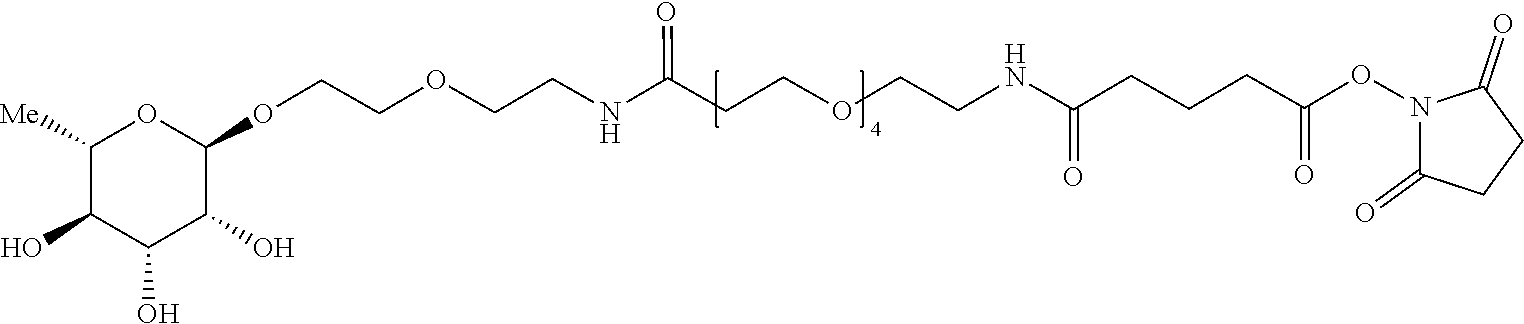
- Preparations 1-9 describe the methods used to prepare intermediates from the key linker molecules required for conjugation into the Examples, as described by processes (a)-(c).
- the alpha-Gal-(CH 2 ) 8 —COO—NHS linker was purchased from V-Labs Inc.
- the solution was analysed by SEC to afford cetuximab in a solution suitable for lysine conjugation (18.2 mg, 91% yield, at 6.4 mg/mL, 100% monomer content).
- cetuximab or cetuximab-Fab was incubated with 20, 40 or [60+40] molar equivalents of 50 mM Preparation 1 or 25 mM Preparation 2 with 10% v/v DMF co-solvent for 2 hours at 30° C. SEC analysis was used to confirm successful conjugation and the reaction was quenched by the addition of glycine to 1 mM.
- the solution was concentrated to 2-3 mg/mL and 0.2 ⁇ M filtered to afford the desired conjugate.
- Example 1 was prepared according to the General Lysine Conjugation Method using 20 equivalents of Preparation 1 and cetuximab-Fab.
- Example 2 was prepared according to the General Lysine Conjugation Method using 40 equivalents of Preparation 1 and cetuximab-Fab.
- Example 5 was prepared according to the General Lysine Conjugation Method using 20 equivalents of Preparation 2 and cetuximab-Fab.
- FIGS. 10 A- 10 D demonstrate the capture of anti-alpha galactosyl IgM antibodies to the cell surface using Examples 1-4, respectively.
- the shift in fluorescence intensity (PE) occurs due to the binding event at each end of the molecule.
- Flow cytometry was used to demonstrate binding of the compounds to a cell line of interest and recruitment of the C3b complement component to the cell and subsequent cell viability.
- A431 cells are used to capture the EGFR binding mAb (cetuximab) or antibody fragment, as it is well known that the cells significantly over-express the EGFR receptor.
- Anti-C3b antibody conjugated to phycoerythrin (PE) was used to detect recruitment of C3b molecules to cells from serum after addition of the compounds at various concentrations.
- PE phycoerythrin
- SYTOX Blue also allows for evaluation of the cell viability after addition of the compounds at various concentrations.
- the cells were washed with 2 ⁇ 150 ⁇ L PBS+0.1% BSA, prior to adding 100 ⁇ L of anti-C3b-PE (Biolegend 846104). The cells were incubated at 4° C. for 30 minutes in dark.
- FIGS. 14 A- 14 D demonstrate the level of C3b deposition on A431 cells using Examples 1-4, respectively.
- FIGS. 15 A and 15 B demonstrate the level of C3b deposition on A431 cells with varying concentrations of Examples 1-2 ( FIG. 15 A ) and 3-4 ( FIG. 15 B ), compared to cetuximab or cetuximab-Fab.
- the results in FIG. 15 demonstrate the dose-related level of C3b deposition observed for Examples 1-4.
- the data demonstrates that C3b deposition is much higher for Examples 1 ⁇ 4 when compared to cetuximab or cetuximab-Fab.
- FIGS. 16 A and 16 B demonstrate the level of C3b deposition on A431 using Examples 5 and 6, respectively.
- FIGS. 17 A and 17 B demonstrate the level of C3b deposition on A431 cells with varying concentrations of Examples 5 and 6, respectively, compared to cetuximab Fab fragment and/or cetuximab.
- the results in FIG. 17 demonstrate the dose-related level of C3b deposition observed for Examples 5 and 6.
- the data demonstrates that C3b deposition is much higher for Examples 5 and 6 when compared to cetuximab or cetuximab-Fab.
Landscapes
- Health & Medical Sciences (AREA)
- Chemical & Material Sciences (AREA)
- Life Sciences & Earth Sciences (AREA)
- Engineering & Computer Science (AREA)
- Bioinformatics & Cheminformatics (AREA)
- Immunology (AREA)
- Medicinal Chemistry (AREA)
- General Health & Medical Sciences (AREA)
- Organic Chemistry (AREA)
- Molecular Biology (AREA)
- Biochemistry (AREA)
- Pharmacology & Pharmacy (AREA)
- Animal Behavior & Ethology (AREA)
- Public Health (AREA)
- Veterinary Medicine (AREA)
- Epidemiology (AREA)
- Proteomics, Peptides & Aminoacids (AREA)
- Genetics & Genomics (AREA)
- Biophysics (AREA)
- Cell Biology (AREA)
- Chemical Kinetics & Catalysis (AREA)
- General Chemical & Material Sciences (AREA)
- Nuclear Medicine, Radiotherapy & Molecular Imaging (AREA)
- Peptides Or Proteins (AREA)
- Medicines Containing Antibodies Or Antigens For Use As Internal Diagnostic Agents (AREA)
Abstract
Description
[F—S1—X]2-L (I)
wherein:
-
- F represents rhamnose or a carbohydrate molecule capable of binding to a human anti-alpha-galactosyl antibody;
- S1 represents a spacer selected from a —(CH2)a— or —(CH2)b—(CH2—CH2—O)c—(CH2)d— group, wherein one to ten of said —CH2— groups may optionally be substituted by one or more groups selected from —O—, —S—, ═N(H)—, —C(═O)—, —C(O)NH—, —NHC(O)—;
- a represents an integer selected from 1 to 35;
- b represents an integer selected from 0 to 5;
- c represents an integer selected from 1 to 20;
- d represents an integer selected from 1 to 20;
- X represents an antibody or antigen binding fragment attachment moiety;
- z represents an integer selected from 1 to 50; and
- L represents a binding moiety selected from an antibody or antigen binding fragment thereof.
[F—S1—X]2-L (I)
wherein:
-
- F represents rhamnose or a carbohydrate molecule capable of binding to a human anti-alpha-galactosyl antibody;
- S1 represents a spacer selected from a —(CH2)a— or —(CH2)b—(CH2—CH2—O)c—(CH2)d— group, wherein one to ten of said-CH2-groups may optionally be substituted by one or more groups selected from —O—, —S—, ═N(H)—, —C(═O)—, —C(O)NH— and —NHC(O)—;
- a represents an integer selected from 1 to 35;
- b represents an integer selected from 0 to 10;
- c represents an integer selected from 1 to 20;
- d represents an integer selected from 1 to 20;
- X represents an antibody or antigen binding fragment attachment moiety;
- z represents an integer selected from 1 to 50; and
- L represents a binding moiety selected from an antibody or antigen binding fragment thereof.
-
- —(CH2)a— wherein one of said —CH2— groups may optionally be substituted by one or more groups selected from —O—, —S—, ═N(H)—, —C(═O)—, —C(O)NH— and —NHC(O)— (such as —(CH2)8—CO—); or
- —(CH2)b—(CH2—CH2—O)c—(CH2)d—, wherein one to five of said —CH2— groups may optionally be substituted by one or more groups selected from —O—, —S—, ═N(H)—, —C(═O)—, —C(O)NH— and —NHC(O)— (such as —(CH2)2—O—(CH2)2—NHCO—(CH2CH2O)4—(CH2)2—NHCO—(CH2)3—CO—).
-
- —(CH2)a— wherein one of said —CH2— groups may optionally be substituted by one or more groups selected from —C(═O)— (such as —(CH2)8—CO—); or
- —(CH2)b—(CH2—CH2—O)c—(CH2)d—, wherein four of said —CH2— groups may optionally be substituted by one or more groups selected from —O—, —C(═O)— and —NHC(O)— (such as —(CH2)2—O—(CH2)2—NHCO—(CH2CH2O)4—(CH2)2—NHCO—(CH2)3—CO—).


wherein S1 and z are as defined herein and L represents an antibody or antigen binding fragment thereof terminated with reactive thiol or lysine groups. Such reacting thiol or cysteine groups may be available on the antibody or antigen binding fragment thereof or they may be introduced through site specific modifications to the peptide chain, to deliver additional points of conjugation via engineered amino acid residues (Nat. Biotechnol. 2008, 925; Nat. Biotechnol. 2012, 184). Alternatively, site specific amino acids may be incorporated into the desired peptide chain to enable orthogonal chemical reactivity for site specific conjugation (OPRD (2016), 20, 852-866). Examples of amino acids with orthogonal reactivity include p-acetylphenylalanine (pAcPhe, J. Mol. Biol. 2011, 595), para-azidomethyl-1-phenylalanine (pAMF, Bioconjug. Chem 2014, 351), N6-((2-azidoethoxy) carbonyl)-L-lysine (Bioconjug. Chem. 2015, 2249).
| Sequence ID NO | Sequence |
| Cetuximab Heavy chain | QVQLKQSGPGLVQPSQSLSITCTVSGFSLTNYGVHWVRQSP |
| (SEQ ID NO: 1) | GKGLEWLGVIWSGGNTDYN |
| TPFTSRLSINKDNSKSQVFFKMNSLQSNDTAIYYCARALTYYD | |
| YEFAYWGQGTLVTVSAA | |
| STKGPSVFPLAPSSKSTSGGTAALGCLVKDYFPEPVTVSWNS | |
| GALTSGVHTFPAVLQSSG | |
| LYSLSSVVTVPSSSLGTQTYICNVNHKPSNTKVDKKVEPKSCD | |
| KTHTCPPCPAPELLGGP | |
| SVFLFPPKPKDTLMISRTPEVTCVVVDVSHEDPEVKFNWYVD | |
| GVEVHNAKTKPREEQYNS | |
| TYRVVSVLTVLHQDWLNGKEYKCKVSNKALPAPIEKTISKAKG | |
| QPREPQVYTLPPSRDEL | |
| TKNQVSLTCLVKGFYPSDIAVEWESNGQPENNYKTTPPVLDS | |
| DGSFFLYSKLTVDKSRWQ | |
| QGNVFSCSVMHEALHNHYTQKSLSLSPGK | |
| Cetuximab Light chain | DILLTQSPVILSVSPGERVSFSCRASQSIGTNIHWYQQRTNGS |
| (SEQ ID NO: 2) | PRLLIKYASESISGIPS |
| RFSGSGSGTDFTLSINSVESEDIADYYCQQNNNWPTTFGAGT | |
| KLELKRTVAAPSVFIFPP | |
| SDEQLKSGTASVVCLLNNFYPREAKVQWKVDNALQSGNSQE | |
| SVTEQDSKDSTYSLSSTLT | |
| LSKADYEKHKVYACEVTHQGLSSPVTKSFNRGEC | |
| Rituximab Heavy | QVQLQQPGAELVKPGASVKMSCKASGYTFTSYNMHWVKQTPGRGLEWIGAIYPG | |
| chain (SEQ ID NO: | NGDTSY | |
| 3) | NQKFKGKATLTADKSSSTAYMQLSSLTSEDSAVYYCARSTYYGGDWYFNVWGAGT | |
| TVTVS | ||
| AASTKGPSVFPLAPSSKSTSGGTAALGCLVKDYFPEPVTVSWNSGALTSGVHTFPAV | ||
| LQS | ||
| SGLYSLSSVVTVPSSSLGTQTYICNVNHKPSNTKVDKKAEPKSCDKTHTCPPPAPELL | ||
| G | ||
| GPSVFLFPPKPKDTLMISRTPEVTCVVVDVSHEDPEVKFNWYVDGVEVHNAKTKPR | ||
| EEQY | ||
| NSTYRVVSVLTVLHQDWLNGKEYKCKVSNKALPAPIEKTISKAKGQPREPQVYTLPP | ||
| SRD | ||
| ELTKNQVSLTCLVKGFYPSDIAVEWESNGQPENNYKTTPPVLDSDGSFFLYSKLTVDK | ||
| SR | ||
| WQQGNVFSCSVMHEALHNHYTQKSLSLSPGK | ||
| Rituximab Light | QIVLSQSPAILSASPGEKVTMTCRASSSVSYIHWFQQKPGSSPKPWIYATSNLASGVP | |
| chain (SEQ ID NO: | VR | |
| 4) | FSGSGSGTSYSLTISRVEAEDAATYYCQQWTSNPPTFGGGTKLEIKRTVAAPSVFIFPP | |
| S | ||
| DEQLKSGTASVVCLLNNFYPREAKVQWKVDNALQSGNSQESVTEQDSKDSTYSLSS | ||
| TLTL | ||
| SKADYEKHKVYACEVTHQGLSSPVTKSFNRGEC |
| Sequence ID NO | Sequence |
| Trastuzumab Heavy | EVQLVESGGG LVQPGGSLRL SCAASGFNIK DTYIHWVRQA |
| chain (SEQ ID NO: 5) | PGKGLEWVAR IYPTNGYTRY ADSVKGRFTI SADTSKNTAY LQMNSLRAED |
| TAVYYCSRWG | |
| GDGFYAMDYW GQGTLVTVSS ASTKGPSVFP LAPSSKSTSG GTAALGCLVK | |
| DYFPEPVTVS | |
| WNSGALTSGV HTFPAVLQSS GLYSLSSVVT VPSSSLGTQT YICNVNHKPS | |
| NTKVDKKVEP | |
| KSCDKTHTCP PCPAPELLGG PSVFLFPPKP KDTLMISRTP EVTCVVVDVS | |
| HEDPEVKFNW | |
| YVDGVEVHNA KTKPREEQYN STYRVVSVLT VLHQDWLNGK EYKCKVSNKA | |
| LPAPIEKTIS | |
| KAKGQPREPQ VYTLPPSREE MTKNQVSLTC LVKGFYPSDI AVEWESNGQP | |
| ENNYKTTPPV | |
| LDSDGSFFLY SKLTVDKSRW QQGNVFSCSV MHEALHNHYT QKSLSLSPG | |
| Trastuzumab light | DIQMTQSPSS LSASVGDRVT ITCRASQDVN TAVAWYQQKP |
| chain (SEQ ID NO: 6) | GKAPKLLIYS ASFLYSGVPS RFSGSRSGTD FTLTISSLQP EDFATYYCQQ |
| HYTTPPTFGQ | |
| GTKVEIKRTV AAPSVFIFPP SDEQLKSGTA SVVCLLNNFY PREAKVQWKV | |
| DNALQSGNSQ | |
| ESVTEQDSKD STYSLSSTLT LSKADYEKHK VYACEVTHQG LSSPVTKSFN | |
| RGEC | |
Pathogen Specific Antibody Targets
-
- a) Conjugation of the linkers to the antibody or fragment thereof may not significantly alter the binding efficacy to the target over the unconjugated counterpart;
- b) Conjugation of the hapten containing linkers may enable high levels of LAR without concomitantly high levels of aggregation due to the hydrophilic properties of the carbohydrates;
- c) Addition of the hapten containing linkers may enable the antibody or fragment thereof to be more stable;
- d) A preference for heavy or light chain conjugation depending on the chosen linker and/or conjugation approach;
- e) Conjugation of the linkers to the antibody or fragment thereof may lead to an enhanced pharmacokinetic profile;
- f) The resulting bifunctional antibodies and fragments thereof may exhibit enhanced EC50 binding properties to the target.
Salts and Derivatives Thereof
-
- (a) preparing a compound of formula (IA) wherein X represents —NH— by reacting a compound of formula (IIA) wherein S1 is terminated with a N-hydroxysuccinimide group with compounds of formula (IIIA) wherein the antibody or antigen binding fragment contains at least one reactive amino group:

-
- (b) preparing a compound of formula (IB) wherein X1 represents —S— by reacting a compound of formula (IIIB) wherein the antibody or antigen binding fragment contains at least one reactive thiol group with a compound of formula (IIB) wherein S1 is terminated with maleimide:

-
- (c) interconversion of a compound of formula (I) or protected derivative thereof to a further compound of formula (I) or protected derivative thereof.
-
- protection of reactive functions,
- deprotection of reactive functions,
- halogenation,
- dehalogenation,
- dealkylation,
- alkylation and arylation of amine, aniline, alcohol and phenol,
- Mitsunobu reaction on hydroxyl groups,
- cycloaddition reactions on appropriate groups,
- reduction of nitro, esters, cyano, aldehydes,
- transition metal-catalyzed coupling reactions,
- acylation,
- sulfonylation/introduction of sulfonyl groups,
- saponification/hydrolysis of ester groups,
- amidification or transesterification of ester groups,
- esterification or amidification of carboxylic groups,
- halogen exchange,
- nucleophilic substitution with amine, thiol or alcohol,
- reductive amination,
- oxime formation on carbonyl and hydroxylamine groups,
- S-oxidation,
- N-oxidation,
- salification.
-
- Topoisomerase I inhibitors;
- Antimetabolites;
- Tubulin targeting agents;
- DNA binder and topoisomerase II inhibitors;
- Alkylating Agents;
- Monoclonal Antibodies;
- Anti-Hormones;
- Signal Transduction Inhibitors;
- Proteasome Inhibitors;
- DNA methyl transferases;
- Cytokines and retinoids;
- Chromatin targeted therapies;
- Radiotherapy; and
- Other therapeutic or prophylactic agents, such as immunotherapy agents.
-
- Column: Waters Acquity UPLC BEH C18 1.7 μm 2.1*50 mm Part no. 186002350
- Mobile phase A: Water
- Mobile phase B: Acetonitrile
- Mobile phase C: 2% v/v Ammonia (35% v/v) in Water
- Flow rate: 0.8 mL/min
- Column Temp: 40° C.
- Gradient start: 350 μL before injection
- Data collection: Diode Array 215-350 nm 1.2 nm resolution
UPLC Method 1
| Time / mins | A (%) | B (%) | C (%) | ||
| 0.0 | 93 | 2 | 5 | ||
| 4.0 | 0 | 95 | 5 | ||
| 4.6 | 0 | 95 | 5 | ||
Abbreviations
-
- is chemical shift in ppm;
- DMF is dimethylformamide;
- DMSO is dimethylsulphoxide;
- DSG is di-(N-succinimydyl) glutarate;
- HATU is O-(7-azabenzotriazol-1-yl)-N,N,N′,N′-tetramethyluronium hexafluorophosphate;
- HCl is hydrochloric acid;
- HPLC is high performance liquid chromatography;
- μ is micro;
- m is multiplet;
- Mal is maleimide;
- MeCN is acetonitrile;
- MeOH is methanol;
- mins is minutes;
- mL is millilitre;
- MMTr is monomethoxytrityl;
- MS is mass spectrometry;
- NHS is N-hydroxysuccinimide; or N-hydroxysuccinimidyl;
- NMR is nuclear magnetic resonance;
- Pd/C is (typically 5%-10%) palladium on charcoal hydrogenation catalyst (water-wet);
- ppm is parts per million;
- Rt is retention time;
- s is singlet;
- TEA is triethylamine; and
- TFA is trifluoroacetic acid.



Claims (21)
[F—S1—X]2-L (I)
—(CH2)8—CO—);
—(CH2)2—O—(CH2)2—NHCO—(CH2CH2O)4—(CH2)2—NHCO—(CH2)3—CO—);
—(CH2)8—CO—); or
—(CH2)2—O—(CH2)2—NHCO—(CH2CH2O)4—(CH2)2—NHCO—(CH2)3—CO—).


Applications Claiming Priority (4)
| Application Number | Priority Date | Filing Date | Title |
|---|---|---|---|
| GB1816553.0 | 2018-10-10 | ||
| GBGB1816553.0A GB201816553D0 (en) | 2018-10-10 | 2018-10-10 | Novel compounds and therapeutic uses thereof |
| GB1816553 | 2018-10-10 | ||
| PCT/GB2019/052886 WO2020074909A1 (en) | 2018-10-10 | 2019-10-10 | Compounds and therapeutic uses thereof |
Publications (2)
| Publication Number | Publication Date |
|---|---|
| US20210346514A1 US20210346514A1 (en) | 2021-11-11 |
| US12350348B2 true US12350348B2 (en) | 2025-07-08 |
Family
ID=64394824
Family Applications (1)
| Application Number | Title | Priority Date | Filing Date |
|---|---|---|---|
| US17/284,379 Active 2042-10-05 US12350348B2 (en) | 2018-10-10 | 2019-10-10 | Compounds and therapeutic uses thereof |
Country Status (4)
| Country | Link |
|---|---|
| US (1) | US12350348B2 (en) |
| EP (1) | EP3863718A1 (en) |
| GB (1) | GB201816553D0 (en) |
| WO (1) | WO2020074909A1 (en) |
Families Citing this family (4)
| Publication number | Priority date | Publication date | Assignee | Title |
|---|---|---|---|---|
| CN112618726B (en) * | 2020-12-21 | 2022-11-11 | 江南大学 | Antibody conjugate and method for enhancing immune effector function of antibody molecule |
| CA3237844A1 (en) | 2021-11-15 | 2023-05-19 | Systimmune, Inc. | Bispecific antibody-camptothecin drug conjugate and pharmaceutical use thereof |
| GB202406865D0 (en) | 2024-05-15 | 2024-06-26 | Centauri Therapeutics Ltd | Novel compounds and therapeutics uses thereof |
| GB202410052D0 (en) | 2024-07-10 | 2024-08-21 | Centauri Therapeutics Ltd | Novel compounds and therapeutic uses thereof |
Citations (11)
| Publication number | Priority date | Publication date | Assignee | Title |
|---|---|---|---|---|
| WO2007146847A2 (en) | 2006-06-09 | 2007-12-21 | University Of Maryland, Baltimore | Glycosylation engineered antibody therapy |
| WO2008057235A2 (en) | 2006-10-25 | 2008-05-15 | Newlink Genetics | Enhanced immunogenicity of tumor associated antigens by addition of alphagal epitopes |
| US20130149331A1 (en) | 2011-05-03 | 2013-06-13 | Peng George Wang | Rhamnose and forssman conjugated immunogenic agents |
| US20140112975A1 (en) * | 2012-10-22 | 2014-04-24 | Wisconsin Alumni Research Foundation | Lipid-Conjugated Rhamnose for Immune System Recruitment and Oncotherapy |
| WO2014151423A1 (en) | 2013-03-15 | 2014-09-25 | Newlink Genetics Corporation | Carbohydrate-modified glycoproteins and uses thereof |
| US20160256388A1 (en) * | 2015-03-05 | 2016-09-08 | Uri Galili | Compositions and methods for treatment of respiratory tract infections |
| WO2016196682A1 (en) | 2015-06-01 | 2016-12-08 | Immunexcite, Inc. | β-1,6-GLUCAN CETUXIMAB ANTIBODY CONJUGATES |
| WO2018187636A1 (en) * | 2017-04-07 | 2018-10-11 | Tianxin Wang | Cell surface anchoring antigen conjugates to treat cancer |
| WO2018185495A1 (en) | 2017-04-07 | 2018-10-11 | Centauri Therapeutics Limited | Novel compounds and therapeutic uses thereof |
| WO2018203087A1 (en) | 2017-05-04 | 2018-11-08 | Centauri Therapeutics Limited | Compounds and therapeutic uses thereof |
| US20210198381A1 (en) * | 2017-12-29 | 2021-07-01 | Jiangnan University | Bifunctionnal Molecules Recruiting Antibodies and Targeting Cancer Cells |
Family Cites Families (13)
| Publication number | Priority date | Publication date | Assignee | Title |
|---|---|---|---|---|
| US5202238A (en) | 1987-10-27 | 1993-04-13 | Oncogen | Production of chimeric antibodies by homologous recombination |
| US5204244A (en) | 1987-10-27 | 1993-04-20 | Oncogen | Production of chimeric antibodies by homologous recombination |
| US5736137A (en) | 1992-11-13 | 1998-04-07 | Idec Pharmaceuticals Corporation | Therapeutic application of chimeric and radiolabeled antibodies to human B lymphocyte restricted differentiation antigen for treatment of B cell lymphoma |
| US7060808B1 (en) | 1995-06-07 | 2006-06-13 | Imclone Systems Incorporated | Humanized anti-EGF receptor monoclonal antibody |
| DE69840723D1 (en) | 1997-02-11 | 2009-05-20 | Immunomedics Inc | STIMULATING AN IMMUNE RESPONSE BY ANTIBODIES MARKED WITH THE ALPHA GALACTOSYLEPITOP |
| US6235883B1 (en) | 1997-05-05 | 2001-05-22 | Abgenix, Inc. | Human monoclonal antibodies to epidermal growth factor receptor |
| US7645743B2 (en) | 1999-12-22 | 2010-01-12 | Altermune, Llc | Chemically programmable immunity |
| JP4166691B2 (en) | 2001-08-03 | 2008-10-15 | タイコ ヘルスケア グループ エルピー | Tissue marking apparatus and method |
| US20090269343A1 (en) | 2008-04-11 | 2009-10-29 | Duke University | Dual Specific Immunotoxin for Brain Tumor Therapy |
| RS57024B1 (en) | 2011-06-10 | 2018-05-31 | Medimmune Ltd | Anti-pseudomonas psl binding molecules and uses thereof |
| JP2015535005A (en) | 2012-11-06 | 2015-12-07 | メディミューン,エルエルシー | Combination therapy with anti-Pseudomonas Psl and PcrV binding molecules |
| TWI719938B (en) | 2014-06-19 | 2021-03-01 | 美商麥迪紐有限責任公司 | Treatment of polybacterial infections |
| WO2018006063A1 (en) | 2016-07-01 | 2018-01-04 | Cidara Therapeutics, Inc. | Compositions and methods for the treatment of bacterial infections |
-
2018
- 2018-10-10 GB GBGB1816553.0A patent/GB201816553D0/en not_active Ceased
-
2019
- 2019-10-10 US US17/284,379 patent/US12350348B2/en active Active
- 2019-10-10 WO PCT/GB2019/052886 patent/WO2020074909A1/en not_active Ceased
- 2019-10-10 EP EP19790733.0A patent/EP3863718A1/en active Pending
Patent Citations (12)
| Publication number | Priority date | Publication date | Assignee | Title |
|---|---|---|---|---|
| WO2007146847A2 (en) | 2006-06-09 | 2007-12-21 | University Of Maryland, Baltimore | Glycosylation engineered antibody therapy |
| WO2008057235A2 (en) | 2006-10-25 | 2008-05-15 | Newlink Genetics | Enhanced immunogenicity of tumor associated antigens by addition of alphagal epitopes |
| US20090060930A1 (en) * | 2006-10-25 | 2009-03-05 | Newlink Genetics | Enhanced immunogenicity of tumor associated antigens by addition of alphaGal epitopes |
| US20130149331A1 (en) | 2011-05-03 | 2013-06-13 | Peng George Wang | Rhamnose and forssman conjugated immunogenic agents |
| US20140112975A1 (en) * | 2012-10-22 | 2014-04-24 | Wisconsin Alumni Research Foundation | Lipid-Conjugated Rhamnose for Immune System Recruitment and Oncotherapy |
| WO2014151423A1 (en) | 2013-03-15 | 2014-09-25 | Newlink Genetics Corporation | Carbohydrate-modified glycoproteins and uses thereof |
| US20160256388A1 (en) * | 2015-03-05 | 2016-09-08 | Uri Galili | Compositions and methods for treatment of respiratory tract infections |
| WO2016196682A1 (en) | 2015-06-01 | 2016-12-08 | Immunexcite, Inc. | β-1,6-GLUCAN CETUXIMAB ANTIBODY CONJUGATES |
| WO2018187636A1 (en) * | 2017-04-07 | 2018-10-11 | Tianxin Wang | Cell surface anchoring antigen conjugates to treat cancer |
| WO2018185495A1 (en) | 2017-04-07 | 2018-10-11 | Centauri Therapeutics Limited | Novel compounds and therapeutic uses thereof |
| WO2018203087A1 (en) | 2017-05-04 | 2018-11-08 | Centauri Therapeutics Limited | Compounds and therapeutic uses thereof |
| US20210198381A1 (en) * | 2017-12-29 | 2021-07-01 | Jiangnan University | Bifunctionnal Molecules Recruiting Antibodies and Targeting Cancer Cells |
Non-Patent Citations (33)
| Title |
|---|
| Bhattacharya et al. Impact of genetic variation on three dimensional structure and function of proteins. PLoS One 12(3): e0171355, 2017. * |
| Bork, P. Go hunting in sequence databases but watch out for the traps. Trends in Genetics 12(10): 425-427, 1996. * |
| Bork, P. Powers and pitfalls in sequence analysis: the 70% hurdle. Genome Res 10: 398-400, 2000. * |
| Brenner. S.E. Errors in genome annotation. Trends in Genetics 15:132-133, 1999. * |
| Brorson et al. Mutational analysis of avidity and fine specificity of anti-levan antibodies. J Immunol 163: 6694-6701, 1999. * |
| Brummell et al. Probing the combining site of an anti-carbohydrate antibody by saturation-mutagenesis: role of the heavy-chain CDR3 residues. Biochem 32(4): 1180-1187, 1993. * |
| Burks et al. In vitro scanning saturation mutagenesis of an antibody binding pocket. Proc Natl Acad Sci USA 94(2): 412-417, 1997. * |
| Carlson et al. Selective Tumor Cell Targeting Using Low-Affinity, Multivalent Interactions. ACS Chem Biol 2(2): 119-127, 2007. * |
| Cassett et al. A peptide mimetic of an anti-CD4 monoclonal antibody by rationale design. Biochem Biophys Res Comm 307: 198-205, 2003. * |
| Chen et al. Selection and analysis of an optimized anti-VEGF antibody: crystal structure of an affinity-matured Fab in complex with antigen. J Mol Biol 293: 865-881, 1999. * |
| Colman, P.M. Effects of amino acid sequence changes on antibody-antigen interactions. Research in Immunol. 145:33-36, 1994. * |
| De Pascalis et al. Grafting and "abbreviated" complementarity-determining regions containing specificity-determining residues essential for ligand contact to engineer a less immunogenic humanized monoclonal antibody. J Immunol 169: 3076-3084, 2002. * |
| Doerks et al. Protein annotation: detective work for function prediction. Trends in Genetics 14:248-250, 1998. * |
| Fenton et al. Rheostat positions: a new classification of protein positions relevant to pharmacogenomics. Medicinal Chem Res 29: 1133-1146, 2020. * |
| Guo et al. Protein tolerance to random amino acid change. Proc Natl Acad Sci USA 101(25): 9205-9210, 2004. * |
| Holm et al. Functional mapping and single chain construction of the anti-cytokeratin 8 monoclonal antibody TS1. Mol Immunol 44: 1075-1084, 2007. * |
| Jang et al. The structural basis for DNA binding by an anti-DNA autobody. Mol Immunol 35: 1207-1217, 1998. * |
| Kobayashi et al. Tryptophan H33 plays an important role in pyrimidine (6-4) pyrimidone photoproduct binding by a high affinity antibody. Protein Engineer 12(10): 879-884, 1999. * |
| MacCallum et al. Antibody-antigen interactions: contact analysis and binding site topography. J Mol Biol 262: 732-745, 1996. * |
| Naicker et al. Design and synthesis of aGal-conjugated peptide T20 as novel antiviral agent for HIV-immunotargeting. Org Biomol Chem 2: 660-664, 2004. * |
| Owen et al. Bifunctional Ligands that Target Cells Displaying the avb3 Integrin. ChemBioChem 8: 68-82, 2007. * |
| Paul, William E., Fundamental Immunology, 3rd Edition, Raven Press, New York, Chapt. 8, pp. 292-295 (1993). * |
| Perdomo et al. Neutralization of HIV-1 by redirection of natural antibodies. Proc Natl Acad Sci 105(34): 12515-12520, 2008. * |
| Rudikoff et al. Single amino acid substitution altering antigen-binding specificity. Proc Natl Acad Sci USA 79: 1979-1983, 1982. * |
| Sela-Culang et al. The structural basis of antibody-antigen recognition. Front Immunol 4: 302, 2013 (13 total pages). * |
| Skolnick et al. From genes to protein structure and function: novel applications of computational approaches in the genomic era. Trends Biotechnol 18(1):34-39 2000. * |
| Smith et al. The challenges of genome sequence annotation or "the devil is in the details". Nature Biotechnol 15: 1222-1223, 1997. * |
| Tokuriki et al. Stability effects of mutations and protein evolvability. Curr Opin Structural Biol 19: 596-604, 2009. * |
| Vajdos et al. Comprehensive functional maps of the antigen-binding site of an anti-ErbB2 antibody obtained with shotgun scanning mutagenesis. J Mol Biol 320: 415-428, 2002. * |
| Vasudevan et al. A single amino acid change in the binding pocket alters specificity of an anti-integrin antibody AP7.4 as revealed by its crystal structure. Blood Cells Mol Diseases 32: 176-181, 2004. * |
| Wenlan Chen et al: "−Rhamnose Antigen: A Promising Alternative to [alpha]-Gal for Cancer Immunotherapies", ACS Chemical Biology, vol. 6, No. 2, Feb. 18, 2011, pp. 185-191, XP55043321, ISSN: 1554-8929, DOI: 10.1021/cb100318z. |
| Wu et al. Humanization of a murine monoclonal antibody by simultaneous optimization of framework and CDR residues. J Mol Biol. 294: 151-162, 1999. * |
| Zhang et al. Comprehensive optimization of a single-chain variable domain antibody fragment as a targeting ligand for a cytotoxic nanoparticle. mAbs 7(1): 42-52, 2015. * |
Also Published As
| Publication number | Publication date |
|---|---|
| US20210346514A1 (en) | 2021-11-11 |
| WO2020074909A1 (en) | 2020-04-16 |
| EP3863718A1 (en) | 2021-08-18 |
| GB201816553D0 (en) | 2018-11-28 |
Similar Documents
| Publication | Publication Date | Title |
|---|---|---|
| EP4032892A1 (en) | Camptothecin derivative and conjugate thereof | |
| US20210346514A1 (en) | Compounds and therapeutic uses thereof | |
| US12458706B2 (en) | Compounds and therapeutic uses thereof | |
| US10792371B2 (en) | c-Met targeting compound-bioactive material conjugate and use thereof | |
| CN106687480A (en) | Anti-c-Met antibody and anti-c-Met antibody-cytotoxic drug conjugate and medical use thereof | |
| JP2023100679A (en) | NOVEL COMPOUNDS AND THEIR THERAPEUTIC USE | |
| EP3545974A1 (en) | Medical use of anti-c met antibody-cytotoxic drug conjugate | |
| RU2852363C1 (en) | Conjugate of antibody to cd79b and drug, method for its production and its pharmaceutical use | |
| HK40023976A (en) | Novel compounds and therapeutic uses thereof | |
| HK40023976B (en) | Novel compounds and therapeutic uses thereof | |
| WO2023044016A2 (en) | Antibody immune-stimulant conjugates and use thereof | |
| HK40068825A (en) | Camptothecin derivative and conjugate thereof | |
| HK1255298A1 (en) | Medical use of anti-c met antibody-cytotoxic drug conjugate | |
| HK40112818A (en) | Protein-drug conjugates comprising camptothecin analogs and methods of use thereof |
Legal Events
| Date | Code | Title | Description |
|---|---|---|---|
| FEPP | Fee payment procedure |
Free format text: ENTITY STATUS SET TO UNDISCOUNTED (ORIGINAL EVENT CODE: BIG.); ENTITY STATUS OF PATENT OWNER: LARGE ENTITY |
|
| STPP | Information on status: patent application and granting procedure in general |
Free format text: DOCKETED NEW CASE - READY FOR EXAMINATION |
|
| AS | Assignment |
Owner name: AVVINITY THERAPEUTICS LIMITED (GB/GB), UNITED KINGDOM Free format text: ASSIGNMENT OF ASSIGNORS INTEREST;ASSIGNOR:GLOSSOP, MELANIE;REEL/FRAME:063049/0668 Effective date: 20230223 |
|
| STPP | Information on status: patent application and granting procedure in general |
Free format text: NON FINAL ACTION MAILED |
|
| STPP | Information on status: patent application and granting procedure in general |
Free format text: RESPONSE TO NON-FINAL OFFICE ACTION ENTERED AND FORWARDED TO EXAMINER |
|
| STPP | Information on status: patent application and granting procedure in general |
Free format text: NON FINAL ACTION MAILED |
|
| STPP | Information on status: patent application and granting procedure in general |
Free format text: RESPONSE TO NON-FINAL OFFICE ACTION ENTERED AND FORWARDED TO EXAMINER |
|
| STPP | Information on status: patent application and granting procedure in general |
Free format text: NOTICE OF ALLOWANCE MAILED -- APPLICATION RECEIVED IN OFFICE OF PUBLICATIONS |
|
| STPP | Information on status: patent application and granting procedure in general |
Free format text: NOTICE OF ALLOWANCE MAILED -- APPLICATION RECEIVED IN OFFICE OF PUBLICATIONS |
|
| STCF | Information on status: patent grant |
Free format text: PATENTED CASE |