US12344867B2 - Engineered Pyrococcus enzymes and uses thereof - Google Patents
Engineered Pyrococcus enzymes and uses thereof Download PDFInfo
- Publication number
- US12344867B2 US12344867B2 US18/505,972 US202318505972A US12344867B2 US 12344867 B2 US12344867 B2 US 12344867B2 US 202318505972 A US202318505972 A US 202318505972A US 12344867 B2 US12344867 B2 US 12344867B2
- Authority
- US
- United States
- Prior art keywords
- amino acid
- acid position
- polymerase
- pyrococcus
- alanine
- Prior art date
- Legal status (The legal status is an assumption and is not a legal conclusion. Google has not performed a legal analysis and makes no representation as to the accuracy of the status listed.)
- Active
Links
Images


Classifications
-
- C—CHEMISTRY; METALLURGY
- C12—BIOCHEMISTRY; BEER; SPIRITS; WINE; VINEGAR; MICROBIOLOGY; ENZYMOLOGY; MUTATION OR GENETIC ENGINEERING
- C12N—MICROORGANISMS OR ENZYMES; COMPOSITIONS THEREOF; PROPAGATING, PRESERVING, OR MAINTAINING MICROORGANISMS; MUTATION OR GENETIC ENGINEERING; CULTURE MEDIA
- C12N9/00—Enzymes; Proenzymes; Compositions thereof; Processes for preparing, activating, inhibiting, separating or purifying enzymes
- C12N9/10—Transferases (2.)
- C12N9/12—Transferases (2.) transferring phosphorus containing groups, e.g. kinases (2.7)
- C12N9/1241—Nucleotidyltransferases (2.7.7)
- C12N9/1252—DNA-directed DNA polymerase (2.7.7.7), i.e. DNA replicase
-
- C—CHEMISTRY; METALLURGY
- C12—BIOCHEMISTRY; BEER; SPIRITS; WINE; VINEGAR; MICROBIOLOGY; ENZYMOLOGY; MUTATION OR GENETIC ENGINEERING
- C12N—MICROORGANISMS OR ENZYMES; COMPOSITIONS THEREOF; PROPAGATING, PRESERVING, OR MAINTAINING MICROORGANISMS; MUTATION OR GENETIC ENGINEERING; CULTURE MEDIA
- C12N15/00—Mutation or genetic engineering; DNA or RNA concerning genetic engineering, vectors, e.g. plasmids, or their isolation, preparation or purification; Use of hosts therefor
- C12N15/09—Recombinant DNA-technology
- C12N15/63—Introduction of foreign genetic material using vectors; Vectors; Use of hosts therefor; Regulation of expression
-
- C—CHEMISTRY; METALLURGY
- C12—BIOCHEMISTRY; BEER; SPIRITS; WINE; VINEGAR; MICROBIOLOGY; ENZYMOLOGY; MUTATION OR GENETIC ENGINEERING
- C12Q—MEASURING OR TESTING PROCESSES INVOLVING ENZYMES, NUCLEIC ACIDS OR MICROORGANISMS; COMPOSITIONS OR TEST PAPERS THEREFOR; PROCESSES OF PREPARING SUCH COMPOSITIONS; CONDITION-RESPONSIVE CONTROL IN MICROBIOLOGICAL OR ENZYMOLOGICAL PROCESSES
- C12Q1/00—Measuring or testing processes involving enzymes, nucleic acids or microorganisms; Compositions therefor; Processes of preparing such compositions
- C12Q1/68—Measuring or testing processes involving enzymes, nucleic acids or microorganisms; Compositions therefor; Processes of preparing such compositions involving nucleic acids
- C12Q1/6869—Methods for sequencing
- C12Q1/6874—Methods for sequencing involving nucleic acid arrays, e.g. sequencing by hybridisation
-
- C—CHEMISTRY; METALLURGY
- C12—BIOCHEMISTRY; BEER; SPIRITS; WINE; VINEGAR; MICROBIOLOGY; ENZYMOLOGY; MUTATION OR GENETIC ENGINEERING
- C12Y—ENZYMES
- C12Y207/00—Transferases transferring phosphorus-containing groups (2.7)
- C12Y207/07—Nucleotidyltransferases (2.7.7)
- C12Y207/07007—DNA-directed DNA polymerase (2.7.7.7), i.e. DNA replicase
-
- C—CHEMISTRY; METALLURGY
- C12—BIOCHEMISTRY; BEER; SPIRITS; WINE; VINEGAR; MICROBIOLOGY; ENZYMOLOGY; MUTATION OR GENETIC ENGINEERING
- C12Q—MEASURING OR TESTING PROCESSES INVOLVING ENZYMES, NUCLEIC ACIDS OR MICROORGANISMS; COMPOSITIONS OR TEST PAPERS THEREFOR; PROCESSES OF PREPARING SUCH COMPOSITIONS; CONDITION-RESPONSIVE CONTROL IN MICROBIOLOGICAL OR ENZYMOLOGICAL PROCESSES
- C12Q1/00—Measuring or testing processes involving enzymes, nucleic acids or microorganisms; Compositions therefor; Processes of preparing such compositions
- C12Q1/68—Measuring or testing processes involving enzymes, nucleic acids or microorganisms; Compositions therefor; Processes of preparing such compositions involving nucleic acids
- C12Q1/6844—Nucleic acid amplification reactions
Definitions
- the present disclosure generally relates to modified polymerase enzymes that exhibit improved incorporation of nucleotide analogues utilized in DNA sequencing.
- DNA-polymerases add nucleotide triphosphate (dNTP) residues to the 3′-end of the growing DNA chain, using a complementary DNA as template.
- dNTP nucleotide triphosphate
- Three motifs, A, B and C, are seen to be conserved across all DNA-polymerases.
- Initial experiments with native DNA polymerases revealed difficulties incorporating modified nucleotides.
- DNA polymerases have been modified to increase the rates of incorporation of nucleotide analogues.
- modification to the amino acids at positions 408, 409, 410 of a 9° N polymerase modifies the ability of polymerases to incorporate nucleotide analogues having a substituent at the 3′ position which is larger than a hydroxyl group (i.e., a reversible terminator).
- the modified nucleotide typically has a reversible terminator at the 3′ position and a modified base (e.g., a base linked to a fluorophore via a cleavable linker).
- a modified base e.g., a base linked to a fluorophore via a cleavable linker.
- SBS sequencing by synthesis process
- the enzyme In addition to rapid incorporation, the enzyme needs to be stable and have high incorporation fidelity. Balancing incorporation kinetics and fidelity can be a challenge. If the mutations in the polymerase result in a rapid average incorporation half time but is too promiscuous such that the inappropriate nucleotide is incorporated into the primer, this will result in a large source of error in sequencing applications. It is also desirable to design a polymerase capable to incorporating a variety of reversible terminators. Discovering a polymerase that has suitable kinetics and low misincorporation error remains a challenge. Disclosed herein, inter alia, are solutions to these and other problems in the art.
- modified Archaeal family B polymerases derived from the Archaeal microorganism Pyrococcus.
- a polymerase including an amino acid sequence that is at least 80% identical to a continuous 500 amino acid sequence within SEQ ID NO: 1, including the following amino acids: an alanine or serine at amino acid position 409 or an amino acid position functionally equivalent to amino acid position 409; a glycine or alanine at amino acid position 410 or any amino acid that is functionally equivalent to amino acid position 410; a proline, valine, glycine, or isoleucine at amino acid position 411 or any amino acid that is functionally equivalent to amino acid position 411; and an alanine at amino acid position 141 or an amino acid position functionally equivalent to amino acid position 141; and an alanine at amino acid position 143 or an amino acid position functionally equivalent to amino acid position.
- a polymerase including an amino acid sequence that is at least 80% identical to a continuous 500 amino acid sequence within SEQ ID NO: 1, including the following amino acids: an alanine or serine at amino acid position 409 or an amino acid functionally equivalent to amino acid position 409; a glycine at amino acid position 410 or an amino acid functionally equivalent to amino acid position 410; a proline, valine, glycine, isoleucine, or serine at amino acid position 411 or an amino acid functionally equivalent to amino acid position 411; an alanine at amino acid position 129 or an amino acid functionally equivalent to amino acid position 129; an alanine at amino acid position 141 or an amino acid functionally equivalent to amino acid position 141; an alanine at amino acid position 143 or an amino acid functionally equivalent to amino acid position 143; and an alanine at amino acid position 486 or an amino acid functionally equivalent to amino acid position 486.
- a polymerase including an amino acid sequence that is at least 80% identical to a continuous 500 amino acid sequence within SEQ ID NO: 1, including the following amino acids: an alanine or serine at amino acid position 409 or an amino acid position functionally equivalent to amino acid position 409; a glycine or alanine at amino acid position 410 or an amino acid position functionally equivalent to amino acid position 410; a proline, valine, glycine, or isoleucine at amino acid position 411 or an amino acid position functionally equivalent to amino acid position 411; an alanine at amino acid position 141 or an amino acid position functionally equivalent to amino acid position 141; an alanine at amino acid position 143 or an amino acid position functionally equivalent to amino acid position 143; and a glutamic acid at amino acid position 153 or an amino acid position functionally equivalent to amino acid position 153.
- a polymerase an amino acid sequence that is at least 80% identical to a continuous 500 amino acid sequence within SEQ ID NO: 1, including the following amino acids: an alanine or serine at amino acid position 409 or an amino acid position functionally equivalent to amino acid position 409; a glycine at amino acid position 410 or an amino acid position functionally equivalent to amino acid position 410; a proline, valine, glycine, isoleucine, or serine at amino acid position 411 or an amino acid position functionally equivalent to amino acid position 411; and an alanine at amino acid position 129 or an amino acid functionally equivalent to amino acid position 129; an alanine at amino acid position 141 or an amino acid functionally equivalent to amino acid position 141; an alanine at amino acid position 143 or an amino acid functionally equivalent to amino acid position 143; a glutamic acid at amino acid position 153 or an amino acid position functionally equivalent to amino acid position 153; and an alanine at amino amino acid position 153 or an
- modified Archaeal family B polymerases derived from the Archaeal microorganism Pyrococcus for improved incorporation of modified nucleotides into a nucleic acid sequence.
- a method of incorporating a modified nucleotide into a nucleic acid includes allowing the following components to interact: (i) a DNA template, (ii) a nucleotide solution, and (iii) a polymerase, wherein the polymerase is a polymerase of according to any one of the various embodiments described herein.
- a method of sequencing a nucleic acid sequence including: a) providing a nucleic acid template with a primer hybridized to said template to form a primer-template hybridization complex; b) adding a DNA polymerase and a nucleotide solution to the primer-template hybridization complex, wherein the DNA polymerase is a polymerase of any one of the embodiments described herein, and the nucleotide solution includes a modified nucleotide, wherein the modified nucleotide comprises a detectable label; c) subjecting primer-template hybridization complex to conditions which enable the polymerase to incorporate a modified nucleotide into the primer-template hybridization complex to form a modified primer-template hybridization complex; and d) detecting the detectable label; thereby sequencing a nucleic acid sequence.
- kits including a polymerase as described herein.
- FIGS. 1 A-C present data reporting average half time of incorporation of modified nucleotides bearing reversible terminator probes iso-1 and iso-2. Reactions were initiated in a buffer by the addition of 100 nM nucleotides (or 300 nM nucleotides for Challenge template sequences, unless otherwise indicated) and 133 nM DNA polymerase at a temperature of 65° C. The data corresponds to the data presented in Table 4.
- FIG. 2 presents data reporting average half time of incorporation of modified nucleotides bearing reversible terminator probes iso-1 and iso-2. Reactions were initiated in a buffer by the addition of 100 nM nucleotides (or 300 nM nucleotides for Challenge template sequences, unless otherwise indicated) and 133 nM DNA polymerase at a temperature of 65° C. The data corresponds to the data presented in Table 4.
- FIG. 3 shows the phylogenetic tree for related species.
- the 0.08 is used as a scale to estimate the genetic distances between protein sequences.
- the genetic distance is an estimate of the divergence between two sequences (an estimate of the number of mutations that have occurred since the two sequences shared a common ancestor). For example, the alignment between P. horikoshii and P. yayanosii shows 87% homology. The distance on the tree will give about 0.13 divergence measuring only the horizontal branches between those two species.
- FIG. 4 shows a sequence alignment highlighting the region surrounding the cysteine residues C429, C443, C507, and C510 in various DNA polymerase enzymes (e.g., family B archael DNA polymerases such as Thermococcus sp. 9° N-7 (9° N), 9° N polymerase T514S/1S21L mutant (Pol957), Thermococcus gorgonarius (TGO), Thermococcus kodakaraerisis (KOD1), Pyrococcus furiosus (Pfu)), Pyrococcus horikoshii (Pho), and Pyrococcus abyssi (Pab)).
- the sequence numbering is relative to wild type P. horikoshii (SEQ ID NO:1) over the 420-534 amino acid sequence).
- the aligned sequences, from top to bottom, are SEQ ID NOs: 32-38.
- family B polymerases derived from Archaea modified for improved incorporation of modified nucleotides into a nucleic acid sequence and methods of use of the same.
- the term “about” means a range of values including the specified value, which a person of ordinary skill in the art would consider reasonably similar to the specified value. In embodiments, the term “about” means within a standard deviation using measurements generally acceptable in the art. In embodiments, about means a range extending to +/ ⁇ 10% of the specified value. In embodiments, about means the specified value.
- Nucleic acid refers to nucleotides (e.g., deoxyribonucleotides or ribonucleotides) and polymers thereof in either single-, double- or multiple-stranded form, or complements thereof.
- polynucleotide e.g., oligonucleotide
- oligo oligo
- nucleotide refers, in the usual and customary sense, to a sequence of nucleotides.
- nucleotide refers, in the usual and customary sense, to a single unit of a polynucleotide, i.e., a monomer. Nucleotides can be ribonucleotides, deoxyribonucleotides, or modified versions thereof.
- Examples of such analogs include, include, without limitation, phosphodiester derivatives including, e.g., phosphoramidate, phosphorodiamidate, phosphorothioate (also known as phosphothioate having double bonded sulfur replacing oxygen in the phosphate), phosphorodithioate, phosphonocarboxylic acids, phosphonocarboxylates, phosphonoacetic acid, phosphonoformic acid, methyl phosphonate, boron phosphonate, or O-methylphosphoroamidite linkages (see Eckstein, O LIGONUCLEOTIDES AND A NALOGUES : A P RACTICAL A PPROACH , Oxford University Press) as well as modifications to the nucleotide bases such as in 5-methyl cytidine or pseudouridine; and peptide nucleic acid backbones and linkages.
- phosphodiester derivatives including, e.g., phosphoramidate, phosphorodiamidate, phosphorothioate (also known as
- Examples include, but are not limited to: —CH 2 —CH 2 —O—CH 3 , —CH 2 —CH 2 —NH—CH 3 , —CH 2 —CH 2 —N(CH 3 )—CH 3 , —CH 2 —S—CH 2 —CH 3 , —CH 2 —S—CH 2 , —S(O)—CH 3 , —CH 2 —CH 2 —S(O) 2 —CH 3 , —CH ⁇ CH—O—CH 3 , —Si(CH 3 ) 3 , —CH 2 —CH ⁇ N—OCH 3 , —CH ⁇ CH—N(CH 3 )—CH 3 , —O—CH 3 , —O—CH 2 —CH 3 , and —CN.
- a heteroalkyl moiety may include one heteroatom (e.g., O, N, S, Si, or P).
- a heteroalkyl moiety may include two optionally different heteroatoms (e.g., O, N, S, Si, or P).
- a heteroalkyl moiety may include three optionally different heteroatoms (e.g., O, N, S, Si, or P).
- a heteroalkyl moiety may include four optionally different heteroatoms (e.g., O, N, S, Si, or P).
- a heteroalkyl moiety may include five optionally different heteroatoms (e.g., O, N, S, Si, or P).
- a heteroalkyl moiety may include up to 8 optionally different heteroatoms (e.g., O, N, S, Si, or P).
- the term “heteroalkenyl,” by itself or in combination with another term, means, unless otherwise stated, a heteroalkyl including at least one double bond.
- a heteroalkenyl may optionally include more than one double bond and/or one or more triple bonds in additional to the one or more double bonds.
- the term “heteroalkynyl,” by itself or in combination with another term means, unless otherwise stated, a heteroalkyl including at least one triple bond.
- a heteroalkynyl may optionally include more than one triple bond and/or one or more double bonds in additional to the one or more triple bonds.
- heteroalkyl groups include those groups that are attached to the remainder of the molecule through a heteroatom, such as —C(O)R′, —C(O)NR′, —NR′R′′, —OR′, —SR′, and/or —SO 2 R′.
- heteroalkyl is recited, followed by recitations of specific heteroalkyl groups, such as —NR′R′′ or the like, it will be understood that the terms heteroalkyl and —NR′R′′ are not redundant or mutually exclusive. Rather, the specific heteroalkyl groups are recited to add clarity. Thus, the term “heteroalkyl” should not be interpreted herein as excluding specific heteroalkyl groups, such as —NR′R′′ or the like.
- cycloalkyl and heterocycloalkyl mean, unless otherwise stated, cyclic versions of “alkyl” and “heteroalkyl,” respectively. Cycloalkyl and heterocycloalkyl are not aromatic. Additionally, for heterocycloalkyl, a heteroatom can occupy the position at which the heterocycle is attached to the remainder of the molecule. Examples of cycloalkyl include, but are not limited to, cyclopropyl, cyclobutyl, cyclopentyl, cyclohexyl, 1-cyclohexenyl, 3-cyclohexenyl, cycloheptyl, and the like.
- heterocycloalkyl examples include, but are not limited to, 1-(1,2,5,6-tetrahydropyridyl), 1-piperidinyl, 2-piperidinyl, 3-piperidinyl, 4-morpholinyl, 3-morpholinyl, tetrahydrofuran-2-yl, tetrahydrofuran-3-yl, tetrahydrothien-2-yl, tetrahydrothien-3-yl, 1-piperazinyl, 2-piperazinyl, and the like.
- a “cycloalkylene” and a “heterocycloalkylene,” alone or as part of another substituent, means a divalent radical derived from a cycloalkyl and heterocycloalkyl, respectively.
- cycloalkyl means a monocyclic, bicyclic, or a multicyclic cycloalkyl ring system.
- monocyclic ring systems are cyclic hydrocarbon groups containing from 3 to 8 carbon atoms, where such groups can be saturated or unsaturated, but not aromatic.
- cycloalkyl groups are fully saturated. Examples of monocyclic cycloalkyls include cyclopropyl, cyclobutyl, cyclopentyl, cyclopentenyl, cyclohexyl, cyclohexenyl, cycloheptyl, and cyclooctyl.
- Bicyclic cycloalkyl ring systems are bridged monocyclic rings or fused bicyclic rings.
- bridged monocyclic rings contain a monocyclic cycloalkyl ring where two non adjacent carbon atoms of the monocyclic ring are linked by an alkylene bridge of between one and three additional carbon atoms (i.e., a bridging group of the form (CH 2 ) w , where w is 1, 2, or 3).
- bicyclic ring systems include, but are not limited to, bicyclo[3.1.1]heptane, bicyclo[2.2.1]heptane, bicyclo[2.2.2]octane, bicyclo[3.2.2]nonane, bicyclo[3.3.1]nonane, and bicyclo[4.2.1]nonane.
- fused bicyclic cycloalkyl ring systems contain a monocyclic cycloalkyl ring fused to either a phenyl, a monocyclic cycloalkyl, a monocyclic cycloalkenyl, a monocyclic heterocyclyl, or a monocyclic heteroaryl.
- the bridged or fused bicyclic cycloalkyl is attached to the parent molecular moiety through any carbon atom contained within the monocyclic cycloalkyl ring.
- cycloalkyl groups are optionally substituted with one or two groups which are independently oxo or thia.
- the fused bicyclic cycloalkyl is a 5 or 6 membered monocyclic cycloalkyl ring fused to either a phenyl ring, a 5 or 6 membered monocyclic cycloalkyl, a 5 or 6 membered monocyclic cycloalkenyl, a 5 or 6 membered monocyclic heterocyclyl, or a 5 or 6 membered monocyclic heteroaryl, wherein the fused bicyclic cycloalkyl is optionally substituted by one or two groups which are independently oxo or thia.
- multicyclic cycloalkyl ring systems are a monocyclic cycloalkyl ring (base ring) fused to either (i) one ring system selected from the group consisting of a bicyclic aryl, a bicyclic heteroaryl, a bicyclic cycloalkyl, a bicyclic cycloalkenyl, and a bicyclic heterocyclyl; or (ii) two other ring systems independently selected from the group consisting of a phenyl, a bicyclic aryl, a monocyclic or bicyclic heteroaryl, a monocyclic or bicyclic cycloalkyl, a monocyclic or bicyclic cycloalkenyl, and a monocyclic or bicyclic heterocyclyl.
- multicyclic cycloalkyl is attached to the parent molecular moiety through any carbon atom contained within the base ring.
- multicyclic cycloalkyl ring systems are a monocyclic cycloalkyl ring (base ring) fused to either (i) one ring system selected from the group consisting of a bicyclic aryl, a bicyclic heteroaryl, a bicyclic cycloalkyl, a bicyclic cycloalkenyl, and a bicyclic heterocyclyl; or (ii) two other ring systems independently selected from the group consisting of a phenyl, a monocyclic heteroaryl, a monocyclic cycloalkyl, a monocyclic cycloalkenyl, and a monocyclic heterocyclyl.
- Examples of multicyclic cycloalkyl groups include, but are not limited to tetradecahydrophenanthrenyl, perhydrophenothiazin-1-
- a cycloalkyl is a cycloalkenyl.
- the term “cycloalkenyl” is used in accordance with its plain ordinary meaning.
- a cycloalkenyl is a monocyclic, bicyclic, or a multicyclic cycloalkenyl ring system.
- monocyclic cycloalkenyl ring systems are cyclic hydrocarbon groups containing from 3 to 8 carbon atoms, where such groups are unsaturated (i.e., containing at least one annular carbon carbon double bond), but not aromatic. Examples of monocyclic cycloalkenyl ring systems include cyclopentenyl and cyclohexenyl.
- bicyclic cycloalkenyl rings are bridged monocyclic rings or a fused bicyclic rings.
- bridged monocyclic rings contain a monocyclic cycloalkenyl ring where two non adjacent carbon atoms of the monocyclic ring are linked by an alkylene bridge of between one and three additional carbon atoms (i.e., a bridging group of the form (CH 2 ) w , where w is 1, 2, or 3).
- Representative examples of bicyclic cycloalkenyls include, but are not limited to, norbornenyl and bicyclo[2.2.2]oct 2 enyl.
- fused bicyclic cycloalkenyl ring systems contain a monocyclic cycloalkenyl ring fused to either a phenyl, a monocyclic cycloalkyl, a monocyclic cycloalkenyl, a monocyclic heterocyclyl, or a monocyclic heteroaryl.
- the bridged or fused bicyclic cycloalkenyl is attached to the parent molecular moiety through any carbon atom contained within the monocyclic cycloalkenyl ring.
- cycloalkenyl groups are optionally substituted with one or two groups which are independently oxo or thia.
- multicyclic cycloalkenyl rings contain a monocyclic cycloalkenyl ring (base ring) fused to either (i) one ring system selected from the group consisting of a bicyclic aryl, a bicyclic heteroaryl, a bicyclic cycloalkyl, a bicyclic cycloalkenyl, and a bicyclic heterocyclyl; or (ii) two ring systems independently selected from the group consisting of a phenyl, a bicyclic aryl, a monocyclic or bicyclic heteroaryl, a monocyclic or bicyclic cycloalkyl, a monocyclic or bicyclic cycloalkenyl, and a monocyclic or bicyclic heterocyclyl.
- multicyclic cycloalkenyl is attached to the parent molecular moiety through any carbon atom contained within the base ring.
- multicyclic cycloalkenyl rings contain a monocyclic cycloalkenyl ring (base ring) fused to either (i) one ring system selected from the group consisting of a bicyclic aryl, a bicyclic heteroaryl, a bicyclic cycloalkyl, a bicyclic cycloalkenyl, and a bicyclic heterocyclyl; or (ii) two ring systems independently selected from the group consisting of a phenyl, a monocyclic heteroaryl, a monocyclic cycloalkyl, a monocyclic cycloalkenyl, and a monocyclic heterocyclyl.
- a heterocycloalkyl is a heterocyclyl.
- heterocyclyl as used herein, means a monocyclic, bicyclic, or multicyclic heterocycle.
- the heterocyclyl monocyclic heterocycle is a 3, 4, 5, 6 or 7 membered ring containing at least one heteroatom independently selected from the group consisting of O, N, and S where the ring is saturated or unsaturated, but not aromatic.
- the 3 or 4 membered ring contains 1 heteroatom selected from the group consisting of O, N and S.
- the 5 membered ring can contain zero or one double bond and one, two or three heteroatoms selected from the group consisting of O, N and S.
- the 6 or 7 membered ring contains zero, one or two double bonds and one, two or three heteroatoms selected from the group consisting of O, N and S.
- the heterocyclyl monocyclic heterocycle is connected to the parent molecular moiety through any carbon atom or any nitrogen atom contained within the heterocyclyl monocyclic heterocycle.
- heterocyclyl monocyclic heterocycles include, but are not limited to, azetidinyl, azepanyl, aziridinyl, diazepanyl, 1,3-dioxanyl, 1,3-dioxolanyl, 1,3-dithiolanyl, 1,3-dithianyl, imidazolinyl, imidazolidinyl, isothiazolinyl, isothiazolidinyl, isoxazolinyl, isoxazolidinyl, morpholinyl, oxadiazolinyl, oxadiazolidinyl, oxazolinyl, oxazolidinyl, piperazinyl, piperidinyl, pyranyl, pyrazolinyl, pyrazolidinyl, pyrrolinyl, pyrrolidinyl, tetrahydrofuranyl, tetrahydrothienyl
- the heterocyclyl bicyclic heterocycle is a monocyclic heterocycle fused to either a phenyl, a monocyclic cycloalkyl, a monocyclic cycloalkenyl, a monocyclic heterocycle, or a monocyclic heteroaryl.
- the heterocyclyl bicyclic heterocycle is connected to the parent molecular moiety through any carbon atom or any nitrogen atom contained within the monocyclic heterocycle portion of the bicyclic ring system.
- the bicyclic heterocyclyl is a 5 or 6 membered monocyclic heterocyclyl ring fused to a phenyl ring, a 5 or 6 membered monocyclic cycloalkyl, a 5 or 6 membered monocyclic cycloalkenyl, a 5 or 6 membered monocyclic heterocyclyl, or a 5 or 6 membered monocyclic heteroaryl, wherein the bicyclic heterocyclyl is optionally substituted by one or two groups which are independently oxo or thia.
- Multicyclic heterocyclyl ring systems are a monocyclic heterocyclyl ring (base ring) fused to either (i) one ring system selected from the group consisting of a bicyclic aryl, a bicyclic heteroaryl, a bicyclic cycloalkyl, a bicyclic cycloalkenyl, and a bicyclic heterocyclyl; or (ii) two other ring systems independently selected from the group consisting of a phenyl, a bicyclic aryl, a monocyclic or bicyclic heteroaryl, a monocyclic or bicyclic cycloalkyl, a monocyclic or bicyclic cycloalkenyl, and a monocyclic or bicyclic heterocyclyl.
- multicyclic heterocyclyl is attached to the parent molecular moiety through any carbon atom or nitrogen atom contained within the base ring.
- multicyclic heterocyclyl ring systems are a monocyclic heterocyclyl ring (base ring) fused to either (i) one ring system selected from the group consisting of a bicyclic aryl, a bicyclic heteroaryl, a bicyclic cycloalkyl, a bicyclic cycloalkenyl, and a bicyclic heterocyclyl; or (ii) two other ring systems independently selected from the group consisting of a phenyl, a monocyclic heteroaryl, a monocyclic cycloalkyl, a monocyclic cycloalkenyl, and a monocyclic heterocyclyl.
- multicyclic heterocyclyl groups include, but are not limited to 10H-phenothiazin-10-yl, 9,10-dihydroacridin-9-yl, 9,10-dihydroacridin-10-yl, 10H-phenoxazin-10-yl, 10,11-dihydro-5H-dibenzo[b,f]azepin-5-yl, 1,2,3,4-tetrahydropyrido[4,3-g]isoquinolin-2-yl, 12H-benzo[b]phenoxazin-12-yl, and dodecahydro-1H-carbazol-9-yl.
- halo or “halogen,” by themselves or as part of another substituent, mean, unless otherwise stated, a fluorine, chlorine, bromine, or iodine atom. Additionally, terms such as “haloalkyl” are meant to include monohaloalkyl and polyhaloalkyl.
- halo(C 1 -C 4 )alkyl includes, but is not limited to, fluoromethyl, difluoromethyl, trifluoromethyl, 2,2,2-trifluoroethyl, 4-chlorobutyl, 3-bromopropyl, and the like.
- acyl means, unless otherwise stated, —C(O)R where R is a substituted or unsubstituted alkyl, substituted or unsubstituted cycloalkyl, substituted or unsubstituted heteroalkyl, substituted or unsubstituted heterocycloalkyl, substituted or unsubstituted aryl, or substituted or unsubstituted heteroaryl.
- aryl means, unless otherwise stated, a polyunsaturated, aromatic, hydrocarbon substituent, which can be a single ring or multiple rings (preferably from 1 to 3 rings) that are fused together (i.e., a fused ring aryl) or linked covalently.
- a fused ring aryl refers to multiple rings fused together wherein at least one of the fused rings is an aryl ring.
- heteroaryl refers to aryl groups (or rings) that contain at least one heteroatom such as N, O, or S, wherein the nitrogen and sulfur atoms are optionally oxidized, and the nitrogen atom(s) are optionally quaternized.
- heteroaryl includes fused ring heteroaryl groups (i.e., multiple rings fused together wherein at least one of the fused rings is a heteroaromatic ring).
- a 5,6-fused ring heteroarylene refers to two rings fused together, wherein one ring has 5 members and the other ring has 6 members, and wherein at least one ring is a heteroaryl ring.
- a 6,6-fused ring heteroarylene refers to two rings fused together, wherein one ring has 6 members and the other ring has 6 members, and wherein at least one ring is a heteroaryl ring.
- a 6,5-fused ring heteroarylene refers to two rings fused together, wherein one ring has 6 members and the other ring has 5 members, and wherein at least one ring is a heteroaryl ring.
- a heteroaryl group can be attached to the remainder of the molecule through a carbon or heteroatom.
- Non-limiting examples of aryl and heteroaryl groups include phenyl, naphthyl, pyrrolyl, pyrazolyl, pyridazinyl, triazinyl, pyrimidinyl, imidazolyl, pyrazinyl, purinyl, oxazolyl, isoxazolyl, thiazolyl, furyl, thienyl, pyridyl, pyrimidyl, benzothiazolyl, benzoxazoyl benzimidazolyl, benzofuran, isobenzofuranyl, indolyl, isoindolyl, benzothiophenyl, isoquinolyl, quinoxalinyl, quinolyl, 1-naphthyl, 2-naphthyl, 4-biphenyl, 1-pyrrolyl, 2-pyrrolyl, 3-pyrrolyl, 3-pyrazolyl, 2-imidazolyl, 4-imidazo
- arylene and heteroarylene independently or as part of another substituent, mean a divalent radical derived from an aryl and heteroaryl, respectively.
- a heteroaryl group substituent may be —O— bonded to a ring heteroatom nitrogen.
- Spirocyclic rings are two or more rings wherein adjacent rings are attached through a single atom.
- the individual rings within spirocyclic rings may be identical or different.
- Individual rings in spirocyclic rings may be substituted or unsubstituted and may have different substituents from other individual rings within a set of spirocyclic rings.
- Possible substituents for individual rings within spirocyclic rings are the possible substituents for the same ring when not part of spirocyclic rings (e.g. substituents for cycloalkyl or heterocycloalkyl rings).
- Spirocylic rings may be substituted or unsubstituted cycloalkyl, substituted or unsubstituted cycloalkylene, substituted or unsubstituted heterocycloalkyl or substituted or unsubstituted heterocycloalkylene and individual rings within a spirocyclic ring group may be any of the immediately previous list, including having all rings of one type (e.g. all rings being substituted heterocycloalkylene wherein each ring may be the same or different substituted heterocycloalkylene).
- heterocyclic spirocyclic rings means a spirocyclic rings wherein at least one ring is a heterocyclic ring and wherein each ring may be a different ring.
- substituted spirocyclic rings means that at least one ring is substituted and each substituent may optionally be different.
- oxo means an oxygen that is double bonded to a carbon atom.
- alkylarylene as an arylene moiety covalently bonded to an alkylene moiety (also referred to herein as an alkylene linker).
- alkylarylene group has the formula:
- alkylarylene moiety may be substituted (e.g. with a substituent group) on the alkylene moiety or the arylene linker (e.g. at carbons 2, 3, 4, or 6) with halogen, oxo, —N 3 , —CF 3 , —CCl 3 , —CBr 3 , —Cl 3 , —CN, —CHO, —OH, —NH 2 , —COOH, —CONH 2 , —NO 2 , —SH, —SO 2 CH 3 —SO 3 H, —OSO 3 H, —SO 2 NH 2 , —NHNH 2 , —ONH 2 , —NHC(O)NHNH 2 , substituted or unsubstituted C 1 -C 5 alkyl or substituted or unsubstituted 2 to 5 membered heteroalkyl).
- the alkylarylene is unsubstituted.
- alkyl e.g., “alkyl,” “heteroalkyl,” “cycloalkyl,” “heterocycloalkyl,” “aryl,” and “heteroaryl”
- alkyl e.g., “alkyl,” “heteroalkyl,” “cycloalkyl,” “heterocycloalkyl,” “aryl,” and “heteroaryl”
- Preferred substituents for each type of radical are provided below.
- Substituents for the alkyl and heteroalkyl radicals can be one or more of a variety of groups selected from, but not limited to, —OR′, ⁇ O, ⁇ NR′, ⁇ N—OR′, —NR′R′′, —SR′, -halogen, —SiR′R′′R′′′, —OC(O)R′, —C(O)R′, —CO 2 R′, —CONR′R′′, —OC(O)NR′R′′, —NR′′C(O)R′, —NR′—C(O)NR′′R′′′, —NR′′C(O) 2 R′, —NR—C(NR′R′′R′′′) ⁇ NR′′′′, —NR—C(NR′R′′R′′′) ⁇ NR′′′′,
- R, R′, R′′, R′′′, and R′′′′ each preferably independently refer to hydrogen, substituted or unsubstituted heteroalkyl, substituted or unsubstituted cycloalkyl, substituted or unsubstituted heterocycloalkyl, substituted or unsubstituted aryl (e.g., aryl substituted with 1-3 halogens), substituted or unsubstituted heteroaryl, substituted or unsubstituted alkyl, alkoxy, or thioalkoxy groups, or arylalkyl groups.
- aryl e.g., aryl substituted with 1-3 halogens
- substituted or unsubstituted heteroaryl substituted or unsubstituted alkyl, alkoxy, or thioalkoxy groups, or arylalkyl groups.
- each of the R groups is independently selected as are each R′, R′′, R′′′, and R′′′′ group when more than one of these groups is present.
- R′ and R′′ are attached to the same nitrogen atom, they can be combined with the nitrogen atom to form a 4-, 5-, 6-, or 7-membered ring.
- —NR′R′′ includes, but is not limited to, 1-pyrrolidinyl and 4-morpholinyl.
- alkyl is meant to include groups including carbon atoms bound to groups other than hydrogen groups, such as haloalkyl (e.g., —CF 3 and —CH 2 CF 3 ) and acyl (e.g., —C(O)CH 3 , —C(O)CF 3 , —C(O)CH 2 OCH 3 , and the like).
- haloalkyl e.g., —CF 3 and —CH 2 CF 3
- acyl e.g., —C(O)CH 3 , —C(O)CF 3 , —C(O)CH 2 OCH 3 , and the like.
- substituents for the aryl and heteroaryl groups are varied and are selected from, for example: —OR′, —NR′R′′, —SR′, -halogen, —SiR′R′′R′′′, —OC(O)R′, —C(O)R′, —CO 2 R′, —CONR′R′′, —OC(O)NR′R′′, —NR′′C(O)R′, —NR′—C(O)NR′′R′′′, —NR′′C(O) 2 R′, —NR—C(NR′R′′R′′′) ⁇ NR′′′′, —NR—C(NR′R′′) ⁇ NR′′′, —S(O)R′, —S(O) 2 R′, —S(O) 2 NR′R′′, —NRSO 2 R′, —NR′NR′′R′′′, —ONR′R′′, —NR′C(O)NR
- Substituents for rings may be depicted as substituents on the ring rather than on a specific atom of a ring (commonly referred to as a floating substituent).
- the substituent may be attached to any of the ring atoms (obeying the rules of chemical valency) and in the case of fused rings or spirocyclic rings, a substituent depicted as associated with one member of the fused rings or spirocyclic rings (a floating substituent on a single ring), may be a substituent on any of the fused rings or spirocyclic rings (a floating substituent on multiple rings).
- the multiple substituents may be on the same atom, same ring, different atoms, different fused rings, different spirocyclic rings, and each substituent may optionally be different.
- a point of attachment of a ring to the remainder of a molecule is not limited to a single atom (a floating substituent)
- the attachment point may be any atom of the ring and in the case of a fused ring or spirocyclic ring, any atom of any of the fused rings or spirocyclic rings while obeying the rules of chemical valency.
- a ring, fused rings, or spirocyclic rings contain one or more ring heteroatoms and the ring, fused rings, or spirocyclic rings are shown with one more floating substituents (including, but not limited to, points of attachment to the remainder of the molecule), the floating substituents may be bonded to the heteroatoms.
- the ring heteroatoms are shown bound to one or more hydrogens (e.g. a ring nitrogen with two bonds to ring atoms and a third bond to a hydrogen) in the structure or formula with the floating substituent, when the heteroatom is bonded to the floating substituent, the substituent will be understood to replace the hydrogen, while obeying the rules of chemical valency.
- Two or more substituents may optionally be joined to form aryl, heteroaryl, cycloalkyl, or heterocycloalkyl groups.
- Such so-called ring-forming substituents are typically, though not necessarily, found attached to a cyclic base structure.
- the ring-forming substituents are attached to adjacent members of the base structure.
- two ring-forming substituents attached to adjacent members of a cyclic base structure create a fused ring structure.
- the ring-forming substituents are attached to a single member of the base structure.
- two ring-forming substituents attached to a single member of a cyclic base structure create a spirocyclic structure.
- the ring-forming substituents are attached to non-adjacent members of the base structure.
- heteroatom or “ring heteroatom” are meant to include oxygen (O), nitrogen (N), sulfur (S), phosphorus (P), and silicon (Si).
- non-covalent linker is used in accordance with its ordinary meaning and refers to a divalent moiety which includes at least two molecules that are not covalently linked to each other but are capable of interacting with each other via a non-covalent bond (e.g. electrostatic interactions (e.g. ionic bond, hydrogen bond, halogen bond) or van der Waals interactions (e.g. dipole-dipole, dipole-induced dipole, London dispersion).
- the non-covalent linker is the result of two molecules that are not covalently linked to each other that interact with each other via a non-covalent bond.
- anchor moiety refers to a chemical moiety capable of interacting (e.g., covalently or non-covalently) with a second, optionally different, chemical moiety (e.g., complementary anchor moiety binder).
- the anchor moiety is a bioconjugate reactive group capable of interacting (e.g., covalently) with a complementary bioconjugate reactive group (e.g., complementary anchor moiety reactive group).
- an anchor moiety is a click chemistry reactant moiety.
- the anchor moiety is capable of non-covalently interacting with a second chemical moiety (e.g., complementary affinity anchor moiety binder).
- an anchor moiety examples include biotin, azide, trans-cyclooctene (TCO) and phenyl boric acid (PBA).
- an affinity anchor moiety e.g., biotin moiety
- a complementary affinity anchor moiety binder e.g., streptavidin moiety
- an anchor moiety e.g., azide moiety, trans-cyclooctene (TCO) moiety, phenyl boric acid (PBA) moiety
- a complementary anchor moiety binder e.g., dibenzocyclooctyne (DBCO) moiety, tetrazine (TZ) moiety, salicylhydroxamic acid (SHA) moiety.
- DBCO dibenzocyclooctyne
- TZ tetrazine
- SHA salicylhydroxamic acid
- cleavable linker or “cleavable moiety” as used herein refers to a divalent or monovalent, respectively, moiety which is capable of being separated (e.g., detached, split, disconnected, hydrolyzed, a stable bond within the moiety is broken) into distinct entities.
- a cleavable linker is cleavable (e.g., specifically cleavable) in response to external stimuli (e.g., enzymes, nucleophilic/basic reagents, reducing agents, photo-irradiation, electrophilic/acidic reagents, organometallic and metal reagents, or oxidizing reagents).
- a chemically cleavable linker refers to a linker which is capable of being split in response to the presence of a chemical (e.g., acid, base, oxidizing agent, reducing agent, Pd(0), tris-(2-carboxyethyl)phosphine, dilute nitrous acid, fluoride, tris(3-hydroxypropyl)phosphine), sodium dithionite (Na 2 S 2 O 4 ), hydrazine (N 2 H 4 )).
- a chemically cleavable linker is non-enzymatically cleavable.
- the cleavable linker is cleaved by contacting the cleavable linker with a cleaving agent.
- the cleaving agent is sodium dithionite (Na 2 S 2 O 4 ), weak acid, hydrazine (N 2 H 4 ), Pd(0), or light-irradiation (e.g., ultraviolet radiation).
- a photocleavable linker refers to a linker which is capable of being split in response to photo-irradiation (e.g., ultraviolet radiation).
- An acid-cleavable linker refers to a linker which is capable of being split in response to a change in the pH (e.g., increased acidity).
- a base-cleavable linker refers to a linker which is capable of being split in response to a change in the pH (e.g., decreased acidity).
- An oxidant-cleavable linker refers to a linker which is capable of being split in response to the presence of an oxidizing agent.
- a reductant-cleavable linker refers to a linker which is capable of being split in response to the presence of an reducing agent (e.g., Tris(3-hydroxypropyl)phosphine).
- the cleavable linker is a dialkylketal linker, an azo linker, an allyl linker, a cyanoethyl linker, a 1-(4,4-dimethyl-2,6-dioxocyclohex-1-ylidene)ethyl linker, or a nitrobenzyl linker.
- cleavable linker or “orthogonal cleavable linker” as used herein refer to a cleavable linker that is cleaved by a first cleaving agent (e.g., enzyme, nucleophilic/basic reagent, reducing agent, photo-irradiation, electrophilic/acidic reagent, organometallic and metal reagent, oxidizing reagent) in a mixture of two or more different cleaving agents and is not cleaved by any other different cleaving agent in the mixture of two or more cleaving agents.
- a first cleaving agent e.g., enzyme, nucleophilic/basic reagent, reducing agent, photo-irradiation, electrophilic/acidic reagent, organometallic and metal reagent, oxidizing reagent
- two different cleavable linkers are both orthogonal cleavable linkers when a mixture of the two different cleavable linkers are reacted with two different cleaving agents and each cleavable linker is cleaved by only one of the cleaving agents and not the other cleaving agent.
- an orthogonally is a cleavable linker that following cleavage the two separated entities (e.g., fluorescent dye, bioconjugate reactive group) do not further react and form a new orthogonally cleavable linker.
- orthogonal binding group refers to a binding group (e.g. anchor moiety or complementary anchor moiety binder) that is capable of binding a first complementary binding group (e.g., complementary anchor moiety binder or anchor moiety) in a mixture of two or more different complementary binding groups and is unable to bind any other different complementary binding group in the mixture of two or more complementary binding groups.
- two different binding groups are both orthogonal binding groups when a mixture of the two different binding groups are reacted with two complementary binding groups and each binding group binds only one of the complementary binding groups and not the other complementary binding group.
- An example of a set of four orthogonal binding groups and a set of orthogonal complementary binding groups are the binding groups biotin, azide, trans-cyclooctene (TCO) and phenyl boric acid (PBA), which specifically and efficiently bind or react with the complementary binding groups streptavidin, dibenzocyclooctyne (DBCO), tetrazine (TZ) and salicylhydroxamic acid (SHA) respectively.
- TCO trans-cyclooctene
- PBA phenyl boric acid
- orthogonal detectable label refers to a detectable label (e.g. fluorescent dye or detectable dye) that is capable of being detected and identified (e.g., by use of a detection means (e.g., emission wavelength, physical characteristic measurement)) in a mixture or a panel (collection of separate samples) of two or more different detectable labels.
- a detection means e.g., emission wavelength, physical characteristic measurement
- two different detectable labels that are fluorescent dyes are both orthogonal detectable labels when a panel of the two different fluorescent dyes is subjected to a wavelength of light that is absorbed by one fluorescent dye but not the other and results in emission of light from the fluorescent dye that absorbed the light but not the other fluorescent dye.
- Orthogonal detectable labels may be separately identified by different absorbance or emission intensities of the orthogonal detectable labels compared to each other and not only be the absolute presence of absence of a signal.
- An example of a set of four orthogonal detectable labels is the set of Rox-Labeled Tetrazine, Alexa488-Labeled SHA, Cy5-Labeled Streptavidin, and R6G-Labeled Dibenzocyclooctyne.
- polymerase-compatible cleavable moiety refers a cleavable moiety which does not interfere with the function of a polymerase (e.g., DNA polymerase, modified DNA polymerase).
- a polymerase e.g., DNA polymerase, modified DNA polymerase.
- the polymerase-compatible cleavable moiety does not decrease the function of a polymerase relative to the absence of the polymerase-compatible cleavable moiety. In embodiments, the polymerase-compatible cleavable moiety does not negatively affect DNA polymerase recognition. In embodiments, the polymerase-compatible cleavable moiety does not negatively affect (e.g., limit) the read length of the DNA polymerase. Additional examples of a polymerase-compatible cleavable moiety may be found in U.S. Pat. No. 6,664,079, Ju J. et al. (2006) Proc Natl Acad Sci USA 103(52):19635-19640; Ruparel H. et al.
- a polymerase-compatible cleavable moiety includes an azido moiety or a dithiol linking moiety.
- the polymerase-compatible cleavable moiety is —NH 2 , —CN, —CH 3 , C 2 -C 6 allyl (e.g., —CH 2 —CH ⁇ CH 2 ), methoxyalkyl (e.g., —CH 2 —O—CH 3 ), or —CH 2 N 3 .
- the polymerase-compatible cleavable moiety comprises a disulfide moiety.
- allyl refers to an unsubstituted methylene attached to a vinyl group (i.e. —CH ⁇ CH 2 ), having the formula
- allyl linker refers to a divalent unsubstituted methylene attached to a vinyl group, having the formula
- detectable agent or “detectable compound” or “detectable label” or “detectable moiety” is a composition detectable by spectroscopic, photochemical, biochemical, immunochemical, chemical, magnetic resonance imaging, or other physical means.
- detectable agents include 18 F, 32 P, 33 P, 45 Ti, 47 Sc, 52 Fe, 59 Fe, 62 Cu, 64 Cu, 67 Cu, 67 Ga, 68 Ga, 77 As, 86 Y, 90 Y, 89 Sr, 89 Zr, 94 Tc, 94 Tc, 99m Tc, 99 Mo, 105 Pd, 105 Rh, 111 Ag, 123 In, 123 I, 124 I, 125 I, 131 I, 142 Pr, 143 Pr, 149 Pm, 153 Sm, 154-1581 Gd, 161 Tb, 166 Dy, 166 Ho, 169 Er, 175 Lu, 177 Lu, 186 Re, 188 Re, 189 Re, 194 Er, 198 Au, 199
- fluorescent dyes include modified oligonucleotides (e.g., moieties described in PCT/US2015/022063, which is incorporated herein by reference), electron-dense reagents, enzymes (e.g., as commonly used in an ELISA), biotin, digoxigenin, paramagnetic molecules, paramagnetic nanoparticles, ultrasmall superparamagnetic iron oxide (“USPIO”) nanoparticles, USPIO nanoparticle aggregates, superparamagnetic iron oxide (“SPIO”) nanoparticles, SPIO nanoparticle aggregates, monochrystalline iron oxide nanoparticles, monochrystalline iron oxide, nanoparticle contrast agents, liposomes or other delivery vehicles containing Gadolinium chelate (“Gd-chelate”) molecules, Gadolinium, radioisotopes, radionuclides (e.g.
- microbubbles e.g. including microbubble shells including albumin, galactose, lipid, and/or polymers; microbubble gas core including air, heavy gas(es), perfluorcarbon, nitrogen, octafluoropropane, perflexane lipid microsphere, perflutren, etc.
- iodinated contrast agents e.g.
- iohexol iodixanol, ioversol, iopamidol, ioxilan, iopromide, diatrizoate, metrizoate, ioxaglate), barium sulfate, thorium dioxide, gold, gold nanoparticles, gold nanoparticle aggregates, fluorophores, two-photon fluorophores, or haptens and proteins or other entities which can be made detectable, e.g., by incorporating a radiolabel into a peptide or antibody specifically reactive with a target peptide.
- Radioactive substances e.g., radioisotopes
- Paramagnetic ions that may be used as additional imaging agents in accordance with the embodiments of the disclosure include, but are not limited to, ions of transition and lanthanide metals (e.g. metals having atomic numbers of 21-29, 42, 43, 44, or 57-71). These metals include ions of Cr, V, Mn, Fe, Co, Ni, Cu, La, Ce, Pr, Nd, Pm, Sm, Eu, Gd, Tb, Dy, Ho, Er, Tm, Yb and Lu.
- transition and lanthanide metals e.g. metals having atomic numbers of 21-29, 42, 43, 44, or 57-71.
- These metals include ions of Cr, V, Mn, Fe, Co, Ni, Cu, La, Ce, Pr, Nd, Pm, Sm, Eu, Gd, Tb, Dy, Ho, Er, Tm, Yb and Lu.
- detectable agents include imaging agents, including fluorescent and luminescent substances, including, but not limited to, a variety of organic or inorganic small molecules commonly referred to as “dyes,” “labels,” or “indicators.” Examples include fluorescein, rhodamine, acridine dyes, Alexa dyes, and cyanine dyes.
- the detectable moiety is a fluorescent molecule (e.g., acridine dye, cyanine, dye, fluorine dye, oxazine dye, phenanthridine dye, or rhodamine dye).
- the detectable moiety is a fluorescent molecule (e.g., acridine dye, cyanine, dye, fluorine dye, oxazine dye, phenanthridine dye, or rhodamine dye).
- a fluorescent molecule e.g., acridine dye, cyanine, dye, fluorine dye, oxazine dye, phenanthridine dye, or rhodamine dye.
- the detectable moiety is a fluorescein isothiocyanate moiety, tetramethylrhodamine-5-(and 6)-isothiocyanate moiety, Cy2 moeity, Cy3 moiety, Cy5 moiety, Cy7 moiety, 4′,6-diamidino-2-phenylindole moiety, Hoechst 33258 moiety, Hoechst 33342 moiety, Hoechst 34580 moiety, propidium-iodide moiety, or acridine orange moiety.
- the detectable moiety is a Indo-1, Ca saturated moiety, Indo-1 Ca2+ moiety, Cascade Blue BSA pH 7.0 moiety, Cascade Blue moiety, LysoTracker Blue moiety, Alexa 405 moiety, LysoSensor Blue pH 5.0 moiety, LysoSensor Blue moiety, DyLight 405 moiety, DyLight 350 moiety, BFP (Blue Fluorescent Protein) moiety, Alexa 350 moiety, 7-Amino-4-methylcoumarin pH 7.0 moiety, Amino Coumarin moiety, AMCA conjugate moiety, Coumarin moiety, 7-Hydroxy-4-methylcoumarin moiety, 7-Hydroxy-4-methylcoumarin pH 9.0 moiety, 6,8-Difluoro-7-hydroxy-4-methylcoumarin pH 9.0 moiety, Hoechst 33342 moiety, Pacific Blue moiety, Hoechst 33258 moiety, Hoechst 33258-DNA moiety, Pacific Blue antibody conjugate pH
- the dectable moiety is a moiety of 1,1-Diethyl-4,4-carbocyanine iodide, 1,2-Diphenylacetylene, 1,4-Diphenylbutadiene, 1,4-Diphenylbutadiyne, 1,6-Diphenylhexatriene, 1,6-Diphenylhexatriene, 1-anilinonaphthalene-8-sulfonic acid, 2,7-Dichlorofluorescein, 2,5-DIPHENYLOXAZOLE, 2-Di-1-ASP, 2-dodecylresorufin, 2-Methylbenzoxazole, 3,3-Diethylthiadicarbocyanine iodide, 4-Dimethylamino-4-Nitrostilbene, 5(6)-Carboxyfluorescein, 5(6)-Carboxynaphtofluorescein, 5(6)-Carboxytetramethylrh
- the detectable label is a fluorescent dye.
- the detectable label is a fluorescent dye capable of exchanging energy with another fluorescent dye (e.g., fluorescence resonance energy transfer (FRET) chromophores).
- FRET fluorescence resonance energy transfer
- the detectable moiety is a moiety of a derivative of one of the detectable moieties described immediately above, wherein the derivative differs from one of the detectable moieties immediately above by a modification resulting from the conjugation of the detectable moiety to a compound described herein.
- cyanine or “cyanine moiety” as described herein refers to a detectable moiety containing two nitrogen groups separated by a polymethine chain.
- the cyanine moiety has 3 methine structures (i.e. cyanine 3 or Cy3).
- the cyanine moiety has 5 methine structures (i.e. cyanine 5 or Cy5).
- the cyanine moiety has 7 methine structures (i.e. cyanine 7 or Cy7).
- nucleotide analogues of the present disclosure are limited by principles of chemical bonding known to those skilled in the art. Accordingly, where a group may be substituted by one or more of a number of substituents, such substitutions are selected so as to comply with principles of chemical bonding and to give compounds which are not inherently unstable and/or would be known to one of ordinary skill in the art as likely to be unstable under ambient conditions, such as aqueous, neutral, and several known physiological conditions. For example, a heterocycloalkyl or heteroaryl is attached to the remainder of the molecule via a ring heteroatom in compliance with principles of chemical bonding known to those skilled in the art thereby avoiding inherently unstable compounds.
- Nucleic acid is “operably linked” when it is placed into a functional relationship with another nucleic acid sequence.
- DNA for a presequence or secretory leader is operably linked to DNA for a polypeptide if it is expressed as a preprotein that participates in the secretion of the polypeptide;
- a promoter or enhancer is operably linked to a coding sequence if it affects the transcription of the sequence; or
- a ribosome binding site is operably linked to a coding sequence if it is positioned so as to facilitate translation.
- “operably linked” means that the DNA sequences being linked are near each other, and, in the case of a secretory leader, contiguous and in reading phase. However, enhancers do not have to be contiguous. Linking is accomplished by ligation at convenient restriction sites. If such sites do not exist, the synthetic oligonucleotide adaptors or linkers are used in accordance with conventional practice.
- amino acid refers to naturally occurring and synthetic amino acids, as well as amino acid analogs and amino acid mimetics that function in a manner similar to the naturally occurring amino acids.
- Naturally occurring amino acids are those encoded by the genetic code, as well as those amino acids that are later modified, e.g., hydroxyproline, ⁇ -carboxyglutamate, and O-phosphoserine.
- Amino acid analogs refers to compounds that have the same basic chemical structure as a naturally occurring amino acid, i.e., an ⁇ carbon that is bound to a hydrogen, a carboxyl group, an amino group, and an R group, e.g., homoserine, norleucine, methionine sulfoxide, methionine methyl sulfonium. Such analogs have modified R groups (e.g., norleucine) or modified peptide backbones, but retain the same basic chemical structure as a naturally occurring amino acid.
- Amino acid mimetics refers to chemical compounds that have a structure that is different from the general chemical structure of an amino acid, but that functions in a manner similar to a naturally occurring amino acid.
- non-naturally occurring amino acid” and “unnatural amino acid” refer to amino acid analogs, synthetic amino acids, and amino acid mimetics, which are not found in nature.
- Amino acids may be referred to herein by either their commonly known three letter symbols or by the one-letter symbols recommended by the IUPAC-IUB Biochemical Nomenclature Commission. Nucleotides, likewise, may be referred to by their commonly accepted single-letter codes.
- polypeptide refers to a polymer of amino acid residues, wherein the polymer may In embodiments be conjugated to a moiety that does not consist of amino acids.
- the terms apply to amino acid polymers in which one or more amino acid residue is an artificial chemical mimetic of a corresponding naturally occurring amino acid, as well as to naturally occurring amino acid polymers and non-naturally occurring amino acid polymers.
- a “fusion protein” refers to a chimeric protein encoding two or more separate protein sequences that are recombinantly expressed as a single moiety.
- “Conservatively modified variants” applies to both amino acid and nucleic acid sequences. With respect to particular nucleic acid sequences, “conservatively modified variants” refers to those nucleic acids that encode identical or essentially identical amino acid sequences. Because of the degeneracy of the genetic code, a number of nucleic acid sequences will encode any given protein. For instance, the codons GCA, GCC, GCG and GCU all encode the amino acid alanine. Thus, at every position where an alanine is specified by a codon, the codon can be altered to any of the corresponding codons described without altering the encoded polypeptide. Such nucleic acid variations are “silent variations,” which are one species of conservatively modified variations.
- each codon in a nucleic acid except AUG, which is ordinarily the only codon for methionine, and TGG, which is ordinarily the only codon for tryptophan
- TGG which is ordinarily the only codon for tryptophan
- amino acid side chain refers to the functional substituent contained on amino acids.
- an amino acid side chain may be the side chain of a naturally occurring amino acid.
- Naturally occurring amino acids are those encoded by the genetic code (e.g., alanine, arginine, asparagine, aspartic acid, cysteine, glutamine, glutamic acid, glycine, histidine, isoleucine, leucine, lysine, methionine, phenylalanine, proline, serine, threonine, tryptophan, tyrosine, or valine), as well as those amino acids that are later modified, e.g., hydroxyproline, ⁇ -carboxyglutamate, and O-phosphoserine.
- the amino acid side chain may be a non-natural amino acid side chain.
- the amino acid side chain is H,
- non-natural amino acid side chain refers to the functional substituent of compounds that have the same basic chemical structure as a naturally occurring amino acid, i.e., an ⁇ carbon that is bound to a hydrogen, a carboxyl group, an amino group, and an R group, e.g., homoserine, norleucine, methionine sulfoxide, methionine methyl sulfonium, allylalanine, 2-aminoisobutryric acid.
- Non-natural amino acids are non-proteinogenic amino acids that occur naturally or are chemically synthesized. Such analogs have modified R groups (e.g., norleucine) or modified peptide backbones, but retain the same basic chemical structure as a naturally occurring amino acid.
- Non-limiting examples include exo-cis-3-Aminobicyclo[2.2.1]hept-5-ene-2-carboxylic acid hydrochloride, cis-2-Aminocycloheptanecarboxylic acid hydrochloride, cis-6-Amino-3-cyclohexene-1-carboxylic acid hydrochloride, cis-2-Amino-2-methylcyclohexanecarboxylic acid hydrochloride, cis-2-Amino-2-methylcyclopentanecarboxylic acid hydrochloride, 2-(Boc-aminomethyl)benzoic acid, 2-(Boc-amino)octanedioic acid, Boc-4,5-dehydro-Leu-OH (dicyclohexylammonium), Boc-4-(Fmoc-amino)-L-phenylalanine, Boc- ⁇ -Homopyr-OH, Boc-(2-indanyl)-Gly-OH, 4-
- Percentage of sequence identity is determined by comparing two optimally aligned sequences over a comparison window, wherein the portion of the polynucleotide or polypeptide sequence in the comparison window may comprise additions or deletions (i.e., gaps) as compared to the reference sequence for optimal alignment of the two sequences. The percentage is calculated by determining the number of positions at which the identical nucleic acid base or amino acid residue occurs in both sequences to yield the number of matched positions, dividing the number of matched positions by the total number of positions in the window of comparison and multiplying the result by 100 to yield the percentage of sequence identity.
- nucleic acids or polypeptide sequences refer to two or more sequences or subsequences that are the same or have a specified percentage of amino acid residues or nucleotides that are the same (i.e., about 60% identity, preferably 65%, 70%, 75%, 80%, 85%, 90%, 91%, 92%, 93%, 94%, 95%, 96%, 97%, 98%, 99%, or higher identity over a specified region, when compared and aligned for maximum correspondence over a comparison window or designated region) as measured using a BLAST or BLAST 2.0 sequence comparison algorithms with default parameters described below, or by manual alignment and visual inspection (see, e.g., NCBI web site www.ncbi.nlm.nih.gov/BLAST/ or the like).
- sequences are then said to be “substantially identical.”
- This definition also refers to, or may be applied to, the compliment of a test sequence.
- the definition also includes sequences that have deletions and/or additions, as well as those that have substitutions.
- the preferred algorithms can account for gaps and the like.
- identity exists over a region that is at least about 25 amino acids or nucleotides in length, or more preferably over a region that is 50-100 amino acids or nucleotides in length.
- percent (%) amino acid sequence identity is defined as the percentage of amino acids in a candidate sequence that are identical to the amino acids in a reference sequence, after aligning the sequences and introducing gaps, if necessary, to achieve the maximum percent sequence identity.
- Alignment for purposes of determining percent sequence identity can be achieved in various ways that are within the skill in the art, for instance, using publicly available computer software such as BLAST, BLAST-2, ALIGN, ALIGN-2 or Megalign (DNASTAR) software. Appropriate parameters for measuring alignment, including any algorithms needed to achieve maximal alignment over the full-length of the sequences being compared can be determined by known methods.
- sequence comparisons typically one sequence acts as a reference sequence, to which test sequences are compared.
- test and reference sequences are entered into a computer, subsequence coordinates are designated, if necessary, and sequence algorithm program parameters are designated.
- sequence algorithm program parameters Preferably, default program parameters can be used, or alternative parameters can be designated.
- sequence comparison algorithm then calculates the percent sequence identities for the test sequences relative to the reference sequence, based on the program parameters.
- a “comparison window”, as used herein, includes reference to a segment of any one of the number of contiguous positions selected from the group consisting of from 10 to 700, usually about 50 to about 200, more usually about 100 to about 150 in which a sequence may be compared to a reference sequence of the same number of contiguous positions after the two sequences are optimally aligned.
- Methods of alignment of sequences for comparison are well-known in the art. Optimal alignment of sequences for comparison can be conducted, e.g., by the local homology algorithm of Smith & Waterman, Adv. Appl. Math. 2:482 (1981), by the homology alignment algorithm of Needleman & Wunsch, J. Mol. Biol.
- amino acid or nucleotide base “position” is denoted by a number that sequentially identifies each amino acid (or nucleotide base) in the reference sequence based on its position relative to the N-terminus (or 5′-end). Due to deletions, insertions, truncations, fusions, and the like that must be taken into account when determining an optimal alignment, in general the amino acid residue number in a test sequence determined by simply counting from the N-terminus will not necessarily be the same as the number of its corresponding position in the reference sequence. For example, in a case where a variant has a deletion relative to an aligned reference sequence, there will be no amino acid in the variant that corresponds to a position in the reference sequence at the site of deletion.
- thermophilic nucleic acid polymerase refers to a family of DNA polymerases (e.g., 9° NTM) and mutants thereof derived from the DNA polymerase originally isolated from the hyperthermophilic archaea, Thermococcus sp. 9 degrees N-7, found in hydrothermal vents at that latitude (East Pacific Rise) (Southworth M W, et al. PNAS. 1996; 93(11):5281-5285).
- a thermophilic nucleic acid polymerase is a member of the family B DNA polymerases.
- thermophilic nucleic acid polymerases may be found in (Southworth M W, et al. PNAS. 1996; 93(11):5281-5285; Bergen K, et al. ChemBioChem. 2013; 14(9):1058-1062; Kumar S, et al. Scientific Reports. 2012; 2:684; Fuller C W, et al. 2016; 113(19):5233-5238; Guo J, et al. Proceedings of the National Academy of Sciences of the United States of America. 2008; 105(27):9145-9150), which are incorporated herein in their entirety for all purposes.
- motif A region specifically refers to the three amino acids functionally equivalent, positionally equivalent, or homologous to amino acids 409, 410, and 411 in wild type P. horikoshii ; these amino acids are functionally equivalent to amino acid positions 408, 409, and 410 in 9° N polymerase.
- Functionally equivalent, positionally equivalent, or homologous “motif A regions” of polymerases other than P. horikoshii can be identified on the basis of amino acid sequence alignment and/or molecular modeling. Sequence alignments may be compiled using any of the standard alignment tools known in the art, such as for example BLAST, DIAMOND (Buchfink et al. Nat Methods 12, 59-60 (2015)), and the like.
- exonuclease activity is used in accordance with its ordinary meaning in the art, and refers to the removal of a nucleotide from a nucleic acid by a DNA polymerase.
- nucleotides are added to the 3′ end of the primer strand.
- a DNA polymerase incorporates an incorrect nucleotide to the 3′-OH terminus of the primer strand, wherein the incorrect nucleotide cannot form a hydrogen bond to the corresponding base in the template strand.
- Such a nucleotide, added in error is removed from the primer as a result of the 3′ to 5′ exonuclease activity of the DNA polymerase.
- exonuclease activity may be referred to as “proofreading.”
- 3′-5′ exonuclease activity it is understood that the DNA polymerase facilitates a hydrolyzing reaction that breaks phosphodiester bonds at either the 3′ end of a polynucleotide chain to excise the nucleotide.
- 3′-5′ exonuclease activity refers to the successive removal of nucleotides in single-stranded DNA in a 3′ ⁇ 5′ direction, releasing deoxyribonucleoside 5′-monophosphates one after another. Methods for quantifying exonuclease activity are known in the art, see for example Southworth et al, PNAS Vol 93, 8281-8285 (1996).
- independently resolvable means that the entity under study can be examined independent of other entities due to spatial separation, for example, one polymerase-template complex can be probed independent from another polymerase-template complex present at a different physical location, or “address”, on the solid substrate.
- measure refers not only to quantitative measurement of a particular variable, but also to qualitative and semi-quantitative measurements. Accordingly, “measurement” also includes detection, meaning that merely detecting a change, without quantification, constitutes measurement.
- population refers to a collection of one or more entities, e.g., DNA molecules.
- “Perfectly matched” in reference to a nucleic acid duplex means that the poly- or oligonucleotide strands making up the duplex form a double-stranded structure, or region of double-stranded structure, with one another such that every nucleotide (or nucleotide analogue) in each strand undergoes Watson-Crick base-pairing with a nucleotide in the other strand in the duplexed (i.e., hybridized) region.
- the term also comprehends the pairing of nucleoside analogues, such as deoxyinosine with deoxycytidine, and the like.
- a “mismatch” in a nucleic acid duplex means that one or more pairs of nucleotides in the duplex fail to undergo Watson-Crick base-pairing.
- a “polymerase-template complex” refers to functional complex between a DNA polymerase and a DNA primer-template molecule (e.g., nucleic acid) being sequenced.
- sequence determination includes determination of partial as well as full sequence information of the polynucleotide being sequenced. That is, the term includes sequence comparisons, fingerprinting, and like levels of information about a target polynucleotide, as well as the express identification and ordering of nucleotides in a target polynucleotide. The term also includes the determination of the identification, ordering, and locations of one, two, or three of the four types of nucleotides within a target polynucleotide.
- sequencing reaction mixture refers to an aqueous mixture that contains the reagents necessary to allow a dNTP or dNTP analogue to add a nucleotide to a DNA strand by a DNA polymerase.
- Exemplary mixtures include buffers (e.g., saline-sodium citrate (SSC), tris(hydroxymethyl)aminomethane or “Tris”), salts (e.g., KCl or (NH 4 ) 2 SO 4 )), nucleotides, polymerases, cleaving agent (e.g., tri-n-butyl-phosphine, triphenyl phosphine and its sulfonated versions (i.e., tris(3-sulfophenyl)-phosphine, TPPTS), and tri(carboxyethyl)phosphine (TCEP) and its salts, cleaving agent scavenger compounds (e.g., 2′-Dithiobisethanamine or 11-Azido-3,6,9-trioxaundecane-1-amine), detergents and/or crowding agents or stabilizers (e.g., PEG, Tween, BSA).
- solid substrate means any suitable medium present in the solid phase to which an antibody or an agent can be covalently or non-covalently affixed or immobilized.
- Preferred solid substrates are glass. Non-limiting examples include chips, beads and columns.
- the solid substrate can be non-porous or porous.
- Exemplary solid substrates include, but are not limited to, glass and modified or functionalized glass, plastics (including acrylics, polystyrene and copolymers of styrene and other materials, polypropylene, polyethylene, polybutylene, polyurethanes, TeflonTM, cyclic olefins, polyimides, etc.), nylon, ceramics, resins, Zeonor, silica or silica-based materials including silicon and modified silicon, carbon, metals, inorganic glasses, optical fiber bundles, and polymers.
- plastics including acrylics, polystyrene and copolymers of styrene and other materials, polypropylene, polyethylene, polybutylene, polyurethanes, TeflonTM, cyclic olefins, polyimides, etc.
- nylon ceramics
- resins Zeonor
- silica or silica-based materials including silicon and modified silicon, carbon, metals, inorganic glasses, optical fiber bundles
- kits when used in the context of describing a particular compound or molecule species, refers to a population of chemically indistinct molecules.
- “species” is the basic unit of classification and a taxonomic rank. For example, in reference to the microorganism Pyrococcus horikoshii, horikoshii is a species of the genus Pyrococcus.
- position refers to the numbering of the residues of a specified reference sequence when the given amino acid or polynucleotide sequence is compared to the reference sequence.
- functionally equivalent to in relation to an amino acid position refers to an amino acid residue in a protein that corresponds to a particular amino acid in a reference sequence.
- An amino acid “corresponds” to a given residue when it occupies the same essential structural position within the protein as the given residue.
- residues corresponding to a specific position in a protein e.g., polymerase
- identity and location of residues corresponding to specific positions of said protein are identified in other protein sequences aligning to said protein.
- a selected residue in a selected protein corresponds to methionine at position 129 when the selected residue occupies the same essential spatial or other structural relationship as a methionine at position 129.
- a selected protein is aligned for maximum homology with a protein
- the position in the aligned selected protein aligning with methionine 129 said to correspond to methionine 129.
- a three dimensional structural alignment can also be used, e.g., where the structure of the selected protein is aligned for maximum correspondence with the methionine at position 129, and the overall structures compared.
- an amino acid that occupies the same essential position as methionine 129 in the structural model is said to correspond to the methionine 129 residue.
- horikoshii polymerase amino acid position recited herein may refer to a numbered position set forth in SEQ ID NO:1, or the corresponding position in a polymerase homolog of SEQ ID NO:1.
- references to a polymerase amino acid position recited herein refers to a numbered position set forth in SEQ ID NO:1 which is the amino acid sequence of the wild type P. horikoshii polymerase.
- the polymerase provided herein may have one or more amino acid substitution mutations at position 36, 93, 129, 141, 142, 143, 144, 153, 215, 315, 429, 443, 477, 478, 479, 486, 507, 510, 515, 522, 591, 603, 640, 713, 714, 719, 720, and/or 736 where the numbering is in reference to the amino acid position as provided in SEQ ID NO: 1.
- the polymerase provided herein may include mutations at positions in a parent polymerase corresponding to positions in SEQ ID NO: 1 identified as follows: 141, 143, 409, 410, and 411.
- the polymerase provided herein may include mutations at positions in a parent polymerase corresponding to positions in SEQ ID NO: 1 identified as follows: 141, 143, 409, 410, and 411 and further include one or more mutations at positions 36, 93, 144, 153, 215, 315, 429, 443, 477, 478, 479, 486, 507, 510, 515, 522, 591, 603, 640, 713, 714, 719, 720, and 736.
- the polymerase provided herein may include mutations at positions in a parent polymerase corresponding to positions in SEQ ID NO: 1 identified as follows: 129, 141, 143, 409, 410, and 411.
- the polymerase provided herein may include mutations at positions in a parent polymerase corresponding to positions in SEQ ID NO: 1 identified as follows: 129, 141, 143, 409, 410, and 411 and further include one or more mutations at positions 36, 93, 144, 153, 215, 315, 429, 443, 477, 478, 479, 507, 510, 515, 522, 591, 603, 640, 713, 714, 719, 720, and 736.
- the polymerase provided herein may include mutations at positions in a parent polymerase corresponding to positions in SEQ ID NO: 1 identified as follows: 141, 143, 153, 409, 410, and 411.
- the polymerase provided herein may include mutations at positions in a parent polymerase corresponding to positions in SEQ ID NO: 1 identified as follows: 129, 141, 143, 153, 409, 410, 411, and 486.
- the polymerase provided herein may include mutations at positions in a parent polymerase corresponding to positions in SEQ ID NO: 1 identified as follows: 129, 141, 143, 153, 409, 410, 411, and 486 and further include one or more mutations at positions 36, 93, 144, 215, 315, 429, 443, 477, 478, 479, 507, 510, 515, 522, 591, 603, 640, 713, 714, 719, 720, and 736.
- agonist refers to a substance capable of detectably increasing the expression or activity of a given gene or protein.
- the agonist can increase expression or activity 10%, 20%, 30%, 40%, 50%, 60%, 70%, 80%, 90% or more in comparison to a control in the absence of the agonist.
- expression or activity is 1.5-fold, 2-fold, 3-fold, 4-fold, 5-fold, 10-fold or higher than the expression or activity in the absence of the agonist.
- the term “inhibition”, “inhibit”, “inhibiting” and the like in reference to a protein-inhibitor interaction means negatively affecting (e.g. decreasing) the activity or function of the protein relative to the activity or function of the protein in the absence of the inhibitor. In embodiments inhibition means negatively affecting (e.g. decreasing) the concentration or levels of the protein relative to the concentration or level of the protein in the absence of the inhibitor. In embodiments, inhibition refers to reduction of a disease or symptoms of disease. In embodiments, inhibition refers to a reduction in the activity of a particular protein target.
- inhibition includes, at least in part, partially or totally blocking stimulation, decreasing, preventing, or delaying activation, or inactivating, desensitizing, or down-regulating signal transduction or enzymatic activity or the amount of a protein.
- inhibition refers to a reduction of activity of a target protein resulting from a direct interaction (e.g. an inhibitor binds to the target protein).
- inhibition refers to a reduction of activity of a target protein from an indirect interaction (e.g. an inhibitor binds to a protein that activates the target protein, thereby preventing target protein activation).
- the amino acids at positions 129, 141, 143, 153, 409, 410, 411, and 486 are alanine, alanine, alanine, glutamic acid, alanine, glycine, proline, and alanine, respectively.
- the amino acids at positions 129, 141, 143, 153, 409, 410, 411, and 486 are alanine, alanine, alanine, glutamic acid, alanine, glycine, glycine, and alanine, respectively.
- the amino acids at positions 129, 141, 143, 153, 409, 410, 411, and 486 are alanine, alanine, alanine, glutamic acid, alanine, glycine, valine, and alanine, respectively.
- the amino acids at positions 129, 141, 143, 153, 409, 410, 411, and 486 are alanine, alanine, alanine, glutamic acid, serine, glycine, serine, and alanine, respectively.
- the polymerase further includes one or more mutations selected from an alanine at amino acid position 144; an alanine at amino acid position 215; an alanine at amino acid position 215 and an alanine at amino acid position 315; an alanine at position 315; a tryptophan at amino acid position 477; an alanine at amino acid position 477; an alanine at amino acid position 478; a tryptophan at position 477 and an alanine at position 478; a serine at amino acid position 479; an alanine at position 477, an alanine at position 478, and a serine at position 479; a serine at amino acid position 515; a leucine at amino acid position 522, an isoleucine at amino acid position 591; an alanine at amino acid position 603, a leucine at amino acid position 640; a glutamic acid at amino acid position 713; an alanine at amino acid position
- the polymerase includes an amino acid substitution mutation between position 129 and 736 of SEQ ID NO: 1, inclusive of position endpoints. In embodiments, the polymerase includes two amino acid substitutions between position 129 and 736 of SEQ ID NO: 1, inclusive of position endpoints. In embodiments, the polymerase includes three amino acid substitutions between position 129 and 736 of SEQ ID NO: 1, inclusive of position endpoints. In embodiments, the polymerase includes four amino acid substitutions between position 129 and 736 of SEQ ID NO: 1, inclusive of position endpoints. In embodiments, the polymerase includes five amino acid substitutions between position 129 and 736 of SEQ ID NO: 1, inclusive of position endpoints (i.e., amino acid position 129 and amino acid position 736).
- the polymerase further includes an amino acid substitution mutation at positions 129, 141, 143, 153, 409, 410, and 411. In embodiments, the polymerase further includes an amino acid substitution mutation at positions 129, 141, 143, 153, 409, 410 or 411.
- the polymerase includes an alanine at amino acid position 141; an alanine at amino acid position 143; a serine or alanine at amino acid position 409; an alanine or glycine at amino acid position 410; and a valine, proline, isoleucine, or glycine at amino acid position 411.
- the polymerase includes a valine, threonine, glycine, or alanine at amino acid position 141.
- the polymerase includes a valine, threonine, glycine, or alanine at amino acid position 143.
- the polymerase includes an alanine at amino acid position 129, an alanine at amino acid position 141; an alanine at amino acid position 143; a serine or alanine at amino acid position 409; a glycine at amino acid position 410; and an isoleucine, proline, glycine, valine, or serine at amino acid position 411.
- the polymerase includes an alanine at amino acid position 141; an alanine at amino acid position 143; a glutamic acid at amino acid position 153; a serine or alanine at amino acid position 409; an alanine or glycine at amino acid position 410; and a valine, proline, isoleucine, or glycine at amino acid position 411.
- the polymerase includes an alanine at amino acid position 129, an alanine at amino acid position 141; an alanine at amino acid position 143; a glutamic acid at amino acid position 153; a serine or alanine at amino acid position 409; a glycine at amino acid position 410; and an isoleucine, proline, glycine, valine, or serine at amino acid position 411.
- the polymerase includes an amino acid substitution at position 36.
- the amino acid substitution at position 36 is an alanine substitution.
- the amino acid substitution at position 36 is a glycine substitution.
- the amino acid substitution at position 36 is a valine substitution.
- the amino acid substitution at position 36 is a serine substitution.
- the polymerase includes an amino acid substitution at position 153.
- the amino acid substitution at position 153 is a glutamic acid substitution.
- the amino acid substitution at position 153 is an aspartic acid substitution.
- the rate of incorporation of a modified nucleotide is increased 3.4-fold relative to a control (e.g., wild-type P. horikoshii DNA polymerase (SEQ ID NO:1); wild-type P. abyssi DNA polymerase (SEQ ID NO:21); or a mutant polymerase (e.g., a DNA polymerase capable of incorporating modified nucleotides).
- a control e.g., wild-type P. horikoshii DNA polymerase (SEQ ID NO:1); wild-type P. abyssi DNA polymerase (SEQ ID NO:21); or a mutant polymerase (e.g., a DNA polymerase capable of incorporating modified nucleotides).
- the rate of incorporation of a modified nucleotide is increased 3.5-fold relative to a control (e.g., wild-type P. horikoshii DNA polymerase (SEQ ID NO:1); wild-type P.
- abyssi DNA polymerase SEQ ID NO:21
- a mutant polymerase e.g., a DNA polymerase capable of incorporating modified nucleotides
- the rate of incorporation of a modified nucleotide is increased 3.6-fold relative to a control (e.g., wild-type P. horikoshii DNA polymerase (SEQ ID NO:1); wild-type P. abyssi DNA polymerase (SEQ ID NO:21); or a mutant polymerase (e.g., a DNA polymerase capable of incorporating modified nucleotides).
- the rate of incorporation of a modified nucleotide is increased 3.7-fold relative to a control (e.g., wild-type P. horikoshii DNA polymerase (SEQ ID NO:1); wild-type P. abyssi DNA polymerase (SEQ ID NO:21); or a mutant polymerase (e.g., a DNA polymerase capable of incorporating modified nucleotides).
- a control e.g., wild-type P. horikoshii DNA polymerase (SEQ ID NO:1); wild-type P. abyssi DNA polymerase (SEQ ID NO:21); or a mutant polymerase (e.g., a DNA polymerase capable of incorporating modified nucleotides).
- the rate of incorporation of a modified nucleotide is increased 3.8-fold relative to a control (e.g., wild-type P. horikoshii DNA polymerase (SEQ ID NO:1); wild-type P.
- the rate of incorporation of a modified nucleotide is increased 4.0-fold relative to a control (e.g., wild-type P. horikoshii DNA polymerase (SEQ ID NO:1); wild-type P. abyssi DNA polymerase (SEQ ID NO:21); or a mutant polymerase (e.g., a DNA polymerase capable of incorporating modified nucleotides).
- a control e.g., wild-type P. horikoshii DNA polymerase (SEQ ID NO:1); wild-type P. abyssi DNA polymerase (SEQ ID NO:21); or a mutant polymerase (e.g., a DNA polymerase capable of incorporating modified nucleotides).
- the rate of incorporation of a modified nucleotide is increased 4.1-fold relative to a control (e.g., wild-type P. horikoshii DNA polymerase (SEQ ID NO:1); wild-type P.
- abyssi DNA polymerase SEQ ID NO:21
- a mutant polymerase e.g., a DNA polymerase capable of incorporating modified nucleotides
- the rate of incorporation of a modified nucleotide is increased 4.2-fold relative to a control (e.g., wild-type P. horikoshii DNA polymerase (SEQ ID NO:1); wild-type P. abyssi DNA polymerase (SEQ ID NO:21); or a mutant polymerase (e.g., a DNA polymerase capable of incorporating modified nucleotides).
- the rate of incorporation of a modified nucleotide is increased 4.3-fold relative to a control (e.g., wild-type P. horikoshii DNA polymerase (SEQ ID NO:1); wild-type P. abyssi DNA polymerase (SEQ ID NO:21); or a mutant polymerase (e.g., a DNA polymerase capable of incorporating modified nucleotides).
- a control e.g., wild-type P. horikoshii DNA polymerase (SEQ ID NO:1); wild-type P. abyssi DNA polymerase (SEQ ID NO:21); or a mutant polymerase (e.g., a DNA polymerase capable of incorporating modified nucleotides).
- the rate of incorporation of a modified nucleotide is increased 4.4-fold relative to a control (e.g., wild-type P. horikoshii r SG5000).
- the rate of incorporation of a modified nucleotide is increased 4.5-fold relative to a control (e.g., wild-type P. horikoshii DNA polymerase (SEQ ID NO:1); wild-type P. abyssi DNA polymerase (SEQ ID NO:21); or a mutant polymerase (e.g., a DNA polymerase capable of incorporating modified nucleotides).
- a control e.g., wild-type P. horikoshii DNA polymerase (SEQ ID NO:1); wild-type P. abyssi DNA polymerase (SEQ ID NO:21); or a mutant polymerase (e.g., a DNA polymerase capable of incorporating modified nucleotides).
- the rate of incorporation of a modified nucleotide is increased 4.6-fold relative to a control (e.g., wild-type P. horikoshii DNA polymerase (SEQ ID NO:1); wild-type P.
- abyssi DNA polymerase SEQ ID NO:21
- a mutant polymerase e.g., a DNA polymerase capable of incorporating modified nucleotides
- the rate of incorporation of a modified nucleotide is increased 4.7-fold relative to a control (e.g., wild-type P. horikoshii DNA polymerase (SEQ ID NO:1); wild-type P. abyssi DNA polymerase (SEQ ID NO:21); or a mutant polymerase (e.g., a DNA polymerase capable of incorporating modified nucleotides).
- the rate of incorporation of a modified nucleotide is increased 4.8-fold relative to a control (e.g., wild-type P. horikoshii DNA polymerase (SEQ ID NO:1); wild-type P. abyssi DNA polymerase (SEQ ID NO:21); or a mutant polymerase (e.g., a DNA polymerase capable of incorporating modified nucleotides).
- a control e.g., wild-type P. horikoshii DNA polymerase (SEQ ID NO:1); wild-type P. abyssi DNA polymerase (SEQ ID NO:21); or a mutant polymerase (e.g., a DNA polymerase capable of incorporating modified nucleotides).
- the rate of incorporation of a modified nucleotide is increased 4.9-fold relative to a control (e.g., wild-type P. horikoshii DNA polymerase (SEQ ID NO:1); wild-type P.
- abyssi DNA polymerase SEQ ID NO:21
- a mutant polymerase e.g., a DNA polymerase capable of incorporating modified nucleotides
- the rate of incorporation of a modified nucleotide is increased 5.0-fold relative to a control (e.g., wild-type P. horikoshii DNA polymerase (SEQ ID NO:1); wild-type P. abyssi DNA polymerase (SEQ ID NO:21); or a mutant polymerase (e.g., a DNA polymerase capable of incorporating modified nucleotides).
- the rate of incorporation of a modified nucleotide is increased 5.1-fold relative to a control (e.g., wild-type P. horikoshii DNA polymerase (SEQ ID NO:1); wild-type P. abyssi DNA polymerase (SEQ ID NO:21); or a mutant polymerase (e.g., a DNA polymerase capable of incorporating modified nucleotides).
- a control e.g., wild-type P. horikoshii DNA polymerase (SEQ ID NO:1); wild-type P. abyssi DNA polymerase (SEQ ID NO:21); or a mutant polymerase (e.g., a DNA polymerase capable of incorporating modified nucleotides).
- the rate of incorporation of a modified nucleotide is increased 5.2-fold relative to a control (e.g., wild-type P. horikoshii DNA polymerase (SEQ ID NO:1); wild-type P.
- abyssi DNA polymerase SEQ ID NO:21
- a mutant polymerase e.g., a DNA polymerase capable of incorporating modified nucleotides
- the rate of incorporation of a modified nucleotide is increased 5.3-fold relative to a control (e.g., wild-type P. horikoshii DNA polymerase (SEQ ID NO:1); wild-type P. abyssi DNA polymerase (SEQ ID NO:21); or a mutant polymerase (e.g., a DNA polymerase capable of incorporating modified nucleotides).
- the rate of incorporation of a modified nucleotide is increased 5.4-fold relative to a control (e.g., wild-type P. horikoshii DNA polymerase (SEQ ID NO:1); wild-type P. abyssi DNA polymerase (SEQ ID NO:21); or a mutant polymerase (e.g., a DNA polymerase capable of incorporating modified nucleotides).
- a control e.g., wild-type P. horikoshii DNA polymerase (SEQ ID NO:1); wild-type P. abyssi DNA polymerase (SEQ ID NO:21); or a mutant polymerase (e.g., a DNA polymerase capable of incorporating modified nucleotides).
- the rate of incorporation of a modified nucleotide is increased 5.5-fold relative to a control (e.g., wild-type P. horikoshii DNA polymerase (SEQ ID NO:1); wild-type P.
- abyssi DNA polymerase SEQ ID NO:21
- a mutant polymerase e.g., a DNA polymerase capable of incorporating modified nucleotides
- the rate of incorporation of a modified nucleotide is increased 5.6-fold relative to a control (e.g., wild-type P. horikoshii DNA polymerase (SEQ ID NO:1); wild-type P. abyssi DNA polymerase (SEQ ID NO:21); or a mutant polymerase (e.g., a DNA polymerase capable of incorporating modified nucleotides).
- the rate of incorporation of a modified nucleotide is increased 5.7-fold relative to a control (e.g., wild-type P. horikoshii DNA polymerase (SEQ ID NO:1); wild-type P. abyssi DNA polymerase (SEQ ID NO:21); or a mutant polymerase (e.g., a DNA polymerase capable of incorporating modified nucleotides).
- a control e.g., wild-type P. horikoshii DNA polymerase (SEQ ID NO:1); wild-type P. abyssi DNA polymerase (SEQ ID NO:21); or a mutant polymerase (e.g., a DNA polymerase capable of incorporating modified nucleotides).
- the rate of incorporation of a modified nucleotide is increased 5.8-fold relative to a control (e.g., wild-type P. horikoshii DNA polymerase (SEQ ID NO:1); wild-type P.
- abyssi DNA polymerase SEQ ID NO:21
- a mutant polymerase e.g., a DNA polymerase capable of incorporating modified nucleotides
- the rate of incorporation of a modified nucleotide is increased 5.9-fold relative to a control (e.g., wild-type P. horikoshii DNA polymerase (SEQ ID NO:1); wild-type P. abyssi DNA polymerase (SEQ ID NO:21); or a mutant polymerase (e.g., a DNA polymerase capable of incorporating modified nucleotides).
- the rate of incorporation of a modified nucleotide is increased 6.0-fold relative to a control (e.g., wild-type P. horikoshii DNA polymerase (SEQ ID NO:1); wild-type P. abyssi DNA polymerase (SEQ ID NO:21); or a mutant polymerase (e.g., a DNA polymerase capable of incorporating modified nucleotides).
- a control e.g., wild-type P. horikoshii DNA polymerase (SEQ ID NO:1); wild-type P. abyssi DNA polymerase (SEQ ID NO:21); or a mutant polymerase (e.g., a DNA polymerase capable of incorporating modified nucleotides).
- the rate of incorporation of a modified nucleotide is increased 6.1-fold relative to a control (e.g., wild-type P. horikoshii DNA polymerase (SEQ ID NO:1); wild-type P.
- abyssi DNA polymerase SEQ ID NO:21
- a mutant polymerase e.g., a DNA polymerase capable of incorporating modified nucleotides
- the rate of incorporation of a modified nucleotide is increased 6.2-fold relative to a control (e.g., wild-type P. horikoshii DNA polymerase (SEQ ID NO:1); wild-type P. abyssi DNA polymerase (SEQ ID NO:21); or a mutant polymerase (e.g., a DNA polymerase capable of incorporating modified nucleotides).
- the rate of incorporation of a modified nucleotide is increased 6.3-fold relative to a control (e.g., wild-type P. horikoshii DNA polymerase (SEQ ID NO:1); wild-type P. abyssi DNA polymerase (SEQ ID NO:21); or a mutant polymerase (e.g., a DNA polymerase capable of incorporating modified nucleotides).
- a control e.g., wild-type P. horikoshii DNA polymerase (SEQ ID NO:1); wild-type P. abyssi DNA polymerase (SEQ ID NO:21); or a mutant polymerase (e.g., a DNA polymerase capable of incorporating modified nucleotides).
- the rate of incorporation of a modified nucleotide is increased 6.4-fold relative to a control (e.g., wild-type P. horikoshii DNA polymerase (SEQ ID NO:1); wild-type P.
- abyssi DNA polymerase SEQ ID NO:21
- a mutant polymerase e.g., a DNA polymerase capable of incorporating modified nucleotides
- the rate of incorporation of a modified nucleotide is increased 6.5-fold relative to a control (e.g., wild-type P. horikoshii DNA polymerase (SEQ ID NO:1); wild-type P. abyssi DNA polymerase (SEQ ID NO:21); or a mutant polymerase (e.g., a DNA polymerase capable of incorporating modified nucleotides).
- the rate of incorporation of a modified nucleotide is increased 6.6-fold relative to a control (e.g., wild-type P. horikoshii DNA polymerase (SEQ ID NO:1); wild-type P. abyssi DNA polymerase (SEQ ID NO:21); or a mutant polymerase (e.g., a DNA polymerase capable of incorporating modified nucleotides).
- a control e.g., wild-type P. horikoshii DNA polymerase (SEQ ID NO:1); wild-type P. abyssi DNA polymerase (SEQ ID NO:21); or a mutant polymerase (e.g., a DNA polymerase capable of incorporating modified nucleotides).
- the rate of incorporation of a modified nucleotide is increased 6.7-fold relative to a control (e.g., wild-type P. horikoshii DNA polymerase (SEQ ID NO:1); wild-type P.
- the rate of incorporation of a modified nucleotide is increased about 4-fold relative to a control (e.g., wild-type P. horikoshii DNA polymerase (SEQ ID NO:1); wild-type P. abyssi DNA polymerase (SEQ ID NO:21); or a mutant polymerase (e.g., a DNA polymerase capable of incorporating modified nucleotides).
- a control e.g., wild-type P. horikoshii DNA polymerase (SEQ ID NO:1); wild-type P. abyssi DNA polymerase (SEQ ID NO:21); or a mutant polymerase (e.g., a DNA polymerase capable of incorporating modified nucleotides).
- the rate of incorporation of a modified nucleotide is increased about 5-fold relative to a control (e.g., wild-type P. horikoshii DNA polymerase (SEQ ID NO:1); wild-type P.
- abyssi DNA polymerase SEQ ID NO:21
- a mutant polymerase e.g., a DNA polymerase capable of incorporating modified nucleotides
- the rate of incorporation of a modified nucleotide is increased about 6-fold relative to a control (e.g., wild-type P. horikoshii DNA polymerase (SEQ ID NO:1); wild-type P. abyssi DNA polymerase (SEQ ID NO:21); or a mutant polymerase (e.g., a DNA polymerase capable of incorporating modified nucleotides).
- abyssi DNA polymerase SEQ ID NO:21
- a mutant polymerase e.g., a DNA polymerase capable of incorporating modified nucleotides.
- the rate of incorporation of a modified nucleotide is increased about 9-fold relative to a control (e.g., wild-type P. horikoshii DNA polymerase (SEQ ID NO:1); wild-type P. abyssi DNA polymerase (SEQ ID NO:21); or a mutant polymerase (e.g., a DNA polymerase capable of incorporating modified nucleotides).
- the rate of incorporation of a modified nucleotide is increased about 10-fold relative to a control (e.g., wild-type P. horikoshii DNA polymerase (SEQ ID NO:1); wild-type P. abyssi DNA polymerase (SEQ ID NO:21); or a mutant polymerase (e.g., a DNA polymerase capable of incorporating modified nucleotides).
- a control e.g., wild-type P. horikoshii DNA polymerase (SEQ ID NO:1); wild-type P. abyssi DNA polymerase (SEQ ID NO:21); or a mutant polymerase (e.g., a DNA polymerase capable of incorporating modified nucleotides).
- the rate of incorporation of a modified nucleotide is increased 2-fold relative to a control (e.g., wild-type P. horikoshii DNA polymerase (SEQ ID NO:1); wild-type P.
- abyssi DNA polymerase SEQ ID NO:21
- a mutant polymerase e.g., a DNA polymerase capable of incorporating modified nucleotides
- the rate of incorporation of a modified nucleotide is increased 3-fold relative to a control (e.g., wild-type P. horikoshii DNA polymerase (SEQ ID NO:1); wild-type P. abyssi DNA polymerase (SEQ ID NO:21); or a mutant polymerase (e.g., a DNA polymerase capable of incorporating modified nucleotides).
- abyssi DNA polymerase SEQ ID NO:21
- a mutant polymerase e.g., a DNA polymerase capable of incorporating modified nucleotides
- the rate of incorporation of a modified nucleotide is increased 6-fold relative to a control (e.g., wild-type P. horikoshii DNA polymerase (SEQ ID NO:1); wild-type P. abyssi DNA polymerase (SEQ ID NO:21); or a mutant polymerase (e.g., a DNA polymerase capable of incorporating modified nucleotides).
- abyssi DNA polymerase SEQ ID NO:21
- a mutant polymerase e.g., a DNA polymerase capable of incorporating modified nucleotides
- the rate of incorporation of a modified nucleotide is increased 9-fold relative to a control (e.g., wild-type P. horikoshii DNA polymerase (SEQ ID NO:1); wild-type P. abyssi DNA polymerase (SEQ ID NO:21); or a mutant polymerase (e.g., a DNA polymerase capable of incorporating modified nucleotides).
- the polymerase includes an amino acid sequence that is at least 95% identical to a continuous 500 amino acid sequence within SEQ ID NO: 1.
- the polymerase includes substitution mutations at positions 141 and 143 of SEQ ID NO: 1.
- the polymerase further includes at least one amino acid substitution mutation at a position selected from positions 409, 410, or 411 of SEQ ID NO: 1.
- the polymerase includes an amino acid sequence that is at least 95% identical to a continuous 500 amino acid sequence within SEQ ID NO: 1.
- the polymerase includes substitution mutations at positions 141, 143, and 153 of SEQ ID NO: 1.
- the polymerase further includes at least one amino acid substitution mutation at a position selected from positions 409, 410, or 411 of SEQ ID NO: 1.
- the polymerase includes an amino acid sequence that is at least 95% identical to a continuous 500 amino acid sequence within SEQ ID NO: 1.
- the polymerase includes substitution mutations at positions 129, 141, 143, 153, or 486 of SEQ ID NO: 1.
- the polymerase further includes at least one amino acid substitution mutation at a position selected from positions 409, 410, or 411 of SEQ ID NO: 1.
- the polymerase (a synthetic or variant DNA polymerase) may have a sequence that is 90%, 91%, 92%, 93%, 94%, 95%, 96%, 97%, 98%, or 99% identical to the wild-type sequence of P. horikoshii family B DNA polymerase of SEQ ID NO: 1
- mutations giving rise to an exo ⁇ /exo ⁇ variants include mutations at positions in a parent polymerase corresponding to positions in SEQ ID NO: 1 identified as follows: 141 and 143.
- mutations may be randomly generated within the various motifs (within or outside the highly conserved sequences described) using standard techniques known in the art and the resultant enzymes can be tested using the sensitive assays described in the Examples to determine whether they have substantially no exonuclease activity.
- Functionally equivalent, positionally equivalent and homologous amino acids within the wild type amino acid sequences of two different polymerases do not necessarily have to be the same type of amino acid residue, although functionally equivalent, positionally equivalent and homologous amino acids are commonly conserved.
- the motif A region of 9° N polymerase has the sequence LYP
- the functionally homologous region of VentTM polymerase also has sequence LYP.
- the homologous amino acid sequences are identical, however homologous regions in other polymerases may have different amino acid sequence.
- the polymerase is capable of incorporating an A-Term, S-Term, or i-term (e.g., i-term1 or iterm2) reversible terminator moiety.
- the polymerase incorporates an A-Term, S-Term, or i-term (e.g., i-term1 or iterm2) reversible terminator moiety.
- A-Term refers to azide-containing terminators (Guo J, et al. PNAS 2008); for example having the formula:
- S-Term refers to sulfide-containing terminators (WO 2017/058953); for example having the formula
- i-term probe refers to an isomeric reversible terminator
- an i-term probe has the formula:
- R A and R B are hydrogen or alkyl, wherein at least one of R A or R B are hydrogen to yield a steroisomeric probe, and R C is the remainder of the reversible terminator.
- the polymerase favors incorporation of one isomer, thus creating optimized polymerases for a unique class of reversible terminators (i.e., isomeric reversible terminators).
- the polymerase exhibits isomeric preference (i.e. it incorporates a modified nucleotide of one isomer (e.g., i-term1) at a faster rate than it incorporates a modified nucleotide of a different isomer (e.g., i-term2).
- the nucleotide is N-(2-aminoethyl)-2-aminoethyl-N-(2-aminoethyl)-2-aminoethyl-N-(2-aminoethyl)-2-aminoethyl-N-(2-aminoethyl)-2-aminoethyl-N-(2-aminoethyl)-2-aminoe
- Base is a Base as described herein, R 3 is —OH, monophosphate, or polyphosphate or a nucleic acid, and R′ is a reversible terminator having the formula:
- R A and R B are hydrogen or alkyl and R C is the remainder of the reversible terminator.
- R A is methyl
- R B is hydrogen
- R C is the remainder of the reversible terminator moiety.
- R′ has the formula
- i-term1 has the formula
- the polymerase is SE-10, having the mutations as described in Table 6. In embodiments, the polymerase is SE-11, having the mutations as described in Table 6. In embodiments, the polymerase is SE-12, having the mutations as described in Table 6. In embodiments, the polymerase is SE-13, having the mutations as described in Table 6. In embodiments, the polymerase is SE-14, having the mutations as described in Table 6. In embodiments, the polymerase is SE-15, having the mutations as described in Table 6. In embodiments, the polymerase is SE-16, having the mutations as described in Table 6. In embodiments, the polymerase is SE-17, having the mutations as described in Table 6. In embodiments, the polymerase is SE-18, having the mutations as described in Table 6.
- the polymerase is SE-45, having the mutations as described in Table 6. In embodiments, the polymerase is SE-46, having the mutations as described in Table 6. In embodiments, the polymerase is SE-47, having the mutations as described in Table 6. In embodiments, the polymerase is SE-48, having the mutations as described in Table 6. In embodiments, the polymerase is SE-49, having the mutations as described in Table 6. In embodiments, the polymerase is SE-50, having the mutations as described in Table 6. In embodiments, the polymerase is SE-51, having the mutations as described in Table 6. In embodiments, the polymerase is SE-52, having the mutations as described in Table 6.
- the polymerase is SE-69, having the mutations as described in Table 6. In embodiments, the polymerase is SE-70, having the mutations as described in Table 6. In embodiments, the polymerase is SE-71, having the mutations as described in Table 6. In embodiments, the polymerase is SE-72, having the mutations as described in Table 6. In embodiments, the polymerase is SE-73, having the mutations as described in Table 6. In embodiments, the polymerase is SE-74, having the mutations as described in Table 6. In embodiments, the polymerase is SE-75, having the mutations as described in Table 6. In embodiments, the polymerase is SE-76, having the mutations as described in Table 6.
- the polymerase is SE-85, having the mutations as described in Table 6. In embodiments, the polymerase is SE-86, having the mutations as described in Table 6. In embodiments, the polymerase is SE-87, having the mutations as described in Table 6. In embodiments, the polymerase is SE-88, having the mutations as described in Table 6. In embodiments, the polymerase is SE-89, having the mutations as described in Table 6. In embodiments, the polymerase is SE-90, having the mutations as described in Table 6. In embodiments, the polymerase is SE-91, having the mutations as described in Table 6. In embodiments, the polymerase is SE-92, having the mutations as described in Table 6.
- the polymerase is SE-101, having the mutations as described in Table 6. In embodiments, the polymerase is SE-102, having the mutations as described in Table 6. In embodiments, the polymerase is SE-103, having the mutations as described in Table 6. In embodiments, the polymerase is SE-104, having the mutations as described in Table 6. In embodiments, the polymerase is SE-105, having the mutations as described in Table 6. In embodiments, the polymerase is SE-106, having the mutations as described in Table 6. In embodiments, the polymerase is SE-107, having the mutations as described in Table 6. In embodiments, the polymerase is SE-108, having the mutations as described in Table 6.
- the polymerase is SE-109, having the mutations as described in Table 6. In embodiments, the polymerase is SE-110, having the mutations as described in Table 6. In embodiments, the polymerase is SE-111, having the mutations as described in Table 6. In embodiments, the polymerase is SE-112, having the mutations as described in Table 6. In embodiments, the polymerase is SE-113, having the mutations as described in Table 6. In embodiments, the polymerase is SE-114, having the mutations as described in Table 6. In embodiments, the polymerase is SE-115, having the mutations as described in Table 6. In embodiments, the polymerase is SE-116, having the mutations as described in Table 6.
- the polymerase is SE-117, having the mutations as described in Table 6. In embodiments, the polymerase is SE-118, having the mutations as described in Table 6. In embodiments, the polymerase is SE-119, having the mutations as described in Table 6. In embodiments, the polymerase is SE-120, having the mutations as described in Table 6. In embodiments, the polymerase is SE-121, having the mutations as described in Table 6. In embodiments, the polymerase is SE-122, having the mutations as described in Table 6. In embodiments, the polymerase is SE-123, having the mutations as described in Table 6. In embodiments, the polymerase is SE-124, having the mutations as described in Table 6.
- the polymerase is SE-125, having the mutations as described in Table 6. In embodiments, the polymerase is SE-126, having the mutations as described in Table 6. In embodiments, the polymerase is SE-127, having the mutations as described in Table 6. In embodiments, the polymerase is SE-128, having the mutations as described in Table 6. In embodiments, the polymerase is SE-129, having the mutations as described in Table 6. In embodiments, the polymerase is SE-130, having the mutations as described in Table 6. In embodiments, the polymerase is SE-131, having the mutations as described in Table 6. In embodiments, the polymerase is SE-132, having the mutations as described in Table 6.
- the polymerase is SE-133, having the mutations as described in Table 6. In embodiments, the polymerase is SE-134, having the mutations as described in Table 6. In embodiments, the polymerase is SE-135, having the mutations as described in Table 6. In embodiments, the polymerase is SE-136, having the mutations as described in Table 6. In embodiments, the polymerase is SE-137, having the mutations as described in Table 6. In embodiments, the polymerase is SE-138, having the mutations as described in Table 6. In embodiments, the polymerase is SE-139, having the mutations as described in Table 6. In embodiments, the polymerase is SE-140, having the mutations as described in Table 6.
- the polymerase is SE-150, having the mutations as described in Table 6. In embodiments, the polymerase is SE-151, having the mutations as described in Table 6. In embodiments, the polymerase is SE-152, having the mutations as described in Table 6. In embodiments, the polymerase is SE-153, having the mutations as described in Table 6. In embodiments, the polymerase is SE-154, having the mutations as described in Table 6. In embodiments, the polymerase is SE-155, having the mutations as described in Table 6. In embodiments, the polymerase is SE-156, having the mutations as described in Table 6. In embodiments, the polymerase is SE-157, having the mutations as described in Table 6.
- the polymerase is SE-166, having the mutations as described in Table 6. In embodiments, the polymerase is SE-167, having the mutations as described in Table 6. In embodiments, the polymerase is SE-168, having the mutations as described in Table 6. In embodiments, the polymerase is SE-169, having the mutations as described in Table 6. In embodiments, the polymerase is SE-170, having the mutations as described in Table 6. In embodiments, the polymerase is SE-171, having the mutations as described in Table 6. In embodiments, the polymerase is SE-172, having the mutations as described in Table 6. In embodiments, the polymerase is SE-173, having the mutations as described in Table 6.
- the polymerase is SE-174, having the mutations as described in Table 6. In embodiments, the polymerase is SE-175, having the mutations as described in Table 6. In embodiments, the polymerase is SE-176, having the mutations as described in Table 6. In embodiments, the polymerase is SE-177, having the mutations as described in Table 6. In embodiments, the polymerase is SE-178, having the mutations as described in Table 6. In embodiments, the polymerase is SE-179, having the mutations as described in Table 6. In embodiments, the polymerase is SE-180, having the mutations as described in Table 6. In embodiments, the polymerase is SE-181, having the mutations as described in Table 6.
- the polymerase is SE-182, having the mutations as described in Table 6. In embodiments, the polymerase is SE-183, having the mutations as described in Table 6. In embodiments, the polymerase is SE-184, having the mutations as described in Table 6. In embodiments, the polymerase is SE-185, having the mutations as described in Table 6. In embodiments, the polymerase is SE-186, having the mutations as described in Table 6. In embodiments, the polymerase is SE-187, having the mutations as described in Table 6. In embodiments, the polymerase is SE-188, having the mutations as described in Table 6. In embodiments, the polymerase is SE-189, having the mutations as described in Table 6.
- the polymerase is SE-198, having the mutations as described in Table 6. In embodiments, the polymerase is SE-199, having the mutations as described in Table 6. In embodiments, the polymerase is SE-200, having the mutations as described in Table 6. In embodiments, the polymerase is SE-201, having the mutations as described in Table 6. In embodiments, the polymerase is SE-202, having the mutations as described in Table 6. In embodiments, the polymerase is SE-203, having the mutations as described in Table 6. In embodiments, the polymerase is SE-204, having the mutations as described in Table 6. In embodiments, the polymerase is SE-205, having the mutations as described in Table 6.
- the polymerase is SE-206, having the mutations as described in Table 6. In embodiments, the polymerase is SE-207, having the mutations as described in Table 6. In embodiments, the polymerase is SE-208, having the mutations as described in Table 6. In embodiments, the polymerase is SE-209, having the mutations as described in Table 6. In embodiments, the polymerase is SE-210, having the mutations as described in Table 6. In embodiments, the polymerase is SE-211, having the mutations as described in Table 6. In embodiments, the polymerase is SE-212, having the mutations as described in Table 6. In embodiments, the polymerase is SE-213, having the mutations as described in Table 6.
- the polymerase is SE-214, having the mutations as described in Table 6. In embodiments, the polymerase is SE-215, having the mutations as described in Table 6. In embodiments, the polymerase is SE-216, having the mutations as described in Table 6. In embodiments, the polymerase is SE-217, having the mutations as described in Table 6. In embodiments, the polymerase is SE-218, having the mutations as described in Table 6. In embodiments, the polymerase is SE-219, having the mutations as described in Table 6. In embodiments, the polymerase is SE-220, having the mutations as described in Table 6. In embodiments, the polymerase is SE-221, having the mutations as described in Table 6.
- the polymerase is SE-230, having the mutations as described in Table 6. In embodiments, the polymerase is SE-231, having the mutations as described in Table 6. In embodiments, the polymerase is SE-232, having the mutations as described in Table 6. In embodiments, the polymerase is SE-233, having the mutations as described in Table 6. In embodiments, the polymerase is SE-234, having the mutations as described in Table 6. In embodiments, the polymerase is SE-235, having the mutations as described in Table 6. In embodiments, the polymerase is SE-236, having the mutations as described in Table 6. In embodiments, the polymerase is SE-237, having the mutations as described in Table 6.
- the polymerase is SE-238, having the mutations as described in Table 6. In embodiments, the polymerase is SE-239, having the mutations as described in Table 6. In embodiments, the polymerase is SE-240, having the mutations as described in Table 6. In embodiments, the polymerase is SE-241, having the mutations as described in Table 6. In embodiments, the polymerase is SE-242, having the mutations as described in Table 6. In embodiments, the polymerase is SE-243, having the mutations as described in Table 6. In embodiments, the polymerase is SE-244, having the mutations as described in Table 6. In embodiments, the polymerase is SE-245, having the mutations as described in Table 6.
- the polymerase is SE-246, having the mutations as described in Table 6. In embodiments, the polymerase is SE-247, having the mutations as described in Table 6. In embodiments, the polymerase is SE-248, having the mutations as described in Table 6. In embodiments, the polymerase is SE-249, having the mutations as described in Table 6. In embodiments, the polymerase is SE-250, having the mutations as described in Table 6. In embodiments, the polymerase is SE-251, having the mutations as described in Table 6. In embodiments, the polymerase is SE-252, having the mutations as described in Table 6. In embodiments, the polymerase is SE-253, having the mutations as described in Table 6. In embodiments, the polymerase is SE-254, having the mutations as described in Table 6.
- the polymerase is SE-255, having the mutations as described in Table 6. In embodiments, the polymerase is SE-256, having the mutations as described in Table 6. In embodiments, the polymerase is SE-257, having the mutations as described in Table 6. In embodiments, the polymerase is SE-258, having the mutations as described in Table 6. In embodiments, the polymerase is SE-259, having the mutations as described in Table 6. In embodiments, the polymerase is SE-260, having the mutations as described in Table 6. In embodiments, the polymerase is SE-261, having the mutations as described in Table 6. In embodiments, the polymerase is SE-262, having the mutations as described in Table 6.
- the polymerase is SE-263, having the mutations as described in Table 6. In embodiments, the polymerase is SE-264, having the mutations as described in Table 6. In embodiments, the polymerase is SE-265, having the mutations as described in Table 6. In embodiments, the polymerase is SE-266, having the mutations as described in Table 6. In embodiments, the polymerase is SE-267, having the mutations as described in Table 6. In embodiments, the polymerase is SE-268, having the mutations as described in Table 6. In embodiments, the polymerase is SE-269, having the mutations as described in Table 6. In embodiments, the polymerase is SE-270, having the mutations as described in Table 6.
- the polymerase is SE-271, having the mutations as described in Table 6. In embodiments, the polymerase is SE-272, having the mutations as described in Table 6. In embodiments, the polymerase is SE-273, having the mutations as described in Table 6. In embodiments, the polymerase is SE-274, having the mutations as described in Table 6. In embodiments, the polymerase is SE-275, having the mutations as described in Table 6. In embodiments, the polymerase is SE-276, having the mutations as described in Table 6. In embodiments, the polymerase is SE-277, having the mutations as described in Table 6. In embodiments, the polymerase is SE-278, having the mutations as described in Table 6.
- the polymerase is SE-279, having the mutations as described in Table 6. In embodiments, the polymerase is SE-280, having the mutations as described in Table 6. In embodiments, the polymerase is SE-281, having the mutations as described in Table 6. In embodiments, the polymerase is SE-282, having the mutations as described in Table 6. In embodiments, the polymerase is SE-283, having the mutations as described in Table 6. In embodiments, the polymerase is SE-284, having the mutations as described in Table 6. In embodiments, the polymerase is SE-285, having the mutations as described in Table 6. In embodiments, the polymerase is SE-286, having the mutations as described in Table 6.
- the polymerase is SE-287, having the mutations as described in Table 6. In embodiments, the polymerase is SE-288, having the mutations as described in Table 6. In embodiments, the polymerase is SE-289, having the mutations as described in Table 6. In embodiments, the polymerase is SE-290, having the mutations as described in Table 6. In embodiments, the polymerase is SE-291, having the mutations as described in Table 6. In embodiments, the polymerase is SE-292, having the mutations as described in Table 6. In embodiments, the polymerase is SE-293, having the mutations as described in Table 6. In embodiments, the polymerase is SE-294, having the mutations as described in Table 6.
- the polymerase is SE-295, having the mutations as described in Table 6. In embodiments, the polymerase is SE-296, having the mutations as described in Table 6. In embodiments, the polymerase is SE-297, having the mutations as described in Table 6. In embodiments, the polymerase is SE-298, having the mutations as described in Table 6. In embodiments, the polymerase is SE-299, having the mutations as described in Table 6. In embodiments, the polymerase is SE-300, having the mutations as described in Table 6. In embodiments, the polymerase is SE-301, having the mutations as described in Table 6. In embodiments, the polymerase is SE-302, having the mutations as described in Table 6.
- the polymerase is SE-303, having the mutations as described in Table 6. In embodiments, the polymerase is SE-304, having the mutations as described in Table 6. In embodiments, the polymerase is SE-305, having the mutations as described in Table 6. In embodiments, the polymerase is SE-306, having the mutations as described in Table 6. In embodiments, the polymerase is SE-307, having the mutations as described in Table 6. In embodiments, the polymerase is SE-308, having the mutations as described in Table 6. In embodiments, the polymerase is SE-309, having the mutations as described in Table 6. In embodiments, the polymerase is SE-310, having the mutations as described in Table 6.
- the polymerase is SE-311, having the mutations as described in Table 6. In embodiments, the polymerase is SE-312, having the mutations as described in Table 6. In embodiments, the polymerase is SE-313, having the mutations as described in Table 6. In embodiments, the polymerase is SE-314, having the mutations as described in Table 6. In embodiments, the polymerase is SE-315, having the mutations as described in Table 6. In embodiments, the polymerase is SE-316, having the mutations as described in Table 6. In embodiments, the polymerase is SE-317, having the mutations as described in Table 6. In embodiments, the polymerase is SE-318, having the mutations as described in Table 6.
- the polymerase is SE-319, having the mutations as described in Table 6. In embodiments, the polymerase is SE-320, having the mutations as described in Table 6. In embodiments, the polymerase is SE-321, having the mutations as described in Table 6. In embodiments, the polymerase is SE-322, having the mutations as described in Table 6. In embodiments, the polymerase is SE-323, having the mutations as described in Table 6. In embodiments, the polymerase is SE-324, having the mutations as described in Table 6. In embodiments, the polymerase is SE-325, having the mutations as described in Table 6. In embodiments, the polymerase is SE-326, having the mutations as described in Table 6.
- the polymerase is SE-327, having the mutations as described in Table 6. In embodiments, the polymerase is SE-328, having the mutations as described in Table 6. In embodiments, the polymerase is SE-329, having the mutations as described in Table 6. In embodiments, the polymerase is SE-330, having the mutations as described in Table 6. In embodiments, the polymerase is SE-331, having the mutations as described in Table 6. In embodiments, the polymerase is SE-332, having the mutations as described in Table 6. In embodiments, the polymerase is SE-333, having the mutations as described in Table 6. In embodiments, the polymerase is SE-334, having the mutations as described in Table 6.
- the polymerase is SE-335, having the mutations as described in Table 6. In embodiments, the polymerase is SE-336, having the mutations as described in Table 6. In embodiments, the polymerase is SE-337, having the mutations as described in Table 6. In embodiments, the polymerase is SE-338, having the mutations as described in Table 6. In embodiments, the polymerase is SE-339, having the mutations as described in Table 6. In embodiments, the polymerase is SE-340, having the mutations as described in Table 6. In embodiments, the polymerase is SE-341, having the mutations as described in Table 6. In embodiments, the polymerase is SE-342, having the mutations as described in Table 6.
- the polymerase is SE-343, having the mutations as described in Table 6. In embodiments, the polymerase is SE-344, having the mutations as described in Table 6. In embodiments, the polymerase is SE-345, having the mutations as described in Table 6. In embodiments, the polymerase is SE-346, having the mutations as described in Table 6. In embodiments, the polymerase is SE-347, having the mutations as described in Table 6. In embodiments, the polymerase is SE-348, having the mutations as described in Table 6. In embodiments, the polymerase is SE-349, having the mutations as described in Table 6. In embodiments, the polymerase is SE-350, having the mutations as described in Table 6.
- the polymerase is SE-351, having the mutations as described in Table 6. In embodiments, the polymerase is SE-352, having the mutations as described in Table 6. In embodiments, the polymerase is SE-353, having the mutations as described in Table 6. In embodiments, the polymerase is SE-354, having the mutations as described in Table 6. In embodiments, the polymerase is SE-355, having the mutations as described in Table 6. In embodiments, the polymerase is SE-356, having the mutations as described in Table 6. In embodiments, the polymerase is SE-357, having the mutations as described in Table 6. In embodiments, the polymerase is SE-358, having the mutations as described in Table 6.
- the polymerase is SE-359, having the mutations as described in Table 6. In embodiments, the polymerase is SE-360, having the mutations as described in Table 6. In embodiments, the polymerase is SE-361, having the mutations as described in Table 6. In embodiments, the polymerase is SE-362, having the mutations as described in Table 6. In embodiments, the polymerase is SE-363, having the mutations as described in Table 6. In embodiments, the polymerase is SE-364, having the mutations as described in Table 6. In embodiments, the polymerase is SE-365, having the mutations as described in Table 6. In embodiments, the polymerase is SE-366, having the mutations as described in Table 6.
- the polymerase is SE-367, having the mutations as described in Table 6. In embodiments, the polymerase is SE-368, having the mutations as described in Table 6. In embodiments, the polymerase is SE-369, having the mutations as described in Table 6. In embodiments, the polymerase is SE-370, having the mutations as described in Table 6. In embodiments, the polymerase is SE-371, having the mutations as described in Table 6. In embodiments, the polymerase is SE-372, having the mutations as described in Table 6. In embodiments, the polymerase is SE-373, having the mutations as described in Table 6. In embodiments, the polymerase is SE-374, having the mutations as described in Table 6.
- the polymerase is SE-375, having the mutations as described in Table 6. In embodiments, the polymerase is SE-376, having the mutations as described in Table 6. In embodiments, the polymerase is SE-377, having the mutations as described in Table 6. In embodiments, the polymerase is SE-378, having the mutations as described in Table 6. In embodiments, the polymerase is SE-379, having the mutations as described in Table 6. In embodiments, the polymerase is SE-380, having the mutations as described in Table 6. In embodiments, the polymerase is SE-381, having the mutations as described in Table 6. In embodiments, the polymerase is SE-382, having the mutations as described in Table 6.
- the polymerase is SE-383, having the mutations as described in Table 6. In embodiments, the polymerase is SE-384, having the mutations as described in Table 6. In embodiments, the polymerase is SE-385, having the mutations as described in Table 6. In embodiments, the polymerase is SE-386, having the mutations as described in Table 6. In embodiments, the polymerase is SE-387, having the mutations as described in Table 6. In embodiments, the polymerase is SE-388, having the mutations as described in Table 6. In embodiments, the polymerase is SE-389, having the mutations as described in Table 6. In embodiments, the polymerase is SE-390, having the mutations as described in Table 6.
- the polymerase is SE-58 and includes the following amino acid substitution mutations relative to SEQ ID NO:1: M129A; D141A; E143A; T144A; L409A; Y410G; A486V; T515S; and T591I.
- the polymerase is SE-60 and includes the following amino acid substitution mutations relative to SEQ ID NO:1: M129A; D141A; E143A; T144A; L409A; Y410G; A486V; T515S; T591I; and G153E.
- the polymerase is SE-69 and includes the following amino acid substitution mutations relative to SEQ ID NO:1: M129A; D141A; E143A; T144A; L409A; Y410G; A486V; T515S; T591I; and L479S.
- the polymerase is SE-69 and includes the following amino acid substitution mutations relative to SEQ ID NO:1: M129A; D141A; E143A; T144A; L409A; Y410G; A486V; T515S; T591I; and A640L.
- the polymerase includes a mutation at amino acid position 443 or an amino acid position functionally equivalent to amino acid position 443. In embodiments, the polymerase includes a mutation at amino acid position 507 or an amino acid position functionally equivalent to amino acid position 507. In embodiments, the polymerase includes a mutation at amino acid position 510 or an amino acid position functionally equivalent to amino acid position 510. In embodiments, the polymerase includes a serine, threonine, or selenocysteine mutation at amino acid position 429 or an amino acid position functionally equivalent to amino acid position 429.
- the polymerase includes a serine, threonine, or selenocysteine mutation at amino acid position 443 or an amino acid position functionally equivalent to amino acid position 443. In embodiments, the polymerase includes a serine, threonine, or selenocysteine mutation at amino acid position 507 or an amino acid position functionally equivalent to amino acid position 507. In embodiments, the polymerase includes a serine, threonine, or selenocysteine mutation at amino acid position 510 or an amino acid position functionally equivalent to amino acid position 510.
- the polymerase includes an amino acid sequence that is at least 80%, 85%, 90%, 95% or 99% identical to a continuous 500 amino acid sequence within SEQ ID NO: 1.
- the mutation at amino acid position 409 or an amino acid position functionally equivalent to amino acid position 409 comprises a serine, cysteine, alanine, glycine, valine, isoleucine, glutamine, or histidine.
- the mutation at amino acid position 409 or an amino acid position functionally equivalent to amino acid position 409 includes a serine or alanine.
- the mutation at amino acid position 410 or an amino acid position functionally equivalent to amino acid position 410 includes a glycine or alanine.
- the polymerase (e.g., a polymerase as described herein) is truncated at the C-terminus. In embodiments, the polymerase (e.g., a polymerase as described herein) is truncated at the C-terminus and retains the ability to incorporate a modified nucleotide. In embodiments, the polymerase (e.g., a polymerase as described herein) is truncated at the C-terminus, wherein the polymerase is truncated to remove at least 20 amino acids from the C-terminus.
- the polymerase (e.g., a polymerase as described herein) is truncated at the C-terminus, wherein the polymerase is truncated to remove at least 10 amino acids from the C-terminus. In embodiments, the polymerase (e.g., a polymerase as described herein) is truncated at the C-terminus, wherein the polymerase is truncated to remove at least 5 amino acids from the C-terminus. In embodiments, the polymerase (e.g., a polymerase as described herein) is truncated at the C-terminus, wherein the truncation removes 5 to 16 amino acids from the C-terminus.
- the polymerase (e.g., a polymerase as described herein) is truncated at the C-terminus, wherein the truncation removes 5 amino acids from the C-terminus. In embodiments, the polymerase (e.g., a polymerase as described herein) is truncated at the C-terminus, wherein the truncation removes 10 amino acids from the C-terminus. In embodiments, the polymerase (e.g., a polymerase as described herein) is truncated at the C-terminus, wherein the truncation removes 13 amino acids from the C-terminus. In embodiments, the polymerase (e.g., a polymerase as described herein) is truncated at the C-terminus, wherein the truncation removes 16 amino acids from the C-terminus.
- the polymerase e.g., a polymerase as described herein
- a nucleic acid encoding a mutant or improved DNA polymerase as described herein, a vector comprising the recombinant nucleic acid, and/or a host cell transformed with the vector.
- the vector is an expression vector.
- Host cells comprising such expression vectors are useful in methods of the invention for producing the mutant or improved polymerase by culturing the host cells under conditions suitable for expression of the recombinant nucleic acid.
- the polymerases of the invention may be contained in reaction mixtures and/or kits.
- the embodiments of the recombinant nucleic acids, host cells, vectors, expression vectors, reaction mixtures and kits are as described above and herein.
- the full plasmid nucleic acid sequence used to generate P. horikoshii polymerase is provided in SEQ ID NO: 2.
- kits in an aspect is provided a kit.
- the kit includes at least one container providing a mutant or improved DNA polymerase as described herein.
- the kit further includes one or more additional containers providing one or more additional reagents.
- the one or more additional containers provide nucleoside triphosphates; a buffer suitable for polynucleotide extension; and/or a primer hybridizable, under polynucleotide extension conditions, to a predetermined polynucleotide template.
- the kit may also include a template nucleic acid (DNA and/or RNA), one or more primer or probe polynucleotides, nucleoside triphosphates (including, e.g., deoxyribonucleotides, ribonucleotides, labelled nucleotides, modified nucleotides), buffers, salts, labels (e.g., fluorophores).
- the kit includes a nucleotide solution as described herein.
- the kit further includes instructions.
- the kit includes a buffered solution.
- the buffered solutions contemplated herein are made from a weak acid and its conjugate base or a weak base and its conjugate acid.
- sodium acetate and acetic acid are buffer agents that can be used to form an acetate buffer.
- buffer agents that can be used to make buffered solutions include, but are not limited to, Tris, bicine, tricine, HEPES, TES, MOPS, MOPSO and PIPES. Additionally, other buffer agents that can be used in enzyme reactions, hybridization reactions, and detection reactions are known in the art.
- the buffered solution can include Tris.
- the pH of the buffered solution can be modulated to permit any of the described reactions.
- the buffered solution can have a pH greater than pH 7.0, greater than pH 7.5, greater than pH 8.0, greater than pH 8.5, greater than pH 9.0, greater than pH 9.5, greater than pH 10, greater than pH 10.5, greater than pH 11.0, or greater than pH 11.5.
- the buffered solution can have a pH ranging, for example, from about pH 6 to about pH 9, from about pH 8 to about pH 10, or from about pH 7 to about pH 9.
- the buffered solution can comprise one or more divalent cations. Examples of divalent cations can include, but are not limited to, Mg 2+ , Mn 2+ , Zn 2+ , and Ca 2+ .
- the buffered solution can contain one or more divalent cations at a concentration sufficient to permit hybridization of a nucleic acid.
- nucleotide sequence useful for identifying polymerase mutants capable of rapid nucleotide incorporation.
- sequences are described in Table 2.
- nucleic acid sequence encoding the polymerase enzymes as described herein.
- the nucleic acid sequence is SEQ ID NO:3, wherein the nucleic acid sequence includes conservatively modified variants to encode to appropriate amino acid mutation as described herein.
- SEQ ID NO:2 the wild type nucleotide sequence encoding Pyrococcus horikoshii
- nucleotide sequences can readily be derived for mutant versions other polymerases such as those species described in Table 7.
- nucleic acid molecules having the required nucleotide sequence may then be constructed using standard molecular biology techniques known in the art.
- the nucleic acid sequence described herein may also, advantageously, be included in a suitable expression vector to express the polymerase proteins encoded therefrom in a suitable host. Incorporation of cloned DNA into a suitable expression vector for subsequent transformation of said cell and subsequent selection of the transformed cells is well known to those skilled in the art as provided in Sambrook et al. (1989), Molecular cloning: A Laboratory Manual, Cold Spring Harbour Laboratory.
- the nucleic acid sequence is SEQ ID NO:2, wherein the nucleic acid sequence includes conservatively modified variants to encode to appropriate amino acid mutation as described herein.
- Such an expression vector includes a vector having a nucleic acid according to the invention operably linked to regulatory sequences, such as promoter regions, that are capable of effecting expression of said DNA fragments.
- the nucleic acid sequence may encode a mature protein or a protein having a prosequence, including that encoding a leader sequence on the preprotein which is then cleaved by the host cell to form a mature protein.
- the vectors may be plasmid, virus or phage vectors provided with an origin of replication, and optionally a promoter for the expression of said nucleotide and optionally a regulator of the promoter.
- the vectors may contain one or more selectable markers (e.g., an antibiotic resistance gene).
- a nucleic acid polymerase complex including a nucleic acid polymerase (e.g., a polymerase as described herein, including embodiments), wherein the nucleic acid polymerase is bound (e.g., non-covalently bound) to a nucleotide (e.g., a modified nucleotide as described herein, including embodiments).
- the nucleotide is
- Base is an optionally labelled Base as described herein
- R 3 is —OH, monophosphate, or polyphosphate or a nucleic acid
- R′ is a reversible terminator (e.g., a reversible terminator as described herein).
- a method of incorporating a modified nucleotide into a nucleic acid sequence includes allowing the following components to interact: (i) a nucleic acid template, (ii) a primer that has an extendible 3′ end, (iii) a nucleotide solution, and (iv) a polymerase (e.g., a DNA polymerase or a thermophilic nucleic acid polymerase as described here).
- the polymerase used in the method includes an amino acid sequence that is at least 80% identical to a continuous 500 amino acid sequence within SEQ ID NO: 1.
- a method of sequencing a nucleic acid sequence including a) hybridizing a nucleic acid template with a primer to form a primer-template hybridization complex; b) contacting the primer-template hybridization complex with a DNA polymerase and nucleotides, wherein the DNA polymerase is a polymerase according to any of the various embodiments described herein and the nucleotides comprise a modified nucleotide, wherein the modified nucleotide comprises a detectable label; c) subjecting the primer-template hybridization complex to conditions which enable the polymerase to incorporate a modified nucleotide into the primer-template hybridization complex to form a modified primer-template hybridization complex; and d) detecting the detectable label; thereby sequencing a nucleic acid
- the primer and the template strand to be sequenced may each form part of a partially self-complementary nucleic acid strand capable of forming an intramolecular duplex, such as for example a hairpin loop structure.
- Nucleotides are added successively to the free 3′ hydroxyl group, resulting in synthesis of a polynucleotide chain in the 5′ to 3′ direction. After each nucleotide addition the nature of the base which has been added will be determined, thus providing sequence information for the DNA template.
- the nucleotide solution includes modified nucleotides. It is understood that a modified nucleotide and a nucleotide analogue are interchangeable terminology in this context.
- the nucleotide solution includes labelled nucleotides.
- the nucleotides include synthetic nucleotides.
- the nucleotide solution includes modified nucleotides that independently have different reversible terminating moieties (e.g., nucleotide A has an A-term reversible terminator, nucleotide G has an S-term reversible terminator, nucleotide C has an S-term reversible terminator, and nucleotide T has an i-term1 reversible terminator).
- nucleotide solution contains native nucleotides.
- the nucleotide solution contains labelled nucleotides.
- the modified nucleotide has a removable group, for example a label, a blocking group, or protecting group.
- the removable group includes a chemical group that can be removed from a dNTP analogue such that a DNA polymerase can extend the nucleic acid (e.g., a primer or extension product) by the incorporation of at least one additional nucleotide.
- the removal group is a reversible terminator.
- the modified nucleotide includes a blocking moiety and/or a label moiety.
- the blocking moiety on a nucleotide can be reversible, whereby the blocking moiety can be removed or modified to allow the 3′ hydroxyl to form a covalent bond with the 5′ phosphate of another nucleotide.
- the blocking moiety can be effectively irreversible under particular conditions used in a method set forth herein.
- a label moiety of a nucleotide can be any moiety that allows the nucleotide to be detected, for example, using a spectroscopic method.
- one or more of the above moieties can be absent from a nucleotide used in the methods and compositions set forth herein.
- a nucleotide can lack a label moiety or a blocking moiety or both.
- the blocking moiety can be located, for example, at the 3′ position of the nucleotide and may be a chemically cleavable moiety such as an allyl group, an azidomethyl group or a methoxymethyl group, or may be an enzymatically cleavable group such as a phosphate.
- Suitable nucleotide blocking moieties are described in applications WO 2004/018497, U.S. Pat. Nos. 10,738,072, 7,057,026, 7,541,444, WO 96/07669, U.S. Pat. Nos. 5,763,594, 5,808,045, 5,872,244 and 6,232,465, the contents of which are incorporated herein by reference in their entirety.
- the nucleotides may be labelled or unlabeled.
- the modified nucleotides with reversible terminators useful in methods provided herein may be 3′-O-blocked reversible or 3′-unblocked reversible terminators.
- the 3′-O-blocked reversible terminators are known in the art, and may be, for instance, a 3′-ONH 2 reversible terminator, a 3′-O-allyl reversible terminator, or a 3′-O-azidomethyl reversible terminator.
- the modified nucleotides useful in methods provided herein can include 3′-unblocked reversible terminators.
- the 3′-unblocked reversible terminators are known in the art and include for example, the “virtual terminator” as described in U.S. Pat. No. 8,114,973 and the “lightening terminator” as described in U.S. Pat. No. 10,041,115, the contents of which are incorporated herein by reference in their entirety.
- the modified nucleotide (also referred to herein as a nucleotide analogue) has the formula:
- Base is a Base as described herein (e.g., B of Formula Ia or Ib), R 3 is —OH, monophosphate, or polyphosphate or a nucleic acid, and R′ is a reversible terminator having the formula:
- R A and R B are hydrogen or alkyl and R C is the remainder of the reversible terminator.
- the reversible terminator is
- the reversible terminator is N-(2-aminoethyl)-2-aminoethyl-N-(2-aminoethyl)-2-aminoethyl-N-(2-aminoethyl)-2-aminoethyl-N-(2-aminoethyl)-2-aminoethyl-N-(2-aminoethyl)-2-aminoethyl-N-(2-aminoethyl)-2-aminoethyl-N-(2-aminoethyl)-2-aminoethyl-N-(2-aminoethyl)-2-aminoethyl-N-(2-aminoethyl)-2-aminoethyl-N-(2-aminoethyl)-2-aminoethyl-N-(2-aminoethyl)-2-aminoethyl-N
- the reversible terminator is N-(2-aminoethyl)-2-aminoethyl-N-(2-aminoethyl)-2-aminoethyl-N-(2-aminoethyl)-2-aminoethyl-N-(2-aminoethyl)-2-aminoethyl-N-(2-aminoethyl)-2-aminoethyl-N-(2-aminoethyl)-2-aminoethyl-N-(2-aminoethyl)-2-aminoethyl-N-(2-aminoethyl)-2-aminoethyl-N-(2-aminoethyl)-2-aminoethyl-N-(2-aminoethyl)-2-aminoethyl-N-(2-aminoethyl)-2-aminoethyl-N
- the reversible terminator is N-(2-aminoethyl)-2-aminoethyl-N-(2-aminoethyl)-2-aminoethyl-N-(2-aminoethyl)-2-aminoethyl-N-(2-aminoethyl)-2-aminoethyl-N-(2-aminoethyl)-2-aminoethyl-N-(2-aminoethyl)-2-aminoethyl-N-(2-aminoethyl)-2-aminoethyl-N-(2-aminoethyl)-2-aminoethyl-N-(2-aminoethyl)-2-aminoethyl-N-(2-aminoethyl)-2-aminoethyl-N-(2-aminoethyl)-2-aminoethyl-N
- the reversible terminator is N-(2-aminoethyl)-2-aminoethyl-N-(2-aminoethyl)-2-aminoethyl-N-(2-aminoethyl)-2-aminoethyl-N-(2-aminoethyl)-2-aminoethyl-N-(2-aminoethyl)-2-aminoethyl-N-(2-aminoethyl)-2-aminoethyl-N-(2-aminoethyl)-2-aminoethyl-N-(2-aminoethyl)-2-aminoethyl-N-(2-aminoethyl)-2-aminoethyl-N-(2-aminoethyl)-2-aminoethyl-N-(2-aminoethyl)-2-aminoethyl-N
- the reversible terminator is N-(2-aminoethyl)-2-aminoethyl-N-(2-aminoethyl)-2-aminoethyl-N-(2-aminoethyl)-2-aminoethyl-N-(2-aminoethyl)-2-aminoethyl-N-(2-aminoethyl)-2-aminoethyl-N-(2-aminoethyl)-2-aminoethyl-N-(2-aminoethyl)-2-aminoethyl-N-(2-aminoethyl)-2-aminoethyl-N-(2-aminoethyl)-2-aminoethyl-N-(2-aminoethyl)-2-aminoethyl-N-(2-aminoethyl)-2-aminoethyl-N
- the reversible terminator is N-(2-aminoethyl)-2-aminoethyl-N-(2-aminoethyl)-2-aminoethyl-N-(2-aminoethyl)-2-aminoethyl-N-(2-aminoethyl)-2-aminoethyl-N-(2-aminoethyl)-2-aminoethyl-N-(2-aminoethyl)-2-aminoethyl-N-(2-aminoethyl)-2-aminoethyl-N-(2-aminoethyl)-2-aminoethyl-N-(2-aminoethyl)-2-aminoethyl-N-(2-aminoethyl)-2-aminoethyl-N-(2-aminoethyl)-2-aminoethyl-N
- the reversible terminator is N-(2-aminoethyl)-2-aminoethyl-N-(2-aminoethyl)-2-aminoethyl-N-(2-aminoethyl)-2-aminoethyl-N-(2-aminoethyl)-2-aminoethyl-N-(2-aminoethyl)-2-aminoethyl-N-(2-aminoethyl)-2-aminoethyl-N-(2-aminoethyl)-2-aminoethyl-N-(2-aminoethyl)-2-aminoethyl-N-(2-aminoethyl)-2-aminoethyl-N-(2-aminoethyl)-2-aminoethyl-N-(2-aminoethyl)-2-aminoethyl-N
- the reversible terminator is N-(2-aminoethyl)-2-aminoethyl-N-(2-aminoethyl)-2-aminoethyl-N-(2-aminoethyl)-2-aminoethyl-N-(2-aminoethyl)-2-aminoethyl-N-(2-aminoethyl)-2-aminoethyl-N-(2-aminoethyl)-2-aminoethyl-N-(2-aminoethyl)-2-aminoethyl-N-(2-aminoethyl)-2-aminoethyl-N-(2-aminoethyl)-2-aminoethyl-N-(2-aminoethyl)-2-aminoethyl-N-(2-aminoethyl)-2-aminoethyl-N
- the reversible terminator is N-(2-aminoethyl)-2-aminoethyl-N-(2-aminoethyl)-2-aminoethyl-N-(2-aminoethyl)-2-aminoethyl-N-(2-aminoethyl)-2-aminoethyl-N-(2-aminoethyl)-2-aminoethyl-N-(2-aminoethyl)-2-aminoethyl-N-(2-aminoethyl)-2-aminoethyl-N-(2-aminoethyl)-2-aminoethyl-N-(2-aminoethyl)-2-aminoethyl-N-(2-aminoethyl)-2-aminoethyl-N-(2-aminoethyl)-2-aminoethyl-N
- the reversible terminator is not azidomethyl.
- the modified nucleotide (e.g., also referred to herein as a nucleotide analogue) has the formula:
- the symbol “----” is a non-covalent bond.
- the symbol B is a base or analogue thereof.
- L 2 is a covalent linker (e.g., a cleavable linker).
- L 3 is a covalent linker.
- L 4 is a bond, substituted or unsubstituted alkylene, substituted or unsubstituted heteroalkylene, substituted or unsubstituted cycloalkylene, substituted or unsubstituted heterocycloalkylene, substituted or unsubstituted arylene, or substituted or unsubstituted heteroarylene.
- B is
- B is
- X 1 is H and X 2 is —N 3 . In embodiments, X 1 is H and X 2 is —CN. In embodiments, X 1 is H and X 2 is —F. In embodiments, X 1 is —F and X 2 is —F. In embodiments, X 1 is —N 3 and X 2 is —N 3 . In embodiments, X 1 is —N 3 and X 2 is —N 3 . In embodiments, X 1 is —N 3 and X 2 is —CN. In embodiments, X 1 is —CN and X 2 is —CN.
- L 2 is
- L 2 is
- L 2 is
- L 2 is
- L 2 is
- L 2 is
- L 2 is
- L 2 is
- L 2 is
- L 2 is
- L 2 is
- L 2 is
- L 2 is
- L 2 is
- L 2 is
- L 2 is
- L 2 is
- L 2 is
- L 2 is
- L 2 is
- L 2 is
- L 2 is
- L 2 is
- the nucleotide analogue has the formula:
- mutations may include substitution of the amino acid in the parent amino acid sequences with an amino acid, which is not the parent amino acid. In embodiments, the mutations may result in conservative amino acid changes. In embodiments, non-polar amino acids may be converted into polar amino acids (threonine, asparagine, glutamine, cysteine, tyrosine, aspartic acid, glutamic acid or histidine) or the parent amino acid may be changed to an alanine.
- the modified nucleotide typically has a reversible terminator at the 3′ position and a modified base (e.g., a base linked to a fluorophore via a cleavable linker).
- a modified base e.g., a base linked to a fluorophore via a cleavable linker.
- cleavable linkers attached to the base there is usually a residual spacer arm left after the cleavage. This residual modification may interfere with incorporation of subsequent nucleotides by polymerase. Therefore, it is highly desirable to have polymerases for carrying out sequencing by synthesis process (SBS) that are tolerable of these scars.
- SBS sequencing by synthesis process
- the enzyme In addition to rapid incorporation, the enzyme needs to be stable and have high incorporation fidelity. Balancing incorporation kinetics and fidelity is a challenge. If the mutations in the polymerase result in a rapid average incorporation half-time but are too promiscuous such that the inappropriate nucleotide is incorporated into the primer, this will result in a large source of error in sequencing applications. It is also desirable to design a polymerase capable to incorporating a variety of reversible terminators. Discovering a polymerase that has suitable kinetics and low misincorporation error remains a challenge.
- DNA polymerases of the Pyrococcus genus share similar anerobic features as other thermophilic genera (e.g., Archaeoglobus , Thermoautotrophican, Methanococcus ) however Pyrococcus species thrive in higher temperatures, ca 100° C., and tolerate extreme pressures. For example, the area around undersea hot vents, where P. abyssi has been found, there is no sunlight, the temperature is around 98° C.-100° C. and the pressure is about 200 atm. These Pyrococcus polymerases possess inherent properties that are beneficial for sequencing applications.
- nucleotides bearing a 3′ reversible terminator allows successive nucleotides to be incorporated into a polynucleotide chain in a controlled manner.
- the DNA template for a sequencing reaction will typically comprise a double-stranded region having a free 3′ hydroxyl group which serves as a primer or initiation point for the addition of further nucleotides in the sequencing reaction.
- the region of the DNA template to be sequenced will overhang this free 3′ hydroxyl group on the complementary strand.
- the primer bearing the free 3′ hydroxyl group may be added as a separate component (e.g., a short oligonucleotide) which hybridizes to a region of the template to be sequenced.
- the presence of the 3′ reversible terminator prevents incorporation of a further nucleotide into the polynucleotide chain. While the addition of subsequent nucleotides is prevented, the identity of the incorporated is detected (e.g., exciting a unique detectable label that is linked to the incorporated nucleotide). The reversible terminator is then removed, leaving a free 3′ hydroxyl group for addition of the next nucleotide. The sequencing cycle can then continue with the incorporation of the next blocked, labelled nucleotide.
- Sequencing by synthesis of nucleic acids ideally requires the controlled (i.e., one at a time), yet rapid, incorporation of the correct complementary nucleotide opposite the oligonucleotide being sequenced. This allows for accurate sequencing by adding nucleotides in multiple cycles as each nucleotide residue is sequenced one at a time, thus preventing an uncontrolled series of incorporations occurring.
- wild-type Pyrococcus enzymes e.g., P. horikoshii and P. abyssi
- modified nucleotides e.g., nucleotides including a reversible terminator and/or a cleavable linked base.
- an incoming modified nucleotide bearing a 3′ reversible terminator increases the activation energy required to orient the phosphate for phosphoryl transfer.
- the DNA polymerase active site needs to be engineered to accommodate a variety of nucleotide structural variants.
- DNA polymerases evolved mechanisms to ensure selection of the correct nucleotide in order to maintain the integrity and fidelity of the nucleic acid sequence.
- One such mechanism is the highly conserved region in family B DNA polymerases active site, which includes the amino acids LYP at positions 408-410 of 9° N polymerases.
- a minimum set of mutations is necessary to modify the exonuclease activity and permit incorporation (e.g., the mutations found in SE-1 show one set of mutations).
- the modifications at amino acid positions D141 and E143 are known to affect exonuclease activity (designated exo-) (see, for example, U.S. Pat. No. 5,756,334 and Southworth et al, 1996 Proc.
- amino acids at positions 408, 409, 410 in a 9° N polymerase and VentTM polymerase are positionally equivalent to amino acids 409, 410, and 411 in wild type P. abyssi , and play an important role in incorporating a modified nucleotide into a primer.
- amino acid mutation nomenclature is used throughout this application.
- D141A refers to aspartic acid (single letter code is D)
- alanine single letter code A
- amino acid mutation nomenclature is used and the terminal amino acid code is missing, e.g., P411, it is understood that no mutation was made relative to the wild type.
- amino acid positions that are frequently mutated the wild type amino acid may be recited to emphasize that it is not mutated, for example P411P.
- IPTG isopropyl ⁇ -d-1-thiogalactopyranoside
- the frozen cell paste was resuspended in lysis buffer (20 mM Tris pH 7.5, 500 mM NaCl, 1 mM EDTA, 1 mM DTT, 10% Glycerol, 1 mM PMSF, and protease inhibitor cocktail, EDTA-free (Thermo Fisher).
- the suspended cells were subjected to sonication and centrifuged at 20,000 rpm for 20 minutes. Then, the supernatant was heated to 80° C. for 30 min to inactivate host proteins. The mixture was again centrifuged at 20,000 rpm for 20 min and the pellet discarded.
- the supernatant was collected and Poly(ethyleneimine) was added slowly to the supernatant to a final concentration of 0.4% with continued stirring for 30 minutes.
- the mixture was centrifuged at 20,000 rpm for 20 min and the pellet was discarded. Then, solid ammonium sulfate was added to the supernatant to 65% saturation with stirring continued for 30 minutes.
- the mixture was centrifuged at 20,000 rpm for 20 minutes and the precipitated proteins were resuspended in 10 ml Buffer A (20 mM Tris pH 7.0, 50 mM KCl, 0.1 mM EDTA, 10% glycerol, 1 mM DTT, 1 mM PMSF).
- the protein was dialyzed overnight against 1 Liter Buffer A.
- the dialyzed sample was centrifuged at 20,000 rpm for 20 minutes to remove any precipitate and the supernatant was loaded onto a 5 ml Hi-Trap SP FF column (GE Healthcare) equilibrated with Buffer A.
- the polymerase was eluted using a 100 ml gradient from 50 to 800 mM KCl. Peak fractions were pooled and dialyzed overnight against Buffer B (20 mM Tris pH 7.5, 50 mM KCl, 0.1 mM EDTA, 10% glycerol, 1 mM DTT, 1 mM PMSF).
- the dialyzed sample was centrifuged at 20,000 rpm for 20 minutes to remove any precipitate and the supernatant was loaded onto a 5 ml Hi-Trap Heparin column (GE Healthcare) equilibrated with Buffer B.
- the polymerase was eluted using a 100 ml gradient from 50 to 800 mM KCl. Peak fractions were pooled and dialyzed overnight against storage buffer (20 mM Tris pH 7.5, 100 mM KCl, 0.1 mM EDTA, 50% glycerol, 1 mM DTT) and stored at ⁇ 20° C.
- the full plasmid nucleic acid sequence of wild type P. horikoshii OT3 gene cloned in plasmid used to generate the P. horikoshii protein SN00 is provided in SEQ ID NO: 2.
- the nucleic acid sequence for wild type P. horikoshii OT3 gene is provided as SEQ ID NO: 3. Additional Pyrococcus species are provided in SEQ ID NO: 21, SEQ ID NO: 22, SEQ ID NO: 23, SEQ ID NO: 24, SEQ ID NO: 25, SEQ ID NO: 26, SEQ ID NO: 27, SEQ ID NO: 28, SEQ ID NO: 29 and SEQ ID NO: 30.
- the i-Term probe refers to an isomeric reversible terminator having two possible isomers. For example, an i-term probe has the formula:
- R A and R B are hydrogen or alkyl, wherein at least one of R A or R B are hydrogen to yield a steroisomeric probe, and R C is the remainder of the reversible terminator.
- the i-Term probe has two isomers, iso-1 and iso-2. The applicants observed that the polymerases described herein are capable of incorporating modified nucleotides containing all four natural DNA bases A, T, C and G (and nucleotide analogues thereof).
- sequences of Pyrococcus based enzymes e.g., P. horikoshii and P. abyssi ) that are useful for nucleic acid sequencing.
- NRT fluorescent nucleotide reversible terminator
- tether A (5′-Biotin-GC(TACGGC) 6 TACG-3ddC) (SEQ ID NO: 40) has previously been bound.
- Reactions are initiated in a house-developed buffer by the addition of 100 nM nucleotides (or 300 nM nucleotides for Challenge template sequences, unless otherwise indicated) and 133 nM DNA polymerase at a temperature of 65° C. The reaction is stopped by flooding duplicate wells with room temperature wash buffer after incubation for 15 seconds and additional wells after 10 minutes. Blanks were also made without incubation.
- the information gained by examining Pyrococcus horikoshii and Pyrococcus abyssi may be translated to additional Pyrococcus species. Included in Table 7 are additional Pyrococcus species and the proposed mutations. The table is in condensed form, rather than showing every particular combination of mutations, however it is understood that the table is intended to be exhaustive.
- the first species is Pyrococcus woesei.
- the motif A amino acids may be SAV, SAP, SGI, AAV, SAI, SAG, or SGP (i.e., amino acid position 409 is S, amino acid position 410 is A, and amino acid position 411 is V).
- This particular motif A region (SAV) may be combined with one or more additional possible mutations disclosed in the third column (e.g., M129A, T144A, and/or R714A).
- novel DNA polymerase variants e.g., V93Q, V93R, V93A relative to the wild type P. abyssi (SEQ ID NO:21) that disrupt the uracil binding pocket.
- the polymerase includes a V93Q, V93R, or V93A mutation.
- the polymerase includes a V93Q mutation.
- the polymerase includes a V93I, V93L, V93N, V93D, or V93E mutation.
- the mutations described herein can be categorized into four classes of mutations.
- Class 1 A Pyrococcus polymerase comprising an amino acid sequence that is at least 80% identical to wild type P. horikoshii ; comprising the following amino acids: an alanine at amino acid position 141 or any amino acid that is functionally equivalent to the amino acid position 141; an alanine at amino acid position 143 or any amino acid that is functionally equivalent to the amino acid position 143; an alanine or serine at amino acid position 409 or any amino acid that is functionally equivalent to the amino acid position 409; an alanine or glycine at amino acid position 410 or any amino acid that is functionally equivalent to the amino acid position 410; and a valine, proline, isoleucine, or glycine at amino acid position 411 or any amino acid that is functionally equivalent to the amino acid position 411.
- Class 2 A Pyrococcus polymerase comprising an amino acid sequence that is at least 80% identical to wild type P. horikoshii ; comprising the following amino acids: an alanine at amino acid position 129 or any amino acid that is functionally equivalent to the amino acid position 141; an alanine at amino acid position 141 or any amino acid that is functionally equivalent to the amino acid position 141; an alanine at amino acid position 143 or any amino acid that is functionally equivalent to the amino acid position 143; an alanine or serine at amino acid position 409 or any amino acid that is functionally equivalent to the amino acid position 409; a glycine at amino acid position 410 or any amino acid that is functionally equivalent to the amino acid position 410; a serine, valine, proline, isoleucine, or glycine at amino acid position 411 or any amino acid that is functionally equivalent to the amino acid position 411; and an alanine at amino acid position 486 or any amino acid that is functionally equivalent to the
- Class 3 A Pyrococcus polymerase comprising an amino acid sequence that is at least 80% identical to wild type P. horikoshii ; comprising the following amino acids: an alanine at amino acid position 141 or any amino acid that is functionally equivalent to the amino acid position 141; an alanine at amino acid position 143 or any amino acid that is functionally equivalent to the amino acid position 143; a glutamic acid at amino acid position 153 or any amino acid that is functionally equivalent to the amino acid position 153; an alanine or serine at amino acid position 409 or any amino acid that is functionally equivalent to the amino acid position 409; an alanine or glycine at amino acid position 410 or any amino acid that is functionally equivalent to the amino acid position 410; and a valine, proline, isoleucine, or glycine at amino acid position 411 or any amino acid that is functionally equivalent to the amino acid position 411.
- Embodiment 1-1 A polymerase comprising an amino acid sequence that is at least 80% identical to a continuous 500 amino acid sequence within SEQ ID NO: 1; comprising the following amino acids: an alanine or serine at amino acid position 409 or an amino acid position functionally equivalent to amino acid position 409; a glycine or alanine at amino acid position 410 or any amino acid that is functionally equivalent to amino acid position 410; a proline, valine, glycine, or isoleucine at amino acid position 411 or any amino acid that is functionally equivalent to amino acid position 411; and an alanine at amino acid position 141 or an amino acid position functionally equivalent to amino acid position 141; and an alanine at amino acid position 143 or an amino acid position functionally equivalent to amino acid position.
- Embodiment 1-2 The polymerase of Embodiment 1-1, further comprising at least one of the following the following amino acids: an alanine at amino acid position 144 or an amino acid position functionally equivalent to amino acid position 144; a glutamic at amino acid position 153 or an amino acid position functionally equivalent to amino acid position 153; an alanine at amino acid position 215 or an amino acid position functionally equivalent to amino acid position 215; an alanine at amino acid position 315 or an amino acid position functionally equivalent to amino acid position 315; an alanine at amino acid positions 215 and 315 or amino acid positions functionally equivalent to amino acid positions 215 and 315; a serine at amino acid position 515 or an amino acid position functionally equivalent to amino acid position 515; a leucine at amino acid position 522 or an amino acid position functionally equivalent to amino acid position 522; an isoleucine at amino acid position 591 or an amino acid position functionally equivalent to amino acid position 591; a tryptophan at amino acid
- Embodiment 1-6 The polymerase of Embodiment 1-5, further comprising at least one of the following amino acids: an alanine at amino acid position 144 or an amino acid position functionally equivalent to amino acid position 144; an alanine at amino acid position 215 or an amino acid position functionally equivalent to amino acid position 215; an alanine at amino acid position 315 or an amino acid position functionally equivalent to amino acid position 315; an alanine at amino acid positions 215 and 315 or amino acid positions functionally equivalent to amino acid positions 215 and 315; a serine at amino acid position 515 or an amino acid position functionally equivalent to amino acid position 515; a leucine at amino acid position 522 or an amino acid position functionally equivalent to amino acid position 522; an isoleucine at amino acid position 591 or an amino acid position functionally equivalent to amino acid position 591; a tryptophan at amino acid position 477 or an amino acid position functionally equivalent to amino acid position 477; an alanine at amino acid position 4
- Embodiment 2-14 A method of incorporating a modified nucleotide into a nucleic acid sequence comprising allowng the following components to interact: (i) a nucleic acid template, (ii) a nucleotide solution, and (iii) a polymerase, wherein the polymerase is a polymerase of any one of Embodiments 2-1 to 2-13.
- Embodiment 2-27 The polymerase of Embodiment 2-20, further comprising at least one of the following: an alanine at amino acid position 144 or an amino acid position functionally equivalent to amino acid position 144; a serine at amino acid position 515 or an amino acid position functionally equivalent to amino acid position 515; an isoleucine at amino acid position 591 or an amino acid position functionally equivalent to amino acid position 591; or a leucine at amino acid position 640 or an amino acid position functionally equivalent to amino acid position 640.
- Embodiment 2-28 The polymerase of Embodiment 2-20, further comprising at least one of the following: an alanine at amino acid position 144 or an amino acid position functionally equivalent to amino acid position 144; a serine at amino acid position 515 or an amino acid position functionally equivalent to amino acid position 515; an isoleucine at amino acid position 591 or an amino acid position functionally equivalent to amino acid position 591.
- Embodiment 2-30 The polymerase of Embodiment 2-20, which exhibits an increased rate of incorporation of modified nucleotides, relative to a control.
- Embodiment 2-31 The polymerase of Embodiment 2-20, wherein the polymerase is selected from a Pyrococcus abyssi, Pyrococcus endeavori, Pyrococcus furiosus, Pyrococcus glycovorans, Pyrococcus horikoshii, Pyrococcus kukulkanii, Pyrococcus woesei, Pyrococcus yayanosii, Pyrococcus sp., Pyrococcus sp. 12/1, Pyrococcus sp. 121, Pyrococcus sp. 303, Pyrococcus sp. 304, Pyrococcus sp. 312, Pyrococcus sp. 32-4, Pyrococcus sp.
- Embodiment 2-32 The polymerase of Embodiment 2-20, wherein the polymerase is a Pyrococcus abyssi or Pyrococcus horikoshii polymerase.
- Embodiment 2-33 The polymerase according to Embodiment 2-20, which is capable of incorporating modified nucleotides at reaction temperatures across the range of 400° C. to 80° C.
- Embodiment 2-34 The polymerase according to Embodiment 2-29, comprising the following amino acids: an alanine at amino acid position 129, 141, 143, 144, and 409 or an amino acid position functionally equivalent to amino acid position 129, 141, 143, 144, and 409, a glycine at amino acid position 410 or an amino acid position functionally equivalent to amino acid position 410, a proline at amino acid position 411 or an amino acid position functionally equivalent to amino acid position 411, a valine at amino acid position 486 or an amino acid position functionally equivalent to amino acid position 486, a threonine at amino acid position 515 or an amino acid position functionally equivalent to amino acid position 515, an isoleucine at amino acid position 591 or an amino acid position functionally equivalent to amino acid position 591, and a leucine at amino acid position 640 or an amino acid position functionally equivalent to amino acid position 640; an alanine at amino acid position 129, 141, 143,
- Embodiment 2-35. A method of incorporating a modified nucleotide into a nucleic acid sequence comprising allowing the following components to interact: (i) a nucleic acid template, (ii) a nucleotide solution, and (iii) a polymerase, wherein the polymerase is a polymerase of Embodiment 2-20.
- Embodiment 2-36 The method of Embodiment 2-35, wherein the polymerase is capable of incorporating a modified nucleotide into a nucleic acid sequence in stringent hybridization conditions.
- Embodiment 2-37 The method of Embodiment 2-36, wherein the polymerase is capable of incorporating a modified nucleotide into a nucleic acid sequence at 550° C. to 80° C.
- Embodiment 2-38 A method of sequencing a nucleic acid sequence comprising: a. hybridizing a nucleic acid template with a primer to form a primer-template hybridization complex; b. contacting the primer-template hybridization complex with a DNA polymerase and nucleotides, wherein the DNA polymerase is the polymerase of Embodiment 2-20 and the nucleotides comprise a modified nucleotide, wherein the modified nucleotide comprises a detectable label; c. subjecting the primer-template hybridization complex to conditions which enable the polymerase to incorporate a modified nucleotide into the primer-template hybridization complex to form a modified primer-template hybridization complex; d. detecting the detectable label; thereby sequencing a nucleic acid sequence.
- Embodiment 2-39. A kit comprising the polymerase of Embodiment 2-20.
- Embodiment 2-40 The polymerase of Embodiment 2-20, further comprising at least one of the following: a serine at amino acid position 429 or an amino acid position functionally equivalent to amino acid position 429; a serine at amino acid position 443 or an amino acid position functionally equivalent to amino acid position 443; a serine at amino acid position 507 or an amino acid position functionally equivalent to amino acid position 507; and a serine at amino acid position 510 or an amino acid position functionally equivalent to amino acid position 510.
- Embodiment 2-4 A polymerase comprising a first mutation at amino acid position 409 or an amino acid position functionally equivalent to amino acid position 409, and at least one mutation at amino acid position 429 or an amino acid position functionally equivalent to amino acid position 429, amino acid position 443 or an amino acid position functionally equivalent to amino acid position 443, amino acid position 507 or an amino acid position functionally equivalent to amino acid position 507, amino acid position 510 or an amino acid position functionally equivalent to amino acid position 510; wherein the amino acid positions are numbered relative to SEQ ID NO: 1.
- Embodiment 2-42 The polymerase of Embodiment 2-41, comprising an amino acid sequence that is at least 80% identical to a continuous 500 amino acid sequence within SEQ ID NO: 1.
- Embodiment 2-43 The polymerase of Embodiment 2-41, wherein the first mutation at amino acid position 409 or an amino acid position functionally equivalent to amino acid position 409 comprises a serine, cysteine, alanine, glycine, valine, isoleucine, glutamine, or histidine.
- Embodiment 2-46 The polymerase of Embodiment 2-20, comprising the following amino acids: an alanine at amino acid position 129, 141, 143, 144, and 409 or an amino acid position functionally equivalent to amino acid position 129, 141, 143, 144, and 409, a glycine at amino acid position 410 or an amino acid position functionally equivalent to amino acid position 410, a proline at amino acid position 411 or an amino acid position functionally equivalent to amino acid position 411, a valine at amino acid position 486 or an amino acid position functionally equivalent to amino acid position 486, a serine at amino acid position 515 or an amino acid position functionally equivalent to amino acid position 515.
- an alanine at amino acid position 129, 141, 143, 144, and 409 or an amino acid position functionally equivalent to amino acid position 129, 141, 143, 144, and 409
Landscapes
- Life Sciences & Earth Sciences (AREA)
- Health & Medical Sciences (AREA)
- Chemical & Material Sciences (AREA)
- Organic Chemistry (AREA)
- Genetics & Genomics (AREA)
- Engineering & Computer Science (AREA)
- Zoology (AREA)
- Wood Science & Technology (AREA)
- Bioinformatics & Cheminformatics (AREA)
- Molecular Biology (AREA)
- General Engineering & Computer Science (AREA)
- Biotechnology (AREA)
- General Health & Medical Sciences (AREA)
- Biochemistry (AREA)
- Proteomics, Peptides & Aminoacids (AREA)
- Biomedical Technology (AREA)
- Microbiology (AREA)
- Physics & Mathematics (AREA)
- Biophysics (AREA)
- Medicinal Chemistry (AREA)
- Analytical Chemistry (AREA)
- Immunology (AREA)
- Plant Pathology (AREA)
- Measuring Or Testing Involving Enzymes Or Micro-Organisms (AREA)
- Enzymes And Modification Thereof (AREA)
Abstract
Description

The term “polyphosphate” refers to at least two phosphate groups, having the formula:

wherein np is an integer of 1 or greater and includes “diphosphate” and “triphosphate” with np=1 or 2 respectively. In embodiments, np is an integer from 0 to 5. In embodiments, np is an integer from 0 to 2. In embodiments, np is 2.


In embodiments, provided herein are polymerases capable of incorporating three differently sized reversible terminator probes linked to the 3′ oxygen: an A-Term, S-Term, and i-term. A-Term refers to azide-containing terminators (Guo J, et al. PNAS 2008); for example having the formula:

S-Term refers to sulfide-containing terminators (WO 2017/058953); for example having the formula

wherein R″ is unsubstituted C1-C4 alkyl. The i-Term probe refers to an isomeric reversible terminator For example, an i-term probe has the formula:
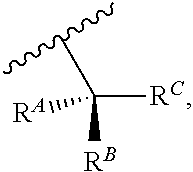
wherein RA and RB are hydrogen or alkyl, wherein at least one of RA or RB are hydrogen to yield a steroisomeric probe, and RC is the remainder of the reversible terminator.
In embodiments, the nucleotide is

wherein Base is a Base as described herein, R3 is —OH, monophosphate, or polyphosphate or a nucleic acid, and R′ is a reversible terminator having the formula:

wherein RA and RB are hydrogen or alkyl and RC is the remainder of the reversible terminator. In embodiments, the reversible terminator is

In embodiments, the reversible terminator is or

In embodiments, the reversible terminator is

In embodiments, the reversible terminator is

In embodiments, the reversible terminator is

In embodiments, the reversible terminator is

In embodiments, the reversible terminator is

In embodiments, the reversible terminator is

In embodiments the reversible terminator is


An “allyl linker” refers to a divalent unsubstituted methylene attached to a vinyl group, having the formula


S-Term refers to sulfide-containing terminators (WO 2017/058953); for example having the formula

wherein R″ is unsubstituted C1-C4 alkyl. The i-term probe refers to an isomeric reversible terminator For example, an i-term probe has the formula:

wherein RA and RB are hydrogen or alkyl, wherein at least one of RA or RB are hydrogen to yield a steroisomeric probe, and RC is the remainder of the reversible terminator.

wherein Base is a Base as described herein, R3 is —OH, monophosphate, or polyphosphate or a nucleic acid, and R′ is a reversible terminator having the formula:

wherein RA and RB are hydrogen or alkyl and RC is the remainder of the reversible terminator. In embodiments, RA is methyl, RB is hydrogen, and RC is the remainder of the reversible terminator moiety. In embodiments, R′ has the formula

wherein RC is the remainder of the reversible terminator moiety. In embodiments, i-term1 has the formula

and i-term 2 has the formula:

wherein RC is the remainder of the reversible terminator moiety (e.g., —N3 or —SS-alkyl).

wherein Base is an optionally labelled Base as described herein, R3 is —OH, monophosphate, or polyphosphate or a nucleic acid, and R′ is a reversible terminator (e.g., a reversible terminator as described herein).
III. Methods of Use

wherein Base is a Base as described herein (e.g., B of Formula Ia or Ib), R3 is —OH, monophosphate, or polyphosphate or a nucleic acid, and R′ is a reversible terminator having the formula:

wherein RA and RB are hydrogen or alkyl and RC is the remainder of the reversible terminator. In embodiments, the reversible terminator is

In embodiments, the reversible terminator is

In embodiments, the reversible terminator is

In embodiments, the reversible terminator is

In embodiments, the reversible terminator is

In embodiments, the reversible terminator is

In embodiments, the reversible terminator is

In embodiments, the reversible terminator is

In embodiments, the reversible terminator is

In embodiments, the reversible terminator is

In embodiments, the reversible terminator is

In embodiments, the reversible terminator is not azidomethyl.


wherein R3, B, R2, X1, X2, L2, R5, R12, L3, and R13 are as described herein, including embodiments.

wherein R3, B, R2, X1, X2, L2, L4, R4, R5, R12, L3, and R13 are as described herein, including embodiments.


wherein R3, B, R2, X1, X2, L2, L4, R4, R5, R12, L3, and R13 are as described herein, including embodiments.

wherein R3, B, R2, X1, and X2 are as described herein, including embodiments. In embodiments, the nucleotide analogue has the formula:

wherein R3, B, L2, R5, R2, X1, and X2 are as described herein, including embodiments. In embodiments, the nucleotide analogue has the formula:

wherein R3, B, L2, R5, R12, L3, R13, R2, X1, and X2 are as described herein, including embodiments. In embodiments, the nucleotide analogue has the formula

wherein R3, B, R2, X1, X2, L4, and R4 are as described herein, including embodiments. In embodiments, the nucleotide analogue has the formula:

wherein R3, B, L2, R5, R2, X1, X2, L4, and R4 are as described herein, including embodiments. In embodiments, the nucleotide analogue has the formula:

wherein R3, B, L2, R5, R12, L3, R13, R2, X1, X2, L4 and R4 are as described herein, including embodiments. In embodiments, the nucleotide analogue has the formula:

wherein R3, B, X1, X2, L4 and R5 areas described herein, including embodiments. In embodiments, the nucleotide analogue has the formula:

wherein R3, B, R2, X1, X2, L4, R5, R12, L3, and R13 are as described herein, including embodiments.

In embodiments, B is

In embodiments, B is

In embodiments, B is

In embodiments, B is

In embodiments, B1 is

In embodiments, B is

In embodiments, B is

In embodiments, B is

In embodiments, B is

In embodiments, B is

In embodiments, B is

In embodiments, B is

In embodiments, B is

In embodiments, R3 is a monophosphate moiety. In embodiments, R3 is a triphosphate moiety.


In embodiments, L2 is

In embodiments, L2 is

In embodiments, L2 is


In embodiments, L2 is

In embodiments, L2 is

In embodiments, L2 is

In embodiments, L2 is

In embodiments, L2 is

In embodiments, L2 is

In embodiments, L2 is

In embodiments, L2 is

In embodiments, L2 is

In embodiments, L2 is

In embodiments, L2 is

In embodiments, L2 is

In embodiments, L2 is

In embodiments, L2 is

In embodiments, L2 is


In embodiments, L2 is

In embodiments, L2 is


In embodiments, L2 is


unsubstituted ethynyl,


wherein B and X1 are as described herein, including embodiments. In embodiments, the nucleotide analogue has the formula:

wherein B and RC are as described herein, including embodiments. In embodiments, the nucleotide analogue has the formula:

wherein B and RC are as described herein, including embodiments. In embodiments, the nucleotide analogue has the formula:

wherein R2, R3, B, L2, L5, and RC are as described herein.

wherein X1 is as described herein, including embodiments.

wherein B and X1 are as described herein, including embodiments.

wherein X1 is as described herein, including embodiments.

wherein B and X1 are as described herein, including embodiments.

wherein X1 is as described herein, including embodiments.

wherein B and X2 are as described herein, including embodiments.

wherein X2 is as described herein, including embodiments.

wherein X1 is as described herein, including embodiments.

wherein B and X1 are as described herein, including embodiments.

wherein X1
is as described herein, including embodiments.

wherein X1, B, L4, and R4 are as described herein, including embodiments.

wherein X1, B, L4, and R4 are as described herein, including embodiments.

wherein X1, B, L4, and R4 are as described herein, including embodiments.

wherein X2, B, L4, and R4 are as described herein, including embodiments.

wherein X1, L4, and R4 are as described herein, including embodiments.

wherein X1, B, L4, and R5 are as described herein, including embodiments.

wherein X2, B, L4, and R5 are as described herein, including embodiments.

wherein X1, B, L4, and R5 are as described herein, including embodiments.

wherein X1, L4, and R5 are as described herein, including embodiments.


wherein X and X1 are each independently a halogen, and L4, and R4 are as described herein.

wherein RA and RB are hydrogen or alkyl, wherein at least one of RA or RB are hydrogen to yield a steroisomeric probe, and RC is the remainder of the reversible terminator. For the experiments described herein, the i-Term probe has two isomers, iso-1 and iso-2. The applicants observed that the polymerases described herein are capable of incorporating modified nucleotides containing all four natural DNA bases A, T, C and G (and nucleotide analogues thereof).
| TABLE 1 |
| General Template Sequences |
| 160-1 | 5′- |
| (SEQ ID NO: 4) | GACTCACATGAATCAGTGCAGCATCAGATGTAT |
| GACCGAAGCGGACGAAGGTGCGTGGA-3ddC | |
| 160-2 | 5′- |
| (SEQ ID NO: 5) | GTGGTTCATCGCGTCCGATATCAAACTTCGTCA |
| AGTCGAAGCGGACGAAGGTGCGTGGA-3ddC | |
| 160-3 | 5′- |
| (SEQ ID NO: 6) | TACTAGGTTGTACGATCCCTGCACTTCAGCTAA |
| GCACGAAGCGGACGAAGGTGCGTGGA-3ddC | |
| 160-4 | 5′- |
| (SEQ ID NO: 7) | AGCTACCAATATTTAGTTTCCGAGTCTCAGCTC |
| ATGCGAAGCGGACGAAGGTGCGTGGA- | |
| 160 Primer | |
| 5′-Biotin- | |
| (SEQ ID NO: 8) | AAAAAAAAAAAAGTCCACGCACCTTCGTCCGCT |
| TCG | |
| TABLE 2 |
| Difficult sequences |
| Nucleotide | Difficult sequences in the template |
| to be | that precede the complementary |
| incorporated | nucleotide to be incorporated |
| |
5′-CCGCC (SEQ ID NO: 17) |
| |
5′-GCGCT (SEQ ID NO: 18) |
| A | 5′-CCGCG (SEQ ID NO: 19) |
| C | 5-ACGCC (SEQ ID NO: 20) |
| TABLE 3 |
| Challenge Template Sequences |
| 260-1 | 5′- |
| (SEQ ID | CCAACTTGATATTAATAACACTATAGACCA |
| NO: 9) | CCGCCCGAAGCGGACGAAGGTGCGTGGA/3ddC/ |
| 260-2 | 5′- |
| (SEQ ID | ATGATTAAACTCCTAAGCAGAAAACCTAC |
| NO: 10) | GCGCTCGAAGCGGACGAAGGTGCGTGGA/3ddC/ |
| 260-3 | 5′- |
| (SEQ ID | TCTTTAATAACCTGATTCAGCGAAACCAA |
| NO: 11) | T CCGCGCGAAGCGGACGAAGGTGCGTGGA/3ddC/ |
| 260-4 | 5′- |
| (SEQ ID | CGGTTATCGCTGGCGACTCCTTCGAGATG |
| NO: 12) | G ACGCCCGAAGCGGACGAAGGTGCGTGGA/3ddC/ |
| 260-1 Primer | 52-Bio/AAAAAAAAAAAAGTCCACGCAC |
| (SEQ ID | CTTCGTCCGCTTCGGGCGG |
| NO: 13) | |
| 260-2 Primer | 52-Bio/AAAAAAAAAAAAGTCCACGCAC |
| (SEQ ID | CTTCGTCCGCTTCGAGCGC |
| NO: 14) | |
| 260-3 Primer | 52-Bio/AAAAAAAAAAAAGTCCACGCAC |
| (SEQ ID | CTTCGTCCGCTTCGCGCGG |
| NO: 15) | |
| 260-4 Primer | 52-Bio/AAAAAAAAAAAAGTCCACGCAC |
| (SEQ ID | CTTCGTCCGCTTCGGGCGT |
| NO: 16) | |

wherein Base is a Base as described herein, R3 is —OH, monophosphate, or polyphosphate or a nucleic acid, and R′ is a reversible terminator having the formula:

wherein RA and RB are hydrogen or alkyl and RC is the remainder of the reversible terminator (e.g., an azido or —SS-alkyl moiety). In embodiments, RA is methyl, RB is hydrogen, and RC is the remainder of the reversible terminator moiety (e.g., —SS-unsubstituted C1, C2, C3, or C4 alkyl). In embodiments, R′ has the formula

wherein R′ is the remainder of the reversible terminator moiety (e.g., —SS-unsubstituted C1, C2, C3, or C4 alkyl). In embodiments, the nucleotide is

wherein the Base is cytosine or a derivative thereof (e.g., cytosine analogue), guanine or a derivative thereof (e.g., guanine analogue), adenine or a derivative thereof (e.g., adenine analogue), thymine or a derivative thereof (e.g., thymine analogue), uracil or a derivative thereof (e.g., uracil analogue), hypoxanthine or a derivative thereof (e.g., hypoxanthine analogue), xanthine or a derivative thereof (e.g., xanthine analogue), guanosine or a derivative thereof (e.g., 7-methylguanosine analogue), deaza-adenine or a derivative thereof (e.g., deaza-adenine analogue), deaza-guanine or a derivative thereof (e.g., deaza-guanine), deaza-hypoxanthine or a derivative thereof, 5,6-dihydrouracil or a derivative thereof (e.g., 5,6-dihydrouracil analogue), 5-methylcytosine or a derivative thereof (e.g., 5-methylcytosine analogue), or 5-hydroxymethylcytosine or a derivative thereof (e.g., 5-hydroxymethylcytosine analogue) moieties. In embodiments, the base is thymine, cytosine, uracil, adenine, guanine, hypoxanthine, xanthine, theobromine, caffeine, uric acid, or isoguanine.
| TABLE 4 |
| Reported average half time of incorporation of modified nucleotides |
| bearing reversible terminator probes iso-1 and iso-2. |
| Internal | General templates | Challenge templates |
| Ref # | t1/2 iso-1 (s) | t1/2 iso-2 (s) | t1/2 iso-1 (s) | t1/2 iso-2 (s) |
| SE-1 | 30.2 | 130.3 | ||||
| SE-10 | 198.6 | 77.0 | ||||
| SE-11 | 41.5 | 16.2 | ||||
| SE-12 | 99.1 | 44.1 | ||||
| SE-13 | 31.0 | 13.2 | ||||
| SE-14 | 135.9 | 50.0 | ||||
| SE-15 | 132.7 | 85.4 | ||||
| SE-181 | 152.5 | [100 nM nucs] | 114.1 | [100 nM nucs] | ||
| SE-183 | 77.1 | [100 nM nucs] | 52.4 | [100 nM nucs] | ||
| SE-2 | 9.1 | 15.2 | ||||
| SE-20 | 173.4 | [100 nM nucs] | 116.9 | [100 nM nucs] | ||
| SE-21 | 47.3 | 20.8 | ||||
| SE-24 | 150.0 | [100 nM nucs] | 94.6 | [100 nM nucs] | ||
| SE-28 | 50.0 | [100 nM nucs] | 32.0 | [100 nM nucs] | ||
| SE-3 | 84.7 | 23.4 | ||||
| SE-31 | 155.5 | [100 nM nucs] | 109.2 | [100 nM nucs] | ||
| SE-4 | 99.3 | 43.8 | ||||
| SE-5 | 105.4 | 44.9 | ||||
| SE-51 | 12.6 | 22.5 | ||||
| SE-52 | 7.9 | 7.5 | ||||
| SE-53 | 10.0 | 11.7 | ||||
| SE-56 | 5.3 | 6.7 | ||||
| SE-57 | 8.0 | 15.8 | ||||
| SE-58 | 31.6 | 22.3 | ||||
| SE-59 | 21.1 | 22.2 | ||||
| SE-6 | 33.2 | 11.2 | ||||
| SE-60 | 22.3 | [100 nM nucs] | 29.8 | [100 nM nucs] | ||
| SE-61 | 34.7 | [100 nM nucs] | 40.2 | [100 nM nucs] | ||
| SE-62 | 4.5 [100 nM nucs] | 7.8 [100 nM nucs] | 6.4 | [100 nM nucs] | 24.6 | [100 nM nucs] |
| SE-63 | 9.3 [100 nM nucs] | 7.0 [100 nM nucs] | 4.3 | [100 nM nucs] | 8.1 | [100 nM nucs] |
| SE-64 | 7.4 [100 nM nucs] | 7.0 [100 nM nucs] | 3.3 | [100 nM nucs] | 9.0 | [100 nM nucs] |
| SE-65 | 6.5 [100 nM nucs] | 7.8 [100 nM nucs] | 6.2 | [100 nM nucs] | 19.6 | [100 nM nucs] |
| SE-68 | 44.3 | [100 nM nucs] | 58.8 | [100 nM nucs] | ||
| SE-69 | 39.2 | [100 nM nucs] | 44.9 | [100 nM nucs] | ||
| SE-7 | 111.5 | 54.4 | ||||
| SE-70 | 61.9 | [100 nM nucs] | 91.1 | [100 nM nucs] | ||
| SE-71 | 6.6 [100 nM nucs] | 6.2 [100 nM nucs] | 2.0 | [100 nM nucs] | 6.0 | [100 nM nucs] |
| SE-72 | 6.1 [100 nM nucs] | 10.0 [100 nM nucs] | 5.3 | [100 nM nucs] | 18.0 | [100 nM nucs] |
| SE-73 | 6.6 [100 nM nucs] | 12.7 [100 nM nucs] | 17.0 | [100 nM nucs] | 42.9 | [100 nM nucs] |
| SE-74 | 4.5 [100 nM nucs] | 8.3 [100 nM nucs] | 9.0 | [100 nM nucs] | 14.8 | [100 nM nucs] |
| SE-75 | 8.0 [100 nM nucs] | 7.9 [100 nM nucs] | 8.2 | [100 nM nucs] | 16.7 | [100 nM nucs] |
| SE-8 | 97.6 | 47.6 | ||||
| SE-9 | 42.3 | 18.0 | ||||
| TABLE 5 |
| Reported fidelity ratio for incorporation of modified nucleotides |
| bearing reversible terminator probes iso-1 and iso-2. |
| Internal Ref # | Fidelity iso-1 | Fidelity iso-2 |
| SE-1 | 1,755 | 970 |
| SE-2 | 262 | 651 |
| SE-3 | 175 | 589 |
| SE-4 | 705 | 2,324 |
| SE-6 | 706 | 832 |
| SE-7 | 1,703 | 2,117 |
| SE-8 | 540 | 2,638 |
| SE-9 | 541 | 709 |
| SE-10 | 1,392 | 2,114 |
| SE-5 | 586 | 1,852 |
| SE-11 | 475 | 512 |
| SE-12 | 428 | 1,673 |
| SE-13 | 466 | 513 |
| SE-14 | 1,667 | 1,881 |
| SE-15 | 1,162 | 1,333 |
| SE-231 | 10,417 | 22,313 |
| SE-232 | 8,933 | 14,182 |
| SE-233 | 8,736 | 22,538 |
| SE-234 | 12,857 | 26,055 |
| SE-184 | 2,852 | 5,652 |
| SE-185 | 2,505 | 5,724 |
| SE-188 | 1,435 | 8,818 |
| SE-19 | 5,997 | 9,186 |
| SE-22 | 6,687 | 7,759 |
| SE-25 | 5,642 | 6,187 |
| SE-26 | 6,396 | 8,148 |
| TABLE 6 |
| List of mutations in variant polymerases. The mutations in this table are |
| mutations relative to the wild type P. horikoshii (SEQ ID NO: 1). |
| Internal Ref # | Amino acids |
| SE-1 | D141A; E143A; L409S; Y410A; P411V |
| SE-2 | D141A; E143A; L409S; Y410A; P411V; A486V |
| SE-3 | M129A; D141A; E143A; L409A; Y410A; P411I; A486V |
| SE-4 | M129A; D141A; E143A; L409A; Y410G; P411I; A486V |
| SE-5 | M129A; D141A; E143A; T144A; L409A; Y410G; P411I; A486V |
| SE-6 | M129A; D141A; E143A; L409A; Y410G; P411I; A486V; T515S |
| SE-7 | M129A; D141A; E143A; L409A; Y410G; P411I; A486V; T515S; |
| I522L | |
| SE-8 | M129A; D141A; E143A; L409A; Y410G; P411I; A486V; T591I |
| SE-9 | M129A; D141A; E143A; L409A; Y410G; P411I; A486V; T515S; |
| T591I | |
| SE-10 | M129A; D141A; E143A; L409A; Y410G; P411I; A486V; T515S; |
| I522L; T591I | |
| SE-11 | M129A; D141A; E143A; T144A; L409A; Y410G; P411I; A486V; |
| T515S | |
| SE-12 | M129A; D141A; E143A; T144A; L409A; Y410G; P411I; A486V; |
| T591I | |
| SE-13 | M129A; D141A; E143A; T144A; L409A; Y410G; P411I; A486V; |
| T515S; T591I | |
| SE-14 | M129A; D141A; E143A; T144A; L409A; Y410G; P411I; A486V; |
| T515S; I522L | |
| SE-15 | M129A; D141A; E143A; T144A; L409A; Y410G; P411I; A486V; |
| T515S; I522L; T591I | |
| SE-16 | M129A; D141A; E143A; L409A; Y410G; P411I; A486V; G153E |
| SE-17 | M129A; D141A; E143A; T144A; L409A; Y410G; P411I; A486V; |
| T515S; T591I; G153E | |
| SE-18 | M129A; D141A; E143A; T144A; L409A; Y410G; P411I; A486V; |
| T515S; T591I; K713E | |
| SE-19 | M129A; D141A; E143A; T144A; L409A; Y410G; P411I; A486V; |
| T515S; T591I; K477W; K478A | |
| SE-20 | M129A; D141A; E143A; T144A; L409A; Y410G; P411I; A486V; |
| T515S; T591I; A486L | |
| SE-21 | M129A; D141A; E143A; T144A; L409A; Y410G; P411I; A486V; |
| T515S; T591I; K603A | |
| SE-22 | M129A; D141A; E143A; T144A; L409A; Y410G; P411I; A486V; |
| T515S; T591I; N736A | |
| SE-23 | M129A; D141A; E143A; T144A; L409A; Y410G; P411I; A486V; |
| T515S; T591I; K477W | |
| SE-24 | M129A; D141A; E143A; T144A; L409A; Y410G; P411I; A486V; |
| T515S; T591I; K477A | |
| SE-25 | M129A; D141A; E143A; T144A; L409A; Y410G; P411I; A486V; |
| T515S; T591I; K478A | |
| SE-26 | M129A; D141A; E143A; T144A; L409A; Y410G; P411I; A486V; |
| T515S; T591I; L479S | |
| SE-27 | M129A; D141A; E143A; T144A; L409A; Y410G; P411I; A486V; |
| T515S; T591I; K477A; K478A; L479S | |
| SE-28 | M129A; D141A; E143A; T144A; L409A; Y410G; P411I; A486V; |
| T515S; T591I; A640L | |
| SE-29 | M129A; D141A; E143A; T144A; L409A; Y410G; P411I; A486V; |
| T515S; T591I; E719A | |
| SE-30 | M129A; D141A; E143A; T144A; L409A; Y410G; P411I; A486V; |
| T515S; T591I; R714A | |
| SE-31 | M129A; D141A; E143A; T144A; L409A; Y410G; P411I; A486V; |
| T515S; T591I; D215A | |
| SE-32 | M129A; D141A; E143A; T144A; L409A; Y410G; P411I; A486V; |
| T515S; T591I; D315A | |
| SE-33 | M129A; D141A; E143A; T144A; L409A; Y410G; P411I; A486V; |
| T515S; T591I; D215A; D315A | |
| SE-34 | M129A; D141A; E143A; T144A; L409A; Y410G; P411I; A486V; |
| T515S; T591I; K713E; G153E | |
| SE-35 | M129A; D141A; E143A; T144A; L409A; Y410G; P411I; A486V; |
| T515S; T591I; K477W; K478A; G153E | |
| SE-36 | M129A; D141A; E143A; T144A; L409A; Y410G; P411I; A486V; |
| T515S; T591I; A486L; G153E | |
| SE-37 | M129A; D141A; E143A; T144A; L409A; Y410G; P411I; A486V; |
| T515S; T591I; K603A; G153E | |
| SE-38 | M129A; D141A; E143A; T144A; L409A; Y410G; P411I; A486V; |
| T515S; T591I; N736A; G153E | |
| SE-39 | M129A; D141A; E143A; T144A; L409A; Y410G; P411I; A486V; |
| T515S; T591I; K477W; G153E | |
| SE-40 | M129A; D141A; E143A; T144A; L409A; Y410G; P411I; A486V; |
| T515S; T591I; K477A; G153E | |
| SE-41 | M129A; D141A; E143A; T144A; L409A; Y410G; P411I; A486V; |
| T515S; T591I; K478A; G153E | |
| SE-42 | M129A; D141A; E143A; T144A; L409A; Y410G; P411I; A486V; |
| T515S; T591I; L479S; G153E | |
| SE-43 | M129A; D141A; E143A; T144A; L409A; Y410G; P411I; A486V; |
| T515S; T591I; K477A; K478A; L479S; G153E | |
| SE-44 | M129A; D141A; E143A; T144A; L409A; Y410G; P411I; A486V; |
| T515S; T591I; A640L; G153E | |
| SE-45 | M129A; D141A; E143A; T144A; L409A; Y410G; P411I; A486V; |
| T515S; T591I; E719A; G153E | |
| SE-46 | M129A; D141A; E143A; T144A; L409A; Y410G; P411I; A486V; |
| T515S; T591I; R714A; G153E | |
| SE-47 | M129A; D141A; E143A; T144A; L409A; Y410G; P411I; A486V; |
| T515S; T591I; D215A; G153E | |
| SE-48 | M129A; D141A; E143A; T144A; L409A; Y410G; P411I; A486V; |
| T515S; T591I; D315A; G153E | |
| SE-49 | M129A; D141A; E143A; T144A; L409A; Y410G; P411I; A486V; |
| T515S; T591I; D215A; D315A; G153E | |
| SE-50 | M129A; D141A; E143A; L409A; Y410G; A486V |
| SE-51 | M129A; D141A; E143A; T144A; L409A; Y410G; A486V |
| SE-52 | M129A; D141A; E143A; L409A; Y410G; A486V; T515S |
| SE-53 | M129A; D141A; E143A; L409A; Y410G; A486V; T591I |
| SE-54 | M129A; D141A; E143A; L409A; Y410G; A486V; G153E |
| SE-55 | M129A; D141A; E143A; L409A; Y410G; A486V; T515S; T591I |
| SE-56 | M129A; D141A; E143A; T144A; L409A; Y410G; A486V; T515S |
| SE-57 | M129A; D141A; E143A; T144A; L409A; Y410GI; A486V; T591I |
| SE-58 | M129A; D141A; E143A; T144A; L409A; Y410G; A486V; T515S; |
| T591I | |
| SE-59 | M129A; D141A; E143A; T144A; L409A; Y410G; A486V; T515S; |
| I522L; T591I | |
| SE-60 | M129A; D141A; E143A; T144A; L409A; Y410G; A486V; T515S; |
| T591I; G153E | |
| SE-61 | M129A; D141A; E143A; T144A; L409A; Y410G; A486V; T515S; |
| T591I; K713E | |
| SE-62 | M129A; D141A; E143A; T144A; L409A; Y410G; A486V; T515S; |
| T591I; K477W; K478A | |
| SE-63 | M129A; D141A; E143A; T144A; L409A; Y410G; A486V; T515S; |
| T591I; A486L | |
| SE-64 | M129A; D141A; E143A; T144A; L409A; Y410G; A486V; T515S; |
| T591I; K603A | |
| SE-65 | M129A; D141A; E143A; T144A; L409A; Y410G; A486V; T515S; |
| T591I; N736A | |
| SE-66 | M129A; D141A; E143A; T144A; L409A; Y410G; A486V; T515S; |
| T591I; K477W | |
| SE-67 | M129A; D141A; E143A; T144A; L409A; Y410G; A486V; T515S; |
| T591I; K477A | |
| SE-68 | M129A; D141A; E143A; T144A; L409A; Y410G; A486V; T515S; |
| T591I; K478A | |
| SE-69 | M129A; D141A; E143A; T144A; L409A; Y410G; A486V; T515S; |
| T591I; L479S | |
| SE-70 | M129A; D141A; E143A; T144A; L409A; Y410G; A486V; T515S; |
| T591I; K477A; K478A; L479S | |
| SE-71 | M129A; D141A; E143A; T144A; L409A; Y410G; A486V; T515S; |
| T591I; A640L | |
| SE-72 | M129A; D141A; E143A; T144A; L409A; Y410G; A486V; T515S; |
| T591I; E719A | |
| SE-73 | M129A; D141A; E143A; T144A; L409A; Y410G; A486V; T515S; |
| T591I; R714A | |
| SE-74 | M129A; D141A; E143A; T144A; L409A; Y410G; A486V; T515S; |
| T591I; D215A | |
| SE-75 | M129A; D141A; E143A; T144A; L409A; Y410G; A486V; T515S; |
| T591I; D315A | |
| SE-76 | M129A; D141A; E143A; T144A; L409A; Y410G; A486V; T515S; |
| T591I; D215A; D315A | |
| SE-77 | M129A; D141A; E143A; T144A; L409A; Y410G; A486V; T515S; |
| T591I; K713E; G153E | |
| SE-78 | M129A; D141A; E143A; T144A; L409A; Y410G; A486V; T515S; |
| T591I; K477W; K478A; G153E | |
| SE-79 | M129A; D141A; E143A; T144A; L409A; Y410G; A486V; T515S; |
| T591I; A486L; G153E | |
| SE-80 | M129A; D141A; E143A; T144A; L409A; Y410G; A486V; T515S; |
| T591I; K603A; G153E | |
| SE-81 | M129A; D141A; E143A; T144A; L409A; Y410G; A486V; T515S; |
| T591I; N736A; G153E | |
| SE-82 | M129A; D141A; E143A; T144A; L409A; Y410G; A486V; T515S; |
| T591I; K477W; G153E | |
| SE-83 | M129A; D141A; E143A; T144A; L409A; Y410G; A486V; T515S; |
| T591I; K477A; G153E | |
| SE-84 | M129A; D141A; E143A; T144A; L409A; Y410G; A486V; T515S; |
| T591I; K478A; G153E | |
| SE-85 | M129A; D141A; E143A; T144A; L409A; Y410G; A486V; T515S; |
| T591I; L479S; G153E | |
| SE-86 | M129A; D141A; E143A; T144A; L409A; Y410G; A486V; T515S; |
| T591I; K477A; K478A; L479S; G153E | |
| SE-87 | M129A; D141A; E143A; T144A; L409A; Y410G; A486V; T515S; |
| T591I; A640L; G153E | |
| SE-88 | M129A; D141A; E143A; T144A; L409A; Y410G; A486V; T515S; |
| T591I; E719A; G153E | |
| SE-89 | M129A; D141A; E143A; T144A; L409A; Y410G; A486V; T515S; |
| T591I; R714A; G153E | |
| SE-90 | M129A; D141A; E143A; T144A; L409A; Y410G; A486V; T515S; |
| T591I; D215A; G153E | |
| SE-91 | M129A; D141A; E143A; T144A; L409A; Y410G; A486V; T515S; |
| T591I; D315A; G153E | |
| SE-92 | M129A; D141A; E143A; T144A; L409A; Y410G; A486V; T515S; |
| T591I; D215A; D315A; G153E | |
| SE-93 | M129A; D141A; E143A; T144A; L409A; Y410G; A486V; T515S; |
| T591I; K713E; A640L | |
| SE-94 | M129A; D141A; E143A; T144A; L409A; Y410G; A486V; T515S; |
| T591I; K477W; K478A; A640L | |
| SE-95 | M129A; D141A; E143A; T144A; L409A; Y410G; T515S; T591I; |
| A486L; A640L | |
| SE-96 | M129A; D141A; E143A; T144A; L409A; Y410G; A486V; T515S; |
| T591I; K603A; A640L | |
| SE-97 | M129A; D141A; E143A; T144A; L409A; Y410G; A486V; T515S; |
| T591I; N736A; A640L | |
| SE-98 | M129A; D141A; E143A; T144A; L409A; Y410G; A486V; T515S; |
| T591I; K477W; A640L | |
| SE-99 | M129A; D141A; E143A; T144A; L409A; Y410G; A486V; T515S; |
| T591I; K477A; A640L | |
| SE-100 | M129A; D141A; E143A; T144A; L409A; Y410G; A486V; T515S; |
| T591I; K478A; A640L | |
| SE-101 | M129A; D141A; E143A; T144A; L409A; Y410G; A486V; T515S; |
| T591I; L479S; A640L | |
| SE-102 | M129A; D141A; E143A; T144A; L409A; Y410G; A486V; T515S; |
| T591I; K477A; K478A; L479S; A640L | |
| SE-103 | M129A; D141A; E143A; T144A; L409A; Y410G; A486V; T515S; |
| T591I; E719A; A640L | |
| SE-104 | M129A; D141A; E143A; T144A; L409A; Y410G; A486V; T515S; |
| T591I; R714A; A640L | |
| SE-105 | M129A; D141A; E143A; T144A; L409A; Y410G; A486V; T515S; |
| T591I; D215A; A640L | |
| SE-106 | M129A; D141A; E143A; T144A; L409A; Y410G; A486V; T515S; |
| T591I; D315A; A640L | |
| SE-107 | M129A; D141A; E143A; T144A; L409A; Y410G; A486V; T515S; |
| T591I; D215A; D315A; A640L | |
| SE-108 | M129A; D141A; E143A; T144A; L409A; Y410G; T515S; T591I; |
| K713E; A486L | |
| SE-109 | M129A; D141A; E143A; T144A; L409A; Y410G; T515S; T591I; |
| K477W; K478A; A486L | |
| SE-110 | M129A; D141A; E143A; T144A; L409A; Y410G; T515S; T591I; |
| K603A; A486L | |
| SE-111 | M129A; D141A; E143A; T144A; L409A; Y410G; T515S; T591I; |
| N736A; A486L | |
| SE-112 | M129A; D141A; E143A; T144A; L409A; Y410G; T515S; T591I; |
| K477W; A486L | |
| SE-113 | M129A; D141A; E143A; T144A; L409A; Y410G; T515S; T591I; |
| K477A; A486L | |
| SE-114 | M129A; D141A; E143A; T144A; L409A; Y410G; T515S; T591I; |
| K478A; A486L | |
| SE-115 | M129A; D141A; E143A; T144A; L409A; Y410G; T515S; T591I; |
| L479S; A486L | |
| SE-116 | M129A; D141A; E143A; T144A; L409A; Y410G; T515S; T591I; |
| K477A; K478A; L479S; A486L | |
| SE-117 | M129A; D141A; E143A; T144A; L409A; Y410G; T515S; T591I; |
| E719A; A486L | |
| SE-118 | M129A; D141A; E143A; T144A; L409A; Y410G; T515S; T591I; |
| R714A; A486L | |
| SE-119 | M129A; D141A; E143A; T144A; L409A; Y410G; T515S; T591I; |
| D215A; A486L | |
| SE-120 | M129A; D141A; E143A; T144A; L409A; Y410G; T515S; T591I; |
| D315A; A486L | |
| SE-121 | M129A; D141A; E143A; T144A; L409A; Y410G; T515S; T591I; |
| D215A; D315A; A486L | |
| SE-122 | M129A; D141A; E143A; T144A; L409A; Y410G; A486V; T515S; |
| T591I; K477W; K478AK; K713E | |
| SE-123 | M129A; D141A; E143A; T144A; L409A; Y410G; A486V; T515S; |
| T591I; K603A; K713E | |
| SE-124 | M129A; D141A; E143A; T144A; L409A; Y410G; A486V; T515S; |
| T591I; N736A; K713E | |
| SE-125 | M129A; D141A; E143A; T144A; L409A; Y410G; A486V; T515S; |
| T591I; K477W; K713E | |
| SE-126 | M129A; D141A; E143A; T144A; L409A; Y410G; A486V; T515S; |
| T591I; K477A; K713E | |
| SE-127 | M129A; D141A; E143A; T144A; L409A; Y410G; A486V; T515S; |
| T591I; K478A; K713E | |
| SE-128 | M129A; D141A; E143A; T144A; L409A; Y410G; A486V; T515S; |
| T591I; L479S; K713E | |
| SE-129 | M129A; D141A; E143A; T144A; L409A; Y410G; A486V; T515S; |
| T591I; K477A; K478A; L479S; K713E | |
| SE-130 | M129A; D141A; E143A; T144A; L409A; Y410G; A486V; T515S; |
| T591I; E719A; K713E | |
| SE-131 | M129A; D141A; E143A; T144A; L409A; Y410G; A486V; T515S; |
| T591I; R714A; K713E | |
| SE-132 | M129A; D141A; E143A; T144A; L409A; Y410G; A486V; T515S; |
| T591I; D215A; K713E | |
| SE-133 | M129A; D141A; E143A; T144A; L409A; Y410G; A486V; T515S; |
| T591I; D315A; K713E | |
| SE-134 | M129A; D141A; E143A; T144A; L409A; Y410G; A486V; T515S; |
| T591I; D215A; D315A; K713E | |
| SE-135 | M129A; D141A; E143A; T144A; L409A; Y410G; A486V; T515S; |
| T591I; K477W; K478A; K603A | |
| SE-136 | M129A; D141A; E143A; T144A; L409A; Y410G; A486V; T515S; |
| T591I; N736A; K603A | |
| SE-137 | M129A; D141A; E143A; T144A; L409A; Y410G; A486V; T515S; |
| T591I; K477W; K603A | |
| SE-138 | M129A; D141A; E143A; T144A; L409A; Y410G; A486V; T515S; |
| T591I; K477A; K603A | |
| SE-139 | M129A; D141A; E143A; T144A; L409A; Y410G; A486V; T515S; |
| T591I; K478A; K603A | |
| SE-140 | M129A; D141A; E143A; T144A; L409A; Y410G; A486V; T515S; |
| T591I; L479S; K603A | |
| SE-141 | M129A; D141A; E143A; T144A; L409A; Y410G; A486V; T515S; |
| T591I; K477A; K478A; L479S; K603A | |
| SE-142 | M129A; D141A; E143A; T144A; L409A; Y410G; A486V; T515S; |
| T591I; E719A; K603A | |
| SE-143 | M129A; D141A; E143A; T144A; L409A; Y410G; A486V; T515S; |
| T591I; R714A; K603A | |
| SE-144 | M129A; D141A; E143A; T144A; L409A; Y410G; A486V; T515S; |
| T591I; D215A; K603A | |
| SE-145 | M129A; D141A; E143A; T144A; L409A; Y410G; A486V; T515S; |
| T591I; D315A; K603A | |
| SE-146 | M129A; D141A; E143A; T144A; L409A; Y410G; A486V; T515S; |
| T591I; D215A; D315A; K603A | |
| SE-147 | M129A; D141A; E143A; L409A; Y410G; A486V; T515S; G153 |
| SE-148 | M129A; D141A; E143A; L409A; Y410G; A486V; T515S; K713E |
| SE-149 | M129A; D141A; E143A; L409A; Y410G; A486V; T515S; K477W; |
| K478A | |
| SE-150 | M129A; D141A; E143A; L409A; Y410G; A486V; T515S; A486L |
| SE-151 | M129A; D141A; E143A; L409A; Y410G; A486V; T515S; K603A |
| SE-152 | M129A; D141A; E143A; L409A; Y410G; A486V; T515S; N736A |
| SE-153 | M129A; D141A; E143A; L409A; Y410G; A486V; T515S; K477W |
| SE-154 | M129A; D141A; E143A; L409A; Y410G; A486V; T515S; K477A |
| SE-155 | M129A; D141A; E143A; L409A; Y410G; A486V; T515S; L478A |
| SE-156 | M129A; D141A; E143A; L409A; Y410G; A486V; T515S; L479S |
| SE-157 | M129A; D141A; E143A; L409A; Y410G; A486V; T515S; K477A; |
| K478A; L479S | |
| SE-158 | M129A; D141A; E143A; L409A; Y410G; A486V; T515S; A640L |
| SE-159 | M129A; D141A; E143A; L409A; Y410G; A486V; T515S; E719A |
| SE-160 | M129A; D141A; E143A; L409A; Y410G; A486V; T515S; R714A |
| SE-161 | M129A; D141A; E143A; L409A; Y410G; A486V; T515S; D215A |
| SE-162 | M129A; D141A; E143A; L409A; Y410G; A486V; T515S; D315A |
| SE-163 | M129A; D141A; E143A; L409A; Y410G; A486V; T515S; D215A; |
| D315A | |
| SE-164 | M129A; D141A; E143A; L409A; Y410G; A486V; T591I; G153 |
| SE-165 | M129A; D141A; E143A; L409A; Y410G; A486V; T591I; K713E |
| SE-166 | M129A; D141A; E143A; L409A; Y410G; A486V; T591I; K477W; |
| K478A | |
| SE-167 | M129A; D141A; E143A; L409A; Y410G; A486V; T591I; A486L |
| SE-168 | M129A; D141A; E143A; L409A; Y410G; A486V; T591I; K603A |
| SE-169 | M129A; D141A; E143A; L409A; Y410G; A486V; T591I; N736A |
| SE-170 | M129A; D141A; E143A; L409A; Y410G; A486V; T591I; K477W |
| SE-171 | M129A; D141A; E143A; L409A; Y410G; A486V; T591I; K477A |
| SE-172 | M129A; D141A; E143A; L409A; Y410G; A486V; T591I; L478A |
| SE-173 | M129A; D141A; E143A; L409A; Y410G; A486V; T591I; L479S |
| SE-174 | M129A; D141A; E143A; L409A; Y410G; A486V; T591I; K477A; |
| K478A; L479S | |
| SE-175 | M129A; D141A; E143A; L409A; Y410G; A486V; T591I; A640L |
| SE-176 | M129A; D141A; E143A; L409A; Y410G; A486V; T591I; E719A |
| SE-177 | M129A; D141A; E143A; L409A; Y410G; A486V; T591I; R714A |
| SE-178 | M129A; D141A; E143A; L409A; Y410G; A486V; T591I; D215A |
| SE-179 | M129A; D141A; E143A; L409A; Y410G; A486V; T591I; D315A |
| SE-180 | M129A; D141A; E143A; L409A; Y410G; A486V; T591I; D215A; |
| D315A | |
| SE-181 | D141A; E143A; L409S; Y410A; P411V; A486L |
| SE-182 | D141A; E143A; L409S; Y410A; P411V; A486V; T515S |
| SE-183 | D141A; E143A; L409S; Y410A; P411V; A486V; T591I |
| SE-184 | D141A; E143A; T144A;; L409S; Y410A; P411V; A486V |
| SE-185 | D141A; E143A; L409S; Y410A; P411V; A486V; G153E |
| SE-186 | D141A; E143A; L409S; Y410A; P411V; A486V; T144A; G153E |
| SE-187 | D141A; E143A; L409S; Y410A; P411V; A486V; K477W |
| SE-188 | D141A; E143A; L409S; Y410A; A486V |
| SE-189 | D141A; E143A; L409S; Y410A; A486L |
| SE-190 | D141A; E143A; L409S; Y410A; A486V; T515S |
| SE-191 | D141A; E143A; L409S; Y410A; A486V; T591I |
| SE-192 | D141A; E143A; T144A;; L409S; Y410A; A486V |
| SE-193 | D141A; E143A; L409S; Y410A; A486V; G153E |
| SE-194 | D141A; E143A; L409S; Y410A; A486V; T144A; G153E |
| SE-195 | D141A; E143A; L409S; Y410A; A486V; K477W |
| SE-196 | D141A; E143A; L409S; Y410A; A486V; T515S; G153E |
| SE-197 | D141A; E143A; L409S; Y410A; A486V; T515S; K713E |
| SE-198 | D141A; E143A; L409S; Y410A; A486V; T515S; K477W; K478A |
| SE-199 | D141A; E143A; L409S; Y410A; A486L; T515S |
| SE-200 | D141A; E143A; L409S; Y410A; A486V; T515S; K603A |
| SE-201 | D141A; E143A; L409S; Y410A; A486V; T515S; N736A |
| SE-202 | D141A; E143A; L409S; Y410A; A486V; T515S; K477W |
| SE-203 | D141A; E143A; L409S; Y410A; A486V; T515S; K477A |
| SE-204 | D141A; E143A; L409S; Y410A; A486V; T515S; K478A |
| SE-205 | D141A; E143A; L409S; Y410A; A486V; T515S; L479S |
| SE-206 | D141A; E143A; L409S; Y410A; A486V; T515S; K477A; K478A; |
| L479S | |
| SE-207 | D141A; E143A; L409S; Y410A; A486V; T515S; A640L |
| SE-208 | D141A; E143A; L409S; Y410A; A486V; T515S; E719A |
| SE-209 | D141A; E143A; L409S; Y410A; A486V; T515S; R714A |
| SE-210 | D141A; E143A; L409S; Y410A; A486V; T515S; D215A |
| SE-211 | D141A; E143A; L409S; Y410A; A486V; T515S; D315A |
| SE-212 | D141A; E143A; L409S; Y410A; A486V; T515S; D215A; D315A |
| SE-213 | D141A; E143A; L409S; Y410A; A486V; T591I; G153E |
| SE-214 | D141A; E143A; L409S; Y410A; A486V; T591I; K713E |
| SE-215 | D141A; E143A; L409S; Y410A; A486V; T591I; K477W; K478A |
| SE-216 | D141A; E143A; L409S; Y410A; A486L; T591I |
| SE-217 | D141A; E143A; L409S; Y410A; A486V; T591I; K603A |
| SE-218 | D141A; E143A; L409S; Y410A; A486V; T591I; N736A |
| SE-219 | D141A; E143A; L409S; Y410A; A486V; T591I; K477W |
| SE-220 | D141A; E143A; L409S; Y410A; A486V; T591I; K477A |
| SE-221 | D141A; E143A; L409S; Y410A; A486V; T591I; K478A |
| SE-222 | D141A; E143A; L409S; Y410A; A486V; T591I; L479S |
| SE-223 | D141A; E143A; L409S; Y410A; A486V; T591I; K477A; K478A; |
| L479S | |
| SE-224 | D141A; E143A; L409S; Y410A; A486V; T591I; A640L |
| SE-225 | D141A; E143A; L409S; Y410A; A486V; T591I; E719A |
| SE-226 | D141A; E143A; L409S; Y410A; A486V; T591I; R714A |
| SE-227 | D141A; E143A; L409S; Y410A; A486V; T591I; D215A |
| SE-228 | D141A; E143A; L409S; Y410A; A486V; T591I; D315A |
| SE-229 | D141A; E143A; L409S; Y410A; A486V; T591I; D215A; D315A |
| SE-230 | D141A; E143A; L409S; Y410A; A486V; T591I; G153E; T515S |
| SE-231 | M129A; D141A; E143A; T144A; L409A; Y410G; P411I; A486V; |
| T515S; T591I; G153E; K713E; K478A | |
| SE-232 | M129A; D141A; E143A; T144A; L409A; Y410G; P411I; A486V; |
| T515S; T591I; G153E; K713E; L479S | |
| SE-233 | M129A; D141A; E143A; T144A; L409A; Y410G; P411I; A486V; |
| T515S; T591I; G153E; K713E; K477A; K478A; L479S | |
| SE-234 | M129A; D141A; E143A; T144A; L409A; Y410G; P411I; A486V; |
| T515S; T591I; G153E; K713E; A640L | |
| SE-235 | M129A; D141A; E143A; L409S; Y410G; A486V |
| SE-236 | M129A; D141A; E143A; T144A; L409S; Y410G; A486V |
| SE-237 | M129A; D141A; E143A; L409S; Y410G; A486V; T515S |
| SE-238 | M129A; D141A; E143A; L409S; Y410G; A486V; T591I |
| SE-239 | M129A; D141A; E143A; L409S; Y410G; A486V; G153E |
| SE-240 | M129A; D141A; E143A; L409S; Y410G; A486V; T515S; T591I |
| SE-241 | M129A; D141A; E143A; T144A; L409S; Y410G; A486V; T515S |
| SE-242 | M129A; D141A; E143A; T144A; L409S; Y410GI; A486V; T591I |
| SE-243 | M129A; D141A; E143A; T144A; L409S; Y410G; A486V; T515S; |
| T591I | |
| SE-244 | M129A; D141A; E143A; T144A; L409S; Y410G; A486V; T515S; |
| I522L; T591I | |
| SE-245 | M129A; D141A; E143A; T144A; L409S; Y410G; A486V; T515S; |
| T591I; G153E | |
| SE-246 | M129A; D141A; E143A; T144A; L409S; Y410G; A486V; T515S; |
| T591I; K713E | |
| SE-247 | M129A; D141A; E143A; T144A; L409S; Y410G; A486V; T515S; |
| T591I; K477W; K478A | |
| SE-248 | M129A; D141A; E143A; T144A; L409S; Y410G; A486L; T515S; |
| T591I | |
| SE-249 | M129A; D141A; E143A; T144A; L409S; Y410G; A486V; T515S; |
| T591I; K603A | |
| SE-250 | M129A; D141A; E143A; T144A; L409S; Y410G; A486V; T515S; |
| T591I; N736A | |
| SE-251 | M129A; D141A; E143A; T144A; L409S; Y410G; A486V; T515S; |
| T591I; K477W | |
| SE-252 | M129A; D141A; E143A; T144A; L409S; Y410G; A486V; T515S; |
| T591I; K477A | |
| SE-253 | M129A; D141A; E143A; T144A; L409S; Y410G; A486V; T515S; |
| T591I; K478A | |
| SE-254 | M129A; D141A; E143A; T144A; L409S; Y410G; A486V; T515S; |
| T591I; L479S | |
| SE-255 | M129A; D141A; E143A; T144A; L409S; Y410G; A486V; T515S; |
| T591I; K477A; K478A; L479S | |
| SE-256 | M129A; D141A; E143A; T144A; L409S; Y410G; A486V; T515S; |
| T591I; A640L | |
| SE-257 | M129A; D141A; E143A; T144A; L409S; Y410G; A486V; T515S; |
| T591I; E719A | |
| SE-258 | M129A; D141A; E143A; T144A; L409S; Y410G; A486V; T515S; |
| T591I; R714A | |
| SE-259 | M129A; D141A; E143A; T144A; L409S; Y410G; A486V; T515S; |
| T591I; D215A | |
| SE-260 | M129A; D141A; E143A; T144A; L409S; Y410G; A486V; T515S; |
| T591I; D315A | |
| SE-261 | M129A; D141A; E143A; T144A; L409S; Y410G; A486V; T515S; |
| T591I; D215A; D315A | |
| SE-262 | M129A; D141A; E143A; T144A; L409S; Y410G; A486V; T515S; |
| T591I; K713E; G153E | |
| SE-263 | M129A; D141A; E143A; T144A; L409S; Y410G; A486V; T515S; |
| T591I; K477W; K478A; G153E | |
| SE-264 | M129A; D141A; E143A; T144A; L409S; Y410G; A486V; T515S; |
| T591I; A486L; G153E | |
| SE-265 | M129A; D141A; E143A; T144A; L409S; Y410G; A486V; T515S; |
| T591I; K603A; G153E | |
| SE-266 | M129A; D141A; E143A; T144A; L409S; Y410G; A486V; T515S; |
| T591I; N736A; G153E | |
| SE-267 | M129A; D141A; E143A; T144A; L409S; Y410G; A486V; T515S; |
| T591I; K477W; G153E | |
| SE-268 | M129A; D141A; E143A; T144A; L409S; Y410G; A486V; T515S; |
| T591I; K477A; G153E | |
| SE-269 | M129A; D141A; E143A; T144A; L409S; Y410G; A486V; T515S; |
| T591I; K478A; G153E | |
| SE-270 | M129A; D141A; E143A; T144A; L409S; Y410G; A486V; T515S; |
| T591I; L479S; G153E | |
| SE-271 | M129A; D141A; E143A; T144A; L409S; Y410G; A486V; T515S; |
| T591I; K477A; K478A; L479S; G153E | |
| SE-272 | M129A; D141A; E143A; T144A; L409S; Y410G; A486V; T515S; |
| T591I; A640L; G153E | |
| SE-273 | M129A; D141A; E143A; T144A; L409S; Y410G; A486V; T515S; |
| T591I; E719A; G153E | |
| SE-274 | M129A; D141A; E143A; T144A; L409S; Y410G; A486V; T515S; |
| T591I; R714A; G153E | |
| SE-275 | M129A; D141A; E143A; T144A; L409S; Y410G; A486V; T515S; |
| T591I; D215A; G153E | |
| SE-276 | M129A; D141A; E143A; T144A; L409S; Y410G; A486V; T515S; |
| T591I; D315A; G153E | |
| SE-277 | M129A; D141A; E143A; T144A; L409S; Y410G; A486V; T515S; |
| T591I; D215A; D315A; G153E | |
| SE-278 | M129A; D141A; E143A; T144A; L409S; Y410G; A486V; T515S; |
| T591I; K713E; A640L | |
| SE-279 | M129A; D141A; E143A; T144A; L409S; Y410G; A486V; T515S; |
| T591I; K477W; K478A; A640L | |
| SE-280 | M129A; D141A; E143A; T144A; L409S; Y410G; T515S; T591I; |
| A486L; A640L | |
| SE-281 | M129A; D141A; E143A; T144A; L409S; Y410G; A486V; T515S; |
| T591I; K603A; A640L | |
| SE-282 | M129A; D141A; E143A; T144A; L409S; Y410G; A486V; T515S; |
| T591I; N736A; A640L | |
| SE-283 | M129A; D141A; E143A; T144A; L409S; Y410G; A486V; T515S; |
| T591I; K477W; A640L | |
| SE-284 | M129A; D141A; E143A; T144A; L409S; Y410G; A486V; T515S; |
| T591I; K477A; A640L | |
| SE-285 | M129A; D141A; E143A; T144A; L409S; Y410G; A486V; T515S; |
| T591I; K478A; A640L | |
| SE-286 | M129A; D141A; E143A; T144A; L409S; Y410G; A486V; T515S; |
| T591I; L479S; A640L | |
| SE-287 | M129A; D141A; E143A; T144A; L409S; Y410G; A486V; T515S; |
| T591I; K477A; K478A; L479S; A640L | |
| SE-288 | M129A; D141A; E143A; T144A; L409S; Y410G; A486V; T515S; |
| T591I; E719A; A640L | |
| SE-289 | M129A; D141A; E143A; T144A; L409S; Y410G; A486V; T515S; |
| T591I; R714A; A640L | |
| SE-290 | M129A; D141A; E143A; T144A; L409S; Y410G; A486V; T515S; |
| T591I; D215A; A640L | |
| SE-291 | M129A; D141A; E143A; T144A; L409S; Y410G; A486V; T515S; |
| T591I; D315A; A640L | |
| SE-292 | M129A; D141A; E143A; T144A; L409S; Y410G; A486V; T515S; |
| T591I; D215A; D315A; A640L | |
| SE-293 | M129A; D141A; E143A; T144A; L409S; Y410G; T515S; T591I; |
| K713E; A486L | |
| SE-294 | M129A; D141A; E143A; T144A; L409S; Y410G; T515S; T591I; |
| K477W; K478A; A486L | |
| SE-295 | M129A; D141A; E143A; T144A; L409S; Y410G; T515S; T591I; |
| K603A; A486L | |
| SE-296 | M129A; D141A; E143A; T144A; L409S; Y410G; T515S; T591I; |
| N736A; A486L | |
| SE-297 | M129A; D141A; E143A; T144A; L409S; Y410G; T515S; T591I; |
| K477W; A486L | |
| SE-298 | M129A; D141A; E143A; T144A; L409S; Y410G; T515S; T591I; |
| K477A; A486L | |
| SE-299 | M129A; D141A; E143A; T144A; L409S; Y410G; T515S; T591I; |
| K478A; A486L | |
| SE-300 | M129A; D141A; E143A; T144A; L409S; Y410G; T515S; T591I; |
| L479S; A486L | |
| SE-301 | M129A; D141A; E143A; T144A; L409S; Y410G; T515S; T591I; |
| K477A; K478A; L479S; A486L | |
| SE-302 | M129A; D141A; E143A; T144A; L409S; Y410G; T515S; T591I; |
| E719A; A486L | |
| SE-303 | M129A; D141A; E143A; T144A; L409S; Y410G; T515S; T591I; |
| R714A; A486L | |
| SE-304 | M129A; D141A; E143A; T144A; L409S; Y410G; T515S; T591I; |
| D215A; A486L | |
| SE-305 | M129A; D141A; E143A; T144A; L409S; Y410G; T515S; T591I; |
| D315A; A486L | |
| SE-306 | M129A; D141A; E143A; T144A; L409S; Y410G; T515S; T591I; |
| D215A; D315A; A486L | |
| SE-307 | M129A; D141A; E143A; T144A; L409S; Y410G; A486V; T515S; |
| T591I; K477W; K478AK; K713E | |
| SE-308 | M129A; D141A; E143A; T144A; L409S; Y410G; A486V; T515S; |
| T591I; K603A; K713E | |
| SE-309 | M129A; D141A; E143A; T144A; L409S; Y410G; A486V; T515S; |
| T591I; N736A; K713E | |
| SE-310 | M129A; D141A; E143A; T144A; L409S; Y410G; A486V; T515S; |
| T591I; K477W; K713E | |
| SE-311 | M129A; D141A; E143A; T144A; L409S; Y410G; A486V; T515S; |
| T591I; K477A; K713E | |
| SE-312 | M129A; D141A; E143A; T144A; L409S; Y410G; A486V; T515S; |
| T591I; K478A; K713E | |
| SE-313 | M129A; D141A; E143A; T144A; L409S; Y410G; A486V; T515S; |
| T591I; L479S; K713E | |
| SE-314 | M129A; D141A; E143A; T144A; L409S; Y410G; A486V; T515S; |
| T591I; K477A; K478A; L479S; K713E | |
| SE-315 | M129A; D141A; E143A; T144A; L409S; Y410G; A486V; T515S; |
| T591I; E719A; K713E | |
| SE-316 | M129A; D141A; E143A; T144A; L409S; Y410G; A486V; T515S; |
| T591I; R714A; K713E | |
| SE-317 | M129A; D141A; E143A; T144A; L409S; Y410G; A486V; T515S; |
| T591I; D215A; K713E | |
| SE-318 | M129A; D141A; E143A; T144A; L409S; Y410G; A486V; T515S; |
| T591I; D315A; K713E | |
| SE-319 | M129A; D141A; E143A; T144A; L409S; Y410G; A486V; T515S; |
| T591I; D215A; D315A; K713E | |
| SE-320 | M129A; D141A; E143A; T144A; L409S; Y410G; A486V; T515S; |
| T591I; K477W; K478A; K603A | |
| SE-321 | M129A; D141A; E143A; T144A; L409S; Y410G; A486V; T515S; |
| T591I; N736A; K603A | |
| SE-322 | M129A; D141A; E143A; T144A; L409S; Y410G; A486V; T515S; |
| T591I; K477W; K603A | |
| SE-323 | M129A; D141A; E143A; T144A; L409S; Y410G; A486V; T515S; |
| T591I; K477A; K603A | |
| SE-324 | M129A; D141A; E143A; T144A; L409S; Y410G; A486V; T515S; |
| T591I; K478A; K603A | |
| SE-325 | M129A; D141A; E143A; T144A; L409S; Y410G; A486V; T515S; |
| T591I; L479S; K603A | |
| SE-326 | M129A; D141A; E143A; T144A; L409S; Y410G; A486V; T515S; |
| T591I; K477A; K478A; L479S; K603A | |
| SE-327 | M129A; D141A; E143A; T144A; L409S; Y410G; A486V; T515S; |
| T591I; E719A; K603A | |
| SE-328 | M129A; D141A; E143A; T144A; L409S; Y410G; A486V; T515S; |
| T591I; R714A; K603A | |
| SE-329 | M129A; D141A; E143A; T144A; L409S; Y410G; A486V; T515S; |
| T591I; D215A; K603A | |
| SE-330 | M129A; D141A; E143A; T144A; L409S; Y410G; A486V; T515S; |
| T591I; D315A; K603A | |
| SE-331 | M129A; D141A; E143A; T144A; L409S; Y410G; A486V; T515S; |
| T591I; D215A; D315A; K603A | |
| SE-332 | M129A; D141A; E143A; L409S; Y410G; A486V; T515S; G153 |
| SE-333 | M129A; D141A; E143A; L409S; Y410G; A486V; T515S; K713E |
| SE-334 | M129A; D141A; E143A; L409S; Y410G; A486V; T515S; K477W; |
| K478A | |
| SE-335 | M129A; D141A; E143A; L409S; Y410G; A486V; T515S; A486L |
| SE-336 | M129A; D141A; E143A; L409S; Y410G; A486V; T515S; K603A |
| SE-337 | M129A; D141A; E143A; L409S; Y410G; A486V; T515S; N736A |
| SE-338 | M129A; D141A; E143A; L409S; Y410G; A486V; T515S; K477W |
| SE-339 | M129A; D141A; E143A; L409S; Y410G; A486V; T515S; K477A |
| SE-340 | M129A; D141A; E143A; L409S; Y410G; A486V; T515S; L478A |
| SE-341 | M129A; D141A; E143A; L409S; Y410G; A486V; T515S; L479S |
| SE-342 | M129A; D141A; E143A; L409S; Y410G; A486V; T515S; K477A; |
| K478A; L479S | |
| SE-343 | M129A; D141A; E143A; L409S; Y410G; A486V; T515S; A640L |
| SE-344 | M129A; D141A; E143A; L409S; Y410G; A486V; T515S; E719A |
| SE-345 | M129A; D141A; E143A; L409S; Y410G; A486V; T515S; R714A |
| SE-346 | M129A; D141A; E143A; L409S; Y410G; A486V; T515S; D215A |
| SE-347 | M129A; D141A; E143A; L409S; Y410G; A486V; T515S; D315A |
| SE-348 | M129A; D141A; E143A; L409S; Y410G; A486V; T515S; D215A; |
| D315A | |
| SE-349 | M129A; D141A; E143A; L409S; Y410G; A486V; T591I; G153 |
| SE-350 | M129A; D141A; E143A; L409S; Y410G; A486V; T591I; K713E |
| SE-351 | M129A; D141A; E143A; L409S; Y410G; A486V; T591I; K477W; |
| K478A | |
| SE-352 | M129A; D141A; E143A; L409S; Y410G; A486V; T591I; A486L |
| SE-353 | M129A; D141A; E143A; L409S; Y410G; A486V; T591I; K603A |
| SE-354 | M129A; D141A; E143A; L409S; Y410G; A486V; T591I; N736A |
| SE-355 | M129A; D141A; E143A; L409S; Y410G; A486V; T591I; K477W |
| SE-356 | M129A; D141A; E143A; L409S; Y410G; A486V; T591I; K477A |
| SE-357 | M129A; D141A; E143A; L409S; Y410G; A486V; T591I; L478A |
| SE-358 | M129A; D141A; E143A; L409S; Y410G; A486V; T591I; L479S |
| SE-359 | M129A; D141A; E143A; L409S; Y410G; A486V; T591I; K477A; |
| K478A; L479S | |
| SE-360 | M129A; D141A; E143A; L409S; Y410G; A486V; T591I; A640L |
| SE-361 | M129A; D141A; E143A; L409S; Y410G; A486V; T591I; E719A |
| SE-362 | M129A; D141A; E143A; L409S; Y410G; A486V; T591I; R714A |
| SE-363 | M129A; D141A; E143A; L409S; Y410G; A486V; T591I; D215A |
| SE-364 | M129A; D141A; E143A; L409S; Y410G; A486V; T591I; D315A |
| SE-365 | M129A; D141A; E143A; L409S; Y410G; A486V; T591I; D215A; |
| D315A | |
| SE-366 | D141A; E143A; L409A; Y410G; A486V; T515S; G153E |
| SE-367 | D141A; E143A; L409A; Y410G; A486V; T515S; K477W; K478A |
| SE-368 | D141A; E143A; L409A; Y410G; A486V; T515S; A640L |
| SE-369 | D141A; E143A; L409A; Y410G; A486V; T515S; L479S |
| SE-370 | D141A; E143A; L409A; Y410G; A486V; T515S; G153E; K477W; |
| K478A | |
| SE-371 | D141A; E143A; L409A; Y410G; A486V; T515S; G153E; A640L |
| SE-372 | D141A; E143A; L409A; Y410G; A486V; T515S; G153E; L479S |
| SE-373 | D141A; E143A; L409A; Y410G; A486V; T515S; G153E; K477W; |
| K478A; L479S | |
| SE-374 | D141A; E143A; L409A; Y410G; A486V; T515S; G153E; K477W; |
| K478A; A640L | |
| SE-375 | D141A; E143A; L409A; Y410G; A486V; T515S; G153E; K477W; |
| K478A; L479S; A640L | |
| SE-376 | D141A; E143A; L409A; Y410G; A486V; T515S; K477W; K478A; |
| L479S | |
| SE-377 | D141A; E143A; L409A; Y410G; A486V; T515S; K477W; K478A; |
| A640L | |
| SE-378 | D141A; E143A; L409A; Y410G; A486V; T515S; K477W; K478A; |
| L479S; A640L | |
| SE-379 | D141A; E143A; L409A; Y410G; A486V; T515S; K479S; A640L |
| SE-380 | D141A; E143A; L409A; Y410G; A486V; T515S; K479S; A640L; |
| G153E | |
| SE-381 | M129A; D141A; E143A; T144A; L409A; Y410G; A486V; T515S; |
| T591I; K477W; K478A; N736A | |
| SE-382 | M129A; D141A; E143A; T144A; L409A; Y410G; A486V; T515S; |
| T591I; K477W; K478A; L479S | |
| SE-383 | M129A; D141A; E143A; T144A; L409A; Y410G; A486V; T515S; |
| T591I; K477W; K478A; E719A | |
| SE-384 | M129A; D141A; E143A; T144A; L409A; Y410G; A486V; T515S; |
| T591I; K477W; K478A; R714A | |
| SE-385 | M129A; D141A; E143A; T144A; L409A; Y410G; A486V; T515S; |
| T591I; K477W; K478A; D215A | |
| SE-386 | M129A; D141A; E143A; T144A; L409A; Y410G; A486V; T515S; |
| T591I; K477W; K478A; D315A | |
| SE-387 | M129A; D141A; E143A; T144A; L409A; Y410G; A486V; T515S; |
| T591I; K477W; K478A; D215A; D315A | |
| SE-388 | M129A; D141A; E143A; T144A; L409A; Y410G; A486V; T515S; |
| T591I; L479S; N736A | |
| SE-389 | M129A; D141A; E143A; T144A; L409A; Y410G; A486V; T515S; |
| T591I; L479S; K477W | |
| SE-390 | M129A; D141A; E143A; T144A; L409A; Y410G; A486V; T515S; |
| T591I; L479S; K477A | |
| SE-391 | M129A; D141A; E143A; T144A; L409A; Y410G; A486V; T515S; |
| T591I; L479S; K478A | |
| SE-392 | M129A; D141A; E143A; T144A; L409A; Y410G; A486V; T515S; |
| T591I; L479S; E719A | |
| SE-393 | M129A; D141A; E143A; T144A; L409A; Y410G; A486V; T515S; |
| T591I; L479S; R714A | |
| SE-394 | M129A; D141A; E143A; T144A; L409A; Y410G; A486V; T515S; |
| T591I; L479SD215A | |
| SE-395 | M129A; D141A; E143A; T144A; L409A; Y410G; A486V; T515S; |
| T591I; L479S; D315A | |
| SE-396 | M129A; D141A; E143A; T144A; L409A; Y410G; A486V; T515S; |
| T591I; L479S; D215A; D315A | |
| SE-397 | M129A; D141A; E143A; T144A; L409A; Y410G; A486V; T515S; |
| T591I; K477W; K478A; G153E; L479S | |
| SE-398 | M129A; D141A; E143A; T144A; L409A; Y410G; A486V; T515S; |
| T591I; K477W; K478A; G153E; A640L | |
| SE-399 | M129A; D141A; E143A; T144A; L409A; Y410G; A486V; T515S; |
| T591I; K477W; K478A; G153E; L479S; A640L | |
| SE-400 | M129A; D141A; E143A; T144A; L409A; Y410G; A486V; T515S; |
| T591I; G153E; L479S; A640L | |
| SE-401 | M129A; D141A; E143A; T144A; L409A; Y410G; A486V; T515S; |
| T591I; K477W; K478A; A640L; L479S | |
| SE-402 | M129A; D141A; E143A; T144A; L409A; Y410G; A486V; T515SI; |
| G153E | |
| SE-403 | M129A; D141A; E143A; T144A; L409A; Y410G; A486V; T515S; |
| K713E | |
| SE-404 | M129A; D141A; E143A; T144A; L409A; Y410G; A486V; T515S; |
| K477W; K478A | |
| SE-405 | M129A; D141A; E143A; T144A; L409A; Y410G; A486V; T515S;; |
| A486L | |
| SE-406 | M129A; D141A; E143A; T144A; L409A; Y410G; A486V; T515S; I; |
| K603A | |
| SE-407 | M129A; D141A; E143A; T144A; L409A; Y410G; A486V; T515S; I; |
| N736A | |
| SE-408 | M129A; D141A; E143A; T144A; L409A; Y410G; A486V; T515S; |
| K477W | |
| SE-409 | M129A; D141A; E143A; T144A; L409A; Y410G; A486V; T515S; |
| K477A | |
| SE-410 | M129A; D141A; E143A; T144A; L409A; Y410G; A486V; T515S; |
| K478A | |
| SE-411 | M129A; D141A; E143A; T144A; L409A; Y410G; A486V; T515S; |
| L479S | |
| SE-412 | M129A; D141A; E143A; T144A; L409A; Y410G; A486V; T515S; |
| K477A; K478A; L479S | |
| SE-413 | M129A; D141A; E143A; T144A; L409A; Y410G; A486V; T515S; |
| A640L | |
| SE-414 | M129A; D141A; E143A; T144A; L409A; Y410G; A486V; T515S; |
| E719A | |
| SE-415 | M129A; D141A; E143A; T144A; L409A; Y410G; A486V; T515S; |
| R714A | |
| SE-416 | M129A; D141A; E143A; T144A; L409A; Y410G; A486V; T515S; |
| D215A | |
| SE-417 | M129A; D141A; E143A; T144A; L409A; Y410G; A486V; T515S; |
| D315A | |
| SE-418 | M129A; D141A; E143A; T144A; L409A; Y410G; A486V; T515S; |
| D215A; D315A | |
| SE-419 | M129A; D141A; E143A; T144A; L409A; Y410G; A486V; T515S; |
| K477W; K478A; A640L | |
| SE-420 | M129A; D141A; E143A; G153E; L409A; Y410G; A486V; T515S; |
| T591I; K477W; K478A; A640L | |
| SE-421 | M129A; D141A; E143A; T144A; G153E; L409A; Y410G; A486V; |
| T515S; T591I; K477W; K478A; A640L | |
| SE-422 | M129A; D141A; E143A; T144A; L409A; Y410G; A486V; T515S; |
| T591I; K477W; K478A; A640L; K713E | |
| SE-423 | M129A; D141A; E143A; T144A; L409A; Y410G; A486V; T515S; |
| T591I; K477W; K478A; A640L; K603A | |
| SE-424 | M129A; D141A; E143A; T144A; L409A; Y410G; A486V; T515S; |
| T591I; K477W; K478A; A640L; N736A | |
| SE-425 | M129A; D141A; E143A; T144A; L409A; Y410G; A486V; T515S; |
| T591I; K477W; K478A; L479S; A640L | |
| SE-426 | M129A; D141A; E143A; T144A; L409A; Y410G; A486V; T515S; |
| T591I; K477W; K478A; A640L; E719A | |
| SE-427 | M129A; D141A; E143A; T144A; L409A; Y410G; A486V; T515S; |
| T591I; K477W; K478A; A640L; R714A | |
| SE-428 | M129A; D141A; E143A; T144A; L409A; Y410G; A486V; T515S; |
| T591I; K477W; K478A; A640L; D215A | |
| SE-429 | M129A; D141A; E143A; T144A; L409A; Y410G; A486V; T515S; |
| T591I; K477W; K478A; A640L; D315A | |
| SE-430 | M129A; D141A; E143A; T144A; L409A; Y410G; A486V; T515S; |
| T591I; K477W; K478A; A640L; D215; 1D315A | |
| SE-431 | M129A; D141A; E143A; G153E; L409A; Y410G; A486V; T515S; |
| K477W; K478A; A640L | |
| SE-432 | M129A; D141A; E143A; T144A; G153E; L409A; Y410G; A486V; |
| T515S; K477W; K478A; A640L | |
| SE-433 | M129A; D141A; E143A; T144A; L409A; Y410G; A486V; T515S; |
| K477W; K478A; A640L; K713E | |
| SE-434 | M129A; D141A; E143A; T144A; L409A; Y410G; A486V; T515S; |
| K477W; K478A; A640L; K603A | |
| SE-435 | M129A; D141A; E143A; T144A; L409A; Y410G; A486V; T515S; |
| K477W; K478A; A640L; N736A | |
| SE-436 | M129A; D141A; E143A; T144A; L409A; Y410G; A486V; T515S; |
| K477W; K478A; L479S; A640L | |
| SE-437 | M129A; D141A; E143A; T144A; L409A; Y410G; A486V; T515S; |
| K477W; K478A; A640L; E719A | |
| SE-438 | M129A; D141A; E143A; T144A; L409A; Y410G; A486V; T515S; |
| K477W; K478A; A640L; R714A | |
| SE-439 | M129A; D141A; E143A; T144A; L409A; Y410G; A486V; T515S; |
| K477W; K478A; A640L; D215A | |
| SE-440 | M129A; D141A; E143A; T144A; L409A; Y410G; A486V; T515S; |
| K477W; K478A; A640L; D315A | |
| SE-441 | M129A; D141A; E143A; T144A; L409A; Y410G; A486V; T515S; |
| K477W; K478A; A640L; D215A; D315A | |
| SE-442 | M129A; D141A; E143A; T144A; L409A; Y410G; A486V; T515S; |
| T591I; K477W; K478A; A640L; V93R | |
| SE-443 | M129A; D141A; E143A; T144A; L409A; Y410G; A486V; T515S; |
| T591I; K603A; A640L; V93R | |
| SE-444 | M129A; D141A; E143A; T144A; L409A; Y410G; A486V; T515S; |
| T591I; K477W; K478A; A640L; V93Q | |
| SE-445 | M129A; D141A; E143A; T144A; L409A; Y410G; A486V; T515S; |
| T591I; K603A; A640L; V93Q | |
| SE-446 | M129A; D141A; E143A; T144A; L409A; Y410G; A486V; T515S; |
| T591I; K477W; K478A; A640L; V93A | |
| SE-447 | M129A; D141A; E143A; T144A; L409A; Y410G; A486V; T515S; |
| T591I; K603A; A640L; V93A | |
| SE-448 | M129A; D141A; E143A; T144A; L409A; Y410G; A486V; T515S; |
| T591I; K477W; K478A; A640L; P36A | |
| SE-449 | M129A; D141A; E143A; T144A; L409A; Y410G; A486V; T515S; |
| T591I; K603A; A640L; P36A | |
| SE-450 | M129A; D141A; E143A; T144A; L409A; Y410G; A486V; T515S; |
| T591I; K477W; K478A; A640L; P36G | |
| SE-451 | M129A; D141A; E143A; T144A; L409A; Y410G; A486V; T515S; |
| T591I; K603A; A640L; P36G | |
| SE-452 | D141A; E143A; L409S; Y410A; P411A |
| SE-453 | D141A; E143A; L409S; Y410A; P411L |
| SE-454 | D141A; E143A; L409S; Y410G; P411G |
| SE-455 | D141A; E143A; L409S; Y410G; P411L |
| SE-456 | D141A; E143A; L409S; Y410G; P411T |
| SE-457 | D141A; E143A; L409C; Y410G; P411I |
| SE-458 | D141A; E143A; L409I; Y410G; P411P |
| SE-459 | D141A; E143A; L409G; Y410G; P411G |
| SE-460 | D141A; E143A; L409G; Y410G; P411P |
| SE-461 | D141A; E143A; L409V; Y410G; P411P |
| SE-462 | D141A; E143A; L409H; Y410G; P411P |
| SE-463 | D141A; E143A; L409S; Y410A; P411A; A486V |
| SE-464 | D141A; E143A; L409S; Y410A; P411L; A486V |
| SE-465 | D141A; E143A; L409S; Y410G; P411G; A486V |
| SE-466 | D141A; E143A; L409S; Y410G; P411L; A486V |
| SE-467 | D141A; E143A; L409S; Y410G; P411T; A486V |
| SE-468 | D141A; E143A; L409C; Y410G; P411I; A486V |
| SE-469 | D141A; E143A; L409I; Y410G; P411P; A486V |
| SE-470 | D141A; E143A; L409G; Y410G; P411G; A486V |
| SE-471 | D141A; E143A; L409G; Y410G; P411P; A486V |
| SE-472 | D141A; E143A; L409V; Y410G; P411P; A486V |
| SE-473 | D141A; E143A; L409H; Y410G; P411P; A486V |
| SE-474 | D141A; E143A; L409S; Y410A; P411A; A486V; T515S |
| SE-475 | D141A; E143A; L409S; Y410A; P411L; A486V; T515S |
| SE-476 | D141A; E143A; L409S; Y410G; P411G; A486V; T515S |
| SE-477 | D141A; E143A; L409S; Y410G; P411L; A486V; T515S |
| SE-478 | D141A; E143A; L409S; Y410G; P411T; A486V; T515S |
| SE-479 | D141A; E143A; L409C; Y410G; P411I; A486V; T515S |
| SE-480 | D141A; E143A; L409I; Y410G; P411P; A486V; T515S |
| SE-481 | D141A; E143A; L409G; Y410G; P411G; A486V; T515S |
| SE-482 | D141A; E143A; L409G; Y410G; P411P; A486V; T515S |
| SE-483 | D141A; E143A; L409V; Y410G; P411P; A486V; T515S |
| SE-484 | D141A; E143A; L409H; Y410G; P411P; A486V; T515S |
| SE-485 | M129A; D141A; E143A; L409S; Y410A; P411A |
| SE-486 | M129A; D141A; E143A; L409S; Y410A; P411L |
| SE-487 | M129A; D141A; E143A; L409S; Y410G; P411G |
| SE-488 | M129A; D141A; E143A; L409S; Y410G; P411L |
| SE-489 | M129A; D141A; E143A; L409S; Y410G; P411T |
| SE-490 | M129A; D141A; E143A; L409C; Y410G; P411I |
| SE-491 | M129A; D141A; E143A; L409I; Y410G; P411P |
| SE-492 | M129A; D141A; E143A; L409G; Y410G; P411G |
| SE-493 | M129A; D141A; E143A; L409G; Y410G; P411P |
| SE-494 | M129A; D141A; E143A; L409V; Y410G; P411P |
| SE-495 | M129A; D141A; E143A; L409H; Y410G; P411P |
| SE-496 | M129A; D141A; E143A; L409S; Y410A; P411A; C429S; C443S; |
| C507S; C510S | |
| SE-497 | M129A; D141A; E143A; L409S; Y410A; P411L; C429S; C443S; |
| C507S; C510S | |
| SE-498 | M129A; D141A; E143A; L409S; Y410G; P411G; C429S; C443S; |
| C507S; C510S | |
| SE-499 | M129A; D141A; E143A; L409S; Y410G; P411L; C429S; C443S; |
| C507S; C510S | |
| SE-500 | M129A; D141A; E143A; L409S; Y410G; P411T; C429S; C443S; |
| C507S; C510S | |
| SE-501 | M129A; D141A; E143A; L409C; Y410G; P411I; C429S; C443S; |
| C507S; C510S | |
| SE-502 | M129A; D141A; E143A; L409I; Y410G; P411P; C429S; C443S; |
| C507S; C510S | |
| SE-503 | M129A; D141A; E143A; L409G; Y410G; P411G; C429S; C443S; |
| C507S; C510S | |
| SE-504 | M129A; D141A; E143A; L409G; Y410G; P411P; C429S; C443S; |
| C507S; C510S | |
| SE-505 | M129A; D141A; E143A; L409V; Y410G; P411P; C429S; C443S; |
| C507S; C510S | |
| SE-506 | M129A; D141A; E143A; L409H; Y410G; P411P; C429S; C443S; |
| C507S; C510S | |
| SE-507 | M129A; D141A; E143A; T144A; L409A; Y410G; C429S; C443S; |
| A486V; C507S; C510S; T515S; T591I | |
| SE-508 | V93R; M129A; D141A; E143A; T144A; L409A; Y410G; A486V; |
| T515S; T591I | |
| SE-509 | V93Q; M129A; D141A; E143A; T144A; L409A; Y410G; A486V; |
| T515S; T591I | |
| SE-510 | V93A; M129A; D141A; E143A; T144A; L409A; Y410G; A486V; |
| T515S; T591I | |
| SE-511 | V93R; M129A; D141A; E143A; T144A; L409A; Y410G; C429S; |
| C443S; A486V; C507S; C510S; T515S; T591I | |
| SE-512 | V93Q; M129A; D141A; E143A; T144A; L409A; Y410G; C429S; |
| C443S; A486V; C507S; C510S; T515S; T591I | |
| SE-513 | V93A; M129A; D141A; E143A; T144A; L409A; Y410G; C429S; |
| C443S; A486V; C507S; C510S; T515S; T591I | |
| SE-514 | V93R; M129A; D141A; E143A; T144A; L409A; Y410G; C429S; |
| C443S; A486V; C507S; C510S; T515S; T591I; K477W; K478A; | |
| A640L | |
| SE-515 | V93Q; M129A; D141A; E143A; T144A; L409A; Y410G; C429S; |
| C443S; A486V; C507S; C510S; T515S; T591I; K477W; K478A; | |
| A640L | |
| SE-516 | V93A; M129A; D141A; E143A; T144A; L409A; Y410G; C429S; |
| C443S; A486V; C507S; C510S; T515S; T591I; K477W; K478A; | |
| A640L | |
| TABLE 7 |
| Pyrococcus species and amino acid selections to enable incorporation |
| of modified nucleotides. The mutations are relative to the parent |
| sequence (i.e., the sequence indicated in the first column). |
| Motif A (amino | ||
| acid positions | ||
| 408, 409, and | Additional mutations | |
| Pyrococcus species | 410) | (individual, or combined) |
| Pyrococcus woesei | SAV, SAP, SGI, | Motif A and one or more of |
| (SEQ ID NO: 22) | AAV, SAI, | the following: M129A; |
| SAG, or SGP | D141A; D143A; T144A; | |
| G153E; D215A; D315A; | ||
| D215A and D315A; K477W; | ||
| K477A; I478A; L479S; | ||
| K477W and I478A; K477A | ||
| and I478A and L479S; | ||
| A486V; A486L; T515S; | ||
| T591I; K603A; A640L; | ||
| N713E; R714A; E719A; | ||
| E720A; N736A; C429S; | ||
| C443S; C507S; C510S | ||
| Pyrococcus furiosus | SAV, SAP, SGI, | Motif A and one or more of |
| (SEQ ID NO: 23) | AAV, SAI, | the following: M129A; |
| SAG, or SGP | D141A; D143A; T144A; | |
| G153E; D215A; D315A; | ||
| D215A and D315A; K477W; | ||
| K477A; I478A; L479S; | ||
| K477W and I478A; K477A | ||
| and I478A and L479S; | ||
| A486V; A486L; T515S; | ||
| T591I; K603A; A640L; | ||
| N713E; R714A; E719A; | ||
| E720A; N736A; C429S; | ||
| C443S; C507S; C510S | ||
| Pyrococcus | SAV, SAP, SGI, | Motif A and one or more of |
| glycovarans | AAV, SAI, | the following: M129A; |
| (SEQ ID NO: 24) | SAG, or SGP | D141A; D143A; T144A; |
| A153E; D215A; D315A; | ||
| D215A and D315A; K477W; | ||
| K477A; K478A; M479S; | ||
| M479L; K477W/K478A; | ||
| K477A and K478A and | ||
| M479S; K477A and K478A | ||
| and M479L; A486V; A486L; | ||
| T515S; T591I; K603A; | ||
| A640L; N713E; R714A; | ||
| E719A; E720A; N736A; | ||
| C429S; C443S; C507S; | ||
| C510S | ||
| Pyrococcus sp. NA2 | SAV, SAP, SGI, | Motif A and one or more of |
| (SEQ ID NO: 25) | AAV, SAI, | the following M129A; |
| SAG, or SGP | D141A; D143A; T144A; | |
| G153E; D215A; D315A; | ||
| D215A and D315A; R477W; | ||
| R477A; K478A; L479S; | ||
| R477W and K478A; R477A | ||
| and K478A and L479S; | ||
| A486V; A486L; T515S; | ||
| T591I; K603A; A640L; | ||
| K713E; R714A; E719A; | ||
| E720A; N736A; C429S; | ||
| C443S; C507S; C510S | ||
| Pyrococcus sp. | SAV, SAP, SGI, | Motif A and one or more of |
| ST700; note the | AAV, SAI, | the following M129A; |
| sequence is | SAG, or SGP | D141A; D143A; T144A; |
| naturally missing | G153E; D215A; D315A; | |
| 16 amino acids from | D215A/D315A; K477W; | |
| the C-terminus | K477A; K478A; L479S; | |
| relative to | K477W and K478A; K477A | |
| SEQ ID NO: 1 | and K478A and L479S; | |
| (SEQ ID NO: 26) | A486V; A486L; T515S; | |
| T591I; K603A; A640L; | ||
| K713E; R714A; E719A; | ||
| E720A; N736A; C429S; | ||
| C443S; C507S; C510S | ||
| Pyrococcus kukulkanii | SAV, SAP, SGI, | Motif A and one or more of |
| (SEQ ID NO: 27) | AAV, SAI, | the following M129A; |
| SAG, or SGP | D141A; D143A; T144A; | |
| A153E; D215A; D315A; | ||
| D215A and D315A; K477W; | ||
| K477A; K478A; M479S; | ||
| M479L; K477W and K478A; | ||
| K477A and K478A and | ||
| M479S; K477A and K478A | ||
| and M479L; A486V; A486L; | ||
| T515S; T591I; K603A; | ||
| A640L; K713E; R714A; | ||
| E719A; E720A; N736A; | ||
| C429S; C443S; C507S; | ||
| C510S | ||
| Pyrococcus yayanosii | SAV, SAP, SGI, | Motif A and one or more of |
| (SEQ ID NO: 28) | AAV, SAI, | the following M129A; |
| SAG, or SGP | D141A; D143A; T144A; | |
| G153E; D215A; D315A; | ||
| D215A and D315A; R477W; | ||
| R477A; K478A; L479S; | ||
| R477W and K478A; R477A | ||
| and K478A/L479S; A486V; | ||
| A486L; T515S; T591I; | ||
| K603A; A640L; R713E; | ||
| R714A; E719A; E720A; | ||
| N736A; C429S; C443S; | ||
| C507S; C510S | ||
| Pyrococcus sp. ST04 | SAV, SAP, SGI, | Motif A and one or more of |
| (SEQ ID NO: 29) | AAV, SAI, | the following M129A; |
| SAG, or SGP | D141A; D143A; T144A; | |
| G153E; D215A; D315A; | ||
| D215A and D315A; K477W; | ||
| K477A; K478A; L479S; | ||
| K477W and K478A; K477A | ||
| and K478A and L479S; | ||
| A486V; A486L; T515S; | ||
| T591I; K603A; A640L; | ||
| K713E; R714A; E719A; | ||
| E720A; N736A; C429S; | ||
| C443S; C507S; C510S | ||
| Pyrococcus sp. GB-D | SAV, SAP, SGI, | Motif A and one or more of |
| (SEQ ID NO: 30) | AAV, SAI, | the following M129A; |
| SAG, or SGP | D141A; D143A; T144A; | |
| A153E; D215A; D315A; | ||
| D215A and D315A; K477W; | ||
| K477A; K478A; M479S; | ||
| K477W and K478A; K477A | ||
| and K478A and M479S; | ||
| A486V; A486L; T515S; | ||
| T591I; K603A; A640L; | ||
| K713E; R714A; E719A; | ||
| E720A; N736A; C429S; | ||
| C443S; C507S; C510S | ||
| TABLE 8 |
| Cysteine positions in this table are mutations relative |
| to the wild type P. horikoshii (SEQ ID NO: 1). |
| Internal Ref # | Amino acids | ||
| DB-1 | C429S; C443S | ||
| DB-2 | C507S; C510S | ||
| DB-3 | C429S; C443S; C507S; C510S | ||
| TABLE 9 |
| Reported average half time of incorporation of modified nucleotides |
| bearing a reversible terminator probes iso-1/iso-2 mixture. |
| t½ mixture | Temp | |
| Internal Ref No | iso1/iso2 (s) | (° C.) |
| SE-124 | 35 | 55 |
| SE-125 | 30.2 | 55 |
| SE-126 | 25.1 | 55 |
| SE-128 | 32.5 | 55 |
| SE-129 | 51.2 | 55 |
| SE-132 | 13 | 55 |
| SE-134 | 24 | 55 |
| SE-18 | 133.1 | 55 |
| SE-190 | 11.7 | 55 |
| SE-220 | 13.3 | 55 |
| SE-23 | 87.2 | 55 |
| SE-402 | 11.1 | 55 |
| SE-404 | 14.8 | 55 |
| SE-405 | 4357.3 | 55 |
| SE-408 | 6.2 | 55 |
| SE-409 | 6 | 55 |
| SE-410 | 11 | 55 |
| SE-416 | 9 | 55 |
| SE-417 | 10.5 | 55 |
| SE-418 | 11.5 | 55 |
| SE-419 | 3.7 | 55 |
| SE-422 | 10.3 | 55 |
| SE-422 | 11.2 | 55 |
| SE-423 | 12.6 | 55 |
| SE-425 | 15.2 | 55 |
| SE-428 | 7.8 | 55 |
| SE-430 | 7 | 55 |
| SE-431 | 6.3 | 55 |
| SE-433 | 11.4 | 55 |
| SE-434 | 8.1 | 55 |
| SE-435 | 8.4 | 55 |
| SE-437 | 37.3 | 55 |
| SE-438 | 33.5 | 55 |
| SE-441 | 18.6 | 55 |
| SE-447 | 6.8 | 55 |
| SE-60 | 14.2 | 55 |
| SE-78 | 67.3 | 55 |
| SE-83 | 15.8 | 55 |
| SE-85 | 30 | 55 |
| SE-86 | 53 | 55 |
| SE-100 | 2.3 | 65 |
| SE-105 | 2.4 | 65 |
| SE-122 | 51.5 | 65 |
| SE-123 | 25.5 | 65 |
| SE-127 | 26 | 65 |
| SE-130 | 16.6 | 65 |
| SE-131 | 43.6 | 65 |
| SE-133 | 12.8 | 65 |
| SE-191 | 25.5 | 65 |
| SE-192 | 22.5 | 65 |
| SE-193 | 23.5 | 65 |
| SE-403 | 19 | 65 |
| SE-406 | 22.1 | 65 |
| SE-407 | 17.5 | 65 |
| SE-411 | 21.8 | 65 |
| SE-412 | 25.4 | 65 |
| SE-413 | 7 | 65 |
| SE-414 | 10.8 | 65 |
| SE-415 | 13.1 | 65 |
| SE-420 | 4 | 65 |
| SE-421 | 3.6 | 65 |
| SE-424 | 8.6 | 65 |
| SE-426 | 17.4 | 65 |
| SE-427 | 10.2 | 65 |
| SE-429 | 9.6 | 65 |
| SE-432 | 8.9 | 65 |
| SE-436 | 11.2 | 65 |
| SE-439 | 18.6 | 65 |
| SE-440 | 21.8 | 65 |
| SE-442 | 16.5 | 65 |
| SE-443 | 5 | 65 |
| SE-444 | 6.4 | 65 |
| SE-445 | 15.3 | 65 |
| SE-446 | 4.7 | 65 |
| SE-448 | 14.5 | 65 |
| SE-449 | 11.2 | 65 |
| SE-450 | 31.1 | 65 |
| SE-451 | 26.1 | 65 |
| SE-50 | 28.3 | 65 |
| SE-55 | 92.9 | 65 |
| SE-68 | 21.9 | 65 |
| SE-71 | 6.4 | 65 |
| SE-77 | 116.5 | 65 |
| SE-80 | 7.6 | 65 |
| SE-81 | 13.9 | 65 |
| SE-82 | 31.5 | 65 |
| SE-84 | 20.4 | 65 |
| SE-87 | 7 | 65 |
| SE-88 | 25.9 | 65 |
| SE-89 | 31.7 | 65 |
| SE-90 | 10.8 | 65 |
| SE-91 | 9.5 | 65 |
| SE-94 | 8.4 | 65 |
| SE-96 | 1.8 | 65 |
| SE-97 | 4.1 | 65 |
| SE-98 | 3.1 | 65 |
Summary
-
-
Class 1 Pyrococcus specific amino acids relative to Pyrococcus horikoshii OT3 DNA polymerase wild type. (Class 1-1) D141A; E143A; L409S; Y410A; P411V. (Class 1-2) D141A; E143A; L409S; Y410A; P411P. (Class 1-3) D141A; E143A; L409S; Y410G; P411I. (Class 1-4) D141A; E143A; L409A; Y410A; P411V. (Class 1-5) D141A; E143A; L409S; Y410A; P411I. (Class 1-6) D141A; E143A; L409S; Y410A; P411G. (Class 1-7) D141A; E143A; L409S; Y410G; P411P.Additional class 1 mutations include: T144A; G153E; D215A; D315A; D215A and D315A; T515S; I522L; T591I; K477W; K477A; K478A; L479S; K477W and K478A; K477A and K478A and L479S; A486V; A486L; K603A; A640L; K713E; R714A; E719A; E720A; or N736A. -
Class 2 Pyrococcus specific amino acids relative to Pyrococcus horikoshii OT3 DNA polymerase wild type. (Class 2-1) M129A; D141A; E143A; L409A; Y410G; P411I; A486A. (Class 2-2) M129A; D141A; E143A; L409A; Y410G; P411P; A486A. (Class 2-3) M129A; D141A; E143A; L409S; Y410G; P411I; A486A. (Class 2-4) M129A; D141A; E143A; L409S; Y410G; P411P; A486A. (Class 2-5) M129A; D141A; E143A; L409A; Y410G; P411G; A486A. (Class 2-6) M129A; D141A; E143A; L409A; Y410G; P411V; A486A. (Class 2-7) M129A; D141A; E143A; L409S; Y410G; P411S; A486A.Additional class 2 mutations include: T144A; G153E; D215A; D315A; D215A and D315A; T515S; I522L; T591I; K477W; K477A; K478A; L479S; K477W and K478A; K477A and K478A and L479S; K603A; A640L; K713E; R714A; E719A; E720A; or N736A. -
Class 3 Pyrococcus specific amino acids relative to Pyrococcus horikoshii OT3 DNA polymerase wild type: (Class 3-1) D141A; E143A; G153E; L409S; Y410A; P411P. (Class 3-2) D141A; E143A; G153E; L409S; Y410A; P411V. (Class 3-3) D141A; E143A; G153E; L409S; Y410G; P411I. (Class 3-4) D141A; E143A; G153E; L409A; Y410A; P411V. (Class 3-5) D141A; E143A; G153E; L409S; Y410A; P411I. (Class 3-5) D141A; E143A; G153E; L409S; Y410A; P411G. (Class 3-6) D141A; E143A; G153E; L409S; Y410G; P411P.Additional class 3 mutations include: T144A; D215A; D315A; D215A and D315A; T515S; I522L; T591I; K477W; K477A; K478A; L479S; K477W and K478A; K477A and K478A and L479S; K603A; A640L; K713E; R714A; E719A; E720A; or N736A. -
Class 4 Pyrococcus specific amino acids relative to Pyrococcus horikoshii OT3 DNA polymerase wild type: (Class 4-1) M129A; D141A; E143A; G153E; L409A; Y410G; P411I; A486A. (Class 4-2) M129A; D141A; E143A; G153E; L409A; Y410G; P411P; A486A. (Class 4-3) M129A; D141A; E143A; G153E; L409S; Y410G; P411I; A486A. (Class 4-4) M129A; D141A; E143A; G153E; L409S; Y410G; P411P; A486A. (Class 4-5) M129A; D141A; E143A; G153E; L409A; Y410G; P411G; A486A. (Class 4-6) M129A; D141A; E143A; G153E; L409A; Y410G; P411V; A486A. (Class 4-7) M129A; D141A; E143A; G153E; L409S; Y410G; P411S; A486A.Additional class 4 mutations include: T144A; D215A; D315A; D215A and D315A; T515S; I522L; T591I; K477W; K477A; K478A; L479S; K477W and K478A; K477A and K478A and L479S; K603A; A640L; K713E; R714A; E719A; E720A; or N736A.
-
-
- an alanine at amino acid position 719 or an amino acid position functionally equivalent to amino acid position 719; an alanine at amino acid position 720 or an amino acid position functionally equivalent to amino acid position 720; or an alanine at amino acid position 736 or an amino acid position functionally equivalent to amino acid position 736.
| SEQUENCES |
| Amino Acid Sequence of wild type P. horikoshii OT3 (SEQ ID NO: 1): |
| MILDADYITEDGKPIIRIFKKENGEFKVEYDRNFRPYIYALLRDDSAIDEIKKITAQRHGKVVRIVETEKIQR |
| KFLGRPIEVWKLYLEHPQDVPAIRDKIREHPAVVDIFEYDIPFAKRYLIDKGLTPMEGNEKLTFLAVDIETLY |
| HEGEEFGKGPVIMISYADEEGAKVITWKKIDLPYVEVVSSEREMIKRLIRVIKEKDPDVIITYNGDNFDFPYL |
| LKRAEKLGIKLLLGRDNSEPKMQKMGDSLAVEKGRIHFDLFPVIRRTINLPTYTLEAVYEAIFGKPKEKVYA |
| DEIAKAWETGEGLERVAKYSMEDAKVTYELGREFFPMEAQLARLVGQPVWDVSRSSTGNLVEWFLLRKAYERN |
| ELAPNKPDEKEYERRLRESYEGGYVKEPEKGLWEGIVSLDFRSLYPSIIITHNVSPDTLNREGCEEYDVAPKV |
| GHRFCKDFPGFIPSLLGQLLEERQKIKKRMKESKDPVEKKLLDYRQRAIKILANSYYGYYGYAKARWYCKECA |
| ESVTAWGRQYIDLVRRELEARGFKVLYIDTDGLYATIPGVKDWEEVKRRALEFVDYINSKLPGVLELEYEGFY |
| ARGFFVTKKKYALIDEEGKIVTRGLEIVRRDWSEIAKETQARVLEAILKHGNVEEAVKIVKDVTEKLTNYEVP |
| PEKLVIYEQITRPINEYKAIGPHVAVAKRLMARGIKVKPGMVIGYIVLRGDGPISKRAISIEEFDPRKHKYDA |
| EYYIENQVLPAVERILKAFGYKREDLRWQKTKQVGLGAWIKVKKS |
| DNA Sequence of wild type P. horikoshii OT3 gene cloned in plasmid (SEQ ID NO: 2): |
| CCCGTAGAAAAGATCAAAGGATCTTCTTGAGATCCTTTTTTTCTGCGCGTAATCTGCTGCTTGCAAACAAAAA |
| AACCACCGCTACCAGCGGTGGTTTGTTTGCCGGATCAAGAGCTACCAACTCTTTTTCCGAAGGTAACTGGCTT |
| CAGCAGAGCGCAGATACCAAATACTGTTCTTCTAGTGTAGCCGTAGTTAGCCCACCACTTCAAGAACTCTGTA |
| GCACCGCCTACATACCTCGCTCTGCTAATCCTGTTACCAGTGGCTGCTGCCAGTGGCGATAAGTCGTGTCTTA |
| CCGGGTTGGACTCAAGACGATAGTTACCGGATAAGGCGCAGCGGTCGGGCTGAACGGGGGGTTCGTGCACACA |
| GCCCAGCTTGGAGCGAACGACCTACACCGAACTGAGATACCTACAGCGTGAGCTATGAGAAAGCGCCACGCTT |
| CCCGAAGGGAGAAAGGCGGACAGGTATCCGGTAAGCGGCAGGGTCGGAACAGGAGAGCGCACGAGGGAGCTTC |
| CAGGGGGAAACGCCTGGTATCTTTATAGTCCTGTCGGGTTTCGCCACCTCTGACTTGAGCGTCGATTTTTGTG |
| ATGCTCGTCAGGGGGGCGGAGCCTATGGAAAAACGCCAGCAACGCGGCCTTTTTACGGTTCCTGGCCTTTTGC |
| TGGCCTTTTGCTCACATGTTCTTTCCTGCGTTATCCCCTGATTCTGTGGATAACCGTATTACCGCCTTTGAGT |
| GAGCTGATACCGCTCGCCGCAGCCGAACGACCGAGCGCAGCGAGTCAGTGAGCGAGGAAGCGGAAGGCGAGAG |
| TAGGGAACTGCCAGGCATCAAACTAAGCAGAAGGCCCCTGACGGATGGCCTTTTTGCGTTTCTACAAACTCTT |
| TCTGTGTTGTAAAACGACGGCCAGTCTTAAGCTCGGGCCCCCTGGGCGGTTCTGATAACGAGTAATCGTTAAT |
| CCGCAAATAACGTAAAAACCCGCTTCGGCGGGTTTTTTTATGGGGGGAGTTTAGGGAAAGAGCATTTGTCAGA |
| ATATTTAAGGGCGCCTGTCACTTTGCTTGATATATGAGAATTATTTAACCTTATAAATGAGAAAAAAGCAACG |
| CACTTTAAATAAGATACGTTGCTTTTTCGATTGATGAACACCTATAATTAAACTATTCATCTATTATTTATGA |
| TTTTTTGTATATACAATATTTCTAGTTTGTTAAAGAGAATTAAGAAAATAAATCTCGAAAATAATAAAGGGAA |
| AATCAGTTTTTGATATCAAAATTATACATGTCAACGATAATACAAAATATAATACAAACTATAAGATGTTATC |
| AGTATTTATTATGCATTTAGAATAAATTTTGTGTCGCCCTTCCGCGAAATTAATACGACTCACTATAGGGGAA |
| TTGTGAGCGGATAACAATTCCCCTCTAGAAATAATTTTGTTTAACTTTTTGAGACCTTAAGGAGGTAAAAAAT |
| GATTCTGGACGCTGATTATATTACTGAAGATGGTAAACCGATTATTCGTATTTTTAAAAAAGAAAATGGCGAG |
| TTCAAAGTTGAATATGACCGTAACTTTCGTCCGTACATCTACGCGCTGTTGCGCGACGATAGCGCGATCGATG |
| AGATTAAGAAAATTACCGCGCAGCGTCATGGTAAAGTTGTTCGCATCGTTGAAACCGAGAAAATTCAACGTAA |
| ATTCCTGGGCCGCCCAATTGAAGTGTGGAAGCTGTACCTGGAGCATCCGCAAGATGTCCCGGCGATCCGTGAC |
| AAGATTCGCGAGCACCCGGCCGTCGTCGACATTTTCGAATACGATATTCCGTTCGCAAAGCGTTACCTGATCG |
| ATAAGGGTCTGACCCCGATGGAGGGTAATGAAAAGCTGACGTTCCTGGCTGTCGATATTGAAACGTTGTACCA |
| CGAGGGTGAAGAGTTTGGTAAGGGCCCGGTCATTATGATCAGCTACGCGGATGAAGAGGGCGCCAAAGTTATC |
| ACGTGGAAAAAAATTGATCTGCCGTACGTTGAAGTTGTGTCCAGCGAGCGCGAGATGATTAAACGCTTGATTC |
| GTGTGATTAAAGAAAAAGATCCAGACGTGATCATTACCTATAATGGTGACAACTTTGACTTTCCGTACTTGCT |
| GAAACGTGCTGAGAAACTGGGTATCAAGCTGTTGCTGGGTCGCGATAATAGCGAGCCGAAGATGCAAAAAATG |
| GGCGATAGCCTGGCAGTCGAGATCAAGGGTCGCATCCACTTTGATCTCTTTCCGGTGATTCGTCGCACGATCA |
| ATCTGCCGACCTATACGCTGGAAGCTGTCTACGAGGCAATCTTTGGTAAGCCGAAAGAAAAAGTCTATGCGGA |
| CGAAATTGCGAAAGCGTGGGAAACCGGCGAGGGCCTGGAGCGTGTGGCAAAGTACTCTATGGAAGATGCCAAA |
| GTGACCTATGAACTGGGTCGTGAGTTCTTCCCAATGGAAGCCCAGTTGGCGCGCTTGGTGGGCCAACCGGTTT |
| GGGACGTTTCCCGTAGCAGCACCGGTAACCTGGTTGAGTGGTTTCTGTTGCGTAAAGCGTATGAGCGTAATGA |
| ACTGGCACCGAACAAGCCTGACGAGAAAGAATATGAACGTCGCCTGCGTGAATCTTACGAGGGTGGTTACGTC |
| AAAGAACCGGAAAAGGGTCTGTGGGAAGGCATCGTGAGCCTGGATTTCCGTAGCCTGTACCCTAGCATCATCA |
| TCACGCACAATGTTAGCCCGGACACCCTGAACCGCGAGGGCTGCGAAGAGTACGACGTTGCGCCGAAAGTCGG |
| CCATCGTTTTTGTAAAGACTTCCCTGGTTTCATCCCAAGCCTGCTGGGTCAGCTGCTGGAAGAGAGACAGAAA |
| ATTAAAAAACGCATGAAAGAATCGAAAGATCCGGTTGAGAAAAAGCTGCTGGATTACCGCCAGCGTGCCATCA |
| AGATTCTGGCTAACTCATATTATGGCTACTACGGTTATGCTAAAGCGCGTTGGTACTGTAAAGAGTGCGCGGA |
| GTCCGTCACCGCGTGGGGTCGCCAGTATATCGATCTGGTGCGTCGCGAGCTGGAAGCGCGTGGTTTTAAGGTC |
| CTGTACATCGATACTGACGGTCTGTATGCAACCATCCCTGGTGTCAAAGACTGGGAAGAGGTTAAGCGTCGTG |
| CACTGGAATTTGTGGACTATATCAATTCTAAGTTGCCGGGTGTGCTGGAGCTGGAGTACGAAGGCTTCTATGC |
| ACGCGGCTTTTTCGTTACGAAAAAGAAATACGCACTGATCGACGAAGAGGGCAAGATTGTGACTCGTGGTCTG |
| GAAATCGTTCGTCGCGACTGGAGCGAGATTGCAAAAGAAACCCAAGCTCGCGTTCTGGAAGCAATCCTGAAAC |
| ATGGTAACGTCGAAGAAGCCGTCAAGATCGTGAAAGATGTCACCGAAAAGTTGACCAACTACGAAGTTCCACC |
| GGAAAAACTGGTGATTTATGAGCAAATCACGCGTCCGATCAATGAATATAAGGCCATTGGCCCGCACGTCGCG |
| GTGGCCAAGCGCCTGATGGCGCGTGGTATCAAAGTGAAACCGGGTATGGTTATTGGTTACATCGTGCTGCGTG |
| GCGACGGCCCGATTAGCAAACGTGCGATCAGCATTGAAGAATTTGACCCGCGTAAGCACAAATATGACGCGGA |
| ATACTATATCGAGAATCAAGTGCTGCCGGCCGTGGAACGCATTCTGAAAGCTTTCGGCTACAAGCGTGAAGAT |
| TTGCGCTGGCAGAAAACCAAACAGGTTGGTCTTGGTGCGTGGATCAAGGTCAAAAAGTCCTAAGGTTGAGGTC |
| TCACCCCCTAGCATAACCCCTTGGGGCCTCTAAACGGGTCTTGAGGGGTTTTTTGCCCCTGAGACGCGTCAAT |
| CGAGTTCGTACCTAAGGGCGACACCCCCTAATTAGCCCGGGCGAAAGGCCCAGTCTTTCGACTGAGCCTTTCG |
| TTTTATTTGATGCCTGGCAGTTCCCTACTCTCGCATGGGGAGTCCCCACACTACCATCGGCGCTACGGCGTTT |
| CACTTCTGAGTTCGGCATGGGGTCAGGTGGGACCACCGCGCTACTGCCGCCAGGCAAACAAGGGGTGTTATGA |
| GCCATATTCAGGTATAAATGGGCTCGCGATAATGTTCAGAATTGGTTAATTGGTTGTAACACTGACCCCTATT |
| TGTTTATTTTTCTAAATACATTCAAATATGTATCCGCTCATGAGACAATAACCCTGATAAATGCTTCAATAAT |
| ATTGAAAAAGGAAGAATATGAGCCATATTCAACGGGAAACGTCGAGGCCGCGATTAAATTCCAACATGGATGC |
| TGATTTATATGGGTATAAATGGGCTCGCGATAATGTCGGGCAATCAGGTGCGACAATCTATCGCTTGTATGGG |
| AAGCCCGATGCGCCAGAGTTGTTTCTGAAACATGGCAAAGGTAGCGTTGCCAATGATGTTACAGATGAGATGG |
| TCAGACTAAACTGGCTGACGGAATTTATGCCACTTCCGACCATCAAGCATTTTATCCGTACTCCTGATGATGC |
| ATGGTTACTCACCACTGCGATCCCCGGAAAAACAGCGTTCCAGGTATTAGAAGAATATCCTGATTCAGGTGAA |
| AATATTGTTGATGCGCTGGCAGTGTTCCTGCGCCGGTTGCACTCGATTCCTGTTTGTAATTGTCCTTTTAACA |
| GCGATCGCGTATTTCGCCTCGCTCAGGCGCAATCACGAATGAATAACGGTTTGGTTGATGCGAGTGATTTTGA |
| TGACGAGCGTAATGGCTGGCCTGTTGAACAAGTCTGGAAAGAAATGCATAAACTTTTGCCATTCTCACCGGAT |
| TCAGTCGTCACTCATGGTGATTTCTCACTTGATAACCTTATTTTTGACGAGGGGAAATTAATAGGTTGTATTG |
| ATGTTGGACGAGTCGGAATCGCAGACCGATACCAGGATCTTGCCATCCTATGGAACTGCCTCGGTGAGTTTTC |
| TCCTTCATTACAGAAACGGCTTTTTCAAAAATATGGTATTGATAATCCTGATATGAATAAATTGCAGTTTCAT |
| TTGATGCTCGATGAGTTTTTCTAAGCGGCGCGCCATCGAATGGCGCAAAACCTTTCGCGGTATGGCATGATAG |
| CGCCCGGAAGAGAGTCAATTCAGGGTGGTGAATATGAAACCAGTAACGTTATACGATGTCGCAGAGTATGCCG |
| GTGTCTCTTATCAGACCGTTTCCCGCGTGGTGAACCAGGCCAGCCACGTTTCTGCGAAAACGCGGGAAAAAGT |
| GGAAGCGGCGATGGCGGAGCTGAATTACATTCCCAACCGCGTGGCACAACAACTGGCGGGCAAACAGTCGTTG |
| CTGATTGGCGTTGCCACCTCCAGTCTGGCCCTGCACGCGCCGTCGCAAATTGTCGCGGCGATTAAATCTCGCG |
| CCGATCAACTGGGTGCCAGCGTGGTGGTGTCGATGGTAGAACGAAGCGGCGTCGAAGCCTGTAAAGCGGCGGT |
| GCACAATCTTCTCGCGCAACGCGTCAGTGGGCTGATCATTAACTATCCGCTGGATGACCAGGATGCCATTGCT |
| GTGGAAGCTGCCTGCACTAATGTTCCGGCGTTATTTCTTGATGTCTCTGACCAGACACCCATCAACAGTATTA |
| TTTTCTCCCATGAGGACGGTACGCGACTGGGCGTGGAGCATCTGGTCGCATTGGGTCACCAGCAAATCGCGCT |
| GTTAGCGGGCCCATTAAGTTCTGTCTCGGCGCGTCTGCGTCTGGCTGGCTGGCATAAATATCTCACTCGCAAT |
| CAAATTCAGCCGATAGCGGAACGGGAAGGCGACTGGAGTGCCATGTCCGGTTTTCAACAAACCATGCAAATGC |
| TGAATGAGGGCATCGTTCCCACTGCGATGCTGGTTGCCAACGATCAGATGGCGCTGGGCGCAATGCGCGCCAT |
| TACCGAGTCCGGGCTGCGCGTTGGTGCGGATATCTCGGTAGTGGGATACGACGATACCGAAGATAGCTCATGT |
| TATATCCCGCCGTTAACCACCATCAAACAGGATTTTCGCCTGCTGGGGCAAACCAGCGTGGACCGCTTGCTGC |
| AACTCTCTCAGGGCCAGGCGGTGAAGGGCAATCAGCTGTTGCCAGTCTCACTGGTGAAAAGAAAAACCACCCT |
| GGCGCCCAATACGCAAACCGCCTCTCCCCGCGCGTTGGCCGATTCATTAATGCAGCTGGCACGACAGGTTTCC |
| CGACTGGAAAGCGGGCAGTGACTCATGACCAAAATCCCTTAACGTGAGTTACGCGCGCGTCGTTCCACTGAGC |
| GTCAGAC |
| DNA Sequence of wild type P. horikoshii OT3 (SEQ ID NO: 3): |
| Pyrococcus horikoshii DNA Polymerase gene |
| ATGATTCTGGACGCTGATTATATTACTGAAGATGGTAAACCGATTATTCGTATTTTTAAAAAAGAAAATGGCG |
| AGTTCAAAGTTGAATATGACCGTAACTTTCGTCCGTACATCTACGCGCTGTTGCGCGACGATAGCGCGATCGA |
| TGAGATTAAGAAAATTACCGCGCAGCGTCATGGTAAAGTTGTTCGCATCGTTGAAACCGAGAAAATTCAACGT |
| AAATTCCTGGGCCGCCCAATTGAAGTGTGGAAGCTGTACCTGGAGCATCCGCAAGATGTCCCGGCGATCCGTG |
| ACAAGATTCGCGAGCACCCGGCCGTCGTCGACATTTTCGAATACGATATTCCGTTCGCAAAGCGTTACCTGAT |
| CGATAAGGGTCTGACCCCGATGGAGGGTAATGAAAAGCTGACGTTCCTGGCTGTCGATATTGAAACGTTGTAC |
| CACGAGGGTGAAGAGTTTGGTAAGGGCCCGGTCATTATGATCAGCTACGCGGATGAAGAGGGCGCCAAAGTTA |
| TCACGTGGAAAAAAATTGATCTGCCGTACGTTGAAGTTGTGTCCAGCGAGCGCGAGATGATTAAACGCTTGAT |
| TCGTGTGATTAAAGAAAAAGATCCAGACGTGATCATTACCTATAATGGTGACAACTTTGACTTTCCGTACTTG |
| CTGAAACGTGCTGAGAAACTGGGTATCAAGCTGTTGCTGGGTCGCGATAATAGCGAGCCGAAGATGCAAAAAA |
| TGGGCGATAGCCTGGCAGTCGAGATCAAGGGTCGCATCCACTTTGATCTCTTTCCGGTGATTCGTCGCACGAT |
| CAATCTGCCGACCTATACGCTGGAAGCTGTCTACGAGGCAATCTTTGGTAAGCCGAAAGAAAAAGTCTATGCG |
| GACGAAATTGCGAAAGCGTGGGAAACCGGCGAGGGCCTGGAGCGTGTGGCAAAGTACTCTATGGAAGATGCCA |
| AAGTGACCTATGAACTGGGTCGTGAGTTCTTCCCAATGGAAGCCCAGTTGGCGCGCTTGGTGGGCCAACCGGT |
| TTGGGACGTTTCCCGTAGCAGCACCGGTAACCTGGTTGAGTGGTTTCTGTTGCGTAAAGCGTATGAGCGTAAT |
| GAACTGGCACCGAACAAGCCTGACGAGAAAGAATATGAACGTCGCCTGCGTGAATCTTACGAGGGTGGTTACG |
| TCAAAGAACCGGAAAAGGGTCTGTGGGAAGGCATCGTGAGCCTGGATTTCCGTAGCCTGTACCCTAGCATCAT |
| CATCACGCACAATGTTAGCCCGGACACCCTGAACCGCGAGGGCTGCGAAGAGTACGACGTTGCGCCGAAAGTC |
| GGCCATCGTTTTTGTAAAGACTTCCCTGGTTTCATCCCAAGCCTGCTGGGTCAGCTGCTGGAAGAGAGACAGA |
| AAATTAAAAAACGCATGAAAGAATCGAAAGATCCGGTTGAGAAAAAGCTGCTGGATTACCGCCAGCGTGCCAT |
| CAAGATTCTGGCTAACTCATATTATGGCTACTACGGTTATGCTAAAGCGCGTTGGTACTGTAAAGAGTGCGCG |
| GAGTCCGTCACCGCGTGGGGTCGCCAGTATATCGATCTGGTGCGTCGCGAGCTGGAAGCGCGTGGTTTTAAGG |
| TCCTGTACATCGATACTGACGGTCTGTATGCAACCATCCCTGGTGTCAAAGACTGGGAAGAGGTTAAGCGTCG |
| TGCACTGGAATTTGTGGACTATATCAATTCTAAGTTGCCGGGTGTGCTGGAGCTGGAGTACGAAGGCTTCTAT |
| GCACGCGGCTTTTTCGTTACGAAAAAGAAATACGCACTGATCGACGAAGAGGGCAAGATTGTGACTCGTGGTC |
| TGGAAATCGTTCGTCGCGACTGGAGCGAGATTGCAAAAGAAACCCAAGCTCGCGTTCTGGAAGCAATCCTGAA |
| ACATGGTAACGTCGAAGAAGCCGTCAAGATCGTGAAAGATGTCACCGAAAAGTTGACCAACTACGAAGTTCCA |
| CCGGAAAAACTGGTGATTTATGAGCAAATCACGCGTCCGATCAATGAATATAAGGCCATTGGCCCGCACGTCG |
| CGGTGGCCAAGCGCCTGATGGCGCGTGGTATCAAAGTGAAACCGGGTATGGTTATTGGTTACATCGTGCTGCG |
| TGGCGACGGCCCGATTAGCAAACGTGCGATCAGCATTGAAGAATTTGACCCGCGTAAGCACAAATATGACGCG |
| GAATACTATATCGAGAATCAAGTGCTGCCGGCCGTGGAACGCATTCTGAAAGCTTTCGGCTACAAGCGTGAAG |
| ATTTGCGCTGGCAGAAAACCAAACAGGTTGGTCTTGGTGCGTGGATCAAGGTCAAAAAGTCCTAA |
| Pyrococcus abyssi |
| (SEQ ID NO: 21) |
| MIIDADYITEDGKPIIRIFKKEKGEFKVEYDRTFRPYIYALLKDDSAIDEVKKITAERHGKIVRITEVEKVQK |
| KFLGRPIEVWKLYLEHPQDVPAIREKIREHPAVVDIFEYDIPFAKRYLIDKGLTPMEGNEELTFLAVDIETLY |
| HEGEEFGKGPIIMISYADEEGAKVITWKSIDLPYVEVVSSEREMIKRLVKVIREKDPDVIITYNGDNFDFPYL |
| LKRAEKLGIKLPLGRDNSEPKMQRMGDSLAVEIKGRIHFDLFPVIRRTINLPTYTLEAVYEAIFGKSKEKVYA |
| HEIAEAWETGKGLERVAKYSMEDAKVTFELGKEFFPMEAQLARLVGQPVWDVSRSSTGNLVEWFLLRKAYERN |
| ELAPNKPDEREYERRLRESYEGGYVKEPEKGLWEGIVSLDFRSLYPSIIITHNVSPDTLNRENCKEYDVAPQV |
| GHRFCKDFPGFIPSLLGNLLEERQKIKKRMKESKDPVEKKLLDYRQRAIKILANSYYGYYGYAKARWYCKECA |
| ESVTAWGRQYIDLVRRELESRGFKVLYIDTDGLYATIPGAKHEEIKEKALKFVEYINSKLPGLLELEYEGFYA |
| RGFFVTKKKYALIDEEGKIVTRGLEIVRRDWSEIAKETQAKVLEAILKHGNVDEAVKIVKEVTEKLSKYEIPP |
| EKLVIYEQITRPLSEYKAIGPHVAVAKRLAAKGVKVKPGMVIGYIVLRGDGPISKRAIAIEEFDPKKHKYDAE |
| YYIENQVLPAVERILRAFGYRKEDLKYQKTKQVGLGAWLKF |
| Pyrococcus woesei |
| (SEQ ID NO: 22) |
| MILDVDYITEEGKPVIRLFKKENGKFKIEHDRTFRPYIYALLRDDSKIEEVKKITGERHG |
| KIVRIVDVEKVEKKFLGKPITVWKLYLEHPQDVPTIREKVREHPAVVDIFEYDIPFAKRY |
| LIDKGLIPMEGEEELKILAFDIETLYHEGEEFGKGPIIMISYADENEAKVITWKNIDLPY |
| VEVVSSEREMIKRFLRIIREKDPDIIVTYNGDSFDFPYLAKRAEKLGIKLTIGRDGSEPK |
| MQRIGDMTAVEVKGRIHFDLYHVITRTINLPTYTLEAVYEAIFGKPKEKVYADEIAKAWE |
| SGENLERVAKYSMEDAKATYELGKEFLPMEIQLSRLVGQPLWDVSRSSTGNLVEWFLLRK |
| AYERNEVAPNKPSEEEYQRRLRESYTGGFVKEPEKGLWENIVYLDFRALYPSIIITHNVS |
| PDTLNLEGCKNYDIAPQVGHKFCKDIPGFIPSLLGHLLEERQKIKTKMKETQDPIEKILL |
| DYRQKAIKLLANSFYGYYGYAKARWYCKECAESVTAWGRKYIELVWKELEEKFGFKVLYI |
| DTDGLYATIPGGESEEIKKKALEFVKYINSKLPGLLELEYEGFYKRGFFVTKKRYAVIDE |
| EGKVITRGLEIVRRDWSEIAKETQARVLETILKHGDVEEAVRIVKEVIQKLANYEIPPEK |
| LAIYEQITRPLHEYKAIGPHVAVAKKLAAKGVKIKPGMVIGYIVLRGDGPISNRAILAEE |
| YDPKKHKYDAEYYIENQVLPAVLRILEGFGYRKEDLRYQKTRQVGLTSWLNIKKS |
| [Pyrococcus furiosus] |
| (SEQ ID NO: 23) |
| MILDVDYITEEGKPVIRLFKKENGKFKIEHDRTFRPYIYALLRDDSKIEEVKKITGERHGKIVRIVDVEKVEKKFLG |
| KPITVWKLYLEHPQDVPTIREKVREHPAVVDIFEYDIPFAKRYLIDKGLIPMEGEEELKILAFDIETLYHEGEEFGK |
| GPIIMISYADENEAKVITWKNIDLPYVEVVSSEREMIKRFLRIIREKDPDIIVTYNGDSFDFPYLAKRAEKLGIKLT |
| IGRDGSEPKMQRIGDMTAVEVKGRIHFDLYHVITRTINLPTYTLEAVYEAIFGKPKEKVYADEIAKAWESGENLERV |
| AKYSMEDAKATYELGKEFLPMEIQLSRLVGQPLWDVSRSSTGNLVEWFLLRKAYERNEVAPNKPSEEEYQRRLRESY |
| TGGFVKEPEKGLWENIVYLDFRALYPSIIITHNVSPDTLNLEGCKNYDIAPQVGHKFCKDIPGFIPSLLGHLLEERQ |
| KIKTKMKETQDPIEKILLDYRQKAIKLLANSFYGYYGYAKARWYCKECAESVTAWGRKYIELVWKELEEKFGFKVLY |
| IDTDGLYATIPGGESEEIKKKALEFVKYINSKLPGLLELEYEGFYKRGFFVTKKRYAVIDEEGKVITRGLEIVRRDW |
| SEIAKETQARVLETILKHGDVEEAVRIVKEVIQKLANYEIPPEKLAIYEQITRPLHEYKAIGPHVAVAKKLAAKGVK |
| IKPGMVIGYIVLRGDGPISNRAILAEEYDPKKHKYDAEYYIENQVLPAVLRILEGFGYRKEDLRYQKTRQVGLTSWL |
| NIKKS |
| [Pyrococcus glycovorans] |
| (SEQ ID NO: 24) |
| MILDADYITEDGKPIIRIFKKENGEFKVEYDRNFRPYIYALLKDDSQIDEVKKITAERHGKIVRIVDVEK |
| VKKKFLGRPIEVWKLYFEHPQDVPAIRDKIREHPAVVDIFEYDIPFAKRYLIDKGLIPMEGDEELKLLAF |
| DIETLYHEGEEFAKGPIIMISYADEEGAKVITWKKVDLPYVEVVSSEREMIKRFLKVIREKDPDVIITYN |
| GDSFDLPYLVKRAEKLGIKLPLGRDGSEPKMQRLGDMTAVEIKGRIHFDLYHVIRRTINLPTYTLEAVYE |
| AIFGKPKEKVYAHEIAEAWETGKGLERVAKYSMEDAKVTYELGREFFPMEAQLSRLVGQPLWDVSRSSTG |
| NLVEWYLLRKAYERNELAPNKPDEREYERRLRESYAGGYVKEPEKGLWEGLVSLDFRSLYPSIIITHNVS |
| PDTLNREGCMEYDVAPEVKHKFCKDFPGFIPSLLKRLLDERQEIKRRMKASKDPIEKKMLDYRQRAIKIL |
| ANSYYGYYGYAKARWYCKECAESVTAWGREYIEFVRKELEEKFGFKVLYIDTDGLYATIPGAKPEEIKRK |
| ALEFVEYINAKLPGLLELEYEGFYVRGFFVTKKKYALIDEEGKIITRGLEIVRRDWSEIAKETQAKVLEA |
| ILKHGNVEEAVKIVKEVTEKLSKYEIPPEKLVIYEQITRPLHEYKAIGPHVAVAKRLAARGVKVRPGMVI |
| GYIVLRGDGPISKRAILAEEFDPRKHKYDAEYYIENQVLPAVLRILEAFGYRKEDLRWQKTKQTGLTAWL |
| NVKKK |
| Pyrococcus sp. NA2 |
| (SEQ ID NO: 25) |
| MILDADYITEDGKPIIRLFKKENGRFKVEYDRNFRPYIYALLKDDSAIDDVRKITSERHGKVVR |
| VIDVEKVKKKFLGRPIEVWKLYFEHPQDVPAMRDKIREHPAVIDIFEYDIPFAKRYLIDKGLIP |
| MEGNEELTFLAVDIETLYHEGEEFGKGPIIMISYADEEGAKVITWKKIDLPYVEVVANEREMIK |
| RLIKVIREKDPDVIITYNGDNFDFPYLLKRAEKLGMKLPLGRDNSEPKMQRLGDSLAVEIKGRI |
| HFDLFPVIRRTINLPTYTLEAVYEAIFGKQKEKVYPHEIAEAWETGKGLERVAKYSMEDAKVTY |
| ELGKEFFPMEAQLARLVGQPLWDVSRSSTGNLVEWYLLRKAYERNELAPNKPDEREYERRLRES |
| YEGGYVKEPERGLWEGIVSLDFRSLYPSIIITHNVSPDTLNKEGCGEYDEAPEVGHRFCKDFPG |
| FIPSLLGSLLEERQKIKKRMKESKDPVERKLLDYRQRAIKILANSFYGYYGYAKARWYCKECAE |
| SVTAWGRQYIELVRRELEERGFKVLYIDTDGLYATIPGEKNWEEIKRRALEFVNYINSKLPGIL |
| ELEYEGFYIRGFFVTKKKYALIDEEGKIVTRGLEIVRRDWSEIAKETQAKVLEAILKHGNVEEA |
| VKIVKEVTEKLSNYEIPVEKLVIYEQITRPLNEYKAIGPHVAVAKRLAAKGIKIKPGMVIGYVV |
| LRGDGPISKRAIAIEEFDGKKHKYDAEYYIENQVLPAVERILKAFGYKREDLRWQKTKQVGLGA |
| WLKVKKS |
| [Pyrococcus sp. ST700] |
| (SEQ ID NO: 26) |
| MILDADYITENGKPIIRLFKKENGKFKVEYDRNFRPYIYALLKDDSAIDDVRKITSERHGKVVRVIDVEK |
| VSKKFLGRPIEVWKLYFEHPQDVPAIRDKIREHPAVIDIFEYDIPFAKRYLIDKGLIPMEGNEELSFLAV |
| DIETLYHEGEEFGKGPIIMISYADEEGAKVITWKKIDLPYVEVVANEREMIKRLVRIIREKDPDIIITYN |
| GDNFDFPYLLKRAEKLGIKLPLGRDNSEPKMQRLGESLAVEIKGRIHFDLFPVIRRTINLPTYTLRTVYE |
| AIFGKPKEKVYPHEIAEAWETGKGLERVAKYSMEDAKVTYELGKEFFPMEAQLARLVGQPVWDVSRSSTG |
| NLVEWFLLRKAYERNELAPNKPDEKEYEKRLRESYEGGYVKEPEKGLWEGIVSLDFRSLYPSIIITHNVS |
| PDTLNREGCGKYDEAPEVGHRFCKDFPGFIPSLLGDLLEERQKIKKRMKESKDPIEKKLLDYRQRAIKIL |
| ANSFYGYYGYAKARWYCKECAESVTAWGRQYIELVRRELEERGFKVLYIDTDGLYATIPGEKNWEEIKRK |
| ALEFVNYINSKLPGILELEYEGFYTRGFFVTKKKYALIDEEGKIITRGLEIVRRDWSEIAKETQAKVLEA |
| ILKHGNVEEAVKIVKEVTEKLSNYEIPVEKLVIYEQITRPLNEYKAIGPHVAVAKRLAAKGIKIKPGMVI |
| GYVLLRGDGPISKRAIAIEEFDGKKHKYDAEYYIENQVLPAVERILKAFGYKKEDLRWQ |
| [Pyrococcus kukulkanii] |
| (SEQ ID NO: 27) |
| MILDADYITEDGKPIIRIFKKENGEFKVEYDRNFRPYIYALLKDDSQIDEVRKITAERHGKIVRIIDAEKVRKKFLG |
| RPIEVWRLYFEHPQDVPAIRDKIREHSAVIDIFEYDIPFAKRYLIDKGLIPMEGDEELKLLAFDIETLYHEGEEFAK |
| GPIIMISYADEEEAKVITWKKIDLPYVEVVSSEREMIKRFLKVIREKDPDVIITYNGDSFDLPYLVKRAEKLGIKLP |
| LGRDGSEPKMQRLGDMTAVEIKGRIHFDLYHVIRRTINLPTYTLEAVYEAIFGKPKEKVYAHEIAEAWETGKGLERV |
| AKYSMEDAKVTYELGREFFPMEAQLSRLVGQPLWDVSRSSTGNLVEWYLLRKAYERNELAPNKPDEREYERRLRESY |
| AGGYVKEPEKGLWEGLVSLDFRSLYPSIIITHNVSPDTLNREGCREYDVAPEVGHKFCKDFPGFIPSLLKRLLDERQ |
| EIKRKMKASKDPIEKKMLDYRQRAIKILANSYYGYYGYAKARWYCKECAESVTAWGREYIEFVRKELEEKFGFKVLY |
| IDTDGLYATIPGAKPEEIKKKALEFVDYINAKLPGLLELEYEGFYVRGFFVTKKKYALIDEEGKIITRGLEIVRRDW |
| SEIAKETQAKVLEAILKHGNVEEAVKIVKEVTEKLSKYEIPPEKLVIYEQITRPLHEYKAIGPHVAVAKRLAARGVK |
| VRPGMVIGYIVLRGDGPISKRAILAEEFDLRKHKYDAEYYIENQVLPAVLRILEAFGYRKEDLRWQKTKQTGLTAWL |
| NIKKK |
| [Pyrococcus yayanosii] |
| (SEQ ID NO: 28) |
| MILDADYITENGKPVVRIFKKENGEFKVEYDRSFRPYIYALLRDDSAIEDIKKITAERHGKVVRVVEAEKVRKKFLG |
| RPIEVWKLYFEHPQDVPAIREKIREHPAVIDIFEYDIPFAKRYLIDKGLIPMEGNEELKLLAFDIETLYHEGDEFGS |
| GPIIMISYADEKGAKVITWKGVDLPYVEVVSSEREMIKRFLRVIREKDPDVIITYNGDNFDFPYLLKRAEKLGMKLP |
| IGRDGSEPKMQRMGDGFAVEVKGRIHFDIYPVIRRTINLPTYTLEAVYEAVFGRPKEKVYPNEIARAWENCKGLERV |
| AKYSMEDAKVTYELGREFFPMEAQLARLVGQPVWDVSRSSTGNLVEWFLLRKAYERNELAPNRPDEREYERRLRESY |
| EGGYVKEPEKGLWEGIIYLDFRSLYPSIIITHNISPDTLNKEGCNSYDVAPKVGHRFCKDFPGFIPSLLGQLLDERQ |
| KIKRKMKATIDPIERKLLDYRQRAIKILANSYYGYYGYAKARWYCKECAESVTAWGREYIELVSRELEKRGFKVLYI |
| DTDGLYATIPGSREWDKIKERALEFVKYINARLPGLLELEYEGFYKRGFFVTKKKYALIDEEGKIITRGLEIVRRDW |
| SEIAKETQARVLEAILKEGNLEKAVKIVKEVTEKLSKYEVPPEKLVIYEQITRDLKDYKAVGPHVAVAKRLAARGIK |
| VRPGMVIGYLVLRGDGPISRRAIPAEEFDPSRHKYDAEYYIENQVLPAVLRILEAFGYRKEDLRYQKTRQAGLDAWL |
| KRKASL |
| [Pyrococcus sp. ST04] |
| (SEQ ID NO: 29) |
| MILDADYITEDGKPVIRLFKKENGEFKIEYDRTFKPYIYALLKDDSAIDEVRKVTAERHGKIVRIIDVEKVKKKYLG |
| RPIEVWKLYFEHPQDVPAIREKIREHPAVVEIFEYDIPFAKRYLIDKGIVPMDGDEELKLLAFDIETLYHEGEEFGK |
| GPILMISYADEEGAKVITWKRINLPYVEVVSSEREMIKRFLKVIREKDPDVIITYNGDSFDFPYLVKRAEKLGIKLP |
| LGRDGSPPKMQRLGDMNAVEIKGRIHFDLYHVVRRTINLPTYTLEAVYEAIFGKPKEKVYAHEIAEAWETGKGLERV |
| AKYSMEDAQVTYELGKEFFPMEVQLTRLVGQPLWDVSRSSTGNLVEWYLLRKAYERNELAPNKPDEREYERRLRESY |
| AGGYVKEPERGLWENIVYLDFRSLYPSIIITHNVSPDTLNREGCRKYDIAPEVGHKFCKDVEGFIPSLLGHLLEERQ |
| KIKRKMKATINPVEKKLLDYRQKAIKILANSYYGYYGYAKARWYCKECAESVTAWGREYIELVRKELEGKFGFKVLY |
| IDTDGLYATIPRGDPAEIKKKALEFVRYINEKLPGLLELEYEGFYRRGFFVTKKKYALIDEEDKIITRGLEIVRRDW |
| SEIAKETQAKVLEAILKEGNVEKAVKIVKEVTEKLMKYEVPPEKLVIYEQITRPLNEYKAIGPHVAVAKRLAAKGVK |
| VRPGMVIGYIVLRGDGPISKRAILAEEYDPRKNKYDAEYYIENQVLPAVLRILEAFGYKKEDLKYQKSRQVGLGAWI |
| KVKK |
| [Pyrococcus sp. GB-D] |
| (SEQ ID NO: 30) |
| MILDADYITEDGKPIIRIFKKENGEFKVEYDRNFRPYIYALLKDDSQIDEVRKITAERHGKIVRIIDAEK |
| VRKKFLGRPIEVWRLYFEHPQDVPAIRDKIREHSAVIDIFEYDIPFAKRYLIDKGLIPMEGDEELKLLAF |
| DIETLYHEGEEFAKGPIIMISYADEEEAKVITWKKIDLPYVEVVSSEREMIKRFLKVIREKDPDVIITYN |
| GDSFDLPYLVKRAEKLGIKLPLGRDGSEPKMQRLGDMTAVEIKGRIHFDLYHVIRRTINLPTYTLEAVYE |
| AIFGKPKEKVYAHEIAEAWETGKGLERVAKYSMEDAKVTYELGREFFPMEAQLSRLVGQPLWDVSRSSTG |
| NLVEWYLLRKAYERNELAPNKPDEREYERRLRESYAGGYVKEPEKGLWEGLVSLDFRSLYPSIIITHNVS |
| PDTLNREGCREYDVAPEVGHKFCKDFPGFIPSLLKRLLDERQEIKRKMKASKDPIEKKMLDYRQRAIKIL |
| ANSYYGYYGYAKARWYCKECAESVTAWGREYIEFVRKELEEKFGEKVLYIDTDGLYATIPGAKPEEIKKK |
| ALEFVDYINAKLPGLLELEYEGFYVRGFFVTKKKYALIDEEGKIITRGLEIVRRDWSEIAKETQAKVLEA |
| ILKHGNVEEAVKIVKEVTEKLSKYEIPPEKLVIYEQITRPLHEYKAIGPHVAVAKRLAARGVKVRPGMVI |
| GYIVLRGDGPISKRAILAEEFDLRKHKYDAEYYIENQVLPAVLRILEAFGYRKEDLRWQKTKQTGLTAWL |
| NIKKK |
| [SE-1] |
| (SEQ ID NO: 31) |
| MILDADYITEDGKPIIRIFKKENGEFKVEYDRNFRPYIYALLRDDSAIDEIKKITAQRHGKVVRIVETEKIQRKFLG |
| RPIEVWKLYLEHPQDVPAIRDKIREHPAVVDIFEYDIPFAKRYLIDKGLTPMEGNEKLTFLAVAIETLYHEGEEFGK |
| GPVIMISYADEEGAKVITWKKIDLPYVEVVSSEREMIKRLIRVIKEKDPDVIITYNGDNFDFPYLLKRAEKLGIKLL |
| LGRDNSEPKMQKMGDSLAVEIKGRIHFDLFPVIRRTINLPTYTLEAVYEAIFGKPKEKVYADEIAKAWETGEGLERV |
| AKYSMEDAKVTYELGREFFPMEAQLARLVGQPVWDVSRSSTGNLVEWFLLRKAYERNELAPNKPDEKEYERRLRESY |
| EGGYVKEPEKGLWEGIVSLDFRSSAVSIIITHNVSPDTLNREGCEEYDVAPKVGHRFCKDFPGFIPSLLGQLLEERQ |
| KIKKRMKESKDPVEKKLLDYRQRAIKILANSYYGYYGYAKARWYCKECAESVTAWGRQYIDLVRRELEARGEKVLYI |
| DTDGLYATIPGVKDWEEVKRRALEFVDYINSKLPGVLELEYEGFYARGFFVTKKKYALIDEEGKIVTRGLEIVRRDW |
| SEIAKETQARVLEAILKHGNVEEAVKIVKDVTEKLTNYEVPPEKLVIYEQITRPINEYKAIGPHVAVAKRLMARGIK |
| VKPGMVIGYIVLRGDGPISKRAISIEEFDPRKHKYDAEYYIENQVLPAVERILKAFGYKREDLRWQKTKQVGLGAWI |
| KVKKS |
Claims (13)
Priority Applications (2)
| Application Number | Priority Date | Filing Date | Title |
|---|---|---|---|
| US18/505,972 US12344867B2 (en) | 2020-02-27 | 2023-11-09 | Engineered Pyrococcus enzymes and uses thereof |
| US19/219,723 US20260085299A1 (en) | 2020-02-27 | 2025-05-27 | Engineered pyrococcus enzymes and uses thereof |
Applications Claiming Priority (4)
| Application Number | Priority Date | Filing Date | Title |
|---|---|---|---|
| US16/803,763 US11034942B1 (en) | 2020-02-27 | 2020-02-27 | Modified pyrococcus polymerases and uses thereof |
| PCT/US2021/019466 WO2021173711A2 (en) | 2020-02-27 | 2021-02-24 | Engineered pyrococcus enzymes and uses thereof |
| US17/494,668 US11884943B2 (en) | 2020-02-27 | 2021-10-05 | Engineered Pyrococcus enzymes and uses thereof |
| US18/505,972 US12344867B2 (en) | 2020-02-27 | 2023-11-09 | Engineered Pyrococcus enzymes and uses thereof |
Related Parent Applications (1)
| Application Number | Title | Priority Date | Filing Date |
|---|---|---|---|
| US17/494,668 Continuation US11884943B2 (en) | 2020-02-27 | 2021-10-05 | Engineered Pyrococcus enzymes and uses thereof |
Related Child Applications (1)
| Application Number | Title | Priority Date | Filing Date |
|---|---|---|---|
| US19/219,723 Continuation US20260085299A1 (en) | 2020-02-27 | 2025-05-27 | Engineered pyrococcus enzymes and uses thereof |
Publications (2)
| Publication Number | Publication Date |
|---|---|
| US20240182875A1 US20240182875A1 (en) | 2024-06-06 |
| US12344867B2 true US12344867B2 (en) | 2025-07-01 |
Family
ID=76320962
Family Applications (7)
| Application Number | Title | Priority Date | Filing Date |
|---|---|---|---|
| US16/803,763 Active US11034942B1 (en) | 2020-02-27 | 2020-02-27 | Modified pyrococcus polymerases and uses thereof |
| US17/207,387 Active 2040-08-31 US11851687B2 (en) | 2020-02-27 | 2021-03-19 | Modified Pyrococcus polymerases and uses thereof |
| US17/209,043 Active 2040-09-11 US11891633B2 (en) | 2020-02-27 | 2021-03-22 | Modified pyrococcus polymerases and uses thereof |
| US17/494,668 Active 2040-04-09 US11884943B2 (en) | 2020-02-27 | 2021-10-05 | Engineered Pyrococcus enzymes and uses thereof |
| US18/505,972 Active US12344867B2 (en) | 2020-02-27 | 2023-11-09 | Engineered Pyrococcus enzymes and uses thereof |
| US18/540,158 Pending US20240200041A1 (en) | 2020-02-27 | 2023-12-14 | Modified Pyrococcus Polymerases and Uses Thereof |
| US19/219,723 Pending US20260085299A1 (en) | 2020-02-27 | 2025-05-27 | Engineered pyrococcus enzymes and uses thereof |
Family Applications Before (4)
| Application Number | Title | Priority Date | Filing Date |
|---|---|---|---|
| US16/803,763 Active US11034942B1 (en) | 2020-02-27 | 2020-02-27 | Modified pyrococcus polymerases and uses thereof |
| US17/207,387 Active 2040-08-31 US11851687B2 (en) | 2020-02-27 | 2021-03-19 | Modified Pyrococcus polymerases and uses thereof |
| US17/209,043 Active 2040-09-11 US11891633B2 (en) | 2020-02-27 | 2021-03-22 | Modified pyrococcus polymerases and uses thereof |
| US17/494,668 Active 2040-04-09 US11884943B2 (en) | 2020-02-27 | 2021-10-05 | Engineered Pyrococcus enzymes and uses thereof |
Family Applications After (2)
| Application Number | Title | Priority Date | Filing Date |
|---|---|---|---|
| US18/540,158 Pending US20240200041A1 (en) | 2020-02-27 | 2023-12-14 | Modified Pyrococcus Polymerases and Uses Thereof |
| US19/219,723 Pending US20260085299A1 (en) | 2020-02-27 | 2025-05-27 | Engineered pyrococcus enzymes and uses thereof |
Country Status (3)
| Country | Link |
|---|---|
| US (7) | US11034942B1 (en) |
| EP (1) | EP4110952A4 (en) |
| WO (1) | WO2021173711A2 (en) |
Cited By (2)
| Publication number | Priority date | Publication date | Assignee | Title |
|---|---|---|---|---|
| US12630808B2 (en) | 2018-09-11 | 2026-05-19 | Singular Genomics Systems, Inc. | Modified archaeal family b polymerases |
| US12668834B2 (en) | 2021-12-22 | 2026-06-30 | Singular Genomics Systems, Inc. | Strand displacing amplification enzymes |
Families Citing this family (3)
| Publication number | Priority date | Publication date | Assignee | Title |
|---|---|---|---|---|
| US11512295B2 (en) | 2019-09-12 | 2022-11-29 | Singular Genomics Systems, Inc. | Modified thermoccocus polymerases |
| US11034942B1 (en) | 2020-02-27 | 2021-06-15 | Singular Genomics Systems, Inc. | Modified pyrococcus polymerases and uses thereof |
| KR20240024924A (en) * | 2021-06-29 | 2024-02-26 | 애질런트 테크놀로지스, 인크. | Use with polymerase mutants and 3'-OH non-blocking reversible terminators |
Citations (33)
| Publication number | Priority date | Publication date | Assignee | Title |
|---|---|---|---|---|
| US5034506A (en) | 1985-03-15 | 1991-07-23 | Anti-Gene Development Group | Uncharged morpholino-based polymers having achiral intersubunit linkages |
| US5235033A (en) | 1985-03-15 | 1993-08-10 | Anti-Gene Development Group | Alpha-morpholino ribonucleoside derivatives and polymers thereof |
| WO1996007669A1 (en) | 1994-09-02 | 1996-03-14 | Rose-Hiatt Biotechnology Partnership | Compositions for enzyme catalyzed template-independent creation of phosphodiester bonds using protected nucleotides |
| US5756334A (en) | 1990-04-26 | 1998-05-26 | New England Biolabs, Inc. | Thermostable DNA polymerase from 9°N-7 and methods for producing the same |
| US5763594A (en) | 1994-09-02 | 1998-06-09 | Andrew C. Hiatt | 3' protected nucleotides for enzyme catalyzed template-independent creation of phosphodiester bonds |
| US5808045A (en) | 1994-09-02 | 1998-09-15 | Andrew C. Hiatt | Compositions for enzyme catalyzed template-independent creation of phosphodiester bonds using protected nucleotides |
| US6232465B1 (en) | 1994-09-02 | 2001-05-15 | Andrew C. Hiatt | Compositions for enzyme catalyzed template-independent creation of phosphodiester bonds using protected nucleotides |
| US6255475B1 (en) | 1995-01-31 | 2001-07-03 | Marek Kwiatkowski | Chain terminators, the use thereof for nucleic acid sequencing and synthesis and a method of their preparation |
| US20030157483A1 (en) | 1999-10-29 | 2003-08-21 | Sorge Joseph A. | Compositions and methods utilizing DNA polymerases |
| US6664079B2 (en) | 2000-10-06 | 2003-12-16 | The Trustees Of Columbia University In The City Of New York | Massive parallel method for decoding DNA and RNA |
| WO2004018497A2 (en) | 2002-08-23 | 2004-03-04 | Solexa Limited | Modified nucleotides for polynucleotide sequencing |
| US20040191825A1 (en) | 2000-05-26 | 2004-09-30 | Mj Bioworks, Inc. | Nucleic acid modifying enzymes |
| WO2005024010A1 (en) | 2003-09-11 | 2005-03-17 | Solexa Limited | Modified polymerases for improved incorporation of nucleotide analogues |
| US7057026B2 (en) | 2001-12-04 | 2006-06-06 | Solexa Limited | Labelled nucleotides |
| US20060199214A1 (en) | 1999-09-30 | 2006-09-07 | Jack William E | Incorporation of modified nucleotides by archaeon DNA polymerases and related methods |
| WO2008083393A2 (en) | 2006-12-29 | 2008-07-10 | Stratagene California | Compositions and methods using split polymerases |
| US20110045489A1 (en) | 2008-04-22 | 2011-02-24 | New England Biolabs, Inc. | Polymerases for Incorporating Modified Nucleotides |
| US8114973B2 (en) | 2004-05-25 | 2012-02-14 | Helicos Biosciences Corporation | Nucleotide analogs |
| WO2014142921A1 (en) | 2013-03-14 | 2014-09-18 | Illumina, Inc. | Modified polymerases for improved incorporation of nucleotide analogues |
| US20150140561A1 (en) | 2013-11-20 | 2015-05-21 | Roche Diagnostics Operations, Inc. | Compound for sequencing by synthesis |
| WO2015200693A1 (en) | 2014-06-27 | 2015-12-30 | Illumina, Inc. | Modified polymerases for improved incorporation of nucleotide analogues |
| US20160090579A1 (en) | 2014-09-30 | 2016-03-31 | Illumina, Inc. | Modified polymerases for improved incorporation of nucleotide analogues |
| WO2017058953A1 (en) | 2015-09-28 | 2017-04-06 | The Trustees Of Columbia University In The City Of New York | Design and synthesis of novel disulfide linker based nucleotides as reversible terminators for dna sequencing by synthesis |
| US20170130051A1 (en) | 2015-11-06 | 2017-05-11 | Intelligent Biosystems, Inc. | Nucleotide analogues |
| WO2017205336A1 (en) | 2016-05-23 | 2017-11-30 | The Trustees Of Columbia University In The City Of New York | Nucleotide derivatives and methods of use thereof |
| US10041115B2 (en) | 2011-09-13 | 2018-08-07 | Lasergen, Inc. | 3′-OH unblocked, fast photocleavable terminating nucleotides and methods for nucleic acid sequencing |
| WO2018148723A1 (en) | 2017-02-13 | 2018-08-16 | Qiagen Waltham Inc. | Polymerase enzyme from pyrococcus abyssi |
| US20190077726A1 (en) | 2017-09-13 | 2019-03-14 | Singular Genomics Systems, Inc. | Methods of synthesizing labeled nucleosides |
| WO2019164977A1 (en) | 2018-02-21 | 2019-08-29 | Singular Genomics Systems, Inc. | Fluorinated nucleotides and uses thereof |
| US20200080065A1 (en) | 2018-09-11 | 2020-03-12 | Singular Genomics Systems, Inc. | Modified archaeal family b polymerases |
| US10738072B1 (en) | 2018-10-25 | 2020-08-11 | Singular Genomics Systems, Inc. | Nucleotide analogues |
| US20210079364A1 (en) | 2019-09-12 | 2021-03-18 | Singular Genomics Systems, Inc. | Modified thermoccocus polymerases |
| US11034942B1 (en) | 2020-02-27 | 2021-06-15 | Singular Genomics Systems, Inc. | Modified pyrococcus polymerases and uses thereof |
-
2020
- 2020-02-27 US US16/803,763 patent/US11034942B1/en active Active
-
2021
- 2021-02-24 EP EP21761816.4A patent/EP4110952A4/en not_active Withdrawn
- 2021-02-24 WO PCT/US2021/019466 patent/WO2021173711A2/en not_active Ceased
- 2021-03-19 US US17/207,387 patent/US11851687B2/en active Active
- 2021-03-22 US US17/209,043 patent/US11891633B2/en active Active
- 2021-10-05 US US17/494,668 patent/US11884943B2/en active Active
-
2023
- 2023-11-09 US US18/505,972 patent/US12344867B2/en active Active
- 2023-12-14 US US18/540,158 patent/US20240200041A1/en active Pending
-
2025
- 2025-05-27 US US19/219,723 patent/US20260085299A1/en active Pending
Patent Citations (58)
| Publication number | Priority date | Publication date | Assignee | Title |
|---|---|---|---|---|
| US5235033A (en) | 1985-03-15 | 1993-08-10 | Anti-Gene Development Group | Alpha-morpholino ribonucleoside derivatives and polymers thereof |
| US5034506A (en) | 1985-03-15 | 1991-07-23 | Anti-Gene Development Group | Uncharged morpholino-based polymers having achiral intersubunit linkages |
| US5756334A (en) | 1990-04-26 | 1998-05-26 | New England Biolabs, Inc. | Thermostable DNA polymerase from 9°N-7 and methods for producing the same |
| US5872244A (en) | 1994-09-02 | 1999-02-16 | Andrew C. Hiatt | 3' protected nucleotides for enzyme catalyzed template-independent creation of phosphodiester bonds |
| US5763594A (en) | 1994-09-02 | 1998-06-09 | Andrew C. Hiatt | 3' protected nucleotides for enzyme catalyzed template-independent creation of phosphodiester bonds |
| US5808045A (en) | 1994-09-02 | 1998-09-15 | Andrew C. Hiatt | Compositions for enzyme catalyzed template-independent creation of phosphodiester bonds using protected nucleotides |
| US6232465B1 (en) | 1994-09-02 | 2001-05-15 | Andrew C. Hiatt | Compositions for enzyme catalyzed template-independent creation of phosphodiester bonds using protected nucleotides |
| WO1996007669A1 (en) | 1994-09-02 | 1996-03-14 | Rose-Hiatt Biotechnology Partnership | Compositions for enzyme catalyzed template-independent creation of phosphodiester bonds using protected nucleotides |
| US6255475B1 (en) | 1995-01-31 | 2001-07-03 | Marek Kwiatkowski | Chain terminators, the use thereof for nucleic acid sequencing and synthesis and a method of their preparation |
| US20060199214A1 (en) | 1999-09-30 | 2006-09-07 | Jack William E | Incorporation of modified nucleotides by archaeon DNA polymerases and related methods |
| US20030157483A1 (en) | 1999-10-29 | 2003-08-21 | Sorge Joseph A. | Compositions and methods utilizing DNA polymerases |
| US20040191825A1 (en) | 2000-05-26 | 2004-09-30 | Mj Bioworks, Inc. | Nucleic acid modifying enzymes |
| US7541170B2 (en) | 2000-05-26 | 2009-06-02 | Bio-Rad Laboratories, Inc. | Nucleic acid modifying enzymes |
| US6664079B2 (en) | 2000-10-06 | 2003-12-16 | The Trustees Of Columbia University In The City Of New York | Massive parallel method for decoding DNA and RNA |
| US7057026B2 (en) | 2001-12-04 | 2006-06-06 | Solexa Limited | Labelled nucleotides |
| US7541444B2 (en) | 2002-08-23 | 2009-06-02 | Illumina Cambridge Limited | Modified nucleotides |
| WO2004018497A2 (en) | 2002-08-23 | 2004-03-04 | Solexa Limited | Modified nucleotides for polynucleotide sequencing |
| WO2005024010A1 (en) | 2003-09-11 | 2005-03-17 | Solexa Limited | Modified polymerases for improved incorporation of nucleotide analogues |
| US20060240439A1 (en) | 2003-09-11 | 2006-10-26 | Smith Geoffrey P | Modified polymerases for improved incorporation of nucleotide analogues |
| US10017750B2 (en) | 2003-09-11 | 2018-07-10 | Illumina Cambridge Limited | Modified polymerases for improved incorporation of nucleotide analogues |
| US9447389B2 (en) | 2003-09-11 | 2016-09-20 | Illumina Cambridge Limited | Modified polymerases for improved incorporation of nucleotide analogues |
| US8852910B2 (en) | 2003-09-11 | 2014-10-07 | Illumina Cambridge Limited | Modified polymerases for improved incorporation of nucleotide analogues |
| US8460910B2 (en) | 2003-09-11 | 2013-06-11 | Illumina Cambridge Limited | Modified polymerases for improved incorporation of nucleotide analogues |
| US8114973B2 (en) | 2004-05-25 | 2012-02-14 | Helicos Biosciences Corporation | Nucleotide analogs |
| US9085762B2 (en) | 2006-12-29 | 2015-07-21 | Agilent Technologies, Inc. | Compositions and methods using split polymerases |
| WO2008083393A2 (en) | 2006-12-29 | 2008-07-10 | Stratagene California | Compositions and methods using split polymerases |
| US20110045489A1 (en) | 2008-04-22 | 2011-02-24 | New England Biolabs, Inc. | Polymerases for Incorporating Modified Nucleotides |
| US10041115B2 (en) | 2011-09-13 | 2018-08-07 | Lasergen, Inc. | 3′-OH unblocked, fast photocleavable terminating nucleotides and methods for nucleic acid sequencing |
| WO2014142921A1 (en) | 2013-03-14 | 2014-09-18 | Illumina, Inc. | Modified polymerases for improved incorporation of nucleotide analogues |
| US10421996B2 (en) | 2013-03-14 | 2019-09-24 | Illumina, Inc. | Modified polymerases for improved incorporation of nucleotide analogues |
| US20150140561A1 (en) | 2013-11-20 | 2015-05-21 | Roche Diagnostics Operations, Inc. | Compound for sequencing by synthesis |
| WO2015200693A1 (en) | 2014-06-27 | 2015-12-30 | Illumina, Inc. | Modified polymerases for improved incorporation of nucleotide analogues |
| US9765309B2 (en) | 2014-06-27 | 2017-09-19 | Illumina, Inc. | Modified polymerases for improved incorporation of nucleotide analogues |
| US20160090579A1 (en) | 2014-09-30 | 2016-03-31 | Illumina, Inc. | Modified polymerases for improved incorporation of nucleotide analogues |
| US20170298327A1 (en) | 2014-09-30 | 2017-10-19 | Illumina, Inc. | Modified polymerases for improved incorporation of nucleotide analogues |
| WO2017058953A1 (en) | 2015-09-28 | 2017-04-06 | The Trustees Of Columbia University In The City Of New York | Design and synthesis of novel disulfide linker based nucleotides as reversible terminators for dna sequencing by synthesis |
| US20180274024A1 (en) | 2015-09-28 | 2018-09-27 | The Trustees Of Columbia University In The City Of New York | Design and synthesis of novel disulfide linker based nucleotides as reversible terminators for dna sequencing by synthesis |
| US20170130051A1 (en) | 2015-11-06 | 2017-05-11 | Intelligent Biosystems, Inc. | Nucleotide analogues |
| WO2017205336A1 (en) | 2016-05-23 | 2017-11-30 | The Trustees Of Columbia University In The City Of New York | Nucleotide derivatives and methods of use thereof |
| WO2018148723A1 (en) | 2017-02-13 | 2018-08-16 | Qiagen Waltham Inc. | Polymerase enzyme from pyrococcus abyssi |
| US20190077726A1 (en) | 2017-09-13 | 2019-03-14 | Singular Genomics Systems, Inc. | Methods of synthesizing labeled nucleosides |
| WO2019164977A1 (en) | 2018-02-21 | 2019-08-29 | Singular Genomics Systems, Inc. | Fluorinated nucleotides and uses thereof |
| US11136565B2 (en) | 2018-09-11 | 2021-10-05 | Singular Genomics Systems, Inc. | Modified archaeal family B polymerases |
| US20200080065A1 (en) | 2018-09-11 | 2020-03-12 | Singular Genomics Systems, Inc. | Modified archaeal family b polymerases |
| WO2020056044A1 (en) | 2018-09-11 | 2020-03-19 | Singular Genomics Systems, Inc. | Modified archaeal family b polymerases |
| US11845923B2 (en) | 2018-09-11 | 2023-12-19 | Singular Genomics Systems, Inc. | Modified Archaeal family B polymerases |
| US20230011240A1 (en) | 2018-09-11 | 2023-01-12 | Singular Genomics Systems, Inc. | Modified archaeal family b polymerases |
| US20220282230A1 (en) | 2018-09-11 | 2022-09-08 | Singular Genomics Systems, Inc. | Modified archaeal family b polymerases |
| US10738072B1 (en) | 2018-10-25 | 2020-08-11 | Singular Genomics Systems, Inc. | Nucleotide analogues |
| US20210079364A1 (en) | 2019-09-12 | 2021-03-18 | Singular Genomics Systems, Inc. | Modified thermoccocus polymerases |
| US20210284975A1 (en) | 2020-02-27 | 2021-09-16 | Singular Genomics Systems, Inc. | Modified pyrococcus polymerases and uses thereof |
| US20220119780A1 (en) | 2020-02-27 | 2022-04-21 | Singular Genomics Systems, Inc. | Engineered pyrococcus enzymes and uses thereof |
| US20220119779A1 (en) | 2020-02-27 | 2022-04-21 | Singular Genomics Systems, Inc. | Modified pyrococcus polymerases and uses thereof |
| WO2021173711A2 (en) | 2020-02-27 | 2021-09-02 | Singular Genomics Systems, Inc. | Engineered pyrococcus enzymes and uses thereof |
| US11034942B1 (en) | 2020-02-27 | 2021-06-15 | Singular Genomics Systems, Inc. | Modified pyrococcus polymerases and uses thereof |
| US11851687B2 (en) | 2020-02-27 | 2023-12-26 | Singular Genomics Systems, Inc. | Modified Pyrococcus polymerases and uses thereof |
| US11884943B2 (en) | 2020-02-27 | 2024-01-30 | Singular Genomics Systems, Inc. | Engineered Pyrococcus enzymes and uses thereof |
| US11891633B2 (en) | 2020-02-27 | 2024-02-06 | Singular Genomics Systems, Inc. | Modified pyrococcus polymerases and uses thereof |
Non-Patent Citations (56)
Cited By (2)
| Publication number | Priority date | Publication date | Assignee | Title |
|---|---|---|---|---|
| US12630808B2 (en) | 2018-09-11 | 2026-05-19 | Singular Genomics Systems, Inc. | Modified archaeal family b polymerases |
| US12668834B2 (en) | 2021-12-22 | 2026-06-30 | Singular Genomics Systems, Inc. | Strand displacing amplification enzymes |
Also Published As
| Publication number | Publication date |
|---|---|
| US20240182875A1 (en) | 2024-06-06 |
| US11891633B2 (en) | 2024-02-06 |
| EP4110952A4 (en) | 2024-06-26 |
| US20220119780A1 (en) | 2022-04-21 |
| EP4110952A2 (en) | 2023-01-04 |
| US11884943B2 (en) | 2024-01-30 |
| US11851687B2 (en) | 2023-12-26 |
| WO2021173711A3 (en) | 2021-09-23 |
| WO2021173711A2 (en) | 2021-09-02 |
| US20210284975A1 (en) | 2021-09-16 |
| US20260085299A1 (en) | 2026-03-26 |
| US20240200041A1 (en) | 2024-06-20 |
| US11034942B1 (en) | 2021-06-15 |
| US20220119779A1 (en) | 2022-04-21 |
Similar Documents
| Publication | Publication Date | Title |
|---|---|---|
| US12454683B2 (en) | Modified archaeal family B polymerases | |
| US11884943B2 (en) | Engineered Pyrococcus enzymes and uses thereof | |
| US12110515B2 (en) | Modified Thermococcus polymerases | |
| US12577271B2 (en) | Modified nucleotides and uses thereof | |
| US12054506B2 (en) | Reducing agents and uses thereof | |
| US20250084120A1 (en) | Fluorinated nucleotides and uses thereof | |
| US20190077726A1 (en) | Methods of synthesizing labeled nucleosides | |
| US12577544B2 (en) | Modified PH129 polymerase and uses thereof | |
| Villbrandt et al. | Domain exchange: chimeras of Thermus aquaticus DNA polymerase, Escherichia coli DNA polymerase I and Thermotoga neapolitana DNA polymerase | |
| US20230242571A1 (en) | Silicon containing modified nucleotide analogs | |
| US12435369B2 (en) | Nucleotide analogs and uses thereof | |
| US20260062742A1 (en) | Recombinant ligases and uses thereof | |
| US20230193361A1 (en) | Methods and compositions useful for nucleic acid sequencing | |
| CN102994474A (en) | Amylase mutant with improved heat stability and application thereof | |
| US20250354129A1 (en) | High fidelity sequencing enzymes | |
| O'sullivan | THE REACTION OF CREATINE KINASE WITH DITHIOBISNITROBENZOIC ACID: Formation of Derivatives of the Enzyme |
Legal Events
| Date | Code | Title | Description |
|---|---|---|---|
| FEPP | Fee payment procedure |
Free format text: ENTITY STATUS SET TO UNDISCOUNTED (ORIGINAL EVENT CODE: BIG.); ENTITY STATUS OF PATENT OWNER: SMALL ENTITY |
|
| FEPP | Fee payment procedure |
Free format text: ENTITY STATUS SET TO SMALL (ORIGINAL EVENT CODE: SMAL); ENTITY STATUS OF PATENT OWNER: SMALL ENTITY |
|
| STPP | Information on status: patent application and granting procedure in general |
Free format text: DOCKETED NEW CASE - READY FOR EXAMINATION |
|
| AS | Assignment |
Owner name: SINGULAR GENOMICS SYSTEMS, INC., CALIFORNIA Free format text: ASSIGNMENT OF ASSIGNORS INTEREST;ASSIGNORS:NAJI, SOUAD;GLEZER, ELI N.;CHO, YOUNGJIN;AND OTHERS;SIGNING DATES FROM 20211006 TO 20211008;REEL/FRAME:067469/0385 |
|
| STPP | Information on status: patent application and granting procedure in general |
Free format text: NON FINAL ACTION MAILED |
|
| STPP | Information on status: patent application and granting procedure in general |
Free format text: RESPONSE TO NON-FINAL OFFICE ACTION ENTERED AND FORWARDED TO EXAMINER |
|
| STPP | Information on status: patent application and granting procedure in general |
Free format text: NOTICE OF ALLOWANCE MAILED -- APPLICATION RECEIVED IN OFFICE OF PUBLICATIONS |
|
| AS | Assignment |
Owner name: FIRST-CITIZENS BANK & TRUST COMPANY, CALIFORNIA Free format text: SECURITY INTEREST;ASSIGNOR:SINGULAR GENOMICS SYSTEMS, INC.;REEL/FRAME:070440/0465 Effective date: 20250305 |
|
| STCF | Information on status: patent grant |
Free format text: PATENTED CASE |