US12315795B2 - Semiconductor structure and manufacturing method thereof - Google Patents

Semiconductor structure and manufacturing method thereof Download PDF

Info

Publication number
US12315795B2
US12315795B2 US18/149,719 US202318149719A US12315795B2 US 12315795 B2 US12315795 B2 US 12315795B2 US 202318149719 A US202318149719 A US 202318149719A US 12315795 B2 US12315795 B2 US 12315795B2
Authority
US
United States
Prior art keywords
substrate
conductive structure
layer
electrically conductive
semiconductor structure
Prior art date
Legal status (The legal status is an assumption and is not a legal conclusion. Google has not performed a legal analysis and makes no representation as to the accuracy of the status listed.)
Active, expires
Application number
US18/149,719
Other versions
US20240222266A1 (en
Inventor
Luguang WANG
Xiaoling Wang
Current Assignee (The listed assignees may be inaccurate. Google has not performed a legal analysis and makes no representation or warranty as to the accuracy of the list.)
Changxin Memory Technologies Inc
Original Assignee
Changxin Memory Technologies Inc
Priority date (The priority date is an assumption and is not a legal conclusion. Google has not performed a legal analysis and makes no representation as to the accuracy of the date listed.)
Filing date
Publication date
Application filed by Changxin Memory Technologies Inc filed Critical Changxin Memory Technologies Inc
Assigned to CHANGXIN MEMORY TECHNOLOGIES, INC. reassignment CHANGXIN MEMORY TECHNOLOGIES, INC. ASSIGNMENT OF ASSIGNORS INTEREST (SEE DOCUMENT FOR DETAILS). Assignors: WANG, XIAOLING, WANG, Luguang
Publication of US20240222266A1 publication Critical patent/US20240222266A1/en
Application granted granted Critical
Publication of US12315795B2 publication Critical patent/US12315795B2/en
Active legal-status Critical Current
Adjusted expiration legal-status Critical

Links

Images

Classifications

    • H10W20/42
    • H10W20/083
    • HELECTRICITY
    • H01ELECTRIC ELEMENTS
    • H01LSEMICONDUCTOR DEVICES NOT COVERED BY CLASS H10
    • H01L23/00Details of semiconductor or other solid state devices
    • H01L23/52Arrangements for conducting electric current within the device in operation from one component to another, i.e. interconnections, e.g. wires, lead frames
    • H01L23/522Arrangements for conducting electric current within the device in operation from one component to another, i.e. interconnections, e.g. wires, lead frames including external interconnections consisting of a multilayer structure of conductive and insulating layers inseparably formed on the semiconductor body
    • H01L23/5226Via connections in a multilevel interconnection structure
    • HELECTRICITY
    • H01ELECTRIC ELEMENTS
    • H01LSEMICONDUCTOR DEVICES NOT COVERED BY CLASS H10
    • H01L21/00Processes or apparatus adapted for the manufacture or treatment of semiconductor or solid state devices or of parts thereof
    • H01L21/02Manufacture or treatment of semiconductor devices or of parts thereof
    • H01L21/04Manufacture or treatment of semiconductor devices or of parts thereof the devices having potential barriers, e.g. a PN junction, depletion layer or carrier concentration layer
    • H01L21/18Manufacture or treatment of semiconductor devices or of parts thereof the devices having potential barriers, e.g. a PN junction, depletion layer or carrier concentration layer the devices having semiconductor bodies comprising elements of Group IV of the Periodic Table or AIIIBV compounds with or without impurities, e.g. doping materials
    • H01L21/26Bombardment with radiation
    • HELECTRICITY
    • H01ELECTRIC ELEMENTS
    • H01LSEMICONDUCTOR DEVICES NOT COVERED BY CLASS H10
    • H01L21/00Processes or apparatus adapted for the manufacture or treatment of semiconductor or solid state devices or of parts thereof
    • H01L21/02Manufacture or treatment of semiconductor devices or of parts thereof
    • H01L21/04Manufacture or treatment of semiconductor devices or of parts thereof the devices having potential barriers, e.g. a PN junction, depletion layer or carrier concentration layer
    • H01L21/18Manufacture or treatment of semiconductor devices or of parts thereof the devices having potential barriers, e.g. a PN junction, depletion layer or carrier concentration layer the devices having semiconductor bodies comprising elements of Group IV of the Periodic Table or AIIIBV compounds with or without impurities, e.g. doping materials
    • H01L21/30Treatment of semiconductor bodies using processes or apparatus not provided for in groups H01L21/20 - H01L21/26
    • H01L21/324Thermal treatment for modifying the properties of semiconductor bodies, e.g. annealing, sintering
    • HELECTRICITY
    • H01ELECTRIC ELEMENTS
    • H01LSEMICONDUCTOR DEVICES NOT COVERED BY CLASS H10
    • H01L21/00Processes or apparatus adapted for the manufacture or treatment of semiconductor or solid state devices or of parts thereof
    • H01L21/70Manufacture or treatment of devices consisting of a plurality of solid state components formed in or on a common substrate or of parts thereof; Manufacture of integrated circuit devices or of parts thereof
    • H01L21/71Manufacture of specific parts of devices defined in group H01L21/70
    • H01L21/768Applying interconnections to be used for carrying current between separate components within a device comprising conductors and dielectrics
    • H01L21/76801Applying interconnections to be used for carrying current between separate components within a device comprising conductors and dielectrics characterised by the formation and the after-treatment of the dielectrics, e.g. smoothing
    • H01L21/76802Applying interconnections to be used for carrying current between separate components within a device comprising conductors and dielectrics characterised by the formation and the after-treatment of the dielectrics, e.g. smoothing by forming openings in dielectrics
    • H01L21/76814Applying interconnections to be used for carrying current between separate components within a device comprising conductors and dielectrics characterised by the formation and the after-treatment of the dielectrics, e.g. smoothing by forming openings in dielectrics post-treatment or after-treatment, e.g. cleaning or removal of oxides on underlying conductors
    • HELECTRICITY
    • H01ELECTRIC ELEMENTS
    • H01LSEMICONDUCTOR DEVICES NOT COVERED BY CLASS H10
    • H01L21/00Processes or apparatus adapted for the manufacture or treatment of semiconductor or solid state devices or of parts thereof
    • H01L21/70Manufacture or treatment of devices consisting of a plurality of solid state components formed in or on a common substrate or of parts thereof; Manufacture of integrated circuit devices or of parts thereof
    • H01L21/71Manufacture of specific parts of devices defined in group H01L21/70
    • H01L21/768Applying interconnections to be used for carrying current between separate components within a device comprising conductors and dielectrics
    • H01L21/76838Applying interconnections to be used for carrying current between separate components within a device comprising conductors and dielectrics characterised by the formation and the after-treatment of the conductors
    • H01L21/76841Barrier, adhesion or liner layers
    • H01L21/76843Barrier, adhesion or liner layers formed in openings in a dielectric
    • HELECTRICITY
    • H01ELECTRIC ELEMENTS
    • H01LSEMICONDUCTOR DEVICES NOT COVERED BY CLASS H10
    • H01L21/00Processes or apparatus adapted for the manufacture or treatment of semiconductor or solid state devices or of parts thereof
    • H01L21/70Manufacture or treatment of devices consisting of a plurality of solid state components formed in or on a common substrate or of parts thereof; Manufacture of integrated circuit devices or of parts thereof
    • H01L21/71Manufacture of specific parts of devices defined in group H01L21/70
    • H01L21/768Applying interconnections to be used for carrying current between separate components within a device comprising conductors and dielectrics
    • H01L21/76838Applying interconnections to be used for carrying current between separate components within a device comprising conductors and dielectrics characterised by the formation and the after-treatment of the conductors
    • H01L21/76877Filling of holes, grooves or trenches, e.g. vias, with conductive material
    • H01L21/76883Post-treatment or after-treatment of the conductive material
    • HELECTRICITY
    • H01ELECTRIC ELEMENTS
    • H01LSEMICONDUCTOR DEVICES NOT COVERED BY CLASS H10
    • H01L21/00Processes or apparatus adapted for the manufacture or treatment of semiconductor or solid state devices or of parts thereof
    • H01L21/70Manufacture or treatment of devices consisting of a plurality of solid state components formed in or on a common substrate or of parts thereof; Manufacture of integrated circuit devices or of parts thereof
    • H01L21/71Manufacture of specific parts of devices defined in group H01L21/70
    • H01L21/768Applying interconnections to be used for carrying current between separate components within a device comprising conductors and dielectrics
    • H01L21/76838Applying interconnections to be used for carrying current between separate components within a device comprising conductors and dielectrics characterised by the formation and the after-treatment of the conductors
    • H01L21/76886Modifying permanently or temporarily the pattern or the conductivity of conductive members, e.g. formation of alloys, reduction of contact resistances
    • HELECTRICITY
    • H01ELECTRIC ELEMENTS
    • H01LSEMICONDUCTOR DEVICES NOT COVERED BY CLASS H10
    • H01L23/00Details of semiconductor or other solid state devices
    • H01L23/34Arrangements for cooling, heating, ventilating or temperature compensation ; Temperature sensing arrangements
    • H01L23/36Selection of materials, or shaping, to facilitate cooling or heating, e.g. heatsinks
    • H01L23/367Cooling facilitated by shape of device
    • HELECTRICITY
    • H01ELECTRIC ELEMENTS
    • H01LSEMICONDUCTOR DEVICES NOT COVERED BY CLASS H10
    • H01L23/00Details of semiconductor or other solid state devices
    • H01L23/34Arrangements for cooling, heating, ventilating or temperature compensation ; Temperature sensing arrangements
    • H01L23/36Selection of materials, or shaping, to facilitate cooling or heating, e.g. heatsinks
    • H01L23/373Cooling facilitated by selection of materials for the device or materials for thermal expansion adaptation, e.g. carbon
    • H01L23/3736Metallic materials
    • HELECTRICITY
    • H01ELECTRIC ELEMENTS
    • H01LSEMICONDUCTOR DEVICES NOT COVERED BY CLASS H10
    • H01L23/00Details of semiconductor or other solid state devices
    • H01L23/52Arrangements for conducting electric current within the device in operation from one component to another, i.e. interconnections, e.g. wires, lead frames
    • H01L23/522Arrangements for conducting electric current within the device in operation from one component to another, i.e. interconnections, e.g. wires, lead frames including external interconnections consisting of a multilayer structure of conductive and insulating layers inseparably formed on the semiconductor body
    • H01L23/528Layout of the interconnection structure
    • HELECTRICITY
    • H01ELECTRIC ELEMENTS
    • H01LSEMICONDUCTOR DEVICES NOT COVERED BY CLASS H10
    • H01L23/00Details of semiconductor or other solid state devices
    • H01L23/52Arrangements for conducting electric current within the device in operation from one component to another, i.e. interconnections, e.g. wires, lead frames
    • H01L23/522Arrangements for conducting electric current within the device in operation from one component to another, i.e. interconnections, e.g. wires, lead frames including external interconnections consisting of a multilayer structure of conductive and insulating layers inseparably formed on the semiconductor body
    • H01L23/532Arrangements for conducting electric current within the device in operation from one component to another, i.e. interconnections, e.g. wires, lead frames including external interconnections consisting of a multilayer structure of conductive and insulating layers inseparably formed on the semiconductor body characterised by the materials
    • H01L23/53204Conductive materials
    • H01L23/53209Conductive materials based on metals, e.g. alloys, metal silicides
    • HELECTRICITY
    • H01ELECTRIC ELEMENTS
    • H01LSEMICONDUCTOR DEVICES NOT COVERED BY CLASS H10
    • H01L23/00Details of semiconductor or other solid state devices
    • H01L23/52Arrangements for conducting electric current within the device in operation from one component to another, i.e. interconnections, e.g. wires, lead frames
    • H01L23/522Arrangements for conducting electric current within the device in operation from one component to another, i.e. interconnections, e.g. wires, lead frames including external interconnections consisting of a multilayer structure of conductive and insulating layers inseparably formed on the semiconductor body
    • H01L23/532Arrangements for conducting electric current within the device in operation from one component to another, i.e. interconnections, e.g. wires, lead frames including external interconnections consisting of a multilayer structure of conductive and insulating layers inseparably formed on the semiconductor body characterised by the materials
    • H01L23/5329Insulating materials
    • H10P34/00
    • H10P95/90
    • H10W20/0245
    • H10W20/0265
    • H10W20/033
    • H10W20/056
    • H10W20/064
    • H10W20/0698
    • H10W20/081
    • H10W20/20
    • H10W20/2134
    • H10W20/43
    • H10W20/4403
    • H10W20/48
    • H10W40/22
    • H10W40/228
    • H10W40/25
    • H10W40/258
    • H10W72/00

Definitions

  • the present application relates, but is not limited, to a semiconductor structure and a manufacturing method thereof.
  • the through silicon via (TSV) technique implements vertical electrical interconnection of a TSV by filling electrically conductive substances such as copper, tungsten and polycrystalline silicon.
  • the power density is increased dramatically. Due to the large amount of heat and poor heat dissipation, the dies work at a high temperature, which seriously affects reliability and stability of the TSV. The high working temperature also results in metallic expansion in the TSV, such that a silicon base and a dielectric layer deform under stress, which further affects performance of components.
  • the present application provides a semiconductor structure and a manufacturing method thereof.
  • a first aspect of the present application provides a method of manufacturing a semiconductor structure, including: providing a base, the base including a substrate and a first dielectric layer on the substrate; forming a TSV in the base, the TSV penetrating through the first dielectric layer, extending into the substrate, and having a depth less than a thickness of the base; forming an electrically conductive structure in the TSV; forming a filling hole in the first dielectric layer and the substrate, the filling hole surrounding the electrically conductive structure, exposing a sidewall of the electrically conductive structure and a part of the substrate, and having a stepwise sidewall; and forming a thermally conductive structure in the filling hole.
  • a second aspect of the present application provides a semiconductor structure including: a base including a substrate and a first dielectric layer on an upper surface of the substrate; an electrically conductive structure penetrating through the first dielectric layer, extending into the substrate, and having a depth less than a thickness of the base; and a thermally conductive structure located in the base, surrounding the electrically conductive structure, and having a stepwise sidewall.
  • FIG. 1 is a flowchart of a method of manufacturing a semiconductor structure according to an embodiment of the present application
  • FIG. 2 is a schematic view showing a cross-sectional structure of a semiconductor structure obtained after a TSV is formed in a base according to an embodiment of the present application;
  • FIG. 3 is a schematic view showing a cross-sectional structure of a semiconductor structure obtained after a second dielectric layer is formed in a TSV according to an embodiment of the present application;
  • FIG. 4 is a schematic view showing a cross-sectional structure of a semiconductor structure obtained after a first metal layer is formed on a surface of a second dielectric layer according to an embodiment of the present application;
  • FIG. 5 is a schematic view showing a cross-sectional structure of a semiconductor structure obtained after a metal barrier layer is formed on a surface of a first metal layer according to an embodiment of the present application;
  • FIG. 6 is a schematic view showing a cross-sectional structure of a semiconductor structure obtained after an electrically conductive layer is formed according to an embodiment of the present application;
  • FIGS. 7 - 13 each are a schematic view showing a cross-sectional structure in a step of forming a filling through via in a first dielectric layer according to an embodiment of the present application;
  • FIG. 14 is a schematic view showing a cross-sectional structure of a semiconductor structure obtained after a filling gap is formed in a substrate according to an embodiment of the present application;
  • FIG. 15 is a schematic view showing a cross-sectional structure of a semiconductor structure obtained after a thermally conductive structure is formed according to an embodiment of the present application;
  • FIG. 16 is a schematic view showing a cross-sectional structure of a semiconductor structure obtained after a loose region is formed in a substrate according to an embodiment of the present application.
  • FIG. 17 is a schematic view showing a cross-sectional structure of a semiconductor structure obtained after a thermally conductive structure is formed according to another embodiment of the present application.
  • An embodiment of the present application provides a method of manufacturing a semiconductor structure. As shown in FIG. 1 , the method includes:
  • the stepwise thermally conductive structure is also formed in the filling hole, which facilitates upward heat dissipation of the electrically conductive structure, thereby preventing heat from being accumulated to cause an overhigh temperature of the device and to affect components in an active region of the semiconductor structure.
  • the TSV structure can be more reliable and stable by improving its heat dissipation capability.
  • the substrate may be made of silicon, silicon carbide, silicon nitride, silicon on insulator (SOI), stacked silicon on insulator (SSOI), stacked silicon-germanium on insulator (S-SiGeOI), silicon-germanium on insulator (SiGeOI), and germanium on insulator (GeOI).
  • the first dielectric layer may be made of at least one selected from the group consisting of silicon dioxide, silicon oxynitride, silicon nitride and a low-dielectric-constant (low-k) dielectric.
  • the low-k dielectric material may be hydrosilicate or porous silicate.
  • the first dielectric layer may be a silicon dioxide layer.
  • a shallow trench isolation (STI) structure and an active region may be provided on an upper surface of the substrate.
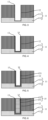
  • Step S 20 referring to FIG. 2 which shows a cross-sectional view of a semiconductor structure obtained after a TSV 12 is formed in the base 11 .
  • the TSV 12 penetrates through the first dielectric layer 111 and partially extends into the substrate 112 . Since the TSV 12 does not penetrate through the substrate 112 , a depth of the TSV 12 is smaller than a thickness of the base 11 .
  • a second dielectric layer 13 and a first metal layer 14 may be formed in the TSV 12 first and then an electrically conductive structure 15 is formed in the TSV 12 .
  • the second dielectric layer 13 is formed on a sidewall and a bottom of the TSV 12 .
  • the second dielectric layer 13 may be made of at least one selected from the group consisting of silicon dioxide, silicon oxynitride, silicon nitride and a low-k dielectric.
  • the low-k dielectric material may be hydrosilicate or porous silicate.
  • a silicon oxide layer may be formed on the sidewall and the bottom of the TSV 12 by chemical vapor deposition (CVD) or atomic layer deposition (ALD) to serve as the second dielectric layer 13 .
  • CVD chemical vapor deposition
  • ALD atomic layer deposition
  • the first metal layer 14 may be a cobalt layer, an aluminum layer, a titanium nitride layer or a ruthenium layer.
  • the electrically conductive structure 15 is formed in the TSV 12 .
  • the electrically conductive structure 15 includes a metal barrier layer 151 and an electrically conductive layer 152 , as shown in FIG. 5 .
  • the metal barrier layer 151 may be deposited on a surface of the first metal layer 14 first.
  • the metal barrier layer 151 may be a tantalum layer or a tantalum nitride layer.
  • the electrically conductive layer 152 is formed in the TSV 12 .
  • a copper seed layer may be deposited on a surface of the metal barrier layer 151 .
  • FIG. 6 is a schematic view showing a cross-sectional structure of a semiconductor structure obtained after the electrically conductive structure 15 is formed in the TSV 12 .
  • Step S 40 referring to FIG. 14 , a filling hole 17 is formed in the first dielectric layer 111 and the substrate 112 .
  • the filling hole 17 surrounds the electrically conductive structure 15 , exposes a sidewall of the conductive structure 15 and a part of the substrate 112 , and has a stepwise sidewall.
  • the step of forming a filling hole 17 in the first dielectric layer 111 and the substrate 112 includes:
  • Step S 41 Etch the first dielectric layer 111 to form a filling through via 171 in the first dielectric layer 111 .
  • Step S 42 Remove a part of the second dielectric layer 13 , such that an upper surface of the remaining second dielectric layer 13 is lower than an upper surface of the substrate 112 , and a filling gap 172 is formed in the substrate 112 , the filling gap 172 and the filling through via 171 jointly forming the filling hole 17 .
  • Step S 41 of forming a filling through via 171 may refer to FIG. 7 to FIG. 13 .
  • the first dielectric layer 111 is photoetched repeatedly to gradually form the filling through via 171 shown in FIG. 13 .
  • a photoresist layer 16 is formed on an upper surface of the semiconductor structure shown in FIG. 6 , as shown in FIG. 7 .
  • a part of the upper surface of the first dielectric layer 111 namely the part to be etched, is subjected to exposure and development, as shown in FIG. 8 .
  • a part of the first dielectric layer 111 is removed by etching, and the photoresist is cleaned to obtain the semiconductor structure shown in FIG. 9 .
  • the part of the first dielectric layer 111 may be removed by dry etching, and the etching gas may include a fluorine-based gas such as sulfur hexafluoride and carbon tetrafluoride.
  • the etching gas may include a fluorine-based gas such as sulfur hexafluoride and carbon tetrafluoride.
  • processes such as photoresist coating, exposure, development, etching and cleaning may be repeated on the semiconductor structure shown in FIG. 9 to obtain the semiconductor structure shown in FIG. 12 .
  • Processes in FIG. 10 to FIG. 12 are repeated to form the stepwise filling through via 171 in the first dielectric layer 111 , as shown in FIG. 13 .
  • a part of the second dielectric layer 13 may be removed, such that the upper surface of the second dielectric layer 13 is lower than the upper surface of the substrate 112 , and the filling gap 172 is formed in the substrate 112 , as shown in FIG. 14 .
  • the filling through via 171 and the filling gap 172 jointly form the filling hole 17 .
  • a diameter of the filling hole 17 is increased stepwise from bottom to top.
  • a thermally conductive structure 18 is formed in the filling hole 17 .
  • a thermally conductive metal may be filled in the filling hole 17 to serve as the thermally conductive structure 18 .
  • the thermally conductive structure 18 is fully filled in the filling hole 17 , as shown in FIG. 15 .
  • the thermally conductive metal may be tungsten, silver, platinum, aluminum, nickel, ruthenium or cobalt.
  • the thermally conductive metal may be in a granular form to facilitate heat dissipation.
  • the stepwise thermally conductive structure 18 is formed around the TSV 12 (referring to FIG.
  • the thermally conductive structure 18 is tapering-off-shaped, which facilitates upward heat dissipation, thereby preventing a phenomenon that heat cannot be dissipated timely to affect components around the bottom of the TSV 12 .
  • the thermally conductive structure 18 is narrow at the bottom and wide at the top, the thermally conductive structure has a less occupied area in the active region, and the degree of crowdedness for devices in the active region is alleviated, thereby improving the heat dissipation efficiency
  • the substrate 112 may be a silicon substrate.
  • the thermally conductive structure 18 is annealed.
  • the thermally conductive structure 18 reacts with the substrate 112 to form a metal silicide layer.
  • the metal silicide can effectively solve the tricky heat dissipation of the TSV structure, with a desirable thermal conductivity.
  • the metal silicide When heat on the electrically conductive structure 15 is conducted by the thermally conductive metal to the substrate 112 , the metal silicide does not obstruct the heat, but can quickly conduct the heat, which prevents the heat from being accumulated to the substrate 112 to cause a temperature rise of the base and to affect the working performance of the device in the active region.
  • the method of manufacturing a semiconductor structure further includes: Ion bombardment is performed on the exposed substrate 112 to form a loose region 19 in the substrate 112 .
  • the loose region 19 surrounds the electrically conductive structure 15 .
  • Ar ion bombardment may be performed on the substrate 112 exposed by the filling hole 17 to form the loose region 19 .
  • the radio frequency (RF) power may be controlled in a range between 30 W and 100 W, and may be 40 W, 50 W, 60 W, 70 W, 80 W and 90 W for example.
  • the flow rate of the charged Ar gas falls into a range between 10 sccm and 150 sccm, and may be 30 sccm, 50 sccm, 80 sccm, 100 sccm and 120 sccm for example.
  • the ion bombardment time may fall into a range between 10 s and 200 s, and may be 30 s, 50 s, 80 s, 100 s, 150 s and 180 s for example.
  • the ion bombardment may be performed on the substrate 112 after the remaining photoresist is removed, and the ion bombardment may also be performed on the substrate 112 before the remaining photoresist is removed.
  • FIG. 16 is a schematic view showing a cross-sectional structure of a semiconductor structure obtained after the ion bombardment. After the loose region 19 is formed, the thermally conductive metal is filled in the filling hole 17 to form the thermally conductive structure 18 , thereby obtaining the semiconductor structure shown in FIG. 17 .
  • the heat dissipation capability of the semiconductor structure can further be improved.
  • the thermally conductive structure 18 conducts the heat to the substrate 112
  • the loose region 19 in the substrate 112 can accelerate the heat dissipation and prevent the heat accumulation.
  • the semiconductor structure includes: a base 11 including a substrate 112 and a first dielectric layer 111 on an upper surface of the substrate 112 ; an electrically conductive structure 15 penetrating through the first dielectric layer 111 , extending into the substrate 112 , and having a depth less than a thickness of the base 11 ; and a thermally conductive structure 18 located in the base 11 , surrounding the electrically conductive structure 15 , and having a stepwise sidewall.
  • the base 11 may be a silicon base 11 .
  • the first dielectric layer 111 may be a silicon dioxide layer.
  • the electrically conductive structure 15 may be located in a TSV 12 (referring to FIG. 2 ) to implement vertical electrical interconnection for multiple layers of dies. Since the multiple layers of dies are stacked, the power density is increased dramatically, and the temperature of the electrically conductive structure 15 is risen rapidly, which affects the reliability and stability of the electrically conductive structure 15 and the electronic device.
  • the thermally conductive structure 18 having the stepwise sidewall is provided around the electrically conductive structure 15 , such that the heat can be dissipated upward more rapidly, and the heat dissipation efficiency is improved.
  • the semiconductor structure further includes a first metal layer 14 and a second dielectric layer 13 .
  • the first metal layer 14 is located on a sidewall and a bottom of the electrically conductive structure 15 .
  • the first metal layer 14 is attached to the sidewall and the bottom of the electrically conductive structure 15 .
  • the second dielectric layer 13 is located in the substrate 112 and covers a bottom and a part of a sidewall of the first metal layer 14 .
  • the electrically conductive structure 15 includes a metal barrier layer 151 and an electrically conductive layer 152 .
  • the metal barrier layer 151 is located between the electrically conductive layer 152 and the first metal layer 14 .
  • the metal barrier layer 151 may be a tantalum layer or a tantalum nitride layer.
  • the electrically conductive layer 152 may be a copper layer.
  • a diameter of the thermally conductive structure 18 is increased stepwise from bottom to top. Since the diameter of the thermally conductive structure 18 is increased stepwise from bottom to top, the heat dissipation structure has a less occupied area in the active region of the substrate 112 , and the degree of crowdedness for devices in the active device is alleviated.
  • the heat is generally dissipated upward, and the tapering-off-shaped heat dissipation structure facilitates upward heat dissipation, thereby preventing the heat from being accumulated around the bottom of the electrically conductive structure 15 to cause a temperature rise of the substrate 112 and to affect the performance of the electronic device in the active region.
  • the thermally conductive structure 18 includes a thermally conductive metal.
  • the thermally conductive metal may be, for example, tungsten, silver, platinum, aluminum, nickel, ruthenium or cobalt.
  • the thermally conductive metal may be filled in the filling hole 17 in a granular form. With the granular thermally conductive structure 18 , not only can the heat be conducted timely with an excellent thermal conductivity of the thermally conductive metal, but the heat can also be dissipated conveniently with gaps between granules.
  • the substrate 112 includes a loose region 19 .
  • the loose region 19 is located in the substrate 112 , and surrounds the electrically conductive structure 15 .
  • the heat from the thermally conductive structure 18 can further be dissipated, thereby preventing the heat from being accumulated to the substrate 112 to cause a temperature rise of the substrate 112 and to affect the working performance of the devices in the active region.
  • a material of the substrate 112 includes silicon.
  • the semiconductor structure further includes a metal silicide layer (not shown in the figure).
  • the metal silicide layer is located between the thermally conductive structure 18 and the loose region 19 . Similar to the thermally conductive metal, the metal silicide also has an excellent thermal conductivity, and can accelerate conduction and dissipation of the heat from the electrically conductive structure 15 with the thermally conductive structure 18 , thereby reducing the heat accumulation.
  • the stepwise thermally conductive structure is also formed in the filling hole, which facilitates upward heat dissipation of the electrically conductive structure, thereby preventing heat from being accumulated to cause an overhigh temperature of the device and to affect components in an active region of the semiconductor structure.
  • the TSV structure can be more reliable and stable by improving its heat dissipation capability.

Landscapes

  • Engineering & Computer Science (AREA)
  • Physics & Mathematics (AREA)
  • Microelectronics & Electronic Packaging (AREA)
  • General Physics & Mathematics (AREA)
  • Condensed Matter Physics & Semiconductors (AREA)
  • Computer Hardware Design (AREA)
  • Power Engineering (AREA)
  • Manufacturing & Machinery (AREA)
  • Internal Circuitry In Semiconductor Integrated Circuit Devices (AREA)
  • Chemical & Material Sciences (AREA)
  • Materials Engineering (AREA)
  • Geometry (AREA)
  • Health & Medical Sciences (AREA)
  • High Energy & Nuclear Physics (AREA)
  • Toxicology (AREA)

Abstract

The present application provides a semiconductor structure and a manufacturing method thereof. The method of manufacturing the semiconductor structure includes: providing a base, the base including a substrate and a first dielectric layer on the substrate; forming a through silicon via in the base, the through silicon via penetrating through the first dielectric layer, extending into the substrate, and having a depth less than a thickness of the base; forming an electrically conductive structure in the through silicon via; forming a filling hole in the first dielectric layer and the substrate, the filling hole surrounding the electrically conductive structure, exposing a sidewall of the electrically conductive structure and a part of the substrate, and having a stepwise sidewall; and forming a thermally conductive structure in the filling hole.

Description

CROSS-REFERENCE TO RELATED APPLICATIONS
This is a continuation of International Application No. PCT/CN2021/125491, filed on Oct. 22, 2021, which claims the priority to Chinese Patent Application 202110758551.4, titled “SEMICONDUCTOR STRUCTURE AND MANUFACTURING METHOD THEREOF” and filed with China National Intellectual Property Administration (CNIPA) on Jul. 5, 2021. The entire contents of International Application No. PCT/CN2021/125491 and Chinese Patent Application 202110758551.4 are incorporated herein by reference.
TECHNICAL FIELD
The present application relates, but is not limited, to a semiconductor structure and a manufacturing method thereof.
BACKGROUND
As a high-density packaging technique, the through silicon via (TSV) technique implements vertical electrical interconnection of a TSV by filling electrically conductive substances such as copper, tungsten and polycrystalline silicon.
Since multiple layers of dies are stacked together through the TSV, the power density is increased dramatically. Due to the large amount of heat and poor heat dissipation, the dies work at a high temperature, which seriously affects reliability and stability of the TSV. The high working temperature also results in metallic expansion in the TSV, such that a silicon base and a dielectric layer deform under stress, which further affects performance of components.
SUMMARY
An overview of the subject matter detailed in the present application is provided below, This overview is not intended to limit the protection scope of the claims.
The present application provides a semiconductor structure and a manufacturing method thereof.
A first aspect of the present application provides a method of manufacturing a semiconductor structure, including: providing a base, the base including a substrate and a first dielectric layer on the substrate; forming a TSV in the base, the TSV penetrating through the first dielectric layer, extending into the substrate, and having a depth less than a thickness of the base; forming an electrically conductive structure in the TSV; forming a filling hole in the first dielectric layer and the substrate, the filling hole surrounding the electrically conductive structure, exposing a sidewall of the electrically conductive structure and a part of the substrate, and having a stepwise sidewall; and forming a thermally conductive structure in the filling hole.
A second aspect of the present application provides a semiconductor structure including: a base including a substrate and a first dielectric layer on an upper surface of the substrate; an electrically conductive structure penetrating through the first dielectric layer, extending into the substrate, and having a depth less than a thickness of the base; and a thermally conductive structure located in the base, surrounding the electrically conductive structure, and having a stepwise sidewall.
Other aspects of the present application are understandable upon reading and understanding of the accompanying drawings and detailed description.
BRIEF DESCRIPTION OF THE DRAWINGS
The drawings incorporated into the specification and constituting a part of the specification illustrate the embodiments of the present application, and are used together with the descriptions to explain the principles of the embodiments of the present application. In these accompanying drawings, similar reference numerals represent similar elements. The drawings in the following description are some rather than all of the embodiments of the present application. Those skilled in the art may obtain other accompanying drawings based on these accompanying drawings without creative efforts.
FIG. 1 is a flowchart of a method of manufacturing a semiconductor structure according to an embodiment of the present application;
FIG. 2 is a schematic view showing a cross-sectional structure of a semiconductor structure obtained after a TSV is formed in a base according to an embodiment of the present application;
FIG. 3 is a schematic view showing a cross-sectional structure of a semiconductor structure obtained after a second dielectric layer is formed in a TSV according to an embodiment of the present application;
FIG. 4 is a schematic view showing a cross-sectional structure of a semiconductor structure obtained after a first metal layer is formed on a surface of a second dielectric layer according to an embodiment of the present application;
FIG. 5 is a schematic view showing a cross-sectional structure of a semiconductor structure obtained after a metal barrier layer is formed on a surface of a first metal layer according to an embodiment of the present application;
FIG. 6 is a schematic view showing a cross-sectional structure of a semiconductor structure obtained after an electrically conductive layer is formed according to an embodiment of the present application;
FIGS. 7-13 each are a schematic view showing a cross-sectional structure in a step of forming a filling through via in a first dielectric layer according to an embodiment of the present application;
FIG. 14 is a schematic view showing a cross-sectional structure of a semiconductor structure obtained after a filling gap is formed in a substrate according to an embodiment of the present application;
FIG. 15 is a schematic view showing a cross-sectional structure of a semiconductor structure obtained after a thermally conductive structure is formed according to an embodiment of the present application;
FIG. 16 is a schematic view showing a cross-sectional structure of a semiconductor structure obtained after a loose region is formed in a substrate according to an embodiment of the present application; and
FIG. 17 is a schematic view showing a cross-sectional structure of a semiconductor structure obtained after a thermally conductive structure is formed according to another embodiment of the present application.
DETAILED DESCRIPTION
The technical solutions in embodiments of the present application are described below clearly and completely with reference to the drawings in the embodiments of the present application. Apparently, the described embodiments are merely part rather than all of the embodiments of the present application. All other embodiments obtained by a person skilled in the art based on the embodiments of the present application without creative efforts should fall within the protection scope of the present application. It should be noted that the embodiments in the present application and features in the embodiments may be arbitrarily combined with each other in a non-conflicting situation.
An embodiment of the present application provides a method of manufacturing a semiconductor structure. As shown in FIG. 1 , the method includes:
    • Step S10: Provide a base, the base including a substrate and a first dielectric layer on the substrate.
    • Step S20: Form a TSV in the base, the TSV penetrating through the first dielectric layer, extending into the substrate, and having a depth less than a thickness of the base.
    • Step S30: Form an electrically conductive structure in the TSV.
    • Step S40: Form a filling hole in the first dielectric layer and the substrate, the filling hole surrounding the electrically conductive structure, exposing a sidewall of the electrically conductive structure and a part of the substrate, and having a stepwise sidewall.
    • Step S50: Form a thermally conductive structure in the filling hole.
According to the method of manufacturing a semiconductor structure, with the stepwise sidewall of the filling hole, the stepwise thermally conductive structure is also formed in the filling hole, which facilitates upward heat dissipation of the electrically conductive structure, thereby preventing heat from being accumulated to cause an overhigh temperature of the device and to affect components in an active region of the semiconductor structure. The TSV structure can be more reliable and stable by improving its heat dissipation capability.
In Step S10, the substrate may be made of silicon, silicon carbide, silicon nitride, silicon on insulator (SOI), stacked silicon on insulator (SSOI), stacked silicon-germanium on insulator (S-SiGeOI), silicon-germanium on insulator (SiGeOI), and germanium on insulator (GeOI). The first dielectric layer may be made of at least one selected from the group consisting of silicon dioxide, silicon oxynitride, silicon nitride and a low-dielectric-constant (low-k) dielectric. The low-k dielectric material may be hydrosilicate or porous silicate. In the embodiment of the present application, the first dielectric layer may be a silicon dioxide layer. A shallow trench isolation (STI) structure and an active region may be provided on an upper surface of the substrate.
In Step S20, referring to FIG. 2 which shows a cross-sectional view of a semiconductor structure obtained after a TSV 12 is formed in the base 11. The TSV 12 penetrates through the first dielectric layer 111 and partially extends into the substrate 112. Since the TSV 12 does not penetrate through the substrate 112, a depth of the TSV 12 is smaller than a thickness of the base 11.
In an exemplary implementation, referring to FIG. 3 to FIG. 5 , after the TSV 12 is formed in the base 11, a second dielectric layer 13 and a first metal layer 14 may be formed in the TSV 12 first and then an electrically conductive structure 15 is formed in the TSV 12.
As shown in FIG. 3 , the second dielectric layer 13 is formed on a sidewall and a bottom of the TSV 12. The second dielectric layer 13 may be made of at least one selected from the group consisting of silicon dioxide, silicon oxynitride, silicon nitride and a low-k dielectric. The low-k dielectric material may be hydrosilicate or porous silicate. In an exemplary implementation, a silicon oxide layer may be formed on the sidewall and the bottom of the TSV 12 by chemical vapor deposition (CVD) or atomic layer deposition (ALD) to serve as the second dielectric layer 13. FIG. 4 is a schematic view showing a cross-sectional structure of a semiconductor structure obtained after the first metal layer 14 is formed on a surface of the second dielectric layer 13. The first metal layer 14 may be a cobalt layer, an aluminum layer, a titanium nitride layer or a ruthenium layer.
In Step S30, referring to FIG. 6 , the electrically conductive structure 15 is formed in the TSV 12. The electrically conductive structure 15 includes a metal barrier layer 151 and an electrically conductive layer 152, as shown in FIG. 5 . For example, the metal barrier layer 151 may be deposited on a surface of the first metal layer 14 first. The metal barrier layer 151 may be a tantalum layer or a tantalum nitride layer. On the basis of the structure shown in FIG. 5 , the electrically conductive layer 152 is formed in the TSV 12. For example, a copper seed layer may be deposited on a surface of the metal barrier layer 151. Then, copper is deposited in the TSV 12 by electroplating to fully fill the TSV 12, and a copper layer is flush with an upper surface of the first dielectric layer 111. FIG. 6 is a schematic view showing a cross-sectional structure of a semiconductor structure obtained after the electrically conductive structure 15 is formed in the TSV 12.
In Step S40, referring to FIG. 14 , a filling hole 17 is formed in the first dielectric layer 111 and the substrate 112. The filling hole 17 surrounds the electrically conductive structure 15, exposes a sidewall of the conductive structure 15 and a part of the substrate 112, and has a stepwise sidewall.
In an exemplary implementation, referring to FIG. 14 , the step of forming a filling hole 17 in the first dielectric layer 111 and the substrate 112 includes:
Step S41: Etch the first dielectric layer 111 to form a filling through via 171 in the first dielectric layer 111.
Step S42: Remove a part of the second dielectric layer 13, such that an upper surface of the remaining second dielectric layer 13 is lower than an upper surface of the substrate 112, and a filling gap 172 is formed in the substrate 112, the filling gap 172 and the filling through via 171 jointly forming the filling hole 17.
In an exemplary implementation, Step S41 of forming a filling through via 171 may refer to FIG. 7 to FIG. 13 . The first dielectric layer 111 is photoetched repeatedly to gradually form the filling through via 171 shown in FIG. 13 . For example, a photoresist layer 16 is formed on an upper surface of the semiconductor structure shown in FIG. 6 , as shown in FIG. 7 . A part of the upper surface of the first dielectric layer 111, namely the part to be etched, is subjected to exposure and development, as shown in FIG. 8 . A part of the first dielectric layer 111 is removed by etching, and the photoresist is cleaned to obtain the semiconductor structure shown in FIG. 9 . The part of the first dielectric layer 111 may be removed by dry etching, and the etching gas may include a fluorine-based gas such as sulfur hexafluoride and carbon tetrafluoride. As shown in FIG. 10 to FIG. 12 , in order to form the complete stepwise filling through via 171, processes such as photoresist coating, exposure, development, etching and cleaning may be repeated on the semiconductor structure shown in FIG. 9 to obtain the semiconductor structure shown in FIG. 12 . Processes in FIG. 10 to FIG. 12 are repeated to form the stepwise filling through via 171 in the first dielectric layer 111, as shown in FIG. 13 .
In order to further improve the heat dissipation capability of the TSV 12 structure, on the basis of the semiconductor structure shown in FIG. 13 , a part of the second dielectric layer 13 may be removed, such that the upper surface of the second dielectric layer 13 is lower than the upper surface of the substrate 112, and the filling gap 172 is formed in the substrate 112, as shown in FIG. 14 . The filling through via 171 and the filling gap 172 jointly form the filling hole 17. A diameter of the filling hole 17 is increased stepwise from bottom to top.
In Step S50, referring to FIG. 14 to FIG. 15 , a thermally conductive structure 18 is formed in the filling hole 17. In an exemplary implementation, a thermally conductive metal may be filled in the filling hole 17 to serve as the thermally conductive structure 18. The thermally conductive structure 18 is fully filled in the filling hole 17, as shown in FIG. 15 . The thermally conductive metal may be tungsten, silver, platinum, aluminum, nickel, ruthenium or cobalt. For example, the thermally conductive metal may be in a granular form to facilitate heat dissipation. The stepwise thermally conductive structure 18 is formed around the TSV 12 (referring to FIG. 2 ) structure and the thermally conductive structure 18 is tapering-off-shaped, which facilitates upward heat dissipation, thereby preventing a phenomenon that heat cannot be dissipated timely to affect components around the bottom of the TSV 12. Meanwhile, since the thermally conductive structure 18 is narrow at the bottom and wide at the top, the thermally conductive structure has a less occupied area in the active region, and the degree of crowdedness for devices in the active region is alleviated, thereby improving the heat dissipation efficiency
In an exemplary implementation, referring to FIG. 14 to FIG. 15 , the substrate 112 may be a silicon substrate. After the thermally conductive structure 18 is formed in the filling hole 17, the thermally conductive structure 18 is annealed. The thermally conductive structure 18 reacts with the substrate 112 to form a metal silicide layer. The metal silicide can effectively solve the tricky heat dissipation of the TSV structure, with a desirable thermal conductivity. When heat on the electrically conductive structure 15 is conducted by the thermally conductive metal to the substrate 112, the metal silicide does not obstruct the heat, but can quickly conduct the heat, which prevents the heat from being accumulated to the substrate 112 to cause a temperature rise of the base and to affect the working performance of the device in the active region.
In an exemplary implementation, referring to FIG. 16 to FIG. 17 , before the thermally conductive structure 18 is formed in the filling hole 17, the method of manufacturing a semiconductor structure further includes: Ion bombardment is performed on the exposed substrate 112 to form a loose region 19 in the substrate 112. The loose region 19 surrounds the electrically conductive structure 15. As an example, Ar ion bombardment may be performed on the substrate 112 exposed by the filling hole 17 to form the loose region 19. For example, the radio frequency (RF) power may be controlled in a range between 30 W and 100 W, and may be 40 W, 50 W, 60 W, 70 W, 80 W and 90 W for example. The flow rate of the charged Ar gas falls into a range between 10 sccm and 150 sccm, and may be 30 sccm, 50 sccm, 80 sccm, 100 sccm and 120 sccm for example. The ion bombardment time may fall into a range between 10 s and 200 s, and may be 30 s, 50 s, 80 s, 100 s, 150 s and 180 s for example. In an exemplary implementation, after the filling hole 17 is formed, the ion bombardment may be performed on the substrate 112 after the remaining photoresist is removed, and the ion bombardment may also be performed on the substrate 112 before the remaining photoresist is removed. FIG. 16 is a schematic view showing a cross-sectional structure of a semiconductor structure obtained after the ion bombardment. After the loose region 19 is formed, the thermally conductive metal is filled in the filling hole 17 to form the thermally conductive structure 18, thereby obtaining the semiconductor structure shown in FIG. 17 .
With the ion bombardment on the substrate 112 to form the loose region 19, the heat dissipation capability of the semiconductor structure can further be improved. When the thermally conductive structure 18 conducts the heat to the substrate 112, the loose region 19 in the substrate 112 can accelerate the heat dissipation and prevent the heat accumulation.
An embodiment of the present application further provides a semiconductor structure. As shown in FIG. 15 , the semiconductor structure includes: a base 11 including a substrate 112 and a first dielectric layer 111 on an upper surface of the substrate 112; an electrically conductive structure 15 penetrating through the first dielectric layer 111, extending into the substrate 112, and having a depth less than a thickness of the base 11; and a thermally conductive structure 18 located in the base 11, surrounding the electrically conductive structure 15, and having a stepwise sidewall.
The base 11 may be a silicon base 11. The first dielectric layer 111 may be a silicon dioxide layer. The electrically conductive structure 15 may be located in a TSV 12 (referring to FIG. 2 ) to implement vertical electrical interconnection for multiple layers of dies. Since the multiple layers of dies are stacked, the power density is increased dramatically, and the temperature of the electrically conductive structure 15 is risen rapidly, which affects the reliability and stability of the electrically conductive structure 15 and the electronic device. The thermally conductive structure 18 having the stepwise sidewall is provided around the electrically conductive structure 15, such that the heat can be dissipated upward more rapidly, and the heat dissipation efficiency is improved.
In an exemplary implementation, referring to FIG. 13 , the semiconductor structure further includes a first metal layer 14 and a second dielectric layer 13. Referring also to FIG. 15 , the first metal layer 14 is located on a sidewall and a bottom of the electrically conductive structure 15. The first metal layer 14 is attached to the sidewall and the bottom of the electrically conductive structure 15. Referring also to FIG. 13 , the second dielectric layer 13 is located in the substrate 112 and covers a bottom and a part of a sidewall of the first metal layer 14.
In an exemplary implementation, referring to FIG. 14 , the electrically conductive structure 15 includes a metal barrier layer 151 and an electrically conductive layer 152. The metal barrier layer 151 is located between the electrically conductive layer 152 and the first metal layer 14. The metal barrier layer 151 may be a tantalum layer or a tantalum nitride layer. The electrically conductive layer 152 may be a copper layer.
In an exemplary implementation, as shown in FIG. 15 , a diameter of the thermally conductive structure 18 is increased stepwise from bottom to top. Since the diameter of the thermally conductive structure 18 is increased stepwise from bottom to top, the heat dissipation structure has a less occupied area in the active region of the substrate 112, and the degree of crowdedness for devices in the active device is alleviated. The heat is generally dissipated upward, and the tapering-off-shaped heat dissipation structure facilitates upward heat dissipation, thereby preventing the heat from being accumulated around the bottom of the electrically conductive structure 15 to cause a temperature rise of the substrate 112 and to affect the performance of the electronic device in the active region.
In an exemplary implementation, referring to FIG. 14 to FIG. 15 , the thermally conductive structure 18 includes a thermally conductive metal. The thermally conductive metal may be, for example, tungsten, silver, platinum, aluminum, nickel, ruthenium or cobalt. As an example, the thermally conductive metal may be filled in the filling hole 17 in a granular form. With the granular thermally conductive structure 18, not only can the heat be conducted timely with an excellent thermal conductivity of the thermally conductive metal, but the heat can also be dissipated conveniently with gaps between granules.
In an exemplary implementation, referring to FIG. 16 to FIG. 17 , the substrate 112 includes a loose region 19. As shown in FIG. 17 , the loose region 19 is located in the substrate 112, and surrounds the electrically conductive structure 15. With the loose region 19 in the substrate 112, the heat from the thermally conductive structure 18 can further be dissipated, thereby preventing the heat from being accumulated to the substrate 112 to cause a temperature rise of the substrate 112 and to affect the working performance of the devices in the active region.
In an exemplary implementation, referring to FIG. 17 , a material of the substrate 112 includes silicon. The semiconductor structure further includes a metal silicide layer (not shown in the figure). The metal silicide layer is located between the thermally conductive structure 18 and the loose region 19. Similar to the thermally conductive metal, the metal silicide also has an excellent thermal conductivity, and can accelerate conduction and dissipation of the heat from the electrically conductive structure 15 with the thermally conductive structure 18, thereby reducing the heat accumulation.
The embodiments or implementations of this specification are described in a progressive manner, and each embodiment focuses on differences from other embodiments. The same or similar parts between the embodiments may refer to each other.
In the description of the specification, the description with reference to terms such as “an embodiment”, “an illustrative embodiment”, “some implementations”, “an illustrative implementation” and “an example” means that the specific feature, structure, material or feature described in combination with the implementation(s) or example(s) is included in at least one implementation or example of the present application.
In this specification, the schematic expression of the above terms does not necessarily refer to the same implementation or example. Moreover, the described specific feature, structure, material or characteristic may be combined in an appropriate manner in any one or more implementations or examples.
It should be noted that in the description of the present application, the terms such as “center”, “top”, “bottom”, “left”, “right”, “vertical”, “horizontal”, “inner” and “outer” indicate the orientation or position relationships based on the drawings. These terms are merely intended to facilitate description of the present application and simplify the description, rather than to indicate or imply that the mentioned device or element must have a specific orientation and must be constructed and operated in a specific orientation. Therefore, these terms should not be construed as a limitation to the present application.
It can be understood that the terms such as “first” and “second” used in the present application can be used to describe various structures, but these structures are not limited by these terms. Instead, these terms are merely intended to distinguish one structure from another.
The same elements in one or more accompanying drawings are denoted by similar reference numerals. For the sake of clarity, various parts in the accompanying drawings are not drawn to scale. In addition, some well-known parts may not be shown. For the sake of brevity, a structure obtained by implementing a plurality of steps may be shown in one figure. In order to make the understanding of the present application more clearly, many specific details of the present application, such as the structure, material, size, processing process and technology of the device, are described below. However, as those skilled in the art can understand, the present application may not be implemented according to these specific details.
Finally, it should be noted that the above embodiments are merely used to explain the technical solutions of the present application, but are not intended to limit the present application. Although the present application is described in detail with reference to the foregoing embodiments, those of ordinary skill in the art should understand that they can still modify the technical solutions described in the foregoing embodiments, or make equivalent substitutions on some or all technical features therein. These modifications or substitutions do not make the essence of the corresponding technical solutions deviate from the spirit and scope of the technical solutions of the embodiments of the present application.
INDUSTRIAL APPLICABILITY
According to the semiconductor structure and the manufacturing method thereof provided by the embodiments of the present application, with the stepwise sidewall of the filling hole, the stepwise thermally conductive structure is also formed in the filling hole, which facilitates upward heat dissipation of the electrically conductive structure, thereby preventing heat from being accumulated to cause an overhigh temperature of the device and to affect components in an active region of the semiconductor structure. The TSV structure can be more reliable and stable by improving its heat dissipation capability.

Claims (7)

The invention claimed is:
1. A semiconductor structure, comprising:
a base, comprising a substrate and a first dielectric layer on an upper surface of the substrate;
an electrically conductive structure, penetrating through the first dielectric layer, extending into the substrate, and having a depth less than a thickness of the base; and
a thermally conductive structure, located in the base, surrounding the electrically conductive structure, and having a stepwise sidewall.
2. The semiconductor structure according to claim 1, further comprising:
a first metal layer, located on a sidewall and a bottom of the electrically conductive structure; and
a second dielectric layer, located in the substrate, and covering a bottom and a part of a sidewall of the first metal layer.
3. The semiconductor structure according to claim 2, wherein the electrically conductive structure comprises a metal barrier layer and an electrically conductive layer; and the metal barrier layer is located between the electrically conductive layer and the first metal layer.
4. The semiconductor structure according to claim 1, wherein a diameter of the thermally conductive structure is increased stepwise from bottom to top.
5. The semiconductor structure according to claim 1, wherein the thermally conductive structure comprises a thermally conductive metal.
6. The semiconductor structure according to claim 1, wherein the substrate comprises a loose region located in the substrate, and surrounding the electrically conductive structure.
7. The semiconductor structure according to claim 6, wherein a material of the substrate comprises silicon, the semiconductor structure further comprises a metal silicide layer, and the metal silicide layer is located between the thermally conductive structure and the loose region.
US18/149,719 2021-07-05 2023-01-04 Semiconductor structure and manufacturing method thereof Active 2042-07-30 US12315795B2 (en)

Applications Claiming Priority (3)

Application Number Priority Date Filing Date Title
CN202110758551.4A CN115588645B (en) 2021-07-05 2021-07-05 Semiconductor structure and preparation method thereof
CN202110758551.4 2021-07-05
PCT/CN2021/125491 WO2023279575A1 (en) 2021-07-05 2021-10-22 Semiconductor structure and preparation method therefor

Related Parent Applications (1)

Application Number Title Priority Date Filing Date
PCT/CN2021/125491 Continuation WO2023279575A1 (en) 2021-07-05 2021-10-22 Semiconductor structure and preparation method therefor

Publications (2)

Publication Number Publication Date
US20240222266A1 US20240222266A1 (en) 2024-07-04
US12315795B2 true US12315795B2 (en) 2025-05-27

Family

ID=84771378

Family Applications (1)

Application Number Title Priority Date Filing Date
US18/149,719 Active 2042-07-30 US12315795B2 (en) 2021-07-05 2023-01-04 Semiconductor structure and manufacturing method thereof

Country Status (3)

Country Link
US (1) US12315795B2 (en)
CN (1) CN115588645B (en)
WO (1) WO2023279575A1 (en)

Families Citing this family (1)

* Cited by examiner, † Cited by third party
Publication number Priority date Publication date Assignee Title
TW202512812A (en) * 2023-09-07 2025-03-16 聯華電子股份有限公司 Tsv structure and fabricating method of the same

Citations (8)

* Cited by examiner, † Cited by third party
Publication number Priority date Publication date Assignee Title
CN102097399A (en) 2009-12-10 2011-06-15 英特赛尔美国股份有限公司 Heat conduction for chip stacks and 3-D circuits
US20130270686A1 (en) 2012-04-11 2013-10-17 Taiwan Semiconductor Manufacturing Company, Ltd. Methods and apparatus for heat spreader on silicon
US20140217603A1 (en) * 2010-06-28 2014-08-07 Kwang-jin Moon Semiconductor Device and Method of Fabricating the Same
US9659835B1 (en) 2016-04-08 2017-05-23 Globalfoundries Inc. Techniques for integrating thermal via structures in integrated circuits
US20180190617A1 (en) 2016-12-31 2018-07-05 Intel Corporation Heat removal between top and bottom die interface
CN111769087A (en) 2020-05-26 2020-10-13 厦门大学 A high-power GaN device heat dissipation and integration integrated structure and manufacturing method
CN112466846A (en) 2020-11-24 2021-03-09 复旦大学 TSV structure and preparation method thereof
CN112736073A (en) 2020-12-28 2021-04-30 华进半导体封装先导技术研发中心有限公司 Silicon-based optical computation heterogeneous integrated module

Family Cites Families (1)

* Cited by examiner, † Cited by third party
Publication number Priority date Publication date Assignee Title
CN112466845B (en) * 2020-11-24 2023-08-22 复旦大学 A through-silicon via structure and preparation method thereof

Patent Citations (10)

* Cited by examiner, † Cited by third party
Publication number Priority date Publication date Assignee Title
CN102097399A (en) 2009-12-10 2011-06-15 英特赛尔美国股份有限公司 Heat conduction for chip stacks and 3-D circuits
US8232137B2 (en) 2009-12-10 2012-07-31 Intersil Americas Inc. Heat conduction for chip stacks and 3-D circuits
US20140217603A1 (en) * 2010-06-28 2014-08-07 Kwang-jin Moon Semiconductor Device and Method of Fabricating the Same
US20130270686A1 (en) 2012-04-11 2013-10-17 Taiwan Semiconductor Manufacturing Company, Ltd. Methods and apparatus for heat spreader on silicon
US9659835B1 (en) 2016-04-08 2017-05-23 Globalfoundries Inc. Techniques for integrating thermal via structures in integrated circuits
CN107403022A (en) 2016-04-08 2017-11-28 格罗方德半导体公司 To integrate the technology of hot via structure in integrated circuits
US20180190617A1 (en) 2016-12-31 2018-07-05 Intel Corporation Heat removal between top and bottom die interface
CN111769087A (en) 2020-05-26 2020-10-13 厦门大学 A high-power GaN device heat dissipation and integration integrated structure and manufacturing method
CN112466846A (en) 2020-11-24 2021-03-09 复旦大学 TSV structure and preparation method thereof
CN112736073A (en) 2020-12-28 2021-04-30 华进半导体封装先导技术研发中心有限公司 Silicon-based optical computation heterogeneous integrated module

Non-Patent Citations (1)

* Cited by examiner, † Cited by third party
Title
International Search Report cited in PCT/CN2022/125491 mailed Mar. 14, 2022, 9 pages.

Also Published As

Publication number Publication date
CN115588645A (en) 2023-01-10
US20240222266A1 (en) 2024-07-04
WO2023279575A1 (en) 2023-01-12
CN115588645B (en) 2025-01-17

Similar Documents

Publication Publication Date Title
US8022455B2 (en) Method of fabricating semiconductor device for reducing parasitic capacitance between bit lines and semiconductor device fabricated thereby
US10224332B2 (en) Memory device having vertical structure
US10770464B2 (en) Semiconductor device including bit line structure of dynamic random access memory (DRAM) and method for fabricating the same
US6960808B2 (en) Semiconductor device having a lower parasitic capacitance
TWI793742B (en) Method for forming semiconductor device with air gap between bit line and capacitor contact
US11133248B2 (en) Semiconductor structure and method for fabricating the same
US20240014070A1 (en) Contact structure and method for fabricating same
US12315795B2 (en) Semiconductor structure and manufacturing method thereof
CN108364911A (en) Semiconductor memory device and method of manufacturing the same
CN110832617A (en) Transistor device with sinker contact and method of making the same
WO2022252444A1 (en) Semiconductor structure and preparation method therefor
US12131979B2 (en) Semiconductor structure and manufacturing method thereof
TW202139457A (en) Semiconductor device
US12136568B2 (en) Semiconductor structure and method for forming same
US12230553B2 (en) Semiconductor structure, manufacturing method of semiconductor structure and stacked structure
CN114256136B (en) Contact window structure, metal plug, forming method of metal plug and semiconductor structure
CN115132665A (en) Semiconductor memory device and manufacturing method thereof
CN113161295B (en) Semiconductor device and method of making the same
CN118785693B (en) Semiconductor structure preparation method and semiconductor structure
US12500163B2 (en) Semiconductor structure and manufacturing method thereof
US12094804B2 (en) Method of manufacturing a semiconductor device and a semiconductor device
US20230059177A1 (en) Semiconductor devices
CN116133366B (en) Semiconductor structure and preparation method thereof
US20050095837A1 (en) Structure and method for forming a dielectric chamber and electronic device including the dielectric chamber
CN117423677A (en) Semiconductor structures and methods of forming them

Legal Events

Date Code Title Description
AS Assignment

Owner name: CHANGXIN MEMORY TECHNOLOGIES, INC., CHINA

Free format text: ASSIGNMENT OF ASSIGNORS INTEREST;ASSIGNORS:WANG, LUGUANG;WANG, XIAOLING;SIGNING DATES FROM 20220923 TO 20220927;REEL/FRAME:062268/0181

FEPP Fee payment procedure

Free format text: ENTITY STATUS SET TO UNDISCOUNTED (ORIGINAL EVENT CODE: BIG.); ENTITY STATUS OF PATENT OWNER: LARGE ENTITY

STPP Information on status: patent application and granting procedure in general

Free format text: DOCKETED NEW CASE - READY FOR EXAMINATION

STPP Information on status: patent application and granting procedure in general

Free format text: NON FINAL ACTION MAILED

STPP Information on status: patent application and granting procedure in general

Free format text: RESPONSE TO NON-FINAL OFFICE ACTION ENTERED AND FORWARDED TO EXAMINER

STPP Information on status: patent application and granting procedure in general

Free format text: NOTICE OF ALLOWANCE MAILED -- APPLICATION RECEIVED IN OFFICE OF PUBLICATIONS

STPP Information on status: patent application and granting procedure in general

Free format text: NOTICE OF ALLOWANCE MAILED -- APPLICATION RECEIVED IN OFFICE OF PUBLICATIONS

STCF Information on status: patent grant

Free format text: PATENTED CASE