US12282674B2 - Evidence collection guidance method and apparatus for file selection and computer-readable storage medium - Google Patents
Evidence collection guidance method and apparatus for file selection and computer-readable storage medium Download PDFInfo
- Publication number
- US12282674B2 US12282674B2 US17/863,634 US202217863634A US12282674B2 US 12282674 B2 US12282674 B2 US 12282674B2 US 202217863634 A US202217863634 A US 202217863634A US 12282674 B2 US12282674 B2 US 12282674B2
- Authority
- US
- United States
- Prior art keywords
- information
- preliminary analysis
- analysis information
- level
- pieces
- Prior art date
- Legal status (The legal status is an assumption and is not a legal conclusion. Google has not performed a legal analysis and makes no representation as to the accuracy of the status listed.)
- Active, expires
Links
Images



Classifications
-
- G—PHYSICS
- G06—COMPUTING OR CALCULATING; COUNTING
- G06F—ELECTRIC DIGITAL DATA PROCESSING
- G06F3/00—Input arrangements for transferring data to be processed into a form capable of being handled by the computer; Output arrangements for transferring data from processing unit to output unit, e.g. interface arrangements
- G06F3/06—Digital input from, or digital output to, record carriers, e.g. RAID, emulated record carriers or networked record carriers
- G06F3/0601—Interfaces specially adapted for storage systems
- G06F3/0602—Interfaces specially adapted for storage systems specifically adapted to achieve a particular effect
- G06F3/0604—Improving or facilitating administration, e.g. storage management
- G06F3/0605—Improving or facilitating administration, e.g. storage management by facilitating the interaction with a user or administrator
-
- G—PHYSICS
- G06—COMPUTING OR CALCULATING; COUNTING
- G06F—ELECTRIC DIGITAL DATA PROCESSING
- G06F3/00—Input arrangements for transferring data to be processed into a form capable of being handled by the computer; Output arrangements for transferring data from processing unit to output unit, e.g. interface arrangements
- G06F3/06—Digital input from, or digital output to, record carriers, e.g. RAID, emulated record carriers or networked record carriers
- G06F3/0601—Interfaces specially adapted for storage systems
- G06F3/0628—Interfaces specially adapted for storage systems making use of a particular technique
- G06F3/0638—Organizing or formatting or addressing of data
- G06F3/0643—Management of files
-
- G—PHYSICS
- G06—COMPUTING OR CALCULATING; COUNTING
- G06F—ELECTRIC DIGITAL DATA PROCESSING
- G06F3/00—Input arrangements for transferring data to be processed into a form capable of being handled by the computer; Output arrangements for transferring data from processing unit to output unit, e.g. interface arrangements
- G06F3/06—Digital input from, or digital output to, record carriers, e.g. RAID, emulated record carriers or networked record carriers
- G06F3/0601—Interfaces specially adapted for storage systems
- G06F3/0602—Interfaces specially adapted for storage systems specifically adapted to achieve a particular effect
- G06F3/0604—Improving or facilitating administration, e.g. storage management
-
- G—PHYSICS
- G06—COMPUTING OR CALCULATING; COUNTING
- G06F—ELECTRIC DIGITAL DATA PROCESSING
- G06F3/00—Input arrangements for transferring data to be processed into a form capable of being handled by the computer; Output arrangements for transferring data from processing unit to output unit, e.g. interface arrangements
- G06F3/06—Digital input from, or digital output to, record carriers, e.g. RAID, emulated record carriers or networked record carriers
- G06F3/0601—Interfaces specially adapted for storage systems
- G06F3/0628—Interfaces specially adapted for storage systems making use of a particular technique
- G06F3/0653—Monitoring storage devices or systems
-
- G—PHYSICS
- G06—COMPUTING OR CALCULATING; COUNTING
- G06F—ELECTRIC DIGITAL DATA PROCESSING
- G06F3/00—Input arrangements for transferring data to be processed into a form capable of being handled by the computer; Output arrangements for transferring data from processing unit to output unit, e.g. interface arrangements
- G06F3/06—Digital input from, or digital output to, record carriers, e.g. RAID, emulated record carriers or networked record carriers
- G06F3/0601—Interfaces specially adapted for storage systems
- G06F3/0668—Interfaces specially adapted for storage systems adopting a particular infrastructure
- G06F3/0671—In-line storage system
-
- G—PHYSICS
- G06—COMPUTING OR CALCULATING; COUNTING
- G06F—ELECTRIC DIGITAL DATA PROCESSING
- G06F3/00—Input arrangements for transferring data to be processed into a form capable of being handled by the computer; Output arrangements for transferring data from processing unit to output unit, e.g. interface arrangements
- G06F3/06—Digital input from, or digital output to, record carriers, e.g. RAID, emulated record carriers or networked record carriers
- G06F3/0601—Interfaces specially adapted for storage systems
- G06F3/0668—Interfaces specially adapted for storage systems adopting a particular infrastructure
- G06F3/0671—In-line storage system
- G06F3/0673—Single storage device
Definitions
- the present invention relates generally to an evidence collection guidance method, and more particularly to an evidence collection guidance method and apparatus, which provide guidance for the direction and strategy of a search and seizure operation.
- digital evidence collection refers to collection of data, capable of being used as evidence by securing the objectivity, integrity, reliability, and originality thereof sufficient to be legally admissible, from digital data that can be easily duplicated due to the characteristics thereof and which are characterized in that the original and copies thereof are difficult to distinguish from each other.
- an object of the present invention is to provide an evidence collection guidance method and apparatus for file selection, which provide in advance a detective with preliminary analysis information that enables the direction and strategy of a search and seizure operation to be determined.
- Another object of the present invention is to provide an evidence collection guidance method and apparatus for file selection, which intuitively provide information for evidence collection to a detective.
- an evidence collection guidance method including generating pieces of preliminary analysis information that are pieces of collection target information, setting levels of the pieces of preliminary analysis information based on predefined rules, and generating and outputting notification information including summary description information and follow-up measure items related to the pieces of preliminary analysis information corresponding to the levels.
- Generating pieces of preliminary analysis information may include identifying a disk mounted on a collection target device, obtaining volume information of the disk by analyzing a partition table of the disk, accessing volumes of the disk based on the volume information of the disk, analyzing a file system of each volume, determining, based on the analyzed file system, whether the volume is a system volume, when it is determined that the volume is the system volume, generating artifact-based preliminary analysis information, and when generation of the artifact-based preliminary analysis information is completed, generating file-system-based preliminary analysis information.
- Generating the pieces of preliminary analysis information may further include when it is determined that the volume is not a system volume, determining whether the volume is a data volume, and when it is determined that the volume is the data volume, generating file-system-based preliminary analysis information.
- Generating the artifact-based preliminary analysis information may include identifying pieces of artifact information in a predefined order, determining whether multiple pieces of artifact information are required, when it is determined that multiple pieces of artifact information are required, reconfiguring artifact information by combining the multiple pieces of artifact information, deleting information less closely related to a collection target from the artifact information, accessing the artifact information, from which the information less closely related to the collection target is deleted, in a predefined order, and generating artifact-based preliminary analysis information based on detection data extracted from the artifact information using a detection signature.
- Generating the file-system-based preliminary analysis information may include identifying pieces of file system information in a predefined order, collecting the identified pieces of file system information, deleting information less closely related to a collection target from the file system information, accessing the file system information, from which the information less closely related to the collection target is deleted, in a predefined order, and generating file-system-based preliminary analysis information based on detection data extracted from the file system information using a detection signature.
- Setting the levels of the pieces of preliminary analysis information may include accessing the pieces of preliminary analysis information in a predefined order, comparing the pieces of preliminary analysis information with level rules of preset reference preliminary analysis information, when corresponding preliminary analysis information corresponds to a caution rule, setting a level of the corresponding preliminary analysis information to a caution level, and setting color information of the corresponding preliminary analysis information to a first color, when the corresponding preliminary analysis information corresponds to a confirm rule, setting the level of the corresponding preliminary analysis information to a confirm level, and setting color information of the corresponding preliminary analysis information to a second color, and when the corresponding preliminary analysis information corresponds neither to a caution rule nor to a confirm rule, setting the level of the corresponding preliminary analysis information to a normal level, and setting color information of the corresponding preliminary analysis information to a third color.
- Generating and outputting the notification information may include checking a level of corresponding preliminary analysis information, when the level of the corresponding preliminary analysis information is a caution level, generating summary description information and follow-up measure items corresponding to the caution level, and adding the summary description information and follow-up measure items to the notification information, when the level of the corresponding preliminary analysis information is a confirm level, generating summary description information and follow-up measure items corresponding to the confirm level, and adding the summary description information and the follow-up measure items to the notification information, and outputting the notification information to which the summary description information and the follow-up measure items are added.
- an evidence collection guidance apparatus including memory configured to store a control program for evidence collection guidance, and a processor configured to execute the control program for evidence collection guidance, wherein the processor is configured to generate pieces of preliminary analysis information that are pieces of collection target information, set levels of the pieces of preliminary analysis information based on predefined rules, and generate and output notification information including summary description information and follow-up measure items related to the pieces of preliminary analysis information corresponding to the levels.
- the processor may be configured to identify a disk mounted on a collection target device, obtain volume information of the disk by analyzing a partition table of the disk, access volumes of the disk based on the volume information of the disk, analyze a file system of each volume, determine, based on the analyzed file system, whether the volume is a system volume, when it is determined that the volume is the system volume, generate artifact-based preliminary analysis information, and when generation of the artifact-based preliminary analysis information is completed, generate file-system-based preliminary analysis information.
- the processor may be configured to, when it is determined that the volume is not a system volume, determine whether the volume is a data volume, and when it is determined that the volume is the data volume, generate file-system-based preliminary analysis information.
- the processor may be configured to identify pieces of artifact information in a predefined order, determine whether multiple pieces of artifact information are required, when it is determined that multiple pieces of artifact information are required, reconfigure artifact information by combining the multiple pieces of artifact information, delete information less closely related to a collection target from the artifact information, access the artifact information, from which the information less closely related to the collection target is deleted, in a predefined order, and generate artifact-based preliminary analysis information based on detection data extracted from the artifact information using a detection signature.
- the processor may be configured to identify pieces of file system information in a predefined order, collect the identified pieces of file system information, delete information less closely related to a collection target from the file system information, access the file system information, from which the information less closely related to the collection target is deleted, in a predefined order, and generate file-system-based preliminary analysis information based on detection data extracted from the file system information using a detection signature.
- the processor may be configured to access the pieces of preliminary analysis information in a predefined order, compare the pieces of preliminary analysis information with level rules of preset reference preliminary analysis information, when corresponding preliminary analysis information corresponds to a caution rule, set a level of the corresponding preliminary analysis information to a caution level, and set color information of the corresponding preliminary analysis information to a first color, when the corresponding preliminary analysis information corresponds to a confirm rule, set the level of the corresponding preliminary analysis information to a confirm level, and set color information of the corresponding preliminary analysis information to a second color, and when the corresponding preliminary analysis information corresponds neither to a caution rule nor to a confirm rule, set the level of the corresponding preliminary analysis information to a normal level, and set color information of the corresponding preliminary analysis information to a third color.
- the processor may be configured to check a level of corresponding preliminary analysis information, when the level of the corresponding preliminary analysis information is a caution level, generate summary description information and follow-up measure items corresponding to the caution level, and add the summary description information and follow-up measure items to the notification information, when the level of the corresponding preliminary analysis information is a confirm level, generate summary description information and follow-up measure items corresponding to the confirm level, and add the summary description information and the follow-up measure items to the notification information, and output the notification information to which the summary description information and the follow-up measure items are added.
- a computer-readable storage medium storing a computer program, the computer program including instructions allowing a processor to perform operations when executed by the processor, the operations including generating pieces of preliminary analysis information that are pieces of collection target information, setting levels of the pieces of preliminary analysis information based on predefined rules, and generating and outputting notification information including summary description information and follow-up measure items related to the pieces of preliminary analysis information corresponding to the levels.
- FIG. 1 is a block diagram illustrating an evidence collection guidance apparatus according to an embodiment of the present invention
- FIG. 2 is a flowchart illustrating an evidence collection guidance method performed by the evidence collection guidance apparatus according to an embodiment of the present invention.
- FIGS. 3 to 8 are flowcharts illustrating the detailed operation of the evidence collection guidance method according to an embodiment of the present invention.
- first and second may be used herein to describe various components, these components are not limited by these terms. These terms are only used to distinguish one component from another component. Therefore, it will be apparent that a first component, which will be described below, may alternatively be a second component without departing from the technical spirit of the present invention.
- FIG. 1 is a block diagram illustrating an evidence collection guidance apparatus according to an embodiment of the present invention.
- an evidence collection guidance apparatus 100 may include an input unit 110 , an output unit 130 , memory 150 , a communication unit 170 , and a processor 190 .
- the input unit 110 may include at least one of input interfaces for receiving selection information from a user.
- the input unit 110 may receive the selection information from the user based on the state of clicking of a mouse by the user or based on designation of an area by dragging of the mouse by the user.
- the entire operation of the evidence collection guidance apparatus may be automatically performed.
- the output unit 130 may display screens corresponding to input information received from the input unit 110 based on the input information.
- the output unit 130 may control a display device so that summary description information, follow-up measure items, and analysis result information related to pieces of preliminary analysis information are displayed on the display device.
- the memory 150 may store various types of data for the entire operation, such as a control program for evidence collection guidance.
- data and instructions for multiple applications executed on the evidence collection guidance apparatus and for the operation of the evidence collection guidance apparatus may be stored.
- various types of data such as preliminary analysis information, collected from a collection target device 200 for evidence collection, may be stored in the memory 150 , but the type of data stored in the memory 150 is not limited thereto.
- the memory 150 may include, but is not limited to, magnetic storage media or flash storage media.
- the communication unit 170 may be a device including hardware and software required for transmitting/receiving signals, such as a control signal and a data signal, to/from other network devices through wired/wireless connection to the other network devices.
- the communication unit 170 may transmit/receive screens on which summary description information, follow-up measure items, and analysis result information related to pieces of preliminary analysis information generated by the control program are displayed.
- the communication unit 170 may perform communication using not only Third Generation (3G), Long Term Evolution (LTE), and Fifth Generation (5G), but also Low-Power Wireless Network (LPWN) and Low-Power Wide Area Network (LPWAN), such as Narrowband Internet of things (NB-IoT), Long Range (LoRa), SigFox, or LTE-CAT1.
- 3G Third Generation
- LTE Long Term Evolution
- 5G Fifth Generation
- LPWN Low-Power Wireless Network
- LPWAN Low-Power Wide Area Network
- NB-IoT Narrowband Internet of things
- LiRa Long Range
- SigFox Long Range
- LTE-CAT1 Low-Power Wide Area Network
- the communication unit 170 may perform communication using a communication method based on a wireless LAN such as Wi-Fi 80211a/b/g/n, as well as a wired Local Area Network (LAN). In addition, the communication unit 170 may also perform communication with an external device using a communication method such as Near-Field Communication (NFC) or Bluetooth.
- NFC Near-Field Communication
- the communication unit 170 is not an essential configuration of the evidence collection guidance apparatus 100 , and may be mounted or not mounted in the evidence collection guidance apparatus 100 according to the circumstances.
- the processor 190 which is a kind of Central Processing Unit (CPU), may control the overall operation of the evidence collection guidance apparatus 100 .
- CPU Central Processing Unit
- the processor 190 may include all types of devices capable of processing data.
- the term processor as herein used may refer to a data-processing device embedded in hardware having circuits physically constructed to perform a function represented in, for example, code or instructions included in the program.
- the data-processing device embedded in hardware may include, for example, a microprocessor, a CPU, a processor core, a multiprocessor, an application-specific integrated circuit (ASIC), a field-programmable gate array (FPGA), etc., without being limited thereto.
- the collection target device 200 may be a device in which a program is installed for evidence collection.
- the collection target device 200 may be a Personal Computer (PC) system.
- the evidence collection guidance apparatus 100 may read a system volume 210 and a data volume 230 from a storage device installed in the PC system, and may then obtain file system information and artifact information therefrom.
- the program may access the system volume 210 and the data volume 230 using a scheme for directly opening a mounted logical drive.
- the evidence collection guidance apparatus 100 may obtain file system information and artifact information from the system volume 210 .
- the evidence collection guidance apparatus 100 may obtain file system information from the data volume 230 .
- the file system information may include a file/directory structure, file metadata, and file data information obtained by analyzing volume metadata information and volume file system of the storage device connected to the collection target device 200 .
- the artifact information may include information obtained by acquiring and analyzing data of a file located in a specific path through analysis of a file system, without using an operating system Application Programming Interface (API).
- API Application Programming Interface
- the collection target device 200 is not limited to a PC system, and may include various types of devices, such as a notebook or a tablet.
- the processor 190 of the evidence collection guidance apparatus may execute a control program for providing evidence collection guidance.
- the processor 190 may control the operations to be performed shown in FIGS. 2 to 8 .
- FIG. 2 is a flowchart illustrating an evidence collection guidance method performed by the evidence collection guidance apparatus according to an embodiment of the present invention
- FIGS. 3 to 8 are flowcharts illustrating the detailed operation of the evidence collection guidance method according to an embodiment of the present invention.
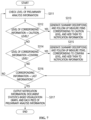
- the evidence collection guidance method performed by the evidence collection guidance apparatus may include generating pieces of preliminary analysis information at step S 100 , setting the levels of the pieces of preliminary analysis information at step S 200 , and generating and outputting notification information for the pieces of preliminary analysis information, the levels of which are set, at step S 300 .
- the evidence collection guidance apparatus 100 may generate the preliminary analysis information by reading a system volume and a data volume from a collection target device. Step S 100 will be described in detail below with reference to FIG. 3 .
- the evidence collection guidance apparatus 100 may identify disks mounted in the collection target device at step S 111 .
- the evidence collection guidance apparatus may identify the disks using an operating system API.
- the evidence collection guidance apparatus 100 may obtain, from each identified disk, volume information of the corresponding disk at step S 112 .
- the evidence collection guidance apparatus 100 may obtain the volume information of each disk by analyzing partitions created on the disk.
- the evidence collection guidance apparatus 100 may access the volumes of each disk at step S 113 .
- the evidence collection guidance apparatus 100 may align the volumes of the obtained disk volume information in one line, and may then sequentially access the volumes.
- the evidence collection guidance apparatus 100 may analyze the file systems of volumes at step S 114 .
- the evidence collection guidance apparatus 100 may analyze a file system such as New Technology File System (NTFS), File Allocation Table (FAT) 32 , or Extensible File Allocation Table (ExFAT) stored in the volumes.
- NTFS New Technology File System
- FAT File Allocation Table
- ExFAT Extensible File Allocation Table
- the evidence collection guidance apparatus 100 may check, based on the analyzed file system, whether the corresponding volume is a system volume at step S 115 .
- the evidence collection guidance apparatus 100 may check whether the corresponding volume is a system volume or a data volume by determining, based on the result of analysis of the file system, whether an operating system is installed.
- the evidence collection guidance apparatus 100 may generate artifact-based preliminary analysis information at step S 116 , and may generate file-system-based preliminary analysis information at step S 117 .
- the evidence collection guidance apparatus 100 may generate artifact-based preliminary analysis information, such as system information, external information, and user behavior information, by analyzing artifacts stored in the system volume.
- artifact-based preliminary analysis information such as system information, external information, and user behavior information
- the evidence collection guidance apparatus 100 may generate file-system-based preliminary analysis information, such as disk information and document statistical information, by analyzing the file system information.
- file-system-based preliminary analysis information such as disk information and document statistical information
- the evidence collection guidance apparatus 100 may determine whether the current volume is the last volume, and may terminate the generation of preliminary analysis information at step S 118 if it is determined that there are no more volumes to be analyzed.
- the evidence collection guidance apparatus 100 may generate file-system-based preliminary analysis information at step S 117 .
- step S 116 of generating the artifact-based preliminary analysis information will be described in detail below with reference to FIG. 4 .
- the evidence collection guidance apparatus 100 may identify pieces of artifact information in a predefined order at step S 116 - 1 .
- the evidence collection guidance apparatus 100 may determine whether multiple pieces of artifact information are required at step S 116 - 2 .
- the evidence collection guidance apparatus 100 may check the number of pieces of required artifact information depending on the type of artifact-based preliminary analysis information to be generated.
- the evidence collection guidance apparatus 100 may reconfigure multiple pieces of required artifact information by collecting and combining required artifact information at step S 116 - 4 .
- the evidence collection guidance apparatus 100 may collect only the corresponding artifact information at step S 116 - 3 .
- the evidence collection guidance apparatus 100 may perform a preprocessing task of deleting data less closely related to a collection target from the pieces of artifact information at step S 116 - 5 .
- the evidence collection guidance apparatus 100 may delete data automatically generated by an operating system or a program.
- the evidence collection guidance apparatus 100 may access the pieces of artifact information on which preprocessing has been performed in a predefined order at step S 116 - 6 .
- the evidence collection guidance apparatus 100 may extract detection data using a detection signature at step S 116 - 7 .
- the evidence collection guidance apparatus 100 may generate artifact-based preliminary analysis information based on the extracted detection data at step S 116 - 8 .
- the evidence collection guidance apparatus 100 may determine whether the current data is the last data at step S 116 - 9 . If it is determined that the current data is the last data, the evidence collection guidance apparatus 100 may check whether all of preliminary analysis information has been generated, and may then terminate the generation of the artifact-based preliminary analysis information at step S 116 - 10 .
- step S 117 of generating the file-system-based preliminary analysis information will be described in detail below with reference to FIG. 5 .
- the evidence collection guidance apparatus 100 may identify pieces of file system information in a predefined order at step 117 - 1 .
- the evidence collection guidance apparatus 100 may collect pieces of file system information at step 117 - 2 .
- the evidence collection guidance apparatus 100 may perform a preprocessing task of deleting data less closely related to a collection target from the pieces of file system information at step S 117 - 3 .
- the evidence collection guidance apparatus 100 may delete data automatically generated by an operating system or a program.
- the evidence collection guidance apparatus 100 may access the pieces of file system information on which preprocessing has been performed in a predefined order at step S 117 - 4 .
- the evidence collection guidance apparatus 100 may extract detection data using a detection signature at step S 117 - 5 .
- the evidence collection guidance apparatus 100 may generate file system-based preliminary analysis information based on the extracted detection data at step S 117 - 6 .
- the evidence collection guidance apparatus 100 may determine whether the current data is the last data at step S 117 - 7 . If it is determined that the current data is the last data, the evidence collection guidance apparatus 100 may check whether all of preliminary analysis information has been generated, and may then terminate the generation of the file system-based preliminary analysis information at step S 117 - 8 .
- the evidence collection guidance apparatus 100 may set the levels of the pieces of preliminary analysis information.
- the preliminary analysis information may include artifact-based preliminary analysis information and/or file-system-based preliminary analysis information.
- Step S 200 of setting the levels of the pieces of preliminary analysis information will be described in detail below with reference to FIG. 6 .
- the evidence collection guidance apparatus 100 may access pieces of generated preliminary analysis information in a predefined order at step S 211 .
- the evidence collection guidance apparatus 100 may compare the pieces of preliminary analysis information with preset level rules at step S 212 .
- the level rules may be level rules assigned to preset reference preliminary analysis information.
- the evidence collection guidance apparatus 100 may compare the corresponding preliminary analysis information with reference preliminary analysis information, and when the preliminary analysis information corresponds to a ‘caution’ rule at step S 213 , may set the level of the preliminary analysis information to a ‘caution’ level, and may set the color of the preliminary analysis information, the level of which is set to the ‘caution’ level, to a first color, for example red, at step S 214 .
- the evidence collection guidance apparatus 100 may set the level of the preliminary analysis information to a ‘confirm’ level, and may set the color of the preliminary analysis information, the level of which is set to the ‘confirm’ level, to a second color, for example orange, at step S 216 .
- the evidence collection guidance apparatus 100 may set the level of the preliminary analysis information to a ‘normal’ level, and may set the color of the preliminary analysis information, the level of which is set to the ‘normal’ level, to a third color, for example green, at step S 217 .
- the evidence collection guidance apparatus 100 may check whether the preliminary analysis information is the last information, and when there is no more preliminary analysis information, the level of which is to be set, may terminate the level-setting task at step S 218 .
- the evidence collection guidance apparatus 100 may generate and output notification information for the pieces of preliminary analysis information, the levels of which are set.
- the evidence collection guidance apparatus 100 may generate notification information including summary description information and follow-up measure items related to the pieces of preliminary analysis information.
- the evidence collection guidance apparatus may output the generated notification information and analysis result information.
- the evidence collection guidance apparatus 100 may output notification information and analysis result information only for preliminary analysis information, the level of which is equal to or greater than a certain level.
- the evidence collection guidance apparatus 100 may generate and output notification information only when the level of preliminary analysis information is the ‘caution’ or ‘confirm’ level.
- Step S 300 of generating and outputting notification information for the preliminary analysis information will be described in detail below with reference to FIGS. 7 and 8 .
- the evidence collection guidance apparatus 100 may check the level of preliminary analysis information at step S 311 .
- the evidence collection guidance apparatus 100 may check whether the level of the preliminary analysis information is a ‘caution’ level at step S 312 . When the level of the preliminary analysis information is found to be the ‘caution’ level, the evidence collection guidance apparatus 100 may generate summary descriptions and follow-up measure items related to preliminary analysis information corresponding to the ‘caution’ level, and may add them to the notification information at step S 313 .
- the summary descriptions may be information about the reason for determining that the level of the preliminary analysis information is the ‘caution’ level.
- the follow-up measure items may be information indicating which type of analysis is to be performed when it is determined that the level of the preliminary analysis information is the ‘caution’ level.
- the evidence collection guidance apparatus 100 may check whether the level of the preliminary analysis information is the ‘confirm’ level at step S 314 .
- the evidence collection guidance apparatus 100 may generate summary descriptions and follow-up measure items related to preliminary analysis information corresponding to the ‘confirm’ level, and may add them to the notification information at step S 315 .
- the evidence collection guidance apparatus 100 may check whether the corresponding preliminary analysis information is the last information at step S 316 .
- the evidence collection guidance apparatus 100 may output (display) the generated notification information and the analysis result information corresponding thereto at step S 317 .
- the analysis result information may include, but is not limited to, document statistics-based visualization graph and each piece of preliminary analysis information.
- the evidence collection guidance apparatus 100 may display notification information related to preliminary analysis information, the level of which is equal to or greater than the ‘confirm’ level, in the uppermost portion of a display screen at step S 317 - 1 .
- the preliminary analysis information the level of which is equal to or greater than the ‘confirm’ level, may be preliminary analysis information corresponding to the ‘caution’ level and the ‘confirm’ level.
- the evidence collection guidance apparatus 100 may generate a visualization graph based on document statistical information, and may output the generated visualization graph at step S 317 - 2 .
- the visualization graph may be, but is not limited to, a bar graph or a graph of broken lines.
- the evidence collection guidance apparatus 100 may access the remaining pieces of preliminary analysis information, the levels of which are equal to or greater than the ‘confirm’ level, in a predefined order at step S 317 - 3 , and may apply colors in conformity with the levels of the pieces of preliminary analysis information at step S 317 - 4 .
- the evidence collection guidance apparatus 100 may terminate the step of outputting (displaying) the notification information and analysis result information.
- Various embodiments of the present specification may be implemented as software (e.g., a program) including instructions stored on a machine-readable (e.g., computer-readable) storage medium (e.g., memory such as internal memory or external memory).
- a machine which is a device capable of calling instructions from the storage medium and operating in compliance with the called instructions, may include an electronic device according to the disclosed embodiments.
- a control unit e.g., a processor
- the instructions may include code generated or executed by a compiler or an interpreter.
- the machine-readable storage medium may be provided in the form of a non-transitory storage medium.
- non-transitory means that a storage medium does not take the form of signals and is tangible, without identifying whether data is semi-permanently or temporarily stored in the storage medium.
- a method according to various embodiments disclosed in the present specification may be provided with the method included in a computer program product.
- a computer-readable storage medium on which a computer program is stored may include instructions allowing the processor to perform a method including an operation of generating pieces of preliminary analysis information, that is, pieces of collection target information, an operation of setting the levels of the pieces of preliminary analysis information based on predefined rules, and an operation of generating and outputting notification information including summary description information and follow-up measure items related to the pieces of preliminary analysis information corresponding to the levels.
- a computer program stored on a computer-readable storage medium may include instructions allowing the processor to perform a method including an operation of generating pieces of preliminary analysis information, that is, pieces of collection target information, an operation of setting the levels of the pieces of preliminary analysis information based on predefined rules, and an operation of generating and outputting notification information including summary description information and follow-up measure items related to the pieces of preliminary analysis information corresponding to the levels.
- selective seizure may be efficiently conducted within the constraints of limited human resources and limited time by providing information about determination of the direction and strategy of a search and seizure operation to a detective when selective seizure is conducted.
- the present invention may provide intuitive information to a detective by displaying information about determination of the direction and strategy of a search and seizure operation on the screen.
Landscapes
- Engineering & Computer Science (AREA)
- Theoretical Computer Science (AREA)
- Human Computer Interaction (AREA)
- Physics & Mathematics (AREA)
- General Engineering & Computer Science (AREA)
- General Physics & Mathematics (AREA)
- Debugging And Monitoring (AREA)
Abstract
Description
Claims (13)
Priority Applications (1)
| Application Number | Priority Date | Filing Date | Title |
|---|---|---|---|
| US17/863,634 US12282674B2 (en) | 2022-07-13 | 2022-07-13 | Evidence collection guidance method and apparatus for file selection and computer-readable storage medium |
Applications Claiming Priority (1)
| Application Number | Priority Date | Filing Date | Title |
|---|---|---|---|
| US17/863,634 US12282674B2 (en) | 2022-07-13 | 2022-07-13 | Evidence collection guidance method and apparatus for file selection and computer-readable storage medium |
Publications (2)
| Publication Number | Publication Date |
|---|---|
| US20240020039A1 US20240020039A1 (en) | 2024-01-18 |
| US12282674B2 true US12282674B2 (en) | 2025-04-22 |
Family
ID=89509780
Family Applications (1)
| Application Number | Title | Priority Date | Filing Date |
|---|---|---|---|
| US17/863,634 Active 2043-02-01 US12282674B2 (en) | 2022-07-13 | 2022-07-13 | Evidence collection guidance method and apparatus for file selection and computer-readable storage medium |
Country Status (1)
| Country | Link |
|---|---|
| US (1) | US12282674B2 (en) |
Citations (12)
| Publication number | Priority date | Publication date | Assignee | Title |
|---|---|---|---|---|
| US20110191533A1 (en) * | 2010-02-02 | 2011-08-04 | Legal Digital Services | Digital forensic acquisition kit and methods of use thereof |
| JP2012123533A (en) | 2010-12-07 | 2012-06-28 | Fujifilm Corp | Inspection support system, method, and portable terminal |
| KR20120086926A (en) | 2011-01-27 | 2012-08-06 | 한남대학교 산학협력단 | A visualization system for Forensics audit data |
| US8422730B2 (en) * | 2007-11-26 | 2013-04-16 | Electronics And Telecommunications Research Institute | System for analyzing forensic evidence using image filter and method thereof |
| US20140082001A1 (en) * | 2012-09-14 | 2014-03-20 | Duzon Information Security Service | Digital forensic audit system for analyzing user's behaviors |
| KR20140140717A (en) | 2013-05-30 | 2014-12-10 | 한국전자통신연구원 | Apparatus and method for providing security in remote digital forensics |
| US20150212758A1 (en) * | 2014-01-28 | 2015-07-30 | Electronics And Telecommunications Research Institute | Forensic analysis system and method using virtualization interface |
| KR20150089699A (en) | 2014-01-28 | 2015-08-05 | 한국전자통신연구원 | Apparatus for evaluating of e-discovery solution |
| US20170206102A1 (en) * | 2016-01-18 | 2017-07-20 | Electronics And Telecommunications Research Institute | Electronic device performing emulation-based forensic analysis and method of performing forensic analysis using the same |
| KR20180094756A (en) | 2017-02-16 | 2018-08-24 | 동명대학교산학협력단 | Timeline based live forensic visualization system and method |
| US20190026661A1 (en) | 2017-07-24 | 2019-01-24 | Sparta Systems, Inc. | Method, apparatus, and computer-readable medium for artifact tracking |
| KR20210017839A (en) | 2019-08-09 | 2021-02-17 | 한국디지털포렌식센터 주식회사 | Automated system for forming analyzed data by extracting original data |
-
2022
- 2022-07-13 US US17/863,634 patent/US12282674B2/en active Active
Patent Citations (14)
| Publication number | Priority date | Publication date | Assignee | Title |
|---|---|---|---|---|
| US8422730B2 (en) * | 2007-11-26 | 2013-04-16 | Electronics And Telecommunications Research Institute | System for analyzing forensic evidence using image filter and method thereof |
| US20110191533A1 (en) * | 2010-02-02 | 2011-08-04 | Legal Digital Services | Digital forensic acquisition kit and methods of use thereof |
| JP2012123533A (en) | 2010-12-07 | 2012-06-28 | Fujifilm Corp | Inspection support system, method, and portable terminal |
| KR20120086926A (en) | 2011-01-27 | 2012-08-06 | 한남대학교 산학협력단 | A visualization system for Forensics audit data |
| US20140082001A1 (en) * | 2012-09-14 | 2014-03-20 | Duzon Information Security Service | Digital forensic audit system for analyzing user's behaviors |
| KR20140036444A (en) | 2012-09-14 | 2014-03-26 | 주식회사 더존정보보호서비스 | A digital forensic audit system for analyzing user's behaviors |
| KR20140140717A (en) | 2013-05-30 | 2014-12-10 | 한국전자통신연구원 | Apparatus and method for providing security in remote digital forensics |
| US20160078240A1 (en) | 2013-05-30 | 2016-03-17 | Electronics And Telecommunications Research Institute | Device and method for providing security in remote digital forensic environment |
| US20150212758A1 (en) * | 2014-01-28 | 2015-07-30 | Electronics And Telecommunications Research Institute | Forensic analysis system and method using virtualization interface |
| KR20150089699A (en) | 2014-01-28 | 2015-08-05 | 한국전자통신연구원 | Apparatus for evaluating of e-discovery solution |
| US20170206102A1 (en) * | 2016-01-18 | 2017-07-20 | Electronics And Telecommunications Research Institute | Electronic device performing emulation-based forensic analysis and method of performing forensic analysis using the same |
| KR20180094756A (en) | 2017-02-16 | 2018-08-24 | 동명대학교산학협력단 | Timeline based live forensic visualization system and method |
| US20190026661A1 (en) | 2017-07-24 | 2019-01-24 | Sparta Systems, Inc. | Method, apparatus, and computer-readable medium for artifact tracking |
| KR20210017839A (en) | 2019-08-09 | 2021-02-17 | 한국디지털포렌식센터 주식회사 | Automated system for forming analyzed data by extracting original data |
Also Published As
| Publication number | Publication date |
|---|---|
| US20240020039A1 (en) | 2024-01-18 |
Similar Documents
| Publication | Publication Date | Title |
|---|---|---|
| US9213625B1 (en) | Method and apparatus for performing automated user-interface layout testing | |
| US7930636B2 (en) | Systems, methods and computer products to automatically complete a GUI task | |
| US20160292068A1 (en) | Code coverage rate determination method and system | |
| JP5377534B2 (en) | Method, apparatus and system for identifying GUI elements | |
| CN109271315B (en) | Script code detection method, script code detection device, computer equipment and storage medium | |
| US20160124795A1 (en) | Evaluation method and apparatus | |
| CN106980572B (en) | Online debugging method and system for distributed system | |
| CN115994093B (en) | Recommended methods and devices for test cases | |
| CN113238964A (en) | Test case set generation method and device and electronic equipment | |
| CN104850782B (en) | Match the method and device of virus characteristic | |
| EP2933749A1 (en) | System security design support device, and system security design support method | |
| US12124353B2 (en) | Operation logs acquiring device, operation logs acquiring method, and operation logs acquiring program | |
| CN114579446A (en) | Data processing method and device, computer equipment and computer readable storage medium | |
| CN110378566A (en) | Information checking method, equipment, storage medium and device | |
| CN115061864B (en) | ARM architecture platform memory testing method, system, device and storage medium | |
| US12282674B2 (en) | Evidence collection guidance method and apparatus for file selection and computer-readable storage medium | |
| US20140281959A1 (en) | Devices, methods and computer readable mediums for on demand personalization of a user interface | |
| US20150278656A1 (en) | Job discrimination method and device | |
| CN118660312B (en) | Automatic test method and device suitable for wireless test of data link system | |
| JP4383484B2 (en) | Message analysis apparatus, control method, and control program | |
| CN116204670B (en) | Method, system and electronic device for managing vehicle target detection data | |
| US20240211378A1 (en) | Recording screenshots and user actions for troubleshooting operations of an app | |
| JP7710659B2 (en) | Important report detection device, control method, and program | |
| CN113484710B (en) | Graphical user interface for traffic capture and debug tool | |
| KR102769681B1 (en) | Method and apparatus for guiding for the evidence collect, computer-readable storage medium |
Legal Events
| Date | Code | Title | Description |
|---|---|---|---|
| AS | Assignment |
Owner name: ELECTRONICS AND TELECOMMUNICATIONS RESEARCH INSTITUTE, KOREA, REPUBLIC OF Free format text: ASSIGNMENT OF ASSIGNORS INTEREST;ASSIGNORS:OH, JUNG-HOON;HWANG, HYUN-UK;LEE, SEUNG-YONG;AND OTHERS;REEL/FRAME:060650/0097 Effective date: 20220704 |
|
| FEPP | Fee payment procedure |
Free format text: ENTITY STATUS SET TO UNDISCOUNTED (ORIGINAL EVENT CODE: BIG.); ENTITY STATUS OF PATENT OWNER: SMALL ENTITY |
|
| FEPP | Fee payment procedure |
Free format text: ENTITY STATUS SET TO SMALL (ORIGINAL EVENT CODE: SMAL); ENTITY STATUS OF PATENT OWNER: SMALL ENTITY |
|
| STPP | Information on status: patent application and granting procedure in general |
Free format text: DOCKETED NEW CASE - READY FOR EXAMINATION |
|
| STPP | Information on status: patent application and granting procedure in general |
Free format text: NON FINAL ACTION MAILED |
|
| STPP | Information on status: patent application and granting procedure in general |
Free format text: RESPONSE TO NON-FINAL OFFICE ACTION ENTERED AND FORWARDED TO EXAMINER |
|
| STPP | Information on status: patent application and granting procedure in general |
Free format text: FINAL REJECTION MAILED |
|
| STPP | Information on status: patent application and granting procedure in general |
Free format text: RESPONSE AFTER FINAL ACTION FORWARDED TO EXAMINER |
|
| STPP | Information on status: patent application and granting procedure in general |
Free format text: NOTICE OF ALLOWANCE MAILED -- APPLICATION RECEIVED IN OFFICE OF PUBLICATIONS |
|
| STCF | Information on status: patent grant |
Free format text: PATENTED CASE |