US12281149B2 - Modulators of G-protein coupled receptors - Google Patents
Modulators of G-protein coupled receptors Download PDFInfo
- Publication number
- US12281149B2 US12281149B2 US17/744,540 US202217744540A US12281149B2 US 12281149 B2 US12281149 B2 US 12281149B2 US 202217744540 A US202217744540 A US 202217744540A US 12281149 B2 US12281149 B2 US 12281149B2
- Authority
- US
- United States
- Prior art keywords
- certain embodiments
- independently selected
- formula
- group
- optionally substituted
- Prior art date
- Legal status (The legal status is an assumption and is not a legal conclusion. Google has not performed a legal analysis and makes no representation as to the accuracy of the status listed.)
- Active, expires
Links
Images








Classifications
-
- C—CHEMISTRY; METALLURGY
- C07—ORGANIC CHEMISTRY
- C07K—PEPTIDES
- C07K14/00—Peptides having more than 20 amino acids; Gastrins; Somatostatins; Melanotropins; Derivatives thereof
- C07K14/435—Peptides having more than 20 amino acids; Gastrins; Somatostatins; Melanotropins; Derivatives thereof from animals; from humans
- C07K14/575—Hormones
- C07K14/605—Glucagons
-
- A—HUMAN NECESSITIES
- A61—MEDICAL OR VETERINARY SCIENCE; HYGIENE
- A61P—SPECIFIC THERAPEUTIC ACTIVITY OF CHEMICAL COMPOUNDS OR MEDICINAL PREPARATIONS
- A61P3/00—Drugs for disorders of the metabolism
- A61P3/08—Drugs for disorders of the metabolism for glucose homeostasis
- A61P3/10—Drugs for disorders of the metabolism for glucose homeostasis for hyperglycaemia, e.g. antidiabetics
-
- C—CHEMISTRY; METALLURGY
- C07—ORGANIC CHEMISTRY
- C07K—PEPTIDES
- C07K14/00—Peptides having more than 20 amino acids; Gastrins; Somatostatins; Melanotropins; Derivatives thereof
- C07K14/001—Peptides having more than 20 amino acids; Gastrins; Somatostatins; Melanotropins; Derivatives thereof by chemical synthesis
-
- A—HUMAN NECESSITIES
- A61—MEDICAL OR VETERINARY SCIENCE; HYGIENE
- A61K—PREPARATIONS FOR MEDICAL, DENTAL OR TOILETRY PURPOSES
- A61K38/00—Medicinal preparations containing peptides
Definitions
- This disclosure features chemical entities (e.g., a compound or a pharmaceutically acceptable salt and/or hydrate and/or prodrug of the compound) that modulate (e.g., agonize or partially agonize or antagonize) glucagon-like peptide-1 receptor (“GLP-1R”) and/or the gastric inhibitory polypeptide receptor (“GIPR”).
- GLP-1R glucagon-like peptide-1 receptor
- GIPR gastric inhibitory polypeptide receptor
- the chemical entities are useful, e.g., for treating a subject (e.g., a human) having a disease, disorder, or condition in which modulation (e.g., agonism, partial agonism or antagonism) of GLP-1R and/or GIPR activities is beneficial for the treatment or prevention of the underlying pathology and/or symptoms and/or progression of the disease, disorder, or condition.
- the modulation results in an enhancement of (e.g., an increase in) existing levels (e.g., normal, or below normal levels) of GLP-1R and/or GIPR activity (e.g., signaling).
- the chemical entities described herein further modulate (e.g., attenuate, uncouple) ⁇ -arrestin signaling relative to what is observed with the native ligand.
- This disclosure also features compositions as well as other methods of using and making the said chemical entities.
- Type-2 diabetes Diabetes mellitus type 2 (type-2 diabetes) is characterized by high blood glucose and insulin resistance. Type 2 diabetes as well as conditions that are co-morbid or sequela with type-2 diabetes affect tens of millions of people in the United States alone. Type-2 diabetes is frequently associated with obesity.
- Nonalcoholic steatohepatitis is liver inflammation and damage caused by a buildup of fat in the liver. It is part of a group of conditions called nonalcoholic fatty liver disease (NAFLD). NASH and NAFLD tend to develop in patients having one of the following risk factors: obesity, dyslipidemia, and glucose intolerance and appears to be linked to insulin resistance (e.g., as in obesity or metabolic syndrome).
- Incretin hormones are hormones that provide glycemic control in response to food intake.
- Gastric inhibitory polypeptide (“GIP”) and glucagon-like peptide-1 (“GLP-1”) are primary incretin hormones secreted from small intestinal L cells and K cells, respectively, on ingestion of glucose or nutrients to stimulate insulin secretion from pancreatic ⁇ cells.
- GIP and GLP-1 undergo degradation by dipeptidyl peptidase-4 (DPP-4), and rapidly lose their biological activities (see, e.g., Y. Sieno, et. al, Journal of Diabetes Investigation 2013, 4, 108-130).
- GIP and GLP-1 are believed to be mediated by their specific receptors, the GIP receptor (GIPR) and the GLP-1 receptor (GLP-1R), respectively, which both belong to the G-protein coupled receptor family and are expressed in pancreatic ⁇ -cells, as well as in various tissues and organs.
- GLP-1 activities include, without limitation, stimulation of insulin synthesis and secretion, inhibition of glucagon secretion, and inhibition of food intake.
- GIP activities include, without limitation, stimulation of glucose-dependent insulin secretion, an increase in ⁇ -cell mass, stimulation of glucagon secretion, and a decrease in gastric acid secretion. See, e.g., WO 2016/131893.
- GLP-1 and GLP-1 analogues acting as agonists at the GLP-1 receptor, have been shown to be effective in glycemic control, e.g., type-2 diabetes. See, e.g., WO 2016/131893.
- GIP and GLP-1 are believed to be involved in various biological processes in different tissues and organs that express GIPR and GLP-1R, including, e.g., the pancreas, fat, bone, brain, heart, kidney, eye, nerves, and liver.
- investigations using mice lacking GIPR and/or GLP-1R, as well as mice lacking DPP-4 showed involvement of GIP and GLP-1 in divergent biological activities.
- diabetes-related microvascular complications e.g., retinopathy, nephropathy and neuropathy
- macrovascular complications e.g., coronary artery disease, peripheral artery disease and cerebrovascular disease
- diabetes-related comorbidity e.g., obesity, non-alcoholic fatty liver disease, bone fracture and cognitive dysfunction. See, e.g., Sieno at page 108.
- This disclosure features chemical entities (e.g., a compound or a pharmaceutically acceptable salt and/or hydrate and/or prodrug of the compound) that modulate (e.g., agonize or partially agonize or antagonize) glucagon-like peptide-1 receptor (“GLP-1R”) and/or the gastric inhibitory polypeptide receptor (“GIPR”).
- GLP-1R glucagon-like peptide-1 receptor
- GIPR gastric inhibitory polypeptide receptor
- the chemical entities are useful, e.g., for treating a subject (e.g., a human) having a disease, disorder, or condition in which modulation (e.g., agonism, partial agonism or antagonism) of GLP-1R and/or GIPR activities is beneficial for the treatment or prevention of the underlying pathology and/or symptoms and/or progression of the disease, disorder, or condition.
- the modulation results in an enhancement of (e.g., an increase in) existing levels (e.g., normal, or below normal levels) of GLP-1R and/or GIPR activity (e.g., signaling).
- the chemical entities described herein further modulate (e.g., attenuate, uncouple) ⁇ -arrestin signaling relative to what is observed with the native ligand.
- This disclosure also features compositions as well as other methods of using and making the said chemical entities.
- An “agonist” of GLP-1R includes compounds that, at the protein level, directly bind or modify GLP-1R such that an activity of GLP-1R is increased, e.g., by activation, stabilization, altered distribution, or otherwise relative to GLP-1R activity in absence of ligand.
- GLP-1R full agonist e.g., native GLP-1
- GLP-1R full agonist e.g., native GLP-11
- these compounds antagonize activation of GLP-1R by a GLP-1R full agonist because they prevent the full effect of GLP-1R interaction.
- the compounds also, on their own, activate some GLP-1R activity, typically less than a corresponding amount of the GLP-1R full agonist.
- Such compounds are sometimes referred to herein as “partial agonists of GLP-1R”.
- an “antagonist” of GLP-1R includes compounds that, at the protein level, directly bind or modify GLP-1R such that an activity of GLP-1R is decreased, e.g., by inhibition, blocking or dampening agonist-mediated responses, altered distribution, or otherwise relative to GLP-1R activity in absence of ligand.
- the compounds described herein are agonists (e.g., full agonists) of GLP-1R. In other embodiments, the compounds described herein are partial agonists or antagonists of GLP-1R.
- An “agonist” of GIPR includes compounds that, at the protein level, directly bind or modify GIPR such that an activity of GIPR is increased, e.g., by activation, stabilization, altered distribution, or otherwise relative to GIPR activity in absence of ligand.
- Certain compounds described herein that agonize GIPR to a lesser extent than native GIP can function as antagonists as well as agonists. These compounds are partial antagonists as they reduce activation of GIPR by native GIP because they reduce the full effect of native GIP. However, the compounds also, on their own, activate some GIPR activity, typically less than a corresponding amount of native GIP. Such compounds are sometimes referred to herein as “partial agonists of GIPR”.
- an “antagonist” of GIPR includes compounds that, at the protein level, directly bind or modify GIPR such that an activity of GIPR is decreased, e.g., by inhibition, blocking or dampening agonist-mediated responses, altered distribution, or otherwise relative to GIPR activity in absence of ligand.
- the compounds described herein are agonists (e.g., full agonists) of GIPR. In other embodiments, the compounds described herein are partial agonists of GIPR. In still other embodiments, the compounds described herein are or antagonists of GIPR.
- the compounds described herein are full agonists of both GLP-1R and GIPR. In some embodiments, the compounds described herein are partial agonists of both GLP-1R and GIPR.
- This disclosure also contemplates chemical entities that (i) agonize one of GLP-1R and GIPR (e.g., GLP-1R); and antagonize the other of GLP-1R and GIPR (e.g., GIPR).
- this disclosure contemplates chemical entities that (i) fully agonize one of GLP-1R and GIPR (e.g., GLP-1R); and partially agonize or antagonize the other of GLP-1R and GIPR (e.g., GIPR).
- a receptor exists in an active (Ra) and an inactive (Ri) conformation.
- Certain compounds that affect the receptor can alter the ratio of Ra to Ri (Ra/Ri).
- a full agonist increases the ratio of Ra/Ri and can cause a “maximal”, saturating effect.
- a partial agonist when bound to the receptor, gives a response that is lower than that elicited by a full agonist (e.g., an endogenous agonist).
- a full agonist e.g., an endogenous agonist
- the Ra/Ri for a partial agonist is less than for a full agonist.
- the potency of a partial agonist may be greater or less than that of the full agonist.
- the chemical entities described herein further modulate (e.g., reduce, e.g., attenuate, disrupt, inhibit) ⁇ -arrestin coupling and/or b-arrestin signaling, and GLP-1R and/or GIPR internalization.
- the chemical entities described herein modulate (e.g., reduce, e.g., attenuate, disrupt, inhibit) recruitment of ⁇ -arrestin to a G-protein coupled receptor (e.g., GLP-1R).
- the chemical entities described herein modulate (e.g., reduce, e.g., attenuate, disrupt, inhibit) formation of a complex (“coupling”) (e.g., a signaling complex) between ⁇ -arrestin and a G-protein coupled receptor (e.g., GLP-1R or GIPR).
- a complex e.g., a signaling complex
- GLP-1R or GIPR G-protein coupled receptor
- a value of ⁇ -arrestin (GLP-1R) EC50 ⁇ 1 ⁇ M in the aforementioned assay indicates a compound that induces ⁇ -arrestin recruitment to GLP-1R.
- GLP-1, the native ligand for GLP-1R, and therapeutic analogs thereof, such a liraglutide, are potent recruiters of ⁇ -arrestin.
- a value of ⁇ -arrestin (GLP1R) EC 50 >1 ⁇ M indicates a compound that does not substantially induce ⁇ -arrestin recruitment to GLP-1R.
- G-protein coupled receptors e.g., GLP-1R and/or GIPR
- GLP-1R and/or GIPR G-protein coupled receptors
- b-arrestin coupling is a key step in receptor internalization and subsequent de-sensitization and attenuation of signaling.
- GLP-1 and the liraglutide analog
- GIP have been shown to produce rapid receptor internalization.
- compounds that activate GLP-1R and/or GIPR cAMP signaling but do not substantially couple to ⁇ -arrestin have the potential to prolong receptor signaling and extend pharmacological benefits.
- the chemical entities described herein exhibit relatively strong GLP-1R and/or GIPR mediated cAMP activation with minimal or no detectable ⁇ -arrestin coupling. In some embodiments, the chemical entities described herein exhibit relatively strong GLP-1R mediated cAMP activation and no or little GIPR mediated cAMP activation with minimal or no detectable ⁇ -arrestin coupling.
- the compounds described herein show reduced activity in a rodent aversion model, while maintaining a relatively high potency in glucose clearance assay.
- Aversion models such as conditioned taste aversion, are commonly used to identify compounds with adverse effects such as nausea.
- Nausea causing agents, such a Exendin-4 and liraglutide are known to have a strong signal in conditioned taste aversion models.
- some of the chemical entities described herein are therefore expected to have a reduced likelihood of producing unwanted side effects, such as nausea, when administered to a patient, while maintaining full pharmacological benefit.
- this disclosure features peptide-based chemical entities (e.g., N-protected peptide-based chemical entities; e.g., peptide-based chemical entities having from 30-50 amino acids, 30-45 amino acids, 30-40 amino acids, 35-40 amino acids; e.g., an N-protected peptide-based chemical entities having from 30-50 amino acids, 30-45 amino acids, 30-40 amino acids, 35-40 amino acids).
- N-protected peptide-based chemical entities e.g., N-protected peptide-based chemical entities; e.g., peptide-based chemical entities having from 30-50 amino acids, 30-45 amino acids, 30-40 amino acids, 35-40 amino acids
- an N-protected peptide-based chemical entities having from 30-50 amino acids, 30-45 amino acids, 30-40 amino acids, 35-40 amino acids.
- the peptide-based chemical entities modulate (e.g., agonize or partially agonize or antagonize) glucagon-like peptide-1 receptor (“GLP-1R”) and/or the gastric inhibitory polypeptide receptor (“GIPR”) and optionally further modulate (e.g., uncouple, attenuate) ⁇ -arrestin signaling and/or aversion as described herein.
- GLP-1R glucagon-like peptide-1 receptor
- GIPR gastric inhibitory polypeptide receptor
- the peptide-based chemical entities agonize or partially agonize GLP-1R.
- the peptide-based chemical entities agonize or partially agonize or antagonize GIPR.
- said peptide-based chemical entities reduce (e.g., uncouple, attenuate, inhibit) ⁇ -arrestin signaling; e.g., reduce (e.g., uncouple, attenuate, inhibit) the recruitment of ⁇ -arrestin to a G-protein coupled receptor (e.g., GLP-1R); e.g., reduce (e.g., attenuate, disrupt, inhibit) the formation of a complex (e.g., a signaling complex) between ⁇ -arrestin and a G-protein coupled receptor (e.g., GLP-1R).
- a complex e.g., a signaling complex
- the peptide-based chemical entities are:
- the peptide-based chemical entities exhibit a value of cAMP (GLP1R) EC50 of less than about 10 nM, 5 nM, or 1 nM (e.g., less than about 1 nM).
- GLP1R cAMP
- the peptide-based chemical entities exhibit a value of cAMP (GIPR) EC50 of less than about 100 nm, 50 nM, or 10 nM (e.g., less than about 10 nM).
- GIPR cAMP
- the peptide-based chemical entities inhibit GIP induced CAMP production (GIPR antagonism).
- the compounds described herein exhibit a value of ⁇ -arrestin (GLP1R) EC50>1 ⁇ M.
- the peptide-based chemical entities :
- the featured peptide-based chemical entities include compounds of Formula (I), or a pharmaceutically acceptable salt thereof:
- R*, R 1 , R 2 , R 2 ′, a1, R 4 , and W can be as defined anywhere herein.
- compositions are featured that include a chemical entity described herein (e.g., a compound described generically or specifically herein or a pharmaceutically acceptable salt thereof or compositions containing the same) and one or more pharmaceutically acceptable excipients.
- a chemical entity described herein e.g., a compound described generically or specifically herein or a pharmaceutically acceptable salt thereof or compositions containing the same
- one or more pharmaceutically acceptable excipients e.g., a compound described generically or specifically herein or a pharmaceutically acceptable salt thereof or compositions containing the same.
- methods for modulating e.g., agonizing, partially agonizing, or antagonizing
- GLP-1R and/or GIPR activities include contacting GLP-1R and/or GIPR with a chemical entity described herein (e.g., a compound described generically or specifically herein or a pharmaceutically acceptable salt thereof or compositions containing the same).
- Methods include in vitro methods, e.g., contacting a sample that includes one or more cells, each independently comprising one or more of GLP-1R and/or GIPR with the chemical entity.
- Methods can also include in vivo methods; e.g., administering the chemical entity to a subject (e.g., a human) having a disease, disorder, or condition in which modulation of GLP-1R and/or GIPR signaling is beneficial for the treatment of the underlying pathology and/or symptoms and/or progression of the disease, disorder, or condition (e.g., diabetes; e.g., NASH; e.g., obesity).
- In vivo methods include, but are not limited to modulating (e.g., increasing) insulin levels and modulating (e.g., decreasing) glucose levels in a subject (e.g., a human).
- said methods of modulating are achieved without substantially stimulating ⁇ -arrestin signaling; e.g., without stimulating the recruitment of ⁇ -arrestin to a G-protein coupled receptor (e.g., GLP-1R); e.g., without stimulating the formation of a complex (e.g., a signaling complex) between ⁇ -arrestin and a G-protein coupled receptor (e.g., GLP-1R).
- said methods of modulating are achieved without causing aversion or nausea.
- methods of treatment of a disease, disorder, or condition are featured, in which modulation of GLP-1R and/or GIPR signaling is beneficial for the treatment of the underlying pathology and/or symptoms and/or progression of the disease, disorder, or condition.
- the methods include administering to a subject in need of such treatment an effective amount of a chemical entity described herein (e.g., a compound described generically or specifically herein, a pharmaceutically acceptable salt thereof, or compositions containing the same).
- this disclosure features methods of treating a subject having a disease, disorder, or condition in which modulation of GLP-1R and/or GIPR signaling is beneficial for the treatment of the underlying pathology and/or symptoms and/or progression of the disease, disorder, or condition.
- the methods include administering a chemical entity described herein (e.g., a compound described generically or specifically herein, a pharmaceutically acceptable salt thereof or compositions containing the same) in an amount effective to treat the disease, disorder, or condition.
- methods of treatment include administering to a subject chemical entity described herein (e.g., a compound described generically or specifically herein, a pharmaceutically acceptable salt thereof, or compositions containing the same).
- the methods include administering the chemical entity in an amount effective to treat a disease, disorder, or condition, wherein modulation of GLP-1R and/or GIPR is beneficial for the treatment of the underlying pathology and/or symptoms and/or progression of the disease, disorder, or condition, thereby treating the disease, disorder, or condition.
- methods of treatment can further include:
- Non-limiting examples of such diseases, disorders, and conditions include metabolic syndrome; diabetes (e.g., type 2 diabetes); obesity; obesity-related disorders; impaired glucose tolerance; insulin resistance; non-alcoholic steatohepatitis (NASH); fatty liver disease; steatohepatitis; and other forms of inflammation in metabolically important tissues including, liver, fat, pancreas, kidney, and gut.
- diabetes e.g., type 2 diabetes
- obesity obesity-related disorders
- impaired glucose tolerance e.g., impaired glucose tolerance
- insulin resistance e.g., non-alcoholic steatohepatitis (NASH); fatty liver disease; steatohepatitis; and other forms of inflammation in metabolically important tissues including, liver, fat, pancreas, kidney, and gut.
- NASH non-alcoholic steatohepatitis
- fatty liver disease steatohepatitis
- steatohepatitis steatohepatitis
- other forms of inflammation in metabolically important tissues including,
- neurological disorders include brain insulin resistance, mild cognitive impairment (MCI), Alzheimer's disease (AD), Parkinson's disease (PD), anxiety, dementia (e.g., senile dementia), traumatic brain injury, Huntington's chores, tardive dyskinesia, hyperkinesia, mania, Morbus Parkinson, steel-Richard syndrome, Down's syndrome, myasthenia gravis, nerve trauma, brain trauma, vascular amyloidosis, cerebral hemorrhage I with amyloidosis, brain inflammation, Friedrich's ataxia, acute confusion disorder, amyotrophic lateral sclerosis (ALS), glaucoma, and apoptosis-mediated degenerative diseases of the central nervous system (e.g., Creutzfeldt-Jakob Disease, bovine spongiform encephalopathy (mad cow disease), and chronic wasting syndrome).
- MCI mild cognitive impairment
- AD Alzheimer's disease
- PD Parkinson's disease
- anxiety dementia
- dementia e.g., senile
- Such diseases, disorders, and conditions include bone disorder characterized by altered bone metabolism, such as osteoporosis, including post-menopausal osteoporosis, poor bone strength, osteopenia, Paget's disease, osteolytic metastasis in cancer patients, osteodystrophy in liver disease and the altered bone metabolism caused by renal failure or hemodialysis, bone fracture, bone surgery, aging, pregnancy, protection against bone fractures, and malnutrition.
- bone disorder characterized by altered bone metabolism such as osteoporosis, including post-menopausal osteoporosis, poor bone strength, osteopenia, Paget's disease, osteolytic metastasis in cancer patients, osteodystrophy in liver disease and the altered bone metabolism caused by renal failure or hemodialysis, bone fracture, bone surgery, aging, pregnancy, protection against bone fractures, and malnutrition.
- osteoporosis including post-menopausal osteoporosis, poor bone strength, osteopenia, Paget's disease, osteolytic metastasis in cancer
- the disease, disorder, or condition is diabetes.
- the disease, disorder, or condition is NASH.
- the disease, disorder, or condition is obesity.
- the disease, disorder, or condition is Alzheimer's disease (AD) or Parkinson's disease (PD).
- AD Alzheimer's disease
- PD Parkinson's disease
- the disease, disorder, or condition is a bone disorder characterized by altered bone metabolism, such as osteoporosis, including post-menopausal osteoporosis, poor bone strength, osteopenia, Paget's disease, osteolytic metastasis in cancer patients, osteodystrophy in liver disease and the altered bone metabolism caused by renal failure or hemodialysis, bone fracture, bone surgery, aging, or pregnancy.
- bone disorder characterized by altered bone metabolism, such as osteoporosis, including post-menopausal osteoporosis, poor bone strength, osteopenia, Paget's disease, osteolytic metastasis in cancer patients, osteodystrophy in liver disease and the altered bone metabolism caused by renal failure or hemodialysis, bone fracture, bone surgery, aging, or pregnancy.
- the chemical entities described herein are useful for protection against bone fractures.
- the methods described herein can further include treating one or more conditions associated, co-morbid or sequela with any one or more of the conditions described herein.
- the methods can further include treating one or more conditions that are co-morbid or sequela with diabetes (e.g., type 2 diabetes), such as obesity, obesity-related disorders, metabolic syndrome, impaired glucose tolerance; insulin resistance; cardiovascular risk factors.
- diabetes e.g., type 2 diabetes
- cardiovascular risk factors e.g., coronary artery disease, peripheral artery disease, cerebrovascular disease, hypertension, and risk factors related to unmanaged cholesterol and/or lipid levels, and/or inflammation
- retinopathy retinopathy
- nephropathy neuropathy
- NASH bone fracture and cognitive dysfunction.
- this disclosure features methods for screening a candidate compound for treatment of a disease, disorder, or condition, in which modulation of GLP-1R and/or GIPR is beneficial for the treatment of the underlying pathology and/or symptoms and/or progression of the disease, disorder, or condition; the method comprising:
- the methods further include selecting a candidate compound that exhibits a value of ⁇ -arrestin (GLP-1R) EC 50>1 ⁇ M.
- GLP-1R ⁇ -arrestin
- the methods can further include identifying the subject.
- the methods can further include administering one or more other therapeutic agents (e.g., in combination with a chemical entity described herein).
- Embodiments can include one of more of the following advantageous properties.
- the compounds described herein exhibit a value of AUC Score of 0-25% of vehicle, which corresponds to a finding of maximal decrease in glucose excursion compared to control.
- the compounds described herein exhibit a value of cAMP (GLP-1R) EC 50 of less than about 1 nM, which is indicative that the compound is a relatively potent GLP-1R agonist.
- the compounds described herein exhibit a value of cAMP (GLP-1R) Emax of greater than about 80%, which is indicative that the compound is an agonist that can fully activate GLP-1R.
- the compounds described herein exhibit a value of cAMP (GIPR) EC 50 of less than about 10 nM, which is indicative that the compound is a relatively potent GIPR agonist.
- GIPR cAMP
- the compounds described herein exhibit a value of cAMP (GIPR) EC 50 of less than about 10 nM, which is indicative that the compound is a relatively potent GIPR antagonist.
- GIPR cAMP
- GLP-1 and GIP are susceptible to rapid degradation by dipeptidyl peptidase-IV (DPP-IV) (see, e.g., Deacon, et al. Journal of Clinical Endocrinology & Metabolism, 1995, 80, 952-957).
- DPP-IV dipeptidyl peptidase-IV
- GLP-1 and GIP have been shown to exhibit relatively short half-life times in human due to DPP-IV degradation.
- the compounds described herein exhibit relatively long half-life times in the presence of DPP-IV when compared to those of GLP-1 and GIP.
- the compounds described herein exhibit a value of ⁇ -arrestin coupling (GLP-1R) EC50>1 ⁇ M in a ⁇ -arrestin (GLPIR) assay that measures the formation of a complex between GLP-1R and ⁇ -arrestin in cells.
- GLP-1R ⁇ -arrestin coupling
- GLPIR ⁇ -arrestin
- a value of ⁇ -arrestin (GLP1R) EC50>1 ⁇ M indicates a compound that does not substantially induce ⁇ -arrestin recruitment to GLP-1R.
- CTA conditioned taste aversion
- the conditioned taste aversion assay measures the preference for a dilute saccharin solution that is associated with compound administration.
- the compounds described herein have a reduced likelihood of producing unwanted side effects when administered to a patient.
- a non-limiting example of such a side effect is nausea.
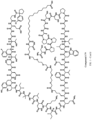
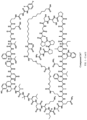
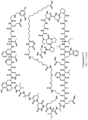
- FIG. 1 depicts representative compounds of Formula (I).
- a stereogenic carbon is denoted with “*”, it is intended to mean that said stereogenic center has been resolved (e.g., by chromatography).
- GLP-1R is meant to include, without limitation, nucleic acids, polynucleotides, oligonucleotides, sense and antisense polynucleotide strands, complementary sequences, peptides, polypeptides, proteins, homologous and/or orthologous GLP-1R molecules, isoforms, precursors, mutants, variants, derivatives, splice variants, alleles, different species, and active fragments thereof.
- GIPR is meant to include, without limitation, nucleic acids, polynucleotides, oligonucleotides, sense and antisense polynucleotide strands, complementary sequences, peptides, polypeptides, proteins, homologous and/or orthologous GIPR molecules, isoforms, precursors, mutants, variants, derivatives, splice variants, alleles, different species, and active fragments thereof.
- API refers to an active pharmaceutical ingredient.
- IC50 refers an amount, concentration, or dosage of a compound that is required for 50% inhibition or activation of a maximal response observed for such compound (or that of a reference compound as the case may be) in an assay that measures such response.
- an “effective amount” or “therapeutically effective amount,” as used herein, refer to a sufficient amount of a chemical entity (e.g., a compound described generically or specifically herein, a pharmaceutically acceptable salt thereof, or compositions containing the same) being administered which will relieve to some extent one or more of the symptoms of the disease or condition being treated. The result includes reduction and/or alleviation of the signs, symptoms, or causes of a disease, or any other desired alteration of a biological system.
- an “effective amount” for therapeutic uses is the amount of the composition comprising a compound as disclosed herein required to provide a clinically significant decrease in disease symptoms.
- An appropriate “effective” amount in any individual case is determined using any suitable technique, such as a dose escalation study.
- excipient or “pharmaceutically acceptable excipient” means a pharmaceutically-acceptable material, composition, or vehicle, such as a liquid or solid filler, diluent, carrier, solvent, or encapsulating material.
- each component is “pharmaceutically acceptable” in the sense of being compatible with the other ingredients of a pharmaceutical formulation, and suitable for use in contact with the tissue or organ of humans and animals without excessive toxicity, irritation, allergic response, immunogenicity, or other problems or complications, commensurate with a reasonable benefit/risk ratio.
- pharmaceutically acceptable salt refers to a formulation of a compound that does not cause significant irritation to an organism to which it is administered and does not abrogate the biological activity and properties of the compound.
- pharmaceutically acceptable salts are obtained by reacting a compound described herein, with acids such as hydrochloric acid, hydrobromic acid, sulfuric acid, nitric acid, phosphoric acid, methanesulfonic acid, ethanesulfonic acid, p-toluenesulfonic acid, salicylic acid and the like.
- pharmaceutically acceptable salts are obtained by reacting a compound having acidic group described herein with a base to form a salt such as an ammonium salt, an alkali metal salt, such as a sodium or a potassium salt, an alkaline earth metal salt, such as a calcium or a magnesium salt, a salt of organic bases such as dicyclohexylamine, N-methyl-D-glutamine, tris(hydroxymethyl)methylamine, and salts with amino acids such as arginine, lysine, and the like, or by other methods previously determined.
- a salt such as an ammonium salt, an alkali metal salt, such as a sodium or a potassium salt, an alkaline earth metal salt, such as a calcium or a magnesium salt, a salt of organic bases such as dicyclohexylamine, N-methyl-D-glutamine, tris(hydroxymethyl)methylamine, and salts with amino acids such as arginine, lysine, and the like, or by other methods previously determined.
- Examples of a salt that the compounds described herein form with a base include the following: salts thereof with inorganic bases such as sodium, potassium, magnesium, calcium, and aluminum; salts thereof with organic bases such as methylamine, ethylamine and ethanolamine; salts thereof with basic amino acids such as lysine and ornithine; and ammonium salt.
- the salts may be acid addition salts, which are specifically exemplified by acid addition salts with the following: mineral acids such as hydrochloric acid, hydrobromic acid, hydroiodic acid, sulfuric acid, nitric acid, and phosphoric acid; organic acids such as formic acid, acetic acid, propionic acid, oxalic acid, malonic acid, succinic acid, fumaric acid, maleic acid, lactic acid, malic acid, tartaric acid, citric acid, methanesulfonic acid, and ethanesulfonic acid; acidic amino acids such as aspartic acid and glutamic acid.
- mineral acids such as hydrochloric acid, hydrobromic acid, hydroiodic acid, sulfuric acid, nitric acid, and phosphoric acid
- organic acids such as formic acid, acetic acid, propionic acid, oxalic acid, malonic acid, succinic acid, fumaric acid, maleic acid, lactic acid, malic acid, tartaric
- composition refers to a mixture of a compound described herein with other chemical components (referred to collectively herein as “excipients”), such as carriers, stabilizers, diluents, dispersing agents, suspending agents, and/or thickening agents.
- excipients such as carriers, stabilizers, diluents, dispersing agents, suspending agents, and/or thickening agents.
- the pharmaceutical composition facilitates administration of the compound to an organism. Multiple techniques of administering a compound exist in the art including, but not limited to rectal, oral, intravenous, aerosol, parenteral, ophthalmic, pulmonary, and topical administration.
- subject refers to an animal, including, but not limited to, a primate (e.g., human), monkey, cow, pig, sheep, goat, horse, dog, cat, rabbit, rat, or mouse.
- primate e.g., human
- monkey cow, pig, sheep, goat
- horse dog, cat, rabbit, rat
- patient are used interchangeably herein in reference, for example, to a mammalian subject, such as a human.
- treat in the context of treating a disease, disorder, or condition, are meant to include alleviating or abrogating a disorder, disease, or condition, or one or more of the symptoms associated with the disorder, disease, or condition; or to slowing the progression, spread or worsening of a disease, disorder or condition or of one or more symptoms thereof.
- halo refers to fluoro (F), chloro (Cl), bromo (Br), or iodo (I).
- alkyl refers to a hydrocarbon chain that may be a straight chain or branched chain, containing the indicated number of carbon atoms.
- C 1-10 indicates that the group may have from 1 to 10 (inclusive) carbon atoms in it.
- Non-limiting examples include methyl, ethyl, iso-propyl, tert-butyl, n-hexyl.
- haloalkyl refers to an alkyl, in which one or more hydrogen atoms is/are replaced with an independently selected halo.
- alkoxy refers to an —O-alkyl radical (e.g., —OCH 3 ).
- haloalkoxy refers to an —O-haloalkyl radical (e.g., —OCF 3 ).
- alkylene refers to a branched or unbranched divalent alkyl (e.g., —CH 2 —).
- arylene and the like refer to divalent forms of the ring system, here divalent aryl.
- alkenyl refers to a hydrocarbon chain that may be a straight chain or branched chain having one or more carbon-carbon double bonds.
- the alkenyl moiety contains the indicated number of carbon atoms. For example, C 2-6 indicates that the group may have from 2 to 6 (inclusive) carbon atoms in it.
- alkynyl refers to a hydrocarbon chain that may be a straight chain or branched chain having one or more carbon-carbon triple bonds.
- the alkynyl moiety contains the indicated number of carbon atoms. For example, C 2-6 indicates that the group may have from 2 to 6 (inclusive) carbon atoms in it.
- aryl refers to a 6-carbon monocyclic, 10-carbon bicyclic, or 14-carbon tricyclic aromatic ring system wherein 0, 1, 2, 3, or 4 atoms of each ring may be substituted by a substituent, and wherein the ring comprising a monocyclic radical is aromatic and wherein at least one of the fused rings comprising a bicyclic or tricyclic radical is aromatic e.g. tetrahydronaphthyl. Examples of aryl groups also include phenyl, naphthyl and the like.
- cycloalkyl as used herein includes saturated cyclic hydrocarbon groups having 3 to 10 carbons, preferably 3 to 8 carbons, and more preferably 3 to 6 carbons, wherein the cycloalkyl group may be optionally substituted.
- Preferred cycloalkyl groups include, without limitation, cyclopropyl, cyclobutyl, cyclopentyl, cyclopentenyl, cyclohexyl, cyclohexenyl, cycloheptyl, and cyclooctyl.
- heteroaryl refers to an aromatic 5-8 membered monocyclic, 8-12 membered bicyclic, or 11-14 membered tricyclic ring system having 1-3 heteroatoms if monocyclic, 1-6 heteroatoms if bicyclic, or 1-9 heteroatoms if tricyclic, said heteroatoms selected from O, N, or S (e.g., carbon atoms and 1-3, 1-6, or 1-9 heteroatoms of N, O, or S if monocyclic, bicyclic, or tricyclic, respectively), wherein 0, 1, 2, 3, or 4 atoms of each ring may be substituted by a substituent, and wherein the ring comprising a monocyclic radical is aromatic and wherein at least one of the fused rings comprising a bicyclic or tricyclic radical is aromatic (but does not have to be a ring which contains a heteroatom, e.g.
- heteroaryl groups also include pyridyl, furyl or furanyl, imidazolyl, benzimidazolyl, pyrimidinyl, thiophenyl or thienyl, quinolinyl, indolyl, thiazolyl, and the like.
- heterocyclyl refers to a nonaromatic 5-8 membered monocyclic, 8-12 membered bicyclic, or 11-14 membered tricyclic ring system having 1-3 heteroatoms if monocyclic, 1-6 heteroatoms if bicyclic, or 1-9 heteroatoms if tricyclic, said heteroatoms selected from O, N, or S (e.g., carbon atoms and 1-3, 1-6, or 1-9 heteroatoms of N, O, or S if monocyclic, bicyclic, or tricyclic, respectively), wherein 0, 1, 2 or 3 atoms of each ring may be substituted by a substituent.
- heterocyclyl groups include piperazinyl, pyrrolidinyl, dioxanyl, morpholinyl, tetrahydrofuranyl, and the like.
- atoms making up the compounds of the present embodiments are intended to include all isotopic forms of such atoms.
- Isotopes include those atoms having the same atomic number but different mass numbers.
- isotopes of hydrogen include tritium and deuterium
- isotopes of carbon include 13 C and 14 C.
- This disclosure features chemical entities (e.g., a compound or a pharmaceutically acceptable salt and/or hydrate and/or prodrug of the compound) that modulate (e.g., agonize or partially agonize or antagonize) glucagon-like peptide-1 receptor (“GLP-1R”) and/or the gastric inhibitory polypeptide receptor (“GIPR”).
- GLP-1R glucagon-like peptide-1 receptor
- GIPR gastric inhibitory polypeptide receptor
- the chemical entities are useful, e.g., for treating a subject (e.g., a human) having a disease, disorder, or condition in which modulation (e.g., agonism, partial agonism or antagonism) of GLP-1R and/or GIPR activities is beneficial for the treatment or prevention of the underlying pathology and/or symptoms and/or progression of the disease, disorder, or condition.
- the modulation results in an enhancement of (e.g., an increase in) existing levels (e.g., normal, or below normal levels) of GLP-1R and/or GIPR activity (e.g., signaling).
- the chemical entities described herein further modulate (e.g., attenuate, uncouple) ⁇ -arrestin signaling relative to what is observed with the native ligand.
- This disclosure also features compositions as well as other methods of using and making the said chemical entities.
- the disclosure provides a compound having Formula (I), or a pharmaceutically acceptable salt thereof:
- n1 0, 1, 2, 3, or 4;
- R X1 and R X2 taken together with the carbon atom to which each is attached form a saturated or partially unsaturated ring having from 3-10 ring atoms, wherein from 0-2 ring atoms are heteroatoms each independently selected from the group consisting of: O, N, N(H), N(R c ), and S(O) 0-2 , wherein the ring is optionally substituted at one or more ring carbon atoms with from 1-3 R b ,
- this disclosure features a compound of Formula (I), or a pharmaceutically acceptable salt thereof:
- n1 0, 1, 2, 3, or 4;
- the disclosure provides a compound having Formula (I), or a pharmaceutically acceptable salt thereof:
- n1 0, 1, 2, 3, or 4;
- R* is
- R X1 and R X2 are defined according to (AA), i.e., R X1 and R X2 are each independently selected from the group consisting of:
- R X1 and R X2 are the same. In certain other embodiments, R X1 and R X2 are the different.
- R X1 and R X2 are each an independently selected C 1-8 alkyl, which is optionally substituted with from 1-3 R a .
- R X1 and R X2 are each an independently selected unsubstituted C 1-6 alkyl.
- R X1 and R X2 are independently selected unsubstituted C 1-3 alkyl.
- R X1 and R X2 can both be methyl.
- R X1 and R X2 can both be ethyl.
- R X1 and R X2 are both —F.
- R X1 and R X2 are defined according to (AB), i.e., R X1 and R X2 taken together with the carbon atom to which each is attached form a saturated or partially unsaturated ring having from 3-10 ring atoms, wherein from 0-2 ring atoms are heteroatoms each independently selected from the group consisting of: O, N, N(H), N(R c ), and S(O) 0-2 , wherein the ring is optionally substituted at one or more ring carbon atoms with from 1-3 R b .
- R X1 and R X2 taken together with the carbon atom to which each is attached form a C 3-8 cycloalkyl ring which is optionally substituted with from 1-3 R b .
- R X1 and R X2 taken together with the carbon atom to which each is attached form a C 3-6 cycloalkyl ring which is optionally substituted with from 1-3 independently selected C 1-3 alkyl.
- R X1 and R X2 taken together with the carbon atom to which each is attached can form an optionally substituted cyclopropyl ring, cyclobutyl ring, cyclopentyl ring, or cyclohexyl ring.
- said cyclopropyl ring, cyclobutyl ring, cyclopentyl ring, or cyclohexyl ring is unsubstituted.
- R X1 and R X2 taken together with the carbon atom to which each is attached form a saturated or partially unsaturated ring having from 4-10 ring atoms, wherein from 1-2 ring atoms are heteroatoms each independently selected from the group consisting of: O, N, N(H), N(R c ), and S(O) 0-2 , wherein the ring is optionally substituted at one or more ring carbon atoms with from 1-3 R b .
- R X1 and R X2 taken together with the carbon atom to which each is attached form a saturated ring having from 4-6 ring atoms, wherein one ring atom is a heteroatom selected from the group consisting of: O, N, N(H), N(R c ), and S(O) 0-2 , wherein the ring is optionally substituted at one or more ring carbon atoms with from 1-3 R b .
- R X1 and R X2 taken together with the carbon atom to which each is attached can form
- X 2 is other than C( ⁇ O)N(R′)*; C( ⁇ S)N(R′)*; S(O) 1-2 N(R′)*; N(R′)C( ⁇ O)*; N(R′)C( ⁇ S)*; and N(R′)S(O) 1-2 *, wherein * represents the point of attachment to C(R X1 R X2 );
- X 2 is a bond
- R Z is -L ZA -R ZA .
- L ZA is C 1-6 alkylene optionally substituted with from 1-3 independently selected R a .
- L ZA is unsubstituted C 1-6 alkylene.
- L ZA is unsubstituted C 2-4 alkylene.
- L ZA is unsubstituted C 1-3 alkylene.
- L ZA can be —CH 2 CH 2 CH 2 —.
- L ZA is unsubstituted C 2 alkylene.
- L ZA can be —CH 2 CH 2 —.
- L ZA can be —CH 2 CH 2 —.
- L ZA can be —CH 2 —.
- R ZA is selected from the group consisting of:
- R ZA is C 6-10 aryl, wherein the aryl is optionally substituted with from 1-5 independently selected R b .
- R ZA can be phenyl which is optionally substituted with from 1-3 independently selected R b .
- R Z is —R ZA .
- R Z is selected from the group consisting of:
- R Z is C 6-10 aryl, wherein the aryl is optionally substituted with from 1-5 independently selected R b .
- R Z is phenyl which is optionally substituted with from 1-3 independently selected R b .
- R Z can be selected from the group consisting of:
- R Z can be any organic radical
- R 2 is heteroaryl including from 5-10 ring atoms, wherein from 1-4 ring atoms are each independently selected from the group consisting of N, N(H), N(R c ), O, and S(O) 0-2 , wherein the heteroaryl is optionally substituted with from 1-3 independently selected R b at one or more ring carbon atoms.
- R Z is monocyclic heteroaryl including from 5-6 ring atoms, wherein from 1-4 ring atoms are each independently selected from the group consisting of N, N(H), N(R c ), O, and S, wherein the heteroaryl is optionally substituted with from 1-3 independently selected R b at one or more ring carbon atoms.
- R Z is monocyclic heteroaryl including 6 ring atoms, wherein from 1-2 ring atoms are ring nitrogen atoms, wherein the heteroaryl is optionally substituted with from 1-3 independently selected R b at one or more ring carbon atoms.
- R Z can be selected from the group consisting of:
- R Z is monocyclic heteroaryl including 5 ring atoms, wherein from 1-4 ring atoms are each independently selected from the group consisting of N, N(H), N(R c ), O, and S, wherein the heteroaryl is optionally substituted with from 1-2 independently selected R b at one or more ring carbon atoms.
- R Z can be selected from the group consisting of:
- each R b present in R Z is independently selected from the group consisting of: C 1-3 alkyl optionally substituted with from 1-3 independently selected halo; —F; —Cl; —N(R f )(R′); C 1-4 alkoxy; C 1-4 haloalkoxy; —C( ⁇ O)OH; —C( ⁇ O)N(R′)(R′′); and cyano.
- R Z is selected from the group consisting of:
- each R b present in R Z is independently selected from the group consisting of: C 1-3 alkyl optionally substituted with from 1-3 independently selected halo; —F; —Cl; —N(R′)(R′); C 1-4 alkoxy; C 1-4 haloalkoxy; —C( ⁇ O)OH; —C( ⁇ O)N(R′)(R′′); and cyano.
- R Z is
- each R b present in R Z is independently selected from the group consisting of: C 1-3 alkyl optionally substituted with from 1-3 independently selected halo; —F; —Cl; —N(R′)(R′); C 1-4 alkoxy; C 1 -4 haloalkoxy; —C( ⁇ O)OH; —C( ⁇ O)N(R′)(R′′); and cyano.
- L 1 is C 1-10 alkylene optionally substituted with from 1-3 substituents each independently selected from the group consisting of: halo; C 1-4 alkoxy; —OH; phenyl; and NR′R′′.
- L 1 is unsubstituted C 1-10 alkylene. In certain of these embodiments, L 1 is unsubstituted C 1-6 alkylene. In certain embodiments, L 1 is unsubstituted C 2-4 alkylene. In certain embodiments, L 1 is unsubstituted C 3 alkylene. As a non-limiting example, L 1 can be —CH 2 CH 2 CH 2 —. In certain embodiments, L 1 is unsubstituted C 2 alkylene. As a non-limiting example, L 1 can be —CH 2 CH 2 —.
- X 1 is selected from the group consisting of: C( ⁇ O)N(R′)*; C( ⁇ S)N(R′)*; and S(O) 1-2 N(R′)*, wherein * represents the point of attachment to L 1 .
- X 1 can be C( ⁇ O)N(R′)*.
- X 1 can be C( ⁇ O)N(H)*.
- X 1 is C( ⁇ S)N(R′)*.
- X 1 can be C( ⁇ S)N(H)*.
- L 1 is unsubstituted C 2-4 alkylene; and X 1 is C( ⁇ O)N(R′)*.
- L 1 is —CH 2 CH 2 —, or —CH 2 CH 2 CH 2 —; and X 1 is C( ⁇ O)N(H)*.
- L 1 is unsubstituted C 2-4 alkylene; and X 1 is C( ⁇ S)N(R′)*.
- L 1 is —CH 2 CH 2 —, or —CH 2 CH 2 CH 2 —; and X 1 is C( ⁇ S)N(H)*.
- R* is a group of Formula (A), wherein:
- R Z is wherein each R b present in R Z is independently selected from the group consisting of: C 1-3 alkyl optionally substituted with from 1-3 independently selected halo; —F; —Cl; —N(R f )(R′); C 1-4 alkoxy; C 1-4 haloalkoxy; —C( ⁇ O)OH; —C( ⁇ O)N(R′)(R′′); and cyano; and/or
- R* is
- R X3 and R X4 are each defined according to (BA).
- R X3 and R X4 are the same.
- R X3 and R X4 are the different.
- R X3 and R X4 are each H.
- R X3 and R X4 are each independently selected from the group consisting of:
- R X3 and R X4 are independently selected C 1-8 alkyl, which is optionally substituted with from 1-3 R a . In certain of these embodiments, R X3 and R X4 are independently selected unsubstituted C 1-6 alkyl. In certain embodiments, R X3 and R X4 are independently selected unsubstituted C 1-3 alkyl. As a non-limiting example, R X3 and R X4 can both be methyl. As another non-limiting example, R X3 and R X4 can both be ethyl.
- R X3 and R X4 are each —F.
- R X3 and R X4 are each defined according to (BB).
- R X3 and R X4 taken together with the carbon atom to which each is attached form a saturated or partially unsaturated ring having from 3-10 ring atoms, wherein from 0-2 ring atoms are heteroatoms each independently selected from the group consisting of: O, N, N(H), N(R c ), and S(O) 0-2 , wherein the ring is optionally substituted at one or more ring carbon atoms with from 1-3 R b .
- R X3 and R X4 taken together with the carbon atom to which each is attached form a C 3-8 cycloalkyl ring which is optionally substituted with from 1-3 R b .
- R X3 and R X4 taken together with the carbon atom to which each is attached form a C 3-6 cycloalkyl ring which is optionally substituted with from 1-3 independently selected C 1-3 alkyl.
- R X3 and R X4 taken together with the carbon atom to which each is attached can form a cyclopropyl ring, cyclobutyl ring, cyclopentyl ring, or cyclohexyl ring.
- R X3 and R X4 taken together with the carbon atom to which each is attached form a saturated or partially unsaturated ring having from 4-10 ring atoms, wherein from 1-2 ring atoms are heteroatoms each independently selected from the group consisting of: O, N, N(H), N(R c ), and S(O) 0-2 , wherein the ring is optionally substituted at one or more ring carbon atoms with from 1-3 R b .
- R X3 and R X4 taken together with the carbon atom to which each is attached form a saturated ring having from 4-6 ring atoms, wherein one ring atom is a heteroatom selected from the group consisting of: O, N, N(H), N(R c ), and S(O) 0-2 , wherein the ring is optionally substituted at one or more ring carbon atoms with from 1-3 R b .
- R X3 and R X4 taken together with the carbon atom to which each is attached can form
- R Z5 is —R ZE .
- R Z5 is -L ZE -R ZE
- L ZE is C 1-6 alkylene optionally substituted with from 1-3 independently selected R a ;
- L ZE is unsubstituted C 1-6 alkylene.
- L ZE is unsubstituted C 2-4 alkylene.
- L ZE is unsubstituted C 1-3 alkylene.
- L ZE can be —CH 2 CH 2 CH 2 —.
- L ZE can be —CH 2 CH 2 —.
- L ZE can be —CH 2 CH 2 —.
- L ZE can be —CH 2 —.
- L ZE can be —CH 2 —.
- R ZE is selected from the group consisting of:
- R ZE is C 6-10 aryl, wherein the aryl is optionally substituted with from 1-5 independently selected R b .
- R ZE is phenyl which is optionally substituted with from 1-3 independently selected R b .
- R ZE can be selected from the group consisting of:
- R ZE is heteroaryl including from 5-10 ring atoms, wherein from 1-4 ring atoms are each independently selected from the group consisting of N, N(H), N(R c ), O, and S(O) 0-2 , wherein the heteroaryl is optionally substituted with from 1-3 independently selected R b at one or more ring carbon atoms.
- R ZE is monocyclic heteroaryl including from 5-6 ring atoms, wherein from 1-4 ring atoms are each independently selected from the group consisting of N, N(H), N(R c ), O, and S, wherein the heteroaryl is optionally substituted with from 1-3 independently selected R b at one or more ring carbon atoms.
- R ZE is monocyclic heteroaryl including 6 ring atoms, wherein from 1-2 ring atoms are ring nitrogen atoms, wherein the heteroaryl is optionally substituted with from 1-3 independently selected R b at one or more ring carbon atoms.
- each R b present in R ZE is independently selected from the group consisting of: C 1-3 alkyl optionally substituted with from 1-3 independently selected halo; —F; —Cl; —N(R f )(R′); C 1-4 alkoxy; C 1-4 haloalkoxy; —C( ⁇ O)OH; —C( ⁇ O)N(R′)(R′′); and cyano.
- R ZE is selected from the group consisting of:
- each R b present in R Z is independently selected from the group consisting of: C 1-3 alkyl optionally substituted with from 1-3 independently selected halo; —F; —Cl; —N(R f )(R′); C 1-4 alkoxy; C 1-4 haloalkoxy; —C( ⁇ O)OH; —C( ⁇ O)N(R′)(R′′); and cyano.
- L 5 is unsubstituted C 1-10 alkylene. In certain of these embodiments, L 5 is unsubstituted C 1-6 alkylene. In certain embodiments, L 5 is unsubstituted C 2-4 alkylene. In certain embodiments, L 5 is unsubstituted C 3 alkylene. As a non-limiting example, L 5 can be —CH 2 CH 2 CH 2 —. In certain embodiments, L 5 is unsubstituted C 2 alkylene. As a non-limiting example, L 5 can be —CH 2 CH 2 —.
- X 5 is selected from the group consisting of: C( ⁇ O)N(R′)*; C( ⁇ S)N(R′)*; and S(O) 1-2 N(R′)*, wherein * represents the point of attachment to L 1 .
- X 5 can be C( ⁇ O)N(R′)*.
- X 5 can be C( ⁇ O)N(H)*.
- X 5 is C( ⁇ S)N(R′)*.
- X 5 can be C( ⁇ S)N(H)*.
- L 5 is unsubstituted C 2-4 alkylene; and X 5 is C( ⁇ O)N(R′)*.
- L 5 is —CH 2 CH 2 —, or —CH 2 CH 2 CH 2 —; and X 5 is C( ⁇ O)N(H)*.
- L 5 is unsubstituted C 2-4 alkylene; and X 5 is C( ⁇ S)N(R′)*.
- L 5 is —CH 2 CH 2 —, or —CH 2 CH 2 CH 2 —; and X 5 is C( ⁇ S)N(H)*.
- the group of Formula (B) has Formula (B-1):
- R* is a group of Formula (B), wherein:
- the group of Formula (B) has Formula (B-1); and/or each R b present in R Z5 is independently selected from the group consisting of: C 1-3 alkyl optionally substituted with from 1-3 independently selected halo; —F; —Cl; —N(R f )(R′); C 1-4 alkoxy; C 1-4 haloalkoxy; —C( ⁇ O)OH; —C( ⁇ O)N(R′)(R′′); and cyano.
- R* is
- R Z7 is -L ZG -R ZG , wherein L ZG is as defined anywhere infra.
- L ZG is unsubstituted C 1-6 alkylene. In certain embodiments, L ZG is unsubstituted C 2-4 alkylene. In certain of these embodiments, L ZG is unsubstituted C 3 alkylene. As a non-limiting example, L ZG can be —CH 2 CH 2 CH 2 —. In certain embodiments, L ZG is unsubstituted C 2 alkylene. As a non-limiting example, L ZG can be —CH 2 CH 2 —. In certain embodiments, L ZG is —CH 2 —.
- R ZG is selected from the group consisting of:
- R ZG is C 6-10 aryl, wherein the aryl is optionally substituted with from 1-5 independently selected R b .
- R ZG is phenyl which is optionally substituted with from 1-3 independently selected R b .
- R ZG can be selected from the group consisting of:
- R ZG can be any organic radical
- R ZG is heteroaryl including from 5-10 ring atoms, wherein from 1-4 ring atoms are each independently selected from the group consisting of N, N(H), N(R c ), O, and S(O) 0-2 , wherein the heteroaryl is optionally substituted with from 1-3 independently selected R b at one or more ring carbon atoms.
- R ZG is monocyclic heteroaryl including from 5-6 ring atoms, wherein from 1-4 ring atoms are each independently selected from the group consisting of N, N(H), N(R c ), O, and S, wherein the heteroaryl is optionally substituted with from 1-3 independently selected R b at one or more ring carbon atoms.
- R ZG is monocyclic heteroaryl including 6 ring atoms, wherein from 1-2 ring atoms are ring nitrogen atoms, wherein the heteroaryl is optionally substituted with from 1-3 independently selected R b at one or more ring carbon atoms.
- R ZG is monocyclic heteroaryl including 5 ring atoms, wherein from 1-4 ring atoms are each independently selected from the group consisting of N, N(H), N(R c ), O, and S, wherein the heteroaryl is optionally substituted with from 1-2 independently selected R b at one or more ring carbon atoms.
- R ZG can be selected from the group consisting of:
- R ZG can be any organic radical
- each R b present in R ZG is independently selected from the group consisting of: C 1-3 alkyl optionally substituted with from 1-3 independently selected halo; —F; —Cl; —N(R f )(R′); C 1-4 alkoxy; C 1-4 haloalkoxy; —C( ⁇ O)OH; —C( ⁇ O)N(R′)(R′′); and cyano.
- R ZG can be selected from the group consisting of:
- each R b present in R Z is independently selected from the group consisting of: C 1-3 alkyl optionally substituted with from 1-3 independently selected halo; —F; —Cl; —N(R′)(R′); C 1-4 alkoxy; C 1-4 haloalkoxy; —C( ⁇ O)OH; —C( ⁇ O)N(R′)(R′′); and cyano.
- L 7 is C 1-10 alkylene optionally substituted with from 1-3 substituents each independently selected from the group consisting of: halo; C 1-4 alkoxy; —OH; phenyl; and NR′R′′.
- L 7 is unsubstituted C 1-10 alkylene. In certain embodiments, L′ is unsubstituted C 1-6 alkylene. In certain embodiments, L 7 is unsubstituted C 2-4 alkylene. In certain embodiments, L 7 is unsubstituted C 3 alkylene. As a non-limiting example, L 7 can be —CH 2 CH 2 CH 2 —. In certain embodiments, L 7 is unsubstituted C 2 alkylene. As a non-limiting example, L 7 can be —CH 2 CH 2 —.
- Q is O
- R 1 is —H.
- a1 is 0. In some embodiments, a1 is 1, 2, or 3. For example, a1 can be 1. As another non-limiting example, a1 can be 2. As yet another non-limiting example, a1 can be 3.
- R 2 is —H.
- R 2 is C 1-3 alkyl.
- R 2 can be methyl.
- a2 is 1. In certain embodiments, a2 is 0.
- R 3a and R 3b are both H.
- a is 1. In certain embodiments, a is 0.
- R 2 ′ is —CH 2 CH 2 R 3 . In certain embodiments, R 2 ′ is —CH 2 R 3 . In some embodiments, R 2 ′ is —R 3 .
- R 3 is —C(O)OH. In certain embodiments, R 3 is —CH(C(O)OH) 2 .
- R 3 is a carboxylic acid bioisostere.
- R 3 can be tetrazolyl.
- a1 is 0; R 1 and R 2 are each H; and R 2 ′ is —CH 2 CH 2 R 3 , wherein R 3 is —C(O)OH.
- N(R 4 )—W is a peptide having formula N(R 4 )—W 1 —R 5 , wherein: N(R 4 )—W 1 is a sequence of from 5-60 amino acids; and R 5 is a C-terminal amino acid, amino ester, or amino acid amide that is optionally substituted with from 1-2 modifying groups.
- N(R 4 ) represents the amino group of the N-terminal amino acid in formulas reciting W and/or W 1 (e.g., if the N-terminal amino acid of W and/or W 1 is a glycyl residue, then the following structure is intended for said N-terminal amino acid: *—N(R 4 )—CH 2 —C(O)— . . . ; wherein the * represent the point of connection of the N-terminal amino acid amino group to the remainder of formula (I)).
- N-terminal amino acid of W and W 1 is glycine itself (e.g., as represented by G; e.g., as shown in embodiments of N(R 4 )—W and N(R 4 )—W 1 —R 5 described herein; e.g., formulas WD, WD-1, WD-2, WD-3, WD-4, WD-5, WE, WF, and the sequences delineated in Table 1), then it is understood that R 4 is H in the illustrative formula above.
- N(R 4 )—W 1 is a sequence of from 25-45 amino acids; optionally 30-45 amino acids; optionally 30-40 amino acids.
- N(R 4 )—W 1 is a sequence of from 36-38 (e.g., 36) amino
- W 1 has the formula N(R 4 )—W 1 ′-(AA)-W 1 ′′, wherein: N(R 4 )—W 1 ′ is a sequence of 10-20 amino acids (optionally 15-20 amino acids; optionally 16 amino acids); W 1 ′′ is a sequence of 15-25 amino acids (optionally 17-21 amino acids; optionally 19 amino acids; or optionally 18 amino acids); and AA is a modified amino acid (e.g., a modified lysine, sometimes referred to herein as “K*”).
- N(R 4 )—W 1 ′ is a sequence of 10-20 amino acids (optionally 15-20 amino acids; optionally 16 amino acids);
- W 1 ′′ is a sequence of 15-25 amino acids (optionally 17-21 amino acids; optionally 19 amino acids; or optionally 18 amino acids);
- AA is a modified amino acid (e.g., a modified lysine, sometimes referred to herein as “K*”).
- AA is a lysyl residue that is optionally substituted with from 1-2 modifying groups (e.g., 1-2 groups selected from an acyl group and a PEG group; and combinations thereof).
- 1-2 modifying groups e.g., 1-2 groups selected from an acyl group and a PEG group; and combinations thereof.
- AA is an L-lysyl residue that is optionally substituted with from 1-2 modifying groups (e.g., 1-2 groups selected from an acyl group and a PEG group; and combinations thereof).
- 1-2 modifying groups e.g., 1-2 groups selected from an acyl group and a PEG group; and combinations thereof.
- AA has the formula:
- R K is a modifying group selected from an acyl group, a PEG group, and combinations thereof.
- R K is a group of Formula (KA):
- k1 is 1.
- k2 is 2.
- k3 is 1.
- k4 is an integer from 10 to 20.
- k4 is an integer from 15 to 20.
- k4 can be 16 or 18.
- k4 can be 16.
- k4 can be 16.
- k1 is 1; k2 is 2; k3 is 1; and k4 is an integer from 15 to 20 (e.g., 16 or 18).
- R K can be
- R K can be any organic radical
- R K is:
- k4 is an integer from 5-25.
- k4 can be 18.
- R K can be any organic radical
- (AA) can be an internal amino acid having the formula:
- (AA) can be an internal amino acid having the formula:
- (AA) can be an internal amino acid having the formula:
- R 5 is a C-terminal amino acid that is optionally substituted with from 1-2 modifying groups.
- R 5 is a C-terminal amino acid amide that is optionally substituted with from 1-2 modifying groups. In certain of these embodiments, R 5 is a C-terminal amino acid amide.
- R 5 can be serine amide
- —N(R 4 )—W has formula: -GTF-W′′—R 5 , wherein W′′ is a sequence of 30-40 (e.g., 31-36, 33) amino acids, wherein W′′ comprises a modified amino acid (AA) as defined anywhere herein; optionally wherein (AA) is an internal amino acid; and
- R 5 is a C-terminal amino acid, amino ester, or amino acid amide that is optionally substituted with from 1-2 modifying groups. In certain embodiments, R 5 is a C-terminal amino acid, which is not substituted with any modifying groups. R 5 is a C-terminal amino acid amide, which is not substituted with any modifying groups.
- AA is a lysyl residue that is optionally substituted with from 1-2 modifying groups (e.g., 1-2 groups selected from an acyl group and a PEG group; and combinations thereof).
- lysyl residues modified in this manner are also referred to herein as “K*”
- AA has the formula:
- R′′ is a group of Formula (KA):
- (AA) can be an internal amino acid having the formula:
- (AA) can be an internal amino acid having the formula:
- (AA) can be an internal amino acid having the formula:
- R 5 is a C-terminal amino acid that is optionally substituted with from 1-2 modifying groups.
- R 5 is a C-terminal amino acid amide that is optionally substituted with from 1-2 modifying groups. In certain of these embodiments, R 5 is a C-terminal amino acid amide.
- R 5 can be serine amide
- variables N(R 4 )—W, N(R 4 )—W 1 , N(R 4 )—W 1 ′, W 1 ′′, and/or W′′ herein include one or more naturally occurring amino acids found, e.g., in polypeptides and/or proteins produced by living organisms, such as Ala (A), Val (V), Leu (L), Ile (I), Pro (P), Phe (F), Trp (W), Met (M), Gly (G), Ser (S), Thr (T), Cys (C), Tyr (Y), Asn (N), Gln (Q), Asp (D), Glu (E), Lys (K), Arg (R), and His (H).
- conventional one and three letter amino acid abbreviations are adhered to herein throughout the description and claims.
- N(R 4 )—W, N(R 4 )—W 1 , N(R 4 )—W 1 ′, W 1 ′′, and/or W′′ include one or more independently selected modifications that occur present in so-called modified peptides.
- modifications include, but not limited to: (i) the incorporation of lactam-bridge; (ii) head-to-tail cyclization; (iii) one or more alternative or non-naturally occurring (D or L) amino acids, such as synthetic non-native amino acids, substituted amino acids, and D-amino acids; (iv) peptide bond replacements; (v) targeting groups; and the like.
- N(R 4 )—W includes one modification in either the N(R 4 )—W 1 (e.g., N(R 4 )—W 1 ′ or W 1 ′′) or R 5 component.
- W includes more than one independently selected modification (e.g., 2 independently selected modifications, 3 independently selected modifications, 4 independently selected modifications, 5 independently selected modifications, 6 independently selected modifications, 7 independently selected modifications, 8 independently selected modifications, 9 independently selected modifications, or 10 independently selected modifications that occur in the N(R 4 )—W 1 (e.g., N(R 4 )—W 1 ′ or W 1 ′′) and/or R 5 component (e.g., in the N(R 4 )—W 1 component only; or in the R 5 component only; or in both the N(R 4 )—W 1 and R 5 components).
- independently selected modification e.g., 2 independently selected modifications, 3 independently selected modifications, 4 independently selected modifications, 5 independently selected modifications, 6 independently selected modifications, 7 independently selected modifications, 8 independently selected modifications, 9 independently selected modifications, or 10 independently
- Non-limiting examples of alternative or non-naturally amino acids include, D-amino acids; beta-amino acids; homocysteine, phosphoserine, phosphothreonine, phosphotyrosine, hydroxyproline, gamma-carboxyglutamate; hippuric acid, octahydroindole-2-carboxylic acid, statine, 1,2,3,4,-tetrahydroisoquinoline-3-carboxylic acid, penicillamine (3-mercapto-D-valine), ornithine, citruline, alpha-methyl-alanine, alpha-methyl-phenylalanine, para-benzoylphenylalanine, para-amino phenylalanine, p-fluorophenylalanine, o-fluorophenylalanine, o-chlorophenylalanine, alpha-methyl-o-fluorophenylalanine, alpha-methyl-tyrosine, phen
- Non-limiting examples of peptide bond replacements include urea, thiourea, carbamate, sulfonyl urea, trifluoroethylamine, ortho-(aminoalkyl)-phenylacetic acid, para-(aminoalkyl)-phenylacetic acid, meta-(aminoalkyl)-phenylacetic acid, thioamide, tetrazole, boronic ester, olefinic group, and derivatives thereof.
- modifications and/or moieties include PEGylation; glycosylation; HESylation; ELPylation; lipidation; acetylation; amidation; end-capping modifications (e.g., amidation at the C-terminus, introduction of C-terminal alcohol, aldehyde, ester, and thioester moieties); cyano groups; phosphorylation; cyclization, conjugation with targeting moieties and/or agents that increase retention in the body (e.g., agents such as cellulose, fatty acids, polyethylene glycol (PEG) or combinations thereof); incorporation of retro-inverso peptide motif (ie., a peptide with a reversal of the direction of the peptide bond on at least one position);
- retro-inverso peptide motif ie., a peptide with a reversal of the direction of the peptide bond on at least one position
- N(R 4 )—W, N(R 4 )—W 1 , N(R 4 )—W 1 ′, W 1 ′′, and/or W′′ include only naturally occurring amino acids.
- W, W 1 ′, W 1 ′′, and/or W′′ include only alternative or non-naturally occurring amino acids.
- N(R 4 )—W, N(R 4 )—W 1 ′, W 1 ′′, and/or W′′ include one or more naturally occurring amino acids and one or more alternative or non-naturally occurring amino acids.
- N(R 4 )—W, N(R 4 )—W 1 ′, W 1 ′′, and/or W′′ include only L amino acids; or N(R 4 )—W, N(R 4 )—W 1 ′, W 1 ′′, and/or W′′ include both D and L amino acids; or N(R 4 )—W, N(R 4 )—W 1 ′, W 1 ′′, and/or W′′ include only D amino acids. While not wishing to be bound by theory, it is believed that the incorporation of D amino acids can confer enhanced in vivo or intracellular stability to the compounds described herein.
- N(R 4 )—W, N(R 4 )—W 1 ′, W 1 ′′, and/or W′′ include amino acid residues each of Formula XAA:
- R aa1 and R aa2 are independently selected from:
- N(R 4 )—W includes 25-45 (e.g., 30-40 (e.g., 35-37)) amino acid residues of Formula XAA, wherein R aa2 is H; or a C-terminal amino acid or an amino acid ester or an amino acid amide thereof.
- R aa1 is selected from the group consisting of:
- N(R 4 )—W can include from 25-45 naturally occurring amino acids found, e.g., in polypeptides and/or proteins produced by living organisms, such as Ala (A), Val (V), Leu (L), Ile (I), Pro (P), Phe (F), Trp (W), Met (M), Gly (G), Ser (S), Thr (T), Cys (C), Tyr (Y), Asn (N), Gln (Q), Asp (D), Glu (E), Lys (K), Arg (R), and His (H); or amino acid ester or amino acid amide thereof.
- N(R 4 )—W includes from 1-2 (e.g., 1) amino acid residue of Formula XAA, wherein R aa2 is H; R aa1 is: C 1-6 alkyl, which is substituted with from 1-2 (e.g., 1) R ba ; and
- N(R 4 )—W includes an amino acid residue AA which is a lysyl residue that is substituted with from 1-2 modifying groups (e.g., 1-2 groups selected from an acyl group and a PEG group; and combinations thereof).
- 1-2 modifying groups e.g., 1-2 groups selected from an acyl group and a PEG group; and combinations thereof.
- AA has the formula:
- R K is a group of Formula (KA):
- (AA) can be an internal amino acid having the formula:
- (AA) can be an internal amino acid having the formula:
- (AA) can be an internal amino acid having the formula:
- N(R 4 )—W includes from 1-2 (e.g., 1) amino acid residue of Formula XAA, wherein R aa2 is C 1-3 alkyl (e.g., methyl); and R aa1 is other than H;
- Non-limiting examples include:
- the amino acid sequence present in N(R 4 )—W is, or includes, the sequence that is present in native GLP-1-OH or GLP-1-NH 2 . In other embodiments, the amino acid sequence present in N(R 4 )—W is, or includes, the sequence that is present in native GIP. In still other embodiments, the amino acid sequence present in N(R 4 )—W is, or includes, a hybrid sequence having one or more fragments (e.g., functional fragments) present in native GLP-1-OH or GLP-1-NH 2 and one or more fragments (e.g., functional fragments) present in native GIP.
- one or more fragments e.g., functional fragments
- N(R 4 )—W is, or includes, a conservatively substituted variation of the foregoing, meaning that one or more amino acid residues of an original peptide are replaced by different residues, and that the conservatively substituted peptide retains a desired biological activity.
- conservative substitutions include substitution of amino acids that tend not alter the secondary and/or tertiary structure of the compounds described herein, substitutions that do not change the overall or local hydrophobic character, substitutions that do not change the overall or local charge, substitutions by residues of equivalent side chain size, or substitutions by side chains with similar reactive groups.
- a given amino acid can be replaced by a residue having similar physiochemical characteristics, e.g., substituting one aliphatic residue for another (such as Ile, Val, Leu, or Ala for one another), or substitution of one polar residue for another (such as between Lys and Arg; Glu and Asp; or Gln and Asn).
- substituting one aliphatic residue for another such as Ile, Val, Leu, or Ala for one another
- substitution of one polar residue for another such as between Lys and Arg; Glu and Asp; or Gln and Asn.
- Other such conservative substitutions e.g., substitutions of entire regions having similar hydrophobicity characteristics or substitutions of residues with similar side chain volume are also within the scope of this disclosure.
- Amino acids can be grouped according to similarities in the properties of their side chains (in A. L. Lehninger, in Biochemistry, second ed., pp. 73-75, Worth Publishers, New York (1975)): (1) non-polar: Ala (A), Val (V), Leu (L), Ile (I), Pro (P), Phe (F), Trp (W), Met (M); (2) uncharged polar: Gly (G), Ser (S), Thr (T), Cys (C), Tyr (Y), Asn (N), Gln (Q); (3) acidic: Asp (D), Glu (E); (4) basic: Lys (K), Arg (R), His (H).
- Naturally occurring residues can be divided into groups based on common side-chain properties: (1) hydrophobic: Norleucine, Met, Ala, Val, Leu, Ile, Phe, Trp; (2) neutral hydrophilic: Cys, Ser, Thr, Asn, Gln, Ala, Tyr, His, Pro, Gly; (3) acidic: Asp, Glu; (4) basic: His, Lys, Arg; (5) residues that influence chain orientation: Gly, Pro; (6) aromatic: Trp, Tyr, Phe, Pro, His, or hydroxyproline.
- Non-conservative substitutions will entail exchanging a member of one of these classes for another class.
- conservative substitutions for use in the variants described herein are as follows: Ala into Gly or into Ser; Arg into Lys; Asn into Gln or into His; Asp into Glu or into Asn; Cys into Ser; Gln into Asn; Glu into Asp; Gly into Ala or into Pro; His into Asn or into Gln; Ile into Leu or into Val; Leu into Ile or into Val; Lys into Arg, into Gln or into Glu; Met into Leu, into Tyr or into Ile; Phe into Met, into Leu or into Tyr; Ser into Thr; Thr into Ser; Trp into Tyr or into Phe; Tyr into Phe or into Trp; and/or Phe into Val, into Tyr, into Ile or into Leu.
- conservative substitutions encompass residue exchanges with those of similar physicochemical properties (i.e. substitution of a hydrophobic residue for another hydrophobic amino acid).
- the amino acid sequence present in N(R 4 )—W is, or includes, or is based upon a sequence that is present in a peptide having at least 0.01% of the GLP-1 receptor activation activity of the native GLP-1, such as at least 0.1%, 0.2%, 0.5%, 0.8%, 1%, 3%, 5%, 10%, 20%, 30%, 40%, 50%, 60%, 70%, 80%, 90%, 95%, 99% of the GLP-1 receptor activation activity of the native GLP-1-OH or GLP-1-NH 2 and/or at least 0.01% of the GIP receptor activation activity of GIP, such as at least 0.1%, 0.2%, 0.5%, 0.8%, 1%, 3%, 5%, 10%, 20%, 30%, 40%, 50%, 60%, 70%, 80%, 90%, 95%, 99% of the GIP receptor activation activity of the native GIP.
- the amino acid sequence present in N(R 4 )—W is, or includes, or is based upon a sequence that is present in a peptide having at least 0.1%, 0.2%, 0.5%, 0.8%, 1%, 3%, 5%, 10%, 20%, 30%, 40%, 50%, 60%, 70%, 80%, 90%, 95%, 99% sequence identity to the native GLP-1-OH or GLP-1-NH 2 and/or at least 0.1%, 0.2%, 0.5%, 0.8%, 1%, 3%, 5%, 10%, 20%, 30%, 40%, 50%, 60%, 70%, 80%, 90%, 95%, 99% sequence identity to the native GIP.
- GLP-1 refers to a peptide comprising the sequence of human GLP-1 (7-36, or 7-37), and term “native GIP” refers to a peptide comprising the sequence of human GIP (1-42).
- GLP-1 or “GIP” in the absence of any further designation is intended to mean native GLP-1 or native GIP, respectively.
- N(R 4 )—W has formula WA: -GTF-W′′—R 5 (SEQ ID NO: 1), wherein W′′ is a sequence of 30-40 (e.g., 31-36, 33, or 32) amino acids and comprises a modified amino acid (AA) as defined anywhere herein; optionally wherein (AA) is an internal amino acid; and
- R 5 is a C-terminal amino acid, amino ester, or amino acid amide that is optionally substituted with from 1-2 modifying groups.
- R K can be as defined anywhere herein.
- N(R 4 )—W has the formula WB: —N(R 4 )—W 1 ′-(AA)-W 1 ′′—R 5 (SEQ ID NO: 2), wherein: N(R 4 )—W 1 ′ is a sequence of 10-20 amino acids (optionally 15-20 amino acids; optionally 16 amino acids); W 1 ′′ is a sequence of 15-25 amino acids (optionally 17-21 amino acids; optionally 19 amino acids; or optionally 18 amino acids); and AA is a modified amino acid.
- N(R 4 )—W has the Formula WC:
- R K is a group of Formula (KA):
- R K can be:
- N(R 4 )—W has Formula WD:
- N(R 4 )—W has Formula WD-1:
- N(R 4 )—W has Formula WD-2:
- N(R 4 )—W has Formula WD-3:
- N(R 4 )—W has Formula WD-4:
- N(R 4 )—W has formula WD-5:
- Xaa3 is F.
- Xaa3 is F*.
- Xaa3 is F ⁇ .
- Xaa3 is F ⁇ ⁇ .
- Xaa4 is T.
- Xaa4 is A.
- Xaa4 is V.
- Xaa7 is Y. In certain embodiments, Xaa7 is K*.
- Xaa10 is Y. In certain embodiments, Xaa10 is L*.
- Xaa13 is K.
- Xaa13 is Orn.
- Xaa13 is R.
- Xaa14 is Q.
- Xaa14 is I.
- Xaa14 is K*.
- Xaa16 is A. In certain embodiments, Xaa16 is Q.
- Xaa17 is K*. In certain embodiments, Xaa17 is Aib.
- Xaa18 is A. In certain embodiments, Xaa18 is E.
- Xaa20 is V. In certain embodiments, Xaa20 is V.
- Xaa21 is N.
- Xaa21 is Q.
- Xaa21 is K*.
- Xaa21 is dE.
- Xaa22 is W. In certain embodiments, Xaa22 is L.
- Xaa24 is I. In certain embodiments, Xaa24 is L.
- Xaa25 is A. In certain embodiments, Xaa25 is E.
- Xaa37 is absent. In certain embodiments, Xaa37 is K*.
- R 6 is —NH 2 . In certain of the foregoing embodiments, R 6 is —OH.
- Xaa4 is T; Xaa7 is Y; and Xaa13 is K.
- Xaa 20 is V; and/or Xaa22 is W; and/or Xaa25 is A; and/or Xaa37 is absent.
- R 6 is NH 2 .
- Xaa4 is T; Xaa7 is Y; Xaa13 is K; Xaa 20 is V.
- Xaa4 is T; Xaa7 is Y; Xaa13 is K; Xaa 20 is V; and Xaa22 is W.
- Xaa4 is T; Xaa7 is Y; Xaa13 is K; Xaa 20 is V; Xaa22 is W; and Xaa25 is A.
- Xaa4 is T; Xaa7 is Y; Xaa13 is K; Xaa 20 is V; Xaa22 is W; Xaa25 is A; and Xaa37 is absent.
- Xaa4 is T; Xaa7 is Y; Xaa13 is K; Xaa 20 is V; Xaa22 is W; Xaa25 is A; Xaa37 is absent; R 6 is NH 2 .
- Xaa14 is I. In certain of these embodiments, Xaa14 is K*.
- Xaa14 is I.
- Xaa21 is Q.
- Xaa24 is I.
- Xaa3 is F
- Xaa16 is Q
- Xaa18 is A
- Xaa17 is K*.
- Xaa14 and Xaa24 are I; and, Xaa21 is Q.
- Xaa14 and Xaa24 are I; Xaa21 is Q; Xaa3 is F, Xaa16 is Q, and Xaa18 is A.
- Xaa14 and Xaa24 are I; Xaa21 is Q; Xaa3 is F, Xaa16 is Q, Xaa18 is A; and Xaa17 is K*.
- N(R 4 )—W has formula WE:
- N(R 4 )—W has formula WF:
- K* is a lysine residue substituted with a modifying group, or a C-terminal amino acid or an amino acid ester or amino acid amide thereof.
- Non-limiting examples of K* can include an amino acid residue selected from:
- N(R 4 )—W is represented by formula (WA), (WB), (WC), (WD), (WD-1), (WD-2), (WD-3), (WD-4), (WD-5), (WE), (WF), or any of SEQ ID Nos. 1-37.
- N(R 4 )—W can have any of the sequences delineated in Table 1.
- R* is a group of Formula (A), wherein:
- —N(R 4 )—W has Formula WD:
- N(R 4 )—W has Formula WD-1:
- N(R 4 )—W has Formula WD-2:
- N(R 4 )—W has Formula WD-3:
- N(R 4 )—W has Formula WD-4:
- —N(R 4 )—W has Formula WD-5:
- X 2 is a bond
- Q is O.
- R 1 is H.
- R 4 is H.
- a2 is 1; and a1 is 1.
- R 2 ′ is —CH 2 CH 2 R 3 .
- R 3 is —C(O)OH.
- Q is O; R 1 is H; R 4 is H; R 2 ′ is —CH 2 CH 2 R 3 ; and R 3 is —C(O)OH.
- R Z is phenyl or pyridyl each optionally substituted with from 1-3 R b . In certain of these embodiments, R Z is phenyl or pyridyl, each of which is substituted with from 1-3 R b .
- each R b present in R Z is independently selected from the group consisting of: C 1-3 alkyl optionally substituted with from 1-3 independently selected halo; —F; —Cl; —N(R f )(R′); C 1-4 alkoxy; C 1-4 haloalkoxy; —C( ⁇ O)OH; —C( ⁇ O)N(R′)(R′′); and cyano.
- X 2 is a bond
- each of R X1 and R X2 is independently selected C 1-3 alkyl.
- each of R X1 and R X2 can be methyl.
- R X1 and R X2 taken together with the carbon atom to which each is attached form a C 3-6 cycloalkyl ring.
- R X1 and R X2 taken together with the carbon to which each is attached form cyclopropyl ring, cyclobutyl ring, or cyclopentyl ring.
- R X1 and R X2 taken together with the carbon to which each is attached can form cyclopentyl ring.
- R 5 is a C-terminal amino acid amide that is optionally substituted.
- R 5 can be serine amide.
- N(R)—W is:
- R* is a group of Formula (A), wherein:
- —N(R 4 )—W has Formula WD:
- —N(R 4 )—W has Formula WD-1:
- —N(R 4 )—W has Formula WD-2:
- —N(R 4 )—W has Formula WD-3:
- —N(R 4 )—W has Formula WD-4:
- —N(R 4 )—W has Formula WD-5:
- each R b present in R Z is independently selected from the group consisting of: C 1-3 alkyl optionally substituted with from 1-3 independently selected halo; —F; —Cl; —N(R f )(R′); C 1-4 alkoxy; C 1-4 haloalkoxy; —C( ⁇ O)OH; —C( ⁇ O)N(R′)(R′′); and cyano.
- each of R X1 and R X2 is independently selected C 1-3 alkyl.
- each R X1 and R X2 can be methyl.
- R X1 and R X2 taken together with the carbon atom to which each is attached form a C 3-6 cycloalkyl ring.
- R X1 and R X2 taken together with the carbon to which each is attached form cyclopropyl ring, cyclobutyl ring, or cyclopentyl ring.
- R X1 and R X2 taken together with the carbon to which each is attached can form cyclopentyl.
- W is:
- R 5 is a C-terminal amino acid amide that is optionally substituted.
- R 5 can be serine amide.
- R* is a group of Formula (A), wherein:
- Q is O.
- R 1 is H.
- a2 is 1; and a1 is 1.
- R 2 ′ is —CH 2 CH 2 R 3 .
- R 3 is —C(O)OH.
- Q is O; R 1 is H; R 4 is H; R 2 ′ is —CH 2 CH 2 R 3 ; and R 3 is —C(O)OH.
- R Z is phenyl or pyridyl each optionally substituted with from 1-3 R b . In certain of these embodiments, R Z is phenyl or pyridyl, each of which is substituted with from 1-3 R b .
- R Z is phenyl optionally substituted with from 1-3 R b . In certain of these embodiments, R Z is phenyl substituted with from 1-3 R b .
- each R b present in R Z is independently selected from the group consisting of: C 1-3 alkyl optionally substituted with from 1-3 independently selected halo; —F; —Cl; —N(R f )(R′); C 1-4 alkoxy; C 1-4 haloalkoxy; —C( ⁇ O)OH; —C( ⁇ O)N(R′)(R′′); and cyano.
- X 1 is C( ⁇ O)N(R′).
- X 1 is C( ⁇ O)N(H)*).
- each of R X1 and R X2 is independently selected C 1-3 alkyl.
- each of R X1 and R X2 can be methyl.
- R X1 and R X2 taken together with the carbon atom to which each is attached form a C 3-6 cycloalkyl ring.
- R X1 and R X2 taken together with the carbon to which each is attached form cyclopropyl ring, cyclobutyl ring, or cyclopentyl ring.
- R X1 and R X2 taken together with the carbon to which each is attached can form cyclopentyl ring.
- K* is present and R K is:
- —N(R 4 )—W has Formula WD-1:
- —N(R 4 )—W has Formula WD-2:
- —N(R 4 )—W has Formula WD-3:
- —N(R 4 )—W has Formula WD-4:
- —N(R 4 )—W has Formula WD-5.
- Xaa4 is T; Xaa7 is Y; and Xaa13 is K.
- Xaa 20 is V; and/or Xaa22 is W; and/or Xaa25 is A; and/or Xaa37 is absent.
- R 6 is NH 2 .
- Formula WD e.g., when the group of Formula (WD) has Formula (WD-1), (WD-2), (WD-3), (WD-4), or (WD-5)
- Xaa4 is T
- Xaa7 is Y
- Xaa13 is K
- Xaa 20 is V.
- Formula WD e.g., when the group of Formula (WD) has Formula (WD-1), (WD-2), (WD-3), (WD-4), or (WD-5)
- Xaa4 is T
- Xaa7 is Y
- Xaa13 is K
- Xaa 20 is V
- Xaa22 is W.
- Xaa4 is T; Xaa7 is Y; Xaa13 is K; Xaa 20 is V; Xaa22 is W; and Xaa25 is A.
- Xaa4 is T; Xaa7 is Y; Xaa13 is K; Xaa 20 is V; Xaa22 is W; Xaa25 is A; and Xaa37 is absent.
- Xaa4 is T; Xaa7 is Y; Xaa13 is K; Xaa 20 is V; Xaa22 is W; Xaa25 is A; Xaa37 is absent; R 6 is NH 2 .
- Xaa14 is I.
- Xaa21 is Q.
- Xaa24 is I.
- Xaa3 is F
- Xaa16 is Q
- Xaa18 is A
- Xaa17 is K*.
- Xaa14 and Xaa24 are I; and, Xaa21 is Q.
- Xaa14 and Xaa24 are I; Xaa21 is Q; Xaa3 is F, Xaa16 is Q, and Xaa18 is A.
- Xaa14 and Xaa24 are I; Xaa21 is Q; Xaa3 is F, Xaa16 is Q, Xaa18 is A; and Xaa17 is K*.
- R 5 is a C-terminal amino acid amide that is optionally substituted.
- R 5 can be serine amide.
- N(R 4 )—W is:
- R* is a group of Formula (A), wherein:
- Q is O.
- R 1 is H.
- a2 is 1; and a1 is 1.
- R 2 ′ is —CH 2 CH 2 R 3 .
- R 3 is —C(O)OH.
- Q is O; R 1 is H; R 4 is H; R 2 ′ is —CH 2 CH 2 R 3 ; and R 3 is —C(O)OH.
- R Z is phenyl or pyridyl each optionally substituted with from 1-3 R b . In certain of these embodiments, R Z is phenyl or pyridyl, each of which is substituted with from 1-3 R b .
- R Z is phenyl optionally substituted with from 1-3 R b . In certain of these embodiments, R Z is phenyl substituted with from 1-3 R b .
- each R b present in R Z is independently selected from the group consisting of: C 1-3 alkyl optionally substituted with from 1-3 independently selected halo; —F; —Cl; —N(R f )(R′); C 1-4 alkoxy; C 1-4 haloalkoxy; —C( ⁇ O)OH; —C( ⁇ O)N(R′)(R′′); and cyano.
- X 1 is C( ⁇ O)N(R′).
- X 1 is C( ⁇ O)N(H)*).
- each of R X1 and R X2 is independently selected C 1-3 alkyl.
- each of R X1 and R X2 can be methyl.
- K* is present and R K is:
- —N(R 4 )—W has Formula WD-1:
- —N(R 4 )—W has Formula WD-2:
- —N(R 4 )—W has Formula WD-3:
- —N(R 4 )—W has Formula WD-4:
- —N(R 4 )—W has Formula WD-5.
- Xaa4 is T; Xaa7 is Y; and Xaa13 is K.
- Xaa 20 is V; and/or Xaa22 is W; and/or Xaa25 is A; and/or Xaa37 is absent.
- R 6 is NH 2 .
- Formula WD e.g., when the group of Formula (WD) has Formula (WD-1), (WD-2), (WD-3), (WD-4), or (WD-5)
- Xaa4 is T
- Xaa7 is Y
- Xaa13 is K
- Xaa 20 is V.
- Formula WD e.g., when the group of Formula (WD) has Formula (WD-1), (WD-2), (WD-3), (WD-4), or (WD-5)
- Xaa4 is T
- Xaa7 is Y
- Xaa13 is K
- Xaa 20 is V
- Xaa22 is W.
- Xaa4 is T; Xaa7 is Y; Xaa13 is K; Xaa 20 is V; Xaa22 is W; and Xaa25 is A.
- Xaa4 is T; Xaa7 is Y; Xaa13 is K; Xaa 20 is V; Xaa22 is W; Xaa25 is A; and Xaa37 is absent.
- Xaa4 is T; Xaa7 is Y; Xaa13 is K; Xaa 20 is V; Xaa22 is W; Xaa25 is A; Xaa37 is absent; R 6 is NH 2 .
- Xaa21 is Q.
- Xaa24 is I.
- Xaa3 is F
- Xaa16 is Q
- Xaa18 is A
- Xaa17 is K*.
- Xaa14 and Xaa24 are I; and, Xaa21 is Q.
- Xaa14 and Xaa24 are I; Xaa21 is Q; Xaa3 is F, Xaa16 is Q, and Xaa18 is A.
- Xaa14 and Xaa24 are I; Xaa21 is Q; Xaa3 is F, Xaa16 is Q, Xaa18 is A; and Xaa17 is K*.
- R 5 is a (′-terminal amino acid amide that is optionally substituted.
- R 5 can be serine amide.
- N(R 4 )—W is:
- a chemical entity e.g., a compound or a pharmaceutically acceptable salt and/or hydrate and/or prodrug of the compound
- GLP-1R glucagon-like peptide-1 receptor
- GIPR gastric inhibitory polypeptide receptor
- the chemical entities can be administered in combination with one or more conventional pharmaceutical excipients.
- Pharmaceutically acceptable excipients include, but are not limited to, ion exchangers, alumina, aluminum stearate, lecithin, self-emulsifying drug delivery systems (SEDDS) such as d- ⁇ -tocopherol polyethylene glycol 1000 succinate, surfactants used in pharmaceutical dosage forms such as Tweens, poloxamers or other similar polymeric delivery matrices, serum proteins, such as human serum albumin, buffer substances such as phosphates, tris, glycine, sorbic acid, potassium sorbate, partial glyceride mixtures of saturated vegetable fatty acids, water, salts or electrolytes, such as protamine sulfate, disodium hydrogen phosphate, potassium hydrogen phosphate, sodium-chloride, zinc salts, colloidal silica, magnesium trisilicate, polyvinyl pyrrolidone, cellulose-based substances, polyethylene glycol, sodium, sodium
- Cyclodextrins such as ⁇ -, ⁇ , and ⁇ -cyclodextrin, or chemically modified derivatives such as hydroxyalkylcyclodextrins, including 2- and 3-hydroxypropyl- ⁇ -cyclodextrins, or other solubilized derivatives can also be used to enhance delivery of compounds described herein.
- Dosage forms or compositions containing a chemical entity as described herein in the range of 0.005% to 100% with the balance made up from non-toxic excipient may be prepared.
- the contemplated compositions may contain 0.001%-100% of a chemical entity provided herein, in one embodiment 0.1-95%, in another embodiment 75-85%, in a further embodiment 20-80%.
- Actual methods of preparing such dosage forms are known, or will be apparent, to those skilled in this art; for example, see Remington: The Science and Practice of Pharmacy, 22 nd Edition (Pharmaceutical Press, London, U K. 2012).
- the chemical entities described herein or a pharmaceutical composition thereof can be administered to subject in need thereof by any accepted route of administration.
- Acceptable routes of administration include, but are not limited to, buccal, cutaneous, endocervical, endosinusial, endotracheal, enteral, epidural, interstitial, intra-abdominal, intra-arterial, intrabronchial, intrabursal, intracerebral, intracisternal, intracoronary, intradermal, intraductal, intraduodenal, intradural, intraepidermal, intraesophageal, intragastric, intragingival, intraileal, intralymphatic, intramedullary, intrameningeal, intramuscular, intraovarian, intraperitoneal, intraprostatic, intrapulmonary, intrasinal, intraspinal, intrasynovial, intratesticular, intrathecal, intratubular, intratumoral, intrauterine, intravascular, intravenous, nasal, nasogastric
- compositions can be formulated for parenteral administration, e.g., formulated for injection via the intravenous, intramuscular, sub-cutaneous, or even intraperitoneal routes.
- parenteral administration e.g., formulated for injection via the intravenous, intramuscular, sub-cutaneous, or even intraperitoneal routes.
- such compositions can be prepared as injectables, either as liquid solutions or suspensions; solid forms suitable for use to prepare solutions or suspensions upon the addition of a liquid prior to injection can also be prepared; and the preparations can also be emulsified.
- injectables either as liquid solutions or suspensions
- solid forms suitable for use to prepare solutions or suspensions upon the addition of a liquid prior to injection can also be prepared; and the preparations can also be emulsified.
- the preparation of such formulations will be known to those of skill in the art in light of the present disclosure.
- the pharmaceutical forms suitable for injectable use include sterile aqueous solutions or dispersions; formulations including sesame oil, peanut oil, or aqueous propylene glycol; and sterile powders for the extemporaneous preparation of sterile injectable solutions or dispersions.
- the form must be sterile and must be fluid to the extent that it may be easily injected. It also should be stable under the conditions of manufacture and storage and must be preserved against the contaminating action of microorganisms, such as bacteria and fungi.
- the carrier also can be a solvent or dispersion medium containing, for example, water, ethanol, polyol (for example, glycerol, propylene glycol, and liquid polyethylene glycol, and the like), suitable mixtures thereof, and vegetable oils.
- the proper fluidity can be maintained, for example, by the use of a coating, such as lecithin, by the maintenance of the required particle size in the case of dispersion, and by the use of surfactants.
- the prevention of the action of microorganisms can be brought about by various antibacterial and antifungal agents, for example, parabens, chlorobutanol, phenol, sorbic acid, thimerosal, and the like.
- isotonic agents for example, sugars or sodium chloride.
- Prolonged absorption of the injectable compositions can be brought about by the use in the compositions of agents delaying absorption, for example, aluminum monostearate and gelatin.
- Sterile injectable solutions are prepared by incorporating the active compounds in the required amount in the appropriate solvent with various of the other ingredients enumerated above, as required, followed by filtered sterilization.
- dispersions are prepared by incorporating the various sterilized active ingredients into a sterile vehicle which contains the basic dispersion medium and the required other ingredients from those enumerated above.
- the preferred methods of preparation are vacuum-drying and freeze-drying techniques, which yield a powder of the active ingredient, plus any additional desired ingredient from a previously sterile-filtered solution thereof.
- Pharmacologically acceptable excipients usable in the rectal composition as a gel, cream, enema, or rectal suppository include, without limitation, any one or more of cocoa butter glycerides, synthetic polymers such as polyvinylpyrrolidone, PEG (like PEG ointments), glycerine, glycerinated gelatin, hydrogenated vegetable oils, poloxamers, mixtures of polyethylene glycols of various molecular weights and fatty acid esters of polyethylene glycol Vaseline, anhydrous lanolin, shark liver oil, sodium saccharinate, menthol, sweet almond oil, sorbitol, sodium benzoate, anoxid SBN, vanilla essential oil, aerosol, parabens in phenoxyethanol, sodium methyl p-oxybenzoate, sodium propyl p-oxybenzoate, diethylamine, carbomers, carbopol, methyloxybenzoate, macrogol cetostearyl ether, cocoyl caprylocap
- suppositories can be prepared by mixing the chemical entities described herein with suitable non-irritating excipients or carriers such as cocoa butter, polyethylene glycol or a suppository wax which are solid at ambient temperature but liquid at body temperature and therefore melt in the rectum and release the active compound.
- suitable non-irritating excipients or carriers such as cocoa butter, polyethylene glycol or a suppository wax which are solid at ambient temperature but liquid at body temperature and therefore melt in the rectum and release the active compound.
- compositions for rectal administration are in the form of an enema.
- the compounds described herein or a pharmaceutical composition thereof are suitable for local delivery to the digestive or GI tract by way of oral administration (e.g., solid or liquid dosage forms).
- Solid dosage forms for oral administration include capsules, tablets, pills, powders, and granules.
- the chemical entity is mixed with one or more pharmaceutically acceptable excipients, such as sodium citrate or dicalcium phosphate and/or: a) fillers or extenders such as starches, lactose, sucrose, glucose, mannitol, and silicic acid, b) binders such as, for example, carboxymethylcellulose, alginates, gelatin, polyvinylpyrrolidinone, sucrose, and acacia, c) humectants such as glycerol, d) disintegrating agents such as agar-agar, calcium carbonate, potato or tapioca starch, alginic acid, certain silicates, and sodium carbonate, e) solution retarding agents such as paraffin, f) absorption accelerators such as quaternary ammonium compounds, g) wetting agents such as, for example, cetyl alcohol and glycerol mono
- the dosage form may also comprise buffering agents.
- Solid compositions of a similar type may also be employed as fillers in soft and hard-filled gelatin capsules using such excipients as lactose or milk sugar as well as high molecular weight polyethylene glycols and the like.
- the compositions will take the form of a unit dosage form such as a pill or tablet and thus the composition may contain, along with a chemical entity provided herein, a diluent such as lactose, sucrose, dicalcium phosphate, or the like; a lubricant such as magnesium stearate or the like; and a binder such as starch, gum acacia, polyvinylpyrrolidine, gelatin, cellulose, cellulose derivatives or the like.
- a diluent such as lactose, sucrose, dicalcium phosphate, or the like
- a lubricant such as magnesium stearate or the like
- a binder such as starch, gum acacia, polyvinylpyrrolidine, gelatin, cellulose, cellulose derivatives or the like.
- a powder, marume, solution or suspension (e.g., in propylene carbonate, vegetable oils, PEG's, poloxamer 124 or triglycerides) is encapsulated in a capsule (gelatin or cellulose base capsule).
- Unit dosage forms in which one or more chemical entities provided herein or additional active agents are physically separated are also contemplated; e.g., capsules with granules (or tablets in a capsule) of each drug; two-layer tablets; two-compartment gel caps, etc. Enteric coated or delayed release oral dosage forms are also contemplated.
- physiologically acceptable compounds include wetting agents, emulsifying agents, dispersing agents or preservatives that are particularly useful for preventing the growth or action of microorganisms.
- Various preservatives are well known and include, for example, phenol and ascorbic acid.
- the excipients are sterile and generally free of undesirable matter. These compositions can be sterilized by conventional, well-known sterilization techniques. For various oral dosage form excipients such as tablets and capsules, sterility is not required. The USP/NF standard is usually sufficient.
- Ocular compositions can include, without limitation, one or more of any of the following: viscogens (e.g., Carboxymethylcellulose, Glycerin, Polyvinylpyrrolidone, Polyethylene glycol); Stabilizers (e.g., Pluronic (triblock copolymers), Cyclodextrins); Preservatives (e.g., Benzalkonium chloride, ETDA, SofZia (boric acid, propylene glycol, sorbitol, and zinc chloride; Alcon Laboratories, Inc.), Purite (stabilized oxychloro complex; Allergan, Inc.)).
- viscogens e.g., Carboxymethylcellulose, Glycerin, Polyvinylpyrrolidone, Polyethylene glycol
- Stabilizers e.g., Pluronic (triblock copolymers), Cyclodextrins
- Preservatives e.g., Benzalkonium chloride, ETDA, SofZ
- Topical compositions can include ointments and creams.
- Ointments are semisolid preparations that are typically based on petrolatum or other petroleum derivatives.
- Creams containing the selected active agent are typically viscous liquid or semisolid emulsions, often either oil-in-water or water-in-oil.
- Cream bases are typically water-washable, and contain an oil phase, an emulsifier and an aqueous phase.
- the oil phase also sometimes called the “internal” phase, is generally comprised of petrolatum and a fatty alcohol such as cetyl or stearyl alcohol; the aqueous phase usually, although not necessarily, exceeds the oil phase in volume, and generally contains a humectant.
- the emulsifier in a cream formulation is generally a nonionic, anionic, cationic or amphoteric surfactant.
- an ointment base should be inert, stable, nonirritating and non-sensitizing.
- compositions described herein can include one or more one or more of the following: lipids, interbilayer crosslinked multilamellar vesicles, biodegradeable poly(D,L-lactic-co-glycolic acid) [PLGA]-based or poly anhydride-based nanoparticles or microparticles, and nanoporous particle-supported lipid bilayers.
- lipids interbilayer crosslinked multilamellar vesicles
- biodegradeable poly(D,L-lactic-co-glycolic acid) [PLGA]-based or poly anhydride-based nanoparticles or microparticles and nanoporous particle-supported lipid bilayers.
- the dosages may be varied depending on the requirement of the patient, the severity of the condition being treating and the particular compound being employed. Proper dosage for a particular situation can be determined by one skilled in the medical arts. In some cases, the total daily dosage may be divided and administered in portions throughout the day or by means providing continuous delivery.
- the compounds described herein are administered at a dosage of from about 0.0002 mg/Kg to about 100 mg/Kg (e.g., from about 0.0002 mg/Kg to about 50 mg/Kg; from about 0.0002 mg/Kg to about 25 mg/Kg; from about 0.0002 mg/Kg to about 10 mg/Kg; from about 0.0002 mg/Kg to about 5 mg/Kg; from about 0.0002 mg/Kg to about 1 mg/Kg; from about 0.0002 mg/Kg to about 0.5 mg/Kg; from about 0.0002 mg/Kg to about 0.1 mg/Kg; from about 0.001 mg/Kg to about 50 mg/Kg; from about 0.001 mg/Kg to about 25 mg/Kg; from about 0.001 mg/Kg to about 10 mg/Kg; from about 0.001 mg/Kg to about 5 mg/Kg; from about 0.001 mg/Kg to about 1 mg/Kg; from about 0.001 mg/Kg to about to about
- the foregoing dosages can be administered on a daily basis (e.g., as a single dose or as two or more divided doses) or non-daily basis (e.g., every other day, every two days, every three days, once weekly, twice weeks, once every two weeks, once a month).
- a daily basis e.g., as a single dose or as two or more divided doses
- non-daily basis e.g., every other day, every two days, every three days, once weekly, twice weeks, once every two weeks, once a month.
- the period of administration of a compound described herein is for 1 day, 2 days, 3 days, 4 days, 5 days, 6 days, 7 days, 8 days, 9 days, 10 days, 11 days, 12 days, 13 days, 14 days, 3 weeks, 4 weeks, 5 weeks, 6 weeks, 7 weeks, 8 weeks, 9 weeks, 10 weeks, 11 weeks, 12 weeks, 4 months, 5 months, 6 months, 7 months, 8 months, 9 months, 10 months, 11 months, 12 months, or more.
- a period of during which administration is stopped is for 1 day, 2 days, 3 days, 4 days, 5 days, 6 days, 7 days, 8 days, 9 days, 10 days, 11 days, 12 days, 13 days, 14 days, 3 weeks, 4 weeks, 5 weeks, 6 weeks, 7 weeks, 8 weeks, 9 weeks, 10 weeks, 11 weeks, 12 weeks, 4 months, 5 months, 6 months, 7 months, 8 months, 9 months, 10 months, 11 months, 12 months, or more.
- a therapeutic compound is administered to an individual for a period of time followed by a separate period of time.
- a therapeutic compound is administered for a first period and a second period following the first period, with administration stopped during the second period, followed by a third period where administration of the therapeutic compound is started and then a fourth period following the third period where administration is stopped.
- the period of administration of a therapeutic compound followed by a period where administration is stopped is repeated for a determined or undetermined period of time.
- a period of administration is for 1 day, 2 days, 3 days, 4 days, 5 days, 6 days, 7 days, 8 days, 9 days, 10 days, 11 days, 12 days, 13 days, 14 days, 3 weeks, 4 weeks, 5 weeks, 6 weeks, 7 weeks, 8 weeks, 9 weeks, 10 weeks, 11 weeks, 12 weeks, 4 months, 5 months, 6 months, 7 months, 8 months, 9 months, 10 months, 11 months, 12 months, or more.
- a period of during which administration is stopped is for 1 day, 2 days, 3 days, 4 days, 5 days, 6 days, 7 days, 8 days, 9 days, 10 days, 11 days, 12 days, 13 days, 14 days, 3 weeks, 4 weeks, 5 weeks, 6 weeks, 7 weeks, 8 weeks, 9 weeks, 10 weeks, 11 weeks, 12 weeks, 4 months, 5 months, 6 months, 7 months, 8 months, 9 months, 10 months, 11 months, 12 months, or more.
- This disclosure features methods for treating a subject (e.g., a human) having a disease, disorder, or condition in which modulation of GLP-1R and/or GIPR activities (e.g., repressed or impaired and/or elevated or unwanted GLP-1R and/or GIPR signaling) is beneficial for the treatment of the underlying pathology and/or symptoms and/or progression of the disease, disorder, or condition.
- the methods described herein can include or further include treating one or more conditions associated, co-morbid or sequela with any one or more of the conditions described herein.
- the chemical entities described herein induce blood glucose reduction (e.g., reduce blood glucose levels), promote insulin synthesis, stimulate insulin secretion, increase the mass of B-cells, modulate gastric acid secretion, modulate gastric emptying, and/or decrease glucagon production. In certain embodiments, the chemical entities described herein stabilize serum glucose and serum insulin levels.
- the condition, disease or disorder is obesity and conditions, diseases or disorders that are associated with obesity.
- obesity and obesity related conditions include symptomatic obesity, simple obesity, childhood obesity, morbid obesity and abdominal obesity (central obesity characterized by abdominal adiposity).
- Non-limiting examples of symptomatic obesity include endocrine obesity (e.g., Cushing syndrome, hypothyroidism, insulinoma, obese type II diabetes, pseudohypoparathyroidism, hypogonadism), hypothalamic obesity, hereditary obesity (e.g., Prader-Willi syndrome, Laurence-Moon-Biedl syndrome), and drug-induced obesity (e.g., steroid, phenothiazine, insulin, sulfonylurea agent, or ⁇ -blocker-induced obesity).
- endocrine obesity e.g., Cushing syndrome, hypothyroidism, insulinoma, obese type II diabetes, pseudohypoparathyroidism, hypogonadism
- hypothalamic obesity e.g., hereditary obesity (e.g., Prader-Willi syndrome, Laurence-Moon-Biedl syndrome)
- drug-induced obesity e.g., steroid, phenothiazine, insulin,
- the condition, disease or disorder is associated with obesity.
- conditions, disease or disorders include, without limitation, glucose tolerance disorders, diabetes (e.g., type 2 diabetes, obese diabetes), lipid metabolism abnormality, hyperlipidemia, hypertension, cardiac failure, hyperuricemia, gout, fatty liver (including non-alcoholic steatohepatitis (NASH)), coronary heart disease (e.g., myocardial infarction, angina pectoris), cerebral infarction (e.g., brain thrombosis, transient cerebral ischemic attack), bone or articular disease (e.g., knee osteoarthritis, hip osteoarthritis, spondylitis deformans, lumbago), sleep apnea syndrome, obesity hypoventilation syndrome (Pickwickian syndrome), menstrual disorder (e.g., abnormal menstrual cycle, abnormality of menstrual flow and cycle, amenorrhea, abnormal catamenial symptom), visceral obesity syndrome, and metabolic syndrome.
- diabetes e.
- the condition, disease or disorder is diabetes.
- diabetes include type 1 diabetes, type 2 diabetes (e.g., diet-treated type 2-diabetes, sulfonylurea-treated type 2-diabetes, a far-advanced stage type 2-diabetes, long-term insulin-treated type 2-diabetes), diabetes mellitus (e.g., non-insulin-dependent diabetes mellitus, insulin-dependent diabetes mellitus), gestational diabetes, obese diabetes, autoimmune diabetes, and borderline type diabetes.
- the condition, disease or disorder is associated with diabetes (e.g., a complication of diabetes).
- disorders associated with diabetes include obesity, obesity-related disorders, metabolic syndrome, neuropathy, nephropathy (e.g., diabetic nephropathy), retinopathy, diabetic cardiomyopathy, cataract, macroangiopathy, osteopenia, hyperosmolar diabetic coma, infectious disease (e.g., respiratory infection, urinary tract infection, gastrointestinal infection, dermal soft tissue infections, inferior limb infection), diabetic gangrene, xerostomia, hypacusis, cerebrovascular disorder, diabetic cachexia, delayed wound healing, diabetic dyslipidemia peripheral blood circulation disorder, cardiovascular risk factors. (e.g., coronary artery disease, peripheral artery disease, cerebrovascular disease, hypertension, and risk factors related to unmanaged cholesterol and/or lipid levels, and/or inflammation), NASH, bone fracture and cognitive dysfunction
- disorders related to diabetes include pre-diabetes, hyperlipidemia (e.g., hypertriglyceridemia, hypercholesterolemia, high LDL-cholesterolemia, low HDL-cholesterolemia, postprandial hyperlipemia), metabolic syndrome (e.g., metabolic disorder where activation of GLP-1R is beneficial, metabolic syndrome X), hypertension, impaired glucose tolerance (IGT), insulin resistance, and sarcopenia.
- hyperlipidemia e.g., hypertriglyceridemia, hypercholesterolemia, high LDL-cholesterolemia, low HDL-cholesterolemia, postprandial hyperlipemia
- metabolic syndrome e.g., metabolic disorder where activation of GLP-1R is beneficial, metabolic syndrome X
- hypertension e.g., impaired glucose tolerance (IGT), insulin resistance, and sarcopenia.
- ITT impaired glucose tolerance
- the condition, disease or disorder is diabetes and obesity (diabesity).
- the compounds described herein are also useful in improving the therapeutic effectiveness of metformin.
- condition, disease or disorder is a disorder of a metabolically important tissue.
- the condition, disease or disorder is a fatty liver disease.
- Fatty liver diseases include, but are not limited to, non-alcoholic fatty acid liver disease (NAFLD), steatohepatitis, non-alcoholic steatohepatitis (NASH), fatty liver disease resulting from hepatitis, fatty liver disease resulting from obesity, fatty liver disease resulting from diabetes, fatty liver disease resulting from insulin resistance, fatty liver disease resulting from hypertriglyceridemia, Abetalipoproteinemia, glycogen storage diseases, Weber-Christian disease, Wolmans disease, acute fatty liver of pregnancy, and lipodystrophy.
- NAFLD non-alcoholic fatty acid liver disease
- NASH non-alcoholic steatohepatitis
- fatty liver disease resulting from obesity fatty liver disease resulting from diabetes
- fatty liver disease resulting from insulin resistance fatty liver disease resulting from hypertriglyceridemia
- Abetalipoproteinemia glycogen storage diseases
- Weber-Christian disease Wo
- Non-alcoholic fatty liver disease represents a spectrum of disease occurring in the absence of alcohol abuse and is typically characterized by the presence of steatosis (fat in the liver).
- NAFLD is believed to be linked to a variety of conditions, e.g., metabolic syndrome (including obesity, diabetes and hypertriglyceridemia) and insulin resistance. It can cause liver disease in adults and children and may ultimately lead to cirrhosis (Skelly et al., J Hepatol 2001; 35: 195-9; Chitturi et al., Hepatology 2002; 35(2):373-9).
- NAFLD nonalcoholic fatty liver or NAFL
- NAFL nonalcoholic fatty liver or NAFL
- NASH non-alcoholic steatohepatitis
- the subject is a pediatric subject (e.g., 6-16 years old; or 6-12 years old; or 6-10 years old).
- the subject is an adult subject.
- disorders in metabolically important tissues include joint disorders (e.g., osteoarthritis, secondary osteoarthritis), steatosis (e.g. in the liver); gall stones; gallbladder disorders; gastroesophageal reflux; sleep apnea; hepatitis; fatty liver; bone disorder characterized by altered bone metabolism, such as osteoporosis, including post-menopausal osteoporosis, poor bone strength, osteopenia, Paget's disease, osteolytic metastasis in cancer patients, osteodystrophy in liver disease and the altered bone metabolism caused by renal failure or hemodialysis, bone fracture, bone surgery, aging, pregnancy, protection against bone fractures, and malnutrition polycystic ovary syndrome; renal disease (e.g., chronic renal failure, glomerulonephritis, glomerulosclerosis, nephrotic syndrome, hypertensive nephrosclerosis, end-stage renal disease); muscular dystrophy, angina pectoris,
- the condition, disease or disorder is a cardiovascular disease.
- cardiovascular disease include congestive heart failure, atherosclerosis, arteriosclerosis, coronary heart disease, or peripheral artery disease, stroke, coronary artery disease, congestive heart failure, coronary heart disease, hypertension, cardiac failure, cerebrovascular disorder (e.g., cerebral infarction), vascular dysfunction, myocardial infarction, elevated blood pressure (e.g., 130/85 mm Hg or higher), and prothrombotic state (exemplified by high fibrinogen or plasminogen activator inhibitor in the blood).
- cerebrovascular disorder e.g., cerebral infarction
- vascular dysfunction vascular dysfunction
- myocardial infarction myocardial infarction
- elevated blood pressure e.g., 130/85 mm Hg or higher
- prothrombotic state exemplified by high fibrinogen or plasminogen activator inhibitor in the blood.
- the condition, disease or disorder is a neurological disorder (e.g., neurodegenerative disorder) or a psychiatric disorder.
- neurological disorders include brain insulin resistance, mild cognitive impairment (MCI), Alzheimer's disease (AD), Parkinson's disease (PD), anxiety, dementia (e.g., senile dementia), traumatic brain injury, Huntington's chores, tardive dyskinesia, hyperkinesia, mania, Morbus Parkinson, steel-Richard syndrome, Down's syndrome, myasthenia gravis, nerve trauma, brain trauma, vascular amyloidosis, cerebral hemorrhage I with amyloidosis, brain inflammation, Friedrich's ataxia, acute confusion disorder, amyotrophic lateral sclerosis (ALS), glaucoma, and apoptosis-mediated degenerative diseases of the central nervous system (e.g., Creutzfeldt-Jakob Disease, bovine spongiform encephalopathy (mad cow disease), chronic wasting syndrome
- MCI mild cognitive impairment
- Non-limiting examples of psychiatric disorders include drug dependence/addiction (narcotics and amphetamines and attention deficit/hyperactivity disorder (ADHD).
- the chemical entities described herein can be useful in improving behavioral response to addictive drugs, decreasing drug dependence, prevention drug abuse relapse, and relieving anxiety caused by the absence of a given addictive substance. See, e.g., US20120021979A1.
- the chemical entities described herein are useful in improving learning and memory by enhancing neuronal plasticity and facilitation of cellular differentiation, and also in preserving dopamine neurons and motor function in Morbus Parkinson.
- the condition, disease or disorder is impaired fasting glucose (IFG), impaired fasting glycemia (IFG), hyperglycemia, insulin resistance (impaired glucose homeostasis), hyperinsulinemia, elevated blood levels of fatty acids or glycerol, a hypoglycemic condition, insulin resistant syndrome, paresthesia caused by hyperinsulinemia, hyperlipidemia, hypercholesteremia, impaired wound healing, leptin resistance, glucose intolerance, increased fasting glucose, dyslipidemia (e.g., hyperlipidemia, atherogenic dyslipidemia characterized by high triglycerides and low HDL cholesterol), glucagonoma, hyperuricacidemia, hypoglycemia (e.g., nighttime hypoglycemia), and concomitant comatose endpoint associated with insulin.
- IGF impaired fasting glucose
- IGF impaired fasting glycemia
- hyperglycemia insulin resistance
- hyperinsulinemia elevated blood levels of fatty acids or glycerol
- the chemical entities described herein can reduce or slow down the progression of borderline type, impaired fasting glucose or impaired fasting glycemia into diabetes.
- the condition, disease or disorder is an autoimmune disorder.
- autoimmune disorders include multiple sclerosis, experimental autoimmune encephalomyelitis, autoimmune disorder is associated with immune rejection, graft versus host disease, uveitis, optic neuropathies, optic neuritis, transverse myelitis, inflammatory bowel disease, rheumatoid arthritis, ankylosing spondylitis, systemic lupus erythematosus, myasthenia gravis, and Graves' disease. See, e.g., US20120148586A1.
- the condition, disease or disorder is a stomach or intestine related disorder.
- these disorders include ulcers of any etiology (e.g. peptic ulcers, Zollinger-Ellison syndrome, drug-induced ulcers, ulcers related to infections or other pathogens), digestion disorders, malabsorption, short bowel syndrome, cul-de-sac syndrome, inflammatory bowel diseases (Crohn's disease and ulcerative colitis), celiac sprue, hypogammaglobulinemic sprue, chemotherapy and/or radiation therapy-induced mucositis and diarrhea, gastrointestinal inflammation, short bowel syndrome, colitis ulcerosa, gastric mucosal injury (e.g., gastric mucosal injury caused by aspirin), small intestinal mucosal injury, and cachexia (e.g., cancerous cachexia, tuberculous cachexia, cachexia associated with blood disease, cachexia associated with endocrine disease, cachexia associated with infectious disease, cachexia caused by acquired
- cachexia e.
- the chemical entities described herein can be used to reduce body weight (e.g., excess body weight), prevent body weight gain, induce weight loss, decrease body fat, or reduce food intake in a subject (e.g., a subject in need thereof).
- the weight increase in a subject may be attributed to excessive ingestion of food or unbalanced diets, or may be weight increase derived from a concomitant drug (e.g., insulin sensitizers having a PPAR ⁇ agonist-like action, such as troglitazone, rosiglitazone, englitazone, ciglitazone, pioglitazone and the like).
- the weight increase may be weight increase before reaching obesity, or may be weight increase in an obese subject.
- the weight increase may also be medication-induced weight gain or weight gain subsequent to cessation of smoking.
- condition, disease or disorder is an eating disorder, such as hyperphagia, binge eating, bulimia, or compulsive eating.
- the condition, disease or disorder is an inflammatory disorder.
- inflammatory disorders include chronic rheumatoid arthritis, spondylitis deformans, arthritis deformans, lumbago, gout, post-operational or post-traumatic inflammation, bloating, neuralgia, laryngopharyngitis, cystitis, pneumonia, pancreatitis, enteritis, inflammatory bowel disease (including inflammatory large bowel disease), inflammation in metabolically important tissues including liver, fat, pancreas, kidney and gut, and a proinflammatory state (e.g., elevated levels of proinflammatory cytokines or markers of inflammation-like C-reactive protein in the blood).
- a proinflammatory state e.g., elevated levels of proinflammatory cytokines or markers of inflammation-like C-reactive protein in the blood.
- the condition, disease or disorder is cancer.
- suitable examples of cancer include breast cancer (e.g., invasive ductal breast cancer, noninvasive ductal breast cancer, inflammatory breast cancer), prostate cancer (e.g., hormone-dependent prostate cancer, hormone-independent prostate cancer), pancreatic cancer (e.g., ductal pancreatic cancer), gastric cancer (e.g., papillary adenocarcinoma, mucous adenocarcinoma, adenosquamous carcinoma), lung cancer (e.g., non-small cell lung cancer, small-cell lung cancer, malignant mesothelioma), colon cancer (e.g., gastrointestinal stromal tumor), rectal cancer (e.g., gastrointestinal stromal tumor), colorectal cancer (e.g., familial colorectal cancer, hereditary non-polyposis colorectal cancer, gastrointestinal stromal tumor), small intestinal cancer (e.g., non-Hodgkin's lymphom
- This disclosure contemplates both monotherapy regimens as well as combination therapy regimens.
- the methods described herein can further include administering one or more additional therapies (e.g., one or more additional therapeutic agents and/or one or more therapeutic regimens) in combination with administration of the compounds described herein.
- additional therapies e.g., one or more additional therapeutic agents and/or one or more therapeutic regimens
- the methods described herein include administering a compound described herein in combination with one or more of a diet therapy (e.g., diet therapy for diabetes), an exercise therapy, blood sugar monitoring, and diet modifications.
- a diet therapy e.g., diet therapy for diabetes
- an exercise therapy e.g., exercise therapy for diabetes
- blood sugar monitoring e.g., blood sugar monitoring
- diet modifications e.g., diet modifications
- the compound described herein can be administered in combination with one or more of additional therapeutic agents.
- Representative additional therapeutic agents include, but are not limited to, anti-obesity agents, therapeutic agents for diabetes, therapeutic agents for diabetic complications, therapeutic agents for hyperlipidemia, antihypertensive agents, diuretics, chemotherapeutics, immunotherapeutics, anti-inflammatory drugs, antithrombotic agents, anti-oxidants, therapeutic agents for osteoporosis, vitamins, antidementia drugs, erectile dysfunction drugs, therapeutic drugs for urinary frequency or urinary incontinence, therapeutic agents for NAFLD, and therapeutic agents for dysuria.
- anti-obesity agents therapeutic agents for diabetes, therapeutic agents for diabetic complications, therapeutic agents for hyperlipidemia, antihypertensive agents, diuretics, chemotherapeutics, immunotherapeutics, anti-inflammatory drugs, antithrombotic agents, anti-oxidants, therapeutic agents for osteoporosis, vitamins, antidementia drugs, erectile dysfunction drugs, therapeutic drugs for urinary frequency or urinary incontinence, therapeutic agents for NAFLD, and therapeutic agents for dysuri
- the one or more additional therapeutic agents include those useful, e.g., as anti-obesity agents.
- Non-limiting examples include:
- the one or more additional therapeutic agents include those useful, e.g., as anti-diabetic agents.
- Non-limiting examples include:
- the one or more additional therapeutic agents include those useful, e.g., for treating NAFL and NASH.
- Non-limiting examples include glycyrrhizin, schisandra extract, ascorbic acid, glutathione, silymarin, lipoic acid, and d-alpha-tocopherol, ascorbic acid, glutathione, vitamin B-complex, glitazones/thiazolidinediones (e.g., troglitazone, rosiglitazone, pioglitazone), metformin, cystamine, sulfonylureas, alpha-glucosidase inhibitors, meglitinides, vitamin E, tetrahydrolipstatin, milk thistle protein, anti-virals, and anti-oxidants.
- glycyrrhizin schisandra extract
- ascorbic acid glutathione
- silymarin silymarin
- lipoic acid and d-alpha-
- the one or more additional therapeutic agents include those useful, e.g., for treating diabetic complications.
- Non-limiting examples include:
- the one or more additional therapeutic agents include those useful, e.g., for treating hyperlipidemia.
- Non-limiting examples include:
- the one or more additional therapeutic agents include those useful, e.g., as anti-hypertensive agents.
- Non-limiting examples include:
- the one or more additional therapeutic agents include those useful, e.g., as diuretics.
- Non-limiting examples include:
- the one or more additional therapeutic agents include those useful, e.g., as immunotherapeutic agents.
- immunotherapeutic agents include: microbial or bacterial compounds (e.g., muramyl dipeptide derivative, picibanil); polysaccharides having immunoenhancing activity (e.g., lentinan, sizofiran, krestin); cytokines obtained by genetic engineering approaches (e.g., interferon, interleukin (IL) such as IL-1, IL-2, IL-12); and colony-stimulating factors (e.g., granulocyte colony-stimulating factor, erythropoietin).
- microbial or bacterial compounds e.g., muramyl dipeptide derivative, picibanil
- polysaccharides having immunoenhancing activity e.g., lentinan, sizofiran, krestin
- cytokines obtained by genetic engineering approaches (e.g., interferon, interleukin (IL) such
- the one or more additional therapeutic agents include those useful, e.g., as anti-thrombotic agents.
- Non-limiting examples include: heparins (e.g., heparin sodium, heparin calcium, enoxaparin sodium, dalteparin sodium); warfarin (e.g., warfarin potassium); anti-thrombin drugs (e.g., aragatroban, dabigatran); FXa inhibitors (e.g., rivaroxaban, apixaban, edoxaban, YM150, compounds described in WO02/06234, WO2004/048363, WO2005/030740, WO2005/058823, and WO2005/113504); thrombolytic agents (e.g., urokinase, tisokinase, alteplase, nateplase, monteplase, pamiteplase); and platelet aggregation inhibitors (e.g.
- the one or more additional therapeutic agents include those useful, e.g., for treating osteoporosis.
- Non-limiting examples include: alfacalcidol, calcitriol, elcatonin, calcitonin salmon, estriol, ipriflavone, pamidronate disodium, alendronate sodium hydrate, incadronate disodium, and risedronate disodium.
- vitamins include vitamin B1 and vitamin B12.
- Suitable examples of erectile dysfunction drugs include apomorphine and sildenafil citrate.
- Suitable examples of therapeutic agents for urinary frequency or urinary incontinence include flavoxate hydrochloride, oxybutynin hydrochloride and propiverine hydrochloride.
- Suitable examples of therapeutic agents for dysuria include acetylcholine esterase inhibitors (e.g., distamine).
- Suitable examples of anti-inflammatory agents include nonsteroidal anti-inflammatory drugs such as aspirin, acetaminophen, indomethacin.
- Additional therapeutic agents include:
- the second therapeutic agent or regimen is administered to the subject prior to contacting with or administering the chemical entity (e.g., about one hour prior, or about 6 hours prior, or about 12 hours prior, or about 24 hours prior, or about 48 hours prior, or about 1 week prior, or about 1 month prior).
- the chemical entity e.g., about one hour prior, or about 6 hours prior, or about 12 hours prior, or about 24 hours prior, or about 48 hours prior, or about 1 week prior, or about 1 month prior.
- the second therapeutic agent or regimen is administered to the subject at about the same time as contacting with or administering the chemical entity.
- the second therapeutic agent or regimen and the chemical entity are provided to the subject simultaneously in the same dosage form.
- the second therapeutic agent or regimen and the chemical entity are provided to the subject concurrently in separate dosage forms.
- the second therapeutic agent or regimen is administered to the subject after contacting with or administering the chemical entity (e.g., about one hour after, or about 6 hours after, or about 12 hours after, or about 24 hours after, or about 48 hours after, or about 1 week after, or about 1 month after).
- the chemical entity e.g., about one hour after, or about 6 hours after, or about 12 hours after, or about 24 hours after, or about 48 hours after, or about 1 week after, or about 1 month after.
- the methods described herein further include the step of identifying a subject (e.g., a patient) in need of such treatment (e.g., by way of biopsy, endoscopy, or other conventional method known in the art).
- intermediates useful for preparing the compounds described herein can be prepared using the chemistries delineated in any one or more of the following schemes and non-limiting examples.
- Methyl 2-[3-(tert-butoxy)-5-fluorophenyl]acetate (1.2 g, 0.005 mol, 1 equiv.) was dissolved in THF (20 mL) in the presence of NaHMDS (2.3 g, 0.013 mol, 2.5 equiv.). The solution was cooled to ⁇ 50° C. and stirred under nitrogen for 30 minutes. Methyl iodide (3.55 g, 0.025 mol, 5 equiv.) was then added and the reaction mixture was stirred at ⁇ 50° C. for 30 minutes.
- reaction mixture was stirred at 0° C. for 1 hour and allowed to warm to 15° C. and then maintained at that temperature for 16 hours. The reaction mixture was then cooled in an ice-water bath and water (5 mL) was added to quench the reaction. The reaction mixture was extracted with EtOAc (3 ⁇ 5 mL) and the combined organic extracts were washed with water (5 mL) and brine (5 mL), dried and concentrated to a residue, which was purified by silica gel chromatography (0-10% EtOAc in Petroleum ether) to afford methyl 2-(3-fluoro-5-(trifluoromethyl) phenyl)-2-methylpropanoate I-18 (20 mg, 32% yield, 90% purity) as a colorless oil.
- reaction mixture was concentrated to afford a residue, which was purified by reverse phase chromatography (C18 stationary phase, Water/MeCN with 0.5% TFA as a modifier) to afford 5-oxo-3-phenylpyrrolidine-3-carboxylic acid I-25 (0.8 g, yield:76%) as a white solid.
- the racemic carboxylic acid was then purified by SFC using a chiral stationary phase to afford the enantiomers I-25R* (318.9 mg, 34% yield) as a white solid and I-25S* (474.9 mg, 51% yield) as a white solid.
- I-25R* MS (ESI, pos. ion) m/z: 206.1, (M+1).
- Ethyl 2-(5-(2-(3,4-difluorophenyl)propan-2-yl)-4H-1,2,4-triazol-3-yl)acetate (I-28) Ethyl 3-ethoxy-3-iminopropanoate hydrochloride (1.56 g, 8.0 mmol, 5.0 equiv.) was dissolved in water (8 mL) and the pH of the solution was adjusted to 7 by addition of NaHCO 3 . The reaction mixture was extracted with DCM (2 ⁇ 15 mL).
- reaction mixture was stirred at ⁇ 78° C. for 1 hour.
- Iodoethane (2.87 g, 18.38 mmol, 5.0 equiv.) was then added and the reaction mixture was stirred at ⁇ 78° C. for an additional 1 hour, then allowed to warm to 15° C. and stirred at that temperature for 14 hours.
- the reaction mixture was then quenched with saturated aqueous NH 4 Cl and extracted with EtOAc (2 ⁇ 50 mL).
- CAMP accumulation was measured in Chinese hamster ovary (CHO) cells stably expressing the human GLP-1 receptor or GIP receptor using the HitHunter CAMP Assay for Small Molecules Kit (Eurofins). Briefly, cells were grown in Ham's F12 Nutrient Mix with 10% FBS and lifted with Cell dissociation buffer, Enzyme free, PBS based (ThermoFisher). Cells were pelleted and resuspended in Hank's buffered saline solution with 10 mM Hepes and 625 ⁇ M 3-isobutyl-1-methylxanthine.
- the antibody reagent was then added to cells at a 1:2 ratio and 5 ⁇ L of mixture was seeded in 384-well small volume white assay plates, at 10,000 cells/well.
- Cells were then treated with 50 nl compound in DMSO using an ECHO 550 acoustic dispenser (Labcyte) in a 20-point dose response format in triplicate for 30 min.
- Cells were the lysed and detection reagents added according to the manufacturer's protocol. After overnight incubation, luminescence was measured using a Perkin Elmer Envision plate reader. Raw data was normalized to the maximum signal from GLP-1 or GIP (high) and DMSO (low). Dose response curves were analyzed using GraphPad Prism 9.0.
- ⁇ -arrestin-2 recruitment for GLP-1 receptor or GIP receptor was measured using the DiscoverX PathHunter Detection Kit and PathHunter® CHO-K1 GLPIR ⁇ -Arrestin Cell Line or PathHunter® CHO-K1 GIPR ⁇ -Arrestin Cell Line, respectively). Briefly, cells were grown in Ham's F12 Nutrient Mix with 10% FBS and lifted with Cell dissociation buffer, Enzyme free, PBS based (ThermoFisher). Harvested cells were pelleted and resuspended in Assay Complete Cell Plating Reagent 2 and 5000 cells per well were plated in tissue culture treated 384-well small volume white assay plates. Plates were then incubated at 37° C.
- n1 0, 1, 2, 3, or 4;
- R X3 and R X4 taken together with the carbon atom to which each is attached form a saturated or partially unsaturated ring having from 3-10 ring atoms, wherein from 0-2 ring atoms are heteroatoms each independently selected from the group consisting of: O, N, N(H), N(R c ), and S(O) 0-2 , wherein the ring is optionally substituted at one or more ring carbon atoms with from 1-3 R b ; and
- R Z is heteroaryl including from 5-10 ring atoms, wherein from 1-4 ring atoms are each independently selected from the group consisting of N, N(H), N(R c ), O, and S(O) 0-2 , wherein the heteroaryl is optionally substituted with from 1-3 independently selected R b at one or more ring carbon atoms.
- R Z is monocyclic heteroaryl including from 5-6 ring atoms, wherein from 1-4 ring atoms are each independently selected from the group consisting of N, N(H), N(R c ), O, and S, wherein the heteroaryl is optionally substituted with from 1-3 independently selected R b at one or more ring carbon atoms.
- R Z is monocyclic heteroaryl including 6 ring atoms, wherein from 1-2 ring atoms are ring nitrogen atoms, wherein the heteroaryl is optionally substituted with from 1-3 independently selected R b at one or more ring carbon atoms.
- R Z is monocyclic heteroaryl including 5 ring atoms, wherein from 1-4 ring atoms are each independently selected from the group consisting of N, N(H), N(R c ), O, and S, wherein the heteroaryl is optionally substituted with from 1-2 independently selected R b at one or more ring carbon atoms.
- each R b present in R Z is independently selected from the group consisting of: C 1-3 alkyl optionally substituted with from 1-3 independently selected halo; —F; —Cl; —N(R f )(R′); C 1-4 alkoxy; C 1-4 haloalkoxy; —C( ⁇ O)OH; —C( ⁇ O)N(R′)(R′′); and cyano.
- each R b present in R Z is independently selected from the group consisting of: C 1-3 alkyl optionally substituted with from 1-3 independently selected halo; —F; —Cl; —N(R f )(R′); C 1-4 alkoxy; C 1-4 haloalkoxy; —C( ⁇ O)OH; —C( ⁇ O)N(R′)(R′′); and cyano.
- R Z is wherein each R b present in R Z is independently selected from the group consisting of: C 1 -3 alkyl optionally substituted with from 1-3 independently selected halo; —F; —Cl; —N(R f )(R′); C 1-4 alkoxy; C 1-4 haloalkoxy; —C( ⁇ O)OH; —C( ⁇ O)N(R′)(R′′); and cyano.
- W 1 has the formula —W 1 ′-(AA)-W 1 ′′, wherein: W 1 ′ is a sequence of 10-20 amino acids (optionally 15-20 amino acids; optionally 16 amino acids); W 1 ′′ is a sequence of 15-25 amino acids (optionally 17-21 amino acids; optionally 19 amino acids); and AA is a modified amino acid.
- AA is a lysyl residue that is optionally substituted with from 1-2 modifying groups (e.g., 1-2 groups selected from an acyl group and a PEG group; and combinations thereof).
- 1-2 modifying groups e.g., 1-2 groups selected from an acyl group and a PEG group; and combinations thereof.
- AA is an L-lysyl residue that is optionally substituted with from 1-2 modifying groups (e.g., 1-2 groups selected from an acyl group and a PEG group; and combinations thereof).
- 1-2 modifying groups e.g., 1-2 groups selected from an acyl group and a PEG group; and combinations thereof.
- R K is a modifying group selected from an acyl group and a PEG group and combinations thereof.
- R 5 is a C-terminal amino acid, amino ester, or amino acid amide that is optionally substituted with from 1-2 modifying groups.
- a pharmaceutical composition comprising a compound or salt as clauseed in any one of clauses 1-91 and one or more pharmaceutically acceptable excipients.
- a method for modulating GLP-1R and/or GIPR activity comprising contacting GLP-1R and/or GIPR with a compound as clauseed in any one of clauses 1-156.
- a method for modulating GLP-1R and/or GIPR induced aversion, nausea and/or vomiting comprising contacting GLP-1R and/or GIPR with a compound as clauseed in any one of clauses 1-91 or a pharmaceutical composition as clauseed in clause 92.
- a method for modulating e.g., increasing) insulin levels in a subject in need of such modulating, the method comprising administering to the subject an effective amount of a compound as clauseed in any one of clauses 1-91 or a pharmaceutical composition as clauseed in clause 92.
- a method for modulating e.g., decreasing) glucose levels in a subject in need of such modulating, the method comprising administering to the subject an effective amount of a compound as clauseed in any one of clauses 1-91 or a pharmaceutical composition as clauseed in clause 92.
- a method for treating a disease, disorder, or condition, in which modulating GLP-1R and/or GIPR signaling can alter the pathology and/or symptoms and/or progression of the disease, disorder, or condition comprising administering to the subject in need thereof an effective amount of a compound as clauseed in any one of clauses 1-91 or a pharmaceutical composition as clauseed in clause 92.
- a method for treating a disease, disorder, or condition, in which modulating GLP-1R and/or GIPR signaling causes aversion, nausea or vomiting comprising administering to the subject in need thereof an effective amount of a compound as clauseed in any one of clauses 1-91 or a pharmaceutical composition as clauseed in clause 92.
Landscapes
- Health & Medical Sciences (AREA)
- Chemical & Material Sciences (AREA)
- Life Sciences & Earth Sciences (AREA)
- Organic Chemistry (AREA)
- General Health & Medical Sciences (AREA)
- Medicinal Chemistry (AREA)
- Diabetes (AREA)
- Endocrinology (AREA)
- Proteomics, Peptides & Aminoacids (AREA)
- Molecular Biology (AREA)
- Genetics & Genomics (AREA)
- Biophysics (AREA)
- Biochemistry (AREA)
- Gastroenterology & Hepatology (AREA)
- Zoology (AREA)
- Toxicology (AREA)
- Bioinformatics & Cheminformatics (AREA)
- Veterinary Medicine (AREA)
- Engineering & Computer Science (AREA)
- Public Health (AREA)
- Animal Behavior & Ethology (AREA)
- Chemical Kinetics & Catalysis (AREA)
- General Chemical & Material Sciences (AREA)
- Pharmacology & Pharmacy (AREA)
- Obesity (AREA)
- Hematology (AREA)
- Emergency Medicine (AREA)
- Nuclear Medicine, Radiotherapy & Molecular Imaging (AREA)
- Immunology (AREA)
- Epidemiology (AREA)
- Medicines That Contain Protein Lipid Enzymes And Other Medicines (AREA)
- Pharmaceuticals Containing Other Organic And Inorganic Compounds (AREA)
- Peptides Or Proteins (AREA)
- Organic Low-Molecular-Weight Compounds And Preparation Thereof (AREA)
- Acyclic And Carbocyclic Compounds In Medicinal Compositions (AREA)
- Holo Graphy (AREA)
- Gyroscopes (AREA)
- Amplifiers (AREA)
Abstract
Description
-
- agonize or partially agonize GLP-1R;
- agonize or partially agonize or antagonize GIPR;
- reduce (e.g., uncouple, attenuate, inhibit) β-arrestin signaling; e.g., reduce (e.g., attenuate, disrupt, inhibit) the recruitment of β-arrestin to a G-protein coupled receptor (e.g., GLP-1R and/or GIPR); e.g., reduce (e.g., attenuate, disrupt, inhibit) the formation of a complex (e.g., a signaling complex) between β-arrestin and a G-protein coupled receptor (e.g., GLP-1R and/or GIPR); and
- stimulate glucose clearance in vivo (GTT test) without causing aversion.
-
- exhibit a value of cAMP (GLPIR) EC50 of less than about 10 nM, 5 nM, or 1 nM (e.g., less than about 1 nM);
- exhibit a value of cAMP (GIPR) EC50 of less than about 100 nm, 50 nM, or 10 nM (e.g., less than about 10 nM) or are GIPR antagonists;
- exhibit a value of β-arrestin (GLPIR) EC50>1 μM; and
- stimulate glucose clearance in vivo (GTT test) without causing aversion (nausea)

in which R*, R1, R2, R2′, a1, R4, and W can be as defined anywhere herein.
-
- (i) administering a first therapeutic agent that modulates (e.g., agonizes, partially agonizes, or antagonizes) GLP-1R and/or GIPR to a subject as defined anywhere herein;
- (ii) determining that the subject is suffering from one or more side effects (e.g., aversion, nausea or vomiting); and
- (iii) ceasing administration of the first therapeutic agent and administering a chemical entity as described herein (e.g., a compound having Formula (I)).
-
- (a) contacting the candidate compound with (i) a β-Arrestin-coupled GPCR receptor signaling complex or (ii) one or more GPCR receptor signaling complexes that are not complexed with β-arrestin (e.g., uncoupled GLP-1R and/or uncoupled GIPR); and
- (b) detecting (i) the disruption of the b-arrestin coupled complex; or (ii) detecting the formation of the signaling complex in the absence of b-arrestin coupling; wherein the candidate compound modulates (e.g., agonizes, partially agonizes) GLP-1R and/or GIPR.

-
- wherein:
- Q is O or S;
- R* is as defined in (i), (ii), or (iii) below:

-
- wherein:
- L1 is selected from the group consisting of:
- C1-10 alkylene optionally substituted with from 1-3 substituents each independently selected from the group consisting of: halo; C1-4 alkoxy; —OH; phenyl; and NR′R″; and

wherein m1 is 0, 1, 2, 3, or 4;
-
- X1 is selected from the group consisting of: C(═O); C(═S); S(O)1-2; C(═O)N(R′)*; C(═S)N(R′)*; S(O)1-2N(R′)*; (R′)NC(═O)*; (R′)NC(═S)*; and (R′)NS(O)2*, wherein * represents the point of attachment to L1;
- RX1 and RX2 are each defined according to (AA) or (AB):
(AA) - RX1 and RX2 are each independently selected from the group consisting of:
- —H, —F;
- C1-8 alkyl, C2-6 alkenyl, and C2-6 alkynyl, each of which is optionally substituted with from 1-3 Ra; and
- C3-8 cycloalkyl which is optionally substituted with from 1-3 Rb,
(AB)
-
- X2 is selected from the group consisting of: a bond; CH2; —N(R′)—; —O—; C(═O); C(═S); S(O)1-2; C(═O)N(R′)*; C(═S)N(R′)*; S(O)1-2N(R′)*; N(R′)C(═O)*; N(R′)C(═S)*; and N(R′)S(O)1-2*, wherein * represents the point of attachment to C(RX1RX2); and
- RZ is selected from the group consisting of:
- H;
- C1-6 alkyl optionally substituted with from 1-6 Ra;
- —RZA; and
- -LZA-RZA;
- LZA is C1-6 alkylene optionally substituted with from 1-3 independently selected Ra;
- RZA is Re;
- or

-
- wherein:
- L5 is C1-10 alkylene optionally substituted with from 1-3 substituents each independently selected from the group consisting of: halo; C1-4 alkoxy; —OH; phenyl; and NR′R″;
- X5 is selected from the group consisting of: a bond; C(═O); C(═S); S(O)1-2; C(═O)N(R′)*; C(═S)N(R′)*; and S(O)1-2N(R′)*, wherein * represents the point of attachment to L5;
- RX3 and RX4 are each defined according to (BA) or (BB):
(BA) - RX3 and RX4 are each independently selected from the group consisting of:
- —H, —F;
- C1-8 alkyl, C2-6 alkenyl, and C2-6 alkynyl, each of which is optionally substituted with from 1-3 Ra; and
- C3-6 cycloalkyl which is optionally substituted with from 1-3 Rb;
(BB)
- RX3 and RX4 taken together with the carbon atom to which each is attached form a saturated or partially unsaturated ring having from 3-10 ring atoms, wherein from 0-2 ring atoms are heteroatoms each independently selected from the group consisting of: O, N, N(H), N(Rc), and S(O)0-2, wherein the ring is optionally substituted at one or more ring carbon atoms with from 1-3 Rb, and
- RZ5 is selected from the group consisting of: —RZE; -LZE-RZE; and C1-6 alkyl optionally substituted with from 1-6 Ra;
- LZE is C1-6 alkylene optionally substituted with from 1-3 independently selected Ra;
- RZE is Re;
- or

-
- L7 is C1-10 alkylene optionally substituted with from 1-3 substituents each independently selected from the group consisting of: halo; C1-4 alkoxy; —OH; phenyl; and NR′R″; and
- RZ7 is -LZG-RZG.
- LZG is C1-6 alkylene optionally substituted with from 1-3 independently selected Ra;
- RZG is Re;
- each of R1 and R2 is independently selected from the group consisting of H and C1-3 alkyl;
- a1 is 0, 1, 2, 3, or 4;
- R2′ is

-
- wherein:
- R3 is —C(O)OH, —C(O)OR4a, —CH(C(O)OH)2, or a carboxylic acid isostere;
- a is 0, 1, 2, 3, 4, or 5; a2 is 0 or 1;
- each of R3a and R3b is independently H or C1-3 alkyl; and
- R4a is —(C0-3 alkylene)-Re or C1-6 alkyl optionally substituted with from 1-6 Ra
- N(R4)—W is a peptide having formula N(R4)—W1—R5, wherein:
- N(R4)—W1 is a sequence of from 5-60 amino acids;
- R5 is a C-terminal amino acid, amino ester, or amino acid amide that is optionally substituted with from 1-2 modifying groups;
- N(R4) is the amino group of the N-terminal amino acid in W1 (e.g., if the N-terminal amino acid of is glycyl residue, it is intended to have the following structure:
*—N(R4)—CH2—C(O)—;
wherein the * represent the point of connection to the carbonyl group in formula (I)); and - R4 is H or C1-C3 alkyl;
- each occurrence of Ra is independently selected from the group consisting of: halo; —OH; —N(Rf)(R′); C1-4 alkoxy; C1-4 haloalkoxy; —OC(═O)(C1-6 alkyl); —C(═O)O(C1-6 alkyl); —C(═O)OH, —C(═O)N(R′)(R′″), —S(O)1-2(C1-6 alkyl); and cyano;
- each occurrence of Rb is independently selected from the group consisting of: C1-6 alkyl optionally substituted with from 1-6 Ra; C2-6 alkenyl; C2-6 alkynyl; —OH; oxo; -halo; —N(Rf)(R′); C1-4 alkoxy; C1-4 haloalkoxy; —C(═O)(C1-4 alkyl); —C(═O)O(C1-6 alkyl); —C(═O)OH; —C(═O)N(R′)(R″); —S(O)1-2N(R′)(R″); —S(O)1-2(C1-6 alkyl); —SFs; —NO2; and cyano;
- each occurrence of Re is independently selected from the group consisting of: C1-6 alkyl; C1-6 haloalkyl; —C(═O)(C1-6 alkyl); —C(═O)O(C1-6 alkyl); —C(═O)N(R′)(R″); and —S(O)1-2(C1-6 alkyl);
- each occurrence of Rd is independently selected from the group consisting of: —Re, —(C1-3 alkylene)-Re, —O—(C0-3 alkylene)-Re, —C(═O)(C0-3 alkylene)-Re, and —C(═O)(C0-3 alkylene)O—Re;
- each occurrence of Re is independently selected from the group consisting of:
- (i) C3-10 cycloalkyl, wherein the cycloalkyl is optionally substituted with from 1-4 independently selected Rb;
- (ii) heterocyclyl including from 3-10 ring atoms, wherein from 1-3 ring atoms are each independently selected from the group consisting of N, N(H), N(Rc), O, and S(O)0-2, wherein the heterocyclyl is optionally substituted with from 1-4 independently selected Rb at one or more ring carbon atoms;
- (iii) C6-10 aryl, wherein the aryl is optionally substituted with from 1-5 independently selected Rb; and
- (iv) heteroaryl including from 5-10 ring atoms, wherein from 1-4 ring atoms are each independently selected from the group consisting of N, N(H), N(Rc), O, and S(O)0-2, wherein the heteroaryl is optionally substituted with from 1-3 independently selected Rb at one or more ring carbon atoms;
- each occurrence of Rf is independently selected from the group consisting of: H; C1-4 alkyl; C3-6 cycloalkyl; —C(═O)(C1-6 alkyl); —C(═O)O(C1-6 alkyl); and —S(O)1-2(C1-6 alkyl); and
- each occurrence of R′ and R″ is independently selected from the group consisting of: H and C1-6 alkyl.

-
- wherein:
- Q is O or S;
- R* is as defined in (i), (ii), or (iii), below:

-
- wherein:
- L1 is selected from the group consisting of:
- C1-10 alkylene optionally substituted with from 1-3 substituents each independently selected from the group consisting of: halo; C1-4 alkoxy; —OH; phenyl; and NR′R″; and

wherein m1 is 0, 1, 2, 3, or 4;
-
- X1 is selected from the group consisting of: C(═O); C(═S); S(O)1-2; C(═O)N(R′)*; C(═S)N(R′)*; S(O)1-2N(R′)*; N(R′)C(═O)*; N(R′)C(═S)*; and N(R′)S(O)1-2*, wherein * represents the point of attachment to L1;
- RX1 and RX2 are each defined according to (AA) or (AB):
(AA) - RX1 and RX2 are each independently selected from the group consisting of:
- —H, —F;
- C1-8 alkyl, C2-6 alkenyl, and C2-6 alkynyl, each of which is optionally substituted with from 1-3 Ra; and
- C3-8 cycloalkyl which is optionally substituted with from 1-3 Rb;
(AB)
- RX1 and RX2 taken together with the carbon atom to which each is attached form a saturated or partially unsaturated ring having from 3-10 ring atoms, wherein from 0-2 ring atoms are heteroatoms each independently selected from the group consisting of: O, N, N(H), N(Rc), and S(O)0-2, wherein the ring is optionally substituted at one or more ring carbon atoms with from 1-3 Rb;
- X2 is selected from the group consisting of: a bond; CH2; —N(R′)—; —O—; C(═O); C(═S); S(O)1-2; C(═O)N(R′)*; C(═S)N(R′)*; S(O)1-2N(R′)*; N(R′)C(═O)*; N(R′)C(═S)*; and N(R′)S(O)1-2*, wherein * represents the point of attachment to C(RX1RX2); and
- RZ is selected from the group consisting of:
- H;
- C1-6 alkyl optionally substituted with from 1-6 Ra;
- —RZA; and
- -LZA-RZA;
- LZA is C1-6 alkylene optionally substituted with from 1-3 independently selected Ra; and
- RZA is Re;

-
- wherein:
- L5 is C1-10 alkylene optionally substituted with from 1-3 substituents each independently selected from the group consisting of: halo; C1-4 alkoxy; —OH; phenyl; and NR′R″;
- X5 is selected from the group consisting of: a bond; C(═O); C(═S); S(O)1-2; C(═O)N(R′)*; C(═S)N(R′)*; and S(O)1-2N(R′)*, wherein * represents the point of attachment to L5;
- RX3 and RX4 are each defined according to (BA) or (BB):
- (BA)
- RX3 and RX4 are each independently selected from the group consisting of:
- —H, —F;
- C1-8 alkyl, C2-6 alkenyl, and C2-6 alkynyl, each of which is optionally substituted with from 1-3 Ra; and
- C3-6 cycloalkyl which is optionally substituted with from 1-3 Rb;
(BB)
- RX3 and RX4 taken together with the carbon atom to which each is attached form a saturated or partially unsaturated ring having from 3-10 ring atoms, wherein from 0-2 ring atoms are heteroatoms each independently selected from the group consisting of: O, N, N(H), N(Rc), and S(O)0-2, wherein the ring is optionally substituted at one or more ring carbon atoms with from 1-3 Rb; and
- RZ5 is selected from the group consisting of: —RZE; -LZE-RZE; and C1-6 alkyl optionally substituted with from 1-6 Ra;
- LZE is C1-6 alkylene optionally substituted with from 1-3 independently selected Ra; and
- RZE is Re;

-
- L7 is C1-10 alkylene optionally substituted with from 1-3 substituents each independently selected from the group consisting of: halo; C1-4 alkoxy; —OH; phenyl; and NR′R″; and
- RZ7 is -LZG-RZG.
- LZG is C1-6 alkylene optionally substituted with from 1-3 independently selected Ra;
- RZG is Re;
- each of R1 and R2 is independently selected from the group consisting of H and C1-3 alkyl;
- a1 is 0, 1, 2, 3, or 4;
- R2′ is

-
- wherein:
- R3 is —C(O)OH, —C(O)OR4a, —CH(C(O)OH)2, or a carboxylic acid isostere;
- a is 0, 1, 2, 3, 4, or 5; a2 is 0 or 1;
- each of R3a and R3b is independently H or C1-3 alkyl; and
- R4a is —(C0-3 alkylene)-Re or C1-6 alkyl optionally substituted with from 1-6 Ra
- —N(R4)—W has Formula WD:
- *GT(Xaa3)(Xaa4)SD(Xaa7)SI(Xaa10)LD(Xaa13)(Xaa14)A(Xaa16)(Xaa17)(X aa18)F(Xaa20)(Xaa21)(Xaa22)L(Xaa24)(Xaa25)GGPSSGAPPPS(Xaa37)-R6 (SEQ ID NO: 4),
- wherein:
- Xaa3 is F, F*, F†, or F\ \;
- Xaa4 is T, A or V;
- Xaa7 is Y, or K*;
- Xaa10 is Y, L*, or Aib;
- Xaa13 is K, Orn, or R;
- Xaa14 is Q, I, or K*;
- Xaa16 is A, or Q;
- Xaa17 is Aib, or K*;
- Xaa18 is A, or E;
- Xaa20 is V or I;
- Xaa21 is N, Q, K*, or dE;
- Xaa22 is W or Y;
- Xaa24 is I or L;
- Xaa25 is A or E;
- Xaa37 is K* or absent;
- R6 is —NH2 or —OH;
- wherein —N(R4)—W is attached to the remainder of Formula (I) by the amino group of N-terminal amino acid *G;
- each occurrence of Ra is independently selected from the group consisting of: halo; —OH; —N(R′)(R′); C1-4 alkoxy; C1-4 haloalkoxy; —OC(═O)(C1-6 alkyl); —C(═O)O(C1-6 alkyl); —C(═O)OH, —C(═O)N(R′)(R′″), —S(O)1-2(C1-6 alkyl); and cyano;
- each occurrence of Rb is independently selected from the group consisting of: C1-6 alkyl optionally substituted with from 1-6 Ra; C2-6 alkenyl; C2-6 alkynyl; —OH; oxo; -halo; —N(Rf)(R′); C1-4 alkoxy; C1-4 haloalkoxy; —C(═O)(C1-4 alkyl); —C(═O)O(C1-6 alkyl); —C(═O)OH; —C(═O)N(R′)(R″); —S(O)1-2N(R′)(R″); —S(O)1-2(C1-6 alkyl); —SFs; —NO2; and cyano;
- each occurrence of Re is independently selected from the group consisting of: C1-6 alkyl; C1-6 haloalkyl; —C(═O)(C1-6 alkyl); —C(═O)O(C1-6 alkyl); —C(═O)N(R′)(R″); and —S(O)1-2(C1-6 alkyl);
- each occurrence of Rd is independently selected from the group consisting of: —Re, —(C1-3 alkylene)-Re, —O—(C0-3 alkylene)-Re, —C(═O)(C0-3 alkylene)-Re, and —C(═O)(C0-3 alkylene)O—Re;
- each occurrence of Re is independently selected from the group consisting of:
- (i) C3-10 cycloalkyl, wherein the cycloalkyl is optionally substituted with from 1-4 independently selected Rb;
- (ii) heterocyclyl including from 3-10 ring atoms, wherein from 1-3 ring atoms are each independently selected from the group consisting of N, N(H), N(Rc), O, and S(O)0-2, wherein the heterocyclyl is optionally substituted with from 1-4 independently selected Rb at one or more ring carbon atoms;
- (iii) C6-10 aryl, wherein the aryl is optionally substituted with from 1-5 independently selected Rb; and
- (iv) heteroaryl including from 5-10 ring atoms, wherein from 1-4 ring atoms are each independently selected from the group consisting of N, N(H), N(Rc), O, and S(O)0-2, wherein the heteroaryl is optionally substituted with from 1-3 independently selected Rb at one or more ring carbon atoms;
- each occurrence of R′ is independently selected from the group consisting of: H; C1-4 alkyl; C3-6 cycloalkyl; —C(═O)(C1-6 alkyl); —C(═O)O(C1-6 alkyl); and —S(O)1-2(C1-6 alkyl); and
- each occurrence of R′ and R″ is independently selected from the group consisting of: H and C1-6 alkyl.

-
- Q is O or S;
- R* is as defined in (i), (ii), or (iii), below:
- (i)

-
- wherein:
- L1 is selected from the group consisting of:
- C1-10 alkylene optionally substituted with from 1-3 substituents each independently selected from the group consisting of: halo; C1-4 alkoxy; —OH; phenyl; and NR′R″; and

wherein m1 is 0, 1, 2, 3, or 4;
-
- X1 is selected from the group consisting of: C(═O); C(═S); S(O)1-2; C(═O)N(R′)*; C(═S)N(R′)*; S(O)1-2N(R′)*; N(R′)C(═O)*; N(R′)C(═S)*; and N(R′)S(O)1-2*, wherein * represents the point of attachment to L1;
- RX1 and RX2 are each defined according to (AA) or (AB):
- (AA)
- RX1 and RX2 are each independently selected from the group consisting of:
- —H, —F;
- C1-8 alkyl, C2-6 alkenyl, and C2-6 alkynyl, each of which is optionally substituted with from 1-3 Ra; and
- C3-8 cycloalkyl which is optionally substituted with from 1-3 Rb;
- (AB)
- RX1 and RX2 taken together with the carbon atom to which each is attached form a saturated or partially unsaturated ring having from 3-10 ring atoms, wherein from 0-2 ring atoms are heteroatoms each independently selected from the group consisting of: O, N, N(H), N(Rc), and S(O)0-2, wherein the ring is optionally substituted at one or more ring carbon atoms with from 1-3 Rb;
- X2 is a bond; and
- RZ is selected from the group consisting of:
- H;
- C1-6 alkyl optionally substituted with from 1-6 Ra;
- —RZA; and
- -LZA-RZA;
- LZA is C1-6 alkylene optionally substituted with from 1-3 independently selected Ra; and
- RZA is Re;

-
- wherein:
- L5 is C1-10 alkylene optionally substituted with from 1-3 substituents each independently selected from the group consisting of: halo; C1-4 alkoxy; —OH; phenyl; and NR′R″;
- X5 is selected from the group consisting of: a bond; C(═O); C(═S); S(O)1-2; C(═O)N(R′)*; C(═S)N(R′)*; and S(O)1-2N(R′)*, wherein * represents the point of attachment to L5,
- RX3 and RX4 are each defined according to (BA) or (BB):
(BA) - RX3 and RX4 are each independently selected from the group consisting of:
- —H, —F;
- C1-8 alkyl, C2-6 alkenyl, and C2-6 alkynyl, each of which is optionally substituted with from 1-3 Ra; and
- C3-6 cycloalkyl which is optionally substituted with from 1-3 Rb;
(BB)
- RX3 and RX4 taken together with the carbon atom to which each is attached form a saturated or partially unsaturated ring having from 3-10 ring atoms, wherein from 0-2 ring atoms are heteroatoms each independently selected from the group consisting of: O, N, N(H), N(Rc), and S(O)0-2, wherein the ring is optionally substituted at one or more ring carbon atoms with from 1-3 Rb; and
- RZ5 is selected from the group consisting of: —RZE; -LZE-RZE; and C1-6 alkyl optionally substituted with from 1-6 Ra;
- LZE is C1-6 alkylene optionally substituted with from 1-3 independently selected Ra; and
- RZE is Re;

-
- L7 is C1-10 alkylene optionally substituted with from 1-3 substituents each independently selected from the group consisting of: halo; C1-4 alkoxy; —OH; phenyl; and NR′R″; and
- RZ7 is -LZG-RZG;
- LZG is C1-6 alkylene optionally substituted with from 1-3 independently selected Ra;
- RZG is Re;
- each of R1 and R2 is independently selected from the group consisting of H and C1-3 alkyl;
- a1 is 0, 1, 2, 3, or 4;
- R2′ is

-
- wherein:
- R3 is —C(O)OH, —C(O)OR4a, —CH(C(O)OH)2, or a carboxylic acid isostere;
- a is 0, 1, 2, 3, 4, or 5; a2 is 0 or 1;
- each of R3a and R3b is independently H or C1-3 alkyl; and
- R4a is —(C0-3 alkylene)-Re or C1-6 alkyl optionally substituted with from 1-6 Ra
- —N(R4)—W has Formula WD:
- *GT(Xaa3)(Xaa4)SD(Xaa7)SI(Xaa10)LD(Xaa13)(Xaa14)A(Xaa16)(Xaa17)(X aa18)F(Xaa20)(Xaa21)(Xaa22)L(Xaa24)(Xaa25)GGPSSGAPPPS(Xaa37)-R6 (SEQ ID NO: 4), wherein:
- Xaa3 is F, F*, F†, or F† †;
- Xaa4 is T, A or V;
- Xaa7 is Y, or K*;
- Xaa10 is Y, L*, or Aib;
- Xaa13 is K, Orn, or R;
- Xaa14 is Q, I, or K*;
- Xaa16 is A, or Q;
- Xaa17 is Aib, or K*;
- Xaa18 is A, or E;
- Xaa20 is V or I;
- Xaa21 is N, Q, K*, or dE;
- Xaa22 is W or Y;
- Xaa24 is I or L;
- Xaa25 is A or E;
- Xaa37 is K* or absent;
- R6 is —NH2 or —OH;
- wherein —N(R4)—W is attached to the remainder of Formula (I) by the amino group of N-terminal amino acid *G;
- each occurrence of Ra is independently selected from the group consisting of: halo; —OH; —N(Rf)(R′); C1-4 alkoxy; C1-4 haloalkoxy; —OC(═O)(C1-6 alkyl); —C(═O)O(C1-6 alkyl); —C(═O)OH, —C(═O)N(R′)(R′″), —S(O)1-2(C1-6 alkyl); and cyano;
- each occurrence of Rb is independently selected from the group consisting of: C1-6 alkyl optionally substituted with from 1-6 Ra; C2-6 alkenyl; C2-6 alkynyl; —OH; oxo; -halo; —N(Rf)(R′); C1-4 alkoxy; C1-4 haloalkoxy; —C(═O)(C1-4 alkyl); —C(═O)O(C1-6 alkyl); —C(═O)OH; —C(═O)N(R′)(R″); —S(O)1-2N(R′)(R″); —S(O)1-2(C1-6 alkyl); —SFs; —NO2; and cyano;
- each occurrence of Re is independently selected from the group consisting of: C1-6 alkyl; C1-6 haloalkyl; —C(═O)(C1-6 alkyl); —C(═O)O(C1-6 alkyl); —C(═O)N(R′)(R″); and —S(O)1-2(C1-6 alkyl);
- each occurrence of Rd is independently selected from the group consisting of: —Re, —(C1-3 alkylene)-Re, —O—(C0-3 alkylene)-Re, —C(═O)(C0-3 alkylene)-Re, and —C(═O)(C0-3 alkylene)O—Re;
- each occurrence of Re is independently selected from the group consisting of:
- (i) C3-10 cycloalkyl, wherein the cycloalkyl is optionally substituted with from 1-4 independently selected Rb;
- (ii) heterocyclyl including from 3-10 ring atoms, wherein from 1-3 ring atoms are each independently selected from the group consisting of N, N(H), N(Rc), O, and S(O)0-2, wherein the heterocyclyl is optionally substituted with from 1-4 independently selected Rb at one or more ring carbon atoms;
- (iii) C6-10 aryl, wherein the aryl is optionally substituted with from 1-5 independently selected Rb; and
- (iv) heteroaryl including from 5-10 ring atoms, wherein from 1-4 ring atoms are each independently selected from the group consisting of N, N(H), N(Rc), O, and S(O)0-2, wherein the heteroaryl is optionally substituted with from 1-3 independently selected Rb at one or more ring carbon atoms;
- each occurrence of Rf is independently selected from the group consisting of: H; C1-4 alkyl; C3-6 cycloalkyl; —C(═O)(C1-6 alkyl); —C(═O)O(C1-6 alkyl); and —S(O)1-2(C1-6 alkyl); and
- each occurrence of R′ and R″ is independently selected from the group consisting of: H and C1-6 alkyl.
Variable R*
Formula (A)

-
- —F;
- C1-8 alkyl, C2-6 alkenyl, and C2-6 alkynyl, each of which is optionally substituted with from 1-3 Ra; and
- C3-6 cycloalkyl which is optionally substituted with from 1-3 Rb.

each of which is optionally substituted with from 1-2 independently selected C1-3 alkyl.
-
- (iii) C6-10 aryl, wherein the aryl is optionally substituted with from 1-5 independently selected Rb; and
- (iv) heteroaryl including from 5-10 ring atoms, wherein from 1-4 ring atoms are each independently selected from the group consisting of N, N(H), N(Rc), O, and S(O)0-2, wherein the heteroaryl is optionally substituted with from 1-3 independently selected Rb at one or more ring carbon atoms.
-
- (iii) C6-10 aryl, wherein the aryl is optionally substituted with from 1-5 independently selected Rb; and
- (iv) heteroaryl including from 5-10 ring atoms, wherein from 1-4 ring atoms are each independently selected from the group consisting of N, N(H), N(Rc), O, and S(O)0-2, wherein the heteroaryl is optionally substituted with from 1-3 independently selected Rb at one or more ring carbon atoms.

For example, RZ can be


each optionally substituted with Rb.


wherein each Rb present in RZ is independently selected from the group consisting of: C1-3 alkyl optionally substituted with from 1-3 independently selected halo; —F; —Cl; —N(R′)(R′); C1-4 alkoxy; C1-4 haloalkoxy; —C(═O)OH; —C(═O)N(R′)(R″); and cyano.

wherein each Rb present in RZ is independently selected from the group consisting of: C1-3 alkyl optionally substituted with from 1-3 independently selected halo; —F; —Cl; —N(R′)(R′); C1-4 alkoxy; C1-4 haloalkoxy; —C(═O)OH; —C(═O)N(R′)(R″); and cyano.
-
- L1 is unsubstituted C2-4 alkylene (e.g., linear C2-4 alkylene, such as —CH2CH2— or —CH2CH2CH2, e.g., —CH2CH2—)—;
- X1 is C(═O)N(R′)* (e.g., C(═O)N(H)*) or C(═S)N(R′)* (e.g., C(═S)N(H)*);
- RZ is phenyl optionally substituted with from 1-3 Rb; and
- RX1 and RX2 are each independently selected unsubstituted C1-3 alkyl; or
- RX1 and RX2 taken together with the carbon atom to which each is attached form a C3-6 cycloalkyl ring which is optionally substituted with from 1-3 independently selected C1-3 alkyl.

-
- X1 is C(═O)N(H) or C(═S)N(H);
- X2 is a bond;
- RX1 and R42 are each independently methyl or ethyl; or
- RX1 and RX2 taken together with the carbon atom to which each is attached form a cyclopropyl ring, cyclobutyl ring, or cyclopentyl ring.
Formula (B)

-
- —F;
- C1-8 alkyl, C2-6 alkenyl, and C2-6 alkynyl, each of which is optionally substituted with from 1-3 Ra; and
- C3-6 cycloalkyl which is optionally substituted with from 1-3 Rb.

each of which is optionally substituted with from 1-2 independently selected C1-3 alkyl.
-
- (iii) C6-10 aryl, wherein the aryl is optionally substituted with from 1-5 independently selected Rb; and
- (iv) heteroaryl including from 5-10 ring atoms, wherein from 1-4 ring atoms are each independently selected from the group consisting of N, N(H), N(Rc), O, and S(O)0-2, wherein the heteroaryl is optionally substituted with from 1-3 independently selected Rb at one or more ring carbon atoms.


wherein each Rb present in RZ is independently selected from the group consisting of: C1-3 alkyl optionally substituted with from 1-3 independently selected halo; —F; —Cl; —N(Rf)(R′); C1-4 alkoxy; C1-4 haloalkoxy; —C(═O)OH; —C(═O)N(R′)(R″); and cyano.
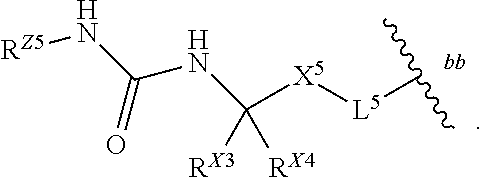
-
- RX3 and RX4 are each independently H or unsubstituted C1-3 alkyl (e.g., H or methyl);
- L5 is unsubstituted C2-4 alkylene (e.g., linear C2-4 alkylene (e.g., —CH2CH2— or —CH2CH2CH2—);
- X5 is C(═O)N(R′)* (e.g., C(═O)N(H)*); and
- RZ5 is phenyl optionally substituted with from 1-3 Rb.

-
- (iii) C6-10 aryl, wherein the aryl is optionally substituted with from 1-5 independently selected Rb; and
- (iv) heteroaryl including from 5-10 ring atoms, wherein from 1-4 ring atoms are each independently selected from the group consisting of N, N(H), N(Rc), O, and S(O)0-2, wherein the heteroaryl is optionally substituted with from 1-3 independently selected Rb at one or more ring carbon atoms.

For example, RZG can be


For example, RZG can be


wherein each Rb present in RZ is independently selected from the group consisting of: C1-3 alkyl optionally substituted with from 1-3 independently selected halo; —F; —Cl; —N(R′)(R′); C1-4 alkoxy; C1-4 haloalkoxy; —C(═O)OH; —C(═O)N(R′)(R″); and cyano.

*—N(R4)—CH2—C(O)— . . . ;
wherein the * represent the point of connection of the N-terminal amino acid amino group to the remainder of formula (I)). As a further illustration, if the N-terminal amino acid of W and W1 is glycine itself (e.g., as represented by G; e.g., as shown in embodiments of N(R4)—W and N(R4)—W1—R5 described herein; e.g., formulas WD, WD-1, WD-2, WD-3, WD-4, WD-5, WE, WF, and the sequences delineated in Table 1), then it is understood that R4 is H in the illustrative formula above.

wherein, RK is a modifying group selected from an acyl group, a PEG group, and combinations thereof.

-
- wherein:
- k1 is 1, 2, 3, or 4;
- k2 is 1, 2, 3, or 4;
- k3 is 0, 1, 2, 3, or 4; and
- k4 is an integer from 5 to 25.


wherein k4 is an integer from 5-25. For example, k4 can be 18.


wherein R″ is a group of Formula (KA):

-
- wherein:
- k1 is 1, 2, 3, or 4;
- k2 is 1, 2, 3, or 4;
- k3 is 0, 1, 2, 3, or 4; and
- k4 is an integer from 5 to 25.


Constituent Amino Acids and Modifications Thereof

wherein each of Raa1 and Raa2 is independently selected from:
-
- (a) H;
- (b) C1-6 alkyl, which is optionally substituted with from 1-3 Rba,
- (c) (C0-3 alkylene)-C3-10 cycloalkyl, which is optionally substituted with from 1-4 Rba;
- (d) (C0-3 alkylene)-heterocyclyl, wherein the heterocyclyl includes from 3-10 ring atoms, wherein from 1-3 ring atoms are heteroatoms, each independently selected from the group consisting of N(Rda), O, and S, and wherein one or more of the heterocyclyl ring carbon atoms are optionally substituted with from 1-4 independently selected Rba
- (e) (C0-3 alkylene)-C6-C10 aryl, which is optionally substituted with from 1-4 Rca;
- (f) (C0-3 alkylene)-heteroaryl, wherein the heteroaryl includes from 5-10 ring atoms, wherein from 1-4 ring atoms are heteroatoms, each independently selected from the group consisting of N, N(Rda), O, and S, and wherein one or more of the heteroaryl ring carbon atoms are optionally substituted with from 1-4 independently selected Rca;
OR - (g) Raa1 and Rda, in the —C(═O)CRaa1(Raa2)N(Rda)— group, combine to form a ring including from 5-8 ring atoms, wherein the ring includes: (a) from 1-6 ring carbon atoms (in addition to CRaa1(Raa2)), each of which is substituted with from 1-2 substituents independently selected from H and C1-3 alkyl; and (b) from 0-3 ring heteroatoms (in addition to the nitrogen atom attached to Rda), which are each independently selected from the group consisting of N(Rda), O, and S;
- each occurrence of Rba is selected from the group consisting of —C(═O)(OH); —C(═O)(C2-20 alkyl); —C(═O)NR′R″; —NHC(═NR′)NR′R″; —C(═O)O(C2-20 alkyl); —S(O)0-2 (C1-6 alkyl); oxo; F; C1-10 alkoxy; C1-10 haloalkoxy; azido; —N(Rga)(Rha);
- each occurrence of Rca is independently selected from the group consisting of: —OH; —SH; —F; —Cl; —Br; —NR′R″; C1-4 alkyl; C1-4 haloalkyl; C1-4 alkoxy; C1-4 haloalkoxy; —C(═O)O(C1-4 alkyl); —C(═O)(C1-4 alkyl); —C(═O)OH; —CON(R′)(R″); —S(O)1-2(NR′R″); —S(O)0-2(C1-4 alkyl); cyano; —NR′C(═NR′)NR′R″; C6-10 aryl optionally substituted with 1-4 substituents independently selected from halo, C1-4 alkyl, and C1-4 haloalkyl; and C3-6 cycloalkyl optionally substituted with from 1-4 independently selected C1-4 alkyl;
- each occurrence of Rda is independently selected from the group consisting of: H, C1-6 alkyl; C3-6 cycloalkyl; —C(O)(C1-4 alkyl); —C(O)O(C1-4 alkyl); —CON(R′)(R″); —S(O)1-2(NR′R″); —S(O)1-2(C1-4 alkyl); —OH; and C1-4 alkoxy; or Raa1 and Rda, in the —C(═O)CRaa1(Raa2) N(Rda)— group, combine to form a ring including from 5-8 ring atoms as defined above;
- each occurrence of Rga and Rha is independently selected from the group consisting of H; C1-4 alkyl; —C(═O)O(C2-20 alkyl); and —S(O)1-2(C1-6 alkyl); and
- each occurrence of R′ and R″ is independently selected from the group consisting of: H and C1-4 alkyl; or R′ and R″ together with the nitrogen atom to which each is attached forms a ring including from 3-8 ring atoms, wherein the ring includes: (a) from 1-7 ring carbon atoms, each of which is substituted with from 1-2 substituents independently selected from H and C1-3 alkyl; and (b) from 0-3 ring heteroatoms (in addition to the nitrogen atom attached to R′ and R″), which are each independently selected from the group consisting of N(H), O, and S;
- or a C-terminal amino acid or an amino acid ester or an amino acid amide thereof.
-
- H;
- C1-C6 alkyl optionally substituted with 1-2 substituents selected from —NH2, —OH, —SH, —SMe, —NH(C═NH)NH2, CO2H, and CO2NH2;
- (C1-C6 alkylene)-phenyl, optionally substituted with 1-2—OH;
- (C1-C6 alkylene)-indolyl; and
- (C1-C6 alkylene)-imidazolyl; or
- Raa1 and Rda, in the —CH(Raa1)N(Rda)— group, combine to form a pyrrolidine ring.
-
- each occurrence of Rba is independently selected from:
- —N(Rga)(Rha);
- or a C-terminal amino acid or an amino acid ester or an amino acid amide thereof.

wherein RK is a group of Formula (KA):

-
- wherein:
- k1 is 1, 2, 3, or 4;
- k2 is 1, 2, 3, or 4;
- k3 is 0, 1, 2, 3, or 4; and
- k4 is an integer from 5 to 25.


or a C-terminal amino acid or an amino acid ester or an amino acid amide thereof.
Non-Limiting Examples of W

wherein RK can be as defined anywhere herein.

-
- wherein:
- N(R4)—W1′ is a sequence of 10-20 amino acids (optionally 15-20 amino acids; optionally 16 amino acids);
- W1″ is a sequence of 15-25 amino acids (optionally 17-21 amino acids; optionally 19 amino acids; or optionally 18 amino acids); and
- RK is a modifying group selected from an acyl group and a PEG group and combinations thereof.

-
- wherein:
- k1 is 1, 2, 3, or 4;
- k2 is 1, 2, 3, or 4;
- k3 is 0, 1, 2, 3, or 4; and
- k4 is an integer from 5 to 25.

| (SEQ ID NO: 4) |
| GT(Xaa3)(Xaa4)SD(Xaa7)SI(Xaa10)LD(Xaa13)(Xaa14)A | |
| (Xaa16)(Xaa17)(Xaa18)F(Xaa20)(Xaa21)(Xaa22)L | |
| (Xaa24)(Xaa25)GGPSSGAPPPS(Xaa37)-R 6, |
-
- wherein:
- Xaa3 is F, F*, F†, or F† † (e.g., F);
- Xaa4 is T, A or V (e.g., T);
- Xaa7 is Y, or K* (e.g., Y);
- Xaa10 is Y, L*, or Aib (e.g., Aib);
- Xaa13 is K, Orn, or R (e.g., K);
- Xaa14 is Q, I, or K*(e.g., Q);
- Xaa16 is A, or Q (e.g., A);
- Xaa17 is Aib, or K* (e.g., K*);
- Xaa18 is A, or E (e.g., A);
- Xaa20 is V or I (e.g., V);
- Xaa21 is N, Q, K*, or dE (e.g., Q);
- Xaa22 is W or Y (e.g., W);
- Xaa24 is I or L (e.g., I);
- Xaa25 is A or E (e.g., A);
- Xaa37 is K* or absent (e.g., absent);
- R6 is —NH2 or —OH.
| (SEQ ID NO: 5) |
| GT(Xaa3)(Xaa4)SD(K*)SI(Xaa10)LD(Xaa13)(Xaa14)A | ||
| (Xaa16)(Xaa17)(Xaa18)F(Xaa20)(Xaa21)(Xaa22)L | ||
| (Xaa24)(Xaa25)GGPSSGAPPPS(Xaa37)-R 6. |
| (SEQ ID NO: 6) |
| GT(Xaa3)(Xaa4)SD(Xaa7)SI(Xaa10)LD(Xaa13)(K*)A | ||
| (Xaa16)(Xaa17)(Xaa18)F(Xaa20)(Xaa21)(Xaa22)L | ||
| (Xaa24)(Xaa25)GGPSSGAPPPS(Xaa37)-R 6. |
| (SEQ ID NO: 7) |
| GT(Xaa3)(Xaa4)SD(Xaa7)SI(Xaa10)LD(Xaa13)(Xaa14)A | |
| (Xaa16)(K*)(Xaa18)F(Xaa20)(Xaa21)(Xaa22)L(Xaa24) | |
| (Xaa25)GGPSSGAPPPS(Xaa37)-R 6. |
| (SEQ ID NO: 8) |
| GT(Xaa3)(Xaa4)SD(Xaa7)SI(Xaa10)LD(Xaa13)(Xaa14)A | |
| (Xaa16)(Xaa17)(Xaa18)F(Xaa20)(K*)(Xaa22)L(Xaa24) | |
| (Xaa25)GGPSSGAPPPS(Xaa37)-R 6. |
| (SEQ ID NO: 9) |
| GT(Xaa3)(Xaa4)SD(Xaa7)SI(Xaa10)LD(Xaa13)(Xaa14)A | |
| (Xaa16)(Xaa17)(Xaa18)F(Xaa20)(Xaa21)(Xaa22)L | |
| (Xaa24)(Xaa25)GGPSSGAPPPS(K*)-R 6. |
-
- GT(Xaa3)TSDYSI(Aib)LDKIAQK*AFVQWLIAG-NH2 (SEQ ID NO: 11),
- wherein Xaa3 is F or F*.

“F*” refers to

“F†” refers to

“F† †” refers to

“L*” refers to


“dE” refers to

“dD” refers to


| TABLE 1 | ||
| SEQ | CT | |
| ID | SEQ. | |
| NO: | ID | Sequence |
| 10 | A | GTFTSDYSI(Aib)LDKIAQK*AFVQWLIAGGPSSGAPPPS—NH2 |
| 12 | B |  |
| 13 | C |  |
| 14 | D |  |
| 15 | E |  |
| 16 | I |  |
| 17 | J |  |
| 18 | K |  |
| 19 | L |  |
| 20 | M |  |
| 21 | N |  |
| 22 | O |  |
| 23 | P |  |
| 24 | Q |  |
| 25 | R |  |
| 26 | S |  |
| 27 | T |  |
| 28 | V |  |
| 29 | W | GTFTSDYSI(Aib)LDKIAQK*AFVQWLIAGGPSSGAPPPS—OH |
| 30 | X | GTFTSDYSI(Aib)LDKIAQK*AFVQWLIAG—NH2 |
| 31 | Y |  |
| 32 | Z |  |
| 33 | AA |  |
| 34 | AB |  |
 | ||
| 35 | AC | GTFTSDYSI(Aib)LDKIAQK*AFVQWLIAGGPSSGAPPPS—NH2 |
 | ||
| 36 | AG | GTFTSDYSIYLDKK*AA(Aib)EFVNWLLAGGPSSGAPPPS—NH2 |
| 37 | AH | GTFTSDYSILDKQAA(Aib)EFVK*WLLAGGPSSGAPPPS—NH2 |
| Unless otherwise specified, modified amino acid residues in TABLE 1 have the definitions below: | ||
           | ||
Non-Limiting Combinations
-
- L1 is unsubstituted C2-4 alkylene (e.g., linear C2-4 alkylene, optionally —CH2CH2— or —CH2CH2CH2);
- X1 is C(═O)N(R′)* (e.g., C(═O)N(H)*) or C(═S)N(R′)* (e.g., C(═S)N(H)*);
- RZ is selected from the group consisting of:
- phenyl optionally substituted with from 1-3 Rb; and
- heteroaryl including 6 ring atoms, wherein from 1-3 ring atoms are ring nitrogen atoms, and wherein the heteroaryl is optionally substituted with from 1-3 independently selected Rb at one or more ring carbon atoms;
- RX1 and RX2 are each independently selected unsubstituted C1-3 alkyl; or
- RX1 and RX2 taken together with the carbon atom to which each is attached form a C3-6 cycloalkyl ring which is optionally substituted with from 1-3 independently selected C1-3 alkyl;
- N(R4)—W has the formula WC:

-
- wherein:
- N(R4)—W1′ is a sequence of 10-20 amino acids (optionally 15-20 amino acids; optionally 16 amino acids);
- W1″ is a sequence of 15-25 amino acids (optionally 17-21 amino acids; optionally 19 amino acids; or optionally 18 amino acids); and
- RK is a group of Formula (KA):

-
- wherein:
- k1 is 1, 2, 3, or 4;
- k2 is 1, 2, 3, or 4;
- k3 is 0, 1, 2, 3, or 4; and
- k4 is an integer from 5 to 25.


-
- L1 is —CH2CH2— or —CH2CH2CH2—;
- X1 is C(═O)N(H)* or C(═S)N(H)*;
- X2 is a bond
- RZ is phenyl or pyridyl, each substituted with from 1-3 Rb; and
- RX1 and RX2 are each independently selected unsubstituted C1-3 alkyl; or
- RX1 and RX2 taken together with the carbon atom to which each is attached form a C3-6 cycloalkyl ring;
- Q is O;
- R1 is H; R4 is H;
- R2′ is —CH2CH2R3;
- R3 is —C(O)OH.
- W has the formula WC:

-
- wherein:
- W1′ is a sequence of 10-20 amino acids (optionally 15-20 amino acids; optionally 16 amino acids);
- W1″ is a sequence of 15-25 amino acids (optionally 17-21 amino acids; optionally 19 amino acids); and
- RK is:


-
- L1 is unsubstituted C2-4 alkylene (e.g., linear C2-4 alkylene, optionally —CH2CH2— or —CH2CH2CH2);
- X1 is C(═O)N(R′)*(e.g., C(═O)N(H)*) or C(═S)N(R′)* (e.g., C(═S)N(H)*);
- RZ is RZA and is selected from the group consisting of:
- phenyl optionally substituted with from 1-3 Rb, and
- heteroaryl including 6 ring atoms, wherein from 1-3 ring atoms are ring nitrogen atoms, and wherein the heteroaryl is optionally substituted with from 1-3 independently selected Rb at one or more ring carbon atoms;
- RX1 and RX2 are each independently selected unsubstituted C1-3 alkyl; or
- RX1 and RX2 taken together with the carbon atom to which each is attached form a C3-6 cycloalkyl ring which is optionally substituted with from 1-3 independently selected C1-3 alkyl;
- X2 is a bond; and
- N(R4)—W has Formula WD.


-
- L1 is unsubstituted C2-4 alkylene (e.g., linear C2-4 alkylene, optionally —CH2CH2— or —CH2CH2CH2);
- X1 is C(═O)N(R′)* (e.g., C(═O)N(H)*) or C(═S)N(R′)* (e.g., C(═S)N(H)*);
- RZ is RZA and is selected from the group consisting of:
- phenyl optionally substituted with from 1-3 Rb; and
- heteroaryl including 6 ring atoms, wherein from 1-3 ring atoms are ring nitrogen atoms, and wherein the heteroaryl is optionally substituted with from 1-3 independently selected Rb at one or more ring carbon atoms;
- RX1 and RX2 are each independently selected unsubstituted C1-3 alkyl;
- X2 is a bond; and
- N(R4)—W has Formula WD.


-
- monoamine uptake inhibitors (e.g., tramadol, phentermine, sibutramine, mazindol, fluoxetine, tesofensine);
- serotonin 2C receptor agonists (e.g., lorcaserin);
- serotonin 6 receptor antagonists;
- histamine H3 receptor modulator;
- GABA modulator (e.g., topiramate), including GABA receptor agonists (e.g., gabapentin, pregabalin);
- neuropeptide Y antagonists (e.g., velneperit);
- cannabinoid receptor antagonists (e.g., rimonabant, taranabant);
- ghrelin antagonists;
- ghrelin receptor antagonists;
- ghrelin acylation enzyme inhibitors;
- opioid receptor antagonists (e.g., GSK-1521498);
- orexin receptor antagonists;
- melanocortin 4 receptor agonists;
- 11β-hydroxysteroid dehydrogenase inhibitors (e.g., AZD-4017, BVT-3498, INCB-13739);
- pancreatic lipase inhibitors (e.g., orlistat, cetilistat);
- β3 agonists (e.g., N-5984);
- diacylglycerol acyltransferase 1 (DGAT1) inhibitors;
- acetylCoA carboxylase (ACC) inhibitors;
- stearoyl-CoA desaturated enzyme inhibitors;
- microsomal triglyceride transfer protein inhibitors (e.g., R-256918);
- Na-glucose cotransporter 2 (SGLT-2) inhibitors (e.g., JNJ-28431754, dapagliflozin, AVE2268, TS-033, YM543, TA-7284, ASP1941, remogliflozin);
- NFK inhibitors (e.g., HE-3286);
- PPAR agonists (e.g., GFT-505, DRF-11605, gemfibrozil and fenofibrate);
- phosphotyrosine phosphatase inhibitors (e.g., sodium vanadate, trodusquemin);
- GPR119 agonists (e.g., PSN-821, MBX-2982, APD597);
- glucokinase activators (e.g., piragliatin, AZD-1656, AZD6370, TTP-355, compounds described in W0006/112549, W0007/028135, W0008/047821, W0008/050821, W0008/136428 and W0008/156757);
- leptin, leptin derivatives (e.g., metreleptin), leptin resistance improving drugs;
- CNTF (ciliary neurotrophic factor);
- BDNF (brain-derived neurotrophic factor);
- cholecystokinin agonists, amylin preparations (e.g., pramlintide, AC-2307);
- neuropeptide Y agonists (e.g., PYY3-36, derivatives of PYY3-36, obineptide, TM-30339, TM-30335);
- oxyntomodulin (OXM) preparations;
- appetite suppressants (e.g. ephedrine);
- FGF21 preparations (e.g., animal FGF21 preparations extracted from the pancreas of bovine or swine; human FGF21 preparations genetically synthesized using Escherichia coli or yeast; fragments or derivatives of FGF21); and
- anorexigenic agents (e.g., P-57).
-
- insulin and insulin preparations (e.g., animal insulin preparations extracted from the pancreas of bovine or swine; human insulin preparations genetically synthesized using Escherichia coli or yeast; zinc insulin; protamine zinc insulin; fragment or derivative of insulin (e.g., INS-1), oral insulin preparation, synthetic human insulin);
- insulin sensitizers (e.g., pioglitazone or a salt thereof);
- biguanides (e.g., metformin, buformin or a salt thereof (e.g., hydrochloride, fumarate, succinate));
- glucagon analogs (e.g., any of glucagon analogs described, e.g., in WO 2010/011439);
- agents which antagonize the actions of or reduce secretion of glucagon;
- sulfonylurea agents (e.g., chlorpropamide, tolazamide, gliclazide, glimepiride, tolbutamide, glibenclamide, gliclazide, acetohexamide, glyclopyamide, glybuzole, glyburide);
- thiazolidinedione agents (e.g. rosiglitazone or pioglitazone);
- α-glucosidase inhibitors (e.g., voglibose, acarbose, miglitol, emiglitate);
- insulin secretagogues, such as prandial glucose regulators (sometimes called “short-acting secretagogues”), e.g., meglitinides (e.g. repaglinide and nateglinide);
- cholinesterase inhibitors (e.g., donepezil, galantamine, rivastigmine, tacrine);
- NMDA receptor antagonists;
- dual GLP-1/GIP receptor agonists (e.g., LBT-2000, ZPD1-70);
- GLP-1R agonists (e.g., exenatide, liraglutide, albiglutide, dulaglutide, AVE-0010, S4P and Boc5); and
- dipeptidyl peptidase IV (DPP-4) inhibitors (e.g., vildagliptin, dutogliptin, gemigliptin, alogliptin, saxagliptin, sitagliptin, linagliptin, berberine, alogliptin, BI1356, GRC8200, MP-513, PF-00734200, PHX1149, SK-0403, ALS2-0426, TA-6666, TS-021, KRP-104, trelagliptin).
-
- aldose reductase inhibitors (e.g., tolrestat, epalrestat, zopolrestat, fidarestat, CT-112, ranirestat, lidorestat);
- neurotrophic factor and increasing agents thereof (e.g., NGF, NT-3, BDNF, neurotrophic production/secretion promoting agents described in WO01/14372 (e.g., 4-(4-chlorophenyl)-2-(2-methyl-1-imidazolyl)-5-[3-(2-methylphenoxyl)propyl]oxazole), compounds described in WO2004/039365);
- PKC inhibitors (e.g., ruboxistaurin mesylate);
- AGE inhibitors (e.g., ALT946, N-phenacylthiazolium bromide (ALT766), EXO-226, pyridorin, pyridoxamine);
- serotonin and noradrenalin reuptake inhibitors (e.g., duloxetine);
- sodium channel inhibitors (e.g., lacosamide);
- active oxygen scavengers (e.g., thioctic acid);
- cerebral vasodilators (e.g., tiapuride, mexiletine);
- somatostatin receptor agonists (e.g., BIM23190); and
- apoptosis signal regulating kinase-1 (ASK-1) inhibitors.
-
- HMG-COA reductase inhibitors (e.g., pravastatin, simvastatin, lovastatin, atorvastatin, fluvastatin, rosuvastatin, pitavastatin or a salt thereof (e.g., sodium salt, calcium salt));
- squalene synthase inhibitors (e.g., compounds described in WO97/10224, e.g., N-[[(3R,5S)-1-(3-acetoxy-2,2-dimethylpropyl)-7-chloro-5-(2,3-dimethoxyphenyl)-2-oxo-1,2,3,5-tetrahydro-4, 1-benzoxazepin-3-yl]acetyl]piperidin-4-acetic acid);
- fibrate compounds (e.g., bezafibrate, clofibrate, simfibrate, clinofibrate);
- anion exchange resin (e.g., cholestyramine);
- nicotinic acid drugs (e.g., nicomol, niceritrol, niaspan);
- phytosterols (e.g., soysterol, gamma oryzanol (γ-oryzanol));
- cholesterol absorption inhibitors (e.g., zechia);
- CETP inhibitors (e.g., dalcetrapib, anacetrapib); and
- ω-3 fatty acid preparations (e.g., ω-3-fatty acid ethyl esters 90).
-
- angiotensin converting enzyme inhibitors (e.g., captopril, enalapril, delapril);
- angiotensin II antagonists (e.g., candesartan cilexetil, candesartan, losartan, losartan potassium, eprosartan, valsartan, telmisartan, irbesartan, tasosartan, olmesartan, olmesartan medoxomil, azilsartan, azilsartan medoxomil);
- calcium antagonists (e.g., manidipine, nifedipine, amlodipine, efonidipine, nicardipine, cilnidipine); and
- β-blockers (e.g., metoprolol, atenolol, propranolol, carvedilol, pindolol).
-
- xanthine derivatives (e.g., theobromine sodium salicylate, theobromine calcium salicylate);
- thiazide preparations (e.g., ethiazide, cyclopenthiazide, trichloromethiazide, hydrochlorothiazide, hydroflumethiazide, benzylhydrochlorothiazide, penfluthiazide, polythiazide, methyclothiazide);
- antialdosterone preparations (e.g., spironolactone, triamterene);
- carbonic anhydrase inhibitors (e.g., acetazolamide); and
- chlorobenzenesulfonamide agents (e.g., chlortalidone, mefruside, indapamide).
-
- agents that modulate hepatic glucose balance (e.g.,
fructose 1,6-bisphosphatase inhibitors, glycogen phosphorylase inhibitors, glycogen synthase kinase inhibitors, glucokinase activators); - agents designed to treat the complications of prolonged hyperglycemia, such as aldose reductase inhibitors (e.g. epalrestat and ranirestat);
- agents used to treat complications related to micro-angiopathies;
- anti-dyslipidemia agents, such as HMG-COA reductase inhibitors (statins, e.g. rosuvastatin);
- cholesterol-lowering agents;
- bile acid sequestrants (e.g., cholestyramine);
- cholesterol absorption inhibitors (e.g. plant sterols such as phytosterols);
- cholesteryl ester transfer protein (CETP) inhibitors;
- inhibitors of the ileal bile acid transport system (IBAT inhibitors);
- bile acid binding resins;
- nicotinic acid (niacin) and analogues thereof;
- anti-oxidants, such as probucol;
- omega-3 fatty acids;
- antihypertensive agents, including adrenergic receptor antagonists, such as beta blockers (e.g. atenolol), alpha blockers (e.g. doxazosin), and mixed alpha/beta blockers (e.g. labetalol);
- adrenergic receptor agonists, including alpha-2 agonists (e.g. clonidine);
- angiotensin converting enzyme (ACE) inhibitors (e.g. lisinopril);
- calcium channel blockers, such as dihydropridines (e.g. nifedipine), phenylalkylamines (e.g. verapamil), and benzothiazepines (e.g. diltiazem);
- angiotensin II receptor antagonists (e.g. candesartan);
- aldosterone receptor antagonists (e.g. eplerenone);
- centrally acting adrenergic drugs, such as central alpha agonists (e.g. clonidine);
- diuretic agents (e.g. furosemide);
- haemostasis modulators, including antithrombotics (e.g., activators of fibrinolysis), thrombin antagonists, factor VIIa inhibitors, anticoagulants (e.g., vitamin K antagonists such as warfarin), heparin and low molecular weight analogues thereof, factor Xa inhibitors, and direct thrombin inhibitors (e.g. argatroban);
- antiplatelet agents (e.g., cyclooxygenase inhibitors (e.g. aspirin));
- adenosine diphosphate (ADP) receptor inhibitors (e.g. clopidogrel);
- phosphodiesterase inhibitors (e.g. cilostazol);
- glycoprotein IIB/IIA inhibitors (e.g. tirofiban);
- adenosine reuptake inhibitors (e.g. dipyridamole);
- noradrenergic agents (e.g. phentermine);
- serotonergic agents (e.g. sibutramine);
- diacyl glycerolacyltransferase (DGAT) inhibitors;
- feeding behavior modifying agents;
- pyruvate dehydrogenase kinase (PDK) modulators;
- serotonin receptor modulators;
- monoamine transmission-modulating agents, such as selective serotonin reuptake inhibitors (SSRI) (e.g. fluoxetine), noradrenaline reuptake inhibitors (NARI), noradrenaline-serotonin reuptake inhibitors (SNRI), and monoamine oxidase inhibitors (MAOI) (e.g. toloxatone and amiflamine);
- compounds described in W0007/013694, WO2007/018314, WO2008/093639 and WO2008/099794;
- GPR40 agonists (e.g., fasiglifam or a hydrate thereof, compounds described in WO2004/041266, WO2004/106276, WO2005/063729, WO2005/063725, WO2005/087710, WO2005/095338, WO2007/013689 and WO2008/001931);
- SGLT1 inhibitors;
- adiponectin or agonist thereof;
- IKK inhibitors (e.g., AS-2868);
- somatostatin receptor agonists;
- ACC2 inhibitors;
- cachexia-ameliorating agents, such as a cyclooxygenase inhibitors (e.g., indomethacin), progesterone derivatives (e.g., megestrol acetate), glucocorticoids (e.g., dexamethasone), metoclopramide agents, tetrahydrocannabinol agents, agents for improving fat metabolism (e.g., eicosapentaenoic acid), growth hormones, IGF-1, antibodies against a cachexia-inducing factor TNF-α, LIF, IL-6, and oncostatin M;
- metabolism-modifying proteins or peptides such as glucokinase (GK), glucokinase regulatory protein (GKRP), uncoupling proteins 2 and 3 (UCP2 and UCP3), peroxisome proliferator-activated receptor a (PPARα);
- MC4r agonists;
- insulin receptor agonist;
- PDE 5 inhibitors;
- glycation inhibitors (e.g., ALT-711);
- nerve regeneration-promoting drugs (e.g., Y-128, VX853, prosaptide);
- antidepressants (e.g., desipramine, amitriptyline, imipramine);
- antiepileptic drugs (e.g., lamotrigine, trileptal, keppra, zonegran, pregabalin, harkoseride, carbamazepine);
- antiarrhythmic drugs (e.g., mexiletine);
- acetylcholine receptor ligands (e.g., ABT-594);
- endothelin receptor antagonists (e.g., ABT-627);
- narcotic analgesics (e.g., morphine);
- a2 receptor agonists (e.g., clonidine);
- local analgesics (e.g., capsaicin);
- antianxiety drugs (e.g., benzothiazepine);
- phosphodiesterase inhibitors (e.g., sildenafil);
- dopamine receptor agonists (e.g., apomorphine);
- cytotoxic antibodies (e.g., T-cell receptor and IL-2 receptor-specific antibodies);
- B cell depleting therapies (e.g., anti-CD20 antibody (e.g., rituxan), i-BLyS antibody);
- drugs affecting T cell migration (e.g., anti-integrin alpha 4/
beta 1 antibody (e.g., tysabri); - drugs that act on immunophilins (e.g., cyclosporine, tacrolimus, sirolimus, rapamycin);
- interferons (e.g., IFN-β);
- immunomodulators (e.g., glatiramer);
- TNF-binding proteins (e.g., circulating receptors);
- immunosuppressants (e.g., mycophenolate); and
- metaglidasen, AMG-131, balaglitazone, MBX-2044, rivoglitazone, aleglitazar, chiglitazar, lobeglitazone, PLX-204, PN-2034, GFT-505, THR-0921, exenatide, exendin-4, memantine, midazolam, ketoconazole, ethyl icosapentate, clonidine, azosemide, isosorbide, ethacrynic acid, piretanide, bumetanide, etoposide.
- agents that modulate hepatic glucose balance (e.g.,
-
- AcOH=Acetic acid
- DCM=Dichloromethane
- DIC=Diisopropylcarbodiimide
- DMF=N,N-dimethylformamide
- DMSO=Dimethylsulfoxide
- ESI-MS=Electrospray ionization mass spectrometry
- Et2O=Diethyl ether
- EtOAc=Ethyl acetate
- EtOH=Ethanol
- HATU=1-[Bis(dimethylamino)methylene]-1H-1,2,3-triazolo[4,5-b]pyridinium 3-oxide hexafluorophosphate
- HCl=Hydrochloric acid
- HPLC=High performance liquid chromatography
- LC-MS=Liquid chromatography-mass spectrometry
- MeCN=Acetonitrile
- MeOH=Methanol
- NMR=Nuclear magnetic resonance
- Oxyma=Ethyl (hydroxyamino)cyanoacetate
- SFC=Supercritical fluid chromatography
- TEA=Triethylamine
- TFA=Trifluoroacetic acid
- THF=Tetrahydrofuran
- TIS=Triisopropylsilane
- TLC=Thin layer chromatography
B. Peptide Sequences Corresponding to Compounds in Table 2:
 | Sequence A |
 | Sequence B |
 | Sequence C |
 | Sequence D |
 | Sequence E |
| EGTFTSDYSI(Aib)LDKIAQK*AFVQWLIAGGPSSGAPPPS—NH2 | Sequence F |
| (SEQ ID NO: 38) | |
| GTFTSDYSI(Aib)LDKIAQK*AFVWLIAGGPSSGAPPPS—NH2 | Sequence G |
| (SEQ ID NO: 10) | |
 | Sequence H |
 | Sequence I |
 | Sequence J |
 | Sequence K |
 |  | |
 | |
 | |
 | Sequence L |
 | Sequence M |
 | Sequence N |
 | Sequence O |
 | Sequence P |
 | Sequence Q |
 | Sequence R |
 | Sequence S |
 | Sequence T |
 | Sequence U |
 | Sequence V |
 | Sequence W |
 | Sequence X |
 | Sequence Y |
 | |
 | |
 | Sequence Z |
 | Sequence AA |
 | Sequence AB |
 | Sequence AC |
| (dP)GTFTSDYSI(Aib)LDKIAQK*AFVQWLIAGGPSSGAPPPS-NH2 | Sequence AD |
| (SEQ ID NO: 64) | |
 | Sequence AE |
 | Sequence AF |
 | Sequence AG |
 | Sequence AH |
 |  | |
 |  | |
 | |
 | |
 | |
 | |
C. General Procedures and Protocols
Peptide Synthesis
All peptide sequences were synthesized conventionally with microwave synthesis conditions using a CEM Liberty Blue system on 0.025-0.1 mmol scale using a 5-fold excess of reagents. Fmoc-amino acids (0.2 M solution in DMF), DIC (0.5 or 1.0 M solution in DMF) and Oxyma (1.0 M solution in DMF) were employed on Rink amide resin (estimated loading 0.2 mmol/g) and Fmoc-Gly-Wang resin (estimated loading 0.27 mmol/g).
Cleavage of Compound from Resin
Cleavage of compound was performed with TFA/TIS/H2O/PhOH (88:2:5:5 v/v/v/v), 5 mL/100 mg of resin for 1-3 hours. The cleavage mixture was filtered and the resin was washed with TFA (2×), and the filtrate and washes were combined and concentrated. Diethyl ether (5 mL/100 mg of resin) was added to the residue afforded to precipitate the peptide, which was isolated by centrifugation.
Purification of Compounds by Preparative HPLC
Crude peptides were dissolved in glacial AcOH or DMSO and purified by HPLC using the following conditions:
Column: Phenomenex Jupiter 10 um Proteo 90 A 250×21.2 mm AXIA packed Solvent A=25 mM ammonium acetate, Solvent B=MeCN
| Gradient |
| Time (min) | % | % B | |
| 0 | 100 | 0 |
| 3 | 100 | 0 |
| 4 | 70 | 30 |
| 33 | 40 | 60 |
| 34 | 0 | 100 |
| 43 | 0 | 100 |
| 43.1 | 100 | 0 |
| 48 | 100 | 0 |


2-(3-fluoro-5-hydroxyphenyl)acetonitrile (I-4)
To a solution of 2-(3-fluoro-5-methoxyphenyl)acetonitrile (3 g, 18.2 mmol, 1 equiv, cas:914637-31-3) in DCM (30 mL) stirred at −78° C. was added BBr3 (9.1 g, 36.4 mmol, 2 equiv.). The reaction mixture was allowed to warm to 25° C. and stirred for 16 hours. On completion, the reaction mixture was diluted with H2O (30 mL) and extracted with EtOAc (3×20 mL). The combined organic extracts were dried and concentrated to afford 2.2 g of the crude phenol I-4 (84% yield, 90% purity) as a yellow solid. MS (ESI, pos. ion) m/z:152.1, (M+1).
Methyl 2-(3-fluoro-5-hydroxyphenyl)acetate (1-5)
To a solution of 2-(3-fluoro-5-hydroxyphenyl)acetonitrile (2.3 g, 15 mmol, 1 equiv.) in MeOH (20 mL) stirred at ambient temperature was added 5 mL of thionyl chloride. After completion of the addition, the reaction mixture was refluxed for 16 hours. The reaction mixture was then diluted with H2O (15 mL) and extracted with EtOAc (3×20 mL). The combined organic extracts were dried and concentrated to afford 2.0 g of the crude methyl ester I-5 (77% yield, 95% purity) as a colourless oil. MS (ESI, pos. ion) m/z: 185.1, (M+1).
Methyl 2-(3-(tert-butoxy)-5-fluorophenyl)acetate (I-6)
To a solution of methyl 2-(3-fluoro-5-hydroxyphenyl)acetate (2.0 g, 13 mmol, 1 equiv.), and Boc2O (8.5 g, 39 mmol, 3 equiv.) in DCM (30 mL) stirred at 40° C. was added Mg(ClO4)2 (0.29 g, 1.3 mmol, 0.1 equiv.). The reaction mixture was stirred at 40° C. for 20 hours. When the reaction was deemed complete, the reaction mixture was diluted with H2O (15 mL) and extracted with EtOAc (3×20 mL). The combined organic extracts were dried and concentrated to a residue, which was purified by silica gel chromatography (Petroleum ether:EtOAc=1:15) to afford 1.8 g of ester I-6 (67% yield, 95% purity) as a white solid. 1H NMR (400 MHZ, CD3OD) δ 6.97 (d, J=9.2 Hz, 1H), 6.94-6.87 (m, 2H), 3.70 (s, 5H), 1.53 (s, 9H).
Methyl 2-(3-(tert-butoxy)-5-fluorophenyl)-2-methylpropanoate (I-7)
Methyl 2-[3-(tert-butoxy)-5-fluorophenyl]acetate (1.2 g, 0.005 mol, 1 equiv.) was dissolved in THF (20 mL) in the presence of NaHMDS (2.3 g, 0.013 mol, 2.5 equiv.). The solution was cooled to −50° C. and stirred under nitrogen for 30 minutes. Methyl iodide (3.55 g, 0.025 mol, 5 equiv.) was then added and the reaction mixture was stirred at −50° C. for 30 minutes. Once the reaction was deemed complete, the reaction mixture was diluted with H2O (15 mL) and extracted with EtOAc (3×20 mL). The combined organic extracts were dried and concentrated to a residue, which was purified by silica gel chromatography (Petroleum ether:EtOAc=1:20) to afford 1.0 g of ester I-7 (70% yield, 95% purity) as colourless oil. 1H NMR (400 MHZ, CD3OD) δ 6.80 (d, J=10.2 Hz, 1H), 6.72 (s, 1H), 6.62 (dd, J=10.2, 2.1 Hz, 1H), 3.65 (s, 3H), 1.52 (s, 6H), 1.34 (s, 9H).
2-(3-(tert-butoxy)-5-fluorophenyl)-2-methylpropanoic acid (I-8)
To a solution of ester, I-7 (200 mg, 0.8 mmol, 1 equiv.) in MeOH (10 mL) stirred at 25° C. was added a solution of sodium hydroxide (160 mg, 4 mmol, 5 equiv.) in H2O (5 mL). The reaction mixture was stirred at 25° C. for 5 hours. On completion, the reaction was cooled in an ice bath and acidified to pH 5 by addition of 1N HCl (2.0 mL). The reaction mixture was extracted with EtOAc (3×20 mL) and the combined organic extracts were dried and concentrated to afford 150 mg (70% yield, 95% purity) of the carboxylic acid I-8 as a white solid, which was taken on to the next step without further purification. 1H NMR (400 MHZ, CD3OD) δ 6.84 (dd, J=10.2, 2.0 Hz, 1H), 6.80 (d, J=1.6 Hz, 1H), 6.61 (d, J=10.2 Hz, 1H), 1.51 (s, 6H), 1.34 (s, 9H).
The synthesis of compound I-12 involved 3 steps as depicted in scheme 3.

Methyl 2-(3-fluoro-5-(trifluoromethoxy)phenyl)acetate (I-10)
To a solution of 2-(3-fluoro-5-(trifluoromethoxy)phenyl)acetic acid I-9 (CAS: 1352999-94-0, 1.0 g, 4.2 mmol, 1.0 equiv) in MeOH (15 mL) was added thionyl chloride (511 mg, 4.2 mmol, 1.0 equiv) and DMF (30 mg, 0.2 mmol, 0.05 equiv). The reaction mixture was stirred at 5° C. for 2 hours. On completion, the reaction mixture was concentrated to afford crude methyl 2-(3-fluoro-5-(trifluoromethoxy)phenyl)acetate I-10 (1.1 g, 90% yield, 90% purity) as a yellow oil, which was taken forward to the next step without further purification.
Methyl 2-(3-fluoro-5-(trifluoromethoxy)phenyl)-2-methylpropanoate (I-11)
To a solution of methyl 2-(3-fluoro-5-(trifluoromethoxy)phenyl)acetate I-10 (1.0 g, 3.9 mmol, 1.0 equiv) in DMF (20 mL) was added NaH (60% dispersion, 780 mg, 19.5 mmol, 5.0 equiv). The reaction mixture was stirred at 0-5° C. for 1 hour and iodomethane (1.1 g, 7.8 mmol, 2.0 equiv) was added. The reaction mixture was then stirred at 0-5° C. for 30 minutes. After completion, the reaction mixture was quenched with ice water (15 mL) and extracted with EtOAc (3×20 mL). The combined organic extracts were dried and concentrated to afford a residue, which was purified by silica gel chromatography (Petroleum ether/EtOAc=5:1) to afford methyl 2-(3-fluoro-5-(trifluoromethoxy)phenyl)-2-methylpropanoate I-11 (500 mg, 55% yield, 90% purity) as a yellow oil. 1H NMR (400 MHz, DMSO-d6) δ 7.28 (dd, J=9.7, 8.0 Hz, 2H), 7.13 (s, 1H), 3.63 (s, 3H), 1.53 (s, 6H).
2-[(3-fluoro-5-(trifluoromethoxy)phenyl)-2-methylpropanoic acid (I-12)
To a solution of methyl 2-(3-fluoro-5-(trifluoromethoxy)phenyl)-2-methylpropanoate I-11 (200 mg, 0.7 mmol, 1.0 equiv) in 5 mL of MeOH/Water (1:1 v/v) was added NaOH (140 mg, 3.5 mmol, 5 equiv), and the reaction mixture was stirred at 20° C. for 16 hours. On completion, the reaction mixture was quenched with water (20 mL) and acidified to pH 4 using 2N HCl. The aqueous phase was extracted with EtOAc (3×20 mL). The combined organic extracts were dried and concentrated to afford a residue, which was purified by preparative TLC (Petroleum ether/EtOAc/AcOH=1:1:0.01) to afford 2-(3-fluoro-5-(trifluoromethoxy)phenyl)-2-methylpropanoic acid I-12 (110 mg, 58% yield, 90% purity) as white solid. MS (ESI) m/z: 267.1 (M+1). 1H NMR (400 MHZ, CD3OD) δ 7.23-7.07 (m, 2H), 6.97 (d, J=8.7 Hz, 1H), 1.54 (s, 6H).

Methyl 2-(3-fluoro-5-methoxyphenyl)acetate (I-13)
To a solution of 2-(3-fluoro-5-methoxyphenyl)acetonitrile (3 g, 0.018 mol, 1 equiv.) in MeOH (35 mL) was added Thionyl chloride (5 mL). Once the addition was complete, the reaction mixture was stirred heated to reflux for 20 hours. On completion, the reaction mixture was diluted with H2O (10 mL) and extracted with EtOAc (3×30 mL). The combined organic extracts were dried and concentrated to afford 3.1 g (82% yield, 95% purity) of the methyl ester I-13 as colourless oil, which was taken forward to the next step without further purification. MS (ESI, pos. ion) m/z: 199.1, (M+1).
Methyl 2-(3-fluoro-5-methoxyphenyl)-2-methylpropanoate (I-14)
A solution of methyl ester I-13 (2 g, 0.0101 mol, 1 equiv.) and NaHMDS (4.6 g, 0.0252 mol, 2.5 equiv.) in THF (20 mL) was stirred under nitrogen at −50° C. for 30 minutes. Iodomethane (7.2 g, 0.0505 mol, 5 equiv.) was then added and the reaction mixture was stirred at −50° ° C. for 1 hour. After completion, the reaction mixture was diluted with H2O (15 mL) and extracted with EtOAc (3×20 mL). The combined organic extracts were dried and concentrated to a residue, which was purified by silica gel chromatography (Petroleum ether:EtOAc=1:10) to afford 1.9 g (75% yield, 90% purity) of ester I-14 as colorless oil. 1H NMR (400 MHZ, CDCl3) δ 6.67-6.61 (m, 2H), 6.49 (dt, J=10.4, 2.2 Hz, 1H), 3.77 (s, 3H), 3.65 (s, 3H), 1.53 (s, 6H).
2-(3-fluoro-5-methoxyphenyl)-2-methylpropanoic acid (I-15)
To a solution of methyl 2-(3-fluoro-5-methoxyphenyl)-2-methylpropanoate (1 g, 4.4 mmol, 1 equiv.) in THF (25 mL) stirred at 25° C. was added a solution of sodium hydroxide (1.8 g, 44 mol, 10 equiv.) in H2O (10 mL). The reaction mixture was stirred at 25° C. for 16 hours. On completion, the reaction mixture was cooled in an ice-water bath and acidified to pH 5 by addition of 1N HCl (3 mL). The reaction mixture was then extracted with EtOAc (3×15 mL). The combined organic extracts were dried and concentrated to a residue, which was purified by silica gel chromatography (EtOAc in Petroleum ether 20-30%) to afford 0.7 g (71% yield, 95% purity) of carboxylic acid I-15 as a white solid. MS (ESI, pos. ion) m/z:213.1, (M+1). 1H NMR (400 MHZ, CD3OD) δ 6.72 (d, J=1.6 Hz, 1H), 6.71-6.65 (m, 1H), 6.57 (dt, J=10.7, 2.2 Hz, 1H), 3.78 (s, 3H), 1.51 (s, 6H).

Methyl 2-(3-fluoro-5-(trifluoromethyl) phenyl) acetate (I-17)
Thionyl chloride (0.1 mL) was added to a solution of 2-(3-fluoro-5-(trifluoromethyl) phenyl) acetic acid I-16 (cas: 195447-79-1, 50 mg, 0.22 mmol, 1.0 equiv.) in methanol (1 mL) at 20° C. The reaction mixture was stirred for 1 hour at 20° C. and then concentrated to afford methyl 2-(3-fluoro-5-(trifluoromethyl) phenyl) acetate I-17 (50 mg, 86% yield, 90% purity) as a colorless solid, which was taken forward to the next step without further purification. 1H NMR (400 MHZ, CD3OD) δ 7.45 (s, 1H), 7.36 (s, 1H), 7.34 (s, 1H), 3.80 (s, 2H), 3.71 (s, 3H).
Methyl 2-(3-fluoro-5-(trifluoromethyl) phenyl)-2-methylpropanoate (I-18)
To a suspension of NaH (60% dispersion in mineral oil, 42 mg, 1.05 mmol, 5.0 equiv.) in DMF (2 mL) that had been cooled to 0° C. was added methyl 2-(3-fluoro-5-(trifluoromethyl) phenyl) acetate I-17 (50 mg, 0.21 mmol, 1.0 equiv.). The reaction mixture was stirred for 30 minutes at 0° C., at which point iodomethane (119 mg, 0.84 mmol, 4.0 equiv.) was added. The reaction mixture was stirred at 0° C. for 1 hour and allowed to warm to 15° C. and then maintained at that temperature for 16 hours. The reaction mixture was then cooled in an ice-water bath and water (5 mL) was added to quench the reaction. The reaction mixture was extracted with EtOAc (3×5 mL) and the combined organic extracts were washed with water (5 mL) and brine (5 mL), dried and concentrated to a residue, which was purified by silica gel chromatography (0-10% EtOAc in Petroleum ether) to afford methyl 2-(3-fluoro-5-(trifluoromethyl) phenyl)-2-methylpropanoate I-18 (20 mg, 32% yield, 90% purity) as a colorless oil. 1H NMR (400 MHZ, CD3OD) δ 7.44 (s, 1H), 7.40 (dd, J=10.2, 1.9 Hz, 1H), 7.35 (d, J=8.4 Hz, 1H), 3.67 (s, 3H), 1.60 (s, 6H).
2-(3-fluoro-5-(trifluoromethyl) phenyl)-2-methylpropanoic acid (I-19)
To a solution of methyl 2-(3-fluoro-5-(trifluoromethyl) phenyl)-2-methylpropanoate I-18 (250 mg, 0.94 mmol, 1.0 equiv.) in THF (5 mL) was added an aqueous solution of Lithium hydroxide (45 mg, 1.88 mmol, 2.0 equiv. in 2.5 mL H2O) at 20° C. The reaction mixture was stirred for 16 hours and then concentrated to remove THF. The pH was adjusted to 4 using 1N hydrochloric acid, and the aqueous phase was extracted with
DCM (5 mL). The organic extract was washed with water (2 mL) and brine (2 mL), dried over magnesium sulfate, and concentrated to a residue, which was purified by reversed phase column chromatography (Mobile Phase: Solvent A=0.1% formic acid in H2O, Solvent B=0.1% formic acid in MeCN; Gradient: 0-60% B) to afford carboxylic acid I-19 (154 mg, 65% yield, >99% purity) as a white solid. 1H NMR (400 MHZ, DMSO-d6) δ 12.71 (s, 1H), 7.59 (d, J=8.5 Hz, 1H), 7.54 (d, J=10.3 Hz, 1H), 7.47 (s, 1H), 1.52 (s, 6H).

Methyl 2-cyano-2-phenylacetate. (I-22)
To a suspension of sodium hydride (6.82 g, 0.171 mol, 60% dispersion in mineral oil) in toluene (200 mL) was added phenylacetonitrile (cas: 140-29-4, 10.0 g, 0.0854 mol, 1.0 equiv.) and dimethyl carbonate (cas: 616-38-6, 61.5 g, 0.6832 mol, 8.0 equiv.) at 17° C. The reaction mixture was heated to 80° ° C. for 2 hours, then cooled to 17° C. and 1 N HCl (160 mL) was added. The reaction mixture was extracted with EtOAc (2×150 mL). The combined organic extracts were dried (Na2SO4), and concentrated to afford a yellow oil, which was purified by silica gel chromatography (EtOAc/Petroleum ether=1:10) to afford methyl 2-cyano-2-phenylacetate I-22 (13 g, 83% yield) as a yellow oil. MS (ESI) m/z: 176.1, (M+1). 1H NMR (400 MHZ, CDCl3) d 7.49-7.37 (m, 5H), 4.74 (s, 1H), 3.80 (s, 3H).
Dimethyl 2-cyano-2-phenylsuccinate (I-23)
Methyl 5-oxo-3-phenylpyrrolidine-3-carboxylate (I-25)
To a solution of methyl 5-oxo-3-phenylpyrrolidine-3-carboxylate I-24 (1.0 g, 4.6 mmol, 1.0 equiv.) in MeOH (16 mL) was added a solution of Lithium hydroxide (550 mg, 23 mmol, 5.0 equiv.) in H2O (3 mL). The reaction mixture was stirred at 30° C. for 2 hours and then acidified to pH 6 by addition of 1N HCl. The reaction mixture was concentrated to afford a residue, which was purified by reverse phase chromatography (C18 stationary phase, Water/MeCN with 0.5% TFA as a modifier) to afford 5-oxo-3-phenylpyrrolidine-3-carboxylic acid I-25 (0.8 g, yield:76%) as a white solid. The racemic carboxylic acid was then purified by SFC using a chiral stationary phase to afford the enantiomers I-25R* (318.9 mg, 34% yield) as a white solid and I-25S* (474.9 mg, 51% yield) as a white solid. I-25R*: MS (ESI, pos. ion) m/z: 206.1, (M+1). 1H NMR (400 MHZ, DMSO-d6) 12.93 (s, 1H), 7.78 (s, 1H), 7.38-7.23 (m, 5H), 4.08 (d, J=9.7 Hz, 1H), 3.47 (d, J=9.7 Hz, 1H), 2.99 (d, J=16.0 Hz, 1H), 2.56 (d, J=16.0 Hz, 1H). I-25S*: MS (ESI, pos. ion) m/z: 206.1, (M+1). 1H NMR (400 MHZ, DMSO-d6) 12.94 (s, 1H), 7.79 (s, 1H), 7.40-7.25 (m, 5H), 4.09 (d, J=9.7 Hz, 1H), 3.48 (d, J=9.8 Hz, 1H), 3.00 (d, J=16.0 Hz, 1H), 2.57 (d, J=16.0 Hz, 1H). The absolute configuration of each enantiomer was not determined.

Ethyl 2-(5-(2-(3,4-difluorophenyl)propan-2-yl)-4H-1,2,4-triazol-3-yl)acetate. (I-28)
Ethyl 3-ethoxy-3-iminopropanoate hydrochloride (1.56 g, 8.0 mmol, 5.0 equiv.) was dissolved in water (8 mL) and the pH of the solution was adjusted to 7 by addition of NaHCO3. The reaction mixture was extracted with DCM (2×15 mL). The combined organic extracts were dried (Na2SO4) and concentrated to afford ethyl 3-ethoxy-3-iminopropanoate, which was redissolved in MeCN (15 mL) in the presence of 2-(3,5-difluorophenyl)-2-methylpropanehydrazide I-26 (0.35 g, 1.6 mmol, 1.0 equiv.). The reaction mixture was stirred at 50° C. for 18 hours, then heated to reflux for a further 18 hours. The reaction mixture was then cooled and concentrated to a residue, which was purified by preparative TLC on silica gel (EtOAc/Petroleum ether=1:2) to afford ethyl 2-{5-[2-(3,5-difluorophenyl)propan-2-yl]-4H-1,2,4-triazol-3-yl}acetate I-28 (0.4 g, 38% yield, 50%) as a yellow oil. MS (ESI, pos. ion) m/z: 310.1. (M+1).
2-(5-(2-(3,4-difluorophenyl)propan-2-yl)-4H-1,2,4-triazol-3-yl)acetic acid. (I-29)
Ester I-28 (400 mg, 1.29 mmol, 1.0 equiv.) was dissolved in MeOH (4 mL) and a solution of NaOH (256 mg, 6.45 mmol, 5.0 equiv.) in H2O (4 mL) was added. The reaction mixture was stirred at ambient temperature (17° C.) for 4 hours, then concentrated to afford a residue. The residue was redissolved in H2O (3 mL) and extracted with EtOAc (2×3 mL). The combined organic extracts were discarded. The aqueous layer was acidified to pH 4 by addition of 1N HCl. This reaction mixture was concentrated to afford a residue, which was purified by reverse phase chromatography (C18 stationary phase with the mobile phase comprising MeCN/H2O with 0.05% NH4HCO3 as a modifier) to afford {5-[2-(3,4-difluorophenyl)propan-2-yl]-4H-1,2,4-triazol-3-yl}acetic acid I-29 (49.7 mg, 13% yield) as a white solid. MS (ESI, pos. ion) m/z: 282.1, (M+1). 1H NMR (400 MHZ, CD3OD) d 7.22-7.10 (m, 2H), 7.05 (s, 1H), 3.65 (s, 2H), 1.72 (s, 6H).

(S)-3-acryloyl-4-isopropyl-5,5-dimethyloxazolidin-2-one (1-31: To a solution of (4S)-4-isopropyl-5,5-dimethyl-1,3-oxazolidin-2-one (2 g, 12.74 mmol) in anhydrous THF (20 mL) was added LiCl (668 mg, 15.92 mmol, 1.25 equiv.) and TEA (1.6 g, 15.92 mmol, 1.25 equiv.) followed by acrylic anhydride (2.0 g, 15.92 mmol, 1.25 equiv.). The reaction mixture was stirred at 15° C. for 16 hours, then diluted with EtOAc (50 mL) and the organic phase was washed with brine (50 mL), dried and concentrated to a residue, which was purified by silica gel chromatography (20% EtOAc in petroleum ether) to afford oxazolidinone I-31 (1.4 g, 50% yield) as a white solid. MS (ESI, pos. ion) m/z: 212.1 (M+1); 1H NMR (400 MHZ, CDCl3): δ7.53-7.60 (m, 1H), 6.53 (d, J=12.0 Hz, 1H), 5.89 (d, J=8.0 Hz, 1H), 4.22 (d, J=4.0 Hz, 1H), 2.16-2.20 (m, 1H), 1.53 (s, 3H), 1.40 (s, 3H), 1.04 (d, J=8.0 Hz, 3H). 0.96 (d, J=8.0 Hz, 3H).
(S)-3-(3-(dibenzylamino)propanoyl)-4-isopropyl-5,5-dimethyloxazolidin-2-one (I-32)
To a solution of dibenzylamine (3.9 g, 19.72 mmol, 1.6 equiv.) in THF (30 mL) that had been cooled to −78° C. was added n-BuLi (8.2 mL, 19.72 mmol, 1.6 equiv.). The reaction mixture was stirred for 30 minutes at −78° C. and a solution of (S)-3-acryloyl-4-isopropyl-5,5-dimethyloxazolidin-2-one I-31 (2.6 g, 12.32 mmol, 1.0 equiv.) in THF (5 mL) that had been cooled to −78° C., was transferred via cannula. The reaction mixture was stirred for 2 hours and quenched by the addition of saturated aqueous NH4Cl (50 mL), then extracted with ethyl acetate (3×100 mL). The combined organic extracts were washed with aqueous citric acid solution (10% w/v), saturated aqueous NaHCO3 and brine. The organic layer was dried and concentrated to a residue, which was purified by silica gel chromatography (10% EtOAc in Petroleum ether) to afford the desired oxazolidinone I-32 (3.3 g, 62% yield) as a white solid. MS (ESI, pos. ion) m/z: 409.3, (M+1).
(S)-3-((S)-2-((dibenzylamino)methyl)butanoyl)-4-isopropyl-5,5-dimethyloxazolidin-2-one (1-33)
To a solution of (4S)-3-{3-[bis(1-methylphenyl)amino]propanoyl}-4-isopropyl-5,5-dimethyl-1,3-oxazolidin-2-one I-32 (1.5 g, 3.68 mmol, 1.0 equiv.) in THF (15 mL) that had been cooled to −78° C. was added a solution of LiHMDS (1M in THF, 18.4 mL, 18.40 mmol, 5.0 equiv.). The reaction mixture was stirred at −78° C. for 1 hour. Iodoethane (2.87 g, 18.38 mmol, 5.0 equiv.) was then added and the reaction mixture was stirred at −78° C. for an additional 1 hour, then allowed to warm to 15° C. and stirred at that temperature for 14 hours. The reaction mixture was then quenched with saturated aqueous NH4Cl and extracted with EtOAc (2×50 mL). The combined organic extracts were dried and concentrated to a residue, which was purified by reverse phase chromatography (C18 stationary phase, mobile phase comprising 9:1 v/v MeCN/H2O with 0.05% by volume formic acid as a modifier) to afford the desired oxazolidinone I-33 (750 mg, 39% yield) as a white solid. MS (ESI, pos. ion) m/z: 437.3, (M+1)
Methyl (S)-2-((dibenzylamino)methyl)butanoate (I-34)
To anhydrous MeOH (20 mL) that had been cooled to 0° C. was added n-BuLi (2.4 M in hexanes, 5.7 mL, 13.8 mmol, 5.0 equiv.). The reaction mixture was stirred at 0° C. for 30 minutes and(S)-3-((S)-2-((dibenzylamino)methyl)butanoyl)-4-isopropyl-5,5-dimethyloxazolidin-2-one I-33 (1.2 g, 2.75 mmol, 1.0 equiv.) was added. The reaction mixture was allowed to warm to 15° C. and stirred for 16 hours. At this point, the reaction mixture was concentrated to a residue, which was purified by reversed phase chromatography (C18 stationary phase, mobile phase comprising 9:1 v/v MeCN/H2O with 0.05% by volume formic acid as a modifier) to afford the desired ester I-34 (620 mg, 65% yield) as a white solid. MS (ESI, pos. ion) m/z: 312.1, (M+1).
(S)-2-((dibenzylamino)methyl)butanoic acid (I-35)
To a solution of methyl (S)-2-((dibenzylamino)methyl)butanoate (600 mg, 1.93 mmol, 1.0 equiv.) in 1:1 v/v MeOH/H2O (10 mL) was added NaOH (154 mg, 3.86 mmol, 2.0 equiv.). The reaction mixture was stirred at 15 ºC for 24 hours when the reaction was deemed complete. The reaction mixture was then acidified to pH 5 by the addition of 1N HCl and extracted with EtOAc (3×20 mL). The combined organic extracts were dried and concentrated to afford the desired carboxylic acid 1-35 (570 mg, 98% yield) as a white solid. MS (ESI, pos. ion) m/z: 298.1, (M+1).
(S)-2-(aminomethyl)butanoic acid (1-36)
To a solution of (S)-2-((dibenzylamino)methyl)butanoic acid (800 mg, 2.67 mmol) in EtOH (10 mL) was added Pd/C (200 mg). The mixture was stirred under H2 (1 atm) at 15 ºC for 16 hours. The reaction mixture was filtered, and the filtrate was concentrated to afford the desired amino acid I-36 (305 mg, 97% yield) as a white solid. MS (ESI, pos. ion) m/z: 118.2, (M+1).
(S)-2-(((((9H-fluoren-9-yl)methoxy)carbonyl)amino)methyl)butanoic acid (1-37)
To a solution of (2S)-2-(aminomethyl)butanoic acid (250 mg, 2.14 mmol, 1.0 equiv.) in 1:1 v/v THF/H2O (5 mL) was added Na2CO3 (453 mg, 4.28 mmol, 2.0 equiv.), followed by FmocOSu (793 mg, 2.35 mmol, 1.1 equiv.). The reaction mixture was stirred at 15° C. for 16 hours, and then acidified to pH 3 by addition of 1N HCl. The reaction mixture was extracted with ethyl acetate (10 mL). The ethyl acetate extract was washed with brine (15 mL), dried (Na2SO4) and concentrated to a residue, which was purified by reversed phase chromatography using a C18 stationary phase (70% MeCN/H2O with 0.05% Formic acid as a modifier) to afford the desired amino acid I-37 as a white solid (200 mg, 28% yield) as a white solid. MS (ESI, pos. ion) m/z: 340.1, (M+1) 1H NMR (400 MHZ, DMSO-d6) δ 7.86 (d, J=8.0 Hz, 2H), 7.63 (d, J=8.0 Hz, 2H), 7.39 (t, J=8.0 Hz, 2H), 7.30 (t, J=8.0 Hz, 2H), 7.15-7.18 (m, 1H), 4.16-4.24 (m, 3H), 3.02 (t, J=8.0 Hz, 2H), 1.93-1.97 (m, 1H), 1.42-1.49 (m, 1H), 1.25-1.32 (m, 1H), 0.79 (t, J=8.0 Hz, 3H).

2-(aminomethyl)-3,3,3-trifluoropropanoic acid (I-39)
To 2-(trifluoromethyl)acrylic acid (10 g, 71.43 mmol, CAS:381-98-6) was added 7 N NH3 in MeOH (400 mL). The reaction mixture was stirred at 20° C. for 2 hours, then concentrated to afford the crude amino acid I-39 (10.5 g), which was taken forward to the next step without further purification. MS (ESI, pos. ion) m/z: 158.1, (M+21)
2-((((benzyloxy)carbonyl)amino)methyl)-3,3,3-trifluoropropanoic acid (I-40)
To a solution of 2-(aminomethyl)-3,3,3-trifluoropropanoic acid (10.5 g, 66.9 mmol, 1.0 equiv.) and NaOH (8.0 g, 200.6 mmol, 3.0 equiv.) in 1:1 v/v THF/H2O (150 mL) was added CbzCl (17.1 g, 100.3 mmol, 1.5 equiv.). The reaction mixture was stirred at 15° C. for 16 hours, and then acidified to pH 3 by addition of 1N HCl and extracted with EtOAc (2×40 mL). The combined EtOAc extracts were dried and concentrated to a residue, which was purified by reversed phase chromatography (65% MeCN/H2O, using 0.05% Formic acid as a modifier) to afford the desired carboxylic acid I-40 as a white solid. (5.3 g, 27% yield) as a white solid. MS (ESI, pos. ion) m/z: 314.0, (M+1)
2-(aminomethyl)-3,3,3-trifluoropropanoic acid (I-39)
To a solution of carboxylic acid, I-40 (400 mg, 1.37 mmol) in EtOH (10 mL) was added Pd/C (100 mg). The reaction mixture was stirred at 15° C. under H2 (1 atm) for 4 hours, then filtered. The filtrate was concentrated to afford the desired amino acid I-39 (215 mg, quantitative yield) as a white solid. MS (ESI, pos. ion) m/z: 158.1, (M+1)
2-(((((9H-fluoren-9-yl)methoxy)carbonyl)amino)methyl)-3,3,3-trifluoropropanoic acid (1-41)
To a solution of amino acid, I-39 (215 mg, 1.37 mmol, 1.0 equiv.) and Na2CO3 (350 mg, 3.30 mmol, 2.4 equiv.) in 50% v/v THF/H2O (10 mL) was added FmocOSu (556 mg, 1.65 mmol, 1.2 equiv.). The reaction mixture was stirred at 15° C. for 16 hours and acidified to pH 3 by addition of 1N HCl. The aqueous phase was extracted with EtOAc (2×20 mL). The combined organic extracts were dried and concentrated to a residue, which was purified by reverse phase chromatography (60% MeCN/H2O with 0.05% Formic acid as a modifier) to afford the desired Fmoc-protected amino acid I-41 (230 mg, 42% yield) as a white solid. MS (ESI, pos. ion) m/z: 402.1, (M+23)

(S)-3-((((9H-fluoren-9-yl)methoxy)carbonyl)amino)-2-phenylpropanoic acid (I-43)

Methyl 2-(3-bromo-5-fluorophenyl)acetate (I-45)
To a solution of 2-(3-bromo-5-fluorophenyl)acetic acid I-44 (CAS: 202000-99-5, 1.0 g, 4.3 mmol, 1.0 equiv) in MeOH (15 mL) was added thionyl chloride (511 mg, 4.3 mmol, 1.0 equiv) and DMF (30 mg, 0.2 mmol, 0.05 equiv). The reaction mixture was stirred at 20° C. for 1 hour, at which point the reaction was deemed complete. The reaction mixture was then concentrated to afford methyl 2-(3-bromo-5-fluorophenyl)acetate I-45 (1.1 g, 90% yield, 90% purity) as a yellow oil. which was taken on to the next step without further purification. MS (ESI, pos. ion) m/z: 247.0 (M+1),
Methyl 1-(3-bromo-5-fluorophenyl)cyclopentane-1-carboxylate (1-46)
To a solution of methyl 2-(3-bromo-5-fluorophenyl)acetate (1.0 g, 4.0 mmol, 1.0 equiv) in THF (20 mL) was added NaH (60% dispersion in mineral oil, 480 mg, 12 mmol, 3.0 equiv). The reaction mixture was stirred at 0° C. for 30 minutes, then 1,4-diiodobutane (CAS: 628-21-7, 2.5 g, 8.0 mmol, 2.0 equiv) was added. The reaction mixture was stirred at 0° C. for an additional 30 minutes, at which point the reaction was deemed complete. The reaction mixture was quenched with ice water (15 mL) and extracted with EtOAc (3×20 mL). The combined organic extracts were dried and concentrated to a residue, which was purified by silica gel chromatography (Petroleum/EtOAc=5:1) to afford methyl 1-(3-bromo-5-fluorophenyl)cyclopentane-1-carboxylate I-46 (700 mg, 68% yield, 90% purity) as a yellow oil. MS (ESI, pos. ion) m/z: 301.0 (M+1).
Methyl 1-(3-cyano-5-fluorophenyl)cyclopentane-1-carboxylate (I-47)
To a solution of ester, I-46 (250 mg, 0.83 mmol, 1.0 equiv) in DMF (5 mL) was added Zn(CN)2 (68 mg, 0.58 mmol, 0.7 equiv), Zn dust (5 mg, 0.08 mmol, 0.1 equiv) and Pd(dppf)Cl2.DCM (128 mg, 0.16 mmol, 0.2 equiv). The reaction mixture was stirred at 120° C. for 2 hours under N2. On completion, the reaction mixture was quenched with water (20 mL) and extracted with EtOAc (3×20 mL). The combined organic extracts were dried and concentrated to afford a residue, which was purified by silica gel chromatography (Petroleum ether/EtOAc=1:1) to afford ester I-47 (164 mg, 80% yield, 90% purity) as a yellow oil. MS (ESI, pos. ion) m/z: 248.1 (M+1).
1-(3-cyano-5-fluorophenyl)cyclopentane-1-carboxylic acid (I-48)
To a solution of ester, I-47 (250 mg, 1.0 mmol, 1.0 equiv) in EtOAc (5 mL) was added LiI (1.35 g, 10 mmol, 10 equiv). The reaction mixture was stirred at 90° C. for 16 hours. On completion, the reaction mixture was quenched with water (20 mL). The reaction mixture was acidified to pH 4 by addition of 2N HCl, then extracted with EtOAc (3×20 mL). The combined organic extracts were dried and concentrated to afford a residue, which was purified by preparative TLC (Petroleum ether/EtOAc/AcOH=1:1:0.01) to afford carboxylic acid I-48 (127 mg, 55% yield, 90% purity) as a white solid. MS (ESI, pos. ion) m/z: 234.1 (M+1). 1H NMR (400 MHZ, CD3OD) δ 7.56 (s, 1H), 7.48-7.44 (m, 1H), 7.41 (ddd, J=8.1, 2.3, 1.2 Hz, 1H), 2.64 (dd, J=11.8, 5.9 Hz, 2H), 1.87 (dd, J=12.5, 7.8 Hz, 2H), 1.76 (dd, J=7.5, 6.3 Hz, 4H).
The synthesis of compound I-52 involved 3 steps as shown in scheme 12.

Methyl 2-(3-bromo-5-fluorophenyl)-2-ethylbutanoate (I-49)
To a solution of methyl 2-(3-bromo-5-fluorophenyl)acetate I-45 (2.0 g, 8.0 mmol, 1.0 equiv) in THF (20 mL) was added NaH (60% dispersion in mineral oil, 960 mg, 24 mmol, 3.0 equiv). The reaction mixture was stirred at 0° C. for 30 minutes, then iodoethane (CAS: 75-03-6, 2.5 g, 8.0 mmol, 2.0 equiv) was added. The reaction mixture was stirred at 0° C. for 30 minutes, at which point the reaction was deemed complete and was quenched with ice water (15 mL), then extracted with EtOAc (3×20 mL). The combined organic extracts were dried and concentrated to a residue, which was purified by silica gel chromatography (Petroleum/EtOAc=5:1) to afford ester I-49 (1.5 g, 70% yield, 90% purity) as a yellow oil. MS (ESI, pos. ion) m/z: 303.0 (M+1).
Methyl 2-(3-cyano-5-fluorophenyl)-2-ethylbutanoate (I-50)
To a solution of ester, I-49 (1.5 g, 5 mmol, 1.0 equiv) in DMF (20 mL) was added Zn(CN)2 (413 mg, 3.5 mmol, 0.7 equiv), Zn dust (33 mg, 0.5 mmol, 0.1 equiv) and Pd(dppf)Cl2.DCM (802 mg, 1.0 mmol, 0.2 equiv). The reaction mixture was stirred at 120° C. for 2 hours under N2. On completion, the reaction mixture was quenched with water (200 mL), and extracted with EtOAc (3×50 mL). The combined organic extracts were dried and concentrated to afford a residue, which was purified by silica gel chromatography (petroleum ether/EtOAc=1:1) to afford ester I-50 (1.2 g, 96% yield, 90% purity) as a yellow oil. MS (ESI, pos. ion) m/z: 250.2 (M+1).
2-(3-cyano-5-fluorophenyl)-2-ethylbutanoic acid (I-51)
To a solution of ester, I-50 (250 mg, 1.0 mmol, 1.0 equiv) in EtOAc (5 mL) was added LiI (1.35 g, 10 mmol, 10 equiv). The reaction mixture was stirred at 90° C. in a sealed tube for 16 hours. On completion, the reaction mixture was quenched with water (20 mL) and acidified with 2N HCl to pH 4, then extracted with EtOAc (3×20 mL). The combined organic extracts were dried and concentrated to afford a residue, which was purified by preparative TLC (Petroleum/EtOAc/AcOH=1:1:0.01) to afford carboxylic acid I-51 (127 mg, 55% yield, 90% purity) as a white solid. MS (ESI, pos. ion) m/z: 236.1 (M+1). 1H NMR (400 MHZ, CD3OD) δ 7.51 (t, J=1.4 Hz, 1H), 7.44 (t, J=1.5 Hz, 1H), 7.43-7.40 (m, 1H), 2.03 (dd, J=13.9, 7.1 Hz, 4H), 0.76 (t, J=7.4 Hz, 6H).
The synthesis of carboxylic acid I-57 involved 4 steps as shown in scheme 13.

2-(2-bromo-4-fluorophenyl)acetate (I-53)
To a solution of carboxylic acid, I-52 (CAS: 61150-59-2, 1.0 g, 4.3 mmol, 1.0 equiv) in MeOH (15 mL) was added thionyl chloride (511 mg, 4.3 mmol, 1.0 equiv) and DMF (30 mg, 0.2 mmol, 0.05 equiv). The reaction mixture was stirred at 0° C. for 2 hours, then concentrated to afford the crude methyl ester I-53 (1.1 g, 90% yield, 90% purity) as a yellow oil, which was taken forward to the next step without further purification. MS (ESI, pos. ion) m/z: 247.0 (M+1).
Methyl 2-(2-cyano-4-fluorophenyl)acetate (I-54)
To a solution of ester, I-53 (250 mg, 1.0 mmol, 1.0 equiv) in DMF (5 mL) was added Zn(CN)2 (83 mg, 0.7 mmol, 0.7 equiv), Zn dust (7 mg, 0.1 mmol, 0.1 equiv) and Pd(dppf)Cl2.DCM (162 mg, 0.2 mmol, 0.2 equiv). The reaction mixture was stirred at 130 ºC for 4 hours under microwave irradiation, at which point the reaction was deemed complete. The reaction mixture was quenched with water (20 mL) and extracted with EtOAc (3×20 mL). The combined organic extracts were dried and concentrated to afford a residue, which was purified by silica gel chromatography (Petroleum ether/EtOAc=1:1) to afford ester I-54 (100 mg, 52% yield, 90% purity) as a yellow oil. MS (ESI, pos. ion) m/z: 194.1 (M+1).
Methyl 2-(2-cyano-4-fluorophenyl)-2-methylpropanoate (I-55)
To a solution of ester, I-54 (1.0 g, 5.2 mmol, 1.0 equiv) in THF (20 mL) was added NaH (60% dispersion in mineral oil, 620 mg, 15.6 mmol, 3.0 equiv). The reaction mixture was stirred at 0° C. for 30 minutes and iodomethane (2.5 g, 8.0 mmol, 2.0 equiv) was added. The reaction mixture was stirred at 0° C. for 30 minutes and quenched with ice water (15 mL), then extracted with EtOAc (3×20 mL). The combined organic extracts were dried and concentrated to afford a residue, which was purified by silica gel chromatography (Petroleum ether/EtOAc=5:1) to afford ester I-55 (700 mg, 61% yield, 90% purity) as a yellow oil. MS (ESI, pos. ion) m/z: 222.1 (M+1).
2-(2-cyano-4-fluorophenyl)-2-methylpropanoic acid (I-56)
To a solution of ester, I-55 (500 mg, 2.3 mmol, 1.0 equiv) in EtOAc (5 mL) was added LiI (3.0 g, 23 mmol, 10 equiv). The reaction mixture was heated at reflux for 16 hours. On completion, the reaction mixture was quenched with water (20 mL) and acidified with 2N HCl to pH 4, then extracted with EtOAc (3×20 mL). The combined organic extracts were dried and concentrated to afford a residue, which was purified by preparative TLC (Petroleum/EtOAc/Acetic acid=1:1:0.01) to afford carboxylic acid I-57 (250 mg, 52% yield, 90% purity) as a white solid. MS (ESI, pos. ion) m/z: 208.1 (M+1). 1H NMR (400 MHz, CD3OD) δ 7.62 (dd, J=8.9, 5.2 Hz, 1H), 7.54 (dd, J=8.2, 2.8 Hz, 1H), 7.40 (td, J=8.6, 2.9 Hz, 1H), 1.66 (s, 6H).

Methyl 2-(4-bromo-2-fluorophenyl)acetate. (I-58)
To a solution of (4-bromo-2-fluorophenyl)acetic acid I-57 (2.0 g, 8.6 mmol, 1.0 equiv.) in MeOH (30 mL) that had been cooled in an ice-water bath was added thionyl chloride (1.53 g, 12.9 mmol, 1.5 equiv.) and DMF (0.06 mL). The reaction mixture was stirred at 0-5° C. for 2 hours, then concentrated to afford methyl 2-(4-bromo-2-fluorophenyl)acetate I-58 (1.99 g, 84% yield) as a colorless oil, which was taken forward to the next step without further purification. MS (ESI, pos. ion) m/z: 247.0, 249.0, (M+1, M+3).
Methyl 2-(4-bromo-2-fluorophenyl)-2-methylpropanoate. (I-59)
To a solution of ester, I-58 (1.8 g, 7.3 mmol, 1.0 equiv.) in DMF (30 mL) that had been cooled to 0-5° C. was added NaH (2.4 g, 58.4 mmol, 8.0 equiv, 60% dispersion in mineral oil). The reaction mixture was stirred at 0-5° C. for 30 minutes. Methyl iodide (2.3 mL) was then added, and the reaction mixture was allowed to warm to 12° C. and stirred for a further 4 hours. The reaction mixture was quenched with saturated aqueous NH4Cl and diluted with EtOAc (120 mL). The phases were separated, and the organic phase was washed with water (100 mL) and brine (100 mL), dried (Na2SO4), and concentrated to afford a residue, which was purified by silica gel chromatography (EtOAc/Petroleum ether=1:12) to afford ester I-59 (1.6 g, 75% yield) as a colorless oil. MS (ESI, pos. ion) m/z: 275.0, 277.0. (M+1, M+3). 1H NMR (400 MHZ, CDCl3) d 7.30-7.26 (m, 1H), 7.22-7.20 (m, 1H), 7.20-7.16 (m, 1H), 3.67 (s, 3H), 1.54 (s, 6H).
Methyl 2-(4-cyano-2-fluorophenyl)-2-methylpropanoate. (I-60)
To a solution of ester, I-59 (1.6 g, 5.8 mmol, 1.0 equiv.) in DMF (16 mL) was added Zn (379 mg, 5.8 mmol, 1.0 equiv.), 1,1′-Bis(diphenylphosphino)ferrocene-palladium(II)dichloride (366 mg, 0.5 mmol, 0.1 equiv.) and Zn(CN)2 (684 mg, 5.8 mmol, 1.0 equiv.). The reaction mixture was stirred under nitrogen at 120° C. for 10 hours and then cooled to 12° ° C. The reaction was quenched with water (30 mL) and extracted with EtOAc (3×50 mL). The combined organic extracts were dried (Na2SO4) and concentrated to a residue, which was purified by silica gel chromatography (Petroleum/EtOAc=1/17) to afford methyl 2-(4-cyano-2-fluorophenyl)-2-methylpropanoate I-60 (1.06 g, 74% yield) as a light-yellow solid. MS (ESI, pos. ion) m/z: 222.1. (M+1).
2-(4-cyano-2-fluorophenyl)-2-methylpropanoic acid. (I-61)
Lithium iodide (2.12 g, 15.8 mmol, 10.0 equiv.) was added to a solution of ester I-60 (350 mg, 1.58 mmol, 1.0 equiv.) in EtOAc (6 mL). The reaction mixture was heated to 95° C. in a sealed tube for 18 hours. The reaction mixture was then poured into water (15 mL) and acidified to pH 5 with concentrated HCl. The reaction mixture was extracted with EtOAc (3×50 mL). The combined organic extracts were dried (Na2SO4) and concentrated to afford a residue, which was purified by preparative TLC (EtOAc/Petroleum ether=1:1) to afford 2-(4-cyano-2-fluorophenyl)-2-methylpropanoic acid I-61 (150 mg, 44% yield) as a white solid. MS (ESI, pos. ion) m/z: 208.1. (M+1). 1H NMR (400 MHZ, CDCl3) d 7.47 (d, J=5.8 Hz, 2H), 7.38-7.33 (m, 1H), 1.62 (s, 6H).

Methyl 2-(3-fluoro-5-methylphenyl)-2-methylpropanoate (I-64)
To a solution of methyl 2-(3-bromo-5-fluorophenyl)-2-methylpropanoate I-62 (1.1 g, 4 mmol, 1.0 equiv.), methylboronic acid (1.25 g, 20.9 mmol, 5.2 equiv.) and Pd(dppf)C12 (293 mg, 0.4 mmol, 0.1 equiv.) in 80:20 v/v toluene/H2O (15 ml) was added K2CO3 (1.65 g, 12 mmol, 3.0 equiv.). The reaction mixture was stirred under N2 at 100° C. for 16 hours. The reaction mixture was cooled to ambient temperature and the phases were separated. The organic phase was washed with brine (15 mL), dried over Na2SO4 and concentrated to a residue, which was purified by silica gel chromatography (5% EtOAc in petroleum ether) to afford ester I-63 (560 mg, 63%) as a yellow oil. MS (ESI, pos. ion) m/z: 211.1, (M+1).
2-(3-fluoro-5-methylphenyl)-2-methylpropanoic acid (I-64)
To a solution of ester, I-63 (600 mg, 2.85 mmol, 1.0 equiv.) in EtOAc (10 mL) was added LiI (3.8 g, 28.6 mmol, 10.0 equiv.). The reaction mixture was stirred at 90° C. in a sealed tube for 24 hours, then cooled and acidified to pH 3 with 1N HCl. The phases were separated, and the organic phase was washed with brine (2×15 mL), dried, and concentrated to a residue, which was purified by reversed phase chromatography (60% MeCN/H2O with 0.05% Formic acid as a modifier) to afford the carboxylic acid I-64 as a yellow solid (280 mg, 49% yield).
| TABLE 2 |
| Non-Limiting Exemplary Compounds |
| Com- | Mass | Mass | ||
| pound | ob- | calcu- | ||
| Example | # | Formula | served | lated |
 | 255 | C225H346N48O67 | 1199.6 | 1199.1 (M + 4H+) |
 | 256 | C226H348N48O67 | 1203.1 | 1202.6 (M + 4H+) |
 | 254 | C226H345FN48O67 | 1207.2 | 1206.6 (M + 4H+) |
 | 253 | C223H347N49O67 | 1197.3 | 1196.9 (M + 4H+) |
 | 250 | C226H346N48O68 | 1206.7 | 1206.1 (M + 4H+) |
 | 257 | C221H344N48O68 | 1191.2 (M + 4H+) | 1190.6 (M + 4H+) |
 | 242 | C226H345FN50O67 | 1214.0 | 1213.6 (M + 4H+) |
 | 245 | C227H346F2N48O67 | 1215.1 | 1214.6 (M + 4H+) |
 | 243 | C226H348N50O67 | 1210.1 | 1209.6 (M + 4H+) |
 | 246 | C227H349FN48O67 | 1211.2 | 1210.6 (M + 4H+) |
 | 272 | C226H349N49O68 | 1210.9 | 1210.4 (M + 4H+) |
 | 230 | C225H345ClN48O68 | 1212.3 | 1211.6 (M + 4H+) |
 | 234 | C227H350N48O67 | 1206.8 | 1206.1 (M + 4H+) |
 | 231 | C226H347FN48O67 | 1207.6 | 1207.1 (M + 4H+) |
 | 235 | C227H347FN48O67 | 1210.5 | 1210.1 (M + 4H+) |
 | 233 | C226H344F2N48O67 | 1211.5 | 1211.1 (M + 4H+) |
 | 247 | C222H344ClN49O67 | 1202.3 | 1201.9 (M + 4H+) |
 | 241 | C225H347N47O67 | 1196.3 | 1195.9 (M + 4H+) |
 | 240 | C225H346FN47O67 | 1200.8 | 1200.4 (M + 4H+) |
 | 237 | C224H346N48O67 | 1196.6 | 1196.1 (M + 4H+) |
 | 239 | C224H346N48O67 | 1196.6 | 1196.1 (M + 4H+) |
 | 238 | C224H346N48O67 | 1196.6 | 1196.1 (M + 4H+) |
 | 236 | C227H349N47O67 | 1202.8 | 1202.4 (M + 4H+) |
 | 162 | C228H349FN48O67 | 1214.3 | 1213.6 (M + 4H+) |
 | 159 | C226H347FN48O68 | 1613.3 | 1612.5 (M − 3H+) |
 | 157 | C222H346N50O67 | 1594.6 | 1593.8 (M − 3H+) |
 | 158 | C224H346F3N49O67 | 1617.0 | 1616.2 (M − 3H+) |
 | 160 | C224H348N50O67 | 1204.2 | 1203.6 (M + 4H+) |
 | 161 | C223H345N49O67 | 1196.9 | 1196.4 (M + 4H+) |
 | 152 | C224H349N49O68 | 1604.3 | 1603.5 (M − 3H+) |
 | 146 | C225H345F2N47O67 | 1606.8 | 1606.2 (M + 3H+) |
 | 147 | C225H345F2N47O67 | 1606.7 | 1606.2 (M + 3H+) |
 | 149 | C226H345FN48O67 | 1609.3 | 1608.5 (M + 3H+) |
 | 150 | C226H346N48O67 | 1603.2 | 1602.5 (M + 3H+) |
 | 151 | C225H345N49O68 | 1609.0 | 1608.2 (M + 3H+) |
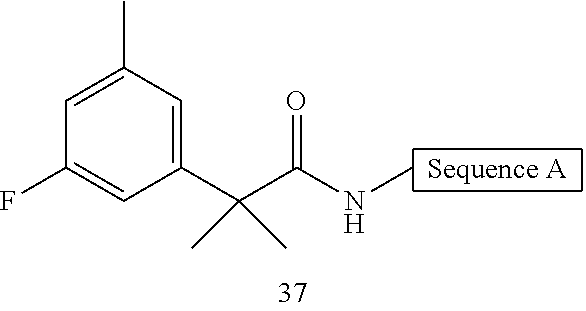 | 144 | C226H348FN47O67 | 1603.8 | 1602.8 (M − 3H+) |
 | 139 | C226H346FN47O69 | 1613.6 | 1612.8 (M − 3H+) |
 | 137 | C225H345F2N47O66S | 1209.4 | 1208.9 (M + 4H+) |
 | 280 | C225H345F2N47O67 | 1605.0 | 1604.2 (M − 3H+) |
 | 135 | C226H345FN48O66S | 1612.7 | 1611.8 (M − 3H+) |
 | 136 | C225H343FN52O65 | 1610.6 | 1609.8 (M − 3H+) |
 | 173 | C225H345F2N47O67 | 1205.3 | 1204.9 (M + 4H+) |
 | 174 | C228H350ClN47O67 | 1215.2 | 1214.4 (M + 4H+) |
 | 175 | C227H349Cl2N47O67 | 1220.7 | 1219.9 (M + 4H+) |
 | 172 | C227H348ClN47O68 | 1215.7 | 1214.9 (M + 4H+) |
 | 177 | C226H348ClN47O67 | 1208.4 | 1207.9 (M + 4H+) |
 | 218 | C227H351N47O67 | 1203.4 | 1202.9 (M + 4H+) |
 | 217 | C227H348ClN47O67 | 1211.5 | 1210.9 (M + 4H+) |
 | 214 | C227H348FN47O67 | 1207.6 | 1206.9 (M + 4H+) |
 | 220 | C227H347F2N47O67 | 1211.9 | 1211.4 (M + 4H+) |
 | 215 | C225H345F2N47O67 | 1205.6 | 1204.9 (M + 4H+) |
 | 185 | C225H346ClN47O67 | 1204.9 | 1204.4 (M + 4H+) |
 | 176 | C227H350ClN47O67 | 1212.0 | 1211.4 (M + 4H+) |
 | 163 | C225H345F2N47O67 | 1205.4 | 1204.8 (M + 4H+) |
 | 164 | C228H347FN48O67 | 1213.8 | 1213.1 (M + 4H+) |
 | 219 | C225H345ClFN47O67 | 1209.5 | 1208.9 (M + 4H+) |
 | 216 | C224H343F2N47O67 | 1201.8 | 1201.4 (M + 4H+) |
 | 211 | C224H345N47O67 | 1192.8 | 1192.4 (M + 4H+) |
 | 204 | C224H345N47O67 | 1192.8 | 1192.4 (M + 4H+) |
 | 199 | C225H345N47O67 | 1195.8 | 1195.4 (M + 4H+) |
 | 203 | C226H349N47O68 | 1203.8 | 1203.4 (M + 4H+) |
 | 198 | C225H346FN47O67 | 1200.8 | 1200.4 (M + 4H+) |
 | 206 | C225H344FN47O67 | 1200.4 | 1199.9 (M + 4H+) |
 | 208 | C228H351N47O68 | 1210.3 | 1209.9 (M + 4H+) |
 | 207 | C228H351N47O68 | 1210.4 | 1209.9 (M + 4H+) |
 | 209 | C226H349N47O68 | 1203.9 | 1203.4 (M + 4H+) |
 | 210 | C225H346FN47O67 | 1200.9 | 1200.4 (M + 4H+) |
 | 205 | C225H353N47O67 | 1197.9 | 1197.4 (M + 4H+) |
 | 188 | C223H340F3N47O67 | 1202.8 | 1202.4 (M + 4H+) |
 | 197 | C220H345N47O67 | 1180.9 | 1180.4 (M + 4H+) |
 | 225 | C227H347FN48O67 | 1210.7 | 1210.1 (M + 4H+) |
 | 224 | C227H347FN48O67 | 1210.6 | 1210.1 (M + 4H+) |
 | 223 | C227H347FN48O67 | 1210.6 | 1210.1 (M + 4H+) |
 | 222 | C227H347FN48O67 | 1210.7 | 1210.1 (M + 4H+) |
 | 213 | C227H345FN48O67 | 1210.1 | 1209.6 (M + 4H+) |
 | 212 | C229H349FN48O67 | 1217.2 | 1216.6 (M + 4H+) |
 | 201 | C227H347FN48O67 | 1210.6 | 1210.1 (M + 4H+) |
 | 200 | C227H347FN48O67 | 1210.6 | 1210.1 (M + 4H+) |
 | 195 | C228H347FN48O67 | 1213.8 | 1213.1 (M + 4H+) |
 | 194 | C227H347FN48O68 | 1214.7 | 1214.1 (M + 4H+) |
 | 191 | C226H346FN49O67 | 1210.8 | 1210.4 (M + 4H+) |
 | 193 | C230H353FN48O67 | 1221.2 | 1220.7 (M + 4H+) |
 | 192 | C228H349FN48O67 | 1214.2 | 1213.6 (M + 4H+) |
 | 171 | C229H351FN48O67 | 1217.8 | 1217.2 (M + 4H+) |
 | 170 | C232H349FN48O67 | 1226.2 | 1225.6 (M + 4H+) |
 | 165 | C227H344F4N48O67 | 1224.2 | 1223.6 (M + 4H+) |
 | 148 | C228H349FN48O67 | 1618.6 | 1617.9 (M + 3H+) |
 | 189 | C231H347FN48O68 | 1226.8 | 1226.1 (M + 4H+) |
 | 190 | C226H345FN48O67 | 1207.1 | 1206.6 (M + 4H+) |
 | 196 | C228H347FN48O69 | 1221.7 | 1221.1 (M + 4H+) |
 | 186 | C225H342FN49O68 | 1614.2 | 1613.5 (M + 3H+) |
 | 187 | C233H348FN49O71 | 1664.2 | 1663.5 (M + 3H+) |
 | 183 | C224H342FN47O66 | 1590.5 | 1589.5 (M + 3H+) |
 | 184 | C229H341FN48O70 | 1636.2 | 1635.2 (M + 4H+) |
 | 182 | C225H343FN48O67 | 1604.8 | 1603.8 (M + 4H+) |
 | 166 | C227H347FN48O66 | 1206.6 | 1206.1 (M + 4H+) |
 | 168 | C225H343FN48O66 | 1199.8 | 1199.1 (M + 4H+) |
 | 167 | C224H339FN48O69 | 1207.7 | 1207.1 (M + 4H+) |
 | 181 | C228H350ClN47O67 | 1215.0 | 1214.4 (M + 4H+) |
 | 180 | C228H350FN47O67 | 1210.9 | 1210.4 (M + 4H+) |
 | 169 | C226H344FN47O68 | 1207.4 | 1206.9 (M + 4H+) |
 | 249 | C227H348N48O68 | 1210.1 | 1209.6 (M + 4H+) |
 | 251 | C226H348N48O67 | 1203.0 | 1202.6 (M + 4H+) |
 | 252 | C224H349N49O67 | 1200.9 | 1200.4 (M + 4H+) |
 | 273 | C225H346ClN49O68 | 1215.8 | 1215.4 (M + 4H+) |
 | 244 | C226H347ClN48O68S | 1223.8 | 1223.1 (M + 4H+) |
 | 248 | C223H346ClN49O67 | 1206.0 | 1205.4 (M + 4H+) |
 | 259 | C225H346ClN49O68 | 1215.9 | 1215.4 (M + 4H+) |
 | 260 | C225H346FN49O68 | 1211.9 | 1211.4 (M + 4H+) |
 | 261 | C226H349N49O69 | 1214.9 | 1214.4 (M + 4H+) |
 | 262 | C225H345Cl2N49O68 | 1224.6 | 1223.9 (M + 4H+) |
 | 263 | C226H346F3N49O68 | 1224.4 | 1223.9 (M + 4H+) |
 | 264 | C225H345F2N49O68 | 1216.2 | 1215.9 (M + 4H+) |
 | 265 | C226H345ClF3N49O68 | 1232.9 | 1232.4 (M + 4H+) |
 | 266 | C225H345Cl2N49O68 | 1224.6 | 1223.9 (M + 4H+) |
 | 267 | C225H345F2N49O68 | 1216.4 | 1215.9 (M + 4H+) |
 | 268 | C225H346FN49O68 | 1211.9 | 1211.4 (M + 4H+) |
 | 269 | C226H346F3N4O69 | 1228.4 | 1227.9 (M + 4H+) |
 | 270 | C225H346ClN49O68 | 1215.9 | 1215.4 (M + 4H+) |
 | 271 | C226H349N49O68 | 1210.8 | 1210.4 (M + 4H+) |
 | 258 | C226H349N49O68 | 1210.9 | 1210.4 (M + 4H+) |
 | 221 | C226H347ClN48O68 | 1215.8 | 1215.1 (M + 4H+) |
 | 282 | C224H344F2N48O67 | 1205.9 | 1205.1 (M + 4H+) |
 | 178 | C228H350FN47O68 | 1214.9 | 1214.4 (M + 4H+) |
 | 179 | C228H349ClFN47O67 | 1219.4 | 1218.9 (M + 4H+) |
 | 154 | C234H352N48O72 | 1661.8 | 1661.2 (M − 3H+) |
 | 155 | C234H351ClN48O71 | 1668.2 | 1667.2 (M − 3H+) |
 | 156 | C234H351N49O72 | 1666.2 | 1665.5 (M − 3H+) |
 | 145 | C234H350F2N48O71 | 1668.9 | 1667.8 (M − 3H+) |
 | 101 | C232H352N50O72 | 1663.3 | 1662.5 (M − 3H+) |
 | 142 | C234H350FN49O72 | 1672.2 | 1671.5 (M − 3H+) |
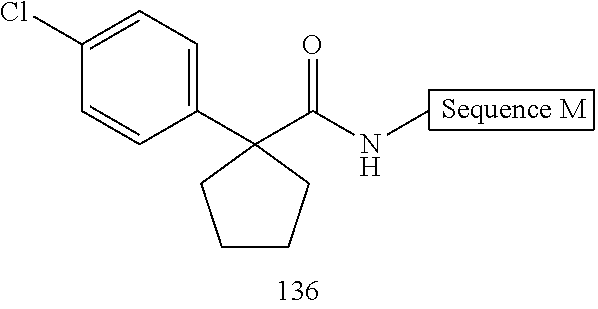 | 141 | C235H352ClFN48O71 | 1678.8 | 1677.8 (M − 3H+) |
 | 153 | C225H342N48O70 | 1611.9 | 1611.2 (M − 3H+) |
 | 143 | C224H340N48O69 | 1602.1 | 1601.1 (M − 3H+) |
 | 138 | C225H341FN48O70 | 1618.3 | 1617.2 (M − 3H+) |
 | 229 | C190H291FN38O54 | 1330.8 | 1330.4 (M + 3H+) |
 | 228 | C191H292F2N38O54 | 1341.5 | 1341.0 (M + 3H+) |
 | 227 | C190H294N38O54 | 1325.6 | 1325.1 (M + 3H+) |
 | 226 | C191H295FN38O54 | 1336.2 | 1335.7 (M + 3H+) |
 | 140 | C230H350F2N46O73 | 1654.1 | 1653.2 (M − 3H+) |
 | 134 | C229H349FN46O73 | 1643.3 | 1642.5 (M − 3H+) |
 | 277 | C222H342FN47O67 | 1585.4 | 1584.8 (M − 3H+) |
 | 274 | C221H344BrN49O66 | 1606.7 | 1605.5 (M − 3H+) |
 | 275 | C222H342ClN47O67 | 1591.1 | 1590.1 (M − 3H+) |
 | 276 | C225H346N48O68 | 1203.7 | 1203.1 (M + 4H+) |
 | 132 | C222H344FN49O67 | 1595.5 | 1594.8 (M − 3H+) |
 | 131 | C222H344BrN49O67 | 1615.8 | 1614.8 (M − 3H+) |
 | 133 | C225H347FN48O67 | 1204.7 | 1204.1 (M + 4H+) |
 | 117 | C225H346FN47O68 | 1606.2 | 1605.5 (M + 3H+) |
 | 118 | C226H348FN47O68 | 1609 | 1608.2 (M − 3H+) |
 | 119 | C226H345F4N47O67 | 1621.6 | 1620.8 (M − 3H+) |
 | 112 | C226H345F4N47O68 | 1627 | 1626.2 (M − 3H+) |
 | 107 | C232H350FN49O68 | 1645.1 | 1644.2 (M + 3H+) |
 | 106 | C224H341FN48O67 | 1600.0 | 1599.2 (M + 3H+) |
 | 126 | C226H345FN52O65 | 1615.2 | 1614.5 (M − 3H+) |
 | 127 | C225H343FN48O67 | 1602.7 | 1601.8 (M − 3H+) |
 | 120 | C226H345FN48O67 | 1607.3 | 1606.5 (M − 3H+) |
 | 122 | C225H344N48O68 | 1602 | 1601.2 (M − 3H+) |
 | 121 | C226H346N48O68 | 1606.7 | 1605.8 (M − 3H+) |
 | 115 | C226H345FN48O67 | 1609.2 | 1608.5 (M + 3H+) |
 | 104 | C226H345FN48O67 | 1207.2 | 1206.6 (M + 4H+) |
 | 116 | C227H347FN48O67 | 1613.9 | 1613.2 (M + 3H+) |
 | 110 | C226H345FN48O67 | 1609.3 | 1608.5 (M + 3H+) |
 | 111 | C227H345FN48O69 | 1624.2 | 1623.2 (M + 3H+) |
 | 108 | C225H343FN48O67 | 1604.6 | 1603.8 (M + 3H+) |
 | 109 | C226H345FN48O67 | 1609.2 | 1608.5 (M + 3H+) |
 | 123 | C224H340N48O70 | 1205.3 | 1204.6 (M − 4H+) |
 | 129 | C224H340N48O70 | 1607.2 | 1606.5 (M − 3H+) |
 | 124 | C229H342N48O71 | 1224.7 | 1224.1 (M − 4H+) |
 | 128 | C229H342N48O71 | 1633.2 | 1632.5 (M − 3H+) |
 | 125 | C233H349N49O72 | 1246.1 | 1245.4 (M − 4H+) |
 | 130 | C233H349N49O72 | 1661.8 | 1660.8 (M − 3H+) |
 | 114 | C228H340FN47O69 | 1619.6 | 1618.8 (M − 3H+) |
 | 113 | C228H341N47O70 | 1618.9 | 1618.1 (M − 3H+) |
 | 103 | C229H341FN46O70 | 1624.2 | 1623.8 (M − 3H+) |
 | 102 | C229H342N46O71 | 1623.6 | 1623.1 (M − 3H+) |
 | 281 | C223H351N49O68 | 1600.9 | 1600.2 (M − 3H+) |
 | 105 | C225H349N49O68 | 1608.3 | 1607.5 (M − 3H+) |
D. Biological Assays
a) HitHunter cAMP Assay
| TABLE 3 | ||
| Compound # | EC50(Emax) GLP-1R/nM | EC50(Emax) GIP-1R/nM |
| 101 | +++ | (93) | ++ | (96) |
| 102 | ++++ | (91) | +++ | (101) |
| 103 | ++++ | (89) | ++ | (96) |
| 104 | + | (60) | + | (66) |
| 105 | ++++ | (95) | +++ | (112) |
| 106 | ++++ | (97) | ++ | (98) |
| 107 | ++++ | (95) | +++ | (106) |
| 108 | +++++ | (93) | +++ | (95) |
| 109 | ++ | (82) | ++ | (96) |
| 110 | + | (31) | + | (32) |
| 111 | +++ | (95) | ++ | (105) |
| 112 | +++ | (115) | + | (99) |
| 113 | ++++ | (112) | +++ | (98) |
| 114 | ++++ | (114) | ++ | (95) |
| 115 | +++ | (120) | + | (111) |
| 116 | ++ | (94) | + | (66) |
| 117 | ++++ | (96) | +++ | (100) |
| 118 | +++ | (103) | ++ | (105) |
| 119 | +++ | (102) | ++ | (99) |
| 120 | ++ | (104) | + | (40) |
| 121 | ++ | (72) | − | (76) |
| 122 | +++ | (100) | ++ | (92) |
| 123 | ++ | (95) | ++ | (103) |
| 124 | ++ | (97) | ++ | (102) |
| 125 | ++ | (101) | ++ | (105) |
| 126 | + | (59) | + | (97) |
| 127 | +++ | (93) | + | (82) |
| 128 | +++ | (99) | ++ | (101) |
| 129 | +++ | (108) | ++ | (106) |
| 130 | +++ | (107) | +++ | (106) |
| 131 | ++++ | (102) | ++ | (96) |
| 132 | +++++ | (98) | ++ | (104) |
| 133 | ++++ | (104) | + | (107) |
| 134 | ++++ | (102) | +++ | (109) |
| 135 | ++++ | (99) | ++ | (87) |
| 136 | +++++ | (101) | +++ | (99) |
| 137 | ++++ | (99) | ++ | (87) |
| 138 | +++++ | (100) | ++++ | (100) |
| 139 | +++ | (102) | ++ | (109) |
| 140 | +++++ | (104) | +++++ | (108) |
| 141 | ++++ | (97) | ++++ | (108) |
| 142 | ++++ | (99) | +++++ | (99) |
| 143 | +++++ | (101) | ++ | (100) |
| 144 | +++++ | (99) | +++ | (103) |
| 145 | +++ | (97) | +++ | (102) |
| 146 | ++++ | (102) | +++ | (104) |
| 147 | ++++ | (99) | ++++ | (102) |
| 148 | +++ | (99) | ++ | (101) |
| 149 | ++++ | (98) | +++ | (96) |
| 150 | ++++ | (103) | ++++ | (91) |
| 151 | +++ | (101) | +++ | (105) |
| 152 | ++++ | (98) | ++ | (104) |
| 153 | ++++ | (101) | +++ | (105) |
| 154 | +++ | (99) | ++ | (106) |
| 155 | +++ | (101) | ++ | (104) |
| 156 | +++ | (95) | +++ | (95) |
| 157 | ++++ | (100) | ++ | (106) |
| 158 | ++++ | (97) | ++ | (118) |
| 159 | +++ | (100) | ++ | (104) |
| 160 | ++ | (97) | + | (94) |
| 161 | ++++ | (113) | ++ | (94) |
| 162 | +++ | (127) | +++ | (113) |
| 163 | ++++ | (104) | ++ | (105) |
| 164 | +++ | (112) | +++ | (106) |
| 165 | ++ | (111) | + | (92) |
| 166 | ++ | (77) | +++ | (108) |
| 167 | ++++ | (108) | ++ | (91) |
| 168 | ++ | (87) | +++ | (112) |
| 169 | ++++ | (108) | +++ | (110) |
| 170 | + | (57) | + | (37) |
| 171 | ++ | (109) | + | (94) |
| 172 | +++ | (89) | +++ | (109) |
| 173 | +++++ | (98) | +++ | (103) |
| 174 | ++ | (93) | ++ | (104) |
| 175 | +++ | (94) | +++ | (110) |
| 176 | +++ | (110) | +++ | (110) |
| 177 | +++ | (95) | ++ | (94) |
| 178 | ++++ | (98) | ++++ | (105) |
| 179 | ++++ | (100) | ++++ | (106) |
| 180 | ++++ | (101) | ++++ | (105) |
| 181 | ++++ | (97) | +++ | (106) |
| 182 | ++++ | (96) | ++ | (98) |
| 183 | ++++ | (96) | ++ | (95) |
| 184 | +++ | (99) | + | (90) |
| 185 | ++++ | (101) | ++ | (95) |
| 186 | ++++ | (99) | ++ | (100) |
| 187 | +++ | (95) | ++ | (95) |
| 188 | ++++ | (91) | ++ | (79) |
| 189 | ++++ | (95) | ++ | (93) |
| 190 | +++ | (98) | +++ | (100) |
| 191 | +++ | (92) | ++ | (98) |
| 192 | ++++ | (101) | +++ | (104) |
| 193 | ++ | (77) | + | (70) |
| 194 | ++ | (80) | ++ | (78) |
| 195 | + | (51) | + | (72) |
| 196 | ++++ | (95) | +++ | (100) |
| 197 | ++++ | (96) | ++ | (97) |
| 198 | ++++ | (99) | +++ | (102) |
| 199 | +++ | (100) | ++ | (102) |
| 200 | ++++ | (104) | ++ | (102) |
| 201 | ++ | (108) | + | (107) |
| 203 | ++++ | (103) | +++ | (103) |
| 204 | +++ | (106) | ++ | (105) |
| 205 | +++ | (99) | ++ | (99) |
| 206 | +++ | (98) | ++ | (106) |
| 207 | +++ | (97) | +++ | (109) |
| 208 | +++ | (111) | +++ | (109) |
| 209 | ++++ | (101) | ++ | (105) |
| 210 | ++++ | (104) | +++ | (101) |
| 211 | ++++ | (107) | ++ | (103) |
| 212 | ++ | (89) | − |
| 213 | + | (78) | + | (92) |
| 214 | ++++ | (97) | ++++ | (101) |
| 215 | ++++ | (98) | ++++ | (99) |
| 216 | ++++ | (102) | ++ | (93) |
| 217 | ++++ | (101) | ++++ | (108) |
| 218 | ++++ | (103) | ++++ | (100) |
| 219 | +++++ | (104) | ++++ | (106) |
| 220 | ++++ | (102) | ++++ | (108) |
| 221 | ++ | (95) | ++ | (95) |
| 222 | ++++ | (108) | ++ | (101) |
| 223 | ++ | (96) | + | (42) |
| 224 | ++++ | (102) | +++ | (103) |
| 225 | ++++ | (102) | ++ | (98) |
| 226 | ++++ | (104) | ++++ | (102) |
| 227 | +++ | (102) | +++ | (112) |
| 228 | ++++ | (100) | ++++ | (105) |
| 229 | ++++ | (102) | +++ | (107) |
| 230 | +++ | (99) | ++ | (96) |
| 231 | ++++ | (111) | ++++ | (110) |
| 233 | ++++ | (121) | ++++ | (109) |
| 234 | ++++ | (105) | ++++ | (112) |
| 235 | ++++ | (122) | ++++ | (108) |
| 236 | ++++ | (127) | +++ | (114) |
| 237 | +++++ | (93) | +++ | (91) |
| 238 | ++++ | (91) | ++ | (100) |
| 239 | +++++ | (91) | +++ | (99) |
| 240 | +++++ | (93) | +++ | (95) |
| 241 | ++++ | (95) | +++ | (100) |
| 242 | ++++ | (99) | ++ | (115) |
| 243 | ++++ | (109) | +++ | (110) |
| 244 | +++ | (109) | +++ | (120) |
| 245 | ++++ | (122) | ++++ | (90) |
| 246 | ++++ | (130) | ++++ | (100) |
| 247 | ++++ | (101) | +++ | (105) |
| 248 | ++++ | (90) | +++ | (104) |
| 249 | ++++ | (97) | ++ | (104) |
| 250 | ++++ | (90) | ++++ | (89) |
| 251 | ++++ | (91) | ++ | (92) |
| 252 | ++++ | (90) | ++ | (100) |
| 253 | +++++ | (94) | +++ | (105) |
| 254 | ++++ | (93) | +++ | (102) |
| 255 | ++++ | (90) | +++ | (99) |
| 256 | ++++ | (98) | +++ | (104) |
| 257 | +++++ | (89) | +++ | (92) |
| 258 | +++ | (100) | ++ | (101) |
| 259 | +++ | (103) | +++ | (103) |
| 260 | ++++ | (124) | +++ | (107) |
| 261 | +++ | (106) | +++ | (107) |
| 262 | ++ | (90) | +++ | (106) |
| 263 | +++ | (98) | +++ | (104) |
| 264 | +++ | (97) | +++ | (106) |
| 265 | ++ | (94) | +++ | (107) |
| 266 | +++ | (105) | +++ | (105) |
| 267 | +++ | (105) | +++ | (106) |
| 268 | +++ | (95) | +++ | (103) |
| 269 | +++ | (96) | +++ | (103) |
| 270 | ++ | (91) | +++ | (104) |
| 271 | +++ | (94) | +++ | (105) |
| 272 | ++ | (75) | ++ | (91) |
| 273 | +++ | (106) | +++ | (99) |
| 274 | ++ | (88) | + | (36) |
| 275 | +++ | (99) | ++ | (17) |
| 276 | ++ | (95) | + | (35) |
| 277 | +++ | (89) | + | (6) |
| 280 | +++ | (90) | +++ | (114) |
| 281 | ++++ | (95) | +++ | (108) |
| 282 | ++++ | (92) | ++ | (90) |
| Note: | ||||
| In table 3 “+++++” denotes EC50 < 0.1 nM; “++++” denotes 0.1 nM ≤ EC50 < 1 nM; “+++” denotes 1 nM ≤ EC50 < 10 nM; “++” denotes 10 nM ≤ EC50 < 100 nM; “+” denotes 100 nM ≤ EC50 ≤ 1000 nM; and “−” denotes EC50 > 1000 nM. | ||||
b) PathHunter β-Arrestin Assay
| TABLE 5 |
| β-arrestin activity |
| GLP-1R β Arrestin | GIPR β Arrestin | |
| Compound # | EC50 | EC50 |
| 101 | >1 μM | >1 μM |
| 102 | >1 μM | >1 μM |
| 103 | >1 μM | >1 μM |
| 104 | >1 μM | >1 μM |
| 105 | >1 μM | >1 μM |
| 106 | >1 μM | >1 μM |
| 107 | >1 μM | <1 μM |
| 108 | >1 μM | <1 μM |
| 109 | >1 μM | >1 μM |
| 110 | >1 μM | >1 μM |
| 111 | >1 μM | >1 μM |
| 112 | >1 μM | >1 μM |
| 113 | >1 μM | >1 μM |
| 114 | >1 μM | >1 μM |
| 115 | >1 μM | >1 μM |
| 116 | >1 μM | >1 μM |
| 117 | >1 μM | >1 μM |
| 118 | >1 μM | >1 μM |
| 119 | >1 μM | >1 μM |
| 120 | >1 μM | >1 μM |
| 121 | >1 μM | <1 μM |
| 122 | >1 μM | <1 μM |
| 123 | >1 μM | >1 μM |
| 124 | >1 μM | >1 μM |
| 125 | >1 μM | >1 μM |
| 126 | >1 μM | >1 μM |
| 127 | >1 μM | >1 μM |
| 128 | >1 μM | >1 μM |
| 129 | >1 μM | >1 μM |
| 130 | >1 μM | >1 μM |
| 131 | >1 μM | >1 μM |
| 132 | <1 μM | >1 μM |
| 133 | >1 μM | >1 μM |
| 134 | >1 μM | >1 μM |
| 135 | >1 μM | >1 μM |
| 136 | >1 μM | <1 μM |
| 137 | >1 μM | >1 μM |
| 138 | <1 μM | <1 μM |
| 139 | >1 μM | >1 μM |
| 140 | >1 μM | <1 μM |
| 141 | >1 μM | <1 μM |
| 142 | <1 μM | <1 μM |
| 143 | <1 μM | >1 μM |
| 144 | >1 μM | >1 μM |
| 145 | >1 μM | >1 μM |
| 146 | >1 μM | <1 μM |
| 147 | >1 μM | <1 μM |
| 148 | >1 μM | >1 μM |
| 149 | >1 μM | <1 μM |
| 150 | >1 μM | <1 μM |
| 151 | >1 μM | >1 μM |
| 152 | >1 μM | >1 μM |
| 153 | >1 μM | >1 μM |
| 154 | >1 μM | >1 μM |
| 155 | >1 μM | >1 μM |
| 156 | >1 μM | >1 μM |
| 157 | >1 μM | >1 μM |
| 158 | >1 μM | >1 μM |
| 159 | >1 μM | >1 μM |
| 160 | >1 μM | >1 μM |
| 161 | >1 μM | >1 μM |
| 162 | >1 μM | <1 μM |
| 163 | >1 μM | <1 μM |
| 164 | >1 μM | >1 μM |
| 165 | >1 μM | >1 μM |
| 166 | >1 μM | <1 μM |
| 167 | >1 μM | >1 μM |
| 168 | >1 μM | <1 μM |
| 169 | >1 μM | <1 μM |
| 170 | >1 μM | >1 μM |
| 171 | >1 μM | >1 μM |
| 172 | >1 μM | >1 μM |
| 173 | >1 μM | >1 μM |
| 174 | >1 μM | >1 μM |
| 175 | >1 μM | <1 μM |
| 176 | >1 μM | <1 μM |
| 177 | >1 μM | >1 μM |
| 178 | >1 μM | <1 μM |
| 179 | >1 μM | <1 μM |
| 180 | >1 μM | <1 μM |
| 181 | >1 μM | <1 μM |
| 182 | >1 μM | <1 μM |
| 183 | >1 μM | >1 μM |
| 184 | >1 μM | >1 μM |
| 185 | <1 μM | >1 μM |
| 186 | >1 μM | >1 μM |
| 187 | >1 μM | >1 μM |
| 188 | >1 μM | >1 μM |
| 189 | >1 μM | >1 μM |
| 190 | >1 μM | >1 μM |
| 191 | >1 μM | >1 μM |
| 192 | >1 μM | >1 μM |
| 193 | >1 μM | >1 μM |
| 194 | >1 μM | >1 μM |
| 195 | >1 μM | >1 μM |
| 196 | >1 μM | >1 μM |
| 197 | >1 μM | >1 μM |
| 198 | >1 μM | <1 μM |
| 199 | >1 μM | >1 μM |
| 200 | >1 μM | >1 μM |
| 201 | >1 μM | >1 μM |
| 203 | >1 μM | <1 μM |
| 204 | >1 μM | >1 μM |
| 205 | >1 μM | >1 μM |
| 206 | >1 μM | >1 μM |
| 207 | >1 μM | >1 μM |
| 208 | >1 μM | <1 μM |
| 209 | >1 μM | >1 μM |
| 210 | >1 μM | >1 μM |
| 211 | >1 μM | >1 μM |
| 212 | >1 μM | >1 μM |
| 213 | >1 μM | >1 μM |
| 214 | >1 μM | >1 μM |
| 215 | >1 μM | <1 μM |
| 216 | >1 μM | >1 μM |
| 217 | >1 μM | >1 μM |
| 218 | >1 μM | <1 μM |
| 219 | >1 μM | <1 μM |
| 220 | >1 μM | <1 μM |
| 221 | >1 μM | >1 μM |
| 222 | >1 μM | >1 μM |
| 223 | >1 μM | >1 μM |
| 224 | >1 μM | <1 μM |
| 225 | >1 μM | >1 μM |
| 226 | >1 μM | <1 μM |
| 227 | >1 μM | >1 μM |
| 228 | >1 μM | <1 μM |
| 229 | >1 μM | <1 μM |
| 230 | >1 μM | >1 μM |
| 231 | >1 μM | >1 μM |
| 233 | >1 μM | <1 μM |
| 234 | >1 μM | <1 μM |
| 235 | >1 μM | <1 μM |
| 236 | >1 μM | >1 μM |
| 237 | >1 μM | <1 μM |
| 238 | >1 μM | >1 μM |
| 239 | <1 μM | >1 μM |
| 240 | <1 μM | <1 μM |
| 241 | <1 μM | <1 μM |
| 242 | >1 μM | NA |
| 243 | >1 μM | NA |
| 244 | >1 μM | NA |
| 245 | >1 μM | <1 μM |
| 246 | <1 μM | <1 μM |
| 247 | >1 μM | >1 μM |
| 248 | >1 μM | NA |
| 249 | >1 μM | NA |
| 250 | >1 μM | NA |
| 252 | <1 μM | NA |
| 253 | <1 μM | NA |
| 254 | >1 μM | >1 μM |
| 255 | >1 μM | >1 μM |
| 256 | >1 μM | <1 μM |
| 257 | >1 μM | >1 μM |
| 258 | >1 μM | >1 μM |
| 259 | >1 μM | >1 μM |
| 260 | >1 μM | >1 μM |
| 261 | >1 μM | >1 μM |
| 262 | >1 μM | >1 μM |
| 263 | >1 μM | >1 μM |
| 264 | >1 μM | <1 μM |
| 265 | >1 μM | <1 μM |
| 266 | >1 μM | <1 μM |
| 267 | >1 μM | >1 μM |
| 268 | >1 μM | >1 μM |
| 269 | >1 μM | <1 μM |
| 270 | >1 μM | <1 μM |
| 271 | >1 μM | <1 μM |
| 272 | >1 μM | >1 μM |
| 273 | >1 μM | >1 μM |
| 274 | >1 μM | >1 μM |
| 275 | >1 μM | >1 μM |
| 276 | >1 μM | >1 μM |
| 277 | >1 μM | >1 μM |
| 280 | >1 μM | >1 μM |
| 281 | >1 μM | >1 μM |
| 282 | >1 μM | >1 μM |

-
- or a pharmaceutically acceptable salt thereof, wherein:
- Q is O or S;
- R* is as defined in (i), (ii), or (iii), below:

-
- wherein:
- L1 is selected from the group consisting of:
- C1-10 alkylene optionally substituted with from 1-3 substituents each independently selected from the group consisting of: halo; C1-4 alkoxy; —OH; phenyl; and NR′R″; and

wherein m1 is 0, 1, 2, 3, or 4;
-
- X1 is selected from the group consisting of: C(═O); C(═S); S(O)1-2; C(═O)N(R′)*; C(═S)N(R′)*; S(O)1-2N(R′)*; N(R′)C(═O)*; N(R′)C(═S)*; and N(R′)S(O)1-2*, wherein * represents the point of attachment to L1;
- RX1 and RX2 are each defined according to (AA) or (AB):
(AA)
- RX1 and RX2 are each defined according to (AA) or (AB):
- RX1 and RX2 are each independently selected from the group consisting of:
- —H, —F;
- C1-8 alkyl, C2-6 alkenyl, and C2-6 alkynyl, each of which is optionally substituted with from 1-3 Ra; and
- C3-8 cycloalkyl which is optionally substituted with from 1-3 Rb;
(AB)
- RX1 and RX2 taken together with the carbon atom to which each is attached form a saturated or partially unsaturated ring having from 3-10 ring atoms, wherein from 0-2 ring atoms are heteroatoms each independently selected from the group consisting of: O, N, N(H), N(Rc), and S(O)0-2, wherein the ring is optionally substituted at one or more ring carbon atoms with from 1-3 Rb;
- X2 is selected from the group consisting of: a bond; CH2; —N(R′)—; —O—; C(═O); C(═S); S(O)1-2; C(═O)N(R′)*; C(═S)N(R′)*; S(O)1-2N(R′)*; N(R′)C(═O)*; N(R′)C(═S)*; and N(R′)S(O)1-2*, wherein * represents the point of attachment to C(RX1RX2); and
- RZ is selected from the group consisting of:
- H;
- C1-6 alkyl optionally substituted with from 1-6 Ra;
- —RZA; and
- -LZA-RZA;
- LZA is C1-6 alkylene optionally substituted with from 1-3 independently selected Ra;
- RZA is Re;
- or
- X1 is selected from the group consisting of: C(═O); C(═S); S(O)1-2; C(═O)N(R′)*; C(═S)N(R′)*; S(O)1-2N(R′)*; N(R′)C(═O)*; N(R′)C(═S)*; and N(R′)S(O)1-2*, wherein * represents the point of attachment to L1;

-
- wherein:
- L5 is C1-10 alkylene optionally substituted with from 1-3 substituents each independently selected from the group consisting of: halo; C1-4 alkoxy; —OH; phenyl; and NR′R″;
- X5 is selected from the group consisting of: a bond; C(═O); C(═S); S(O)1-2; C(═O)N(R′)*; C(═S)N(R′)*; and S(O)1-2N(R′)*, wherein * represents the point of attachment to L5;
- RX3 and RX4 are each defined according to (BA) or (BB):
(BA)
- RX3 and RX4 are each defined according to (BA) or (BB):
- RX3 and RX4 are each independently selected from the group consisting of:
- —H, —F;
- C1-8 alkyl, C2-6 alkenyl, and C2-6 alkynyl, each of which is optionally substituted with from 1-3 Ra; and
- C3-6 cycloalkyl which is optionally substituted with from 1-3 Rb;
(BB)
-
- RZ5 is selected from the group consisting of: —RZE; -LZE-RZE; and C1-6 alkyl optionally substituted with from 1-6 Ra;
- LZE is C1-6 alkylene optionally substituted with from 1-3 independently selected Ra;
- RZE is Re;
- or

-
- L′ is C1-10 alkylene optionally substituted with from 1-3 substituents each independently selected from the group consisting of: halo; C1-4 alkoxy; —OH; phenyl; and NR′R″; and
- RZ7 is -LZG-RZG; LZG is C1-6 alkylene optionally substituted with from 1-3 independently selected Ra;
- RZG is Re;
- each of R1 and R2 is independently selected from the group consisting of H and C1-3 alkyl;
- a1 is 0, 1, 2, 3, or 4;
- R2′ is

-
- wherein:
- R3 is —C(O)OH, —C(O)OR4, —CH(C(O)OH)2, or a carboxylic acid isostere;
- a is 0, 1, 2, 3, 4, or 5; a2 is 0 or 1;
- each of R3a and R3b is independently H or C1-3 alkyl; and
- R4 is —(C0-3 alkylene)-Re or C1-6 alkyl optionally substituted with from 1-6 Ra
- W is a peptide having formula —W1—R5, wherein:
- W1 is a sequence of from 5-60 amino acids; and
- R5 is a C-terminal amino acid, amino ester, or amino acid amide that is optionally substituted with from 1-2 modifying groups;
- each occurrence of Ra is independently selected from the group consisting of: halo; —OH; —N(Rf)(R′); C1-4 alkoxy; C1-4 haloalkoxy; —OC(═O)(C1-6 alkyl); —C(═O)O(C1-6 alkyl); —C(═O)OH, —C(═O)N(R′)(R′″), —S(O)1-2(C1-6 alkyl); and cyano;
- each occurrence of Rb is independently selected from the group consisting of: C1-6 alkyl optionally substituted with from 1-6 Ra; C2-6 alkenyl; C2-6 alkynyl; —OH; oxo; -halo; —N(Rf)(R′); C1-4 alkoxy; C1-4 haloalkoxy; —C(═O)(C1-4 alkyl); —C(═O)O(C1-6 alkyl); —C(═O)OH; —C(═O)N(R′)(R″); —S(O)1-2N(R′)(R″); —S(O)1-2(C1-6 alkyl); —SFs; —NO2; and cyano;
- each occurrence of Re is independently selected from the group consisting of: C1-6 alkyl; C1-6 haloalkyl; —C(═O)(C1-6 alkyl); —C(═O)O(C1-6 alkyl); —C(═O)N(R′)(R″); and —S(O)1-2(C1-6 alkyl);
- each occurrence of Rd is independently selected from the group consisting of: —Re, —(C1-3 alkylene)-Re, —O—(C0-3 alkylene)-Re, —C(═O)(C0-3 alkylene)-Re, and —C(═O)(C0-3 alkylene)O—Re;
- each occurrence of Re is independently selected from the group consisting of:
- (i) C3-10 cycloalkyl, wherein the cycloalkyl is optionally substituted with from 1-4 independently selected Rb;
- (ii) heterocyclyl including from 3-10 ring atoms, wherein from 1-3 ring atoms are each independently selected from the group consisting of N, N(H), N(Rc), O, and S(O)0-2, wherein the heterocyclyl is optionally substituted with from 1-4 independently selected Rb at one or more ring carbon atoms;
- (iii) C6-10 aryl, wherein the aryl is optionally substituted with from 1-5 independently selected Rb; and
- (iv) heteroaryl including from 5-10 ring atoms, wherein from 1-4 ring atoms are each independently selected from the group consisting of N, N(H), N(Rc), O, and S(O)0-2, wherein the heteroaryl is optionally substituted with from 1-3 independently selected Rb at one or more ring carbon atoms;
- each occurrence of Rf is independently selected from the group consisting of: H; C1-4 alkyl; C3-6 cycloalkyl; —C(═O)(C1-6 alkyl); —C(═O)O(C1-6 alkyl); and —S(O)1-2(C1-6 alkyl); and
- each occurrence of R′ and R″ is independently selected from the group consisting of: H and C1-6 alkyl.

-
- RX1 and RX2 are each independently selected from the group consisting of:
- —F;
- C1-8 alkyl, C2-6 alkenyl, and C2-6 alkynyl, each of which is optionally substituted with from 1-3 Ra; and
- C3-6 cycloalkyl which is optionally substituted with from 1-3 Rb, or
(AB) - RX1 and RX2 taken together with the carbon atom to which each is attached form a saturated or partially unsaturated ring having from 3-10 ring atoms, wherein from 0-2 ring atoms are heteroatoms each independently selected from the group consisting of: O, N, N(H), N(Rc), and S(O)0-2, wherein the ring is optionally substituted at one or more ring carbon atoms with from 1-3 Rb.
-
- —F;
- C1-8 alkyl, C2-6 alkenyl, and C2-6 alkynyl, each of which is optionally substituted with from 1-3 Ra; and
- C3-6 cycloalkyl which is optionally substituted with from 1-3 Rb.

each of which is optionally substituted with from 1-2 independently selected C1-3 alkyl.
-
- (iii) C6-10 aryl, wherein the aryl is optionally substituted with from 1-5 independently selected Rb; and
- (iv) heteroaryl including from 5-10 ring atoms, wherein from 1-4 ring atoms are each independently selected from the group consisting of N, N(H), N(Rc), O, and S(O)0-2, wherein the heteroaryl is optionally substituted with from 1-3 independently selected Rb at one or more ring carbon atoms.


each optionally substituted with Rb.


wherein each Rb present in RZ is independently selected from the group consisting of: C1-3 alkyl optionally substituted with from 1-3 independently selected halo; —F; —Cl; —N(Rf)(R′); C1-4 alkoxy; C1-4 haloalkoxy; —C(═O)OH; —C(═O)N(R′)(R″); and cyano.


wherein, RK is a modifying group selected from an acyl group and a PEG group and combinations thereof.

-
- wherein:
- k1 is 1, 2, 3, or 4;
- k2 is 1, 2, 3, or 4;
- k3 is 0, 1, 2, 3, or 4; and
- k4 is an integer from 5 to 25.


Claims (11)


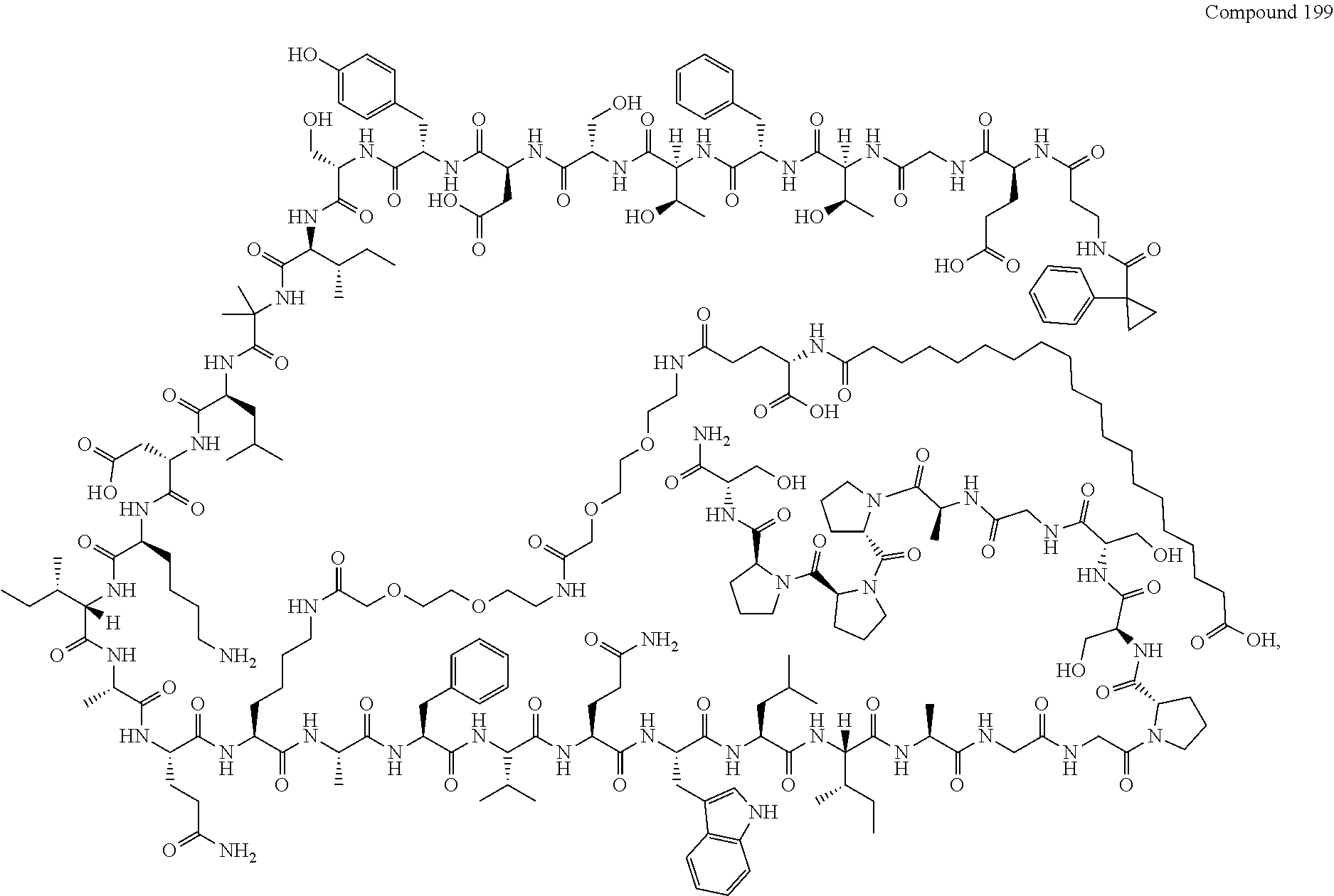


Priority Applications (2)
| Application Number | Priority Date | Filing Date | Title |
|---|---|---|---|
| US17/744,540 US12281149B2 (en) | 2021-05-13 | 2022-05-13 | Modulators of G-protein coupled receptors |
| US18/777,223 US20240383960A1 (en) | 2021-05-13 | 2024-07-18 | Modulators of G-Protein Coupled Receptors |
Applications Claiming Priority (2)
| Application Number | Priority Date | Filing Date | Title |
|---|---|---|---|
| US202163188342P | 2021-05-13 | 2021-05-13 | |
| US17/744,540 US12281149B2 (en) | 2021-05-13 | 2022-05-13 | Modulators of G-protein coupled receptors |
Related Child Applications (1)
| Application Number | Title | Priority Date | Filing Date |
|---|---|---|---|
| US18/777,223 Division US20240383960A1 (en) | 2021-05-13 | 2024-07-18 | Modulators of G-Protein Coupled Receptors |
Publications (2)
| Publication Number | Publication Date |
|---|---|
| US20230151074A1 US20230151074A1 (en) | 2023-05-18 |
| US12281149B2 true US12281149B2 (en) | 2025-04-22 |
Family
ID=82019613
Family Applications (2)
| Application Number | Title | Priority Date | Filing Date |
|---|---|---|---|
| US17/744,540 Active 2042-10-11 US12281149B2 (en) | 2021-05-13 | 2022-05-13 | Modulators of G-protein coupled receptors |
| US18/777,223 Pending US20240383960A1 (en) | 2021-05-13 | 2024-07-18 | Modulators of G-Protein Coupled Receptors |
Family Applications After (1)
| Application Number | Title | Priority Date | Filing Date |
|---|---|---|---|
| US18/777,223 Pending US20240383960A1 (en) | 2021-05-13 | 2024-07-18 | Modulators of G-Protein Coupled Receptors |
Country Status (20)
| Country | Link |
|---|---|
| US (2) | US12281149B2 (en) |
| EP (1) | EP4337682A2 (en) |
| JP (1) | JP2024517942A (en) |
| KR (1) | KR20240007251A (en) |
| CN (1) | CN117980325A (en) |
| AU (1) | AU2022272251A1 (en) |
| BR (1) | BR112023023559A2 (en) |
| CA (1) | CA3220005A1 (en) |
| CL (1) | CL2023003369A1 (en) |
| CO (1) | CO2023015805A2 (en) |
| CR (1) | CR20230530A (en) |
| DO (1) | DOP2023000247A (en) |
| EC (1) | ECSP23093673A (en) |
| GE (1) | GEAP202416419A (en) |
| IL (1) | IL308392A (en) |
| JO (1) | JOP20230291A1 (en) |
| MX (1) | MX2023013492A (en) |
| PE (1) | PE20240890A1 (en) |
| TW (1) | TW202313666A (en) |
| WO (1) | WO2022241287A2 (en) |
Families Citing this family (22)
| Publication number | Priority date | Publication date | Assignee | Title |
|---|---|---|---|---|
| KR20240118914A (en) | 2021-01-20 | 2024-08-05 | 바이킹 테라퓨틱스 인코포레이티드 | Compositions and methods for the treatment of metabolic and liver disorders |
| KR20240007251A (en) * | 2021-05-13 | 2024-01-16 | 카모트 테라퓨틱스, 인크. | Modulator of G-protein coupled receptors |
| CA3231953A1 (en) | 2021-09-15 | 2023-03-23 | Brian Lian | Compositions and methods for the treatment of metabolic and liver disorders |
| KR20250140132A (en) * | 2023-01-18 | 2025-09-24 | 상하이 민웨이 바이오테크놀로지 씨오 엘티디 | Fusion protein with triple activity and uses thereof |
| EP4716545A1 (en) * | 2023-05-21 | 2026-04-01 | Carmot Therapeutics Inc. | Treatment of adults with overweight or obesity with or without weight-related comorbidities |
| EP4777197A2 (en) | 2023-09-14 | 2026-07-22 | Ascletis Pharma (China) Co., Limited | Glp-1r agonist and therapeutic method thereof |
| WO2025109387A1 (en) | 2023-11-24 | 2025-05-30 | Ascletis Pharma (China) Co., Limited | Glp-1r agonist and therapeutic method thereof |
| TW202600132A (en) | 2024-03-08 | 2026-01-01 | 美商安尼波那生物公司 | Methods for treating obesity and increasing weight loss |
| WO2026030653A1 (en) | 2024-07-31 | 2026-02-05 | Carmot Therapeutics Inc. | Synthesis of an intermediate and its use for the preparation of glp-1r/gipr agonists |
| WO2026027650A1 (en) | 2024-08-02 | 2026-02-05 | F. Hoffmann-La Roche Ag | Process for the preparation of 2-(3-cyano-5-fluorophenyl)-2-methyl-propionic acid |
| TW202620036A (en) | 2024-09-27 | 2026-05-16 | 美商卡默療法股份有限公司 | Combination therapy of peptide tyrosine-tyrosine (pyy) analogues and glp-1r agonists |
| WO2026092581A1 (en) | 2024-10-30 | 2026-05-07 | Ascletis Pharma (China) Co., Limited | Thyroid hormone receptor beta modulator alone or in combination with a modulator of glp-1r, gipr or gcgr, for use in the treatment of obesity or overweight or for treating alopecia areata |
| WO2026092580A1 (en) | 2024-10-30 | 2026-05-07 | Ascletis Pharma (China) Co., Limited | Glp-1r\gipr\gcgr modulator in combination with thr-beta modulator for treatment of metabolic diseases |
| WO2026099325A1 (en) * | 2024-11-08 | 2026-05-15 | F. Hoffmann-La Roche Ag | X-β-ALA-GLU(OTBU)-GLY TETRAMER AND ITS USE IN SPPS SYNTHESIS |
| WO2026112366A1 (en) * | 2024-11-20 | 2026-05-28 | Carmot Therapeutics Inc. | Treatment of steatotic liver disease associated with metabolic dysfunction |
| WO2026119942A1 (en) * | 2024-12-05 | 2026-06-11 | F. Hoffmann-La Roche Ag | Synthesis of a peptide including stepwise sidechain preparation |
| WO2026119946A1 (en) * | 2024-12-05 | 2026-06-11 | F. Hoffmann-La Roche Ag | Spps synthesis of a peptide with bsmoc-lys building block |
| WO2026119941A1 (en) * | 2024-12-05 | 2026-06-11 | F. Hoffmann-La Roche Ag | Spps synthesis of a peptide comprising a fatty acid side chain |
| WO2026125207A1 (en) * | 2024-12-09 | 2026-06-18 | F. Hoffmann-La Roche Ag | Process for the preparation of a x-beta-ala-glu(otbu)-gly tetramer by lpps and its use in spps synthesis |
| WO2026131797A2 (en) | 2024-12-18 | 2026-06-25 | F. Hoffmann-La Roche Ag | Process for the preparation of a fatty acid compound |
| WO2026153900A1 (en) | 2025-01-15 | 2026-07-23 | F. Hoffmann-La Roche Ag | Process for the preparation of a bsmoc-lys fatty acid compound |
| CN119930843B (en) * | 2025-01-22 | 2025-12-30 | 北京康乐卫士生物技术股份有限公司 | Fusion protein with GLP and GIP dual activity and application thereof |
Citations (74)
| Publication number | Priority date | Publication date | Assignee | Title |
|---|---|---|---|---|
| WO1997010224A1 (en) | 1995-09-13 | 1997-03-20 | Takeda Chemical Industries, Ltd. | Benzoxazepine compounds, their production and use as lipid lowering agents |
| WO1999043707A1 (en) | 1998-02-27 | 1999-09-02 | Novo Nordisk A/S | N-terminally modified glp-1 derivatives |
| WO2000034331A2 (en) | 1998-12-07 | 2000-06-15 | Societe De Conseils De Recherches Et D'applications Scientifiques Sas | Analogues of glp-1 |
| WO2001014371A1 (en) | 1999-08-26 | 2001-03-01 | Berlex Laboratories, Inc. | N-heterocyclic derivatives as nos inhibitors |
| WO2001014372A2 (en) | 1999-08-25 | 2001-03-01 | Takeda Chemical Industries, Ltd. | Oxazole and thiazole derivatives as neurotrophin production/secretion promoting agent |
| WO2001017568A2 (en) | 1999-09-07 | 2001-03-15 | Conjuchem, Inc. | Bioconjugation in vivo to pulmonary or blood components |
| WO2001062765A2 (en) | 1999-02-26 | 2001-08-30 | Arena Pharmaceuticals, Inc. | Small molecule modulators of g protein-coupled receptor six |
| WO2002006234A1 (en) | 2000-07-17 | 2002-01-24 | Takeda Chemical Industries, Ltd. | Sulfone derivatives, process for their production and use thereof |
| WO2004039365A1 (en) | 2002-11-01 | 2004-05-13 | Takeda Pharmaceutical Company Limited | Agent for preventing or treating neuropathy |
| WO2004041266A1 (en) | 2002-11-08 | 2004-05-21 | Takeda Pharmaceutical Company Limited | Receptor function controlling agent |
| WO2004048363A1 (en) | 2002-11-22 | 2004-06-10 | Takeda Pharmaceutical Company Limited | Imidazole derivative, process for producing the same, and use |
| WO2004067548A2 (en) | 2003-01-31 | 2004-08-12 | Theratechnologies Inc. | Chemically modified metabolites of regulatory peptides and methods of producing and using same |
| WO2004106276A1 (en) | 2003-05-30 | 2004-12-09 | Takeda Pharmaceutical Company Limited | Condensed ring compound |
| WO2005030740A1 (en) | 2003-09-30 | 2005-04-07 | Takeda Pharmaceutical Company Limited | Thiazoline derivative and use of the same |
| WO2005058823A1 (en) | 2003-12-17 | 2005-06-30 | Takeda Pharmaceutical Company Limited | Urea derivative, process for producing the same, and use |
| WO2005063729A1 (en) | 2003-12-25 | 2005-07-14 | Takeda Pharmaceutical Company Limited | 3-(4-benzyloxyphenyl)propanoic acid derivatives |
| WO2005063725A1 (en) | 2003-12-26 | 2005-07-14 | Takeda Pharmaceutical Company Limited | Phenylpropanoic acid derivatives |
| WO2005087710A1 (en) | 2004-03-15 | 2005-09-22 | Takeda Pharmaceutical Company Limited | Aminophenylpropanoic acid derivative |
| WO2005095338A1 (en) | 2004-03-30 | 2005-10-13 | Takeda Pharmaceutical Company Limited | Alkoxyphenylpropanoic acid derivatives |
| WO2005113504A1 (en) | 2004-05-21 | 2005-12-01 | Takeda Pharmaceutical Company Limited | Cyclic amide derivatives, and their production and use as antithrombotic agents |
| WO2006112549A1 (en) | 2005-04-20 | 2006-10-26 | Takeda Pharmaceutical Company Limited | Fused heterocyclic compound |
| WO2006121860A2 (en) | 2005-05-06 | 2006-11-16 | Bayer Pharmaceuticals Corporation | Glucagon-like peptide 1 (glp-1) receptor agonists and their pharmacological methods of use |
| US20060275288A1 (en) | 2005-01-20 | 2006-12-07 | Grihalde Nelson D | GLP-1 receptor agonist and allosteric modulator monoclonal antibodies and uses thereof |
| WO2007013689A1 (en) | 2005-07-29 | 2007-02-01 | Takeda Pharmaceutical Company Limited | Cyclopropanecarboxylic acid compound |
| WO2007013694A1 (en) | 2005-07-29 | 2007-02-01 | Takeda Pharmaceutical Company Limited | Phenoxyalkanoic acid compound |
| WO2007018314A2 (en) | 2005-08-10 | 2007-02-15 | Takeda Pharmaceutical Company Limited | Therapeutic agent for diabetes |
| WO2007028135A2 (en) | 2005-09-01 | 2007-03-08 | Takeda Pharmaceutical Company Limited | Imidazopyridine compounds |
| WO2008001931A2 (en) | 2006-06-27 | 2008-01-03 | Takeda Pharmaceutical Company Limited | Fused cyclic compounds |
| WO2008021560A2 (en) | 2006-08-17 | 2008-02-21 | Amylin Pharmaceuticals, Inc. | Dpp-iv resistant gip hybrid polypeptides with selectable properties |
| WO2008047821A1 (en) | 2006-10-18 | 2008-04-24 | Takeda Pharmaceutical Company Limited | Fused heterocyclic compound |
| WO2008050821A1 (en) | 2006-10-19 | 2008-05-02 | Takeda Pharmaceutical Company Limited | Indole compound |
| WO2008093639A1 (en) | 2007-01-29 | 2008-08-07 | Takeda Pharmaceutical Company Limited | Pyrazole compound |
| WO2008099794A1 (en) | 2007-02-09 | 2008-08-21 | Takeda Pharmaceutical Company Limited | Fused ring compounds as partial agonists of ppar-gamma |
| WO2008136428A1 (en) | 2007-04-27 | 2008-11-13 | Takeda Pharmaceutical Company Limited | Nitrogen-containing five-membered heterocyclic compound |
| WO2008156757A1 (en) | 2007-06-19 | 2008-12-24 | Takeda Pharmaceutical Company Limited | Indazole compounds for activating glucokinase |
| WO2009115469A1 (en) | 2008-03-18 | 2009-09-24 | Novo Nordisk A/S | Protease stabilized, acylated insulin analogues |
| WO2010011439A2 (en) | 2008-06-17 | 2010-01-28 | Indiana University Research And Technology Corporation | Gip-based mixed agonists for treatment of metabolic disorders and obesity |
| US20100190750A1 (en) | 2006-04-11 | 2010-07-29 | Arena Pharmaceuticals, Inc. | GPR119 Receptor Agonists in Methods of Increasing Bone Mass and of Treating Osteoporosis and Other Conditions Characterized by Low Bone Mass, and Combination Therapy Relating Thereto |
| WO2011044212A1 (en) | 2009-10-09 | 2011-04-14 | Bristol-Myers Squibb Company | Modulators of g protein-coupled receptor 88 |
| WO2011094337A1 (en) | 2010-01-27 | 2011-08-04 | Indiana University Research And Technology Corporation | Glucagon antagonist - gip agonist conjugates and compositions for the treatment of metabolic disorders and obesity |
| WO2011143365A1 (en) | 2010-05-13 | 2011-11-17 | Amgen Inc. | Nitrogen heterocyclic compounds useful as pde10 inhibitors |
| US20120021979A1 (en) | 2010-06-24 | 2012-01-26 | Vanderbilt University | GLP-1 receptor modulation of addiction, neuropsychiatric disorders and erectile dysfunction |
| US8163757B2 (en) | 2003-11-04 | 2012-04-24 | Medigene Ag | Immuno inhibitory pyrazolone compounds |
| US20120148586A1 (en) | 2009-08-27 | 2012-06-14 | Joyce Ching Tsu Chou | Glucagon-like protein-1 receptor (glp-1r) agonists for treating autoimmune disorders |
| WO2012088379A2 (en) | 2010-12-22 | 2012-06-28 | Marcadia Biotech, Inc. | Methods for treating metabolic disorders and obesity with gip and glp-1 receptor-active glucagon-based peptides |
| WO2012158965A2 (en) | 2011-05-18 | 2012-11-22 | Mederis Diabetes, Llc | Improved peptide pharmaceuticals for insulin resistance |
| WO2012167744A1 (en) | 2011-06-10 | 2012-12-13 | Beijing Hanmi Pharmaceutical Co., Ltd. | Glucose dependent insulinotropic polypeptide analogs, pharmaceutical compositions and use thereof |
| US8372837B2 (en) | 2008-07-16 | 2013-02-12 | Bristol-Myers Squibb Company | Pyridone and pyridazone analogues as GPR119 modulators |
| US20130040884A1 (en) | 2003-09-19 | 2013-02-14 | Novo Nordisk A/S | Albumin-binding conjugates comprising fatty-acid and peg |
| WO2013148579A1 (en) | 2012-03-29 | 2013-10-03 | Cebix Inc. | Pegylated c-peptide |
| WO2014074218A1 (en) | 2012-11-12 | 2014-05-15 | Redwood Bioscience, Inc. | Compounds and methods for producing a conjugate |
| WO2014165240A1 (en) | 2013-03-13 | 2014-10-09 | Arizona Board Of Regents, A Body Corporate Of The State Of Arizona, Acting For & On Behalf Of | Synbodies for detection of human norovirus |
| WO2015031268A1 (en) | 2013-08-26 | 2015-03-05 | Arizona Board Of Regents On Behalf Of Arizona State University | High affinity synbodies for influenza |
| US20150352219A1 (en) | 2012-12-06 | 2015-12-10 | Regan James Anderson | Conjugate compounds |
| WO2016131893A1 (en) | 2015-02-18 | 2016-08-25 | Medimmune Limited | Incretin fusion polypeptides |
| US9474780B2 (en) | 2015-01-09 | 2016-10-25 | Eli Lilly And Company | GIP and GLP-1 co-agonist compounds |
| US20170095554A1 (en) | 2013-06-28 | 2017-04-06 | Peter Roderick DUNBAR | Amino acid and peptide conjugates and conjugation process |
| US9764004B2 (en) | 2015-10-26 | 2017-09-19 | Eli Lilly And Company | Glucagon receptor agonists |
| US20170326233A1 (en) | 2014-11-14 | 2017-11-16 | Angiochem Inc. | Conjugates including an antibody moiety, a polypeptide that traverses the blood-brain barrier, and a cytotoxin |
| GB2551945A (en) | 2015-12-18 | 2018-01-10 | Heptares Therapeutics Ltd | Novel GLP-1 receptor agonist peptides |
| US9884091B2 (en) | 2014-07-15 | 2018-02-06 | Lancaster University Business Enterprises Limited | Treatment of neurological diseases |
| WO2018104718A1 (en) | 2016-12-05 | 2018-06-14 | Lancaster University Business Enterprises Limited | Treatment of neurological diseases |
| WO2019183577A1 (en) | 2018-03-23 | 2019-09-26 | Carmot Therapeutics, Inc. | Modulators of g-protein coupled receptors |
| WO2020159949A1 (en) | 2019-01-29 | 2020-08-06 | Eli Lilly And Company | Process for preparing a gip/glp1 dual agonist |
| WO2022080986A1 (en) | 2020-10-16 | 2022-04-21 | 한미약품 주식회사 | Glp-1/gip dual agonist, long-acting conjugate thereof, and pharmaceutical composition comprising same |
| WO2022079639A1 (en) | 2020-10-17 | 2022-04-21 | Sun Pharmaceutical Industries Limited | Glp-1/gip dual agonists |
| WO2022121666A1 (en) | 2020-12-10 | 2022-06-16 | 江苏中新医药有限公司 | High-efficiency hypoglycemic protein drug |
| WO2022139538A1 (en) | 2020-12-24 | 2022-06-30 | 한미약품 주식회사 | Novel triple activator that activates all of glucagon, glp-1 and gip receptors, and use thereof |
| US20220251163A1 (en) | 2019-10-08 | 2022-08-11 | Sinopep-Allsino Biopharmaceutical Co., Ltd. | Gip and glp-1 dual agonist polypeptide compound, pharmaceutically acceptable salt and application thereof |
| WO2022241287A2 (en) * | 2021-05-13 | 2022-11-17 | Carmot Therapeutics, Inc. | Modulators of g-protein coupled receptors |
| WO2023028466A1 (en) | 2021-08-23 | 2023-03-02 | Eli Lilly And Company | Compounds and methods for liquid phase synthesis |
| WO2023030444A1 (en) | 2021-09-02 | 2023-03-09 | 广东东阳光药业有限公司 | Glp-1/gip dual-targeted polypeptide and fusion protein and applications thereof |
| WO2023089594A1 (en) | 2021-11-22 | 2023-05-25 | Sun Pharmaceutical Industries Limited | Process for the preparation of tirzepatide or pharmaceutically acceptable salt thereof |
| US20230241178A1 (en) | 2020-06-22 | 2023-08-03 | Sun Pharmaceutical Industries Limited | Long acting glp-1/gip dual agonists |
Family Cites Families (1)
| Publication number | Priority date | Publication date | Assignee | Title |
|---|---|---|---|---|
| CN108271356A (en) * | 2014-09-24 | 2018-07-10 | 印第安纳大学研究及科技有限公司 | incretin-insulin conjugate |
-
2022
- 2022-05-13 KR KR1020237042878A patent/KR20240007251A/en active Pending
- 2022-05-13 MX MX2023013492A patent/MX2023013492A/en unknown
- 2022-05-13 IL IL308392A patent/IL308392A/en unknown
- 2022-05-13 EP EP22729907.0A patent/EP4337682A2/en active Pending
- 2022-05-13 PE PE2023003051A patent/PE20240890A1/en unknown
- 2022-05-13 AU AU2022272251A patent/AU2022272251A1/en active Pending
- 2022-05-13 CA CA3220005A patent/CA3220005A1/en active Pending
- 2022-05-13 US US17/744,540 patent/US12281149B2/en active Active
- 2022-05-13 JP JP2023569936A patent/JP2024517942A/en active Pending
- 2022-05-13 GE GEAP202416419A patent/GEAP202416419A/en unknown
- 2022-05-13 CR CR20230530A patent/CR20230530A/en unknown
- 2022-05-13 CN CN202280048710.4A patent/CN117980325A/en active Pending
- 2022-05-13 WO PCT/US2022/029305 patent/WO2022241287A2/en not_active Ceased
- 2022-05-13 BR BR112023023559A patent/BR112023023559A2/en unknown
- 2022-05-13 TW TW111118138A patent/TW202313666A/en unknown
-
2023
- 2023-11-09 DO DO2023000247A patent/DOP2023000247A/en unknown
- 2023-11-10 CL CL2023003369A patent/CL2023003369A1/en unknown
- 2023-11-13 JO JOJO/P/2023/0291A patent/JOP20230291A1/en unknown
- 2023-11-21 CO CONC2023/0015805A patent/CO2023015805A2/en unknown
- 2023-12-13 EC ECSENADI202393673A patent/ECSP23093673A/en unknown
-
2024
- 2024-07-18 US US18/777,223 patent/US20240383960A1/en active Pending
Patent Citations (90)
| Publication number | Priority date | Publication date | Assignee | Title |
|---|---|---|---|---|
| WO1997010224A1 (en) | 1995-09-13 | 1997-03-20 | Takeda Chemical Industries, Ltd. | Benzoxazepine compounds, their production and use as lipid lowering agents |
| WO1999043707A1 (en) | 1998-02-27 | 1999-09-02 | Novo Nordisk A/S | N-terminally modified glp-1 derivatives |
| WO2000034331A2 (en) | 1998-12-07 | 2000-06-15 | Societe De Conseils De Recherches Et D'applications Scientifiques Sas | Analogues of glp-1 |
| WO2001062765A2 (en) | 1999-02-26 | 2001-08-30 | Arena Pharmaceuticals, Inc. | Small molecule modulators of g protein-coupled receptor six |
| WO2001014372A2 (en) | 1999-08-25 | 2001-03-01 | Takeda Chemical Industries, Ltd. | Oxazole and thiazole derivatives as neurotrophin production/secretion promoting agent |
| WO2001014371A1 (en) | 1999-08-26 | 2001-03-01 | Berlex Laboratories, Inc. | N-heterocyclic derivatives as nos inhibitors |
| WO2001017568A2 (en) | 1999-09-07 | 2001-03-15 | Conjuchem, Inc. | Bioconjugation in vivo to pulmonary or blood components |
| WO2002006234A1 (en) | 2000-07-17 | 2002-01-24 | Takeda Chemical Industries, Ltd. | Sulfone derivatives, process for their production and use thereof |
| WO2004039365A1 (en) | 2002-11-01 | 2004-05-13 | Takeda Pharmaceutical Company Limited | Agent for preventing or treating neuropathy |
| WO2004041266A1 (en) | 2002-11-08 | 2004-05-21 | Takeda Pharmaceutical Company Limited | Receptor function controlling agent |
| WO2004048363A1 (en) | 2002-11-22 | 2004-06-10 | Takeda Pharmaceutical Company Limited | Imidazole derivative, process for producing the same, and use |
| WO2004067548A2 (en) | 2003-01-31 | 2004-08-12 | Theratechnologies Inc. | Chemically modified metabolites of regulatory peptides and methods of producing and using same |
| WO2004106276A1 (en) | 2003-05-30 | 2004-12-09 | Takeda Pharmaceutical Company Limited | Condensed ring compound |
| US20130040884A1 (en) | 2003-09-19 | 2013-02-14 | Novo Nordisk A/S | Albumin-binding conjugates comprising fatty-acid and peg |
| WO2005030740A1 (en) | 2003-09-30 | 2005-04-07 | Takeda Pharmaceutical Company Limited | Thiazoline derivative and use of the same |
| US8163757B2 (en) | 2003-11-04 | 2012-04-24 | Medigene Ag | Immuno inhibitory pyrazolone compounds |
| WO2005058823A1 (en) | 2003-12-17 | 2005-06-30 | Takeda Pharmaceutical Company Limited | Urea derivative, process for producing the same, and use |
| WO2005063729A1 (en) | 2003-12-25 | 2005-07-14 | Takeda Pharmaceutical Company Limited | 3-(4-benzyloxyphenyl)propanoic acid derivatives |
| WO2005063725A1 (en) | 2003-12-26 | 2005-07-14 | Takeda Pharmaceutical Company Limited | Phenylpropanoic acid derivatives |
| WO2005087710A1 (en) | 2004-03-15 | 2005-09-22 | Takeda Pharmaceutical Company Limited | Aminophenylpropanoic acid derivative |
| WO2005095338A1 (en) | 2004-03-30 | 2005-10-13 | Takeda Pharmaceutical Company Limited | Alkoxyphenylpropanoic acid derivatives |
| WO2005113504A1 (en) | 2004-05-21 | 2005-12-01 | Takeda Pharmaceutical Company Limited | Cyclic amide derivatives, and their production and use as antithrombotic agents |
| US20060275288A1 (en) | 2005-01-20 | 2006-12-07 | Grihalde Nelson D | GLP-1 receptor agonist and allosteric modulator monoclonal antibodies and uses thereof |
| WO2006112549A1 (en) | 2005-04-20 | 2006-10-26 | Takeda Pharmaceutical Company Limited | Fused heterocyclic compound |
| EP1883419A2 (en) | 2005-05-06 | 2008-02-06 | Bayer Pharmaceuticals Corporation | Glucagon-like peptide 1 (glp-1) receptor agonists and their pharmacological methods of use |
| WO2006121860A2 (en) | 2005-05-06 | 2006-11-16 | Bayer Pharmaceuticals Corporation | Glucagon-like peptide 1 (glp-1) receptor agonists and their pharmacological methods of use |
| WO2007013689A1 (en) | 2005-07-29 | 2007-02-01 | Takeda Pharmaceutical Company Limited | Cyclopropanecarboxylic acid compound |
| WO2007013694A1 (en) | 2005-07-29 | 2007-02-01 | Takeda Pharmaceutical Company Limited | Phenoxyalkanoic acid compound |
| WO2007018314A2 (en) | 2005-08-10 | 2007-02-15 | Takeda Pharmaceutical Company Limited | Therapeutic agent for diabetes |
| WO2007028135A2 (en) | 2005-09-01 | 2007-03-08 | Takeda Pharmaceutical Company Limited | Imidazopyridine compounds |
| US20100190750A1 (en) | 2006-04-11 | 2010-07-29 | Arena Pharmaceuticals, Inc. | GPR119 Receptor Agonists in Methods of Increasing Bone Mass and of Treating Osteoporosis and Other Conditions Characterized by Low Bone Mass, and Combination Therapy Relating Thereto |
| WO2008001931A2 (en) | 2006-06-27 | 2008-01-03 | Takeda Pharmaceutical Company Limited | Fused cyclic compounds |
| WO2008021560A2 (en) | 2006-08-17 | 2008-02-21 | Amylin Pharmaceuticals, Inc. | Dpp-iv resistant gip hybrid polypeptides with selectable properties |
| WO2008047821A1 (en) | 2006-10-18 | 2008-04-24 | Takeda Pharmaceutical Company Limited | Fused heterocyclic compound |
| WO2008050821A1 (en) | 2006-10-19 | 2008-05-02 | Takeda Pharmaceutical Company Limited | Indole compound |
| WO2008093639A1 (en) | 2007-01-29 | 2008-08-07 | Takeda Pharmaceutical Company Limited | Pyrazole compound |
| WO2008099794A1 (en) | 2007-02-09 | 2008-08-21 | Takeda Pharmaceutical Company Limited | Fused ring compounds as partial agonists of ppar-gamma |
| WO2008136428A1 (en) | 2007-04-27 | 2008-11-13 | Takeda Pharmaceutical Company Limited | Nitrogen-containing five-membered heterocyclic compound |
| WO2008156757A1 (en) | 2007-06-19 | 2008-12-24 | Takeda Pharmaceutical Company Limited | Indazole compounds for activating glucokinase |
| WO2009115469A1 (en) | 2008-03-18 | 2009-09-24 | Novo Nordisk A/S | Protease stabilized, acylated insulin analogues |
| WO2010011439A2 (en) | 2008-06-17 | 2010-01-28 | Indiana University Research And Technology Corporation | Gip-based mixed agonists for treatment of metabolic disorders and obesity |
| EP2300035B1 (en) | 2008-06-17 | 2015-08-12 | Indiana University Research and Technology Corporation | Gip-based mixed agonists for treatment of metabolic disorders and obesity |
| US9062124B2 (en) | 2008-06-17 | 2015-06-23 | Indiana University Research And Technology Corporation | GIP-based mixed agonists for treatment of metabolic disorders and obesity |
| US20150322130A1 (en) | 2008-06-17 | 2015-11-12 | Indiana University Research And Technology Corporation | Gip-based mixed agonists for treatment of metabolic disorders and obesity |
| EP2952202B1 (en) | 2008-06-17 | 2017-10-18 | Indiana University Research and Technology Corporation | Gip-based mixed agonists for treatment of metabolic disorders and obesity |
| US8372837B2 (en) | 2008-07-16 | 2013-02-12 | Bristol-Myers Squibb Company | Pyridone and pyridazone analogues as GPR119 modulators |
| US20120148586A1 (en) | 2009-08-27 | 2012-06-14 | Joyce Ching Tsu Chou | Glucagon-like protein-1 receptor (glp-1r) agonists for treating autoimmune disorders |
| WO2011044212A1 (en) | 2009-10-09 | 2011-04-14 | Bristol-Myers Squibb Company | Modulators of g protein-coupled receptor 88 |
| US9487571B2 (en) | 2010-01-27 | 2016-11-08 | Indiana University Research And Technology Corporation | Glucagon antagonist-GIP agonist conjugates and compositions for the treatment of metabolic disorders and obesity |
| WO2011094337A1 (en) | 2010-01-27 | 2011-08-04 | Indiana University Research And Technology Corporation | Glucagon antagonist - gip agonist conjugates and compositions for the treatment of metabolic disorders and obesity |
| US8551946B2 (en) | 2010-01-27 | 2013-10-08 | Indiana University Research And Technology Corporation | Glucagon antagonist-GIP agonist conjugates and compositions for the treatment of metabolic disorders and obesity |
| WO2011143365A1 (en) | 2010-05-13 | 2011-11-17 | Amgen Inc. | Nitrogen heterocyclic compounds useful as pde10 inhibitors |
| US20120021979A1 (en) | 2010-06-24 | 2012-01-26 | Vanderbilt University | GLP-1 receptor modulation of addiction, neuropsychiatric disorders and erectile dysfunction |
| US8975223B2 (en) | 2010-12-22 | 2015-03-10 | Marcadia Biotech, Inc. | Methods for treating metabolic disorders and obesity with a peptide comprising the amino acid sequence of SEQ ID No. 146 |
| WO2012088379A2 (en) | 2010-12-22 | 2012-06-28 | Marcadia Biotech, Inc. | Methods for treating metabolic disorders and obesity with gip and glp-1 receptor-active glucagon-based peptides |
| US20160175400A1 (en) | 2010-12-22 | 2016-06-23 | Marcadia Biotech, Inc. | Methods for treating metabolic disorders and obesity with gip and glp-1 receptor-active glucagon-based peptides |
| WO2012158965A2 (en) | 2011-05-18 | 2012-11-22 | Mederis Diabetes, Llc | Improved peptide pharmaceuticals for insulin resistance |
| WO2012167744A1 (en) | 2011-06-10 | 2012-12-13 | Beijing Hanmi Pharmaceutical Co., Ltd. | Glucose dependent insulinotropic polypeptide analogs, pharmaceutical compositions and use thereof |
| WO2013148579A1 (en) | 2012-03-29 | 2013-10-03 | Cebix Inc. | Pegylated c-peptide |
| WO2014074218A1 (en) | 2012-11-12 | 2014-05-15 | Redwood Bioscience, Inc. | Compounds and methods for producing a conjugate |
| US20150352219A1 (en) | 2012-12-06 | 2015-12-10 | Regan James Anderson | Conjugate compounds |
| WO2014165240A1 (en) | 2013-03-13 | 2014-10-09 | Arizona Board Of Regents, A Body Corporate Of The State Of Arizona, Acting For & On Behalf Of | Synbodies for detection of human norovirus |
| US20170095554A1 (en) | 2013-06-28 | 2017-04-06 | Peter Roderick DUNBAR | Amino acid and peptide conjugates and conjugation process |
| WO2015031268A1 (en) | 2013-08-26 | 2015-03-05 | Arizona Board Of Regents On Behalf Of Arizona State University | High affinity synbodies for influenza |
| US9884091B2 (en) | 2014-07-15 | 2018-02-06 | Lancaster University Business Enterprises Limited | Treatment of neurological diseases |
| US20170326233A1 (en) | 2014-11-14 | 2017-11-16 | Angiochem Inc. | Conjugates including an antibody moiety, a polypeptide that traverses the blood-brain barrier, and a cytotoxin |
| US9474780B2 (en) | 2015-01-09 | 2016-10-25 | Eli Lilly And Company | GIP and GLP-1 co-agonist compounds |
| EP3242887B1 (en) | 2015-01-09 | 2019-08-14 | Eli Lilly and Company | Gip and glp-1 co-agonist compounds |
| WO2016131893A1 (en) | 2015-02-18 | 2016-08-25 | Medimmune Limited | Incretin fusion polypeptides |
| US9884093B2 (en) | 2015-10-26 | 2018-02-06 | Eli Lilly And Company | Glucagon receptor agonists |
| US9764004B2 (en) | 2015-10-26 | 2017-09-19 | Eli Lilly And Company | Glucagon receptor agonists |
| GB2551945A (en) | 2015-12-18 | 2018-01-10 | Heptares Therapeutics Ltd | Novel GLP-1 receptor agonist peptides |
| WO2018104718A1 (en) | 2016-12-05 | 2018-06-14 | Lancaster University Business Enterprises Limited | Treatment of neurological diseases |
| EP3548061B1 (en) | 2016-12-05 | 2020-09-09 | Lancaster University Business Enterprises Limited | Treatment of neurological diseases |
| US11220534B2 (en) | 2016-12-05 | 2022-01-11 | Lancaster University Business Enterprises Limited | Treatment of neurological diseases |
| US20220033457A1 (en) | 2016-12-05 | 2022-02-03 | Lancaster University Business Enterprises Limited | Treatment of neurological diseases |
| WO2019183577A1 (en) | 2018-03-23 | 2019-09-26 | Carmot Therapeutics, Inc. | Modulators of g-protein coupled receptors |
| WO2020159949A1 (en) | 2019-01-29 | 2020-08-06 | Eli Lilly And Company | Process for preparing a gip/glp1 dual agonist |
| US20220135639A1 (en) | 2019-01-29 | 2022-05-05 | Eli Lilly And Company | Process for preparing a gip/glp1 dual agonist |
| US20220251163A1 (en) | 2019-10-08 | 2022-08-11 | Sinopep-Allsino Biopharmaceutical Co., Ltd. | Gip and glp-1 dual agonist polypeptide compound, pharmaceutically acceptable salt and application thereof |
| US20230241178A1 (en) | 2020-06-22 | 2023-08-03 | Sun Pharmaceutical Industries Limited | Long acting glp-1/gip dual agonists |
| WO2022080986A1 (en) | 2020-10-16 | 2022-04-21 | 한미약품 주식회사 | Glp-1/gip dual agonist, long-acting conjugate thereof, and pharmaceutical composition comprising same |
| WO2022079639A1 (en) | 2020-10-17 | 2022-04-21 | Sun Pharmaceutical Industries Limited | Glp-1/gip dual agonists |
| WO2022121666A1 (en) | 2020-12-10 | 2022-06-16 | 江苏中新医药有限公司 | High-efficiency hypoglycemic protein drug |
| US20220298214A1 (en) | 2020-12-10 | 2022-09-22 | Xintrum Pharmaceuticals, Ltd. | Highly effective blood-glucose-lowering protein drug |
| WO2022139538A1 (en) | 2020-12-24 | 2022-06-30 | 한미약품 주식회사 | Novel triple activator that activates all of glucagon, glp-1 and gip receptors, and use thereof |
| WO2022241287A2 (en) * | 2021-05-13 | 2022-11-17 | Carmot Therapeutics, Inc. | Modulators of g-protein coupled receptors |
| WO2023028466A1 (en) | 2021-08-23 | 2023-03-02 | Eli Lilly And Company | Compounds and methods for liquid phase synthesis |
| WO2023030444A1 (en) | 2021-09-02 | 2023-03-09 | 广东东阳光药业有限公司 | Glp-1/gip dual-targeted polypeptide and fusion protein and applications thereof |
| WO2023089594A1 (en) | 2021-11-22 | 2023-05-25 | Sun Pharmaceutical Industries Limited | Process for the preparation of tirzepatide or pharmaceutically acceptable salt thereof |
Non-Patent Citations (36)
Also Published As
| Publication number | Publication date |
|---|---|
| ECSP23093673A (en) | 2024-01-31 |
| GEAP202416419A (en) | 2024-03-25 |
| MX2023013492A (en) | 2024-02-29 |
| WO2022241287A2 (en) | 2022-11-17 |
| CA3220005A1 (en) | 2022-11-17 |
| BR112023023559A2 (en) | 2024-02-06 |
| PE20240890A1 (en) | 2024-04-24 |
| EP4337682A2 (en) | 2024-03-20 |
| DOP2023000247A (en) | 2024-03-28 |
| WO2022241287A3 (en) | 2022-12-29 |
| CO2023015805A2 (en) | 2023-12-11 |
| CN117980325A (en) | 2024-05-03 |
| AU2022272251A1 (en) | 2023-11-16 |
| CR20230530A (en) | 2024-02-19 |
| TW202313666A (en) | 2023-04-01 |
| IL308392A (en) | 2024-01-01 |
| JOP20230291A1 (en) | 2023-11-13 |
| US20240383960A1 (en) | 2024-11-21 |
| CL2023003369A1 (en) | 2024-05-17 |
| US20230151074A1 (en) | 2023-05-18 |
| KR20240007251A (en) | 2024-01-16 |
| JP2024517942A (en) | 2024-04-23 |
Similar Documents
| Publication | Publication Date | Title |
|---|---|---|
| US20230151074A1 (en) | Modulators of g-protein coupled receptors | |
| US12552791B2 (en) | Heterocyclic GLP-1 agonists | |
| TWI840348B (en) | Modulators of g-protein coupled receptors | |
| US11926643B2 (en) | Heterocyclic GLP-1 agonists | |
| JP7821785B2 (en) | Heterocyclic GLP-1 agonists | |
| US20250188103A1 (en) | Heterocyclic glp-1 agonists | |
| US20240327404A1 (en) | Heterocyclic glp-1 agonists | |
| CN110709414A (en) | GIP receptor activating peptide | |
| WO2025045208A1 (en) | Heteroaryl-heterocycloalkyl-based glp-1 agonists | |
| EP4638440A1 (en) | Heterocyclic glp-1 agonists | |
| US20250019389A1 (en) | Heterocyclic agonists | |
| WO2024125602A1 (en) | Salts and solid forms of a compound having glp-1 agonist activity | |
| EP4638455A1 (en) | Heterocyclic glp-1 agonists | |
| EA052579B1 (en) | G-PROTEIN-COUPLED RECEPTOR MODULATORS | |
| WO2026041075A1 (en) | Gpl-1 agonists | |
| HK40098769A (en) | Heterocyclic glp-1 agonists | |
| BR122025025149A2 (en) | HETEROCYCLIC GLP-1 AGONIST COMPOUNDS, PHARMACEUTICAL COMPOSITION COMPRISING THE SAME, USES OF SAID COMPOUNDS AND METHOD FOR PREPARING A COMPOUND |
Legal Events
| Date | Code | Title | Description |
|---|---|---|---|
| FEPP | Fee payment procedure |
Free format text: ENTITY STATUS SET TO UNDISCOUNTED (ORIGINAL EVENT CODE: BIG.); ENTITY STATUS OF PATENT OWNER: LARGE ENTITY |
|
| FEPP | Fee payment procedure |
Free format text: ENTITY STATUS SET TO SMALL (ORIGINAL EVENT CODE: SMAL); ENTITY STATUS OF PATENT OWNER: LARGE ENTITY |
|
| AS | Assignment |
Owner name: CARMOT THERAPEUTICS, INC., CALIFORNIA Free format text: ASSIGNMENT OF ASSIGNORS INTEREST;ASSIGNORS:ERLANSON, DANIEL;FUCINI, RAYMOND V.;HANSEN, STIG;AND OTHERS;SIGNING DATES FROM 20220503 TO 20220601;REEL/FRAME:060829/0201 |
|
| STPP | Information on status: patent application and granting procedure in general |
Free format text: DOCKETED NEW CASE - READY FOR EXAMINATION |
|
| STPP | Information on status: patent application and granting procedure in general |
Free format text: NON FINAL ACTION MAILED |
|
| STPP | Information on status: patent application and granting procedure in general |
Free format text: RESPONSE TO NON-FINAL OFFICE ACTION ENTERED AND FORWARDED TO EXAMINER |
|
| STPP | Information on status: patent application and granting procedure in general |
Free format text: NOTICE OF ALLOWANCE MAILED -- APPLICATION RECEIVED IN OFFICE OF PUBLICATIONS |
|
| FEPP | Fee payment procedure |
Free format text: ENTITY STATUS SET TO UNDISCOUNTED (ORIGINAL EVENT CODE: BIG.); ENTITY STATUS OF PATENT OWNER: LARGE ENTITY |
|
| STPP | Information on status: patent application and granting procedure in general |
Free format text: PUBLICATIONS -- ISSUE FEE PAYMENT RECEIVED |
|
| STPP | Information on status: patent application and granting procedure in general |
Free format text: AWAITING TC RESP, ISSUE FEE PAYMENT VERIFIED |
|
| STPP | Information on status: patent application and granting procedure in general |
Free format text: PUBLICATIONS -- ISSUE FEE PAYMENT VERIFIED |
|
| STPP | Information on status: patent application and granting procedure in general |
Free format text: AWAITING TC RESP., ISSUE FEE NOT PAID |
|
| STPP | Information on status: patent application and granting procedure in general |
Free format text: PUBLICATIONS -- ISSUE FEE PAYMENT VERIFIED |
|
| STCF | Information on status: patent grant |
Free format text: PATENTED CASE |