US12271663B2 - Method for collaborative controlling networks resilience of unmanned cluster system, terminal, and storage medium thereof - Google Patents

Method for collaborative controlling networks resilience of unmanned cluster system, terminal, and storage medium thereof Download PDF

Info

Publication number
US12271663B2
US12271663B2 US18/603,317 US202418603317A US12271663B2 US 12271663 B2 US12271663 B2 US 12271663B2 US 202418603317 A US202418603317 A US 202418603317A US 12271663 B2 US12271663 B2 US 12271663B2
Authority
US
United States
Prior art keywords
meaning
unmanned
dot over
uncertainty
unmanned system
Prior art date
Legal status (The legal status is an assumption and is not a legal conclusion. Google has not performed a legal analysis and makes no representation as to the accuracy of the status listed.)
Active
Application number
US18/603,317
Other versions
US20240330527A1 (en
Inventor
Xiaomin Zhao
Zhengrong Cui
Fangfang Dong
Chang Pan
Binhe Li
Current Assignee (The listed assignees may be inaccurate. Google has not performed a legal analysis and makes no representation or warranty as to the accuracy of the list.)
Hefei University of Technology
Original Assignee
Hefei University of Technology
Priority date (The priority date is an assumption and is not a legal conclusion. Google has not performed a legal analysis and makes no representation as to the accuracy of the date listed.)
Filing date
Publication date
Application filed by Hefei University of Technology filed Critical Hefei University of Technology
Assigned to HEFEI UNIVERSITY OF TECHNOLOGY reassignment HEFEI UNIVERSITY OF TECHNOLOGY ASSIGNMENT OF ASSIGNORS INTEREST (SEE DOCUMENT FOR DETAILS). Assignors: CUI, ZHENGRONG, DONG, FANGFANG, LI, BINHE, PAN, Chang, ZHAO, XIAOMIN
Publication of US20240330527A1 publication Critical patent/US20240330527A1/en
Application granted granted Critical
Publication of US12271663B2 publication Critical patent/US12271663B2/en
Active legal-status Critical Current
Anticipated expiration legal-status Critical

Links

Images

Classifications

    • GPHYSICS
    • G06COMPUTING OR CALCULATING; COUNTING
    • G06FELECTRIC DIGITAL DATA PROCESSING
    • G06F30/00Computer-aided design [CAD]
    • G06F30/10Geometric CAD
    • G06F30/18Network design, e.g. design based on topological or interconnect aspects of utility systems, piping, heating ventilation air conditioning [HVAC] or cabling
    • GPHYSICS
    • G05CONTROLLING; REGULATING
    • G05DSYSTEMS FOR CONTROLLING OR REGULATING NON-ELECTRIC VARIABLES
    • G05D1/00Control of position, course, altitude or attitude of land, water, air or space vehicles, e.g. using automatic pilots
    • G05D1/60Intended control result
    • G05D1/656Interaction with payloads or external entities
    • G05D1/689Pointing payloads towards fixed or moving targets
    • GPHYSICS
    • G05CONTROLLING; REGULATING
    • G05DSYSTEMS FOR CONTROLLING OR REGULATING NON-ELECTRIC VARIABLES
    • G05D1/00Control of position, course, altitude or attitude of land, water, air or space vehicles, e.g. using automatic pilots
    • G05D1/60Intended control result
    • G05D1/69Coordinated control of the position or course of two or more vehicles
    • GPHYSICS
    • G05CONTROLLING; REGULATING
    • G05DSYSTEMS FOR CONTROLLING OR REGULATING NON-ELECTRIC VARIABLES
    • G05D1/00Control of position, course, altitude or attitude of land, water, air or space vehicles, e.g. using automatic pilots
    • G05D1/60Intended control result
    • G05D1/69Coordinated control of the position or course of two or more vehicles
    • G05D1/698Control allocation
    • G05D1/6983Control allocation by distributed or sequential control

Definitions

  • the present invention relates to methods for collaborative control, and more particularly to a method for collaborative controlling networks resilience of an unmanned cluster system, a computer terminal, and a computer readable storage media thereof.
  • unmanned system technology represented by unmanned vehicles, unmanned drones, unmanned ships, etc.
  • unmanned systems Due to limitations in power function performance and other aspects, a single unmanned system is difficult to adapt to complex environmental changes and meet changeable task requirements in practical applications. For example, tasks such as resource exploration, military operations, post-disaster rescue, and other tasks usually require multiple unmanned systems to perform tasks cooperatively.
  • the cluster system with multiple unmanned systems operating cooperatively can realize mutual behavior coordination, quickly adapt to the dynamic environment, and have the ability to perform complex and changeable tasks, which has broad application prospects in transportation, agriculture, manufacturing, military medical treatment, and other fields.
  • Cooperative control is one of the key technologies in the application of unmanned cluster systems, which makes multiple individuals in the cluster work together to complete complex tasks by designing appropriate control methods and strategies.
  • patent CN114610072A discloses a distributed time-varying formation tracking controller construction method based on the UAV dynamics model and inner and outer loop control structure, which can realize distributed formation tracking motion of multiple UAV cluster systems
  • patent CN115407798A discloses a robust control algorithm based on multi-UAV formation model and error function integral, which can realize multi-UAV cluster trajectory tracking under the influence of external unknown disturbance
  • patent CN111766899B discloses a four-rotor UAV cluster anti-interference formation control method based on interference observer, which can improve the active anti-interference ability of the whole formation and reduce the overall energy loss of the formation.
  • the unmanned cluster system may have nonlinear dynamics characteristics, and a plenty of model systems may have uncertainties caused by parameter perturbations and external perturbations.
  • the existing technology rarely takes into account the uncertainty of system parameters and the influence of network attack input.
  • the unmanned systems in the cluster rely on communication networks to exchange information, so when the cluster is subjected to network attacks, the stability of the system collaborative control will be difficult to maintain.
  • Step S 4 construct an uncertainty boundary function of each unmanned system based on the dynamic model correspondingly, and the uncertainty boundary function involves the uncertainty and the influence correspondingly.
  • Step S 22 ensure a potential function U i* ( ⁇ ) with regard to the i'th unmanned system and the corresponding target; and solve the partial derivative of the potential function U i* ( ⁇ ) according to p i and p*.
  • C i (p i , ⁇ dot over (p) ⁇ i , i ,t) ⁇ dot over (p) ⁇ i means the Coriolis/Centrifugal force.
  • G i (p i , i ,t) means the gravitational force.
  • F i (p i , ⁇ dot over (p) ⁇ i , i ,t) means the other force.
  • ⁇ i (t) means an input of control force.
  • Step S 41 decompose the dynamic model of the i'th unmanned system as follows according to the effect on the uncertainty of system parameters, wich i is defined as the nominal part and the ⁇ i (p i ,t) is defined as the uncertain part:
  • Step S 43 get the boundary function ⁇ i ( ⁇ i ,p i , ⁇ dot over (p) ⁇ i ,t) for describing the uncertainty boundary information of the uncertainty of system parameters and the influence of network attack input
  • the method of getting the boundary function ⁇ i ( ⁇ i ,p i , ⁇ dot over (p) ⁇ i ,t) includes:
  • ⁇ min ( ⁇ ) means the minimum value of the matrix eigenvalue.
  • ⁇ circumflex over ( ⁇ ) ⁇ i is the estimated value of ⁇ i
  • t 0 means the initial time.
  • Y i1 and Y i2 both mean a parameter matrix with adjustable adaptive law, Y i1 >0, Y i2 >0.
  • the method for collaborative controlling networks resilience of the present invention further includes Step S 54 .
  • Step S 54 adjust parameters of the adaptive robust controller, the parameters includes ⁇ i , Y i1 , Y i2 .
  • FIG. 4 is a trajectory chart of distances between each two unmanned systems in the unmanned cluster system.
  • FIG. 5 is a trajectory chart of speeds in the X direction of all unmanned systems in the unmanned cluster system.
  • FIG. 7 is a trajectory chart of the integral control error ⁇ under different control parameters ⁇ i .
  • the spatial status information of each target includes p* and ⁇ dot over (p) ⁇ *(t) also named ⁇ dot over (p) ⁇ *.
  • the spatial status information of the i'th unmanned system includes p i and ⁇ dot over (p) ⁇ i (t) also named ⁇ dot over (p) ⁇ i ,p i ⁇ R k .
  • p* means the spatial position of the corresponding target.
  • ⁇ dot over (p) ⁇ * means the speed of the corresponding target.
  • k means the coordinate dimension of each unmanned system.
  • R k means k dimensional vector space in the field of real numbers.
  • x i means the horizontal coordinate of the i'th unmanned system.
  • y i means the vertical coordinate of the i'th unmanned system.
  • ⁇ i means the vehicle heading angle of the i'th unmanned system.
  • a i ( p i , t ) ⁇ p ⁇ i b i ( p i , p ⁇ i , t )
  • a i [ 1 0 0 0 1 ]
  • p ⁇ i [ x ⁇ i y ⁇ i ⁇ ⁇ i ]
  • T p ⁇ i [ x ⁇ i y ⁇ i ⁇ i ]
  • the targets have some attraction with each unmanned system, then each unmanned system can be able to track the targets to get a good tracking effect.
  • the kinematic model consisted of U ij ( ⁇ ) and U i* ( ⁇ ) means the best motion state of the unmanned cluster system.
  • U ij ( ⁇ ) and U i* ( ⁇ ) means the best motion state of the unmanned cluster system.
  • Step S 3 construct a dynamic model of each unmanned system, the dynamic models are affected by the uncertainty of system parameters and the influence of network attack inputs of the unmanned cluster system.
  • the method for constructing the dynamic model includes the following steps S 31 ⁇ S 33 .
  • D ai (p i (t), ⁇ dot over (p) ⁇ i (t),t) means input matrix of the network attack input of the i'th unmanned system
  • ⁇ i ⁇ R l means compact set of the unmanned cluster system.
  • R l means l dimensional vector space in the field of real numbers.
  • ⁇ i means the possible boundary of ⁇ ai .
  • ⁇ i (t) means an influence coefficient for controlling the network attack input.
  • D ai (p i (t), ⁇ dot over (p) ⁇ i (t),t) is an exact dimension.
  • D ai ( ⁇ ) is a continuous function.
  • the dynamic model of a unmanned vehicle system can be named as:
  • yi means the uncertain variables of the i'th unmanned system.
  • K i means a positive definite matrix of the i'th unmanned system.
  • ⁇ E i means a constant satisfying the following condition:
  • ⁇ i ( ⁇ i , p i , p ⁇ i , t ) ⁇ i ( 1 + ⁇ p ⁇ i ⁇ ) 2
  • Step S 5 design an adaptive robust controller of each unmanned system according to the constraint following error and the uncertainty boundary function correspondingly.
  • the method of designing the adaptive robust controller includes following steps S 51 and S 52 .
  • ⁇ circumflex over ( ⁇ ) ⁇ i is the estimated value of ⁇ i
  • t 0 means the initial time.
  • Y i1 and Y i2 both mean a parameter matrix with adjustable adaptive law, Y i1 >0, Y i2 >0.
  • ⁇ dot over (p) ⁇ i means the speed of the i'th unmanned system.
  • ⁇ i means a controlling and adjusting parameter which is greater than 0; s i1 (p i , ⁇ dot over (p) ⁇ i ,t) used to handle initial incompatibility problems. s i2 ( ⁇ circumflex over ( ⁇ ) ⁇ I ,p i , ⁇ dot over (p) ⁇ i ,t) is used to handle the uncertainty and the influence, and then it is ensured that the adaptive robust controller has good recovery capability under the affection of the uncertainty and the influence.
  • a i (p i ,t) means the constraint matrix of the i'th unmanned system.
  • ⁇ min (K i ) is thhe minimum value of the K i
  • ⁇ min (Y i1 ⁇ 1 ) is the minimum value of the Y i1 ⁇ 1 .
  • R _ ⁇ ⁇ 1 ⁇ ⁇ 2 ⁇ d _ , r means initial conditions. d means a positive number greater than d .
  • FIG. 3 shows the trajectory of the constraint following error of the cluster system over time. It can be seen that the constraint following error of the cluster system converges quickly to zero, indicating that the adaptive robust control instrument designed in this embodiment has good control performance in the presence of parameter uncertainty and network attacks. It can effectively handle system parameter uncertainty and network attack input problems.

Landscapes

  • Engineering & Computer Science (AREA)
  • Physics & Mathematics (AREA)
  • General Physics & Mathematics (AREA)
  • Geometry (AREA)
  • Theoretical Computer Science (AREA)
  • Aviation & Aerospace Engineering (AREA)
  • Radar, Positioning & Navigation (AREA)
  • Remote Sensing (AREA)
  • Automation & Control Theory (AREA)
  • Computational Mathematics (AREA)
  • Mathematical Analysis (AREA)
  • Mathematical Optimization (AREA)
  • Pure & Applied Mathematics (AREA)
  • Computer Hardware Design (AREA)
  • Evolutionary Computation (AREA)
  • General Engineering & Computer Science (AREA)
  • Computer Networks & Wireless Communication (AREA)
  • Feedback Control In General (AREA)

Abstract

A method for collaborative controlling networks resilience of an unmanned cluster system a computer terminal and a computer readable storage media thereof are invented. The method includes: collecting both targets for tracking and the spatial status information of each unmanned system in the unmanned cluster system; establishing a kinematic model of the unmanned cluster system and constructing a dynamic model of each unmanned system accordingly; constructing an uncertainty boundary function and a adaptive robust controller of each unmanned system accordingly. Then it can effectively deal with the uncertainty of system parameters and the influence of network attack input of the unmanned cluster system by the present invention.

Description

FIELD OF THE INVENTION
The present invention relates to methods for collaborative control, and more particularly to a method for collaborative controlling networks resilience of an unmanned cluster system, a computer terminal, and a computer readable storage media thereof.
BACKGROUND OF THE INVENTION
As the ability of sensing, computing, information processing, and energy storaging is being steadily improved, unmanned system technology, represented by unmanned vehicles, unmanned drones, unmanned ships, etc., has developed rapidly. Due to limitations in power function performance and other aspects, a single unmanned system is difficult to adapt to complex environmental changes and meet changeable task requirements in practical applications. For example, tasks such as resource exploration, military operations, post-disaster rescue, and other tasks usually require multiple unmanned systems to perform tasks cooperatively. The cluster system with multiple unmanned systems operating cooperatively can realize mutual behavior coordination, quickly adapt to the dynamic environment, and have the ability to perform complex and changeable tasks, which has broad application prospects in transportation, agriculture, manufacturing, military medical treatment, and other fields.
Cooperative control is one of the key technologies in the application of unmanned cluster systems, which makes multiple individuals in the cluster work together to complete complex tasks by designing appropriate control methods and strategies. For example, patent CN114610072A discloses a distributed time-varying formation tracking controller construction method based on the UAV dynamics model and inner and outer loop control structure, which can realize distributed formation tracking motion of multiple UAV cluster systems For example, patent CN115407798A discloses a robust control algorithm based on multi-UAV formation model and error function integral, which can realize multi-UAV cluster trajectory tracking under the influence of external unknown disturbance For example, patent CN111766899B discloses a four-rotor UAV cluster anti-interference formation control method based on interference observer, which can improve the active anti-interference ability of the whole formation and reduce the overall energy loss of the formation.
In practice for the control field, the unmanned cluster system may have nonlinear dynamics characteristics, and a plenty of model systems may have uncertainties caused by parameter perturbations and external perturbations. However, when studying the collaborative control technology of unmanned cluster systems, the existing technology rarely takes into account the uncertainty of system parameters and the influence of network attack input. The unmanned systems in the cluster rely on communication networks to exchange information, so when the cluster is subjected to network attacks, the stability of the system collaborative control will be difficult to maintain.
SUMMARY OF THE INVENTION
The object of the present invention is to provide a method for collaborative controlling networks resilience of an unmanned cluster system to solve the problem that the stability of the system will be difficult to maintain. Another object of the present invention is to provide a computer terminal used the method. The third object of the present invention is to provide a readable computer storage media used the method.
The present invention provides a method for collaborative controlling networks resilience of an unmanned cluster system, including the following steps S1˜S5.
Step S1, collect both targets for tracking and the spatial status information of each unmanned system in the unmanned cluster system.
Step S2, establish a kinematic model of the unmanned cluster system to get the constraint following error of each unmanned system according to the target and the spatial status information correspondingly.
Step S3, construct a dynamic model of each unmanned system, the dynamic models are affected by the uncertainty of system parameters and the influence of network attack input of the unmanned cluster system.
Step S4, construct an uncertainty boundary function of each unmanned system based on the dynamic model correspondingly, and the uncertainty boundary function involves the uncertainty and the influence correspondingly.
Step S5, design an adaptive robust controller of each unmanned system according to the constraint following error and the uncertainty boundary function correspondingly.
In the method for collaborative controlling networks resilience of the present invention, in step S1, the spatial status information of each target includes p* and {dot over (p)}*(t) also named {dot over (p)}*, p* meaning the spatial position of the corresponding target, {dot over (p)}* meaning the speed of the corresponding target. The spatial status information of each unmanned system includes pi and {dot over (p)}i(t) also named {dot over (p)}i, pi∈Rk, k meaning the coordinate dimension of each unmanned system, Rk meaning k dimensional vector space in the field of real numbers.
In the method for collaborative controlling networks resilience of the present invention, step S2 includes details of the method for getting the constraint following error.
The method for getting the constraint following error includes steps S21˜S24.
Step S21, ensure a potential function Uij(⋅) with regard to the i'th unmanned system and the j'th unmanned system, and solve the partial derivative of the potential function Uij(⋅) according to pi and pj, pj meaning the spatial position of the j'th unmanned system, j∈N+, N+={1, 2, . . . , n}, n meaning the total number of the unmanned systems.
Step S22, ensure a potential function Ui*(⋅) with regard to the i'th unmanned system and the corresponding target; and solve the partial derivative of the potential function Ui*(⋅) according to pi and p*.
Step S23, establish the kinematic model of the unmanned cluster system:
p . i = - j = 1 , j i n U ij p i ( p i , p j ) - U i * p i ( p i , p * ) + p . * .
Step S24, transform the kinematic model to a first-order constrained-differential equation with performance constrain:
A i ( p i , t ) p . i = c i ( p i , t ) .
solve the partial derivative of the first-order constrained-differential equation to a second-order standard constraint form by transposing:
A i ( p i , t ) p .. i = b i ( p i , p . i , t ) .
Then, get the constraint following error ϵi:
ϵ i = A i ( p i , t ) p . i - c i ( p i , t ) .
Where, Ai(pi,t) means an inertia matrix of the i'th unmanned system. t meaning time. ci(pi,t) means the first-order constrained vector of the i'th unmanned system. bi(pi, {dot over (p)}i, t) means the second-order constrained vector of the i'th unmanned system.
In the method for collaborative controlling networks resilience of the present invention, the method for constructing the dynamic model includes steps S31˜S33.
Step S31, constructing the dynamic model as follows:
i ( p i ( t ) , ϱ i ( t ) , t ) p .. i ( t ) + C i ( p i ( t ) , p . i ( t ) , ϱ i ( t ) , t ) p . i ( t ) + G i ( p i ( t ) , ϱ i ( t ) , t ) + F i ( p i ( t ) , p . i ( t ) , ϱ i ( t ) , t ) = τ i ( t ) .
Where,
Figure US12271663-20250408-P00001
i(t)⊂Γi⊂Rp. Γi⊂Rp means compact set of the unmanned cluster system. Rp means p dimensional vector space in the field of real numbers. Γi means the possible boundary of
Figure US12271663-20250408-P00001
i(t). {umlaut over (p)}i(t) means the accelerated speed of the i'th unmanned system also named {umlaut over (p)}i.
Figure US12271663-20250408-P00002
i(pi,
Figure US12271663-20250408-P00001
i,t) meaning an inertia matrix of the i'th unmanned system. Ci(pi,{dot over (p)}i,
Figure US12271663-20250408-P00001
i,t){dot over (p)}i means the Coriolis/Centrifugal force. Gi(pi,
Figure US12271663-20250408-P00001
i,t) means the gravitational force. Fi(pi,{dot over (p)}i,
Figure US12271663-20250408-P00001
i,t) means the other force. τi(t) means an input of control force.
Figure US12271663-20250408-P00002
i(pi,
Figure US12271663-20250408-P00001
i,t), Ci(pi,{dot over (p)}i,
Figure US12271663-20250408-P00001
i,t){dot over (p)}i, Fi(pi,{dot over (p)}i,
Figure US12271663-20250408-P00001
i,t), Gi(pi,
Figure US12271663-20250408-P00001
i,t) all are exact dimensions. Mi(⋅), Ci(⋅), Gi(⋅), Fi(⋅) all are continuous function.
Step S32, considered the uncertainty of system parameters and the influence of network attack inputs, reconstruct the dynamic model as:
i ( p i ( t ) , ϱ i ( t ) , t ) p .. i ( t ) + C i ( p i ( t ) , p . i ( t ) , ϱ i ( t ) , t ) p . i ( t ) + G i ( p i ( t ) , ϱ i ( t ) , t ) + F i ( p i ( t ) , p . i ( t ) , ϱ i ( t ) , t ) + D ai ( p i ( t ) , p . i ( t ) , t ) v ai = ϕ i ( t ) τ i ( t ) .
Where Dai(pi(t),{dot over (p)}i(t),t) means input matrix of the network attack input of the i'th unmanned system. νai∈Σi⊂Rl, Σi⊂Rl means the compact set of the unmanned cluster system. Rl means l dimensional vector space in the field of real numbers. Σi means the possible boundary of Vai. ϕi(t) means an influence coefficient for controlling the network attack input. Dai(pi(t),{dot over (p)}i(t),t) is an exact dimension. Dai(⋅) is a continuous function.
Step S33, set constraint conditions to the dynamic model:
If any (pi,t) is (pi,t)⊂Rk×R,
Figure US12271663-20250408-P00001
i∈Γi, the inertia matrix Mi(pi,
Figure US12271663-20250408-P00001
i,t) means a positive definite matrix.
If any (pi,t)∈Rk×R and Ai(pi,t) is full rank, the inertia matrix Ai(pi,t) Ai T(pi,t) is reversible;
If any t is t∈R, ϕi(t) has a lower limiting value ϕ i, ϕ i≤ϕi(t)≤1.
In the method for collaborative controlling networks resilience of the present invention, t the method for constructing the uncertainty boundary function includes steps S41˜S43.
Step S41, decompose the dynamic model of the i'th unmanned system as follows according to the effect on the uncertainty of system parameters, wich
Figure US12271663-20250408-P00002
i is defined as the nominal part and the Δ
Figure US12271663-20250408-P00002
i(pi,t) is defined as the uncertain part:
{ i ( p i , t ) := _ i ( p i , t ) + Δ i ( p i , t ) H i ( p i , t ) := _ i - 1 ( p i , t ) H i ( p i , ϱ i , t ) := i - 1 ( p i , ϱ i , t ) - _ i - 1 ( p i , t ) E i ( p i , ϱ i , t ) := _ i ( p i , t ) i - 1 ( p i , ϱ i , t ) - I H i ( p i , ϱ i , t ) := H i ( p i , t ) E i ( p i , ϱ i , t ) .
Step S42, decompose the input matrix Dai of the i'th unmanned system based on the network attack input as follows:
D ai = D ^ ai + D ~ ai . Wherein : { D ^ ai = ( A i H i ) T [ ( A i H i ) ( A i H i ) T ] - 1 A i H i D ai D ~ ai = D ai - ( A i H i ) T [ A i H i ) ( A i H i ) T ] - 1 A i H i D ai .
Step S43, get the boundary function Θii,pi,{dot over (p)}i,t) for describing the uncertainty boundary information of the uncertainty of system parameters and the influence of network attack input, the method of getting the boundary function Θii,pi,{dot over (p)}i,t) includes:
    • (a) designing a formula with a constant vector γi and the boundary function Θii,pi,{dot over (p)}i,t) as follows:
max ϱ i Γ i , v ai i K i A i ( p i , t ) [ i - 1 ( p i , ϱ i , t ) ( - C i ( p i , p . i , ϱ i , t ) p . i - G i ( p i , ϱ i , t ) - F i ( p i , p . i , ϱ i , t ) ) - H i ( p i , t ) D ^ ai ( p i , p . i , t ) v ai - Δ H i ( p i , t ) D ai ( p i , p . i , t ) v ai ] - K i b i ( 1 + δ E i ) Θ i ( γ i , p i , p . i , t )
Wherein γi means the uncertain variables of the i'th unmanned system. Ki means a positive definite matrix of the i'th unmanned system. δE i means a constant satisfying the following condition:
- 2 < 2 δ E i min ϱ i Γ i λ min [ Φ i ( p i , ϱ i , t ) + Φ i T ( p i , ϱ i , t ) ] . Wherein : Φ i ( p i , ϱ i , t ) = K i A i ( p i , t ) H i ( p i , t ) E i ( p i , ϱ i , t ) _ i ( p i , t ) × A i T ( p i , t ) ( A i ( p i , t ) A i T ( p i , t ) ) - 1 K i - 1 .
λmin(⋅) means the minimum value of the matrix eigenvalue.
    • (b) the boundary function Θii,pi,{dot over (p)}i,t) is a continuous concave function as for the constant vector γi, and to any vector in the field of real numbers, γi1 and γi2 meet the following condition:
Θ i ( γ i 1 ) - Θ ( γ i 2 ) Θ i γ i ( γ i 2 ) ( γ i 1 - γ i 2 ) .
In the method for collaborative controlling networks resilience of the present invention, the method of designing the adaptive robust controller includes steps S51˜S52.
Step S51, design an adaptive law {circumflex over ({dot over (γ)})}i for estimating the constant vector γi based on the constraint following error e; and the boundary function Θi({circumflex over (γ)}i,pi,{dot over (p)}i,t),
γ ^ . i = Y i 1 Θ i T γ i ( γ ^ i , p i , p . i , t ) ϵ i - Y i 2 γ ^ i
In this formula, {circumflex over (γ)}i is the estimated value of γi, {circumflex over (γ)}i(t0)>0. t0 means the initial time. Yi1 and Yi2 both mean a parameter matrix with adjustable adaptive law, Yi1>0, Yi2>0.
Step S52, design an adaptive robust controller as following formulas based on the adaptive law {circumflex over ({dot over (γ)})}i and the constraint following error ϵi:
τ i ( t ) = s i 1 ( p i , p ˙ i , t ) + s i 2 ( γ ^ i , p i , p ˙ i , t ) s i 1 ( p i , p . i , t ) = - κ i _ i ( p i , t ) A i T ( p i , t ) [ A i ( p i , t ) A i T ( p i , t ) ] - 1 K i - 1 ϵ i ( p i , p . i , t ) s i 2 ( γ ^ i , p i , p . i , t ) = - _ i ( p i , t ) A i T ( p i , t ) ( A i ( p i , t ) A i T ( p i , t ) ) - 1 K i - 1 ϵ i ( p i , p . i , t ) × Θ i 2 ( γ ^ i , p i , p . i , t )
In this formula, κi means a controlling and adjusting parameter which is greater than 0; si1(pi,{dot over (p)}i,t) used to handle initial incompatibility problems. si2({circumflex over (γ)}i,pi,{dot over (p)}i,t) is used to handle the uncertainty of system parameters and the influence of network attack input.
The method for collaborative controlling networks resilience of the present invention, further includes step S53.
Step S53, analyses the stability of the adaptive robust controller by a Lyapunov function as follows:
V = n i = 1 V i . Wherein : V i = 1 2 ϵ i T K i ϵ i + 1 2 ( 1 + δ E i ) ( γ ^ i - γ i ) T Y i 1 - 1 ( γ ^ i - γ i ) .
The method for collaborative controlling networks resilience of the present invention, further includes Step S54.
Step S54, adjust parameters of the adaptive robust controller, the parameters includes κi, Yi1, Yi2.
The present invention further provides a computer terminal, including computer programs, storage, a processor, and a processor. The storage is used for storing the computer program. The processor is used for running the stored computer programs. The computer programs are used to achieve functions according to the method for collaborative controlling networks resilience as stated in any of the above.
The present invention further provides a computer readable storage media, used to achieve functions according to the method for collaborative controlling networks resilience as stated in any of the above.
Compared with the prior art, the advantages and beneficial effects of the present invention are as follows.
The method for collaborative controlling networks resilience takes both the uncertainty of system parameters and the influence of network attack input into account to construct a dynamic model. Based on the dynamic model, an uncertainty boundary function is constructed which contains the uncertainty and the influence. A function value is adjusted adaptively to be closer to the actual boundary information using an adaptive law so that the corresponding control quantity can be used by compensating the impact of uncertainty and influence. The problem of uncertainty and influence is effectively dealt with, and the problem of cooperative control stability of unmanned cluster systems is difficult to maintain. At the same time, the unmanned cluster system can quickly and stably meet the constraint following performance requirements, strengthen the robustness and fault tolerance of cluster cooperative control, improve the reliability of cluster control and the security of task execution, and better meet the practical application requirements.
BRIEF DESCRIPTION OF THE DRAWINGS
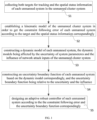
FIG. 1 is a flow diagram of a method for collaborative controlling networks resilience of an unmanned cluster system, according to the embodiment of the present invention.
FIG. 2 is a locus diagram of agents of the unmanned cluster system having six unmanned systems, suffering from network attacks and being under control of the method.
FIG. 3 is a trajectory chart of the constraint following error of the unmanned cluster system.
FIG. 4 is a trajectory chart of distances between each two unmanned systems in the unmanned cluster system.
FIG. 5 is a trajectory chart of speeds in the X direction of all unmanned systems in the unmanned cluster system.
FIG. 6 is a trajectory chart of speeds in the Y direction of all unmanned systems in the unmanned cluster system.
FIG. 7 is a trajectory chart of the integral control error ∥ϵ∥ under different control parameters κi.
FIG. 8 is a distribution diagram of the average control error ϵ under parameter matrices with different adjustable adaptive law.
DETAILED DESCRIPTION OF PREFERRED EMBODIMENTS
The present invention will now be described more specifically with reference to the following embodiments. It is to be noted that the following descriptions of preferred embodiments of this invention are presented herein for illustration and description only. It is not intended to be exhaustive or to be limited to the precise disclosed form.
Aiming at the technical problems that the uncertainty of system parameters and the influence of network attack input are not taken into account at the same time when the collaborative control technology of unmanned cluster system is studied in the prior art, the stability of system collaborative control is difficult to maintain when the cluster is subjected to network attack. The invention introduces a method for collaborative controlling networks resilience of an unmanned cluster system. The invention also takes the uncertainty of system parameters and the influence of network attack input into account, and designs the corresponding adaptive robust controller for each unmanned system in the unmanned cluster system, which can effectively deal with the uncertainty of system parameters and the network attack input problem. It also enables the unmanned cluster system to quickly and stably meet the constraint following performance requirements and better meet the actual response use demand.
Referring to FIG. 1 , A method for collaborative controlling networks resilience of an unmanned cluster system includes following steps S1˜S5.
Step S1, collect both targets for tracking and the spatial status information of each unmanned system in the unmanned cluster system.
The spatial status information of each target includes p* and {dot over (p)}*(t) also named {dot over (p)}*. The spatial status information of the i'th unmanned system includes pi and {dot over (p)}i(t) also named {dot over (p)}i,pi∈Rk. p* means the spatial position of the corresponding target. {dot over (p)}* means the speed of the corresponding target. k means the coordinate dimension of each unmanned system. Rk means k dimensional vector space in the field of real numbers.
Take unmanned vehicles as an example, the spatial position of the i'th unmanned system pi can be also named pi=(xi,yii)T. Wherein xi means the horizontal coordinate of the i'th unmanned system. yi means the vertical coordinate of the i'th unmanned system. φi means the vehicle heading angle of the i'th unmanned system.
Step S2, establish a kinematic model of the unmanned cluster system to get the constraint following error of each unmanned system according to the target and the spatial status information correspondingly. The method for getting the constraint following error includes following steps S21˜S24.
Step S21, ensure a potential function Uij(⋅) with regard to the i'th unmanned system and the j'th unmanned system, and solve the partial derivative of the potential function Uij(⋅) according to pi and pj. pj means the spatial position of the j'th unmanned system, j∈N+, N+={1, 2, . . . , n}, n is the total number of unmanned systems in the unmanned cluster system.
Step S22, ensure a potential function Ui*(⋅) with regard to the i'th unmanned system and the corresponding target; and solve the partial derivative of the potential function Ui*(⋅) according to pi and p*.
Step S23, establish the kinematic model of the unmanned cluster system:
p ˙ i = - j = 1 , j i n U ij p i ( p i , p j ) - U i * p i ( p i , p * ) + p ˙ * .
The kinematic model of the unmanned cluster system can be named as:
[ x ˙ i y ˙ i ] = - j = 1 , j i n u ij - u i * + [ x ˙ * y ˙ * ] u ij = [ x i - x j y i - y j ] ( a - b ( x i - x j ) 2 + ( y i - y j ) 2 + c ) u i * = g [ x i - x * y i - y * ]
All the parameters of a, b, c, and g are positive scalar parameters.
Step S24, transform the kinematic model to a first-order constrained-differential equation with performance constrain:
A i(p i ,t){dot over (p)}i =c i(p i ,t)
solve the partial derivative of the first-order constrained-differential equation to a second-order standard constraint form by transposing:
A i ( p i , t ) p ¨ i = b i ( p i , p ˙ i , t ) Wherein : A i = [ 1 0 0 0 1 0 ] p ˙ i = [ x ˙ i y ˙ i φ ˙ i ] T p ¨ i = [ x ¨ i y ¨ i φ ¨ i ] T c i = - i = 1 n u ij - u i * + [ x ˙ * y ˙ * ] b i = - i = 1 n u ij t - u i * t + [ x ¨ * y ¨ * ]
Then, get the constraint following error ϵi:
ϵ i = A i ( p i , t ) p ˙ i - c i ( p i , t )
In these formulas, ci(pi,t) means the first-order constrained vector of the i'th unmanned system. bi(pi,{dot over (p)}i,t) means the second-order constrained vector of the i'th unmanned system.
The potential function Uij(⋅) with regard to the kinematic model of the unmanned cluster system means the interaction force between the i'th and the j'th unmanned system. The larger the distance between the i'th and the j'th unmanned systems is, the more mutual affinity the force has. The smaller the distance between the i'th and the j'th unmanned systems is, the more mutual repulsion the force has. When the distance between the i'th and the j'th unmanned systems is in equilibrium, the acting force disappears. The potential function Ui*(⋅) is with regard to the i'th unmanned system and the corresponding target. The targets have some attraction with each unmanned system, then each unmanned system can be able to track the targets to get a good tracking effect. The kinematic model consisted of Uij(⋅) and Ui*(⋅) means the best motion state of the unmanned cluster system. When the unmanned cluster system is tracking to round the targets up, the unmanned systems are always keeping a stable distance from each other to get a stable formation.
Step S3, construct a dynamic model of each unmanned system, the dynamic models are affected by the uncertainty of system parameters and the influence of network attack inputs of the unmanned cluster system. The method for constructing the dynamic model includes the following steps S31˜S33.
Step S31, construct the dynamic model based on the Lagrange Modeling Approach and considered the uncertainty as follows:
i ( p i ( t ) , ϱ i ( t ) , t ) p ¨ i ( t ) + C i ( p i ( t ) , p ˙ i ( t ) , ϱ i ( t ) , t ) p ˙ i ( t ) + G i ( p i ( t ) , ϱ i ( t ) , t ) + F i ( p i ( t ) , p ˙ i ( t ) , ϱ i ( t ) , t ) = τ i ( t )
Figure US12271663-20250408-P00001
i(t)⊂Γi⊂Rp, Γi⊂Rp means compact set of the unmanned cluster system. Rp means p dimensional vector space in the field of real numbers. Γi means the possible boundary of
Figure US12271663-20250408-P00001
i(t). {umlaut over (p)}i(t) means the accelerated speed of the i'th unmanned system also named {umlaut over (p)}i.
Figure US12271663-20250408-P00002
i(pi,
Figure US12271663-20250408-P00001
i,t) means an inertia matrix. Ci(pi,{dot over (p)}i,
Figure US12271663-20250408-P00001
i,t){dot over (p)}i means the Coriolis/Centrifugal force. Gi(pi,
Figure US12271663-20250408-P00001
i,t) means the gravitational force. Fi(pi,{dot over (p)}i,
Figure US12271663-20250408-P00001
i,t) means the other force. τi(t) meaning an input of control force.
Figure US12271663-20250408-P00002
i(pi,
Figure US12271663-20250408-P00001
i,t), Ci(pi,{dot over (p)}i,
Figure US12271663-20250408-P00001
i,t){dot over (p)}i, Fi(pi,{dot over (p)}i,
Figure US12271663-20250408-P00001
i,t), Gi(pi,
Figure US12271663-20250408-P00001
i,t) all are exact dimensions. Mi(⋅), Ci(⋅), Gi(⋅), Fi(⋅) all are continuous function.
Step S32, reconstruct the dynamic model of the i'th unmanned system with the uncertainty of system parameters and the influence of network attack inputs as follows:
i ( p i ( t ) , ϱ i ( t ) , t ) p ¨ i ( t ) + C i ( p i ( t ) , p ˙ i ( t ) , ϱ i ( t ) , t ) p ˙ i ( t ) + G i ( p i ( t ) , ϱ i ( t ) , t ) + F i ( p i ( t ) , p ˙ i ( t ) , ϱ i ( t ) , t ) + D ai ( p i ( t ) , p ˙ i ( t ) , t ) v ai = ϕ i ( t ) τ i ( t )
Dai(pi(t),{dot over (p)}i(t),t) means input matrix of the network attack input of the i'th unmanned system, νai∈Σi⊂Rl. Σi⊂Rl means compact set of the unmanned cluster system. Rl means l dimensional vector space in the field of real numbers. Σi means the possible boundary of νai. ϕi(t) means an influence coefficient for controlling the network attack input. Dai(pi(t),{dot over (p)}i(t),t) is an exact dimension. Dai(⋅) is a continuous function.
The dynamic model of a unmanned vehicle system can be named as:
i ( p i ( t ) , ϱ i ( t ) , t ) p ¨ i ( t ) + C i ( p i ( t ) , p . i ( t ) , ϱ i ( t ) , t ) p . i ( t ) + G i ( p i ( t ) , ϱ i ( t ) , t ) + F i ( p i ( t ) , p . i ( t ) , ϱ i ( t ) , t ) + D ai ( p i ( t ) , p . i ( t ) , t ) v ai = ϕ i ( t ) τ i ( t )
mi means the quality of the unmanned vehicle. Ii means the inertia matrix of the unmanned vehicle. ui l means the control moment of the wheel in the left of the unmanned vehicle. ui r means the control moment of the wheel in the right of the unmanned vehicle. r means the radius of each wheel. d means the distance from the centroid of the unmanned vehicle to the axial of the driving wheel of the unmanned vehicle. l means the distance from the axis of symmetry of the unmanned vehicle to the driving wheel.
Step S33, set constraint conditions to the dynamic model:
    • if any (pi,t)∈Rk×R,
      Figure US12271663-20250408-P00001
      i∈Γi, the inertia matrix Mi(pi,
      Figure US12271663-20250408-P00001
      i,t) means a positive definite matrix;
    • if any (pi,t)∈Rk×R and Ai(pi,t) being full rank, the inertia matrix Ai(pi,t) Ai T(pi,t) is reversible;
    • if any t∈R, ϕi(t) has a lower limiting value ϕ i, ϕ i≤ϕi(t)≤1.
The above constraints specify the scope of application of the control method of the present invention, and only when these constraints are met can the following controller design be carried out.
Step S4, construct an uncertainty boundary function of each unmanned system based on the dynamic model correspondingly, and the uncertainty boundary function is relative to the uncertainty and the influence. The method for constructing the uncertainty boundary function includes following steps S41˜S43.
Step S41, decompose the dynamic model of the i'th unmanned system as follows according to the effect on the uncertainty of system parameters:
{ M i ( p i , t ) := M _ i ( p i , t ) + Δ M i ( p i , t ) H i ( p i , t ) := M _ i - 1 ( p i , t ) H i ( p i , ϱ i , t ) := M _ i - 1 ( p i , ϱ i , t ) - M _ i - 1 ( p i , t ) E i ( p i , ϱ i , t ) := M _ i ( p i , t ) M _ i - 1 ( p i , ϱ i , t ) - I H i ( p i , ϱ i , t ) := H i ( p i , t ) E i ( p i , ϱ i , t )
Step S42, decompose the input matrix Dai of the i'th unmanned system based on the network attack input as follows:
D ai = D ^ ai + D ~ ai Wherein : { D ^ ai = ( A i H i ) T [ ( A i H i ) ( A i H i ) T ] - 1 A i H i D ai D ~ ai = D ai - ( A i H i ) T [ ( A i H i ) ( A i H i ) T ] - 1 A i H i D ai
Step S43, get the boundary function Θii,pi,{dot over (p)}i,t) for describing the uncertainty boundary information of the uncertainty and the influence. The method of getting the boundary function Θii,pi,{dot over (p)}i,t) includes following steps (a) and (b):
    • (a) design a formula with a constant vector γi and the boundary function Θii,pi,{dot over (p)}i,t) as follows:
max ϱ i Γ i , v ai i K i A i ( p i , t ) [ i - 1 ( p i , ϱ i , t ) ( - C i ( p i , p ˙ i , ϱ i , t ) p ˙ i - G i ( p i , ϱ i , t ) - F i ( p i , p ˙ i , ϱ i , t ) ) - H i ( p i , t ) D ^ ai ( p i , p ˙ i , t ) v ai - Δ H i ( p i , t ) D ai ( p i , p ˙ i , t ) v ai ] - K i b i ( 1 + δ E i ) Θ i ( γ i , p i , p ˙ i , t )
In this formula, yi means the uncertain variables of the i'th unmanned system. Ki means a positive definite matrix of the i'th unmanned system. δE i means a constant satisfying the following condition:
- 2 < 2 δ E i min ϱ i Γ i λ min [ Φ i ( p i , ϱ i , t ) + Φ i T ( p i , ϱ i , t ) ] Wherein : Φ i ( p i , ϱ i , t ) = K i A i ( p i , t ) H i ( p i , t ) E i ( p i , ϱ i , t ) _ i ( p i , t ) × A i T ( p i , t ) ( A i ( p i , t ) A i T ( p i , t ) ) - 1 K i - 1
λmin(⋅) means the minimum value of the matrix eigenvalue.
    • (b) the boundary function Θii,pi,{dot over (p)}i,t) is a continuous concave function as for the constant vector γi. To any vector in the field of real numbers, γi1 and γi2 meets the following condition:
Θ i ( γ i 1 ) - Θ ( γ i 2 ) Θ i γ i ( γ i 2 ) ( γ i 1 - γ i 2 ) .
A optional boundary function Θii,pi,{dot over (p)}i,t) can be named as:
Θ i ( γ i , p i , p ˙ i , t ) = γ i ( 1 + p ˙ i ) 2
Step S5, design an adaptive robust controller of each unmanned system according to the constraint following error and the uncertainty boundary function correspondingly. The method of designing the adaptive robust controller includes following steps S51 and S52.
Step S51, design an adaptive law {circumflex over ({dot over (γ)})}i for estimating the constant vector γi based on the constraint following error ϵi and the boundary function Θi({circumflex over (γ)}i,pi,{dot over (p)}i,t).
γ ^ . i = Y i 1 Θ i T γ i ( γ ˆ i , p i , p . i , t ) ϵ i - Y i 2 γ ˆ i
In this formula, {circumflex over (γ)}i is the estimated value of γi, {circumflex over (γ)}i(t0)>0. t0 means the initial time. Yi1 and Yi2 both mean a parameter matrix with adjustable adaptive law, Yi1>0, Yi2>0. {dot over (p)}i means the speed of the i'th unmanned system.
Step S52, design an adaptive robust controller as following formulas based on the adaptive law {circumflex over ({dot over (γ)})}i and the constraint following error ϵi:
τ i ( t ) = s i 1 ( p i , p ˙ i , t ) + s i 2 ( γ ˆ i , p i , p ˙ i , t ) s i 1 ( p i , p ˙ i , t ) = - κ i _ i ( p i , t ) A i T ( p i , t ) [ A i ( p i , t ) A i T ( p i , t ) ] - 1 K i - 1 ϵ i ( p i , p . i , t ) s i 2 ( γ ^ i , p i , p . i , t ) = - _ i ( p i , t ) A i T ( p i , t ) A i ( p i , t ) ( A i T ( p i , t ) ) - 1 K i - 1 ϵ i ( p i , p . i , t ) × Θ i 2 ( γ ^ i , p i , p . i , t )
In this formula, κi means a controlling and adjusting parameter which is greater than 0; si1(pi,{dot over (p)}i,t) used to handle initial incompatibility problems. si2({circumflex over (γ)}I,pi,{dot over (p)}i,t) is used to handle the uncertainty and the influence, and then it is ensured that the adaptive robust controller has good recovery capability under the affection of the uncertainty and the influence. Ai(pi,t) means the constraint matrix of the i'th unmanned system.
Step S53, analyse the stability of the adaptive robust controller by a Lyapunov function as follows:
V = i = 1 n V i V i = 1 2 ϵ i T K i ϵ i + 1 2 ( 1 + δ E i ) ( γ ˆ i - γ i ) T Y i 1 - 1 ( γ ˆ i - γ i )
The Lyapunov function is transformed as follows:
V ˙ i - κ i ϕ i ¯ ( 1 + δ E i ) ϵ i 2 + 1 + δ E i 4 ϕ i ¯ - ( 1 + δ E i ) λ min ( y i 1 - 1 y i 2 ) γ ˆ i - γ i 2 + ( 1 + δ E i ) y i 1 - 1 y i 2 γ i γ ˆ i - γ i When : z ˆ i 1 := min { κ i ϕ i ¯ ( 1 + δ E i ) , ( 1 + δ E i ) λ m i n ( y i 1 - 1 y i 2 ) } , z ˆ i 2 := ( 1 + δ E i ) Y i 1 - 1 Y i 2 γ i , z ˆ i 3 := ( 1 + δ E i ) / ( 4 ϕ i ¯ ) , α i = [ ϵ i T , ( γ ˆ i - γ i ) T ] T , then : V ˙ i - z ˆ i 1 α i 2 + z ˆ i 2 α i + z ˆ i 3 When : z ˆ 1 = min i N z ˆ i 1 , z ˆ 2 = max i N z ˆ i 2 , z ˆ 3 = max i N z ˆ i 3 , α = [ α 1 T , α 2 T , , α n T ] T , then : V ˙ = i = 1 n V ˙ i - z ˆ 1 α 2 + n z ˆ 2 α + n z ˆ 3 When : ρ ˆ i 1 : = 1 2 min i N { λ min ( K i ) , ( 1 + δ E i ) λ min ( y i 1 - 1 ) } ρ ˆ i 2 : = 1 2 max i N { λ max ( K i ) , ( 1 + δ E i ) λ max ( y i 1 - 1 ) }
λmin(Ki) is thhe minimum value of the Ki, and λmin(Yi1 −1) is the minimum value of the Yi1 −1.
ρ ˆ i 1 α i 2 V i ρ ˆ i 2 α i 2 When : ρ ˆ 1 = min i N { ρ ˆ i 1 } , ρ ˆ 2 = max i N { ρ ˆ i 2 } , then : ρ ˆ 1 α 2 V ρ ˆ 2 α 2 .
The ultimate boundedness is shown as follow:
d ( r ) = { ρ ^ 2 ρ ^ 1 R , if r R ρ ^ 2 ρ ^ 1 r , if r > R R = n z ^ 2 + n 2 z ^ 2 2 + 4 n z ^ 1 z ^ 3 2 z ^ 1
d _ = ρ ^ 2 ρ ^ 1 R ,
d means the lower limiting value of a uniform final stable bound.
The uniform ultimate boundedness is shown as follow:
T ( d _ , r ) = { 0 , if r R _ ρ ^ 2 r 2 - ρ ^ 1 R _ 2 z ^ 1 R _ 2 - n z ^ 2 R _ - n z ^ 3 if r > R _
R _ = ρ ^ 1 ρ ^ 2 d _ ,
r means initial conditions. d means a positive number greater than d.
It can be seen that the consistent boundedness and consistent ultimate boundedness of the unmanned cluster system control can be guaranteed, thereby ensuring the elasticity and stability of cluster control in the presence of system uncertainty and network attack inputs.
Step S54, adjust the parameters of the adaptive robust controller. The adaptive robust controller achieves the desired control effect, thereby achieving collaborative control of unmanned cluster systems under network attack interference.
The parameters include κi, Yi1, Yi2. Specifically, simulation software can be used to conduct simulation experiments on the system control performance, analyzing whether the system performance and constraint following error meet the expected requirements. If the requirements are met, the controller design is completed. If the requirements are not met, it is necessary to continue adjusting the parameters until the control effect meets the expected requirements.
Select an unmanned cluster system consisting of six unmanned vehicles as the simulation object, and conduct simulation experiments on its control performance using simulation software.
First, set simulation parameters.
Parameters of the kinematic model can be selected as a=0.01, b=30, c=1, g=5.
Parameters of the dynamic model can be selected as mi=20+0.4 sin(t), Ii=10+0.2 sin(t), r=0.125, l=0.3, d=0.2.
Parameters of the network attack can be selected as Dai=0.2I3×3, ϕi=0.8+0.2 sign(sin(t)). I3×3 is a third order identity matrix.
The network attack innuts can be selected as
v a 1 = [ sin ( t ) cos ( t ) sin ( 2 t ) ] , v a 2 = [ cos ( t ) sin ( t + 1 ) sin ( 3 t ) ] , v a 3 = [ sin ( 2 t ) cos ( 1.5 t ) sin ( t ) ] , v a 4 = [ cos ( 2 t ) sin ( 2 t ) sin ( 3 t ) ] , v a 5 = [ sin ( t ) cos ( t ) sin ( 0.5 t ) ] , v a 6 = [ cos ( 3 t ) sin ( t ) sin ( 1.5 t ) ]
FIG. 2 shows the simulation trajectory obtained by the unmanned cluster system under network attack by applying control tracking to capture and track the target. It can be seen from FIG. 2 that the cluster as a whole can stably track and capture the tracking target, achieving the expected effect.
FIG. 3 shows the trajectory of the constraint following error of the cluster system over time. It can be seen that the constraint following error of the cluster system converges quickly to zero, indicating that the adaptive robust control instrument designed in this embodiment has good control performance in the presence of parameter uncertainty and network attacks. It can effectively handle system parameter uncertainty and network attack input problems.
FIG. 4 shows the trajectory diagram of the distance between each unmanned vehicle in the cluster system over time. FIG. 5 shows the trajectory diagram of the X-direction (lateral) velocity of each unmanned vehicle in the cluster system over time. FIG. 6 shows the trajectory diagram of the Y-direction (longitudinal) velocity of each unmanned vehicle in the cluster system over time. It can be seen that the unmanned workshop in the cluster can reach a steady-state value within a distance of 10 seconds and can also form a stable formation under network attacks. The speed of each unmanned vehicle also quickly converges, and makes the overall movement of the cluster more stable.
FIG. 7 is a trajectory chart of the integral control error ∥ϵ∥ under difference control parameters κi. ϵ means ϵ=[ϵ1 T2 T3 T4 T5 T6 T]T. From FIG. 7 , it can be seen that different κ The control effect of i may vary to a certain extent, with larger values κ I have better control effect. But correspondingly, it will require greater control force input and control parameters can be adjusted according to actual needs. FIG. 8 is a distribution diagram of the average control error ϵ under parameter matrixes with different adjustable adaptive laws such as Yi1 and Yi2. ϵ means ϵ=(∫0 Tϵ(t)dt)/T. T means the total time for controlling. From FIG. 8 , it can be seen that the selection of the adaptive law adjustment parameter matrix Yi1 and Yi2 will comprehensively affect the control effect to a certain extent, and parameter adjustment can be carried out according to the actual control accuracy requirements. The specific selection of these parameter values can be determined by the application based on the actual task control accuracy requirements. A more effective control parameter can be selected as κ I=0.5, Yi1=10, Yi2=0.1.
In practical applications, it is not limited to the unmanned vehicle system in the embodiments. All homogeneous or heterogeneous clusters correspond to unmanned systems, including unmanned vehicles, unmanned ships, unmanned aerial vehicles, etc., can use the control method corresponding to the present invention.
On the basis of the above-mentioned collaborative control method for unmanned cluster systems to resist network attacks, this embodiment also introduces a computer terminal. Computer terminals include memory, processors, and computer programs stored in memory that can run on the processor. The steps of implementing the collaborative control method for unmanned cluster systems to resist network attacks when the processor executes the program. When applied, the control method can be applied in the form of software. Design the control method as an independent program and install it on the computer terminal. Computer terminals can be computers, smartphones, etc. The control method can also be designed as an embedded program that can be installed on a computer terminal, such as on a microcontroller.
On the basis of the above-mentioned collaborative control method for unmanned cluster systems to resist network attacks, this embodiment also introduces a computer-readable storage medium. The steps for implementing a collaborative control method for unmanned cluster systems against network attacks when computer programs are stored on the storage medium and executed by the processor. The control method can be applied in the form of software, such as programs designed as computer-readable storage media that can run independently. The computer-readable storage medium can be a USB flash drive. The storage medium is designed as a USB flash drive, which is used to initiate the entire method program through external triggering.
The various technical features of the above embodiments can be combined in any way. To make the description concise, all possible combinations of the various technical features in the above embodiments have not been described. However, as long as there is no contradiction in the combination of these technical features, they should be considered within the scope of this specification.
While the invention has been described in terms of what is presently considered to be the most practical and preferred embodiments, it is to be understood that the invention needs not to be limited to the disclosed embodiment. On the contrary, it is intended to cover various modifications and similar arrangements included within the spirit and scope of the appended claims which are to be accorded with the broadest interpretation so as to encompass all such modifications and similar structures.

Claims (13)

What is claimed is:
1. An unmanned cluster system comprising a plurality of unmanned systems and a computer terminal, wherein the computer terminal comprises a processor and storage storing computer programs to be executed by the processor, and the computer programs are for:
step S1, collecting both targets for tracking and spatial status information of each unmanned system in the unmanned cluster system;
step S2, establishing a kinematic model of the unmanned cluster system in order to get a constraint following error of each unmanned system according to the target and the spatial status information correspondingly;
step S3, constructing a dynamic model of each unmanned system, the dynamic models being affected by an uncertainty of system parameters and an influence of network attack inputs of the unmanned cluster system;
step S4, constructing an uncertainty boundary function of each unmanned system based on the dynamic model correspondingly, and the uncertainty boundary function being relative to the uncertainty and the influence; and
step S5, constructing an adaptive robust controller of each unmanned system according to the constraint following error and the uncertainty boundary function correspondingly;
wherein the step for constructing the uncertainty boundary function comprises:
step S41, decomposing the dynamic model of an i'th unmanned system as follows according to an effect on the uncertainty of system parameters:
{ i ( p i , t ) := ¯ i ( p i , t ) + Δℳ i ( p i , t ) H i ( p i , t ) := ¯ i - 1 ( p i , t ) Δ H i ( p i , ϱ i , t ) := M i - 1 ( p i , ϱ i , t ) - ¯ i - 1 ( p i , t ) E i ( p i , ϱ i , t ) := ¯ i ( p i , t ) M i - 1 ( p i , ϱ i , t ) - I Δ H i ( p i , ϱ i , t ) := H i ( p i , t ) E i ( p i , ϱ i , t )
in these formulas,
Figure US12271663-20250408-P00002
i being defined as a nominal part and the Δ
Figure US12271663-20250408-P00002
i(pi,t) being defined as an uncertain part;
Figure US12271663-20250408-P00002
i(pi,
Figure US12271663-20250408-P00001
i,t) meaning an inertia matrix of the i'th unmanned system; each of Hi, ΔHi, and Ei being defined as an alegbraic quantity; i meaning a sequence number of the unmanned system on the unmanned cluster system, i∈N+, N+={1, 2, . . . , n}; n meaning a total number of the unmanned systems; pi meaning a spatial position of the i'th unmanned system; t meaning time;
Figure US12271663-20250408-P00001
i meaning the uncertainty of system parameters of the i'th unmanned system;
step S42, decomposing an input matrix Dai of the i'th unmanned system based on the network attack input as follows:
D ai = D ˆ ai + D ~ ai
in this formula,
{ D ˆ ai = ( A i H i ) T [ ( A i H i ) ( A i H i ) T ] - 1 A i H i D ai D ~ ai = D ai - ( A i H i ) T [ ( A i H i ) ( A i H i ) T ] - 1 A i H i D ai ;
Ai meaning a constrain matrix; and
step S43, getting a boundary function Θii,pi,{dot over (p)}i,t) for describing uncertainty boundary information of the uncertainty and the influence, the step of getting the boundary function Θii,pi,{dot over (p)}i,t) comprising:
(a) constructing a formula with a constant vector γi and the boundary function Θii,pi,{dot over (p)}i,t) as follows:
max ϱ i Γ i , v ai i K i A i ( p i , t ) [ i - 1 ( p i , ϱ i , t ) ( - C i ( p i , p ˙ i , ϱ i , t ) p ˙ i - G i ( p i , ϱ i , t ) - F i ( p i , p ˙ i , ϱ i , t ) ) - H i ( p i , t ) D ˆ ai ( p i , p ˙ i , t ) v ai - Δ H i ( p i , t ) D ai ( p i , p ˙ i , t ) v ai ] - K i b i ( 1 + δ E i ) Θ i ( γ i , p i , p ˙ i , t )
in this formula, γi meaning uncertain variables of the i'th unmanned system, Ki meaning a positive definite matrix of the i'th unmanned system, bi meaning a second-order constrained vector of the i'th unmanned system; νai meaning the network attack input of the i'th unmanned system, νai∈Σi⊂Rl, Σi⊂Rl meaning a compact set of the unmanned cluster system, Rl meaning l dimensional vector space in a field of real numbers, Σi meaning a possible boundary of νai;
Figure US12271663-20250408-P00001
i(t) meaning the uncertainty of system parameters of the i'th unmanned system,
Figure US12271663-20250408-P00001
i(t)⊂Γi⊂Rp, Rp meaning p dimensional vector space in the field of real numbers, Γi meaning a possible boundary of
Figure US12271663-20250408-P00001
i(t); Ci(pi,{dot over (p)}i,
Figure US12271663-20250408-P00001
i,t){dot over (p)}i meaning a Coriolis/Centrifugal force; Gi(pi,
Figure US12271663-20250408-P00001
i,t) meaning a gravitational force; Fi(pi,{dot over (p)}i,
Figure US12271663-20250408-P00001
i,t) meaning the other force; δE i meaning a constant satisfying the following condition:
- 2 < 2 δ E i min ϱ i Γ i λ min [ ϕ i ( p i , ϱ i , t ) + ϕ i T ( p i , ϱ i , t ) ] ,
in this formula,
Φ i ( p i , ϱ i , t ) = K i A i ( p i , t ) H i ( p i , t ) E i ( p i , ϱ i , t ) _ i ( p i , t ) × A i T ( p i , t ) ( A i ( p i , t ) A i T ( p i , t ) ) - 1 K i - 1 ,
λmin(⋅) meaning a minimum value of a matrix eigenvalue; and
(b) the boundary function Θii,pi,{dot over (p)}i,t) being a continuous concave function as for the constant vector γi, and to any vector in the field of real numbers, γi1 and γi2 meeting the following condition:
Θ i ( γ i 1 ) - Θ ( γ i 2 ) Θ i γ i ( γ i 2 ) ( γ i 1 - γ i 2 ) ;
wherein the step of constructing the adaptive robust controller comprises:
step S51, constructing an adaptive law {circumflex over ({dot over (γ)})}i for estimating the constant vector γi based on the constraint following error ϵi and the boundary function Θi({circumflex over (γ)}i,pi,{dot over (p)}i,t),
γ ^ ˙ i = Y i 1 Θ i T γ i ( γ ^ i , p i , p ˙ i , t ) ϵ i - Y i 2 γ ^ i
in this formula, {circumflex over (γ)}i being an estimated value of γi, {circumflex over (γ)}i(t0)>0, t0 meaning an initial time; Yi1 and Yi2 both meaning a parameter matrix with adjustable adaptive law, Yi1>0, Yi2>0, {dot over (p)}i meaning a speed of the i'th unmanned system;
step S52, constructing an adaptive robust controller as following formulas based on the adaptive law {acute over ({dot over (γ)})}i and the constraint following error ϵi:
τ i ( t ) = s i 1 ( p i , p . i , t ) + s i 2 ( γ ^ i , p i , p . i , t ) s i 1 ( p i , p . i , t ) = - κ i _ i ( p i , t ) A i T ( p i , t ) [ A i ( p i , t ) A i T ( p i , t ) ] - 1 K i - 1 ϵ i ( p i , p . i , t ) s i 2 ( γ ^ i , p i , p . i , t ) = - _ i ( p i , t ) A i T ( p i , t ) ( A i ( p i , t ) A i T ( p i , t ) ) - 1 K i - 1 ϵ i ( p i , p . i , t ) × Θ i 2 ( γ ^ i , p i , p . i , t )
in this formula, κi meaning a controlling and adjusting parameter which is greater than 0; si1(pi,{dot over (p)}i,t) used to handle initial incompatibility problems; si2({circumflex over (γ)}i,pi,{dot over (p)}i,t) used to handle the uncertainty and the influence; Ai(pi,t) meaning the constrain matrix of the i'th unmanned system; and
step S6, controlling the plurality of unmanned systems using the constructed adaptive robust controller.
2. The unmanned cluster system according to claim 1, wherein in step S1, the spatial status information of each target comprises p* and {dot over (p)}*(t) also named {dot over (p)}*, p* meaning a spatial position of the corresponding target, {dot over (p)}* meaning a speed of the corresponding target; the spatial status information of each unmanned system comprises pi and {dot over (p)}i(t) also named {dot over (p)}i, pi∈Rk, k meaning a coordinate dimension of each unmanned system, Rk meaning k dimensional vector space in the field of real numbers.
3. The unmanned cluster system according to claim 2, wherein the step for getting the constraint following error comprises:
step S21, ensuring a potential function Uij(⋅) with regard to the i'th unmanned system and a j'th unmanned system, and solving a partial derivative of the potential function Uij(⋅) according to pi and pj, pj meaning a spatial position of the j'th unmanned system, j∈N+;
step S22, ensuring a potential function Ui*(⋅) with regard to the i'th unmanned system and the corresponding target; and solving a partial derivative of the potential function Ui*(⋅) according to pi and p*;
step S23, establishing the kinematic model of the unmanned cluster system:
p ˙ i = - j = 1 , j i n U ij p i ( p i , p j ) - U i * p i ( p i , p * ) + p ˙ *
step S24, transforming the kinematic model to a first-order constrained-differential equation with performance constraint:
A i ( p i , t ) p ˙ i = c i ( p i , t ) ,
solving a partial derivative of the first-order constrained-differential equation to a second-order standard constraint form by transposing:
A i ( p i , t ) p ¨ i = b i ( p i , p ˙ i , t ) ;
then, getting the constraint following error ϵi:
ϵ i = A i ( p i , t ) p ˙ i - c i ( p i , t )
in these formulas, ci(pi,t) meaning a first-order constrained vector of the i'th unmanned system, bi(pi,{dot over (p)}i,t) meaning a second-order constrained vector of the i'th unmanned system.
4. The unmanned cluster system according to claim 3, wherein the step for constructing the dynamic model comprises:
step S31, constructing the dynamic model as follows:
i ( p i ( t ) , ϱ i ( t ) , t ) p ¨ i ( t ) + C i ( p i ( t ) , p ˙ i ( t ) , ϱ i ( t ) , t ) p ˙ i ( t ) + G i ( p i ( t ) , ϱ i ( t ) , t ) + F i ( p i ( t ) , p ˙ i ( t ) , ϱ i ( t ) , t ) = τ i ( t )
{umlaut over (p)}i(t) meaning an accelerated speed of the i'th unmanned system also named {umlaut over (p)}i; τi(t) meaning an input of control force;
Figure US12271663-20250408-P00002
i(pi,
Figure US12271663-20250408-P00001
i,t), Ci(pi,{dot over (p)}i,
Figure US12271663-20250408-P00001
i,t){dot over (p)}i, Fi(pi,{dot over (p)}i,
Figure US12271663-20250408-P00001
i,t), Gi(pi,
Figure US12271663-20250408-P00001
i,t), all being exact dimensions; Mi(⋅), Ci(⋅), Gi(⋅), Fi(⋅) all being continuous function;
step S32, reconstructing the dynamic model as follows:
i ( p i ( t ) , ϱ i ( t ) , t ) p ¨ i ( t ) + C i ( p i ( t ) , p . i ( t ) , ϱ i ( t ) , t ) p . i ( t ) + G i ( p i ( t ) , ϱ i ( t ) , t ) + F i ( p i ( t ) , p . i ( t ) , ϱ i ( t ) , t ) + D ai ( p i ( t ) , p . i ( t ) , t ) v ai = ϕ i ( t ) τ i ( t )
Dai(pi(t), {dot over (p)}i(t),t) meaning input matrix of the network attack input of the i'th unmanned system, ϕi(t) meaning an influence coefficient for controlling the network attack input; Dai(pi(t),{dot over (p)}i(t),t) being an exact dimension; Dai(⋅) being a continuous function;
step S33, setting constraint conditions to the dynamic model:
if any (pi,t) being (po,t)∈Rk×R,
Figure US12271663-20250408-P00001
i∈Γi , the inertia matrix Mi(pi,
Figure US12271663-20250408-P00001
i,t) meaning a positive definite matrix;
if any (pi,t) being (pi, )∈Rk×R and Ai(pi,t) being full rank, the inertia matrix Ai(pi,t) Ai T(pi,t) being reversible;
if any t being t∈R, ϕi(t) having a lower limiting value ϕ i, ϕ i≤ϕi(t)≤1.
5. The unmanned cluster system according to claim 1, further comprising:
Step S53, analyzing a stability of the adaptive robust controller by a Lyapunov function as follows:
V = i = 1 n V i V i = 1 2 ϵ i T K i ϵ i + 1 2 ( 1 + δ E i ) ( γ ^ i - γ i ) T Y i 1 - 1 ( γ ^ i - γ i ) .
6. The unmanned cluster system according to claim 1, wherein the step of constructing the adaptive robust controller further comprises:
step S54, adjusting parameters of the adaptive robust controller, the parameters comprising κi, Yi1, Yi2.
7. The unmanned cluster system according to claim 1, wherein each unmanned system is selected from a group consisting of an unmanned vehicle, an unmanned ship, and an unmanned aerial vehicle.
8. A non-transitory readable computer storage media, storing computer programs, wherein the computer programs, when executed by a processor, achieve collaborative controlling networks resilience of an unmanned cluster system, the computer programs comprises instructions for:
step S1, collecting both targets for tracking and spatial status information of each unmanned system in the unmanned cluster system;
step S2, establishing a kinematic model of the unmanned cluster system in order to get a constraint following error of each unmanned system according to the target and the spatial status information correspondingly;
step S3, constructing a dynamic model of each unmanned system, the dynamic models being affected by an uncertainty of system parameters and an influence of network attack inputs of the unmanned cluster system;
step S4, constructing an uncertainty boundary function of each unmanned system based on the dynamic model correspondingly, and the uncertainty boundary function being relative to the uncertainty and the influence; and
step S5, constructing an adaptive robust controller of each unmanned system according to the constraint following error and the uncertainty boundary function correspondingly;
wherein the step for constructing the uncertainty boundary function comprises:
step S41, decomposing the dynamic model of an i'th unmanned system as follows according to an effect on the uncertainty of system parameters:
{ i ( p i , t ) := _ i ( p i , t ) + Δℳ i ( p i , t ) H i ( p i , t ) := _ i - 1 ( p i , t ) H i ( p i , ϱ i , t ) := i - 1 ( p i , ϱ i , t ) - _ i - 1 ( p i , t ) E i ( p i , ϱ i , t ) := _ i ( p i , t ) i - 1 ( p i , ϱ i , t ) - I H i ( p i , ϱ i , t ) := H i ( p i , t ) E i ( p i , ϱ i , t )
in these formulas,
Figure US12271663-20250408-P00002
i being defined as a nominal part and the Δ
Figure US12271663-20250408-P00002
i(pi,t) being defined as an uncertain part;
Figure US12271663-20250408-P00002
i(pi,
Figure US12271663-20250408-P00001
i,t) meaning an inertia matrix of the i'th unmanned system; each of Hi, ΔHi, and Ei being defined as an algebraic quantity; i meaning a sequence number of the unmanned system on the unmanned cluster system, i∈N+, N+={1, 2, . . . , n}; n meaning a total number of the unmanned systems; pi meaning a spatial position of the i'th unmanned system; t meaning time;
Figure US12271663-20250408-P00001
i meaning the uncertainty of system parameters of the i'th unmanned system;
step S42, decomposing an input matrix Dai of the i'th unmanned system based on the network attack input as follows:
D ai = D ^ ai + D ~ ai
in this formula,
{ D ^ ai = ( A i H i ) T [ ( A i H i ) ( A i H i ) T ] - 1 A i H i D ai D ~ ai = D ai - ( A i H i ) T [ ( A i H i ) ( A i H i ) T ] - 1 A i H i D ai ;
Ai meaning a constrain matrix; and
step S43, getting a boundary function Θii,pi,{dot over (p)}i,t) for describing uncertainty boundary information of the uncertainty and the influence, the step of getting the boundary function Θii,pi,{dot over (p)}i,t) comprising:
(a) constructing a formula with a constant vector yi and the boundary function Θii,pi,{dot over (p)}i,t) as follows:
max ϱ i Γ i , v ai i K i A i ( p i , t ) [ i - 1 ( p i , ϱ i , t ) ( - C i ( p i , p ˙ i , ϱ i , t ) p ˙ i - G i ( p i , ϱ i , t ) - F i ( p i , p ˙ i , ϱ i , t ) ) - H i ( p i , t ) D ^ ai ( p i , p ˙ i , t ) v ai - Δ H i ( p i , t ) D ai ( p i , p ˙ i , t ) v ai ] - K i b i ( 1 + δ E i ) Θ i ( γ i , p i , p . i , t )
in this formula, γi meaning uncertain variables of the i'th unmanned system, Ki meaning a positive definite matrix of the i'th unmanned system, bi meaning a second-order constrained vector of the i'th unmanned system; νai meaning the network attack input of the i'th unmanned system, νai∈Σi⊂Rl, Σi⊂Rl meaning a compact set of the unmanned cluster system, Rl meaning l dimensional vector space in a field of real numbers, Σi meaning a possible boundary of νai;
Figure US12271663-20250408-P00001
i(t) meaning the uncertainty of system parameters of the i'th unmanned system,
Figure US12271663-20250408-P00001
i(t)⊂γi⊂Rp, Rp meaning p dimensional vector space in the field of real numbers, γi meaning a possible boundary of
Figure US12271663-20250408-P00001
i(t); Ci(pi,{dot over (p)}i,
Figure US12271663-20250408-P00001
i,t){dot over (p)}i meaning a Coriolis/Centrifugal force, Gi(pi,
Figure US12271663-20250408-P00001
i,t) meaning a gravitational force, Fi(pi,{dot over (p)}i,
Figure US12271663-20250408-P00001
i,t) meaning the other force; δE i meaning a constant satisfying the following condition:
- 2 < 2 δ E t min ϱ i Γ i λ min [ ϕ i ( p i , ϱ i , t ) + ϕ i T ( p i , ϱ i , t ) ] ,
in this formula,
Φ i ( p i , ϱ i , t ) = K i A i ( p i , t ) H i ( p i , t ) E i ( p i , ϱ i , t ) _ i ( p i , t ) × A i T ( p i , t ) ( A i ( p i , t ) A i T ( p i , t ) ) - 1 K i - 1
λmin(⋅) meaning a minimum value of a matrix eigenvalue; and
(b) the boundary function Θii,pi,{dot over (p)}i,t) being a continuous concave function as for the constant vector γi, and to any vector in the field of real numbers, γi1 and γi2 meeting the following condition:
Θ i ( γ i 1 ) - Θ ( γ i 2 ) Θ i γ i ( γ i 2 ) ( γ i 1 - γ i 2 ) ;
wherein the step of constructing the adaptive robust controller comprises:
step S51, constructing an adaptive law {circumflex over ({dot over (γ)})}i for estimating the constant vector γi based on the constraint following error ϵi and the boundary function Θi({circumflex over (γ)}i,pi,{dot over (p)}i,t),
γ ˆ ˙ i = Y i 1 Θ i T γ i ( γ ˆ i , p i , p ˙ i , t ) ϵ i - Y i 2 γ ˆ i
in this formula, {circumflex over (γ)}i being an estimated value of γi, {circumflex over (γ)}i(t0)>0, t0 meaning an initial time; Yi1 and Yi2 both meaning a parameter matrix with adjustable adaptive law, Yi10, Yi20, {dot over (p)}i meaning a speed of the i'th unmanned system;
step S52, constructing an adaptive robust controller as following formulas based on the adaptive law {circumflex over ({dot over (γ)})}i and the constraint following error ϵi:
τ i ( t ) = s i 1 ( p i , p . i , t ) + s i 2 ( γ ^ i , p i , p . i , t ) s i 1 ( p i , p . i , t ) = - κ i _ i ( p i , t ) A i T ( p i , t ) [ A i ( p i , t ) A i T ( p i , t ) ] - 1 K i - 1 ϵ i ( p i , p . i , t ) s i 2 ( γ ^ i , p i , p . i , t ) = - _ i ( p i , t ) A i T ( p i , t ) ( A i ( p i , t ) A i T ( p i , t ) ) - 1 K i - 1 ϵ i ( p i , p . i , t ) × Θ i 2 ( γ ^ i , p i , p . i , t )
in this formula, κi meaning a controlling and adjusting parameter which is greater than 0; si1(pi,{dot over (p)}it) used to handle initial incompatibility problems; si2({circumflex over (γ)}i,pi,{dot over (p)}i,t) used to handle the uncertainty and the influence; Ai(pi,t) meaning the constrain matrix of the i'th unmanned system; and
step S6, controlling the unmanned cluster system using the constructed adaptive robust controller.
9. The non-transitory readable computer storage media according to claim 8, wherein in step S1, the spatial status information of each target comprises p* and {dot over (p)}*(t) also named {dot over (p)}*, p* meaning the spatial position of the corresponding target, {dot over (p)}* meaning the speed of the corresponding target; the spatial status information of each unmanned system comprises pi and {dot over (p)}i(t) also named {dot over (p)}i, pi∈Rk, k meaning the coordinate dimension of each unmanned system, Rk meaning k dimensional vector space in the field of real numbers.
10. The non-transitory readable computer storage media according to claim 9, wherein the step for getting the constraint following error comprises:
step S21, ensuring a potential function Uij(⋅) with regard to the i'th unmanned system and a j'th unmanned system, and solving a partial derivative of the potential function Uij(⋅) according to pi and pj, pj meaning a spatial position of the j'th unmanned system, j∈N+;
step S22, ensuring a potential function Ui*(⋅) with regard to the i'th unmanned system and the corresponding target; and solving a partial derivative of the potential function Ui*(⋅) according to pi and p*;
step S23, establishing the kinematic model of the unmanned cluster system:
p ˙ i = - j = 1 , j i n U ij p i ( p i , p j ) - U i * p i ( p i , p * ) + p ˙ *
step S24, transforming the kinematic model to a first-order constrained-differential equation with performance constraint:
A i ( p i , t ) p ˙ i = c i ( p i , t ) ,
solving a partial derivative of the first-order constrained-differential equation to a second-order standard constraint form by transposing:
A i ( p i , t ) p ¨ i = b i ( p i , p ˙ i , t ) ;
then, getting the constraint following error ϵi:
ϵ i = A i ( p i , t ) p ˙ i - c i ( p i , t )
in these formulas, ci(pi,t) meaning a first-order constrained vector of the i'th unmanned system, bi(pi,{dot over (p)}i,t) meaning a second-order constrained vector of the i'th unmanned system.
11. The non-transitory readable computer storage media according to claim 10, wherein the step for constructing the dynamic model comprises:
step S31, constructing the dynamic model as follows:
i ( p i ( t ) , ϱ i ( t ) , t ) p ¨ i ( t ) + C i ( p i ( t ) , p . i ( t ) , ϱ i ( t ) , t ) p . i ( t ) + G i ( p i ( t ) , ϱ i ( t ) , t ) + F i ( p i ( t ) , p . i ( t ) , ϱ i ( t ) , t ) = τ i ( t )
{umlaut over (p)}u(t) meaning an accelerated speed of the i'th unmanned system also named {umlaut over (p)}i; τi(t) meaning an input of control force;
Figure US12271663-20250408-P00002
i(pi,
Figure US12271663-20250408-P00001
i,t), Ci(pi,{dot over (p)}i,
Figure US12271663-20250408-P00001
i,t){dot over (p)}i, Fi(pi,{dot over (p)}i,
Figure US12271663-20250408-P00001
i,t), Gi(pi,
Figure US12271663-20250408-P00001
i,t), all being exact dimensions; Mi(⋅), Ci(⋅), Gi(⋅), Fi(⋅) all being continuous function;
step S32, reconstructing the dynamic model as follows:
i ( p i ( t ) , ϱ i ( t ) , t ) p ¨ i ( t ) + C i ( p i ( t ) , p . i ( t ) , ϱ i ( t ) , t ) p . i ( t ) + G i ( p i ( t ) , ϱ i ( t ) , t ) + F i ( p i ( t ) , p . i ( t ) , ϱ i ( t ) , t ) + D ai ( p i ( t ) , p . i ( t ) , t ) v ai = ϕ i ( t ) τ i ( t )
Dai(pi(t),{dot over (p)}i(t),t) meaning input matrix of the network attack input of the i'th unmanned system, ϕi(t) meaning an influence coefficient for controlling the network attack input; Dai(pi(t),{dot over (p)}i(t),t) being an exact dimension; Dai(⋅) being a continuous function;
step S33, setting constraint conditions to the dynamic model:
if any (pi,t) being (pi,t)∈Rk×R,
Figure US12271663-20250408-P00001
i∈Γi, the inertia matrix Mi(pi,
Figure US12271663-20250408-P00001
i,t) meaning a positive definite matrix;
if any (pi,t) being (pi, t)∈Rk×R and Ai(pi,t) being full rank, the inertia matrix Ai(pi,t) Ai T(pi,t) being reversible;
if any t being t∈R, ϕi(t) having a lower limiting value ϕ i, ϕ i≤ϕi(t)≤1.
12. The non-transitory readable computer storage media according to claim 8, wherein the step for collaborative controlling networks resilience comprises:
Step S53, analyzing a stability of the adaptive robust controller by a Lyapunov function as follows:
V = i = 1 n V i V i = 1 2 ϵ i T K i ϵ i + 1 2 ( 1 + δ E i ) ( γ ^ i - γ i ) T Y i 1 - 1 ( γ ^ i - γ i ) .
13. The non-transitory readable computer storage media according to claim 8, wherein the step of constructing the adaptive robust controller further comprises:
step S54, adjusting parameters of the adaptive robust controller, the parameters comprising κi, Yi1, Yi2.
US18/603,317 2023-03-22 2024-03-13 Method for collaborative controlling networks resilience of unmanned cluster system, terminal, and storage medium thereof Active US12271663B2 (en)

Applications Claiming Priority (2)

Application Number Priority Date Filing Date Title
CN202310282721.5 2023-03-22
CN202310282721.5A CN115993781B (en) 2023-03-22 2023-03-22 Anti-network attack unmanned swarm system cooperative control method, terminal and storage medium

Publications (2)

Publication Number Publication Date
US20240330527A1 US20240330527A1 (en) 2024-10-03
US12271663B2 true US12271663B2 (en) 2025-04-08

Family

ID=85993711

Family Applications (1)

Application Number Title Priority Date Filing Date
US18/603,317 Active US12271663B2 (en) 2023-03-22 2024-03-13 Method for collaborative controlling networks resilience of unmanned cluster system, terminal, and storage medium thereof

Country Status (2)

Country Link
US (1) US12271663B2 (en)
CN (1) CN115993781B (en)

Families Citing this family (14)

* Cited by examiner, † Cited by third party
Publication number Priority date Publication date Assignee Title
CN116700012B (en) * 2023-07-19 2024-03-01 合肥工业大学 Design method of collision avoidance formation surrounding controller with multiple intelligent agents
CN116880571B (en) * 2023-09-07 2023-12-08 北京航空航天大学 Unmanned aerial vehicle formation robust control system under network attack and control method
CN116909315B (en) * 2023-09-12 2023-12-08 北京航空航天大学 Unmanned aerial vehicle formation robust control method and system with unstable communication link
CN118131793B (en) * 2024-03-29 2024-11-22 合肥工业大学 A method for controlling the formation motion of an air-ground collaborative unmanned system
CN119440086B (en) * 2024-11-05 2025-09-12 哈尔滨工业大学 An observer-based adaptive output feedback tracking control method for spacecraft orbit safety
CN119512147B (en) * 2024-11-05 2025-07-11 哈尔滨工业大学 Spacecraft attitude safety self-adaptive state feedback control method and system
CN119109713B (en) * 2024-11-06 2025-05-30 西安辰航卓越科技有限公司 Unmanned aerial vehicle autonomous response control method, system and medium
CN119781489B (en) * 2024-11-29 2025-12-02 南京航空航天大学 A refined fault-tolerant cooperative control method for swarm aircraft based on dual-event triggering
CN119396163B (en) * 2025-01-02 2025-04-18 齐鲁工业大学(山东省科学院) Mobile robot formation control method, system, equipment, medium and product
CN119937593B (en) * 2025-01-23 2025-10-03 安徽大学 Unmanned aerial vehicle cluster cooperative control method for target search in dynamic obstacle environment
CN119937631B (en) * 2025-01-24 2025-11-04 北京航空航天大学 A method and related device for tracking time-varying formations with unknown leaders
CN120044982A (en) * 2025-02-17 2025-05-27 北京理工大学 Air-ground unmanned cluster system collaborative formation control method driven by reinforcement learning
CN120353140B (en) * 2025-06-23 2025-08-29 江南大学 Multi-target cooperative control method and device
CN120469475B (en) * 2025-07-15 2025-09-19 西北工业大学 Multi-channel collaborative disturbance elimination trajectory tracking control method for wing-body fusion UAV platform

Citations (4)

* Cited by examiner, † Cited by third party
Publication number Priority date Publication date Assignee Title
US8712559B2 (en) * 2010-02-10 2014-04-29 The Board Of Trustees Of The University Of Illionois Adaptive control for uncertain nonlinear multi-input multi-output systems
US10931687B2 (en) * 2018-02-20 2021-02-23 General Electric Company Cyber-attack detection, localization, and neutralization for unmanned aerial vehicles
CN112684709A (en) 2020-12-25 2021-04-20 长安大学 Cluster tracking kinematics modeling method, system, equipment and storage medium
CN112859869A (en) 2021-01-20 2021-05-28 中车青岛四方机车车辆股份有限公司 Vehicle path tracking method, device, controller, vehicle and medium

Family Cites Families (4)

* Cited by examiner, † Cited by third party
Publication number Priority date Publication date Assignee Title
EP1901153A1 (en) * 2006-09-12 2008-03-19 OFFIS e.V. Control system for unmanned 4-rotor-helicopter
CN110658829B (en) * 2019-10-30 2021-03-30 武汉理工大学 An intelligent collision avoidance method for swarm unmanned boats based on deep reinforcement learning
CN115047769B (en) * 2022-06-29 2023-10-31 南京理工大学 Unmanned combat platform obstacle avoidance-arrival control method based on constraint following
CN115236972B (en) * 2022-07-25 2024-07-23 中国安全生产科学研究院 Multi-robot formation control method based on double-closed-loop self-adaptive PID

Patent Citations (4)

* Cited by examiner, † Cited by third party
Publication number Priority date Publication date Assignee Title
US8712559B2 (en) * 2010-02-10 2014-04-29 The Board Of Trustees Of The University Of Illionois Adaptive control for uncertain nonlinear multi-input multi-output systems
US10931687B2 (en) * 2018-02-20 2021-02-23 General Electric Company Cyber-attack detection, localization, and neutralization for unmanned aerial vehicles
CN112684709A (en) 2020-12-25 2021-04-20 长安大学 Cluster tracking kinematics modeling method, system, equipment and storage medium
CN112859869A (en) 2021-01-20 2021-05-28 中车青岛四方机车车辆股份有限公司 Vehicle path tracking method, device, controller, vehicle and medium

Non-Patent Citations (10)

* Cited by examiner, † Cited by third party
Title
CNIPA, Notification of First Office Action for CN202310282721.5, May 25, 2023.
CNIPA, Notification to grant patent right for invention in CN202310282721.5, Jun. 13, 2023.
CNIPA, Search report for CN202310282721.5, May 19, 2023.
Dong, F., et al. "Optimal Design of Adaptive Robust Control for Fuzzy Swarm Robot Systems" Int'l J. Fuzzy Syst., vol. 21, No. 4, pp. 1059-1072 (2019) (Year: 2019). *
Hao, Z., et al. "Full-State-Constrained Non-Certainty-Equivalent Adaptive Control for Satellite Swarm Subject to Input Fault" IEEE J. Automatica Sinica, vol. 9, No. 3 (2022) (Year: 2022). *
Roy, S., et al. "Adaptive-Robust Control of Euler-Lagrange Systems With Linearly Parametrizable Uncertainty Bound" IEEE Transactions on Control Systems Tech., vol. 26, No. 5 (2018) (Year: 2018). *
Sun, Q., et al. "Adaptive Robust Formation Control of Connected and Autonomous Vehicle Swarm System Based on Constraint Following" IEEE Transactions on Cybernetics, vol. 53, No. 7 (Jul. 2023) (Year: 2023). *
Udwadia, F. "A New Approach to Stable Optimal Control of Complex Nonlinear Dynamical Systems" J. Applied Mechanics, vol. 81 (2014) (Year: 2014). *
Xiaomin Zhao etc, "Collision avoidance adaptive robust control for autonomous vehicles: Motivated by swarm properties", 2017 29th Chinese Control And Decision Conference (CCDC), Chongqing, China, 2017, p. 4955-4961, May 31, 2017.
Zhao, X., et al. "A Leader-Follower Sequential Game Approach to Optimizing Parameters for Intelligent Vehicle Formation Control" Int'l J. Fuzzy Syst., vol. 24, No. 3, pp. 1390-1405 (2022) (Year: 2022). *

Also Published As

Publication number Publication date
CN115993781B (en) 2023-06-30
US20240330527A1 (en) 2024-10-03
CN115993781A (en) 2023-04-21

Similar Documents

Publication Publication Date Title
US12271663B2 (en) Method for collaborative controlling networks resilience of unmanned cluster system, terminal, and storage medium thereof
US11921505B2 (en) Unmanned surface vehicle control method based on switching T-S fuzzy system under DoS attack
Zhu et al. Output feedback adaptive dynamic surface sliding‐mode control for quadrotor UAVs with tracking error constraints
US8489528B2 (en) Systems and methods for training neural networks based on concurrent use of current and recorded data
US20200285204A1 (en) Reinforcement learning method and reinforcement learning system
Xie et al. A simple robust control for global asymptotic position stabilization of underactuated surface vessels
Elhaki et al. Observer‐based neural adaptive control of a platoon of autonomous tractor–trailer vehicles with uncertain dynamics
US20200285208A1 (en) Reinforcement learning method, recording medium, and reinforcement learning system
CN114912108B (en) A leaderless consensus method for multiple Euler-Lagrange systems under deception attacks
US20220129012A1 (en) Dynamic system control using deep machine learning
CN112631320A (en) Unmanned aerial vehicle self-adaptive control method and system
Dai et al. Distributed time-varying Nash equilibrium seeking algorithm for target protection of multiUSVs with conflicting goals
CN114063636B (en) UAV cluster dense formation control method and device based on interference observer
CN118192265A (en) Robust surrounding control method based on neural network technology under event triggering mechanism
Zhang et al. Adaptive terminal sliding mode control for USV-ROVs formation under deceptive attacks
Luo et al. Model-free predictive trajectory tracking control and obstacle avoidance for unmanned surface vehicle with uncertainty and unknown disturbances via model-free extended state observer
CN116700012B (en) Design method of collision avoidance formation surrounding controller with multiple intelligent agents
Qiu et al. Observer‐based robust optimal control for helicopter with uncertainties and disturbances
CN119960485B (en) Self-adaptive nonsingular sliding mode attitude control method under spacecraft unwinding problem
Wen‐Jing et al. Robust position stabilization of underactuated surface vessels with unknown modeling parameters via simple P/D‐like feedback: The center manifold approach
CN119960458B (en) A Safety Tracking and Control Method for Distributed Self-Organizing Unmanned Surface Vessel Swarms
CN116560401B (en) Method for determining control instruction of plane in unmanned plane formation and terminal equipment
CN118862674A (en) Estimation and prediction method of dynamic loads and structural motion states of offshore floating wind turbines
CN118464024A (en) AUV trajectory tracking method based on zeroing neural network
Suh et al. A new adaptive uncertainty propagation method based stochastic model predictive control for automated driving vehicles

Legal Events

Date Code Title Description
AS Assignment

Owner name: HEFEI UNIVERSITY OF TECHNOLOGY, CHINA

Free format text: ASSIGNMENT OF ASSIGNORS INTEREST;ASSIGNORS:ZHAO, XIAOMIN;CUI, ZHENGRONG;DONG, FANGFANG;AND OTHERS;REEL/FRAME:066744/0790

Effective date: 20230801

FEPP Fee payment procedure

Free format text: ENTITY STATUS SET TO UNDISCOUNTED (ORIGINAL EVENT CODE: BIG.); ENTITY STATUS OF PATENT OWNER: SMALL ENTITY

FEPP Fee payment procedure

Free format text: ENTITY STATUS SET TO SMALL (ORIGINAL EVENT CODE: SMAL); ENTITY STATUS OF PATENT OWNER: SMALL ENTITY

STPP Information on status: patent application and granting procedure in general

Free format text: FINAL REJECTION MAILED

STPP Information on status: patent application and granting procedure in general

Free format text: RESPONSE AFTER FINAL ACTION FORWARDED TO EXAMINER

STPP Information on status: patent application and granting procedure in general

Free format text: ADVISORY ACTION MAILED

STPP Information on status: patent application and granting procedure in general

Free format text: DOCKETED NEW CASE - READY FOR EXAMINATION

STPP Information on status: patent application and granting procedure in general

Free format text: NON FINAL ACTION MAILED

STPP Information on status: patent application and granting procedure in general

Free format text: RESPONSE TO NON-FINAL OFFICE ACTION ENTERED AND FORWARDED TO EXAMINER

STPP Information on status: patent application and granting procedure in general

Free format text: NOTICE OF ALLOWANCE MAILED -- APPLICATION RECEIVED IN OFFICE OF PUBLICATIONS

STPP Information on status: patent application and granting procedure in general

Free format text: PUBLICATIONS -- ISSUE FEE PAYMENT VERIFIED

STCF Information on status: patent grant

Free format text: PATENTED CASE