US12267689B2 - Systems and methods for providing a radio prompt access to shared spectrum - Google Patents
Systems and methods for providing a radio prompt access to shared spectrum Download PDFInfo
- Publication number
- US12267689B2 US12267689B2 US17/571,807 US202217571807A US12267689B2 US 12267689 B2 US12267689 B2 US 12267689B2 US 202217571807 A US202217571807 A US 202217571807A US 12267689 B2 US12267689 B2 US 12267689B2
- Authority
- US
- United States
- Prior art keywords
- new radio
- frequency spectrum
- node
- interference
- protection point
- Prior art date
- Legal status (The legal status is an assumption and is not a legal conclusion. Google has not performed a legal analysis and makes no representation as to the accuracy of the status listed.)
- Active, expires
Links
Images



Classifications
-
- H—ELECTRICITY
- H04—ELECTRIC COMMUNICATION TECHNIQUE
- H04W—WIRELESS COMMUNICATION NETWORKS
- H04W16/00—Network planning, e.g. coverage or traffic planning tools; Network deployment, e.g. resource partitioning or cells structures
- H04W16/14—Spectrum sharing arrangements between different networks
-
- H—ELECTRICITY
- H04—ELECTRIC COMMUNICATION TECHNIQUE
- H04W—WIRELESS COMMUNICATION NETWORKS
- H04W52/00—Power management, e.g. Transmission Power Control [TPC] or power classes
- H04W52/04—Transmission power control [TPC]
- H04W52/18—TPC being performed according to specific parameters
- H04W52/24—TPC being performed according to specific parameters using SIR [Signal to Interference Ratio] or other wireless path parameters
- H04W52/243—TPC being performed according to specific parameters using SIR [Signal to Interference Ratio] or other wireless path parameters taking into account interferences
-
- H—ELECTRICITY
- H04—ELECTRIC COMMUNICATION TECHNIQUE
- H04W—WIRELESS COMMUNICATION NETWORKS
- H04W52/00—Power management, e.g. Transmission Power Control [TPC] or power classes
- H04W52/04—Transmission power control [TPC]
- H04W52/18—TPC being performed according to specific parameters
- H04W52/28—TPC being performed according to specific parameters using user profile, e.g. mobile speed, priority or network state, e.g. standby, idle or non-transmission
- H04W52/283—Power depending on the position of the mobile
-
- H—ELECTRICITY
- H04—ELECTRIC COMMUNICATION TECHNIQUE
- H04W—WIRELESS COMMUNICATION NETWORKS
- H04W52/00—Power management, e.g. Transmission Power Control [TPC] or power classes
- H04W52/04—Transmission power control [TPC]
- H04W52/30—Transmission power control [TPC] using constraints in the total amount of available transmission power
- H04W52/36—Transmission power control [TPC] using constraints in the total amount of available transmission power with a discrete range or set of values, e.g. step size, ramping or offsets
- H04W52/367—Power values between minimum and maximum limits, e.g. dynamic range
Definitions
- a citizens broadband radio service includes incumbent users of shared spectrum and secondary users of shared spectrum.
- An incumbent user may also be referred to as a primary user.
- Incumbent users have priority access to transmit in the spectrum shared with the secondary users. If a secondary user seeks permission to transmit on spectrum shared by incumbent user(s) and/or other secondary user(s), it will only be permitted to do so to the extent its transmissions do not raise aggregate interference at the incumbent user(s) and/or other secondary user(s) above corresponding interference threshold levels for each of such incumbent user(s) and secondary user(s).
- a CBSD is a radio including a transmitter coupled to an antenna.
- a CBRS system includes a spectrum access system (SAS) which regulates the transmissions of CBSD(s) in shared spectrum under the SAS's control, e.g., whether each CBSD of a SAS can transmit in the shared spectrum, and if so, then at what power level, to ensure that aggregate interference at incumbent users and other CBSDs is within appropriate limits.
- SAS spectrum access system
- the SAS also may include a function to coordinate the shared spectrum usage among secondary users that are General Authorized Access (GAA) CBSDs to diminish interference between GAA CBSDs and to regulate interference from GAA CBSD(s) at certain location(s), e.g., geographic location(s) of incumbent user(s), of protection area(s), and of exclusion zone(s).
- GAA General Authorized Access
- a requesting secondary user is a user requesting to transmit in shared spectrum controlled by a SAS and shared with higher priority user(s) and/or other secondary user(s) whose transmission(s) are controlled by the SAS.
- the SAS must authorize the requesting secondary user to transmit in the spectrum shared with higher priority user(s) and/or the other secondary user(s) controlled by the SAS.
- a SAS evaluates the requests from requesting secondary users at planned times, e.g., once a day at a certain time, when it determines whether secondary user(s) who have requested to transmit in the shared spectrum can do so and at what maximum transmit power level. Thus, requesting secondary user(s) must wait until the next planned time to receive authorization to transmit in the shared spectrum. For example, if a SAS evaluates such requests once a day, a secondary user may have to wait up to twenty-four hours before receiving authorization to transmit.
- a computer program product comprises a non-transitory processor readable medium on which program instructions are embodied, wherein the program instructions are configured, when executed by at least one programmable processor, to cause the at least one programmable processor to: receive co-existence data and information about a new radio configured to transmit in shared frequency spectra, wherein the co-existence data includes data about a network graph comprising at least one connected set, wherein each connected set comprises at least one node and each node comprises at least one other radio; and determine a frequency spectrum and a maximum transmit power that can be allocated to the new radio prior to execution of planned spectrum coordination analysis and based upon whether the new radio forms an edge with at least one node of at least one connected set, wherein an edge occurs when a criterion of interference at either the new radio due to at least one radio of which the at least one node comprises, or the at least one node due to the new radio, exceeds a corresponding threshold level.
- FIG. 1 A illustrates a block diagram of one embodiment of a shared spectrum system 100 configured to permit radios access to share spectrum prior to a planned time;
- FIG. 1 B illustrates a diagram of one embodiment of data flow between a new CBSD and a spectrum access system
- FIG. 2 A illustrates a flow diagram of one embodiment of a method of determining frequency spectrum and maximum transmit power to allocate, to a new citizens broadband radio service device, prior to execution of planned spectrum allocation;
- FIG. 2 B illustrates a flow diagram of one embodiment of a method of implementing block 220 B of FIG. 2 A ;
- FIG. 2 C illustrates a flow diagram of implementing one embodiment of a method of implementing block 221 B of FIG. 2 B ;
- FIG. 3 illustrates a flow diagram of one embodiment of a method of how to determine a frequency spectrum and maximum transmit power which can be granted to the new citizens broadband radio service device when no protection point interference free frequency spectrum is available;
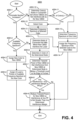
- FIG. 4 illustrates a flow diagram of one embodiment of a method of determining a frequency spectrum and a maximum transmit power which can be granted to the new citizens broadband radio service device when there is an edge with only one connected set;
- FIG. 5 illustrates a flow diagram of one embodiment of a method of determining a frequency spectrum and a maximum transmit power which can be granted to the new citizens broadband radio service device when there is an edge with more than one connected set.
- Embodiments of an invention provide techniques for a SAS to provide authorization more promptly to a new CBSD to utilize, e.g., transmit in, the shared spectrum.
- the new CBSD may be a GAA or a PAL CBSD.
- the new CBSD may receive a temporary grant response, e.g., which may have been predetermined based upon the new CBSD information and co-existence data previously determined at the last planned time.
- Shared spectrum means frequency spectra utilized by at least two of incumbent user(s), grandfather wireless protection zone(s), environmental sensing capability system receiver(s), fixed satellite service (FSS), PAL CBSD(s), and GAA CBSD(s).
- the new CBSD may be allocated a frequency spectrum and a maximum transmit power based upon a minimum interference margin.
- the minimum interference margin means a minimum of an interference margin and corresponds to a unique protection point which has the minimum interference margin.
- the interference margin is determined for a frequency spectrum, or each portion thereof, associated with each protection point having a neighborhood encompassing a geographic location of the new CBSD.
- Frequency spectrum, or each portion thereof, associated with a protection point means frequency spectrum that must be free of interference (as that term is elsewhere defined herein) at the geographic location of the protection point; optionally, such frequency spectrum corresponds to frequency spectrum utilized by a receiver of an incumbent user or a PAL CBSD.
- the interference margin for a frequency spectrum or each portion thereof associated with a protection point means a sum of head room margin for the protection point and an unused interference margin of the frequency spectrum or each portion thereof associated with the protection point; optionally, the interference margin is determined by also summing (with the head room margin and the unused interference margin) an indirect reduction margin of the frequency spectrum or each portion thereof associated with the protection point.
- the head room margin at the protection point means an amount of reduction, e.g., 1 dB, of maximum aggregate interference at the protection point below the corresponding interference threshold level at the protection point. If more than one SAS controls CBSDs geographically located within a neighborhood of a protection point, then the head room margin is equally allocated to each SAS.
- the unused interference margin of the frequency spectrum or each portion thereof associated with the protection point means an interference threshold level of the frequency spectrum or each portion thereof associated with the protection point less than a sum of aggregate interference (in the same frequency spectrum or each portion thereof) from CBSD(s) geographically located in the neighborhood of the protection point, where the interference threshold level is greater than the sum of the aggregate interference.
- the unused interference margin excludes the indirect reduction margin because the unused interference margin is determined on a protection point by protection point basis and does not account an indirect effect of other protection point(s). If more than one SAS controls CBSDs geographically located within a neighborhood of a protection point, then the unused interference margin for the frequency spectrum or each portion thereof is equally allocated to each SAS.
- the indirect reduction margin at the protection point means unused interference margin of the frequency spectrum or each portion thereof associated with the protection point due to a reduction of transmit power of CBSD(s) (controlled by a SAS) geographically located in neighborhood(s) of other protection point(s).
- the indirect reduction margin can only be shared with CBSD(s) controlled by the SAS.
- the CBSD(s) are also geographically located in the neighborhood of the protection point.
- the indirect reduction margin may be determined by a method, e.g., an iterative allocation process (TAP), that allocates interference margin to CBSD(s) in neighborhoods of two or more protection points; IAP is discussed elsewhere herein.
- TAP iterative allocation process
- WINNF-TS-0061-V1.1.0, Appendix B which is incorporated herein by reference in its entirety.
- 1 1 An example is provided for a given frequency spectrum associated with a protection point. An interference threshold for the protection point is ⁇ 80 dBm/MHz and a relative head room margin is 1 dB, then the SAS will allow aggregate interference, after distributing power fairly to CBSD(s) geographically located within a neighborhood of the protection point, e.g., using IAP, to be a maximum of ⁇ 81 dBm/10 MHz, and therefore, an absolute head room margin is determined as:
- the interference margin is uniformly distributed amongst each of the SASs. For the example provided, if there are 2 other peer SAS that manage the CBSD(s) geographically located within a neighborhood of the protection point, then the interference margin is determined as
- the aggregate interference power for the frequency spectrum at the protection point is ⁇ 90 dBm/10 MHz, e.g., determined by IAP, contributed by all CBSD(s) geographically located within a neighborhood of the protection point.
- the interference margin may include the indirect reduction margin, e.g., generated by IAP, of the frequency spectrum associated with the protection point.
- an indirect reduction margin of for the protection point described above may be determined by subtracting a first interference power from a second interference power.
- the first interference power means an aggregate interference power level, at the frequency spectrum or portion at a protection point, using a lowest determined transmission power of each CBSD controlled by a SAS.
- a transmission power of each CBSD geographically located within a neighborhood of a protection point is determined, e.g., by IAP, by allocating interference margin to CBSD(s) geographically located within the neighborhood.
- the second interference power means an aggregate interference power level, at the frequency spectrum or portion at a protection point, using a transmission power of each CBSD controlled by a SAS determined solely with respect to the protection point.
- the first interference power level and the second interference power level are respectively ⁇ 120 dBm/MHz and ⁇ 95 dBm/10 MHz, thus, the indirect reduction margin is
- Embodiments of the invention are applicable to and may be exemplified in the context of CBRS for pedagogical purposes, the embodiments are applicable to other shared spectrum systems, such as for example licensed spectrum access systems or authorized access systems.
- a CBSD may be more generally referred to as a radio.
- Embodiments of the invention comprise receiving information about a new CBSD configured to transmit in the shared spectrum and co-existence data.
- Co-existence data includes information about protection points, including their corresponding geographic location, frequency spectrum, interference threshold level, and/or interference margin (e.g., for an incumbent user configured to receive in the shared spectrum), and a network graph comprising at least one node and including colors assigned to each node of the network graph and frequency spectrum assigned to each color, and wherein each node comprises at least one of the at least one other GAA CBSD; the co-existence data further includes data about each GAA CBSD (including geographic location, data indicative of maximum capable transmit power, and/or any parameters of the GAA CBSD's used to perform propagation modelling such as for example antenna radiation pattern and/or antenna height).
- the network graph comprises at least one connected set.
- co-existence data only includes data about protection point(s) which have neighborhood(s) that encompass the geographic location of the new CBSD and/or co-existence data only includes connected set(s) (of nodes) of the network graph which have at least one node (having location(s) of any CBSD comprising the node) that are within a threshold distance of the new CBSD's geographic location; the threshold distance may be defined by the system designer or user.
- co-existence data may include short-term new radio parameters for other new CBSD(s) which were granted frequency spectrum, using unplanned spectrum coordination analysis, after a last planned spectrum coordination analysis. Frequency spectrum means a bandwidth centered about a center frequency.
- Node means at least one GAA CBSD, where if the node comprises two or more GAA CBSD(s) each GAA CBSD utilizes the same frequency spectrum and is free of interference (as defined elsewhere herein) from each of the other GAA CBSD(s) comprising the node.
- power as used herein means power or power spectral density.
- Power levels for a shared spectrum system, such as a CBRS are often characterized in terms of power spectral density levels.
- a CBRS system comprises general authorized access (GAA) and/or priority access license (PAL) CBSDs, and higher priority users.
- the higher priority users such as government users fixed satellite service receiver(s), have priority access to some or all of spectrum in the shared spectrum.
- a SAS grants the CBSDs access to the shared spectrum, including authorizing frequency spectrum (or channels) requested by CBSDs, and authorizing a corresponding requested maximum transmission power or assigning a lower maximum transmission power.
- the SAS controls the transmission of GAA CBSDs so that PAL CBSDs and the higher priority users are free of interference from GAA CBSDs.
- the GAA and PAL CBSDs are secondary users; the PAL CBSDs are secondary users because they have a lower priority than higher priority users (i.e., incumbent users) such as for example naval vessels.
- PAL and GAA CBSDs have to also protect Environmental Sensing Capability (ESC) sensors which are used to detect naval radar in the CBRS band.
- the SAS also controls the transmission of PAL CBSDs so that higher priority users are free of interference from PAL CBSDs.
- Free of interference does not mean an absence of interference, but rather means an acceptable level of interference (i.e., a level of interference below a threshold level of interference) which may be no interference or a finite level of interference; thus, to determine if a geographic location, e.g. of an incumbent user or a secondary user is free of interference, whether the interference level is below the acceptable level of interference (or a threshold interference) is determined.
- the acceptable level of interference may vary by geography, frequency spectrum, incumbent type, license type, whether CBSD is licensed, and/or other indicia.
- GAA CBSDs may be of two types: category A (low transmission power) and category B (high transmission power).
- Category A has a maximum transmission power spectral density of 30 dBm/10 MHz.
- Category B has a maximum transmission power spectral density of 47 dBm/10 MHz.
- Higher priority users of shared spectrum have first, or highest, priority to utilize the shared spectrum controlled by the SAS.
- higher priority users e.g., the receivers of higher priority users' communications systems or radios
- Communications systems shall include Environmental Sensing Capability (ESC) receivers and satellite ground stations.
- ESC Environmental Sensing Capability
- PAL users have second (or intermediate) priority, after higher priority users (excluding PAL users), to utilize the frequency spectrum controlled by the SAS.
- a PAL user shall be able to operate, when higher priority users (excluding PAL users) are free of interference of such a PAL user, and free of interference from other PAL users and general authorized access users.
- an ability of a PAL user to operate free of interference shall be limited temporally, geographically, and spectrally within the specifications of its license.
- GAA users have third, or lowest, priority to utilize the frequency spectrum controlled by the SAS.
- an operation of GAA users will be governed by laws, regulations, and/or rules (e.g., pertaining to CBRS).
- laws, regulations, and/or rules may be established by government(s) and/or standards bodies (e.g., Wireless Innovation Forum or WInnForum).
- WInnForum Wireless Innovation Forum
- the geographic coverage area proximate to (e.g., covered by radio frequency emissions of) the CBSD may include exclusion zones and protection point regions (including location(s) of fixed satellite service(s) (FSS(s)), priority access license (PAL) protection area(s) (PPA(s)), grandfathered wireless protection zone(s) (GWPZ(s)), dynamic protection area(s) (DPA(s)), and receiver(s) of environmental sensing capability (ESC) system(s)) (or ESC system receiver(s)). CBSDs are prohibited from operating in specific frequency spectrum in exclusion zones.
- FSS fixed satellite service
- PAL priority access license
- PPA priority access license
- GWPZ grandfathered wireless protection zone
- DPA dynamic protection area
- ESC environmental sensing capability
- the level of interference generated by CBSD(s) shall be limited in a protection point region so as not to interfere with certain communications systems, for example an ESC receiver or an FSS receiver.
- CBSDs may only operate with the permission of the SAS when an incumbent user's communication system is operating in a protection zone. In some cases, this operation will be based upon information received by an environmental sensing capability (ESC) system, from central database(s), notification from an incumbent user, and/or from a beacon indicating that secondary users should not use a certain portion of frequency spectrum.
- ESC environmental sensing capability
- One type of protection point region is the grandfathered wireless protection zone which is a geographic area and/or frequency spectrum where grandfathered wireless broadband licensees can operate free of interference, e.g., of CBSDs.
- the foregoing are examples of exclusion zones and protection point regions; other type of exclusion and protection point regions may occur.
- a higher priority user consists of a user consisting of at least one of: at least one incumbent user, at least one ESC system receiver, at least one FSS, at least one PAL radio, and at least one GWPZ.
- the at least one incumbent user includes government entities operating systems such as communications systems, operators of fixed satellite communications systems, and grandfathered, prior licensees of the frequency spectrum.
- the invention can be subsequently described in more general terms, e.g., using the term radio rather than CBSD, and shared spectrum system rather than CBRS.
- the terms CBRS and CBSD may be subsequently used when illustrating such a system and a device, or their specifications.
- a CBSD may be more generally referred to as a radio.
- Radio means a radio whose transmission is controlled or regulated by a spectrum access system.
- FIG. 1 A illustrates a block diagram of one embodiment of a shared spectrum system 100 configured to permit radios access to share spectrum prior to a planned time.
- the planned time is when planned spectrum coordination is performed.
- the shared spectrum system 100 comprises a SAS configured to permit radios access to share spectrum prior to a planned time (SAS) 102 and communicatively coupled to at least one CBSD (CBSD(s)) 108 whose transmissions are controlled or regulated by the SAS 102 .
- SAS planned time
- CBSD(s) CBSD
- Each CBSD is operated by a general authorized access user and/or a priority access licensee.
- the SAS 102 is coupled to at least one environmental sensing capability system (ESC system(s)) 104 .
- the SAS 102 is coupled to at least one central database 109 , e.g., which has information about incumbent users (e.g., type of incumbent user(s), interference threshold power level of incumbent user(s), location of protection points corresponding to incumbent user(s)), and/or when certain incumbent users (such as satellite ground stations) and/or PAL CBSDs are scheduled to transmit in the shared spectrum.
- incumbent users e.g., type of incumbent user(s), interference threshold power level of incumbent user(s), location of protection points corresponding to incumbent user(s)
- certain incumbent users such as satellite ground stations
- PAL CBSDs PAL CBSDs
- the SAS 102 is coupled to at least one other SAS (other SAS(s)) 106 .
- the other SAS(s) 106 are configured to control the transmissions of other CBSD(s) (in the same shared spectrum in which the CBSD(s) 108 transmit or in overlapping frequency spectrum) and which are geographically proximate to the CBSD(s) 108 .
- such other CBSDs controlled by other SAS(s) 106 may include PAL and GAA users.
- CBSD(s) (whose transmissions are controlled by other SAS(s) 106 ) may generate electromagnetic energy that overlaps the geographic region and frequency spectrum of the CBSD(s) 108 controlled by SAS 102 , and thus must be accounted for by the SAS 102 when the SAS 102 performs interference analysis and authorizes transmission by CBSD(s) 108 in the shared spectrum.
- the shared spectrum system 100 and its PALs and GAA users may generate electromagnetic energy that overlaps the geographic region of the other SAS(s) 106 , and thus must be accounted for by the other SAS(s) 106 when the other SAS(s) 106 perform interference analysis, and authorize operation of CBSDs of PALs and GAA users (whose transmissions are controlled by the other SAS(s) 106 ).
- each SAS can account for electromagnetic energy emitted from proximate CBSD(s) in those geographies.
- Each ESC system detects, and communicates to the SAS 102 , the dynamic presence of signal(s), e.g., from some incumbent user(s), such as radars.
- incumbent users can inform the SAS 102 that they are operating, e.g., by transmitting a signal beacon, or communicating with the central database(s) 109 which may be coupled to the SAS 102 .
- the SAS 102 also controls the operation (e.g., power levels and frequencies of operation) of the GAA user(s)′ CBSD(s) so that the PAL CBSD(s) operate free of interference.
- the SAS 102 includes a processing system 102 A coupled to a communications system 102 B.
- the processing system 102 A controls the operation of CBSD(s) 108 that form part of the shared spectrum system 100 .
- the communications system 102 B facilitates communications between the SAS 102 and other systems or devices, e.g., the CBSD(s) 108 , the ESC system(s) 104 , the central database(s) 109 , and/or the other SAS(s) 106 .
- the communications system 102 B includes a modem, e.g., an Internet data modem, a transceiver, and/or any other communications device(s) that can facilitate communications between the aforementioned devices.
- the processing system (or processing system circuitry) 102 A may be a state machine, a neural network, and/or a quantum computer. If the processing system 102 A includes a state machine, then optionally the state machine may comprise processor circuitry coupled to memory circuitry.
- the SAS 102 e.g., the processing system 102 A, comprises a spectrum coordination system (SC) 102 A- 1 , and a SAS database 102 A- 2 .
- the SAS 102 includes a power modelling system (PMS) 102 A- 3 .
- the SC 102 A- 1 is implemented by software stored in the memory circuitry and executed by the processor circuitry
- the SAS database 102 A- 2 comprises data stored in the memory circuitry and processed by the processor circuitry.
- the components of the SAS 102 are provided for illustrative purposes only; other component(s) may be instead of those illustrated in FIG. 1 A .
- the conventional spectrum coordination system is configured to determine whether frequency spectrum sought in a grant request by a new CBSD can be allocated to the new CBSD by ensuring that if the SAS 102 grants the grant request that other CBSD(s) (whose transmission is controlled by the SAS 102 and the other SAS(s) 106 ) that such CBSD(s) will be free from interference.
- the conventional spectrum coordination system also determines the maximum transmission power of CBSDs so that protection point(s) (which represents actual and/or potential incumbent user(s) and/or regions which are to remain free of interference from CBSDs) will be free of interference.
- the conventional spectrum coordination system does so by assessing aggregate interference at each protection point having a neighborhood encompassing geographic location(s) of CBSD(s), where the aggregate interference is generated by such CBSD(s) in the neighborhood. Neighborhood means a geographic area such as a circle or other shape) centered around a protection point.
- Protection points may correspond to different types of incumbent users.
- An interference threshold level for a protection point may depend on a type of incumbent user that the protection point represents. Interference threshold levels may vary amongst incumbent user types.
- determination of maximum transmission power may be implemented with power allocation process that operates substantially accordingly to WInnForum general requirement R2-SGN-16 and using an iterative allocation process (IAP); however.
- WInnForum general requirement (requirement) R2-SGN-16 of WINNF-TS-0112 defines the IAP, and WINNF-TS-0112 is incorporated by reference herein in its entirety.
- the IAP determines maximum transmit power levels by allocating interference margin fairly to CBSDs in neighborhood(s) of protection point(s) proximate to the CBSDs.
- the IAP determines such transmit power levels by allocating interference margin fairly to the CBSDs in neighborhoods of protection point(s) of incumbent(s) for a certain combination of frequency spectrum mapped to the CBSDs.
- WInnForum general requirement (requirement) R2-SGN-16 of WINNF-TS-0112 defines the IAP and is incorporated by reference herein in its entirety.
- the power allocation system may be implemented in other ways to allocate, e.g., equitably, maximum transmission power of CBSDs.
- the SC 102 A- 1 comprises a planned spectrum coordination system (SC planned) 102 A- 1 a and an unplanned spectrum coordination system (SC unplanned) 102 A- 1 b .
- SC planned planned spectrum coordination system
- SC unplanned unplanned spectrum coordination system
- the SC 102 A- 1 differs from the conventional spectrum coordination system the inclusion of the SC unplanned 102 A- 1 b .
- the SC unplanned 102 A- 1 b determines a frequency spectrum and a maximum transmit power of a new CBSD.
- the PMS 102 A- 3 is configured to model interference between two geographic points using at least one propagation model and may be used by the SC planned 102 A- 1 a and the SC unplanned 102 A- 1 b .
- the function provided by the PMS 102 A- 3 may be integrated in the SC planned 102 A- 1 a and/or the SC unplanned 102 A- 1 b .
- the propagation model(s) may be used to determine path loss between to geographic points; knowing a transmit power of a CBSD in the shared spectrum, the path loss may then be used to determine a power (transmitted from the CBSD) at a geographic location (e.g., at another CBSD or a protection point) remote from the CBSD.
- the PMS 102 A- 3 includes two or more propagation models one of which may be selected based upon geographic morphology (e.g., topography) between two geographic points.
- the propagation model(s) may include a free space path loss model, an irregular terrain model and/or a Hata model (or variation(s) thereof such as the enhanced Hata (eHata) model).
- the PMS 102 A- 3 may be utilized by the SC 102 A- 1 (including each of the SC planned 102 A- 1 a and the SC unplanned 102 A- 1 b ) to determine interference power transmitted from a CBSD at a geographic location remote from the CBSD.
- the SC planned 102 A- 1 a and SC unplanned 102 A- 1 a also include techniques for generating a neighborhood around each protection point and can utilize the PMS 102 A- 3 to determine the aggregate level of interference, at each protection point, in frequency spectra at each protection point from CBSD(s) in the neighborhood of the protection point.
- the propagation model(s) e.g., free space path loss model, irregular terrain model and/or Hata model (or variations thereof such as the enhanced Hata (eHata) model
- eHata enhanced Hata
- the SAS database 102 A- 2 includes information about the CBSD(s) 108 and CBSDs (geographically proximate to the CBSD(s) 108 ) whose transmissions in some or all of the shared spectrum are controlled by other SAS(s) 106 .
- CBSD information may include CBSD type (and thus maximum transmit power) and/or maximum transmit power, geographic location, antenna height, antenna gain, antenna pattern, antenna down tilt angle, and/or antenna azimuthal angle.
- the SAS database 102 A- 2 also includes information about the location, e.g., representative protection point(s), of incumbent users proximate to the CBSD(s) 108 .
- the SAS 102 may remotely obtain such information, e.g., form the central database(s) 109 , the other SAS(s) 106 (e.g., from a full activity dump (FAD) from each of the other SAS(s) 106 to the SAS 102 ), and/or the corresponding CBSD(s).
- the SAS database 102 A- 2 also includes a network graph generated by execution of the SC planned 102 A- 1 a .
- the network graph comprises one or more nodes, where each node comprises one or more GAA CBSDs, and each node is assigned a color.
- the SAS database 102 A- 2 may also include frequency spectrum allocation information for each color of each node of the network graph generated by SC planned 102 A- 1 a .
- the SAS database 102 A- 2 may include geographic morphology data about the geographic region where CBSDs whose transmission is controlled by the SAS 102 and optionally by other SAS(s) 106 .
- the new CBSD 103 is not part of the network graph, i.e., does not form a node or is not a member of a node of the network graph.
- the new CBSD 103 may be analyzed as if a new node consisted of the new CBSD 103 and the new node was part of the network graph.
- the SC unplanned 102 A- 1 b comprises techniques for providing a response to a grant request of a new CBSD before the planned execution of the SC planned 102 A- 1 a .
- the SC unplanned 102 A- 1 b facilitates earlier transmissions in the shared spectra by the new CBSD.
- more data can be communicated through the shared spectra, e.g., between user equipment and the new CBSD.
- the SC unplanned 102 A- 1 b consumes fewer computing resources than the SC planned 102 A- 1 a .
- the SC unplanned 102 A- 1 b consumes less execution time than the SC planned 102 A- 1 a.
- FIG. 1 B illustrates a diagram of one embodiment of data flow between a new CBSD and a SAS 102 .
- FIG. 1 A illustrates a diagram of one embodiment of data flow between a new CBSD and a SAS 102 .
- FIG. 1 B illustrates a diagram of one embodiment of data flow between a new CBSD and a SAS 102 .
- FIG. 1 A illustrates a diagram of one embodiment of data flow between a new CBSD and a SAS 102 .
- the new CBSD 103 sends a registration request 110 A to the SAS 102 .
- communications between CBSDs, e.g., the new CBSD 103 , and the SAS 102 may be made through, at least in part, the Internet.
- the new CBSD 103 is unregistered with the SAS 102 .
- the new CBSD 103 provides data (or registration data) about the new CBSD 103 in the registration request that upon its receipt by the SAS 102 is stored in the SAS database 102 A- 2 .
- the SAS database 102 A- 2 also stores similar data for other CBSD(s) of the CBSD(s) 108 .
- the data about the new CBSD 103 (CBSD type (and thus maximum transmit power), geographic location, antenna height, antenna gain, antenna pattern, antenna down tilt angle, and/or antenna azimuthal angle).
- the data may include a new CBSD's maximum transmit power in lieu of the new CBSD's CBSD type, e.g., category A or B.
- the data may include the new CBSD's minimum acceptable transmit power (or minimum transmit power); if the new CBSD were to operate at less than it minimum acceptable transmit power, then for example its coverage area would be impractically small, or it would be unable to communicate with another fixed wireless access CBSD.
- the new CBSD 103 Upon receipt of this data, and subject to there not being erroneous data provided to the SAS 102 or the new CBSD 103 not being a CBSD that should be controlled by the SAS 102 , the new CBSD 103 becomes part of the CBSD(s) 108 whose transmissions in shared spectrum are controlled by the SAS 102 .
- Short term new radio parameters means parameters which can be used by new CBSD 103 to transmit in the shared spectrum until long term radio parameters generated at planned time(s) and are for the CBSD(s) authorized to transmit by the SAS after each planned time.
- the long-term radio parameters may include long term radio parameters for the new CBSD 103 if the SAS 102 is able to approve the grant request from the new CBSD 103 (e.g., allocate frequency spectrum in the shared spectrum and a maximum transmit power is equal to or larger than a minimum acceptable transmit power level for the new CBSD 103 ).
- the long-term radio parameters are generated by the SC planned 102 A- 1 a .
- the long-term radio parameters include frequency spectrum (in which a corresponding CBSD receiving the long-term parameters is authorized to transmit) in the shared spectrum and a maximum transmit power.
- the short-term new radio parameters include frequency spectrum (in which the new CBSD 103 is authorized to transmit) in the shared spectrum and a maximum transmit power.
- the short-term new radio parameters include a color assigned to the new CBSD 103 , where the color is assigned the frequency spectrum, and where the new CBSD with the assigned color is made part of the network graph generated by the last planned spectrum coordination analysis.
- Short term new radio parameters may not always be generated, e.g., if there is no frequency spectrum in the shared spectrum to allocated to the new CBSD 103 or if a determined maximum transmit power for the new CBSD 103 is not above a minimum acceptable power level.
- the SC unplanned 102 A- 1 b requests co-existence data 110 C from the SAS database 102 A- 2 .
- the SAS database 102 A- 2 sends the co-existence data 110 D to the SC unplanned 102 A- 1 b .
- the co-existence data includes the location of protection point(s), data about the CBSD(s) 108 such as all or some of the data types provided by the new CBSD 103 when registering, the location of other CBSD(s) (whose transmission is controlled by other SAS(s) 106 , are geographically proximate to the CBSD(s) 108 , data about which of the CBSD(s) 108 and other CBSD(s) are authorized to transmit, and/or morphology data for the geographic region about and encompassing the CBSD(s) 108 and the other CBSD(s) described above are located.
- co-existence data includes corresponding criteria of interference, e.g., interference threshold levels (or indicators indicative of a corresponding interference threshold level) for one or more of the protection point(s), CBSD(s) 108 , other CBSD(s), and/or nodes of the network graph.
- the co-existence data also may include the network graph (e.g., generated by a most recent execution of the SC planned 102 A- 1 ) based upon CBSD(s) 108 authorized to transmit by the SAS 102 in the shared spectrum and excluding the new CBSD 103 .
- the co-existence data may also include a chromatic number of the network graph.
- Chromatic number means a smallest number of colors needed to color nodes of a network graph so that no two nodes connected by an edge share the same color.
- the co-existence data may also include spectrum allocation information for the network graph, which may include frequency spectrum assigned to each color assigned to nodes of the network graph and a maximum transmit power allocated to each CBSD comprising the nodes of the network graph.
- the SC unplanned 102 A- 1 b may determine short term new radio parameters (as is further exemplified herein).
- the SC unplanned 102 A- 1 b will determine a frequency spectrum and determine a maximum transmit power for the new CBSD 103 that may, or may not, be below a minimum useable transmit power level.
- Minimum useable transmit power means a transmit power of a CBSD that is provides a coverage area of a minimum range or radius.
- the SAS database 102 A- 2 stores the determined short term radio parameters.
- the SAS database 102 A- 2 sends an acknowledgement of receipt of the determined short term new CBSD parameters 110 F to the SC unplanned 102 A- 1 b .
- the SAS 102 sends a registration acknowledgement 1100 to the new CBSD 103 to confirm that the new CBSD 103 has been registered with the SAS 102 .
- the new CBSD 103 may issue a spectrum inquiry.
- the SAS 102 sends to the new CBSD 103 the short-term radio parameters (or a subset of such parameters, e.g., just the determined frequency spectrum) determined by SC unplanned 102 A- 1 b.
- the new CBSD 103 may send a grant request 110 G to the SAS 102 .
- data e.g., requested frequency spectrum of the shared spectrum
- the new CBSD 103 requests authorization to transmit in requested frequency spectrum of the shared spectrum.
- the SAS 102 may undertake the following. To the extent that the frequency spectrum in the grant request is the same or a subset of the frequency spectrum in the generated short term new radio parameters, the SAS 102 will send a short-term grant authorization 110 I to the new CBSD 103 .
- the SAS 102 will disapprove the grant, but optionally will also include a frequency spectrum and a maximum transmit power (of the short term new radio parameters) in the grant response (e.g., under the operationParam section) to indicate to the new CBSD 103 a frequency spectrum and a maximum transmit power which the new CBSD 103 may include in a future grant request that likely will be approved by SAS 102 . Therefore, the SAS 102 will effectively provide guidance to the CBSD so that it can subsequently request a frequency spectrum and a maximum transmit power that match the frequency spectrum and the maximum transmit power in the short-term parameters determined by SC unplanned.
- the short term grant authorization is valid only until for a certain time period, e.g., from the time of transmission (or receipt) of the short term grant authorization through an end time when the long term radio parameters are next determined (e.g., when SC planned 102 A- 1 a is next executed), an end time when the SAS 102 sends a grant response message to CBSD(s) authorized to transmit in the shared spectrum (e.g., as a result of the execution of the SC planned 102 A- 1 a ), or an end time prior to either of the foregoing.
- the short-term grant authorization may include the end time.
- the short-term grant authorization may include a maximum transmit power, a frequency spectrum, and/or the end time.
- the end time means a time when the short-term grant authorization to transmit in shared spectrum expires.
- the new CBSD 103 is only able to transmit if it receives a response, e.g., a short-term grant authorization, from the SAS 102 .
- the SC planned 102 A- 1 a analyzes received grant requests from the CBSD(s) 108 and issues a grant response when possible to CBSD(s) that submitting grant request(s). This entails attempting to determine long term radio parameters 110 H for CBSD(s) each of which submitted a grant request.
- the SC planned 102 A- 1 a requests co-existence data 110 J from the SAS database 102 A- 2 .
- the SAS database 102 A- 2 sends the co-existence data 110 K to the SC planned 102 A- 1 a .
- the co-existence data sent by the SAS database 102 A- 2 to the SC planned 102 A- 1 a includes some or all of the data sent to the SC unplanned 102 A- 1 b and data for the new CBSD 103 .
- the SC planned 102 A- 1 a generates long term radio parameter(s), e.g., maximum transmit power for frequency spectrum requested by CBSD(s) submitting grant requests.
- the SC planned 102 A- 1 a undertakes this analysis utilizing conventional techniques as described in WINNF-TS-0112, which is hereby incorporated by reference in its entirety.
- the SC planned 102 A- 1 a sends the determined long term radio parameters 110 L to the SAS database 102 A- 2 for storage.
- the SAS database 102 A- 2 acknowledges receipt of the long-term radio parameters 110 M.
- the SAS 102 issues a grant response 110 N to some or all of the CBSD(s) that submitted a grant request to the SAS 102 .
- the SAS 102 may send a grant response 110 N to the new CBSD 103 .
- FIG. 2 A illustrates a flow diagram of one embodiment of a method 200 A of determining frequency spectrum and maximum transmit power to allocate, to a new CBSD, prior to execution of planned spectrum allocation.
- the method 200 A may determine short term radio parameter(s) (frequency spectrum and/or maximum transmit power).
- the new CBSD may register with the SAS and provide CBSD information that will be used by SC unplanned for determining the frequency spectrum allocation for the new registering CBSD.
- the SAS will provide, to the new CBSD, a response based on the determined short term radio parameter(s).
- a grant response e.g., in a form of a message, may be sent by, e.g., the SAS.
- the grant response may include the maximum transmit power and the frequency spectrum of the short-term radio parameter(s) that the new CBSD can subsequently submit in a grant request and will likely be approved, e.g., by the SAS.
- the grant request will be approved, e.g., by the SAS, and a grant authorization will be sent to the new CBSD.
- the new CBSD can transmit in shared spectrum prior to the next determination of long-term radio parameters.
- the method 200 A is executed by SC unplanned 102 A- 1 b , another component of the SC 102 A- 1 , another component of the SAS 102 , or by another system.
- FIG. 2 A illustrates a flow diagram of one embodiment of a method 200 A of determining frequency spectrum and maximum transmit power to allocate, to a new CBSD, prior to execution of planned spectrum allocation.
- information about the new CBSD and co-existence information is received.
- Co-existence data is described elsewhere herein. Such information may be received from the new CBSD, the SAS database, the central database(s), and/or other sources.
- Such information may include a network graph.
- the network graph comprises nodes. One or more sets of two nodes of the network graph may be connected by an edge. Each node comprises one or more GAA CBSDs operating in the same portion of shared spectrum.
- the CBSD(s) comprising nodes of the network graph may be controlled by the SAS 102 or the other SAS(s) 106 (i.e., peer SAS(s)).
- Each node is assigned a color.
- Each node is also assigned a frequency spectrum in the shared spectrum. Nodes of the same color are not necessarily allocated the same frequency spectrum, e.g., when a network graph comprises two or more separate connected sets; however, nodes of a connected set and having the same color are allocated the same frequency spectrum.
- An edge represents interference by one of the two CBSDs with the other CBSD, and possibly vice versa.
- the co-existence information includes data about at least one protection point whose neighborhood encompasses a geographic location of the new radio.
- a frequency spectrum and a maximum transmit power that can be allocated to the new radio are determined prior to execution of planned spectrum coordination analysis and based upon whether the new radio forms an edge with at least one node of at least one connected set, wherein an edge occurs when a criterion of interference at either the new radio due to at least one radio of which the at least one node comprises, or the at least one node due to the new radio, exceeds a corresponding threshold level.
- FIG. 2 B illustrates a flow diagram of one embodiment of a method 200 B of implementing block 220 B of FIG. 2 A .
- whether the new CBSD is part of a pre-existing node is determined. Whether the new CBSD is part of a pre-existing node can be determined using new CBSD information and/or co-existence data provided during registration. Optionally, the new CBSD may identify that it is part of a pre-existing grouping information. If the new CBSD is part of a pre-existing group, then the new CBSD is part of a pre-existing node comprising at least one pre-existing CBSD of the pre-existing group.
- the new CBSD is not part of a pre-existing node, then proceed to block 222 A. If the new CBSD is part of a pre-existing node, then in optional block 221 B, a frequency spectrum (allocated to the pre-exiting node) and a maximum transmit power are determined for the new CBSD (which can be allocated to the new CBSD)—if the new CBSD does not create an edge with another node assigned the same frequency spectrum or a part thereof. Optionally, upon completing block 221 B, then proceed to block 222 I.
- FIG. 2 C illustrates a flow diagram of implementing one embodiment of a method 200 C of implementing block 221 B of FIG. 2 C .
- the illustrated embodiment is exemplified using fixed wireless access (FWA) CBSDs but can be applicable to other types of CBSDs (that are not FWA CBSDs).
- FWA fixed wireless access
- the new CBSD identifies that it is part of a pre-existing group of at least one CBSD, previously registered with the SAS, comprising a pre-existing single node in the network graph and which has been allocated a frequency spectrum (e.g., by planned spectrum coordination performed by the SAS) 2 , then the new CBSD is expected to (a) request the same frequency spectrum that has been allocated to the existing group of CBSDs that belong to the same node, or (b) issue a spectrum inquiry; thus, the SAS would receive such request or spectrum inquiry.
- a pre-existing group of at least one CBSD previously registered with the SAS, comprising a pre-existing single node in the network graph and which has been allocated a frequency spectrum (e.g., by planned spectrum coordination performed by the SAS) 2
- the new CBSD is expected to (a) request the same frequency spectrum that has been allocated to the existing group of CBSDs that belong to the same node, or (b) issue a spectrum inquiry; thus, the SAS would receive such request or spectrum inquiry.
- the new CBSD may be a CPE that is part of a pre-existing fixed wireless access (FWA) group of at least one CBSD comprising a pre-existing node.
- FWA fixed wireless access
- each edge created between the pre-existing node comprising the new radio and another node (“pair of nodes”) is identified. Then, in block 223 B, whether there is at least one identified edge is determined. If no edges are identified, then proceed to block 223 D. If no edges are identified, then optionally frequency spectrum requested or identified by the new radio (e.g., from or to the SAS) will be approved or identified as available, e.g., by the unplanned spectrum coordination performed by the SAS. If at least one edge is identified, then for each identified edge, in block 223 C, whether both nodes, of at least one pair of nodes, are allocated the same frequency spectrum or a portion thereof is determined.
- a frequency spectrum and a maximum transmit power for the new CBSD is determined, e.g., by the unplanned spectrum coordination performed by the SAS.
- the maximum transmit power of the new CBSD is determined based on the interference margin of any protection point(s) whose neighborhood(s) encompass the geographic location of the new CBSD and are using the requested or identified frequency spectrum and the interference level at such protection points, as illustrated elsewhere herein. The foregoing may be done when the frequency spectrum is authorized by a grant request response (or optionally is identified as available in a spectrum inquiry response).
- both nodes of a pair of nodes are determine to be allocated the same frequency spectrum or a portion thereof, then the frequency spectrum requested by the new CBSD is not allocated or identified (e.g., by the unplanned spectrum coordination performed by the SAS); thus, optionally, a grant request response is issued, e.g., by a SAS, to the new CBSD denying a grant request of the new radio or a spectrum inquiry is issued, e.g., by the SAS, to the new CBSD identifies no frequency spectrum.
- the requested frequency spectrum is allocated or identified (e.g., by the unplanned spectrum coordination performed by the SAS); thus, optionally, a grant request response to the new CBSD authorizing the grant request is issued (e.g., by the SAS) or a spectrum inquiry response is issued (e.g., by the SAS) to the new CBSD identifying the inquired about frequency spectrum as being available is issued (e.g., by the SAS).
- an edge means that a criterion of interference at a CBSD or a node consisting of one or more CBSD(s) exceeds a threshold level.
- the threshold level is an interference threshold level, and optionally the interference threshold level may be ⁇ 96 dBm/10 MHz.
- determination of an edge may be performed by as follows.
- a fixed wireless access (FWA) CBSD and a cellular CBSD.
- Each CBSD has a coverage area whose boundaries are defined by detectable received signal level which optionally may be ⁇ 96 dBm/10 MHz.
- Cellular CBSD means a CBSD, e.g., a base station, having an omni directional antenna pattern. User equipment within the coverage area of the base station may communicate with the base station, and vice versa.
- the fixed wireless access CBSD may be a base station or consumer premises equipment (CPE).
- the FWA CBSD is used to provide point to point communications in a coverage area of the FWA CBSD in the shared spectrum.
- FWA CBSDs communicate with one another.
- CPE in the coverage area of a base station may communicate with the base station, and vice versa.
- the CPE may be located in or on a building such as a house or an office building.
- the FWA CBSD has an antenna radiation pattern with one or more narrow width antenna beams so increased, e.g., maximum, radiated energy is directed through a corresponding antenna beam between the FWA CBSD and a corresponding CPE or base station.
- Fixed wireless access (FWA) cluster means a base station and CPE(s) which communicate with the base station.
- the cellular CBSD optionally has an omnidirectional antenna radiation pattern. Because it optionally has an omnidirectional antenna radiation pattern, the coverage area of a cellular CBSD is typically smaller, e.g., 1 km, than a coverage of a FWA CBSD.
- the cellular CBSD is intended to communicate with user equipment in the coverage area of the cellular CBSD.
- user equipment may be portable devices (e.g., such as cell phones, tablets, laptop computers, and/or any other portable devices, fixed devices (e.g., Internet of Things devices), and/or any other type of devices.
- some or all fixed wireless access CBSDs use time division multiplexing.
- some or all of the FWA CBSDs which use time domain duplexing (TDD) may be synchronized.
- TDD time domain duplexing
- FWA CBSDs are synchronized, the following analysis may be used to determine if an edge is formed between a new CBSD that is a fixed wireless access CBSD.
- an alternative technique may be used for FWA CBSDs when the FWA CBSDs are not synchronized; for example, this may be accomplished by determining if interference at a base station due to another base station is in excess of a threshold power level.
- some or all cellular CBSDs and user equipment use TDD; optionally, some or all cellular CBSDs are synchronized.
- the new CBSD is a FWA CBSD that is a base station
- determines if an edge is formed between the base station and node(s) of the network graph by assessing if interference from the base station at any CPE(s) of FWA cluster(s) of node(s) of the network graph exceeds a corresponding interference threshold level, e.g. ⁇ 96 dBm/10 MHz, and/or vice versa.
- a corresponding interference threshold level e.g. ⁇ 96 dBm/10 MHz
- the new CBSD is a FWA CBSD that is a CPE
- an edge between the new cellular CBSD and node(s) of the network graph may be determined as follows. An edge is formed between the new cellular CBSD and a node of the network graph if a percentage of coverage area of the new cellular CBSD overlapping a coverage area of a cellular CBSD of the node exceeds a corresponding threshold coverage area percentage level (e.g., thirty percent) and/or vice versa.
- a percentage of coverage area of the new cellular CBSD overlapping a coverage area of a cellular CBSD of the node exceeds a corresponding threshold coverage area percentage level (e.g., thirty percent) and/or vice versa.
- a propagation model When determining coverage area, a propagation model must be selected to determine propagation loss over distance (e.g., with respect to geographic location displaced from the FWA CBSD or cellular CBSD).
- a transmit power e.g., a determined maximum transmit power, of a FWA CBSD or a cellular CBSD
- propagation loss the power level at geographic locations can be determined.
- the propagation model used depends upon geographic morphology (e.g., rural, urban, suburban, water, etc.) of terrain between the CBSD and the displaced geographic location, e.g., the new CBSD and a geographic location in a coverage area of a CBSD of a node of the network graph.
- the geographic morphology is determined by ascertaining the geographic morphology at the receiving CBSD. First, geographic morphology is first determined, and then secondly a propagation model is selected based upon the determined geographic morphology.
- geographic morphology may be stored and obtained from the SAS database 102 A- 2 or the central database(s) 109 , e.g., at the U.S. Geological Survey. The selected propagation model is used to determine a propagation loss between two geographic locations.
- the foregoing analysis may be performed by the PMS 102 A- 3 .
- an edge weight is determined for each edge formed in the network graph and by the new CBSD. Edge weights allow interferences by different types of CBSDs to be compared as will be subsequently illustrated.
- the edge weigh is a function of coverage overlap (for a cellular CBSD) and a magnitude of interference, optionally above a corresponding interference threshold level, for a FWA CBSD.
- a connected set means a unique set of at least two nodes, where at least two of the nodes have an edge, or a unique node with no edge to any other node.
- a frequency spectrum and maximum transmit power which can be granted to the new CBSD are determined, when diminishing, e.g., minimizing, interference to (a) GAA CBSD(s) (comprising node(s) of connected sets each of which with the new CBSD forms an edge) and (b) protection point(s) each of which is associated with a frequency spectrum that includes all or part of the determined frequency spectrum and each of which has a neighborhood encompassing a geographic location of the new CBSD.
- a frequency spectrum and maximum transmit power which can be granted to the new CBSD are determined, when diminishing, e.g., minimizing, interference to (a) GAA CBSD(s) (comprising node(s) of a connected set with which the new CBSD forms an edge) and (b) protection point(s) each of which is associated with a frequency spectrum that includes all or part of the determined frequency spectrum and each of which has a neighborhood encompassing a geographic location of the new CBSD.
- GAA CBSD(s) comprising node(s) of a connected set with which the new CBSD forms an edge
- protection point(s) each of which is associated with a frequency spectrum that includes all or part of the determined frequency spectrum and each of which has a neighborhood encompassing a geographic location of the new CBSD.
- a color is allocated to the new CBSD.
- the allocated color may be a color already be assigned to node(s) in the existing network graph and which comprise CBSD(s) or may be a new color not assigned to node(s) in the network graph.
- the network graph means the network graph generated during the last planned spectrum coordination, e.g., execution of SC planned 102 A- 1 a .
- the color assigned to the new CBSD may be assigned a different frequency spectrum than is assigned to the same color used for node(s) in the network graph when no edge is formed between the node consisting of the new CBSD and the other nodes assigned the same color as the node consisting of the new CBSD.
- Protection point interference free frequency spectrum means frequency spectrum in the shared spectrum which does not overlap, in whole or in part, a frequency spectrum associated with a protection point in whose neighborhood the new CBSD is geographically located.
- a neighborhood means a geographic area around a protection point, e.g., defined by a radius or other geometric description.
- the determined available protection point interference free frequency spectrum must exceed a minimum bandwidth, e.g., 5 MHz; if the minimum bandwidth is unavailable, then this is akin to protection point interference free frequency spectrum being unavailable.
- a frequency spectrum and a maximum transmit power are determined, where the determined frequency spectrum consists of all or a portion of a protection point interference free frequency spectrum.
- this can be done by selecting the largest contiguous bandwidth of frequency spectrum of protection point interference free frequency spectrum, and by selecting a maximum transmit power of the new CBSD that the new CBSD is capable of transmitting, e.g., as specified directly or indirectly in registration information submitted for the new CBSD.
- the largest contiguous bandwidth is bounded by a defined maximum allowable bandwidth, e.g., 20 MHz.
- the frequency spectrum allocated to the new CBSD is determined to be a minimum of a frequency spectrum requested by the new CBSD and the selected protection point interference free frequency spectrum.
- a frequency spectrum and a maximum transmit power are determined, where the determined frequency spectrum consists of all or a portion of a frequency spectrum associated with a protection point, whose neighborhood encompasses the geographic location of the new CBSD, that has the largest value of a difference determined by when the new CBSD's interference level at the protection point is subtracted from the determined interference margin of the protection point.
- a spectrum inquiry or a grant request is received from the new CBSD.
- the grant request specified specific frequency spectrum in the shared spectrum which the new CBSD desires in which to transmit.
- the spectrum inquiry is a request from the new CBSD to ascertain whether shared spectrum controlled by the SAS is available in which the new CBSD could transmit.
- the spectrum inquiry is a request about specific frequency spectrum in the shared spectrum in which the new CBSD desires to transmit.
- whether frequency spectrum, e.g., the desired frequency spectrum, in the shared spectrum is available for the new CBSD is determined.
- whether any of the frequency spectrum of the shared spectrum is available is determined.
- For a grant request, which specifies a requested frequency spectrum whether the requested frequency spectrum is available is determined, or optionally whether any bandwidth is available is determined.
- frequency spectrum is not available, then proceed to block 222 L if a grant request was received from the new CBSD or proceed to block 222 M if a spectrum inquiry was received from the new CBSD.
- the frequency spectrum is available (i.e., the requested frequency spectrum is contiguous with or a subset of the determined frequency spectrum)
- proceed to block 222 K if a grant request was received from the new CBSD or proceed to block 222 M if a spectrum inquiry was received from the new CBSD.
- a spectrum inquiry response is sent to the new CBSD indicating whether or not the frequency spectrum specified in the spectrum inquiry was determined to be available, and optionally a corresponding maximum transmit power which can be utilized if the frequency spectrum is available.
- Optional blocks 222 K and 222 L are alternative to optional block 222 M.
- a grant approval (authorizing use of the requested frequency spectrum and specifying a maximum transmit power) is sent to the new CBSD.
- a grant disapproval (not authorizing use of the requested frequency spectrum) is sent to the new CBSD.
- the grant disapproval includes a frequency spectrum and a maximum transmit power which will likely be authorized, e.g., by the SAS, in a future request.
- FIG. 3 illustrates a flow diagram of one embodiment of a method 300 E of how to determine a frequency spectrum and maximum transmit power which can be granted to the new CBSD when no protection point interference free frequency spectrum is available.
- FIG. 3 illustrates one embodiment of implementing block 222 D of FIG. 2 B ; however, block 222 D can be implemented in other ways.
- an interference margin is determined for a frequency spectrum, or each portion thereof, associated with the protection point.
- the interference margin constrains interference at the protection point from the new CBSD.
- a frequency spectrum, or each portion thereof, associated with a protection point in whose neighborhood the new CBSD is geographically located, having a largest value of a difference (when the new CBSD's interference level at the protection point is subtracted from the determined interference margin) is determined.
- ⁇ 1 is a larger value than ⁇ 10.
- the new CBSD is assigned the determined frequency spectrum, or a portion thereof, of the protection point.
- a maximum transmit power is determined for the new CBSD by reducing a maximum transmit power of the new radio that the new radio is capable of transmitting so that an interference level of the new radio, determined with a reduced transmit power of the new radio, at the protection point is equal to or less than a value of the interference margin.
- the maximum transmit power is determined based on the interference margin at selected frequency spectrum or a portion thereof. Using a propagation model selected based upon topographical morphology between the new CBSD and the protection point, a maximum transmit power is determined. The maximum transmit power is determined so that an interference level of the new CBSD at the protection point is equal to or less than a value of the interference margin. Optionally, a value lower than the interference margin, e.g., by 1 dB, may be used to determine the maximum transmit power of the new CBSD so that remaining interference margin can be utilized by one or more other new CBSDs prior to planned spectrum coordination. Optionally, the new CBSD is assigned the determined maximum transmit power.
- FIG. 4 illustrates a flow diagram of one embodiment of a method 400 H of determining a frequency spectrum and a maximum transmit power which can be granted to the new CBSD when there is an edge with only one connected set.
- FIG. 4 illustrates an optional embodiment of implementing block 222 H of FIG. 2 B ; however, block 222 H can be implemented in other ways.
- chromatic number of the network graph increases if the new radio is added as a node to the network graph is determined.
- the chromatic number changes if a node consisting of the new CBSD is connected by at least one edge to nodes of the network graph so that a new color must be assigned to the node consisting of the new CBSD to avoid two nodes sharing and edge and the same color.
- the node representing the new CBSD is considered part of the network graph.
- Available frequency spectrum means frequency spectrum that is not assigned to color(s) assigned to node(s), with edge(s) with the new CBSD, of the connected set and not a frequency spectrum, or portion thereof, that would result in interference power at any protection point(s) (whose neighborhood(s) encompass the geographic location of the new CBSD) having a level equal to or greater than the value of a corresponding protection point's determined interference margin.
- the available frequency spectrum, or a portion thereof, with the greatest difference between the interference margin and interference power level from new CBSD is selected. If there is available frequency spectrum, then in block 400 H- 3 assign a new color to a node comprising the new CBSD, where the new color is a color that is not assigned to a node of the connected set. In block 400 H- 4 , at least a portion of the available frequency spectrum is assigned to the new color. Optionally, the assigned at least a portion of the available frequency spectrum does not exceed a maximum bandwidth threshold, e.g., 20 MHz.
- a maximum bandwidth threshold e.g. 20 MHz.
- a node of the connected set with which the new CBSD interferes the least is determined.
- least interference may be determined using edge weights (described elsewhere herein).
- a lower edge weight corresponds to a lower interference level.
- a color of the determined node of the connected set with the least interference is determined; the frequency spectrum assigned to the color of the determined node is assigned to the new CBSD.
- a transmit power of the new CBSD is determined so that interference from the new CBSD at the determined node is below an interference threshold level so that the edge is eliminated between the new CBSD and the determined node.
- this can be accomplished by using the modelling techniques referred to in block 400 H- 5 and iteratively reducing the transmit power of the new CBSD until no edge is formed with the determined node, while enhancing, e.g., optimizing the transmit power of the new CBSD.
- whether interference from the new CBSD at any protection point(s) is greater than any of the interference margin(s) of the protection point(s).
- this can be performed by determining a terrain morphology corresponding to terrain between each of the protection point(s) and the new CBSD.
- a propagation model is selected for each pair of each of the protection point(s) and the new CBSD based upon the determined terrain morphology. Using the corresponding selected propagation model, determine the interference level at each of the protection point(s) due to the new CBSD.
- the interference margin (at the frequency spectrum assigned to the new CBSD) at each of protection point(s) is then determined as illustrated elsewhere herein. Then, whether the new CBSD's level of interference at any of the protection point(s) is greater than any of the determined interference margin(s) of the protection point(s) at the frequency spectrum assigned to the CBSD is determined. If the new CBSD's level of interference is greater than any of the interference margin(s) of the protection point(s), then in block 400 H- 9 , the transmit power of the new CBSD is reduced so that interference from the new CBSD at any of the protection point(s) is not greater than any interference margin of the protection points.
- the reduction in transmit power may be from a requested transmit power or from a maximum transmit power at which the CBSD is capable of transmitting.
- the new CBSD power reduction is increased by an amount, e.g., 1 dB, so that interference margin(s) (at protection point(s) that had an interference greater than an interference margin) remain and can be utilized by one or more other new CBSDs prior to planned spectrum allocation.
- the reduction can be performed by iteratively reducing the transmit power of the new CBSD, while enhancing, e.g., maximizing, the transmit power of the new CBSD.
- the interference level at the determined protection point can be determined for each iteration.
- the color(s) of the nodes in a connected set whose CBSDs are not interfered with by the new CBSD are determined.
- the color(s) of the nodes in the connected set whose CBSDs from no edge with the new CBSD are determined.
- a color for the new CBSD is selected.
- the color may be selected as follows. A color may be selected that is used by nodes of the network graph where no edges are formed. The color may be randomly selected from available colors that meet this criterion or may be selected to maximize new CBSD transmit power.
- a color is selected that has a largest value of a difference (when the new CBSD's interference level at a protection point is subtracted from the determined interference margin) is determined.
- ⁇ 1 is a larger value than ⁇ 10.
- the new CBSD's interference at each protection point has an upper bound that is equal to an interference margin, at the frequency spectrum assigned to the new CBSD, at the protection point.
- Interference margin is a buffer that effectively reduces the maximum allowable aggregate interference at a protection point, but is available to new CBSD(s) requesting transmit power before execution of planned spectrum coordination.
- Portion(s) of the interference margin may be shared with other SAS(s) that control CBSD(s) geographically located in the neighborhood of the protection point(s). Such interference margin may be shared equally or unequally amongst the SAS and other SAS(s). Different protection point types may have different interference threshold levels.
- different protection points types may have different interference threshold levels, e.g., maximum allowable aggregate interference levels and/or different interference buffers.
- a frequency spectrum of the selected color is determined.
- the frequency spectrum associated with the selected color is assigned to the new CBSD. Then, proceed to block 400 H- 9 .
- block 400 H- 11 If in block 400 H- 11 it is determined that the number of colors is not greater than one (i.e., is equal to one), then in block 400 H- 15 , a frequency spectrum of the one color is determined. Then proceed to block 400 H- 14 .
- FIG. 5 illustrates a flow diagram of one embodiment of a method 500 G of determining a frequency spectrum and a maximum transmit power which can be granted to the new CBSD when there is an edge with more than one connected set.
- FIG. 5 illustrates an optional embodiment of implementing block 222 G of FIG. 2 B ; however, block 222 G can be implemented in other ways.
- a cardinal value of a set of each frequency spectrum of node(s) having an edge with the new CBSD is determined. For purposes of clarity, such node(s) are node(s) in the network graph.
- a maximum of a chromatic number of each connected set having an edge with the new CBSD is determined.
- a frequency spectrum is selected for the new CBSD that is different than the frequency spectrum used by CBSD(s) of node(s) having an edge with the new CBSD.
- the selected frequency spectrum may be chosen from any of the frequency spectrum used by CBSD(s) of node(s) of the network graph with which the new CBSD does not form an edge.
- a frequency spectrum is selected that is a frequency spectrum used by CBSD(s) of node(s) of the network graph with which the new CBSD does not form an edge and which allows the new CBSD to transmit a highest maximum transmit power (corresponding to frequency spectrum, or a portion thereof, of a protection point whose neighborhood encompasses the geographic location of the new CBSD) with respect to maximum transmit power(s) that the new CBSD would be permitted to utilize in frequency spectrum(s) (or a portion thereof) of protection point(s) that should be free of interference (as defined elsewhere herein) whose neighborhood(s) encompass the geographic location of the new CBSD.
- determination of the highest maximum transmit power may be accomplished by determining a largest value of a difference (when the new CBSD's interference level at each protection point (whose neighborhood encompasses the geographic location of the new CBSD) is subtracted from the determined interference margin at the protection point) is determined.
- ⁇ 1 is a larger value than ⁇ 10.
- the cardinal value of the set of frequency spectrum(s) of node(s) having an edge with the new CBSD is determined to not be less than the maximum of the chromatic number of each connected set having an edge with by the new CBSD, then in block 500 G- 5 , whether there is available frequency spectrum(s) of any connected set(s) is determined, where each of the connected set(s) has node(s) with edge(s) with the new CBSD.
- An available frequency spectrum of connected set(s) means frequency spectrum that is not used by CBSD(s) comprising node(s), with edge(s) with the new CBSD, of the connected set(s) and not a frequency spectrum, or portion thereof, that would result in interference power at any protection point(s) (whose neighborhood(s) encompass the geographic location of the new CBSD) having a level equal to or greater than the value of a corresponding protection point's determined interference margin.
- New color means a color not used in a connected set having a node with an edge with the new CBSD, or alternatively is a color not used in the network graph.
- a set of colors, set J consists of the colors assigned to nodes having node(s) with edge(s) with the new CBSD and the color assigned to the new CBSD.
- At least a portion (i.e., all or a part of) of a contiguous portion of the available frequency spectrum of connected set(s) is assigned to the new color assigned to the new CBSD.
- the at least a portion (i.e., all or a part of) of a contiguous portion of the available frequency spectrum is assigned to the new CBSD. If there are multiple available frequency spectrum, or portion(s) thereof, of connected set(s), then the available frequency spectrum, or a portion thereof, with the greatest difference between the interference margin and interference power level from new CBSD is selected.
- a node of a connected set with which the new CBSD interferes the least is determined. If edge weights are used to characterize the interference levels at each edge, then the node would be the node having an edge with the new CBSD that has the lowest edge weight.
- the frequency spectrum, or a portion thereof, of the determined node having the least interference with the new CBSD is assigned to the new CBSD.
- the frequency spectrum, or portion thereof is determined by identifying a frequency spectrum assigned to a color of the node determined in block 500 G- 8 .
- a transmit power level of the new CBSD is determined that eliminates the edge between the new CBSD and the determined node.
- the determined transmit power is ascertained by iteratively reducing the transmit power level of the new CBSD from the maximum transmit power of the new CBSD until interference is reduced so that no edge is formed with the determined node, e.g., using techniques described elsewhere herein, while enhancing, e.g., optimizing, the transmit power of the new CBSD.
- Block 500 G- 11 whether interference from the new CBSD at any protection point(s) (associated with the frequency spectrum assigned (or allocated to the color assigned) to the new CBSD and whose neighborhood(s) encompass the geographic location of the new CBSD) is greater than any of the interference margin(s) of the protection point(s).
- Block 500 G- 11 may be implemented as described with respect to block 400 H- 7 .
- Block 500 G- 12 the transmit power of the new CBSD is reduced so that interference at any of the protection point(s) is not greater than any interference margin of the protection points.
- Block 500 G- 12 may be implemented as described with respect to block 400 H- 8 . If block 500 G- 12 is proceeded indirectly by block 500 G- 7 , the reduction of transmit power is from either the maximum transmit power that the new CBSD is capable of or a transmit power requested by the new CBSD.
- processor circuitry described herein may include one or more microprocessors, microcontrollers, digital signal processing (DSP) elements, application-specific integrated circuits (ASICs), and/or field programmable gate arrays (FPGAs).
- processor circuitry includes or functions with software programs, firmware, or other computer readable instructions for carrying out various process tasks, calculations, and control functions, used in the methods described herein. These instructions are typically tangibly embodied on any storage media (or computer readable medium) used for storage of computer readable instructions or data structures.
- the memory circuitry described herein can be implemented with any available storage media (or computer readable medium) that can be accessed by a general purpose or special purpose computer or processor, or any programmable logic device.
- Suitable computer readable medium may include storage or memory media such as semiconductor, magnetic, and/or optical media.
- computer readable media may include conventional hard disks, Compact Disk-Read Only Memory (CD-ROM), DVDs, volatile or non-volatile media such as Random Access Memory (RAM) (including, but not limited to, Dynamic Random Access Memory (DRAM)), Read Only Memory (ROM), Electrically Erasable Programmable ROM (EEPROM), and/or flash memory. Combinations of the above are also included within the scope of computer readable media.
- RAM Random Access Memory
- DRAM Dynamic Random Access Memory
- ROM Read Only Memory
- EEPROM Electrically Erasable Programmable ROM
- Methods of the invention can be implemented in computer readable instructions, such as program modules or applications, which may be stored in the computer readable medium that is part of (optionally the memory circuitry) or communicatively coupled to the processing circuitry, and executed by the processing circuitry, optionally the processor circuitry.
- program modules or applications include routines, programs, objects, data components, data structures, algorithms, and the like, which perform particular tasks or implement particular abstract data types.
- Databases as used herein may be either conventional databases or data storage formats of any type, e.g., data files. Although separate databases are recited herein, one or more of such databases may be combined.
Landscapes
- Engineering & Computer Science (AREA)
- Computer Networks & Wireless Communication (AREA)
- Signal Processing (AREA)
- Mobile Radio Communication Systems (AREA)
Abstract
Description
Claims (33)
Priority Applications (1)
| Application Number | Priority Date | Filing Date | Title |
|---|---|---|---|
| US17/571,807 US12267689B2 (en) | 2021-01-11 | 2022-01-10 | Systems and methods for providing a radio prompt access to shared spectrum |
Applications Claiming Priority (2)
| Application Number | Priority Date | Filing Date | Title |
|---|---|---|---|
| US202163135983P | 2021-01-11 | 2021-01-11 | |
| US17/571,807 US12267689B2 (en) | 2021-01-11 | 2022-01-10 | Systems and methods for providing a radio prompt access to shared spectrum |
Publications (2)
| Publication Number | Publication Date |
|---|---|
| US20220225109A1 US20220225109A1 (en) | 2022-07-14 |
| US12267689B2 true US12267689B2 (en) | 2025-04-01 |
Family
ID=82322408
Family Applications (1)
| Application Number | Title | Priority Date | Filing Date |
|---|---|---|---|
| US17/571,807 Active 2043-08-28 US12267689B2 (en) | 2021-01-11 | 2022-01-10 | Systems and methods for providing a radio prompt access to shared spectrum |
Country Status (1)
| Country | Link |
|---|---|
| US (1) | US12267689B2 (en) |
Families Citing this family (7)
| Publication number | Priority date | Publication date | Assignee | Title |
|---|---|---|---|---|
| US12267689B2 (en) * | 2021-01-11 | 2025-04-01 | Outdoor Wireless Networks LLC | Systems and methods for providing a radio prompt access to shared spectrum |
| US12074687B2 (en) | 2021-01-12 | 2024-08-27 | Commscope Technologies Llc | Systems and methods for diminishing adjacent channel interference between radios using shared frequency spectrum |
| US12058719B2 (en) * | 2021-02-16 | 2024-08-06 | Commscope Technologies Llc | Systems and methods for spectrum access system interference calculation management |
| US12250643B2 (en) | 2021-04-22 | 2025-03-11 | Outdoor Wireless Networks LLC | Systems and methods for providing planned spectrum allocation for shared spectrum |
| JPWO2022259389A1 (en) * | 2021-06-08 | 2022-12-15 | ||
| CN117998368A (en) * | 2022-11-07 | 2024-05-07 | 索尼集团公司 | Electronic device and method for secondary user and spectrum management device, and storage medium |
| US20250081137A1 (en) * | 2023-08-28 | 2025-03-06 | Charter Communications Operating, Llc | Automatic antenna radiation pattern registration |
Citations (56)
| Publication number | Priority date | Publication date | Assignee | Title |
|---|---|---|---|---|
| US20060263252A1 (en) | 2003-02-25 | 2006-11-23 | Jorge Sanchez-Olea | Apparatus and method for chemical and biological agent sensing |
| US20080112360A1 (en) | 2006-11-10 | 2008-05-15 | Seidel Scott Y | Interference Avoidance For Autonomous Dynamic Spectrum Access Systems |
| US20090088083A1 (en) | 2007-09-28 | 2009-04-02 | Ntt Docomo, Inc. | Base station, receiving device, mobile terminal, and frequency sharing method |
| US20100330919A1 (en) | 2009-06-29 | 2010-12-30 | Motorola, Inc. | Method for database driven channel quality estimation in a cognitive radio network |
| US8040844B2 (en) | 2006-11-20 | 2011-10-18 | Telecom Ventures, L.L.C. | Wireless communications apparatus and methods employing opportunistic frequency band use |
| US20150092700A1 (en) | 2013-09-27 | 2015-04-02 | Sony Corporation | Radio frequency spectrum management apparatus, method, system and secondary user apparatus |
| US20150119059A1 (en) | 2012-02-27 | 2015-04-30 | Zte Corporation | Dynamic spectrum allocation method and device based on channel management |
| US20150264135A1 (en) | 2014-03-14 | 2015-09-17 | Microsoft Corporation | Computing long-term schedules for data transfers over a wide area network |
| US20160004787A1 (en) | 2013-02-28 | 2016-01-07 | Kyoto University | Relational graph database system |
| US20160088485A1 (en) | 2013-05-30 | 2016-03-24 | Sony Corporation | System and method for managing utilization of un-licensed frequency spectrum resources for secondary systems, and a non-transitory computer-readable medium |
| US20160182139A1 (en) | 2013-06-26 | 2016-06-23 | Shanghai Research Center For Wireless Communications | System and method for avoiding mobile relay interference to primary system on authorized frequency spectrum |
| US20170208474A1 (en) | 2015-03-12 | 2017-07-20 | Bae Systems Information And Electronic Systems Integration Inc. | Spectrum sharing system and method thereof |
| US20170318470A1 (en) | 2016-04-29 | 2017-11-02 | Intel Corporation | Sas pal gaa co-channel interference mitigation |
| US20170374558A1 (en) | 2015-01-19 | 2017-12-28 | Sony Corporation | Resource management device, resource management method, and device and method in communication system |
| US20180139616A1 (en) | 2016-11-14 | 2018-05-17 | Qualcomm Incorporated | Techniques for selectively adjusting wireless communication parameters based on aggregated interference from listen-before-talk wireless devices |
| US20180376341A1 (en) * | 2017-06-27 | 2018-12-27 | Qualcomm Incorporated | Channel mapping in shared spectrum in the presence of higher tier users |
| US20190007909A1 (en) | 2015-12-24 | 2019-01-03 | Intel Corporation | Uplink interference management in shared spectrum networks |
| US20190069187A1 (en) * | 2016-08-30 | 2019-02-28 | Nxgen Partners Ip, Llc | Using citizens broadband radio service to send message to small cells within an sdn-based multi-hop wireless backhaul network |
| US20190120969A1 (en) * | 2016-11-10 | 2019-04-25 | Cable Television Laboratories, Inc | Systems and methods for interference detection in shared spectrum channels |
| US20190141713A1 (en) * | 2017-02-14 | 2019-05-09 | Telefonaktiebolaget Lm Ericsson (Publ) | Cumulative interference allocation |
| US20190150005A1 (en) * | 2017-11-14 | 2019-05-16 | Google Llc | Power adjustments for self-organizing networks |
| US20190174359A1 (en) | 2017-12-05 | 2019-06-06 | Commscope Technologies Llc | Method and system for frequency allocation in a shared access system |
| US20190223037A1 (en) | 2018-01-17 | 2019-07-18 | Commscope Technologies Llc | Coexistence reporting based on user equipment (ue) measurements |
| US20190327765A1 (en) | 2016-05-31 | 2019-10-24 | Telefonaktiebolaget Lm Ericsson (Publ) | Method and apparatuses for providing parameter coordination for base stations and wireless devices |
| US20190373615A1 (en) * | 2016-11-08 | 2019-12-05 | Telefonaktiebolaget Lm Ericsson (Publ) | A method and a controlling node for controlling resources in a shared channel |
| US20190394678A1 (en) * | 2018-06-20 | 2019-12-26 | Charter Communications Operating, Llc | Capacity management methods and apparatus for use in a citizens broadband radio service network |
| US20200037175A1 (en) * | 2018-07-30 | 2020-01-30 | Charter Communications Operating, Llc | Methods and apparatus for providing backhaul services to a citizens broadband radio service device |
| US20200053669A1 (en) | 2018-08-13 | 2020-02-13 | Commscope Technologies Llc | Method and system for determining transmission power of radios of a time division duplexing system |
| US20200162929A1 (en) * | 2017-05-24 | 2020-05-21 | Telefonaktiebolaget Lm Ericsson (Publ) | Method and apparatus for dynamic protection area (dpa) protection |
| US20200178089A1 (en) * | 2018-12-02 | 2020-06-04 | Charter Communications Operating, Llc | Methods and apparatus for using cbsd antennas to support macro base station mimo communications with user equipment devices |
| US10681560B1 (en) | 2018-12-27 | 2020-06-09 | Charter Communications Operating, Llc | Methods and apparatus for allocating spectrum in Citizens Broadband Radio Service networks |
| US20200187133A1 (en) | 2018-12-08 | 2020-06-11 | Charter Communications Operating, Llc | Methods and apparatus for transmission power management of citizens broadband radio service devices |
| US20200351899A1 (en) | 2018-03-09 | 2020-11-05 | Sony Corporation | Electronic device, method, and computer readable storage medium for wireless communication |
| US20210017688A1 (en) * | 2019-07-16 | 2021-01-21 | Lg Electronics Inc. | Washing machine |
| US20210044984A1 (en) | 2018-06-07 | 2021-02-11 | Sony Corporation | Spectrum management device, system and method, and computer-readable storage medium |
| US20210076223A1 (en) | 2019-09-10 | 2021-03-11 | Cisco Technology, Inc. | Performance assurance and optimization for gaa and pal devices in a cbrs network for private enterprise environment |
| US10999844B2 (en) | 2018-11-01 | 2021-05-04 | Charter Communications Operating, Llc | Methods and apparatus for allocating and/or using partial and bulk spectrum in a citizens broadband radio service (CBRS) network |
| US20210144724A1 (en) | 2019-11-07 | 2021-05-13 | Federated Wireless, Inc. | Systems and methods for determining channel availability by an automated frequency coordination system |
| US20210160743A1 (en) | 2019-11-22 | 2021-05-27 | Cisco Technology, Inc. | Neighbor lists for use in multi-operator core network based neutral host networks |
| US20210211880A1 (en) | 2018-07-31 | 2021-07-08 | Nokia Technologies Oy | High availability access to shared spectrum using geo-redundant spectrum access systems |
| US20210337391A1 (en) | 2020-04-28 | 2021-10-28 | Charter Communications Operating, Llc | Apparatus and methods for spatial and operational differentiation and optimization in a wireless system |
| US20210345352A1 (en) | 2018-10-24 | 2021-11-04 | Sony Group Corporation | Electronic device and method for wireless communication, and computer-readable storage medium |
| US20210345121A1 (en) | 2018-08-27 | 2021-11-04 | Telefonaktiebolaget Lm Ericsson (Publ) | A method and a node for allocating spectrum efficiently in clusters of nodes |
| US20210389474A1 (en) * | 2016-11-10 | 2021-12-16 | Cable Television Laboratories, Inc. | Systems and methods for interference detection in shared spectrum channels |
| US20210400498A1 (en) | 2020-06-19 | 2021-12-23 | Apple Inc. | Systems, apparatus, and methods for indicating spectrum sharing |
| US20220095264A1 (en) | 2020-09-21 | 2022-03-24 | Charter Communications Operating, Llc | Wireless station location detection and management |
| US20220224408A1 (en) | 2021-01-12 | 2022-07-14 | Commscope Technologies Llc | Systems and methods for diminishing adjacent channel interference between radios using shared frequency spectrum |
| US20220225109A1 (en) * | 2021-01-11 | 2022-07-14 | Commscope Technologies Llc | Systems and methods for providing a radio prompt access to shared spectrum |
| US11451969B2 (en) | 2018-03-26 | 2022-09-20 | Sony Corporation | Communication control device and communication control method |
| US20220345895A1 (en) * | 2021-04-22 | 2022-10-27 | Commscope Technologies Llc | Systems and methods for providing planned spectrum allocation for shared spectrum |
| US20220400487A1 (en) * | 2021-06-09 | 2022-12-15 | Charter Communications Operating, Llc | Methods and apparatus for managing spectrum allocation in wireless networks |
| US20230007668A1 (en) | 2021-06-30 | 2023-01-05 | Commscope Technologies Llc | Systems and methods for diminishing frequency spectrum contentions amongst at least two spectrum access systems |
| US20230012713A1 (en) | 2019-11-06 | 2023-01-19 | Charter Communications Operating, Llc | Methods and apparatus for enhancing coverage in quasi-licensed wireless systems |
| US20230071539A1 (en) | 2021-09-07 | 2023-03-09 | Celona, Inc. | Method and Apparatus for Radio Area Network Resource Allocation in an Enterprise Wireless Communication Network |
| US11617087B2 (en) | 2017-09-21 | 2023-03-28 | Telefonaktiebolaget Lm Ericsson (Publ) | Method and apparatus for handling interference connection types in citizens broadband radio service devices band |
| US20230093833A1 (en) | 2021-09-29 | 2023-03-30 | Charter Communications Operating, Llc | Use of allocated wireless channels in a wireless network |
-
2022
- 2022-01-10 US US17/571,807 patent/US12267689B2/en active Active
Patent Citations (60)
| Publication number | Priority date | Publication date | Assignee | Title |
|---|---|---|---|---|
| US20060263252A1 (en) | 2003-02-25 | 2006-11-23 | Jorge Sanchez-Olea | Apparatus and method for chemical and biological agent sensing |
| US20080112360A1 (en) | 2006-11-10 | 2008-05-15 | Seidel Scott Y | Interference Avoidance For Autonomous Dynamic Spectrum Access Systems |
| US8040844B2 (en) | 2006-11-20 | 2011-10-18 | Telecom Ventures, L.L.C. | Wireless communications apparatus and methods employing opportunistic frequency band use |
| US20090088083A1 (en) | 2007-09-28 | 2009-04-02 | Ntt Docomo, Inc. | Base station, receiving device, mobile terminal, and frequency sharing method |
| US20100330919A1 (en) | 2009-06-29 | 2010-12-30 | Motorola, Inc. | Method for database driven channel quality estimation in a cognitive radio network |
| US20150119059A1 (en) | 2012-02-27 | 2015-04-30 | Zte Corporation | Dynamic spectrum allocation method and device based on channel management |
| US20160004787A1 (en) | 2013-02-28 | 2016-01-07 | Kyoto University | Relational graph database system |
| US20160088485A1 (en) | 2013-05-30 | 2016-03-24 | Sony Corporation | System and method for managing utilization of un-licensed frequency spectrum resources for secondary systems, and a non-transitory computer-readable medium |
| US20160182139A1 (en) | 2013-06-26 | 2016-06-23 | Shanghai Research Center For Wireless Communications | System and method for avoiding mobile relay interference to primary system on authorized frequency spectrum |
| US20150092700A1 (en) | 2013-09-27 | 2015-04-02 | Sony Corporation | Radio frequency spectrum management apparatus, method, system and secondary user apparatus |
| US20150264135A1 (en) | 2014-03-14 | 2015-09-17 | Microsoft Corporation | Computing long-term schedules for data transfers over a wide area network |
| US20170374558A1 (en) | 2015-01-19 | 2017-12-28 | Sony Corporation | Resource management device, resource management method, and device and method in communication system |
| US20170208474A1 (en) | 2015-03-12 | 2017-07-20 | Bae Systems Information And Electronic Systems Integration Inc. | Spectrum sharing system and method thereof |
| US20190007909A1 (en) | 2015-12-24 | 2019-01-03 | Intel Corporation | Uplink interference management in shared spectrum networks |
| US20170318470A1 (en) | 2016-04-29 | 2017-11-02 | Intel Corporation | Sas pal gaa co-channel interference mitigation |
| US20190327765A1 (en) | 2016-05-31 | 2019-10-24 | Telefonaktiebolaget Lm Ericsson (Publ) | Method and apparatuses for providing parameter coordination for base stations and wireless devices |
| US20190069187A1 (en) * | 2016-08-30 | 2019-02-28 | Nxgen Partners Ip, Llc | Using citizens broadband radio service to send message to small cells within an sdn-based multi-hop wireless backhaul network |
| US20190373615A1 (en) * | 2016-11-08 | 2019-12-05 | Telefonaktiebolaget Lm Ericsson (Publ) | A method and a controlling node for controlling resources in a shared channel |
| US20190120969A1 (en) * | 2016-11-10 | 2019-04-25 | Cable Television Laboratories, Inc | Systems and methods for interference detection in shared spectrum channels |
| US20210389474A1 (en) * | 2016-11-10 | 2021-12-16 | Cable Television Laboratories, Inc. | Systems and methods for interference detection in shared spectrum channels |
| US20180139616A1 (en) | 2016-11-14 | 2018-05-17 | Qualcomm Incorporated | Techniques for selectively adjusting wireless communication parameters based on aggregated interference from listen-before-talk wireless devices |
| US20190141713A1 (en) * | 2017-02-14 | 2019-05-09 | Telefonaktiebolaget Lm Ericsson (Publ) | Cumulative interference allocation |
| US20200162929A1 (en) * | 2017-05-24 | 2020-05-21 | Telefonaktiebolaget Lm Ericsson (Publ) | Method and apparatus for dynamic protection area (dpa) protection |
| US20180376341A1 (en) * | 2017-06-27 | 2018-12-27 | Qualcomm Incorporated | Channel mapping in shared spectrum in the presence of higher tier users |
| US11617087B2 (en) | 2017-09-21 | 2023-03-28 | Telefonaktiebolaget Lm Ericsson (Publ) | Method and apparatus for handling interference connection types in citizens broadband radio service devices band |
| US20190150005A1 (en) * | 2017-11-14 | 2019-05-16 | Google Llc | Power adjustments for self-organizing networks |
| US20190174359A1 (en) | 2017-12-05 | 2019-06-06 | Commscope Technologies Llc | Method and system for frequency allocation in a shared access system |
| US20190223037A1 (en) | 2018-01-17 | 2019-07-18 | Commscope Technologies Llc | Coexistence reporting based on user equipment (ue) measurements |
| US20200351899A1 (en) | 2018-03-09 | 2020-11-05 | Sony Corporation | Electronic device, method, and computer readable storage medium for wireless communication |
| US11451969B2 (en) | 2018-03-26 | 2022-09-20 | Sony Corporation | Communication control device and communication control method |
| US20210044984A1 (en) | 2018-06-07 | 2021-02-11 | Sony Corporation | Spectrum management device, system and method, and computer-readable storage medium |
| US20190394678A1 (en) * | 2018-06-20 | 2019-12-26 | Charter Communications Operating, Llc | Capacity management methods and apparatus for use in a citizens broadband radio service network |
| US20200037175A1 (en) * | 2018-07-30 | 2020-01-30 | Charter Communications Operating, Llc | Methods and apparatus for providing backhaul services to a citizens broadband radio service device |
| US20210211880A1 (en) | 2018-07-31 | 2021-07-08 | Nokia Technologies Oy | High availability access to shared spectrum using geo-redundant spectrum access systems |
| US20200053669A1 (en) | 2018-08-13 | 2020-02-13 | Commscope Technologies Llc | Method and system for determining transmission power of radios of a time division duplexing system |
| US20210345121A1 (en) | 2018-08-27 | 2021-11-04 | Telefonaktiebolaget Lm Ericsson (Publ) | A method and a node for allocating spectrum efficiently in clusters of nodes |
| US20210345352A1 (en) | 2018-10-24 | 2021-11-04 | Sony Group Corporation | Electronic device and method for wireless communication, and computer-readable storage medium |
| US10999844B2 (en) | 2018-11-01 | 2021-05-04 | Charter Communications Operating, Llc | Methods and apparatus for allocating and/or using partial and bulk spectrum in a citizens broadband radio service (CBRS) network |
| US20200178089A1 (en) * | 2018-12-02 | 2020-06-04 | Charter Communications Operating, Llc | Methods and apparatus for using cbsd antennas to support macro base station mimo communications with user equipment devices |
| US20200187133A1 (en) | 2018-12-08 | 2020-06-11 | Charter Communications Operating, Llc | Methods and apparatus for transmission power management of citizens broadband radio service devices |
| US10681560B1 (en) | 2018-12-27 | 2020-06-09 | Charter Communications Operating, Llc | Methods and apparatus for allocating spectrum in Citizens Broadband Radio Service networks |
| US20210017688A1 (en) * | 2019-07-16 | 2021-01-21 | Lg Electronics Inc. | Washing machine |
| US20210076223A1 (en) | 2019-09-10 | 2021-03-11 | Cisco Technology, Inc. | Performance assurance and optimization for gaa and pal devices in a cbrs network for private enterprise environment |
| US20230012713A1 (en) | 2019-11-06 | 2023-01-19 | Charter Communications Operating, Llc | Methods and apparatus for enhancing coverage in quasi-licensed wireless systems |
| US20210144724A1 (en) | 2019-11-07 | 2021-05-13 | Federated Wireless, Inc. | Systems and methods for determining channel availability by an automated frequency coordination system |
| US20210160743A1 (en) | 2019-11-22 | 2021-05-27 | Cisco Technology, Inc. | Neighbor lists for use in multi-operator core network based neutral host networks |
| US20210337391A1 (en) | 2020-04-28 | 2021-10-28 | Charter Communications Operating, Llc | Apparatus and methods for spatial and operational differentiation and optimization in a wireless system |
| US20210400498A1 (en) | 2020-06-19 | 2021-12-23 | Apple Inc. | Systems, apparatus, and methods for indicating spectrum sharing |
| US20220095264A1 (en) | 2020-09-21 | 2022-03-24 | Charter Communications Operating, Llc | Wireless station location detection and management |
| US20220225109A1 (en) * | 2021-01-11 | 2022-07-14 | Commscope Technologies Llc | Systems and methods for providing a radio prompt access to shared spectrum |
| US20220224408A1 (en) | 2021-01-12 | 2022-07-14 | Commscope Technologies Llc | Systems and methods for diminishing adjacent channel interference between radios using shared frequency spectrum |
| US20220346029A1 (en) * | 2021-04-22 | 2022-10-27 | Commscope Technologies Llc | Systems and methods for providing planned spectrum allocation for shared spectrum |
| US20220346030A1 (en) * | 2021-04-22 | 2022-10-27 | Commscope Technologies Llc | Systems and methods for providing planned spectrum allocation for shared spectrum |
| US20220345895A1 (en) * | 2021-04-22 | 2022-10-27 | Commscope Technologies Llc | Systems and methods for providing planned spectrum allocation for shared spectrum |
| US11997614B2 (en) * | 2021-04-22 | 2024-05-28 | Commscope Technologies Llc | Systems and methods for providing planned spectrum allocation for shared spectrum |
| US12120615B2 (en) * | 2021-04-22 | 2024-10-15 | Outdoor Wireless Networks LLC | Systems and methods for providing planned spectrum allocation for shared spectrum |
| US20220400487A1 (en) * | 2021-06-09 | 2022-12-15 | Charter Communications Operating, Llc | Methods and apparatus for managing spectrum allocation in wireless networks |
| US20230007668A1 (en) | 2021-06-30 | 2023-01-05 | Commscope Technologies Llc | Systems and methods for diminishing frequency spectrum contentions amongst at least two spectrum access systems |
| US20230071539A1 (en) | 2021-09-07 | 2023-03-09 | Celona, Inc. | Method and Apparatus for Radio Area Network Resource Allocation in an Enterprise Wireless Communication Network |
| US20230093833A1 (en) | 2021-09-29 | 2023-03-30 | Charter Communications Operating, Llc | Use of allocated wireless channels in a wireless network |
Non-Patent Citations (10)
| Title |
|---|
| U.S. Patent and Trademark Office, "Notice of Allowance", U.S. Appl. No. 17/703,608, dated Nov. 20, 2024, pp. 1-48, Published: U.S. |
| U.S. Patent and Trademark Office, "Notice of Allowance", U.S. Appl. No. 17/703,632, dated Jun. 11, 2024, pp. 1 through 31, Published: US. |
| U.S. Patent and Trademark Office, "Notice of Allowance", U.S. Appl. No. 17/703,640, dated Feb. 5, 2024, pp. 1 through 13, Published: US. |
| U.S. Patent and Trademark Office, "Notice of Allowance", U.S. Appl. No. 17/720,056, filed Jan. 11, 2024, pp. 1 through 16, Published: US. |
| U.S. Patent and Trademark Office, "Office Action", U.S. Appl. No. 17/572,410, dated Mar. 5, 2024, pp. 1 through 20, Published: US. |
| U.S. Patent and Trademark Office, "Office Action", U.S. Appl. No. 17/703,640, filed Oct. 6, 2023, pp. 1 through 11, Published: US. |
| Wireless Innovation Forum, "WINNF-SSC-0010, Signaling Protocol and Procedures for Citizens Broadband Radio Service (CBRS): Winnforum Recognized CBRS Grouping Information" V4.2.0, Jun. 30, 21, pp. Title page through 8. |
| Wireless Innovation Forum, "WINNF-TS-0061, Test and Certification for Citizens Broadband Radio Service (CBRS); Conformance and Performance Test Technical Specifictation; SAS as Unit Unter Test (UUT)", V1.5.1, Oct. 7, 2019, pp. Title Page through 180. |
| Wireless Innovation Forum, "WINNF-TS-0112, Requirements for Commercial Operation in the U.S. 3550-3700 MJZz Citizens Broadband Radio Service Band" V1.4.1, Jan. 16, 2018, pp. Title Page through 69. |
| Wireless Innovation Forum, WINNF-TS-0112, Requirements for Commercial Opeation in the U.S. 3550-3700 MHZ Citizens Broadband Radio Service Band, V1.9.1, Mar. 11, 2020, pp. Title page through 94. |
Also Published As
| Publication number | Publication date |
|---|---|
| US20220225109A1 (en) | 2022-07-14 |
Similar Documents
| Publication | Publication Date | Title |
|---|---|---|
| US20220225109A1 (en) | Systems and methods for providing a radio prompt access to shared spectrum | |
| US11997614B2 (en) | Systems and methods for providing planned spectrum allocation for shared spectrum | |
| US20220167285A1 (en) | Method and system for determining transmission power of radios of a time division duplexing system | |
| US12114299B2 (en) | Systems and methods for planning and operating radios controlled by a spectrum access system | |
| US8712426B2 (en) | Location-based method to specify ratio frequency spectrum rights | |
| US20190021012A1 (en) | Method and system for rf planning in a dynamic spectrum environment | |
| US8213874B2 (en) | System and method for dynamic frequency assignment | |
| US12089198B2 (en) | Systems and methods for increasing continuity of communications service | |
| US11974314B2 (en) | Systems and methods for diminishing frequency spectrum contentions amongst at least two spectrum access systems | |
| EP3837876B1 (en) | Method and system for determining contribution to aggregate interference by a time division duplexing system | |
| US12074687B2 (en) | Systems and methods for diminishing adjacent channel interference between radios using shared frequency spectrum | |
| US11558754B2 (en) | Methods and systems for environmental sensing capability planning in a shared spectra | |
| US20240406943A1 (en) | Systems and methods for initial channel selection for a plurality of citizens broadband radio service devices controlled by a spectrum access system | |
| US11082930B2 (en) | Method and system for efficiently determining power allocation of radios utilizing shared spectrum | |
| Sun et al. | Discrete exclusion zone for dynamic spectrum access wireless networks | |
| Calabrese | Use it or share it: A new default policy for spectrum management | |
| Nyasulu et al. | Malawi's TV white space regulations:: A review and comparison with FCC and Ofcom regulations | |
| US11051177B2 (en) | Method and system for generating a protection zone | |
| US12414054B2 (en) | Systems and methods for allocating transmit power and optionally a channel to a radio requesting authorization to transmit in shared spectrum | |
| US12627995B2 (en) | Systems and methods for efficiently reallocating a PAL channel in which a PAL user's radio transmits | |
| Stine | A location-based method for specifying RF spectrum rights | |
| Torres Hurtado | Methodology and analysis of small cells deployment aimed at offering offloading service under the spectrum sharing scheme | |
| Sohul | Spectrum Opportunity Duration Assurance: A Primary-Secondary Cooperation Approach for Spectrum Sharing Systems |
Legal Events
| Date | Code | Title | Description |
|---|---|---|---|
| AS | Assignment |
Owner name: COMMSCOPE TECHNOLOGIES LLC, NORTH CAROLINA Free format text: ASSIGNMENT OF ASSIGNORS INTEREST;ASSIGNORS:AL-MUFTI, KHALID W.;HANNAN, ARIFUL;REEL/FRAME:058595/0987 Effective date: 20210112 |
|
| FEPP | Fee payment procedure |
Free format text: ENTITY STATUS SET TO UNDISCOUNTED (ORIGINAL EVENT CODE: BIG.); ENTITY STATUS OF PATENT OWNER: LARGE ENTITY |
|
| STPP | Information on status: patent application and granting procedure in general |
Free format text: DOCKETED NEW CASE - READY FOR EXAMINATION |
|
| AS | Assignment |
Owner name: JPMORGAN CHASE BANK, N.A., NEW YORK Free format text: TERM LOAN SECURITY AGREEMENT;ASSIGNORS:ARRIS ENTERPRISES LLC;COMMSCOPE TECHNOLOGIES LLC;COMMSCOPE, INC. OF NORTH CAROLINA;REEL/FRAME:059350/0921 Effective date: 20220307 Owner name: JPMORGAN CHASE BANK, N.A., NEW YORK Free format text: ABL SECURITY AGREEMENT;ASSIGNORS:ARRIS ENTERPRISES LLC;COMMSCOPE TECHNOLOGIES LLC;COMMSCOPE, INC. OF NORTH CAROLINA;REEL/FRAME:059350/0743 Effective date: 20220307 |
|
| AS | Assignment |
Owner name: WILMINGTON TRUST, DELAWARE Free format text: SECURITY INTEREST;ASSIGNORS:ARRIS ENTERPRISES LLC;COMMSCOPE TECHNOLOGIES LLC;COMMSCOPE, INC. OF NORTH CAROLINA;REEL/FRAME:059710/0506 Effective date: 20220307 |
|
| AS | Assignment |
Owner name: OUTDOOR WIRELESS NETWORKS LLC, NORTH CAROLINA Free format text: ASSIGNMENT OF ASSIGNORS INTEREST;ASSIGNOR:COMMSCOPE TECHNOLOGIES LLC;REEL/FRAME:068492/0826 Effective date: 20240715 |
|
| AS | Assignment |
Owner name: JPMORGAN CHASE BANK, N.A., AS COLLATERAL AGENT, NEW YORK Free format text: PATENT SECURITY AGREEMENT (TERM);ASSIGNOR:OUTDOOR WIRELESS NETWORKS LLC;REEL/FRAME:068770/0632 Effective date: 20240813 Owner name: JPMORGAN CHASE BANK, N.A., AS COLLATERAL AGENT, NEW YORK Free format text: PATENT SECURITY AGREEMENT (ABL);ASSIGNOR:OUTDOOR WIRELESS NETWORKS LLC;REEL/FRAME:068770/0460 Effective date: 20240813 |
|
| STPP | Information on status: patent application and granting procedure in general |
Free format text: NON FINAL ACTION MAILED |
|
| STPP | Information on status: patent application and granting procedure in general |
Free format text: RESPONSE TO NON-FINAL OFFICE ACTION ENTERED AND FORWARDED TO EXAMINER |
|
| STPP | Information on status: patent application and granting procedure in general |
Free format text: NOTICE OF ALLOWANCE MAILED -- APPLICATION RECEIVED IN OFFICE OF PUBLICATIONS |
|
| STPP | Information on status: patent application and granting procedure in general |
Free format text: AWAITING TC RESP., ISSUE FEE NOT PAID |
|
| STPP | Information on status: patent application and granting procedure in general |
Free format text: NOTICE OF ALLOWANCE MAILED -- APPLICATION RECEIVED IN OFFICE OF PUBLICATIONS |
|
| AS | Assignment |
Owner name: APOLLO ADMINISTRATIVE AGENCY LLC, NEW YORK Free format text: SECURITY INTEREST;ASSIGNORS:ARRIS ENTERPRISES LLC;COMMSCOPE TECHNOLOGIES LLC;COMMSCOPE INC., OF NORTH CAROLINA;AND OTHERS;REEL/FRAME:069889/0114 Effective date: 20241217 |
|
| AS | Assignment |
Owner name: COMMSCOPE TECHNOLOGIES LLC, NORTH CAROLINA Free format text: RELEASE OF SECURITY INTEREST AT REEL/FRAME 059350/0921;ASSIGNOR:JPMORGAN CHASE BANK, N.A., AS COLLATERAL AGENT;REEL/FRAME:069743/0704 Effective date: 20241217 Owner name: COMMSCOPE, INC. OF NORTH CAROLINA, NORTH CAROLINA Free format text: RELEASE OF SECURITY INTEREST AT REEL/FRAME 059350/0921;ASSIGNOR:JPMORGAN CHASE BANK, N.A., AS COLLATERAL AGENT;REEL/FRAME:069743/0704 Effective date: 20241217 Owner name: ARRIS ENTERPRISES LLC (F/K/A ARRIS ENTERPRISES, INC.), NORTH CAROLINA Free format text: RELEASE OF SECURITY INTEREST AT REEL/FRAME 059350/0921;ASSIGNOR:JPMORGAN CHASE BANK, N.A., AS COLLATERAL AGENT;REEL/FRAME:069743/0704 Effective date: 20241217 Owner name: OUTDOOR WIRELESS NETWORKS LLC, NORTH CAROLINA Free format text: RELEASE OF SECURITY INTEREST AT REEL/FRAME 068770/0632;ASSIGNOR:JPMORGAN CHASE BANK, N.A., AS COLLATERAL AGENT;REEL/FRAME:069743/0264 Effective date: 20241217 |
|
| STPP | Information on status: patent application and granting procedure in general |
Free format text: PUBLICATIONS -- ISSUE FEE PAYMENT VERIFIED |
|
| AS | Assignment |
Owner name: OUTDOOR WIRELESS NETWORKS LLC, NORTH CAROLINA Free format text: RELEASE (REEL 068770 / FRAME 0460);ASSIGNOR:JPMORGAN CHASE BANK, N.A.;REEL/FRAME:070149/0432 Effective date: 20250131 |
|
| STCF | Information on status: patent grant |
Free format text: PATENTED CASE |
|
| AS | Assignment |
Owner name: ARRIS ENTERPRISES LLC, TEXAS Free format text: TERMINATION AND RELEASE OF SECURITY INTEREST IN PATENTS AT REEL/FRAME NO. 59710/0506;ASSIGNOR:WILMINGTON TRUST, NATIONAL ASSOCIATION, AS COLLATERAL AGENT;REEL/FRAME:074282/0522 Effective date: 20260109 Owner name: COMMSCOPE TECHNOLOGIES LLC, NORTH CAROLINA Free format text: TERMINATION AND RELEASE OF SECURITY INTEREST IN PATENTS AT REEL/FRAME NO. 59710/0506;ASSIGNOR:WILMINGTON TRUST, NATIONAL ASSOCIATION, AS COLLATERAL AGENT;REEL/FRAME:074282/0522 Effective date: 20260109 Owner name: COMMSCOPE NORTH CAROLINA, LLC (F/K/A COMMSCOPE, INC. OF NORTH CAROLINA), NORTH CAROLINA Free format text: TERMINATION AND RELEASE OF SECURITY INTEREST IN PATENTS AT REEL/FRAME NO. 59710/0506;ASSIGNOR:WILMINGTON TRUST, NATIONAL ASSOCIATION, AS COLLATERAL AGENT;REEL/FRAME:074282/0522 Effective date: 20260109 |
|
| AS | Assignment |
Owner name: ARRIS ENTERPRISES LLC, NORTH CAROLINA Free format text: RELEASE OF SECURITY INTEREST AT REEL/FRAME 059350/0743;ASSIGNOR:JPMORGAN CHASE BANK, N.A., AS COLLATERAL AGENT;REEL/FRAME:074594/0156 Effective date: 20260109 Owner name: COMMSCOPE TECHNOLOGIES LLC, NORTH CAROLINA Free format text: RELEASE OF SECURITY INTEREST AT REEL/FRAME 059350/0743;ASSIGNOR:JPMORGAN CHASE BANK, N.A., AS COLLATERAL AGENT;REEL/FRAME:074594/0156 Effective date: 20260109 Owner name: COMMSCOPE NORTH CAROLINA, LLC (F/K/A COMMSCOPE, INC. OF NORTH CAROLINA), NORTH CAROLINA Free format text: RELEASE OF SECURITY INTEREST AT REEL/FRAME 059350/0743;ASSIGNOR:JPMORGAN CHASE BANK, N.A., AS COLLATERAL AGENT;REEL/FRAME:074594/0156 Effective date: 20260109 |