US12240833B2 - Pyridazinone compounds and uses thereof - Google Patents
Pyridazinone compounds and uses thereof Download PDFInfo
- Publication number
- US12240833B2 US12240833B2 US17/827,547 US202217827547A US12240833B2 US 12240833 B2 US12240833 B2 US 12240833B2 US 202217827547 A US202217827547 A US 202217827547A US 12240833 B2 US12240833 B2 US 12240833B2
- Authority
- US
- United States
- Prior art keywords
- membered heterocycle
- optionally substituted
- alkyl
- carbocycle
- independently selected
- Prior art date
- Legal status (The legal status is an assumption and is not a legal conclusion. Google has not performed a legal analysis and makes no representation as to the accuracy of the status listed.)
- Active, expires
Links
Images


Classifications
-
- C—CHEMISTRY; METALLURGY
- C07—ORGANIC CHEMISTRY
- C07D—HETEROCYCLIC COMPOUNDS
- C07D403/00—Heterocyclic compounds containing two or more hetero rings, having nitrogen atoms as the only ring hetero atoms, not provided for by group C07D401/00
- C07D403/02—Heterocyclic compounds containing two or more hetero rings, having nitrogen atoms as the only ring hetero atoms, not provided for by group C07D401/00 containing two hetero rings
- C07D403/04—Heterocyclic compounds containing two or more hetero rings, having nitrogen atoms as the only ring hetero atoms, not provided for by group C07D401/00 containing two hetero rings directly linked by a ring-member-to-ring-member bond
-
- A—HUMAN NECESSITIES
- A61—MEDICAL OR VETERINARY SCIENCE; HYGIENE
- A61P—SPECIFIC THERAPEUTIC ACTIVITY OF CHEMICAL COMPOUNDS OR MEDICINAL PREPARATIONS
- A61P21/00—Drugs for disorders of the muscular or neuromuscular system
-
- C—CHEMISTRY; METALLURGY
- C07—ORGANIC CHEMISTRY
- C07D—HETEROCYCLIC COMPOUNDS
- C07D237/00—Heterocyclic compounds containing 1,2-diazine or hydrogenated 1,2-diazine rings
- C07D237/02—Heterocyclic compounds containing 1,2-diazine or hydrogenated 1,2-diazine rings not condensed with other rings
- C07D237/04—Heterocyclic compounds containing 1,2-diazine or hydrogenated 1,2-diazine rings not condensed with other rings having less than three double bonds between ring members or between ring members and non-ring members
-
- C—CHEMISTRY; METALLURGY
- C07—ORGANIC CHEMISTRY
- C07D—HETEROCYCLIC COMPOUNDS
- C07D237/00—Heterocyclic compounds containing 1,2-diazine or hydrogenated 1,2-diazine rings
- C07D237/02—Heterocyclic compounds containing 1,2-diazine or hydrogenated 1,2-diazine rings not condensed with other rings
- C07D237/06—Heterocyclic compounds containing 1,2-diazine or hydrogenated 1,2-diazine rings not condensed with other rings having three double bonds between ring members or between ring members and non-ring members
- C07D237/10—Heterocyclic compounds containing 1,2-diazine or hydrogenated 1,2-diazine rings not condensed with other rings having three double bonds between ring members or between ring members and non-ring members with hetero atoms or with carbon atoms having three bonds to hetero atoms with at the most one bond to halogen, e.g. ester or nitrile radicals, directly attached to ring carbon atoms
- C07D237/14—Oxygen atoms
-
- C—CHEMISTRY; METALLURGY
- C07—ORGANIC CHEMISTRY
- C07D—HETEROCYCLIC COMPOUNDS
- C07D401/00—Heterocyclic compounds containing two or more hetero rings, having nitrogen atoms as the only ring hetero atoms, at least one ring being a six-membered ring with only one nitrogen atom
- C07D401/02—Heterocyclic compounds containing two or more hetero rings, having nitrogen atoms as the only ring hetero atoms, at least one ring being a six-membered ring with only one nitrogen atom containing two hetero rings
- C07D401/04—Heterocyclic compounds containing two or more hetero rings, having nitrogen atoms as the only ring hetero atoms, at least one ring being a six-membered ring with only one nitrogen atom containing two hetero rings directly linked by a ring-member-to-ring-member bond
-
- C—CHEMISTRY; METALLURGY
- C07—ORGANIC CHEMISTRY
- C07D—HETEROCYCLIC COMPOUNDS
- C07D401/00—Heterocyclic compounds containing two or more hetero rings, having nitrogen atoms as the only ring hetero atoms, at least one ring being a six-membered ring with only one nitrogen atom
- C07D401/14—Heterocyclic compounds containing two or more hetero rings, having nitrogen atoms as the only ring hetero atoms, at least one ring being a six-membered ring with only one nitrogen atom containing three or more hetero rings
-
- C—CHEMISTRY; METALLURGY
- C07—ORGANIC CHEMISTRY
- C07D—HETEROCYCLIC COMPOUNDS
- C07D403/00—Heterocyclic compounds containing two or more hetero rings, having nitrogen atoms as the only ring hetero atoms, not provided for by group C07D401/00
- C07D403/02—Heterocyclic compounds containing two or more hetero rings, having nitrogen atoms as the only ring hetero atoms, not provided for by group C07D401/00 containing two hetero rings
- C07D403/10—Heterocyclic compounds containing two or more hetero rings, having nitrogen atoms as the only ring hetero atoms, not provided for by group C07D401/00 containing two hetero rings linked by a carbon chain containing aromatic rings
-
- C—CHEMISTRY; METALLURGY
- C07—ORGANIC CHEMISTRY
- C07D—HETEROCYCLIC COMPOUNDS
- C07D403/00—Heterocyclic compounds containing two or more hetero rings, having nitrogen atoms as the only ring hetero atoms, not provided for by group C07D401/00
- C07D403/14—Heterocyclic compounds containing two or more hetero rings, having nitrogen atoms as the only ring hetero atoms, not provided for by group C07D401/00 containing three or more hetero rings
-
- C—CHEMISTRY; METALLURGY
- C07—ORGANIC CHEMISTRY
- C07D—HETEROCYCLIC COMPOUNDS
- C07D405/00—Heterocyclic compounds containing both one or more hetero rings having oxygen atoms as the only ring hetero atoms, and one or more rings having nitrogen as the only ring hetero atom
- C07D405/02—Heterocyclic compounds containing both one or more hetero rings having oxygen atoms as the only ring hetero atoms, and one or more rings having nitrogen as the only ring hetero atom containing two hetero rings
- C07D405/04—Heterocyclic compounds containing both one or more hetero rings having oxygen atoms as the only ring hetero atoms, and one or more rings having nitrogen as the only ring hetero atom containing two hetero rings directly linked by a ring-member-to-ring-member bond
-
- C—CHEMISTRY; METALLURGY
- C07—ORGANIC CHEMISTRY
- C07D—HETEROCYCLIC COMPOUNDS
- C07D405/00—Heterocyclic compounds containing both one or more hetero rings having oxygen atoms as the only ring hetero atoms, and one or more rings having nitrogen as the only ring hetero atom
- C07D405/02—Heterocyclic compounds containing both one or more hetero rings having oxygen atoms as the only ring hetero atoms, and one or more rings having nitrogen as the only ring hetero atom containing two hetero rings
- C07D405/10—Heterocyclic compounds containing both one or more hetero rings having oxygen atoms as the only ring hetero atoms, and one or more rings having nitrogen as the only ring hetero atom containing two hetero rings linked by a carbon chain containing aromatic rings
-
- C—CHEMISTRY; METALLURGY
- C07—ORGANIC CHEMISTRY
- C07D—HETEROCYCLIC COMPOUNDS
- C07D405/00—Heterocyclic compounds containing both one or more hetero rings having oxygen atoms as the only ring hetero atoms, and one or more rings having nitrogen as the only ring hetero atom
- C07D405/14—Heterocyclic compounds containing both one or more hetero rings having oxygen atoms as the only ring hetero atoms, and one or more rings having nitrogen as the only ring hetero atom containing three or more hetero rings
-
- C—CHEMISTRY; METALLURGY
- C07—ORGANIC CHEMISTRY
- C07D—HETEROCYCLIC COMPOUNDS
- C07D417/00—Heterocyclic compounds containing two or more hetero rings, at least one ring having nitrogen and sulfur atoms as the only ring hetero atoms, not provided for by group C07D415/00
- C07D417/02—Heterocyclic compounds containing two or more hetero rings, at least one ring having nitrogen and sulfur atoms as the only ring hetero atoms, not provided for by group C07D415/00 containing two hetero rings
- C07D417/04—Heterocyclic compounds containing two or more hetero rings, at least one ring having nitrogen and sulfur atoms as the only ring hetero atoms, not provided for by group C07D415/00 containing two hetero rings directly linked by a ring-member-to-ring-member bond
-
- C—CHEMISTRY; METALLURGY
- C07—ORGANIC CHEMISTRY
- C07D—HETEROCYCLIC COMPOUNDS
- C07D417/00—Heterocyclic compounds containing two or more hetero rings, at least one ring having nitrogen and sulfur atoms as the only ring hetero atoms, not provided for by group C07D415/00
- C07D417/02—Heterocyclic compounds containing two or more hetero rings, at least one ring having nitrogen and sulfur atoms as the only ring hetero atoms, not provided for by group C07D415/00 containing two hetero rings
- C07D417/10—Heterocyclic compounds containing two or more hetero rings, at least one ring having nitrogen and sulfur atoms as the only ring hetero atoms, not provided for by group C07D415/00 containing two hetero rings linked by a carbon chain containing aromatic rings
Definitions
- Skeletal muscle is the largest organ system in the human body, serving two primary purposes. The first is force production to enable muscle contraction, locomotion, and postural maintenance; the second is glucose, fatty acid and amino acid metabolism.
- the contraction of skeletal muscle during every-day activity and exercise is naturally connected to muscle stress, breakdown and remodeling which is important for muscle adaptation.
- muscle contractions lead to continued rounds of amplified muscle breakdown that the body struggles to repair.
- a pathophysiological process emerges that leads to excess inflammation, fibrosis, and fatty deposit accumulation in the muscle, portending a steep decline in physical function and contribution to mortality.
- DMD is a genetic disorder affecting skeletal muscle and is characterized by progressive muscle degeneration and weakness. There remains a need for treatments that reduce muscle breakdown in patients with neuromuscular conditions such as DMD.
- the present disclosure generally relates to substituted pyridazinone compounds or salts of Formula (I), (Ia), (Ib), (Ic), (Id), (Ie), (II), (II′) or (IIa) and pharmaceutical compositions thereof.
- the substituted pyridazinone compounds or salts of Formula (I), (Ia), (Ib), (Ic), (Id), (Ie), (II), (II′) or (IIa) disclosed herein may be used to treat or prevent neuromuscular diseases.
- a compound or salt of Formula (I), (Ia), (Ib), (Ic), (Id), (Ie), (II), (II′) or (IIa) is an inhibitor of skeletal muscle contraction.
- a compound or salt of Formula (I), (Ia), (Ib), (Ic), (Id), (Ie), (II), (II′) or (IIa) is an inhibitor of myosin.
- a compound or salt of Formula (I), (Ia), (Ib), (Ic), (Id), (Ie), (II), (II′) or (IIa) is an inhibitor of skeletal muscle myosin II.
- the disclosure provides a method of treating activity-induced muscle damage, comprising administering to a subject in need thereof a compound or salt of any one of Formula (I), (Ia), (Ib), (Ic), (Id), (Ie), (II), (II′), (IIa), (III) or (III′).
- the subject in need of treatment has a neuromuscular condition or movement disorder.
- neuromuscular conditions include Duchenne Muscular Dystrophy, Becker muscular dystrophy, myotonic dystrophy 1, myotonic dystrophy 2, facioscapulohumeral muscular dystrophy, oculopharyngeal muscular dystrophy, limb girdle muscular dystrophy, tendinitis, and carpal tunnel syndrome.
- said movement disorder comprises muscle spasticity.
- said muscle spasticity may be selected from spasticity associated with multiple sclerosis, Parkinson's disease, Alzheimer's disease, or cerebral palsy, or injury, or a traumatic event such as stroke, traumatic brain injury, spinal cord injury, hypoxia, meningitis, encephalitis, phenylketonuria, or amyotrophic lateral sclerosis.
- the disclosure provides compound and salts thereof for use in treating disease.
- the disclosure provides a compound of Formula (I), (Ia), (Ib), (Ic), (Id), (II), (II′) or (IIa), pharmaceutical compositions thereof as well as methods of use in the treatment of disease.
- the disclosure provides a compound, represented by the structure of Formula (I):
- the disclosure provides a compound represented by the structure of Formula (II):
- the disclosure provides a method of treating activity-induced muscle damage, comprising administering to a subject in need thereof a compound or salt of Formula (III):
- the disclosure provides a method of treating a neuromuscular condition or treating activity-induced muscle damage or of inhibiting muscle myosin II, comprising administering to a subject in need thereof a compound or salt of any one of Formula (I), (Ia), (Ib), (Ic), (Id), (Ie), (II), (II′) or (IIa).
- the disclosure provides a method of treating a movement disorder, comprising administering to a subject in need thereof a compound or salt of any one of Formula (I), (Ia), (Ib), (Ic), (Id), (Ie), (II), (II′) or (IIa).
- the disclosure provides a pharmaceutical composition
- a pharmaceutical composition comprising a compound or salt of any one of Formula (I), (Ia), (Ib), (Ic), (Id), (Ie), (II), (II′) or (IIa) and a pharmaceutically acceptable excipient.
- FIG. 1 depicts excessive contraction-induced injuries, which precede the inflammation and irreversible fibrosis that characterizes late-stage DMD pathology
- FIG. 2 N-benzyl-p-tolyl-sulfonamide (BTS), an inhibitor of fast-fiber skeletal muscle myosin, has been shown to protect muscles from pathological muscle derangement in embryos from zebrafish model of DMD;
- FIG. 3 depicts the force decrease pre injury at 100 Hz using an exemplary compound, Compound 5, of the disclosure
- FIG. 4 depicts the post injury force decrease at 175 Hz using an exemplary compound, Compound 5, of the disclosure
- FIG. 6 depicts the TA mass increase after injury using an exemplary compound, Compound 5, of the disclosure.
- the disclosure provides methods for treating neuromuscular conditions through selective inhibition of fast-fiber skeletal muscle myosin.
- methods of the disclosure may be used in the treatment of DMD and other neuromuscular conditions.
- Skeletal muscle is mainly composed of two types of fibers, slow-twitch muscle fiber (i.e., type I) and fast-twitch muscle fiber (i.e., type II).
- the two types of fibers are configured in a mosaic-like arrangement, with differences in fiber type composition in different muscles and at different points in growth and development.
- Slow-twitch muscle fibers have excellent aerobic energy production ability. Contraction rate of the slow-twitch muscle fiber is low but tolerance to fatigue is high.
- Slow-twitch muscle fibers typically have a higher concentration of mitochondria and myoglobin than do fast-twitch fibers and are surrounded by more capillaries than are fast-twitch fibers.
- Slow-twitch fibers contract at a slower rate due to lower myosin ATPase activity and produce less power compared to fast-twitch fibers, but they are able to maintain contractile function over longer-terms, such as in stabilization, postural control, and endurance exercises.
- the proportion of the type I and type II can vary in different individuals. For example, non-athletic individuals can have close to 50% of each muscle fiber types. Power athletes can have a higher ratio of fast-twitch fibers, e.g., 70-75% type II in sprinters. Endurance athletes can have a higher ratio of slow-twitch fibers, e.g., 70-80% in distance runners.
- the proportion of the type I and type II fibers can also vary depending on the age of an individual. The proportion of type II fibers, especially the type IIx, can decline as an individual ages, resulting in a loss in lean muscle mass.
- N-benzyl-p-tolyl-sulfonamide (BTS), an inhibitor of fast-fiber skeletal muscle myosin, has been shown to protect muscles from pathological muscle derangement in embryos from zebrafish model of DMD as shown in FIG. 2 . [Source: Li and Arner, PLoSONE, 2015].
- Inhibitors of skeletal muscle myosin that are not selective for the type II fibers may lead to unwanted inhibition of skeletal muscle contraction including respiratory function and unwanted inhibition of cardiac activity as the heart shares several structural components (such as type I myosin) with type I skeletal muscle fibers. While not wishing to be bound by a particular mechanistic theory, this disclosure provides selective inhibitors of fast-fiber skeletal muscle myosin as a treatment option for DMD and other neuromuscular conditions. The targeted inhibition of type II skeletal muscle myosin may reduce skeletal muscle contractions while minimizing the impact on a subject's daily activities.
- C x-y or “C x -C y ” when used in conjunction with a chemical moiety, such as alkyl, alkenyl, or alkynyl is meant to include groups that contain from x to y carbons in the chain.
- C 1-6 alkyl refers to substituted or unsubstituted saturated hydrocarbon groups, including straight-chain alkyl and branched-chain alkyl groups that contain from 1 to 6 carbons.
- C x-y alkenyl and C x-y alkynyl refer to substituted or unsubstituted unsaturated aliphatic groups analogous in length and possible substitution to the alkyls described above, but that contain at least one double or triple bond, respectively.
- Carbocycle refers to a saturated, unsaturated or aromatic ring in which each atom of the ring is carbon.
- Carbocycle includes 3- to 10-membered monocyclic rings, 5- to 12-membered bicyclic rings, 5- to 12-membered spiro bicycles, and 5- to 12-membered bridged rings.
- Each ring of a bicyclic carbocycle may be selected from saturated, unsaturated, and aromatic rings.
- an aromatic ring e.g., phenyl, may be fused to a saturated or unsaturated ring, e.g., cyclohexane, cyclopentane, or cyclohexene.
- a bicyclic carbocycle includes any combination of saturated, unsaturated and aromatic bicyclic rings, as valence permits.
- a bicyclic carbocycle further includes spiro bicyclic rings such as spiropentane.
- a bicyclic carbocycle includes any combination of ring sizes such as 3-3 spiro ring systems, 4-4 spiro ring systems, 4-5 fused ring systems, 5-5 fused ring systems, 5-6 fused ring systems, 6-6 fused ring systems, 5-7 fused ring systems, 6-7 fused ring systems, 5-8 fused ring systems, and 6-8 fused ring systems.
- Exemplary carbocycles include cyclopentyl, cyclohexyl, cyclohexenyl, adamantyl, phenyl, indanyl, naphthyl, and bicyclo[1.1.1]pentanyl.
- aryl refers to an aromatic monocyclic or aromatic multicyclic hydrocarbon ring system.
- the aromatic monocyclic or aromatic multicyclic hydrocarbon ring system contains only hydrogen and carbon and from five to eighteen carbon atoms, where at least one of the rings in the ring system is aromatic, i.e., it contains a cyclic, delocalized (4n+2) ⁇ -electron system in accordance with the Hückel theory.
- the ring system from which aryl groups are derived include, but are not limited to, groups such as benzene, fluorene, indane, indene, tetralin and naphthalene.
- cycloalkyl refers to a saturated ring in which each atom of the ring is carbon.
- Cycloalkyl may include monocyclic and polycyclic rings such as 3- to 10-membered monocyclic rings, 5- to 12-membered bicyclic rings, 5- to 12-membered spiro bicycles, and 5- to 12-membered bridged rings.
- a cycloalkyl comprises three to ten carbon atoms.
- a cycloalkyl comprises five to seven carbon atoms.
- the cycloalkyl may be attached to the rest of the molecule by a single bond.
- Examples of monocyclic cycloalkyls include, e.g., cyclopropyl, cyclobutyl, cyclopentyl, cyclohexyl, cycloheptyl, and cyclooctyl.
- Polycyclic cycloalkyl radicals include, for example, adamantyl, spiropentane, norbornyl (i.e., bicyclo[2.2.1]heptanyl), decalinyl, 7.7 dimethyl bicyclo[2.2.1]heptanyl, bicyclo[1.1.1]pentanyl, and the like.
- cycloalkenyl refers to a saturated ring in which each atom of the ring is carbon and there is at least one double bond between two ring carbons.
- Cycloalkenyl may include monocyclic and polycyclic rings such as 3- to 10-membered monocyclic rings, 6- to 12-membered bicyclic rings, and 5- to 12-membered bridged rings.
- a cycloalkenyl comprises five to seven carbon atoms.
- the cycloalkenyl may be attached to the rest of the molecule by a single bond. Examples of monocyclic cycloalkenyls include, e.g., cyclopentenyl, cyclohexenyl, cycloheptenyl, and cyclooctenyl.
- halo or, alternatively, “halogen” or “halide,” means fluoro, chloro, bromo or iodo. In some embodiments, halo is fluoro, chloro, or bromo.
- haloalkyl refers to an alkyl radical, as defined above, that is substituted by one or more halo radicals, for example, trifluoromethyl, dichloromethyl, bromomethyl, 2,2,2-trifluoroethyl, 1-chloromethyl-2-fluoroethyl, and the like.
- the alkyl part of the haloalkyl radical is optionally further substituted as described herein.
- heterocycle refers to a saturated, unsaturated or aromatic ring comprising one or more heteroatoms.
- exemplary heteroatoms include N, O, Si, P, B, and S atoms.
- Heterocycles include 3- to 10-membered monocyclic rings, 6- to 12-membered bicyclic rings, 5- to 12-membered spiro cycles, and 5- to 12-membered bridged rings.
- a bicyclic heterocycle includes any combination of saturated, unsaturated and aromatic bicyclic rings, as valence permits.
- an aromatic ring e.g., pyridyl
- a saturated or unsaturated ring e.g., cyclohexane, cyclopentane, morpholine, piperidine or cyclohexene.
- a bicyclic heterocycle includes any combination of ring sizes such as 4-5 fused ring systems, 5-5 fused ring systems, 5-6 fused ring systems, 6-6 fused ring systems, 5-7 fused ring systems, 6-7 fused ring systems, 5-8 fused ring systems, and 6-8 fused ring systems.
- a bicyclic heterocycle further includes spiro bicyclic rings, e.g., 5 to 12-membered spiro rings such as 2-oxa-6-azaspiro[3.3]heptane.
- heteroaryl refers to a radical derived from a 5 to 18 membered aromatic ring radical that comprises two to seventeen carbon atoms and from one to six heteroatoms selected from nitrogen, oxygen and sulfur.
- the heteroaryl radical is a monocyclic, bicyclic, tricyclic or tetracyclic ring system, wherein at least one of the rings in the ring system is aromatic, i.e., it contains a cyclic, delocalized (4n+2) ⁇ -electron system in accordance with the Hückel theory.
- Heteroaryl includes fused or bridged ring systems.
- the heteroatom(s) in the heteroaryl radical is optionally oxidized.
- heteroaryl is attached to the rest of the molecule through any atom of the ring(s).
- heteroaryls include, but are not limited to, azepinyl, acridinyl, benzimidazolyl, benzindolyl, 1,3-benzodioxolyl, benzofuranyl, benzoxazolyl, benzo[d]thiazolyl, benzothiadiazolyl, benzo[b][1,4]dioxepinyl, benzo[b][1,4]oxazinyl, 1,4-benzodioxanyl, benzonaphthofuranyl, benzoxazolyl, benzodioxolyl, benzodioxinyl, benzopyranyl, benzopyranonyl, benzofuranyl, benzofuranonyl, benzothienyl (benzothioph
- heterocycloalkyl refers to a saturated ring with carbon atoms and at least one heteroatom.
- exemplary heteroatoms include N, O, Si, P, B, and S atoms.
- Heterocycloalkyl may include monocyclic and polycyclic rings such as 3- to 10-membered monocyclic rings, 6- to 12-membered bicyclic rings, 5- to 12-membered spiro bicycles, and 5- to 12-membered bridged rings.
- the heteroatoms in the heterocycloalkyl radical are optionally oxidized.
- One or more nitrogen atoms, if present, are optionally quaternized.
- heterocycloalkyl is attached to the rest of the molecule through any atom of the heterocycloalkyl, valence permitting, such as any carbon or nitrogen atoms of the heterocycloalkyl.
- heterocycloalkyl radicals include, but are not limited to, dioxolanyl, thienyl[1,3]dithianyl, decahydroisoquinolyl, imidazolinyl, imidazolidinyl, isothiazolidinyl, isoxazolidinyl, morpholinyl, octahydroindolyl, octahydroisoindolyl, 2-oxopiperazinyl, 2-oxopiperidinyl, 2-oxopyrrolidinyl, oxazolidinyl, piperidinyl, piperazinyl, 4-piperidonyl, pyrrolidinyl, pyrazolidinyl, quinuclidinyl, thi
- heterocycloalkenyl refers to an unsaturated ring with carbon atoms and at least one heteroatom and there is at least one double bond between two ring carbons. Heterocycloalkenyl does not include heteroaryl rings. Exemplary heteroatoms include N, O, Si, P, B, and S atoms. Heterocycloalkenyl may include monocyclic and polycyclic rings such as 3- to 10-membered monocyclic rings, 6- to 12-membered bicyclic rings, and 5- to 12-membered bridged rings. In other embodiments, a heterocycloalkenyl comprises five to seven ring atoms. The heterocycloalkenyl may be attached to the rest of the molecule by a single bond.
- Examples of monocyclic cycloalkenyls include, e.g., pyrroline (dihydropyrrole), pyrazoline (dihydropyrazole), imidazoline (dihydroimidazole), triazoline (dihydrotriazole), dihydrofuran, dihydrothiophene, oxazoline (dihydrooxazole), isoxazoline (dihydroisoxazole), thiazoline (dihydrothiazole), isothiazoline (dihydroisothiazole), oxadiazoline (dihydrooxadiazole), thiadiazoline (dihydrothiadiazole), dihydropyridine, tetrahydropyridine, dihydropyridazine, tetrahydropyridazine, dihydropyrimidine, tetrahydropyrimidine, dihydropyrazine, tetrahydropyrazine,
- substituted refers to moieties having substituents replacing a hydrogen on one or more carbons or substitutable heteroatoms, e.g., an NH or NH 2 of a compound. It will be understood that “substitution” or “substituted with” includes the implicit proviso that such substitution is in accordance with permitted valence of the substituted atom and the substituent, and that the substitution results in a stable compound, i.e., a compound which does not spontaneously undergo transformation such as by rearrangement, cyclization, elimination, etc.
- substituted refers to moieties having substituents replacing two hydrogen atoms on the same carbon atom, such as substituting the two hydrogen atoms on a single carbon with an oxo, imino or thioxo group.
- substituted is contemplated to include all permissible substituents of organic compounds.
- the permissible substituents include acyclic and cyclic, branched and unbranched, carbocyclic and heterocyclic, aromatic and non-aromatic substituents of organic compounds.
- the permissible substituents can be one or more and the same or different for appropriate organic compounds.
- substituents may include any substituents described herein, for example: halogen, hydroxy, oxo ( ⁇ O), thioxo ( ⁇ S), cyano (—CN), nitro (—NO 2 ), imino ( ⁇ N—H), oximo ( ⁇ N—OH), hydrazino ( ⁇ N—NH 2 ), —R b —OR a , —R b —OC(O)—R a , —R b —OC(O)—OR a , —R b —OC(O)—N(R a ) 2 , —R b —N(R a ) 2 , —R b —C(O)R a , —R b —C(O)OR a , —R b —C(O)N(R a ) 2 , —R b —O—R c —C(O)N(R a )
- parenteral administration and “administered parenterally” as used herein means modes of administration other than enteral and topical administration, usually by injection, and includes, without limitation, intravenous, intramuscular, intra-arterial, intrathecal, intracapsular, intraorbital, intracardiac, intradermal, intraperitoneal, transtracheal, subcutaneous, subcuticular, intraarticular, subcapsular, subarachnoid, intraspinal and intrasternal injection and infusion.
- phrases “pharmaceutically acceptable” is employed herein to refer to those compounds, materials, compositions, and/or dosage forms which are, within the scope of sound medical judgment, suitable for use in contact with the tissues of human beings and animals without excessive toxicity, irritation, allergic response, or other problem or complication, commensurate with a reasonable benefit/risk ratio.
- phrases “pharmaceutically acceptable excipient” or “pharmaceutically acceptable carrier” as used herein means a pharmaceutically acceptable material, composition or vehicle, such as a liquid or solid filler, diluent, excipient, solvent or encapsulating material. Each carrier must be “acceptable” in the sense of being compatible with the other ingredients of the formulation and not injurious to the patient.
- materials which can serve as pharmaceutically acceptable carriers include: (1) sugars, such as lactose, glucose and sucrose; (2) starches, such as corn starch and potato starch; (3) cellulose, and its derivatives, such as sodium carboxymethyl cellulose, ethyl cellulose and cellulose acetate; (4) powdered tragacanth; (5) malt; (6) gelatin; (7) talc; (8) excipients, such as cocoa butter and suppository waxes; (9) oils, such as peanut oil, cottonseed oil, safflower oil, sesame oil, olive oil, corn oil and soybean oil; (10) glycols, such as propylene glycol; (11) polyols, such as glycerin, sorbitol, mannitol and polyethylene glycol; (12) esters, such as ethyl oleate and ethyl laurate; (13) agar; (14) buffering agents, such as magnesium hydroxide and aluminum hydroxide;
- R 1 is C 1-3 alkyl substituted with one or more substituents independently selected from halogen, —OR 10 , —N(R 10 ) 2 , —NO 2 , ⁇ O, —CN, C 3-10 carbocycle and 3- to 10-membered heterocycle, wherein the C 3-10 carbocycle and 3- to 10-membered heterocycle are each optionally substituted with one or more R 9 .
- R 1 is C 1-3 alkyl substituted with one or more halogen substituents.
- R 1 is a C 1-3 fluoroalkyl.
- R 1 is selected from C 1-3 alkyl optionally substituted with one or more substituents independently selected from halogen, —OR 10 , and 3- to 6-membered heterocycle optionally substituted with one or more R 9 , and C 3-5 carbocycle optionally substituted with one or more R 9 , wherein each R 9 is selected from C 1-3 alkyl, C 1-3 haloalkyl and halogen.
- R 1 is selected from —CH 3 , —CF 3 , —CH 2 F, —CHF 2 , —CH 2 CHF 2 , —CH 2 CF 3 , —C( ⁇ O)CH 3 ,
- R 1 is selected from optionally substituted C 3 -C 6 cycloalkyl, such as cyclopropyl, cyclobutyl, cyclopentyl, bicyclopentyl, and spiropentyl, any of which is optionally substituted.
- R 1 is selected from alkyl, e.g., methyl, ethyl, propyl, iso-propyl, t-butyl, iso-butyl, sec-butyl, any of which may be optionally substituted.
- R 1 is selected from:
- R 1 is selected from:
- R 1 is selected from optionally substituted
- R 1 is selected from optionally substituted C 3 cycloalkyl.
- R 1 together with R 3 form a 5- to 10-membered heterocycle or C 5-10 carbocycle, wherein the 5- to 10-membered heterocycle or C 5-10 carbocycle is optionally substituted with one or more R 9 .
- R 1 together with R 3 form a C 5-10 carbocycle or 5- to 10-membered heterocycle, such as a C 5-6 carbocycle or 5- to 6-membered heterocycle, for example:
- R 1 together with R 5 form a 3- to 10-membered heterocycle or saturated C 3-10 carbocycle, wherein the 3- to 10-membered heterocycle or saturated C 3-10 carbocycle is optionally substituted with one or more R 9 .
- R 1 together with R 5 form a 3- to 10-membered heterocycle or saturated C 3-10 carbocycle, for example:
- R 1 together with R 4 form a 3- to 10-membered heterocycle, wherein the 3- to 10-membered heterocycle is optionally substituted with one or more R 9 .
- R 1 together with R 4 form a 3- to 10-membered heterocycle, for example:
- R 1 together with R 4 form a 3- to 10-membered heterocycle, wherein the 3- to 10-membered heterocycle is optionally substituted with one or more R 9 .
- the 3- to 10-membered heterocycle formed from R 1 together with R 4 is selected from a 4-, 5-, 6- or 7-membered ring any of which is optionally substituted with one or more R 9 .
- the 3- to 10-membered heterocycle formed from R 1 together with R 4 is selected from:
- the 3- to 10-membered heterocycle formed from R 1 together with R 4 is selected from:
- each ortho R 2 is independently selected from halogen, —OR 10 , —SR 10 , —N(R 10 ) 2 , —NO 2 , —CN, and C 1-3 alkyl optionally substituted with one or more substituents independently selected from halogen, —OR 10 , —SR 10 , —N(R 10 ) 2 , —NO 2 , and —CN.
- each R 2 is independently selected from halogen, —OH, —OCH 3 , —OCF 3 , and C 1-3 alkyl optionally substituted with one or more substituents independently selected from halogen.
- the R 2 is not selected from carbocycle or heterocycle. In some embodiments, for a compound or salt of any one of Formula (I), (Ia), (Ib), (Ic), (Id), there is not an R 2 at either ortho positions of the phenyl ring relative to the point of connectivity to the rest of the molecule.
- each R 2 is independently selected from halogen, —OR 10 , —SR 10 , —N(R 10 ) 2 , —NO 2 , —CN, and C 1-3 alkyl optionally substituted with one or more substituents independently selected from halogen, —OR 10 , —SR 10 , —N(R 10 ) 2 , —NO 2 , and —CN.
- each R 2 is selected from —Cl, —F, and —OH.
- R 2 is selected from C 3-6 cycloalkyl, such as cyclopropyl, cyclobutyl, cyclopentyl, bicyclopentyl, and spiropentyl, any of which is optionally substituted. In certain embodiments, R 2 is
- q is 0, 1, or 2. In certain embodiments, q is 0.
- each R 3 is selected from hydrogen, halogen, —OR 10 , —SR 10 , —N(R 10 ) 2 , —NO 2 , —CN, and C 1-6 alkyl optionally substituted with one or more substituents independently selected from halogen, —OR 10 , —SR 10 , —N(R 10 ) 2 , —NO 2 , and —CN.
- R 3 is hydrogen.
- R 3 together with R 1 form a 5- to 6-membered heterocycle or C 5-6 carbocycle, wherein the 5- to 6-membered heterocycle or C 5-6 carbocycle is optionally substituted with one or more R 9 .
- R 3 together with R 1 form a 5 membered heterocycle substituted with zero, one, or two methyl groups, for example:
- R 4 is independently selected from hydrogen; and C 1-6 alkyl optionally substituted with one or more substituents independently selected from halogen, —OR 10 , —SR 10 , —N(R 10 ) 2 , —NO 2 , and —CN; or R 4 together with R 1 form a 3- to 10-membered heterocycle, which is optionally substituted with one or more R 9 .
- R 4 is hydrogen.
- R 4 is methyl.
- R 4 together with R 1 form a 4- to 5-membered heterocycle, which is optionally substituted with one or more R 9 , wherein R 9 is selected from methyl, —CH 2 F, —CHF 2 , —CF 3 , —F, —OCF 3 , and —OCHF 2 .
- each R 5 and R 6 is independently selected from hydrogen, halogen, —OR 10 , —SR 10 , —N(R 10 ) 2 , —NO 2 , —CN, and C 1-6 alkyl optionally substituted with one or more substituents independently selected from halogen, —OR 10 , —SR 10 , —N(R 10 ) 2 , —NO 2 , and —CN.
- R 1 together with R 5 form a 3- to 10-membered heterocycle or saturated C 3-10 carbocycle.
- R 1 together with R 5 form a cyclopropyl ring.
- each R 7 and R 8 is independently selected from halogen, —OR 10 , —SR 10 , —N(R 10 ) 2 , —NO 2 , —CN, —CHF 2 , —CF 3 , —CH 2 F, and C 2-6 alkyl optionally substituted with one or more substituents independently selected from halogen, —OR 10 , —SR 10 , —N(R 10 ) 2 , —NO 2 , and —CN.
- each R 9 is independently selected from halogen, —OR 10 , —SR 10 , —N(R 10 ) 2 , —NO 2 , ⁇ O, ⁇ S, —CN; and C 1-3 alkyl, C 2-3 alkenyl, C 2-3 alkynyl, each of which is optionally substituted with one or more substituents independently selected from halogen, —OR 10 , —SR 10 , —N(R 10 ) 2 , —NO 2 , —CN.
- R 9 is a halogen.
- R 9 is a —F. In some embodiments, R 9 is a C 1-3 haloalkyl. In some embodiments, R 9 is a C 1-3 alkyl substituted with one or more fluorine substituents. In some embodiments, R 9 is —CH 2 F, —CHF 2 or —CF 3 . In some embodiments, R 9 is an unsubstituted C 1-3 alkyl. In some embodiments, R 9 is methyl. In some embodiments, R 9 is —OR 10 . In some embodiments, R 9 is —OR 10 , and R 10 is C 1-3 haloalkyl.
- R 9 is —OR 10
- R 10 is —CH 2 F, —CHF 2 or —CF 3 .
- two R 9 groups come together to form a 3- to 10-membered heterocycle or C 3-10 carbocycle optionally substituted with one or more R 10 .
- two R 9 groups come together to form a spirocyclic C 3-5 carbocycle substituted with one of more fluorine substituents.
- two R 9 groups come together to form spirocyclic cyclcobutane substituted with two fluorine substituents.
- n 0.
- a compound of Formula (I) is represented by Formula (Ie):
- A is selected from —O—, —NR 4 —, —CR 5 R 6 —, and —C(O)—;
- X is independently selected from C(R 3 ) and N;
- R 1 is selected from:
- each R 9 is independently selected from:
- R 1 -A is further selected from hydrogen.
- a compound of the disclosure may be represented by:
- R 1 -A is further selected from halogen and C 1 -C 3 alkyl, e.g., C 2 -C 3 alkyl.
- R 1 -A is further selected from halogen.
- a compound of the disclosure is selected from a compound of Table 1 or a salt thereof.
- T is selected from —O—, —NR 14 —, —CR 15 R 16 —, —C(O)—, —S—, —S(O)—, and —S(O) 2 ;
- R 11 is selected from;
- T is selected from —O—, —NR 14 —, —CR 15 R 16 —, —C(O)—, —S—, —S(O)—, and —S(O) 2 ;
- R 11 is selected from:
- T is selected from —O—, —NR 14 —, —CR 15 R 16 —, and —C(O)—. In some embodiments, T is selected from —O— and —NR 14 . In some embodiments, T is —O—. In some embodiments, T is —C(O)—. In some embodiments, T is —NR 14 —, such as —NH—.
- R 11 is C 1-6 alkyl optionally substituted with one or more substituents independently selected from halogen, —OR 20 , —SR 20 , —N(R 20 ) 2 , —C(O)R 20 , —C(O)N(R 20 ) 2 , —N(R 20 )C(O)R 20 , —C(O)OR 20 , —OC(O)R 20 , —N(R 20 )C(O)N(R 20 ) 2 , —OC(O)N(R 20 ) 2 , —N(R 20 )C(O)OR 20 , —S(O)R 20 , —S(O) 2 R 20 , —NO 2 , ⁇ O, ⁇ S, ⁇ N(R 20 ), —CN, C 3-5 carbocycle and 3- to 10-membered heterocycle, wherein the
- R 11 is C 1-6 alkyl substituted with one or more substituents independently selected from halogen, —OR 20 , —SR 20 , —N(R 20 ) 2 , —C(O)R 20 , —C(O)N(R 20 ) 2 , —N(R 20 )C(O)R 20 , —C(O)OR 20 , —OC(O)R 20 , —N(R 20 )C(O)N(R 20 ) 2 , —OC(O)N(R 20 ) 2 , —N(R 20 )C(O)OR 20 , —S(O)R 20 , —S(O) 2 R 20 , —NO 2 , ⁇ O, ⁇ S, ⁇ N(R 20 ), —CN, C 3-5 carbocycle and 3- to 10-membered heterocycle, wherein the C 3-5 carbocycle and 3- to 10-membered heterocycle are each optionally substituted with one
- R 11 is C 1-6 alkyl substituted with one or more substituents independently selected from halogen, —OR 20 , —N(R 20 ) 2 , —C(O)R 20 , —C(O)N(R 20 ) 2 , —N(R 20 )C(O)R 20 , —C(O)OR 20 , —OC(O)R 20 , —NO 2 , ⁇ O, ⁇ N(R 20 ), —CN, C 3-5 carbocycle and 3- to 10-membered heterocycle, wherein the C 3-5 carbocycle and 3- to 10-membered heterocycle are each optionally substituted with one or more R 19 .
- R 11 is selected from C 1-3 alkyl optionally substituted with one or more substituents independently selected from halogen, —OR 20 , —SR 20 , —N(R 20 ) 2 , —NO 2 , ⁇ O, ⁇ S, ⁇ N(R 20 ), —CN, C 3-5 carbocycle and 3- to 10-membered heterocycle, wherein the C 3 -s carbocycle and 3- to 10-membered heterocycle are each optionally substituted with one or more R 19 .
- R 11 is C 1-3 alkyl substituted with one or more substituents independently selected from halogen, —OR 20 , —N(R 20 ) 2 , —NO 2 , ⁇ O, —CN, C 3-5 carbocycle and 3- to 10-membered heterocycle, wherein the C 3-5 carbocycle and 3- to 10-membered heterocycle are each optionally substituted with one or more R 19 .
- R 11 is C 1-3 alkyl substituted with one or more halogen substituents.
- R 11 is a C 1-3 fluoroalkyl.
- R 11 is selected from —CHF 2 , —CH 2 F, —CF 3 , —CH 2 CHF 2 , CH 2 CH 2 F, or —CH 2 CF 3 .
- R 11 is CH 2 CN.
- R 11 is not unsubstituted methyl.
- R 11 is —NH 2 .
- R 11 is C 1-3 alkyl substituted with —OR 20 , wherein R 20 is C 1-3 alkyl substituted with one or more halogens.
- R 11 is —CH 2 CH 2 —OR 20 , wherein R 20 is —CHF 2 or —CH 3 . In some embodiments, R 11 is C 1-3 alkyl substituted with ⁇ O. In some embodiments, R 11 is —C(O)—CH 3 . In some embodiments, R 11 is —CH 3 . In some embodiments, R 11 is selected from C 3-5 carbocycle and 3- to 10-membered heterocycle, wherein the C 3-5 carbocycle and 3- to 10-membered heterocycle are each optionally substituted with one or more R 19 . In some embodiments, R 11 is C 3-5 carbocycle. In some embodiments, R 11 is cyclopropyl.
- R 11 is a C 1-3 alkyl substituted with a 4- to 6-membered heterocycle, wherein the 4- to 6-membered heterocycle is substituted with one or more R 19 .
- R 11 is methyl substituted with a 4- to 6-membered heterocycle selected from
- R 11 is selected from optionally substituted C 3 -C 6 cycloalkyl, such as cyclopropyl, cyclobutyl, cyclopentyl, bicyclopentyl, and spiropentyl, any of which is optionally substituted.
- R 11 is selected from alkyl, e.g., methyl, ethyl, propyl, iso-propyl, t-butyl, iso-butyl, sec-butyl, any of which may be optionally substituted.
- R 11 is selected from:
- R 11 is selected from:
- R 11 is selected from optionally substituted
- R 11 together with R 17 form a 5- to 10-membered heterocycle or C 5-10 carbocycle, wherein the 5- to 10-membered heterocycle or C 5-10 carbocycle is optionally substituted with one or more R 19 .
- R 11 together with R 17 form a C 5-10 carbocycle or 5- to 10-membered heterocycle, such as a C 5-6 carbocycle or 5- to 6-membered heterocycle, for example:
- R 11 together with R 15 form a 3- to 10-membered heterocycle or saturated C 3-10 carbocycle, wherein the 3- to 10-membered heterocycle or saturated C 3-10 carbocycle is optionally substituted with one or more R 19 .
- R 11 together with R 15 form a 3- to 10-membered heterocycle or saturated C 3-10 carbocycle, for example:
- R 11 together with R 14 form a 3- to 10-membered heterocycle, wherein the 3- to 10-membered heterocycle is optionally substituted with one or more R 19 .
- R 11 together with R 14 form a 3- to 10-membered heterocycle, for example:
- each R 12 is independently selected from halogen, —OR 20 , —SR 20 , —N(R 20 ) 2 , —NO 2 , —CN, and C 1-3 alkyl optionally substituted with one or more substituents independently selected from halogen, —OR 20 , —SR 20 , —N(R 20 ) 2 , —NO 2 , and —CN.
- each R 12 is selected from —Cl, —F, and —OH.
- R 12 is selected from C 3-6 cycloalkyl, such as cyclopropyl, cyclobutyl, cyclopentyl, bicyclopentyl, and spiropentyl, any of which is optionally substituted. In certain embodiments, R 12 is
- v is 0, 1, or 2. In certain embodiments, v is 0.
- each ortho R 12 is independently selected from halogen, —OR 20 , —SR 20 , —N(R 20 ) 2 , —NO 2 , —CN, and C 1-3 alkyl optionally substituted with one or more substituents independently selected from halogen, —OR 20 , —SR 20 , —N(R 20 ) 2 , —NO 2 , and —CN.
- each R 12 is independently selected from halogen, —OH, —OCH 3 , —OCF 3 , and C 1-3 alkyl optionally substituted with one or more substituents independently selected from halogen.
- the R 12 is not selected from carbocycle or heterocycle. In some embodiments, for a compound or salt of any one of Formula (II) or (II′), there is not an R 12 at either ortho positions of the phenyl ring relative to the point of connectivity to the rest of the molecule.
- R 14 is selected from hydrogen; and C 1-6 alkyl optionally substituted with one or more substituents independently selected from halogen, —OR 20 , —SR 20 , —N(R 20 ) 2 , —NO 2 , and —CN; or R 14 together with R 11 form a 3- to 10-membered heterocycle, which is optionally substituted with one or more R 19 .
- R 14 is hydrogen.
- R 14 is methyl.
- R 14 together with R 11 form a 4- to 5-membered heterocycle, which is optionally substituted with one or more R 19 , wherein R 19 is selected from methyl, —CH 2 F, —CHF 2 , —CF 3 , —F, —OCF 3 , and —OCHF 2 .
- each R 15 and R 16 is independently selected from hydrogen, halogen, —OR 20 , —SR 20 , —N(R 20 ) 2 , —NO 2 , —CN, and C 1-6 alkyl optionally substituted with one or more substituents independently selected from halogen, —OR 20 , —SR 20 , —N(R 20 ) 2 , —NO 2 , and —CN.
- R 11 together with R 15 form a 3- to 10-membered heterocycle or saturated C 3-10 carbocycle.
- R 11 together with R 15 form a cyclopropyl ring.
- each R 17 is independently selected from halogen, —OR 20 , —SR 20 , —N(R 20 ) 2 , —NO 2 , —CN, —CHF 2 , —CF 3 , —CH 2 F, and C 2-6 alkyl optionally substituted with one or more substituents independently selected from halogen, —OR 20 , —SR 20 , —N(R 20 ) 2 , —NO 2 , and —CN.
- each R 18 is independently selected from halogen, —OR 20 , —SR 20 , —N(R 20 ) 2 , —NO 2 , —CHF 2 , —CF 3 , —CH 2 F, and C 2-6 alkyl optionally substituted with one or more substituents independently selected from halogen, —OR 20 , —SR 20 , —N(R 20 ) 2 , —NO 2 , and —CN.
- R 17 together with R 11 form a 5- to 6-membered heterocycle or C 5-6 carbocycle, wherein the 5- to 6-membered heterocycle or C 5-6 carbocycle is optionally substituted with one or more R 19 .
- R 17 together with R 11 form a 5 membered heterocycle substituted with zero, one, or two methyl groups, for example:
- each R 19 is independently selected from halogen, —OR 20 , —SR 20 , —N(R 20 ) 2 , —NO 2 , ⁇ O, ⁇ S, —CN; and C 1-3 alkyl, C 2-3 alkenyl, C 2-3 alkynyl, each of which is optionally substituted with one or more substituents independently selected from halogen, —OR 20 , —SR 20 , —N(R 20 ) 2 , —NO 2 , —CN.
- R 19 is a halogen.
- R 19 is a —F.
- R 19 is a C 1-3 haloalkyl. In some embodiments, R 19 is a C 1-3 alkyl substituted with one or more fluorine substituents. In some embodiments, R 19 is —CH 2 F, —CHF 2 or —CF 3 . In some embodiments, R 19 is an unsubstituted C 1-3 alkyl. In some embodiments, R 19 is methyl. In some embodiments, R 19 is —OR 20 . In some embodiments, R 19 is —OR 20 , and R 20 is haloalkyl. In some embodiments, R 19 is —OR 20 , and R 20 is —CH 2 F, —CHF 2 or —CF 3 .
- two R 19 groups come together to form a 3- to 10-membered heterocycle or C 3-10 carbocycle optionally substituted with one or more R 20 .
- two R 19 groups come together to form a spirocyclic C 3-5 carbocycle substituted with one of more fluorine substituents.
- two R 19 groups come together to form spirocyclic cyclcobutane substituted with two fluorine substituents.
- each R 20 is independently selected from hydrogen; and C 1-6 alkyl optionally substituted with one or more substituents independently selected from halogen, —CN, —OH, —SH, —NO 2 , —NH 2 , ⁇ O, ⁇ S, —O—C 1-6 alkyl, —S—C 1-6 alkyl, —N(C 1-6 alkyl) 2 , —NH(C 1-6 alkyl), C 3-10 carbocycle, 3- to 10-membered heterocycle; and C 3-10 carbocycle, and 3- to 10-membered heterocycle, each of which is optionally substituted with one or more substituents independently selected from halogen, —CN, —OH, —SH, —NO 2 , —NH 2 , ⁇ O, ⁇ S, —O—C 1-6 alkyl, —S—C 1-6 alkyl, —N(C 1-6 alkyl) 2 , —NH(C 1-6 alkyl), C 3-10 carbocycle
- w 0.
- z is 0.
- v is 1 or 2.
- a compound of Formula (II) is represented by Formula (IIa):
- w 0.
- R 11 -T is further selected from hydrogen.
- a compound of Formula (II′) may be further selected from:
- a compound of the disclosure is selected from a compound of Table 2 or a salt thereof.
- Chemical entities having carbon-carbon double bonds or carbon-nitrogen double bonds may exist in Z- or E-form (or cis- or trans-form). Furthermore, some chemical entities may exist in various tautomeric forms. Unless otherwise specified, compounds described herein are intended to include all Z-, E- and tautomeric forms as well.
- a “tautomer” refers to a molecule wherein a proton shift from one atom of a molecule to another atom of the same molecule is possible.
- the compounds disclosed herein are used in different enriched isotopic forms, e.g., enriched in the content of 2 H, 3 H, 11 C, 13 C and/or 14 C.
- the compound is deuterated in at least one position.
- deuterated forms can be made by the procedure described in U.S. Pat. Nos. 5,846,514 and 6,334,997.
- deuteration can improve the metabolic stability and or efficacy, thus increasing the duration of action of drugs.
- compounds described herein are intended to include compounds which differ only in the presence of one or more isotopically enriched atoms.
- compounds having the present structures except for the replacement of a hydrogen by a deuterium or tritium, or the replacement of a carbon by 13 C- or 14 C-enriched carbon are within the scope of the present disclosure.
- the compounds of the present disclosure optionally contain unnatural proportions of atomic isotopes at one or more atoms that constitute such compounds.
- the compounds may be labeled with isotopes, such as for example, deuterium ( 2 H), tritium ( 3 H), iodine-125 ( 125 I) or carbon-14 ( 14 C).
- isotopes such as for example, deuterium ( 2 H), tritium ( 3 H), iodine-125 ( 125 I) or carbon-14 ( 14 C).
- Isotopic substitution with 2 H, 11 C, 13 C, 14 C, 15 C, 12 N, 13 N, 15 N, 16 N, 16 O, 17 O, 14 F, 15 F, 16 F, 17 F, 18 F, 33 S, 34 S, 35 S, 36 S, 35 Cl, 37 Cl, 79 Br, 81 Br, and 125 I are all contemplated. All isotopic variations of the compounds of the present invention, whether radioactive or not, are encompassed within the scope of the present invention
- the compounds disclosed herein have some or all of the 1 H atoms replaced with 2 H atoms.
- the methods of synthesis for deuterium-containing compounds are known in the art and include, by way of non-limiting example only, the following synthetic methods.
- Deuterium substituted compounds are synthesized using various methods such as described in: Dean, Dennis C.; Editor. Recent Advances in the Synthesis and Applications of Radiolabeled Compounds for Drug Discovery and Development. [In: Curr., Pharm. Des., 2000; 6(10)] 2000, 110 pp; George W.; Varma, Rajender S. The Synthesis of Radiolabeled Compounds via Organometallic Intermediates, Tetrahedron, 1989, 45(21), 6601-21; and Evans, E. Anthony. Synthesis of radiolabeled compounds, J. Radioanal. Chem., 1981, 64(1-2), 9-32.
- Deuterated starting materials are readily available and are subjected to the synthetic methods described herein to provide for the synthesis of deuterium-containing compounds.
- Large numbers of deuterium-containing reagents and building blocks are available commercially from chemical vendors, such as Aldrich Chemical Co.
- Compounds of the present invention also include crystalline and amorphous forms of those compounds, pharmaceutically acceptable salts, and active metabolites of these compounds having the same type of activity, including, for example, polymorphs, pseudopolymorphs, solvates, hydrates, unsolvated polymorphs (including anhydrates), conformational polymorphs, and amorphous forms of the compounds, as well as mixtures thereof.
- salts particularly pharmaceutically acceptable salts, of the compounds described herein.
- the compounds of the present disclosure that possess a sufficiently acidic, a sufficiently basic, or both functional groups can react with any of a number of inorganic bases, and inorganic and organic acids, to form a salt.
- compounds that are inherently charged, such as those with a quaternary nitrogen can form a salt with an appropriate counterion, e.g., a halide such as bromide, chloride, or fluoride, particularly bromide.
- the compounds described herein may in some cases exist as diastereomers, enantiomers, or other stereoisomeric forms.
- the compounds presented herein include all diastereomeric, enantiomeric, and epimeric forms as well as the appropriate mixtures thereof. Separation of stereoisomers may be performed by chromatography or by forming diastereomers and separating by recrystallization, or chromatography, or any combination thereof. (Jean Jacques, Andre Collet, Samuel H. Wilen, “Enantiomers, Racemates and Resolutions”, John Wiley And Sons, Inc., 1981, herein incorporated by reference for this disclosure). Stereoisomers may also be obtained by stereoselective synthesis.
- compositions described herein include the use of amorphous forms as well as crystalline forms (also known as polymorphs).
- the compounds described herein may be in the form of pharmaceutically acceptable salts.
- active metabolites of these compounds having the same type of activity are included in the scope of the present disclosure.
- the compounds described herein can exist in unsolvated as well as solvated forms with pharmaceutically acceptable solvents such as water, ethanol, and the like.
- the solvated forms of the compounds presented herein are also considered to be disclosed herein.
- compounds or salts of the compounds may be prodrugs, e.g., wherein a hydroxyl in the parent compound is presented as an ester or a carbonate, or carboxylic acid present in the parent compound is presented as an ester.
- prodrug is intended to encompass compounds which, under physiologic conditions, are converted into pharmaceutical agents of the present disclosure.
- One method for making a prodrug is to include one or more selected moieties which are hydrolyzed under physiologic conditions to reveal the desired molecule.
- the prodrug is converted by an enzymatic activity of the host animal such as specific target cells in the host animal.
- esters or carbonates e.g., esters or carbonates of alcohols or carboxylic acids and esters of phosphonic acids
- Prodrug forms of the herein described compounds, wherein the prodrug is metabolized in vivo to produce a compound as set forth herein are included within the scope of the claims. In some cases, some of the herein-described compounds may be a prodrug for another derivative or active compound.
- Prodrugs are often useful because, in some situations, they may be easier to administer than the parent drug. They may, for instance, be bioavailable by oral administration whereas the parent is not. Prodrugs may help enhance the cell permeability of a compound relative to the parent drug. The prodrug may also have improved solubility in pharmaceutical compositions over the parent drug. Prodrugs may be designed as reversible drug derivatives, for use as modifiers to enhance drug transport to site-specific tissues or to increase drug residence inside of a cell.
- the design of a prodrug increases the lipophilicity of the pharmaceutical agent. In some embodiments, the design of a prodrug increases the effective water solubility. See, e.g., Fedorak et al., Am. J. Physiol., 269: G210-218 (1995); McLoed et al., Gastroenterol, 106:405-413 (1994); Hochhaus et al., Biomed. Chrom., 6:283-286 (1992); J. Larsen and H. Bundgaard, Int. J Pharmaceutics, 37, 87 (1987); J. Larsen et al., Int. J.
- the present disclosure provides methods of producing the above-defined compounds.
- the compounds may be synthesized using conventional techniques.
- these compounds are conveniently synthesized from readily available starting materials.
- Synthetic chemistry transformations and methodologies useful in synthesizing the compounds described herein are known in the art and include, for example, those described in R. Larock, Comprehensive Organic Transformations (1989); T. W. Greene and P. G. M. Wuts, Protective Groups in Organic Synthesis, 2d. Ed (1991); L. Fieser and M. Fieser, Fieser and Fieser's Reagents for Organic Synthesis (1994); and L. Paquette, ed., Encyclopedia of Reagents for Organic Synthesis (1995).
- Methods of administration of a compound or salt of Formula (I), (Ia), (Ib), (Ic), (Id), (Ie), (II), (II′), or (IIa) discussed herein may be used for the treatment of neuromuscular conditions and movement disorders.
- neuromuscular conditions include but are not limited to Duchenne Muscular Dystrophy, Becker muscular dystrophy, myotonic dystrophy 1, myotonic dystrophy 2, facioscapulohumeral muscular dystrophy, oculopharyngeal muscular dystrophy, limb girdle muscular dystrophies, tendinitis and carpal tunnel syndrome.
- movement disorders include but are not limited to muscle spasticity disorders, spasticity associated with multiple sclerosis, Parkinson's disease, Alzheimer's disease, or cerebral palsy, or injury or a traumatic event such as stroke, traumatic brain injury, spinal cord injury, hypoxia, meningitis, encephalitis, phenylketonuria, or amyotrophic lateral sclerosis. Also included are other conditions that may respond to the inhibition of skeletal myosin II, skeletal troponin C, skeletal troponin I, skeletal tropomyosin, skeletal troponin T, skeletal regulatory light chains, skeletal myosin binding protein C or skeletal actin.
- disclosed herein are methods to treat neuromuscular and movement disorders by the administration of a compound or salt of Formula (I), (Ia), (Ib), (Ic), (Id), (Ie), (II), (II′) or (IIa).
- methods to treat neuromuscular and movement disorders by the administration of a compound or salt of Formula (III):
- each Y is independently selected from C(R 3 ), N, and N + (—O ⁇ );
- A is selected from —O—, —NR 4 —, —CR 5 R 6 —, —C(O)—, —S—, —S(O)—, and —S(O) 2 —;
- R 1 is selected from:
- At least one Y is N, and N + (—O ⁇ ). In certain embodiments, for a compound or salt of Formula (III) or (III′), one Y is N and the other is C(R 3 ) or each Y is N.
- each Y is independently selected from C(R 3 ) and N wherein at least one Y is N. In some embodiments, one Y is N and one Y is C(R 3 ). In some embodiments, one Y is N + (—O ⁇ ) and one Y is C(R 3 ). In some embodiments, each Y is N. In some embodiments, one Y is N, and one Y is N + (—O ⁇ ). In certain embodiments, for a compound or salt of Formula (III) or (III′), each Y is C(R 3 ).
- R 1 is C 1-6 alkyl optionally substituted with one or more substituents independently selected from halogen, —OR 10 , —SR 10 , —N(R 10 ) 2 , —C(O)R 10 , —C(O)N(R 10 ) 2 , —N(R 10 )C(O)R 10 , —C(O)OR 10 , —OC(O)R 10 , —N(R 10 )C(O)N(R 10 ) 2 , —OC(O)N(R 10 ) 2 , —N(R 10 )C(O)OR 10 , —S(O)R 10 , —S(O) 2 R 10 , —NO 2 , ⁇ O, ⁇ S, ⁇ N(R 10 ), —CN, C 3-10 carbocycle and 3- to 10-membered heterocycle, wherein the C 3
- R 1 is selected from C 1-3 alkyl optionally substituted with one or more substituents independently selected from halogen, —OR 10 , —SR 10 , —N(R 10 ) 2 , —NO 2 , ⁇ O, ⁇ S, ⁇ N(R 10 ), —CN, C 3-10 carbocycle and 3- to 10-membered heterocycle, wherein the C 3-10 carbocycle and 3- to 10-membered heterocycle are each optionally substituted with one or more R 9 .
- R 1 is C 1-3 alkyl substituted with one or more substituents independently selected from halogen, —OR 10 , —N(R 10 ) 2 , —NO 2 , ⁇ O, —CN, C 3-10 carbocycle and 3- to 10-membered heterocycle, wherein the C 3-10 carbocycle and 3- to 10-membered heterocycle are each optionally substituted with one or more R 9 .
- R 1 is C 1-3 alkyl substituted with one or more halogen substituents.
- R 1 is a C 1-3 fluoroalkyl.
- R 1 is —CH 2 CH 2 —OR 10 , wherein R 10 is —CHF 2 or —CH 3 .
- R 1 is C 1-3 alkyl substituted with ⁇ O.
- R 1 is —C(O)—CH 3 .
- R 1 is —CH 3 .
- R 1 is selected from C 3-10 carbocycle and 3- to 10-membered heterocycle, wherein the C 3-10 carbocycle and 3- to 10-membered heterocycle are each optionally substituted with one or more R 9 .
- R 1 is C 3-10 carbocycle.
- R 1 is C 3-5 carbocycle.
- R 1 is selected from optionally substituted C 3 -C 6 cycloalkyl, such as cyclopropyl, cyclobutyl, cyclopentyl, bicyclopentyl, and spiropentyl, any of which is optionally substituted.
- R 1 is selected from alkyl, e.g., methyl, ethyl, propyl, iso-propyl, t-butyl, iso-butyl, sec-butyl, any of which may be optionally substituted.
- R 1 is selected from:
- R 1 is selected from optionally substituted.
- R 1 together with R 3 form a 5- to 10-membered heterocycle or C 5-10 carbocycle, wherein the 5- to 10-membered heterocycle or C 5-10 carbocycle is optionally substituted with one or more R 9 .
- R 1 together with R 3 form a C 5-10 carbocycle or 5- to 10-membered heterocycle, such as a C 5-6 carbocycle or 5- to 6-membered heterocycle, for example:
- R 1 together with R 5 form a 3- to 10-membered heterocycle or saturated C 3-10 carbocycle, wherein the 3- to 10-membered heterocycle or saturated C 3-10 carbocycle is optionally substituted with one or more R 9 .
- R 1 together with R 5 form a 3- to 10-membered heterocycle or saturated C 3-10 carbocycle, for example:
- R 1 together with R 4 form a 3- to 10-membered heterocycle, wherein the 3- to 10-membered heterocycle is optionally substituted with one or more R 9 .
- R 1 together with R 4 form a 3- to 10-membered heterocycle, for example:
- each R 2 is independently selected from halogen, —OR 10 , —SR 10 , —N(R 10 ) 2 , —NO 2 , —CN, and C 1-3 alkyl optionally substituted with one or more substituents independently selected from halogen, —OR 10 , —SR 10 , —N(R 10 ) 2 , —NO 2 , and —CN.
- R 2 is selected from —Cl, —F, and —OH.
- q is 0, 1, or 2. In certain embodiments, q is 0.
- each ortho R 2 is independently selected from halogen, —OR 10 , —SR 10 , —N(R 10 ) 2 , —NO 2 , —CN, and C 1-3 alkyl optionally substituted with one or more substituents independently selected from halogen, —OR 10 , —SR 10 , —N(R 10 ) 2 , —NO 2 , and —CN.
- each R 2 is independently selected from halogen, —OH, —OCH 3 , —OCF 3 , and C 1-3 alkyl optionally substituted with one or more substituents independently selected from halogen.
- the R 2 is not selected from carbocycle or heterocycle. In some embodiments, for a compound or salt of any one of Formula (III) or (III′), there is not an R 2 at either ortho positions of the phenyl ring relative to the point of connectivity to the rest of the molecule.
- each R 3 is selected from hydrogen, halogen, —OR 10 , —SR 10 , —N(R 10 ) 2 , —NO 2 , —CN, and C 1-6 alkyl optionally substituted with one or more substituents independently selected from halogen, —OR 10 , —SR 10 , —N(R 10 ) 2 , —NO 2 , and —CN.
- R 3 is hydrogen.
- R 3 together with R 1 form a 5- to 6-membered heterocycle or C 5-6 carbocycle, wherein the 5- to 6-membered heterocycle or C 5-6 carbocycle is optionally substituted with one or more R 9 .
- R 3 together with R 1 form a 5 membered heterocycle substituted with zero, one, or two methyl groups, for example:
- R 4 is independently selected from hydrogen; and C 1-6 alkyl optionally substituted with one or more substituents independently selected from halogen, —OR 10 , —SR 10 , —N(R 10 ) 2 , —NO 2 , and —CN; or R 4 together with R 1 form a 3- to 10-membered heterocycle, which is optionally substituted with one or more R 9 .
- R 4 is hydrogen.
- R 4 is methyl.
- R 4 together with R 1 form a 4- to 5-membered heterocycle, which is optionally substituted with one or more R 9 , wherein R 9 is selected from methyl, —CH 2 F, —CHF 2 , —CF 3 , —F, —OCF 3 , and —OCHF 2 .
- each R 5 and R 6 is independently selected from hydrogen, halogen, —OR 10 , —SR 10 , —N(R 10 ) 2 , —NO 2 , —CN, and C 1-6 alkyl optionally substituted with one or more substituents independently selected from halogen, —OR 10 , —SR 10 , —N(R 10 ) 2 , —NO 2 , and —CN.
- R 1 together with R 5 form a 3- to 10-membered heterocycle or saturated C 3-10 carbocycle.
- R 1 together with R 5 form a cyclopropyl ring.
- each R 7 and R 8 is independently selected from halogen, —OR 10 , —SR 10 , —N(R 10 ) 2 , —NO 2 , —CN, —CHF 2 , —CF 3 , —CH 2 F, and C 2-6 alkyl optionally substituted with one or more substituents independently selected from halogen, —OR 10 , —SR 10 , —N(R 10 ) 2 , —NO 2 , and —CN.
- each R 9 is independently selected from halogen, —OR 10 , —SR 10 , —N(R 10 ) 2 , —NO 2 , ⁇ O, ⁇ S, —CN; and C 1-3 alkyl, C 2-3 alkenyl, C 2-3 alkynyl, each of which is optionally substituted with one or more substituents independently selected from halogen, —OR 10 , —SR 10 , —N(R 10 ) 2 , —NO 2 , —CN.
- R 9 is a halogen.
- R 9 is a —F.
- R 9 is a C 1-3 haloalkyl. In some embodiments, R 9 is a C 1-3 alkyl substituted with one or more fluorine substituents. In some embodiments, R 9 is —CH 2 F, —CHF 2 or —CF 3 . In some embodiments, R 9 is an unsubstituted C 1-3 alkyl. In some embodiments, R 9 is methyl. In some embodiments, R 9 is —OR 10 . In some embodiments, R 9 is —OR 10 , and R 10 is C 1-3 haloalkyl. In some embodiments, R 9 is —OR 10 , and R 10 is —CH 2 F, —CHF 2 or —CF 3 .
- two R 9 groups come together to form a 3- to 10-membered heterocycle or C 3-10 carbocycle optionally substituted with one or more R 10 .
- two R 9 groups come together to form a spirocyclic C 3-5 carbocycle substituted with one of more fluorine substituents.
- two R 9 groups come together to form spirocyclic cyclcobutane substituted with two fluorine substituents.
- each R 10 is independently selected from hydrogen; and C 1-6 alkyl optionally substituted with one or more substituents independently selected from halogen, —CN, —OH, —SH, —NO 2 , —NH 2 , ⁇ O, ⁇ S, —O—C 1-6 alkyl, —S—C 1-6 alkyl, —N(C 1-6 alkyl) 2 , —NH(C 1-6 alkyl), C 3-10 carbocycle, 3- to 10-membered heterocycle; and C 3-10 carbocycle, and 3- to 10-membered heterocycle, each of which is optionally substituted with one or more substituents independently selected from halogen, —CN, —OH, —SH, —NO 2 , —NH 2 , ⁇ O, ⁇ S, —O—C 1-6 alkyl, —S—C 1-6 alkyl, —N(C 1-6 al
- n 0.
- R 1 -A is further selected from hydrogen.
- a compound of Formula (III) or (III′) may be further selected from:
- Treatment of subjects with neuromuscular and movement disorders with a selective fast skeletal muscle (type II) myosin inhibitor of a compound or salt of Formula (I), (Ia), (Ib), (Ic), (Id), (Ie), (II), (II′), (IIa), (III) or (III′) may reduce muscle breakdown by preventing excessive uncoordinated muscle contractures resulting in less muscle damage.
- methods of the disclosure may reduce muscle damage while minimizing the impact on physical function in subjects. Preservation of function may occur both by limiting damaging levels of force generation in type II fibers and by increasing reliance on healthier type I fibers.
- the inhibitor of skeletal myosin II is a compound or salt of Formula (I), (Ia), (Ib), (Ic), (Id), (Ie), (II), (II′), (IIa), (III) or (III′) as disclosed herein.
- a method of inhibiting muscle myosin II comprising administering a compound of Formula (I), (Ia), (Ib), (Ic), (Id), (Ie), (II), (II′), (IIa), (III) or (III′) to a subject in need thereof.
- the compound or salt does not appreciably inhibit cardiac muscle contraction.
- the compound or salt reduces cardiac muscle force by less than 10%.
- methods of treating neuromuscular conditions or movement disorders may comprise administering a compound or salt of Formula (I), (Ia), (Ib), (Ic), (Id), (Ie), (II), (II′), (IIa), (III) or (III′) to inhibit skeletal muscle contraction.
- the compound or salt of Formula (I), (Ia), (Ib), (Ic), (Id), (Ie), (II), (II′), (IIa), (III) or (III′) does not significantly inhibit cardiac muscle contraction.
- cardiac muscle contraction is inhibited by 20% or less.
- cardiac muscle contraction is inhibited by 15% or less.
- cardiac muscle contraction is inhibited by 10% or less.
- cardiac muscle contraction is inhibited by 9% or less. In some embodiments, cardiac muscle contraction is inhibited by 8% or less. In some embodiments, cardiac muscle contraction is inhibited by 7% or less. In some embodiments, cardiac muscle contraction is inhibited by 6% or less. In some embodiments, cardiac muscle contraction is inhibited by 5% or less. In some embodiments, cardiac muscle contraction is inhibited by 4% or less. In some embodiments, cardiac muscle contraction is inhibited by 3% or less. In some embodiments, cardiac muscle contraction is inhibited by 2% or less. In some embodiments, cardiac muscle contraction is inhibited by 1% or less.
- a subject's activities of daily life (ADL) or habitual physical activity may be monitored prior to and following the treatment with a compound or salt of Formula (I), (Ia), (Ib), (Ic), (Id), (Ie), (II), (II′), (IIa), (III) or (III′).
- ADL or habitual physical activity is subject-dependent and may range from simple walking to extensive exercise depending on the subject's ability and routine.
- Treatment options and dosages of the skeletal muscle contraction inhibitors discussed herein may be personalized to a subject such that the ADL and habitual physical activity remains unchanged.
- Step 3 2-(1-phenylcyclopropyl)-6-(2-(2,2,2-trifluoroethoxy)pyrimidin-5-yl)pyridazin-3(2H)-one
- Buffer A & Buffer B Buffers were stored on ice until use.
- the wells were measured for absorbance at 340 nm, using a kinetic protocol in which the wells are read every 1.5-2 min for 45 min.
- the slope of the data was approximated by subtracting the minimum absorbance value from the maximum value for each well. This was accomplished either in the SoftMax Pro software or in a spreadsheet program such as Excel.
- the data was normalized by assigning a value of 100% to the 10% DMSO vehicle wells. Typically, a normalized 0% value was simply assigned to a (Max ⁇ Min) value of 0.
- the normalized data was fit to a Four Parameter Logistic sigmoidal equation, constraining the bottom to be 0 or greater. Compounds of Table 1 to 4 were tested and results of the assay appear in Table 5 herein.
- A IC 50 is less than or equal to 10 ⁇ M;
- B IC 50 is greater than 10 ⁇ M and less than 100 ⁇ M;
- C IC 50 is greater than 100 ⁇ M.
- mice aged 2-19 months were tested.
- Specific pathogen free (SPF) C57BL control and mdx mice were either purchased or bred in-house with mating pairs purchased from the Jackson Laboratories. All control mice were of C57BL/10J strain with the exception of the 19-month old mice that were C57BL/6. The use of C57BL/6 mice for the oldest group was necessary, since unlike C57BL/10J mice, C57BL/6 mice may be purchased at advanced ages from the colonies of aging rodents maintained by the National Institute on Aging.
- mice were anesthetized with an initial intraperitoneal injection of Avertin (tribromoethanol; 13-17 II/g). Anesthesia was supplemented until no responses to tactile stimuli were detected. This level of anesthesia was maintained throughout the experiment with additional doses of Avertin.
- Avertin tribromoethanol
- the tendon of the TA was exposed by an incision at the ankle. The tendon was cut several millimeters distal to the end of the muscle. The tendon was tied with 4.0 nylon suture as close to the muscle attachment as possible, and the tendon was folded back onto itself and tied again. The tendon and exposed muscle were kept moist by periodic applications of isotonic saline. The mouse was placed on a heated platform maintained at 37° C.
- the foot of the mouse was secured to the platform with cloth tape and the knee was immobilized in a clamp between sharpened screws.
- the tendon of the muscle was tied securely to the lever arm of a servomotor.
- the servomotor controlled the position of the muscle and monitored the force developed by the muscle. All data were displayed on a digital oscilloscope and stored on a computer.
- the experimental protocol consisted of two muscle stretches during maximal activation, followed by maximal activation to measure the decrease in maximum isometric force (Po).
- Panel A shows the length change of the muscle of 20% strain relative to fiber length (Lf), where 100% corresponds to optimum muscle length (Lo) for force development. The muscle was stretched at a velocity of 2 Lf/s.
- Panel B demonstrates the decrease in Po after the two-stretch protocol in a representative mdx mouse. Each lengthening contraction was initiated from the plateau of a maximum isometric contraction. Ten minutes after the first lengthening contraction (LC1), a second lengthening contraction occurred (LC2). Maximum force during an isometric contraction was measured 10 min after LC2 (b1 min).
- the force deficit was calculated by dividing the difference between the Po during LC1 and the Po measured at any time after LC1 by the Po during LC1 and multiplying by 100%. suture were trimmed from the muscle, and the muscle was weighed. After removal of TA muscles, deeply anesthetized mice were euthanized by the induction of a pneumothorax. Total muscle fiber cross-sectional area (CSA) of TA muscles was calculated by dividing muscle mass by the product of Lf and 1.06 mg/mm3, the density of mammalian skeletal muscle. Specific Po was calculated by dividing Po by CSA. The result of the trials are seen in FIGS. 3 - 6 .
- FIG. 3 shows the force decrease pre injury at 100 Hz for Compound 5 of the disclosure.
- Force was measured in the TA muscle of the mdx mouse in situ at 100 Hz before and after oral administration of Compound 5.
- a 100 Hz stimulus was applied every 10 minutes and the change in force, before starting the eccentric injury protocol was recorded. This metric gives an indication of the relative ability of Compound 5 to decrease force in a target tissue.
- FIG. 4 shows the post injury force decrease at 175 Hz for Compound 5 of the disclosure. Maximal force was measured at 175 Hz in the TA muscle in situ before and 10 minutes after two rounds of eccentric (lengthening) contraction. In mdx mice, lengthening contraction yields an exaggerated force drop. This measurement gives an indication of the ability of Compound 5 to reduce the relative drop in force after eccentric contraction.
- FIG. 5 shows mid lengthening force drop for Compound 5 of the disclosure. Injury to the TA muscle in situ was elicited via two maximal eccentric contractions with 20% lengthening, 10 minutes apart. This metric measures the relative drop in pre-lengthening force between the first and the second contraction.
- FIG. 6 shows the TA mass increase after injury for Compound 5 of the disclosure.
- Lengthening injury of the TA muscle in mdx mice causes a delayed increase in muscle weight post-injury. This is presumably due to fluid accumulation in the form of edema.
- Muscles both injured and contralateral were removed from the mouse 1 hour after injury and weighed. The relative increase in weight of injured to contralateral was recorded. Reduction in this relative change is indicative of reduced edema post-injury.
- compounds of the methods described herein may be selected from commercially available compounds including those depicted in Table 3. Compounds of Table 3 and 4 were tested and results of the assay appear in Table 6 herein.
Landscapes
- Chemical & Material Sciences (AREA)
- Organic Chemistry (AREA)
- Health & Medical Sciences (AREA)
- Engineering & Computer Science (AREA)
- Bioinformatics & Cheminformatics (AREA)
- Neurology (AREA)
- Orthopedic Medicine & Surgery (AREA)
- Physical Education & Sports Medicine (AREA)
- Chemical Kinetics & Catalysis (AREA)
- General Chemical & Material Sciences (AREA)
- Medicinal Chemistry (AREA)
- Nuclear Medicine, Radiotherapy & Molecular Imaging (AREA)
- Pharmacology & Pharmacy (AREA)
- Life Sciences & Earth Sciences (AREA)
- Animal Behavior & Ethology (AREA)
- General Health & Medical Sciences (AREA)
- Public Health (AREA)
- Veterinary Medicine (AREA)
- Pharmaceuticals Containing Other Organic And Inorganic Compounds (AREA)
- Plural Heterocyclic Compounds (AREA)
- Medicines That Contain Protein Lipid Enzymes And Other Medicines (AREA)
Abstract
Description

or a salt thereof, wherein:
-
- each X is independently selected from C(R3), N, and N+(—O−) wherein at least one X is N or N+(—O−);
- A is selected from —O—, —NR4—, —CR5R6—, —C(O)—, —S—, —S(O)—, and —S(O)2—;
- R1 is selected from:
- C1-6 alkyl, C2-6 alkenyl, and C2-6 alkynyl, each of which is optionally substituted with one or more substituents independently selected from halogen, —OR10, —SR10, —N(R10)2, —C(O)R10, —C(O)N(R10)2, —N(R10)C(O)R10, —N(R10)C(O)N(R10)2, —OC(O)N(R10)2, —N(R10)C(O)OR10, —C(O)OR10, —OC(O)R10, —S(O)R10, —S(O)2R10, —NO2, ═O, ═S, ═N(R10), —CN, C3-10 carbocycle, and 3- to 10-membered heterocycle, wherein the C3-10 carbocycle and 3- to 10-membered heterocycle are each optionally substituted with one or more R9; and
- C3-10 carbocycle and 3- to 10-membered heterocycle, each of which is optionally substituted with one or more substituents independently selected from halogen, —OR10, —SR10, —N(R10)2, —C(O)R10, —C(O)N(R10)2, —N(R10)C(O)R10, —N(R10)C(O)N(R10)2, —OC(O)N(R10)2, —N(R10)C(O)OR10, —C(O)OR10, —OC(O)R10, —S(O)R10, —S(O)2R10, —NO2, ═O, ═S, ═N(R10), and —CN; or
- R1 together with R3 form a 5- to 10-membered heterocycle or C5-10 carbocycle, wherein the 5- to 10-membered heterocycle or C5-10 carbocycle is optionally substituted with one or more R9; or R1 together with R5 form a 3- to 10-membered heterocycle or saturated C3-10 carbocycle, wherein the 3- to 10-membered heterocycle or saturated C3-10 carbocycle is optionally substituted with one or more R9; or R1 together with R4 form a 3- to 10-membered heterocycle, wherein the 3- to 10-membered heterocycle is optionally substituted with one or more R9; and
- when A is —NR4—, R1 is additionally selected from hydrogen, and when A is —C(O)—, R1 is additionally selected from —N(R10)2 and —OR10;
- each R2 is independently selected from:
- halogen, —OR10, —SR10, —N(R10)2, —C(O)R10, —C(O)N(R10)2, —N(R10)C(O)R10, —N(R10)C(O)N(R10)2, —OC(O)N(R10)2, —N(R10)C(O)OR10, —C(O)OR10, —OC(O)R10, —S(O)R10, —S(O)2R10, —NO2, and —CN;
- C1-3 alkyl, C2-3 alkenyl, and C2-3 alkynyl, each of which is optionally substituted with one or more substituents independently selected from halogen, —OR10, —SR10, —N(R10)2, —C(O)R10, —C(O)N(R10)2, —N(R10)C(O)R10, —N(R10)C(O)N(R10)2, —OC(O)N(R10)2, —N(R10)C(O)OR10, —C(O)OR10, —OC(O)R10, —S(O)R10, —S(O)2R10, —NO2, ═O, ═S, ═N(R10), and —CN; and
- C3-10 carbocycle optionally substituted with one or more substituents independently selected from: halogen, —OR10, —SR10, —N(R10)2, —C(O)R10, —C(O)N(R10)2, —N(R10)C(O)R10, —N(R10)C(O)N(R10)2, —OC(O)N(R10)2, —N(R10)C(O)OR10, —C(O)OR10, —OC(O)R10, —S(O)R10, —S(O)2R10, —NO2, ═O, ═S, ═N(R10), and —CN;
- R3, R5, and R6 are each independently selected from:
- hydrogen, halogen, —OR10, —SR10, —N(R10)2, —NO2, and —CN; and
- C1-6 alkyl optionally substituted with one or more substituents independently selected from halogen, —OR10, —SR10, —N(R10)2, —NO2, and —CN; or
- R3 together with R1 form a 5- to 10-membered heterocycle or C5-10 carbocycle, wherein the 5- to 10-membered heterocycle or C5-10 carbocycle is optionally substituted with one or more R9; or R5 together with R1 form a 3- to 10-membered heterocycle or saturated C3-10 carbocycle, wherein the 3- to 10-membered heterocycle or saturated C3-10 carbocycle is optionally substituted with one or more R9.
- R4 is independently selected from:
- hydrogen; and
- C1-6 alkyl optionally substituted with one or more substituents independently selected from halogen, —OR10, —SR10, —N(R10)2, —NO2, and —CN; or
- R4 together with R1 form a 3- to 10-membered heterocycle, which is optionally substituted with one or more R9.
- R7 and R8 are independently selected from:
- halogen, —OR10, —SR10, —N(R10)2, —NO2, —CN, —CHF2, —CF3, —CH2F, and C2-6 alkyl optionally substituted with one or more substituents independently selected from halogen, —OR10, —SR10, —N(R10)2, —NO2, and —CN;
- each R9 is independently selected from:
- halogen, —OR10, —SR10, —N(R10)2, —C(O)R10, —C(O)N(R10)2, —N(R10)C(O)R10, —N(R10)C(O)N(R10)2, —OC(O)N(R10)2, —N(R10)C(O)OR10, —C(O)OR10, —OC(O)R10, —S(O)R10, —S(O)2R10, —NO2, ═O, ═S, ═N(R10), and —CN; and
- C1-3 alkyl, C2-3 alkenyl, and C2-3 alkynyl, each of which is optionally substituted with one or more substituents independently selected from halogen, —OR10, —SR10, —N(R10)2, —C(O)R10, —C(O)N(R10)2, —N(R10)C(O)R10, —N(R10)C(O)N(R10)2, —OC(O)N(R10)2, —N(R10)C(O)OR10, —C(O)OR10, —OC(O)R10, —S(O)R10, —S(O)2R10, —NO2, ═O, ═S, ═N(R10), and —CN;
- each R10 is independently selected from:
- hydrogen;
- C1-6 alkyl, C2-6 alkenyl, and C2-6 alkynyl, each of which is optionally substituted with one or more substituents independently selected from halogen, —CN, —OH, —SH, —NO2, —NH2, ═O, ═S, —O—C1-6 alkyl, —S—C1-6 alkyl, —N(C1-6 alkyl)2, —NH(C1-6 alkyl), C3-10 carbocycle, and 3- to 10-membered heterocycle; and
- C3-10 carbocycle, and 3- to 10-membered heterocycle, each of which is optionally substituted with one or more substituents independently selected from halogen, —CN, —OH, —SH, —NO2, —NH2, ═O, ═S, —O—C1-6 alkyl, —S—C1-6 alkyl, —N(C1-6 alkyl)2, —NH(C1-6 alkyl), C1-6 alkyl, C2-6 alkenyl, C2-6 alkynyl, C3-10 carbocycle, 3- to 10-membered heterocycle, and haloalkyl;
- n is 0, 1, or 2;
- p is 0, 1, or 2; and
- q is 1, 2, 3, 4, or 5, and when R1 is other than —CH3, q is further selected from 0.

or a salt thereof, wherein:
-
- T is selected from —O—, —NR14—, —CR15R16—, —C(O)—, —S—, —S(O)—, and —S(O)2;
- R11 is selected from:
- C1-6 alkyl, C2-6 alkenyl, and C2-6 alkynyl, each of which is substituted with one or more substituents independently selected from halogen, —OR20, —SR20, —N(R20)2, —C(O)R20, —C(O)N(R20)2, —N(R20)C(O)R20, —N(R20)C(O)N(R20)2, —OC(O)N(R20)2, —N(R20)C(O)OR20, —C(O)OR20, —OC(O)R20, —S(O)R20, —S(O)2R20, —NO2, ═O, ═S, ═N(R20), —CN, C3-5 carbocycle, and 3- to 10-membered heterocycle, wherein the C3-10 carbocycle and 3- to 10-membered heterocycle are each optionally substituted with one or more R9;
- and C3-10 carbocycle and 3- to 10-membered heterocycle, each of which is optionally substituted with one or more substituents independently selected from halogen, —OR20, —SR20, —N(R20)2, —C(O)R20, —C(O)N(R20)2, —N(R20)C(O)R20, —N(R20)C(O)N(R20)2, —OC(O)N(R20)2, —N(R20)C(O)OR20, —C(O)OR20, —OC(O)R20, —S(O)R20, —S(O)2R20, —NO2, ═O, ═S, ═N(R20), and —CN; or
- R11 together with R15 form a 3- to 10-membered heterocycle or C3-10 carbocycle, wherein the 3- to 10-membered heterocycle or saturated C3-10 carbocycle is optionally substituted with one or more R19; or R11 together with R14 form a 3- to 10-membered heterocycle, wherein the 3- to 10-membered heterocycle is optionally substituted with one or more R19;
- when T is —NR14—, R11 is additionally selected from hydrogen, and when T is —C(O)—, R11 is additionally selected from —N(R20)2 and —OR20;
- each R12 is independently selected from:
- halogen, —OR20, —SR20, —N(R20)2, —C(O)R20, —C(O)N(R20)2, —N(R20)C(O)N(R20)2, —OC(O)N(R20)2, C(O)OR20, —OC(O)R20, —S(O)R20, —S(O)2R20, —NO2, and —CN;
- C1-3 alkyl optionally substituted with one or more substituents independently selected from halogen, —OR20, —SR20, —N(R20)2, —C(O)R20, —C(O)N(R20)2, —N(R20)C(O)R20, —C(O)OR20, —N(R20)C(O)N(R20)2, —OC(O)N(R20)2, —N(R20)C(O)OR20, —OC(O)R20, —S(O)R20, —S(O)2R20, —NO2, ═O, ═S, ═N(R20), and —CN; and
- C3-10 carbocycle optionally substituted with one or more substituents independently selected from halogen, —OR20, —SR20, —N(R20)2, —C(O)R20, —C(O)N(R20)2, —N(R20)C(O)R20, —N(R20)C(O)N(R20)2, —OC(O)N(R20)2, —N(R20)C(O)OR20, —C(O)OR20, —OC(O)R20, —S(O)R20, —S(O)2R20, —NO2, ═O, ═S, ═N(R20), and —CN;
- R14 is independently selected from:
- hydrogen; and
- C1-6 alkyl optionally substituted with one or more substituents independently selected from halogen, —OR20, —SR20, —N(R20)2, —NO2, and —CN; or
- R14 together with R11 form a 3- to 5-membered heterocycle, which is optionally substituted with one or more R19;
- R15 together with R11 form a saturated C3-10 carbocycle or 3- to 10-membered heterocycle, which is optionally substituted with one or more R19.
- R16 is independently selected from:
- hydrogen, halogen, —OR20, —SR20, —N(R20)2, —NO2, —CN, and C1-6 alkyl optionally substituted with one or more substituents independently selected from halogen, —OR20, —SR20, —N(R20)2, —NO2, and —CN;
- R18 is independently selected from:
- halogen, —SR20, —N(R20)2, —NO2, and C2-6 alkyl optionally substituted with one or more substituents independently selected from halogen, —OR20, —SR20, —N(R20)2, —NO2, and —CN
- R19 is independently selected from:
- halogen, —OR20, —SR20, —N(R20)2, —C(O)R20, —C(O)N(R20)2, —N(R20)C(O)R20, —N(R20)C(O)N(R20)2, —OC(O)N(R20)2, —N(R20)C(O)OR20, —C(O)OR20, —OC(O)R20, —S(O)R20, —S(O)2R20, —NO2, ═O, ═S, ═N(R10), and —CN; and
- C1-3 alkyl, C2-3 alkenyl, and C2-3 alkynyl, each of which is optionally substituted with one or more substituents independently selected from halogen, —OR20, —SR20, —N(R20)2, —C(O)R20, —C(O)N(R20)2, —N(R20)C(O)R20, —N(R20)C(O)N(R20)2, —OC(O)N(R20)2, —N(R20)C(O)OR20, —C(O)OR20, —OC(O)R20, —S(O)R20, —S(O)2R20, —NO2, ═O, ═S, ═N(R20), and —CN;
- each R20 is independently selected from:
- hydrogen;
- C1-6 alkyl, C2-6 alkenyl, and C2-6 alkynyl, each of which is optionally substituted with one or more substituents independently selected from halogen, —CN, —OH, —SH, —NO2, —NH2, ═O, ═S, —O—C1-6 alkyl, —S—C1-6 alkyl, —N(C1-6 alkyl)2, —NH(C1-6 alkyl), C3-10 carbocycle, and 3- to 10-membered heterocycle; and
- C3-10 carbocycle, and 3- to 10-membered heterocycle, each of which is optionally substituted with one or more substituents independently selected from halogen, —CN, —OH, —SH, —NO2, —NH2, ═O, ═S, —O—C1-6 alkyl, —S—C1-6 alkyl, —N(C1-6 alkyl)2, —NH(C1-6 alkyl), C1-6 alkyl, C2-6 alkenyl, C2-6 alkynyl, C3-10 carbocycle, 3- to 10-membered heterocycle, and haloalkyl;
z is 0, 1, or 2; and
v is 1, 2, 3, 4, or 5.

or a salt thereof, wherein:
-
- each Y is independently selected from C(R3), N, and N+(—O−);
- A is absent or selected from —O—, —NR4—, —CR5R6—, —C(O)—, —S—, —S(O)—, and —S(O)2—;
- R1 is selected from:
- C1-6 alkyl, C2-6 alkenyl, and C2-6 alkynyl, each of which is optionally substituted with one or more substituents independently selected from halogen, —OR10, —SR10, —N(R10)2, —C(O)R10, —C(O)N(R10)2, —N(R10)C(O)R10, —N(R10)C(O)N(R10)2, —OC(O)N(R10)2, —N(R10)C(O)OR10, —C(O)OR10, —OC(O)R10, —S(O)R10, —S(O)2R10, —NO2, ═O, ═S, ═N(R10), —CN, C3-10 carbocycle, and 3- to 10-membered heterocycle, wherein the C3-10 carbocycle and 3- to 10-membered heterocycle are each optionally substituted with one or more R9; and
- C3-10 carbocycle and 3- to 10-membered heterocycle, each of which is optionally substituted with one or more substituents independently selected from halogen, —OR10, —SR10, —N(R10)2, —C(O)R10, —C(O)N(R10)2, —N(R10)C(O)R10, —N(R10)C(O)N(R10)2, —OC(O)N(R10)2, —N(R10)C(O)OR10, —C(O)OR10, —OC(O)R10, —S(O)R10, —S(O)2R10, —NO2, ═O, ═S, ═N(R10), and —CN; or
- R1 together with R3 form a 5- to 10-membered heterocycle or C5-10 carbocycle, wherein the 5- to 10-membered heterocycle or C5-10 carbocycle is optionally substituted with one or more R9; or R1 together with R5 form a 3- to 10-membered heterocycle or saturated C3-10 carbocycle, wherein the 3- to 10-membered heterocycle or saturated C3-10 carbocycle is optionally substituted with one or more R9; or R1 together with R4 form a 3- to 10-membered heterocycle, wherein the 3- to 10-membered heterocycle is optionally substituted with one or more R9; and
- when A is —NR4—, R1 is additionally selected from hydrogen, and when A is —C(O)—, R1 is additionally selected from —N(R10)2 and —OR10;
- when A is absent, R1 is further selected from halogen, —OR10, —SR10, —N(R10)2, —C(O)R10, —C(O)N(R10)2, —N(R10)C(O)R10, —N(R10)C(O)N(R10)2, —OC(O)N(R10)2, —N(R10)C(O)OR10, —C(O)OR10, —OC(O)R10, —S(O)R10, —S(O)2R10, —NO2, and —CN;
- each R2 is independently selected from:
- halogen, —OR10, —SR10, —N(R10)2, —C(O)R10, —C(O)N(R10)2, —N(R10)C(O)R10, —N(R10)C(O)N(R10)2, —OC(O)N(R10)2, —N(R10)C(O)OR10, —C(O)OR10, —OC(O)R10, —S(O)R10, —S(O)2R10, —NO2, and —CN;
- C1-3 alkyl, C2-3 alkenyl, and C2-3 alkynyl, each of which is optionally substituted with one or more substituents independently selected from halogen, —OR10, —SR10, —N(R10)2, —C(O)R10, —C(O)N(R10)2, —N(R10)C(O)R10, —N(R10)C(O)N(R10)2, —OC(O)N(R10)2, —N(R10)C(O)OR10, —C(O)OR10, —OC(O)R10, —S(O)R10, —S(O)2R10, —NO2, ═O, ═S, ═N(R10), and —CN; and
- C3-10 carbocycle optionally substituted with one or more substituents independently selected from: halogen, —OR10, —SR10, —N(R10)2, —C(O)R10, —C(O)N(R10)2, —N(R10)C(O)R10, —N(R10)C(O)N(R10)2, —OC(O)N(R10)2, —N(R10)C(O)OR10, —C(O)OR10, —OC(O)R10, —S(O)R10, —S(O)2R10, —NO2, ═O, ═S, ═N(R10), and —CN
- each R3, R5, and R6 is independently selected from:
- hydrogen, halogen, —OR10, —SR10, —N(R10)2, —NO2, and —CN; and
- C1-6 alkyl optionally substituted with one or more substituents independently selected from halogen, —OR10, —SR10, —N(R10)2, —NO2, and —CN; or
- R3 together with R1 form a 5- to 10-membered heterocycle or C5-10 carbocycle, wherein the 5- to 10-membered heterocycle or C5-10 carbocycle is optionally substituted with one or more R9; or R5 together with R1 form a 3- to 10-membered heterocycle or saturated C3-10 carbocycle, wherein the 3- to 10-membered heterocycle or saturated C3-10 carbocycle is optionally substituted with one or more R9;
- R4 is independently selected from:
- hydrogen; and
- C1-6 alkyl optionally substituted with one or more substituents independently selected from halogen, —OR10, —SR10, —N(R10)2, —NO2, and —CN; or
- R4 together with R1 form a 3- to 10-membered heterocycle, which is optionally substituted with one or more R9;
- each R7 and R8 is independently selected from:
- halogen, —OR10, —SR10, —N(R10)2, —NO2, —CN, —CHF2, —CF3, —CH2F, and C2-6 alkyl optionally substituted with one or more substituents independently selected from halogen, —OR10, —SR10, —N(R10)2, —NO2, and —CN;
- each R9 is independently selected from:
- halogen, —OR10, —SR10, —N(R10)2, —C(O)R10, —C(O)N(R10)2, —N(R10)C(O)R10, —N(R10)C(O)N(R10)2, —OC(O)N(R10)2, —N(R10)C(O)OR10, —C(O)OR10, —OC(O)R10, —S(O)R10, —S(O)2R10, —NO2, ═O, ═S, ═N(R10), and —CN; and
- C1-3 alkyl, C2-3 alkenyl, and C2-3 alkynyl, each of which is optionally substituted with one or more substituents independently selected from halogen, —OR10, —SR10, —N(R10)2, —C(O)R10, —C(O)N(R10)2, —N(R10)C(O)R10, —N(R10)C(O)N(R10)2, —OC(O)N(R10)2, —N(R10)C(O)OR10, —C(O)OR10, —OC(O)R10, —S(O)R10, —S(O)2R10, —NO2, ═O, ═S, ═N(R10), and —CN;
- each R10 is independently selected from:
- hydrogen;
- C1-6 alkyl, C2-6 alkenyl, and C2-6 alkynyl, each of which is optionally substituted with one or more substituents independently selected from halogen, —CN, —OH, —SH, —NO2, —NH2, ═O, ═S, —O—C1-6 alkyl, —S—C1-6 alkyl, —N(C1-6 alkyl)2, —NH(C1-6 alkyl), C3-10 carbocycle, and 3- to 10-membered heterocycle; and
- C3-10 carbocycle, and 3- to 10-membered heterocycle, each of which is optionally substituted with one or more substituents independently selected from halogen, —CN, —OH, —SH, —NO2, —NH2, ═O, ═S, —O—C1-6 alkyl, —S—C1-6 alkyl, —N(C1-6 alkyl)2, —NH(C1-6 alkyl), C1-6 alkyl, C2-6 alkenyl, C2-6 alkynyl, C3-10 carbocycle, 3- to 10-membered heterocycle, and C1-6 haloalkyl;
- R30 and R31 are independently selected from R10 or R30 and R31 come together to form a C3-7 carbocycle, or 3- to 7-membered heterocycle, wherein C3-7 carbocycle and 3- to 7-membered heterocycle are optionally substituted with one or more substituents independently selected from R9;
n is 0, 1, or 2;
p is 0, 1, or 2; and
q is 0, 1, 2, 3, 4, or 5.

or a salt thereof, wherein:
each X is independently selected from C(R3), N, and N+(—O−) wherein at least one X is N or N+(—O−);
A is selected from —O—, —NR4—, —CR5R6—, —C(O)—, —S—, —S(O)—, and —S(O)2—;
R1 is selected from:
-
- C1-6 alkyl, C2-6 alkenyl, and C2-6 alkynyl, each of which is optionally substituted with one or more substituents independently selected from halogen, —OR10, —SR10, —N(R10)2, —C(O)R10, —C(O)N(R10)2, —N(R10)C(O)R10, —N(R10)C(O)N(R10)2, —OC(O)N(R10)2, —N(R10)C(O)OR10, —C(O)OR10, —OC(O)R10, —S(O)R10, —S(O)2R10, —NO2, ═O, ═S, ═N(R10), —CN, C3-10 carbocycle, and 3- to 10-membered heterocycle, wherein the C3-10 carbocycle and 3- to 10-membered heterocycle are each optionally substituted with one or more R9; and
- C3-10 carbocycle and 3- to 10-membered heterocycle, each of which is optionally substituted with one or more substituents independently selected from halogen, —OR10, —SR10, —N(R10)2, —C(O)R10, —C(O)N(R10)2, —N(R10)C(O)R10, —N(R10)C(O)N(R10)2, —OC(O)N(R10)2, —N(R10)C(O)OR10, —C(O)OR10, —OC(O)R10, —S(O)R10, —S(O)2R10, —NO2, ═O, ═S, ═N(R10), —CN, C1-6 alkyl, C2-6 alkenyl, C2-6 alkynyl, C3-10 carbocycle, and 3- to 10-membered heterocycle; wherein C1-6 alkyl, C2-6 alkenyl, C2-6 alkynyl, C3-10 carbocycle, and 3- to 10-membered heterocycle are each optionally substituted with one or more R9; or
- R1 together with R3 form a 5- to 10-membered heterocycle or C5-10 carbocycle, wherein the 5- to 10-membered heterocycle or C5-10 carbocycle is optionally substituted with one or more R9; or R1 together with R5 form a 3- to 10-membered heterocycle or saturated C3-10 carbocycle, wherein the 3- to 10-membered heterocycle or saturated C3-10 carbocycle is optionally substituted with one or more R9; or R1 together with R4 form a 3- to 10-membered heterocycle, wherein the 3- to 10-membered heterocycle is optionally substituted with one or more R9; and
- when A is —NR4—, R1 is additionally selected from hydrogen, and when A is —C(O)—, R1 is additionally selected from —N(R10)2 and —OR10;
each R2 is independently selected from - halogen, —OR10, —SR10, —N(R10)2, —C(O)R10, —C(O)N(R10)2, —N(R10)C(O)R10, —N(R10)C(O)N(R10)2, —OC(O)N(R10)2, —N(R10)C(O)OR10, —C(O)OR10, —OC(O)R10, —S(O)R10, —S(O)2R10, —NO2, and —CN;
- C1-3 alkyl, C2-3 alkenyl, and C2-3 alkynyl, each of which is optionally substituted with one or more substituents independently selected from halogen, —OR10, —SR10, —N(R10)2, —C(O)R10, —C(O)N(R10)2, —N(R10)C(O)R10, —N(R10)C(O)N(R10)2, —OC(O)N(R10)2, —N(R10)C(O)OR10, —C(O)OR10, —OC(O)R10, —S(O)R10, —S(O)2R10, —NO2, ═O, ═S, ═N(R10), and —CN; and
- C3-10 carbocycle optionally substituted with one or more substituents independently selected from: halogen, —OR10, —SR10, —N(R10)2, —C(O)R10, —C(O)N(R10)2, —N(R10)C(O)R10, —N(R10)C(O)N(R10)2, —OC(O)N(R10)2, —N(R10)C(O)OR10, —C(O)OR10, —OC(O)R10, —S(O)R10, —S(O)2R10, —NO2, ═O, ═S, ═N(R10), —CN, C1-6 alkyl, C2-6 alkenyl, C2-6 alkynyl, C3-10 carbocycle, and 3- to 10-membered heterocycle; wherein C1-6 alkyl, C2-6 alkenyl, C2-6 alkynyl, C3-10 carbocycle, and 3- to 10-membered heterocycle are each optionally substituted with one or more R9;
R3, R5, and R6 are each independently selected from: - hydrogen, halogen, —OR10, —SR10, —N(R10)2, —NO2, and —CN; and
- C1-6 alkyl optionally substituted with one or more substituents independently selected from halogen, —OR10, —SR10, —N(R10)2, —NO2, and —CN; or
- R3 together with R1 form a 5- to 10-membered heterocycle or C5-10 carbocycle, wherein the 5- to 10-membered heterocycle or C5-10 carbocycle is optionally substituted with one or more R9; or R5 together with R1 form a 3- to 10-membered heterocycle or saturated C3-10 carbocycle, wherein the 3- to 10-membered heterocycle or saturated C3-10 carbocycle is optionally substituted with one or more R9.
R4 is independently selected from: - hydrogen; and
- C1-6 alkyl optionally substituted with one or more substituents independently selected from halogen, —OR10, —SR10, —N(R10)2, —NO2, and —CN; or
- R4 together with R1 form a 3- to 10-membered heterocycle, which is optionally substituted with one or more R9.
R7 and R8 are each independently selected from: - halogen, —OR10, —SR10, —N(R10)2, —NO2, —CN, —CHF2, —CF3, —CH2F, and C2-6 alkyl optionally substituted with one or more substituents independently selected from halogen, —OR10, —SR10, —N(R10)2, —NO2, and —CN;
each R9 is independently selected from: - halogen, —OR10, —SR10, —N(R10)2, —C(O)R10, —C(O)N(R10)2, —N(R10)C(O)R10, —N(R10)C(O)N(R10)2, —OC(O)N(R10)2, —N(R10)C(O)OR10, —C(O)OR10, —OC(O)R10, —S(O)R10, —S(O)2R10, —NO2, ═O, ═S, ═N(R10), and —CN; and
- C1-3 alkyl, C2-3 alkenyl, and C2-3 alkynyl, each of which is optionally substituted with one or more substituents independently selected from halogen, —OR10, —SR10, —N(R10)2, —C(O)R10, —C(O)N(R10)2, —N(R10)C(O)R10, —N(R10)C(O)N(R10)2, —OC(O)N(R10)2, —N(R10)C(O)OR10, —C(O)OR10, —OC(O)R10, —S(O)R10, —S(O)2R10, —NO2, ═O, ═S, ═N(R10), and —CN;
each R10 is independently selected from: - hydrogen;
- C1-6 alkyl, C2-6 alkenyl, and C2-6 alkynyl, each of which is optionally substituted with one or more substituents independently selected from halogen, —CN, —OH, —SH, —NO2, —NH2, ═O, ═S, —O—C1-6 alkyl, —S—C1-6 alkyl, —N(C1-6 alkyl)2, —NH(C1-6 alkyl), C3-10 carbocycle, and 3- to 10-membered heterocycle; and
- C3-10 carbocycle, and 3- to 10-membered heterocycle, each of which is optionally substituted with one or more substituents independently selected from halogen, —CN, —OH, —SH, —NO2, —NH2, ═O, ═S, —O—C1-6 alkyl, —S—C1-6 alkyl, —N(C1-6 alkyl)2, —NH(C1-6 alkyl), C1-6 alkyl, C2-6 alkenyl, C2-6 alkynyl, C3-10 carbocycle, 3- to 10-membered heterocycle, and haloalkyl (e.g., C1-6haloalkyl);
n is 0, 1, or 2;
p is 0, 1, or 2; and
q is 1, 2, 3, 4, or 5, and when R1 is other than —CH3, q is further selected from 0.
-
- C1-6 alkyl, C2-6 alkenyl, and C2-6 alkynyl, each of which is optionally substituted with one or more substituents independently selected from halogen, —OR10, —SR10, —N(R10)2, —C(O)R10, —C(O)N(R10)2, —N(R10)C(O)R10, —N(R10)C(O)N(R10)2, —OC(O)N(R10)2, —N(R10)C(O)OR10, —C(O)OR10, —OC(O)R10, —S(O)R10, —S(O)2R10, —NO2, ═O, ═S, ═N(R10), —CN, C3-10 carbocycle, and 3- to 10-membered heterocycle, wherein the C3-10 carbocycle and 3- to 10-membered heterocycle are each optionally substituted with one or more R9; and
- C3-10 carbocycle and 3- to 10-membered heterocycle, each of which is optionally substituted with one or more substituents independently selected from halogen, —OR10, —SR10, —N(R10)2, —C(O)R10, —C(O)N(R10)2, —N(R10)C(O)R10, —N(R10)C(O)N(R10)2, —OC(O)N(R10)2, —N(R10)C(O)OR10, —C(O)OR10, —OC(O)R10, —S(O)R10, —S(O)2R10, —NO2, ═O, ═S, ═N(R10), and —CN; or
- R1 together with R3 form a 5- to 10-membered heterocycle or C5-10 carbocycle, wherein the 5- to 10-membered heterocycle or C5-10 carbocycle is optionally substituted with one or more R9; or R1 together with R5 form a 3- to 10-membered heterocycle or saturated C3-10 carbocycle, wherein the 3- to 10-membered heterocycle or saturated C3-10 carbocycle is optionally substituted with one or more R9; or R1 together with R4 form a 3- to 10-membered heterocycle, wherein the 3- to 10-membered heterocycle is optionally substituted with one or more R9; and
- when A is —NR4—, R1 is additionally selected from hydrogen, and when A is —C(O)—, R1 is additionally selected from —N(R10)2 and —OR10;
each R2 is independently selected from: - halogen, —OR10, —SR10, —N(R10)2, —C(O)R10, —C(O)N(R10)2, —N(R10)C(O)R10, —N(R10)C(O)N(R10)2, —OC(O)N(R10)2, —N(R10)C(O)OR10, —C(O)OR10, —OC(O)R10, —S(O)R10, —S(O)2R10, —NO2, and —CN;
- C1-3 alkyl, C2-3 alkenyl, and C2-3 alkynyl, each of which is optionally substituted with one or more substituents independently selected from halogen, —OR10, —SR10, —N(R10)2, —C(O)R10, —C(O)N(R10)2, —N(R10)C(O)R10, —N(R10)C(O)N(R10)2, —OC(O)N(R10)2, —N(R10)C(O)OR10, —C(O)OR10, —OC(O)R10, —S(O)R10, —S(O)2R10, —NO2, ═O, ═S, ═N(R10), and —CN; and
- C3-10 carbocycle optionally substituted with one or more substituents independently selected from: halogen, —OR10, —SR10, —N(R10)2, —C(O)R10, —C(O)N(R10)2, —N(R10)C(O)R10, —N(R10)C(O)N(R10)2, —OC(O)N(R10)2, —N(R10)C(O)OR10, —C(O)OR10, —OC(O)R10, —S(O)R10, —S(O)2R10, —NO2, ═O, ═S, ═N(R10), and —CN;
each R10 is independently selected from: - hydrogen;
- C1-6 alkyl, C2-6 alkenyl, and C2-6 alkynyl, each of which is optionally substituted with one or more substituents independently selected from halogen, —CN, —OH, —SH, —NO2, —NH2, ═O, ═S, —O—C1-6 alkyl, —S—C1-6 alkyl, —N(C1-6 alkyl)2, —NH(C1-6 alkyl), C3-10 carbocycle, and 3- to 10-membered heterocycle; and
- C3-10 carbocycle, and 3- to 10-membered heterocycle, each of which is optionally substituted with one or more substituents independently selected from halogen, —CN, —OH, —SH, —NO2, —NH2, ═O, ═S, —O—C1-6 alkyl, —S—C1-6 alkyl, —N(C1-6 alkyl)2, —NH(C1-6 alkyl), C1-6 alkyl, C2-6 alkenyl, C2-6 alkynyl, C3-10 carbocycle, 3- to 10-membered heterocycle, and haloalkyl.


In certain embodiments, R1 is selected from:

In certain embodiments, R1 is selected from optionally substituted
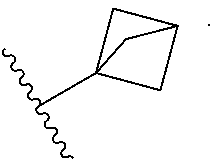
In some embodiments, for a compound or salt of any one of Formula (I), (Ia), (Ib), (Ic), or (Id), R1 is selected from optionally substituted C3 cycloalkyl.


any of which is optionally substituted with one or more R9.


or a salt thereof, wherein:
A is selected from —O—, —NR4—, —CR5R6—, and —C(O)—;
X is independently selected from C(R3) and N;
R1 is selected from:
-
- C1-6 alkyl optionally substituted with one or more substituents independently selected from halogen, —OR10, —N(R10)2, —C(O)R10, —CN, C3-6 carbocycle, and 4- to 6-membered heterocycle, wherein the C3-6 carbocycle and 4- to 6-membered heterocycle are each optionally substituted with one or more R9; and
- C3-6 carbocycle; or
- R1 together with R3 form a 5- to 10-membered heterocycle, wherein the 5- to 10-membered heterocycle is optionally substituted with one or more R9; or R1 together with R5 form a saturated C3-5 carbocycle; or R1 together with R4 form a 4- to 6-membered heterocycle, wherein the 4- to 6-membered heterocycle is optionally substituted with one or more R9; and
- when A is —C(O)—, R1 is additionally selected from —N(R10)2 and —OR10;
each R2 is independently selected from halogen and halogen, —OR10, —SR10, —N(R10)2, —NO2, —CN;
each R9 is independently selected from: - halogen, —OR10, —SR10, —N(R10)2, —NO2, —CN; and
- C1-3 alkyl optionally substituted with one or more substituents independently selected from halogen, —OR10, —SR10, —N(R10)2, —NO2, and —CN; and
- two R9 groups come together to form a 4- to 6-membered heterocycle or C3-6 carbocycle optionally substituted with one or more R10, wherein the 4- to 6-membered heterocycle or C3-6 carbocycle is optionally spirocyclic;
each R10 is independently selected from - hydrogen; and
- C1-6 alkyl optionally substituted with one or more substituents independently selected from halogen, —CN, —OH, —SH, —NO2, —NH2, —O—C1-6 alkyl, —N(C1-6 alkyl)2, and —NH(C1-6 alkyl).
-
- halogen, —OR10, —SR10, —N(R10)2, —NO2, —CN; and
- C1-3 alkyl optionally substituted with one or more substituents independently selected from halogen, —OR10, —SR10, —N(R10)2, —NO2, and —CN.

or a salt thereof, wherein R7, R2, X, p, q and n are as previously described for Formula (I). In certain embodiments, for a compound or salt of any one of Formula (I), (Ia), (Ib), (Ic), or (Id), R1-A is further selected from halogen and C1-C3 alkyl, e.g., C2-C3 alkyl. In certain embodiments, for a compound or salt of any one of Formula (I), (Ia), (Ib), (Ic), or (Id), R1-A is further selected from halogen.

or a salt thereof, wherein:
T is selected from —O—, —NR14—, —CR15R16—, —C(O)—, —S—, —S(O)—, and —S(O)2;
R11 is selected from;
-
- C1-6 alkyl, C2-6 alkenyl, and C2-6 alkynyl, each of which is substituted with one or more substituents independently selected from halogen, —OR20, —SR20, —N(R20)2, —C(O)R20, —C(O)N(R20)2, —N(R20)C(O)R20, —N(R20)C(O)N(R20)2, —OC(O)N(R20)2, —N(R20)C(O)OR20, —C(O)OR20, —OC(O)R20, —S(O)R20, —S(O)2R20, —NO2, ═O, ═S, ═N(R20), —CN, C3-10 carbocycle, and 3- to 10-membered heterocycle, wherein the C3-10 carbocycle and 3- to 10-membered heterocycle are each optionally substituted with one or more R19.
- and C3-10 carbocycle and 3- to 10-membered heterocycle, each of which is optionally substituted with one or more substituents independently selected from halogen, —OR20, —SR20, —N(R20)2, —C(O)R20, —C(O)N(R20)2, —N(R20)C(O)R20, —N(R20)C(O)N(R20)2, —OC(O)N(R20)2, —N(R20)C(O)OR20, —C(O)OR20, —OC(O)R20, —S(O)R20, —S(O)2R20, —NO2, ═O, ═S, ═N(R20), and —CN; or
- R11 together with R17 form a 5- to 10-membered heterocycle or C5-10 carbocycle, wherein the 5- to 10-membered heterocycle or C5-10 carbocycle is optionally substituted with one or more R19; or R11 together with R15 form a 3- to 10-membered heterocycle or C3-10 carbocycle, wherein the 3- to 10-membered heterocycle or saturated C3-10 carbocycle is optionally substituted with one or more R19; or R11 together with R14 form a 3- to 10-membered heterocycle, wherein the 3- to 10-membered heterocycle is optionally substituted with one or more R19.
- when T is —NR14—, R11 is additionally selected from hydrogen, and when T is —C(O)—, R11 is additionally selected from —N(R20)2 and —OR20;
each R12 is independently selected from: - halogen, —OR20, —SR20, —N(R20)2, —C(O)R20, —C(O)N(R20)2, —N(R20)C(O)R20, —N(R20)C(O)N(R20)2, —OC(O)N(R20)2, —N(R20)C(O)OR20, —C(O)OR20, —OC(O)R20, —S(O)R20, —S(O)2R20, —NO2, —CN;
- C1-3 alkyl, C2-3 alkenyl, C2-3 alkynyl, each of which is optionally substituted with one or more substituents independently selected from halogen, —OR20, —SR20, —N(R20)2, —C(O)R20, —C(O)N(R20)2, —N(R20)C(O)R20, —C(O)OR20, —N(R20)C(O)N(R20)2, —OC(O)N(R20)2, —N(R20)C(O)OR20, —OC(O)R20, —S(O)R20, —S(O)2R20, —NO2, ═O, ═S, ═N(R20), and —CN; and
- C3-10 carbocycle optionally substituted with one or more substituents independently selected from halogen, —OR20, —SR20, —N(R20)2, —C(O)R20, —C(O)N(R20)2, —N(R20)C(O)R20, —N(R20)C(O)N(R20)2, —OC(O)N(R20)2, —N(R20)C(O)OR20, —C(O)OR20, —OC(O)R20, —S(O)R20, —S(O)2R20, —NO2, ═O, ═S, ═N(R20), and —CN;
R14 is independently selected from: - hydrogen; and
- C1-6 alkyl optionally substituted with one or more substituents independently selected from halogen, —OR20, —SR20, —N(R20)2, —NO2, and —CN; or
- R14 together with R11 form a 3- to 10-membered heterocycle, which is optionally substituted with one or more R19.
R15 and R16 are independently selected from: - hydrogen, halogen, —OR20, —SR20, —N(R20)2, —NO2, —CN, and C1-6 alkyl optionally substituted with one or more substituents independently selected from halogen, —OR20, —SR20, —N(R20)2, —NO2, and —CN;
- or R15 together with R11 form a saturated C3-10 carbocycle or 3- to 10-membered heterocycle, which is optionally substituted with one or more R19.
each R17 and R18 is independently selected from: - halogen, —SR20, —N(R20)2, —NO2, —CN, and C1-6 alkyl optionally substituted with one or more substituents independently selected from halogen, —OR20, —SR20, —N(R20)2, —NO2, and —CN; or
- R17 together with R11 form a C5-10 carbocycle or 5- to 10-membered heterocycle, which is optionally substituted with one or more R19;
R19 is independently selected from: - halogen, —OR20, —SR20, —N(R20)2, —C(O)R20, —C(O)N(R20)2, —N(R20)C(O)R20, —N(R20)C(O)N(R20)2, —OC(O)N(R20)2, —N(R20)C(O)OR20, —C(O)OR20, —OC(O)R20, —S(O)R20, —S(O)2R20, —NO2, ═O, ═S, ═N(R10), and —CN; and
- C1-3 alkyl, C2-3 alkenyl, and C2-3 alkynyl, each of which is optionally substituted with one or more substituents independently selected from halogen, —OR20, —SR20, —N(R20)2, —C(O)R20, —C(O)N(R20)2, —N(R20)C(O)R20, —N(R20)C(O)N(R20)2, —OC(O)N(R20)2, —N(R20)C(O)OR20, —C(O)OR20, —OC(O)R20, —S(O)R20, —S(O)2R20, —NO2, ═O, ═S, ═N(R20), and —CN;
each R20 is independently selected from: - hydrogen;
- C1-6 alkyl, C2-6 alkenyl, and C2-6 alkynyl, each of which is optionally substituted with one or more substituents independently selected from halogen, —CN, —OH, —SH, —NO2, —NH2, ═O, ═S, —O—C1-6 alkyl, —S—C1-6 alkyl, —N(C1-6 alkyl)2, —NH(C1-6 alkyl), C3-10 carbocycle, and 3- to 10-membered heterocycle; and
- C3-10 carbocycle, and 3- to 10-membered heterocycle, each of which is optionally substituted with one or more substituents independently selected from halogen, —CN, —OH, —SH, —NO2, —NH2, ═O, ═S, —O—C1-6 alkyl, —S—C1-6 alkyl, —N(C1-6 alkyl)2, —NH(C1-6 alkyl), C1-6 alkyl, C2-6 alkenyl, C2-6 alkynyl, C3-10 carbocycle, 3- to 10-membered heterocycle, and haloalkyl;
w is 0, 1, or 2
z is 0, 1, or 2; and
v is 1, 2, 3, 4, or 5, and when R11 is other than —CH3, v is further selected from 0.

or a salt thereof, wherein:
T is selected from —O—, —NR14—, —CR15R16—, —C(O)—, —S—, —S(O)—, and —S(O)2;
R11 is selected from:
-
- C1-6 alkyl, C2-6 alkenyl, and C2-6 alkynyl, each of which is substituted with one or more substituents independently selected from halogen, —OR20, —SR20, —N(R20)2, —C(O)R20, —C(O)N(R20)2, —N(R20)C(O)R20, —N(R20)C(O)N(R20)2, —OC(O)N(R20)2, —N(R20)C(O)OR20, —C(O)OR20, —OC(O)R20, —S(O)R20, —S(O)2R20, —NO2, ═O, ═S, ═N(R20), —CN, C3-5 carbocycle, and 3- to 10-membered heterocycle, wherein the C3-s carbocycle and 3- to 10-membered heterocycle are each optionally substituted with one or more R19;
- and C3-10 carbocycle and 3- to 10-membered heterocycle, each of which is optionally substituted with one or more substituents independently selected from halogen, —OR20, —SR20, —N(R20)2, —C(O)R20, —C(O)N(R20)2, —N(R20)C(O)R20, —N(R20)C(O)N(R20)2, —OC(O)N(R20)2, —N(R20)C(O)OR20, —C(O)OR20, —OC(O)R20, —S(O)R20, —S(O)2R20, —NO2, ═O, ═S, ═N(R20), and —CN; or
- R11 together with R15 form a 3- to 10-membered heterocycle or C3-10 carbocycle, wherein the 3- to 10-membered heterocycle or saturated C3-10 carbocycle is optionally substituted with one or more R19; or R11 together with R14 form a 3- to 10-membered heterocycle, wherein the 3- to 10-membered heterocycle is optionally substituted with one or more R19.
- when T is —NR14—, R11 is additionally selected from hydrogen, and when T is —C(O)—, R11 is additionally selected from —N(R20)2 and —OR20;
each R12 is independently selected from: - halogen, —OR20, —SR20, —N(R20)2, —C(O)R20, —C(O)N(R20)2, —N(R20)C(O)N(R20)2, —OC(O)N(R20)2, —C(O)OR20, —OC(O)R20, —S(O)R20, —S(O)2R20, —NO2, —CN;
- C1-3 alkyl optionally substituted with one or more substituents independently selected from halogen, —OR20, —SR20, —N(R20)2, —C(O)R20, —C(O)N(R20)2, —N(R20)C(O)R20, —C(O)OR20, —N(R20)C(O)N(R20)2, —OC(O)N(R20)2, —N(R20)C(O)OR20, —OC(O)R20, —S(O)R20, —S(O)2R20, —NO2, ═O, ═S, ═N(R20), and —CN; and
- C3-10 carbocycle optionally substituted with one or more substituents independently selected from halogen, —OR20, —SR20, —N(R20)2, —C(O)R20, —C(O)N(R20)2, —N(R20)C(O)R20, —N(R20)C(O)N(R20)2, —OC(O)N(R20)2, —N(R20)C(O)OR20, —C(O)OR20, —OC(O)R20, —S(O)R20, —S(O)2R20, —NO2, ═O, ═S, ═N(R20), and —CN;
R14 is independently selected from - hydrogen; and
- C1-6 alkyl optionally substituted with one or more substituents independently selected from halogen, —OR20, —SR20, —N(R20)2, —NO2, and —CN; or
- R14 together with R11 form a 3- to 10-membered heterocycle, which is optionally substituted with one or more R19;
R15 together with R11 form a saturated C3-10 carbocycle or 3- to 10-membered heterocycle, which is optionally substituted with one or more R19.
R16 is independently selected from: - hydrogen, halogen, —OR20, —SR20, —N(R20)2, —NO2, —CN, and C1-6 alkyl optionally substituted with one or more substituents independently selected from halogen, —OR20, —SR20, —N(R20)2, —NO2, and —CN;
R18 is independently selected from: - halogen, —SR20, —N(R20)2, —NO2, and C2-6 alkyl optionally substituted with one or more substituents independently selected from halogen, —OR20, —SR20, —N(R20)2, —NO2, and —CN;
R19 is independently selected from - halogen, —OR20, —SR20, —N(R20)2, —C(O)R20, —C(O)N(R20)2, —N(R20)C(O)R20, —N(R20)C(O)N(R20)2, —OC(O)N(R20)2, —N(R20)C(O)OR20, —C(O)OR20, —OC(O)R20, —S(O)R20, —S(O)2R20, —NO2, ═O, ═S, ═N(R10), and —CN; and
- C1-3 alkyl, C2-3 alkenyl, and C2-3 alkynyl, each of which is optionally substituted with one or more substituents independently selected from halogen, —OR20, —SR20, —N(R20)2, —C(O)R20, —C(O)N(R20)2, —N(R20)C(O)R20, —N(R20)C(O)N(R20)2, —OC(O)N(R20)2, —N(R20)C(O)OR20, —C(O)OR20, —OC(O)R20, —S(O)R20, —S(O)2R20, —NO2, ═O, ═S, ═N(R20), and —CN;
each R20 is independently selected from - hydrogen;
- C1-6 alkyl, C2-6 alkenyl, and C2-6 alkynyl, each of which is optionally substituted with one or more substituents independently selected from halogen, —CN, —OH, —SH, —NO2, —NH2, ═O, ═S, —O—C1-6 alkyl, —S—C1-6 alkyl, —N(C1-6 alkyl)2, —NH(C1-6 alkyl), C3-10 carbocycle, and 3- to 10-membered heterocycle; and
- C3-10 carbocycle, and 3- to 10-membered heterocycle, each of which is optionally substituted with one or more substituents independently selected from halogen, —CN, —OH, —SH, —NO2, —NH2, ═O, ═S, —O—C1-6 alkyl, —S—C1-6 alkyl, —N(C1-6 alkyl)2, —NH(C1-6 alkyl), C1-6 alkyl, C2-6 alkenyl, C2-6 alkynyl, C3-10 carbocycle, 3- to 10-membered heterocycle, and haloalkyl;
z is 0, 1, or 2; and
v is 1, 2, 3, 4, or 5.


In certain embodiments, R11 is selected from:

In certain embodiments, R11 is selected from optionally substituted


or a salt thereof, wherein:
A is selected from —O—, —NR14—, —CR15R16—, and —C(O)—;
R11 is selected from:
-
- C1-6 alkyl optionally substituted with one or more substituents independently selected from halogen, —OR20, —N(R20)2, —C(O)R20, —CN, C3-6 carbocycle, and 4- to 6-membered heterocycle, wherein the C3-6 carbocycle and 4- to 6-membered heterocycle are each optionally substituted with one or more R9; and
- C3-6 carbocycle; or
- R11 together with R13 form a 5- to 10-membered heterocycle, wherein the 5- to 10-membered heterocycle is optionally substituted with one or more R19; or R11 together with R15 form a saturated C3-5 carbocycle or; or R11 together with R14 form a 4- to 6-membered heterocycle, wherein the 4- to 6-membered heterocycle is optionally substituted with one or more R19; and
- when A is —C(O)—, R11 is additionally selected from —N(R20)2 and —OR20;
each R12 is independently selected from halogen, —OR20, —SR20, —N(R20)2, —NO2, —CN;
R17 together with R11 form a 5- to 10-membered heterocycle optionally substituted with one or more R19
each R19 is independently selected from: - halogen, —OR20, —SR20, —N(R20)2, —NO2, —CN; and
- C1-3 alkyl optionally substituted with one or more substituents independently selected from halogen, —OR20, —SR20, —N(R20)2, —NO2, and —CN; and
- two R19 groups come together to form a 4- to 6-membered heterocycle or C3-6 carbocycle optionally substituted with one or more R20, wherein the 4- to 6-membered heterocycle or C3-6 carbocycle is optionally spirocyclic;
each R20 is independently selected from: - hydrogen; and
- C1-6 alkyl optionally substituted with one or more substituents independently selected from halogen, —CN, —OH, —SH, —NO2, —NH2, —O—C1-6 alkyl, —N(C1-6 alkyl)2, and —NH(C1-6 alkyl);
w is 0 or 1; and
vis 1 or 2.

or a salt thereof wherein R17, R18, R12, w, z, and v are as described for Formula (II′).


or a salt thereof, wherein:
-
- each Y is independently selected from C(R3), N, and N+(—O−);
- A is absent or selected from —O—, —NR4—, —CR5R6—, —C(O)—, —S—, —S(O)—, and —S(O)2—;
- R1 is selected from:
- C1-6 alkyl, C2-6 alkenyl, and C2-6 alkynyl, each of which is optionally substituted with one or more substituents independently selected from halogen, —OR10, —SR10, —N(R10)2, —C(O)R10, —C(O)N(R10)2, —N(R10)C(O)R10, —N(R10)C(O)N(R10)2, —OC(O)N(R10)2, —N(R10)C(O)OR10, —C(O)OR10, —OC(O)R10, —S(O)R10, —S(O)2R10, —NO2, ═O, ═S, ═N(R10), —CN, C3-10 carbocycle, and 3- to 10-membered heterocycle, wherein the C3-10 carbocycle and 3- to 10-membered heterocycle are each optionally substituted with one or more R9; and
- C3-10 carbocycle and 3- to 10-membered heterocycle, each of which is optionally substituted with one or more substituents independently selected from halogen, —OR10, —SR10, —N(R10)2, —C(O)R10, —C(O)N(R10)2, —N(R10)C(O)R10, —N(R10)C(O)N(R10)2, —OC(O)N(R10)2, —N(R10)C(O)OR10, —C(O)OR10, —OC(O)R10, —S(O)R10, —S(O)2R10, —NO2, ═O, ═S, ═N(R10), and —CN; or
- R1 together with R3 form a 5- to 10-membered heterocycle or C5-10 carbocycle, wherein the 5- to 10-membered heterocycle or C5-10 carbocycle is optionally substituted with one or more R9; or R1 together with R5 form a 3- to 10-membered heterocycle or saturated C3-10 carbocycle, wherein the 3- to 10-membered heterocycle or saturated C3-10 carbocycle is optionally substituted with one or more R9; or R1 together with R4 form a 3- to 10-membered heterocycle, wherein the 3- to 10-membered heterocycle is optionally substituted with one or more R9; and
- when A is —NR4—, R1 is additionally selected from hydrogen, and when A is —C(O)—, R1 is additionally selected from —N(R10)2 and —OR10;
- when A is absent R1 is further selected from halogen, —OR10, —SR10, —N(R10)2, —C(O)R10, —C(O)N(R10)2, —N(R10)C(O)R10, —N(R10)C(O)N(R10)2, —OC(O)N(R10)2, —N(R10)C(O)OR10, —C(O)OR10, —OC(O)R10, —S(O)R10, —S(O)2R10, —NO2, and —CN;
- each R2 is independently selected from:
- halogen, —OR10, —SR10, —N(R10)2, —C(O)R10, —C(O)N(R10)2, —N(R10)C(O)R10, —N(R10)C(O)N(R10)2, —OC(O)N(R10)2, —N(R10)C(O)OR10, —C(O)OR10, —OC(O)R10, —S(O)R10, —S(O)2R10, —NO2, and —CN;
- C1-3 alkyl, C2-3 alkenyl, and C2-3 alkynyl, each of which is optionally substituted with one or more substituents independently selected from halogen, —OR10, —SR10, —N(R10)2, —C(O)R10, —C(O)N(R10)2, —N(R10)C(O)R10, —N(R10)C(O)N(R10)2, —OC(O)N(R10)2, —N(R10)C(O)OR10, —C(O)OR10, —OC(O)R10, —S(O)R10, —S(O)2R10, —NO2, ═O, ═S, ═N(R10), and —CN; and
- C3-10 carbocycle optionally substituted with one or more substituents independently selected from: halogen, —OR10, —SR10, —N(R10)2, —C(O)R10, —C(O)N(R10)2, —N(R10)C(O)R10, —N(R10)C(O)N(R10)2, —OC(O)N(R10)2, —N(R10)C(O)OR10, —C(O)OR10, —OC(O)R10, —S(O)R10, —S(O)2R10, —NO2, ═O, ═S, ═N(R10), and —CN
- each R3, R5, and R6 is independently selected from:
- hydrogen, halogen, —OR10, —SR10, —N(R10)2, —NO2, and —CN; and
- C1-6 alkyl optionally substituted with one or more substituents independently selected from halogen, —OR10, —SR10, —N(R10)2, —NO2, and —CN; or
- R3 together with R1 form a 5- to 10-membered heterocycle or C5-10 carbocycle, wherein the 5- to 10-membered heterocycle or C5-10 carbocycle is optionally substituted with one or more R9; or R5 together with R1 form a 3- to 10-membered heterocycle or saturated C3-10 carbocycle, wherein the 3- to 10-membered heterocycle or saturated C3-10 carbocycle is optionally substituted with one or more R9;
- R4 is independently selected from:
- hydrogen; and
- C1-6 alkyl optionally substituted with one or more substituents independently selected from halogen, —OR10, —SR10, —N(R10)2, —NO2, and —CN; or
- R4 together with R1 form a 3- to 10-membered heterocycle, which is optionally substituted with one or more R9;
- each R7 and R8 is independently selected from:
- halogen, —OR10, —SR10, —N(R10)2, —NO2, —CN, —CHF2, —CF3, —CH2F, and C2-6 alkyl optionally substituted with one or more substituents independently selected from halogen, —OR10, —SR10, —N(R10)2, —NO2, and —CN;
- each R9 is independently selected from:
- halogen, —OR10, —SR10, —N(R10)2, —C(O)R10, —C(O)N(R10)2, —N(R10)C(O)R10, —N(R10)C(O)N(R10)2, —OC(O)N(R10)2, —N(R10)C(O)OR10, —C(O)OR10, —OC(O)R10, —S(O)R10, —S(O)2R10, —NO2, ═O, ═S, ═N(R10), and —CN; and
- C1-3 alkyl, C2-3 alkenyl, and C2-3 alkynyl, each of which is optionally substituted with one or more substituents independently selected from halogen, —OR10, —SR10, —N(R10)2, —C(O)R10, —C(O)N(R10)2, —N(R10)C(O)R10, —N(R10)C(O)N(R10)2, —OC(O)N(R10)2, —N(R10)C(O)OR10, —C(O)OR10, —OC(O)R10, —S(O)R10, —S(O)2R10, —NO2, ═O, ═S, ═N(R10), and —CN;
- each R10 is independently selected from:
- hydrogen;
- C1-6 alkyl, C2-6 alkenyl, and C2-6 alkynyl, each of which is optionally substituted with one or more substituents independently selected from halogen, —CN, —OH, —SH, —NO2, —NH2, ═O, ═S, —O—C1-6 alkyl, —S—C1-6 alkyl, —N(C1-6 alkyl)2, —NH(C1-6 alkyl), C3-10 carbocycle, and 3- to 10-membered heterocycle; and
- C3-10 carbocycle, and 3- to 10-membered heterocycle, each of which is optionally substituted with one or more substituents independently selected from halogen, —CN, —OH, —SH, —NO2, —NH2, ═O, ═S, —O—C1-6 alkyl, —S—C1-6 alkyl, —N(C1-6 alkyl)2, —NH(C1-6 alkyl), C1-6 alkyl, C2-6 alkenyl, C2-6 alkynyl, C3-10 carbocycle, 3- to 10-membered heterocycle, and haloalkyl;
- R30 and R31 are independently selected from R10 or R30 and R31 come together to form a C3-7 carbocycle, or 3- to 7-membered heterocycle, wherein C3-7 carbocycle and 3- to 7-membered heterocycle are optionally substituted with one or more substituents independently selected from R9;
- n is 0, 1, or 2;
- p is 0, 1, or 2; and
- q is 0, 1, 2, 3, 4, or 5.

or a salt thereof, wherein:
each Y is independently selected from C(R3), N, and N+(—O−);
A is selected from —O—, —NR4—, —CR5R6—, —C(O)—, —S—, —S(O)—, and —S(O)2—;
R1 is selected from:
-
- C1-6 alkyl, C2-6 alkenyl, and C2-6 alkynyl, each of which is optionally substituted with one or more substituents independently selected from halogen, —OR10, —SR10, —N(R10)2, —C(O)R10, —C(O)N(R10)2, —N(R10)C(O)R10, —N(R10)C(O)N(R10)2, —OC(O)N(R10)2, —N(R10)C(O)OR10, —C(O)OR10, —OC(O)R10, —S(O)R10, —S(O)2R10, —NO2, ═O, ═S, ═N(R10), —CN, C3-10 carbocycle, and 3- to 10-membered heterocycle, wherein the C3-10 carbocycle and 3- to 10-membered heterocycle are each optionally substituted with one or more R9; and
- C3-10 carbocycle and 3- to 10-membered heterocycle, each of which is optionally substituted with one or more substituents independently selected from halogen, —OR10, —SR10, —N(R10)2, —C(O)R10, —C(O)N(R10)2, —N(R10)C(O)R10, —N(R10)C(O)N(R10)2, —OC(O)N(R10)2, —N(R10)C(O)OR10, —C(O)OR10, —OC(O)R10, —S(O)R10, —S(O)2R10, —NO2, ═O, ═S, ═N(R10), and —CN; or
- R1 together with R3 form a 5- to 10-membered heterocycle or C5-10 carbocycle, wherein the 5- to 10-membered heterocycle or C5-10 carbocycle is optionally substituted with one or more R9; or R1 together with R5 form a 3- to 10-membered heterocycle or saturated C3-10 carbocycle, wherein the 3- to 10-membered heterocycle or saturated C3-10 carbocycle is optionally substituted with one or more R9; or R1 together with R4 form a 3- to 10-membered heterocycle, wherein the 3- to 10-membered heterocycle is optionally substituted with one or more R9; and
- when A is —NR4—, R1 is additionally selected from hydrogen, and when A is —C(O)—, R1 is additionally selected from —N(R10)2 and —OR10;
each R2 is independently selected from: - halogen, —OR10, —SR10, —N(R10)2, —C(O)R10, —C(O)N(R10)2, —N(R10)C(O)R10, —N(R10)C(O)N(R10)2, —OC(O)N(R10)2, —N(R10)C(O)OR10, —C(O)OR10, —OC(O)R10, —S(O)R10, —S(O)2R10, —NO2, and —CN; and
- C1-3 alkyl, C2-3 alkenyl, and C2-3 alkynyl, each of which is optionally substituted with one or more substituents independently selected from halogen, —OR10, —SR10, —N(R10)2, —C(O)R10, —C(O)N(R10)2, —N(R10)C(O)R10, —N(R10)C(O)N(R10)2, —OC(O)N(R10)2, —N(R10)C(O)OR10, —C(O)OR10, —OC(O)R10, —S(O)R10, —S(O)2R10, —NO2, ═O, ═S, ═N(R10), and —CN;
each R3, R5, and R6 is independently selected from: - hydrogen, halogen, —OR10, —SR10, —N(R10)2, —NO2, and —CN; and
- C1-6 alkyl optionally substituted with one or more substituents independently selected from halogen, —OR10, —SR10, —N(R10)2, —NO2, and —CN; or
- R3 together with R1 form a 5- to 10-membered heterocycle or C5-10 carbocycle, wherein the 5- to 10-membered heterocycle or C5-10 carbocycle is optionally substituted with one or more R9; R5 together with R1 form a 3- to 10-membered heterocycle or saturated C3-10 carbocycle, wherein the 3- to 10-membered heterocycle or saturated C3-10 carbocycle is optionally substituted with one or more R9;
R4 is independently selected from: - hydrogen; and
- C1-6 alkyl optionally substituted with one or more substituents independently selected from halogen, —OR10, —SR10, —N(R10)2, —NO2, and —CN; or
- R4 together with R1 form a 3- to 10-membered heterocycle, which is optionally substituted with one or more R9;
each R7 and R8 is independently selected from: - halogen, —OR10, —SR10, —N(R10)2, —NO2, —CN, —CHF2, —CF3, —CH2F, and C2-6 alkyl optionally substituted with one or more substituents independently selected from halogen, —OR10, —SR10, —N(R10)2, —NO2, and —CN;
each R9 is independently selected from: - halogen, —OR10, —SR10, —N(R10)2, —C(O)R10, —C(O)N(R10)2, —N(R10)C(O)R10, —N(R10)C(O)N(R10)2, —OC(O)N(R10)2, —N(R10)C(O)OR10, —C(O)OR10, —OC(O)R10, —S(O)R10, —S(O)2R10, —NO2, ═O, ═S, ═N(R10), and —CN; and
- C1-3 alkyl, C2-3 alkenyl, and C2-3 alkynyl, each of which is optionally substituted with one or more substituents independently selected from halogen, —OR10, —SR10, —N(R10)2, —C(O)R10, —C(O)N(R10)2, —N(R10)C(O)R10, —N(R10)C(O)N(R10)2, —OC(O)N(R10)2, —N(R10)C(O)OR10, —C(O)OR10, —OC(O)R10, —S(O)R10, —S(O)2R10, —NO2, ═O, ═S, ═N(R10), and —CN;
each R10 is independently selected from: - hydrogen;
- C1-6 alkyl, C2-6 alkenyl, and C2-6 alkynyl, each of which is optionally substituted with one or more substituents independently selected from halogen, —CN, —OH, —SH, —NO2, —NH2, ═O, ═S, —O—C1-6 alkyl, —S—C1-6 alkyl, —N(C1-6 alkyl)2, —NH(C1-6 alkyl), C3-10 carbocycle, and 3- to 10-membered heterocycle; and
- C3-10 carbocycle, and 3- to 10-membered heterocycle, each of which is optionally substituted with one or more substituents independently selected from halogen, —CN, —OH, —SH, —NO2, —NH2, ═O, ═S, —O—C1-6 alkyl, —S—C1-6 alkyl, —N(C1-6 alkyl)2, —NH(C1-6 alkyl), C1-6 alkyl, C2-6 alkenyl, C2-6 alkynyl, C3-10 carbocycle, 3- to 10-membered heterocycle, and haloalkyl;
n is 0, 1, or 2;
p is 0, 1, or 2; and
q is 0, 1, 2, 3, 4, or 5.


In certain embodiments, R1 is selected from optionally substituted.


or a salt thereof.


| Compound | ||||
| No. | Structure | Name | NMR | MS |
| 123 |
 |
2-(4-chlorobenzyl)-6-(4- (methylamino)phenyl)pyridazin- 3(2H)-one | 1H NMR (DMSO- d6, 300 MHz): δ 7.96 (d, J = 9.9 Hz, 1H), 7.64 (d, J = 8.7 Hz, 2H), 7.43-7.35 (m, 4H), 7.00 (d, J = 9.6 Hz, 1H), 6.60 (d, J = 8.7 Hz, 2H), 6.11 (m, 1 H), 5.27 (s, 2H), 2.72 (d, J = 5.1 Hz, 3H) | LC/MS (ESI): 326 [M + H]+ |

| Cmpd | ||||
| No. | Structure | Name | NMR | MS |
| 5 |
 |
2-(4- chlorobenzyl)-6- (2-(2,2,2- trifluoroethoxy) pyrimidin-5- yl)pyridazin- 3(2H)-one | 1H NMR (300 MHz, DMSO-d6): δ 9.16 (s, 2H), 8.13 (d, J = 9.9 Hz, 1H), 7.46-7.43 (m, 4H), 7.16 (d, J = 9.6 Hz, 1H), 5.33 (s, 2H), 5.12 (q, J = 9.0 Hz, 2H); | LC/MS (ESI): 397 [M + H]+ |
| 34 |
 |
2-(3- chlorobenzyl)-6- (2-(2,2,2- trifluoroethoxy) pyrimidin-5- yl)pyridazin- 3(2H)-one | 1H NMR (300 MHz, DMSO-d6): δ 9.17 (s, 2H), 8.15 (d, J = 9.9 Hz, 1H), 7.47 (s, 1H), 7.43- 7.37 (m, 3H), 7.18 (d, J = 9.6 Hz, 1H), 5.34 (s, 2H), 5.12 (q, J = 9.0 Hz, 2H) | LC/MS (ESI): 397 [M + H]+ |
| 35 |
 |
2-(3- fluorobenzyl)-6- (2-(2,2,2- trifluoroethoxy) pyrimidin-5- yl)pyridazin- 3(2H)-one | 1H NMR (300 MHz, DMSO-d6): δ 9.16 (s, 2H), 8.15 (d, J = 9.6 Hz, 1H), 7.45-7.37 (m, 1H), 7.25-7.11 (m, 4H), 5.35 (s, 2H), 5.12 (q, J = 9.0 Hz, 2H) | LC/MS (ESI): 381 [M + H]+ |
| 36 |
 |
2-(2- fluorobenzyl)-6- (2-(2,2,2- trifluoroethoxy) pyrimidin-5- yl)pyridazin- 3(2H)-one | 1H NMR (300 MHz, DMSO-d6): δ 8.93 (s, 2H), 7.62 (d, J = 9.9 Hz, 1H), 7.46-7.26 (m, 2H), 7.19-6.93 (m, 3H), 5.51 (s, 2H), 4.89 (q, J = 8.1 Hz, 2H) | LC/MS (ESI): 381 [M + H]+ |
| 37 |
 |
2-(4- fluorobenzyl)-6- (2-(2,2,2- trifluoroethoxy) pyrimidin-5- yl)pyridazin- 3(2H)-one | 1H NMR (300 MHz, DMSO-d6): δ 8.96 (s, 2H), 7.61 (d, J = 9.6 Hz, 1H), 7.56-7.47 (m, 2H), 7.08-6.93 (m, 3H), 5.38 (s, 2H), 4.90 (q, J = 8.4 Hz, 2H) | LC/MS (ESI): 381 [M + H]+ |
| 38 |
 |
2-(2,3- difluorobenzyl)- 6-(2-(2,2,2- trifluoroethoxy) pyrimidin-5- yl)pyridazin- 3(2H)-one | 1H NMR (300 MHz, DMSO-d6): δ 9.10 (s, 2H), 8.15 (d, J = 5.4 Hz, 1H), 7.46-7.34 (m, 1H), 7.24-7.17(m, 3H), 5.43 (s, 2H), 5.11 (q, J = 9 Hz, 2H) | LC/MS (ESI): 399 [M + H]+ |
| 39 |
 |
2-(2,4- difluorobenzyl)- 6-(2-(2,2,2- trifluoroethoxy) pyrimidin-5 - yl)pyridazin- 3(2H)-one | 1H NMR (300 MHz, DMSO-d6): δ 9.10 (s, 2H), 8.14 (d, J = 9.9 Hz, 1H), 7.53-7.45 (m, 1H), 7.32-7.23 (m, 1H), 7.17 (d, J = 9.6 Hz, 1H), 7.12-7.06 (m, 1H), 5.36 (s, 2H), 5.11 (q, J = 9.0 Hz, 2H) | LC/MS (ESI): 399 [M + H]+ |
| 40 |
 |
2-(2,5- difluorobenzyl)- 6-(2-(2,2,2- trifluoroethoxy) pyrimidin-5 - yl)pyridazin- 3(2H)-one | 1H NMR (300 MHz, DMSO-d6): δ 9.09 (s, 2H), 8.06 (d, J = 9.6 Hz, 1H), 7.22-7.07 (m, 4H), 5.50 (s, 2H), 5.03 (q, J = 8.4 Hz, 2H) | LC/MS (ESI): 399 [M + H]+ |
| 41 |
 |
2-(2,6- difluorobenzyl)- 6-(2-(2,2,2- trifluoroethoxy) pyrimidin-5 - yl)pyridazin- 3(2H)-one | 1H NMR (300 MHz, Methanol-d4) δ 8.97 (s, 2H), 8.03 (d, J = 9.9 Hz, 1H), 7.50-7.40 (m, 1H), 7.15-7.01 (m, 3H), 5.55 (s, 2H), 5.00 (q, J = 8.7 Hz, 2H) | LC/MS (ESI): 399 [M + H]+ |
| 42 |
 |
2-(3,4- difluorobenzyl)- 6-(2-(2,2,2- trifluoroethoxy) pyrimidin-5- yl)pyridazin- 3(2H)-one | 1H NMR (300 MHz, DMSO-d6): δ 9.17 (s, 2H), 8.14 (d, J = 9.6 Hz, 1H), 7.47-7.40 (m, 2H), 7.17 (d, J = 9.9 Hz, 1H), 5.32 (s, 2H), 5.12 (q, J = 9.0 Hz, 2H) | LC/MS (ESI): 399 [M + H]+ |
| 43 |
 |
2-(3,5- difluorobenzyl)- 6-(2-(2,2,2- trifluoroethoxy) pyrimidin-5- yl)pyridazin- 3(2H)-one | 1H NMR (300 MHz, DMSO-d6): δ 9.18 (s, 2H), 8.16 (d, J = 9.6 Hz, `H), 7.21-7.11 (m, 4H), 5.35 (s, 2H), 5.12 (q, J = 9.0 Hz, 2H) | LC/MS (ESI): 399 [M + H]+ |


| Stock Solutions |
| PIPES, 200 mM in H2O, pH 7.0 |
| MgCl2 in H2O, 200 mM |
| PM12 Buffer, 10X: 12 mM PIPES (from 200 mM stock), 20 mM MgCl2 |
| (from 200 mM stock) |
| EGTA in H2O, 500 mM |
| CaCl2 in H2O, 500 mM |
| DTT in H2O, 1M |
| BSA in H2O, 20 mg/mL |
| KCl in H2O, 600 mM |
| ATP in 1X PM12, 100 mM |
| NADH in 1X PM12, 30 mM |
| PEP in 1X PM12, 100 mM, pH 7.0 |
| Antifoam 204, 1% in H2O |
| PREPARATION OF STOCKS SOLUTIONS |
| FOR 100 ML OF PCA BUFFER |
| 200 mM PIPES | Approx. Water | |||
| pCA | (mL) | (mL) | CaCl2 | EGTA |
| 4.0 | 6 | 74 | 10.025 | 9.975 |
| 4.5 | 6 | 74 | 9.800 | 10.200 |
| 5.0 | 6 | 74 | 9.325 | 10.675 |
| 5.5 | 6 | 74 | 8.100 | 11.900 |
| 5.75 | 6 | 74 | 7.200 | 12.800 |
| 6.0 | 6 | 74 | 6.000 | 14.000 |
| 6.25 | 6 | 74 | 4.500 | 15.500 |
| 6.5 | 6 | 74 | 3.025 | 16.975 |
| 6.75 | 6 | 74 | 1.975 | 18.025 |
| 7.0 | 6 | 74 | 1.165 | 18.835 |
| 8.0 | 6 | 74 | 0.126 | 19.874 |
| 10.0 | 6 | 74 | 0.001 | 19.999 |
| Total Well | Final | ||||
| Volume | Stock Concentrations | Concentrations in | Reaction | ||
| (μL) | 50 | Component | Value | Unit | Specific Buffer | Concentrations |
| Buffer A | 25 | PM12 Buffer | 10 | × | 1.00 | × | 1.00 | × |
| (μL) | KCl | 600 | mM | 60.00 | mM | 60.00 | mM | |
| BSA | 20 | mg/mL | 0.10 | mg/mL | 0.10 | mg/mL | ||
| DTT | 1000 | mM | 1.00 | mM | 1.00 | mM | ||
| PK/LDH | 80 | mM | 0.80 | mM | 0.40 | mM | ||
| Rabbit Psoas Prep 11 | 5.83 | mg/mL | 0.50 | mg/mL | 0.25 | mg/mL |
| Antifoam | 1.00% | 0.01% | 0.01% |
| Water | ||||||||
| Buffer B | 25 | PM12 Buffer | 10 | × | 1.00 | × | 1.00 | × |
| (μL) | pCa Solution | 10 | × | 2.00 | × | 1.00 | × | |
| KCl | 600 | mM | 60.00 | mM | 60.00 | mM | ||
| BSA | 20 | mg/mL | 0.10 | mg/mL | 0.10 | mg/mL | ||
| DTT | 1000 | mM | 1.00 | mM | 1.00 | mM | ||
| ATP | 100 | mM | 0.10 | mM | 0.05 | mM | ||
| NADH | 30 | mM | 1.00 | mM | 0.50 | mM | ||
| PEP | 100 | mM | 3.00 | mM | 1.50 | mM |
| Aatifoam | 1.00% | 0.01% | 0.01% |
| Water | ||||||
| Total Well | Volume | Number Of | ||||
| Volume | per well | Wells Total | ||||
| (μL) | 50 | Component | (μL) | Volume (μL) | 96 | Prepare Volume (μL) |
| Buffer A | 25 | PM12 Buffer | 2.50 | 240.00 | 312.00 | PM12 Buffer {1 ×} |
| (μL) | KCl | 2.50 | 240.00 | 312.00 | KCl {60 mM} | |
| BSA | 0.13 | 12.00 | 15.60 | BSA {0.1 mg/mL} | ||
| DTT | 0.03 | 2.40 | 3.12 | DTT {1 mM} | ||
| PK/LDH | 0.25 | 24.00 | 31.20 | PK/LDH {0.5 mM} | ||
| Rabbit Psoas Prep 11 | 2.14 | 205.83 | 267.58 | Rabbit Psoas Prep 11 {0.25 mg/mL} | ||
| Antifoam | 0.25 | 24.00 | 31.20 | Antifoam {0.01%} | ||
| Water | 17.21 | 1651.77 | 2147.30 | Water | ||
| 25.00 | 2400.00 | 3120.00 | Total | |||
| Buffer B | 25 | PM12 Buffer | 2.50 | 240.00 | 312.00 | PM12 Buffer {1 ×} |
| (μL) | pCa Solution | 5.00 | 430.00 | 624.00 | pCa Solution {1 ×} | |
| KCl | 2.50 | 240.00 | 312.00 | KCl {60 mM} | ||
| BSA | 0.13 | 12.00 | 15.60 | BSA {0.1 mg/mL} | ||
| DTT | 0.03 | 2.40 | 3.12 | DTT {1 mM} | ||
| ATP | 0.03 | 2.40 | 3.12 | ATP {0.05 mM} | ||
| NADH | 0.83 | 80.00 | 104.00 | NADH {0.5 mM} | ||
| PEP | 0.75 | 72.00 | 93.60 | PEP {1.5 mM} | ||
| Arstifoam | 0.25 | 24.00 | 31.20 | Antifoam {0.01%} | ||
| Water | 12.99 | 1247.20 | 1621.36 | Water | ||
| 25.00 | 2400.00 | 3120.00 | Total | |||
| TABLE 1 | |||
| Cmpd | |||
| No. | Structure | Name | NMR/MS |
| 1 |
 |
2-(4-chlorobenzyl)-6- (2-(2- (difluoromethoxy) ethoxy)pyrimidin-5- yl)pyridazin-3(2H)- one | [M + H]+ 409.3 |
| 2 |
 |
2-(4-chlorobenzyl)-6- (2-(2- (trifluoromethoxy) ethoxy)pyrimidin-5- yl)pyridazin-3(2H)- one | [M + H]+ 427.1 |
| 3 |
 |
2-(4-chlorobenzyl)-6- (2-(oxetan-3- ylmethoxy)pyrimidin- 5-yl)pyridazin-3(2H)- one | [M + H]+ 385.2 |
| 4 |
 |
2-(4-chlorobenzyl)-6- (2-(3- (trifluoromethyl)azetidin- 1-yl)pyrimidin-5- yl)pyridazin-3(2H)- one | [M + H]+ 422.2 |
| 5 |
 |
2-(4-chlorobenzyl)-6- (2-(2,2,2- trifluoroethoxy)pyrimidin- 5-yl)pyridazin- 3(2H)-one | 1H NMR (300 MHz, DMSO-d6): δ 9.16 (s, 2H), 8.13 (d, J = 9.9 Hz, 1H), 7.46-7.43 (m, 4H), 7.16 (d, J = 9.6 Hz, 1H), 5.33 (s, 2H), 5.12 (q, J = 9.0 Hz, 2H); LC/MS (ESI): 397 [M + H]+ |
| 6 |
 |
2-(4-chlorobenzyl)-6- (2-((2,2,2- trifluoroethyl)amino) pyrimidin-5- yl)pyridazin-3(2H)- one | 396.2 |
| 7 |
 |
2-(3-chloro-4- hydroxybenzyl)-6-(2- (2,2,2- trifluoroethoxy)pyrimidin- 5-yl)pyridazin- 3(2H)-one | [M + H]+ 413.2 |
| 8 |
 |
2-(4-chlorobenzyl)-6- (2- (cyclopropylamino) pyrimidin-5- yl)pyridazin-3(2H)- one | 354.2 |
| 9 |
 |
2-(4-chlorobenzyl)-6- (2-(3- (difluoromethoxy) azetidin-1-yl)pyrimidin- 5-yl)pyridazin-3(2H)- one | [M + H]+ 420.2 |
| 10 |
 |
2-(4-chlorobenzyl)-6- (2- (difluoromethoxy) pyrimidin-5- yl)pyridazin-3(2H)- one | Lm/z: 365.1 [M + H]+. |
| 11 |
 |
2-(4-chlorobenzyl)-6- (6-(2,2,2- trifluoroethoxy)pyridin- 3-yl)pyridazin- 3(2H)-one | 396.2 |
| 12 |
 |
2-(4-chlorobenzyl)-6- (2- (methylamino)pyrimidin- 5-yl)pyridazin- 3(2H)-one | 328.2 |
| 13 |
 |
2-(4-chlorobenzyl)-6- (6- (trifluoromethoxy) pyridin-3-yl)pyridazin- 3(2H)-one | 382.2 |
| 14 |
 |
2-(4-chlorobenzyl)-6- (2-(6,6-difluoro-2- azaspiro[3.3]heptan- 2-yl)pyrimidin-5- yl)pyridazin-3(2H)- one | [M + H]+ 430.2 |
| 15 |
 |
2-(4-chloro-3- fluorobenzyl)-6-(6- (difluoromethoxy) pyridin-3-yl)pyridazin- 3(2H)-one | 382.2 |
| 16 |
 |
2-(2,4- difluorobenzyl)-6-(2- (2-methylpyrrolidin- 1-yl)pyrimidin-5- yl)pyridazin-3(2H)- one | [M + H]+ 384.1 |
| 17 |
 |
2-(4-chlorobenzyl)-6- (6-methoxypyridin-3- yl)pyridazin-3(2H)- one | 328.2 |
| 18 |
 |
2-(4-chlorobenzyl)-6- (2-(3- (trifluoromethoxy) azetidin-1-yl)pyrimidin- 5-yl)pyridazin-3(2H)- one | [M + H]+ 438.1 |
| 19 |
 |
2-(4-chlorobenzyl)-6- (6- (difluoromethoxy) pyridin-3-yl)pyridazin- 3(2H)-one | 364.2 |
| 20 |
 |
2-(3-chloro-4- fluorobenzyl)-6-(6- (difluoromethoxy) pyridin-3-yl)pyridazin- 3(2H)-one | m/z: 382.2 [M + H]+ |
| 21 |
 |
2-(4-chlorobenzyl)-6- (6-((3-fluorooxetan-3- yl)methoxy)pyridin- 3-yl)pyridazin-3(2H)- one | MS m/z: 402.2 [M + H]+. |
| 22 |
 |
2-(4-chlorobenzyl)-6- (2-((3-fluorooxetan-3- yl)methoxy)pyrimidin- 5-yl)pyridazin- 3(2H)-one | MS m/z: 403.2 [M + H]+. |
| 23 |
 |
2-(2,4- difluorobenzyl)-6-(2- (pyrrolidin-1- yl)pyrimidin-5- yl)pyridazin-3(2H)- one | [M + H]+ 370.2 |
| 24 |
 |
2-(2,4- difluorobenzyl)-6-(2- ((3-fluorooxetan-3- yl)methoxy)pyrimidin- 5-yl)pyridazin- 3(2H)-one | |
| 25 |
 |
2-(2,4- difluorobenzyl)-6-(2- (oxetan-3- ylmethoxy)pyrimidin- 5-yl)pyridazin-3(2H)- one | [M + H]+ 387.1 |
| 26 |
 |
N-(5-(1-(4- chlorobenzyl)-6-oxo- 1,6-dihydropyridazin- 3-yl)pyrimidin-2- yl)acetamide | 356.2 |
| 27 |
 |
2-(4-chlorobenzyl)-6- (6- (dimethylamino)pyridin- 3-yl)pyridazin- 3(2H)-one | MS m/z: 341.3 [M + H]+. |
| 28 |
 |
2-(4-chlorobenzyl)-6- (6-((4-fluoro-1- methylpiperidin-4- yl)methoxy)pyridin- 3-yl)pyridazin-3(2H)- one | |
| 29 |
 |
2-(2,4- difluorobenzyl)-6-(2- (methyl(2,2,2- trifluoroethyl)amino) pyrimidin-5- yl)pyridazin-3(2H)- one | [M + H]+ 412.1 |
| 30 |
 |
2-(2,4- difluorobenzyl)-6-(2- (2- (trifluoromethyl) pyrrolidin-1-yl)pyrimidin- 5-yl)pyridazin-3(2H)- one | [M + H]+ 438.1 |
| 31 |
 |
2-benzyl-6-(2-(2,2,2- trifluoroethoxy)pyrimidin- 5-yl)pyridazin- 3(2H)-one | [M + H]+ 363.1 |
| 31 |
 |
2-benzyl-6-(2-(2,2,2- trifluoroethoxy) pyrimidin-5-yl)pyridazin- 3(2H)-one | m/z = 378.2 (M + H) |
| 32 |
 |
2-(4-chlorobenzyl)- 6-(2-((2,2- difluoroethyl)amino) pyrimidin-5- yl)pyridazin-3(2H)- one | m/z = 385.2 (M + H) |
| 33 |
 |
2-(4-chlorobenzyl)-6- (2-(oxetan-3- ylmethoxy)pyrimidin- 5-yl)pyridazin-3(2H)- one | LC/MS (ESI): 397 [M + H]+ |
| 34 |
 |
2-(3-chlorobenzyl)-6- (2-(2,2,2- trifluoroethoxy) pyrimidin-5-yl)pyridazin- 3(2H)-one | 1H NMR (300 MHz, DMSO-d6): δ 9.17 (s, 2H), 8.15 (d, J = 9.9 Hz, 1H), 7.47 (s, 1H), 7.43-7.37 (m, 3H), 7.18 (d, J = 9.6 Hz, 1H), 5.34 (s, 2H), 5.12 (q, J = 9.0 Hz, 2H); LC/MS (ESI): 381 [M + H]+ |
| 35 |
 |
2-(3-fluorobenzyl)-6- (2-(2,2,2- trifluoroethoxy)pyrimidin- 5-yl)pyridazin- 3(2H)-one | 1H NMR (300 MHz, DMSO-d6): δ 9.16 (s, 2H), 8.15 (d, J = 9.6 Hz, 1H), 7.45-7.37 (m, 1H), 7.25- 7.11 (m,4H), 5.35 (s, 2H), 5.12 (q, J = 9.0 Hz, 2H); LC/MS (ESI): 381 [M + H]+ |
| 36 |
 |
2-(2-fluorobenzyl)-6- (2-(2,2,2- trifluoroethoxy)pyrimidin- 5-yl)pyridazin- 3(2H)-one | 1H NMR (300 MHz, DMSO-d6): δ 8.93 (s, 2H), 7.62 (d, J = 9.9 Hz, 1H), 7.46-7.26 (m, 2H), 7.19- 6.93 (m, 3H), 5.51 (s, 2H), 4.89 (q, J = 8.1 Hz, 2H); LC/MS (ESI): 381 [M + H]+ |
| 37 |
 |
2-(4-fluorobenzyl)-6- (2-(2,2,2- trifluoroethoxy)pyrim idin-5-yl)pyridazin- 3(2H)-one | 1H NMR (300 MHz, DMSO-d6): δ 8.96 (s, 2H), 7.61 (d, J = 9.6 Hz, 1H), 7.56-7.47 (m, 2H), 7.08- 6.93 (m, 3H), 5.38 (s, 2H), 4.90 (q, J = 8.4 Hz, 2H); LC/MS (ESI): 399 [M + H]+ |
| 38 |
 |
2-(2,3- difluorobenzyl)-6-(2- (2,2,2- trifluoroethoxy)pyrimidin- 5-yl)pyridazin- 3(2H)-one | 1H NMR (300 MHz, DMSO-d6): δ 9.10 (s, 2H), 8.15 (d, J = 5.4 Hz, 1H), 7.46-7.34 (m, 1H), 7.24- 7.17 (m, 3H), 5.43 (s, 2H), 5.11 (q, J = 9 Hz, 2H); LC/MS (ESI): 399 [M + H]+ |
| 39 |
 |
2-(2,4- difluorobenzyl)-6-(2- (2,2,2- trifluoroethoxy)pyrimidin- 5-yl)pyridazin- 3(2H)-one | 1H NMR (300 MHz, DMSO-d6): δ 9.10 (s, 2H), 8.14 (d, J = 9.9 Hz, 1H), 7.53-7.45 (m, 1H), 7.32- 7.23 (m, 1H), 7.17 (d, J = 9.6 Hz, 1H), 7.12-7.06 (m, 1H), 5.36 (s, 2H), 5.11 (q, J = 9.0 Hz, 2H); LC/MS (ESI): 399 [M + H]+ |
| 40 |
 |
2-(2,5- difluorobenzyl)-6-(2- (2,2,2- trifluoroethoxy)pyrimidin- 5-yl)pyridazin- 3(2H)-one | 1H NMR (300 MHz, DMSO-d6): δ 9.09 (s, 2H), 8.06 (d, J = 9.6 Hz, 1H), 7.22-7.07 (m, 4H), 5.50 (s, 2H), 5.03 (q, J = 8.4 Hz, 2H); LC/MS (ESI): 399 [M + H]+ |
| 41 |
 |
2-(2,6- difluorobenzyl)-6-(2- (2,2,2- trifluoroethoxy)pyrimidin- 5-yl)pyridazin- 3(2H)-one | 1H NMR (300 MHz, Methanol-d4) δ 8.97 (s, 2H), 8.03 (d, J = 9.9 Hz, 1H), 7.50-7.40 (m, 1H), 7.15-7.01 (m, 3H), 5.55 (s, 2H), 5.00 (q, J = 8.7 Hz, 2H); LC/MS (ESI): 399 [M + H]+ |
| 42 |
 |
2-(3,4- difluorobenzyl)-6-(2- (2,2,2- trifluoroethoxy)pyrimidin- 5-yl)pyridazin- 3(2H)-one | 1H NMR (300 MHz, DMSO-d6): δ 9.17 (s, 2H), 8.14 (d, J = 9.6 Hz, 1H), 7.47-7.40 (m, 2H), 7.17 (d, J = 9.9 Hz, 1H), 5.32 (s, 2H), 5.12 (q, J = 9.0 Hz, 2H); LC/MS (ESI): 399 [M + H]+ |
| 43 |
 |
2-(3,5- difluorobenzyl)-6-(2- (2,2,2- trifluoroethoxy)pyrimidin- 5-yl)pyridazin- 3(2H)-one | 1H NMR (300 MHz, DMSO-d6): δ 9.18 (s, 2H), 8.16 (d, J = 9.6 Hz, 1H), 7.21-7.11 (m, 4H), 5.35 (s, 2H), 5.12 (q, J = 9.0 Hz, 2H); m/z = 390.3 (M + H) |
| 44 |
 |
2-(4-chlorobenzyl)-6- (2-(3,3- difluoroazetidin-1- yl)pyrimidin-5- yl)pyridazin-3(2H)- one | m/z = 382.3 (M + H) |
| 45 |
 |
2-(4-chlorobenzyl)-6- (2-(2-oxopyrrolidin- 1-yl)pyrimidin-5- yl)pyridazin-3(2H)- one | m/z = 408.3 (M + H) |
| 46 |
 |
2-(4-chlorobenzyl)-6- (2-((2- (difluoromethoxy) ethyl)amino)pyrimidin- 5-yl)pyridazin-3(2H)- one | m/z = 396.3 (M + H) |
| 47 |
 |
2-(4-chlorobenzyl)-6- (2-(2-methyl-5- oxopyrrolidin-1- yl)pyrimidin-5- yl)pyridazin-3(2H)- one | [M + H]+ 393.2 |
| 48 |
 |
2-(4- (hydroxymethyl)benzyl)- 6-(2-(2,2,2- trifluoroethoxy) pyrimidin-5-yl)pyridazin- 3(2H)-one | [M + H]+ 379.1 |
| 49 |
 |
2-(2-hydroxybenzyl)- 6-(2-(2,2,2- trifluoroethoxy)pyrimidin- 5-yl)pyridazin- 3(2H)-one | [M + H]+ 413 |
| 50 |
 |
2-(5-chloro-2- hydroxybenzyl)-6-(2- (2,2,2- trifluoroethoxy)pyrimidin- 5-yl)pyridazin- 3(2H)-one | [M + H]+ 430.2 |
| 51 |
 |
2-(4-chlorobenzyl)-6- (2-(6,6-difluoro-2- azaspiro[3.3]heptan- 2-yl)pyrimidin-5- yl)pyridazin-3(2H)- one | MS m/z: 386 [M + H]+ |
| 52 |
 |
2-(phenylmethyl-d2)- 6-(2-(2,2,2- trifluoroethoxy)pyrimidin- 5-yl)pyridazin- 3(2H)-one | 1H NMR (400 MHz, DMSO-d6) δ 9.18 (s, 2H), 8.55-8.53 (m, 2H), 8.15 (d, J = 9.9 Hz, 1H), 7.81-7.77 (m, 1H), 7.18 (d, J = 9.9 Hz, 1H); m/z = 394.2 (M + H) |
| 53 |
 |
(R)-2-(1-(4- chlorophenyl)-2- hydroxyethyl)-6-(6- (difluoromethoxy) pyridin-3-yl)pyridazin- 3(2H)-one | MS m/z: 389 |
| 54 |
 |
2-(1- phenylcyclopropyl)- 6-(2-(2,2,2- trifluoroethoxy)pyrimidin- 5-yl)pyridazin- 3(2H)-one | [M + H]+ 409.3 |
| TABLE 2 | |||
| Cmpd | |||
| No. | Structure | Name | NMR/MS |
| 101 |
 |
2-(4-chlorobenzyl)-6-(4-(2,2,2- trifluoroethoxy)phenyl)pyridazin- 3(2H)-one | 395.2 |
| 102 |
 |
2-(4-chlorobenzyl)-6-(4-(2,2- difluoroethoxy)phenyl)pyridazin- 3(2H)-one | 377.3 |
| 103 |
 |
2-(4-chlorobenzyl)-6-(4- (difluoromethoxy)phenyl)pyridazin- 3(2H)-one | 363.2 |
| 104 |
 |
2-(4-chlorobenzyl )-6-(4- cyclopropylphenyl)pyridaidn-3(2H)- one | 337.3 |
| 105 |
 |
2-(4-chl orobenzyl)-6-(4- (trifluoromethoxy)phenyl)pyridazin- 3(2H)-one | 381.2 |
| 106 |
 |
2-(4-chlorobenzyl)-6-(4-(2- methoxyethoxy)phenyl)pyridazin- 3(2H)-one | 371.3 |
| 107 |
 |
N-(4-(1-(4-chlorobenzyl)-6-oxo- 1,6-dihydropyridazin-3- yl)phenyl)acetamide | 1H NMR (DMSO-d6, 300 MHz): δ 10.14 (s, 1H), 8.05 (d, J = 9.9 Hz, 1H), 7.84 (d, J = 8.7 Hz, 2H), 7.70 (d, J = 8.7 Hz, 2H), 7.44- 7.37 (m, 4H), 7.08 (d, J = 9.6 Hz, 1H), 5.31 (s, 2H), 2.07 |
| (s, 3H); | |||
| LC/MS | |||
| (ESI): 354 | |||
| [M + H]+ | |||
| 108 |
 |
2-(4-(1-(4-chlorobenzyl)-6-oxo-1,6- dihydropyridazin-3- yl)phenoxy)acetonitrile | 352.2 |
| 109 |
 |
2-(4-chlorobenzyl)-6-(2-methyl-2.3- dihydrobenzofuran-5-yl)pyridazin- 3(2H)-one | 353.3 |
| 110 |
 |
(S)-2-(4-chlorobenzyl)-6-(2-methyl- 2.3-dihydrobenzofuran-5- yl)pyridazin-3(2H)-one | m/z = 353.2 (M + H) |
| 111 |
 |
(R)-2-(4-chlorobenzyl)-6-(2-methyl- 2,3-dihydrobenzofuran-5- yl)pyridazin-3(2H)-one | |
| 112 |
 |
2-(4-chlorobenzyl)-6-(2,3- dihydrobenzofuran-5-yl)pyridazin- 3(2H)-one | 339.2 |
| 113 |
 |
4-(1-(4-chlorobenzyl)-6-oxo-1,6 dihydropyridazin-3-yl)-N- methylbenzamide | [M + H]+ 354.2 |
| 114 |
 |
4-(1-(4-chlorobenzyl)-6-oxo-1,6- dihydropyridazin-3-yl)benzamide | [M + H]+ 340.1 |
| 115 |
 |
2-(4-chlorobenzyl)-6-(2,2-dimethyl- 2,3-dihydrobenzofuran-5- yl)pyridazin-3(2H)-one | 367.3 |
| 116 |
 |
4-((3-(4-(difluoromethoxy)phenyl)- 6-oxopyridazin-1(6H)- yl)methyl)benzamide | 372.3 |
| 117 |
 |
6-(benzo[d]thiazol-5-yl)-2-(4- chlorobenzyl)pyridazin-3(2H)-one | 354.2 |
| 118 |
 |
4-((3-(4-(difluoromelhoxy)phenyl)- 6-oxopyridazin-1(6H)-yl)methyl)- N,N-dimethylbenzenesulfonamide | 436.3 |
| 119 |
 |
2-(4-chlorobenzyl)-6-(1-methyl-1H- indazol-5-yl)pyridazin-3(2H)-one | 351.2 |
| 120 |
 |
4-(1-(4-chlorobenzyl)-6-oxo-1,6- dihydropyridazin-3-yl)-N,N- dimethylbenzenesulfonamide | 404.2 |
| 121 |
 |
5-(1-(4-chlorobenzyl)-6-oxo-1,6- dihydropyridazin-3-yl)-3,3- dimethylindolin-2-one | 380.3 |
| 122 |
 |
5-(1-(4-chlorobenzyl)-6-oxo-1,6- dihydropyridazin-3-yl)indolin-2-one | 352.3 |
| 123 |
 |
2-(4-chlorobenzyl)-6-(4- (methylamino)phenyl)pyridazin- 3(2H)-one | 1H NMR (DMSO-d6, 300 MHz): δ 7.96 (d, J = 9.9 Hz, 1H), 7.64 (d, J = 8.7 Hz, 2H), 7.43-7.35 (m, 4H), 7.00 (d, J = 9.6 Hz, 1H), 6.60 (d, J = 8.7 Hz, 2H), 6.11 (m, 1H), |
| 5.27 (s, | |||
| 2H), 2.72 | |||
| (d, J = 5.1 | |||
| Hz, 3H); | |||
| LC/MS | |||
| (ESI): 326 | |||
| [M + H]+ | |||
| TABLE 3 | ||
| Cmpd | ||
| No. | Structure | Name |
| 201 |
 |
2-(4-methoxybenzyl)-6-(4- (methylthio)phenyl)pyridazin-3(2H)- one |
| 202 |
 |
6-(2-fluoro-4-methoxyphenyl)-2-(4- vinylbenzyl)pyridazin-3(2H)-one |
| 203 |
 |
6-(2-fluoro-4-methoxyphenyl)-2-(4- methoxybenzyl)pyridazin-3(2H)-one |
| 204 |
 |
6-(2-fluoro-4-methoxyphenyl)-2-(2- fluorobenzyl)pyridazin-3(2H)-one |
| 205 |
 |
4-((3-(4-(methylthio)phenyl)-6- oxopyridazin-1(6H)- yl)methyl)benzonitrile |
| 206 |
 |
2-benzyl-6-(4- (methylthio)phenyl)pyridazin-3(2H)- one |
| 207 |
 |
2-(3-fluorobenzyl)-6-(4- (methylthio)phenyl)pyridazin-3(2H)- one |
| 208 |
 |
2-benzyl-6-(2-fluoro-4- methoxyphenyl)pyridazin-3(2H)-one |
| 209 |
 |
6-(2-fluoro-4-methoxyphenyl)-2-(3- fluorobenzyl)pyridazin-3(2H)-one |
| 210 |
 |
2-(4-chlorobenzyl)-6-(2-fluoro-4- methoxyphenyl)pyridazin-3(2H)-one |
| 211 |
 |
2-benzyl-6-(4- methoxyphenyl)pyridazin-3(2H)-one |
| 212 |
 |
2-(4-chlorobenzyl)-6-(4- methoxyphenyl)pyridazin-3(2H)-one |
| 213 |
 |
2-(4-chlorobenzyl)-6-(4- ethoxyphenyl)pyridazin-3(2H)-one |
| 214 |
 |
2-(4-chlorobenzyl)-6-(4- (methylamino)phenyl)pyridazin- 3(2H)-one |
| 215 |
 |
2-(4-chlorobenzyl)-6-(6- methoxypyridin-3-yl)pyridazin-3(2H)- one |
| 216 |
 |
2-(4-chlorobenzyl)-6-(4- propylphenyl)pyridazin-3(2H)-one |
| 217 |
 |
2-(4-chlorobenzyl)-6-(4- ethylphenyl)pyridazin-3(2H)-one |
| 218 |
 |
2-(4-chlorobenzyl)-6-(4- propoxyphenyl)pyridazin-3(2H)-one |
| 219 |
 |
2-benzyl-6-(4- methoxyphenyl)pyridazin-3(2H)-one |
| 220 |
 |
4-((3-(naphthalen-2-yl)-6- oxopyridazin-1(6H)- yl)methyl)benzonitrile |
| 221 |
 |
2-(2-bromobenzyl)-6-(4- methoxyphenyl)pyridazin-3(2H)-one |
| 222 |
 |
2-(3-bromobenzyl)-6-(4- methoxyphenyl)pyridazin-3(2H)-one |
| 223 |
 |
2-(4-fluorobenzyl)-6-(4- methoxyphenyl)pyridazin-3(2H)-one |
| 224 |
 |
6-(4-methoxyphenyl)-2-(4- vinylbenzyl)pyridazin-3(2H)-one |
| 225 |
 |
6-(4-methoxyphenyl)-2-(3- (trifluoromethyl)benzyl)pyridazin- 3(2H)-one |
| 226 |
 |
2-(4-bromobenzyl)-6-(4- methoxyphenyl)pyridazin-3(2H)-one |
| 227 |
 |
2-(4-methoxybenzyl)-6-(4- methoxyphenyl)pyridazin-3(2H)-one |
| 228 |
 |
2-(2-fluorobenzyl)-6-(4- methoxyphenyl)pyridazin-3(2H)-one |
| 229 |
 |
2-(3-fluorobenzyl)-6-(4- methoxyphenyl)pyridazin-3(2H)-one |
| 230 |
 |
2-(2-chloro-4-fluorobenzyl)-6-(4- methoxyphenyl)pyridazin-3(2H)-one |
| 231 |
 |
2-(2-chloro-6-fluorobenzyl)-6-(3,4- dimethoxyphenyl)pyridazin-3(2H)- one |
| 232 |
 |
6-(3,4-dimethoxyphenyl)-2-(3- (trifluoromethyl)benzyl)pyridazin- 3(2H)-one |
| 233 |
 |
2-(2-fluorobenzyl)-6-(4- methoxyphenyl)pyridazin-3(2H)-one |
| 234 |
 |
6-(4-methoxyphenyl)-2-(4- (trifluoromethoxy)benzyl)pyridazin- 3(2H)-one |
| 235 |
 |
6-(4-chlorophenyl)-2-(4- methoxybenzyl)pyridazin-3(2H)-one |
| 236 |
 |
2-(4-fluorobenzyl)-6-(p- tolyl)pyridazin-3(2H)-one |
| 237 |
 |
6-(4-bromophenyl)-2-(4- methoxybenzyl)pyridazin-3(2H)-one |
| 238 |
 |
4-((3-(4-bromophenyl)-6- oxopyridazin-1(6H)- yl)methyl)benzonitrile |
| 239 |
 |
2-benzyl-6-(4- bromophenyl)pyridazin-3(2H)-one |
| 240 |
 |
6-(4-fluorophenyl)-2-(4- methoxybenzyl)pyridazin-3(2H)-one |
| 241 |
 |
6-(4-fluorophenyl)-2-(3- (trifluoromethyl)benzyl)pyridazin- 3(2H)-one |
| 242 |
 |
2-(3-fluorobenzyl)-6-(4- fluorophenyl)pyridazin-3(2H)-one |
| 243 |
 |
2-(2-fluorobenzyl)-6-(4- fluorophenyl)pyridazin-3(2H)-one |
| 244 |
 |
2-(4-fluorobenzyl)-6-(4- fluorophenyl)pyridazin-3(2H)-one |
| TABLE 4 | |||
| Compound | |||
| No. | | Name | |
| 300 |
 |
2-(4-chlorobenzyl)-6-(4- fluorophenyl)pyridazin-3(2H)-one | |
| 301 |
 |
2-(4-chlorobenzyl)-6-(p- tolyl)pyridazin-3(2H)-one | |
| 302 |
 |
2-benzyl-6-(4-chlorophenyl)pyridazin- 3(2H)-one | |
| 303 |
 |
2-(4-chlorobenzyl)-6-(4- chlorophenyl)pyridazin-3(2H)-one | |
| 304 |
 |
2-(4-chlorobenzyl)-6-(6- chloropyridin-3-yl)pyridazin-3(2H)- one | |
| 305 |
 |
6-(4-chlorophenyl)-2-(4- (trifluoromethyl)benzyl)pyridazin- 3(2H)-one | |
| 306 |
 |
6-(4-chlorophenyl)-2-(4- fluorobenzyl)pyridazin-3(2H)-one | |
| 307 |
 |
2-(3-chlorobenzyl)-6-(4- chlorophenyl)pyridazin-3(2H)-one | |
| 308 |
 |
6-(4-chlorophenyl)-2-(2- methylbenzyl)pyridazin-3(2H)-one | |
| 309 |
 |
6-(4-chlorophenyl)-2-(2- fluorobenzyl)pyridazin-3(2H)-one | |
| 310 |
 |
2-(2-chlorobenzyl)-6-(4- chlorophenyl)pyridazin-3(2H)-one | |
| 311 |
 |
6-(4-chlorophenyl)-2-(4- methylbenzyl)pyridazin-3(2H)-one | |
| 312 |
 |
2-(4-chlorobenzyl)-6-(4- propylphenyl)pyridazin-3(2H)-one | |
| 313 |
 |
2-(4-chlorobenzyl)-6-(4- ethylphenyl)pyridazin-3(2H)-one | |
| 314 |
 |
6-(4-chlorophenyl)-2-(3- methylbenzyl)pyridazin-3(2H)-one | |
| 315 |
 |
(S)-6-(4-chlorophenyl)-2-(1- phenylethyl)pyridazin-3(2H)-one | |
| 316 |
 |
2-(4-chlorobenzyl)-6-(4-fluoro-2- methoxyphenyl)pyridazin-3(2H)-one | |
| 317 |
 |
6-(4-chlorophenyl)-2-(3- fluorobenzyl)pyridazin-3(2H)-one | |
| TABLE 5 | |||||
| Cmpd No. | IC50 | Cmpd No. | IC50 | Cmpd No. | IC50 |
| 1 | A | 11 | A | 21 | A |
| 2 | A | 12 | A | 22 | A |
| 3 | A | 13 | A | 23 | A |
| 4 | A | 14 | A | 24 | A |
| 5 | A | 15 | A | 25 | A |
| 6 | A | 16 | A | 26 | A |
| 7 | A | 17 | A | 27 | A |
| 8 | A | 18 | A | 28 | C |
| 9 | A | 19 | A | 29 | A |
| 10 | A | 20 | A | 30 | A |
| 31 | A | 41 | A | 51 | A |
| 32 | A | 42 | A | 52 | A |
| 33 | A | 43 | A | 53 | C |
| 34 | A | 44 | A | 54 | A |
| 35 | A | 45 | B | 101 | A |
| 36 | A | 46 | A | 102 | A |
| 37 | A | 47 | A | 103 | A |
| 38 | A | 48 | A | 104 | A |
| 39 | A | 49 | A | 105 | A |
| 40 | A | 50 | A | 106 | A |
| 107 | A | 117 | C | 212 | A |
| 108 | A | 118 | C | 213 | A |
| 109 | A | 119 | C | 214 | A |
| 110 | A | 120 | C | 215 | A |
| 111 | A | 121 | C | 216 | A |
| 112 | A | 122 | C | 217 | A |
| 113 | B | 123 | A | 218 | A |
| 114 | B | 201 | C | 235 | A |
| 115 | C | 202 | C | 236 | A |
| 116 | C | 211 | A | 237 | A |
| 238 | B | 303 | A | 313 | A |
| 239 | A | 304 | A | 314 | A |
| 240 | B | 305 | C | 315 | C |
| 241 | C | 306 | A | 316 | C |
| 242 | A | 307 | A | 317 | A |
| 243 | B | 308 | A | ||
| 244 | B | 309 | A | ||
| 300 | A | 310 | A | ||
| 301 | A | 311 | A | ||
| 302 | A | 312 | A | ||
| A = IC50 is less than or equal to 10 μM; B = IC50 is greater than 10 μM and less than 100 μM; C = IC50 is greater than 100 μM. | |||||
| TABLE 6 | |||||
| Cmpd No. | IC50 | Cmpd No. | IC50 | Cmpd No. | IC50 |
| 1 | B | 11 | C | 21 | B |
| 2 | B | 12 | A | 22 | C |
| 3 | C | 13 | C | 23 | C |
| 4 | B | 14 | C | 24 | C |
| 5 | B | 15 | A | 25 | C |
| 6 | C | 16 | B | 26 | C |
| 7 | C | 17 | B | 27 | C |
| 8 | C | 18 | C | 28 | C |
| 9 | A | 19 | C | 29 | B |
| 10 | A | 20 | B | 30 | C |
| 31 | B | 41 | C | 51 | C |
| 32 | C | 42 | B | 52 | B |
| 33 | C | 43 | B | 53 | C |
| 34 | A | 44 | A | 54 | C |
| 35 | B | 45 | B | 101 | C |
| 36 | B | 46 | C | 102 | A |
| 37 | B | 47 | C | 103 | C |
| 38 | B | 48 | C | 104 | C |
| 39 | B | 49 | C | 105 | C |
| 40 | B | 50 | C | 106 | C |
| 107 | C | 117 | C | 214 | A |
| 108 | C | 118 | C | 215 | B |
| 109 | C | 119 | C | 216 | C |
| 110 | C | 120 | C | 217 | C |
| 111 | C | 121 | C | 218 | C |
| 112 | C | 122 | C | 235 | C |
| 113 | C | 123 | A | 236 | B |
| 114 | C | 211 | B | 237 | C |
| 115 | C | 212 | B | 238 | C |
| 116 | C | 213 | B | 239 | C |
| 240 | C | 305 | C | 315 | C |
| 241 | C | 306 | C | 316 | C |
| 242 | C | 307 | A | 317 | A |
| 243 | C | 308 | C | ||
| 244 | C | 309 | C | ||
| 300 | B | 310 | C | ||
| 301 | B | 311 | C | ||
| 302 | B | 312 | C | ||
| 303 | B | 313 | C | ||
| 304 | A | 314 | B | ||
Claims (28)


Priority Applications (1)
| Application Number | Priority Date | Filing Date | Title |
|---|---|---|---|
| US17/827,547 US12240833B2 (en) | 2018-11-06 | 2022-05-27 | Pyridazinone compounds and uses thereof |
Applications Claiming Priority (4)
| Application Number | Priority Date | Filing Date | Title |
|---|---|---|---|
| US201862756552P | 2018-11-06 | 2018-11-06 | |
| PCT/US2019/060148 WO2020097258A1 (en) | 2018-11-06 | 2019-11-06 | Pyridazinone compounds and uses thereof |
| US17/088,468 US11390606B2 (en) | 2018-11-06 | 2020-11-03 | Pyridazinone compounds and uses thereof |
| US17/827,547 US12240833B2 (en) | 2018-11-06 | 2022-05-27 | Pyridazinone compounds and uses thereof |
Related Parent Applications (1)
| Application Number | Title | Priority Date | Filing Date |
|---|---|---|---|
| US17/088,468 Continuation US11390606B2 (en) | 2018-11-06 | 2020-11-03 | Pyridazinone compounds and uses thereof |
Publications (2)
| Publication Number | Publication Date |
|---|---|
| US20230048816A1 US20230048816A1 (en) | 2023-02-16 |
| US12240833B2 true US12240833B2 (en) | 2025-03-04 |
Family
ID=69326619
Family Applications (2)
| Application Number | Title | Priority Date | Filing Date |
|---|---|---|---|
| US17/088,468 Active US11390606B2 (en) | 2018-11-06 | 2020-11-03 | Pyridazinone compounds and uses thereof |
| US17/827,547 Active 2040-04-29 US12240833B2 (en) | 2018-11-06 | 2022-05-27 | Pyridazinone compounds and uses thereof |
Family Applications Before (1)
| Application Number | Title | Priority Date | Filing Date |
|---|---|---|---|
| US17/088,468 Active US11390606B2 (en) | 2018-11-06 | 2020-11-03 | Pyridazinone compounds and uses thereof |
Country Status (7)
| Country | Link |
|---|---|
| US (2) | US11390606B2 (en) |
| EP (1) | EP3877367B1 (en) |
| JP (2) | JP7671245B2 (en) |
| CN (1) | CN113272280B (en) |
| AU (1) | AU2019374812B2 (en) |
| CA (1) | CA3118904A1 (en) |
| WO (1) | WO2020097258A1 (en) |
Cited By (2)
| Publication number | Priority date | Publication date | Assignee | Title |
|---|---|---|---|---|
| US20220362242A1 (en) * | 2018-02-20 | 2022-11-17 | Edgewise Therapeutics, Inc. | Methods and compositions for treating movement disorders |
| US12415794B2 (en) | 2018-11-06 | 2025-09-16 | Edgewise Therapeutics, Inc. | Pyridazinone compounds and uses thereof |
Families Citing this family (11)
| Publication number | Priority date | Publication date | Assignee | Title |
|---|---|---|---|---|
| BR112021008905A2 (en) | 2018-11-06 | 2021-08-10 | Edgewise Therapeutics, Inc. | pyridazinone compounds and uses thereof |
| AU2019374812B2 (en) | 2018-11-06 | 2025-03-06 | Edgewise Therapeutics, Inc. | Pyridazinone compounds and uses thereof |
| EP4272825A3 (en) | 2019-01-22 | 2023-12-06 | Aeovian Pharmaceuticals, Inc. | Mtorc modulators and uses thereof |
| EP4149621B1 (en) * | 2020-05-13 | 2024-10-30 | Edgewise Therapeutics, Inc. | Pyridazinone compounds for the treatment of neuromuscular diseases |
| EP4473968A3 (en) * | 2020-05-13 | 2025-03-26 | Edgewise Therapeutics, Inc. | Pyridazinone compounds and uses thereof |
| WO2021231546A1 (en) * | 2020-05-13 | 2021-11-18 | Edgewise Therapeutics, Inc. | Substituted pyridazinone for use in the treatment of neuromuscular diseases |
| EP4149467A1 (en) * | 2020-05-13 | 2023-03-22 | Edgewise Therapeutics, Inc. | Substituted pyridazinone for use in the treatment of neuromuscular diseases |
| WO2021231630A1 (en) * | 2020-05-13 | 2021-11-18 | Edgewise Therapeutics, Inc. | Substituted pyridazinone for use in the treatment of neuromuscular diseases |
| CN120302976A (en) | 2022-09-09 | 2025-07-11 | 艾知怀斯治疗学公司 | Pyridazinone compositions for treating neuromuscular conditions |
| WO2024146559A1 (en) * | 2023-01-04 | 2024-07-11 | 西藏海思科制药有限公司 | Pyridazinone heterocyclic compound myosin ii inhibitor and use thereof |
| WO2025167826A1 (en) * | 2024-02-06 | 2025-08-14 | 西藏海思科制药有限公司 | Tricyclic compound as myosin ii inhibitor and use thereof |
Citations (65)
| Publication number | Priority date | Publication date | Assignee | Title |
|---|---|---|---|---|
| JPS6140270A (en) | 1984-08-01 | 1986-02-26 | Morishita Seiyaku Kk | Pyridazinone derivative |
| DD286354A5 (en) | 1989-08-08 | 1991-01-24 | Karl-Marx-Universitaet Leipzig,De | PROCESS FOR PREPARING SUBSTITUTED 2-CARBAMOYL-METHYL-4-PHENYL-1,2,5,6-TETRAHYDRO- AND 1,2-DIHYDRO-1-OXO-PYRIDAZINE |
| US5698554A (en) | 1995-06-27 | 1997-12-16 | Tanabe Seiyaku Co., Ltd. | Pyridazinone derivatives and processes for preparing the same |
| US5753642A (en) | 1990-09-21 | 1998-05-19 | Rohm And Haas Company | Dihydropyridazinones, pyridazinones and related compounds as fungicides |
| US5846514A (en) | 1994-03-25 | 1998-12-08 | Isotechnika, Inc. | Enhancement of the efficacy of nifedipine by deuteration |
| US6005117A (en) | 1996-07-24 | 1999-12-21 | Hoechst Aktiengesellschaft | Imino compounds, process for their preparation and their use as victronectin antagonists |
| WO2001094319A1 (en) | 2000-06-05 | 2001-12-13 | Altana Pharma Ag | Compounds effective as beta-2-adrenoreceptor agonists as well as pde4-inhibitors |
| US6334997B1 (en) | 1994-03-25 | 2002-01-01 | Isotechnika, Inc. | Method of using deuterated calcium channel blockers |
| US20040067955A1 (en) | 2002-09-06 | 2004-04-08 | Fujisawa Pharmaceutical Co. Ltd. | Pyridazinone compound and pharmaceutical use thereof |
| US20060189621A1 (en) | 2003-03-07 | 2006-08-24 | Seiichi Sato | Benzofuran derivative |
| WO2006095666A1 (en) | 2005-03-07 | 2006-09-14 | Kyorin Pharmaceutical Co., Ltd. | Pyrazolopyridine-4-yl pyridazinone derivative and addition salt thereof, and pde inhibitor comprising the derivative or salt as active ingredient |
| WO2007044796A2 (en) | 2005-10-11 | 2007-04-19 | Nps Pharmaceuticals, Inc. | Pyridazinone compounds as calcilytics |
| DE102005057924A1 (en) | 2005-12-05 | 2007-06-06 | Merck Patent Gmbh | pyridazinone derivatives |
| WO2008103277A2 (en) | 2007-02-16 | 2008-08-28 | Amgen Inc. | Nitrogen-containing heterocyclyl ketones and their use as c-met inhibitors |
| WO2008145242A1 (en) | 2007-06-01 | 2008-12-04 | Merck Patent Gmbh | Aryl ether pyridazinone derivatives |
| WO2009006959A1 (en) | 2007-07-12 | 2009-01-15 | Merck Patent Gmbh | Pyridazinone derivates |
| WO2009024221A1 (en) | 2007-08-17 | 2009-02-26 | Merck Patent Gbmh | 6-thioxo-pyridazine derivatives |
| WO2010048149A2 (en) | 2008-10-20 | 2010-04-29 | Kalypsys, Inc. | Heterocyclic modulators of gpr119 for treatment of disease |
| US20100168072A1 (en) | 2007-08-03 | 2010-07-01 | Biomarin Iga Limited | Drug Combinations for the Treatment of Duchenne Muscular Dystrophy |
| US20100179148A1 (en) | 2007-06-01 | 2010-07-15 | Merck Patent Gesellschaft Mit Beschrankter Haftung | Pyridazinone derivatives |
| US20110098269A1 (en) | 2008-05-20 | 2011-04-28 | Cephalon, Inc. | Substituted Pyridazinone Derivatives as Histamine-3 (H3) Receptor Ligands |
| WO2011133882A1 (en) | 2010-04-23 | 2011-10-27 | Cytokinetics, Inc. | Certain amino-pyridazines, compositions thereof, and methods of their use |
| WO2011133888A1 (en) | 2010-04-23 | 2011-10-27 | Cytokinetics, Inc. | Certain amino-pyrimidines, compositions thereof, and methods for their use |
| WO2012021707A2 (en) | 2010-08-11 | 2012-02-16 | The Regents Of The University Of California | Premature-termination-codons readthrough compounds |
| US20120289698A1 (en) | 2011-04-22 | 2012-11-15 | Ashcraft Luke W | Certain heterocycles, compositions thereof, and methods for their use |
| WO2013057101A1 (en) | 2011-10-17 | 2013-04-25 | Bayer Intellectual Property Gmbh | Substituted oxadiazolyl pyridinones and oxadiazolyl pyridazinones as hif inhibitors |
| US8604036B2 (en) | 2008-04-21 | 2013-12-10 | Merck Patent Gmbh | Pyridazinone derivatives |
| CN103570730A (en) | 2012-08-01 | 2014-02-12 | 中国科学院上海药物研究所 | Condensed ring pyridazinone compound with bridge ring structure as well as preparation method and application thereof |
| WO2014031928A2 (en) | 2012-08-24 | 2014-02-27 | Philip Jones | Heterocyclic modulators of hif activity for treatment of disease |
| US20140072536A1 (en) | 2012-09-10 | 2014-03-13 | Board Of Regents Of The Nevada System Of Higher Education On Behalf Of The University Of Nevada | Methods of treating muscular dystrophy |
| US8673916B2 (en) | 2006-07-25 | 2014-03-18 | Cephalon, Inc. | Methods of treating disorders mediated by histamine H3 receptors using pyridazinone derivatives |
| US20140094457A1 (en) | 2012-10-02 | 2014-04-03 | New York University | Pharmaceutical compositions and treatment of genetic diseases associated with nonsense mediated rna decay |
| WO2014096965A2 (en) | 2012-12-21 | 2014-06-26 | Rvx Therapeutics Inc. | Novel heterocyclic compounds as bromodomain inhibitors |
| WO2014121931A1 (en) | 2013-02-07 | 2014-08-14 | Merck Patent Gmbh | Pyridazinone-amides derivatives |
| EP2611798B1 (en) | 2010-09-01 | 2015-04-08 | Gilead Connecticut, Inc. | Pyridazinones, method of making, and method of use thereof |
| KR20150123937A (en) | 2013-03-13 | 2015-11-04 | 플랫틀리 디스커버리 랩 | Pyridazinone compounds and methods for the treatment of cystic fibrosis |
| US20160074464A1 (en) | 2013-04-19 | 2016-03-17 | University Of Iowa Research Foundation | Angiotensins in muscular dystrophy |
| WO2017028798A1 (en) | 2015-08-19 | 2017-02-23 | 中国科学院上海药物研究所 | Pyridazinone compound, preparation method, pharmaceutical composition and use thereof |
| WO2018081377A1 (en) | 2016-10-26 | 2018-05-03 | Proteostasis Therapeutics, Inc. | N-phenyl-2-(3-phenyl-6-oxo-1,6-dihydropyridazin-1-yl)acetamide derivatives for treating cystic fibrosis |
| WO2018081378A1 (en) | 2016-10-26 | 2018-05-03 | Proteostasis Therapeutics, Inc. | Compounds, compositions, and methods for modulating cftr |
| WO2018081381A1 (en) | 2016-10-26 | 2018-05-03 | Proteostasis Therapeutics, Inc | Pyridazine derivatives, compositions and methods for modulating cftr |
| US20180147228A1 (en) | 2015-06-05 | 2018-05-31 | Ptc Therapeutics, Inc. | Use of an aminoglycoside for nonsense mutation suppression and the treatment of disease |
| US20180169130A1 (en) | 2015-06-10 | 2018-06-21 | Association Institut De Myologie | Combined therapy for duchenne muscular dystrophy |
| US20180280385A1 (en) | 2017-03-28 | 2018-10-04 | Boehringer Ingelheim International Gmbh | Nintedanib for use in methods for the treatment of muscular dystrophy |
| WO2018187553A1 (en) | 2017-04-06 | 2018-10-11 | Fmc Corporation | Fungicidal oxadiazoles |
| US20180303821A1 (en) | 2017-04-24 | 2018-10-25 | BraneQuest, Inc. | Membrane active molecules |
| CN108947912A (en) | 2018-07-31 | 2018-12-07 | 中国人民解放军总医院 | A kind of antitumoral compounds targeting Neddylation access |
| WO2019043123A1 (en) | 2017-08-30 | 2019-03-07 | E2 Drives | Power train |
| WO2019084499A1 (en) | 2017-10-27 | 2019-05-02 | Genea Biocells USA (Holdings), Inc. | Inhibitors of dux4 induction for regulation of muscle function |
| WO2019222633A1 (en) | 2018-05-17 | 2019-11-21 | Bolt Threads, Inc. | Sec modified strains for improved secretion of recombinant proteins |
| WO2019236625A1 (en) | 2018-06-04 | 2019-12-12 | Ohio State Innovation Foundation | Eaat2 activators and methods of using thereof |
| CA3105681A1 (en) | 2018-07-19 | 2020-01-23 | Sumitomo Dainippon Pharma Co., Ltd. | Pyridazinone derivative |
| US10556914B2 (en) * | 2015-09-15 | 2020-02-11 | Abbvie Inc. | Substituted isoxazolopyridazinones and isothiazolopyridazinones and methods of use |
| WO2020097265A1 (en) | 2018-11-06 | 2020-05-14 | Edgewise Therapeutics, Inc. | Pyridazinone compounds and uses thereof |
| WO2020097258A1 (en) | 2018-11-06 | 2020-05-14 | Edgewise Therapeutics, Inc. | Pyridazinone compounds and uses thereof |
| WO2020097266A1 (en) | 2018-11-06 | 2020-05-14 | Edgewise Therapeutics, Inc. | Pyridazinone compounds and uses thereof |
| WO2021231546A1 (en) | 2020-05-13 | 2021-11-18 | Edgewise Therapeutics, Inc. | Substituted pyridazinone for use in the treatment of neuromuscular diseases |
| WO2021231565A1 (en) | 2020-05-13 | 2021-11-18 | Edgewise Therapeutics, Inc. | Pyridazinone compounds for the treatment of neuromuscular diseases |
| WO2021231615A1 (en) | 2020-05-13 | 2021-11-18 | Edgewise Therapeutics, Inc. | Substituted pyridazinone for use in the treatment of neuromuscular diseases |
| WO2021231630A1 (en) | 2020-05-13 | 2021-11-18 | Edgewise Therapeutics, Inc. | Substituted pyridazinone for use in the treatment of neuromuscular diseases |
| WO2021231572A1 (en) | 2020-05-13 | 2021-11-18 | Edgewise Therapeutics, Inc. | Pyridazinone compounds for the treatment of neuromuscular diseases |
| JP2022174578A (en) | 2021-05-11 | 2022-11-24 | 株式会社大林組 | Connection structure and connection method |
| WO2023091606A1 (en) | 2021-11-17 | 2023-05-25 | Edgewise Therapeutics, Inc. | Pyridazinone compounds and uses thereof |
| WO2023220180A1 (en) | 2022-05-11 | 2023-11-16 | Edgewise Therapeutics, Inc. | Methods of manufacturing pyridazinone compounds |
| WO2024055007A1 (en) | 2022-09-09 | 2024-03-14 | Edgewise Therapeutics, Inc. | Pyridazinone compositions for the treatment of neuromuscular conditions |
Family Cites Families (1)
| Publication number | Priority date | Publication date | Assignee | Title |
|---|---|---|---|---|
| JP2025040270A (en) * | 2023-09-11 | 2025-03-24 | 共同印刷株式会社 | Infrared blocking fabric |
-
2019
- 2019-11-06 AU AU2019374812A patent/AU2019374812B2/en active Active
- 2019-11-06 JP JP2021524226A patent/JP7671245B2/en active Active
- 2019-11-06 CA CA3118904A patent/CA3118904A1/en active Pending
- 2019-11-06 WO PCT/US2019/060148 patent/WO2020097258A1/en not_active Ceased
- 2019-11-06 CN CN201980088112.8A patent/CN113272280B/en active Active
- 2019-11-06 EP EP19842909.4A patent/EP3877367B1/en active Active
-
2020
- 2020-11-03 US US17/088,468 patent/US11390606B2/en active Active
-
2022
- 2022-05-27 US US17/827,547 patent/US12240833B2/en active Active
-
2024
- 2024-12-23 JP JP2024226318A patent/JP2025041790A/en active Pending
Patent Citations (112)
| Publication number | Priority date | Publication date | Assignee | Title |
|---|---|---|---|---|
| JPS6140270A (en) | 1984-08-01 | 1986-02-26 | Morishita Seiyaku Kk | Pyridazinone derivative |
| DD286354A5 (en) | 1989-08-08 | 1991-01-24 | Karl-Marx-Universitaet Leipzig,De | PROCESS FOR PREPARING SUBSTITUTED 2-CARBAMOYL-METHYL-4-PHENYL-1,2,5,6-TETRAHYDRO- AND 1,2-DIHYDRO-1-OXO-PYRIDAZINE |
| US5753642A (en) | 1990-09-21 | 1998-05-19 | Rohm And Haas Company | Dihydropyridazinones, pyridazinones and related compounds as fungicides |
| US5846514A (en) | 1994-03-25 | 1998-12-08 | Isotechnika, Inc. | Enhancement of the efficacy of nifedipine by deuteration |
| US6334997B1 (en) | 1994-03-25 | 2002-01-01 | Isotechnika, Inc. | Method of using deuterated calcium channel blockers |
| US5698554A (en) | 1995-06-27 | 1997-12-16 | Tanabe Seiyaku Co., Ltd. | Pyridazinone derivatives and processes for preparing the same |
| US6005117A (en) | 1996-07-24 | 1999-12-21 | Hoechst Aktiengesellschaft | Imino compounds, process for their preparation and their use as victronectin antagonists |
| WO2001094319A1 (en) | 2000-06-05 | 2001-12-13 | Altana Pharma Ag | Compounds effective as beta-2-adrenoreceptor agonists as well as pde4-inhibitors |
| US20040067955A1 (en) | 2002-09-06 | 2004-04-08 | Fujisawa Pharmaceutical Co. Ltd. | Pyridazinone compound and pharmaceutical use thereof |
| US20060189621A1 (en) | 2003-03-07 | 2006-08-24 | Seiichi Sato | Benzofuran derivative |
| WO2006095666A1 (en) | 2005-03-07 | 2006-09-14 | Kyorin Pharmaceutical Co., Ltd. | Pyrazolopyridine-4-yl pyridazinone derivative and addition salt thereof, and pde inhibitor comprising the derivative or salt as active ingredient |
| US20080207902A1 (en) | 2005-03-07 | 2008-08-28 | Yasushi Kohno | Pyrazolopyridine-4-Yl Pyridazinone Derivatives and Addition Salts Thereof, and Pde Inhibitors Comprising the Same Derivatives or Salts as Active Ingredient |
| US7763617B2 (en) | 2005-03-07 | 2010-07-27 | Kyorin Pharmaceutical Co., Ltd. | Pyrazolopyridine-4-yl pyridazinone derivatives and addition salts thereof, and PDE inhibitors comprising the same derivatives or salts as active ingredient |
| WO2007044796A2 (en) | 2005-10-11 | 2007-04-19 | Nps Pharmaceuticals, Inc. | Pyridazinone compounds as calcilytics |
| US20080293719A1 (en) | 2005-12-05 | 2008-11-27 | Dieter Dorsch | Pyridiazinone Derivatives for the Treatment of Tumours |
| JP2009518323A (en) | 2005-12-05 | 2009-05-07 | メルク パテント ゲゼルシャフト ミット ベシュレンクテル ハフトング | Pyridiazinone derivatives for tumor therapy |
| CN101326167A (en) | 2005-12-05 | 2008-12-17 | 默克专利有限公司 | Pyridazinone derivatives for the treatment of tumors |
| DE102005057924A1 (en) | 2005-12-05 | 2007-06-06 | Merck Patent Gmbh | pyridazinone derivatives |
| US8673916B2 (en) | 2006-07-25 | 2014-03-18 | Cephalon, Inc. | Methods of treating disorders mediated by histamine H3 receptors using pyridazinone derivatives |
| WO2008103277A2 (en) | 2007-02-16 | 2008-08-28 | Amgen Inc. | Nitrogen-containing heterocyclyl ketones and their use as c-met inhibitors |
| JP2010528994A (en) | 2007-06-01 | 2010-08-26 | メルク パテント ゲゼルシャフト ミット ベシュレンクテル ハフツング | Aryl ether pyridazinone derivatives |
| WO2008145242A1 (en) | 2007-06-01 | 2008-12-04 | Merck Patent Gmbh | Aryl ether pyridazinone derivatives |
| CN101678214A (en) | 2007-06-01 | 2010-03-24 | 默克专利有限公司 | aryl ether pyridazinone derivatives |
| US8445489B2 (en) | 2007-06-01 | 2013-05-21 | Merck Patent Gmbh | Aryl ether pyridazinone derivatives |
| JP2010528995A (en) | 2007-06-01 | 2010-08-26 | メルク パテント ゲゼルシャフト ミット ベシュレンクテル ハフツング | Pyridazinone derivatives |
| US20100179148A1 (en) | 2007-06-01 | 2010-07-15 | Merck Patent Gesellschaft Mit Beschrankter Haftung | Pyridazinone derivatives |
| WO2009006959A1 (en) | 2007-07-12 | 2009-01-15 | Merck Patent Gmbh | Pyridazinone derivates |
| US8580781B2 (en) | 2007-07-12 | 2013-11-12 | Merck Patent Gmbh | Pyridazinone derivatives |
| US20100168072A1 (en) | 2007-08-03 | 2010-07-01 | Biomarin Iga Limited | Drug Combinations for the Treatment of Duchenne Muscular Dystrophy |
| WO2009024221A1 (en) | 2007-08-17 | 2009-02-26 | Merck Patent Gbmh | 6-thioxo-pyridazine derivatives |
| US8604036B2 (en) | 2008-04-21 | 2013-12-10 | Merck Patent Gmbh | Pyridazinone derivatives |
| US20110098269A1 (en) | 2008-05-20 | 2011-04-28 | Cephalon, Inc. | Substituted Pyridazinone Derivatives as Histamine-3 (H3) Receptor Ligands |
| WO2010048149A2 (en) | 2008-10-20 | 2010-04-29 | Kalypsys, Inc. | Heterocyclic modulators of gpr119 for treatment of disease |
| WO2011133888A1 (en) | 2010-04-23 | 2011-10-27 | Cytokinetics, Inc. | Certain amino-pyrimidines, compositions thereof, and methods for their use |
| CN103002897A (en) | 2010-04-23 | 2013-03-27 | 赛特凯恩蒂克公司 | Specific amino-pyridazines, compositions thereof, and methods of use thereof |
| WO2011133882A1 (en) | 2010-04-23 | 2011-10-27 | Cytokinetics, Inc. | Certain amino-pyridazines, compositions thereof, and methods of their use |
| JP2013525376A (en) | 2010-04-23 | 2013-06-20 | サイトキネティクス・インコーポレーテッド | Specific aminopyridazines, compositions thereof, and methods of use thereof |
| WO2012021707A2 (en) | 2010-08-11 | 2012-02-16 | The Regents Of The University Of California | Premature-termination-codons readthrough compounds |
| EP2611798B1 (en) | 2010-09-01 | 2015-04-08 | Gilead Connecticut, Inc. | Pyridazinones, method of making, and method of use thereof |
| US20120289698A1 (en) | 2011-04-22 | 2012-11-15 | Ashcraft Luke W | Certain heterocycles, compositions thereof, and methods for their use |
| WO2013057101A1 (en) | 2011-10-17 | 2013-04-25 | Bayer Intellectual Property Gmbh | Substituted oxadiazolyl pyridinones and oxadiazolyl pyridazinones as hif inhibitors |
| CN103570730A (en) | 2012-08-01 | 2014-02-12 | 中国科学院上海药物研究所 | Condensed ring pyridazinone compound with bridge ring structure as well as preparation method and application thereof |
| WO2014031928A2 (en) | 2012-08-24 | 2014-02-27 | Philip Jones | Heterocyclic modulators of hif activity for treatment of disease |
| JP2015527409A (en) | 2012-09-10 | 2015-09-17 | ボード オブ リージェンツ オブ ザ ネヴァダ システム オブ ハイヤー エデュケーション オン ビハーフオブ ザ ユニヴァーシティー オブネヴァダ リノ | How to treat muscular dystrophy |
| US20140072536A1 (en) | 2012-09-10 | 2014-03-13 | Board Of Regents Of The Nevada System Of Higher Education On Behalf Of The University Of Nevada | Methods of treating muscular dystrophy |
| US9566310B2 (en) | 2012-09-10 | 2017-02-14 | Board Of Regents Of The Nevada System Of Higher Education On Behalf Of The University Of Nevada, Reno | Methods of treating muscular dystrophy |
| US20140094457A1 (en) | 2012-10-02 | 2014-04-03 | New York University | Pharmaceutical compositions and treatment of genetic diseases associated with nonsense mediated rna decay |
| WO2014096965A2 (en) | 2012-12-21 | 2014-06-26 | Rvx Therapeutics Inc. | Novel heterocyclic compounds as bromodomain inhibitors |
| CN104968658A (en) | 2013-02-07 | 2015-10-07 | 默克专利股份公司 | Pyridazinone-amides derivatives |
| US20150376167A1 (en) | 2013-02-07 | 2015-12-31 | Merck Patent Gmbh | Pyridazinone-amides derivatives |
| JP2016508505A (en) | 2013-02-07 | 2016-03-22 | メルク パテント ゲゼルシャフト ミット ベシュレンクテル ハフツングMerck Patent Gesellschaft mit beschraenkter Haftung | Pyridazinone-amide derivatives |
| WO2014121931A1 (en) | 2013-02-07 | 2014-08-14 | Merck Patent Gmbh | Pyridazinone-amides derivatives |
| KR20150123937A (en) | 2013-03-13 | 2015-11-04 | 플랫틀리 디스커버리 랩 | Pyridazinone compounds and methods for the treatment of cystic fibrosis |
| US20160074464A1 (en) | 2013-04-19 | 2016-03-17 | University Of Iowa Research Foundation | Angiotensins in muscular dystrophy |
| US20180147228A1 (en) | 2015-06-05 | 2018-05-31 | Ptc Therapeutics, Inc. | Use of an aminoglycoside for nonsense mutation suppression and the treatment of disease |
| US20180169130A1 (en) | 2015-06-10 | 2018-06-21 | Association Institut De Myologie | Combined therapy for duchenne muscular dystrophy |
| WO2017028798A1 (en) | 2015-08-19 | 2017-02-23 | 中国科学院上海药物研究所 | Pyridazinone compound, preparation method, pharmaceutical composition and use thereof |
| CN106467495A (en) | 2015-08-19 | 2017-03-01 | 中国科学院上海药物研究所 | Pyridazinone compound, its preparation method, pharmaceutical composition and purposes |
| US10556914B2 (en) * | 2015-09-15 | 2020-02-11 | Abbvie Inc. | Substituted isoxazolopyridazinones and isothiazolopyridazinones and methods of use |
| WO2018081377A1 (en) | 2016-10-26 | 2018-05-03 | Proteostasis Therapeutics, Inc. | N-phenyl-2-(3-phenyl-6-oxo-1,6-dihydropyridazin-1-yl)acetamide derivatives for treating cystic fibrosis |
| US20190256474A1 (en) | 2016-10-26 | 2019-08-22 | Proteostasis Therapeutics, Inc. | N-phenyl-2-(3-phenyl-6-oxo-1,6-dihydropyridazin-1-yl)acetamide derivatives for treating cystic fibrosis |
| WO2018081381A1 (en) | 2016-10-26 | 2018-05-03 | Proteostasis Therapeutics, Inc | Pyridazine derivatives, compositions and methods for modulating cftr |
| WO2018081378A1 (en) | 2016-10-26 | 2018-05-03 | Proteostasis Therapeutics, Inc. | Compounds, compositions, and methods for modulating cftr |
| US20190248779A1 (en) | 2016-10-26 | 2019-08-15 | Proteostasis Therapeutics, Inc. | Compounds, compositions, and methods for increasing cftr activity |
| US20180280385A1 (en) | 2017-03-28 | 2018-10-04 | Boehringer Ingelheim International Gmbh | Nintedanib for use in methods for the treatment of muscular dystrophy |
| WO2018187553A1 (en) | 2017-04-06 | 2018-10-11 | Fmc Corporation | Fungicidal oxadiazoles |
| US20180303821A1 (en) | 2017-04-24 | 2018-10-25 | BraneQuest, Inc. | Membrane active molecules |
| WO2019043123A1 (en) | 2017-08-30 | 2019-03-07 | E2 Drives | Power train |
| WO2019084499A1 (en) | 2017-10-27 | 2019-05-02 | Genea Biocells USA (Holdings), Inc. | Inhibitors of dux4 induction for regulation of muscle function |
| WO2019222633A1 (en) | 2018-05-17 | 2019-11-21 | Bolt Threads, Inc. | Sec modified strains for improved secretion of recombinant proteins |
| WO2019236625A1 (en) | 2018-06-04 | 2019-12-12 | Ohio State Innovation Foundation | Eaat2 activators and methods of using thereof |
| CA3105681A1 (en) | 2018-07-19 | 2020-01-23 | Sumitomo Dainippon Pharma Co., Ltd. | Pyridazinone derivative |
| JPWO2020017587A1 (en) | 2018-07-19 | 2021-08-05 | 大日本住友製薬株式会社 | Pyridadinone derivative |
| CN108947912A (en) | 2018-07-31 | 2018-12-07 | 中国人民解放军总医院 | A kind of antitumoral compounds targeting Neddylation access |
| US20210130327A1 (en) | 2018-11-06 | 2021-05-06 | Edgewise Therapeutics, Inc. | Pyridazinone compounds and uses thereof |
| JP2022189961A (en) | 2018-11-06 | 2022-12-22 | エッジワイズ セラピューティクス, インコーポレイテッド | Pyridazinone compounds and uses thereof |
| US11390606B2 (en) | 2018-11-06 | 2022-07-19 | Edgewise Therapecutics, Inc. | Pyridazinone compounds and uses thereof |
| WO2020097258A1 (en) | 2018-11-06 | 2020-05-14 | Edgewise Therapeutics, Inc. | Pyridazinone compounds and uses thereof |
| US11091464B2 (en) | 2018-11-06 | 2021-08-17 | Edgewise Therapeutics, Inc. | Pyridazinone compounds and uses thereof |
| EP3877376A1 (en) | 2018-11-06 | 2021-09-15 | Edgewise Therapeutics, Inc. | Pyridazinone compounds and uses thereof |
| EP3877052A1 (en) | 2018-11-06 | 2021-09-15 | Edgewise Therapeutics, Inc. | Pyridazinone compounds and uses thereof |
| EP3877367A1 (en) | 2018-11-06 | 2021-09-15 | Edgewise Therapeutics, Inc. | Pyridazinone compounds and uses thereof |
| US20240025879A1 (en) | 2018-11-06 | 2024-01-25 | Edgewise Therapeutics, Inc. | Pyridazinone compounds and uses thereof |
| WO2020097266A1 (en) | 2018-11-06 | 2020-05-14 | Edgewise Therapeutics, Inc. | Pyridazinone compounds and uses thereof |
| JP7170133B2 (en) | 2018-11-06 | 2022-11-11 | エッジワイズ セラピューティクス, インコーポレイテッド | Pyridazinone compounds and uses thereof |
| WO2020097265A1 (en) | 2018-11-06 | 2020-05-14 | Edgewise Therapeutics, Inc. | Pyridazinone compounds and uses thereof |
| JP7162132B2 (en) | 2018-11-06 | 2022-10-27 | エッジワイズ セラピューティクス, インコーポレイテッド | Pyridazinone compounds and uses thereof |
| JP2022506687A (en) | 2018-11-06 | 2022-01-17 | エッジワイズ セラピューティクス, インコーポレイテッド | Pyridadinone compounds and their use |
| JP2022506686A (en) | 2018-11-06 | 2022-01-17 | エッジワイズ セラピューティクス, インコーポレイテッド | Pyridadinone compounds and their use |
| JP2022506685A (en) | 2018-11-06 | 2022-01-17 | エッジワイズ セラピューティクス, インコーポレイテッド | Pyridadinone compounds and their use |
| US11236065B2 (en) | 2018-11-06 | 2022-02-01 | Edgewise Therapecutics, Inc. | Pyridazinone compounds and uses thereof |
| US20220081410A1 (en) | 2018-11-06 | 2022-03-17 | Edgewise Therapeutics, Inc. | Pyridazinone compounds and uses thereof |
| US20220106291A1 (en) | 2018-11-06 | 2022-04-07 | Edgewise Therapeutics, Inc. | Pyridazinone compounds and uses thereof |
| WO2021231630A1 (en) | 2020-05-13 | 2021-11-18 | Edgewise Therapeutics, Inc. | Substituted pyridazinone for use in the treatment of neuromuscular diseases |
| EP4149466A1 (en) | 2020-05-13 | 2023-03-22 | Edgewise Therapeutics, Inc. | Substituted pyridazinone for use in the treatment of neuromuscular diseases |
| WO2021231615A1 (en) | 2020-05-13 | 2021-11-18 | Edgewise Therapeutics, Inc. | Substituted pyridazinone for use in the treatment of neuromuscular diseases |
| WO2021231546A1 (en) | 2020-05-13 | 2021-11-18 | Edgewise Therapeutics, Inc. | Substituted pyridazinone for use in the treatment of neuromuscular diseases |
| WO2021231565A1 (en) | 2020-05-13 | 2021-11-18 | Edgewise Therapeutics, Inc. | Pyridazinone compounds for the treatment of neuromuscular diseases |
| EP4149620A1 (en) | 2020-05-13 | 2023-03-22 | Edgewise Therapeutics, Inc. | Pyridazinone compounds for the treatment of neuromuscular diseases |
| EP4149467A1 (en) | 2020-05-13 | 2023-03-22 | Edgewise Therapeutics, Inc. | Substituted pyridazinone for use in the treatment of neuromuscular diseases |
| EP4149621A1 (en) | 2020-05-13 | 2023-03-22 | Edgewise Therapeutics, Inc. | Pyridazinone compounds for the treatment of neuromuscular diseases |
| EP4149465A1 (en) | 2020-05-13 | 2023-03-22 | Edgewise Therapeutics, Inc. | Substituted pyridazinone for use in the treatment of neuromuscular diseases |
| WO2021231572A1 (en) | 2020-05-13 | 2021-11-18 | Edgewise Therapeutics, Inc. | Pyridazinone compounds for the treatment of neuromuscular diseases |
| US20230150977A1 (en) | 2020-05-13 | 2023-05-18 | Edgewise Therapeutics, Inc. | Pyridazinone compounds for the treatment of neuromuscular diseases |
| US20230159513A1 (en) | 2020-05-13 | 2023-05-25 | Edgewise Therapeutics, Inc. | Pyridazinone compounds for the treatment of neuromuscular diseases |
| US20230338375A1 (en) | 2020-05-13 | 2023-10-26 | Edgewise Therapeutics, Inc. | Substituted pyridazinones for use in the treatment of neuromuscular diseases |
| US20230293518A1 (en) | 2020-05-13 | 2023-09-21 | Edgewise Therapeutics, Inc. | Substituted pyridazinones for use in the treatment of neuromuscular diseases |
| US20230321091A1 (en) | 2020-05-13 | 2023-10-12 | Edgewise Therapeutics, Inc. | Substituted pyridazinones for use in the treatment of neuromuscular diseases |
| JP2022174578A (en) | 2021-05-11 | 2022-11-24 | 株式会社大林組 | Connection structure and connection method |
| WO2023091606A1 (en) | 2021-11-17 | 2023-05-25 | Edgewise Therapeutics, Inc. | Pyridazinone compounds and uses thereof |
| WO2023220180A1 (en) | 2022-05-11 | 2023-11-16 | Edgewise Therapeutics, Inc. | Methods of manufacturing pyridazinone compounds |
| WO2024055007A1 (en) | 2022-09-09 | 2024-03-14 | Edgewise Therapeutics, Inc. | Pyridazinone compositions for the treatment of neuromuscular conditions |
Non-Patent Citations (84)
| Title |
|---|
| CAS registry No. 1103508-75-3; Date entered STN: Feb. 10, 2009; Chemical name: 4-(1-(3-carbamimidoylbenzyl)-6-oxo-1,6-dihydropyridazin-3-yl)-N-(3-(piperidin-1-yl)propyl)benzamide. |
| CAS registry No. 922866-23-7; Date entered STN: Feb. 23, 2007; 2-[(4-fluorophenyl)methyl]-6-[4-(1-piperidinyl)phenyl]-3(2H)-pyridazinone. |
| CAS registry No. 922866-82-8; Date entered STN: Feb. 23, 2007; Chemical name: 2-[(2,5-dimethylphenyl)methyl]-6-[4-(1-piperidinyl)phenyl]-3(2H)-pyridazinone. |
| CAS registry No. 922867-00-3: Date entered STN: Feb. 23, 2007; Chemical name: 2-[(2,4-dichlorophenyl) methyl]-6-[4-(1-piperidinyl)phenyl]-3(2H)-pyridazinone. |
| CAS registry No. 922867-06-9; Date entered STN: Feb. 23, 2007; Chemical name: 2-[(3,4-dichlorophenyl) methyl]-6-[4-(1-piperidinyl)phenyl]-3(2H)-pyridazinone. |
| CAS registry No. 922935-15-7; Date entered STN: Feb. 23, 2007; Chemical name: 2-[(3-fluorophenyl)methyl]-6-[4-(1-piperidinyl)phenyl]-3(2H)-pyridazinone. |
| CAS registry No. 922935-69-1; Date entered STN: Feb. 23, 2007; Chemical name: 2-[(2-methylphenyl)methyl]-6-[4-(1-piperidinyl)phenyl]-3(2H)-pyridazinone. |
| CAS registry No. 922935-77-1; Date entered STN: Feb. 23, 2007; Chemical name: 6-[4-(1-piperidinyl) phenyl]-2-[[3-(trifluoromethyl)phenyl]methyl]-3(2H)-pyridazinone. |
| CAS registry No. 922935-98-6; Date entered STN: Feb. 23, 2007; Chemical name: 2-[(4-chlorophenyl)methyl]-6-[4-(1-piperidinyl)phenyl]-3(2H)-pyridazinone. |
| CAS registry No. 922980-68-5; Date entered STN: Feb. 23, 2007; Chemical name: 2-[(2-fluorophenyl)methyl]-6-[4-(1-piperidinyl)phenyl]-3(2H)-pyridazinone. |
| CAS registry No. 922981-23-5; Date entered STN: Feb. 23, 2007; Chemical name: 2-[(3-nitrophenyl)methyl]-6-[4-(1-piperidinyl)phenyl]-3(2H)-pyridazinone. |
| CAS registry No. 922981-25-7; Date entered STN: Feb. 23, 2007; Chemical name: 6-[4-(1-piperidinyl) phenyl]-2-[[4-(trifluoromethyl)phenyl]methyl]-3(2H)-pyridazinone. |
| CAS registry No. 922981-41-7; Date entered STN: Feb. 23, 2007; Chemical name: 2-[(2-chlorophenyl)methyl]-6-[4-(1-piperidinyl)phenyl]-3(2H)-pyridazinone. |
| CAS registry No. 922981-44-0; Date entered STN: Feb. 23, 2007; Chemical name: 2-[(3-chlorophenyl) methyl]-6-[4-(1-piperidinyl)phenyl]-3(2H)-pyridazinone. |
| CAS registry No. 923063-37-0; Date entered STN: Feb. 26, 2007; Chemical name: 2-[(3-methylphenyl)methyl]-6-[4-(1-piperidinyl)phenyl]-3(2H)-pyridazinone. |
| CAS registry No. 923063-76-7; Date entered STN: Feb. 26, 2007; Chemical name: 2-[(4-methylphenyl)methyl]-6-[4-(1-piperidinyl)phenyl]-3(2H)-pyridazinone. |
| CAS registry No. 923063-82-5; Date entered STN: Feb. 26, 2007; Chemical name: 2-[(4-bromophenyl)methyl]-6-[4-(1-piperidinyl)phenyl]-3(2H)-pyridazinone. |
| CAS registry No. 923063-90-5; Date entered STN: Feb. 26, 2007; Chemical name: 2-[(4-nitrophenyl)methyl]-6-[4-(1-piperidinyl)phenyl]-3(2H)-pyridazinone. |
| CAS registry No. 923063-98-3; Date entered STN: Feb. 26, 2007; Chemical name: 2-[(2-chloro-6-fluorophenyl)methyl]-6-[4-(1-piperidinyl)phenyl]-3(2H)-pyridazinone. |
| Cepeda et al., Functional Properties of Faba Bean (Vicia faba) Protein Flour Dried by Spray Drying and Freeze Drying. Journal of Food Engineering, 36(3):303-310(1998). |
| Co-pending PCT Application No. PCT/US2023/021739, inventor Koch, Kevin, filed on May 10, 2023. |
| Co-pending PCT Application No. PCT/US2023/073790, inventors Donovan; Joanne et al., filed on Sep. 8, 2023. |
| Co-pending U.S. Appl. No. 18/053,332, inventor Russell; Alan, filed Nov. 7, 2022. |
| Co-pending U.S. Appl. No. 18/053,343, inventor RussellAlan, filed Nov. 7, 2022. |
| Co-pending U.S. Appl. No. 18/053,350, inventor RussellAlan, filed Nov. 7, 2022. |
| Co-pending U.S. Appl. No. 18/460,464, inventors Hunt; Kevin et al., filed Sep. 1, 2023. |
| Dean. Recent Advances in the Synthesis and Applications of Radiolabeled Compounds for Drug Discovery and Development. In: Curr. Pharm. Des., 6(10):110 (2000) (Preface only). |
| Donovan et al., EDG-5506 targets fast skeletal myosin and reduces muscle damage biomarkers in a phase 1 trial in Becker muscular dystrophy (BMD). Neuromuscular Disorders, Elsevier Ltd., GB, vol. 32, Oct. 1, 2022, abstract p. 124. |
| English machine translation for WO 2017/02798 (Feb. 23, 2017). 49 pages. |
| Evans. Synthesis of radiolabeled compounds. J Radioanal Chem 64(1-2):9-32 (1981). |
| Fedorak et al. A novel colon-specific steroid prodrug enhances sodium chloride absorption in rat colitis. Am. J. Physiol. 269:G210-218 (1995). |
| Fieser, et al. Fieser and Fieser's Reagents for Organic Synthesis. John Wiley and Sons. 1994. |
| George W.; Varma, Rajender S., The Synthesis of Radiolabeled Compounds via Organometallic Intermediates, Tetrahedron, 1989, 45(21), 6601-21. |
| Greene, et al. Protective Groups in Organic Synthesis. John Wiley & Sons, 1991. |
| Higuchi et al. Pro-drugs as Novel Delivery Systems, vol. 14 of the A.C.S. Symposium Series; and in Bioreversible Carriers in Drug Design, ed. Edward B. Roche, American Pharmaceutical Association and Pergamon Press (1987). |
| Hochhaus et al. A selective HPLC/RIA for dexamethasone and its prodrug dexamethasone-21-sulphobenzoate sodium in biological fluids. Biomed. Chrom. 6:283-286 (1992). |
| Hudkins, Robert L. et al., Discovery and characterization of 6-{4-[3-(R)-2-Methylpyrrolidin-1-yl)propoxy]phenyl}-2 H-pyridazin-3-one(CEP-26401, Irdabisant): A potent, selective histamine H 3 Receptor inverse agonist, Journal of Medicinal Chemistry, vol. 54, No. 13, Jul. 14, 2011, pp. 4781-4792, XP055829893. |
| Larock, A. Comprehensive Organic Transformations. VCH Publishers, (1989). |
| Larsen et al. Prodrug forms for the sulfonamide group. I. Evaluation of N-acyl derivatives, N-sulfonylamindes, N-sulfonylsulfilimines and sulfonylureas as possible prodrug derivatives. Int. J. Pharmaceutics 37:87-95 (1987). |
| Larsen, et al. Prodrug forms for the sulfonamide group. Part 2. Water-soluble amino acid derivatives of N-Methyl-sulfonamides as possible prodrugs. Int. J. Pharm. 1988; 47:103-110. |
| Liu et al., Pyridazinone Derivatives Displaying Highly Potent and Selective Inhibitory Activities Against C-met Tyrosine Kinase. European journal of medicinal chemistry, 108:322-333(2016). |
| Lu et al. Optimization and Synthesis of Pyridazinone Derivatives as Novel Inhibitors of Hepatitis B Virus by Inducing Genome-free Capsid Formation. ACS Infect. Dis. 2017, 3, 199-205. Published Dec. 18, 2016. |
| Lu et al. Optimization and Synthesis of pyridazinone derivatives as novel inhibitors of Hepatitis B virus by inducing genome-free capsid formation. Supporting information for infect. Dis. (3, 199-205), p. S1-S68. (2016). |
| McKinstry-Wu, et al., Discovery of a Novel General Anesthetic Chemotype Using High-throughput Screening. Anesthesiology, 2015; 122:325-33. |
| McLoed et al. A Glucocorticoid Prodrug Facilitates Normal Mucosal Function in Rat Colitis Without Adrenal Suppression. Gastroenterol 106:405-413 (1994). |
| Miyaura, et al. Palladium-Catalyzed Cross-Coupling Reactions of Organoboron Compounds. Chem. Rev.. 1995; 95(7):2457-2483. |
| National Center for Biotechnology Information (2022). PubChem Compound Summary for CID 7660155. Retrieved Mar. 10, 2022 from https://pubchem.ncbi.nlm.nih.gov/compound/7660155. |
| National Center for Biotechnology Information (2022). PubChem Compound Summary for CID 7662323. Retrieved Mar. 10, 2022 from https://pubchem.ncbi.nlm.nih.gov/compound/7662323. |
| National Center for Biotechnology Information (2022). PubChem Compound Summary for CID 8698959. Retrieved Mar. 10, 2022 from https://pubchem.ncbi.nlm.nih.gov/compound/8698959. |
| National Center for Biotechnology Information (2022). PubChem Compound Summary for CID 8698960. Retrieved Mar. 10, 2022 from https://pubchem.ncbi.nlm.nih.gov/compound/8698960. |
| Paquette, et al. Encyclopedia of Reagents for Organic Synthesis. John Wiley and Sons (1995). |
| PCT/US2019/060148 International Search Report and Written Opinion date Apr. 2, 2020. |
| PCT/US2019/060155 International Search Report and Written Opinion dated Mar. 5, 2020. |
| PCT/US2019/060157 International Search Report and Written Opinion dated Mar. 5, 2020. |
| PCT/US2021/031952 International Search Report and Written Opinion dated Nov. 18, 2021. |
| PCT/US2021/031979 International Search Report and Written Opinion dated Aug. 13, 2021. |
| PCT/US2021/031989 International Search Report and Written Opinion dated Aug. 13, 2021. |
| PCT/US2021/032048 International Search Report and Written Opinion dated Aug. 25, 2021. |
| PCT/US2021/032064 International Search Report and Written Opinion dated Aug. 25, 2021. |
| PCT/US2022/050313 International Search Report and Written Opinion dated Feb. 8, 2023. |
| PCT/US2023/021739 International Search Report and Written Opinion dated Nov. 26, 2023. |
| PCT/US2023/073790 International Search Report and Written Opinion dated Dec. 13, 2023. |
| Pitarch et al., Chemical and pharmacological study of a series of substituted pyridazones, (English Google translation of relevant sections), European Journal of Medicinal Chemistry, 9(5): 644-650 (1974). |
| Pitarch et al., Etude chhimque et pharmacologique d'une serie de pyridazones substituees. European Journal of Medicinal Chemistry 9(6): 644-650 (1974). |
| PubChem CID 56643059 https://pubchem.ncbi.nlm.nih.gov/compound/56643059 Date create: Feb. 29, 2012. |
| PubChem CID 56643068 https://pubchem.ncbi.nlm.nih.gov/compound/56643068 Date create: Feb. 29, 2012. |
| PubChem SID 371083532 https://pubchem.ncbi.nlm.nih.gov/substance/371083532 Source: Ambinter, Deposit Date: May 25, 2018, Available, Modify Date: May 25, 2018; CID: 51044092. |
| PubChem SID 371425619 https://pubchem.ncbi.nlm.nih.gov/substance/371425619 Source: Ambinter, Deposit Date: May 25, 2018, Available, Modify Date: May 25, 2018; CID: 51048704. |
| Registry(STN)[online], date of retrieval: Nov. 13, 2023: Dec. 7, 2011 RN:1350041-75-6, 2010. 7.16 RN: 1232768-39-6, 2007. 2.26 RN:923076-66-8, 2007. 2.23 RN:922973-89-5. |
| Salives et al., Solid-Phase Syntheses of 6-Arylpyridazin-3(2H)-Ones. J. Comb. Chem, 3:414-420 (2005). |
| SG11202104713R Written Opinion Report dated Jan. 4, 2023. |
| Sinkula et al. Rationale for design of biologically reversible drug derivatives: prodrugs. J. Pharm. Sci. 64:181-210 (1975). |
| U.S. Appl. No. 17/088,466 Notice of Allowance dated Aug. 26, 2021. |
| U.S. Appl. No. 17/088,466 Office Action dated May 7, 2021. |
| U.S. Appl. No. 17/088,468 Notice of Allowance dated Apr. 12, 2022. |
| U.S. Appl. No. 17/088,468 Office Action dated Aug. 20, 2021. |
| U.S. Appl. No. 17/088,468 Office Action dated May 5, 2021. |
| U.S. Appl. No. 17/088,469 Notice of Allowance dated May 6, 2021. |
| U.S. Appl. No. 17/345,909 Notice of Allowance dated Aug. 9, 2023. |
| U.S. Appl. No. 17/345,909 Notice of Allowance dated May 1, 2024. |
| U.S. Appl. No. 17/345,909 Notice of Allowance dated May 15, 2023. |
| U.S. Appl. No. 17/345,909 Office Action dated Jan. 27, 2023. |
| Ubogu, Inflammorty Neuropathies: Pathology, molecular markers and targets for specific thereapeutic intervention, Acta Neuropathol., 130(4): 445-468 (2015). |
| Yukawa, et al., Design, Synthesis, and biological evaluation of a novel series of peripheral-selective noradrenaline reuptake inhibitors—PArt 3, Bioorganic & Medicinal Chemistry 2016; 24: 3716-3726. |
Cited By (2)
| Publication number | Priority date | Publication date | Assignee | Title |
|---|---|---|---|---|
| US20220362242A1 (en) * | 2018-02-20 | 2022-11-17 | Edgewise Therapeutics, Inc. | Methods and compositions for treating movement disorders |
| US12415794B2 (en) | 2018-11-06 | 2025-09-16 | Edgewise Therapeutics, Inc. | Pyridazinone compounds and uses thereof |
Also Published As
| Publication number | Publication date |
|---|---|
| CN113272280A (en) | 2021-08-17 |
| AU2019374812B2 (en) | 2025-03-06 |
| JP2022506686A (en) | 2022-01-17 |
| CN113272280B (en) | 2026-01-09 |
| CA3118904A1 (en) | 2020-05-14 |
| WO2020097258A1 (en) | 2020-05-14 |
| EP3877367B1 (en) | 2024-05-22 |
| EP3877367A1 (en) | 2021-09-15 |
| US20210130327A1 (en) | 2021-05-06 |
| JP2025041790A (en) | 2025-03-26 |
| JP7671245B2 (en) | 2025-05-01 |
| AU2019374812A1 (en) | 2021-06-10 |
| US20230048816A1 (en) | 2023-02-16 |
| US11390606B2 (en) | 2022-07-19 |
Similar Documents
| Publication | Publication Date | Title |
|---|---|---|
| US20230048816A1 (en) | Pyridazinone compounds and uses thereof | |
| US20250340526A1 (en) | Pyridazinone compounds and uses thereof | |
| JP7429750B2 (en) | Pyridazinone compounds and their uses | |
| US20230338375A1 (en) | Substituted pyridazinones for use in the treatment of neuromuscular diseases | |
| JP7606537B2 (en) | Pyridazinone compounds for the treatment of neuromuscular disorders | |
| EP4149621B1 (en) | Pyridazinone compounds for the treatment of neuromuscular diseases | |
| EP4149465A1 (en) | Substituted pyridazinone for use in the treatment of neuromuscular diseases | |
| EP4149467A1 (en) | Substituted pyridazinone for use in the treatment of neuromuscular diseases | |
| US20240336609A1 (en) | Pyridazinone compounds and uses thereof |
Legal Events
| Date | Code | Title | Description |
|---|---|---|---|
| FEPP | Fee payment procedure |
Free format text: ENTITY STATUS SET TO UNDISCOUNTED (ORIGINAL EVENT CODE: BIG.); ENTITY STATUS OF PATENT OWNER: LARGE ENTITY |
|
| AS | Assignment |
Owner name: CHARLES RIVER DISCOVERY RESEARCH SERVICES UK LIMITED, UNITED KINGDOM Free format text: ASSIGNMENT OF ASSIGNORS INTEREST;ASSIGNORS:WINSHIP, PAUL;STEELE, CHRIS;UZOHO, GRACE;SIGNING DATES FROM 20201202 TO 20201209;REEL/FRAME:060885/0883 Owner name: EDGEWISE THERAPEUTICS, INC., COLORADO Free format text: ASSIGNMENT OF ASSIGNORS INTEREST;ASSIGNORS:HUNT, KEVIN;KOCH, KEVIN;RUSSELL, ALAN;AND OTHERS;SIGNING DATES FROM 20201119 TO 20201121;REEL/FRAME:060609/0141 Owner name: EDGEWISE THERAPEUTICS, INC., COLORADO Free format text: ASSIGNMENT OF ASSIGNORS INTEREST;ASSIGNOR:CHARLES RIVER DISCOVERY RESEARCH SERVICES UK LIMITED;REEL/FRAME:060609/0099 Effective date: 20201210 |
|
| STPP | Information on status: patent application and granting procedure in general |
Free format text: DOCKETED NEW CASE - READY FOR EXAMINATION |
|
| STPP | Information on status: patent application and granting procedure in general |
Free format text: NON FINAL ACTION MAILED |
|
| STPP | Information on status: patent application and granting procedure in general |
Free format text: RESPONSE TO NON-FINAL OFFICE ACTION ENTERED AND FORWARDED TO EXAMINER |
|
| STPP | Information on status: patent application and granting procedure in general |
Free format text: NOTICE OF ALLOWANCE MAILED -- APPLICATION RECEIVED IN OFFICE OF PUBLICATIONS |
|
| STPP | Information on status: patent application and granting procedure in general |
Free format text: PUBLICATIONS -- ISSUE FEE PAYMENT VERIFIED |
|
| STCF | Information on status: patent grant |
Free format text: PATENTED CASE |
|
| STPP | Information on status: patent application and granting procedure in general |
Free format text: AWAITING TC RESP., ISSUE FEE NOT PAID |
|
| STPP | Information on status: patent application and granting procedure in general |
Free format text: PUBLICATIONS -- ISSUE FEE PAYMENT VERIFIED |
|
| STCF | Information on status: patent grant |
Free format text: PATENTED CASE |