US12227775B2 - Modified template-independent DNA polymerase - Google Patents
Modified template-independent DNA polymerase Download PDFInfo
- Publication number
- US12227775B2 US12227775B2 US16/614,819 US201816614819A US12227775B2 US 12227775 B2 US12227775 B2 US 12227775B2 US 201816614819 A US201816614819 A US 201816614819A US 12227775 B2 US12227775 B2 US 12227775B2
- Authority
- US
- United States
- Prior art keywords
- tdt
- genetically
- engineered
- enzyme
- amino acid
- Prior art date
- Legal status (The legal status is an assumption and is not a legal conclusion. Google has not performed a legal analysis and makes no representation as to the accuracy of the status listed.)
- Active, expires
Links
Images


Classifications
-
- C—CHEMISTRY; METALLURGY
- C12—BIOCHEMISTRY; BEER; SPIRITS; WINE; VINEGAR; MICROBIOLOGY; ENZYMOLOGY; MUTATION OR GENETIC ENGINEERING
- C12N—MICROORGANISMS OR ENZYMES; COMPOSITIONS THEREOF; PROPAGATING, PRESERVING, OR MAINTAINING MICROORGANISMS; MUTATION OR GENETIC ENGINEERING; CULTURE MEDIA
- C12N9/00—Enzymes; Proenzymes; Compositions thereof; Processes for preparing, activating, inhibiting, separating or purifying enzymes
- C12N9/10—Transferases (2.)
- C12N9/12—Transferases (2.) transferring phosphorus containing groups, e.g. kinases (2.7)
- C12N9/1241—Nucleotidyltransferases (2.7.7)
- C12N9/1264—DNA nucleotidylexotransferase (2.7.7.31), i.e. terminal nucleotidyl transferase
-
- C—CHEMISTRY; METALLURGY
- C07—ORGANIC CHEMISTRY
- C07C—ACYCLIC OR CARBOCYCLIC COMPOUNDS
- C07C245/00—Compounds containing chains of at least two nitrogen atoms with at least one nitrogen-to-nitrogen multiple bond
- C07C245/02—Azo compounds, i.e. compounds having the free valencies of —N=N— groups attached to different atoms, e.g. diazohydroxides
- C07C245/06—Azo compounds, i.e. compounds having the free valencies of —N=N— groups attached to different atoms, e.g. diazohydroxides with nitrogen atoms of azo groups bound to carbon atoms of six-membered aromatic rings
- C07C245/08—Azo compounds, i.e. compounds having the free valencies of —N=N— groups attached to different atoms, e.g. diazohydroxides with nitrogen atoms of azo groups bound to carbon atoms of six-membered aromatic rings with the two nitrogen atoms of azo groups bound to carbon atoms of six-membered aromatic rings, e.g. azobenzene
-
- C—CHEMISTRY; METALLURGY
- C07—ORGANIC CHEMISTRY
- C07C—ACYCLIC OR CARBOCYCLIC COMPOUNDS
- C07C247/00—Compounds containing azido groups
- C07C247/02—Compounds containing azido groups with azido groups bound to acyclic carbon atoms of a carbon skeleton
- C07C247/04—Compounds containing azido groups with azido groups bound to acyclic carbon atoms of a carbon skeleton being saturated
-
- C—CHEMISTRY; METALLURGY
- C12—BIOCHEMISTRY; BEER; SPIRITS; WINE; VINEGAR; MICROBIOLOGY; ENZYMOLOGY; MUTATION OR GENETIC ENGINEERING
- C12P—FERMENTATION OR ENZYME-USING PROCESSES TO SYNTHESISE A DESIRED CHEMICAL COMPOUND OR COMPOSITION OR TO SEPARATE OPTICAL ISOMERS FROM A RACEMIC MIXTURE
- C12P19/00—Preparation of compounds containing saccharide radicals
- C12P19/26—Preparation of nitrogen-containing carbohydrates
- C12P19/28—N-glycosides
- C12P19/30—Nucleotides
- C12P19/34—Polynucleotides, e.g. nucleic acids, oligoribonucleotides
-
- C—CHEMISTRY; METALLURGY
- C12—BIOCHEMISTRY; BEER; SPIRITS; WINE; VINEGAR; MICROBIOLOGY; ENZYMOLOGY; MUTATION OR GENETIC ENGINEERING
- C12Q—MEASURING OR TESTING PROCESSES INVOLVING ENZYMES, NUCLEIC ACIDS OR MICROORGANISMS; COMPOSITIONS OR TEST PAPERS THEREFOR; PROCESSES OF PREPARING SUCH COMPOSITIONS; CONDITION-RESPONSIVE CONTROL IN MICROBIOLOGICAL OR ENZYMOLOGICAL PROCESSES
- C12Q1/00—Measuring or testing processes involving enzymes, nucleic acids or microorganisms; Compositions therefor; Processes of preparing such compositions
- C12Q1/68—Measuring or testing processes involving enzymes, nucleic acids or microorganisms; Compositions therefor; Processes of preparing such compositions involving nucleic acids
-
- C—CHEMISTRY; METALLURGY
- C12—BIOCHEMISTRY; BEER; SPIRITS; WINE; VINEGAR; MICROBIOLOGY; ENZYMOLOGY; MUTATION OR GENETIC ENGINEERING
- C12Y—ENZYMES
- C12Y207/00—Transferases transferring phosphorus-containing groups (2.7)
- C12Y207/07—Nucleotidyltransferases (2.7.7)
- C12Y207/07031—DNA nucleotidylexotransferase (2.7.7.31), i.e. terminal deoxynucleotidyl transferase
Definitions
- DNA polymerases are enzymes responsible for the replication of genetic material in vivo and in vitro. Specifically, these enzymes are responsible for catalyzing the addition of nucleotide triphosphates (e.g., dNTPs and analogs thereof) to the three-prime end of a primer or seed strand of DNA.
- nucleotide triphosphates e.g., dNTPs and analogs thereof
- the majority of DNA polymerases replicate DNA in a largely template-dependent manner. That is: synthesizing the reverse complement strand of a DNA strand.
- a few polymerases have template-independent activity, wherein they can synthesize random sequences of DNA without the influence or need of a template strand.
- Terminal deoxynucleotidyl transferase (also referred to herein as Tdt or TDT) is a DNA polymerase capable of catalyzing the random addition of nucleotides.
- TdT acts in conjunction with DNA repair pathways to generate highly diverse sequences at VDJ junction sites.
- TdT also displays template-independent activity, enabling its widespread use for applications such as poly A tailing of DNA. Because TdT does not require a DNA primer strand for DNA synthesis it is an ideal enzyme for in vitro DNA synthesis (see, e.g., Gouge, Jércons, et al.
- TdT enzyme capable of controllably adding or inserting a single nucleotide (mononucleotide) at a time would enable new DNA synthesis strategies not previously possible, with benefits over existing strategies, and in particular would enable control of the enzyme for the synthesis of sequence-specified DNA, RNA, or other nucleic acid molecules.
- the present invention encompasses compositions, methods and kits for improved polynucleotide synthesis.
- Specifically described herein are methodologies for engineering the terminal deoxynucleotidyl transferase protein/enzyme in order to control the addition of nucleotides to a growing nucleotide strand.
- TdT may be engineered by a number of methods described herein, including, but not limited to: careful control of the enzyme's environment, specific changes made to the enzyme's amino acid sequence, exogenous molecular components added to the system, and generally, modifications made to the structure and mechanism of the enzyme.
- Terminal deoxynucleotidyl transferase is a template-independent DNA polymerase.
- an engineered TdT can be used to controllably synthesize DNA of a desired sequence.
- an engineered terminal deoxynucleotidyl transferase (TdT), wherein one, or more, amino acid residues of the TdT are modified either through genetically controlled substitution of amino acids and/or chemical modifications, resulting in a TdT capable of controlled addition of nucleotides to the 3′ end of a single-stranded polynucleotide.
- Engineering modifications to TdT can enable photo control of the enzymatic polymerase activity (e.g., the use of light to control DNA synthesis).
- the engineered TdT is a photoisomerizable TdT, and in particular, a TdT wherein one, or more amino acid residues of the TdT are substituted with a non-naturally occurring amino acid comprising a photoswitchable moiety, such as an azobenzene derivative.
- a modified TdT comprising an azobenzene photoswitch can controllably block entry or binding of nucleotides into the active site of the enzyme, thereby inhibiting, regulating or gating entry or binding of a mononucleotide to the active site of TdT.
- Suitable residue locations are, for example, the lysines at positions 199, 238, 247, 250, 276, 338 or 419 of the murine TdT (SEQ ID NO:1). Sequences of homologous TdTs are described herein (bovine SEQ ID NO:2; human SEQ ID NO:3; and shark SEQ ID NO:4; and the catalytic core of murine TdT (SEQ ID NO:5)). Other homologous TdTs are known to those skilled in the art. Specifically, homologous TdTs that are suitable for the engineered modifications described herein will have at least about 30%, 40%, 50%, 60%, 70%, 80%, 90%, 95% or greater sequence identity with SEQ ID NO:1 or with SEQ ID NO:5. There are a number of additional residues that can also be reasonably suitable for modification with a photoswitchable moiety, and, based on the description herein, locations of these residues can be readily ascertained by one of skill in the art.
- nucleic acid sequences corresponding to the amino acid sequences described above.
- Corresponding nucleic acid sequences are nucleic acids that encode their respective TdT amino acid sequences, e.g., SEQ ID NOs: 1-5, and other suitable homologous TdT sequences. Such encoding nucleic acids and their nucleic acid sequences can be determined by those of skill in the art using standard, routine methods.
- Photoswitchable moieties can be introduced into a DNA polymerase, and in particular the TdT, through the incorporation of non-natural/unnatural amino acids through methods such as using custom tRNAs, e.g., for example, the Amber codon (UAG).
- the Amber codon can be used to genetically regulate the incorporation of the non-natural amino acids at particular residue sites (site-specific incorporation) within the specific protein.
- These techniques are known to those skilled in the art.
- These amino acids can either directly contain the photoswitchable group, or contain a click reactive group, such as dibenzocyclooctyne (DBCO), to which the photoswitch molecule can be attached.
- the DBCO can react with an azide on the photoswitch to form a covalent bond.
- attachment of a photoactivatable, or photo isomerizing group will give photo control over the activity of the enzyme.
- an attached azobenzene may enable photo control over conformational changes necessary for the action of the enzyme, or enable the enzyme to be switched between an “on” and “off” state.
- an orthogonal amino acid to specifically introduce a click chemistry attachment point on TdT will enable the attachment of an azobenzene moiety.
- the azobenzene can act on its own, or can be attached further to a blocking group that can reversibly disrupt substrate binding. Control of the azobenzene conformation by light will enable the movement or otherwise change in the blocking group that will switch the blocking group from disrupting substrate binding to permitting substrate binding, or vice versa.
- the enzyme could be switched between “on” and “off” states, and/or its catalytic cycle controlled.
- the engineered TdT comprises a photoswitchable azobenzene derivative that is capable of cross-linking at least two amino acid residues of the TdT.
- One or more of these amino acid residues comprising the cross-linking azobenzene derivative may be located in the loop of the TdT protein associated with the DNA ratcheting/translocation function of the TdT (Loop 1).
- the cross-linking azobenzene derivative regulates or gates the translocation/ratcheting, of the TdT along the growing single-stranded polynucleotide thereby inhibiting the insertion/addition of a subsequent mononucleotide to the strand until the TdT ratcheting function is restored/re-activated. Inhibiting DNA ratcheting will prevent DNA extension. Conformational changes involved in TdT's mechanism may be controlled by azobenzene attachment to other residues involved in the conformation change, outside of Loop 1.
- a photoswitchable crosslink between two amino acids in the loop responsible for TdT ratcheting can provide direct control over the conformational change of the loop responsible for the DNA ratchet behavior after an incorporation event. This will enable a pause in DNA extension, and can also provide a point in the synthesis process where incorporation of the mononucleotide can be verified, for example, by fluorescence means such as FRET, quenching, or other detection means using a detectable label known to those of skill in the art.
- amino acids can be identified in the murine, and other homologous TdTs, that are reasonably suitable for azobenzene modification or cross-linking.
- One skilled in the art can also modify the TdT with the addition or deletion of one, or more, amino acid(s) that alter (e.g., enhance) the enzymatic activity of the polymerase, for example, including the insertion of stretches of suitable amino acids, or the deletion of segments, or e.g., partial loops of the enzyme where those additions or deletions alter the activity of the enzyme as desired.
- two sets of amino acids that can be cross-linked to provide control over the ratchet process are: D399->K403 and K387->D441 of SEQ ID NO: 1.
- the TdT protein can be modified either to introduce artificial amino acids at these locations to provide click reactive groups, as described above, or selenocysteine amino acids, which can be selectively introduced and targeted.
- the chemistry of the photoswitch would differ from that described above as it has reactive groups at both ends. Different click chemistries can be introduced at the different amino acid locations to direct the orientation of the photoswitch.
- methanethiosulfonyl or other suitable groups can be introduced at each end of the photoswitch molecule.
- a modified azobenzene molecule specifically comprising one, or more reactive groups as described herein.
- the reactive groups of the azobenzene molecule can be cross-linking groups allowing the azobenzene to act as a cross-linker between two, or more, biomolecules that contain suitable reactive groups.
- the cross-linking can trigger a conformational change(s) that can result in the modulation of enzyme activity.
- the reactive groups of the modified azobenzene can cross-link an engineered TdT of the present invention with a peptide.
- the peptide can be an affinity tag (e.g., a HIS tag known to those of skill in the art), thus enabling purification of enzymes only containing azobenzene molecules.
- affinity tag e.g., a HIS tag known to those of skill in the art
- azobenzene molecules cross-linked to a peptide wherein the peptide blocks or gates the binding of a nucleotide to the active site of a DNA polymerase described herein, thus, providing an alternative method of controlling nucleotide synthesis.
- the azobenzene cross-linked peptide can comprise two domains wherein one domain is a blocking domain that blocks the entry or binding of a nucleotide to the active site of the TdT and the other domain comprises an affinity domain with an affinity tag peptide.
- the reactive groups of the modified azobenzene molecule can cross-link a polymerase, such as TdT, with an enzyme inhibitor that specifically inhibits the activity of a DNA polymerase. Upon breakage of the cross-linking bond, the inhibitor is removed and the polymerase activity is restored.
- a polymerase such as TdT
- the azobenzene molecule comprises a cross-link between a polymerase and a nucleic acid (e.g., DNA) wherein the DNA is positioned within the active site of the polymerase and thus acts as an inhibitor.
- DNA nucleic acid
- composition comprising a photoswitchable azobenzene moiety, wherein the azobenzene molecule is modified and the modification comprises introduction of an attachment site for a click reactive group and/or introduction of an attachment site for an amino acid side chain.
- the photoswitch can be an azobenzene molecule with modifications to enable its attachment to the TdT protein. Modifications can include, at one or both ends of the molecule, for example, 1) an attachment point (amine or alcohol) for addition of a clickable moiety (e.g., azide, alkyne, tetrazine, norbornene, or trans-cyclooctene) and 2) an attachment point for addition of short chains of amino acids (peptides) to provide enhanced inhibition of the nucleotide entry.
- a clickable moiety e.g., azide, alkyne, tetrazine, norbornene, or trans-cyclooctene
- peptides short chains of amino acids
- the physical properties of the peptide side-chain can be tailored to modulate the localized polarity of the reaction medium of the photoswitch, altering the isomerization wavelengths and rates.
- the azobenzene molecule can be coupled to a peptide via either an amine or carboxylic acid modification, enabling the reaction with a peptide via standard coupling protocols.
- the azobenzene photoswitch operates through light-mediated isomerization between cis and trans stereoisomers.
- the electronic properties of the azobenzene photoswitch can be tailored by modifying the substituents on the aromatic rings (e.g., use of para-electron-donating groups on one ring with para-electron donating groups on the other ring generates a push-pull system, generally increasing the rate of thermal isomerization). Tailoring the electronic properties also tailors the wavelengths of light that will trigger isomerization events, for example, introduction of electron-donating groups will red-shift the absorbance spectra of the trans-isomer.
- FIG. 2 A-B Examples of azobenzenes with different electronic properties are shown in FIG. 2 A-B .
- FIG. 2 A depicts an azobenzene with two para electron-donating groups, which should red-shift the absorption and lead to short half-lives of the cis-isomer.
- An example of an azobenzene push-pull system with both a clickable moiety (azide) and peptide chain is depicted in FIG. 2 B .
- R 1 and R 2 are independently selected from the group consisting of alkyl, substituted alkyl, acyl, cycloalkyl, substituted cycloalkyl, aryl, substituted aryl, heterocyclyl, substituted heterocyclyl, heteroaryl, and substituted heteroaryl.
- R 1 and R 2 may contain moieties that allow for bioconjugation to occur either via click chemistry or by chemistries such as amidation reactions, thiol-ene reactions, or maleimides-thiol conjugations.
- moieties are referred to herein as bio-reactive moieties, or bioconjugation moieties. These moieties and methods of conjugation are well-known to those of skill in the art.
- FIG. 1 is a molecular model of mTdT generated from PDB 4i27 [1]. Residues that are surface-exposed with 30 square angstroms of solvent-exposed surface are shown in orange and red. The subset shown in red are residues that are examples of residues that could be used for control of nucleotide entry via attachment of a photo-controlled inhibitor or steric blocking group. Incoming nucleotide is shown in teal. The elongating DNA primer is shown in dark blue.
- FIG. 2 A-B depict structures exemplifying a modified azobenzene molecule with substituent groups suitable for bioconjugation.
- FIG. 3 depicts a view of the structure of mTdT.
- Top left mTdT enzyme PDB 4i27, shown in white is a section of the protein removed in the subsequent structure (bottom right) in order to give a cross-sectional view of the mTdT active site.
- Indicated by arrows are the Entrance Tunnel, where incoming nucleotides diffuse into the active site, the DNA Substrate-Binding portion of TdT, where the 3-prime end of the elongating DNA strand is bound by TDT, and the Active Site of mTdT, where the addition of dNTPs to the 3-prime end of the DNA strand is catalyzed.
- FIG. 4 A-D is a graphic depicting the TdT catalytic mechanism. (The catalytic cycle and enzyme structure steps depicted herein are based on the description of ref. [1]).
- FIG. 4 A shows the entry of new deoxyribonucleotide triphosphate (formation of pre-catalytic state).
- 1.1 shows the binding of new nucleotide into the active site of TdT, the nucleotide is coordinated by a metal ion (metal B).
- metal B a metal ion
- 1.2 shows the binding of Metal A into the active site activates the 3′OH of the extending strand and creates the assembled active site capable of addition of the incoming nucleotide, Leu 398 is in position to force the 3′nucleotide into position to attack the incoming base.
- FIG. 4 B shows the nucleotide addition and metal release (formation of post-catalytic state.
- 2.1 shows that the 3′OH of the extending DNA attacks the triphosphate, resulting in a new phosphodiester bond.
- 2.2 shows that the released pyrophosphate and coordinating metal B are released from the active site.
- 2.3 shows that Metal A is released from the active site or translocates to metal C binding site.
- 2.4 shows the movement of Metal A drives a conformational change in TdA-DT resulting in the movement of Loop 1, and Leu 398 flips out from its intercalating position allowing strand translocation.
- FIG. 4 C shows the strand translocation.
- 3.1 shows that after the DNA strand is permitted to translocate such that the active site is recreated, metal is removed, either released by the enzyme or translocated internally.
- 3.2 shows that Loop 1 undergoes the reverse conformational change, and Leu 398 returns to position intercalating between bases in the extending DNA strand.
- FIG. 4 D shows the return to competent state of the enzyme.
- 4.1 shows that the enzyme is returned to the competent state of 1.1, as the next nucleotide enters the active site for elongation.
- FIG. 5 A-D show conformational changes in the TdT enzyme during DNA synthesis.
- FIG. 6 is a graphic depicting TdT loop 1, positions 382-401, and the adjacent beta sheets 3 and 4.
- PDB structures 4i2b and 4i2f In teal and green are PDB structures 4i2b and 4i2f, in light purple is PDB 4i29, and in dark purple is PDB 1jms [1,2].
- Each structure is believed to represent a different step along the catalytic cycle of TDT.
- the obvious major conformational changes in Loop 1 are an example of locations that may be of interest for engineering towards control of TdT's catalytic cycle.
- FIG. 7 is a graph showing the concentration of metals used to control TdT catalysis.
- FIG. 8 depicts the global alignment of mTdT under varying crystallization conditions intended to capture mTdT at different steps along its catalytic cycle.
- PDB structures 4i2b and 4i2f in light purple is PDB 4i29, and in dark purple is PDB 1jms [1,2].
- Residues undergoing conformational changes, and residues that are disordered represent residues that may be of the greatest interest for engineering in order to control the catalytic cycle of TdT.
- FIG. 9 depicts the Global alignment of murine TDT at different steps in the catalytic cycle.
- PDB structures 4i2b and 4i2f depicting the translocation step
- PDB 4i29 depicting the pre-catalytic state, each colored only for loop 1 [1].
- Dotted yellow lines show measurements for the distances between: residues on the loop that are prime for crosslinking, and have conformational changes between these catalytic steps, and residues that are on the backbone of the enzyme, and do not undergo conformational change.
- the distances for crosslinking are given in angstroms. Such crosslinking could enable the specific photo-control of conformation changes in Loop 1.
- These are examples of cross-linkable residues that could enable photo-control; there are many suitable residues and possible combinations of residues that could achieve the same result.TdT.
- FIG. 10 A-E show the amino acid sequences of murine TdT (SEQ ID NO:1); bovine TdT (SEQ ID NO:2); human (SEQ ID NO:3); shark (SEQ ID NO:4) and the catalytic core of murine TdT (SEQ ID NO:5).
- FIG. 11 shows the amino acid sequence alignment for murine, human, bovine and shark TdT.
- FIG. 12 is a graphic showing fluorescently-verified and photo-controlled synthesis.
- FIG. 13 A-B is a depiction of potential methods by which a photo-activatable cross-linker, incorporated into the enzyme's structure, could render photo-control over the enzyme's catalytic cycle.
- an azobenzene moiety crosslinks loop 1 either to another residue in the protein backbone ( FIG. 13 A ) or to itself ( FIG. 13 B ), enabling the photo-control of the conformational change in loop 1.
- Such photo-control would enable the activity of TdT to be modulated, enabling new controlled DNA synthesis techniques.
- FIG. 14 A-B show potential methods by which the catalytic cycle of TDT may be controlled via addition of a photo-isomerizable moiety capable of reversibly blocking the active site.
- Potential attachment points include Loop 2 of the enzyme ( FIG. 14 A ), or areas on the protein backbone suitable for active site blocking ( FIG. 14 B ).
- the blocking group may act as a competitive inhibitor, reversibly preventing nucleotide binding to the active site of the enzyme.
- the blocking group may be composed of a range of chemical groups, including but not limited to peptides, nucleic acids, known competitive inhibitors of TdT, PEGs, DNA, and other bulky chemical groups capable of preventing nucleotide binding.
- FIG. 15 shows the global alignment of four structures of murine TDT bound to nucleotide competitive inhibitors of mTDT.
- 4IQT and 4IQV respectively
- 4IQU and 4IQW respectively [5]
- Such inhibitors could be used as reversible inhibitors of nucleotide synthesis.
- they could serve as the blocking group on a photo-activatable blocking moiety such as that depicted in FIG. 14 .
- FIG. 16 is a schematic showing a method for producing and purifying NCAA-containing peptides that can be chemically coupled to azobenzene molecules.
- the peptide is synthesized as a fusion to maltose binding protein to improve solubility and enable facile purification.
- FIG. 17 A-B depict western blots showing production of affinity-tag-peptide-MBP fusions containing NCAAs.
- the HA affinity tag blot (A) is visualized using a fluorescently conjugated anti-HA antibody and the V5 affinity tag blot (B) is visualized using a fluorescently conjugated anti-V5 antibody. While there is significant read through present as indicated by the presence of the tag in the no NCAA control, the data indicates successful production of HA-Azf, HA-TCO, and V5-TCO peptides.
- FIG. 18 depicts a protein gel showing the steps in the purification process, starting with the crude cell lysate which is loaded on to a Ni-NTA agarose column for affinity purification.
- the HIS-6 affinity tag on the enzyme causes it to be immobilized on the resin. There is no visible enzyme band in the flow-through or wash, but a band just above the 58 kDa marker on the ladder is present when the enzyme is eluted off the column with 1M imidazole, indicating successful expression and purification of the F385-AzF variant.
- FIG. 19 depicts a western blot showing protein expression for enzymes containing amber codons at different locations and synthesized with and without the AzF NCAA.
- the blot was visualized using an fluorescently conjugated anti-HIS antibody.
- a truncated protein is observed in the no NCAA control sample.
- the shift in size of the truncate is a result of the varied position of the amber codon.
- FIG. 20 depicts a western blot showing protein expression for enzymes containing amber codons at different locations and synthesized with and without the AzF NCAA.
- the blot was visualized using an fluorescently conjugated anti-HIS antibody.
- In the no NCAA control samples a truncated protein is observed.
- the shift in size of the truncate is a result of the varied position of the amber codon.
- FIG. 21 depicts a western blot showing protein expression for enzymes containing amber codons at different locations and synthesized with PRK, SCO-K, TCO-K or without an NCAA.
- the blot was visualized using an fluorescently conjugated anti-HIS antibody.
- a truncated protein is observed in the no NCAA control sample.
- the shift in size of the truncate is a result of the varied position of the amber codon.
- FIG. 22 depicts a TBE-Urea gel showing DNA extension of a fluorescent oligo with different enzymes.
- the no enzyme control on the right shows the unextended seed oligo.
- the activity of the F385-AzF enzyme is similar to that of the full length WT enzyme.
- FIG. 23 depicts a polyacrylamide-urea gel showing the product of 15 min DNA extension reaction using a fluorescent oligo with different enzymes and buffers with different metal ions.
- the first lane for each enzyme is Mg and Zn in a cacodylate buffer
- the second lane is the standard Mg and Co in acetate buffer
- the third lane is Mg and Co in cacodylate buffer
- the fourth lane is Mg and Mn in a cacodylate buffer.
- FIG. 24 depicts a polyacrylamide-urea gel showing the product of 30 s DNA extension reaction using a fluorescent oligo direct from cell lysate.
- FIG. 25 depicts the results of a fluorescence-based assay for characterizing relative enzyme kinetics.
- the inset shows a time course of enzymatic DNA extension from gel electrophoresis for comparison.
- FIG. 26 shows the change in absorbance of a push-pull azobenzene molecule as it switches from the cis to trans configuration under cycled illumination.
- the switching speed of the molecule is about 1 ms.
- FIG. 27 presents pathways that can be used in the embodiments described herein.
- FIG. 28 depicts a multifunctional photoswitch.
- the enzyme has 2 major activities during in vitro non-templated DNA synthesis: transferring nucleotides onto the 3-prime end of a growing DNA strand, and “ratcheting” down the strand of DNA in order to position the active site such that the next nucleotide can be added.
- transferring nucleotides onto the 3-prime end of a growing DNA strand and “ratcheting” down the strand of DNA in order to position the active site such that the next nucleotide can be added.
- the methods described herein make use of these discrete activities, and thus provide the means to engineer the enzyme, or the conditions around the enzyme, such that only one of these activities can occur at a time, therefore preventing the addition of multiple bases without outside influence.
- the catalytic cycle of TdT is driven largely by the binding and release of the two metal ions necessary for the activity of the enzyme.
- These metal ions are expected to be Magnesium in vivo, but can be replaced with Cobalt, Manganese, or Zinc in vitro, each with varying effects on the activity of TdT.
- addition of Zinc increases the addition of pyrimidines
- Manganese and Magnesium have higher rates of addition of purines
- Cobalt has more versatility, playing the role of both Magnesium of Zinc, and is therefore commonly used in in vitro experiments.
- TdT's activity begins with binding a template strand, which is a process that is not dependent on the presence of metal ions, and is likely done via 3d diffusion, as TdT does not seem to have DNA-scanning activity.
- an incoming nucleotide can bind into the active site.
- Metal B accompanies the binding of an incoming nucleotide, as it is necessary for stabilizing the triphosphate and thus promoting binding of the nucleotide triphosphate to the enzyme. Metal B promotes the binding of the next added base, but is not the catalytic metal. Metal A binding is necessary for the catalytic step.
- the next step of the catalytic cycle is that the protein undergoes a conformational change such that Leucine 398 flips up intercalating between the last nucleotide on the 3-prime end of the primer strand and the rest of the strand.
- This step may occur before or after the binding of the incoming nucleotide.
- the next step is for Metal A (the second metal) to bind to the active site, activating the three prime hydroxyl group for nucleophilic attack on the phosphate of the incoming nucleotide, thus catalyzing the addition of a nucleotide to the end of the growing DNA strand.
- Metal B is released with the pyrophosphate as Histidine 342 rotamers away from the metal B site. This completes the chemical step of the enzyme's catalytic cycle.
- the translocation step involves the movement of the enzyme one base down the strand of DNA, such that it is in position once again to incorporate a base onto the 3-prime end of the growing DNA chain.
- Metal A binds transiently to the Metal A binding site, and its release from the Metal A site is necessary for translocation, and perhaps powers the translocation step that returns the enzyme to the competent state.
- Metal A may simply be released and diffuse away from the enzyme, or it may, as is put forth by Gouge, Jércons, et al., move internally (within the enzyme) to another putative metal binding site called Metal site C.
- the dissociation, or movement, of Metal A drives and allows a conformational change in the protein, specifically in Loop 1 (which includes SDR1 and SDR2 sites).
- This conformation change is responsible for the ratcheting mechanism.
- the Metal is released from site C and can return to site A (but does not have to be there for nucleotide binding).
- Leucine 398 can flip up into the position in which it forces the final nucleotide in the DNA primer out of its typical stacking conformation with the rest of the primer and into the active site, and the next nucleotide triphosphate can enter the active site with metal B. Again, these two actions may happen in either order. The result however is a return to the competent state, the cycle is complete, and TDT may incorporate the next base. TDT has some processivity, capable of adding hundreds of nucleotides to a growing strand.
- the rate of insertion of nucleotides is largely dependent on the type and concentration of metal present, and the type and concentration of nucleotides present. (see FIG. 5 A-D as shown in Gouge, et al. J. Mol. Biol. (2013) 425 at p. 4347).
- Loop 1 undergoes a conformational change in response to the dissociation of Metal A from site A, and putative movement of Metal A to site C.
- Loop 1 is composed of SDR 1 and SDR 2, which include a number of catalytically critical residues that are highly conserved between species. Mutants of these residues often result in enzymes with highly decreased catalytic activity, some of which with interesting properties that will be discussed further.
- the residues exist as rotamers that rotate upon the conformational change.
- the Loop itself inserts into the primer strand with Leucine 398, and upon conformational change pulls out of this insertion, allowing the primer strand to shift before the loop is reinserted into the primer strand, locking it once again in place for attack on the next incoming nucleotide.
- the movement of this loop is directly responsible for the translocation of the DNA, and the return of the Enzyme to a position in which the next base can enter the active site.
- This catalytic cycle provides a number of steps at which the enzyme can be engineered such that only a single base can be controllably inserted at a time.
- the first is that nucleotide binding can be separated from nucleotide incorporation, as metal A must bind for incorporation, but is not required for nucleotide binding.
- methods by which nucleotides are bound, but not inserted, until an exogenous action is taken on the enzyme or enzyme's environment allow TdT to be engineered such that a single base will be inserted at a time. These methods will focus on ways in which Metal B and Metal A binding can be separated, such that the binding of metal B occurs under conditions different from the conditions under which metal A binds.
- Steps of the Catalytic Cycle that can be Engineered ( FIG. 4 A-D )
- TdT wildtype TdT
- mutant version thereof could be controlled for metal binding, thus controlling the catalytic cycle of TdT such that single nucleotide insertion may be achieved.
- Methods will focus on the separation of metal ion binding to sites A and B or sites A and C. If binding to one site occurs under conditions that do not allow metal binding to another site, then it will be possible to control the enzyme's catalytic mechanism precisely such that only a single nucleotide is added at a time.
- the concentration of metals may be controlled such that there is sufficient metal for nucleotide binding, but insufficient metal for the catalytic step, thus allowing excess nucleotide to be removed from the enzyme's surroundings before metal concentration is spiked allowing the catalytic step to ensue, and the cycle to complete.
- fluid flow through the chip can be used to control the concentration of metal ions, dNTPs and other reaction components at the site of extension.
- concentration of metal ions, dNTPs and other reaction components can allow control of the catalytic cycle of TdT. ( FIG. 7 ).
- Mg, Mn, Zn, Ni, and Co may favor binding to each of the different metal binding sites of the protein, or another metal ion may be able to bind and have activity in only one of the sites. Therefore the type of metal ion present may be enough to allow one step in the catalytic cycle to initiate while not allowing the full cycle to complete.
- metals that have activity for site B but not site A could be used to allow dNTP binding to the active site pocket. Once bound, excess dNTP could be washed away and Metal A spiked in to promote catalytic addition of the incoming nucleotide, and single nucleotide addition would be achieved. As long as a significant difference in rate between steps in the catalytic cycle is achieved, it will be possible to incorporate only a single nucleotide.
- Chelators that specifically target one type of metal ion, that can strip metals from one binding site but not another, or simply used to precisely control the availability of metal ions to the TdT enzyme may have the ability to significantly affect the rates of each of the steps along the catalytic cycle, or allow one step to ensue while preventing a subsequent step in the catalytic cycle. Thus, they may be used to control the enzyme's activity in order to achieve single nucleotide addition.
- microfluidic chip's flow-based control of reaction component concentrations offers a good method for controlling the accessibility of reagents to the enzyme.
- electrodes can control the accessibility of metal ions to the enzyme as well. This gives another method of controlling metal ion concentration, that is perhaps more scalable and gives tighter control over local metal ion concentrations.
- the TdT enzyme may be mutated or altered such that the enzyme is more susceptible to the types of control previously described for wildtype TdT. Modifications made to make the enzyme responsive to certain conditions, to make the enzyme incapable of proceeding through the catalytic cycle without outside influence, and to make the enzyme more easily controlled by modulation of the metal ions accessible to it, will generate an engineered TdT capable of single nucleotide insertion, and thus accurate and efficient DNA synthesis.
- Enzyme engineering including but not limited to making point mutations to the amino acid sequence of TdT, can render one or more of the metal binding pockets capable of using only certain metal ions. This can be used to give control over TdT's catalytic cycle, by making certain steps require the addition of metal ions that are otherwise not present.
- metal binding site A is mutated such that it can no longer accept magnesium, but must use cobalt, manganese, or nickel, and the other metal binding sites are left such that they are fully capable of using magnesium, then the enzyme will be modified such that a single nucleotide insertion is possible.
- Nucleotide binding can be carried out in the presence of magnesium, allowing a single nucleotide to bind to the active site with the accompanying magnesium metal B.
- the nucleotide cannot be added to the growing chain as metal A has not yet bound to catalyze the addition of the incoming nucleotide (magnesium cannot serve as metal A as it cannot bind to the metal A site).
- excess nucleotide can be removed from the microfluidic chamber before a metal capable of acting as metal A, such as cobalt, is introduced to the microfluidic chamber.
- metal A such as cobalt
- Mutagenesis of the amino acid sequence of TdT can also generate mutant versions of TdT that are capable of only binding metal ions at a specific pH for certain metal binding sites. For example, residues involved in the metal A site that are typically negatively charged at neutral pH such as Aspartate could be mutated or altered to residues that are neutral at neutral or acidic pH, but negatively charged at a higher pH. Thus, nucleotide binding can occur at a lower pH at which catalysis cannot occur as Metal A cannot bind to the enzyme. Then, unbound nucleotides can be washed from the enzyme before the pH is raised, and Metal A binds causing the catalytic cycle to continue, and a single base to be inserted.
- residues involved in the metal A site that are typically negatively charged at neutral pH such as Aspartate could be mutated or altered to residues that are neutral at neutral or acidic pH, but negatively charged at a higher pH.
- nucleotide binding can occur at a lower pH at which catalysis cannot occur as Metal A cannot
- the ratcheting mechanism and catalytic cycle of TdT can also be controlled by controlling the ability of the enzyme to undergo conformational changes. This can be done simply through point mutants or engineered versions of TdT for which the conformational changes are no longer efficient, and therefore the enzyme is either incapable, or very slow, at ratcheting down the DNA strand to insert the next base. Or, more complicated engineering strategies, such as molecular staples of the protein backbone that undergo conformational change in the presence of specific wavelengths of light, could be used to give more complete, precise, and local control of the ratcheting of TdT.
- the native rate of nucleotide addition for TdT can be quite fast, reaching rates of greater than 100 nt/minute.
- the enzyme may need to be modified to slow down the rate of incorporation.
- Amino acid substitutions in TdT such as D399A, K403R, C438T, and D473A to slow down the enzyme can be combined with other mutations to attach photoswitches or enable enzyme control through the other methodologies detailed below.
- TdT generation of a mutant or engineered TdT that is incapable of efficiently adding more than a single nucleotide at a time is an engineering strategy that can yield an enzyme suitable for DNA synthesis.
- Point mutants such as mTdT (mouse TdT) D399A have been shown to have significantly decreased activity, and it is postulated that this is due to an interruption in the DNA ratcheting mechanism.
- This mutant likely adds a single base before pausing for periods of time, until the enzyme can fall off the DNA primer, can shift down the strand by thermal fluctuations, or can ratchet by its typical mechanism, albeit much less efficiently.
- Mutants that interrupt the conformational change may also be controlled exogenously for single nucleotide insertion.
- enzymes with an interrupted ratcheting mechanism could be controlled by adjusting the temperature of the reaction, or the concentration of reaction reagents such as metal ions, or by denaturing the enzyme to replace it with a new enzyme.
- mutants of the metal C binding site may have controllable activity via metal ion concentration and the addition of chelators.
- Mutant versions of TdT may be able to be controlled by modulating temperature, pH, light, or another aspect of the enzyme's environment, if that factor is able to induce a conformational change in the enzyme in order to pause the enzyme at specific steps in the catalytic cycle.
- Protein engineering of TdT can yield mutant versions that have inducible conformation changes in response to shifts in pH, heat, or an exogenous chemical. This can be done through point mutagenesis to yield mutant TdT enzymes with pH, heat, or chemical, dependent activity. Alternatively, it may be done through the addition of protein domains that are responsive to exogenous control, such as over protein conformation.
- Such enzymes could allow the insertion of a single nucleotide, but would prevent ratcheting to allow a second nucleotide into the active site of the enzyme. Some outside action would be required in order to allow ratcheting, or another means, to return TdT to the position in which it can insert another base. However, before allowing or causing ratcheting to occur, excess dNTP would be removed from the area surrounding the enzyme, and thus single nucleotide addition would be achieved.
- exogenous control of protein conformation would be the use of a photo-activatable change in conformation. This may be done through the addition of protein domains that are responsive to exogenous control, such as the CRY2-CIB1 blue-light responsive domains (or versions thereof), that could be used to give exogenous control over protein conformation.
- a particularly interesting method can be the use of a photo-activated staple in the protein backbone. For example, an azobenzene photoswitch staple switches from trans to cis in the presence of UV light, and back to trans in the presence of visible light or heat.
- the conformation of the protein could be directly controlled by light and/or heat.
- the enzyme after inserting a single base, could be locked in a non-ratcheting conformation while excess dNTPs are removed from the microfluidic device until a light signal is used to induce conformation change and force the enzyme through the rest of the catalytic cycle.
- nucleotides can also be excluded from the enzyme's active site if desired. This gives greater spatial and temporal control over the enzyme's activity.
- This enzyme may be suitable for arrayed synthesis of DNA strands by light-control of specific nucleotide incorporation, where many DNA strands of different sequence can be synthesized in parallel.
- the methods described deal with control of the catalytic cycle of TdT. They may be used individually, or in combination to yield a system by which dNTP incorporation may be controlled. However, there are other possible methods of enzyme engineering, less related to the catalytic cycle, and more related to the acceptance of an incoming nucleotide, that may be used individually or in combination with the previously described methods to give greater control over the enzyme's activity.
- One method of protein engineering would be to design versions of TdT with a reversibly, or irreversibly, blocked nucleotide entrance tunnel, that may be used to help ensure single nucleotide addition.
- TdT Irreversibly blocked entrance tunnels for TdT could enable a synthesis strategy whereby TdT is initially bound to a nucleotide, and then used as a reagent for the attachment of single nucleotides to a growing DNA, and washed off by denaturing conditions.
- the modified TdT enzymes would become single-use, incorporating a single nucleotide before being denatured and removed.
- Reversibly blocked entrance tunnels can enable greater control over single nucleotide incorporation.
- a reversibly blocked TdT is used in conjunction with metal ion gating in order to give greater spatial and temporal control over DNA synthesis.
- metal gating is used to control the addition of an incoming nucleotide as previously described; nucleotide binding occurs under conditions separate from nucleotide addition.
- an addition level of control is added, as nucleotide binding can now be controlled as well via the reversibly blocked entrance tunnel.
- nucleotide binding to the pocket can be gated, such that a single nucleotide is allowed to enter and bind to the active site, but cannot be incorporated due to metal ion constraints, and the nucleotide is sealed into the active site while excess nucleotide is removed from the surrounding solution.
- the bound nucleotide can be added by introduction of the catalytically necessary metal (or conditions), and the cycle can continue.
- nucleotides can also be excluded from the enzyme's active site if desired, similarly to the gated ratcheting engineering methods previously discussed such as the azobenzene photo-switching molecular staple previously described.
- the specific control over nucleotide binding can yield an enzyme capable of being used in an array format to synthesize multiple strands of DNA with different sequences at once.
- One reasonable engineering method for generating such an enzyme is to engineer the protein with a new domain that is capable of blocking the nucleotide entrance tunnel under certain conditions.
- CRY2-CIB1 blue-light responsive domains or versions thereof
- blue light would cause the localization of two protein domains, which would be engineered to close up the nucleotide entrance tunnel. Therefore, in the presence of blue light, nucleotides would not be able to bind or escape from the active site of the enzyme.
- Mass spec can be used in a 96 well format for analysis of extension products. Mass spec should be able to differentiate between no insertion products, single insertions products, and multiple insertion products. This method may be the simplest available analysis method, and is scalable and sensitive.
- nucleotide can also be linked to a new functionality of a DNA molecule, which would aid in its detection.
- conjugates of the nucleotide to another chemical group such as biotin, fluorophores, etc. can aid in the detection of extended products.
- an extended nucleotide can make a PCR reaction previously impossible possible, if, for example, now a 3-prime end of a primer can anneal and initiate synthesis.
- recognizing a single insertion as opposed to multiple insertions may be difficult in these cases.
- the addition of a single nucleotide can impart genetic functionality on a DNA substrate such that no insertion, or multiple insertions do not impart that same functionality.
- This assay has the potential to be very sensitive.
- a compartmentalized pool of engineered TdT enzymes can be screened for single nucleotide insertions.
- An immobilized DNA primer that contains the reverse complement of a reporter protein up to the last base of a start codon (but not containing the first two) is acted upon by the pool of TdT enzymes.
- an assay can be developed to determine if an engineered enzyme has the desired properties.
- One assay that can be tested in bulk reactions is to determine if an engineered enzyme now has greater metal ion selectivity. If the engineered enzyme cannot function in the presence of one metal ion (that it was engineered to not be able to use for one of the metal binding sites) but can work in the presence of other metal ions, then it will likely have the desired properties for an engineered enzyme. It is not necessary in this case to verify the ability to incorporate single nucleotides in bulk, multiple insertions will be perfectly expected when the correct metal ions are present.
- the test to determine this enzyme's ability to incorporate single nucleotides will be a microfluidic-based assay, in which metal ion type and concentration is controlled to attempt to achieve single-molecule insertions.
- the extension products are analyzed by sequencing in order to determine the effectiveness of single-nucleotide control, for each of the dNTPs, under varying conditions.
- Versions of the engineered enzyme will be screened first for a lack of activity under conditions intended to cause pausing at some step in the cycle. Once inhibited versions are identified, or conditions that result in inhibition are identified, (the conditions and the enzyme may be engineered towards each other), then the remaining enzymes will be screened for those that possess activity under another condition, or can be controlled through their catalytic cycle, resulting in successful addition of nucleotides.
- these assays will identify good candidates, but in order to assess this enzyme's ability to incorporate single nucleotides, microfluidic control of single nucleotide insertions and verification by sequencing will be necessary.
- This method requires an engineered enzyme that has been modified with an azobenzene derivative or other photoswitchable molecule enabling the gating of nucleotide entry into the active site of the enzyme.
- a suitable system or device enabling the introduction and flushing of reactants and the optical stimulation of the enzyme is also required.
- residues that are of increasing surface exposure can be determined. Such residues can be suitable for side-chain modifications.
- residues See e.g., Delarue, M. et al. “Crystal structures of a template-independent DNA polymerase: murine terminal deoxynucleotidyl transferase” EMBO 21:3 (2002) 427-439).
- FIG. 10 A-D Comparing protein sequences ( FIG. 10 A-D , SEQ ID NOS: 1-4) of murine, bovine (77.7% identity to murine TdT), human (77.5% identity) and shark TdT (52.5% identity) to identify conserved residues suitable for substitution (see alignment below and FIG. 11 ).
- the number of AA locations for TdT-cc are all in reference to the full length enzyme.
- BOVINE 1 MDPLCTASSGPRKKRPRQVGASMASPPHDIKFQNLVLFILEKKMGTTRRN 50 MURINE 51 FLMELARRKGFRVENELSDSVTHIVAENNSGSDVLEWLQLQNIKASSEFE 100
- This method requires an engineered enzyme that has been modified with a cross-linking azobenzene derivative or other photoswitchable molecule.
- the cross-linking group will change the configuration of the loop responsible for DNA ratcheting.
- the protein ratchets the DNA to enable the addition of a subsequent nucleotide.
- extension of the DNA can be gated as desired.
- a system enabling the introduction and flushing of reactants and the optical stimulation of the enzyme is also required.
- Residues on Loop 1 comprised of amino acids between 380 and 401 in the mTDT sequence.
- the modification may be between residues within the Loop, or between the loop and the rest of the protein.
- the residues will be identified by modeling the conformation change in the protein to identify residues that, relative to one another, change positions through the conformation change.
- This method can be carried out with native TdT, but optimally requires an enzyme modified such that the sites for binding MA and MB accept different metal ions, thereby enabling MB to facilitate nucleotide binding in the pocket, but inhibiting extension until such a time as MA is introduced.
- This method enables the enzymatic addition to be paused at multiple points to both provide precise control of enzymatic extension and to verify nucleotide incorporation fluorescently. It requires both the enzyme modifications described in Examples 2 and 3 above, as well as a nucleotide that has a cleavable fluorescent label and can be incorporated by TdT.
- the ideal nucleotide for this application is one with a phosphate coupled fluorophore, as the fluorophore will be cleaved upon incorporation.
- An alternative nucleotide is one that is labeled on the base. The fluorophore can then be cleaved either chemically, photochemically, or electrochemically, when the incorporation if verified. Such a nucleotide needs to be designed with care so that complementary pairing with the base is not impeded after fluorophore removal. ( FIG. 12 ).
- the approach currently being investigated involves the use of an IVTT (in vitro transcription and translation) system lacking one of the release factors, therefore freeing one of the redundant stop codons for genetic recoding.
- IVTT in vitro transcription and translation
- a similar approach can be taken in vivo using cells ( E. coli for example) that are recoded to eliminate a particular stop codon (i.e. the Amber codon).
- An engineered tRNA that binds to the Amber stop codon TAA can then be used to incorporate a non-canonical amino acid.
- This stop codon, inserted into the amino acid sequence of a protein, will allow the engineered tRNA to bind and incorporate the non-canonical amino acid in a site-specific way.
- Amino acids that contain either the desired modification, or a chemical group that can be acted upon in a site-specific manner (such as click chemistry side chains), can be attached to the tRNA prior to the IVTT reaction or cellular expression and provided to the reaction in trans.
- the incorporation of unnatural amino acids (UAA) can be accomplished in vivo using an evolved aminoacyl-tRNA synthetase. (aaRS)/tRNA pair.
- the tRNA must be evolved so that its anticodon binds to the desired codon, such as the Amber stop codon, while the aaRS must “charge” the evolved tRNA by attaching the UAA.
- This pair will be chosen from an orthogonal system, such as Methanocalcodoccus jannaschii , to prevent interference with normal host translation, for example by the aaRS charging a host tRNA.
- Genes for the desired aaRS/tRNA pair can be delivered on a plasmid and expressed in either a constitutive or inducible manner, while the unnatural amino acid can be provided by media supplementation.
- Several methods can be used to prevent the codon reassignment and native host systems from interfering with protein expression: (1) high expression of the mutant tRNA can overwhelm the endogenous tRNA. (2) the desired codon can be removed from the host genome and replaced with a conserved codon (i.e. a silent mutation) (3) a tRNA suppressor can be expressed to curb native tRNA activity. After production within the host, the mutant protein can be purified using classical methods such as Histidine-tagged purification.
- Insertion of the artificial amino acids can be achieved using the NEB PURExpress system delta RF 123 kit, which lacks the 3 release factors but provides them separately. This kit will allow only 1 or 2 of the release factors to be used such that one of the stop codons is no longer recognized as such. tRNAs charged with a click chemistry—modified lysine amino acid can then be incorporated at sites specified by the recoded stop codon.
- Click chemistry refers to a group of reactions that are modular, wide in scope, have very high yields, generate only inoffensive byproducts that can be removed by nonchromatographic methods. While the reactions can be stereospecific, they do not need to be enantioselective. Click chemistry characteristics include simple reaction conditions (e.g., under ideal conditions, the process should be insensitive to oxygen and water), readily available starting materials and reagents, the use of no solvent or solvents that are benign (such as water) or easily removed, and simple product isolation.
- Nonchromatographic purification methods that could be used involve crystallization or distillation. Generally, the result is a product that is stable under physiological conditions. See, e.g., Kolb H C, Finn M G, Sharpless K B. Click Chemistry: Diverse Chemical Function From a Few Good Reactions , Angew. Chem., Int. Ed., Engl. 2001; 40:2004-2021.
- aspects of the invention rely on click chemistry principles to incorporate a photoswitch, an azobenzene-based compound, for example, in TdT.
- the resulting TdT is photoisomerzable and contains one or more azobenzene moiety or moieties that can regulate entry or binding of a mononuceotide to an active site of the enzyme.
- Examples of some common click chemistries that can be used or adapted in conducting embodiments of the invention include but are not limited to linking reactions that utilize azide-cyclooctyne (dibenzenecyclooctyne or DBCO, for instance); trans-cyclooctene-tetrazine or norbornene-tetrazine.
- DBCO dibenzenecyclooctyne
- trans-cyclooctene-tetrazine or norbornene-tetrazine a general click chemistry review is provided by Patterson, D. M.; Nazarova, L. A.; Prescher, J. A. ACS Chemical Biology, 2014, 9, 592. Details regarding the DBCO/azide chemistry can be found in Jewett, J. C.; Sletten, E. M.; Bertozzi, C. R. J. Am. Chem. Soc. 2010, 132, 3688.
- Azobenzenes with substituents available for introduction of clickable moieties and peptide chains can be synthesized either from commercially available azobenzenes (e.g., disperse red or 4,4′-(diazene-1,2-diyl)dianiline) or by reacting appropriately substituted anilines (e.g., 2-(ethyl(phenyl)amino)ethanol, having the N-ethanol substituent as a functional handle) with appropriately substituted aniline compounds (e.g., 4-aminobenzoic acid) in the presence of sodium nitrite and acid.
- appropriately substituted anilines e.g., 2-(ethyl(phenyl)amino
- aniline compounds e.g., 4-aminobenzoic acid
- an aniline substituted with an electron-donating group containing a functional handle e.g., 4-(ethyl(2-hydroxyethyl)amino)benzenaminium sulfate)
- a functional handle e.g., 4-(ethyl(2-hydroxyethyl)amino)benzenaminium sulfate)
- a symmetrical azobenzene also known as “diazobenzene”
- the molecule can be desymmetrized via mono-etherification of one ethanol substituent with a linker containing another functional group handle (e.g., a Boc-protected amine).
- the molecule will now have amine and alcohol substituents that can be modified further for introduction of peptides or clickable moieties.
- one functional group handle present in the azobenzene synthesized, will be converted to a clickable moiety (e.g., an azide) by either direct conversion of an alcohol to an azide (via tosylation and displacement with sodium azide) or by etherification with a linker containing an amine; the amine can be then reacted with an N-hydroxysuccinimidyl ester-containing molecule that also has a clickable moiety.
- a clickable moiety e.g., an azide
- Peptides can be introduced via standard peptide coupling reactions to either an acid or amine substituent on the diazobenzene. Side-chain deprotections can be performed if necessary. Illustrative reactions are shown in FIG. 27 .
- spiropyrans While azobenzenes are believed to offer ideal photophysical properties and kinetics for applications described herein, spiropyrans, hemithioindigos, diarylethenes, are other possible photoswitchable compounds that can be employed.
- the engineered TdT of the present invention can comprise a photoswitchable azobenzene derivative.
- the azobenzene molecules of the present invention can be derivatized/modified with chemical moieties that allow for bioconjugation.
- the azobenzenes of the present invention comprise a clickable functional group. Examples of suitable azobenzene core structures and suitable chemical moieties/substituents for use in the present invention are described.
- One embodiment is directed to compounds, stereoisomers, tautomers, and solvates of Formulas I and II, where X is O, N-alkyl, NH, S, S(O), HN—C(O)—O, or O—C(O)—O.
- R 1 and R 2 are independently selected from the group consisting of alkyl, substituted alkyl, acyl, cycloalkyl, substituted cycloalkyl, aryl, substituted aryl, heterocyclyl, substituted heterocyclyl, heteroaryl, and substituted heteroaryl; R 1 and R 2 contain moieties that allow for bioconjugation to occur either via click chemistry or by chemistries such as amidation reactions, thiol-ene reactions, or maleimides-thiol conjugations.
- R 3 and R 4 are independently selected from the group consisting of hydrogen, halo, alkyl, substituted alkyl, acyl, cycloalkyl, substituted cycloalkyl, aryl, substituted aryl, heterocyclyl, substituted heterocyclyl, heteroaryl, substituted heteroaryl, amino, substituted amino, acylamino, alkoxy, substituted alkoxy, carboxyl, carboxyl ester, substituted sulfonyl, aminosulfonyl, and aminocarbonyl.
- R 5 is selected from the group consisting of hydrogen, alkyl, substituted alkyl, acyl, cycloalkyl, substituted cycloalkyl, aryl, substituted aryl, heterocyclyl, substituted heterocyclyl, heteroaryl, and substituted heteroaryl;
- One embodiment is directed to compounds, stereoisomers, tautomers, and solvates of Formulas III and IV, where X is OH, N-alkyl, NH 2 , SAc, OAc, or N 3
- R 2 is selected from the group consisting of alkyl, substituted alkyl, acyl, cycloalkyl, substituted cycloalkyl, aryl, substituted aryl, heterocyclyl, substituted heterocyclyl, heteroaryl, and substituted heteroaryl; R 2 contains moieties that allow for bioconjugation to occur either via click chemistry or by chemistries such as amidation reactions, thiol-ene reactions, or maleimides-thiol conjugations.
- R 3 and R 4 are independently selected from the group consisting of hydrogen, halo, alkyl, substituted alkyl, acyl, cycloalkyl, substituted cycloalkyl, aryl, substituted aryl, heterocyclyl, substituted heterocyclyl, heteroaryl, substituted heteroaryl, amino, substituted amino, acylamino, alkoxy, substituted alkoxy, carboxyl, carboxyl ester, substituted sulfonyl, aminosulfonyl, and aminocarbonyl.
- R 5 is selected from the group consisting of hydrogen, alkyl, substituted alkyl, acyl, cycloalkyl, substituted cycloalkyl, aryl, substituted aryl, heterocyclyl, substituted heterocyclyl, heteroaryl, and substituted heteroaryl;
- One embodiment is directed to compounds, stereoisomers, tautomers, and solvates of Formulas V and VI, where U, X, Y, W, Z are independently selected from a group consisting of O, N-alkyl, NH, S, S(O), CH 2 , or C(O), or CH 2 ; optionally, in some cases any one of Z, Y, or X may be omitted.
- U and W are independently selected from a group consisting of O, NH, N-alkyl, S, S(O), or CH 2
- V and T are independently selected from a group consisting of NH, O, S, N-alkyl or N-acyl
- n 0, or an integer from 1 to 15
- n 0 or an integer from 1 to 15
- a and C represent and are selected from linkers that could consist of alkyl groups, alkoxy groups, alkenyl groups, or alkynyl groups
- B and D represent and are selected from functional groups used in bioconjugation including amine, carboxylate, carboxylic acid, aldehyde, ketone, maleimide, or click chemistry groups including alkyne, cycloocytne, trans-cyclooctene, norbornene, azide, and other functionalities used in bioconjugation chemistries described in Patterson, D. M.; Nazarova, L. A.; Prescher, J. A. ACS Chemical Biology 2014, 9, 592.
- R 3 and R 4 are independently selected from the group consisting of hydrogen, halo, alkyl, substituted alkyl, acyl, cycloalkyl, substituted cycloalkyl, aryl, substituted aryl, heterocyclyl, substituted heterocyclyl, heteroaryl, substituted heteroaryl, amino, substituted amino, acylamino, alkoxy, substituted alkoxy, carboxyl, carboxyl ester, substituted sulfonyl, aminosulfonyl, and aminocarbonyl.
- R 5 is selected from the group consisting of hydrogen, alkyl, substituted alkyl, acyl, cycloalkyl, substituted cycloalkyl, aryl, substituted aryl, heterocyclyl, substituted heterocyclyl, heteroaryl, and substituted heteroaryl;
- One embodiment is directed to compounds, stereoisomers, tautomers, and solvates of Formulas VII and VIII, where U, Y, W, Z are independently selected from a group consisting of O, N-alkyl, NH, S, S(O), CH 2 , or C(O), or CH 2 ; optionally in some cases any one of Z, Y, or X may be omitted.
- U and W are independently selected from a group consisting of O, NH, N-alkyl, S, S(O), or CH 2
- V and T are independently selected from a group consisting of NH, O, S, N-alkyl or N-acyl
- n 0, or an integer from 1 to 15
- n 0 or an integer from 1 to 15
- a and C represent and are selected from linkers that could consist of alkyl groups, alkoxy groups, alkenyl groups, or alkynyl groups
- B and D represent and are selected from functional groups used in bioconjugation including amine, carboxylate, carboxylic acid, aldehyde, ketone, maleimide, or click chemistry groups including alkyne, cycloocytne, trans-cyclooctene, norbornene, azide, and other functionalities used in bioconjugation chemistries described in Patterson, D. M., Nazarova, L. A.; Prescher, J. A. ACS Chemical Biology 2014, 9, 592.
- R 3 and R 4 are independently selected from the group consisting of hydrogen, halo, alkyl, substituted alkyl, acyl, cycloalkyl, substituted cycloalkyl, aryl, substituted aryl, heterocyclyl, substituted heterocyclyl, heteroaryl, substituted heteroaryl, amino, substituted amino, acylamino, alkoxy, substituted alkoxy, carboxyl, carboxyl ester, substituted sulfonyl, aminosulfonyl, and aminocarbonyl.
- R 5 is selected from the group consisting of hydrogen, alkyl, substituted alkyl, acyl, cycloalkyl, substituted cycloalkyl, aryl, substituted aryl, heterocyclyl, substituted heterocyclyl, heteroaryl, and substituted heteroaryl;
- One embodiment is directed to compounds, stereoisomers, tautomers, and solvates of Formulas IX and X where W, X, Y, and Z are independently selected from a group consisting of O, N-alkyl, NH, S, S(O), CH 2 , or C(O), CH 2 , NH 2 , or N 3
- n 0, or an integer from 1 to 15
- n 0 or an integer from 1 to 15
- R 3 and R 4 are independently selected from the group consisting of hydrogen, halo, alkyl, substituted alkyl, acyl, cycloalkyl, substituted cycloalkyl, aryl, substituted aryl, heterocyclyl, substituted heterocyclyl, heteroaryl, substituted heteroaryl, amino, substituted amino, acylamino, alkoxy, substituted alkoxy, carboxyl, carboxyl ester, substituted sulfonyl, aminosulfonyl, and aminocarbonyl.
- R 5 is selected from the group consisting of hydrogen, alkyl, substituted alkyl, acyl, cycloalkyl, substituted cycloalkyl, aryl, substituted aryl, heterocyclyl, substituted heterocyclyl, heteroaryl, and substituted heteroaryl;
- One embodiment is directed to compounds, stereoisomers, tautomers, and solvates of Formulas XI and X, where XII is O, N-alkyl, NH, S, S(O), HN—C(O)—O, or O—C(O)—O.
- R 1 and R 2 are independently selected from the group consisting of alkyl, substituted alkyl, acyl, cycloalkyl, substituted cycloalkyl, aryl, substituted aryl, heterocyclyl, substituted heterocyclyl, heteroaryl, and substituted heteroaryl, or azide; R 1 and R 2 contain moieties that allow for bioconjugation to occur either via click chemistry or by chemistries such as amidation reactions, thiol-ene reactions, or maleimides-thiol conjugations.
- R 3 and R 4 are independently selected from the group consisting of hydrogen, halo, alkyl, substituted alkyl, acyl, cycloalkyl, substituted cycloalkyl, aryl, substituted aryl, heterocyclyl, substituted heterocyclyl, heteroaryl, substituted heteroaryl, amino, substituted amino, acylamino, alkoxy, substituted alkoxy, carboxyl, carboxyl ester, substituted sulfonyl, aminosulfonyl, and aminocarbonyl.
- R 5 is selected from the group consisting of hydrogen, alkyl, substituted alkyl, acyl, cycloalkyl, substituted cycloalkyl, aryl, substituted aryl, heterocyclyl, substituted heterocyclyl, heteroaryl, and substituted heteroaryl;
- W, X, Y, and Z are independently selected from the group consisting of O, N, NH, N-alkyl, S, S(O), C(O), or CH 2
- n 0, or an integer from 1 to 15
- n 0 or an integer from 1 to 15
- Schemes 1-6 illustrate general methods for the preparation of intermediates and compounds of the azobenzene derivatives that are suitable for use as described herein. These general synthetic methods can be modified/adapted to produce azobenzene compounds that are suitable for bioconjugation and use as photoswitchable azobenzene derivatives to modify the DNA polymerases of the present invention.
- One skilled in the art is familiar with these general synthetic methods and the determination of the appropriate reaction conditions for producing the azobenzene compounds suitable for use in the methods described herein. For example, determination of the appropriate solvents, temperature and/or protecting groups are routine and known to those of skill. See, for example, Kienzler, M.
- the starting materials or linking groups are generally known compounds or can be prepared by known procedures or obvious modifications thereof.
- Starting materials are available from commercial suppliers such as Millipore-Sigma. Alfa-Aesar/Fisher Scientific, VWR, Click Chemistry Tools, or others.
- Other materials can be prepared by procedures, or obvious modifications thereof, described in standard reference texts such as Larock's Comprehensive Organic Transformations (VCH Publishers Inc., 1989), or Organic Reactions, Volumes 1-40 (John Wiley and Sons, 1991).
- a push-pull azobenzene can be synthesized by diazetization of an aniline (4-aminobenzoic acid is shown in the scheme as an example) and reaction with a sufficiently electron rich substituted benzene as described in Tuuttila, T.; Lipsonen, J.; Huuskonen, J.; Rissanen, K. Dyes and Pigments, 2009, 80, 34.
- Carbodiimide (EDCI)-mediated amide bond formation can be used to append an azide linked through a pegylated linker to afford amide 2.
- the free alcohol of 2 can be tosylated to activate it for a displacement reaction.
- Tosylated compound 3 can be treated with a mono-protected diamine (1-Boc-piperazine is used as an example) along with suitable base and heating to afford bifunctional compound 4, which contains both a masked amine and an azide functional group.
- 1-Boc-piperazine is used as an example; other mono-protected diamines consisting of either primary or secondary amine components can be used.
- the masked amine (Boc-protected amine) can be treated with a suitable acid such as hydrochloric acid to remove the Boc protecting group to provide the amine as the salt of the acid (in this case the hydrochloride salt), which can be subsequently elaborated by reaction with the N-hydroxysuccinimidyl ester of a desired linking group, for example, compound 5, to create an amide bond tethered to a methyl-substituted tetrazine.
- a suitable acid such as hydrochloric acid
- the N-hydroxysuccinimidyl ester of a desired linking group for example, compound 5
- Examples of reacting primary or secondary amines with N-hydroxysuccinimidyl esters are numerous, for example in Thurber, G. M.; Yang, K. S.; Reiner, T.; Kohler, R.
- An unactivated carboxylic acid can also be reacted with compound 4 (or analogs thereof) after deprotection of the amine and in-situ activation of the unactivated carboxylic acid using peptide-coupling agents, for example carbodiimide reagents.
- peptide-coupling agents for example carbodiimide reagents.
- a compound with an azide and protected amine group such as 4 can be elaborated further to contain orthogonal click functionalities.
- the azide in compound 4 can be reduced to the amine using triphenylphosphine followed by hydrolysis of the resulting intermediate.
- the amine 7 can be reacted with an activated acid such as an N-hydroxysuccinimidyl ester tethered to a click functional group through a linker, such as an alkyl-tethered dibenzylcyclooctyne to form compound 8.
- the Boc-protected amine of compound 8 can be unmasked using hydrochloric acid and then reacted with an activated acid such as an N-hydroxysuccinimidyl ester to append an orthogonal click moiety, a tetrazine in the case of compound 10.
- an activated acid such as an N-hydroxysuccinimidyl ester to append an orthogonal click moiety, a tetrazine in the case of compound 10.
- Scheme 3 shows another example of preparation of push-pull azobenzene having a clickable functional group (azide) and a protected amine (which can be unmasked and then reacted with activated carbonyl compounds to introduce other clickable functions.
- a representative mono-protected diamine N-Boc-2,2′-(ethylenedioxy)diethylamine
- E push-pull azobenzene
- the free alcohol of compound 11 can activated as the tosylate and then displaced using sodium azide.
- the resulting azide of 12 can be used for click chemistry attachment to peptides or proteins or reduced to the free amine for further conjugation chemistries as described in Scheme 2.
- the Boc-protected amine can be converted to a free amine upon treatment with acid and then either reacted with a free carboxylic acid/carboxylate using carbodiimide-mediated conditions or reacted with an activated carboxylic acid (such as an N-hydroxysuccinimidyl ester).
- Scheme 4 shows a variant of Scheme 3 where the free alcohol of 11 is instead converted to an amine via activation with p-toluenesulfonyl chloride and reaction with the potassium salt of phthalimide, which can be reacted with hydrazine to produce an amine, analogous to the protocol described in Kienzler, M. A.; Reiner, A.; Trautman, E.; Yoo, S.; Trauner, D.; isacoff, E. Y. J. Am. Chem. Soc. 2013, 135, 17683.
- Scheme 5 shows an example of elaborating a clickable diazobenzene derivative 2 via a carbamate linkage.
- the free alcohol of 2 is activated with carbonyldiimidazole and then reacted with L-lysine-N ⁇ -Fmoc-methyl ester hydrochloride to form carbamate 14.
- carbamates could be formed using amines tethered to orthogonal click groups, such as an amine tethered to a tetrazine via either an alkyl or a PEG-chain linker.
- Scheme 6 shows an alternative push-pull azobenzene core 15 described in Kienzler, M. A.; Reiner, A.; Trautman, E.; Yoo, S.; Trauner, D.; isacoff, E. Y. J. Am. Chem. Soc. 2013, 135, 17683.
- the azobenzene can be elaborated with click moieties by carbodiimide mediated coupling with an acid, for example, the succinylated dibenzylcyclooctyne shown in Scheme 6, to afford compound 16.
- reaction mixture was diluted with CH 2 Cl 2 and washed with 0.1 M citric acid (aq), 0.1 M NaHCO 3 (aq), water, and brine, dried (MgSO 4 ), filtered, and concentrated in vacuo to afford crude 2 (216 mg, 66%; yield based on crude mass and 1 H NMR ratios with remaining DMF).
- TsCl p-toluenesulfonyl chloride
- Protocol for preparation of compound 9 The mixed fractions obtained from preparation of compound 4 were taken up in tetrahydrofuran (THF) (1 mL) and treated with PPh 3 (50 mg, 0.19 mmol) and stirred overnight at room temperature. Water (50 ⁇ L) was added, and the mixture was incubated for an additional 6 h, after which the mixture was diluted with ethyl acetate. MgSO 4 was added, and the mixture was filtered and concentrated in vacuo to afford 71 mg crude material ( ⁇ 0.1 mmol).
- THF tetrahydrofuran
- a functional group tether can be attached to the push-pull diazobenzene via forming a carbamate linkage.
- Some embodiments utilize a multifunctional, e.g., bifunctional, photoswitch. Its structure is designed to have orthogonal clickable moieties at each end, each reacting with the complementary click moiety introduced, for instance, as an artificial amino acid. Click chemistries such as described above can be independently selected to link the end moieties within a larger structure, TdT, for example. Thus, in various implementations, the clickable moieties at the two ends of a bifunctional photoswitch are the same or different from one another.
- the complementary reactive group can be selected independently as well.
- tetrazine moieties at both ends of a bifunctional photoswitch can be linked to the same counterpart moiety (trans-cyclooctene, for example). If desired, synthesis schemes can be developed for having one tetrazine end moiety react with trans-cyclooctene and the other with norbornene.
- the multi-functional photoswitch can comprise, e.g., a reactive moiety on each side (e.g., methanesulfonylthioates, disulfides, or maleimides that react with selenocysteine or cysteine residues that are appropriately positioned in the enzyme).
- a reactive moiety on each side e.g., methanesulfonylthioates, disulfides, or maleimides that react with selenocysteine or cysteine residues that are appropriately positioned in the enzyme.
- a multi-functional photoswitch could have two orthogonal reactive groups Click Reactive Group A and Click Reactive Group B, which will react separately with a Click Reactive Group A′ on a peptide and a Click Reactive Group B′ on an enzyme. (see FIG. 28 ).
- the peptide can function as a structural element to block nucleotide entry through steric or other conformational changes.
- the peptide can also function as a tag for affinity purification of the peptide-diazobenzene-protein structure.
- Example affinity tag peptides include HIS-6, Glutathione, FLAG, c-Myc, HA, V5, Xpress, Biotin acceptor domain (BAD), VSVG, protein c, or S-tag.
- Resins for column-based affinity purification of these affinity tags are commercially available from vendors such as Thermo Fisher or Sigma Aldrich and affinity purification is carried out according to vendor instructions.
- Any peptide sequence has the potential to be used as an affinity tag for purification by identifying an antibody that is specific to that peptide. This can enable the use of any peptide sequence that is identified to improve the photocontrol of the enzyme for affinity purification.
- Click Reactive Group A and Click Reactive Group A′ refer to complementary click chemistries that will react to form new bonds while being orthogonal in reactivity to Click Reactive Group B and Click Reactive Group B′, which also represent complementary click chemistries that will react to rom new bonds with each other while being orthogonal to Click reactive group A and click reactive group A.′
- orthogonal reactive groups are given in Table 1. Structures I and II of FIG. 28 are example diazobenzene molecules that contain a Click Reactive Group A and a Click Reactive Group B; I contains a methyl tetrazine and a DBCO (dibenzylcyclooctyne, which will react with a trans-cyclooctene and an azide, respectively.
- Conjugation of small molecules to peptides can be accomplished via standard amidation chemistry wherein an amine moiety on the small molecule reacts with an in-situ carboxylic acid group on the peptide.
- a stable, activated carboxylic acid group on the peptide can be generated by first converting the carboxylic acid to a stable, activated ester, for example an N-hydroxysuccinimidyl ester, a pentafluorophenol ester, or a p-nitrobenzyl carbonate.
- the small molecule can contain a carboxylic acid which can react with an amine on a peptide via the chemistry described for the converse case.
- the small molecule can also contain a maleimide moiety which can react with a free thiol group on a peptide, for example, to a cysteine residue.
- Typical protocols for amidation reactions and the thiol-maleimide conjugation are known to those skilled in the art and are detailed in Bioconjugate Techniques 3 rd ed. (Academic Press 2013).
- Small molecules can also be conjugated to peptides using click chemistry, either through an azide on a small molecule reacting with an alkyne on the peptide through copper mediated click chemistry or through copper-free click chemistry or through an alkyne on the small molecule reacting with an azide on a peptide.
- the small molecule can also be conjugated to the peptide via reaction of a tetrazine on the small molecule with a trans-cyclooctene (TCO) on the peptide or via reaction of a trans-cyclooctene on the small molecule with a tetrazine on the peptide.
- TCO trans-cyclooctene
- Use of azide/alkyne click chemistry for small molecule conjugation to peptides is in Clardy, S. M.; Keliher, E. J.; Mohan, J. F.; Sebas, M.; Benoist, C.; Mathis, D.; Weissleder R.
- the peptide-diazobenzene conjugate can be reacted with a protein via click chemistry with a non-canonical amino acid that is incorporated into the protein.
- the non-canonical amino acid (NCAA) can contain a click moiety that contains a complementary click moiety.
- the protein can contain a trans-cyclooctene, which will react with a tetrazine on the small molecule-peptide conjugate. Click chemistry conjugation of small molecules or peptide-small molecule conjugates are described in Pickens, C. J.; Johnson, S. N.; Pressnall, M. M.; Leon, M. A.; Berkland, C. J.
- a diazobenzene with orthogonal click chemistry modifications can act as a peptide-protein crosslinking moiety.
- a diazobenzene with a tetrazine at one end and a DBCO (dibenzylcyclooctyne) on the other end could be used in a one-pot protocol wherein the DBCO reacts with an azide-modified peptide and the tetrazine reacts with a TCO-modified protein.
- Table 1 lists the combinations possible for either one-pot or sequential syntheses of peptide-diazobenzene-protein conjugates via use of a bifunctional diazobenzene structure.
- an orthogonal click chemistry photoswitch will be utilized.
- the photoswitch will be synthesized with two reactive click chemistry groups; one for attachment to the enzyme and one for attachment to a short peptide that can be used as a target for affinity purification.
- a library of peptides will be created using the in vivo NCAA expression system previously described.
- Peptides containing an amber stop codon will be expressed using an expression system such as pET28 in a strain also containing the pEvol or another aaRS/tRNA system.
- the short peptide of interest can be expressed downstream of a second affinity tag, such as maltose binding protein with a protease cleavage site, FIG. 16 .
- a second affinity tag such as maltose binding protein with a protease cleavage site
- FIG. 17 Western blots indication successful production of NCAA-containing peptide-MBP fusion are shown in FIG. 17 .
- the peptide can be removed by cleaving it at the protease cleavage site, resulting in a final peptide of interest containing an NCAA.
- the NCAA can then be used to attach the peptide to the photoswitch.
- a representative protocol for example, reacting a tetrazine-diazobenzene-DBCO conjugate with an azide modified peptide and a TCO-modified protein would involve dissolving the tetrazine-diazobenzene-DBCO conjugate in a suitable buffer or water miscible organic solvent and then adding to an azide-modified peptide in reaction buffer so that the tetrazine-diazobenzene-DBCO conjugate is in 2-10 fold excess.
- the mixture can be incubated at room temperature for 1-4 hours of incubated at 4° C. for 2-12 hours.
- the peptide-diazobenzene-tetrazine conjugate formed in-situ would then be added to a solution of TCO-modified protein at 1.1-5 fold molar excess of the peptide-diazobenzene-tetrazine conjugate to TCO-modified protein.
- the mixture can be incubated for at least 30 min, and the resulting peptide-diazobenzene-protein conjugate can be purified by sequential size exclusion chromatography and affinity column chromatography.
- the conjugation reaction can also take place stepwise, whereby the tetrazine-diazobenzene-DBCO conjugate is reacted with the peptide, and the conjugate is purified by high performance liquid chromatography.
- the purified peptide-diazobenzene-tetrazine conjugate would be reacted with the TCO-modified protein as described.
- the orthogonality of the azide/DBCO and tetrazine/TCO click chemistries is described in Karver, M. R.; Weissleder, R.; Hilderbrand, S. A. Angewandte Chemie Int. Ed. 2012, 51, 920.
- the above-referenced amino acids can be incorporated into the TdT of the present invention using existing aaRS/tRNA systems.
- the click reactive group contained on the amino acid, as well as the partner chemistry required on the azobenzene are indicated.
- Orthogonal chemistries that can be used to attach other peptides to the azobenzene molecule are listed.
- the mutated enzyme open reading frames were cloned into an expression vector that specifies an N-terminal 6 ⁇ His tag followed by a thrombin cleavage site which is positioned immediately upstream of the enzyme coding region.
- Cloning techniques such as used herein are standard procedures and known to those of skill in the art.
- Protein expression is controlled by an IPTG-inducible promoter.
- the protein expression plasmids were introduced into E. coli BL21 DE3 along with the plasmids containing tRNA synthetase/tRNA pairs allowing for the in vivo incorporation of NCAAs into proteins in E. coli in response to the amber codon, TAG.
- plasmids examples include pEvol-pAzFRS.1.t1, for the incorporation of p-azido-1-phenylalanine (AzF) [6] and pEVOL-PylRS-AF for the incorporation of N-Propargyl-Lysine (PRK), trans-Cyclooctene-L-Lysine (TCO-K), or Cyclooctyne-Lysine (SCO-K) [7].
- tRNA expression was induced by supplementing the growth medium with 2% arabinose. Protein expression is induced using 1 mM IPTG.
- the relevant NCAAs (AzF, PRK, TCO-K, SCO-K, SiChem) were supplemented into the growth medium at a final concentration of 2 mM. Growth and protein induction was carried out as described previously [8].
- Eluted proteins were assessed for purity and NBA incorporation by SDS-PAGE analysis and Western blot with an anti-his antibody, and assessed for function by carrying out a DNA synthesis reaction and characterizing the extension product on a TBE-Urea or pol-Urea gel. or one of the assays detailed below.
- SDS-PAGE analysis showing the affinity purification steps for an example enzyme, F385-AzF is shown in FIG. 18 .
- 19 , 20 , 21 show the successful expression of 13 different NCAA enzyme variants, Q166-AzF, N242CC-AzF, K250CC-AzF, E279CC-Azf, M339CC-AzF, F405CC-AzF, K419CC-AzF, Q423CC-AzF, M339-PRK, M339-SCO, M339-TCO, Q423-SCO, Q423-TCO.
- the shift in size of the truncate is a result of the varied position of the amber codon.
- Extension reactions 1 hr, were carried out with WT, WTCC and F385-AzF enzymes and the products run on a 6% TBE-Urea gel, FIG. 22 .
- the seed oligo is extended by all three enzymes, indicating each is active.
- a 15 min extension reaction was carried out with 4 different reaction buffers, each with different metal ions using WT, Q166CC-AzF and E279-CC-AzF, FIG. 23 .
- the wild type enzyme exhibited activity in all the buffers, though activity was best in the R.
- NEB TdT reaction buffer 50 mM potassium acetate. 20 mM Tris-acetate, 10 mM magnesium acetate, pH 7.9 @ 25° C.
- RNASE A is added to digest RNA that could interfere with the extension assay.
- Reagents for a TdT extension reaction are added to each well in the plate.
- An example of final reaction concentrations is 125 ⁇ M DNTP mix, 25 nM fluorescent oligo, and 0.25 mM CoCl 2 .
- the reaction is carried out at 37° C. for the desired amount of time, typically between 30 s and 1 hour.
- a solution of 95% formamide and loading dye is added to the reaction and it is heated at 90° C. to kill the polymerase and denature the DNA to run on a gel.
- FIG. 24 shows DNA extension results from this assay for TdT variants with amino acids substitutions designed to alter the enzyme kinetics as well as a number of NCAA-containing TdT variants. These results demonstrate this assay provides a rapid means to assess enzyme function and kinetics without the need for individual affinity purification of each enzyme.
- a fluorescence-based assay enables the identification of enzyme variant-photoswitch-peptide combinations that exhibit photoregulation of DNA synthesis.
- the quantum yield of certain fluorescent molecules such as BOBO-3 (Invitrogen) increases when they bind to single-stranded DNA. Consequently, during a synthesis reaction, as DNA is extended by TdT, the fluorescence signal increases, as shown in FIG. 25 .
- Functional, photocontrolled enzymes can be identified in a high throughput format in a 96-well plate by optically gating the photoswitch molecule while monitoring the fluorescence response for correlations. Dye molecules with absorbance and emission in the red is advantageous for this assay to prevent the excitation of fluorescence from influencing the photoswitch.
Landscapes
- Chemical & Material Sciences (AREA)
- Organic Chemistry (AREA)
- Life Sciences & Earth Sciences (AREA)
- Health & Medical Sciences (AREA)
- Engineering & Computer Science (AREA)
- Zoology (AREA)
- Wood Science & Technology (AREA)
- Bioinformatics & Cheminformatics (AREA)
- Genetics & Genomics (AREA)
- Molecular Biology (AREA)
- Microbiology (AREA)
- Biotechnology (AREA)
- Biochemistry (AREA)
- General Engineering & Computer Science (AREA)
- General Health & Medical Sciences (AREA)
- Biomedical Technology (AREA)
- Medicinal Chemistry (AREA)
- Chemical Kinetics & Catalysis (AREA)
- General Chemical & Material Sciences (AREA)
- Enzymes And Modification Thereof (AREA)
- Measuring Or Testing Involving Enzymes Or Micro-Organisms (AREA)
Abstract
Description
-
- File name:
- 0352-0024WO1_CSDL-6045-WO-01_Sequence_Listing Replacement_ST25.txt; created Aug. 7, 2018, 21 KB in size.
-
- 1. After an incoming base has bound the active site, a binding of metal A catalyzes insertion of next base
- 2. Metal A leaving/transfer to site C causes a conformational shift in the enzyme
- 3. The DNA strand translocates up by one base, the conformational shift is righted, and metal leaves site c, perhaps transferring back to site A
- 4. The next nucleotide binds the active site, accompanied by Metal B
Metallic Control of TdT (Control of Catalytic Steps)
-
- I. TdT is incubated with a template (seed) DNA strand to enable TdT association with seed DNA substrate.
- II. The first nucleotide in the desired DNA sequence is introduced into the reaction chamber. The nucleotides can either be added with additional TdT or without.
- III. The enzyme is illuminated at the wavelength required to switch an azobenzene molecule, from the trans to the cis configuration. For thermally fast relaxing “push-pull” azobenzenes, this wavelength will be in the blue range, at about 450 nm, for example. Azobenzene molecules that have not been modified for fast relaxation require illumination at about, for example, about 320 nm. The change in configuration of the azobenzene unblocks the entrance of the enzyme enabling the entrance of a nucleotide into the active site.
- IV. After a suitable amount of time has elapsed for a single nucleotide to enter the enzyme, but before multiple nucleotide incorporations can occur the light is turned off, preventing further nucleotides from entering the enzyme. In the case of the “push-pull” azobenzene the molecule will rapidly (ms) return to the inhibitory trans state, as shown in
FIG. 26 , while for traditional azobenzene molecules illumination at about 460 nm may be required to transition back to the trans state rapidly. - V. The reaction chamber is flushed to remove all excess nucleotides.
- VI. The nucleotide and enzyme are co-incubated for sufficient time to enable nucleotide attachment to the template DNA strand, on the order of about 1 to about 10 seconds.
- VII. The next nucleotide is introduced into the reaction chamber, as in step II and the cycle is repeated until the desired sequence has been synthesized.
-
- 1. The residue must be surface exposed, or sufficiently lacking in steric hindrance, and positioned on the molecule such that:
- a. the protein conformation is not changed or impeded in such a way as to prevent the function of the enzyme
- b. the enzyme is able to undergo the necessary conformational changes for its function
- c. the photoswitchable moiety is able to change conformation in response to light excitation
- 2. The photoswitchable moiety can be positioned to block the active site of the enzyme, but must be removable from the active site by light-induced conformation change of the photoswitch
- 3. The photoswitch must not occupy or be a modification of catalytically necessary residues such that the enzyme can no longer function
Suitable Residues for Modification - 1. (6) lysine residues at
positions 199, 238, 247, 250, 276, 338 or 419 of the amino acid sequence of mTdT (highlighted in yellow in the sequence alignment) - 2. (2) glutamine residues at positions 166 and 423
- 3. The glutamic acid residue at position 279
- 4. The methionine residue at 339.
- 5. (3) phenylalanine residues at 385, 401, and 405
- 6. Surface exposed residues (bold as shown in the sequence alignment) between:
- a.
Residues 146 and 254 - b. Residues 271 and 282
- c. Residues 295 to 341
- d.
Residues comprising Loop 1 between 380 and 401 - e. 457 to 471
- f. 478 to 506
- g. Any residues before 146 that are surface exposed and positioned near enough to the active site to enable control of substrate binding by light-activation
- 7. Charged surface residues such as lysine, arginine, glutamate, aspartate.
- 8. Polar or hydrophilic side chains
- 9. Bulky side chains
Types of Modifications - 1. Insertions of an amino acid (canonical or non-canonical) modified with the photoswitchable moiety
- 2. Replacements of existing amino acids with a modified amino acid
- 3. Deletions larger than 1 amino acid, and insertion of the modified photoswitch
- 4. Modifications onto the side chains of the amino acids
| MURINE | 1 | MDPLQAVHLGPRKKRPRQLGTPVASMPYDIRFRELVLFILEKKMGTTRRA | 50 |
| |||.:|.||.||||||||.|..:||.|.||:|:|||:||||||||||||| | |||
| HUMAN | 1 | MDPPRASHLSPRKKRPRQTGALMASSPQDIKFQDLVVFILEKKMGTTRRA | 50 |
| MURINE | 51 | FLMELARRKGFRVENELSDSVTHIVAENNSGSDVLEWLQLQNIKASSEFE | 100 |
| |||||||||||||||||||||||||||||||||||||||.|.::.||:.| | |||
| HUMAN | 51 | FLMELARRKGFRVENELSDSVTHIVAENNSGSDVLEWLQAQKVQVSSQPE | 100 |
| MURINE | 101 | LLDISWLIECMGAGKPVEMMGRHQLVVNRNSSPSPVPGSQNVPAPAVKKI | 150 |
| |||:||||||:.|||||||.|:|||||.|:.|.|..||....|..||:|| | |||
| HUMAN | 101 | LLDVSWLIECIRAGKPVEMTGKHQLVVRRDYSDSTNPGPPKTPPIAVQKI | 150 |
| MURINE | 151 | SQYACQRRTTLNNYNQLFTDALDILAENDELRENEGSCLAFMRASSVLKS | 200 |
| |||||||||||||.||:||||.||||||.|.||||.||:.||||:||||| | |||
| HUMAN | 151 | SQYACQRRTTLNNCNQIFTDAFDILAENCEFRENEDSCVTFMRAASVLKS | 200 |
| MURINE | 201 | LPFPITSMKDTEGIPCLGDKVKSIIEGIIEDGESSEAKAVLNDERYKSFK | 250 |
| |||.|.||||||||||||.|||.|||.|||||||||.|||||||||:||| | |||
| HUMAN | 201 | LPFTIISMKDTEGIPCLGSKVKGIIEEIIEDGESSEVKAVLNDERYQSFK | 250 |
| MURINE | 251 | LFTSVFGVGLKTAEKWFRMGFRTLSKIQSDKSLRFTQMQKAGFLYYEDLV | 300 |
| ||||||||||||:|||||||||||||::|||||:||:||||||||||||| | |||
| HUMAN | 251 | LFTSVFGVGLKTSEKWFRMGFRTLSKVRSDKSLKFTRMQKAGFLYYEDLV | 300 |
| MURINE | 301 | SCVNRPEAEAVSMLVKEAVVTFLPDALVTMTGGFRRGKMTGHDVDFLITS | 350 |
| |||.|.||||||:||||||..|||||.|||||||||||..|||||||||| | |||
| HUMAN | 301 | SCVTRAEAEAVSVLVKEAVWAFLPDAFVTMTGGFRRGKKMGHDVDFLITS | 350 |
| MURINE | 351 | PEATEDEEQQLLHKVTDFWKQQGLLLYCDILESTFEKFKQPSRKVDALDH | 400 |
| |.:||||| |||.||.:.|:::|||||.|::||||||.:.|||||||||| | |||
| HUMAN | 351 | PGSTEDEE-QLLQKVMNLWEKKGLLLYYDLVESTFEKLRLPSRKVDALDH | 399 |
| MURINE | 401 | FQKCFLILKLDHGRVHSEKSGQQEGKGWKAIRVDLVMCPYDRRAFALLGW | 450 |
| |||||||.||...||.|::|..||||.|||||||||:|||:||||||||| | |||
| HUMAN | 400 | FQKCFLIFKLPRQRVDSDQSSWQEGKTWKAIRVDLVLCPYERRAFALLGW | 449 |
| MURINE | 451 | TGSRQFERDLRRYATHERKMMLDNHALYDRTKRVFLEAESEEEIFAHLGL | 500 |
| ||||||||||||||||||||:||||||||:|||:||:||||||||||||| | |||
| HUMAN | 450 | TGSRQFERDLRRYATHERKMILDNHALYDKTKRIFKAESEEEIFAHLGL | 499 |
| MURINE | 501 | DYIEPWERNA | 510 |
| |||||||||| | |||
| HUMAN | 500 | DYIEPWERNA | 509 |
| MURINE | 1 | MDPLQAVHLGPRKKRPRQLGTPVASMPYDIRFRDLVLFILEKKMGTTRRA | 50 |
| ||||.....|||||||||:|..:||.|:||:|::|||||||||||||||. | |||
| BOVINE | 1 | MDPLCTASSGPRKKRPRQVGASMASPPHDIKFQNLVLFILEKKMGTTRRN | 50 |
| MURINE | 51 | FLMELARRKGFRVENELSDSVTHIVAENNSGSDVLEWLQLQNIKASSEFE | 100 |
| ||||||||||||||||||||||||||||||||:||||||:|||:|||:.| | |||
| BOVINE | 51 | FLMELARRKGFRVENELSDSVTHIVAENNSGSEVLEWLQVQNIRASSQLE | 100 |
| MURINE | 101 | LLDISWLIECMGAGKPVEMMGRHQLVVNRNSSPSPVPGSQNVPAPAVKKI | 150 |
| |||:|||||.||||||||:.|:|||||..:.|.:|.||.|..|..||||| | |||
| BOVINE | 101 | LLDVSWLIESMGAGKPVEITGKHQLVVRTDYSATPNPGFQKTPPLAVKKI | 150 |
| MURINE | 151 | SQYACQRRTTLNNYNQLFTDALDILAENDELRENEGSCLAFMRASSVLKS | 200 |
| |||||||:|||||||.:||||.:|||||.|.:|||.|.:.||||:||||| | |||
| BOVINE | 151 | SQYACQRKTTLNNYNHIFTDAFEILAENSEFKENEVSYVTFMRAASVLKS | 200 |
| MURINE | 201 | LPFPITSMKDTEGIPCLGDKVKSIIEGIIEDGESSEAKAVLNDERYKSFK | 250 |
| |||.|.||||||||||||||||.|||.|||||||||.|||||||||:||| | |||
| BOVINE | 201 | LPFTIISMKDTEGIPCLGDKVKCIIEEIIEDGESSEVKAVLNDERYQSFK | 250 |
| MURINE | 251 | LFTSVFGVGLKTAEKWFRMGFRTLSKIQSDKSLRFTQMQKAGFLYYEDLV | 300 |
| ||||||||||||:|||||||||:||||.|||:|:||:||||||||||||| | |||
| BOVINE | 251 | LFTSVFGVGLKTSEKWFRMGFRSLSKIMSDKTLKFTKMQKAGFLYYEDLV | 300 |
| MURINE | 301 | SCVNRPEAEAVSMLVKEAVVTFLPDALVTMTGGFRRGKMTGHDVDFLITS | 350 |
| |||.|.|||||.:||||||..|||||.|||||||||||..|||||||||| | |||
| BOVINE | 301 | SCVTRAEAEAVGVLVKEAVWAFLPDAFVTMTGGFRRGKKIGHDVDFLITS | 350 |
| MURINE | 351 | PEATEDEEQQLLHKVTDFWKQQGLLLYCDILESTFEKFKQPSRKVDALDH | 400 |
| |.:.|||| |||.||.:.|:::|||||.|::||||||||.|||:||.||| | |||
| BOVINE | 351 | PGSAEDEE-QLLPKVINLWEKKGLLLYYDLVESTFEKFKLPSRQVDTLDH | 399 |
| MURINE | 401 | FQKCFLILKLDHGRVHSEKSGQQEGKGWKAIRVDLVMCPYDRRAFALLGW | 450 |
| ||||||||||.|.||.|.||.|||||.|||||||||||||:.|||||||| | |||
| BOVINE | 400 | FQKCFLILKLHHQRVDSSKSNQQEGKTWKAIRVDLVMCPYENRAFALLGW | 449 |
| MURINE | 451 | TGSRQFERDLRRYATHERKMMLDNHALYDRTKRVFLEAESEEEIFAHLGL | 500 |
| |||||||||:|||||||||||||||||||:||||||:||||||||||||| | |||
| BOVINE | 450 | TGSRQFERDIRRYATHERKMMLDNHALYDKTKRVFLKAESEEEIFAHLGL | 499 |
| MURINE | 501 | DYIEPWERNA | 510 |
| |||||||||| | |||
| BOVINE | 500 | DYIEPWERNA | 509 |
| MURINE | 1 | ---MDPLQAVHLGPRKKRPRQLGTPVASMPYDIRFRDLVLFILEKKMGTT | 47 |
| ...|..:.:.|::||.:......:...:.:||:||.:||:|:|||:: | |||
| SHARK | 1 | MSLAGSLGGMGIIPKRKRQKVTEVCSSQSKHQVRFQDLTIFIVERKMGSS | 50 |
| MURINE | 48 | RRAFLMELARRKGFRVENELSDSVTHIVAENNSGSDVLEWLQLQNIKASS | 97 |
| ||:|||:|||:||||||:.:||||||||.||||..::.:|:|...|..:. | |||
| |
51 | |
100 |
| MURINE | 98 | EFELLDISWLIECMGAGKPVEMMGRHQLVVNRN- |
146 |
| :.::|:|||..:.|.||||||:..||:|.|.:. .|.||:| |. | |||
| SHARK | 101 | KLKMLNISWFTDSMAAGKPVEIEERHKLQVQKMLQSNSPLP-------PP | 143 |
| MURINE | 147 | VKKISQYACQRRTTLNNYNQLFTDALDILAENDELRENEGSCLAFMRASS | 196 |
| |..|||||||||:||||.|::|||||:|||||.|..|||.:.:||.||:| | |||
| SHARK | 144 | VVTISQYACQRRSTLNNRNKIFTDALEILAENFEFNENESAYVAFARATS | 193 |
| MURINE | 197 | VLKSLPFPITSMKDTEGIPCLGDKVKSIIEGIIEDGESSEAKAVLNDERY | 246 |
| :|||||:.|:.|...:|:||.||:.::|||.|:|||.||:...:|.||:| | |||
| SHARK | 194 | LLKSLPYTISKMAALDGLPCFGDQTRAIIEEILEDGVSSKVDDLLCDEKY | 243 |
| MURINE | 247 | KSFKLFTSVFGVGLKTAEKWFRMGFRTLSKIQSDKSLRFTQMQKAGFLYY | 296 |
| |:.||||||||||||||:||:..|||||..:::.|.|:||:||||||||| | |||
| SHARK | 244 | KARKLFTSVFGVGLKTADKWYGQGFRTLEAVKASKDLKFTKMQKAGFLYY | 293 |
| MURINE | 297 | EDLVSCVNRPEAEAVSMLVKEAVVTFLPDALVTMTGGFRRGKMTGHDVDF | 346 |
| ||:.:.|.|||||||:.:::..|..:.|||:||:||||||||.||||||| | |||
| SHARK | 294 | EDINNAVTRPEAEAVAQIIETIVHNYAPDAIVTLTGGFRRGKETGHDVDF | 343 |
| MURINE | 347 | LITSPEATEDEEQQLLHKVTDFWKQQGLLLYCDILESTFEKFKQPSRKVD | 396 |
| ||:.|| |.|| ..|.|:.:....:|||||.|::|:||||.|..|:|.| | |||
| SHARK | 344 | LISCPE-TMDE--NFLRKIVNKLDFRGLLLYYDMVEATFEKRKLSSQKYD | 390 |
| MURINE | 397 | ALDHFQKCFLILKLDHGRVH------------------SEKSGQQEGKGW | 428 |
| |:||||||||||||:...|. :|...:.:.|.| | |||
| |
391 | |
440 |
| |
429 | |
478 |
| ||||||||:.|..:.|:||||||||||||||||||..||:.|:||||.|| | |||
| |
441 | |
490 |
| MURINE | 479 | KRTKRVFLEAESEEEIFAHLGLDYIEPWERNA | 510 |
| ||.|::||.|::||||||||.|:||||||||| | |||
| SHARK | 491 | |
522 |
| BOVINE | ---MDPLCTASSGPRKKRPRQVGASMASPPHDIKFQNLVLFILEKKMGTTRRNFLMELAR |
| HUMAN | ---MDPPRASHLSPRKKRPRQTGALMASSPQDIKFQDLVVFILEKKMGTTRRAFLMELAR |
| MURINE | ---MDPLQAVHLGPRKKRPRQLGTPVASMPYDIRFRDLVLFILEKKMGTTRRAFLMELAR |
| SHARK | MSLAGSLGGMGIIPKRKRQKVTEVCSSQSKHQVRFQDLTIFIVERKMGSSRSSFLMDLAR |
| .. *::** : . :. :::*::*.:**:*:***::** ***:*** | |
| BOVINE | RKGRFVENELSDSVTHIVAENNSGSEVLEWLQVQNIRASSQLELLDVSWLIESMGAGKPV |
| HUMAN | RKGRFVENELSDSVTHIVAENNSGSDVLEWLQAQKVQVSSQPELLDVSWLIECIRAGKPV |
| MURINE | RKGRFVENELSDSVTHIVAENNSGSDVLEWLQLQNIKASSEFELLDISWLIECMGAGKPV |
| SHARK | KKGRFVEDVMSDSVTHIVTENNSWDEIWDWIQNLKLLNADKLKMLNISWFTDSMAAGKPV |
| :******: :********:**** .:: :*:* :: :.: ::*::**: :.: ***** | |
| BOVINE | EITGKHQLVVRTDYSATPNPGFQKTPPLAVKKISQYACQRKTTLNNYNHIFTDAFEILAE |
| HUMAN | EMTGKHQLVVRRDYSDSTNPGPPKTPPIAVQKISQYACQRRTTLNNCNQIFTDAFDILAE |
| MURINE | EMMGRHQLVVNRNSSPSPVPGSQNVPAPAVKKISQYACQRRTTLNNYNQLFTDALDILAE |
| SHARK | EIEERHKLQVQKMLQSNS------PLPPPVVTISQYACQRRSTLNNRNKIFTDALEILAE |
| *: :*:* *. . .. . .* .********::**** *:;****::**** | |
| BOVINE | NSEFKENEVSYVTFMRAASVLKSLPFTIISMKDTEGIPCLGDKVKCIIEEIIEDGESSEV |
| HUMAN | NCEFRENEDSCVTFMRAASVLKSLPFTIISMKDTEGIPCLGSKVKGIIEEIIEDGESSEV |
| MURINE | NDELRENEGSCLAFMRASSVLKSLPFPITSMKDTEGIPCLGDKVKSIIEGIIEDGESSEA |
| SHARK | KFEFNENESAYVAFARATSLLKSLPYTISKMAALDGLPCFGDQTRAIIEEILEDGVSSKV |
| * *:.*** : ::* **:*:*****:.* .* :*:**:*.:.: *** *:*** **:. | |
| BOVINE | KAVLNDERYQSFKLFTSVFGVGLKTSEKWFRMGFRSLSKIMSDKTLKFTKMQKAGFLYYE |
| HUMAN | KAVLNDERYQSFKLFTSVFGVGLKTSEKWFRMGFRTLSKVRSDKSLKFTRMQKAGFLYYE |
| MURINE | KAVLNDERYKSFKLFTSVFGVGLKTAEKWFRMGFRTLSKIQSDKSLRFTQMQKAGFLYYE |
| SHARK | DDLLCDEKYKARKLFTSVFGVGLKTADKWYGQGFRTLEAVKASKDLKFTKMQKAGFLYYE |
| . :* **:*:: *************::**: ***:*. : :.* *:**:********** | |
| BOVINE | DLVSCVTRAEAEAVGVLVKEAVWAFLPDAFVTMTGGFRRGKKIGHDVDFLITSPGSAEDE |
| HUMAN | DLVSCVTRAEAEAVSVLVKEAVWAFLPDAFVTMTGGFRRGKKMGHDVDFLITSPGSTEDE |
| MURINE | DLVSCVNRPEAEAVSMLVKEAVVTFLPDALMTVTGGFRRGKMTGHDVDFLITSPEATEDE |
| SHARK | DINNAVTRPEAEAVAQIIETIVHNYAPDAIVTLTGGFRRGKETGHDVDFLISCP---ETM |
| *: ..*.*.*****. ::: * : ***:**:******** ********:.* * | |
| BOVINE | EQ-LLPKVINLWEKKGLLLYYDLVESTFEKFKLPSRQVDTLDHFQKCFLILKLHHQRVD- |
| HUMAN | EQ-LLQKVMNLWEKKGLLLYYDLVESTFEKLRLPSRKVDALDHFQKCFLIFKLPRQRVD- |
| MURINE | EQQLLHKVTDFWKQQGLLLYCDILESTFEKFKQPSRKVDALDHFQKCFLILKLDHGRVH- |
| SHARK | DENFLRKIVNKLDFRGLLLYYDMVEATFEKRKLSSQKYDAMDHFQKCFLILKLNKALVKN |
| :: :* *: : . :***** *::*:**** : .*:: *::*********:** : *. | |
| BOVINE | -----------------SSKSNQQEGKTWKAIRVDLVMCPYENRAFALLGWTGSRQFERD |
| HUMAN | -----------------SDQSSWQEGKTWKAIRVDLVLCPYERRAFALLGWTGSRQFERD |
| MURINE | -----------------SEKSGQQEGKGWKAIRVDLVMCPYDRRAFALLGWTGSRQFERD |
| SHARK | RVLSMSSVSAARPTDEGAEPEVKTQIKDWKAIRVDLVIVPTQQFAYALLGWTGSRQFERD |
| :. . : * *********: * :. *:************** | |
| BOVINE | IRRYATHERKMMLDNHALYDKTKRVFLKAESEEEIFAHLGLDYIEPWERNA |
| HUMAN | LRRYATHERKMILDNHALYDKTKRIFLKAESEEEIFAHLGLDYIEPWERNA |
| MURINE | LRRYATHERKMMLDNHALYDRTKRVFLEAESEEEIFAHLGLDYIEPWERNA |
| SHARK | LRRYTNHEKSMILDNHGLYDRKKKIFLNAKTEEEIFAHLDLEYIEPWERNA |
| :***:.**:.*:****.***:.*::**:*::********.*:********* | |
| BOVINE | MDPLCTASSGPRKKRPRQVGASMASPPHDIKFQNLVLFILEKKMGTTRRNFLMELARRKG |
| HUMAN | MDPPRASHLSPRKKRPRQTGALMASSPQDIKFQDLVVFILEKKMGTTRRAFLMELARRKG |
| MURINE | MDPLQAVHLGPRKKRPRQLGTPVASMPYDIRFRDLVLFILEKKMGTTRRAFLMELARRKG |
| *** : .******** *: :** * **:*::**:************ ********** | |
| BOVINE | FRVENELSDSVTHIVAENNSGSEVLEWLQVQNIRASSQLELLDVSWLIESMGAGKPVEIT |
| HUMAN | FRVENELSDSVTHIVAENNSGSDVLEWLQAQKVQVSSQPELLDVSWLIECIGAGKPVEMT |
| MURINE | FRVENELSDSVTHIVAENNSGSDVLEWLQLQNIKASSEFELLDISWLIECMGAGKPVEMM |
| **********************:****** *:::.**: ****:*****.: ******: | |
| BOVINE | GKHQLVVRTDYSATPNPGFQKTPPLAVKKISQYACQRKTTLNNYNHIFTDAFEILAENSE |
| HUMAN | GKHQLVVRRDYSDSTNPGPPKTPPIAVQKISQYACQRRTTLNNCNQIFTDAFDILAENCE |
| MURINE | GRHQLVVNRNSSPSPVPGSQNVPAPAVKKISQYACQRRTTLNNYNQLFTDALDILAENDE |
| *:*****. : * :. ** :.*. **:*********:***** *::****::***** * | |
| BOVINE | FKENEVSYVTFMRAASVLKSLPFTIISMKDTEGIPCLGDKVKCIIEEIIEDGESSEVKAV |
| HUMAN | FRENEDSCVTFMRAASVLKSLPFTIISMKDTEGIPCLGSKVKGIIEEIIEDGESSEVKAV |
| MURINE | LRENEGSCLAFMRASSVLKSLPFPITSMKDTEGIPCLGDKVKSIIEGIIEDGESSEAKAV |
| ::*** * ::****:********.* ************.*** *** *********.*** | |
| BOVINE | LNDERYQSFKLFTSVFGVGLKTSEKWFRMGFRSLSKIMSDKTLKFTKMQKAGFLYYEDLV |
| HUMAN | LNDERYQSFKLFTSVFGVGLKTSEKWFRMGFRTLSKVRSDKSLKFTRMQKAGFLYYEDLV |
| MURINE | LNDERYKSFKLFTSVFGVGLKTAEKWFRMGFRTLSKIQSDKSLRFTQMQKAGFLYYEDLV |
| ******:***************:*********:***: ***:*:**:************* | |
| BOVINE | SCVTRAEAEAVGVLVKEAVWAFLPDAFVTMTGGFRRGKKIGHDVDFLITSPGSAEDEEQ- |
| HUMAN | SCVTRAEAEAVSVLVKEAVWAFLPDAFVTMTGGFRRGKKMGHDVDFLITSPGSTEDEEQ- |
| MURINE | SCVNRPEAEAVSMLVKEAVVTFLPDALVTMTGGFRRGKMTGHDVDFLITSPEATEDEEQQ |
| ***.*.*****.:****** :*****:*********** *********** ::***** | |
| BOVINE | LLPKVINLWEKKGLLLYYDLVESTFEKFKLPSRQVDTLDHFQKCFLILKLHHQRVDSSKS |
| HUMAN | LLQKVMNLWEKKGLLLYYDLVESTFEKLRLPSRKVDALDHFQKCFLIFKLPRQRVDSDQS |
| MURINE | LLHKVTDFWKQQGLLLYCDILESTFEKFKQPSRKVDALDHFQKCFLILKLDHGRVHSEKS |
| ** ** ::*:::***** *::******:: ***:**:**********:** : **.*.:* | |
| BOVINE | NQQEGKTWKAIRVDLVMCPYENRAFALLGWTGSRQFERDIRRYATHERKMMLDNHALYDK |
| HUMAN | SWQEGKTWKAIRVDLVLCPYERRAFALLGWTGSRQFERDLRRYATHERKMILDNHALYDK |
| MURINE | GQQEGKGWKAIRVDLVMCPYDRRAFALLGWTGSRQFERDLRRYATHERKMMLDNHALYDR |
| . **** *********:***:. ****************:**********:********: | |
| BOVINE | TKRVFLKAESEEEIFAHLGLDYIEPWERNA |
| HUMAN | TKRIFLKAESEEEIFAHLGLDYIEPWERNA |
| MURINE | TKRVFLEAESEEEIFAHLGLDYIEPWERNA |
| ***:**:*********************** | |
-
- I. TdT is incubated with a template (seed) DNA strand to enable TdT association with seed DNA substrate. It may be required to illuminate the enzyme during this step to enable association of the enzyme with the DNA.
- II. The first nucleotide in the desired DNA sequence is introduced in into the reaction chamber.
- III. The nucleotide and enzyme are co-incubated for sufficient time to enable nucleotide attachment to the template DNA strand, on the order of 1-10 seconds. Multiple incorporations are not possible, because the DNA is unable to ratchet and so the active site is blocked from further incorporation.
- IV. The reaction chamber is flushed to remove all excess nucleotides.
- V. The enzyme is illuminated at the wavelength required to switch an azobenzene molecule, from the trans to the cis configuration. For thermally fast relaxing “push-pull” azobenzenes, this wavelength will be in the blue range at about 405 to about 450 nm for example, and more specifically at about 450 nm. Azobenzene molecules that have not been modified for fast relaxation can be typically illuminated in, for example, the UV light range at about 320 nm to about 356 nm. The change in state of the azobenzene switches the configuration of the loop enabling the ratcheting of the DNA, thereby freeing the active site for a subsequent nucleotide addition.
- VI. The next nucleotide is introduced into the reaction chamber, as in step II and the cycle is repeated until the desired sequence has been synthesized.
-
- 1. The residues must be exposed such that a photoswitchable linker can connect them
- 2. The residues must be close enough to be acted upon by a linker
- 3. The residues must change conformation in a manner necessary for the overall protein conformation change
- 4. The residues must change position such that the change in conformation of a photoswitchable moiety can be linked to the relative change in positions of the amino acids, through the protein's conformational change
Potential residues: - K387 and D441
- D399 and K403
-
- I. TdT is incubated with a template (seed) DNA strand to enable TdT association with seed DNA substrate.
- II. The first nucleotide in the desired DNA sequence is introduced in into the reaction chamber, along with MB to facilitate nucleotide binding.
- III. The reaction chamber is flushed to remove all excess nucleotides.
- IV. MA is introduced into the reaction chamber for sufficient time to enable nucleotide attachment to the template DNA strand, on the order of about 1 to about 10 seconds. Following incorporation MA will leave the enzyme.
- V. A chelating agent, such as EDTA, is introduced into the chamber to sequester metal ions and the chamber will be flushed.
- VI. The next nucleotide is introduced into the reaction chamber, as in step II and the cycle is repeated until the desired sequence has been synthesized.
-
- I. TdT is incubated with a template (seed) DNA strand to enable TdT association with seed DNA substrate.
- II. The first nucleotide in the desired DNA sequence is introduced in into the reaction chamber, along with MB to facilitate nucleotide binding.
- II. The reaction chamber is flushed to remove all excess nucleotides.
- IV. The presence of a nucleotide in the pocket is verified fluorescently.
- V. MA is introduced into the reaction chamber for sufficient time to enable nucleotide attachment to the template DNA strand, on the order of about 1 to about 10 seconds. Following incorporation MA will leave the enzyme.
- VI. For phosphate labeled nucleotides, the incorporation is verified through the change in fluorescence associated with the cleavage of the fluorophore.
- VII. A chelating agent, such as EDTA, is introduced into the chamber to sequester metal ions and the chamber will be flushed.
- VIII. The enzyme is illuminated at the wavelength required to switch an azobenzene molecule, from the trans to the cis configuration. For thermally fast relaxing “push-pull” azobenzenes, this wavelength will be in the visible blue range, about 405 nm to about 450 nm, for example. Azobenzene molecules that have not been modified for fast relaxation require illumination in the UV light range, e.g., at about 320 nm to about 356 nm. The change in state of the azobenzene switches the configuration of the loop enabling the ratcheting of the DNA, thereby freeing the active site for a subsequent nucleotide addition.
- IX. The next nucleotide is introduced into the reaction chamber, as in step II and the cycle is repeated until the desired sequence has been synthesized.


| Boc | tert-butyloxycarbonyl | ||
| CDI | carbonyldiimidazole | ||
| DBCO | dibenzylcyclooctyne | ||
| DMAP | 4-dimethylaminopyridine | ||
| DMF | N,N-dimethylformamide | ||
| EDCI | 1-ethyl-3-(3- | ||
| dimethylaminopropyl)carbodiimide | |||
| ESI | Electrospray ionization | ||
| Et | ethyl | ||
| Fmoc | fluorenylmethyloxycarbonyl | ||
| HOBT | 1-hydroxybenzotriazole | ||
| Me | methyl | ||
| MS | |||
| OAc | acetate | ||
| Ph | phenyl | ||
| Pr | propyl | ||
| Ts | p-toluenesulfonyl | ||
| Tris | tris(hydroxymethyl)aminomethane | ||


| TABLE 1 |
| Noncanonical amino acids that can be incorporated into TdT |
| Reactive | Amino | Partner | Orthogonal | |
| NCAA | group | acid | chemistry | chemistries |
| 4-Azido-L- | Azide | phenyl- | alkyne | TCO/ |
| phenyl- | alanine | (cyclooctyne | tetrazine | |
| alanine | or propargyl) | |||
| (AzF) | ||||
| N-Propargyl- | Propargyl | lysine | Azide | TCO/ |
| Lysine (PrK) | (alkyne) | tetrazine | ||
| trans- | TCO | lysine | tetrazine | cyclooctyne |
| Cyclooctene - | (trans- | or | ||
| L - Lysine | cyclooctene) | alkynel/azide | ||
| (TCO*A) | ||||
| SCO-Lysine | Cyclooctyne | Lysine | Azide or H- | TCO/Me- |
| tetrazine | tetrazine | |||
-
- 1. Gouge, J., Rosario, S., Romain, F., Beguin, P., & Delarue, M. (2013). Structures of Intermediates along the Catalytic Cycle of Terminal Deoxynucleotidyltransferase: Dynamical Aspects of the Two-Metal Ion Mechanism. Journal Of Molecular Biology, 425(22), 4334-4352. doi:10.1016/j.jmb.2013.07.009 PDB: 4I2J. 4I2I, 4I2H, 4I2G, 4I2F, 4I2E, 4I2D, 4I2C, 4I2B, 4I2A, 4I29, 4I28
- 2. Delarue, M., Boulé, J., Lescar, J., Expert-Bezançon, N., Jourdan, N., & Sukumar, N. et al. (2002). Crystal structures of a template-independent DNA polymerase: murine terminal deoxynucleotidyltransferase. The EMBO Journal, 21(3), 427-439. doi:10.1093/emboj/21.3.427
PBD: 1JMS, 1KDH, 1KEJ - 3. Moon, A., Garcia-Diaz, M., Bebenek, K., Davis, B., Zhong, X., & Ramsden, D. et al. (2006). Structural insight into the substrate specificity of DNA Polymerase μ. Nature Structural & Molecular Biology, 14(1), 45-53. doi: 10.1038/nsmb1180
PDB: 2IHM, 4M04, 4LZG, 4LZD - 4. Juárez, R., Ruiz, J., McElhinny, S., Ramsden, D., & Blanco, L. (2006). A specific loop in human DNA polymerase mu allows switching between creative and DNA-instructed synthesis. Nucleic Acids Research, 34(16), 4572-4582. doi: 10.1093/nar/gk1457
- 5. Costi, R., Cuzzucoli Crucitti, G., Pescatori, L., Messore, A., Scipione, L., & Tortorella, S. et al. (2013). New Nucleotide-Competitive Non-Nucleoside Inhibitors of Terminal Deoxynucleotidyl Transferase: Discovery, Characterization, and Crystal Structure in Complex with the Target. Journal Of Medicinal Chemistry, 56(18), 7431-7441. doi:10.1021/jm4010187 PDB: 4IQT, 4IQU, 4IQV, 4IQW
- 6. Amiram et al (2015) Evolution of translation machinery in recoded bacteria enables multi-site incorporation of nonstandard amino acids. Nat Biotechnol. 33(12):1272-1279. doi: 10.1038/nbt.3372
- 7. Plass, T., Milles, S., Koehler, C., Schultz, C., and Lemke, E. (2011). Genetically Encoded Copper-Free Click Chemistry Angew Chem Int Ed Engl, 50(17), 3878-3881. doi: 10.1002/anie.201008178
- 8. Boule et al., (1998). High-Level Expression of Murine Terminal Deoxynucleotidyl Transferase in Escherichia coli Grown at Low Temperature and Overexpressing argU
tRNA Molecular Biotechnology 10, 199
Claims (31)


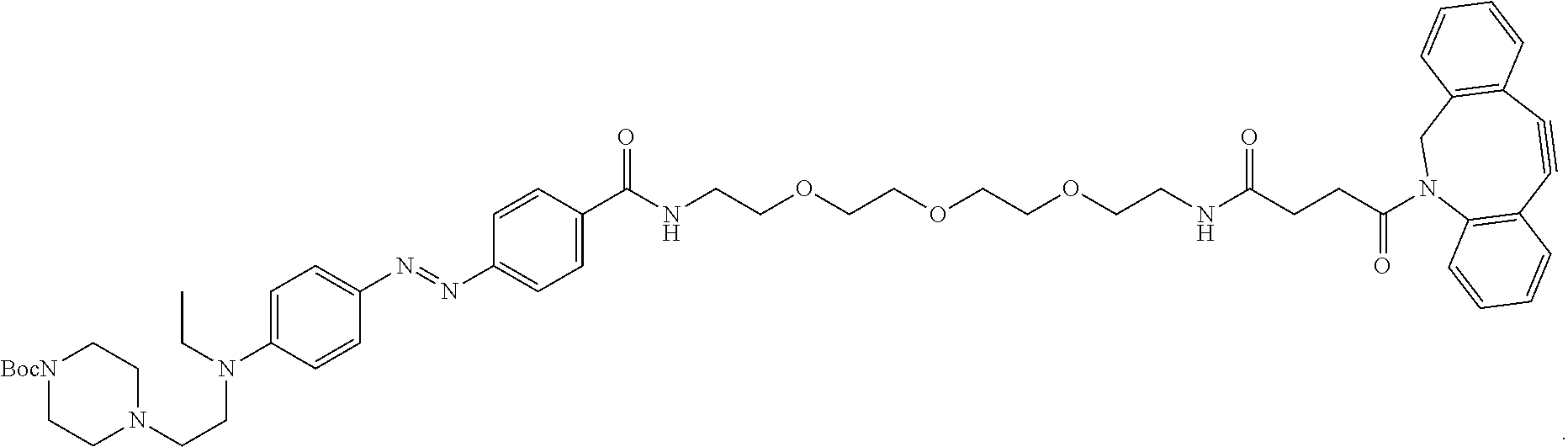
Priority Applications (1)
| Application Number | Priority Date | Filing Date | Title |
|---|---|---|---|
| US16/614,819 US12227775B2 (en) | 2017-05-22 | 2018-05-22 | Modified template-independent DNA polymerase |
Applications Claiming Priority (4)
| Application Number | Priority Date | Filing Date | Title |
|---|---|---|---|
| US201762509549P | 2017-05-22 | 2017-05-22 | |
| US201762542410P | 2017-08-08 | 2017-08-08 | |
| US16/614,819 US12227775B2 (en) | 2017-05-22 | 2018-05-22 | Modified template-independent DNA polymerase |
| PCT/US2018/033798 WO2018217689A1 (en) | 2017-05-22 | 2018-05-22 | Modified template-independent dna polymerase |
Publications (2)
| Publication Number | Publication Date |
|---|---|
| US20200263152A1 US20200263152A1 (en) | 2020-08-20 |
| US12227775B2 true US12227775B2 (en) | 2025-02-18 |
Family
ID=62705677
Family Applications (1)
| Application Number | Title | Priority Date | Filing Date |
|---|---|---|---|
| US16/614,819 Active 2039-09-30 US12227775B2 (en) | 2017-05-22 | 2018-05-22 | Modified template-independent DNA polymerase |
Country Status (2)
| Country | Link |
|---|---|
| US (1) | US12227775B2 (en) |
| WO (1) | WO2018217689A1 (en) |
Families Citing this family (16)
| Publication number | Priority date | Publication date | Assignee | Title |
|---|---|---|---|---|
| WO2018217689A1 (en) | 2017-05-22 | 2018-11-29 | The Charles Stark Draper Laboratory, Inc. | Modified template-independent dna polymerase |
| WO2019222650A1 (en) | 2018-05-17 | 2019-11-21 | The Charles Stark Draper Laboratory, Inc. | Apparatus for high density information storage in molecular chains |
| US20210293707A1 (en) | 2018-08-02 | 2021-09-23 | The Charles Stark Draper Laboratory, Inc. | Fluorescence Lifetime Well Array Reader and Actuator |
| US11773422B2 (en) | 2019-08-16 | 2023-10-03 | Microsoft Technology Licensing, Llc | Regulation of polymerase using cofactor oxidation states |
| US11795450B2 (en) | 2019-09-06 | 2023-10-24 | Microsoft Technology Licensing, Llc | Array-based enzymatic oligonucleotide synthesis |
| EP4150066A1 (en) * | 2020-05-12 | 2023-03-22 | Illumina, Inc. | Thermostable terminal deoxynucleotidyl transferase |
| EP4150065A2 (en) | 2020-05-12 | 2023-03-22 | Illumina Inc | Generating nucleic acids with modified bases using recombinant terminal deoxynucleotidyl transferase |
| CA3182305A1 (en) | 2020-07-21 | 2022-01-27 | Pin Koon EE | Base-modified nucleotides as substrates for tdt-based enzymatic nucleic acid |
| WO2022063835A1 (en) * | 2020-09-22 | 2022-03-31 | Dna Script | Stabilized n-terminally truncated terminal deoxynucleotidyl transferase variants and uses thereof |
| US12344876B2 (en) | 2020-10-30 | 2025-07-01 | Microsoft Technology Licensing, Llc | Spatially addressable control of polymerase activity |
| JP2024522217A (en) * | 2021-06-14 | 2024-06-11 | プリムローズ バイオ、インコーポレイテッド | Compositions and methods for enzymatic nucleic acid synthesis |
| WO2023069865A1 (en) * | 2021-10-15 | 2023-04-27 | Codexis, Inc. | Engineered terminal deoxynucleotidyl transferase variants |
| KR20250075725A (en) * | 2022-10-13 | 2025-05-28 | 코덱시스, 인코포레이티드 | Engineered terminal deoxynucleotidyl transferase mutant |
| CN116286722B (en) * | 2023-04-24 | 2024-05-24 | 中国科学院深圳先进技术研究院 | Light-operated DNA synthetase with complete genetic code, nucleic acid and application |
| WO2025137872A1 (en) * | 2023-12-26 | 2025-07-03 | 华大工程生物学长荡湖研究所 | Terminal deoxyribonucleoside transferase mutant, preparation method therefor and use thereof |
| CN118126982B (en) * | 2024-05-10 | 2024-07-09 | 中国科学院深圳先进技术研究院 | Light-controlled DNA polymerase, nucleic acid fragment, recombinant vector, recombinant cell and its application |
Citations (42)
| Publication number | Priority date | Publication date | Assignee | Title |
|---|---|---|---|---|
| US5243540A (en) | 1991-04-03 | 1993-09-07 | The United States Of America As Represented By The Secretary Of The Army | Computer-driven amino acid indexer for peptide synthesis |
| US5840841A (en) | 1990-05-15 | 1998-11-24 | Chiron Corporation | Method and apparatus for biopolymer synthesis |
| EP0969083A1 (en) | 1997-08-29 | 2000-01-05 | Olympus Optical Co., Ltd. | Dna capillary |
| US6232066B1 (en) | 1997-12-19 | 2001-05-15 | Neogen, Inc. | High throughput assay system |
| US6238869B1 (en) | 1997-12-19 | 2001-05-29 | High Throughput Genomics, Inc. | High throughput assay system |
| US20020001075A1 (en) | 1998-07-17 | 2002-01-03 | Roger Y. Tsien | Detector and screening device for ion channels |
| EP1215623A2 (en) | 2000-12-15 | 2002-06-19 | Olympus Optical Co., Ltd. | Novel computation with nucleic acid molecules, computer and software for computing |
| US20020081582A1 (en) | 1998-02-11 | 2002-06-27 | Xiaolian Gao | Method and apparatus for chemical and biochemical reactions using photo-generated reagents |
| US20030143132A1 (en) | 2002-01-31 | 2003-07-31 | Francesco Cerrina | Reduced length kaleidoscopic light homogenizer |
| US6664079B2 (en) | 2000-10-06 | 2003-12-16 | The Trustees Of Columbia University In The City Of New York | Massive parallel method for decoding DNA and RNA |
| US20040071394A1 (en) | 2001-01-26 | 2004-04-15 | Andreas Gfrorer | Optical system and method for exciting and measuring fluorescence on or in samples treated with fluorescent pigments |
| US20040197793A1 (en) | 2002-08-30 | 2004-10-07 | Arjang Hassibi | Methods and apparatus for biomolecule detection, identification, quantification and/or sequencing |
| US6819469B1 (en) | 2003-05-05 | 2004-11-16 | Igor M. Koba | High-resolution spatial light modulator for 3-dimensional holographic display |
| US20060154264A1 (en) | 2005-01-13 | 2006-07-13 | Francesco Cerrina | Method and apparatus for parallel synthesis of chain molecules such as DNA |
| US20070116607A1 (en) | 2005-11-23 | 2007-05-24 | Pharmacom Microlelectronics, Inc. | Microsystems that integrate three-dimensional microarray and multi-layer microfluidics for combinatorial detection of bioagent at single molecule level |
| US20070224616A1 (en) | 2006-03-24 | 2007-09-27 | Erdogan Gulari | Method for forming molecular sequences on surfaces |
| US20080085564A1 (en) | 2006-10-06 | 2008-04-10 | Sharp Laboratories Of America, Inc. | Micro-pixelated fluid-assay structure with on-board addressable, pixel-specific functionalization |
| WO2008049795A1 (en) | 2006-10-23 | 2008-05-02 | Flexgen Bv | Method and system for calibrating laser focus and position in micro-arrays |
| US20090023609A1 (en) | 2005-12-08 | 2009-01-22 | Moon Youn Jung | Programmable mask for fabricating biomolecule array or polymer array, apparatus for fabricating biomolecule array or polymer array including the programmable mask, and method of fabricating biomolecule array or polymer array using the programmable mask and photochemical synthesis apparatus |
| US7883869B2 (en) | 2006-12-01 | 2011-02-08 | The Trustees Of Columbia University In The City Of New York | Four-color DNA sequencing by synthesis using cleavable fluorescent nucleotide reversible terminators |
| US20110092380A1 (en) | 2006-12-29 | 2011-04-21 | Febit Holding Gmbh | Improved molecular-biological processing equipment |
| WO2012154201A1 (en) | 2010-10-22 | 2012-11-15 | President And Fellows Of Harvard College | Orthogonal amplification and assembly of nucleic acid sequences |
| WO2014014991A2 (en) | 2012-07-19 | 2014-01-23 | President And Fellows Of Harvard College | Methods of storing information using nucleic acids |
| US20160108382A1 (en) | 2014-10-20 | 2016-04-21 | Molecular Assemblies, Inc. | Modified template-independent enzymes for polydeoxynucleotide synthesis |
| WO2016128731A1 (en) | 2015-02-10 | 2016-08-18 | Nuclera Nucleics Ltd | Novel use |
| WO2016139477A1 (en) | 2015-03-03 | 2016-09-09 | Nuclera Nucleics Ltd | A process for the preparation of nucleic acid by means of 3'-o-azidomethyl nucleotide triphosphate |
| WO2017011492A1 (en) | 2015-07-13 | 2017-01-19 | President And Fellows Of Harvard College | Methods for retrievable information storage using nucleic acids |
| US9708358B2 (en) | 2000-10-06 | 2017-07-18 | The Trustees Of Columbia University In The City Of New York | Massive parallel method for decoding DNA and RNA |
| WO2017156218A1 (en) | 2016-03-11 | 2017-09-14 | President And Fellows Of Harvard College | Method of making polynucleotides using closed-loop verification |
| WO2017176541A1 (en) | 2016-04-04 | 2017-10-12 | President And Fellows Of Harvard College | Enzymatic nucleic acid synthesis |
| WO2017189794A1 (en) | 2016-04-27 | 2017-11-02 | President And Fellows Of Harvard College | Method of secure communication via nucleotide polymers |
| US9833761B2 (en) | 2013-08-05 | 2017-12-05 | Twist Bioscience Corporation | De novo synthesized gene libraries |
| WO2017222710A1 (en) | 2016-06-22 | 2017-12-28 | The Charles Stark Draper Laboratory, Inc. | Molecular chain synthesizer |
| WO2017223517A1 (en) | 2016-06-24 | 2017-12-28 | The Regents Of The University Of California | Nucleic acid synthesis and sequencing using tethered nucleoside triphosphates |
| US9897791B2 (en) | 2014-10-16 | 2018-02-20 | Illumina, Inc. | Optical scanning systems for in situ genetic analysis |
| WO2018102554A1 (en) | 2016-12-01 | 2018-06-07 | President And Fellows Of Harvard College | Cleavable nucleotide analogs and uses thereof |
| WO2018119253A1 (en) | 2016-12-21 | 2018-06-28 | President And Fellows Of Harvard College | Modulation of enzymatic polynucleotide synthesis using chelated divalent cations |
| WO2018217689A1 (en) | 2017-05-22 | 2018-11-29 | The Charles Stark Draper Laboratory, Inc. | Modified template-independent dna polymerase |
| US20190009240A1 (en) | 2017-07-10 | 2019-01-10 | The Charles Stark Draper Laboratory, Inc. | Apparatus Enabling High Density Information Storage in Molecular Chains |
| WO2019079802A1 (en) | 2017-10-20 | 2019-04-25 | President And Fellows Of Harvard College | Methods of encoding and high-throughput decoding of information stored in dna |
| US20190354871A1 (en) | 2018-05-17 | 2019-11-21 | The Charles Stark Draper Laboratory, Inc. | Apparatus for High Density Information Storage in Molecular Chains |
| US10605734B2 (en) | 2013-04-03 | 2020-03-31 | Life Technologies Corporation | Systems and methods for genetic sequencing |
-
2018
- 2018-05-22 WO PCT/US2018/033798 patent/WO2018217689A1/en not_active Ceased
- 2018-05-22 US US16/614,819 patent/US12227775B2/en active Active
Patent Citations (50)
| Publication number | Priority date | Publication date | Assignee | Title |
|---|---|---|---|---|
| US5840841A (en) | 1990-05-15 | 1998-11-24 | Chiron Corporation | Method and apparatus for biopolymer synthesis |
| US5243540A (en) | 1991-04-03 | 1993-09-07 | The United States Of America As Represented By The Secretary Of The Army | Computer-driven amino acid indexer for peptide synthesis |
| EP0969083A1 (en) | 1997-08-29 | 2000-01-05 | Olympus Optical Co., Ltd. | Dna capillary |
| US6232066B1 (en) | 1997-12-19 | 2001-05-15 | Neogen, Inc. | High throughput assay system |
| US6238869B1 (en) | 1997-12-19 | 2001-05-29 | High Throughput Genomics, Inc. | High throughput assay system |
| US20020081582A1 (en) | 1998-02-11 | 2002-06-27 | Xiaolian Gao | Method and apparatus for chemical and biochemical reactions using photo-generated reagents |
| US20020001075A1 (en) | 1998-07-17 | 2002-01-03 | Roger Y. Tsien | Detector and screening device for ion channels |
| US9708358B2 (en) | 2000-10-06 | 2017-07-18 | The Trustees Of Columbia University In The City Of New York | Massive parallel method for decoding DNA and RNA |
| US6664079B2 (en) | 2000-10-06 | 2003-12-16 | The Trustees Of Columbia University In The City Of New York | Massive parallel method for decoding DNA and RNA |
| EP1215623A2 (en) | 2000-12-15 | 2002-06-19 | Olympus Optical Co., Ltd. | Novel computation with nucleic acid molecules, computer and software for computing |
| US20040071394A1 (en) | 2001-01-26 | 2004-04-15 | Andreas Gfrorer | Optical system and method for exciting and measuring fluorescence on or in samples treated with fluorescent pigments |
| US20030143132A1 (en) | 2002-01-31 | 2003-07-31 | Francesco Cerrina | Reduced length kaleidoscopic light homogenizer |
| US20040197793A1 (en) | 2002-08-30 | 2004-10-07 | Arjang Hassibi | Methods and apparatus for biomolecule detection, identification, quantification and/or sequencing |
| US6819469B1 (en) | 2003-05-05 | 2004-11-16 | Igor M. Koba | High-resolution spatial light modulator for 3-dimensional holographic display |
| US20060154264A1 (en) | 2005-01-13 | 2006-07-13 | Francesco Cerrina | Method and apparatus for parallel synthesis of chain molecules such as DNA |
| US20070116607A1 (en) | 2005-11-23 | 2007-05-24 | Pharmacom Microlelectronics, Inc. | Microsystems that integrate three-dimensional microarray and multi-layer microfluidics for combinatorial detection of bioagent at single molecule level |
| US20090023609A1 (en) | 2005-12-08 | 2009-01-22 | Moon Youn Jung | Programmable mask for fabricating biomolecule array or polymer array, apparatus for fabricating biomolecule array or polymer array including the programmable mask, and method of fabricating biomolecule array or polymer array using the programmable mask and photochemical synthesis apparatus |
| US20070224616A1 (en) | 2006-03-24 | 2007-09-27 | Erdogan Gulari | Method for forming molecular sequences on surfaces |
| US20080085564A1 (en) | 2006-10-06 | 2008-04-10 | Sharp Laboratories Of America, Inc. | Micro-pixelated fluid-assay structure with on-board addressable, pixel-specific functionalization |
| WO2008049795A1 (en) | 2006-10-23 | 2008-05-02 | Flexgen Bv | Method and system for calibrating laser focus and position in micro-arrays |
| US7883869B2 (en) | 2006-12-01 | 2011-02-08 | The Trustees Of Columbia University In The City Of New York | Four-color DNA sequencing by synthesis using cleavable fluorescent nucleotide reversible terminators |
| US20110092380A1 (en) | 2006-12-29 | 2011-04-21 | Febit Holding Gmbh | Improved molecular-biological processing equipment |
| WO2012154201A1 (en) | 2010-10-22 | 2012-11-15 | President And Fellows Of Harvard College | Orthogonal amplification and assembly of nucleic acid sequences |
| US9384320B2 (en) | 2012-07-19 | 2016-07-05 | President And Fellows Of Harvard College | Methods of storing information using nucleic acids |
| US20150269313A1 (en) | 2012-07-19 | 2015-09-24 | President And Fellows Of Harvard College | Methods of Storing Information Using Nucleic Acids |
| US9996778B2 (en) | 2012-07-19 | 2018-06-12 | President And Fellows Of Harvard College | Methods of storing information using nucleic acids |
| US20160358055A1 (en) | 2012-07-19 | 2016-12-08 | President And Fellows Of Harvard College | Methods of Storing Information Using Nucleic Acids |
| WO2014014991A2 (en) | 2012-07-19 | 2014-01-23 | President And Fellows Of Harvard College | Methods of storing information using nucleic acids |
| US10605734B2 (en) | 2013-04-03 | 2020-03-31 | Life Technologies Corporation | Systems and methods for genetic sequencing |
| US9833761B2 (en) | 2013-08-05 | 2017-12-05 | Twist Bioscience Corporation | De novo synthesized gene libraries |
| US9897791B2 (en) | 2014-10-16 | 2018-02-20 | Illumina, Inc. | Optical scanning systems for in situ genetic analysis |
| US20160108382A1 (en) | 2014-10-20 | 2016-04-21 | Molecular Assemblies, Inc. | Modified template-independent enzymes for polydeoxynucleotide synthesis |
| WO2016128731A4 (en) | 2015-02-10 | 2016-10-13 | Nuclera Nucleics Ltd | Novel use |
| WO2016128731A1 (en) | 2015-02-10 | 2016-08-18 | Nuclera Nucleics Ltd | Novel use |
| WO2016139477A1 (en) | 2015-03-03 | 2016-09-09 | Nuclera Nucleics Ltd | A process for the preparation of nucleic acid by means of 3'-o-azidomethyl nucleotide triphosphate |
| WO2017011492A1 (en) | 2015-07-13 | 2017-01-19 | President And Fellows Of Harvard College | Methods for retrievable information storage using nucleic acids |
| US9928869B2 (en) | 2015-07-13 | 2018-03-27 | President And Fellows Of Harvard College | Methods for retrievable information storage using nucleic acids |
| WO2017156218A1 (en) | 2016-03-11 | 2017-09-14 | President And Fellows Of Harvard College | Method of making polynucleotides using closed-loop verification |
| WO2017176541A1 (en) | 2016-04-04 | 2017-10-12 | President And Fellows Of Harvard College | Enzymatic nucleic acid synthesis |
| US20190112626A1 (en) | 2016-04-04 | 2019-04-18 | President And Fellows Of Harvard College | Enzymatic Nucleic Acid Synthesis |
| WO2017189794A1 (en) | 2016-04-27 | 2017-11-02 | President And Fellows Of Harvard College | Method of secure communication via nucleotide polymers |
| WO2017222710A1 (en) | 2016-06-22 | 2017-12-28 | The Charles Stark Draper Laboratory, Inc. | Molecular chain synthesizer |
| US20190112627A1 (en) | 2016-06-24 | 2019-04-18 | The Regents Of The University Of California | Nucleic Acid Synthesis and Sequencing Using Tethered Nucleoside Triphosphates |
| WO2017223517A1 (en) | 2016-06-24 | 2017-12-28 | The Regents Of The University Of California | Nucleic acid synthesis and sequencing using tethered nucleoside triphosphates |
| WO2018102554A1 (en) | 2016-12-01 | 2018-06-07 | President And Fellows Of Harvard College | Cleavable nucleotide analogs and uses thereof |
| WO2018119253A1 (en) | 2016-12-21 | 2018-06-28 | President And Fellows Of Harvard College | Modulation of enzymatic polynucleotide synthesis using chelated divalent cations |
| WO2018217689A1 (en) | 2017-05-22 | 2018-11-29 | The Charles Stark Draper Laboratory, Inc. | Modified template-independent dna polymerase |
| US20190009240A1 (en) | 2017-07-10 | 2019-01-10 | The Charles Stark Draper Laboratory, Inc. | Apparatus Enabling High Density Information Storage in Molecular Chains |
| WO2019079802A1 (en) | 2017-10-20 | 2019-04-25 | President And Fellows Of Harvard College | Methods of encoding and high-throughput decoding of information stored in dna |
| US20190354871A1 (en) | 2018-05-17 | 2019-11-21 | The Charles Stark Draper Laboratory, Inc. | Apparatus for High Density Information Storage in Molecular Chains |
Non-Patent Citations (52)
| Title |
|---|
| Amiram, M., et al., "Evolution of Translation Machinery in Recoded Bacteria Enables Multi-Site in Incorporation of Nonstandard Amino Acids," Nature Biotechnology, 33(12): 1272-1282 (2015). |
| Blackman et al. Tetrazine Ligation: Fast Bioconjugation Based on Inverse-Electron-Demand Diels-Alder Reactivity. JACS (2008), 130(41), 13518-13519. (Year: 2008). * |
| Blair, S., et al. "A scalable method for multiplex LED-controlled synthesis of DNA in capillaries," Nucleic Acids Research, 34(16): e110 (2006). |
| Boukhet, M., et al., "Translocation of Precision Polymers through Biological Nanopores," Macromol. Rapid Commun. 38 (24), 1700680: 1-6 (2017). |
| Chi, L., et al., "A Blue-Green Absorbing Cross-Linker for Rapid Photoswitching of Peptide Helix Content," Bioconjugate Chem., 17: 670-676 (2006). |
| Clardy, S.M., et al., "Fluorescent Exendin-4 Derivatives for Pancreatic ß-Cell Analysis," Bioconjugate Chem., 25: 171-177 (2014). |
| Costi, R., et al., "New Nucleotide-Competitive Non-Nucleoside Inhibitors of Terminal Deoxynucleotidyl Transferase: Discovery, Characterization, and Crystal Structure in Complex with the Target," J. Med. Chem., 56: 7431-7441 (2013). |
| Delarue, M., et al., "Crystal Structure of a Template-Independent DNA Polymerase: Murine Terminal Deoxynucleotidyltransferase," EMBO Journal, 21(3): 427-439 (2002). |
| Gouge, J., et al., "Structure of Intermediates Along the Catalytic Cycle of Terminal Deoxynucleotidyltransferase: Dynamical Aspects of the Two-Metal Ion Mechanism," J. Mol. Biol., 425: 4334-4352 (2013). |
| Hamon, F., et al., "Azobenzenes—Synthesis and Carbohydrate Applications," Tetrahedron, 65: 10105-10123 (2009). |
| Hoppmann, C. et al., "Photoswitchable Click Amino Acids: Light Control of Conformation and Bioactivity," ChemBioChem, 12(17):2555-2559 (2011). |
| International Preliminary Report on Patentability mailed on Jan. 23, 2020, from International Application No. PCT/US2018/041397, filed on Jul. 10, 2018. 12 pages. |
| International Preliminary Report on Patentability, mailed on Dec. 5, 2019, from International Application No. PCT/US2018/033798, filed on May 22, 2018. 9 pages. |
| International Preliminary Report on Patentability, mailed on Nov. 26, 2020, from International Application No. PCT/US2019/032903, filed on May 17, 2019. 10 pages. |
| International Search Report and Written Opinion of the International Searching Authority, mailed on Oct. 25, 2019, from International Application No. PCT/US2019/032903, filed on May 17, 2019. 18 pages. |
| International Search Report and Written Opinion of the International Searching Authority, mailed on Sep. 21, 2018, from International Application No. PCT/US2018/033798, filed on May 22, 2018. 18 pages. |
| International Search Report and Written Opinion, mailed on Oct. 26, 2018, from International Application No. PCT/US2018/041397, filed on Jul. 10, 2018. 19 pages. |
| Jewett, J.C., et al., "Rapid Cu-Free Click Chemistry with Readily Synthesized Biarylazacyclooctynones," J. Am. Chem. Soc., 132: 3688-3690 (2010). |
| Ju, J., et al., "Four-color DNA sequencing by synthesis using cleavable fluorescent nucleotide reversible terminators," Proceedings of the National Academy of Sciences, 103(52): 19635-19640 (2006). |
| Karver, M.R., et al., "Bioorthogonal Reaction Pairs Enable Simultaneous, Selective, Multi-Target Imaging," Angew. Chem. Int. Ed., 51: 920-922 (2012). |
| Kienzler, M.A., et al., "A Red-Shifting, Fast-Relaxing Azobenzene Photoswitch for Visible Light Control of an Ionotropic Glutamate Receptor," J. Am., Chem. Soc., 135: 17683-17686 (2013). |
| Klein, J.C., et al., "Multiplex pairwise assembly of array-derived DNA oligonucleotides," Nucleic Acids Research, 44(5): 1-10, e43 (2016). |
| Kolb, H.C., et al., "Click Chemistry: Diverse Chemical Function from a Few Good Reactions," Angew. Chem. Int. Ed., 40: 2004-2021 (2001). |
| König, N.F., et al., "Photocontrolled Synthesis of Abiotic Sequence-Defined Oligo (Phosphodiester)s," Macromolecular rapid communications, 38(24): 1700651 (2017). |
| Konig, N.F., et al., "Photocontrolled Synthesis of Abiotic Sequence-Defined Oligo(Phosphodiester)s," Macromol. Rapid Commun., 38: 1700651 (2017). |
| Kumar, K.R.S., et al., "Complete ON/OFF Photoswitching of the Motility of a Nanobiomolecular Machine," ACS Nano, 8(5): 4157-4165 (2014). |
| Li, L., et al., "A Switchable Two-Photon Membrane Tracer Capable of Imaging Membrane-Associated Protein Tyrosine Phosphatase Activities," Angew. Chem. Int. Ed., 52: 424-428 (2013). |
| Loh, Y., et al., "Click″ Synthesis of Small Molecule-Peptide Conjugates for Organelle-Specific Delivery and Inhibition of Lysosomal Cysteine Protease," Chem. Commun., 46: 8407-8409 (2010). |
| Maezawa et al. Ubiquitylation of Terminal Deoxynucleotidyltransferase Inhibits Its Activity. PLoS One (2012), 7(7), e39511, 15 pages. (Year: 2012). * |
| Magnus et al. Direct N-Alkyl Azidonation of N,JV-Dialkylarylamines with the lodosylbenzene/Trimethylsilylazide Reagent Combination. J. Am. Chem. Soc (1993), 115, 9347-9348. (Year: 1993). * |
| Marcandalli, B. et al., "Thermodynamic Study of Solvent and Substituent Effects on 4-Substituted Aminoazobenzenes," Dyes and Pigments, 8(4):239-251 (1987). |
| Modak et al. Biochemistry of Terminal Deoxynucleotidyl Transferase. The Journal of Biologicaclh Emistry vol. 257, No. 24. h u e of Dec. 25, p. 15105-15109, (1982). (Year: 1982). * |
| Moon, A.F., et al., "Structural Insight into the Substrate Specificity of DNA Polymerase μ," Nature Structural & Molecular Biology, 14(1): 45-54 (2007). |
| Motea et al. Terminal deoxynucleotidyl transferase: The story of a misguided DNA polymerase. Biochimica et Biophysica Acta 1804 (2010) 1151-1166. (Year: 2010). * |
| Mousavi, S.A., et al., "Glutamate Receptor-Like Genes Mediate Leaf-to-Leaf Signaling," Nature, 500(7463): 422-426 (2013). |
| Orski, S.V., et al., "High density orthogonal surface immobilization via photoactivated copper-free click chemistry," J.Am. Chem. Soc., 132 (32), 11024-11026 (2010). |
| Palluk, S., et al., "De novo DNA Synthesis Using Polymerase Nucleotide Conjugates," Nature Biotechnology, 36(7): 645-650 (2017). |
| Partial Search Report of the International Searching Authority, mailed on Sep. 2, 2019, from International Application No. PCT/US2019/032903, filed on May 17, 2019. 10 pages. |
| Partial Search Report of the International Searching Authority, mailed on Sep. 3, 2018, from International Application No. PCT/US2018/041397, filed on Jul. 10, 2018. 12 pages. |
| Patterson, D.M., et al., "Finding the Right (Bioorthogonal) Chemistry," ACS Chem. Biol., 9: 592-605 (2014). |
| Pickens, C.J., et al., "Practical Considerations, Challenges, and Limitations of Bioconjugation via Azide-Alkyne Cycloaddition," Bioconjugate Chem., 29: 686-701 (2018). |
| Poloni et al. A Fast, Visible-Light-Sensitive Azobenzene for Bioorthogonal Ligation. Chem. Eur. J. (2014), 20, 946-951. (Year: 2014). * |
| Rashidian, M., et al., "Use of 18F-2-Fluorodeoxyglucose to Label Antibody Fragments for Immuno-Positron Emission Tomography of Pancreatic Cancer," ACS Cent. Sci., 1: 142-147 (2015). |
| Reis, S.A., et al.,"Light-Controlled Modulation of Gene Expression by Chemical Optoepigentic Probes," Nature Chemical Biology, 12: 317-326 (2016). |
| Samanta, S., et al., "Bidirectional Photocontrol of Peptide Conformation with a Bridged Azobenzene Derivative," Angew. Chem. Int. Ed., 51: 6452-6455 (2012). |
| Tuuttila, T. et al., "Chiral donor-pi-acceptor azobenzene dyes," Dyes and Pigments, 80(1):34-40 (2009). |
| White, E.R., et al., "Replacing Amino Acids in Translation: Expanding Chemical Diversity with Non-Natural Variants," Methods, 60: 70-74 (2013). |
| XP-002784474, Mouse terminal deoxynucleotidyl transferase (TdT), SEQ ID 9. Retrieved from EBI accession No. GSP:BCP96833 (2016). |
| Yuen, P.K., "A reconfigurable stick-n-play modular microfluidic system using magnetic interconnects," Lab on a Chip, 16.: 3700-3707 (2016). |
| Zeglis, B.M., et al., "Building Blocks for the Construction of Bioorthogonally Reactive Peptides via Solid-Phase Peptide Synthesis," ChemistryOpen, 3: 48-53 (2014). |
| Zhang, J. et al., "Synthesis and confirmational study of novel, stable, helical poly(N-propargylamides) containing dipole azobenzene chromophores in the side chains," Polym. Bull., 71(11):2803-2818 (2014). |
| Zhirnov, V., et al. "Nucleic acid memory," Nature materials, 15(4): 366-370 (2016). |
Also Published As
| Publication number | Publication date |
|---|---|
| WO2018217689A1 (en) | 2018-11-29 |
| US20200263152A1 (en) | 2020-08-20 |
Similar Documents
| Publication | Publication Date | Title |
|---|---|---|
| US20200263152A1 (en) | Modified template-independent dna polymerase | |
| Almhjell et al. | Engineering enzymes for noncanonical amino acid synthesis | |
| Talukder et al. | Cyanotryptophans as novel fluorescent probes for studying protein conformational changes and DNA–protein interaction | |
| JP6831903B2 (en) | Peptide compounds and methods for producing them, screening compositions, and methods for selecting peptide compounds. | |
| EP2049499B1 (en) | Labelling of fusion proteins with synthetic probes | |
| Rauch et al. | Improved incorporation of noncanonical amino acids by an engineered tRNATyr suppressor | |
| KR20150093222A (en) | Compositions and methods for capture of cellular targets of bioactive agents | |
| US20250027130A1 (en) | Nucleic Acid Synthesis and Sequencing Using Tethered Nucleoside Triphosphates | |
| Chowdhury et al. | Synthesis and evaluation of a library of fluorescent dipeptidomimetic analogues as substrates for modified bacterial ribosomes | |
| US9243274B2 (en) | Genetically encoded initiator for polymer growth from proteins | |
| AU2020308448B2 (en) | Modified polyamine polymers for delivery of biomolecules into cells | |
| KR20160134669A (en) | Cyclopropene amino acids and methods | |
| WO2015107071A1 (en) | Genetically encoded spin label | |
| JP7231540B2 (en) | Reagents for reversible protection of biomolecules | |
| US20220306677A1 (en) | Compositions and methods for making hybrid polypeptides | |
| US20200190067A1 (en) | Photo-switchable chemical inducers of dimerization for control of protein function in cells by light | |
| EP4725952A1 (en) | Compounds comprising non-canonical amino acids and uses thereof | |
| Wu | Synthesis of Proteins with Homogenous Chemical and Posttranslational Modifications | |
| Mayer | Expanding the chemical biology toolbox: Site-specific incorporation of unnatural amino acids and bioorthogonal protein labeling to study structure and function of proteins | |
| Besermenji | TEC IT OR LEAVE IT: SITE-SPECIFIC FLUORESCENT LABELLING OF ALKENES | |
| Sungwienwong | The Development Of Intrinsically Fluorescent Unnatural Amino Acids For In Vivo Incorporation Into Proteins | |
| Liu | Genetic Code Expansion for Protein Activity Control and Protein Conjugation | |
| WO2025243001A1 (en) | Covalent tag | |
| CA2941069C (en) | Cyclopropene amino acids and methods | |
| Chen | Adding new chemistry to proteins via genetic incorporation |
Legal Events
| Date | Code | Title | Description |
|---|---|---|---|
| FEPP | Fee payment procedure |
Free format text: ENTITY STATUS SET TO UNDISCOUNTED (ORIGINAL EVENT CODE: BIG.); ENTITY STATUS OF PATENT OWNER: SMALL ENTITY |
|
| FEPP | Fee payment procedure |
Free format text: ENTITY STATUS SET TO SMALL (ORIGINAL EVENT CODE: SMAL); ENTITY STATUS OF PATENT OWNER: SMALL ENTITY |
|
| STPP | Information on status: patent application and granting procedure in general |
Free format text: APPLICATION DISPATCHED FROM PREEXAM, NOT YET DOCKETED |
|
| STPP | Information on status: patent application and granting procedure in general |
Free format text: DOCKETED NEW CASE - READY FOR EXAMINATION |
|
| STPP | Information on status: patent application and granting procedure in general |
Free format text: NON FINAL ACTION MAILED |
|
| STPP | Information on status: patent application and granting procedure in general |
Free format text: RESPONSE TO NON-FINAL OFFICE ACTION ENTERED AND FORWARDED TO EXAMINER |
|
| STPP | Information on status: patent application and granting procedure in general |
Free format text: NON FINAL ACTION MAILED |
|
| AS | Assignment |
Owner name: THE CHARLES STARK DRAPER LABORATORY, INC., MASSACHUSETTS Free format text: ASSIGNMENT OF ASSIGNORS INTEREST;ASSIGNORS:MAGYAR, ANDREW P.;CAVANAGH, PETER;ROGERS, MILES;AND OTHERS;SIGNING DATES FROM 20220506 TO 20220818;REEL/FRAME:060956/0591 Owner name: THE CHARLES STARK DRAPER LABORATORY, INC., MASSACHUSETTS Free format text: ASSIGNMENT OF ASSIGNORS INTEREST;ASSIGNORS:MAGYAR, ANDREW P.;CAVANAGH, PETER;ROGERS, MILES;AND OTHERS;SIGNING DATES FROM 20220506 TO 20220818;REEL/FRAME:060957/0224 |
|
| STPP | Information on status: patent application and granting procedure in general |
Free format text: RESPONSE TO NON-FINAL OFFICE ACTION ENTERED AND FORWARDED TO EXAMINER |
|
| STPP | Information on status: patent application and granting procedure in general |
Free format text: FINAL REJECTION MAILED |
|
| STPP | Information on status: patent application and granting procedure in general |
Free format text: NON FINAL ACTION MAILED |
|
| STPP | Information on status: patent application and granting procedure in general |
Free format text: RESPONSE TO NON-FINAL OFFICE ACTION ENTERED AND FORWARDED TO EXAMINER |
|
| STPP | Information on status: patent application and granting procedure in general |
Free format text: FINAL REJECTION MAILED |
|
| STPP | Information on status: patent application and granting procedure in general |
Free format text: DOCKETED NEW CASE - READY FOR EXAMINATION |
|
| STPP | Information on status: patent application and granting procedure in general |
Free format text: NON FINAL ACTION MAILED |
|
| STPP | Information on status: patent application and granting procedure in general |
Free format text: RESPONSE TO NON-FINAL OFFICE ACTION ENTERED AND FORWARDED TO EXAMINER |
|
| STPP | Information on status: patent application and granting procedure in general |
Free format text: NOTICE OF ALLOWANCE MAILED -- APPLICATION RECEIVED IN OFFICE OF PUBLICATIONS |
|
| ZAAB | Notice of allowance mailed |
Free format text: ORIGINAL CODE: MN/=. |
|
| STPP | Information on status: patent application and granting procedure in general |
Free format text: PUBLICATIONS -- ISSUE FEE PAYMENT VERIFIED |
|
| STCF | Information on status: patent grant |
Free format text: PATENTED CASE |