US12201694B2 - Hydrogel compositions - Google Patents
Hydrogel compositions Download PDFInfo
- Publication number
- US12201694B2 US12201694B2 US17/055,782 US201917055782A US12201694B2 US 12201694 B2 US12201694 B2 US 12201694B2 US 201917055782 A US201917055782 A US 201917055782A US 12201694 B2 US12201694 B2 US 12201694B2
- Authority
- US
- United States
- Prior art keywords
- polymer
- branched
- hydrogel
- hydrogel composition
- functional groups
- Prior art date
- Legal status (The legal status is an assumption and is not a legal conclusion. Google has not performed a legal analysis and makes no representation as to the accuracy of the status listed.)
- Active, expires
Links
Images




Classifications
-
- A—HUMAN NECESSITIES
- A61—MEDICAL OR VETERINARY SCIENCE; HYGIENE
- A61K—PREPARATIONS FOR MEDICAL, DENTAL OR TOILETRY PURPOSES
- A61K31/00—Medicinal preparations containing organic active ingredients
- A61K31/70—Carbohydrates; Sugars; Derivatives thereof
- A61K31/7042—Compounds having saccharide radicals and heterocyclic rings
- A61K31/7048—Compounds having saccharide radicals and heterocyclic rings having oxygen as a ring hetero atom, e.g. leucoglucosan, hesperidin, erythromycin, nystatin, digitoxin or digoxin
-
- A—HUMAN NECESSITIES
- A61—MEDICAL OR VETERINARY SCIENCE; HYGIENE
- A61K—PREPARATIONS FOR MEDICAL, DENTAL OR TOILETRY PURPOSES
- A61K31/00—Medicinal preparations containing organic active ingredients
- A61K31/74—Synthetic polymeric materials
- A61K31/785—Polymers containing nitrogen
-
- A—HUMAN NECESSITIES
- A61—MEDICAL OR VETERINARY SCIENCE; HYGIENE
- A61K—PREPARATIONS FOR MEDICAL, DENTAL OR TOILETRY PURPOSES
- A61K38/00—Medicinal preparations containing peptides
- A61K38/04—Peptides having up to 20 amino acids in a fully defined sequence; Derivatives thereof
- A61K38/12—Cyclic peptides, e.g. bacitracins; Polymyxins; Gramicidins S, C; Tyrocidins A, B or C
-
- A—HUMAN NECESSITIES
- A61—MEDICAL OR VETERINARY SCIENCE; HYGIENE
- A61K—PREPARATIONS FOR MEDICAL, DENTAL OR TOILETRY PURPOSES
- A61K38/00—Medicinal preparations containing peptides
- A61K38/04—Peptides having up to 20 amino acids in a fully defined sequence; Derivatives thereof
- A61K38/14—Peptides containing saccharide radicals; Derivatives thereof, e.g. bleomycin, phleomycin, muramylpeptides or vancomycin
-
- A—HUMAN NECESSITIES
- A61—MEDICAL OR VETERINARY SCIENCE; HYGIENE
- A61K—PREPARATIONS FOR MEDICAL, DENTAL OR TOILETRY PURPOSES
- A61K47/00—Medicinal preparations characterised by the non-active ingredients used, e.g. carriers or inert additives; Targeting or modifying agents chemically bound to the active ingredient
- A61K47/50—Medicinal preparations characterised by the non-active ingredients used, e.g. carriers or inert additives; Targeting or modifying agents chemically bound to the active ingredient the non-active ingredient being chemically bound to the active ingredient, e.g. polymer-drug conjugates
- A61K47/51—Medicinal preparations characterised by the non-active ingredients used, e.g. carriers or inert additives; Targeting or modifying agents chemically bound to the active ingredient the non-active ingredient being chemically bound to the active ingredient, e.g. polymer-drug conjugates the non-active ingredient being a modifying agent
- A61K47/56—Medicinal preparations characterised by the non-active ingredients used, e.g. carriers or inert additives; Targeting or modifying agents chemically bound to the active ingredient the non-active ingredient being chemically bound to the active ingredient, e.g. polymer-drug conjugates the non-active ingredient being a modifying agent the modifying agent being an organic macromolecular compound, e.g. an oligomeric, polymeric or dendrimeric molecule
- A61K47/58—Medicinal preparations characterised by the non-active ingredients used, e.g. carriers or inert additives; Targeting or modifying agents chemically bound to the active ingredient the non-active ingredient being chemically bound to the active ingredient, e.g. polymer-drug conjugates the non-active ingredient being a modifying agent the modifying agent being an organic macromolecular compound, e.g. an oligomeric, polymeric or dendrimeric molecule obtained by reactions only involving carbon-to-carbon unsaturated bonds, e.g. poly[meth]acrylate, polyacrylamide, polystyrene, polyvinylpyrrolidone, polyvinylalcohol or polystyrene sulfonic acid resin
-
- A—HUMAN NECESSITIES
- A61—MEDICAL OR VETERINARY SCIENCE; HYGIENE
- A61K—PREPARATIONS FOR MEDICAL, DENTAL OR TOILETRY PURPOSES
- A61K47/00—Medicinal preparations characterised by the non-active ingredients used, e.g. carriers or inert additives; Targeting or modifying agents chemically bound to the active ingredient
- A61K47/50—Medicinal preparations characterised by the non-active ingredients used, e.g. carriers or inert additives; Targeting or modifying agents chemically bound to the active ingredient the non-active ingredient being chemically bound to the active ingredient, e.g. polymer-drug conjugates
- A61K47/69—Medicinal preparations characterised by the non-active ingredients used, e.g. carriers or inert additives; Targeting or modifying agents chemically bound to the active ingredient the non-active ingredient being chemically bound to the active ingredient, e.g. polymer-drug conjugates the conjugate being characterised by physical or galenical forms, e.g. emulsion, particle, inclusion complex, stent or kit
- A61K47/6903—Medicinal preparations characterised by the non-active ingredients used, e.g. carriers or inert additives; Targeting or modifying agents chemically bound to the active ingredient the non-active ingredient being chemically bound to the active ingredient, e.g. polymer-drug conjugates the conjugate being characterised by physical or galenical forms, e.g. emulsion, particle, inclusion complex, stent or kit the form being semi-solid, e.g. an ointment, a gel, a hydrogel or a solidifying gel
-
- A—HUMAN NECESSITIES
- A61—MEDICAL OR VETERINARY SCIENCE; HYGIENE
- A61K—PREPARATIONS FOR MEDICAL, DENTAL OR TOILETRY PURPOSES
- A61K9/00—Medicinal preparations characterised by special physical form
- A61K9/06—Ointments; Bases therefor; Other semi-solid forms, e.g. creams, sticks, gels
-
- A—HUMAN NECESSITIES
- A61—MEDICAL OR VETERINARY SCIENCE; HYGIENE
- A61P—SPECIFIC THERAPEUTIC ACTIVITY OF CHEMICAL COMPOUNDS OR MEDICINAL PREPARATIONS
- A61P31/00—Antiinfectives, i.e. antibiotics, antiseptics, chemotherapeutics
- A61P31/10—Antimycotics
-
- C—CHEMISTRY; METALLURGY
- C12—BIOCHEMISTRY; BEER; SPIRITS; WINE; VINEGAR; MICROBIOLOGY; ENZYMOLOGY; MUTATION OR GENETIC ENGINEERING
- C12Q—MEASURING OR TESTING PROCESSES INVOLVING ENZYMES, NUCLEIC ACIDS OR MICROORGANISMS; COMPOSITIONS OR TEST PAPERS THEREFOR; PROCESSES OF PREPARING SUCH COMPOSITIONS; CONDITION-RESPONSIVE CONTROL IN MICROBIOLOGICAL OR ENZYMOLOGICAL PROCESSES
- C12Q1/00—Measuring or testing processes involving enzymes, nucleic acids or microorganisms; Compositions therefor; Processes of preparing such compositions
- C12Q1/02—Measuring or testing processes involving enzymes, nucleic acids or microorganisms; Compositions therefor; Processes of preparing such compositions involving viable microorganisms
- C12Q1/04—Determining presence or kind of microorganism; Use of selective media for testing antibiotics or bacteriocides; Compositions containing a chemical indicator therefor
Definitions
- the present invention relates to hydrogel compositions. More specifically, the present invention relates to hydrogel compositions comprising polymer conjugates that are capable of binding to fungi and Gram positive and/or Gram negative bacteria. The present invention also relates to the use of these hydrogel compositions for the detection of the presence of fungi, Gram positive and/or Gram negative bacteria in a sample, such as, for example, a biological sample.
- the present invention in part, resides in the identification of certain novel polymer conjugates that comprise ligands capable of binding to ergosterol (a target of certain antifungal agents that resides on the surface of fungal cells).
- the ligands concerned are bound to a branched temperature-responsive polymer.
- the invention further resides in the recognition that these novel polymer conjugates can be formulated into a hydrogel composition in combination with polymer conjugates that are capable of binding to Gram positive bacteria and/or Gram negative bacteria.
- hydrogel composition comprising/consisting essentially of/consisting of a first polymer conjugate, or a salt thereof, having the general formula: P-[Q] x
- hydrogel composition comprising/consisting essentially of/consisting of hydrogel matrix, an aqueous medium (e.g. water) and a first polymer conjugate, or a salt thereof, having the general formula: P-[Q] x
- a contact lens comprising/consisting essentially of/consisting of a hydrogel composition as defined herein.
- a membrane comprising/consisting essentially of/consisting of a hydrogel composition as defined herein.
- a swab comprising/consisting essentially of/consisting of a hydrogel composition as defined herein.
- a wound dressing comprising/consisting essentially of/consisting of a hydrogel composition as defined herein.
- a method of detecting the presence of fungi and Gram positive and/or Gram negative bacteria in a biological sample comprising:
- a method of determining the presence of a fungal infection and a Gram positive and/or Gram negative bacterial infection comprising:
- a method of diagnosing the presence of a fungal infection, a Gram positive bacterial infection and/or a Gram negative bacterial infection comprising:
- a hydrogel composition, contact lens, membrane, swab or wound dressing as defined herein for detecting the presence of fungi, Gram positive and/or Gram negative bacteria in a sample or for diagnosing a fungal, Gram positive bacteria and/or Gram negative bacterial infection.
- temperature-responsive is used herein to refer to polymers that undergo a temperature dependent change in hydration.
- the temperature at which a substantial change in polymeric hydration occurs is known as the critical solution temperature (CST).
- CST critical solution temperature
- LOST lower critical solution temperature
- temperature-responsive is also used herein to refer to monomers which, when polymerised, form temperature-responsive polymers that undergo a temperature dependent change in hydration as discussed above.
- references to “treating” or “treatment” include prophylaxis as well as the alleviation of established symptoms of a condition.
- “Treating” or “treatment” of a state, disorder or condition therefore includes: (1) preventing or delaying the appearance of clinical symptoms of the state, disorder or condition developing in a human that may be afflicted with or predisposed to the state, disorder or condition but does not yet experience or display clinical or subclinical symptoms of the state, disorder or condition, (2) inhibiting the state, disorder or condition, i.e., arresting, reducing or delaying the development of the disease or a relapse thereof (in case of maintenance treatment) or at least one clinical or subclinical symptom thereof, or (3) relieving or attenuating the disease, i.e., causing regression of the state, disorder or condition or at least one of its clinical or subclinical symptoms.
- a “therapeutically effective amount” means the amount of a compound that, when administered to a mammal for treating a disease, is sufficient to effect such treatment for the disease.
- the “therapeutically effective amount” will vary depending on the compound, the disease and its severity and the age, weight, etc., of the mammal to be treated.
- alkyl includes both straight and branched chain alkyl groups.
- references to salts herein refer to any suitable salt forms of the polymer conjugates, including pharmaceutically acceptable salt forms.
- a suitable salt form of a polymer conjugate of the invention is, for example, an acid-addition salt of a compound of the invention which is sufficiently basic, for example, an acid-addition salt with, for example, an inorganic or organic acid, for example hydrochloric, hydrobromic, sulfuric, phosphoric, trifluoroacetic, formic, citric methane sulfonate or maleic acid.
- a suitable pharmaceutically acceptable salt of a compound of the invention which is sufficiently acidic is an alkali metal salt, for example a sodium or potassium salt, an alkaline earth metal salt, for example a calcium or magnesium salt, an ammonium salt or a salt with an organic base which affords a pharmaceutically acceptable cation, for example a salt with methylamine, dimethylamine, trimethylamine, piperidine, morpholine or tris-(2-hydroxyethyl)amine.
- an alkali metal salt for example a sodium or potassium salt
- an alkaline earth metal salt for example a calcium or magnesium salt
- an ammonium salt or a salt with an organic base which affords a pharmaceutically acceptable cation, for example a salt with methylamine, dimethylamine, trimethylamine, piperidine, morpholine or tris-(2-hydroxyethyl)amine.
- the present invention relates to the preparation of hydrogel compositions comprising polymer conjugates capable of detecting fungi and Gram positive and/or Gram negative bacteria.
- the polymer conjugates comprise a branched temperature-responsive polymer and one or more ligands attached to the polymer that are capable of binding to ergosterol, which is present on the surface of fungi, or Gram positive bacteria or Gram negative bacteria.
- the polymer conjugates that are capable of binding ergosterol present on the surface of fungal cells are novel materials.
- Ergosterol is a protovitamin found commonly within fungi and protozoan cell membranes.
- Fungi cannot survive without ergosterol and it provides important physiological functions.
- It therefore offers an enticing target for antifungal pharmacophores, such as for the antifungal drug amphotericin B (A-B).
- A-B antifungal drug amphotericin B
- the latter provides a common clinical treatment for fungal infections.
- Amp-B is inherently toxic to host tissues.
- Amp-B is inherently toxic to host tissues.
- the inventors have found that the conjugates of poly(N-isopropylacrylamide) (or PNIPAM) with the antifungal agent amphotericin B bound thereto (described in the accompanying example section) exhibits low toxicity when compared to amphotericin B alone and retained the ability to bind to fungi.
- these novel polymer conjugates are suitable for selectively binding to fungi. They can be immobilised on a suitable support (such as, for example, hydrogel matrix, contact lens, swab, membrane, wound dressing etc.) and contacted with a sample to bind any fungi that are present in the sample.
- the presence, and optionally the identity, of the bound fungi can then be determined by conventional techniques known in the art, e.g. selective staining techniques, microscopy, culture and histological techniques.
- the polymer conjugate functionalised with amphotericin B does not exhibit anti-fungal activity.
- such polymer conjugates are still able to bind to fungi and they exhibit low toxicity.
- the polymer conjugates of the present invention in which the ligand is an antifungal agent e.g. amphotericin B
- the ligand is an antifungal agent
- amphotericin B may also be used as novel antifungal agents by virtue to the retention of the antifungal activity and the low toxicity observed with the polymer conjugates.
- hydrogel compositions of the present invention comprise a first polymer conjugate, or a salt thereof, having the general formula: P-[Q] x
- the hydrogel composition of the present invention comprises a first polymer conjugate of the formula P-[Q] x as defined herein, a second polymer conjugate of the formula P 1 -[Q 1 ] y as defined herein, and a third polymer conjugate of the formula P 2 -[Q 2 ] z as defined herein.
- These compositions are referred to herein as “triple hydrogels”.
- the hydrogel composition of the present invention comprises a first polymer conjugate of the formula P-[Q] x as defined herein, and a second polymer conjugate of the formula P 1 -[Q 1 ] y as defined herein, or a third polymer conjugate of the formula P 2 -[Q 2 ] z as defined herein.
- the hydrogel composition of the present invention comprises a first polymer conjugate of the formula P-[Q] x as defined herein, and a second polymer conjugate of the formula P 1 -[Q 1 ] y as defined herein, but the third polymer conjugate of the formula P 2 -[Q 2 ] z as defined herein is not present.
- the hydrogel composition of the present invention comprises a first polymer conjugate of the formula P-[Q] x as defined herein, and a third polymer conjugate of the formula P 2 -[Q 2 ] z as defined herein, but the second polymer conjugate of the formula P 1 -[Q 1 ] y as defined herein is not present.
- the ligand capable of binding to ergosterol, Q may be any suitable ligand known in the art that can bind to ergosterol.
- Q is a low molecular weight compound having a molecular weight of less than 1400 or less than 1200 Daltons. More typically, the ligand capable of binding to ergosterol, Q, will be a compound with a molecular weight of less than 1000 Daltons
- Q is an antifungal agent that is capable of binding to ergosterol.
- Q is amphotericin B, nystatin or natamycin.
- Q is amphotericin B.
- the ligand Q 1 may be any suitable ligand known in the art that can bind to Gram positive bacteria such as dalbavancin, daptomycin, oritavancin or telavancin.
- Q 1 is a small molecular weight compound having a molecular weight of less than 1500 Daltons.
- Q 1 is an antibacterial agent that is capable of binding to the surface of Gram positive bacteria.
- Q 1 is vancomycin or a derivative thereof. Suitable derivatives of vancomycin will be well known to those skilled in the art. Non-limiting examples of derivatives of vancomycin are described in Allen et al. [10] Examples of other proposed structures are disclosed in Lueng et al. [11]
- Q 1 is vancomycin
- the ligand Q 2 may be any suitable ligand known in the art that can bind to Gram negative bacteria.
- Q 2 is a small molecular weight compound having a molecular weight of less than 1500 Daltons.
- Q 2 is an antibacterial agent that is capable of binding to the surface of Gram negative bacteria.
- Q 2 is polymyxin B.
- Q 2 is polymyxin B derivative capable of binding to lipopolysaccharides, such as those described but not limited by Magee et al. [12] or Vaara. [13]
- each branched temperature-responsive polymer may comprise any suitable chemical functional group that is capable of forming a covalent attachment with the ligand associated therewith (i.e. Q, Q 1 or Q 2 respectively).
- the functional groups of P, P 1 or P 2 are independently selected from amino, hydroxy, alkenyl, alkynyl, acyl, sulfonyl, sulfinyl, mercapto, azido, ester, isocyanate and/or carboxyl groups.
- the functional groups of P, P 1 or P 2 are independently selected from hydroxy, acyl, sulfonyl, sulfinyl, ester and/or carboxyl groups. In another embodiment, the functional groups of P, P 1 or P 2 are independently selected from sulfonyl, ester and/or carboxyl groups. In yet another embodiment, the functional groups of P, P 1 or P 2 are independently selected form carboxyl and/or ester groups. In still a further embodiment, the functional groups of P, P 1 or P 2 are carboxyl groups.
- ester groups of the functional groups of P, P 1 or P 2 as detailed above are succinimide esters groups (i.e. N-hydroxysuccinimide (NHS) or N-hydroxysulfosuccinimide (Sulfo-NHS) activated esters).
- succinimide esters groups i.e. N-hydroxysuccinimide (NHS) or N-hydroxysulfosuccinimide (Sulfo-NHS) activated esters.
- each branched temperature-responsive polymer i.e. P, P 1 or P 2
- the functional groups of each branched temperature-responsive polymer may be located at any position of the respective branched temperature-responsive polymer.
- the functional groups of each branched temperature-responsive polymer i.e. P, P 1 or P 2
- the functional groups may be said to be “terminal functional groups”.
- the ligands Q, Q 1 or Q 2 may be bound to one or more functional groups of the respective branched temperature-responsive polymers, P, P 1 or P 2 , by any suitable linkage.
- each ligand Q, Q 1 or Q 2 is covalently bound to one or more functional groups on the respective branched temperature-responsive polymer P, P 1 or P 2 .
- each Q, Q 1 or Q 2 present is bound to a (terminus) of one of the branches of the respective branched temperature-responsive polymer, P, P 1 or P 2 , by the reaction of a (terminal) functional group present on P, P 1 or P 2 with a functional group present on Q, Q 1 or Q 2 to form one of the following linking groups:
- each Q, Q 1 or Q 2 present is bound to a (terminus) of one of the branches of the respective branched temperature-responsive polymer, P, P 1 or P 2 , by the reaction of a (terminal) functional group present on P, P 1 or P 2 with a functional group present on Q, Q 1 or Q 2 to form one of the following linking groups:
- each Q, Q 1 or Q 2 present is bound to a (terminus) of one of the branches of the respective branched temperature-responsive polymer, P, P 1 or P 2 , by the reaction of a (terminal) functional group present on P, P 1 or P 2 with a functional group present on Q, Q 1 or Q 2 to form one of the following linking groups:
- each Q, Q 1 or Q 2 present is bound to a (terminus) of one of the branches of the respective branched temperature-responsive polymer, P, P 1 or P 2 , by reaction of a (terminal) functional group present on P, P 1 or P 2 with a functional group present on Q, Q 1 or Q 2 to form a —C(O)—NH— linking group.
- each Q, Q 1 or Q 2 present is bound to a (terminus) of one of the branches of the respective branched temperature-responsive polymer, P, P 1 or P 2 , by reaction of a (terminal) carboxyl and/or ester group present on P, P 1 or P 2 with an amino group present on Q, Q 1 or Q 2 to form a —C(O)—NH— linking group.
- each Q, Q 1 or Q 2 present is bound to a (terminus) of one of the branches of the respective branched temperature-responsive polymer, P, P 1 or P 2 , by reaction of a (terminal) carboxyl group present on P, P 1 or P 2 with an amino group present on Q, Q 1 or Q 2 to form a —C(O)—NH— linking group.
- the actual mean number of ligands Q, Q 1 or Q 2 , that are attached to the (terminal) functional groups of the branched temperature-responsive polymers P, P 1 or P 2 respectively, may therefore be expressed as a percentage (or fraction) of the maximum theoretical number of (terminal) functional groups.
- x, y and z define the percentage of functional groups on the respective branched temperature-responsive polymers, P, P 1 or P 2 , that are attached to corresponding ligands Q, Q 1 or Q 2 .
- each of x, y and z are independently greater than or equal to 20%.
- each of x, y and z are independently greater than or equal to 30%. More suitably, each of x, y and z are independently greater than or equal to 40%. Yet more suitably, each of x, y and z are independently greater than or equal to 50%. Even more suitably, each of x, y and z are independently greater than or equal to 60%. Still more suitable, each of x, y and z are independently greater than or equal to 70%. Further suitably, each of x, y and z are independently greater than or equal to 80%. Even further suitably, each of x, y and z are independently greater than or equal to 90%. Most suitably, each of x, y and z are independently greater than or equal to 95%.
- each of x, y and z are independently selected from a percentage between 10% and 99%.
- each of x, y and z are independently selected from a percentage between 20% and 99%. More suitably, each of x, y and z are independently selected from a percentage between 30% and 99%. Even more suitably, each of x, y and z are independently selected from a percentage between 40% and 99%. Still more suitably, each of x, y and z are independently selected from a percentage between 50% and 99%. Yet more suitably, each of x, y and z are independently selected from a percentage between 60% and 99%. Further suitably, each of x, y and z are independently selected from a percentage between 70% and 99%. Most suitably, each of x, y and z are independently selected from a percentage between 80% and 99%.
- At least 20% of the total (terminal) functional groups present on each branched temperature-responsive polymer, P, P 1 or P 2 are attached to ligands Q, Q 1 or Q 2 respectively.
- at least 30% of the total (terminal) functional groups present on each branched temperature-responsive polymer, P, P 1 or P 2 are attached to ligands Q, Q 1 or Q 2 respectively.
- at least 40% of the total (terminal) functional groups present on each branched temperature-responsive polymer, P, P 1 or P 2 are attached to ligands Q, Q 1 or Q 2 respectively.
- At least 50% of total (terminal) functional groups present on each branched temperature-responsive polymer, P, P 1 or P 2 are attached to ligands Q, Q 1 or Q 2 respectively. Still more suitably, at least 60% of the total (terminal) functional groups present on each branched temperature-responsive polymer, P, P 1 or P 2 , are attached to ligands Q, Q 1 or Q 2 respectively. Yet more suitably, at least 70% of the total (terminal) functional groups present on each branched temperature-responsive polymer, P, P 1 or P 2 , are attached to ligands Q, Q 1 or Q 2 respectively.
- At least 80% of the total (terminal) functional groups present on each branched temperature-responsive polymer, P, P 1 or P 2 are attached to ligands Q, Q 1 or Q 2 respectively. Still further suitably, at least 90% of the total (terminal) functional groups present on each branched temperature-responsive polymer, P, P 1 or P 2 , are attached to ligands Q, Q 1 or Q 2 respectively. Most suitably, at least 95% of the total (terminal) functional groups present on each branched temperature-responsive polymer, P, P 1 or P 2 , are attached to ligands Q, Q 1 or Q 2 respectively.
- all of the of the (terminal) functional groups present on each branched temperature-responsive polymer, P, P 1 or P 2 are attached to ligands Q, Q 1 or Q 2 respectively.
- the branched temperature-responsive polymer P, P 1 or P 2 may be any suitable branched temperature-responsive polymer known in the art.
- Branched polymers are commonly defined by their degree of branching (DB), together with their molar masses.
- each functional group corresponds to a branch of the polymer.
- the following approximation may be used to calculate the degree of branching of the branched temperature-responsive polymers of the present invention: number of branch points/number of repeat units ⁇ the number of end groups/number of repeat units.
- the degree of branching (DB) of the branched temperature-responsive polymers, P, P 1 or P 2 may said to be between 0.01 and 0.5. In other embodiments, the degree of branching (DB) of the branched temperature-responsive polymers, P, P 1 or P 2 , may be said to be between 0.01 and 0.2. In further embodiments, the degree of branching (DB) of the branched temperature-responsive polymers, P, P 1 or P 2 , may be said to be between 0.02 and 0.01. In yet further embodiments, the degree of branching (DB) of the branched temperature-responsive polymers, P, P 1 or P 2 , may be said to be between 0.03 and 0.1.
- Suitable branched temperature-responsive polymers P, P 1 or P 2 of the present invention have a lower critical solution temperature (LOST) within the range of 5° C. to 70° C.
- LOST lower critical solution temperature
- each of P, P 1 or P 2 has a LOST within the range of 15° C. to 40° C. or 25° C. to 35° C.
- certain polymers P, P 1 or P 2 of the present invention may also undergo a full or partial de-solvation upon binding of the Q to ergosterol present on a fungal cell, Q 1 to a Gram positive bacterial cell and Q 2 to a Gram negative bacterial cell.
- PNIPAM PNIPAM
- this change in conformation results in the polymer adopting a more desolvated/globular form which in turn could lead to a further increase in the affinity of the binding to the target fungal or bacterial cell.
- P, P 1 or P 2 may be formed from the same temperature-responsive monomers or a mixture of different temperature-responsive monomers that polymerise to form the temperature-responsive polymer.
- P, P 1 or P 2 is branched temperature-responsive polymer formed from the polymerisation of temperature-responsive monomers selected from the group consisting of N-substituted alkyl acrylamides and N-substituted alkyl methacrylamides (such as, for example, N-isopropylacrylamide and N-isopropylmethacrylamide), N,N-di-substituted alkyl acrylamide and N,N-di-substituted alkyl methacrylamides (such as, for example, N,N-isopropylacrylamide and N,N-isopropylmethacrylamide), methyl vinyl ethers, vinyl caprolactam, PEG acrylates, and amino acids (that form temperature-responsive peptides) or mixtures thereof.
- N-substituted alkyl acrylamides and N-substituted alkyl methacrylamides such as, for example, N-isopropylacrylamide and N-
- P, P 1 or P 2 is a branched temperature-responsive polymer formed from the polymerisation of temperature-responsive monomers selected from the group consisting of N-alkyl substituted acrylamides and N-alkyl substituted methacrylamides (such as, for example, N-isopropylacrylamide and N-isopropylmethacrylamide), N,N-di-alkyl substituted acrylamides and N,N-di-alkyl substituted methacrylamides (such as, for example, N,N-isopropylacrylamide and N,N-isopropylmethacrylamide), methyl vinyl ether, vinyl caprolactam, PEG acrylates or mixtures thereof.
- the alkyl groups may comprise 1 to 20 carbons, e.g. 1 to 16 carbons atoms or 1 to 10 carbon atoms.
- P, P 1 or P 2 is a branched temperature-responsive polymer formed from the polymerisation of temperature-responsive monomers selected from the group consisting of N-isopropylacrylamide and N-isopropylmethacrylamide, or a mixture thereof.
- P, P 1 or P 2 is a branched temperature-responsive polymer formed from N-isopropylacrylamide (i.e. the polymer is poly(N-isopropylacrylamide) (PNIPAM)).
- P, P 1 or P 2 is selected from branched poly(N-isopropylacrylamide)), branched poly(vinyl methyl ether), branched poly(vinyl caprolactam) or branched poly(poly(ethylene glycol) acrylate).
- P, P 1 or P 2 is branched poly(N-isopropylacrylamide).
- a branching agent is defined as any compound that can polymerise by addition of radicals to a vinyl functionality and contains also a group that can transfer reversibly during polymerisation in the process known as reversible addition-fragmentation chain transfer (RAFT) polymerisation; such as dithonate (—SC( ⁇ S)—; dthiocarbamate (—SC( ⁇ S)NH; xanthate (—OC( ⁇ S)S—) or trithiocarbonate (—SC( ⁇ S)S—). Any suitable branching agent known in the art will suffice.
- RAFT reversible addition-fragmentation chain transfer
- branching agents include: 4-vinylbenzyl-pyrrolecarbodithioate (VPC), vinyl benzyl-phenylcarbodithioate, vinylbenzyl imidazoledithioate, vinylbenzyl alkyldithoates and derivatives thereof.
- the branching agent is selected from 4-vinylbenzyl-pyrrolecarbodithioate (VPC) or vinylbenzyl-phenylcarbodithioate.
- the branching agent is 4-vinylbenzyl-pyrrolecarbodithioate (VPC).
- the molar ratio of temperature responsive monomer to branching agent may be, for example, within a range of 100:1 to 10:1, or 75:1 to 10:1, or 50:1 to 10:1, or 40:1 to 15:1, or 30:1 to 20:1 (e.g. 25:1).
- the molar percentage of the branching agent in each polymer P, P 1 or P 2 may be 0.01% to 20%, or 1% to 10%, or 1.5% to 5%, or 2% to 4%.
- references to a “branched” polymer P, P 1 or P 2 herein refer to a temperature-responsive polymer comprising the recited temperature responsive monomers and a proportion of a suitable branching agent as defined above.
- P, P 1 or P 2 is not a hyperbranched polymer.
- P, P 1 or P 2 is a branched temperature-responsive polymer having branches occurring at every 3 to 40 monomer units.
- P, P 1 or P 2 is a branched temperature-responsive polymer having branches occurring at every 3 to 35 monomer units. More suitably, P, P 1 or P 2 is a branched temperature-responsive polymer having branches occurring at every 10 to 35 monomer units. Even more suitably, P, P 1 or P 2 is a branched temperature-responsive polymer having branches occurring at every 15 to 35 monomer units. Most suitably, P, P 1 or P 2 is a branched temperature-responsive polymer having branches occurring at every 15 to 25 monomer units.
- P, P 1 or P 2 is branched poly(N-isopropylacrylamide) and Q is amphotericin B, Q 1 is vancomycin and Q 2 is polymyxin B.
- Branched-PNIPAM-Amp indicates a first polymer conjugate in which P is branched poly(N-isopropyl acrylamide) and Q is amphotericin B.
- Branched-PNIPAM-Van indicates a second polymer conjugate in which P 1 is branched poly(N-isopropyl acrylamide) and Q 1 is vancomycin.
- Branched-PNIPAM-PMX indicates a third polymer conjugate in which P 2 is branched poly(N-isopropyl acrylamide) and Q 2 is polymyxin B.
- Q is amphotericin B and the first polymer conjugate has the formula IA below:
- the first polymer conjugate has the structural formula IA shown above in which P is branched poly(N-isopropylacrylamide) and each amphotericin B molecule is bound to a terminus of the branched poly(N-isopropylacrylamide) molecule.
- P further comprises a proportion of a branching agent as defined above.
- branched temperature-responsive polymers of the present invention are known in the art.
- suitable methods for forming branched poly(N-isopropylacrylamide) are described in Rimmer et al. [14]
- the branched poly(N-isopropylacrylamide) formed by the process described in Rimmer et al. [14] possesses functional carboxy groups at the termini of the polymer branches, which can be reacted with amine groups present on suitable Q groups (e.g. amphotericin B), Q 1 groups (e.g. vancomycin) or Q 2 groups (e.g. polymyxin B) to form amide linkages attaching one or more Q, Q 1 or Q 2 groups to one or more termini of the branched poly(N-isopropylacrylamide).
- Q groups e.g. amphotericin B
- Q 1 groups e.g. vancomycin
- Q 2 groups e.g. polymyxin B
- the polymer conjugates defined herein may be present in any suitable amount in the hydrogel compositions of the present invention.
- the first, second and/or third polymer conjugates are independently present in the hydrogel compositions of the present invention in an amount of the between 0.5 and 50 wt %. More suitably, the first, second and/or third polymer conjugates are independently present in the hydrogel compositions of the present invention in an amount of the between 0.5 and 30 wt %. Even more suitably, the first, second and/or third polymer conjugates are independently present in the hydrogel compositions of the present invention in an amount of the between 0.5 and 20 wt %. Most suitably, the first, second and/or third polymer conjugates are independently present in the hydrogel compositions of the present invention in an amount of the between 5 and 20 wt %.
- the first polymer conjugate is present in the hydrogel compositions of the present invention in an amount of the between 15 and 30 wt %
- the second polymer conjugate is present in the hydrogel compositions of the present invention in an amount of the between 10 and 25 wt %
- the third polymer conjugate is present in the hydrogel compositions of the present invention in an amount of the between 20 and 50 wt %.
- the first, second and/or third polymer conjugate may be attached to the hydrogel polymeric matrix using synthetic techniques well-known in the art.
- the first, second and/or third polymer conjugates are typically prepared with a percentage of their (terminal) functional groups covalently attached to each Q, Q 1 and Q 2 ligand respectively. Unreacted, or free, (terminal) functional groups on the branched temperature-responsive polymers, P, P 1 and P 2 , of each respective the polymer conjugate may then be reacted with functional groups on the hydrogel polymer matrix to form a covalent attachment there between.
- the functional groups present on the hydrogel polymer matrix are amino groups and the (terminal) functional groups on the branched temperature-responsive polymers, P, P 1 and P 2 , of each respective the polymer conjugate are ester groups (i.e. N-hydroxysuccinimide activated esters).
- the present invention provides a hydrogel composition
- a hydrogel composition comprising a hydrogel polymer matrix, an aqueous medium (e.g. water) and the polymer conjugates as defined herein.
- the polymer conjugates of the invention are independently covalently attached to the hydrogel polymer matrix. More suitably, the polymer conjugates of the invention are independently covalently attached to the hydrogel polymer matrix, by the reaction of (terminal) functional groups present on the branched temperature-responsive polymers, P, P 1 and P 2 , of each respective polymer conjugate with functional groups present on the hydrogel polymer matrix, to form one of the following linking groups:
- the polymer conjugates of the invention are independently covalently attached to the hydrogel polymer matrix, by the reaction of (terminal) carboxyl or ester groups present on the branched temperature-responsive polymers, P, P 1 and P 2 , of each respective polymer conjugate with amine groups present on the hydrogel polymer matrix, to form —C(O)—NH— linking groups.
- ester groups present on the branched temperature-responsive polymers, P, P 1 and P 2 , of the polymer conjugates are succinimide esters groups (e.g. N-hydroxysuccinimide (NHS) or N-hydroxysulfosuccinimide (Sulfo-NHS) activated esters).
- succinimide esters groups e.g. N-hydroxysuccinimide (NHS) or N-hydroxysulfosuccinimide (Sulfo-NHS) activated esters.
- each branched temperature-responsive polymer between 1% and 30% of the total (terminal) functional groups of each branched temperature-responsive polymers, P, P 1 and/or P 2 , are covalently attached to the hydrogel polymer matrix.
- between 1% and 20% of the total (terminal) functional groups of each branched temperature-responsive polymer, P, P 1 and/or P 2 are covalently attached to the hydrogel polymer matrix.
- More suitably, between 1% and 15% of the total (terminal) functional groups of each branched temperature-responsive polymer, P, P 1 and/or P 2 are covalently attached to the hydrogel polymer matrix.
- each branched temperature-responsive polymer, P, P 1 and/or P 2 are covalently attached to the hydrogel polymer matrix.
- between 1% and 5% of the total (terminal) functional groups of each branched temperature-responsive polymer, P, P 1 and/or P 2 are covalently attached to the hydrogel polymer matrix.
- the hydrogel polymer matrix may be any suitable polymer matrix that is capable of forming a hydrogel upon exposure to water. Suitable polymer matrixes are well-known in the art and may be ready selected by a person skilled in the art. Non-limiting examples of suitable hydrogel polymer matrixes include polyacrylate based polymer matrixes, polyethylene glycol based polymer matrixes, polyvinylalcohol based matrixes, polyvinylpyrrolidone based polymer matrixes, polyacrylamide based polymer matrixes and combinations thereof. Suitably, the hydrogel polymer matrix is charge neutral.
- the hydrogel polymer matrix is a polyacrylate based polymer matrix.
- the hydrogel polymer matrix is a polyacrylate based polymer matrix formed from the reaction between glycerol monomethacrylate (GMMA), glycidyl methacrylate (GME) and ethylene glycol dimethacrylate (EGDMA).
- GMMA glycerol monomethacrylate
- GME glycidyl methacrylate
- EGDMA ethylene glycol dimethacrylate
- the water content of the hydrogel is greater than 50% w/w and more suitably it is greater than 70% w/w, 80% w/w or 90% w/w.
- a principal application of the hydrogel compositions of the present invention relates to their utility for binding to fungi and Gram positive and/or Gram negative bacterial cells present in a sample, thereby enabling the presence of fungi and/or bacterial cells in the sample to be detected.
- the hydrogel composition is incubated with the sample (e.g. a sample obtained from a human or animal patient, or directly contacted with a site of the human or animal body (e.g. a cornea)) for a period of time and then removed and analysed for any fungal cells and Gram positive and/or Gram negative bacterial cells that have bound to the polymer conjugates present in the hydrogel.
- the sample e.g. a sample obtained from a human or animal patient, or directly contacted with a site of the human or animal body (e.g. a cornea)
- the hydrogel can be physically removed from the sample and the presence of any fungal and/or bacterial cells bound to the polymer conjugates can be determined by a variety of conventional techniques, including selective staining and imaging techniques well known in the art.
- the hydrogel matrix is in the form of a membrane, contact lens, swab or wound dressing.
- the ability of the polymer conjugates of the present invention to bind to fungal and/or bacterial cells also makes them suitable materials for physically removing fungal and/or bacterial cells from a sample (e.g. an infected wound, a mucosal surface or another sample obtained from the environment).
- a sample e.g. an infected wound, a mucosal surface or another sample obtained from the environment.
- the polymer conjugates for the present invention are bound to a hydrogel membrane, contact lens, swab or wound dressing, they can be used to physically bind to fungal and/or bacterial cells that then come into contact with and physically remove them from an infected site.
- the present invention also provides a method of detecting the presence of fungal cells, Gram positive bacterial cells and/or Gram negative bacterial cells in a sample, the method comprising:
- the present invention provides a method of determining the presence of a fungal infection, a Gram positive bacterial infection and/or a Gram negative bacterial infection, the method comprising:
- the present invention provides a method of diagnosing the presence of a fungal infection, a Gram positive bacterial infection and/or a Gram negative bacterial infection, the method comprising:
- the present invention also provides the use of a hydrogel composition, contact lens, membrane, swab or wound dressing as defined herein for detecting the presence of fungi in a biological sample or diagnosing a fungal infection.
- the material can be analysed under a microscope, subjected to staining techniques and then viewed under a microscope or using other techniques such as labelled ligands (e.g. antibodies) to bind to any bound fungal cell present and be detected.
- labelled ligands e.g. antibodies
- selective fluorescent staining techniques are used to identify any fungi, Gram positive bacteria and/or Gram negative bacteria that are bound to the hydrogel composition, contact lens, membrane, swab or wound dressing of the present invention. Such techniques are known in the art.
- FIG. 1 shows—Electrospray mass spectra of Amp-B: A) example of negative ion spectrum (black); B) example of positive ion spectrum (grey); Calibration curve for Amp B using electrospray mass spectrometry.
- FIG. 2 shows—a) UV Spectra of Amphotericin B in Methanol with varying concentrations, b) GPC chromatogram UV detector response at 405 nm of Amp B at various concentrations. c) calibration curve (at 405 nm) derived from stand alone UV/visible spectrometry and d) from GPC chromatogram (at 405 nm); (e) GPC chromatograms of Branched-PNIPAM-Amp (UV absorbance at 405 nm) and signal from refractive index detector. Also shown is the chromatogram of Amp-B alone (UV response).
- FIG. 3 shows the Molar Mass Distribution of Branched-PNIPAM-Amp.
- FIG. 4 shows the 1 H NMR analysis of Branched-PNIPAM-Amp polymer with focus on 4-6 ppm (inset). Non-functionalised Branched-PNIPAM provided for reference.
- FIG. 5 shows A) the peak fluorescence emission wavelength of the spectra of nile red in solutions of Branched-PNIPAM-Amp (1 mg/ml) alone ( ⁇ ); mixed with 1:1 ergosterol ( ⁇ ) across T CRIT and the wavelength of the peak emission in the presence of Branched-PNIPAM-Py ( ⁇ ); B,C) Fluorescence emission spectra of nile red in solutions of Branched-PNIPAM-Amp for B) Branched-PNIPAM alone, and C) Branched-PNIPAM-Amp in the presence of ergosterol. Spectra obtained following excitation at 580 nm.
- FIG. 6 Viability of rabbit corneal epithelial cells in the presence of increasing concentrations of A. Amp-B or B. branched-PNIPAM-Amp. The data show the significantly higher susceptibility of the cells to low concentrations of Amp-B and the lower toxicity of the polymer variant.
- FIG. 7 shows the human corneal biocompatibility of Branched-PNIPAM-Amp (white) and free amphotericin (black).
- FIG. 8 shows Staphylococcus. aureus, Pseudomonas aeruginosa, Candida albicans bound to a Triple hydrogel (example 2).
- FIG. 10 Shows SEM images of S. aureus and P. aeruginosa bound to hydrogels. 10 8 cfu S. aureus and P. aeruginosa suspensions were exposed to A) non-functionalised, B) Single HB-PNIPAM-Van and C) Triple functional hydrogel sheets. SEM imaging of the sheets show the formation of soft bacterial films only for the corresponding gram-positive bacteria; S. aureus on HB-PNIPAM-Van functional hydrogels and P. aeruginosa only on the Triple functional hydrogel.
- FIG. 11 shows the mean number of bacterial or fungal cells that bound to the surface of single functionalised hydrogels and to the triple functionalised hydrogel compared to a non-funtionalised control hydrogel.
- each functionalised hydrogel bound significantly more organisms than the non-functionalised control hydrogel (p ⁇ 0.0001). More S. aureus bound than P. aeruginosa or C. albicans.
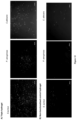
- FIG. 12 shows optical micrographs of bacteria and fungi bound to hydrogel surfaces compared to a non-functionalised control hydrogel.
- FIG. 13 shows the quantification of organisms A) using luminescence derived from an assay of ATP) and B) from counting the number of organisms in view in a microscope. Data used to determine the limit of detection of the triple hydrogel. Increasing numbers of each organism were incubated in vitro with triple (vancomycin, polymyxin and amphotericin polymer) functionalised hydrogels for 1 hour. Hydrogels were washed and then either A) the ATP assay was applied or B) they were examined with a fluorescence microscope and the number of organisms per field of view counted. Data are mean ⁇ SD of 8 fields of view per hydrogel from at least 3 independent experiments.
- FIG. 14 shows S. aureus (S), P. aeruginosa (P), and C. albicans (C) cells adhering to the surface of the triple hydrogel at different time points.
- FIG. 15 shows S. aureus, P. aeruginosa, C. albicans and F. solani infections detected using a triple functionalised hydrogel.
- FIG. 16 shows representative images (A) of triple functionalised hydrogels removed from infected human corneas and stained and the number of organisms recovered in culture from hydrogels
- FIG. 17 shows S. aureus, P. aeruginosa, C. albicans and F. solani infections detected using a triple functionalised hydrogel.
- FIG. 18 shows the number of organisms (CFU) recovered from infected ex-vivo human corneas. S. aureus, P. aeruginosa, C. albicans or F. Solani.
- FIG. 20 shows the UV absorption data with increased ⁇ UV Absorption of amphotericin hydrogels over the base material.
- FIG. 21 shows cell viability relative to controls (in the absence of Branched-PNIPAM-Amp or Amp-B) for A) Amp-B; and B) Branched-PNIPAM-Amp, with human renal epithelial cells.
- NIPAM N-isopropyl acrylamide
- Aldrich N-hydroxy succinimide
- Aldrich 98%)
- dicyclohexyl carbodiimide Aldrich, 98%)
- Amphotericin B Cambridge Bioscience, >95%)
- dichloromethane HPLC grade
- Nile Red Sigma, 99%
- ethyl acetate HPLC grade
- Dispase II was purchased from Roche and epidermal growth factor was purchased from Invitrogen.
- Mouse 3T3 fibroblasts were obtained from ATCC, Manassas, Va. and an established cell line-J2 3T3 cells originally obtained from Professor Howard Green, USA. Wild brown rabbit heads were kindly provided by the BlackFace Meat Company in Dumfries, Scotland.
- Human corneas were obtained from Ramayamma International Eye Bank, LV Prasad Eye Institute, India. Due to the low solubility of Amphotericin B [16] , for biological assays, Amphotericin B BioReagent (Sigma-Aldrich) was used.
- Acid ended polymer was prepared via dissolution of 1 (3.667 g, 14.1 mmol), ACVA (3.96 g, 14. 1 mmol) and NIPAM (40.00 g, 353.5 mmol) in 1,4-dioxane (280 ml) to a sealed round bottom flask. This was bubbled with nitrogen for thirty minutes to degas the solvent before heating (60° C., 48 hours) under a nitrogen atmosphere. The reaction mixture was precipitated into diethyl ether and the precipitate collected and dried in vacuo overnight.
- the highly-branched polymer was then re-dissolved in 400 ml dimethyl formamide with additional ACVA (73.22 g, 259.2 mmol), nitrogen was bubbled through the solution which was then heated and stirred for 18 hours under nitrogen. Additional ACVA was added to the mixture (73.22 g, 259.2 mmol) which was reacted for an additional 18 hours before a final addition of ACVA (73.22 g, 259.2 mmol) and further reacted for another final 18 hours. The reaction mixture was precipitated into diethyl ether then reprecipitated from acetone into diethyl ether.
- the acid ended polymer (5.00 g) was dissolved in DMF (55 ml). To this, a solution of N-Hydroxysuccinimide (0.858 g, 7.46 mmol) and N—N-Dicyclohexylcarbodiimide (DCC) (1.539 g, 7.46 mmol) in DMF (15 ml) was added. The mixture was stirred under N 2 overnight and all solid products removed via gravity filtration. The remaining solution was precipitated into diethyl ether, dissolved in ethanol and concentrated via ultrafiltration three times. The remaining solvent was removed by rotary-evaporation and the solid dried under vacuum at room temperature.
- DCC N—N-Dicyclohexylcarbodiimide
- This succinimide precursor polymer (1.00 g) was dissolved in ice-cold water (50 ml).
- Via addition of 0.01 M NaOH solution the pH was increased to pH 11 while stirring on ice overnight, then at RT for 24 hours.
- the solution was ultrafiltered in water using 10 kDa pore membrane filters in water at pH 11 (250 ml extracted—repeated seven times), then once again at pH 7 (250 ml extraction) before the sample was freeze-dried.
- Polymer characterisation was carried out by nuclear magnetic resonance (NMR) spectroscopy of solutions in DMSO-D 6 . Measurements were obtained with a Bruker Avance spectrometer operating at 400 MHz ( 1 H) and 100 MHZ ( 13 C). The sulphur content was determined by elemental analysis via combustion as % of total sample by weight. LOST measurements were carried out on a Nano DSC by TA Instruments; polymer samples were dissolved in H 2 O at 5 mg ml ⁇ 1 and stored at 5° C. for 24 hours prior to use to ensure complete dissolution. Samples were run over the temperature range 3-75° C. with a heating rate of 1.5° C. per minute and cooling rate of 1° C. per minute.
- the Tc-g was taken as the temperature at the thermogram peak maximum.
- Electrospray mass spectra of the polymer were recorded using a Micromass Quattro LC from Kinesis Solutions. Amphotericin solutions were prepared in methanol (spectroscopic grade) ranging in concentration from 10 ⁇ g ml ⁇ 1 to 0.103 ⁇ g ml ⁇ 1 , and additional spike solutions mixed with 0.98 mg ml ⁇ 1 NIPAM were run from 0.49-4.9 ⁇ g ml ⁇ 1 to ensure the presence of polymer did not reduce detection efficiency. Samples were injected directly into the device via a syringe pump at a rate of 10 ⁇ l min ⁇ 1 .
- UV absorbance measurements were carried out both in-line on the GPC instrumentation and in 1 cm path length cuvettes using a Varian Cary 50 probe UV-Visible spectrometer.
- the polymer hydrodynamic radius was calculated via DOSY NMR spectroscopy to calculate diffusion (D), which was converted to hydrodynamic radius using the Stokes Einstein as shown in equation 1.
- Sample internal viscosity ( ⁇ ) was found using sample solvent shift as outlined previously [17] .
- nile red was made up by adding 2 mg of nile red to 5 cm 3 DMSO. This was diluted (to 10 ⁇ 7 mol dm ⁇ 3 ) with ultrapure water. Branched-PNIPAM polymers (11 mg) were dissolved in ultrapure water (7 ml) and nile red stock solution (100 ⁇ l) was added. The fluorescence spectrum was then recorded on a Horiba Fluoromax-4 excitation 580 nm, emission 560-800 nm, with slit widths of 1 nm. Peak wavelength emission and intensity was calculated from the Gaussian distribution of wavelengths following previously published protocols. [15]
- C. albicans cells laboratory strain SC5314 or ATCC90028, were cultured on solid BHI (Oxoid) medium at 37° C. for 24 hours and stored at 4° C. for up to one month. Prior to experiments, a colony of C. albicans was sub-cultured into liquid BHI medium overnight at 37° C.
- Limbal rims from corneal-scleral buttons were excised from wild brown rabbit heads, as previously described. [18] Tissue was immersed in 2.5 mg ml ⁇ 1 (w/v) dispase II solution in DMEM for 1 hour at 37° C. The limbal rims were subsequently scraped gently using forceps to remove the epithelial cells.
- the dispase-cell suspension was centrifuged at 200 g for 5 minutes and re-suspended in culture medium containing DMEM: Ham's F12 (1:1) supplemented with 10% foetal calf serum, 100 U ml ⁇ 1 penicillin and 100 U ml ⁇ 1 streptomycin, 2.5 ⁇ g ml ⁇ 1 amphotericin B, 5 ⁇ g ml ⁇ 1 insulin and 10 ng ml ⁇ 1 epidermal growth factor.
- Cells were cultured with irradiated 3T3-mouse fibroblasts at a cell density of 2.4 ⁇ 10 4 cells cm ⁇ 2 in culture medium. Cells were not used beyond passage 3. For experiments, cells were seeded into 24 well-plates at 5 ⁇ 10 4 cells per well and cultured for 24 hours.
- Branched-PNIPAM-Amp (20, 15, 10, 5, 4, 3, 2, 2.5, 1 and 0 mg ml ⁇ 1 ) or Amphotericin B (0, 1, 10, 100, 1000 ⁇ g ml ⁇ 1 or 0, 2.5, 5, 10, 15, 20 mg ml ⁇ 1 ) were dissolved in culture medium without penicillin, streptomycin or Amphotericin B, and added to pre-seeded epithelial cells or human donor corneas (halved) for a further 24 hours.
- Epithelial cell/cornea viability was determined using Alamar Blue reagent (5 ⁇ g ml ⁇ 1 ) dissolved in PBS. Cells/corneas were incubated with Alamar Blue for 30 minutes and the fluorescence of the solution determined at 570 nm excitation and 585 nm emission (Infinite 200, Tecan). Data for each polymer is presented as percentage viability relative to an untreated control. Each assay was performed in triplicate and data represents the mean ⁇ SD from three independent experiments. The decrease in cellular viability after exposure to Branched-PNIPAM-Amp or amphotericin B compared with a cell only control was determined using a Student's t test for single comparisons or ANOVA for multiple comparisons.
- HREpCs were cultured in renal epithelial cell growth medium 2 (PromoCell, ready-to-use) supplemented with fetal calf serum (0.05 ml ml ⁇ 1 ) and Epidermal growth factor (10 ng ml ⁇ 1 ) Insulin (5 ug ml ⁇ 1 ), Epinephrine (0.5 ug ml ⁇ 1 ), Hydrocortisone (36 ng ml ⁇ 1 ), Transferrin, holo (5 ug ml ⁇ 1 ) and Triiodo-L-thyronine (4 ⁇ g ml ⁇ 1 ).
- Cells were seeded with various concentrations of the polymers and the cell viability was determined with a MTT assay relative to a control with no polymer.
- C. albicans cells laboratory strain SC5314 or ATCC90028, were cultured on solid BHI (Oxoid) medium at 37° C. for 24 hours and stored at 4° C. for up to one month.
- solid BHI Oxoid
- Prior to experiments, a colony of C. albicans was sub-cultured into liquid BHI medium overnight at 37° C.
- Overnight cultures of C.albicans were adjusted to an optical density at 600 nm of 0.1 and incubated with Amphotericin polymers, which were serially diluted 1:2 from 2500-2.44 ⁇ g/ml, for 16 hours in a 96 well plate. The concentration of polymer at which there was no visible growth was determined to be the MIC.
- C.albicans (Robin) ATCC200955, C.tropicalis ATCC200956, A.flavus ATCC16883 and F. keratoplasticum ATCC36031 were similarly cultured on solid Sabrauds (Oxoid) medium at 37° C. for 24 hours and stored at 4° C. for up to one month. Prior to experiments, colonies were sub-cultured into liquid Sabrauds medium overnight at 37° C. All liquid cultures were static apart from A.flavus which was incubated shaking at 100 rpm.
- FIG. 1 presents the data via both ES+ and ES ⁇ and clear peaks from the drug were observed at 922 and 947 m/z respectively. Greater fragmentation was observed in the ES+ mode giving significant peaks at 648 and 620 alongside greater residual noise. It was found that the mass spectrometer was sensitive to concentrations down to 0.27 ⁇ M, far below the target concentration. When the determination was used to examine the concentration of free Amp B in the polymer sample no Amp B could be detected. This test was repeated in the presence of non-functionalised polymers and only a slight reduction in sensitivity was observed.
- FIG. 2 compares the chromatogram of an Amp B functional polymer to free Amp B. The retention time for Amp B is clearly seen but this peak is absent in the polymer sample.
- the isolation and ex vivo culture of rabbit and human corneas was performed as described previously.
- the corneal-scleral buttons were placed epithelial side down in 35 mm petri-dishes and approximately 500 ⁇ l Dulbecco's Modified Eagle's Medium (DMEM)-agarose (0.5% w/v) solution was pipetted into the endothelial side of the cornea. The solution was allowed to solidify and then buttons were carefully inverted, so the epithelium was facing up.
- DMEM Dulbecco's Modified Eagle's Medium
- DMEM Ham's F12 (1:1) supplemented with 10% FCS, 100 U ml ⁇ 1 penicillin and 100 U ml ⁇ 1 streptomycin, 2.5 ⁇ g ml ⁇ 1 amphotericin B, 5 ⁇ g ml ⁇ 1 insulin, 10 ng ml ⁇ 1 EGF, was added in sufficient volume to submerge the corneas. Prior to infection, the corneas were washed three times with phosphate buffered saline (PBS) and incubated in antibiotic and antifungal-free medium for at least 24 hours to remove residual antimicrobials.
- PBS phosphate buffered saline
- corneas were wounded with a scalpel (3 cuts vertically and 3 cuts horizontally), and a metal ring was placed on the corneal-scleral button to surround the wounded areas and to create a watertight seal.
- S. aureus S. aureus
- P. aeruginosa P. aeruginosa
- C. albicans or F. solani were added in PBS.
- the corneas were then incubated for 24 or 48 h at 37° C. after which they were washed in PBS, homogenised for 1 min in a tissue homogeniser and the number of recovered organisms enumerated by colony counting.
- the chain ends were then modified to carboxylic acid and amidated with amphotericin B (Amp-B) via activation of the end groups as the succinimidyl ester.
- the reaction was carried out at pH 11 to fully solubilise the Amp-B.
- the Branched-PNIPAM-Amp was purified by repeated precipitation into diethyl ether, and then ultrafiltration in water through a 10 kDa membrane filter to retain only high molar mass material.
- the feed, molar mass averages and functionality are set out in Table 1.
- Branched-PNIPAM-Amp produced by this procedure and after multiple precipitations and ultra-filtration cycles is a high molar mass material with broad polydispersity. This is illustrated by the molar mass distribution, derived from GPC, of Branched-PNIPAM-Amp, which is shown in FIG. 3 .
- Mass Spectrometry of Branched-PNIPAM-Amp was carried out on a Micromass Quattro LC from Kinesis Solutions via direct injection of polymer into the detector (10 ⁇ g ml ⁇ 1 ) in spectroscopic grade methanol. It was determined that there was no free amphotericin within the polymer by the absence of peaks m/z 922 corresponding to Amphotericin B.
- FIG. 2 provides the in-line UV absorbance detector demonstrated that amphotericin B was equally distributed across the polymer molar mass distribution. This indicated that the polymer contained amphotericin functionality irrespective of the molar mass of the polymer. Also, no separate peaks were observed due to free amphotericin. Additional experiments were carried out using a Varian Cary 50 spectrometer and the total absorbance of the solution examined. The sum UV absorbance of the in-line detector and the solution gave equivalent molar absorption coefficients with respect to concentration.
- the solution properties of branched poly(N-isopropylacrylamides) are highly dependent on chain end effects as we have previously described.
- the polymers are responsive to temperature and show a lower critical solution temperature (LCST) (T crit ).
- T crit critical solution temperature
- the T crit of these polymers are shown in Table 2 below. The data show that functionalisation with Amp-B led to an increase in T crit .
- the T crit occurs at a coil-to-globule transition involving segmental desolvation and this can be monitored using the addition of solvatochromic fluorescence dyes such as nile red [15,21] .
- solvatochromic fluorescence dyes such as nile red [15,21] .
- the emission wavelength of the nile red dye reflects the average internal polarity of the chain segments between the swollen and desolvated forms. Decreasing peak wavelength of the emission spectra indicates increasing hydrophobicity of the environment as it partitions into more hydrophobic (desolvated) domains.
- Nile red is thus a useful probe that can used to examine changes in the solvation of chain segments on binding of the end groups.
- FIG. 5 A solution of Branched-PNIPAM-Amp was mixed with nile red and studied both in the presence and absence of Ergosterol across a temperature range 5-45° C. ( FIG. 5 ).
- the data shown in FIG. 5 showed a decrease in wavelength of nile red in with temperature in both the presence and absence of ergosterol when the dye was mixed with Branched-PNIPAM-Amp. However, at all temperatures the spectra shifted to lower wavelength on addition of ergosterol.
- Branched-PNIPAM-Amp polymer can be dissolved before viscous gelation starts to occur.
- the increase in solubility of Branched-PNIPAM-Amp compared with Amp-B is a significant advantage for medical applications.
- Amp-B is also known to be highly toxic and is thus only used as “last resort” anti-fungal. Therefore, the two compounds were compared for their toxicity against rabbit limbal epithelial cells and human donor corneas to determine whether Branched-PNIPAM-Amp could be a viable and less cytotoxic alternative to the use of Amp-B.
- Table 3b shows MIC values for Amp-B, Branched-PNIPAM-Py and Branched-PNIPAM-Amp for two Amp-B sensitive (SC5314, ATCC90028). and non-sensitive (ATCC200956, ATCC 200955) Candida strains, as well as for Aspergillus flavus ATCC16883 and Fusarium keratoplasticum ATCC36031, both Amp-B sensitive.
- the metabolic activity of rabbit limbal epithelial cells in the presence of Amp-B and Branched-PNIPAM-Amp was determined.
- concentration of Amp-B increased there was a dose-dependent decrease in the metabolic activity of the cells, as shown in FIG. 6 .
- the main topical concentration of Amp-B used is approximately 1.5 mg ml ⁇ 1 [22] .
- this level of loss in cell viability was not observed for Branched-PNIPAM-Amp, even at 5 mg ml ⁇ 1 .
- This concentration is in excess of what is required for inhibiting the growth of C. albicans .
- FIG. 7 shows that cellular toxicity was not observed for Branched-PNIPAM-Amp, where there was a large decrease for Amp-B.
- Amp-B is topically applied to the cornea in instances of fungal keratitis
- human donor corneas were exposed to Branched-PNIPAM-Amp (0, 2.5, 5, 10, 15, 20 mg ml ⁇ 1 in DMEM), for 48 hours and the biocompatibility determined using Alamar Blue. Only a loss of 20% viability was observed, even at very high concentrations of Branched-PNIPAM-Amp, e.g. 20 mg ml ⁇ 1 .
- Glycerol monomethacrylate (GMMA) (5 g, 4.660 ml), glycidyl methacrylate (GME) (0.345 g, 0.321 ml) and ethylene glycol dimethacrylate (EGDMA) (0.206 g, 0.196 ml) were degassed via bubbling dry nitrogen through solution whilst stirring in isopropanol (2 ml) for twenty minutes.
- 2-hydroxy-2-methylpropiphenone (HMPP) (55 mg) was added and the solution degassed for a further five minutes before it was extracted using a glass syringe and directly injected into a quartz plate mould separated with a 0.5 mm PTFE gasket.
- the two quartz plates were laminated with poly(ethylene teraphthalate) sheet, which was adhered to inner surfaces of the glass, to aid the release of the produced polymer sheet.
- the mould was irradiated by a 400 w metal halide UV-A lamp for 3 minutes before being turned over and irradiated on the alternate side for a further 3 minutes.
- the cured hydrogel sheet was then removed and immersed in isopropanol.
- the hydrogel sheet was washed a total of five times with fresh isopropanol and left for at least 1 hour each time before being added to a 1,3-diaminopropane in isopropanol (20% v/v, 250 ml) solution for 48 hours, being inverted half way through.
- the aminated hydrogel (90 ⁇ 90 ⁇ 0.5 mm) was exposed to Branched-PNIPAM-Van (50 mg), Branched-PNIPAM-PMX (100 mg) and Branched-PNIPAM-Amp (60 mg) dissolved in isopropanol (100 ml). Hydrogels containing other amounts are disclosed in the supporting information. These are identified as triple functional hydrogels in this work. The hydrogel sheet was left immersed in this mixture for 48 hours on a slow speed shaker and the hydrogel inverted half way through. When the polymers had reacted, they were washed with isopropanol for one hour.
- the isopropanol was refreshed, left for a further hour and removed before 20 ml of piperidine in isopropanol (20% v/v) was added to the hydrogel sheet. This was allowed to react for 48 hours before being washed in pure isopropanol for another hour, three further times. Prior to use all hydrogels were washed three times in PBS and then incubated in media.
- Hydrogels were incubated with vancomycin Bodipy®FL conjugate (2 ⁇ g ml ⁇ 1 ; FL-Vanc; ThermoFisher), for visualisation of Gram-positive ( S. aureus ) organisms, then with FITC (0.5 mg ml ⁇ 1 ) for Gram-negative organisms ( P. aeruginosa ). After incubation for 10 min the hydrogels were washed 3 ⁇ in PBS.
- Ex vivo human corneas were infected with S. aureus, P. aeruginosa, C. albicans and F. solani for 24 hours, washed and exposed to a triple functionalised hydrogel for different time intervals of 60, 30 and 15 min. Microorganisms bound to the hydrogels were detected using the protocol described above.
- PNIPAM-hydrogels funtionalised with vancomycin could bind Gram-positive bacteria and a similar material funcionalised with a polymyxin-functional polymer bound a Gram-negative species [23] but here a different hydrogel base was employed.
- GMMA-hydrogels with linked Branched-PNIPAMs funtionalised with either vancomycin, polymyxin or amphotericin B were exposed to the respective microorganisms.
- the functionalised surface with grafted Branched-PNIPAM can bind microbial species both effectively and selectively ( FIG. 10 ).
- FIG. 12 Representative examples of images of S. aureus, P. aeruginosa and C. albicans attached to the surface of the triple hydrogel and to the non-functionalised control hydrogel are shown in FIG. 12 .
- FIG. 12 shows the optical micrographs of bacteria and fungi bound to hydrogel surfaces. 10 8 S.aureus, P.aeruginosa or C. albicans were incubated for 1 hour in vitro with the triple polymer-functionalised hydrogel compared to the non-functionalised control hydrogels. S.aureus and P.aeruginosa bound hydrogels were incubated with periodic acid and Schiff's reagent and then stained with fluorescently labelled -Vancomycin and FITC respectively. C.albicans bound hydrogels were stained with Calcofluor white. All hydrogels were imaged using a fluorescence microscope. Images shown are representative examples of 8 fields of view.
- FIG. 13 The results of a study using the determination of the amount of ATP present by luminescence are shown in FIG. 13 . There was an increase in level of luminescence with increasing numbers of S.aureus, P.aeruginosa or C.albicans . A significant difference was observed with 10 5 organisms of S. aureus; 10 6 of P. aeruginosa and 10 3 of C. albicans.
- FIG. 14 shows S. aureus, P. aeruginosa , and C. albicans cells adherent to the surface of the triple hydrogel at different time points. Higher loads of organisms were observed with increased duration of application of the hydrogel. It was also noticed that 30 minutes of exposure gave a reasonable load of microorganisms.
- FIG. 14 Representative images (A) of triple functionalised hydrogels removed from infected human corneas and stained, and the number of organisms recovered in culture from hydrogels.
- Human corneas were mono-infected with S. aureus, P. aeruginosa and C. albicans and triple-functionalised hydrogels were placed on to the corneas and left in place for either 15, 30 or 60 minutes. The hydrogels were then stained using fluorescent vancomycin, FITC or calcofluor white as described in the methods.
- FIG. 15 shows the enumeration of S. aureus, P. aeruginosa and C. albicans infections detected using a triple functionalised hydrogel.
- Ex vivo human corneas were infected with S. aureus, P. aeruginosa or C. albicans for 24 hours, washed and exposed to a triple functionalised bacterial hydrogel for 60 min, 30 min and 15 min.
- Hydrogels with S. aureus were detected using fluorescent vancomycin and hydrogels with P. aeruginosa were detected using FITC. Both hydrogels were counter-stained using periodic acid and Schiff's reagent prior to staining.
- Hydrogels with C. albicans and F. solani were detected using Calcofluor White. Images show the per field view count of S. aureus, P. aeruginosa and C. albicans bound to hydrogels removed from infected ex vivo corneas.
- FIG. 16 shows S. aureus, P. aeruginosa, C. albicans and F. solani infections detected using a triple functionalised hydrogel.
- Ex vivo human corneas were infected with S. aureus, P. aeruginosa, C. albicans or F. Solani for 24 hours, washed and exposed to a triple functionalised bacterial hydrogel for 30 min.
- Hydrogels with S. aureus were detected using fluorescent vancomycin and hydrogels with P. aeruginosa were detected using FITC. Both hydrogels were blocked using periodic acid and Schiff's reagent prior to staining.
- Hydrogels with C. albicans and F. solani were detected using Calcofluor White. Images show S. aureus, P. aeruginosa and C. albicans bound to hydrogels removed from infected ex vivo corneas.
- FIG. 17 shows S. aureus, P. aeruginosa, C. albicans and F. solani infections detected using a triple functionalised hydrogel.
- Ex vivo human corneas were infected with S. aureus, P. aeruginosa, C. albicans or F. Solani for 24 hours, washed and exposed to a triple functionalised bacterial hydrogel for 30 min. Hydrogels with S. aureus were detected using fluorescent vancomycin and hydrogels with P. aeruginosa were detected using FITC.
- the microbial loads ranged from 5 ⁇ 10 7 to 5 ⁇ 10 4 in the order S. aureus, P. aeruginosa, C. albicans and F. solani going from the most numerous to the least numerous.
- FIG. 18 shows the number of CFU recovered from infected corneas. S. aureus, P. aeruginosa, C. albicans or F. Solani for 24 hours, washed and exposed to a triple functionalised bacterial hydrogel for 30 min are then homogenised, the solution serially diluted and plated on agar plates to determine the number of CFUs per cornea. Data shows a box and whisker plot of the number of CFU recovered per cornea.
- EXAMPLE 2 IN VIVO EVALUATION OF A “TRIPLE HYDROGEL” COMPRISING BRANCHED PNIPAM-AMP CONJUGATES ALONG WITH CONJUGATES OF BRANCHED PNIPAM-PMX AND BRANCHED PNIPAM-VAN
- the objective of the study was to determine the diagnostic sensitivity and specificity of “Triple-Hydrogels” in the detection of infection in corneal infection models using New Zealand White Rabbits.
- Group 1 showed mixed infection with both Gram +ve and Gram ⁇ ve bacilli although the animals were inoculated with Pseudomonas aeruginosa .
- the results of the test device were similar to conventional microbiology. An impression of contamination was made.
- the group 4 hydrogels were stained with bacterial staining (F-Vanc/FITC) first and then the same hydrogels were counter stained with fungal staining (Calcoflour white).
- F-Vanc/FITC bacterial staining
- fungal staining Calcoflour white
- Four animals of the group infected with Gram+ve bacteria and fungi were stained with F-Vanc and Calcoflour white.
- Our observations showed the presence of polymorphs, epithelial cells and cocci shaped clusters of bacteria with a count of 70 ⁇ 8 and budding yeast like cells with a count of 16 ⁇ 9 on an average per field view under the fluorescent microscope.
- the other 4 animals in the group were infected with Gram-ye bacteria and C. albicans .
- the average no of organisms per field view were found to be 102 ⁇ 50 and 26 ⁇ 6 bacteria and fungi respectively ( FIG. 9 B )
- BDP-Triple Branched-PNIPAM-V/P/A functionalised GMMA hydrogel
Landscapes
- Health & Medical Sciences (AREA)
- Life Sciences & Earth Sciences (AREA)
- Chemical & Material Sciences (AREA)
- General Health & Medical Sciences (AREA)
- Veterinary Medicine (AREA)
- Medicinal Chemistry (AREA)
- Pharmacology & Pharmacy (AREA)
- Animal Behavior & Ethology (AREA)
- Public Health (AREA)
- Epidemiology (AREA)
- Engineering & Computer Science (AREA)
- Bioinformatics & Cheminformatics (AREA)
- Proteomics, Peptides & Aminoacids (AREA)
- Organic Chemistry (AREA)
- Immunology (AREA)
- Molecular Biology (AREA)
- Gastroenterology & Hepatology (AREA)
- Zoology (AREA)
- Wood Science & Technology (AREA)
- Biophysics (AREA)
- Communicable Diseases (AREA)
- Biotechnology (AREA)
- Analytical Chemistry (AREA)
- Physics & Mathematics (AREA)
- Toxicology (AREA)
- Biochemistry (AREA)
- General Engineering & Computer Science (AREA)
- Genetics & Genomics (AREA)
- Microbiology (AREA)
- Oncology (AREA)
- Chemical Kinetics & Catalysis (AREA)
- General Chemical & Material Sciences (AREA)
- Nuclear Medicine, Radiotherapy & Molecular Imaging (AREA)
- Pharmaceuticals Containing Other Organic And Inorganic Compounds (AREA)
- Medicines That Contain Protein Lipid Enzymes And Other Medicines (AREA)
- Materials For Medical Uses (AREA)
- Addition Polymer Or Copolymer, Post-Treatments, Or Chemical Modifications (AREA)
Abstract
Description
P-[Q]x
-
- wherein:
- P is a branched temperature-responsive polymer comprising a plurality of functional groups, and wherein one or more of said functional groups are covalently attached to a ligand capable of binding to ergosterol;
- Q is a ligand capable of binding to ergosterol; and
- x is the percentage of functional groups on the branched temperature-responsive polymer, P, that are attached to Q, wherein x is greater than or equal to 10%;
together with:
(i) a second polymer conjugate, or a salt thereof, having the general formula:
P1-[Q1]y - wherein:
- P1 is a branched temperature-responsive polymer, comprising a plurality of functional groups, and wherein one or more of said functional groups are covalently attached to a ligand capable of binding to Gram positive bacteria;
- Q1 is a ligand capable of binding to Gram positive bacteria; and
- y is the percentage of functional groups on the branched temperature-responsive polymer, P1, that are attached to Q1, wherein y is greater than or equal to 10%; and/or
(ii) a third polymer conjugate, or a salt thereof, having the general formula:
P2-[Q9]z - wherein:
- P2 is a branched temperature-responsive polymer, comprising a plurality of functional groups, and wherein one or more of said functional groups are covalently attached to a ligand capable of binding to Gram negative bacteria;
- Q2 is a ligand capable of binding to Gram negative bacteria; and
- z is the percentage of functional groups on the branched temperature-responsive polymer, P2, that are attached to Q2, wherein z is greater than or equal to 10%.
P-[Q]x
-
- wherein:
- P is a branched temperature-responsive polymer comprising a plurality of functional groups, and wherein one or more of said functional groups are covalently attached to a ligand capable of binding to ergosterol;
- Q is a ligand capable of binding to ergosterol; and
- x is the percentage of functional groups on the branched temperature-responsive polymer, P, that are attached to Q, wherein x is greater than or equal to 10%;
together with:
(i) a second polymer conjugate, or a salt thereof, having the general formula:
P1-[Q1]y - wherein:
- P1 is a branched temperature-responsive polymer comprising a plurality of functional groups, and wherein one or more of said functional groups are covalently attached to a ligand capable of binding to Gram positive bacteria;
- Q1 is a ligand capable of binding to Gram positive bacteria; and y is the percentage of functional groups on the branched temperature-responsive polymer, P1, that are attached to Q1, wherein y is greater than or equal to 10%;
- and/or
(ii) a third polymer conjugate, or a salt thereof, having the general formula:
P2-[Q2]z - wherein:
- P2 is a branched temperature-responsive polymer comprising a plurality of functional groups, and wherein one or more of said functional groups are covalently attached to a ligand capable of binding to Gram negative bacteria;
- Q2 is a ligand capable of binding to Gram negative bacteria; and
- z is the percentage of functional groups on the branched temperature-responsive polymer, P2, that are attached to Q2, wherein z is greater than or equal to 10%.
-
- (i) contacting a hydrogel composition, contact lens, membrane, swab or wound dressing as defined herein with the biological sample;
- (ii) removing the hydrogel composition, contact lens, membrane, swab or wound dressing as defined herein from the biological sample and testing the hydrogel composition, contact lens, membrane, swab or wound dressing for the presence of bound fungi and Gram positive and/or Gram negative bacteria.
-
- (i) contacting a hydrogel composition, contact lens, membrane, swab or wound dressing as defined herein with either a sample obtained from the suspected site of infection or with the suspected site of infection directly; and
- (ii) removing the polymer conjugate, composition, hydrogel composition, contact lens, membrane, swab or wound dressing and determining whether any fungi and Gram positive and/or Gram negative bacteria are bound to the hydrogel composition, contact lens, membrane, swab or wound dressing respectively.
-
- (i) contacting a hydrogel composition, contact lens, membrane, swab or wound dressing as defined herein with either a sample obtained from the suspected site of infection or with the suspected site of infection directly;
- (ii) removing the conjugate, composition, hydrogel composition, contact lens, membrane, swab or wound dressing;
- (iii) determining whether any fungi, Gram positive and/or Gram negative bacteria are attached to the hydrogel composition, contact lens, membrane, swab or wound dressing; and
- (iii) and optionally determining the particular species of fungi, Gram positive and/or Gram negative bacteria detected.
P-[Q]x
-
- wherein:
- P is a branched temperature-responsive polymer comprising a plurality of functional groups, and wherein one or more of said functional groups are covalently attached to a ligand capable of binding to ergosterol;
- Q is a ligand capable of binding to ergosterol; and
- x is the percentage of functional groups on the branched temperature-responsive polymer, P, that are attached to Q, wherein x is greater than or equal to 10%;
together with:
(i) a second polymer conjugate, or a salt thereof, having the general formula:
P1-[Q1]y - wherein:
- P1 is a branched temperature-responsive polymer comprising a plurality of functional groups, and wherein one or more of said functional groups are covalently attached to a ligand capable of binding to Gram positive bacteria;
- Q1 is a ligand capable of binding to Gram positive bacteria; and
- y is the percentage of functional groups on the branched temperature-responsive polymer, P1, that are attached to Q1, and wherein y is greater than or equal to 10%;
- and/or
(ii) a third polymer conjugate, or a salt thereof, having the general formula:
P2-[Q2]z - wherein:
- P2 is a branched temperature-responsive polymer comprising a plurality of functional groups, and wherein one or more of said functional groups are covalently attached to a ligand capable of binding to Gram negative bacteria;
- Q2 is a ligand capable of binding to Gram negative bacteria; and
- z is the percentage of functional groups on the branched temperature-responsive polymer, P2, that are attached to Q2, wherein z is greater than or equal to 10%.
-
- —NR1—, —O—, —C(O)—O—, —O—C(O)—, —N(R1)C(O)O—, —O(O)CN(R1)—, —S—, —S(O)—, —S(O)2—, —S(O)2—NR1, —NR1—S(O)2— or a triazole linking group (formed by “click” chemistry), wherein R1 is hydrogen or (1-4C)alkyl (e.g. methyl).
-
- —C(O)—O—, —O—C(O)—, —N(R1)C(O)O—, —O(O)CN(R1)—, —S(O)—, —S(O)2—, —S(O)2—NR1, —NR1—S(O)2— or a triazole linking group (formed by “click” chemistry), wherein R1 is hydrogen or (1-4C)alkyl (e.g. methyl).
-
- —C(O)—NR1—, —NR1—C(O)—, —S(O)2—NR1 or —NR1—S(O)2—, wherein R1 is hydrogen or (1-4C)alkyl (e.g. methyl).
DB=number of branch points/number of polymer repeat units.
number of branch points/number of repeat units≈the number of end groups/number of repeat units.

-
- wherein the group in the square brackets is amphotericin B and P and x are each as defined herein before.
-
- —NR1—, —O—, —C(O)—O—, —O—C(O)—, C(O)—NR1, —NR1—C(O)—, —N(R1)C(O)O—, —O(O)CN(R1)—, —S—, —S(O)—, —S(O)2—, —S(O)2—NR1, —NR1—S(O)2— or a triazole linking group (formed by “click” chemistry), wherein R1 is hydrogen or (1-4C)alkyl (e.g. methyl).
-
- 1.1 a hydrogel composition comprising a hydrogel polymeric matrix and a first polymer conjugate, or a salt thereof, having the general formula:
P-[Q]x- wherein:
- P is a branched poly(N-isopropylacrylamide), a branched poly(vinyl methyl ether), a branched poly(vinyl caprolactam) or a branched poly(poly(ethylene glycol) acrylate, and wherein each of which comprises:
- a) a plurality of terminal carboxyl and/or terminal ester groups, wherein one or more of said terminal carboxyl and/or terminal ester groups are covalently attached to Q; and
- b) a proportion of branching agents as defined above;
- Q is amphotericin B, nystatin or natamycin; and
- x is the percentage of terminal carboxyl groups on the branched temperature-responsive polymer, P, that are attached to Q, wherein x is greater than or equal to 50%;
- together with:
- wherein:
- i) a second polymer conjugate, or a salt thereof, having the general formula:
P1-[Q1]y- wherein:
- P1 is a branched poly(N-isopropylacrylamide), a branched poly(vinyl methyl ether), a branched poly(vinyl caprolactam) or a branched poly(poly(ethylene glycol) acrylate, wherein each of which comprises:
- a) a plurality of terminal carboxyl and/or terminal ester groups, wherein one or more of said terminal carboxyl and/or terminal ester groups are covalently attached to Q1; and
- b) a proportion of branching agents as defined above;
- Q1 is a ligand capable of binding to Gram positive bacteria; and
- y is the percentage of functional groups on the branched temperature-responsive polymer, P1, that are attached to Q1, wherein y is greater than or equal to 50%;
- P1 is a branched poly(N-isopropylacrylamide), a branched poly(vinyl methyl ether), a branched poly(vinyl caprolactam) or a branched poly(poly(ethylene glycol) acrylate, wherein each of which comprises:
- and/or
- wherein:
- ii) a third polymer conjugate, or a salt thereof, having the general formula:
P2-[Q2]z- wherein:
- P2 is a branched poly(N-isopropylacrylamide), a branched poly(vinyl methyl ether), a branched poly(vinyl caprolactam) or a branched poly(poly(ethylene glycol) acrylate, wherein each of which comprises:
- a) a plurality of terminal carboxyl and/or terminal ester groups, wherein one or more of said terminal carboxyl and/or terminal ester groups are covalently attached to Q2; and
- b) a proportion of branching agents as defined above;
- Q2 is a ligand capable of binding to Gram negative bacteria; and
- z is the percentage of functional groups on the branched temperature-responsive polymer, P2, that are attached to Q2, wherein z is greater than or equal to 50%.
- wherein:
- 1.2 a hydrogel composition comprising a hydrogel polymeric matrix and a first polymer conjugate, or a salt thereof, having the general formula:
P-[Q]x- wherein:
- P is a branched poly(N-isopropylacrylamide), a branched poly(vinyl methyl ether), a branched poly(vinyl caprolactam) or a branched poly(poly(ethylene glycol) acrylate, wherein each of which comprises:
- a) a plurality of terminal carboxyl and/or terminal ester groups, wherein one or more of said terminal carboxyl and/or terminal ester groups are covalently attached to Q; and
- b) a proportion of branching agents as defined above;
- Q is amphotericin B; and
- x is the percentage of terminal carboxyl groups on the branched temperature-responsive polymer, P, that are attached to Q, wherein x is greater than or equal to 70%;
- together with:
- wherein:
- i) a second polymer conjugate, or a salt thereof, having the general formula:
P1-[Q1]y- wherein:
- P1 is a branched poly(N-isopropylacrylamide), a branched poly(vinyl methyl ether), a branched poly(vinyl caprolactam) or a branched poly(poly(ethylene glycol) acrylate, wherein each of which comprises:
- a) a plurality of terminal carboxyl and/or terminal ester groups, wherein one or more of said terminal carboxyl and/or terminal ester groups are covalently attached to Q1; and
- b) a proportion of branching agents as defined above;
- Q1 is vancomycin; and
- y is the percentage of functional groups on the branched temperature-responsive polymer, P1, that are attached to Q1, wherein y is greater than or equal to 70%;
- and/or
- wherein:
- ii) a third polymer conjugate, or a salt thereof, having the general formula:
P2-[Q2]z- wherein:
- P2 is a branched poly(N-isopropylacrylamide), a branched poly(vinyl methyl ether), a branched poly(vinyl caprolactam) or a branched poly(poly(ethylene glycol) acrylate, wherein each of which comprises:
- a) a plurality of terminal carboxyl and/or terminal ester groups, wherein one or more of said terminal carboxyl and/or terminal ester groups are covalently attached to Q2; and
- b) a proportion of branching agents as defined above;
- Q2 is polymyxin B; and
- z is the percentage of functional groups on the branched temperature-responsive polymer, P2, that are attached to Q2, wherein z is greater than or equal to 70%.
- wherein:
- 1.3 a hydrogel composition comprising a hydrogel polymeric matrix and a first polymer conjugate, or a salt thereof, having the general formula:
P-[Q]x- wherein:
- P a branched poly(N-isopropylacrylamide) comprising:
- a) a plurality of terminal carboxyl and/or terminal ester groups, wherein one or more of said terminal carboxyl and/or terminal ester groups are covalently attached to Q; and
- b) between 0.01 and 20 mole percent of a 4-vinylbenzyl-pyrrolecarbodithioate (VPC) branching agent;
- Q is amphotericin B; and
- x is the percentage of terminal carboxyl groups on the branched temperature-responsive polymer, P, that are attached to Q, wherein x is greater than or equal to 80%;
- together with:
- wherein:
- i) a second polymer conjugate, or a salt thereof, having the general formula:
P1-[Q1]y- wherein:
- P1 a branched poly(N-isopropylacrylamide) comprising:
- a) a plurality of terminal carboxyl and/or terminal ester groups, wherein one or more of said terminal carboxyl and/or terminal ester groups are covalently attached to Q; and
- b) between 0.01 and 20 mole percent of a 4-vinylbenzyl-pyrrolecarbodithioate (VPC) branching agent;
- Q1 is vancomycin; and
- y is the percentage of functional groups on the branched temperature-responsive polymer, P1, that are attached to Q1, wherein y is greater than or equal to 80%;
- P1 a branched poly(N-isopropylacrylamide) comprising:
- and/or
- wherein:
- ii) a third polymer conjugate, or a salt thereof, having the general formula:
P2-[Q2]z- wherein:
- P2 is a branched poly(N-isopropylacrylamide) comprising:
- a) a plurality of terminal carboxyl and/or terminal ester groups, wherein one or more of said terminal carboxyl and/or terminal ester groups are covalently attached to Q; and
- b) between 0.01 and 20 mole percent of a 4-vinylbenzyl-pyrrolecarbodithioate (VPC) branching agent;
- Q2 is polymyxin B; and
- z is the percentage of functional groups on the branched temperature-responsive polymer, P2, that are attached to Q2, wherein z is greater than or equal to 80%.
- P2 is a branched poly(N-isopropylacrylamide) comprising:
- wherein:
- 1.4 a hydrogel composition comprising a hydrogel polymeric matrix, and a first polymer conjugate, or a salt thereof, having the general formula:
P-[Q]x- wherein:
- P a branched poly(N-isopropylacrylamide) comprising:
- a) a plurality of terminal carboxyl and/or terminal ester groups, wherein one or more of said terminal carboxyl and/or terminal ester groups are covalently attached to Q; and
- b) between 0.01 and 20 mole percent of a 4-vinylbenzyl-pyrrolecarbodithioate (VPC) branching agent;
- Q is amphotericin B; and
- x is the percentage of terminal carboxyl groups on the branched temperature-responsive polymer, P, that are attached to Q, wherein x is greater than or equal to 80%;
- together with:
- wherein:
- i) a second polymer conjugate, or a salt thereof, having the general formula:
P1-[Q1]y- wherein:
- P1 a branched poly(N-isopropylacrylamide) comprising:
- a) a plurality of terminal carboxyl and/or terminal ester groups, wherein one or more of said terminal carboxyl and/or terminal ester groups are covalently attached to Q; and
- b) between 0.01 and 20 mole percent of a 4-vinylbenzyl-pyrrolecarbodithioate (VPC) branching agent;
- Q1 is vancomycin; and
- y is the percentage of functional groups on the branched temperature-responsive polymer, P1, that are attached to Q1, wherein y is greater than or equal to 80%;
- P1 a branched poly(N-isopropylacrylamide) comprising:
- and/or
- wherein:
- ii) a third polymer conjugate, or a salt thereof, having the general formula:
P2-[Q2]z- wherein:
- P2 is a branched poly(N-isopropylacrylamide) comprising:
- a) a plurality of terminal carboxyl and/or terminal ester groups, wherein one or more of said terminal carboxyl and/or terminal ester groups are covalently attached to Q; and
- b) between 0.01 and 20 mole percent of a 4-vinylbenzyl-pyrrolecarbodithioate (VPC) branching agent;
- Q2 is polymyxin B; and
- z is the percentage of functional groups on the branched temperature-responsive polymer, P2, that are attached to Q2, wherein z is greater than or equal to 80%;
- P2 is a branched poly(N-isopropylacrylamide) comprising:
- and wherein:
- 1) said hydrogel polymeric matrix is a polyacrylate based polymer matrix; and
- 2) the polymer conjugates are independently covalently attached to the hydrogel polymer matrix by the reaction of terminal carboxyl or ester groups present on the branched temperature-responsive polymers, P, P1 and P2, of each respective polymer conjugate with amine groups present on the hydrogel polymer matrix, to form —C(O)—NH— linking groups.
Applications of the Hydrogel Compositions of the Invention
- wherein:
- 1.1 a hydrogel composition comprising a hydrogel polymeric matrix and a first polymer conjugate, or a salt thereof, having the general formula:
-
- (i) contacting a hydrogel composition, contact lens, membrane, swab or wound dressing as defined herein with the sample;
- (ii) removing either the hydrogel composition, contact lens, membrane, swab or wound dressing as defined herein from the sample and testing the hydrogel composition, contact lens, membrane, swab or wound dressing for the presence of bound fungal cells, Gram positive bacterial cells and/or Gram negative bacterial cells.
-
- (i) contacting a hydrogel composition, contact lens, membrane, swab or wound dressing as defined herein with either a sample obtained from the suspected site of infection or with the suspected site of infection directly; and
- (ii) removing the hydrogel composition, contact lens, membrane, swab or wound dressing and determining whether any fungal cells, Gram positive bacterial cells and/or Gram negative bacterial cells are bound to the hydrogel composition, contact lens, membrane, swab or wound dressing respectively.
-
- (i) contacting a polymer conjugate, composition, hydrogel composition, contact lens, membrane, swab or wound dressing as defined herein with either a sample obtained from the suspected site of infection or with the suspected site of infection directly;
- (ii) removing the conjugate, composition, hydrogel composition, contact lens, membrane, swab or wound dressing from the sample;
- (iii) determining whether any fungi are attached to the conjugate, composition, hydrogel composition, contact lens, membrane, swab or wound dressing; and
- (iv) and optionally determining the type of fungi, Gram positive bacteria and/or Gram negative bacteria detected.
Fluorescence Dye Studies of Polymer Solutions
| TABLE 1 |
| Synthesis of Branched-PNIPAM-Amp polymers; Feeds in the |
| functionalisation reactions, molar masses and functionalities. |
| Branched- | |||||
| PNIPAM/g | Amp-B/g | Mnª | Mwª | Mzª | Fb |
| 1.00 | 0.03 | 8,534,100 | 8,990,250 | 1.05 | 18.3% |
| ªMolar masses (kg mol−1) were obtained by gel permeation chromatography in methanol. bFunctionality (F) expressed as molar percentage of chain ends carrying an Amp-B moiety | |||||
| TABLE 2 |
| Tcrit of Branched-PNIPAM |
| Polymer | Tcrit a | ||
| Branched- | 19.0 | ||
| PNIPAM-Py | |||
| Branched- | 22.2 | ||
| PNIPAM-COOH | |||
| Branched- | 36.0 | ||
| PNIPAM-Amp | |||
| a Determined by microcalorimetry (1 mg ml−1) | |||
| TABLE 3a |
| MIC values for Branched-PNIPAM-Amp and |
| Amphotericin B for two C. Albicans strains |
| MIC against | MIC against | |
| SC5314 | ATCC90028 | |
| Sample | μg ml−1 | μg ml−1 |
| Amphotericin B | 0.4 | 4 |
| Branched- | >2500 | >2500 |
| PNIPAM-Py | ||
| Branched- | 4.9 | 4 |
| PNIPAM-Amp | ||
| TABLE 3b |
| MIC values for Amp-B, Branched-PNIPAM-Py and |
| Branched-PNIPAM-Amp for various Candida strains, |
| as well as for Aspergillus flavus ATCC16883 and |
| Fusarium keratoplasticum ATCC36031 |
| Weight based MIC*/μg mL | Molar MIC/μmol mL−1 |
| Branched- | Branched- | Branched- | Branched- | |||
| Amp-B | PNIPAM-Py | PNIPAM-Amp | Amp-B | PNIPAM-Py | PNIPAM-Amp | |
| C. albicans | 0.4 | >2500 | 4.9 | 0.5 | — | 1.2 |
| SC5314 | ||||||
| C. albicans | 0.5 | >2500 | 4 | 4.8 | — | 1.0 |
| ATCC90028 | ||||||
| C. albicans | >2500 | >2500 | >2500 | — | — | — |
| ATCC200955 | ||||||
| C. tropicalis | >2500 | >2500 | >2500 | — | — | — |
| ATCC200956 | ||||||
| A. flavus | 1.5 | >2500 | 500 | 1.8 | — | 125 |
| ATCC 16883 | ||||||
| F. keratoplasticum | 0.2 | >2500 | 6.25 | 0.25 | — | 1.6 |
| ATCC 36031 | ||||||
| *Molar densities Amp-B = 1.19 × 10⁻³ μmol μg−1; Branched-PNIPAM-Amp = 0.25 x 10⁻³ μmol μg−1 | ||||||
Cytotoxicity
| TABLE 4 |
| Characterisation data of the prepared hydrogels |
| Water | |||
| Feed of HB-PNIPAM-X/mg 5 g−1* | Functionality/ug mg−1 | content/ |
| Reference | COOH | Van | PMX | Amp | Van*** | PMX**** | Amp*** | wt % |
| HB-PNIPAM- | 30 | 0 | 0 | 0 | 0 | 0 | 0 | 59% |
| HB-PNIPAM- | 0 | 30 | 0 | 0 | 102 | 0 | 0 | 51% |
| HB-PNIPAM- | 0 | 0 | 30 | 0 | 0 | 95 | 0 | 49% |
| HB-PNIPAM- | 0 | 0 | 0 | 60 | 0 | 0 | 100 | 60% |
| Dual-Functionalised** | 0 | 30 | 30 | 0 | 86 | 100 | 0 | 53% |
| Triple- | 0 | 30 | 36 | 60 | 105 | 100 | 450 | 55% |
In Vitro Interaction of Microorganisms with Polymer-Linked Hydrogels
| No. of | ||
| Group | Treatment | Animals |
| G1 | Test item-Gram negative- |
8 |
| G2 | Test item-Gram positive- |
8 |
| G3 | Test item-Fungi- |
8 |
| G4 | Test item-Mixed infection | 8 |
| (Gram positive + Fungi) & | ||
| (Gram negative + Fungi) | ||
| G5 | Test item-Gram negative- |
8 |
| repeat | ||
- [1] P. D. H. Feldmann in Yeast Cell Architecture and Functions, Wiley-VCH Verlag GmbH & Co. KGaA, 2012, pp. 5-24.
- [2] K. C. Gray, D. S. Palacios, I. Dailey, M. M. Endo, B. E. Uno, B. C. Wilcock and M. D. Burke, Proceedings of the National Academy of
Sciences 2012, 109, 2234. - [3] J. Brajtburg, W. G. Powderly, G. S. Kobayashi and G. Medoff, Antimicrobial Agents and Chemotherapy 1990, 34, 183.
- [4] L. Storm, K. R. Lausch, M. C. Arendrup, K. L. Mortensen and E. Petersen, Medical
Mycology Case Reports - [5] A. Wong-Beringer, R. A. Jacobs and B. J. Guglielmo, Clinical Infectious Diseases 1998, 27, 603.
- [6] Y. Nakagawa, Y. Umegawa, N. Matsushita, T. Yamamoto, H. Tsuchikawa, S. Hanashima, T. Oishi, N. Matsumori and M. Murata, Biochemistry 2016, 55, 3392.
- [7] a) L. Jaimes-Aguirre, B. V. Gibbens-Bandala, E. Morales-Avila, B. E. Ocampo-Garcia, M. Seyedeh-Fatemeh and A. Amirhosein, Current Pharmaceutical Design 2016, 22, 2886-2903; b) T. C. M. M. Carraro, N. M. Khalil and R. M. Mainardes, Pharmaceutical Development and
Technology 2016, 21, 140. - [8] a) P. Jansook, W. Pichayakorn, C. Muankaew and T. Loftsson, Drug Development and Industrial Pharmacy 2016, 42, 1446; b) C. Alvarez, D. H. Shin and G. S. Kwon,
Pharmaceutical Research 2016, 1. - [9] a) A. Halperin, Y. Shadkchan, E. Pisarevsky, A. M. Szpilman, H. Sandovsky, N. Osherov and I. Benhar, Journal of Medicinal Chemistry 2016, 59, 1197; b) T. R. M. Tan, K. M. Hoi, P. Zhang and S. K. Ng, PLoS ONE 2016, 11, e0152112.
- [10] N. E. Allen, D. L. LeTourneau, J, N. Hobbs, J. Antibiotics, 1997, 50, 677.
- [11] S. S. F. Leung, J. Tirado-Rives, W. L. Jorgensen Bioorganic & Medicinal Chemistry 2009, 17, 5874.
- [12] Magee et J. Med. Chem 2013, 56, 5079
- [13] M. Vaara J. Antimicrob Chemother 2013, 68, 1213.
- [14] S. Rimmer, S. Carter, R. Rutkaite, J. W. Haycock, L. Swanson, Soft Matter, 2007, 3, 971
- [15] R. Plenderleith, T. Swift and S. Rimmer, RSC Advances 2014, 4, 50932.
- [16] A. Lemke, A. F. Kiderlen and O. Kayser, Applied Microbiology and Biotechnology 2005, 68, 151.
- [17] T. Swift, R. Hoskins, R. Telford, R. Plenderleith, D. Pownall and S. Rimmer, Journal of Chromatography A 2017, 1508, 16.
- [18] A. Pinnock, N. Shivshetty, S. Roy, S. Rimmer, I. Douglas, S. Mac Neil, P. Garg Graefe's Arch. Clin Exp. Opth. 2017, 255, 333.
- [19] a) V. Janout, W. A. Schell, D. Thévenin, Y. Yu, J. R. Perfect and S. L. Regen, Bioconjugate Chemistry 2015, 26, 2021-2024; b) D. E. Ickowicz, S. Farber, E. Sionov, S. Kagan, A. Hoffman, I. Polacheck and A. J. Domb,
Biomacromolecules 2014, 15, 2079. - [20] P. Teratanatorn, R. Hoskins, T. Swift, C. W. I. Douglas, J. Shepherd and S. Rimmer, Biomacromolecules 2017, 18, 2887.
- [21] T. Swift, J. Lapworth, K. Swindells, L. Swanson and S. Rimmer, R S C Advances 2016, 6, 71345.
- [22] D. Al-Badriyeh, C. F. Neoh, K. Stewart and D. C. M. Kong in Clinical utility of voriconazole eye drops in ophthalmic fungal keratitis, 2010, 4, 391.
- [23] J. Shepherd, P. Sarker, S. Rimmer, L. Swanson, S. MacNeil and I. Douglas, Biomaterials 2011, 32, 258.
Claims (16)
P-[Q]x
P1-[Q1]y
P2-[Q2]z

Applications Claiming Priority (5)
| Application Number | Priority Date | Filing Date | Title |
|---|---|---|---|
| IN201841018524 | 2018-05-17 | ||
| IN201841018524 | 2018-05-17 | ||
| IN201841018607 | 2018-05-18 | ||
| IN201841018607 | 2018-05-18 | ||
| PCT/GB2019/051367 WO2019220136A1 (en) | 2018-05-17 | 2019-05-17 | Hydrogel compositions |
Publications (2)
| Publication Number | Publication Date |
|---|---|
| US20210228735A1 US20210228735A1 (en) | 2021-07-29 |
| US12201694B2 true US12201694B2 (en) | 2025-01-21 |
Family
ID=66641166
Family Applications (2)
| Application Number | Title | Priority Date | Filing Date |
|---|---|---|---|
| US17/055,768 Active 2040-01-20 US12257312B2 (en) | 2018-05-17 | 2019-05-17 | Conjugates comprising a temperature-responsive polymer and a ligand capable of binding ergosterol |
| US17/055,782 Active 2040-02-03 US12201694B2 (en) | 2018-05-17 | 2019-05-17 | Hydrogel compositions |
Family Applications Before (1)
| Application Number | Title | Priority Date | Filing Date |
|---|---|---|---|
| US17/055,768 Active 2040-01-20 US12257312B2 (en) | 2018-05-17 | 2019-05-17 | Conjugates comprising a temperature-responsive polymer and a ligand capable of binding ergosterol |
Country Status (3)
| Country | Link |
|---|---|
| US (2) | US12257312B2 (en) |
| EP (2) | EP3793610A1 (en) |
| WO (2) | WO2019220137A1 (en) |
Families Citing this family (3)
| Publication number | Priority date | Publication date | Assignee | Title |
|---|---|---|---|---|
| US12257312B2 (en) | 2018-05-17 | 2025-03-25 | Hyderabad Eye Institute | Conjugates comprising a temperature-responsive polymer and a ligand capable of binding ergosterol |
| CN114276557B (en) * | 2021-12-31 | 2023-05-12 | 福州大学 | Acid-responsive hyperbranched prodrug nano micelle and preparation method and application thereof |
| CN119144002B (en) * | 2024-09-20 | 2025-05-30 | 扬州工业职业技术学院 | Hyperbranched multi-branched polyether demulsifier and preparation method thereof |
Citations (4)
| Publication number | Priority date | Publication date | Assignee | Title |
|---|---|---|---|---|
| US20110268807A1 (en) * | 2008-08-04 | 2011-11-03 | James Su | Biodegradable Microspheres and Methods of Use Thereof |
| US20130216600A1 (en) | 2010-08-23 | 2013-08-22 | Matera Lda | Antimicrobial nanoparticle conjugates |
| WO2016005288A1 (en) * | 2014-07-10 | 2016-01-14 | Smith & Nephew Plc | Improvements in and relating to polymer materials |
| WO2019220137A1 (en) | 2018-05-17 | 2019-11-21 | L V Prasad Eye Institute | Conjugates comprising a temperature-responsive polymer and a ligand capable of binding ergosterol |
-
2019
- 2019-05-17 US US17/055,768 patent/US12257312B2/en active Active
- 2019-05-17 WO PCT/GB2019/051369 patent/WO2019220137A1/en not_active Ceased
- 2019-05-17 WO PCT/GB2019/051367 patent/WO2019220136A1/en not_active Ceased
- 2019-05-17 EP EP19726111.8A patent/EP3793610A1/en active Pending
- 2019-05-17 EP EP19726473.2A patent/EP3793611A1/en active Pending
- 2019-05-17 US US17/055,782 patent/US12201694B2/en active Active
Patent Citations (6)
| Publication number | Priority date | Publication date | Assignee | Title |
|---|---|---|---|---|
| US20110268807A1 (en) * | 2008-08-04 | 2011-11-03 | James Su | Biodegradable Microspheres and Methods of Use Thereof |
| US20130216600A1 (en) | 2010-08-23 | 2013-08-22 | Matera Lda | Antimicrobial nanoparticle conjugates |
| WO2016005288A1 (en) * | 2014-07-10 | 2016-01-14 | Smith & Nephew Plc | Improvements in and relating to polymer materials |
| WO2019220137A1 (en) | 2018-05-17 | 2019-11-21 | L V Prasad Eye Institute | Conjugates comprising a temperature-responsive polymer and a ligand capable of binding ergosterol |
| WO2019220136A1 (en) | 2018-05-17 | 2019-11-21 | L V Prasad Eye Institute | Hydrogel compositions |
| US20210228734A1 (en) * | 2018-05-17 | 2021-07-29 | L V Prasad Eye Institute | Conjugates comprising a temperature-responsive polymer and a ligand capable of binding ergosterol |
Non-Patent Citations (20)
| Title |
|---|
| Ansari et al., Current Thoughts in Fungal Keratitis: Diagnosis and Treatment. Curr Fungal Infect Rep. Sep. 1, 2013;7(3):209-218. |
| Doroshenko et al., Antibiotic functionalised polymers reduce bacterial biofilm and bioburden in a simulated Infection of the comea. Biomater Sci. Jul. 24, 2018;6(8):2101-2109. |
| Hudson et al., Injectable in situ cross-linking hydrogels for local antifungal therapy. Biomaterials. Feb. 2010;31(6):1444-52. |
| Intemational Search Report and Written Opinion for Application No. PCT/GB2019/051369, dated Aug. 14, 2019, 17 pages. |
| International Search Report and Written Opinion for Application No. PCT/GB2019/051367, dated Aug. 14, 2019, 15 pages. |
| Lima et al. (Pharmaceutics 2020, 12, 970 pp. 2-28 p. 2 paragraph 3) (Year: 2020). * |
| Mesa-Arango et al., It only takes one to do many jobs: Amphotericin B as antifungal and immunomodulatory drug. Front Microbiol. Aug. 8, 2012;3:286, 10 pages. |
| Plenderleith et al., Highly-branched poly(N-isopropyl acrylamide)s with core-shell morphology below the lower critical solution temperature. RSC Advances. 2014;92:50932-7. |
| Qasim et al. (Macromolecular Research, vol. 22, No. 10, pp. 1125-1131 (2014) (Year: 2014). * |
| Qasim et al., Enhanced Therapeutic Efficacy of Lipophilic Amphotericin B Against Candida albicans with Amphiphilic Poly (N-isopropylacrylamide) Nanogels. Macromolecular Research. 2014;22(10):1125-1131. |
| Ravicandran et al., Synthesis and evaluation of anti-fungal activities of sodium alginate-amphotericin B conjugates. Int J Biol Macromol. Mar. 2018;108:1101-1109. |
| Rimmer et al., Highly branched poly-(N-isopropylacrylamide)s with arginine-glycine-aspartic acid (RGD)- or COOH-chain ends that form sub-micron stimulus-responsive particles above the critical solution temperature. Soft Matter. Jul. 17, 2007;3(8):971-973. |
| Sarker et al., Highly branched polymers with polymyxin end groups responsive to Pseudomonas aeruginosa. Biomacromolecules. Jan. 10, 2011;12(1):1-5. |
| Shepherd et al., Binding bacteria to highly branched poly(N-isopropyl acrylamide) modified with vancomycin induces the coil-to-globule transition. J Am Chem Soc. Feb. 17, 2010;132(6):1736-7. |
| Shepherd et al., Hyperbranched poly(NIPAM) polymers modified with antibiotics for the reduction of bacterial burden in infected human tissue engineered skin. Biomaterials. Jan. 2011;32(1):258-67. |
| Swift et al., Highly-branched poly(N-isopropyl acrylamide) functionalised with pendant Nile red and chain end vancomycin for the detection of Gram-positive bacteria. Acta Biomater. Mar. 15, 2019;87:197-206. |
| Tan et al., Characterization of a Polyethylene Glycol-Amphotericin B Conjugate Loaded with Free AMB for Improved Antifungal Efficacy. PLoS One. Mar. 23, 2016;11(3):e0152112, 18 pages. |
| Te Welscher et al., Natamycin blocks fungal growth by binding specifically to ergosterol without permeabilizing the membrane. J Biol Chem. Mar. 7, 2008;283(10):6393-401. |
| Teratanatorn et al., Binding of Bacteria to Poly(N-isopropylacrylamide) Modified with Vancomycin: Comparison of Behavior of Linear and Highly Branched Polymers. Biomacromolecules. Sep. 11, 2017;18(9):2887-2899. |
| U.S. Appl. No. 17/055,768, filed Nov. 16, 2020, 2021-0228734, Published. |
Also Published As
| Publication number | Publication date |
|---|---|
| WO2019220137A1 (en) | 2019-11-21 |
| US20210228735A1 (en) | 2021-07-29 |
| US12257312B2 (en) | 2025-03-25 |
| EP3793610A1 (en) | 2021-03-24 |
| US20210228734A1 (en) | 2021-07-29 |
| WO2019220136A1 (en) | 2019-11-21 |
| EP3793611A1 (en) | 2021-03-24 |
Similar Documents
| Publication | Publication Date | Title |
|---|---|---|
| Peng et al. | Covalently construction of poly (hexamethylene biguanide) as high-efficiency antibacterial coating for silicone rubber | |
| Abdel-Mohsen et al. | Eco-synthesis of PVA/chitosan hydrogels for biomedical application | |
| US12201694B2 (en) | Hydrogel compositions | |
| US12024490B2 (en) | Polymeric metal chelating compositions and methods of preparing same for controlling growth and activities of living cells and organisms for therapeutic use in treating diseases in animals, fish or humans | |
| US10717798B2 (en) | Polymeric composition | |
| Leyva-Gómez et al. | A novel hydrogel of poloxamer 407 and chitosan obtained by gamma irradiation exhibits physicochemical properties for wound management | |
| US11235021B2 (en) | Amphiphilic antimicrobial hydrogel | |
| Mei et al. | Multivalent polymer–Au nanocomposites with cationic surfaces displaying enhanced antimicrobial activity | |
| Lin et al. | Poly (2-hydroxyethyl methacrylate-co-quaternary ammonium salt chitosan) hydrogel: A potential contact lens material with tear protein deposition resistance and antimicrobial activity | |
| Abueva et al. | Quaternary ammonium N, N, N-trimethyl chitosan derivative and povidone‑iodine complex as a potent antiseptic with enhanced wound healing property | |
| US12509559B2 (en) | Bacterial beta-lactamase responsive hydrogels | |
| Yang et al. | Charged group-modified poly (vinyl alcohol) hydrogels: Preparation and antibacterial property | |
| Xia et al. | Ultrabroad-spectrum, multidrug resistant bacteria-killing, and biocompatible quaternized chitin derivative for infected wound healing | |
| Doroshenko et al. | Antibiotic functionalised polymers reduce bacterial biofilm and bioburden in a simulated infection of the cornea | |
| Yang et al. | Biodegradable polycaprolactone metallopolymer–antibiotic bioconjugates containing phenylboronic acid and cobaltocenium for antimicrobial application | |
| US12377052B2 (en) | Dual-responsive nanoparticles for enhanced antibacterial efficacy | |
| Liu et al. | A tri-component hydrogel composed of Bletilla striata polysaccharide, carboxymethyl chitosan and cinnamaldehyde: Potent enhancement of diabetic wound healing | |
| Deng et al. | Poly (2-hydroxyethyl methacrylate-co-methacrylated hyaluronan-β-cyclodextrin) hydrogel: A potential contact lens material with high hydrophilicity, good mechanical properties and sustained drug delivery | |
| Stepulane et al. | Antibacterial efficacy of antimicrobial peptide-functionalized hydrogel particles combined with vancomycin and oxacillin antibiotics | |
| Sadati et al. | Smart antimicrobial wound dressings based on mechanically and biologically tuneable hybrid films | |
| EP3831909A1 (en) | Luminescent zwitterionic polymeric nanoparticles | |
| Ersoz et al. | Investigation of polyacrylic acid toxicity in human breast cancer (MCF-7) and mouse fibroblast (L-929) cell lines | |
| Li et al. | Preparation and properties of a drug release membrane of mitomycin C with N-succinyl-hydroxyethyl chitosan | |
| Zhen et al. | Ciprofloxacin peptide-based nanoparticles confer antimicrobial efficacy against multidrug-resistant bacteria | |
| Kim et al. | Evaluations of nerve cell compatibility of self cross-linking chitosan-poly (ethylene oxide) hydrogel |
Legal Events
| Date | Code | Title | Description |
|---|---|---|---|
| FEPP | Fee payment procedure |
Free format text: ENTITY STATUS SET TO UNDISCOUNTED (ORIGINAL EVENT CODE: BIG.); ENTITY STATUS OF PATENT OWNER: SMALL ENTITY |
|
| FEPP | Fee payment procedure |
Free format text: ENTITY STATUS SET TO SMALL (ORIGINAL EVENT CODE: SMAL); ENTITY STATUS OF PATENT OWNER: SMALL ENTITY |
|
| STPP | Information on status: patent application and granting procedure in general |
Free format text: APPLICATION DISPATCHED FROM PREEXAM, NOT YET DOCKETED |
|
| STPP | Information on status: patent application and granting procedure in general |
Free format text: DOCKETED NEW CASE - READY FOR EXAMINATION |
|
| STPP | Information on status: patent application and granting procedure in general |
Free format text: NON FINAL ACTION MAILED |
|
| STPP | Information on status: patent application and granting procedure in general |
Free format text: NON FINAL ACTION MAILED |
|
| AS | Assignment |
Owner name: UNIVERSITY OF SHEFFIELD, UNITED KINGDOM Free format text: ASSIGNMENT OF ASSIGNORS INTEREST;ASSIGNOR:DOUGLAS, CHARLES WILLIAM IAN;REEL/FRAME:063266/0038 Effective date: 20230311 Owner name: UNIVERSITY OF BRADFORD, UNITED KINGDOM Free format text: ASSIGNMENT OF ASSIGNORS INTEREST;ASSIGNOR:RIMMER, STEPHEN;REEL/FRAME:063260/0308 Effective date: 20220808 Owner name: L V PRASAD EYE INSTITUTE, INDIA Free format text: ASSIGNMENT OF ASSIGNORS INTEREST;ASSIGNOR:GARG, PRASHANT;REEL/FRAME:063260/0355 Effective date: 20210520 |
|
| STPP | Information on status: patent application and granting procedure in general |
Free format text: RESPONSE TO NON-FINAL OFFICE ACTION ENTERED AND FORWARDED TO EXAMINER |
|
| STPP | Information on status: patent application and granting procedure in general |
Free format text: FINAL REJECTION MAILED |
|
| STPP | Information on status: patent application and granting procedure in general |
Free format text: DOCKETED NEW CASE - READY FOR EXAMINATION |
|
| STPP | Information on status: patent application and granting procedure in general |
Free format text: NON FINAL ACTION MAILED |
|
| STPP | Information on status: patent application and granting procedure in general |
Free format text: RESPONSE TO NON-FINAL OFFICE ACTION ENTERED AND FORWARDED TO EXAMINER |
|
| STPP | Information on status: patent application and granting procedure in general |
Free format text: NOTICE OF ALLOWANCE MAILED -- APPLICATION RECEIVED IN OFFICE OF PUBLICATIONS |
|
| ZAAB | Notice of allowance mailed |
Free format text: ORIGINAL CODE: MN/=. |
|
| STPP | Information on status: patent application and granting procedure in general |
Free format text: AWAITING TC RESP., ISSUE FEE NOT PAID |
|
| STPP | Information on status: patent application and granting procedure in general |
Free format text: NOTICE OF ALLOWANCE MAILED -- APPLICATION RECEIVED IN OFFICE OF PUBLICATIONS |
|
| AS | Assignment |
Owner name: HYDERABAD EYE INSTITUTE, INDIA Free format text: CORRECTIVE ASSIGNMENT TO CORRECT THE NAME OF THE ASSIGNEE FROM L V PRASAD EYE INSTITUTE TO HYDERABAD EYE INSTITUTE PREVIOUSLY RECORDED ON REEL 63260 FRAME 355. ASSIGNOR(S) HEREBY CONFIRMS THE ASSIGNMENT.;ASSIGNOR:GARG, PRASHANT;REEL/FRAME:069333/0226 Effective date: 20210520 |
|
| STPP | Information on status: patent application and granting procedure in general |
Free format text: PUBLICATIONS -- ISSUE FEE PAYMENT VERIFIED |
|
| STCF | Information on status: patent grant |
Free format text: PATENTED CASE |