US12192583B2 - Curating narrative experiences through automated content compilation - Google Patents
Curating narrative experiences through automated content compilation Download PDFInfo
- Publication number
- US12192583B2 US12192583B2 US17/968,738 US202217968738A US12192583B2 US 12192583 B2 US12192583 B2 US 12192583B2 US 202217968738 A US202217968738 A US 202217968738A US 12192583 B2 US12192583 B2 US 12192583B2
- Authority
- US
- United States
- Prior art keywords
- content
- compilation
- software code
- users
- hardware processor
- Prior art date
- Legal status (The legal status is an assumption and is not a legal conclusion. Google has not performed a legal analysis and makes no representation as to the accuracy of the status listed.)
- Active
Links
Images


Classifications
-
- H—ELECTRICITY
- H04—ELECTRIC COMMUNICATION TECHNIQUE
- H04N—PICTORIAL COMMUNICATION, e.g. TELEVISION
- H04N21/00—Selective content distribution, e.g. interactive television or video on demand [VOD]
- H04N21/20—Servers specifically adapted for the distribution of content, e.g. VOD servers; Operations thereof
- H04N21/25—Management operations performed by the server for facilitating the content distribution or administrating data related to end-users or client devices, e.g. end-user or client device authentication, learning user preferences for recommending movies
- H04N21/251—Learning process for intelligent management, e.g. learning user preferences for recommending movies
- H04N21/252—Processing of multiple end-users' preferences to derive collaborative data
-
- H—ELECTRICITY
- H04—ELECTRIC COMMUNICATION TECHNIQUE
- H04N—PICTORIAL COMMUNICATION, e.g. TELEVISION
- H04N21/00—Selective content distribution, e.g. interactive television or video on demand [VOD]
- H04N21/40—Client devices specifically adapted for the reception of or interaction with content, e.g. set-top-box [STB]; Operations thereof
- H04N21/45—Management operations performed by the client for facilitating the reception of or the interaction with the content or administrating data related to the end-user or to the client device itself, e.g. learning user preferences for recommending movies, resolving scheduling conflicts
- H04N21/466—Learning process for intelligent management, e.g. learning user preferences for recommending movies
-
- H—ELECTRICITY
- H04—ELECTRIC COMMUNICATION TECHNIQUE
- H04N—PICTORIAL COMMUNICATION, e.g. TELEVISION
- H04N21/00—Selective content distribution, e.g. interactive television or video on demand [VOD]
- H04N21/20—Servers specifically adapted for the distribution of content, e.g. VOD servers; Operations thereof
- H04N21/25—Management operations performed by the server for facilitating the content distribution or administrating data related to end-users or client devices, e.g. end-user or client device authentication, learning user preferences for recommending movies
- H04N21/258—Client or end-user data management, e.g. managing client capabilities, user preferences or demographics, processing of multiple end-users preferences to derive collaborative data
- H04N21/25866—Management of end-user data
- H04N21/25883—Management of end-user data being end-user demographical data, e.g. age, family status or address
-
- H—ELECTRICITY
- H04—ELECTRIC COMMUNICATION TECHNIQUE
- H04N—PICTORIAL COMMUNICATION, e.g. TELEVISION
- H04N21/00—Selective content distribution, e.g. interactive television or video on demand [VOD]
- H04N21/20—Servers specifically adapted for the distribution of content, e.g. VOD servers; Operations thereof
- H04N21/25—Management operations performed by the server for facilitating the content distribution or administrating data related to end-users or client devices, e.g. end-user or client device authentication, learning user preferences for recommending movies
- H04N21/258—Client or end-user data management, e.g. managing client capabilities, user preferences or demographics, processing of multiple end-users preferences to derive collaborative data
- H04N21/25866—Management of end-user data
- H04N21/25891—Management of end-user data being end-user preferences
-
- H—ELECTRICITY
- H04—ELECTRIC COMMUNICATION TECHNIQUE
- H04N—PICTORIAL COMMUNICATION, e.g. TELEVISION
- H04N21/00—Selective content distribution, e.g. interactive television or video on demand [VOD]
- H04N21/40—Client devices specifically adapted for the reception of or interaction with content, e.g. set-top-box [STB]; Operations thereof
- H04N21/45—Management operations performed by the client for facilitating the reception of or the interaction with the content or administrating data related to the end-user or to the client device itself, e.g. learning user preferences for recommending movies, resolving scheduling conflicts
- H04N21/4508—Management of client data or end-user data
- H04N21/4532—Management of client data or end-user data involving end-user characteristics, e.g. viewer profile, preferences
-
- H—ELECTRICITY
- H04—ELECTRIC COMMUNICATION TECHNIQUE
- H04N—PICTORIAL COMMUNICATION, e.g. TELEVISION
- H04N21/00—Selective content distribution, e.g. interactive television or video on demand [VOD]
- H04N21/40—Client devices specifically adapted for the reception of or interaction with content, e.g. set-top-box [STB]; Operations thereof
- H04N21/47—End-user applications
- H04N21/475—End-user interface for inputting end-user data, e.g. personal identification number [PIN], preference data
- H04N21/4755—End-user interface for inputting end-user data, e.g. personal identification number [PIN], preference data for defining user preferences, e.g. favourite actors or genre
-
- H—ELECTRICITY
- H04—ELECTRIC COMMUNICATION TECHNIQUE
- H04N—PICTORIAL COMMUNICATION, e.g. TELEVISION
- H04N21/00—Selective content distribution, e.g. interactive television or video on demand [VOD]
- H04N21/80—Generation or processing of content or additional data by content creator independently of the distribution process; Content per se
- H04N21/81—Monomedia components thereof
- H04N21/8126—Monomedia components thereof involving additional data, e.g. news, sports, stocks, weather forecasts
- H04N21/8133—Monomedia components thereof involving additional data, e.g. news, sports, stocks, weather forecasts specifically related to the content, e.g. biography of the actors in a movie, detailed information about an article seen in a video programme
-
- H—ELECTRICITY
- H04—ELECTRIC COMMUNICATION TECHNIQUE
- H04N—PICTORIAL COMMUNICATION, e.g. TELEVISION
- H04N21/00—Selective content distribution, e.g. interactive television or video on demand [VOD]
- H04N21/80—Generation or processing of content or additional data by content creator independently of the distribution process; Content per se
- H04N21/85—Assembly of content; Generation of multimedia applications
- H04N21/854—Content authoring
- H04N21/8549—Creating video summaries, e.g. movie trailer
Definitions
- Digital media content depicting sports, news, movies, television (TV) programming, print media, and music, for example, is consistently sought out and enjoyed by consumers. Due to its popularity with consumers, ever more digital media content is being produced and made available for distribution, so much so in fact that the availability of new, topical, content far exceeds the capacity for even the most ardent consumers to discover and evaluate.
- synopses either brief text descriptions or visual cues, such as thumbnails
- these synopses typically describe items of content in isolation, and fail to provide any guidance with respect to other items of related or complementary content.
- the individual content items that might be combined to present related subject matter in a more entertaining or informative light are too numerous and too varied to be aggregated and reviewed by a human consumer, or even a trained human editor. Due to the resources often devoted to developing new content, the efficiency and effectiveness with which collections of content likely to be desirable to consumers can be introduced to those consumers has become increasingly important to the producers, owners, and distributors of digital media content.
- FIG. 1 shows an exemplary content compilation system, according to one implementation
- FIG. 2 A shows a content compilation authoring pane of an editorial interface provided by the content compilation system shown in FIG. 1 , according to one implementation
- FIG. 2 B shows a content subset authoring pane of the editorial interface shown in FIG. 2 A , according to one implementation
- FIG. 2 C shows a content item selection pane of the editorial interface shown in FIGS. 2 A and 2 B , according to one implementation
- FIG. 3 shows a flowchart presenting an exemplary method for curating a narrative experience through automated content compilation, according to one implementation
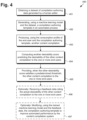
- FIG. 4 shows a flowchart presenting exemplary actions for extending the method presented in FIG. 3 .
- An automated content compilation system produces a content compilation for one or more end-users (hereinafter “end-user(s)”), and computes a desirability score predicting the desirability of the content compilation to the end-user(s).
- the automated content compilation is performed by the system based on a consumption profile of the end-user(s) and either content authoring data received through an editorial interface from a human editor other than the end-user(s), or based on a compilation authoring template generated by a trained machine learning model of the system.
- the content compilation may be pushed or otherwise provided to the end-user(s) sua sponte, i.e., proactively by the system, rather than in response to a request for the content compilation from the end user.
- the disclosed system can further receive feedback data rating an actual desirability of the content compilation to the end-user(s), and modify, using the trained machine learning model and the feedback data, a compilation authoring template used by the system to advantageously improve the automated performance by the content compilation system in the future.
- the terms “automation,” “automated,” and “automating” refer to systems and processes that do not require the participation of a human editor or curator. Although, in some implementations, a human editor or curator may review a content compilation produced by the automated systems and according to the automated methods described herein, that human involvement is optional. Thus, the methods described in the present application may be performed under the control of hardware processing components of the disclosed automated systems.
- the present application is titled “Curating Narrative Experiences through Automated Content Compilation,” that characterization is provided as an aid to conceptual clarity and is not to be construed as limiting.
- the present concepts can be applied to digital media content in a variety of forms, including audio-video content, video content without audio, audio content without video, such as music for instance, still images, graphics, such as sports or weather statistics, and text, to name some examples.
- the term “narrative,” as defined for the purposes of the present application refers to digital media content drawn from one or more of the types of content described above, and is not limited to speech or text.
- the present application contemplates a content compilation as including a hierarchy of content combinations in which individual content items in the form of video clips, news items, still images, graphics, or samples of audio tracks, for example, are aggregated into content subsets each relating a consistent “narrative” story, based on their relevance to one another and a known end-user preference.
- Those content subsets or “stories” may then be grouped, such as by being strung together, i.e., concatenated, to produce a content compilation or “narrative experience” having a narrative arc determined by the sequence in which the content subsets are combined to form the content compilation.
- a narrative experience refers to a customized compilation of video clips, graphics, audio, dynamically generated text or other creative elements that are relevant to and individual end-user or a group of end-users.
- a narrative experience may take the form of a personalized sports news show, featuring a compilation of highlight clips relevant to the players and teams preferred by the end-user(s), logos relevant to the teams and leagues preferred by the end-user(s), and dynamically generated audio and motion graphics capturing the sports news stories most relevant to the preferences of the end-user(s) and driven by other parameters, such as recency for instance.
- a narrative experience may take the form of a marketing video for a theme park, featuring video footage and photos of the end-user(s) captured on favorite theme park rides from past visits, stock footage of the resort where the end-user(s) stayed and the parks they visited, and dynamically generated text and motion graphics capturing dates, locations, and other details of the visit.
- FIG. 1 shows an exemplary system for curating narrative experiences through automated content compilation, according to one implementation.
- content compilation system 100 includes computing platform 102 having hardware processor 104 and system memory 106 implemented as a non-transitory storage device.
- system memory 106 stores software code 110 including trained machine learning model 112 , editorial interface 114 provided by software code 110 , consumption profile database 120 , and compilation authoring database 130 .
- dataset 132 of content authoring data Also shown in FIG. 1 are dataset 132 of content authoring data, and individual end-user consumption profiles 122 a , 122 b , and 122 c stored in consumption profile database 120 .
- content compilation system 100 is implemented within a use environment including communication network 108 , client system 136 including display 138 , end-users 124 including individual end users 124 a , 124 b , and 124 c , human editor 126 other than one of end-users 124 , and content sources 140 a , 140 b , and 140 c (hereinafter “content sources 140 a - 140 c ”).
- FIG. 1 shows network communication links 118 of communication network 108 interactively linking content compilation system 100 with client system 136 , content sources 140 a - 140 c , and end-users 124 . Also shown in FIG.
- content items 142 a , 142 b , and 142 c (hereinafter “content items 142 a - 142 c ”) obtained by content compilation system 100 from respective content sources 140 a - 140 c , one or more content compilations 144 (hereinafter “content compilation(s) 144 ”) produced by content compilation system 100 , and feedback data 146 received from one or more of end-users 124 and rating the actual desirability of content compilation(s) 144 to the end-user(s).
- FIG. 1 shows three content sources and three end-users, that representation is merely exemplary. In other implementations, as few as one content source, or more than three content sources may provide content items for automated compilation by content compilation system 100 . Moreover, end users 124 would typically include many more than three individual end-users, such as thousands, tens of thousands, or hundreds of thousands of end-users, for example.
- FIG. 1 shows a single client system used by a single human editor, it is contemplated that in many implementations multiple client systems may be utilized by multiple different human editors to interact with content compilation system 100 substantially concurrently. Consequently, client system 136 and human editor 126 correspond respectively to one, or more than one client system and one, or more than one human editor.
- FIG. 1 depicts software code 110 , consumer profile database 120 , and compilation authoring database 130 as being stored in system memory 106 , that representation too is merely exemplary. More generally, system memory 106 may take the form of any computer-readable non-transitory storage medium.
- a computer-readable non-transitory medium may correspond to various types of media, such as volatile media and non-volatile media, for example.
- Volatile media may include dynamic memory, such as dynamic random access memory (dynamic RAM), while non-volatile memory may include optical, magnetic, or electrostatic storage devices.
- dynamic RAM dynamic random access memory
- non-volatile memory may include optical, magnetic, or electrostatic storage devices.
- Common forms of computer-readable non-transitory media include, for example, optical discs, RAM, programmable read-only memory (PROM), erasable PROM (EPROM), and FLASH memory.
- FIG. 1 depicts software code 110 , consumer profile database 120 , and compilation authoring database 130 as being co-located in system memory 106 , that representation is also merely provided as an aid to conceptual clarity.
- content compilation system 100 may include one or more computing platforms 102 , such as computer servers for example, which may be co-located, or may form an interactively linked but distributed system, such as a cloud-based system, for instance.
- hardware processor 104 and system memory 106 may correspond to distributed processor and memory resources within content compilation system 100 .
- computing platform 102 may correspond to one or more web servers, accessible over a packet-switched network such as the Internet, for example.
- computing platform 102 may correspond to one or more computer servers supporting a private wide area network (WAN), local area network (LAN), or included in another type of limited distribution or private network. Consequently, in some implementations, software code 110 , consumer profile database 120 , and compilation authoring database 130 may be stored remotely from one another on the distributed memory resources of content compilation system 100 .
- WAN wide area network
- LAN local area network
- client system 136 is shown as a desktop computer in FIG. 1 , that representation is also provided merely as an example. More generally, client system 136 may be any suitable mobile or stationary communication device or system that implements data processing capabilities sufficient to support connections to communication network 108 , enable use of editorial interface 114 , and implement the functionality ascribed to client system 136 herein. For example, in other implementations, client system 136 may take the form of a laptop computer, a tablet computer, or a smartphone, for example.
- Human editor 126 may be authorized to utilize client system 136 , and editorial interface 114 rendered on display 138 of client system 136 , to guide authoring of content compilations by content compilation system 100 .
- Display 138 of client system 136 may take the form of a liquid crystal display (LCD), a light-emitting diode (LED) display, an organic light-emitting diode (OLED) display, a quantum dot (QD) display, or any other suitable display screen that performs a physical transformation of signals to light.
- LCD liquid crystal display
- LED light-emitting diode
- OLED organic light-emitting diode
- QD quantum dot
- the present content compilation solution creates a virtuous circle between algorithmic content compilation by software code 110 , executed by hardware processor 104 , and authoring data inputs provided by human editor 126 via editorial interface 114 .
- human editor 126 can receive substantially instant feedback on manual story creation in the form of a predicted end-user desirability score and automated suggestions of higher scoring story compilations put together by trained machine learning model 112 of software code 110 .
- This advantageously enables human editor 126 to discover content combinations that were unintuitive to human editor 126 but may be desirable to one or more of end-users 124 , and to learn more effective narrative arcs based on real-world consumption data or feedback data 146 .
- trained machine learning model 112 can learn new starting story templates, improve compilation scoring mechanisms, and refine the editorial style of human editor 126 by testing and adjusting authoring criteria, leading to more effective compilation authoring templates.
- Compilation scoring mechanisms may be further improved based on a feedback loop utilized by trained machine learning model 112 to progressively improve its performance. For example, weighting factors used to compute the desirability score for a content compilation may become progressively more accurate due to adjustments made by trained machine learning model 112 in response to feedback data 146 received from end-users 124 and rating the actual desirability of the content compilation to a particular end-user or group of end-users. That is to say, trained machine learning model 112 can utilize feedback data 146 to advantageously improve the automated performance by content compilation system 100 in the future.
- the present solution can be implemented to produce and deliver a different narrative experience for each of the individuals who make up that demographic by mixing content relevant to other personalized characteristics, preferences, future plans, and consumption patterns, as well as by crossing outside the boundaries of a single subject area (e.g., basketball) to including related topics and affinities. This may significantly benefit the end-user(s) by relieving them of the requirement of finding personalized content piecemeal from multiple content sources.
- a single subject area e.g., basketball
- the present solution enables the automated compilation of a narrative experience containing information relevant to the present status of a pandemic in Florida as it relates to the vacation plans of a Los Angeles resident end-user(s), weaving into that narrative experience information about vacation plans to visit a Florida based theme park at that time.
- the content compiled into the end-user(s) specific narrative experience may include information regarding a sporting event involving a favorite team, a weather forecast for that event, and any other relevant content items without the end-user(s) having to consult several applications or visit several websites to gather the related but distinctively sourced content automatically compiled according to the present novel and inventive concepts.
- content compilations can advantageously be produced and delivered based on the end user's affinities. For instance, while a generic sports highlight package might attempt to appease fans of both teams competing in a sporting event, present content compilation solution produces narrative experiences that are consistent with the sentiments of the end-user(s) by emphasizing content items that relate to their preferences while avoiding the inclusion of content that relates to counter-preferences. This can result in the production of content compilations in the form of multiple highlight packages that are hyper-focused to the end-user(s), limited only by the granularity of the content items and specificity of the metadata as it relates to preferences.
- FIG. 2 A shows exemplary content compilation authoring pane 250 of editorial interface 214 according to one implementation. Also shown as background panes in FIG. 2 A , are content subset authoring pane 260 and content item selection pane 270 , each including fields that can be populated or modified by human editor 126 as described below, as well as end-user(s) ID field 259 identifying a particular one of end-users 124 , or a particular subgroup of end-users 124 for whom content compilation(s) 144 being authored using editorial interface 214 is/are intended. It is noted that content compilation authoring pane 250 depicts the compilation of various types of sports content for merely exemplary purposes.
- the present content compilation solution is applicable to digital media content in a variety of forms, including audio-video content, video content without audio, audio content without video, such as music for instance, still images, graphics, such as sports or weather statistics, and text, to name some examples.
- content subset 260 a includes a full game analysis of a sporting event such as a specific collegiate or professional basketball game
- content subset 260 b includes content that addresses the sports topic more generally, such as the top players in the running to receive a league award for the sport analyzed in content subset 260 a
- Content subset 260 c may include video highlights of other games played the same day, as well as interviews with key players or coaches from other teams, for example.
- content compilation authoring pane 250 may include field 252 identifying the number of content subsets, or the number of content items, available for use in producing a content compilation.
- fields 254 a and 254 b identify weighting factors applied in evaluating and organizing content subsets 260 a , 260 b , and 260 c . For example, using a weighting range of 1 (lowest weight) to 10 (highest weight), FIG. 2 A shows that unique preference weight 254 b is most determinative in the selection and organization of content subsets 260 a , 260 b , and 260 c.
- Unique preference weight 254 b may specify how varied content subsets 260 a , 260 b , and 260 c included in one of content compilation(s) 144 should be. That is to say, unique preference weight 254 b enables the scoring mechanism applied to a content compilation to take into account how individual content subsets 260 a , 260 b , and 260 c influence the score of the content compilation as a whole.
- unique preference weight 254 b may be used to identify combinations of content subsets 260 a , 260 b , 260 c that are likely to appeal to a diversity of user preferences of the end-user(s), e.g., more variation in the user preferences that trained machine learning model 112 is matching on.
- Content subsets or “stories” 260 a , 260 b , and 260 c may then be grouped, such as by being strung together, i.e., concatenated, to produce a content compilation or “narrative experience” having a narrative arc determined by the sequence in which content subsets are combined in the content compilation, i.e., content subset 260 a followed by content subset 260 b followed by content subset 260 c .
- content subset authoring pane 260 which a human editor, such as human editor 126 in FIG. 1 , may access by clicking through any one of content subsets 260 a , 260 b , 260 c using input device 234 , which as shown as an exemplary cursor in FIG. 2 A .
- human editor 126 can receive substantially instant feedback on manual story creation in the form of a predicted end-user desirability score or automated suggestions for higher scoring story compilations put together by trained machine learning model 112 of software code 110 through use of compilation test engine 256 . This advantageously enables human editor 126 to discover content combinations that may be unintuitive to human editor 126 but desirable to one or more of end-users 124 , and to learn more effective narrative arcs.
- human editor 126 may enter a beginning data in begin date field 258 a and an ending data in end date field 258 b , and compilation test engine 256 may use those beginning and end dates and combinations of two or more of content subsets 260 a , 260 b , and 260 c to test the predicted desirability of various content compilations for one or more of end-users 124 .
- FIG. 2 B shows content subset authoring pane 260 of editorial interface 214 , according to one implementation.
- content subset authoring pane 260 is being used to aggregate content items 242 a , 242 b , and 242 c to produce full game analysis content subset 260 a , as indicated by content subset name field 262 .
- fields 264 a and 264 b identifying weighting factors applied in evaluating and organizing content items 242 a , 242 b , and 242 c . For example, using a weighting range of 1 (lowest weight) to 10 (highest weight), FIG.
- time relevance weight 264 a is most determinative in the selection and organization of content items 242 a , 242 b , and 242 c
- topic cohesion weight 264 b corresponding to the relatedness of content items 242 a , 242 b , 242 c , i.e., their direct relevance to one another, is less important.
- FIG. 2 C shows content item selection pane 270 of editorial interface 214 , according to one implementation.
- content item selection pane 270 is being used to automate the selection of content to be included in Pre-Game Analysis or Conversation content item 242 a , as indicated by content item name field 272 .
- fields 274 a , 274 b , and 274 c identifying weighting factors applied in evaluating the importance of matching a user's preference for a particular sports league, player, and team, respectively, when selecting content for inclusion in content item 242 a .
- FIG. 2 C shows content weighting fields 276 a , 276 b , and 276 c indicating the priority given to content in the form of analysis, interviews, and news content, respectively, as well as primary preference weight 278 .
- primary preference weight 278 it is noted that if a content item is determined to have a primary preference association, such as in the case of a sporting event where one team or player is highlighted in the clip even though multiple players and teams are involved in the content, primary preference weight 278 may be used to select content with more emphasis on a user's particular preference, e.g., preferring highlights where a favorite player is scoring but omitting highlights where the player appears in the clip but is not the focal point. In other words, primary preference weight 278 demonstrates that individual content items can be chosen based on the weight of individual tags as they pertain to that specific item of content.
- Editorial interface 214 in FIGS. 2 A, 2 B, and 2 C corresponds in general to editorial interface 114 , in FIG. 1 . That is to say, editorial interface 114 may share any of the characteristics attributed to corresponding editorial interface 214 by the present disclosure, and vice versa.
- editorial interface 114 may include content item selection pane 270 , content subset authoring pane 260 , content compilation authoring pane 250 , and any of the features shown and described by reference to FIGS. 2 A, 2 B, and 2 C .
- content items 242 a , 242 b , and 242 c correspond respectively in general to content items 142 a - 142 c , in FIG. 1 , and those corresponding features may share any of the characteristics attributed to either corresponding feature by the present disclosure.
- FIG. 3 shows flowchart 380 presenting an exemplary method for use by a system, such as content compilation system 100 , in FIG. 1 , for curating a narrative experience through automated content compilation, according to one implementation.
- a system such as content compilation system 100 , in FIG. 1
- FIG. 3 shows flowchart 380 presenting an exemplary method for use by a system, such as content compilation system 100 , in FIG. 1 , for curating a narrative experience through automated content compilation, according to one implementation.
- FIG. 3 shows flowchart 380 presenting an exemplary method for use by a system, such as content compilation system 100 , in FIG. 1 , for curating a narrative experience through automated content compilation, according to one implementation.
- FIG. 3 shows flowchart 380 presenting an exemplary method for use by a system, such as content compilation system 100 , in FIG. 1 , for curating a narrative experience through automated content compilation, according to one implementation.
- FIG. 3 shows flowchart 380 presenting an exemplary method for use
- flowchart 380 begins with receiving compilation authoring data 128 via editorial interface 114 / 214 (action 381 ).
- Compilation authoring data 128 may include some or all of the information included in field 252 , in FIG. 2 A , the weighting factors included in fields 254 a and 254 b , and data entered into end-user(s) ID field 259 in that same figure, as well as the weighting factors included in fields 264 a and 264 b , in FIG. 2 B , for example.
- compilation authoring data 128 may be entered into editorial interface 114 / 214 by human editor 126 , and may be received from client system 136 via communication network 108 and network communication links 118 .
- Compilation authoring data 128 may be received by software code 110 , executed by hardware processor 104 of computing platform 102 .
- Flowchart 380 continues with identifying end-user(s) for receiving content compilation(s) 144 (action 382 ).
- the end-user(s) for receiving content compilation(s) 144 may be a subgroup of end-users 124 , based on their shared interest in the same subject matter, or due to their all being fans of the same sport or sports organization, for example. That is to say, the end-user(s) identified in action 144 may include a group of end-users, e.g., a subgroup of end-users 124 , such as a group of consumers, a family, a group residing in a particular geographical region, fans of a particular team, or any other affinity group.
- content compilation(s) 144 may be individualized for delivery to a single one of end-users 124 , such as end-user 124 a , but not end-users 124 b or 124 c.
- action 382 as well as actions 383 - 388 and the additional actions included in FIG. 4 , are further described by reference to an exemplary use case in which content compilation(s) 144 is/are produced for end-user 124 a alone.
- a consumption profile of end-user 124 is stored as end-user consumption profile 122 a in consumption profile database 120 .
- end-user 124 a for receiving content compilation(s) 144 may be identified in action 382 using data included in end-user(s) ID field 259 , in FIG. 2 A .
- end-user 124 a may be identified in action 382 through an automated back-end process that does not rely on population of end-user(s) ID field 259 .
- field 259 may be used for testing purposes, for example to assist human editor 126 discover new, higher scoring content compilation(s) 144 , or to target groups of end-users 124 including end-user 124 a , rather than end-user 124 a individually.
- End-user 124 a may be identified by software code 110 , executed by hardware processor 104 of computing platform 102 .
- End-user consumption profile 122 a may include the content consumption history of end-user 124 a , preferences of end-user 124 a , demographic information such as the age, gender, and geographical location of end-user 124 a , content subscriptions held by end-user 124 a , affinity groups or loyalty programs participated in by end-user 124 a , as well as miscellaneous information entered into end-user consumption profile 122 a by end-user 124 a , such as birthdays, travel plans, or subjects of special interest, for example.
- end-user consumption profile 122 a may include information automatically detected by a communication device utilized by end-user 124 a .
- localization data such as Global Positioning System (GPS) data collected by the communication device utilized by end-user 124 a for instance, may be included in end-user consumption profile 122 a and may be used to identify a present or past location of end-user 124 a .
- GPS Global Positioning System
- accelerometer or gyroscope data collected by the communication device utilized by end-user 124 a may indicate that end-user 124 a is in motion, and may be presently physically active, commuting, traveling, or otherwise in transit.
- End-user consumption profile 122 a of end-user 124 a may be accessed on consumption profile database 120 by software code 110 , executed by hardware processor 104 of computing platform 102 .
- hardware processor 104 may execute software code 110 to access end-user consumption profile 122 a directly.
- hardware processor 104 may execute software code 110 to access end-user consumption profile 122 a via communication network 108 and network communication links 118 .
- Flowchart 380 continues with obtaining, using end-user consumption profile 122 a and a first authoring criterion included in compilation authoring data 128 , some or all of content items 142 a / 242 a , 142 b / 242 b , and 142 c / 242 c from one or more of content sources 140 a - 140 c (action 384 ).
- FIG. 1 depicts content item 142 a / 242 a being obtained from content source 140 a
- content item 142 b / 242 b being obtained from content source 140 b
- content item 142 c / 242 c being obtained from content source 140 c
- that representation is merely exemplary.
- content items 142 a / 242 a , 142 b / 242 b , and 142 c / 242 c may be obtained from the same content source, e.g., one of content sources 140 a - 140 c .
- content items 142 a / 242 a , 142 b / 242 b , and 142 c / 242 c may be obtained from more than one, but less than all of content sources 140 a - 140 c.
- the first authoring criterion used in action 384 may include the determination of one or more of an end-user relevance score, a relative timing score, or a consumer popularity score for each of content items 142 a / 242 a , 142 b / 242 b , and 142 c / 242 c , for example.
- the end-user relevance score may be determined based on the subject matter of each of content items 142 a / 242 a , 142 b / 242 b , and 142 c / 242 c relative to known preferences of end-user 124 a , as well as a content consumption history of end-user 124 a .
- the relative timing score may be determined based on time offsets among individual content items 142 a / 242 a , 142 b / 242 b , and 142 c / 242 c .
- content item 142 b / 242 b is a full game highlight clip of a particular sporting event
- content from pre-game analysis or conversations may earn a high relative timing score for use as content item 142 a / 242 a
- post-game analysis or interviews may earn a high relative timing score for use as content item 142 c / 242 c.
- the consumer popularity score may be based on the number of views or hits a particular content item has received from a general consumer population, or from a subgroup of consumers, such as fans of a particular team, or consumers sharing similar demographic characteristics. It is noted that even in use cases in which consumption profile database 120 does not include a consumption history specific to end-user 124 a , collaborative filtering recommendation techniques can be used to identify content items 142 a / 242 a , 142 b / 242 b , and 142 c / 242 c to be obtained in action 384 .
- content items 142 a / 242 a , 142 b / 242 b , and 142 c / 242 c may be identified and obtained by reference to a consumption profile of a demographic of end-users 124 determined to be similar to end-user 124 a .
- content items 142 a / 242 a , 142 b / 242 b , and 142 c / 242 c may be identified and obtained based on information such as the age, gender, and geographical location of end-user 124 a and consumption history information for end-users 124 having a similar age and geographical location, and the same gender.
- Content items 142 a / 242 a , 142 b / 242 b , and 142 c / 242 c may be obtained from one or more of content sources 140 a - 140 c in action 384 by software code 110 , executed by hardware processor 104 of computing platform 102 .
- content items 142 a / 242 a , 142 b / 242 b , and 142 c / 242 c may take a variety of forms.
- content items 142 a / 242 a , 142 b / 242 b , and 142 c / 242 c may be audio-visual content, such as a movie, TV, news, weather, or sports clip.
- content items 142 a / 242 a , 142 b / 242 b , and 142 c / 242 c may be video clips.
- one or more of content items 142 a / 242 a , 142 b / 242 b , and 142 c / 242 c may be music or other audio samples, passages quoted from digital print media, or one or more graphical elements or overlays.
- content items 142 a / 242 a , 142 b / 242 b , and 142 c / 242 c may include content having a short duration.
- content items 142 a / 242 a , 142 b / 242 b , and 142 c / 242 c are video clips
- content items 142 a / 242 a , 142 b / 242 b , and 142 c / 242 c may have a playout duration of a few seconds, such as approximately ten to fifteen seconds, for example, or may be limited to one or a few shots of video.
- a “shot” refers to a sequence of video frames that is captured from a unique camera perspective without cuts and other cinematic transitions.
- one or more of content items 142 a / 242 a , 142 b / 242 b , and 142 c / 242 c may correspond to a single shot of video content including multiple individual frames of video.
- one or more of content items 142 a / 242 a , 142 b / 242 b , and 142 c / 242 c may correspond to a content segment including multiple shots.
- Flowchart 380 continues with aggregating, using a second authoring criterion included in compilation authoring data 128 , content items 142 a / 242 a , 142 b / 242 b , and 142 c / 242 c into multiple content subsets 260 a , 260 b , 260 c (action 385 ).
- the second authoring criterion used in action 385 may include the determination of a content compatibility score for each of subsets 260 a , 260 b , and 260 c . For example, referring to FIG.
- field 254 a includes a relatively high (i.e., 8/10) weighting factor being applied to the importance of content included in content compilation being relevant to the same unique event, such as a particular sporting event.
- the content compatibility score determined as part of the second authoring criterion used in action 385 may be higher for aggregations of content subsets 260 a , 260 b , and 260 c that are topically related but not conflicting by overlapping in time or having a sentiment counter to known preferences of end-user 124 a.
- Each content subset 260 a , 260 b , and 260 c may correspond to a story assembled or aggregated from multiple content items drawn to the same or similar subject matter and theme.
- content subset 260 a may include a full game analysis of a sporting event such as a specific collegiate or professional basketball game
- content subset 260 b includes content that addresses the sports topic more generally, such as top players in the running to receive a league award for the sport analyzed in content subset 260 a
- Content subset 260 c may include video highlights of other games played the same day, as well as interviews with key players or coaches from other teams, for example.
- Content subsets 260 a , 260 b , and 260 c may be aggregated from content items, such as content items 142 a / 242 a , 142 b / 242 b , and 142 c / 242 c for example, by software code 110 , executed by hardware processor 104 of computing platform 102 .
- Flowchart 380 continues with grouping, using a third authoring criterion included in compilation authoring data 128 , at least some of content subsets 260 a , 260 b , and 260 c to produce content compilation(s) 144 (action 386 ).
- the third authoring criterion used in action 386 may include the determination of a content variety score for content compilation(s) 144 .
- content subsets 260 a , 260 b , and 260 c may also be desirable to ensure that content subsets 260 a , 260 b , and 260 c address the same or similar topics from different perspectives, or impart different types of information.
- content compilation(s) 144 may include varied information such as the present status of a pandemic in Florida as it relates to the vacation plans of a Los Angeles resident end-user 124 a , as well as information about that end-user's vacation plans to visit a Florida based theme park at that time, weather forecast information for the upcoming trip, as well as information regarding a sporting event or team of special interest to end-user 124 a.
- such a score may take into account (but is not limited to) the following features: 1) The aggregated individual scores of content subsets 260 a , 260 b and 260 c (which could be weighted—for example, a content subset with a longer duration might have a stronger weight) and 2) the similarity or uniqueness between content subsets 260 a , 260 b and 260 c , which could be computed using different metadata parameters as drivers, for example, whether they contain one or more of the same “topic” or “theme” tag, a tag for the same “sport,” and a unique identifier indicating that they relate to the same “event.”
- the content variety score may take into account one or more of: 3) the aggregated length of the entire content compilation or the relative lengths of the content subsets contained therein, and 4) the aggregated recency of the entire content compilation or the relative temporal ordering of the content subsets contained it contains, for example whether the content sub
- the third authoring criterion included in compilation authoring data 128 may include one or more of the number of content subsets to be included in content compilation(s) 144 , the type of content subsets to be included in content compilation(s) 144 (which are in turn defined by their component videos, creative elements, recency, similarity and other parameters), the selection of individual creative elements (such as graphical or audio transitions) to maximize continuity between the content subsets, and the logical ordering of content subsets to be included in content compilation(s) 144 (such as chronological or reverse chronological order, ordering based on duration, or grouping subsets relating to the same theme or entity together), to name a few examples.
- content subsets 260 a , 260 b , and 260 c included in content compilation(s) 144 may be used to individualize content compilation(s) 144 for end-user 124 a based on end-user consumption profile 122 a of end-user 124 a .
- content compilation(s) 144 may be individualized for end-user 124 a so as to be unique to end-user 124 a .
- Content subsets 260 a , 260 b , and 260 c may be grouped to produce content compilation(s) 144 in action 386 by software code 110 , executed by hardware processor 104 of computing platform 102 .
- flowchart 380 shows each of actions 385 and 386 as occurring once, and further shows action 385 as preceding action 386 , that representation is merely exemplary. In some implementations, one or both of actions 385 and 386 may be repeated multiple times prior to action 387 described below. Moreover, in some implementations, the order of those multiple iterations of actions 385 and 386 may alternate.
- action 385 may be performed repeatedly to first aggregate content items 142 a / 242 a , 142 b / 242 b , and 142 c / 242 c into content subsets 260 a , 260 b , and 260 c , may then proceed with aggregating one or more of content subsets 260 a , 260 b , and 260 c into content supersets, and may further continue with aggregating those supersets into super-supersets prior to action 386 .
- actions 385 and 386 may initially occur as outlined by flowchart 380 , but may be followed by repetition of action 385 , or action 386 , or actions 385 and 386 one or more times prior to action 387 .
- Flowchart 380 continues with computing a desirability score predicting the desirability of content compilation(s) 144 to end-user 124 a (action 387 ).
- the desirability score computed in action 387 may include some or all of the scores determined in actions 384 , 385 , and 386 .
- the desirability score may include some or all of the variety score, the content compatibility score, and the one or more of the end-user relevance score, the relative timing score, or the consumer popularity score described above.
- the desirability score computed in action 387 may be an unweighted sum of the scores determined in action 384 , 385 , and 386 . In other implementations, however, the desirability score computed in action 387 may be a weighted sum (which may include negative as well as positive weighting factors) of the scores determined in action 384 , 385 , and 386 . That is to say, in some implementations, the desirability score predicting the desirability of content compilation(s) 144 to end-user 124 a may be higher than, or lower than, the sum of the variety score, the content compatibility score, and the one or more of the end-user relevance score, the relative timing score, or the consumer popularity score. Computation of the desirability score in action 387 may be performed by software code 110 , executed by hardware processor 104 of computing platform 102 .
- Flowchart 380 can conclude with providing, when the desirability score computed in action 387 satisfies a predetermined threshold, content compilation(s) 144 to end-user 124 a (action 388 ).
- providing content compilation(s) 144 to end-user 124 a may include pushing content compilation(s) 144 to end user 124 a over communication network 108 and network communication links 118 . That is to say, content compilation system 100 may provide end-user 124 a with a push notification informing end-user 124 a that content compilation(s) 144 is/are available.
- Hardware processor 104 may then execute software code 110 to stream content compilation(s) 144 to end-user 124 a via communication network 108 and network communication links 118 .
- Conditioning action 388 on the desirability score of content compilation(s) 144 satisfying a predetermined threshold advantageously prevents providing content to end-user 124 a that end-user 124 a may find irrelevant or otherwise undesirable.
- FIG. 4 shows flowchart 490 presenting exemplary actions for extending the method outlined by flowchart 380 , in FIG. 3 .
- flowchart 490 presenting exemplary actions for extending the method outlined by flowchart 380 , in FIG. 3 .
- FIG. 4 shows flowchart 490 presenting exemplary actions for extending the method outlined by flowchart 380 , in FIG. 3 .
- FIG. 4 shows flowchart 490 presenting exemplary actions for extending the method outlined by flowchart 380 , in FIG. 3 .
- FIG. 4 shows flowchart 490 presenting exemplary actions for extending the method outlined by flowchart 380 , in FIG. 3 .
- FIG. 4 shows flowchart 490 presenting exemplary actions for extending the method outlined by flowchart 380 , in FIG. 3 .
- Flowchart 490 begins with obtaining dataset 132 of compilation authoring data generated by human editor 126 (action 491 ).
- Dataset 132 may include multiple instances of compilation authoring data 128 utilized by human editor 126 to generate content compilation(s) 144 .
- Dataset 132 may be aggregated over time, may be updated as human editor 126 submits additional compilation authoring data 128 to system 100 , and may be stored in compilation authoring database 130 .
- Dataset 132 may be obtained from compilation authoring database 130 by software code 110 , executed by hardware processor 104 of computing platform 102 .
- hardware processor 104 may execute software code 110 to access dataset 132 directly.
- hardware processor 104 may execute software code 110 to obtain dataset 132 via communication network 108 and network communication links 118 .
- Flowchart 490 continues with generating, using trained machine learning model 112 and dataset 132 , a compilation authoring template in an automated process (action 492 ).
- the feature “trained machine learning model 112 ” refers to a mathematical model for making future predictions based on patterns learned from samples of data obtained from a set of trusted known matches and known mismatches, known as “training data.”
- Various learning algorithms can be used to map correlations between input data and output data. These correlations form the mathematical model that can be used to make future predictions on new input data.
- Such a predictive model may include one or more logistic regression models, Bayesian models, or neural networks (NNs), for example.
- hardware processor 104 of computing platform 102 executes software code 110 to provide dataset 132 as input data to trained machine learning model 112 , which in turn is configured to generate a compilation authoring template implementing an editorial style of human editor 126 learned from dataset 132 in an automated process.
- content compilation system 100 can advantageously generate content compilation templates that are pre-populated with weighting factors and other authoring parameters characteristic of each human editor's editorial style. Those content compilation templates may then be utilized by software code 110 in an automated process for producing additional content compilation(s) 144 for end-users 124 without requiring further involvement in the authoring process by the human editors.
- flowchart 490 can continue with producing, using end-user consumption profile 122 a of end-user 124 a and the compilation authoring template generated in action 492 , another content compilation for end-user 124 a (action 493 ).
- Action 493 may be performed by software code 110 , executed by hardware processor 104 of computing platform 102 , in a manner analogous to that described above by reference to actions 384 , 385 , and 386 of flowchart 380 .
- Flowchart 490 continues with computing another desirability score predicting the desirability of the content compilation produced in action 493 to end-user 124 a (action 494 ).
- the desirability score computation in action 494 may be performed by software code 110 , executed by hardware processor 104 of computing platform 102 , in a manner analogous to that described above by reference to action 387 of flowchart 380 .
- flowchart 490 may continue and conclude with providing, when the desirability score computed in action 494 satisfies a predetermined threshold, the content compilation produced in action 493 to end-user 124 a (action 495 ).
- Action 495 may be performed by software code 110 , executed by hardware processor 104 of computing platform 102 , in a manner analogous to that described above by reference to action 388 of flowchart 380 . That is to say, action 495 may include pushing the content compilation produced in action 493 to end-user 124 a when the desirability score computed in action 494 satisfies the predetermined threshold.
- hardware processor 104 may further execute software code 110 to improve the performance of content compilation system 100 through additional machine learning by trained machine learning model 112 based on learned end-user tendencies.
- flowchart 490 may continue with optionally receiving feedback data 146 rating the actual desirability of the content compilation produced in action 493 to end-user 124 a (action 496 ).
- feedback data 146 may be received by software code 110 of content compilation system 100 , executed by hardware processor 104 , and via communication network 108 and network communication links 118 .
- flowchart 490 can continue and conclude with optionally modifying, using trained machine learning model 112 and feedback data 146 , the compilation authoring template generated in action 492 to improve the automated performance of content compilation system 100 (action 497 ).
- software code 110 executed by hardware processor 104 of computing platform 102 , may utilize trained machine learning model 112 to modify the compilation authoring template generated in action 492 by changing one or more weighting factors or other authoring parameters so as to increase the user desirability score computed for content compilations produced using the modified compilation authoring template.
- actions 382 - 388 , or actions 382 - 388 and 491 - 495 , or actions 491 - 495 , or actions 491 - 497 , or 382 - 388 and actions 491 - 497 may be performed in an automated process from which human involvement may be omitted.
- an automated content compilation system produces a content compilation for end-user(s), and computes a desirability score predicting the desirability of the content compilation to the end-user(s).
- the automated content compilation is performed by the system based on a consumption profile of the end-user(s) and either content authoring data received through an editorial interface from a human editor other than the end-user(s), or based on a compilation authoring template generated by a trained machine learning model of the system.
- the content compilation may be pushed or otherwise provided to the end-user(s) sua sponte, i.e., proactively by the system, rather than in response to a request for the content compilation from the end user(s).
- the disclosed system can further receive feedback data rating an actual desirability of the content compilation to the end-user(s), and modify, using the trained machine learning model and the feedback data, a compilation authoring template used by the system to advantageously improve the automated performance by the content compilation system in the future.
Landscapes
- Engineering & Computer Science (AREA)
- Databases & Information Systems (AREA)
- Multimedia (AREA)
- Signal Processing (AREA)
- Computer Graphics (AREA)
- Computing Systems (AREA)
- Theoretical Computer Science (AREA)
- Human Computer Interaction (AREA)
- Computer Security & Cryptography (AREA)
- Business, Economics & Management (AREA)
- General Physics & Mathematics (AREA)
- Strategic Management (AREA)
- Physics & Mathematics (AREA)
- Finance (AREA)
- Television Signal Processing For Recording (AREA)
- Accounting & Taxation (AREA)
- Development Economics (AREA)
- Entrepreneurship & Innovation (AREA)
- Software Systems (AREA)
- General Engineering & Computer Science (AREA)
- Artificial Intelligence (AREA)
- Data Mining & Analysis (AREA)
- Health & Medical Sciences (AREA)
- Audiology, Speech & Language Pathology (AREA)
- General Health & Medical Sciences (AREA)
- Game Theory and Decision Science (AREA)
- Economics (AREA)
- Marketing (AREA)
- General Business, Economics & Management (AREA)
- Computer Vision & Pattern Recognition (AREA)
- Evolutionary Computation (AREA)
- Medical Informatics (AREA)
- Computational Linguistics (AREA)
- Mathematical Physics (AREA)
- Information Retrieval, Db Structures And Fs Structures Therefor (AREA)
Abstract
Description
Claims (14)
Priority Applications (1)
| Application Number | Priority Date | Filing Date | Title |
|---|---|---|---|
| US17/968,738 US12192583B2 (en) | 2020-12-14 | 2022-10-18 | Curating narrative experiences through automated content compilation |
Applications Claiming Priority (2)
| Application Number | Priority Date | Filing Date | Title |
|---|---|---|---|
| US17/120,923 US11509962B2 (en) | 2020-12-14 | 2020-12-14 | Curating narrative experiences through automated content compilation |
| US17/968,738 US12192583B2 (en) | 2020-12-14 | 2022-10-18 | Curating narrative experiences through automated content compilation |
Related Parent Applications (1)
| Application Number | Title | Priority Date | Filing Date |
|---|---|---|---|
| US17/120,923 Continuation US11509962B2 (en) | 2020-12-14 | 2020-12-14 | Curating narrative experiences through automated content compilation |
Publications (2)
| Publication Number | Publication Date |
|---|---|
| US20230041978A1 US20230041978A1 (en) | 2023-02-09 |
| US12192583B2 true US12192583B2 (en) | 2025-01-07 |
Family
ID=81942683
Family Applications (2)
| Application Number | Title | Priority Date | Filing Date |
|---|---|---|---|
| US17/120,923 Active 2041-05-18 US11509962B2 (en) | 2020-12-14 | 2020-12-14 | Curating narrative experiences through automated content compilation |
| US17/968,738 Active US12192583B2 (en) | 2020-12-14 | 2022-10-18 | Curating narrative experiences through automated content compilation |
Family Applications Before (1)
| Application Number | Title | Priority Date | Filing Date |
|---|---|---|---|
| US17/120,923 Active 2041-05-18 US11509962B2 (en) | 2020-12-14 | 2020-12-14 | Curating narrative experiences through automated content compilation |
Country Status (1)
| Country | Link |
|---|---|
| US (2) | US11509962B2 (en) |
Families Citing this family (2)
| Publication number | Priority date | Publication date | Assignee | Title |
|---|---|---|---|---|
| US12353443B1 (en) * | 2022-11-15 | 2025-07-08 | United Services Automobile Association (Usaa) | Personal legacy accounting and remembrance |
| US12292935B1 (en) | 2022-11-15 | 2025-05-06 | United Services Automobile Association (Usaa) | Personal legacy accounting and remembrance |
Citations (18)
| Publication number | Priority date | Publication date | Assignee | Title |
|---|---|---|---|---|
| US6144375A (en) * | 1998-08-14 | 2000-11-07 | Praja Inc. | Multi-perspective viewer for content-based interactivity |
| US20040073924A1 (en) * | 2002-09-30 | 2004-04-15 | Ramesh Pendakur | Broadcast scheduling and content selection based upon aggregated user profile information |
| US20050251807A1 (en) * | 2004-05-05 | 2005-11-10 | Martin Weel | System and method for sharing playlists |
| US20100251304A1 (en) * | 2009-03-30 | 2010-09-30 | Donoghue Patrick J | Personal media channel apparatus and methods |
| US20110041157A1 (en) * | 2009-08-13 | 2011-02-17 | Tandberg Television Inc. | Systems and Methods for Selecting Content For a Subscriber of a Content Service Provider |
| US20120060195A1 (en) * | 2010-09-07 | 2012-03-08 | Opentv, Inc. | Smart playlist |
| US20120278342A1 (en) * | 2007-11-26 | 2012-11-01 | Abo Enterprises, Llc | Intelligent default weighting process for criteria utilized to score media content items |
| US20130318013A1 (en) * | 2012-05-28 | 2013-11-28 | Sony Corporation | Information processing apparatus, information processing method, and program |
| US20140122590A1 (en) * | 2012-11-01 | 2014-05-01 | Lemi Technology, Llc | Systems, methods, and computer readable media for selecting a playhead in social media playback |
| US20160071549A1 (en) * | 2014-02-24 | 2016-03-10 | Lyve Minds, Inc. | Synopsis video creation based on relevance score |
| US20160196270A1 (en) * | 2013-12-19 | 2016-07-07 | Gracenote, Inc. | Station library creaton for a media service |
| US20160360266A1 (en) * | 2015-06-05 | 2016-12-08 | Google Inc. | Video channel categorization schema |
| US9883252B2 (en) * | 2012-07-09 | 2018-01-30 | Cisco Technology, Inc. | Method and system for automatically generating interstitial material related to video content |
| US10083232B1 (en) * | 2014-12-15 | 2018-09-25 | Amazon Technologies, Inc. | Weighting user feedback events based on device context |
| US10222939B1 (en) * | 2014-03-31 | 2019-03-05 | Google Llc | Method for managing collaborative playlists |
| US20200099974A1 (en) * | 2018-09-21 | 2020-03-26 | Fubotv Inc. | Systems and methods for generating individualized playlists |
| US20210084350A1 (en) * | 2018-01-11 | 2021-03-18 | Editorji Technologies Private Limited | Method and system for customized content |
| US11197068B1 (en) * | 2020-06-16 | 2021-12-07 | Spotify Ab | Methods and systems for interactive queuing for shared listening sessions based on user satisfaction |
Family Cites Families (7)
| Publication number | Priority date | Publication date | Assignee | Title |
|---|---|---|---|---|
| US9609073B2 (en) | 2011-09-21 | 2017-03-28 | Facebook, Inc. | Aggregating social networking system user information for display via stories |
| US9002175B1 (en) | 2013-03-13 | 2015-04-07 | Google Inc. | Automated video trailer creation |
| US9110988B1 (en) | 2013-03-14 | 2015-08-18 | Google Inc. | Methods, systems, and media for aggregating and presenting multiple videos of an event |
| US9779775B2 (en) | 2014-02-24 | 2017-10-03 | Lyve Minds, Inc. | Automatic generation of compilation videos from an original video based on metadata associated with the original video |
| US20170220869A1 (en) | 2016-02-02 | 2017-08-03 | Verizon Patent And Licensing Inc. | Automatic supercut creation and arrangement |
| US10276213B2 (en) | 2017-05-22 | 2019-04-30 | Adobe Inc. | Automatic and intelligent video sorting |
| US10455297B1 (en) | 2018-08-29 | 2019-10-22 | Amazon Technologies, Inc. | Customized video content summary generation and presentation |
-
2020
- 2020-12-14 US US17/120,923 patent/US11509962B2/en active Active
-
2022
- 2022-10-18 US US17/968,738 patent/US12192583B2/en active Active
Patent Citations (18)
| Publication number | Priority date | Publication date | Assignee | Title |
|---|---|---|---|---|
| US6144375A (en) * | 1998-08-14 | 2000-11-07 | Praja Inc. | Multi-perspective viewer for content-based interactivity |
| US20040073924A1 (en) * | 2002-09-30 | 2004-04-15 | Ramesh Pendakur | Broadcast scheduling and content selection based upon aggregated user profile information |
| US20050251807A1 (en) * | 2004-05-05 | 2005-11-10 | Martin Weel | System and method for sharing playlists |
| US20120278342A1 (en) * | 2007-11-26 | 2012-11-01 | Abo Enterprises, Llc | Intelligent default weighting process for criteria utilized to score media content items |
| US20100251304A1 (en) * | 2009-03-30 | 2010-09-30 | Donoghue Patrick J | Personal media channel apparatus and methods |
| US20110041157A1 (en) * | 2009-08-13 | 2011-02-17 | Tandberg Television Inc. | Systems and Methods for Selecting Content For a Subscriber of a Content Service Provider |
| US20120060195A1 (en) * | 2010-09-07 | 2012-03-08 | Opentv, Inc. | Smart playlist |
| US20130318013A1 (en) * | 2012-05-28 | 2013-11-28 | Sony Corporation | Information processing apparatus, information processing method, and program |
| US9883252B2 (en) * | 2012-07-09 | 2018-01-30 | Cisco Technology, Inc. | Method and system for automatically generating interstitial material related to video content |
| US20140122590A1 (en) * | 2012-11-01 | 2014-05-01 | Lemi Technology, Llc | Systems, methods, and computer readable media for selecting a playhead in social media playback |
| US20160196270A1 (en) * | 2013-12-19 | 2016-07-07 | Gracenote, Inc. | Station library creaton for a media service |
| US20160071549A1 (en) * | 2014-02-24 | 2016-03-10 | Lyve Minds, Inc. | Synopsis video creation based on relevance score |
| US10222939B1 (en) * | 2014-03-31 | 2019-03-05 | Google Llc | Method for managing collaborative playlists |
| US10083232B1 (en) * | 2014-12-15 | 2018-09-25 | Amazon Technologies, Inc. | Weighting user feedback events based on device context |
| US20160360266A1 (en) * | 2015-06-05 | 2016-12-08 | Google Inc. | Video channel categorization schema |
| US20210084350A1 (en) * | 2018-01-11 | 2021-03-18 | Editorji Technologies Private Limited | Method and system for customized content |
| US20200099974A1 (en) * | 2018-09-21 | 2020-03-26 | Fubotv Inc. | Systems and methods for generating individualized playlists |
| US11197068B1 (en) * | 2020-06-16 | 2021-12-07 | Spotify Ab | Methods and systems for interactive queuing for shared listening sessions based on user satisfaction |
Also Published As
| Publication number | Publication date |
|---|---|
| US20220188845A1 (en) | 2022-06-16 |
| US11509962B2 (en) | 2022-11-22 |
| US20230041978A1 (en) | 2023-02-09 |
Similar Documents
| Publication | Publication Date | Title |
|---|---|---|
| US12205387B2 (en) | System and method for using artificial intelligence (AI) to analyze social media content | |
| US10943125B1 (en) | Predicting highlights for media content | |
| Koç | The role of user interactions in social media on recommendation algorithms: Evaluation of TikTok's personalization practices from user's perspective | |
| US11539992B2 (en) | Auto-adjust playback speed and contextual information | |
| US9965478B1 (en) | Automatic generation of online media stations customized to individual users | |
| US12282643B1 (en) | Identifying and rendering content relevant to a user's current mental state and context | |
| US20200183975A1 (en) | Video content optimization system | |
| US12563270B2 (en) | Rendering a dynamic endemic banner on streaming platforms using content recommendation systems and content modeling for user exploration and awareness | |
| US10075763B2 (en) | Video channel categorization schema | |
| US12619674B2 (en) | System and method for topological representation of commentary | |
| US11921810B2 (en) | Value-based online content search engine | |
| US12412105B2 (en) | Automated compositing of content compilations | |
| US20230041978A1 (en) | Curating Narrative Experiences Through Automated Content Compilation | |
| TW202407531A (en) | Media item and product pairing | |
| US20250254402A1 (en) | Systems and methods for generating sports media content for an interactive display | |
| Sankalp et al. | Advancements in modern recommender systems: Industrial applications in social media, e-commerce, entertainment, and beyond | |
| US10503794B2 (en) | Video content optimization system and method for content and advertisement placement improvement on a third party media content platform | |
| Boccio | Netflix and the platformization of film and television content discovery | |
| US11853328B2 (en) | Adaptive multi-model item selection systems and methods | |
| Stefan et al. | Generative Music Video Composition: Using automation to extend creative practice | |
| US12432420B2 (en) | Content sharing platform channel review using a virtual assistant | |
| US12142042B2 (en) | Performer density assessment | |
| US20250252632A1 (en) | Systems and methods for generating sports media content for an interactive display | |
| Zardiny et al. | The Design and Implementation of a Location-based System for Music Recommendation on the Web | |
| Hamilton | The Harkive Project: Popular Music, Data & Digital Technologies |
Legal Events
| Date | Code | Title | Description |
|---|---|---|---|
| FEPP | Fee payment procedure |
Free format text: ENTITY STATUS SET TO UNDISCOUNTED (ORIGINAL EVENT CODE: BIG.); ENTITY STATUS OF PATENT OWNER: LARGE ENTITY |
|
| STPP | Information on status: patent application and granting procedure in general |
Free format text: RESPONSE TO NON-FINAL OFFICE ACTION ENTERED AND FORWARDED TO EXAMINER |
|
| STPP | Information on status: patent application and granting procedure in general |
Free format text: FINAL REJECTION MAILED |
|
| STPP | Information on status: patent application and granting procedure in general |
Free format text: RESPONSE AFTER FINAL ACTION FORWARDED TO EXAMINER |
|
| STPP | Information on status: patent application and granting procedure in general |
Free format text: ADVISORY ACTION MAILED |
|
| STPP | Information on status: patent application and granting procedure in general |
Free format text: DOCKETED NEW CASE - READY FOR EXAMINATION |
|
| STPP | Information on status: patent application and granting procedure in general |
Free format text: NON FINAL ACTION MAILED |
|
| STPP | Information on status: patent application and granting procedure in general |
Free format text: RESPONSE TO NON-FINAL OFFICE ACTION ENTERED AND FORWARDED TO EXAMINER |
|
| STPP | Information on status: patent application and granting procedure in general |
Free format text: FINAL REJECTION MAILED |
|
| STPP | Information on status: patent application and granting procedure in general |
Free format text: RESPONSE AFTER FINAL ACTION FORWARDED TO EXAMINER |
|
| STPP | Information on status: patent application and granting procedure in general |
Free format text: ADVISORY ACTION MAILED |
|
| STPP | Information on status: patent application and granting procedure in general |
Free format text: DOCKETED NEW CASE - READY FOR EXAMINATION |
|
| STPP | Information on status: patent application and granting procedure in general |
Free format text: PUBLICATIONS -- ISSUE FEE PAYMENT VERIFIED |
|
| STCF | Information on status: patent grant |
Free format text: PATENTED CASE |