US12192356B2 - Method and apparatus for authentication and encryption service employing unbreakable encryption - Google Patents
Method and apparatus for authentication and encryption service employing unbreakable encryption Download PDFInfo
- Publication number
- US12192356B2 US12192356B2 US17/165,082 US202117165082A US12192356B2 US 12192356 B2 US12192356 B2 US 12192356B2 US 202117165082 A US202117165082 A US 202117165082A US 12192356 B2 US12192356 B2 US 12192356B2
- Authority
- US
- United States
- Prior art keywords
- key
- return
- block
- plaintext
- client
- Prior art date
- Legal status (The legal status is an assumption and is not a legal conclusion. Google has not performed a legal analysis and makes no representation as to the accuracy of the status listed.)
- Active, expires
Links
Images




Classifications
-
- H—ELECTRICITY
- H04—ELECTRIC COMMUNICATION TECHNIQUE
- H04L—TRANSMISSION OF DIGITAL INFORMATION, e.g. TELEGRAPHIC COMMUNICATION
- H04L9/00—Cryptographic mechanisms or cryptographic arrangements for secret or secure communications; Network security protocols
- H04L9/32—Cryptographic mechanisms or cryptographic arrangements for secret or secure communications; Network security protocols including means for verifying the identity or authority of a user of the system or for message authentication, e.g. authorization, entity authentication, data integrity or data verification, non-repudiation, key authentication or verification of credentials
- H04L9/321—Cryptographic mechanisms or cryptographic arrangements for secret or secure communications; Network security protocols including means for verifying the identity or authority of a user of the system or for message authentication, e.g. authorization, entity authentication, data integrity or data verification, non-repudiation, key authentication or verification of credentials involving a third party or a trusted authority
-
- H—ELECTRICITY
- H04—ELECTRIC COMMUNICATION TECHNIQUE
- H04L—TRANSMISSION OF DIGITAL INFORMATION, e.g. TELEGRAPHIC COMMUNICATION
- H04L67/00—Network arrangements or protocols for supporting network services or applications
- H04L67/01—Protocols
- H04L67/02—Protocols based on web technology, e.g. hypertext transfer protocol [HTTP]
-
- H—ELECTRICITY
- H04—ELECTRIC COMMUNICATION TECHNIQUE
- H04L—TRANSMISSION OF DIGITAL INFORMATION, e.g. TELEGRAPHIC COMMUNICATION
- H04L61/00—Network arrangements, protocols or services for addressing or naming
- H04L61/45—Network directories; Name-to-address mapping
- H04L61/4535—Network directories; Name-to-address mapping using an address exchange platform which sets up a session between two nodes, e.g. rendezvous servers, session initiation protocols [SIP] registrars or H.323 gatekeepers
-
- H—ELECTRICITY
- H04—ELECTRIC COMMUNICATION TECHNIQUE
- H04L—TRANSMISSION OF DIGITAL INFORMATION, e.g. TELEGRAPHIC COMMUNICATION
- H04L63/00—Network architectures or network communication protocols for network security
- H04L63/04—Network architectures or network communication protocols for network security for providing a confidential data exchange among entities communicating through data packet networks
- H04L63/0428—Network architectures or network communication protocols for network security for providing a confidential data exchange among entities communicating through data packet networks wherein the data content is protected, e.g. by encrypting or encapsulating the payload
-
- H—ELECTRICITY
- H04—ELECTRIC COMMUNICATION TECHNIQUE
- H04L—TRANSMISSION OF DIGITAL INFORMATION, e.g. TELEGRAPHIC COMMUNICATION
- H04L63/00—Network architectures or network communication protocols for network security
- H04L63/06—Network architectures or network communication protocols for network security for supporting key management in a packet data network
- H04L63/062—Network architectures or network communication protocols for network security for supporting key management in a packet data network for key distribution, e.g. centrally by trusted party
-
- H—ELECTRICITY
- H04—ELECTRIC COMMUNICATION TECHNIQUE
- H04L—TRANSMISSION OF DIGITAL INFORMATION, e.g. TELEGRAPHIC COMMUNICATION
- H04L63/00—Network architectures or network communication protocols for network security
- H04L63/16—Implementing security features at a particular protocol layer
- H04L63/168—Implementing security features at a particular protocol layer above the transport layer
-
- H—ELECTRICITY
- H04—ELECTRIC COMMUNICATION TECHNIQUE
- H04L—TRANSMISSION OF DIGITAL INFORMATION, e.g. TELEGRAPHIC COMMUNICATION
- H04L9/00—Cryptographic mechanisms or cryptographic arrangements for secret or secure communications; Network security protocols
- H04L9/06—Cryptographic mechanisms or cryptographic arrangements for secret or secure communications; Network security protocols the encryption apparatus using shift registers or memories for block-wise or stream coding, e.g. DES systems or RC4; Hash functions; Pseudorandom sequence generators
- H04L9/065—Encryption by serially and continuously modifying data stream elements, e.g. stream cipher systems, RC4, SEAL or A5/3
-
- H—ELECTRICITY
- H04—ELECTRIC COMMUNICATION TECHNIQUE
- H04L—TRANSMISSION OF DIGITAL INFORMATION, e.g. TELEGRAPHIC COMMUNICATION
- H04L9/00—Cryptographic mechanisms or cryptographic arrangements for secret or secure communications; Network security protocols
- H04L9/08—Key distribution or management, e.g. generation, sharing or updating, of cryptographic keys or passwords
- H04L9/0816—Key establishment, i.e. cryptographic processes or cryptographic protocols whereby a shared secret becomes available to two or more parties, for subsequent use
- H04L9/0819—Key transport or distribution, i.e. key establishment techniques where one party creates or otherwise obtains a secret value, and securely transfers it to the other(s)
- H04L9/0822—Key transport or distribution, i.e. key establishment techniques where one party creates or otherwise obtains a secret value, and securely transfers it to the other(s) using key encryption key
-
- H—ELECTRICITY
- H04—ELECTRIC COMMUNICATION TECHNIQUE
- H04L—TRANSMISSION OF DIGITAL INFORMATION, e.g. TELEGRAPHIC COMMUNICATION
- H04L9/00—Cryptographic mechanisms or cryptographic arrangements for secret or secure communications; Network security protocols
- H04L9/08—Key distribution or management, e.g. generation, sharing or updating, of cryptographic keys or passwords
- H04L9/0816—Key establishment, i.e. cryptographic processes or cryptographic protocols whereby a shared secret becomes available to two or more parties, for subsequent use
- H04L9/0819—Key transport or distribution, i.e. key establishment techniques where one party creates or otherwise obtains a secret value, and securely transfers it to the other(s)
- H04L9/083—Key transport or distribution, i.e. key establishment techniques where one party creates or otherwise obtains a secret value, and securely transfers it to the other(s) involving central third party, e.g. key distribution center [KDC] or trusted third party [TTP]
-
- H—ELECTRICITY
- H04—ELECTRIC COMMUNICATION TECHNIQUE
- H04L—TRANSMISSION OF DIGITAL INFORMATION, e.g. TELEGRAPHIC COMMUNICATION
- H04L9/00—Cryptographic mechanisms or cryptographic arrangements for secret or secure communications; Network security protocols
- H04L9/08—Key distribution or management, e.g. generation, sharing or updating, of cryptographic keys or passwords
- H04L9/0816—Key establishment, i.e. cryptographic processes or cryptographic protocols whereby a shared secret becomes available to two or more parties, for subsequent use
- H04L9/0838—Key agreement, i.e. key establishment technique in which a shared key is derived by parties as a function of information contributed by, or associated with, each of these
-
- H—ELECTRICITY
- H04—ELECTRIC COMMUNICATION TECHNIQUE
- H04L—TRANSMISSION OF DIGITAL INFORMATION, e.g. TELEGRAPHIC COMMUNICATION
- H04L9/00—Cryptographic mechanisms or cryptographic arrangements for secret or secure communications; Network security protocols
- H04L9/08—Key distribution or management, e.g. generation, sharing or updating, of cryptographic keys or passwords
- H04L9/0861—Generation of secret information including derivation or calculation of cryptographic keys or passwords
-
- H—ELECTRICITY
- H04—ELECTRIC COMMUNICATION TECHNIQUE
- H04L—TRANSMISSION OF DIGITAL INFORMATION, e.g. TELEGRAPHIC COMMUNICATION
- H04L9/00—Cryptographic mechanisms or cryptographic arrangements for secret or secure communications; Network security protocols
- H04L9/08—Key distribution or management, e.g. generation, sharing or updating, of cryptographic keys or passwords
- H04L9/0861—Generation of secret information including derivation or calculation of cryptographic keys or passwords
- H04L9/0869—Generation of secret information including derivation or calculation of cryptographic keys or passwords involving random numbers or seeds
-
- H—ELECTRICITY
- H04—ELECTRIC COMMUNICATION TECHNIQUE
- H04L—TRANSMISSION OF DIGITAL INFORMATION, e.g. TELEGRAPHIC COMMUNICATION
- H04L9/00—Cryptographic mechanisms or cryptographic arrangements for secret or secure communications; Network security protocols
- H04L9/08—Key distribution or management, e.g. generation, sharing or updating, of cryptographic keys or passwords
- H04L9/0891—Revocation or update of secret information, e.g. encryption key update or rekeying
-
- H—ELECTRICITY
- H04—ELECTRIC COMMUNICATION TECHNIQUE
- H04L—TRANSMISSION OF DIGITAL INFORMATION, e.g. TELEGRAPHIC COMMUNICATION
- H04L9/00—Cryptographic mechanisms or cryptographic arrangements for secret or secure communications; Network security protocols
- H04L9/08—Key distribution or management, e.g. generation, sharing or updating, of cryptographic keys or passwords
- H04L9/0894—Escrow, recovery or storing of secret information, e.g. secret key escrow or cryptographic key storage
-
- H—ELECTRICITY
- H04—ELECTRIC COMMUNICATION TECHNIQUE
- H04L—TRANSMISSION OF DIGITAL INFORMATION, e.g. TELEGRAPHIC COMMUNICATION
- H04L9/00—Cryptographic mechanisms or cryptographic arrangements for secret or secure communications; Network security protocols
- H04L9/32—Cryptographic mechanisms or cryptographic arrangements for secret or secure communications; Network security protocols including means for verifying the identity or authority of a user of the system or for message authentication, e.g. authorization, entity authentication, data integrity or data verification, non-repudiation, key authentication or verification of credentials
- H04L9/3215—Cryptographic mechanisms or cryptographic arrangements for secret or secure communications; Network security protocols including means for verifying the identity or authority of a user of the system or for message authentication, e.g. authorization, entity authentication, data integrity or data verification, non-repudiation, key authentication or verification of credentials using a plurality of channels
-
- H—ELECTRICITY
- H04—ELECTRIC COMMUNICATION TECHNIQUE
- H04L—TRANSMISSION OF DIGITAL INFORMATION, e.g. TELEGRAPHIC COMMUNICATION
- H04L9/00—Cryptographic mechanisms or cryptographic arrangements for secret or secure communications; Network security protocols
- H04L9/32—Cryptographic mechanisms or cryptographic arrangements for secret or secure communications; Network security protocols including means for verifying the identity or authority of a user of the system or for message authentication, e.g. authorization, entity authentication, data integrity or data verification, non-repudiation, key authentication or verification of credentials
- H04L9/3234—Cryptographic mechanisms or cryptographic arrangements for secret or secure communications; Network security protocols including means for verifying the identity or authority of a user of the system or for message authentication, e.g. authorization, entity authentication, data integrity or data verification, non-repudiation, key authentication or verification of credentials involving additional secure or trusted devices, e.g. TPM, smartcard, USB or software token
-
- H—ELECTRICITY
- H04—ELECTRIC COMMUNICATION TECHNIQUE
- H04W—WIRELESS COMMUNICATION NETWORKS
- H04W4/00—Services specially adapted for wireless communication networks; Facilities therefor
- H04W4/12—Messaging; Mailboxes; Announcements
- H04W4/14—Short messaging services, e.g. short message services [SMS] or unstructured supplementary service data [USSD]
Definitions
- the present invention relates generally to methods and apparatuses for performing authentication and encryption in electronic data communications, and more particularly to a method and apparatus for performing authentication and encryption in electronic data communications while providing perfect forward secrecy.
- TLS Transport Layer Security
- TLS has reached the full extent of its capabilities, leaving its one global secure communication application lacking, and never even reaching any others: Internet of Things, autonomous vehicle control, multi-cast entertainment, etc.
- the inventions herein provide direct improvements to the functioning of computers and computer systems by reducing the complexity required for authentication and encryption while simultaneously employing mathematically provable unbreakable encryption. Moreover, the inventions herein provide these improvements to the functioning of computers and computer systems while increasing the speed at which this unbreakable encryption performs, thereby improving the speed of such computers and computer systems.
- the small size and lightweight software code required to implement the inventions herein enable use of authentication and encryption in places heretofore not possible, such as small Internet of Things (IoT) devices.
- IoT Internet of Things
- the flexibility of the inventions herein provides customizable applications and key size selections to accommodate system requirements not possible with existing encryption systems.
- Keys can be updated with NIL communication (i.e., without requiring any communication between or among the users) during use such that only the two users can ever know what keys were being used on which messages.
- Different keys can be used for each packet in a packetized communication system without any degradation in processing time.
- Hardware implementations can be designed such that the encryption and authentication protocols herein can be performed in the same time the message propagates through the chip. All of these performance improvements and capabilities to computers and computer systems are made possible by the inventions herein.
- a method for transmitting encryption keys to users who are communicating between each other in an encrypted manner using unbreakable encryption includes several steps.
- a verified setup request is sent from a first client to a directory server during an https session, wherein said verified setup request includes at least an email address for the first client and a short message service (SMS) telephone number via which the first client can receive a text message.
- SMS short message service
- a first set of encryption credential for the first client is generated, by the directory server upon receipt of the verified setup request from the first client, wherein said first set of encryption credentials includes a first open identification (OpenID), a first master key (MQK), a first email offset key (EOK), and a first SMS offset key (SOK).
- OpenID open identification
- MQK master key
- EAK email offset key
- SOK first SMS offset key
- the directory server performs a position digit algebraic function (PDAF) with the first EOK and the first SOK by cycling through each round of the first SOK moving a starting digit right one digit for each cycle to generate a first master offset key (MOK).
- the directory server also performs the PDAF with the first MQK and the first MOK to generate a first master exchange key (MEK).
- MEK master exchange key
- the directory server stores the first MQK and the first MEK in relation with the first client's email address, first client's SMS telephone number, first OpenID and a first IP address via which the first client initially contacted the directory server.
- the directory server also encrypts the first EOK and the first SOK using the first MQK to generate a first encrypted email offset key (EOKe) and a first encrypted SMS offset key (SOKe), respectively.
- the directory server sends a verified setup reply to the first client during the https session, wherein said verified setup reply includes the first OpenID, and the first MQK.
- the directory server sends an email reply to the first client to the email address provided by the first client, wherein said email reply includes the first OpenID and the first EOKe.
- the directory server also sends an SMS text message reply to the first client to the SMS telephone number provided by the first client, wherein said SMS text message reply includes the first OpenID and the first SOKe.
- the first client decrypts the first EOKe and the first SOKe using the first MQK to generate the first email offset key (EOK) and the first SMS offset key (SOK), respectively.
- the first client performs the PDAF with the first EOK and the first SOK by cycling through each round of the first SOK moving a starting position right one digit for each cycle to generate the first MOK.
- the first client performs the PDAF with the first MQK and the first MOK to generate the first MEK.
- the first client concatenates the first MQK and the first MEK to form a first directory service key (DSK).
- DSK directory service key
- a next embodiment comprises a method for confirming receipt of the DSK with the directory server.
- This exemplary method includes several steps, which may or may not require the same steps in the previous embodiment.
- the first client generates a first open return, which is a random number.
- the first client performs a modular addition of the first open return and the first MEK to generate a first return (R).
- the first client performs a combine function using the first MQK and the first R to generate a first alphabet (A).
- the first client performs an extract function using the first MQK and the first A resulting in the first message key (W).
- the first client generates a first confirmation salt (CS) by performing the PDAF with part of the first MQK and an equal part of the first MEK.
- the first client encrypts the first CS using the first W to generate a first encrypted confirmation salt (CSe).
- the first client sends a confirmation message to the directory server, which confirmation message includes the first OpenID, the first open return, and
- a next embodiment comprises a method for sending the response to the request by the first client to obtain a session start key for communication with a second client.
- This exemplary method includes several steps, which may or may not require the same steps in the previous embodiments.
- the directory server generates a first SSK accept message open return.
- the directory server sends to the first client a first SSK accept message, which includes the first SSK accept message open return, and a first SSK accept message cipher text, which first SSK accept message cipher text includes the SSK, the first OpenID and the second OpenID encrypted in the Qwyit Cipher using the first DSK and the first SSK accept message open return.
- the directory server generates a second SSK accept message open return.
- the directory server sends to the second client a second SSK accept message, which includes the second SSK accept message open return, and a second SSK accept message cipher text, which second SSK accept message cipher text includes the SSK, the first OpenID and the second OpenID encrypted in the Qwyit Cipher using the first DSK and the second SSK accept message open return.
- a next embodiment comprises a method for performing a NIL communication key update by the first client and the directory server.
- This exemplary method includes several steps, which may or may not require the same steps in the previous embodiments.
- the first client performs a NIL communication DSK update by performing a PDAF on the first MQK and the first MEK for four rounds creating a first double length MQK and a first double length MEK.
- the first client performs a one-way-cut of each of the first double length MQK and the first double length MEK to form a first updated MQK and a first updated MEK.
- a next embodiment comprises a method for performing a NIL communication key update by the second client and the directory server.
- This exemplary method includes several steps, which may or may not require the same steps in the previous embodiments.
- the second client performs a NIL communication DSK update by performing a PDAF on the second MQK and the second MEK for four rounds creating a second double length MQK and a second double length MEK.
- the second client performs a one-way-cut of each of the second double length MQK and the second double length MEK to form a second updated MQK and a second updated MEK.
- the directory server performs a NIL communication DSK update by performing a PDAF on the second MQK and the second MEK for four rounds creating the second double length MQK and the second double length MEK.
- the directory server performs a one-way-cut of each of the second double length MQK and the second double length MEK to form the second updated MQK and the second updated MEK.
- the directory server sends to the first client a first SSK accept message, which includes first OpenID, the first SSK accept message open return, a first SSK accept message cipher text, and a second SSK accept message cipher text, which first SSK accept message cipher text includes the SSK encrypted in the Qwyit Cipher using the first DSK and the first SSK accept message open return, and which second SSK accept message cipher text includes the SSK doubly encrypted in the Qwyit Cipher using the second DSK and the first SSK accept message open return.
- a next embodiment comprises a method for processing the response from the directory server to the request by the first client to obtain a session start key for communication with a second client.
- This exemplary method includes several steps, which may or may not require the same steps in the previous embodiments.
- the first client decrypts by the first client the first SSK accept message cipher text with the Qwyit Cipher using the first DSK and the first SSK accept message open return to obtain the SSK.
- the first client generates a first qwyit open return.
- the first client performs a mod 16 operation on the SSK and the first qwyit open return to obtain a session master key (SMK).
- SSK session master key
- the first client generates a second qwyit open return.
- the first client sends to the second client a Start Message, which includes the first SSK accept message open return, the second SSK accept message cipher text, the first OpenID, the first qwyit return, the second qwyit return, and an initial message cipher text, which is an initial message plain text that has been encrypted with the Qwyit Cipher using the SMK and the second qwyit open return.
- Start Message which includes the first SSK accept message open return, the second SSK accept message cipher text, the first OpenID, the first qwyit return, the second qwyit return, and an initial message cipher text, which is an initial message plain text that has been encrypted with the Qwyit Cipher using the SMK and the second qwyit open return.
- a next embodiment comprises a method for processing the initial message from the first client by the second client.
- This exemplary method includes several steps, which may or may not require the same steps in the previous embodiments.
- the second client doubly decrypts the second SSK accept message cipher text with the Qwyit Cipher using the first SSK accept message open return and the second DSK to derive the SSK.
- the second client derives the SMK from the derived SSK by performing the mod 16 operation on the SSK and the first qwyit open return.
- the second client decrypts the initial message cipher text with the Qwyit Cipher using the SMK and the second qwyit open return to obtain the initial message plain text.
- a next embodiment comprises a method for performing an authentication handshake by the first client with the directory server to obtain a session start key for communication with a plurality of second clients.
- This exemplary method includes several steps, which may or may not require the same steps in the previous embodiments.
- the first client generates a first authentication request open return, which is a random number.
- the first client generates a first confirmation salt (CS) by performing the PDAF with part of the first MQK and an equal part of the first MEK.
- the first client encrypts the first CS with a Qwyit Cipher using the first authentication request open return and the first DSK to generate a first encrypted confirmation salt (CSe).
- the first client sends an authorization request to the directory server to receive a session start key (SSK) for communication with a plurality of second clients, which authorization request includes the first OpenID, a plurality of second OpenIDs, the first authentication request open return, and an authentication request cipher text, which authentication request cipher text includes the CSe.
- SSK session start key
- a next embodiment comprises a method for responding to the request by the first client of the directory server to obtain a session start key for communication with a plurality of second clients.
- This exemplary method includes several steps, which may or may not require the same steps in the previous embodiments.
- the directory server decrypts with the Qwyit Cipher the CSe using the first DSK and the first authentication request open return.
- the directory server verifies that the first OpenID in the authentication request matches the decrypted version of the first OpenID.
- the directory server creates the SSK.
- the directory server stores the SSK in relation with the first OpenID and the plurality of second OpenIDs.
- the directory server generates a first SSK accept message open return.
- the directory server sends to the first client a first SSK accept message, which includes the first SSK accept message open return, and a first SSK accept message cipher text, which first SSK accept message cipher text includes the SSK encrypted in the Qwyit Cipher using the first DSK and the first SSK accept message open return.
- the directory server sends to each of the plurality of second clients a second SSK accept message, which includes the first SSK accept message open return, and a second SSK accept message cipher text, which second SSK accept message cipher text includes the SSK encrypted in the Qwyit Cipher using each second client's DSK and the first SSK accept message open return.
- the first client decrypts with the Qwyit Cipher the first SSK accept message cipher using the first DSK and the first SSK accept message open return to obtain the SSK.
- the first client stores the SSK.
- Each of the second client decrypts with the Qwyit Cipher the second SSK accept message cipher using each of the second client's DSK and the first SSK accept message open return to obtain the SSK.
- Each of the second client stores the SSK.
- the first client generates a first qwyit open return.
- the first client performs a mod 16 operation on the SSK and the first qwyit open return to obtain a session master key (SMK).
- the first client generates a second qwyit open return.
- the first client sends to the each of the second clients a Start Message, which includes the first OpenID, the first qwyit return, the second qwyit return, and an initial message cipher text, which is an initial message plain text that has been encrypted with the Qwyit Cipher using the SMK and the second qwyit open return.
- Each of the second clients derives the SMK from the SSK by performing the mod 16 operation on the SSK and the first qwyit open return.
- Each of the second clients decrypts the initial message cipher text with the Qwyit Cipher using the SMK and the second qwyit open return to obtain the initial message plain text.
- Each of the aforementioned methods may be performed by a processor in accordance with instructions stored on a non-transitory computer readable media.
- FIG. 1 depicts an exemplary embodiment of a verified setup of the present invention using two bands according to one aspect of the present invention.
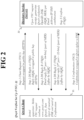
- FIG. 2 depicts an exemplary embodiment of a verified setup of the present invention using three bands according to another aspect of the present invention.
- FIGS. 3 A and 3 B depict different exemplary embodiments of an authenticated handshake of the present invention according to still another aspect of the present invention.
- FIG. 4 depicts an exemplary embodiment of a normal trusted operation of the present invention according to yet another aspect of the present invention.
- FIG. 5 depicts an exemplary embodiment of a Qwyit® stream cipher and key exchange/update of the present invention according to yet another aspect of the present invention.
- FIG. 6 depicts an exemplary embodiment of an authenticated handshake of the present invention in a group text scenario according to still another aspect of the present invention.
- FIG. 7 depicts an exemplary embodiment of a normal trusted operation of the present invention in the group text scenario of FIG. 6 according to yet another aspect of the present invention.
- QAES demonstrates of the power and flexibility of the Qwyit® authentication and data security protocol.
- the combination of features and properties provide a simple, straightforward way for any application to incorporate secure communications.
- QAES is a real-world example of the performance, small size, flexible trust, simple development, easy execution and improved security of Qwyit®—and it follows the exact TLS technology model.
- the unique, superior Qwyit® protocol delivers where TLS fails: embedded security without any need for additional bandwidth, processing power or cumbersome user requirements.
- Qwyit® can provide secure communications within the network tolerances for insecure communications.
- QwyitTalkTM Authentication and Encryption Service
- QwyitTalkTM is a direct next generation replication and enhancement of the current, only global secure communications framework: Transport Layer Security (TLS).
- TLS Transport Layer Security
- Qwyit provides the same features, benefits, authentication (embedded) and data security (stream cipher) for communications traffic using the Qwyit Directory Service (QDS) key store.
- QwyitTalkTM is an implementation capability based on the full Qwyit protocol described herein.
- QAES easily allows any client/server or cloud-based application to add TLS-like authentication and encryption.
- the present invention includes a Qwyit® Directory Server application that can be run on, or added to, any current communications server (web, file, comms, app, DB, etc.), as well as client code for easy insertion into the communications protocol/processing of a connected device/app.
- the QAES Server can be any web server, file server or the like (or a combination of multiple servers providing a common web service).
- the client application comprises a QAES-compatible client application, i.e., a client with QAES SDK embedded capability.
- client applications include text messaging applications (mobile and PC based), telephone applications (both VoIP and cellular based), IoT device applications, banking and financial transaction applications, military applications, server-server applications, client-client applications, or the like.
- the present invention makes heretofore possible encrypted cellular telephone applications that operate over the cellular network due to the extremely small overhead required. Other applications will be apparent based on the following description.
- the Initial QAES client authentication token distribution is accomplished through a Verified Setup (VSU) with the QAES Directory Server (DS).
- VSU Verified Setup
- DS QAES Directory Server
- the token being distributed is a 512-bit 2-part key along with a public identifier: OpenID [up to 64-bits], MQK [Master Qwyit® Key, 256-bits], MEK [Master Exchange Key, 256-bits]).
- OpenID up to 64-bits
- MQK Master Qwyit® Key
- MEK Master Exchange Key, 256-bits
- the exact key lengths can be modified based on the application, so this 512-bit key is merely an example. Both longer and shorter keys can be employed without departing from the spirit of the present invention. Even variable key lengths could be used within four bit increments if desired.
- This token distribution and client authentication is similar to certificate obtainment and installation in TLS.
- the main enhancement is that all QAES participants will perform a VSU.
- TLS In TLS, only servers install certificates, as the clients almost universally do not. Not only does this universally authenticate all participants, it removes the end-user confusion/required ‘expert-ism’ of multi-layered, multi-point Username/Password complexity.
- the present invention serves to improve the performance of computers and computer-based systems by authenticating all users, including clients and not just servers while reducing unnecessary complexity required by existing authentication and encryption systems and protocols.
- FIG. 1 depicts the Verified Setup 10 for QAES in which client 11 performs VSU 10 with Directory service or server 12 . While FIG. 1 depicts a two-band key distribution method, this is the minimum recommended electronic key distribution method. Depending on the security requirements of the system, one may use more or less bands, although less is not recommended. TLS only uses a single band wrapped in a public key. The present invention recommends a minimum of two bands, as shown above. One can imagine using three bands (e.g., by adding SMS texting), or using 4 bands (e.g., by adding a phone call), or even using five bands (e.g., by adding a paper delivery (or two!) all sending either MQK/MEK portions or simple PDAF or OWC offsets. The general concept remains the same for all implementations of multiple bands. Parts of the MQK/MEK are sent over each band and PDAF or OWC offsets are used to form the actual MQK/MEK.
- three bands e.g., by adding SMS
- the Qwyit Verified Setup (VSU) 20 outlined in FIG. 2 is a three-band implementation.
- the security of these different implementations can either be reliant on an initial HTTPS/TLS distribution (using Qwyit® primitive offsets (PDAF/OWC/MOD 16) in the other bands as shown below) or increasing the security by implementing actions within those bands (e.g., calling/texting for offsets, etc.).
- QAES may use the TCP/UDP IANA reserved port for HTTPX, port number 4180 in a web architecture.
- the client can switch to port 4180 to listen to the reply from the directory server.
- QAES is a direct replacement of TLS:
- the VSU is Certificate obtainment and installation
- the AH is the TLS handshake for session key creation and agreement
- Qwyit® Talk is the chosen cipher.
- the AH and Qwyit® Talk Cipher are orders of magnitude faster (less round trips, less computation), yet provide Perfect Forward Secrecy (PFS), authentication and encryption.
- QAES also replaces all of the TLS extensions, while simultaneously providing more benefits, orders of magnitude simpler and faster operation (e.g., ALPN, SNI, etc.) as well as all of the Public Key Certificate Authority and certificate ‘handling’ (Revocation, OCSP, etc.).
- VSU Verified Setup
- VSC 5 OpenID, OR, CSe].
- the sender 31 will initiate a private real-time Authentication Handshake (AH) 30 with a shared QAES Directory Server 32 in order to create a QAES VPN tunnel with the intended receiver 33 (based on their OpenID).
- the token is a session-based 512-bit Session Start Key (SSK).
- Participant-pair will generate their own Session Master Key (SMK) from the SSK in 2-parts: SQK [Session Qwyit® Key, 64 hex digits, 256-bits], SEK [Session Exchange Key, 64 hex digits, 256-bits]).
- FIG. 3 A shows one exemplary embodiment, in which the session keys are transmitted to both parties (Sender 31 and Receiver 33 ) simultaneously
- FIG. 3 B shows an alternative embodiment 36 in which the session keys are transmitted from the directory server 38 to the Sender 37 for both the Sender 37 and the Receiver (not shown), and are then transmitted from the Sender 37 to the Receiver as part of the first message.
- QAES can be configured so that the destination 33 receives the session keys at the same time as the initiating client 31 so that initial 100% authentic and encrypted reply is instantaneous as both parties ‘prepare’ before even communicating.
- ‘Prepare’ is an almost instantaneous Qwyit® cipher encrypt, not the Rube Goldberg TLS PKI processing. Because of this enhanced speed/timing, there is no need for any extensions for session resumptions, etc. And no trade-off for security, complexity, etc.
- FIG. 3 A shows the Authenticated Handshake 30 .
- the QAES AH 30 includes a paired unique P2P SSK for that client pair (initiating 31 and their destination 33 ).
- the SSK is only sent to the initiating client 37 who can decrypt their portion, but not their destination's portion.
- ‘Prepare’ is an almost instantaneous QwyitTM Cipher encrypt, not the complex TLS PKI processing. Because of this enhanced speed/timing, there is no need for any extensions for session resumptions, etc. And no trade-off for security, complexity, etc.
- the AH SSK is unique to each messaging pair of participants: after delivery, the DS 32 destroys it. Should there be a requirement to retain SSKs, the QDS will need to be set to do so (by MID). Since the SSK is not the actual SMK used to encrypt the session/message, if the requirement arises to understand private conversations, after requiring the DS 32 to store the SSK, the entire message stream could be captured and read (requirement to outside agency).
- AH Authentication Handshake
- OpenID is the Senders 31 and the Receivers 33 in their respective messages
- CT is the ciphertext of the other OpenID, SSK.
- Client Sender 37 sends Authorization Request to Directory Service/Server 38 (Step 1 , AHC 1 ), FIG. 3 B .
- the Confirmation Salt can be any system defined CS as per the Sender/Receiver IDs ‘marketplace’ (app, industry, etc.). Such as: Using the 1st two digits of the OR (rounded up, even) as the length of bits to pull from the MQK (front/back determined by the 3rd digit of the OR in sum with the 3rd digit of the ⁇ MEK), used in a PDAF upon itself)—or any creation/summation that fits the performance requirements, as well as somewhat non-static (even though this isn't necessary—the same CS can be used repeatedly, as it is uniquely encrypted).
- AHC 1 SenderOpenID, ReceiverOpenID, OR, CT] where CT is the encrypted CS.
- ReceiverOpenID may be considered ‘private’ (you may not want anyone to know who you are going to contact; although in TLS this is fundamentally known); digitally, it is impossible to ‘hide’ your next connection, so it will be known. It is certainly possible to include the ReceiverOpenID in the encrypted CT; but it leaks information about the message keys, unless twice-encrypted—and all of that work is for naught. No one has the SSK but you and your intended recipient, so your communications will be secure.
- Directory Service/Server 38 generates SSK (Step 2 , AHQ 2 ), FIG. 3 B .
- SSK Session Start Key
- Directory Service/Server 38 reply to Client Sender 37 (Step 3 , AHQ 3 ), FIG. 3 B .
- AHQ 3 Send SSK Accept (AHQ 3 ) to Sender, with wrapped Receiver Clients' message.
- the AHQ 3 is sent to the Sending Client 37 only in this embodiment, not the Receiver Client, as in the Embodiment in FIG. 3 A .
- Receiver Client does not exist in DS 38 :
- the AHQ 3 includes two different Cipher Texts.
- the SSK is encrypted using the Sender Client's DSK and the OR.
- the SSK is twice-encrypted using the Receiver Client's DSK and the same OR.
- a second message key is created and used again on the first encryption's Cipher Text (this is to obscure the Message Key chain from the Sender who is aware of the Plain Text and could derive the first message key).
- Sender Client 37 decrypts SSK (Step 4 , AHC 4 ), FIG. 3 B .
- Sender Client 37 decrypts AHQ 3 from DS 38 using DSK in the Qwyit Cipher. Client only replies to DS 38 if unable to decrypt key (for whatever reason), sending an AHE for error.
- Sender 37 and Receiver Clients commence QwyitTalk messaging with Sender 37 initiating contact with QwyitTalkTM Start message (including OR, CT 2 for Receiver to derive SSK) in Normal Operation.
- QwyitTalkTM Start message including OR, CT 2 for Receiver to derive SSK
- Sending Client 41 sends Qwyit® Start to Client Receiver 43 (Qwyit® Start, QTQS).
- Receiving Client 43 decrypts QTQS (Qwyit® Talk, QTQT).
- Clients 41 , 43 continue communication by performing Normal Trusted Operation messaging with Qwyit Cipher using SMK (Qwyit® Talk, QTQT Encrypt/Decrypt).
- SMK Normal Trusted Operation messaging
- both Clients 41 , 43 perform a PDAF PFS NIL communication SMK key update.
- Sending Client 41 sends QwyitTalkTM Start to Client Receiver 43 (QwyitTalkTM Start, QTQS).
- Sending Client 41 generates a QTTM Return (QR, 128 hex digits, 512-bits).
- QR 128 hex digits, 512-bits.
- Send QTQS OpenID, QR, OR 1 , OR 2 , CT 2 , Ciphertext of IMSG, where OR 2 is the AHQ 3 OR, and CT 2 is the twice encrypted SSK.
- Receiving Client 43 decrypts QTQS (QTTM Talk, QTQS).
- Receiver Client 43 decrypts in two steps:
- Clients 41 , 43 continue communication by performing Normal Trusted Operation messaging with Qwyit Cipher using SMK (QwyitTalk, QTQT Encrypt/Decrypt). Send QTTM Qwyit Talk (QTQT) using SMK (SQK, SEK) in The Qwyit Cipher on message.
- QTQT OpenID, OR, CT] where CT is the Ciphertext of message contents.
- FIG. 5 shows the Qwyit Cipher 50 encrypt decrypt functionality.
- Qwyit® provides authentication and data security at either the session level, or individual transaction level of any communications network.
- the Qwyit® method uses a symmetric key exchange for authentication and data security. It is a one-pass embedded authentication method, based on underdetermined equation sets.
- Qwyit® provides fast performance, small size, flexible trust, simple execution and improved security.
- This pair of functions takes two input values and performs a modular add without carry of each digit position within the hexadecimal values.
- the function is specifically capable of ‘moving through’ the inputs in a unique position/value manner such that a random unending result stream can be obtained (as measured by entity checking means).
- Using the PDAF provides a definitive, non-repudiated, one-way gate that can be easily configured within a function combination to provide wide-ranging underdetermined security with fast execution.
- this function pair creates a new key value ‘alphabet’ by selecting digit-position defined values and modularly adding them, and extracts a new key from that alphabet by selecting digit-position defined values from the add without carry result.
- any operator can perform any or all of the following:
- Scenario 1 establishes a private Qwyit network that cannot connect to ‘the outside world’, but very well may be interconnected with other operator-trusted networks (corporate, etc.).
- Scenario's 2 and 3 will both have global trusted Qwyit connectivity; the advantage of Scenario 2 being that their Private QDS may be connected to additional/inter- and/or intra-networks that the operator desires to not be globally connected (enterprise, mobile, etc.)—the operator can easily manage this trust through their QDS whereas in Scenario 3, Qwyit would not perform such ‘housekeeping’ (Trust in the Qwyit CQDS is across all members).
- Scenario 4 might be preferred for industry-specific QDS operation (utilities, etc.) where such QDS's can be both Private (customer relation to their electric company) and/or Industry-Public (specific geographic region of inter-connected utilities such as the Northwest, etc.) where the operators collectively run their PubQDS (a Public QDS operating for their domain and member's Private QDS as the CQDS does globally).
- QDS's can be both Private (customer relation to their electric company) and/or Industry-Public (specific geographic region of inter-connected utilities such as the Northwest, etc.) where the operators collectively run their PubQDS (a Public QDS operating for their domain and member's Private QDS as the CQDS does globally).
- Qwyit is the result of research into new methods for exchanging information securely. As there is a great deal of both theoretical and practical knowledge that purports to ‘solve’ most of the cryptographic needs of secure data exchange, Qwyit has concentrated on making real-world, real-time enhancements. Qwyit has several features that result in distinction in the marketplace that are a direct result of its purposeful design. Qwyit provides authentication and data security based on the required real-time characteristics:
- Qwyit creates consistent (having at least one solution), underdetermined systems of equations, and maintains them throughout the continued use of the algorithm. Underdetermined systems are unsolvable (secure); the type created by Qwyit is such that there is:
- Qwyit provides strong protection against brute-force attacks. Analysis of any particular Qwyit implementation should be performed against the expected attack scenarios for that particular implementation.
- the Qwyit Directory Service configuration of the reference Qwyit protocol provided in this paper relies on secure initial distribution of authentic tokens, and then the protocol and stream cipher maintain that authenticity and deliver strong data security to the communications through direct mathematic association. Should any other initial distribution mechanisms or processes be deemed necessary to provide ‘better’ starting security, then simple implementation of that requirement should be done-hand deliver, provide embedded in hardware, etc. There are many well-known techniques with established risk-reward profiles; Qwyit recommends using them where necessary to compliment or replace the reference hard-math distribution outlined in this guide and as noted above.
- Qwyit authentication is provided through the mathematical generation (hence connection) between the original authentic token and any subsequent child encryption or update key.
- the impossibility of arriving at a child message key through any means other than direct underdetermined use of the original authentication token is the basis of authentic use; e.g., every ‘inspection’ (child key use) of ciphertext/plaintext encryption provides implied presentation of the original token.
- Qwyit uses a direct mathematic derivation of the subsequent keys from the authentic original token; which is provided infrequently through cryptographically secure (P)RNGs where the ability to centrally secure their creation and use is exponentially simpler than distributed need/use of random child keys.
- P cryptographically secure
- the Qwyit stream cipher provides strong data security based on Shannon Security, with child message key creation having the properties of OTP keys. Uniquely, the Qwyit stream cipher uses known random numbers as its seed and will maintain the known keys' random properties throughout long-term use in chaining unknown derivatives; e.g., there is no need for seeds to be “cryptographically secure”, only that the original authentication token base remains secure and unknown.
- DS Secure switch
- Qwyit credentials e.g., nothing in any mechanism for the secure handling of Qwyit credentials is used to weaken an exchange
- Qwyit is a one-pass secure message envelope protocol with a reference configuration that provides continuous mutual authentication and secure data communications. Its strength is based on underdetermined equation sets and is designed for use in conjunction with other security processes and policies that protect the system components such that Qwyit's protocol assumptions remain valid. Within the context of its valid assumptions, Qwyit will deliver the properties stated herein.
- QT Qwyit Talk
- QT provides all of the same security properties of TLS (privacy, reliability, authentication, data security, Perfect Forward Secrecy (PFS), etc.).
- Sizes can be system-specifically modelled.
- QT primitives are based on any key length of even-numbered bits, with minimal extension of 1 byte (as time passes and computing power increases, QT keys can simply expand to meet the computational security requirements).
- Control hierarchies can be included.
- QT keys can actually include Access Control within them, not effecting computation.
- QT Keys allow for simple, secure storage techniques (PIN-related offsets, etc. for man-to-machine connectivity without the need for difficult passphrase implementations.
- QT Keys limit bandwidth requirements (storage, transmission, etc.) to well-defined, easily implemented definitions within any communication specification requirements standards.
- the sender 61 will initiate a private real-time Authentication Handshake (AH) 60 with a shared QwyitTalkTM Directory Server 62 in order to create a QwyitTalkTM VPN tunnel with multiple intended receivers 63 (based on their OpenIDs). Changes to the above already defined AH steps, as demonstrated below, can be put in place. The difference is in the reply to the requestor (Client Sender 61 ), and any intended Client Receivers 63 .
- the basic principle of group messaging, along with maintaining the division between the QDS's SSK and the now-group SMK, requires a distribution QTQS send to all members of the group.
- any and all group messaging scenarios will be handled by the client application connecting to and using the public QTTM QDS 62 .
- SMK through QR distribution
- a local, private QwyitTalkTM system in which group-member management functionality can be integrated into the QDS, should be considered.
- Client Sender 61 sends Authorization Request to Website 62 (Step 0 , AHC 0 ).
- the website 62 performs a complete AH 60 with the QTTM QDS, using the webserver's OpenID/DSK relationship.
- This allows any large website to manage QTTM QDS connectivity in concert w/their methods used to manage connectivity traffic across multiple servers using their single IP address, i.e., each webserver can have a unique OpenID/DSK (recommended), or they can store a single DSK and share/manage it to each server/connection (not recommended), etc.
- the webserver 62 then sends an AHC 1 to the QTTM QDS, asking to talk P2P securely w/Client1 using their OpenID.
- the AHQ 3 reply will contain the wrapped SSK-encrypted for that Client1 61 , as well as returning the SSK-encrypted w/that unique server's DSK relationship.
- the QTQS from webserver to Client1 61 creates a unique SMK from the shared SSK; and then the remainder of Client1's web session continues QTTM secure messaging. This ‘reversal’ would be made ‘standard’ in applications that exclusively require this type of connectivity-web browsers and servers, etc.
- AHC 1 SenderOpenID, Receiver1OpenID, Receiver2OpenID, . . . . OR, CT] where CT is the encrypted CS.
- the QTTM QDS will be prepared to test each input, recognizing that the 3rd [and any succeeding] are shorter than the OR, and will know this is a group-request. And will act accordingly for Step 3 .
- Directory Service/Server 62 reply to Clients 61 , 63 (Step 3 , AHQ 3 ).
- OpenID is the Sender and the Receivers in their respective messages
- CT is the ciphertext of the SSK.
- Group messaging requires the Client 61 to send QTQS to each member in their list (that was sent in the AHC 1 ). Each receiving member 63 of the group will recognize the QTQS as a group send (The SMK (SQK, SEK) must be handled and stored securely, only for this particular session.)
- Sending Client 71 sends QwyitTalkTM Start to Client Receivers 73 (QwyitTalkTM Start, QTQS).
- Receiving Client 73 decrypts QTQS (QwyitTalkTM Talk, QTQS)
- the Client1 MQK is: 7F3FB0566CA68F6264E8D990DE5CE9399DEFAE32395E1D13C82FEDEE35C4FFF9.
- the Client1 MOK is: 7B789794ABE2DEF642B7A90876D613A5B66EC643A74160BC6B729994498237D0.
- the Client1 MEK is: DED71FBEE58CDD9BF1146299678A16C7A0712F10218BOED2A7EDD65D24B36F70.
- the Client1 EOK ⁇ SOK is: COBCEBE8CB26B8FAB7D4DD28.
- the Client1 EOK ⁇ SOK encrypted is: 3FEB9B3E27CC375C1BBCA6B8.
- the Client1 EOK encrypted (EOKe) is: 3FEB9B3E27CC375C.
- the Client1 SOK encrypted (SOKe) is: 1BBCA6B8 Click Continue in Client1 . . . .
- the Client1 EOKe ⁇ SOKe is: 3FEB9B3E27CC375C1BBCA6B8.
- the Client1 EOK ⁇ SOK decrypted is: COBCEBE8CB26B8FAB7D4DD28 Click Continue in Client1 . . . .
- the Client1 MEK is: DED71FBEE58CDD9BF1146299678A16C7A0712F10218BOED2A7EDD65D24B36F70.
- First step is to create the Confirmation Salt using the PDAF and the last 128-bits of the MQK and MEK.
- the Client1 Confirmation Salt is: 7B3DCB65174CEC050DFCCCDC74FDEC22.
- the Client1 VAC5 message key is: 3339537D8F09106BCC4B5DCC1B3DCAF8A0A1977099FA4507DA6FD79E19370835.
- VSU confirmation processing now switches to the QDS Click Continue in Client1 . . . .
- First step is to create the Confirmation Salt using the PDAF and the last 128-bits of the MQK and MEK.
- the Client1 Confirmation Salt is: 7B3DCB65174CEC050DFCCCDC74FDEC22.
- the Client1 VAC5 received message key is: 3339537D8F09106BCC4B5DCC1B3DCAF8A0A1977099FA4507DA6FD79E19370835.
- Client1 information is stored here in the QDS, and is now a Qwyit Community member! VSU PROCESSING COMPLETE!
- the AH involves any Client who wants to securely message with any other QTTM secure messaging system Client(s).
- the ‘app’ is configured to perform P2P secure messaging where Client1 contacts the Qwyit Directory Server (QDS) and receives an encrypted SSK, as well as a wrapped encrypted SSK for their intended recipient, Client2. This process is performed without any end-user participation, simply as the start of their messaging to Client2.
- QDS Qwyit Directory Server
- the CS associated with this AH is 27989956E84BC7EB.
- OpenReturn 55E51600B8EF22340D7C0FB277D1927D738796688747DD965421A9D5A255B858.
- the Client2 OpenID is A67241A3186F6CCD.
- the AHC 1 message key is: A4395EB99CDEF81A81D07DD2CBBAD98C45C36998B98F8F66040FAB4B04EFACE5.
- the AHC 1 ciphertext is:
- AHC 1 processing now switches to the QDS.
- First step is to decrypt the received AHC 1 using QwyitTalk cipher and the keys associated with the sending Client, in this case, Client1.
- the Client1 AHC 1 received message key is: A4395EB99CDEF81A81D07DD2CBBAD98C45C36998B98F8F66040FAB4B04EFACE5.
- the Client1 AHC 1 received plaintext, which is the CS, is:
- the Client1-Client2 SSK is:
- OpenReturn 4DA1A27A59137E39562917FFE4A677EADED42D0305FDDF86A8E2D58ACA74B03B.
- the AHQ 3 Client1 message key is: 4D94ADE3BB2B35D47B28F3ECB8DED39FD67373B964A3BF6F683FEEDB68B3ED1A.
- the AHQ 3 first ciphertext is: 0D770D7207070375077A060001747DOD07740A7977050376007E76707575007277020E7274 05030B0E0C760576717777040870037501010103097B050100747072760075700103717A0107 7600057D030674740E700774007B7C7D7402000B7E77747276740A730802717807070401770 20C707474030607747D000476700670.
- the AHQ 3 Client2 message key is: AE088ECDB215E3727E058172A7096BC6DEE633999D141BEA7E437BD7869AA9DC.
- the AHQ 3 second ciphertext is: 7876047E7E060502070A057777720E0B07730874090771070371020C07047A0277717C77700 5780B017C06020575047005757776070601740D070077057D0 17207770979090005067A710 40176030E05067376030E050671787309087071710E77070073700A08080D010800740072700 3717701060406727A737B76720D7372
- Client1 now decrypts their section of the AHQ 3 using QwyitTalk to get the SSK for their session.
- the Client1 AHQ 3 received message key is: 4D94ADE3BB2B35D47B28F3ECB8DED39FD67373B964A3BF6F683FEEDB68B3ED1A.
- the Client1 AHQ 3 received plaintext, which is the SSK, is: 934FFCFFE84B2A99068A16F5BF251F94349AC6A2887647A120CE0DEC5196DDE1F29A1 EFB8C54309716F6641C9D91F3283BEEC9114E94EB7144C21FBE BEB73471.
- the AH is Complete! Now Client1 and 2 can message securely . . . .
- the QDS performs the NIL communication key update . . . .
- the AH is Complete! Now Client1 and 2 can message securely and I am Finished! . . . . Click Continue in Client1 . . . .
- the AH is Complete! Now Client1 and 2 can message securely . . . .
- Client 1 performs the NIL communication key update . . . .
- SSK Session Master Key
- New Client1-Client2 SQK is: B43AE8ED5B24408DF588850EEB6EFE3B7597E371A024318A4B05E5F1C7384FAA.
- New Client1-Client2 SEK is: A7FB01FFE338F3F1702A4C151EE7658B16A81CD6DBB150005D3673CB668A0A4E.
- OpenReturn for this message is: 7969F5F110C59D7521FDC1C59B10BD8F97D96A0973DECEODCD5DB0C1E596FDOD.
- the QTQS message key is: 7C4BC934713CEDA7495E45AC98DABDIE81CC99808DAAE2CFDCOBEC7B3EBAAB73.
- QTQS QwyitTalk Qwyit Start
- the Client2 AHQ 3 received message key is: AE088ECDB215E3727E058172A7096BC6DEE633999D141BEA7E437BD7869AA9DC.
- the Client2 AHQ 3 received plaintext, which is the SSK, is: 934FFCFFE84B2A99068A16F5BF251F94349AC6A2887647A120CE0DEC5196DDE1F29A1 EFB8C54309716F6641C9D91F3283BEEC9114E94EB7144C21FBE BEB73471.
- New Client1-Client2 SQK is: B43AE8ED5B24408DF588850EEB6EFE3B7597E371A024318A4B05E5F1C7384FAA.
- New Client1-Client2 SEK is: A7FB01FFE338F3F1702A4C151EE7658B16A81CD6DBB150005D3673CB668A0A4E.
- the QTQS message key is: 7C4BC934713CEDA7495E45AC98DABDIE81CC99808DAAE2CFDCOBEC7B3EBAAB73.
- QTQS plaintext message is: Now is the time for all good men to come to the aid of the party.
- OpenReturn for this message is: 9D1A5E78202F95449BBE8EFF5C8925A370FDE77CA6318C852E176AE50C8FE4E8.
- the QTQT message key is: 5E6727967FD25485F855B7B8814BAFF011B88E1B165BAB81F2B7DB7DD075BA4D.
- QwyitTalk Qwyit Talk is A67241A3186F6CCD, 9D1A5E78202F95449BBE8EFF5C8925A370FDE77CA6318C852E176AE50C8FE4E8, 622D4F17455857114366255C4C5B5650664C5D472D4062555D11556231273444481135514C 2D11214446152120295D11205D3017293B17262D42435D26204D7B.
- the QTQT message key is:
- QTQT plaintext message from Client 2 is: Why won't anyone throw me a party with cupcake for my birthday?
- both Clients After sending and receiving and the SMK key life is reached, both Clients perform a PDAF PFS NIL communication DSK key update.
Landscapes
- Engineering & Computer Science (AREA)
- Computer Security & Cryptography (AREA)
- Computer Networks & Wireless Communication (AREA)
- Signal Processing (AREA)
- Computer Hardware Design (AREA)
- Computing Systems (AREA)
- General Engineering & Computer Science (AREA)
- Mobile Radio Communication Systems (AREA)
Abstract
Description
-
- U.S. patent application Ser. No. 08/879,708 filed Jun. 20, 1997 (now U.S. Pat. No. 6,058,189, which issued May 2, 2000) entitled “Method and System for Performing Secure Electronic Monetary Transactions;”
- U.S. patent application Ser. No. 08/923,095 filed Sep. 4, 1997 (now U.S. Pat. No. 6,002,769, which issued Dec. 14, 1999) entitled “Method and System for Performing Secure Electronic Messaging,” which claimed the benefit of U.S. patent application Ser. No. 08/879,708;
- U.S. patent application Ser. No. 09/212,294 filed Dec. 16, 1998 (now U.S. Pat. No. 6,445,797, which issued Sep. 3, 2002) entitled “Method and System for Performing Secure Electronic Digital Streaming;”
- U.S. patent application Ser. No. 10/062,312 filed Feb. 1, 2002 entitled “Method and System for Performing Perfectly Secure Key Exchange and Authenticated Messaging;”
- U.S. Provisional Application No. 60/563,065 filed Apr. 16, 2004;
- U.S. patent application Ser. No. 11/108,347 filed Apr. 18, 2005 entitled “Method and System for Performing Perfectly Secure Key Exchange and Authenticated Messaging,” which claimed the benefit of U.S. patent application Ser. No. 10/062,312 and U.S. Provisional Application No. 60/563,065;
- U.S. Provisional Application No. 60/842,595 filed Sep. 6, 2006;
- U.S. patent application Ser. No. 11/850,948 filed Sep. 6, 2007 (now U.S. Pat. No. 7,899,185, which issued Mar. 1, 2011) entitled “Real privacy management authentication system,” which application claimed the benefit of U.S. Provisional Application No. 60/842,595;
- U.S. patent application Ser. No. 11/899,741 filed Sep. 6, 2007 (now U.S. Pat. No. 8,144,874), which issued Mar. 27, 2012 and is entitled “Method for Obtaining Key for use in Secure Communications over a Network and Apparatus for Providing Same,” which application claimed the benefit of U.S. Provisional Application No. 60/842,595;
- U.S. patent application Ser. No. 11/899,742 filed Sep. 6, 2007 (now U.S. Pat. No. 8,144,875), which issued Mar. 27, 2012 and is entitled “Method and System for Establishing Real-Time Authenticated and Secured Communications Channels in a Public Network,” which application claimed the benefit of U.S. Provisional Application No. 60/842,595;
- U.S. patent application Ser. No. 13/430,253 filed Mar. 26, 2012 (now U.S. Pat. No. 8,649,520), which issued Feb. 11, 2014 and is entitled “Method and System for Real-Time Trust in a Public Network,” which application in turn claimed priority to U.S. patent application Ser. No. 11/899,742;
- U.S. patent application Ser. No. 14/176,284 filed Feb. 10, 2014, (now U.S. Pat. No. 9,374,347 which issued Jun. 21, 2016) entitled “Method and System for Establishing Real-Time Trust in a Public Network” which claimed priority to U.S. patent application Ser. No. 13/430,253;
- U.S. patent application Ser. No. 15/188,275 filed Jun. 21, 2016, entitled “Method and System for Authentication Over a Public Network Using Multiple Out-Of-Band Communications Channels to Send Keys” which claimed priority to U.S. patent application Ser. No. 14/176,284.
- U.S. Provisional Patent Application No. 62/532,095 filed Jul. 13, 2017 entitled “Method and Apparatus for Authentication and Encryption Service.”
- U.S. Provisional Patent Application No. 62/639,737 filed Mar. 7, 2018 entitled “Method and Apparatus for Credit Transaction Employing Unbreakable Encryption.”
- U.S. Provisional Patent Application No. 62/660,535 filed Apr. 20, 2018 entitled “Storage and Access Control Service Using Unbreakable Encryption.”
- U.S. Provisional Application No. 62/279,329 filed Jan. 15, 2016.
-
- Performs within the network tolerances without degradation, without new processing power;
- Is easily placed into existing code bases, hardware chips, communication protocols;
- Does not require the end-user to ‘do stuff they don't understand’;
- Expands, contracts, segregates and includes different trust models, across multiple platforms and protocols, can be integrated the same way in different applications;
- Is small enough in code, firmware and hardware not to impede or limit anything already accomplished;
- Uses the same provable basis of security as last century's leap forward: mathematics, not computation, or theoretic; and
- Provides Perfect Forward Secrecy (PFS) along with authentication, encryption, integrity and replay prevention; and
- Accomplishes the above goals while employing unbreakable encryption.
-
- 1.
Client 21 initiates VSU 20 within the application (and as required/desired) with the Directory Service/Server 22 (FIG. 2 :Step 1, VSC1).- a.
Client 21 goes to www.Qwyit.com/Qwyit (for example) where an HTTPS session will begin, and enters the required information. - b. This generates a
VSU 20 start on the client application and the Directory Server 22 (FIG. 2 : VSC1). - c.
Client 21 app now awaits receipt and entry of the key.
- a.
- 2. Directory Service/
Server 22 reply to client 21 (FIG. 2 :Steps - a. The
client 21 has submitted aVSU 20 on the webpage and is waiting for the reply. - b.
Server 22 generates OpenID (recommend 16-digit, 64-bit unique IDs), DSK for client.- (1)
Server 22 generates a random, unique 16-hex digit, 64-bit OpenID for this client 21 (per email/SMS/IP (if)); - (2)
Server 22 generates random 352-bits that includes three (3) parts: (i) Master Qwyit Key (MQK, 64 hex digits, 256-bits); (ii) Email Offset Key (EOK, 16 hex digits, 64-bits); and (iii) SMS Offset Key (SOK, 8 hex digits, 32-bits). - (3) Perform a PDAF (EOK, SOK) generating 8 rounds (cycling through each round of SOK moving the
start 1 digit to the right).- (i) Result is the Master Offset Key (MOK, 64 hex digits, 256-bits).
- (4) Perform a PDAF (MQK, MOK) generating 1 round;
- (i) Result is the Master Exchange Key (MEK, second 64 hex digits, 256-bits)-store with MQK as this new client's Qwyit® keys.
- (5) Encrypt EOK and SOK using MQK
- (i) Concatenate EOK and SOK.
- (ii) MOD 16 add the first 96-bits (24 hex digits) of MQK with the concatenated EOK and SOK.
- (iii) Separate the encrypted EOKe and SOKe and ready to send in email and SMS respectively.
- (6) Reply (VSQ2) with OpenID, (MQK) during the HTTPS session on the webpage [VSQ2: OpenID, MQK].
- (7)
Reply Step 3 to email address, sending OpenID and EOKe [VSQ3: OpenID, EOKe in email]. - (8)
Reply Step 4 to SMS number, sending OpenID and SOKe [VSQ4: OpenID, SOKe in SMS].
Client 21 Decrypt of Reply and Confirmation (Step 5, VSC5)
- (1)
- a. The
- 1.
Client 21 will cut & paste the session-shown OpenID, EOKe and SOKe into their application, and OpenID and MQK will appear in the app/window, as the HTTPS session has received those.- a. Open email message to reveal OpenID and EOKe; cut & paste (or type) into application (both values).
- b. Open SMS text message to reveal OpenID and SOKe; cut and paste (or type) into application (both values).
- 2. Click button to “Store Key” (or some relevant, pertinent UI text).
- a.
Applet 21 will check that all 3 OpenIDs match - b.
Applet 21 will decrypt EOKe and SOKe, and create MEK- (1) Concatenate EOKe and SOKe.
- (2) MOD 16 add the first 96-bits (24 hex digits) of MQK with the concatenated EOKe and SOKe.
- (i) Separate the decrypted EOK and SOK and ready for use to create MEK.
- c. Perform a PDAF (EOK, SOK) generating 8 rounds (cycling through each round of SOK moving the
start 1 digit to the right).- (i) Result is the Master Offset Key (MOK, 64 hex digits, 256-bits
- d. Perform a PDAF (MQK, MOK) generating 1 round.
- (i) Result is the Master Exchange Key (MEK, second 64 hex digits, 256-bits)-store with MQK as this new client's Qwyit® keys.
- e. Concatenate MQK and MEK making complete 512-bit DSK.
- f. Insert into use (e.g., store DSK, OpenID in cookie, file, database)
- a.
- 3. Reply by client 21 (
FIG. 2 : VSC5) toDS 22 with Confirmation message.- a. Perform Qwyit® cipher using DSK (MQK and MEK), generating message key (W). Refer to
FIG. 5 for the Qwyit stream cipher details. - b. Use message key to encrypt confirmation message, which is a 128-bit, 64 hex digit ID salt created by using the last 64 digits (128-bits) of the MQK in a PDAF with the last 64 digits (128-bits) of the MEK.
- (1) Perform a PDAF (MQK 128-bits, MEK last 128-bits); result is Confirmation Salt.
- (2) Perform Qwyit® encrypt using W and CS, result is CS encrypted (CSe).
- c. Send (
FIG. 2 : VSC5) output (OpenID, OR, CSe) to DS
- a. Perform Qwyit® cipher using DSK (MQK and MEK), generating message key (W). Refer to
- 1.
-
- 1. Perform Qwyit® cipher using the DSK (found by sent OpenID) and reveal the message key (W).
- a. Use message key to decrypt confirmation salt (by creating the correct same ID salt and comparing).
- (1) Perform a PDAF (MQK 128-bits, MEK last 128-bits); result is Confirmation Salt generated.
- (2) Perform Qwyit® decrypt using W and CSe, result is CS received decrypted (CS).
- (3) Compare CS received decrypted with CS generated: (i) If doesn't match, error sent; or (ii) If match confirmed, store IP Address, OpenID, DSK, email address, SMS (and whatever other required session ID was collected) into
DS 22 database.
Per Message Token/Credential Distribution (Authentication Handshake—AH)
- a. Use message key to decrypt confirmation salt (by creating the correct same ID salt and comparing).
- 1. Perform Qwyit® cipher using the DSK (found by sent OpenID) and reveal the message key (W).
-
- 1.
Client Sender 31 sends Authorization Request to Directory Service/Server 32 (FIG. 3A :Step 1, AHC1).- a. Create MessageID (MID, 64 hex digits, 256-bits) using (P)RNG.
- b. Send Authorization Request (AUTR) to
DS 32 in order to receive an SSK for communication with intendedClient 33.- (1) Send AHC1: SenderOpenID, ReceiverOpenID and MID encrypted in Qwyit® Cipher using DSK to
DS 32. - [
FIG. 3 : AHC1: SenderOpenID, OR, CT].
- (1) Send AHC1: SenderOpenID, ReceiverOpenID and MID encrypted in Qwyit® Cipher using DSK to
- 2. Directory Service/
Server 32 generates SSK (FIG. 3A :Step 2, AHQ2).- a. Decrypt AHC1 from
Client 31 using respective OpenID and DSK in Qwyit® Cipher.- (1) Check that
Client 31 who is requesting is the same as encrypted request andReceiver client 33 exists.
- (1) Check that
- b. Create Session Start Key (SSK, 128 hex digits, 512-bits).
- c. If to be stored, by MID and SenderOpenID, ReceiverOpenID.
- a. Decrypt AHC1 from
- 3. Directory Service/
Server 32 reply toClients 31, 33 (FIG. 3A :Step 3, AHQ3).- a. Send SSK Accept (AHQ3) to
Sender 31 andReceiver Clients 33.- (1) Send AHQ3: SenderOpenID, ReceiverOpenID, SSK encrypted in Qwyit® Cipher using DSK to
Clients - (2) The AHQ3 is sent to both sending 31 and receiving
Clients 33, andDS 32 is authentic if using the correct DSK.- (i) If
Receiver Client 33 does not exist in DS 32: (A) If thisDS 32 is part of a federated group, check with other DS members as per the Qwyit® Talk communication key exchange framework of the group; (B) Else send join invitation (clickable link, email, etc.), then send AHQ3 if client joins; and (C) Notify SendingClient 31 of situation (if desired/required-no client, if client joins, etc.).
- (i) If
- (1) Send AHQ3: SenderOpenID, ReceiverOpenID, SSK encrypted in Qwyit® Cipher using DSK to
- a. Send SSK Accept (AHQ3) to
- 1.
-
- 4.
Clients FIG. 3A :Step 4, AHC4).- a. Both
Sender 31 andReceiver Clients 33 decrypt AHQ3 from DS using DSK in Qwyit® Cipher. - b.
Clients DS 32 if unable to decrypt key (for whatever reason), sending an AHE for error. - c.
Clients
- a. Both
- 5. Directory Service/
Server 32 and eachClient - a. Perform a PDAF (MQK 256-bits, MEK 256-bits) for two rounds, creating 512-bit result with MQK, MEK halves.
- (1) Optionally, extend the above PDAF for 2 rounds (doubling length) and perform an OWC.
Authentication Handshake (AH)—Exemplary Embodiment 2 (36,FIG. 3B )
- (1) Optionally, extend the above PDAF for 2 rounds (doubling length) and perform an OWC.
- a. Perform a PDAF (MQK 256-bits, MEK 256-bits) for two rounds, creating 512-bit result with MQK, MEK halves.
- 4.
-
- If this
DS 38 is part of a federated group, check w/other DS members as per the communication key exchange framework of the group. - Notify Sending Client 37 of situation (if desired/required—no Receiver client).
- If this
-
- a. Sending Client 41 generates a Qwyit® Return (QR, 128 hex digits, 512-bits).
- b. Using the AH SSK from the DS for this communication:
- (1) Perform MOD 16 (SSK, QR); result is the Session Master Key (SMK, in 2 halves, SQK and SEK).
- (2) Create new message content (IMSG, the Initial Message opening communication).
- (3) Perform Normal Trusted Operation using Qwyit® Cipher on IMSG with SMK (SQK and SEK).
- c. Send Qwyit® Start (QTQS) message.
- (1) Send QTQS: OpenID, QR, OR, Ciphertext of IMSG
-
- a.
Receiver Client 43, using the AH SSK received from the DS for this communication:- (1) Determines SMK from the QS message by performing the same MOD 16 (SSK, QR).
- b. Commences Normal Trusted Operation message receive decryption using SMK in Qwyit® Cipher on OR, Ciphertext.
- a.
-
- a. Send Qwyit® Talk (QTQT) using SMK (SQK, SEK) in Qwyit® Cipher on message contents in secure communications.
-
- b. QTQT Decrypt w/SMK (SQK, SEK) in Qwyit® Cipher to reveal secure message contents.
- (1) Receive and decrypt QTQT in Qwyit® Cipher using OR, to reveal Plaintext message contents.
- b. QTQT Decrypt w/SMK (SQK, SEK) in Qwyit® Cipher to reveal secure message contents.
-
- a. Perform a PDAF (SQK 256-bits, SEK 256-bits) for two rounds, creating 512-bit SMK result w/SQK, SEK halves.
- b. Optionally, extend the above PDAF for 2 rounds (doubling length) and perform an OWC.
Normal Trusted Operation 40—For Use withEmbodiment 2 inFIG. 3B
-
- Perform MOD 16 (SSK, QR); result is the Session Master Key (SMK, in 2 halves, SQK and SEK).
- Create new message content (IMSG, the Initial Message opening communication).
- Perform Normal Trusted Operation using The Qwyit Cipher on IMSG with SMK (SQK and SEK).
-
- 1st decryption: using OR2 and their DSK to derive the SSK—this requires two Message Key decryptions as noted in the AH above. Now both clients have a shared SSK for this session.
- 2nd decryption: using the just-derived AH SSK to determine the SMK from the QS message by performing the same MOD 16(SSK, QR).
-
- 1. Perform MOD 16 using EK and OR, resulting in R [256-bits].
- 2. Perform COMBINE using QK and R, resulting in alphabet A [256-bits].
- 3. Perform EXTRACT using QK and A, resulting in message key W [256-bits].
- 4. Perform MOD 16 with W and up to 256-bits of the Plaintext (PT), resulting in Ciphertext (CT).
- a. For performance, with key and PT identical lengths, this may be an XOR of W and PT resulting in CT.
- 5. Perform MOD 16 using W and R, resulting in the NextR [256-bits].
- Perform 1 (using NextR as OR), 2, 3, 4 and 5 iteratively until the end of Plaintext (256-bits at a time), concatenating total C (There is no need to pad the plaintext).
- Optionally (continual/random/regular), update EK (and/or QK) in MOD 16's with last R or W.
-
- 6. Send OpenID, OR and C to Recipient.
Receive - 1. Perform MOD 16 using EK and OR, resulting in R [256-bits].
- 2. Perform COMBINE using QK and R, resulting in alphabet A [256-bits].
- 3. Perform EXTRACT using QK and A, resulting in message key W [256-bits].
- 4. Perform MOD 16D using 256-bits of Ciphertext (C) and W, resulting in Plaintext (P) [or CT XOR W=PT].
- 5. Perform MOD 16 using W and R, resulting in the NextR [256-bits].
- Perform 1 (using NextR as OR), 2, 3, 4 and 5 iteratively until the end of Ciphertext (256-bits at a time), concatenating total P.
- Optionally (continual/random/regular), update EK (and/or QK) in MOD 16's with last R or W.
The Qwyit® Protocol
- 6. Send OpenID, OR and C to Recipient.
-
- Modular arithmetic
- Digit position manipulations
-
- 1. Every participant must have the ability to operate the minimal Qwyit® functionality. Each participant must have Qwyit® resident on their device, be able to operate a served version of Qwyit® or operate a received version of Qwyit® within an application.
- 2. Ability to store the Qwyit® credentials (keys). A system-wide risk-to-value assessment should be performed to determine the desired storage technique(s). For example, the credentials can be PIN, or password hashed, kept locally or on a token (USB, RFID, etc.), etc.
- 3. A Qwyit® Directory Server (QDS) trust model (singular, multiple) with either a centralized or de-centralized (or combination) Key Distribution Center (KDC—the key management portion of a QDS). Participants must have a Security Association with a QDS through a Verified Setup (VSU) and for every Qwyit® messaging session (system defined-transaction level, session level, system level, etc.), they will perform an Authentication Handshake (AH), be granted shared message keys and perform messaging exchange using the Qwyit® Cipher (Qwyit® Talk) [See Qwyit® Talk and QDS Operation section].
- 4. Recommended: a best-of-breed random number generator (NIST approved); if not available locally, risk/reward entropy analysis should be performed, and appropriate provision provided.
QwyitTalk and QDS Operation
-
- Operation as a single, global individual QDS and associated KDC for any network access (e.g., A publicly accessible private QDS); and
- Operation as the repository of trusted Private global interconnectivity, showing public record of any and all Private QDS's desiring interconnected, federated trust (e.g., a Public KDC of Private QDS's that have performed VSU's and desire global trusted interconnectivity).
-
- Embed QwyitTalk in their products and operate their own Private QDS
- Embed QwyitTalk and operate their own Private QDS that is VSU connected to the CQDS
- Embed QwyitTalk and connect to the CQDS
- Build QwyitTalk and connect to another operator's QDS (Private and/or Public)
-
- Mutual: both participants share the same secret, and exchange information mathematically based on it in both directions;
- Continuous: every Qwyit configuration presents unique information in every exchange;
- Authentication: Qwyit exchanges establish both parties as genuine; and
- Data Security: Qwyit provides irreversible, one-way function protection of upper level credentials; and creates unique keys used by either a best-of-breed cipher (such as AES) or the Qwyit primitives-based stream cipher, on every communication.
Qwyit Design
-
- Limited system components
- User-friendly participation
- Simple installation and operation
- Fast communications performance
- Long lifecycle
- High ROI
- Flexible application and functionality
- Small code space
- High Security (protection versus risk)
-
- a large space of incorrect answers;
- a possible small set of working answers that will produce an outcome that is correct only once (configuration and key size dependent—not all configurations and key values will produce a set); and
- a single correct answer.
-
- Qwyit Talk keys should be securely stored (either as noted above or using ‘best practice’ techniques). Knowledge of QT keys cannot be gained from the system in action; as all messages are inherently incorruptible (recipients instantly recognize message corruption) and their content is all numeric key values. The only exception are the P2P messages where the upper level SMK is one-way gate protected from the system-derived SSK, as well as one-way gate protected from the individual child message keys used in the Qwyit™ cipher on the content.
- Active stolen/lost key use is invalid on any previous messages (PFS provided by NIL communication key updates’), and implementing PIN storage tying user to keys, along with system lockouts and ‘best practice’ Alert systems will thwart any active use. Any particular implementations will be determined by each client-connected app.
- The inactive ‘Listener’ problem still exists: someone steals your QT keys, and doesn't use them actively, they just listen and capture all of your messaging. In TLS, this is akin to someone stealing the Private Key, which is actually another reason QT™ is superior: in TLS, this enables reading every message by every participant relying on that Trust node! In QT™, this is just you. And while short PINs are effective in thwarting active use, they are of no value against The Listener. This insidious attack is easily thwarted by injecting a unique P2P key obtained/shared outside of QT™. This key would be used in the message content encryption step during a QTQS creation. If this type of attack is deemed substantial, it should/will be added as an input value in those QT™ client-connected apps that require it.
- QT keys are unimportant; i.e., they are not to be used (as designed in the public QT system) as a system-specific verifiable authentication/trust instrument. Qwyit is of the opinion (as yet unrefuted!) that there are no global communication systems in which one is allowed to join without first being authenticated. As such, wherever QT is enabled through client apps, those clients will eventually, most notably at the point of any commerce exchange, be authenticated within the system holding their value. Phone systems bill their users, eCommerce platforms exchange goods for credit through banks requiring their authentic token (credit card, etc.), etc.
- QT keys are authentic to the requestor, authentic throughout their use in the QT message hierarchy, and authentic in P2P and group client communications. A QT system (Public and/or Private) can certainly be built in which the QT key is the network authentication token; but the public system does not offer that accountability.
- Order of magnitude efficiency—QT messaging hierarchy and exchanges can perform within real-world margins for normal communications. i.e., QT secure messages won't take any longer than insecure messages within their communications network. No other security system in the world can make, and validate, this claim.
- This is the only reason existing security techniques have not proliferated where they should—they simply require too much ‘system energy’ (computing power, time, number of messages, message lengths and content, etc.). This property is the only way any security system will ever allow full global proliferation.
- In hardware implementations, QT can be configured (gates sizes, etc.) to operate within the performance characteristics of open-system data handling. QT-on-a-chip can be modeled to perform its simple register-based Mods at almost the same speed as moving open data through a chip-certainly within the specs of any communication standard for open data.
-
- Send Authorization Request to
Website 62 in order to receive an SSK for communication. Send AHC0: SenderOpenID, ReceiverOpenID to Website
- Send Authorization Request to
-
-
Client Sender 61 sends Authorization Request to Directory Service/Server 62 (Step 1, AHC1). As above, except there is a list of ReceiverOpenIDs. Send AHC1: SenderOpenID, Receiver1OpenID, Receiver2OpenID . . . , CS encrypted in The Qwyit™ Cipher using DSK to DS
-
-
- Send SSK Accept (AHQ3) to
Sender 61 andReceiver Clients 63. Send AHQ3: OpenID, SSK encrypted in QwyitTalk™ Cipher using DSK toClients Clients 63, and DS is authentic if using the correct DSK. IfReceiver Client 63 does not exist in DS: - If this DS is part of a federated group, check with other DS members as per the QT™ communication key exchange framework of the group.
- Notify Sending
Client 61 of situation (if desired/required-no Receiver client).
- Send SSK Accept (AHQ3) to
-
- Send QTQS: OpenID, QR, OR, Optionally: Ciphertext of IMSG.
-
- Determines SMK from the QS message by performing the same MOD 16 (SSK, QR). Decrypts any optionally sent CT using the just created SMK. Commences Normal Trusted Operation message Receive decryption using SMK in QwyitTalk™ Cipher on OR, Ciphertext—from/to any members of the group.
- Management of the SMK key life will be a consideration of the Client Application performing group messaging—updates may be performed in the normal QT™ manner (PDAF PFS NIL communication SMK key updates).
QwyitTalk™ VSU, AH and Messaging Example
Claims (19)
Priority Applications (1)
| Application Number | Priority Date | Filing Date | Title |
|---|---|---|---|
| US17/165,082 US12192356B2 (en) | 2017-07-13 | 2021-02-02 | Method and apparatus for authentication and encryption service employing unbreakable encryption |
Applications Claiming Priority (3)
| Application Number | Priority Date | Filing Date | Title |
|---|---|---|---|
| US201762532095P | 2017-07-13 | 2017-07-13 | |
| US16/035,123 US10924278B2 (en) | 2017-07-13 | 2018-07-13 | Method and apparatus for authentication and encryption service employing unbreakable encryption |
| US17/165,082 US12192356B2 (en) | 2017-07-13 | 2021-02-02 | Method and apparatus for authentication and encryption service employing unbreakable encryption |
Related Parent Applications (1)
| Application Number | Title | Priority Date | Filing Date |
|---|---|---|---|
| US16/035,123 Continuation US10924278B2 (en) | 2017-07-13 | 2018-07-13 | Method and apparatus for authentication and encryption service employing unbreakable encryption |
Publications (2)
| Publication Number | Publication Date |
|---|---|
| US20210234690A1 US20210234690A1 (en) | 2021-07-29 |
| US12192356B2 true US12192356B2 (en) | 2025-01-07 |
Family
ID=72663307
Family Applications (2)
| Application Number | Title | Priority Date | Filing Date |
|---|---|---|---|
| US16/035,123 Active US10924278B2 (en) | 2017-07-13 | 2018-07-13 | Method and apparatus for authentication and encryption service employing unbreakable encryption |
| US17/165,082 Active 2040-05-05 US12192356B2 (en) | 2017-07-13 | 2021-02-02 | Method and apparatus for authentication and encryption service employing unbreakable encryption |
Family Applications Before (1)
| Application Number | Title | Priority Date | Filing Date |
|---|---|---|---|
| US16/035,123 Active US10924278B2 (en) | 2017-07-13 | 2018-07-13 | Method and apparatus for authentication and encryption service employing unbreakable encryption |
Country Status (1)
| Country | Link |
|---|---|
| US (2) | US10924278B2 (en) |
Families Citing this family (8)
| Publication number | Priority date | Publication date | Assignee | Title |
|---|---|---|---|---|
| WO2015147779A1 (en) * | 2014-03-24 | 2015-10-01 | Hewlett-Packard Development Company, L.P. | Monitoring for authentication information |
| KR20200032945A (en) * | 2018-09-19 | 2020-03-27 | 시큐리티플랫폼 주식회사 | System-on-chip for performing virtual vprivate network funtion and system comprising the same |
| US12316764B2 (en) * | 2020-10-09 | 2025-05-27 | Visa International Service Association | Token failsafe system and method |
| CN112751668B (en) * | 2020-12-29 | 2022-10-21 | 杭州永谐科技有限公司 | Low-cost Internet of things data encryption communication system |
| US12225111B2 (en) * | 2022-03-08 | 2025-02-11 | SanDisk Technologies, Inc. | Authorization requests from a data storage device to multiple manager devices |
| US12217022B2 (en) | 2022-07-11 | 2025-02-04 | Qwerx Inc. | Systems and methods for direct random information generation from quantum random events |
| US12238202B2 (en) * | 2023-01-10 | 2025-02-25 | Qwerx Inc. | Systems and methods for continuous generation and management of ephemeral cryptographic keys |
| US12549388B1 (en) * | 2023-05-22 | 2026-02-10 | Crossbar, Inc. | Utilizing two-terminal resistive switching memory to store validation data of an integrated circuit device |
Citations (8)
| Publication number | Priority date | Publication date | Assignee | Title |
|---|---|---|---|---|
| US6445797B1 (en) * | 1998-12-16 | 2002-09-03 | Secure Choice Llc | Method and system for performing secure electronic digital streaming |
| US20060053112A1 (en) * | 2004-09-03 | 2006-03-09 | Sybase, Inc. | Database System Providing SQL Extensions for Automated Encryption and Decryption of Column Data |
| US20080033960A1 (en) * | 2004-09-03 | 2008-02-07 | Sybase, Inc. | Database System Providing Encrypted Column Support for Applications |
| US20080056501A1 (en) * | 2006-09-06 | 2008-03-06 | Sslnext Inc. | Method and system for providing authentication service for Internet users |
| US20090214024A1 (en) * | 2008-02-21 | 2009-08-27 | Schneider James P | Block cipher using multiplication over a finite field of even characteristic |
| US20100135486A1 (en) * | 2008-11-30 | 2010-06-03 | Schneider James P | Nonlinear feedback mode for block ciphers |
| US20150326395A1 (en) * | 2012-12-06 | 2015-11-12 | Deutsche Post Ag | Method for setting up a secure connection between clients |
| US20160080143A1 (en) * | 2014-09-16 | 2016-03-17 | Apple Inc. | Multi-Block Cryptographic Operation |
Family Cites Families (21)
| Publication number | Priority date | Publication date | Assignee | Title |
|---|---|---|---|---|
| US7139917B2 (en) * | 2000-06-05 | 2006-11-21 | Phoenix Technologies Ltd. | Systems, methods and software for remote password authentication using multiple servers |
| US7146009B2 (en) * | 2002-02-05 | 2006-12-05 | Surety, Llc | Secure electronic messaging system requiring key retrieval for deriving decryption keys |
| US7181252B2 (en) * | 2002-12-10 | 2007-02-20 | Nokia Corporation | System and method for performing security functions of a mobile station |
| JP4917318B2 (en) * | 2006-01-31 | 2012-04-18 | 株式会社リコー | COMMUNICATION DEVICE, COMMUNICATION METHOD, AND PROGRAM |
| EP1816822B1 (en) * | 2006-02-03 | 2008-03-26 | Research In Motion Limited | System and method for controlling data communications between a server and a client device |
| US20130227286A1 (en) * | 2006-04-25 | 2013-08-29 | Andre Jacques Brisson | Dynamic Identity Verification and Authentication, Dynamic Distributed Key Infrastructures, Dynamic Distributed Key Systems and Method for Identity Management, Authentication Servers, Data Security and Preventing Man-in-the-Middle Attacks, Side Channel Attacks, Botnet Attacks, and Credit Card and Financial Transaction Fraud, Mitigating Biometric False Positives and False Negatives, and Controlling Life of Accessible Data in the Cloud |
| US20170012949A1 (en) * | 2006-04-25 | 2017-01-12 | Stephen Laurence Boren | Dynamic identity verification and authentication continuous, dynamic one-time-pad/one-time passwords and dynamic distributed key infrastructure for secure communications with a single key for any key-based network security controls |
| US9002018B2 (en) * | 2006-05-09 | 2015-04-07 | Sync Up Technologies Corporation | Encryption key exchange system and method |
| US8144875B2 (en) * | 2006-09-06 | 2012-03-27 | Paul McGough | Method and system for establishing real-time authenticated and secured communications channels in a public network |
| US8649520B2 (en) * | 2006-09-06 | 2014-02-11 | R. Paul McGough | Method and system for establishing real-time trust in a public network |
| US8412947B2 (en) * | 2006-10-05 | 2013-04-02 | Ceelox Patents, LLC | System and method of secure encryption for electronic data transfer |
| US20080165972A1 (en) * | 2007-01-08 | 2008-07-10 | I-Fax.Com Inc. | Method and system for encrypted email communication |
| EP2140605A1 (en) * | 2007-03-20 | 2010-01-06 | Dmvich Software, Llc | Secure electronic messaging system requiring key retrieval for deriving decryption key |
| US9198033B2 (en) * | 2007-09-27 | 2015-11-24 | Alcatel Lucent | Method and apparatus for authenticating nodes in a wireless network |
| US20100201536A1 (en) * | 2009-02-10 | 2010-08-12 | William Benjamin Robertson | System and method for accessing a structure using a mobile device |
| AU2016218981B2 (en) * | 2015-02-13 | 2020-03-05 | Visa International Service Association | Confidential communication management |
| US20170244687A1 (en) * | 2016-02-24 | 2017-08-24 | Whitewood Encryption Systems, Inc. | Techniques for confidential delivery of random data over a network |
| US20170289197A1 (en) * | 2016-03-31 | 2017-10-05 | Qualcomm Incorporated | Transport layer security token binding and trusted signing |
| US10129223B1 (en) * | 2016-11-23 | 2018-11-13 | Amazon Technologies, Inc. | Lightweight encrypted communication protocol |
| US10560476B2 (en) * | 2017-02-22 | 2020-02-11 | International Business Machines Corporation | Secure data storage system |
| US10912478B2 (en) * | 2017-02-28 | 2021-02-09 | Zoll Medical Corporation | Configuring a cardiac monitoring device |
-
2018
- 2018-07-13 US US16/035,123 patent/US10924278B2/en active Active
-
2021
- 2021-02-02 US US17/165,082 patent/US12192356B2/en active Active
Patent Citations (11)
| Publication number | Priority date | Publication date | Assignee | Title |
|---|---|---|---|---|
| US6445797B1 (en) * | 1998-12-16 | 2002-09-03 | Secure Choice Llc | Method and system for performing secure electronic digital streaming |
| US20060053112A1 (en) * | 2004-09-03 | 2006-03-09 | Sybase, Inc. | Database System Providing SQL Extensions for Automated Encryption and Decryption of Column Data |
| US20080033960A1 (en) * | 2004-09-03 | 2008-02-07 | Sybase, Inc. | Database System Providing Encrypted Column Support for Applications |
| US20080056501A1 (en) * | 2006-09-06 | 2008-03-06 | Sslnext Inc. | Method and system for providing authentication service for Internet users |
| US20090214024A1 (en) * | 2008-02-21 | 2009-08-27 | Schneider James P | Block cipher using multiplication over a finite field of even characteristic |
| US8416947B2 (en) * | 2008-02-21 | 2013-04-09 | Red Hat, Inc. | Block cipher using multiplication over a finite field of even characteristic |
| US20100135486A1 (en) * | 2008-11-30 | 2010-06-03 | Schneider James P | Nonlinear feedback mode for block ciphers |
| US8358781B2 (en) * | 2008-11-30 | 2013-01-22 | Red Hat, Inc. | Nonlinear feedback mode for block ciphers |
| US20150326395A1 (en) * | 2012-12-06 | 2015-11-12 | Deutsche Post Ag | Method for setting up a secure connection between clients |
| US20160080143A1 (en) * | 2014-09-16 | 2016-03-17 | Apple Inc. | Multi-Block Cryptographic Operation |
| US9515818B2 (en) * | 2014-09-16 | 2016-12-06 | Apple Inc. | Multi-block cryptographic operation |
Also Published As
| Publication number | Publication date |
|---|---|
| US10924278B2 (en) | 2021-02-16 |
| US20200322148A1 (en) | 2020-10-08 |
| US20210234690A1 (en) | 2021-07-29 |
Similar Documents
| Publication | Publication Date | Title |
|---|---|---|
| US12192356B2 (en) | Method and apparatus for authentication and encryption service employing unbreakable encryption | |
| JP7164580B2 (en) | Secure multi-party loss-tolerant storage and transfer of cryptographic keys for blockchain-based systems in conjunction with wallet management systems | |
| US12047519B2 (en) | Physical unclonable function based mutual authentication and key exchange | |
| US8144874B2 (en) | Method for obtaining key for use in secure communications over a network and apparatus for providing same | |
| Saxena et al. | EasySMS: A protocol for end-to-end secure transmission of SMS | |
| US20060034456A1 (en) | Method and system for performing perfectly secure key exchange and authenticated messaging | |
| CN108199835B (en) | Multi-party combined private key decryption method | |
| AU2020341193A1 (en) | Systems and methods for signing of a message | |
| JP2021523609A (en) | Computer-implemented systems and methods for performing atomic swaps using blockchain | |
| CN114008967A (en) | Authenticated lattice-based key agreement or key encapsulation | |
| Bruckner et al. | : End-to-end hybrid authenticated key exchanges | |
| US11848928B2 (en) | Participant-managed, independent-trust authentication service for secure messaging | |
| US8144875B2 (en) | Method and system for establishing real-time authenticated and secured communications channels in a public network | |
| Shukla et al. | A bit commitment signcryption protocol for wireless transport layer security (wtls) | |
| Huang et al. | An Efficient ECC‐Based Authentication Scheme against Clock Asynchronous for Spatial Information Network | |
| Sureshkumar et al. | An enhanced bilinear pairing based authenticated key agreement protocol for multiserver environment | |
| Hwang et al. | Robust stream‐cipher mode of authenticated encryption for secure communication in wireless sensor network | |
| Alzahrani | A verifiably secure and lightweight device-to-device (D2D) authentication protocol for the resource-constrained IoT networks | |
| Chen et al. | Cryptography in WSNs | |
| Heydari et al. | An Improved Authentication Scheme for Electronic Payment Systems in Global Mobility Networks | |
| Yan et al. | Optimal symmetric ratcheting for secure communication | |
| Harn et al. | Mix broadcast network with user untraceability for resource-constrained IoT | |
| US12341910B1 (en) | Systems and methods for blockchain-enabled end-to-end encryption | |
| Alshahrani et al. | Anonymous IoT mutual inter-device authentication scheme based on incremental counter (AIMIA-IC) | |
| Leu et al. | Dynamic Session Key Allocation with Time-Indexed Ascon for Low-Latency Cloud-Edge-End Communication |
Legal Events
| Date | Code | Title | Description |
|---|---|---|---|
| FEPP | Fee payment procedure |
Free format text: ENTITY STATUS SET TO UNDISCOUNTED (ORIGINAL EVENT CODE: BIG.); ENTITY STATUS OF PATENT OWNER: SMALL ENTITY |
|
| AS | Assignment |
Owner name: QWYIT, LLC, VIRGINIA Free format text: ASSIGNMENT OF ASSIGNORS INTEREST;ASSIGNOR:MCGOUGH, R PAUL;REEL/FRAME:055152/0512 Effective date: 20180420 |
|
| FEPP | Fee payment procedure |
Free format text: ENTITY STATUS SET TO SMALL (ORIGINAL EVENT CODE: SMAL); ENTITY STATUS OF PATENT OWNER: SMALL ENTITY |
|
| STPP | Information on status: patent application and granting procedure in general |
Free format text: APPLICATION DISPATCHED FROM PREEXAM, NOT YET DOCKETED |
|
| STPP | Information on status: patent application and granting procedure in general |
Free format text: DOCKETED NEW CASE - READY FOR EXAMINATION |
|
| STPP | Information on status: patent application and granting procedure in general |
Free format text: NON FINAL ACTION MAILED |
|
| STPP | Information on status: patent application and granting procedure in general |
Free format text: FINAL REJECTION MAILED |
|
| STPP | Information on status: patent application and granting procedure in general |
Free format text: PUBLICATIONS -- ISSUE FEE PAYMENT RECEIVED |
|
| STPP | Information on status: patent application and granting procedure in general |
Free format text: PUBLICATIONS -- ISSUE FEE PAYMENT VERIFIED |
|
| STCF | Information on status: patent grant |
Free format text: PATENTED CASE |
|
| AS | Assignment |
Owner name: HST GLOBAL, INC., VIRGINIA Free format text: ASSIGNMENT OF ASSIGNORS INTEREST;ASSIGNOR:QWYIT LLC;REEL/FRAME:071015/0593 Effective date: 20250313 |