US12192153B2 - Subcarrier indices for distributed-tone resource units in 6GHz low-power indoor systems - Google Patents
Subcarrier indices for distributed-tone resource units in 6GHz low-power indoor systems Download PDFInfo
- Publication number
- US12192153B2 US12192153B2 US17/511,801 US202117511801A US12192153B2 US 12192153 B2 US12192153 B2 US 12192153B2 US 202117511801 A US202117511801 A US 202117511801A US 12192153 B2 US12192153 B2 US 12192153B2
- Authority
- US
- United States
- Prior art keywords
- tone
- dru
- distributed
- subcarrier indices
- tones
- Prior art date
- Legal status (The legal status is an assumption and is not a legal conclusion. Google has not performed a legal analysis and makes no representation as to the accuracy of the status listed.)
- Active, expires
Links
- 238000009826 distribution Methods 0.000 claims abstract description 62
- 238000000034 method Methods 0.000 claims description 112
- 238000004891 communication Methods 0.000 abstract description 24
- 238000013461 design Methods 0.000 description 97
- 230000008569 process Effects 0.000 description 47
- 238000010586 diagram Methods 0.000 description 31
- 230000006870 function Effects 0.000 description 7
- 238000013459 approach Methods 0.000 description 5
- 230000008901 benefit Effects 0.000 description 4
- 230000005540 biological transmission Effects 0.000 description 3
- 241000726306 Irus Species 0.000 description 2
- 239000003990 capacitor Substances 0.000 description 2
- 238000010276 construction Methods 0.000 description 2
- 238000005516 engineering process Methods 0.000 description 2
- 230000002776 aggregation Effects 0.000 description 1
- 238000004220 aggregation Methods 0.000 description 1
- 238000009472 formulation Methods 0.000 description 1
- 230000007774 longterm Effects 0.000 description 1
- 239000000203 mixture Substances 0.000 description 1
- 238000012986 modification Methods 0.000 description 1
- 230000004048 modification Effects 0.000 description 1
- 239000003607 modifier Substances 0.000 description 1
- 230000003595 spectral effect Effects 0.000 description 1
- 230000003068 static effect Effects 0.000 description 1
Images




Classifications
-
- H—ELECTRICITY
- H04—ELECTRIC COMMUNICATION TECHNIQUE
- H04W—WIRELESS COMMUNICATION NETWORKS
- H04W52/00—Power management, e.g. Transmission Power Control [TPC] or power classes
- H04W52/02—Power saving arrangements
- H04W52/0209—Power saving arrangements in terminal devices
- H04W52/0212—Power saving arrangements in terminal devices managed by the network, e.g. network or access point is leader and terminal is follower
-
- H—ELECTRICITY
- H04—ELECTRIC COMMUNICATION TECHNIQUE
- H04L—TRANSMISSION OF DIGITAL INFORMATION, e.g. TELEGRAPHIC COMMUNICATION
- H04L5/00—Arrangements affording multiple use of the transmission path
- H04L5/0001—Arrangements for dividing the transmission path
- H04L5/0003—Two-dimensional division
- H04L5/0005—Time-frequency
- H04L5/0007—Time-frequency the frequencies being orthogonal, e.g. OFDM(A) or DMT
-
- H—ELECTRICITY
- H04—ELECTRIC COMMUNICATION TECHNIQUE
- H04L—TRANSMISSION OF DIGITAL INFORMATION, e.g. TELEGRAPHIC COMMUNICATION
- H04L5/00—Arrangements affording multiple use of the transmission path
- H04L5/0091—Signalling for the administration of the divided path, e.g. signalling of configuration information
- H04L5/0096—Indication of changes in allocation
- H04L5/0098—Signalling of the activation or deactivation of component carriers, subcarriers or frequency bands
-
- H—ELECTRICITY
- H04—ELECTRIC COMMUNICATION TECHNIQUE
- H04L—TRANSMISSION OF DIGITAL INFORMATION, e.g. TELEGRAPHIC COMMUNICATION
- H04L5/00—Arrangements affording multiple use of the transmission path
- H04L5/003—Arrangements for allocating sub-channels of the transmission path
-
- H—ELECTRICITY
- H04—ELECTRIC COMMUNICATION TECHNIQUE
- H04L—TRANSMISSION OF DIGITAL INFORMATION, e.g. TELEGRAPHIC COMMUNICATION
- H04L5/00—Arrangements affording multiple use of the transmission path
- H04L5/003—Arrangements for allocating sub-channels of the transmission path
- H04L5/0044—Allocation of payload; Allocation of data channels, e.g. PDSCH or PUSCH
- H04L5/0046—Determination of the number of bits transmitted on different sub-channels
-
- H—ELECTRICITY
- H04—ELECTRIC COMMUNICATION TECHNIQUE
- H04L—TRANSMISSION OF DIGITAL INFORMATION, e.g. TELEGRAPHIC COMMUNICATION
- H04L5/00—Arrangements affording multiple use of the transmission path
- H04L5/003—Arrangements for allocating sub-channels of the transmission path
- H04L5/0048—Allocation of pilot signals, i.e. of signals known to the receiver
-
- H—ELECTRICITY
- H04—ELECTRIC COMMUNICATION TECHNIQUE
- H04W—WIRELESS COMMUNICATION NETWORKS
- H04W72/00—Local resource management
- H04W72/04—Wireless resource allocation
- H04W72/044—Wireless resource allocation based on the type of the allocated resource
- H04W72/0446—Resources in time domain, e.g. slots or frames
-
- H—ELECTRICITY
- H04—ELECTRIC COMMUNICATION TECHNIQUE
- H04W—WIRELESS COMMUNICATION NETWORKS
- H04W72/00—Local resource management
- H04W72/04—Wireless resource allocation
- H04W72/044—Wireless resource allocation based on the type of the allocated resource
- H04W72/0453—Resources in frequency domain, e.g. a carrier in FDMA
-
- H—ELECTRICITY
- H04—ELECTRIC COMMUNICATION TECHNIQUE
- H04L—TRANSMISSION OF DIGITAL INFORMATION, e.g. TELEGRAPHIC COMMUNICATION
- H04L5/00—Arrangements affording multiple use of the transmission path
- H04L5/003—Arrangements for allocating sub-channels of the transmission path
- H04L5/0058—Allocation criteria
- H04L5/0066—Requirements on out-of-channel emissions
Definitions
- the present disclosure is generally related to wireless communications and, more particularly, to subcarrier indices for distributed-tone resource units (dRUs) in 6 GHz low-power indoor (LPI) systems.
- dRUs distributed-tone resource units
- LPI low-power indoor
- the equivalent isotropically radiated power (EIRP) of a power spectral density (PSD) limit is capped at 20 dBm for 2-MHz transmission and the transmission (Tx) power limit is capped at 30 dBm.
- EIRP equivalent isotropically radiated power
- PSD power spectral density
- Tx transmission
- the FCC requirement would not limit Tx power for narrow-bandwidth transmissions.
- the FCC requirement regarding 6-GHz LPI applications is far more stringent than PSD requirement for the 2.4-GHz and 5-GHz bands.
- the EIRP limit is at 5 dBm/MHz for an access point (AP) in 6-GHz LPI versus an EIRP limit of 17 dBm/MHz for APs in the 5-GHz band.
- the EIRP limit is at ⁇ 1 dBm/MHz for an non-AP in 6-GHz LPI versus an EIRP limit of 11 dBm/MHz for APs in the 5-GHz band.
- An objective of the present disclosure is to provide schemes, concepts, designs, techniques, methods and apparatuses pertaining to subcarrier indices for distributed-tone RUs in 6 GHz LPI systems. It is believed that the distributed-tone (or interleaved-tone) RU with the subcarrier indices generated under one or more of the schemes proposed herein may achieve an optimal performance in terms of number of tones in 1 MHz, allow flexible scheduling for allocation of distributed-tone RU of any size (with no constraints or limitation), and support distributed-tone multi-RUs (dMRUs) such as dMRU(26+52) and dMRU(26+106).
- dMRUs distributed-tone multi-RUs
- a method may involve distributing frequency tones of a RU over a distribution bandwidth as a distributed-tone RU.
- the method may also involve generating a plurality of subcarrier indices for the distributed-tone RU such that a distribution of the distributed-tone RU is symmetric to a direct-current (DC) tone along an axis of subcarrier indices.
- the method may further involve communicating wirelessly using the interleaved-tone RU in a 6 GHz LPI system.
- a method may involve distributing frequency tones of a RU over a distribution bandwidth as a distributed-tone RU.
- the method may also involve generating a plurality of subcarrier indices for the distributed-tone RU such that a distribution of the distributed-tone RU is asymmetric to a DC tone along an axis of subcarrier indices.
- the method may further involve communicating wirelessly using the distributed-tone RU in a 6 GHz LPI system.
- radio access technologies such as, Wi-Fi
- the proposed concepts, schemes and any variation(s)/derivative(s) thereof may be implemented in, for and by other types of radio access technologies, networks and network topologies such as, for example and without limitation, Bluetooth, ZigBee, 5 th Generation (5G)/New Radio (NR), Long-Term Evolution (LTE), LTE-Advanced, LTE-Advanced Pro, Internet-of-Things (IoT), Industrial IoT (IIoT) and narrowband IoT (NB-IoT).
- 5G 5 th Generation
- NR 5 th Generation
- LTE Long-Term Evolution
- LTE-Advanced LTE-Advanced
- LTE-Advanced Pro Internet-of-Things
- IoT Industrial IoT
- NB-IoT narrowband IoT
- FIG. 1 is a diagram of an example network environment in which various solutions and schemes in accordance with the present disclosure may be implemented.
- FIG. 2 is a diagram of an example design in accordance with an implementation of the present disclosure.
- FIG. 3 is a diagram of an example design in accordance with an implementation of the present disclosure.
- FIG. 4 is a diagram of an example design in accordance with an implementation of the present disclosure.
- FIG. 5 A and FIG. 5 B each is a diagram of a respective portion of an example design in accordance with an implementation of the present disclosure.
- FIG. 6 is a diagram of an example design in accordance with an implementation of the present disclosure.
- FIG. 7 is a diagram of an example design in accordance with an implementation of the present disclosure.
- FIG. 8 A and FIG. 8 B each is a diagram of a respective portion of an example design in accordance with an implementation of the present disclosure.
- FIG. 9 A and FIG. 9 B each is a diagram of a respective portion of an example design in accordance with an implementation of the present disclosure.
- FIG. 10 is a diagram of an example design in accordance with an implementation of the present disclosure.
- FIG. 11 is a diagram of an example design in accordance with an implementation of the present disclosure.
- FIG. 12 is a diagram of an example design in accordance with an implementation of the present disclosure.
- FIG. 13 is a diagram of an example design in accordance with an implementation of the present disclosure.
- FIG. 14 is a diagram of an example design in accordance with an implementation of the present disclosure.
- FIG. 15 is a diagram of an example design in accordance with an implementation of the present disclosure.
- FIG. 16 is a diagram of an example design in accordance with an implementation of the present disclosure.
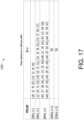
- FIG. 17 is a diagram of an example design in accordance with an implementation of the present disclosure.
- FIG. 18 is a diagram of an example design in accordance with an implementation of the present disclosure.
- FIG. 19 is a diagram of an example design in accordance with an implementation of the present disclosure.
- FIG. 20 is a diagram of an example design in accordance with an implementation of the present disclosure.
- FIG. 21 is a diagram of an example design in accordance with an implementation of the present disclosure.
- FIG. 22 is a diagram of an example design in accordance with an implementation of the present disclosure.
- FIG. 23 is a diagram of an example design in accordance with an implementation of the present disclosure.
- FIG. 24 is a diagram of an example design in accordance with an implementation of the present disclosure.
- FIG. 25 is a diagram of an example design in accordance with an implementation of the present disclosure.
- FIG. 26 is a diagram of an example design in accordance with an implementation of the present disclosure.
- FIG. 27 A , FIG. 27 B , FIG. 27 C and FIG. 27 D each is a diagram of an example design in accordance with an implementation of the present disclosure.
- FIG. 28 A , FIG. 28 B , FIG. 28 C and FIG. 28 D each is a diagram of an example design in accordance with an implementation of the present disclosure.
- FIG. 29 A , FIG. 29 B , FIG. 29 C and FIG. 29 D each is a diagram of an example design in accordance with an implementation of the present disclosure.
- FIG. 30 A , FIG. 30 B , FIG. 30 C and FIG. 30 D each is a diagram of an example design in accordance with an implementation of the present disclosure.
- FIG. 31 is a block diagram of an example communication system in accordance with an implementation of the present disclosure.
- FIG. 32 is a flowchart of an example process in accordance with an implementation of the present disclosure.
- FIG. 33 is a flowchart of an example process in accordance with an implementation of the present disclosure.
- Implementations in accordance with the present disclosure relate to various techniques, methods, schemes and/or solutions pertaining to subcarrier indices for distributed-tone RUs in 6 GHz LPI systems.
- a number of possible solutions may be implemented separately or jointly. That is, although these possible solutions may be described below separately, two or more of these possible solutions may be implemented in one combination or another.
- a 26-tone regular RU may be interchangeably denoted as RU26 (or rRU26), a 52-tone regular RU may be interchangeably denoted as RU52 (or rRU52), a 106-tone regular RU may be interchangeably denoted as RU106 (or rRU106), a 242-tone regular RU may be interchangeably denoted as RU242 (or rRU242), and so on.
- an aggregate (26+52)-tone regular MRU may be interchangeably denoted as MRU78 (or rMRU78), an aggregate (26+106)-tone regular MRU may be interchangeably denoted as MRU132 (or rMRU132), and so on.
- a 26-tone distributed-tone RU may be interchangeably denoted as dRU26
- a 52-tone distributed-tone RU may be interchangeably denoted as dRU52
- a 106-tone distributed-tone RU may be interchangeably denoted as dRU106
- a 242-tone distributed-tone RU may be interchangeably denoted as dRU242, and so on.
- an aggregate (26+52)-tone distributed-tone MRU may be interchangeably denoted as dMRU78
- an aggregate (26+106)-tone distributed-tone MRU may be interchangeably denoted as dMRU132, and so on.
- a bandwidth of 20 MHz may be interchangeably denoted as BW20
- a bandwidth of 40 MHz may be interchangeably denoted as BW40
- a bandwidth of 80 MHz may be interchangeably denoted as BW80
- a bandwidth of 160 MHz may be interchangeably denoted as BW160
- a bandwidth of 240 MHz may be interchangeably denoted as BW240
- a bandwidth of 320 MHz may be interchangeably denoted as BW320.
- a 26-tone interleaved-tone RU may be interchangeably denoted as iRU26
- a 52-tone interleaved-tone RU may be interchangeably denoted as iRU52
- a 106-tone interleaved-tone RU may be interchangeably denoted as iRU106
- a 242-tone interleaved-tone RU may be interchangeably denoted as iRU242
- a 484-tone interleaved-tone RU may be interchangeably denoted as iRU484.
- FIG. 1 illustrates an example network environment 100 in which various solutions and schemes in accordance with the present disclosure may be implemented.
- FIG. 2 ⁇ FIG. 33 illustrate examples of implementation of various proposed schemes in network environment 100 in accordance with the present disclosure. The following description of various proposed schemes is provided with reference to FIG. 1 ⁇ FIG. 33 .
- network environment 100 may involve a communication entity 110 and a communication entity 120 communicating wirelessly (e.g., in a WLAN in accordance with one or more IEEE 802.11 standards).
- communication entity 110 may be a first STA and communication entity 120 may be a second STA, with each of the first STA and second STA functioning an access point (AP) STA or a non-AP STA.
- AP access point
- communication entity 110 and communication entity 120 may be configured to communicate wirelessly with subcarrier indices for distributed-tone RUs in 6 GHz LPI systems, as described herein.
- subcarrier indices may be specified in tables (e.g., in a style similar to that for regular RUs in IEEE 802.11ax/be) for different distributed-tone RU (dRU) sizes in different bandwidths (BWs).
- dRU distributed-tone RU
- BWs bandwidths
- both guard tones and DC tones may be taken into account in table formulation for the subcarrier indices for distributed-tone (or interleaved-tone) RUs.
- the distributed-tone RUs with the subcarrier indices proposed herein may result in a number of benefits, including, for example: achieving the optimal performance in terms of number of tones in 1 MHz, allowing flexible scheduling for allocation of dRU (or iRU) of any size (e.g., no constraint or limitation), support of distributed tone aggregation of multiple RUs (MRU) such as MRU(26+52) and MRU(26+106) to achieve optimal performance.
- MRU distributed tone aggregation of multiple RUs
- dRU tone distributions may be symmetric to DC tone(s).
- dRU tone distributions may be asymmetric to the DC tone(s).
- pilot indices for distributed-tone RUs there may be two options for pilot indices for distributed-tone RUs.
- Option A relative pilot positions, as with regular RUs with respect to a first left-hand tone, may be preserved.
- pilot tones may be assigned with symmetry to the DC tone.
- FIG. 2 illustrates an example design 200 in accordance with an implementation of Option 1 under the proposed scheme.
- Design 200 pertains to assignment or distribution of subcarrier indices for distributed-tone RUs with the distributed-tone RUs being distributed in a symmetric fashion relative to one or more DC tones.
- dRU tone distributions may be symmetric to a number of DC tones, with a horizonal axis being subcarrier indices and a vertical axis being distributed-tone RU (dRU) index in a permutation order.
- dRU distributed-tone RU
- each dRU may include a left-side portion (L ru ) and a right-side portion (R ru ) relative to a center DC tone among one or more DC tones.
- the distribution of L ru and R ru may be symmetric to the center DC tone in two ways. Firstly, the center DC tone is located symmetrically in the middle between L ru and R ru , with L ru being to the left of the center DC tone and R ru being to the right of the center DC tone along the axis of subcarrier indices and with an equal distance between the center DC tone and L ru as well as between the center DC tone and R ru .
- a pattern of tone distribution in L ru and a pattern of tone distribution in R ru in design 200 may be symmetric with respect to the center DC tone, as can be seen in FIG. 2 .
- L ru and R ru indices may be generated based on a general rule of dRU design.
- FIG. 3 illustrates an example design 300 in accordance with an implementation of Option 2 under the proposed scheme.
- Design 300 pertains to assignment or distribution of subcarrier indices for distributed-tone RUs with the distributed-tone RUs being distributed in a non-symmetric or asymmetric fashion relative to one or more DC tones.
- dRU tone distributions may be asymmetric to a number of DC tones, with a horizonal axis being subcarrier indices and a vertical axis being dRU index in a permutation order.
- each dRU may include a left-side portion (L ru ) and a right-side portion (R ru ) relative to a center DC tone among one or more DC tones.
- the distribution of L ru and R ru may be non-symmetric or asymmetric to the center DC tone in two ways. Firstly, the center DC tone is located asymmetrically in the middle between L ru and R ru , with L ru being to the left of the center DC tone and R ru being to the right of the center DC tone along the axis of subcarrier indices and with an first distance between the center DC tone and L ru and a second distance between the center DC tone and R ru different from the first distance.
- design 300 may be seen as design 200 being shifted toward one side (either the left side or the right side) of the center DC tone.
- the first distance between the center DC tone and L ru is greater than the second distance between the center DC tone and R ru , although in actual implementations the situation may be the opposite.
- the distribution of left-side portion and right-side portion may be seen as being equivalent to shifting a symmetric distribution (e.g., that of design 200 ) to one side (e.g., left side) of the center DC tone.
- a pattern of tone distribution in L ru and a pattern of tone distribution in R ru in design 300 may be non-symmetric or asymmetric with respect to the center DC tone, as can be seen in FIG. 3 .
- L ru and R ru indices may be generated based on a general rule of iRU design.
- FIG. 4 shows a respective example design for cases in which assignment or distribution of subcarrier indices for distributed-tone RUs is symmetric to the center DC tone.
- FIG. 10 shows a respective example design for cases in which assignment or distribution of subcarrier indices for distributed-tone RUs is symmetric to the center DC tone.
- FIG. 4 illustrates an example design 400 of assignment or distribution of subcarrier indices for dRUs over BW20. It is noteworthy that in the present disclosure, each entry may be generalized as [ ⁇ a:D td : ⁇ b b:D td :a], with “ ⁇ a” denoting a left-most tone of a given dRU in the lower portion, “ ⁇ b” denoting a right-most tone of the dRU in the lower portion, and “D td ” denoting a tone distance between two adjacent tones of the dRU.
- ⁇ 121 or ⁇ 120 may be used as the first left-side tone and, in such a case, other tone indices may need to be adjusted accordingly.
- fliplr(L ru ) L ru (end: ⁇ 1:1), and the terms Np, V, S may be specified with other numbers.
- FIG. 5 A and FIG. 5 B each illustrates a respective portion of an example design 500 of assignment or distribution of subcarrier indices for a 52-tone dRU.
- FIG. 5 A shows a left-side (or lower) portion (L ru ) of the 52-tone dRU
- FIG. 5 B shows a right-side (or upper) portion (R ru ) of the 52-tone dRU.
- the L ru and R ru of the 52-tone dRU may be symmetric to one or more DC tones including a center DC tone.
- FIG. 6 illustrates an example design 600 of assignment or distribution of subcarrier indices for dRUs over BW40. It is noteworthy that, instead of ⁇ 244, in design 600 the value of ⁇ 243 may be used as the first left-side tone and, in such a case, other tone indices may need to be adjusted accordingly.
- FIG. 7 illustrates an example design 700 of assignment or distribution of subcarrier indices for dRUs over BW80. It is noteworthy that, instead of ⁇ 500, in design 700 the value of ⁇ 499 may be used as the first left-side tone and, in such a case, other tone indices may need to be adjusted accordingly. It is also noteworthy that dRU subcarrier indices for BW160 and BW320 may be generated following the same methodology/procedure as for BW20, BW40 and BW80 described and shown herein.
- FIG. 8 A and FIG. 8 B each illustrates a respective portion of an example design 800 of assignment or distribution of pilot indices for a 26-tone dRU.
- FIG. 8 A shows assignment or distribution of pilot indices for a 26-tone dRU under Option A, which preserves the relative pilot positions as regular RUs with respect to the first left-hand tone.
- dRU pilot indices for BW160 and BW320 under Option A may be generated following the same methodology/procedure as for BW20, BW40 and BW80 described and shown herein.
- FIG. 8 B shows assignment or distribution of pilot indices for a 26-tone dRU under Option B such that pilot tones are symmetric to one or more DC tones including a center DC tone.
- dRU pilot indices for BW160 and BW320 under Option B may be generated following the same methodology/procedure as for BW20, BW40 and BW80 described and shown herein.
- FIG. 9 A and FIG. 9 B each illustrates a respective portion of an example design 900 of assignment or distribution of pilot indices for a 52-tone dRU.
- FIG. 9 A shows assignment or distribution of pilot indices for a 52-tone dRU under Option A, which preserves the relative pilot positions as regular RUs with respect to the first left-hand tone.
- dRU pilot indices for BW160 and BW320 under Option A may be generated following the same methodology/procedure as for BW20, BW40 and BW80 described and shown herein.
- FIG. 9 B shows assignment or distribution of pilot indices for a 52-tone dRU under Option B such that pilot tones are symmetric to one or more DC tones including a center DC tone.
- iRU pilot indices for BW160 and BW320 under Option B may be generated following the same methodology/procedure as for BW20, BW40 and BW80 described and shown herein.
- FIG. 10 illustrates an example design 1000 of assignment or distribution of pilot indices for a 106-tone dRU.
- part (A) of FIG. 10 shows assignment or distribution of pilot indices for a 106-tone dRU under Option A, which preserves the relative pilot positions as regular RUs with respect to the first left-hand tone.
- iRU pilot indices for BW160 and BW320 under Option A may be generated following the same methodology/procedure as for BW20, BW40 and BW80 described and shown herein.
- Part (B) of FIG. 10 shows assignment or distribution of pilot indices for a 106-tone iRU under Option B such that pilot tones are symmetric to one or more DC tones including a center DC tone.
- iRU pilot indices for BW160 and BW320 under Option B may be generated following the same methodology/procedure as for BW20, BW40 and BW80 described and shown herein.
- FIG. 11 illustrates an example design 1100 of assignment or distribution of pilot indices for a 242-tone dRU.
- part (A) of FIG. 11 shows assignment or distribution of pilot indices for a 242-tone dRU under Option A, which preserves the relative pilot positions as regular RUs with respect to the first left-hand tone.
- dRU pilot indices for BW160 and BW320 under Option A may be generated following the same methodology/procedure as for BW20, BW40 and BW80 described and shown herein.
- Part (B) of FIG. 11 shows assignment or distribution of pilot indices for a 242-tone dRU under Option B such that pilot tones are symmetric to one or more DC tones including a center DC tone.
- iRU pilot indices for BW160 and BW320 under Option B may be generated following the same methodology/procedure as for BW20, BW40 and BW80 described and shown herein.
- FIG. 12 , FIG. 13 , FIG. 14 , FIG. 15 , FIG. 16 , FIG. 17 and FIG. 18 shows a respective example design for cases in which assignment or distribution of subcarrier indices for interleaved-tone RUs is not symmetric to the center DC tone (e.g., shifted to one side with respect to the center DC tone).
- assignment or distribution of subcarrier indices for interleaved-tone RUs is not symmetric to the center DC tone (e.g., shifted to one side with respect to the center DC tone).
- FIG. 12 illustrates an example design 1200 of assignment or distribution of subcarrier indices for iRUs over BW20. It is noteworthy that, instead of ⁇ 122, in design 1200 the value of ⁇ 121 or ⁇ 120 may be used as the first left-side tone and, in such a case, other tone indices may need to be adjusted accordingly.
- FIG. 13 illustrates an example design 1300 of assignment or distribution of subcarrier indices for dRUs over BW40. It is noteworthy that, instead of ⁇ 244, in design 1300 the value of ⁇ 243 may be used as the first left-side tone and, in such a case, other tone indices may need to be adjusted accordingly.
- FIG. 14 illustrates an example design 1400 of assignment or distribution of subcarrier indices for dRUs over BW80. It is noteworthy that, instead of ⁇ 500, in design 1400 the value of ⁇ 499 may be used as the first left-side tone and, in such a case, other tone indices may need to be adjusted accordingly. It is also noteworthy that dRU subcarrier indices for BW160 and BW320 may be generated following the same methodology/procedure as for BW20, BW40 and BW80 described and shown herein.
- FIG. 15 illustrates an example design 1500 of assignment or distribution of pilot indices for a 26-tone dRU. It is noteworthy that dRU pilot indices for BW160 and BW320 may be generated following the same methodology/procedure as for BW20, BW40 and BW80 described and shown herein.
- FIG. 16 illustrates an example design 1600 of assignment or distribution of pilot indices for a 52-tone dRU. It is noteworthy that dRU pilot indices for BW160 and BW320 may be generated following the same methodology/procedure as for BW20, BW40 and BW80 described and shown herein.
- FIG. 17 illustrates an example design 1700 of assignment or distribution of pilot indices for a 106-tone dRU. It is noteworthy that dRU pilot indices for BW160 and BW320 may be generated following the same methodology/procedure as for BW20, BW40 and BW80 described and shown herein.
- FIG. 18 illustrates an example design 1800 of assignment or distribution of pilot indices for a 242-tone dRU. It is noteworthy that dRU pilot indices for BW160 and BW320 may be generated following the same methodology/procedure as for BW20, BW40 and BW80 described and shown herein.
- dRU subcarrier indices may be generated with one or more traits or characteristics. For instance, dRU subcarrier indices may be generated to be edge-tone aligned (e.g., being aligned with the first left-hand tone) and DC tone-symmetric (e.g., symmetric with respect to a center DC tone of one or more DC tones as shown in design 200 ). Alternatively, dRU subcarrier indices may be generated to be center aligned and also DC tone-symmetric.
- dRU subcarrier indices may be generated to be edge-tone aligned but DC tone-asymmetric (e.g., asymmetric or not symmetric with respect to a center DC tone of one or more DC tones as shown in design 300 ).
- dRU subcarrier indices may be generated to be center aligned but DC tone-asymmetric.
- dRU subcarrier indices may be defined in one of multiple approaches. In a first approach, dRU subcarrier indices may be defined in a pure formula based fashion. In a second approach, dRU subcarrier indices may be defined with all the indices listed in one or more tables.
- dRU subcarrier indices may be defined by listing only the indices for a 26-tone dRU (or the indices for both the 26-tone dRU and a 52-tone dRU) in a table such that indices for larger-sized dRUs (e.g., 52-tone dRU, 106-tone dRU, 242-tone dRU and 484-tone dRU) may be represented or otherwise built from the 26-tone dRU based on dRU hierarchical structure, plus any extra tones for padding if necessary. For instance, indices for the 52-tone dRU may be generated or defined based on two 26-tone dRUs.
- indices for the 52-tone dRU may be generated or defined based on two 26-tone dRUs.
- indices for the 106-tone dRU may be generated or defined based on four 26-tone dRUs or two 52-tone dRUs plus padding with two extra tones.
- indices for the 242-tone dRU may be generated or defined based on two 106-tone dRUs and one 26-tone dRU plus padding with four extra tones.
- indices for the 484-tone dRU may be generated or defined based on two 242-tone dRUs, and so on.
- FIG. 19 , FIG. 20 , FIG. 21 , FIG. 22 , FIG. 23 , FIG. 24 , FIG. 25 , FIG. 26 , FIG. 27 A , FIG. 27 B , FIG. 27 C , FIG. 27 D , FIG. 28 A , FIG. 28 B , FIG. 28 C , FIG. 28 D , FIG. 29 A , FIG. 29 B , FIG. 29 C , FIG. 29 D , FIG. 30 A , FIG. 30 B , FIG. 30 C and FIG. 30 D shows a respective example design under the proposed schemes. Each of these figures is further described below.
- FIG. 19 illustrates an example design 1900 of generation of subcarrier indices for dRUs over BW20.
- design 1900 shows an example of generating dRUs of 26 tones, 52 tones and 106 tones that are edge-tone aligned and DC tone-symmetric.
- the dRU1 of the 106-tone iRU may alternatively be defined with 52-tone [dRU1, dRU2] plus two extra tones and that the dRU2 of the 106-tone dRU may alternatively be defined with 52-tone [dRU3, dRU4] plus two extra tones.
- FIG. 20 illustrates an example design 2000 of generation of subcarrier indices for dRUs over BW20.
- design 2000 shows an example of generating dRUs of 26 tones, 52 tones and 106 tones that are center aligned and DC tone-symmetric.
- the dRU1 of the 106-tone dRU may alternatively be defined with 52-tone [dRU1, dRU2] plus padding with two extra tones and that the dRU2 of the 106-tone dRU may alternatively be defined with 52-tone [dRU3, dRU4] plus padding with two extra tones.
- FIG. 21 illustrates an example design 2100 of generation of subcarrier indices for dRUs over BW20.
- design 2100 shows an example of generating dRUs of 26 tones, 52 tones and 106 tones that are edge-tone aligned and DC tone-asymmetric.
- the dRU1 of the 106-tone dRU may alternatively be defined with 52-tone [dRU1, dRU2] plus padding two extra tones and that the dRU2 of the 106-tone dRU may alternatively be defined with 52-tone [dRU3, dRU4] plus padding with two extra tones.
- FIG. 22 illustrates an example design 2200 of generation of subcarrier indices for dRUs over BW20.
- design 2200 shows an example of generating dRUs of 26 tones, 52 tones and 106 tones that are center aligned and DC tone-asymmetric.
- the dRU1 of the 106-tone dRU may alternatively be defined with 52-tone [dRU1, dRU2] plus padding with two extra tones and that the dRU2 of the 106-tone dRU may alternatively be defined with 52-tone [dRU3, dRU4] plus padding with two extra tones.
- FIG. 23 illustrates an example design 2300 of generation of subcarrier indices for dRUs over BW40.
- design 2300 shows an example of generating dRUs of 26 tones, 52 tones, 106 tones and 242 tones that are edge-tone aligned and DC tone-symmetric.
- FIG. 24 illustrates an example design 2400 of generation of subcarrier indices for dRUs over BW40.
- design 2400 shows an example of generating dRUs of 26 tones, 52 tones, 106 tones and 242 tones that are center aligned and DC tone-symmetric.
- FIG. 25 illustrates an example design 2500 of generation of subcarrier indices for dRUs over BW40.
- design 2500 shows an example of generating dRUs of 26 tones, 52 tones, 106 tones and 242 tones that are edge-tone aligned and DC tone-asymmetric.
- FIG. 26 illustrates an example design 2600 of generation of subcarrier indices for dRUs over BW40.
- design 2600 shows an example of generating dRUs of 26 tones, 52 tones, 106 tones and 242 tones that are center aligned and DC tone-asymmetric.
- FIG. 27 A , FIG. 27 B , FIG. 27 C and FIG. 27 D each illustrates a respective portion of an example design 2700 of generation of subcarrier indices for dRUs over BW80.
- FIG. 27 A shows an example of generating some dRUs of 26 tones that are edge-tone aligned and DC tone-symmetric
- FIG. 27 B shows an example of generating some other dRUs of 26 tones that are edge-tone aligned and DC tone-symmetric
- FIG. 27 C shows an example of generating some dRUs of 52 tones, 106 tones, 242 tones and 484 tones that are edge-tone aligned and DC tone-symmetric
- FIG. 27 D shows an example of generating some other dRUs of 52 tones, 106 tones, 242 tones and 484 tones that are edge-tone aligned and DC tone-symmetric.
- FIG. 28 A , FIG. 28 B , FIG. 28 C and FIG. 28 D each illustrates a respective portion of an example design 2800 of generation of subcarrier indices for dRUs over BW80.
- FIG. 28 A shows an example of generating some dRUs of 26 tones that are center aligned and DC tone-symmetric
- FIG. 28 B shows an example of generating some other iRUs of 26 tones that are center aligned and DC tone-symmetric
- FIG. 28 C shows an example of generating some dRUs of 52 tones, 106 tones, 242 tones and 484 tones that are center aligned and DC tone-symmetric
- FIG. 28 D shows an example of generating some other dRUs of 52 tones, 106 tones, 242 tones and 484 tones that are center aligned and DC tone-symmetric.
- FIG. 29 A , FIG. 29 B , FIG. 29 C and FIG. 29 D each illustrates a respective portion of an example design 2900 of generation of subcarrier indices for dRUs over BW80.
- FIG. 29 A shows an example of generating some dRUs of 26 tones that are edge-tone aligned and DC tone-asymmetric
- FIG. 29 B shows an example of generating some other dRUs of 26 tones that are edge-tone aligned and DC tone-asymmetric
- FIG. 29 C shows an example of generating some dRUs of 52 tones, 106 tones, 242 tones and 484 tones that are edge-tone aligned and DC tone-asymmetric
- FIG. 29 D shows an example of generating some other dRUs of 52 tones, 106 tones, 242 tones and 484 tones that are edge-tone aligned and DC tone-asymmetric.
- FIG. 30 A , FIG. 30 B , FIG. 30 C and FIG. 30 D each illustrates a respective portion of an example design 3000 of generation of subcarrier indices for dRUs over BW80.
- FIG. 30 A shows an example of generating some dRUs of 26 tones that are center aligned and DC tone-asymmetric
- FIG. 30 B shows an example of generating some other dRUs of 26 tones that are center aligned and DC tone-asymmetric
- FIG. 30 C shows an example of generating some dRUs of 52 tones, 106 tones, 242 tones and 484 tones that are center aligned and DC tone-asymmetric
- FIG. 30 D shows an example of generating some other dRUs of 52 tones, 106 tones, 242 tones and 484 tones that are center aligned and DC tone-asymmetric.
- FIG. 31 illustrates an example system 3100 having at least an example apparatus 3110 and an example apparatus 3120 in accordance with an implementation of the present disclosure.
- apparatus 3110 and apparatus 3120 may perform various functions to implement schemes, techniques, processes and methods described herein pertaining to subcarrier indices for distributed-tone RUs (dRU) in 6 GHz LPI systems, including the various schemes described above with respect to various proposed designs, concepts, schemes, systems and methods described above as well as processes described below.
- apparatus 3110 may be an example implementation of communication entity 110
- apparatus 3120 may be an example implementation of communication entity 120 .
- Each of apparatus 3110 and apparatus 3120 may be a part of an electronic apparatus, which may be a STA or an AP, such as a portable or mobile apparatus, a wearable apparatus, a wireless communication apparatus or a computing apparatus.
- each of apparatus 3110 and apparatus 3120 may be implemented in a smartphone, a smart watch, a personal digital assistant, a digital camera, or a computing equipment such as a tablet computer, a laptop computer or a notebook computer.
- Each of apparatus 3110 and apparatus 3120 may also be a part of a machine type apparatus, which may be an IoT apparatus such as an immobile or a stationary apparatus, a home apparatus, a wire communication apparatus or a computing apparatus.
- each of apparatus 3110 and apparatus 3120 may be implemented in a smart thermostat, a smart fridge, a smart door lock, a wireless speaker or a home control center.
- apparatus 3110 and/or apparatus 3120 may be implemented in a network node, such as an AP in a WLAN.
- each of apparatus 3110 and apparatus 3120 may be implemented in the form of one or more integrated-circuit (IC) chips such as, for example and without limitation, one or more single-core processors, one or more multi-core processors, one or more reduced-instruction set computing (RISC) processors, or one or more complex-instruction-set-computing (CISC) processors.
- IC integrated-circuit
- RISC reduced-instruction set computing
- CISC complex-instruction-set-computing
- each of apparatus 3110 and apparatus 3120 may be implemented in or as a STA or an AP.
- Each of apparatus 3110 and apparatus 3120 may include at least some of those components shown in FIG. 31 such as a processor 3112 and a processor 3122 , respectively, for example.
- Each of apparatus 3110 and apparatus 3120 may further include one or more other components not pertinent to the proposed scheme of the present disclosure (e.g., internal power supply, display device and/or user interface device), and, thus, such component(s) of apparatus 3110 and apparatus 3120 are neither shown in FIG. 31 nor described below in the interest of simplicity and brevity.
- other components e.g., internal power supply, display device and/or user interface device
- each of processor 3112 and processor 3122 may be implemented in the form of one or more single-core processors, one or more multi-core processors, one or more RISC processors or one or more CISC processors. That is, even though a singular term “a processor” is used herein to refer to processor 3112 and processor 3122 , each of processor 3112 and processor 3122 may include multiple processors in some implementations and a single processor in other implementations in accordance with the present disclosure.
- each of processor 3112 and processor 3122 may be implemented in the form of hardware (and, optionally, firmware) with electronic components including, for example and without limitation, one or more transistors, one or more diodes, one or more capacitors, one or more resistors, one or more inductors, one or more memristors and/or one or more varactors that are configured and arranged to achieve specific purposes in accordance with the present disclosure.
- each of processor 3112 and processor 3122 is a special-purpose machine specifically designed, arranged and configured to perform specific tasks including those pertaining to subcarrier indices for distributed-tone RUs in 6 GHz LPI systems in accordance with various implementations of the present disclosure.
- each of processor 3112 and processor 3122 may be configured with hardware components, or circuitry, implementing one, some or all of the examples described and illustrated herein.
- apparatus 3110 may also include a transceiver 3116 coupled to processor 3112 .
- Transceiver 3116 may be capable of wirelessly transmitting and receiving data.
- apparatus 3120 may also include a transceiver 3126 coupled to processor 3122 .
- Transceiver 3126 may include a transceiver capable of wirelessly transmitting and receiving data.
- apparatus 3110 may further include a memory 3114 coupled to processor 3112 and capable of being accessed by processor 3112 and storing data therein.
- apparatus 3120 may further include a memory 3124 coupled to processor 3122 and capable of being accessed by processor 3122 and storing data therein.
- RAM random-access memory
- DRAM dynamic RAM
- SRAM static RAM
- T-RAM thyristor RAM
- Z-RAM zero-capacitor RAM
- each of memory 3114 and memory 3124 may include a type of read-only memory (ROM) such as mask ROM, programmable ROM (PROM), erasable programmable ROM (EPROM) and/or electrically erasable programmable ROM (EEPROM).
- ROM read-only memory
- PROM programmable ROM
- EPROM erasable programmable ROM
- EEPROM electrically erasable programmable ROM
- each of memory 3114 and memory 3124 may include a type of non-volatile random-access memory (NVRAM) such as flash memory, solid-state memory, ferroelectric RAM (FeRAM), magnetoresistive RAM (MRAM) and/or phase-change memory.
- NVRAM non-volatile random-access memory
- Each of apparatus 3110 and apparatus 3120 may be a communication entity capable of communicating with each other using various proposed schemes in accordance with the present disclosure.
- a description of capabilities of apparatus 3110 , as communication entity 110 , and apparatus 3120 , as communication entity 120 is provided below.
- the example implementations described below are provided in the context of WLAN, the same may be implemented in other types of networks.
- the following description of example implementations pertains to a scenario in which apparatus 3110 functions as a transmitting device and apparatus 3120 functions as a receiving device, the same is also applicable to another scenario in which apparatus 3110 functions as a receiving device and apparatus 3120 functions as a transmitting device.
- processor 3112 of apparatus 3110 may distribute frequency tones of a RU over a distribution bandwidth as a distributed-tone RU. Additionally, processor 3112 may generate a plurality of subcarrier indices for the distributed-tone RU such that a distribution of the distributed-tone RU is symmetric to a DC tone along an axis of subcarrier indices. Alternatively, processor 3112 may generate the plurality of subcarrier indices for the distributed-tone RU such that a distribution of the distributed-tone RU is non-symmetric or asymmetric to the DC tone along an axis of subcarrier indices. Furthermore, processor 3112 may communicate wirelessly, via transceiver 3116 , with apparatus 3120 using the distributed-tone RU in a 6 GHz LPI system.
- the distributed-tone RU may include a left-side (or lower) portion and a right-side (or upper) portion relative to the DC tone along the axis of subcarrier indices.
- the left-side (or lower) portion may be on a left side of the DC tone and the right-side (or upper) portion may be on a right side of the DC tone with an equal distance between the DC tone and the left-side portion as well as between the DC tone and the right-side portion.
- the left-side portion may be on a left side of the DC tone and the right-side portion may be on a right side of the DC tone with a first distance between the DC tone and the left-side portion and a second distance between the DC tone and the right-side portion different from the first distance.
- processor 3112 may generate edge-tone aligned and DC-symmetric subcarrier indices.
- processor 3112 may generate center aligned and DC-symmetric subcarrier indices.
- processor 3112 may generate edge-tone aligned and DC-asymmetric subcarrier indices.
- processor 3112 may generate center aligned and DC-asymmetric subcarrier indices.
- the distributed-tone RU may be distributed over a 20 MHz bandwidth, and wherein the distributed-tone RU (dRU) comprises a 26-tone dRU, a 52-tone dRU or a 106-tone dRU.
- the distributed-tone RU may be distributed over a 40 MHz bandwidth, and wherein the distributed-tone RU (dRU) comprises a 26-tone dRU, a 52-tone dRU, a 106-tone dRU or a 242-tone dRU.
- the distributed-tone RU may be distributed over a 80 MHz bandwidth, and wherein the distributed-tone RU (dRU) comprises a 26-tone dRU, a 52-tone dRU, a 106-tone dRU, a 242-tone dRU or a 484-tone dRU.
- the distributed-tone RU may include an aggregate of multiple dRUs (dMRU).
- the dMRU may include an aggregate of a 26-tone dRU and a 52-tone dRU (or otherwise denoted as dMRU(26+52)) or an aggregate of the 26-tone dRU and a 106-tone dRU (or otherwise denoted as dMRU(26+106)).
- processor 3112 may list or otherwise provide a set of subcarrier indices for a 26-tone dRU in a table such that, for a larger-sized dRU with more than 26 tones, in generating the plurality of subcarrier indices, processor 3112 may generate another set of subcarrier indices for the larger-sized dRU from the table and using a dRU hierarchical structure with or without one or more extra tones as padding.
- subcarrier indices for a 52-tone dRU may be generated from corresponding two 26-tone dRUs
- subcarrier indices for a 106-tone dRU may be generated from either corresponding four 26-tone dRUs or corresponding two 52-tone dRUs with two extra tones as padding
- subcarrier indices for a 242-tone dRU may be generated from corresponding two 106-tone dRUs and one 26-tone dRU with four extra tones as padding
- subcarrier indices for a 484-tone dRU may be generated from corresponding two 242-tone dRUs.
- FIG. 32 illustrates an example process 3200 in accordance with an implementation of the present disclosure.
- Process 3200 may represent an aspect of implementing various proposed designs, concepts, schemes, systems and methods described above. More specifically, process 3200 may represent an aspect of the proposed concepts and schemes pertaining to subcarrier indices for distributed-tone RUs in 6 GHz LPI systems in accordance with the present disclosure.
- Process 3200 may include one or more operations, actions, or functions as illustrated by one or more of blocks 3210 , 3220 and 3230 . Although illustrated as discrete blocks, various blocks of process 3200 may be divided into additional blocks, combined into fewer blocks, or eliminated, depending on the desired implementation. Moreover, the blocks/sub-blocks of process 3200 may be executed in the order shown in FIG.
- Process 3200 may be implemented by or in apparatus 3110 and apparatus 3120 as well as any variations thereof. Solely for illustrative purposes and without limiting the scope, process 3200 is described below in the context of apparatus 3110 as communication entity 110 (e.g., a transmitting device whether a STA or an AP) and apparatus 3120 as communication entity 120 (e.g., a receiving device whether a STA or an AP) of a wireless network such as a WLAN in accordance with one or more of IEEE 802.11 standards. Process 3200 may begin at block 3210 .
- communication entity 110 e.g., a transmitting device whether a STA or an AP
- apparatus 3120 as communication entity 120 (e.g., a receiving device whether a STA or an AP) of a wireless network such as a WLAN in accordance with one or more of IEEE 802.11 standards.
- Process 3200 may begin at block 3210 .
- process 3200 may involve processor 3112 of apparatus 3110 distributing frequency tones of a RU over a distribution bandwidth as a distributed-tone RU.
- Process 3200 may proceed from 3210 to 3220 .
- process 3200 may involve processor 3112 generating a plurality of subcarrier indices for the distributed-tone RU such that a distribution of the distributed-tone RU is symmetric to a DC tone along an axis of subcarrier indices.
- Process 3200 may proceed from 3220 to 3230 .
- process 3200 may involve processor 3112 communicating wirelessly, via transceiver 3116 , with apparatus 3120 using the distributed-tone RU in a 6 GHz LPI system.
- the distributed-tone RU may include a left-side (or lower) portion and a right-side (or upper) portion relative to the DC tone along the axis of subcarrier indices.
- the left-side portion may be on a left side of the DC tone and the right-side portion may be on a right side of the DC tone with an equal distance between the DC tone and the left-side portion as well as between the DC tone and the right-side portion.
- process 3200 may involve processor 3112 generating edge-tone aligned and DC-symmetric subcarrier indices.
- process 3200 may involve processor 3112 generating center aligned and DC-symmetric subcarrier indices.
- process 3200 may involve processor 3112 generating edge-tone aligned and DC-asymmetric subcarrier indices.
- process 3200 may involve processor 3112 generating center aligned and DC-asymmetric subcarrier indices.
- the distributed-tone (or interleaved-tone) RU may be distributed over a 20 MHz bandwidth, and wherein the distributed-tone RU on BW20 comprises a 26-tone dRU, a 52-tone dRU or a 106-tone dRU.
- the distributed-tone (or interleaved-tone) RU may be distributed over a 40 MHz bandwidth, and wherein the distributed-tone RU on BW40 comprises a 26-tone dRU, a 52-tone dRU, a 106-tone dRU or a 242-tone dRU.
- the distributed-tone (or interleaved-tone) RU may be distributed over a 80 MHz bandwidth, and wherein the distributed-tone RU on BW80 comprises a 26-tone dRU, a 52-tone dRU, a 106-tone dRU, a 242-tone dRU or a 484-tone dRU.
- the distributed-tone RU may include an aggregate of multiple dRUs (dMRU).
- the dMRU may include an aggregate of a 26-tone dRU and a 52-tone dRU (or otherwise denoted as dMRU(26+52)) or an aggregate of the 26-tone dRU and a 106-tone dRU (or otherwise denoted as dMRU(26+106)).
- process 3200 may involve processor 3112 listing or otherwise providing a set of subcarrier indices for a 26-tone dRU in a table such that, for a larger-sized dRU with more than 26 tones, in generating the plurality of subcarrier indices, process 3200 may further involve processor 3112 generating another set of subcarrier indices for the larger-sized dRU from the table and using a dRU hierarchical structure with or without one or more extra tones as padding.
- subcarrier indices for a 52-tone dRU may be generated from corresponding two 26-tone dRUs
- subcarrier indices for a 106-tone dRU may be generated from either corresponding four 26-tone dRUs or corresponding two 52-tone dRUs with two extra tones as padding
- subcarrier indices for a 242-tone dRU may be generated from corresponding two 106-tone dRUs and one 26-tone dRU with four extra tones as padding
- subcarrier indices for a 484-tone dRU may be generated from corresponding two 242-tone dRUs.
- FIG. 33 illustrates an example process 3300 in accordance with an implementation of the present disclosure.
- Process 3300 may represent an aspect of implementing various proposed designs, concepts, schemes, systems and methods described above. More specifically, process 3300 may represent an aspect of the proposed concepts and schemes pertaining to subcarrier indices for distributed-tone RUs (dRU) in 6 GHz LPI systems in accordance with the present disclosure.
- Process 3300 may include one or more operations, actions, or functions as illustrated by one or more of blocks 3310 , 3320 and 3330 . Although illustrated as discrete blocks, various blocks of process 3300 may be divided into additional blocks, combined into fewer blocks, or eliminated, depending on the desired implementation. Moreover, the blocks/sub-blocks of process 3300 may be executed in the order shown in FIG.
- Process 3300 may be implemented by or in apparatus 3110 and apparatus 3120 as well as any variations thereof. Solely for illustrative purposes and without limiting the scope, process 3300 is described below in the context of apparatus 3110 as communication entity 110 (e.g., a transmitting device whether a STA or an AP) and apparatus 3120 as communication entity 120 (e.g., a receiving device whether a STA or an AP) of a wireless network such as a WLAN in accordance with one or more of IEEE 802.11 standards. Process 3300 may begin at block 3310 .
- communication entity 110 e.g., a transmitting device whether a STA or an AP
- apparatus 3120 as communication entity 120 (e.g., a receiving device whether a STA or an AP) of a wireless network such as a WLAN in accordance with one or more of IEEE 802.11 standards.
- Process 3300 may begin at block 3310 .
- process 3200 may involve processor 3112 of apparatus 3110 distributing frequency tones of a RU over a distribution bandwidth as a distributed-tone RU.
- Process 3300 may proceed from 3310 to 3320 .
- process 3200 may involve processor 3112 generating a plurality of subcarrier indices for the distributed-tone (or interleaved-tone) RU such that a distribution of the distributed-tone RU is non-symmetric or asymmetric to a DC tone along an axis of subcarrier indices.
- Process 3300 may proceed from 3320 to 3330 .
- process 3200 may involve processor 3112 communicating wirelessly, via transceiver 3116 , with apparatus 3120 using the distributed-tone RU in a 6 GHz LPI system.
- the distributed-tone (or interleaved-tone) RU may include a left-side (or lower) portion and a right-side (or upper) portion relative to the DC tone along the axis of subcarrier indices.
- the left-side portion may be on a left side of the DC tone and the right-side portion may be on a right side of the DC tone with a first distance between the DC tone and the left-side portion and a second distance between the DC tone and the right-side portion different from the first distance.
- process 3300 may involve processor 3112 generating edge-tone aligned and DC-symmetric subcarrier indices.
- process 3300 may involve processor 3112 generating center aligned and DC-symmetric subcarrier indices.
- process 3300 may involve processor 3112 generating edge-tone aligned and DC-asymmetric subcarrier indices.
- process 3300 may involve processor 3112 generating center aligned and DC-asymmetric subcarrier indices.
- the distributed-tone (or interleaved-tone) RU may be distributed over a 20 MHz bandwidth, and wherein the distributed-tone RU comprises a 26-tone dRU, a 52-tone dRU or a 106-tone dRU.
- the distributed-tone (or interleaved-tone) RU may be distributed over a 40 MHz bandwidth, and wherein the distributed-tone RU comprises a 26-tone dRU, a 52-tone dRU, a 106-tone dRU or a 242-tone dRU.
- the distributed-tone (or interleaved-tone) RU may be distributed over a 80 MHz bandwidth, and wherein the distributed-tone RU comprises a 26-tone dRU, a 52-tone dRU, a 106-tone dRU, a 242-tone dRU or a 484-tone dRU.
- the distributed-tone (or interleaved-tone) RU may include an aggregate of multiple dRUs (dMRU).
- the dMRU may include an aggregate of a 26-tone dRU and a 52-tone dRU (or otherwise denoted as dMRU(26+52)) or an aggregate of the 26-tone dRU and a 106-tone dRU (or otherwise denoted as dMRU(26+106)).
- process 3300 may involve processor 3112 listing or otherwise providing a set of subcarrier indices for a 26-tone dRU in a table such that, for a larger-sized dRU with more than 26 tones, in generating the plurality of subcarrier indices, process 3300 may further involve processor 3112 generating another set of subcarrier indices for the larger-sized dRU from the table and using a dRU hierarchical structure with or without one or more extra tones as padding.
- subcarrier indices for a 52-tone dRU may be generated from corresponding two 26-tone dRUs
- subcarrier indices for a 106-tone dRU may be generated from either corresponding four 26-tone dRUs or corresponding two 52-tone dRUs with two extra tones as padding
- subcarrier indices for a 242-tone dRU may be generated from corresponding two 106-tone dRUs and one 26-tone dRU with four extra tones as padding
- subcarrier indices for a 484-tone dRU may be generated from corresponding two 242-tone dRUs.
- any two components so associated can also be viewed as being “operably connected”, or “operably coupled”, to each other to achieve the desired functionality, and any two components capable of being so associated can also be viewed as being “operably couplable”, to each other to achieve the desired functionality.
- operably couplable include but are not limited to physically mateable and/or physically interacting components and/or wirelessly interactable and/or wirelessly interacting components and/or logically interacting and/or logically interactable components.
Landscapes
- Engineering & Computer Science (AREA)
- Signal Processing (AREA)
- Computer Networks & Wireless Communication (AREA)
- Mobile Radio Communication Systems (AREA)
- Remote Monitoring And Control Of Power-Distribution Networks (AREA)
- Selective Calling Equipment (AREA)
- Cable Transmission Systems, Equalization Of Radio And Reduction Of Echo (AREA)
Abstract
Description
Claims (20)
Priority Applications (4)
| Application Number | Priority Date | Filing Date | Title |
|---|---|---|---|
| US17/511,801 US12192153B2 (en) | 2020-10-30 | 2021-10-27 | Subcarrier indices for distributed-tone resource units in 6GHz low-power indoor systems |
| TW110140408A TWI803038B (en) | 2020-10-30 | 2021-10-29 | Wireless communication method with distributed-tone resource unit in 6ghz low-power indoor system |
| EP21205530.5A EP3993303B1 (en) | 2020-10-30 | 2021-10-29 | Subcarrier indices for distributed-tone resource units in 6ghz low-power indoor systems |
| CN202111274384.2A CN114449627B (en) | 2020-10-30 | 2021-10-29 | Wireless communication method for resource units using distributed tones in 6 GHz low power indoor systems |
Applications Claiming Priority (3)
| Application Number | Priority Date | Filing Date | Title |
|---|---|---|---|
| US202063107551P | 2020-10-30 | 2020-10-30 | |
| US202163150154P | 2021-02-17 | 2021-02-17 | |
| US17/511,801 US12192153B2 (en) | 2020-10-30 | 2021-10-27 | Subcarrier indices for distributed-tone resource units in 6GHz low-power indoor systems |
Publications (2)
| Publication Number | Publication Date |
|---|---|
| US20220140988A1 US20220140988A1 (en) | 2022-05-05 |
| US12192153B2 true US12192153B2 (en) | 2025-01-07 |
Family
ID=78414493
Family Applications (1)
| Application Number | Title | Priority Date | Filing Date |
|---|---|---|---|
| US17/511,801 Active 2042-03-16 US12192153B2 (en) | 2020-10-30 | 2021-10-27 | Subcarrier indices for distributed-tone resource units in 6GHz low-power indoor systems |
Country Status (4)
| Country | Link |
|---|---|
| US (1) | US12192153B2 (en) |
| EP (1) | EP3993303B1 (en) |
| CN (1) | CN114449627B (en) |
| TW (1) | TWI803038B (en) |
Families Citing this family (11)
| Publication number | Priority date | Publication date | Assignee | Title |
|---|---|---|---|---|
| US12177822B2 (en) | 2021-02-02 | 2024-12-24 | Mediatek Singapore Pte. Ltd. | Tone alignment for distributed-tone resource units in 6GHz low-power indoor systems |
| US12289261B2 (en) | 2021-04-26 | 2025-04-29 | Mediatek Singapore Pte. Ltd. | Optimization of distributed-tone resource unit and multi-resource unit designs for transmission in 6GHz LPI system |
| US11838227B2 (en) | 2021-07-30 | 2023-12-05 | Qualcomm Incorporated | Pilot tones in distributed resource unit (dRU) transmission |
| EP4537614A4 (en) * | 2022-06-09 | 2026-05-20 | Mediatek Inc | Clay Plan Designs for a Wide Bandwidth Resource Unit for Next-Generation Wi-Fi |
| CN117500077A (en) * | 2022-07-22 | 2024-02-02 | 华为技术有限公司 | A communication method and communication device in a wireless local area network |
| CN117596685A (en) * | 2022-08-03 | 2024-02-23 | 华为技术有限公司 | Resource allocation method and communication device |
| US20240171435A1 (en) * | 2022-11-18 | 2024-05-23 | Mediatek Inc. | Optimization Of Distributed-Tone Resource Unit Pilot Tone Designs In Wireless Communications |
| JP2026511970A (en) * | 2023-04-07 | 2026-04-14 | エルジー エレクトロニクス インコーポレイティド | Method and apparatus for transmitting or receiving distributed resource unit tone plan-based data in a wireless LAN system |
| EP4697635A1 (en) * | 2023-04-10 | 2026-02-18 | LG Electronics Inc. | Method and device for transmission or reception based on distributed resource unit tone plan supporting preamble puncturing in wireless lan system |
| WO2024215044A1 (en) * | 2023-04-12 | 2024-10-17 | 엘지전자 주식회사 | Distributed resource unit tone plan-based transmission or reception method and apparatus in wireless lan system |
| KR20250166178A (en) * | 2023-04-12 | 2025-11-27 | 엘지전자 주식회사 | Method and device for transmitting or receiving based on a distributed resource unit tone plan in a wireless LAN system |
Citations (21)
| Publication number | Priority date | Publication date | Assignee | Title |
|---|---|---|---|---|
| TW200947992A (en) | 2008-03-28 | 2009-11-16 | Qualcomm Inc | Transmission of signaling messages using beacon signals |
| US20100284482A1 (en) | 2009-05-11 | 2010-11-11 | Motorola, Inc. | Method and apparatus for radio resource allocation in an orthogonal frequency division multiplexing communication system |
| US20120088515A1 (en) | 2009-06-28 | 2012-04-12 | Jin Soo Choi | Method for transmitting a signal for a location-based service in a wireless communication system, and apparatus for same |
| US20160226638A1 (en) | 2015-01-29 | 2016-08-04 | Shahrnaz Azizi | Techniques to communicate information using ofdma tone allocation schemes in frequency bands |
| WO2016137144A1 (en) | 2015-02-26 | 2016-09-01 | 엘지전자(주) | Transmitting and receiving device and method in wireless communication system |
| CN106717097A (en) | 2014-09-24 | 2017-05-24 | 高通股份有限公司 | Systems and methods for efficient resource allocation in wireless communication networks |
| CN107113140A (en) | 2014-10-06 | 2017-08-29 | Lg 电子株式会社 | Method and apparatus for transmitting data on resource elements including pilot tones in a WLAN |
| CN107113132A (en) | 2014-10-31 | 2017-08-29 | Lg电子株式会社 | Multi-user's receiving/transmission method and its device in wireless communication system |
| US20170310424A1 (en) | 2014-10-01 | 2017-10-26 | Lg Electronics Inc. | Data transmission method in wireless communication system and device therefor |
| US20180323837A1 (en) | 2015-11-25 | 2018-11-08 | Lg Electronics Inc. | Method and device for transmitting feedback frame in wireless lan system |
| CN108781145A (en) | 2015-07-31 | 2018-11-09 | 高通股份有限公司 | Pilot sequence in the data stream |
| US20190110261A1 (en) | 2017-10-11 | 2019-04-11 | Qualcomm Incorporated | Spectral mask and flatness for wireless local area networks |
| US20190190664A1 (en) * | 2015-06-03 | 2019-06-20 | Avago Technologies International Sales Pte. Limited | Beamforming feedback tone/sub-carrier location within wireless communications |
| US20200014509A1 (en) | 2018-07-06 | 2020-01-09 | Qualcomm Incorporated | Resource unit spreading |
| TW202025847A (en) | 2018-11-08 | 2020-07-01 | 美商內數位專利控股公司 | Systems, methods and apparatuses for multiple access point (multi-ap) coordination in wireless local area networks (wlans) |
| US20200281027A1 (en) | 2019-03-01 | 2020-09-03 | Qualcomm Incorporated | Technology neutral coexistence and high priority traffic in unlicensed frequency bands |
| US20210143955A1 (en) | 2019-11-07 | 2021-05-13 | Qualcomm Incorporated | Distributed resource unit configurations |
| US20210160889A1 (en) | 2019-11-27 | 2021-05-27 | Qualcomm Incorporated | Parser and interleaving parameter design for resource unit aggregation |
| US20210400672A1 (en) * | 2021-09-03 | 2021-12-23 | Intel Corporation | Apparatus and method used in wlans |
| US20220239451A1 (en) * | 2019-05-29 | 2022-07-28 | Lg Electronics Inc. | Method and apparatus for receiving mu ppdu in wireless lan system |
| US20230048884A1 (en) * | 2021-07-30 | 2023-02-16 | Qualcomm Incorporated | Pilot tones in distributed resource unit (dru) transmission |
Family Cites Families (2)
| Publication number | Priority date | Publication date | Assignee | Title |
|---|---|---|---|---|
| ES2796183T3 (en) * | 2015-02-25 | 2020-11-26 | Lg Electronics Inc | Signal transmission method and device using a resource unit including a plurality of subcarriers |
| CN113037448B (en) * | 2015-08-07 | 2023-11-21 | 纽瑞科姆有限公司 | Control information for multi-user transmission in WLAN systems |
-
2021
- 2021-10-27 US US17/511,801 patent/US12192153B2/en active Active
- 2021-10-29 TW TW110140408A patent/TWI803038B/en active
- 2021-10-29 CN CN202111274384.2A patent/CN114449627B/en active Active
- 2021-10-29 EP EP21205530.5A patent/EP3993303B1/en active Active
Patent Citations (21)
| Publication number | Priority date | Publication date | Assignee | Title |
|---|---|---|---|---|
| TW200947992A (en) | 2008-03-28 | 2009-11-16 | Qualcomm Inc | Transmission of signaling messages using beacon signals |
| US20100284482A1 (en) | 2009-05-11 | 2010-11-11 | Motorola, Inc. | Method and apparatus for radio resource allocation in an orthogonal frequency division multiplexing communication system |
| US20120088515A1 (en) | 2009-06-28 | 2012-04-12 | Jin Soo Choi | Method for transmitting a signal for a location-based service in a wireless communication system, and apparatus for same |
| CN106717097A (en) | 2014-09-24 | 2017-05-24 | 高通股份有限公司 | Systems and methods for efficient resource allocation in wireless communication networks |
| US20170310424A1 (en) | 2014-10-01 | 2017-10-26 | Lg Electronics Inc. | Data transmission method in wireless communication system and device therefor |
| CN107113140A (en) | 2014-10-06 | 2017-08-29 | Lg 电子株式会社 | Method and apparatus for transmitting data on resource elements including pilot tones in a WLAN |
| CN107113132A (en) | 2014-10-31 | 2017-08-29 | Lg电子株式会社 | Multi-user's receiving/transmission method and its device in wireless communication system |
| US20160226638A1 (en) | 2015-01-29 | 2016-08-04 | Shahrnaz Azizi | Techniques to communicate information using ofdma tone allocation schemes in frequency bands |
| WO2016137144A1 (en) | 2015-02-26 | 2016-09-01 | 엘지전자(주) | Transmitting and receiving device and method in wireless communication system |
| US20190190664A1 (en) * | 2015-06-03 | 2019-06-20 | Avago Technologies International Sales Pte. Limited | Beamforming feedback tone/sub-carrier location within wireless communications |
| CN108781145A (en) | 2015-07-31 | 2018-11-09 | 高通股份有限公司 | Pilot sequence in the data stream |
| US20180323837A1 (en) | 2015-11-25 | 2018-11-08 | Lg Electronics Inc. | Method and device for transmitting feedback frame in wireless lan system |
| US20190110261A1 (en) | 2017-10-11 | 2019-04-11 | Qualcomm Incorporated | Spectral mask and flatness for wireless local area networks |
| US20200014509A1 (en) | 2018-07-06 | 2020-01-09 | Qualcomm Incorporated | Resource unit spreading |
| TW202025847A (en) | 2018-11-08 | 2020-07-01 | 美商內數位專利控股公司 | Systems, methods and apparatuses for multiple access point (multi-ap) coordination in wireless local area networks (wlans) |
| US20200281027A1 (en) | 2019-03-01 | 2020-09-03 | Qualcomm Incorporated | Technology neutral coexistence and high priority traffic in unlicensed frequency bands |
| US20220239451A1 (en) * | 2019-05-29 | 2022-07-28 | Lg Electronics Inc. | Method and apparatus for receiving mu ppdu in wireless lan system |
| US20210143955A1 (en) | 2019-11-07 | 2021-05-13 | Qualcomm Incorporated | Distributed resource unit configurations |
| US20210160889A1 (en) | 2019-11-27 | 2021-05-27 | Qualcomm Incorporated | Parser and interleaving parameter design for resource unit aggregation |
| US20230048884A1 (en) * | 2021-07-30 | 2023-02-16 | Qualcomm Incorporated | Pilot tones in distributed resource unit (dru) transmission |
| US20210400672A1 (en) * | 2021-09-03 | 2021-12-23 | Intel Corporation | Apparatus and method used in wlans |
Non-Patent Citations (12)
| Title |
|---|
| Chenchen Liu (Huawei), "Discussions on PAPR Reduction Methods for DUP Mode", IEEE Draft, 11-20-1206-01-00BE-DISCUSSIONS-ON-PAPR-REDUCTION-METHODS-FOR-DUP-MODE, IEEE-SA Mentor, Piscataway, NJ, USA, vol. 802.11 EHT, 802.11be, Sep. 28, 2020, pp. 1-14, XP068173626. |
| China National Intellectual Property Administration, First Office Action in China Patent Application No. 202111274384.2, Dec. 15, 2023. |
| China National Intellectual Property Administration, First Office Action in China Patent Application No. 202210141677.1, Apr. 22, 2023. |
| Edward Au (Huawei), "Specification Framework for TGbe", IEEE Draft, 11-19-1262-14-00BE-SPECIFICATION-FRAMEWORK-FOR-TGBE, IEEE-SA Mentor, Piscataway, NJ, USA, vol. 802.11 EHT; 802.11be, No. 14, Sep. 5, 2020, pp. 1-58, XP068172484. |
| European Patent Office, European Search Report for European Patent Application No. 21205530.5, Mar. 30, 2022. |
| European Patent Office, European Search Report for European Patent Application No. 22156849.6, Jul. 25, 2022. |
| Jinyoung Chun (LGE): "Pilot subcarriers for new tone plan"; IEEE Draft; 11-20-0838-03-00BE-PILOT-SUBCARRIERS-FOR-NEW-TONE-PLAN; IEEE-SA Mentor; Piscataway, NJ, USA; vol. 802.11 EHT; 802.11be, No. 3; Jun. 22, 2020; pp. 1-16. |
| Shahrnaz Azizi (Intel Corporation), "OFDMA Numerology and Structure; 11-15-0330-05-00ax-ofdma-numerology-and-structure", IEEE Draft, 11-15-0330-05-00AX-OFDMA-NUMEROLOGY-AND-STRUCTURE, IEEE-SA Mentor, Piscataway, NJ, USA, vol. 802.11ax, No. 5, May 14, 2015, pp. 1-50, XP068094351. |
| Taiwan Intellectual Property Office, Office Action for Taiwan Patent Application No. 110140408, Nov. 23, 2022. |
| Taiwan Intellectual Property Office, Office Action for Taiwan Patent Application No. 111105346, Aug. 29, 2022. |
| USPTO, Office Action in U.S. Appl. No. 17/670,491, filed Jun. 27, 2024. |
| USPTO, Office Action in U.S. Appl. No. 17/670,491, filed Sep. 27, 2024. |
Also Published As
| Publication number | Publication date |
|---|---|
| EP3993303B1 (en) | 2024-12-18 |
| US20220140988A1 (en) | 2022-05-05 |
| TW202218368A (en) | 2022-05-01 |
| CN114449627A (en) | 2022-05-06 |
| TWI803038B (en) | 2023-05-21 |
| EP3993303A1 (en) | 2022-05-04 |
| CN114449627B (en) | 2024-10-25 |
Similar Documents
| Publication | Publication Date | Title |
|---|---|---|
| US20220140988A1 (en) | Subcarrier Indices For Distributed-Tone Resource Units In 6GHz Low-Power Indoor Systems | |
| US11870735B2 (en) | Simplification for distributed-tone resource units in 6GHz low-power indoor systems | |
| US12192127B2 (en) | Distributed-tone RU on frequency subblock of wide-bandwidth PPDU | |
| US12289261B2 (en) | Optimization of distributed-tone resource unit and multi-resource unit designs for transmission in 6GHz LPI system | |
| US20220271986A1 (en) | EHT-LTF Sequence Design For Distributed-Tone Resource Units With PAPR Reduction | |
| US12256371B2 (en) | Distributed resource unit tone plan optimization for PAPR reduction | |
| US12452010B2 (en) | Pilot tone design for distributed-tone resource units in 6GHz low-power indoor systems | |
| US12170628B2 (en) | Distributed-tone resource unit transmission schemes with frequency-domain duplication in 6GHz LPI system | |
| US12244541B2 (en) | Designs of distributed-tone resource units on partial bandwidth | |
| US20240113842A1 (en) | Distributed-Tone Resource Unit (dRU) Plan In Wireless Communications | |
| US12452006B2 (en) | Global CSD index assignment for distributed-tone resource unit transmissions | |
| US11973707B2 (en) | Distributed-tone resource unit operation in 6GHz low-power indoor systems | |
| US12177822B2 (en) | Tone alignment for distributed-tone resource units in 6GHz low-power indoor systems | |
| US20240106615A1 (en) | Distributed-Tone Resource Unit Designs For Wide Distribution Bandwidth 160MHz In Wireless Communications | |
| US20240129081A1 (en) | Center RU996 Tone Plan Designs For Wide Bandwidth 240MHz In Wireless Communications | |
| WO2026092744A1 (en) | Signaling designs for distributed-tone resource unit with a distribution bandwidth of 60mhz in wireless communications | |
| WO2026052080A1 (en) | Designs of distributed-tone resource unit tone plan on frequency subblocks of wider bandwidths to improve coverage range in wireless communications | |
| US20240171435A1 (en) | Optimization Of Distributed-Tone Resource Unit Pilot Tone Designs In Wireless Communications | |
| CN117750440A (en) | Distributed tone resource unit design for wide allocated bandwidth 160MHz |
Legal Events
| Date | Code | Title | Description |
|---|---|---|---|
| AS | Assignment |
Owner name: MEDIATEK SINGAPORE PTE. LTD., SINGAPORE Free format text: ASSIGNMENT OF ASSIGNORS INTEREST;ASSIGNORS:HU, SHENGQUAN;LIU, JIANHAN;PARE, THOMAS EDWARD, JR.;REEL/FRAME:057929/0709 Effective date: 20211005 |
|
| FEPP | Fee payment procedure |
Free format text: ENTITY STATUS SET TO UNDISCOUNTED (ORIGINAL EVENT CODE: BIG.); ENTITY STATUS OF PATENT OWNER: LARGE ENTITY |
|
| STPP | Information on status: patent application and granting procedure in general |
Free format text: DOCKETED NEW CASE - READY FOR EXAMINATION |
|
| STCT | Information on status: administrative procedure adjustment |
Free format text: PROSECUTION SUSPENDED |
|
| STPP | Information on status: patent application and granting procedure in general |
Free format text: DOCKETED NEW CASE - READY FOR EXAMINATION |
|
| STPP | Information on status: patent application and granting procedure in general |
Free format text: NON FINAL ACTION MAILED |
|
| STPP | Information on status: patent application and granting procedure in general |
Free format text: RESPONSE TO NON-FINAL OFFICE ACTION ENTERED AND FORWARDED TO EXAMINER |
|
| STPP | Information on status: patent application and granting procedure in general |
Free format text: FINAL REJECTION MAILED |
|
| STPP | Information on status: patent application and granting procedure in general |
Free format text: RESPONSE AFTER FINAL ACTION FORWARDED TO EXAMINER |
|
| STPP | Information on status: patent application and granting procedure in general |
Free format text: ADVISORY ACTION MAILED |
|
| STPP | Information on status: patent application and granting procedure in general |
Free format text: DOCKETED NEW CASE - READY FOR EXAMINATION |
|
| STPP | Information on status: patent application and granting procedure in general |
Free format text: NOTICE OF ALLOWANCE MAILED -- APPLICATION RECEIVED IN OFFICE OF PUBLICATIONS |
|
| ZAAB | Notice of allowance mailed |
Free format text: ORIGINAL CODE: MN/=. |
|
| STPP | Information on status: patent application and granting procedure in general |
Free format text: AWAITING TC RESP., ISSUE FEE NOT PAID |
|
| STPP | Information on status: patent application and granting procedure in general |
Free format text: NOTICE OF ALLOWANCE MAILED -- APPLICATION RECEIVED IN OFFICE OF PUBLICATIONS |
|
| STPP | Information on status: patent application and granting procedure in general |
Free format text: PUBLICATIONS -- ISSUE FEE PAYMENT VERIFIED |
|
| STCF | Information on status: patent grant |
Free format text: PATENTED CASE |