US12190888B2 - System and method for secure training of speech processing systems - Google Patents
System and method for secure training of speech processing systems Download PDFInfo
- Publication number
- US12190888B2 US12190888B2 US17/840,795 US202217840795A US12190888B2 US 12190888 B2 US12190888 B2 US 12190888B2 US 202217840795 A US202217840795 A US 202217840795A US 12190888 B2 US12190888 B2 US 12190888B2
- Authority
- US
- United States
- Prior art keywords
- speech signal
- obscured
- transcription
- speaker embedding
- signal
- Prior art date
- Legal status (The legal status is an assumption and is not a legal conclusion. Google has not performed a legal analysis and makes no representation as to the accuracy of the status listed.)
- Active, expires
Links
Images


Classifications
-
- G—PHYSICS
- G10—MUSICAL INSTRUMENTS; ACOUSTICS
- G10L—SPEECH ANALYSIS TECHNIQUES OR SPEECH SYNTHESIS; SPEECH RECOGNITION; SPEECH OR VOICE PROCESSING TECHNIQUES; SPEECH OR AUDIO CODING OR DECODING
- G10L15/00—Speech recognition
- G10L15/26—Speech to text systems
-
- G—PHYSICS
- G10—MUSICAL INSTRUMENTS; ACOUSTICS
- G10L—SPEECH ANALYSIS TECHNIQUES OR SPEECH SYNTHESIS; SPEECH RECOGNITION; SPEECH OR VOICE PROCESSING TECHNIQUES; SPEECH OR AUDIO CODING OR DECODING
- G10L13/00—Speech synthesis; Text to speech systems
- G10L13/02—Methods for producing synthetic speech; Speech synthesisers
- G10L13/04—Details of speech synthesis systems, e.g. synthesiser structure or memory management
-
- G—PHYSICS
- G10—MUSICAL INSTRUMENTS; ACOUSTICS
- G10L—SPEECH ANALYSIS TECHNIQUES OR SPEECH SYNTHESIS; SPEECH RECOGNITION; SPEECH OR VOICE PROCESSING TECHNIQUES; SPEECH OR AUDIO CODING OR DECODING
- G10L15/00—Speech recognition
- G10L15/06—Creation of reference templates; Training of speech recognition systems, e.g. adaptation to the characteristics of the speaker's voice
- G10L15/063—Training
-
- G—PHYSICS
- G16—INFORMATION AND COMMUNICATION TECHNOLOGY [ICT] SPECIALLY ADAPTED FOR SPECIFIC APPLICATION FIELDS
- G16H—HEALTHCARE INFORMATICS, i.e. INFORMATION AND COMMUNICATION TECHNOLOGY [ICT] SPECIALLY ADAPTED FOR THE HANDLING OR PROCESSING OF MEDICAL OR HEALTHCARE DATA
- G16H10/00—ICT specially adapted for the handling or processing of patient-related medical or healthcare data
- G16H10/60—ICT specially adapted for the handling or processing of patient-related medical or healthcare data for patient-specific data, e.g. for electronic patient records
-
- G—PHYSICS
- G16—INFORMATION AND COMMUNICATION TECHNOLOGY [ICT] SPECIALLY ADAPTED FOR SPECIFIC APPLICATION FIELDS
- G16H—HEALTHCARE INFORMATICS, i.e. INFORMATION AND COMMUNICATION TECHNOLOGY [ICT] SPECIALLY ADAPTED FOR THE HANDLING OR PROCESSING OF MEDICAL OR HEALTHCARE DATA
- G16H50/00—ICT specially adapted for medical diagnosis, medical simulation or medical data mining; ICT specially adapted for detecting, monitoring or modelling epidemics or pandemics
- G16H50/20—ICT specially adapted for medical diagnosis, medical simulation or medical data mining; ICT specially adapted for detecting, monitoring or modelling epidemics or pandemics for computer-aided diagnosis, e.g. based on medical expert systems
-
- G—PHYSICS
- G10—MUSICAL INSTRUMENTS; ACOUSTICS
- G10L—SPEECH ANALYSIS TECHNIQUES OR SPEECH SYNTHESIS; SPEECH RECOGNITION; SPEECH OR VOICE PROCESSING TECHNIQUES; SPEECH OR AUDIO CODING OR DECODING
- G10L13/00—Speech synthesis; Text to speech systems
-
- G—PHYSICS
- G10—MUSICAL INSTRUMENTS; ACOUSTICS
- G10L—SPEECH ANALYSIS TECHNIQUES OR SPEECH SYNTHESIS; SPEECH RECOGNITION; SPEECH OR VOICE PROCESSING TECHNIQUES; SPEECH OR AUDIO CODING OR DECODING
- G10L15/00—Speech recognition
- G10L15/08—Speech classification or search
- G10L15/16—Speech classification or search using artificial neural networks
-
- G—PHYSICS
- G16—INFORMATION AND COMMUNICATION TECHNOLOGY [ICT] SPECIALLY ADAPTED FOR SPECIFIC APPLICATION FIELDS
- G16H—HEALTHCARE INFORMATICS, i.e. INFORMATION AND COMMUNICATION TECHNOLOGY [ICT] SPECIALLY ADAPTED FOR THE HANDLING OR PROCESSING OF MEDICAL OR HEALTHCARE DATA
- G16H15/00—ICT specially adapted for medical reports, e.g. generation or transmission thereof
Definitions
- Ambient Cooperative Intelligence may be used, e.g., to turn transcribed conversational (e.g., physician, patient, and/or other participants such as patient's family members, nurses, physician assistants, etc.) speech into formatted (e.g., medical) reports. Such reports may be reviewed, e.g., to assure accuracy of the reports by the physician, scribe, etc. Further, such automatically generated conversational data may be used in combination with audio encounter information to train a machine-based speech processing system or model to more accurately convert audio encounter information to a textual representation. Training such systems requires a large collection of labeled training data (e.g., audio data and corresponding text transcriptions). This data is usually stored for considerable periods of time for training various speech processing systems.
- labeled training data e.g., audio data and corresponding text transcriptions
- FIG. 1 is a diagrammatic view of an automated clinical documentation computer system and a secure training process coupled to a distributed computing network;
- FIG. 2 is a diagrammatic view of a modular ACI system incorporating the automated clinical documentation computer system of FIG. 1 ;
- FIG. 3 is a diagrammatic view of a mixed-media ACI device included within the modular ACI system of FIG. 2 ;
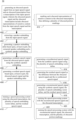
- FIG. 4 is a flow chart of one implementation of the secure training process of FIG. 1 ;
- FIGS. 5 - 6 are diagrammatic views of the secure training process of FIG. 1 .
- processing and storing audio encounter information and corresponding transcriptions for training a speech processing system or model present a security concern.
- sensitive content may be obtained by a breach.
- an internal actor could potentially scan lots of internal data (e.g., by looking for particular persons or classes of information, such as credit card numbers).
- just removing or obscuring sensitive content may result in degraded speech processing system performance.
- conventional approaches that seek to obscure audio encounter information and corresponding textual data using text-to-speech systems result in less accurate speech processing (i.e., increased word error rate in machine-based speech processing).
- implementations of the present disclosure provide a technical solution necessarily rooted in computing technology to provide secure training of speech processing systems or models.
- implementations of the present disclosure may generate a secure representation of the audio encounter information that accounts for acoustic properties (i.e., background noise, reverberation, etc.) within the audio encounter information to train speech processing systems without exposing sensitive content.
- implementations of the present disclosure may utilize text-to-speech and voice style transfer (VST) processing to generate obscured or “de-identified” data and a residual signal that may be stored separately.
- VST text-to-speech and voice style transfer
- the de-identified data and the residual signal may allow for reconstruction of the original signal (to facilitate high accuracy speech processing model training).
- implementations of the present disclosure may provide for content obscuring awareness during training to make the training of the speech processing system more robust to mismatch between actual audio encounter information and synthetically obscured audio information.
- Secure training process 10 may be implemented as a server-side process, a client-side process, or a hybrid server-side/client-side process.
- secure training process 10 may be implemented as a purely server-side process via secure training process 10 s .
- secure training process 10 may be implemented as a purely client-side process via one or more of secure training process 10 c 1 , secure training process 10 c 2 , secure training process 10 c 3 , and secure training process 10 c 4 .
- secure training process 10 may be implemented as a hybrid server-side/client-side process via secure training process 10 s in combination with one or more of secure training process 10 c 1 , secure training process 10 c 2 , secure training process 10 c 3 , and secure training process 10 c 4 .
- secure training process 10 may include any combination of secure training process 10 s , secure training process 10 c 1 , secure training process 10 c 2 , secure training process 10 c 3 , and secure training process 10 c 4 .
- Secure training process 10 s may be a server application and may reside on and may be executed by automated clinical documentation (ACI) computer system 12 , which may be connected to network 14 (e.g., the Internet or a local area network).
- ACI computer system 12 may include various components, examples of which may include but are not limited to: a personal computer, a server computer, a series of server computers, a mini computer, a mainframe computer, one or more Network Attached Storage (NAS) systems, one or more Storage Area Network (SAN) systems, one or more Platform as a Service (PaaS) systems, one or more Infrastructure as a Service (IaaS) systems, one or more Software as a Service (SaaS) systems, a cloud-based computational system, and a cloud-based storage platform.
- NAS Network Attached Storage
- SAN Storage Area Network
- PaaS Platform as a Service
- IaaS Infrastructure as a Service
- SaaS Software as a Service
- cloud-based computational system e.g.
- a SAN may include one or more of a personal computer, a server computer, a series of server computers, a mini computer, a mainframe computer, a RAID device and a NAS system.
- the various components of ACI computer system 12 may execute one or more operating systems, examples of which may include but are not limited to: Microsoft Windows ServerTM; Redhat LinuxTM, Unix, or a custom operating system, for example.
- the instruction sets and subroutines of secure training process 10 s may be stored on storage device 16 coupled to ACI computer system 12 , may be executed by one or more processors (not shown) and one or more memory architectures (not shown) included within ACI computer system 12 .
- Examples of storage device 16 may include but are not limited to: a hard disk drive; a RAID device; a random access memory (RAM); a read-only memory (ROM); and all forms of flash memory storage devices.
- Network 14 may be connected to one or more secondary networks (e.g., network 18 ), examples of which may include but are not limited to: a local area network; a wide area network; or an intranet, for example.
- secondary networks e.g., network 18
- networks may include but are not limited to: a local area network; a wide area network; or an intranet, for example.
- IO requests may be sent from secure training process 10 s , secure training process 10 c 1 , secure training process 10 c 2 , secure training process 10 c 3 and/or secure training process 10 c 4 to ACI computer system 12 .
- Examples of IO request 20 may include but are not limited to data write requests (i.e. a request that content be written to ACI computer system 12 ) and data read requests (i.e. a request that content be read from ACI computer system 12 ).
- the instruction sets and subroutines of secure training process 10 c 1 , secure training process 10 c 2 , secure training process 10 c 3 and/or secure training process 10 c 4 which may be stored on storage devices 20 , 22 , 24 , 26 (respectively) coupled to ACI client electronic devices 28 , 30 , 32 , 34 (respectively), may be executed by one or more processors (not shown) and one or more memory architectures (not shown) incorporated into ACI client electronic devices 28 , 30 , 32 , 34 (respectively).
- Storage devices 20 , 22 , 24 , 26 may include but are not limited to: hard disk drives; optical drives; RAID devices; random access memories (RAM); read-only memories (ROM), and all forms of flash memory storage devices.
- Examples of ACI client electronic devices 28 , 30 , 32 , 34 may include, but are not limited to, personal computing device 28 (e.g., a smart phone, a personal digital assistant, a laptop computer, a notebook computer, and a desktop computer), audio input device 30 (e.g., a handheld microphone, a lapel microphone, an embedded microphone (such as those embedded within eyeglasses, smart phones, tablet computers and/or watches) and an audio recording device), display device 32 (e.g., a tablet computer, a computer monitor, and a smart television), machine vision input device 34 (e.g., an RGB imaging system, an infrared imaging system, an ultraviolet imaging system, a laser imaging system, a SONAR imaging system, a RADAR imaging system, and a thermal imaging system), a hybrid device (e.g., a single device that includes the functionality of one or more of the above-references devices; not shown), an audio rendering device (e.g., a speaker system, a headphone system, or an
- ACI computer system 12 may beaccessed directly through network 14 or through secondary network 18 . Further, ACI computer system 12 may be connected to network 14 through secondary network 18 , as illustrated with link line 44 .
- the various ACI client electronic devices may be directly or indirectly coupled to network 14 (or network 18 ).
- personal computing device 28 is shown directly coupled to network 14 via a hardwired network connection.
- machine vision input device 34 is shown directly coupled to network 18 via a hardwired network connection.
- Audio input device 30 is shown wirelessly coupled to network 14 via wireless communication channel 46 established between audio input device 30 and wireless access point (i.e., WAP) 48 , which is shown directly coupled to network 14 .
- WAP wireless access point
- WAP 48 may be, for example, an IEEE 802.11a, 802.11b, 802.11g, 802.11n, Wi-Fi, and/or Bluetooth device that is capable of establishing wireless communication channel 46 between audio input device 30 and WAP 48 .
- Display device 32 is shown wirelessly coupled to network 14 via wireless communication channel 50 established between display device 32 and WAP 52 , which is shown directly coupled to network 14 .
- the various ACI client electronic devices may each execute an operating system, examples of which may include but are not limited to Microsoft WindowsTM, Apple MacintoshTM, Redhat LinuxTM, or a custom operating system, wherein the combination of the various ACI client electronic devices (e.g., ACI client electronic devices 28 , 30 , 32 , 34 ) and ACI computer system 12 may form modular ACI system 54 .
- an operating system examples of which may include but are not limited to Microsoft WindowsTM, Apple MacintoshTM, Redhat LinuxTM, or a custom operating system, wherein the combination of the various ACI client electronic devices (e.g., ACI client electronic devices 28 , 30 , 32 , 34 ) and ACI computer system 12 may form modular ACI system 54 .
- Modular ACI system 54 may include: machine vision system 100 configured to obtain machine vision encounter information 102 concerning a patient encounter; audio recording system 104 configured to obtain audio encounter information 106 concerning the patient encounter; and a computer system (e.g., ACI computer system 12 ) configured to receive machine vision encounter information 102 and audio encounter information 106 from machine vision system 100 and audio recording system 104 (respectively).
- machine vision system 100 configured to obtain machine vision encounter information 102 concerning a patient encounter
- audio recording system 104 configured to obtain audio encounter information 106 concerning the patient encounter
- a computer system e.g., ACI computer system 12
- Modular ACI system 54 may also include: display rendering system 108 configured to render visual information 110 ; and audio rendering system 112 configured to render audio information 114 , wherein ACI computer system 12 may be configured to provide visual information 110 and audio information 114 to display rendering system 108 and audio rendering system 112 (respectively).
- Example of machine vision system 100 may include but are not limited to: one or more ACI client electronic devices (e.g., ACI client electronic device 34 , examples of which may include but are not limited to an RGB imaging system, an infrared imaging system, a ultraviolet imaging system, a laser imaging system, a SONAR imaging system, a RADAR imaging system, and a thermal imaging system).
- Examples of audio recording system 104 may include but are not limited to: one or more ACI client electronic devices (e.g., ACI client electronic device 30 , examples of which may include but are not limited to a handheld microphone, a lapel microphone, an embedded microphone (such as those embedded within eyeglasses, smart phones, tablet computers and/or watches) and an audio recording device).
- Examples of display rendering system 108 may include but are not limited to: one or more ACI client electronic devices (e.g., ACI client electronic device 32 , examples of which may include but are not limited to a tablet computer, a computer monitor, and a smart television).
- Examples of audio rendering system 112 may include but are not limited to: one or more ACI client electronic devices (e.g., audio rendering device 116 , examples of which may include but are not limited to a speaker system, a headphone system, and an earbud system).
- ACI computer system 12 may be configured to access one or more datasources 118 (e.g., plurality of individual datasources 120 , 122 , 124 , 126 , 128 ), examples of which may include but are not limited to one or more of a user profile datasource, a voice print datasource, a voice characteristics datasource (e.g., for adapting the automated speech recognition models), a face print datasource, a humanoid shape datasource, an utterance identifier datasource, a wearable token identifier datasource, an interaction identifier datasource, a medical conditions symptoms datasource, a prescriptions compatibility datasource, a medical insurance coverage datasource, and a home healthcare datasource. While in this particular example, five different examples of datasources 118 , are shown, this is for illustrative purposes only and is not intended to be a limitation of this disclosure, as other configurations are possible and are considered to be within the scope of this disclosure.
- modular ACI system 54 may be configured to monitor a monitored space (e.g., monitored space 130 ) in a clinical environment, wherein examples of this clinical environment may include but are not limited to: a doctor's office, a medical facility, a medical practice, a medical lab, an urgent care facility, a medical clinic, an emergency room, an operating room, a hospital, a long term care facility, a rehabilitation facility, a nursing home, and a hospice facility.
- a monitored space e.g., monitored space 130
- this clinical environment may include but are not limited to: a doctor's office, a medical facility, a medical practice, a medical lab, an urgent care facility, a medical clinic, an emergency room, an operating room, a hospital, a long term care facility, a rehabilitation facility, a nursing home, and a hospice facility.
- an example of the above-referenced patient encounter may include but is not limited to a patient visiting one or more of the above-described clinical environments (e.g., a doctor's office, a medical facility, a medical practice, a medical lab, an urgent care facility, a medical clinic, an emergency room, an operating room, a hospital, a long term care facility, a rehabilitation facility, a nursing home, and a hospice facility).
- a doctor's office e.g., a doctor's office, a medical facility, a medical practice, a medical lab, an urgent care facility, a medical clinic, an emergency room, an operating room, a hospital, a long term care facility, a rehabilitation facility, a nursing home, and a hospice facility.
- Machine vision system 100 may include a plurality of discrete machine vision systems when the above-described clinical environment is larger or a higher level of resolution is desired.
- examples of machine vision system 100 may include but are not limited to: one or more ACI client electronic devices (e.g., ACI client electronic device 34 , examples of which may include but are not limited to an RGB imaging system, an infrared imaging system, an ultraviolet imaging system, a laser imaging system, a SONAR imaging system, a RADAR imaging system, and a thermal imaging system).
- machine vision system 100 may include one or more of each of an RGB imaging system, an infrared imaging systems, an ultraviolet imaging systems, a laser imaging system, a SONAR imaging system, a RADAR imaging system, and a thermal imaging system.
- Audio recording system 104 may include a plurality of discrete audio recording systems when the above-described clinical environment is larger or a higher level of resolution is desired.
- examples of audio recording system 104 may include but are not limited to: one or more ACI client electronic devices (e.g., ACI client electronic device 30 , examples of which may include but are not limited to a handheld microphone, a lapel microphone, an embedded microphone (such as those embedded within eyeglasses, smart phones, tablet computers and/or watches) and an audio recording device).
- ACI client electronic device 30 examples of which may include but are not limited to a handheld microphone, a lapel microphone, an embedded microphone (such as those embedded within eyeglasses, smart phones, tablet computers and/or watches) and an audio recording device).
- audio recording system 104 may include one or more of each of a handheld microphone, a lapel microphone, an embedded microphone (such as those embedded within eyeglasses, smart phones, tablet computers and/or watches) and an audio recording device.
- Display rendering system 108 may include a plurality of discrete display rendering systems when the above-described clinical environment is larger or a higher level of resolution is desired.
- examples of display rendering system 108 may include but are not limited to: one or more ACI client electronic devices (e.g., ACI client electronic device 32 , examples of which may include but are not limited to a tablet computer, a computer monitor, and a smart television).
- ACI client electronic device 32 examples of which may include but are not limited to a tablet computer, a computer monitor, and a smart television.
- display rendering system 108 may include one or more of each of a tablet computer, a computer monitor, and a smart television.
- Audio rendering system 112 may include a plurality of discrete audio rendering systems when the above-described clinical environment is larger or a higher level of resolution is desired.
- examples of audio rendering system 112 may include but are not limited to: one or more ACI client electronic devices (e.g., audio rendering device 116 , examples of which may include but are not limited to a speaker system, a headphone system, or an earbud system).
- audio rendering system 112 may include one or more of each of a speaker system, a headphone system, or an earbud system.
- ACI computer system 12 may include a plurality of discrete computer systems. As discussed above, ACI computer system 12 may include various components, examples of which may include but are not limited to: a personal computer, a server computer, a series of server computers, a mini computer, a mainframe computer, one or more Network Attached Storage (NAS) systems, one or more Storage Area Network (SAN) systems, one or more Platform as a Service (PaaS) systems, one or more Infrastructure as a Service (IaaS) systems, one or more Software as a Service (SaaS) systems, a cloud-based computational system, and a cloud-based storage platform.
- NAS Network Attached Storage
- SAN Storage Area Network
- PaaS Platform as a Service
- IaaS Infrastructure as a Service
- SaaS Software as a Service
- ACI computer system 12 may include one or more of each of a personal computer, a server computer, a series of server computers, a mini computer, a mainframe computer, one or more Network Attached Storage (NAS) systems, one or more Storage Area Network (SAN) systems, one or more Platform as a Service (PaaS) systems, one or more Infrastructure as a Service (IaaS) systems, one or more Software as a Service (SaaS) systems, a cloud-based computational system, and a cloud-based storage platform.
- NAS Network Attached Storage
- SAN Storage Area Network
- PaaS Platform as a Service
- IaaS Infrastructure as a Service
- SaaS Software as a Service
- audio recording system 104 may include directional microphone array 200 having a plurality of discrete microphone assemblies.
- audio recording system 104 may include a plurality of discrete audio acquisition devices (e.g., audio acquisition devices 202 , 204 , 206 , 208 , 210 , 212 , 214 , 216 , 218 ) that may form microphone array 200 .
- modular ACI system 54 may be configured to form one or more audio recording beams (e.g., audio recording beams 220 , 222 , 224 ) via the discrete audio acquisition devices (e.g., audio acquisition devices 202 , 204 , 206 , 208 , 210 , 212 , 214 , 216 , 218 ) included within audio recording system 104 .
- the discrete audio acquisition devices e.g., audio acquisition devices 202 , 204 , 206 , 208 , 210 , 212 , 214 , 216 , 218 .
- modular ACI system 54 may be further configured to steer the one or more audio recording beams (e.g., audio recording beams 220 , 222 , 224 ) toward one or more encounter participants (e.g., encounter participants 226 , 228 , 230 ) of the above-described patient encounter.
- audio recording beams e.g., audio recording beams 220 , 222 , 224
- encounter participants e.g., encounter participants 226 , 228 , 230
- Examples of the encounter participants may include but are not limited to: medical professionals (e.g., doctors, nurses, physician's assistants, lab technicians, physical therapists, scribes (e.g., a transcriptionist) and/or staff members involved in the patient encounter), patients (e.g., people that are visiting the above-described clinical environments for the patient encounter), and third parties (e.g., friends of the patient, relatives of the patient and/or acquaintances of the patient that are involved in the patient encounter).
- medical professionals e.g., doctors, nurses, physician's assistants, lab technicians, physical therapists, scribes (e.g., a transcriptionist) and/or staff members involved in the patient encounter
- patients e.g., people that are visiting the above-described clinical environments for the patient encounter
- third parties e.g., friends of the patient, relatives of the patient and/or acquaintances of the patient that are involved in the patient encounter.
- modular ACI system 54 and/or audio recording system 104 may be configured to utilize one or more of the discrete audio acquisition devices (e.g., audio acquisition devices 202 , 204 , 206 , 208 , 210 , 212 , 214 , 216 , 218 ) to form an audio recording beam.
- modular ACI system 54 and/or audio recording system 104 may be configured to utilize audio acquisition device 210 to form audio recording beam 220 , thus enabling the capturing of audio (e.g., speech) produced by encounter participant 226 (as audio acquisition device 210 is pointed to (i.e., directed toward) encounter participant 226 ).
- modular ACI system 54 and/or audio recording system 104 may be configured to utilize audio acquisition devices 204 , 206 to form audio recording beam 222 , thus enabling the capturing of audio (e.g., speech) produced by encounter participant 228 (as audio acquisition devices 204 , 206 are pointed to (i.e., directed toward) encounter participant 228 ). Additionally, modular ACI system 54 and/or audio recording system 104 may be configured to utilize audio acquisition devices 212 , 214 to form audio recording beam 224 , thus enabling the capturing of audio (e.g., speech) produced by encounter participant 230 (as audio acquisition devices 212 , 214 are pointed to (i.e., directed toward) encounter participant 230 ). Further, modular ACI system 54 and/or audio recording system 104 may be configured to utilize null-steering precoding to cancel interference between speakers and/or noise.
- null-steering precoding to cancel interference between speakers and/or noise.
- null-steering precoding is a method of spatial signal processing by which a multiple antenna transmitter may null multiuser interference signals in wireless communications, wherein null-steering precoding may mitigate the impact off background noise and unknown user interference.
- null-steering precoding may be a method of beamforming for narrowband signals that may compensate for delays of receiving signals from a specific source at different elements of an antenna array.
- in incoming signals may be summed and averaged, wherein certain signals may be weighted and compensation may be made for signal delays.
- Machine vision system 100 and audio recording system 104 may be stand-alone devices (as shown in FIG. 2 ). Additionally/alternatively, machine vision system 100 and audio recording system 104 may be combined into one package to form mixed-media ACI device 232 .
- mixed-media ACI device 232 may be configured to be mounted to a structure (e.g., a wall, a ceiling, a beam, a column) within the above-described clinical environments (e.g., a doctor's office, a medical facility, a medical practice, a medical lab, an urgent care facility, a medical clinic, an emergency room, an operating room, a hospital, a long term care facility, a rehabilitation facility, a nursing home, and a hospice facility), thus allowing for easy installation of the same.
- modular ACI system 54 may be configured to include a plurality of mixed-media ACI devices (e.g., mixed-media ACI device 232 ) when the above-described clinical environment is larger or a higher level of resolution is desired.
- Modular ACI system 54 may be further configured to steer the one or more audio recording beams (e.g., audio recording beams 220 , 222 , 224 ) toward one or more encounter participants (e.g., encounter participants 226 , 228 , 230 ) of the patient encounter based, at least in part, upon machine vision encounter information 102 .
- mixed-media ACI device 232 (and machine vision system 100 /audio recording system 104 included therein) may be configured to monitor one or more encounter participants (e.g., encounter participants 226 , 228 , 230 ) of a patient encounter.
- machine vision system 100 may be configured to detect humanoid shapes within the above-described clinical environments (e.g., a doctor's office, a medical facility, a medical practice, a medical lab, an urgent care facility, a medical clinic, an emergency room, an operating room, a hospital, a long term care facility, a rehabilitation facility, a nursing home, and a hospice facility).
- clinical environments e.g., a doctor's office, a medical facility, a medical practice, a medical lab, an urgent care facility, a medical clinic, an emergency room, an operating room, a hospital, a long term care facility, a rehabilitation facility, a nursing home, and a hospice facility.
- modular ACI system 54 and/or audio recording system 104 may be configured to utilize one or more of the discrete audio acquisition devices (e.g., audio acquisition devices 202 , 204 , 206 , 208 , 210 , 212 , 214 , 216 , 218 ) to form an audio recording beam (e.g., audio recording beams 220 , 222 , 224 ) that is directed toward each of the detected humanoid shapes (e.g., encounter participants 226 , 228 , 230 ).
- the discrete audio acquisition devices e.g., audio acquisition devices 202 , 204 , 206 , 208 , 210 , 212 , 214 , 216 , 218
- an audio recording beam e.g., audio recording beams 220 , 222 , 224
- ACI computer system 12 may be configured to receive machine vision encounter information 102 and audio encounter information 106 from machine vision system 100 and audio recording system 104 (respectively); and may be configured to provide visual information 110 and audio information 114 to display rendering system 108 and audio rendering system 112 (respectively).
- ACI computer system 12 may be included within mixed-media ACI device 232 or external to mixed-media ACI device 232 .
- ACI computer system 12 may execute all or a portion of secure training process 10 , wherein the instruction sets and subroutines of secure training process 10 (which may be stored on one or more of e.g., storage devices 16 , 20 , 22 , 24 , 26 ) may be executed by ACI computer system 12 and/or one or more of ACI client electronic devices 28 , 30 , 32 , 34 .
- the instruction sets and subroutines of secure training process 10 (which may be stored on one or more of e.g., storage devices 16 , 20 , 22 , 24 , 26 ) may be executed by ACI computer system 12 and/or one or more of ACI client electronic devices 28 , 30 , 32 , 34 .
- processing and storing audio encounter information and corresponding transcriptions for training a speech processing system or model present a security concern.
- sensitive content may be obtained by a breach.
- an internal actor could potentially scan lots of internal data (e.g., by looking for particular persons or classes of information, such as credit card numbers).
- just removing or obscuring sensitive content may result in degraded speech processing system performance.
- conventional approaches that seek to obscure audio encounter information and corresponding textual data using text-to-speech systems result in less accurate speech processing (i.e., increased word error rate in machine-based speech processing).
- secure training process 10 may generate 400 an obscured speech signal from an input speech signal and an obscured transcription from a transcription of the input speech signal, where the obscured speech signal and the obscured transcription include obscured representations of sensitive content from the input speech signal and the transcription.
- a speaker embedding may be extracted 402 from the input speech signal.
- a speaker embedding delta may be generated 404 based upon, at least in part, the extracted speaker embedding and a synthetic speaker embedding.
- a synthetic speech signal may be generated 406 from the obscured speech signal using the synthetic speaker embedding.
- a residual signal may be generated 408 based upon, at least in part, the obscured speech signal and the speaker embedding delta.
- a speech processing system may be trained 410 using the obscured transcription, the synthetic speech signal, the speaker embedding delta, and the residual signal.
- secure training process 10 may receive an input speech signal (i.e., a portion of audio information) and a transcription of the input speech signal to generate an obscured transcription (i.e., a version of the transcription in which sensitive content is replaced with surrogate data) and an obscured speech signal (i.e., a version of the input speech signal that is fully intelligible but with the audio portions of the sensitive content replaced with surrogate data).
- a speaker embedding delta i.e., a representation of the difference or delta between the original speaker's voice style and a synthetic speaker's voice style
- a synthetic speech signal (i.e., a version of the obscured speech signal with the voice style changed to sound like another speaker) may be generated from the obscured speech signal.
- the obscured speech signal and the synthetic speech signal may be used to generate a residual signal (i.e., audio information capturing the difference between the synthetic speech signal and the obscured speech signal that accounts for non-speech acoustic properties present in the obscured speech signal (e.g., noise, reverberation, etc.) that are filtered from the synthetic speech signal).
- the synthetic speech signal, the obscured transcription, the speaker embedding delta, and the residual speech signal may be used to generate a reconstructed speech signal (i.e., a representation of the input speech signal without the sensitive content while including the acoustic properties of the obscured speech signal) for training a speech processing system.
- a reconstructed speech signal i.e., a representation of the input speech signal without the sensitive content while including the acoustic properties of the obscured speech signal
- secure training process 10 may receive an input speech signal.
- an audio recording system e.g., audio recording system 104
- secure training process 10 may receive an input speech signal (e.g., input speech signal 500 ).
- input speech signal 500 may be received and recorded by an audio recording system (e.g., audio recording system 104 ) and/or may be a previously recorded audio input signal (e.g., an audio signal stored in a database or other data structure).
- a medical professional e.g., participant 226
- a patient e.g., participant 228
- the patient e.g., participant 228
- the medical professional e.g., participant 226
- personal identification information e.g., name, date of birth, marital status, etc.
- the patient e.g., participant 228
- personal health information e.g., symptoms, medical history, etc.
- input speech signal 500 may include sensitive content.
- secure training process 10 may receive a transcription of the input speech signal.
- secure training process 10 may provide the input speech signal (e.g., input speech signal 500 ) to an automatic speech recognition (ASR) system or other speech processing system to generate a transcription (e.g., transcription 502 ) of the input speech signal (e.g., input speech signal 500 ).
- ASR automatic speech recognition
- ASR systems may convert input speech signals to output text. Accordingly, the ASR system may automatically generate transcription 502 of input speech signal 500 .
- transcription 502 may include any sensitive content information recorded in input speech signal 500 .
- secure training process 10 may identify one or more sensitive content portions from the transcription of the input speech signal.
- Sensitive content portions may generally include any pieces or types of information that are personal, private, or subject to confidentiality.
- the one or more sensitive content portions may include personally identifiable information (PII) and/or protected health information (PHI).
- PII personally identifiable information
- PHI protected health information
- sensitive content portions may include financial information, intellectual property, trade secrets, and/or information declared private by law or regulation. Accordingly, it will be appreciated that secure training process 10 may identify various types of information as sensitive content within the scope of the present disclosure.
- secure training process 10 may utilize a sensitive content identification system (e.g., sensitive content identification system 504 ) to identify one or more sensitive content portions within the transcription (e.g., transcription 502 ).
- Sensitive content identification system 504 may include various known components such as natural language understanding (NLU) systems, artificial intelligence/machine learning models, predefined detection rules, etc. for identifying one or more sensitive content portions from within the transcription.
- Secure training process 10 may provide a user interface, database, and/or other data structure of examples and/or rules for identifying sensitive content within a transcription.
- secure training process 10 may generate 400 an obscured speech signal from an input speech signal and an obscured transcription from a transcription of the input speech signal, where the obscured speech signal and the obscured transcription include obscured representations of sensitive content from the input speech signal and the transcription.
- the obscured speech signal is fully intelligible but with sensitive content (i.e., PHI/PII) replaced with surrogate data.
- Generating 400 the obscured transcription may generally include “obscuring” the one or more sensitive content portions from the transcription.
- secure training process 10 may obscure the sensitive content by replacing and/or modifying the sensitive content portions from the transcription.
- secure training process 10 may utilize various known components such as natural language understanding (NLU) systems, artificial intelligence/machine learning models, predefined detection rules, etc. for obscuring (i.e., substituting) particular portions of sensitive content. Obscuring the one or more sensitive content portions from the transcription may include changing personally identifiable information (PII) and/or protected health information (PHI).
- secure training process 10 may include rules for replacing particular types of sensitive content with similar types of content. In this manner, secure training process 10 may obscure sensitive content particular to individuals associated with a particular input speech signal.
- secure training process 10 may generate 400 the obscured transcription and the obscured speech signal by processing the transcription and corresponding portions of the input speech signal in segments. For example, secure training process 10 may process each segment of input speech signal 500 and transcription 502 associated with a particular speaker. For example, secure training process 10 may utilize a speaker identification system (e.g., a speaker recognition system) to identify particular speakers in an input speech signal. As will be discussed in greater detail below, acoustic properties of a speaker's voice may be represented as a speaker embedding. Secure training process 10 may identify one or more speakers from input speech signal 500 by extracting speaker embeddings for distinct speakers.
- a speaker identification system e.g., a speaker recognition system
- transcription 502 may include predefined speaker tags indicating conversational data (i.e., text) that is attributable to a particular speaker (e.g., during an encounter between various encounter participants as shown in FIG. 3 ).
- secure training process 10 may generate 400 the obscured transcription by processing segments of text of the transcription.
- a segment may be a predefined amount of text and/or amount of corresponding speech signal.
- a segment may represent a portion of text and/or corresponding speech signal associated with a particular speaker.
- a first segment may include a portion of the transcription associated with a particular speaker while a second segment may include another portion of the transcription that is associated with another speaker.
- a segment may be defined as a sensitive content portion.
- secure training process 10 may define a segment for each sensitive content portion. While various examples have been described about how a segment may be defined, it will be appreciated that the segment may be given by a single speaker and may include any fixed or dynamic length or amount of content from the transcription and/or the input speech signal within the scope of the present disclosure.
- secure training process 10 identifies various sensitive content portions from transcription 502 .
- secure training process 10 may obscure the doctor's name (e.g., replacing “James” with “Andy”).
- secure training process 10 may obscure e.g., a patient's date of birth (e.g., replacing “Oct. 12, 1987” with “Nov. 12, 1997”); and/or other various sensitive content (e.g., a patient's medical history/prescription dosage information, an individual's financial information, a participant's address, etc.).
- Secure training process 10 may output these obscured sensitive data portions in the form of an obscured transcription (e.g., obscured transcription 506 ).
- an obscured transcription e.g., obscured transcription 506
- secure training process 10 may utilize the text of the transcription without performing any modifications.
- secure training process 10 may obscure those sensitive content portions by replacing or modifying the original text of the transcription. In this manner, secure training process 10 may generate obscured transcription 506 by processing each segment of original transcription 502 individually for sensitive content. While several examples of obscuring sensitive content portions has been described above, it will be appreciated that any combination of sensitive content portions may be obscured by secure training process 10 within the scope of the present disclosure.
- Secure training process 10 may generate 400 an obscured speech signal with speech content for modified portions of the obscured transcription relative to the original transcription.
- an obscured speech signal e.g., obscured speech signal 508
- TTS system e.g., TTS system 510
- TTS system 510 may include any TTS system known in the art.
- secure training process 10 may generate an obscured speech signal corresponding to particular segments of the obscured transcription. For example, secure training process may use TTS system 510 to replace the speech signal portions including sensitive content with a synthesized representation of the sensitive content portions.
- secure training process 10 may identify a class for each sensitive content portion (e.g., age, gender, date, time, location, etc.). Secure training process 10 may replace the sensitive content portion with a class identifier or tag. For example, if transcription 502 states “Sam has an appointment”, secure training process 10 may identify “Sam” as PII and as PHI. In this example, secure training process 10 may access one or more datasources (e.g., datasources 118 ) to identify the class or classes for each sensitive content portion in the transcription and the input speech signal. In response to identifying and replacing each sensitive content portion with a corresponding class identifier, secure training process 10 may access a dictionary or other database of candidate phrases to use as a replacement for the class identifier. Secure training process 10 may replace each class identifier with one or more candidate phrases from the database of candidate phrases.
- datasources e.g., datasources 118
- obscured transcription 506 includes an obscured representation of the doctor's name (e.g., “James” is replaced with “Andy”) and an obscured representation of the patient's date of birth (e.g., “Oct. 12, 1987” is replaced with “Nov. 12, 1997”).
- secure training process 10 may use TTS system 510 to generate obscured speech representations of “Andy” and “Oct. 12, 1987”. While an example with two obscured portions has been described, it will be appreciated that this is for example purposes only and that any number of obscured representations may be processed by TTS system 510 within the scope of the present disclosure.
- secure training process 10 may mark 412 each obscured representation of sensitive content in the obscured transcription, thus defining a plurality of obscured portion markings. For example, secure training process 10 may generate a marker or other tag for each obscured representation of sensitive content in the obscured transcription. In one example, secure training process 10 may provide a marker for each portion or segment of the obscured transcription to identify obscured portions. For example, a “0” may indicate that the segment is not obscured while a “1” may indicate that the segment is obscured. While an example of a single value indicator has been provided, it will be appreciated that a list or table of obscured portions may be defined for the obscured transcription. As such, secure training process 10 may mark 412 each observed representation of sensitive content in various ways and at various granularities (e.g., per segment, per line of the transcription, per frame of the input speech signal, etc.) within the scope of the present disclosure.
- granularities e.g., per segment, per line of the transcription, per frame of the input speech signal, etc.
- secure training process 10 may utilize the plurality of obscured portion markings to indicate where, in the corresponding speech signal, a portion of the original input speech signal has been obscured.
- the plurality of obscured portion markings may be utilized during the training of a speech processing system to inform the speech processing system of obscured speech signal portions.
- TTS system 510 may process each obscured representation of sensitive content to generate a synthetic, obscured representation of the sensitive content.
- these obscured representations may be anechoic (i.e., lacking any noise, reverberation, or other acoustic properties).
- the obscured representations may not be representative of the various acoustic properties of the actual input speech signal (i.e., noise level, reverberation, etc.). Accordingly, simply using the obscured representations from the obscured speech signal for training may result in degraded speech processing system performance (e.g., higher word error rate and other performance degradations). In this manner, secure training process 10 may use the plurality of obscured portion markings to inform the speech processing system which portions of the obscured speech signal are representative of actual input speech during training.
- secure training process 10 may extract 402 a speaker embedding from the input speech signal.
- a speaker embedding may generally include a representation a speaker's identity (e.g., a vector of fixed size) regardless of the length of an input speech signal.
- a speaker embedding may be generated in various ways within the scope of the present disclosure.
- secure training process 10 may perform feature extraction by building a supervised deep neural network (DNN), operating at the frame level, to classify speakers in a development set.
- the input of this background network may be formed by stacking each training frame with its left and right context frames. The number of outputs corresponds to the number of speakers in the development set, N.
- DNN supervised deep neural network
- the target labels may be formed as a 1-hot N-dimensional vector where the only non-zero component is the one corresponding to the speaker identity.
- the accumulated output activations of the last hidden layer may be used as a new speaker representation or speaker embedding. That is, for every frame of the obscured speech signal belonging to a new speaker, the output activations of the last hidden layer may be computed using standard feedforward propagation in the trained DNN, and then those activations may be accumulated to form a new compact representation of that speaker, the speaker embedding.
- the speaker embedding may be referred to as a “d-vector”.
- various types of speaker embeddings may be extracted from the obscured speech signal within the scope of the present disclosure.
- secure training process 10 may extract 402 , for each segment of the input speech signal (e.g., input speech signal 500 ) and for each speaker (e.g., participant 226 and/or participant 228 ), a speaker embedding (e.g., speaker embedding 512 ).
- speaker embedding 512 may be a d-vector that represents the average activations from a last hidden layer of a DNN. In this manner, secure training process 10 may utilize speaker embedding 512 to represent the speech characteristics of a particular participant (e.g., participant 226 or participant 228 ).
- secure training process 10 may generate 404 a speaker embedding delta based upon, at least in part, the extracted speaker embedding and a synthetic speaker embedding.
- a synthetic speaker embedding may represent the speech characteristics of another person or an artificially created speaker embedding that is useable for generating and storing speech signals.
- a speaker embedding e.g., speaker embedding 512
- PII sensitive content
- a synthetic speaker embedding e.g., synthetic speaker embedding 514
- synthetic may represent any speaker embedding that does not constitute sensitive content (i.e., PII that is attributable to a known person but used without their consent). For example, various laws and regulations limit the amount of PII or PHI that can be stored or utilized in speech processing. As such, synthetic speaker embedding 514 may represent a legally compliant speaker embedding that can be used to generate synthetic speech signals.
- secure training process 10 may select synthetic speaker embedding 514 by comparing extracted speaker embedding 512 to a plurality of candidate synthetic speaker embeddings. For example, secure training process 10 may ensure that the synthetic speaker embedding is sufficiently different from the original speaker embedding. In one example, secure training process 10 may determine the distance between the extracted speaker embedding and each synthetic speaker embedding and may select a synthetic speaker embedding based upon a predefined threshold. For example, a threshold may be defined such that the difference between the extracted speaker embedding and the selected synthetic speaker embedding is greater than or equal to the threshold. While one example has been described for selecting a synthetic speaker embedding, it will be appreciated various methodologies may be used to select the synthetic speaker embedding within the scope of the present disclosure.
- a speaker embedding delta may represent the difference between an extracted speaker embedding (e.g., speaker embedding 512 ) and a synthetic speaker embedding (e.g., synthetic speaker embedding 514 ).
- extracted speaker embedding 512 may include PII that is attributable to a particular speaker.
- storing extracted speaker embedding 512 may represent a security risk.
- secure training process 10 may generate 404 a speaker embedding delta (e.g., speaker embedding delta 516 ) as the distance or difference between extracted speaker embedding 512 and synthetic speaker embedding 514 . In this manner, by generating speaker embedding delta 516 , a speaker embedding for a particular speaker may be securely derivable without actually storing sensitive content (i.e., PII).
- speaker embedding delta 516 may be the Euclidean distance between speaker embedding 512 and synthetic speaker embedding 514 .
- speaker embedding delta 516 may be generated as a d-vector delta between the extracted speaker d-vector and the synthetic d-vector. While one example of how speaker embedding delta 516 has been discussed, it will be appreciated that this is for example purposes only and that various approaches may be used to determine the distance or difference between the synthetic speaker embedding and the extracted speaker embedding within the scope of the present disclosure.
- secure training process 10 may generate 404 a speaker embedding delta for each segment of the obscured speech signal.
- secure training process 10 may generate speaker embedding delta 516 as a mapping between extracted speaker embedding 512 and synthetic speaker embedding 514 to allow for the reconstruction of the input speech signal with the extracted speaker embedding to train a speech processing system without storing or otherwise retaining the extracted speaker embedding 512 or other sensitive content.
- secure training process 10 may generate 406 a synthetic speech signal from the obscured speech signal using the synthetic speaker embedding.
- a synthetic speech signal may include a representation of the obscured speech signal generated with a voice style transfer system or other speech-to-speech system.
- obscured speech signal 508 may include obscured representations of sensitive content generated using TTS system 510 .
- obscured speech signal 508 may include non-sensitive portions from input speech signal 500 and obscured portions from TTS system 510 .
- obscured speech signal 508 may not be consistent or representative of the actual speech signal sent to a speech processing system.
- secure training process 10 may utilize a voice style transfer (VST) system (e.g., VST system 518 ) to generate a complete synthetic speech signal (e.g., synthetic speech signal 520 ).
- VST voice style transfer
- Generating 406 the synthetic speech signal from the obscured speech signal may include processing the obscured speech signal using a VST system with a synthetic speaker embedding.
- a VST system synthesizes speech from one source speaker to a different target speaker while keeping the linguistic information while transferring the speech style to the target speaker.
- Secure training process 10 may utilize various known VST systems (e.g., neural networks, generative adversarial networks (GANs), etc.) for VST system 518 .
- VST system 518 may generate 406 synthetic speech signal 520 using synthetic speaker embedding 514 .
- VST system 518 may utilize synthetic speaker embedding 514 to modify the various acoustic properties or features of obscured speech signal 508 to generate synthetic speech signal 520 that has the speech characteristics of synthetic speaker embedding 514 .
- synthetic speech signal 520 may sound as if it were spoken by the same speaker associated with synthetic speaker embedding 514 .
- synthetic speech signal 520 may represent a secure version of input speech signal 500 without any sensitive content (e.g., PII or PHI).
- secure training process 10 may generate 408 a residual signal based upon, at least in part, the obscured speech signal and the speaker embedding delta.
- synthetic speech signal 520 may represent a secure version of input speech signal 500 that does not contain sensitive content (e.g., PII or PHI). However, as synthetic speech signal 520 is synthetically generated, it does not match the actual input speech signal (e.g., input speech signal 500 ) and, as such, does not represent what a speech processing system receives in normal use (e.g., as synthetic speech signal is anechoic).
- secure training process 10 may generate 408 a residual signal that accounts for the acoustic properties that are modified or removed when generating synthetic speech signal 520 .
- secure training process 10 may utilize the residual signal to reconstruct the input speech signal, including various acoustic properties (e.g., noise, reverberation, etc.) when training the speech processing system without storing or otherwise retaining sensitive content.
- generating 408 a residual signal based upon, at least in part, the obscured speech signal and the speaker embedding delta may include generating 416 a resynthesized speech signal from the synthetic speech signal using the speaker embedding delta.
- secure training process 10 may utilize a VST system (e.g., VST system 522 ) and the speaker embedding delta (e.g., speaker embedding delta 516 ) to generate a “resynthesized” speech signal that includes the speech characteristics defined by the speaker embedding delta (e.g., resynthesized speech signal 524 ).
- VST system 522 is shown in addition to VST system 518 , it will be appreciated that any number of VST systems may be used within the scope of the present disclosure.
- VST systems 518 and 522 may be the same VST system used with different inputs at different times or may represent separate VST systems.
- resynthesized speech signal 524 may map back to the extracted speaker embedding (e.g., speaker embedding 512 ) without storing or otherwise retaining the extracted speaker embedding.
- secure training process 10 may securely generate 414 a resynthesized representation of the obscured speech signal without storing sensitive content in the form of speaker embeddings extracted from the input speech signal.
- generating 408 a residual signal based upon, at least in part, the obscured speech signal and the speaker embedding delta may include generating 416 the residual signal as the difference between the obscured speech signal and the resynthesized speech signal.
- residual signal 526 may include any speaker and background acoustic information from the obscured speech signal (e.g., obscured speech signal 508 ) that is missing or corrupted in the resynthesized speech signal (e.g., resynthesized speech signal 524 ).
- residual signal 526 may be generated 416 by determining the difference between obscured speech signal 508 and resynthesized speech signal 524 .
- residual signal 526 may be generated 408 in the feature domain or in a neural embedding domain (i.e., after a first encoder layer). This may result in a more secure residual signal than a waveform difference. However, it will be appreciated that residual signal 526 may be generated 416 from resynthesized speech signal 524 and obscured speech signal 508 in various ways within the scope of the present disclosure.
- secure training process 10 may securely store the obscured transcription, the speaker embedding delta, the synthetic speech signal, and the residual signal.
- secure training process 10 may store obscured transcription 506 , speaker embedding delta 516 , synthetic speech signal 520 , and residual signal 526 in one or more storage devices or datasources (e.g., datasource 118 ).
- secure training process 10 may store speaker embedding delta 516 in one datasource (e.g., datasource 120 ); obscured transcription 506 in another datasource (e.g., datasource 122 ); synthetic speech signal 520 in another datasource (e.g., datasource 124 ); and residual signal 526 in another datasource (e.g., datasource 126 ).
- secure training process 10 may securely store obscured transcription 506 , speaker embedding delta 516 , synthetic speech signal 520 , and residual signal 526 in various datasources to reduce the likelihood of a breach revealing any singular representation of sensitive content.
- obscured transcription 506 , speaker embedding delta 516 , synthetic speech signal 520 , and residual signal 526 may be stored together or apart in any combination across any number of datasources or other storage devices within the scope of the present disclosure. It will also be appreciated that while each of datasources 120 , 122 , 124 , and 126 are shown in a grouping, secure training process 10 may store obscured transcription 506 , speaker embedding delta 516 , synthetic speech signal 520 , and residual signal 526 in any storage device or combination of storage devices locally at and/or remotely from ACI compute system 12 within the scope of the present disclosure.
- storing obscured transcription 506 , speaker embedding delta 516 , synthetic speech signal 520 , and residual signal 526 may include encrypting any or all of obscured transcription 506 , speaker embedding delta 516 , synthetic speech signal 520 , and residual signal 526 .
- any known encryption processes may be used to encrypt obscured transcription 506 , speaker embedding delta 516 , synthetic speech signal 520 , and residual signal 526 for storage within the scope of the present disclosure.
- secure training process 10 may discard input speech signal 500 , transcription 502 , extracted speaker embedding 512 , obscured speech signal 508 , and resynthesized speech signal 524 .
- secure training process 10 may train 410 a speech processing system using the obscured transcription, the synthetic speech signal, the speaker embedding delta, and the residual signal.
- training 410 a speech processing system e.g., speech processing system 600
- labeled data e.g., from a transcription
- input speech data for the speech processing system to “learn” from.
- machine learning generally includes the training of an algorithm or combination of to recognize certain types of patterns.
- Machine learning approaches may be generally divided into three categories, depending on the nature of the signal available: supervised learning, unsupervised learning, and reinforcement learning.
- supervised learning may include presenting a computing device with example inputs and their desired outputs, given by a “teacher”, where the goal is to learn a general rule that maps inputs to outputs.
- Unsupervised learning no labels are given to the learning algorithm, leaving it on its own to find structure in its input.
- Unsupervised learning can be a goal in itself (discovering hidden patterns in data) or a means towards an end (feature learning).
- reinforcement learning may generally include a computing device interacting in a dynamic environment in which it must perform a certain goal (such as driving a vehicle or playing a game against an opponent). As it navigates its problem space, the program is provided feedback that's analogous to rewards, which it tries to maximize. While three examples of machine learning approaches have been provided, it will be appreciated that other machine learning approaches are possible within the scope of the present disclosure.
- training 410 a speech processing system using the obscured transcription, the synthetic speech signal, the speaker embedding delta, and the residual signal may include generating 418 a reconstructed speech signal using the synthetic speech signal, the speaker embedding delta, and the residual signal.
- the user may select or otherwise indicate training data to use in the training of speech processing system 600 .
- Secure training process 10 may provide various user interfaces to receive the selection of particular training data (e.g., the obscured transcription, the synthetic speech signal, the speaker embedding delta, and the residual signal) for training a speech processing system.
- each portion of the training data may be associated with each other such that selection of one portion of the training data references each of the other portions of the training data.
- Secure training process 10 may obtain obscured transcription 506 , speaker embedding delta 516 , synthetic speech signal 520 , and residual signal 526 from storage (e.g., one or more datasources 118 ).
- secure training process 10 may utilize a VST system (e.g., VST system 602 ) to generate 418 reconstructed speech signal 606 by processing synthetic speaker embedding 514 , speaker embedding delta 516 , and synthetic speech signal 520 .
- VST system 602 may generate speech signal 604 that does not include the acoustic properties of residual signal 526 .
- secure training process 10 may generate 418 reconstructed speech signal 606 by combining speech signal 604 generated by VST system 602 with residual signal 526 . In this manner, reconstructed speech signal 606 may represent an approximate reconstruction of input speech signal 500 .
- training 410 a speech processing system using the obscured transcription, the synthetic speech signal, the speaker embedding delta, and the residual signal may include training 420 the speech processing system with the reconstructed speech signal and the obscured transcription.
- secure training process 10 may provide obscured transcription 506 and reconstructed speech signal 606 to speech processing system 600 as training data.
- speech processing system 600 may be trained 420 to enhance speech processing performance in light of the speech characteristics of reconstructed speech signal 606 and/or the content of obscured transcription 506 without storing sensitive content.
- training 410 a speech processing system using the obscured transcription, the synthetic speech signal, the speaker embedding delta, and the residual signal may include training 422 the speech processing system with the reconstructed speech signal, the obscured transcription, and the plurality of obscured portion markings.
- secure training process 10 may mark 412 each obscured representation of sensitive content in the obscured transcription, thus defining a plurality of obscured portion markings. For example, when obscuring sensitive content, secure training process 10 may generate an obscured speech signal that is anechoic because of the TTS system. As such, these obscured portions of the speech signal may not correspond to what is received and processed by speech processing system 600 .
- Secure training process 10 may identify, for each segment of the obscured transcription and reconstructed speech signal, whether the segment includes obscured data. For example, if the segment includes a marking (e.g., “1”), the marking may be provided to speech processing system 600 as a label. In this manner, secure training process 10 may train 422 speech processing system 600 to recognize and bias obscured portions differently from non-obscured portions (e.g., as non-obscured portions include the acoustic properties of the input speech signal while obscured portions are generally anechoic). In this manner, secure training process 10 may securely train 410 speech processing system 600 with representative training data without storing sensitive content. Accordingly, secure training process 10 may allow speech processing systems to be trained with training data generated from actual input speech signals without storing sensitive content.
- a marking e.g., “1”
- secure training process 10 may train 422 speech processing system 600 to recognize and bias obscured portions differently from non-obscured portions (e.g., as non-obscured portions include the acoustic
- secure training process 10 may train 410 speech processing system 600 segment by segment such that reconstructed speech signal 606 is generated on a segment-by-segment basis.
- secure training process 10 may discard the reconstructed segment.
- any potentially sensitive content in each segment of reconstructed speech signal 606 is used only for training and discarded following the training using that segment.
- the reconstructed signal or segment is never written to disk or other long term memory. Rather, each segment is reconstructed to train speech processing system 600 and then discarded. As such, the reconstructed segment only exists in short term memory for a minimal duration, thus minimizing the risk of a leak or breach during the training process itself.
- the present disclosure may be embodied as a method, a system, or a computer program product. Accordingly, the present disclosure may take the form of an entirely hardware embodiment, an entirely software embodiment (including firmware, resident software, micro-code, etc.) or an embodiment combining software and hardware aspects that may all generally be referred to herein as a “circuit,” “module” or “system.” Furthermore, the present disclosure may take the form of a computer program product on a computer-usable storage medium having computer-usable program code embodied in the medium.
- the computer-usable or computer-readable medium may be, for example but not limited to, an electronic, magnetic, optical, electromagnetic, infrared, or semiconductor system, apparatus, device, or propagation medium. More specific examples (a non-exhaustive list) of the computer-readable medium may include the following: an electrical connection having one or more wires, a portable computer diskette, a hard disk, a random access memory (RAM), a read-only memory (ROM), an erasable programmable read-only memory (EPROM or Flash memory), an optical fiber, a portable compact disc read-only memory (CD-ROM), an optical storage device, a transmission media such as those supporting the Internet or an intranet, or a magnetic storage device.
- the computer-usable or computer-readable medium may also be paper or another suitable medium upon which the program is printed, as the program can be electronically captured, via, for instance, optical scanning of the paper or other medium, then compiled, interpreted, or otherwise processed in a suitable manner, if necessary, and then stored in a computer memory.
- a computer-usable or computer-readable medium may be any medium that can contain, store, communicate, propagate, or transport the program for use by or in connection with the instruction execution system, apparatus, or device.
- the computer-usable medium may include a propagated data signal with the computer-usable program code embodied therewith, either in baseband or as part of a carrier wave.
- the computer usable program code may be transmitted using any appropriate medium, including but not limited to the Internet, wireline, optical fiber cable, RF, etc.
- Computer program code for carrying out operations of the present disclosure may be written in an object oriented programming language such as Java, Smalltalk, C++ or the like. However, the computer program code for carrying out operations of the present disclosure may also be written in conventional procedural programming languages, such as the “C” programming language or similar programming languages.
- the program code may execute entirely on the user's computer, partly on the user's computer, as a stand-alone software package, partly on the user's computer and partly on a remote computer or entirely on the remote computer or server. In the latter scenario, the remote computer may be connected to the user's computer through a local area network/a wide area network/the Internet (e.g., network 14 ).
- These computer program instructions may also be stored in a computer-readable memory that may direct a computer or other programmable data processing apparatus to function in a particular manner, such that the instructions stored in the computer-readable memory produce an article of manufacture including instruction means which implement the function/act specified in the flowchart and/or block diagram block or blocks.
- the computer program instructions may also be loaded onto a computer or other programmable data processing apparatus to cause a series of operational steps to be performed on the computer or other programmable apparatus to produce a computer implemented process such that the instructions which execute on the computer or other programmable apparatus provide steps for implementing the functions/acts specified in the flowchart and/or block diagram block or blocks.
- each block in the flowchart or block diagrams may represent a module, segment, or portion of code, which comprises one or more executable instructions for implementing the specified logical function(s).
- the functions noted in the block may occur out of the order noted in the figures. For example, two blocks shown in succession may, in fact, be executed substantially concurrently, or the blocks may sometimes be executed in the reverse order, not at all, or in any combination with any other flowcharts depending upon the functionality involved.
Landscapes
- Engineering & Computer Science (AREA)
- Health & Medical Sciences (AREA)
- Computational Linguistics (AREA)
- Audiology, Speech & Language Pathology (AREA)
- Human Computer Interaction (AREA)
- Physics & Mathematics (AREA)
- Acoustics & Sound (AREA)
- Multimedia (AREA)
- Medical Informatics (AREA)
- Public Health (AREA)
- Artificial Intelligence (AREA)
- General Health & Medical Sciences (AREA)
- Primary Health Care (AREA)
- Epidemiology (AREA)
- Biomedical Technology (AREA)
- Data Mining & Analysis (AREA)
- Databases & Information Systems (AREA)
- Pathology (AREA)
- Medical Treatment And Welfare Office Work (AREA)
Abstract
Description
Claims (20)
Priority Applications (3)
| Application Number | Priority Date | Filing Date | Title |
|---|---|---|---|
| US17/840,795 US12190888B2 (en) | 2022-06-15 | 2022-06-15 | System and method for secure training of speech processing systems |
| PCT/US2023/022815 WO2023244404A1 (en) | 2022-06-15 | 2023-05-19 | System and method for secure training of speech processing systems |
| EP23733100.4A EP4540813B1 (en) | 2022-06-15 | 2023-05-19 | System and method for secure training of speech processing systems |
Applications Claiming Priority (1)
| Application Number | Priority Date | Filing Date | Title |
|---|---|---|---|
| US17/840,795 US12190888B2 (en) | 2022-06-15 | 2022-06-15 | System and method for secure training of speech processing systems |
Publications (2)
| Publication Number | Publication Date |
|---|---|
| US20230410814A1 US20230410814A1 (en) | 2023-12-21 |
| US12190888B2 true US12190888B2 (en) | 2025-01-07 |
Family
ID=86899112
Family Applications (1)
| Application Number | Title | Priority Date | Filing Date |
|---|---|---|---|
| US17/840,795 Active 2043-04-08 US12190888B2 (en) | 2022-06-15 | 2022-06-15 | System and method for secure training of speech processing systems |
Country Status (3)
| Country | Link |
|---|---|
| US (1) | US12190888B2 (en) |
| EP (1) | EP4540813B1 (en) |
| WO (1) | WO2023244404A1 (en) |
Families Citing this family (5)
| Publication number | Priority date | Publication date | Assignee | Title |
|---|---|---|---|---|
| US12488778B2 (en) | 2022-07-26 | 2025-12-02 | Nvidia Corporation | Normalizing flows with neural splines for high-quality speech synthesis |
| US12444423B2 (en) | 2022-10-27 | 2025-10-14 | Microsoft Technology Licensing, Llc | System and method for single channel distant speech processing |
| US12573370B2 (en) * | 2022-11-10 | 2026-03-10 | Nvidia Corporation | Synthetic speech generation |
| US12676137B2 (en) * | 2023-03-03 | 2026-07-07 | Microsoft Technology Licensing, Llc | System and method for multi-channel speech privacy processing |
| WO2025241779A1 (en) * | 2024-05-24 | 2025-11-27 | Alibaba (China) Co., Ltd. | Speech processing method, model training method and apparatuses |
Citations (10)
| Publication number | Priority date | Publication date | Assignee | Title |
|---|---|---|---|---|
| US20130266127A1 (en) * | 2012-04-10 | 2013-10-10 | Raytheon Bbn Technologies Corp | System and method for removing sensitive data from a recording |
| US20140278426A1 (en) | 2013-03-13 | 2014-09-18 | Nuance Communications, Inc. | Data shredding for speech recognition acoustic model training under data retention restrictions |
| US20190088254A1 (en) * | 2017-09-15 | 2019-03-21 | Endgame, Inc. | Voice and textual interface for closed-domain environment |
| US20210110813A1 (en) * | 2019-10-11 | 2021-04-15 | Pindrop Security, Inc. | Z-vectors: speaker embeddings from raw audio using sincnet, extended cnn architecture and in-network augmentation techniques |
| US20210118425A1 (en) | 2019-10-21 | 2021-04-22 | Nuance Communications, Inc. | System and method using parameterized speech synthesis to train acoustic models |
| US20210125615A1 (en) * | 2019-10-25 | 2021-04-29 | Intuit Inc. | Machine learning-based automatic detection and removal of personally identifiable information |
| US20210241777A1 (en) * | 2020-01-30 | 2021-08-05 | Google Llc | Speech recognition |
| US20210270171A1 (en) * | 2020-03-02 | 2021-09-02 | Cummins Emission Solutions Inc. | Vortex generators and virtual mixers for aftertreatment systems |
| US20220059121A1 (en) * | 2020-08-21 | 2022-02-24 | Pindrop Security, Inc. | Speaker recognition with quality indicators |
| US20230259653A1 (en) * | 2022-02-14 | 2023-08-17 | Twilio Inc. | Personal information redaction and voice deidentification |
-
2022
- 2022-06-15 US US17/840,795 patent/US12190888B2/en active Active
-
2023
- 2023-05-19 EP EP23733100.4A patent/EP4540813B1/en active Active
- 2023-05-19 WO PCT/US2023/022815 patent/WO2023244404A1/en not_active Ceased
Patent Citations (10)
| Publication number | Priority date | Publication date | Assignee | Title |
|---|---|---|---|---|
| US20130266127A1 (en) * | 2012-04-10 | 2013-10-10 | Raytheon Bbn Technologies Corp | System and method for removing sensitive data from a recording |
| US20140278426A1 (en) | 2013-03-13 | 2014-09-18 | Nuance Communications, Inc. | Data shredding for speech recognition acoustic model training under data retention restrictions |
| US20190088254A1 (en) * | 2017-09-15 | 2019-03-21 | Endgame, Inc. | Voice and textual interface for closed-domain environment |
| US20210110813A1 (en) * | 2019-10-11 | 2021-04-15 | Pindrop Security, Inc. | Z-vectors: speaker embeddings from raw audio using sincnet, extended cnn architecture and in-network augmentation techniques |
| US20210118425A1 (en) | 2019-10-21 | 2021-04-22 | Nuance Communications, Inc. | System and method using parameterized speech synthesis to train acoustic models |
| US20210125615A1 (en) * | 2019-10-25 | 2021-04-29 | Intuit Inc. | Machine learning-based automatic detection and removal of personally identifiable information |
| US20210241777A1 (en) * | 2020-01-30 | 2021-08-05 | Google Llc | Speech recognition |
| US20210270171A1 (en) * | 2020-03-02 | 2021-09-02 | Cummins Emission Solutions Inc. | Vortex generators and virtual mixers for aftertreatment systems |
| US20220059121A1 (en) * | 2020-08-21 | 2022-02-24 | Pindrop Security, Inc. | Speaker recognition with quality indicators |
| US20230259653A1 (en) * | 2022-02-14 | 2023-08-17 | Twilio Inc. | Personal information redaction and voice deidentification |
Non-Patent Citations (1)
| Title |
|---|
| "International Search Report and Written Opinion issued in PCT Application No. PCT/US23/022815", Mailed Date: Aug. 8, 2023, 8 Pages. |
Also Published As
| Publication number | Publication date |
|---|---|
| EP4540813A1 (en) | 2025-04-23 |
| EP4540813B1 (en) | 2026-06-24 |
| US20230410814A1 (en) | 2023-12-21 |
| WO2023244404A1 (en) | 2023-12-21 |
Similar Documents
| Publication | Publication Date | Title |
|---|---|---|
| EP4540816B1 (en) | System and method for secure data augmentation for speech processing systems | |
| US20230410814A1 (en) | System and Method for Secure Training of Speech Processing Systems | |
| US12073361B2 (en) | Automated clinical documentation system and method | |
| US12242643B2 (en) | System and method for secure transcription generation | |
| US12367860B2 (en) | System and method for secure transcription generation | |
| US11670408B2 (en) | System and method for review of automated clinical documentation | |
| US20230092558A1 (en) | Automated clinical documentation system and method | |
| US12572743B2 (en) | System and method for unsupervised identification of omitted information from a machine learning model-generated summary | |
| US11531807B2 (en) | System and method for customized text macros | |
| US12266434B2 (en) | System and method for inverse summarization of medical records with data augmentation and knowledge distillation | |
| US20250291780A1 (en) | System and Method for Flowsheet Population | |
| WO2024137150A1 (en) | System and method for federated learning | |
| US20260051316A1 (en) | Spatially aware audio-augmented conversational agents | |
| US12260866B2 (en) | System and method for watermarking audio data for automated speech recognition (ASR) systems | |
| Schneider et al. | Sensory sharpening and semantic prediction errors unify competing models of predictive processing in human speech comprehension | |
| EP4684390A1 (en) | System and method for generating synthetic profiles for training biometric verification systems | |
| EP4466700A1 (en) | Data augmentation system and method for multi-microphone systems | |
| US20230041745A1 (en) | Telehealth Assistance System and Method | |
| WO2023141561A1 (en) | Data augmentation system and method for multi-microphone systems |
Legal Events
| Date | Code | Title | Description |
|---|---|---|---|
| AS | Assignment |
Owner name: NUANCE COMMUNICATIONS, INC., MASSACHUSETTS Free format text: ASSIGNMENT OF ASSIGNORS INTEREST;ASSIGNORS:YIN, SHOU-CHUN;PARK, JUNHO;SHARMA, DUSHYANT;AND OTHERS;SIGNING DATES FROM 20220614 TO 20220615;REEL/FRAME:060207/0888 |
|
| FEPP | Fee payment procedure |
Free format text: ENTITY STATUS SET TO UNDISCOUNTED (ORIGINAL EVENT CODE: BIG.); ENTITY STATUS OF PATENT OWNER: LARGE ENTITY |
|
| STPP | Information on status: patent application and granting procedure in general |
Free format text: DOCKETED NEW CASE - READY FOR EXAMINATION |
|
| AS | Assignment |
Owner name: MICROSOFT TECHNOLOGY LICENSING, LLC, WASHINGTON Free format text: ASSIGNMENT OF ASSIGNORS INTEREST;ASSIGNOR:NUANCE COMMUNICATIONS, INC.;REEL/FRAME:065552/0934 Effective date: 20230920 |
|
| AS | Assignment |
Owner name: MICROSOFT TECHNOLOGY LICENSING, LLC, WASHINGTON Free format text: ASSIGNMENT OF ASSIGNORS INTEREST;ASSIGNOR:NESPOLI, FRANCESCO;REEL/FRAME:067048/0227 Effective date: 20240404 |
|
| STPP | Information on status: patent application and granting procedure in general |
Free format text: NON FINAL ACTION MAILED |
|
| STPP | Information on status: patent application and granting procedure in general |
Free format text: NOTICE OF ALLOWANCE MAILED -- APPLICATION RECEIVED IN OFFICE OF PUBLICATIONS |
|
| STPP | Information on status: patent application and granting procedure in general |
Free format text: PUBLICATIONS -- ISSUE FEE PAYMENT VERIFIED |
|
| STCF | Information on status: patent grant |
Free format text: PATENTED CASE |