US12187745B2 - Camptothecine antibody-drug conjugates and methods of use thereof - Google Patents
Camptothecine antibody-drug conjugates and methods of use thereof Download PDFInfo
- Publication number
- US12187745B2 US12187745B2 US18/087,338 US202218087338A US12187745B2 US 12187745 B2 US12187745 B2 US 12187745B2 US 202218087338 A US202218087338 A US 202218087338A US 12187745 B2 US12187745 B2 US 12187745B2
- Authority
- US
- United States
- Prior art keywords
- substituted
- alkyl
- absent
- aryl
- cycloalkyl
- Prior art date
- Legal status (The legal status is an assumption and is not a legal conclusion. Google has not performed a legal analysis and makes no representation as to the accuracy of the status listed.)
- Active, expires
Links
Images




Classifications
-
- A—HUMAN NECESSITIES
- A61—MEDICAL OR VETERINARY SCIENCE; HYGIENE
- A61K—PREPARATIONS FOR MEDICAL, DENTAL OR TOILETRY PURPOSES
- A61K47/00—Medicinal preparations characterised by the non-active ingredients used, e.g. carriers or inert additives; Targeting or modifying agents chemically bound to the active ingredient
- A61K47/50—Medicinal preparations characterised by the non-active ingredients used, e.g. carriers or inert additives; Targeting or modifying agents chemically bound to the active ingredient the non-active ingredient being chemically bound to the active ingredient, e.g. polymer-drug conjugates
- A61K47/51—Medicinal preparations characterised by the non-active ingredients used, e.g. carriers or inert additives; Targeting or modifying agents chemically bound to the active ingredient the non-active ingredient being chemically bound to the active ingredient, e.g. polymer-drug conjugates the non-active ingredient being a modifying agent
- A61K47/54—Medicinal preparations characterised by the non-active ingredients used, e.g. carriers or inert additives; Targeting or modifying agents chemically bound to the active ingredient the non-active ingredient being chemically bound to the active ingredient, e.g. polymer-drug conjugates the non-active ingredient being a modifying agent the modifying agent being an organic compound
- A61K47/545—Heterocyclic compounds
-
- A—HUMAN NECESSITIES
- A61—MEDICAL OR VETERINARY SCIENCE; HYGIENE
- A61K—PREPARATIONS FOR MEDICAL, DENTAL OR TOILETRY PURPOSES
- A61K47/00—Medicinal preparations characterised by the non-active ingredients used, e.g. carriers or inert additives; Targeting or modifying agents chemically bound to the active ingredient
- A61K47/50—Medicinal preparations characterised by the non-active ingredients used, e.g. carriers or inert additives; Targeting or modifying agents chemically bound to the active ingredient the non-active ingredient being chemically bound to the active ingredient, e.g. polymer-drug conjugates
- A61K47/51—Medicinal preparations characterised by the non-active ingredients used, e.g. carriers or inert additives; Targeting or modifying agents chemically bound to the active ingredient the non-active ingredient being chemically bound to the active ingredient, e.g. polymer-drug conjugates the non-active ingredient being a modifying agent
- A61K47/62—Medicinal preparations characterised by the non-active ingredients used, e.g. carriers or inert additives; Targeting or modifying agents chemically bound to the active ingredient the non-active ingredient being chemically bound to the active ingredient, e.g. polymer-drug conjugates the non-active ingredient being a modifying agent the modifying agent being a protein, peptide or polyamino acid
- A61K47/64—Drug-peptide, drug-protein or drug-polyamino acid conjugates, i.e. the modifying agent being a peptide, protein or polyamino acid which is covalently bonded or complexed to a therapeutically active agent
-
- A—HUMAN NECESSITIES
- A61—MEDICAL OR VETERINARY SCIENCE; HYGIENE
- A61K—PREPARATIONS FOR MEDICAL, DENTAL OR TOILETRY PURPOSES
- A61K47/00—Medicinal preparations characterised by the non-active ingredients used, e.g. carriers or inert additives; Targeting or modifying agents chemically bound to the active ingredient
- A61K47/50—Medicinal preparations characterised by the non-active ingredients used, e.g. carriers or inert additives; Targeting or modifying agents chemically bound to the active ingredient the non-active ingredient being chemically bound to the active ingredient, e.g. polymer-drug conjugates
- A61K47/51—Medicinal preparations characterised by the non-active ingredients used, e.g. carriers or inert additives; Targeting or modifying agents chemically bound to the active ingredient the non-active ingredient being chemically bound to the active ingredient, e.g. polymer-drug conjugates the non-active ingredient being a modifying agent
- A61K47/68—Medicinal preparations characterised by the non-active ingredients used, e.g. carriers or inert additives; Targeting or modifying agents chemically bound to the active ingredient the non-active ingredient being chemically bound to the active ingredient, e.g. polymer-drug conjugates the non-active ingredient being a modifying agent the modifying agent being an antibody, an immunoglobulin or a fragment thereof, e.g. an Fc-fragment
- A61K47/6801—Drug-antibody or immunoglobulin conjugates defined by the pharmacologically or therapeutically active agent
- A61K47/6803—Drugs conjugated to an antibody or immunoglobulin, e.g. cisplatin-antibody conjugates
-
- A—HUMAN NECESSITIES
- A61—MEDICAL OR VETERINARY SCIENCE; HYGIENE
- A61K—PREPARATIONS FOR MEDICAL, DENTAL OR TOILETRY PURPOSES
- A61K47/00—Medicinal preparations characterised by the non-active ingredients used, e.g. carriers or inert additives; Targeting or modifying agents chemically bound to the active ingredient
- A61K47/50—Medicinal preparations characterised by the non-active ingredients used, e.g. carriers or inert additives; Targeting or modifying agents chemically bound to the active ingredient the non-active ingredient being chemically bound to the active ingredient, e.g. polymer-drug conjugates
- A61K47/51—Medicinal preparations characterised by the non-active ingredients used, e.g. carriers or inert additives; Targeting or modifying agents chemically bound to the active ingredient the non-active ingredient being chemically bound to the active ingredient, e.g. polymer-drug conjugates the non-active ingredient being a modifying agent
- A61K47/68—Medicinal preparations characterised by the non-active ingredients used, e.g. carriers or inert additives; Targeting or modifying agents chemically bound to the active ingredient the non-active ingredient being chemically bound to the active ingredient, e.g. polymer-drug conjugates the non-active ingredient being a modifying agent the modifying agent being an antibody, an immunoglobulin or a fragment thereof, e.g. an Fc-fragment
- A61K47/6801—Drug-antibody or immunoglobulin conjugates defined by the pharmacologically or therapeutically active agent
- A61K47/6803—Drugs conjugated to an antibody or immunoglobulin, e.g. cisplatin-antibody conjugates
- A61K47/68037—Drugs conjugated to an antibody or immunoglobulin, e.g. cisplatin-antibody conjugates the drug being a camptothecin [CPT] or derivatives
-
- A—HUMAN NECESSITIES
- A61—MEDICAL OR VETERINARY SCIENCE; HYGIENE
- A61K—PREPARATIONS FOR MEDICAL, DENTAL OR TOILETRY PURPOSES
- A61K47/00—Medicinal preparations characterised by the non-active ingredients used, e.g. carriers or inert additives; Targeting or modifying agents chemically bound to the active ingredient
- A61K47/50—Medicinal preparations characterised by the non-active ingredients used, e.g. carriers or inert additives; Targeting or modifying agents chemically bound to the active ingredient the non-active ingredient being chemically bound to the active ingredient, e.g. polymer-drug conjugates
- A61K47/51—Medicinal preparations characterised by the non-active ingredients used, e.g. carriers or inert additives; Targeting or modifying agents chemically bound to the active ingredient the non-active ingredient being chemically bound to the active ingredient, e.g. polymer-drug conjugates the non-active ingredient being a modifying agent
- A61K47/68—Medicinal preparations characterised by the non-active ingredients used, e.g. carriers or inert additives; Targeting or modifying agents chemically bound to the active ingredient the non-active ingredient being chemically bound to the active ingredient, e.g. polymer-drug conjugates the non-active ingredient being a modifying agent the modifying agent being an antibody, an immunoglobulin or a fragment thereof, e.g. an Fc-fragment
- A61K47/6889—Conjugates wherein the antibody being the modifying agent and wherein the linker, binder or spacer confers particular properties to the conjugates, e.g. peptidic enzyme-labile linkers or acid-labile linkers, providing for an acid-labile immuno conjugate wherein the drug may be released from its antibody conjugated part in an acidic, e.g. tumoural or environment
-
- A—HUMAN NECESSITIES
- A61—MEDICAL OR VETERINARY SCIENCE; HYGIENE
- A61P—SPECIFIC THERAPEUTIC ACTIVITY OF CHEMICAL COMPOUNDS OR MEDICINAL PREPARATIONS
- A61P35/00—Antineoplastic agents
-
- C—CHEMISTRY; METALLURGY
- C07—ORGANIC CHEMISTRY
- C07D—HETEROCYCLIC COMPOUNDS
- C07D471/00—Heterocyclic compounds containing nitrogen atoms as the only ring hetero atoms in the condensed system, at least one ring being a six-membered ring with one nitrogen atom, not provided for by groups C07D451/00 - C07D463/00
- C07D471/12—Heterocyclic compounds containing nitrogen atoms as the only ring hetero atoms in the condensed system, at least one ring being a six-membered ring with one nitrogen atom, not provided for by groups C07D451/00 - C07D463/00 in which the condensed system contains three hetero rings
- C07D471/14—Ortho-condensed systems
-
- C—CHEMISTRY; METALLURGY
- C07—ORGANIC CHEMISTRY
- C07D—HETEROCYCLIC COMPOUNDS
- C07D491/00—Heterocyclic compounds containing in the condensed ring system both one or more rings having oxygen atoms as the only ring hetero atoms and one or more rings having nitrogen atoms as the only ring hetero atoms, not provided for by groups C07D451/00 - C07D459/00, C07D463/00, C07D477/00 or C07D489/00
- C07D491/22—Heterocyclic compounds containing in the condensed ring system both one or more rings having oxygen atoms as the only ring hetero atoms and one or more rings having nitrogen atoms as the only ring hetero atoms, not provided for by groups C07D451/00 - C07D459/00, C07D463/00, C07D477/00 or C07D489/00 in which the condensed system contains four or more hetero rings
-
- C—CHEMISTRY; METALLURGY
- C07—ORGANIC CHEMISTRY
- C07D—HETEROCYCLIC COMPOUNDS
- C07D519/00—Heterocyclic compounds containing more than one system of two or more relevant hetero rings condensed among themselves or condensed with a common carbocyclic ring system not provided for in groups C07D453/00 or C07D455/00
-
- C—CHEMISTRY; METALLURGY
- C07—ORGANIC CHEMISTRY
- C07H—SUGARS; DERIVATIVES THEREOF; NUCLEOSIDES; NUCLEOTIDES; NUCLEIC ACIDS
- C07H15/00—Compounds containing hydrocarbon or substituted hydrocarbon radicals directly attached to hetero atoms of saccharide radicals
- C07H15/20—Carbocyclic rings
- C07H15/203—Monocyclic carbocyclic rings other than cyclohexane rings; Bicyclic carbocyclic ring systems
-
- C—CHEMISTRY; METALLURGY
- C07—ORGANIC CHEMISTRY
- C07K—PEPTIDES
- C07K5/00—Peptides containing up to four amino acids in a fully defined sequence; Derivatives thereof
- C07K5/02—Peptides containing up to four amino acids in a fully defined sequence; Derivatives thereof containing at least one abnormal peptide link
- C07K5/0215—Peptides containing up to four amino acids in a fully defined sequence; Derivatives thereof containing at least one abnormal peptide link containing natural amino acids, forming a peptide bond via their side chain functional group, e.g. epsilon-Lys, gamma-Glu
-
- C—CHEMISTRY; METALLURGY
- C07—ORGANIC CHEMISTRY
- C07K—PEPTIDES
- C07K5/00—Peptides containing up to four amino acids in a fully defined sequence; Derivatives thereof
- C07K5/04—Peptides containing up to four amino acids in a fully defined sequence; Derivatives thereof containing only normal peptide links
- C07K5/06—Dipeptides
- C07K5/06008—Dipeptides with the first amino acid being neutral
- C07K5/06017—Dipeptides with the first amino acid being neutral and aliphatic
- C07K5/06026—Dipeptides with the first amino acid being neutral and aliphatic the side chain containing 0 or 1 carbon atom, i.e. Gly or Ala
-
- C—CHEMISTRY; METALLURGY
- C07—ORGANIC CHEMISTRY
- C07K—PEPTIDES
- C07K5/00—Peptides containing up to four amino acids in a fully defined sequence; Derivatives thereof
- C07K5/04—Peptides containing up to four amino acids in a fully defined sequence; Derivatives thereof containing only normal peptide links
- C07K5/06—Dipeptides
- C07K5/06008—Dipeptides with the first amino acid being neutral
- C07K5/06017—Dipeptides with the first amino acid being neutral and aliphatic
- C07K5/06034—Dipeptides with the first amino acid being neutral and aliphatic the side chain containing 2 to 4 carbon atoms
- C07K5/06052—Val-amino acid
-
- C—CHEMISTRY; METALLURGY
- C07—ORGANIC CHEMISTRY
- C07K—PEPTIDES
- C07K5/00—Peptides containing up to four amino acids in a fully defined sequence; Derivatives thereof
- C07K5/04—Peptides containing up to four amino acids in a fully defined sequence; Derivatives thereof containing only normal peptide links
- C07K5/08—Tripeptides
- C07K5/0815—Tripeptides with the first amino acid being basic
Definitions
- Sequence Listing is provided herewith as a Sequence Listing XML, “RDWD-039CON_SEQ_LIST” created on May 24, 2023, and having a size of 23,421 bytes.
- the contents of the Sequence Listing XML are incorporated by reference herein in their entirety.
- Protein-conjugate therapeutics can provide several advantages, due to, for example, specificity, multiplicity of functions and relatively low off-target activity, resulting in fewer side effects.
- Camptothecines are a family of antitumor agents sharing common structural core i ( FIG. 1 , panel A). Due to their ability to inhibit the activity of DNA Topoisomerase I, an intracellular enzyme essential for cell replication, several synthetic and semi-synthetic camptothecines have been used as small-molecule cancer chemotherapies (e.g. topotecan and irinotecan). In contrast, more potent analogs, such as SN-38 (1) and Exatecan (3) ( FIG. 1 , panel B), show significant off-target toxicities that prevent using them directly to treat cancers. Targeted delivery of highly potent camptothecines to tumor tissue may circumvent the toxicity problem and offer a more well-tolerated therapy.
- ADCs antibody-drug conjugates
- camptothecines of general structure i FIG. 1 , panel A
- the cytotoxin of choice is connected to the antibody (e.g., mAb) through a cleavable linker attached to either the common C20 alcohol, or through various chemical handles specific to particular camptothecine analogs ( FIG. 1 ).
- ADC antibody-drug conjugate
- the present disclosure provides antibody-drug conjugate (ADC) structures, which include a camptothecine or a camptothecine derivative linked to a polypeptide (e.g., an antibody) through a linker.
- ADC antibody-drug conjugate
- the disclosure also encompasses compounds and methods for production of such conjugates, as well as methods of using the conjugates.
- the compound of formula (II) has the structure of formula (IIa):
- L comprises: -(T 1 -V 1 ) a -(T 2 -V 2 ) b -(T 3 -V 3 ) c -(T 4 -V 4 ) a -(T 5 -V 5 ) e -(T 6 -V 6 ) f —, wherein
- L is a linker wherein:
- T 1 , T 2 , T 3 , T 4 , T 5 and T 6 are each optionally substituted with a glycoside.
- MABO, MABC, PABO, PABC, PAB, PABA, PAP and PHP are each optionally substituted with a glycoside.
- the glycoside is selected from a glucuronide, a galactoside, a glucoside, a mannoside, a fucoside, O-GlcNAc, and O-GalNAc.
- L is a linker wherein:
- one R 10 is linked via a second linker, L B , to a second compound of formula (II).
- L B comprises: -(T 7 -V 7 ) g -(T 8 -V 8 ) h -(T 9 -V 9 ) i -(T 10 -V 10 ) j -(T 11 -V 11 ) k (T 12 -V 12 ) l —, wherein
- T 7 , T 8 , T 9 , T 10 , T 11 and T 12 are each optionally substituted with a glycoside.
- MABO, MABC, PABO, PABC, PAB, PABA, PAP and PHP are each optionally substituted with a glycoside.
- the glycoside is selected from a glucuronide, a galactoside, a glucoside, a mannoside, a fucoside, O-GlcNAc, and O-GalNAc.
- L B is a linker wherein:
- the conjugate is selected from:
- R 1 and R 2 are each independently selected from hydrogen, halogen, hydroxy, amino, substituted amino, alkyl, substituted alkyl, alkenyl, substituted alkenyl, alkynyl, substituted alkynyl, alkoxy, substituted alkoxy, aryl, substituted aryl, heteroaryl, substituted heteroaryl, cycloalkyl, substituted cycloalkyl, heterocyclyl, and substituted heterocyclyl, or R 1 and R 2 are optionally cyclically linked to form a 5 or 6-membered cycloalkyl or heterocyclyl ring;
- the compound of formula (II) has the structure of formula (IIa):
- L comprises: -(T 1 -V 1 ) a -(T 2 -V 2 ) b -(T 3 -V 3 ) c -(T 4 -V 4 ) a -(T 5 -V 5 ) e -(T 6 -V 6 ) f —, wherein
- L is a linker wherein:
- T 1 , T 2 , T 3 , T 4 , T 5 and T 6 are each optionally substituted with a glycoside.
- MABO, MABC, PABO, PABC, PAB, PABA, PAP and PHP are each optionally substituted with a glycoside.
- the glycoside is selected from a glucuronide, a galactoside, a glucoside, a mannoside, a fucoside, O-GlcNAc, and O-GalNAc.
- L is a linker wherein:
- one R 10 is linked via a second linker, L B , to a second compound of formula (II).
- L B comprises: -(T 7 -V 7 ) g -(T 8 -V 8 ) h -(T 9 -V 9 ) i -(T 10 -V 10 ) j -(T 11 -V 11 ) k (T 12 -V 12 ) l —, wherein
- T 7 , T 8 , T 9 , T 10 , T 11 and T 12 are each optionally substituted with a glycoside.
- MABO, MABC, PABO, PABC, PAB, PABA, PAP and PHP are each optionally substituted with a glycoside.
- the glycoside is selected from a glucuronide, a galactoside, a glucoside, a mannoside, a fucoside, O-GlcNAc, and O-GalNAc.
- L B is a linker wherein:
- the compound is selected from:
- aspects of the present disclosure include a pharmaceutical composition comprising a conjugate according to the present disclosure, and a pharmaceutically-acceptable excipient.
- aspects of the present disclosure include a method comprising administering to a subject an effective amount of a conjugate according to the present disclosure.
- aspects of the present disclosure include a method of treating cancer in a subject by administering to the subject a therapeutically effective amount of a pharmaceutical composition comprising a conjugate according to the present disclosure, where the administering is effective to treat cancer in the subject.
- FIG. 1 shows chemical structures of the camptothecine family of topoisomerase I inhibitors.
- FIG. 1 , panel A General structure of camptothecines.
- FIG. 1 , panel B Representative examples of camptothecines to be used as payloads for antibody-drug conjugates (arrows indicate modification sites for linker attachment).
- FIG. 2 shows a schematic of the HIPS ligation for the synthesis of ADCs.
- Antibodies carrying aldehyde moieties are reacted with a Hydrazino-iso-Pictet-Spengler (HIPS) linker and payload to generate a site-specifically conjugated ADC with a stable azacarboline linkage.
- HIPS Hydrazino-iso-Pictet-Spengler
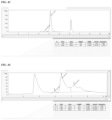
- FIG. 3 shows a polymeric reversed phase column (PLRP) trace of compound 12, conjugate 2941, which included two tag sites and yielded a DAR of 2.75, 2.2% HMW.
- PLRP polymeric reversed phase column
- FIG. 4 shows an analytical size exclusion chromatography (SEC) trace of compound 12, conjugate 2941, which included two tag sites and yielded a DAR of 2.75, 2.2% HMW.
- SEC analytical size exclusion chromatography
- FIG. 5 shows a PLRP trace of compound 12, conjugate 2944, which included two tag sites and yielded a DAR of 3.12, 4.5% HMW.
- FIG. 6 shows an SEC trace of compound 12, conjugate 2944, which included two tag sites and yielded a DAR of 3.12, 4.5% HMW.
- FIG. 7 shows a PLRP trace of compound 12, conjugate 2746, which included two tag sites and yielded a DAR of 2.78, 3.4% HMW.
- FIG. 8 shows a hydrophobic interaction column (HIC) trace of compound 12, conjugate 2746, which included two tag sites and yielded a DAR of 2.78, 3.4% HMW.
- HIC hydrophobic interaction column
- FIG. 9 shows an SEC trace of compound 12, conjugate 2746, which included two tag sites and yielded a DAR of 2.78, 3.4% HMW.
- FIG. 10 shows a PLRP trace of compound 12, conjugate 2749, which included two tag sites and yielded a DAR of 3.04, 0.9% HMW.
- FIG. 11 shows an SEC trace of compound 12, conjugate 2749, which included two tag sites and yielded a DAR of 3.04, 0.9% HMW.
- FIG. 12 shows a PLRP trace of compound 12, conjugate 2752, which included two tag sites and yielded a DAR of 3.01, 4.3% HMW.
- FIG. 13 shows an HIC trace of compound 12, conjugate 2752, which included two tag sites and yielded a DAR of 3.01, 4.3% HMW.
- FIG. 14 shows an SEC trace of compound 12, conjugate 2752, which included two tag sites and yielded a DAR of 3.01, 4.3% HMW.
- FIG. 15 shows a PLRP trace of compound 12, conjugate 2755, which included two tag sites and yielded a DAR of 2.72, 3.2% HMW.
- FIG. 16 shows an HIC trace of compound 12, conjugate 2755, which included two tag sites and yielded a DAR of 2.72, 3.2% HMW.
- FIG. 17 shows an SEC trace of compound 12, conjugate 2755, which included two tag sites and yielded a DAR of 2.72, 3.2% HMW.
- FIG. 18 shows an HIC trace of compound 12, conjugate 2758, which included one tag site and yielded a DAR of 1.54, 1.6% HMW.
- FIG. 19 shows an SEC trace of compound 12, conjugate 2758, which included one tag site and yielded a DAR of 1.54, 1.6% HMW.
- FIG. 20 shows a PLRP trace of compound 12, conjugate 2762, which included two tag sites and yielded a DAR of 2.95, 3.6% HMW.
- FIG. 21 shows an SEC trace of compound 20, conjugate 2762, which included two tag sites and yielded a DAR of 2.95, 3.6% HMW.
- FIG. 22 shows a PLRP trace of compound 20, conjugate 2765, which included two tag sites and yielded a DAR of 2.97, 1.2% HMW.
- FIG. 23 shows an SEC trace of compound 20, conjugate 2765, which included two tag sites and yielded a DAR of 2.97, 1.2% HMW.
- FIG. 24 shows a PLRP trace of compound 20, conjugate 2768, which included two tag sites and yielded a DAR of 2.92, 5.3% HMW.
- FIG. 25 shows an SEC trace of compound 20, conjugate 2768 which included two tag sites and yielded a DAR of 2.92, 5.3% HMW.
- FIG. 26 shows a PLRP trace of compound 20, conjugate 2771 which included two tag sites and yielded a DAR of 2.89, 4.3% HMW.
- FIG. 27 shows an SEC trace of compound 20, conjugate 2771 which included two tag sites and yielded a DAR of 2.89, 4.3% HMW.
- FIG. 28 shows an HIC trace of compound 20, conjugate 2774, which included one tag site and yielded a DAR of 1.22, 1.8% HMW.
- FIG. 29 shows an SEC trace of compound 20, conjugate 2774, which included one tag site and yielded a DAR of 1.22, 1.8% HMW.
- FIG. 30 shows a PLRP trace of compound 27, conjugate 2763, which included two tag sites and yielded a DAR of 2.43, 6.0% HMW.
- FIG. 31 shows an SEC trace of compound 27, conjugate 2763, which included two tag sites and yielded a DAR of 2.43, 6.0% HMW.
- FIG. 32 shows a PLRP trace of compound 27, conjugate 2766, which included two tag sites and yielded a DAR of 2.43, 2.2% HMW.
- FIG. 33 shows an SEC trace of compound 27, conjugate 2766, which included two tag sites and yielded a DAR of 2.43, 2.2% HMW.
- FIG. 34 shows a PLRP trace of compound 27, conjugate 2769, which included two tag sites and yielded a DAR of 2.42, 8.2% HMW.
- FIG. 35 shows an SEC trace of compound 27, conjugate 2769, which included two tag sites and yielded a DAR of 2.42, 8.2% HMW.
- FIG. 36 shows a PLRP trace of compound 27, conjugate 2772, which included two tag sites and yielded a DAR of 2.47, 6.0% HMW.
- FIG. 37 shows an SEC trace of compound 27, conjugate 2772, which included two tag sites and yielded a DAR of 2.47, 6.0% HMW.
- FIG. 38 shows an HIC trace of compound 27, conjugate 2775, which included one tag site and yielded a DAR of 0.45, 1.4% HMW.
- FIG. 39 shows an SEC trace of compound 27, conjugate 2775, which included one tag site and yielded a DAR of 0.45, 1.4% HMW.
- FIG. 40 shows a PLRP trace of compound 34, conjugate 2942, which included two tag sites and yielded a DAR of 2.78, 11.2% HMW.
- FIG. 41 shows an SEC trace of compound 34, conjugate 2942, which included two tag sites and yielded a DAR of 2.78, 11.2% HMW.
- FIG. 42 shows a PLRP trace of compound 34, conjugate 2945, which included two tag sites and yielded a DAR of 3.03, 5.2% HMW.
- FIG. 43 shows an SEC trace of compound 34, conjugate 2945, which included two tag sites and yielded a DAR of 3.03, 5.2% HMW.
- FIG. 44 shows a PLRP trace of compound 42, conjugate 2943, which included two tag sites and yielded a DAR of 5.44, 21.3% HMW.
- FIG. 45 shows an SEC trace of compound 42, conjugate 2943, which included two tag sites and yielded a DAR of 5.44, 21.3% HMW.
- FIG. 46 shows a PLRP trace of compound 42, conjugate 2946, which included two tag sites and yielded a DAR of 5.07, 15.3% HMW.
- FIG. 47 shows an SEC trace of compound 42, conjugate 2946, which included two tag sites and yielded a DAR of 5.07, 15.3% HMW.
- FIG. 48 shows a PLRP trace of compound 45, conjugate 2748, which included two tag sites and yielded a DAR of 3.51, 3.6% HMW.
- FIG. 49 shows an HIC trace of compound 45, conjugate 2748, which included two tag sites and yielded a DAR of 3.51, 3.6% HMW.
- FIG. 50 shows an SEC trace of compound 45, conjugate 2748, which included two tag sites and yielded a DAR of 3.51, 3.6% HMW.
- FIG. 51 shows a PLRP trace of compound 45, conjugate 2751, which included two tag sites and yielded a DAR of 2.98, 2.1% HMW.
- FIG. 52 shows an SEC trace of compound 45, conjugate 2751, which included two tag sites and yielded a DAR of 2.98, 2.1% HMW.
- FIG. 53 shows a PLRP trace of compound 45, conjugate 2754, which included two tag sites and yielded a DAR of 3.5, 2.3% HMW.
- FIG. 54 shows an HIC trace of compound 45, conjugate 2754, which included two tag sites and yielded a DAR of 3.5, 2.3% HMW.
- FIG. 55 shows an SEC trace of compound 45, conjugate 2754, which included two tag sites and yielded a DAR of 3.5, 2.3% HMW.
- FIG. 56 shows a PLRP trace of compound 45, conjugate 2757, which included two tag sites and yielded a DAR of 3.69, 2.0% HMW.
- FIG. 57 shows an SEC trace of compound 45, conjugate 2757, which included two tag sites and yielded a DAR of 3.69, 2.0% HMW.
- FIG. 58 shows an HIC trace of compound 45, conjugate 2760, which included one tag site and yielded a DAR of 1.65, 0.8% HMW.
- FIG. 59 shows an SEC trace of compound 45, conjugate 2760, which included one tag site and yielded a DAR of 1.65, 0.8% HMW.
- FIG. 60 shows a PLRP trace of compound 47, conjugate 3065, which included two tag sites and yielded a DAR of 6.82, 1.8% HMW.
- FIG. 61 shows an SEC trace of compound 47, conjugate 3065, which included two tag sites and yielded a DAR of 6.82, 1.8% HMW.
- FIG. 62 shows a PLRP trace of compound 47, conjugate 3066, which included two tag sites and yielded a DAR of 4.48.
- FIG. 63 shows an HIC trace of compound 47, conjugate 3067, which included one tag site and yielded a DAR of 3.63, 4.4% HMW.
- FIG. 64 shows an SEC trace of compound 47, conjugate 3067, which included one tag site and yielded a DAR of 3.63, 4.4% HMW.
- FIG. 65 shows an HIC trace of compound 47, conjugate 3068, which included one tag site and yielded a DAR of 3.52, 0.8% HMW.
- FIG. 66 shows an SEC trace of compound 47, conjugate 3068, which included one tag site and yielded a DAR of 3.52, 0.8% HMW.
- FIG. 67 shows a PLRP trace of compound 56, conjugate 3063, which included two tag sites and yielded a DAR of 3.35, 3.3% HMW.
- FIG. 68 shows an SEC trace of compound 56, conjugate 3063, which included two tag sites and yielded a DAR of 3.35, 3.3% HMW.
- FIG. 69 shows a PLRP trace of compound 56, conjugate 3064, which included two tag sites and yielded a DAR of 2.8.
- FIG. 70 shows a graph of in vitro cytotoxicity assays of free topoisomerase inhibitors in NCI-N87 gastric cancer cells.
- FIG. 71 shows a graph of in vitro cytotoxicity assays of free topoisomerase inhibitors in Sk-Br-3 breast cancer cells.
- FIG. 72 shows a graph of in vitro cytotoxicity assays of free topoisomerase inhibitors in Granta NHL cells.
- FIG. 73 shows a graph of in vitro cytotoxicity assays of free topoisomerase inhibitors in MDA-MB-468 breast cancer cells.
- FIG. 74 shows a graph of in vitro cytotoxicity assays of free topoisomerase inhibitors in MDA-PCa-2b prostate cancer cells.
- FIG. 75 shows a graph of in vitro cytotoxicity assays in MDA-MB-468 breast cancer cells of a TROP-2 targeted ADC made using Compound 61, according to embodiments of the present disclosure.
- FIG. 76 shows a graph of in vitro cytotoxicity assays in NCI-N87 gastric cancer cells of a HER2 targeted ADC made using Compound 61, according to embodiments of the present disclosure.
- FIG. 77 shows a graph of in vitro cytotoxicity assays in SU-DHL-1 ALCL cells of a CD25 targeted ADC made using Compound 61, according to embodiments of the present disclosure.
- FIG. 78 shows a graph of in vitro cytotoxicity assays in BxPC-3 pancreatic cancer cells of a TROP-2 targeted ADC made using Compound 61, according to embodiments of the present disclosure.
- FIG. 79 shows a graph of in vitro cytotoxicity assays in NCI-N87 gastric cancer cells of a HER2 targeted ADC made using Compound 65, according to embodiments of the present disclosure.
- FIG. 80 shows a graph of in vitro cytotoxicity assays in Sk-Br-3 breast cancer cells of a HER2 targeted ADC made using Compound 65, according to embodiments of the present disclosure.
- FIG. 81 shows a schematic drawing of ELISA assays used to determine total antibody and ADC concentrations for pharmacokinetic (PK) sample analysis.
- FIG. 82 shows a graph of concentration ( ⁇ g/mL) vs. days post dose following a 0.9 mg/kg dose of trastuzumab antibody.
- FIG. 83 shows a graph of concentration ( ⁇ g/mL) vs. days post dose following a 0.9 mg/kg dose of a conventional HER2 topoisomerase inhibitor conjugated ADC bearing a protease cleavable linker.
- FIG. 84 shows a graph of concentration ( ⁇ g/mL) vs. days post dose following a 0.9 mg/kg dose of CH1-3/CT-tagged trastuzumab conjugated to construct 61, according to embodiments of the present disclosure.
- FIG. 85 shows a graph of concentration ( ⁇ g/mL) vs. days post dose following a 0.9 mg/kg dose of CH1-3/CT-tagged trastuzumab conjugated to construct 65, according to embodiments of the present disclosure.
- FIG. 86 shows a graph of mean tumor volume (mm 3 ) vs. days, which indicates in vivo efficacy against an NCI-H292 xenograft of TROP-2 targeted ADCs carrying topoisomerase inhibitor payloads.
- n 8 mice/group; dosing is indicated by arrows.
- FIG. 87 shows a graph of mean tumor volume (mm 3 ) vs. days, which indicates in vivo efficacy against an NCI-H292 xenograft of TROP-2 targeted ADCs carrying topoisomerase inhibitor payloads.
- n 7 mice/group. A single i.v. dose was delivered on Day 0.
- FIG. 88 shows a graph of mean tumor volume (mm 3 ) vs. days, which indicates in vivo efficacy against an NCI-H1781 xenograft of nectin-4 targeted ADCs carrying topoisomerase inhibitor payloads.
- n 5 mice/group.
- FIG. 89 shows a graph of in vitro potency of TROP-2 targeted or isotype control ADCs carrying (165), (65), (175) as compared to (1) or (2) against MBA-MB-468 cells.
- FIG. 90 shows a graph of in vitro potency of TROP-2 targeted or isotype control ADCs carrying (165), (65), (175) as compared to (1) or (2) against BxPC-3 cells.
- FIG. 91 shows a graph of in vitro potency of HER2 targeted or isotype control ADCs carrying (65), (67), or (73) as compared to (2) against SK-BR-3 cells.
- FIG. 92 shows a graph of in vitro potency of HER2 targeted or isotype control ADCs carrying (65), (67), or (73) as compared to (2) against NCI-N87 cells.
- FIG. 93 shows a graph of in vitro potency of TROP-2 targeted or isotype control ADCs carrying (65) or (80) as compared to (2) against MDA-MB-468 cells.
- FIG. 94 shows a graph of in vitro potency of TROP-2 targeted or isotype control ADCs carrying (65) or (80) as compared to (2) against BxPC-3 cells.
- FIG. 95 shows a graph of in vitro potency of HER2 targeted or isotype control ADCs carrying (99), (103), or (110) as compared to (2) against NCI-N87 cells.
- FIG. 96 shows a graph of in vitro potency of HER2 targeted or isotype control ADCs carrying (65), (86), or (92) as compared to (2) against SK-BR-3 cells.
- FIG. 97 shows a graph of in vitro potency of TROP-2 targeted or isotype control ADCs carrying (65), Trodelvy, or a CL2A-SN38 isotype control conjugate as compared to (1) or (2) against SK-BR-3 cells.
- FIG. 98 shows a graph of in vitro potency of HER2 targeted or isotype control ADCs carrying (65), Enhertu, or a MC-GGFG-Dxd isotype control conjugate as compared to (2) against NCI-N87 cells.
- FIG. 99 shows a graph of in vitro potency of TROP-2 targeted or isotype control ADCs carrying (65) or (113) as compared to (2) against MDA-MB-468 cells.
- FIG. 100 shows a graph of in vitro potency of HER2 targeted or isotype control ADCs carrying (65), (136), or (142) as compared to (2) against NCI-N87 cells.
- FIG. 101 shows a graph of in vitro potency of TROP-2 targeted or isotype control ADCs carrying (65), (127), or (131) as compared to (2) against MDA-MB-468 cells.
- FIG. 102 shows a graph of in vitro potency of HER2 targeted or isotype control ADCs carrying (65), (127), or (131) as compared to (2) against NCI-N87 cells.
- FIG. 103 shows a graph of in vitro potency of TROP-2 targeted or isotype control ADCs carrying (151), (147), or (131) as compared to (2), (148), or (144) against NCI-N87 cells.
- FIG. 104 shows a graph of in vitro potency of HER2 targeted or isotype control ADCs carrying (151), (147), or (131) as compared to (2), (148), or (144) against SK-BR-3 cells.
- FIG. 105 shows a graph of in vitro potency of TROP-2 targeted or isotype control ADCs carrying (155) or CL2A-SN38 as compared to (1) against MDA-MB-468 cells.
- FIG. 106 shows a graph of Compound 127 CH1-3/CT-tagged trastuzumab conjugate yields a DAR of 7.15 as determined by PLRP.
- FIG. 107 shows a graph of Compound 131 CH1-3/CT-tagged trastuzumab conjugate yields a DAR of 6.80 as determined by PLRP.
- FIG. 108 shows a graph of Compound 127 CH1-3/CT-tagged trastuzumab conjugate is 94.4% monomeric as determined by analytical SEC.
- FIG. 109 shows a graph of Compound 131 CH1-3/CT-tagged trastuzumab conjugate is 93.6% monomeric as determined by analytical SEC.
- FIG. 110 shows a graph of Compound 165 CH1-3/CT-tagged sacituzumab conjugate yields a DAR of 3.41 as determined by HIC.
- FIG. 111 shows a graph of Compound 165 CH1-3/CT-tagged sacituzumab conjugate is 98.2% monomeric as determined by analytical SEC.
- FIG. 112 shows a graph of Compound 165 CH1-3/CT-tagged polatuzumab conjugate yields a DAR of 3.67 as determined by HIC.
- FIG. 113 shows a graph of Compound 165 CH1-3/CT-tagged polatuzumab conjugate is 97.4% monomeric as determined by analytical SEC.
- FIG. 114 shows a graph of Compound 80 CH1-3/CT-tagged trastuzumab conjugate yields a DAR of 5.86 as determined by PLRP.
- FIG. 115 shows a graph of Compound 80 CH1-3/CT-tagged trastuzumab conjugate is 97.4% monomeric as determined by analytical SEC.
- FIG. 116 shows a graph of Compound 80 CH1-3/CT-tagged sacituzumab conjugate yields a DAR of 6.19 as determined by PLRP.
- FIG. 117 shows a graph of Compound 80 CH1-3/CT-tagged sacituzumab conjugate is 97.1% monomeric as determined by analytical SEC.
- FIG. 118 shows a graph of Compound 86 CH1-3/CT-tagged anti-FITC conjugate yields a DAR of 5.46 as determined by PLRP.
- FIG. 119 shows a graph of Compound 86 CH1-3/CT-tagged anti-FITC conjugate is 98.0% monomeric as determined by analytical SEC.
- FIG. 120 shows a graph of Compound 92 CH1-3/CT-tagged anti-FITC conjugate yields a DAR of 1.58 as determined by PLRP.
- FIG. 121 shows a graph of Compound 92 CH1-3/CT-tagged anti-FITC conjugate is 96.1% monomeric as determined by analytical SEC.
- FIG. 122 shows a graph of Compound 99 CH1-3/CT-tagged anti-FITC conjugate yields a DAR of 3.07 as determined by PLRP.
- FIG. 123 shows a graph of Compound 99 CH1-3/CT-tagged anti-FITC conjugate is 97.9% monomeric as determined by analytical SEC.
- FIG. 124 shows a graph of Compound 103 CH1-3/CT-tagged trastuzumab conjugate yields a DAR of 6.56 as determined by PLRP.
- FIG. 125 shows a graph of Compound 103 CH1-3/CT-tagged trastuzumab conjugate is 97.3% monomeric as determined by analytical SEC.
- FIG. 126 shows a graph of Compound 110 CH1-3/CT-tagged anti-FITC conjugate yields a DAR of 5.66 as determined by PLRP.
- FIG. 127 shows a graph of Compound 110 CH1-3/CT-tagged anti-FITC conjugate is 98.5% monomeric as determined by analytical SEC.
- FIG. 128 shows a graph of Compound 113 CH1-3/CT-tagged sacituzumab conjugate yields a DAR of 6.41 as determined by PLRP.
- FIG. 129 shows a graph of Compound 113 CH1-3/CT-tagged sacituzumab conjugate is 97.4% monomeric as determined by analytical SEC.
- FIG. 130 shows a graph of Compound 123 CH1-3/CT-tagged anti-FITC conjugate yields a DAR of 5.56 as determined by PLRP.
- FIG. 131 shows a graph of Compound 123 CH1-3/CT-tagged anti-FITC conjugate is 95.5% monomeric as determined by analytical SEC.
- FIG. 132 shows a graph of Compound 151 CH1-3/CT-tagged anti-FITC conjugate yields a DAR of 5.67 as determined by PLRP.
- FIG. 133 shows a graph of Compound 151 CH1-3/CT-tagged anti-FITC conjugate is 97.8% monomeric as determined by analytical SEC.
- FIG. 134 shows a graph of Compound 147 CH1-3/CT-tagged anti-FITC conjugate yields a DAR of 6.47 as determined by PLRP.
- FIG. 135 shows a graph of Compound 147 CH1-3/CT-tagged anti-FITC conjugate is 96.4% monomeric as determined by analytical SEC.
- FIG. 136 shows a graph of Compound 73 CH1-3/CT-tagged trastuzumab conjugate yields a DAR of 5.41 as determined by PLRP.
- FIG. 137 shows a graph of Compound 67 CH1-3/CT-tagged trastuzumab conjugate yields a DAR of 4.02 as determined by PLRP.
- FIG. 138 shows a graph of Compound 136 CH1-3/CT-tagged trastuzumab conjugate yields a DAR of 7.26 as determined by PLRP.
- FIG. 139 shows a graph of Compound 136 CH1-3/CT-tagged trastuzumab conjugate is 98.9% monomeric as determined by analytical SEC.
- FIG. 140 shows a graph of Compound 142 CH1-3/CT-tagged trastuzumab conjugate yields a DAR of 6.9 as determined by PLRP.
- FIG. 141 shows a graph of Compound 175 CH1-3/CT-tagged anti-FITC conjugate yields a DAR of 5.08 as determined by PLRP.
- FIG. 142 shows a graph of Compound 175 CH1-3/CT-tagged anti-FITC conjugate is 93.0% monomeric as determined by analytical SEC.
- FIG. 143 shows a graph of Compound 155 CH1-3/CT-tagged trastuzumab conjugate yields a DAR of 2.82 as determined by HIC.
- FIG. 144 shows a graph of Compound 155 CH1-3/CT-tagged anti-FITC conjugate is 89.7% monomeric as determined by analytical SEC.
- Alkyl refers to monovalent saturated aliphatic hydrocarbyl groups having from 1 to 10 carbon atoms and such as 1 to 6 carbon atoms, or 1 to 5, or 1 to 4, or 1 to 3 carbon atoms. This term includes, by way of example, linear and branched hydrocarbyl groups such as methyl (CH 3 —), ethyl (CH 3 CH 2 —), n-propyl (CH 3 CH 2 CH 2 —), isopropyl ((CH 3 ) 2 CH—), n-butyl (CH 3 CH 2 CH 2 CH 2 —), isobutyl ((CH 3 ) 2 CHCH 2 —), sec-butyl ((CH 3 )(CH 3 CH 2 )CH—), t-butyl ((CH 3 ) 3 C—), n-pentyl (CH 3 CH 2 CH 2 CH 2 CH 2 —), and neopentyl ((CH 3 ) 3 CCH 2 —).
- substituted alkyl refers to an alkyl group as defined herein wherein one or more carbon atoms in the alkyl chain (except the C 1 carbon atom) have been optionally replaced with a heteroatom such as —O—, —N—, —S—, —S(O) n — (where n is 0 to 2), —NR— (where R is hydrogen or alkyl) and having from 1 to 5 substituents selected from the group consisting of alkoxy, substituted alkoxy, cycloalkyl, substituted cycloalkyl, cycloalkenyl, substituted cycloalkenyl, acyl, acylamino, acyloxy, amino, aminoacyl, aminoacyloxy, oxyaminoacyl, azido, cyano, halogen, hydroxyl, oxo, thioketo, carboxyl, carboxylalkyl, thioaryloxy, thioheteroary
- Alkylene refers to divalent aliphatic hydrocarbyl groups preferably having from 1 to 6 and more preferably 1 to 3 carbon atoms that are either straight-chained or branched, and which are optionally interrupted with one or more groups selected from —O—, —NR 10 —, —NR 10 C(O)—, —C(O)NR 10 — and the like.
- This term includes, by way of example, methylene (—CH 2 —), ethylene (—CH 2 CH 2 —), n-propylene (—CH 2 CH 2 CH 2 —), iso-propylene (—CH 2 CH(CH 3 )—), (—C(CH 3 ) 2 CH 2 CH 2 —), (—C(CH 3 ) 2 CH 2 C(O)—), (—C(CH 3 ) 2 CH 2 C(O)NH—), (—CH(CH 3 )CH 2 —), and the like.
- Substituted alkylene refers to an alkylene group having from 1 to 3 hydrogens replaced with substituents as described for carbons in the definition of “substituted” below.
- alkane refers to alkyl group and alkylene group, as defined herein.
- alkylaminoalkyl refers to the groups R′NHR′′— where R′ is alkyl group as defined herein and R′′ is alkylene, alkenylene or alkynylene group as defined herein.
- alkaryl or “aralkyl” refers to the groups -alkylene-aryl and -substituted alkylene-aryl where alkylene, substituted alkylene and aryl are defined herein.
- Alkoxy refers to the group —O-alkyl, wherein alkyl is as defined herein. Alkoxy includes, by way of example, methoxy, ethoxy, n-propoxy, isopropoxy, n-butoxy, t-butoxy, sec-butoxy, n-pentoxy, and the like.
- alkoxy also refers to the groups alkenyl-O—, cycloalkyl-O—, cycloalkenyl-O—, and alkynyl-O—, where alkenyl, cycloalkyl, cycloalkenyl, and alkynyl are as defined herein.
- substituted alkoxy refers to the groups substituted alkyl-O—, substituted alkenyl-O—, substituted cycloalkyl-O—, substituted cycloalkenyl-O—, and substituted alkynyl-O— where substituted alkyl, substituted alkenyl, substituted cycloalkyl, substituted cycloalkenyl and substituted alkynyl are as defined herein.
- alkoxyamino refers to the group —NH-alkoxy, wherein alkoxy is defined herein.
- haloalkoxy refers to the groups alkyl-O— wherein one or more hydrogen atoms on the alkyl group have been substituted with a halo group and include, by way of examples, groups such as trifluoromethoxy, and the like.
- haloalkyl refers to a substituted alkyl group as described above, wherein one or more hydrogen atoms on the alkyl group have been substituted with a halo group.
- groups include, without limitation, fluoroalkyl groups, such as trifluoromethyl, difluoromethyl, trifluoroethyl and the like.
- alkylalkoxy refers to the groups -alkylene-O-alkyl, alkylene-O-substituted alkyl, substituted alkylene-O-alkyl, and substituted alkylene-O-substituted alkyl wherein alkyl, substituted alkyl, alkylene and substituted alkylene are as defined herein.
- alkylthioalkoxy refers to the group -alkylene-S-alkyl, alkylene-S-substituted alkyl, substituted alkylene-S-alkyl and substituted alkylene-S-substituted alkyl wherein alkyl, substituted alkyl, alkylene and substituted alkylene are as defined herein.
- Alkenyl refers to straight chain or branched hydrocarbyl groups having from 2 to 6 carbon atoms and preferably 2 to 4 carbon atoms and having at least 1 and preferably from 1 to 2 sites of double bond unsaturation. This term includes, by way of example, bi-vinyl, allyl, and but-3-en-1-yl. Included within this term are the cis and trans isomers or mixtures of these isomers.
- substituted alkenyl refers to an alkenyl group as defined herein having from 1 to 5 substituents, or from 1 to 3 substituents, selected from alkoxy, substituted alkoxy, cycloalkyl, substituted cycloalkyl, cycloalkenyl, substituted cycloalkenyl, acyl, acylamino, acyloxy, amino, substituted amino, aminoacyl, aminoacyloxy, oxyaminoacyl, azido, cyano, halogen, hydroxyl, oxo, thioketo, carboxyl, carboxylalkyl, thioaryloxy, thioheteroaryloxy, thioheterocyclooxy, thiol, thioalkoxy, substituted thioalkoxy, aryl, aryloxy, heteroaryl, heteroaryloxy, heterocyclyl, heterocyclooxy, hydroxyamino, alkoxyamino,
- Alkynyl refers to straight or branched monovalent hydrocarbyl groups having from 2 to 6 carbon atoms and preferably 2 to 3 carbon atoms and having at least 1 and preferably from 1 to 2 sites of triple bond unsaturation. Examples of such alkynyl groups include acetylenyl (—C ⁇ CH), and propargyl (—CH 2 C ⁇ CH).
- substituted alkynyl refers to an alkynyl group as defined herein having from 1 to 5 substituents, or from 1 to 3 substituents, selected from alkoxy, substituted alkoxy, cycloalkyl, substituted cycloalkyl, cycloalkenyl, substituted cycloalkenyl, acyl, acylamino, acyloxy, amino, substituted amino, aminoacyl, aminoacyloxy, oxyaminoacyl, azido, cyano, halogen, hydroxyl, oxo, thioketo, carboxyl, carboxylalkyl, thioaryloxy, thioheteroaryloxy, thioheterocyclooxy, thiol, thioalkoxy, substituted thioalkoxy, aryl, aryloxy, heteroaryl, heteroaryloxy, heterocyclyl, heterocyclooxy, hydroxyamino, alkoxyamin
- Alkynyloxy refers to the group —O-alkynyl, wherein alkynyl is as defined herein. Alkynyloxy includes, by way of example, ethynyloxy, propynyloxy, and the like.
- Acyl refers to the groups H—C(O)—, alkyl-C(O)—, substituted alkyl-C(O)—, alkenyl-C(O)—, substituted alkenyl-C(O)—, alkynyl-C(O)—, substituted alkynyl-C(O)—, cycloalkyl-C(O)—, substituted cycloalkyl-C(O)—, cycloalkenyl-C(O)—, substituted cycloalkenyl-C(O)—, aryl-C(O)—, substituted aryl-C(O)—, heteroaryl-C(O)—, substituted heteroaryl-C(O)—, heterocyclyl-C(O)—, and substituted heterocyclyl-C(O)—, wherein alkyl, substituted alkyl, alkenyl, substituted alkenyl, alkynyl, substituted alkynyl, substitute
- “Acylamino” refers to the groups —NR 20 C(O)alkyl, —NR 20 C(O)substituted alkyl, N R 20 C(O)cycloalkyl, —NR 20 C(O)substituted cycloalkyl, —NR 20 C(O)cycloalkenyl, —NR 20 C(O)substituted cycloalkenyl, —NR 20 C(O)alkenyl, —NR 20 C(O)substituted alkenyl, —NR 20 C(O)alkynyl, —NR 20 C(O)substituted alkynyl, —NR 20 C(O)aryl, —NR 20 C(O)substituted aryl, —NR 20 C(O)heteroaryl, —NR 20 C(O)substituted heteroaryl, —NR 20 C(O)heterocyclic, and —NR 20 C
- Aminocarbonyl or the term “aminoacyl” refers to the group —C(O)NR 21 R 22 , wherein R 21 and R 22 independently are selected from the group consisting of hydrogen, alkyl, substituted alkyl, alkenyl, substituted alkenyl, alkynyl, substituted alkynyl, aryl, substituted aryl, cycloalkyl, substituted cycloalkyl, cycloalkenyl, substituted cycloalkenyl, heteroaryl, substituted heteroaryl, heterocyclic, and substituted heterocyclic and where R 21 and R 22 are optionally joined together with the nitrogen bound thereto to form a heterocyclic or substituted heterocyclic group, and wherein alkyl, substituted alkyl, alkenyl, substituted alkenyl, alkynyl, substituted alkynyl, cycloalkyl, substituted cycloalkyl, cycloalkenyl, substituted cycloal
- Aminocarbonylamino refers to the group —NR 21 C(O)NR 22 R 23 where R 21 , R 22 , and R 23 are independently selected from hydrogen, alkyl, aryl or cycloalkyl, or where two R groups are joined to form a heterocyclyl group.
- alkoxycarbonylamino refers to the group —NRC(O)OR where each R is independently hydrogen, alkyl, substituted alkyl, aryl, heteroaryl, or heterocyclyl wherein alkyl, substituted alkyl, aryl, heteroaryl, and heterocyclyl are as defined herein.
- acyloxy refers to the groups alkyl-C(O)O—, substituted alkyl-C(O)O—, cycloalkyl-C(O)O—, substituted cycloalkyl-C(O)O—, aryl-C(O)O—, heteroaryl-C(O)O—, and heterocyclyl-C(O)O— wherein alkyl, substituted alkyl, cycloalkyl, substituted cycloalkyl, aryl, heteroaryl, and heterocyclyl are as defined herein.
- Aminosulfonyl refers to the group —SO 2 NR 21 R 22 , wherein R 21 and R 22 independently are selected from the group consisting of hydrogen, alkyl, substituted alkyl, alkenyl, substituted alkenyl, alkynyl, substituted alkynyl, aryl, substituted aryl, cycloalkyl, substituted cycloalkyl, cycloalkenyl, substituted cycloalkenyl, heteroaryl, substituted heteroaryl, heterocyclic, substituted heterocyclic and where R 21 and R 22 are optionally joined together with the nitrogen bound thereto to form a heterocyclic or substituted heterocyclic group and alkyl, substituted alkyl, alkenyl, substituted alkenyl, alkynyl, substituted alkynyl, cycloalkyl, substituted cycloalkyl, cycloalkenyl, substituted cycloalkenyl, aryl, substituted aryl
- “Sulfonylamino” refers to the group —NR 21 SO 2 R 22 , wherein R 21 and R 22 independently are selected from the group consisting of hydrogen, alkyl, substituted alkyl, alkenyl, substituted alkenyl, alkynyl, substituted alkynyl, aryl, substituted aryl, cycloalkyl, substituted cycloalkyl, cycloalkenyl, substituted cycloalkenyl, heteroaryl, substituted heteroaryl, heterocyclic, and substituted heterocyclic and where R 21 and R 22 are optionally joined together with the atoms bound thereto to form a heterocyclic or substituted heterocyclic group, and wherein alkyl, substituted alkyl, alkenyl, substituted alkenyl, alkynyl, substituted alkynyl, cycloalkyl, substituted cycloalkyl, cycloalkenyl, substituted cycloalkenyl, aryl
- Aryl or “Ar” refers to a monovalent aromatic carbocyclic group of from 6 to 18 carbon atoms having a single ring (such as is present in a phenyl group) or a ring system having multiple condensed rings (examples of such aromatic ring systems include naphthyl, anthryl and indanyl) which condensed rings may or may not be aromatic, provided that the point of attachment is through an atom of an aromatic ring. This term includes, by way of example, phenyl and naphthyl.
- such aryl groups can optionally be substituted with from 1 to 5 substituents, or from 1 to 3 substituents, selected from acyloxy, hydroxy, thiol, acyl, alkyl, alkoxy, alkenyl, alkynyl, cycloalkyl, cycloalkenyl, substituted alkyl, substituted alkoxy, substituted alkenyl, substituted alkynyl, substituted cycloalkyl, substituted cycloalkenyl, amino, substituted amino, aminoacyl, acylamino, alkaryl, aryl, aryloxy, azido, carboxyl, carboxylalkyl, cyano, halogen, nitro, heteroaryl, heteroaryloxy, heterocyclyl, heterocyclooxy, aminoacyloxy, oxyacylamino, thioalkoxy, substituted thioalkoxy, thioaryloxy, thi
- Aryloxy refers to the group —O-aryl, wherein aryl is as defined herein, including, by way of example, phenoxy, naphthoxy, and the like, including optionally substituted aryl groups as also defined herein.
- Amino refers to the group —NH 2 .
- substituted amino refers to the group —NRR where each R is independently selected from the group consisting of hydrogen, alkyl, substituted alkyl, cycloalkyl, substituted cycloalkyl, alkenyl, substituted alkenyl, cycloalkenyl, substituted cycloalkenyl, alkynyl, substituted alkynyl, aryl, heteroaryl, and heterocyclyl provided that at least one R is not hydrogen.
- azido refers to the group —N 3 .
- Carboxyl refers to —CO 2 H or salts thereof.
- Carboxyl ester or “carboxy ester” or the terms “carboxyalkyl” or “carboxylalkyl” refers to the groups —C(O)O-alkyl, —C(O)O-substituted alkyl, —C(O)O-alkenyl, —C(O)O-substituted alkenyl, —C(O)O-alkynyl, —C(O)O-substituted alkynyl, —C(O)O-aryl, —C(O)O-substituted aryl, —C(O)O-cycloalkyl, —C(O)O-substituted cycloalkyl, —C(O)O-cycloalkenyl, —C(O)O-substituted cycloalkenyl, —C(O)O-heteroaryl, —C(O)O-
- (Carboxyl ester)oxy” or “carbonate” refers to the groups —O—C(O)O-alkyl, —O—C(O)O-substituted alkyl, —O—C(O)O-alkenyl, —O—C(O)O-substituted alkenyl, —O—C(O)O— alkynyl, —O—C(O)O-substituted alkynyl, —O—C(O)O-aryl, —O—C(O)O-substituted aryl, —O—C(O)O— cycloalkyl, —O—C(O)O-substituted cycloalkyl, —O—C(O)O-cycloalkenyl, —O—C(O)O-substituted cycloalkenyl, —O—C(O)O-heteroaryl, —
- Cycloalkyl refers to cyclic alkyl groups of from 3 to 10 carbon atoms having single or multiple cyclic rings including fused, bridged, and spiro ring systems.
- suitable cycloalkyl groups include, for instance, adamantyl, cyclopropyl, cyclobutyl, cyclopentyl, cyclooctyl and the like.
- Such cycloalkyl groups include, by way of example, single ring structures such as cyclopropyl, cyclobutyl, cyclopentyl, cyclooctyl, and the like, or multiple ring structures such as adamantanyl, and the like.
- substituted cycloalkyl refers to cycloalkyl groups having from 1 to 5 substituents, or from 1 to 3 substituents, selected from alkyl, substituted alkyl, alkoxy, substituted alkoxy, cycloalkyl, substituted cycloalkyl, cycloalkenyl, substituted cycloalkenyl, acyl, acylamino, acyloxy, amino, substituted amino, aminoacyl, aminoacyloxy, oxyaminoacyl, azido, cyano, halogen, hydroxyl, oxo, thioketo, carboxyl, carboxylalkyl, thioaryloxy, thioheteroaryloxy, thioheterocyclooxy, thiol, thioalkoxy, substituted thioalkoxy, aryl, aryloxy, heteroaryl, heteroaryloxy, heterocyclyl, heterocyclooxy, hydroxyamin
- Cycloalkenyl refers to non-aromatic cyclic alkyl groups of from 3 to 10 carbon atoms having single or multiple rings and having at least one double bond and preferably from 1 to 2 double bonds.
- substituted cycloalkenyl refers to cycloalkenyl groups having from 1 to 5 substituents, or from 1 to 3 substituents, selected from alkoxy, substituted alkoxy, cycloalkyl, substituted cycloalkyl, cycloalkenyl, substituted cycloalkenyl, acyl, acylamino, acyloxy, amino, substituted amino, aminoacyl, aminoacyloxy, oxyaminoacyl, azido, cyano, halogen, hydroxyl, keto, thioketo, carboxyl, carboxylalkyl, thioaryloxy, thioheteroaryloxy, thioheterocyclooxy, thiol, thioalkoxy, substituted thioalkoxy, aryl, aryloxy, heteroaryl, heteroaryloxy, heterocyclyl, heterocyclooxy, hydroxyamino, alkoxyamino, nitro
- Cycloalkynyl refers to non-aromatic cycloalkyl groups of from 5 to 10 carbon atoms having single or multiple rings and having at least one triple bond.
- Cycloalkoxy refers to —O-cycloalkyl
- Cycloalkenyloxy refers to —O-cycloalkenyl.
- Halo or “halogen” refers to fluoro, chloro, bromo, and iodo.
- “Hydroxy” or “hydroxyl” refers to the group —OH.
- Heteroaryl refers to an aromatic group of from 1 to 15 carbon atoms, such as from 1 to 10 carbon atoms and 1 to 10 heteroatoms selected from the group consisting of oxygen, nitrogen, and sulfur within the ring.
- Such heteroaryl groups can have a single ring (such as, pyridinyl, imidazolyl or furyl) or multiple condensed rings in a ring system (for example as in groups such as, indolizinyl, quinolinyl, benzofuran, benzimidazolyl or benzothienyl), wherein at least one ring within the ring system is aromatic.
- any heteroatoms in such heteroaryl rings may or may not be bonded to H or a substituent group, e.g., an alkyl group or other substituent as described herein.
- the nitrogen and/or sulfur ring atom(s) of the heteroaryl group are optionally oxidized to provide for the N-oxide (N ⁇ O), sulfinyl, or sulfonyl moieties.
- N ⁇ O N-oxide
- sulfinyl sulfonyl moieties.
- This term includes, by way of example, pyridinyl, pyrrolyl, indolyl, thiophenyl, and furanyl.
- heteroaryl groups can be optionally substituted with 1 to 5 substituents, or from 1 to 3 substituents, selected from acyloxy, hydroxy, thiol, acyl, alkyl, alkoxy, alkenyl, alkynyl, cycloalkyl, cycloalkenyl, substituted alkyl, substituted alkoxy, substituted alkenyl, substituted alkynyl, substituted cycloalkyl, substituted cycloalkenyl, amino, substituted amino, aminoacyl, acylamino, alkaryl, aryl, aryloxy, azido, carboxyl, carboxylalkyl, cyano, halogen, nitro, heteroaryl, heteroaryloxy, heterocyclyl, heterocyclooxy, aminoacyloxy, oxyacylamino, thioalkoxy, substituted thioalkoxy, thioaryloxy, thio
- heteroarylkyl refers to the groups -alkylene-heteroaryl where alkylene and heteroaryl are defined herein. This term includes, by way of example, pyridylmethyl, pyridylethyl, indolylmethyl, and the like.
- Heteroaryloxy refers to —O-heteroaryl.
- Heterocycle refers to a saturated or unsaturated group having a single ring or multiple condensed rings, including fused bridged and spiro ring systems, and having from 3 to 20 ring atoms, including 1 to 10 hetero atoms. These ring atoms are selected from nitrogen, sulfur, or oxygen, where, in fused ring systems, one or more of the rings can be cycloalkyl, aryl, or heteroaryl, provided that the point of attachment is through the non-aromatic ring.
- the nitrogen and/or sulfur atom(s) of the heterocyclic group are optionally oxidized to provide for the N-oxide, —S(O)—, or —SO 2 — moieties.
- any heteroatoms in such heterocyclic rings may or may not be bonded to one or more H or one or more substituent group(s), e.g., an alkyl group or other substituent as described herein.
- heterocycles and heteroaryls include, but are not limited to, azetidine, pyrrole, imidazole, pyrazole, pyridine, pyrazine, pyrimidine, pyridazine, indolizine, isoindole, indole, dihydroindole, indazole, purine, quinolizine, isoquinoline, quinoline, phthalazine, naphthylpyridine, quinoxaline, quinazoline, cinnoline, pteridine, carbazole, carboline, phenanthridine, acridine, phenanthroline, isothiazole, phenazine, isoxazole, phenoxazine, phenothiazine, imidazolidine, imidazoline, piperidine, piperazine, indoline, phthalimide, 1,2,3,4-tetrahydroisoquinoline, 4,5,6,
- heterocyclic groups can be optionally substituted with 1 to 5, or from 1 to 3 substituents, selected from alkoxy, substituted alkoxy, cycloalkyl, substituted cycloalkyl, cycloalkenyl, substituted cycloalkenyl, acyl, acylamino, acyloxy, amino, substituted amino, aminoacyl, aminoacyloxy, oxyaminoacyl, azido, cyano, halogen, hydroxyl, oxo, thioketo, carboxyl, carboxylalkyl, thioaryloxy, thioheteroaryloxy, thioheterocyclooxy, thiol, thioalkoxy, substituted thioalkoxy, aryl, aryloxy, heteroaryl, heteroaryloxy, heterocyclyl, heterocyclooxy, hydroxyamino, alkoxyamino, nitro,
- Heterocyclyloxy refers to the group —O-heterocyclyl.
- heterocyclylthio refers to the group heterocyclic-S—.
- heterocyclene refers to the diradical group formed from a heterocycle, as defined herein.
- hydroxyamino refers to the group —NHOH.
- Niro refers to the group —NO 2 .
- Oxo refers to the atom ( ⁇ O).
- “Sulfonyl” refers to the group —SO 2 -alkyl, —SO 2 -substituted alkyl, —SO 2 -alkenyl, —SO 2 -substituted alkenyl, —SO 2 -cycloalkyl, —SO 2 -substituted cycloalkyl, —SO 2 -cycloalkenyl, —SO 2 -substituted cylcoalkenyl, —SO 2 -aryl, —SO 2 -substituted aryl, —SO 2 -heteroaryl, —SO 2 -substituted heteroaryl, —SO 2 -heterocyclic, and —SO 2 -substituted heterocyclic, wherein alkyl, substituted alkyl, alkenyl, substituted alkenyl, alkynyl, substituted alkynyl, cycloalkyl, substitute
- “Sulfonyloxy” refers to the group —OSO 2 -alkyl, —OSO 2 -substituted alkyl, —OSO 2 -alkenyl, —OSO 2 -substituted alkenyl, —OSO 2 -cycloalkyl, —OSO 2 -substituted cycloalkyl, —OSO 2 -cycloalkenyl, —OSO 2 -substituted cylcoalkenyl, —OSO 2 -aryl, —OSO 2 -substituted aryl, —OSO 2 -heteroaryl, —OSO 2 -substituted heteroaryl, —OSO 2 -heterocyclic, and —OSO 2 -substituted heterocyclic, wherein alkyl, substituted alkyl, alkenyl, substituted alkenyl, alkynyl, substitute
- “Sulfate” or “sulfate ester” refers the group —O—SO 2 —OH, —O—SO 2 —O-alkyl, —O—SO 2 —O-substituted alkyl, —O—SO 2 —O-alkenyl, —O—SO 2 —O-substituted alkenyl, —O—SO 2 —O-cycloalkyl, —O—SO 2 —O-substituted cycloalkyl, —O—SO 2 —O-cycloalkenyl, —O—SO 2 —O-substituted cylcoalkenyl, —O—SO 2 —O-aryl, —O—SO 2 —O-substituted aryl, —O—S 2 —O-heteroaryl, —O—SO 2 —O-substituted heteroaryl, —O—SO 2 —O-
- aminocarbonyloxy refers to the group —OC(O)NRR where each R is independently hydrogen, alkyl, substituted alkyl, aryl, heteroaryl, or heterocyclic wherein alkyl, substituted alkyl, aryl, heteroaryl and heterocyclic are as defined herein.
- Thiol refers to the group —SH.
- Thioxo or the term “thioketo” refers to the atom ( ⁇ S).
- Alkylthio or the term “thioalkoxy” refers to the group —S-alkyl, wherein alkyl is as defined herein.
- sulfur may be oxidized to —S(O)—.
- the sulfoxide may exist as one or more stereoisomers.
- substituted thioalkoxy refers to the group —S-substituted alkyl.
- thioaryloxy refers to the group aryl-S— wherein the aryl group is as defined herein including optionally substituted aryl groups also defined herein.
- heteroaryloxy refers to the group heteroaryl-S— wherein the heteroaryl group is as defined herein including optionally substituted aryl groups as also defined herein.
- heterocyclooxy refers to the group heterocyclyl-S— wherein the heterocyclyl group is as defined herein including optionally substituted heterocyclyl groups as also defined herein.
- substituted when used to modify a specified group or radical, can also mean that one or more hydrogen atoms of the specified group or radical are each, independently of one another, replaced with the same or different substituent groups as defined below.
- substituent groups for substituting for one or more hydrogens are, unless otherwise specified, —R 60 , halo, ⁇ O, —OR 70 , —SR 70 , —NR 80 R 80 , trihalomethyl, —CN, —OCN, —SCN, —NO, —NO 2 , ⁇ N 2 , —N 3 , —SO 2 R 70 , —SO 2 O ⁇ M + , —SO 2 OR 70 , —OSO 2 R 70 , —OSO 2 O ⁇ M+, —OSO 2 OR 70 , —P(O)(O ⁇ ) 2 (M+) 2 , —P(O)(OR 70 )O ⁇ M +
- Each M + may independently be, for example, an alkali ion, such as K + , Na + , Li + ; an ammonium ion, such as *N(R 60 ) 4 ; or an alkaline earth ion, such as [Ca 2+ ] 0.5 , [Mg 2+ ] 0.5 , or [Ba 2+ ] 0.5 (“subscript 0.5 means that one of the counter ions for such divalent alkali earth ions can be an ionized form of a compound of the invention and the other a typical counter ion such as chloride, or two ionized compounds disclosed herein can serve as counter ions for such divalent alkali earth ions, or a doubly ionized compound of the invention can serve as the counter ion for such divalent alkali earth ions).
- an alkali ion such as K + , Na + , Li +
- an ammonium ion such as *N(R 60 ) 4
- —NR 80 R 80 is meant to include —NH 2 , —NH-alkyl, N-pyrrolidinyl, N-piperazinyl, 4N-methyl-piperazin-1-yl and N-morpholinyl.
- substituent groups for hydrogens on unsaturated carbon atoms in “substituted” alkene, alkyne, aryl and heteroaryl groups are, unless otherwise specified, —R 60 , halo, —O ⁇ M + , —OR 70 , —SR 70 , —S ⁇ M + , —NR 80 R 80 , trihalomethyl, —CF 3 , —CN, —OCN, —SCN, —NO, —NO 2 , —N 3 , —SO 2 R 70 , —SO 3 M + , —SO 3 R 70 , —OSO 2 R 70 , —OSO 3 ⁇ M + , —OSO 3 R 70 , —PO 3 ⁇ 2 (M + ) 2 , —P(O)(OR 70 )O ⁇ M + , —P(O)(OR 70 ) 2 , —C(O)R 70 , —
- substituent groups for hydrogens on nitrogen atoms in “substituted” heteroalkyl and cycloheteroalkyl groups are, unless otherwise specified, —R 60 , —O ⁇ M + , —OR 70 , —SR 70 , —S ⁇ M + , —NR 80 R 80 , trihalomethyl, —CF 3 , —CN, —NO, —NO 2 , —S(O) 2 R 70 , —S(O) 2 O ⁇ M + , —S(O) 2 OR 70 , —OS(O) 2 R 70 , —OS(O) 2 O ⁇ M + , —OS(O) 2 OR 70 , —P(O)(O ⁇ ) 2 (M + ) 2 , —P(O)(OR 70 )O ⁇ M + , —P(O)(OR 70 )(OR 70 ), —C
- a group that is substituted has 1, 2, 3, or 4 substituents, 1, 2, or 3 substituents, 1 or 2 substituents, or 1 substituent.
- substituents that are not explicitly defined herein are arrived at by naming the terminal portion of the functionality followed by the adjacent functionality toward the point of attachment.
- substituent “arylalkyloxycarbonyl” refers to the group (aryl)-(alkyl)-O—C(O)—.
- any of the groups disclosed herein which contain one or more substituents it is understood, of course, that such groups do not contain any substitution or substitution patterns which are sterically impractical and/or synthetically non-feasible.
- the subject compounds include all stereochemical isomers arising from the substitution of these compounds.
- pharmaceutically acceptable salt means a salt which is acceptable for administration to a patient, such as a mammal (salts with counterions having acceptable mammalian safety for a given dosage regime). Such salts can be derived from pharmaceutically acceptable inorganic or organic bases and from pharmaceutically acceptable inorganic or organic acids.
- “Pharmaceutically acceptable salt” refers to pharmaceutically acceptable salts of a compound, which salts are derived from a variety of organic and inorganic counter ions well known in the art and include, by way of example only, sodium, potassium, calcium, magnesium, ammonium, tetraalkylammonium, and the like; and when the molecule contains a basic functionality, salts of organic or inorganic acids, such as hydrochloride, hydrobromide, formate, tartrate, besylate, mesylate, acetate, maleate, oxalate, and the like.
- salt thereof means a compound formed when a proton of an acid is replaced by a cation, such as a metal cation or an organic cation and the like.
- the salt is a pharmaceutically acceptable salt, although this is not required for salts of intermediate compounds that are not intended for administration to a patient.
- salts of the present compounds include those wherein the compound is protonated by an inorganic or organic acid to form a cation, with the conjugate base of the inorganic or organic acid as the anionic component of the salt.
- solvent refers to a complex formed by combination of solvent molecules with molecules or ions of the solute.
- the solvent can be an organic compound, an inorganic compound, or a mixture of both.
- Some examples of solvents include, but are not limited to, methanol, N,N-dimethylformamide, tetrahydrofuran, dimethylsulfoxide, and water. When the solvent is water, the solvate formed is a hydrate.
- Stereoisomers refer to compounds that have same atomic connectivity but different atomic arrangement in space. Stereoisomers include cis-trans isomers, E and Z isomers, enantiomers, and diastereomers.
- “Tautomer” refers to alternate forms of a molecule that differ only in electronic bonding of atoms and/or in the position of a proton, such as enol-keto and imine-enamine tautomers, or the tautomeric forms of heteroaryl groups containing a —N ⁇ C(H)—NH— ring atom arrangement, such as pyrazoles, imidazoles, benzimidazoles, triazoles, and tetrazoles.
- pyrazoles, imidazoles, benzimidazoles, triazoles, and tetrazoles such as pyrazoles, imidazoles, benzimidazoles, triazoles, and tetrazoles.
- a salt or solvate or stereoisomer thereof is intended to include all permutations of salts, solvates and stereoisomers, such as a solvate of a pharmaceutically acceptable salt of a stereoisomer of subject compound.
- “Pharmaceutically effective amount” and “therapeutically effective amount” refer to an amount of a compound sufficient to treat a specified disorder or disease or one or more of its symptoms and/or to prevent the occurrence of the disease or disorder.
- a pharmaceutically or therapeutically effective amount comprises an amount sufficient to, among other things, cause the tumor to shrink or decrease the growth rate of the tumor.
- Patient refers to human and non-human subjects, especially mammalian subjects.
- treating means the treating or treatment of a disease or medical condition in a patient, such as a mammal (particularly a human) that includes: (a) preventing the disease or medical condition from occurring, such as, prophylactic treatment of a subject; (b) ameliorating the disease or medical condition, such as, eliminating or causing regression of the disease or medical condition in a patient; (c) suppressing the disease or medical condition, for example by, slowing or arresting the development of the disease or medical condition in a patient; or (d) alleviating a symptom of the disease or medical condition in a patient.
- polypeptide “peptide,” and “protein” are used interchangeably herein to refer to a polymeric form of amino acids of any length. Unless specifically indicated otherwise, “polypeptide,” “peptide,” and “protein” can include genetically coded and non-coded amino acids, chemically or biochemically modified or derivatized amino acids, and polypeptides having modified peptide backbones.
- the term includes fusion proteins, including, but not limited to, fusion proteins with a heterologous amino acid sequence, fusions with heterologous and homologous leader sequences, proteins which contain at least one N-terminal methionine residue (e.g., to facilitate production in a recombinant host cell); immunologically tagged proteins; and the like.
- a polypeptide is an antibody.
- “Native amino acid sequence” or “parent amino acid sequence” are used interchangeably herein to refer to the amino acid sequence of a polypeptide prior to modification to include at least one modified amino acid residue.
- amino acid analog may be used interchangeably, and include amino acid-like compounds that are similar in structure and/or overall shape to one or more amino acids commonly found in naturally occurring proteins (e.g., Ala or A, Cys or C, Asp or D, Glu or E, Phe or F, Gly or G, His or H, Ile or I, Lys or K, Leu or L, Met or M, Asn or N, Pro or P, Gln or Q, Arg or R, Ser or S, Thr or T, Val or V, Trp or W, Tyr or Y).
- Amino acid analogs also include natural amino acids with modified side chains or backbones.
- Amino acid analogs also include amino acid analogs with the same stereochemistry as in the naturally occurring D-form, as well as the L-form of amino acid analogs.
- the amino acid analogs share backbone structures, and/or the side chain structures of one or more natural amino acids, with difference(s) being one or more modified groups in the molecule.
- modification may include, but is not limited to, substitution of an atom (such as N) for a related atom (such as S), addition of a group (such as methyl, or hydroxyl, etc.) or an atom (such as Cl or Br, etc.), deletion of a group, substitution of a covalent bond (single bond for double bond, etc.), or combinations thereof.
- amino acid analogs may include ⁇ -hydroxy acids, and ⁇ -amino acids, and the like.
- Examples of amino acid analogs include, but are not limited to, sulfoalanine, and the like.
- amino acid side chain or “side chain of an amino acid” and the like may be used to refer to the substituent attached to the ⁇ -carbon of an amino acid residue, including natural amino acids, unnatural amino acids, and amino acid analogs.
- An amino acid side chain can also include an amino acid side chain as described in the context of the modified amino acids and/or conjugates described herein.
- carbohydrate and the like may be used to refer to monomers units and/or polymers of monosaccharides, disaccharides, oligosaccharides, and polysaccharides.
- sugar may be used to refer to the smaller carbohydrates, such as monosaccharides, disaccharides.
- carbohydrate derivative includes compounds where one or more functional groups of a carbohydrate of interest are substituted (replaced by any convenient substituent), modified (converted to another group using any convenient chemistry) or absent (e.g., eliminated or replaced by H).
- a variety of carbohydrates and carbohydrate derivatives are available and may be adapted for use in the subject compounds and conjugates.
- glycoside refers to a sugar molecule or group bound to a moiety via a glycosidic bond.
- the moiety that the glycoside is bound to can be a cleavable linker as described herein.
- a glycosidic bond can link the glycoside to the other moiety through various types of bonds, such as, but not limited to, an O-glycosidic bond (an 0-glycoside), an N-glycosidic bond (a glycosylamine), an S-glycosidic bond (a thioglycoside), or C-glycosidic bond (a C-glycoside or C-glycosyl).
- glycosides can be cleaved from the moiety they are attached to, such as by chemically-mediated hydrolysis or enzymatically-mediated hydrolysis.
- antibody is used in the broadest sense and includes monoclonal antibodies (including full length monoclonal antibodies), polyclonal antibodies, and multispecific antibodies (e.g., bispecific antibodies), humanized antibodies, single-chain antibodies, chimeric antibodies, antibody fragments (e.g., Fab fragments), and the like.
- An antibody is capable of binding a target antigen. (Janeway, C., Travers, P., Walport, M., Shlomchik (2001) Immuno Biology, 5th Ed., Garland Publishing, New York).
- a target antigen can have one or more binding sites, also called epitopes, recognized by complementarity determining regions (CDRs) formed by one or more variable regions of an antibody.
- CDRs complementarity determining regions
- natural antibody refers to an antibody in which the heavy and light chains of the antibody have been made and paired by the immune system of a multi-cellular organism.
- Spleen, lymph nodes, bone marrow and serum are examples of tissues that produce natural antibodies.
- the antibodies produced by the antibody producing cells isolated from a first animal immunized with an antigen are natural antibodies.
- humanized antibody or “humanized immunoglobulin” refers to a non-human (e.g., mouse or rabbit) antibody containing one or more amino acids (in a framework region, a constant region or a CDR, for example) that have been substituted with a correspondingly positioned amino acid from a human antibody.
- humanized antibodies produce a reduced immune response in a human host, as compared to a non-humanized version of the same antibody.
- Antibodies can be humanized using a variety of techniques known in the art including, for example, CDR-grafting (EP 239,400; PCT publication WO 91/09967; U.S. Pat. Nos.
- framework substitutions are identified by modeling of the interactions of the CDR and framework residues to identify framework residues important for antigen binding and sequence comparison to identify unusual framework residues at particular positions (see, e.g., U.S. Pat. No.
- a subject rabbit antibody may be humanized according to the methods set forth in US20040086979 and US20050033031. Accordingly, the antibodies described above may be humanized using methods that are well known in the art.
- chimeric antibodies refer to antibodies whose light and heavy chain genes have been constructed, typically by genetic engineering, from antibody variable and constant region genes belonging to different species.
- the variable segments of the genes from a mouse monoclonal antibody may be joined to human constant segments, such as gamma 1 and gamma 3.
- An example of a therapeutic chimeric antibody is a hybrid protein composed of the variable or antigen-binding domain from a mouse antibody and the constant or effector domain from a human antibody, although domains from other mammalian species may be used.
- An immunoglobulin polypeptide immunoglobulin light or heavy chain variable region is composed of a framework region (FR) interrupted by three hypervariable regions, also called “complementarity determining regions” or “CDRs”.
- the extent of the framework region and CDRs have been defined (see, “Sequences of Proteins of Immunological Interest,” E. Kabat et al., U.S. Department of Health and Human Services, 1991).
- the framework region of an antibody that is the combined framework regions of the constituent light and heavy chains, serves to position and align the CDRs.
- the CDRs are primarily responsible for binding to an epitope of an antigen.
- a “parent Ig polypeptide” is a polypeptide comprising an amino acid sequence which lacks an aldehyde-tagged constant region as described herein.
- the parent polypeptide may comprise a native sequence constant region, or may comprise a constant region with pre-existing amino acid sequence modifications (such as additions, deletions and/or substitutions).
- isolated is meant to describe a compound of interest that is in an environment different from that in which the compound naturally occurs. “Isolated” is meant to include compounds that are within samples that are substantially enriched for the compound of interest and/or in which the compound of interest is partially or substantially purified.
- substantially purified refers to a compound that is removed from its natural environment and is at least 60% free, at least 75% free, at least 80% free, at least 85% free, at least 90% free, at least 95% free, at least 98% free, or more than 98% free, from other components with which it is naturally associated.
- physiological conditions is meant to encompass those conditions compatible with living cells, e.g., predominantly aqueous conditions of a temperature, pH, salinity, etc. that are compatible with living cells.
- reactive partner is meant a molecule or molecular moiety that specifically reacts with another reactive partner to produce a reaction product.
- exemplary reactive partners include a cysteine or serine of a sulfatase motif and Formylglycine Generating Enzyme (FGE), which react to form a reaction product of a converted aldehyde tag containing a formylglycine (fGly) in lieu of cysteine or serine in the motif.
- FGE Formylglycine Generating Enzyme
- exemplary reactive partners include an aldehyde of an fGly residue of a converted aldehyde tag (e.g., a reactive aldehyde group) and an “aldehyde-reactive reactive partner”, which comprises an aldehyde-reactive group and a moiety of interest, and which reacts to form a reaction product of a modified aldehyde tagged polypeptide having the moiety of interest conjugated to the modified polypeptide through a the fGly residue.
- a converted aldehyde tag e.g., a reactive aldehyde group
- aldehyde-reactive reactive partner which comprises an aldehyde-reactive group and a moiety of interest
- N-terminus refers to the terminal amino acid residue of a polypeptide having a free amine group, which amine group in non-N-terminus amino acid residues normally forms part of the covalent backbone of the polypeptide.
- C-terminus refers to the terminal amino acid residue of a polypeptide having a free carboxyl group, which carboxyl group in non-C-terminus amino acid residues normally forms part of the covalent backbone of the polypeptide.
- internal site as used in referenced to a polypeptide or an amino acid sequence of a polypeptide means a region of the polypeptide that is not at the N-terminus or at the C-terminus.
- ADC antibody-drug conjugate
- the present disclosure provides antibody-drug conjugate (ADC) structures, which include a camptothecine or a camptothecine derivative linked to a polypeptide (e.g., an antibody) through a linker.
- ADC antibody-drug conjugate
- the disclosure also encompasses compounds and methods for production of such conjugates, as well as methods of using the conjugates.
- conjugate e.g., an antibody-drug conjugate (ADC).
- ADC antibody-drug conjugate
- conjugate is meant a polypeptide (e.g., an antibody) is covalently attached to one or more other moieties (e.g., drugs or active agents).
- an antibody-drug conjugate according to the present disclosure includes one or more drugs or active agents covalently attached to an antibody.
- the polypeptide (e.g., antibody) and the one or more drugs or active agents are bound to each other through one or more functional groups and covalent bonds.
- the one or more functional groups and covalent bonds can include a cleavable linker as described herein.
- the conjugate is a polypeptide conjugate, which includes a polypeptide (e.g., an antibody) conjugated to one or more other moieties.
- the one or more moieties conjugated to the polypeptide can each independently be any of a variety of moieties of interest such as, but not limited to, a drug, an active agent, a detectable label, a water-soluble polymer, or a moiety for immobilization of the polypeptide to a membrane or a surface.
- the conjugate is a drug conjugate, where a polypeptide is an antibody, thus providing an antibody-drug conjugate.
- the conjugate can be a drug conjugate, where a polypeptide is conjugated to one or more drugs or active agents.
- the drug or active agent is a camptothecine or a camptothecine derivative.
- camptothecine or camptothecine derivatives may be used in the conjugates and are described in more detail below.
- the one or more drugs or active agents can be conjugated to the polypeptide (e.g., antibody) at any desired site of the polypeptide.
- the present disclosure provides, for example, a polypeptide having a drug or active agent conjugated at a site at or near the C-terminus of the polypeptide.
- Other examples include a polypeptide having a drug or active agent conjugated at a position at or near the N-terminus of the polypeptide.
- Examples also include a polypeptide having a drug or active agent conjugated at a position between the C-terminus and the N-terminus of the polypeptide (e.g., at an internal site of the polypeptide). Combinations of the above are also possible where the polypeptide is conjugated to two or more drugs or active agents.
- a conjugate of the present disclosure includes one or more drugs or active agents conjugated to an amino acid residue of a polypeptide at the ⁇ -carbon of an amino acid residue.
- a conjugate includes a polypeptide where the side chain of one or more amino acid residues in the polypeptide has been modified and attached to one or more drugs or active agents (e.g., attached to one or more drugs or active agents through a linker as described herein).
- a conjugate includes a polypeptide where the ⁇ -carbon of one or more amino acid residues in the polypeptide has been modified and attached to one or more drugs or active agents (e.g., attached to one or more drugs or active agents through a linker as described herein).
- Embodiments of the present disclosure include conjugates where a polypeptide is conjugated to one or more moieties, such as 2 moieties, 3 moieties, 4 moieties, 5 moieties, 6 moieties, 7 moieties, 8 moieties, 9 moieties, or 10 or more moieties.
- the moieties may be conjugated to the polypeptide at one or more sites in the polypeptide.
- one or more moieties may be conjugated to a single amino acid residue of the polypeptide.
- one moiety is conjugated to an amino acid residue of the polypeptide.
- two moieties may be conjugated to the same amino acid residue of the polypeptide.
- a first moiety is conjugated to a first amino acid residue of the polypeptide and a second moiety is conjugated to a second amino acid residue of the polypeptide.
- Combinations of the above are also possible, for example where a polypeptide is conjugated to a first moiety at a first amino acid residue and conjugated to two other moieties at a second amino acid residue.
- Other combinations are also possible, such as, but not limited to, a polypeptide conjugated to first and second moieties at a first amino acid residue and conjugated to third and fourth moieties at a second amino acid residue, etc.
- two or more amino acid residues in the polypeptide are each conjugated to a pair of moieties (i.e., two moieties), where each pair of moieties is conjugated to the polypeptide through a branched linker as described herein. In some cases, 1 amino acid residue in the polypeptide is conjugated to a pair of moieties through a branched linker as described herein.
- the one or more amino acid residues of the polypeptide that are conjugated to the one or more moieties may be naturally occurring amino acids, unnatural amino acids, or combinations thereof.
- the conjugate may include one or more drugs or active agents conjugated to a naturally occurring amino acid residue of the polypeptide.
- the conjugate may include one or more drugs or active agents conjugated to an unnatural amino acid residue of the polypeptide.
- One or more drugs or active agents may be conjugated to the polypeptide at a single natural or unnatural amino acid residue as described above.
- One or more natural or unnatural amino acid residues in the polypeptide may be conjugated to the moiety or moieties as described herein.
- two (or more) amino acid residues (e.g., natural or unnatural amino acid residues) in the polypeptide may each be conjugated to one or two moieties, such that multiple sites in the polypeptide are conjugated to the moieties of interest.
- the polypeptide (e.g., antibody) and the moiety of interest (e.g., drug or active agent) are conjugated through a conjugation moiety.
- the polypeptide and the moiety of interest may each be bound (e.g., covalently bonded) to the conjugation moiety, thus indirectly binding the polypeptide and the moiety of interest together through the conjugation moiety.
- the conjugation moiety includes a hydrazinyl-indolyl or a hydrazinyl-pyrrolo-pyridinyl compound, or a derivative of a hydrazinyl-indolyl or a hydrazinyl-pyrrolo-pyridinyl compound.
- a general scheme for coupling a moiety of interest to a polypeptide through a hydrazinyl-indolyl or a hydrazinyl-pyrrolo-pyridinyl conjugation moiety is shown in the general reaction scheme below.
- Hydrazinyl-indolyl and hydrazinyl-pyrrolo-pyridinyl conjugation moiety are also referred to herein as a hydrazino-iso-Pictet-Spengler (HIPS) conjugation moiety and an aza-hydrazino-iso-Pictet-Spengler (azaHIPS) conjugation moiety, respectively.
- HIPS hydrazino-iso-Pictet-Spengler
- azaHIPS aza-hydrazino-iso-Pictet-Spengler
- R includes the moiety of interest (e.g., a drug or active agent) that is conjugated to the polypeptide (e.g., conjugated to the polypeptide through a cleavable linker as described herein).
- a polypeptide that includes a 2-formylglycine residue (fGly) is reacted with a drug or active agent that has been modified to include a conjugation moiety (e.g., a hydrazinyl-indolyl or a hydrazinyl-pyrrolo-pyridinyl conjugation moiety) to produce a polypeptide conjugate attached to the conjugation moiety, thus attaching the drug or active agent to the polypeptide through the conjugation moiety.
- a conjugation moiety e.g., a hydrazinyl-indolyl or a hydrazinyl-pyrrolo-pyridinyl conjugation moiety
- R′ and R′′ may each independently be any desired substituent, such as, but not limited to, hydrogen, alkyl, substituted alkyl, alkenyl, substituted alkenyl, alkynyl, substituted alkynyl, alkoxy, substituted alkoxy, amino, substituted amino, carboxyl, carboxyl ester, acyl, acyloxy, acyl amino, amino acyl, alkylamide, substituted alkylamide, sulfonyl, thioalkoxy, substituted thioalkoxy, aryl, substituted aryl, heteroaryl, substituted heteroaryl, cycloalkyl, substituted cycloalkyl, heterocyclyl, and substituted heterocyclyl.
- Z may be CR 21 , NR 22 , N, O or S, where R 21 and
- hydrazinyl-indolyl or hydrazinyl-pyrrolo-pyridinyl coupling moieties are also possible, as shown in the conjugates and compounds described herein.
- the hydrazinyl-indolyl or hydrazinyl-pyrrolo-pyridinyl coupling moieties may be attached (e.g., covalently attached) to a linker.
- embodiments of the present disclosure include a hydrazinyl-indolyl or hydrazinyl-pyrrolo-pyridinyl conjugation moiety attached to a drug or active agent through a linker.
- the linker may couple the hydrazinyl-indolyl or hydrazinyl-pyrrolo-pyridinyl conjugation moiety to the drug or active agent are described in detail herein.
- the linker is a cleavable linker, such as a cleavable linker as described herein.
- the hydrazinyl-indolyl or hydrazinyl-pyrrolo-pyridinyl conjugation moieties may be attached (e.g., covalently attached) to two or more linkers.
- embodiments of the present disclosure include a hydrazinyl-indolyl or hydrazinyl-pyrrolo-pyridinyl conjugation moiety attached to two or more drugs or active agents each through a corresponding linker.
- conjugates of the present disclosure may include two or more linkers, where each linker attaches a corresponding drug or active agent to the hydrazinyl-indolyl or hydrazinyl-pyrrolo-pyridinyl conjugation moiety.
- the hydrazinyl-indolyl or hydrazinyl-pyrrolo-pyridinyl conjugation moiety and two or more linkers may be viewed overall as a “branched linker”, where the hydrazinyl-indolyl or hydrazinyl-pyrrolo-pyridinyl conjugation moiety is attached to two of more “branches”, where each branch includes a linker attached to a drug or active agent.
- the polypeptide may be conjugated to one or more moieties of interest, where one or more amino acid residues of the polypeptide are modified before conjugation to the moiety of interest. Modification of one or more amino acid residues of the polypeptide may produce a polypeptide that contains one or more reactive groups suitable for conjugation to the moiety of interest. In some cases, the polypeptide may be include one or more modified amino acid residues to provide one or more reactive groups suitable for conjugation to the moiety of interest (e.g., one or more moieties that includes a conjugation moiety, such as a hydrazinyl-indolyl or a hydrazinyl-pyrrolo-pyridinyl conjugation moiety as described above).
- a conjugation moiety such as a hydrazinyl-indolyl or a hydrazinyl-pyrrolo-pyridinyl conjugation moiety as described above.
- an amino acid of the polypeptide may be modified to include a reactive aldehyde group (e.g., a reactive aldehyde).
- a reactive aldehyde may be included in an “aldehyde tag” or “ald-tag”, which as used herein refers to an amino acid sequence derived from a sulfatase motif (e.g., L (C/S) TPSR; SEQ ID NO:1) that has been converted by action of a formylglycine generating enzyme (FGE) to contain a 2-formylglycine residue (referred to herein as “fGly”).
- FGE formylglycine generating enzyme
- the fGly residue generated by an FGE may also be referred to as a “formylglycine”.
- aldehyde tag is used herein to refer to an amino acid sequence that includes a “converted” sulfatase motif (i.e., a sulfatase motif in which a cysteine or serine residue has been converted to fGly by action of an FGE, e.g., L (fGly) TPSR; SEQ ID NO:2).
- FGE e.g., L (fGly) TPSR; SEQ ID NO:2
- a converted sulfatase motif may be produced from an amino acid sequence that includes an “unconverted” sulfatase motif (i.e., a sulfatase motif in which the cysteine or serine residue has not been converted to fGly by an FGE, but is capable of being converted, e.g., an unconverted sulfatase motif with the sequence: L (C/S) TPSR; SEQ ID NO:1).
- an “unconverted” sulfatase motif i.e., a sulfatase motif in which the cysteine or serine residue has not been converted to fGly by an FGE, but is capable of being converted, e.g., an unconverted sulfatase motif with the sequence: L (C/S) TPSR; SEQ ID NO:1).
- conversion as used in the context of action of a formylglycine generating enzyme (FGE) on a sulfatase motif refers to biochemical modification of a cysteine or serine residue in a sulfatase motif to a formylglycine (fGly) residue (e.g., Cys to fGly, or Ser to fGly). Additional aspects of aldehyde tags and uses thereof in site-specific protein modification are described in U.S. Pat. Nos. 7,985,783 and 8,729,232, the disclosures of each of which are incorporated herein by reference.
- the polypeptide containing the fGly residue may be conjugated to the moiety of interest by reaction of the fGly with a compound (e.g., a compound containing a hydrazinyl-indolyl or a hydrazinyl-pyrrolo-pyridinyl conjugation moiety, as described above).
- a compound e.g., a compound containing a hydrazinyl-indolyl or a hydrazinyl-pyrrolo-pyridinyl conjugation moiety, as described above.
- a compound e.g., a compound containing a hydrazinyl-indolyl or a hydrazinyl-pyrrolo-pyridinyl conjugation moiety, as described above.
- a drug or active agent may be modified to include a hydrazinyl-indolyl or a hydrazinyl-pyrrolo-pyridinyl conjugation moiety.
- the drug or active agent is attached to a hydrazinyl-indolyl or a hydrazinyl-pyrrolo-pyridinyl, such as covalently attached to a hydrazinyl-indolyl or a hydrazinyl-pyrrolo-pyridinyl through a linker, such as a linker as described in detail herein.
- a conjugate of the present disclosure includes a polypeptide (e.g., an antibody) having at least one amino acid residue that has been attached to one or more moieties of interest (e.g., drugs or active agents).
- an amino acid residue of the polypeptide may be modified and then coupled to one or more drugs or active agents attached to a hydrazinyl-indolyl or a hydrazinyl-pyrrolo-pyridinyl conjugation moiety as described above.
- an amino acid residue of the polypeptide e.g., antibody
- an amino acid residue of the polypeptide is a cysteine or serine residue that is modified to an fGly residue, as described above.
- the modified amino acid residue (e.g. fGly residue) is conjugated to a drug or active agent containing a hydrazinyl-indolyl or a hydrazinyl-pyrrolo-pyridinyl conjugation moiety as described above to provide a conjugate of the present disclosure where the one or more drugs or active agents are conjugated to the polypeptide through the hydrazinyl-indolyl or hydrazinyl-pyrrolo-pyridinyl conjugation moiety.
- the term fGly′ refers to the modified amino acid residue of the polypeptide (e.g., antibody) that is coupled to the moiety of interest (e.g., a drug or active agent).
- the conjugate includes a polypeptide (e.g. an antibody) having at least one amino acid residue attached to a linker as described herein, which in turn is attached to one or more drugs or active agents.
- the conjugate may include a polypeptide (e.g., an antibody) having at least one amino acid residue (fGly′) that is conjugated to the one or more moieties of interest (e.g., one or more drugs or active agents) as described above.
- R 1 and R 2 are each independently selected from hydrogen, halogen, hydroxy, amino, substituted amino, alkyl, substituted alkyl, alkenyl, substituted alkenyl, alkynyl, substituted alkynyl, alkoxy, substituted alkoxy, aryl, substituted aryl, heteroaryl, substituted heteroaryl, cycloalkyl, substituted cycloalkyl, heterocyclyl, and substituted heterocyclyl, or R 1 and R 2 are optionally cyclically linked to form a 5 or 6-membered cycloalkyl or heterocyclyl ring;
- Z is CR 10 or N. In certain embodiments, Z is CR 10 . In certain embodiments, Z is N.
- R 7 is selected from hydrogen, alkyl, substituted alkyl, alkenyl, substituted alkenyl, alkynyl, substituted alkynyl, aryl, substituted aryl, heteroaryl, substituted heteroaryl, cycloalkyl, substituted cycloalkyl, heterocyclyl, and substituted heterocyclyl.
- R 7 is hydrogen.
- R 7 is alkyl or substituted alkyl, such as C 1-6 alkyl or C 1-6 substituted alkyl, or C 1-4 alkyl or C 1-4 substituted alkyl, or C 1-3 alkyl or C 1-3 substituted alkyl.
- R 7 is methyl.
- R 7 is alkenyl or substituted alkenyl, such as C 2-6 alkenyl or C 2-6 substituted alkenyl, or C 2-4 alkenyl or C 2-4 substituted alkenyl, or C 2-3 alkenyl or C 2-3 substituted alkenyl.
- R 7 is alkynyl or substituted alkynyl, such as C 2-6 alkenyl or C 2-6 substituted alkenyl, or C 2-4 alkenyl or C 2-4 substituted alkenyl, or C 2-3 alkenyl or C 2-3 substituted alkenyl.
- R 7 is aryl or substituted aryl, such as C 5-8 aryl or C 5-8 substituted aryl, such as a C 5 aryl or C 5 substituted aryl, or a C 6 aryl or C 6 substituted aryl.
- R 7 is heteroaryl or substituted heteroaryl, such as C 5-8 heteroaryl or C 5-8 substituted heteroaryl, such as a C 5 heteroaryl or C 5 substituted heteroaryl, or a C 6 heteroaryl or C 6 substituted heteroaryl.
- R 7 is cycloalkyl or substituted cycloalkyl, such as C 3-8 cycloalkyl or C 3-5 substituted cycloalkyl, such as a C 3-6 cycloalkyl or C 3-6 substituted cycloalkyl, or a C 3-5 cycloalkyl or C 3-5 substituted cycloalkyl.
- R 7 is heterocyclyl or substituted heterocyclyl, such as C 3-8 heterocyclyl or C 3-8 substituted heterocyclyl, such as a C 3-6 heterocyclyl or C 3-6 substituted heterocyclyl, or a C 3-5 heterocyclyl or C 3-5 substituted heterocyclyl.
- R 8 and R 9 are each independently selected from hydrogen, alkyl, substituted alkyl, alkenyl, substituted alkenyl, alkynyl, substituted alkynyl, alkoxy, substituted alkoxy, amino, substituted amino, carboxyl, carboxyl ester, acyl, acyloxy, acyl amino, amino acyl, alkylamide, substituted alkylamide, sulfonyl, thioalkoxy, substituted thioalkoxy, aryl, substituted aryl, heteroaryl, substituted heteroaryl, cycloalkyl, substituted cycloalkyl, heterocyclyl, and substituted heterocyclyl, or R 8 and R 9 are optionally cyclically linked to form a 5 or 6-membered heterocyclyl.
- R 8 is selected from hydrogen, alkyl, substituted alkyl, alkenyl, substituted alkenyl, alkynyl, substituted alkynyl, alkoxy, substituted alkoxy, amino, substituted amino, carboxyl, carboxyl ester, acyl, acyloxy, acyl amino, amino acyl, alkylamide, substituted alkylamide, sulfonyl, thioalkoxy, substituted thioalkoxy, aryl, substituted aryl, heteroaryl, substituted heteroaryl, cycloalkyl, substituted cycloalkyl, heterocyclyl, and substituted heterocyclyl.
- R 8 is hydrogen.
- R 8 is alkyl or substituted alkyl, such as C 1-6 alkyl or C 1-6 substituted alkyl, or C 1-4 alkyl or C 1-4 substituted alkyl, or C 1-3 alkyl or C 1-3 substituted alkyl. In certain embodiments, R 8 is methyl. In certain embodiments, R 8 is alkenyl or substituted alkenyl, such as C 2-6 alkenyl or C 2-6 substituted alkenyl, or C 2-4 alkenyl or C 2-4 substituted alkenyl, or C 2-3 alkenyl or C 2-3 substituted alkenyl. In certain embodiments, R 8 is alkynyl or substituted alkynyl.
- R 8 is alkoxy or substituted alkoxy. In certain embodiments, R 8 is amino or substituted amino. In certain embodiments, R 8 is carboxyl or carboxyl ester. In certain embodiments, R 8 is acyl or acyloxy. In certain embodiments, R 8 is acyl amino or amino acyl. In certain embodiments, R 8 is alkylamide or substituted alkylamide. In certain embodiments, R 8 is sulfonyl. In certain embodiments, R 8 is thioalkoxy or substituted thioalkoxy.
- R 8 is aryl or substituted aryl, such as C 5-8 aryl or C 5-8 substituted aryl, such as a C 5 aryl or C 5 substituted aryl, or a C 6 aryl or C 6 substituted aryl.
- R 8 is heteroaryl or substituted heteroaryl, such as C 5-8 heteroaryl or C 5-8 substituted heteroaryl, such as a C 5 heteroaryl or C 5 substituted heteroaryl, or a C 6 heteroaryl or C 6 substituted heteroaryl.
- R 8 is cycloalkyl or substituted cycloalkyl, such as C 3-8 cycloalkyl or C 3-8 substituted cycloalkyl, such as a C 3-6 cycloalkyl or C 3-6 substituted cycloalkyl, or a C 3-5 cycloalkyl or C 3-5 substituted cycloalkyl.
- R 8 is heterocyclyl or substituted heterocyclyl, such as a C 3-6 heterocyclyl or C 3-6 substituted heterocyclyl, or a C 3-5 heterocyclyl or C 3-5 substituted heterocyclyl.
- R 9 is selected from hydrogen, alkyl, substituted alkyl, alkenyl, substituted alkenyl, alkynyl, substituted alkynyl, alkoxy, substituted alkoxy, amino, substituted amino, carboxyl, carboxyl ester, acyl, acyloxy, acyl amino, amino acyl, alkylamide, substituted alkylamide, sulfonyl, thioalkoxy, substituted thioalkoxy, aryl, substituted aryl, heteroaryl, substituted heteroaryl, cycloalkyl, substituted cycloalkyl, heterocyclyl, and substituted heterocyclyl. In certain embodiments, R 9 is hydrogen.
- R 9 is alkyl or substituted alkyl, such as C 1-6 alkyl or C 1-6 substituted alkyl, or C 1-4 alkyl or C 1-4 substituted alkyl, or C 1-3 alkyl or C 1-3 substituted alkyl. In certain embodiments, R 9 is methyl. In certain embodiments, R 9 is alkenyl or substituted alkenyl, such as C 2-6 alkenyl or C 2-6 substituted alkenyl, or C 2-4 alkenyl or C 2-4 substituted alkenyl, or C 2-3 alkenyl or C 2-3 substituted alkenyl. In certain embodiments, R 9 is alkynyl or substituted alkynyl.
- R 9 is alkoxy or substituted alkoxy. In certain embodiments, R 9 is amino or substituted amino. In certain embodiments, R 9 is carboxyl or carboxyl ester. In certain embodiments, R 9 is acyl or acyloxy. In certain embodiments, R 9 is acyl amino or amino acyl. In certain embodiments, R 9 is alkylamide or substituted alkylamide. In certain embodiments, R 9 is sulfonyl. In certain embodiments, R 9 is thioalkoxy or substituted thioalkoxy.
- R 9 is aryl or substituted aryl, such as C 5-8 aryl or C 5-8 substituted aryl, such as a C 5 aryl or C 5 substituted aryl, or a C 6 aryl or C 6 substituted aryl.
- R 9 is heteroaryl or substituted heteroaryl, such as C 5-8 heteroaryl or C 5-8 substituted heteroaryl, such as a C 5 heteroaryl or C 5 substituted heteroaryl, or a C 6 heteroaryl or C 6 substituted heteroaryl.
- R 9 is cycloalkyl or substituted cycloalkyl, such as C 3-8 cycloalkyl or C 3-8 substituted cycloalkyl, such as a C 3-6 cycloalkyl or C 3-6 substituted cycloalkyl, or a C 3-5 cycloalkyl or C 3-5 substituted cycloalkyl.
- R 9 is heterocyclyl or substituted heterocyclyl, such as C 3-8 heterocyclyl or C 3-8 substituted heterocyclyl, such as a C 3-6 heterocyclyl or C 3-6 substituted heterocyclyl, or a C 3-5 heterocyclyl or C 3-5 substituted heterocyclyl.
- R 8 and R 9 are optionally cyclically linked to form a 5 or 6-membered heterocyclyl. In certain embodiments, R 8 and R 9 are cyclically linked to form a 5 or 6-membered heterocyclyl. In certain embodiments, R 8 and R 9 are cyclically linked to form a 5-membered heterocyclyl. In certain embodiments, R 8 and R 9 are cyclically linked to form a 6-membered heterocyclyl.
- each R 10 is independently selected from hydrogen, halogen, alkyl, substituted alkyl, alkenyl, substituted alkenyl, alkynyl, substituted alkynyl, alkoxy, substituted alkoxy, amino, substituted amino, carboxyl, carboxyl ester, acyl, acyloxy, acyl amino, amino acyl, alkylamide, substituted alkylamide, sulfonyl, thioalkoxy, substituted thioalkoxy, aryl, substituted aryl, heteroaryl, substituted heteroaryl, cycloalkyl, substituted cycloalkyl, heterocyclyl, and substituted heterocyclyl.
- R 10 is hydrogen. In certain embodiments, each R 10 is hydrogen. In certain embodiments, R 10 is halogen, such as F, Cl, Br or I. In certain embodiments, R 10 is F. In certain embodiments, R 10 is Cl. In certain embodiments, R 10 is Br. In certain embodiments, R 10 is I. In certain embodiments, R 10 is alkyl or substituted alkyl, such as C 1 -s alkyl or C 1-6 substituted alkyl, or C 1-4 alkyl or C 1-4 substituted alkyl, or C 1-3 alkyl or C 1-3 substituted alkyl. In certain embodiments, R 10 is methyl.
- R 10 is alkenyl or substituted alkenyl, such as C 2-6 alkenyl or C 2-6 substituted alkenyl, or C 2-4 alkenyl or C 2-4 substituted alkenyl, or C 2-3 alkenyl or C 2-3 substituted alkenyl.
- R 10 is alkynyl or substituted alkynyl.
- R 10 is alkoxy or substituted alkoxy.
- R 10 is amino or substituted amino.
- R 10 is carboxyl or carboxyl ester.
- R 10 is acyl or acyloxy.
- R 10 is acyl amino or amino acyl.
- R 10 is alkylamide or substituted alkylamide. In certain embodiments, R 10 is sulfonyl. In certain embodiments, R 10 is thioalkoxy or substituted thioalkoxy. In certain embodiments, R 10 is aryl or substituted aryl, such as C 5-8 aryl or C 5-8 substituted aryl, such as a C 5 aryl or C 5 substituted aryl, or a C 6 aryl or C 6 substituted aryl (e.g., phenyl or substituted phenyl).
- R 10 is heteroaryl or substituted heteroaryl, such as C 5-8 heteroaryl or C 5-8 substituted heteroaryl, such as a C 5 heteroaryl or C 5 substituted heteroaryl, or a C 6 heteroaryl or C 6 substituted heteroaryl.
- R 10 is cycloalkyl or substituted cycloalkyl, such as C 3-8 cycloalkyl or C 3-8 substituted cycloalkyl, such as a C 3-6 cycloalkyl or C 3-6 substituted cycloalkyl, or a C 3-5 cycloalkyl or C 3-5 substituted cycloalkyl.
- R 10 is heterocyclyl or substituted heterocyclyl, such as C 3-8 heterocyclyl or C 3-8 substituted heterocyclyl, such as a C 3-6 heterocyclyl or C 3-6 substituted heterocyclyl, or a C 3-5 heterocyclyl or C 3-5 substituted heterocyclyl.
- W is a polypeptide.
- W can be an antibody.
- W comprises one or more fGly′ residues as described herein.
- the polypeptide is attached to the rest of the conjugate through an fGly′ residue as described herein. Further description of polypeptides and antibodies that find use in the subject conjugates is found in the disclosure herein.
- L is a linker attached to a compound of formula (II) at R 1 , R 2 , R 3 , R 4 , R 5 or R 6 .
- Linkers suitable for L are described in more detail below.
- the conjugate of formula (I) includes a linker, L.
- the linker may be utilized to bind one or more moieties of interest (e.g., drug or active agent) to one or more polypeptides through a conjugation moiety.
- the linker may be bound (e.g., covalently bonded) to the conjugation moiety (e.g., as described herein) at any convenient position.
- the linker may attach a hydrazinyl-indolyl or a hydrazinyl-pyrrolo-pyridinyl conjugation moiety to a drug (e.g., a camptothecine or camptothecine derivative).
- the hydrazinyl-indolyl or hydrazinyl-pyrrolo-pyridinyl conjugation moiety may be used to conjugate the linker (and thus the drug) to a polypeptide, such as an antibody.
- the conjugation moiety may be used to conjugate the linker (and thus the drug) to a modified amino acid residue of the polypeptide, such as an fGly reside of an antibody, as described herein.
- L is attached to W through a conjugation moiety, and thus W is indirectly bonded to the linker L through the conjugation moiety.
- W is a polypeptide (e.g., an antibody), and thus L is attached through the conjugation moiety to the polypeptide (antibody), e.g., the linker L is indirectly bonded to the polypeptide (antibody) through the conjugation moiety (e.g., through a hydrazinyl-indolyl or hydrazinyl-pyrrolo-pyridinyl conjugation moiety as described herein).
- the linker L may include a group selected from alkyl, substituted alkyl, alkenyl, substituted alkenyl, alkynyl, substituted alkynyl, alkoxy, substituted alkoxy, amino, substituted amino, carboxyl, carboxyl ester, acyl amino, alkylamide, substituted alkylamide, aryl, substituted aryl, heteroaryl, substituted heteroaryl, cycloalkyl, substituted cycloalkyl, heterocyclyl, and substituted heterocyclyl.
- the linker L may include an alkyl or substituted alkyl group.
- the linker L may include an alkenyl or substituted alkenyl group. In certain embodiments, the linker L may include an alkynyl or substituted alkynyl group. In certain embodiments, the linker L may include an alkoxy or substituted alkoxy group. In certain embodiments, the linker L may include an amino or substituted amino group. In certain embodiments, the linker L may include a carboxyl or carboxyl ester group. In certain embodiments, the linker L may include an acyl amino group. In certain embodiments, the linker L may include an alkylamide or substituted alkylamide group. In certain embodiments, the linker L may include an aryl or substituted aryl group.
- the linker L may include a heteroaryl or substituted heteroaryl group. In certain embodiments, the linker L may include a cycloalkyl or substituted cycloalkyl group. In certain embodiments, the linker L may include a heterocyclyl or substituted heterocyclyl group.
- the linker L may include a polymer.
- the polymer may include a polyalkylene glycol and derivatives thereof, including polyethylene glycol, methoxypolyethylene glycol, polyethylene glycol homopolymers, polypropylene glycol homopolymers, copolymers of ethylene glycol with propylene glycol (e.g., where the homopolymers and copolymers are unsubstituted or substituted at one end with an alkyl group), polyvinyl alcohol, polyvinyl ethyl ethers, polyvinylpyrrolidone, combinations thereof, and the like.
- the polymer is a polyalkylene glycol.
- the polymer is a polyethylene glycol.
- Other linkers are also possible, as shown in the conjugates and compounds described in more detail below.
- L is a linker (e.g., a first linker) described by the formula: -(L 1 ) a -(L 2 ) b -(L 3 ) c -(L 4 ) d -(L 5 ) e -(L 6 ) f -,
- the sum of a, b, c, d, e and f is 1. In certain embodiments, the sum of a, b, c, d, e and f is 2. In certain embodiments, the sum of a, b, c, d, e and f is 3. In certain embodiments, the sum of a, b, c, d, e and f is 4. In certain embodiments, the sum of a, b, c, d, e and f is 5. In certain embodiments, the sum of a, b, c, d, e and f is 6. In certain embodiments, a, b, c, d, e and f are each 1.
- a, b, c, d and e are each 1 and f is 0. In certain embodiments, a, b, c and d are each 1 and e and f are each 0. In certain embodiments, a, b, and c are each 1 and d, e and f are each 0. In certain embodiments, a and b are each 1 and c, d, e and f are each 0. In certain embodiments, a is 1 and b, c, d, e and f are each 0.
- the linker subunit L 1 is attached to the hydrazinyl-indolyl or the hydrazinyl-pyrrolo-pyridinyl conjugation moiety (e.g., as shown in formula (I) above).
- the linker subunit L 2 if present, is attached to the camptothecine or camptothecine derivative.
- the linker subunit L 3 if present, is attached to the camptothecine or camptothecine derivative.
- the linker subunit L 4 if present, is attached to the camptothecine or camptothecine derivative.
- the linker subunit L 5 if present, is attached to the camptothecine or camptothecine derivative. In certain embodiments, the linker subunit L 6 , if present, is attached to the camptothecine or camptothecine derivative.
- Linker subunits of interest include, but are not limited to, units of polymers such as polyethylene glycols, polyethylenes and polyacrylates, amino acid residue(s), carbohydrate-based polymers or carbohydrate residues and derivatives thereof, polynucleotides, alkyl groups, aryl groups, heterocyclic groups, combinations thereof, and substituted versions thereof.
- each of L 1 , L 2 , L 3 , L 4 , L 5 and L 6 (if present) comprise one or more groups independently selected from a polyethylene glycol, a modified polyethylene glycol, an amino acid residue, an alkyl group, a substituted alkyl, an aryl group, a substituted aryl group, and a diamine (e.g., a linking group that includes an alkylene diamine).
- L 1 (if present) comprises a polyethylene glycol, a modified polyethylene glycol, an amino acid residue, an alkyl group, a substituted alkyl, an aryl group, a substituted aryl group, or a diamine.
- L 1 comprises a polyethylene glycol.
- L 1 comprises a modified polyethylene glycol.
- Lt comprises an amino acid residue.
- L 1 comprises an alkyl group or a substituted alkyl.
- L 1 comprises an aryl group or a substituted aryl group.
- L 1 comprises a diamine (e.g., a linking group comprising an alkylene diamine).
- L 2 (if present) comprises a polyethylene glycol, a modified polyethylene glycol, an amino acid residue, an alkyl group, a substituted alkyl, an aryl group, a substituted aryl group, or a diamine.
- L 2 comprises a polyethylene glycol.
- L 2 comprises a modified polyethylene glycol.
- L 2 comprises an amino acid residue.
- L 2 comprises an alkyl group or a substituted alkyl.
- L 2 comprises an aryl group or a substituted aryl group.
- L 2 comprises a diamine (e.g., a linking group comprising an alkylene diamine).
- L 3 (if present) comprises a polyethylene glycol, a modified polyethylene glycol, an amino acid residue, an alkyl group, a substituted alkyl, an aryl group, a substituted aryl group, or a diamine. In some embodiments, L 3 comprises a polyethylene glycol. In some embodiments, L 3 comprises a modified polyethylene glycol. In some embodiments, L 3 comprises an amino acid residue. In some embodiments, L 3 comprises an alkyl group or a substituted alkyl. In some embodiments, L 3 comprises an aryl group or a substituted aryl group. In some embodiments, L 3 comprises a diamine (e.g., a linking group comprising an alkylene diamine).
- a diamine e.g., a linking group comprising an alkylene diamine
- L 4 (if present) comprises a polyethylene glycol, a modified polyethylene glycol, an amino acid residue, an alkyl group, a substituted alkyl, an aryl group, a substituted aryl group, or a diamine.
- L 4 comprises a polyethylene glycol.
- L 4 comprises a modified polyethylene glycol.
- L 4 comprises an amino acid residue.
- L 4 comprises an alkyl group or a substituted alkyl.
- L 4 comprises an aryl group or a substituted aryl group.
- L 4 comprises a diamine (e.g., a linking group comprising an alkylene diamine).
- L 5 (if present) comprises a polyethylene glycol, a modified polyethylene glycol, an amino acid residue, an alkyl group, a substituted alkyl, an aryl group, a substituted aryl group, or a diamine.
- L 5 comprises a polyethylene glycol.
- L 5 comprises a modified polyethylene glycol.
- L 5 comprises an amino acid residue.
- L 5 comprises an alkyl group or a substituted alkyl.
- L 5 comprises an aryl group or a substituted aryl group.
- L 5 comprises a diamine (e.g., a linking group comprising an alkylene diamine).
- L 6 (if present) comprises a polyethylene glycol, a modified polyethylene glycol, an amino acid residue, an alkyl group, a substituted alkyl, an aryl group, a substituted aryl group, or a diamine. In some embodiments, L 6 comprises a polyethylene glycol. In some embodiments, L 6 comprises a modified polyethylene glycol. In some embodiments, L 6 comprises an amino acid residue. In some embodiments, L 6 comprises an alkyl group or a substituted alkyl. In some embodiments, L 6 comprises an aryl group or a substituted aryl group. In some embodiments, L 6 comprises a diamine (e.g., a linking group comprising an alkylene diamine).
- a diamine e.g., a linking group comprising an alkylene diamine
- L is a linker comprising -(L 1 ) a -(L 2 ) b -(L 3 ) c -(L 4 ) d -(L 5 ) e -(L 6 ) f -, where:
- L 1 is attached to the hydrazinyl-indolyl or the hydrazinyl-pyrrolo-pyridinyl conjugation moiety (e.g., as shown in formula (I) above).
- T 1 is attached to the hydrazinyl-indolyl or the hydrazinyl-pyrrolo-pyridinyl conjugation moiety (e.g., as shown in formula (I) above).
- V 1 is attached to the camptothecine or camptothecine derivative.
- L 2 if present, is attached to the camptothecine or camptothecine derivative.
- T 2 is attached to the camptothecine or camptothecine derivative, or V 2 , if present, is attached to the camptothecine or camptothecine derivative.
- L 3 if present, is attached to the camptothecine or camptothecine derivative.
- T 3 if present, is attached to the camptothecine or camptothecine derivative, or V 3 , if present, is attached to the camptothecine or camptothecine derivative.
- L 4 if present, is attached to the camptothecine or camptothecine derivative.
- T 4 is attached to the camptothecine or camptothecine derivative, or V 4 , if present, is attached to the camptothecine or camptothecine derivative.
- L 5 is attached to the camptothecine or camptothecine derivative.
- T 5 is attached to the camptothecine or camptothecine derivative, or V 5 , if present, is attached to the camptothecine or camptothecine derivative.
- L 6 is attached to the camptothecine or camptothecine derivative.
- T 6 is attached to the camptothecine or camptothecine derivative, or V 6 , if present, is attached to the camptothecine or camptothecine derivative.
- T 1 , T 2 , T 3 , T 4 , T 5 and T 6 any convenient tether groups may be utilized in the subject linkers.
- T 1 , T 2 , T 3 , T 4 , T 5 and T 6 each comprise one or more groups independently selected from a covalent bond, a (C 1 -C 12 )alkyl, a substituted (C 1 -C 12 )alkyl, aryl, substituted aryl, heteroaryl, substituted heteroaryl, cycloalkyl, substituted cycloalkyl, heterocyclyl, and substituted heterocyclyl, (EDA) w , (PEG) n , (AA) p , —(CR 13 OH) m —, 4-amino-piperidine (4AP), meta-amino-benzyloxy (MABO), meta-amino-benzyloxycarbonyl (MABC), para-amino-benzyl
- the tether group (e.g., T 1 , T 2 , T 3 , T 4 , T 5 and/or T 6 ) includes a (C 1 -C 12 )alkyl or a substituted (C 1 -C 12 )alkyl.
- (C 1 -C 12 )alkyl is a straight chain or branched alkyl group that includes from 1 to 12 carbon atoms, such as 1 to 10 carbon atoms, or 1 to 8 carbon atoms, or 1 to 6 carbon atoms, or 1 to 5 carbon atoms, or 1 to 4 carbon atoms, or 1 to 3 carbon atoms.
- (C 1 -C 12 )alkyl may be an alkyl or substituted alkyl, such as C 1 -C 12 alkyl, or C 1 -C 10 alkyl, or C 1 -C 6 alkyl, or C 1 -C 3 alkyl. In some instances, (C 1 -C 12 )alkyl is a C 2 -alkyl.
- (C 1 -C 12 )alkyl may be an alkylene or substituted alkylene, such as C 1 -C 12 alkylene, or C 1 -C 10 alkylene, or C 1 -C 6 alkylene, or C 1 -C 3 alkylene.
- (C 1 -C 12 )alkyl is a C 2 -alkylene (e.g., CH 2 CH 2 ). In some instances, (C 1 -C 12 )alkyl is a C 3 -alkylene (e.g., CH 2 CH 2 CH 2 ).
- substituted (C 1 -C 12 )alkyl is a straight chain or branched substituted alkyl group that includes from 1 to 12 carbon atoms, such as 1 to 10 carbon atoms, or 1 to 8 carbon atoms, or 1 to 6 carbon atoms, or 1 to 5 carbon atoms, or 1 to 4 carbon atoms, or 1 to 3 carbon atoms.
- substituted (C 1 -C 12 )alkyl may be a substituted alkyl, such as substituted C 1 -C 12 alkyl, or substituted C 1 -C 10 alkyl, or substituted C 1 -C 6 alkyl, or substituted C 1 -C 3 alkyl.
- substituted (C 1 -C 12 )alkyl is a substituted C 2 -alkyl.
- substituted (C 1 -C 12 )alkyl may be a substituted alkylene, such as substituted C 1 -C 12 alkylene, or substituted C 1 -C 10 alkylene, or substituted C 1 -C 6 alkylene, or substituted C 1 -C 3 alkylene.
- substituted (C 1 -C 12 )alkyl is a substituted C 2 -alkylene.
- substituted (C 1 -C 12 )alkyl is a substituted C 3 -alkylene.
- substituted (C 1 -C 12 )alkyl may include C 1 -C 12 alkylene (e.g., C 3 -alkylene or C 5 -alkylene) substituted with a (PEG) n group as described herein (e.g., —CONH(PEG) 3 or —NHCO(PEG) 7 ), or may include C 1 -C 12 alkylene (e.g., C 3 -alkylene) substituted with a —CONHCH 2 CH 2 SO 3 H group, or may include C 1 -C 12 alkylene (e.g., C 5 -alkylene) substituted with a —NHCOCH 2 SO 3 H group.
- C 1 -C 12 alkylene e.g., C 3 -alkylene or C 5 -alkylene substituted with a —NHCOCH 2 SO 3 H group.
- the tether group (e.g., T 1 , T 2 , T 3 , T 4 , T 5 and/or T 6 ) includes an aryl, substituted aryl, heteroaryl, substituted heteroaryl, cycloalkyl, substituted cycloalkyl, heterocyclyl, or substituted heterocyclyl.
- the tether group (e.g., T 1 , T 2 , T 3 , T 4 , T 5 and T 6 ) includes an aryl or substituted aryl.
- the aryl can be phenyl.
- the substituted aryl is a substituted phenyl.
- the substituted phenyl can be substituted with one or more substituents selected from (C 1 -C 12 )alkyl, a substituted (C 1 -C 12 )alkyl, aryl, substituted aryl, heteroaryl, substituted heteroaryl, cycloalkyl, substituted cycloalkyl, heterocyclyl, and substituted heterocyclyl.
- the substituted aryl is a substituted phenyl, where the substituent includes a cleavable moiety as described herein (e.g., an enzymatically cleavable moiety, such as a glycoside or glycoside derivative).
- the tether group (e.g., T 1 , T 2 , T 3 , T 4 , T 5 and/or T 6 ) includes a heteroaryl or substituted heteroaryl. In some instances, the tether group (e.g., T 1 , T 2 , T 3 , T 4 , T 5 and T 6 ) includes a cycloalkyl or substituted cycloalkyl. In some instances, the tether group (e.g., T 1 , T 2 , T 3 , T 4 , T 5 and T 6 ) includes a heterocyclyl or substituted heterocyclyl.
- the substituent on the substituted heteroaryl, substituted cycloalkyl or substituted heterocyclyl includes a cleavable moiety as described herein (e.g., an enzymatically cleavable moiety, such as a glycoside or glycoside derivative).
- the tether group (e.g., T 1 , T 2 , T 3 , T 4 , T 5 and/or T 6 ) includes an ethylene diamine (EDA) moiety, e.g., an EDA containing tether group.
- EDA ethylene diamine
- (EDA) w includes one or more EDA moieties, such as where w is an integer from 1 to 50, such as from 1 to 40, from 1 to 30, from 1 to 20, from 1 to 12 or from 1 to 6, such as 1, 2, 3, 4, 5 or 6).
- the linked ethylene diamine (EDA) moieties may optionally be substituted at one or more convenient positions with any convenient substituents, e.g., with an alkyl, a substituted alkyl, an acyl, a substituted acyl, an aryl or a substituted aryl.
- EDA linked ethylene diamine
- the tether group (e.g., T 1 , T 2 , T 3 , T 4 , T 5 and/or T 6 ) includes a 4-amino-piperidine (4AP) moiety (also referred to herein as piperidin-4-amino, P4A).
- the 4AP moiety may optionally be substituted at one or more convenient positions with any convenient substituents, e.g., with an alkyl, a substituted alkyl, a polyethylene glycol moiety, an acyl, a substituted acyl, an aryl or a substituted aryl.
- the 4AP moiety is described by the structure:
- R 12 is selected from hydrogen, alkyl, substituted alkyl, a polyethylene glycol moiety (e.g., a polyethylene glycol or a modified polyethylene glycol), alkenyl, substituted alkenyl, alkynyl, substituted alkynyl, alkoxy, substituted alkoxy, amino, substituted amino, carboxyl, carboxyl ester, acyl, acyloxy, acyl amino, amino acyl, alkylamide, substituted alkylamide, sulfonyl, thioalkoxy, substituted thioalkoxy, aryl, substituted aryl, heteroaryl, substituted heteroaryl, cycloalkyl, substituted cycloalkyl, heterocyclyl, and substituted heterocyclyl.
- R 12 is a polyethylene glycol moiety.
- R 12 is a carboxy modified polyethylene glycol.
- R 12 includes a polyethylene glycol moiety described by the formula: (PEG) k , which may be represented by the structure:
- k is an integer from 1 to 20, such as from 1 to 18, or from 1 to 16, or from 1 to 14, or from 1 to 12, or from 1 to 10, or from 1 to 8, or from 1 to 6, or from 1 to 4, or 1 or 2, such as 1, 2, 3, 4, 5, 6, 7, 8, 9, 10, 11, 12, 13, 14, 15, 16, 17, 18, 19 or 20. In some instances, k is 2.
- R 17 is selected from OH, OR, COOH, or COOR, where R is selected from alkyl, substituted alkyl, alkenyl, substituted alkenyl, alkynyl, substituted alkynyl, aryl, substituted aryl, heteroaryl, substituted heteroaryl, cycloalkyl, substituted cycloalkyl, heterocyclyl, and substituted heterocyclyl.
- R 17 is COOH.
- R 17 is OH.
- R 17 is OR, such as OCH 3 .
- a tether group (e.g., T 1 , T 2 , T 3 , T 4 , T 5 and/or T 6 ) includes (PEG) n , where (PEG) n is a polyethylene glycol or a modified polyethylene glycol linking unit.
- (PEG) n is described by the structure:
- n is an integer from 1 to 50, such as from 1 to 40, from 1 to 30, from 1 to 20, from 1 to 12 or from 1 to 6, such as 1, 2, 3, 4, 5, 6, 7, 8, 9, 10, 11, 12, 13, 14, 15, 16, 17, 18, 19 or 20.
- n is 2.
- n is 3.
- n is 6.
- n is 12.
- a tether group (e.g., T 1 , T 2 , T 3 , T 4 , T 5 and/or T 6 ) includes (AA) p , where AA is an amino acid residue.
- Any convenient amino acids may be utilized.
- Amino acids of interest include but are not limited to, L- and D-amino acids, naturally occurring amino acids such as any of the 20 primary alpha-amino acids and beta-alanine, non-naturally occurring amino acids (e.g., amino acid analogs), such as a non-naturally occurring alpha-amino acid or a non-naturally occurring beta-amino acid, etc.
- p is an integer from 1 to 50, such as from 1 to 40, from 1 to 30, from 1 to 20, from 1 to 12 or from 1 to 6, such as 1, 2, 3, 4, 5, 6, 7, 8, 9, 10, 11, 12, 13, 14, 15, 16, 17, 18, 19 or 20. In certain embodiments, p is 1. In certain embodiments, p is 2.
- a tether group (e.g., T 1 , T 2 , T 3 , T 4 , T 5 and/or T 6 ) includes an amino acid analog.
- Amino acid analogs include compounds that are similar in structure and/or overall shape to one or more amino acids commonly found in naturally occurring proteins (e.g., Ala or A, Cys or C, Asp or D, Glu or E, Phe or F, Gly or G, His or H, Ile or I, Lys or K, Leu or L, Met or M, Asn or N, Pro or P, Gln or Q, Arg or R, Ser or S, Thr or T, Val or V, Trp or W, Tyr or Y).
- Naturally occurring proteins e.g., Ala or A, Cys or C, Asp or D, Glu or E, Phe or F, Gly or G, His or H, Ile or I, Lys or K, Leu or L, Met or M, Asn or N, Pro or P, Gln or
- Amino acid analogs also include natural amino acids with modified side chains or backbones. Amino acid analogs also include amino acid analogs with the same stereochemistry as in the naturally occurring D-form, as well as the L-form of amino acid analogs. In some instances, the amino acid analogs share backbone structures, and/or the side chain structures of one or more natural amino acids, with difference(s) being one or more modified groups in the molecule.
- Such modification may include, but is not limited to, substitution of an atom (such as N) for a related atom (such as S), addition of a group (such as methyl, or hydroxyl, etc.) or an atom (such as C 1 or Br, etc.), deletion of a group, substitution of a covalent bond (single bond for double bond, etc.), or combinations thereof.
- amino acid analogs may include ⁇ -hydroxy acids, and ⁇ -amino acids, and the like. Examples of amino acid analogs include, but are not limited to, sulfoalanine, and the like.
- a tether group (e.g., T 1 , T 2 , T 3 , T 4 , T 5 and/or T 6 ) includes a moiety described by the formula —(CR 13 OH) m —, where m is 0 or n is an integer from 1 to 50, such as from 1 to 40, from 1 to 30, from 1 to 20, from 1 to 12 or from 1 to 6, such as 1, 2, 3, 4, 5, 6, 7, 8, 9, 10, 11 or 12.
- m is 1.
- m is 2.
- R 13 is selected from hydrogen, alkyl, substituted alkyl, alkenyl, substituted alkenyl, alkynyl, substituted alkynyl, alkoxy, substituted alkoxy, amino, substituted amino, carboxyl, carboxyl ester, acyl, acyloxy, acyl amino, amino acyl, alkylamide, substituted alkylamide, sulfonyl, thioalkoxy, substituted thioalkoxy, aryl, substituted aryl, heteroaryl, substituted heteroaryl, cycloalkyl, substituted cycloalkyl, heterocyclyl, and substituted heterocyclyl. In certain embodiments, R 13 is hydrogen.
- R 13 is alkyl or substituted alkyl, such as C 1-6 alkyl or C 1-6 substituted alkyl, or C 1-4 alkyl or C 1-4 substituted alkyl, or C 1-3 alkyl or C 1-3 substituted alkyl.
- R 13 is alkenyl or substituted alkenyl, such as C 2-6 alkenyl or C 2-6 substituted alkenyl, or C 2-4 alkenyl or C 2-4 substituted alkenyl, or C 2-3 alkenyl or C 2-3 substituted alkenyl.
- R 13 is alkynyl or substituted alkynyl.
- R 13 is alkoxy or substituted alkoxy.
- R 13 is amino or substituted amino. In certain embodiments, R 13 is carboxyl or carboxyl ester. In certain embodiments, R 13 is acyl or acyloxy. In certain embodiments, R 13 is acyl amino or amino acyl. In certain embodiments, R 13 is alkylamide or substituted alkylamide. In certain embodiments, R 13 is sulfonyl. In certain embodiments, R 13 is thioalkoxy or substituted thioalkoxy.
- R 13 is aryl or substituted aryl, such as C 5-8 aryl or C 5-8 substituted aryl, such as a C 5 aryl or C 5 substituted aryl, or a C 6 aryl or C 6 substituted aryl.
- R 13 is heteroaryl or substituted heteroaryl, such as C 5-8 heteroaryl or C 5-8 substituted heteroaryl, such as a C 5 heteroaryl or C 5 substituted heteroaryl, or a C 6 heteroaryl or C 6 substituted heteroaryl.
- R 13 is cycloalkyl or substituted cycloalkyl, such as C 3-8 cycloalkyl or C 3-8 substituted cycloalkyl, such as a C 3-6 cycloalkyl or C 3-6 substituted cycloalkyl, or a C 3-5 cycloalkyl or C 3-5 substituted cycloalkyl.
- R 13 is heterocyclyl or substituted heterocyclyl, such as C 3-8 heterocyclyl or C 3-8 substituted heterocyclyl, such as a C 3-6 heterocyclyl or C 3-6 substituted heterocyclyl, or a C 3-5 heterocyclyl or C 3-5 substituted heterocyclyl.
- R 13 is selected from hydrogen, alkyl, substituted alkyl, aryl, and substituted aryl.
- alkyl, substituted alkyl, aryl, and substituted aryl are as described above for R 13 .
- a tether group (e.g., T 1 , T 2 , T 3 , T 4 , T 5 and/or T 6 ) includes a meta-amino-benzyloxy (MABO), meta-amino-benzyloxycarbonyl (MABC), para-amino-benzyloxy (PABO), para-amino-benzyloxycarbonyl (PABC), para-aminobenzyl (PAB), para-amino-benzylamino (PABA), para-amino-phenyl (PAP), or para-hydroxy-phenyl (PHP).
- MABO meta-amino-benzyloxy
- MABC meta-amino-benzyloxycarbonyl
- PABO para-amino-benzyloxycarbonyl
- PAB para-aminobenzyl
- PABA para-amino-benzylamino
- PAP para-amino-phenyl
- a tether includes a MABO group described by the following structure:
- a tether includes a MABC group described by the following structure:
- a tether includes a PABO group described by the following structure:
- a tether includes a PABC group described by the following structure:
- a tether includes a PAB group described by the following structure:
- a tether includes a PABA group described by the following structure:
- a tether includes a PAP group described by the following structure:
- a tether includes a PHP group described by the following structure:
- each R 14 is independently selected from hydrogen, alkyl, substituted alkyl, alkenyl, substituted alkenyl, alkynyl, substituted alkynyl, alkoxy, substituted alkoxy, amino, substituted amino, carboxyl, carboxyl ester, acyl, acyloxy, acyl amino, amino acyl, alkylamide, substituted alkylamide, sulfonyl, thioalkoxy, substituted thioalkoxy, aryl, substituted aryl, heteroaryl, substituted heteroaryl, cycloalkyl, substituted cycloalkyl, heterocyclyl, and substituted heterocyclyl.
- R 14 is hydrogen. In certain embodiments, each R 14 is hydrogen. In certain embodiments, R 14 is alkyl or substituted alkyl, such as C 1-6 alkyl or C 1-6 substituted alkyl, or C 1-4 alkyl or C 1-4 substituted alkyl, or C 1-3 alkyl or C 1-3 substituted alkyl. In certain embodiments, R 14 is alkenyl or substituted alkenyl, such as C 2-6 alkenyl or C 2-6 substituted alkenyl, or C 2-4 alkenyl or C 2-4 substituted alkenyl, or C 2-3 alkenyl or C 2-3 substituted alkenyl. In certain embodiments, R 14 is alkynyl or substituted alkynyl.
- R 14 is alkoxy or substituted alkoxy. In certain embodiments, R 14 is amino or substituted amino. In certain embodiments, R 14 is carboxyl or carboxyl ester. In certain embodiments, R 14 is acyl or acyloxy. In certain embodiments, R 14 is acyl amino or amino acyl. In certain embodiments, R 14 is alkylamide or substituted alkylamide. In certain embodiments, R 14 is sulfonyl. In certain embodiments, R 14 is thioalkoxy or substituted thioalkoxy.
- R 14 is aryl or substituted aryl, such as C 5-8 aryl or C 5-8 substituted aryl, such as a C 5 aryl or C 5 substituted aryl, or a C 6 aryl or C 6 substituted aryl.
- R 14 is heteroaryl or substituted heteroaryl, such as C 5-8 heteroaryl or C 5-8 substituted heteroaryl, such as a C 5 heteroaryl or C 5 substituted heteroaryl, or a C 6 heteroaryl or C 6 substituted heteroaryl.
- R 14 is cycloalkyl or substituted cycloalkyl, such as C 3-8 cycloalkyl or C 3-8 substituted cycloalkyl, such as a C 3-6 cycloalkyl or C 3-6 substituted cycloalkyl, or a C 3-5 cycloalkyl or C 3-5 substituted cycloalkyl.
- R 14 is heterocyclyl or substituted heterocyclyl, such as C 3-8 heterocyclyl or C 3 -s substituted heterocyclyl, such as a C 3-6 heterocyclyl or C 3 -6 substituted heterocyclyl, or a C 3-5 heterocyclyl or C 3-5 substituted heterocyclyl.
- the phenyl ring may be substituted with one or more additional groups selected from halogen, alkyl, substituted alkyl, alkenyl, substituted alkenyl, alkynyl, substituted alkynyl, alkoxy, substituted alkoxy, amino, substituted amino, carboxyl, carboxyl ester, acyl, acyloxy, acyl amino, amino acyl, alkylamide, substituted alkylamide, sulfonyl, thioalkoxy, substituted thioalkoxy, aryl, substituted aryl, heteroaryl, substituted heteroaryl, cycloalkyl, substituted cycloalkyl, heterocyclyl, and substituted heterocyclyl.
- one or more of the tether groups T 1 , T 2 , T 3 , T 4 , T 5 or T 6 is each optionally substituted with a glycoside or glycoside derivative.
- the glycoside or glycoside derivative is selected from a glucuronide, a galactoside, a glucoside, a mannoside, a fucoside, O-GlcNAc, and O-GalNAc.
- the MABO, MABC, PABO, PABC, PAB, PABA, PAP, and PHP tether structures shown above may be substituted with an one or more additional groups selected from a glycoside and a glycoside derivative.
- the phenyl ring may be substituted with one or more additional groups selected from a glycoside and a glycoside derivative.
- the glycoside or glycoside derivative is selected from a glucuronide, a galactoside, a glucoside, a mannoside, a fucoside, O-GlcNAc, and O-GalNAc.
- the glycoside or glycoside derivative can be selected from the following structures:
- linking functional groups V 1 , V 2 , V 3 , V 4 , V 5 and V 6
- any convenient linking functional groups may be utilized in the linker L.
- Linking functional groups of interest include, but are not limited to, amino, carbonyl, amido, oxycarbonyl, carboxy, sulfonyl, sulfoxide, sulfonylamino, aminosulfonyl, thio, oxy, phospho, phosphoramidate, thiophosphoraidate, and the like.
- V 1 , V 2 , V 3 , V 4 , V 5 and V 6 are each independently selected from a covalent bond, —CO—, —NR 15 —, —NR 15 (CH 2 ) q —, —NR 15 (C 6 H 4 )—, —CONR 15 —, —NR 15 CO—, —C(O)O—, —OC(O)—, —O—, —S—, —S(O)—, —SO 2 —, —SO 2 NR 15 —, —NR 15 SO 2 — and —P(O)OH—, where q is an integer from 1 to 6.
- q is an integer from 1 to 6 (e.g., 1, 2, 3, 4, 5 or 6). In certain embodiments, q is 1. In certain embodiments, q is 2. In certain embodiments, q is 3. In certain embodiments, q is 4. In certain embodiments, q is 5. In certain embodiments, q is 6.
- each R 15 is independently selected from hydrogen, alkyl, substituted alkyl, alkenyl, substituted alkenyl, alkynyl, substituted alkynyl, alkoxy, substituted alkoxy, amino, substituted amino, carboxyl, carboxyl ester, acyl, acyloxy, acyl amino, amino acyl, alkylamide, substituted alkylamide, sulfonyl, thioalkoxy, substituted thioalkoxy, aryl, substituted aryl, heteroaryl, substituted heteroaryl, cycloalkyl, substituted cycloalkyl, heterocyclyl, and substituted heterocyclyl.
- R 15 is hydrogen. In certain embodiments, each R 15 is hydrogen. In certain embodiments, R 15 is alkyl or substituted alkyl, such as C 1-6 alkyl or C 1-6 substituted alkyl, or C 1-4 alkyl or C 1-4 substituted alkyl, or C 1-3 alkyl or C 1-3 substituted alkyl. In certain embodiments, R 15 is alkenyl or substituted alkenyl, such as C 2-6 alkenyl or C 2-6 substituted alkenyl, or C 2-4 alkenyl or C 2-4 substituted alkenyl, or C 2-3 alkenyl or C 2-3 substituted alkenyl. In certain embodiments, R 15 is alkynyl or substituted alkynyl.
- R 15 is alkoxy or substituted alkoxy. In certain embodiments, R 15 is amino or substituted amino. In certain embodiments, R 15 is carboxyl or carboxyl ester. In certain embodiments, R 15 is acyl or acyloxy. In certain embodiments, R 15 is acyl amino or amino acyl. In certain embodiments, R 15 is alkylamide or substituted alkylamide. In certain embodiments, R 15 is sulfonyl. In certain embodiments, R 15 is thioalkoxy or substituted thioalkoxy.
- R 15 is aryl or substituted aryl, such as C 5-8 aryl or C 5-8 substituted aryl, such as a C 5 aryl or C 5 substituted aryl, or a C 6 aryl or C 6 substituted aryl.
- R 15 is heteroaryl or substituted heteroaryl, such as C 5-8 heteroaryl or C 5-8 substituted heteroaryl, such as a C 5 heteroaryl or C 5 substituted heteroaryl, or a C 6 heteroaryl or C 6 substituted heteroaryl.
- R 15 is cycloalkyl or substituted cycloalkyl, such as C 3-8 cycloalkyl or C 3-8 substituted cycloalkyl, such as a C 3-6 cycloalkyl or C 3-6 substituted cycloalkyl, or a C 3-5 cycloalkyl or C 3-5 substituted cycloalkyl.
- R 15 is heterocyclyl or substituted heterocyclyl, such as C 3-8 heterocyclyl or C 3-8 substituted heterocyclyl, such as a C 3-6 heterocyclyl or C 3-6 substituted heterocyclyl, or a C 3-5 heterocyclyl or C 3-5 substituted heterocyclyl.
- each R 15 is independently selected from hydrogen, alkyl, substituted alkyl, alkenyl, substituted alkenyl, alkynyl, substituted alkynyl, carboxyl, carboxyl ester, acyl, aryl, substituted aryl, heteroaryl, substituted heteroaryl, cycloalkyl, substituted cycloalkyl, heterocyclyl, and substituted heterocyclyl.
- alkyl, substituted alkyl, alkenyl, substituted alkenyl, alkynyl, substituted alkynyl, carboxyl, carboxyl ester, acyl, aryl, substituted aryl, heteroaryl, substituted heteroaryl, cycloalkyl, substituted cycloalkyl, heterocyclyl, and substituted heterocyclyl are as described above for R 15 .
- the tether group includes an acetal group, a disulfide, a hydrazine, or an ester. In some embodiments, the tether group includes an acetal group. In some embodiments, the tether group includes a hydrazine. In some embodiments, the tether group includes a disulfide. In some embodiments, the tether group includes an ester.
- L is a linker comprising -(T 1 -V 1 ) a -(T 2 -V 2 ) b -(T 3 -V 3 ) c -(T 4 -V 4 ) d -(T 5 -V 5 ) e -(T 6 -V 6 ) f —, where a, b, c, d, e and f are each independently 0 or 1, where the sum of a, b, c, d, e and f is 1 to 6.
- T 1 , T 2 , T 3 , T 4 , T 5 and T 6 and V 1 , V 2 , V 3 , V 4 , V 5 and V 6 are selected from the following:
- the left-hand side of the linker structure is attached to the hydrazinyl-indolyl or the hydrazinyl-pyrrolo-pyridinyl conjugation moiety, and the right-hand side of the linker structure is attached to the camptothecine or a camptothecine derivative.
- the linker L is attached to a camptothecine or a camptothecine derivative. In some instances, the linker L is attached to a compound of formula (II) at R 1 , R 2 , R 3 , R 4 , R 5 or R 6 .
- R 1 and R 2 are each independently selected from hydrogen, halogen, hydroxy, amino, substituted amino, alkyl, substituted alkyl, alkenyl, substituted alkenyl, alkynyl, substituted alkynyl, alkoxy, substituted alkoxy, aryl, substituted aryl, heteroaryl, substituted heteroaryl, cycloalkyl, substituted cycloalkyl, heterocyclyl, and substituted heterocyclyl, or R 1 and R 2 are optionally cyclically linked to form a 5 or 6-membered cycloalkyl or heterocyclyl ring.
- R 1 is selected from hydrogen, halogen, hydroxy, amino, substituted amino, alkyl, substituted alkyl, alkenyl, substituted alkenyl, alkynyl, substituted alkynyl, alkoxy, substituted alkoxy, aryl, substituted aryl, heteroaryl, substituted heteroaryl, cycloalkyl, substituted cycloalkyl, heterocyclyl, and substituted heterocyclyl.
- R 1 is hydrogen.
- R 1 is halogen (e.g., F, Cl, Br, I).
- R 1 is hydroxy.
- R 1 is amino or substituted amino.
- R 1 is alkyl or substituted alkyl, such as C 1-6 alkyl or C 1-6 substituted alkyl, or C 1-4 alkyl or C 1-4 substituted alkyl, or C 1-3 alkyl or C 1-3 substituted alkyl. In certain embodiments, R 1 is methyl. In certain embodiments, R 1 is alkenyl or substituted alkenyl, such as C 2-6 alkenyl or C 2-6 substituted alkenyl, or C 2-4 alkenyl or C 2-4 substituted alkenyl, or C 2-3 alkenyl or C 2-3 substituted alkenyl. In certain embodiments, R 1 is alkynyl or substituted alkynyl.
- R 1 is alkoxy or substituted alkoxy.
- R 1 is aryl or substituted aryl, such as C 5-8 aryl or C 5-8 substituted aryl, such as a C 5 aryl or C 5 substituted aryl, or a C 6 aryl or C 6 substituted aryl.
- R 1 is heteroaryl or substituted heteroaryl, such as C 5-8 heteroaryl or C 5-8 substituted heteroaryl, such as a C 5 heteroaryl or C 5 substituted heteroaryl, or a C 6 heteroaryl or C 6 substituted heteroaryl.
- R 1 is cycloalkyl or substituted cycloalkyl, such as C 3-8 cycloalkyl or C 3-8 substituted cycloalkyl, such as a C 3-6 cycloalkyl or C 3-6 substituted cycloalkyl, or a C 3-5 cycloalkyl or C 3-5 substituted cycloalkyl.
- R 1 is heterocyclyl or substituted heterocyclyl, such as a C 3-6 heterocyclyl or C 3-6 substituted heterocyclyl, or a C 3-5 heterocyclyl or C 3-5 substituted heterocyclyl.
- R 2 is selected from hydrogen, halogen, hydroxy, amino, substituted amino, alkyl, substituted alkyl, alkenyl, substituted alkenyl, alkynyl, substituted alkynyl, alkoxy, substituted alkoxy, aryl, substituted aryl, heteroaryl, substituted heteroaryl, cycloalkyl, substituted cycloalkyl, heterocyclyl, and substituted heterocyclyl.
- R 2 is hydrogen.
- R 2 is halogen (e.g., F, Cl, Br, I).
- R 2 is hydroxy.
- R 2 is amino or substituted amino.
- R 2 is alkyl or substituted alkyl, such as C 1-6 alkyl or C 1-6 substituted alkyl, or C 1-4 alkyl or C 1-4 substituted alkyl, or C 1-3 alkyl or C 1-3 substituted alkyl. In certain embodiments, R 2 is methyl. In certain embodiments, R 2 is alkenyl or substituted alkenyl, such as C 2-6 alkenyl or C 2-6 substituted alkenyl, or C 2-4 alkenyl or C 2-4 substituted alkenyl, or C 2-3 alkenyl or C 2-3 substituted alkenyl. In certain embodiments, R 2 is alkynyl or substituted alkynyl.
- R 2 is alkoxy or substituted alkoxy.
- R 2 is aryl or substituted aryl, such as C 5-8 aryl or C 5-8 substituted aryl, such as a C 5 aryl or C 5 substituted aryl, or a C 6 aryl or C 6 substituted aryl.
- R 2 is heteroaryl or substituted heteroaryl, such as C 5-8 heteroaryl or C 5-8 substituted heteroaryl, such as a C 5 heteroaryl or C 5 substituted heteroaryl, or a C 6 heteroaryl or C 6 substituted heteroaryl.
- R 2 is cycloalkyl or substituted cycloalkyl, such as C 3-8 cycloalkyl or C 3-8 substituted cycloalkyl, such as a C 3-6 cycloalkyl or C 3-6 substituted cycloalkyl, or a C 3-5 cycloalkyl or C 3-5 substituted cycloalkyl.
- R 2 is heterocyclyl or substituted heterocyclyl, such as a C 3-6 heterocyclyl or C 3-6 substituted heterocyclyl, or a C 3-5 heterocyclyl or C 3-5 substituted heterocyclyl.
- R 1 and R 2 are optionally cyclically linked to form a 5 or 6-membered cycloalkyl or heterocyclyl ring. In certain embodiments, R 1 and R 2 are cyclically linked to form a 5 or 6-membered cycloalkyl. In certain embodiments, R 1 and R 2 are cyclically linked to form a 5 or 6-membered heterocyclyl. In certain embodiments, R 1 and R 2 are cyclically linked to form a 5-membered cycloalkyl. In certain embodiments, R 1 and R 2 are cyclically linked to form a 6-membered cycloalkyl. In certain embodiments, R 1 and R 2 are cyclically linked to form a 5-membered heterocyclyl. In certain embodiments, R 1 and R 2 are cyclically linked to form a 6-membered heterocyclyl.
- R 3 and R 4 are each independently selected from hydrogen, halogen, hydroxy, amino, substituted amino, alkyl, substituted alkyl, alkenyl, substituted alkenyl, alkynyl, substituted alkynyl, alkoxy, substituted alkoxy, aryl, substituted aryl, heteroaryl, substituted heteroaryl, cycloalkyl, substituted cycloalkyl, heterocyclyl, and substituted heterocyclyl, or R 3 and R 4 are optionally cyclically linked to form a 5 or 6-membered cycloalkyl or heterocyclyl ring.
- R 3 is selected from hydrogen, halogen, hydroxy, amino, substituted amino, alkyl, substituted alkyl, alkenyl, substituted alkenyl, alkynyl, substituted alkynyl, alkoxy, substituted alkoxy, aryl, substituted aryl, heteroaryl, substituted heteroaryl, cycloalkyl, substituted cycloalkyl, heterocyclyl, and substituted heterocyclyl.
- R 3 is hydrogen.
- R 3 is halogen (e.g., F, Cl, Br, I).
- R 3 is hydroxy.
- R 3 is amino or substituted amino.
- R 3 is alkyl or substituted alkyl, such as C 1-6 alkyl or C 1-6 substituted alkyl, or C 1-4 alkyl or C 1-4 substituted alkyl, or C 1-3 alkyl or C 1-3 substituted alkyl. In certain embodiments, R 3 is methyl. In certain embodiments, R 3 is alkenyl or substituted alkenyl, such as C 2-6 alkenyl or C 2-6 substituted alkenyl, or C 2-4 alkenyl or C 2-4 substituted alkenyl, or C 2-3 alkenyl or C 2-3 substituted alkenyl. In certain embodiments, R 3 is alkynyl or substituted alkynyl.
- R 3 is alkoxy or substituted alkoxy.
- R 3 is aryl or substituted aryl, such as C 5-8 aryl or C 5-8 substituted aryl, such as a C 5 aryl or C 5 substituted aryl, or a C 6 aryl or C 6 substituted aryl.
- R 3 is heteroaryl or substituted heteroaryl, such as C 5-8 heteroaryl or C 5-8 substituted heteroaryl, such as a C 5 heteroaryl or C 5 substituted heteroaryl, or a C 6 heteroaryl or C 6 substituted heteroaryl.
- R 3 is cycloalkyl or substituted cycloalkyl, such as C 3-8 cycloalkyl or C 3-8 substituted cycloalkyl, such as a C 3-6 cycloalkyl or C 3-6 substituted cycloalkyl, or a C 3-5 cycloalkyl or C 3-5 substituted cycloalkyl.
- R 3 is heterocyclyl or substituted heterocyclyl, such as a C 3-6 heterocyclyl or C 3-6 substituted heterocyclyl, or a C 3-5 heterocyclyl or C 3-5 substituted heterocyclyl.
- R 4 is selected from hydrogen, halogen, hydroxy, amino, substituted amino, alkyl, substituted alkyl, alkenyl, substituted alkenyl, alkynyl, substituted alkynyl, alkoxy, substituted alkoxy, aryl, substituted aryl, heteroaryl, substituted heteroaryl, cycloalkyl, substituted cycloalkyl, heterocyclyl, and substituted heterocyclyl.
- R 4 is hydrogen.
- R 4 is halogen (e.g., F, Cl, Br, I).
- R 4 is hydroxy.
- R 4 is amino or substituted amino.
- R 4 is alkyl or substituted alkyl, such as C 1-6 alkyl or C 1-6 substituted alkyl, or C 1-4 alkyl or C 1-4 substituted alkyl, or C 1-3 alkyl or C 1-3 substituted alkyl. In certain embodiments, R 4 is methyl. In certain embodiments, R 4 is alkenyl or substituted alkenyl, such as C 2-6 alkenyl or C 2-6 substituted alkenyl, or C 2-4 alkenyl or C 2-4 substituted alkenyl, or C 2-3 alkenyl or C 2-3 substituted alkenyl. In certain embodiments, R 4 is alkynyl or substituted alkynyl.
- R 4 is alkoxy or substituted alkoxy.
- R 4 is aryl or substituted aryl, such as C 5-8 aryl or C 5-8 substituted aryl, such as a C 5 aryl or C 5 substituted aryl, or a C 6 aryl or C 6 substituted aryl.
- R 4 is heteroaryl or substituted heteroaryl, such as C 5-8 heteroaryl or C 5-8 substituted heteroaryl, such as a C 5 heteroaryl or C 5 substituted heteroaryl, or a C 6 heteroaryl or C 6 substituted heteroaryl.
- R 4 is cycloalkyl or substituted cycloalkyl, such as C 3-8 cycloalkyl or C 3-8 substituted cycloalkyl, such as a C 3-6 cycloalkyl or C 3-6 substituted cycloalkyl, or a C 3-5 cycloalkyl or C 3-6 substituted cycloalkyl.
- R 4 is heterocyclyl or substituted heterocyclyl, such as a C 3-6 heterocyclyl or C 3-6 substituted heterocyclyl, or a C 3-5 heterocyclyl or C 3-5 substituted heterocyclyl.
- R 3 and R 4 are optionally cyclically linked to form a 5 or 6-membered cycloalkyl or heterocyclyl ring. In certain embodiments, R 3 and R 4 are cyclically linked to form a 5 or 6-membered cycloalkyl. In certain embodiments, R 3 and R 4 are cyclically linked to form a 5 or 6-membered heterocyclyl. In certain embodiments, R 3 and R 4 are cyclically linked to form a 5-membered cycloalkyl. In certain embodiments, R 3 and R 4 are cyclically linked to form a 6-membered cycloalkyl. In certain embodiments, R 3 and R 4 are cyclically linked to form a 5-membered heterocyclyl. In certain embodiments, R 3 and R 4 are cyclically linked to form a 6-membered heterocyclyl.
- R 5 is selected from hydrogen, halogen, hydroxy, amino, substituted amino, alkyl, substituted alkyl, alkenyl, substituted alkenyl, alkynyl, substituted alkynyl, alkoxy, substituted alkoxy, aryl, substituted aryl, heteroaryl, substituted heteroaryl, cycloalkyl, substituted cycloalkyl, heterocyclyl, and substituted heterocyclyl.
- R 5 is hydrogen.
- R 5 is halogen (e.g., F, Cl, Br, I).
- R 5 is hydroxy.
- R 5 is amino or substituted amino.
- R 5 is alkyl or substituted alkyl, such as C 1-6 alkyl or C 1-6 substituted alkyl, or C 1-4 alkyl or C 1-4 substituted alkyl, or C 1-3 alkyl or C 1-3 substituted alkyl. In certain embodiments, R 5 is methyl. In certain embodiments, R 5 is alkenyl or substituted alkenyl, such as C 2-6 alkenyl or C 2-6 substituted alkenyl, or C 2-4 alkenyl or C 2-4 substituted alkenyl, or C 2-3 alkenyl or C 2-3 substituted alkenyl. In certain embodiments, R 5 is alkynyl or substituted alkynyl.
- R 5 is alkoxy or substituted alkoxy.
- R 5 is aryl or substituted aryl, such as C 5-8 aryl or C 5-8 substituted aryl, such as a C 5 aryl or C 5 substituted aryl, or a C 6 aryl or C 6 substituted aryl.
- R 5 is heteroaryl or substituted heteroaryl, such as C 5-8 heteroaryl or C 5-8 substituted heteroaryl, such as a C 5 heteroaryl or C 5 substituted heteroaryl, or a C 6 heteroaryl or C 6 substituted heteroaryl.
- R 5 is cycloalkyl or substituted cycloalkyl, such as C 3-8 cycloalkyl or C 3-8 substituted cycloalkyl, such as a C 3-6 cycloalkyl or C 3-6 substituted cycloalkyl, or a C 3-5 cycloalkyl or C 3-5 substituted cycloalkyl.
- R 5 is heterocyclyl or substituted heterocyclyl, such as a C 3-6 heterocyclyl or C 3-6 substituted heterocyclyl, or a C 3-5 heterocyclyl or C 3-5 substituted heterocyclyl.
- R 6 is selected from OH and OC(O)R 11 . In certain embodiments, R 6 is OH. In certain embodiments, R 6 is OC(O)R 11 .
- R 11 is selected from hydrogen, alkyl, substituted alkyl, alkenyl, substituted alkenyl, alkynyl, substituted alkynyl, aryl, substituted aryl, heteroaryl, substituted heteroaryl, cycloalkyl, substituted cycloalkyl, heterocyclyl, and substituted heterocyclyl.
- R 11 is hydrogen.
- R 11 is alkyl or substituted alkyl, such as C 1-6 alkyl or C 1-6 substituted alkyl, or C 1-4 alkyl or C 1-4 substituted alkyl, or C 1-3 alkyl or C 1-3 substituted alkyl.
- R 11 is alkenyl or substituted alkenyl, such as C 2-6 alkenyl or C 2-6 substituted alkenyl, or C 2-4 alkenyl or C 2-4 substituted alkenyl, or C 2-3 alkenyl or C 2-3 substituted alkenyl.
- R 11 is alkynyl or substituted alkynyl.
- R 11 is aryl or substituted aryl, such as C 5-8 aryl or C 5-8 substituted aryl, such as a C 5 aryl or C 5 substituted aryl, or a C 6 aryl or C 6 substituted aryl.
- R 11 is heteroaryl or substituted heteroaryl, such as C 5-8 heteroaryl or C 5-8 substituted heteroaryl, such as a C 5 heteroaryl or C 5 substituted heteroaryl, or a C 6 heteroaryl or C 6 substituted heteroaryl.
- R 11 is cycloalkyl or substituted cycloalkyl, such as C 3-8 cycloalkyl or C 3-8 substituted cycloalkyl, such as a C 3-6 cycloalkyl or C 3-6 substituted cycloalkyl, or a C 3-5 cycloalkyl or C 3-5 substituted cycloalkyl.
- R 11 is heterocyclyl or substituted heterocyclyl, such as a C 3-6 heterocyclyl or C 3-6 substituted heterocyclyl, or a C 3-5 heterocyclyl or C 3-5 substituted heterocyclyl.
- the compound of formula (II) has the structure of formula (IIa):
- R 3 is as described above.
- R 6 is as described above.
- R 3 is OH and L is attached at R 6 .
- L is attached at R 3 and R 6 is OH.
- the compound of formula (II) has the structure of formula (IIb):
- R 1a is selected from H, alkyl, substituted alkyl, aryl, substituted aryl, heteroaryl, substituted heteroaryl, cycloalkyl, substituted cycloalkyl, heterocyclyl, substituted heterocyclyl, carboxyl, carboxyl ester, acyl, and sulfonyl.
- R 1a is hydrogen.
- R 1a is alkyl or substituted alkyl, such as C 1-6 alkyl or C 1-6 substituted alkyl, or C 1-4 alkyl or C 1-4 substituted alkyl, or C 1-3 alkyl or C 1-3 substituted alkyl.
- R 1a is aryl or substituted aryl, such as C 5-8 aryl or C 5-8 substituted aryl, such as a C 5 aryl or C 5 substituted aryl, or a C 6 aryl or C 6 substituted aryl.
- R 1a is heteroaryl or substituted heteroaryl, such as C 5-8 heteroaryl or C 5-8 substituted heteroaryl, such as a C 5 heteroaryl or C 5 substituted heteroaryl, or a C 6 heteroaryl or C 6 substituted heteroaryl.
- R 1a is cycloalkyl or substituted cycloalkyl, such as C 3-8 cycloalkyl or C 3-8 substituted cycloalkyl, such as a C 3-6 cycloalkyl or C 3-6 substituted cycloalkyl, or a C 3-5 cycloalkyl or C 3-5 substituted cycloalkyl.
- R 1a is heterocyclyl or substituted heterocyclyl, such as a C 3-6 heterocyclyl or C 3-6 substituted heterocyclyl, or a C 3-5 heterocyclyl or C 3-5 substituted heterocyclyl.
- R 1a is carboxyl.
- R 1a is carboxyl ester.
- R 1a is acyl.
- R 1a is sulfonyl.
- R 6 is as described above.
- R 1a is selected from H, alkyl, substituted alkyl, aryl, substituted aryl, heteroaryl, substituted heteroaryl, cycloalkyl, substituted cycloalkyl, heterocyclyl, substituted heterocyclyl, carboxyl, carboxyl ester, acyl, and sulfonyl, and L is attached at R 6 .
- L is attached at R 1a and R 6 is OH.
- the compound of formula (II) has the structure of formula (IIc):
- R 1b is selected from H, alkyl, substituted alkyl, aryl, substituted aryl, heteroaryl, substituted heteroaryl, cycloalkyl, substituted cycloalkyl, heterocyclyl, substituted heterocyclyl, carboxyl, carboxyl ester, acyl, and sulfonyl.
- R 1b is hydrogen.
- R 1b is alkyl or substituted alkyl, such as C 1-6 alkyl or C 1-6 substituted alkyl, or C 1-4 alkyl or C 1-4 substituted alkyl, or C 1-3 alkyl or C 1-3 substituted alkyl.
- R 1b is aryl or substituted aryl, such as C 5-8 aryl or C 5-8 substituted aryl, such as a C 5 aryl or C 5 substituted aryl, or a C 6 aryl or C 6 substituted aryl.
- R 1b is heteroaryl or substituted heteroaryl, such as C 5-8 heteroaryl or C 5-8 substituted heteroaryl, such as a C 5 heteroaryl or C 5 substituted heteroaryl, or a C 6 heteroaryl or C 6 substituted heteroaryl.
- R 1b is cycloalkyl or substituted cycloalkyl, such as C 3-8 cycloalkyl or C 3-8 substituted cycloalkyl, such as a C 3-6 cycloalkyl or C 3-6 substituted cycloalkyl, or a C 3-5 cycloalkyl or C 3-5 substituted cycloalkyl.
- R 1b is heterocyclyl or substituted heterocyclyl, such as a C 3-6 heterocyclyl or C 3-6 substituted heterocyclyl, or a C 3-5 heterocyclyl or C 3-5 substituted heterocyclyl.
- R 1b is carboxyl.
- R 1b is carboxyl ester.
- R 1b is acyl.
- R 1b is sulfonyl.
- R 6 is as described above.
- R 1b is selected from H, alkyl, substituted alkyl, aryl, substituted aryl, heteroaryl, substituted heteroaryl, cycloalkyl, substituted cycloalkyl, heterocyclyl, substituted heterocyclyl, carboxyl, carboxyl ester, acyl, and sulfonyl, and L is attached at R 6 .
- L is attached at R 1b and R 6 is OH.
- the compound of formula (II) has the structure of formula (IId):
- R 2a and R 2b are each independently selected from H, alkyl, substituted alkyl, aryl, substituted aryl, heteroaryl, substituted heteroaryl, cycloalkyl, substituted cycloalkyl, heterocyclyl, substituted heterocyclyl, carboxyl, carboxyl ester, acyl, and sulfonyl.
- R 2a is selected from H, alkyl, substituted alkyl, aryl, substituted aryl, heteroaryl, substituted heteroaryl, cycloalkyl, substituted cycloalkyl, heterocyclyl, substituted heterocyclyl, carboxyl, carboxyl ester, acyl, and sulfonyl.
- R 2a is hydrogen.
- R 2a is alkyl or substituted alkyl, such as C 1-6 alkyl or C 1-6 substituted alkyl, or C 1-4 alkyl or C 1-4 substituted alkyl, or C 1-3 alkyl or C 1-3 substituted alkyl.
- R 2a is aryl or substituted aryl, such as C 5-8 aryl or C 5-8 substituted aryl, such as a C 5 aryl or C 5 substituted aryl, or a C 6 aryl or C 6 substituted aryl.
- R 2a is heteroaryl or substituted heteroaryl, such as C 5-8 heteroaryl or C 5-8 substituted heteroaryl, such as a C 5 heteroaryl or C 5 substituted heteroaryl, or a C 6 heteroaryl or C 6 substituted heteroaryl.
- R 2a is cycloalkyl or substituted cycloalkyl, such as C 3-8 cycloalkyl or C 3-8 substituted cycloalkyl, such as a C 3-6 cycloalkyl or C 3-6 substituted cycloalkyl, or a C 3-5 cycloalkyl or C 3-5 substituted cycloalkyl.
- R 2a is heterocyclyl or substituted heterocyclyl, such as a C 3-6 heterocyclyl or C 3-6 substituted heterocyclyl, or a C 3-5 heterocyclyl or C 3-5 substituted heterocyclyl.
- R 2a is carboxyl.
- R 2a is carboxyl ester.
- R 2a is acyl.
- R 2a is sulfonyl.
- R 2b is selected from H, alkyl, substituted alkyl, aryl, substituted aryl, heteroaryl, substituted heteroaryl, cycloalkyl, substituted cycloalkyl, heterocyclyl, substituted heterocyclyl, carboxyl, carboxyl ester, acyl, and sulfonyl.
- R 2b is hydrogen.
- R 2b is alkyl or substituted alkyl, such as C 1-6 alkyl or C 1-6 substituted alkyl, or C 1-4 alkyl or C 1-4 substituted alkyl, or C 1-3 alkyl or C 1-3 substituted alkyl.
- R 2b is aryl or substituted aryl, such as C 5-8 aryl or C 5-8 substituted aryl, such as a C 5 aryl or C 5 substituted aryl, or a C 6 aryl or C 6 substituted aryl.
- R 2b is heteroaryl or substituted heteroaryl, such as C 5-8 heteroaryl or C 5-8 substituted heteroaryl, such as a C 5 heteroaryl or C 5 substituted heteroaryl, or a C 6 heteroaryl or C 6 substituted heteroaryl.
- R 2b is cycloalkyl or substituted cycloalkyl, such as C 3-8 cycloalkyl or C 3-8 substituted cycloalkyl, such as a C 3-6 cycloalkyl or C 3-6 substituted cycloalkyl, or a C 3-5 cycloalkyl or C 3-5 substituted cycloalkyl.
- R 2b is heterocyclyl or substituted heterocyclyl, such as a C 3-6 heterocyclyl or C 3-6 substituted heterocyclyl, or a C 3-5 heterocyclyl or C 3-5 substituted heterocyclyl.
- R 2b is carboxyl.
- R 2b is carboxyl ester.
- R 2b is acyl.
- R 2b is sulfonyl.
- R 6 is as described above.
- R 2a and R 2b are each independently selected from H, alkyl, substituted alkyl, aryl, substituted aryl, heteroaryl, substituted heteroaryl, cycloalkyl, substituted cycloalkyl, heterocyclyl, substituted heterocyclyl, carboxyl, carboxyl ester, acyl, and sulfonyl, and L is attached at R 6 .
- L is attached at R 2a or R 2b and R 6 is OH.
- L is attached at R 2a and R 6 is OH.
- L is attached at R 2b and R 6 is OH.
- the compound of formula (II) has the structure of formula (IIe):
- R 2e is selected from alkyl, substituted alkyl, alkenyl, substituted alkenyl, alkynyl, substituted alkynyl, aryl, substituted aryl, heteroaryl, substituted heteroaryl, cycloalkyl, substituted cycloalkyl, heterocyclyl, substituted heterocyclyl, carboxyl, carboxyl ester, acyl, and sulfonyl, and attachment to L is indicated by the wavy line.
- R 2e is alkyl or substituted alkyl, such as C 1-6 alkyl or C 1-6 substituted alkyl, or C 1-4 alkyl or C 1-4 substituted alkyl, or C 1-3 alkyl or C 1-3 substituted alkyl.
- R 2c is alkenyl or substituted alkenyl, such as C 2-6 alkenyl or C 2-6 substituted alkenyl, or C 2-4 alkenyl or C 2-4 substituted alkenyl, or C 2-3 alkenyl or C 2-3 substituted alkenyl.
- R 2c is alkynyl or substituted alkynyl, such as C 2-6 alkynyl or C 2-6 substituted alkynyl, or C 2-4 alkynyl or C 2-4 substituted alkynyl, or C 2-3 alkynyl or C 2-3 substituted alkynyl.
- R 2e is aryl or substituted aryl, such as C 5-8 aryl or C 5-8 substituted aryl, such as a C 5 aryl or C 5 substituted aryl, or a C 6 aryl or C 6 substituted aryl.
- R 2e is heteroaryl or substituted heteroaryl, such as C 5-8 heteroaryl or C 5-8 substituted heteroaryl, such as a C 5 heteroaryl or C 5 substituted heteroaryl, or a C 6 heteroaryl or C 6 substituted heteroaryl.
- R 2e is cycloalkyl or substituted cycloalkyl, such as C 3-8 cycloalkyl or C 3-8 substituted cycloalkyl, such as a C 3-6 cycloalkyl or C 3-6 substituted cycloalkyl, or a C 3-5 cycloalkyl or C 3-5 substituted cycloalkyl.
- R 2e is heterocyclyl or substituted heterocyclyl, such as a C 3-6 heterocyclyl or C 3-6 substituted heterocyclyl, or a C 3-5 heterocyclyl or C 3-5 substituted heterocyclyl.
- R 2e is carboxyl.
- R 2e is carboxyl ester.
- R 2e is acyl.
- R 2c is sulfonyl.
- attachment to L is indicated by the wavy line. Stated another way, the bond with the wavy line indicates the bond that attaches the compound of formula (IIe) to the linker.
- the polypeptide e.g., antibody
- the polypeptide can be linked to one drug or active agent through the conjugation moiety.
- the polypeptide e.g., antibody
- the conjugation moiety can be linked to two or more drugs or active agents.
- Each drug or active agent can be linked via a corresponding linker to the same conjugation moiety, which in turn can be attached to a polypeptide (e.g., antibody) as described herein, thus linking the polypeptide (e.g., antibody) to two or more drugs or active agents.
- one or more R 10 is optionally linked to a second compound of formula (II). In some cases, one or more R 10 is linked to a second compound of formula (II). In other cases, R 10 is not linked to a second compound of formula (II). For example, at least one R 10 is optionally linked to a second compound of formula (II). In some instances, one R 10 is linked to a second compound of formula (II).
- one R 10 is linked via a second linker, L 2 , to a second compound of formula (II).
- the second linker L 2 is a linker (e.g., a second linker) described by the formula: -(L 7 ) g -(L 8 ) h -(L 9 ) i -(L 10 ) j -(L 11 ) k -(L 12 ) l -,
- the sum of g, h, i, j, k and l is 1. In certain embodiments, the sum of g, h, i, j, k and l is 2. In certain embodiments, the sum of g, h, i, j, k and l is 3. In certain embodiments, the sum of g, h, i, j, k and l is 4. In certain embodiments, the sum of g, h, i, j, k and l is 5. In certain embodiments, the sum of g, h, i, j, k and l is 6. In certain embodiments, g, h, i, j, k and l are each 1.
- g, h, i, j and k are each 1 and 1 is 0. In certain embodiments, g, h, i and j are each 1 and k and l are each 0. In certain embodiments, g, h, and i are each 1 and j, k and l are each 0. In certain embodiments, g and h are each 1 and i, j, k and 1 are each 0. In certain embodiments, g is 1 and h, i, j, k and l are each 0.
- the linker subunit L 7 is attached to the hydrazinyl-indolyl or the hydrazinyl-pyrrolo-pyridinyl conjugation moiety (e.g., as shown in formula (I) above).
- the linker subunit L 8 if present, is attached to the camptothecine or camptothecine derivative.
- the linker subunit L 9 if present, is attached to the camptothecine or camptothecine derivative.
- the linker subunit L 10 if present, is attached to the camptothecine or camptothecine derivative.
- the linker subunit L 11 if present, is attached to the camptothecine or camptothecine derivative. In certain embodiments, the linker subunit L 12 , if present, is attached to the camptothecine or camptothecine derivative.
- any convenient linker subunits may be utilized in the second linker L B .
- any of the linker subunits described above in relation to L 1 , L 2 , L 3 , L 4 , L 5 and L 6 may be used for the linker subunits L 7 , L 8 , L 9 , L 10 , L 11 and L 12 .
- the second linker L B is a linker comprising -(L 7 ) g -(L 8 ) h -(L 9 ) i -(L 10 ) j -(L 11 ) k -(L 12 ) l -, where:
- the second linker L B comprises: -(T 7 -V 7 ) g -(T 8 -V 8 ) h -(T 9 -V 9 ) i -(T 10 -V 10 ) j -(T 11 -V 11 ) k -(T 12 -V 12 ) l —, wherein
- any convenient tether groups may be utilized for T 7 , T 8 , T 9 , T 10 , T 11 and T 12 .
- any of the tether groups described above in relation to T 1 , T 2 , T 3 , T 4 , T 5 and T 6 may be used for the tether groups T 7 , T 8 , T 9 , T 10 , T 11 and T 12 .
- linking functional groups may be utilized for V 7 , V 8 , V 9 , V 10 , V 11 and V 12 .
- any of the linking functional groups described above in relation to V 1 , V 2 , V 3 , V 4 , V 5 and V 6 may be used for the linking functional groups V 7 , V 8 , V 9 , V 10 , V 11 and V 12 .
- each R 13 is independently selected from hydrogen, alkyl, substituted alkyl, aryl, and substituted aryl.
- alkyl, substituted alkyl, aryl, and substituted aryl are as described above for R 13 .
- each R 15 is independently selected from hydrogen, alkyl, substituted alkyl, alkenyl, substituted alkenyl, alkynyl, substituted alkynyl, carboxyl, carboxyl ester, acyl, aryl, substituted aryl, heteroaryl, substituted heteroaryl, cycloalkyl, substituted cycloalkyl, heterocyclyl, and substituted heterocyclyl.
- alkyl, substituted alkyl, alkenyl, substituted alkenyl, alkynyl, substituted alkynyl, carboxyl, carboxyl ester, acyl, aryl, substituted aryl, heteroaryl, substituted heteroaryl, cycloalkyl, substituted cycloalkyl, heterocyclyl, and substituted heterocyclyl are as described above for R 15 .
- various possible substituents are as described above for R 15 .
- one or more of the tether groups T 7 , T 8 , T 9 , T 10 , T 11 and T 12 is each optionally substituted with a glycoside or glycoside derivative.
- the glycoside or glycoside derivative is selected from a glucuronide, a galactoside, a glucoside, a mannoside, a fucoside, O-GlcNAc, and O-GalNAc.
- the MABO, MABC, PABO, PABC, PAB, PABA, PAP, and PHP tether structures shown above may be substituted with an one or more additional groups selected from a glycoside and a glycoside derivative.
- the phenyl ring may be substituted with one or more additional groups selected from a glycoside and a glycoside derivative.
- the glycoside or glycoside derivative is selected from a glucuronide, a galactoside, a glucoside, a mannoside, a fucoside, O-GlcNAc, and O-GalNAc.
- T 7 , T 8 , T 9 , T 10 , T 11 and T 12 and V 7 , V 8 , V 9 , V 0 , V 1 and V 12 are selected from the following:
- the left-hand side of the linker structure is attached to the hydrazinyl-indolyl or the hydrazinyl-pyrrolo-pyridinyl conjugation moiety
- the right-hand side of the linker structure is attached to the camptothecine or a camptothecine derivative.
- the left-hand side of the linker structure is attached to the hydrazinyl-indolyl or the hydrazinyl-pyrrolo-pyridinyl conjugation moiety through a linking functional group, such as —NHCO—.
- the conjugate is an antibody-drug conjugate where the antibody and the drug are linked together by a linker (e.g., L or L B ), as described above.
- the linker is a cleavable linker.
- a cleavable linker is a linker that includes one or more cleavable moieties, where the cleavable moiety includes one or more bonds that can dissociate under certain conditions, thus separating the cleavable linker into two or more separatable portions.
- the cleavable moiety may include one or more covalent bonds, which under certain conditions, can dissociate or break apart to separate the cleavable linker into two or more portions.
- a cleavable linker can be included in an antibody-drug conjugate, such that under appropriate conditions, the cleavable linker is cleaved to separate or release the drug from the antibody at a desired target site of action for the drug.
- the cleavable linker includes two cleavable moieties, such as a first cleavable moiety and a second cleavable moiety.
- the cleavable moieties can be configured such that cleavage of both cleavable moieties is needed in order to separate or release the drug from the antibody at a desired target site of action for the drug.
- cleavage of the cleavable linker can be achieved by initially cleaving one of the two cleavable moieties and then cleaving the other of the two cleavable moieties.
- the cleavable linker includes a first cleavable moiety and a second cleavable moiety that hinders cleavage of the first cleavable moiety.
- hinders cleavage is meant that the presence of an uncleaved second cleavable moiety reduces the likelihood or substantially inhibits the cleavage of the first cleavable moiety, thus substantially reducing the amount or preventing the cleavage of the cleavable linker.
- the presence of uncleaved second cleavable moiety can hinder cleavage of the first cleavable moiety.
- the hinderance of cleavage of the first cleavable moiety by the presence of the second cleavable moiety substantially reduces the amount or prevents the release of the drug from the antibody.
- the premature release of the drug from the antibody can be substantially reduced or prevented until the antibody-drug conjugate is at or near the desired target site of action for the drug.
- cleavage of the cleavable linker can be achieved by initially cleaving the second cleavable moiety and then cleaving the first cleavable moiety. Cleavage of the second cleavable moiety can reduce or eliminate the hinderance on the cleavage of the first cleavable moiety, thus allowing the first cleavable moiety to be cleaved. Cleavage of the first cleavable moiety can result in the cleavable linker dissociating or separating into two or more portions as described above to release the drug from the antibody-drug conjugate.
- cleavage of the first cleavable moiety does not substantially occur in the presence of an uncleaved second cleavable moiety.
- substantially is meant that about 10% or less cleavage of the first cleavable moiety occurs in the presence of an uncleaved second cleavable moiety, such as about 9% or less, or about 8% or less, or about 7% or less, or about 6% or less, or about 5% or less, or about 4% or less, or about 3% or less, or about 2% or less, or about 1% or less, or about 0.5% or less, or about 0.1% or less cleavage of the first cleavable moiety occurs in the presence of an uncleaved second cleavable moiety.
- the second cleavable moiety can protect the first cleavable moiety from cleavage.
- the presence of uncleaved second cleavable moiety can protect the first cleavable moiety from cleavage, and thus substantially reduce or prevent premature release of the drug from the antibody until the antibody-drug conjugate is at or near the desired target site of action for the drug.
- cleavage of the second cleavable moiety exposes the first cleavable moiety (e.g., deprotects the first cleavable moiety), thus allowing the first cleavable moiety to be cleaved, which results in cleavage of the cleavable linker, which, in turn, separates or releases the drug from the antibody at a desired target site of action for the drug as described above.
- cleavage of the second cleavable moiety exposes the first cleavable moiety to subsequent cleavage, but cleavage of the second cleavable moiety does not in and of itself result in cleavage of the cleavable linker (i.e., cleavage of the first cleavable moiety is still needed in order to cleave the cleavable linker).
- the cleavable moieties included in the cleavable linker may each be an enzymatically cleavable moiety.
- the first cleavable moiety can be a first enzymatically cleavable moiety and the second cleavable moiety can be a second enzymatically cleavable moiety.
- An enzymatically cleavable moiety is a cleavable moiety that can be separated into two or more portions as described above through the enzymatic action of an enzyme.
- the enzymatically cleavable moiety can be any cleavable moiety that can be cleaved through the enzymatic action of an enzyme, such as, but not limited to, a peptide, a glycoside, and the like.
- an enzyme such as, but not limited to, a peptide, a glycoside, and the like.
- the enzyme that cleaves the enzymatically cleavable moiety is present at a desired target site of action, such as the desired target site of action of the drug that is to be released from the antibody-drug conjugate.
- the enzyme that cleaves the enzymatically cleavable moiety is not present in a significant amount in other areas, such as in whole blood, plasma or serum.
- the cleavage of an enzymatically cleavable moiety can be controlled such that substantial cleavage occurs at the desired site of action, whereas cleavage does not significantly occur in other areas or before the antibody-drug conjugate reaches the desired site of action.
- antibody-drug conjugates of the present disclosure can be used for the treatment of cancer, such as for the delivery of a cancer therapeutic drug to a desired site of action where the cancer cells are present.
- enzymes such as the protease enzyme cathepsin B
- cathepsin B can be a biomarker for cancer that is overexpressed in cancer cells.
- the overexpression, and thus localization, of certain enzymes in cancer can be used in the context of the enzymatically cleavable moieties included in the cleavable linkers of the antibody-drug conjugates of the present disclosure to specifically release the drug at the desired site of action (i.e., the site of the cancer (and overexpressed enzyme)).
- the enzymatically cleavable moiety is a cleavable moiety (e.g., a peptide) that can be cleaved by an enzyme that is overexpressed in cancer cells.
- the enzyme can be the protease enzyme cathepsin B.
- the enzymatically cleavable moiety is a cleavable moiety (e.g., a peptide) that can be cleaved by a protease enzyme, such as cathepsin B.
- the enzymatically cleavable moiety is a peptide.
- the peptide can be any peptide suitable for use in the cleavable linker and that can be cleaved through the enzymatic action of an enzyme.
- Non-limiting examples of peptides that can be used as an enzymatically cleavable moiety include, for example, Val-Ala, Phe-Lys, and the like.
- the first cleavable moiety described above i.e., the cleavable moiety protected from premature cleavage by the second cleavable moiety
- uncleaved second cleavable moiety can protect the first cleavable moiety (peptide) from cleavage by a protease enzyme (e.g., cathepsin B), and thus substantially reduce or prevent premature release of the drug from the antibody until the antibody-drug conjugate is at or near the desired target site of action for the drug.
- a protease enzyme e.g., cathepsin B
- one of the amino acid residues of the peptide that comprises the first cleavable moiety is linked to or includes a substituent, where the substituent comprises the second cleavable moiety.
- the second cleavable moiety includes a glycoside.
- the enzymatically cleavable moiety is sugar moiety, such as a glycoside (or glyosyl).
- the glycoside can facilitate an increase in the hydrophilicity of the cleavable linker as compared to a cleavable linker that does not include the glycoside.
- the glycoside can be any glycoside or glycoside derivative suitable for use in the cleavable linker and that can be cleaved through the enzymatic action of an enzyme.
- the second cleavable moiety i.e., the cleavable moiety that protects the first cleavable moiety from premature cleavage
- the second cleavable moiety can be a glycoside.
- the first cleavable moiety includes a peptide and the second cleavable moiety includes a glycoside.
- the second cleavable moiety is a glycoside or glycoside derivative selected from a glucuronide, a galactoside, a glucoside, a mannoside, a fucoside, O-GlcNAc, and O-GalNAc.
- the second cleavable moiety is a glucuronide.
- the second cleavable moiety is a galactoside.
- the second cleavable moiety is a glucoside.
- the second cleavable moiety is a mannoside. In some instances, the second cleavable moiety is a fucoside. In some instances, the second cleavable moiety is O-GlcNAc. In some instances, the second cleavable moiety is O-GalNAc.
- the glycoside can be attached (covalently bonded) to the cleavable linker through a glycosidic bond.
- the glycosidic bond can link the glycoside to the cleavable linker through various types of bonds, such as, but not limited to, an O-glycosidic bond (an O-glycoside), an N-glycosidic bond (a glycosylamine), an S-glycosidic bond (a thioglycoside), or C-glycosidic bond (a C-glycoside or C-glycosyl).
- the glycosidic bond is an O-glycosidic bond (an O-glycoside).
- the glycoside can be cleaved from the cleavable linker it is attached to by an enzyme (e.g., through enzymatically-mediated hydrolysis of the glycosidic bond).
- a glycoside can be removed or cleaved from the cleavable linker by any convenient enzyme that is able to carry out the cleavage (hydrolysis) of the glycosidic bond that attaches the glycoside to the cleavable linker.
- An example of an enzyme that can be used to mediate the cleavage (hydrolysis) of the glycosidic bond that attaches the glycoside to the cleavable linker is a glucuronidase, a glycosidase, such as a galactosidase, a glucosidase, a mannosidase, a fucosidase, and the like.
- Other suitable enzymes may also be used to mediate the cleavage (hydrolysis) of the glycosidic bond that attaches the glycoside to the cleavable linker.
- the enzyme used to mediate the cleavage (hydrolysis) of the glycosidic bond that attaches the glycoside to the cleavable linker is found at or near the desired site of action for the drug of the antibody-drug conjugate.
- the enzyme can be a lysosomal enzyme, such as a lysosomal glycosidase, found in cells at or near the desired site of action for the drug of the antibody-drug conjugate.
- the enzyme is an enzyme found at or near the target site where the enzyme that mediates cleavage of the first cleavable moiety is found.
- the conjugate of formula (I) has a structure selected from the following:
- the present disclosure provides hydrazinyl-indolyl and hydrazinyl-pyrrolo-pyridinyl compounds useful for producing the conjugates described herein.
- the hydrazinyl-indolyl or hydrazinyl-pyrrolo-pyridinyl compound may be a conjugation moiety useful for conjugation of a polypeptide (e.g., an antibody) and a drug or active agent (e.g., a camptothecine or a camptothecine derivative).
- the hydrazinyl-indolyl or hydrazinyl-pyrrolo-pyridinyl compound may be bound to the polypeptide (antibody) and also bound to the drug or active agent, thus indirectly binding the polypeptide (antibody) and the drug together.
- the compound is a compound of formula (III):
- the compound of formula (II) has the structure of formula (IIa):
- the compound of formula (II) has the structure of formula (IIb):
- the compound of formula (II) has the structure of formula (IIc):
- the compound of formula (II) has the structure of formula (IId):
- the compound of formula (II) has the structure of formula (IIe):
- the substituents Z, R 8 , R 9 , R 10 , L, L B , and W are as described above in relation to the conjugates of formula (I).
- the first linker L and the second linker L B of formula (III) the T 1 , T 2 , T 3 , T 4 , T 5 , T 6 , V 1 , V 2 , V 3 , V 4 , V 5 and V 6 , and T 7 , T 8 , T 9 , T 10 , T 11 , T 12 , V 7 , V 8 , V 9 , V 10 , V 11 and V 12 substituents are as described above in relation to the conjugates of formula (I).
- T 1 , T 2 , T 3 , T 4 , T 5 and T 6 and V 1 , V 2 , V 3 , V 4 , V 5 and V 6 are selected from the following:
- T 7 , T 8 , T 9 , T 10 , T 11 and T 12 and V 7 , V 8 , V 9 , V 10 , V 11 and V 12 are selected from the following:
- Compounds of formula (III) can be used in conjugation reactions described herein, where a drug or active agent attached to a hydrazinyl-indolyl or a hydrazinyl-pyrrolo-pyridinyl conjugation moiety is conjugated to a polypeptide (e.g., antibody) to form an antibody-drug conjugate.
- a drug or active agent attached to a hydrazinyl-indolyl or a hydrazinyl-pyrrolo-pyridinyl conjugation moiety is conjugated to a polypeptide (e.g., antibody) to form an antibody-drug conjugate.
- the compound of formula (III) has the following structure:
- a subject conjugate can comprise as substituent W a polypeptide (e.g., an antibody).
- the amino acid sequence of the polypeptide (antibody) has been modified to include a 2-formylglycine (fGly) residue.
- amino acids may be referred to by their standard name, their standard three letter abbreviation and/or their standard one letter abbreviation, such as: Alanine or Ala or A; Cysteine or Cys or C; Aspartic acid or Asp or D; Glutamic acid or Glu or E; Phenylalanine or Phe or F; Glycine or Gly or G; Histidine or His or H; Isoleucine or Ile or I; Lysine or Lys or K; Leucine or Leu or L; Methionine or Met or M; Asparagine or Asn or N; Proline or Pro or P; Glutamine or Gln or Q; Arginine or Arg or R; Serine or Ser or S; Threonine
- the amino acid sequence of the polypeptide (antibody) is modified to include a sulfatase motif that contains a serine or cysteine residue that is capable of being converted (oxidized) to a 2-formylglycine (fGly) residue by action of a formylglycine generating enzyme (FGE) either in vivo (e.g., at the time of translation of an aldehyde tag-containing protein in a cell) or in vitro (e.g., by contacting an aldehyde tag-containing protein with an FGE in a cell-free system).
- FGE formylglycine generating enzyme
- Such sulfatase motifs may also be referred to herein as an FGE-modification site.
- a minimal sulfatase motif of an aldehyde tag is usually 5 or 6 amino acid residues in length, usually no more than 6 amino acid residues in length.
- Sulfatase motifs provided in an Ig polypeptide are at least 5 or 6 amino acid residues, and can be, for example, from 5 to 16, 6-16, 5-15, 6-15, 5-14, 6-14, 5-13, 6-13, 5-12, 6-12, 5-11, 6-11, 5-10, 6-10, 5-9, 6-9, 5-8, or 6-8 amino acid residues in length, so as to define a sulfatase motif of less than 16, 15, 14, 13, 12, 11, 10, 9, 8, 7 or 6 amino acid residues in length.
- polypeptides of interest include those where one or more amino acid residues, such as 2 or more, or 3 or more, or 4 or more, or 5 or more, or 6 or more, or 7 or more, or 8 or more, or 9 or more, or 10 or more, or 11 or more, or 12 or more, or 13 or more, or 14 or more, or 15 or more, or 16 or more, or 17 or more, or 18 or more, or 19 or more, or 20 or more amino acid residues have been inserted, deleted, substituted (replaced) relative to the native amino acid sequence to provide for a sequence of a sulfatase motif in the polypeptide.
- amino acid residues such as 2 or more, or 3 or more, or 4 or more, or 5 or more, or 6 or more, or 7 or more, or 8 or more, or 9 or more, or 10 or more, or 11 or more, or 12 or more, or 13 or more, or 14 or more, or 15 or more, or 16 or more, or 17 or more, or 18 or more, or 19
- the polypeptide includes a modification (insertion, addition, deletion, and/or substitution/replacement) of less than 20, 19, 18, 17, 16, 15, 14, 13, 12, 11, 10, 9, 8, 7, 6, 5, 4, 3 or 2 amino acid residues of the amino acid sequence relative to the native amino acid sequence of the polypeptide.
- a modification insertion, addition, deletion, and/or substitution/replacement of less than 20, 19, 18, 17, 16, 15, 14, 13, 12, 11, 10, 9, 8, 7, 6, 5, 4, 3 or 2 amino acid residues of the amino acid sequence relative to the native amino acid sequence of the polypeptide.
- an amino acid sequence native to the polypeptide e.g., antibody
- the total number of modifications of residues can be reduced, e.g., by site-specification modification (insertion, addition, deletion, substitution/replacement) of amino acid residues flanking the native amino acid residues to provide a sequence of the desired sulfatase motif.
- the extent of modification of the native amino acid sequence of the target antibody is minimized, so as to minimize the number of amino acid residues that are inserted, deleted, substituted (replaced), or added (e.g., to the N- or C-terminus). Minimizing the extent of amino acid sequence modification of the target antibody may minimize the impact such modifications may have upon antibody function and/or structure.
- aldehyde tags of particular interest are those comprising at least a minimal sulfatase motif (also referred to a “consensus sulfatase motif”)
- aldehyde tags can thus comprise a minimal sulfatase motif of 5 or 6 residues, or can be longer and comprise a minimal sulfatase motif which can be flanked at the N- and/or C-terminal sides of the motif by additional amino acid residues.
- Aldehyde tags of, for example, 5 or 6 amino acid residues are contemplated, as well as longer amino acid sequences of more than 5, 6, 7, 8, 9, 10, 11, 12, 13, 14, 15, 16, 17, 18, 19, 20 or more amino acid residues.
- An aldehyde tag can be present at or near the C-terminus of an Ig heavy chain; e.g., an aldehyde tag can be present within 1, 2, 3, 4, 5, 6, 7, 8, 9, or 10 amino acids of the C-terminus of a native, wild-type Ig heavy chain.
- An aldehyde tag can be present within a CH1 domain of an Ig heavy chain.
- An aldehyde tag can be present within a CH2 domain of an Ig heavy chain.
- An aldehyde tag can be present within a CH3 domain of an Ig heavy chain.
- An aldehyde tag can be present in an Ig light chain constant region, e.g., in a kappa light chain constant region or a lambda light chain constant region.
- the sulfatase motif used may be described by the formula: X 1 Z 10 X 2 Z 20 X 3 Z 30 (I′)
- amino acid sequence of an antibody heavy and/or light chain can be modified to provide a sequence of at least 5 amino acids of the formula X 1 Z 10 X 2 Z 20 X 3 Z 30 , where
- the sulfatase motif is generally selected so as to be capable of conversion by a selected FGE, e.g., an FGE present in a host cell in which the aldehyde tagged polypeptide is expressed or an FGE which is to be contacted with the aldehyde tagged polypeptide in a cell-free in vitro method.
- FGE e.g., an FGE present in a host cell in which the aldehyde tagged polypeptide is expressed or an FGE which is to be contacted with the aldehyde tagged polypeptide in a cell-free in vitro method.
- the FGE is a eukaryotic FGE (e.g., a mammalian FGE, including a human FGE)
- the sulfatase motif can be of the formula: X 1 CX 2 PX 3 Z 30 (I′′)
- sulfatase motifs include LCTPSR (SEQ ID NO:3), MCTPSR (SEQ ID NO:4), VCTPSR (SEQ ID NO:5), LCSPSR (SEQ ID NO:6), LCAPSR (SEQ ID NO:7), LCVPSR (SEQ ID NO:8), LCGPSR (SEQ ID NO:2), ICTPAR (SEQ ID NO:10), LCTPSK (SEQ ID NO:11), MCTPSK (SEQ ID NO:12), VCTPSK (SEQ ID NO:13), LCSPSK (SEQ ID NO:14), LCAPSK (SEQ ID NO:15), LCVPSK (SEQ ID NO:16), LCGPSK (SEQ ID NO:17), LCTPSA (SEQ ID NO:18), ICTPAA (SEQ ID NO:19), MCTPSA (SEQ ID NO:20), VCTPSA (SEQ ID NO:21), LCSPSA (SEQ ID NO:22), LCAPSA (SEQ
- the serine or the cysteine in the sulfatase motif is modified to fGly.
- the fGly-containing sulfatase motif can be of the formula: X 1 (fGly)X 2 Z 20 X 3 Z 30 (I′′′)
- the polypeptide containing the fGly residue may be conjugated to a drug or active agent by reaction of the fGly with a reactive moiety (e.g., a hydrazinyl-indolyl or a hydrazinyl-pyrrolo-pyridinyl conjugation moiety, as described above) of a linker attached to the drug or active agent to produce an fGly′-containing sulfatase motif.
- a reactive moiety e.g., a hydrazinyl-indolyl or a hydrazinyl-pyrrolo-pyridinyl conjugation moiety, as described above
- fGly′ refers to the amino acid residue of the sulfatase motif that is coupled to the drug or active agent through a linker, as described herein.
- the fGly′-containing sulfatase motif can be of the formula: X 1 (fGly′)X 2 Z 20 X 3
- the amino acid sequence of the polypeptide is modified to include a sulfatase motif that contains a serine or cysteine residue that is capable of being converted (oxidized) to an fGly residue by action of an FGE either in vivo (e.g., at the time of translation of an aldehyde tag-containing protein in a cell) or in vitro (e.g., by contacting an aldehyde tag-containing protein with an FGE in a cell-free system).
- a sulfatase motif that contains a serine or cysteine residue that is capable of being converted (oxidized) to an fGly residue by action of an FGE either in vivo (e.g., at the time of translation of an aldehyde tag-containing protein in a cell) or in vitro (e.g., by contacting an aldehyde tag-containing protein with an FGE in a cell-free system).
- the antibody used to generate a conjugate of the present disclosure include at least an Ig constant region, e.g., an Ig heavy chain constant region (e.g., at least a CH1 domain; at least a CH1 and a CH2 domain; a CH1, a CH2, and a CH3 domain; or a CH1, a CH2, a CH3, and a CH4 domain), or an Ig light chain constant region.
- an Ig constant region e.g., an Ig heavy chain constant region (e.g., at least a CH1 domain; at least a CH1 and a CH2 domain; a CH1, a CH2, and a CH3 domain; or a CH1, a CH2, a CH3, and a CH4 domain)
- Ig light chain constant region e.g., an Ig heavy chain constant region
- target Ig polypeptides e.g., target antibodies.
- the site in an antibody into which a sulfatase motif is introduced can be any convenient site.
- the extent of modification of the native amino acid sequence of the target polypeptide is minimized, so as to minimize the number of amino acid residues that are inserted, deleted, substituted (replaced), and/or added (e.g., to the N- or C-terminus). Minimizing the extent of amino acid sequence modification of the target antibody may minimize the impact such modifications may have upon antibody function and/or structure.
- An antibody heavy chain constant region can include Ig constant regions of any heavy chain isotype, non-naturally occurring Ig heavy chain constant regions (including consensus Ig heavy chain constant regions).
- An Ig constant region amino acid sequence can be modified to include an aldehyde tag, where the aldehyde tag is present in or adjacent a solvent-accessible loop region of the Ig constant region.
- An Ig constant region amino acid sequence can be modified by insertion and/or substitution of 1, 2, 3, 4, 5, 6, 7, 8, 9, 10, 11, 12, 13, 14, 15, or 16 amino acids, or more than 16 amino acids, to provide an amino acid sequence of a sulfatase motif as described above.
- an aldehyde-tagged antibody comprises an aldehyde-tagged Ig heavy chain constant region (e.g., at least a CH1 domain; at least a CH1 and a CH2 domain; a CH1, a CH2, and a CH3 domain; or a CH1, a CH2, a CH3, and a CH4 domain).
- an aldehyde-tagged Ig heavy chain constant region e.g., at least a CH1 domain; at least a CH1 and a CH2 domain; a CH1, a CH2, and a CH3 domain; or a CH1, a CH2, a CH3, and a CH4 domain.
- the aldehyde-tagged Ig heavy chain constant region can include heavy chain constant region sequences of an IgA, IgM, IgD, IgE, IgG1, IgG2, IgG3, or IgG4 isotype heavy chain or any allotypic variant of same, e.g., human heavy chain constant region sequences or mouse heavy chain constant region sequences, a hybrid heavy chain constant region, a synthetic heavy chain constant region, or a consensus heavy chain constant region sequence, etc., modified to include at least one sulfatase motif that can be modified by an FGE to generate an fGly-modified Ig polypeptide. Allotypic variants of Ig heavy chains are known in the art. See, e.g., Jefferis and Lefranc (2009) MAbs 1:4.
- an aldehyde-tagged antibody comprises an aldehyde-tagged Ig light chain constant region.
- the aldehyde-tagged Ig light chain constant region can include constant region sequences of a kappa light chain, a lambda light chain, e.g., human kappa or lambda light chain constant regions, a hybrid light chain constant region, a synthetic light chain constant region, or a consensus light chain constant region sequence, etc., that includes at least one sulfatase motif that can be modified by an FGE to generate an fGly-modified antibody.
- Exemplary constant regions include human gamma 1 and gamma 3 regions.
- a modified constant region may have a wild-type amino acid sequence, or it may have an amino acid sequence that is at least 70% identical (e.g., at least 80%, at least 90% or at least 95% identical) to a wild type amino acid sequence.
- the sulfatase motif is at a position other than, or in addition to, the C-terminus of the Ig polypeptide heavy chain.
- an isolated aldehyde-tagged antibody can comprise a heavy chain constant region amino acid sequence modified to include a sulfatase motif as described above, where the sulfatase motif is in or adjacent a surface-accessible loop region of the antibody heavy chain constant region.
- a sulfatase motif can be provided within or adjacent one or more of these amino acid sequences of such modification sites of an Ig heavy chain.
- an Ig heavy chain polypeptide amino acid sequence can be modified (e.g., where the modification includes one or more amino acid residue insertions, deletions, and/or substitutions) at one or more of these amino acid sequences to provide a sulfatase motif adjacent and N-terminal and/or adjacent and C-terminal to these modification sites.
- an Ig heavy chain polypeptide amino acid sequence can be modified (e.g., where the modification includes one or more amino acid residue insertions, deletions, and/or substitutions) at one or more of these amino acid sequences to provide a sulfatase motif between any two residues of the Ig heavy chain modifications sites.
- an Ig heavy chain polypeptide amino acid sequence may be modified to include two motifs, which may be adjacent to one another, or which may be separated by one, two, three, four or more (e.g., from about 1 to about 25, from about 25 to about 50, or from about 50 to about 100, or more, amino acids.
- a native amino acid sequence provides for one or more amino acid residues of a sulfatase motif sequence
- selected amino acid residues of the modification sites of an Ig heavy chain polypeptide amino acid sequence can be modified (e.g., where the modification includes one or more amino acid residue insertions, deletions, and/or substitutions) so as to provide a sulfatase motif at the modification site.
- An antibody used in an antibody-drug conjugate of the present disclosure can have any of a variety of antigen-binding specificities, including but not limited to, e.g., an antigen present on a cancer cell; an antigen present on an autoimmune cell; an antigen present on a pathogenic microorganism; an antigen present on a virus-infected cell (e.g., a human immunodeficiency virus-infected cell); an antigen present on a diseased cell; and the like.
- an antibody conjugate can bind an antigen, where the antigen is present on the surface of the cell.
- An antibody conjugate of the present disclosure can bind antigen with a suitable binding affinity, e.g., from 5 ⁇ 10 ⁇ 6 M to 10 ⁇ 7 M, from 10 ⁇ 7 M to 5 ⁇ 10 ⁇ 7 M, from 5 ⁇ 10 ⁇ 7 M to 10 ⁇ 8 M, from 10 ⁇ 8 M to 5 ⁇ 10 ⁇ 8 M, from 5 ⁇ 10 ⁇ 8 M to 10 ⁇ 9 M, or a binding affinity greater than 10 ⁇ 9 M.
- a suitable binding affinity e.g., from 5 ⁇ 10 ⁇ 6 M to 10 ⁇ 7 M, from 10 ⁇ 7 M to 5 ⁇ 10 ⁇ 7 M, from 5 ⁇ 10 ⁇ 7 M to 10 ⁇ 8 M, from 10 ⁇ 8 M to 5 ⁇ 10 ⁇ 8 M, from 5 ⁇ 10 ⁇ 8 M to 10 ⁇ 9 M, or a binding affinity greater than 10 ⁇ 9 M.
- a subject antibody conjugate can bind an antigen present on a cancer cell (e.g., a tumor-specific antigen; an antigen that is over-expressed on a cancer cell; etc.), and the conjugated moiety can be a drug, such as a cytotoxic compound (e.g., a cytotoxic small molecule, a cytotoxic synthetic peptide, etc.).
- a subject antibody conjugate can be specific for an antigen on a cancer cell, where the conjugated moiety is a drug, such as a cytotoxic compound (e.g., a cytotoxic small molecule, a cytotoxic synthetic peptide, etc.).
- a subject antibody conjugate can bind an antigen present on a cell infected with a virus (e.g., where the antigen is encoded by the virus; where the antigen is expressed on a cell type that is infected by a virus; etc.), and the conjugated moiety can be a drug, such as a viral fusion inhibitor.
- a subject antibody conjugate can bind an antigen present on a cell infected with a virus, and the conjugated moiety can be a drug, such as a viral fusion inhibitor.
- drug-polypeptide conjugates e.g., antibody-drug conjugates.
- Drugs suitable for use, or that can be modified to be rendered suitable for use, as a reactive partner to conjugate to a polypeptide (e.g., an antibody) as described herein include a camptothecine or a camptothecine derivative.
- camptothecine and camptothecine derivatives suitable for use in the conjugates and compounds described herein include, by are not limited to compounds of formula (II), (IIa), (IIb), (IIc) and (IId), as described above.
- Embodiments of the present disclosure include conjugates where a polypeptide (e.g., an antibody) is conjugated to one or more drug moieties, such as 2 drug moieties, 3 drug moieties, 4 drug moieties, 5 drug moieties, 6 drug moieties, 7 drug moieties, 8 drug moieties, 9 drug moieties, or 10 or more drug moieties.
- the drug moieties may be conjugated to the antibody at one or more sites in the polypeptide (antibody), as described herein.
- the conjugates have an average drug-to-antibody ratio (DAR) (molar ratio) in the range of from 0.1 to 10, or from 0.5 to 10, or from 1 to 10, such as from 1 to 9, or from 1 to 8, or from 1 to 7, or from 1 to 6, or from 1 to 5, or from 1 to 4, or from 1 to 3, or from 1 to 2.
- the conjugates have an average DAR from 1 to 3, such as 1, 1.1, 1.2, 1.3, 1.4, 1.5, 1.6, 1.7, 1.8, 1.9, 2, 2.1, 2.2, 2.3, 2.4, 2.5, 2.6, 2.7, 2.8, 2.9 or 3.
- the conjugates have an average DAR of 1 to 2.
- the conjugates have an average DAR of 2 to 3.
- By average is meant the arithmetic mean.
- conjugates of the present disclosure can be formulated in a variety of different ways.
- the conjugate is formulated in a manner compatible with the drug, the antibody, the condition to be treated, and the route of administration to be used.
- a pharmaceutical composition that includes any of the conjugates of the present disclosure and a pharmaceutically-acceptable excipient.
- the conjugate e.g., antibody-drug conjugate
- the conjugate is provided as a liquid injectable (such as in those embodiments where they are administered intravenously or directly into a tissue)
- the conjugate can be provided as a ready-to-use dosage form, or as a reconstitutable storage-stable powder or liquid composed of pharmaceutically acceptable carriers and excipients.
- conjugates can be provided in a pharmaceutical composition comprising a therapeutically effective amount of a conjugate and a pharmaceutically acceptable carrier (e.g., saline).
- a pharmaceutically acceptable carrier e.g., saline
- the pharmaceutical composition may optionally include other additives (e.g., buffers, stabilizers, preservatives, and the like).
- the formulations are suitable for administration to a mammal, such as those that are suitable for administration to a human.
- the antibody-drug conjugates of the present disclosure find use in treatment of a condition or disease in a subject that is amenable to treatment by administration of the parent drug (i.e., the camptothecine or camptothecine derivative prior to conjugation to the antibody).
- the parent drug i.e., the camptothecine or camptothecine derivative prior to conjugation to the antibody.
- antibody-drug conjugates of the present disclosure can include a cleavable linker, such as an enzymatically cleavable linker that includes a first enzymatically cleavable moiety and a second enzymatically cleavable moiety.
- the cleavable linker can be cleaved under appropriate conditions to separate or release the drug from the antibody at a desired target site of action for the drug.
- the second cleavable moiety which protects the first cleavable moiety from cleavage, may be cleaved in order to allow the first cleavable moiety to be cleaved, which results in cleavage of the cleavable linker into two or more portions, thus releasing the drug from the antibody-drug conjugate at a desired site of action.
- the first cleavable moiety can be an enzymatically cleavable moiety.
- the enzyme that facilitates cleavage of the first cleavable moiety is an enzyme that is administered to the subject to be treated (i.e., exogenous to the subject to be treated).
- a first enzyme can be administered before, concurrently with, or after administration of an antibody-drug conjugate described herein.
- the second cleavable moiety can be an enzymatically cleavable moiety.
- the enzyme that facilitates cleavage of the second cleavable moiety is an enzyme that is administered to the subject to be treated (i.e., exogenous to the subject to be treated).
- a second enzyme can be administered before, concurrently with, or after administration of an antibody-drug conjugate described herein.
- the first enzyme and the second enzyme are different enzymes.
- the first enzyme that facilitates cleavage of the first cleavable moiety is an enzyme that is present in the subject to be treated (i.e., endogenous to the subject to be treated).
- the first enzyme may be present at the desired site of action for the drug of the antibody-drug conjugate.
- the antibody of the antibody-drug conjugate may be specifically targeted to a desired site of action (e.g., may specifically bind to an antigen present at a desired site of action), where the desired site of action also includes the presence of the first enzyme.
- the first enzyme is present in an overabundance at the desired site of action as compared to other areas in the body of the subject to be treated.
- the first enzyme may be overexpressed at the desired site of action as compared to other areas in the body of the subject to be treated.
- the first enzyme is present in an overabundance at the desired site of action due to localization of the first enzyme at a particular area or location.
- the first enzyme may be associated with a certain structure within the desired site of action, such as lysosomes.
- the first enzyme is present in an overabundance in lysosomes as compared to other areas in the body of the subject.
- the lysosomes that include the first enzyme are found at a desired site of action for the drug of the antibody-drug conjugate, such as the site of a cancer or tumor that is to be treated with the drug.
- the first enzyme is a protease, such as a human protease enzyme (e.g., cathepsin B).
- the second enzyme that facilitates cleavage of the second cleavable moiety is an enzyme that is present in the subject to be treated (i.e., endogenous to the subject to be treated).
- the second enzyme may be present at the desired site of action for the drug of the antibody-drug conjugate.
- the antibody of the antibody-drug conjugate may be specifically targeted to a desired site of action (e.g., may specifically bind to an antigen present at a desired site of action), where the desired site of action also includes the presence of the second enzyme.
- the second enzyme is present in an overabundance at the desired site of action as compared to other areas in the body of the subject to be treated.
- the second enzyme may be overexpressed at the desired site of action as compared to other areas in the body of the subject to be treated.
- the second enzyme is present in an overabundance at the desired site of action due to localization of the second enzyme at a particular area or location.
- the second enzyme may be associated with a certain structure within the desired site of action, such as lysosomes.
- the second enzyme is present in an overabundance in lysosomes as compared to other areas in the body of the subject.
- the lysosomes that include the second enzyme are found at a desired site of action for the drug of the antibody-drug conjugate, such as the site of a cancer or tumor that is to be treated with the drug.
- the second enzyme is a glycosidase, such as a galactosidase, a glucosidase, or a mannosidase.
- Any suitable enzymes can be used for cleavage of the first cleavable moiety and the second cleavable moiety of the antibody-drug conjugates described herein.
- Other enzymes may also be suitable for use in cleavage of the first cleavable moiety and the second cleavable moiety of the antibody-drug conjugates described herein, such as but not limited to, enzymes from other vertebrates (e.g., primates, mice, rats, cats, pigs, quails, goats, dogs, rabbits, etc.).
- the antibody-drug conjugate is substantially stable under standard conditions.
- substantially stable is meant that the cleavable linker of the antibody-drug conjugate does not undergo a significant amount of cleavage in the absence of a first enzyme and a second enzyme as described above.
- the second cleavable moiety can protect the first cleavable moiety from being cleaved, and as such the cleavable linker of the antibody-drug conjugate does not undergo a significant amount of cleavage in the absence of a second enzyme as described above.
- the cleavable linker of the antibody-drug conjugate may be substantially stable such that 25% or less of the antibody-drug conjugate is cleaved in the absence of the first enzyme and/or second enzyme, such as 20% or less, or 15% or less, or 10% or less, or 5% or less, or 4% or less, or 3% or less, or 2% or less, or 1% or less.
- the antibody-drug conjugate is substantially stable such that the cleavable linker of the antibody-drug conjugate does not undergo a significant amount of cleavage in the absence of the first enzyme and/or second enzyme, but can be cleaved when in the presence of the first enzyme and the second enzyme.
- the antibody-drug conjugate can be substantially stable after administration to a subject.
- the antibody-drug conjugate is substantially stable after administration to a subject, and then, when the antibody-drug conjugate is in the presence of the second enzyme at a desired site of action, the second cleavable moiety can be cleaved from the cleavable linker, thus exposing the first cleavable moiety to subsequent cleavage by the first enzyme, which in turn releases the drug at the desired site of action.
- the antibody-drug conjugate after administration to a subject the antibody-drug conjugate is stable for an extended period of time in the absence of the first enzyme and/or second enzyme, such as 1 hr or more, or 2 hrs or more, or 3 hrs or more, or 4 hrs or more, or 5 hrs or more, or 6 hrs or more, or 7 hrs or more, or 8 hrs or more, or 9 hrs or more, or 10 hrs or more, or 15 hrs or more, or 20 hrs or more, or 24 hrs (1 day) or more, or 2 days or more, or 3 days or more, or 4 days or more, or 5 days or more, or 6 days or more, or 7 days (1 week) or more.
- the first enzyme and/or second enzyme such as 1 hr or more, or 2 hrs or more, or 3 hrs or more, or 4 hrs or more, or 5 hrs or more, or 6 hrs or more, or 7 days (1 week) or more.
- the antibody-drug conjugate is stable at a range pH values for an extended period of time in the absence of the first enzyme and/or second enzyme, such as at a pH ranging from 2 to 10, or from 3 to 9, or from 4 to 8, or from 5 to 8, or from 6 to 8, or from 7 to 8.
- the antibody-drug conjugates of the present disclosure find use in treatment of a condition or disease in a subject that is amenable to treatment by administration of the parent drug.
- treatment is meant that at least an amelioration of the symptoms associated with the condition afflicting the host is achieved, where amelioration is used in a broad sense to refer to at least a reduction in the magnitude of a parameter, e.g. symptom, associated with the condition being treated.
- amelioration also includes situations where the pathological condition, or at least symptoms associated therewith, are completely inhibited, e.g., prevented from happening, or stopped, e.g. terminated, such that the host no longer suffers from the condition, or at least the symptoms that characterize the condition.
- treatment includes: (i) prevention, that is, reducing the risk of development of clinical symptoms, including causing the clinical symptoms not to develop, e.g., preventing disease progression to a harmful state; (ii) inhibition, that is, arresting the development or further development of clinical symptoms, e.g., mitigating or completely inhibiting an active disease; and/or (iii) relief, that is, causing the regression of clinical symptoms.
- the subject to be treated can be one that is in need of therapy, where the subject to be treated is one amenable to treatment using the parent drug. Accordingly, a variety of subjects may be amenable to treatment using the antibody-drug conjugates disclosed herein. Generally, such subjects are “mammals”, with humans being of interest. Other subjects can include domestic pets (e.g., dogs and cats), livestock (e.g., cows, pigs, goats, horses, and the like), rodents (e.g., mice, guinea pigs, and rats, e.g., as in animal models of disease), as well as non-human primates (e.g., chimpanzees and monkeys).
- domestic pets e.g., dogs and cats
- livestock e.g., cows, pigs, goats, horses, and the like
- rodents e.g., mice, guinea pigs, and rats, e.g., as in animal models of disease
- the amount of antibody-drug conjugate administered can be initially determined based on guidance of a dose and/or dosage regimen of the parent drug.
- the antibody-drug conjugates can provide for targeted delivery and/or enhanced serum half-life of the bound drug, thus providing for at least one of reduced dose or reduced administrations in a dosage regimen.
- the antibody-drug conjugates can provide for reduced dose and/or reduced administration in a dosage regimen relative to the parent drug prior to being conjugated in an antibody-drug conjugate of the present disclosure.
- the antibody-drug conjugates can provide for controlled stoichiometry of drug delivery, dosages of antibody-drug conjugates can be calculated based on the number of drug molecules provided on a per antibody-drug conjugate basis.
- an antibody-drug conjugate is administered.
- the frequency of administration of an antibody-drug conjugate can vary depending on any of a variety of factors, e.g., severity of the symptoms, condition of the subject, etc.
- an antibody-drug conjugate is administered once per month, twice per month, three times per month, every other week, once per week (qwk), twice per week, three times per week, four times per week, five times per week, six times per week, every other day, daily (qd/od), twice a day (bds/bid), or three times a day (tds/tid), etc.
- the present disclosure provides methods that include delivering a conjugate of the present disclosure to an individual having a cancer.
- the methods are useful for treating a wide variety of cancers, including, but not limited to breast, ovarian, colon, lung, stomach, and pancreatic cancer.
- the term “treating” includes one or more (e.g., each) of: reducing growth of a solid tumor, inhibiting replication of cancer cells, reducing overall tumor burden, and ameliorating one or more symptoms associated with a cancer.
- Carcinomas that can be treated using a subject method include, but are not limited to, colon carcinoma, colorectal carcinoma, gastric carcinoma, lung carcinoma, including small cell carcinoma and non-small cell carcinoma of the lung, pancreatic carcinoma, breast carcinoma, ovarian carcinoma, prostate carcinoma, adenocarcinoma, cystadenocarcinoma, medullary carcinoma, renal cell carcinoma, ductal carcinoma in situ or bile duct carcinoma, choriocarcinoma, seminoma, embryonal carcinoma, cervical carcinoma, uterine carcinoma, testicular carcinoma, and epithelial carcinoma, etc.
- provided are methods of treating cancer in a subject including administering to the subject a therapeutically effective amount of a pharmaceutical composition including any of the conjugates of the present disclosure, where the administering is effective to treat cancer in the subject.
- Standard abbreviations may be used, e.g., bp, base pair(s); kb, kilobase(s); pl, picoliter(s); s or sec, second(s); min, minute(s); h or hr, hour(s); aa, amino acid(s); kb, kilobase(s); bp, base pair(s); nt, nucleotide(s); i.m., intramuscular(ly); i.p., intraperitoneal(ly); s.c., subcutaneous(ly); and the like.
- Compounds as described herein can be purified by any purification protocol known in the art, including chromatography, such as HPLC, preparative thin layer chromatography, flash column chromatography and ion exchange chromatography. Any suitable stationary phase can be used, including normal and reversed phases as well as ionic resins.
- the disclosed compounds are purified via silica gel and/or alumina chromatography. See, e.g., Introduction to Modern Liquid Chromatography, 2nd Edition, ed. L. R. Snyder and J. J. Kirkland, John Wiley and Sons, 1979; and Thin Layer Chromatography, ed E. Stahl, Springer-Verlag, New York, 1969.
- the subject compounds can be synthesized via a variety of different synthetic routes using commercially available starting materials and/or starting materials prepared by conventional synthetic methods.
- a variety of examples of synthetic routes that can be used to synthesize the compounds disclosed herein are described in the schemes below.
- Synthetic reagents were purchased from Sigma-Aldrich, Acros, AK Scientific, or other commercial sources and were used without purification. Anhydrous solvents were obtained from commercial sources in sealed bottles. Compounds 7, 13, 21, 28, 74, and 152, as well as HIPS linkers 10, 18, and 36 were obtained commercially from Shanghai Medicilon and used without purification. Compounds 156, 157, 169, and 171 were purchased from other commercial sources; synthesis of compounds 87 and 93 was previously reported. In all cases, solvent was removed under reduced pressure with a Buchi Rotovapor R-114 equipped with a Buchi V-700 vacuum pump. Column chromatography was performed with a Biotage Isolera chromatography system.
- HPLC purifications were performed using a Waters preparative HPLC unit equipped with a Phenomenex Kinetex 5 m EVO C18 150 ⁇ 21.2 mm column.
- HPLC analyses were conducted on an Agilent 1100 Series Analytical HPLC equipped with a Model G1322A Degasser, Model G1311A Quarternary Pump, Model G1329A Autosampler, Model G1314 Variable Wavelength Detector, Agilent Poroshell 120 SB C18, 4.6 mm ⁇ 50 mm column at room temperature using a 10-100% gradient of water and acetonitrile containing 0.1% formic acid.
- HPLCs were monitored at 254 or 205 nm.
- Nitro compound 35 (116 mg, 0.20 mmol) was dissolved in 1 mL of THF and combined with a solution of ammonium chloride (85 mg, 1.6 mmol) in 0.5 mL of water and 1 mL of methanol. The resulting mixture was vigorously stirred at room temperature and treated with zinc powder (104 mg, 1.6 mmol) in small portions over 5 minutes. Reaction mixture was stirred for 2 hours, solids were filtered off, filtrate was diluted with 20 mL of saturated aqueous ammonium chloride solution, and extracted with ethyl acetate (2 ⁇ 25 mL). Organic extracts were dried over sodium sulfate, solvents removed under vacuum to give crude product 36 which was taken to the next step without purification.
- Bis-tert-butyl ester compound 38 (120 mg, 0.17 mmol) was dissolved in a mixture of 2 mL of anhydrous DCM, 2 mL of TFA, and 0.5 mL of trisopropylsilane. The resulting mixture was allowed to stand at room temperature for 4 hours. Solvents were removed under vacuum, and the residue was purified by reversed phase chromatography (C18 column, 0-70% v/v gradient of CH 3 CN/H 2 O with 0.05% TFA) to obtain 53 mg (0.09 mmol, 53% yield) of diacid product 39.
- Boc-protected compound 49 (520 mg, 0.85 mmol) was dissolved in 5 mL of DCM-TFA mixture (1:1) at room temperature. The reaction mixture was stirred for 15 minutes, then solvents were removed under vacuum. The residue was triturated with 20 mL of MTBE, and the resulting precipitate was collected by filtration, washed with MTBE, and dried on air to give 525 mg of product 50 (0.84 mmol, 99% yield) as a tan powder (TFA salt).
- Methyl ester 52 (5 mg, 8.5 ⁇ mole) was dissolved in 2 mL of methanol and treated with 1 mL of 1M aqueous LiOH at room temperature. The resulting mixture was stirred for one hour, quenched with 1 mL of 1M aqueous HCl, followed by 1 mL of 0.5M pH 4.7 acetate buffer. After 10 minutes, reaction mixture was concentrated under vacuum and purified by reversed phase HPLC (C18 column, 0-75% v/v gradient of CH 3 CN/H 2 O with 0.05% TFA) to give 5.0 mg of carboxylic acid product 53 (8.7 ⁇ mole, quant.) as a bright yellow solid.
- Reaction mixture was stirred for 15 minutes, then warmed up to room temperature and stirring continued for 1 hours, until hydrolysis was judged complete by LCMS analysis.
- Reaction mixture was quenched by addition of 1 mL of 1M HCl, followed by 1 mL of 0.5M pH 4.7 acetate buffer, concentrated under vacuum, and purified by reversed-phase HPLC (C18, 0-75% v/v CH 3 CN—H 2 O with 0.05% TFA). Lyophilized pure fractions gave 39 mg of compound 60 (31 ⁇ mol, 68% yield) as a yellow powder.
- aldehyde 75 (0.100 g; 0.118 mmol) and anhydrous MeOH (10 mL), followed by oven-dried 4A molecular sieves ( ⁇ 1 g). The resulting mixture was allowed to stir for 10 min at room temperature. Anhydrous ammonium acetate (0.911 g; 11.8 mmol) was then added to the mixture and stirring continued for 1 h before the addition of sodium cyanoborohydride (0.038 g; 0.591 mmol) in one portion at room temperature.
- Belotecan-HCl (2, 0.025 g; 0.057 mmol) was dissolved in DMF (0.25 mL) and diluted with MeOH (3.0 mL). The resulting solution was combined with glyoxylic acid (0.011 g; 0.115 mmol) and sodium acetate (0.033 g; 0.40 mmol) and stirred for 1 h at room temperature. Reaction mixture was then treated with sodium cyanoborohydride (0.025 g; 0.40 mmol), stirred overnight at room temperature, and quenched with 1 mL of 0.05% aqueous TFA.
- Reaction mixture was directly purified by reversed phase HPLC using C18 column (H 2 O/CH 3 CN with 0.05% TFA, 90:10 to 45:55 v/v). Fractions containing the desired compound were pooled and lyophilized to yield compound 154 (2.7 mg, 16% yield).
Landscapes
- Chemical & Material Sciences (AREA)
- Health & Medical Sciences (AREA)
- Organic Chemistry (AREA)
- Life Sciences & Earth Sciences (AREA)
- Engineering & Computer Science (AREA)
- Bioinformatics & Cheminformatics (AREA)
- General Health & Medical Sciences (AREA)
- Medicinal Chemistry (AREA)
- Molecular Biology (AREA)
- Proteomics, Peptides & Aminoacids (AREA)
- Genetics & Genomics (AREA)
- Biochemistry (AREA)
- Pharmacology & Pharmacy (AREA)
- Animal Behavior & Ethology (AREA)
- Public Health (AREA)
- Veterinary Medicine (AREA)
- Epidemiology (AREA)
- Biophysics (AREA)
- Immunology (AREA)
- Biotechnology (AREA)
- Chemical Kinetics & Catalysis (AREA)
- General Chemical & Material Sciences (AREA)
- Nuclear Medicine, Radiotherapy & Molecular Imaging (AREA)
- Medicinal Preparation (AREA)
- Pharmaceuticals Containing Other Organic And Inorganic Compounds (AREA)
- Peptides Or Proteins (AREA)
- Hydrogenated Pyridines (AREA)
- Medicines Containing Antibodies Or Antigens For Use As Internal Diagnostic Agents (AREA)
Abstract
Description

wherein:
-
- Z is CR10 or N,
- R7 is selected from hydrogen, alkyl, substituted alkyl, alkenyl, substituted alkenyl, alkynyl, substituted alkynyl, aryl, substituted aryl, heteroaryl, substituted heteroaryl, cycloalkyl, substituted cycloalkyl, heterocyclyl, and substituted heterocyclyl;
- R8 and R9 are each independently selected from hydrogen, alkyl, substituted alkyl, alkenyl, substituted alkenyl, alkynyl, substituted alkynyl, alkoxy, substituted alkoxy, amino, substituted amino, carboxyl, carboxyl ester, acyl, acyloxy, acyl amino, amino acyl, alkylamide, substituted alkylamide, sulfonyl, thioalkoxy, substituted thioalkoxy, aryl, substituted aryl, heteroaryl, substituted heteroaryl, cycloalkyl, substituted cycloalkyl, heterocyclyl, and substituted heterocyclyl, or R8 and R9 are optionally cyclically linked to form a 5 or 6-membered heterocyclyl;
- each R10 is independently selected from hydrogen, halogen, alkyl, substituted alkyl, alkenyl, substituted alkenyl, alkynyl, substituted alkynyl, alkoxy, substituted alkoxy, amino, substituted amino, carboxyl, carboxyl ester, acyl, acyloxy, acyl amino, amino acyl, alkylamide, substituted alkylamide, sulfonyl, thioalkoxy, substituted thioalkoxy, aryl, substituted aryl, heteroaryl, substituted heteroaryl, cycloalkyl, substituted cycloalkyl, heterocyclyl, and substituted heterocyclyl;
- W is a polypeptide;
- L is a linker attached to a compound of formula (II) at R1, R2, R3, R4, R5 or R6:

-
- R1 and R2 are each independently selected from hydrogen, halogen, hydroxy, amino, substituted amino, alkyl, substituted alkyl, alkenyl, substituted alkenyl, alkynyl, substituted alkynyl, alkoxy, substituted alkoxy, aryl, substituted aryl, heteroaryl, substituted heteroaryl, cycloalkyl, substituted cycloalkyl, heterocyclyl, and substituted heterocyclyl, or R1 and R2 are optionally cyclically linked to form a 5 or 6-membered cycloalkyl or heterocyclyl ring;
- R3 and R4 are each independently selected from hydrogen, halogen, hydroxy, amino, substituted amino, alkyl, substituted alkyl, alkenyl, substituted alkenyl, alkynyl, substituted alkynyl, alkoxy, substituted alkoxy, aryl, substituted aryl, heteroaryl, substituted heteroaryl, cycloalkyl, substituted cycloalkyl, heterocyclyl, and substituted heterocyclyl, or R3 and R4 are optionally cyclically linked to form a 5 or 6-membered cycloalkyl or heterocyclyl ring;
- R5 is selected from hydrogen, halogen, hydroxy, amino, substituted amino, alkyl, substituted alkyl, alkenyl, substituted alkenyl, alkynyl, substituted alkynyl, alkoxy, substituted alkoxy, aryl, substituted aryl, heteroaryl, substituted heteroaryl, cycloalkyl, substituted cycloalkyl, heterocyclyl, and substituted heterocyclyl;
- R6 is selected from OH and OC(O)R11; and
- R11 is selected from hydrogen, alkyl, substituted alkyl, alkenyl, substituted alkenyl, alkynyl, substituted alkynyl, aryl, substituted aryl, heteroaryl, substituted heteroaryl, cycloalkyl, substituted cycloalkyl, heterocyclyl, and substituted heterocyclyl,
- wherein at least one R10 is optionally linked to a second compound of formula (II).

-
- wherein R3 is OH and L is attached at R6; or L is attached at R3 and R6 is OH; or
wherein the compound of formula (II) has the structure of formula (IIb):
- wherein R3 is OH and L is attached at R6; or L is attached at R3 and R6 is OH; or

-
- wherein R1a is selected from H, alkyl, substituted alkyl, aryl, substituted aryl, heteroaryl, substituted heteroaryl, cycloalkyl, substituted cycloalkyl, heterocyclyl, substituted heterocyclyl, carboxyl, carboxyl ester, acyl, and sulfonyl, and L is attached at R6; or L is attached at R1a and R6 is OH; or
wherein the compound of formula (II) has the structure of formula (IIc):
- wherein R1a is selected from H, alkyl, substituted alkyl, aryl, substituted aryl, heteroaryl, substituted heteroaryl, cycloalkyl, substituted cycloalkyl, heterocyclyl, substituted heterocyclyl, carboxyl, carboxyl ester, acyl, and sulfonyl, and L is attached at R6; or L is attached at R1a and R6 is OH; or

-
- wherein R1b is selected from H, alkyl, substituted alkyl, aryl, substituted aryl, heteroaryl, substituted heteroaryl, cycloalkyl, substituted cycloalkyl, heterocyclyl, substituted heterocyclyl, carboxyl, carboxyl ester, acyl, and sulfonyl, and L is attached at R6; or L is attached at R1b and R6 is OH; or
wherein the compound of formula (II) has the structure of formula (IId):
- wherein R1b is selected from H, alkyl, substituted alkyl, aryl, substituted aryl, heteroaryl, substituted heteroaryl, cycloalkyl, substituted cycloalkyl, heterocyclyl, substituted heterocyclyl, carboxyl, carboxyl ester, acyl, and sulfonyl, and L is attached at R6; or L is attached at R1b and R6 is OH; or

-
- wherein R2a and R2b are each independently selected from H, alkyl, substituted alkyl, aryl, substituted aryl, heteroaryl, substituted heteroaryl, cycloalkyl, substituted cycloalkyl, heterocyclyl, substituted heterocyclyl, carboxyl, carboxyl ester, acyl, and sulfonyl, and L is attached at R6; or L is attached at R2a or R2b and R6 is OH; or
wherein the compound of formula (II) has the structure of formula (IIe):
- wherein R2a and R2b are each independently selected from H, alkyl, substituted alkyl, aryl, substituted aryl, heteroaryl, substituted heteroaryl, cycloalkyl, substituted cycloalkyl, heterocyclyl, substituted heterocyclyl, carboxyl, carboxyl ester, acyl, and sulfonyl, and L is attached at R6; or L is attached at R2a or R2b and R6 is OH; or

-
- wherein R2c is selected from alkyl, substituted alkyl, alkenyl, substituted alkenyl, alkynyl, substituted alkynyl, aryl, substituted aryl, heteroaryl, substituted heteroaryl, cycloalkyl, substituted cycloalkyl, heterocyclyl, substituted heterocyclyl, carboxyl, carboxyl ester, acyl, and sulfonyl, and attachment to L is indicated by the wavy line.
-(T1-V1)a-(T2-V2)b-(T3-V3)c-(T4-V4)a-(T5-V5)e-(T6-V6)f—,
wherein
-
- a, b, c, d, e and f are each independently 0 or 1;
- T1, T2, T3, T4, T5 and T6 are each independently selected from a covalent bond, (C1-C12)alkyl, substituted (C1-C12)alkyl, aryl, substituted aryl, heteroaryl, substituted heteroaryl, cycloalkyl, substituted cycloalkyl, heterocyclyl, and substituted heterocyclyl, (EDA)w, (PEG)n, (AA)p, —(CR13OH)m—, 4-amino-piperidine (4AP), meta-amino-benzyloxy (MABO), meta-amino-benzyloxycarbonyl (MABC), para-amino-benzyloxy (PABO), para-amino-benzyloxycarbonyl (PABC), para-aminobenzyl (PAB), para-amino-benzylamino (PABA), para-amino-phenyl (PAP), para-hydroxy-phenyl (PHP), an acetal group, a hydrazine, a disulfide, and an ester, wherein EDA is an ethylene diamine moiety, PEG is a polyethylene glycol, and AA is an amino acid residue or an amino acid analog, wherein each w is an integer from 1 to 20, each n is an integer from 1 to 30, each p is an integer from 1 to 20, and each m is an integer from 1 to 12;
- V1, V2, V3, V4, V5 and V6 are each independently selected from the group consisting of a covalent bond, —CO—, —NR15—, —NR15(CH2)q—, —NR15(C6H4)—, —CONR15—, —NR15CO—, —C(O)O—, —OC(O)—, —O—, —S—, —S(O)—, —SO2—, —SO2NR15—, —NR15SO2— and —P(O)OH—, wherein each q is an integer from 1 to 6;
- each R13 is independently selected from hydrogen, alkyl, substituted alkyl, aryl, and substituted aryl; and
- each R15 is independently selected from hydrogen, alkyl, substituted alkyl, alkenyl, substituted alkenyl, alkynyl, substituted alkynyl, carboxyl, carboxyl ester, acyl, aryl, substituted aryl, heteroaryl, substituted heteroaryl, cycloalkyl, substituted cycloalkyl, heterocyclyl, and substituted heterocyclyl.
-
- T1 is selected from a (C1-C12)alkyl and a substituted (C1-C12)alkyl;
- T2, T3, T4, T5 and T6 are each independently selected from a covalent bond, (C1-C12)alkyl, substituted (C1-C12)alkyl, aryl, substituted aryl, heteroaryl, substituted heteroaryl, cycloalkyl, substituted cycloalkyl, heterocyclyl, and substituted heterocyclyl, (EDA)w, (PEG)n, (AA)p, —(CR13OH)m—, 4-amino-piperidine (4AP), MABO, MABC, PABO, PABC, PAB, PABA, PAP, PHP, an acetal group, a hydrazine, and an ester; and
- V1, V2, V3, V4, V5 and V6 are each independently selected from the group consisting of a covalent bond, —CO—, —NR15—, —NR15(CH2)q—, —NR15(C6H4)—, —CONR15—, —NR15CO—, —C(O)O—, —OC(O)—, —O—, —S—, —S(O)—, —SO2—, —SO2NR15—, —NR15SO2—, and —P(O)OH—;
- wherein:
- (PEG)n is

-
- where n is an integer from 1 to 30;
- EDA is an ethylene diamine moiety having the following structure:

-
- where y is an integer from 1 to 6 and r is 0 or 1;
- 4-amino-piperidine (4AP) is

-
- and
- each R12 is independently selected from hydrogen, an alkyl, a substituted alkyl, a polyethylene glycol moiety, an aryl and a substituted aryl, wherein any two adjacent R12 groups may be cyclically linked to form a piperazinyl ring.
-
- T1 is (C1-C12)alkyl and V1 is —CO—;
- T2 is an amino acid analog and V2 is —NH—;
- T3 is (PEG)n and V3 is —CO—;
- T4 is AA and V4 is absent;
- T5 is PABC and V5 is absent; and
- T6 is EDA and V6 is —CO—; or
wherein: - T1 is (C1-C12)alkyl and V1 is —CO—;
- T2 is an amino acid analog and V2 is —NH—;
- T3 is (PEG)n and V3 is —CO—;
- T4 is AA and V4 is absent;
- T5 is absent and V5 is —NR15(C6H4)—; and
- T6 is absent and V6 is —CO—; or
wherein: - T1 is (C1-C12)alkyl and V1 is —CO—;
- T2 is an amino acid analog and V2 is —NH—;
- T3 is (PEG)n and V3 is —CO—;
- T4 is AA and V4 is absent;
- T5 is PABC and V5 is —NR15—; and
- T6 is (C1-C12)alkyl and V6 is —CO—; or
wherein: - T1 is (C1-C12)alkyl and V1 is —CO—;
- T2 is AA and V2 is absent;
- T3 is PABC and V3 is absent;
- T4 is EDA and V4 is —CO—; and
- e and f are each 0; or
wherein: - T1 is (C1-C12)alkyl and V1 is —CO—;
- T2 is an amino acid analog and V2 is —NH—;
- T3 is (PEG)n and V3 is —CO—;
- T4 is AA and V4 is absent;
- T5 is PABC and V5 is absent; and
- f is 0; or
wherein: - T1 is (C1-C12)alkyl and V1 is —CO—;
- T2 is AA and V2 is absent;
- T3 is PABC and V3 is absent; and
- d, e and f are each 0; or
wherein: - T1 is (C1-C12)alkyl and V1 is —CO—;
- T2 is an amino acid analog and V2 is —NH—;
- T3 is (PEG)n and V3 is —CO—;
- T4 is AA and V4 is absent;
- T5 is PABA and V5 is —CO—; and
- T6 is (C1-C12)alkyl and V6 is —SO2—; or
wherein: - T1 is (C1-C12)alkyl and V1 is —CONH—;
- T2 is (PEG)n and V2 is —CO—;
- T3 is AA and V3 is absent;
- T4 is PABC and V4 is absent;
- e and f are each 0; or
wherein: - T1 is (C1-C12)alkyl and V1 is —CONH—;
- T2 is substituted (C1-C12)alkyl and V2 is —CO—;
- T3 is AA and V3 is absent;
- T4 is PABC and V4 is absent;
- e and f are each 0; or
wherein: - T1 is (C1-C12)alkyl and V1 is —CONH—;
- T2 is (PEG)n and V2 is —CO—;
- T3 is AA and V3 is absent;
- T4 is PABC and V4 is absent;
- T5 is (C1-C12)alkyl and V5 is absent;
- f is 0; or
wherein: - T1 is (C1-C12)alkyl and V1 is —CO—;
- T2 is 4AP and V2 is —CO—;
- T3 is (C1-C12)alkyl and V3 is —CO—;
- T4 is AA and V4 is absent;
- T5 is PABC and V5 is absent;
- f is 0; or
wherein: - T1 is (C1-C12)alkyl and V1 is —CO—;
- T2 is 4AP and V2 is —CO—;
- T3 is (C1-C12)alkyl and V3 is —O—;
- T4 is (C1-C12)alkyl and V4 is —CO—;
- T5 is AA and V5 is absent;
- T6 is PABC and V6 is absent; or
wherein: - T1 is (C1-C12)alkyl and V1 is —CO—;
- T2 is an amino acid analog and V2 is absent;
- T3 is AA and V3 is absent;
- T4 is PABC and V4 is absent;
- e and f are each 0; or
wherein: - T1 is (C1-C12)alkyl and V1 is —CONH—;
- T2 is (PEG)n and V2 is —CONH—;
- T3 is substituted (C1-C12)alkyl and V3 is —CO—;
- T4 is AA and V4 is absent;
- T5 is PABC and V5 is absent;
- f is 0; or
wherein: - T1 is (C1-C12)alkyl and V1 is —CO—;
- T2 is AA and V2 is —NH—;
- T3 is (PEG)n and V3 is —CO—;
- T4 is AA and V4 is absent;
- T5 is PABC and V5 is absent;
- f is 0; or
wherein: - T1 is (C1-C12)alkyl and V1 is —CO—;
- T2 is an amino acid analog and V2 is —NH—;
- T3 is (PEG)n and V3 is —CO—;
- T4 is AA and V4 is absent;
- T5 is PABO and V5 is absent; and
- f is 0; or
wherein: - T1 is (C1-C12)alkyl and V1 is —CO—;
- T2 is an amino acid analog and V2 is —NH—;
- T3 is (PEG)n and V3 is —CO—;
- T4 is AA and V4 is absent;
- T5 is PAP and V5 is —COO—; and
- f is 0; or
wherein: - T1 is (C1-C12)alkyl and V1 is —CONH—;
- T2 is (PEG)n and V2 is —CO—;
- T3 is AA and V3 is absent;
- T4 is PAP and V4 is —COO—; and
- e and f are each 0.
-(T7-V7)g-(T8-V8)h-(T9-V9)i-(T10-V10)j-(T11-V11)k(T12-V12)l—,
wherein
-
- g, h, i, j, k and l are each independently 0 or 1;
- T7, T8, T9, T10, T11 and T12 are each independently selected from a covalent bond, (C1-C12)alkyl, substituted (C1-C12)alkyl, aryl, substituted aryl, heteroaryl, substituted heteroaryl, cycloalkyl, substituted cycloalkyl, heterocyclyl, and substituted heterocyclyl, (EDA)w, (PEG)n, (AA)p, —(CR13OH)m—, 4-amino-piperidine (4AP), meta-amino-benzyloxy (MABO), meta-amino-benzyloxycarbonyl (MABC), para-amino-benzyloxy (PABO), para-amino-benzyloxycarbonyl (PABC), para-aminobenzyl (PAB), para-amino-benzylamino (PABA), para-amino-phenyl (PAP), para-hydroxy-phenyl (PHP), an acetal group, a hydrazine, a disulfide, and an ester, wherein EDA is an ethylene diamine moiety, PEG is a polyethylene glycol, and AA is an amino acid residue or an amino acid analog, wherein each w is an integer from 1 to 20, each n is an integer from 1 to 30, each p is an integer from 1 to 20, and each m is an integer from 1 to 12;
- V7, V8, V9, V10, V11 and V12 are each independently selected from the group consisting of a covalent bond, —CO—, —NR15—, —NR15(CH2)q—, —NR15(C6H4)−, —CONR15—, —NR15CO—, —C(O)O—, —OC(O)—, —O—, —S—, —S(O)—, —SO2—, —SO2NR15—, —NR15SO2— and —P(O)OH—, wherein each q is an integer from 1 to 6;
- each R13 is independently selected from hydrogen, alkyl, substituted alkyl, aryl, and substituted aryl; and
- each R15 is independently selected from hydrogen, alkyl, substituted alkyl, alkenyl, substituted alkenyl, alkynyl, substituted alkynyl, carboxyl, carboxyl ester, acyl, aryl, substituted aryl, heteroaryl, substituted heteroaryl, cycloalkyl, substituted cycloalkyl, heterocyclyl, and substituted heterocyclyl.
-
- T7 is absent and V7 is —NR15CO—;
- T8 is (C1-C12)alkyl and V8 is —CO—;
- T9 is AA and V9 is absent;
- T10 is PABC and V10 is absent;
- T11 is EDA and V11 is —CO—; and
- l is 0; or
wherein: - T7 is absent and V7 is —NR15CO—;
- T8 is (C1-C12)alkyl and V8 is —CO—;
- T9 is AA and V9 is absent;
- T10 is PABC and V10 is absent; and
- k and l are each 0; or
wherein: - T7 is absent and V7 is —NHCO—;
- T8 is (C1-C12)alkyl and V8 is —CO—;
- T9 is an amino acid analog and V9 is —NH—;
- T10 is (PEG)n and V10 is —CO—;
- T11 is AA and V11 is absent; and
- T12 is PABC and V12 is absent; or
wherein: - T7 is absent and V7 is —NHCO—;
- T8 is (C1-C12)alkyl and V8 is —CONH—;
- T9 is (PEG)n and V9 is —CO—;
- T10 is AA and V10 is absent;
- T11 is PABC and V11 is absent; and
- l is 0; or
wherein: - T7 is (C1-C12)alkyl and V7 is —CONH—;
- T8 is substituted (C1-C12)alkyl and V8 is —CO—;
- T9 is AA and V9 is absent;
- T10 is PABC and V10 is absent;
- k and l are each 0; or
wherein: - T7 is (C1-C12)alkyl and V7 is —CONH—;
- T8 is (PEG)n and V8 is —CO—;
- T9 is AA and V9 is absent;
- T10 is PABC and V10 is absent;
- T11 is (C1-C12)alkyl and V11 is absent;
- l is 0; or
wherein: - T7 is (C1-C12)alkyl and V7 is —CO—;
- T8 is 4AP and V8 is —CO—;
- T9 is (C1-C12)alkyl and V9 is —CO—;
- T10 is AA and V10 is absent;
- T11 is PABC and V11 is absent;
- l is 0; or
wherein: - T7 is (C1-C12)alkyl and V7 is —CO—;
- T8 is 4AP and V8 is —CO—;
- T9 is (C1-C12)alkyl and V9 is —O—;
- T10 is (C1-C12)alkyl and V10 is —CO—;
- T11 is AA and V11 is absent;
- T12 is PABC and V12 is absent; or
wherein: - T7 is (C1-C12)alkyl and V7 is —CO—;
- T8 is an amino acid analog and V8 is absent;
- T9 is AA and V9 is absent;
- T10 is PABC and V10 is absent;
- k and l are each 0; or
wherein: - T7 is (C1-C12)alkyl and V7 is —CONH—;
- T8 is (PEG)n and V8 is —CONH—;
- T9 is substituted (C1-C12)alkyl and V9 is —CO—;
- T10 is AA and V10 is absent;
- T11 is PABC and V11 is absent;
- l is 0; or
wherein: - T7 is (C1-C12)alkyl and V7 is —CO—;
- T8 is AA and V8 is —NH—;
- T9 is (PEG)n and V9 is —CO—;
- T10 is AA and V10 is absent;
- T11 is PABC and V11 is absent;
- l is 0; or
wherein: - T7 is (C1-C12)alkyl and V7 is —CONH—;
- T8 is (PEG)n and V8 is —CO—;
- T9 is AA and V9 is absent;
- T10 is PAP and V10 is —COO—; and
- k and l are each 0.


wherein:
-
- Z is CR10 or N,
- R8 and R9 are each independently selected from hydrogen, alkyl, substituted alkyl, alkenyl, substituted alkenyl, alkynyl, substituted alkynyl, alkoxy, substituted alkoxy, amino, substituted amino, carboxyl, carboxyl ester, acyl, acyloxy, acyl amino, amino acyl, alkylamide, substituted alkylamide, sulfonyl, thioalkoxy, substituted thioalkoxy, aryl, substituted aryl, heteroaryl, substituted heteroaryl, cycloalkyl, substituted cycloalkyl, heterocyclyl, and substituted heterocyclyl, or R8 and R9 are optionally cyclically linked to form a 5 or 6-membered heterocyclyl;
- each R10 is independently selected from hydrogen, halogen, alkyl, substituted alkyl, alkenyl, substituted alkenyl, alkynyl, substituted alkynyl, alkoxy, substituted alkoxy, amino, substituted amino, carboxyl, carboxyl ester, acyl, acyloxy, acyl amino, amino acyl, alkylamide, substituted alkylamide, sulfonyl, thioalkoxy, substituted thioalkoxy, aryl, substituted aryl, heteroaryl, substituted heteroaryl, cycloalkyl, substituted cycloalkyl, heterocyclyl, and substituted heterocyclyl;
- L is a linker attached to a compound of formula (II) at R1, R2, R3, R4, R5 or R6:

-
- R3 and R4 are each independently selected from hydrogen, halogen, hydroxy, amino, substituted amino, alkyl, substituted alkyl, alkenyl, substituted alkenyl, alkynyl, substituted alkynyl, alkoxy, substituted alkoxy, aryl, substituted aryl, heteroaryl, substituted heteroaryl, cycloalkyl, substituted cycloalkyl, heterocyclyl, and substituted heterocyclyl, or R3 and R4 are optionally cyclically linked to form a 5 or 6-membered cycloalkyl or heterocyclyl ring;
- R5 is selected from hydrogen, halogen, hydroxy, amino, substituted amino, alkyl, substituted alkyl, alkenyl, substituted alkenyl, alkynyl, substituted alkynyl, alkoxy, substituted alkoxy, aryl, substituted aryl, heteroaryl, substituted heteroaryl, cycloalkyl, substituted cycloalkyl, heterocyclyl, and substituted heterocyclyl;
- R6 is selected from OH and OC(O)R11; and
- R11 is selected from hydrogen, alkyl, substituted alkyl, alkenyl, substituted alkenyl, alkynyl, substituted alkynyl, aryl, substituted aryl, heteroaryl, substituted heteroaryl, cycloalkyl, substituted cycloalkyl, heterocyclyl, and substituted heterocyclyl,
- wherein at least one R10 is optionally linked to a second compound of formula (II).

-
- wherein R3 is OH and L is attached at R6; or L is attached at R3 and R6 is OH; or
wherein the compound of formula (II) has the structure of formula (IIb):
- wherein R3 is OH and L is attached at R6; or L is attached at R3 and R6 is OH; or

-
- wherein R1a is selected from H, alkyl, substituted alkyl, aryl, substituted aryl, heteroaryl, substituted heteroaryl, cycloalkyl, substituted cycloalkyl, heterocyclyl, substituted heterocyclyl, carboxyl, carboxyl ester, acyl, and sulfonyl, and L is attached at R6; or L is attached at R1a and R6 is OH; or
wherein the compound of formula (II) has the structure of formula (IIc):
- wherein R1a is selected from H, alkyl, substituted alkyl, aryl, substituted aryl, heteroaryl, substituted heteroaryl, cycloalkyl, substituted cycloalkyl, heterocyclyl, substituted heterocyclyl, carboxyl, carboxyl ester, acyl, and sulfonyl, and L is attached at R6; or L is attached at R1a and R6 is OH; or

-
- wherein R1b is selected from H, alkyl, substituted alkyl, aryl, substituted aryl, heteroaryl, substituted heteroaryl, cycloalkyl, substituted cycloalkyl, heterocyclyl, substituted heterocyclyl, carboxyl, carboxyl ester, acyl, and sulfonyl, and L is attached at R6; or L is attached at R1b and R6 is OH; or
wherein the compound of formula (II) has the structure of formula (IId):
- wherein R1b is selected from H, alkyl, substituted alkyl, aryl, substituted aryl, heteroaryl, substituted heteroaryl, cycloalkyl, substituted cycloalkyl, heterocyclyl, substituted heterocyclyl, carboxyl, carboxyl ester, acyl, and sulfonyl, and L is attached at R6; or L is attached at R1b and R6 is OH; or

-
- wherein R2a and R2b are each independently selected from H, alkyl, substituted alkyl, aryl, substituted aryl, heteroaryl, substituted heteroaryl, cycloalkyl, substituted cycloalkyl, heterocyclyl, substituted heterocyclyl, carboxyl, carboxyl ester, acyl, and sulfonyl, and L is attached at R6; or L is attached at R2a or R2b and R6 is OH; or
wherein the compound of formula (II) has the structure of formula (IIe):
- wherein R2a and R2b are each independently selected from H, alkyl, substituted alkyl, aryl, substituted aryl, heteroaryl, substituted heteroaryl, cycloalkyl, substituted cycloalkyl, heterocyclyl, substituted heterocyclyl, carboxyl, carboxyl ester, acyl, and sulfonyl, and L is attached at R6; or L is attached at R2a or R2b and R6 is OH; or

-
- wherein R2c is selected from alkyl, substituted alkyl, alkenyl, substituted alkenyl, alkynyl, substituted alkynyl, aryl, substituted aryl, heteroaryl, substituted heteroaryl, cycloalkyl, substituted cycloalkyl, heterocyclyl, substituted heterocyclyl, carboxyl, carboxyl ester, acyl, and sulfonyl, and attachment to L is indicated by the wavy line.
-(T1-V1)a-(T2-V2)b-(T3-V3)c-(T4-V4)a-(T5-V5)e-(T6-V6)f—,
wherein
-
- a, b, c, d, e and f are each independently 0 or 1;
- T1, T2, T3, T4, T5 and T6 are each independently selected from a covalent bond, (C1-C12)alkyl, substituted (C1-C12)alkyl, aryl, substituted aryl, heteroaryl, substituted heteroaryl, cycloalkyl, substituted cycloalkyl, heterocyclyl, and substituted heterocyclyl, (EDA)w, (PEG)n, (AA)p, —(CR13OH)m—, 4-amino-piperidine (4AP), meta-amino-benzyloxy (MABO), meta-amino-benzyloxycarbonyl (MABC), para-amino-benzyloxy (PABO), para-amino-benzyloxycarbonyl (PABC), para-aminobenzyl (PAB), para-amino-benzylamino (PABA), para-amino-phenyl (PAP), para-hydroxy-phenyl (PHP), an acetal group, a hydrazine, a disulfide, and an ester, wherein EDA is an ethylene diamine moiety, PEG is a polyethylene glycol, and AA is an amino acid residue or an amino acid analog, wherein each w is an integer from 1 to 20, each n is an integer from 1 to 30, each p is an integer from 1 to 20, and each m is an integer from 1 to 12;
- V1, V2, V3, V4, V5 and V6 are each independently selected from the group consisting of a covalent bond, —CO—, —NR15—, —NR15(CH2)q—, —NR15(C6H4)—, —CONR15—, —NR15CO—, —C(O)O—, —OC(O)—, —O—, —S—, —S(O)—, —SO2—, —SO2NR15—, —NR15SO2— and —P(O)OH—, wherein each q is an integer from 1 to 6;
- each R13 is independently selected from hydrogen, alkyl, substituted alkyl, aryl, and substituted aryl; and
- each R15 is independently selected from hydrogen, alkyl, substituted alkyl, alkenyl, substituted alkenyl, alkynyl, substituted alkynyl, carboxyl, carboxyl ester, acyl, aryl, substituted aryl, heteroaryl, substituted heteroaryl, cycloalkyl, substituted cycloalkyl, heterocyclyl, and substituted heterocyclyl.
-
- T1 is selected from a (C1-C12)alkyl and a substituted (C1-C12)alkyl;
- T2, T3, T4, T5 and T6 are each independently selected from a covalent bond, (C1-C12)alkyl, substituted (C1-C12)alkyl, aryl, substituted aryl, heteroaryl, substituted heteroaryl, cycloalkyl, substituted cycloalkyl, heterocyclyl, and substituted heterocyclyl, (EDA)w, (PEG)n, (AA)p, —(CR13OH)m—, 4-amino-piperidine (4AP), MABO, MABC, PABO, PABC, PAB, PABA, PAP, PHP, an acetal group, a hydrazine, and an ester; and
- V1, V2, V3, V4, V5 and V6 are each independently selected from the group consisting of a covalent bond, —CO—, —NR15—, —NR15(CH2)q—, —NR15(C6H4)—, —CONR15—, —NR15CO—, —C(O)O—, —OC(O)—, —O—, —S—, —S(O)—, —SO2—, —SO2NR15—, —NR15SO2—, and —P(O)OH—;
- wherein:
- (PEG)n is

-
- where n is an integer from 1 to 30;
- EDA is an ethylene diamine moiety having the following structure:

-
- where y is an integer from 1 to 6 and r is 0 or 1;
- 4-amino-piperidine (4AP) is

-
- and
- each R12 is independently selected from hydrogen, an alkyl, a substituted alkyl, a polyethylene glycol moiety, an aryl and a substituted aryl, wherein any two adjacent R12 groups may be cyclically linked to form a piperazinyl ring.
-
- T1 is (C1-C12)alkyl and V1 is —CO—;
- T2 is an amino acid analog and V2 is —NH—;
- T3 is (PEG)n and V3 is —CO—;
- T4 is AA and V4 is absent;
- T5 is PABC and V5 is absent; and
- T6 is EDA and V6 is —CO—; or
wherein: - T1 is (C1-C12)alkyl and V1 is —CO—;
- T2 is an amino acid analog and V2 is —NH—;
- T3 is (PEG)n and V3 is —CO—;
- T4 is AA and V4 is absent;
- T5 is absent and V5 is —NR15(C6H4)—; and
- T6 is absent and V6 is —CO—; or
wherein: - T1 is (C1-C12)alkyl and V1 is —CO—;
- T2 is an amino acid analog and V2 is —NH—;
- T3 is (PEG)n and V3 is —CO—;
- T4 is AA and V4 is absent;
- T5 is PABC and V5 is —NR15—; and
- T6 is (C1-C12)alkyl and V6 is —CO—; or
wherein: - T1 is (C1-C12)alkyl and V1 is —CO—;
- T2 is AA and V2 is absent;
- T3 is PABC and V3 is absent;
- T4 is EDA and V4 is —CO—; and
- e and f are each 0; or
wherein: - T1 is (C1-C12)alkyl and V1 is —CO—;
- T2 is an amino acid analog and V2 is —NH—;
- T3 is (PEG)n and V3 is —CO—;
- T4 is AA and V4 is absent;
- T5 is PABC and V5 is absent; and
- f is 0; or
wherein: - T1 is (C1-C12)alkyl and V1 is —CO—;
- T2 is AA and V2 is absent;
- T3 is PABC and V3 is absent; and
- d, e and f are each 0; or
wherein: - T1 is (C1-C12)alkyl and V1 is —CO—;
- T2 is an amino acid analog and V2 is —NH—;
- T3 is (PEG)n and V3 is —CO—;
- T4 is AA and V4 is absent;
- T5 is PABA and V5 is —CO—; and
- T6 is (C1-C12)alkyl and V6 is —SO2—; or
wherein: - T1 is (C1-C12)alkyl and V1 is —CONH—;
- T2 is (PEG)n and V2 is —CO—;
- T3 is AA and V3 is absent;
- T4 is PABC and V4 is absent;
- T5 is PABC and V5 is absent; and
- e and f are each 0; or
wherein: - T1 is (C1-C12)alkyl and V1 is —CO—;
- T2 is an amino acid analog and V2 is —NH—;
- T3 is (PEG)n and V3 is —CO—;
- T4 is AA and V4 is absent;
- T5 is PABA and V5 is —CO—; and
- T6 is (C1-C12)alkyl and V6 is —SO2—; or
wherein: - T1 is (C1-C12)alkyl and V1 is —CONH—;
- T2 is (PEG)n and V2 is —CO—;
- T3 is AA and V3 is absent;
- T4 is PABC and V4 is absent;
- e and f are each 0; or
wherein: - T1 is (C1-C12)alkyl and V1 is —CONH—;
- T2 is substituted (C1-C12)alkyl and V2 is —CO—;
- T3 is AA and V3 is absent;
- T4 is PABC and V4 is absent;
- e and f are each 0; or
wherein: - T1 is (C1-C12)alkyl and V1 is —CONH—;
- T2 is (PEG)n and V2 is —CO—;
- T3 is AA and V3 is absent;
- T4 is PABC and V4 is absent;
- T5 is (C1-C12)alkyl and V5 is absent;
- f is 0; or
wherein: - T1 is (C1-C12)alkyl and V1 is —CO—;
- T2 is 4AP and V2 is —CO—;
- T3 is (C1-C12)alkyl and V3 is —CO—;
- T4 is AA and V4 is absent;
- T5 is PABC and V5 is absent;
- f is 0; or
wherein: - T1 is (C1-C12)alkyl and V1 is —CO—;
- T2 is 4AP and V2 is —CO—;
- T3 is (C1-C12)alkyl and V3 is —O—;
- T4 is (C1-C12)alkyl and V4 is —CO—;
- T5 is AA and V5 is absent;
- T6 is PABC and V6 is absent; or
wherein: - T1 is (C1-C12)alkyl and V1 is —CO—;
- T2 is an amino acid analog and V2 is absent;
- T3 is AA and V3 is absent;
- T4 is PABC and V4 is absent;
- e and f are each 0; or
wherein: - T1 is (C1-C12)alkyl and V1 is —CONH—;
- T2 is (PEG)n and V2 is —CONH—;
- T3 is substituted (C1-C12)alkyl and V3 is —CO—;
- T4 is AA and V4 is absent;
- T5 is PABC and V5 is absent;
- f is 0; or
wherein: - T1 is (C1-C12)alkyl and V1 is —CO—;
- T2 is AA and V2 is —NH—;
- T3 is (PEG)n and V3 is —CO—;
- T4 is AA and V4 is absent;
- T5 is PABC and V5 is absent;
- f is 0; or
wherein: - T1 is (C1-C12)alkyl and V1 is —CO—;
- T2 is an amino acid analog and V2 is —NH—;
- T3 is (PEG)n and V3 is —CO—;
- T4 is AA and V4 is absent;
- T5 is PABO and V5 is absent; and
- f is 0; or
wherein: - T1 is (C1-C12)alkyl and V1 is —CO—;
- T2 is an amino acid analog and V2 is —NH—;
- T3 is (PEG)n and V3 is —CO—;
- T4 is AA and V4 is absent;
- T5 is PAP and V5 is —COO—; and
- f is 0; or
wherein: - T1 is (C1-C12)alkyl and V1 is —CONH—;
- T2 is (PEG)n and V2 is —CO—;
- T3 is AA and V3 is absent;
- T4 is PAP and V4 is —COO—; and
- e and f are each 0.
-(T7-V7)g-(T8-V8)h-(T9-V9)i-(T10-V10)j-(T11-V11)k(T12-V12)l—,
wherein
-
- g, h, i, j, k and l are each independently 0 or 1;
- T7, T8, T9, T10, T11 and T12 are each independently selected from a covalent bond, (C1-C12)alkyl, substituted (C1-C12)alkyl, aryl, substituted aryl, heteroaryl, substituted heteroaryl, cycloalkyl, substituted cycloalkyl, heterocyclyl, and substituted heterocyclyl, (EDA)w, (PEG)n, (AA)p, —(CR13OH)m—, 4-amino-piperidine (4AP), meta-amino-benzyloxy (MABO), meta-amino-benzyloxycarbonyl (MABC), para-amino-benzyloxy (PABO), para-amino-benzyloxycarbonyl (PABC), para-aminobenzyl (PAB), para-amino-benzylamino (PABA), para-amino-phenyl (PAP), para-hydroxy-phenyl (PHP), an acetal group, a hydrazine, a disulfide, and an ester, wherein EDA is an ethylene diamine moiety, PEG is a polyethylene glycol, and AA is an amino acid residue or an amino acid analog, wherein each w is an integer from 1 to 20, each n is an integer from 1 to 30, each p is an integer from 1 to 20, and each m is an integer from 1 to 12;
- V7, V8, V9, V10, V11 and V12 are each independently selected from the group consisting of a covalent bond, —CO—, —NR15—, —NR15(CH2)q—, —NR15(C6H4)—, —CONR15—, —NR15CO—, —C(O)O—, —OC(O)—, —O—, —S—, —S(O)—, —SO2—, —SO2NR15—, —NR15SO2— and —P(O)OH—, wherein each q is an integer from 1 to 6;
- each R13 is independently selected from hydrogen, alkyl, substituted alkyl, aryl, and substituted aryl; and
- each R15 is independently selected from hydrogen, alkyl, substituted alkyl, alkenyl, substituted alkenyl, alkynyl, substituted alkynyl, carboxyl, carboxyl ester, acyl, aryl, substituted aryl, heteroaryl, substituted heteroaryl, cycloalkyl, substituted cycloalkyl, heterocyclyl, and substituted heterocyclyl.
-
- T7 is absent and V7 is —NR15CO—;
- T8 is (C1-C12)alkyl and V8 is —CO—;
- T9 is AA and V9 is absent;
- T10 is PABC and V10 is absent;
- T11 is EDA and V11 is —CO—; and
- l is 0; or
wherein: - T7 is absent and V7 is —NR15CO—;
- T8 is (C1-C12)alkyl and V8 is —CO—;
- T9 is AA and V9 is absent;
- T10 is PABC and V10 is absent; and
- k and l are each 0; or
wherein: - T7 is absent and V7 is —NHCO—;
- T8 is (C1-C12)alkyl and V8 is —CO—;
- T9 is an amino acid analog and V9 is —NH—;
- T10 is (PEG)n and V10 is —CO—;
- T11 is AA and V11 is absent; and
- T12 is PABC and V12 is absent; or
wherein: - T7 is absent and V7 is —NHCO—;
- T8 is (C1-C12)alkyl and V8 is —CONH—;
- T9 is (PEG)n and V9 is —CO—;
- T10 is AA and V10 is absent;
- T11 is PABC and V11 is absent; and
- l is 0; or
wherein: - T7 is (C1-C12)alkyl and V7 is —CONH—;
- T8 is substituted (C1-C12)alkyl and V8 is —CO—;
- T9 is AA and V9 is absent;
- T10 is PABC and V10 is absent;
- k and l are each 0; or
wherein: - T7 is (C1-C12)alkyl and V7 is —CONH—;
- T8 is (PEG)n and V8 is —CO—;
- T9 is AA and V9 is absent;
- T10 is PABC and V10 is absent;
- T11 is (C1-C12)alkyl and V11 is absent;
- l is 0; or
wherein: - T7 is (C1-C12)alkyl and V7 is —CO—;
- T8 is 4AP and V8 is —CO—;
- T9 is (C1-C12)alkyl and V9 is —CO—;
- T10 is AA and V10 is absent;
- T11 is PABC and V11 is absent;
- l is 0; or
wherein: - T7 is (C1-C12)alkyl and V7 is —CO—;
- T8 is 4AP and V8 is —CO—;
- T9 is (C1-C12)alkyl and V9 is —O—;
- T10 is (C1-C12)alkyl and V10 is —CO—;
- T11 is AA and V11 is absent;
- T12 is PABC and V12 is absent; or
wherein: - T7 is (C1-C12)alkyl and V7 is —CO—;
- T8 is an amino acid analog and V8 is absent;
- T9 is AA and V9 is absent;
- T10 is PABC and V10 is absent;
- k and l are each 0; or
wherein: - T7 is (C1-C12)alkyl and V7 is —CONH—;
- T8 is (PEG)n and V8 is —CONH—;
- T9 is substituted (C1-C12)alkyl and V9 is —CO—;
- T10 is AA and V10 is absent;
- T11 is PABC and V11 is absent;
- l is 0; or
wherein: - T7 is (C1-C12)alkyl and V7 is —CO—;
- T8 is AA and V8 is —NH—;
- T9 is (PEG)n and V9 is —CO—;
- T10 is AA and V10 is absent;
- T11 is PABC and V11 is absent;
- l is 0; or
wherein: - T7 is (C1-C12)alkyl and V7 is —CONH—;
- T8 is (PEG)n and V8 is —CO—;
- T9 is AA and V9 is absent;
- T10 is PAP and V10 is —COO—; and
- k and l are each 0.


-
- wherein
- Z is CR10 or N,
- R7 is selected from hydrogen, alkyl, substituted alkyl, alkenyl, substituted alkenyl, alkynyl, substituted alkynyl, aryl, substituted aryl, heteroaryl, substituted heteroaryl, cycloalkyl, substituted cycloalkyl, heterocyclyl, and substituted heterocyclyl;
- R8 and R9 are each independently selected from hydrogen, alkyl, substituted alkyl, alkenyl, substituted alkenyl, alkynyl, substituted alkynyl, alkoxy, substituted alkoxy, amino, substituted amino, carboxyl, carboxyl ester, acyl, acyloxy, acyl amino, amino acyl, alkylamide, substituted alkylamide, sulfonyl, thioalkoxy, substituted thioalkoxy, aryl, substituted aryl, heteroaryl, substituted heteroaryl, cycloalkyl, substituted cycloalkyl, heterocyclyl, and substituted heterocyclyl, or R8 and R9 are optionally cyclically linked to form a 5 or 6-membered heterocyclyl;
- each R10 is independently selected from hydrogen, halogen, alkyl, substituted alkyl, alkenyl, substituted alkenyl, alkynyl, substituted alkynyl, alkoxy, substituted alkoxy, amino, substituted amino, carboxyl, carboxyl ester, acyl, acyloxy, acyl amino, amino acyl, alkylamide, substituted alkylamide, sulfonyl, thioalkoxy, substituted thioalkoxy, aryl, substituted aryl, heteroaryl, substituted heteroaryl, cycloalkyl, substituted cycloalkyl, heterocyclyl, and substituted heterocyclyl;
- W is a polypeptide;
- L is a linker attached to a compound of formula (II) at R1, R2, R3, R4, R5 or R6:

-
- R3 and R4 are each independently selected from hydrogen, halogen, hydroxy, amino, substituted amino, alkyl, substituted alkyl, alkenyl, substituted alkenyl, alkynyl, substituted alkynyl, alkoxy, substituted alkoxy, aryl, substituted aryl, heteroaryl, substituted heteroaryl, cycloalkyl, substituted cycloalkyl, heterocyclyl, and substituted heterocyclyl, or R3 and R4 are optionally cyclically linked to form a 5 or 6-membered cycloalkyl or heterocyclyl ring;
- R5 is selected from hydrogen, halogen, hydroxy, amino, substituted amino, alkyl, substituted alkyl, alkenyl, substituted alkenyl, alkynyl, substituted alkynyl, alkoxy, substituted alkoxy, aryl, substituted aryl, heteroaryl, substituted heteroaryl, cycloalkyl, substituted cycloalkyl, heterocyclyl, and substituted heterocyclyl;
- R6 is selected from OH and OC(O)R11; and
- R11 is selected from hydrogen, alkyl, substituted alkyl, alkenyl, substituted alkenyl, alkynyl, substituted alkynyl, aryl, substituted aryl, heteroaryl, substituted heteroaryl, cycloalkyl, substituted cycloalkyl, heterocyclyl, and substituted heterocyclyl,
- wherein at least one R10 is optionally linked to a second compound of formula (II).
-(L1)a-(L2)b-(L3)c-(L4)d-(L5)e-(L6)f-,
-
- wherein L1, L2, L3, L4, L5 and L6 are each independently a linker subunit, and a, b, c, d, e and f are each independently 0 or 1, wherein the sum of a, b, c, d, e and f is 1 to 6.
-
- -(L1)a- is -(T1-V1)a—;
- -(L2)b- is -(T2-V2)b—;
- -(L3)c- is -(T3-V3)c—;
- -(L4)d- is -(T4-V4)d—;
- -(L5)e- is -(T5-V5)e—; and
- -(L6)f- is -(T6-V6)f—,
- wherein T1, T2, T3, T4, T5 and T6, if present, are tether groups;
- V1, V2, V3, V4, V5 and V6, if present, are covalent bonds or linking functional groups; and
- a, b, c, d, e and f are each independently 0 or 1, wherein the sum of a, b, c, d, e and f is 1 to 6.

-
- where y is an integer from 1 to 6, or is 0 or 1, and each R12 is independently selected from hydrogen, alkyl, substituted alkyl, alkenyl, substituted alkenyl, alkynyl, substituted alkynyl, alkoxy, substituted alkoxy, amino, substituted amino, carboxyl, carboxyl ester, acyl, acyloxy, acyl amino, amino acyl, alkylamide, substituted alkylamide, sulfonyl, thioalkoxy, substituted thioalkoxy, aryl, substituted aryl, heteroaryl, substituted heteroaryl, cycloalkyl, substituted cycloalkyl, heterocyclyl, and substituted heterocyclyl. In certain embodiments, y is 1, 2, 3, 4, 5 or 6. In certain embodiments, y is 1 and r is 0. In certain embodiments, y is 1 and r is 1. In certain embodiments, y is 2 and r is 0. In certain embodiments, y is 2 and r is 1. In certain embodiments, each R12 is independently selected from hydrogen, an alkyl, a substituted alkyl, an aryl and a substituted aryl. In certain embodiments, any two adjacent R12 groups of the EDA may be cyclically linked, e.g., to form a piperazinyl ring. In certain embodiments, y is 1 and the two adjacent R12 groups are an alkyl group, cyclically linked to form a piperazinyl ring. In certain embodiments, y is 1 and the adjacent R12 groups are selected from hydrogen, an alkyl (e.g., methyl) and a substituted alkyl (e.g., lower alkyl-OH, such as ethyl-OH or propyl-OH).

where R12 is selected from hydrogen, alkyl, substituted alkyl, a polyethylene glycol moiety (e.g., a polyethylene glycol or a modified polyethylene glycol), alkenyl, substituted alkenyl, alkynyl, substituted alkynyl, alkoxy, substituted alkoxy, amino, substituted amino, carboxyl, carboxyl ester, acyl, acyloxy, acyl amino, amino acyl, alkylamide, substituted alkylamide, sulfonyl, thioalkoxy, substituted thioalkoxy, aryl, substituted aryl, heteroaryl, substituted heteroaryl, cycloalkyl, substituted cycloalkyl, heterocyclyl, and substituted heterocyclyl. In certain embodiments, R12 is a polyethylene glycol moiety. In certain embodiments, R12 is a carboxy modified polyethylene glycol.

where k is an integer from 1 to 20, such as from 1 to 18, or from 1 to 16, or from 1 to 14, or from 1 to 12, or from 1 to 10, or from 1 to 8, or from 1 to 6, or from 1 to 4, or 1 or 2, such as 1, 2, 3, 4, 5, 6, 7, 8, 9, 10, 11, 12, 13, 14, 15, 16, 17, 18, 19 or 20. In some instances, k is 2. In certain embodiments, R17 is selected from OH, OR, COOH, or COOR, where R is selected from alkyl, substituted alkyl, alkenyl, substituted alkenyl, alkynyl, substituted alkynyl, aryl, substituted aryl, heteroaryl, substituted heteroaryl, cycloalkyl, substituted cycloalkyl, heterocyclyl, and substituted heterocyclyl. In certain embodiments, R17 is COOH. In certain embodiments, R17 is OH. In certain embodiments, R17 is OR, such as OCH3.

where n is an integer from 1 to 50, such as from 1 to 40, from 1 to 30, from 1 to 20, from 1 to 12 or from 1 to 6, such as 1, 2, 3, 4, 5, 6, 7, 8, 9, 10, 11, 12, 13, 14, 15, 16, 17, 18, 19 or 20. In some instances, n is 2. In some instances, n is 3. In some instances, n is 6. In some instances, n is 12.


-
- T1 is selected from a (C1-C12)alkyl and a substituted (C1-C12)alkyl;
- T2, T3, T4, T5 and T6 are each independently selected from (C1-C12)alkyl, substituted (C1-C12)alkyl, aryl, substituted aryl, heteroaryl, substituted heteroaryl, cycloalkyl, substituted cycloalkyl, heterocyclyl, and substituted heterocyclyl, (EDA)w, (PEG)n, (AA)p, —(CR13OH)m—, 4-amino-piperidine (4AP), MABO, MABC, PABO, PABC, PAB, PABA, PAP, PHP, an acetal group, a disulfide, a hydrazine, and an ester; and
- V1, V2, V3, V4, V5 and V6 are each independently selected from a covalent bond, —CO—, —NR15—, —NR15(CH2)q—, —NR15(C6H4)—, —CONR15—, —NR15CO—, —C(O)O—, —OC(O)—, —O—, —S—, —S(O)—, —SO2—, —SO2NR15—, —NR15SO2— and —P(O)OH—, wherein q is an integer from 1 to 6;
- wherein:
- (PEG)n is

-
- where n is an integer from 1 to 30;
- EDA is an ethylene diamine moiety having the following structure:

-
- where y is an integer from 1 to 6 and r is 0 or 1;
- 4-amino-piperidine (4AP) is

-
- AA is an amino acid residue, where p is an integer from 1 to 20; and
- each R12 is independently selected from hydrogen, an alkyl, a substituted alkyl, a polyethylene glycol moiety, an aryl and a substituted aryl, wherein any two adjacent R12 groups may be cyclically linked to form a piperazinyl ring;
- each R13 is independently selected from hydrogen, alkyl, substituted alkyl, aryl, and substituted aryl; and
- each R15 is independently selected from hydrogen, alkyl, substituted alkyl, alkenyl, substituted alkenyl, alkynyl, substituted alkynyl, carboxyl, carboxyl ester, acyl, aryl, substituted aryl, heteroaryl, substituted heteroaryl, cycloalkyl, substituted cycloalkyl, heterocyclyl, and substituted heterocyclyl.
-
- T1 is (C1-C12)alkyl and V1 is —CO—;
- T2 is an amino acid analog and V2 is —NH—;
- T3 is (PEG)n and V3 is —CO—;
- T4 is AA and V4 is absent;
- T5 is PABC and V5 is absent; and
- T6 is EDA and V6 is —CO—; or
wherein: - T1 is (C1-C12)alkyl and V1 is —CO—;
- T2 is an amino acid analog and V2 is —NH—;
- T3 is (PEG)n and V3 is —CO—;
- T4 is AA and V4 is absent;
- T5 is absent and V5 is —NR15(C6H4)—; and
- T6 is absent and V6 is —CO—; or
wherein: - T1 is (C1-C12)alkyl and V1 is —CO—;
- T2 is an amino acid analog and V2 is —NH—;
- T3 is (PEG)n and V3 is —CO—;
- T4 is AA and V4 is absent;
- T5 is PABC and V5 is —NR15—; and
- T6 is (C1-C12)alkyl and V6 is —CO—; or
wherein: - T1 is (C1-C12)alkyl and V1 is —CO—;
- T2 is AA and V2 is absent;
- T3 is PABC and V3 is absent;
- T4 is EDA and V4 is —CO—; and
- e and f are each 0; or
wherein: - T1 is (C1-C12)alkyl and V1 is —CO—;
- T2 is an amino acid analog and V2 is —NH—;
- T3 is (PEG)n and V3 is —CO—;
- T4 is AA and V4 is absent;
- T5 is PABC and V5 is absent; and
- f is 0; or
wherein: - T1 is (C1-C12)alkyl and V1 is —CO—;
- T2 is AA and V2 is absent;
- T3 is PABC and V3 is absent; and
- d, e and f are each 0; or
wherein: - T1 is (C1-C12)alkyl and V1 is —CO—;
- T2 is an amino acid analog and V2 is —NH—;
- T3 is (PEG)n and V3 is —CO—;
- T4 is AA and V4 is absent;
- T5 is PABA and V5 is —CO—; and
- T6 is (C1-C12)alkyl and V6 is —SO2—; or
wherein: - T1 is (C1-C12)alkyl and V1 is —CONH—;
- T2 is (PEG)n and V2 is —CO—;
- T3 is AA and V3 is absent;
- T4 is PABC and V4 is absent;
- e and f are each 0; or
wherein: - T1 is (C1-C12)alkyl and V1 is —CONH—;
- T2 is substituted (C1-C12)alkyl and V2 is —CO—;
- T3 is AA and V3 is absent;
- T4 is PABC and V4 is absent;
- e and f are each 0; or
wherein: - T1 is (C1-C12)alkyl and V1 is —CONH—;
- T2 is (PEG)n and V2 is —CO—;
- T3 is AA and V3 is absent;
- T4 is PABC and V4 is absent;
- T5 is (C1-C12)alkyl and V5 is absent;
- f is 0; or
wherein: - T1 is (C1-C12)alkyl and V1 is —CO—;
- T2 is 4AP and V2 is —CO—;
- T3 is (C1-C12)alkyl and V3 is —CO—;
- T4 is AA and V4 is absent;
- T5 is PABC and V5 is absent;
- f is 0; or
wherein: - T1 is (C1-C12)alkyl and V1 is —CO—;
- T2 is 4AP and V2 is —CO—;
- T3 is (C1-C12)alkyl and V3 is —O—;
- T4 is (C1-C12)alkyl and V4 is —CO—;
- T5 is AA and V5 is absent;
- T6 is PABC and V6 is absent; or
wherein: - T1 is (C1-C12)alkyl and V1 is —CO—;
- T2 is an amino acid analog and V2 is absent;
- T3 is AA and V3 is absent;
- T4 is PABC and V4 is absent;
- e and f are each 0; or
wherein: - T1 is (C1-C12)alkyl and V1 is —CONH—;
- T2 is (PEG)n and V2 is —CONH—;
- T3 is substituted (C1-C12)alkyl and V3 is —CO—;
- T4 is AA and V4 is absent;
- T5 is PABC and V5 is absent;
- f is 0; or
wherein: - T1 is (C1-C12)alkyl and V1 is —CO—;
- T2 is AA and V2 is —NH—;
- T3 is (PEG)n and V3 is —CO—;
- T4 is AA and V4 is absent;
- T5 is PABC and V5 is absent;
- f is 0; or
wherein: - T1 is (C1-C12)alkyl and V1 is —CO—;
- T2 is an amino acid analog and V2 is —NH—;
- T3 is (PEG)n and V3 is —CO—;
- T4 is AA and V4 is absent;
- T5 is PABO and V5 is absent; and
- f is 0; or
wherein: - T1 is (C1-C12)alkyl and V1 is —CO—;
- T2 is an amino acid analog and V2 is —NH—;
- T3 is (PEG)n and V3 is —CO—;
- T4 is AA and V4 is absent;
- T5 is PAP and V5 is —COO—; and
- f is 0; or
wherein: - T1 is (C1-C12)alkyl and V1 is —CONH—;
- T2 is (PEG)n and V2 is —CO—;
- T3 is AA and V3 is absent;
- T4 is PAP and V4 is —COO—; and
- e and f are each 0.

wherein:
-
- R1 and R2 are each independently selected from hydrogen, halogen, hydroxy, amino, substituted amino, alkyl, substituted alkyl, alkenyl, substituted alkenyl, alkynyl, substituted alkynyl, alkoxy, substituted alkoxy, aryl, substituted aryl, heteroaryl, substituted heteroaryl, cycloalkyl, substituted cycloalkyl, heterocyclyl, and substituted heterocyclyl, or R1 and R2 are optionally cyclically linked to form a 5 or 6-membered cycloalkyl or heterocyclyl ring;
- R3 and R4 are each independently selected from hydrogen, halo, hydroxy, amino, substituted amino, alkyl, substituted alkyl, alkenyl, substituted alkenyl, alkynyl, substituted alkynyl, alkoxy, substituted alkoxy, aryl, substituted aryl, heteroaryl, substituted heteroaryl, cycloalkyl, substituted cycloalkyl, heterocyclyl, and substituted heterocyclyl, or R3 and R4 are optionally cyclically linked to form a 5 or 6-membered cycloalkyl or heterocyclyl ring;
- R5 is selected from hydrogen, halogen, hydroxy, amino, substituted amino, alkyl, substituted alkyl, alkenyl, substituted alkenyl, alkynyl, substituted alkynyl, alkoxy, substituted alkoxy, aryl, substituted aryl, heteroaryl, substituted heteroaryl, cycloalkyl, substituted cycloalkyl, heterocyclyl, and substituted heterocyclyl;
- R6 is selected from OH and OC(O)R11; and
- R11 is selected from hydrogen, alkyl, substituted alkyl, alkenyl, substituted alkenyl, alkynyl, substituted alkynyl, aryl, substituted aryl, heteroaryl, substituted heteroaryl, cycloalkyl, substituted cycloalkyl, heterocyclyl, and substituted heterocyclyl,
- wherein at least one R10 is optionally linked to a second compound of formula (II).


-(L7)g-(L8)h-(L9)i-(L10)j-(L11)k-(L12)l-,
-
- wherein L7, L8, L9, L10, L11 and L12 are each independently a linker subunit, and g, h, i, j, k and l are each independently 0 or 1, wherein the sum of g, h, i, j, k and l is 1 to 6.
-
- -(L7)g- is -(T7-V7)g—;
- -(L8)h- is -(T8-V8)h—;
- -(L9)i- is -(T9-V9)i—;
- -(L10)j- is -(T10-V10)j—;
- -(L11)k- is -(T11-V11)k—; and
- -(L12)l- is -(T12-V12)l—,
- wherein T7, T8, T9, T10, T11 and T12, if present, are tether groups;
- V7, V8, V9, V10, V11 and V12, if present, are covalent bonds or linking functional groups; and
- g, h, i, j, k and l are each independently 0 or 1, wherein the sum of g, h, i, j, k and l is 1 to 6.
-(T7-V7)g-(T8-V8)h-(T9-V9)i-(T10-V10)j-(T11-V11)k-(T12-V12)l—,
wherein
-
- g, h, i, j, k and l are each independently 0 or 1;
- T7, T8, T9, T10, T11 and T12 are each independently selected from a covalent bond, (C1-C12)alkyl, substituted (C1-C12)alkyl, aryl, substituted aryl, heteroaryl, substituted heteroaryl, cycloalkyl, substituted cycloalkyl, heterocyclyl, and substituted heterocyclyl, (EDA)w, (PEG)n, (AA)p, —(CR13OH)m—, 4-amino-piperidine (4AP), meta-amino-benzyloxy (MABO), meta-amino-benzyloxycarbonyl (MABC), para-amino-benzyloxy (PABO), para-amino-benzyloxycarbonyl (PABC), para-aminobenzyl (PAB), para-amino-benzylamino (PABA), para-amino-phenyl (PAP), para-hydroxy-phenyl (PHP), an acetal group, a hydrazine, a disulfide, and an ester, wherein EDA is an ethylene diamine moiety, PEG is a polyethylene glycol, and AA is an amino acid residue or an amino acid analog, wherein each w is an integer from 1 to 20, each n is an integer from 1 to 30, each p is an integer from 1 to 20, and each m is an integer from 1 to 12;
- V7, V8, V9, V10, V11 and V12 are each independently selected from the group consisting of a covalent bond, —CO—, —NR15—, —NR15(CH2)q—, —NR15(C6H4)—, —CONR15—, —NR15CO—, —C(O)O—, —OC(O)—, —O—, —S—, —S(O)—, —SO2—, —SO2NR15—, —NR15SO2— and —P(O)OH—, wherein each q is an integer from 1 to 6;
- each R13 is independently selected from hydrogen, alkyl, substituted alkyl, aryl, and substituted aryl; and
- each R15 is independently selected from hydrogen, alkyl, substituted alkyl, alkenyl, substituted alkenyl, alkynyl, substituted alkynyl, carboxyl, carboxyl ester, acyl, aryl, substituted aryl, heteroaryl, substituted heteroaryl, cycloalkyl, substituted cycloalkyl, heterocyclyl, and substituted heterocyclyl.
-
- T7 is absent and V7 is —NR15CO—;
- T8 is (C1-C12)alkyl and V8 is —CO—;
- T9 is AA and V9 is absent;
- T10 is PABC and V10 is absent;
- T11 is EDA and V11 is —CO—; and
- l is 0; or
wherein: - T7 is absent and V7 is —NR15CO—;
- T8 is (C1-C12)alkyl and V8 is —CO—;
- T9 is AA and V9 is absent;
- T10 is PABC and V10 is absent; and
- k and l are each 0; or
wherein: - T7 is absent and V7 is —NHCO—;
- T8 is (C1-C12)alkyl and V8 is —CO—;
- T9 is an amino acid analog and V9 is —NH—;
- T10 is (PEG)n and V10 is —CO—;
- T11 is AA and V11 is absent; and
- T12 is PABC and V12 is absent; or
wherein: - T7 is absent and V7 is —NHCO—;
- T8 is (C1-C12)alkyl and V8 is —CONH—;
- T9 is (PEG)n and V9 is —CO—;
- T10 is AA and V10 is absent;
- T11 is PABC and V11 is absent; and
- 1 is 0; or
wherein: - T7 is (C1-C12)alkyl and V7 is —CONH—;
- T8 is substituted (C1-C12)alkyl and V8 is —CO—;
- T9 is AA and V9 is absent;
- T10 is PABC and V10 is absent;
- k and l are each 0; or
wherein: - T7 is (C1-C12)alkyl and V7 is —CONH—;
- T8 is (PEG)n and V8 is —CO—;
- T9 is AA and V9 is absent;
- T10 is PABC and V10 is absent;
- T11 is (C1-C12)alkyl and V11 is absent;
- l is 0; or
wherein: - T7 is (C1-C12)alkyl and V7 is —CO—;
- T8 is 4AP and V8 is —CO—;
- T9 is (C1-C12)alkyl and V9 is —CO—;
- T10 is AA and V10 is absent;
- T11 is PABC and V11 is absent;
- l is 0; or
wherein: - T7 is (C1-C12)alkyl and V7 is —CO—;
- T8 is 4AP and V8 is —CO—;
- T9 is (C1-C12)alkyl and V9 is —O—;
- T10 is (C1-C12)alkyl and V10 is —CO—;
- T11 is AA and V11 is absent;
- T12 is PABC and V12 is absent; or
wherein: - T7 is (C1-C12)alkyl and V7 is —CO—;
- T8 is an amino acid analog and V8 is absent;
- T9 is AA and V9 is absent;
- T10 is PABC and V10 is absent;
- k and l are each 0; or
wherein: - T7 is (C1-C12)alkyl and V7 is —CONH—;
- T8 is (PEG)n and V8 is —CONH—;
- T9 is substituted (C1-C12)alkyl and V9 is —CO—;
- T10 is AA and V10 is absent;
- T11 is PABC and V11 is absent;
- l is 0; or
wherein: - T7 is (C1-C12)alkyl and V7 is —CO—;
- T8 is AA and V8 is —NH—;
- T9 is (PEG)n and V9 is —CO—;
- T10 is AA and V10 is absent;
- T11 is PABC and V11 is absent;
- l is 0; or
wherein: - T7 is (C1-C12)alkyl and V7 is —CONH—;
- T8 is (PEG)n and V8 is —CO—;
- T9 is AA and V9 is absent;
- T10 is PAP and V10 is —COO—; and
- k and l are each 0.


-
- wherein
- Z is CR4 or N;
- R8 and R9 are each independently selected from hydrogen, alkyl, substituted alkyl, alkenyl, substituted alkenyl, alkynyl, substituted alkynyl, alkoxy, substituted alkoxy, amino, substituted amino, carboxyl, carboxyl ester, acyl, acyloxy, acyl amino, amino acyl, alkylamide, substituted alkylamide, sulfonyl, thioalkoxy, substituted thioalkoxy, aryl, substituted aryl, heteroaryl, substituted heteroaryl, cycloalkyl, substituted cycloalkyl, heterocyclyl, and substituted heterocyclyl, or R8 and R9 are optionally cyclically linked to form a 5 or 6-membered heterocyclyl;
- each R10 is independently selected from hydrogen, halogen, alkyl, substituted alkyl, alkenyl, substituted alkenyl, alkynyl, substituted alkynyl, alkoxy, substituted alkoxy, amino, substituted amino, carboxyl, carboxyl ester, acyl, acyloxy, acyl amino, amino acyl, alkylamide, substituted alkylamide, sulfonyl, thioalkoxy, substituted thioalkoxy, aryl, substituted aryl, heteroaryl, substituted heteroaryl, cycloalkyl, substituted cycloalkyl, heterocyclyl, and substituted heterocyclyl;
- L is a linker attached to a compound of formula (II) at R1, R2, R3, R4, R5 or R6.

-
- R1 and R2 are each independently selected from hydrogen, halogen, hydroxy, amino, substituted amino, alkyl, substituted alkyl, alkenyl, substituted alkenyl, alkynyl, substituted alkynyl, alkoxy, substituted alkoxy, aryl, substituted aryl, heteroaryl, substituted heteroaryl, cycloalkyl, substituted cycloalkyl, heterocyclyl, and substituted heterocyclyl, or R1 and R2 are optionally cyclically linked to form a 5 or 6-membered cycloalkyl or heterocyclyl ring;
- R3 and R4 are each independently selected from hydrogen, halo, hydroxy, amino, substituted amino, alkyl, substituted alkyl, alkenyl, substituted alkenyl, alkynyl, substituted alkynyl, alkoxy, substituted alkoxy, aryl, substituted aryl, heteroaryl, substituted heteroaryl, cycloalkyl, substituted cycloalkyl, heterocyclyl, and substituted heterocyclyl, or R3 and R4 are optionally cyclically linked to form a 5 or 6-membered cycloalkyl or heterocyclyl ring;
- R5 is selected from hydrogen, halo, hydroxy, amino, substituted amino, alkyl, substituted alkyl, alkenyl, substituted alkenyl, alkynyl, substituted alkynyl, alkoxy, substituted alkoxy, aryl, substituted aryl, heteroaryl, substituted heteroaryl, cycloalkyl, substituted cycloalkyl, heterocyclyl, and substituted heterocyclyl;
- R6 is selected from OH and OC(O)R11; and
- R11 is selected from hydrogen, alkyl, substituted alkyl, alkenyl, substituted alkenyl, alkynyl, substituted alkynyl, aryl, substituted aryl, heteroaryl, substituted heteroaryl, cycloalkyl, substituted cycloalkyl, heterocyclyl, and substituted heterocyclyl,
- wherein at least one R10 is optionally linked to a second compound of formula (II).

-
- wherein R3 is OH and L is attached at R6; or L is attached at R3 and R6 is OH

-
- wherein R1a is selected from H, alkyl, substituted alkyl, aryl, substituted aryl, heteroaryl, substituted heteroaryl, cycloalkyl, substituted cycloalkyl, heterocyclyl, substituted heterocyclyl, carboxyl, carboxyl ester, acyl, and sulfonyl, and L is attached at R6; or L is attached at Ria and R6 is OH.

-
- wherein R1b is selected from H, alkyl, substituted alkyl, aryl, substituted aryl, heteroaryl, substituted heteroaryl, cycloalkyl, substituted cycloalkyl, heterocyclyl, substituted heterocyclyl, carboxyl, carboxyl ester, acyl, and sulfonyl, and L is attached at R6; or L is attached at R1b and R6 is OH.

-
- wherein R2a and R2b are each independently selected from H, alkyl, substituted alkyl, aryl, substituted aryl, heteroaryl, substituted heteroaryl, cycloalkyl, substituted cycloalkyl, heterocyclyl, substituted heterocyclyl, carboxyl, carboxyl ester, acyl, and sulfonyl, and L is attached at R6; or L is attached at R2a or R2b and R6 is OH.

-
- wherein R2c is selected from alkyl, substituted alkyl, alkenyl, substituted alkenyl, alkynyl, substituted alkynyl, aryl, substituted aryl, heteroaryl, substituted heteroaryl, cycloalkyl, substituted cycloalkyl, heterocyclyl, substituted heterocyclyl, carboxyl, carboxyl ester, acyl, and sulfonyl, and attachment to L is indicated by the wavy line.
-
- T1 is (C1-C12)alkyl and V1 is —CO—;
- T2 is an amino acid analog and V2 is —NH—;
- T3 is (PEG)n and V3 is —CO—;
- T4 is AA and V4 is absent;
- T5 is PABC and V5 is absent; and
- T6 is EDA and V6 is —CO—; or
wherein: - T1 is (C1-C12)alkyl and V1 is —CO—;
- T2 is an amino acid analog and V2 is —NH—;
- T3 is (PEG)n and V3 is —CO—;
- T4 is AA and V4 is absent;
- T5 is absent and V5 is —NR15(C6H4)—; and
- T6 is absent and V6 is —CO—; or
wherein: - T1 is (C1-C12)alkyl and V1 is —CO—;
- T2 is an amino acid analog and V2 is —NH—;
- T3 is (PEG)n and V3 is —CO—;
- T4 is AA and V4 is absent;
- T5 is PABC and V5 is —NR15—; and
- T6 is (C1-C12)alkyl and V6 is —CO—; or
wherein: - T1 is (C1-C12)alkyl and V1 is —CO—;
- T2 is AA and V2 is absent;
- T3 is PABC and V3 is absent;
- T4 is EDA and V4 is —CO—; and
- e and f are each 0; or
wherein: - T1 is (C1-C12)alkyl and V1 is —CO—;
- T2 is an amino acid analog and V2 is —NH—;
- T3 is (PEG)n and V3 is —CO—;
- T4 is AA and V4 is absent;
- T5 is PABC and V5 is absent; and
- f is 0; or
wherein: - T1 is (C1-C12)alkyl and V1 is —CO—;
- T2 is AA and V2 is absent;
- T3 is PABC and V3 is absent; and
- d, e and f are each 0; or
wherein: - T1 is (C1-C12)alkyl and V1 is —CO—;
- T2 is an amino acid analog and V2 is —NH—;
- T3 is (PEG)n and V3 is —CO—;
- T4 is AA and V4 is absent;
- T5 is PABA and V5 is —CO—; and
- T6 is (C1-C12)alkyl and V6 is —SO2—; or
wherein: - T1 is (C1-C12)alkyl and V1 is —CONH—;
- T2 is (PEG)n and V2 is —CO—;
- T3 is AA and V3 is absent;
- T4 is PABC and V4 is absent;
- e and f are each 0; or
wherein: - T1 is (C1-C12)alkyl and V1 is —CONH—;
- T2 is substituted (C1-C12)alkyl and V2 is —CO—;
- T3 is AA and V3 is absent;
- T4 is PABC and V4 is absent;
- e and f are each 0; or
wherein: - T1 is (C1-C12)alkyl and V1 is —CONH—;
- T2 is (PEG)n and V2 is —CO—;
- T3 is AA and V3 is absent;
- T4 is PABC and V4 is absent;
- T5 is (C1-C12)alkyl and V5 is absent;
- f is 0; or
wherein: - T1 is (C1-C12)alkyl and V1 is —CO—;
- T2 is 4AP and V2 is —CO—;
- T3 is (C1-C12)alkyl and V3 is —CO—;
- T4 is AA and V4 is absent;
- T5 is PABC and V5 is absent;
- f is 0; or
wherein: - T1 is (C1-C12)alkyl and V1 is —CO—;
- T2 is 4AP and V2 is —CO—;
- T3 is (C1-C12)alkyl and V3 is —O—;
- T4 is (C1-C12)alkyl and V4 is —CO—;
- T5 is AA and V5 is absent;
- T6 is PABC and V6 is absent; or
wherein: - T1 is (C1-C12)alkyl and V1 is —CO—;
- T2 is an amino acid analog and V2 is absent;
- T3 is AA and V3 is absent;
- T4 is PABC and V4 is absent;
- e and f are each 0; or
wherein: - T1 is (C1-C12)alkyl and V1 is —CONH—;
- T2 is (PEG)n and V2 is —CONH—;
- T3 is substituted (C1-C12)alkyl and V3 is —CO—;
- T4 is AA and V4 is absent;
- T5 is PABC and V5 is absent;
- f is 0; or
wherein: - T1 is (C1-C12)alkyl and V1 is —CO—;
- T2 is AA and V2 is —NH—;
- T3 is (PEG)n and V3 is —CO—;
- T4 is AA and V4 is absent;
- T5 is PABC and V5 is absent;
- f is 0; or
wherein: - T1 is (C1-C12)alkyl and V1 is —CO—;
- T2 is an amino acid analog and V2 is —NH—;
- T3 is (PEG)n and V3 is —CO—;
- T4 is AA and V4 is absent;
- T5 is PABO and V5 is absent; and
- f is 0; or
wherein: - T1 is (C1-C12)alkyl and V1 is —CO—;
- T2 is an amino acid analog and V2 is —NH—;
- T3 is (PEG)n and V3 is —CO—;
- T4 is AA and V4 is absent;
- T5 is PAP and V5 is —COO—; and
- f is 0; or
wherein: - T1 is (C1-C12)alkyl and V1 is —CONH—;
- T2 is (PEG)n and V2 is —CO—;
- T3 is AA and V3 is absent;
- T4 is PAP and V4 is —COO—; and
- e and f are each 0.
-
- T7 is absent and V7 is —NHCO—;
- T8 is (C1-C12)alkyl and V8 is —CO—;
- T9 is AA and V9 is absent;
- T10 is PABC and V10 is absent;
- T11 is EDA and V11 is —CO—; and
- l is 0; or
wherein: - T7 is absent and V7 is —NHCO—;
- T8 is (C1-C12)alkyl and V8 is —CO—;
- T9 is AA and V9 is absent;
- T10 is PABC and V10 is absent; and
- k and l are each 0; or
wherein: - T7 is absent and V7 is —NHCO—;
- T8 is (C1-C12)alkyl and V8 is —CO—;
- T9 is an amino acid analog and V9 is —NH—;
- T10 is (PEG)n and V10 is —CO—;
- T11 is AA and V11 is absent; and
- T12 is PABC and V12 is absent; or
wherein: - T7 is absent and V7 is —NHCO—;
- T8 is (C1-C12)alkyl and V8 is —CONH—;
- T9 is (PEG)n and V9 is —CO—;
- T10 is AA and V10 is absent;
- T11 is PABC and V11 is absent; and
- l is 0; or
wherein: - T7 is (C1-C12)alkyl and V7 is —CONH—;
- T8 is substituted (C1-C12)alkyl and V8 is —CO—;
- T9 is AA and V9 is absent;
- T10 is PABC and V10 is absent;
- k and l are each 0; or
wherein: - T7 is (C1-C12)alkyl and V7 is —CONH—;
- T8 is (PEG)n and V8 is —CO—;
- T9 is AA and V9 is absent;
- T10 is PABC and V10 is absent;
- T11 is (C1-C12)alkyl and V11 is absent;
- l is 0; or
wherein: - T7 is (C1-C12)alkyl and V7 is —CO—;
- T8 is 4AP and V8 is —CO—;
- T9 is (C1-C12)alkyl and V9 is —CO—;
- T10 is AA and V10 is absent;
- T11 is PABC and V11 is absent;
- l is 0; or
wherein: - T7 is (C1-C12)alkyl and V7 is —CO—;
- T8 is 4AP and V8 is —CO—;
- T9 is (C1-C12)alkyl and V9 is —O—;
- T10 is (C1-C12)alkyl and V10 is —CO—;
- T11 is AA and V11 is absent;
- T12 is PABC and V12 is absent; or
wherein: - T7 is (C1-C12)alkyl and V7 is —CO—;
- T8 is an amino acid analog and V8 is absent;
- T9 is AA and V9 is absent;
- T10 is PABC and V10 is absent;
- k and l are each 0; or
wherein: - T7 is (C1-C12)alkyl and V7 is —CONH—;
- T8 is (PEG)n and V8 is —CONH—;
- T9 is substituted (C1-C12)alkyl and V9 is —CO—;
- T10 is AA and V10 is absent;
- T11 is PABC and V11 is absent;
- l is 0; or
wherein: - T7 is (C1-C12)alkyl and V7 is —CO—;
- T8 is AA and V8 is —NH—;
- T9 is (PEG)n and V9 is —CO—;
- T10 is AA and V10 is absent;
- T11 is PABC and V11 is absent;
- l is 0; or
wherein: - T7 is (C1-C12)alkyl and V7 is —CONH—;
- T8 is (PEG)n and V8 is —CO—;
- T9 is AA and V9 is absent;
- T10 is PAP and V10 is —COO—; and
- k and l are each 0.


X1Z10X2Z20X3Z30 (I′)
-
- where
- Z10 is cysteine or serine (which can also be represented by (C/S));
- Z20 is either a proline or alanine residue (which can also be represented by (P/A));
- Z30 is a basic amino acid (e.g., arginine (R), and may be lysine (K) or histidine (H), e.g., lysine), or an aliphatic amino acid (alanine (A), glycine (G), leucine (L), valine (V), isoleucine (I), or proline (P), e.g., A, G, L, V, or I;
- X1 is present or absent and, when present, can be any amino acid, e.g., an aliphatic amino acid, a sulfur-containing amino acid, or a polar, uncharged amino acid, (i.e., other than an aromatic amino acid or a charged amino acid), e.g., L, M, V, S or T, e.g., L, M, S or V, with the proviso that when the sulfatase motif is at the N-terminus of the target polypeptide, XV is present; and
- X2 and X3 independently can be any amino acid, though usually an aliphatic amino acid, a polar, uncharged amino acid, or a sulfur containing amino acid (i.e., other than an aromatic amino acid or a charged amino acid), e.g., S, T, A, V, G or C, e.g., S, T, A, V or G.
-
- Z10 is cysteine or serine;
- Z20 is a proline or alanine residue;
- Z30 is an aliphatic amino acid or a basic amino acid;
- X1 is present or absent and, when present, is any amino acid, with the proviso that when the heterologous sulfatase motif is at an N-terminus of the polypeptide, X1 is present;
- X2 and X3 are each independently any amino acid.
X1CX2PX3Z30 (I″)
-
- where
- X1 may be present or absent and, when present, can be any amino acid, e.g., an aliphatic amino acid, a sulfur-containing amino acid, or a polar, uncharged amino acid, (i.e., other than an aromatic amino acid or a charged amino acid), e.g., L, M, S or V, with the proviso that when the sulfatase motif is at the N-terminus of the target polypeptide, X1 is present;
- X2 and X3 independently can be any amino acid, e.g., an aliphatic amino acid, a sulfur-containing amino acid, or a polar, uncharged amino acid, (i.e., other than an aromatic amino acid or a charged amino acid), e.g., S, T, A, V, G, or C, e.g., S, T, A, V or G; and
- Z30 is a basic amino acid (e.g., arginine (R), and may be lysine (K) or histidine (H), e.g., lysine), or an aliphatic amino acid (alanine (A), glycine (G), leucine (L), valine (V), isoleucine (I), or proline (P), e.g., A, G, L, V, or I.
X1(fGly)X2Z20X3Z30 (I′″)
-
- where
- fGly is the formylglycine residue;
- Z20 is either a proline or alanine residue (which can also be represented by (P/A));
- Z30 is a basic amino acid (e.g., arginine (R), and may be lysine (K) or histidine (H), usually lysine), or an aliphatic amino acid (alanine (A), glycine (G), leucine (L), valine (V), isoleucine (I), or proline (P), e.g., A, G, L, V, or I;
- X1 may be present or absent and, when present, can be any amino acid, e.g., an aliphatic amino acid, a sulfur-containing amino acid, or a polar, uncharged amino acid, (i.e., other than an aromatic amino acid or a charged amino acid), e.g., L, M, V, S or T, e.g., L, M or V, with the proviso that when the sulfatase motif is at the N-terminus of the target polypeptide, X1 is present; and
- X2 and X3 independently can be any amino acid, e.g., an aliphatic amino acid, a sulfur-containing amino acid, or a polar, uncharged amino acid, (i.e., other than an aromatic amino acid or a charged amino acid), e.g., S, T, A, V, G or C, e.g., S, T, A, V or G.
X1(fGly′)X2Z20X3Z30 (II)
-
- where
- fGly′ is the amino acid residue coupled to the drug or active agent through a linker as described herein;
- Z20 is either a proline or alanine residue (which can also be represented by (P/A));
- Z30 is a basic amino acid (e.g., arginine (R), and may be lysine (K) or histidine (H), usually lysine), or an aliphatic amino acid (alanine (A), glycine (G), leucine (L), valine (V), isoleucine (I), or proline (P), e.g., A, G, L, V, or I;
- X1 may be present or absent and, when present, can be any amino acid, e.g., an aliphatic amino acid, a sulfur-containing amino acid, or a polar, uncharged amino acid, (i.e., other than an aromatic amino acid or a charged amino acid), e.g., L, M, V, S or T, e.g., L, M or V, with the proviso that when the sulfatase motif is at the N-terminus of the target polypeptide, XV is present; and
- X2 and X3 independently can be any amino acid, e.g., an aliphatic amino acid, a sulfur-containing amino acid, or a polar, uncharged amino acid, (i.e., other than an aromatic amino acid or a charged amino acid), e.g., S, T, A, V, G or C, e.g., S, T, A, V or G.
Site of Modification


| TABLE 1 | ||||||
| DAR* | % HMW** | DAR | % HMW | DAR | % HMW | |
| Antibody | Compound | Compound | Compound | Compound | Compound | Compound |
| Target | 47 | 47 | 65 | 65 | 61 | 61 |
| |
6.82 | 1.8 | n.d. | n.d. | n.d. | n.d. |
| |
6.16 | 6.5 | 6.78 | 4.1 | 6.84 | 2.3 |
| |
4.31 | 4.3 | 6.33 | 6.1 | 6.88 | 2.2 |
| |
6.97 | 0.6 | n.d. | n.d. | n.d. | n.d. |
| |
5.45 | 0.8 | 6.88 | 3.3 | 6.93 | 3.2 |
| Target 6 | 7.07 | 2.0 | n.d. | n.d. | n.d. | n.d. |
| Target 7 | 6.88 | 1.6 | n.d. | n.d. | n.d. | n.d. |
| |
6.1 | 3.4 | 6.55 | 3.5 | 7.38 | 1.4 |
| |
6.84 | 1.5 | 6.32 | 2.2 | 6.99 | 3.0 |
| |
5.49 | 2.7 | 6.33 | 6.2 | 7.06 | 2.0 |
| *DAR, drug-to-antibody ratio | ||||||
| **HMW, high-molecular weight species | ||||||
Claims (15)


-(T1-V1)a-(T2-V2)b-(T3-V3)c-(T4-V4)a-(T5-V5)e-(T6-V6)f—,


-(T7-V7)g-(T8-V8)h-(T9-V9)i-(T10-V10)j-(T11-V11)k(T12-V12)l—,


Priority Applications (2)
| Application Number | Priority Date | Filing Date | Title |
|---|---|---|---|
| US18/087,338 US12187745B2 (en) | 2021-01-15 | 2022-12-22 | Camptothecine antibody-drug conjugates and methods of use thereof |
| US18/958,957 US20250223302A1 (en) | 2021-01-15 | 2024-11-25 | Camptothecine antibody-drug conjugates and methods of use thereof |
Applications Claiming Priority (6)
| Application Number | Priority Date | Filing Date | Title |
|---|---|---|---|
| US202163138182P | 2021-01-15 | 2021-01-15 | |
| US202163186489P | 2021-05-10 | 2021-05-10 | |
| US202163214525P | 2021-06-24 | 2021-06-24 | |
| US202163237355P | 2021-08-26 | 2021-08-26 | |
| US17/575,481 US11564989B2 (en) | 2021-01-15 | 2022-01-13 | Camptothecine antibody-drug conjugates and methods of use thereof |
| US18/087,338 US12187745B2 (en) | 2021-01-15 | 2022-12-22 | Camptothecine antibody-drug conjugates and methods of use thereof |
Related Parent Applications (1)
| Application Number | Title | Priority Date | Filing Date |
|---|---|---|---|
| US17/575,481 Continuation US11564989B2 (en) | 2021-01-15 | 2022-01-13 | Camptothecine antibody-drug conjugates and methods of use thereof |
Related Child Applications (1)
| Application Number | Title | Priority Date | Filing Date |
|---|---|---|---|
| US18/958,957 Continuation US20250223302A1 (en) | 2021-01-15 | 2024-11-25 | Camptothecine antibody-drug conjugates and methods of use thereof |
Publications (2)
| Publication Number | Publication Date |
|---|---|
| US20230277676A1 US20230277676A1 (en) | 2023-09-07 |
| US12187745B2 true US12187745B2 (en) | 2025-01-07 |
Family
ID=82448663
Family Applications (3)
| Application Number | Title | Priority Date | Filing Date |
|---|---|---|---|
| US17/575,481 Active US11564989B2 (en) | 2021-01-15 | 2022-01-13 | Camptothecine antibody-drug conjugates and methods of use thereof |
| US18/087,338 Active 2042-03-22 US12187745B2 (en) | 2021-01-15 | 2022-12-22 | Camptothecine antibody-drug conjugates and methods of use thereof |
| US18/958,957 Pending US20250223302A1 (en) | 2021-01-15 | 2024-11-25 | Camptothecine antibody-drug conjugates and methods of use thereof |
Family Applications Before (1)
| Application Number | Title | Priority Date | Filing Date |
|---|---|---|---|
| US17/575,481 Active US11564989B2 (en) | 2021-01-15 | 2022-01-13 | Camptothecine antibody-drug conjugates and methods of use thereof |
Family Applications After (1)
| Application Number | Title | Priority Date | Filing Date |
|---|---|---|---|
| US18/958,957 Pending US20250223302A1 (en) | 2021-01-15 | 2024-11-25 | Camptothecine antibody-drug conjugates and methods of use thereof |
Country Status (10)
| Country | Link |
|---|---|
| US (3) | US11564989B2 (en) |
| EP (1) | EP4277629A4 (en) |
| JP (1) | JP2024503074A (en) |
| KR (1) | KR20230133312A (en) |
| AU (1) | AU2022207454A1 (en) |
| BR (1) | BR112023014205A2 (en) |
| CA (1) | CA3198788A1 (en) |
| IL (1) | IL303707A (en) |
| MX (1) | MX2023008339A (en) |
| WO (1) | WO2022155347A1 (en) |
Families Citing this family (13)
| Publication number | Priority date | Publication date | Assignee | Title |
|---|---|---|---|---|
| CN116478174B (en) * | 2022-07-29 | 2025-09-16 | 杭州爱科瑞思生物医药有限公司 | Camptothecin derivative, and preparation method and application thereof |
| TW202423991A (en) * | 2022-09-07 | 2024-06-16 | 美商艾克塞里克斯公司 | Tissue factor antibody-drug conjugates and uses thereof |
| WO2024073610A2 (en) * | 2022-09-28 | 2024-04-04 | Solve Therapeutics, Inc. | Compositions and uses thereof |
| WO2024129614A1 (en) | 2022-12-13 | 2024-06-20 | Crinetics Pharmaceuticals, Inc. | Somatostatin subtype-2 receptor (sst2r) targeted therapeutics and uses thereof |
| CN116870187A (en) * | 2022-12-29 | 2023-10-13 | 杭州爱科瑞思生物医药有限公司 | Antibody drug conjugates of N-oxaheterocycloalkyl-substituted camptothecin derivatives |
| CN116712563A (en) * | 2022-12-29 | 2023-09-08 | 杭州爱科瑞思生物医药有限公司 | Antibody drug conjugates of N-haloalkyl substituted camptothecin derivatives |
| CN116712562A (en) * | 2022-12-29 | 2023-09-08 | 杭州爱科瑞思生物医药有限公司 | Antibody drug conjugates of N-azidoalkyl-substituted camptothecin derivatives |
| TW202517682A (en) * | 2023-07-20 | 2025-05-01 | 美商艾克塞里克斯公司 | Interleukin-13 receptor subunit alpha-2 antibody-drug conjugates and uses thereof |
| KR20260056331A (en) * | 2023-07-20 | 2026-04-24 | 엑셀리시스, 인코포레이티드 | Activable Tyrosine-Protein Kinase Membrane Receptor (ROR) Antibody-Drug Conjugate and Uses thereof |
| CN121752598A (en) * | 2023-07-20 | 2026-03-27 | 埃克塞里艾克西斯公司 | Tyrosine protein kinase membrane receptor 1 (ROR 1) antibody-drug conjugates and uses thereof |
| WO2025078841A2 (en) | 2023-10-11 | 2025-04-17 | Antikor Biopharma Limited | Antibodies, conjugates, and uses thereof |
| WO2026024545A1 (en) * | 2024-07-23 | 2026-01-29 | R.P. Scherer Technologies | Peg-carbamate linkers for antibody-drug conjugates and uses thereof |
| WO2026080692A1 (en) * | 2024-10-09 | 2026-04-16 | Sutro Biopharma, Inc. | Branched beta-glucuronide linker-payloads, protein conjugates thereof, and methods thereof |
Citations (6)
| Publication number | Priority date | Publication date | Assignee | Title |
|---|---|---|---|---|
| US7985783B2 (en) | 2006-09-21 | 2011-07-26 | The Regents Of The University Of California | Aldehyde tags, uses thereof in site-specific protein modification |
| US9310374B2 (en) | 2012-11-16 | 2016-04-12 | Redwood Bioscience, Inc. | Hydrazinyl-indole compounds and methods for producing a conjugate |
| US9493413B2 (en) | 2013-11-27 | 2016-11-15 | Redwood Bioscience, Inc. | Hydrazinyl-pyrrolo compounds and methods for producing a conjugate |
| US20170035906A1 (en) | 2014-04-10 | 2017-02-09 | Daiichi Sankyo Company, Limited | (anti-her2 antibody)-drug conjugate |
| US20190343828A1 (en) | 2018-04-06 | 2019-11-14 | Seattle Genetics, Inc. | Camptothecin peptide conjugates |
| WO2020154437A1 (en) | 2019-01-23 | 2020-07-30 | R.P. Scherer Technologies, Llc | Glycoside-containing peptide linkers for antibody-drug conjugates |
Family Cites Families (5)
| Publication number | Priority date | Publication date | Assignee | Title |
|---|---|---|---|---|
| CA3068672A1 (en) * | 2017-06-28 | 2019-01-03 | The Rockefeller University | Anti-mertk agonistic antibody-drug conjugates and uses thereof |
| WO2019113248A1 (en) * | 2017-12-07 | 2019-06-13 | The Regents Of The University Of California | Anti-upar antibody-drug conjugates and methods of use thereof |
| TWI851577B (en) * | 2018-06-07 | 2024-08-11 | 美商思進公司 | Camptothecin conjugates |
| ES2978570T3 (en) * | 2019-02-26 | 2024-09-16 | Inspirna Inc | High-affinity anti-MERTK antibodies and their uses |
| HUE065484T2 (en) * | 2019-04-26 | 2024-05-28 | Immunogen Inc | Camptothecin derivatives |
-
2022
- 2022-01-13 US US17/575,481 patent/US11564989B2/en active Active
- 2022-01-13 CA CA3198788A patent/CA3198788A1/en active Pending
- 2022-01-13 EP EP22740070.2A patent/EP4277629A4/en active Pending
- 2022-01-13 AU AU2022207454A patent/AU2022207454A1/en active Pending
- 2022-01-13 IL IL303707A patent/IL303707A/en unknown
- 2022-01-13 KR KR1020237026302A patent/KR20230133312A/en active Pending
- 2022-01-13 BR BR112023014205A patent/BR112023014205A2/en unknown
- 2022-01-13 JP JP2023542791A patent/JP2024503074A/en active Pending
- 2022-01-13 MX MX2023008339A patent/MX2023008339A/en unknown
- 2022-01-13 WO PCT/US2022/012325 patent/WO2022155347A1/en not_active Ceased
- 2022-12-22 US US18/087,338 patent/US12187745B2/en active Active
-
2024
- 2024-11-25 US US18/958,957 patent/US20250223302A1/en active Pending
Patent Citations (21)
| Publication number | Priority date | Publication date | Assignee | Title |
|---|---|---|---|---|
| US10150806B2 (en) | 2006-09-21 | 2018-12-11 | The Regents Of The University Of California | Aldehyde tags, uses thereof in site-specific protein modification |
| US8097701B2 (en) | 2006-09-21 | 2012-01-17 | The Regents Of The University Of California | Aldehyde tags, uses thereof in site-specific protein modification |
| US8349910B2 (en) | 2006-09-21 | 2013-01-08 | The Regents Of The University Of California | Aldehyde tags, uses thereof in site-specific protein modification |
| US8846866B2 (en) | 2006-09-21 | 2014-09-30 | The Regents Of The University Of California | Aldehyde tags, uses thereof in site-specific protein modification |
| US20210024614A1 (en) | 2006-09-21 | 2021-01-28 | The Regents Of The University Of California | Aldehyde Tags, Uses Thereof in Site-Specific Protein Modification |
| US7985783B2 (en) | 2006-09-21 | 2011-07-26 | The Regents Of The University Of California | Aldehyde tags, uses thereof in site-specific protein modification |
| US9447390B2 (en) | 2006-09-21 | 2016-09-20 | The Regents Of The University Of California | Aldehyde tags, uses thereof in site-specific protein modification |
| US10745464B2 (en) | 2006-09-21 | 2020-08-18 | The Regents Of The University Of California | Aldehyde tags, uses thereof in site-specific protein modification |
| US20160250342A1 (en) | 2012-11-16 | 2016-09-01 | Redwood Bioscience, Inc. | Hydrazinyl-Indole Compounds and Methods for Producing a Conjugate |
| US9833515B2 (en) | 2012-11-16 | 2017-12-05 | Redwood Bioscience, Inc. | Hydrazinyl-indole compounds and methods for producing a conjugate |
| US10314919B2 (en) | 2012-11-16 | 2019-06-11 | Redwood Bioscience, Inc. | Hydrazinyl-indole compounds and methods for producing a conjugate |
| US10888623B2 (en) | 2012-11-16 | 2021-01-12 | Redwood Bioscience, Inc. | Hydrazinyl-indole compounds and methods for producing a conjugate |
| US9310374B2 (en) | 2012-11-16 | 2016-04-12 | Redwood Bioscience, Inc. | Hydrazinyl-indole compounds and methods for producing a conjugate |
| US20210162054A1 (en) | 2012-11-16 | 2021-06-03 | Redwood Bioscience, Inc. | Hydrazinyl-indole compounds and methods for producing a conjugate |
| US10464894B2 (en) | 2013-11-27 | 2019-11-05 | Redwood Biosciences, Inc. | Hydrazinyl-pyrrolo compounds and methods for producing a conjugate |
| US10604483B2 (en) | 2013-11-27 | 2020-03-31 | Redwood Bioscience, Inc. | Hydrazinyl-pyrrolo compounds and methods for producing a conjugate |
| US9493413B2 (en) | 2013-11-27 | 2016-11-15 | Redwood Bioscience, Inc. | Hydrazinyl-pyrrolo compounds and methods for producing a conjugate |
| US11180451B2 (en) | 2013-11-27 | 2021-11-23 | Redwood Bioscience, Inc. | Hydrazinyl-pyrrolo compounds and methods for producing a conjugate |
| US20170035906A1 (en) | 2014-04-10 | 2017-02-09 | Daiichi Sankyo Company, Limited | (anti-her2 antibody)-drug conjugate |
| US20190343828A1 (en) | 2018-04-06 | 2019-11-14 | Seattle Genetics, Inc. | Camptothecin peptide conjugates |
| WO2020154437A1 (en) | 2019-01-23 | 2020-07-30 | R.P. Scherer Technologies, Llc | Glycoside-containing peptide linkers for antibody-drug conjugates |
Also Published As
| Publication number | Publication date |
|---|---|
| BR112023014205A2 (en) | 2023-10-03 |
| US11564989B2 (en) | 2023-01-31 |
| EP4277629A4 (en) | 2026-03-18 |
| IL303707A (en) | 2023-08-01 |
| MX2023008339A (en) | 2023-10-04 |
| KR20230133312A (en) | 2023-09-19 |
| US20230277676A1 (en) | 2023-09-07 |
| AU2022207454A1 (en) | 2023-06-22 |
| CA3198788A1 (en) | 2022-07-21 |
| US20220241423A1 (en) | 2022-08-04 |
| US20250223302A1 (en) | 2025-07-10 |
| WO2022155347A1 (en) | 2022-07-21 |
| JP2024503074A (en) | 2024-01-24 |
| EP4277629A1 (en) | 2023-11-22 |
Similar Documents
| Publication | Publication Date | Title |
|---|---|---|
| US11564989B2 (en) | Camptothecine antibody-drug conjugates and methods of use thereof | |
| US20220226490A1 (en) | Glycoside-Containing Peptide Linkers for Antibody-Drug Conjugates | |
| US20240148883A1 (en) | Branched Linkers for Antibody-Drug Conjugates and Methods of Use Thereof | |
| US20190201541A1 (en) | Anti-cd22 antibody-maytansine conjugates, combinations, and methods of use thereof | |
| AU2016354009B2 (en) | Anti-CD22 antibody-maytansine conjugates and methods of use thereof | |
| US20250121083A1 (en) | Tumor-Associated Calcium Signal Transducer 2 (TACSTD2) Antibody-Maytansine Conjugates and Methods of Use Thereof | |
| US20240197907A1 (en) | Dual-Cleavage Ester Linkers for Antibody-Drug Conjugates | |
| US20250179117A1 (en) | Glycoside dual-cleavage linkers for antibody-drug conjugates | |
| US20240342303A1 (en) | Sulfatase-Cleavable Linkers for Antibody-Drug Conjugates | |
| WO2025064427A1 (en) | Dual-payload antibody-drug conjugates and uses thereof | |
| RU2859790C2 (en) | Ester linkers with dual cleavage for antibody-drug conjugates | |
| US20260083856A1 (en) | Thiazolidine linkers for protein-drug conjugates and uses thereof | |
| RU2859378C2 (en) | Dual cleavage glycoside linkers for antibody-drug conjugates | |
| WO2026024545A1 (en) | Peg-carbamate linkers for antibody-drug conjugates and uses thereof | |
| WO2025064424A1 (en) | Tandem-cleavage linkers for antibody-drug conjugates and uses thereof | |
| CN116847844A (en) | Camptothecin antibody-drug conjugates and methods of use |
Legal Events
| Date | Code | Title | Description |
|---|---|---|---|
| FEPP | Fee payment procedure |
Free format text: ENTITY STATUS SET TO UNDISCOUNTED (ORIGINAL EVENT CODE: BIG.); ENTITY STATUS OF PATENT OWNER: LARGE ENTITY |
|
| AS | Assignment |
Owner name: R.P. SCHERER TECHNOLOGIES, LLC, NEVADA Free format text: ASSIGNMENT OF ASSIGNORS INTEREST;ASSIGNORS:CHUPRAKOV, STEPAN;OGUNKOYA, AYODELE O.;DRAKE, PENELOPE M.;REEL/FRAME:062765/0093 Effective date: 20220322 |
|
| STPP | Information on status: patent application and granting procedure in general |
Free format text: DOCKETED NEW CASE - READY FOR EXAMINATION |
|
| FEPP | Fee payment procedure |
Free format text: PETITION RELATED TO MAINTENANCE FEES GRANTED (ORIGINAL EVENT CODE: PTGR); ENTITY STATUS OF PATENT OWNER: LARGE ENTITY |
|
| STPP | Information on status: patent application and granting procedure in general |
Free format text: NON FINAL ACTION MAILED |
|
| STPP | Information on status: patent application and granting procedure in general |
Free format text: RESPONSE TO NON-FINAL OFFICE ACTION ENTERED AND FORWARDED TO EXAMINER |
|
| STPP | Information on status: patent application and granting procedure in general |
Free format text: NOTICE OF ALLOWANCE MAILED -- APPLICATION RECEIVED IN OFFICE OF PUBLICATIONS |
|
| STPP | Information on status: patent application and granting procedure in general |
Free format text: PUBLICATIONS -- ISSUE FEE PAYMENT VERIFIED |
|
| STCF | Information on status: patent grant |
Free format text: PATENTED CASE |
|
| AS | Assignment |
Owner name: ARES CAPITAL CORPORATION, AS COLLATERAL AGENT, NEW YORK Free format text: SECURITY INTEREST;ASSIGNORS:CATALENT CTS (KANSAS CITY), LLC;REDWOOD BIOSCIENCE, INC.;R.P. SCHERER TECHNOLOGIES, LLC;AND OTHERS;REEL/FRAME:069743/0458 Effective date: 20241218 |