US12182410B2 - Systems, methods, and media for recovering worker shares from read prioritization - Google Patents

Systems, methods, and media for recovering worker shares from read prioritization Download PDF

Info

Publication number
US12182410B2
US12182410B2 US17/949,378 US202217949378A US12182410B2 US 12182410 B2 US12182410 B2 US 12182410B2 US 202217949378 A US202217949378 A US 202217949378A US 12182410 B2 US12182410 B2 US 12182410B2
Authority
US
United States
Prior art keywords
read
write
accesses
adjusted
share percentage
Prior art date
Legal status (The legal status is an assumption and is not a legal conclusion. Google has not performed a legal analysis and makes no representation as to the accuracy of the status listed.)
Active
Application number
US17/949,378
Other versions
US20240103728A1 (en
Inventor
Jonathan de Vries
Neelesh VEMULA
Current Assignee (The listed assignees may be inaccurate. Google has not performed a legal analysis and makes no representation or warranty as to the accuracy of the list.)
SK Hynix NAND Product Solutions Corp
Original Assignee
SK Hynix NAND Product Solutions Corp
Priority date (The priority date is an assumption and is not a legal conclusion. Google has not performed a legal analysis and makes no representation as to the accuracy of the date listed.)
Filing date
Publication date
Application filed by SK Hynix NAND Product Solutions Corp filed Critical SK Hynix NAND Product Solutions Corp
Assigned to SK HYNIX NAND PRODUCT SOLUTIONS CORP. reassignment SK HYNIX NAND PRODUCT SOLUTIONS CORP. ASSIGNMENT OF ASSIGNORS INTEREST (SEE DOCUMENT FOR DETAILS). Assignors: VEMULA, NEELESH, DE VRIES, JONATHAN
Priority to US17/949,378 priority Critical patent/US12182410B2/en
Priority to TW112135526A priority patent/TW202414231A/en
Priority to CN202380067943.3A priority patent/CN119923625A/en
Priority to JP2025514749A priority patent/JP2025529402A/en
Priority to PCT/US2023/033396 priority patent/WO2024064292A1/en
Priority to KR1020257012471A priority patent/KR20250073213A/en
Priority to EP23868955.8A priority patent/EP4591155A1/en
Publication of US20240103728A1 publication Critical patent/US20240103728A1/en
Priority to US18/961,080 priority patent/US20250094056A1/en
Publication of US12182410B2 publication Critical patent/US12182410B2/en
Application granted granted Critical
Active legal-status Critical Current
Anticipated expiration legal-status Critical

Links

Images

Classifications

    • GPHYSICS
    • G06COMPUTING OR CALCULATING; COUNTING
    • G06FELECTRIC DIGITAL DATA PROCESSING
    • G06F3/00Input arrangements for transferring data to be processed into a form capable of being handled by the computer; Output arrangements for transferring data from processing unit to output unit, e.g. interface arrangements
    • G06F3/06Digital input from, or digital output to, record carriers, e.g. RAID, emulated record carriers or networked record carriers
    • G06F3/0601Interfaces specially adapted for storage systems
    • G06F3/0602Interfaces specially adapted for storage systems specifically adapted to achieve a particular effect
    • G06F3/0614Improving the reliability of storage systems
    • GPHYSICS
    • G06COMPUTING OR CALCULATING; COUNTING
    • G06FELECTRIC DIGITAL DATA PROCESSING
    • G06F3/00Input arrangements for transferring data to be processed into a form capable of being handled by the computer; Output arrangements for transferring data from processing unit to output unit, e.g. interface arrangements
    • G06F3/06Digital input from, or digital output to, record carriers, e.g. RAID, emulated record carriers or networked record carriers
    • G06F3/0601Interfaces specially adapted for storage systems
    • G06F3/0602Interfaces specially adapted for storage systems specifically adapted to achieve a particular effect
    • G06F3/061Improving I/O performance
    • GPHYSICS
    • G06COMPUTING OR CALCULATING; COUNTING
    • G06FELECTRIC DIGITAL DATA PROCESSING
    • G06F3/00Input arrangements for transferring data to be processed into a form capable of being handled by the computer; Output arrangements for transferring data from processing unit to output unit, e.g. interface arrangements
    • G06F3/06Digital input from, or digital output to, record carriers, e.g. RAID, emulated record carriers or networked record carriers
    • G06F3/0601Interfaces specially adapted for storage systems
    • G06F3/0602Interfaces specially adapted for storage systems specifically adapted to achieve a particular effect
    • G06F3/061Improving I/O performance
    • G06F3/0613Improving I/O performance in relation to throughput
    • GPHYSICS
    • G06COMPUTING OR CALCULATING; COUNTING
    • G06FELECTRIC DIGITAL DATA PROCESSING
    • G06F3/00Input arrangements for transferring data to be processed into a form capable of being handled by the computer; Output arrangements for transferring data from processing unit to output unit, e.g. interface arrangements
    • G06F3/06Digital input from, or digital output to, record carriers, e.g. RAID, emulated record carriers or networked record carriers
    • G06F3/0601Interfaces specially adapted for storage systems
    • G06F3/0628Interfaces specially adapted for storage systems making use of a particular technique
    • G06F3/0629Configuration or reconfiguration of storage systems
    • G06F3/0634Configuration or reconfiguration of storage systems by changing the state or mode of one or more devices
    • GPHYSICS
    • G06COMPUTING OR CALCULATING; COUNTING
    • G06FELECTRIC DIGITAL DATA PROCESSING
    • G06F3/00Input arrangements for transferring data to be processed into a form capable of being handled by the computer; Output arrangements for transferring data from processing unit to output unit, e.g. interface arrangements
    • G06F3/06Digital input from, or digital output to, record carriers, e.g. RAID, emulated record carriers or networked record carriers
    • G06F3/0601Interfaces specially adapted for storage systems
    • G06F3/0628Interfaces specially adapted for storage systems making use of a particular technique
    • G06F3/0653Monitoring storage devices or systems
    • GPHYSICS
    • G06COMPUTING OR CALCULATING; COUNTING
    • G06FELECTRIC DIGITAL DATA PROCESSING
    • G06F3/00Input arrangements for transferring data to be processed into a form capable of being handled by the computer; Output arrangements for transferring data from processing unit to output unit, e.g. interface arrangements
    • G06F3/06Digital input from, or digital output to, record carriers, e.g. RAID, emulated record carriers or networked record carriers
    • G06F3/0601Interfaces specially adapted for storage systems
    • G06F3/0628Interfaces specially adapted for storage systems making use of a particular technique
    • G06F3/0655Vertical data movement, i.e. input-output transfer; data movement between one or more hosts and one or more storage devices
    • G06F3/0659Command handling arrangements, e.g. command buffers, queues, command scheduling
    • GPHYSICS
    • G06COMPUTING OR CALCULATING; COUNTING
    • G06FELECTRIC DIGITAL DATA PROCESSING
    • G06F3/00Input arrangements for transferring data to be processed into a form capable of being handled by the computer; Output arrangements for transferring data from processing unit to output unit, e.g. interface arrangements
    • G06F3/06Digital input from, or digital output to, record carriers, e.g. RAID, emulated record carriers or networked record carriers
    • G06F3/0601Interfaces specially adapted for storage systems
    • G06F3/0668Interfaces specially adapted for storage systems adopting a particular infrastructure
    • G06F3/0671In-line storage system
    • G06F3/0673Single storage device
    • G06F3/0679Non-volatile semiconductor memory device, e.g. flash memory, one time programmable memory [OTP]
    • GPHYSICS
    • G06COMPUTING OR CALCULATING; COUNTING
    • G06FELECTRIC DIGITAL DATA PROCESSING
    • G06F2212/00Indexing scheme relating to accessing, addressing or allocation within memory systems or architectures
    • G06F2212/10Providing a specific technical effect
    • G06F2212/1032Reliability improvement, data loss prevention, degraded operation etc

Definitions

  • Modern computing devices which can include general and special purpose computers such as desktop computers, laptop computers, tablet computers, servers, mobile phones, Internet of Things (IoT) devices, among many others, frequently implement different processes (which can be referred to herein as “workers”) that read and/or write information (which can include data and/or programs) to and/or from one or more storage devices, such as solid-state drives.
  • jobs that read and/or write information (which can include data and/or programs) to and/or from one or more storage devices, such as solid-state drives.
  • storage devices such as solid-state drives.
  • a share amount can indicate a percentage of time that a worker is to have access to a storage device, or a portion of the storage device.
  • worker 1 could be allocated a share of 50% (or any other suitable percentage between 0% and 100%), worker 2 could be allocated a share of 30% (or any other suitable percentage between 0% and 100%), and worker 3 could be allocated a share of 20% (or any other suitable percentage between 0% and 100%).
  • worker 1 would be able to access the storage device, or a portion thereof, for approximately 50% of the total time the storage is accessed, and workers 2 and 3 would similarly have access times approximately equal to 30% and 20%, respectively.
  • a storage device may prioritize read accesses (which tend to be shorter in time) to the storage device over write accesses (which tend to be longer in time) to the storage device. While this prioritization can improve the performance of the storage device, it can also cause the shares realized by different workers to not match their allocated shares.
  • mechanisms (which can include systems, methods, and media) for recovering worker shares from read prioritization are provided.
  • systems for recovering worker shares from read prioritization comprising: memory; and at least one hardware processor collectively configured to at least: determine that read accesses to a storage device are being prioritized over write accesses to the storage device; while read accesses to the storage device are being prioritized over write accesses to the storage device: determine a first count of read accesses to the storage device; perform a first adjusting of at least one of: (i) a base read share percentage to a first adjusted read share percentage for read accesses to the storage device based on the first count of read accesses; or (ii) a base write share percentage to a first adjusted write share percentage for write accesses to the storage device based on the first count of read accesses; and control read access to the storage device based on the first adjusting; determine that read accesses to the storage device have completed being prioritized over write accesses to the storage device; and after read accesses to the storage device have completed being prioritized over write accesses to the storage
  • the first adjusting of the at least one of: (i) the base read share percentage to the first adjusted read share percentage for read accesses to the storage device based on the first count of read accesses; or (ii) the base write share percentage to the first adjusted write share percentage for write accesses to the storage device based on the first count of read accesses comprises at least one of: (i) adjusting the base read share percentage to the first adjusted read share percentage for read accesses to the storage device based on a control parameter raised to the power of the first count of read accesses; or (ii) adjusting the base write share percentage to the first adjusted write share percentage for write accesses to the storage device based on the control parameter raised to the power of the first count of read accesses.
  • the second adjusting of the at least one of: (i) the first adjusted read share percentage to the second adjusted read share percentage for read accesses to the storage device based on the second count of write accesses; or (ii) the first adjusted write share percentage to the second adjusted write share percentage for write accesses to the storage device based on the second count of write accesses comprises at least one of: (i) adjusting the first adjusted read share percentage to the second adjusted read share percentage for read accesses to the storage device based on a control parameter raised to a product of a scaling factor and the second count of write accesses; or (ii) adjusting the first adjusted write share percentage to the second adjusted write share percentage for write accesses to the storage device based on the control parameter raised to the product of the scaling factor and the second count of write accesses.
  • the second adjusting of the at least one of: (i) the first adjusted read share percentage to the second adjusted read share percentage for read accesses to the storage device based on the second count of write accesses; or (ii) the first adjusted write share percentage to the second adjusted write share percentage for write accesses to the storage device based on the second count of write accesses comprises at least one of: (i) adjusting the first adjusted read share percentage to the second adjusted read share percentage for read accesses to the storage device based on a minimum of: the base read share percentage; and the first adjusted read share percentage divided by the control parameter raised to a product of a scaling factor and the second count of write accesses; or (ii) adjusting the first adjusted write share percentage to the second adjusted write share percentage for write accesses to the storage device based on the minimum of: the base read share percentage; and the first adjusted read share percentage divided by the control parameter raised to a product of the scaling factor and the second count of write accesses.
  • the at least one hardware processor is further collectively configured to at least determine that the initial write share percentage equals the base write share percentage. In some of these embodiments, the at least one hardware processor is further collectively configured to at least determine an adjusted worker write share percentage as a base worker write share percentage multiplied by the adjusted write share percentage divided by the base write share percentage. In some of these embodiments, the at least one hardware processor is further collectively configured to at least determine an adjusted worker read share percentage as a base worker read share percentage multiplied by the adjusted read share percentage divided by the base read share percentage.
  • methods for recovering worker shares from read prioritization comprising: determining using at least one hardware processor that read accesses to a storage device are being prioritized over write accesses to the storage device; while read accesses to the storage device are being prioritized over write accesses to the storage device: determining a first count of read accesses to the storage device; performing a first adjusting of at least one of: (i) a base read share percentage to a first adjusted read share percentage for read accesses to the storage device based on the first count of read accesses; or (ii) a base write share percentage to a first adjusted write share percentage for write accesses to the storage device based on the first count of read accesses; and controlling read access to the storage device based on the first adjusting; determining that read accesses to the storage device have completed being prioritized over write accesses to the storage device; and after read accesses to the storage device have completed being prioritized over write accesses to the storage device: determining a
  • the first adjusting of the at least one of: (i) the base read share percentage to the first adjusted read share percentage for read accesses to the storage device based on the first count of read accesses; or (ii) the base write share percentage to the first adjusted write share percentage for write accesses to the storage device based on the first count of read accesses comprises at least one of: (i) adjusting the base read share percentage to the first adjusted read share percentage for read accesses to the storage device based on a control parameter raised to the power of the first count of read accesses; or (ii) adjusting the base write share percentage to the first adjusted write share percentage for write accesses to the storage device based on the control parameter raised to the power of the first count of read accesses.
  • the second adjusting of the at least one of: (i) the first adjusted read share percentage to the second adjusted read share percentage for read accesses to the storage device based on the second count of write accesses; or (ii) the first adjusted write share percentage to the second adjusted write share percentage for write accesses to the storage device based on the second count of write accesses comprises at least one of: (i) adjusting the first adjusted read share percentage to the second adjusted read share percentage for read accesses to the storage device based on a control parameter raised to a product of a scaling factor and the second count of write accesses; or (ii) adjusting the first adjusted write share percentage to the second adjusted write share percentage for write accesses to the storage device based on the control parameter raised to the product of the scaling factor and the second count of write accesses.
  • the second adjusting of the at least one of: (i) the first adjusted read share percentage to the second adjusted read share percentage for read accesses to the storage device based on the second count of write accesses; or (ii) the first adjusted write share percentage to the second adjusted write share percentage for write accesses to the storage device based on the second count of write accesses comprises at least one of: (i) adjusting the first adjusted read share percentage to the second adjusted read share percentage for read accesses to the storage device based on a minimum of: the base read share percentage; and the first adjusted read share percentage divided by the control parameter raised to a product of a scaling factor and the second count of write accesses; or (ii) adjusting the first adjusted write share percentage to the second adjusted write share percentage for write accesses to the storage device based on the minimum of: the base read share percentage; and the first adjusted read share percentage divided by the control parameter raised to a product of the scaling factor and the second count of write accesses.
  • the method further comprises determining that the initial write share percentage equals the base write share percentage. In some of these embodiments, the method further comprises determining an adjusted worker write share percentage as a base worker write share percentage multiplied by the adjusted write share percentage divided by the base write share percentage. In some of these embodiments, the method further comprises determining an adjusted worker read share percentage as a base worker read share percentage multiplied by the adjusted read share percentage divided by the base read share percentage.
  • non-transitory computer-readable media containing computer executable instructions that, when executed by a processor, cause the processor to perform a method for recovering worker shares from read prioritization comprising: determining that read accesses to a storage device are being prioritized over write accesses to the storage device; while read accesses to the storage device are being prioritized over write accesses to the storage device: determining a first count of read accesses to the storage device; performing a first adjusting of at least one of: (i) a base read share percentage to a first adjusted read share percentage for read accesses to the storage device based on the first count of read accesses; or (ii) a base write share percentage to a first adjusted write share percentage for write accesses to the storage device based on the first count of read accesses; and controlling read access to the storage device based on the first adjusting; determining that read accesses to the storage device have completed being prioritized over write accesses to the storage device; and after read access
  • the first adjusting of the at least one of: (i) the base read share percentage to the first adjusted read share percentage for read accesses to the storage device based on the first count of read accesses; or (ii) the base write share percentage to the first adjusted write share percentage for write accesses to the storage device based on the first count of read accesses comprises at least one of: (i) adjusting the base read share percentage to the first adjusted read share percentage for read accesses to the storage device based on a control parameter raised to the power of the first count of read accesses; or (ii) adjusting the base write share percentage to the first adjusted write share percentage for write accesses to the storage device based on the control parameter raised to the power of the first count of read accesses.
  • the second adjusting of the at least one of: (i) the first adjusted read share percentage to the second adjusted read share percentage for read accesses to the storage device based on the second count of write accesses; or (ii) the first adjusted write share percentage to the second adjusted write share percentage for write accesses to the storage device based on the second count of write accesses comprises at least one of: (i) adjusting the first adjusted read share percentage to the second adjusted read share percentage for read accesses to the storage device based on a control parameter raised to a product of a scaling factor and the second count of write accesses; or (ii) adjusting the first adjusted write share percentage to the second adjusted write share percentage for write accesses to the storage device based on the control parameter raised to the product of the scaling factor and the second count of write accesses.
  • the second adjusting of the at least one of: (i) the first adjusted read share percentage to the second adjusted read share percentage for read accesses to the storage device based on the second count of write accesses; or (ii) the first adjusted write share percentage to the second adjusted write share percentage for write accesses to the storage device based on the second count of write accesses comprises at least one of: (i) adjusting the first adjusted read share percentage to the second adjusted read share percentage for read accesses to the storage device based on a minimum of: the base read share percentage; and the first adjusted read share percentage divided by the control parameter raised to a product of a scaling factor and the second count of write accesses; or (ii) adjusting the first adjusted write share percentage to the second adjusted write share percentage for write accesses to the storage device based on the minimum of: the base read share percentage; and the first adjusted read share percentage divided by the control parameter raised to a product of the scaling factor and the second count of write accesses.
  • the method further comprises determining that the initial write share percentage equals the base write share percentage. In some of these embodiments, the method further comprises determining an adjusted worker write share percentage as a base worker write share percentage multiplied by the adjusted write share percentage divided by the base write share percentage. In some of these embodiments, the method further comprises determining an adjusted worker read share percentage as a base worker read share percentage multiplied by the adjusted read share percentage divided by the base read share percentage.
  • FIG. 1 is an example of block diagram of a solid-state drive coupled to a host device via a bus in accordance with some embodiments.
  • FIG. 2 is an example of values that can be tracked in accordance with some embodiments.
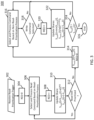
  • FIG. 3 is an example of a process for recovering worker shares from read prioritization in accordance with some embodiments.
  • FIG. 4 is an example of a process for selecting and processing a command based on a non-read prioritization process in accordance with some embodiments.
  • mechanisms (which can include systems, methods, and media) for recovering worker shares from read prioritization are provided.
  • these mechanisms can adjust worker shares to any suitable part or whole (the part or whole being referred to herein as a “portion”) of any suitable one or more storage devices.
  • a NAND solid state drive SSD
  • a portion of the SSDs could be one, two, any suitable subset, or all of the SSDs.
  • the mechanisms can be triggered by a read-prioritization trigger indicating that read commands to a portion i of a storage device are being prioritized.
  • the mechanisms can repeatedly: select and process a read command based on a read prioritization process; increment the count of read commands processed; update adjusted read and write share values for portion i of the storage device based on a product of a base read share value and a control parameter raised to the value of the count of read commands processed; and determine if read commands are still being prioritized.
  • the mechanisms can set a final read share value for portion i of the storage device during read prioritization to the most recent adjusted read share value for portion i of the storage device during read prioritization, and initialize a count of write commands processed during recovering from read prioritization to zero.
  • the mechanisms can repeatedly: select and process a command based on a non-read-prioritization process; determine if a write command was selected; and if a write command was selected: increment the count of write commands; update adjusted read and write share values for portion i of the storage device based on a minimum of: the base read share value; and a quotient of the final read share value and the control value raised to the power of a product of a scaling factor and the count of write commands; and determine if the adjusted read share value equals a base read share value.
  • the mechanism can end.
  • the adjusted read share values will progressively decrease, and the adjusted write share value will progressively increase, as more read commands are processed for portion i of the storage device. Then, while recovering from read prioritization, the adjusted read share values will progressively increase, and the adjusted write share value will progressively decrease, back to their base values as more write commands are processed for portion i of the storage device.
  • FIG. 1 an example block diagram of a solid-state drive 102 coupled to a host device 124 via a bus 132 in accordance with some embodiments is illustrated.
  • solid-state drive 102 can include a controller 104 , NAND devices 106 , 108 , and 110 , channels 112 , 114 , and 116 , random access memory (RAM) 118 , firmware 120 , and cache 122 in some embodiments.
  • controller 104 NAND devices 106 , 108 , and 110 , channels 112 , 114 , and 116 , random access memory (RAM) 118 , firmware 120 , and cache 122 in some embodiments.
  • RAM random access memory
  • Controller 104 can be any suitable controller for a solid-state drive in some embodiments.
  • controller 104 can include any suitable hardware processor(s) (such as a microprocessor, a digital signal processor, a microcontroller, a programmable gate array, etc.).
  • controller 104 can also include any suitable memory (such as RAM, firmware, cache, buffers, latches, etc.), interface controller(s), interface logic, drivers, etc.
  • NAND devices 106 , 108 , and 110 can be any suitable NAND devices for storing information (which can include data, programs, and/or any other suitable information that can be stored in a solid-state drive) in some embodiments.
  • the NAND devices can include any suitable memory cells, hardware processor(s) (such as a microprocessor, a digital signal processor, a microcontroller, a programmable gate array, etc.), interface controller(s), interface logic, drivers, etc. in some embodiments. While three NAND devices ( 106 , 108 , and 110 ) are shown in FIG. 1 , any suitable number D of NAND devices (including only one) can be used in some embodiments.
  • NAND devices such as single-level cell (SLC), multilevel cell (MLC), triple-level cell (TLC), quad-level cell (QLC), 3D NAND, etc.
  • SLC single-level cell
  • MLC multilevel cell
  • TLC triple-level cell
  • QLC quad-level cell
  • 3D NAND 3D NAND
  • Each NAND device can have any suitable size in some embodiments.
  • devices 106 , 108 , and 110 are described herein as being NAND devices, the devices can additionally or alternatively use any other suitable storage technology or technologies, such as NOR flash memory or any other suitable flash technology, phase change memory technology, and/or other any other suitable non-volatile memory storage technology.
  • Channels 112 , 114 , and 116 can be any suitable mechanism for communicating information between controller 104 and NAND device 106 , 108 , and 110 in some embodiments.
  • the channels can be implemented using conductors (lands) on a circuit board in some embodiments. While three channels ( 112 , 114 , and 116 ) are shown in FIG. 1 , any suitable number C of channels can be used in some embodiments.
  • Random access memory (RAM) 118 can include any suitable type of RAM, such as dynamic RAM, static RAM, etc., in some embodiments. Any suitable number of RAM 118 can be included, and each RAM 118 can have any suitable size, in some embodiments.
  • Firmware 120 can include any suitable combination of software and hardware in some embodiments.
  • firmware 120 can include software programmed in any suitable programmable read only memory (PROM) in some embodiments. Any suitable number of firmware 120 , each having any suitable size, can be used in some embodiments.
  • PROM programmable read only memory
  • Cache 122 can be any suitable device for temporarily storing information (which can include data and programs in some embodiments), in some embodiments.
  • Cache 122 can be implemented using any suitable type of device, such as RAM (e.g., static RAM, dynamic RAM, etc.) in some embodiments. Any suitable number of cache 122 , each having any suitable size, can be used in some embodiments.
  • Host device 124 can be any suitable device that accesses stored information in some embodiments.
  • host device 124 can be a general-purpose computer, a special-purpose computer, a desktop computer, a laptop computer, a tablet computer, a server, a database, a router, a gateway, a switch, a mobile phone, a communication device, an entertainment system (e.g., an automobile entertainment system, a television, a set-top box, a music player, etc.), a navigation system, etc. While only one host device 124 is shown in FIG. 1 , any suitable number of host devices can be included in some embodiments.
  • host device 124 can include workers 126 , 128 , and 130 . While three workers ( 126 , 128 , and 130 ) are shown in FIG. 1 , any suitable number of workers W can be included in some embodiments. In some embodiments, at least two workers can be included.
  • a worker can be any suitable hardware and/or software that reads and/or writes data from and/or to solid-state drive 102 .
  • Bus 132 can be any suitable bus for communicating information (which can include data and/or programs in some embodiments), in some embodiments.
  • bus 132 can be a PCIE bus, a SATA bus, or any other suitable bus.
  • FIG. 1 illustrates a NAND solid-state drive
  • the mechanisms described herein can be used with other forms of storage and/or other devices.
  • the mechanisms can be used with network nodes in routing, compute nodes, and/or any suitable device to which multiple workers require access, and their access is controlled by shares that are determined with a QoS bypass mechanism.
  • values 200 that can be tracked in accordance with some embodiments are illustrated. As shown, these values can include counts of read commands processed during read prioritization N[0:D ⁇ 1] 202 , 204 , and 206 , counts of write commands processed during recovery from read prioritization M[0:D ⁇ 1] 208 , 210 , and 212 , control parameters a[0:D ⁇ 1] 214 , 216 , and 218 , scaling factors K[0:D ⁇ 1] 220 , 222 , and 224 , initial read share values S read,0 [0:D ⁇ 1] 226 , 228 , and 230 , final read share values S read,1 [0:D ⁇ 1] 232 , 234 , and 236 , adjusted read share values S read [0:D ⁇ 1] 238 , 240 , and 242 , and adjusted write share values S write [0:D ⁇ 1] 244 , 246 , and 248 .
  • any suitable number of these values can be tracked in some embodiments.
  • one of each of the above-listed values for each portion of the storage device e.g., each NAND in the solid-state drive of FIG. 1
  • the values in FIG. 2 can be stored in any suitable location in some embodiments. For example, in some embodiments, these values can be stored in RAM 118 of FIG. 1 .
  • FIG. 3 an example 300 of a process for recovering worker shares from read prioritization in accordance with some embodiments is shown.
  • This process can be performed on any suitable device.
  • this process can be performed on a controller of a storage device (e.g., such as controller 104 of FIG. 1 ).
  • a different instance of this process can be executed for each portion i of a storage device (e.g., each NAND device 106 , 108 , and 110 on solid-state drive 102 ).
  • process 300 can begin at 302 in response to receiving a read-prioritization trigger.
  • This trigger can indicate that read commands for a portion i of a storage device are being prioritized over write commands for the portion i of the storage device.
  • the trigger can be received in any suitable manner from any suitable source, in some embodiments.
  • the trigger can be received as a flag (e.g., a bit in a shared register) that is set by a process for monitoring QoS in controller 104 when a QoS for the portion i of the storage device drops below a threshold.
  • process 300 can initialize N[i] to zero.
  • This initialization can be performed in any suitable manner in some embodiments. For example, in some embodiments, this initialization can be performed by setting a memory location corresponding to N[i] to zero.
  • Blocks 306 , 308 , 310 , and 312 can be performed during read prioritization in some embodiments.
  • the process can select and process a read command based on a read prioritization process. Selecting and processing a read command can be performed in any suitable manner and be based on any suitable read prioritization process, in some embodiments. For example, in some embodiments, selecting and processing a read command can be performed by selecting the oldest read command of a next worker whose share of commands for portion i of the storage device has not yet been met, and then processing that command based on the parameters of the command.
  • process 300 can next increment N[i].
  • N[i] can be incremented at 308 in any suitable manner in some embodiments. For example, in some embodiments, incrementing N[i] can be performed by adding one to the value in a memory location corresponding to N[i].
  • process 300 can update share values S read [i] and S write [i] so that the share values for read commands decrease and the share values for write commands increase.
  • This updating of these share values can be performed in any suitable manner.
  • the process can determine if read commands for portion i of the storage device are still being prioritized. This determination can be made in any suitable manner in some embodiments. For example, in some embodiments, this determination can be made by checking that a flag (e.g., a bit in a shared register) has been cleared by a process for monitoring QoS in controller 104 when a QoS for the portion i of the storage device rises above a threshold.
  • a flag e.g., a bit in a shared register
  • process 300 determines that read commands are still being prioritized for portion i of the storage device, the process can loop back to 306 .
  • process 300 determines that read commands are not still being prioritized for portion i of the storage device, the process can branch to 314 at which it can set the final read share value from read prioritization for portion i of the storage device (S read,1 [i]) equal to the most-recent value of the adjusted read share value for portion i of the storage device (S read [i]) set at 310 .
  • Setting the final read share value from read prioritization for portion i of the storage device (S read,1 [i]) equal to the most-recent value of the adjusted read share value for portion i of the storage device (S read [i]) set can be performed in any suitable manner in some embodiments.
  • setting the final read share value from read prioritization for portion i of the storage device (S read,1 [i]) equal to the most-recent value of the adjusted read share value for portion i of the storage device (S read [i]) set can be performed by setting a memory location corresponding to S read,1 [i] equal to the value in a memory location corresponding to S read [i]N[i].
  • process 300 can also initialize M[i] to zero in some embodiments.
  • This initialization can be performed in any suitable manner in some embodiments. For example, in some embodiments, this initialization can be performed by setting a memory location corresponding to M[i] to zero.
  • Blocks 316 , 318 , 320 , 322 , and 324 can be performed while recovering from read prioritization in some embodiments.
  • process 300 can select and process a read or write command based on a non-read-prioritization process. Selecting and processing a read or write command can be performed in any suitable manner and be based on any suitable non-read-prioritization process, in some embodiments. For example, 316 of process 300 can be performed as described below in connection with FIG. 4 .
  • process 300 can determine if a write command was selected at 316 . This determination can be made in any suitable manner in some embodiments. For example, in some embodiments, determining if a write command was selected can be performed by inspecting a type of command indicated in a field of the command.
  • process 300 determines at 318 that a write command was not selected at 316 , then process 300 can loop back to 316 .
  • process 300 can branch to 320 at which it can increment M[i].
  • Process 300 can increment M[i] in any suitable manner in some embodiments. For example, in some embodiments, incrementing M[i] can be performed by adding one to the value in a memory location corresponding to M[i].
  • process 300 can update share values S read [i] and S write [i] so that the share values for read commands increase and the share values for write commands decrease.
  • This updating of these share values can be performed in any suitable manner.
  • process 300 can determine if the adjusted read share percentage for portion i of a storage device (S read [i]) equals the base read share percentage for portion i of the storage device (S read,0 [i]). This determination can be made in any suitable manner in some embodiments. For example, in some embodiments, this determination can be made by comparing a value in a memory location corresponding to S read [i] to determine if it is equal a value in a memory location corresponding to S read,0 [i]. If not, process 300 can loop back to 316 . Otherwise, process 300 can end at 326 .
  • FIG. 4 an example 400 of a process for deciding which command is to proceed to a portion i of a storage device (illustrated here as NAND[i]) that can be used at 316 of FIG. 3 in accordance with some embodiments is shown.
  • This process can be performed on any suitable device.
  • this process can be performed on a controller of a storage device (e.g., such as controller 104 of FIG. 1 ).
  • the process can select a first worker. Any suitable worker can be selected as the first worker and this worker can be selected in any suitable manner, in some embodiments. For example, in some embodiments, the worker with oldest incomplete command can be selected as the first worker. As another example, a worker that was first instantiated can be selected as the first worker in some embodiments.
  • process 400 can determine that NAND[i] is ready to receive a command. This determination can be made in any suitable manner in some embodiments. For example, in some embodiments, this determination can be made by checking a command queue of NAND[i] to see if it is empty (which can indicate that NAND[i] is ready to receive a command).
  • process 400 can determine an actual used share of the selected worker. This determination can be made in any suitable manner in some embodiments. For example, in some embodiments, process 400 can determine an actual used share of the selected worker by dividing the total worker time on NAND[i] by the total time of all workers on NAND[i].
  • process 400 can next determine if the actual used share of the selected worker meets (e.g., is greater than, or greater than or equal to) the allocated share of the selected worker for the corresponding NAND[i]. This determination can be made in any suitable manner in some embodiments. For example, in some embodiments, process 400 can make this determination by comparing a first value in a memory location corresponding to the actual used share of the selected worker to a second value in a memory location corresponding to the allocated share of the selected worker for the corresponding NAND[i] to determine if the first value is greater than, or greater than or equal to, the second value.
  • process 400 can select a next worker at 412 .
  • the next worker can be selected in any suitable manner. For example, in some embodiments, the worker with next oldest incomplete command compared to the currently selected worker can be selected as the next worker. As another example, a worker that was instantiated next after the currently selected worker can be selected as the first worker in some embodiments. After selecting the next worker at 412 , process 400 can loop back to 408 .
  • process 400 can process the next command of the selected worker at 414 and then loop back to 406 .
  • Process 400 can process the next command of the selected worker in any suitable manner in some embodiments. For example, in some embodiments, the process can process a command of the selected worker that is next in a command queue based on the parameters of the command.
  • At least some of the above-described blocks of the processes of FIGS. 3 and 4 can be executed or performed in any order or sequence not limited to the order and sequence shown in and described in connection with the figures. Also, some of the above blocks of the processes of FIGS. 3 and 4 can be executed or performed substantially simultaneously where appropriate or in parallel to reduce latency and processing times in some embodiments. Additionally or alternatively, some of the above described blocks of the processes of FIGS. 3 and 4 can be omitted in some embodiments.
  • any suitable computer readable media can be used for storing instructions for performing the functions and/or processes herein.
  • computer readable media can be transitory or non-transitory.
  • non-transitory computer readable media can include media such as non-transitory forms of magnetic media (such as hard disks, floppy disks, and/or any other suitable magnetic media), non-transitory forms of optical media (such as compact discs, digital video discs, Blu-ray discs, and/or any other suitable optical media), non-transitory forms of semiconductor media (such as flash memory, electrically programmable read-only memory (EPROM), electrically erasable programmable read-only memory (EEPROM), and/or any other suitable semiconductor media), any suitable media that is not fleeting or devoid of any semblance of permanence during transmission, and/or any suitable tangible media.
  • transitory computer readable media can include signals on networks, in wires, conductors, optical fibers, circuits, any suitable
  • new mechanisms (which can include systems, methods, and media) for recovering worker shares from read prioritization are provided. By recovering worker shares from read prioritization when needed, these mechanisms can improve meeting allocated worker shares for access to storage devices and thereby improve the performance of host devices connected to the storage devices.

Landscapes

  • Engineering & Computer Science (AREA)
  • Theoretical Computer Science (AREA)
  • Human Computer Interaction (AREA)
  • Physics & Mathematics (AREA)
  • General Engineering & Computer Science (AREA)
  • General Physics & Mathematics (AREA)
  • Techniques For Improving Reliability Of Storages (AREA)
  • Information Retrieval, Db Structures And Fs Structures Therefor (AREA)
  • Debugging And Monitoring (AREA)
  • Cash Registers Or Receiving Machines (AREA)
  • Memory System (AREA)

Abstract

Recovering worker shares from read prioritization including: while read accesses (RA) to a storage device (SD) are being prioritized over write accesses (WA) to the SD: determining a first count of RA to the SD; performing a first adjusting of a base read share percentage (RSP) to a first adjusted RSP for RA to the SD based on the first count of RA; and controlling read access to the SD based on the first adjusting; determining that RA to the SD have completed being prioritized over WA to the SD; and after RA to the SD have completed being prioritized: determining a second count of WA to the SD; performing a second adjusting of the first adjusted RSP to a second adjusted RSP for RA to the SD based on the second count of WA; and controlling write access to the SD based on the second adjusting.

Description

BACKGROUND
Modern computing devices, which can include general and special purpose computers such as desktop computers, laptop computers, tablet computers, servers, mobile phones, Internet of Things (IoT) devices, among many others, frequently implement different processes (which can be referred to herein as “workers”) that read and/or write information (which can include data and/or programs) to and/or from one or more storage devices, such as solid-state drives. In order to ensure that each worker receives a desired amount of access to the storage device(s), such modern computing devices can allocate a share to each worker that defines the amount of access each worker has to the storage device(s), or a portion thereof. For example, a share amount can indicate a percentage of time that a worker is to have access to a storage device, or a portion of the storage device. As a more particular example, for a computing device with three workers, worker 1 could be allocated a share of 50% (or any other suitable percentage between 0% and 100%), worker 2 could be allocated a share of 30% (or any other suitable percentage between 0% and 100%), and worker 3 could be allocated a share of 20% (or any other suitable percentage between 0% and 100%). In this scenario, on average, over long periods of time, worker 1 would be able to access the storage device, or a portion thereof, for approximately 50% of the total time the storage is accessed, and workers 2 and 3 would similarly have access times approximately equal to 30% and 20%, respectively.
In some instances, in order to meet quality of service (QoS) requirements, a storage device may prioritize read accesses (which tend to be shorter in time) to the storage device over write accesses (which tend to be longer in time) to the storage device. While this prioritization can improve the performance of the storage device, it can also cause the shares realized by different workers to not match their allocated shares.
Accordingly, new mechanism for recovering worker shares from read prioritization are desirable.
SUMMARY
In accordance with some embodiments, mechanisms (which can include systems, methods, and media) for recovering worker shares from read prioritization are provided.
In some embodiments, systems for recovering worker shares from read prioritization are provided, the systems comprising: memory; and at least one hardware processor collectively configured to at least: determine that read accesses to a storage device are being prioritized over write accesses to the storage device; while read accesses to the storage device are being prioritized over write accesses to the storage device: determine a first count of read accesses to the storage device; perform a first adjusting of at least one of: (i) a base read share percentage to a first adjusted read share percentage for read accesses to the storage device based on the first count of read accesses; or (ii) a base write share percentage to a first adjusted write share percentage for write accesses to the storage device based on the first count of read accesses; and control read access to the storage device based on the first adjusting; determine that read accesses to the storage device have completed being prioritized over write accesses to the storage device; and after read accesses to the storage device have completed being prioritized over write accesses to the storage device: determine a second count of write accesses to the storage device; perform a second adjusting of at least one of: (i) the first adjusted read share percentage to a second adjusted read share percentage for read accesses to the storage device based on the second count of write accesses; or (ii) the first adjusted write share percentage to a second adjusted write share percentage for write accesses to the storage device based on the second count of write accesses; and control write access to the storage device based on the second adjusting. In some of these embodiments, the first adjusting of the at least one of: (i) the base read share percentage to the first adjusted read share percentage for read accesses to the storage device based on the first count of read accesses; or (ii) the base write share percentage to the first adjusted write share percentage for write accesses to the storage device based on the first count of read accesses, comprises at least one of: (i) adjusting the base read share percentage to the first adjusted read share percentage for read accesses to the storage device based on a control parameter raised to the power of the first count of read accesses; or (ii) adjusting the base write share percentage to the first adjusted write share percentage for write accesses to the storage device based on the control parameter raised to the power of the first count of read accesses. In some of these embodiments, the second adjusting of the at least one of: (i) the first adjusted read share percentage to the second adjusted read share percentage for read accesses to the storage device based on the second count of write accesses; or (ii) the first adjusted write share percentage to the second adjusted write share percentage for write accesses to the storage device based on the second count of write accesses, comprises at least one of: (i) adjusting the first adjusted read share percentage to the second adjusted read share percentage for read accesses to the storage device based on a control parameter raised to a product of a scaling factor and the second count of write accesses; or (ii) adjusting the first adjusted write share percentage to the second adjusted write share percentage for write accesses to the storage device based on the control parameter raised to the product of the scaling factor and the second count of write accesses. In some of these embodiments, the second adjusting of the at least one of: (i) the first adjusted read share percentage to the second adjusted read share percentage for read accesses to the storage device based on the second count of write accesses; or (ii) the first adjusted write share percentage to the second adjusted write share percentage for write accesses to the storage device based on the second count of write accesses, comprises at least one of: (i) adjusting the first adjusted read share percentage to the second adjusted read share percentage for read accesses to the storage device based on a minimum of: the base read share percentage; and the first adjusted read share percentage divided by the control parameter raised to a product of a scaling factor and the second count of write accesses; or (ii) adjusting the first adjusted write share percentage to the second adjusted write share percentage for write accesses to the storage device based on the minimum of: the base read share percentage; and the first adjusted read share percentage divided by the control parameter raised to a product of the scaling factor and the second count of write accesses. In some of these embodiments, the at least one hardware processor is further collectively configured to at least determine that the initial write share percentage equals the base write share percentage. In some of these embodiments, the at least one hardware processor is further collectively configured to at least determine an adjusted worker write share percentage as a base worker write share percentage multiplied by the adjusted write share percentage divided by the base write share percentage. In some of these embodiments, the at least one hardware processor is further collectively configured to at least determine an adjusted worker read share percentage as a base worker read share percentage multiplied by the adjusted read share percentage divided by the base read share percentage.
In some embodiments, methods for recovering worker shares from read prioritization are provided, the methods comprising: determining using at least one hardware processor that read accesses to a storage device are being prioritized over write accesses to the storage device; while read accesses to the storage device are being prioritized over write accesses to the storage device: determining a first count of read accesses to the storage device; performing a first adjusting of at least one of: (i) a base read share percentage to a first adjusted read share percentage for read accesses to the storage device based on the first count of read accesses; or (ii) a base write share percentage to a first adjusted write share percentage for write accesses to the storage device based on the first count of read accesses; and controlling read access to the storage device based on the first adjusting; determining that read accesses to the storage device have completed being prioritized over write accesses to the storage device; and after read accesses to the storage device have completed being prioritized over write accesses to the storage device: determining a second count of write accesses to the storage device; performing a second adjusting of at least one of: (i) the first adjusted read share percentage to a second adjusted read share percentage for read accesses to the storage device based on the second count of write accesses; or (ii) the first adjusted write share percentage to a second adjusted write share percentage for write accesses to the storage device based on the second count of write accesses; and controlling write access to the storage device based on the second adjusting. In some of these embodiments, the first adjusting of the at least one of: (i) the base read share percentage to the first adjusted read share percentage for read accesses to the storage device based on the first count of read accesses; or (ii) the base write share percentage to the first adjusted write share percentage for write accesses to the storage device based on the first count of read accesses, comprises at least one of: (i) adjusting the base read share percentage to the first adjusted read share percentage for read accesses to the storage device based on a control parameter raised to the power of the first count of read accesses; or (ii) adjusting the base write share percentage to the first adjusted write share percentage for write accesses to the storage device based on the control parameter raised to the power of the first count of read accesses. In some of these embodiments, the second adjusting of the at least one of: (i) the first adjusted read share percentage to the second adjusted read share percentage for read accesses to the storage device based on the second count of write accesses; or (ii) the first adjusted write share percentage to the second adjusted write share percentage for write accesses to the storage device based on the second count of write accesses, comprises at least one of: (i) adjusting the first adjusted read share percentage to the second adjusted read share percentage for read accesses to the storage device based on a control parameter raised to a product of a scaling factor and the second count of write accesses; or (ii) adjusting the first adjusted write share percentage to the second adjusted write share percentage for write accesses to the storage device based on the control parameter raised to the product of the scaling factor and the second count of write accesses. In some of these embodiments, the second adjusting of the at least one of: (i) the first adjusted read share percentage to the second adjusted read share percentage for read accesses to the storage device based on the second count of write accesses; or (ii) the first adjusted write share percentage to the second adjusted write share percentage for write accesses to the storage device based on the second count of write accesses, comprises at least one of: (i) adjusting the first adjusted read share percentage to the second adjusted read share percentage for read accesses to the storage device based on a minimum of: the base read share percentage; and the first adjusted read share percentage divided by the control parameter raised to a product of a scaling factor and the second count of write accesses; or (ii) adjusting the first adjusted write share percentage to the second adjusted write share percentage for write accesses to the storage device based on the minimum of: the base read share percentage; and the first adjusted read share percentage divided by the control parameter raised to a product of the scaling factor and the second count of write accesses. In some of these embodiments, the method further comprises determining that the initial write share percentage equals the base write share percentage. In some of these embodiments, the method further comprises determining an adjusted worker write share percentage as a base worker write share percentage multiplied by the adjusted write share percentage divided by the base write share percentage. In some of these embodiments, the method further comprises determining an adjusted worker read share percentage as a base worker read share percentage multiplied by the adjusted read share percentage divided by the base read share percentage.
In some embodiments, non-transitory computer-readable media containing computer executable instructions that, when executed by a processor, cause the processor to perform a method for recovering worker shares from read prioritization are provided, the method comprising: determining that read accesses to a storage device are being prioritized over write accesses to the storage device; while read accesses to the storage device are being prioritized over write accesses to the storage device: determining a first count of read accesses to the storage device; performing a first adjusting of at least one of: (i) a base read share percentage to a first adjusted read share percentage for read accesses to the storage device based on the first count of read accesses; or (ii) a base write share percentage to a first adjusted write share percentage for write accesses to the storage device based on the first count of read accesses; and controlling read access to the storage device based on the first adjusting; determining that read accesses to the storage device have completed being prioritized over write accesses to the storage device; and after read accesses to the storage device have completed being prioritized over write accesses to the storage device: determining a second count of write accesses to the storage device; performing a second adjusting of at least one of: (i) the first adjusted read share percentage to a second adjusted read share percentage for read accesses to the storage device based on the second count of write accesses; or (ii) the first adjusted write share percentage to a second adjusted write share percentage for write accesses to the storage device based on the second count of write accesses; and controlling write access to the storage device based on the second adjusting. In some of these embodiments, the first adjusting of the at least one of: (i) the base read share percentage to the first adjusted read share percentage for read accesses to the storage device based on the first count of read accesses; or (ii) the base write share percentage to the first adjusted write share percentage for write accesses to the storage device based on the first count of read accesses, comprises at least one of: (i) adjusting the base read share percentage to the first adjusted read share percentage for read accesses to the storage device based on a control parameter raised to the power of the first count of read accesses; or (ii) adjusting the base write share percentage to the first adjusted write share percentage for write accesses to the storage device based on the control parameter raised to the power of the first count of read accesses. In some of these embodiments, the second adjusting of the at least one of: (i) the first adjusted read share percentage to the second adjusted read share percentage for read accesses to the storage device based on the second count of write accesses; or (ii) the first adjusted write share percentage to the second adjusted write share percentage for write accesses to the storage device based on the second count of write accesses, comprises at least one of: (i) adjusting the first adjusted read share percentage to the second adjusted read share percentage for read accesses to the storage device based on a control parameter raised to a product of a scaling factor and the second count of write accesses; or (ii) adjusting the first adjusted write share percentage to the second adjusted write share percentage for write accesses to the storage device based on the control parameter raised to the product of the scaling factor and the second count of write accesses. In some of these embodiments, the second adjusting of the at least one of: (i) the first adjusted read share percentage to the second adjusted read share percentage for read accesses to the storage device based on the second count of write accesses; or (ii) the first adjusted write share percentage to the second adjusted write share percentage for write accesses to the storage device based on the second count of write accesses, comprises at least one of: (i) adjusting the first adjusted read share percentage to the second adjusted read share percentage for read accesses to the storage device based on a minimum of: the base read share percentage; and the first adjusted read share percentage divided by the control parameter raised to a product of a scaling factor and the second count of write accesses; or (ii) adjusting the first adjusted write share percentage to the second adjusted write share percentage for write accesses to the storage device based on the minimum of: the base read share percentage; and the first adjusted read share percentage divided by the control parameter raised to a product of the scaling factor and the second count of write accesses. In some of these embodiments, the method further comprises determining that the initial write share percentage equals the base write share percentage. In some of these embodiments, the method further comprises determining an adjusted worker write share percentage as a base worker write share percentage multiplied by the adjusted write share percentage divided by the base write share percentage. In some of these embodiments, the method further comprises determining an adjusted worker read share percentage as a base worker read share percentage multiplied by the adjusted read share percentage divided by the base read share percentage.
BRIEF DESCRIPTION OF THE DRAWINGS
FIG. 1 is an example of block diagram of a solid-state drive coupled to a host device via a bus in accordance with some embodiments.
FIG. 2 is an example of values that can be tracked in accordance with some embodiments.
FIG. 3 is an example of a process for recovering worker shares from read prioritization in accordance with some embodiments.
FIG. 4 is an example of a process for selecting and processing a command based on a non-read prioritization process in accordance with some embodiments.
DETAILED DESCRIPTION
In accordance with some embodiments, mechanisms (which can include systems, methods, and media) for recovering worker shares from read prioritization are provided.
As described herein, in some embodiments, these mechanisms can adjust worker shares to any suitable part or whole (the part or whole being referred to herein as a “portion”) of any suitable one or more storage devices. For example, in a NAND solid state drive (SSD), there may be multiple NAND dies (which may each be referred to herein as a “NAND”) and one or more, or all, of these NAND dies may be referred to herein as a portion of the NAND SSD, in some embodiments. Likewise, when multiple SSDs are being used, a portion of the SSDs could be one, two, any suitable subset, or all of the SSDs.
In some embodiments, the mechanisms can be triggered by a read-prioritization trigger indicating that read commands to a portion i of a storage device are being prioritized. In some embodiments, after initializing a count of read commands processed during read prioritization to zero, during read prioritization, the mechanisms can repeatedly: select and process a read command based on a read prioritization process; increment the count of read commands processed; update adjusted read and write share values for portion i of the storage device based on a product of a base read share value and a control parameter raised to the value of the count of read commands processed; and determine if read commands are still being prioritized.
Once read prioritization has completed, in some embodiments, the mechanisms can set a final read share value for portion i of the storage device during read prioritization to the most recent adjusted read share value for portion i of the storage device during read prioritization, and initialize a count of write commands processed during recovering from read prioritization to zero.
Next, in some embodiments, during recovering from read prioritization, the mechanisms can repeatedly: select and process a command based on a non-read-prioritization process; determine if a write command was selected; and if a write command was selected: increment the count of write commands; update adjusted read and write share values for portion i of the storage device based on a minimum of: the base read share value; and a quotient of the final read share value and the control value raised to the power of a product of a scaling factor and the count of write commands; and determine if the adjusted read share value equals a base read share value. When the adjusted read share value equals the base read share value, the mechanism can end.
Through this process, during read prioritization, the adjusted read share values will progressively decrease, and the adjusted write share value will progressively increase, as more read commands are processed for portion i of the storage device. Then, while recovering from read prioritization, the adjusted read share values will progressively increase, and the adjusted write share value will progressively decrease, back to their base values as more write commands are processed for portion i of the storage device.
Turning to FIG. 1 , an example block diagram of a solid-state drive 102 coupled to a host device 124 via a bus 132 in accordance with some embodiments is illustrated.
As shown, solid-state drive 102 can include a controller 104, NAND devices 106, 108, and 110, channels 112, 114, and 116, random access memory (RAM) 118, firmware 120, and cache 122 in some embodiments. In some embodiments, more or fewer components than shown in FIG. 1 can be included. In some embodiments, two or more components shown in FIG. 1 can be included in one component.
Controller 104 can be any suitable controller for a solid-state drive in some embodiments. In some embodiments, controller 104 can include any suitable hardware processor(s) (such as a microprocessor, a digital signal processor, a microcontroller, a programmable gate array, etc.). In some embodiments, controller 104 can also include any suitable memory (such as RAM, firmware, cache, buffers, latches, etc.), interface controller(s), interface logic, drivers, etc.
NAND devices 106, 108, and 110 can be any suitable NAND devices for storing information (which can include data, programs, and/or any other suitable information that can be stored in a solid-state drive) in some embodiments. The NAND devices can include any suitable memory cells, hardware processor(s) (such as a microprocessor, a digital signal processor, a microcontroller, a programmable gate array, etc.), interface controller(s), interface logic, drivers, etc. in some embodiments. While three NAND devices (106, 108, and 110) are shown in FIG. 1 , any suitable number D of NAND devices (including only one) can be used in some embodiments. Any suitable type of NAND devices (such as single-level cell (SLC), multilevel cell (MLC), triple-level cell (TLC), quad-level cell (QLC), 3D NAND, etc.) can be used in some embodiments. Each NAND device can have any suitable size in some embodiments. While devices 106, 108, and 110 are described herein as being NAND devices, the devices can additionally or alternatively use any other suitable storage technology or technologies, such as NOR flash memory or any other suitable flash technology, phase change memory technology, and/or other any other suitable non-volatile memory storage technology.
Channels 112, 114, and 116 can be any suitable mechanism for communicating information between controller 104 and NAND device 106, 108, and 110 in some embodiments. For example, the channels can be implemented using conductors (lands) on a circuit board in some embodiments. While three channels (112, 114, and 116) are shown in FIG. 1 , any suitable number C of channels can be used in some embodiments.
Random access memory (RAM) 118 can include any suitable type of RAM, such as dynamic RAM, static RAM, etc., in some embodiments. Any suitable number of RAM 118 can be included, and each RAM 118 can have any suitable size, in some embodiments.
Firmware 120 can include any suitable combination of software and hardware in some embodiments. For example, firmware 120 can include software programmed in any suitable programmable read only memory (PROM) in some embodiments. Any suitable number of firmware 120, each having any suitable size, can be used in some embodiments.
Cache 122 can be any suitable device for temporarily storing information (which can include data and programs in some embodiments), in some embodiments. Cache 122 can be implemented using any suitable type of device, such as RAM (e.g., static RAM, dynamic RAM, etc.) in some embodiments. Any suitable number of cache 122, each having any suitable size, can be used in some embodiments.
Host device 124 can be any suitable device that accesses stored information in some embodiments. For example, in some embodiment, host device 124 can be a general-purpose computer, a special-purpose computer, a desktop computer, a laptop computer, a tablet computer, a server, a database, a router, a gateway, a switch, a mobile phone, a communication device, an entertainment system (e.g., an automobile entertainment system, a television, a set-top box, a music player, etc.), a navigation system, etc. While only one host device 124 is shown in FIG. 1 , any suitable number of host devices can be included in some embodiments.
In some embodiments, host device 124 can include workers 126, 128, and 130. While three workers (126, 128, and 130) are shown in FIG. 1 , any suitable number of workers W can be included in some embodiments. In some embodiments, at least two workers can be included. A worker can be any suitable hardware and/or software that reads and/or writes data from and/or to solid-state drive 102.
Bus 132 can be any suitable bus for communicating information (which can include data and/or programs in some embodiments), in some embodiments. For example, in some embodiments, bus 132 can be a PCIE bus, a SATA bus, or any other suitable bus.
Although FIG. 1 illustrates a NAND solid-state drive, it should be understood that the mechanisms described herein can be used with other forms of storage and/or other devices. For example, in some embodiments, the mechanisms can be used with network nodes in routing, compute nodes, and/or any suitable device to which multiple workers require access, and their access is controlled by shares that are determined with a QoS bypass mechanism.
Turning to FIG. 2 , examples of values 200 that can be tracked in accordance with some embodiments are illustrated. As shown, these values can include counts of read commands processed during read prioritization N[0:D−1] 202, 204, and 206, counts of write commands processed during recovery from read prioritization M[0:D−1] 208, 210, and 212, control parameters a[0:D−1] 214, 216, and 218, scaling factors K[0:D−1] 220, 222, and 224, initial read share values Sread,0[0:D−1] 226, 228, and 230, final read share values Sread,1[0:D−1] 232, 234, and 236, adjusted read share values Sread[0:D−1] 238, 240, and 242, and adjusted write share values Swrite[0:D−1] 244, 246, and 248.
Although three of each of N[0:D−1] 202, 204, and 206, M[0:D−1] 208, 210, and 212, α[0:D−1] 214, 216, and 218, K[0:D−1] 220, 222, and 224, Sread,0[0:D−1] 226, 228, and 230, Sread,1[0:D−1] 232, 234, and 236, Sread[0:D−1] 238, 240, and 242, and Swrite[0:D−1] are illustrated in FIG. 2 , any suitable number of these values (including only one) can be tracked in some embodiments. For example, as illustrated, one of each of the above-listed values for each portion of the storage device (e.g., each NAND in the solid-state drive of FIG. 1 ) can be tracked, in some embodiments.
The values in FIG. 2 can be stored in any suitable location in some embodiments. For example, in some embodiments, these values can be stored in RAM 118 of FIG. 1 .
Turning to FIG. 3 , an example 300 of a process for recovering worker shares from read prioritization in accordance with some embodiments is shown. This process can be performed on any suitable device. For example, in some embodiments, this process can be performed on a controller of a storage device (e.g., such as controller 104 of FIG. 1 ). In accordance with some embodiments, a different instance of this process can be executed for each portion i of a storage device (e.g., each NAND device 106, 108, and 110 on solid-state drive 102).
As shown, process 300 can begin at 302 in response to receiving a read-prioritization trigger. This trigger can indicate that read commands for a portion i of a storage device are being prioritized over write commands for the portion i of the storage device. The trigger can be received in any suitable manner from any suitable source, in some embodiments. For example, in some embodiments, the trigger can be received as a flag (e.g., a bit in a shared register) that is set by a process for monitoring QoS in controller 104 when a QoS for the portion i of the storage device drops below a threshold.
Then, at 304, process 300 can initialize N[i] to zero. This initialization can be performed in any suitable manner in some embodiments. For example, in some embodiments, this initialization can be performed by setting a memory location corresponding to N[i] to zero.
Blocks 306, 308, 310, and 312, described below, can be performed during read prioritization in some embodiments.
Next, at 306, the process can select and process a read command based on a read prioritization process. Selecting and processing a read command can be performed in any suitable manner and be based on any suitable read prioritization process, in some embodiments. For example, in some embodiments, selecting and processing a read command can be performed by selecting the oldest read command of a next worker whose share of commands for portion i of the storage device has not yet been met, and then processing that command based on the parameters of the command.
At 308, process 300 can next increment N[i]. N[i] can be incremented at 308 in any suitable manner in some embodiments. For example, in some embodiments, incrementing N[i] can be performed by adding one to the value in a memory location corresponding to N[i].
Then, at 310, process 300 can update share values Sread[i] and Swrite[i] so that the share values for read commands decrease and the share values for write commands increase. This updating of these share values can be performed in any suitable manner. For example, in some embodiments, share values Sread[i] and Swrite[i] can be updated using the following equations:
S read [i]=S read,0 [i]*α[i] N[i]; and
S write [i]=1−S read [i],
where:
    • Sread[i] is the adjusted read share percentage for portion i of a storage device;
    • Swrite[i] is the adjusted write share percentage for portion i of the storage device;
    • Sread,0[i] is the base read share percentage for portion i of the storage device;
    • α[i] is a control parameter for portion i of the storage device and can have any suitable value such as a value greater than zero and less than one; and
    • N[i] is the number of read accesses to portion i of the storage device made during read prioritization.
Next, at 312, the process can determine if read commands for portion i of the storage device are still being prioritized. This determination can be made in any suitable manner in some embodiments. For example, in some embodiments, this determination can be made by checking that a flag (e.g., a bit in a shared register) has been cleared by a process for monitoring QoS in controller 104 when a QoS for the portion i of the storage device rises above a threshold.
If process 300 determines that read commands are still being prioritized for portion i of the storage device, the process can loop back to 306.
Otherwise, if process 300 determines that read commands are not still being prioritized for portion i of the storage device, the process can branch to 314 at which it can set the final read share value from read prioritization for portion i of the storage device (Sread,1[i]) equal to the most-recent value of the adjusted read share value for portion i of the storage device (Sread[i]) set at 310. Setting the final read share value from read prioritization for portion i of the storage device (Sread,1[i]) equal to the most-recent value of the adjusted read share value for portion i of the storage device (Sread[i]) set can be performed in any suitable manner in some embodiments. For example, in some embodiments, setting the final read share value from read prioritization for portion i of the storage device (Sread,1[i]) equal to the most-recent value of the adjusted read share value for portion i of the storage device (Sread[i]) set can be performed by setting a memory location corresponding to Sread,1[i] equal to the value in a memory location corresponding to Sread[i]N[i].
At 314, process 300 can also initialize M[i] to zero in some embodiments. This initialization can be performed in any suitable manner in some embodiments. For example, in some embodiments, this initialization can be performed by setting a memory location corresponding to M[i] to zero.
Blocks 316, 318, 320, 322, and 324, described below, can be performed while recovering from read prioritization in some embodiments.
At 316, process 300 can select and process a read or write command based on a non-read-prioritization process. Selecting and processing a read or write command can be performed in any suitable manner and be based on any suitable non-read-prioritization process, in some embodiments. For example, 316 of process 300 can be performed as described below in connection with FIG. 4 .
Then at 318, process 300 can determine if a write command was selected at 316. This determination can be made in any suitable manner in some embodiments. For example, in some embodiments, determining if a write command was selected can be performed by inspecting a type of command indicated in a field of the command.
If process 300 determines at 318 that a write command was not selected at 316, then process 300 can loop back to 316.
Otherwise, if process 300 determines at 318 that a write command was selected at 316, then process 300 can branch to 320 at which it can increment M[i]. Process 300 can increment M[i] in any suitable manner in some embodiments. For example, in some embodiments, incrementing M[i] can be performed by adding one to the value in a memory location corresponding to M[i].
Next, at 322, process 300 can update share values Sread[i] and Swrite[i] so that the share values for read commands increase and the share values for write commands decrease. This updating of these share values can be performed in any suitable manner. For example, in some embodiments, share values Sread[i] and Swrite[i] can be updated using the following equations:
S read [i]=min(S read,0 [i],S read,1 [i]/α[i] K[i]*M[i]); and
S write [i]=1−S read [i],
where:
    • Sread[i] is the adjusted read share percentage for portion i of a storage device;
    • Swrite[i] is the adjusted write share percentage for portion i of the storage device;
    • Sread,0[i] is the base read share percentage for portion i of the storage device;
    • Sread,1[i] is the final read share percentage for portion i of the storage device during read prioritization of portion i of the storage device;
    • α[i] is a control parameter for portion i of the storage device and can have any suitable value such as a value greater than zero and less than one;
    • K[i] is a scaling value for portion i of the storage device and can have a value greater than 1; and
    • M[i] is the number of write accesses made to portion i of the storage device while recovering from read prioritization.
Then, at 324, process 300 can determine if the adjusted read share percentage for portion i of a storage device (Sread[i]) equals the base read share percentage for portion i of the storage device (Sread,0[i]). This determination can be made in any suitable manner in some embodiments. For example, in some embodiments, this determination can be made by comparing a value in a memory location corresponding to Sread[i] to determine if it is equal a value in a memory location corresponding to Sread,0[i]. If not, process 300 can loop back to 316. Otherwise, process 300 can end at 326.
Turning to FIG. 4 , an example 400 of a process for deciding which command is to proceed to a portion i of a storage device (illustrated here as NAND[i]) that can be used at 316 of FIG. 3 in accordance with some embodiments is shown. This process can be performed on any suitable device. For example, in some embodiments, this process can be performed on a controller of a storage device (e.g., such as controller 104 of FIG. 1 ).
As illustrated, after process 400 begins at 402, the process can select a first worker. Any suitable worker can be selected as the first worker and this worker can be selected in any suitable manner, in some embodiments. For example, in some embodiments, the worker with oldest incomplete command can be selected as the first worker. As another example, a worker that was first instantiated can be selected as the first worker in some embodiments.
Next, at 406, process 400 can determine that NAND[i] is ready to receive a command. This determination can be made in any suitable manner in some embodiments. For example, in some embodiments, this determination can be made by checking a command queue of NAND[i] to see if it is empty (which can indicate that NAND[i] is ready to receive a command).
Then, at 408, process 400 can determine an actual used share of the selected worker. This determination can be made in any suitable manner in some embodiments. For example, in some embodiments, process 400 can determine an actual used share of the selected worker by dividing the total worker time on NAND[i] by the total time of all workers on NAND[i].
At 410, process 400 can next determine if the actual used share of the selected worker meets (e.g., is greater than, or greater than or equal to) the allocated share of the selected worker for the corresponding NAND[i]. This determination can be made in any suitable manner in some embodiments. For example, in some embodiments, process 400 can make this determination by comparing a first value in a memory location corresponding to the actual used share of the selected worker to a second value in a memory location corresponding to the allocated share of the selected worker for the corresponding NAND[i] to determine if the first value is greater than, or greater than or equal to, the second value.
If it is determined at 410 that the actual used share of the selected worker meets (e.g., is greater than, or greater than or equal to) the allocated share of the selected worker for the corresponding NAND[i], then process 400 can select a next worker at 412. The next worker can be selected in any suitable manner. For example, in some embodiments, the worker with next oldest incomplete command compared to the currently selected worker can be selected as the next worker. As another example, a worker that was instantiated next after the currently selected worker can be selected as the first worker in some embodiments. After selecting the next worker at 412, process 400 can loop back to 408.
Otherwise, if it is determined at 410 that the actual used share of the selected worker does not meet (e.g., is less than, or less than or equal to) the allocated share of the selected worker for the corresponding NAND[i], then process 400 can process the next command of the selected worker at 414 and then loop back to 406. Process 400 can process the next command of the selected worker in any suitable manner in some embodiments. For example, in some embodiments, the process can process a command of the selected worker that is next in a command queue based on the parameters of the command.
In some embodiments, at least some of the above-described blocks of the processes of FIGS. 3 and 4 can be executed or performed in any order or sequence not limited to the order and sequence shown in and described in connection with the figures. Also, some of the above blocks of the processes of FIGS. 3 and 4 can be executed or performed substantially simultaneously where appropriate or in parallel to reduce latency and processing times in some embodiments. Additionally or alternatively, some of the above described blocks of the processes of FIGS. 3 and 4 can be omitted in some embodiments.
In some embodiments, any suitable computer readable media can be used for storing instructions for performing the functions and/or processes herein. For example, in some embodiments, computer readable media can be transitory or non-transitory. For example, non-transitory computer readable media can include media such as non-transitory forms of magnetic media (such as hard disks, floppy disks, and/or any other suitable magnetic media), non-transitory forms of optical media (such as compact discs, digital video discs, Blu-ray discs, and/or any other suitable optical media), non-transitory forms of semiconductor media (such as flash memory, electrically programmable read-only memory (EPROM), electrically erasable programmable read-only memory (EEPROM), and/or any other suitable semiconductor media), any suitable media that is not fleeting or devoid of any semblance of permanence during transmission, and/or any suitable tangible media. As another example, transitory computer readable media can include signals on networks, in wires, conductors, optical fibers, circuits, any suitable media that is fleeting and devoid of any semblance of permanence during transmission, and/or any suitable intangible media.
As can be seen from the description above, new mechanisms (which can include systems, methods, and media) for recovering worker shares from read prioritization are provided. By recovering worker shares from read prioritization when needed, these mechanisms can improve meeting allocated worker shares for access to storage devices and thereby improve the performance of host devices connected to the storage devices.
Although the invention has been described and illustrated in the foregoing illustrative embodiments, it is understood that the present disclosure has been made only by way of example, and that numerous changes in the details of implementation of the invention can be made without departing from the spirit and scope of the invention, which is limited only by the claims that follow. Features of the disclosed embodiments can be combined and rearranged in various ways.

Claims (21)

What is claimed is:
1. A system for recovering worker shares from read prioritization, comprising:
memory; and
at least one hardware processor collectively configured to at least:
determine that read accesses to a storage device are being prioritized over write accesses to the storage device;
while read accesses to the storage device are being prioritized over write accesses to the storage device:
determine a first count of read accesses to the storage device;
perform a first adjusting of at least one of: (i) a base read share percentage to a first adjusted read share percentage for read accesses to the storage device based on the first count of read accesses such that the first adjusted read share percentage decreases as the first count of read accesses increases; or (ii) a base write share percentage to a first adjusted write share percentage for write accesses to the storage device based on the first count of read accesses such that the first adjusted write share percentage increases as the first count of read accesses increases; and
control read access to the storage device based on the first adjusting;
determine that read accesses to the storage device have completed being prioritized over write accesses to the storage device; and
after read accesses to the storage device have completed being prioritized over write accesses to the storage device:
determine a second count of write accesses to the storage device;
performing a second adjusting of at least one of: (i) the first adjusted read share percentage to a second adjusted read share percentage for read accesses to the storage device based on the second count of write accesses such that the second adjusted read share percentage increases as the second count of write accesses increases; or (ii) the first adjusted write share percentage to a second adjusted write share percentage for write accesses to the storage device based on the second count of write accesses such that the second adjusted write share percentage decreases as the second count of write accesses increases; and
control write access to the storage device based on the second adjusting.
2. The system of claim 1, wherein the first adjusting of the at least one of: (i) the base read share percentage to the first adjusted read share percentage for read accesses to the storage device based on the first count of read accesses; or (ii) the base write share percentage to the first adjusted write share percentage for write accesses to the storage device based on the first count of read accesses, comprises at least one of: (i) adjusting the base read share percentage to the first adjusted read share percentage for read accesses to the storage device based on a control parameter raised to the power of the first count of read accesses, wherein the control parameter is a value greater than zero and less than one; or (ii) adjusting the base write share percentage to the first adjusted write share percentage for write accesses to the storage device based on the control parameter raised to the power of the first count of read accesses.
3. The system of claim 1, wherein the second adjusting of the at least one of: (i) the first adjusted read share percentage to the second adjusted read share percentage for read accesses to the storage device based on the second count of write accesses; or (ii) the first adjusted write share percentage to the second adjusted write share percentage for write accesses to the storage device based on the second count of write accesses, comprises at least one of: (i) adjusting the first adjusted read share percentage to the second adjusted read share percentage for read accesses to the storage device based on a control parameter raised to a product of a scaling factor and the second count of write accesses, wherein the control parameter is a value greater than zero and less than one and the scaling factor is a value greater than one; or (ii) adjusting the first adjusted write share percentage to the second adjusted write share percentage for write accesses to the storage device based on the control parameter raised to the product of the scaling factor and the second count of write accesses.
4. The system of claim 1, wherein the second adjusting of the at least one of: (i) the first adjusted read share percentage to the second adjusted read share percentage for read accesses to the storage device based on the second count of write accesses; or (ii) the first adjusted write share percentage to the second adjusted write share percentage for write accesses to the storage device based on the second count of write accesses, comprises at least one of: (i) adjusting the first adjusted read share percentage to the second adjusted read share percentage for read accesses to the storage device based on a minimum of: the base read share percentage; and the first adjusted read share percentage divided by a control parameter raised to a product of a scaling factor and the second count of write accesses, wherein the control parameter is a value greater than zero and less than one and the scaling factor is a value greater than one; or (ii) adjusting the first adjusted write share percentage to the second adjusted write share percentage for write accesses to the storage device based on a minimum of: the base read share percentage; and the first adjusted read share percentage divided by the control parameter raised to a product of the scaling factor and the second count of write accesses.
5. The system of claim 1, wherein the at least one hardware processor is further collectively configured to at least determine that the initial write share percentage equals the base write share percentage.
6. The system of claim 1, wherein the at least one hardware processor is further collectively configured to at least determine an adjusted worker write share percentage as a base worker write share percentage multiplied by the adjusted write share percentage divided by the base write share percentage.
7. The system of claim 1, wherein the at least one hardware processor is further collectively configured to at least determine an adjusted worker read share percentage as a base worker read share percentage multiplied by the adjusted read share percentage divided by the base read share percentage.
8. A method for recovering worker shares from read prioritization, comprising:
determining using at least one hardware processor that read accesses to a storage device are being prioritized over write accesses to the storage device;
while read accesses to the storage device are being prioritized over write accesses to the storage device:
determining a first count of read accesses to the storage device;
performing a first adjusting of at least one of: (i) a base read share percentage to a first adjusted read share percentage for read accesses to the storage device based on the first count of read accesses such that the first adjusted read share percentage decreases as the first count of read accesses increases; or (ii) a base write share percentage to a first adjusted write share percentage for write accesses to the storage device based on the first count of read accesses such that the first adjusted write share percentage increases as the first count of read accesses increases; and
controlling read access to the storage device based on the first adjusting;
determining that read accesses to the storage device have completed being prioritized over write accesses to the storage device; and
after read accesses to the storage device have completed being prioritized over write accesses to the storage device:
determining a second count of write accesses to the storage device;
performing second adjusting of at least one of: (i) the first adjusted read share percentage to a second adjusted read share percentage for read accesses to the storage device based on the second count of write accesses such that the second adjusted read share percentage increases as the second count of write accesses increases; or (ii) the first adjusted write share percentage to a second adjusted write share percentage for write accesses to the storage device based on the second count of write accesses such that the second adjusted write share percentage decreases as the second count of write accesses increases; and
controlling write access to the storage device based on the second adjusting.
9. The method of claim 8, wherein the first adjusting of the at least one of: (i) the base read share percentage to the first adjusted read share percentage for read accesses to the storage device based on the first count of read accesses; or (ii) the base write share percentage to the first adjusted write share percentage for write accesses to the storage device based on the first count of read accesses, comprises at least one of: (i) adjusting the base read share percentage to the first adjusted read share percentage for read accesses to the storage device based on a control parameter raised to the power of the first count of read accesses, wherein the control parameter is a value greater than zero and less than one; or (ii) adjusting the base write share percentage to the first adjusted write share percentage for write accesses to the storage device based on the control parameter raised to the power of the first count of read accesses.
10. The method of claim 8, wherein the second adjusting of the at least one of: (i) the first adjusted read share percentage to the second adjusted read share percentage for read accesses to the storage device based on the second count of write accesses; or (ii) the first adjusted write share percentage to the second adjusted write share percentage for write accesses to the storage device based on the second count of write accesses, comprises at least one of: (i) adjusting the first adjusted read share percentage to the second adjusted read share percentage for read accesses to the storage device based on a control parameter raised to a product of a scaling factor and the second count of write accesses, wherein the control parameter is a value greater than zero and less than one and the scaling factor is a value greater than one; or (ii) adjusting the first adjusted write share percentage to the second adjusted write share percentage for write accesses to the storage device based on the control parameter raised to the product of the scaling factor and the second count of write accesses.
11. The method of claim 8, wherein the second adjusting of the at least one of: (i) the first adjusted read share percentage to the second adjusted read share percentage for read accesses to the storage device based on the second count of write accesses; or (ii) the first adjusted write share percentage to the second adjusted write share percentage for write accesses to the storage device based on the second count of write accesses, comprises at least one of: (i) adjusting the first adjusted read share percentage to the second adjusted read share percentage for read accesses to the storage device based on a minimum of: the base read share percentage; and the first adjusted read share percentage divided by a control parameter raised to a product of a scaling factor and the second count of write accesses, wherein the control parameter is a value greater than zero and less than one and the scaling factor is a value greater than one; or (ii) adjusting the first adjusted write share percentage to the second adjusted write share percentage for write accesses to the storage device based on a minimum of: the base read share percentage; and the first adjusted read share percentage divided by the control parameter raised to a product of the scaling factor and the second count of write accesses.
12. The method of claim 8, further comprising determining that the initial write share percentage equals the base write share percentage.
13. The method of claim 8, further comprising determining an adjusted worker write share percentage as a base worker write share percentage multiplied by the adjusted write share percentage divided by the base write share percentage.
14. The method of claim 8, further comprising determining an adjusted worker read share percentage as a base worker read share percentage multiplied by the adjusted read share percentage divided by the base read share percentage.
15. A non-transitory computer-readable medium containing computer executable instructions that, when executed by a processor, cause the processor to perform a method for recovering worker shares from read prioritization, the method comprising:
determining that read accesses to a storage device are being prioritized over write accesses to the storage device;
while read accesses to the storage device are being prioritized over write accesses to the storage device:
determining a first count of read accesses to the storage device;
performing a first adjusting of at least one of: (i) a base read share percentage to a first adjusted read share percentage for read accesses to the storage device based on the first count of read accesses such that the first adjusted read share percentage decreases as the first count of read accesses increases; or (ii) a base write share percentage to a first adjusted write share percentage for write accesses to the storage device based on the first count of read accesses such that the first adjusted write share percentage increases as the first count of read accesses increases; and
controlling read access to the storage device based on the first adjusting;
determining that read accesses to the storage device have completed being prioritized over write accesses to the storage device; and
after read accesses to the storage device have completed being prioritized over write accesses to the storage device:
determining a second count of write accesses to the storage device;
performing a second adjusting of at least one of: (i) the first adjusted read share percentage to a second adjusted read share percentage for read accesses to the storage device based on the second count of write accesses such that the second adjusted read share percentage increases as the second count of write accesses increases; or (ii) the first adjusted write share percentage to a second adjusted write share percentage for write accesses to the storage device based on the second count of write accesses such that the second adjusted write share percentage decreases as the second count of write accesses increases; and
controlling write access to the storage device based on the second adjusting.
16. The non-transitory computer-readable medium of claim 15, wherein the first adjusting of the at least one of: (i) the base read share percentage to the first adjusted read share percentage for read accesses to the storage device based on the first count of read accesses; or (ii) the base write share percentage to the first adjusted write share percentage for write accesses to the storage device based on the first count of read accesses, comprises at least one of: (i) adjusting the base read share percentage to the first adjusted read share percentage for read accesses to the storage device based on a control parameter raised to the power of the first count of read accesses, wherein the control parameter is a value greater than zero and less than one; or (ii) adjusting the base write share percentage to the first adjusted write share percentage for write accesses to the storage device based on the control parameter raised to the power of the first count of read accesses.
17. The non-transitory computer-readable medium of claim 15, wherein the second adjusting of the at least one of: (i) the first adjusted read share percentage to the second adjusted read share percentage for read accesses to the storage device based on the second count of write accesses; or (ii) the first adjusted write share percentage to the second adjusted write share percentage for write accesses to the storage device based on the second count of write accesses, comprises at least one of: (i) adjusting the first adjusted read share percentage to the second adjusted read share percentage for read accesses to the storage device based on a control parameter raised to a product of a scaling factor and the second count of write accesses, wherein the control parameter is a value greater than zero and less than one and the scaling factor is a value greater than one; or (ii) adjusting the first adjusted write share percentage to the second adjusted write share percentage for write accesses to the storage device based on the control parameter raised to the product of the scaling factor and the second count of write accesses.
18. The non-transitory computer-readable medium of claim 15, wherein the second adjusting of the at least one of: (i) the first adjusted read share percentage to the second adjusted read share percentage for read accesses to the storage device based on the second count of write accesses; or (ii) the first adjusted write share percentage to the second adjusted write share percentage for write accesses to the storage device based on the second count of write accesses, comprises at least one of: (i) adjusting the first adjusted read share percentage to the second adjusted read share percentage for read accesses to the storage device based on a minimum of: the base read share percentage; and the first adjusted read share percentage divided by a control parameter raised to a product of a scaling factor and the second count of write accesses, wherein the control parameter is a value greater than zero and less than one and the scaling factor is a value greater than one; or (ii) adjusting the first adjusted write share percentage to the second adjusted write share percentage for write accesses to the storage device based on a minimum of: the base read share percentage; and the first adjusted read share percentage divided by the control parameter raised to a product of the scaling factor and the second count of write accesses.
19. The non-transitory computer-readable medium of claim 15, wherein the method further comprises determining that the initial write share percentage equals the base write share percentage.
20. The non-transitory computer-readable medium of claim 15, wherein the method further comprises determining an adjusted worker write share percentage as a base worker write share percentage multiplied by the adjusted write share percentage divided by the base write share percentage.
21. The non-transitory computer-readable medium of claim 15, wherein the method further comprises determining an adjusted worker read share percentage as a base worker read share percentage multiplied by the adjusted read share percentage divided by the base read share percentage.
US17/949,378 2022-09-21 2022-09-21 Systems, methods, and media for recovering worker shares from read prioritization Active US12182410B2 (en)

Priority Applications (8)

Application Number Priority Date Filing Date Title
US17/949,378 US12182410B2 (en) 2022-09-21 2022-09-21 Systems, methods, and media for recovering worker shares from read prioritization
TW112135526A TW202414231A (en) 2022-09-21 2023-09-18 Systems, methods, and media for recovering worker shares from read prioritization
PCT/US2023/033396 WO2024064292A1 (en) 2022-09-21 2023-09-21 Systems, methods, and media for recovering worker shares from read prioritization
JP2025514749A JP2025529402A (en) 2022-09-21 2023-09-21 System, method, and medium for recovering worker shares from read priorities
CN202380067943.3A CN119923625A (en) 2022-09-21 2023-09-21 Systems, methods, and media for recovering work process shares from read prioritization
KR1020257012471A KR20250073213A (en) 2022-09-21 2023-09-21 Systems, methods, and media for recovering worker occupancy rates from read prioritization
EP23868955.8A EP4591155A1 (en) 2022-09-21 2023-09-21 Systems, methods, and media for recovering worker shares from read prioritization
US18/961,080 US20250094056A1 (en) 2022-09-21 2024-11-26 Systems, methods, and media for recovering worker shares from read prioritization

Applications Claiming Priority (1)

Application Number Priority Date Filing Date Title
US17/949,378 US12182410B2 (en) 2022-09-21 2022-09-21 Systems, methods, and media for recovering worker shares from read prioritization

Related Child Applications (1)

Application Number Title Priority Date Filing Date
US18/961,080 Continuation US20250094056A1 (en) 2022-09-21 2024-11-26 Systems, methods, and media for recovering worker shares from read prioritization

Publications (2)

Publication Number Publication Date
US20240103728A1 US20240103728A1 (en) 2024-03-28
US12182410B2 true US12182410B2 (en) 2024-12-31

Family

ID=90360421

Family Applications (2)

Application Number Title Priority Date Filing Date
US17/949,378 Active US12182410B2 (en) 2022-09-21 2022-09-21 Systems, methods, and media for recovering worker shares from read prioritization
US18/961,080 Pending US20250094056A1 (en) 2022-09-21 2024-11-26 Systems, methods, and media for recovering worker shares from read prioritization

Family Applications After (1)

Application Number Title Priority Date Filing Date
US18/961,080 Pending US20250094056A1 (en) 2022-09-21 2024-11-26 Systems, methods, and media for recovering worker shares from read prioritization

Country Status (7)

Country Link
US (2) US12182410B2 (en)
EP (1) EP4591155A1 (en)
JP (1) JP2025529402A (en)
KR (1) KR20250073213A (en)
CN (1) CN119923625A (en)
TW (1) TW202414231A (en)
WO (1) WO2024064292A1 (en)

Citations (22)

* Cited by examiner, † Cited by third party
Publication number Priority date Publication date Assignee Title
US20030023815A1 (en) * 2001-07-27 2003-01-30 Fujitsu Limited Cache buffer control method for hard disk drives
US20030167385A1 (en) 2002-03-01 2003-09-04 Jiin Lai Read/write scheduling apparatus of controller chip and method for the same
US7555621B1 (en) * 2006-08-01 2009-06-30 Kaspersky Lab, Zao Disk access antiblocking system and method
US20100180006A1 (en) 2008-11-14 2010-07-15 Seyed-Hami Nourbakhsh Network Access Device with Shared Memory
US20130282962A1 (en) * 2012-04-20 2013-10-24 SMART Storage Systems, Inc. Storage control system with flash configuration and method of operation thereof
JP2014013587A (en) 2013-08-22 2014-01-23 Fujitsu Ltd Multi-core processor system, control program, and control method
US20140281260A1 (en) 2013-03-14 2014-09-18 Fusion-Io, Inc. Estimating access frequency statistics for storage device
US9213637B1 (en) 2007-08-30 2015-12-15 Virident Systems, Inc. Read and write performance for non-volatile memory
US20160187959A1 (en) * 2014-12-25 2016-06-30 Intel Corporation Power management in an uncore fabric
US20170358346A1 (en) 2016-06-13 2017-12-14 SK Hynix Inc. Read threshold optimization in flash memories
US20180232178A1 (en) * 2015-09-08 2018-08-16 Sony Corporation Memory controller, memory system, and method of controlling memory controller
US20200133585A1 (en) 2018-10-30 2020-04-30 Micron Technology, Inc. Relocating data to low latency memory
US10860388B1 (en) 2019-07-09 2020-12-08 Micron Technology, Inc. Lock management for memory subsystems
US20210042233A1 (en) 2019-08-07 2021-02-11 SK Hynix Inc. Memory system and operating method thereof
US20210303340A1 (en) * 2020-03-24 2021-09-30 Micron Technology, Inc. Read counter for quality of service design
US11314436B1 (en) 2021-04-22 2022-04-26 Dell Products, L.P. Method and apparatus for dynamically adjusting differentiated share prioritization in a storage system
US20220222013A1 (en) 2021-01-14 2022-07-14 EMC IP Holding Company LLC Scheduling storage system tasks to promote low latency and sustainability
US20220246187A1 (en) * 2021-02-02 2022-08-04 Canon Kabushiki Kaisha Memory controller and method of controlling the memory controller
US20220270655A1 (en) 2021-02-22 2022-08-25 Canon Kabushiki Kaisha Memory control circuit and method for controlling the same
US20230062167A1 (en) * 2021-08-25 2023-03-02 Micron Technology, Inc. Write request thresholding
US20230229590A1 (en) 2020-09-01 2023-07-20 Micron Technology, Inc. Dynamically tuning host performance booster thresholds
US20230236758A1 (en) 2022-01-27 2023-07-27 Micron Technology, Inc. Control of back pressure based on a total number of buffered read and write entries

Family Cites Families (3)

* Cited by examiner, † Cited by third party
Publication number Priority date Publication date Assignee Title
KR102317786B1 (en) * 2015-02-02 2021-10-26 삼성전자주식회사 Input/output processing method in storage device, and storage device and non-volatile memory device adopting the same
CN111124253B (en) * 2018-10-30 2023-10-27 伊姆西Ip控股有限责任公司 Method, apparatus and computer program product for managing storage devices
CN112416556B (en) * 2020-11-23 2023-10-20 西安西热电站信息技术有限公司 A data reading and writing priority balancing method, system, device and storage medium

Patent Citations (22)

* Cited by examiner, † Cited by third party
Publication number Priority date Publication date Assignee Title
US20030023815A1 (en) * 2001-07-27 2003-01-30 Fujitsu Limited Cache buffer control method for hard disk drives
US20030167385A1 (en) 2002-03-01 2003-09-04 Jiin Lai Read/write scheduling apparatus of controller chip and method for the same
US7555621B1 (en) * 2006-08-01 2009-06-30 Kaspersky Lab, Zao Disk access antiblocking system and method
US9213637B1 (en) 2007-08-30 2015-12-15 Virident Systems, Inc. Read and write performance for non-volatile memory
US20100180006A1 (en) 2008-11-14 2010-07-15 Seyed-Hami Nourbakhsh Network Access Device with Shared Memory
US20130282962A1 (en) * 2012-04-20 2013-10-24 SMART Storage Systems, Inc. Storage control system with flash configuration and method of operation thereof
US20140281260A1 (en) 2013-03-14 2014-09-18 Fusion-Io, Inc. Estimating access frequency statistics for storage device
JP2014013587A (en) 2013-08-22 2014-01-23 Fujitsu Ltd Multi-core processor system, control program, and control method
US20160187959A1 (en) * 2014-12-25 2016-06-30 Intel Corporation Power management in an uncore fabric
US20180232178A1 (en) * 2015-09-08 2018-08-16 Sony Corporation Memory controller, memory system, and method of controlling memory controller
US20170358346A1 (en) 2016-06-13 2017-12-14 SK Hynix Inc. Read threshold optimization in flash memories
US20200133585A1 (en) 2018-10-30 2020-04-30 Micron Technology, Inc. Relocating data to low latency memory
US10860388B1 (en) 2019-07-09 2020-12-08 Micron Technology, Inc. Lock management for memory subsystems
US20210042233A1 (en) 2019-08-07 2021-02-11 SK Hynix Inc. Memory system and operating method thereof
US20210303340A1 (en) * 2020-03-24 2021-09-30 Micron Technology, Inc. Read counter for quality of service design
US20230229590A1 (en) 2020-09-01 2023-07-20 Micron Technology, Inc. Dynamically tuning host performance booster thresholds
US20220222013A1 (en) 2021-01-14 2022-07-14 EMC IP Holding Company LLC Scheduling storage system tasks to promote low latency and sustainability
US20220246187A1 (en) * 2021-02-02 2022-08-04 Canon Kabushiki Kaisha Memory controller and method of controlling the memory controller
US20220270655A1 (en) 2021-02-22 2022-08-25 Canon Kabushiki Kaisha Memory control circuit and method for controlling the same
US11314436B1 (en) 2021-04-22 2022-04-26 Dell Products, L.P. Method and apparatus for dynamically adjusting differentiated share prioritization in a storage system
US20230062167A1 (en) * 2021-08-25 2023-03-02 Micron Technology, Inc. Write request thresholding
US20230236758A1 (en) 2022-01-27 2023-07-27 Micron Technology, Inc. Control of back pressure based on a total number of buffered read and write entries

Non-Patent Citations (4)

* Cited by examiner, † Cited by third party
Title
International Search Report and Written Opinion dated Feb. 19, 2024 in International Patent Application No. PCT/US2023/035862, pp. 1-9.
International Search Report and Written Opinion dated Jan. 22, 2024 in International Patent Application No. PCT/US2023/033396, pp. 1-8.
Office Action dated Mar. 14, 2024 in U.S. Appl. No. 17/977,975, pp. 1-75.
Office Action dated Oct. 11, 2024 in U.S. Appl. No. 17/977,975, pp. 1-80.

Also Published As

Publication number Publication date
US20250094056A1 (en) 2025-03-20
CN119923625A (en) 2025-05-02
KR20250073213A (en) 2025-05-27
JP2025529402A (en) 2025-09-04
US20240103728A1 (en) 2024-03-28
EP4591155A1 (en) 2025-07-30
WO2024064292A1 (en) 2024-03-28
TW202414231A (en) 2024-04-01

Similar Documents

Publication Publication Date Title
CN108958907B (en) Context-aware dynamic command scheduling for data storage systems
US10353628B2 (en) Opportunity window hints for background operations in SSD
CN109213696B (en) Method and apparatus for cache management
US9342246B2 (en) Host command based read disturb methodology
CN117519594A (en) Method and device for improving writing performance of QLC solid state disk and computer equipment
US20250238167A1 (en) Systems, methods, and media for prioritizing read accesses to storage devices
US20250094057A1 (en) Systems, methods, and media for controlling background wear leveling in solid-state drives
US9613705B1 (en) Method for managing programming mode of rewritable non-volatile memory module, and memory storage device and memory control circuit unit using the same
US12182410B2 (en) Systems, methods, and media for recovering worker shares from read prioritization
US12366962B2 (en) System method for improving read command process times in solid-state drives (SSD) by having processor split-up background writes based on determined command size
US20260023502A1 (en) Systems, methods, and media for identifying sequential workloads
US12561238B2 (en) Systems, methods, and media for tuning solid-state drives
US20250085872A1 (en) Systems, methods, and media for reducing power consumption of multi-plane non-volatile memory solid-state drives
WO2026006217A1 (en) Systems, methods, and media for tuning solid-state drives
US20250086105A1 (en) Storage device for changing map update mode
CN109710179B (en) Storage service quality control method and device
US20160062670A1 (en) Determining throughput based on system busy level

Legal Events

Date Code Title Description
FEPP Fee payment procedure

Free format text: ENTITY STATUS SET TO UNDISCOUNTED (ORIGINAL EVENT CODE: BIG.); ENTITY STATUS OF PATENT OWNER: LARGE ENTITY

STPP Information on status: patent application and granting procedure in general

Free format text: NON FINAL ACTION MAILED

STPP Information on status: patent application and granting procedure in general

Free format text: RESPONSE TO NON-FINAL OFFICE ACTION ENTERED AND FORWARDED TO EXAMINER

STPP Information on status: patent application and granting procedure in general

Free format text: NOTICE OF ALLOWANCE MAILED -- APPLICATION RECEIVED IN OFFICE OF PUBLICATIONS

STPP Information on status: patent application and granting procedure in general

Free format text: PUBLICATIONS -- ISSUE FEE PAYMENT VERIFIED

STPP Information on status: patent application and granting procedure in general

Free format text: PUBLICATIONS -- ISSUE FEE PAYMENT VERIFIED

STCF Information on status: patent grant

Free format text: PATENTED CASE