US12170694B2 - Data sharing - Google Patents
Data sharing Download PDFInfo
- Publication number
- US12170694B2 US12170694B2 US17/414,667 US201817414667A US12170694B2 US 12170694 B2 US12170694 B2 US 12170694B2 US 201817414667 A US201817414667 A US 201817414667A US 12170694 B2 US12170694 B2 US 12170694B2
- Authority
- US
- United States
- Prior art keywords
- data
- user
- consumer
- smart contract
- sharing
- Prior art date
- Legal status (The legal status is an assumption and is not a legal conclusion. Google has not performed a legal analysis and makes no representation as to the accuracy of the status listed.)
- Active, expires
Links
Images


Classifications
-
- H—ELECTRICITY
- H04—ELECTRIC COMMUNICATION TECHNIQUE
- H04L—TRANSMISSION OF DIGITAL INFORMATION, e.g. TELEGRAPHIC COMMUNICATION
- H04L63/00—Network architectures or network communication protocols for network security
- H04L63/10—Network architectures or network communication protocols for network security for controlling access to devices or network resources
- H04L63/104—Grouping of entities
-
- G—PHYSICS
- G06—COMPUTING OR CALCULATING; COUNTING
- G06F—ELECTRIC DIGITAL DATA PROCESSING
- G06F21/00—Security arrangements for protecting computers, components thereof, programs or data against unauthorised activity
- G06F21/30—Authentication, i.e. establishing the identity or authorisation of security principals
- G06F21/31—User authentication
-
- G—PHYSICS
- G06—COMPUTING OR CALCULATING; COUNTING
- G06F—ELECTRIC DIGITAL DATA PROCESSING
- G06F21/00—Security arrangements for protecting computers, components thereof, programs or data against unauthorised activity
- G06F21/60—Protecting data
- G06F21/604—Tools and structures for managing or administering access control systems
-
- G—PHYSICS
- G06—COMPUTING OR CALCULATING; COUNTING
- G06F—ELECTRIC DIGITAL DATA PROCESSING
- G06F21/00—Security arrangements for protecting computers, components thereof, programs or data against unauthorised activity
- G06F21/60—Protecting data
- G06F21/62—Protecting access to data via a platform, e.g. using keys or access control rules
- G06F21/6218—Protecting access to data via a platform, e.g. using keys or access control rules to a system of files or objects, e.g. local or distributed file system or database
-
- G—PHYSICS
- G06—COMPUTING OR CALCULATING; COUNTING
- G06F—ELECTRIC DIGITAL DATA PROCESSING
- G06F21/00—Security arrangements for protecting computers, components thereof, programs or data against unauthorised activity
- G06F21/60—Protecting data
- G06F21/62—Protecting access to data via a platform, e.g. using keys or access control rules
- G06F21/6218—Protecting access to data via a platform, e.g. using keys or access control rules to a system of files or objects, e.g. local or distributed file system or database
- G06F21/6245—Protecting personal data, e.g. for financial or medical purposes
-
- G—PHYSICS
- G06—COMPUTING OR CALCULATING; COUNTING
- G06F—ELECTRIC DIGITAL DATA PROCESSING
- G06F21/00—Security arrangements for protecting computers, components thereof, programs or data against unauthorised activity
- G06F21/60—Protecting data
- G06F21/64—Protecting data integrity, e.g. using checksums, certificates or signatures
-
- H—ELECTRICITY
- H04—ELECTRIC COMMUNICATION TECHNIQUE
- H04L—TRANSMISSION OF DIGITAL INFORMATION, e.g. TELEGRAPHIC COMMUNICATION
- H04L63/00—Network architectures or network communication protocols for network security
- H04L63/06—Network architectures or network communication protocols for network security for supporting key management in a packet data network
-
- H—ELECTRICITY
- H04—ELECTRIC COMMUNICATION TECHNIQUE
- H04L—TRANSMISSION OF DIGITAL INFORMATION, e.g. TELEGRAPHIC COMMUNICATION
- H04L63/00—Network architectures or network communication protocols for network security
- H04L63/06—Network architectures or network communication protocols for network security for supporting key management in a packet data network
- H04L63/061—Network architectures or network communication protocols for network security for supporting key management in a packet data network for key exchange, e.g. in peer-to-peer networks
-
- H—ELECTRICITY
- H04—ELECTRIC COMMUNICATION TECHNIQUE
- H04L—TRANSMISSION OF DIGITAL INFORMATION, e.g. TELEGRAPHIC COMMUNICATION
- H04L63/00—Network architectures or network communication protocols for network security
- H04L63/08—Network architectures or network communication protocols for network security for authentication of entities
- H04L63/0807—Network architectures or network communication protocols for network security for authentication of entities using tickets, e.g. Kerberos
-
- H—ELECTRICITY
- H04—ELECTRIC COMMUNICATION TECHNIQUE
- H04L—TRANSMISSION OF DIGITAL INFORMATION, e.g. TELEGRAPHIC COMMUNICATION
- H04L63/00—Network architectures or network communication protocols for network security
- H04L63/10—Network architectures or network communication protocols for network security for controlling access to devices or network resources
-
- H—ELECTRICITY
- H04—ELECTRIC COMMUNICATION TECHNIQUE
- H04L—TRANSMISSION OF DIGITAL INFORMATION, e.g. TELEGRAPHIC COMMUNICATION
- H04L63/00—Network architectures or network communication protocols for network security
- H04L63/12—Applying verification of the received information
- H04L63/123—Applying verification of the received information received data contents, e.g. message integrity
-
- H—ELECTRICITY
- H04—ELECTRIC COMMUNICATION TECHNIQUE
- H04L—TRANSMISSION OF DIGITAL INFORMATION, e.g. TELEGRAPHIC COMMUNICATION
- H04L63/00—Network architectures or network communication protocols for network security
- H04L63/20—Network architectures or network communication protocols for network security for managing network security; network security policies in general
-
- H—ELECTRICITY
- H04—ELECTRIC COMMUNICATION TECHNIQUE
- H04L—TRANSMISSION OF DIGITAL INFORMATION, e.g. TELEGRAPHIC COMMUNICATION
- H04L9/00—Cryptographic mechanisms or cryptographic arrangements for secret or secure communications; Network security protocols
- H04L9/08—Key distribution or management, e.g. generation, sharing or updating, of cryptographic keys or passwords
- H04L9/0894—Escrow, recovery or storing of secret information, e.g. secret key escrow or cryptographic key storage
-
- H—ELECTRICITY
- H04—ELECTRIC COMMUNICATION TECHNIQUE
- H04L—TRANSMISSION OF DIGITAL INFORMATION, e.g. TELEGRAPHIC COMMUNICATION
- H04L9/00—Cryptographic mechanisms or cryptographic arrangements for secret or secure communications; Network security protocols
- H04L9/32—Cryptographic mechanisms or cryptographic arrangements for secret or secure communications; Network security protocols including means for verifying the identity or authority of a user of the system or for message authentication, e.g. authorization, entity authentication, data integrity or data verification, non-repudiation, key authentication or verification of credentials
- H04L9/321—Cryptographic mechanisms or cryptographic arrangements for secret or secure communications; Network security protocols including means for verifying the identity or authority of a user of the system or for message authentication, e.g. authorization, entity authentication, data integrity or data verification, non-repudiation, key authentication or verification of credentials involving a third party or a trusted authority
- H04L9/3213—Cryptographic mechanisms or cryptographic arrangements for secret or secure communications; Network security protocols including means for verifying the identity or authority of a user of the system or for message authentication, e.g. authorization, entity authentication, data integrity or data verification, non-repudiation, key authentication or verification of credentials involving a third party or a trusted authority using tickets or tokens, e.g. Kerberos
-
- H—ELECTRICITY
- H04—ELECTRIC COMMUNICATION TECHNIQUE
- H04L—TRANSMISSION OF DIGITAL INFORMATION, e.g. TELEGRAPHIC COMMUNICATION
- H04L9/00—Cryptographic mechanisms or cryptographic arrangements for secret or secure communications; Network security protocols
- H04L9/32—Cryptographic mechanisms or cryptographic arrangements for secret or secure communications; Network security protocols including means for verifying the identity or authority of a user of the system or for message authentication, e.g. authorization, entity authentication, data integrity or data verification, non-repudiation, key authentication or verification of credentials
- H04L9/3236—Cryptographic mechanisms or cryptographic arrangements for secret or secure communications; Network security protocols including means for verifying the identity or authority of a user of the system or for message authentication, e.g. authorization, entity authentication, data integrity or data verification, non-repudiation, key authentication or verification of credentials using cryptographic hash functions
- H04L9/3239—Cryptographic mechanisms or cryptographic arrangements for secret or secure communications; Network security protocols including means for verifying the identity or authority of a user of the system or for message authentication, e.g. authorization, entity authentication, data integrity or data verification, non-repudiation, key authentication or verification of credentials using cryptographic hash functions involving non-keyed hash functions, e.g. modification detection codes [MDCs], MD5, SHA or RIPEMD
-
- H—ELECTRICITY
- H04—ELECTRIC COMMUNICATION TECHNIQUE
- H04L—TRANSMISSION OF DIGITAL INFORMATION, e.g. TELEGRAPHIC COMMUNICATION
- H04L9/00—Cryptographic mechanisms or cryptographic arrangements for secret or secure communications; Network security protocols
- H04L9/50—Cryptographic mechanisms or cryptographic arrangements for secret or secure communications; Network security protocols using hash chains, e.g. blockchains or hash trees
Definitions
- Embodiments of the present disclosure generally relate to the field of data management, and in particular, to devices, methods, apparatuses and computer readable storage media for data sharing.
- Smart devices such as smart phones, wearable devices, home appliances and the like, enable end users to access the Internet anytime and anywhere. With the help of smart devices, end users can access social media, shop online, get telemedicine services, control smart home appliances remotely and so on.
- some personal information of an end user for example, user name, password, age, gender, fingerprints, telephone number, unique device identifier, location, credit card number, financial record, medical record and the like
- service providers with the authorization of the end user.
- some service providers may collect additional personal information which is not related to the provided services, in order to do data mining and analysis in depth to enable other services for getting more profits.
- some service providers may share the collected personal information with third parties without informing related end users. All of these might threaten privacy of the end users.
- the end users may want to manage and share their personal data by themselves. Therefore, it is important to provide a solution to enable law enforcement officers to detect whether service providers infringe privacy of end users and enable the end users to manage and share their personal data by themselves.
- example embodiments of the present disclosure provide methods, devices, apparatuses and computer readable storage media for data sharing.
- a method for data sharing comprises, in response to receiving a first request to share data of a user from a data sharing agent, creating a data sharing smart contract for the user, the data sharing smart contract indicating information on the sharing of the data.
- the method further comprises publishing the data sharing smart contract to one or more data consumers.
- the method further comprises, in response to receiving a second request to access the data from a data consumer in the one or more data consumers, generating, by executing the data sharing smart contract, an indication that the data consumer is authorized to access the data.
- the method further comprises sending the indication to the data consumer to enable the data consumer to access the data.
- a method for data sharing comprises determining, at a data consumer and from one or more data sharing smart contracts published by a data broker, a data sharing smart contract corresponding to data of a user to be accessed.
- the method further comprises sending, to the data broker, a second request to execute the data sharing smart contract for accessing the data.
- the method further comprises, in response to receiving an indication that the data consumer is authorized to access the data from the data broker, accessing the data of the user.
- a method for data sharing comprises collecting data from a user.
- the method further comprises encrypting the data with a key.
- the method further comprises storing the encrypted data in a data storage server.
- the method further comprises sending, to a data broker, a first request to share the data of the user.
- the method further comprises, in response to receiving an identifier of a data sharing smart contract from the data broker, storing the key in association with the identifier of the data sharing smart contract in a key management server, the data sharing smart contract being created by the data broker for the user and indicating information on the sharing of the data.
- an electronic device which comprises at least one processor and at least one memory including computer program code.
- the at least one memory and the computer program code are configured to, with the at least one processor, cause the device to perform the method according to the first aspect.
- an electronic device which comprises at least one processor and at least one memory including computer program code.
- the at least one memory and the computer program code are configured to, with the at least one processor, cause the device to perform the method according to the second aspect.
- an electronic device which comprises at least one processor and at least one memory including computer program code.
- the at least one memory and the computer program code are configured to, with the at least one processor, cause the device to perform the method according to the third aspect.
- an apparatus comprising means to perform the method according to the first, second or third aspect.
- a computer readable storage medium that stores a computer program thereon.
- the computer program when executed by a processor of a device, causes the device to perform the method according to the first, second or third aspect.
- FIG. 1 illustrates a block diagram of a traditional data sharing system
- FIG. 2 illustrates a block diagram of a data sharing system according to some embodiments of the present disclosure
- FIG. 3 shows a schematic diagram of an example process for data sharing according to some embodiments of the present disclosure
- FIG. 4 shows a schematic diagram of an example process for data sharing according to some embodiments of the present disclosure
- FIG. 5 shows a flowchart of an example method for data sharing according to some embodiments of the present disclosure
- FIG. 6 shows a flowchart of an example method for data sharing according to some embodiments of the present disclosure
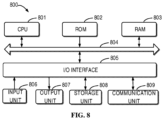
- FIG. 8 is a simplified block diagram of a device that is suitable for implementing embodiments of the present disclosure.
- references in the present disclosure to “one embodiment,” “an embodiment,” “an example embodiment,” and the like indicate that the embodiment described may include a particular feature, structure, or characteristic, but it is not necessary that every embodiment includes the particular feature, structure, or characteristic. Moreover, such phrases are not necessarily referring to the same embodiment. Further, when a particular feature, structure, or characteristic is described in connection with an embodiment, it is submitted that it is within the knowledge of one skilled in the art to affect such feature, structure, or characteristic in connection with other embodiments whether or not explicitly described.
- first and second etc. may be used herein to describe various elements, these elements should not be limited by these terms. These terms are only used to distinguish one element from another. For example, a first element could be termed a second element, and similarly, a second element could be termed a first element, without departing from the scope of example embodiments.
- the term “and/or” includes any and all combinations of one or more of the listed terms.
- circuitry may refer to one or more or all of the following:
- FIG. 1 illustrates a block diagram of a traditional data sharing system 100 .
- a service provider may define a data usage agreement (for example, for collecting, storing, using, disseminating and/or sharing personal data) for all of end users who want to access the provided services.
- An end user may have to approve the agreement in order to access the provided services, even though he/she does not satisfy with some terms and conditions in the agreement.
- the collected personal data may be automatically transferred 101 to and stored at the data service server 120 managed by the service provider. Such collection of the personal data may be performed with or without authorization of the end user.
- the data consumer client 130 may send 102 a request to the data service server 120 to access the collected personal data.
- the data service server 120 may provide 103 the collected personal data to the data consumer client 130 without informing the ender user.
- a data broker is introduced, acting as a data transaction coordinator between end users and data consumers.
- End users may collect their personal data (such as, location, medical record, and shopping record), and then encrypt the data and store the cipher text at a data storage server which may be managed by the end user or by third parties.
- Two collection modes can be supported for the end users to collect their personal data.
- One is called as pull-based data collection. That means data consumers define data collection requirements accord to their business goals.
- the end users may get the data collection requirements directly from the data consumers or indirectly from the data broker, and then collect their personal data accord to the requirements if they would like to share such personal data with the data consumers.
- the other one is called as push-based data collection. That means the end users collect their personal data and share it with others by themselves.
- an end user wants to share personal data with others, the end user may register to the data broker and then publish a corresponding smart contract on how to access the shared personal data. Data consumers may also register to the data broker and thus can get to know the data contract published by the ender user. If a data consumer wants to access the shared personal data of the end user, it may send a request to the data broker to execute the data contract. The data broker may issue an authorization token to the data consumer, such that the data consumer can access the personal data of the end user based on the authorization token. Information on the access of the data consumer may be recorded in a distributed ledger by the data broker.
- the end users can track the data usage of their personal data. Moreover, this solution enables law enforcement officers to detect if the data consumers infringe privacy of the end users when they use their personal data.
- FIG. 2 illustrates a block diagram of a data sharing system 200 according to some embodiments of the present disclosure.
- the data sharing system 200 includes a data sharing agent 210 , a data broker 220 , one or more data consumer clients 230 (also referred to as “data consumer 230 ” or “data consumers 230 ”), one or more key management servers 240 (also referred to as “key management server 240 ” or “key management servers 240 ”) and one or more data storage servers 250 (also referred to as “data storage server 250 ” or “data storage servers 250 ”).
- key management servers 240 also referred to as “key management server 240 ” or “key management servers 240 ”
- data storage servers 250 also referred to as “data storage server 250 ” or “data storage servers 250 ”.
- the structure and functionalities of the data sharing system 200 are described only for purpose of illustration without suggesting any limitation to the scope of the present disclosure. Embodiments of the present disclosure may also be applied to a different system with a different structure and/or different
- the data sharing agent 210 may be deployed or implemented at a user device of an end user.
- the user device may be any device that can generate data, including but not limited to, a mobile phone, a wearable device, a home appliance, a sensor and so on.
- the data sharing agent 210 may collect various data from the end user, such as raw data of personal information of the end user. Additionally, the data sharing agent 210 may be configured to further anonymize and/or desensitize the collected data of the end user.
- the data sharing agent 210 may encrypt the anonymized and/or desensitized data with a key, and then send the encrypted data to the data storage server 250 .
- the data broker 220 may be an application based on a common distributed ledger platform, which enables end users to share their personal data with data consumers securely and automatically.
- the data broker 220 may be implemented as one or more devices for executing such application.
- the data broker 220 may include a registration management unit 221 , which is configured to manage the registration of end users and data consumers.
- the data broker 220 may derive a unique identifier of an end user or a data consumer from his/her public key optionally together with other parameters (such as, an identifier of the data broker 220 , a timestamp, and so on) based on a cryptographic hash function.
- the end user and the data consumer may keep their respective private keys by themselves.
- the data broker 220 may include a smart contract management unit 222 , which is configured to, in response to receiving the data sharing request from the data sharing agent 210 , create a corresponding data sharing smart contract for the end user.
- the data sharing request may indicate one or more policies defined by the end user for sharing the data.
- the created data sharing smart contract may describe how to access and share the data according to the one or more policies defined by the end user.
- the policy defined by the end user may be a fine-grained policy, which indicates that the access and sharing of the data should meet some specific requirements, such as the location of the data consumer, the industry segment (for example, finance, healthcare/pharma, smart city, energy/utilities or the like) of the data consumer, the country of the data consumer, and so on.
- some end users may set such a data sharing policy that data consumers from some regions/locations are forbidden to access their data.
- the created data sharing smart contract may be stored by the data broker 220 at a ledger, such as one of ledgers 224 - 1 , 224 - 2 . . .
- one ledger 224 may store one or more data sharing smart contracts and/or one or more data usage records, as will be described in the following.
- each data sharing smart contract may be associated with a corresponding end user.
- a data sharing smart contract may have its own unique identifier, which also acts as an address for executing the data sharing smart contract.
- the identifier of the data sharing smart contract may be derived from the public key of the end user, the address of the data in the data storage server 250 and optionally together with other parameters (such as, an identifier of the data broker 220 , a timestamp, and so on) based on a cryptographic hash function. That is, the data broker 220 may not keep data of the end user, but keep the address of the data (indicating where to fetch the data) in the data sharing smart contract.
- the personal data of the end user may be stored as cipher text at the data storage server 250 which may be managed by the end user or managed by a third party (for example, a data service provider, a cloud service provider or the like).
- the integrity verification code of the personal data may be stored in association with the encrypted personal data. The integrity verification code may be obtained from the personal data based on a cryptographic hash function and then signed with the private key of the end user.
- the data consumer 230 may send, to the data broker 220 , a request (also referred to “second request”) to execute a corresponding data sharing smart contract for accessing the data.
- a request also referred to “second request”
- the data broker 220 (such as, the smart contract management unit 222 ) may execute the data sharing smart contract according to the request from the data consumer 230 .
- the data broker 220 may also include an authorization management unit 223 as shown in FIG. 2 .
- an authorization token may be generated and issued to the data consumer 230 by the authorization management unit 223 in the data broker 220 .
- a corresponding data usage record, the identifier of the data sharing smart contract and the hash of authorization token may be recorded in the distributed ledger 224 .
- the corresponding data usage record may record information on the access of the data consumer to the personal data, such as, the way in which the personal data is used, when the personal data is used, who use the personal data and so on.
- the authorization token and the address of personal data optionally together with the public key of the end user (which may be used to verify the integrity of the personal data), the data consumer 230 can access the desired personal data.
- the data usage records stored in the distributed ledgers 224 enable the ender users and/or law enforcement officers to track usage of the personal data.
- the data usage records may be used to record how and when the personal data is used, as well as who use the personal data.
- one data usage record may be kept or stored for one data consumer that executes one data sharing smart contract by one end user.
- one ledger 224 can store one or more data usage records and/or one or more data sharing smart contracts.
- each data usage record may have its own identifier, which may be derived from the identifier of a corresponding data sharing smart contract, the identifier of the data consumer and optionally together with other parameters (such as, an identifier of the data broker 220 , a timestamp, and so on) based on a cryptographic hash function.
- the data broker 220 may get and publish personal data collection requirements (for example, data categories such as medical record and shopping record, and data attributes such as gender and age to be collected) from data consumers, which enables pull-based data collection.
- personal data collection requirements for example, data categories such as medical record and shopping record, and data attributes such as gender and age to be collected
- the data broker 220 may optimize personal data collection. For example, in order to improve system performance and maximize the value of the personal data of the end user, the data broker 220 may design a data collection form based on the requirements of the data consumer 230 and/or some potential application scenarios.
- the data collection form may indicate a data format in which the personal data is to be collected, such as data items, data fields, data type (e.g., String, Numeric, Date) and/or data length to be collected.
- the data collection form may be designed by third parties (such as, other service providers).
- the data broker 220 may indicate the data collection form to the data sharing agent 210 , such that the data sharing agent 210 collects data from the end user based on the data collection form. In this way, the data broker 220 may guide end users to store their personal data in a same format to one or more data storage servers, in order to facilitate the access of the stored data.
- the key management server 240 may include a key management unit 241 , which is configured to store the identifier of the data sharing smart contract and a corresponding key for encrypting the data associated with the data sharing smart contract in storage units 243 .
- the key management server 240 may be deployed together with the data broker 220 , such as, in a same physical device.
- the key for encrypting the data associated with the data sharing smart contract may be received from the data sharing agent 210 and provided by the end user. For example, the key may be used by the data sharing agent 210 to encrypt the anonymized and/or desensitized personal data.
- the encrypted personal data may be stored at the data storage server 250 , which may be managed by the ender user or managed by a third party.
- the data storage server that is managed by the ender user may also be referred to as “local data storage server”.
- the data storage server 250 may include a data management unit 251 and storage units 252 .
- the data management unit 251 may be configured to receive the encrypted data from the data sharing agent 210 , and store the encrypted data into the storage units 252 .
- the key management server 240 may also include an authorization validation unit 242 , which is responsible for validating the authorization token provided by the data consumer 230 .
- the authorization validation unit 242 may validate the authorization token with the help of the data broker 220 .
- the authorization token provided by the data consumer 230 may include the identifier of the data consumer 230 , the identifier of the corresponding data sharing smart contract, and an address of the key management server 230 .
- the authorization validation unit 242 may validate the authorization token by requesting the data broker 220 to check if the identifier of the data consumer 230 and the identifier of the corresponding data sharing smart contract match the corresponding data usage record in the distributed ledger 224 . If the authorization validation unit 242 determines that the authorization token is valid, it may send the encryption key to the data consumer 230 .
- the data consumer 230 may send a third request for the encrypted data to the data storage server 250 .
- the data management unit 251 in the data storage server 250 may retrieve the encrypted data from the storage units 252 and send it back to the data consumer 230 .
- the data consumer 230 can decrypt the encrypted data obtained from the data storage server 250 with the encryption key.
- the personal data may be encrypted and stored separately with the encryption key.
- the encrypted personal data may be stored at the data storage server 250
- the encryption key may be stored at the key management server 240 .
- the data storage server 250 and the key management server 240 may be implemented in different physical devices.
- the key management server 240 does not know the personal data even though it knows the key for encrypting the personal data, since the key management server 240 does not know the address of the personal data.
- the data storage server 250 does not know the personal data either, since the data is encrypted with the key which the data storage server 250 does not know.
- FIG. 3 shows a schematic diagram of an example process 300 for data sharing according to some embodiments of the present disclosure.
- the process 300 is directed to the preparation phase for data sharing.
- the process 300 will be described with reference to FIG. 2 .
- the process 300 may involve the data sharing agent 210 , the data broker 220 , the data consumer 230 , the key management server 240 and the data storage server 250 as shown in FIG. 2 .
- the data broker 220 may determine 302 a data format (that is, a data collection form, which indicates data items, data fields, data type (e.g., String, Numeric, Date) and/or data length to be collected) in which data is to be collected from an end user. For example, the data broker 220 may obtain data collection requirements from the data consumer 230 and determine the data format based on the data collection requirements. The data broker 220 may indicate 304 the data format to the data sharing agent 210 . According to the data format indicated by the data broker 220 , the data sharing agent 210 may collect 306 data from the end user.
- a data format that is, a data collection form, which indicates data items, data fields, data type (e.g., String, Numeric, Date) and/or data length to be collected
- the data broker 220 may obtain data collection requirements from the data consumer 230 and determine the data format based on the data collection requirements.
- the data broker 220 may indicate 304 the data format to the data sharing agent 210 . According to the data
- the data sharing agent 210 may anonymize and/or desensitize the collected data, and encrypt the anonymized and/or desensitized data with a key, as shown by 308 in FIG. 3 .
- the data sharing agent 210 may then store 310 the encrypted data in the data storage server 250 securely.
- the data sharing agent 210 may send the encrypted data to the data storage server 250 via any security mechanism currently known or to be developed in the further, such as, Transport Layer Security (TLS) protocol, IP security (IPsec) protocol or the like.
- TLS Transport Layer Security
- IPsec IP security
- the data sharing agent 210 may send 312 , to the data broker 220 , a first request to share the data of the user.
- the first request may include one or more of the following: a public key of the end user, data description, a data usage policy, an address of the data in the data storage server 250 , and so on.
- the data broker 220 may create 314 a data sharing smart contract for the end user and publish 316 the created data sharing smart contract to one or more data consumers (including the data consumer 230 ).
- the created data sharing smart contract may describe how to access and share the data of the end user based on the policy defined by the end user.
- An identifier of the data sharing smart contract may be derived from the public key of the end user, the address of the data in the data storage server 250 and optionally together with other parameters (such as, an identifier of the data broker 220 , a timestamp, and so on) based on a cryptographic hash function.
- the created data sharing smart contract may be stored in a distributed ledger 224 .
- the data broker 220 may indicate 318 the identifier of the data sharing smart contract to the data sharing agent 210 .
- the data sharing agent 210 may store 320 both the identifier of the data sharing smart contract and the key for encrypting the data in the key management server 240 securely.
- the data sharing agent 210 may send the identifier of the data sharing smart contract and the key to the key management server 240 via any security mechanism currently known or to be developed in the further, such as, TLS, IPsec or the like.
- the key management server 240 may keep the identifier of the data sharing smart contract in association with the encryption key securely.
- the data collected from the end user is ready to be access by data consumers.
- FIG. 4 shows a schematic diagram of an example process 400 for data sharing according to some embodiments of the present disclosure.
- the process 400 may be performed subsequent to the process 300 .
- the process 400 will be described with reference to FIG. 2 .
- the process 400 may involve the data broker 220 , the data consumer 230 , the key management server 240 and the data storage server 250 as shown in FIG. 2 .
- the data consumer 230 may determine 402 , from one or more data sharing smart contracts published by the data broker 220 , a data sharing smart contract to be executed.
- the determined data sharing smart contract may correspond to data of an ender user that the data consumer 230 wants to access.
- the data consumer 230 may send 404 , to the data broker 220 , a second request to execute the data sharing smart contract for accessing the data.
- the data broker 220 may execute the data sharing smart contract and generate an authorization indication for the data consumer 230 , as shown by 406 in FIG. 4 .
- the data sharing smart contract may indicate one or more policies defined by the end user for sharing the data.
- the data broker 220 may determine, based on the second request, whether the access of the data consumer 230 to the data conforms to the one or more policies. If the access of the data consumer 230 conforms to the policies defined by the end user, the data broker 220 may generate an authorization token for authorizing the access of the data consumer 230 .
- the authorization token may include one or more of the following: the identifier of the data consumer 230 , the identifier of the data sharing smart contract, an address of the key management server 240 and so on.
- the data broker 220 may derive, by executing the data sharing smart contract based on its identifier, at least one of the public key of the user and the address of the data in the data storage server 250 .
- the data broker 220 may send 408 the authorization token, the address of the data and/or the public key of the end user (such as, used to verify the integrity of the personal data) to the data consumer 230 .
- the data broker 220 may record information on the access of the data consumer 230 to the data into a data usage record, and store the data usage record in a distributed ledger 224 , as shown by 410 in FIG. 4 .
- the data usage record may include one or more of the following: information on the access of the data consumer to the personal data (such as, the way in which the personal data is used, when the personal data is used, as well as who use the personal data), the identifier of the data consumer 230 , the identifier of the data sharing smart contract, and a hash of the authorization token.
- the data consumer may send 412 the authorization token to the key management server 240 to retrieve the encryption key.
- the key management server 240 may validate 414 the received authorization token, for example, with the help of the data broker 220 as described above. According to the identifier of the data sharing smart contract included in the authorization token, the key management server 240 may look for the encryption key and send 416 the encryption key to the data consumer 230 .
- the data consumer 230 may send 418 a third request for the encrypted data to the data storage server 250 .
- the data storage server 250 may send 420 the encrypted data optionally together with the data integrity verification code of the data to the data consumer 230 .
- the data consumer 230 may decrypt the encrypted data with the encryption key, and optionally verify the integrity of the data based on the data integrity verification code and the public key of the end user, as shown by 422 in FIG. 4 .
- embodiments of the present disclosure provide a new solution for data sharing.
- This solution enables low enforcement officers to detect and determine if service provides infringe end users' privacy when they use and share the personal data of the end users.
- This solution also enables the end users to track how their personal data is used and shared by the service providers, even though the service providers are authorized to do so.
- this solution enables the end users to manage and share their personal data to get profits by themselves.
- FIG. 5 shows a flowchart of an example method 500 for data sharing according to some embodiments of the present disclosure.
- the method 500 can be implemented at the data broker 220 as shown in FIG. 2 . It is to be understood that the method 500 may include additional blocks not shown and/or may omit some shown blocks, and the scope of the present disclosure is not limited in this regard.
- the data broker 220 determines whether a first request to share data of a user is received from a data sharing agent collecting the data.
- the first request may comprise a policy defined by the user for sharing the data.
- the data broker 220 may generate the data sharing smart contract based on the policy.
- the first request may comprise a public key of the user and an address of the date stored in a data storage server.
- the data broker 220 may generate, at least based on the public key and the address, an identifier of the data sharing smart contract.
- the data broker 220 may send the identifier of the data sharing smart contract to the data sharing agent.
- the data broker 220 publishes the data sharing smart contract to one or more data consumers.
- the data broker 220 determines whether a second request to access the data is received from one of the one or more data consumers.
- the data broker 220 In response to receiving the second request, at block 550 , the data broker 220 generates, by executing the data sharing smart contract, an indication that the data consumer is authorized to access the data.
- the data broker 220 sends the indication to the data consumer to enable the data consumer to access the data.
- the data sharing smart contract may indicate a policy defined by the user for sharing the data.
- the data broker 220 may determine, based on the second request, whether the access of the data consumer to the data conforms to the policy. In response to determining that the access of the data consumer to the data conforms to the policy, the data broker 220 may generate an authorization token to authorize the data consumer to access the data. The data broker 220 may send the authorization token to the data consumer.
- an identifier of the data sharing smart contract may be generated at least based on a public key of the user and an address of the data stored in a data storage server.
- the data broker 220 may determine, by executing the data sharing smart contract based on the identifier, at least one of the public key of the user and the address of the data.
- the data broker 220 may send the at least one of the public key of the user and the address of the data to the data consumer.
- the data broker 220 may determine a data format in which the data is to be collected from the user, and send an indication of the data format to the data sharing agent, such that the data sharing agent collects the data from the user in the data format.
- the data broker 220 may store the data sharing smart contract in a distributed ledger.
- the data broker 220 may record information on the access of the data consumer to the data in a data usage record and store the data usage record in a distributed ledger. In some embodiments, the data broker 220 may generate, based on an identifier of the data sharing smart contract and an identifier of the data consumer, an identifier of the data usage record.
- FIG. 6 shows a flowchart of an example method 600 for data sharing according to some embodiments of the present disclosure.
- the method 600 can be implemented at the data consumer 230 as shown in FIG. 2 . It is to be understood that the method 600 may include additional blocks not shown and/or may omit some shown blocks, and the scope of the present disclosure is not limited in this regard.
- the data consumer 230 determines, from one or more data sharing smart contracts published by a data broker, a data sharing smart contract corresponding to data of a user to be accessed.
- the data may be encrypted with a key and stored in a data storage server, and the key for encrypting the data may be stored in a key management server different from the data storage server.
- the data consumer 230 sends, to the data broker, a second request to execute the data sharing smart contract for accessing the data.
- the data consumer 230 determines whether an indication that the data consumer is authorized to access the data is received from the data broker.
- the data consumer 230 accesses the data of the user.
- the indication may comprise an authorization token to authorize the data consumer to access the data and an address of the encrypted data in the data storage server.
- the data consumer 230 may send the authorization token to the key management server.
- the data consumer 230 may send a third request for the encrypted data to the data storage server based on the address.
- the data consumer 230 may access the data by decrypting the encrypted data with the key.
- the indication may comprise a public key of the user.
- the data consumer 230 may obtain, from the data storage server, a verification code for verifying integrity of the data, the verification code being generated by signing a hash value of the data with a private key of the user.
- the data consumer 230 may verify, based on the verification code and the public key of the user, the integrity of the data.
- FIG. 7 shows a flowchart of an example method 700 for data sharing according to some embodiments of the present disclosure.
- the method 700 can be implemented at the data sharing agent 210 as shown in FIG. 2 . It is to be understood that the method 700 may include additional blocks not shown and/or may omit some shown blocks, and the scope of the present disclosure is not limited in this regard.
- the data sharing agent 210 collects data from a user.
- the data sharing agent 210 encrypts the data with a key.
- the data sharing agent 210 stores the encrypted data in a data storage server.
- the data sharing agent 210 sends, to a data broker, a first request to share the data of the user.
- the data sharing agent 210 determine whether an identifier of a data sharing smart contract is received from the data broker.
- the data sharing agent 210 In response to receiving the identifier of the data sharing smart contract, at block 760 , the data sharing agent 210 stores the key in association with the identifier of the data sharing smart contract in a key management server, the data sharing smart contract indicating information on the sharing of the data.
- the data sharing agent 210 may receive, from the data broker, an indication of a data format in which the data is to be collected.
- the data sharing agent 210 may collect the data from the user in the data format.
- the data sharing agent 210 may anonymize and/or desensitize the data.
- the data sharing agent 210 may generate a verification code for verifying integrity of the data, and store the verification code in association with the encrypted data in the data storage server. In some embodiments, the data sharing agent 210 may generate a hash value of the data based on a cryptographic hash function, and generate the verification code by signing the hash value with a private key of the user.
- an apparatus capable of performing the methods 500 , 600 and/or 700 may comprise means for performing the respective steps of the method s 500 , 600 and/or 700 .
- the means may be implemented in any suitable form.
- the means may be implemented in a circuitry or software module.
- the apparatus capable of performing the method 500 comprises: means for in response to receiving a first request to share data of a user from a data sharing agent, creating a data sharing smart contract for the user, the data sharing smart contract indicating information on the sharing of the data; means for publishing the data sharing smart contract to one or more data consumers; means for in response to receiving a second request to access the data from a data consumer in the one or more data consumers, generating, by executing the data sharing smart contract, an indication that the data consumer is authorized to access the data; and means for sending the indication to the data consumer to enable the data consumer to access the data.
- the apparatus capable of performing the method 600 comprises: means for determining, at a data consumer and from one or more data sharing smart contracts published by a data broker, a data sharing smart contract corresponding to data of a user to be accessed; means for sending, to the data broker, a second request to execute the data sharing smart contract for accessing the data; and means for in response to receiving an indication that the data consumer is authorized to access the data from the data broker, accessing the data of the user.
- the apparatus capable of performing the method 700 comprises: means for collecting data from a user; means for encrypting the data with a key; means for storing the encrypted data in a data storage server; means for sending, to a data broker, a first request to share the data of the user; and means for in response to receiving an identifier of a data sharing smart contract from the data broker, storing the key in association with the identifier of the data sharing smart contract in a key management server, the data sharing smart contract indicating information on the sharing of the data.
- the means comprises at least one processor; and at least one memory including computer program code, the at least one memory and computer program code configured to, with the at least one processor, cause the performance of the apparatus.
- FIG. 8 illustrates a schematic block diagram of a device 800 that can be used to implement the embodiments of the present disclosure.
- the data sharing agent 210 , the data broker 220 , the data consumer 230 , the key management server 240 and/or the data storage server 250 as shown in FIG. 2 can be implemented by the device 800 .
- the device 800 includes a central processing unit (CPU) 801 which may perform various appropriate actions and processing based on computer program instructions stored in the read only memory (ROM) 802 or computer program instructions uploaded from storage unit 808 to the random access memory (RAM) 803 .
- the RAM 803 there further stores various programs and data needed by operation of the device 800 .
- the CPU 801 , ROM 802 and RAM 803 are connected one another via a bus 804 .
- the input/output (I/O) interface 805 is also connected to the bus 804 .
- the following components in the device 800 are connected to the I/O interface 805 : including: an input unit 806 , such as a keyboard, a mouse, and the like; an output unit 807 , such as display of various types and loudspeakers; a storage unit 808 , such as magnetic disk and optical disk; a communication unit 809 , such as network card, modem, wireless communication transceiver.
- the communication unit 809 allows the device 800 to exchange data/information with other devices via computer networks, such as Internet and/or telecommunication networks.
- the methods described above can be executed by the processing unit 801 .
- the methods 500 , 600 and/or 700 can be implemented as a computer software program which is corporeally contained in a machine readable medium, such as the storage unit 808 .
- the computer program can be partially or wholly loaded and/or mounted on the device 800 by the ROM 802 and/or the communication unit 809 .
- the computer program is uploaded to the RAM 803 and executed by the CPU 801 , one or more steps of the methods 500 , 600 and/or 700 described above can be executed.
- the present disclosure may be a system, an apparatus, a device, a method, and/or a computer program product.
- the computer program product may include a computer readable storage medium (or media) having computer readable program instructions thereon for causing a processor to carry out aspects of the present disclosure.
- the computer readable storage medium can be a tangible device that can retain and store instructions for use by an instruction execution device.
- the computer readable storage medium may be, for example, but is not limited to, an electronic storage device, a magnetic storage device, an optical storage device, an electromagnetic storage device, a semiconductor storage device, or any suitable combination of the foregoing.
- a non-exhaustive list of more specific examples of the computer readable storage medium includes the following: a portable computer diskette, a hard disk, a random access memory (RAM), a read-only memory (ROM), an erasable programmable read-only memory (EPROM or Flash memory), a static random access memory (SRAM), a portable compact disc read-only memory (CD-ROM), a digital versatile disk (DVD), a memory stick, a floppy disk, a mechanically encoded device such as punch-cards or raised structures in a groove having instructions recorded thereon, and any suitable combination of the foregoing.
- RAM random access memory
- ROM read-only memory
- EPROM or Flash memory erasable programmable read-only memory
- SRAM static random access memory
- CD-ROM compact disc read-only memory
- DVD digital versatile disk
- memory stick a floppy disk
- a mechanically encoded device such as punch-cards or raised structures in a groove having instructions recorded thereon
- a computer readable storage medium is not to be construed as being transitory signals per se, such as radio waves or other freely propagating electromagnetic waves, electromagnetic waves propagating through a waveguide or other transmission media (e.g., light pulses passing through a fiber-optic cable), or electrical signals transmitted through a wire.
- Computer readable program instructions described herein can be downloaded to respective computing/processing devices from a computer readable storage medium or to an external computer or external storage device via a network, for example, the Internet, a local region network, a wide region network and/or a wireless network.
- the network may comprise copper transmission cables, optical transmission fibers, wireless transmission, routers, firewalls, switches, gateway computers and/or edge servers.
- a network adapter card or network interface in each computing/processing device receives computer readable program instructions from the network and forwards the computer readable program instructions for storage in a computer readable storage medium within the respective computing/processing device.
- Computer readable program instructions for carrying out operations of the present disclosure may be assembler instructions, instruction-set-architecture (ISA) instructions, machine instructions, machine dependent instructions, microcode, firmware instructions, state-setting data, or either source code or object code written in any combination of one or more programming languages, including an object oriented programming language such as Smalltalk, C++ or the like, and conventional procedural programming languages, such as the “C” programming language or similar programming languages.
- the computer readable program instructions may execute entirely on the user's computer, partly on the user's computer, as a stand-alone software package, partly on the user's computer and partly on a remote computer or entirely on the remote computer or server.
- the remote computer may be connected to the user's computer through any type of network, including a local region network (LAN) or a wide region network (WAN), or the connection may be made to an external computer (for example, through the Internet using an Internet Service Provider).
- electronic circuitry including, for example, programmable logic circuitry, field-programmable gate arrays (FPGA), or programmable logic arrays (PLA) may execute the computer readable program instructions by utilizing state information of the computer readable program instructions to personalize the electronic circuitry, in order to perform aspects of the present disclosure.
- These computer readable program instructions may be provided to a processor of a general purpose computer, special purpose computer, or other programmable data processing apparatus to produce a machine, such that the instructions, which execute via the processor of the computer or other programmable data processing apparatus, create means for implementing the functions/acts specified in the flowchart and/or block diagram block or blocks.
- These computer readable program instructions may also be stored in a computer readable storage medium that can direct a computer, a programmable data processing apparatus, and/or other devices to function in a particular manner, such that the computer readable storage medium having instructions stored therein comprises an article of manufacture including instructions which implement aspects of the function/act specified in the flowchart and/or block diagram block or blocks.
- the computer readable program instructions may also be loaded onto a computer, other programmable data processing apparatus, or other device to cause a series of operational steps to be performed on the computer, other programmable apparatus or other device to produce a computer implemented process, such that the instructions which execute on the computer, other programmable apparatus, or other device implement the functions/acts specified in the flowchart and/or block diagram block or blocks.
- each block in the flowchart or block diagrams may represent a module, snippet, or portion of code, which comprises one or more executable instructions for implementing the specified logical function(s).
- the functions noted in the block may occur out of the order noted in the figures. For example, two blocks shown in succession may, in fact, be executed substantially concurrently, or the blocks may sometimes be executed in the reverse order, depending upon the functionality involved.
Landscapes
- Engineering & Computer Science (AREA)
- Computer Security & Cryptography (AREA)
- Computer Hardware Design (AREA)
- General Engineering & Computer Science (AREA)
- Computer Networks & Wireless Communication (AREA)
- Signal Processing (AREA)
- Theoretical Computer Science (AREA)
- Computing Systems (AREA)
- Health & Medical Sciences (AREA)
- Bioethics (AREA)
- General Health & Medical Sciences (AREA)
- Software Systems (AREA)
- Physics & Mathematics (AREA)
- General Physics & Mathematics (AREA)
- Databases & Information Systems (AREA)
- Medical Informatics (AREA)
- Automation & Control Theory (AREA)
- Storage Device Security (AREA)
Abstract
Description
-
- (a) hardware-only circuit implementations (such as implementations in only analog and/or digital circuitry) and
- (b) combinations of hardware circuits and software, such as (as applicable): (i) a combination of analog and/or digital hardware circuit(s) with software/firmware and (ii) any portions of hardware processor(s) with software (including digital signal processor(s)), software, and memory(ies) that work together to cause an apparatus, such as a mobile phone or server, to perform various functions) and
- (c) hardware circuit(s) and or processor(s), such as a microprocessor(s) or a portion of a microprocessor(s), that requires software (e.g., firmware) for operation, but the software may not be present when it is not needed for operation.
Claims (16)
Applications Claiming Priority (1)
| Application Number | Priority Date | Filing Date | Title |
|---|---|---|---|
| PCT/CN2018/125333 WO2020133346A1 (en) | 2018-12-29 | 2018-12-29 | Data sharing |
Publications (2)
| Publication Number | Publication Date |
|---|---|
| US20220060514A1 US20220060514A1 (en) | 2022-02-24 |
| US12170694B2 true US12170694B2 (en) | 2024-12-17 |
Family
ID=71127413
Family Applications (1)
| Application Number | Title | Priority Date | Filing Date |
|---|---|---|---|
| US17/414,667 Active 2040-04-01 US12170694B2 (en) | 2018-12-29 | 2018-12-29 | Data sharing |
Country Status (4)
| Country | Link |
|---|---|
| US (1) | US12170694B2 (en) |
| EP (1) | EP3903212A4 (en) |
| CN (1) | CN113228011A (en) |
| WO (1) | WO2020133346A1 (en) |
Cited By (1)
| Publication number | Priority date | Publication date | Assignee | Title |
|---|---|---|---|---|
| US12418426B2 (en) * | 2021-10-12 | 2025-09-16 | Samsung Electronics Co., Ltd. | Electronic device having partial ledger in blockchain network and operating method thereof |
Families Citing this family (21)
| Publication number | Priority date | Publication date | Assignee | Title |
|---|---|---|---|---|
| US11709956B2 (en) * | 2019-04-15 | 2023-07-25 | Accenture Global Solutions Limited | Secure data broker |
| WO2021026611A1 (en) * | 2019-08-13 | 2021-02-18 | Db Results Pty Ltd | Secure information sharing systems and methods |
| US11645410B2 (en) * | 2019-10-09 | 2023-05-09 | Intertrust Technologies Corporation | Content management systems and methods |
| WO2021072297A1 (en) * | 2019-10-09 | 2021-04-15 | Intertrust Technologies Corporation | Trusted data management systems and methods |
| US11651447B2 (en) | 2019-10-31 | 2023-05-16 | Kyndryl, Inc. | Ledger-based image distribution permission and obfuscation |
| US11610012B1 (en) * | 2019-11-26 | 2023-03-21 | Gobeep, Inc. | Systems and processes for providing secure client controlled and managed exchange of data between parties |
| US11741260B1 (en) * | 2020-07-31 | 2023-08-29 | United Services Automobile Association (Usaa) | Systems and methods for selectively scrambling data |
| US11658809B1 (en) * | 2020-07-31 | 2023-05-23 | United Services Automobile Association (Usaa) | Systems and methods for selectively sending encryption keys |
| CN113794673B (en) * | 2021-01-29 | 2024-02-09 | 北京京东拓先科技有限公司 | Data sharing method and device |
| US20240291651A1 (en) * | 2021-06-22 | 2024-08-29 | Riddle & Code Gmbh | Embedded data harvesting |
| CN113486122A (en) * | 2021-07-29 | 2021-10-08 | 维沃移动通信有限公司 | Data sharing method and electronic equipment |
| US20240281558A1 (en) * | 2021-08-03 | 2024-08-22 | Sony Group Corporation | Apparatus and method for privacy control, device, cloud server, apparatus and method for local privacy control |
| CN113704210A (en) * | 2021-09-03 | 2021-11-26 | 维沃移动通信有限公司 | Data sharing method and electronic equipment |
| US12423450B2 (en) * | 2022-01-12 | 2025-09-23 | Early Warning Services, Llc | Data broker |
| CN114531247B (en) * | 2022-04-22 | 2022-11-22 | 北京中宇万通科技股份有限公司 | Data sharing method, device, equipment, storage medium and program product |
| US12531847B2 (en) * | 2022-08-03 | 2026-01-20 | Google Llc | User data and personalization models implemented on a blockchain |
| CN115580394B (en) * | 2022-09-02 | 2023-06-06 | 深圳市亲邻科技有限公司 | Privacy data desensitization transmission method and system in property digital system |
| CN115935421B (en) * | 2022-12-23 | 2024-01-30 | 星环信息科技(上海)股份有限公司 | Data product release method, system and storage medium |
| CN116126974A (en) * | 2023-01-13 | 2023-05-16 | 招商银行股份有限公司 | Data processing method, device, equipment and computer readable storage medium |
| US12549392B2 (en) * | 2023-10-19 | 2026-02-10 | Bank Of America Corporation | System for enabling modification of data and endorsements of smart contracts within a distributed trust computing network |
| CN117591487B (en) * | 2024-01-19 | 2024-04-05 | 杭州云淅技术有限公司 | Financial document sharing method and related device |
Citations (16)
| Publication number | Priority date | Publication date | Assignee | Title |
|---|---|---|---|---|
| CN106600405A (en) | 2016-11-17 | 2017-04-26 | 复旦大学 | Block-chain-based data rights protection method |
| US20170300627A1 (en) | 2016-04-13 | 2017-10-19 | Accenture Global Solutions Limited | Distributed healthcare records management |
| WO2017223540A1 (en) | 2016-06-24 | 2017-12-28 | PokitDok, Inc. | System and method for cryptographically verified data driven contracts |
| CN107767265A (en) | 2017-11-07 | 2018-03-06 | 中积有限公司 | A kind of data sharing method and server |
| US20180144153A1 (en) | 2016-11-21 | 2018-05-24 | Adobe Systems Incorporated | Providing user control of shared personal information |
| CN108171430A (en) | 2017-12-29 | 2018-06-15 | 深圳市轱辘车联数据技术有限公司 | Data processing method, mobile unit and UBI analysis centers server |
| US20180182052A1 (en) | 2016-12-20 | 2018-06-28 | Microshare, Inc. | Policy Fabric And Sharing System For Enabling Multi-Party Data Processing In An IoT Environment |
| WO2018142272A1 (en) | 2017-01-31 | 2018-08-09 | Cognitions Holdings Ltd | A method of controlling personal information and allowing interaction with authenticated users |
| US10095888B1 (en) | 2018-06-04 | 2018-10-09 | Capital One Services, Llc | Secure decentralized system utilizing smart contracts, a blockchain, and/or a distributed file system |
| CN108694331A (en) | 2018-05-15 | 2018-10-23 | 广东工业大学 | A kind of date storage method, device, system and computer readable storage medium |
| CN108768972A (en) | 2018-05-16 | 2018-11-06 | 智车优行科技(北京)有限公司 | Vehicle data stores and accesses method and device, system, electronic equipment |
| CN108846653A (en) | 2018-06-15 | 2018-11-20 | 上海交通大学 | Big data secure sharing method and system based on block chain |
| CN108881160A (en) | 2018-05-07 | 2018-11-23 | 北京信任度科技有限公司 | Medical treatment & health data managing method and system based on block chain intelligence contract |
| CN108985089A (en) | 2018-08-01 | 2018-12-11 | 清华大学 | Internet Data Sharing System |
| US10963582B1 (en) * | 2018-08-30 | 2021-03-30 | Anonyome Labs, Inc. | Apparatus and method for enabling owner authorized monitored stewardship over protected data in computing devices |
| US20220058285A1 (en) * | 2018-12-21 | 2022-02-24 | Sightline Innovation Inc. | Systems and methods for computer-implemented data trusts |
-
2018
- 2018-12-29 WO PCT/CN2018/125333 patent/WO2020133346A1/en not_active Ceased
- 2018-12-29 US US17/414,667 patent/US12170694B2/en active Active
- 2018-12-29 EP EP18944576.0A patent/EP3903212A4/en active Pending
- 2018-12-29 CN CN201880100556.4A patent/CN113228011A/en active Pending
Patent Citations (16)
| Publication number | Priority date | Publication date | Assignee | Title |
|---|---|---|---|---|
| US20170300627A1 (en) | 2016-04-13 | 2017-10-19 | Accenture Global Solutions Limited | Distributed healthcare records management |
| WO2017223540A1 (en) | 2016-06-24 | 2017-12-28 | PokitDok, Inc. | System and method for cryptographically verified data driven contracts |
| CN106600405A (en) | 2016-11-17 | 2017-04-26 | 复旦大学 | Block-chain-based data rights protection method |
| US20180144153A1 (en) | 2016-11-21 | 2018-05-24 | Adobe Systems Incorporated | Providing user control of shared personal information |
| US20180182052A1 (en) | 2016-12-20 | 2018-06-28 | Microshare, Inc. | Policy Fabric And Sharing System For Enabling Multi-Party Data Processing In An IoT Environment |
| WO2018142272A1 (en) | 2017-01-31 | 2018-08-09 | Cognitions Holdings Ltd | A method of controlling personal information and allowing interaction with authenticated users |
| CN107767265A (en) | 2017-11-07 | 2018-03-06 | 中积有限公司 | A kind of data sharing method and server |
| CN108171430A (en) | 2017-12-29 | 2018-06-15 | 深圳市轱辘车联数据技术有限公司 | Data processing method, mobile unit and UBI analysis centers server |
| CN108881160A (en) | 2018-05-07 | 2018-11-23 | 北京信任度科技有限公司 | Medical treatment & health data managing method and system based on block chain intelligence contract |
| CN108694331A (en) | 2018-05-15 | 2018-10-23 | 广东工业大学 | A kind of date storage method, device, system and computer readable storage medium |
| CN108768972A (en) | 2018-05-16 | 2018-11-06 | 智车优行科技(北京)有限公司 | Vehicle data stores and accesses method and device, system, electronic equipment |
| US10095888B1 (en) | 2018-06-04 | 2018-10-09 | Capital One Services, Llc | Secure decentralized system utilizing smart contracts, a blockchain, and/or a distributed file system |
| CN108846653A (en) | 2018-06-15 | 2018-11-20 | 上海交通大学 | Big data secure sharing method and system based on block chain |
| CN108985089A (en) | 2018-08-01 | 2018-12-11 | 清华大学 | Internet Data Sharing System |
| US10963582B1 (en) * | 2018-08-30 | 2021-03-30 | Anonyome Labs, Inc. | Apparatus and method for enabling owner authorized monitored stewardship over protected data in computing devices |
| US20220058285A1 (en) * | 2018-12-21 | 2022-02-24 | Sightline Innovation Inc. | Systems and methods for computer-implemented data trusts |
Non-Patent Citations (10)
| Title |
|---|
| "Distributed Ledgers: Shared Control, Not Shared Data", Bits on Blocks, Retrieved on Jun. 7, 2021, Webpage available at : https://bitsonblocks.net/2017/01/09/distributed-ledgers-shared-control-not-shared-data. |
| "Facebook Says Data On 87 Million People May Have Been Shared In Cambridge Analytica Leak", Forbes, Retrieved on Jun. 7, 2021, Webpage available at : https://www.forbes.com/sites/kathleenchaykowski/2018/04/04/facebook-says-data-on-87-million-people-may-have-been-shared-in-cambridge-analytica-leak/#6307e30a3e8b. |
| "How Donald Trump Campaign used Data Scraped from Facebook to win Presidency", The Independent, Retrieved on Jun. 7, 2021, Webpage available at : https://www.independent.co.uk/news/world/americas/facebook-scandal-latest-donald-trump-campaign-presidential-election-cambridge-analytica-steve-bannon-a8269706.html. |
| "Reach Prospective Customers and Fans", Facebook, Retrieved on Jun. 10, 2021, Webpage available at : https://www.facebook.com/business/ads. |
| Extended European Search Report received for corresponding European Patent Application No. 18944576.0, dated Jun. 15, 2022, 11 pages. |
| Frece et al., "Tokenized Ecosystem of Personal Data—Exemplified on the Context of the Smart City", JeDem, vol. 9, No. 2, 2017, pp. 110.133. |
| Hu, "DLT-based Data Access and Sharing Model for ITU-T X.das-mgt, Security Framework for the Data Access and Sharing Management System based on the Distributed Ledger Technology", SG17-COxxx, Study Group 17, Nokia Shanghai Bell, Jan. 22-30, 2019, pp. 1-13. |
| International Search Report and Written Opinion received for corresponding Patent Cooperation Treaty Application No. PCT/CN2018/125333, dated Jun. 28, 2019, 9 pages. |
| Zheng et al., "Blockchain-based Personal Health Data Sharing System Using Cloud Storage", IEEE 20th International Conference on e-Health Networking, Applications and Services (Healthcom), Sep. 17-20, 2018, 6 pages. |
| Zhou et al., "Distributed Data Vending on Blockchain", arXiv, Mar. 16, 2018, 10 pages. |
Cited By (1)
| Publication number | Priority date | Publication date | Assignee | Title |
|---|---|---|---|---|
| US12418426B2 (en) * | 2021-10-12 | 2025-09-16 | Samsung Electronics Co., Ltd. | Electronic device having partial ledger in blockchain network and operating method thereof |
Also Published As
| Publication number | Publication date |
|---|---|
| CN113228011A (en) | 2021-08-06 |
| US20220060514A1 (en) | 2022-02-24 |
| EP3903212A1 (en) | 2021-11-03 |
| EP3903212A4 (en) | 2022-07-13 |
| WO2020133346A1 (en) | 2020-07-02 |
Similar Documents
| Publication | Publication Date | Title |
|---|---|---|
| US20220060514A1 (en) | Data sharing | |
| CN112333198B (en) | Secure cross-domain login method, system and server | |
| US10944563B2 (en) | Blockchain systems and methods for user authentication | |
| US10735202B2 (en) | Anonymous consent and data sharing on a blockchain | |
| EP4220465B1 (en) | Secure identity and profiling system | |
| US9397838B1 (en) | Credential management | |
| US12463823B2 (en) | Systems and methods for digitally signed contracts with verifiable credentials | |
| US10171457B2 (en) | Service provider initiated additional authentication in a federated system | |
| US20160300223A1 (en) | Protected data transfer across disparate networks | |
| Fotiou et al. | Access control as a service for the Cloud | |
| US20220283886A1 (en) | Systems and methods for fetching, securing, and controlling private credentials over a disparate communication network without recompiling source code | |
| EP3537684A1 (en) | Apparatus, method, and program for managing data | |
| US20250300971A1 (en) | Transactional identity system and server | |
| US20240362349A1 (en) | Systems and methods for managing tokens and filtering data to control data access | |
| Chinnasamy et al. | A scalable multilabel‐based access control as a service for the cloud (SMBACaaS) | |
| US11363004B2 (en) | Secure device relay | |
| Buccafurri et al. | Enhancing public digital identity system (SPID) to prevent information leakage | |
| WO2023244993A1 (en) | Systems and methods for mitigating network congestion on blockchain networks by supporting blockchain operations through off-chain interactions | |
| Banushri et al. | Hyperledger blockchain and lightweight bcrypt symmetric key encryption to boost cloud computing security effectiveness | |
| US20260006014A1 (en) | Digital identity allocation, assignment, and management | |
| CN114676445B (en) | Information processing methods, devices, equipment and media | |
| Li | Context-aware attribute-based techniques for data security and access control in mobile cloud environment | |
| RU2805537C2 (en) | Methods and systems for authenticating a possible user of the first and second electronic services | |
| US20260050919A1 (en) | Methods and systems for exchanging confidential information using decentralized identifiers via a blockchain | |
| US20250322396A1 (en) | Encrypted subnets and secure containers |
Legal Events
| Date | Code | Title | Description |
|---|---|---|---|
| AS | Assignment |
Owner name: NOKIA SOLUTIONS AND NETWORKS OY, FINLAND Free format text: ASSIGNMENT OF ASSIGNORS INTEREST;ASSIGNORS:HU, ZHIYUAN;CHEN, DUAN;YIN, YUEMING;AND OTHERS;REEL/FRAME:056564/0868 Effective date: 20190729 Owner name: NOKIA SHANGHAI BELL CO., LTD, CHINA Free format text: ASSIGNMENT OF ASSIGNORS INTEREST;ASSIGNORS:HU, ZHIYUAN;CHEN, DUAN;YIN, YUEMING;AND OTHERS;REEL/FRAME:056564/0868 Effective date: 20190729 Owner name: NOKIA TECHNOLOGIES OY, FINLAND Free format text: ASSIGNMENT OF ASSIGNORS INTEREST;ASSIGNORS:NOKIA SHANGHAI BELL CO., LTD;NOKIA SOLUTIONS AND NETWORKS OY;SIGNING DATES FROM 20190612 TO 20190925;REEL/FRAME:056565/0101 |
|
| FEPP | Fee payment procedure |
Free format text: ENTITY STATUS SET TO UNDISCOUNTED (ORIGINAL EVENT CODE: BIG.); ENTITY STATUS OF PATENT OWNER: LARGE ENTITY |
|
| STPP | Information on status: patent application and granting procedure in general |
Free format text: DOCKETED NEW CASE - READY FOR EXAMINATION |
|
| STPP | Information on status: patent application and granting procedure in general |
Free format text: NON FINAL ACTION MAILED |
|
| STPP | Information on status: patent application and granting procedure in general |
Free format text: RESPONSE TO NON-FINAL OFFICE ACTION ENTERED AND FORWARDED TO EXAMINER |
|
| STPP | Information on status: patent application and granting procedure in general |
Free format text: FINAL REJECTION MAILED |
|
| STCV | Information on status: appeal procedure |
Free format text: NOTICE OF APPEAL FILED |
|
| STPP | Information on status: patent application and granting procedure in general |
Free format text: NOTICE OF ALLOWANCE MAILED -- APPLICATION RECEIVED IN OFFICE OF PUBLICATIONS |
|
| ZAAB | Notice of allowance mailed |
Free format text: ORIGINAL CODE: MN/=. |
|
| AS | Assignment |
Owner name: NOKIA TECHNOLOGIES OY, FINLAND Free format text: ASSIGNMENT OF ASSIGNORS INTEREST;ASSIGNORS:NOKIA SHANGHAI BELL CO., LTD.;NOKIA SOLUTIONS AND NETWORKS OY;REEL/FRAME:068274/0074 Effective date: 20240801 |
|
| STPP | Information on status: patent application and granting procedure in general |
Free format text: PUBLICATIONS -- ISSUE FEE PAYMENT VERIFIED |
|
| STCF | Information on status: patent grant |
Free format text: PATENTED CASE |