US12160487B2 - Method, apparatus, and device for subscribing resources in field of internet of things, and storage medium - Google Patents
Method, apparatus, and device for subscribing resources in field of internet of things, and storage medium Download PDFInfo
- Publication number
- US12160487B2 US12160487B2 US17/611,923 US202017611923A US12160487B2 US 12160487 B2 US12160487 B2 US 12160487B2 US 202017611923 A US202017611923 A US 202017611923A US 12160487 B2 US12160487 B2 US 12160487B2
- Authority
- US
- United States
- Prior art keywords
- subscription
- resource
- entity
- electronic label
- generating
- Prior art date
- Legal status (The legal status is an assumption and is not a legal conclusion. Google has not performed a legal analysis and makes no representation as to the accuracy of the status listed.)
- Active
Links
Images




Classifications
-
- H—ELECTRICITY
- H04—ELECTRIC COMMUNICATION TECHNIQUE
- H04L—TRANSMISSION OF DIGITAL INFORMATION, e.g. TELEGRAPHIC COMMUNICATION
- H04L67/00—Network arrangements or protocols for supporting network services or applications
- H04L67/50—Network services
- H04L67/55—Push-based network services
-
- G—PHYSICS
- G06—COMPUTING OR CALCULATING; COUNTING
- G06F—ELECTRIC DIGITAL DATA PROCESSING
- G06F16/00—Information retrieval; Database structures therefor; File system structures therefor
- G06F16/90—Details of database functions independent of the retrieved data types
- G06F16/95—Retrieval from the web
- G06F16/953—Querying, e.g. by the use of web search engines
- G06F16/9532—Query formulation
-
- G—PHYSICS
- G06—COMPUTING OR CALCULATING; COUNTING
- G06F—ELECTRIC DIGITAL DATA PROCESSING
- G06F16/00—Information retrieval; Database structures therefor; File system structures therefor
- G06F16/90—Details of database functions independent of the retrieved data types
- G06F16/95—Retrieval from the web
- G06F16/953—Querying, e.g. by the use of web search engines
- G06F16/9535—Search customisation based on user profiles and personalisation
-
- G—PHYSICS
- G06—COMPUTING OR CALCULATING; COUNTING
- G06F—ELECTRIC DIGITAL DATA PROCESSING
- G06F16/00—Information retrieval; Database structures therefor; File system structures therefor
- G06F16/90—Details of database functions independent of the retrieved data types
- G06F16/95—Retrieval from the web
- G06F16/958—Organisation or management of web site content, e.g. publishing, maintaining pages or automatic linking
-
- H—ELECTRICITY
- H04—ELECTRIC COMMUNICATION TECHNIQUE
- H04L—TRANSMISSION OF DIGITAL INFORMATION, e.g. TELEGRAPHIC COMMUNICATION
- H04L67/00—Network arrangements or protocols for supporting network services or applications
- H04L67/01—Protocols
- H04L67/12—Protocols specially adapted for proprietary or special-purpose networking environments, e.g. medical networks, sensor networks, networks in vehicles or remote metering networks
-
- H—ELECTRICITY
- H04—ELECTRIC COMMUNICATION TECHNIQUE
- H04L—TRANSMISSION OF DIGITAL INFORMATION, e.g. TELEGRAPHIC COMMUNICATION
- H04L67/00—Network arrangements or protocols for supporting network services or applications
- H04L67/50—Network services
- H04L67/56—Provisioning of proxy services
- H04L67/567—Integrating service provisioning from a plurality of service providers
-
- H—ELECTRICITY
- H04—ELECTRIC COMMUNICATION TECHNIQUE
- H04L—TRANSMISSION OF DIGITAL INFORMATION, e.g. TELEGRAPHIC COMMUNICATION
- H04L67/00—Network arrangements or protocols for supporting network services or applications
- H04L67/50—Network services
- H04L67/60—Scheduling or organising the servicing of application requests, e.g. requests for application data transmissions using the analysis and optimisation of the required network resources
-
- H—ELECTRICITY
- H04—ELECTRIC COMMUNICATION TECHNIQUE
- H04W—WIRELESS COMMUNICATION NETWORKS
- H04W8/00—Network data management
- H04W8/18—Processing of user or subscriber data, e.g. subscribed services, user preferences or user profiles; Transfer of user or subscriber data
Definitions
- This application relates to a field of resource subscription, and in particular to a method, apparatus, device, and storage medium for subscribing to a resource in the field of Internet of Things.
- IoT Internet of Things
- IoT uses communication technologies such as local networks or the Internet to connect sensors, controllers, machines, people, and objects in new ways to form connections between people and things, as well as between things and things.
- IoT technology in various application fields, more and more devices are connected to IoT, and various new application fields such as smart home, smart transportation, and smart health have emerged.
- the application may implement operations to the application entities such as obtaining state and issuing commands.
- the application entities need to access the IoT platform through registration.
- the IoT platform generates corresponding resources for the application entities.
- the application may obtain state changes of the application entities by subscribing to the resources corresponding to the application entities.
- the present application provides a method, apparatus, device, and storage medium for subscribing to a resource in the field of Internet of Things.
- a method for subscribing to a resource includes: receiving, by a service entity, a subscription request for a first object from a third entity; determining a second object associated with the first object; generating a subscription at least to the second object; and sending a subscription response, where the subscription response is used to indicate a result of the subscription.
- Another method for subscribing to a resource includes: sending a subscription request for a first object; and receiving a subscription response to the subscription request, where the first object is associated with a second object, and the subscription response is used to indicate a result of generating a subscription at least to the second object.
- apparatus for subscribing to a resource includes: a receiving unit, configured to enable a service entity to receive a subscription request for a first object from a third entity; a determining unit, configured to determine a second object associated with the first object; a generating unit, configured to generate a subscription at least to the second object; and a sending unit, configured to send a subscription response, where the subscription response is used to indicate a result of the subscription.
- a device for subscribing to a resource includes: a memory, configured to store computer-readable instructions; and a processor, configured to execute the computer-readable instructions stored in the memory, where following steps are performed when the processor executes the computer-readable instructions: receiving, by a service entity, a subscription request for a first object from a third entity; determining a second object associated with the first object; generating a subscription at least to the second object; and sending a subscription response, where the subscription response is used to indicate a result of the subscription.
- a computer readable storage medium stores computer-readable instructions thereon, which, when performed by a computer, cause the computer to perform a method for subscribing to a resource, the method including: receiving, by a service entity, a subscription request for a first object from a third entity; determining a second object associated with the first object; generating a subscription at least to the second object; and sending a subscription response, where the subscription response is used to indicate a result of the subscription.
- the subscription to the second object associated with the first object may be realized, therefore, the subscribed resources are enriched.
- different subscription modes may be created according to the state of the second object, so as to realize the diversification of modes in different situations.
- FIG. 1 is a schematic diagram of a system for implementing subscribing to a resource of embodiments of the present disclosure
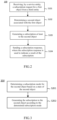
- FIG. 2 is a flow chart of a method for subscribing to a resource according to embodiments of the present disclosure
- FIG. 3 is a flow chart of a method for generating a subscription to a second object according to embodiments of the present disclosure
- FIG. 4 is a flow chart of another method for generating a subscription to a second object according to embodiments of the present disclosure
- FIG. 5 is a flow chart of another method for subscribing to a resource according to embodiments of the present disclosure
- FIG. 6 is a schematic diagram of a method for subscribing to a resource according to a first example of the present disclosure
- FIG. 7 is a schematic diagram of a method for subscribing to a resource according to a second example of the present disclosure.
- FIG. 8 is a schematic diagram of a method for subscribing to a resource according to a third example of the present disclosure.
- FIG. 9 is a schematic diagram of an apparatus for subscribing to a resource according to embodiments of the present disclosure.
- FIG. 10 is a schematic diagram of a device for subscribing to a resource according to embodiments of the present disclosure.
- FIG. 11 is a schematic diagram of a computer-readable storage medium according to embodiments of the present disclosure.
- words such as “include”, “comprise” and the like refer to that elements or items appearing before the word cover the elements or items listed thereinafter or their equivalents, without excluding other elements or items.
- Words such as “connected”, “connecting” and the like are not restricted to physical or mechanical connections, but may include electrical connections, regardless of direct or indirect connections.
- a sender for example, serving as a subscriber usually sends a request for creating a subscription resource to a receiver (for example, a service entity), and then the receiver creates a subscription under the subscribed resource, and then the receiver sends a subscription response to a notified party. Since the receiver only subscribes to a target resource specified in the sender's subscription request, resulting that a content of the subscription cannot meet needs of applications.
- IoT may serve as an extension of the Internet, which includes the Internet and all the resources on the Internet, and is compatible with all Internet applications. With the applications of IoT technology in various fields, various new application fields such as smart home, smart transportation, and smart health have emerged.
- the IoT platform may be implemented, for example, as a common service entity (CSE), and the terminal devices may be connected to the common service entity by sending registration information to the common service entity, and the common service entity manages the terminal devices connected thereto.
- CSE common service entity
- the terminal devices may be indicated as application entities (AE), and the application entities connected to the common service entity may perform operations such as data transmission, information interaction with the common service entity.
- AE application entities
- the application entities described herein may be the terminal devices in IoT, or software modules or the like in the terminal devices in IoT, or may be software modules in a server in IoT.
- a terminal device may have one or more AE, at the same time, it may have zero or one CSE.
- a server may have one or more AE, at the same time, it may have one CSE.
- the server may create a digital twin for the terminal device.
- the digital twin includes one or more objects representing the physical device in the server (including edge server or cloud server).
- An object may be used to represent part of or whole of the application entity or common service entities, for example, an object may be used to represent an application or functionality in the application entity or common service entities.
- the object may be a resource or an attribute who belongs to application entity or common service entities.
- the application entities (AE) and the common service entities (CSE) are logical entities.
- Physical equipment includes logical entities.
- Relatively simple terminal equipment may only include application entities, and relatively complex terminal equipment may include application entities and common service entities.
- the server includes at least the common service entities, and may also include the application entities at the same time.
- the difference between the common service entities included in the terminal device and the common service entities included in the server lies in the difference in functions.
- the common service entities of the server includes more functions, such as device management functions and the like.
- the common service entities described herein may be service software modules in the terminal devices in IoT, or may also be service software modules in the servers in IoT.
- a subscription to an application entity associated with an expected application entity may be generated according to an subscription request of the subscriber for the expected application entity, and different subscription modes may be generated according to a state of the application entity associated with the expected application entity, so as to realize a diversification of the subscription.
- the initiator of the subscription request may be the application entity or the common service entity.
- the application entity sends a subscription request 10 for the object 11 to the common service entity.
- the common service entity may directly create a subscription to the object 11 , and send a subscription response 16 indicating the generation of the subscription to the object 11 to the application entity.
- the common service entity may determine whether there is an associated object 13 after receiving the subscription request for the object 11 .
- the common service entity may generate the subscription to the associated object 13 or to both the object 11 and the associated object 13 by judging a state of the associated object 13 , and then, the common service entity sends a subscription response 16 to the application entity, where the subscription response 16 indicates the generation of the subscription to the associated object 13 or to both the object 11 and the associated object 13 .
- the subscription to the associated object associated with the object may be realized, so that the subscription resources are more abundant.
- the initiator of the subscription request may realize the subscription to the associated object through the system described in FIG. 1 , which enriches the subscripted resources and improves an efficiency of the system.
- a second object may be one or more entities.
- a method 100 for subscribing to a resource in a field of IoT is described with reference to FIG. 2 .
- This method may be performed by the common service entity (for example, a retail server).
- the method for subscribing to the resource in IoT includes the following steps S 101 to S 104 .
- a serving entity receives a subscription request for a first object from a third entity.
- step S 102 a second object associated with the first object is determined.
- step S 103 a subscription to at least the second object is generated.
- step S 104 a subscription response is sent, where the subscription response is used to indicate a result of the subscription.
- the serving entity receives the subscription request for the first object from the third entity.
- the service entity may receive a request from the third entity, the request carries related information, and the related information contains the subscription request for the first object.
- the first object (AE1) may be a virtual electronic label managed by the service entity and used to indicate information of corresponding commodities.
- the virtual electronic label is a digital twin of a physical electronic label, including attributes such as electronic label identification (ID) and commodity identification (ID), and is associated with (or bound to) the corresponding commodity through the commodity identification (ID).
- the first object may be a virtual shelf electronic label, which is associated with the corresponding commodity on the shelf through the commodity identification; and the third entity (AE3) may be a shelf management application or a virtual shopping terminal.
- the common service entity receives a subscription request from AE3 (the shelf management application or the shopping terminal) to the shelf electronic label AE1.
- step S 102 the second object associated with the first object is determined.
- the second object (AE2) may be a virtual electronic label managed by the service entity and used to indicate information of corresponding commodities.
- the second object may be a virtual inventory electronic label, which is associated with the corresponding commodity in the inventory through the commodity identification. For example, in this step, it may be judged whether the inventory electronic label AE2 is associated with the shelf electronic label AE1.
- the common service entity may determine the second object associated with the first object by judging whether the first object and the second object are for the same object. For example, if the first object and the second object are for the same object, it is determined that the second object is associated with the first object; and if the first object and the second object are for different objects, it is determined that the second object is not associated with the first object.
- a category of the commodity associated with the first object is identical with a category of the commodity associated with the second object, it is considered that the first object and the second object are for the same object.
- the commodity associated with the first object is Fuji Apples
- the commodity associated with the second object is Golden Marshal Apples
- the commodity associated with the first object is Fuji Apples
- the commodity associated with the second object is bananas
- the first object and the second object are considered to be for the same object.
- the commodity associated with the first object is Fuji Apples
- the commodity associated with the second object is also Fuji Apples
- different commodities may be divided into different groups according to a predetermined rule, and the service entity may determine the second object associated with the first object by judging whether the first object associated with the corresponding commodity (or bound to the corresponding commodity) and the second object associated with the corresponding commodity (or bound to the corresponding commodity) belong to a same predetermined group.
- the apples in the shelf and the bananas in the inventory may be divided into the same group according to the predetermined rule. Then, in a case where the shelf electronic label associated with the apples on the shelf is served as the first object, the service entity may determine the second object associated with the first object (i.e., the inventory electronic label) by determining the entities belonging to the same group as the shelf electronic label associated with the apples on the shelf.
- the common service entity may also determine the second object associated with the first object based on an association rule included in the subscription request.
- the association rule may be included in the subscription request which is sent from the shopping terminal received by the common service entity.
- the association rule may indicate that an object bound to a commodity with a same category as the commodity associated with the first object is served as the second object. Then, the common service entity may determine the second object associated with the first object according to the association rule.
- the association strength between the first object and the second object is determined by judging the category difference between the commodity corresponding to the first object and the commodity corresponding to the second object.
- the category difference for the commodities is small, it indicates that the association strength is strong, and when the category difference is large, it indicates that the association strength is low.
- the second object may be one or more entities.
- step S 103 the subscription to the second object is generated.
- generating the subscription to the second object includes one of two methods: (1) creating a subscription resource for the second object; (2) creating subscription resources to the first object and the second object.
- FIG. 3 is a flowchart of a method 200 for generating the subscription to the second object according to the embodiments of the present disclosure
- FIG. 4 is a flowchart of another method 200 for generating the subscription to the second object according to the embodiments of the present disclosure. In the following, generating the subscription to the second object is described with reference to FIG. 3 - FIG. 4 .
- FIG. 3 shows the flowchart of the method 200 for generating the subscription to the second object according to the embodiments of the present disclosure.
- the subscription to the second object may be generated in the following manner including: determining a subscription mode for the second object based on a state of the second object (S 201 ); and generating the subscription to the second object according to the determined subscription mode (S 202 ).
- the subscription mode may include a long-term subscription, a short-term subscription, an additional information subscription, a reservation information subscription, a high-priority subscription, a low-priority subscription, a high-frequency information subscription, and a low-frequency information subscription and so on.
- One or more of message priority, validity periods of the subscription resources, content of the notification, and the number of notification messages under different subscription modes are different. Different subscription modes may be selected for different situations (for example, the state of the second object), thereby improving the user experience. Next, different subscription modes will be described in detail.
- the subscription mode may be divided into the long-term subscription and the short-term subscription according to the validity period of a notification reserved for subscription resources.
- the validity period of the notification for the long-term subscription is longer than that of the short-term subscription.
- a longer validity period of the notification for example, one month
- a shorter validity period of the notification for example, real-time delivery
- a notification may be sent to the notified party when the event notification rule is satisfied within the validity period.
- the subscription mode may be divided into the additional information subscription and the reservation information subscription according to the content of the notification for the subscription resource.
- the reservation information subscription mode when an event notification rule is satisfied for certain commodity, detailed reservation information such as price, material, discount etc. related to the commodity and for an reservation information request may be sent to the notified party, where the reservation information request may be included in the subscription request.
- the additional information subscription mode when the event notification rule is satisfied for a certain commodity, in addition to the detailed reservation information such as price, material, discount etc. related to the commodity and for the reservation information request, additional detailed information such as price, material, discount, etc., related to a commodity that is similar to the commodity may also be sent to the notified party, where the additional detailed information is not included in the subscription request.
- the subscription mode may be divided into the high-frequency information subscription and the low-frequency information subscription according to the number of information of the notification for the subscription resource.
- a short minimum notification time interval for example, 2 hours
- a long minimum notification time interval for example, 24 hours
- notifications are sent to the notified party, and a time interval between two consecutive notifications is not shorter than the minimum notification time interval.
- the first object is a shelf electronic label
- the second object associated with the first object is an inventory electronic label. Both the first object and the second object are for the same commodity A
- the first object includes the shelf quantity of the commodity A
- the second object includes the inventory quantity of the commodity A.
- the long-term subscription for example, the validity period of the notification may be set to one month, and when the event notification rule is satisfied within the validity period, the notification may be sent to the notified party
- the long-term subscription for example, the validity period of the notification may be set to one month, and when the event notification rule is satisfied within the validity period, the notification may be sent to the notified party
- the short-term subscription for example, the validity period of the notification may be set to one week, and when the event notification rule is satisfied, the notification may be sent to the notified party) may be selected.
- the reservation information subscription for example, when the event notification rule is satisfied, detailed reservation information such as price, material, discount etc. related to the commodity and for the reservation information request may be sent to the notified party
- the additional information subscription for example, in addition to detailed reservation information such as price, material, discount etc. related to the commodity and for the reservation information request, additional detailed information such as price, material, discount, etc., related to a commodity that is similar to the commodity may also be sent to the notified party
- additional information subscription for example, in addition to detailed reservation information such as price, material, discount etc. related to the commodity and for the reservation information request, additional detailed information such as price, material, discount, etc., related to a commodity that is similar to the commodity may also be sent to the notified party
- a plurality of subscription modes may be used at the same time.
- the first object is a shelf electronic label
- the second object associated with the first object is an inventory electronic label. Both the first object and the second object are for the same commodity A, the first object includes the shelf quantity of the commodity A, and the second object includes the inventory quantity of the commodity A.
- the long-term subscription and the low-frequency subscription (for example, the validity period of the notification may be set to one month, and when the event notification rule is satisfied within the validity period, events may be processed such as caching and integrating, and the processed events may be notified to the notified party) may be selected, and therefore, requirements of the long-term subscription and the low-frequency subscription are satisfied at the same.
- the short-term subscription and the high-frequency subscription (for example, the validity period of the notification may be set to one week, and when the event notification rule is satisfied, the events will not be processed, and the notification may be sent to the notified party directly) may be selected.
- one or more of the high-priority subscription (the notification is sent first when the event notification rule is satisfied), the low-priority subscription (the notification is sent when the event notification rule is satisfied and there is no event with higher priority to be sent), the high-frequency information subscription (the notification is sent directly without event processing when the event notification rule is satisfied) and the low-frequency information subscription (the notification is sent after the event is processed including event caching, event integration, etc.) may also be selected.
- the above subscription modes are just examples. For different situations, one of the long-term subscription, the short-term subscription, the additional information subscription, the reservation information subscription, the high priority subscription, the low priority subscription, the high-frequency information subscription, and the low-frequency information subscription, etc. may be selected, and other suitable subscription modes may also be selected, which is not repeated here.
- step S 202 After determining the subscription mode, in step S 202 , a subscription to the second object is generated according to the determined subscription mode.
- FIG. 4 shows a flowchart of another method 300 for generating the subscription to the second object according to the embodiments of the present disclosure.
- the subscription to the second object may be generated in the following manner including: determining the subscription mode for the first object and the second object based on the state of the second object (S 301 ); and generating the subscription to the first object and the second object according to the determined subscription mode (S 302 ).
- the selection of the subscription mode described in FIG. 4 is similar to the selection of the subscription mode described in FIG. 3 above, and will not be repeated here.
- the subscription response is used to indicate the result of creating the subscription resource for the second object.
- the subscription response is used to indicate the result of creating the subscription resources for the first object and the second object.
- the event notification is sent to the notified party based on the determined subscription mode in response to that the event notification rule is satisfied, where the event notification rule is included in the subscription request.
- the subscription request may include a plurality of notified parties for receiving event notifications related to the subscription request.
- the common service entity When the event notification rule of the subscriber is satisfied, the common service entity will send the event notification to all notified parties included in the subscription request. For example, when a manhole cover is moved, a manhole cover movement sensor will sense this change and send update data to the common service entity. The common service entity may determine whether the event notification rule is satisfied based on the update data of the manhole cover movement sensor.
- the common service entity determines that the event notification rule is satisfied, and sends the event notification to all notified parties included in the subscription request for subscribing to the event notification of the movement of the manhole cover, that is, notifies all the notified parties that the manhole cover was moved.
- This method may be executed by the application entity (for example, the aforementioned third entity AE3).
- step S 401 the subscription request for the first object is sent.
- step S 402 the subscription response to the subscription request is received, where the second object is associated with the first object and the subscription response is used to indicate a result of generating the subscription at least to the second object.
- the first object (AE1) may be a virtual electronic label managed by the service entity and used to indicate corresponding commodity information.
- the virtual electronic label is associated with the corresponding commodity (or bound to the corresponding commodity) through the commodity identification (ID).
- the first object may be a virtual shelf electronic label;
- the third entity (AE3) may be a shelf management application or a virtual shopping terminal.
- AE3 (for example, the shelf management application or the shopping terminal) sends the subscription request for the shelf electronic label AE1 to the common service entity.
- AE3 receives the subscription response to the subscription request, where the second object is associated with the first object, and the subscription response is used to indicate the result of generating the subscription at least to the second object.
- the subscription request may include an association rule for establishing an association relationship between the first application entity and the second application entity.
- the common service entity may also determine the second object associated with the first object based on the association rule included in the subscription request.
- the association rule may indicate that an object bound to a commodity of the same category as the commodity associated with the first object is served as the second object.
- the subscription response is generated based on the subscription mode determined according to the state of the second application entity for the subscription request.
- the subscription response is formed by: determining the subscription mode for the second object based on the state of the second object; and generating the subscription for the second object according to the determined subscription mode, where the subscription response is used to indicate the result of generating the subscription at least to the second object.
- the subscription response may also be formed by: determining the subscription mode for both the first object and the second object based on the state of the second object; and generating the subscription for both the first object and the second object according to the determined subscription mode, where the subscription response is used to indicate the result of generating the subscription for both the first object and the second object.
- the method of generating the subscription response is the same as the method described in FIG. 2 , which will not be repeated here.
- the event notification rule is satisfied, the event notification based on the determined subscription mode is received.
- FIG. 6 is a schematic diagram of a method for subscribing to the resource according to a first example of the present disclosure
- FIG. 7 is a schematic diagram of a method for subscribing to the resource according to a second example of the present disclosure
- FIG. 8 is a schematic diagram of a method for subscribing to the resource according to a third example of the present disclosure.
- the IoT may be composed of the common service entity and a series of application entities.
- the common service entity may be the retail server, etc.
- the application entities may be various sensor devices, or user terminals such as mobile phones, or software modules in the device, such as mobile phone applications, etc.
- the common service entity manages application entities connected thereto and performs operations such as registration, data transmission, task execution, etc.
- FIG. 6 shows the first example for subscribing to the resource according to the present disclosure.
- the shelf management application entity of a shopping mall or a supermarket initiates a subscription to adjust the states of the commodities of the shopping mall or the supermarket timely.
- the retail server CSE 53 (the service entity) receives registration requests from the shelf electronic label AE1 51 (the first object), the inventory electronic label AE2 52 (the second object), and the shelf management application AE3 54 served as the subscriber (the third entity), thereby establishing association relationship with the shelf electronic label AE1 51 , the inventory electronic label AE2 52 , and the shelf management application AE3 54 , and updates their states 55 with the state changes of the shelf electronic label AE1 51 , the inventory electronic label AE2 52 and the shelf management application AE3 54 .
- the retail server CSE 53 judges whether the commodities associated with the shelf electronic label AE1 51 and the commodities associated with the inventory electronic label AE2 52 are for the same category of commodity 56 , and if so, establishes an association 57 between the shelf electronic label AE1 51 and the inventory electronic label AE2 52 .
- the retail server CSE 53 first judges whether the shelf electronic label AE1 51 has an associated object inventory electronic label AE2 52 (the number is 60 in FIG. 6 ). If the shelf electronic label AE1 51 has the associated object inventory electronic label AE2 52 , the retail server CSE 53 may create a subscription resource for the inventory electronic label AE2 52 , and send a subscription response 62 to the shelf management application AE3 54 (or other entities), where the subscription response indicates the result of generating the subscription to the inventory electronic label AE2 52 .
- the retail server CSE 53 may also create subscription resources for both the shelf electronic label AE1 51 and the inventory electronic label AE2 52 , and send the subscription response 62 to the shelf management application AE3 54 (or other entities), where the subscription response indicates the result of generating the subscription to both the shelf electronic label AE1 51 and the inventory electronic label AE2 52 .
- a subscription mode 61 for the inventory electronic label AE2 52 may be determined according to the state of the inventory electronic label AE2 52 . For example, as described above, if the inventory electronic label AE2 shows that it is in-stock, the short-term subscription may be created and if the inventory electronic label AE2 shows that it is out-of-stock, the long-term subscription may be created.
- the subscription mode 61 for both the shelf electronic label AE1 51 and the inventory electronic label AE2 52 may be determined according to the state of the inventory electronic label AE2 52 . For example, as described above, if the inventory electronic label AE2 shows that it is in-stock, the short-term subscription may be created, and if the inventory electronic label AE2 shows that it is out-of-stock, the long-term subscription may be created.
- the retail server CSE 53 updates the state 63 of the shelf electronic label AE1 51 . Subsequently, in the case where the event notification rule 64 is satisfied, an event notification 65 is sent to the notified party (for example, the shelf management application AE3 54 ) according to the determined subscription mode.
- the notified party for example, the shelf management application AE3 54
- FIG. 7 shows the second example for subscribing to the resource according to the present disclosure.
- a shopping terminal for example, a user
- the retail server CSE 53 receives registration requests from the shelf electronic label AE1 51 (the first object), the inventory electronic label AE2 52 (the second object), and the shopping terminal AE3 66 served as the subscriber (the third entity), thereby establishing association relationship with the shelf electronic label AE1 51 , the inventory electronic label AE2 52 , and the shopping terminal AE3 66 , and updates their states with the state changes of the shelf electronic label AE1 51 , the inventory electronic label AE2 52 and the shopping terminal 66 .
- the retail server CSE 53 receives registration requests from the shelf electronic label AE1 51 (the first object), the inventory electronic label AE2 52 (the second object), and the shopping terminal AE3 66 served as the subscriber (the third entity)
- the retail server CSE 53 judges whether the commodities associated with the shelf electronic label AE1 51 and the commodities associated with the inventory electronic label AE2 52 are for the same category of commodities, and if so, establishes an association 57 between the shelf electronic label AE1 51 and the inventory electronic label AE2 52 .
- the retail server CSE 53 first judges whether the shelf electronic label AE1 51 has an associated object inventory electronic label AE2 52 . If the shelf electronic label AE1 51 has the associated object inventory electronic label AE2 52 , the retail server CSE 53 may create the subscription resource for the inventory electronic label AE2 52 , and send the subscription response to the shopping terminal AE3 66 (or other entities), where the subscription response indicates the result of generating the subscription to the inventory electronic label AE2 52 .
- the retail server CSE 53 may also create the subscription resources for both the shelf electronic label AE1 51 and the inventory electronic label AE2 52 , and send the subscription response to the shopping terminal AE3 66 (or other entities), where the subscription response indicates the result of generating the subscription to both the shelf electronic label AE1 51 and the inventory electronic label AE2 52 .
- the subscription mode for the inventory electronic label AE2 52 may be determined according to the state of the inventory electronic label AE2 52 . For example, if the inventory electronic label AE2 shows that it is in-stock, the short-term subscription may be created, and if the inventory electronic label AE2 shows that it is out-of-stock, the long-term subscription may be created.
- the subscription mode for both the shelf electronic label AE1 51 and the inventory electronic label AE2 may be determined according to the state of the inventory electronic label AE2 52 . For example, as described above, if the inventory electronic label AE2 shows that it is in-stock, the short-term subscription may be created, and if the inventory electronic label AE2 shows that it is out-of-stock, the long-term subscription may be created.
- the retail server CSE 53 updates the state 63 of the shelf electronic label AE1 51 . Subsequently, in the case where the event notification rule is satisfied, the event notification is sent to the notified party (for example, the shopping terminal AE3 66 ) according to the determined subscription mode.
- the notified party for example, the shopping terminal AE3 66
- FIG. 8 shows the third example for subscribing to the resource according to the present disclosure.
- an association rule may be included in the subscription request sent by the application entity, and then the common service entity establishes an association between different objects according to the association rule.
- the retail server CSE 53 receives registration requests from the shelf electronic label AE1 51 (the first object), the inventory electronic label AE2 52 (the second object), and the shopping terminal AE3 66 as a subscriber (the third entity), thereby establishing association relationship with the shelf electronic label AE1 51 , the inventory electronic label AE2 52 and the shopping terminal AE3 66 , and updates their states with the state changes of the shelf electronic label AE1 51 , the inventory electronic label AE2 52 and the shopping terminal 66 .
- the retail server CSE 53 establishes an association between the shelf electronic label AE1 51 and the inventory electronic label according to the association rule contained in the subscription request.
- the retail server CSE 53 may create the subscription resource for the inventory electronic label AE2 52 , and send the subscription response to the shopping terminal AE3 66 (or other entities), where the subscription response indicates the result of generating the subscription to the inventory electronic label AE2 52 .
- the retail server CSE 53 may also create the subscription resource for both the shelf electronic label AE1 51 and the inventory electronic label AE2 52 , and send the subscription response to the shopping terminal AE3 66 (or other entities), where the subscription response indicates the result of generating the subscription to both the shelf electronic label AE1 51 and the inventory electronic label AE2 52 .
- the subscription mode for the inventory electronic label AE2 52 may be determined according to the state of the inventory electronic label AE2 52 . For example, as described above, if the inventory electronic label AE2 shows that it is in-stock, the short-term subscription may be created, and if the inventory electronic label AE2 shows that it is out-of-stock, the long-term subscription may be created.
- the subscription mode for both the shelf electronic label AE1 51 and the inventory electronic label AE2 may be determined according to the state of the inventory electronic label AE2 52 . For example, as described above, if the inventory electronic label AE2 shows that it is in-stock, the short-term subscription may be created, and if the inventory electronic label AE2 shows that it is out-of-stock, the long-term subscription may be created.
- the retail server CSE 53 updates the state of the shelf electronic label AE1 51 . Subsequently, when the event notification rule is satisfied, the event notification is sent to the notified party (for example, the shopping terminal AE3 66 ) according to the determined subscription mode.
- the notified party for example, the shopping terminal AE3 66
- the subscription to the second object associated with the first object may be realized, thereby enriching the subscribed resources.
- different subscription modes may be created for the states of the second object, so as to achieve diversification of modes in different situations.
- FIG. 9 is a schematic diagram of the apparatus 1000 for subscribing to the resource according to the embodiments of the present disclosure. Since the functions of the apparatus for subscribing to the resource in the embodiments is the same as that of the method described above with reference to FIG. 1 , detailed description of the same content is omitted here for the sake of simplicity.
- the apparatus 1000 for subscribing to the resource includes a receiving unit 1001 , a determining unit 1002 , a generating unit 1003 , and a sending unit 1004 .
- a receiving unit 1001 receives a signal from the base station 1001 .
- a determining unit 1002 determines a signal from the base station 1003 .
- a sending unit 1004 sends a signal to the base station 1003 .
- the apparatus 1000 for subscribing to the resource is shown as including only 4 units in FIG. 9 , this is only illustrative, and the apparatus 1000 for subscribing to the resource may also include one or more other units, which have nothing to do with the inventive concept and are therefore omitted here.
- the receiving unit 1001 enables the service entity to receive a subscription request for a first object from a third entity.
- the first object (AE1) may be a shelf electronic label
- the third entity (AE3) may be a shelf management application or a shopping terminal.
- the common service entity receives a subscription request for the shelf electronic label AE1 from AE3 (the shelf management application or the shopping terminal).
- the determining unit 1002 determines a second object associated with the first object.
- the second object (AE2) may be an inventory electronic label.
- the determining unit 1002 may determine the inventory electronic label associated with the shelf electronic label.
- the determining unit 1002 may determine the second object associated with the first object by judging whether the first object and the second object are for the same object. For example, if the first object and the second object are for the same object, the determining unit 1002 can determine that the second object is associated with the first object; and if the first object and the second object are for different objects, the determining unit 1002 can determine that the second object is not associated with the first object.
- the determining unit 1002 may also determine the second object associated with the first object based on an association rule included in the subscription request.
- the association rule may be included in the subscription request which is sent from the shopping terminal received by the receiving unit 1001 .
- the association rule may indicate that an object bound to a commodity with a same category as the commodity associated with the first object is served as the second object.
- the common service entity may determine the second object associated with the first object according to the association rule.
- the generating unit 1003 After determining, by the determining unit 1002 , the second object associated with the first object, next, the generating unit 1003 generates a subscription at least to the second object.
- generating the subscription to the second object includes one of two methods: (1) creating a subscription resource for the second object; (2) creating subscription resources to the first object and the second object.
- FIG. 3 is a flowchart of a method 200 for generating the subscription to the second object according to the embodiments of the present disclosure
- FIG. 4 is a flowchart of another method 200 for generating the subscription to the second object according to the embodiments of the present disclosure.
- the generating unit 1003 generates the subscription to the second object is described with reference to FIG. 3 - FIG. 4 .
- FIG. 3 shows the flowchart of the method 200 for generating the subscription to the second object according to the embodiments of the present disclosure.
- the subscription to the second object may be generated in the following manner including: determining a subscription mode for the second object based on a state of the second object (S 201 ); and generating the subscription to the second object according to the determined subscription mode (S 202 ).
- the state of the second object may be classified into two states of in-stock and out-of-stock.
- the state of the second object is not limited to this, and the state of second object may be classified into any appropriate state according to situations, and there is no limitation here.
- the subscription mode may include a long-term subscription, a short-term subscription, an additional information subscription, a reservation information subscription, a high-priority subscription, a low-priority subscription, a high-frequency information subscription, and a low-frequency information subscription and so on.
- One or more of message priority, validity periods of the subscription resources, content of the notification, and the number of notification messages under different subscription modes are different. Different subscription modes may be selected for different situations (for example, the state of the second object), thereby improving the user experience. Next, different subscription modes will be described in detail.
- the subscription mode may be divided into the long-term subscription and the short-term subscription according to the validity period of a notification reserved for subscription resources.
- the validity period of the notification for the long-term subscription is longer than that of the short-term subscription.
- a longer validity period of the notification for example, one month
- a shorter validity period of the notification for example, real-time delivery
- a notification may be sent to the notified party when the event notification rule is satisfied within the validity period.
- the subscription mode may be divided into the high-priority subscription and the low-priority subscription according to a priority of the notification for the subscription resource.
- the notification may be sent first in time, or the notification may be sent multiple times to ensure that the notified party could receive the notification.
- the subscription mode may be divided into the high-frequency information subscription and the low-frequency information subscription according to the number of information of the notification for the subscription resource.
- a short minimum notification time interval for example, 2 hours
- a long minimum notification time interval for example, 24 hours
- notifications are sent to the notified party, and a time interval between two consecutive notifications is not shorter than the minimum notification time interval.
- a subscription mode for the second object may be determined for the state of the second object (for example, the state of in-stock or out-of-stock).
- the long-term subscription for example, the validity period of the notification may be set to one month, and when the event notification rule is satisfied within the validity period, notifications may be sent to the notified party
- the short-term subscription for example, when the event notification rule is satisfied, notification messages may be sent to the notified party in time
- the reservation information subscription for example, when the event notification rule is satisfied, detailed reservation information such as price, material, discount etc. related to the commodity and for the reservation information request may be sent to the notified party
- the additional information subscription for example, in addition to detailed reservation information such as price, material, discount etc. related to the commodity and for the reservation information request, additional detailed information such as price, material, discount, etc., related to a commodity that is similar to the commodity may also be sent to the notified party
- additional information subscription for example, in addition to detailed reservation information such as price, material, discount etc. related to the commodity and for the reservation information request, additional detailed information such as price, material, discount, etc., related to a commodity that is similar to the commodity may also be sent to the notified party
- one or more of the high-priority subscription, the low-priority subscription, the high-frequency information subscription and the low-frequency information subscription may also be selected. It should be understood that the above subscription modes are just examples. For different situations, one of the long-term subscription, the short-term subscription, the additional information subscription, the reservation information subscription, the high priority subscription, the low priority subscription, the high-frequency information subscription, and the low-frequency information subscription, etc. may be selected, and other suitable subscription modes may also be selected, which is not repeated here.
- step S 202 the generating unit 1003 generates a subscription to the second object according to the determined subscription mode.
- FIG. 4 shows a flowchart of another method 300 for generating the subscription to the second object according to the embodiments of the present disclosure.
- the subscription to the second object may be generated in the following manner including: determining the subscription mode for the first object and the second object based on the state of the second object (S 301 ); and generating the subscription to the first object and the second object according to the determined subscription mode (S 302 ).
- the selection of the subscription mode described in FIG. 4 is similar to the selection of the subscription mode described in FIG. 3 above, and will not be repeated here.
- the sending unit 1004 sends a subscription response, where the subscription response is used to indicate the result of the subscription.
- the subscription response may be sent to the third entity, or the subscription response may be sent to other entities, where the subscription response is used to indicate the result of the generated subscription.
- the subscription response is used to indicate the result of creating the subscription resource for the second object.
- the subscription response is used to indicate the result of creating the subscription resources for the first object and the second object.
- the event notification is sent to the notified party based on the determined subscription mode in response to that the event notification rule is satisfied, where the event notification rule is included in the subscription request.
- the subscription request may include a plurality of notified parties for receiving event notifications related to the subscription request.
- the common service entity When the event notification rule of the subscriber is satisfied, the common service entity will send the event notification to all notified parties included in the subscription request. For example, when a manhole cover is moved, a manhole cover movement sensor will sense this change and send update data to the common service entity. The common service entity may determine whether the event notification rule is satisfied based on the update data of the manhole cover movement sensor.
- the common service entity determines that the event notification rule is satisfied, and sends the event notification to all notified parties included in the subscription request for subscribing to the event notification of the movement of the manhole cover, that is, notifies all the notified parties that the manhole cover was moved.
- FIG. 10 is a schematic diagram of the device 1100 for subscribing to the resource according to the embodiments of the present disclosure. Since functions of the device for subscribing to the resource of the present embodiments is similar to the details of the method described above with reference to FIG. 1 , detailed description of the same content is omitted here for the sake of simplicity.
- the device 1100 for subscribing to the resource includes a memory 1101 and a processor 1102 . It should be noted that although the device 1100 for subscribing to the resource is shown as including only two devices in FIG. 10 , this is only illustrative, and the device 1100 for subscribing to the resource may also include one or more other devices, which have nothing to do with the inventive concept and are omitted here.
- the device for subscribing to the resource of the present disclosure includes: a memory 1101 , which is configured to store computer-readable instructions; and a processor 1102 , which is configured to execute the computer-readable instructions stored in the memory, where following steps are performed when the processor executes the computer-readable instructions: receiving, by a service entity, a subscription request for a first object from a third entity; determining a second object associated with the first object; generating a subscription at least to the second object; and sending a subscription response, in which the subscription response is used to indicate a result of the subscription.
- FIG. 11 is a schematic diagram of a computer-readable storage medium according to the embodiments of the present disclosure.
- the present disclosure also includes a computer-readable storage medium with computer-readable instructions stored thereon which, when performed by a computer, cause the computer to perform a method for subscribing to a resource in IoT, the method comprising: receiving, by a service entity, a subscription request for a first object from a third entity; determining a second object associated with the first object; generating a subscription at least to the second object; and sending a subscription response, where the subscription response is used to indicate the result of the generation of the subscription.
Landscapes
- Engineering & Computer Science (AREA)
- Databases & Information Systems (AREA)
- Theoretical Computer Science (AREA)
- Physics & Mathematics (AREA)
- Computer Networks & Wireless Communication (AREA)
- Signal Processing (AREA)
- Data Mining & Analysis (AREA)
- General Engineering & Computer Science (AREA)
- General Physics & Mathematics (AREA)
- Mathematical Physics (AREA)
- Medical Informatics (AREA)
- General Health & Medical Sciences (AREA)
- Computing Systems (AREA)
- Health & Medical Sciences (AREA)
- Management, Administration, Business Operations System, And Electronic Commerce (AREA)
- Information Transfer Between Computers (AREA)
Abstract
Description
Claims (18)
Applications Claiming Priority (3)
| Application Number | Priority Date | Filing Date | Title |
|---|---|---|---|
| CN201910433275.7A CN111984895A (en) | 2019-05-23 | 2019-05-23 | Method, apparatus, device and storage medium for subscribing to resources |
| CN201910433275.7 | 2019-05-23 | ||
| PCT/CN2020/091525 WO2020233658A1 (en) | 2019-05-23 | 2020-05-21 | Method, apparatus, and device for subscribing resources in field of internet of things, and storage medium |
Publications (2)
| Publication Number | Publication Date |
|---|---|
| US20220256007A1 US20220256007A1 (en) | 2022-08-11 |
| US12160487B2 true US12160487B2 (en) | 2024-12-03 |
Family
ID=73437375
Family Applications (1)
| Application Number | Title | Priority Date | Filing Date |
|---|---|---|---|
| US17/611,923 Active US12160487B2 (en) | 2019-05-23 | 2020-05-21 | Method, apparatus, and device for subscribing resources in field of internet of things, and storage medium |
Country Status (6)
| Country | Link |
|---|---|
| US (1) | US12160487B2 (en) |
| EP (1) | EP3975598B1 (en) |
| JP (1) | JP7653371B2 (en) |
| KR (1) | KR20220011687A (en) |
| CN (1) | CN111984895A (en) |
| WO (1) | WO2020233658A1 (en) |
Families Citing this family (3)
| Publication number | Priority date | Publication date | Assignee | Title |
|---|---|---|---|---|
| WO2022016558A1 (en) * | 2020-07-24 | 2022-01-27 | 华为技术有限公司 | Service continuity event notification method and apparatus |
| CN114791860A (en) * | 2021-01-26 | 2022-07-26 | 京东方科技集团股份有限公司 | Novel application subscription method, device and medium |
| KR20230115108A (en) | 2022-01-26 | 2023-08-02 | 주식회사 엘지화학 | Separator for an electrochemical device and electrochemical device containing the same |
Citations (20)
| Publication number | Priority date | Publication date | Assignee | Title |
|---|---|---|---|---|
| US20050170861A1 (en) | 2002-06-14 | 2005-08-04 | Aki Niemi | Method and system to subscription of events using sip protocol |
| JP2005352688A (en) | 2004-06-09 | 2005-12-22 | Kyocera Mita Corp | Display device |
| WO2006134795A1 (en) | 2005-06-06 | 2006-12-21 | Katsuhide Asanuma | Product evaluation information delivering system and product evaluation information delivering method |
| US20080021963A1 (en) | 2006-07-21 | 2008-01-24 | At&T Corp. | Content dissemination using a multi-protocol converter |
| US20080140709A1 (en) | 2006-12-11 | 2008-06-12 | Sundstrom Robert J | Method And System For Providing Data Handling Information For Use By A Publish/Subscribe Client |
| CN101459908A (en) | 2007-12-13 | 2009-06-17 | 华为技术有限公司 | Service subscribing method, system, server |
| CN101742475A (en) | 2008-11-12 | 2010-06-16 | 华为技术有限公司 | Subscribing and notifying method, device and system |
| US8560724B2 (en) | 2007-03-01 | 2013-10-15 | Blackberry Limited | System and method for transformation of syndicated content for mobile delivery |
| US20140359133A1 (en) | 2012-01-30 | 2014-12-04 | Huawei Technologies Co., Ltd. | Method and client for acquiring machine-to-machine resources and machine-to-machine resource apparatus |
| CN104602180A (en) | 2015-01-20 | 2015-05-06 | 西安工程大学 | Method for creating subscription resource system and creating subscription resources |
| CN105282118A (en) | 2014-07-21 | 2016-01-27 | 中兴通讯股份有限公司 | Control resource change notification message sending method and apparatus |
| CN105323743A (en) | 2014-07-14 | 2016-02-10 | 中兴通讯股份有限公司 | Method and device for subscribing to resource change notices |
| CN105580396A (en) | 2013-09-27 | 2016-05-11 | Lg电子株式会社 | Method for delivering notification message in m2m system and devices for same |
| CN106327114A (en) | 2015-06-25 | 2017-01-11 | 阿里巴巴集团控股有限公司 | Warehouse resource information processing method and device, and method and device for providing inventory information |
| US20170134523A1 (en) * | 2014-06-13 | 2017-05-11 | Zte Corporation | Resource Subscription Processing Method and Device |
| CN106973118A (en) | 2017-05-12 | 2017-07-21 | 京东方科技集团股份有限公司 | Generation and the method and apparatus of subscribing notification |
| CN107819824A (en) | 2017-10-09 | 2018-03-20 | 中国电子科技集团公司第二十八研究所 | A kind of Urban Data opens and information service system and method for servicing |
| JP2019046108A (en) | 2017-08-31 | 2019-03-22 | 大日本印刷株式会社 | Management device, control method, and program |
| US20200213244A1 (en) * | 2017-09-11 | 2020-07-02 | Huawei Technologies Co., Ltd. | Internet of Things Resource Subscription Method, Device, and System |
| US20200280604A1 (en) * | 2013-05-21 | 2020-09-03 | Convida Wireless, Llc | Lightweight iot information model |
-
2019
- 2019-05-23 CN CN201910433275.7A patent/CN111984895A/en active Pending
-
2020
- 2020-05-21 WO PCT/CN2020/091525 patent/WO2020233658A1/en not_active Ceased
- 2020-05-21 KR KR1020217041695A patent/KR20220011687A/en active Pending
- 2020-05-21 JP JP2021569527A patent/JP7653371B2/en active Active
- 2020-05-21 EP EP20810267.3A patent/EP3975598B1/en active Active
- 2020-05-21 US US17/611,923 patent/US12160487B2/en active Active
Patent Citations (26)
| Publication number | Priority date | Publication date | Assignee | Title |
|---|---|---|---|---|
| US20050170861A1 (en) | 2002-06-14 | 2005-08-04 | Aki Niemi | Method and system to subscription of events using sip protocol |
| CN1663216A (en) | 2002-06-14 | 2005-08-31 | 诺基亚公司 | A method and system to subscription of events using SIP protocol |
| JP2005352688A (en) | 2004-06-09 | 2005-12-22 | Kyocera Mita Corp | Display device |
| WO2006134795A1 (en) | 2005-06-06 | 2006-12-21 | Katsuhide Asanuma | Product evaluation information delivering system and product evaluation information delivering method |
| US20090228467A1 (en) | 2005-06-06 | 2009-09-10 | Katsuhide Asanuma | Product evaluation information delivering system and product evaluation information delivering method |
| US20080021963A1 (en) | 2006-07-21 | 2008-01-24 | At&T Corp. | Content dissemination using a multi-protocol converter |
| US20080140709A1 (en) | 2006-12-11 | 2008-06-12 | Sundstrom Robert J | Method And System For Providing Data Handling Information For Use By A Publish/Subscribe Client |
| US8560724B2 (en) | 2007-03-01 | 2013-10-15 | Blackberry Limited | System and method for transformation of syndicated content for mobile delivery |
| CN101459908A (en) | 2007-12-13 | 2009-06-17 | 华为技术有限公司 | Service subscribing method, system, server |
| US20100091965A1 (en) | 2007-12-13 | 2010-04-15 | Huawei Technologies Co., Ltd. | Service subscription method, system and server |
| CN101742475A (en) | 2008-11-12 | 2010-06-16 | 华为技术有限公司 | Subscribing and notifying method, device and system |
| US20110213758A1 (en) | 2008-11-12 | 2011-09-01 | Cao Junliang | Method, apparatus, and system for subscription and notification |
| US20140359133A1 (en) | 2012-01-30 | 2014-12-04 | Huawei Technologies Co., Ltd. | Method and client for acquiring machine-to-machine resources and machine-to-machine resource apparatus |
| US20200280604A1 (en) * | 2013-05-21 | 2020-09-03 | Convida Wireless, Llc | Lightweight iot information model |
| CN105580396A (en) | 2013-09-27 | 2016-05-11 | Lg电子株式会社 | Method for delivering notification message in m2m system and devices for same |
| US20160205217A1 (en) | 2013-09-27 | 2016-07-14 | Lg Electronics Inc. | Method for delivering notification message in m2m system and devices for same |
| US20170134523A1 (en) * | 2014-06-13 | 2017-05-11 | Zte Corporation | Resource Subscription Processing Method and Device |
| CN105323743A (en) | 2014-07-14 | 2016-02-10 | 中兴通讯股份有限公司 | Method and device for subscribing to resource change notices |
| CN105282118A (en) | 2014-07-21 | 2016-01-27 | 中兴通讯股份有限公司 | Control resource change notification message sending method and apparatus |
| CN104602180A (en) | 2015-01-20 | 2015-05-06 | 西安工程大学 | Method for creating subscription resource system and creating subscription resources |
| CN106327114A (en) | 2015-06-25 | 2017-01-11 | 阿里巴巴集团控股有限公司 | Warehouse resource information processing method and device, and method and device for providing inventory information |
| CN106973118A (en) | 2017-05-12 | 2017-07-21 | 京东方科技集团股份有限公司 | Generation and the method and apparatus of subscribing notification |
| US20210152653A1 (en) | 2017-05-12 | 2021-05-20 | Boe Technology Group Co., Ltd. | Method and apparatus for generating and subscribing notification |
| JP2019046108A (en) | 2017-08-31 | 2019-03-22 | 大日本印刷株式会社 | Management device, control method, and program |
| US20200213244A1 (en) * | 2017-09-11 | 2020-07-02 | Huawei Technologies Co., Ltd. | Internet of Things Resource Subscription Method, Device, and System |
| CN107819824A (en) | 2017-10-09 | 2018-03-20 | 中国电子科技集团公司第二十八研究所 | A kind of Urban Data opens and information service system and method for servicing |
Non-Patent Citations (4)
| Title |
|---|
| First Office Action issued in the corresponding Indian Patent Application No. 202117059423. |
| First Office Action of the corresponding CN201910433275.7, dated May 13, 2024. |
| First Office Action of the corresponding JP2021-569527, dated Apr. 15, 2024. |
| Supplementary European Search Report (EESR) in the corresponding European Patent Application No. 20810267.3, dated Jun. 20, 2023. |
Also Published As
| Publication number | Publication date |
|---|---|
| CN111984895A (en) | 2020-11-24 |
| WO2020233658A1 (en) | 2020-11-26 |
| EP3975598B1 (en) | 2024-08-14 |
| EP3975598A4 (en) | 2023-07-19 |
| KR20220011687A (en) | 2022-01-28 |
| EP3975598A1 (en) | 2022-03-30 |
| US20220256007A1 (en) | 2022-08-11 |
| JP2022534064A (en) | 2022-07-27 |
| JP7653371B2 (en) | 2025-03-28 |
Similar Documents
| Publication | Publication Date | Title |
|---|---|---|
| US9065791B2 (en) | Generating a consolidated social story in a feed of stories for a user of a social networking system | |
| CN113364853B (en) | Business service system, business request method and gateway equipment | |
| CN107889069B (en) | Short message gateway selection method, device, server and readable storage medium | |
| CN103297325B (en) | Method, device and equipment mutual with third-party application in instant communicating system | |
| US20220256007A1 (en) | Method, apparatus, and device for subscribing resources in field of internet of things, and storage medium | |
| CN114338793A (en) | Message pushing method and device, electronic equipment and readable storage medium | |
| US20200257749A1 (en) | Method and a device for friend recommendation | |
| CN110781373B (en) | List updating method and device, readable medium and electronic equipment | |
| CN107968805A (en) | A kind of event notification method and server | |
| CN111954173A (en) | Method, device, server and computer readable storage medium for sending short message | |
| CN114513762A (en) | Service processing method and device, electronic equipment and computer readable medium | |
| JP2019215865A (en) | Method for displaying chat room list and medium | |
| CN113535313B (en) | A pop-up window display method and device | |
| CN114053689A (en) | Service scheduling method, device, equipment and storage medium for cloud game | |
| US20240244101A1 (en) | Communication queue | |
| CN113554385B (en) | Distribution robot control method, distribution robot control device, electronic equipment and computer readable medium | |
| CN110830306A (en) | Method, device, storage medium and electronic device for determining network user influence | |
| WO2024248685A1 (en) | Methods and apparatuses for enabling selection of a machine learning model for use in providing a service | |
| US20120244843A1 (en) | Data Session Preferences | |
| CN117033011A (en) | Component communication method and device, electronic equipment and storage medium | |
| US8666360B2 (en) | Contact communication tracking system | |
| CN112348713A (en) | QLRunner-based data processing method, device, electronic equipment and medium | |
| CN115883093B (en) | Data processing method, terminal, server, electronic device and storage medium | |
| CN111917633B (en) | Message sending method, sending device, electronic equipment and storage medium | |
| US20260052207A1 (en) | Method and apparatus for interface interaction, device and storage medium |
Legal Events
| Date | Code | Title | Description |
|---|---|---|---|
| AS | Assignment |
Owner name: BOE TECHNOLOGY GROUP CO., LTD., CHINA Free format text: ASSIGNMENT OF ASSIGNORS INTEREST;ASSIGNORS:ZHAO, JUNJIE;SU, JING;ZHAO, YANQIU;REEL/FRAME:058132/0851 Effective date: 20210125 Owner name: BEIJING BOE TECHNOLOGY DEVELOPMENT CO., LTD., CHINA Free format text: ASSIGNMENT OF ASSIGNORS INTEREST;ASSIGNORS:ZHAO, JUNJIE;SU, JING;ZHAO, YANQIU;REEL/FRAME:058132/0851 Effective date: 20210125 |
|
| FEPP | Fee payment procedure |
Free format text: ENTITY STATUS SET TO UNDISCOUNTED (ORIGINAL EVENT CODE: BIG.); ENTITY STATUS OF PATENT OWNER: LARGE ENTITY |
|
| STPP | Information on status: patent application and granting procedure in general |
Free format text: SENT TO CLASSIFICATION CONTRACTOR |
|
| STPP | Information on status: patent application and granting procedure in general |
Free format text: DOCKETED NEW CASE - READY FOR EXAMINATION |
|
| STPP | Information on status: patent application and granting procedure in general |
Free format text: RESPONSE TO NON-FINAL OFFICE ACTION ENTERED AND FORWARDED TO EXAMINER |
|
| STPP | Information on status: patent application and granting procedure in general |
Free format text: FINAL REJECTION MAILED |
|
| STPP | Information on status: patent application and granting procedure in general |
Free format text: DOCKETED NEW CASE - READY FOR EXAMINATION |
|
| STPP | Information on status: patent application and granting procedure in general |
Free format text: NON FINAL ACTION MAILED |
|
| STPP | Information on status: patent application and granting procedure in general |
Free format text: RESPONSE TO NON-FINAL OFFICE ACTION ENTERED AND FORWARDED TO EXAMINER |
|
| STPP | Information on status: patent application and granting procedure in general |
Free format text: AWAITING TC RESP., ISSUE FEE NOT PAID |
|
| STPP | Information on status: patent application and granting procedure in general |
Free format text: NOTICE OF ALLOWANCE MAILED -- APPLICATION RECEIVED IN OFFICE OF PUBLICATIONS |
|
| AS | Assignment |
Owner name: BEIJING BOE TECHNOLOGY DEVELOPMENT CO., LTD., CHINA Free format text: ASSIGNMENT OF ASSIGNORS INTEREST;ASSIGNOR:BOE TECHNOLOGY GROUP CO., LTD.;REEL/FRAME:069093/0642 Effective date: 20240930 |
|
| STCF | Information on status: patent grant |
Free format text: PATENTED CASE |