US12160271B2 - Optical communication device, optical communication system, and method for establishing communication connection - Google Patents
Optical communication device, optical communication system, and method for establishing communication connection Download PDFInfo
- Publication number
- US12160271B2 US12160271B2 US17/767,763 US202117767763A US12160271B2 US 12160271 B2 US12160271 B2 US 12160271B2 US 202117767763 A US202117767763 A US 202117767763A US 12160271 B2 US12160271 B2 US 12160271B2
- Authority
- US
- United States
- Prior art keywords
- circuit
- control
- optical signal
- signal
- optical
- Prior art date
- Legal status (The legal status is an assumption and is not a legal conclusion. Google has not performed a legal analysis and makes no representation as to the accuracy of the status listed.)
- Active, expires
Links
Images




Classifications
-
- H—ELECTRICITY
- H04—ELECTRIC COMMUNICATION TECHNIQUE
- H04B—TRANSMISSION
- H04B10/00—Transmission systems employing electromagnetic waves other than radio-waves, e.g. infrared, visible or ultraviolet light, or employing corpuscular radiation, e.g. quantum communication
- H04B10/11—Arrangements specific to free-space transmission, i.e. transmission through air or vacuum
- H04B10/114—Indoor or close-range type systems
- H04B10/116—Visible light communication
-
- H—ELECTRICITY
- H04—ELECTRIC COMMUNICATION TECHNIQUE
- H04B—TRANSMISSION
- H04B10/00—Transmission systems employing electromagnetic waves other than radio-waves, e.g. infrared, visible or ultraviolet light, or employing corpuscular radiation, e.g. quantum communication
- H04B10/27—Arrangements for networking
-
- H—ELECTRICITY
- H04—ELECTRIC COMMUNICATION TECHNIQUE
- H04B—TRANSMISSION
- H04B10/00—Transmission systems employing electromagnetic waves other than radio-waves, e.g. infrared, visible or ultraviolet light, or employing corpuscular radiation, e.g. quantum communication
- H04B10/50—Transmitters
- H04B10/501—Structural aspects
- H04B10/502—LED transmitters
-
- H—ELECTRICITY
- H04—ELECTRIC COMMUNICATION TECHNIQUE
- H04L—TRANSMISSION OF DIGITAL INFORMATION, e.g. TELEGRAPHIC COMMUNICATION
- H04L9/00—Cryptographic mechanisms or cryptographic arrangements for secret or secure communications; Network security protocols
- H04L9/08—Key distribution or management, e.g. generation, sharing or updating, of cryptographic keys or passwords
- H04L9/0816—Key establishment, i.e. cryptographic processes or cryptographic protocols whereby a shared secret becomes available to two or more parties, for subsequent use
- H04L9/0819—Key transport or distribution, i.e. key establishment techniques where one party creates or otherwise obtains a secret value, and securely transfers it to the other(s)
-
- H—ELECTRICITY
- H04—ELECTRIC COMMUNICATION TECHNIQUE
- H04L—TRANSMISSION OF DIGITAL INFORMATION, e.g. TELEGRAPHIC COMMUNICATION
- H04L9/00—Cryptographic mechanisms or cryptographic arrangements for secret or secure communications; Network security protocols
- H04L9/08—Key distribution or management, e.g. generation, sharing or updating, of cryptographic keys or passwords
- H04L9/0861—Generation of secret information including derivation or calculation of cryptographic keys or passwords
-
- H—ELECTRICITY
- H04—ELECTRIC COMMUNICATION TECHNIQUE
- H04L—TRANSMISSION OF DIGITAL INFORMATION, e.g. TELEGRAPHIC COMMUNICATION
- H04L9/00—Cryptographic mechanisms or cryptographic arrangements for secret or secure communications; Network security protocols
- H04L9/08—Key distribution or management, e.g. generation, sharing or updating, of cryptographic keys or passwords
- H04L9/0861—Generation of secret information including derivation or calculation of cryptographic keys or passwords
- H04L9/0869—Generation of secret information including derivation or calculation of cryptographic keys or passwords involving random numbers or seeds
Definitions
- the present disclosure relates to the technical of communications technology, and in particular, to an optical communication device, an optical communication system, and a method for establishing a communication connection.
- the emerging face recognition technology is gradually used to replace the traditional QR code payment; in the field of anti-theft, the emerging fingerprint recognition technology is gradually used to replace the traditional key unlocking; in the field of transportation, a series of card (such as subway card) recognition technologies also come into being.
- NFC near filed communication
- Embodiments of the present disclosure provide an optical communication device, an optical communication system, and a method for establishing a communication connection.
- the technical solutions are as follows.
- an optical communication device including: a first driving circuit, and an optical signal transmitting circuit connected to the first driving circuit, wherein
- the first driving circuit includes: a first control sub-circuit and a first control signal generating sub-circuit;
- the first target plaintext includes: a first random seed.
- the first control signal generating sub-circuit includes: a candidate signals generating module and a control signal generating module;
- the first driving circuit is further configured to generate a first target identifier which uniquely identifies the optical communication device, and send the initial driving signal to the optical signal transmitting circuit based on the first target identifier;
- an optical communication device including: an optical signal receiving circuit, and a second driving circuit connected to the optical signal receiving circuit;
- the second driving circuit includes: a second control sub-circuit and a second control signal generating sub-circuit;
- the second target plaintext includes: a second random seed.
- the optical signal receiving circuit is further configured to receive a sixth optical signal, convert the sixth optical signal into a third electrical signal, and send the third electrical signal to the second driving circuit;
- a method for establishing a communication connection is provided, applied to the optical communication device described in the foregoing aspect, the method including:
- a method for establishing a communication connection is provided, applied to the optical communication device described in the foregoing aspect, the method including:
- an optical communication system including: an optical signal transmitting terminal and an optical signal receiving terminal, wherein the optical signal transmitting terminal includes the optical communication device described in one aspect above, and the optical signal receiving terminal includes the optical communication device described in another aspect above;
- the sixth optical signal received by the optical signal receiving terminal and the third optical signal transmitted by the optical signal transmitting terminal are the same optical signal; and the second target identifier obtained by the optical signal receiving terminal is the same as the first target identifier generated by the optical signal transmitting terminal.
- the optical signal receiving terminal further includes the optical communication device described in one aspect above, and/or the optical signal receiving terminal further includes the optical communication device described in another aspect above.
- FIG. 1 is a schematic structural diagram of an optical communication device according to an embodiment of the present disclosure
- FIG. 2 is a schematic structural diagram of another optical communication device according to an embodiment of the present disclosure.
- FIG. 3 is a schematic structural diagram of further another optical communication device according to an embodiment of the present disclosure.
- FIG. 4 is a schematic diagram of a plurality of candidate signals according to an embodiment of the present disclosure.
- FIG. 5 is a schematic structural diagram of a first control signal generating sub-circuit according to an embodiment of the present disclosure
- FIG. 6 is a schematic structural diagram of another first control signal generating sub-circuit according to an embodiment of the present disclosure.
- FIG. 7 is a schematic diagram of an operating principle of a first control signal generating sub-circuit according to an embodiment of the present disclosure
- FIG. 8 is a flowchart of a method for establishing a communication connection according to an embodiment of the present disclosure
- FIG. 9 is a schematic structural diagram of still another optical communication device according to an embodiment of the present disclosure.
- FIG. 10 is a schematic structural diagram of still another optical communication device according to an embodiment of the present disclosure.
- FIG. 11 is a flowchart of another method for establishing a communication connection according to an embodiment of the present disclosure.
- FIG. 12 is a schematic structural diagram of an optical communication system according to an embodiment of the present disclosure.
- FIG. 13 is a schematic diagram of a generated plaintext and ciphertext according to an embodiment of the present disclosure.
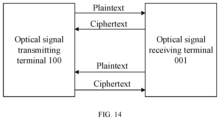
- FIG. 14 is a schematic structural diagram of another optical communication system according to an embodiment of the present disclosure.
- FIG. 1 is a schematic structural diagram of an optical communication device according to an embodiment of the present disclosure.
- the optical communication device may include: a first driving circuit 10 , and an optical signal transmitting circuit 20 connected to the first driving circuit 10 .
- the first driving circuit 10 may be configured to generate a first target plaintext, and output a first driving signal to the optical signal transmitting circuit 20 based on the first target plaintext.
- the first driving circuit 10 may be further configured to generate a first key based on the first target plaintext, and output a second driving signal to the optical signal transmitting circuit 20 based on the first key.
- the optical signal transmitting circuit 20 may transmit a first optical signal in response to the first driving signal, and transmit a second optical signal in response to the second driving signal.
- the optical signal transmitting circuit 20 may transmit the first optical signal according to a first frequency when the first driving circuit 10 outputs the first driving signal to the optical signal transmitting circuit 20 ; the optical signal transmitting circuit 20 may transmit the second optical signal according to a second frequency when the first driving circuit 10 outputs the second driving signal to the optical signal transmitting circuit 20 . That is, the optical signal transmitting circuit 20 can transmit optical signals according to different frequencies, so as to indicate different parameters (including the first target plaintext and the first key).
- the optical signal transmitting circuit 20 may include: a light emitting diode (LED).
- the first frequency may be a default frequency stored by the optical communication device, for example, a pre-configured frequency at factory, or a frequency set by a developer during initial startup of the optical communication device.
- the first frequency may be a frequency agreed upon in advance by the optical communication device and an optical communication device that detects the optical signal.
- the second frequency may be a constantly changing frequency, that is, the second frequency may be a variable frequency. The key is sent by using a variable frequency, to ensure the security of key transmission.
- the first optical signal and the second optical signal can be used for instructing the optical communication device that detects the optical signals to obtain the first target plaintext and the first key, generate a key based on the first target plaintext, and if it is verified that the obtained first key matches the generated key, establish a communication connection with the optical communication device that transmits the optical signals.
- the first driving circuit 10 controls, based on the first target plaintext, the optical signal transmitting circuit 20 to transmit the first optical signal
- the first optical signal can be used for instructing the optical communication device that detects the optical signal to obtain the first target plaintext.
- the second optical signal can be used for instructing the optical communication device that detects the optical signal to obtain the first key.
- the optical communication device that transmits the optical signals may be referred to as a first optical communication device
- the optical communication device that receives the optical signals may be referred to as a second optical communication device.
- two key matching each other can mean that the two keys satisfy a predetermined condition/relationship, or the two keys are the same.
- keys matching each other in the embodiments of the present disclosure can mean that the keys are the same.
- the embodiments of the present disclosure provide an optical communication device.
- the first driving circuit can control, based on the generated first target plaintext, the optical signal transmitting circuit to transmit the first optical signal, and control, based on the generated first key, the optical signal transmitting circuit to transmit the second optical signal. That is, an optical communication device that detects the optical signals can establish, based on the optical signals, a communication connection with the optical communication device that transmits the optical signals. Since optical signals have a relatively long transmitting distance and a relatively large range, the flexibility of establishment of the communication connection is improved while the reliability of establishment of the communication connection is ensured.
- the optical signals in the embodiments of the present disclosure are all visible optical signals. Accordingly, the optical communication devices in the embodiments of the present disclosure may be referred to as visible optical communication devices.
- FIG. 2 is a schematic structural diagram of another optical communication device according to an embodiment of the present disclosure. As shown in FIG. 2 , the first driving circuit 10 may include: a first control sub-circuit 101 and a first control signal generating sub-circuit 102 .
- the first control sub-circuit 101 may be connected to the optical signal transmitting circuit 20 and the first control signal generating sub-circuit 102 .
- the first control sub-circuit 101 may be configured to generate a first target plaintext, generate a first control word set based on the first target plaintext, and send the first control word set to the first control signal generating sub-circuit 102 .
- the first control word set may include a plurality of different first control words.
- the first control sub-circuit 101 may be a micro controller unit (MCU).
- the first target plaintext may include: a first random seed.
- the random seed may be any random number generated based on a software program, and the first random seed may be a binary number.
- the first control sub-circuit 101 may include a random number generator and a pseudo-random binary sequence (PRBS) generator.
- the first control sub-circuit 101 may generate the first random seed by using the random number generator as the first target plaintext, and may generate the first control word set based on the first random seed by using the PRBS generator, wherein the first control word set can also be referred to as a first control word sequence.
- PRBS pseudo-random binary sequence
- the first target plaintext may be referred to as a real random number
- the plurality of first control words in the first control word set may be referred to as pseudo-random numbers.
- the PRBS generator may use the first target plaintext (i.e., the real random number) as an initial value, i.e., use the first target plaintext as an initial condition, and generate a plurality of pseudo-random numbers based on a pseudo-random number generation algorithm pre-configured therein, where the plurality of pseudo-random numbers is the plurality of first control words in the embodiments of the present disclosure.
- the first control signal generating sub-circuit 102 may be configured to generate a first control signal set based on the first control word set, and send the first control signal set to the first control sub-circuit 101 .
- the first control signal set may include a plurality of first control signals having different frequencies.
- the first control sub-circuit 101 may sequentially send the first control words in the first control word set to the first control signal generating sub-circuit 102 according to a sequence of generating the first control words.
- the first control signal generating sub-circuit 102 may sequentially generate a plurality of first control signals based on the sequentially received first control words, and then sequentially send the plurality of first control signals to the first control sub-circuit 101 .
- the first control sub-circuit 101 may first output a reference control word to the first control signal generating sub-circuit 102 to control the first control signal generating sub-circuit 102 to enter the operating state.
- the first control sub-circuit 101 may be further configured to generate a first key based on the first control signal set, output a second driving signal to the optical signal transmitting circuit 20 based on the first key, and output a first driving signal to the optical signal transmitting circuit 20 based on the first target plaintext.
- a key encoding rule may be pre-configured in the first control sub-circuit 101 .
- the first control sub-circuit 101 may generate the first key based on the frequencies of the first control signals in the first control signal set and the key encoding rule. For example, it is assumed that the key encoding rule is that, if the frequency of the first control signal is greater than a frequency threshold, an assigned value is 1; if the frequency of the first control signal is less than the frequency threshold, an assigned value is 0.
- the first key generated by the first control sub-circuit 101 may be a string consisting of multiple binary values.
- a key encoding rule may also be pre-configured in the optical communication device that detects the optical signals, i.e., the second optical communication device, and the pre-configured key encoding rule may be the same as the key encoding rule in the first control sub-circuit 101 . Further, after obtaining the first target plaintext generated by the optical communication device that transmits the optical signals (i.e., the first optical communication device), the second optical communication device further generates a key based on the first target plaintext and the key encoding rule, and establish a communication connection with the first optical communication device based on the generated key and the key received from the first optical communication device.
- the first control sub-circuit 101 may first control, based on the generated first target plaintext, the optical signal transmitting circuit 20 to transmit the first optical signal. After the first optical signal is transmitted, the first control sub-circuit 101 may generate the first key and control, based on the first key, the optical signal transmitting circuit 20 to transmit the second optical signal. That is, the optical communication device may first send the first target plaintext, and then send the first key.
- the optical communication device that detects the optical signals generates the key based on the first random seed generated in real time by the optical communication device that transmits the optical signals, instead of generating the key based on pre-stored fixed information. Therefore, the generated key has high timeliness, randomness, complexity and security, which further ensures the security and reliability of the communication connection established between the two optical communication devices.
- the first control signal generating sub-circuit 102 controls the optical signal transmitting circuit 20 to transmit optical signals with a variable frequency, that is, the first key is sent in a variable frequency state, which makes it more difficult to crack the key, thereby further improving the security of establishing the communication connection.
- FIG. 3 is a schematic structural diagram of another first optical communication device according to an embodiment of the present disclosure.
- the first control signal generating sub-circuit 102 may include: a candidate signals generating module 1021 and a control signal generating module 1022 .
- the candidate signals generating module 1021 may be connected to the control signal generating module 1022 , and the candidate signals generating module 1021 may have a plurality of output terminals.
- the candidate signals generating module 1021 may be configured to generate a plurality of candidate signals having the same frequency and different phases, and output the plurality of candidate signals to the control signal generating module 1022 through the plurality of output terminals in a one-to-one correspondence.
- the number of the candidate signals is the same as that of the output terminals, and the candidate signals output by any two adjacent output terminals have the same phase difference.
- the candidate signals generating module 1021 generates a total of K candidate signals
- FIG. 4 shows a schematic diagram of the candidate signals.
- the number K of candidate signals that can be generated by the candidate signals generating module 1021 may be pre-configured in the candidate signals generating module 1021 , e.g., configured in the module by a user (such as a developer) during production of the candidate signals generating module 1021 .
- K may be 2 to the i-th power, and i may be an integer greater than or equal to 1.
- K may be 16, 32, 128 or the like.
- the control signal generating module 1022 may also be connected to the first control sub-circuit 101 .
- the control signal generating module 1022 may be configured to generate a first control signal set including a plurality of different first control signals based on the plurality of candidate signals and the first control word set sent by the first control sub-circuit 101 , and send the first control signal set to the first control sub-circuit 101 .
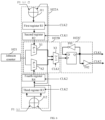
- FIG. 5 is a schematic structural diagram of a first control signal generating sub-circuit according to an embodiment of the present disclosure.
- the candidate signals generating module 1021 may include a Johnson counter.
- the control signal generating module 1022 may include: an input unit 1022 A, a selection unit 1022 B, and an output unit 1022 C.
- the input unit 1022 A may be connected to the first control sub-circuit 101 (not shown in FIG. 5 ), and the input unit 1022 A may be configured to output a selection control signal to the selection unit 1022 B based on the first control word. Besides, the input unit 1022 A may operate in response to only one first control word each time. Because the first control words in the first control word set are different from each other, the input unit 1022 A may output a different selection control signal each time.
- the selection unit 1022 B may further be connected to the candidate signals generating module 1021 and the output unit 1022 C.
- the selection unit 1022 B may be configured to select a target candidate signal from the plurality of candidate signals in response to the selection control signal, and output the target candidate signal to the output unit 1022 C.
- the output unit 1022 C may be configured to generate, based on the target candidate signal, a first control signal set including a plurality of first control signals having different frequencies, and send the first control signal set to the first control sub-circuit 101 .
- FIG. 6 is a schematic structural diagram of another first control signal generating sub-circuit according to an embodiment of the present disclosure.
- the input unit 1022 A may include: a first register R 1 , a second register R 2 , a third register R 3 , a fourth register R 4 , a first adder J 11 , and a second adder J 12 .
- the selection unit 1022 B may include: a first selector X 1 , a second selector X 2 , and a third selector X 3 .
- the output unit 1022 C may include: a D flip-flop, a first inverter F 01 , and a second inverter F 02 .
- the first adder J 11 and the second adder J 12 may be connected to the first control sub-circuit 101 (not shown in FIG. 6 ) and the third register R 3 respectively; the first adder J 11 , the first register R 1 , the second register R 2 , and the first selector X 1 are connected in sequence; the second adder J 12 , the third register R 3 , the fourth register R 4 , and the second selector X 2 connected in sequence.
- the second register R 2 may further be connected to a first clock signal terminal CLK 1 ; the first register R 1 , the third register R 3 , and the fourth register R 4 may further be connected to a second clock signal terminal CLK 2 .
- the first selector X 1 and the second selector X 2 may further be connected to the candidate signals generating module 1021 and the third selector X 3 respectively, and the third selector X 3 may further be connected to a first input terminal of the D flip-flop and the first clock signal terminal CLK 1 .
- a second input terminal of the D flip-flop may be connected to an output terminal of the first inverter F 01 , an input terminal of the first inverter F 01 and an input terminal of the first inverter F 02 may be connected to an output terminal of the D flip-flop.
- the output terminal of the D flip-flop may be used as an output of the first clock signal terminal CLK 1
- an output terminal of the second inverter F 02 may be used as an output of the second clock signal terminal CLK 2
- clock signals provided by the first clock signal terminal CLK 1 and the second clock signal terminal CLK 2 have opposite phases and the same frequency.
- the first selector X 1 and the second selector X 2 each may be a K ⁇ 1 selector shown in FIG. 6 (i.e., selecting 1 target candidate signal from the K candidate signals). Because the third selector X 3 is configured to select one signal from two signals. Therefore, with reference to FIG. 6 , the third selector X 3 may be a 2 ⁇ 1 selector (i.e., selecting 1 target candidate signal from 2 candidate signals).
- a principle of generating the first control signal set by the first control signal generating sub-circuit 102 is described as follows:
- the first adder J 11 may add up a part of the i-th first control word F1(i) (F1(i)/2 as shown in FIG. 6 ) and most significant bits (such as 5 bits) stored by the third register R 3 , and store a summation result into the first register R 1 during a rising edge of the second clock signal provided by the second clock signal terminal CLK 2 .
- the first adder J 11 may add up a part of the first control word F1(i) and all information stored in the third register R 3 , and then store a summation result into the first register R 1 during the rising edge of the second clock signal.
- the first selector X 1 can select a target candidate signal from the K candidate signals as an output signal of the first selector X 1 , and output the target candidate signal to the third selector X 3 .
- the second adder J 12 may add up the i-th first control word F1(i) and most significant bits stored in the third register R 3 , and stores a summation result into the third register R 3 during a rising edge of a second clock signal CLK 2 .
- the second adder J 12 may add up the first control word F1(i) and all information stored in the third register R 3 , and then stores a summation result into the third register R 3 during the rising edge of the second clock signal.
- the information stored in the third register R 3 will be stored into the fourth register R 4 , and used as a selection signal of the second selector X 2 .
- the second selector X 2 can select a target candidate signal from the K candidate signals as an output signal of the second selector X 2 , and output the target candidate signal to the third selector X 3 .
- the third selector X 3 may select one of the output signal from the first selector X 1 and the output signal from the first selector X 2 as an output signal of the third selector X 3 , and output the output signal to the D flip-flop, to be used as an input clock signal of the D flip-flop. Then, the clock signal output by one of the output terminal of the D flip-flop and the output terminal of the second inverter F 02 can be used as a final output signal. So far, the control signal has been generated. A set consisting of different control signals based on different first control words is the first control signal set.
- the selection signal output by the fourth register R 4 may be used as a falling-edge selection signal
- the selection signal output by the second register R 2 may be used as a rising-edge selection signal
- the signal fed back by the third register R 3 to the second adder J 12 may be used for controlling period switching of the generated clock.
- the selection signal output by the fourth register R 4 may be referred to as a falling-edge control word
- the selection signal output by the second register R 2 may be referred to as a rising-edge control word.
- the first control signal generating sub-circuit 102 may be referred to as a Time-Average Frequency Direct Period Synthesis (TAF-DPS) circuit.
- TAF-DPS Time-Average Frequency Direct Period Synthesis
- the control words outputted to the two adders J 11 and J 12 can be flexibly set by the user based on the frequencies of the required control signals; alternatively, the control words can be flexibly set by the TAF-DPS circuit based on the frequency of the final control signal to be generated.
- the frequency of the control signal can be entered into the TAF-DPS circuit by the user.
- TAF-DPS circuit can be implemented based on the time average frequency (TAF).
- TAF time average frequency
- T A I* ⁇ formula (3)
- T B ( I+ 1)* ⁇ formula (4)
- r1 can control an occurrence probability of T B , i.e., the decimal part r1 of the i-th first control word F1(i) can control the frequency of switching between the periods T A and T B .
- the plurality of first control signals generated by the TAF-DPS circuit in the embodiments of the present disclosure based on the specific TAF operation manner are uncertain to some degree, and the first key is generated based on the first control signals. Therefore, the security of the generated first key is ensured, making it difficult to crack the key.
- the optical communication device detecting the optical signals intends to establish a communication connection, it also needs the TAF-DPS circuit to generate a key.
- the establishment of the communication connection as described in the embodiments of the present disclosure requires not only support of a software program, but also support of a hardware circuit. Only when the hardware is matched can the keys be reliably extracted and matched, and then paired successfully, so as to establish the communication connection reliably.
- the first driving circuit 10 may further be configured to generate a first target identifier which uniquely identifies the optical communication device, and send an initial driving signal to the optical signal transmitting circuit 20 based on the first target identifier.
- the optical signal transmitting circuit 20 may further be configured to transmit a third optical signal in response to the initial driving signal.
- the optical signal transmitting circuit 20 may transmit the third optical signal with a third frequency in response to the initial driving signal.
- the third frequency may also be a default frequency stored in the optical communication device, and the third frequency may be a frequency agreed upon by the optical communication device and the optical communication device detecting the optical signals. Further, the third frequency may be the same as or different from the first frequency described in the foregoing embodiment.
- the third optical signal may be used for instructing the optical communication device detecting the optical signal to obtain the first target identifier, and perform the operation of obtaining the first target plaintext and generating a second key if an identifier the same as the first target identifier is found in a plurality of stored identifiers. That is, before the first optical signal and the second optical signal are transmitted, the first driving circuit 10 may first control the optical signal transmitting circuit 20 to transmit the third optical signal, to instruct the optical communication device detecting the optical signal to obtain, based on the third optical signal, the first target identifier of the optical communication device transmitting the third optical signal, thereby identifying the identity of the optical communication device transmitting the optical signal.
- the optical communication device detecting the optical signal After finding the first target identifier stored therein, the optical communication device detecting the optical signal then obtains the first target plaintext and the first key, which reduces the power consumption of the optical communication device detecting the optical signal while ensuring the reliability of establishment of the communication connection.
- optical communication devices can be more easily integrated into various types of electronic devices without introducing excessive hardware resources or making separate products.
- devices capable of emitting optical signals e.g., illumination lamps
- the circuits in the optical communication device provided by the embodiments of the present disclosure are configured in existing devices capable of emitting optical signals, the density of optical communication devices can be improved, laying a solid foundation for the construction of smart cities.
- visible light is used for communication, it can also bring convenience to users and improve sense of well-being of the users.
- the embodiments of the present disclosure provide an optical communication device.
- the first driving circuit can control, based on the generated first target plaintext, the optical signal transmitting circuit to transmit the first optical signal, and control, based on the generated first key, the optical signal transmitting circuit to transmit the second optical signal. That is, an optical communication device that detects the optical signals can establish, based on the optical signals, a communication connection with the optical communication device that transmits the optical signals. Because optical signals have a relatively long transmitting distance and a relatively large range, the flexibility of establishment of the communication connection is improved while the reliability of the established communication connection is ensured.
- FIG. 8 is a flowchart of a method for establishing a communication connection according to an embodiment of the present disclosure. The method is applicable to the optical communication device in any one of FIG. 1 to FIG. 3 . As shown in FIG. 8 , the method may include the following steps:
- a first target plaintext is generated.
- a first optical signal is transmitted based on the first target plaintext.
- a first key is generated based on the first target plaintext.
- a second optical signal is transmitted based on the first key.
- the embodiments of the present disclosure provide a method for establishing a communication connection.
- the first optical signal can be transmitted based on the generated first target plaintext; and the second optical signal can be transmitted based on the generated first key.
- an optical communication device that detects the optical signals can establish, based on the optical signals, a communication connection with the optical communication device that transmits the optical signals. Because optical signals have a relatively long transmitting distance and a relatively large range, the flexibility of establishment of the communication connection is improved while the reliability of the established communication connection is ensured.
- FIG. 9 is a schematic structural diagram of an optical communication device according to an embodiment of the present disclosure.
- the optical communication device may include: an optical signal receiving circuit 01 , and a second driving circuit 02 connected to the optical signal receiving circuit 01 .
- the optical signal receiving circuit 01 may be configured to receive a fourth optical signal and a fifth optical signal, convert the fourth optical signal into a first electrical signal, convert the fifth optical signal into a second electrical signal, and send the first electrical signal and the second electrical signal to the second driving circuit 02 .
- the optical signal receiving circuit 01 may be a photo diode capable of converting an optical signal into an electrical signal.
- the second driving circuit 02 may be configured to obtain a second target plaintext based on the first electrical signal, obtain a second key based on the second electrical signal, generate a third key based on the second target plaintext, and verify whether the third key matches the second key.
- the verification of whether the second key matches the third key reference may be made to the key matching rule in the foregoing embodiment, and details are not described again herein.
- the optical communication device may establish a communication connection reliably with the optical communication device that transmits the fourth optical signal and the fifth optical signal.
- the embodiments of the present disclosure provide an optical communication device.
- the optical signal receiving circuit can convert the detected optical signals into electrical signals and transmit the electrical signals to the second driving circuit;
- the second driving circuit can obtain the key and the target plaintext generated by the optical communication device that transmits the optical signals, and establish, based on the key and the target plaintext, a reliable communication connection with the optical communication device that transmits the optical signals. Because optical signals have a relatively long transmitting distance and a relatively large range, the flexibility of establishment of the communication connection is improved while the reliability of the established communication connection is ensured.
- FIG. 10 is a schematic structural diagram of another optical communication device according to an embodiment of the present disclosure.
- the second driving circuit 02 may include: a second control sub-circuit 021 and a second control signal generating sub-circuit 022 .
- the second control sub-circuit 021 may be connected to the optical signal receiving circuit 01 and the second control signal generating sub-circuit 022 .
- the second control sub-circuit 021 may be configured to obtain a second target plaintext based on a first electrical signal, obtain a second key based on a second electrical signal, generate a second control word set based on the second target plaintext, and send the second control word set to the second control signal generating sub-circuit 022 .
- the second control word set may include a plurality of different second control words.
- the second control sub-circuit 021 may alternatively be an MCU, and the second target plaintext may include: a second random seed.
- the second control sub-circuit 021 may have the same structure and functions as the first control sub-circuit 101 .
- the second control sub-circuit 021 may have a function of converting an electrical signal into a digital signal.
- the second control signal generating sub-circuit 022 may be configured to generate a second control signal set based on the second control word set, and send the second control signal set to the second control sub-circuit 021 .
- the second control signal set may include a plurality of second control signals having different frequencies.
- the second control signal generating sub-circuit 022 may also have the same modules as the first control signal generating sub-circuit 102 , that is, the second control signal generating sub-circuit 022 may include: the modules in the first control signal generating sub-circuit 102 as shown in FIG. 5 or FIG. 6 .
- the second control sub-circuit 021 may be further configured to generate a third key based on the second control signal set, and verify whether the third key matches the second key.
- the second control sub-circuit 021 may have a function of determining whether a received key matches a generated key.
- the optical signal receiving circuit 01 may further be configured to receive a sixth optical signal, convert the sixth optical signal into a third electrical signal, and send the third electrical signal to the second driving circuit 02 .
- the second driving circuit 02 may further be configured to obtain a second target identifier based on the third electrical signal, search for a stored identifier which is the same as the second target identifier, and if the stored identifier which is the same as the second target identifier is found, perform an operation of obtaining the second target plaintext and the second key.
- the second driving circuit 02 may first obtain a second target identifier based on the received sixth optical signal, and search a storage space thereof (such as a local user book) to determine whether the second target identifier is stored. If yes, the identification succeeds.
- the second driving circuit 02 may further receive a fourth optical signal and a fifth optical signal, obtain the second target plaintext based on the fourth optical signal, obtain the second key based on the fifth optical signal, generate the third key based on the second target plaintext, and compare the third key and the obtained second key to establish a communication connection with the optical communication device that transmits the sixth optical signal.
- the embodiments of the present disclosure provide an optical communication device.
- the optical signal receiving circuit can convert the detected optical signals into electrical signals and transmit the electrical signals to the second driving circuit;
- the second driving circuit can obtain the key and the target plaintext generated by the optical communication device that transmits the optical signals, and establish, based on the key and the target plaintext, a reliable communication connection with the optical communication device that transmits the optical signals. Because optical signals have a relatively long transmitting distance and a relatively large range, the flexibility of establishment of the communication connection is improved while the reliability of the established communication connection is ensured.
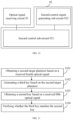
- FIG. 11 is a flowchart of a method for establishing a communication connection according to an embodiment of the present disclosure. The method is applicable to the optical communication device in FIG. 9 or FIG. 10 . As shown in FIG. 11 , the method may include the following steps:
- a second target plaintext is obtained based on a received fourth optical signal.
- a third key is generated based on the second target plaintext.
- a second key is obtained based on a received fifth optical signal.
- the embodiments of the present disclosure provide a method for establishing a communication connection.
- the optical communication device in the method can obtain the second target plaintext and the second key based on the received optical signals, generate the third key based on the second target plaintext, and verify whether the third key matches the second key. Accordingly, based on a matching result, the optical communication device can establish a reliable communication connection with an optical communication device that transmits the optical signals. Because optical signals have a relatively long transmitting distance and a relatively large range, the flexibility of establishment of the communication connection is improved while the reliability of the established communication connection is ensured.
- FIG. 12 is a schematic structural diagram of an optical communication system according to an embodiment of the present disclosure.
- the optical communication system 00 may include: an optical signal transmitting terminal 100 and an optical signal receiving terminal 001 .
- the optical signal transmitting terminal 100 may include: the optical communication device as shown in any one of FIG. 1 to FIG. 3
- the optical signal receiving terminal 001 may include: the optical communication device as shown in FIG. 9 or FIG. 10 .
- a fourth optical signal received by the optical signal receiving terminal 001 and a first optical signal transmitted by the optical signal transmitting terminal 100 may be the same optical signal.
- a second target plaintext obtained by the optical signal receiving terminal 001 may be the same as a first target plaintext generated by the optical signal transmitting terminal 100 .
- a fifth optical signal received by the optical signal receiving terminal 001 and a second optical signal transmitted by the optical signal transmitting terminal 100 may be the same optical signal; a second key obtained by the optical signal receiving terminal 001 may be the same as a first key generated by the optical signal transmitting terminal 100 .
- the optical signal receiving terminal 001 may be configured to establish a communication connection with the optical signal transmitting terminal 100 upon verifying that the generated third key is the same as the obtained second key.
- a sixth optical signal received by the optical signal receiving terminal 001 and a third optical signal transmitted by the optical signal transmitting terminal 100 may be the same optical signal.
- a second target identifier obtained by the optical signal receiving terminal 001 may be the same as a first target identifier generated by the optical signal transmitting terminal 100 . That is, upon finding a stored identifier the same as the first target identifier, the optical communication device as shown in FIG. 9 or FIG. 10 may further obtain the first target plaintext and the first key generated by the optical communication device as shown in any one of FIG. 1 to FIG. 3 .
- the optical signal receiving terminal 001 may further include: the optical communication device as shown in any one of FIG. 1 to FIG. 3 . That is, the optical signal receiving terminal 001 may further have an optical signal transmitting function, to request establishing communication connections with other optical communication devices. And/or, the optical signal transmitting terminal 100 may further include: the optical communication device as shown in FIG. 9 or FIG. 10 . The optical signal transmitting terminal 100 may further have an optical signal receiving function, to actively establish communication connections with other optical communication devices.
- the optical signal receiving terminal 001 may actively generate a target plaintext, generate a key based on the generated target plaintext, transmit an optical signal based on the generated target plaintext, and transmit another optical signal based on the generated key.
- another optical communication device that detects the optical signals may be instructed to obtain, based on the optical signals, the target plaintext and the key that are actively generated by the optical signal receiving terminal 001 , generate another key based on the obtained target plaintext, and reliably establish a communication connection with the optical signal receiving terminal 001 upon verifying that the generated key matches the obtained key.
- the optical signal receiving terminal 001 may further actively generate a target identifier that uniquely indicates its identity, and transmit further another optical signal based on the generated target identifier.
- another optical communication device that detects the further another optical signal is instructed to obtain, based on the further another optical signal, the target identifier generated by the optical signal receiving terminal 001 , and if a stored identifier the same as the target identifier is found, perform the operation of obtaining the target plaintext and the key actively generated by the optical signal receiving terminal 001 .
- the optical signal transmitting terminal 100 may actively receive optical signals transmitted by another optical communication device capable of transmitting optical signals (for example, the optical signal receiving terminal 001 that further has the optical signal transmitting function), convert the received optical signals into electrical signals, obtain, based on the electrical signals obtained through conversion, a target plaintext and a key generated by the optical communication device that transmit the optical signals, generate another key based on the obtained target plaintext, and upon verifying that the generated key matches the obtained key, reliably establish a communication connection with the optical communication device that transmits the optical signals.
- another optical communication device capable of transmitting optical signals for example, the optical signal receiving terminal 001 that further has the optical signal transmitting function
- the optical signal transmitting terminal 100 may further obtain, based on the received optical signal, a target identifier generated by the optical communication device that transmits the optical signal, and upon finding a stored identifier which is the same as the target identifier, further perform the operation of obtaining the target plaintext and the key generated by the optical communication device that transmits the optical signal.
- FIG. 12 shows an optical communication system in which the optical signal transmitting terminal 100 only has the optical signal transmitting function, and the optical signal receiving terminal 001 only has the optical signal receiving function.
- the first control sub-circuit 101 is an MCU
- the first control signal generating sub-circuit 102 is a TAF-DPS circuit
- the optical signal transmitting circuit 20 is an LED.
- the second control sub-circuit 021 is an MCU
- the second control signal generating sub-circuit 022 is a TAF-DPS circuit
- the optical signal receiving circuit 01 is a photo diode P-D.
- the optical signal transmitting circuit 20 in the optical signal transmitting terminal 100 may transmit optical signals having different frequencies, to instruct the optical signal receiving terminal 001 that detects the optical signals to perform a series operations such as key extraction, information matching, and identification based on the received optical signals, so as to establish a reliable communication connection with the optical signal transmitting terminal 100 .
- the optical signal transmitting terminal 100 may be referred to as a light key, and the optical signal receiving terminal 001 may be referred to as a light lock.
- FIG. 13 is a schematic diagram of a generated plaintext and ciphertext.
- the optical signal receiving terminal 001 may register the pulse M 1 by using different clock signals to obtain the first target plaintext, and further generate a second key based on the first target plaintext.
- the pulse M 2 shown in FIG. 13 is a pulse for indicating the obtained first target plaintext
- the pulse M 3 is a pulse for indicating the generated second key, denoted by binary values “000110”.
- the optical signal receiving terminal 001 may compare whether the generated second key matches the obtained first key, and if yes, establish a communication connection with the optical signal transmitting terminal 100 ; otherwise, refuse to establish a communication connection with the optical signal transmitting terminal 100 .
- FIG. 14 shows another optical communication system in which the optical signal transmitting terminal 100 has not only the optical signal transmitting function but also the optical signal receiving function, and the optical signal receiving terminal 001 has not only the optical signal receiving function but also the optical signal transmitting function.
- the shown optical signal transmitting terminal 100 not only can send a plaintext and a ciphertext to the optical signal receiving terminal 001 , but also can receive a plaintext and ciphertext sent by the optical signal receiving terminal 001 .
- the optical signal receiving terminal 001 not only can receive a plaintext and ciphertext sent by the optical signal transmitting terminal 100 , but also can send a plaintext and ciphertext to the optical signal transmitting terminal 100 .
- the optical signal receiving terminal 001 may first generate a second target identifier that uniquely indicates its identity, and transmit a seventh optical signal based on the second target identifier. Then, the optical signal receiving terminal 001 generates a third target plaintext, generates a fourth key based on the third target plaintext, transmits an eighth optical signal based on the third target plaintext, and transmits a ninth optical signal based on the fourth key.
- the optical signal transmitting terminal 100 can first obtain the second target identifier based on the seventh optical signal, and after finding a stored identifier which is the same as the second target identifier, further obtain the third target plaintext based on the eighth optical signal, obtain the fourth key based on the ninth optical signal, generate a fifth key based on the third target plaintext, and upon verifying that the fifth key matches the fourth key, reliably establish a communication connection with the optical signal receiving terminal 001 .
Landscapes
- Engineering & Computer Science (AREA)
- Computer Networks & Wireless Communication (AREA)
- Signal Processing (AREA)
- Physics & Mathematics (AREA)
- Electromagnetism (AREA)
- Computer Security & Cryptography (AREA)
- Computing Systems (AREA)
- Optical Communication System (AREA)
Abstract
Description
-
- the first driving circuit is configured to generate a first target plaintext, and output a first driving signal to the optical signal transmitting circuit based on the first target plaintext; and,
- generate a first key based on the first target plaintext, and output a second driving signal to the optical signal transmitting circuit based on the first key; and
- the optical signal transmitting circuit is configured to transmit a first optical signal in response to the first driving signal, and transmit a second optical signal in response to the second driving signal.
-
- the first control sub-circuit is respectively connected to the optical signal transmitting circuit and the first control signal generating sub-circuit, the first control sub-circuit is configured to generate the first target plaintext, generate a first control word set based on the first target plaintext, and send the first control word set to the first control signal generating sub-circuit, the first control word set comprising a plurality of different first control words;
- the first control signal generating sub-circuit is configured to generate a first control signal set based on the first control word set, and send the first control signal set to the first control sub-circuit, the first control signal set including a plurality of different first control signals having different frequencies; and
- the first control sub-circuit is further configured to generate the first key based on the first control signal set, output the second driving signal to the optical signal transmitting circuit based on the first key, and output the first driving signal to the optical signal transmitting circuit based on the first target plaintext.
-
- the candidate signals generating module is connected to the control signal generating module, and the candidate signals generating module has a plurality of output terminals; the candidate signals generating module is configured to generate a plurality of candidate signals having the same frequency and different phases, and output the plurality of candidate signals to the control signal generating module through the plurality of output terminals in a one-to-one correspondence, wherein a quantity of the candidate signals is the same as a quantity of the output terminals, and the candidate signals output by any two adjacent output terminals have the same phase difference; and
- the control signal generating module is further connected to the first control sub-circuit; the control signal generating module is configured to generate the first control signal set based on the plurality of candidate signals and the first control word set sent by the first control sub-circuit, and send the first control signal set to the first control sub-circuit.
-
- the optical signal transmitting circuit is further configured to transmit a third optical signal in response to the initial driving signal.
-
- the optical signal receiving circuit is configured to receive a fourth optical signal and a fifth optical signal, convert the fourth optical signal into a first electrical signal, convert the fifth optical signal into a second electrical signal, and send the first electrical signal and the second electrical signal to the second driving circuit; and
- the second driving circuit is configured to obtain a second target plaintext based on the first electrical signal, obtain a second key based on the second electrical signal, generate a third key based on the second target plaintext, and verify whether the third key matches the second key.
-
- the second control sub-circuit is respectively connected to the optical signal receiving circuit and the second control signal generating sub-circuit, the second control sub-circuit is configured to obtain the second target plaintext based on the first electrical signal, obtain the second key based on the second electrical signal, generate a second control word set based on the second target plaintext, and send the second control word set to the second control signal generating sub-circuit, the second control word set including a plurality of different second control words;
- the second control signal generating sub-circuit is configured to generate a second control signal set based on the second control word set, and send the second control signal set to the second control sub-circuit, the second control signal set including a plurality of second control signals having different frequencies; and
- the second control sub-circuit is further configured to generate the third key based on the second control signal set, and verify whether the third key matches the second key.
-
- the second driving circuit is further configured to obtain a second target identifier based on the third electrical signal, search for a stored identifier which is the same as the second target identifier, and if the stored identifier which is the same as the second target identifier is found, perform an operation of obtaining the second target plaintext and the second key.
-
- generating a first target plaintext;
- transmitting a first optical signal based on the first target plaintext;
- generating a first key based on the first target plaintext; and
- transmitting a second optical signal based on the first key.
-
- obtaining a second target plaintext based on a received fourth optical signal;
- generating a third key based on the second target plaintext;
- obtaining a second key based on a received fifth optical signal; and
- verifying whether the third key matches the second key.
-
- the fourth optical signal received by the optical signal receiving terminal and the first optical signal transmitted by the optical signal transmitting terminal are the same optical signal; the second target plaintext obtained by the optical signal receiving terminal is the same as the first target plaintext generated by the optical signal transmitting terminal; the fifth optical signal received by the optical signal receiving terminal and the second optical signal transmitted by the optical signal transmitting terminal are the same optical signal; and the second key obtained by the optical signal receiving terminal is the same as the first key generated by the optical signal transmitting terminal; and
- the optical signal receiving terminal is configured to establish a communication connection with the optical signal transmitting terminal upon verifying that the generated third key is the same as the obtained second key.
Δ=1/K*f1′ formula (1);
-
- wherein K is the number of the candidate signals, and f1′ is the frequency of the candidate signals. Accordingly, the candidate signals generating
module 1021 may also be referred to as a K-inputs circuit.
- wherein K is the number of the candidate signals, and f1′ is the frequency of the candidate signals. Accordingly, the candidate signals generating
f1(i)=K*f1′/F1(i) formula (2);
-
- wherein F1(i) is the i-th first control word among the plurality of different first control words in the first control word set, and i is a positive integer that is not greater than the number of the first control words in the first control word set. For example, assuming that the first control word set includes a total of I first control words and I is an integer greater than 1, values of i and I can satisfy the following relationship:
T A =I*Δ formula (3);
T B=(I+1)*Δ formula (4);
T TAF=(1−r1)*T A +r1*T B formula (5);
T TAF=(I+r1)*A formula (6);
f1(i)=f TAF=1/T TAF=1/[(I+r1)*Δ]=1/F1(i)*Δ formula (7);
-
- By substituting A calculated in formula (1) into formula (7), it can be obtained that:
f1(i)=f TAF=(K*f1′)/F1(i), i.e., formula (2) above.
- By substituting A calculated in formula (1) into formula (7), it can be obtained that:
Claims (17)
Applications Claiming Priority (3)
| Application Number | Priority Date | Filing Date | Title |
|---|---|---|---|
| CN202010325557.8 | 2020-04-23 | ||
| CN202010325557.8A CN111510214B (en) | 2020-04-23 | 2020-04-23 | Optical communication device, optical communication system, and communication connection establishment method |
| PCT/CN2021/079753 WO2021213039A1 (en) | 2020-04-23 | 2021-03-09 | Optical communication device, optical communication system, and communicational connection establishment method |
Publications (2)
| Publication Number | Publication Date |
|---|---|
| US20240089003A1 US20240089003A1 (en) | 2024-03-14 |
| US12160271B2 true US12160271B2 (en) | 2024-12-03 |
Family
ID=71864976
Family Applications (1)
| Application Number | Title | Priority Date | Filing Date |
|---|---|---|---|
| US17/767,763 Active 2041-03-09 US12160271B2 (en) | 2020-04-23 | 2021-03-09 | Optical communication device, optical communication system, and method for establishing communication connection |
Country Status (3)
| Country | Link |
|---|---|
| US (1) | US12160271B2 (en) |
| CN (1) | CN111510214B (en) |
| WO (1) | WO2021213039A1 (en) |
Families Citing this family (4)
| Publication number | Priority date | Publication date | Assignee | Title |
|---|---|---|---|---|
| CN111510214B (en) | 2020-04-23 | 2021-11-12 | 京东方科技集团股份有限公司 | Optical communication device, optical communication system, and communication connection establishment method |
| US12470531B2 (en) * | 2020-12-24 | 2025-11-11 | Beijing Boe Technology Development Co., Ltd. | Interactive authentication method, system, computer device, and non-volatile readable storage medium |
| CN113593214A (en) * | 2021-07-09 | 2021-11-02 | Tcl空调器(中山)有限公司 | Remote control device, remote control system, remote control method, terminal device, and computer-readable storage medium |
| CN116368463A (en) * | 2021-10-27 | 2023-06-30 | 京东方科技集团股份有限公司 | Random number generator and random number generation method |
Citations (27)
| Publication number | Priority date | Publication date | Assignee | Title |
|---|---|---|---|---|
| JP2000232407A (en) | 1999-02-10 | 2000-08-22 | Matsushita Electric Ind Co Ltd | Optical wireless communication system and optical wireless communication method |
| CN103021052A (en) | 2012-11-19 | 2013-04-03 | 深圳光启创新技术有限公司 | Biological recognition optical signal transmitting device as well as electricity-saving method and encryption method thereof |
| CN103178906A (en) | 2011-12-22 | 2013-06-26 | 国民技术股份有限公司 | Communication system and communication method |
| US20150016610A1 (en) | 2013-07-12 | 2015-01-15 | The Board Of Regents Of The University Of Oklahoma | Optical cryptography systems and methods |
| CN104980228A (en) | 2015-06-29 | 2015-10-14 | 工业和信息化部电信研究院 | Optical signal transmission method and device |
| CN105139194A (en) | 2015-09-30 | 2015-12-09 | 联想(北京)有限公司 | Method and system of connection establishment, and electronic devices |
| CN105450419A (en) * | 2015-05-05 | 2016-03-30 | 北京天诚盛业科技有限公司 | Method, device and system for improving biometric security |
| US20160099774A1 (en) | 2014-10-06 | 2016-04-07 | Samsung Electronics Co., Ltd. | Method and apparatus for data transmission |
| CN105491034A (en) | 2015-11-30 | 2016-04-13 | 青岛海尔智能家电科技有限公司 | Method for establishing connection with terminal and terminal authentication method and apparatus |
| CN105763255A (en) | 2014-12-17 | 2016-07-13 | Tcl集团股份有限公司 | Communication connection establishment method applied to intelligent terminal, intelligent terminal and server |
| CN106209895A (en) | 2016-07-28 | 2016-12-07 | 维沃移动通信有限公司 | A kind of data encryption and transmission method and intelligent terminal |
| CN106603485A (en) | 2016-10-31 | 2017-04-26 | 美的智慧家居科技有限公司 | Secret key negotiation method and device |
| CN106792700A (en) | 2016-12-23 | 2017-05-31 | 北京握奇数据系统有限公司 | The method for building up and system of a kind of secure communication environment of wearable device |
| CN106792126A (en) | 2016-12-08 | 2017-05-31 | 努比亚技术有限公司 | The connection method for fast establishing of screen prjection, mobile terminal and video playback apparatus |
| CN107358441A (en) | 2017-06-26 | 2017-11-17 | 北京明华联盟科技有限公司 | Method, system and the mobile device and safety certificate equipment of payment verification |
| US20180054423A1 (en) | 2016-08-19 | 2018-02-22 | Futurewei Technologies, Inc. | Method and Device for Providing a Key for Internet of Things (IoT) Communication |
| CN109040060A (en) | 2018-08-01 | 2018-12-18 | 广州杰赛科技股份有限公司 | Terminal-Matching and system, computer equipment |
| US20180367524A1 (en) | 2017-06-16 | 2018-12-20 | International Business Machines Corporation | Token-based access control |
| CN109617687A (en) | 2019-01-15 | 2019-04-12 | 三峡大学 | A quantum encryption system for visible light communication |
| CN110168966A (en) | 2019-03-29 | 2019-08-23 | 京东方科技集团股份有限公司 | Optic communication driving circuit and method, optic communication transmitting terminal, system, the vehicles |
| CN110492936A (en) | 2019-08-08 | 2019-11-22 | Oppo广东移动通信有限公司 | Method, device and mobile terminal for adding friends based on visible light communication |
| CN110492935A (en) | 2019-07-17 | 2019-11-22 | 深圳市豪恩安全科技有限公司 | Data processing system, method, device and terminal equipment |
| US20200036518A1 (en) * | 2018-07-25 | 2020-01-30 | Fujitsu Limited | Communication device that performs encrypted communication and communication system |
| CN110752913A (en) | 2018-07-23 | 2020-02-04 | 华为技术有限公司 | Quantum key transmission device and system |
| WO2020050950A1 (en) | 2018-09-07 | 2020-03-12 | T-Mobile Usa, Inc. | Systems and methods for managing cellular multi-connectivity |
| CN110891263A (en) | 2019-12-20 | 2020-03-17 | 潍柴动力股份有限公司 | Connection establishing method, diagnosis device and terminal device |
| CN111510214A (en) | 2020-04-23 | 2020-08-07 | 京东方科技集团股份有限公司 | Optical communication device, optical communication system, and communication connection establishment method |
-
2020
- 2020-04-23 CN CN202010325557.8A patent/CN111510214B/en active Active
-
2021
- 2021-03-09 US US17/767,763 patent/US12160271B2/en active Active
- 2021-03-09 WO PCT/CN2021/079753 patent/WO2021213039A1/en not_active Ceased
Patent Citations (30)
| Publication number | Priority date | Publication date | Assignee | Title |
|---|---|---|---|---|
| JP2000232407A (en) | 1999-02-10 | 2000-08-22 | Matsushita Electric Ind Co Ltd | Optical wireless communication system and optical wireless communication method |
| CN103178906A (en) | 2011-12-22 | 2013-06-26 | 国民技术股份有限公司 | Communication system and communication method |
| CN103021052A (en) | 2012-11-19 | 2013-04-03 | 深圳光启创新技术有限公司 | Biological recognition optical signal transmitting device as well as electricity-saving method and encryption method thereof |
| US20150016610A1 (en) | 2013-07-12 | 2015-01-15 | The Board Of Regents Of The University Of Oklahoma | Optical cryptography systems and methods |
| US20180198607A1 (en) | 2013-07-12 | 2018-07-12 | The Board Of Regents Of The University Of Oklahoma | Optical cryptography systems and methods |
| US20160099774A1 (en) | 2014-10-06 | 2016-04-07 | Samsung Electronics Co., Ltd. | Method and apparatus for data transmission |
| CN105763255A (en) | 2014-12-17 | 2016-07-13 | Tcl集团股份有限公司 | Communication connection establishment method applied to intelligent terminal, intelligent terminal and server |
| CN105450419A (en) * | 2015-05-05 | 2016-03-30 | 北京天诚盛业科技有限公司 | Method, device and system for improving biometric security |
| CN104980228A (en) | 2015-06-29 | 2015-10-14 | 工业和信息化部电信研究院 | Optical signal transmission method and device |
| CN105139194A (en) | 2015-09-30 | 2015-12-09 | 联想(北京)有限公司 | Method and system of connection establishment, and electronic devices |
| CN105491034A (en) | 2015-11-30 | 2016-04-13 | 青岛海尔智能家电科技有限公司 | Method for establishing connection with terminal and terminal authentication method and apparatus |
| CN106209895A (en) | 2016-07-28 | 2016-12-07 | 维沃移动通信有限公司 | A kind of data encryption and transmission method and intelligent terminal |
| US20180054423A1 (en) | 2016-08-19 | 2018-02-22 | Futurewei Technologies, Inc. | Method and Device for Providing a Key for Internet of Things (IoT) Communication |
| CN106603485A (en) | 2016-10-31 | 2017-04-26 | 美的智慧家居科技有限公司 | Secret key negotiation method and device |
| CN106792126A (en) | 2016-12-08 | 2017-05-31 | 努比亚技术有限公司 | The connection method for fast establishing of screen prjection, mobile terminal and video playback apparatus |
| CN106792700A (en) | 2016-12-23 | 2017-05-31 | 北京握奇数据系统有限公司 | The method for building up and system of a kind of secure communication environment of wearable device |
| US20180367524A1 (en) | 2017-06-16 | 2018-12-20 | International Business Machines Corporation | Token-based access control |
| CN107358441A (en) | 2017-06-26 | 2017-11-17 | 北京明华联盟科技有限公司 | Method, system and the mobile device and safety certificate equipment of payment verification |
| CN110752913A (en) | 2018-07-23 | 2020-02-04 | 华为技术有限公司 | Quantum key transmission device and system |
| EP3820076A1 (en) | 2018-07-23 | 2021-05-12 | Huawei Technologies Co., Ltd. | Quantum key transmission device and system |
| US20200036518A1 (en) * | 2018-07-25 | 2020-01-30 | Fujitsu Limited | Communication device that performs encrypted communication and communication system |
| CN109040060A (en) | 2018-08-01 | 2018-12-18 | 广州杰赛科技股份有限公司 | Terminal-Matching and system, computer equipment |
| WO2020050950A1 (en) | 2018-09-07 | 2020-03-12 | T-Mobile Usa, Inc. | Systems and methods for managing cellular multi-connectivity |
| CN109617687A (en) | 2019-01-15 | 2019-04-12 | 三峡大学 | A quantum encryption system for visible light communication |
| CN110168966A (en) | 2019-03-29 | 2019-08-23 | 京东方科技集团股份有限公司 | Optic communication driving circuit and method, optic communication transmitting terminal, system, the vehicles |
| US20210232175A1 (en) | 2019-03-29 | 2021-07-29 | Boe Technology Group Co., Ltd. | Optical communication drive circuit and method, optical communication transmitter and system, and vehicle |
| CN110492935A (en) | 2019-07-17 | 2019-11-22 | 深圳市豪恩安全科技有限公司 | Data processing system, method, device and terminal equipment |
| CN110492936A (en) | 2019-08-08 | 2019-11-22 | Oppo广东移动通信有限公司 | Method, device and mobile terminal for adding friends based on visible light communication |
| CN110891263A (en) | 2019-12-20 | 2020-03-17 | 潍柴动力股份有限公司 | Connection establishing method, diagnosis device and terminal device |
| CN111510214A (en) | 2020-04-23 | 2020-08-07 | 京东方科技集团股份有限公司 | Optical communication device, optical communication system, and communication connection establishment method |
Non-Patent Citations (3)
| Title |
|---|
| CN202010325557.8 first office action. |
| CN202010325557.8 Notification to grant patent right for invention. |
| CN202010325557.8 second office action. |
Also Published As
| Publication number | Publication date |
|---|---|
| US20240089003A1 (en) | 2024-03-14 |
| CN111510214B (en) | 2021-11-12 |
| WO2021213039A1 (en) | 2021-10-28 |
| CN111510214A (en) | 2020-08-07 |
Similar Documents
| Publication | Publication Date | Title |
|---|---|---|
| US20240089003A1 (en) | Optical communication device, optical communication system, and method for establishing communication connection | |
| JP6209282B2 (en) | Visible light signal encoding and decoding method, apparatus and system based on multistage amplitude modulation | |
| CN101695066B (en) | Security authentication method and information security authentication equipment | |
| US8933786B2 (en) | RFID tag device and method of recognizing the same | |
| EP2892178B1 (en) | Light signal-based information processing method and device | |
| US20070123165A1 (en) | Methods, systems and devices for assisted discovery in bluetooth enabled devices | |
| US11228453B2 (en) | Secure provisioning of electronic lock controllers | |
| KR100439678B1 (en) | How to select one electronic module from a plurality of modules in the query field of the terminal | |
| US7254201B2 (en) | Clock and data recovery circuit and method | |
| CN108183797A (en) | A kind of quantum cryptography locks implementation method | |
| CN103152401A (en) | Mobile terminal, login method and system through mobile terminal, and cloud server | |
| JP2008259183A (en) | Authentication target device and wireless authentication system | |
| CN113037820A (en) | Thing networking device communication module | |
| JP2009130425A (en) | Common key generation system, common key generation method and node using the same | |
| US8588743B2 (en) | Communication device and communication system | |
| CN103793979B (en) | Method for upgrading photon receiving end | |
| CN102769524A (en) | Method and system capable of synchronously restoring handshake | |
| US10360748B2 (en) | Method of achieving free-pairing wireless door lock based on DIP switch, a wireless door lock and a communication method for the wireless door lock | |
| CN103581902A (en) | Wireless communication system, terminal and storage medium | |
| CN214311807U (en) | Dynamic encryption chip and underground marker | |
| Horvat et al. | User authorization system using ZigBee WSN and AVR architecture | |
| US7975029B2 (en) | Terminal equipment | |
| JP2003288577A (en) | Semiconductor integrated circuit and data carrier equipped with it | |
| Leng et al. | An RFID grouping proof protocol exploiting anti-collision algorithm for subgroup dividing | |
| CN115345268B (en) | Data processing method of NFC label connected with light emitting diode |
Legal Events
| Date | Code | Title | Description |
|---|---|---|---|
| AS | Assignment |
Owner name: BOE TECHNOLOGY GROUP CO., LTD., CHINA Free format text: ASSIGNMENT OF ASSIGNORS INTEREST;ASSIGNORS:WEI, XIANGYE;XIU, LIMING;BAI, YIMING;AND OTHERS;REEL/FRAME:059548/0263 Effective date: 20211228 Owner name: BEIJING BOE TECHNOLOGY DEVELOPMENT CO., LTD., CHINA Free format text: ASSIGNMENT OF ASSIGNORS INTEREST;ASSIGNORS:WEI, XIANGYE;XIU, LIMING;BAI, YIMING;AND OTHERS;REEL/FRAME:059548/0263 Effective date: 20211228 |
|
| FEPP | Fee payment procedure |
Free format text: ENTITY STATUS SET TO UNDISCOUNTED (ORIGINAL EVENT CODE: BIG.); ENTITY STATUS OF PATENT OWNER: LARGE ENTITY |
|
| STPP | Information on status: patent application and granting procedure in general |
Free format text: DOCKETED NEW CASE - READY FOR EXAMINATION |
|
| STPP | Information on status: patent application and granting procedure in general |
Free format text: NON FINAL ACTION MAILED |
|
| STPP | Information on status: patent application and granting procedure in general |
Free format text: RESPONSE TO NON-FINAL OFFICE ACTION ENTERED AND FORWARDED TO EXAMINER |
|
| STPP | Information on status: patent application and granting procedure in general |
Free format text: NOTICE OF ALLOWANCE MAILED -- APPLICATION RECEIVED IN OFFICE OF PUBLICATIONS |
|
| AS | Assignment |
Owner name: BEIJING BOE TECHNOLOGY DEVELOPMENT CO., LTD., CHINA Free format text: ASSIGNMENT OF ASSIGNORS INTEREST;ASSIGNOR:BOE TECHNOLOGY GROUP CO., LTD.;REEL/FRAME:069136/0101 Effective date: 20240930 |
|
| STCF | Information on status: patent grant |
Free format text: PATENTED CASE |