US12156271B2 - Apparatuses and methods for expedited tunnel establishment with a non-third generation partnership project (3GPP) interworking gateway to access a 3GPP network - Google Patents
Apparatuses and methods for expedited tunnel establishment with a non-third generation partnership project (3GPP) interworking gateway to access a 3GPP network Download PDFInfo
- Publication number
- US12156271B2 US12156271B2 US17/668,583 US202217668583A US12156271B2 US 12156271 B2 US12156271 B2 US 12156271B2 US 202217668583 A US202217668583 A US 202217668583A US 12156271 B2 US12156271 B2 US 12156271B2
- Authority
- US
- United States
- Prior art keywords
- interworking gateway
- 3gpp
- 3gpp interworking
- response
- network
- Prior art date
- Legal status (The legal status is an assumption and is not a legal conclusion. Google has not performed a legal analysis and makes no representation as to the accuracy of the status listed.)
- Active, expires
Links
- 238000000034 method Methods 0.000 title claims abstract description 47
- 230000004044 response Effects 0.000 claims abstract description 65
- 239000000523 sample Substances 0.000 claims abstract description 9
- 230000000977 initiatory effect Effects 0.000 claims description 25
- 230000005540 biological transmission Effects 0.000 claims description 4
- 238000005516 engineering process Methods 0.000 description 25
- 230000006870 function Effects 0.000 description 16
- 238000012545 processing Methods 0.000 description 13
- 238000010586 diagram Methods 0.000 description 10
- 238000010295 mobile communication Methods 0.000 description 10
- 230000008569 process Effects 0.000 description 10
- 238000004891 communication Methods 0.000 description 5
- 230000004913 activation Effects 0.000 description 4
- 238000006243 chemical reaction Methods 0.000 description 3
- 230000001413 cellular effect Effects 0.000 description 2
- 238000013515 script Methods 0.000 description 2
- 239000002699 waste material Substances 0.000 description 2
- 230000004075 alteration Effects 0.000 description 1
- 230000008901 benefit Effects 0.000 description 1
- 238000012938 design process Methods 0.000 description 1
- 230000003993 interaction Effects 0.000 description 1
- 239000004973 liquid crystal related substance Substances 0.000 description 1
- 230000007774 longterm Effects 0.000 description 1
- 238000004519 manufacturing process Methods 0.000 description 1
- 238000012986 modification Methods 0.000 description 1
- 230000004048 modification Effects 0.000 description 1
- 230000001537 neural effect Effects 0.000 description 1
- 230000003287 optical effect Effects 0.000 description 1
- 238000012552 review Methods 0.000 description 1
- 230000011664 signaling Effects 0.000 description 1
- 230000002123 temporal effect Effects 0.000 description 1
- 238000012546 transfer Methods 0.000 description 1
Images




Classifications
-
- H—ELECTRICITY
- H04—ELECTRIC COMMUNICATION TECHNIQUE
- H04W—WIRELESS COMMUNICATION NETWORKS
- H04W76/00—Connection management
- H04W76/10—Connection setup
-
- H—ELECTRICITY
- H04—ELECTRIC COMMUNICATION TECHNIQUE
- H04W—WIRELESS COMMUNICATION NETWORKS
- H04W76/00—Connection management
- H04W76/10—Connection setup
- H04W76/15—Setup of multiple wireless link connections
- H04W76/16—Involving different core network technologies, e.g. a packet-switched [PS] bearer in combination with a circuit-switched [CS] bearer
-
- H—ELECTRICITY
- H04—ELECTRIC COMMUNICATION TECHNIQUE
- H04W—WIRELESS COMMUNICATION NETWORKS
- H04W76/00—Connection management
- H04W76/10—Connection setup
- H04W76/18—Management of setup rejection or failure
-
- H—ELECTRICITY
- H04—ELECTRIC COMMUNICATION TECHNIQUE
- H04L—TRANSMISSION OF DIGITAL INFORMATION, e.g. TELEGRAPHIC COMMUNICATION
- H04L12/00—Data switching networks
- H04L12/28—Data switching networks characterised by path configuration, e.g. LAN [Local Area Networks] or WAN [Wide Area Networks]
- H04L12/46—Interconnection of networks
- H04L12/4633—Interconnection of networks using encapsulation techniques, e.g. tunneling
-
- H—ELECTRICITY
- H04—ELECTRIC COMMUNICATION TECHNIQUE
- H04L—TRANSMISSION OF DIGITAL INFORMATION, e.g. TELEGRAPHIC COMMUNICATION
- H04L63/00—Network architectures or network communication protocols for network security
- H04L63/02—Network architectures or network communication protocols for network security for separating internal from external traffic, e.g. firewalls
- H04L63/029—Firewall traversal, e.g. tunnelling or, creating pinholes
-
- H—ELECTRICITY
- H04—ELECTRIC COMMUNICATION TECHNIQUE
- H04W—WIRELESS COMMUNICATION NETWORKS
- H04W88/00—Devices specially adapted for wireless communication networks, e.g. terminals, base stations or access point devices
- H04W88/16—Gateway arrangements
-
- H—ELECTRICITY
- H04—ELECTRIC COMMUNICATION TECHNIQUE
- H04W—WIRELESS COMMUNICATION NETWORKS
- H04W76/00—Connection management
- H04W76/10—Connection setup
- H04W76/12—Setup of transport tunnels
Definitions
- the application generally relates to mobile communications, and more particularly, to apparatuses and methods for expedited tunnel establishment with a non-Third Generation Partnership Project (3GPP) interworking gateway to access a 3GPP network.
- 3GPP Third Generation Partnership Project
- a User Equipment also called a Mobile Station (MS)
- MS Mobile Station
- PC Personal Computer
- RATs Radio Access Technologies
- 3GPP Third Generation Partnership Project
- non-3GPP RATs RATs not specified by 3GPP
- Non-3GPP RATs may include Wireless-Fidelity (Wi-Fi) technology, Bluetooth (BT) technology, Zigbee technology, and others, while 3GPP RATs may include Global System for Mobile communications (GSM) technology, General Packet Radio Service (GPRS) technology, Enhanced Data rates for Global Evolution (EDGE) technology, Wideband Code Division Multiple Access (WCDMA) technology, Code Division Multiple Access 2000 (CDMA-2000) technology, Time Division-Synchronous Code Division Multiple Access (TD-SCDMA) technology, Long Term Evolution (LTE) technology, TD-LTE technology, LTE-Advanced (LTE-A) technology, New Radio (NR) technology, etc.
- GSM Global System for Mobile communications
- GPRS General Packet Radio Service
- EDGE Enhanced Data rates for Global Evolution
- WCDMA Wideband Code Division Multiple Access
- CDMA-2000 Code Division Multiple Access 2000
- TD-SCDMA Time Division-Synchronous Code Division Multiple Access
- LTE Long Term Evolution
- GSM/GPRS/EDGE technology is also called 2G technology
- WCDMA/CDMA-2000/TD-SCDMA technology is also called 3G technology
- LTE/LTE-A/TD-LTE technology is also called 4G technology
- NR technology is also called 5G technology.
- a UE may support one or more 3GPP RATs and a non-3GPP RAT, wherein the non-3GPP RAT may provide better service quality in indoor environments than the 3GPP RAT(s), while the 3GPP RAT(s) may provide better service quality in outdoor environments than the non-3GPP RAT.
- 3GPP has defined the interworking model between 3GPP and non-3GPP networks, which introduces the role of a non-3GPP interworking gateway.
- a non-3GPP interworking gateway is dedicated for providing a secure tunnel between a UE and a 3GPP network over non-3GPP radio access (e.g., Wi-Fi radio access), and the operator may deploy a plurality of non-3GPP interworking gateways for load balancing or other purposes.
- a UE when provided with information about multiple non-3GPP interworking gateways, a UE will try to establish a secure tunnel with the non-3GPP interworking gateways one at a time, and each time, the UE will keep retrying with only one non-3GPP interworking gateway until the maximum number of retries is reached. If the UE hasn't received any response from the current non-3GPP interworking gateway before reaching the maximum number of retries, it goes on to try the next non-3GPP interworking gateway. In cases where the UE fails to establish a secure tunnel with a non-3GPP interworking gateway, it has been observed that the period of time for retrying with the same non-3GPP interworking gateway may be as long as one minute.
- FIG. 1 is a schematic diagram illustrating the tunnel establishment attempts with multiple non-3GPP interworking gateways in conventional practice. As shown in FIG.
- the present application proposes to expedite the tunnel establishment process by allowing a UE to start probing availabilities of other non-3GPP interworking gateways before it successfully establishes a secure tunnel with the current non-3GPP interworking gateway.
- the UE may establish a secure tunnel with another non-3GPP interworking gateway that has been probed to be available, as soon as it has failed the tunnel establishment with the current non-3GPP interworking gateway.
- the UE simply goes on to try establishing a secure tunnel with the next non-3GPP interworking gateway without knowing if the next non-3GPP interworking gateway is available or not, which may cause unnecessary waste of time.
- a method executed by a UE comprises the following steps: initiating establishment of an Internet Protocol secure (IPsec) tunnel with a first non-3GPP interworking gateway associated with a 3GPP network; probing availability of a second non-3GPP interworking gateway associated with the 3GPP network before the IPsec tunnel with the first non-3GPP interworking gateway is established successfully; initiating establishment of an IPsec tunnel with the second non-3GPP interworking gateway in response to failing to establish the IPsec tunnel with the first non-3GPP interworking gateway and the second non-3GPP interworking gateway being available; and accessing the 3GPP network over the IPsec tunnel with the second non-3GPP interworking gateway.
- IPsec Internet Protocol secure
- a UE comprising a wireless transceiver and a controller.
- the wireless transceiver is configured to perform wireless transmission and reception to and from a non-3GPP access network.
- the controller is configured to initiate establishment of an IPsec tunnel with a first non-3GPP interworking gateway associated with a 3GPP network via the wireless transceiver, probe availability of a second non-3GPP interworking gateway associated with the 3GPP network via the wireless transceiver before the IPsec tunnel with the first non-3GPP interworking gateway is established successfully, initiate establishment of an IPsec tunnel with the second non-3GPP interworking gateway via the wireless transceiver in response to failing to establish the IPsec tunnel with the first non-3GPP interworking gateway and the second non-3GPP interworking gateway being available, and access the 3GPP network over the IPsec tunnel with the second non-3GPP interworking gateway.
- the UE starts a first timer in response to initiating establishment of the IPsec tunnel with the first non-3GPP interworking gateway, wherein the probing of availability of the second non-3GPP interworking gateway is performed in response to the first timer expiring.
- the UE determines that it fails to establish the IPsec tunnel with the first non-3GPP interworking gateway in response to a maximum number of retries of the tunnel establishment with the first non-3GPP interworking gateway being reached.
- the probing of availability of the second non-3GPP interworking gateway comprises: sending an IKE_SA_INIT request to the second non-3GPP interworking gateway; determining that the second non-3GPP interworking gateway is available in response to receiving an IKE_SA_INIT response from the second non-3GPP interworking gateway; and determining that the second non-3GPP interworking gateway is unavailable in response to not receiving an IKE_SA_INIT response from the second non-3GPP interworking gateway.
- the determination that the second non-3GPP interworking gateway is unavailable is performed in response to a maximum number of retries of sending the IKE_SA_INIT request being reached.
- the probing of availability of the second non-3GPP interworking gateway does not comprise sending or receiving any IKE_SA_AUTH message to or from the second non-3GPP interworking gateway.
- the probing of availability of the second non-3GPP interworking gateway further comprises: starting a second timer in response to receiving an IKE_SA_INIT response from the second non-3GPP interworking gateway.
- the initiating of establishment of the IPsec tunnel with the second non-3GPP interworking gateway does not comprise sending another IKE_SA_INIT request to the second non-3GPP interworking gateway, in response to the second timer not expiring before the initiating of establishment of the IPsec tunnel with the second non-3GPP interworking gateway.
- the initiating of establishment of the IPsec tunnel with the second non-3GPP interworking gateway comprises sending another IKE_SA_INIT request to the second non-3GPP interworking gateway, in response to the second timer expiring before the initiating of establishment of the IPsec tunnel with the second non-3GPP interworking gateway.
- the first non-3GPP interworking gateway has a higher precedence over the second non-3GPP interworking gateway
- the method further comprising: probing availability of a third non-3GPP interworking gateway before the IPsec tunnel with the first non-3GPP interworking gateway is established successfully; wherein the initiating of establishment of the IPsec tunnel with the second non-3GPP interworking gateway is performed in response to the second non-3GPP interworking gateway having a higher precedence over the third non-3GPP interworking gateway.
- the non-3GPP interworking gateway is an evolved Packet Data Gateway (ePDG) when the 3GPP network is a fourth Generation (4G) network; or the non-3GPP interworking gateway is a Non-3GPP Inter-Working Function (N3IWF) when the 3GPP network is a fifth Generation (5G) network.
- ePDG evolved Packet Data Gateway
- 4G fourth Generation
- N3IWF Non-3GPP Inter-Working Function
- FIG. 1 is a schematic diagram illustrating the tunnel establishment attempts with multiple non-3GPP interworking gateways in conventional practice
- FIG. 2 is a block diagram of a mobile communication environment according to an embodiment of the application.
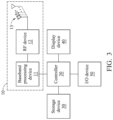
- FIG. 3 is a block diagram illustrating a UE according to an embodiment of the application.
- FIG. 4 is a message sequence chart illustrating an exemplary tunnel establishment procedure between a UE and a non-3GPP interworking gateway according to an embodiment of the application;
- FIG. 5 is a schematic diagram illustrating the expedited tunnel establishment between a UE and multiple non-3GPP interworking gateways according to an embodiment of the application;
- FIG. 6 is a schematic diagram illustrating the expedited tunnel establishment between a UE and multiple non-3GPP interworking gateways according to another embodiment of the application.
- FIG. 7 is a flow chart illustrating the method for expedited tunnel establishment according to an embodiment of the application.
- FIG. 2 is a block diagram of a mobile communication environment according to an embodiment of the application.
- the mobile communication environment 100 includes a UE 110 , a non-3GPP access network 120 , a plurality of non-3GPP interworking gateways 130 - 1 ⁇ 130 - 4 , and a 3GPP network 140 .
- the UE 110 may be a feature phone, a smartphone, a panel Personal Computer (PC), a laptop computer, a Machine Type Communication (MTC) device, or any mobile communication device supporting the RAT(s) utilized by the non-3GPP access network 120 and the 3GPP network 140 .
- the UE 110 may establish a secure tunnel (e.g., an Internet Protocol secure (IPsec) tunnel) with one of the non-3GPP interworking gateways 130 - 1 ⁇ 130 - 4 , and access the 3GPP network 140 via the secure tunnel to obtain mobile services (e.g., voice and/or data services).
- IPsec Internet Protocol secure
- the non-3GPP access network 120 may be a wireless network utilizing an RAT not specified by 3GPP.
- the non-3GPP access network 120 may be a Wi-Fi network or any future evolution of the Wi-Fi network, a BT network, a Zigbee network, a WiMAX network, or a CDMA network, or a fixed network (e.g., a Digital Subscriber Line (DSL) network), depending on the RAT in use.
- DSL Digital Subscriber Line
- Each of the non-3GPP interworking gateways 130 - 1 ⁇ 130 - 4 is responsible for enabling interoperability between the non-3GPP access network 120 and the 3GPP network 140 .
- each of the non-3GPP interworking gateways 130 - 1 ⁇ 130 - 4 may use the Internet Key Exchange version 2 (IKEv2) protocol to provide a secure tunnel between the UE 110 and the 3GPP network 140 over the non-3GPP access network 120 (e.g., a Wi-Fi Access Point (AP)). That is, each non-3GPP interworking gateway may also serve as an IKEv2 server when providing the function of IEKv2 signaling exchange.
- IKEv2 Internet Key Exchange version 2
- each non-3GPP interworking gateway is an evolved Packet Data Gateway (ePDG) if the 3GPP network 140 is a 4G network.
- each non-3GPP interworking gateway is a Non-3GPP Inter-Working Function (N3IWF) if the 3GPP network 140 is a 5G network.
- ePDG evolved Packet Data Gateway
- N3IWF Non-3GPP Inter-Working Function
- the 3GPP network 140 may be a 4G network (e.g., LTE/LTE-A/TD-LTE network) or a 5G network (e.g., NR network), or any further evolution of the 5G network, depending on the RAT in use.
- the 3GPP network 140 may include an access network and a core network (not shown).
- the access network is responsible for processing radio signals, terminating radio protocols, and connecting the UE 110 with the core network (if UE 110 chooses the access the 3GPP network 140 over 3GPP access), while the core network is responsible for performing mobility management, network-side authentication, and interfaces with public/external networks, such as the Internet and/or an IP Multimedia Subsystem (IMS).
- IMS IP Multimedia Subsystem
- the access network may be an Evolved-Universal Terrestrial Radio Access Network (E-UTRAN) and the core network may be an Evolved Packet Core (EPC).
- E-UTRAN may include at least an evolved NodeB (eNB) (e.g., a macro eNB, femto eNB, or pico eNB).
- eNB evolved NodeB
- the EPC may include a Home Subscriber Server (HSS), a Mobility Management Entity (MME), a Serving Gateway (S-GW), and a Packet Data Network Gateway (PDN-GW or P-GW).
- HSS Home Subscriber Server
- MME Mobility Management Entity
- S-GW Serving Gateway
- PDN-GW Packet Data Network Gateway
- the access network may be a Next Generation Radio Access Network (NG-RAN) and the core network may be a Next Generation Core Network (NG-CN) (i.e., 5G Core Network (5GC)).
- NG-RAN may include one or more gNBs.
- Each gNB may further include one or more Transmission Reception Points (TRPs), and each gNB or TRP may be referred to as a 5G cellular station forming one or more cells, wherein some gNB functions may be distributed across different TRPs, while others may be centralized, leaving the flexibility and scope of specific deployments to fulfill the requirements for specific cases.
- TRPs Transmission Reception Points
- the NG-CN may support various network functions, including an Access and Mobility Management Function (AMF), a Session Management Function (SMF), a User Plane Function (UPF), a Policy Control Function (PCF), an Application Function (AF), and an Authentication Server Function (AUSF), wherein each network function may be implemented as a network element on dedicated hardware, or as a software instance running on dedicated hardware, or as a virtualized function instantiated on an appropriate platform, e.g., a cloud infrastructure.
- AMF Access and Mobility Management Function
- SMF Session Management Function
- UPF User Plane Function
- PCF Policy Control Function
- AF Application Function
- AUSF Authentication Server Function
- the UE 110 is allowed to start probing availabilities of other non-3GPP interworking gateways (e.g., the non-3GPP interworking gateways 130 - 2 ⁇ 130 - 4 ) before it successfully establishes a secure tunnel with the current non-3GPP interworking gateway (e.g., the non-3GPP interworking gateway 130 - 1 ).
- the UE may establish a secure tunnel with another non-3GPP interworking gateway that has been probed to be available, as soon as it has failed the tunnel establishment with the current non-3GPP interworking gateway.
- FIG. 3 is a block diagram illustrating a UE according to an embodiment of the application.
- a UE may include a wireless transceiver 10 , a controller 20 , a storage device 30 , a display device 40 , and an Input/Output (I/O) device 50 .
- a wireless transceiver 10 may include a wireless transceiver 10 , a controller 20 , a storage device 30 , a display device 40 , and an Input/Output (I/O) device 50 .
- I/O Input/Output
- the wireless transceiver 10 is configured to perform wireless transmission and reception to and from the non-3GPP access network 120 and/or the access network of the 3GPP network 140 .
- the wireless transceiver 10 may include a baseband processing device 11 , a Radio Frequency (RF) device 12 , and an antenna 13 , wherein the antenna 13 may include an antenna array for beamforming.
- RF Radio Frequency
- the baseband processing device 11 is configured to perform baseband signal processing.
- the baseband processing device 11 may contain multiple hardware components to perform the baseband signal processing, including Analog-to-Digital Conversion (ADC)/Digital-to-Analog Conversion (DAC), gain adjusting, modulation/demodulation, encoding/decoding, and so on.
- ADC Analog-to-Digital Conversion
- DAC Digital-to-Analog Conversion
- the RF device 12 may receive RF wireless signals via the antenna 13 , convert the received RF wireless signals to baseband signals, which are processed by the baseband processing device 11 , or receive baseband signals from the baseband processing device 11 and convert the received baseband signals to RF wireless signals, which are later transmitted via the antenna 13 .
- the RF device 12 may also contain multiple hardware devices to perform radio frequency conversion.
- the RF device 12 may comprise a mixer to multiply the baseband signals with a carrier oscillated in the radio frequency of the supported RAT(s), wherein the radio frequency may be 900 MHz, 2100 MHz, or 2.6 GHz utilized in 4G LTE/LTE-A/TD-LTE technology, or may be any radio frequency (e.g., 30 GHz ⁇ 300 GHz for mmWave) utilized in the 5G NR technology, or another radio frequency, depending on the RAT in use.
- the radio frequency may be 900 MHz, 2100 MHz, or 2.6 GHz utilized in 4G LTE/LTE-A/TD-LTE technology, or may be any radio frequency (e.g., 30 GHz ⁇ 300 GHz for mmWave) utilized in the 5G NR technology, or another radio frequency, depending on the RAT in use.
- the controller 20 may be a general-purpose processor, a Micro Control Unit (MCU), an application processor, a Digital Signal Processor (DSP), a Graphics Processing Unit (GPU), a Holographic Processing Unit (HPU), a Neural Processing Unit (NPU), or the like, which includes various circuits for providing the functions of data processing and computing, controlling the wireless transceiver 10 for wireless communication with the non-3GPP access network 120 and/or the access network of the 3GPP network 140 , storing and retrieving data (e.g., a priority list of ePDGs/N3IWFs information) to and from the storage device 30 , sending a series of frame data (e.g. representing text messages, graphics, images, etc.) to the display device 40 , and receiving user inputs or outputting signals via the I/O device 50 .
- data e.g., a priority list of ePDGs/N3IWFs information
- the controller 20 coordinates the aforementioned operations of the wireless transceiver 10 , the storage device 30 , the display device 40 , and the I/O device 50 to perform the method of the present application.
- controller 20 may be incorporated into the baseband processing device 11 , to serve as a baseband processor.
- the circuits of the controller 20 will typically include transistors that are configured in such a way as to control the operation of the circuits in accordance with the functions and operations described herein.
- the specific structure or interconnections of the transistors will typically be determined by a compiler, such as a Register Transfer Language (RTL) compiler.
- RTL compilers may be operated by a processor upon scripts that closely resemble assembly language code, to compile the script into a form that is used for the layout or fabrication of the ultimate circuitry. Indeed, RTL is well known for its role and use in the facilitation of the design process of electronic and digital systems.
- the storage device 30 may be a non-transitory machine-readable storage medium, including a non-volatile memory (e.g., a FLASH memory or a Non-Volatile Random Access Memory (NVRAM)), or a Universal Integrated Circuit Card (UICC) (e.g., a Subscriber Identity Module (SIM) or Universal SIM (USIM)), or a magnetic storage device (e.g., a hard disk or a magnetic tape), or an optical disc, or any combination thereof for storing data (e.g., a priority list of ePDGs/N3IWFs information), instructions, and/or program code of applications, communication protocols (e.g., the Internet Key Exchange version 2 (IKEv2) protocol and the 4G/5G protocol), and/or the method of the present application.
- a non-volatile memory e.g., a FLASH memory or a Non-Volatile Random Access Memory (NVRAM)
- UICC Universal Integrated Circuit Card
- SIM Subscriber Identity Module
- USB
- a 4G/5G protocol stack may include a Non-Access-Stratum (NAS) layer to communicate with an AMF/SMF/MME entity in the 3GPP core network, and an Access Stratum (AS) layer consisting of multiple sublayers, such as a Radio Resource Control (RRC) sublayer for high layer configuration and control of, a Packet Data Convergence Protocol/Radio Link Control (PDCP/RLC) sublayer, a Media Access Control (MAC) sublayer, and a Physical (PHY) sublayer.
- RRC Radio Resource Control
- PDCP/RLC Packet Data Convergence Protocol/Radio Link Control
- MAC Media Access Control
- PHY Physical
- the display device 40 may be a Liquid-Crystal Display (LCD), a Light-Emitting Diode (LED) display, an Organic LED (OLED) display, or an Electronic Paper Display (EPD), etc., for providing a display function.
- the display device 40 may further include one or more touch sensors disposed thereon or thereunder for sensing touches, contacts, or approximations of objects, such as fingers or styluses.
- the I/O device 50 may include one or more buttons, a keyboard, a mouse, a touch pad, a video camera, a microphone, and/or a speaker, etc., to serve as the Man-Machine Interface (MMI) for interaction with users.
- MMI Man-Machine Interface
- a UE may include more components, such as a power supply, or a Global Positioning System (GPS) device, wherein the power supply may be a mobile/replaceable battery providing power to all the other components of the UE, and the GPS device may provide the location information of the UE for use by some location-based services or applications.
- a UE may include fewer components.
- the UE may not include the display device 40 and/or the I/O device 50 .
- FIG. 4 is a message sequence chart illustrating an exemplary tunnel establishment procedure between a UE and a non-3GPP interworking gateway according to an embodiment of the application.
- the tunnel establishment procedure is performed using the IKEv2 protocol, but the present application should not be limited thereto.
- the first exchange of an IKEv2 activation attempt is the IKE_SA_INIT exchange.
- the UE initiates the tunnel establishment procedure by sending an IKE_SA_INIT request with a list of security association proposals to the ePDG/N3IWF (step S 410 ).
- Each proposal defines a combination of attributes for the IKE Security Association (SA) that is being negotiated.
- SA IKE Security Association
- the UE also includes its nonce and Diffie-Hellman value in the IKE_SA_INIT request.
- the ePDG/N3IWF picks a proposal that is acceptable and returns its choice to the UE in an IKE_SA_INIT response, along with its own nonce and Diffie-Hellman value (step S 420 ).
- both the UE and ePDG/N3IWF can independently generate the identical keying information that supports the IKE SA (step S 430 ).
- the second exchange is the IKE_SA_AUTH exchange.
- This exchange completes the activation of the IKE SA, and also sets up an SA for the first (and often only) Authentication Header (AH) or Encapsulating Security Payload (ESP) child SA.
- AH Authentication Header
- ESP Encapsulating Security Payload
- the UE sends an IKE_SA_AUTH request that contains its identity, certificate, and authentication information (step S 440 ), and the ePDG/N3IWF authenticates the UE based on the received information (step S 450 ).
- the ePDG/N3IWF sends an IKE_SA_AUTH response that contains its identity, certificate, and authentication information (step S 460 ), and the UE authenticates the ePDG/N3IWF based on the received information (step S 470 ) and establishes the first child SA to complete activation of the IKE SA (step S 480 ).
- the IKE_SA_AUTH exchange may include more than one message pair of an IKE_SA_AUTH request and an IKE_SA_AUTH response.
- the UE After activation of the IKE SA, the UE successfully establishes an IPsec tunnel with the ePDG/N3IWF (step S 490 ), so that it may access the 3GPP network over the IPsec tunnel.
- the IKE_SA_INIT exchange does not include user information
- the IKE_SA_AUTH exchange includes user information
- the 3GPP core network may reject the UE's request if there are two or more ePDGs/N3IWFs answering the UE.
- the conventional practice needs to perform tunnel establishment with one ePDG/N3IWF at a time.
- the probing process only involves the IKE_SA_INIT exchange but not the IKE_SA_AUTH exchange, and thus, the UE is allowed to probe availabilities of multiple ePDGs/N3IWFs before it successfully establishes a secure tunnel with the current ePDG/N3IWF.
- FIG. 5 is a schematic diagram illustrating the expedited tunnel establishment between a UE and multiple non-3GPP interworking gateways according to an embodiment of the application.
- the UE initiates the tunnel establishment procedure with the first non-3GPP interworking gateway, and starts a timer T Pstart in response to the initiation of the tunnel establishment procedure.
- the UE uses the IKE_SA_INIT request to probe at least one of the other non-3GPP interworking gateways in the priority list, e.g., all the other non-3GPP interworking gateways in the priority list in this embodiment.
- the priority list includes information (e.g., IP addresses) about a plurality of non-3GPP interworking gateways in an order of precedence.
- the priority list is provided by the 3GPP network.
- the priority list is stored in a SIM/UISM card or an embedded-SIM/USIM (eSIM/eUSIM).
- the UE may repeat this probing process until it has successfully established a secure tunnel with the first non-3GPP interworking gateway, and during the probing process, the UE may keep all the non-3GPP interworking gateways sending IKE_SA_INIT response back to the UE.
- T fail denotes the period of time in which the UE tries to establish a secure tunnel with the first non-3GPP interworking gateway but fails (i.e., the maximum number of retries is reached)
- T Pfail denotes the period of time in which the maximum number of retries of sending the IKE_SA_INIT request has been reached and the UE does not receive an IKE_SA_INIT response
- T Psucc denotes the period of time in which an IKE_SA_INIT response is received before the maximum number of retries of sending the IKE_SA_INIT request has been reached.
- the UE selects the next non-3GPP interworking gateway that has the highest precedence among the rest non-3GPP interworking gateways, and checks whether the selected non-3GPP interworking gateway (i.e., the second non-3GPP interworking gateway) is available. After a period of time denoted as T Pfail has passed, the UE determines that the second non-3GPP interworking gateway is unavailable due to the maximum number of retries of sending the IKE_SA_INIT request having been reached and the UE having not received an IKE_SA_INIT response from the second non-3GPP interworking gateway.
- the UE selects the next non-3GPP interworking gateway that has the highest precedence among the rest non-3GPP interworking gateways, and checks whether that the selected non-3GPP interworking gateway (i.e., the third non-3GPP interworking gateway) is available.
- the UE initiates the tunnel establishment procedure with the third non-3GPP interworking gateway.
- the tunnel establishment procedure fails again (e.g., the IKE_SA_INIT exchange may be successful but the KE_SA_AUTH exchange may fail), and the UE goes on to try the next available non-3GPP interworking gateway (i.e., the fifth non-3GPP interworking gateway).
- the UE successfully establishes a secure tunnel with the fifth non-3GPP interworking gateway, and is able to access the 3GPP network over the secure tunnel.
- the UE may start a timer T keep to count a period of time in which the received IKE_SA_INIT response should be kept, and once the timer T keep expires, the UE may delete the IKE_SA_INIT response.
- the UE may determine whether the timer T keep has expired, and if not, the UE may skip the IKE_SA_INIT exchange and just start with the IKE_SA_AUTH exchange. Otherwise, if the timer T keep has expired, the UE may start from the IKE_SA_INIT exchange. In other words, the probing process may be a part of the tunnel establishment procedure.
- the timer T keep is set to zero, the UE does not keep the received IKE_SA_INIT response, and it always start from the IKE_SA_INIT exchange in the tunnel establishment procedure.
- the tunnel establishment procedure with the first non-3GPP interworking gateway is usually successful and having all UEs probing all the non-3GPP interworking gateways may cause significant waste of network resources.
- the present application proposes that the UE only performs the probing process after a period of time in which it has been trying to establish a secure tunnel with the first non-3GPP interworking gateway but not yet successful.
- network resources of the non-3GPP interworking gateways may be saved, as well as the UE's power consumption.
- FIG. 6 is a schematic diagram illustrating the expedited tunnel establishment between a UE and multiple non-3GPP interworking gateways according to another embodiment of the application.
- the UE starts probing the next two non-3GPP interworking gateways when the timer T Pstart expires. After a period of time denoted as T Pfail has passed, the UE determines that the second and third non-3GPP interworking gateways are unavailable due to the maximum number of retries of sending the IKE_SA_INIT request having been reached and the UE having not received an IKE_SA_INIT response from any of them.
- the UE starts the timer T Pstart again upon starting the probing process, and when the timer T Pstart expires and no IKE_SA_INIT response has been received from the second and third non-3GPP interworking gateways, the UE starts probing the next two non-3GPP interworking gateways, and so on.
- T Pfail After another period of time denoted as T Pfail has passed, the UE determines that the fourth non-3GPP interworking gateway is unavailable due to the maximum number of retries of sending the IKE_SA_INIT request having been reached and the UE having not received an IKE_SA_INIT response from it.
- the UE successfully establishes a secure tunnel with the fifth non-3GPP interworking gateway which is probed to be available.
- the UE may store the information of such non-3GPP interworking gateway, and after the tunnel establishment procedure with the currently selected non-3GPP interworking gateway fails, the UE may use the probed information to initiate the tunnel establishment procedure with such non-3GPP interworking gateway.
- FIG. 7 is a flow chart illustrating the method for expedited tunnel establishment according to an embodiment of the application.
- step S 710 the UE initiates establishment of an IPsec tunnel with a first non-3GPP interworking gateway associated with a 3GPP network.
- step S 720 the UE probes availability of a second non-3GPP interworking gateway associated with the 3GPP network before the IPsec tunnel with the first non-3GPP interworking gateway is established successfully.
- the UE may start a timer (e.g., the timer T Pstart ) in response to initiating establishment of the IPsec tunnel with the first non-3GPP interworking gateway, and the probing process may be performed when the timer expires before the IPsec tunnel with the first non-3GPP interworking gateway is established successfully.
- a timer e.g., the timer T Pstart
- step S 730 the UE initiates establishment of an IPsec tunnel with the second non-3GPP interworking gateway in response to failing to establish the IPsec tunnel with the first non-3GPP interworking gateway and the second non-3GPP interworking gateway being available.
- the UE may determine that it fails to establish the IPsec tunnel with the first non-3GPP interworking gateway, when the maximum number of retries of the tunnel establishment with the first non-3GPP interworking gateway is reached.
- the probing process may include sending an IKE_SA_INIT request to the second non-3GPP interworking gateway, and the UE may determine that the second non-3GPP interworking gateway is available when an IKE_SA_INIT response is received from the second non-3GPP interworking gateway.
- step S 740 the UE accesses the 3GPP network over the IPsec tunnel with the second non-3GPP interworking gateway.
Landscapes
- Engineering & Computer Science (AREA)
- Computer Networks & Wireless Communication (AREA)
- Signal Processing (AREA)
- Computer Hardware Design (AREA)
- Computer Security & Cryptography (AREA)
- Computing Systems (AREA)
- General Engineering & Computer Science (AREA)
- Mobile Radio Communication Systems (AREA)
- Data Exchanges In Wide-Area Networks (AREA)
Abstract
Description
Claims (18)
Priority Applications (3)
| Application Number | Priority Date | Filing Date | Title |
|---|---|---|---|
| US17/668,583 US12156271B2 (en) | 2022-02-10 | 2022-02-10 | Apparatuses and methods for expedited tunnel establishment with a non-third generation partnership project (3GPP) interworking gateway to access a 3GPP network |
| CN202210291573.9A CN116634600A (en) | 2022-02-10 | 2022-03-23 | Accelerated tunnel establishment method and user equipment thereof |
| TW111111220A TWI829125B (en) | 2022-02-10 | 2022-03-25 | User equipment and methods for expedited tunnel establishment |
Applications Claiming Priority (1)
| Application Number | Priority Date | Filing Date | Title |
|---|---|---|---|
| US17/668,583 US12156271B2 (en) | 2022-02-10 | 2022-02-10 | Apparatuses and methods for expedited tunnel establishment with a non-third generation partnership project (3GPP) interworking gateway to access a 3GPP network |
Publications (2)
| Publication Number | Publication Date |
|---|---|
| US20230254926A1 US20230254926A1 (en) | 2023-08-10 |
| US12156271B2 true US12156271B2 (en) | 2024-11-26 |
Family
ID=87520657
Family Applications (1)
| Application Number | Title | Priority Date | Filing Date |
|---|---|---|---|
| US17/668,583 Active 2042-07-18 US12156271B2 (en) | 2022-02-10 | 2022-02-10 | Apparatuses and methods for expedited tunnel establishment with a non-third generation partnership project (3GPP) interworking gateway to access a 3GPP network |
Country Status (3)
| Country | Link |
|---|---|
| US (1) | US12156271B2 (en) |
| CN (1) | CN116634600A (en) |
| TW (1) | TWI829125B (en) |
Citations (6)
| Publication number | Priority date | Publication date | Assignee | Title |
|---|---|---|---|---|
| US20080195733A1 (en) * | 2007-02-13 | 2008-08-14 | Cisco Technology, Inc. | Tunnel availability detection with reduced control plane overhead |
| US20150350983A1 (en) | 2014-05-29 | 2015-12-03 | T-Mobile Usa, Inc. | Wi-Fi Calling Using SIP-IMS Handset and Evolved Packet Data Gateway |
| US20180092140A1 (en) * | 2015-04-28 | 2018-03-29 | Telefonaktiebolaget Lm Ericsson (Publ) | Adaptive peer status check over wireless local area networks |
| US20180115549A1 (en) | 2015-05-11 | 2018-04-26 | Telefonaktiebolaget Lm Ericsson (Publ) | Methods and nodes for handling access to a service via an untrusted non-3gpp network |
| US20190021064A1 (en) | 2016-07-04 | 2019-01-17 | Lg Electronics Inc. | Method for managing registration in wireless communication system and device for same |
| US20230254692A1 (en) * | 2020-07-15 | 2023-08-10 | Lg Electronics Inc. | Relay communication |
Family Cites Families (5)
| Publication number | Priority date | Publication date | Assignee | Title |
|---|---|---|---|---|
| US8072879B2 (en) * | 2006-02-03 | 2011-12-06 | Cisco Technology, Inc. | Technique for determining whether to reestablish fast rerouted primary tunnels based on backup tunnel path quality feedback |
| EP2194686A1 (en) * | 2008-12-03 | 2010-06-09 | Panasonic Corporation | Secure tunnel establishment upon attachment or handover to an access network |
| CN102594646B (en) * | 2011-12-31 | 2015-11-25 | 华为数字技术(成都)有限公司 | A kind of internet protocol secure tunnel changing method, device and transmission system |
| WO2018098630A1 (en) * | 2016-11-29 | 2018-06-07 | 华为技术有限公司 | X2 service transmission method, and network apparatus |
| CN112449402B (en) * | 2019-09-05 | 2023-12-19 | 维沃移动通信有限公司 | Network attachment method, gateway and user equipment |
-
2022
- 2022-02-10 US US17/668,583 patent/US12156271B2/en active Active
- 2022-03-23 CN CN202210291573.9A patent/CN116634600A/en active Pending
- 2022-03-25 TW TW111111220A patent/TWI829125B/en active
Patent Citations (6)
| Publication number | Priority date | Publication date | Assignee | Title |
|---|---|---|---|---|
| US20080195733A1 (en) * | 2007-02-13 | 2008-08-14 | Cisco Technology, Inc. | Tunnel availability detection with reduced control plane overhead |
| US20150350983A1 (en) | 2014-05-29 | 2015-12-03 | T-Mobile Usa, Inc. | Wi-Fi Calling Using SIP-IMS Handset and Evolved Packet Data Gateway |
| US20180092140A1 (en) * | 2015-04-28 | 2018-03-29 | Telefonaktiebolaget Lm Ericsson (Publ) | Adaptive peer status check over wireless local area networks |
| US20180115549A1 (en) | 2015-05-11 | 2018-04-26 | Telefonaktiebolaget Lm Ericsson (Publ) | Methods and nodes for handling access to a service via an untrusted non-3gpp network |
| US20190021064A1 (en) | 2016-07-04 | 2019-01-17 | Lg Electronics Inc. | Method for managing registration in wireless communication system and device for same |
| US20230254692A1 (en) * | 2020-07-15 | 2023-08-10 | Lg Electronics Inc. | Relay communication |
Non-Patent Citations (1)
| Title |
|---|
| Chinese language office action dated Apr. 10, 2023, issued in application No. TW 111111220. |
Also Published As
| Publication number | Publication date |
|---|---|
| TWI829125B (en) | 2024-01-11 |
| US20230254926A1 (en) | 2023-08-10 |
| TW202333480A (en) | 2023-08-16 |
| CN116634600A (en) | 2023-08-22 |
Similar Documents
| Publication | Publication Date | Title |
|---|---|---|
| TWI696406B (en) | Users equipement and method for protection of an intial non-access stratum (nas) message | |
| US20220124573A1 (en) | Apparatuses and methods for recovering from sidelink relay failure | |
| US11147009B2 (en) | Apparatuses and methods for configuration of initial downlink (DL) bandwidth part (BWP) | |
| US20200015303A1 (en) | Apparatuses and methods for supporting dual talk of multiple subscriber identities | |
| US12185198B2 (en) | Configuration enhancements on access point name (APN) or data network name (DNN) selection in user equipment (UE) | |
| US11477701B2 (en) | Apparatuses and methods for voice call service provision | |
| US12127108B2 (en) | Enhancements on user equipment (UE) handling in a limited service state over non-third generation partnership project (3GPP) access | |
| US12010552B2 (en) | Enhancements on 5G session management (5GSM) handling of network rejection not due to congestion control | |
| US10764779B2 (en) | Apparatuses and methods for mobility management (MM) congestion control | |
| US20210051757A1 (en) | Apparatuses and methods for a user equipment (ue) to provide assistance information to transition out of an rrc_connected state | |
| TWI815311B (en) | Method and user equipment for enhancing user equipment (ue) handling of ue route selection policy (ursp) rules selection | |
| US20190306744A1 (en) | Apparatuses and methods for detrmining reflective quality of service (rqos) support by an rq timer | |
| US20200322795A1 (en) | Apparatuses and methods for alignment of common non access stratum (nas) security context | |
| WO2020119475A1 (en) | Apparatuses and methods for protecting an intial non-access stratum (nas) message after a public land mobile network (plmn) change | |
| US20220286923A1 (en) | Apparatuses and methods for delivery of inter-system non-access stratum (nas) security algorithms | |
| TWI849577B (en) | Method and mobile communications device for maintaining mobile communication continuity | |
| US20230254926A1 (en) | Apparatuses and methods for expedited tunnel establishment with a non-third generation partnership project (3gpp) interworking gateway to access a 3gpp network | |
| US20230269808A1 (en) | Apparatuses and methods for updating access technology information for a multi-access protocol data unit (ma pdu) session | |
| CN112714443A (en) | Apparatus and method for coordinating operations associated with multiple user identities | |
| US12324052B2 (en) | Enhancements on user equipment (UE) handling of non-access stratum (NAS) signaling connection release | |
| US11337267B2 (en) | Apparatuses and methods for 5G session management (5GSM) procedure enhancement |
Legal Events
| Date | Code | Title | Description |
|---|---|---|---|
| FEPP | Fee payment procedure |
Free format text: ENTITY STATUS SET TO UNDISCOUNTED (ORIGINAL EVENT CODE: BIG.); ENTITY STATUS OF PATENT OWNER: LARGE ENTITY |
|
| STPP | Information on status: patent application and granting procedure in general |
Free format text: DOCKETED NEW CASE - READY FOR EXAMINATION |
|
| STPP | Information on status: patent application and granting procedure in general |
Free format text: NON FINAL ACTION MAILED |
|
| STPP | Information on status: patent application and granting procedure in general |
Free format text: RESPONSE TO NON-FINAL OFFICE ACTION ENTERED AND FORWARDED TO EXAMINER |
|
| STPP | Information on status: patent application and granting procedure in general |
Free format text: FINAL REJECTION MAILED |
|
| STPP | Information on status: patent application and granting procedure in general |
Free format text: RESPONSE AFTER FINAL ACTION FORWARDED TO EXAMINER |
|
| STPP | Information on status: patent application and granting procedure in general |
Free format text: ADVISORY ACTION MAILED |
|
| STPP | Information on status: patent application and granting procedure in general |
Free format text: RESPONSE AFTER FINAL ACTION FORWARDED TO EXAMINER |
|
| STPP | Information on status: patent application and granting procedure in general |
Free format text: AWAITING TC RESP., ISSUE FEE NOT PAID |
|
| STPP | Information on status: patent application and granting procedure in general |
Free format text: NOTICE OF ALLOWANCE MAILED -- APPLICATION RECEIVED IN OFFICE OF PUBLICATIONS |
|
| STPP | Information on status: patent application and granting procedure in general |
Free format text: PUBLICATIONS -- ISSUE FEE PAYMENT VERIFIED |
|
| STCF | Information on status: patent grant |
Free format text: PATENTED CASE |