US12156263B2 - Method and apparatus for obtaining time alignment regarding multiple TRPS in a wireless communication system - Google Patents
Method and apparatus for obtaining time alignment regarding multiple TRPS in a wireless communication system Download PDFInfo
- Publication number
- US12156263B2 US12156263B2 US17/866,055 US202217866055A US12156263B2 US 12156263 B2 US12156263 B2 US 12156263B2 US 202217866055 A US202217866055 A US 202217866055A US 12156263 B2 US12156263 B2 US 12156263B2
- Authority
- US
- United States
- Prior art keywords
- trp
- information
- serving cell
- cell
- timing advance
- Prior art date
- Legal status (The legal status is an assumption and is not a legal conclusion. Google has not performed a legal analysis and makes no representation as to the accuracy of the status listed.)
- Active
Links
Images



Classifications
-
- H—ELECTRICITY
- H04—ELECTRIC COMMUNICATION TECHNIQUE
- H04W—WIRELESS COMMUNICATION NETWORKS
- H04W74/00—Wireless channel access
- H04W74/08—Non-scheduled access, e.g. ALOHA
- H04W74/0833—Random access procedures, e.g. with 4-step access
- H04W74/0841—Random access procedures, e.g. with 4-step access with collision treatment
-
- H—ELECTRICITY
- H04—ELECTRIC COMMUNICATION TECHNIQUE
- H04L—TRANSMISSION OF DIGITAL INFORMATION, e.g. TELEGRAPHIC COMMUNICATION
- H04L5/00—Arrangements affording multiple use of the transmission path
- H04L5/0001—Arrangements for dividing the transmission path
- H04L5/0014—Three-dimensional division
- H04L5/0023—Time-frequency-space
-
- H—ELECTRICITY
- H04—ELECTRIC COMMUNICATION TECHNIQUE
- H04L—TRANSMISSION OF DIGITAL INFORMATION, e.g. TELEGRAPHIC COMMUNICATION
- H04L5/00—Arrangements affording multiple use of the transmission path
- H04L5/003—Arrangements for allocating sub-channels of the transmission path
-
- H—ELECTRICITY
- H04—ELECTRIC COMMUNICATION TECHNIQUE
- H04L—TRANSMISSION OF DIGITAL INFORMATION, e.g. TELEGRAPHIC COMMUNICATION
- H04L5/00—Arrangements affording multiple use of the transmission path
- H04L5/003—Arrangements for allocating sub-channels of the transmission path
- H04L5/0032—Distributed allocation, i.e. involving a plurality of allocating devices, each making partial allocation
-
- H—ELECTRICITY
- H04—ELECTRIC COMMUNICATION TECHNIQUE
- H04L—TRANSMISSION OF DIGITAL INFORMATION, e.g. TELEGRAPHIC COMMUNICATION
- H04L5/00—Arrangements affording multiple use of the transmission path
- H04L5/003—Arrangements for allocating sub-channels of the transmission path
- H04L5/0048—Allocation of pilot signals, i.e. of signals known to the receiver
-
- H—ELECTRICITY
- H04—ELECTRIC COMMUNICATION TECHNIQUE
- H04L—TRANSMISSION OF DIGITAL INFORMATION, e.g. TELEGRAPHIC COMMUNICATION
- H04L5/00—Arrangements affording multiple use of the transmission path
- H04L5/003—Arrangements for allocating sub-channels of the transmission path
- H04L5/0078—Timing of allocation
-
- H—ELECTRICITY
- H04—ELECTRIC COMMUNICATION TECHNIQUE
- H04L—TRANSMISSION OF DIGITAL INFORMATION, e.g. TELEGRAPHIC COMMUNICATION
- H04L5/00—Arrangements affording multiple use of the transmission path
- H04L5/0091—Signalling for the administration of the divided path, e.g. signalling of configuration information
-
- H—ELECTRICITY
- H04—ELECTRIC COMMUNICATION TECHNIQUE
- H04W—WIRELESS COMMUNICATION NETWORKS
- H04W24/00—Supervisory, monitoring or testing arrangements
- H04W24/08—Testing, supervising or monitoring using real traffic
-
- H—ELECTRICITY
- H04—ELECTRIC COMMUNICATION TECHNIQUE
- H04W—WIRELESS COMMUNICATION NETWORKS
- H04W56/00—Synchronisation arrangements
- H04W56/0005—Synchronisation arrangements synchronizing of arrival of multiple uplinks
-
- H—ELECTRICITY
- H04—ELECTRIC COMMUNICATION TECHNIQUE
- H04W—WIRELESS COMMUNICATION NETWORKS
- H04W56/00—Synchronisation arrangements
- H04W56/001—Synchronization between nodes
-
- H—ELECTRICITY
- H04—ELECTRIC COMMUNICATION TECHNIQUE
- H04W—WIRELESS COMMUNICATION NETWORKS
- H04W56/00—Synchronisation arrangements
- H04W56/004—Synchronisation arrangements compensating for timing error of reception due to propagation delay
-
- H—ELECTRICITY
- H04—ELECTRIC COMMUNICATION TECHNIQUE
- H04W—WIRELESS COMMUNICATION NETWORKS
- H04W56/00—Synchronisation arrangements
- H04W56/004—Synchronisation arrangements compensating for timing error of reception due to propagation delay
- H04W56/0045—Synchronisation arrangements compensating for timing error of reception due to propagation delay compensating for timing error by altering transmission time
-
- H—ELECTRICITY
- H04—ELECTRIC COMMUNICATION TECHNIQUE
- H04W—WIRELESS COMMUNICATION NETWORKS
- H04W72/00—Local resource management
- H04W72/20—Control channels or signalling for resource management
- H04W72/23—Control channels or signalling for resource management in the downlink direction of a wireless link, i.e. towards a terminal
-
- H—ELECTRICITY
- H04—ELECTRIC COMMUNICATION TECHNIQUE
- H04W—WIRELESS COMMUNICATION NETWORKS
- H04W74/00—Wireless channel access
- H04W74/04—Scheduled access
-
- H—ELECTRICITY
- H04—ELECTRIC COMMUNICATION TECHNIQUE
- H04W—WIRELESS COMMUNICATION NETWORKS
- H04W74/00—Wireless channel access
- H04W74/08—Non-scheduled access, e.g. ALOHA
- H04W74/0833—Random access procedures, e.g. with 4-step access
-
- H—ELECTRICITY
- H04—ELECTRIC COMMUNICATION TECHNIQUE
- H04W—WIRELESS COMMUNICATION NETWORKS
- H04W74/00—Wireless channel access
- H04W74/08—Non-scheduled access, e.g. ALOHA
- H04W74/0866—Non-scheduled access, e.g. ALOHA using a dedicated channel for access
- H04W74/0891—Non-scheduled access, e.g. ALOHA using a dedicated channel for access for synchronized access
-
- H—ELECTRICITY
- H04—ELECTRIC COMMUNICATION TECHNIQUE
- H04L—TRANSMISSION OF DIGITAL INFORMATION, e.g. TELEGRAPHIC COMMUNICATION
- H04L5/00—Arrangements affording multiple use of the transmission path
- H04L5/0001—Arrangements for dividing the transmission path
- H04L5/0003—Two-dimensional division
- H04L5/0005—Time-frequency
- H04L5/0007—Time-frequency the frequencies being orthogonal, e.g. OFDM(A) or DMT
- H04L5/0012—Hopping in multicarrier systems
-
- H—ELECTRICITY
- H04—ELECTRIC COMMUNICATION TECHNIQUE
- H04L—TRANSMISSION OF DIGITAL INFORMATION, e.g. TELEGRAPHIC COMMUNICATION
- H04L5/00—Arrangements affording multiple use of the transmission path
- H04L5/14—Two-way operation using the same type of signal, i.e. duplex
-
- H—ELECTRICITY
- H04—ELECTRIC COMMUNICATION TECHNIQUE
- H04W—WIRELESS COMMUNICATION NETWORKS
- H04W74/00—Wireless channel access
- H04W74/002—Transmission of channel access control information
- H04W74/006—Transmission of channel access control information in the downlink, i.e. towards the terminal
-
- H—ELECTRICITY
- H04—ELECTRIC COMMUNICATION TECHNIQUE
- H04W—WIRELESS COMMUNICATION NETWORKS
- H04W74/00—Wireless channel access
- H04W74/08—Non-scheduled access, e.g. ALOHA
- H04W74/0833—Random access procedures, e.g. with 4-step access
- H04W74/0838—Random access procedures, e.g. with 4-step access using contention-free random access [CFRA]
Definitions
- This disclosure generally relates to wireless communication networks and, more particularly, to a method and apparatus for enhancing timing alignment for uplink (UL) multi-Transmission/Reception Point (TRP) (or mTRP) scenarios in a wireless communication system.
- UL uplink
- TRP multi-Transmission/Reception Point
- mTRP mTRP
- IP Internet Protocol
- An exemplary network structure is an Evolved Universal Terrestrial Radio Access Network (E-UTRAN).
- E-UTRAN Evolved Universal Terrestrial Radio Access Network
- the E-UTRAN system can provide high data throughput in order to realize the above-noted voice over IP and multimedia services.
- a new radio technology for the next generation e.g., 5G
- 5G next generation
- changes to the current body of 3GPP standard are currently being submitted and considered to evolve and finalize the 3GPP standard.
- Methods, systems, and apparatuses are provided for enhancing timing alignment for uplink (UL) multi-Transmission/Reception Point (TRP) (or mTRP) scenarios in a wireless communication system.
- UL uplink
- TRP multi-Transmission/Reception Point
- mTRP mTRP
- a method for a UE in a wireless communication system comprises receiving a signaling, wherein the signaling indicates activation for a first Transmission/Reception Point (TRP) and/or is a Physical Downlink Control Channel (PDCCH) signal, determining to perform a first random access procedure on the first TRP, based on the signaling, to obtain a first Time Alignment (TA) information associated with the first TRP, and performing multi-TRP operation on the first TRP associated with the first TA information and a second TRP associated with a second TA information.
- TRP Transmission/Reception Point
- PDCCH Physical Downlink Control Channel
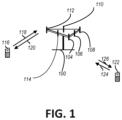
- FIG. 1 shows a diagram of a wireless communication system, in accordance with embodiments of the present invention.
- FIG. 2 is a block diagram of a transmitter system (also known as access network) and a receiver system (also known as user equipment or UE), in accordance with embodiments of the present invention.
- a transmitter system also known as access network
- a receiver system also known as user equipment or UE
- FIG. 3 is a functional block diagram of a communication system, in accordance with embodiments of the present invention.
- FIG. 4 is a functional block diagram of the program code of FIG. 3 , in accordance with embodiments of the present invention.
- FIG. 5 is a reproduction of FIG. 6 . 1 . 3 . 4 - 1 of 3GPP TS 38.321, V16.5.0: Timing Advance Command MAC CE.
- FIG. 6 is a reproduction of FIG. 6 . 1 . 3 . 4 a - 1 of 3GPP TS 38.321, V16.5.0: Absolute Timing Advance Command MAC CE.
- FIG. 7 is a reproduction of FIG. 6 . 1 . 3 . 15 - 1 of 3GPP TS 38.321, V16.5.0: TCI State Indication for UE-specific PDCCH MAC CE.
- FIG. 8 is a reproduction of FIG. 6 . 1 . 3 . 14 - 1 of 3GPP TS 38.321, V16.5.0: TCI States Activation/Deactivation for UE-specific PDSCH MAC CE.
- FIG. 9 is a reproduction of FIG. 6 . 1 . 3 . 24 - 1 of 3GPP TS 38.321, V16.5.0: Enhanced TCI States Activation/Deactivation for UE-specific PDSCH MAC CE.
- FIG. 10 is a reproduction of FIG. 6 . 1 . 3 . 25 - 1 of 3GPP TS 38.321, V16.5.0: Enhanced PUCCH spatial relation Activation/Deactivation MAC CE.
- FIG. 11 is a reproduction of FIG. 6 . 1 . 3 . 26 - 1 of 3GPP TS 38.321, V16.5.0: Enhanced SP/AP SRS spatial relation Indication MAC CE.
- FIG. 12 is a reproduction of FIG. 4 . 3 . 1 - 1 of 3GPP TS 38.211, V16.6.0: Uplink-downlink timing relation.
- FIG. 13 is an example of an extended TAC MAC CE, in accordance with embodiments of the present invention.
- FIGS. 14 A and 14 B are examples of an extended TAC MAC CE for a non-serving cell, in accordance with embodiments of the present invention.
- FIG. 15 A is another example of an extended TAC MAC CE, in accordance with embodiments of the present invention.
- FIG. 15 B is an example wherein a MAC CE could contain a non-serving cell ID and a UE applies the Offset1 or TAC_TRP2 to the non-serving cell associated with Non-serving cell id1, in accordance with embodiments of the present invention.
- FIG. 15 C is an example wherein a MAC CE could contain more than one offset or TAC for non-serving cells, in accordance with embodiments of the present invention.
- FIG. 15 D is another example wherein a MAC CE could contain more than one offset or TAC for non-serving cells, in accordance with embodiments of the present invention.
- FIG. 16 is a flow diagram of a method of a UE receiving, from a network, a configuration configuring UL resource(s) associated with a first TRP and UL resource(s) associated with a second TRP, in accordance with embodiments of the present invention.
- FIG. 17 is a flow diagram of a method of a UE performing UL transmission on a first TRP and a second TRP, in accordance with embodiments of the present invention.
- FIG. 18 is a flow diagram of a method of a UE performing inter-cell mTRP operation on a serving cell and a non-serving cell, in accordance with embodiments of the present invention.
- FIG. 19 is a flow diagram of a method of a network configuring a UE with UL resource(s) associated with a first TRP and UL resource(s) associated with a second TRP, in accordance with embodiments of the present invention.
- FIG. 20 is a flow diagram of a method of a UE receiving, from a network, a configuration configuring UL resource(s) associated with a first TRP and UL resource(s) associated a second TRP, in accordance with embodiments of the present invention.
- FIG. 21 is a flow diagram of a method of a UE receiving a signaling, wherein the signaling indicates activation for a first TRP and/or is a PDCCH signal, in accordance with embodiments of the present invention.
- the invention described herein can be applied to or implemented in exemplary wireless communication systems and devices described below.
- the invention is described mainly in the context of the 3GPP architecture reference model. However, it is understood that with the disclosed information, one skilled in the art could easily adapt for use and implement aspects of the invention in a 3GPP2 network architecture as well as in other network architectures.
- Wireless communication systems are widely deployed to provide various types of communication such as voice, data, and so on. These systems may be based on code division multiple access (CDMA), time division multiple access (TDMA), orthogonal frequency division multiple access (OFDMA), 3GPP LTE (Long Term Evolution) wireless access, 3GPP LTE-A (Long Term Evolution Advanced) wireless access, 3GPP2 UMB (Ultra Mobile Broadband), WiMax, 3GPP NR (New Radio), or some other modulation techniques.
- CDMA code division multiple access
- TDMA time division multiple access
- OFDMA orthogonal frequency division multiple access
- 3GPP LTE Long Term Evolution
- 3GPP LTE-A Long Term Evolution Advanced wireless access
- 3GPP2 UMB Universal Mobile Broadband
- WiMax Wireless Broadband
- 3GPP NR New Radio
- the exemplary wireless communication systems and devices described below may be designed to support one or more standards such as the standard offered by a consortium named “3rd Generation Partnership Project” referred to herein as 3GPP, including: [1] RP-193133 New WID: Further enhancements on MIMO for NR; [2] 3GPP TS 38.213, V16.6.0; [3] 3GPP TS 38.321, V16.5.0; [4] 3GPP TS 38.331, v16.5.0; [5] 3GPP TS 38.211, V16.6.0; and [6] 3GPP TS 38.212, V16.6.0.
- 3GPP 3rd Generation Partnership Project
- FIG. 1 shows a multiple access wireless communication system according to one embodiment of the invention.
- An access network 100 includes multiple antenna groups, one including 104 and 106 , another including 108 and 110 , and an additional including 112 and 114 . In FIG. 1 , only two antennas are shown for each antenna group, however, more or fewer antennas may be utilized for each antenna group.
- Access terminal (AT) 116 is in communication with antennas 112 and 114 , where antennas 112 and 114 transmit information to access terminal 116 over forward link 120 and receive information from AT 116 over reverse link 118 .
- AT 122 is in communication with antennas 106 and 108 , where antennas 106 and 108 transmit information to AT 122 over forward link 126 and receive information from AT 122 over reverse link 124 .
- communication links 118 , 120 , 124 and 126 may use different frequency for communication.
- forward link 120 may use a different frequency than that used by reverse link 118 .
- antenna groups each are designed to communicate to access terminals in a sector of the areas covered by access network 100 .
- the transmitting antennas of access network 100 may utilize beamforming in order to improve the signal-to-noise ratio of forward links for the different access terminals 116 and 122 . Also, an access network using beamforming to transmit to access terminals scattered randomly through its coverage normally causes less interference to access terminals in neighboring cells than an access network transmitting through a single antenna to all its access terminals.
- the AN may be a fixed station or base station used for communicating with the terminals and may also be referred to as an access point, a Node B, a base station, an enhanced base station, an eNodeB, or some other terminology.
- the AT may also be called User Equipment (UE), a wireless communication device, terminal, access terminal or some other terminology.
- UE User Equipment
- FIG. 2 is a simplified block diagram of an embodiment of a transmitter system 210 (also known as the access network) and a receiver system 250 (also known as access terminal (AT) or user equipment (UE)) in a MIMO system 200 .
- a transmitter system 210 also known as the access network
- a receiver system 250 also known as access terminal (AT) or user equipment (UE)
- traffic data for a number of data streams is provided from a data source 212 to a transmit (TX) data processor 214 .
- TX transmit
- each data stream is transmitted over a respective transmit antenna.
- TX data processor 214 formats, codes, and interleaves the traffic data for each data stream based on a particular coding scheme selected for that data stream to provide coded data.
- the coded data for each data stream may be multiplexed with pilot data using OFDM techniques.
- the pilot data is typically a known data pattern that is processed in a known manner and may be used at the receiver system to estimate the channel response.
- the multiplexed pilot and coded data for each data stream is then modulated (e.g., symbol mapped) based on a particular modulation scheme (e.g., BPSK, QPSK, M-PSK, or M-QAM) selected for that data stream to provide modulation symbols.
- the data rate, coding, and modulation for each data stream may be determined by instructions performed by processor 230 .
- TX MIMO processor 220 The modulation symbols for all data streams are then provided to a TX MIMO processor 220 , which may further process the modulation symbols (e.g., for OFDM). TX MIMO processor 220 then provides N T modulation symbol streams to N T transmitters (TMTR) 222 a through 222 t . In certain embodiments, TX MIMO processor 220 applies beamforming weights to the symbols of the data streams and to the antenna from which the symbol is being transmitted.
- Each transmitter 222 receives and processes a respective symbol stream to provide one or more analog signals, and further conditions (e.g., amplifies, filters, and upconverts) the analog signals to provide a modulated signal suitable for transmission over the MIMO channel.
- N T modulated signals from transmitters 222 a through 222 t are then transmitted from N T antennas 224 a through 224 t , respectively.
- the transmitted modulated signals are received by NR antennas 252 a through 252 r and the received signal from each antenna 252 is provided to a respective receiver (RCVR) 254 a through 254 r .
- Each receiver 254 conditions (e.g., filters, amplifies, and downconverts) a respective received signal, digitizes the conditioned signal to provide samples, and further processes the samples to provide a corresponding “received” symbol stream.
- An RX data processor 260 then receives and processes the NR received symbol streams from NR receivers 254 based on a particular receiver processing technique to provide N T “detected” symbol streams.
- the RX data processor 260 then demodulates, deinterleaves, and decodes each detected symbol stream to recover the traffic data for the data stream.
- the processing by RX data processor 260 is complementary to that performed by TX MIMO processor 220 and TX data processor 214 at transmitter system 210 .
- a processor 270 periodically determines which pre-coding matrix to use (discussed below). Processor 270 formulates a reverse link message comprising a matrix index portion and a rank value portion.
- the reverse link message may comprise various types of information regarding the communication link and/or the received data stream.
- the reverse link message is then processed by a TX data processor 238 , which also receives traffic data for a number of data streams from a data source 236 , modulated by a modulator 280 , conditioned by transmitters 254 a through 254 r , and transmitted back to transmitter system 210 .
- the modulated signals from receiver system 250 are received by antennas 224 , conditioned by receivers 222 , demodulated by a demodulator 240 , and processed by a RX data processor 242 to extract the reserve link message transmitted by the receiver system 250 .
- Processor 230 determines which pre-coding matrix to use for determining the beamforming weights then processes the extracted message.
- Memory 232 may be used to temporarily store some buffered/computational data from 240 or 242 through Processor 230 , store some buffed data from 212 , or store some specific program codes.
- Memory 272 may be used to temporarily store some buffered/computational data from 260 through Processor 270 , store some buffed data from 236 , or store some specific program codes.
- FIG. 3 shows an alternative simplified functional block diagram of a communication device according to one embodiment of the invention.
- the communication device 300 in a wireless communication system can be utilized for realizing the UEs (or ATs) 116 and 122 in FIG. 1 , and the wireless communications system is preferably the NR system.
- the communication device 300 may include an input device 302 , an output device 304 , a control circuit 306 , a central processing unit (CPU) 308 , a memory 310 , a program code 312 , and a transceiver 314 .
- the control circuit 306 executes the program code 312 in the memory 310 through the CPU 308 , thereby controlling an operation of the communications device 300 .
- the communications device 300 can receive signals input by a user through the input device 302 , such as a keyboard or keypad, and can output images and sounds through the output device 304 , such as a monitor or speakers.
- the transceiver 314 is used to receive and transmit wireless signals, delivering received signals to the control circuit 306 , and outputting signals generated by the control circuit 306 wirelessly.
- FIG. 4 is a simplified block diagram of the program code 312 shown in FIG. 3 in accordance with an embodiment of the invention.
- the program code 312 includes an application layer 400 , a Layer 3 portion 402 , and a Layer 2 portion 404 , and is coupled to a Layer 1 portion 406 .
- the Layer 3 portion 402 generally performs radio resource control.
- the Layer 2 portion 404 generally performs link control.
- the Layer 1 portion 406 generally performs physical connections.
- the Layer 2 portion 404 may include a Radio Link Control (RLC) layer and a Medium Access Control (MAC) layer.
- the Layer 3 portion 402 may include a Radio Resource Control (RRC) layer.
- multi-Transmission/Reception Point (or mTRP) operation is introduced.
- a User Equipment could perform communication with a cell of a network (e.g., gNB) via more than one TRP of the cell.
- a network e.g., gNB
- PDSCH Physical Downlink Shared Channel
- the UE could be indicated with two (activated) Transmission Configuration Indicator (TCI) states for receiving (two) PDSCH transmission occasions. Each TCI state could be associated with a PDSCH transmission.
- TCI Transmission Configuration Indicator
- Each TCI state could be associated with a PDSCH transmission.
- the PDSCH transmissions could have non-overlapping frequency and/or time domain resource allocation with respect to the other PDSCH transmission occasion.
- NR release 17 work item on mimo enhancements ([1] RP-193133 New WID: Further enhancements on MIMO for NR), multi-TRP transmission for Physical Uplink Shared Channel (PUCCH), Physical Uplink Shared Channel (PUSCH) and Physical Downlink Control Channel (PDCCH) is introduced.
- the goal of multi-TRP PUSCH is for the UE to transmit a same data via multiple PUSCH to a network to achieve reliability (e.g., using spatial diversity of multiple TCI states or beams or spatial relation info).
- inter-cell multi-TRP (or mTRP) operation is introduced.
- a UE could be performing communication via a first TRP from a serving cell and a second TRP from a non-serving cell (e.g., a cell with a physical cell identity, Physical Cell Identity (PCI), different from a serving cell).
- a non-serving cell e.g., a cell with a physical cell identity, Physical Cell Identity (PCI), different from a serving cell.
- PCI Physical Cell Identity
- UL Uplink
- a UE could perform UL transmission on a serving cell using a first panel of the UE, and perform UL transmission on a non-serving cell using a second panel of the UE.
- mechanisms are designed that the TRPs in multi-TRP operation (in the same cell or across different cells) are synchronous.
- the UE could have the same UL time alignment (TA) among the TRPs when performing mTRP operation.
- the UE could perform UL transmission to TRPs in a mTRP operation by applying a single TA.
- TA time alignment
- Different TRPs could be in different location (e.g., may not be co-located) and may not be synchronous in a UE's perspective (that is, the TRPs could be asynchronous).
- One concept of the invention is that a UE performing multi-TRP (mTRP) operation on a first TRP and a second TRP, the UE could obtain a first TA information associated with the first TRP and a second TA information associated with the second TRP.
- mTRP multi-TRP
- the UE could initiate a random access procedure on (a TRP of) the non-Serving Cell.
- the UE could initiate the random access procedure to obtain TA information associated with (the TRP of) the non-Serving Cell.
- the UE could perform multi-TRP (mTRP) operation associated with the TRP on the non-Serving Cell (and another TRP on a Serving Cell).
- the UE may not consider the non-Serving Cell to be Serving cell (e.g., does not consider as a Secondary Cell or a Primary Cell) after completion of the random access procedure.
- the UE could perform mTRP operation on a first TRP on the non-Serving Cell and a second TRP on a Serving Cell.
- the UE could obtain a TA information associated with (the second TRP of) the Serving Cell via a previous random access procedure.
- the UE may not obtain the TA information associated with the non-Serving Cell via the previous random access procedure.
- the first TRP and the second TRP are not synchronous (e.g., the UE has different N TA and/or N TA, offset for the first TRP and the second TRP).
- the UE could initiate a (latter) random access procedure on the first TRP (associated with the non-Serving Cell) in response to a signaling from the network.
- the signaling could be a PDCCH signaling (e.g., PDCCH order-like signal).
- the signaling could indicate the non-Serving Cell (e.g., indicates physical cell identity of the non-Serving Cell).
- the signaling could indicate the first TRP (e.g., indicates TCI state(s) and/or coresetpool index and/or Sounding Reference Signal (SRS) resource set(s) or spatial relation info or Beam Failure Detection Reference Signal (BFD-RS) set associated with the first TRP).
- the coresetpool index could be implicitly indicated by on which resource (e.g., Control Resource Set (CORESET)) the UE receives the PDCCH order (or the PDCCH signaling).
- CORESET Control Resource Set
- the (latter) random access procedure could be a contention-free and/or a contention-based random access procedure.
- the UE could obtain TA information associated with (the first TRP of) the non-Serving Cell from the (latter) random access procedure.
- the UE could apply the TA information associated with (the first TRP of) the non-Serving Cell for UL transmissions on the first TRP of the non-Serving Cell.
- the UE could apply the TA information associated with (the second TRP of) the Serving Cell for UL transmissions on the second TRP of the Serving Cell.
- the UE could determine whether to initiate a random access procedure on the (TRPs of) non-Serving Cell based on at least TA information is provided/configured when the non-Serving Cell is configured and/or activated.
- the UE may not initiate a random access procedure on the (TRPs of) non-Serving Cell if TA information of the (TRPs of) non-Serving Cell is provided or configured.
- the UE could determine whether to initiate a random access procedure on the (TRPs of) non-Serving Cell based on at least whether resources and/or configurations for random access procedure on the non-Serving Cell is provided (by the network). The UE may not initiate a random access procedure on the (TRPs of) non-Serving Cell if no resources and/or configurations for random access procedure on the non-Serving Cell is provided.
- the UE could initiate the random access procedure on the non-Serving Cell in response to an activation of a TCI state or spatial relation info associated with the non-Serving Cell. Additionally and/or alternatively, the UE could initiate the random access procedure on the non-Serving Cell in response to an activation of a TRP associated with the non-Serving Cell. Additionally and/or alternatively, the UE could initiate the random access procedure on the non-Serving Cell in response to PDCCH order (or the PDCCH signaling) provided by a network.
- PDCCH order or the PDCCH signaling
- the UE could determine whether to initiate the random access procedure on the non-Serving Cell in response to activation of TRPs or TCI state(s) or spatial relation info associated with the non-Serving Cell based on at least whether a TA information (associated with the non-Serving Cell or TRP) is provided when the non-Serving Cell is configured or when the UL resource(s) of the non-Serving Cell is configured.
- the UE may not initiate the random access procedure on the non-Serving Cell if a TA information associated with the non-Serving Cell was provided when the non-Serving Cell is configured or TA information associated with the TRP.
- the UE could determine whether to initiate the random access procedure on the non-Serving Cell in response to an activation signaling of TRPs or TCI state(s) or spatial relation info associated with the non-Serving Cell based on (the content or attribute of) the activation signaling.
- the UE could determine to initiate the random access procedure on the non-Serving Cell in response to the activation signaling if or when the activation signaling indicates the UE to perform a random access procedure (to obtain TA information of the non-Serving Cell).
- the UE could determine to not initiate the random access procedure on the non-Serving Cell in response to the activation signaling if or when the activation signaling does not indicate the UE to perform a random access procedure.
- the UE could apply TA information of the Serving Cell for UL transmissions on the non-Serving Cell (after activation of the non-Serving Cell).
- the activation signaling could be a PDCCH signaling.
- the activation signaling could indicate the UE to apply (existing) TA information of a Serving Cell on the non-Serving Cell.
- the UE could determine whether to initiate the random access procedure on the non-Serving Cell in response to activation of TRPs or TCI state(s) or spatial relation info associated with the non-Serving Cell based on at least whether there is a valid TA information for the non-Serving Cell or TRP.
- the UE may not initiate a random access procedure on the non-Serving Cell if there is a valid TA information for the non-Serving Cell when the TRP of the non-Serving Cell is activated.
- the UE could apply the valid TA information of the non-Serving Cell for UL transmissions on the non-Serving Cell (after activation of the non-Serving Cell). For example, a UE could consider a TA information to be valid when a timer (e.g., timealignmenttimer) associated with the TA information is running.
- a timer e.g., timealignmenttimer
- the UE could stop the timer when the TRP of the non-Serving Cell is deactivated.
- the UE could consider a TA information to be invalid when a timer (e.g., timealignmenttimer) associated with the TA information is not running.
- a timer e.g., timealignmenttimer
- Intra-Cell mTRP UE-RACH Obtains TA
- Another concept of the invention is that for a UE performing a mTRP operation on a first TRP on a Cell and a second TRP on the (same) Cell, the UE could initiate a first random access procedure for the first TRP on the Cell to obtain first TA information of the first TRP, and initiate a second random access procedure for the second TRP on the Cell to obtain second TA information of the second TRP.
- the network could indicates the UE to perform (intra-cell) mTRP operation (e.g., DL or UL transmission) on the first TRP and the second TRP.
- the network could indicate the UE to perform mTRP operation via an activation signaling, e.g., a TCI states activation Medium Access Control (MAC) Control Element (CE) (or a spatial relation info activation MAC CE) indicating activation of (UL or DL) TCI state(s) (or the spatial relation info) associated with the second TRP.
- MAC Medium Access Control
- CE Control Element
- MAC CE spatial relation info activation MAC CE
- the first TRP and the second TRP are not synchronous.
- the UE initiates a second random access procedure on the second TRP, in response to the TCI states activation MAC CE (or a spatial relation info activation MAC CE), to obtain second TA information of the second TRP.
- the UE could perform UL and/or DL communication with the second TRP by applying the second TA information of the second TRP (and perform UL and/or DL communication with the first TRP by applying the first TA information).
- the UE may not initiate the second random access procedure in response to a PDCCH order.
- the UE initiates the second random access procedure in response to activation of the second TRP or activation of multi-TRP operation. Additionally and/or alternatively, the UE initiates the second random access procedure in response to receiving a PDCCH signaling, wherein the PDCCH signaling indicates the UE to perform UL transmission on a second TRP or activate mTRP operation.
- the UE could determine whether to obtain and/or maintain a second TA information (for a second TRP) for a Cell (in addition to a first TA information) via a random access procedure in response to receiving a PDCCH signaling based on at least a format or field of the PDCCH signaling.
- the UE may not obtain a second TA information if the PDCCH signaling is a PDCCH order (e.g., Downlink Control Information (DCI) format 1_0).
- DCI Downlink Control Information
- the UE could initiate a random access procedure and obtain a second TA information if the PDCCH signaling is not a PDCCH order (e.g., a PDCCH signaling indicates, in a field, a random access procedure for the second TRP).
- DCI Downlink Control Information
- the field may be one bit for identifying update current TA or obtain a second TA.
- the field may be reusing one bit in current reserved bit of DCI format 1_0.
- the UE could determine whether to obtain a second TA information in response to the PDCCH signaling based on at least a resource (e.g., CORESET) on which the UE receives the PDCCH signaling. The UE could initiate the random access procedure on the second TRP in response to the PDCCH signaling (and obtain a second TA information for the second TRP) if or when the PDCCH signaling is received on a CORESET associated with the second TRP.
- a resource e.g., CORESET
- the UE may not initiate the random access procedure on the second TRP in response to the PDCCH signaling if or when the PDCCH signaling is received on a CORESET associated with the first TRP.
- the UE could update or renew the first TA information of the first TRP if or when the PDCCH signaling is received on a CORESET associated with the first TRP.
- the UE could determine whether to initiate the random access procedure on the second TRP in response to an activation signaling (e.g., TCI state or spatial relation info activation MAC CE) associated with the second TRP based on (the content or attribute of) the activation signaling.
- the UE could determine to initiate the random access procedure on the second TRP in response to the activation signaling if or when the activation signaling indicates the UE to perform a random access procedure (to obtain TA information of the second TRP).
- the UE could determine to not initiate the random access procedure on the second TRP in response to the activation signaling if or when the activation signaling does not indicate the UE to perform a random access procedure.
- the UE could apply (the first) TA information of the first TRP for UL transmissions on the second TRP (after activation of the second TRP).
- the UE could determine whether to initiate the random access procedure on the second TRP in response to activation of TCI state(s) (or spatial relation info) associated with the second TRP based on at least whether there is a valid TA information for the second TRP.
- the UE may not initiate a random access procedure on the second TRP if there is a valid TA information for the second TRP when the second TRP is activated.
- the UE could apply the valid TA information of the second TRP for UL transmissions on the second TRP (after activation of the second TRP).
- a UE could consider a TA information to be valid when a timer (e.g., timealignmenttimer) associated with the TA information is running.
- the network could indicate (via Radio Resource Control (RRC) message or activation signaling of the TRP) the UE a valid TA information of the second TRP.
- the valid TA information could be associated with or the same as the TA information of the first TRP.
- RRC Radio
- the UE could stop the timer when the second TRP of the Serving Cell is deactivated.
- the UE could consider a TA information to be invalid when a timer (e.g., timealignmenttimer) associated with the TA information is not running.
- a timer e.g., timealignmenttimer
- the first TRP and the second TRP are not synchronous.
- the UE could maintain different set of N TA and/or N TA, offset for the first TRP and the second TRP.
- the UE could determine whether to initiate a random access procedure on the second TRP on the Cell based on at least TA information is provided/configured when the second TRP is configured and/or activated. The UE may not initiate a random access procedure on the second TRP if TA information of the second TRP is provided or configured.
- the UE could determine whether to initiate the random access procedure on the second TRP in response to activation of the second TRP of the Cell based on at least whether resources and/or configurations for Random access procedure on the second TRP is provided (by the network).
- the UE may not initiate a random access procedure on the second TRP if no resources and/or configurations for Random access procedure on the second TRP is provided.
- the resources and/or configuration for random access procedure could be configured/provided in a per-TRP basis (e.g., more than one set of resources in one Cell used for different TRPs/TCI states/spatial relation info).
- the network could provide SRS configuration of a SRS resource (set) (e.g., SRS-config) associated with a second TRP of a Cell for the UE.
- the SRS resource (set) could indicate periodic and/or slot offset of SRS resource(s).
- the UE could transmit SRS to the second TRP based on the SRS configuration.
- the UE could (start to) transmit SRS via the SRS resource(s) in response to receiving the SRS configuration (e.g., periodic SRS transmission).
- the UE could (start to) transmit SRS via the SRS resource(s) in response to receiving an activation signaling of the SRS configuration (e.g., semi-persistent SRS transmission).
- the UE could apply the TA information (e.g., Timing Advance N TA and/or offset N TA,offset ) of the first TRP of the Cell to SRS transmitted via the SRS resource(s) of the second TRP.
- the UE could apply no (or zero) TA to SRS transmitted via the SRS resource(s) of the second TRP.
- the UE could apply a previously configured TA information of the second TRP (e.g., via RRC reconfiguration message) to SRS transmitted via the SRS resource(s).
- the SRS could be transmitted before initiation or completion of the random access procedure.
- the UE could transmit the SRS (via SRS resource(s) of the second TRP) via UL beam(s) associated with the second TRP.
- the UE could initiate a random access procedure to the network and obtain a second TA information of the second TRP.
- the UE could apply or use the second TA information of the second TRP for transmitting the SRS via the SRS resource(s) of the second TRP after or in response to completion of the random access procedure or activation of the second TRP.
- the UE could apply or use the TA information of the first TRP for transmitting SRS via SRS resource(s) of the first TRP (before and after the random access procedure on the second TRP).
- the UE could transmit the SRS (via SRS resource(s) of the first TRP) via UL beam(s) associated with the first TRP.
- a network could provide or configure a first TA information associated with the first TRP and a second time alignment information associated with the second TRP.
- the network could provide a per-TRP TA information to the UE.
- the first TRP could be associated with a first Cell (e.g., a Serving Cell of the UE), and the second TRP could be associated with a second Cell (e.g., a non-serving Cell of the UE).
- the first TRP could be a TRP of the first Cell.
- the second TRP could be a TRP of the second Cell.
- the first TRP and the second TRP could be associated with a same cell (e.g., a serving Cell of the UE or a non-serving Cell of the UE).
- the Cell could be associated with two or more different TA information, which are associated with different TRPs of the Cell.
- the network could provide or (pre-)configure a first TA information associated with the non-Serving Cell. Additionally and/or alternatively, the first TA information could be associated with a TRP of the non-Serving Cell (and not associated with other TRPs of the non-Serving Cell).
- the network could provide the first TA information via a RRC configuration (e.g., RRCReconfiguration message).
- the network could configure the first TA information of the non-Serving Cell when or in addition to configuring the non-Serving Cell to the UE.
- the UE may not apply the first TA information in response to receiving the configuration.
- the UE may not apply the first TA information until the TRP is activated for the UE (to perform UL transmission) and/or the non-Serving Cell is used for mTRP operation.
- the first TA information could be associated with a TA of a Serving Cell (or a Timing Advance Group (TAG).
- the first TA information could indicate that a TA of (the TRP of) the non-serving cell has the same value of the TA of the Serving Cell.
- the first TA information could indicate an offset for a TA of (the TRP of) the non-serving cell in respect to the value of the TA of the Serving Cell.
- the offset could be non-zero (or zero).
- the first TA information could indicate an identity of the Serving Cell.
- the first TA information could indicate that a TA of (the TRP of) the non-serving cell is zero.
- the network could provide or (pre-)configure a first TA information associated with a first TRP of the Serving Cell and a second TA information associated with a second TRP of the Serving Cell.
- the second TA information could be associated with a first TA information of the Serving Cell (or a TAG).
- the first TA information could indicate that the TA of a first TRP of Serving Cell has the same value of the TA of the second TRP.
- the second TA information could indicate an offset for the second TA of the second TRP in respect to the value of the TA of the first TRP. The offset could be non-zero (or zero).
- the first TA information could indicate the second TRP (for referencing the TA value).
- the first TA information could indicate that a TA of (the TRP of) the Serving Cell is zero.
- a UE configured with a mTRP operation on one or more Cell (e.g., mTRP operation on a single Serving Cell and/or mTRP operation on a Serving Cell and a non-Serving Cell).
- the network could provide or configure TA information associated with a TRP of the one or more Cell in response to or upon activation of the TRP.
- the network could transmit, to the UE, a signaling (e.g., an activation signaling) activating a TRP at least for UL transmission.
- the signaling could contain a TCI state activation (e.g., MAC CE).
- the signaling could contain spatial relation info indication or activation (e.g., MAC CE).
- the network could indicate a TA information associated with the TCI state in the signaling. Additionally and/or alternatively, the network could indicate the TA information associated with the TCI state or with the spatial relation info via a second signaling different from the signaling.
- the network could indicate the TA information via a DCI (or via PDCCH).
- the network could indicate the TA information associated with the TRP via a MAC CE (e.g., Timing Advance Command MAC CE or Absolute Timing Advance Command MAC CE).
- a MAC CE e.g., Timing Advance Command MAC CE or Absolute Timing Advance Command MAC CE.
- the network could determine a TA information of a second TRP for the UE based on SRS transmitted to the second TRP by the UE. Additionally and/or alternatively, the network could determine the TA information of the second TRP for the UE based on SRS transmitted to the second TRP by the UE and based on a first TA information associated with a first TRP. The network could obtain/determine the first TA information via random access procedure initiated from the UE to the first TRP. The network may not obtain/determine the TA information of the second TRP for the UE via random access procedure.
- the network could provide SRS configuration of a SRS resource (set) (e.g., SRS-config) associated with a second TRP of a Cell for the UE.
- the SRS resource (set) could indicate periodic and/or slot offset of SRS resource(s).
- the UE could transmit SRS to the second TRP based on the SRS configuration.
- the UE could (start to) transmit SRS via the SRS resource(s) in response to receiving the SRS configuration (e.g., periodic SRS transmission).
- the UE could (start to) transmit SRS via the SRS resource(s) in response to receiving an activation signaling of the SRS configuration (semi-persistent SRS transmission).
- the UE could apply the TA information (e.g., Timing Advance N TA and/or offset N TA,offset ) of the first TRP to SRS transmitted via the SRS resource(s) of the second TRP.
- the UE could apply no (or zero) TA to SRS transmitted via the SRS resource(s) of the second TRP.
- the UE could apply a previously configured TA information of the second TRP (e.g., via RRC reconfiguration message) to SRS transmitted via the SRS resource(s).
- the UE could transmit the SRS via UL beam(s) associated with the second TRP.
- the network in response to receiving the SRS, could derive or determine the (relative) timing difference between the first and the second TRP for the UE based on timing of the received SRS.
- the network could derive (absolute) Timing Advance associated with the second TRP for the UE based on at least the SRS transmission.
- the network could determine TA information (e.g., Timing Advance N TA and/or offset N TA,offset and/or Timing Advance command TA) of the second TRP based on the SRS received.
- the network could provide/configure the TA information of the second TRP to the UE after receiving the SRS. For example, the network could provide a Timing Advance command to the UE for adjusting UL transmission timing for the second TRP.
- the UE could apply or use the TA information of the second TRP for transmitting the SRS via the SRS resource(s) of the second TRP after or in response to receiving the TA information of the second TRP (e.g., before activating the second TRP).
- the UE could apply or use the TA information of the first TRP for transmitting SRS via SRS resource(s) of the first TRP (before and after receiving the TA information of the second TRP).
- the UE could apply or use the TA information of the second TRP for transmitting the SRS (and/or transmitting via PUSCH/PUCCH) after activating the second TRP or after activating any of TCI state(s) associated with the second TRP.
- the UE could apply or use the TA information of the first TRP for transmitting SRS via SRS resource(s) of the first TRP (before and after activating the second TRP and/or TCI state(s) associated with the second TRP).
- the UE could transmit the SRS (via SRS resource(s) of the first TRP) via UL beam(s) associated with the first TRP.
- the second TRP could be associated with a non-Serving Cell (e.g., the UE could perform inter-cell mTRP operation on the first TRP, associated with a serving cell, and the second TRP associated with the non-serving cell).
- the SRS configuration could be associated with the non-Serving Cell.
- the UE could start transmitting SRS to the non-Serving Cell in response to receiving the SRS configuration of the non-Serving Cell.
- the second TRP could be associated with a Serving Cell.
- the second TRP could be associated with a same cell as the first TRP.
- NW Pre-Configures Second TRP TA, and UE Transmits SRS after Receiving the TA
- the network may not provide or derive the TA information of the second TRP based on SRS transmission from the UE to the second TRP.
- the network could provide or pre-configure the TA information of the second TRP to the UE (e.g., via RRC reconfiguration or via cell configuration).
- the UE may not apply the TA information of the second TRP upon receiving the configuration.
- the UE could apply the TA information in response to activation of the second TRP (e.g., activation of UL/DL panel or TCI states or spatial relation info associated with the TRP).
- the UE could apply the TA information in response to completion of a random access procedure associated with the second TRP or associated with the first TRP.
- the TA information of the second TRP could contain a relative value associated with the first TA information of the first TRP.
- the TA information of the second TRP could contain an (slot) offset relative to the first TA information of the first TRP.
- the offset set to 0 could indicate that the UE applies the same TA information (e.g., N TA and/or N TA,offset ) as the first TRP on the second TRP.
- the TA information of the second TRP could indicate (e.g., via a cell index or bit value) whether the second TRP is synchronous with the first TRP or not.
- the UE could apply the first TA information of the first TRP (e.g., apply N TA and/or N TA,offset ) on the second TRP if the TA information of second TRP indicates the second TRP is synchronous with the first TRP.
- first TA information of the first TRP e.g., apply N TA and/or N TA,offset
- the TA information of the second TRP could contain an (absolute) value for timing advance or timing adjustment for UE performing UL transmission (e.g., PUCCH, PUSCH, SRS) to the second TRP.
- the TA information set to 0 could indicate that the UE sets N TA and/or N TA,offset to 0 for the second TRP.
- the TA information of the second TRP could indicate or contains a cell or TRP information (e.g., TCI state/coresetPool index/SRS resource set/serving cell index/spatial relation info). The UE could set the TA information of the second TRP by applying the same TA information of the cell or the TRP indicated.
- the network may not provide/configure TA information of the second TRP, e.g., via RRC configuration or via activation signaling of the second TRP.
- the UE could determine whether to initiate a random access procedure to obtain TA information of a second TRP of a Cell based on at least whether TRP configuration and/or Cell configuration indicates or contains TA information of the second TRP.
- the UE could initiate a random access procedure on the second TRP (in order to obtain a TA information) when or if no TA information of the second TRP is provided/configured by the network. Additionally and/or alternatively, the UE could initiate a random access procedure on the second TRP (in order to obtain a TA information) when or if random access resource (e.g., RACH resources) is provided or configured for the second TRP. The UE could initiate the random access procedure when the second TRP is configured/activated. The UE may not initiate a random access procedure to obtain TA information of the second TRP if TA information of the second TRP is provided/configured by the network, e.g., via the TRP configuration and/or Cell configuration.
- random access resource e.g., RACH resources
- the UE could be configured with or provided with a first TAG id associated with the first TRP and a second TAG id associated with the second TRP.
- the first TRP could be associated with a first TAG and the second TRP could be associated with a second TAG.
- the UE could be configured with or maintain a first time alignment timer (TAT) for the first TAG, and a second TAT for the second TAG.
- TAT time alignment timer
- the first TRP could be associated with a first set of one or more TCI state(s) or beam(s) configured for the UE
- the second TRP could be associated with second set of one or more TCI state(s) or beam(s) configured for the UE.
- the UE could be configured with a first (set of) TCI state(s) and a second (set of) TCI state(s) via RRC configuration.
- the first (set of) TCI state(s) could be associated with a serving cell indicated by a servingcellindex
- the second (set of) TCI state(s) could be associated with a non-serving cell indicated by a PCI or the same serving cell.
- the first (set of) TCI state(s) could be associated with, or configured with a first TAG id and the second (set of) TCI state(s) could be associated with, or configured with a second TAG id.
- the first TRP could be associated with a first set of one or more spatial relation (info) and the second TRP could be associated with a second set of one or more spatial relation (info).
- the UE could be configured with a first (set of) spatial relation and a second (set of) spatial relation via RRC configuration.
- the first (set of) spatial relation could be associated with a serving cell indicated by a servingcellindex
- the second (set of) spatial relation could be associated with a non-serving cell indicated by a PCI or the same serving cell.
- the first (set of) spatial relation could be associated or configured with a first TAG id and the second (set of) spatial relation could be associated with, or configured with a second TAG id.
- the UE could maintain a Timing Advance between DL and UL (N TA ).
- N TA Timing Advance
- a network could provide a different Timing Advance command for each TRP (via a Timing Advance command MAC CE).
- a non-Serving Cell could be configured with a TAG (different from serving cell's TAG), or a TAG dedicated for non-Serving Cell(s).
- the UE could be configured, by a network (e.g., gNB), with a TAG associated with a non-serving cell.
- the UE performs inter-cell mTRP operation via DL and/or UL resources of the non-Serving Cell and via DL and/or UL resources of a serving cell.
- the TAG associated with the non-serving cell could be different from a second TAG associated with the serving cell.
- the UE could be configured with a first TAG associated with the serving cell (serving cell is in the group of cells associated with the first TAG) and a second TAG associated with the non-serving cell (non-serving cell in a second group of cells associated with the second TAG).
- the UE could maintain different time alignment timers (e.g., a first TAT) for the first TAG (associated with the serving cell) and the second TAG (associated with the non-serving cell).
- the UE could maintain different timing advances (e.g., first N TA and second N TA ) for the first TAG (associated with the serving cell) and the second TAG (associated with the non-serving cell).
- the UE could be configured with a non-serving cell TAG (dedicated) for one or more non-serving cells.
- the UE could perform (inter-cell) mTRP operation on the one or more non-serving cells (with one or more serving cells).
- the TAG may not be associated with a (activated) serving cell.
- the UE could flush all Hybrid Automatic Repeat Request (HARQ) buffer for all non-serving cells and/or the UE could release PUCCH and/or SRS for all non-serving cells and/or the UE could switch to single TRP operation on serving cells.
- HARQ Hybrid Automatic Repeat Request
- Each Non-Serving Cell is One Individual without a Group; or First TRP in an Intra-Cell Belongs to a TAG, but Second TRP does not Belong to a TAG
- the UE could be configured or provided with a TAG associated with the first TRP, and the second TRP may not be associated with or configured with a TAG.
- the UE could be provided with a time alignment timer for the second TRP.
- the UE could maintain a (individual) Timing Advance (or N TA ).
- the UE could be provided with an offset (slot or symbol offset or microseconds or one or more time units, e.g., T C ) associated with timing advance of the first TRP.
- the UE could derive TA of the second TRP based on the offset and the TA of the first TRP.
- non-serving cells of the UE may not be associated with a TAG.
- Each of the non-serving cells could be configured with or maintain a (individual) time alignment timer.
- Each of the non-serving cells could maintain an (individual) N TA (or Timing Advance between downlink and uplink).
- the UE could be provided with an offset (slot or symbol offset or microseconds or one or more time units, e.g., T C ) associated with Timing Advance of a serving cell.
- the UE could derive TA of the non-serving cell based on the offset and the TA of the serving cell.
- Two TRPs Belong to One TAG, Maintaining Two N TA or N TA +Offset; or Serving Cell and Non-Serving Cell Associated with One TAG, Two N TA or N TA +Offset
- the first TRP and the second TRP could be associated with a same TAG.
- the UE could maintain a same time alignment timer for both the first TRP and the second TRP.
- the UE could maintain a first Timing Advance (between DL and UL) for the first TRP and a second Timing Advance for the second TRP (in the TAG).
- the UE could maintain, or the network could provide a first TA for the first TRP and an offset for the second TRP in the TAG.
- the offset could be an offset based on the first TA.
- the UE could derive TA for the non-serving cell based on the first TA and the offset (e.g., TA for the second TRP equals the first TA plus the offset for the second TRP).
- the serving cell and the non-serving cell could be associated with a same third TAG.
- the serving cell could be associated with a same TAG as the TAG associated with the non-serving cell.
- the serving cell and the non-serving cell could be associated with a same TAG.
- the UE could maintain a same time alignment timer for both the serving cell and the non-serving cell.
- the UE could maintain a first Timing Advance (between DL and UL) for the serving cell and a second Timing Advance for the non-serving cell (in the TAG).
- the UE could maintain, or the network could provide a first TA for serving cell and an offset for the non-serving cell in the TAG.
- the offset could be an offset based on the first TA.
- the UE could derive TA for the non-serving cell based on the first TA and the offset (e.g., TA for the non-serving cell equals the first TA plus the offset for the non-serving cell).
- the UE could maintain two TATs, the first TAT and the second TAT, for multi-TRP (mTRP) operation on a first TRP and a second TRP.
- the first TAT could be associated with the first TRP.
- the second TAT could be associated with the second TRP.
- the first TRP and the second TRP could be associated with the same serving cell.
- the second TRP could be associated with a non-serving cell which is associated with a serving cell of the first TRP.
- the UE could perform one or more of the following actions:
- the UE could perform one or more of the following actions in response to expiry of the first TAT (while the second TAT is still running and is not expired):
- the UE could consider the second TAT to be expired when or in response to the expiry of the first TAT.
- the UE could perform one or more of the following actions:
- the UE could perform one or more of the following actions in response to expiry of the second TAT (while the first TAT is still running and is not expired):
- the UE could consider the first TAT to be expired when or in response to the expiry of the second TAT.
- the UE could switch from mTRP operation to single TRP operation on the serving cell.
- a network could provide time alignment (TA) information for different TRPs (e.g., the first TRP and the second TRP above) of the UE.
- TRPs time alignment
- Each of the different TRPs could be associated with different Timing Advance between DL and UL.
- the network e.g., a gNB
- the network could provide or transmit a MAC CE to the UE for the UE to apply a Timing Advance command.
- the MAC CE could contain one or more of following field:
- the network e.g., a gNB
- the network could provide or transmit a MAC CE to the UE for the UE to apply a TAC for the TRPs associated with the serving cell and/or the non-serving cell (e.g., a (extended) TAC MAC CE).
- the extended TAC MAC CE could provide TA command for more than one TRPs associated with the UE.
- the UE could apply different TA command to corresponding TRPs in response to the reception of the MAC CE.
- An example of an extended TAC MAC CE is shown in FIG. 13 .
- the network transmits an extended TAC MAC CE for providing TA command to the TRPs.
- the MAC CE contains or indicates two TAG ids, TAG ID_1 and TAG ID_2. Each of the indicated TAG id is followed by a TA command, which are TAC_TRP1 and TAC_TRP2, respectively.
- the TRP1 is associated with a TAG with TAG ID_1 and the TRP2 is associated with a TAG with TAG ID_2.
- the TRP_1 is associated with a cell (e.g., a serving cell or a non-serving cell), wherein the cell is associated with TAG ID_1, and the TRP_2 is associated with a cell (e.g., a same cell as the TRP1's associated cell or a different cell), wherein the cell is associated with TAG ID_2.
- the UE applies the TA command TAC_TRP1 to the TRP1 (and/or to the TAG with TAG ID_1) and applies the TA command TAC_TRP2 to the TRP 2 (and/or to the TAG with TAG ID_2) in response to receiving the MAC CE.
- the MAC CE could optionally contain reserved bit (R).
- the MAC CE could contain a TAG ID.
- the TAG ID could be associated with at least one non-serving cell.
- the UE could perform UL transmission via the at least one non-serving cell (e.g., based on inter-cell mTRP operation with a serving cell).
- the MAC CE could contain an identity indicating or associated with a non-serving cell (e.g., a physical cell id, PCI).
- the MAC CE could contain a TA command for non-serving cell (TAC_non-serving cell).
- the TA command could be an absolute value of Timing Advance between DL and UL of the non-serving cell (N TA ).
- the TA command could be a relative value for adjusting current Timing Advance between DL and UL of the non-serving cell.
- the TA command could indicate a offset between Timing Advance of the at least one non-serving cell and Timing Advance of a serving cell, wherein the UE performs inter-cell operation between the at least one non-serving cell and the serving cell.
- the UE could apply the TA command to the at least one non-serving cell indicated by the TAG ID or by the non-serving cell ID. Another example is shown in FIG.
- the MAC CE indicates an offset (Offset_TRP2) for a second TRP.
- the Offset_TRP2 is a timing offset relative to timing advance of a first TRP, TA1.
- the UE could perform multi-TRP operation between the first and the second TRP.
- the MAC CE could contain second TRP information (e.g., PCI or serving cell index or a TAG ID associated with the second TRP).
- the UE could perform multi-TRP operation with a first TRP and a second TRP.
- the MAC CE could contain one TAG ID (TAG ID_P).
- the TAG ID_P could be associated with at least a first TRP (or associated with at least the first TRP and the second TRP).
- the MAC CE could contain a first TA command for a first TRP (TAC_TRP1).
- the MAC CE could contain a second TA command for a second TRP (TAC_TRP2).
- the UE could apply the TAC_TRP1 to the first TRP (e.g., the UE determines which TRP is the first based on smallest TCI state id or spatial relation info id associated with the TRPs).
- the UE could apply the TAC_TRP2 to the second TRP (e.g., the UE determines which TRP associated to second TAC based on highest TCI state id or spatial relation info id associated with the TRPs).
- the first and/or the second TA command could be a relative value for adjusting a current Timing Advance for the first and/or the second TRP.
- the first and/or the second TA command could be an absolute value for the UE to apply or set a Timing Advance on the first and/or the second TRP.
- the first TRP and the second TRP could be associated with the same serving cell.
- the second TRP could be associated with at least one non-serving cell, wherein the UE performs inter-cell mTRP operation with the at least one serving cell and the at least one non-serving cell.
- the MAC CE could contain an offset for the second TRP (Offset_1).
- the offset could be (UL) timing advance difference between TRP1 and TRP2.
- the UE could apply the TAC_TRP1 to the serving cell (or to the cell associated with TRP1) and apply TAC_TRP2 to the non-serving cell (or apply Offset_1 and/or TAC_TRP1 to the non-serving cell).
- the MAC CE could contain a non-serving cell ID, Non-serving cell id1 (e.g., a PCI of the non-serving cell), and the UE applies the Offset1 or TAC_TRP2 (an absolute TA value or a relative TA value for adjusting current TA) to the non-serving cell associated with Non-serving cell id1.
- Non-serving cell id1 e.g., a PCI of the non-serving cell
- TAC_TRP2 an absolute TA value or a relative TA value for adjusting current TA
- the MAC CE could contain more than one offsets or TACs for non-serving cells.
- the MAC CE could indicate TAC_TRP1 (for a serving cell).
- the MAC CE could indicate two Offsets or TACs for two non-serving cells e.g., (with PCI non-serving cell id1 and id2), and the UE applies the Offset_1, Offset_2 or (TAC_TRP2, TAC_TRP3, absolute TA values or relative TA values for adjusting current TAs)) to the indicated non-serving cells.
- the MAC CE could contain more than one offsets or TACs for non-serving cells.
- the MAC CE may not contain TAG ID field nor contain TA command for serving cells.
- the MAC CE could indicate two Offsets or TACs for two non-serving cells e.g., (with PCI non-serving cell id1 and id2), and the UE applies the Offset_1, Offset_2 or (TAC_TRP2, TAC_TRP3, absolute TA values or relative TA values for adjusting current TAs)) to the indicated non-serving cells.
- the network could provide TA of the first TRP and the second TRP for the UE via a PDCCH signaling (e.g., DCI) instead of a MAC CE.
- PDCCH signaling e.g., DCI
- the UE could apply the TA information (e.g., derive N TA and/or N TA,offset ) or derive time difference between UL and DL of the TRP based on or using the TA information.
- the TA information e.g., derive N TA and/or N TA,offset
- the UE could apply the TA information (e.g., derive N TA and/or N TA,offset ) or derive time difference between UL and DL of the TRP based on or using the TA information.
- the network could activate TCI state(s) of the UE which is associated with the TRP.
- the network could activate UL beam(s) or UL TCI state(s) or spatial relation info associated with the TRP (e.g., UL beams for performing PUCCH, PUSCH transmissions).
- the first TRP is not synchronous with the second TRP.
- the first TRP could have a different TA information with the second TRP.
- the Serving Cell is not synchronous with the non-Serving Cell.
- the Serving Cell could have a different TA information with the non-Serving Cell.
- the UE transmits a transport block (TB) to the first TRP (repetition of) and the same TB to the second TRP. Additionally and/or alternatively, the UE could receive a second TB on the first TRP and the same second TB on the second TRP.
- TB transport block
- Each of the more than one TCI states could be associated with a PUSCH or a PUCCH, wherein the UE could perform multiple PUCCH and/or PUSCH transmissions to the first and second TRP via the more than one TCI states (or spatial relation info).
- a TRP mentioned above could be replaced by or could be associated with a CORESET Pool (e.g., a coresetPoolIndex) of a Cell.
- a CORESET Pool e.g., a coresetPoolIndex
- the UE could receive, monitor signaling from the cell via a single CORESET pool.
- the UE could receive, monitor signaling from the cell via more than one CORESET pools.
- the TRP mentioned above could be replaced by or could be associated with one or more TCI states of a Cell.
- the UE could receive or monitor signaling on the cell via one activated TCI state.
- the UE could receive or monitor signaling via more than one activated TCI state(s).
- the TRP mentioned above could be replaced by or could be associated with an index of a SRS resource.
- the TRP mentioned above could be replaced by or could be associated with a SRS resource (set) of a Cell.
- the UE could transmit SRS on the cell via one SRS resource.
- the UE could transmit SRS via more than one SRS resource(s), wherein each of the more than one SRS resource(s) could be associated with a (different) TRP.
- the TRP mentioned above could be replace by or could be associated with PUSCH or PUCCH.
- the UE could perform UL transmission via more than one PUSCH associated with the Cell.
- the UE could perform UL transmissions via more than one PUSCH associated with different Cells, wherein the UL transmissions could contain transmitting a same TB on different PUSCHs associated with different Cells.
- the TRP mentioned above could be replaced by or could be associated with a set of (UL) beam(s) of a Cell.
- the UE could perform UL transmission via one set of (UL) beam(s).
- the UE could perform UL transmission via more than one set of (UL) beam(s), wherein each of the more than one set of (UL) beam(s) could be associated with a (different) TRP.
- the TRP mentioned above could be replaced by or could be associated with a spatial relation info of a Cell.
- the UE could activate one spatial relation info (of the Cell).
- the UE could activate more than one spatial relation info (of the Cell), wherein each of the more than one spatial relation info could be associated with a (different) TRP.
- a non-serving cell of a UE could be configured with/associated with a PCI value different from PCI values of Serving Cells of the UE.
- a non-serving Cell could be a neighboring Cell of the UE.
- the TA information associated with the second TRP could be a Timing Advance command T A in the form of an index (range from 0 to 63).
- the TA information associated with the second TRP could contain N TA associated with the first TRP and/or a (slot) offset associated with the N TA associated with the first TRP.
- the (slot) offset equals to 0
- the first TRP and the second TRP has the same Timing Advance, or TA, for UL transmission.
- the TA information associated with the second TRP could indicate or contain a cell index of the second TRP or indicate the second TRP.
- the UE could apply the TA information to the second TRP.
- the TA information could be UL TA information containing Timing Advance between downlink and uplink (e.g., a N TA ) and/or a fixed offset used to calculate the Timing Advance (e.g., a N TA,offset ).
- a N TA Timing Advance between downlink and uplink
- a fixed offset used to calculate the Timing Advance
- the activation signaling of a TRP could be a TCI state activation/deactivation MAC CE or spatial relation info activation/deactivation MAC CE.
- the activation signaling of a TRP could be a DCI indicating activation/deactivation of a TCI state.
- the DCI may not contain nor indicate a UL grant or a DL assignment (e.g., a beam indication DCI).
- the activation signaling of a TRP could be a DCI or MAC CE indicating activation/deactivation of spatial relation info.
- the PDCCH signaling could be a (new format of) PDCCH order.
- the PDCCH signaling could indicate a Cell id (e.g., PCI) and/or a beam (e.g., TCI state id) and/or TRP id (e.g., BFD-RS set(s) id) for the (first and/or second) TRP.
- the UE could perform SRS transmission on the Cell.
- the UE may not perform SRS transmission (even if SRS resource is configured for the non-Serving Cell) before obtaining TA information of the non-Serving Cell.
- the first TRP is not synchronous with the second TRP.
- the first TRP could have a different TA information with the second TRP.
- the Serving Cell is not synchronous with the non-Serving Cell.
- the Serving Cell could have a different TA information with the non-Serving Cell.
- the TCI states activation MAC CE could be TCI State Indication for UE-specific PDCCH MAC CE.
- the TCI states activation MAC CE could be TCI States Activation/Deactivation for UE-specific PDSCH MAC CE.
- the first TRP and the second TRP may not be in the same TAG.
- the PDCCH signaling could be a PDCCH order.
- the PDCCH signaling could be a DCI format different from a PDCCH order.
- the random access procedure could be a contention-based or contention-free random access procedure.
- a UE could maintain a timer for the TA information.
- the TA information is considered valid when the timer is running.
- the TA information is considered invalid when the timer expires or is not running.
- the UE could (re)start the timer of a TA information of a TRP (and does not restart timer of TA information of other TRPs) if or when receiving a Timing Advance command (via a MAC CE) of the TA information of the TRP.
- a method 1000 for a UE in a wireless communication system comprises receiving, from a network, a configuration configuring UL resource(s) associated with a first TRP and UL resource(s) associated with a second TRP (step 1002 ), initiating a first random access procedure on the first TRP, wherein the UE obtains a first TA information of the first TRP in the random access procedure (step 1004 ), receiving, from the network, a signaling indicating activation for UL communication of the second TRP (step 1006 ), initiating a second random access procedure on the second TRP in response to the signaling, wherein the UE obtains a second TA information of the second TRP in the second random access procedure (step 1008 ), and transmitting a TB on the first TRP by applying the first TA information and transmitting the TB on the second TRP by applying the second TA information (step 1010 ).
- the UE is configured with multi-TRP operation on the first TRP and the second TRP.
- the first TRP is associated with a serving cell.
- the second TRP is associated with a serving cell same as the first TRP.
- the second TRP is associated with a non-Serving Cell.
- the UE does not consider the non-Serving Cell to be a Serving Cell in response to completion of the second random access procedure.
- the first and/or second TA information is a Timing Advance command for the first and/or second TRP.
- the first and/or second TA information is a time alignment, or a Timing Advance (N TA ) between downlink and uplink of the first and/or second TRP.
- N TA Timing Advance
- the UE does not perform the second random access procedure to the second TRP when or if a TA information associated with the second TRP has been provided by the network in the configuration.
- the UE does not perform the second random access procedure to the second TRP when or if the TA information associated with the second TRP has been provided by the network in the signaling or before receiving the signaling.
- the UE initiates the first random access procedure in response to connection establishment triggered by the UE.
- the signaling is an activation MAC CE activating TCI state(s) associated with the second TRP.
- the signaling is a PDCCH signaling indicating mTRP operation.
- the signaling indicates or provides a PCI.
- the signaling indicates a serving cell index.
- the signaling indicates one or more TCI state(s) (e.g., TCI state(s) ID).
- the device 300 includes a program code 312 stored in memory 310 of the transmitter.
- the CPU 308 could execute program code 312 to: (i) receive, from a network, a configuration configuring UL resource(s) associated with a first TRP and UL resource(s) associated with a second TRP, (ii) initiate a first random access procedure on the first TRP, wherein the UE obtains a first TA information of the first TRP in the random access procedure, (iii) receive, from the network, a signaling indicating activation for UL communication of the second TRP, (iv) initiate a second random access procedure on the second TRP in response to the signaling, wherein the UE obtains a second TA information of the second TRP in the second random access procedure, and (v) transmit a TB on the first TRP by applying the first TA information and transmitting the TB on the second TRP by applying the second
- a method 1020 for a UE in a wireless communication system comprises performing UL transmission on a first TRP and a second TRP (step 1022 ), receiving, from a network, a signaling containing a first TA information and a second TA information (step 1024 ), and applying a first TA information on the first TRP and the second TA information on the second TRP (step 1026 ).
- the first TRP and the second TRP are in different Timing Advance Group (TAG).
- TAG Timing Advance Group
- the first TRP and the second TRP are in the same TAG.
- the first and/or second TA information is a Timing Advance command for the first and/or second TRP.
- the first and/or second TA information is a time alignment, or a Timing Advance (N TA ) between downlink and uplink of the first and/or second TRP.
- N TA Timing Advance
- the first TRP is associated with a serving cell.
- the second TRP is associated with a serving cell same as the first TRP.
- the second TRP is associated with a non-Serving Cell and the first TRP is associated with a Serving Cell.
- the UE performs inter-cell mTRP operation on the non-serving cell and the serving cell.
- the signaling is a MAC CE.
- the signaling contains a physical cell id associated with the second TRP.
- the device 300 includes a program code 312 stored in memory 310 of the transmitter.
- the CPU 308 could execute program code 312 to: (i) perform UL transmission on a first TRP and a second TRP, (ii) receive, from a network, a signaling containing a first time alignment TA information and a second TA information, and (iii) apply a first TA information on the first TRP and the second TA information on the second TRP (step 1024 ).
- the CPU 308 can execute the program code 312 to perform all of the described actions, steps, and methods described above, below, or otherwise herein.
- a method 1030 for a UE in a wireless communication system comprises performing inter-cell mTRP operation on a serving cell and a non-serving cell, wherein the UE maintains a first TA timer for the serving cell and a second TA timer on the non-serving cell (step 1032 ), and in response to expiry of the first TA timer, flush HARQ buffers of the non-serving cell (step 1034 ).
- the second TA timer is not expired when the first TA timer expired.
- the UE does not consider the second TA timer expired when the first TA timer expired.
- the UE flushes HARQ buffers of the serving cell and the non-serving cell in response to expiry of the first TA timer.
- the UE releases PUCCH for the non-serving cell in response to expiry of the first TA timer.
- the UE clears PUSCH resource for CSI reporting for the non-serving cell in response to expiry of the first TA timer.
- the UE clears configured DL assignments and UL grants for the non-serving cell in response to expiry of the first TA timer.
- the serving cell and the non-serving cell are in different TAGs.
- the serving cell and the non-serving cell are in the same TAG.
- the UE maintain a first N TA for the serving cell and a second N TA for the non-serving cell.
- the device 300 includes a program code 312 stored in memory 310 of the transmitter.
- the CPU 308 could execute program code 312 to: (i) perform inter-cell mTRP operation on a serving cell and a non-serving cell, wherein the UE maintains a first TA timer for the serving cell and a second TA timer on the non-serving cell, and (ii) in response to expiry of the first TA timer, flush HARQ buffers of the non-serving cell.
- the CPU 308 can execute the program code 312 to perform all of the described actions, steps, and methods described above, below, or otherwise herein.
- a method 1040 for a network in a wireless communication system comprises configuring a UE with UL resource(s) associated with a first TRP and UL resource(s) associated with a second TRP (step 1042 ), receiving a SRS from a UE at a timing on a second TRP (step 1044 ), determining a Timing Advance command associated with the second TRP for the UE based on at least the timing receiving the SRS (step 1046 ), and transmitting a signaling to a UE, wherein the signaling includes or indicates the time alignment information associated with the second TRP (step 1048 ).
- the network determines the Timing Advance command further based on time alignment information associated with a first TRP.
- the UE transmits the SRS at the timing based on a time alignment associated with the first TRP.
- the time alignment information associated with the second TRP is an offset associated with time alignment associated with the first TRP.
- a time alignment associated with the second TRP of the UE is the time alignment associated with the first TRP plus or minus the offset.
- the signaling contains an activation of the second TRP, wherein the UE activates UL transmission via the second TRP in response to the signaling.
- the time alignment information associated with the second TRP is a Timing Advance command for the second TRP.
- the time alignment information associated with the second TRP is a time alignment, or a Timing Advance (N TA ) between downlink and uplink of the second TRP.
- N TA Timing Advance
- the UE performs multi-TRP operation on the first TRP and the second TRP.
- the first TRP and the second TRP are associated with different Cells.
- the first TRP and the second TRP are associated with a same Cell.
- the UE obtains time alignment associated with the first TRP via a random access procedure.
- the UE does not obtain the time alignment associated with the second TRP via a random access procedure.
- the device 300 includes a program code 312 stored in memory 310 of the transmitter.
- the CPU 308 could execute program code 312 to: (i) configure a UE with UL resource(s) associated with a first TRP and UL resource(s) associated with a second TRP, (ii) receive a SRS from a UE at a timing on a second TRP, (iii) determine a Timing Advance command associated with the second TRP for the UE based on at least the timing receiving the SRS, and (iv) transmit a signaling to a UE, wherein the signaling includes or indicates the time alignment information associated with the second TRP.
- the CPU 308 can execute the program code 312 to perform all of the described actions, steps, and methods described above, below, or otherwise herein.
- a method 1050 for a UE in a wireless communication system comprises receiving, from a network, a configuration configuring UL resource(s) associated with a first TRP and UL resource(s) associated a second TRP (step 1052 ), receiving, from the network, a signaling indicating an activation of the second TRP (step 1054 ), and determining whether to perform a random access procedure to the second TRP in response to the signaling based on at least a time alignment information associated with the second TRP has been provided by the network (step 1056 ).
- the UE does not perform a random access procedure to the second TRP when or if a time alignment information associated with the second TRP has been provided by the network (in the signaling).
- the UE does not perform a random access procedure to the second TRP when or if the time alignment information associated with the second TRP has been provided by the network in the signaling.
- the UE does not perform a random access procedure to the second TRP when or if the time alignment information associated with the second TRP has been provided by the network via a previous signaling before the signaling.
- the UE does not perform a random access procedure to the second TRP when or if the time alignment information associated with the second TRP has been provided by the network in the configuration.
- the UE performs a random access procedure to the second TRP when or if a time alignment information associated with the second TRP has not been provided by the network.
- the UE determines whether to perform a random access procedure to the second TRP further based on whether random access resources is provided (via the configuration) for the second TRP.
- the UE performs a random access procedure to the second TRP when or if random access resources is provided (via the configuration) for the second TRP.
- the UE does not perform a random access procedure to the second TRP when or if random access resources is not provided (via the configuration) for the second TRP.
- the UE performs multi-TRP operation on the first TRP and the second TRP.
- the first TRP and the second TRP are associated with different Cells.
- the first TRP and the second TRP are associated with a same Cell.
- the time alignment information associated with the second TRP is a Timing Advance command for the second TRP.
- the time alignment information associated with the second TRP is a time alignment, or a Timing Advance (N TA ) between downlink and uplink of the second TRP.
- N TA Timing Advance
- the time alignment information associated with the second TRP is an offset associated with time alignment associated with the first TRP.
- the device 300 includes a program code 312 stored in memory 310 of the transmitter.
- the CPU 308 could execute program code 312 to: (i) receive, from a network, a configuration configuring UL resource(s) associated with a first TRP and UL resource(s) associated a second TRP, (ii) receive, from the network, a signaling indicating an activation of the second TRP, and (iii) determine whether to perform a random access procedure to the second TRP in response to the signaling based on at least a time alignment information associated with the second TRP has been provided by the network.
- the CPU 308 can execute the program code 312 to perform all of the described actions, steps, and methods described above, below, or otherwise herein.
- a method 1060 for a UE in a wireless communication system comprises receiving a signaling, wherein the signaling indicates activation for a first TRP and/or is a PDCCH signal (step 1062 ), determining to perform a first random access procedure on the first TRP, based on the signaling, to obtain a first TA information associated with the first TRP (step 1064 ), and performing multi-TRP operation on the first TRP associated with the first TA information and a second TRP associated with a second TA information (step 1066 ).
- the method further comprises determining to not perform the first random access procedure if the time alignment timer associated with the first TRP is running.
- the method further comprises obtaining the second TA information in a second random access procedure on the second TRP.
- the first TRP and the second TRP are associated with different TAGs.
- the activation for the first TRP is to activate a TCI state or a spatial relation info associated with the first TRP.
- the first TRP and the second TRP are TRPs of a same serving cell of the UE.
- the second TRP is a TRP of a serving cell of the UE and the first TRP is associated with a PCI different from PCI values of serving cells of the UE.
- the first TA information is a Timing Advance between downlink and uplink of the first TRP and the second TA information is a Timing Advance between downlink and uplink of the second TRP.
- the signaling indicates or provides information of a PCI and/or a coresetpool index and/or a BFD-RS set associated with the first TRP.
- the signaling indicates one or more TCI states and/or one or more SRS resource set identities and/or one or more spatial relation info associated with the first TRP.
- the signaling indicates whether to obtain the first TA information associated with the first TRP.
- the signaling indicates whether to perform the first random access procedure.
- the method further comprises performing UL transmission on the first TRP by applying the first TA information and performing UL transmission on the second TRP by applying the second TA information.
- the first random access procedure is contention-free or contention-based.
- the device 300 includes a program code 312 stored in memory 310 of the transmitter.
- the CPU 308 could execute program code 312 to: (i) receive a signaling, wherein the signaling indicates activation for a first TRP and/or is a PDCCH signal, (ii) determine to perform a first random access procedure on the first TRP, based on the signaling, to obtain a first TA information associated with the first TRP, and (iii) perform multi-TRP operation on the first TRP associated with the first TA information and a second TRP associated with a second TA information.
- the CPU 308 can execute the program code 312 to perform all of the described actions, steps, and methods described above, below, or otherwise herein.
- concurrent channels may be established based on pulse repetition frequencies. In some aspects, concurrent channels may be established based on pulse position or offsets. In some aspects, concurrent channels may be established based on time hopping sequences. In some aspects, concurrent channels may be established based on pulse repetition frequencies, pulse positions or offsets, and time hopping sequences.
- the various illustrative logical blocks, modules, and circuits described in connection with the aspects disclosed herein may be implemented within or performed by an integrated circuit (“IC”), an access terminal, or an access point.
- the IC may comprise a general purpose processor, a digital signal processor (DSP), an application specific integrated circuit (ASIC), a field programmable gate array (FPGA) or other programmable logic device, discrete gate or transistor logic, discrete hardware components, electrical components, optical components, mechanical components, or any combination thereof designed to perform the functions described herein, and may execute codes or instructions that reside within the IC, outside of the IC, or both.
- a general purpose processor may be a microprocessor, but in the alternative, the processor may be any conventional processor, controller, microcontroller, or state machine.
- a processor may also be implemented as a combination of computing devices, e.g., a combination of a DSP and a microprocessor, a plurality of microprocessors, one or more microprocessors in conjunction with a DSP core, or any other such configuration.
- a software module e.g., including executable instructions and related data
- other data may reside in a data memory such as RAM memory, flash memory, ROM memory, EPROM memory, EEPROM memory, registers, a hard disk, a removable disk, a CD-ROM, or any other form of computer-readable storage medium known in the art.
- a sample storage medium may be coupled to a machine such as, for example, a computer/processor (which may be referred to herein, for convenience, as a “processor”) such the processor can read information (e.g., code) from and write information to the storage medium.
- a sample storage medium may be integral to the processor.
- the processor and the storage medium may reside in an ASIC.
- the ASIC may reside in user equipment.
- the processor and the storage medium may reside as discrete components in user equipment.
- any suitable computer-program product may comprise a computer-readable medium comprising codes relating to one or more of the aspects of the disclosure.
- a computer program product may comprise packaging materials.
Landscapes
- Engineering & Computer Science (AREA)
- Signal Processing (AREA)
- Computer Networks & Wireless Communication (AREA)
- Mobile Radio Communication Systems (AREA)
Abstract
Description
-
- Flush all HARQ buffers for the serving cell.
- Release PUCCH for the serving cell.
- Release SRS for the serving cell.
- Clear any configured downlink assignments and configured uplink grants of the serving cell.
- Clear any PUSCH resource for semi-persistent channel state information (CSI) reporting for the serving cell.
- Maintain NTA of the first TAG or the third TAG.
-
- (not) Flush all HARQ buffers for the non-serving cell.
- (not) Release PUCCH for the non-serving cell.
- (not) Release SRS for the non-serving cell.
- (not) Clear any configured downlink assignments and configured uplink grants for the non-serving cell.
- (not) Clear any PUSCH resource for semi-persistent CSI reporting for the non-serving cell.
- (not) Maintain NTA of the second TAG or the third TAG.
-
- Flush all HARQ buffers for the non-serving cell.
- Release PUCCH for the non-serving cell.
- Release SRS for the non-serving cell.
- Clear any configured downlink assignments and configured uplink grants for the non-serving cell.
- Clear any PUSCH resource for semi-persistent CSI reporting for the non-serving cell.
- Maintain NTA of the second TAG.
-
- (not) Flush all HARQ buffers for the serving cell.
- (not) Release PUCCH for the serving cell.
- (not) Release SRS for the serving cell.
- (not) Clear any configured downlink assignments and configured uplink grants of the serving cell.
- (not) Clear any PUSCH resource for semi-persistent CSI reporting for the serving cell.
- (not) Maintain NTA of the first TAG.
-
- One or multiple TAG id fields, each indicating id of a TAG.
- One or multiple Non-serving cell id fields, each indicating identity (e.g., PCI) of a non-serving cell.
- One or multiple Timing Advance Command (TAC) fields, each indicating a relative or absolute Timing Advance for a TRP.
- One or multiple Offset fields, each indicating a timing offset for the UE to derive TA for a TRP (based on TA of another TRP).
Claims (20)
Priority Applications (2)
| Application Number | Priority Date | Filing Date | Title |
|---|---|---|---|
| US17/866,055 US12156263B2 (en) | 2021-07-27 | 2022-07-15 | Method and apparatus for obtaining time alignment regarding multiple TRPS in a wireless communication system |
| US18/889,368 US20250016846A1 (en) | 2021-07-27 | 2024-09-18 | Method and apparatus for obtaining time alignment regarding multiple trps in a wireless communication system |
Applications Claiming Priority (4)
| Application Number | Priority Date | Filing Date | Title |
|---|---|---|---|
| US202163226155P | 2021-07-27 | 2021-07-27 | |
| US202163226161P | 2021-07-27 | 2021-07-27 | |
| US202163231545P | 2021-08-10 | 2021-08-10 | |
| US17/866,055 US12156263B2 (en) | 2021-07-27 | 2022-07-15 | Method and apparatus for obtaining time alignment regarding multiple TRPS in a wireless communication system |
Related Child Applications (1)
| Application Number | Title | Priority Date | Filing Date |
|---|---|---|---|
| US18/889,368 Continuation US20250016846A1 (en) | 2021-07-27 | 2024-09-18 | Method and apparatus for obtaining time alignment regarding multiple trps in a wireless communication system |
Publications (2)
| Publication Number | Publication Date |
|---|---|
| US20230284287A1 US20230284287A1 (en) | 2023-09-07 |
| US12156263B2 true US12156263B2 (en) | 2024-11-26 |
Family
ID=85060563
Family Applications (2)
| Application Number | Title | Priority Date | Filing Date |
|---|---|---|---|
| US17/866,055 Active US12156263B2 (en) | 2021-07-27 | 2022-07-15 | Method and apparatus for obtaining time alignment regarding multiple TRPS in a wireless communication system |
| US18/889,368 Pending US20250016846A1 (en) | 2021-07-27 | 2024-09-18 | Method and apparatus for obtaining time alignment regarding multiple trps in a wireless communication system |
Family Applications After (1)
| Application Number | Title | Priority Date | Filing Date |
|---|---|---|---|
| US18/889,368 Pending US20250016846A1 (en) | 2021-07-27 | 2024-09-18 | Method and apparatus for obtaining time alignment regarding multiple trps in a wireless communication system |
Country Status (3)
| Country | Link |
|---|---|
| US (2) | US12156263B2 (en) |
| KR (1) | KR20230017137A (en) |
| CN (1) | CN115696550B (en) |
Families Citing this family (25)
| Publication number | Priority date | Publication date | Assignee | Title |
|---|---|---|---|---|
| CA3232597A1 (en) * | 2021-10-21 | 2023-04-27 | Zte Corporation | Methods and systems for reference signaling in wireless networks |
| WO2023080484A1 (en) * | 2021-11-03 | 2023-05-11 | Lg Electronics Inc. | Method and apparatus for transmitting duplicated data units by considering measurement gap in wireless communication system |
| CN118633330A (en) * | 2022-02-11 | 2024-09-10 | 高通股份有限公司 | Multiple timing advances for multiple transmit and receive points |
| US20250063632A1 (en) * | 2022-02-23 | 2025-02-20 | Qualcomm Incorporated | Operations on ta timer expiration in multi-ta for mdci mtrp |
| US12549314B2 (en) * | 2022-03-15 | 2026-02-10 | Samsung Electronics Co., Ltd. | TA indication and application with multiple transmission and reception points |
| CN116961849A (en) * | 2022-04-11 | 2023-10-27 | 上海朗帛通信技术有限公司 | A method and device used in a communication node for wireless communication |
| EP4413681A1 (en) | 2022-04-26 | 2024-08-14 | Ofinno, LLC | Maintenance of multiple timing advance groups |
| US12588056B2 (en) * | 2022-05-06 | 2026-03-24 | Samsung Electronics Co., Ltd. | Timing advance management |
| KR20250043401A (en) * | 2022-08-03 | 2025-03-28 | 퀄컴 인코포레이티드 | Enhanced physical random access channel for multiple transmission and reception points between cells |
| US12507275B2 (en) * | 2022-10-26 | 2025-12-23 | Qualcomm Incorporated | Techniques for transmitting discovery bursts using full duplex operations |
| CN120642484A (en) * | 2023-02-14 | 2025-09-12 | 苹果公司 | System and method for enhanced timing management of candidate cells in layer 1/layer 2 mobility |
| WO2024168777A1 (en) * | 2023-02-16 | 2024-08-22 | 富士通株式会社 | Method and apparatus for maintaining uplink time alignment |
| CN118524505A (en) * | 2023-02-17 | 2024-08-20 | 北京紫光展锐通信技术有限公司 | Uplink time alignment maintenance method and device, terminal equipment and network equipment |
| EP4674193A1 (en) * | 2023-04-05 | 2026-01-07 | Google LLC | Timing advance (ta) for uplink transmission in a wireless communication system |
| CN120917857A (en) * | 2023-04-05 | 2025-11-07 | 瑞典爱立信有限公司 | PRACH configuration for multiple TRPs |
| CN121058267A (en) * | 2023-04-06 | 2025-12-02 | 上海诺基亚贝尔股份有限公司 | Handling time alignment timer expiration for multiple advance timing groups |
| WO2024113616A1 (en) * | 2023-04-07 | 2024-06-06 | Zte Corporation | A method of multiple timing-advances for uplink transmission in one cell |
| CN118944829A (en) * | 2023-05-10 | 2024-11-12 | 夏普株式会社 | Method performed by user equipment and user equipment |
| CN121040158A (en) * | 2023-05-18 | 2025-11-28 | 高通股份有限公司 | Maximum autonomous TA adjustment for region-specific uplink transmission |
| KR20260046380A (en) * | 2023-08-02 | 2026-04-07 | 엘지전자 주식회사 | Method and apparatus for transmitting and receiving uplink signals based on TCI STATE |
| WO2025071452A1 (en) * | 2023-09-29 | 2025-04-03 | Telefonaktiebolaget Lm Ericsson (Publ) | Signaling for ue-based ta management in ltm |
| EP4714205A1 (en) * | 2023-10-30 | 2026-03-25 | Ofinno, LLC | Multiple timing advance groups |
| WO2025091248A1 (en) * | 2023-10-31 | 2025-05-08 | Zte Corporation | Timing alignment techniques |
| CN119815495A (en) * | 2024-03-27 | 2025-04-11 | 荣耀终端股份有限公司 | A method and device in a node used for uplink timing of wireless communication |
| CN120957240A (en) * | 2024-05-13 | 2025-11-14 | 华为技术有限公司 | Communication method and device |
Citations (31)
| Publication number | Priority date | Publication date | Assignee | Title |
|---|---|---|---|---|
| US20160302246A1 (en) * | 2015-04-09 | 2016-10-13 | Intel Corporation | Device-to-device receive window selection for inter-cell operation |
| US20170070985A1 (en) * | 2014-07-31 | 2017-03-09 | Ntt Docomo, Inc. | User apparatus and uplink transmission timing control method |
| US20170238268A1 (en) * | 2014-08-08 | 2017-08-17 | Lg Electronics Inc. | Method and apparatus for transmitting and receiving wireless signal in wireless communication system |
| US20170290014A1 (en) * | 2016-03-30 | 2017-10-05 | Samsung Electronics Co., Ltd | Method and apparatus for transmitting signal in wireless communication |
| US20180192400A1 (en) * | 2015-08-06 | 2018-07-05 | Qualcomm Incorporated | Techniques for flexible duplexing |
| US20190149365A1 (en) * | 2018-01-12 | 2019-05-16 | Intel Corporation | Time domain resource allocation for mobile communication |
| US20190174466A1 (en) * | 2018-01-22 | 2019-06-06 | Intel Corporation | Control signaling for uplink multiple input multiple output, channel state information reference signal configuration and sounding reference signal configuration |
| US20190222364A1 (en) * | 2016-09-28 | 2019-07-18 | Mitsubishi Electric Corporation | Communication system |
| US20190281587A1 (en) * | 2018-05-10 | 2019-09-12 | Yushu Zhang | User equipment (ue) downlink transmission configuration indication (tci)-state selection |
| US20200053752A1 (en) * | 2018-08-10 | 2020-02-13 | Qualcomm Incorporated | Multiple timing advance design for multiple transmit receive points |
| US10660063B2 (en) * | 2017-11-16 | 2020-05-19 | Comcast Cable Communications, Llc | Beam paging assistance |
| US20200204312A1 (en) * | 2018-12-19 | 2020-06-25 | Kai Xu | Transmission Scheme for Multiple Transmission Reception Points in a Radio System |
| US20200314858A1 (en) * | 2019-03-28 | 2020-10-01 | Kai Xu | Control Channel with Multiple Transmission Reception Points |
| US20200351730A1 (en) * | 2019-05-02 | 2020-11-05 | Kyungmin Park | Multiple Access Configuration Information |
| US20200351129A1 (en) * | 2019-05-02 | 2020-11-05 | Youngwoo Kwak | Uplink Operations of Multi-Transmission Reception Points and Panel |
| US20200351841A1 (en) * | 2019-05-01 | 2020-11-05 | Ali Cagatay Cirik | Dynamic Transmission Reception Point Group Indication |
| WO2020252174A1 (en) * | 2019-06-12 | 2020-12-17 | Hua Zhou | Hybrid automatic repeat request transmission with multiple transmission and reception points and multiple panels |
| US20210028843A1 (en) * | 2019-07-26 | 2021-01-28 | Hua Zhou | Channel State Information Reporting for Non-Coherent Joint Transmission |
| US20210168900A1 (en) * | 2018-02-23 | 2021-06-03 | Samsung Electronics Co., Ltd. | Method and apparatus for retransmitting uplink data configured in discontinuous reception in a wireless communication system |
| EP3952567A1 (en) | 2019-03-28 | 2022-02-09 | ZTE Corporation | Transmission control method and apparatus, terminal, base station, communication system and storage medium |
| US20220085931A1 (en) * | 2019-01-11 | 2022-03-17 | Apple Inc. | Systems and methods for physical downlink control channel candidate selection |
| US20220191849A1 (en) * | 2019-09-19 | 2022-06-16 | Lg Electronics Inc. | Method for transmitting and receiving signal in wireless communication system, and apparatus supporting same |
| WO2022130207A1 (en) * | 2020-12-14 | 2022-06-23 | Telefonaktiebolaget Lm Ericsson (Publ) | Timing advance in multiple transmission point or panel configuration for communication network |
| US20220217032A1 (en) * | 2019-09-19 | 2022-07-07 | Lg Electronics Inc. | Method for transmitting/receiving signal in wireless communication system, and device for supporting same |
| US20220312246A1 (en) * | 2020-10-14 | 2022-09-29 | Apple Inc. | Transmission and Reception Point Configuration |
| US20220322358A1 (en) * | 2019-03-28 | 2022-10-06 | Ofinno, Llc | Uplink Transmission in a Wireless Communication System |
| US20220338264A1 (en) * | 2019-08-14 | 2022-10-20 | Lg Electronics Inc. | Method for transmitting and receiving signals in wireless communication system, and apparatus that supports same |
| US20220417909A1 (en) * | 2021-06-25 | 2022-12-29 | Samsung Electronics Co., Ltd. | Beam indication for inter-cell operation |
| US20230164702A1 (en) * | 2020-04-09 | 2023-05-25 | Lg Electronics Inc. | Device operating in wireless communication system and operation method therefor |
| US20230216565A1 (en) * | 2020-08-05 | 2023-07-06 | Interdigital Patent Holdings, Inc. | Beam indication based on tci state group |
| US20230276389A1 (en) * | 2020-08-07 | 2023-08-31 | Lg Electronics Inc. | Method for transmitting and receiving signal by iab node, and apparatus therefor |
Family Cites Families (3)
| Publication number | Priority date | Publication date | Assignee | Title |
|---|---|---|---|---|
| US11246149B2 (en) * | 2017-01-06 | 2022-02-08 | Asustek Computer Inc. | Method and apparatus for performing uplink transmissions for multiple transmission/reception points (TRP) in a wireless communication system |
| EP3516818B1 (en) * | 2017-08-10 | 2020-06-24 | Ofinno, LLC | Radio resource configuration synchronization |
| US10893496B2 (en) * | 2017-12-19 | 2021-01-12 | Qualcomm Incorporated | Beam specific timing advance command parameters |
-
2022
- 2022-07-15 US US17/866,055 patent/US12156263B2/en active Active
- 2022-07-15 CN CN202210833275.8A patent/CN115696550B/en active Active
- 2022-07-15 KR KR1020220087555A patent/KR20230017137A/en active Pending
-
2024
- 2024-09-18 US US18/889,368 patent/US20250016846A1/en active Pending
Patent Citations (33)
| Publication number | Priority date | Publication date | Assignee | Title |
|---|---|---|---|---|
| US20170070985A1 (en) * | 2014-07-31 | 2017-03-09 | Ntt Docomo, Inc. | User apparatus and uplink transmission timing control method |
| US20170238268A1 (en) * | 2014-08-08 | 2017-08-17 | Lg Electronics Inc. | Method and apparatus for transmitting and receiving wireless signal in wireless communication system |
| US20160302246A1 (en) * | 2015-04-09 | 2016-10-13 | Intel Corporation | Device-to-device receive window selection for inter-cell operation |
| US20180192400A1 (en) * | 2015-08-06 | 2018-07-05 | Qualcomm Incorporated | Techniques for flexible duplexing |
| US20170290014A1 (en) * | 2016-03-30 | 2017-10-05 | Samsung Electronics Co., Ltd | Method and apparatus for transmitting signal in wireless communication |
| US20190222364A1 (en) * | 2016-09-28 | 2019-07-18 | Mitsubishi Electric Corporation | Communication system |
| US10660063B2 (en) * | 2017-11-16 | 2020-05-19 | Comcast Cable Communications, Llc | Beam paging assistance |
| US20190149365A1 (en) * | 2018-01-12 | 2019-05-16 | Intel Corporation | Time domain resource allocation for mobile communication |
| US20190174466A1 (en) * | 2018-01-22 | 2019-06-06 | Intel Corporation | Control signaling for uplink multiple input multiple output, channel state information reference signal configuration and sounding reference signal configuration |
| US20210168900A1 (en) * | 2018-02-23 | 2021-06-03 | Samsung Electronics Co., Ltd. | Method and apparatus for retransmitting uplink data configured in discontinuous reception in a wireless communication system |
| US20190281587A1 (en) * | 2018-05-10 | 2019-09-12 | Yushu Zhang | User equipment (ue) downlink transmission configuration indication (tci)-state selection |
| US20200053752A1 (en) * | 2018-08-10 | 2020-02-13 | Qualcomm Incorporated | Multiple timing advance design for multiple transmit receive points |
| US11129182B2 (en) * | 2018-08-10 | 2021-09-21 | Qualcomm Incorporated | Multiple timing advance design for multiple transmit receive points |
| US20200204312A1 (en) * | 2018-12-19 | 2020-06-25 | Kai Xu | Transmission Scheme for Multiple Transmission Reception Points in a Radio System |
| US20220085931A1 (en) * | 2019-01-11 | 2022-03-17 | Apple Inc. | Systems and methods for physical downlink control channel candidate selection |
| US20200314858A1 (en) * | 2019-03-28 | 2020-10-01 | Kai Xu | Control Channel with Multiple Transmission Reception Points |
| EP3952567A1 (en) | 2019-03-28 | 2022-02-09 | ZTE Corporation | Transmission control method and apparatus, terminal, base station, communication system and storage medium |
| US20220322358A1 (en) * | 2019-03-28 | 2022-10-06 | Ofinno, Llc | Uplink Transmission in a Wireless Communication System |
| US20220369299A1 (en) * | 2019-05-01 | 2022-11-17 | Ofinno, Llc | Dynamic Transmission Reception Point Group Indication |
| US20200351841A1 (en) * | 2019-05-01 | 2020-11-05 | Ali Cagatay Cirik | Dynamic Transmission Reception Point Group Indication |
| US20200351129A1 (en) * | 2019-05-02 | 2020-11-05 | Youngwoo Kwak | Uplink Operations of Multi-Transmission Reception Points and Panel |
| US20200351730A1 (en) * | 2019-05-02 | 2020-11-05 | Kyungmin Park | Multiple Access Configuration Information |
| WO2020252174A1 (en) * | 2019-06-12 | 2020-12-17 | Hua Zhou | Hybrid automatic repeat request transmission with multiple transmission and reception points and multiple panels |
| US20210028843A1 (en) * | 2019-07-26 | 2021-01-28 | Hua Zhou | Channel State Information Reporting for Non-Coherent Joint Transmission |
| US20220338264A1 (en) * | 2019-08-14 | 2022-10-20 | Lg Electronics Inc. | Method for transmitting and receiving signals in wireless communication system, and apparatus that supports same |
| US20220217032A1 (en) * | 2019-09-19 | 2022-07-07 | Lg Electronics Inc. | Method for transmitting/receiving signal in wireless communication system, and device for supporting same |
| US20220191849A1 (en) * | 2019-09-19 | 2022-06-16 | Lg Electronics Inc. | Method for transmitting and receiving signal in wireless communication system, and apparatus supporting same |
| US20230164702A1 (en) * | 2020-04-09 | 2023-05-25 | Lg Electronics Inc. | Device operating in wireless communication system and operation method therefor |
| US20230216565A1 (en) * | 2020-08-05 | 2023-07-06 | Interdigital Patent Holdings, Inc. | Beam indication based on tci state group |
| US20230276389A1 (en) * | 2020-08-07 | 2023-08-31 | Lg Electronics Inc. | Method for transmitting and receiving signal by iab node, and apparatus therefor |
| US20220312246A1 (en) * | 2020-10-14 | 2022-09-29 | Apple Inc. | Transmission and Reception Point Configuration |
| WO2022130207A1 (en) * | 2020-12-14 | 2022-06-23 | Telefonaktiebolaget Lm Ericsson (Publ) | Timing advance in multiple transmission point or panel configuration for communication network |
| US20220417909A1 (en) * | 2021-06-25 | 2022-12-29 | Samsung Electronics Co., Ltd. | Beam indication for inter-cell operation |
Non-Patent Citations (2)
| Title |
|---|
| 3GPP TS 38.321 V16.5.0 (Jun. 2021)Technical Specification to 3rd Generation Partnership Project; Technical Specification Group Radio Access Network; Jun. 2021. (Year: 2021). * |
| 3GPP TSG RAN Meeting #86 RP-193133;"New WID: Further enhancements on MIMO for NR" to Samsung; Sitges, Spain, ; Dec. 9-12, 2019; (Year: 2019). * |
Also Published As
| Publication number | Publication date |
|---|---|
| KR20230017137A (en) | 2023-02-03 |
| CN115696550A (en) | 2023-02-03 |
| CN115696550B (en) | 2026-02-10 |
| US20230284287A1 (en) | 2023-09-07 |
| US20250016846A1 (en) | 2025-01-09 |
Similar Documents
| Publication | Publication Date | Title |
|---|---|---|
| US20250016846A1 (en) | Method and apparatus for obtaining time alignment regarding multiple trps in a wireless communication system | |
| US11483834B2 (en) | Method and apparatus for beam detection in a wireless communication system | |
| US12004026B2 (en) | Method and apparatus for mobility procedure in a wireless communication system | |
| US12457616B2 (en) | Method and apparatus for uplink transmission regarding multiple panels in a wireless communication system | |
| US10433301B2 (en) | Method and apparatus for handling timing advance for uplink transmission in a wireless communication system | |
| US9924533B2 (en) | Method and apparatus for reducing signaling and delay for uplink scheduling in a wireless communication network | |
| US20130058309A1 (en) | Method and apparatus for performing timing advance (ta) group change in a wireless communication system | |
| US8804633B2 (en) | Method and apparatus to trigger a random access procedure for carrier aggregation in a wireless communication network | |
| US12563510B2 (en) | Method and apparatus for time alignment regarding multi-TRP in a wireless communication system | |
| US20200028659A1 (en) | Method and apparatus for determining slot format in a wireless communication system | |
| US9913290B2 (en) | Method and apparatus for handling uplink transmission in a wireless communication system | |
| US20140293873A1 (en) | Method and apparatus for small cell enhancements in a wireless communication system | |
| US8780878B2 (en) | Method and apparatus to improve aperiodic SRS (sounding reference symbol) in a wireless communication system | |
| US20130083706A1 (en) | Method and apparatus for improving tdd (time division duplex) interband carrier aggregation (ca) in a wireless communication system | |
| US20130272234A1 (en) | Method and apparatus for interpreting content of a downlink resource allocation field in a user equipment (ue) in a wireless communication network | |
| US20150245334A1 (en) | Method and apparatus for device to device service in a wireless communication system | |
| US20140078989A1 (en) | METHOD AND APPARATUS FOR IMPROVING INTER-eNB CARRIER AGGREGATION IN A WIRELESS COMMUNICATION SYSTEM | |
| KR20150018411A (en) | Hybrid duplex communication method, bs and terminal | |
| US20130163538A1 (en) | Method and apparatus for cqi (channel quality indicator) reporting after the introduction of a new carrier in a wireless communication system | |
| US20230389019A1 (en) | Method and apparatus for beam indication in a wireless communication system | |
| US20250219798A1 (en) | Method and apparatus for event triggered reporting in a wireless communication system | |
| US9100935B2 (en) | Method and apparatus for time division duplex uplink-downlink configuration change in a wireless communication system | |
| US20250031118A1 (en) | Method and apparatus for handling ue-initiated beam change in a wireless communication system | |
| US20250119876A1 (en) | Method and apparatus for latency handling of sidelink reference signal transmission in a wireless communication system |
Legal Events
| Date | Code | Title | Description |
|---|---|---|---|
| AS | Assignment |
Owner name: ASUSTEK COMPUTER INC., TAIWAN Free format text: ASSIGNMENT OF ASSIGNORS INTEREST;ASSIGNORS:KUNG, YI-HSUAN;GUO, YU-HSUAN;HUANG, CHUN-WEI;REEL/FRAME:060524/0415 Effective date: 20220707 |
|
| FEPP | Fee payment procedure |
Free format text: ENTITY STATUS SET TO UNDISCOUNTED (ORIGINAL EVENT CODE: BIG.); ENTITY STATUS OF PATENT OWNER: LARGE ENTITY |
|
| STPP | Information on status: patent application and granting procedure in general |
Free format text: NON FINAL ACTION MAILED |
|
| STPP | Information on status: patent application and granting procedure in general |
Free format text: RESPONSE TO NON-FINAL OFFICE ACTION ENTERED AND FORWARDED TO EXAMINER |
|
| STPP | Information on status: patent application and granting procedure in general |
Free format text: FINAL REJECTION MAILED |
|
| STPP | Information on status: patent application and granting procedure in general |
Free format text: ADVISORY ACTION MAILED |
|
| STPP | Information on status: patent application and granting procedure in general |
Free format text: DOCKETED NEW CASE - READY FOR EXAMINATION |
|
| STPP | Information on status: patent application and granting procedure in general |
Free format text: NON FINAL ACTION MAILED |
|
| STPP | Information on status: patent application and granting procedure in general |
Free format text: RESPONSE TO NON-FINAL OFFICE ACTION ENTERED AND FORWARDED TO EXAMINER |
|
| STPP | Information on status: patent application and granting procedure in general |
Free format text: NOTICE OF ALLOWANCE MAILED -- APPLICATION RECEIVED IN OFFICE OF PUBLICATIONS |
|
| STPP | Information on status: patent application and granting procedure in general |
Free format text: NOTICE OF ALLOWANCE MAILED -- APPLICATION RECEIVED IN OFFICE OF PUBLICATIONS |
|
| STPP | Information on status: patent application and granting procedure in general |
Free format text: NOTICE OF ALLOWANCE MAILED -- APPLICATION RECEIVED IN OFFICE OF PUBLICATIONS |
|
| STPP | Information on status: patent application and granting procedure in general |
Free format text: PUBLICATIONS -- ISSUE FEE PAYMENT VERIFIED |
|
| STCF | Information on status: patent grant |
Free format text: PATENTED CASE |