US12135357B2 - System for monitoring battery life of a battery of a user device to facilitate selection of communication schemes - Google Patents
System for monitoring battery life of a battery of a user device to facilitate selection of communication schemes Download PDFInfo
- Publication number
- US12135357B2 US12135357B2 US17/445,154 US202117445154A US12135357B2 US 12135357 B2 US12135357 B2 US 12135357B2 US 202117445154 A US202117445154 A US 202117445154A US 12135357 B2 US12135357 B2 US 12135357B2
- Authority
- US
- United States
- Prior art keywords
- information
- user device
- battery
- battery level
- user
- Prior art date
- Legal status (The legal status is an assumption and is not a legal conclusion. Google has not performed a legal analysis and makes no representation as to the accuracy of the status listed.)
- Active, expires
Links
Images




Classifications
-
- G—PHYSICS
- G06—COMPUTING OR CALCULATING; COUNTING
- G06F—ELECTRIC DIGITAL DATA PROCESSING
- G06F21/00—Security arrangements for protecting computers, components thereof, programs or data against unauthorised activity
- G06F21/30—Authentication, i.e. establishing the identity or authorisation of security principals
- G06F21/44—Program or device authentication
-
- G—PHYSICS
- G01—MEASURING; TESTING
- G01R—MEASURING ELECTRIC VARIABLES; MEASURING MAGNETIC VARIABLES
- G01R31/00—Arrangements for testing electric properties; Arrangements for locating electric faults; Arrangements for electrical testing characterised by what is being tested not provided for elsewhere
- G01R31/36—Arrangements for testing, measuring or monitoring the electrical condition of accumulators or electric batteries, e.g. capacity or state of charge [SoC]
- G01R31/382—Arrangements for monitoring battery or accumulator variables, e.g. SoC
-
- G—PHYSICS
- G01—MEASURING; TESTING
- G01R—MEASURING ELECTRIC VARIABLES; MEASURING MAGNETIC VARIABLES
- G01R31/00—Arrangements for testing electric properties; Arrangements for locating electric faults; Arrangements for electrical testing characterised by what is being tested not provided for elsewhere
- G01R31/36—Arrangements for testing, measuring or monitoring the electrical condition of accumulators or electric batteries, e.g. capacity or state of charge [SoC]
- G01R31/392—Determining battery ageing or deterioration, e.g. state of health
-
- G—PHYSICS
- G06—COMPUTING OR CALCULATING; COUNTING
- G06F—ELECTRIC DIGITAL DATA PROCESSING
- G06F21/00—Security arrangements for protecting computers, components thereof, programs or data against unauthorised activity
- G06F21/30—Authentication, i.e. establishing the identity or authorisation of security principals
- G06F21/31—User authentication
-
- G—PHYSICS
- G06—COMPUTING OR CALCULATING; COUNTING
- G06F—ELECTRIC DIGITAL DATA PROCESSING
- G06F21/00—Security arrangements for protecting computers, components thereof, programs or data against unauthorised activity
- G06F21/70—Protecting specific internal or peripheral components, in which the protection of a component leads to protection of the entire computer
- G06F21/81—Protecting specific internal or peripheral components, in which the protection of a component leads to protection of the entire computer by operating on the power supply, e.g. enabling or disabling power-on, sleep or resume operations
Definitions
- Multi-factor authentication is an authentication technique in which a computing device user is granted access to a resource (e.g., a computing resource, an application, or a network resource) only after successfully presenting two or more factors to an authentication service.
- the two or more factors may include knowledge (e.g., something only the user knows), possession (e.g., something only the user has), and/or inherence (e.g., something only the user is), among other examples.
- the system may include one or more memories and one or more processors communicatively coupled to the one or more memories.
- the one or more processors may be configured to receive a notification related to the battery life of the battery of the user device.
- the one or more processors may be configured to determine, based on the notification, a battery level of the battery of the user device.
- the one or more processors may be configured to select, based on the battery level of the battery of the user device, a particular communication scheme, of a plurality of communication schemes, for communicating with a user of the user device.
- the one or more processors may be configured to receive, from another user device and after determining the particular communication scheme, a request for the user to access a resource.
- the one or more processors may be configured to transmit, based on the request, at least one message according to the particular communication scheme to facilitate authentication of the user.
- Some implementations described herein relate to a non-transitory computer-readable medium that stores a set of instructions for a device.
- the set of instructions when executed by one or more processors of the device, may cause the device to receive a notification related to a battery life of a battery of a user device.
- the set of instructions when executed by one or more processors of the device, may cause the device to determine, based on the notification, a battery level of the user device.
- the set of instructions, when executed by one or more processors of the device may cause the device to select, based on the battery level of the user device, a particular communication scheme, of a plurality of communication schemes, for communicating with a user of the user device.
- the set of instructions when executed by one or more processors of the device, may cause the device to receive, after determining the particular communication scheme, a request for the user to access a resource.
- the set of instructions when executed by one or more processors of the device, may cause the device to transmit, based on the request, at least one message according to the particular communication scheme.
- the method may include receiving, by a device, a notification related to the battery life of the battery of the user device.
- the method may include determining, by the device and based on the notification, a battery level of the battery of the user device.
- the method may include selecting, by the device, based on the battery level of the battery of the user device, a particular communication scheme, of a plurality of communication schemes, for communicating with a user of the user device.
- the method may include transmitting, by the device, at least one message according to the particular communication scheme.
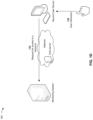
- FIGS. 1 A- 1 E are diagrams of an example relating to monitoring battery life of a battery of a user device to facilitate selection of a communication scheme.
- FIG. 2 is a diagram of an example environment in which systems and/or methods described herein may be implemented.
- FIG. 3 is a diagram of example components of one or more devices of FIG. 2 .
- FIG. 4 is a flowchart of an example process relating to monitoring battery life of a battery of a user device to facilitate selection of a communication scheme.
- a user of a first user device inputs, into the first user device, a request for the user to access a resource, which sends the request to an MFA server.
- the MFA server provides an MFA challenge form, requesting a security code, to the first user device (e.g., for presentation to the user) and provides a message that includes a security code, which is to be input into the MFA challenge form, to a second user device of the user (e.g., for presentation to the user).
- the user upon viewing the message on the second user device and obtaining the security code, inputs the security code in the MFA challenge form, and submits the MFA challenge form to the MFA server device.
- the MFA server device validates the security code and grants the user (e.g. via the first user device) access to the resource when the security code is validated.
- the second user device includes a battery that has a battery level that causes the second user device to be unable to receive and/or display the message from the MFA server.
- the battery level may be less than a “low battery” threshold, which causes the second user device to enter a “low power mode” and thereby prevent reception and/or display of one or more particular types of messages, such as “push” notifications (e.g., notifications that are sent to the second user device via an application running on the second user device). Consequently, the MFA server wastes computing resources (e.g., processing resources, memory resources, communication resources, and/or power resources, among other examples) by generating and sending messages to the second user device that are not received and/or displayed by the second user device.
- computing resources e.g., processing resources, memory resources, communication resources, and/or power resources, among other examples
- the MFA server determines (incorrectly) that the one or more additional requests are fraudulent attempts to access the resource. This affects an accuracy of a fraud detection algorithm utilized by the MFA server, causes the MFA server to lock access to the resource, and/or causes the MFA server to perform additional authentication techniques to verify the user, among other examples, which further waste computing resources.
- Some implementations described herein provide a monitoring system for determining a battery level of a battery of a user device and selecting, based on the determined battery level, a communication scheme to communicate with a user of the user device (e.g., to send messages, such as MFA messages, to the user). For example, the monitoring system may determine that the battery level of the battery of the user device is less than a battery level threshold and may select a communication scheme that enables the monitoring system to communicate with the user via at least one other user device (e.g., because the user device is unlikely to receive and/or display messages sent by the monitoring system).
- the monitoring system may determine that the battery level of the battery of the user device is greater than or equal to a battery level threshold and may select a communication scheme that enables the monitoring system to communicate with the user via the user device (e.g., because the user device is likely to receive and/or display messages sent by the monitoring system).
- the monitoring system selects and utilizes a communication scheme that increases a likelihood that messages sent by the monitoring system are successfully delivered to the user. Accordingly, the monitoring system conserves computing resources (e.g., processing resources, memory resources, communication resources, and/or power resources, among other examples) by preventing transmission of messages that would not otherwise be received and/or responded to by the user (e.g., because the user device is not able to receive and/or display the messages). Further, this increases a likelihood that the user responds to a message (e.g., an MFA message) sent by the monitoring system, which enables the monitoring system to authenticate access to a resource requested by the user.
- a message e.g., an MFA message
- FIGS. 1 A- 1 E are diagrams of an example 100 associated with monitoring battery life of a battery of a user device to facilitate selection of a communication scheme.
- example 100 includes a plurality of user devices (e.g., a first user device through an M th user device, where M ⁇ 2), a monitoring system, and a host server. These devices are described in more detail in connection with FIGS. 2 and 3 .
- the plurality of user devices may be associated with a single user (e.g., the plurality of user devices may be used by the user to communicate with other user devices).
- Each user device, of the plurality of user devices may have a different association with the user.
- the first user device may be a frequently used user device of the user (e.g., a personal smartphone of the user)
- a second user device may be a semi-frequently user device of the user (e.g., a work computer of the user)
- a third user device may be an infrequently used user device of the user (e.g., a family-shared tablet computer), and/or so on.
- the first user device may include a battery monitoring module (or another similar module or component).
- the first user device when using the battery monitoring module, may monitor a battery life of a battery of the first user device (e.g., a battery that provides electrical power to the first user device to enable operation of the first user device).
- the first user device may communicate with a battery management module (e.g., that is included in the first user device) and may obtain information indicating a battery level of the battery (e.g., in terms of battery life percentage, minutes or hours of charge remaining, or another metric).
- the first user device may obtain the information indicating the battery level on a scheduled basis (e.g., every 10 minutes, every 25 minutes, or every hour, among other examples), an on-demand basis (e.g., when a user of the first user device interacts with the first user device to cause the first user device to obtain the information indicating the battery level), or a triggered basis (e.g., when an application running on the first user device causes the first user device to obtain the information indicating the battery level), among other examples.
- a scheduled basis e.g., every 10 minutes, every 25 minutes, or every hour, among other examples
- an on-demand basis e.g., when a user of the first user device interacts with the first user device to cause the first user device to obtain the information indicating the battery level
- a triggered basis e.g., when an application running on the first user device causes the first user device to obtain the information indicating the battery level
- the first user device may determine whether one or more battery life reporting criteria are met (e.g., based on the information indicating the battery level). For example, the first user device may determine whether the battery level of the battery is greater than or equal to a first battery level threshold (e.g., a battery level threshold that is associated with a “full battery level threshold,” such as a battery level threshold that is greater than or equal to 75%). As another example, the first user device may determine whether the battery level of the battery is less than a second battery level threshold (e.g., a battery level threshold that is associated with a “low battery level threshold,” such as a battery level threshold that is less than or equal to 25%). In some implementations, the first battery level threshold may be the same as the second battery level threshold, or, alternatively, may be different than the second battery level threshold.
- a first battery level threshold e.g., a battery level threshold that is associated with a “full battery level threshold,” such as a battery level threshold that is greater than or equal to 75%.
- the first user device may transmit a notification related to the battery life of the battery to the monitoring system.
- the first user device may send the notification to a host server of a network, which may send the notification to the monitoring system.
- the first user device may send the notification on a scheduled basis (e.g., every 10 minutes, every 25 minutes, or every hour, among other examples), an on-demand basis (e.g., when the monitoring system sends a request, to the first user device, related to the battery life of the battery), or a triggered basis (e.g., when the first user device determines that the battery level of the battery is greater than or equal to the first battery level threshold and/or when the first user device determines that the battery level of the battery is less than the second battery level threshold, as described above), among other examples.
- a scheduled basis e.g., every 10 minutes, every 25 minutes, or every hour, among other examples
- an on-demand basis e.g., when the monitoring system sends a request, to the first user device, related to
- the notification may include, for example, the information indicating the battery level of the battery of the first user device, information indicating that the battery level is greater than or equal to the first battery level threshold (e.g., when the first user device determines that the battery level of the battery is greater than or equal to the first battery level threshold), information indicating that the battery level of the battery of the user device is less than the second battery level threshold (e.g., when the first user device determines that the battery level of the battery is less than the second battery level threshold), and/or information indicating whether the battery level is increasing (e.g., whether the battery of the user device is being charged).
- the first battery level threshold e.g., when the first user device determines that the battery level of the battery is greater than or equal to the first battery level threshold
- the second battery level threshold e.g., when the first user device determines that the battery level of the battery is less than the second battery level threshold
- information indicating whether the battery level is increasing e.g., whether the battery of the user device is being charged
- the monitoring system may determine the battery level of the battery of the first user device (e.g., after receiving the notification). For example, the monitoring system may process (e.g., parse) the notification to identify the information indicating the battery level of the battery and thereby determine the battery level of the battery. As another example, the monitoring system may process the notification to identify the information indicating that the battery level is greater than or equal to the first battery level threshold and thereby determine that the battery level is greater than or equal to the first battery level threshold. In an additional example, the monitoring system may process the notification to identify the information indicating that the battery level of the battery of the user device is less than the second battery level threshold and thereby determine that the battery level is less than the second battery level threshold.
- the monitoring system may process (e.g., parse) the notification to identify the information indicating the battery level of the battery and thereby determine the battery level of the battery.
- the monitoring system may process the notification to identify the information indicating that the battery level is greater than or equal to the first battery level threshold and thereby determine that the
- the monitoring system may determine, based on information determined from the notification and information determined from one or more previous notifications and/or an amount of time between reception of the notification and the one or more previous notifications, a battery level trend.
- the monitoring system monitoring system may determine the battery level of the battery based on the battery level trend.
- the monitoring system may select (e.g., based on the battery level of the battery of the first user device, as determined by the monitoring system) a communication scheme, from a plurality of communication schemes (e.g., shown as communication schemes 1 through N, where N ⁇ 2, in FIG. 1 C ), for communicating with the user of the first user device (e.g., the single user associated with the first through M th user devices).
- a communication scheme e.g., shown as communication schemes 1 through N, where N ⁇ 2, in FIG. 1 C
- Each communication scheme, of the plurality of communication schemes may identify a set of communication methods (e.g., one or more communication methods) to be attempted when transmitting a message (e.g., to communicate with the user).
- a set of communication methods may include, for example, a mobile application messaging communication (e.g., a “push” notification messaging communication), a text messaging communication (e.g., a short message service (SMS) messaging communication or another text messaging communication), an e-mail communication, and/or a phone call communication (e.g., a voice or audible communication). Additionally, or alternatively, the communication scheme may identify a priority order of the set of communication methods to be attempted.
- a mobile application messaging communication e.g., a “push” notification messaging communication
- a text messaging communication e.g., a short message service (SMS) messaging communication or another text messaging communication
- SMS short message service
- a phone call communication e.g., a voice or audible communication
- the communication scheme may indicate that the mobile application messaging communication is to be attempted first, the email communication is to be attempted second (e.g., when the user does not respond to the mobile application messaging communication after a particular period of time), the text messaging communication is to be attempted third (e.g., when the user does not respond to the email communication after a particular period of time), and so on.
- the communication scheme may identify at least one user device, of the plurality of user devices, as a message transmission destination for each communication method of the set of communication methods.
- the communication scheme may indicate that the first user device is a message transmission destination for the mobile application messaging communication, that the second user device is a message transmission destination for the text messaging communication and/or the phone call communication, and so on.
- each communication scheme, of the plurality of communication schemes may be different than at least one other communication scheme of the plurality of communication schemes (e.g., communication scheme 1 may be different than at least of communication schemes 2 through N).
- a particular communication scheme may identify a first set of communication methods to be attempted and another communication scheme may identify a second set of communication methods to be attempted, wherein the first set is different than the second set.
- the particular communication scheme may identify a first priority order of a set of communication methods to be attempted and the other communication scheme may identify a second priority order of the set of communication methods to be attempted, wherein the first priority order is different than the second priority order.
- the plurality of communication schemes may be respectively associated with a plurality of battery level ranges.
- a first communication scheme may be associated with a first battery level range (e.g., a battery level range between 0% and 20%)
- a second communication scheme may be associated with a second battery level range (e.g., a battery level range between 21% and 35%)
- a third communication scheme may be associated with a third battery level range (e.g., a battery level range between 36% and 80%)
- a fourth communication scheme may be associated with a fourth battery level range (e.g., a battery level range between 81% and 100%).
- the monitoring system may select a communication scheme, from the plurality of communication schemes, based on the battery level of the battery of the first user device (e.g., as determined by the monitoring system, as described herein in relation to FIG. 1 B and reference number 115 ). For example, the monitoring system may determine whether the battery level of the battery is greater than or equal to a battery level threshold of a particular battery level range (e.g., a lower bound of the particular battery level range). When the monitoring system determines that the battery level of the battery is greater than or equal to the battery level threshold of the particular battery level range, the monitoring system may select a particular communication scheme associated with the particular battery level range.
- a battery level threshold of a particular battery level range e.g., a lower bound of the particular battery level range
- the monitoring system may select another communication scheme that is not associated with the particular battery level range.
- the monitoring system may determine whether the battery level of the battery is less than a battery level threshold of a particular battery level range (e.g., an upper bound of the particular battery level range).
- the monitoring system may select a particular communication scheme associated with the particular battery level range.
- the monitoring system may select another communication scheme that is not associated with the particular battery level range.
- the monitoring system may determine whether the battery level of the battery is within a particular battery level range (e.g., between a lower bound and an upper bound of the particular battery level range).
- the monitoring system may select a particular communication scheme associated with the particular battery level range.
- the monitoring system may select another communication scheme that is not associated with the particular battery level range.
- the particular communication scheme may be different than the other communication scheme (e.g., respective sets of communication methods or respective priority orders of a set of communication methods identified by the particular communication scheme and the other communication scheme may be different).
- the monitoring system may use the selected communication scheme to communicate with the user of the first user device (e.g., the user associated with the first through M th user devices). For example, when the selected communication scheme is associated with a “high” battery level range (e.g., a battery level range greater than or equal to 21%), the monitoring system may transmit at least one message to the first user device via a mobile application messaging communication (e.g., because the first user device is unlikely to be in a power saving mode and is therefore able to receive and display the mobile application messaging communication).
- a “high” battery level range e.g., a battery level range greater than or equal to 216%
- the monitoring system may transmit at least one message to the first user device via a mobile application messaging communication (e.g., because the first user device is unlikely to be in a power saving mode and is therefore able to receive and display the mobile application messaging communication).
- the monitoring system may transmit at least one message to the first user device via at least one of a text messaging communication, an e-mail communication, or a phone call communication (e.g., because the first user device is likely to be in a power saving mode and is therefore unable to receive and display a mobile application messaging communication). Additional details related to transmitting at least one message according to the selected communication scheme is described herein in relation to FIG. 1 E and reference number 140 .
- the user of the first user device may interact with a user interface of the second user device (e.g., a keyboard and/or display screen of the second user device).
- the user may interact with the user interface to navigate the user interface and/or to input information into the second user device.
- the user may interact with the user interface of the second user device to perform an unlock operation to allow the user to access a home screen of the second user device, an application of the second user device, and/or a hardware resource of the second user device (e.g., a hard drive, a camera, and/or a microphone of the second user device).
- a hardware resource of the second user device e.g., a hard drive, a camera, and/or a microphone of the second user device.
- the user may interact with the user interface of the second user device to perform an application initiation operation to cause an application to run on the second user device and/or to cause the application to access a network resource (e.g., that is hosted by the host server).
- the user may interact with the user interface of the second user device to perform a webpage load operation to cause a web browser of the second user device to load a webpage and/or to access a network resource (e.g., that is hosted by the host server.
- the user may enter a request (e.g., an MFA request) for the user to access a resource, such as a software resource (e.g., an application and/or a computer program of the second user device), a hardware resource (e.g., a hard drive, a camera, and/or a microphone associated with the second user device), and/or a network resource (e.g., information hosted by the host server, such as information associated with a social media account, an email account, a financial account, and/or a streaming multimedia account), among other examples.
- the request may include identification information related to the user.
- the user may enter identification information that includes a passcode associated with the user and/or one or more biometric parameters associated with the user into a prompt displayed by the second user device as part of a request for access to the home screen of the second user device, to an application of the second user device, and/or to a hardware component of the second user device.
- the passcode may include a numerical string, a text string, and/or a personal identification number (PIN), among other examples.
- the one or more biometric parameters may include a fingerprint scan, an iris scan, a voice scan, and/or a face scan, among other examples, that are obtained by at least one biometric sensor of the second user device.
- the user may enter identification information that includes a username and a password associated with the user and/or one or more biometric parameters associated with the user into a prompt displayed by the second user device to request access to initiate an application on the second user device.
- identification information that include a username and a password associated with the user into a webpage prompt displayed by a web browser of the second user device to request access to load a webpage on the web browser of the second user device.
- the second user device may transmit the request for the user to access the resource to the monitoring system (e.g., based on the user inputting the request, as described above). For example, the second user device may send the request to the host server of the network, which may send the request to the monitoring system.
- the monitoring system may transmit (e.g., based on the request) at least one message according to a particular communication scheme (e.g., that was selected by the monitoring system, as described herein in relation to FIG. 1 C and reference number 125 ).
- the monitoring system may transmit the at least one message to facilitate authentication of the user (e.g., to allow the user access to the requested resource).
- the at least one message may include authentication data (e.g., a security code or security information) that the user is to enter into a prompt of the second user device (e.g., that is displayed by the second user device based on the second user device sending the request to the monitoring system) to authenticate the request as originating from the user.
- the monitoring system may transmit the at least one message to one or more of the plurality of user devices (e.g., one or more of the first through M th user devices).
- the selected communication scheme is associated with an “operational” battery level range of the first user device (e.g., a battery level range greater than or equal to 10%)
- the monitoring system may transmit at least one message to the first user device via at least one of a mobile application messaging communication, a text messaging communication, an e-mail communication, or a phone call communication (e.g., because the first user device is unlikely to be in a power saving mode and is therefore able to receive any type of communication).
- the monitoring system may transmit at least one message to at least one other user device of the plurality of user device (e.g., one or more of the second through M th user devices) via at least one of a mobile application messaging communication, a text messaging communication, an e-mail communication, or a phone call communication (e.g., because the first user device is likely to be in a power saving mode, or is nonoperational, and is therefore unable to receive any type of communication).
- a mobile application messaging communication e.g., a text messaging communication, an e-mail communication, or a phone call communication
- the monitoring system may receive a response.
- a user device of the plurality of user devices e.g., one of the first through M th user devices
- the user may view the at least one message and may enter the authentication data that was included in the at least one message into the prompt of the second user device.
- the second user device may include the authentication data in the response and may transmit (e.g., in a similar manner as that elsewhere described herein) the response to the monitoring system.
- the monitoring system may process (e.g., parse) the response to determine whether the response includes the authentication data and may cause access to the resource to be granted or denied based on determining whether the response includes the authentication data. For example, when the monitoring system determines that the response includes the authentication data, the monitoring system may cause access to the resource to be granted (e.g., by sending a grant access message to the host server and/or the second user device). As an alternative example, when the monitoring system determines that the response does not include the authentication data, the monitoring system may cause access to the resource to be denied (e.g., by sending a deny access message to the host server and/or the second user device).
- the monitoring system may process (e.g., parse) the response to determine whether the response includes the authentication data and may cause access to the resource to be granted or denied based on determining whether the response includes the authentication data. For example, when the monitoring system determines that the response includes the authentication data, the monitoring system may cause access to the resource to be granted (e.g., by sending
- the monitoring system may receive another notification related to the battery life of the battery of the first user device (e.g., in a similar manner as that described herein in relation to FIG. 1 B and reference number 115 ). Accordingly, the monitoring system may determine, based on the other notification, an updated battery level of the first user device (e.g., in a similar manner as that described herein in relation to FIG. 1 B and reference number 120 ).
- the monitoring system may select, based on the updated battery level of the first user device, another particular communication scheme for communicating with the user of the first user device (e.g., in a similar manner as that described herein in relation to FIG. 1 C and reference number 125 ).
- the other particular communication scheme may be the same as the previously selected communication scheme, or, alternatively may be different than the previously selected communication scheme.
- the monitoring system may transmit at least one additional message according to the other particular communication scheme (e.g., in a similar manner as that described herein in relation to FIG. 1 C and/or FIG. 1 E ).
- FIGS. 1 A- 1 E are provided as an example. Other examples may differ from what is described with regard to FIGS. 1 A- 1 E .
- FIG. 2 is a diagram of an example environment 200 in which systems and/or methods described herein may be implemented.
- environment 200 may include a monitoring system 201 , which may include one or more elements of and/or may execute within a cloud computing system 202 .
- the cloud computing system 202 may include one or more elements 203 - 213 , as described in more detail below.
- environment 200 may include a network 220 , a host server 230 , and/or one or more user devices 240 . Devices and/or elements of environment 200 may interconnect via wired connections and/or wireless connections.
- the cloud computing system 202 includes computing hardware 203 , a resource management component 204 , a host operating system (OS) 205 , and/or one or more virtual computing systems 206 .
- the cloud computing system 202 may execute on, for example, an Amazon Web Services platform, a Microsoft Azure platform, or a Snowflake platform.
- the resource management component 204 may perform virtualization (e.g., abstraction) of computing hardware 203 to create the one or more virtual computing systems 206 .
- the resource management component 204 enables a single computing device (e.g., a computer or a server) to operate like multiple computing devices, such as by creating multiple isolated virtual computing systems 206 from computing hardware 203 of the single computing device. In this way, computing hardware 203 can operate more efficiently, with lower power consumption, higher reliability, higher availability, higher utilization, greater flexibility, and lower cost than using separate computing devices.
- Computing hardware 203 includes hardware and corresponding resources from one or more computing devices.
- computing hardware 203 may include hardware from a single computing device (e.g., a single server) or from multiple computing devices (e.g., multiple servers), such as multiple computing devices in one or more data centers.
- computing hardware 203 may include one or more processors 207 , one or more memories 208 , one or more storage components 209 , and/or one or more networking components 210 . Examples of a processor, a memory, a storage component, and a networking component (e.g., a communication component) are described elsewhere herein.
- the resource management component 204 includes a virtualization application (e.g., executing on hardware, such as computing hardware 203 ) capable of virtualizing computing hardware 203 to start, stop, and/or manage one or more virtual computing systems 206 .
- the resource management component 204 may include a hypervisor (e.g., a bare-metal or Type 1 hypervisor, a hosted or Type 2 hypervisor, or another type of hypervisor) or a virtual machine monitor, such as when the virtual computing systems 206 are virtual machines 211 .
- the resource management component 204 may include a container manager, such as when the virtual computing systems 206 are containers 212 .
- the resource management component 204 executes within and/or in coordination with a host operating system 205 .
- a virtual computing system 206 includes a virtual environment that enables cloud-based execution of operations and/or processes described herein using computing hardware 203 .
- a virtual computing system 206 may include a virtual machine 211 , a container 212 , or a hybrid environment 213 that includes a virtual machine and a container, among other examples.
- a virtual computing system 206 may execute one or more applications using a file system that includes binary files, software libraries, and/or other resources required to execute applications on a guest operating system (e.g., within the virtual computing system 206 ) or the host operating system 205 .
- the monitoring system 201 may include one or more elements 203 - 213 of the cloud computing system 202 , may execute within the cloud computing system 202 , and/or may be hosted within the cloud computing system 202 , in some implementations, the monitoring system 201 may not be cloud-based (e.g., may be implemented outside of a cloud computing system) or may be partially cloud-based.
- the monitoring system 201 may include one or more devices that are not part of the cloud computing system 202 , such as device 300 of FIG. 3 , which may include a standalone server or another type of computing device.
- the monitoring system 201 may perform one or more operations and/or processes described in more detail elsewhere herein.
- Network 220 includes one or more wired and/or wireless networks.
- network 220 may include a cellular network, a public land mobile network (PLMN), a local area network (LAN), a wide area network (WAN), a private network, the Internet, and/or a combination of these or other types of networks.
- PLMN public land mobile network
- LAN local area network
- WAN wide area network
- private network the Internet
- the network 220 enables communication among the devices of environment 200 .
- the host server 230 includes one or more devices capable of receiving, generating, storing, processing, providing, and/or routing information associated with monitoring battery life of a battery of the user device 240 and/or facilitating selection of a communication scheme, as described elsewhere herein.
- the host server 230 may include a communication device and/or a computing device, such as a server device.
- the host server 230 may include a server, such as an application server, a web server, a proxy server, a virtual server (e.g., executing on computing hardware), or a server in a cloud computing system.
- the host server 230 includes computing hardware used in a cloud computing environment.
- the user device 240 includes one or more devices capable of receiving, generating, storing, processing, and/or providing information associated with monitoring battery life of a battery of the user device 240 and/or facilitating selection of a communication scheme, as described elsewhere herein.
- the user device 240 may include a communication device and/or a computing device.
- the user device 240 may include a wireless communication device, a mobile phone, a user equipment, a laptop computer, a tablet computer, a desktop computer, a gaming console, a set-top box, a wearable communication device (e.g., a smart wristwatch, a pair of smart eyeglasses, a head mounted display, or a virtual reality headset), or a similar type of device.
- a wearable communication device e.g., a smart wristwatch, a pair of smart eyeglasses, a head mounted display, or a virtual reality headset
- the number and arrangement of devices and networks shown in FIG. 2 are provided as an example. In practice, there may be additional devices and/or networks, fewer devices and/or networks, different devices and/or networks, or differently arranged devices and/or networks than those shown in FIG. 2 . Furthermore, two or more devices shown in FIG. 2 may be implemented within a single device, or a single device shown in FIG. 2 may be implemented as multiple, distributed devices. Additionally, or alternatively, a set of devices (e.g., one or more devices) of environment 200 may perform one or more functions described as being performed by another set of devices of environment 200 .
- FIG. 3 is a diagram of example components of a device 300 , which may correspond to monitoring system 201 , computing hardware 203 , host server 230 , and/or user device 240 .
- monitoring system 201 , computing hardware 203 , host server 230 , and/or user device 240 may include one or more devices 300 and/or one or more components of device 300 .
- device 300 may include a bus 310 , a processor 320 , a memory 330 , an input component 340 , an output component 350 , and a communication component 360 .
- Bus 310 includes one or more components that enable wired and/or wireless communication among the components of device 300 .
- Bus 310 may couple together two or more components of FIG. 3 , such as via operative coupling, communicative coupling, electronic coupling, and/or electric coupling.
- Processor 320 includes a central processing unit, a graphics processing unit, a microprocessor, a controller, a microcontroller, a digital signal processor, a field-programmable gate array, an application-specific integrated circuit, and/or another type of processing component.
- Processor 320 is implemented in hardware, firmware, or a combination of hardware and software.
- processor 320 includes one or more processors capable of being programmed to perform one or more operations or processes described elsewhere herein.
- Memory 330 includes volatile and/or nonvolatile memory.
- memory 330 may include random access memory (RAM), read only memory (ROM), a hard disk drive, and/or another type of memory (e.g., a flash memory, a magnetic memory, and/or an optical memory).
- Memory 330 may include internal memory (e.g., RAM, ROM, or a hard disk drive) and/or removable memory (e.g., removable via a universal serial bus connection).
- Memory 330 may be a non-transitory computer-readable medium.
- Memory 330 stores information, instructions, and/or software (e.g., one or more software applications) related to the operation of device 300 .
- memory 330 includes one or more memories that are coupled to one or more processors (e.g., processor 320 ), such as via bus 310 .
- Input component 340 enables device 300 to receive input, such as user input and/or sensed input.
- input component 340 may include a touch screen, a keyboard, a keypad, a mouse, a button, a microphone, a switch, a sensor, a global positioning system sensor, an accelerometer, a gyroscope, and/or an actuator.
- Output component 350 enables device 300 to provide output, such as via a display, a speaker, and/or a light-emitting diode.
- Communication component 360 enables device 300 to communicate with other devices via a wired connection and/or a wireless connection.
- communication component 360 may include a receiver, a transmitter, a transceiver, a modem, a network interface card, and/or an antenna.
- Device 300 may perform one or more operations or processes described herein.
- a non-transitory computer-readable medium e.g., memory 330
- Processor 320 may execute the set of instructions to perform one or more operations or processes described herein.
- execution of the set of instructions, by one or more processors 320 causes the one or more processors 320 and/or the device 300 to perform one or more operations or processes described herein.
- hardwired circuitry may be used instead of or in combination with the instructions to perform one or more operations or processes described herein.
- processor 320 may be configured to perform one or more operations or processes described herein.
- implementations described herein are not limited to any specific combination of hardware circuitry and software.
- Device 300 may include additional components, fewer components, different components, or differently arranged components than those shown in FIG. 3 . Additionally, or alternatively, a set of components (e.g., one or more components) of device 300 may perform one or more functions described as being performed by another set of components of device 300 .
- FIG. 4 is a flowchart of an example process 400 associated with monitoring battery life of a battery of a user device to facilitate selection of a communication scheme.
- one or more process blocks of FIG. 4 may be performed by a system (e.g., monitoring system 201 ).
- one or more process blocks of FIG. 4 may be performed by another device or a group of devices separate from or including the system, such as a host server (e.g., host server 230 ) and/or a user device (e.g., user device 240 ).
- a host server e.g., host server 230
- a user device e.g., user device 240
- one or more process blocks of FIG. 4 may be performed by one or more components of device 300 , such as processor 320 , memory 330 , input component 340 , output component 350 , and/or communication component 360 .
- process 400 may include receiving a notification related to a battery life of a battery of the user device (block 410 ). As further shown in FIG. 4 , process 400 may include determining, based on the notification, a battery level of the battery of the user device (block 420 ). As further shown in FIG. 4 , process 400 may include selecting, based on the battery level of the battery of the user device, a particular communication scheme, of a plurality of communication schemes, for communicating with a user of the user device (block 430 ). As further shown in FIG. 4 , process 400 may include receiving, from another user device and after determining the particular communication scheme, a request for the user to access a resource (block 440 ).
- process 400 may include transmitting at least one message according to the particular communication scheme (block 450 ). In some implementations, the at least one message is transmitted based on the request and/or to facilitate authentication of the user.
- process 400 may include additional blocks, fewer blocks, different blocks, or differently arranged blocks than those depicted in FIG. 4 . Additionally, or alternatively, two or more of the blocks of process 400 may be performed in parallel.
- the term “component” is intended to be broadly construed as hardware, firmware, or a combination of hardware and software. It will be apparent that systems and/or methods described herein may be implemented in different forms of hardware, firmware, and/or a combination of hardware and software. The actual specialized control hardware or software code used to implement these systems and/or methods is not limiting of the implementations. Thus, the operation and behavior of the systems and/or methods are described herein without reference to specific software code—it being understood that software and hardware can be used to implement the systems and/or methods based on the description herein.
- satisfying a threshold may, depending on the context, refer to a value being greater than the threshold, greater than or equal to the threshold, less than the threshold, less than or equal to the threshold, equal to the threshold, not equal to the threshold, or the like.
- “at least one of: a, b, or c” is intended to cover a, b, c, a-b, a-c, b-c, and a-b-c, as well as any combination with multiple of the same item.
- the terms “has,” “have,” “having,” or the like are intended to be open-ended terms. Further, the phrase “based on” is intended to mean “based, at least in part, on” unless explicitly stated otherwise. Also, as used herein, the term “or” is intended to be inclusive when used in a series and may be used interchangeably with “and/or,” unless explicitly stated otherwise (e.g., if used in combination with “either” or “only one of”).
Landscapes
- Engineering & Computer Science (AREA)
- Physics & Mathematics (AREA)
- General Physics & Mathematics (AREA)
- Theoretical Computer Science (AREA)
- Computer Security & Cryptography (AREA)
- Computer Hardware Design (AREA)
- Software Systems (AREA)
- General Engineering & Computer Science (AREA)
- Telephonic Communication Services (AREA)
- Telephone Function (AREA)
Abstract
Description
Claims (20)
Priority Applications (1)
| Application Number | Priority Date | Filing Date | Title |
|---|---|---|---|
| US17/445,154 US12135357B2 (en) | 2021-08-16 | 2021-08-16 | System for monitoring battery life of a battery of a user device to facilitate selection of communication schemes |
Applications Claiming Priority (1)
| Application Number | Priority Date | Filing Date | Title |
|---|---|---|---|
| US17/445,154 US12135357B2 (en) | 2021-08-16 | 2021-08-16 | System for monitoring battery life of a battery of a user device to facilitate selection of communication schemes |
Publications (2)
| Publication Number | Publication Date |
|---|---|
| US20230046761A1 US20230046761A1 (en) | 2023-02-16 |
| US12135357B2 true US12135357B2 (en) | 2024-11-05 |
Family
ID=85177147
Family Applications (1)
| Application Number | Title | Priority Date | Filing Date |
|---|---|---|---|
| US17/445,154 Active 2041-10-21 US12135357B2 (en) | 2021-08-16 | 2021-08-16 | System for monitoring battery life of a battery of a user device to facilitate selection of communication schemes |
Country Status (1)
| Country | Link |
|---|---|
| US (1) | US12135357B2 (en) |
Citations (8)
| Publication number | Priority date | Publication date | Assignee | Title |
|---|---|---|---|---|
| US20140228062A1 (en) * | 2013-02-13 | 2014-08-14 | Apple Inc. | Automatic notification upon trigger detection |
| US20150164391A1 (en) * | 2013-12-16 | 2015-06-18 | Dexcom, Inc. | Systems and methods for monitoring and managing life of a battery in an analyte sensor system worn by a user |
| US20160077159A1 (en) * | 2014-09-12 | 2016-03-17 | Measurement Ltd. | Battery tester |
| US20170195325A1 (en) * | 2016-01-05 | 2017-07-06 | Xevo Inc. | Connection management of smart devices with automobile head unit |
| US20170257129A1 (en) * | 2016-03-04 | 2017-09-07 | Dell Products, Lp | Method and apparatus for a smart personal connect gateway multi-hop networked communication using context aware radio communication management |
| US9892245B2 (en) | 2011-08-02 | 2018-02-13 | Qualcomm Incorporated | Method and apparatus for using a multi-factor password or a dynamic password for enhanced security on a device |
| US10154461B2 (en) | 2013-03-15 | 2018-12-11 | Qualcomm Incorporated | Wireless networking-enabled personal identification system |
| US20220230743A1 (en) * | 2021-01-21 | 2022-07-21 | Medtronic, Inc. | Medical device management using risk control measures |
-
2021
- 2021-08-16 US US17/445,154 patent/US12135357B2/en active Active
Patent Citations (8)
| Publication number | Priority date | Publication date | Assignee | Title |
|---|---|---|---|---|
| US9892245B2 (en) | 2011-08-02 | 2018-02-13 | Qualcomm Incorporated | Method and apparatus for using a multi-factor password or a dynamic password for enhanced security on a device |
| US20140228062A1 (en) * | 2013-02-13 | 2014-08-14 | Apple Inc. | Automatic notification upon trigger detection |
| US10154461B2 (en) | 2013-03-15 | 2018-12-11 | Qualcomm Incorporated | Wireless networking-enabled personal identification system |
| US20150164391A1 (en) * | 2013-12-16 | 2015-06-18 | Dexcom, Inc. | Systems and methods for monitoring and managing life of a battery in an analyte sensor system worn by a user |
| US20160077159A1 (en) * | 2014-09-12 | 2016-03-17 | Measurement Ltd. | Battery tester |
| US20170195325A1 (en) * | 2016-01-05 | 2017-07-06 | Xevo Inc. | Connection management of smart devices with automobile head unit |
| US20170257129A1 (en) * | 2016-03-04 | 2017-09-07 | Dell Products, Lp | Method and apparatus for a smart personal connect gateway multi-hop networked communication using context aware radio communication management |
| US20220230743A1 (en) * | 2021-01-21 | 2022-07-21 | Medtronic, Inc. | Medical device management using risk control measures |
Non-Patent Citations (2)
| Title |
|---|
| Abhijit Kumar Nag, et al.; "An Adaptive Approach Towards the Selection of Multi-factor Authentication"; 2015 IEEE Symposium Series on Computational Intelligence; pp. 463-472; 2015; IEEE. |
| Jan Spooren, et al.; "Leveraging Battery Usage from Mobile Devices for Active Authentication"; Hindawi; Mobile Information Systems; Mar. 12, 2017; pp. 1-15; vol. 2017; Article ID 1367064. |
Also Published As
| Publication number | Publication date |
|---|---|
| US20230046761A1 (en) | 2023-02-16 |
Similar Documents
| Publication | Publication Date | Title |
|---|---|---|
| US10623389B2 (en) | Authenticating a device based on communication patterns in a group of devices | |
| US9575618B2 (en) | Multi-user process management | |
| US10165002B2 (en) | Identifying an imposter account in a social network | |
| CN107666470B (en) | Verification information processing method and device | |
| EP3120281A1 (en) | Dynamic identity checking | |
| US8938680B2 (en) | Methods and apparatus for E-mail-based management of virtualized environments | |
| US20250254159A1 (en) | Tokenizing authentication information | |
| CN106650490B (en) | The login method and device of cloud account | |
| US20140308919A1 (en) | Application-level trusted third party solution based on an antiviral mobile client | |
| US12135357B2 (en) | System for monitoring battery life of a battery of a user device to facilitate selection of communication schemes | |
| US11172003B1 (en) | System and method to control a media client using a message service | |
| US12483587B2 (en) | Automated vulnerability exception process | |
| US12505475B2 (en) | Repeating verification of a user | |
| US12323802B2 (en) | Systems and methods for providing a secure notification service for mobile applications | |
| US11606383B1 (en) | Securing against network vulnerabilities | |
| US12058130B2 (en) | Systems and methods for secure onboarding and communication for internet of things devices | |
| US12045459B2 (en) | Using a virtual keyboard to enter particular input | |
| EP4123489B1 (en) | Requesting and transmitting data for related accounts | |
| US12170663B2 (en) | Systems and methods for providing secure access to a private multiaccess edge computing device via a multi-tenancy environment | |
| US20240364684A1 (en) | Authenticating users during and after suspicious voice calls and browsing | |
| US20240386141A1 (en) | Unlinking accounts from applications | |
| US20260050926A1 (en) | Systems and methods for verifying funds transfer | |
| US20250156249A1 (en) | Monitoring an application programming interface function and adjusting the same | |
| US11778052B1 (en) | Systems and methods for automatically connecting managed devices | |
| US12058200B1 (en) | Secure file sharing and deletion |
Legal Events
| Date | Code | Title | Description |
|---|---|---|---|
| AS | Assignment |
Owner name: CAPITAL ONE SERVICES, LLC, VIRGINIA Free format text: ASSIGNMENT OF ASSIGNORS INTEREST;ASSIGNORS:EDWARDS, JOSHUA;BENKREIRA, ABDELKADER M'HAMED;MOSSOBA, MICHAEL;SIGNING DATES FROM 20210813 TO 20210816;REEL/FRAME:057192/0784 |
|
| FEPP | Fee payment procedure |
Free format text: ENTITY STATUS SET TO UNDISCOUNTED (ORIGINAL EVENT CODE: BIG.); ENTITY STATUS OF PATENT OWNER: LARGE ENTITY |
|
| STPP | Information on status: patent application and granting procedure in general |
Free format text: DOCKETED NEW CASE - READY FOR EXAMINATION |
|
| STPP | Information on status: patent application and granting procedure in general |
Free format text: FINAL REJECTION MAILED |
|
| STPP | Information on status: patent application and granting procedure in general |
Free format text: ADVISORY ACTION MAILED |
|
| STPP | Information on status: patent application and granting procedure in general |
Free format text: DOCKETED NEW CASE - READY FOR EXAMINATION |
|
| STPP | Information on status: patent application and granting procedure in general |
Free format text: NON FINAL ACTION MAILED |
|
| STPP | Information on status: patent application and granting procedure in general |
Free format text: FINAL REJECTION MAILED |
|
| STPP | Information on status: patent application and granting procedure in general |
Free format text: ADVISORY ACTION MAILED |
|
| STPP | Information on status: patent application and granting procedure in general |
Free format text: NON FINAL ACTION MAILED |
|
| STPP | Information on status: patent application and granting procedure in general |
Free format text: RESPONSE TO NON-FINAL OFFICE ACTION ENTERED AND FORWARDED TO EXAMINER |
|
| STPP | Information on status: patent application and granting procedure in general |
Free format text: NOTICE OF ALLOWANCE MAILED -- APPLICATION RECEIVED IN OFFICE OF PUBLICATIONS |
|
| ZAAB | Notice of allowance mailed |
Free format text: ORIGINAL CODE: MN/=. |
|
| STPP | Information on status: patent application and granting procedure in general |
Free format text: AWAITING TC RESP., ISSUE FEE NOT PAID |
|
| STPP | Information on status: patent application and granting procedure in general |
Free format text: NOTICE OF ALLOWANCE MAILED -- APPLICATION RECEIVED IN OFFICE OF PUBLICATIONS |
|
| STPP | Information on status: patent application and granting procedure in general |
Free format text: PUBLICATIONS -- ISSUE FEE PAYMENT VERIFIED |
|
| STCF | Information on status: patent grant |
Free format text: PATENTED CASE |