US12134609B2 - Quinoline cGAS antagonist compounds - Google Patents

Quinoline cGAS antagonist compounds Download PDF

Info

Publication number
US12134609B2
US12134609B2 US18/334,325 US202318334325A US12134609B2 US 12134609 B2 US12134609 B2 US 12134609B2 US 202318334325 A US202318334325 A US 202318334325A US 12134609 B2 US12134609 B2 US 12134609B2
Authority
US
United States
Prior art keywords
alkyl
compound
formula
present disclosure
disclosure provides
Prior art date
Legal status (The legal status is an assumption and is not a legal conclusion. Google has not performed a legal analysis and makes no representation as to the accuracy of the status listed.)
Active
Application number
US18/334,325
Other versions
US20240092760A1 (en
Inventor
Jian Qiu
Qi Wei
Matt Tschantz
Heping Shi
Youtong WU
Huiling TAN
Lijun Sun
Chuo Chen
Zhijian Chen
Current Assignee (The listed assignees may be inaccurate. Google has not performed a legal analysis and makes no representation or warranty as to the accuracy of the list.)
University of Texas System
Immunesensor Therapeutics Inc
Original Assignee
University of Texas System
Immunesensor Therapeutics Inc
Priority date (The priority date is an assumption and is not a legal conclusion. Google has not performed a legal analysis and makes no representation as to the accuracy of the date listed.)
Filing date
Publication date
Application filed by University of Texas System, Immunesensor Therapeutics Inc filed Critical University of Texas System
Priority to US18/334,325 priority Critical patent/US12134609B2/en
Assigned to THE BOARD OF REGENTS OF THE UNIVERSITY OF TEXAS SYSTEM reassignment THE BOARD OF REGENTS OF THE UNIVERSITY OF TEXAS SYSTEM ASSIGNMENT OF ASSIGNORS INTEREST (SEE DOCUMENT FOR DETAILS). Assignors: CHEN, CHUO, CHEN, ZHIJIAN
Assigned to IMMUNESENSOR THERAPEUTICS, INC. reassignment IMMUNESENSOR THERAPEUTICS, INC. ASSIGNMENT OF ASSIGNORS INTEREST (SEE DOCUMENT FOR DETAILS). Assignors: QIU, JIAN, SHI, HEPING, SUN, LIJUN, TAN, Huiling, TSCHANTZ, MATT, WEI, QI, WU, YOUTONG
Publication of US20240092760A1 publication Critical patent/US20240092760A1/en
Priority to US18/829,953 priority patent/US20250115579A1/en
Application granted granted Critical
Publication of US12134609B2 publication Critical patent/US12134609B2/en
Active legal-status Critical Current
Anticipated expiration legal-status Critical

Links

Classifications

    • AHUMAN NECESSITIES
    • A61MEDICAL OR VETERINARY SCIENCE; HYGIENE
    • A61KPREPARATIONS FOR MEDICAL, DENTAL OR TOILETRY PURPOSES
    • A61K31/00Medicinal preparations containing organic active ingredients
    • A61K31/33Heterocyclic compounds
    • A61K31/395Heterocyclic compounds having nitrogen as a ring hetero atom, e.g. guanethidine or rifamycins
    • A61K31/435Heterocyclic compounds having nitrogen as a ring hetero atom, e.g. guanethidine or rifamycins having six-membered rings with one nitrogen as the only ring hetero atom
    • A61K31/47Quinolines; Isoquinolines
    • A61K31/4709Non-condensed quinolines and containing further heterocyclic rings
    • AHUMAN NECESSITIES
    • A61MEDICAL OR VETERINARY SCIENCE; HYGIENE
    • A61KPREPARATIONS FOR MEDICAL, DENTAL OR TOILETRY PURPOSES
    • A61K31/00Medicinal preparations containing organic active ingredients
    • A61K31/33Heterocyclic compounds
    • A61K31/395Heterocyclic compounds having nitrogen as a ring hetero atom, e.g. guanethidine or rifamycins
    • A61K31/535Heterocyclic compounds having nitrogen as a ring hetero atom, e.g. guanethidine or rifamycins having six-membered rings with at least one nitrogen and one oxygen as the ring hetero atoms, e.g. 1,2-oxazines
    • A61K31/53751,4-Oxazines, e.g. morpholine
    • A61K31/53771,4-Oxazines, e.g. morpholine not condensed and containing further heterocyclic rings, e.g. timolol
    • AHUMAN NECESSITIES
    • A61MEDICAL OR VETERINARY SCIENCE; HYGIENE
    • A61PSPECIFIC THERAPEUTIC ACTIVITY OF CHEMICAL COMPOUNDS OR MEDICINAL PREPARATIONS
    • A61P25/00Drugs for disorders of the nervous system
    • AHUMAN NECESSITIES
    • A61MEDICAL OR VETERINARY SCIENCE; HYGIENE
    • A61PSPECIFIC THERAPEUTIC ACTIVITY OF CHEMICAL COMPOUNDS OR MEDICINAL PREPARATIONS
    • A61P25/00Drugs for disorders of the nervous system
    • A61P25/28Drugs for disorders of the nervous system for treating neurodegenerative disorders of the central nervous system, e.g. nootropic agents, cognition enhancers, drugs for treating Alzheimer's disease or other forms of dementia
    • AHUMAN NECESSITIES
    • A61MEDICAL OR VETERINARY SCIENCE; HYGIENE
    • A61PSPECIFIC THERAPEUTIC ACTIVITY OF CHEMICAL COMPOUNDS OR MEDICINAL PREPARATIONS
    • A61P29/00Non-central analgesic, antipyretic or antiinflammatory agents, e.g. antirheumatic agents; Non-steroidal antiinflammatory drugs [NSAID]
    • AHUMAN NECESSITIES
    • A61MEDICAL OR VETERINARY SCIENCE; HYGIENE
    • A61PSPECIFIC THERAPEUTIC ACTIVITY OF CHEMICAL COMPOUNDS OR MEDICINAL PREPARATIONS
    • A61P37/00Drugs for immunological or allergic disorders
    • AHUMAN NECESSITIES
    • A61MEDICAL OR VETERINARY SCIENCE; HYGIENE
    • A61PSPECIFIC THERAPEUTIC ACTIVITY OF CHEMICAL COMPOUNDS OR MEDICINAL PREPARATIONS
    • A61P37/00Drugs for immunological or allergic disorders
    • A61P37/08Antiallergic agents
    • CCHEMISTRY; METALLURGY
    • C07ORGANIC CHEMISTRY
    • C07DHETEROCYCLIC COMPOUNDS
    • C07D215/00Heterocyclic compounds containing quinoline or hydrogenated quinoline ring systems
    • C07D215/02Heterocyclic compounds containing quinoline or hydrogenated quinoline ring systems having no bond between the ring nitrogen atom and a non-ring member or having only hydrogen atoms or carbon atoms directly attached to the ring nitrogen atom
    • C07D215/16Heterocyclic compounds containing quinoline or hydrogenated quinoline ring systems having no bond between the ring nitrogen atom and a non-ring member or having only hydrogen atoms or carbon atoms directly attached to the ring nitrogen atom with hetero atoms or with carbon atoms having three bonds to hetero atoms with at the most one bond to halogen, e.g. ester or nitrile radicals, directly attached to ring carbon atoms
    • C07D215/38Nitrogen atoms
    • CCHEMISTRY; METALLURGY
    • C07ORGANIC CHEMISTRY
    • C07DHETEROCYCLIC COMPOUNDS
    • C07D215/00Heterocyclic compounds containing quinoline or hydrogenated quinoline ring systems
    • C07D215/02Heterocyclic compounds containing quinoline or hydrogenated quinoline ring systems having no bond between the ring nitrogen atom and a non-ring member or having only hydrogen atoms or carbon atoms directly attached to the ring nitrogen atom
    • C07D215/16Heterocyclic compounds containing quinoline or hydrogenated quinoline ring systems having no bond between the ring nitrogen atom and a non-ring member or having only hydrogen atoms or carbon atoms directly attached to the ring nitrogen atom with hetero atoms or with carbon atoms having three bonds to hetero atoms with at the most one bond to halogen, e.g. ester or nitrile radicals, directly attached to ring carbon atoms
    • C07D215/38Nitrogen atoms
    • C07D215/42Nitrogen atoms attached in position 4
    • CCHEMISTRY; METALLURGY
    • C07ORGANIC CHEMISTRY
    • C07DHETEROCYCLIC COMPOUNDS
    • C07D215/00Heterocyclic compounds containing quinoline or hydrogenated quinoline ring systems
    • C07D215/02Heterocyclic compounds containing quinoline or hydrogenated quinoline ring systems having no bond between the ring nitrogen atom and a non-ring member or having only hydrogen atoms or carbon atoms directly attached to the ring nitrogen atom
    • C07D215/16Heterocyclic compounds containing quinoline or hydrogenated quinoline ring systems having no bond between the ring nitrogen atom and a non-ring member or having only hydrogen atoms or carbon atoms directly attached to the ring nitrogen atom with hetero atoms or with carbon atoms having three bonds to hetero atoms with at the most one bond to halogen, e.g. ester or nitrile radicals, directly attached to ring carbon atoms
    • C07D215/38Nitrogen atoms
    • C07D215/42Nitrogen atoms attached in position 4
    • C07D215/46Nitrogen atoms attached in position 4 with hydrocarbon radicals, substituted by nitrogen atoms, attached to said nitrogen atoms
    • CCHEMISTRY; METALLURGY
    • C07ORGANIC CHEMISTRY
    • C07DHETEROCYCLIC COMPOUNDS
    • C07D401/00Heterocyclic compounds containing two or more hetero rings, having nitrogen atoms as the only ring hetero atoms, at least one ring being a six-membered ring with only one nitrogen atom
    • C07D401/02Heterocyclic compounds containing two or more hetero rings, having nitrogen atoms as the only ring hetero atoms, at least one ring being a six-membered ring with only one nitrogen atom containing two hetero rings
    • C07D401/04Heterocyclic compounds containing two or more hetero rings, having nitrogen atoms as the only ring hetero atoms, at least one ring being a six-membered ring with only one nitrogen atom containing two hetero rings directly linked by a ring-member-to-ring-member bond
    • CCHEMISTRY; METALLURGY
    • C07ORGANIC CHEMISTRY
    • C07DHETEROCYCLIC COMPOUNDS
    • C07D401/00Heterocyclic compounds containing two or more hetero rings, having nitrogen atoms as the only ring hetero atoms, at least one ring being a six-membered ring with only one nitrogen atom
    • C07D401/14Heterocyclic compounds containing two or more hetero rings, having nitrogen atoms as the only ring hetero atoms, at least one ring being a six-membered ring with only one nitrogen atom containing three or more hetero rings
    • CCHEMISTRY; METALLURGY
    • C07ORGANIC CHEMISTRY
    • C07DHETEROCYCLIC COMPOUNDS
    • C07D403/00Heterocyclic compounds containing two or more hetero rings, having nitrogen atoms as the only ring hetero atoms, not provided for by group C07D401/00
    • C07D403/02Heterocyclic compounds containing two or more hetero rings, having nitrogen atoms as the only ring hetero atoms, not provided for by group C07D401/00 containing two hetero rings
    • C07D403/04Heterocyclic compounds containing two or more hetero rings, having nitrogen atoms as the only ring hetero atoms, not provided for by group C07D401/00 containing two hetero rings directly linked by a ring-member-to-ring-member bond
    • CCHEMISTRY; METALLURGY
    • C07ORGANIC CHEMISTRY
    • C07DHETEROCYCLIC COMPOUNDS
    • C07D405/00Heterocyclic compounds containing both one or more hetero rings having oxygen atoms as the only ring hetero atoms, and one or more rings having nitrogen as the only ring hetero atom
    • C07D405/14Heterocyclic compounds containing both one or more hetero rings having oxygen atoms as the only ring hetero atoms, and one or more rings having nitrogen as the only ring hetero atom containing three or more hetero rings
    • CCHEMISTRY; METALLURGY
    • C07ORGANIC CHEMISTRY
    • C07DHETEROCYCLIC COMPOUNDS
    • C07D409/00Heterocyclic compounds containing two or more hetero rings, at least one ring having sulfur atoms as the only ring hetero atoms
    • C07D409/14Heterocyclic compounds containing two or more hetero rings, at least one ring having sulfur atoms as the only ring hetero atoms containing three or more hetero rings
    • CCHEMISTRY; METALLURGY
    • C07ORGANIC CHEMISTRY
    • C07DHETEROCYCLIC COMPOUNDS
    • C07D413/00Heterocyclic compounds containing two or more hetero rings, at least one ring having nitrogen and oxygen atoms as the only ring hetero atoms
    • C07D413/14Heterocyclic compounds containing two or more hetero rings, at least one ring having nitrogen and oxygen atoms as the only ring hetero atoms containing three or more hetero rings
    • CCHEMISTRY; METALLURGY
    • C07ORGANIC CHEMISTRY
    • C07DHETEROCYCLIC COMPOUNDS
    • C07D417/00Heterocyclic compounds containing two or more hetero rings, at least one ring having nitrogen and sulfur atoms as the only ring hetero atoms, not provided for by group C07D415/00
    • C07D417/14Heterocyclic compounds containing two or more hetero rings, at least one ring having nitrogen and sulfur atoms as the only ring hetero atoms, not provided for by group C07D415/00 containing three or more hetero rings
    • CCHEMISTRY; METALLURGY
    • C07ORGANIC CHEMISTRY
    • C07DHETEROCYCLIC COMPOUNDS
    • C07D471/00Heterocyclic compounds containing nitrogen atoms as the only ring hetero atoms in the condensed system, at least one ring being a six-membered ring with one nitrogen atom, not provided for by groups C07D451/00 - C07D463/00
    • C07D471/02Heterocyclic compounds containing nitrogen atoms as the only ring hetero atoms in the condensed system, at least one ring being a six-membered ring with one nitrogen atom, not provided for by groups C07D451/00 - C07D463/00 in which the condensed system contains two hetero rings
    • C07D471/08Bridged systems
    • CCHEMISTRY; METALLURGY
    • C07ORGANIC CHEMISTRY
    • C07DHETEROCYCLIC COMPOUNDS
    • C07D491/00Heterocyclic compounds containing in the condensed ring system both one or more rings having oxygen atoms as the only ring hetero atoms and one or more rings having nitrogen atoms as the only ring hetero atoms, not provided for by groups C07D451/00 - C07D459/00, C07D463/00, C07D477/00 or C07D489/00
    • C07D491/02Heterocyclic compounds containing in the condensed ring system both one or more rings having oxygen atoms as the only ring hetero atoms and one or more rings having nitrogen atoms as the only ring hetero atoms, not provided for by groups C07D451/00 - C07D459/00, C07D463/00, C07D477/00 or C07D489/00 in which the condensed system contains two hetero rings
    • C07D491/04Ortho-condensed systems
    • C07D491/044Ortho-condensed systems with only one oxygen atom as ring hetero atom in the oxygen-containing ring
    • C07D491/048Ortho-condensed systems with only one oxygen atom as ring hetero atom in the oxygen-containing ring the oxygen-containing ring being five-membered
    • CCHEMISTRY; METALLURGY
    • C07ORGANIC CHEMISTRY
    • C07FACYCLIC, CARBOCYCLIC OR HETEROCYCLIC COMPOUNDS CONTAINING ELEMENTS OTHER THAN CARBON, HYDROGEN, HALOGEN, OXYGEN, NITROGEN, SULFUR, SELENIUM OR TELLURIUM
    • C07F9/00Compounds containing elements of Groups 5 or 15 of the Periodic Table
    • C07F9/02Phosphorus compounds
    • C07F9/547Heterocyclic compounds, e.g. containing phosphorus as a ring hetero atom
    • C07F9/645Heterocyclic compounds, e.g. containing phosphorus as a ring hetero atom having two nitrogen atoms as the only ring hetero atoms
    • C07F9/6503Five-membered rings
    • C07F9/65031Five-membered rings having the nitrogen atoms in the positions 1 and 2
    • CCHEMISTRY; METALLURGY
    • C07ORGANIC CHEMISTRY
    • C07FACYCLIC, CARBOCYCLIC OR HETEROCYCLIC COMPOUNDS CONTAINING ELEMENTS OTHER THAN CARBON, HYDROGEN, HALOGEN, OXYGEN, NITROGEN, SULFUR, SELENIUM OR TELLURIUM
    • C07F9/00Compounds containing elements of Groups 5 or 15 of the Periodic Table
    • C07F9/02Phosphorus compounds
    • C07F9/547Heterocyclic compounds, e.g. containing phosphorus as a ring hetero atom
    • C07F9/645Heterocyclic compounds, e.g. containing phosphorus as a ring hetero atom having two nitrogen atoms as the only ring hetero atoms
    • C07F9/6503Five-membered rings
    • C07F9/6506Five-membered rings having the nitrogen atoms in positions 1 and 3

Definitions

  • Cyclic GMP-AMP synthase (UniProtKB-Q8N884) is an enzyme that acts as a DNA sensor to elicit an immune response to pathogens via activation of the stimulator of interferon genes (STING) receptor. Aberrant activation of cGAS by self-DNA is shown to underlie debilitating and sometimes fatal autoimmune diseases. Knockout studies in animal models have indicated that inhibiting cGAS is a promising approach for therapeutic intervention. Additionally, recent studies have shown that the cGAS-STING pathway plays a key role in the innate immune response to tumors, and stimulation of the pathway is a promising strategy being tested clinically for cancer immunotherapy.
  • the present disclosure relates to small molecule cGAS antagonist compounds, methods of preparation of the compounds, pharmaceutical compositions comprising the compounds, and their use in medical therapy.
  • the present disclosure provides quinoline cGAS antagonist compounds, which find utility as inhibitors of cGAS.
  • An advantage of the compounds provided herein is that a broad range of pharmacological activities is possible, consistent with the inhibition of cGAS.
  • the disclosure provides methods of using the compounds described herein for the treatment of inflammatory, allergic, autoimmune, and infectious diseases.
  • the compounds can also be used for the treatment of senescence- or age-related diseases, such as neurodegenerative diseases, cardiovascular diseases, liver and renal diseases, cancer, and premature aging.
  • Compounds provided by the present disclosure are also useful for the study of cGAS enzymes in biological and pathological phenomena and the comparative evaluation of new cGAS antagonists or other regulators of cGAS, signaling pathways, and cytokine levels in vitro or in vivo.
  • aliphatic or “aliphatic group”, as used herein, means a straight-chain (i.e., unbranched) or branched, substituted or unsubstituted hydrocarbon chain that is completely saturated or that contains one or more units of unsaturation, or a monocyclic hydrocarbon or bicyclic hydrocarbon that is completely saturated or that contains one or more units of unsaturation, but which is not aromatic (also referred to herein as “carbocycle,” “cycloaliphatic” or “cycloalkyl”), that has a single point of attachment to the rest of the molecule.
  • aliphatic groups contain 1 to 6 aliphatic carbon atoms.
  • aliphatic groups contain 1 to 5 aliphatic carbon atoms. In other embodiments, aliphatic groups contain 1 to 4 aliphatic carbon atoms. In still other embodiments, aliphatic groups contain 1 to 3 aliphatic carbon atoms, and in yet other embodiments, aliphatic groups contain 1 to 2 aliphatic carbon atoms.
  • “cycloaliphatic” (or “carbocycle” or “cycloalkyl”) refers to a monocyclic C 3 -C 6 hydrocarbon that is completely saturated or that contains one or more units of unsaturation, but which is not aromatic, that has a single point of attachment to the rest of the molecule.
  • Suitable aliphatic groups include, but are not limited to, linear or branched, substituted or unsubstituted alkyl, alkenyl, alkynyl groups and hybrids thereof such as (cycloalkyl)alkyl, (cycloalkenyl)alkyl or (cycloalkyl)alkenyl.
  • bridged bicyclic refers to any bicyclic ring system, i.e. carbocyclic or heterocyclic, saturated or partially unsaturated, having at least one bridge.
  • a “bridge” is an unbranched chain of atoms or an atom or a valence bond connecting two bridgeheads, where a “bridgehead” is any skeletal atom of the ring system which is bonded to three or more skeletal atoms (excluding hydrogen).
  • a bridged bicyclic group has 7 to 12 ring members and 0 to 4 heteroatoms independently selected from nitrogen, oxygen, or sulfur.
  • bridged bicyclic groups are well known in the art and include those groups set forth below where each group is attached to the rest of the molecule at any substitutable carbon or nitrogen atom. Unless otherwise specified, a bridged bicyclic group is optionally substituted with one or more substituents as set forth for aliphatic groups. Additionally or alternatively, any substitutable nitrogen of a bridged bicyclic group is optionally substituted. Exemplary bridged bicyclics include:
  • bicyclo[1.1.1.]pentane is a phenyl isostere.
  • lower alkyl refers to a C 1-4 straight or branched alkyl group.
  • exemplary lower alkyl groups are methyl, ethyl, propyl, isopropyl, butyl, isobutyl, and tert-butyl.
  • lower haloalkyl refers to a C 1-4 straight or branched alkyl group that is substituted with one or more halogen atoms.
  • heteroatom means one or more of oxygen, sulfur, nitrogen, phosphorus, or silicon (including, any oxidized form of nitrogen, sulfur, phosphorus, or silicon; the quaternized form of any basic nitrogen; or an oxygen, sulfur, nitrogen, phosphorus, or silicon atom in a heterocyclic ring.
  • unsaturated means that a moiety has one or more units of unsaturation.
  • bivalent C 1-8 (or C 1-6 ) saturated or unsaturated, straight or branched, hydrocarbon chain refers to bivalent alkylene, alkenylene, and alkynylene chains that are straight or branched as defined herein.
  • alkylene refers to a bivalent alkyl group.
  • An “alkylene chain” is a polymethylene group, i.e., —(CH 2 ) n —, wherein n is a positive integer, preferably from 1 to 6, from 1 t 0-4 , from 1 to 3, from 1 to 2, or from 2 to 3.
  • a substituted alkylene chain is a polymethylene group in which one or more methylene hydrogen atoms are replaced with a substituent. Suitable substituents include those described below for a substituted aliphatic group.
  • alkenylene refers to a bivalent alkenyl group.
  • a substituted alkenylene chain is a polymethylene group containing at least one double bond in which one or more hydrogen atoms are replaced with a substituent. Suitable substituents include those described below for a substituted aliphatic group.
  • cyclopropylenyl refers to a bivalent cyclopropyl group of the following structure:
  • halogen means F, Cl, Br, or I.
  • aryl used alone or as part of a larger moiety as in “aralkyl,” “aralkoxy,” or “aryloxyalkyl,” refers to monocyclic or bicyclic ring systems having a total of 4 to 14 ring members, wherein at least one ring in the system is aromatic and wherein each ring in the system contains 3 to 7 ring members.
  • aryl may be used interchangeably with the term “aryl ring.”
  • aryl refers to an aromatic ring system which includes, but not limited to, phenyl, biphenyl, naphthyl, anthracyl and the like, which may bear one or more substituents.
  • aryl is a group in which an aromatic ring is fused to one or more non-aromatic rings, such as indanyl, phthalimidyl, naphthimidyl, phenanthridinyl, or tetrahydronaphthyl, and the like.
  • heteroaryl and “heteroar-,” used alone or as part of a larger moiety, e.g., “heteroaralkyl,” or “heteroaralkoxy,” refer to groups having 5 to 10 ring atoms, preferably 5, 6, or 9 ring atoms; having 6, 10, or 14 ⁇ electrons shared in a cyclic array; and having, in addition to carbon atoms, from 1 to 5 heteroatoms.
  • heteroatom in the context of “heteroaryl” particularly includes, but is not limited to, nitrogen, oxygen, or sulfur, and includes any oxidized form of nitrogen or sulfur, and any quaternized form of a basic nitrogen.
  • Heteroaryl groups include, without limitation, thienyl, furanyl, pyrrolyl, imidazolyl, pyrazolyl, triazolyl, tetrazolyl, oxazolyl, isoxazolyl, oxadiazolyl, thiazolyl, isothiazolyl, thiadiazolyl, pyridyl, pyridazinyl, pyrimidinyl, pyrazinyl, indolizinyl, purinyl, naphthyridinyl, and pteridinyl.
  • heteroaryl and “heteroar-”, as used herein, also include groups in which a heteroaromatic ring is fused to one or more aryl, cycloaliphatic, or heterocyclyl rings, where the radical or point of attachment is on the heteroaromatic ring.
  • Nonlimiting examples include indolyl, isoindolyl, benzothienyl, benzofuranyl, dibenzofuranyl, indazolyl, benzimidazolyl, benzthiazolyl, quinolyl, isoquinolyl, cinnolinyl, phthalazinyl, quinazolinyl, quinoxalinyl, 4H-quinolizinyl, carbazolyl, acridinyl, phenazinyl, phenothiazinyl, phenoxazinyl, tetrahydroquinolinyl, tetrahydroisoquinolinyl, and pyrido[2,3-b]-1,4-oxazin-3(4H)-one.
  • a heteroaryl group may be monocyclic or bicyclic.
  • a heteroaryl ring may include one or more oxo ( ⁇ O) or thioxo ( ⁇ S) substituent.
  • the term “heteroaryl” may be used interchangeably with the terms “heteroaryl ring,” “heteroaryl group,” or “heteroaromatic,” any of which terms include rings that are optionally substituted.
  • the term “heteroaralkyl” refers to an alkyl group substituted by a heteroaryl, wherein the alkyl and heteroaryl portions independently are optionally substituted.
  • heterocycle As used herein, the terms “heterocycle,” “heterocyclyl,” “heterocyclic radical,” and “heterocyclic ring” are used interchangeably and refer to a stable 5- to 7-membered monocyclic or 7- to 10-membered bicyclic heterocyclic moiety that is either saturated or partially unsaturated, and having, in addition to carbon atoms, one or more, preferably 1 t 0-4 , heteroatoms, as defined above.
  • nitrogen includes a substituted nitrogen.
  • a saturated or partially unsaturated ring may have 0 to 3 heteroatoms selected from oxygen, sulfur or nitrogen.
  • a heterocyclic ring can be attached to a provided compound at any heteroatom or carbon atom that results in a stable structure and any of the ring atoms can be optionally substituted.
  • saturated or partially unsaturated heterocyclic radicals include, without limitation, tetrahydrofuranyl, tetrahydrothiophenyl pyrrolidinyl, piperidinyl, pyrrolinyl, tetrahydroquinolinyl, tetrahydroisoquinolinyl, decahydroquinolinyl, oxazolidinyl, piperazinyl, dioxanyl, dioxolanyl, diazepinyl, oxazepinyl, thiazepinyl, morpholinyl, and quinuclidinyl.
  • heterocycle used interchangeably herein, and also include groups in which a heterocyclyl ring is fused to one or more aryl, heteroaryl, or cycloaliphatic rings, such as indolinyl, 3H-indolyl, chromanyl, phenanthridinyl, or tetrahydroquinolinyl.
  • a heterocyclyl group may be monocyclic, bicyclic, bridged bicyclic, or spirocyclic.
  • heterocyclic ring may include one or more oxo ( ⁇ O) or thioxo ( ⁇ S) substituent.
  • heterocyclylalkyl refers to an alkyl group substituted by a heterocyclyl, wherein the alkyl and heterocyclyl portions independently are optionally substituted.
  • partially unsaturated refers to a ring moiety that includes at least one double or triple bond.
  • partially unsaturated is intended to encompass rings having multiple sites of unsaturation, but is not intended to include aryl or heteroaryl moieties, as herein defined.
  • compounds of the disclosure may contain “substituted” moieties.
  • substituted means that one or more hydrogens of the designated moiety are replaced with a suitable substituent.
  • an “optionally substituted” group may have a suitable substituent at one or more substitutable position of the group, and when more than one position in any given structure is substituted with more than one substituent selected from a specified group, the substituent may be either the same or different at every position.
  • Combinations of substituents envisioned by this disclosure are preferably those that result in the formation of stable or chemically feasible compounds.
  • stable refers to compounds that are not substantially altered when subjected to conditions to allow for their production, detection, and, in certain embodiments, their recovery, purification, and use for one or more of the purposes disclosed herein.
  • Suitable monovalent substituents on a substitutable carbon atom of an “optionally substituted” group are independently halogen; —(CH 2 ) 0-6 R ⁇ ; —(CH 2 ) 0-6 OR ⁇ ; —O(CH 2 ) 0-6 R ⁇ ; —O—(CH 2 ) 0-6 C(O)OR ⁇ ; —(CH 2 ) 0-6 CH(OR ⁇ ) 2 ; —(CH 2 ) 0-6 SR ⁇ ; —(CH 2 ) 0-6 Ph, which Ph may be substituted with R ⁇ ; —(CH 2 ) 0-6 O(CH 2 ) 0-1 Ph which Ph may be substituted with R ⁇ ; —CH ⁇ CHPh, which Ph may be substituted with R ⁇ ; —(CH 2 ) 0-6 O(CH 2 ) 0-1 -pyridyl which pyridyl may be substituted with R ⁇ ; —
  • Suitable monovalent substituents on R ⁇ are independently halogen, —(CH 2 ) 0-2 R ⁇ , -(haloR ⁇ ), —(CH 2 ) 0-2 OH, —(CH 2 ) 0-2 OR ⁇ , —(CH 2 ) 0-2 CH(OR ⁇ ) 2 , —O(haloR ⁇ ), —CN, —N 3 , —(CH 2 ) 0-2 C(O)R ⁇ , —(CH 2 ) 0-2 C(O)OH, —(CH 2 ) 0-2 C(O)OR ⁇ , —(CH 2 ) 0-2 SR ⁇ , —(CH 2 ) 0-2 SH, —(CH 2 ) 0-2 NH 2 , —(CH 2 ) 0-2 NHR ⁇ , —(CH 2
  • Suitable divalent substituents on a saturated carbon atom of an “optionally substituted” group include the following: ⁇ O, ⁇ S, ⁇ NNR* 2 , ⁇ NNHC(O)R*, ⁇ NNHC(O)OR*, ⁇ NNHS(O) 2 R*, ⁇ NR*, ⁇ NOR*, —O(C(R* 2 )) 2-3 O—, or —S(C(R* 2 )) 2-3 S—, wherein each independent occurrence of R* is selected from hydrogen, C 1-6 aliphatic which may be substituted as defined below, or an unsubstituted 5- to 6-membered saturated, partially unsaturated, or aryl ring having 0 to 4 heteroatoms independently selected from nitrogen, oxygen, or sulfur.
  • Suitable divalent substituents that are bound to vicinal substitutable carbons of an “optionally substituted” group include: —O(CR* 2 ) 2-3 O—, wherein each independent occurrence of R* is selected from hydrogen, C 1-6 aliphatic which may be substituted as defined below, or an unsubstituted 5- to 6-membered saturated, partially unsaturated, or aryl ring having 0 to 4 heteroatoms independently selected from nitrogen, oxygen, or sulfur.
  • Suitable substituents on the aliphatic group of R* include halogen, —R ⁇ , -(haloR ⁇ ), —OH, —OR ⁇ , —O(haloR ⁇ ), —CN, —C(O)OH, —C(O)OR ⁇ , —NH 2 , —NHR ⁇ , —NR ⁇ 2 , or —NO 2 , wherein each R ⁇ is unsubstituted or where preceded by “halo” is substituted only with one or more halogens, and is independently C 1-4 aliphatic, —CH 2 Ph, —O(CH 2 ) 0-1 Ph, or a 5- to 6-membered saturated, partially unsaturated, or aryl ring having 0 to 4 heteroatoms independently selected from nitrogen, oxygen, or sulfur.
  • Suitable substituents on a substitutable nitrogen of an “optionally substituted” group include —R ⁇ , —NR ⁇ 2 , —C(O)R ⁇ , —C(O)OR ⁇ , —C(O)C(O)R ⁇ , —C(O)CH 2 C(O)R ⁇ , —S(O) 2 R ⁇ , —S(O) 2 NR ⁇ 2 , —C(S)NR ⁇ 2 , —C(NH)NR ⁇ 2 , or —N(R ⁇ )S(O) 2 R ⁇ ; wherein each R ⁇ is independently hydrogen, C 1-6 aliphatic which may be substituted as defined below, unsubstituted —OPh, or an unsubstituted 5- to 6-membered saturated, partially unsaturated, or aryl ring having 0 to 4 heteroatoms independently selected from nitrogen, oxygen, or sulfur, or, notwithstanding the definition above, two independent
  • Suitable substituents on the aliphatic group of R ⁇ are independently halogen, —R ⁇ , -(haloR ⁇ ), —OH, —OR ⁇ , —O(haloR ⁇ ), —CN, —C(O)OH, —C(O)OR ⁇ , —NH 2 , —NHR ⁇ , —NR ⁇ 2 , or —NO 2 , wherein each R ⁇ is unsubstituted or where preceded by “halo” is substituted only with one or more halogens, and is independently C 1-4 aliphatic, —CH 2 Ph, —O(CH 2 ) 0-1 Ph, or a 5- to 6-membered saturated, partially unsaturated, or aryl ring having 0 to 4 heteroatoms independently selected from nitrogen, oxygen, or sulfur.
  • the term “provided compound” refers to any genus, subgenus, and/or species set forth herein.
  • the term “pharmaceutically acceptable salt” refers to those salts which are, within the scope of sound medical judgment, suitable for use in contact with the tissues of humans and lower animals without undue toxicity, irritation, allergic response and the like, and are commensurate with a reasonable benefit/risk ratio.
  • Pharmaceutically acceptable salts are well known in the art. For example, S. M. Berge et al., describe pharmaceutically acceptable salts in detail in J. Pharmaceutical Sciences, 1977, 66, 1-19, which is incorporated herein by reference.
  • Pharmaceutically acceptable salts of the compounds of this disclosure include those derived from suitable inorganic and organic acids and bases.
  • Examples of pharmaceutically acceptable, nontoxic acid addition salts are salts of an amino group formed with inorganic acids such as hydrochloric acid, hydrobromic acid, phosphoric acid, sulfuric acid and perchloric acid or with organic acids such as acetic acid, oxalic acid, maleic acid, tartaric acid, citric acid, succinic acid or malonic acid or by using other methods used in the art such as ion exchange.
  • inorganic acids such as hydrochloric acid, hydrobromic acid, phosphoric acid, sulfuric acid and perchloric acid
  • organic acids such as acetic acid, oxalic acid, maleic acid, tartaric acid, citric acid, succinic acid or malonic acid or by using other methods used in the art such as ion exchange.
  • salts include adipate, alginate, ascorbate, aspartate, benzenesulfonate, benzoate, bisulfate, borate, butyrate, camphorate, camphorsulfonate, citrate, cyclopentanepropionate, digluconate, dodecylsulfate, ethanesulfonate, formate, fumarate, glucoheptonate, glycerophosphate, gluconate, hemisulfate, heptanoate, hexanoate, hydroiodide, 2-hydroxy-ethanesulfonate, lactobionate, lactate, laurate, lauryl sulfate, malate, maleate, malonate, methanesulfonate, 2-naphthalenesulfonate, nicotinate, nitrate, oleate, oxalate, palmitate, pamoate, pectinate,
  • Salts derived from appropriate bases include alkali metal, alkaline earth metal, ammonium and N + (C 1-4 alkyl) 4 salts.
  • Representative alkali or alkaline earth metal salts include sodium, lithium, potassium, calcium, magnesium, and the like.
  • Further pharmaceutically acceptable salts include, when appropriate, nontoxic ammonium, quaternary ammonium, and amine cations formed using counterions such as halide, hydroxide, carboxylate, sulfate, phosphate, nitrate, loweralkyl sulfonate, and aryl sulfonate.
  • structures depicted herein are also meant to include all isomeric (e.g., enantiomeric, diastereomeric, and geometric (or conformational)) forms of the structure; for example, the R and S configurations for each asymmetric center, Z and E double bond isomers, and Z and E conformational isomers. Therefore, single stereochemical isomers as well as enantiomeric, diastereomeric, and geometric (or conformational) mixtures of the present compounds are within the scope of the disclosure. Unless otherwise stated, all tautomeric forms of the compounds of the disclosure are within the scope of the disclosure.
  • structures depicted herein are also meant to include compounds that differ only in the presence of one or more isotopically enriched atoms.
  • compounds having the present structures including the replacement of hydrogen by deuterium or tritium, or the replacement of a carbon by a 13 C- or 14 C-enriched carbon are within the scope of this disclosure.
  • Such compounds are useful, for example, as analytical tools, as probes in biological assays, or as therapeutic agents in accordance with the present disclosure.
  • a cGAS antagonist has an IC 50 and/or binding constant of less than about 30 ⁇ M or less than about 2 ⁇ M.
  • cGAS antagonists are useful as cGAS antagonists.
  • a provided compound inhibits cGAS.
  • the present disclosure provides a compound of formula I, wherein:
  • the present disclosure provides a compound of formula I, wherein:
  • the present disclosure provides a compound of formula I, wherein:
  • the present disclosure provides a compound of formula I, wherein:
  • the present disclosure provides a compound of formula I, wherein:
  • the disclosure provides a compound, wherein the compound is of formula I*:
  • R 1 is an optionally substituted 5- to 6-membered heteroaryl ring having 1 to 4 heteroatoms independently selected from nitrogen, oxygen, and sulfur.
  • R 1 is imidazole. In some embodiments, the imidazole is unsubstituted. In some embodiments, R 1 is
  • R 1 is pyrazole. In some embodiments, the pyrazole is unsubstituted. In some embodiments, R 1 is
  • R 1 is N-(2-aminoethyl)-2-aminoethyl-N-(2-aminoethyl)-2-aminoethyl-N-(2-aminoethyl)-2-aminoethyl-N-(2-aminoethyl)-2-aminoethyl-N-(2-aminoethyl)-2-aminoethyl
  • R 4 is C 1-6 alkyl.
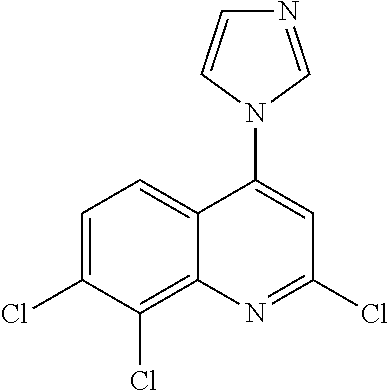
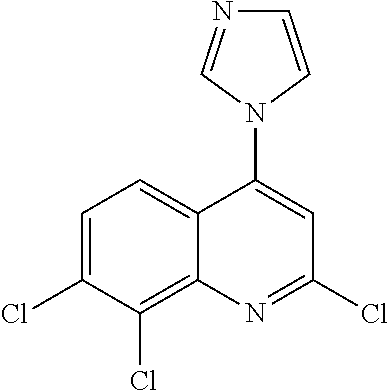
  • At least one occurrence of R 3 is halogen. In some embodiments, at least one occurrence of R 3 is chloro. In some embodiments, n is 2 and both R 3 are chloro. In some embodiments, n is 2 and R 3 is chloro at the 7- and 8-positions with respect to the quinoline ring.
  • R 2 is —NR a R.
  • R 5 is —(CR 2 ) 2-4 OR, —(CR 2 ) 0-5 CO 2 R, —(CR 2 ) 0-5 CONR 2 , —(CR 2 ) 0-4 C(O)NR(CR 2 ) 0-4 CO 2 R, —(CR 2 ) 0-4 C(O)NR(CR 2 ) 0-4 CONR 2 , —(CR 2 ) 0-4 NRC(O)R, —(CR 2 ) 0-4 SO 3 R, —(CR 2 ) 0-4 SO 2 NR 2 , —(CR 2 ) 0-4 OSO 2 NR 2 , —(CR 2 ) 0-4 NRSO 2 R, —(CR 2 ) 0-4 NRSO 2 OR, —(CR 2 ) 0-4 OP(OR) 2 , —(CR 2 ) 0-4 OP(O)(OR) 2 , —(CR 2 ) 0-4 P(O)(
  • R 5 is —(CR 2 ) 2-4 OR, —(CR 2 ) 1-5 CO 2 R, —(CR 2 ) 1-5 CONR 2 , —(CR 2 ) 0-4 C(O)NR(CR 2 ) 0-4 CO 2 R, —(CR 2 ) 0-4 C(O)NR(CR 2 ) 0-4 CONR 2 , —(CR 2 ) 0-4 NRC(O)R, —(CR 2 ) 0-4 SO 3 R, —(CR 2 ) 0-4 SO 2 NR 2 , —(CR 2 ) 0-4 OSO 2 NR 2 , —(CR 2 ) 0-4 NRSO 2 R, —(CR 2 ) 0-4 NRSO 2 OR, —(CR 2 ) 0-4 OP(OR) 2 , —(CR 2 ) 0-4 OP(O)(OR) 2 , —(CR 2 ) 0-4 P(O)(OR)
  • R 5 is —(CH 2 ) 2-4 OH, —(CH 2 ) 2-4 O(CH 2 ) 1-5 CO 2 H, —(CH 2 ) 2-4 O(CH 2 ) 1-5 CO 2 C 1-4 alkyl, —(CH 2 ) 0-3 CH(CH 2 OH) 2 , —(CH 2 ) 2-4 OC 1-4 alkyl, —(CH 2 ) 1-5 CO 2 H, —(CH 2 ) 1-5 CO 2 C 1-4 alkyl, —(CH 2 ) 1-4 CONH 2 , —(CH 2 ) 1-4 CONHC 1-4 alkyl, —(CH 2 ) 1-4 CON(C 1-4 alkyl) 2 , —(CH 2 ) 1-4 C(O)NR a (CH 2 ) 1-4 CO 2 H, —(CH 2 ) 1-4 C(O)NR a (CH 2 ) 1-4 CONH 2 , —(CH 2 ) 1-4 C(O) , —
  • R 5 is —(CH 2 ) 2-4 OH, —(CH 2 ) 2-4 O(CH 2 ) 1-5 CO 2 H, —(CH 2 ) 2-4 O(CH 2 ) 1-5 CO 2 C 1-4 alkyl, —(CH 2 ) 0-3 CH(CH 2 OH) 2 , —(CH 2 ) 1-5 CO 2 H, —(CH 2 ) 1-5 CONH 2 , —(CH 2 ) 1-4 C(O)NR a (CH 2 ) 1-4 CO 2 H, —(CH 2 ) 1-4 C(O)NR a (CH 2 ) 1-4 CONH 2 , —(CH 2 ) 0-4 NR a C(O)(CH 2 ) 1-5 CO 2 H, —(CH 2 ) 0-4 NR a C(O)(CH 2 ) 1-5 CO 2 C 1-4 alkyl, —(CH 2 ) 2-4 SO 3 H, —(CH 2 ) 2-4 SO 3 H,
  • R 2 is
  • m is 1, 2, 3, or 4.
  • Ring B1 is substituted phenyl. In some embodiments, the phenyl is substituted with one or more carboxyl groups.
  • Ring B1 is a 3-carboxyphenyl group that is optionally substituted with one or more R 6 groups.
  • Ring B1 is a 3,5-dicarboxyphenyl group that is optionally substituted with one or more R 6 groups.
  • Ring B1 is a 4- to 10-membered saturated or partially unsaturated monocyclic or bicyclic carbocyclic or heterocyclic ring having 1 to 3 heteroatoms independently selected from nitrogen, oxygen, and sulfur.
  • Ring B1 is a 5- to 6-membered heteroaryl ring having 1 to 4 heteroatoms independently selected from nitrogen, oxygen, and sulfur.
  • R 2 is
  • X is absent (i.e., a bond in the ring), —CR 2 —, —NR—, —O—, —S—, or —SO 2 —; and p is 0, 1, or 2.
  • X is —CR 2 —, —NR—, or —O—.
  • p is 1.
  • m is 1, 2, 3, or 4.
  • each R 6 is independently halogen, —C 1-4 alkyl, —C 1-4 haloalkyl, C 3-6 cycloalkyl, —(CH 2 ) 0-4 CO 2 H, —(CH 2 ) 0-4 CO 2 C 1-4 alkyl, —(CH 2 ) 0-4 CO 2 C 1-4 haloalkyl, —(CH 2 ) 0-4 CONH 2 , —(CH 2 ) 0-4 CONHC 1-4 alkyl, —(CH 2 ) 0-4 CON(C 1-4 alkyl) 2 , —(CH 2 ) 0-4 CO(N-proline), —(CH 2 ) 0-4 C(O)NR a (CH 2 ) 1-4 CO 2 H, —(CH 2 ) 0-4 C(O)NR a (CH 2 ) 1-4 CONH 2 , —(CH 2 ) 0-4 C(O)NR a (CH 2 ) 1-4 CONH 2 ,
  • each R 6 is independently halogen, —C 1-4 alkyl, —C 1-4 haloalkyl, C 3-6 cycloalkyl, —(CH 2 ) 0-4 CO 2 H, —(CH 2 ) 0-4 CO 2 C 1-4 alkyl, —(CH 2 ) 0-4 CO(N-proline), —(CH 2 ) 0-4 C(O)NR a (CH 2 ) 1-4 CO 2 H, —OH, —(CH 2 ) 1-4 OH, —(CH 2 ) 0-4 OC 1-4 alkyl, —(CH 2 ) 0-4 O(CH 2 ) 1-5 CO 2 H, —(CH 2 ) 0-4 O(CH 2 ) 1-5 CO 2 C 1-4 alkyl, —(CH 2 ) 0-4 OC(O)C 1-4 alkyl, —(CH 2 ) 0-4 SO 3 H, —(CH 2 ) 0-4 SO 2
  • R 6 is independently halogen, —C 1-4 alkyl, —C 1-4 haloalkyl, C 3-6 cycloalkyl, —(CH 2 ) 0-2 CO 2 H, —(CH 2 ) 0-2 CO 2 C 1-4 alkyl, —(CH 2 ) 1-4 CO(N-proline), —(CH 2 ) 0-2 C(O)NR a (CH 2 ) 1-4 CO 2 H, —OH, —(CH 2 ) 1-2 OH, —(CH 2 ) 0-2 OC 1-4 alkyl, —(CH 2 ) 0-4 O(CH 2 ) 1-5 CO 2 H, —(CH 2 ) 0-4 O(CH 2 ) 1-5 CO 2 C 1-4 alkyl, —(CH 2 ) 0-2 OC(O)C 1-4 alkyl, —(CH 2 ) 0-2 SO 3 H, —(CH 2 ) 0-2 SO 2 NH 2
  • each R 6 is independently halogen, —C 1-4 alkyl, —C 1-4 haloalkyl, C 3-6 cycloalkyl, —(CH 2 ) 1-4 CO 2 H, —(CH 2 ) 1-4 CO(N-proline), —(CH 2 ) 1-4 C(O)NR a (CH 2 ) 1-4 CO 2 H, —OH, —(CH 2 ) 1-4 OH, —(CH 2 ) 0-4 O(CH 2 ) 1-5 CO 2 H, —(CH 2 ) 0-4 O(CH 2 ) 1-5 CO 2 C 1-4 alkyl, —(CH 2 ) 1-4 SO 3 H, —(CH 2 ) 1-4 SO 2 NH 2 , —(CH 2 ) 1-4 NR a SO 2 C 1-4 alkyl, —(CH 2 ) 1-4 OP(OH) 2 , or —(CR 2 ) 1-4 OP(O)(H)OH.
  • each R 6 is independently halogen, —C 1-4 alkyl, —C 1-4 haloalkyl, —CO 2 H, —CO 2 C 1-4 alkyl, —CO(N-proline), —CH 2 CO 2 H, —OH, —OC 1-4 alkyl, —(CH 2 ) 0-4 O(CH 2 ) 1-5 CO 2 H, —(CH 2 ) 0-4 O(CH 2 ) 1-5 CO 2 C 1-4 alkyl, —OC(O)C 1-4 alkyl, —SO 3 H, —SO 2 NH 2 , —NR a SO 2 C 1-4 alkyl, —OP(OH) 2 , or —OP(O)(H)OH.
  • R 2 is
  • n is 1, 2, 3, or 4. In some embodiments, m is 1 or 2.
  • each R 6 is independently halogen, ⁇ CH 2 , ⁇ O, —C 1-4 alkyl, —C 1-4 haloalkyl, C 3-6 cycloalkyl, —(CH 2 ) 0-4 CO 2 H, —(CH 2 ) 0-4 CO 2 C 1-4 alkyl, —(CH 2 ) 0-4 CO 2 C 1-4 haloalkyl, —(CH 2 ) 0-4 CONH 2 , —(CH 2 ) 0-4 CONHC 1-4 alkyl, —(CH 2 ) 0-4 CON(C 1-4 alkyl) 2 , —(CH 2 ) 0-4 CO(N-proline), —(CH 2 ) 0-4 CO(N-pyrrolidine-3-carboxylic acid), —(CH 2 ) 0-4 C(O)NR a (CH 2 ) 1-4 CO 2 H, —(CH 2 ) 0-4 C(O)NR a —CH
  • each R 6 is independently halogen, ⁇ CH 2 , ⁇ O, —C 1-4 alkyl, —C 1-4 haloalkyl, C 3-6 cycloalkyl, —(CH 2 ) 0-4 CO 2 H, —(CH 2 ) 0-4 CO 2 C 1-4 alkyl, —(CH 2 ) 0-4 CO 2 C 1-4 haloalkyl, —(CH 2 ) 0-4 CO(N-proline), —(CH 2 ) 0-4 CO(N-pyrrolidine-3-carboxylic acid), —(CH 2 ) 0-4 C(O)NR a (CH 2 ) 1-4 CO 2 H, —(CH 2 ) 0-4 C(O)NR a —CH(C 1-4 alkyl)-CO 2 H, —OH, —(CH 2 ) 1-4 OH, —OC 1-4 alkyl, —(CH 2 ) 0-4 O(CH 2 ) 1
  • each R 6 is independently halogen, ⁇ CH 2 , ⁇ O, —C 1-4 alkyl, —C 1-4 haloalkyl, —CO 2 H, —CO 2 C 1-4 alkyl, —CO 2 C 1-4 haloalkyl, —CO(N-proline), —CO(N-pyrrolidine-3-carboxylic acid), —C(O)NR a (CH 2 ) 1-4 CO 2 H, —C(O)NR a —CH(C 1-4 alkyl)-CO 2 H, —OH, —OC 1-4 alkyl, —(CH 2 ) 0-4 O(CH 2 ) 1-5 CO 2 H, —(CH 2 ) 0-4 O(CH 2 ) 1-5 CO 2 C 1-4 alkyl, —NR a C(O)C 1-4 alkyl, —NR a C(O)Ph, —NR a CO(CH 2 ) 1-4 OH, —
  • each R 6 is independently fluoro, ⁇ O, ⁇ CH 2 , methyl, cyclohexyl, morpholinyl, phenyl, —CF 3 , —OMe, —OtBu, —CO 2 H, —CO 2 C 1-4 alkyl, —CO 2 C 1-4 haloalkyl, —(CH 2 ) 1-4 O(CH 2 ) 1-5 CO 2 H, —(CH 2 ) 1-4 O(CH 2 ) 1-5 CO 2 C 1-4 alkyl, or —OH.
  • Ring B1 is a 5- to 6-membered heteroaryl ring having 1 to 4 heteroatoms independently selected from nitrogen, oxygen and sulfur, wherein a carbon atom of the 5- to 6-membered heteroaryl ring is directly bonded to the carbon at the 2-position of the quinolone ring;
  • Ring B1 is imidazole or pyrazole. In some embodiments, the imidazole or pyrazole are unsubstituted.
  • R 2 is
  • R 2 is
  • R 2 is
  • m is 1, 2, 3, or 4.
  • Ring B2 is phenyl
  • Ring B2 is a 4- to 7-membered saturated or partially unsaturated carbocyclic or heterocyclic ring having 1 to 3 heteroatoms independently selected from nitrogen, oxygen, and sulfur.
  • Ring B2 is a 5- to 6-membered heteroaryl ring having 1 to 4 heteroatoms independently selected from nitrogen, oxygen, and sulfur.
  • R 2 is
  • R 2 is
  • R 2 is
  • X is —CR 2 —, —NR—, or —O—.
  • q is 1 or 2.
  • q is 1.
  • m is 1 or 2.
  • each R 6 is independently halogen, —(CH 2 ) 0-4 CO 2 H, —(CH 2 ) 0-4 CO 2 C 1-4 alkyl, —(CH 2 ) 0-4 CONH 2 , —(CH 2 ) 0-4 CONHC 1-4 alkyl, —(CH 2 ) 0-4 CON(C 1-4 alkyl) 2 , —(CH 2 ) 0-4 CO(N-proline), —(CH 2 ) 0-4 C(O)NR a (CH 2 ) 1-4 CO 2 H, —(CH 2 ) 0-4 C(O)NR a (CH 2 ) 1-4 CONH 2 , —(CH 2 ) 0-4 C(O)NR a (CH 2 ) 1-4 CONHC 1-4 alkyl, —(CH 2 ) 0-4 C(O)NR a (CH 2 ) 1-4 CON(C 1-4 alkyl) 2 , —OH, —(CH 2 )
  • each R 6 is independently halogen, —(CH 2 ) 0-4 CO 2 H, —(CH 2 ) 0-4 CO(N-proline), —(CH 2 ) 0-4 C(O)NR a (CH 2 ) 1-4 CO 2 H, —OH, —(CH 2 ) 1-4 OH, —(CH 2 ) 0-4 SO 3 H, —(CH 2 ) 0-4 SO 2 NH 2 , —(CH 2 ) 0-4 NR a SO 2 C 1-4 alkyl, —(CH 2 ) 0-4 OP(OH) 2 , or —(CR 2 ) 0-4 OP(O)(H)OH, wherein R a , independently for each occurrence, is H or C 1-4 alkyl.
  • each R 6 is independently halogen, —CO 2 H, —CO(N-proline), —C(O)NR a (CH 2 ) 1-4 CO 2 H, —OH, —SO 3 H, —SO 2 NH 2 , —NR a SO 2 C 1-4 alkyl, —OP(OH) 2 , or —OP(O)(H)OH, wherein R a , independently for each occurrence, is H or C 1-4 alkyl.
  • R 6 is not R B .
  • m is at least 1, and at least one R 6 includes a terminal —CO 2 H or —CO 2 C 1-4 alkyl group.
  • At least one R 6 is —(CH 2 ) 0-4 O(CH 2 ) 1-5 CO 2 H, —(CH 2 ) 0-4 O(CH 2 ) 1-5 CO 2 C 1-4 alkyl, —(CH 2 ) 0-4 CO 2 H or —(CH 2 ) 0-4 CO 2 C 1-4 alkyl.
  • the present disclosure provides a pharmaceutical composition comprising a compound of formula I* or a pharmaceutically acceptable salt thereof.
  • the present disclosure provides a method of antagonizing cyclic GMP-AMP synthase (cGAS) in a patient in need thereof, comprising administering an effective amount of a compound of formula I* or a pharmaceutically acceptable salt thereof, or a pharmaceutical composition thereof.
  • cGAS antagonizing cyclic GMP-AMP synthase
  • the present disclosure provides a method of treating an inflammatory, allergic, or autoimmune disease in a patient in need thereof, comprising administering an effective amount of a compound of formula I* or a pharmaceutically acceptable salt thereof, or a pharmaceutical composition thereof.
  • the present disclosure provides a compound of formula I or formula I*,
  • R 2 , R 3 , and n is as defined above and described in embodiments herein, both singly and in combination.
  • the present disclosure provides a compound of formula I-a-1, wherein R is independently halogen, such as chloro, including dichloro, including wherein n is 2 and R is chloro at the 7- and 8-positions with respect to the quinoline ring.
  • R is independently halogen, such as chloro, including dichloro, including wherein n is 2 and R is chloro at the 7- and 8-positions with respect to the quinoline ring.
  • the present disclosure provides a compound of formula I-a-1, wherein R 2 is R B , wherein R B is an optionally substituted C 1-6 aliphatic, preferably a substituted C 1-6 aliphatic, such as —(CR 2 ) 1-4 NR(CR 2 ) 0-6 CO 2 R, —(CR 2 ) 1-4 O(CR 2 ) 0-6 CO 2 R, —(CR 2 ) 1-4 CO 2 R, —(CR 2 ) 1-4 OH, —(CR 2 ) 1-4 NH 2 , —(CR 2 ) 1-4 C(O)NH 2 , —(CR 2 ) 1-4 C(O)NHC 1-4 alkyl, or —(CR 2 ) 1-4 C(O)N(C 1-4 alkyl) 2 , particularly —(CR 2 ) 1-4 NR(CR 2 ) 0-6 CO 2 R or —(CR 2 ) 1-4 CO 2 R.
  • R B is an optionally substituted C
  • R 2 is —(CH 2 ) 1-4 NR a (CH 2 ) 0-4 CO 2 R a , such as —(CH 2 ) 1-4 NR a (CH 2 ) 0-4 CO 2 H, wherein R a , independently for each occurrence, is H or C 1-4 alkyl.
  • R 2 is —(CH 2 ) 1-4 N(SO 2 C 1-4 alkyl)(CH 2 ) 0-4 CO 2 R a , such as is —(CH 2 ) 1-4 N(SO 2 C 1-4 alkyl)(CH 2 ) 0-4 CO 2 H, wherein R a , independently for each occurrence, is H or C 1-4 alkyl.
  • R 2 is —(CR 2 ) 1-4 CO 2 R, such as —(CR 2 ) 1-4 CO 2 H, including —(CH 2 ) 1-4 CO 2 H.
  • R 2 includes a terminal —CO 2 H group.
  • R 2 includes a terminal —(CH 2 ) 0-4 CO 2 H group.
  • the present disclosure provides a compound of formula I or formula I*, wherein R 1 is
  • R 2 , R 3 , and n is as defined above and described in embodiments herein, both singly and in combination.
  • the present disclosure provides a compound of formula I-a-2, wherein R 2 is R B , wherein R B is an optionally substituted C 1-6 aliphatic, preferably a substituted C 1-6 aliphatic, such as —(CR 2 ) 1-4 NR(CR 2 ) 0-6 CO 2 R, —(CR 2 ) 1-4 O(CR 2 ) 0-6 CO 2 R, —(CR 2 ) 1-4 CO 2 R, —(CR 2 ) 1-4 OH, —(CR 2 ) 1-4 NH 2 , —(CR 2 ) 1-4 C(O)NH 2 , —(CR 2 ) 1-4 C(O)NHC 1-4 alkyl, or —(CR 2 ) 1-4 C(O)N(C 1-4 alkyl) 2 , particularly —(CR 2 ) 1-4 NR(CR 2 ) 0-6 CO 2 R or —(CR 2 ) 1-4 CO 2 R.
  • R B is an optionally substituted C
  • R 2 is —(CH 2 ) 1-4 NR a (CH 2 ) 0-4 CO 2 R a , such as —(CH 2 ) 1-4 NR a (CH 2 ) 0-4 CO 2 H, wherein R a , independently for each occurrence, is H or C 1-4 alkyl.
  • R 2 is —(CH 2 ) 1-4 N(SO 2 C 1-4 alkyl)(CH 2 ) 0-4 CO 2 R, such as is —(CH 2 ) 1-4 N(SO 2 C 1-4 alkyl)(CH 2 ) 0-4 CO 2 H, wherein R a , independently for each occurrence, is H or C 1-4 alkyl.
  • R 2 is —(CR 2 ) 1-4 CO 2 R, such as —(CR 2 ) 1-4 CO 2 H, including —(CH 2 ) 1-4 CO 2 H.
  • R 2 includes a terminal —CO 2 H group.
  • R 2 includes a terminal —(CH 2 ) 0-4 CO 2 H group.
  • the present disclosure provides a compound of formula I-a-2, wherein R 3 is independently halogen, such as chloro, including dichloro, including wherein n is 2 and R 3 is chloro at the 7- and 8-positions with respect to the quinoline ring.
  • R 3 is independently halogen, such as chloro, including dichloro, including wherein n is 2 and R 3 is chloro at the 7- and 8-positions with respect to the quinoline ring.
  • the present disclosure provides a compound of formula I or formula I*, wherein R 1 is —NR 2 thereby forming a compound of formula I-a-3:
  • each of R, R 2 , R 3 , and n is as defined above and described in embodiments herein, both singly and in combination.
  • the present disclosure provides a compound of formula I-a-3, wherein R 3 is independently halogen, such as chloro, including dichloro, including wherein n is 2 and R 3 is chloro at the 7- and 8-positions with respect to the quinoline ring.
  • R 3 is independently halogen, such as chloro, including dichloro, including wherein n is 2 and R 3 is chloro at the 7- and 8-positions with respect to the quinoline ring.
  • the present disclosure provides a compound of formula I or formula I*, wherein R 1 is
  • the present disclosure provides a compound of formula I-a-4, wherein R 2 is R B , wherein R B is an optionally substituted C 1-6 aliphatic, preferably a substituted C 1-6 aliphatic, such as —(CR 2 ) 1-4 NR(CR 2 ) 0-6 CO 2 R, —(CR 2 ) 1-4 O(CR 2 ) 0-6 CO 2 R, —(CR 2 ) 1-4 CO 2 R, —(CR 2 ) 1-4 OH, —(CR 2 ) 1-4 NH 2 , —(CR 2 ) 1-4 C(O)NH 2 , —(CR 2 ) 1-4 C(O)NHC 1-4 alkyl, or —(CR 2 ) 1-4 C(O)N(C 1-4 alkyl) 2 , particularly —(CR 2 ) 1-4 NR(CR 2 ) 0-6 CO 2 R or —(CR 2 ) 1-4 CO 2 R.
  • R B is an optionally substituted C
  • R 2 is —(CH 2 ) 1-4 NR a (CH 2 ) 0-4 CO 2 R a , such as —(CH 2 ) 1-4 NR a (CH 2 ) 0-4 CO 2 H, wherein R a , independently for each occurrence, is H or C 1-4 alkyl.
  • R 2 is —(CH 2 ) 1-4 N(SO 2 C 1-4 alkyl)(CH 2 ) 0-4 CO 2 R a , such as is —(CH 2 ) 1-4 N(SO 2 C 1-4 alkyl)(CH 2 ) 0-4 CO 2 H, wherein R a , independently for each occurrence, is H or C 1-4 alkyl.
  • R 2 is —(CR 2 ) 1-4 CO 2 R, such as —(CR 2 ) 1-4 CO 2 H, including —(CH 2 ) 1-4 CO 2 H.
  • R 2 includes a terminal —CO 2 H group.
  • R 2 includes a terminal —(CH 2 ) 0-4 CO 2 H group.
  • the present disclosure provides a compound of formula I-a-4, wherein R 3 is independently halogen, such as chloro, including dichloro, including wherein n is 2 and R 3 is chloro at the 7- and 8-positions with respect to the quinoline ring.
  • R 3 is independently halogen, such as chloro, including dichloro, including wherein n is 2 and R 3 is chloro at the 7- and 8-positions with respect to the quinoline ring.
  • the present disclosure provides a compound of formula I or formula I*, wherein R 1 is
  • the present disclosure provides a compound of formula I-a-5, wherein R and R 4 in
  • the present disclosure provides a compound of formula I-a-5, wherein R 3 is independently halogen, such as chloro, including dichloro, including wherein n is 2 and R is chloro at the 7- and 8-positions with respect to the quinoline ring.
  • R 3 is independently halogen, such as chloro, including dichloro, including wherein n is 2 and R is chloro at the 7- and 8-positions with respect to the quinoline ring.
  • the present disclosure provides a compound of formula I or formula I*, wherein R 2 is —NR 2 thereby forming a compound of formula I-b-1:
  • each of R, R 1 , R 3 , and n is as defined above and described in embodiments herein, both singly and in combination.
  • the present disclosure provides a compound of formula I-b-1, wherein R 3 is independently halogen, such as chloro, including dichloro, including wherein n is 2 and R 3 is chloro at the 7- and 8-positions with respect to the quinoline ring.
  • R 3 is independently halogen, such as chloro, including dichloro, including wherein n is 2 and R 3 is chloro at the 7- and 8-positions with respect to the quinoline ring.
  • the present disclosure provides a compound of formula I or formula I*, wherein R 2 is —NRR 5 thereby forming a compound of formula I-b-2:
  • the present disclosure provides a compound of formula I-b-2, wherein R 5 is —(CR 2 ) 2-4 OR, —(CR 2 ) 1-4 CO 2 R, —(CR 2 ) 1-4 CONR 2 , —(CR 2 ) 0-6 C(O)NR(CR 2 ) 0-6 CO 2 R, —(CR 2 ) 0-6 C(O)NR(CR 2 ) 0-6 CONR 2 , —(CR 2 ) 0-4 NRC(O)R, —(CR 2 ) 0-6 SO 3 R, —(CR 2 ) 0-6 SO 2 NR 2 , —(CR 2 ) 0-6 OSO 2 NR 2 , —(CR 2 ) 0-6 NRSO 2 R, —(CR 2 ) 0-6 NRSO 2 OR, —(CR 2 ) 0-6 OP(OR) 2 , —(CR 2 ) 0-6 OP(O)(OR) 2 ,
  • the present disclosure provides a compound of formula I-b-2, wherein R 5 is not R B .
  • the present disclosure provides a compound of formula I-b-2, wherein R in —NRR 5 is R a , which is H or C 1-6 alkyl.
  • the present disclosure provides a compound of formula I-b-2, wherein R 3 is independently halogen, such as chloro, including dichloro, including wherein n is 2 and R 3 is chloro at the 7- and 8-positions with respect to the quinoline ring.
  • R 3 is independently halogen, such as chloro, including dichloro, including wherein n is 2 and R 3 is chloro at the 7- and 8-positions with respect to the quinoline ring.
  • the present disclosure provides a compound of formula I-b-2, wherein:
  • the present disclosure provides a compound of formula I-b-2, wherein:
  • the present disclosure provides a compound of formula I-b-2, wherein:
  • R 5 includes a terminal —CO 2 H group.
  • R 5 includes a terminal—(CH 2 ) 0-4 CO 2 H group.
  • the present disclosure provides a compound of formula I or formula I*, wherein R 2 is
  • the present disclosure provides a compound of formula I-b-3, wherein Ring B1 is phenyl, particularly substituted phenyl. In other embodiments, Ring B1 is not phenyl.
  • Ring B1 may be a 4- to 10-membered saturated or partially unsaturated monocyclic or bicyclic carboxylic or heterocyclic ring having 1 to 3 heteroatoms independently selected from nitrogen, oxygen, phosphorus, and sulfur.
  • Ring B1 is a 5- to 6-membered heteroaryl ring having 1 to 4 heteroatoms independently selected from nitrogen, oxygen, phosphorus, and sulfur.
  • the present disclosure provides a compound of formula I-b-3, wherein R 6 is not R B .
  • the present disclosure provides a compound of formula I-b-3, wherein R 3 is independently halogen, such as chloro, including dichloro, including wherein n is 2 and R 3 is chloro at the 7- and 8-positions with respect to the quinoline ring.
  • R 3 is independently halogen, such as chloro, including dichloro, including wherein n is 2 and R 3 is chloro at the 7- and 8-positions with respect to the quinoline ring.
  • m is 1 or 2
  • at least one R 6 includes a terminal —CO 2 H group.
  • at least one R 6 is —(CH 2 ) 0-4 CO 2 H.
  • the present disclosure provides a compound of formula I or formula I*, wherein R 2 is
  • the present disclosure provides a compound of formula I-b-4, wherein R 6 is not R B .
  • the present disclosure provides a compound of formula I-b-4, wherein R 3 is independently halogen, such as chloro, including dichloro, including wherein n is 2 and R 3 is chloro at the 7- and 8-positions with respect to the quinoline ring.
  • R 3 is independently halogen, such as chloro, including dichloro, including wherein n is 2 and R 3 is chloro at the 7- and 8-positions with respect to the quinoline ring.
  • m is 1 or 2
  • at least one R 6 includes a terminal —CO 2 H group.
  • at least one R 6 is —(CH 2 ) 0-4 CO 2 H.
  • the present disclosure provides a compound of formula I or formula I*, wherein R 2 is
  • the present disclosure provides a compound of formula I-b-5, wherein R 6 is not R B .
  • the present disclosure provides a compound of formula I-b-5, wherein R 3 is independently halogen, such as chloro, including dichloro, including wherein n is 2 and R 3 is chloro at the 7- and 8-positions with respect to the quinoline ring.
  • R 3 is independently halogen, such as chloro, including dichloro, including wherein n is 2 and R 3 is chloro at the 7- and 8-positions with respect to the quinoline ring.
  • the present disclosure provides a compound of formula I-b-5, wherein:
  • the present disclosure provides a compound of formula I-b-5, wherein:
  • the present disclosure provides a compound of formula I-b-5, wherein:
  • m is 1 or 2
  • at least one R 6 includes a terminal —CO 2 H group.
  • at least one R 6 is —(CH 2 ) 0-4 CO 2 H.
  • the present disclosure provides a compound of formula I or formula I*, wherein R 2 is
  • the present disclosure provides a compound of formula I-b-6, wherein R 6 is not R B .
  • the present disclosure provides a compound of formula I-b-6, wherein R 3 is independently halogen, such as chloro, including dichloro, including wherein n is 2 and R 3 is chloro at the 7- and 8-positions with respect to the quinoline ring.
  • R 3 is independently halogen, such as chloro, including dichloro, including wherein n is 2 and R 3 is chloro at the 7- and 8-positions with respect to the quinoline ring.
  • the present disclosure provides a compound of formula I-b-6, wherein:
  • the present disclosure provides a compound of formula I-b-6, wherein:
  • the present disclosure provides a compound of formula I-b-6, wherein:
  • m is 1 or 2
  • at least one R 6 includes a terminal —CO 2 H group.
  • at least one R 6 is —(CH 2 ) 0-4 CO 2 H.
  • the present disclosure provides a compound of formula I or formula I*, wherein R 2 is
  • the present disclosure provides a compound of formula I-b-7, wherein Ring B2 is phenyl, particularly substituted phenyl. In other embodiments, Ring B2 is not phenyl.
  • Ring B2 may be a 4- to 10-membered saturated or partially unsaturated monocyclic or bicyclic carboxylic or heterocyclic ring having 1 to 3 heteroatoms independently selected from nitrogen, oxygen, phosphorus, and sulfur.
  • Ring B2 is a 5- to 6-membered heteroaryl ring having 1 to 4 heteroatoms independently selected from nitrogen, oxygen, phosphorus, and sulfur.
  • the present disclosure provides a compound of formula I-b-7, wherein R 6 is not R B .
  • the present disclosure provides a compound of formula I-b-7, wherein R in
  • R a which is H or C 1-6 alkyl.
  • the present disclosure provides a compound of formula I-b-7, wherein R 3 is independently halogen, such as chloro, including dichloro, including wherein n is 2 and R 3 is chloro at the 7- and 8-positions with respect to the quinoline ring.
  • R 3 is independently halogen, such as chloro, including dichloro, including wherein n is 2 and R 3 is chloro at the 7- and 8-positions with respect to the quinoline ring.
  • m is 1 or 2
  • at least one R 6 includes a terminal —CO 2 H group.
  • at least one R 6 is —(CH 2 ) 0-4 CO 2 H.
  • the present disclosure provides a compound of formula I or formula I*, wherein R 2 is
  • the present disclosure provides a compound of formula I-b-8 or formula I-b-8*, wherein R 6 is not R B .
  • the present disclosure provides a compound of formula I-b-8 or formula I-b-8*, wherein R in
  • R a which is H or C 1-6 alkyl.
  • the present disclosure provides a compound of formula I-b-8 or formula I-b-8*, wherein R 3 is independently halogen, such as chloro, including dichloro, including wherein n is 2 and R 3 is chloro at the 7- and 8-positions with respect to the quinoline ring.
  • R 3 is independently halogen, such as chloro, including dichloro, including wherein n is 2 and R 3 is chloro at the 7- and 8-positions with respect to the quinoline ring.
  • the present disclosure provides a compound of formula I-b-8 or formula I-b-8*, wherein:
  • the present disclosure provides a compound of formula I-b-8 or formula I-b-8*, wherein:
  • the present disclosure provides a compound of formula I-b-8 or formula I-b-8*, wherein:
  • m is 1 or 2
  • at least one R 6 includes a terminal —CO 2 H group.
  • at least one R 6 is —(CH 2 ) 0-4 CO 2 H.
  • the present disclosure provides a compound of formula I or formula I*, wherein R 2 is
  • each of R, R 1 , R 3 , and n is as defined above and described in embodiments herein, both singly and in combination.
  • the present disclosure provides a compound of formula I-b-9, wherein R 3 is independently halogen, such as chloro, including dichloro, including wherein n is 2 and R 3 is chloro at the 7- and 8-positions with respect to the quinoline ring.
  • R 3 is independently halogen, such as chloro, including dichloro, including wherein n is 2 and R 3 is chloro at the 7- and 8-positions with respect to the quinoline ring.
  • the present disclosure provides a compound of formula I-b-9, wherein:
  • the present disclosure provides a compound of formula I-b-9, wherein:
  • the present disclosure provides a compound of formula I-b-9, wherein:
  • the present disclosure provides a compound of formula I or formula I*, wherein at least one R 3 is halogen, such as chloro at the 8-position, thereby forming a compound of formula I-c-1:
  • R 1 , R 2 , and R is as defined above and described in embodiments herein, and n is 0, 1, 2, or 3, both singly and in combination.
  • the present disclosure provides a compound of formula I or formula I*, wherein n is 2 and R is chloro at the 7- and 8-positions, thereby forming a compound of formula I-c-2:
  • R 1 and R 2 are as defined above and described in embodiments herein, both singly and in combination.
  • the present disclosure provides a compound of formula I or formula I*, wherein R 1 is
  • R 2 is —NR 2 , thereby forming a compound of formula I-d-1:
  • each of R, R 3 , and n is as defined above and described in embodiments herein, both singly and in combination.
  • the present disclosure provides a compound of formula I-d-1, wherein R 3 is independently halogen, such as chloro, including dichloro, including wherein n is 2 and R 3 is chloro at the 7- and 8-positions with respect to the quinoline ring.
  • R 3 is independently halogen, such as chloro, including dichloro, including wherein n is 2 and R 3 is chloro at the 7- and 8-positions with respect to the quinoline ring.
  • the present disclosure provides a compound of formula I or formula I*, wherein R 1 is
  • R 2 is —NRR 5 , thereby forming a compound of formula I-d-2:
  • the present disclosure provides a compound of formula I-d-2, wherein R 5 is —(CR 2 ) 2-4 OR, —(CR 2 ) 1-4 CO 2 R, —(CR 2 ) 1-4 CONR 2 , —(CR 2 ) 0-6 C(O)NR(CR 2 ) 0-6 CO 2 R, —(CR 2 ) 0-6 C(O)NR(CR 2 ) 0-6 CONR 2 , —(CR 2 ) 0-4 NR a C(O)R, —(CR 2 ) 0-6 SO 3 R, —(CR 2 ) 0-6 SO 2 NR 2 , —(CR 2 ) 0-6 OSO 2 NR 2 , —(CR 2 ) 0-6 NRSO 2 R, —(CR 2 ) 0-6 NRSO 2 OR, —(CR 2 ) 0-6 OP(OR) 2 , —(CR 2 ) 0-6 OP(O)(OR) 2 , —
  • the present disclosure provides a compound of formula I-d-2, wherein R 5 is not R B .
  • the present disclosure provides a compound of formula I-d-2, wherein R in —NRR 5 is R a , which is H or C 1-6 alkyl.
  • the present disclosure provides a compound of formula I-d-2, wherein R 3 is independently halogen, such as chloro, including dichloro, including wherein n is 2 and R 3 is chloro at the 7- and 8-positions with respect to the quinoline ring.
  • R 3 is independently halogen, such as chloro, including dichloro, including wherein n is 2 and R 3 is chloro at the 7- and 8-positions with respect to the quinoline ring.
  • the present disclosure provides a compound of formula I-d-2, wherein:
  • the present disclosure provides a compound of formula I-d-2, wherein:
  • R 5 includes a terminal —CO 2 H group.
  • R 5 includes a terminal —(CH 2 ) 0-4 CO 2 H group.
  • the present disclosure provides a compound of formula I or formula I*, wherein R 1 is
  • the present disclosure provides a compound of formula I-d-3, wherein Ring B1 is phenyl, particularly substituted phenyl. In other embodiments, Ring B1 is not phenyl.
  • Ring B1 may be a 4- to 10-membered saturated or partially unsaturated monocyclic or bicyclic carboxylic or heterocyclic ring having 1 to 3 heteroatoms independently selected from nitrogen, oxygen, phosphorus, and sulfur.
  • Ring B1 is a 5- to 6-membered heteroaryl ring having 1 to 4 heteroatoms independently selected from nitrogen, oxygen, phosphorus, and sulfur.
  • the present disclosure provides a compound of formula I-d-3, wherein R 6 is not R B .
  • the present disclosure provides a compound of formula I-d-3, wherein R 3 is independently halogen, such as chloro, including dichloro, including wherein n is 2 and R 3 is chloro at the 7- and 8-positions with respect to the quinoline ring.
  • R 3 is independently halogen, such as chloro, including dichloro, including wherein n is 2 and R 3 is chloro at the 7- and 8-positions with respect to the quinoline ring.
  • m is 1 or 2
  • at least one R 6 includes a terminal —CO 2 H group.
  • at least one R 6 is —(CH 2 ) 0-4 CO 2 H.
  • the present disclosure provides a compound of formula I or formula I*, wherein R 1 is
  • the present disclosure provides a compound of formula I-d-4, wherein R 6 is not R B .
  • the present disclosure provides a compound of formula I-d-4, wherein R 3 is independently halogen, such as chloro, including dichloro, including wherein n is 2 and R 3 is chloro at the 7- and 8-positions with respect to the quinoline ring.
  • R 3 is independently halogen, such as chloro, including dichloro, including wherein n is 2 and R 3 is chloro at the 7- and 8-positions with respect to the quinoline ring.
  • m is 1 or 2
  • at least one R 6 includes a terminal —CO 2 H group.
  • at least one R 6 is —(CH 2 ) 0-4 CO 2 H.
  • the present disclosure provides a compound of formula I or formula I*, wherein R 1 is
  • the present disclosure provides a compound of formula I-d-5, wherein R 6 is not R B .
  • the present disclosure provides a compound of formula I-d-5, wherein R 3 is independently halogen, such as chloro, including dichloro, including wherein n is 2 and R 3 is chloro at the 7- and 8-positions with respect to the quinoline ring.
  • R 3 is independently halogen, such as chloro, including dichloro, including wherein n is 2 and R 3 is chloro at the 7- and 8-positions with respect to the quinoline ring.
  • the present disclosure provides a compound of formula I-d-5, wherein:
  • the present disclosure provides a compound of formula I-b-5, wherein:
  • the present disclosure provides a compound of formula I-b-5, wherein each R 6 is independently fluoro, -methyl, -methoxy, —(CH 2 ) 1-5 CO 2 H, —(CH 2 ) 1-5 CO 2 C 1-4 alkyl, —(CH 2 ) 0-4 O(CH 2 ) 1-5 CO 2 H, —(CH 2 ) 0-4 O(CH 2 ) 1-5 CO 2 C 1-4 alkyl, or —OH; and m is 1, 2, or 3, particularly 1 or 2.
  • m is 1 or 2
  • at least one R 6 includes a terminal —CO 2 H group.
  • at least one R 6 is —(CH 2 ) 0-4 CO 2 H.
  • the present disclosure provides a compound of formula I or formula I*, wherein R 1 is
  • the present disclosure provides a compound of formula I-d-6, wherein R 6 is not R B .
  • the present disclosure provides a compound of formula I-d-6, wherein R 3 is independently halogen, such as chloro, including dichloro, including wherein n is 2 and R 3 is chloro at the 7- and 8-positions with respect to the quinoline ring.
  • R 3 is independently halogen, such as chloro, including dichloro, including wherein n is 2 and R 3 is chloro at the 7- and 8-positions with respect to the quinoline ring.
  • the present disclosure provides a compound of formula I-d-6, wherein:
  • the present disclosure provides a compound of formula I-d-6, wherein:
  • the present disclosure provides a compound of formula I-d-6, wherein:
  • the present disclosure provides a compound of formula I-d-6, wherein each R 6 is independently fluoro, -methyl, cyclohexyl, -methoxy, —OtBu, —CF 3 , —(CH 2 ) 1-5 CO 2 H, —(CH 2 ) 1-5 CO 2 C 1-4 alkyl, —(CH 2 ) 0-4 O(CH 2 ) 1-5 CO 2 H, —(CH 2 ) 0-4 O(CH 2 ) 1-5 CO 2 C 1-4 alkyl, or —OH; and m is 1, 2, or 3, particularly 1 or 2.
  • m is 1 or 2
  • at least one R 6 includes a terminal —CO 2 H group.
  • at least one R 6 is —(CH 2 ) 0-4 CO 2 H.
  • the present disclosure provides a compound of formula I or formula I*, wherein R 1 is
  • the present disclosure provides a compound of formula I-d-7, wherein Ring B2 is phenyl, particularly substituted phenyl. In other embodiments, Ring B2 is not phenyl.
  • Ring B2 may be a 4- to 10-membered saturated or partially unsaturated monocyclic or bicyclic carboxylic or heterocyclic ring having 1 to 3 heteroatoms independently selected from nitrogen, oxygen, phosphorus, and sulfur.
  • Ring B2 is a 5- to 6-membered heteroaryl ring having 1 to 4 heteroatoms independently selected from nitrogen, oxygen, phosphorus, and sulfur.
  • the present disclosure provides a compound of formula I-d-7, wherein R 6 is not R B .
  • the present disclosure provides a compound of formula I-d-7, wherein R in
  • R a which is H or C 1-6 alkyl.
  • the present disclosure provides a compound of formula I-d-7, wherein R 3 is independently halogen, such as chloro, including dichloro, including wherein n is 2 and R 3 is chloro at the 7- and 8-positions with respect to the quinoline ring.
  • R 3 is independently halogen, such as chloro, including dichloro, including wherein n is 2 and R 3 is chloro at the 7- and 8-positions with respect to the quinoline ring.
  • m is 1 or 2
  • at least one R 6 includes a terminal —CO 2 H group.
  • at least one R 6 is —(CH 2 ) 0-4 CO 2 H.
  • the present disclosure provides a compound of formula I or formula I*, wherein R 1 is
  • the present disclosure provides a compound of formula I-d-8 or formula I-d-8*, wherein R 6 is not R B .
  • the present disclosure provides a compound of formula I-d-8 or formula I-d-8*, wherein R in
  • R a which is H or C 1-6 alkyl.
  • the present disclosure provides a compound of formula I-d-8 or formula I-d-8*, wherein R 3 is independently halogen, such as chloro, including dichloro, including wherein n is 2 and R 3 is chloro at the 7- and 8-positions with respect to the quinoline ring.
  • R 3 is independently halogen, such as chloro, including dichloro, including wherein n is 2 and R 3 is chloro at the 7- and 8-positions with respect to the quinoline ring.
  • the present disclosure provides a compound of formula I-d-8 or formula I-d-8*, wherein:
  • the present disclosure provides a compound of formula I-d-8 or formula I-d-8*, wherein:
  • the present disclosure provides a compound of formula I-d-8 or formula I-d-8*, wherein:
  • m is 1 or 2
  • at least one R 6 includes a terminal —CO 2 H group.
  • at least one R 6 is —(CH 2 ) 0-4 CO 2 H.
  • the present disclosure provides a compound of formula I or formula I*, wherein R 1 is
  • each of R, R 1 , R 3 , and n is as defined above and described in embodiments herein, both singly and in combination.
  • the present disclosure provides a compound of formula I-d-9, wherein R 3 is independently halogen, such as chloro, including dichloro, including wherein n is 2 and R 3 is chloro at the 7- and 8-positions with respect to the quinoline ring.
  • R 3 is independently halogen, such as chloro, including dichloro, including wherein n is 2 and R 3 is chloro at the 7- and 8-positions with respect to the quinoline ring.
  • the present disclosure provides a compound of formula I or formula I*, wherein R 1 is
  • the present disclosure provides a compound of formula I-d-10, wherein Ring C is azetidinyl, pyrrolyl, 2,3-dihydro-1H-pyrrolyl, pyrrolidinyl, piperidinyl, morpholinyl, thiazolidinyl, indolinyl, isoindolinyl, octahydroindolyl, azepanyl, an oxazepane, an azabicyclohexane, an azabicycloheptane, an azabicyclooctane, an azabicyclononane, an azaspiroheptane, or an octahydrocyclicpentapyrrole.
  • the present disclosure provides a compound of formula I-d-10, wherein Ring C is pyrrolyl, 2-azabicyclo[3.1.0]hexanyl, 3-azabicyclo[3.1.0]hexane, 5-azaspiro[2.4]heptanyl, or octahydrocyclopenta[b]pyrrolyl.
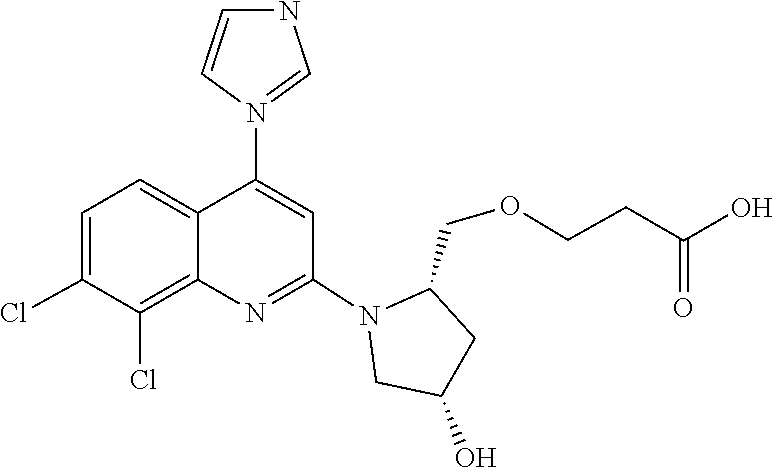
  • the present disclosure provides a compound of formula I-d-10, wherein Ring C is 3-hydroxyproline, C 1-6 alkyl 3-hydroxyproline ester, or C 1-6 haloalkyl 3-hydroxyproline ester.
  • the present disclosure provides a compound of formula I-d-10, wherein:
  • the present disclosure provides a compound of formula I-d-10, wherein each R 6 is independently fluoro, -methyl, cyclohexyl, —CF 3 , —CO 2 H, —CO 2 C 1-4 alkyl, —CO 2 C 1-4 haloalkyl, or —OH; and m is 1, 2, or 3, particularly 1 or 2.
  • the present disclosure provides a compound of formula I-d-10, wherein each R 6 is independently fluoro, -methyl, cyclohexyl, —CF 3 , -methoxy, —(CH 2 ) 1-5 CO 2 H, —(CH 2 ) 1-5 CO 2 C 1-4 alkyl, —(CH 2 ) 0-4 O(CH 2 ) 1-5 CO 2 H, —(CH 2 ) 0-4 O(CH 2 ) 1-5 CO 2 C 1-4 alkyl, or —OH; and m is 1, 2, or 3, particularly 1 or 2.
  • the present disclosure provides a compound of formula I-d-10, wherein R 3 is independently halogen, such as chloro, including dichloro, including wherein n is 2 and R 3 is chloro at the 7- and 8-positions with respect to the quinoline ring.
  • R 3 is independently halogen, such as chloro, including dichloro, including wherein n is 2 and R 3 is chloro at the 7- and 8-positions with respect to the quinoline ring.
  • the present disclosure provides a compound of formula I or formula I*, wherein R 1 is
  • R 3 is chloro at the 7- and 8-positions thereby forming a compound of formula I-d-11:
  • the present disclosure provides a compound of formula I-d-11, wherein:
  • the present disclosure provides a compound of formula I-d-11, wherein each R 6 is independently fluoro, ⁇ O, ⁇ CH 2 , -methyl, cyclohexyl, —CF 3 , —CO 2 H, —CO 2 C 1-4 alkyl, —CO 2 C 1-4 haloalkyl, or —OH; m is 1, 2, or 3, particularly 1 or 2.
  • the present disclosure provides a compound of formula I-d-11, wherein each R 6 is independently fluoro, ⁇ O, ⁇ CH 2 , -methyl, cyclohexyl, —CF 3 , -methoxy, —OtBu, —(CH 2 ) 1-5 CO 2 H, —(CH 2 ) 1-5 CO 2 C 1-4 alkyl, —(CH 2 ) 0-4 O(CH 2 ) 1-5 CO 2 H, —(CH 2 ) 0-4 O(CH 2 ) 1-5 CO 2 C 1-4 alkyl, —(CH 2 ) 1-4 O(CH 2 ) 1-5 CONR a 2 , or —OH; and m is 1, 2, or 3, particularly 1 or 2.
  • the present disclosure provides a compound of formula I or formula I*, wherein R 1 is
  • R 2 is —NRR 5
  • R 3 is chloro at the 7- and 8-positions thereby forming a compound of formula I-d-12:
  • the present disclosure provides a compound of formula I-d-12, wherein R 5 is not R B .
  • the present disclosure provides a compound of formula I-d-12, wherein R 5 is —(CH 2 ) 2-4 OH, —(CH 2 ) 2-4 O(CH 2 ) 1-5 CO 2 H, —(CH 2 ) 2-4 O(CH 2 ) 1-5 CO 2 C 1-4 alkyl, —(CH 2 ) 0-3 CH(CH 2 OH) 2 , —(CH 2 ) 2-4 OC 1-4 alkyl, —(CH 2 ) 1-4 CO 2 H, —(CH 2 ) 1-4 CO 2 C 1-4 alkyl, —(CH 2 ) 1-4 CONH 2 , —(CH 2 ) 1-4 CONHC 1-4 alkyl, —(CH 2 ) 1-4 CON(C 1-4 alkyl) 2 , —(CH 2 ) 1-4 C(O)NR a (CH 2 ) 1-4 CO 2 H, —(CH 2 ) 1-4 C(O)NR a (CHMe)CO 2 H,
  • the present disclosure provides a compound of formula I-d-12, wherein R in —NRR 5 is R a , which is H or C 1-6 alkyl, particularly methyl.
  • the present disclosure provides a compound of formula I or formula I*, wherein
  • the present disclosure provides a compound of formula I-d-13, wherein Ring C is azetidinyl, pyrrolyl, 2,3-dihydro-1H-pyrrolyl, pyrrolidinyl, piperidinyl, morpholinyl, thiazolidinyl, indolinyl, isoindolinyl, octahydroindolyl, azepanyl, an oxazepane, an azabicyclohexane, an azabicycloheptane, an azabicyclooctane, an azabicyclononane, an azaspiroheptane, or an octahydrocyclicpentapyrrole.
  • the present disclosure provides a compound of formula I-d-13, wherein each R is independently fluoro, -methyl, ⁇ O, ⁇ CH 2 , -cyclohexyl, phenyl, morpholinyl, —OMe, —OtBu, —CF 3 , —CO 2 H, —CO 2 C 1-4 alkyl, —CO 2 C 1-4 haloalkyl, or —OH; and m is 0 or 1, or 2, particularly 0 or 1.
  • the present disclosure provides a compound of formula I-d-13, wherein R 3 is independently halogen, such as chloro, including dichloro, including wherein n is 2 and R 3 is chloro at the 7- and 8-positions with respect to the quinoline ring.
  • R 3 is independently halogen, such as chloro, including dichloro, including wherein n is 2 and R 3 is chloro at the 7- and 8-positions with respect to the quinoline ring.
  • the present disclosure provides a compound of formula I or formula I*, wherein R 1 is
  • R 3 is halogen, such as chloro at the 8-position, thereby forming a compound of formula I-e-1:
  • each of R 2 and R 3 is as defined above and described in embodiments herein, and n is 0, 1, 2, or 3, both singly and in combination.
  • the present disclosure provides a compound of formula I or formula I*, wherein R 1 is
  • n 2
  • R 3 is chloro at the 7- and 8-positions, thereby forming a compound of formula I-e-2:
  • R 2 is defined above and described in embodiments herein.
  • the present disclosure provides a compound of formula I or formula I*, wherein R 1 is
  • R 2 is —NR 2 , thereby forming a compound of formula I-f-1:
  • each of R, R 3 , and n is as defined above and described in embodiments herein, both singly and in combination.
  • the present disclosure provides a compound of formula I-f-1, wherein R 3 is independently halogen, such as chloro, including dichloro, including wherein n is 2 and R is chloro at the 7- and 8-positions with respect to the quinoline ring.
  • R 3 is independently halogen, such as chloro, including dichloro, including wherein n is 2 and R is chloro at the 7- and 8-positions with respect to the quinoline ring.
  • the present disclosure provides a compound of formula I or formula I*, wherein R 1 is
  • R 2 is —NR 2 , thereby forming a compound of formula I-f-2:
  • the present disclosure provides a compound of formula I-f-2, wherein R 5 is —(CR 2 ) 2-4 OR, —(CR 2 ) 1-4 CO 2 R, —(CR 2 ) 1-4 CONR 2 , —(CR 2 ) 0-6 C(O)NR(CR 2 ) 0-6 CO 2 R, —(CR 2 ) 0-6 C(O)NR(CR 2 ) 0-6 CONR 2 , —(CR 2 ) 0-4 NRC(O)R, —(CR 2 ) 0-6 SO 3 R, —(CR 2 ) 0-6 SO 2 NR 2 , —(CR 2 ) 0-6 OSO 2 NR 2 , —(CR 2 ) 0-6 NRSO 2 R, —(CR 2 ) 0-6 NRSO 2 OR, —(CR 2 ) 0-6 OP(OR) 2 , —(CR 2 ) 0-6 OP(O)(OR) 2 , —(CR 2
  • the present disclosure provides a compound of formula I-f-2, wherein R 5 is not R B .
  • the present disclosure provides a compound of formula I-f-2, wherein R in —NRR 5 is R a , which is H or C 1-6 alkyl.
  • the present disclosure provides a compound of formula I-f-2, wherein R 3 is independently halogen, such as chloro, including dichloro, including wherein n is 2 and R 3 is chloro at the 7- and 8-positions with respect to the quinoline ring.
  • R 3 is independently halogen, such as chloro, including dichloro, including wherein n is 2 and R 3 is chloro at the 7- and 8-positions with respect to the quinoline ring.
  • the present disclosure provides a compound of formula I-f-2, wherein:
  • the present disclosure provides a compound of formula I-f-2, wherein:
  • R 5 includes a terminal —CO 2 H group.
  • R 5 includes a terminal —(CH 2 ) 0-4 CO 2 H group.
  • the present disclosure provides a compound of formula I or formula I*, wherein R 1 is
  • the present disclosure provides a compound of formula I-f-3, wherein Ring B1 is phenyl, particularly substituted phenyl. In other embodiments, Ring B1 is not phenyl.
  • Ring B1 may be a 4- to 10-membered saturated or partially unsaturated monocyclic or bicyclic carboxylic or heterocyclic ring having 1 to 3 heteroatoms independently selected from nitrogen, oxygen, phosphorus, and sulfur.
  • Ring B1 is a 5- to 6-membered heteroaryl ring having 1 to 4 heteroatoms independently selected from nitrogen, oxygen, phosphorus, and sulfur.
  • the present disclosure provides a compound of formula I-f-3, wherein R 6 is not R B .
  • the present disclosure provides a compound of formula I-f-3, wherein R 3 is independently halogen, such as chloro, including dichloro, including wherein n is 2 and R 3 is chloro at the 7- and 8-positions with respect to the quinoline ring.
  • R 3 is independently halogen, such as chloro, including dichloro, including wherein n is 2 and R 3 is chloro at the 7- and 8-positions with respect to the quinoline ring.
  • m is 1 or 2
  • at least one R 6 includes a terminal —CO 2 H group.
  • at least one R 6 is —(CH 2 ) 0-4 CO 2 H.
  • the present disclosure provides a compound of formula I or formula I*, wherein R 1 is
  • the present disclosure provides a compound of formula I-f-4, wherein R 6 is not R B .
  • the present disclosure provides a compound of formula I-f-4, wherein R 3 is independently halogen, such as chloro, including dichloro, including wherein n is 2 and R 3 is chloro at the 7- and 8-positions with respect to the quinoline ring.
  • R 3 is independently halogen, such as chloro, including dichloro, including wherein n is 2 and R 3 is chloro at the 7- and 8-positions with respect to the quinoline ring.
  • m is 1 or 2
  • at least one R 6 includes a terminal —CO 2 H group.
  • at least one R 6 is —(CH 2 ) 0-4 CO 2 H.
  • the present disclosure provides a compound of formula I or formula I*, wherein R 1 is
  • the present disclosure provides a compound of formula I-f-5, wherein R 6 is not R B .
  • the present disclosure provides a compound of formula I-f-5, wherein R 3 is independently halogen, such as chloro, including dichloro, including wherein n is 2 and R 3 is chloro at the 7- and 8-positions with respect to the quinoline ring.
  • R 3 is independently halogen, such as chloro, including dichloro, including wherein n is 2 and R 3 is chloro at the 7- and 8-positions with respect to the quinoline ring.
  • the present disclosure provides a compound of formula I-f-5, wherein:
  • the present disclosure provides a compound of formula I-f-5, wherein:
  • m is 1 or 2
  • at least one R 6 includes a terminal —CO 2 H group.
  • at least one R 6 is —(CH 2 ) 0-4 CO 2 H.
  • the present disclosure provides a compound of formula I or formula I*, wherein R 1 is
  • the present disclosure provides a compound of formula I-f-6, wherein R 6 is not R B .
  • the present disclosure provides a compound of formula I-f-6, wherein R 3 is independently halogen, such as chloro, including dichloro, including wherein n is 2 and R 3 is chloro at the 7- and 8-positions with respect to the quinoline ring.
  • R 3 is independently halogen, such as chloro, including dichloro, including wherein n is 2 and R 3 is chloro at the 7- and 8-positions with respect to the quinoline ring.
  • the present disclosure provides a compound of formula I-f-6, wherein:
  • the present disclosure provides a compound of formula I-f-6, wherein:
  • the present disclosure provides a compound of formula I-f-6, wherein:
  • m is 1 or 2
  • at least one R 6 includes a terminal —CO 2 H group.
  • at least one R 6 is —(CH 2 ) 0-4 CO 2 H.
  • the present disclosure provides a compound of formula I or formula I*, wherein R 1 is
  • the present disclosure provides a compound of formula I-f-7, wherein Ring B2 is phenyl, particularly substituted phenyl. In other embodiments, Ring B2 is not phenyl.
  • Ring B2 may be a 4- to 10-membered saturated or partially unsaturated monocyclic or bicyclic carboxylic or heterocyclic ring having 1 to 3 heteroatoms independently selected from nitrogen, oxygen, phosphorus, and sulfur.
  • Ring B2 is a 5- to 6-membered heteroaryl ring having 1 to 4 heteroatoms independently selected from nitrogen, oxygen, phosphorus, and sulfur.
  • the present disclosure provides a compound of formula I-f-7, wherein R 6 is not R B .
  • the present disclosure provides a compound of formula I-f-7, wherein R in
  • R a which is H or C 1-6 alkyl.
  • the present disclosure provides a compound of formula I-f-7, wherein R 3 is independently halogen, such as chloro, including dichloro, including wherein n is 2 and R 3 is chloro at the 7- and 8-positions with respect to the quinoline ring.
  • R 3 is independently halogen, such as chloro, including dichloro, including wherein n is 2 and R 3 is chloro at the 7- and 8-positions with respect to the quinoline ring.
  • m is 1 or 2
  • at least one R 6 includes a terminal —CO 2 H group.
  • at least one R 6 is —(CH 2 ) 0-4 CO 2 H.
  • the present disclosure provides a compound of formula I or formula I*, wherein R 1 is
  • the present disclosure provides a compound of formula I-f-8 or formula I-f-8*, wherein R 6 is not R B .
  • the present disclosure provides a compound of formula I-f-8 or formula I-f-8*, wherein R in
  • R a which is H or C 1-6 alkyl.
  • the present disclosure provides a compound of formula I-f-8 or formula I-f-8*, wherein R 3 is independently halogen, such as chloro, including dichloro, including wherein n is 2 and R 3 is chloro at the 7- and 8-positions with respect to the quinoline ring.
  • R 3 is independently halogen, such as chloro, including dichloro, including wherein n is 2 and R 3 is chloro at the 7- and 8-positions with respect to the quinoline ring.
  • the present disclosure provides a compound of formula I-f-8 or formula I-f-8*, wherein:
  • the present disclosure provides a compound of formula I-f-8 or formula I-f-8*, wherein:
  • the present disclosure provides a compound of formula I-f-8 or formula I-f-8*, wherein:
  • m is 1 or 2
  • at least one R 6 includes a terminal —CO 2 H group.
  • at least one R 6 is —(CH 2 ) 0-4 CO 2 H.
  • the present disclosure provides a compound of formula I or formula I*, wherein R 1 is
  • each of R, R 1 , R 3 , and n is as defined above and described in embodiments herein, both singly and in combination.
  • the present disclosure provides a compound of formula I-f-9, wherein R 3 is independently halogen, such as chloro, including dichloro, including wherein n is 2 and R 3 is chloro at the 7- and 8-positions with respect to the quinoline ring.
  • R 3 is independently halogen, such as chloro, including dichloro, including wherein n is 2 and R 3 is chloro at the 7- and 8-positions with respect to the quinoline ring.
  • the present disclosure provides a compound of formula I or formula I*, wherein R 1 is
  • R 3 is halogen, such as chloro at the 8-position, thereby forming a compound of formula I-g-1:
  • each of R 2 and R 3 is as defined above and described in embodiments herein, and n is 0, 1, 2, or 3, both singly and in combination.
  • the present disclosure provides a compound of formula I-g-1, wherein R 2 is R B , wherein R B is an optionally substituted C 1-6 aliphatic, preferably a substituted C 1-6 aliphatic, such as —(CR 2 ) 1-4 NR(CR 2 ) 0-6 CO 2 R, —(CR 2 ) 1-4 O(CR 2 ) 0-4 CO 2 R, —(CR 2 ) 1-4 CO 2 R, —(CR 2 ) 1-4 OH, —(CR 2 ) 1-4 NH 2 , —(CR 2 ) 1-4 C(O)NH 2 , —(CR 2 ) 1-4 C(O)NHC 1-4 alkyl, or —(CR 2 ) 1-4 C(O)N(C 1-4 alkyl) 2 , particularly —(CR 2 ) 1-4 NR(CR 2 ) 0-4 CO 2 R or —(CR 2 ) 1-4 CO 2 R.
  • R B is an optionally substituted C
  • R 2 is —(CH 2 ) 1-4 NR a (CH 2 ) 0-4 CO 2 R a , such as —(CH 2 ) 1-4 NR a (CH 2 ) 0-4 CO 2 H, wherein R a , independently for each occurrence, is H or C 1-4 alkyl.
  • R 2 is —(CH 2 ) 1-4 N(SO 2 C 1-4 alkyl)(CH 2 ) 0-4 CO 2 R a , such as is —(CH 2 ) 1-4 N(SO 2 C 1-4 alkyl)(CH 2 ) 0-4 CO 2 H, wherein R a , independently for each occurrence, is H or C 1-4 alkyl.
  • R 2 is —(CR 2 ) 1-4 CO 2 R, such as —(CR 2 ) 1-4 CO 2 H, including —(CH 2 ) 1-4 CO 2 H.
  • R 2 includes a terminal —CO 2 H group.
  • R 2 includes a terminal —(CH 2 ) 0-4 CO 2 H group.
  • the present disclosure provides a compound of formula I or formula I*, wherein R 1 is
  • n 2
  • R 3 is chloro at the 7- and 8-positions, thereby forming a compound
  • R 2 is defined above and described in embodiments herein.
  • the present disclosure provides a compound of formula I-g-2, wherein R 2 is R B , wherein R is an optionally substituted C 1-6 aliphatic, preferably a substituted C 1-6 aliphatic, such as —(CR 2 ) 1-4 NR(CR 2 ) 0-6 CO 2 R, —(CR 2 ) 1-4 O(CR 2 ) 0-6 CO 2 R, —(CR 2 ) 1-4 CO 2 R, —(CR 2 ) 1-4 OH, —(CR 2 ) 1-4 NH 2 , —(CR 2 ) 1-4 C(O)NH 2 , —(CR 2 ) 1-4 C(O)NHC 1-4 alkyl, or —(CR 2 ) 1-4 C(O)N(C 1-4 alkyl) 2 , particularly —(CR 2 ) 1-4 NR(CR 2 ) 0-6 CO 2 R or —(CR 2 ) 1-4 CO 2 R.
  • R is an optionally substituted C 1-6
  • R 2 is —(CH 2 ) 1-4 NR a (CH 2 ) 0-4 CO 2 R a , such as —(CH 2 ) 1-4 NR a (CH 2 ) 0-4 CO 2 H, wherein R a , independently for each occurrence, is H or C 1-4 alkyl.
  • R 2 is —(CH 2 ) 1-4 N(SO 2 C 1-4 alkyl)(CH 2 ) 0-4 CO 2 R a , such as is —(CH 2 ) 1-4 N(SO 2 C 1-4 alkyl)(CH 2 ) 0-4 CO 2 H, wherein R a , independently for each occurrence, is H or C 1-4 alkyl.
  • R 2 is —(CR 2 ) 1-4 CO 2 R, such as —(CR 2 ) 1-4 CO 2 H, including —(CH 2 ) 1-4 CO 2 H.
  • R 2 includes a terminal —CO 2 H group.
  • R 2 includes a terminal —(CH 2 ) 0-4 CO 2 H group.
  • the present disclosure provides a compound of formula I or formula I*, wherein R 1 is
  • R 2 is —NR 2 , thereby forming a compound of formula I-h-1:
  • the present disclosure provides a compound of formula I-h-1, wherein R and R 4 in
  • the present disclosure provides a compound of formula I-h-1, wherein R 3 is independently halogen, such as chloro, including dichloro, including wherein n is 2 and R 3 is chloro at the 7- and 8-positions with respect to the quinoline ring.
  • R 3 is independently halogen, such as chloro, including dichloro, including wherein n is 2 and R 3 is chloro at the 7- and 8-positions with respect to the quinoline ring.
  • the present disclosure provides a compound of formula I or formula I*, wherein R 1 is
  • R 2 is —NRR 5 , thereby forming a compound of formula I-h-2:
  • the present disclosure provides a compound of formula I-h-2, wherein R 5 is —(CR 2 ) 2-4 OR, —(CR 2 ) 1-4 CO 2 R, —(CR 2 ) 1-4 CONR 2 , —(CR 2 ) 0-6 C(O)NR(CR 2 ) 0-6 CO 2 R, —(CR 2 ) 0-6 C(O)NR(CR 2 ) 0-6 CONR 2 , —(CR 2 ) 0-6 SO 3 R, —(CR 2 ) 0-6 SO 2 NR 2 , —(CR 2 ) 0-6 OSO 2 NR 2 , —(CR 2 ) 0-6 NRSO 2 R, —(CR 2 ) 0-6 NRSO 2 OR, —(CR 2 ) 0-6 OP(OR) 2 , —(CR 2 ) 0-6 OP(O)(OR) 2 , —(CR 2 ) 0-6 P(O)(OR) 2
  • the present disclosure provides a compound of formula I-h-2, wherein R 5 is not R B .
  • the present disclosure provides a compound of formula I-h-2, wherein R in —NRR 5 is R a , which is H or C 1-6 alkyl.
  • the present disclosure provides a compound of formula I-h-2, wherein R and R 4 in
  • the present disclosure provides a compound of formula I-h-2, wherein R 3 is independently halogen, such as chloro, including dichloro, including wherein n is 2 and R 3 is chloro at the 7- and 8-positions with respect to the quinoline ring.
  • R 3 is independently halogen, such as chloro, including dichloro, including wherein n is 2 and R 3 is chloro at the 7- and 8-positions with respect to the quinoline ring.
  • the present disclosure provides a compound of formula I-h-2, wherein:
  • the present disclosure provides a compound of formula I-h-2, wherein:
  • R 5 includes a terminal —CO 2 H group.
  • R 5 includes a terminal —(CH 2 ) 0-4 CO 2 H group.
  • the present disclosure provides a compound of formula I or formula I*, wherein R 1 is
  • the present disclosure provides a compound of formula I-h-3, wherein Ring B1 is phenyl, particularly substituted phenyl. In other embodiments, Ring B1 is not phenyl.
  • Ring B1 may be a 4- to 10-membered saturated or partially unsaturated monocyclic or bicyclic carboxylic or heterocyclic ring having 1 to 3 heteroatoms independently selected from nitrogen, oxygen, phosphorus, and sulfur.
  • Ring B1 is a 5- to 6-membered heteroaryl ring having 1 to 4 heteroatoms independently selected from nitrogen, oxygen, phosphorus, and sulfur.
  • the present disclosure provides a compound of formula I-h-3, wherein R 6 is not R B .
  • the present disclosure provides a compound of formula I-h-3, wherein R and R 4 in
  • the present disclosure provides a compound of formula I-h-3, wherein R 3 is independently halogen, such as chloro, including dichloro, including wherein n is 2 and R 3 is chloro at the 7- and 8-positions with respect to the quinoline ring.
  • R 3 is independently halogen, such as chloro, including dichloro, including wherein n is 2 and R 3 is chloro at the 7- and 8-positions with respect to the quinoline ring.
  • m is 1 or 2
  • at least one R 6 includes a terminal —CO 2 H group.
  • at least one R 6 is —(CH 2 ) 0-4 CO 2 H.
  • the present disclosure provides a compound of formula I or formula I*, wherein R 1 is
  • the present disclosure provides a compound of formula I-h-4, wherein R 6 is not R B .
  • the present disclosure provides a compound of formula I-h-4, wherein R and R 4 in
  • the present disclosure provides a compound of formula I-h-4, wherein R 3 is independently halogen, such as chloro, including dichloro, including wherein n is 2 and R 3 is chloro at the 7- and 8-positions with respect to the quinoline ring.
  • R 3 is independently halogen, such as chloro, including dichloro, including wherein n is 2 and R 3 is chloro at the 7- and 8-positions with respect to the quinoline ring.
  • the present disclosure provides a compound of formula I or formula I*, wherein R 1 is
  • the present disclosure provides a compound of formula I-h-5, wherein R 6 is not R B .
  • the present disclosure provides a compound of formula I-h-5, wherein R and R 4 in
  • the present disclosure provides a compound of formula I-h-5, wherein R 3 is independently halogen, such as chloro, including dichloro, including wherein n is 2 and R 3 is chloro at the 7- and 8-positions with respect to the quinoline ring.
  • R 3 is independently halogen, such as chloro, including dichloro, including wherein n is 2 and R 3 is chloro at the 7- and 8-positions with respect to the quinoline ring.
  • the present disclosure provides a compound of formula I-h-5, wherein:
  • the present disclosure provides a compound of formula I-h-5, wherein:
  • m is 1 or 2
  • at least one R 6 includes a terminal —CO 2 H group.
  • at least one R 6 is —(CH 2 ) 0-4 CO 2 H.
  • the present disclosure provides a compound of formula I or formula I*, wherein R 1 is
  • the present disclosure provides a compound of formula I-h-6, wherein R 6 is not R B .
  • the present disclosure provides a compound of formula I-h-6, wherein R and R 4 in
  • the present disclosure provides a compound of formula I-h-6, wherein R 3 is independently halogen, such as chloro, including dichloro, including wherein n is 2 and R 3 is chloro at the 7- and 8-positions with respect to the quinoline ring.
  • R 3 is independently halogen, such as chloro, including dichloro, including wherein n is 2 and R 3 is chloro at the 7- and 8-positions with respect to the quinoline ring.
  • the present disclosure provides a compound of formula I-h-6, wherein:
  • the present disclosure provides a compound of formula I-h-6, wherein:
  • the present disclosure provides a compound of formula I-h-6, wherein:
  • m is 1 or 2
  • at least one R 6 includes a terminal —CO 2 H group.
  • at least one R 6 is —(CH 2 ) 0-4 CO 2 H.
  • the present disclosure provides a compound of formula I or formula I*, wherein R 1 is
  • the present disclosure provides a compound of formula I-h-7, wherein Ring B2 is phenyl, particularly substituted phenyl. In other embodiments, Ring B2 is not phenyl.
  • Ring B2 may be a 4- to 10-membered saturated or partially unsaturated monocyclic or bicyclic carboxylic or heterocyclic ring having 1 to 3 heteroatoms independently selected from nitrogen, oxygen, phosphorus, and sulfur.
  • Ring B2 is a 5- to 6-membered heteroaryl ring having 1 to 4 heteroatoms independently selected from nitrogen, oxygen, phosphorus, and sulfur.
  • the present disclosure provides a compound of formula I-h-7, wherein R 6 is not R B .
  • the present disclosure provides a compound of formula I-h-7, wherein R in
  • R a which is H or C 1-6 alkyl.
  • the present disclosure provides a compound of formula I-h-7, wherein R and R 4 in
  • the present disclosure provides a compound of formula I-h-7, wherein R 3 is independently halogen, such as chloro, including dichloro, including wherein n is 2 and R 3 is chloro at the 7- and 8-positions with respect to the quinoline ring.
  • R 3 is independently halogen, such as chloro, including dichloro, including wherein n is 2 and R 3 is chloro at the 7- and 8-positions with respect to the quinoline ring.
  • m is 1 or 2
  • at least one R 6 includes a terminal —CO 2 H group.
  • at least one R 6 is —(CH 2 ) 0-4 CO 2 H.
  • the present disclosure provides a compound of formula I or formula I*, wherein R 1 is
  • the present disclosure provides a compound of formula I-h-8 or formula I-h-8*, wherein R 6 is not R B .
  • the present disclosure provides a compound of formula I-h-8 or formula I-h-8*, wherein R 4 in
  • R a which is H or C 1-6 alkyl.
  • the present disclosure provides a compound of formula I-h-8 or formula I-h-8*, wherein R and R 4 in
  • the present disclosure provides a compound of formula I-h-8 or formula I-h-8*, wherein R 3 is independently halogen, such as chloro, including dichloro, including wherein n is 2 and R 3 is chloro at the 7- and 8-positions with respect to the quinoline ring.
  • R 3 is independently halogen, such as chloro, including dichloro, including wherein n is 2 and R 3 is chloro at the 7- and 8-positions with respect to the quinoline ring.
  • the present disclosure provides a compound of formula I-h-8 or formula I-h-8*, wherein:
  • the present disclosure provides a compound of formula I-h-8 or formula I-h-8*, wherein:
  • the present disclosure provides a compound of formula I-h-8 or formula I-h-8*, wherein:
  • m is 1 or 2
  • at least one R 6 includes a terminal —CO 2 H group.
  • at least one R 6 is —(CH 2 ) 0-4 CO 2 H.
  • the present disclosure provides a compound of formula I or formula I*, wherein R 1 is
  • the present disclosure provides a compound of formula I-h-9, wherein R and R 4 in
  • the present disclosure provides a compound of formula I-h-9, wherein R 3 is independently halogen, such as chloro, including dichloro, including wherein n is 2 and R 3 is chloro at the 7- and 8-positions with respect to the quinoline ring.
  • R 3 is independently halogen, such as chloro, including dichloro, including wherein n is 2 and R 3 is chloro at the 7- and 8-positions with respect to the quinoline ring.
  • the present disclosure provides a compound of formula I, wherein R 1 is
  • R 3 is halogen, such as chloro at the 8-position, thereby forming a compound of formula I-i-1:
  • the present disclosure provides a compound of formula I-i-1, wherein R and R 4 in
  • the present disclosure provides a compound of formula I, wherein R 1 is
  • n 2
  • R 3 is chloro at the 7- and 8-positions, thereby forming a compound of formula
  • the present disclosure provides a compound of formula I-i-2, wherein R and R 4 in
  • R 1 is halogen, —OR, —NR 2 , —NRC(O)OR, —NRC(O)R, —NRC(O)NR 2 , —NRSO 2 R, —SR, —SO 2 R, —SO 2 NR 2 , —S(O)R, or R A , particularly —NR 2 or R A .
  • R 1 is halogen. In some embodiments, R 1 is —OR. In some embodiments, R 1 is —NR 2 . In some embodiments, R 1 is —NRC(O)OR. In some embodiments, R 1 is —NRC(O)R. In some embodiments, R 1 is —NRC(O)NR 2 . In some embodiments, R 1 is —NRSO 2 R. In some embodiments, R 1 is —SR. In some embodiments, R 1 is —SO 2 R. In some embodiments, R 1 is —SO 2 NR 2 . In some embodiments, R 1 is —S(O)R. In some embodiments, R 1 is R A .
  • R 1 is hydrogen. In some embodiments, R 1 is chloro. In some embodiments, R 1 is
  • R 1 is N-(2-aminoethyl)-2-aminoethyl-N-(2-aminoethyl)-2-aminoethyl-N-(2-aminoethyl)-2-aminoethyl-N-(2-aminoethyl)-2-aminoethyl-N-(2-aminoethyl)-2-aminoethyl
  • R 1 is N-(2-aminoethyl)-2-aminoethyl-N-(2-aminoethyl)-2-aminoethyl-N-(2-aminoethyl)-2-aminoethyl-N-(2-aminoethyl)-2-aminoethyl-N-(2-aminoethyl)-2-aminoethyl
  • R 1 is N-(2-aminoethyl)-2-aminoethyl-N-(2-aminoethyl)-2-aminoethyl-N-(2-aminoethyl)-2-aminoethyl-N-(2-aminoethyl)-2-aminoethyl-N-(2-aminoethyl)-2-aminoethyl
  • R 1 is N-(2-aminoethyl)-2-aminoethyl-N-(2-aminoethyl)-2-aminoethyl-N-(2-aminoethyl)-2-aminoethyl-N-(2-aminoethyl)-2-aminoethyl-N-(2-aminoethyl)-2-aminoethyl
  • R 1 is N-(2-aminoethyl)-2-aminoethyl-N-(2-aminoethyl)-2-aminoethyl-N-(2-aminoethyl)-2-aminoethyl-N-(2-aminoethyl)-2-aminoethyl-N-(2-aminoethyl)-2-aminoethyl
  • R 1 is N-(2-aminoethyl)-2-aminoethyl-N-(2-aminoethyl)-2-aminoethyl-N-(2-aminoethyl)-2-aminoethyl-N-(2-aminoethyl)-2-aminoethyl-N-(2-aminoethyl)-2-aminoethyl
  • R 1 is N-(2-aminoethyl)-2-aminoethyl-N-(2-aminoethyl)-2-aminoethyl-N-(2-aminoethyl)-2-aminoethyl-N-(2-aminoethyl)-2-aminoethyl-N-(2-aminoethyl)-2-aminoethyl
  • R 1 is N-(2-aminoethyl)-2-aminoethyl-N-(2-aminoethyl)-2-aminoethyl-N-(2-aminoethyl)-2-aminoethyl-N-(2-aminoethyl)-2-aminoethyl-N-(2-aminoethyl)-2-aminoethyl
  • R 1 is N-(2-aminoethyl)-2-aminoethyl-N-(2-aminoethyl)-2-aminoethyl-N-(2-aminoethyl)-2-aminoethyl-N-(2-aminoethyl)-2-aminoethyl-N-(2-aminoethyl)-2-aminoethyl
  • R 1 is N-(2-aminoethyl)-2-aminoethyl-N-(2-aminoethyl)-2-aminoethyl-N-(2-aminoethyl)-2-aminoethyl-N-(2-aminoethyl)-2-aminoethyl-N-(2-aminoethyl)-2-aminoethyl
  • R 1 is N-(2-aminoethyl)-2-aminoethyl-N-(2-aminoethyl)-2-aminoethyl-N-(2-aminoethyl)-2-aminoethyl-N-(2-aminoethyl)-2-aminoethyl-N-(2-aminoethyl)-2-aminoethyl
  • R 1 is N-(2-aminoethyl)-2-aminoethyl-N-(2-aminoethyl)-2-aminoethyl-N-(2-aminoethyl)-2-aminoethyl-N-(2-aminoethyl)-2-aminoethyl-N-(2-aminoethyl)-2-aminoethyl
  • R 1 is N-(2-aminoethyl)-2-aminoethyl-N-(2-aminoethyl)-2-aminoethyl-N-(2-aminoethyl)-2-aminoethyl-N-(2-aminoethyl)-2-aminoethyl-N-(2-aminoethyl)-2-aminoethyl
  • R 1 is N-(2-aminoethyl)-2-aminoethyl-N-(2-aminoethyl)-2-aminoethyl-N-(2-aminoethyl)-2-aminoethyl-N-(2-aminoethyl)-2-aminoethyl-N-(2-aminoethyl)-2-aminoethyl
  • R 1 is N-(2-aminoethyl)-2-aminoethyl-N-(2-aminoethyl)-2-aminoethyl-N-(2-aminoethyl)-2-aminoethyl-N-(2-aminoethyl)-2-aminoethyl-N-(2-aminoethyl)-2-aminoethyl
  • R 1 is N-(2-aminoethyl)-2-aminoethyl-N-(2-aminoethyl)-2-aminoethyl-N-(2-aminoethyl)-2-aminoethyl-N-(2-aminoethyl)-2-aminoethyl-N-(2-aminoethyl)-2-aminoethyl
  • R 1 is N-(2-aminoethyl)-2-aminoethyl-N-(2-aminoethyl)-2-aminoethyl-N-(2-aminoethyl)-2-aminoethyl-N-(2-aminoethyl)-2-aminoethyl-N-(2-aminoethyl)-2-aminoethyl
  • R 1 is N-(2-aminoethyl)-2-aminoethyl-N-(2-aminoethyl)-2-aminoethyl-N-(2-aminoethyl)-2-aminoethyl-N-(2-aminoethyl)-2-aminoethyl-N-(2-aminoethyl)-2-aminoethyl
  • R 1 is N-(2-aminoethyl)-2-aminoethyl-N-(2-aminoethyl)-2-aminoethyl-N-(2-aminoethyl)-2-aminoethyl-N-(2-aminoethyl)-2-aminoethyl-N-(2-aminoethyl)-2-aminoethyl
  • R 1 is N-(2-aminoethyl)-2-aminoethyl-N-(2-aminoethyl)-2-aminoethyl-N-(2-aminoethyl)-2-aminoethyl-N-(2-aminoethyl)-2-aminoethyl-N-(2-aminoethyl)-2-aminoethyl
  • R 1 is N-(2-aminoethyl)-2-aminoethyl-N-(2-aminoethyl)-2-aminoethyl-N-(2-aminoethyl)-2-aminoethyl-N-(2-aminoethyl)-2-aminoethyl-N-(2-aminoethyl)-2-aminoethyl
  • R 1 is N-(2-aminoethyl)-2-aminoethyl-N-(2-aminoethyl)-2-aminoethyl-N-(2-aminoethyl)-2-aminoethyl-N-(2-aminoethyl)-2-aminoethyl-N-(2-aminoethyl)-2-aminoethyl
  • R 1 is N-(2-aminoethyl)-2-aminoethyl-N-(2-aminoethyl)-2-aminoethyl-N-(2-aminoethyl)-2-aminoethyl-N-(2-aminoethyl)-2-aminoethyl-N-(2-aminoethyl)-2-aminoethyl
  • R 1 is N-(2-aminoethyl)-2-aminoethyl-N-(2-aminoethyl)-2-aminoethyl-N-(2-aminoethyl)-2-aminoethyl-N-(2-aminoethyl)-2-aminoethyl-N-(2-aminoethyl)-2-aminoethyl
  • R 1 is N-(2-aminoethyl)-2-aminoethyl-N-(2-aminoethyl)-2-aminoethyl-N-(2-aminoethyl)-2-aminoethyl-N-(2-aminoethyl)-2-aminoethyl-N-(2-aminoethyl)-2-aminoethyl
  • R 1 is N-(2-aminoethyl)-2-aminoethyl-N-(2-aminoethyl)-2-aminoethyl-N-(2-aminoethyl)-2-aminoethyl-N-(2-aminoethyl)-2-aminoethyl-N-(2-aminoethyl)-2-aminoethyl
  • R 1 is N-(2-aminoethyl)-2-aminoethyl-N-(2-aminoethyl)-2-aminoethyl-N-(2-aminoethyl)-2-aminoethyl-N-(2-aminoethyl)-2-aminoethyl-N-(2-aminoethyl)-2-aminoethyl
  • R 1 is N-(2-aminoethyl)-2-aminoethyl-N-(2-aminoethyl)-2-aminoethyl-N-(2-aminoethyl)-2-aminoethyl-N-(2-aminoethyl)-2-aminoethyl-N-(2-aminoethyl)-2-aminoethyl
  • R 1 is N-(2-aminoethyl)-2-aminoethyl-N-(2-aminoethyl)-2-aminoethyl-N-(2-aminoethyl)-2-aminoethyl-N-(2-aminoethyl)-2-aminoethyl-N-(2-aminoethyl)-2-aminoethyl
  • R 1 is N-(2-aminoethyl)-2-aminoethyl-N-(2-aminoethyl)-2-aminoethyl-N-(2-aminoethyl)-2-aminoethyl-N-(2-aminoethyl)-2-aminoethyl-N-(2-aminoethyl)-2-aminoethyl
  • R 1 is N-(2-aminoethyl)-2-aminoethyl-N-(2-aminoethyl)-2-aminoethyl-N-(2-aminoethyl)-2-aminoethyl-N-(2-aminoethyl)-2-aminoethyl-N-(2-aminoethyl)-2-aminoethyl
  • R 1 is N-(2-aminoethyl)-2-aminoethyl-N-(2-aminoethyl)-2-aminoethyl-N-(2-aminoethyl)-2-aminoethyl-N-(2-aminoethyl)-2-aminoethyl-N-(2-aminoethyl)-2-aminoethyl
  • R 1 is N-(2-aminoethyl)-2-aminoethyl-N-(2-aminoethyl)-2-aminoethyl-N-(2-aminoethyl)-2-aminoethyl-N-(2-aminoethyl)-2-aminoethyl-N-(2-aminoethyl)-2-aminoethyl
  • R 1 is N-(2-aminoethyl)-2-aminoethyl-N-(2-aminoethyl)-2-aminoethyl-N-(2-aminoethyl)-2-aminoethyl-N-(2-aminoethyl)-2-aminoethyl-N-(2-aminoethyl)-2-aminoethyl
  • R 1 is
  • R 1 is N-(2-aminoethyl)-2-aminoethyl-N-(2-aminoethyl)-2-aminoethyl-N-(2-aminoethyl)-2-aminoethyl-N-(2-aminoethyl)-2-aminoethyl-N-(2-aminoethyl)-2-aminoethyl
  • R 1 is N-(2-aminoethyl)-2-aminoethyl-N-(2-aminoethyl)-2-aminoethyl-N-(2-aminoethyl)-2-aminoethyl-N-(2-aminoethyl)-2-aminoethyl-N-(2-aminoethyl)-2-aminoethyl
  • R 1 is N-(2-aminoethyl)-2-aminoethyl-N-(2-aminoethyl)-2-aminoethyl-N-(2-aminoethyl)-2-aminoethyl-N-(2-aminoethyl)-2-aminoethyl-N-(2-aminoethyl)-2-aminoethyl
  • R 1 is N-(2-aminoethyl)-2-aminoethyl-N-(2-aminoethyl)-2-aminoethyl-N-(2-aminoethyl)-2-aminoethyl-N-(2-aminoethyl)-2-aminoethyl-N-(2-aminoethyl)-2-aminoethyl
  • R 1 is N-(2-aminoethyl)-2-aminoethyl-N-(2-aminoethyl)-2-aminoethyl-N-(2-aminoethyl)-2-aminoethyl-N-(2-aminoethyl)-2-aminoethyl-N-(2-aminoethyl)-2-aminoethyl
  • R 1 is N-(2-aminoethyl)-2-aminoethyl-N-(2-aminoethyl)-2-aminoethyl-N-(2-aminoethyl)-2-aminoethyl-N-(2-aminoethyl)-2-aminoethyl-N-(2-aminoethyl)-2-aminoethyl
  • R 1 is N-(2-aminoethyl)-2-aminoethyl-N-(2-aminoethyl)-2-aminoethyl-N-(2-aminoethyl)-2-aminoethyl-N-(2-aminoethyl)-2-aminoethyl-N-(2-aminoethyl)-2-aminoethyl
  • R 1 is N-(2-aminoethyl)-2-aminoethyl-N-(2-aminoethyl)-2-aminoethyl-N-(2-aminoethyl)-2-aminoethyl-N-(2-aminoethyl)-2-aminoethyl-N-(2-aminoethyl)-2-aminoethyl
  • R 1 is N-(2-aminoethyl)-2-aminoethyl-N-(2-aminoethyl)-2-aminoethyl-N-(2-aminoethyl)-2-aminoethyl-N-(2-aminoethyl)-2-aminoethyl-N-(2-aminoethyl)-2-aminoethyl
  • R 1 is N-(2-aminoethyl)-2-aminoethyl-N-(2-aminoethyl)-2-aminoethyl-N-(2-aminoethyl)-2-aminoethyl-N-(2-aminoethyl)-2-aminoethyl-N-(2-aminoethyl)-2-aminoethyl
  • R 1 is N-(2-aminoethyl)-2-aminoethyl-N-(2-aminoethyl)-2-aminoethyl-N-(2-aminoethyl)-2-aminoethyl-N-(2-aminoethyl)-2-aminoethyl-N-(2-aminoethyl)-2-aminoethyl
  • R 1 is N-(2-aminoethyl)-2-aminoethyl-N-(2-aminoethyl)-2-aminoethyl-N-(2-aminoethyl)-2-aminoethyl-N-(2-aminoethyl)-2-aminoethyl-N-(2-aminoethyl)-2-aminoethyl
  • R 1 is selected from those groups depicted in Table 1.
  • each R is independently hydrogen or an optionally substituted group selected from C 1-6 aliphatic; benzyl; phenyl; a 4- to 10-membered saturated or partially unsaturated monocyclic or bicyclic carbocyclic or heterocyclic ring having 1 to 3 heteroatoms independently selected from nitrogen, oxygen, phosphorus, and sulfur; and a 5- to 6-membered heteroaryl ring having 1 to 4 heteroatoms independently selected from nitrogen, oxygen, phosphorus, and sulfur, or two R groups on the same nitrogen are optionally taken together with their intervening atoms to form an optionally substituted 4- to 7-membered saturated, partially unsaturated, or heteroaryl ring having 0 to 3 heteroatoms, in addition to the nitrogen, independently selected from nitrogen, oxygen, phosphorus, and sulfur.
  • R is hydrogen. In some embodiments, R is an optionally substituted C 1-6 aliphatic. In some embodiments, R is an optionally substituted benzyl. In some embodiments, R is an optionally substituted phenyl. In some embodiments, R is an optionally substituted 4- to 10-membered saturated or partially unsaturated monocyclic or bicyclic carbocyclic or heterocyclic ring having 1 to 3 heteroatoms independently selected from nitrogen, oxygen, phosphorus, and sulfur. In some embodiments, R is an optionally substituted 5- to 6-membered heteroaryl ring having 1 to 4 heteroatoms independently selected from nitrogen, oxygen, phosphorus, and sulfur.
  • two R groups on the same nitrogen are optionally taken together with their intervening atoms to form an optionally substituted 4- to 7-membered saturated, partially unsaturated, or heteroaryl ring having 0 to 3 heteroatoms, in addition to the nitrogen, independently selected from nitrogen, oxygen, phosphorus, and sulfur.
  • two R groups on the same carbon atom are optionally taken together with their intervening atoms to form an optionally substituted 4- to 7-membered saturated or partially unsaturated ring having 0 to 3 heteroatoms independently selected from nitrogen, oxygen, phosphorus, and sulfur.
  • two R groups on different atoms are optionally taken together with their intervening atoms to form an optionally substituted 4- to 7-membered saturated or partially unsaturated ring having 0 to 3 heteroatoms independently selected from nitrogen, oxygen, phosphorus, and sulfur.
  • R is hydrogen. In some embodiments, R is methyl. In some embodiments, R is ethyl. In some embodiments, R is isopropyl. In some embodiments, R is phenyl. In some embodiments, R is benzyl. In some embodiments, R is —(CH 2 ) 1-5 CO 2 H. In some embodiments, R is —(CH 2 ) 1-5 CO 2 C 1-4 alkyl.
  • R is selected from those groups depicted in Table 1.
  • R 2 is halogen, —OR, —NR 2 , —NRC(O)OR, —NRC(O)R, —NRC(O)NR 2 , —NRSO 2 R, —SR, —SO 2 R, —SO 2 NR 2 , —S(O)R, or R B , particularly —NR 2 or R B ;
  • R 2 is halogen. In some embodiments, R 2 is —OR. In some embodiments, R 2 is —NR 2 . In some embodiments, R 2 is —NRC(O)OR. In some embodiments, R 2 is —NRC(O)R. In some embodiments, R 2 is —NRC(O)NR 2 . In some embodiments, R 2 is —NRSO 2 R, —SR. In some embodiments, R 2 is —SO 2 R. In some embodiments, R 2 is —SO 2 NR 2 . In some embodiments, R 2 is —S(O)R. In some embodiments, R 2 is R B .
  • R 2 is hydrogen. In some embodiments, R 2 is chloro. In some embodiments, R 2 is methyl. In some embodiments, R 2 is —CF 3 . In some embodiments, R 2 is phenyl. In some embodiments, R 2 is
  • R 2 is
  • R 2 is
  • R 2 is
  • R 2 is
  • R 2 is
  • R 2 is
  • R 2 is
  • R 2 is
  • R 2 is
  • R 2 is
  • R 2 is
  • R 2 is
  • R 2 is
  • R 2 is
  • R 2 is
  • R 2 is
  • R 2 is
  • R 2 is
  • R 2 is
  • R 2 is
  • R 2 is
  • R 2 is
  • R 2 is
  • R 2 is
  • R 2 is
  • R 2 is
  • R 2 is
  • R 2 is
  • R 2 is
  • R 2 is
  • R 2 is
  • R 2 is
  • R 2 is
  • R 2 is
  • R 2 is
  • R 2 is
  • R 2 is
  • R 2 is
  • R 2 is
  • R 2 is
  • R 2 is
  • R 2 is
  • R 2 is
  • R 2 is
  • R 2 is
  • R 2 is
  • R 2 is
  • R 2 is
  • R 2 is
  • R 2 is
  • R 2 is
  • R 2 is
  • R 2 is
  • R 2 is
  • R 2 is
  • R 2 is
  • R 2 is
  • R 2 is
  • R 2 is
  • R 2 is
  • R 2 is
  • R 2 is
  • R 2 is
  • R 2 is
  • R 2 is
  • R 2 is
  • R 2 is
  • R 2 is
  • R 2 is
  • R 2 is
  • R 2 is
  • R 2 is
  • R 2 is
  • R 2 is
  • R 2 is
  • R 2 is
  • R 2 is
  • R 2 is
  • R 2 is
  • R 2 is
  • R 2 is
  • R 2 is
  • R 2 is
  • R 2 is
  • R 2 is
  • R 2 is
  • R 2 is
  • R 2 is
  • R 2 is
  • R 2 is
  • R 2 is
  • R 2 is
  • R 2 is
  • R 2 is
  • R 2 is
  • R 2 is
  • R 2 is
  • R 2 is
  • R 2 is
  • R 2 is
  • R 2 is
  • R 2 is
  • R 2 is
  • R 2 is
  • R 2 is
  • R 2 is
  • R 2 is
  • R 2 is
  • R 2 is
  • R 2 is
  • R 2 is
  • R 2 is
  • R 2 is
  • R 2 is
  • R 2 is
  • R 2 is
  • R 2 is
  • R 2 is
  • R 2 is
  • R 2 is
  • R 2 is
  • R 2 is
  • R 2 is
  • R 2 is
  • R 2 is
  • R 2 is
  • R 2 is
  • R 2 is
  • R 2 is
  • R 2 is
  • R 2 is
  • R 2 is
  • R 2 is
  • R 2 is
  • R 2 is
  • R 2 is
  • R 2 is
  • R 2 is
  • R 2 is
  • R 2 is
  • R 2 is
  • R 2 is
  • R 2 is
  • R 2 is
  • R 2 is
  • R 2 is
  • R 2 is
  • R 2 is
  • R 2 is
  • R 2 is
  • R 2 is
  • R 2 is
  • R 2 is
  • R 2 is
  • R 2 is
  • R 2 is
  • R 2 is
  • R 2 is
  • R 2 is
  • R 2 is
  • R 2 is
  • R 2 is
  • R 2 is
  • R 2 is
  • R 2 is
  • R 2 is
  • R 2 is
  • R 2 is
  • R 2 is
  • R 2 is
  • R 2 is
  • R 2 is
  • R 2 is
  • R 2 is
  • R 2 is
  • R 2 is
  • R 2 is
  • R 2 is
  • R 2 is
  • R 2 is
  • R 2 is
  • R 2 is
  • R 2 is
  • R 2 is
  • R 2 is
  • R 2 is
  • R 2 is
  • R 2 is
  • R 2 is
  • R 2 is
  • R 2 is
  • R 2 is
  • R 2 is
  • R 2 is
  • R 2 is
  • R 2 is
  • R 2 is
  • R 2 is
  • R 2 is
  • R 2 is
  • R 2 is
  • R 2 is
  • R 2 is
  • R 2 is
  • R 2 is
  • R 2 is
  • R 2 is
  • R 2 is
  • R 2 is
  • R 2 is
  • R 2 is
  • R 2 is
  • R 2 is
  • R 2 is
  • R 2 is
  • R 2 is
  • R 2 is
  • R 2 is
  • R 2 is
  • R 2 is
  • R 2 is
  • R 2 is
  • R 2 is
  • R 2 is
  • R 2 is
  • R 2 is
  • R 2 is
  • R 2 is
  • R 2 is
  • R 2 is
  • R 2 is
  • R 2 is
  • R 2 is
  • R 2 is
  • R 2 is
  • R 2 is
  • R 2 is
  • R 2 is
  • R 2 is
  • R 2 is
  • R 2 is
  • R 2 is
  • R 2 is
  • R 2 is
  • R 2 is
  • R 2 is
  • R 2 is
  • R 2 is
  • R 2 is
  • R 2 is
  • R 2 is
  • R 2 is
  • R 2 is
  • R 2 is
  • R 2 is
  • R 2 is
  • R 2 is
  • R 2 is
  • R 2 is
  • R 2 is
  • R 2 is
  • R 2 is
  • R 2 is
  • R 2 is
  • R 2 is
  • R 2 is
  • R 2 is
  • R 2 is
  • R 2 is
  • R 2 is
  • R 2 is
  • R 2 is
  • R 2 is
  • R 2 is
  • R 2 is
  • R 2 is
  • R 2 is
  • R 2 is
  • R 2 is
  • R 2 is
  • R 2 is
  • R 2 is
  • R 2 is
  • R 2 is
  • R 2 is
  • R 2 is
  • R 2 is
  • R 2 is
  • R 2 is
  • R 2 is
  • R 2 is
  • R 2 is
  • R 2 is
  • R 2 is
  • R 2 is
  • R 2 is
  • R 2 is
  • R 2 is
  • R 2 is
  • R 2 is
  • R 2 is
  • R 2 is
  • R 2 is
  • R 2 is
  • R 2 is
  • R 2 is
  • R 2 is
  • R 2 is
  • R 2 is
  • R 2 is
  • R 2 is
  • R 2 is
  • R 2 is
  • R 2 is
  • R 2 is
  • R 2 is
  • R 2 is
  • R 2 is
  • R 2 is
  • R 2 is
  • R 2 is
  • R 2 is
  • R 2 is
  • R 2 is
  • R 2 is
  • R 2 is
  • R 2 is
  • R 2 is
  • R 2 is
  • R 2 is
  • R 2 is
  • R 2 is
  • R 2 is
  • R 2 is
  • R 2 is
  • R 2 is
  • R 2 is
  • R 2 is
  • R 2 is
  • R 2 is
  • R 2 is
  • R 2 is
  • R 2 is
  • R 2 is
  • R 2 is
  • R 2 is
  • R 2 is
  • R 2 is
  • R 2 is
  • R 2 is
  • R 2 is
  • R 2 is
  • R 2 is
  • R 2 is
  • R 2 is
  • R 2 is
  • R 2 is
  • R 2 is
  • R 2 is
  • R 2 is
  • R 2 is
  • R 2 is
  • R 2 is
  • R 2 is
  • R 2 is
  • R 2 is
  • R 2 is
  • R 2 is
  • R 2 is
  • R 2 is
  • R 2 is
  • R 2 is
  • R 2 is
  • R 2 is
  • R 2 is
  • R 2 is
  • R 2 is
  • R 2 is
  • R 2 is
  • R 2 is
  • R 2 is
  • R 2 is
  • R 2 is
  • R 2 is
  • R 2 is
  • R 2 is
  • R 2 is
  • R 2 is
  • R 2 is
  • R 2 is
  • R 2 is
  • R 2 is
  • R 2 is
  • R 2 is
  • R 2 is
  • R 2 is
  • R 2 is
  • R 2 is
  • R 2 is
  • R 2 is
  • R 2 is
  • R 2 is
  • R 2 is
  • R 2 is
  • R 2 is
  • R 2 is
  • R 2 is
  • R 2 is
  • R 2 is
  • R 2 is
  • R 2 is
  • R 2 is
  • R 2 is
  • R 2 is
  • R 2 is
  • R 2 is
  • R 2 is
  • R 2 is
  • R 2 is
  • R 2 is
  • R 2 is
  • R 2 is
  • R 2 is
  • R 2 is
  • R 2 is
  • R 2 is
  • R 2 is
  • R 2 is

Landscapes

  • Chemical & Material Sciences (AREA)
  • Organic Chemistry (AREA)
  • Health & Medical Sciences (AREA)
  • Life Sciences & Earth Sciences (AREA)
  • General Health & Medical Sciences (AREA)
  • Veterinary Medicine (AREA)
  • Public Health (AREA)
  • Animal Behavior & Ethology (AREA)
  • Pharmacology & Pharmacy (AREA)
  • Medicinal Chemistry (AREA)
  • Chemical Kinetics & Catalysis (AREA)
  • General Chemical & Material Sciences (AREA)
  • Nuclear Medicine, Radiotherapy & Molecular Imaging (AREA)
  • Engineering & Computer Science (AREA)
  • Bioinformatics & Cheminformatics (AREA)
  • Neurology (AREA)
  • Biomedical Technology (AREA)
  • Neurosurgery (AREA)
  • Pain & Pain Management (AREA)
  • Rheumatology (AREA)
  • Molecular Biology (AREA)
  • Biochemistry (AREA)
  • Epidemiology (AREA)
  • Immunology (AREA)
  • Psychiatry (AREA)
  • Hospice & Palliative Care (AREA)
  • Pulmonology (AREA)
  • Pharmaceuticals Containing Other Organic And Inorganic Compounds (AREA)
  • Nitrogen Condensed Heterocyclic Rings (AREA)
  • Plural Heterocyclic Compounds (AREA)

Abstract

The present disclosure provides compounds that are cGAS antagonists, methods of preparation of the compounds, pharmaceutical compositions comprising the compounds, and their use in medical therapy.

Description

1. BACKGROUND
Cyclic GMP-AMP synthase (cGAS) (UniProtKB-Q8N884) is an enzyme that acts as a DNA sensor to elicit an immune response to pathogens via activation of the stimulator of interferon genes (STING) receptor. Aberrant activation of cGAS by self-DNA is shown to underlie debilitating and sometimes fatal autoimmune diseases. Knockout studies in animal models have indicated that inhibiting cGAS is a promising approach for therapeutic intervention. Additionally, recent studies have shown that the cGAS-STING pathway plays a key role in the innate immune response to tumors, and stimulation of the pathway is a promising strategy being tested clinically for cancer immunotherapy.
An ongoing need exists in the art for effective treatments of human autoimmune and auto-inflammatory diseases, such as systemic lupus erythematosus (SLE), scleroderma, psoriasis, Aicardi Goutibres syndrome (AGS), Sjogren's syndrome, rheumatoid arthritis, inflammatory bowel diseases, multiple sclerosis, diabetes, cardiovascular, and neurodegenerative diseases. Accordingly, there remains a need to find potent and selective small molecule inhibitors of cGAS useful for the treatment of these and other debilitating human diseases associated with the aberrant activation of cGAS.
2. SUMMARY
The present disclosure relates to small molecule cGAS antagonist compounds, methods of preparation of the compounds, pharmaceutical compositions comprising the compounds, and their use in medical therapy. In particular, the present disclosure provides quinoline cGAS antagonist compounds, which find utility as inhibitors of cGAS. An advantage of the compounds provided herein is that a broad range of pharmacological activities is possible, consistent with the inhibition of cGAS. In addition, the disclosure provides methods of using the compounds described herein for the treatment of inflammatory, allergic, autoimmune, and infectious diseases. The compounds can also be used for the treatment of senescence- or age-related diseases, such as neurodegenerative diseases, cardiovascular diseases, liver and renal diseases, cancer, and premature aging.
It has now been found that compounds of the disclosure, and pharmaceutically acceptable compositions thereof, are effective for the inhibition of cGAS. Such compounds of the disclosure have the general formula I.
Figure US12134609-20241105-C00001

or a pharmaceutically acceptable salt thereof, wherein each variable is as defined and described herein.
Compounds of the present disclosure, and pharmaceutically acceptable compositions thereof, are useful for treating a variety of diseases, disorders, or conditions, associated with aberrant activation of cGAS. Such diseases, disorders, or conditions include those described herein.
Compounds provided by the present disclosure are also useful for the study of cGAS enzymes in biological and pathological phenomena and the comparative evaluation of new cGAS antagonists or other regulators of cGAS, signaling pathways, and cytokine levels in vitro or in vivo.
3. DETAILED DESCRIPTION
In the following disclosure, certain specific details are set forth in order to provide a thorough understanding of various embodiments. However, one skilled in the art will understand that the methods and uses described herein may be practiced without these details. In other instances, well-known structures have not been shown or described in detail to avoid unnecessarily obscuring descriptions of the embodiments. Unless the context requires otherwise, throughout the specification and claims which follow, the word “comprise” and variations thereof, such as, “comprises” and “comprising” are to be construed in an open, inclusive sense, that is, as “including, but not limited to.” Further, headings provided herein are for convenience only and do not interpret the scope or meaning of the claimed invention.
Reference throughout this specification to “one embodiment” or “an embodiment” means that a particular feature, structure, or characteristic described in connection with the embodiment is included in at least one embodiment. Thus, the appearances of the phrases “in one embodiment” or “in an embodiment” in various places throughout this specification are not necessarily all referring to the same embodiment. Furthermore, the particular features, structures, or characteristics may be combined in any suitable manner in one or more embodiments. Also, as used in this specification and the appended claims, the singular forms “a,” “an,” and “the” include plural referents unless the content clearly dictates otherwise. It should also be noted that the term “or” is generally employed in its sense including “and/or” unless the content clearly dictates otherwise.
3.1. Definitions
Compounds of the present disclosure include those described generally herein, and are further illustrated by the classes, subclasses, and species disclosed herein. As used herein, the following definitions shall apply unless otherwise indicated. For purposes of this disclosure, the chemical elements are identified in accordance with the Periodic Table of the Elements, CAS version, Handbook of Chemistry and Physics, 75th Ed. Additionally, general principles of organic chemistry are described in “Organic Chemistry”, Thomas Sorrell, University Science Books, Sausalito: 1999, and “March's Advanced Organic Chemistry”, 5th Ed., Ed.: Smith, M. B. and March, J., John Wiley & Sons, New York: 2001, the entire contents of which are hereby incorporated by reference.
The term “aliphatic” or “aliphatic group”, as used herein, means a straight-chain (i.e., unbranched) or branched, substituted or unsubstituted hydrocarbon chain that is completely saturated or that contains one or more units of unsaturation, or a monocyclic hydrocarbon or bicyclic hydrocarbon that is completely saturated or that contains one or more units of unsaturation, but which is not aromatic (also referred to herein as “carbocycle,” “cycloaliphatic” or “cycloalkyl”), that has a single point of attachment to the rest of the molecule. Unless otherwise specified, aliphatic groups contain 1 to 6 aliphatic carbon atoms. In some embodiments, aliphatic groups contain 1 to 5 aliphatic carbon atoms. In other embodiments, aliphatic groups contain 1 to 4 aliphatic carbon atoms. In still other embodiments, aliphatic groups contain 1 to 3 aliphatic carbon atoms, and in yet other embodiments, aliphatic groups contain 1 to 2 aliphatic carbon atoms. In some embodiments, “cycloaliphatic” (or “carbocycle” or “cycloalkyl”) refers to a monocyclic C3-C6 hydrocarbon that is completely saturated or that contains one or more units of unsaturation, but which is not aromatic, that has a single point of attachment to the rest of the molecule. Suitable aliphatic groups include, but are not limited to, linear or branched, substituted or unsubstituted alkyl, alkenyl, alkynyl groups and hybrids thereof such as (cycloalkyl)alkyl, (cycloalkenyl)alkyl or (cycloalkyl)alkenyl.
As used herein, the term “bridged bicyclic” refers to any bicyclic ring system, i.e. carbocyclic or heterocyclic, saturated or partially unsaturated, having at least one bridge. As defined by IUPAC, a “bridge” is an unbranched chain of atoms or an atom or a valence bond connecting two bridgeheads, where a “bridgehead” is any skeletal atom of the ring system which is bonded to three or more skeletal atoms (excluding hydrogen). In some embodiments, a bridged bicyclic group has 7 to 12 ring members and 0 to 4 heteroatoms independently selected from nitrogen, oxygen, or sulfur. Such bridged bicyclic groups are well known in the art and include those groups set forth below where each group is attached to the rest of the molecule at any substitutable carbon or nitrogen atom. Unless otherwise specified, a bridged bicyclic group is optionally substituted with one or more substituents as set forth for aliphatic groups. Additionally or alternatively, any substitutable nitrogen of a bridged bicyclic group is optionally substituted. Exemplary bridged bicyclics include:
Figure US12134609-20241105-C00002

In some embodiments, bicyclo[1.1.1.]pentane is a phenyl isostere.
The term “lower alkyl” refers to a C1-4 straight or branched alkyl group. Exemplary lower alkyl groups are methyl, ethyl, propyl, isopropyl, butyl, isobutyl, and tert-butyl.
The term “lower haloalkyl” refers to a C1-4 straight or branched alkyl group that is substituted with one or more halogen atoms.
The term “heteroatom” means one or more of oxygen, sulfur, nitrogen, phosphorus, or silicon (including, any oxidized form of nitrogen, sulfur, phosphorus, or silicon; the quaternized form of any basic nitrogen; or an oxygen, sulfur, nitrogen, phosphorus, or silicon atom in a heterocyclic ring.
The term “unsaturated,” as used herein, means that a moiety has one or more units of unsaturation.
As used herein, the term “bivalent C1-8 (or C1-6) saturated or unsaturated, straight or branched, hydrocarbon chain”, refers to bivalent alkylene, alkenylene, and alkynylene chains that are straight or branched as defined herein.
The term “alkylene” refers to a bivalent alkyl group. An “alkylene chain” is a polymethylene group, i.e., —(CH2)n—, wherein n is a positive integer, preferably from 1 to 6, from 1 t0-4, from 1 to 3, from 1 to 2, or from 2 to 3. A substituted alkylene chain is a polymethylene group in which one or more methylene hydrogen atoms are replaced with a substituent. Suitable substituents include those described below for a substituted aliphatic group.
The term “alkenylene” refers to a bivalent alkenyl group. A substituted alkenylene chain is a polymethylene group containing at least one double bond in which one or more hydrogen atoms are replaced with a substituent. Suitable substituents include those described below for a substituted aliphatic group.
As used herein the term “cyclopropylenyl” refers to a bivalent cyclopropyl group of the following structure:
Figure US12134609-20241105-C00003
The term “halogen” means F, Cl, Br, or I.
The term “aryl” used alone or as part of a larger moiety as in “aralkyl,” “aralkoxy,” or “aryloxyalkyl,” refers to monocyclic or bicyclic ring systems having a total of 4 to 14 ring members, wherein at least one ring in the system is aromatic and wherein each ring in the system contains 3 to 7 ring members. The term “aryl” may be used interchangeably with the term “aryl ring.” In certain embodiments of the present disclosure, “aryl” refers to an aromatic ring system which includes, but not limited to, phenyl, biphenyl, naphthyl, anthracyl and the like, which may bear one or more substituents. Also included within the scope of the term “aryl,” as it is used herein, is a group in which an aromatic ring is fused to one or more non-aromatic rings, such as indanyl, phthalimidyl, naphthimidyl, phenanthridinyl, or tetrahydronaphthyl, and the like.
The terms “heteroaryl” and “heteroar-,” used alone or as part of a larger moiety, e.g., “heteroaralkyl,” or “heteroaralkoxy,” refer to groups having 5 to 10 ring atoms, preferably 5, 6, or 9 ring atoms; having 6, 10, or 14 π electrons shared in a cyclic array; and having, in addition to carbon atoms, from 1 to 5 heteroatoms. The term “heteroatom” in the context of “heteroaryl” particularly includes, but is not limited to, nitrogen, oxygen, or sulfur, and includes any oxidized form of nitrogen or sulfur, and any quaternized form of a basic nitrogen. Heteroaryl groups include, without limitation, thienyl, furanyl, pyrrolyl, imidazolyl, pyrazolyl, triazolyl, tetrazolyl, oxazolyl, isoxazolyl, oxadiazolyl, thiazolyl, isothiazolyl, thiadiazolyl, pyridyl, pyridazinyl, pyrimidinyl, pyrazinyl, indolizinyl, purinyl, naphthyridinyl, and pteridinyl. The terms “heteroaryl” and “heteroar-”, as used herein, also include groups in which a heteroaromatic ring is fused to one or more aryl, cycloaliphatic, or heterocyclyl rings, where the radical or point of attachment is on the heteroaromatic ring. Nonlimiting examples include indolyl, isoindolyl, benzothienyl, benzofuranyl, dibenzofuranyl, indazolyl, benzimidazolyl, benzthiazolyl, quinolyl, isoquinolyl, cinnolinyl, phthalazinyl, quinazolinyl, quinoxalinyl, 4H-quinolizinyl, carbazolyl, acridinyl, phenazinyl, phenothiazinyl, phenoxazinyl, tetrahydroquinolinyl, tetrahydroisoquinolinyl, and pyrido[2,3-b]-1,4-oxazin-3(4H)-one. A heteroaryl group may be monocyclic or bicyclic. A heteroaryl ring may include one or more oxo (═O) or thioxo (═S) substituent. The term “heteroaryl” may be used interchangeably with the terms “heteroaryl ring,” “heteroaryl group,” or “heteroaromatic,” any of which terms include rings that are optionally substituted. The term “heteroaralkyl” refers to an alkyl group substituted by a heteroaryl, wherein the alkyl and heteroaryl portions independently are optionally substituted.
As used herein, the terms “heterocycle,” “heterocyclyl,” “heterocyclic radical,” and “heterocyclic ring” are used interchangeably and refer to a stable 5- to 7-membered monocyclic or 7- to 10-membered bicyclic heterocyclic moiety that is either saturated or partially unsaturated, and having, in addition to carbon atoms, one or more, preferably 1 t0-4, heteroatoms, as defined above. When used in reference to a ring atom of a heterocycle, the term “nitrogen” includes a substituted nitrogen. As an example, in a saturated or partially unsaturated ring may have 0 to 3 heteroatoms selected from oxygen, sulfur or nitrogen.
A heterocyclic ring can be attached to a provided compound at any heteroatom or carbon atom that results in a stable structure and any of the ring atoms can be optionally substituted. Examples of such saturated or partially unsaturated heterocyclic radicals include, without limitation, tetrahydrofuranyl, tetrahydrothiophenyl pyrrolidinyl, piperidinyl, pyrrolinyl, tetrahydroquinolinyl, tetrahydroisoquinolinyl, decahydroquinolinyl, oxazolidinyl, piperazinyl, dioxanyl, dioxolanyl, diazepinyl, oxazepinyl, thiazepinyl, morpholinyl, and quinuclidinyl. The terms “heterocycle,” “heterocyclyl,” “heterocyclyl ring,” “heterocyclic group,” “heterocyclic moiety,” and “heterocyclic radical,” are used interchangeably herein, and also include groups in which a heterocyclyl ring is fused to one or more aryl, heteroaryl, or cycloaliphatic rings, such as indolinyl, 3H-indolyl, chromanyl, phenanthridinyl, or tetrahydroquinolinyl. A heterocyclyl group may be monocyclic, bicyclic, bridged bicyclic, or spirocyclic. A heterocyclic ring may include one or more oxo (═O) or thioxo (═S) substituent. The term “heterocyclylalkyl” refers to an alkyl group substituted by a heterocyclyl, wherein the alkyl and heterocyclyl portions independently are optionally substituted.
As used herein, the term “partially unsaturated” refers to a ring moiety that includes at least one double or triple bond. The term “partially unsaturated” is intended to encompass rings having multiple sites of unsaturation, but is not intended to include aryl or heteroaryl moieties, as herein defined.
As described herein, compounds of the disclosure may contain “substituted” moieties. In general, the term “substituted” means that one or more hydrogens of the designated moiety are replaced with a suitable substituent. Unless otherwise indicated, an “optionally substituted” group may have a suitable substituent at one or more substitutable position of the group, and when more than one position in any given structure is substituted with more than one substituent selected from a specified group, the substituent may be either the same or different at every position. Combinations of substituents envisioned by this disclosure are preferably those that result in the formation of stable or chemically feasible compounds. The term “stable,” as used herein, refers to compounds that are not substantially altered when subjected to conditions to allow for their production, detection, and, in certain embodiments, their recovery, purification, and use for one or more of the purposes disclosed herein.
Suitable monovalent substituents on a substitutable carbon atom of an “optionally substituted” group are independently halogen; —(CH2)0-6R; —(CH2)0-6OR; —O(CH2)0-6R; —O—(CH2)0-6C(O)OR; —(CH2)0-6CH(OR)2; —(CH2)0-6SR; —(CH2)0-6Ph, which Ph may be substituted with R; —(CH2)0-6O(CH2)0-1Ph which Ph may be substituted with R; —CH═CHPh, which Ph may be substituted with R; —(CH2)0-6O(CH2)0-1-pyridyl which pyridyl may be substituted with R; —NO2; —CN; —N3; —(CH2)0-6N(R)2; —(CH2)0-6N(R)C(O)R; —N(R)C(S)R; —(CH2)0-6N(R)C(O)NR 2; —N(R)C(S)NR 2; —(CH2)0-6N(R)C(O)OR; —N(R)N(R)C(O)R; —N(R)N(R)C(O)NR 2; —N(R)N(R)C(O)OR; —(CH2)0-6C(O)R; —C(S)R; —(CH2)0-6C(O)OR; —(CH2)0-6C(O)SR; —(CH2)0-6C(O)OSiR 3; —(CH2)0-6OC(O)R; —OC(O)(CH2)0-6SR, —(CH2)0-6SC(O)R; —(CH2)0-6C(O)NR 2; —C(S)NR 2; —C(S)SR; —SC(S)SR, —(CH2)0-6OC(O)NR 2; —C(O)N(OR)R; —C(O)C(O)R; —C(O)CH2C(O)R; —C(NOR)R; —(CH2)0-6SSR; —(CH2)0-6S(O)2R; —(CH2)0-6S(O)2OR; —(CH2)0-6OS(O)2R; —S(O)2NR 2; —(CH2)0-6S(O)R; —N(R)S(O)2NR 2; —N(R)S(O)2R; —N(OR)R; —C(NH)NR 2; —P(O)2R; —P(O)R 2; —P(O)(OR)2; —OP(O)(R)OR; —OP(O)R 2; —OP(O)(OR)2; SiR 3; —(C1-4 straight or branched alkylene)O—N(R)2; or —(C1-4 straight or branched alkylene)C(O)O—N(R)2, wherein each R may be substituted as defined below and is independently hydrogen, C1-6 aliphatic, —CH2Ph, —O(CH2)0-1Ph, —CH2-(5- to 6-membered heteroaryl ring), or a 5- to 6-membered saturated, partially unsaturated, or aryl ring having 0 to 4 heteroatoms independently selected from nitrogen, oxygen, or sulfur, or, notwithstanding the definition above, two independent occurrences of R, taken together with their intervening atom(s), form a 3- to 12-membered saturated, partially unsaturated, or aryl mono- or bicyclic ring having 0 to 4 heteroatoms independently selected from nitrogen, oxygen, or sulfur, which may be substituted as defined below.
Suitable monovalent substituents on R (or the ring formed by taking two independent occurrences of R together with their intervening atoms), are independently halogen, —(CH2)0-2R, -(haloR), —(CH2)0-2OH, —(CH2)0-2OR, —(CH2)0-2CH(OR)2, —O(haloR), —CN, —N3, —(CH2)0-2C(O)R, —(CH2)0-2C(O)OH, —(CH2)0-2C(O)OR, —(CH2)0-2SR, —(CH2)0-2SH, —(CH2)0-2NH2, —(CH2)0-2NHR, —(CH2)0-2NR 2, —NO2, —SiR 3, —OSiR 3, —C(O)SR, —(C1-4 straight or branched alkylene)C(O)OR, or —SSR wherein each R is unsubstituted or where preceded by “halo” is substituted only with one or more halogens, and is independently selected from C1-4 aliphatic, —CH2Ph, —O(CH2)0-1Ph, or a 5- to 6-membered saturated, partially unsaturated, or aryl ring having 0 to 4 heteroatoms independently selected from nitrogen, oxygen, or sulfur. Suitable divalent substituents on a saturated carbon atom of R include ═O and ═S.
Suitable divalent substituents on a saturated carbon atom of an “optionally substituted” group include the following: ═O, ═S, ═NNR*2, ═NNHC(O)R*, ═NNHC(O)OR*, ═NNHS(O)2R*, ═NR*, ═NOR*, —O(C(R*2))2-3O—, or —S(C(R*2))2-3S—, wherein each independent occurrence of R* is selected from hydrogen, C1-6 aliphatic which may be substituted as defined below, or an unsubstituted 5- to 6-membered saturated, partially unsaturated, or aryl ring having 0 to 4 heteroatoms independently selected from nitrogen, oxygen, or sulfur. Suitable divalent substituents that are bound to vicinal substitutable carbons of an “optionally substituted” group include: —O(CR*2)2-3O—, wherein each independent occurrence of R* is selected from hydrogen, C1-6 aliphatic which may be substituted as defined below, or an unsubstituted 5- to 6-membered saturated, partially unsaturated, or aryl ring having 0 to 4 heteroatoms independently selected from nitrogen, oxygen, or sulfur.
Suitable substituents on the aliphatic group of R* include halogen, —R, -(haloR), —OH, —OR, —O(haloR), —CN, —C(O)OH, —C(O)OR, —NH2, —NHR, —NR 2, or —NO2, wherein each R is unsubstituted or where preceded by “halo” is substituted only with one or more halogens, and is independently C1-4 aliphatic, —CH2Ph, —O(CH2)0-1Ph, or a 5- to 6-membered saturated, partially unsaturated, or aryl ring having 0 to 4 heteroatoms independently selected from nitrogen, oxygen, or sulfur.
Suitable substituents on a substitutable nitrogen of an “optionally substituted” group include —R, —NR 2, —C(O)R, —C(O)OR, —C(O)C(O)R, —C(O)CH2C(O)R, —S(O)2R, —S(O)2NR 2, —C(S)NR 2, —C(NH)NR 2, or —N(R)S(O)2R; wherein each R is independently hydrogen, C1-6 aliphatic which may be substituted as defined below, unsubstituted —OPh, or an unsubstituted 5- to 6-membered saturated, partially unsaturated, or aryl ring having 0 to 4 heteroatoms independently selected from nitrogen, oxygen, or sulfur, or, notwithstanding the definition above, two independent occurrences of R, taken together with their intervening atom(s) form an unsubstituted 3- to 12-membered saturated, partially unsaturated, or aryl monocyclic or bicyclic ring having 0 to 4 heteroatoms independently selected from nitrogen, oxygen, or sulfur.
Suitable substituents on the aliphatic group of R are independently halogen, —R, -(haloR), —OH, —OR, —O(haloR), —CN, —C(O)OH, —C(O)OR, —NH2, —NHR, —NR 2, or —NO2, wherein each R is unsubstituted or where preceded by “halo” is substituted only with one or more halogens, and is independently C1-4 aliphatic, —CH2Ph, —O(CH2)0-1Ph, or a 5- to 6-membered saturated, partially unsaturated, or aryl ring having 0 to 4 heteroatoms independently selected from nitrogen, oxygen, or sulfur.
As used herein, the term “provided compound” refers to any genus, subgenus, and/or species set forth herein.
As used herein, the term “pharmaceutically acceptable salt” refers to those salts which are, within the scope of sound medical judgment, suitable for use in contact with the tissues of humans and lower animals without undue toxicity, irritation, allergic response and the like, and are commensurate with a reasonable benefit/risk ratio. Pharmaceutically acceptable salts are well known in the art. For example, S. M. Berge et al., describe pharmaceutically acceptable salts in detail in J. Pharmaceutical Sciences, 1977, 66, 1-19, which is incorporated herein by reference. Pharmaceutically acceptable salts of the compounds of this disclosure include those derived from suitable inorganic and organic acids and bases. Examples of pharmaceutically acceptable, nontoxic acid addition salts are salts of an amino group formed with inorganic acids such as hydrochloric acid, hydrobromic acid, phosphoric acid, sulfuric acid and perchloric acid or with organic acids such as acetic acid, oxalic acid, maleic acid, tartaric acid, citric acid, succinic acid or malonic acid or by using other methods used in the art such as ion exchange. Other pharmaceutically acceptable salts include adipate, alginate, ascorbate, aspartate, benzenesulfonate, benzoate, bisulfate, borate, butyrate, camphorate, camphorsulfonate, citrate, cyclopentanepropionate, digluconate, dodecylsulfate, ethanesulfonate, formate, fumarate, glucoheptonate, glycerophosphate, gluconate, hemisulfate, heptanoate, hexanoate, hydroiodide, 2-hydroxy-ethanesulfonate, lactobionate, lactate, laurate, lauryl sulfate, malate, maleate, malonate, methanesulfonate, 2-naphthalenesulfonate, nicotinate, nitrate, oleate, oxalate, palmitate, pamoate, pectinate, persulfate, 3-phenylpropionate, phosphate, pivalate, propionate, stearate, succinate, sulfate, tartrate, thiocyanate, p-toluenesulfonate, undecanoate, valerate salts, and the like.
Salts derived from appropriate bases include alkali metal, alkaline earth metal, ammonium and N+(C1-4alkyl)4 salts. Representative alkali or alkaline earth metal salts include sodium, lithium, potassium, calcium, magnesium, and the like. Further pharmaceutically acceptable salts include, when appropriate, nontoxic ammonium, quaternary ammonium, and amine cations formed using counterions such as halide, hydroxide, carboxylate, sulfate, phosphate, nitrate, loweralkyl sulfonate, and aryl sulfonate.
Unless otherwise stated, structures depicted herein are also meant to include all isomeric (e.g., enantiomeric, diastereomeric, and geometric (or conformational)) forms of the structure; for example, the R and S configurations for each asymmetric center, Z and E double bond isomers, and Z and E conformational isomers. Therefore, single stereochemical isomers as well as enantiomeric, diastereomeric, and geometric (or conformational) mixtures of the present compounds are within the scope of the disclosure. Unless otherwise stated, all tautomeric forms of the compounds of the disclosure are within the scope of the disclosure. Additionally, unless otherwise stated, structures depicted herein are also meant to include compounds that differ only in the presence of one or more isotopically enriched atoms. For example, compounds having the present structures including the replacement of hydrogen by deuterium or tritium, or the replacement of a carbon by a 13C- or 14C-enriched carbon are within the scope of this disclosure. Such compounds are useful, for example, as analytical tools, as probes in biological assays, or as therapeutic agents in accordance with the present disclosure.
As used herein, the term “antagonist” is defined as a compound that binds to and/or inhibits cGAS with measurable affinity. In certain embodiments, a cGAS antagonist has an IC50 and/or binding constant of less than about 30 μM or less than about 2 μM.
3.2. Compounds of the Present Disclosure
Compounds of the present disclosure, and compositions thereof, are useful as cGAS antagonists. In some embodiments, a provided compound inhibits cGAS.
The present disclosure provides a compound of formula I:
Figure US12134609-20241105-C00004

or a pharmaceutically acceptable salt thereof, wherein:
    • R1 is halogen, —OR, —NR2, —NRC(O)OR, —NRC(O)R, —NRC(O)NR2, —NRSO2R, —SR, —SO2R, —SO2NR2, —S(O)R, or RA, particularly —NR2 or RA;
    • each R is independently hydrogen or an optionally substituted group selected from C1-6 aliphatic; benzyl; phenyl; a 4- to 10-membered saturated or partially unsaturated monocyclic or bicyclic carbocyclic or heterocyclic ring having 1 to 3 heteroatoms independently selected from nitrogen, oxygen, phosphorus, and sulfur; and a 5- to 6-membered heteroaryl ring having 1 to 4 heteroatoms independently selected from nitrogen, oxygen, phosphorus, and sulfur, or:
      • two R groups on the same nitrogen are optionally taken together with their intervening atoms to form an optionally substituted 4- to 7-membered saturated, partially unsaturated, or heteroaryl ring having 0 to 3 heteroatoms, in addition to the nitrogen, independently selected from nitrogen, oxygen, phosphorus, and sulfur;
    • R2 is halogen, —OR, —NR2, —NRNR2, —NRC(O)OR, —NRC(O)R, —NRC(O)NR2, —NRSO2R, —SR, —SO2R, —SO2NR2, —S(O)R, or RB, particularly —NR2 or RB;
    • each R3 is independently halogen, —OR, —NR2, —SR, or RC, particularly halogen, such as chloro;
    • RA, RB, and RC, independently, are an optionally substituted group selected from C1-6 aliphatic; phenyl; a 4- to 10-membered saturated or partially unsaturated monocyclic or bicyclic carboxylic or heterocyclic ring having 1 to 3 heteroatoms independently selected from nitrogen, oxygen, phosphorus, and sulfur; and a 5- to 6-membered heteroaryl ring having 1 to 4 heteroatoms independently selected from nitrogen, oxygen, phosphorus, and sulfur; and n is 1, 2, 3, or 4.
In certain embodiments, the present disclosure provides a compound of formula I, wherein:
    • R1 is RA, wherein RA is an optionally substituted 5- to 6-membered heteroaryl ring having 1 to 4 heteroatoms independently selected from nitrogen, oxygen, phosphorus, and sulfur (particularly imidazole or pyrazole, including 1-imidazole or 4-pyrazole);
    • R2 is RB, wherein RB is a substituted 4- to 7-membered saturated heterocyclic ring having 1 to 3 heteroatoms independently selected from nitrogen, oxygen, phosphorus, and sulfur (particularly pyrrolidine, piperidine, morpholine, and piperazine), e.g., substituted with one or two groups selected from halogen, ═O, ═CH2, C1-4alkyl, C1-4haloalkyl, C3-6cycloalkyl, —OH, —(CH2)1-2—OH, —OC1-4alkyl, —(CH2)0-2CO2H, —(CH2)0-2O(CH2)1-5CO2H, —(CH2)0-2O(CH2)1-5CO2C1-4alkyl, —(CH2)0-2CO2C1-4alkyl, —NH2, —(CH2)0-2CONH2, —(CH2)0-2CONRa—(CH2)1-2CO2H, —(CH2)0-2SO3H, —(CH2)0-2SO2NH2, —(CH2)0-2SO2NHC1-4alkyl, or —(CH2)0-2NRaSO2C1-4alkyl, wherein Ra, independently for each occurrence, is H or C1-4alkyl; and
    • each R3 is independently halogen, such as chloro, including dichloro, including wherein n is 2 and R3 is chloro at the 7- and 8-positions with respect to the quinoline ring.
In other embodiments, the present disclosure provides a compound of formula I, wherein:
    • R1 is RA, wherein RA is an optionally substituted 5- to 6-membered heteroaryl ring having 1 to 4 heteroatoms independently selected from nitrogen, oxygen, phosphorus, and sulfur (particularly imidazole or pyrazole, including 1-imidazole or 4-pyrazole);
    • R2 is —NR2, wherein one R is H or lower alkyl (particularly methyl), and the other R is substituted C1-6 aliphatic, including optionally substituted —C1-5alkylene-X; wherein X is selected from —OH, —OC1-4alkyl, —O—C1-4alkylene-CO2H, —O—C1-4alkylene-CO2C1-4alkyl, —CO2H, —CO2C1-4alkyl, —NH2, —CONH2, —CONHC1-4alkyl, —CONRa—(CH2)1-2—OH, —CONRa—(CH2)1-2—COOH, —CONRa—(CH2)1-2—CONH2, —SO3H, —SO2NH2, —SO2NHC1-4alkyl, —NRaSO2C1-4alkyl, —P(O)(OH)2, and —OP(O)(H)(OH), wherein Ra, independently for each occurrence, is H or C1-4alkyl; and
    • each R3 is independently halogen, such as chloro, including dichloro, including wherein n is 2 and R3 is chloro at the 7- and 8-positions with respect to the quinoline ring.
In some embodiments, the present disclosure provides a compound of formula I, wherein:
    • R1 is —NR2, wherein one R is H or lower alkyl (particularly methyl), and the other R is substituted C1-6 aliphatic, including optionally substituted —C1-4alkylene-X; wherein X is selected from —OH, —OC1-4alkyl, —CO2H, —O—C1-4alkylene-CO2H, —O—C1-4alkylene-CO2C1-4alkyl, —CO2C1-4alkyl, —CONH2, and —CONHC1-4alkyl;
    • R2 is RB, wherein RB is an optionally substituted 5- to 6-membered heteroaryl ring having 1 to 4 heteroatoms independently selected from nitrogen, oxygen, phosphorus, and sulfur (particularly imidazole or pyrazole, including 1-imidazole or 4-pyrazole); and
    • each R3 is independently halogen, such as chloro, including dichloro, including wherein n is 2 and R3 is chloro at the 7- and 8-positions with respect to the quinoline ring.
In other embodiments, the present disclosure provides a compound of formula I, wherein:
    • R1 is RA, wherein RA is an optionally substituted 5- to 6-membered heteroaryl ring having 1 to 4 heteroatoms independently selected from nitrogen, oxygen, phosphorus, and sulfur (particularly imidazole or pyrazole, including 1-imidazole or 4-pyrazole);
    • R2 is substituted phenyl (particularly substituted with one or two groups selected from halogen, C1-4alkyl, —OH, —OC1-4alkyl, —CO2H, —CO2C1-4alkyl, —(CH2)0-2O(CH2)1-5CO2H, —(CH2)0-2O(CH2)1-5CO2C1-4alkyl, —NH2, and —CONH2); and
    • each R3 is independently halogen, such as chloro, including dichloro, including wherein n is 2 and R3 is chloro at the 7- and 8-positions with respect to the quinoline ring.
In other embodiments, the present disclosure provides a compound of formula I, wherein:
    • R1 is RA, wherein RA is an optionally substituted 5- to 6-membered heteroaryl ring having 1 to 4 heteroatoms independently selected from nitrogen, oxygen, phosphorus, and sulfur (particularly imidazole or pyrazole, including 1-imidazole or 4-pyrazole);
    • R2 is RB, wherein RB is an optionally substituted C1-6 aliphatic, preferably a substituted C1-6aliphatic (particularly —(CR2)1-4NR(CR2)0-6CO2R); and
    • each R3 is independently halogen, such as chloro, including dichloro, including wherein n is 2 and R3 is chloro at the 7- and 8-positions with respect to the quinoline ring.
In certain embodiments, the disclosure provides a compound, wherein the compound is of formula I*:
Figure US12134609-20241105-C00005

or a pharmaceutically acceptable salt thereof, wherein:
    • R1 is
Figure US12134609-20241105-C00006
    •  or an optionally substituted 5- to 6-membered heteroaryl ring having 1 to 4 heteroatoms independently selected from nitrogen, oxygen, and sulfur;
    • R2 is —NRaR5,
Figure US12134609-20241105-C00007
    • each R3 is independently halogen, —OR, —NR2, —SR, or RC;
    • Ring B1 is phenyl, preferably substituted phenyl; a 4- to 10-membered saturated or partially unsaturated monocyclic or bicyclic carboxylic or heterocyclic ring having 1 to 3 heteroatoms independently selected from nitrogen, oxygen, and sulfur; or a 5- to 6-membered heteroaryl ring having 1 to 4 heteroatoms independently selected from nitrogen, oxygen, and sulfur;
    • Ring B2 is phenyl; a 4- to 7-membered saturated or partially unsaturated carbocyclic or heterocyclic ring having 1 to 3 heteroatoms independently selected from nitrogen, oxygen, and sulfur; or a 5- to 6-membered heteroaryl ring having 1 to 4 heteroatoms independently selected from nitrogen, oxygen, and sulfur;
    • each R is independently hydrogen or an optionally substituted group selected from C1-6 aliphatic; benzyl; phenyl; a 4- to 7-membered saturated or partially unsaturated carbocyclic or heterocyclic ring having 1 to 3 heteroatoms independently selected from nitrogen, oxygen, and sulfur; and a 5- to 6-membered heteroaryl ring having 1 to 4 heteroatoms independently selected from nitrogen, oxygen, and sulfur,
    • R4 is hydrogen or an optionally substituted C1-6 aliphatic;
    • R5 is —(CR2)0-4OR, —(CR2)0-5CO2R, —(CR2)0-5CONR2, —(CR2)0-4C(O)NR(CR2)0-4CO2R, —(CR2)0-4C(O)NR(CR2)0-4CONR2, —(CR2)0-4NRC(O)R, —(CR2)0-4SO3R, —(CR2)0-4SO2NR2, —(CR2)0-4OSO2NR2, —(CR2)0-4NRSO2R, —(CR2)0-4NRSO2OR, —(CR2)0-4OP(OR)2, —(CR2)0-4OP(O)(OR)2, —(CR2)0-4P(O)(OR)2, —(CR2)0-4OP(O)(H)OR, or RB;
    • each R6 is independently halogen, —COR, —(CR2)0-4CO2R, —(CR2)0-4CONR2, —OR, —(CR2)1-4OR, —NR2, —(CR2)1-4NR2, —NRC(O)OR, —NRC(O)R, —NRC(O)NR2, —SR, —SO2R, —S(O)R, —(CR2)0-4SO3R, —(CR2)0-4SO2NR2, —(CR2)0-4OSO2NR2, —(CR2)0-4NRSO2R, —(CR2)0-4NRSO2OR, —(CR2)0-4OP(OR)2, —(CR2)0-4OP(O)(OR)2, —(CR2)0-4P(O)(OR)2, —(CR2)0-4OP(O)(H)OR, —B(OR)2, or RB;
    • RB and RC, independently, are an optionally substituted group selected from C1-6 aliphatic; phenyl; a 4- to 10-membered saturated or partially unsaturated monocyclic or bicyclic carboxylic or heterocyclic ring having 1 to 3 heteroatoms independently selected from nitrogen, oxygen, and sulfur; and a 5- to 6-membered heteroaryl ring having 1 to 4 heteroatoms independently selected from nitrogen, oxygen, and sulfur;
    • each Ra is independently H or C1-6alkyl;
    • each m is 0, 1, 2, 3, or 4;
    • n is 1, 2, 3, or 4;
    • q is 0, 1, or 2.
In some embodiments, R1 is an optionally substituted 5- to 6-membered heteroaryl ring having 1 to 4 heteroatoms independently selected from nitrogen, oxygen, and sulfur.
In some embodiments, R1 is imidazole. In some embodiments, the imidazole is unsubstituted. In some embodiments, R1 is
Figure US12134609-20241105-C00008
In some embodiments, R1 is pyrazole. In some embodiments, the pyrazole is unsubstituted. In some embodiments, R1 is
Figure US12134609-20241105-C00009
In some embodiments, R1 is
Figure US12134609-20241105-C00010

In some embodiments, R4 is C1-6 alkyl.
In some embodiments, at least one occurrence of R3 is halogen. In some embodiments, at least one occurrence of R3 is chloro. In some embodiments, n is 2 and both R3 are chloro. In some embodiments, n is 2 and R3 is chloro at the 7- and 8-positions with respect to the quinoline ring.
In some embodiments, R2 is —NRaR.
In some embodiments, R5 is —(CR2)2-4OR, —(CR2)0-5CO2R, —(CR2)0-5CONR2, —(CR2)0-4C(O)NR(CR2)0-4CO2R, —(CR2)0-4C(O)NR(CR2)0-4CONR2, —(CR2)0-4NRC(O)R, —(CR2)0-4SO3R, —(CR2)0-4SO2NR2, —(CR2)0-4OSO2NR2, —(CR2)0-4NRSO2R, —(CR2)0-4NRSO2OR, —(CR2)0-4OP(OR)2, —(CR2)0-4OP(O)(OR)2, —(CR2)0-4P(O)(OR)2, or —(CR2)0-4OP(O)(H)OR.
In some embodiments, R5 is —(CR2)2-4OR, —(CR2)1-5CO2R, —(CR2)1-5CONR2, —(CR2)0-4C(O)NR(CR2)0-4CO2R, —(CR2)0-4C(O)NR(CR2)0-4CONR2, —(CR2)0-4NRC(O)R, —(CR2)0-4SO3R, —(CR2)0-4SO2NR2, —(CR2)0-4OSO2NR2, —(CR2)0-4NRSO2R, —(CR2)0-4NRSO2OR, —(CR2)0-4OP(OR)2, —(CR2)0-4OP(O)(OR)2, —(CR2)0-4P(O)(OR)2, or —(CR2)0-4OP(O)(H)OR.
In some embodiments, R5 is —(CH2)2-4OH, —(CH2)2-4O(CH2)1-5CO2H, —(CH2)2-4O(CH2)1-5CO2C1-4alkyl, —(CH2)0-3CH(CH2OH)2, —(CH2)2-4OC1-4alkyl, —(CH2)1-5CO2H, —(CH2)1-5CO2C1-4alkyl, —(CH2)1-4CONH2, —(CH2)1-4CONHC1-4alkyl, —(CH2)1-4CON(C1-4alkyl)2, —(CH2)1-4C(O)NRa(CH2)1-4CO2H, —(CH2)1-4C(O)NRa(CH2)1-4CONH2, —(CH2)1-4C(O)NRa(CH2)1-4CONHC1-4alkyl, —(CH2)1-4C(O)NRa(CH2)1-4CON(C1-4alkyl)2, —(CH2)0-4NRaC(O)(CH2)1-5CO2H, —(CH2)0-4NRaC(O)(CH2)1-5CO2C1-4alkyl, —(CH2)2-4SO3H, —(CH2)2-4SO3C1-4alkyl, —(CH2)2-4SO2NH2, —(CH2)2-4SO2NHC1-4alkyl, —(CH2)2-4SO2N(C1-4alkyl)2, —(CH2)2-4OSO2NH2, —(CH2)2-4NRaSO2C1-4alkyl, —(CH2)2-4NRaSO3H, —(CH2)1-4OP(OH)2, —(CH2)1-4P(O)(OH)2, —(CH2)1-4P(O)(OH)(OC1-4alkyl), or —(CH2)2-4OP(O)(H)OH, wherein Ra, independently for each occurrence, is H or C1-6alkyl.
In some embodiments, R5 is —(CH2)2-4OH, —(CH2)2-4O(CH2)1-5CO2H, —(CH2)2-4O(CH2)1-5CO2C1-4alkyl, —(CH2)0-3CH(CH2OH)2, —(CH2)1-5CO2H, —(CH2)1-5CONH2, —(CH2)1-4C(O)NRa(CH2)1-4CO2H, —(CH2)1-4C(O)NRa(CH2)1-4CONH2, —(CH2)0-4NRaC(O)(CH2)1-5CO2H, —(CH2)0-4NRaC(O)(CH2)1-5CO2C1-4alkyl, —(CH2)2-4SO3H, —(CH2)2-4SO2NH2, —(CH2)2-4SO2NRaC1-4alkyl, —(CH2)2-4NRaSO2C1-4alkyl, —(CH2)1-4P(O)(OH)2, or —(CH2)2-4OP(O)(H)OH, wherein Ra, independently for each occurrence, is H or C1-4alkyl.
In some embodiments, R2 is
Figure US12134609-20241105-C00011

In some embodiments, m is 1, 2, 3, or 4.
In some embodiments, Ring B1 is substituted phenyl. In some embodiments, the phenyl is substituted with one or more carboxyl groups.
In some embodiments, Ring B1 is a 3-carboxyphenyl group that is optionally substituted with one or more R6 groups.
In some embodiments, Ring B1 is a 3,5-dicarboxyphenyl group that is optionally substituted with one or more R6 groups.
In some embodiments, Ring B1 is a 4- to 10-membered saturated or partially unsaturated monocyclic or bicyclic carbocyclic or heterocyclic ring having 1 to 3 heteroatoms independently selected from nitrogen, oxygen, and sulfur.
In some embodiments, Ring B1 is a 5- to 6-membered heteroaryl ring having 1 to 4 heteroatoms independently selected from nitrogen, oxygen, and sulfur.
In some embodiments, R2 is
Figure US12134609-20241105-C00012

wherein X is absent (i.e., a bond in the ring), —CR2—, —NR—, —O—, —S—, or —SO2—; and p is 0, 1, or 2. In some embodiments, X is —CR2—, —NR—, or —O—. In some embodiments, p is 1. In some embodiments, m is 1, 2, 3, or 4.
In some embodiments, each R6 is independently halogen, —C1-4alkyl, —C1-4haloalkyl, C3-6cycloalkyl, —(CH2)0-4CO2H, —(CH2)0-4CO2C1-4alkyl, —(CH2)0-4CO2C1-4haloalkyl, —(CH2)0-4CONH2, —(CH2)0-4CONHC1-4alkyl, —(CH2)0-4CON(C1-4alkyl)2, —(CH2)0-4CO(N-proline), —(CH2)0-4C(O)NRa(CH2)1-4CO2H, —(CH2)0-4C(O)NRa(CH2)1-4CONH2, —(CH2)0-4C(O)NRa(CH2)1-4CONHC1-4alkyl, —(CH2)0-4C(O)NRa(CH2)1-4CON(C1-4alkyl)2, —OH, —(CH2)1-4OH, —(CH2)0-4OC1-4alkyl, —(CH2)0-4O(CH2)1-5CO2H, —(CH2)0-4O(CH2)1-5CO2C1-4alkyl, —(CH2)0-4OC(O)C1-4alkyl, —NH2, —(CH2)1-4NH2, —(CH2)0-4NHC1-4alkyl, —(CH2)0-4N(C1-4alkyl)2, —(CH2)0-4SO3H, —(CH2)0-4SO2NH2, —(CH2)0-4SO2NHC1-4alkyl, —(CH2)0-4NRaSO2C1-4alkyl, —(CH2)0-4OP(OH)2, —(CH2)0-4OP(OH)(OC1-4alkyl), or —(CR2)0-4OP(O)(H)OH, wherein Ra, independently for each occurrence, is H or C1-4alkyl.
In some embodiments, each R6 is independently halogen, —C1-4alkyl, —C1-4haloalkyl, C3-6cycloalkyl, —(CH2)0-4CO2H, —(CH2)0-4CO2C1-4alkyl, —(CH2)0-4CO(N-proline), —(CH2)0-4C(O)NRa(CH2)1-4CO2H, —OH, —(CH2)1-4OH, —(CH2)0-4OC1-4alkyl, —(CH2)0-4O(CH2)1-5CO2H, —(CH2)0-4O(CH2)1-5CO2C1-4alkyl, —(CH2)0-4OC(O)C1-4alkyl, —(CH2)0-4SO3H, —(CH2)0-4SO2NH2, —(CH2)0-4NRaSO2C1-4alkyl, —(CH2)0- 4OP(OH)2, or —(CR2)0-4OP(O)(H)OH.
In some embodiments, R6 is independently halogen, —C1-4alkyl, —C1-4haloalkyl, C3-6cycloalkyl, —(CH2)0-2CO2H, —(CH2)0-2CO2C1-4alkyl, —(CH2)1-4CO(N-proline), —(CH2)0-2C(O)NRa(CH2)1-4CO2H, —OH, —(CH2)1-2OH, —(CH2)0-2OC1-4alkyl, —(CH2)0-4O(CH2)1-5CO2H, —(CH2)0-4O(CH2)1-5CO2C1-4alkyl, —(CH2)0-2OC(O)C1-4alkyl, —(CH2)0-2SO3H, —(CH2)0-2SO2NH2, —(CH2)0-2NRaSO2C0-2alkyl, —(CH2)0-2OP(OH)2, or —(CR2)0-2OP(O)(H)OH, wherein Ra, independently for each occurrence, is H or C1-4alkyl.
In some embodiments, each R6 is independently halogen, —C1-4alkyl, —C1-4haloalkyl, C3-6cycloalkyl, —(CH2)1-4CO2H, —(CH2)1-4CO(N-proline), —(CH2)1-4C(O)NRa(CH2)1-4CO2H, —OH, —(CH2)1-4OH, —(CH2)0-4O(CH2)1-5CO2H, —(CH2)0-4O(CH2)1-5CO2C1-4alkyl, —(CH2)1-4SO3H, —(CH2)1-4SO2NH2, —(CH2)1-4NRaSO2C1-4alkyl, —(CH2)1-4OP(OH)2, or —(CR2)1-4OP(O)(H)OH.
In some embodiments, each R6 is independently halogen, —C1-4alkyl, —C1-4haloalkyl, —CO2H, —CO2C1-4alkyl, —CO(N-proline), —CH2CO2H, —OH, —OC1-4alkyl, —(CH2)0-4O(CH2)1-5CO2H, —(CH2)0-4O(CH2)1-5CO2C1-4alkyl, —OC(O)C1-4alkyl, —SO3H, —SO2NH2, —NRaSO2C1-4alkyl, —OP(OH)2, or —OP(O)(H)OH.
In some embodiments, R2 is
Figure US12134609-20241105-C00013

In some embodiments, m is 1, 2, 3, or 4. In some embodiments, m is 1 or 2.
In some embodiments, each R6 is independently halogen, ═CH2, ═O, —C1-4alkyl, —C1-4haloalkyl, C3-6cycloalkyl, —(CH2)0-4CO2H, —(CH2)0-4CO2C1-4alkyl, —(CH2)0-4CO2C1-4haloalkyl, —(CH2)0-4CONH2, —(CH2)0-4CONHC1-4alkyl, —(CH2)0-4CON(C1-4alkyl)2, —(CH2)0-4CO(N-proline), —(CH2)0-4CO(N-pyrrolidine-3-carboxylic acid), —(CH2)0-4C(O)NRa(CH2)1-4CO2H, —(CH2)0-4C(O)NRa—CH(C1-4alkyl)-CO2H, —(CH2)0-4C(O)NRa(CH2)1-4CONH2, —(CH2)0-4C(O)NRa(CH2)1-4CONHC1-4alkyl, —(CH2)0-4C(O)NRa(CH2)1-4CON(C1-4alkyl)2, —OH, —(CH2)1-4OH, —(CH2)0-4OC1-4alkyl, —(CH2)0-4O(CH2)1-5CO2H, —(CH2)0-4O(CH2)1-5CO2C1-4alkyl, —(CH2)0-4OC(O)C1-4alkyl, —NH2, —(CH2)1-4NH2, —(CH2)0-4NHC1-4alkyl, —(CH2)0-4NRaC(O)C1-4alkyl, —(CH2)0-4NRaC(O)Ph, —(CH2)0-4NRaCO(CH2)1-4OH, —(CH2)0-4N(C1-4alkyl)2, —(CH2)0-4SO3H, —(CH2)0-4SO2NH2, —(CH2)0-4SO2NRaC1-4alkyl, —(CH2)0-4NRaSO2C1-4alkyl, —(CH2)0-4NRaSO2Ph, —(CH2)0-4NRaSO2(CH2)1-4CO2H, —(CH2)0-4OP(OH)2, —(CH2)0-4OP(OH)(OC1-4alkyl), or —(CR2)0-4OP(O)(H)OH, wherein Ra, independently for each occurrence, is H or C1-6alkyl.
In some embodiments, each R6 is independently halogen, ═CH2, ═O, —C1-4alkyl, —C1-4haloalkyl, C3-6cycloalkyl, —(CH2)0-4CO2H, —(CH2)0-4CO2C1-4alkyl, —(CH2)0-4CO2C1-4haloalkyl, —(CH2)0-4CO(N-proline), —(CH2)0-4CO(N-pyrrolidine-3-carboxylic acid), —(CH2)0-4C(O)NRa(CH2)1-4CO2H, —(CH2)0-4C(O)NRa—CH(C1-4alkyl)-CO2H, —OH, —(CH2)1-4OH, —OC1-4alkyl, —(CH2)0-4O(CH2)1-5CO2H, —(CH2)0-4O(CH2)1-5CO2C1-4alkyl, —(CH2)0-4NRaC(O)C1-4alkyl, —(CH2)0-4NRaC(O)Ph, —(CH2)0-4NRaCO(CH2)1-4OH, —(CH2)0-4SO3H, —(CH2)0-4SO2NH2, —(CH2)0-4NRaSO2C1-4alkyl, —(CH2)0-4NRaSO2Ph, —(CH2)0-4NRaSO2(CH2)1-4CO2H, —(CH2)0-4OP(OH)2, or —(CR2)0-4OP(O)(H)OH, wherein Ra, independently for each occurrence, is H or C1-4alkyl.
In some embodiments, each R6 is independently halogen, ═CH2, ═O, —C1-4alkyl, —C1-4haloalkyl, —CO2H, —CO2C1-4alkyl, —CO2C1-4haloalkyl, —CO(N-proline), —CO(N-pyrrolidine-3-carboxylic acid), —C(O)NRa(CH2)1-4CO2H, —C(O)NRa—CH(C1-4alkyl)-CO2H, —OH, —OC1-4alkyl, —(CH2)0-4O(CH2)1-5CO2H, —(CH2)0-4O(CH2)1-5CO2C1-4alkyl, —NRaC(O)C1-4alkyl, —NRaC(O)Ph, —NRaCO(CH2)1-4OH, —SO3H, —SO2NH2, —NRaSO2C1-4alkyl, —NRaSO2Ph, —NRaSO2(CH2)1-4CO2H, —OP(OH)2, or —OP(O)(H)OH, wherein Ra, independently for each occurrence, is H or C1-4alkyl.
In some embodiments, each R6 is independently fluoro, ═O, ═CH2, methyl, cyclohexyl, morpholinyl, phenyl, —CF3, —OMe, —OtBu, —CO2H, —CO2C1-4alkyl, —CO2C1-4haloalkyl, —(CH2)1-4O(CH2)1-5CO2H, —(CH2)1-4O(CH2)1-5CO2C1-4alkyl, or —OH.
In some embodiments, Ring B1 is a 5- to 6-membered heteroaryl ring having 1 to 4 heteroatoms independently selected from nitrogen, oxygen and sulfur, wherein a carbon atom of the 5- to 6-membered heteroaryl ring is directly bonded to the carbon at the 2-position of the quinolone ring;
In some embodiments, Ring B1 is imidazole or pyrazole. In some embodiments, the imidazole or pyrazole are unsubstituted.
In some embodiments, R2 is
Figure US12134609-20241105-C00014

In some embodiments, R2 is
Figure US12134609-20241105-C00015
In some embodiments, R2 is
Figure US12134609-20241105-C00016

In some embodiments, m is 1, 2, 3, or 4.
In some embodiments, Ring B2 is phenyl.
In some embodiments, Ring B2 is a 4- to 7-membered saturated or partially unsaturated carbocyclic or heterocyclic ring having 1 to 3 heteroatoms independently selected from nitrogen, oxygen, and sulfur.
In some embodiments, Ring B2 is a 5- to 6-membered heteroaryl ring having 1 to 4 heteroatoms independently selected from nitrogen, oxygen, and sulfur.
In some embodiments, R2 is
Figure US12134609-20241105-C00017

wherein X is absent (i.e., a bond in the ring), —CR2—, —NR—, —O—, —S—, or —SO2—; and m is 1, 2, 3, or 4. In some embodiments, R2 is
Figure US12134609-20241105-C00018

In some embodiments, R2 is
Figure US12134609-20241105-C00019

In some embodiments, X is —CR2—, —NR—, or —O—. In some embodiments, q is 1 or 2. In some embodiments, q is 1. In some embodiments, m is 1 or 2.
In some embodiments, each R6 is independently halogen, —(CH2)0-4CO2H, —(CH2)0-4CO2C1-4alkyl, —(CH2)0-4CONH2, —(CH2)0-4CONHC1-4alkyl, —(CH2)0-4CON(C1-4alkyl)2, —(CH2)0-4CO(N-proline), —(CH2)0-4C(O)NRa(CH2)1-4CO2H, —(CH2)0-4C(O)NRa(CH2)1-4CONH2, —(CH2)0-4C(O)NRa(CH2)1-4CONHC1-4alkyl, —(CH2)0-4C(O)NRa(CH2)1-4CON(C1-4alkyl)2, —OH, —(CH2)1-4OH, —(CH2)0-4OC1-4alkyl, —NH2, —(CH2)1-4NH2, —(CH2)0-4NHC1-4alkyl, —(CH2)0-4N(C1-4alkyl)2, —(CH2)0-4SO3H, —(CH2)0-4SO2NH2, —(CH2)0-4SO2NHC1-4alkyl, —(CH2)0-4NRaSO2C1-4alkyl, —(CH2)0-4OP(OH)2, —(CH2)0-4OP(OH)(OC1-4alkyl), or —(CR2)0-4OP(O)(H)OH, wherein Ra, independently for each occurrence, is H or C1-4alkyl.
In some embodiments, each R6 is independently halogen, —(CH2)0-4CO2H, —(CH2)0-4CO(N-proline), —(CH2)0-4C(O)NRa(CH2)1-4CO2H, —OH, —(CH2)1-4OH, —(CH2)0-4SO3H, —(CH2)0-4SO2NH2, —(CH2)0-4NRaSO2C1-4alkyl, —(CH2)0-4OP(OH)2, or —(CR2)0-4OP(O)(H)OH, wherein Ra, independently for each occurrence, is H or C1-4alkyl.
In some embodiments, each R6 is independently halogen, —CO2H, —CO(N-proline), —C(O)NRa(CH2)1-4CO2H, —OH, —SO3H, —SO2NH2, —NRaSO2C1-4alkyl, —OP(OH)2, or —OP(O)(H)OH, wherein Ra, independently for each occurrence, is H or C1-4alkyl.
In some embodiments, R6 is not RB.
In some embodiments, m is at least 1, and at least one R6 includes a terminal —CO2H or —CO2C1-4alkyl group.
In some embodiments, at least one R6 is —(CH2)0-4O(CH2)1-5CO2H, —(CH2)0-4O(CH2)1-5CO2C1-4alkyl, —(CH2)0-4CO2H or —(CH2)0-4CO2C1-4alkyl.
In some embodiments, the present disclosure provides a pharmaceutical composition comprising a compound of formula I* or a pharmaceutically acceptable salt thereof.
In some embodiments, the present disclosure provides a method of antagonizing cyclic GMP-AMP synthase (cGAS) in a patient in need thereof, comprising administering an effective amount of a compound of formula I* or a pharmaceutically acceptable salt thereof, or a pharmaceutical composition thereof.
In some embodiments, the present disclosure provides a method of treating an inflammatory, allergic, or autoimmune disease in a patient in need thereof, comprising administering an effective amount of a compound of formula I* or a pharmaceutically acceptable salt thereof, or a pharmaceutical composition thereof.
In some embodiments, the present disclosure provides a compound of formula I or formula I*,
Figure US12134609-20241105-C00020

wherein R1 is thereby forming a compound of formula I-a-1:
Figure US12134609-20241105-C00021

or a pharmaceutically acceptable salt thereof, wherein each of R2, R3, and n is as defined above and described in embodiments herein, both singly and in combination.
In certain embodiments, the present disclosure provides a compound of formula I-a-1, wherein R is independently halogen, such as chloro, including dichloro, including wherein n is 2 and R is chloro at the 7- and 8-positions with respect to the quinoline ring.
In certain embodiments, the present disclosure provides a compound of formula I-a-1, wherein R2 is RB, wherein RB is an optionally substituted C1-6 aliphatic, preferably a substituted C1-6 aliphatic, such as —(CR2)1-4NR(CR2)0-6CO2R, —(CR2)1-4O(CR2)0-6CO2R, —(CR2)1-4CO2R, —(CR2)1-4OH, —(CR2)1-4NH2, —(CR2)1-4C(O)NH2, —(CR2)1-4C(O)NHC1-4alkyl, or —(CR2)1-4C(O)N(C1-4alkyl)2, particularly —(CR2)1-4NR(CR2)0-6CO2R or —(CR2)1-4CO2R. In some embodiments, R2 is —(CH2)1-4NRa(CH2)0-4CO2Ra, such as —(CH2)1-4NRa(CH2)0-4CO2H, wherein Ra, independently for each occurrence, is H or C1-4alkyl. In other embodiments, R2 is —(CH2)1-4N(SO2C1-4alkyl)(CH2)0-4CO2Ra, such as is —(CH2)1-4N(SO2C1-4alkyl)(CH2)0-4CO2H, wherein Ra, independently for each occurrence, is H or C1-4alkyl. In other embodiments, R2 is —(CR2)1-4CO2R, such as —(CR2)1-4CO2H, including —(CH2)1-4CO2H. In certain embodiments, R2 includes a terminal —CO2H group. For example, in certain instances, R2 includes a terminal —(CH2)0-4CO2H group.
In some embodiments, the present disclosure provides a compound of formula I or formula I*, wherein R1 is
Figure US12134609-20241105-C00022

thereby forming a compound of formula I-a-2:
Figure US12134609-20241105-C00023

or a pharmaceutically acceptable salt thereof, wherein each of R2, R3, and n is as defined above and described in embodiments herein, both singly and in combination.
In certain embodiments, the present disclosure provides a compound of formula I-a-2, wherein R2 is RB, wherein RB is an optionally substituted C1-6 aliphatic, preferably a substituted C1-6 aliphatic, such as —(CR2)1-4NR(CR2)0-6CO2R, —(CR2)1-4O(CR2)0-6CO2R, —(CR2)1-4CO2R, —(CR2)1-4OH, —(CR2)1-4NH2, —(CR2)1-4C(O)NH2, —(CR2)1-4C(O)NHC1-4alkyl, or —(CR2)1-4C(O)N(C1-4alkyl)2, particularly —(CR2)1-4NR(CR2)0-6CO2R or —(CR2)1-4CO2R. In some embodiments, R2 is —(CH2)1-4NRa(CH2)0-4CO2Ra, such as —(CH2)1-4NRa(CH2)0-4CO2H, wherein Ra, independently for each occurrence, is H or C1-4alkyl. In other embodiments, R2 is —(CH2)1-4N(SO2C1-4alkyl)(CH2)0-4CO2R, such as is —(CH2)1-4N(SO2C1-4alkyl)(CH2)0-4CO2H, wherein Ra, independently for each occurrence, is H or C1-4alkyl. In other embodiments, R2 is —(CR2)1-4CO2R, such as —(CR2)1-4CO2H, including —(CH2)1-4CO2H. In certain embodiments, R2 includes a terminal —CO2H group. For example, in certain instances, R2 includes a terminal —(CH2)0-4CO2H group.
In certain embodiments, the present disclosure provides a compound of formula I-a-2, wherein R3 is independently halogen, such as chloro, including dichloro, including wherein n is 2 and R3 is chloro at the 7- and 8-positions with respect to the quinoline ring.
In some embodiments, the present disclosure provides a compound of formula I or formula I*, wherein R1 is —NR2 thereby forming a compound of formula I-a-3:
Figure US12134609-20241105-C00024

or a pharmaceutically acceptable salt thereof, wherein each of R, R2, R3, and n is as defined above and described in embodiments herein, both singly and in combination.
In certain embodiments, the present disclosure provides a compound of formula I-a-3, wherein R3 is independently halogen, such as chloro, including dichloro, including wherein n is 2 and R3 is chloro at the 7- and 8-positions with respect to the quinoline ring.
In some embodiments, the present disclosure provides a compound of formula I or formula I*, wherein R1 is
Figure US12134609-20241105-C00025

thereby forming a compound of formula I-a-4:
Figure US12134609-20241105-C00026

or a pharmaceutically acceptable salt thereof, wherein:
    • Ring A is an optionally substituted 4- to 7-membered saturated or partially unsaturated heterocyclic ring or heteroaryl ring, having 0 to 3 heteroatoms (in addition to the nitrogen already depicted in Ring A) independently selected from nitrogen, oxygen, phosphorus, and sulfur;
    • each of R2, R3, and n is as defined above and described in embodiments herein, both singly and in combination.
In certain embodiments, the present disclosure provides a compound of formula I-a-4, wherein R2 is RB, wherein RB is an optionally substituted C1-6 aliphatic, preferably a substituted C1-6 aliphatic, such as —(CR2)1-4NR(CR2)0-6CO2R, —(CR2)1-4O(CR2)0-6CO2R, —(CR2)1-4CO2R, —(CR2)1-4OH, —(CR2)1-4NH2, —(CR2)1-4C(O)NH2, —(CR2)1-4C(O)NHC1-4alkyl, or —(CR2)1-4C(O)N(C1-4alkyl)2, particularly —(CR2)1-4NR(CR2)0-6CO2R or —(CR2)1-4CO2R. In some embodiments, R2 is —(CH2)1-4NRa(CH2)0-4CO2Ra, such as —(CH2)1-4NRa(CH2)0-4CO2H, wherein Ra, independently for each occurrence, is H or C1-4alkyl. In other embodiments, R2 is —(CH2)1-4N(SO2C1-4alkyl)(CH2)0-4CO2Ra, such as is —(CH2)1-4N(SO2C1-4alkyl)(CH2)0-4CO2H, wherein Ra, independently for each occurrence, is H or C1-4alkyl. In other embodiments, R2 is —(CR2)1-4CO2R, such as —(CR2)1-4CO2H, including —(CH2)1-4CO2H. In certain embodiments, R2 includes a terminal —CO2H group. For example, in certain instances, R2 includes a terminal —(CH2)0-4CO2H group.
In certain embodiments, the present disclosure provides a compound of formula I-a-4, wherein R3 is independently halogen, such as chloro, including dichloro, including wherein n is 2 and R3 is chloro at the 7- and 8-positions with respect to the quinoline ring.
In some embodiments, the present disclosure provides a compound of formula I or formula I*, wherein R1 is
Figure US12134609-20241105-C00027

thereby forming a compound of formula I-a-5:
Figure US12134609-20241105-C00028

or a pharmaceutically acceptable salt thereof, wherein:
    • R4 is hydrogen or an optionally substituted C1-6 aliphatic; and
    • each of R, R2, R, and n is as defined above and described in embodiments herein, both singly and in combination.
In some embodiments, the present disclosure provides a compound of formula I-a-5, wherein R and R4 in
Figure US12134609-20241105-C00029

independently are hydrogen or lower alkyl, particularly methyl.
In certain embodiments, the present disclosure provides a compound of formula I-a-5, wherein R3 is independently halogen, such as chloro, including dichloro, including wherein n is 2 and R is chloro at the 7- and 8-positions with respect to the quinoline ring.
In some embodiments, the present disclosure provides a compound of formula I or formula I*, wherein R2 is —NR2 thereby forming a compound of formula I-b-1:
Figure US12134609-20241105-C00030

or a pharmaceutically acceptable salt thereof, wherein each of R, R1, R3, and n is as defined above and described in embodiments herein, both singly and in combination.
In certain embodiments, the present disclosure provides a compound of formula I-b-1, wherein R3 is independently halogen, such as chloro, including dichloro, including wherein n is 2 and R3 is chloro at the 7- and 8-positions with respect to the quinoline ring.
In some embodiments, the present disclosure provides a compound of formula I or formula I*, wherein R2 is —NRR5 thereby forming a compound of formula I-b-2:
Figure US12134609-20241105-C00031

or a pharmaceutically acceptable salt thereof, wherein:
    • R5 is —(CR2)2-4OR, —(CR2)0-6CO2R, —(CR2)0-6CONR2, —(CR2)0-6C(O)NR(CR2)0-6CO2R, —(CR2)0-6C(O)NR(CR2)0-6CONR2, —(CR2)0-4NRC(O)R, —(CR2)0-6SO3R, —(CR2)0-6SO2NR2, —(CR2)0-6OSO2NR2, —(CR2)0-6NRSO2R, —(CR2)0-6NRSO2OR, —(CR2)0-6OP(OR)2, —(CR2)0-6OP(O)(OR)2, —(CR2)0-6P(O)(OR)2, —(CR2)0-6OP(O)(H)OR, or RB; and
    • each of R, R1, R3, RB, and n is as defined above and described in embodiments herein, both singly and in combination.
In certain embodiments, the present disclosure provides a compound of formula I-b-2, wherein R5 is —(CR2)2-4OR, —(CR2)1-4CO2R, —(CR2)1-4CONR2, —(CR2)0-6C(O)NR(CR2)0-6CO2R, —(CR2)0-6C(O)NR(CR2)0-6CONR2, —(CR2)0-4NRC(O)R, —(CR2)0-6SO3R, —(CR2)0-6SO2NR2, —(CR2)0-6OSO2NR2, —(CR2)0-6NRSO2R, —(CR2)0-6NRSO2OR, —(CR2)0-6OP(OR)2, —(CR2)0-6OP(O)(OR)2, —(CR2)0-6P(O)(OR)2, —(CR2)0-6OP(O)(H)OR, or RB.
In some embodiments, the present disclosure provides a compound of formula I-b-2, wherein R5 is not RB.
In some embodiments, the present disclosure provides a compound of formula I-b-2, wherein R in —NRR5 is Ra, which is H or C1-6alkyl.
In certain embodiments, the present disclosure provides a compound of formula I-b-2, wherein R3 is independently halogen, such as chloro, including dichloro, including wherein n is 2 and R3 is chloro at the 7- and 8-positions with respect to the quinoline ring.
In certain embodiments, the present disclosure provides a compound of formula I-b-2, wherein:
    • R1 is an optionally substituted 5- to 6-membered heteroaryl ring having 1 to 4 heteroatoms independently selected from nitrogen, oxygen, phosphorus, and sulfur (particularly imidazole or pyrazole, including 1-imidazole or 4-pyrazole);
    • R in —NRR5 is H or lower alkyl, particularly methyl;
    • R5 is —(CR2)0-6OR, —(CR2)0-6CO2R, —(CR2)0-6CONR2, —(CR2)0-6C(O)NR(CR2)0-6CO2R, —(CR2)0-6C(O)NR(CR2)0-6CONR2, —(CR2)0-4NRC(O)R, —(CR2)0-6SO3R, —(CR2)0-6SO2NR2, —(CR2)0-6OSO2NR2, —(CR2)0-6NRSO2R, —(CR2)0-6NRSO2OR, —(CR2)0-6OP(OR)2, —(CR2)0-6OP(O)(OR)2, —(CR2)0-6P(O)(OR)2, or —(CR2)0-6OP(O)(H)OR; and
    • each R3 is independently halogen, such as chloro, including dichloro, including wherein n is 2 and R3 is chloro at the 7- and 8-positions with respect to the quinoline ring.
In particular embodiments, the present disclosure provides a compound of formula I-b-2, wherein:
    • R1 is an optionally substituted imidazole or pyrazole, including 1-imidazole or 4-pyrazole, particularly unsubstituted 1-imidazole or 4-pyrazole;
    • R in —NRR5 is H or lower alkyl, particularly methyl;
    • R5 is —(CH2)2-4OH, —(CH2)2-4O(CH2)1-5CO2H, —(CH2)2-4O(CH2)1-5CO2C1-4alkyl, —(CH2)0-3CH(CH2OH)2, —(CH2)2-4OC1-4alkyl, —(CH2)1-4CO2H, —(CH2)1-4CO2C1-4alkyl, —(CH2)1-4CONH2, —(CH2)1-4CONHC1-4alkyl, —(CH2)1-4CON(C1-4alkyl)2, —(CH2)1-4C(O)NRa(CH2)1-4CO2H, —(CH2)1-4C(O)NRa(CH2)1-4CONH2, —(CH2)1-4C(O)NRa(CH2)1-4CONHC1-4alkyl, —(CH2)1-4C(O)NRa(CH2)1-4CON(C1-4alkyl)2, —(CH2)0-4NRaC(O)(CH2)1-5CO2H, —(CH2)0-4NRaC(O)(CH2)1-5CO2C1-4alkyl, —(CH2)2-4SO3H, —(CH2)2-4SO3C1-4alkyl, —(CH2)2-4SO2NH2, —(CH2)2-4SO2NHC1-4alkyl, —(CH2)2-4SO2N(C1-4alkyl)2, —(CH2)2-4OSO2NH2, —(CH2)2-4NRaSO2C1-4alkyl, —(CH2)2-4NRaSO3H, —(CH2)1-4OP(OH)2, —(CH2)1-4P(O)(OH)2, —(CH2)1-4P(O)(OH)(OC1-4alkyl), or —(CH2)2-4OP(O)(H)OH, wherein Ra, independently for each occurrence, is H or C1-4alkyl; and
    • each R3 is independently halogen, such as chloro, including dichloro, including wherein n is 2 and R3 is chloro at the 7- and 8-positions with respect to the quinoline ring.
In further particular embodiments, the present disclosure provides a compound of formula I-b-2, wherein:
    • R1 is an optionally substituted imidazole or pyrazole, including 1-imidazole or 4-pyrazole, particularly unsubstituted 1-imidazole or 4-pyrazole;
    • R in —NRR5 is H or lower alkyl, particularly methyl;
    • R5 is —(CH2)2-4OH, —(CH2)2-4O(CH2)1-5CO2H, —(CH2)2-4O(CH2)1-5CO2C1-4alkyl, —(CH2)0-3CH(CH2OH)2, —(CH2)1-4CO2H, —(CH2)1-4CONH2, —(CH2)1-4C(O)NRa(CH2)1-4CO2H, —(CH2)1-4C(O)NRa(CH2)1-4CONH2, —(CH2)0-4NRaC(O)(CH2)1-5CO2H, —(CH2)0-4NRaC(O)(CH2)1-5CO2C1-4alkyl, —(CH2)2-4SO3H, —(CH2)2-4SO2NH2, —(CH2)2-4SO2NRaC1-4alkyl, —(CH2)2-4NRaSO2C1-4alkyl, —(CH2)1-4P(O)(OH)2, or —(CH2)2-4OP(O)(H)OH, wherein Ra, independently for each occurrence, is H or C1-4alkyl; and
    • each R3 is independently halogen, such as chloro, including dichloro, including wherein n is 2 and R3 is chloro at the 7- and 8-positions with respect to the quinoline ring.
In certain embodiments, for the above disclosed compounds of formula I-b-2, R5 includes a terminal —CO2H group. For example, in certain instances, R5 includes a terminal—(CH2)0-4CO2H group.
In some embodiments, the present disclosure provides a compound of formula I or formula I*, wherein R2 is
Figure US12134609-20241105-C00032

thereby forming a compound of formula I-b-3:
Figure US12134609-20241105-C00033

or a pharmaceutically acceptable salt thereof, wherein:
    • Ring B1 is phenyl, preferably substituted phenyl; a 4- to 10-membered saturated or partially unsaturated monocyclic or bicyclic carboxylic or heterocyclic ring having 1 to 3 heteroatoms independently selected from nitrogen, oxygen, phosphorus, and sulfur; or a 5- to 6-membered heteroaryl ring having 1 to 4 heteroatoms independently selected from nitrogen, oxygen, phosphorus, and sulfur;
    • each R6 is independently halogen, —COR, —(CR2)0-6CO2R, —(CR2)0-6CONR2, —OR, —(CR2)1-4OR, —NR2, —(CR2)1-4NR2, —NRC(O)OR, —NRC(O)R, —NRC(O)NR2, —SR, —SO2R, —S(O)R, —(CR2)0-6SO3R, —(CR2)0-6SO2NR2, —(CR2)0-6OSO2NR2, —(CR2)0-6NRSO2R, —(CR2)0-6NRSO2OR, —(CR2)0-6OP(OR)2, —(CR2)0-6OP(O)(OR)2, —(CR2)0-6P(O)(OR)2, —(CR2)0-6OP(O)(H)OR, —B(OR)2, or RB;
    • m is 0, 1, 2, 3, or 4, particularly 1, 2, 3, or 4; and
    • each of R, R1, R3, RB, and n is as defined above and described in embodiments herein, both singly and in combination.
In certain embodiments, the present disclosure provides a compound of formula I-b-3, wherein Ring B1 is phenyl, particularly substituted phenyl. In other embodiments, Ring B1 is not phenyl. For example, Ring B1 may be a 4- to 10-membered saturated or partially unsaturated monocyclic or bicyclic carboxylic or heterocyclic ring having 1 to 3 heteroatoms independently selected from nitrogen, oxygen, phosphorus, and sulfur. In some embodiments, Ring B1 is a 5- to 6-membered heteroaryl ring having 1 to 4 heteroatoms independently selected from nitrogen, oxygen, phosphorus, and sulfur.
In some embodiments, the present disclosure provides a compound of formula I-b-3, wherein R6 is not RB.
In certain embodiments, the present disclosure provides a compound of formula I-b-3, wherein R3 is independently halogen, such as chloro, including dichloro, including wherein n is 2 and R3 is chloro at the 7- and 8-positions with respect to the quinoline ring.
In certain embodiments, for the above disclosed compounds of formula I-b-3, m is 1 or 2, and at least one R6 includes a terminal —CO2H group. For example, in certain instances, at least one R6 is —(CH2)0-4CO2H.
In some embodiments, the present disclosure provides a compound of formula I or formula I*, wherein R2 is
Figure US12134609-20241105-C00034

thereby forming a compound of formula I-b-4:
Figure US12134609-20241105-C00035

or a pharmaceutically acceptable salt thereof, wherein:
    • each R6 is independently halogen, —COR, —(CR2)0-6CO2R, —(CR2)0-6CONR2, —OR, —(CR2)1-4OR, —NR2, —(CR2)1-4NR2, —NRC(O)OR, —NRC(O)R, —NRC(O)NR2, —SR, —SO2R, —S(O)R, —(CR2)0-6SO3R, —(CR2)0-6SO2NR2, —(CR2)0-6OSO2NR2, —(CR2)0-6NRSO2R, —(CR2)0-6NRSO2OR, —(CR2)0-6OP(OR)2, —(CR2)0-6OP(O)(OR)2, —(CR2)0-6P(O)(OR)2, —(CR2)0-6OP(O)(H)OR, —B(OR)2, or RB;
    • m is 0, 1, 2, 3, or 4, particularly 1, 2, 3, or 4; and
    • each of R, R1, R3, RB, and n is as defined above and described in embodiments herein, both singly and in combination.
In some embodiments, the present disclosure provides a compound of formula I-b-4, wherein R6 is not RB.
In certain embodiments, the present disclosure provides a compound of formula I-b-4, wherein R3 is independently halogen, such as chloro, including dichloro, including wherein n is 2 and R3 is chloro at the 7- and 8-positions with respect to the quinoline ring.
In certain embodiments, for the above disclosed compounds of formula I-b-4, m is 1 or 2, and at least one R6 includes a terminal —CO2H group. For example, in certain instances, at least one R6 is —(CH2)0-4CO2H.
In some embodiments, the present disclosure provides a compound of formula I or formula I*, wherein R2 is
Figure US12134609-20241105-C00036

thereby forming a compound of formula I-b-5:
Figure US12134609-20241105-C00037

or a pharmaceutically acceptable salt thereof, wherein:
    • each R6 is independently halogen, ═O, —COR, —(CR2)0-6CO2R, —(CR2)0-6CONR2, —OR, —(CR2)1-4OR, —NR2, —(CR2)1-4NR2, —NRC(O)OR, —NRC(O)R, —NRC(O)NR2, —SR, —SO2R, —S(O)R, —(CR2)0-6SO3R, —(CR2)0-6SO2NR2, —(CR2)0-6OSO2NR2, —(CR2)0-6NRSO2R, —(CR2)0-6NRSO2OR, —(CR2)0-6OP(OR)2, —(CR2)0-6OP(O)(OR)2, —(CR2)0-6P(O)(OR)2, —(CR2)0-6OP(O)(H)OR, —B(OR)2, or RB;
    • X is absent (i.e., a bond in the ring), —CR2—, —NR—, —O—, —S—, or —SO2—; particularly —CR2—, —NR—, —O—, —S—, or —SO2—; more particularly —CR2—, —NR—, or —O—;
    • m is 0, 1, 2, 3, or 4, particularly 1, 2, 3, or 4;
    • p is 0, 1, or 2, particularly 1; and
    • each of R, R1, R3, RB, and n is as defined above and described in embodiments herein, both singly and in combination.
In some embodiments, the present disclosure provides a compound of formula I-b-5, wherein R6 is not RB.
In certain embodiments, the present disclosure provides a compound of formula I-b-5, wherein R3 is independently halogen, such as chloro, including dichloro, including wherein n is 2 and R3 is chloro at the 7- and 8-positions with respect to the quinoline ring.
In certain embodiments, the present disclosure provides a compound of formula I-b-5, wherein:
    • R1 is an optionally substituted 5- to 6-membered heteroaryl ring having 1 to 4 heteroatoms independently selected from nitrogen, oxygen, phosphorus, and sulfur (particularly imidazole or pyrazole, including 1-imidazole or 4-pyrazole);
    • each R6 is independently halogen, —C1-4alkyl, —C1-4haloalkyl, ═CR2, ═O, —COR, —(CR2)0-6CO2R, —(CR2)0-6CONR2, —OR, —(CR2)1-4OR, —NR2, —(CR2)1-4NR2, —NRC(O)OR, —NRC(O)R, —NRC(O)NR2, —SR, —SO2R, —S(O)R, —(CR2)0-6SO3R, —(CR2)0-6SO2NR2, —(CR2)0-6OSO2NR2, —(CR2)0-6NRSO2R, —(CR2)0-6NRSO2OR, —(CR2)0-6OP(OR)2, —(CR2)0-6OP(O)(OR)2, —(CR2)0-6P(O)(OR)2, —(CR2)0-6OP(O)(H)OR, or —B(OR)2;
    • m is 1, 2, 3, or 4, particularly 1 or 2;
    • p is 0 or 1, particularly 1; and
    • each R3 is independently halogen, such as chloro, including dichloro, including wherein n is 2 and R3 is chloro at the 7- and 8-positions with respect to the quinoline ring.
In particular embodiments, the present disclosure provides a compound of formula I-b-5, wherein:
    • R1 is an optionally substituted imidazole or pyrazole, including 1-imidazole or 4-pyrazole, particularly unsubstituted 1-imidazole or 4-pyrazole;
    • each R6 is independently halogen, —C1-4alkyl, —C1-4haloalkyl, ═CH2, ═O, —(CH2)0-4CO2H, —(CH2)0-4CO2C1-4alkyl, —(CH2)0-4CONH2, —(CH2)0-4CONHC1-4alkyl, —(CH2)0-4CON(C1-4alkyl)2, —(CH2)0-4CO(N-proline), —(CH2)0-4C(O)NRa(CH2)1-4CO2H, —(CH2)0-4C(O)NRa(CH2)1-4CONH2, —(CH2)0-4C(O)NRa(CH2)1-4CONHC1-4alkyl, —(CH2)0-4C(O)NRa(CH2)1-4CON(C1-4alkyl)2, —OH, —(CH2)1-4OH, —(CH2)0-4OC1-4alkyl, —(CH2)0-4O(CH2)1-5CO2H, —(CH2)0-4O(CH2)1-5CO2C1-4alkyl, —NH2, —(CH2)1-4NH2, —(CH2)0-4NHC1-4alkyl, —(CH2)0-4N(C1-4alkyl)2, —(CH2)0-4SO3H, —(CH2)0-4SO2NH2, —(CH2)0-4SO2NHC1-4alkyl, —(CH2)0-4NRaSO2C1-4alkyl, —(CH2)0-4OP(OH)2, —(CH2)0-4OP(OH)(OC1-4alkyl), or —(CR2)0-4OP(O)(H)OH, wherein Ra, independently for each occurrence, is H or C1-4alkyl;
    • X is —CH2—, —NH—, or —O—;
    • m is 1, 2, 3, or 4, particularly 1 or 2;
    • p is 1; and
    • each R3 is independently halogen, such as chloro, including dichloro, including wherein n is 2 and R3 is chloro at the 7- and 8-positions with respect to the quinoline ring.
In further particular embodiments, the present disclosure provides a compound of formula I-b-5, wherein:
    • R1 is an optionally substituted imidazole or pyrazole, including 1-imidazole or 4-pyrazole, particularly unsubstituted 1-imidazole or 4-pyrazole;
    • each R6 is independently halogen, —C1-4alkyl, —C1-4haloalkyl, ═CH2, —(CH2)0-4CO2H, —(CH2)0-4CO(N-proline), —(CH2)0-4C(O)NRa(CH2)1-4CO2H, —OH, —(CH2)1-4OH, —(CH2)0-4O(CH2)1-5CO2H, —(CH2)0-4O(CH2)1-5CO2C1-4alkyl, —(CH2)0-4SO3H, —(CH2)0-4SO2NH2, —(CH2)0-4NRaSO2C1-4alkyl, —(CH2)0-4OP(OH)2, or —(CR2)0-4OP(O)(H)OH;
    • X is —CH2—, —NH—, or —O—;
    • m is 1 or 2;
    • p is 1; and
    • each R3 is independently halogen, such as chloro, including dichloro, including wherein n is 2 and R3 is chloro at the 7- and 8-positions with respect to the quinoline ring.
In certain embodiments, for the above disclosed compounds of formula I-b-5, m is 1 or 2, and at least one R6 includes a terminal —CO2H group. For example, in certain instances, at least one R6 is —(CH2)0-4CO2H.
In some embodiments, the present disclosure provides a compound of formula I or formula I*, wherein R2 is
Figure US12134609-20241105-C00038

thereby forming a compound of formula I-b-6:
Figure US12134609-20241105-C00039

or a pharmaceutically acceptable salt thereof, wherein:
    • each R6 is independently halogen, ═O, ═CR2, —COR, —(CR2)0-6CO2R, —(CR2)0-6CONR2, —OR, —(CR2)1-4OR, —NR2, —(CR2)1-4NR2, —NRC(O)OR, —NRC(O)R, —NRC(O)NR2, —SR, —SO2R, —S(O)R, —(CR2)0-6SO3R, —(CR2)0-6SO2NR2, —(CR2)0-6OSO2NR2, —(CR2)0-6NRSO2R, —(CR2)0-6NRSO2OR, —(CR2)0-6OP(OR)2, —(CR2)0-6OP(O)(OR)2, —(CR2)0-6P(O)(OR)2, —(CR2)0-6OP(O)(H)OR, —B(OR)2, or RB;
    • m is 0, 1, 2, 3, or 4, particularly 1, 2, 3, or 4; and
    • each of R, R1, R3, RB, and n is as defined above and described in embodiments herein, both singly and in combination.
In some embodiments, the present disclosure provides a compound of formula I-b-6, wherein R6 is not RB.
In certain embodiments, the present disclosure provides a compound of formula I-b-6, wherein R3 is independently halogen, such as chloro, including dichloro, including wherein n is 2 and R3 is chloro at the 7- and 8-positions with respect to the quinoline ring.
In certain embodiments, the present disclosure provides a compound of formula I-b-6, wherein:
    • R1 is an optionally substituted 5- to 6-membered heteroaryl ring having 1 to 4 heteroatoms independently selected from nitrogen, oxygen, phosphorus, and sulfur (particularly imidazole or pyrazole, including 1-imidazole or 4-pyrazole);
    • each R6 is independently halogen, —C1-4alkyl, —C1-4haloalkyl, ═CR2, ═O, —COR, —(CR2)0-6CO2R, —(CR2)0-6CONR2, —OR, —(CR2)1-4OR, —NR2, —(CR2)1-4NR2, —NRC(O)OR, —NRC(O)R, —NRC(O)NR2, —SR, —SO2R, —S(O)R, —(CR2)0-6SO3R, —(CR2)0-6SO2NR2, —(CR2)0-6OSO2NR2, —(CR2)0-6NRSO2R, —(CR2)0-6NRSO2OR, —(CR2)0-6OP(OR)2, —(CR2)0-6OP(O)(OR)2, —(CR2)0-6P(O)(OR)2, —(CR2)0-6OP(O)(H)OR, or —B(OR)2;
    • m is 1, 2, 3, or 4, particularly 1 or 2; and
    • each R3 is independently halogen, such as chloro, including dichloro, including wherein n is 2 and R3 is chloro at the 7- and 8-positions with respect to the quinoline ring.
In particular embodiments, the present disclosure provides a compound of formula I-b-6, wherein:
    • R1 is an optionally substituted imidazole or pyrazole, including 1-imidazole or 4-pyrazole, particularly unsubstituted 1-imidazole or 4-pyrazole;
    • each R6 is independently halogen, —C1-4alkyl, —C1-4haloalkyl, ═CH2, ═O, —(CH2)0-4CO2H, —(CH2)0-4CO2C1-4alkyl, —(CH2)0-4CO2C1-4haloalkyl, —(CH2)0-4CONH2, —(CH2)0-4CONHC1-4alkyl, —(CH2)0-4CON(C1-4alkyl)2, —(CH2)0-4CO(N-proline), —(CH2)0-4CO(N-pyrrolidine-3-carboxylic acid), —(CH2)0-4(N-pyrazole)-(CH2)0-4CO2H, —(CH2)0-4CO(N-pyrazole)-(CH2)0-4CO2C1-4alkyl, —(CH2)0-4(N-pyrrole)-(CH2)0-4CO2H, —(CH2)0-4CO(N-pyrrole)-(CH2)0-4CO2C1-4alkyl, —(CH2)0-4—O(phenyl)-(CH2)0-4CO2H, —(CH2)0-4—O(phenyl)-(CH2)0-4CO2C1-4alkyl, —(CH2)0-4—O(cycloalkane)-(CH2)0-4CO2H, —(CH2)0-4—O(cycloalkane)-(CH2)0-4CO2C1-4alkyl, —(CH2)0-4C(O)NRa(CH2)1-4CO2H, —(CH2)0-4C(O)NRa—CH(C1-4alkyl)-CO2H, —(CH2)0-4C(O)NRa(CH2)1-4CONH2, —(CH2)0-4C(O)NRa(CH2)1-4CONHC1-4alkyl, —(CH2)0-4C(O)NRa(CH2)1-4CON(C1-4alkyl)2, —OH, —(CH2)1-4OH, —(CH2)0-4OC1-4alkyl, —(CH2)0-4O(CH2)1-5CO2H, —(CH2)0-4O(CH2)1-5CO2C1-4alkyl, —(CH2)1-4O(CH2)1-4CHFCO2H, —(CH2)1-4O(CH2)1-4CHFCO2C1-4alkyl, —(CH2)1-4OCH(CH3)(CH2)1-4CO2H, —(CH2)1-4OCH(CH3)(CH2)1-4CO2C1-4alkyl, —(CH2)1-4O(CH2)1-4CH(CH3)CO2H, —(CH2)1-4O(CH2)1-4CH(CH3)CO2C1-4alkyl, —CHOH(CH2)1-4O(CH2)1-5CO2H, —CHOH(CH2)1-4O(CH2)1-5CO2C1-4alkyl, —CHCF3(CH2)1-4O(CH2)1-5CO2H, —CHCF3(CH2)1-4O—(CH2)1-5CO2C1-4alkyl, —(CH2)1-4O(CH2)1-5CONRa 2, —(CH2)1-4O(CH2)1-5CONRaOH, —(CH2)1-4O(CH2)1-5CONRaCN, —(CH2)1-4O(CH2)1-5P(O)OH2, —NH2, —(CH2)0-4NRa(CH2)1-4CO2H, —(CH2)0-4NRa(CH2)1-4CO2C1-4alkyl, —(CH2)1-4NH2, —(CH2)0-4NHC1-4alkyl, —(CH2)0-4NRaC(O)C1-4alkyl, —(CH2)0-4NRaC(O)Ph, —(CH2)0-4NRaCO(CH2)1-4OH, —(CH2)0-4N(C1-4alkyl)2, —(CH2)0-4SO3H, —(CH2)0-4SO2NH2, —(CH2)0-4SO2NRaC1-4alkyl, —(CH2)0-4NRaSO2C1-4alkyl, —(CH2)0-4NRaSO2Ph, —(CH2)0-4NRaSO2(CH2)1-4CO2H, —(CH2)0-4OP(OH)2, —(CH2)0-4OP(OH)(OC1-4alkyl), or —(CR2)0-4OP(O)(H)OH, wherein Ra, independently for each occurrence, is H or C1-4alkyl;
    • m is 1, 2, 3, or 4, particularly 1 or 2; and
    • each R3 is independently halogen, such as chloro, including dichloro, including wherein n is 2 and R3 is chloro at the 7- and 8-positions with respect to the quinoline ring.
In further particular embodiments, the present disclosure provides a compound of formula I-b-6, wherein:
    • R1 is an optionally substituted imidazole or pyrazole, including 1-imidazole or 4-pyrazole, particularly unsubstituted 1-imidazole or 4-pyrazole;
    • each R6 is independently halogen, —C1-4alkyl, —C1-4haloalkyl, ═CH2, —(CH2)0-4CO2H, —(CH2)0-4CO2C1-4alkyl, —(CH2)0-4CO2C1-4haloalkyl, —(CH2)0-4CO(N-proline), —(CH2)0-4CO(N-pyrrolidine-3-carboxylic acid), —(CH2)0-4C(O)NRa(CH2)1-4CO2H, —(CH2)0-4C(O)NRa—CH(C1-4alkyl)-CO2H, —OH, —(CH2)1-4OH, —(CH2)0-4OC1-4alkyl, —(CH2)0-4O(CH2)1-5CO2H, —(CH2)0-4O(CH2)1-5CO2C1-4alkyl, —(CH2)0-4NRaC(O)C1-4alkyl, —(CH2)0-4NRaC(O)Ph, —(CH2)0-4NRaCO(CH2)1-4OH, —(CH2)0-4SO3H, —(CH2)0-4SO2NH2, —(CH2)0-4NRaSO2C1-4alkyl, —(CH2)0-4NRaSO2Ph, —(CH2)0-4NRaSO2(CH2)1-4CO2H, —(CH2)0-4OP(OH)2, or —(CR2)0-4OP(O)(H)OH, wherein Ra, independently for each occurrence, is H or C1-4alkyl;
    • m is 1 or 2; and
    • each R3 is independently halogen, such as chloro, including dichloro, including wherein n is 2 and R3 is chloro at the 7- and 8-positions with respect to the quinoline ring.
In certain embodiments, for the above disclosed compounds of formula I-b-6, m is 1 or 2, and at least one R6 includes a terminal —CO2H group. For example, in certain instances, at least one R6 is —(CH2)0-4CO2H.
In some embodiments, the present disclosure provides a compound of formula I or formula I*, wherein R2 is
Figure US12134609-20241105-C00040

thereby forming a compound of formula I-b-7:
Figure US12134609-20241105-C00041

or a pharmaceutically acceptable salt thereof, wherein:
    • Ring B2 is phenyl; a 4- to 7-membered saturated or partially unsaturated carbocyclic or heterocyclic ring having 1 to 3 heteroatoms independently selected from nitrogen, oxygen, phosphorus, and sulfur; or a 5- to 6-membered heteroaryl ring having 1 to 4 heteroatoms independently selected from nitrogen, oxygen, phosphorus, and sulfur;
    • each R6 is independently halogen, —COR, —(CR2)0-6CO2R, —(CR2)0-6CONR2, —OR, —(CR2)1-4OR, —NR2, —(CR2)1-4NR2, —NRC(O)OR, —NRC(O)R, —NRC(O)NR2, —SR, —SO2R, —S(O)R, —(CR2)0-6SO3R, —(CR2)0-6SO2NR2, —(CR2)0-6OSO2NR2, —(CR2)0-6NRSO2R, —(CR2)0-6NRSO2OR, —(CR2)0-6OP(OR)2, —(CR2)0-6OP(O)(OR)2, —(CR2)0-6P(O)(OR)2, —(CR2)0-6OP(O)(H)OR, —B(OR)2, or RB;
    • m is 0, 1, 2, 3, or 4, particularly 1, 2, 3, or 4;
    • q is 0, 1, or 2; and
    • each of R, R1, R3, RB, and n is as defined above and described in embodiments herein, both singly and in combination.
In certain embodiments, the present disclosure provides a compound of formula I-b-7, wherein Ring B2 is phenyl, particularly substituted phenyl. In other embodiments, Ring B2 is not phenyl. For example, Ring B2 may be a 4- to 10-membered saturated or partially unsaturated monocyclic or bicyclic carboxylic or heterocyclic ring having 1 to 3 heteroatoms independently selected from nitrogen, oxygen, phosphorus, and sulfur. In some embodiments, Ring B2 is a 5- to 6-membered heteroaryl ring having 1 to 4 heteroatoms independently selected from nitrogen, oxygen, phosphorus, and sulfur.
In some embodiments, the present disclosure provides a compound of formula I-b-7, wherein R6 is not RB.
In some embodiments, the present disclosure provides a compound of formula I-b-7, wherein R in
Figure US12134609-20241105-C00042

is Ra, which is H or C1-6alkyl.
In certain embodiments, the present disclosure provides a compound of formula I-b-7, wherein R3 is independently halogen, such as chloro, including dichloro, including wherein n is 2 and R3 is chloro at the 7- and 8-positions with respect to the quinoline ring.
In certain embodiments, for the above disclosed compounds of formula I-b-7, m is 1 or 2, and at least one R6 includes a terminal —CO2H group. For example, in certain instances, at least one R6 is —(CH2)0-4CO2H.
In some embodiments, the present disclosure provides a compound of formula I or formula I*, wherein R2 is
Figure US12134609-20241105-C00043

thereby forming a compound of formula I-b-8 or formula I-b-8*, respectively:
Figure US12134609-20241105-C00044

or a pharmaceutically acceptable salt thereof, wherein:
    • each R6 is independently hydrogen (only on N), halogen (not on N), —COR, —(CR2)0-6CO2R, —(CR2)0-6CONR2, —OR, —(CR2)1-4OR, —NR2, —(CR2)1-4NR2, —NRC(O)OR, —NRC(O)R, —NRC(O)NR2, —SR, —SO2R, —S(O)R, —(CR2)0-6SO3R, —(CR2)0-6SO2NR2, —(CR2)0-6OSO2NR2, —(CR2)0-6NRSO2R, —(CR2)0-6NRSO2OR, —(CR2)0-6OP(OR)2, —(CR2)0-6OP(O)(OR)2, —(CR2)0-6P(O)(OR)2, —(CR2)0-6OP(O)(H)OR, —B(OR)2, or RB;
    • X is absent (i.e., a bond in the ring), —CR2—, —NR—, —O—, —S—, or —SO2—, particularly —CR2—, —NR—, or —O;
    • m is 1, 2, 3, or 4;
    • q is 0, 1, or 2; and
    • each of R, R1, R3, RB, and n is as defined above and described in embodiments herein, both singly and in combination.
In some embodiments, the present disclosure provides a compound of formula I-b-8 or formula I-b-8*, wherein R6 is not RB.
In some embodiments, the present disclosure provides a compound of formula I-b-8 or formula I-b-8*, wherein R in
Figure US12134609-20241105-C00045

or in is Ra, which is H or C1-6alkyl.
In certain embodiments, the present disclosure provides a compound of formula I-b-8 or formula I-b-8*, wherein R3 is independently halogen, such as chloro, including dichloro, including wherein n is 2 and R3 is chloro at the 7- and 8-positions with respect to the quinoline ring.
In certain embodiments, the present disclosure provides a compound of formula I-b-8 or formula I-b-8*, wherein:
    • R1 is an optionally substituted 5- to 6-membered heteroaryl ring having 1 to 4 heteroatoms independently selected from nitrogen, oxygen, phosphorus, and sulfur (particularly imidazole or pyrazole, including 1-imidazole or 4-pyrazole);
    • each R6 is independently halogen, ═O, —COR, —(CR2)0-6CO2R, —(CR2)0-6CONR2, —OR, —(CR2)1-4OR, —NR2, —(CR2)1-4NR2, —NRC(O)OR, —NRC(O)R, —NRC(O)NR2, —SR, —SO2R, —S(O)R, —(CR2)0-6SO3R, —(CR2)0-6SO2NR2, —(CR2)0-6OSO2NR2, —(CR2)0-6NRSO2R, —(CR2)0-6NRSO2OR, —(CR2)0-6OP(OR)2, —(CR2)0-6OP(O)(OR)2, —(CR2)0-6P(O)(OR)2, —(CR2)0-6OP(O)(H)OR, or —B(OR)2;
    • m is 1, 2, 3, or 4, particularly 1 or 2;
    • q is 1 or 2; and
    • each R3 is independently halogen, such as chloro, including dichloro, including wherein n is 2 and R3 is chloro at the 7- and 8-positions with respect to the quinoline ring.
In particular embodiments, the present disclosure provides a compound of formula I-b-8 or formula I-b-8*, wherein:
    • R1 is an optionally substituted imidazole or pyrazole, including 1-imidazole or 4-pyrazole, particularly unsubstituted 1-imidazole or 4-pyrazole;
    • each R6 is independently halogen, ═O, —(CH2)0-4CO2H, —(CH2)0-4CO2C1-4alkyl, —(CH2)0-4CONH2, —(CH2)0-4CONHC1-4alkyl, —(CH2)0-4CON(C1-4alkyl)2, —(CH2)0-4CO(N-proline), —(CH2)0-4C(O)NRa(CH2)1-4CO2H, —(CH2)0-4C(O)NRa(CH2)1-4CONH2, —(CH2)0-4C(O)NRa(CH2)1-4CONHC1-4alkyl, —(CH2)0-4C(O)NRa(CH2)1-4CON(C1-4alkyl)2, —OH, —(CH2)1-4OH, —(CH2)0-4OC1-4alkyl, —NH2, —(CH2)1-4NH2, —(CH2)0-4NHC1-4alkyl, —(CH2)0-4N(C1-4alkyl)2, —(CH2)0-4SO3H, —(CH2)0-4SO2NH2, —(CH2)0-4SO2NHC1-4alkyl, —(CH2)0-4NRaSO2C1-4alkyl, —(CH2)0-4OP(OH)2, —(CH2)0-4OP(OH)(OC1-4alkyl), or —(CR2)0-4OP(O)(H)OH, wherein Ra, independently for each occurrence, is H or C1-4alkyl;
    • m is 1, 2, 3, or 4, particularly 1 or 2;
    • q is 1; and
    • each R3 is independently halogen, such as chloro, including dichloro, including wherein n is 2 and R3 is chloro at the 7- and 8-positions with respect to the quinoline ring.
In further particular embodiments, the present disclosure provides a compound of formula I-b-8 or formula I-b-8*, wherein:
    • R1 is an optionally substituted imidazole or pyrazole, including 1-imidazole or 4-pyrazole, particularly unsubstituted 1-imidazole or 4-pyrazole;
    • each R6 is independently halogen, —(CH2)0-4CO2H, —(CH2)0-4CO(N-proline), —(CH2)0-4C(O)NRa(CH2)1-4CO2H, —OH, —(CH2)1-4OH, —(CH2)0-4SO3H, —(CH2)0-4SO2NH2, —(CH2)0-4NRaSO2C1-4alkyl, —(CH2)0-4OP(OH)2, or —(CR2)0-4OP(O)(H)OH, wherein Ra, independently for each occurrence, is H or C1-4alkyl;
    • m is 1 or 2;
    • q is 1; and
    • each R3 is independently halogen, such as chloro, including dichloro, including wherein n is 2 and R3 is chloro at the 7- and 8-positions with respect to the quinoline ring.
In certain embodiments, for the above disclosed compounds of formula I-b-8 or I-b-8*, m is 1 or 2, and at least one R6 includes a terminal —CO2H group. For example, in certain instances, at least one R6 is —(CH2)0-4CO2H.
In some embodiments, the present disclosure provides a compound of formula I or formula I*, wherein R2 is
Figure US12134609-20241105-C00046

thereby forming a compound of formula I-b-9:
Figure US12134609-20241105-C00047

or a pharmaceutically acceptable salt thereof, wherein each of R, R1, R3, and n is as defined above and described in embodiments herein, both singly and in combination.
In certain embodiments, the present disclosure provides a compound of formula I-b-9, wherein R3 is independently halogen, such as chloro, including dichloro, including wherein n is 2 and R3 is chloro at the 7- and 8-positions with respect to the quinoline ring.
In certain embodiments, the present disclosure provides a compound of formula I-b-9, wherein:
    • R1 is
Figure US12134609-20241105-C00048
    •  wherein R and R4 independently are hydrogen or an optionally substituted C1-6 aliphatic; and
    • each R3 is independently halogen, such as chloro, including dichloro, including wherein n is 2 and R3 is chloro at the 7- and 8-positions with respect to the quinoline ring.
In particular embodiments, the present disclosure provides a compound of formula I-b-9, wherein:
    • R1 is
Figure US12134609-20241105-C00049
    •  wherein R and R4 independently are hydrogen or lower alkyl, particularly methyl; and
    • each R3 is independently halogen, such as chloro, including dichloro, including wherein n is 2 and R is chloro at the 7- and 8-positions with respect to the quinoline ring.
In further particular embodiments, the present disclosure provides a compound of formula I-b-9, wherein:
    • R1 is
Figure US12134609-20241105-C00050
    •  wherein R is hydrogen and R4 is hydrogen or lower alkyl, particularly methyl; and
    • each R3 is independently halogen, such as chloro, including dichloro, including wherein n is 2 and R is chloro at the 7- and 8-positions with respect to the quinoline ring.
In some embodiments, the present disclosure provides a compound of formula I or formula I*, wherein at least one R3 is halogen, such as chloro at the 8-position, thereby forming a compound of formula I-c-1:
Figure US12134609-20241105-C00051

or a pharmaceutically acceptable salt thereof, wherein each of R1, R2, and R is as defined above and described in embodiments herein, and n is 0, 1, 2, or 3, both singly and in combination.
In some embodiments, the present disclosure provides a compound of formula I or formula I*, wherein n is 2 and R is chloro at the 7- and 8-positions, thereby forming a compound of formula I-c-2:
Figure US12134609-20241105-C00052

or a pharmaceutically acceptable salt thereof, wherein each of R1 and R2 is as defined above and described in embodiments herein, both singly and in combination.
In some embodiments, the present disclosure provides a compound of formula I or formula I*, wherein R1 is
Figure US12134609-20241105-C00053

and R2 is —NR2, thereby forming a compound of formula I-d-1:
Figure US12134609-20241105-C00054

or a pharmaceutically acceptable salt thereof, wherein each of R, R3, and n is as defined above and described in embodiments herein, both singly and in combination.
In certain embodiments, the present disclosure provides a compound of formula I-d-1, wherein R3 is independently halogen, such as chloro, including dichloro, including wherein n is 2 and R3 is chloro at the 7- and 8-positions with respect to the quinoline ring.
In some embodiments, the present disclosure provides a compound of formula I or formula I*, wherein R1 is
Figure US12134609-20241105-C00055

and R2 is —NRR5, thereby forming a compound of formula I-d-2:
Figure US12134609-20241105-C00056

or a pharmaceutically acceptable salt thereof, wherein:
    • R5 is —(CR2)2-4OR, —(CR2)0-6CO2R, —(CR2)0-6CONR2, —(CR2)0-6C(O)NR(CR2)0-6CO2R, —(CR2)0-6C(O)NR(CR2)0-6CONR2, —(CR2)0-4NRaC(O)R, —(CR2)0-6SO3R, —(CR2)0-6SO2NR2, —(CR2)0-6OSO2NR2, —(CR2)0-6NRSO2R, —(CR2)0-6NRSO2OR, —(CR2)0-6OP(OR)2, —(CR2)0-6OP(O)(OR)2, —(CR2)0-6P(O)(OR)2, —(CR2)0-6OP(O)(H)OR, or RB; and
    • each of R, R3, RB, and n is as defined above and described in embodiments herein, both singly and in combination.
In certain embodiments, the present disclosure provides a compound of formula I-d-2, wherein R5 is —(CR2)2-4OR, —(CR2)1-4CO2R, —(CR2)1-4CONR2, —(CR2)0-6C(O)NR(CR2)0-6CO2R, —(CR2)0-6C(O)NR(CR2)0-6CONR2, —(CR2)0-4NRaC(O)R, —(CR2)0-6SO3R, —(CR2)0-6SO2NR2, —(CR2)0-6OSO2NR2, —(CR2)0-6NRSO2R, —(CR2)0-6NRSO2OR, —(CR2)0-6OP(OR)2, —(CR2)0-6OP(O)(OR)2, —(CR2)0-6P(O)(OR)2, —(CR2)0-6OP(O)(H)OR, or RB.
In some embodiments, the present disclosure provides a compound of formula I-d-2, wherein R5 is not RB.
In some embodiments, the present disclosure provides a compound of formula I-d-2, wherein R in —NRR5 is Ra, which is H or C1-6alkyl.
In certain embodiments, the present disclosure provides a compound of formula I-d-2, wherein R3 is independently halogen, such as chloro, including dichloro, including wherein n is 2 and R3 is chloro at the 7- and 8-positions with respect to the quinoline ring.
In particular embodiments, the present disclosure provides a compound of formula I-d-2, wherein:
    • R in —NRR5 is H or lower alkyl, particularly methyl;
    • R5 is —(CH2)2-4OH, —(CH2)2-4O(CH2)1-5CO2H, —(CH2)2-4O(CH2)1-5CO2C1-4alkyl, —(CH2)0-3CH(CH2OH)2, —(CH2)2-4OC1-4alkyl, —(CH2)1-4CO2H, —(CH2)1-4CO2C1-4alkyl, —(CH2)1-4CONH2, —(CH2)1-4CONHC1-4alkyl, —(CH2)1-4CON(C1-4alkyl)2, —(CH2)1-4C(O)NRa(CH2)1-4CO2H, —(CH2)1-4C(O)NRa(CH2)1-4CONH2, —(CH2)1-4C(O)NRa(CH2)1-4CONHC1-4alkyl, —(CH2)1-4C(O)NRa(CH2)1-4CON(C1-4alkyl)2, —(CH2)0-4NRaC(O)(CH2)1-5CO2H, —(CH2)0-4NRaC(O)(CH2)1-5CO2C1-4alkyl, —(CH2)2-4SO3H, —(CH2)2-4SO3C1-4alkyl, —(CH2)2-4SO2NH2, —(CH2)2-4SO2NHC1-4alkyl, —(CH2)2-4SO2N(C1-4alkyl)2, —(CH2)2-4OSO2NH2, —(CH2)2-4NRaSO2C1-4alkyl, —(CH2)2-4NRaSO3H, —(CH2)1-4OP(OH)2, —(CH2)1-4P(O)(OH)2, —(CH2)1-4P(O)(OH)(OC1-4alkyl), or —(CH2)2-4OP(O)(H)OH, wherein Ra, independently for each occurrence, is H or C1-4alkyl; and
    • each R3 is independently halogen, such as chloro, including dichloro, including wherein n is 2 and R3 is chloro at the 7- and 8-positions with respect to the quinoline ring.
In further particular embodiments, the present disclosure provides a compound of formula I-d-2, wherein:
    • R in —NRR5 is H or lower alkyl, particularly methyl;
    • R5 is —(CH2)2-4OH, —(CH2)2-4O(CH2)1-5CO2H, —(CH2)2-4O(CH2)1-5CO2C1-4alkyl, —(CH2)0-3CH(CH2OH)2, —(CH2)1-4CO2H, —(CH2)1-4CONH2, —(CH2)1-4C(O)NRa(CH2)1-4CO2H, —(CH2)1-4C(O)NRa(CH2)1-4CONH2, —(CH2)0-4NRaC(O)(CH2)1-5CO2H, —(CH2)0-4NRaC(O)(CH2)1-5CO2C1-4alkyl, —(CH2)2-4SO3H, —(CH2)2-4SO2NH2, —(CH2)2-4SO2NRaC1-4alkyl, —(CH2)2-4NRaSO2C1-4alkyl, —(CH2)1-4P(O)(OH)2, or —(CH2)2-4OP(O)(H)OH, wherein Ra, independently for each occurrence, is H or C1-4alkyl; and
    • each R3 is independently halogen, such as chloro, including dichloro, including wherein n is 2 and R3 is chloro at the 7- and 8-positions with respect to the quinoline ring.
In certain embodiments, for the above disclosed compounds of formula I-d-2, R5 includes a terminal —CO2H group. For example, in certain instances, R5 includes a terminal —(CH2)0-4CO2H group.
In some embodiments, the present disclosure provides a compound of formula I or formula I*, wherein R1 is
Figure US12134609-20241105-C00057

and R2 is
Figure US12134609-20241105-C00058

thereby forming a compound of formula I-d-3:
Figure US12134609-20241105-C00059

or a pharmaceutically acceptable salt thereof, wherein:
    • Ring B1 is phenyl, preferably substituted phenyl; a 4- to 10-membered saturated or partially unsaturated monocyclic or bicyclic carboxylic or heterocyclic ring having 1 to 3 heteroatoms independently selected from nitrogen, oxygen, phosphorus, and sulfur; or a 5- to 6-membered heteroaryl ring having 1 to 4 heteroatoms independently selected from nitrogen, oxygen, phosphorus, and sulfur;
    • each R6 is independently halogen, —COR, —(CR2)0-6CO2R, —(CR2)0-6CONR2, —OR, —(CR2)1-4OR, —NR2, —(CR2)1-4NR2, —NRC(O)OR, —NRC(O)R, —NRC(O)NR2, —SR, —SO2R, —S(O)R, —(CR2)0-6SO3R, —(CR2)0-6SO2NR2, —(CR2)0-6OSO2NR2, —(CR2)0-6NRSO2R, —(CR2)0-6NRSO2OR, —(CR2)0-6OP(OR)2, —(CR2)0-6OP(O)(OR)2, —(CR2)0-6P(O)(OR)2, —(CR2)0-6OP(O)(H)OR, —B(OR)2, or RB;
    • m is 0, 1, 2, 3, or 4, particularly 1, 2, 3, or 4; and
    • each of R, R3, RB, and n is as defined above and described in embodiments herein, both singly and in combination.
In certain embodiments, the present disclosure provides a compound of formula I-d-3, wherein Ring B1 is phenyl, particularly substituted phenyl. In other embodiments, Ring B1 is not phenyl. For example, Ring B1 may be a 4- to 10-membered saturated or partially unsaturated monocyclic or bicyclic carboxylic or heterocyclic ring having 1 to 3 heteroatoms independently selected from nitrogen, oxygen, phosphorus, and sulfur. In some embodiments, Ring B1 is a 5- to 6-membered heteroaryl ring having 1 to 4 heteroatoms independently selected from nitrogen, oxygen, phosphorus, and sulfur.
In some embodiments, the present disclosure provides a compound of formula I-d-3, wherein R6 is not RB.
In certain embodiments, the present disclosure provides a compound of formula I-d-3, wherein R3 is independently halogen, such as chloro, including dichloro, including wherein n is 2 and R3 is chloro at the 7- and 8-positions with respect to the quinoline ring.
In certain embodiments, for the above disclosed compounds of formula I-d-3, m is 1 or 2, and at least one R6 includes a terminal —CO2H group. For example, in certain instances, at least one R6 is —(CH2)0-4CO2H.
In some embodiments, the present disclosure provides a compound of formula I or formula I*, wherein R1 is
Figure US12134609-20241105-C00060

and R2 is
Figure US12134609-20241105-C00061

thereby forming a compound of formula I-d-4:
Figure US12134609-20241105-C00062

or a pharmaceutically acceptable salt thereof, wherein:
    • each R6 is independently halogen, —COR, —(CR2)0-6CO2R, —(CR2)0-6CONR2, —OR, —(CR2)1-4OR, —NR2, —(CR2)1-4NR2, —NRC(O)OR, —NRC(O)R, —NRC(O)NR2, —SR, —SO2R, —S(O)R, —(CR2)0-6SO3R, —(CR2)0-6SO2NR2, —(CR2)0-6OSO2NR2, —(CR2)0-6NRSO2R, —(CR2)0-6NRSO2OR, —(CR2)0-6OP(OR)2, —(CR2)0-6OP(O)(OR)2, —(CR2)0-6P(O)(OR)2, —(CR2)0-6OP(O)(H)OR, —B(OR)2, or RB;
    • m is 0, 1, 2, 3, or 4, particularly 1, 2, 3, or 4; and
    • each of R, R3, RB, and n is as defined above and described in embodiments herein, both singly and in combination.
In some embodiments, the present disclosure provides a compound of formula I-d-4, wherein R6 is not RB.
In certain embodiments, the present disclosure provides a compound of formula I-d-4, wherein R3 is independently halogen, such as chloro, including dichloro, including wherein n is 2 and R3 is chloro at the 7- and 8-positions with respect to the quinoline ring.
In certain embodiments, for the above disclosed compounds of formula I-d-4, m is 1 or 2, and at least one R6 includes a terminal —CO2H group. For example, in certain instances, at least one R6 is —(CH2)0-4CO2H.
In some embodiments, the present disclosure provides a compound of formula I or formula I*, wherein R1 is
Figure US12134609-20241105-C00063

and R2 is
Figure US12134609-20241105-C00064

thereby forming a compound of formula I-d-5:
Figure US12134609-20241105-C00065

or a pharmaceutically acceptable salt thereof, wherein:
    • each R6 is independently halogen, ═O, —COR, —(CR2)0-6CO2R, —(CR2)0-6CONR2, —OR, —(CR2)1-4OR, —NR2, —(CR2)1-4NR2, —NRC(O)OR, —NRC(O)R, —NRC(O)NR2, —SR, —SO2R, —S(O)R, —(CR2)0-6SO3R, —(CR2)0-6SO2NR2, —(CR2)0-6OSO2NR2, —(CR2)0-6NRSO2R, —(CR2)0-6NRSO2OR, —(CR2)0-6OP(OR)2, —(CR2)0-6OP(O)(OR)2, —(CR2)0-6P(O)(OR)2, —(CR2)0-6OP(O)(H)OR, —B(OR)2, or RB;
    • X is —CR2—, —NR—, —O—, —S—, or —SO2—, particularly —CR2—, —NR—, or —O;
    • m is 0, 1, 2, 3, or 4, particularly 1, 2, 3, or 4;
    • p is 0, 1, or 2, particularly 1; and
    • each of R, R3, RB, and n is as defined above and described in embodiments herein, both singly and in combination.
In some embodiments, the present disclosure provides a compound of formula I-d-5, wherein R6 is not RB.
In certain embodiments, the present disclosure provides a compound of formula I-d-5, wherein R3 is independently halogen, such as chloro, including dichloro, including wherein n is 2 and R3 is chloro at the 7- and 8-positions with respect to the quinoline ring.
In particular embodiments, the present disclosure provides a compound of formula I-d-5, wherein:
    • each R6 is independently halogen, —C1-4alkyl, —C1-4haloalkyl, ═CH2, ═O, —(CH2)0-4CO2H, —(CH2)0-4CO2C1-4alkyl, —(CH2)0-4O(CH2)1-5CO2H, —(CH2)0-4O(CH2)1-5CO2C1-4alkyl, —(CH2)1-4O(CH2)1-4CHFCO2H, —(CH2)1-4O(CH2)1-4CHFCO2C1-4alkyl, —(CH2)1-4OCH(CH3)(CH2)1-4CO2H, —(CH2)1-4OCH(CH3)(CH2)1-4CO2C1-4alkyl, —(CH2)1-4O(CH2)1-4CH(CH3)CO2H, —(CH2)1-4O(CH2)1-4CH(CH3)CO2C1-4alkyl, —CHOH(CH2)1-4O(CH2)1-5CO2H, —CHOH(CH2)1-4O(CH2)1-5CO2C1-4alkyl, —CHCF3(CH2)1-4O(CH2)1-5CO2H, —CHCF3(CH2)1-4O—(CH2)1-5CO2C1-4alkyl, —(CH2)1-4O(CH2)1-5CONRa 2, —(CH2)1-4O(CH2)1-5CONRaOH, —(CH2)1-4O(CH2)1-5CONRaCN, —(CH2)1-4O(CH2)1-5P(O)OH2, —(CH2)0-4CONH2, —(CH2)0-4CONHC1-4alkyl, —(CH2)0-4CON(C1-4alkyl)2, —(CH2)0-4CO(N-proline), —(CH2)0-4(N-pyrazole)-(CH2)0-4CO2H, —(CH2)0-4CO(N-pyrazole)-(CH2)0-4CO2C1-4alkyl, —(CH2)0-4(N-pyrrole)-(CH2)0-4CO2H, —(CH2)0-4CO(N-pyrrole)-(CH2)0-4CO2C1-4alkyl, —(CH2)0-4—O(phenyl)-(CH2)0-4CO2H, —(CH2)0-4—O(phenyl)-(CH2)0-4CO2C1-4alkyl, —(CH2)0-4—O(cycloalkane)-(CH2)0-4CO2H, —(CH2)0-4—O(cycloalkane)-(CH2)0-4CO2C1-4alkyl, —(CH2)0-4C(O)NRa(CH2)1-4CO2H, —(CH2)0-4C(O)NRa(CH2)1-4CONH2, —(CH2)0-4C(O)NRa(CH2)1-4CONHC1-4alkyl, —(CH2)0-4C(O)NRa(CH2)1-4CON(C1-4alkyl)2, —OH, —(CH2)1-4OH, —(CH2)0-4OC1-4alkyl, —NH2, —(CH2)0-4NRa(CH2)1-4CO2H, —(CH2)0-4NRa(CH2)1-4CO2C1-4alkyl, —(CH2)0-4N[(CH2)1- 4CO2C1-4alkyl]2, —(CH2)1-4NH2, —(CH2)0-4NHC1-4alkyl, —(CH2)0-4N(C1-4alkyl)2, —(CH2)0-4SO3H, —(CH2)0-4SO2NH2, —(CH2)0-4SO2NHC1-4alkyl, —(CH2)0-4NRaSO2C1-4alkyl, —(CH2)0-4OP(OH)2, —(CH2)0-4OP(OH)(OC1-4alkyl), or —(CR2)0-4OP(O)(H)OH, wherein Ra, independently for each occurrence, is H or C1-4alkyl;
    • X is —CH2—, —NH—, or —O—;
    • m is 1, 2, 3, or 4, particularly 1 or 2;
    • p is 1; and
    • each R3 is independently halogen, such as chloro, including dichloro, including wherein n is 2 and R3 is chloro at the 7- and 8-positions with respect to the quinoline ring.
In further particular embodiments, the present disclosure provides a compound of formula I-b-5, wherein:
    • each R6 is independently halogen, —C1-4alkyl, —C1-4haloalkyl, ═CH2, —(CH2)0-4CO2H, —(CH2)0-4CO(N-proline), —(CH2)0-4C(O)NRa(CH2)1-4CO2H, —OH, —(CH2)1-4OH, —(CH2)0-4OC1-4alkyl, —(CH2)0-4O(CH2)1-5CO2H, —(CH2)1-4O(CH2)0-5CO2C1-4alkyl, —(CH2)0-4SO3H, —(CH2)0-4SO2NH2, —(CH2)0-4NRaSO2C1-4alkyl, —(CH2)0-4OP(OH)2, or —(CR2)0-4OP(O)(H)OH;
    • X is —CH2—, —NH—, or —O—;
    • m is 1 or 2;
    • p is 1; and
    • each R3 is independently halogen, such as chloro, including dichloro, including wherein n is 2 and R3 is chloro at the 7- and 8-positions with respect to the quinoline ring.
In particular embodiments, the present disclosure provides a compound of formula I-b-5, wherein each R6 is independently fluoro, -methyl, -methoxy, —(CH2)1-5CO2H, —(CH2)1-5CO2C1-4alkyl, —(CH2)0-4O(CH2)1-5CO2H, —(CH2)0-4O(CH2)1-5CO2C1-4alkyl, or —OH; and m is 1, 2, or 3, particularly 1 or 2.
In certain embodiments, for the above disclosed compounds of formula I-d-5, m is 1 or 2, and at least one R6 includes a terminal —CO2H group. For example, in certain instances, at least one R6 is —(CH2)0-4CO2H.
In some embodiments, the present disclosure provides a compound of formula I or formula I*, wherein R1 is
Figure US12134609-20241105-C00066

and R2 is
Figure US12134609-20241105-C00067

thereby forming a compound of formula I-d-6:
Figure US12134609-20241105-C00068

or a pharmaceutically acceptable salt thereof, wherein:
    • each R6 is independently halogen, ═O, —COR, —(CR2)0-6CO2R, —(CR2)0-6CONR2, —OR, —(CR2)1-4OR, —NR2, —(CR2)1-4NR2, —NRC(O)OR, —NRC(O)R, —NRC(O)NR2, —SR, —SO2R, —S(O)R, —(CR2)0-6SO3R, —(CR2)0-6SO2NR2, —(CR2)0-6OSO2NR2, —(CR2)0-6NRSO2R, —(CR2)0-6NRSO2OR, —(CR2)0-6OP(OR)2, —(CR2)0-6OP(O)(OR)2, —(CR2)0-6P(O)(OR)2, —(CR2)0-6OP(O)(H)OR, —B(OR)2, or RB;
    • m is 0, 1, 2, 3, or 4, particularly 1, 2, 3, or 4; and
    • each of R, R3, RB, and n is as defined above and described in embodiments herein, both singly and in combination.
In some embodiments, the present disclosure provides a compound of formula I-d-6, wherein R6 is not RB.
In certain embodiments, the present disclosure provides a compound of formula I-d-6, wherein R3 is independently halogen, such as chloro, including dichloro, including wherein n is 2 and R3 is chloro at the 7- and 8-positions with respect to the quinoline ring.
In certain embodiments, the present disclosure provides a compound of formula I-d-6, wherein:
    • each R6 is independently halogen, —C1-4alkyl, —C1-4haloalkyl, —C3-6cycloalkyl, ═CR2, ═O, —COR, —(CR2)0-6CO2R, —(CR2)0-6CONR2, —OR, —(CR2)1-4OR, —NR2, —(CR2)1-4NR2, —NRC(O)OR, —NRC(O)R, —NRC(O)NR2, —SR, —SO2R, —S(O)R, —(CR2)0-6SO3R, —(CR2)0-6SO2NR2, —(CR2)0-6OSO2NR2, —(CR2)0-6NRSO2R, —(CR2)0-6NRSO2OR, —(CR2)0-6OP(OR)2, —(CR2)0-6OP(O)(OR)2, —(CR2)0-6P(O)(OR)2, —(CR2)0-6OP(O)(H)OR, or —B(OR)2;
    • m is 1, 2, 3, or 4, particularly 1 or 2; and
    • each R3 is independently halogen, such as chloro, including dichloro, including wherein n is 2 and R3 is chloro at the 7- and 8-positions with respect to the quinoline ring.
In particular embodiments, the present disclosure provides a compound of formula I-d-6, wherein:
    • each R6 is independently halogen, —C1-4alkyl, —C1-4haloalkyl, —C3-6cycloalkyl, ═CH2, ═O, —(CH2)0-4CO2H, —(CH2)0-4CO2C1-4alkyl, —(CH2)0-4CO2C1-4haloalkyl, —(CH2)0-4O(CH2)1-5CO2H, —(CH2)0-4O(CH2)1-5CO2C1-4alkyl, —(CH2)1-4O(CH2)1-4CHFCO2H, —(CH2)1-4O(CH2)1-4CHFCO2C1-4alkyl, —(CH2)1-4OCH(CH3)(CH2)1-4CO2H, —(CH2)1-4OCH(CH3)(CH2)1-4CO2C1-4alkyl, —(CH2)1-4O(CH2)1-4CH(CH3)CO2H, —(CH2)1-4O(CH2)1-4CH(CH3)CO2C1-4alkyl, —CHOH(CH2)1-4O(CH2)1-5CO2H, —CHOH(CH2)1-4O(CH2)1-5CO2C1-4alkyl, —CHCF3(CH2)1-4O(CH2)1-5CO2H, —CHCF3(CH2)1-4O—(CH2)1-5CO2C1-4alkyl, —(CH2)1-4O(CH2)1-5CONRa 2, —(CH2)1-4O(CH2)1-5CONRaOH, —(CH2)1-4O(CH2)1-5CONRaCN, —(CH2)1-4O(CH2)1-5P(O)OH2, —(CH2)0-4CONH2, —(CH2)0-4CONHC1-4alkyl, —(CH2)0-4CON(C1-4alkyl)2, —(CH2)0-4CO(N-proline), —(CH2)0-4CO(N-pyrrolidine-3-carboxylic acid), —(CH2)0-4(N-pyrazole)-(CH2)0-4CO2H, —(CH2)0-4CO(N-pyrazole)-(CH2)0-4CO2C1-4alkyl, —(CH2)0-4(N-pyrrole)-(CH2)0-4CO2H, —(CH2)0-4CO(N-pyrrole)-(CH2)0-4CO2C1-4alkyl, —(CH2)0-4—O(phenyl)-(CH2)0-4CO2H, —(CH2)0-4—O(phenyl)-(CH2)0-4CO2C1-4alkyl, —(CH2)0-4—O(cycloalkane)-(CH2)0-4CO2H, —(CH2)0-4—O(cycloalkane)-(CH2)0-4CO2C1-4alkyl, —(CH2)0-4C(O)NRa(CH2)1-4CO2H, —(CH2)0-4C(O)NRa—CH(C1-4alkyl)-CO2H, —(CH2)0-4C(O)NRa(CH2)1-4CONH2, —(CH2)0-4C(O)NRa(CH2)1-4CONHC1-4alkyl, —(CH2)0-4C(O)NRa(CH2)1-4CON(C1-4alkyl)2, —OH, —(CH2)1-4OH, —(CH2)0-4OC1-4alkyl, —(CH2)0-4OC(O)C1-4alkyl, —NH2, —(CH2)0-4NRa(CH2)1-4CO2H, —(CH2)0-4NRa(CH2)1-4CO2C1-4alkyl, —(CH2)1-4NH2, —(CH2)0-4NHC1-4alkyl, —(CH2)0-4NRaC(O)C1-4alkyl, —(CH2)0-4NRaC(O)Ph, —(CH2)0-4NRaCO(CH2)1-4OH, —(CH2)0-4N(C1-4alkyl)2, —(CH2)0-4SO3H, —(CH2)0-4SO2NH2, —(CH2)0-4SO2NRaC1-4alkyl, —(CH2)0-4NRaSO2C1-4alkyl, —(CH2)0-4NRaSO2Ph, —(CH2)0-4NRaSO2(CH2)1-4CO2H, —(CH2)0-4OP(OH)2, —(CH2)0-4OP(OH)(OC1-4alkyl), or —(CR2)0-4OP(O)(H)OH, wherein Ra, independently for each occurrence, is H or C1-4alkyl;
    • m is 1, 2, 3, or 4, particularly 1 or 2; and
    • each R3 is independently halogen, such as chloro, including dichloro, including wherein n is 2 and R3 is chloro at the 7- and 8-positions with respect to the quinoline ring.
In further particular embodiments, the present disclosure provides a compound of formula I-d-6, wherein:
    • each R6 is independently halogen, —C1-4alkyl, —C1-4haloalkyl, —C3-6cycloalkyl, ═CH2, —(CH2)0-4CO2H, —(CH2)0-4O(CH2)1-5CO2H, —(CH2)0-4O(CH2)1-5CO2C1-4alkyl, —(CH2)0-4CO(N-proline), —(CH2)0-4CO(N-pyrrolidine-3-carboxylic acid), —(CH2)0-4C(O)NRa(CH2)1-4CO2H, —(CH2)0-4C(O)NRa—CH(C1-4alkyl)-CO2H, —OH, —(CH2)1-4OH, —(CH2)0-4OC1-4alkyl, —(CH2)0-4OC(O)C1-4alkyl, —(CH2)0-4NRaC(O)C1-4alkyl, —(CH2)0-4NRaC(O)Ph, —(CH2)0-4NRaCO(CH2)1-4OH, —(CH2)0-4SO3H, —(CH2)0-4SO2NH2, —(CH2)0-4NRaSO2C1-4alkyl, —(CH2)0-4NRaSO2Ph, —(CH2)0-4NRaSO2(CH2)1-4CO2H, —(CH2)0-4OP(OH)2, or —(CR2)0-4OP(O)(H)OH, wherein Ra, independently for each occurrence, is H or C1-4alkyl;
    • m is 1 or 2; and
    • each R3 is independently halogen, such as chloro, including dichloro, including wherein n is 2 and R3 is chloro at the 7- and 8-positions with respect to the quinoline ring.
In further particular embodiments, the present disclosure provides a compound of formula I-d-6, wherein each R6 is independently fluoro, -methyl, cyclohexyl, -methoxy, —OtBu, —CF3, —(CH2)1-5CO2H, —(CH2)1-5CO2C1-4alkyl, —(CH2)0-4O(CH2)1-5CO2H, —(CH2)0-4O(CH2)1-5CO2C1-4alkyl, or —OH; and m is 1, 2, or 3, particularly 1 or 2.
In certain embodiments, for the above disclosed compounds of formula I-d-6, m is 1 or 2, and at least one R6 includes a terminal —CO2H group. For example, in certain instances, at least one R6 is —(CH2)0-4CO2H.
In some embodiments, the present disclosure provides a compound of formula I or formula I*, wherein R1 is
Figure US12134609-20241105-C00069

and R2 is
Figure US12134609-20241105-C00070

thereby forming a compound of formula I-d-7:
Figure US12134609-20241105-C00071

or a pharmaceutically acceptable salt thereof, wherein:
    • Ring B2 is phenyl; a 4- to 7-membered saturated or partially unsaturated carbocyclic or heterocyclic ring having 1 to 3 heteroatoms independently selected from nitrogen, oxygen, phosphorus, and sulfur; or a 5- to 6-membered heteroaryl ring having 1 to 4 heteroatoms independently selected from nitrogen, oxygen, phosphorus, and sulfur;
    • each R6 is independently halogen, —COR, —(CR2)0-6CO2R, —(CR2)0-6CONR2, —OR, —(CR2)1-4OR, —NR2, —(CR2)1-4NR2, —NRC(O)OR, —NRC(O)R, —NRC(O)NR2, —SR, —SO2R, —S(O)R, —(CR2)0-6SO3R, —(CR2)0-6SO2NR2, —(CR2)0-6OSO2NR2, —(CR2)0-6NRSO2R, —(CR2)0-6NRSO2OR, —(CR2)0-6OP(OR)2, —(CR2)0-6OP(O)(OR)2, —(CR2)0-6P(O)(OR)2, —(CR2)0-6OP(O)(H)OR, —B(OR)2, or RB;
    • m is 0, 1, 2, 3, or 4, particularly 1, 2, 3, or 4;
    • q is 0, 1, or 2; and
    • each of R, R3, RB, and n is as defined above and described in embodiments herein, both singly and in combination.
In certain embodiments, the present disclosure provides a compound of formula I-d-7, wherein Ring B2 is phenyl, particularly substituted phenyl. In other embodiments, Ring B2 is not phenyl. For example, Ring B2 may be a 4- to 10-membered saturated or partially unsaturated monocyclic or bicyclic carboxylic or heterocyclic ring having 1 to 3 heteroatoms independently selected from nitrogen, oxygen, phosphorus, and sulfur. In some embodiments, Ring B2 is a 5- to 6-membered heteroaryl ring having 1 to 4 heteroatoms independently selected from nitrogen, oxygen, phosphorus, and sulfur.
In some embodiments, the present disclosure provides a compound of formula I-d-7, wherein R6 is not RB.
In some embodiments, the present disclosure provides a compound of formula I-d-7, wherein R in
Figure US12134609-20241105-C00072

is Ra, which is H or C1-6alkyl.
In certain embodiments, the present disclosure provides a compound of formula I-d-7, wherein R3 is independently halogen, such as chloro, including dichloro, including wherein n is 2 and R3 is chloro at the 7- and 8-positions with respect to the quinoline ring.
In certain embodiments, for the above disclosed compounds of formula I-d-7, m is 1 or 2, and at least one R6 includes a terminal —CO2H group. For example, in certain instances, at least one R6 is —(CH2)0-4CO2H.
In some embodiments, the present disclosure provides a compound of formula I or formula I*, wherein R1 is
Figure US12134609-20241105-C00073

and R2 is
Figure US12134609-20241105-C00074

thereby forming a compound of formula I-d-8 or formula I-d-8*, respectively:
Figure US12134609-20241105-C00075

or a pharmaceutically acceptable salt thereof, wherein:
    • each R6 is independently hydrogen (only on N), halogen (not on N), —COR, —(CR2)0-6CO2R, —(CR2)0-6CONR2, —OR, —(CR2)1-4OR, —NR2, —(CR2)1-4NR2, —NRC(O)OR, —NRC(O)R, —NRC(O)NR2, —SR, —SO2R, —S(O)R, —(CR2)0-6SO3R, —(CR2)0-6SO2NR2, —(CR2)0-6OSO2NR2, —(CR2)0-6NRSO2R, —(CR2)0-6NRSO2OR, —(CR2)0-6OP(OR)2, —(CR2)0-6OP(O)(OR)2, —(CR2)0-6P(O)(OR)2, —(CR2)0-6OP(O)(H)OR, —B(OR)2, or RB;
    • X is —CR2—, —NR—, —O—, —S—, or —SO2—, particularly —CR2—, —NR—, or —O;
    • m is 1, 2, 3, or 4;
    • q is 0, 1, or 2; and
    • each of R, R3, RB, and n is as defined above and described in embodiments herein, both singly and in combination.
In some embodiments, the present disclosure provides a compound of formula I-d-8 or formula I-d-8*, wherein R6 is not RB.
In some embodiments, the present disclosure provides a compound of formula I-d-8 or formula I-d-8*, wherein R in
Figure US12134609-20241105-C00076

is Ra, which is H or C1-6alkyl.
In certain embodiments, the present disclosure provides a compound of formula I-d-8 or formula I-d-8*, wherein R3 is independently halogen, such as chloro, including dichloro, including wherein n is 2 and R3 is chloro at the 7- and 8-positions with respect to the quinoline ring.
In certain embodiments, the present disclosure provides a compound of formula I-d-8 or formula I-d-8*, wherein:
    • each R6 is independently halogen, ═O, —COR, —(CR2)0-6CO2R, —(CR2)0-6CONR2, —OR, —(CR2)1-4OR, —NR2, —(CR2)1-4NR2, —NRC(O)OR, —NRC(O)R, —NRC(O)NR2, —SR, —SO2R, —S(O)R, —(CR2)0-6SO3R, —(CR2)0-6SO2NR2, —(CR2)0-6OSO2NR2, —(CR2)0-6NRSO2R, —(CR2)0-6NRSO2OR, —(CR2)0-6OP(OR)2, —(CR2)0-6OP(O)(OR)2, —(CR2)0-6P(O)(OR)2, —(CR2)0-6OP(O)(H)OR, or —B(OR)2;
    • m is 1, 2, 3, or 4, particularly 1 or 2;
    • q is 1 or 2; and
    • each R3 is independently halogen, such as chloro, including dichloro, including wherein n is 2 and R3 is chloro at the 7- and 8-positions with respect to the quinoline ring.
In particular embodiments, the present disclosure provides a compound of formula I-d-8 or formula I-d-8*, wherein:
    • each R6 is independently halogen, ═O, —(CH2)0-4CO2H, —(CH2)0-4CO2C1-4alkyl, —(CH2)0-4CONH2, —(CH2)0-4CONHC1-4alkyl, —(CH2)0-4CON(C1-4alkyl)2, —(CH2)0-4CO(N-proline), —(CH2)0-4C(O)NRa(CH2)1-4CO2H, —(CH2)0-4C(O)NRa(CH2)1-4CONH2, —(CH2)0-4C(O)NRa(CH2)1-4CONHC1-4alkyl, —(CH2)0-4C(O)NRa(CH2)1-4CON(C1-4alkyl)2, —OH, —(CH2)1-4OH, —(CH2)0-4OC1-4alkyl, —NH2, —(CH2)1-4NH2, —(CH2)0-4NHC1-4alkyl, —(CH2)0-4N(C1-4alkyl)2, —(CH2)0-4SO3H, —(CH2)0-4SO2NH2, —(CH2)0-4SO2NHC1-4alkyl, —(CH2)0-4NRaSO2C1-4alkyl, —(CH2)0-4OP(OH)2, —(CH2)0-4OP(OH)(OC1-4alkyl), or —(CR2)0-4OP(O)(H)OH, wherein Ra, independently for each occurrence, is H or C1-4alkyl;
    • m is 1, 2, 3, or 4, particularly 1 or 2;
    • q is 1; and
    • each R3 is independently halogen, such as chloro, including dichloro, including wherein n is 2 and R3 is chloro at the 7- and 8-positions with respect to the quinoline ring.
In further particular embodiments, the present disclosure provides a compound of formula I-d-8 or formula I-d-8*, wherein:
    • each R6 is independently halogen, —(CH2)0-4CO2H, —(CH2)0-4CO(N-proline), —(CH2)0-4C(O)NRa(CH2)1-4CO2H, —OH, —(CH2)1-4OH, —(CH2)0-4SO3H, —(CH2)0-4SO2NH2, —(CH2)0-4NRaSO2C1-4alkyl, —(CH2)0-4OP(OH)2, or —(CR2)0-4OP(O)(H)OH, wherein Ra, independently for each occurrence, is H or C1-4alkyl;
    • m is 1 or 2;
    • q is 1; and
    • each R3 is independently halogen, such as chloro, including dichloro, including wherein n is 2 and R3 is chloro at the 7- and 8-positions with respect to the quinoline ring.
In certain embodiments, for the above disclosed compounds of formula I-d-8 or I-d-8*, m is 1 or 2, and at least one R6 includes a terminal —CO2H group. For example, in certain instances, at least one R6 is —(CH2)0-4CO2H.
In some embodiments, the present disclosure provides a compound of formula I or formula I*, wherein R1 is
Figure US12134609-20241105-C00077

and R2 is
Figure US12134609-20241105-C00078

thereby forming a compound of formula I-d-9:
Figure US12134609-20241105-C00079

or a pharmaceutically acceptable salt thereof, wherein each of R, R1, R3, and n is as defined above and described in embodiments herein, both singly and in combination.
In certain embodiments, the present disclosure provides a compound of formula I-d-9, wherein R3 is independently halogen, such as chloro, including dichloro, including wherein n is 2 and R3 is chloro at the 7- and 8-positions with respect to the quinoline ring.
In some embodiments, the present disclosure provides a compound of formula I or formula I*, wherein R1 is
Figure US12134609-20241105-C00080

and R2 is
Figure US12134609-20241105-C00081

thereby forming a compound of formula I-d-10:
Figure US12134609-20241105-C00082

or a pharmaceutically acceptable salt thereof, wherein:
    • Ring C is pyrrolyl or a 4- to 10-membered saturated or partially unsaturated monocyclic, bicyclic, bridged bicyclic, or spirocyclic heterocyclic ring having 0 to 3 heteroatoms (in addition to the nitrogen already depicted in Ring C) independently selected from nitrogen, oxygen, and sulfur;
    • each R6 is independently halogen, ═O, —COR, —(CR2)0-6CO2R, —(CR2)0-6CONR2, —OR, —(CR2)1-4OR, —NR2, —(CR2)1-4NR2, —NRC(O)OR, —NRC(O)R, —NRC(O)NR2, —SR, —SO2R, —S(O)R, —(CR2)0-6SO3R, —(CR2)0-6SO2NR2, —(CR2)0-6OSO2NR2, —(CR2)0-6NRSO2R, —(CR2)0-6NRSO2OR, —(CR2)0-6OP(OR)2, —(CR2)0-6OP(O)(OR)2, —(CR2)0-6P(O)(OR)2, —(CR2)0-6OP(O)(H)OR, —B(OR)2, or RB;
    • m is 1, 2, 3, or 4; and
    • each of R, RB, R3, and n is as defined above and described in embodiments herein, both singly and in combination.
In some embodiments, the present disclosure provides a compound of formula I-d-10, wherein Ring C is azetidinyl, pyrrolyl, 2,3-dihydro-1H-pyrrolyl, pyrrolidinyl, piperidinyl, morpholinyl, thiazolidinyl, indolinyl, isoindolinyl, octahydroindolyl, azepanyl, an oxazepane, an azabicyclohexane, an azabicycloheptane, an azabicyclooctane, an azabicyclononane, an azaspiroheptane, or an octahydrocyclicpentapyrrole.
In particular embodiments, the present disclosure provides a compound of formula I-d-10, wherein Ring C is pyrrolyl, 2-azabicyclo[3.1.0]hexanyl, 3-azabicyclo[3.1.0]hexane, 5-azaspiro[2.4]heptanyl, or octahydrocyclopenta[b]pyrrolyl.
In particular embodiments, the present disclosure provides a compound of formula I-d-10, wherein Ring C is 3-hydroxyproline, C1-6alkyl 3-hydroxyproline ester, or C1-6haloalkyl 3-hydroxyproline ester.
In some embodiments, the present disclosure provides a compound of formula I-d-10, wherein:
    • each R6 is independently fluoro, —CN, methyl, —C3-6cycloalkyl, —CF3, —CO2H, —NH2, —OH, —OC1-4alkyl, ═CH2, =0, tetrazolyl, imidazoyl, thiophenyl, 1,2,4-oxadiazol-3(2H)-onyl, morpholinyl, phenyl, —(CH2)1-4OC1-4alkyl, —(CH2)1-4O(CH2)1-5CO2H, —(CH2)1-4O(CH2)1-5CO2C1-4alkyl, —(CH2)1-4O(CH2)1-4CHFCO2H, —(CH2)1-4O(CH2)1-4CHFCO2C1-4alkyl, —(CH2)1-4OCH(CH3)(CH2)1-4CO2H, —(CH2)1-4OCH(CH3)(CH2)1-4CO2C1-4alkyl, —(CH2)1-4O(CH2)1-4CH(CH3)CO2H, —(CH2)1-4O(CH2)1-4CH(CH3)CO2C1-4alkyl, —CHOH(CH2)1-4O(CH2)1-5CO2H, —CHOH—(CH2)1-4O(CH2)1-5CO2C1-4alkyl, —CHCF3(CH2)1-4O(CH2)1-5CO2H, —CHCF3(CH2)1-4O(CH2)1-5CO2C1-4alkyl, —(CH2)0-4O(CH2)1-5CONRa 2, —(CH2)1-4O(CH2)1-5CONRaOH, —(CH2)1-4O(CH2)1-5CONRaCN, —(CH2)1-4O(CH2)1-5P(O)OH2, —CH(OH)CF3, —COH(CF3)2, —(CH2)1-5CO2H, —(CH2)1-5CO2C1-4alkyl, —(CH2)0-4CHCHCO2H, —(CH2)0-4CHCHCO2C1-4alkyl, —CO2C1-4alkyl, —CO2C1-4haloalkyl, —OCOC1-4alkyl, —O(CH2)1-4CO2H, —O(CH2)1-4CO2C1-4alkyl, —OCONRa(CH2)0-4CO2H, —OCONRa(CH2)0-4CO2C1-4alkyl, —OCO—(N-morpholine), —CONH2, —CONHOH, —CONHOC1-4alkyl, —(CH2)0-4C(O)NRa(CH2)1-4CO2H, —(CH2)0-4C(O)NRa(CH2)1-4CO2C1-4alkyl, —(CH2)0-4C(O)NRa(CH2)1-4(pyrrolid-2-one), —(CH2)0-4C(O)NRa(CH2)1-4(piperidin-2-one), —(CH2)0-4C(O)NRa(CH2)1-4C(OH)(CF3)2, —(CH2)0-4C(O)NRa(CH2)1-4CONH2, —(CH2)0-4CONRaSO2C1-4haloalkyl, —(CH2)0-4CO(N-pyrrolidine)-(CH2)0-4CO2H, —(CH2)0-4CO(N-pyrrolidine)-(CH2)0-4CO2C1-4alkyl, —(CH2)0-4(N-pyrazole)-(CH2)0-4CO2H, —(CH2)0-4CO(N-pyrazole)-(CH2)0-4CO2C1-4alkyl, —(CH2)0-4(N-pyrrole)-(CH2)0-4CO2H, —(CH2)0-4CO(N-pyrrole)-(CH2)0-4CO2C1-4alkyl, —(CH2)0-4—O-(phenyl)-(CH2)0-4CO2H, —(CH2)0-4—O-(phenyl)-(CH2)0-4CO2C1-4alkyl, —(CH2)0-4—O(cycloalkane)-(CH2)0-4CO2H, —(CH2)0-4—O(cycloalkane)-(CH2)0-4CO2C1-4alkyl, —(CH2)0-4CO(N-pyrrolidine)-(CH2)0-4SO2NH2, —(CH2)0-4CO(N-pyrrolidine)-(tetrazole), —(CH2)0-4CO(N-piperdine)-(CH2)0-4CO2H, —(CH2)0-4CO(N-piperdine)-(CH2)0-4CO2C1-4alkyl, —(CH2)0-4CO(N-morpholine)-(CH2)0-4CO2H, —CONRa(bicyclo[1.1.1]pentane)-(CH2)0-4CO2H, —NH2, —(CH2)0-4NRa(CH2)1-4CO2H, —(CH2)0-4NRa(CH2)1-4CO2C1-4alkyl, —(CH2)0-4N[(CH2)1-4CO2C1-4alkyl]2, —(CH2)0-4NRaCO(isoxazole)-OH, —(CH2)0-4NRaSO2(benzene)-CO2H, —(CH2)0-4NRaSO2(CH2)1-4CO2H, —(CH2)0-4NRaSO2(CH2)1-4CO2C1-4alkyl, —(CH2)0-4NRaSO2(CH2)1-4(imidazolidine-2,4-dione), —(CH2)0-4OP(O)(H)OH, wherein Ra, independently for each occurrence, is H or C1-4alkyl; and
    • m is 1, 2, 3, or 4.
In particular embodiments, the present disclosure provides a compound of formula I-d-10, wherein each R6 is independently fluoro, -methyl, cyclohexyl, —CF3, —CO2H, —CO2C1-4alkyl, —CO2C1-4haloalkyl, or —OH; and m is 1, 2, or 3, particularly 1 or 2.
In particular embodiments, the present disclosure provides a compound of formula I-d-10, wherein each R6 is independently fluoro, -methyl, cyclohexyl, —CF3, -methoxy, —(CH2)1-5CO2H, —(CH2)1-5CO2C1-4alkyl, —(CH2)0-4O(CH2)1-5CO2H, —(CH2)0-4O(CH2)1-5CO2C1-4alkyl, or —OH; and m is 1, 2, or 3, particularly 1 or 2.
In certain embodiments, the present disclosure provides a compound of formula I-d-10, wherein R3 is independently halogen, such as chloro, including dichloro, including wherein n is 2 and R3 is chloro at the 7- and 8-positions with respect to the quinoline ring.
In some embodiments, the present disclosure provides a compound of formula I or formula I*, wherein R1 is
Figure US12134609-20241105-C00083

R2 is
Figure US12134609-20241105-C00084

and R3 is chloro at the 7- and 8-positions thereby forming a compound of formula I-d-11:
Figure US12134609-20241105-C00085

or a pharmaceutically acceptable salt thereof, wherein:
    • each R6 is independently halogen, ═O, —COR, —(CR2)0-6CO2R, —(CR2)0-6CONR2, —OR, —(CR2)1-4OR, —NR2, —(CR2)1-4NR2, —NRC(O)OR, —NRC(O)R, —NRC(O)NR2, —SR, —SO2R, —S(O)R, —(CR2)0-6SO3R, —(CR2)0-6SO2NR2, —(CR2)0-4OSO2NR2, —(CR2)0-6NRSO2R, —(CR2)0-6NRSO2OR, —(CR2)0-6OP(OR)2, —(CR2)0-6OP(O)(OR)2, —(CR2)0-6P(O)(OR)2, —(CR2)0-6OP(O)(H)OR, —B(OR)2, or RB;
    • m is 1, 2, 3, or 4; and
    • each of R and RB is as defined above and described in embodiments herein, both singly and in combination.
In some embodiments, the present disclosure provides a compound of formula I-d-11, wherein:
    • each R6 is independently fluoro, —CN, methyl, ═O, ═CH2, —C3-6cycloalkyl, —CF3, —CO2H, —NH2, —OH, —OC1-4alkyl, tetrazolyl, imidazoyl, thiophenyl, 1,2,4-oxadiazol-3(2H)-onyl, morpholinyl, phenyl, —(CH2)1-4OC1-4alkyl, —(CH2)0-4O(CH2)1-5CO2H, —(CH2)0-4O(CH2)1-5CO2C1-4alkyl, —(CH2)1-4O(CH2)1-4CHFCO2H, —(CH2)1-4O(CH2)1-4CHFCO2C1-4alkyl, —(CH2)1-4OCH(CH3)(CH2)1-4CO2H, —(CH2)1-4OCH(CH3)(CH2)1-4CO2C1-4alkyl, —(CH2)1-4O(CH2)1-4CH(CH3)CO2H, —(CH2)1-4O(CH2)1-4CH(CH3)CO2C1-4alkyl, —CHOH(CH2)1-4O(CH2)1-5CO2H, —CHOH(CH2)1-4O(CH2)1-5CO2C1-4alkyl, —CHCF3(CH2)1-4O(CH2)1-5CO2H, —CHCF3(CH2)1-4O—(CH2)1-5CO2C1-4alkyl, —(CH2)1-4O(CH2)1-5CONRa 2, —(CH2)1-4O(CH2)1-5CONRaOH, —(CH2)1-4O(CH2)1-5CONRaCN, —(CH2)1-4O(CH2)1-5P(O)OH2, —CH(OH)CF3, —COH(CF3)2, —(CH2)1-5CO2H, —(CH2)1-5CO2C1-4alkyl, —(CH2)0-4CHCHCO2H, —(CH2)0-4CHCHCO2C1-4alkyl, —CO2C1-4alkyl, —CO2C1-4haloalkyl, —OCOC1-4alkyl, —O(CH2)1-4CO2H, —O(CH2)1-4CO2C1-4alkyl, —OCONRa(CH2)0-4CO2H, —OCONRa(CH2)0-4CO2C1-4alkyl, —OCO—(N-morpholine), —CONH2, —CONHOH, —CONHOC1-4alkyl, —(CH2)0-4C(O)NRa(CH2)1-4CO2H, —(CH2)0-4C(O)NRa(CH2)1-4CO2C1-4alkyl, —(CH2)0-4C(O)NRa(CH2)1-4(pyrrolid-2-one), —(CH2)0-4C(O)NRa(CH2)1-4(piperidin-2-one), —(CH2)0-4C(O)NRa(CH2)1-4C(OH)(CF3)2, —(CH2)0-4C(O)NRa(CH2)1-4CONH2, —(CH2)0-4CONRaSO2C1-4haloalkyl, —(CH2)0-4CO(N-pyrrolidine)-(CH2)0-4CO2H, —(CH2)0-4CO(N-pyrrolidine)-(CH2)0-4CO2C1-4alkyl, —(CH2)0-4(N-pyrazole)-(CH2)0-4CO2H, —(CH2)0-4CO(N-pyrazole)-(CH2)0-4CO2C1-4alkyl, —(CH2)0-4(N-pyrrole)-(CH2)0-4CO2H, —(CH2)0-4CO(N-pyrrole)-(CH2)0-4CO2C1-4alkyl, —(CH2)0-4—O(phenyl)-(CH2)0-4CO2H, —(CH2)0-4—O(phenyl)-(CH2)0-4CO2C1-4alkyl, —(CH2)0-4—O(cycloalkane)-(CH2)0-4CO2H, —(CH2)0-4—O(cycloalkane)-(CH2)0-4CO2C1-4alkyl, —(CH2)0-4CO(N-pyrrolidine)-(CH2)0-4SO2NH2, —(CH2)0-4CO(N-pyrrolidine)-(tetrazole), —(CH2)0-4CO(N-piperdine)-(CH2)0-4CO2H, —(CH2)0-4CO—(N-piperdine)-(CH2)0-4CO2C1-4alkyl, —(CH2)0-4CO(N-morpholine)-(CH2)0-4CO2H, —CONRa(bicyclo[1.1.1]pentane)-(CH2)0-4CO2H, —NH2, —(CH2)0-4NRa(CH2)1-4CO2H, —(CH2)0-4NRa(CH2)1-4CO2C1-4alkyl, —(CH2)0-4N[(CH2)1-4CO2C1-4alkyl]2, —(CH2)0-4NRaCO(isoxazole)OH, —(CH2)0-4NRaSO2(phenyl)-CO2H, —(CH2)0-4NRaSO2(CH2)1-4CO2H, —(CH2)0-4NRaSO2(CH2)1-4CO2C1-4alkyl, —(CH2)0-4NRaSO2(CH2)1-4(imidazolidine-2,4-dione), —(CH2)0-4OP(O)(H)OH, wherein Ra, independently for each occurrence, is H or C1-4alkyl; and
    • m is 1, 2, 3, or 4.
In particular embodiments, the present disclosure provides a compound of formula I-d-11, wherein each R6 is independently fluoro, ═O, ═CH2, -methyl, cyclohexyl, —CF3, —CO2H, —CO2C1-4alkyl, —CO2C1-4haloalkyl, or —OH; m is 1, 2, or 3, particularly 1 or 2.
In particular embodiments, the present disclosure provides a compound of formula I-d-11, wherein each R6 is independently fluoro, ═O, ═CH2, -methyl, cyclohexyl, —CF3, -methoxy, —OtBu, —(CH2)1-5CO2H, —(CH2)1-5CO2C1-4alkyl, —(CH2)0-4O(CH2)1-5CO2H, —(CH2)0-4O(CH2)1-5CO2C1-4alkyl, —(CH2)1-4O(CH2)1-5CONRa 2, or —OH; and m is 1, 2, or 3, particularly 1 or 2.
In some embodiments, the present disclosure provides a compound of formula I or formula I*, wherein R1 is
Figure US12134609-20241105-C00086

R2 is —NRR5, and R3 is chloro at the 7- and 8-positions thereby forming a compound of formula I-d-12:
Figure US12134609-20241105-C00087

or a pharmaceutically acceptable salt thereof, wherein:
    • R5 is —(CR2)2-4OR, —(CR2)0-6CO2R, —(CR2)0-6CONR2, —(CR2)0-6C(O)NR(CR2)0-6CO2R, —(CR2)0-6C(O)NR(CR2)0-6CONR2, —(CR2)0-6NRCOR, —(CR2)0-4NRaC(O)R, —(CR2)0-6SO3R, —(CR2)0-6SO2NR2, —(CR2)0-6OSO2NR2, —(CR2)0-6NRSO2R, —(CR2)0-6NRSO2OR, —(CR2)0-6OP(OR)2, —(CR2)0-6OP(O)(OR)2, —(CR2)0-6P(O)(OR)2, —(CR2)0-6OP(O)(H)OR, or RB; and
    • each of R and RB is as defined above and described in embodiments herein, both singly and in combination.
In some embodiments, the present disclosure provides a compound of formula I-d-12, wherein R5 is not RB.
In particular embodiments, the present disclosure provides a compound of formula I-d-12, wherein R5 is —(CH2)2-4OH, —(CH2)2-4O(CH2)1-5CO2H, —(CH2)2-4O(CH2)1-5CO2C1-4alkyl, —(CH2)0-3CH(CH2OH)2, —(CH2)2-4OC1-4alkyl, —(CH2)1-4CO2H, —(CH2)1-4CO2C1-4alkyl, —(CH2)1-4CONH2, —(CH2)1-4CONHC1-4alkyl, —(CH2)1-4CON(C1-4alkyl)2, —(CH2)1-4C(O)NRa(CH2)1-4CO2H, —(CH2)1-4C(O)NRa(CHMe)CO2H, —(CH2)1-4C(O)NRa(CH2)1-4CONH2, —(CH2)1-4C(O)NRa(CH2)1-4CONHC1-4alkyl, —(CH2)1-4C(O)NRa(CH2)1-4CON(C1-4alkyl)2, —(CH2)0-4NRaC(O)(CH2)1-5CO2H, —(CH2)0-4NRaC(O)(CH2)1-5CO2C1-4alkyl, —(CH2)2-4SO3H, —(CH2)2-4SO3C1-4alkyl, —(CH2)2-4SO2NH2, —(CH2)1-4C(O)NRa(CH2)2- 4SO2NH2, —(CH2)1-4CO(N-pyrrolidine)-SO2NH2, —(CH2)2-4SO2NHC1-4alkyl, —(CH2)2-4SO2N(C1-4alkyl)2, —(CH2)2-4OSO2NH2, —(CH2)2-4NRa(CH2)2-4CO2H, —(CH2)2-4NRaCO(CH2)2-4CO2H, —(CH2)2-4NRaCO(cyclopentane)-CO2H, —(CH2)2-4NRaCO(benzene)-OH, —(CH2)2-4NRaCO(benzene)-CO2H, —(CH2)2-4NRaSO3H, —(CH2)2-4NRaSO2C1-4alkyl, —(CH2)2-4NRaSO2(CH2)2-4OH, —(CH2)2-4NRaSO2(CH2)2-4OC1-4alkyl, —(CH2)2-4NRaSO2(CH2)2-4CO2H, —(CH2)2-4NRaSO2(benzene)-CO2H, —(CH2)2-4NRaSO2(benzene)-CO2C1-4alkyl, —(CH2)2-4SO2NRa(CH2)2-4OH, —(CH2)2-4(N-saccharin), —(CH2)2-4SO2NRa(CH2)2-4CO2H, —(CH2)2-4SO2NRa(cyclopentane)-CO2H, —(CH2)2-4NRa(cyclohexane)-CO2C1-4alkyl, —(CH2)2-4SO2(N-pyrrolidine)-CO2H, —(CH2)2-4SO2(N-piperdine)-CO2H, —(CH2)1-4OP(OH)2, —(CH2)1-4P(O)(OH)2, —(CH2)1-4P(O)(OH)(OC1-4alkyl), or —(CH2)2-4OP(O)(H)OH, wherein Ra, independently for each occurrence, is H, C1-4alkyl, or —SO2C1-4alkyl.
In some embodiments, the present disclosure provides a compound of formula I-d-12, wherein R in —NRR5 is Ra, which is H or C1-6alkyl, particularly methyl.
In some embodiments, the present disclosure provides a compound of formula I or formula I*, wherein
Figure US12134609-20241105-C00088

thereby forming a compound of formula
Figure US12134609-20241105-C00089

or a pharmaceutically acceptable salt thereof, wherein:
    • Ring C is pyrrolyl or a 4- to 10-membered saturated or partially unsaturated monocyclic, bicyclic, bridged bicyclic, or spirocyclic heterocyclic ring having 0 to 3 heteroatoms (in addition to the nitrogen already depicted in Ring C) independently selected from nitrogen, oxygen, and sulfur;
    • each R6 is independently halogen, ═O, —COR, —(CR2)0-6CO2R, —(CR2)0-6CONR2, —OR, —(CR2)1-4OR, —NR2, —(CR2)1-4NR2, —NRC(O)OR, —NRC(O)R, —NRC(O)NR2, —SR, —SO2R, —S(O)R, —(CR2)0-6SO3R, —(CR2)0-6SO2NR2, —(CR2)0-6OSO2NR2, —(CR2)0-6NRSO2R, —(CR2)0-6NRSO2OR, —(CR2)0-6OP(OR)2, —(CR2)0-6OP(O)(OR)2, —(CR2)0-6P(O)(OR)2, —(CR2)0-6OP(O)(H)OR, —B(OR)2, or RB;
    • m is 0, 1, 2, or 3; and
    • each of R, RB, R3, and n is as defined above and described in embodiments herein, both singly and in combination.
In some embodiments, the present disclosure provides a compound of formula I-d-13, wherein Ring C is azetidinyl, pyrrolyl, 2,3-dihydro-1H-pyrrolyl, pyrrolidinyl, piperidinyl, morpholinyl, thiazolidinyl, indolinyl, isoindolinyl, octahydroindolyl, azepanyl, an oxazepane, an azabicyclohexane, an azabicycloheptane, an azabicyclooctane, an azabicyclononane, an azaspiroheptane, or an octahydrocyclicpentapyrrole.
In particular embodiments, the present disclosure provides a compound of formula I-d-13, wherein each R is independently fluoro, -methyl, ═O, ═CH2, -cyclohexyl, phenyl, morpholinyl, —OMe, —OtBu, —CF3, —CO2H, —CO2C1-4alkyl, —CO2C1-4haloalkyl, or —OH; and m is 0 or 1, or 2, particularly 0 or 1.
In certain embodiments, the present disclosure provides a compound of formula I-d-13, wherein R3 is independently halogen, such as chloro, including dichloro, including wherein n is 2 and R3 is chloro at the 7- and 8-positions with respect to the quinoline ring.
In some embodiments, the present disclosure provides a compound of formula I or formula I*, wherein R1 is
Figure US12134609-20241105-C00090

and at least one R3 is halogen, such as chloro at the 8-position, thereby forming a compound of formula I-e-1:
Figure US12134609-20241105-C00091

or a pharmaceutically acceptable salt thereof, wherein each of R2 and R3 is as defined above and described in embodiments herein, and n is 0, 1, 2, or 3, both singly and in combination.
In some embodiments, the present disclosure provides a compound of formula I or formula I*, wherein R1 is
Figure US12134609-20241105-C00092

n is 2, and R3 is chloro at the 7- and 8-positions, thereby forming a compound of formula I-e-2:
Figure US12134609-20241105-C00093

or a pharmaceutically acceptable salt thereof, wherein R2 is defined above and described in embodiments herein.
In some embodiments, the present disclosure provides a compound of formula I or formula I*, wherein R1 is
Figure US12134609-20241105-C00094

and R2 is —NR2, thereby forming a compound of formula I-f-1:
Figure US12134609-20241105-C00095

or a pharmaceutically acceptable salt thereof, wherein each of R, R3, and n is as defined above and described in embodiments herein, both singly and in combination.
In certain embodiments, the present disclosure provides a compound of formula I-f-1, wherein R3 is independently halogen, such as chloro, including dichloro, including wherein n is 2 and R is chloro at the 7- and 8-positions with respect to the quinoline ring.
In some embodiments, the present disclosure provides a compound of formula I or formula I*, wherein R1 is
Figure US12134609-20241105-C00096

and R2 is —NR2, thereby forming a compound of formula I-f-2:
Figure US12134609-20241105-C00097

or a pharmaceutically acceptable salt thereof, wherein:
    • R5 is —(CR2)2-4OR, —(CR2)0-6CO2R, —(CR2)0-6CONR2, —(CR2)0-6C(O)NR(CR2)0-6CO2R, —(CR2)0-6C(O)NR(CR2)0-6CONR2, —(CR2)0-4NRC(O)R, —(CR2)0-6SO3R, —(CR2)0-6SO2NR2, —(CR2)0-6OSO2NR2, —(CR2)0-6NRSO2R, —(CR2)0-6NRSO2OR, —(CR2)0-6OP(OR)2, —(CR2)0-6OP(O)(OR)2, —(CR2)0-6P(O)(OR)2, —(CR2)0-6OP(O)(H)OR, or RB; and
    • each of R, R3, RB, and n is as defined above and described in embodiments herein, both singly and in combination.
In certain embodiments, the present disclosure provides a compound of formula I-f-2, wherein R5 is —(CR2)2-4OR, —(CR2)1-4CO2R, —(CR2)1-4CONR2, —(CR2)0-6C(O)NR(CR2)0-6CO2R, —(CR2)0-6C(O)NR(CR2)0-6CONR2, —(CR2)0-4NRC(O)R, —(CR2)0-6SO3R, —(CR2)0-6SO2NR2, —(CR2)0-6OSO2NR2, —(CR2)0-6NRSO2R, —(CR2)0-6NRSO2OR, —(CR2)0-6OP(OR)2, —(CR2)0-6OP(O)(OR)2, —(CR2)0-6P(O)(OR)2, —(CR2)0-6OP(O)(H)OR, or RB.
In some embodiments, the present disclosure provides a compound of formula I-f-2, wherein R5 is not RB.
In some embodiments, the present disclosure provides a compound of formula I-f-2, wherein R in —NRR5 is Ra, which is H or C1-6alkyl.
In certain embodiments, the present disclosure provides a compound of formula I-f-2, wherein R3 is independently halogen, such as chloro, including dichloro, including wherein n is 2 and R3 is chloro at the 7- and 8-positions with respect to the quinoline ring.
In particular embodiments, the present disclosure provides a compound of formula I-f-2, wherein:
    • R in —NRR5 is H or lower alkyl, particularly methyl;
    • R5 is —(CH2)2-4OH, —(CH2)2-4O(CH2)1-5CO2H, —(CH2)2-4O(CH2)1-5CO2C1-4alkyl, —(CH2)0-3CH(CH2OH)2, —(CH2)2-4OC1-4alkyl, —(CH2)1-4CO2H, —(CH2)1-4CO2C1-4alkyl, —(CH2)1-4CONH2, —(CH2)1-4CONHC1-4alkyl, —(CH2)1-4CON(C1-4alkyl)2, —(CH2)1-4C(O)NRa(CH2)1-4CO2H, —(CH2)1-4C(O)NRa(CH2)1-4CONH2, —(CH2)1-4C(O)NRa(CH2)1-4CONHC1-4alkyl, —(CH2)1-4C(O)NRa(CH2)1-4CON(C1-4alkyl)2, —(CH2)0-4NRaC(O)(CH2)1-5CO2H, —(CH2)0-4NRaC(O)(CH2)1-5CO2C1-4alkyl, —(CH2)2-4SO3H, —(CH2)2-4SO3C1-4alkyl, —(CH2)2-4SO2NH2, —(CH2)2-4SO2NHC1-4alkyl, —(CH2)2-4SO2N(C1-4alkyl)2, —(CH2)2-4OSO2NH2, —(CH2)2-4NRaSO2C1-4alkyl, —(CH2)2-4NRaSO3H, —(CH2)1-4OP(OH)2, —(CH2)1-4P(O)(OH)2, —(CH2)1-4P(O)(OH)(OC1-4alkyl), or —(CH2)2-4OP(O)(H)OH, wherein Ra, independently for each occurrence, is H or C1-4alkyl; and
    • each R3 is independently halogen, such as chloro, including dichloro, including wherein n is 2 and R3 is chloro at the 7- and 8-positions with respect to the quinoline ring.
In further particular embodiments, the present disclosure provides a compound of formula I-f-2, wherein:
    • R in —NRR5 is H or lower alkyl, particularly methyl;
    • R5 is —(CH2)2-4OH, —(CH2)2-4O(CH2)1-5CO2H, —(CH2)2-4O(CH2)1-5CO2C1-4alkyl, —(CH2)0-3CH(CH2OH)2, —(CH2)1-4CO2H, —(CH2)1-4CONH2, —(CH2)1-4C(O)NRa(CH2)1-4CO2H, —(CH2)1-4C(O)NRa(CH2)1-4CONH2, —(CH2)0-4NRaC(O)(CH2)1-5CO2H, —(CH2)0-4NRaC(O)(CH2)1-5CO2C1-4alkyl, —(CH2)2-4SO3H, —(CH2)2-4SO2NH2, —(CH2)2-4SO2NRaC1-4alkyl, —(CH2)2-4NRaSO2C1-4alkyl, —(CH2)1-4P(O)(OH)2, or —(CH2)2-4OP(O)(H)OH, wherein Ra, independently for each occurrence, is H or C1-4alkyl; and
    • each R3 is independently halogen, such as chloro, including dichloro, including wherein n is 2 and R3 is chloro at the 7- and 8-positions with respect to the quinoline ring.
In certain embodiments, for the above disclosed compounds of formula I-f-2, R5 includes a terminal —CO2H group. For example, in certain instances, R5 includes a terminal —(CH2)0-4CO2H group.
In some embodiments, the present disclosure provides a compound of formula I or formula I*, wherein R1 is
Figure US12134609-20241105-C00098

and R2 is
Figure US12134609-20241105-C00099

thereby forming a compound of formula I-f-3:
Figure US12134609-20241105-C00100

or a pharmaceutically acceptable salt thereof, wherein:
    • Ring B1 is phenyl; a 4- to 10-membered saturated or partially unsaturated monocyclic or bicyclic carboxylic or heterocyclic ring having 1 to 3 heteroatoms independently selected from nitrogen, oxygen, phosphorus, and sulfur; or a 5- to 6-membered heteroaryl ring having 1 to 4 heteroatoms independently selected from nitrogen, oxygen, phosphorus, and sulfur;
    • each R6 is independently halogen, —COR, —(CR2)0-6CO2R, —(CR2)0-6CONR2, —OR, —(CR2)1-4OR, —NR2, —(CR2)1-4NR2, —NRC(O)OR, —NRC(O)R, —NRC(O)NR2, —SR, —SO2R, —S(O)R, —(CR2)0-6SO3R, —(CR2)0-6SO2NR2, —(CR2)0-6OSO2NR2, —(CR2)0-6NRSO2R, —(CR2)0-6NRSO2OR, —(CR2)0-6OP(OR)2, —(CR2)0-6OP(O)(OR)2, —(CR2)0-6P(O)(OR)2, —(CR2)0-6OP(O)(H)OR, —B(OR)2, or RB;
    • m is 0, 1, 2, 3, or 4, particularly 1, 2, 3, or 4; and
    • each of R, R3, RB, and n is as defined above and described in embodiments herein, both singly and in combination.
In certain embodiments, the present disclosure provides a compound of formula I-f-3, wherein Ring B1 is phenyl, particularly substituted phenyl. In other embodiments, Ring B1 is not phenyl. For example, Ring B1 may be a 4- to 10-membered saturated or partially unsaturated monocyclic or bicyclic carboxylic or heterocyclic ring having 1 to 3 heteroatoms independently selected from nitrogen, oxygen, phosphorus, and sulfur. In some embodiments, Ring B1 is a 5- to 6-membered heteroaryl ring having 1 to 4 heteroatoms independently selected from nitrogen, oxygen, phosphorus, and sulfur.
In some embodiments, the present disclosure provides a compound of formula I-f-3, wherein R6 is not RB.
In certain embodiments, the present disclosure provides a compound of formula I-f-3, wherein R3 is independently halogen, such as chloro, including dichloro, including wherein n is 2 and R3 is chloro at the 7- and 8-positions with respect to the quinoline ring.
In certain embodiments, for the above disclosed compounds of formula I-f-3, m is 1 or 2, and at least one R6 includes a terminal —CO2H group. For example, in certain instances, at least one R6 is —(CH2)0-4CO2H.
In some embodiments, the present disclosure provides a compound of formula I or formula I*, wherein R1 is
Figure US12134609-20241105-C00101

and R2 is
Figure US12134609-20241105-C00102

thereby forming a compound of formula I-f-4:
Figure US12134609-20241105-C00103

or a pharmaceutically acceptable salt thereof, wherein:
    • each R6 is independently halogen, —COR, —(CR2)0-6CO2R, —(CR2)0-6CONR2, —OR, —(CR2)1-4OR, —NR2, —(CR2)1-4NR2, —NRC(O)OR, —NRC(O)R, —NRC(O)NR2, —SR, —SO2R, —S(O)R, —(CR2)0-6SO3R, —(CR2)0-6SO2NR2, —(CR2)0-6OSO2NR2, —(CR2)0-6NRSO2R, —(CR2)0-6NRSO2OR, —(CR2)0-6OP(OR)2, —(CR2)0-6OP(O)(OR)2, —(CR2)0-6P(O)(OR)2, —(CR2)0-6OP(O)(H)OR, —B(OR)2, or RB;
    • m is 0, 1, 2, 3, or 4, particularly 1, 2, 3, or 4; and
    • each of R, R3, RB, and n is as defined above and described in embodiments herein, both singly and in combination.
In some embodiments, the present disclosure provides a compound of formula I-f-4, wherein R6 is not RB.
In certain embodiments, the present disclosure provides a compound of formula I-f-4, wherein R3 is independently halogen, such as chloro, including dichloro, including wherein n is 2 and R3 is chloro at the 7- and 8-positions with respect to the quinoline ring.
In certain embodiments, for the above disclosed compounds of formula I-f-4, m is 1 or 2, and at least one R6 includes a terminal —CO2H group. For example, in certain instances, at least one R6 is —(CH2)0-4CO2H.
In some embodiments, the present disclosure provides a compound of formula I or formula I*, wherein R1 is
Figure US12134609-20241105-C00104

and R2 is
Figure US12134609-20241105-C00105

thereby forming a compound of formula I-f-5:
Figure US12134609-20241105-C00106

or a pharmaceutically acceptable salt thereof, wherein:
    • each R6 is independently halogen, ═O, —COR, —(CR2)0-6CO2R, —(CR2)0-6CONR2, —OR, —(CR2)1-4OR, —NR2, —(CR2)1-4NR2, —NRC(O)OR, —NRC(O)R, —NRC(O)NR2, —SR, —SO2R, —S(O)R, —(CR2)0-6SO3R, —(CR2)0-6SO2NR2, —(CR2)0-6OSO2NR2, —(CR2)0-6NRSO2R, —(CR2)0-6NRSO2OR, —(CR2)0-6OP(OR)2, —(CR2)0-6OP(O)(OR)2, —(CR2)0-6P(O)(OR)2, —(CR2)0-6OP(O)(H)OR, —B(OR)2, or RB;
    • X is —CR2—, —NR—, —O—, —S—, or —SO2—, particularly —CR2—, —NR—, or —O;
    • m is 0, 1, 2, 3, or 4, particularly 1, 2, 3, or 4;
    • p is 0, 1, or 2, particularly 1; and
    • each of R, R3, RB, and n is as defined above and described in embodiments herein, both singly and in combination.
In some embodiments, the present disclosure provides a compound of formula I-f-5, wherein R6 is not RB.
In certain embodiments, the present disclosure provides a compound of formula I-f-5, wherein R3 is independently halogen, such as chloro, including dichloro, including wherein n is 2 and R3 is chloro at the 7- and 8-positions with respect to the quinoline ring.
In particular embodiments, the present disclosure provides a compound of formula I-f-5, wherein:
    • each R6 is independently halogen, —C1-4alkyl, —C1-4haloalkyl, —C3-6cycloalkyl, ═CH2, ═O, —(CH2)0-4CO2H, —(CH2)0-4CO2C1-4alkyl, —(CH2)0-4O(CH2)1-5CO2H, —(CH2)0-4O(CH2)1-5CO2C1-4alkyl, —(CH2)0-4CONH2, —(CH2)0-4CONHC1-4alkyl, —(CH2)0-4CON(C1-4alkyl)2, —(CH2)0-4CO(N-proline), —(CH2)0-4C(O)NRa(CH2)1-4CO2H, —(CH2)0-4C(O)NRa(CH2)1-4CONH2, —(CH2)0-4C(O)NRa(CH2)1-4CONHC1-4alkyl, —(CH2)0-4C(O)NRa(CH2)1-4CON(C1-4alkyl)2, —OH, —(CH2)1-4OH, —(CH2)0-4OC1-4alkyl, —NH2, —(CH2)1-4NH2, —(CH2)0-4NHC1-4alkyl, —(CH2)0-4N(C1-4alkyl)2, —(CH2)0-4SO3H, —(CH2)0-4SO2NH2, —(CH2)0-4SO2NHC1-4alkyl, —(CH2)0-4NRaSO2C1-4alkyl, —(CH2)0-4OP(OH)2, —(CH2)0-4OP(OH)(OC1-4alkyl), or —(CR2)0-4OP(O)(H)OH, wherein Ra, independently for each occurrence, is H or C1-4alkyl;
    • X is —CH2—, —NH—, or —O—;
    • m is 1, 2, 3, or 4, particularly 1 or 2;
    • p is 1; and
    • each R3 is independently halogen, such as chloro, including dichloro, including wherein n is 2 and R3 is chloro at the 7- and 8-positions with respect to the quinoline ring.
In further particular embodiments, the present disclosure provides a compound of formula I-f-5, wherein:
    • each R6 is independently halogen, —C1-4alkyl, —C1-4haloalkyl, —C3-6cycloalkyl, ═CH2, —(CH2)0-4CO2H, —(CH2)1-4O(CH2)1-5CO2H, —(CH2)1-4O(CH2)1-5CO2C1-4alkyl, —(CH2)0-4CO(N-proline), —(CH2)0-4C(O)NRa(CH2)1-4CO2H, —OH, —(CH2)1-4OH, —(CH2)0-4SO3H, —(CH2)0-4SO2NH2, —(CH2)0-4NRaSO2C1-4alkyl, —(CH2)0-4OP(OH)2, or —(CR2)0-4OP(O)(H)OH;
    • X is —CH2—, —NH—, or —O—;
    • m is 1 or 2;
    • p is 1; and
    • each R3 is independently halogen, such as chloro, including dichloro, including wherein n is 2 and R3 is chloro at the 7- and 8-positions with respect to the quinoline ring.
In certain embodiments, for the above disclosed compounds of formula I-f-5, m is 1 or 2, and at least one R6 includes a terminal —CO2H group. For example, in certain instances, at least one R6 is —(CH2)0-4CO2H.
In some embodiments, the present disclosure provides a compound of formula I or formula I*, wherein R1 is
Figure US12134609-20241105-C00107

and R2 is
Figure US12134609-20241105-C00108

thereby forming a compound of formula I-f-6:
Figure US12134609-20241105-C00109

or a pharmaceutically acceptable salt thereof, wherein:
    • each R6 is independently halogen, ═O, —COR, —(CR2)0-6CO2R, —(CR2)0-6CONR2, —OR, —(CR2)1-4OR, —NR2, —(CR2)1-4NR2, —NRC(O)OR, —NRC(O)R, —NRC(O)NR2, —SR, —SO2R, —S(O)R, —(CR2)0-6SO3R, —(CR2)0-6SO2NR2, —(CR2)0-6OSO2NR2, —(CR2)0-6NRSO2R, —(CR2)0-6NRSO2OR, —(CR2)0-6OP(OR)2, —(CR2)0-6OP(O)(OR)2, —(CR2)0-6P(O)(OR)2, —(CR2)0-6OP(O)(H)OR, —B(OR)2, or RB;
    • m is 0, 1, 2, 3, or 4, particularly 1, 2, 3, or 4; and
    • each of R, R3, RB, and n is as defined above and described in embodiments herein, both singly and in combination.
In some embodiments, the present disclosure provides a compound of formula I-f-6, wherein R6 is not RB.
In certain embodiments, the present disclosure provides a compound of formula I-f-6, wherein R3 is independently halogen, such as chloro, including dichloro, including wherein n is 2 and R3 is chloro at the 7- and 8-positions with respect to the quinoline ring.
In certain embodiments, the present disclosure provides a compound of formula I-f-6, wherein:
    • each R6 is independently halogen, —C1-4alkyl, —C1-4haloalkyl, —C3-6cycloalkyl, ═CR2, ═O, —COR, —(CR2)0-6CO2R, —(CR2)0-6CONR2, —OR, —(CR2)1-4OR, —NR2, —(CR2)1-4NR2, —NRC(O)OR, —NRC(O)R, —NRC(O)NR2, —SR, —SO2R, —S(O)R, —(CR2)0-6SO3R, —(CR2)0-6SO2NR2, —(CR2)0-6OSO2NR2, —(CR2)0-6NRSO2R, —(CR2)0-6NRSO2OR, —(CR2)0-6OP(OR)2, —(CR2)0-6OP(O)(OR)2, —(CR2)0-6P(O)(OR)2, —(CR2)0-6OP(O)(H)OR, or —B(OR)2;
    • m is 1, 2, 3, or 4, particularly 1 or 2; and
    • each R3 is independently halogen, such as chloro, including dichloro, including wherein n is 2 and R3 is chloro at the 7- and 8-positions with respect to the quinoline ring.
In particular embodiments, the present disclosure provides a compound of formula I-f-6, wherein:
    • each R6 is independently halogen, —C1-4alkyl, —C1-4haloalkyl, —C3-6cycloalkyl, ═CH2, ═O, —(CH2)0-4CO2H, —(CH2)0-4CO2C1-4alkyl, —(CH2)0-4O(CH2)1-5CO2H, —(CH2)0-4O(CH2)1-5CO2C1-4alkyl, —(CH2)0-4CONH2, —(CH2)0-4CONHC1-4alkyl, —(CH2)0-4CON(C1-4alkyl)2, —(CH2)0-4CO(N-proline), —(CH2)0-4CO(N-pyrrolidine-3-carboxylic acid), —(CH2)0-4C(O)NRa(CH2)1-4CO2H, —(CH2)0-4C(O)NRa—CH(C1-4alkyl)-CO2H, —(CH2)0-4C(O)NRa(CH2)1-4CONH2, —(CH2)0-4C(O)NRa(CH2)1-4CONHC1-4alkyl, —(CH2)0-4C(O)NRa(CH2)1-4CON(C1-4alkyl)2, —OH, —(CH2)1-4OH, —(CH2)0-4OC1-4alkyl, —NH2, —(CH2)1-4NH2, —(CH2)0-4NHC1-4alkyl, —(CH2)0-4NRaC(O)C1-4alkyl, —(CH2)0-4NRaC(O)Ph, —(CH2)0-4NRaCO(CH2)1-4OH, —(CH2)0-4N(C1-4alkyl)2, —(CH2)0-4SO3H, —(CH2)0-4SO2NH2, —(CH2)0-4SO2NRaC1-4alkyl, —(CH2)0-4NRaSO2C1-4alkyl, —(CH2)0-4NRaSO2Ph, —(CH2)0-4NRaSO2(CH2)1-4CO2H, —(CH2)0-4OP(OH)2, —(CH2)0-4OP(OH)(OC1-4alkyl), or —(CR2)0-4OP(O)(H)OH, wherein Ra, independently for each occurrence, is H or C1-4alkyl;
    • m is 1, 2, 3, or 4, particularly 1 or 2; and
    • each R3 is independently halogen, such as chloro, including dichloro, including wherein n is 2 and R3 is chloro at the 7- and 8-positions with respect to the quinoline ring.
In further particular embodiments, the present disclosure provides a compound of formula I-f-6, wherein:
    • each R6 is independently halogen, —C1-4alkyl, —C1-4haloalkyl, —C3-6cycloalkyl, ═CH2, —(CH2)0-4CO2H, —(CH2)1-4O(CH2)1-5CO2H, —(CH2)1-4O(CH2)1-5CO2C1-4alkyl, —(CH2)0-4CO(N-proline), —(CH2)0-4CO(N-pyrrolidine-3-carboxylic acid), —(CH2)0-4C(O)NRa(CH2)1-4CO2H, —(CH2)0-4C(O)NRa—CH(C1-4alkyl)-CO2H, —OH, —(CH2)1-4OH, —(CH2)0-4OC1-4alkyl, —(CH2)0-4NRaC(O)C1-4alkyl, —(CH2)0-4NRaC(O)Ph, —(CH2)0-4NRaCO(CH2)1-4OH, —(CH2)0-4SO3H, —(CH2)0-4SO2NH2, —(CH2)0-4NRaSO2C1-4alkyl, —(CH2)0-4NRaSO2Ph, —(CH2)0-4NRaSO2(CH2)1-4CO2H, —(CH2)0-4OP(OH)2, or —(CR2)0-4OP(O)(H)OH, wherein Ra, independently for each occurrence, is H or C1-4alkyl;
    • m is 1 or 2; and
    • each R3 is independently halogen, such as chloro, including dichloro, including wherein n is 2 and R3 is chloro at the 7- and 8-positions with respect to the quinoline ring.
In certain embodiments, for the above disclosed compounds of formula I-f-6, m is 1 or 2, and at least one R6 includes a terminal —CO2H group. For example, in certain instances, at least one R6 is —(CH2)0-4CO2H.
In some embodiments, the present disclosure provides a compound of formula I or formula I*, wherein R1 is
Figure US12134609-20241105-C00110

and R2 is
Figure US12134609-20241105-C00111

thereby forming a compound of formula I-f-7:
Figure US12134609-20241105-C00112

or a pharmaceutically acceptable salt thereof, wherein:
    • Ring B2 is phenyl; a 4- to 7-membered saturated or partially unsaturated carbocyclic or heterocyclic ring having 1 to 3 heteroatoms independently selected from nitrogen, oxygen, phosphorus, and sulfur; or a 5- to 6-membered heteroaryl ring having 1 to 4 heteroatoms independently selected from nitrogen, oxygen, phosphorus, and sulfur;
    • each R6 is independently halogen, —COR, —(CR2)0-6CO2R, —(CR2)0-6CONR2, —OR, —(CR2)1-4OR, —NR2, —(CR2)1-4NR2, —NRC(O)OR, —NRC(O)R, —NRC(O)NR2, —SR, —SO2R, —S(O)R, —(CR2)0-6SO3R, —(CR2)0-6SO2NR2, —(CR2)0-6OSO2NR2, —(CR2)0-6NRSO2R, —(CR2)0-6NRSO2OR, —(CR2)0-6OP(OR)2, —(CR2)0-6OP(O)(OR)2, —(CR2)0-6P(O)(OR)2, —(CR2)0-6OP(O)(H)OR, —B(OR)2, or RB;
    • m is 0, 1, 2, 3, or 4, particularly 1, 2, 3, or 4;
    • q is 0, 1, or 2; and
    • each of R, R3, RB, and n is as defined above and described in embodiments herein, both singly and in combination.
In certain embodiments, the present disclosure provides a compound of formula I-f-7, wherein Ring B2 is phenyl, particularly substituted phenyl. In other embodiments, Ring B2 is not phenyl. For example, Ring B2 may be a 4- to 10-membered saturated or partially unsaturated monocyclic or bicyclic carboxylic or heterocyclic ring having 1 to 3 heteroatoms independently selected from nitrogen, oxygen, phosphorus, and sulfur. In some embodiments, Ring B2 is a 5- to 6-membered heteroaryl ring having 1 to 4 heteroatoms independently selected from nitrogen, oxygen, phosphorus, and sulfur.
In some embodiments, the present disclosure provides a compound of formula I-f-7, wherein R6 is not RB.
In some embodiments, the present disclosure provides a compound of formula I-f-7, wherein R in
Figure US12134609-20241105-C00113

is Ra, which is H or C1-6alkyl.
In certain embodiments, the present disclosure provides a compound of formula I-f-7, wherein R3 is independently halogen, such as chloro, including dichloro, including wherein n is 2 and R3 is chloro at the 7- and 8-positions with respect to the quinoline ring.
In certain embodiments, for the above disclosed compounds of formula I-f-7, m is 1 or 2, and at least one R6 includes a terminal —CO2H group. For example, in certain instances, at least one R6 is —(CH2)0-4CO2H.
In some embodiments, the present disclosure provides a compound of formula I or formula I*, wherein R1 is
Figure US12134609-20241105-C00114

and R2 is
Figure US12134609-20241105-C00115

thereby forming a compound of formula I-f-8 or formula I-f-8*, respectively:
Figure US12134609-20241105-C00116

or a pharmaceutically acceptable salt thereof, wherein:
    • each R6 is independently hydrogen (only on N), halogen (not on N), —COR, —(CR2)0-6CO2R, —(CR2)0-6CONR2, —OR, —(CR2)1-4OR, —NR2, —(CR2)1-4NR2, —NRC(O)OR, —NRC(O)R, —NRC(O)NR2, —SR, —SO2R, —S(O)R, —(CR2)0-6SO3R, —(CR2)0-6SO2NR2, —(CR2)0-6OSO2NR2, —(CR2)0-6NRSO2R, —(CR2)0-6NRSO2OR, —(CR2)0-6OP(OR)2, —(CR2)0-6OP(O)(OR)2, —(CR2)0-6P(O)(OR)2, —(CR2)0-6OP(O)(H)OR, —B(OR)2, or RB;
    • X is —CR2—, —NR—, —O—, —S—, or —SO2—, particularly —CR2—, —NR—, or —O;
    • m is 1, 2, 3, or 4;
    • q is 0, 1, or 2; and
    • each of R, R3, RB, and n is as defined above and described in embodiments herein, both singly and in combination.
In some embodiments, the present disclosure provides a compound of formula I-f-8 or formula I-f-8*, wherein R6 is not RB.
In some embodiments, the present disclosure provides a compound of formula I-f-8 or formula I-f-8*, wherein R in
Figure US12134609-20241105-C00117

is Ra, which is H or C1-6alkyl.
In certain embodiments, the present disclosure provides a compound of formula I-f-8 or formula I-f-8*, wherein R3 is independently halogen, such as chloro, including dichloro, including wherein n is 2 and R3 is chloro at the 7- and 8-positions with respect to the quinoline ring.
In certain embodiments, the present disclosure provides a compound of formula I-f-8 or formula I-f-8*, wherein:
    • each R6 is independently halogen, ═O, —COR, —(CR2)0-6CO2R, —(CR2)0-6CONR2, —OR, —(CR2)1-4OR, —NR2, —(CR2)1-4NR2, —NRC(O)OR, —NRC(O)R, —NRC(O)NR2, —SR, —SO2R, —S(O)R, —(CR2)0-6SO3R, —(CR2)0-6SO2NR2, —(CR2)0-6OSO2NR2, —(CR2)0-6NRSO2R, —(CR2)0-6NRSO2OR, —(CR2)0-6OP(OR)2, —(CR2)0-6OP(O)(OR)2, —(CR2)0-6P(O)(OR)2, —(CR2)0-6OP(O)(H)OR, or —B(OR)2;
    • m is 1, 2, 3, or 4, particularly 1 or 2;
    • q is 1 or 2; and
    • each R3 is independently halogen, such as chloro, including dichloro, including wherein n is 2 and R3 is chloro at the 7- and 8-positions with respect to the quinoline ring.
In particular embodiments, the present disclosure provides a compound of formula I-f-8 or formula I-f-8*, wherein:
    • each R6 is independently halogen, ═O, —(CH2)0-4CO2H, —(CH2)0-4CO2C1-4alkyl, —(CH2)0-4CONH2, —(CH2)0-4CONHC1-4alkyl, —(CH2)0-4CON(C1-4alkyl)2, —(CH2)0-4CO(N-proline), —(CH2)0-4C(O)NRa(CH2)1-4CO2H, —(CH2)0-4C(O)NRa(CH2)1-4CONH2, —(CH2)0-4C(O)NRa(CH2)1-4CONHC1-4alkyl, —(CH2)0-4C(O)NRa(CH2)1-4CON(C1-4alkyl)2, —OH, —(CH2)1-4OH, —(CH2)0-4OC1-4alkyl, —NH2, —(CH2)1-4NH2, —(CH2)0-4NHC1-4alkyl, —(CH2)0-4N(C1-4alkyl)2, —(CH2)0-4SO3H, —(CH2)0-4SO2NH2, —(CH2)0-4SO2NHC1-4alkyl, —(CH2)0-4NRaSO2C1-4alkyl, —(CH2)0-4OP(OH)2, —(CH2)0-4OP(OH)(OC1-4alkyl), or —(CR2)0-4OP(O)(H)OH, wherein Ra, independently for each occurrence, is H or C1-4alkyl;
    • m is 1, 2, 3, or 4, particularly 1 or 2;
    • q is 1; and
    • each R3 is independently halogen, such as chloro, including dichloro, including wherein n is 2 and R3 is chloro at the 7- and 8-positions with respect to the quinoline ring.
In further particular embodiments, the present disclosure provides a compound of formula I-f-8 or formula I-f-8*, wherein:
    • each R6 is independently halogen, —(CH2)0-4CO2H, —(CH2)0-4CO(N-proline), —(CH2)0-4C(O)NRa(CH2)1-4CO2H, —OH, —(CH2)1-4OH, —(CH2)0-4SO3H, —(CH2)0-4SO2NH2, —(CH2)0-4NRaSO2C1-4alkyl, —(CH2)0-4OP(OH)2, or —(CR2)0-4OP(O)(H)OH, wherein Ra, independently for each occurrence, is H or C1-4alkyl;
    • m is 1 or 2;
    • q is 1; and
    • each R3 is independently halogen, such as chloro, including dichloro, including wherein n is 2 and R3 is chloro at the 7- and 8-positions with respect to the quinoline ring.
In certain embodiments, for the above disclosed compounds of formula I-f-8 or I-f-8*, m is 1 or 2, and at least one R6 includes a terminal —CO2H group. For example, in certain instances, at least one R6 is —(CH2)0-4CO2H.
In some embodiments, the present disclosure provides a compound of formula I or formula I*, wherein R1 is
Figure US12134609-20241105-C00118

and R2 is
Figure US12134609-20241105-C00119

thereby forming a compound of formula I-f-9:
Figure US12134609-20241105-C00120

or a pharmaceutically acceptable salt thereof, wherein each of R, R1, R3, and n is as defined above and described in embodiments herein, both singly and in combination.
In certain embodiments, the present disclosure provides a compound of formula I-f-9, wherein R3 is independently halogen, such as chloro, including dichloro, including wherein n is 2 and R3 is chloro at the 7- and 8-positions with respect to the quinoline ring.
In some embodiments, the present disclosure provides a compound of formula I or formula I*, wherein R1 is
Figure US12134609-20241105-C00121

and at least one R3 is halogen, such as chloro at the 8-position, thereby forming a compound of formula I-g-1:
Figure US12134609-20241105-C00122

or a pharmaceutically acceptable salt thereof, wherein each of R2 and R3 is as defined above and described in embodiments herein, and n is 0, 1, 2, or 3, both singly and in combination.
In certain embodiments, the present disclosure provides a compound of formula I-g-1, wherein R2 is RB, wherein RB is an optionally substituted C1-6 aliphatic, preferably a substituted C1-6 aliphatic, such as —(CR2)1-4NR(CR2)0-6CO2R, —(CR2)1-4O(CR2)0-4CO2R, —(CR2)1-4CO2R, —(CR2)1-4OH, —(CR2)1-4NH2, —(CR2)1-4C(O)NH2, —(CR2)1-4C(O)NHC1-4alkyl, or —(CR2)1-4C(O)N(C1-4alkyl)2, particularly —(CR2)1-4NR(CR2)0-4CO2R or —(CR2)1-4CO2R. In some embodiments, R2 is —(CH2)1-4NRa(CH2)0-4CO2Ra, such as —(CH2)1-4NRa(CH2)0-4CO2H, wherein Ra, independently for each occurrence, is H or C1-4alkyl. In other embodiments, R2 is —(CH2)1-4N(SO2C1-4alkyl)(CH2)0-4CO2Ra, such as is —(CH2)1-4N(SO2C1-4alkyl)(CH2)0-4CO2H, wherein Ra, independently for each occurrence, is H or C1-4alkyl. In other embodiments, R2 is —(CR2)1-4CO2R, such as —(CR2)1-4CO2H, including —(CH2)1-4CO2H. In certain embodiments, R2 includes a terminal —CO2H group. For example, in certain instances, R2 includes a terminal —(CH2)0-4CO2H group.
In some embodiments, the present disclosure provides a compound of formula I or formula I*, wherein R1 is
Figure US12134609-20241105-C00123

n is 2, and R3 is chloro at the 7- and 8-positions, thereby forming a compound
Figure US12134609-20241105-C00124

or a pharmaceutically acceptable salt thereof, wherein R2 is defined above and described in embodiments herein.
In certain embodiments, the present disclosure provides a compound of formula I-g-2, wherein R2 is RB, wherein R is an optionally substituted C1-6 aliphatic, preferably a substituted C1-6 aliphatic, such as —(CR2)1-4NR(CR2)0-6CO2R, —(CR2)1-4O(CR2)0-6CO2R, —(CR2)1-4CO2R, —(CR2)1-4OH, —(CR2)1-4NH2, —(CR2)1-4C(O)NH2, —(CR2)1-4C(O)NHC1-4alkyl, or —(CR2)1-4C(O)N(C1-4alkyl)2, particularly —(CR2)1-4NR(CR2)0-6CO2R or —(CR2)1-4CO2R. In some embodiments, R2 is —(CH2)1-4NRa(CH2)0-4CO2Ra, such as —(CH2)1-4NRa(CH2)0-4CO2H, wherein Ra, independently for each occurrence, is H or C1-4alkyl. In other embodiments, R2 is —(CH2)1-4N(SO2C1-4alkyl)(CH2)0-4CO2Ra, such as is —(CH2)1-4N(SO2C1-4alkyl)(CH2)0-4CO2H, wherein Ra, independently for each occurrence, is H or C1-4alkyl. In other embodiments, R2 is —(CR2)1-4CO2R, such as —(CR2)1-4CO2H, including —(CH2)1-4CO2H. In certain embodiments, R2 includes a terminal —CO2H group. For example, in certain instances, R2 includes a terminal —(CH2)0-4CO2H group.
In some embodiments, the present disclosure provides a compound of formula I or formula I*, wherein R1 is
Figure US12134609-20241105-C00125

and R2 is —NR2, thereby forming a compound of formula I-h-1:
Figure US12134609-20241105-C00126

or a pharmaceutically acceptable salt thereof, wherein:
    • R4 is hydrogen or an optionally substituted C1-6 aliphatic; and
    • each of R, R3, and n is as defined above and described in embodiments herein, both singly and in combination.
In some embodiments, the present disclosure provides a compound of formula I-h-1, wherein R and R4 in
Figure US12134609-20241105-C00127

independently are hydrogen or lower alkyl, particularly methyl.
In certain embodiments, the present disclosure provides a compound of formula I-h-1, wherein R3 is independently halogen, such as chloro, including dichloro, including wherein n is 2 and R3 is chloro at the 7- and 8-positions with respect to the quinoline ring.
In some embodiments, the present disclosure provides a compound of formula I or formula I*, wherein R1 is
Figure US12134609-20241105-C00128

and R2 is —NRR5, thereby forming a compound of formula I-h-2:
Figure US12134609-20241105-C00129

or a pharmaceutically acceptable salt thereof, wherein:
    • R4 is hydrogen or an optionally substituted C1-6 aliphatic;
    • R5 is —(CR2)2-4OR, —(CR2)0-6CO2R, —(CR2)0-6CONR2, —(CR2)0-6C(O)NR(CR2)0-6CO2R, —(CR2)0-6C(O)NR(CR2)0-6CONR2, —(CR2)0-6SO3R, —(CR2)0-6SO2NR2, —(CR2)0-6OSO2NR2, —(CR2)0-6NRSO2R, —(CR2)0-6NRSO2OR, —(CR2)0-6OP(OR)2, —(CR2)0-6OP(O)(OR)2, —(CR2)0-6P(O)(OR)2, —(CR2)0-6OP(O)(H)OR, or RB; and
    • each of R, R3, and n is as defined above and described in embodiments herein, both singly and in combination.
In certain embodiments, the present disclosure provides a compound of formula I-h-2, wherein R5 is —(CR2)2-4OR, —(CR2)1-4CO2R, —(CR2)1-4CONR2, —(CR2)0-6C(O)NR(CR2)0-6CO2R, —(CR2)0-6C(O)NR(CR2)0-6CONR2, —(CR2)0-6SO3R, —(CR2)0-6SO2NR2, —(CR2)0-6OSO2NR2, —(CR2)0-6NRSO2R, —(CR2)0-6NRSO2OR, —(CR2)0-6OP(OR)2, —(CR2)0-6OP(O)(OR)2, —(CR2)0-6P(O)(OR)2, —(CR2)0-6OP(O)(H)OR, or RB.
In some embodiments, the present disclosure provides a compound of formula I-h-2, wherein R5 is not RB.
In some embodiments, the present disclosure provides a compound of formula I-h-2, wherein R in —NRR5 is Ra, which is H or C1-6alkyl.
In some embodiments, the present disclosure provides a compound of formula I-h-2, wherein R and R4 in
Figure US12134609-20241105-C00130

independently are hydrogen or lower alkyl, particularly methyl.
In certain embodiments, the present disclosure provides a compound of formula I-h-2, wherein R3 is independently halogen, such as chloro, including dichloro, including wherein n is 2 and R3 is chloro at the 7- and 8-positions with respect to the quinoline ring.
In particular embodiments, the present disclosure provides a compound of formula I-h-2, wherein:
    • R in —NRR5 is H or lower alkyl, particularly methyl;
    • R5 is —(CH2)2-4OH, —(CH2)0-3CH(CH2OH)2, —(CH2)2-4OC1-4alkyl, —(CH2)1-4CO2H, —(CH2)1-4CO2C1-4alkyl, —(CH2)1-4CONH2, —(CH2)1-4CONHC1-4alkyl, —(CH2)1-4CON(C1-4alkyl)2, —(CH2)1-4C(O)NRa(CH2)1-4CO2H, —(CH2)1-4C(O)NRa(CH2)1-4CONH2, —(CH2)1-4C(O)NRa(CH2)1-4CONHC1-4alkyl, —(CH2)1-4C(O)NRa(CH2)1-4CON(C1-4alkyl)2, —(CH2)2-4SO3H, —(CH2)2-4SO3C1-4alkyl, —(CH2)2-4SO2NH2, —(CH2)2-4SO2NHC1-4alkyl, —(CH2)2-4SO2N(C1-4alkyl)2, —(CH2)2-4OSO2NH2, —(CH2)2-4NRaSO2C1-4alkyl, —(CH2)2-4NRaSO3H, —(CH2)1-4OP(OH)2, —(CH2)1-4P(O)(OH)2, —(CH2)1-4P(O)(OH)(OC1-4alkyl), or —(CH2)2-4OP(O)(H)OH, wherein Ra, independently for each occurrence, is H or C1-4alkyl; and
    • each R3 is independently halogen, such as chloro, including dichloro, including wherein n is 2 and R3 is chloro at the 7- and 8-positions with respect to the quinoline ring.
In further particular embodiments, the present disclosure provides a compound of formula I-h-2, wherein:
    • R in —NRR5 is H or lower alkyl, particularly methyl;
    • R5 is —(CH2)2-4OH, —(CH2)0-3CH(CH2OH)2, —(CH2)1-4CO2H, —(CH2)1-4CONH2, —(CH2)1-4C(O)NRa(CH2)1-4CO2H, —(CH2)1-4C(O)NRa(CH2)1-4CONH2, —(CH2)2-4SO3H, —(CH2)2-4SO2NH2, —(CH2)2-4SO2NRaC1-4alkyl, —(CH2)2-4NRaSO2C1-4alkyl, —(CH2)1-4P(O)(OH)2, or —(CH2)2-4OP(O)(H)OH, wherein Ra, independently for each occurrence, is H or C1-4alkyl; and
    • each R3 is independently halogen, such as chloro, including dichloro, including wherein n is 2 and R3 is chloro at the 7- and 8-positions with respect to the quinoline ring.
In certain embodiments, for the above disclosed compounds of formula I-h-2, R5 includes a terminal —CO2H group. For example, in certain instances, R5 includes a terminal —(CH2)0-4CO2H group.
In some embodiments, the present disclosure provides a compound of formula I or formula I*, wherein R1 is
Figure US12134609-20241105-C00131

and R2 is
Figure US12134609-20241105-C00132

thereby forming a compound of formula I-h-3:
Figure US12134609-20241105-C00133

or a pharmaceutically acceptable salt thereof, wherein:
    • Ring B1 is phenyl; a 4- to 10-membered saturated or partially unsaturated monocyclic or bicyclic carboxylic or heterocyclic ring having 1 to 3 heteroatoms independently selected from nitrogen, oxygen, phosphorus, and sulfur; or a 5- to 6-membered heteroaryl ring having 1 to 4 heteroatoms independently selected from nitrogen, oxygen, phosphorus, and sulfur;
    • R4 is hydrogen or an optionally substituted C1-6 aliphatic;
    • each R6 is independently halogen, —COR, —(CR2)0-6CO2R, —(CR2)0-6CONR2, —OR, —(CR2)1-4OR, —NR2, —(CR2)1-4NR2, —NRC(O)OR, —NRC(O)R, —NRC(O)NR2, —SR, —SO2R, —S(O)R, —(CR2)0-6SO3R, —(CR2)0-6SO2NR2, —(CR2)0-6OSO2NR2, —(CR2)0-6NRSO2R, —(CR2)0-6NRSO2OR, —(CR2)0-6OP(OR)2, —(CR2)0-6OP(O)(OR)2, —(CR2)0-6P(O)(OR)2, —(CR2)0-6OP(O)(H)OR, —B(OR)2, or RB;
    • m is 0, 1, 2, 3, or 4, particularly 1, 2, 3, or 4; and
    • each of R, R3, RB, and n is as defined above and described in embodiments herein, both singly and in combination.
In certain embodiments, the present disclosure provides a compound of formula I-h-3, wherein Ring B1 is phenyl, particularly substituted phenyl. In other embodiments, Ring B1 is not phenyl. For example, Ring B1 may be a 4- to 10-membered saturated or partially unsaturated monocyclic or bicyclic carboxylic or heterocyclic ring having 1 to 3 heteroatoms independently selected from nitrogen, oxygen, phosphorus, and sulfur. In some embodiments, Ring B1 is a 5- to 6-membered heteroaryl ring having 1 to 4 heteroatoms independently selected from nitrogen, oxygen, phosphorus, and sulfur.
In some embodiments, the present disclosure provides a compound of formula I-h-3, wherein R6 is not RB.
In some embodiments, the present disclosure provides a compound of formula I-h-3, wherein R and R4 in
Figure US12134609-20241105-C00134

independently are hydrogen or lower alkyl, particularly methyl.
In certain embodiments, the present disclosure provides a compound of formula I-h-3, wherein R3 is independently halogen, such as chloro, including dichloro, including wherein n is 2 and R3 is chloro at the 7- and 8-positions with respect to the quinoline ring.
In certain embodiments, for the above disclosed compounds of formula I-h-3, m is 1 or 2, and at least one R6 includes a terminal —CO2H group. For example, in certain instances, at least one R6 is —(CH2)0-4CO2H.
In some embodiments, the present disclosure provides a compound of formula I or formula I*, wherein R1 is
Figure US12134609-20241105-C00135

and R2 is
Figure US12134609-20241105-C00136

thereby forming a compound of formula I-h-4:
Figure US12134609-20241105-C00137

or a pharmaceutically acceptable salt thereof, wherein:
    • R4 is hydrogen or an optionally substituted C1-6 aliphatic;
    • each R6 is independently halogen, —COR, —(CR2)0-6CO2R, —(CR2)0-6CONR2, —OR, —(CR2)1-4OR, —NR2, —(CR2)1-4NR2, —NRC(O)OR, —NRC(O)R, —NRC(O)NR2, —SR, —SO2R, —S(O)R, —(CR2)0-6SO3R, —(CR2)0-6SO2NR2, —(CR2)0-6OSO2NR2, —(CR2)0-6NRSO2R, —(CR2)0-6NRSO2OR, —(CR2)0-6OP(OR)2, —(CR2)0-6OP(O)(OR)2, —(CR2)0-6P(O)(OR)2, —(CR2)0-6OP(O)(H)OR, —B(OR)2, or RB;
    • m is 0, 1, 2, 3, or 4, particularly 1, 2, 3, or 4; and
    • each of R, R3, RB, and n is as defined above and described in embodiments herein, both singly and in combination.
In some embodiments, the present disclosure provides a compound of formula I-h-4, wherein R6 is not RB.
In some embodiments, the present disclosure provides a compound of formula I-h-4, wherein R and R4 in
Figure US12134609-20241105-C00138

independently are hydrogen or lower alkyl, particularly methyl.
In certain embodiments, the present disclosure provides a compound of formula I-h-4, wherein R3 is independently halogen, such as chloro, including dichloro, including wherein n is 2 and R3 is chloro at the 7- and 8-positions with respect to the quinoline ring.
In some embodiments, the present disclosure provides a compound of formula I or formula I*, wherein R1 is
Figure US12134609-20241105-C00139

and R2 is
Figure US12134609-20241105-C00140

thereby forming a compound of formula I-h-5:
Figure US12134609-20241105-C00141

or a pharmaceutically acceptable salt thereof, wherein:
    • R4 is hydrogen or an optionally substituted C1-6 aliphatic;
    • each R6 is independently halogen, ═O, —COR, —(CR2)0-6CO2R, —(CR2)0-6CONR2, —OR, —(CR2)1-4OR, —NR2, —(CR2)1-4NR2, —NRC(O)OR, —NRC(O)R, —NRC(O)NR2, —SR, —SO2R, —S(O)R, —(CR2)0-6SO3R, —(CR2)0-6SO2NR2, —(CR2)0-6OSO2NR2, —(CR2)0-6NRSO2R, —(CR2)0-6NRSO2OR, —(CR2)0-6OP(OR)2, —(CR2)0-6OP(O)(OR)2, —(CR2)0-6P(O)(OR)2, —(CR2)0-6OP(O)(H)OR, —B(OR)2, or RB;
    • X is —CR2—, —NR—, —O—, —S—, or —SO2—, particularly —CR2—, —NR—, or —O;
    • m is 0, 1, 2, 3, or 4, particularly 1, 2, 3, or 4;
    • p is 0, 1, or 2, particularly 1; and
    • each of R, R3, RB, and n is as defined above and described in embodiments herein, both singly and in combination.
In some embodiments, the present disclosure provides a compound of formula I-h-5, wherein R6 is not RB.
In some embodiments, the present disclosure provides a compound of formula I-h-5, wherein R and R4 in
Figure US12134609-20241105-C00142

independently are hydrogen or lower alkyl, particularly methyl.
In certain embodiments, the present disclosure provides a compound of formula I-h-5, wherein R3 is independently halogen, such as chloro, including dichloro, including wherein n is 2 and R3 is chloro at the 7- and 8-positions with respect to the quinoline ring.
In particular embodiments, the present disclosure provides a compound of formula I-h-5, wherein:
    • each R6 is independently halogen, ═O, —(CH2)0-4CO2H, —(CH2)0-4CO2C1-4alkyl, —(CH2)0-4CONH2, —(CH2)0-4CONHC1-4alkyl, —(CH2)0-4CON(C1-4alkyl)2, —(CH2)0-4CO(N-proline), —(CH2)0-4C(O)NRa(CH2)1-4CO2H, —(CH2)0-4C(O)NRa(CH2)1-4CONH2, —(CH2)0-4C(O)NRa(CH2)1-4CONHC1-4alkyl, —(CH2)0-4C(O)NRa(CH2)1-4CON(C1-4alkyl)2, —OH, —(CH2)1-4OH, —(CH2)0-4OC1-4alkyl, —NH2, —(CH2)1-4NH2, —(CH2)0-4NHC1-4alkyl, —(CH2)0-4N(C1-4alkyl)2, —(CH2)0-4SO3H, —(CH2)0-4SO2NH2, —(CH2)0-4SO2NHC1-4alkyl, —(CH2)0-4NRaSO2C1-4alkyl, —(CH2)0-4OP(OH)2, —(CH2)0-4OP(OH)(OC1-4alkyl), or —(CR2)0-4OP(O)(H)OH, wherein Ra, independently for each occurrence, is H or C1-4alkyl;
    • X is —CH2—, —NH—, or —O—;
    • m is 1, 2, 3, or 4, particularly 1 or 2;
    • p is 1; and
    • each R3 is independently halogen, such as chloro, including dichloro, including wherein n is 2 and R3 is chloro at the 7- and 8-positions with respect to the quinoline ring.
In further particular embodiments, the present disclosure provides a compound of formula I-h-5, wherein:
    • each R6 is independently halogen, —(CH2)0-4CO2H, —(CH2)0-4CO(N-proline), —(CH2)0-4C(O)NRa(CH2)1-4CO2H, —OH, —(CH2)1-4OH, —(CH2)0-4SO3H, —(CH2)0-4SO2NH2, —(CH2)0-4NRaSO2C1-4alkyl, —(CH2)0-4OP(OH)2, or —(CR2)0-4OP(O)(H)OH;
    • X is —CH2—, —NH—, or —O—;
    • m is 1 or 2;
    • p is 1; and
    • each R3 is independently halogen, such as chloro, including dichloro, including wherein n is 2 and R3 is chloro at the 7- and 8-positions with respect to the quinoline ring.
In certain embodiments, for the above disclosed compounds of formula I-h-5, m is 1 or 2, and at least one R6 includes a terminal —CO2H group. For example, in certain instances, at least one R6 is —(CH2)0-4CO2H.
In some embodiments, the present disclosure provides a compound of formula I or formula I*, wherein R1 is
Figure US12134609-20241105-C00143

and R2 is
Figure US12134609-20241105-C00144

thereby forming a compound of formula I-h-6:
Figure US12134609-20241105-C00145

or a pharmaceutically acceptable salt thereof, wherein:
    • R4 is hydrogen or an optionally substituted C1-6 aliphatic;
    • each R6 is independently halogen, ═O, —COR, —(CR2)0-6CO2R, —(CR2)0-6CONR2, —OR, —(CR2)1-4OR, —NR2, —(CR2)1-4NR2, —NRC(O)OR, —NRC(O)R, —NRC(O)NR2, —SR, —SO2R, —S(O)R, —(CR2)0-6SO3R, —(CR2)0-6SO2NR2, —(CR2)0-6OSO2NR2, —(CR2)0-6NRSO2R, —(CR2)0-6NRSO2OR, —(CR2)0-6OP(OR)2, —(CR2)0-6OP(O)(OR)2, —(CR2)0-6P(O)(OR)2, —(CR2)0-6OP(O)(H)OR, —B(OR)2, or RB;
    • m is 0, 1, 2, 3, or 4, particularly 1, 2, 3, or 4; and
    • each of R, R3, RB, and n is as defined above and described in embodiments herein, both singly and in combination.
In some embodiments, the present disclosure provides a compound of formula I-h-6, wherein R6 is not RB.
In some embodiments, the present disclosure provides a compound of formula I-h-6, wherein R and R4 in
Figure US12134609-20241105-C00146

independently are hydrogen or lower alkyl, particularly methyl.
In certain embodiments, the present disclosure provides a compound of formula I-h-6, wherein R3 is independently halogen, such as chloro, including dichloro, including wherein n is 2 and R3 is chloro at the 7- and 8-positions with respect to the quinoline ring.
In certain embodiments, the present disclosure provides a compound of formula I-h-6, wherein:
    • each R6 is independently halogen, ═O, —COR, —(CR2)0-6CO2R, —(CR2)0-6CONR2, —OR, —(CR2)1-4OR, —NR2, —(CR2)1-4NR2, —NRC(O)OR, —NRC(O)R, —NRC(O)NR2, —SR, —SO2R, —S(O)R, —(CR2)0-6SO3R, —(CR2)0-6SO2NR2, —(CR2)0-6OSO2NR2, —(CR2)0-6NRSO2R, —(CR2)0-6NRSO2OR, —(CR2)0-6OP(OR)2, —(CR2)0-6OP(O)(OR)2, —(CR2)0-6P(O)(OR)2, —(CR2)0-6OP(O)(H)OR, or —B(OR)2;
    • m is 1, 2, 3, or 4, particularly 1 or 2; and
    • each R3 is independently halogen, such as chloro, including dichloro, including wherein n is 2 and R3 is chloro at the 7- and 8-positions with respect to the quinoline ring.
In particular embodiments, the present disclosure provides a compound of formula I-h-6, wherein:
    • each R6 is independently halogen, ═O, —(CH2)0-4CO2H, —(CH2)0-4CO2C1-4alkyl, —(CH2)0-4CONH2, —(CH2)0-4CONHC1-4alkyl, —(CH2)0-4CON(C1-4alkyl)2, —(CH2)0-4CO(N-proline), —(CH2)0-4CO(N-pyrrolidine-3-carboxylic acid), —(CH2)0-4C(O)NRa(CH2)1-4CO2H, —(CH2)0-4C(O)NRa—CH(C1-4alkyl)-CO2H, —(CH2)0-4C(O)NRa(CH2)1-4CONH2, —(CH2)0-4C(O)NRa(CH2)1-4CONHC1-4alkyl, —(CH2)0-4C(O)NRa(CH2)1-4CON(C1-4alkyl)2, —OH, —(CH2)1-4OH, —(CH2)0-4OC1-4alkyl, —NH2, —(CH2)1-4NH2, —(CH2)0-4NHC1-4alkyl, —(CH2)0-4NRaC(O)C1-4alkyl, —(CH2)0-4NRaC(O)Ph, —(CH2)0-4NRaCO(CH2)1-4OH, —(CH2)0-4N(C1-4alkyl)2, —(CH2)0-4SO3H, —(CH2)0-4SO2NH2, —(CH2)0-4SO2NRaC1-4alkyl, —(CH2)0-4NRaSO2C1-4alkyl, —(CH2)0-4NRaSO2Ph, —(CH2)0-4NRaSO2(CH2)1-4CO2H, —(CH2)0-4OP(OH)2, —(CH2)0-4OP(OH)(OC1-4alkyl), or —(CR2)0-4OP(O)(H)OH, wherein Ra, independently for each occurrence, is H or C1-4alkyl;
    • m is 1, 2, 3, or 4, particularly 1 or 2; and
    • each R3 is independently halogen, such as chloro, including dichloro, including wherein n is 2 and R3 is chloro at the 7- and 8-positions with respect to the quinoline ring.
In further particular embodiments, the present disclosure provides a compound of formula I-h-6, wherein:
    • each R6 is independently halogen, —(CH2)0-4CO2H, —(CH2)0-4CO(N-proline), —(CH2)0-4CO(N-pyrrolidine-3-carboxylic acid), —(CH2)0-4C(O)NRa(CH2)1-4CO2H, —(CH2)0-4C(O)NRa—CH(C1-4alkyl)-CO2H, —OH, —(CH2)1-4OH, —(CH2)0-4NRaC(O)C1-4alkyl, —(CH2)0-4NRaC(O)Ph, —(CH2)0-4NRaCO(CH2)1-4OH, —(CH2)0-4SO3H, —(CH2)0-4SO2NH2, —(CH2)0-4NRaSO2C1-4alkyl, —(CH2)0-4NRaSO2Ph, —(CH2)0-4NRaSO2(CH2)1-4CO2H, —(CH2)0-4OP(OH)2, or —(CR2)0-4OP(O)(H)OH, wherein Ra, independently for each occurrence, is H or C1-4alkyl;
    • m is 1 or 2; and
    • each R3 is independently halogen, such as chloro, including dichloro, including wherein n is 2 and R3 is chloro at the 7- and 8-positions with respect to the quinoline ring.
In certain embodiments, for the above disclosed compounds of formula I-h-6, m is 1 or 2, and at least one R6 includes a terminal —CO2H group. For example, in certain instances, at least one R6 is —(CH2)0-4CO2H.
In some embodiments, the present disclosure provides a compound of formula I or formula I*, wherein R1 is
Figure US12134609-20241105-C00147

and R2 is
Figure US12134609-20241105-C00148

thereby forming a compound of formula
Figure US12134609-20241105-C00149

or a pharmaceutically acceptable salt thereof, wherein:
    • Ring B2 is phenyl; a 4- to 7-membered saturated or partially unsaturated carbocyclic or heterocyclic ring having 1 to 3 heteroatoms independently selected from nitrogen, oxygen, phosphorus, and sulfur; or a 5- to 6-membered heteroaryl ring having 1 to 4 heteroatoms independently selected from nitrogen, oxygen, phosphorus, and sulfur;
    • R4 is hydrogen or an optionally substituted C1-6 aliphatic;
    • each R6 is independently halogen, —COR, —(CR2)0-6CO2R, —(CR2)0-6CONR2, —OR, —(CR2)1-4OR, —NR2, —(CR2)1-4NR2, —NRC(O)OR, —NRC(O)R, —NRC(O)NR2, —SR, —SO2R, —S(O)R, —(CR2)0-6SO3R, —(CR2)0-6SO2NR2, —(CR2)0-6OSO2NR2, —(CR2)0-6NRSO2R, —(CR2)0-6NRSO2OR, —(CR2)0-6OP(OR)2, —(CR2)0-6OP(O)(OR)2, —(CR2)0-6P(O)(OR)2, —(CR2)0-6OP(O)(H)OR, —B(OR)2, or RB;
    • m is 0, 1, 2, 3, or 4, particularly 1, 2, 3, or 4;
    • q is 0, 1, or 2; and
    • each of R, R3, RB, and n is as defined above and described in embodiments herein, both singly and in combination.
In certain embodiments, the present disclosure provides a compound of formula I-h-7, wherein Ring B2 is phenyl, particularly substituted phenyl. In other embodiments, Ring B2 is not phenyl. For example, Ring B2 may be a 4- to 10-membered saturated or partially unsaturated monocyclic or bicyclic carboxylic or heterocyclic ring having 1 to 3 heteroatoms independently selected from nitrogen, oxygen, phosphorus, and sulfur. In some embodiments, Ring B2 is a 5- to 6-membered heteroaryl ring having 1 to 4 heteroatoms independently selected from nitrogen, oxygen, phosphorus, and sulfur.
In some embodiments, the present disclosure provides a compound of formula I-h-7, wherein R6 is not RB.
In some embodiments, the present disclosure provides a compound of formula I-h-7, wherein R in
Figure US12134609-20241105-C00150

is Ra, which is H or C1-6alkyl.
In some embodiments, the present disclosure provides a compound of formula I-h-7, wherein R and R4 in
Figure US12134609-20241105-C00151

independently are hydrogen or lower alkyl, particularly methyl.
In certain embodiments, the present disclosure provides a compound of formula I-h-7, wherein R3 is independently halogen, such as chloro, including dichloro, including wherein n is 2 and R3 is chloro at the 7- and 8-positions with respect to the quinoline ring.
In certain embodiments, for the above disclosed compounds of formula I-h-7, m is 1 or 2, and at least one R6 includes a terminal —CO2H group. For example, in certain instances, at least one R6 is —(CH2)0-4CO2H.
In some embodiments, the present disclosure provides a compound of formula I or formula I*, wherein R1 is
Figure US12134609-20241105-C00152

and R2 is
Figure US12134609-20241105-C00153

thereby forming a compound of formula I-h-8 or formula I-h-8*, respectively:
Figure US12134609-20241105-C00154

or a pharmaceutically acceptable salt thereof, wherein:
    • R4 is hydrogen or an optionally substituted C1-6 aliphatic;
    • each R6 is independently hydrogen (only on N), halogen (not on N), —COR, —(CR2)0-6CO2R, —(CR2)0-6CONR2, —OR, —(CR2)1-4OR, —NR2, —(CR2)1-4NR2, —NRC(O)OR, —NRC(O)R, —NRC(O)NR2, —SR, —SO2R, —S(O)R, —(CR2)0-6SO3R, —(CR2)0-6SO2NR2, —(CR2)0-6OSO2NR2, —(CR2)0-6NRSO2R, —(CR2)0-6NRSO2OR, —(CR2)0-6OP(OR)2, —(CR2)0-6OP(O)(OR)2, —(CR2)0-6P(O)(OR)2, —(CR2)0-6OP(O)(H)OR, —B(OR)2, or RB;
    • X is —CR2—, —NR—, —O—, —S—, or —SO2—, particularly —CR2—, —NR—, or —O;
    • m is 1, 2, 3, or 4;
    • q is 0, 1, or 2; and
    • each of R, R3, RB, and n is as defined above and described in embodiments herein, both singly and in combination.
In some embodiments, the present disclosure provides a compound of formula I-h-8 or formula I-h-8*, wherein R6 is not RB.
In some embodiments, the present disclosure provides a compound of formula I-h-8 or formula I-h-8*, wherein R4 in
Figure US12134609-20241105-C00155

is Ra, which is H or C1-6alkyl.
In some embodiments, the present disclosure provides a compound of formula I-h-8 or formula I-h-8*, wherein R and R4 in
Figure US12134609-20241105-C00156

independently are hydrogen or lower alkyl, particularly methyl.
In certain embodiments, the present disclosure provides a compound of formula I-h-8 or formula I-h-8*, wherein R3 is independently halogen, such as chloro, including dichloro, including wherein n is 2 and R3 is chloro at the 7- and 8-positions with respect to the quinoline ring.
In certain embodiments, the present disclosure provides a compound of formula I-h-8 or formula I-h-8*, wherein:
    • each R6 is independently halogen, ═O, —COR, —(CR2)0-6CO2R, —(CR2)0-6CONR2, —OR, —(CR2)1-4OR, —NR2, —(CR2)1-4NR2, —NRC(O)OR, —NRC(O)R, —NRC(O)NR2, —SR, —SO2R, —S(O)R, —(CR2)0-6SO3R, —(CR2)0-6SO2NR2, —(CR2)0-6OSO2NR2, —(CR2)0-6NRSO2R, —(CR2)0-6NRSO2OR, —(CR2)0-6OP(OR)2, —(CR2)0-6OP(O)(OR)2, —(CR2)0-6P(O)(OR)2, —(CR2)0-6OP(O)(H)OR, or —B(OR)2;
    • m is 1, 2, 3, or 4, particularly 1 or 2;
    • q is 1 or 2; and
    • each R3 is independently halogen, such as chloro, including dichloro, including wherein n is 2 and R3 is chloro at the 7- and 8-positions with respect to the quinoline ring.
In particular embodiments, the present disclosure provides a compound of formula I-h-8 or formula I-h-8*, wherein:
    • each R6 is independently halogen, ═O, —(CH2)0-4CO2H, —(CH2)0-4CO2C1-4alkyl, —(CH2)0-4CONH2, —(CH2)0-4CONHC1-4alkyl, —(CH2)0-4CON(C1-4alkyl)2, —(CH2)0-4CO(N-proline), —(CH2)0-4C(O)NRa(CH2)1-4CO2H, —(CH2)0-4C(O)NRa(CH2)1-4CONH2, —(CH2)0-4C(O)NRa(CH2)1-4CONHC1-4alkyl, —(CH2)0-4C(O)NRa(CH2)1-4CON(C1-4alkyl)2, —OH, —(CH2)1-4OH, —(CH2)0-4OC1-4alkyl, —NH2, —(CH2)1-4NH2, —(CH2)0-4NHC1-4alkyl, —(CH2)0-4N(C1-4alkyl)2, —(CH2)0-4SO3H, —(CH2)0-4SO2NH2, —(CH2)0-4SO2NHC1-4alkyl, —(CH2)0-4NRaSO2C1-4alkyl, —(CH2)0-4OP(OH)2, —(CH2)0-4OP(OH)(OC1-4alkyl), or —(CR2)0-4OP(O)(H)OH, wherein Ra, independently for each occurrence, is H or C1-4alkyl;
    • m is 1, 2, 3, or 4, particularly 1 or 2;
    • q is 1; and
    • each R3 is independently halogen, such as chloro, including dichloro, including wherein n is 2 and R3 is chloro at the 7- and 8-positions with respect to the quinoline ring.
In further particular embodiments, the present disclosure provides a compound of formula I-h-8 or formula I-h-8*, wherein:
    • each R6 is independently halogen, —(CH2)0-4CO2H, —(CH2)0-4CO(N-proline), —(CH2)0-4C(O)NRa(CH2)1-4CO2H, —OH, —(CH2)1-4OH, —(CH2)0-4SO3H, —(CH2)0-4SO2NH2, —(CH2)0-4NRaSO2C1-4alkyl, —(CH2)0-4OP(OH)2, or —(CR2)0-4OP(O)(H)OH, wherein Ra, independently for each occurrence, is H or C1-4alkyl;
    • m is 1 or 2;
    • q is 1; and
    • each R3 is independently halogen, such as chloro, including dichloro, including wherein n is 2 and R3 is chloro at the 7- and 8-positions with respect to the quinoline ring.
In certain embodiments, for the above disclosed compounds of formula I-h-8 or I-h-8*, m is 1 or 2, and at least one R6 includes a terminal —CO2H group. For example, in certain instances, at least one R6 is —(CH2)0-4CO2H.
In some embodiments, the present disclosure provides a compound of formula I or formula I*, wherein R1 is
Figure US12134609-20241105-C00157

and R2 is
Figure US12134609-20241105-C00158

thereby forming a compound of formula I-h-9:
Figure US12134609-20241105-C00159

or a pharmaceutically acceptable salt thereof, wherein:
    • R4 is hydrogen or an optionally substituted C1-6 aliphatic; and
    • each of R, R, and n is as defined above and described in embodiments herein, both singly and in combination.
In some embodiments, the present disclosure provides a compound of formula I-h-9, wherein R and R4 in
Figure US12134609-20241105-C00160

independently are hydrogen or lower alkyl, particularly methyl.
In certain embodiments, the present disclosure provides a compound of formula I-h-9, wherein R3 is independently halogen, such as chloro, including dichloro, including wherein n is 2 and R3 is chloro at the 7- and 8-positions with respect to the quinoline ring.
In some embodiments, the present disclosure provides a compound of formula I, wherein R1 is
Figure US12134609-20241105-C00161

and at least one R3 is halogen, such as chloro at the 8-position, thereby forming a compound of formula I-i-1:
Figure US12134609-20241105-C00162

or a pharmaceutically acceptable salt thereof, wherein:
    • R4 is hydrogen or an optionally substituted C1-6 aliphatic; and
    • each of R, R2, and R3 is as defined above and described in embodiments herein, and n is 0, 1, 2, or 3, both singly and in combination.
In some embodiments, the present disclosure provides a compound of formula I-i-1, wherein R and R4 in
Figure US12134609-20241105-C00163

independently are hydrogen or lower alkyl, particularly methyl.
In some embodiments, the present disclosure provides a compound of formula I, wherein R1 is
Figure US12134609-20241105-C00164

n is 2, and R3 is chloro at the 7- and 8-positions, thereby forming a compound of formula
Figure US12134609-20241105-C00165

or a pharmaceutically acceptable salt thereof, wherein:
    • R4 is hydrogen or an optionally substituted C1-6 aliphatic; and
    • each of R and R2 is as defined above and described in embodiments herein, both singly and in combination.
In some embodiments, the present disclosure provides a compound of formula I-i-2, wherein R and R4 in
Figure US12134609-20241105-C00166

independently are hydrogen or lower alkyl, particularly methyl.
As defined above and described herein, R1 is halogen, —OR, —NR2, —NRC(O)OR, —NRC(O)R, —NRC(O)NR2, —NRSO2R, —SR, —SO2R, —SO2NR2, —S(O)R, or RA, particularly —NR2 or RA.
In some embodiments, R1 is halogen. In some embodiments, R1 is —OR. In some embodiments, R1 is —NR2. In some embodiments, R1 is —NRC(O)OR. In some embodiments, R1 is —NRC(O)R. In some embodiments, R1 is —NRC(O)NR2. In some embodiments, R1 is —NRSO2R. In some embodiments, R1 is —SR. In some embodiments, R1 is —SO2R. In some embodiments, R1 is —SO2NR2. In some embodiments, R1 is —S(O)R. In some embodiments, R1 is RA.
In some embodiments R1 is hydrogen. In some embodiments, R1 is chloro. In some embodiments, R1 is
Figure US12134609-20241105-C00167

In some embodiments, R1 is
Figure US12134609-20241105-C00168

In some embodiments, R1 is
Figure US12134609-20241105-C00169

In some embodiments, R1 is
Figure US12134609-20241105-C00170

In some embodiments, R1 is
Figure US12134609-20241105-C00171

In some embodiments, R1 is
Figure US12134609-20241105-C00172

In some embodiments, R1 is
Figure US12134609-20241105-C00173

In some embodiments, R1 is
Figure US12134609-20241105-C00174

In some embodiments, R1 is
Figure US12134609-20241105-C00175

In some embodiments, R1 is
Figure US12134609-20241105-C00176

In some embodiments, R1 is
Figure US12134609-20241105-C00177

In some embodiments, R1 is
Figure US12134609-20241105-C00178

In some embodiments, R1 is
Figure US12134609-20241105-C00179

In some embodiments, R1 is
Figure US12134609-20241105-C00180

In some embodiments, R1 is
Figure US12134609-20241105-C00181

In some embodiments, R1 is
Figure US12134609-20241105-C00182

In some embodiments, R1 is
Figure US12134609-20241105-C00183

In some embodiments, R1 is
Figure US12134609-20241105-C00184

In some embodiments, R1 is
Figure US12134609-20241105-C00185

In some embodiments, R1 is
Figure US12134609-20241105-C00186

In some embodiments, R1 is
Figure US12134609-20241105-C00187

In some embodiments, R1 is
Figure US12134609-20241105-C00188

In some embodiments, R1 is
Figure US12134609-20241105-C00189

In some embodiments, R1 is
Figure US12134609-20241105-C00190

In some embodiments, R1 is
Figure US12134609-20241105-C00191

In some embodiments, R1 is
Figure US12134609-20241105-C00192

In some embodiments, R1 is
Figure US12134609-20241105-C00193

In some embodiments, R1 is
Figure US12134609-20241105-C00194

In some embodiments, R1 is
Figure US12134609-20241105-C00195

In some embodiments, R1 is
Figure US12134609-20241105-C00196

In some embodiments, R1 is
Figure US12134609-20241105-C00197

In some embodiments, R1 is
Figure US12134609-20241105-C00198

In some embodiments, R1 is
Figure US12134609-20241105-C00199

In some embodiments, R1 is
Figure US12134609-20241105-C00200

In some embodiments, R1 is
Figure US12134609-20241105-C00201

some embodiments, R1 is
Figure US12134609-20241105-C00202

In some embodiments, R1 is
Figure US12134609-20241105-C00203

In some embodiments, R1 is
Figure US12134609-20241105-C00204

In some embodiments, R1 is
Figure US12134609-20241105-C00205

In some embodiments, R1 is
Figure US12134609-20241105-C00206

In some embodiments, R1 is
Figure US12134609-20241105-C00207

In some embodiments, R1 is
Figure US12134609-20241105-C00208

In some embodiments, R1 is
Figure US12134609-20241105-C00209

In some embodiments, R1 is
Figure US12134609-20241105-C00210

In some embodiments, R1 is
Figure US12134609-20241105-C00211

In some embodiments, R1 is
Figure US12134609-20241105-C00212

In some embodiments, R1 is
Figure US12134609-20241105-C00213

In some embodiments, R1 is
Figure US12134609-20241105-C00214
In some embodiments, R1 is selected from those groups depicted in Table 1.
As defined above and described herein, each R is independently hydrogen or an optionally substituted group selected from C1-6 aliphatic; benzyl; phenyl; a 4- to 10-membered saturated or partially unsaturated monocyclic or bicyclic carbocyclic or heterocyclic ring having 1 to 3 heteroatoms independently selected from nitrogen, oxygen, phosphorus, and sulfur; and a 5- to 6-membered heteroaryl ring having 1 to 4 heteroatoms independently selected from nitrogen, oxygen, phosphorus, and sulfur, or two R groups on the same nitrogen are optionally taken together with their intervening atoms to form an optionally substituted 4- to 7-membered saturated, partially unsaturated, or heteroaryl ring having 0 to 3 heteroatoms, in addition to the nitrogen, independently selected from nitrogen, oxygen, phosphorus, and sulfur.
In some embodiments, R is hydrogen. In some embodiments, R is an optionally substituted C1-6 aliphatic. In some embodiments, R is an optionally substituted benzyl. In some embodiments, R is an optionally substituted phenyl. In some embodiments, R is an optionally substituted 4- to 10-membered saturated or partially unsaturated monocyclic or bicyclic carbocyclic or heterocyclic ring having 1 to 3 heteroatoms independently selected from nitrogen, oxygen, phosphorus, and sulfur. In some embodiments, R is an optionally substituted 5- to 6-membered heteroaryl ring having 1 to 4 heteroatoms independently selected from nitrogen, oxygen, phosphorus, and sulfur. In some embodiments, two R groups on the same nitrogen are optionally taken together with their intervening atoms to form an optionally substituted 4- to 7-membered saturated, partially unsaturated, or heteroaryl ring having 0 to 3 heteroatoms, in addition to the nitrogen, independently selected from nitrogen, oxygen, phosphorus, and sulfur.
In some embodiments, two R groups on the same carbon atom (e.g., —(CR2)—, etc.) are optionally taken together with their intervening atoms to form an optionally substituted 4- to 7-membered saturated or partially unsaturated ring having 0 to 3 heteroatoms independently selected from nitrogen, oxygen, phosphorus, and sulfur.
In some embodiments, two R groups on different atoms (e.g., —P(O)(OR)2, —B(OR)2, etc.) are optionally taken together with their intervening atoms to form an optionally substituted 4- to 7-membered saturated or partially unsaturated ring having 0 to 3 heteroatoms independently selected from nitrogen, oxygen, phosphorus, and sulfur.
In some embodiments, R is hydrogen. In some embodiments, R is methyl. In some embodiments, R is ethyl. In some embodiments, R is isopropyl. In some embodiments, R is phenyl. In some embodiments, R is benzyl. In some embodiments, R is —(CH2)1-5CO2H. In some embodiments, R is —(CH2)1-5CO2C1-4alkyl.
In some embodiments, R is selected from those groups depicted in Table 1.
As defined above and described herein, R2 is halogen, —OR, —NR2, —NRC(O)OR, —NRC(O)R, —NRC(O)NR2, —NRSO2R, —SR, —SO2R, —SO2NR2, —S(O)R, or RB, particularly —NR2 or RB;
In some embodiments, R2 is halogen. In some embodiments, R2 is —OR. In some embodiments, R2 is —NR2. In some embodiments, R2 is —NRC(O)OR. In some embodiments, R2 is —NRC(O)R. In some embodiments, R2 is —NRC(O)NR2. In some embodiments, R2 is —NRSO2R, —SR. In some embodiments, R2 is —SO2R. In some embodiments, R2 is —SO2NR2. In some embodiments, R2 is —S(O)R. In some embodiments, R2 is RB.
In some embodiments, R2 is hydrogen. In some embodiments, R2 is chloro. In some embodiments, R2 is methyl. In some embodiments, R2 is —CF3. In some embodiments, R2 is phenyl. In some embodiments, R2 is
Figure US12134609-20241105-C00215

In some embodiments, R2 is
Figure US12134609-20241105-C00216

In some embodiments, R2 is
Figure US12134609-20241105-C00217

In some embodiments R2 is
Figure US12134609-20241105-C00218

In some embodiments, R2 is
Figure US12134609-20241105-C00219

In some embodiments, R2 is
Figure US12134609-20241105-C00220

In some embodiments, R2 is
Figure US12134609-20241105-C00221

In some embodiments, R2 is
Figure US12134609-20241105-C00222

In some embodiments, R2 is
Figure US12134609-20241105-C00223

In some embodiments, R2 is
Figure US12134609-20241105-C00224

In some embodiments, R2 is
Figure US12134609-20241105-C00225

In some embodiments, R2 is
Figure US12134609-20241105-C00226

In some embodiments, R2 is
Figure US12134609-20241105-C00227

In some embodiments, R2 is
Figure US12134609-20241105-C00228

In some embodiments, R2 is
Figure US12134609-20241105-C00229

In some embodiments, R2 is
Figure US12134609-20241105-C00230

In some embodiments, R2 is
Figure US12134609-20241105-C00231

In some embodiments, R2 is
Figure US12134609-20241105-C00232

In some embodiments, R2 is
Figure US12134609-20241105-C00233

In some embodiments, R2 is
Figure US12134609-20241105-C00234

In some embodiments, R2 is
Figure US12134609-20241105-C00235

In some embodiments, R2 is
Figure US12134609-20241105-C00236

In some embodiments, R2 is
Figure US12134609-20241105-C00237

In some embodiments, R2 is
Figure US12134609-20241105-C00238

In some embodiments, R2 is
Figure US12134609-20241105-C00239

In some embodiments, R2 is
Figure US12134609-20241105-C00240

In some embodiments, R2 is
Figure US12134609-20241105-C00241

In some embodiments, R2 is
Figure US12134609-20241105-C00242

In some embodiments, R2 is
Figure US12134609-20241105-C00243

In some embodiments, R2 is
Figure US12134609-20241105-C00244

In some embodiments, R2 is
Figure US12134609-20241105-C00245

In some embodiments, R2 is
Figure US12134609-20241105-C00246

In some embodiments, R2 is
Figure US12134609-20241105-C00247

In some embodiments, R2 is
Figure US12134609-20241105-C00248

In some embodiments, R2 is
Figure US12134609-20241105-C00249

In some embodiments, R2 is
Figure US12134609-20241105-C00250

In one embodiments R2 is
Figure US12134609-20241105-C00251

In some embodiments, R2 is
Figure US12134609-20241105-C00252

In some embodiments, R2 is
Figure US12134609-20241105-C00253

In some embodiments, R2 is
Figure US12134609-20241105-C00254

In some embodiments, R2 is
Figure US12134609-20241105-C00255

In some embodiments, R2 is
Figure US12134609-20241105-C00256

In some embodiments, R2 is
Figure US12134609-20241105-C00257

In some embodiments, R2 is
Figure US12134609-20241105-C00258

In some embodiments, R2 is
Figure US12134609-20241105-C00259

In some embodiments, R2 is
Figure US12134609-20241105-C00260

In some embodiments, R2 is
Figure US12134609-20241105-C00261

In some embodiments, R2 is
Figure US12134609-20241105-C00262

In some embodiments, R2 is
Figure US12134609-20241105-C00263

In some
embodiments, R2 is
Figure US12134609-20241105-C00264

In some embodiments, R2 is
Figure US12134609-20241105-C00265

In some embodiments, R2 is
Figure US12134609-20241105-C00266

In some embodiments, R2 is
Figure US12134609-20241105-C00267

In some embodiments, R2 is
Figure US12134609-20241105-C00268

In some embodiments, R2 is
Figure US12134609-20241105-C00269

In some embodiments, R2 is
Figure US12134609-20241105-C00270

In some embodiments, R2 is
Figure US12134609-20241105-C00271

In some embodiments, R2 is
Figure US12134609-20241105-C00272

In some embodiments, R2 is
Figure US12134609-20241105-C00273

In some embodiments, R2 is
Figure US12134609-20241105-C00274

In some embodiments, R2 is
Figure US12134609-20241105-C00275

In some embodiments, R2 is
Figure US12134609-20241105-C00276

In some embodiments, R2 is
Figure US12134609-20241105-C00277

In some embodiments, R2 is
Figure US12134609-20241105-C00278

In some embodiments, R2 is
Figure US12134609-20241105-C00279

In some embodiments, R2 is
Figure US12134609-20241105-C00280

In some embodiments, R2 is
Figure US12134609-20241105-C00281

In some embodiments, R2 is
Figure US12134609-20241105-C00282

In some embodiments, R2 is
Figure US12134609-20241105-C00283

In some embodiments, R2 is
Figure US12134609-20241105-C00284

In some embodiments, R2 is
Figure US12134609-20241105-C00285

In some embodiments, R2 is
Figure US12134609-20241105-C00286

In some embodiments, R2 is
Figure US12134609-20241105-C00287

In some embodiments, R2 is
Figure US12134609-20241105-C00288

In some embodiments, R2 is
Figure US12134609-20241105-C00289

In some embodiments, R2 is
Figure US12134609-20241105-C00290

In some embodiments, R2 is
Figure US12134609-20241105-C00291

In some embodiments, R2 is
Figure US12134609-20241105-C00292

In some embodiments, R2 is
Figure US12134609-20241105-C00293

In some embodiments, R2 is
Figure US12134609-20241105-C00294

In some embodiments, R2 is
Figure US12134609-20241105-C00295

In some embodiments, R2 is
Figure US12134609-20241105-C00296

In some embodiments, R2 is
Figure US12134609-20241105-C00297

In some embodiments, R2 is
Figure US12134609-20241105-C00298

In some embodiments, R2 is
Figure US12134609-20241105-C00299

In some embodiments, R2 is
Figure US12134609-20241105-C00300

In some embodiments, R2 is
Figure US12134609-20241105-C00301

In some embodiments, R2 is
Figure US12134609-20241105-C00302

In some embodiments, R2 is
Figure US12134609-20241105-C00303

In some embodiments, R2 is
Figure US12134609-20241105-C00304

In some embodiments, R2 is
Figure US12134609-20241105-C00305

In some embodiments, R2 is
Figure US12134609-20241105-C00306

In some embodiments, R2 is
Figure US12134609-20241105-C00307

In some embodiments, R2 is
Figure US12134609-20241105-C00308

In some embodiments, R2 is
Figure US12134609-20241105-C00309

In some embodiments, R2 is
Figure US12134609-20241105-C00310

In some embodiments, R2 is
Figure US12134609-20241105-C00311

In some embodiments, R2 is
Figure US12134609-20241105-C00312

In some embodiments, R2
Figure US12134609-20241105-C00313

In some embodiments, R2 is
Figure US12134609-20241105-C00314

In some embodiments, R2 is
Figure US12134609-20241105-C00315

In some embodiments, R2 is
Figure US12134609-20241105-C00316

In some embodiments, R2 is
Figure US12134609-20241105-C00317

In some embodiments, R2 is
Figure US12134609-20241105-C00318

In some embodiments, R2 is
Figure US12134609-20241105-C00319

In some embodiments, R2 is
Figure US12134609-20241105-C00320

In some embodiments, R2 is
Figure US12134609-20241105-C00321

In some embodiments, R2 is
Figure US12134609-20241105-C00322

In some embodiments, R2 is
Figure US12134609-20241105-C00323

In some embodiments, R2 is
Figure US12134609-20241105-C00324

In some embodiments, R2 is
Figure US12134609-20241105-C00325

In some embodiments, R2 is
Figure US12134609-20241105-C00326

In some embodiments, R2 is
Figure US12134609-20241105-C00327

In some embodiments, R2 is
Figure US12134609-20241105-C00328

In some embodiments, R2 is
Figure US12134609-20241105-C00329

In some embodiments, R2 is
Figure US12134609-20241105-C00330

In some embodiments, R2 is
Figure US12134609-20241105-C00331

In some embodiments, R2 is
Figure US12134609-20241105-C00332

In some embodiments, R2 is
Figure US12134609-20241105-C00333

In some embodiments, R2 is
Figure US12134609-20241105-C00334

In some embodiments, R2 is
Figure US12134609-20241105-C00335

In some embodiments, R2 is
Figure US12134609-20241105-C00336

In some embodiments, R2 is
Figure US12134609-20241105-C00337

In some embodiments, R2 is
Figure US12134609-20241105-C00338

In some embodiments, R2 is
Figure US12134609-20241105-C00339

In some embodiments, R2 is
Figure US12134609-20241105-C00340

In some embodiments, R2 is
Figure US12134609-20241105-C00341

In some embodiments, R2 is
Figure US12134609-20241105-C00342

In some embodiments, R2 is
Figure US12134609-20241105-C00343

In some embodiments, R2 is
Figure US12134609-20241105-C00344

In some embodiments, R2 is
Figure US12134609-20241105-C00345

In some embodiments, R2 is
Figure US12134609-20241105-C00346

In some embodiments, R2 is
Figure US12134609-20241105-C00347

In some embodiments, R2 is
Figure US12134609-20241105-C00348

In some embodiments, R2 is
Figure US12134609-20241105-C00349

In some embodiments, R2 is
Figure US12134609-20241105-C00350

In some embodiments, R2 is
Figure US12134609-20241105-C00351

In some embodiments, R2 is
Figure US12134609-20241105-C00352

In some embodiments, R2 is
Figure US12134609-20241105-C00353

In some embodiments, R2 is
Figure US12134609-20241105-C00354

In some embodiments, R2 is
Figure US12134609-20241105-C00355

In some embodiments, R2 is
Figure US12134609-20241105-C00356

In some embodiments, R2 is
Figure US12134609-20241105-C00357

In some embodiments, R2 is
Figure US12134609-20241105-C00358

In some embodiments, R2 is
Figure US12134609-20241105-C00359

In some embodiments, R2 is
Figure US12134609-20241105-C00360

In some embodiments, R2 is
Figure US12134609-20241105-C00361

In some embodiments, R2 is
Figure US12134609-20241105-C00362

In some embodiments, R2 is
Figure US12134609-20241105-C00363

In some embodiments, R2 is
Figure US12134609-20241105-C00364

In some embodiments, R2 is
Figure US12134609-20241105-C00365

In some embodiments, R2 is
Figure US12134609-20241105-C00366

In some embodiments, R2 is
Figure US12134609-20241105-C00367

In some embodiments, R2 is
Figure US12134609-20241105-C00368

In some embodiments, R2 is
Figure US12134609-20241105-C00369

In some embodiments, R2 is
Figure US12134609-20241105-C00370

In some embodiments, R2 is
Figure US12134609-20241105-C00371

In some embodiments, R2 is
Figure US12134609-20241105-C00372

In some embodiments, R2 is
Figure US12134609-20241105-C00373

In some embodiments, R2 is
Figure US12134609-20241105-C00374

In some embodiments, R2 is
Figure US12134609-20241105-C00375

In some embodiments, R2 is
Figure US12134609-20241105-C00376

In some embodiments, R2 is
Figure US12134609-20241105-C00377

In some embodiments, R2 is
Figure US12134609-20241105-C00378

In some embodiments, R2 is
Figure US12134609-20241105-C00379

In some embodiments, R2 is
Figure US12134609-20241105-C00380

In some embodiments, R2 is
Figure US12134609-20241105-C00381

In some embodiments, R2 is
Figure US12134609-20241105-C00382

In some embodiments, R2 is
Figure US12134609-20241105-C00383

In some embodiments, R2 is
Figure US12134609-20241105-C00384

In some embodiments, R2 is
Figure US12134609-20241105-C00385

In some embodiments, R2 is
Figure US12134609-20241105-C00386

In some embodiments, R2 is
Figure US12134609-20241105-C00387

In some embodiments, R2 is
Figure US12134609-20241105-C00388

In some embodiments, R2 is
Figure US12134609-20241105-C00389

In some embodiments, R2 is
Figure US12134609-20241105-C00390

In some embodiments, R2 is
Figure US12134609-20241105-C00391

In some embodiments, R2 is
Figure US12134609-20241105-C00392

In some embodiments, R2 is
Figure US12134609-20241105-C00393

In some embodiments, R2 is
Figure US12134609-20241105-C00394

In some embodiments, R2 is
Figure US12134609-20241105-C00395

In some embodiments, R2 is
Figure US12134609-20241105-C00396

In some embodiments, R2 is
Figure US12134609-20241105-C00397

In some embodiments, R2 is
Figure US12134609-20241105-C00398

In some embodiments, R2 is
Figure US12134609-20241105-C00399

In some embodiments, R2 is
Figure US12134609-20241105-C00400

In some embodiments, R2 is
Figure US12134609-20241105-C00401

In some embodiments, R2 is
Figure US12134609-20241105-C00402

In some embodiments, R2 is
Figure US12134609-20241105-C00403

In some embodiments, R2 is
Figure US12134609-20241105-C00404

In some embodiments, R2 is
Figure US12134609-20241105-C00405

In some embodiments, R2 is
Figure US12134609-20241105-C00406

In some embodiments, R2 is
Figure US12134609-20241105-C00407

In some embodiments, R2 is
Figure US12134609-20241105-C00408

In some embodiments, R2 is
Figure US12134609-20241105-C00409

In some embodiments, R2 is
Figure US12134609-20241105-C00410

In some embodiments, R2 is
Figure US12134609-20241105-C00411

In some embodiments, R2 is
Figure US12134609-20241105-C00412

In some embodiments, R2 is
Figure US12134609-20241105-C00413

In some embodiments, R2 is
Figure US12134609-20241105-C00414

In some embodiments, R2 is
Figure US12134609-20241105-C00415

In some embodiments, R2 is
Figure US12134609-20241105-C00416

In some embodiments, R2 is
Figure US12134609-20241105-C00417

In some embodiments, R2 is
Figure US12134609-20241105-C00418

In some embodiments, R2 is
Figure US12134609-20241105-C00419

In some embodiments, R2 is
Figure US12134609-20241105-C00420

In some embodiments, R2 is
Figure US12134609-20241105-C00421

In some embodiments, R2 is
Figure US12134609-20241105-C00422

In some embodiments, R2 is
Figure US12134609-20241105-C00423

In some embodiments, R2 is
Figure US12134609-20241105-C00424

In some embodiments, R2 is
Figure US12134609-20241105-C00425

In some embodiments, R2 is
Figure US12134609-20241105-C00426

In some embodiments, R2 is
Figure US12134609-20241105-C00427

In some embodiments, R2 is
Figure US12134609-20241105-C00428

In some embodiments, R2 is
Figure US12134609-20241105-C00429

In some embodiments, R2 is
Figure US12134609-20241105-C00430

In some embodiments R2 is
Figure US12134609-20241105-C00431

In some embodiments, R2 is
Figure US12134609-20241105-C00432

In some embodiments, R2 is
Figure US12134609-20241105-C00433

In some embodiments, R2 is
Figure US12134609-20241105-C00434

In some embodiments, R2 is
Figure US12134609-20241105-C00435

In some embodiments, R2 is
Figure US12134609-20241105-C00436

In some embodiments, R2 is
Figure US12134609-20241105-C00437

In some embodiments, R2 is
Figure US12134609-20241105-C00438

In some embodiments, R2 is
Figure US12134609-20241105-C00439

In some embodiments, R2 is
Figure US12134609-20241105-C00440

In some embodiments, R2 is
Figure US12134609-20241105-C00441

In some embodiments, R2 is
Figure US12134609-20241105-C00442

In some embodiments, R2 is
Figure US12134609-20241105-C00443

In some embodiments, R2 is
Figure US12134609-20241105-C00444

In some embodiments, R2 is
Figure US12134609-20241105-C00445

In some embodiments, R2 is
Figure US12134609-20241105-C00446

In some embodiments, R2 is
Figure US12134609-20241105-C00447

In some embodiments, R2 is
Figure US12134609-20241105-C00448

In some embodiments, R2 is
Figure US12134609-20241105-C00449

In some embodiments, R2 is
Figure US12134609-20241105-C00450

In some embodiments, R2 is
Figure US12134609-20241105-C00451

In some embodiments, R2 is
Figure US12134609-20241105-C00452

In some embodiments, R2 is
Figure US12134609-20241105-C00453

In some embodiments, R2 is
Figure US12134609-20241105-C00454

In some embodiments, R2 is
Figure US12134609-20241105-C00455

In some embodiments, R2 is
Figure US12134609-20241105-C00456

In some embodiments, R2 is
Figure US12134609-20241105-C00457

In some embodiments, R2 is
Figure US12134609-20241105-C00458

In some embodiments, R2 is
Figure US12134609-20241105-C00459

In some embodiments, R2 is
Figure US12134609-20241105-C00460

In some embodiments, R2 is
Figure US12134609-20241105-C00461

In some embodiments, R2 is
Figure US12134609-20241105-C00462

In some embodiments, R2 is
Figure US12134609-20241105-C00463

In some embodiments, R2 is
Figure US12134609-20241105-C00464

In some embodiments, R2 is
Figure US12134609-20241105-C00465

In some embodiments, R2 is
Figure US12134609-20241105-C00466

In some embodiments, R2 is
Figure US12134609-20241105-C00467

In some embodiments, R2 is
Figure US12134609-20241105-C00468

In some embodiments, R2 is
Figure US12134609-20241105-C00469

In some embodiments, R2 is
Figure US12134609-20241105-C00470

In some embodiments, R2 is
Figure US12134609-20241105-C00471

In some embodiments, R2 is
Figure US12134609-20241105-C00472

In some embodiments, R2 is
Figure US12134609-20241105-C00473

In some embodiments, R2 is
Figure US12134609-20241105-C00474

In some embodiments, R2 is
Figure US12134609-20241105-C00475

In some embodiments, R2 is
Figure US12134609-20241105-C00476

In some embodiments, R2 is
Figure US12134609-20241105-C00477

In some embodiments, R2 is
Figure US12134609-20241105-C00478

In some embodiments, R2 is
Figure US12134609-20241105-C00479

In some embodiments, R2 is
Figure US12134609-20241105-C00480

In some embodiments, R2 is
Figure US12134609-20241105-C00481

In some embodiments, R2 is
Figure US12134609-20241105-C00482

In some embodiments, R2 is
Figure US12134609-20241105-C00483

In some embodiments, R2 is
Figure US12134609-20241105-C00484

In some embodiments, R2 is
Figure US12134609-20241105-C00485

In some embodiments, R2 is
Figure US12134609-20241105-C00486

In some embodiments, R2 is
Figure US12134609-20241105-C00487

In some embodiments, R2 is
Figure US12134609-20241105-C00488

In some embodiments, R2 is
Figure US12134609-20241105-C00489

In some embodiments, R2 is
Figure US12134609-20241105-C00490

In some embodiments, R2 is
Figure US12134609-20241105-C00491

In some embodiments, R2 is
Figure US12134609-20241105-C00492

In some embodiments, R2 is
Figure US12134609-20241105-C00493

In some embodiments, R2 is
Figure US12134609-20241105-C00494

In some embodiments, R2 is
Figure US12134609-20241105-C00495

In some embodiments, R2 is
Figure US12134609-20241105-C00496

In some embodiments, R2 is
Figure US12134609-20241105-C00497

In some embodiments, R2 is
Figure US12134609-20241105-C00498

In some embodiments, R2 is
Figure US12134609-20241105-C00499

In some embodiments, R2 is
Figure US12134609-20241105-C00500

In some embodiments, R2 is
Figure US12134609-20241105-C00501

In some embodiments, R2 is
Figure US12134609-20241105-C00502

In some embodiments, R2 is
Figure US12134609-20241105-C00503

In some embodiments, R2 is
Figure US12134609-20241105-C00504

In some embodiments, R2 is
Figure US12134609-20241105-C00505

In some embodiments, R2 is
Figure US12134609-20241105-C00506

In some embodiments, R2 is
Figure US12134609-20241105-C00507

In some embodiments, R2 is
Figure US12134609-20241105-C00508

In some embodiments, R2 is
Figure US12134609-20241105-C00509

In some embodiments, R2 is
Figure US12134609-20241105-C00510

In some embodiments, R2 is
Figure US12134609-20241105-C00511

In some embodiments, R2 is
Figure US12134609-20241105-C00512

In some embodiments, R2 is
Figure US12134609-20241105-C00513

In some embodiments, R2 is
Figure US12134609-20241105-C00514

In some embodiments, R2 is
Figure US12134609-20241105-C00515

In some embodiments, R2 is
Figure US12134609-20241105-C00516

In some embodiments, R2 is
Figure US12134609-20241105-C00517

In some embodiments, R2 is
Figure US12134609-20241105-C00518

In some embodiments, R2 is
Figure US12134609-20241105-C00519

In some is embodiments, R2 is
Figure US12134609-20241105-C00520

In some embodiments, R2 is
Figure US12134609-20241105-C00521

In some embodiments, R2 is
Figure US12134609-20241105-C00522

In some embodiments, R2 is
Figure US12134609-20241105-C00523

In some embodiments, R2 is
Figure US12134609-20241105-C00524

In some embodiments, R2 is
Figure US12134609-20241105-C00525

In some embodiments, R2 is
Figure US12134609-20241105-C00526

In some embodiments, R2 is
Figure US12134609-20241105-C00527

In some embodiments, R2 is
Figure US12134609-20241105-C00528

In some embodiments, R2 is
Figure US12134609-20241105-C00529

In some embodiments, R2 is
Figure US12134609-20241105-C00530

In some embodiments, R2 is
Figure US12134609-20241105-C00531

In some embodiments, R2 is
Figure US12134609-20241105-C00532

In some embodiments, R2 is
Figure US12134609-20241105-C00533

In some embodiments, R2 is
Figure US12134609-20241105-C00534

In some embodiments, R2 is
Figure US12134609-20241105-C00535

In some embodiments, R2 is
Figure US12134609-20241105-C00536

In some embodiments, R2 is
Figure US12134609-20241105-C00537

In some embodiments, R2 is
Figure US12134609-20241105-C00538

In some embodiments, R2 is
Figure US12134609-20241105-C00539

In some embodiments, R2 is
Figure US12134609-20241105-C00540

In some embodiments, R2 is
Figure US12134609-20241105-C00541

In some embodiments, R2 is
Figure US12134609-20241105-C00542

In some embodiments, R2 is
Figure US12134609-20241105-C00543

In some embodiments, R2 is
Figure US12134609-20241105-C00544

In some embodiments, R2 is
Figure US12134609-20241105-C00545

In some embodiments, R2 is
Figure US12134609-20241105-C00546

In some embodiments, R2 is
Figure US12134609-20241105-C00547

In some embodiments, R2 is
Figure US12134609-20241105-C00548

In some embodiments, R2 is
Figure US12134609-20241105-C00549

In some embodiments, R2 is
Figure US12134609-20241105-C00550

In some embodiments, R2 is
Figure US12134609-20241105-C00551

In some embodiments, R2 is
Figure US12134609-20241105-C00552

In some embodiments, R2 is
Figure US12134609-20241105-C00553

In some embodiments, R2 is
Figure US12134609-20241105-C00554

In some embodiments, R2 is
Figure US12134609-20241105-C00555

In some embodiments, R2 is
Figure US12134609-20241105-C00556

In some embodiments, R2 is
Figure US12134609-20241105-C00557

In some embodiments, R2 is
Figure US12134609-20241105-C00558

In some embodiments, R2 is
Figure US12134609-20241105-C00559

In some embodiments, R2 is
Figure US12134609-20241105-C00560

In some embodiments, R2 is
Figure US12134609-20241105-C00561

In some embodiments, R2 is
Figure US12134609-20241105-C00562

In some embodiments, R2 is
Figure US12134609-20241105-C00563

In some embodiments, R2 is
Figure US12134609-20241105-C00564

In some embodiments, R2 is
Figure US12134609-20241105-C00565

In some embodiments, R2 is
Figure US12134609-20241105-C00566

In some embodiments, R2 is
Figure US12134609-20241105-C00567

In some embodiments, R2 is
Figure US12134609-20241105-C00568

In some embodiments, R2 is
Figure US12134609-20241105-C00569

In some embodiments, R2 is
Figure US12134609-20241105-C00570

In some embodiments, R2 is
Figure US12134609-20241105-C00571

In some embodiments, R2 is
Figure US12134609-20241105-C00572

In some embodiments, R2 is
Figure US12134609-20241105-C00573

In some embodiments, R2 is
Figure US12134609-20241105-C00574

In some embodiments, R2 is
Figure US12134609-20241105-C00575

In some embodiments, R2 is
Figure US12134609-20241105-C00576

In some embodiments, R2 is
Figure US12134609-20241105-C00577

In some embodiments, R2 is
Figure US12134609-20241105-C00578

In some embodiments, R2 is
Figure US12134609-20241105-C00579

In some embodiments, R2 is
Figure US12134609-20241105-C00580

In some embodiments, R2 is
Figure US12134609-20241105-C00581

In some embodiments, R2 is
Figure US12134609-20241105-C00582

In some embodiments, R2 is
Figure US12134609-20241105-C00583

In some embodiments, R2 is
Figure US12134609-20241105-C00584

In some embodiments, R2 is
Figure US12134609-20241105-C00585

In some embodiments, R2 is
Figure US12134609-20241105-C00586

In some embodiments, R2 is
Figure US12134609-20241105-C00587

In some embodiments, R2 is
Figure US12134609-20241105-C00588

In some embodiments, R2 is
Figure US12134609-20241105-C00589

In some embodiments, R2 is
Figure US12134609-20241105-C00590

In some embodiments, R2 is
Figure US12134609-20241105-C00591

In some embodiments, R2 is
Figure US12134609-20241105-C00592

In some embodiments, R2 is
Figure US12134609-20241105-C00593

In some embodiments, R2 is
Figure US12134609-20241105-C00594

In some embodiments, R2 is
Figure US12134609-20241105-C00595

In some embodiments, R2 is
Figure US12134609-20241105-C00596

In some embodiments, R2 is
Figure US12134609-20241105-C00597

In some embodiments, R2 is
Figure US12134609-20241105-C00598

In some embodiments, R2 is
Figure US12134609-20241105-C00599

In some embodiments, R2 is
Figure US12134609-20241105-C00600

In some embodiments, R2 is
Figure US12134609-20241105-C00601

In some embodiments, R2 is
Figure US12134609-20241105-C00602

In some embodiments, R2 is
Figure US12134609-20241105-C00603

In some embodiments, R2 is
Figure US12134609-20241105-C00604

In some embodiments, R2 is
Figure US12134609-20241105-C00605

In some embodiments, R2 is
Figure US12134609-20241105-C00606

In some embodiments, R2 is
Figure US12134609-20241105-C00607

In some embodiments, R2 is
Figure US12134609-20241105-C00608

In some embodiments, R2 is
Figure US12134609-20241105-C00609

In some embodiments, R2 is
Figure US12134609-20241105-C00610

In some embodiments, R2 is
Figure US12134609-20241105-C00611

In some embodiments, R2 is
Figure US12134609-20241105-C00612

In some embodiments, R2 is
Figure US12134609-20241105-C00613

In some embodiments, R2 is
Figure US12134609-20241105-C00614

In some embodiments, R2 is
Figure US12134609-20241105-C00615

In some embodiments, R2 is
Figure US12134609-20241105-C00616

In some embodiments, R2 is
Figure US12134609-20241105-C00617

In some embodiments, R2 is
Figure US12134609-20241105-C00618

In some embodiments, R2 is
Figure US12134609-20241105-C00619

In some embodiments, R2 is
Figure US12134609-20241105-C00620

In some embodiments, R2 is
Figure US12134609-20241105-C00621

In some embodiments, R2 is
Figure US12134609-20241105-C00622

In some embodiments, R2 is
Figure US12134609-20241105-C00623

In some embodiments, R2 is
Figure US12134609-20241105-C00624

In some embodiments, R2 is
Figure US12134609-20241105-C00625

In some embodiments, R2 is
Figure US12134609-20241105-C00626

In some embodiments, R2 is
Figure US12134609-20241105-C00627

In some embodiments, R2 is
Figure US12134609-20241105-C00628

In some embodiments, R2 is
Figure US12134609-20241105-C00629

In some embodiments, R2 is
Figure US12134609-20241105-C00630

In some embodiments, R2 is
Figure US12134609-20241105-C00631

In some embodiments, R2 is
Figure US12134609-20241105-C00632

In some embodiments, R2 is
Figure US12134609-20241105-C00633

In some embodiments, R2 is
Figure US12134609-20241105-C00634

In some embodiments, R2 is
Figure US12134609-20241105-C00635

In some embodiments, R2 is
Figure US12134609-20241105-C00636

In some embodiments R2 is
Figure US12134609-20241105-C00637

In some embodiments, R2 is
Figure US12134609-20241105-C00638

In some embodiments, R2 is
Figure US12134609-20241105-C00639

In some embodiments, R2 is
Figure US12134609-20241105-C00640

In some embodiments, R2 is
Figure US12134609-20241105-C00641

In some embodiments, R2 is
Figure US12134609-20241105-C00642

In some embodiments, R2 is
Figure US12134609-20241105-C00643

In some embodiments, R2 is
Figure US12134609-20241105-C00644

In some embodiments, R2 is
Figure US12134609-20241105-C00645

In some embodiments, R2 is
Figure US12134609-20241105-C00646

In some embodiments, R2 is
Figure US12134609-20241105-C00647

In some embodiments, R2 is
Figure US12134609-20241105-C00648

In some embodiments, R2 is
Figure US12134609-20241105-C00649

In some embodiments, R2 is
Figure US12134609-20241105-C00650

In embodiments, R2 is
Figure US12134609-20241105-C00651

In some embodiments, R2 is
Figure US12134609-20241105-C00652

In some embodiments, R2 is
Figure US12134609-20241105-C00653

In some embodiments, R2 is
Figure US12134609-20241105-C00654

In some embodiments, R2 is
Figure US12134609-20241105-C00655

In some embodiments, R2 is
Figure US12134609-20241105-C00656

In some embodiments, R2 is
Figure US12134609-20241105-C00657

In some embodiments, R2 is
Figure US12134609-20241105-C00658

In some embodiments, R2 is
Figure US12134609-20241105-C00659

In some embodiments, R2 is
Figure US12134609-20241105-C00660

In some embodiments, R2 is
Figure US12134609-20241105-C00661

In some embodiments, R2 is
Figure US12134609-20241105-C00662

In some embodiments, R2 is
Figure US12134609-20241105-C00663

In some embodiments, R2 is
Figure US12134609-20241105-C00664

In some embodiments, R2 is
Figure US12134609-20241105-C00665

In some embodiments, R2 is
Figure US12134609-20241105-C00666

In some embodiments, R2 is
Figure US12134609-20241105-C00667

In some embodiments, R2 is
Figure US12134609-20241105-C00668

In some embodiments, R2 is
Figure US12134609-20241105-C00669

In some embodiments, R2 is
Figure US12134609-20241105-C00670

In some embodiments, R2 is
Figure US12134609-20241105-C00671

In some embodiments, R2 is
Figure US12134609-20241105-C00672

In some embodiments, R2 is
Figure US12134609-20241105-C00673

In some embodiments, R2 is
Figure US12134609-20241105-C00674

In some embodiments, R2 is
Figure US12134609-20241105-C00675

In some embodiments, R2 is
Figure US12134609-20241105-C00676

In some embodiments, R2 is
Figure US12134609-20241105-C00677

In some embodiments, R2 is
Figure US12134609-20241105-C00678

In some embodiments, R2 is
Figure US12134609-20241105-C00679

In some embodiments, R2 is
Figure US12134609-20241105-C00680

In some embodiments, R2 is
Figure US12134609-20241105-C00681

In some embodiments, R2 is
Figure US12134609-20241105-C00682

In some embodiments, R2 is
Figure US12134609-20241105-C00683

In some embodiments, R2 is
Figure US12134609-20241105-C00684

In some embodiments, R2 is
Figure US12134609-20241105-C00685

In some embodiments, R2 is
Figure US12134609-20241105-C00686

In some embodiments, R2 is
Figure US12134609-20241105-C00687

In some embodiments, R2 is
Figure US12134609-20241105-C00688

In some embodiments, R2 is
Figure US12134609-20241105-C00689

In some embodiments, R2 is
Figure US12134609-20241105-C00690

In some embodiments, R2 is
Figure US12134609-20241105-C00691

In some embodiments, R2 is
Figure US12134609-20241105-C00692

In some embodiments, R2 is
Figure US12134609-20241105-C00693

In some embodiments, R2 is
Figure US12134609-20241105-C00694

In some embodiments, R2 is
Figure US12134609-20241105-C00695

In some embodiments, R2 is
Figure US12134609-20241105-C00696

In some embodiments, R2 is
Figure US12134609-20241105-C00697

In some embodiments, R2 is
Figure US12134609-20241105-C00698

In some embodiments, R2 is
Figure US12134609-20241105-C00699

In some embodiments, R2 is
Figure US12134609-20241105-C00700

In some embodiments, R2 is
Figure US12134609-20241105-C00701

In some embodiments, R2 is
Figure US12134609-20241105-C00702

In some embodiments, R2 is
Figure US12134609-20241105-C00703

In some embodiments, R2 is
Figure US12134609-20241105-C00704

In some embodiments, R2 is
Figure US12134609-20241105-C00705

In some embodiments, R2 is
Figure US12134609-20241105-C00706

In some embodiments, R2 is
Figure US12134609-20241105-C00707

In some embodiments, R2 is
Figure US12134609-20241105-C00708

In some embodiments, R2 is
Figure US12134609-20241105-C00709

In some embodiments, R2 is
Figure US12134609-20241105-C00710

In some embodiments, R2 is
Figure US12134609-20241105-C00711

In some embodiments, R2 is
Figure US12134609-20241105-C00712

In some embodiments, R2 is
Figure US12134609-20241105-C00713

In some embodiments, R2 is
Figure US12134609-20241105-C00714

In some embodiments, R2 is
Figure US12134609-20241105-C00715

In some embodiments, R2 is
Figure US12134609-20241105-C00716

In some embodiments, R2 is
Figure US12134609-20241105-C00717

In some embodiments, R2 is
Figure US12134609-20241105-C00718

In some embodiments, R2 is
Figure US12134609-20241105-C00719

In some embodiments, R2 is
Figure US12134609-20241105-C00720

In some embodiments, R2 is
Figure US12134609-20241105-C00721

In some embodiments, R2 is
Figure US12134609-20241105-C00722

In some embodiments, R2 is
Figure US12134609-20241105-C00723

In some embodiments, R2 is
Figure US12134609-20241105-C00724

In some embodiments, R2 is
Figure US12134609-20241105-C00725

In some embodiments, R2 is
Figure US12134609-20241105-C00726

In some embodiments, R2 is
Figure US12134609-20241105-C00727

In some embodiments, R2 is
Figure US12134609-20241105-C00728

In some embodiments, R2 is
Figure US12134609-20241105-C00729

In some embodiments, R2 is
Figure US12134609-20241105-C00730

In some embodiments, R2 is
Figure US12134609-20241105-C00731

In some embodiments, R2 is
Figure US12134609-20241105-C00732

In some embodiments, R2 is
Figure US12134609-20241105-C00733

In some embodiments, R2 is
Figure US12134609-20241105-C00734

In some embodiments, R2 is
Figure US12134609-20241105-C00735

In some embodiments, R2 is
Figure US12134609-20241105-C00736

In some embodiments, R2 is
Figure US12134609-20241105-C00737

In some embodiments, R2 is
Figure US12134609-20241105-C00738

In some embodiments, R2 is
Figure US12134609-20241105-C00739

In some embodiments, R2 is
Figure US12134609-20241105-C00740

In some embodiments, R2 is
Figure US12134609-20241105-C00741

In some embodiments, R2 is
Figure US12134609-20241105-C00742

In some embodiments, R2 is
Figure US12134609-20241105-C00743

In some embodiments, R2 is
Figure US12134609-20241105-C00744

In some embodiments, R2 is
Figure US12134609-20241105-C00745

In some embodiments, R2 is
Figure US12134609-20241105-C00746

In some embodiments, R2 is
Figure US12134609-20241105-C00747

In some embodiments, R2 is
Figure US12134609-20241105-C00748

In some embodiments, R2 is
Figure US12134609-20241105-C00749

In some embodiments, R2 is
Figure US12134609-20241105-C00750

In some embodiments, R2 is
Figure US12134609-20241105-C00751

In some embodiments, R2 is
Figure US12134609-20241105-C00752

In some embodiments, R2 is
Figure US12134609-20241105-C00753

In some embodiments, R2 is
Figure US12134609-20241105-C00754

In some embodiments, R2 is
Figure US12134609-20241105-C00755

In some embodiments, R2 is
Figure US12134609-20241105-C00756

In some embodiments, R2 is
Figure US12134609-20241105-C00757

In some embodiments, R2 is
Figure US12134609-20241105-C00758

In some embodiments, R2 is
Figure US12134609-20241105-C00759

In some embodiments, R2 is
Figure US12134609-20241105-C00760

In some embodiments, R2 is
Figure US12134609-20241105-C00761

In some embodiments, R2 is
Figure US12134609-20241105-C00762

In some embodiments, R2 is
Figure US12134609-20241105-C00763

In some embodiments, R2 is
Figure US12134609-20241105-C00764

In some embodiments, R2 is
Figure US12134609-20241105-C00765

In some embodiments, R2 is
Figure US12134609-20241105-C00766

In some embodiments, R2 is
Figure US12134609-20241105-C00767

In some embodiments, R2 is
Figure US12134609-20241105-C00768

In some embodiments, R2 is
Figure US12134609-20241105-C00769

In some embodiments, R2 is
Figure US12134609-20241105-C00770

In some embodiments, R2 is
Figure US12134609-20241105-C00771

In some embodiments, R2 is
Figure US12134609-20241105-C00772

In some embodiments, R2 is
Figure US12134609-20241105-C00773

In some embodiments, R2 is
Figure US12134609-20241105-C00774

In some embodiments, R2 is
Figure US12134609-20241105-C00775

In some embodiments, R2 is
Figure US12134609-20241105-C00776

In some embodiments, R2 is
Figure US12134609-20241105-C00777

In some embodiments, R2 is
Figure US12134609-20241105-C00778

In some embodiments, R2 is
Figure US12134609-20241105-C00779

In some embodiments, R2 is
Figure US12134609-20241105-C00780

In some embodiments, R2 is
Figure US12134609-20241105-C00781

In some embodiments, R2 is
Figure US12134609-20241105-C00782

In some embodiments, R2 is
Figure US12134609-20241105-C00783

In some embodiments, R2 is
Figure US12134609-20241105-C00784

In some embodiments, R2 is
Figure US12134609-20241105-C00785

In some embodiments, R2 is
Figure US12134609-20241105-C00786

In some embodiments, R2 is
Figure US12134609-20241105-C00787

In some embodiments, R2 is
Figure US12134609-20241105-C00788

In some embodiments, R2 is
Figure US12134609-20241105-C00789

In some embodiments, R2 is
Figure US12134609-20241105-C00790

In some embodiments, R2 is
Figure US12134609-20241105-C00791

In some embodiments, R2 is
Figure US12134609-20241105-C00792

In some embodiments, R2 is
Figure US12134609-20241105-C00793

In some embodiments, R2 is
Figure US12134609-20241105-C00794

In some embodiments, R2 is
Figure US12134609-20241105-C00795

In some embodiments, R2 is
Figure US12134609-20241105-C00796

In some embodiments, R2 is
Figure US12134609-20241105-C00797

In some embodiments, R2 is
Figure US12134609-20241105-C00798

In some embodiments, R2 is
Figure US12134609-20241105-C00799

In some embodiments, R2 is
Figure US12134609-20241105-C00800

In some embodiments, R2 is
Figure US12134609-20241105-C00801

In some embodiments, R2 is
Figure US12134609-20241105-C00802

In some embodiments, R2 is
Figure US12134609-20241105-C00803

In some embodiments, R2 is
Figure US12134609-20241105-C00804

In some embodiments, R2 is
Figure US12134609-20241105-C00805

In some embodiments, R2 is
Figure US12134609-20241105-C00806

In some embodiments, R2 is
Figure US12134609-20241105-C00807

In some embodiments, R2 is
Figure US12134609-20241105-C00808

In some embodiments, R2 is
Figure US12134609-20241105-C00809

In some embodiments, R2 is
Figure US12134609-20241105-C00810

In some embodiments, R2 is
Figure US12134609-20241105-C00811

In some embodiments, R2 is
Figure US12134609-20241105-C00812

In some embodiments, R2 is
Figure US12134609-20241105-C00813

In some embodiments, R2 is
Figure US12134609-20241105-C00814

In some embodiments, R2 is
Figure US12134609-20241105-C00815

In some embodiments, R2 is
Figure US12134609-20241105-C00816

In some embodiments, R2 is
Figure US12134609-20241105-C00817

In some embodiments, R2 is
Figure US12134609-20241105-C00818

In some embodiments, R2 is
Figure US12134609-20241105-C00819

In some embodiments, R2 is
Figure US12134609-20241105-C00820

In some embodiments, R2 is
Figure US12134609-20241105-C00821

In some embodiments, R2 is
Figure US12134609-20241105-C00822

In some embodiments, R2 is
Figure US12134609-20241105-C00823

In some embodiments, R2 is
Figure US12134609-20241105-C00824

In some embodiments, R2 is
Figure US12134609-20241105-C00825

In some embodiments, R2 is
Figure US12134609-20241105-C00826

In some embodiments, R2 is
Figure US12134609-20241105-C00827

In some embodiments, R2 is
Figure US12134609-20241105-C00828

In some embodiments, R2 is
Figure US12134609-20241105-C00829

In some embodiments, R2 is
Figure US12134609-20241105-C00830

In some embodiments, R2 is
Figure US12134609-20241105-C00831

In some embodiments, R2 is
Figure US12134609-20241105-C00832

In some embodiments, R2 is
Figure US12134609-20241105-C00833

In some embodiments, R2 is
Figure US12134609-20241105-C00834

In some embodiments, R2 is
Figure US12134609-20241105-C00835

In some embodiments, R2 is
Figure US12134609-20241105-C00836

In some embodiments, R2 is
Figure US12134609-20241105-C00837

In some embodiments, R2 is
Figure US12134609-20241105-C00838

In some embodiments, R2 is
Figure US12134609-20241105-C00839

In some embodiments, R2 is
Figure US12134609-20241105-C00840

In some embodiments, R2 is
Figure US12134609-20241105-C00841

In some embodiments, R2 is
Figure US12134609-20241105-C00842

In some embodiments, R2 is
Figure US12134609-20241105-C00843

In some embodiments, R2 is
Figure US12134609-20241105-C00844

In some embodiments, R2 is
Figure US12134609-20241105-C00845

In some embodiments, R2 is
Figure US12134609-20241105-C00846

In some embodiments, R2 is
Figure US12134609-20241105-C00847

In some embodiments, R2 is
Figure US12134609-20241105-C00848

In some embodiments, R2 is
Figure US12134609-20241105-C00849

In some embodiments, R2 is
Figure US12134609-20241105-C00850

In some embodiments, R2 is
Figure US12134609-20241105-C00851

In some embodiments, R2 is
Figure US12134609-20241105-C00852

In some embodiments, R2 is
Figure US12134609-20241105-C00853

In some embodiments, R2 is
Figure US12134609-20241105-C00854

In some embodiments, R2 is
Figure US12134609-20241105-C00855

In some embodiments, R2 is
Figure US12134609-20241105-C00856

In some embodiments, R2 is
Figure US12134609-20241105-C00857

In some embodiments, R2 is
Figure US12134609-20241105-C00858

In some embodiments, R2 is
Figure US12134609-20241105-C00859

In some embodiments, R2 is
Figure US12134609-20241105-C00860

In some embodiments, R2 is
Figure US12134609-20241105-C00861

In some embodiments, R2 is
Figure US12134609-20241105-C00862

In some embodiments, R2 is
Figure US12134609-20241105-C00863

In some embodiments, R2 is
Figure US12134609-20241105-C00864

In some embodiments, R2 is
Figure US12134609-20241105-C00865

In some embodiments, R2 is
Figure US12134609-20241105-C00866

In some embodiments, R2 is
Figure US12134609-20241105-C00867

In some embodiments, R2 is
Figure US12134609-20241105-C00868

In some embodiments, R2 is
Figure US12134609-20241105-C00869

In some embodiments R2 is
Figure US12134609-20241105-C00870

In some embodiments, R2 is
Figure US12134609-20241105-C00871

In some embodiments, R2 is
Figure US12134609-20241105-C00872

In some embodiments, R2 is
Figure US12134609-20241105-C00873

In some embodiments, R2 is
Figure US12134609-20241105-C00874

In some embodiments, R2 is
Figure US12134609-20241105-C00875

In some embodiments, R2 is
Figure US12134609-20241105-C00876

In some embodiments, R2 is
Figure US12134609-20241105-C00877

In some embodiments, R2 is
Figure US12134609-20241105-C00878

In some embodiments, R2 is
Figure US12134609-20241105-C00879

In some embodiments, R2 is
Figure US12134609-20241105-C00880

In some embodiments, R2 is
Figure US12134609-20241105-C00881

In some embodiments, R2 is
Figure US12134609-20241105-C00882

In some embodiments, R2 is
Figure US12134609-20241105-C00883

In some embodiments, R2 is
Figure US12134609-20241105-C00884

In some embodiments, R2 is
Figure US12134609-20241105-C00885

In some embodiments, R2 is
Figure US12134609-20241105-C00886

In some embodiments, R2 is
Figure US12134609-20241105-C00887

In some embodiments, R2 is
Figure US12134609-20241105-C00888

In some embodiments, R2 is
Figure US12134609-20241105-C00889

In some embodiments, R2 is
Figure US12134609-20241105-C00890

In some embodiments, R2 is
Figure US12134609-20241105-C00891

In some embodiments, R2 is
Figure US12134609-20241105-C00892

In some embodiments, R2 is
Figure US12134609-20241105-C00893

In some embodiments, R2 is
Figure US12134609-20241105-C00894

In some embodiments, R2 is
Figure US12134609-20241105-C00895

In some embodiments, R2 is
Figure US12134609-20241105-C00896

In some embodiments, R2 is
Figure US12134609-20241105-C00897

In some embodiments, R2 is
Figure US12134609-20241105-C00898

In some embodiments, R2 is
Figure US12134609-20241105-C00899

In some embodiments, R2 is
Figure US12134609-20241105-C00900

In some embodiments, R2 is
Figure US12134609-20241105-C00901

In some embodiments, R2 is
Figure US12134609-20241105-C00902

In some embodiments, R2 is
Figure US12134609-20241105-C00903

In some embodiments, R2 is
Figure US12134609-20241105-C00904

In some embodiments, R2 is
Figure US12134609-20241105-C00905

In some embodiments, R2 is
Figure US12134609-20241105-C00906

In some embodiments, R2 is
Figure US12134609-20241105-C00907

In some embodiments, R2 is
Figure US12134609-20241105-C00908

In some embodiments, R2 is
Figure US12134609-20241105-C00909

In some embodiments, R2 is
Figure US12134609-20241105-C00910

In some embodiments, R2 is
Figure US12134609-20241105-C00911

In some embodiments, R2 is
Figure US12134609-20241105-C00912

In some embodiments, R2 is
Figure US12134609-20241105-C00913

In some embodiments, R2 is
Figure US12134609-20241105-C00914

In some embodiments, R2 is
Figure US12134609-20241105-C00915

In some embodiments, R2 is
Figure US12134609-20241105-C00916

In some embodiments, R2 is
Figure US12134609-20241105-C00917

In some embodiments, R2 is
Figure US12134609-20241105-C00918

In some embodiments, R2 is
Figure US12134609-20241105-C00919

In some embodiments, R2 is
Figure US12134609-20241105-C00920

In some embodiments, R2 is
Figure US12134609-20241105-C00921

In some embodiments, R2 is
Figure US12134609-20241105-C00922

In some embodiments, R2 is
Figure US12134609-20241105-C00923

In some embodiments, R2 is
Figure US12134609-20241105-C00924

In some embodiments, R2 is
Figure US12134609-20241105-C00925

In some embodiments, R2 is
Figure US12134609-20241105-C00926

In some embodiments, R2 is
Figure US12134609-20241105-C00927

In some embodiments, R2 is
Figure US12134609-20241105-C00928

In some embodiments, R2 is
Figure US12134609-20241105-C00929

In some embodiments, R2 is
Figure US12134609-20241105-C00930

In some embodiments, R2 is
Figure US12134609-20241105-C00931

In some embodiments, R2 is
Figure US12134609-20241105-C00932
In some embodiments, R2 is selected from those groups depicted in Table 1.
As defined above and described herein, each R3 is independently halogen, —OR, —NR2, —SR, or RC, particularly halogen, such as chloro.
In some embodiments, R3 is halogen. In some embodiments, R3 is —OR. In some embodiments, R3 is —NR2. In some embodiments, R3 is —SR. In some embodiments, R3 is RC.
In some embodiments, R3 is fluoro. In some embodiments, R3 is chloro. In some embodiments, R3 is bromo. In some embodiments, R3 is —OH. In some embodiments, R3 is —OMe. In some embodiments, R3 is —OEt. In some embodiments, R3 is methyl. In some embodiments, R3 is isopropyl. In some embodiments, R3 is tert-butyl. In some embodiments, R3 is —CF3. In some embodiments, R3 is phenyl. In some embodiments, R3 is
Figure US12134609-20241105-C00933
In some embodiments, R3 is selected from those groups depicted in Table 1.
As defined above and described herein, R4 is hydrogen or an optionally substituted C1-6 aliphatic.
In some embodiments, R4 is hydrogen. In some embodiments, R4 is an optionally substituted C1-6 aliphatic. In some embodiments, R4 is methyl.
In some embodiments, R4 is selected from those groups depicted in Table 1.
As defined above and described herein, R5 is —(CR2)0-6OR, —(CR2)0-6CO2R, —(CR2)0-6CONR2, —(CR2)0-6C(O)NR(CR2)0-6CO2R, —(CR2)0-6C(O)NR(CR2)0-6CONR2, —(CR2)0-6SO3R, —(CR2)0-6SO2NR2, —(CR2)0-6OSO2NR2, —(CR2)0-6NRSO2R, —(CR2)0-6NRSO2OR, —(CR2)0-6OP(OR)2, —(CR2)0-6OP(O)(OR)2, —(CR2)0-6P(O)(OR)2, —(CR2)0-6OP(O)(H)OR, or RB
In some embodiments, R5 is —(CR2)0-6OR. In some embodiments, R5 is —(CR2)0-6CO2R. In some embodiments, R5 is —(CR2)0-6CONR2. In some embodiments, R5 is —(CR2)0-6C(O)NR(CR2)0-6CO2R. In some embodiments, R5 is —(CR2)0-6C(O)NR(CR2)0-6CONR2. In some embodiments, R5 is —(CR2)0-6SO3R. In some embodiments, R5 is —(CR2)0-6SO2NR2. In some embodiments, R5 is —(CR2)0-6OSO2NR2. In some embodiments, R5 is —(CR2)0-6NRSO2R. In some embodiments, R5 is —(CR2)0-6NRSO2OR. In some embodiments, R5 is —(CR2)0-6OP(OR)2. In some embodiments, R5 is —(CR2)0-6OP(O)(OR)2. In some embodiments, R5 is —(CR2)0-6P(O)(OR)2. In some embodiments, R5 is —(CR2)0-6OP(O)(H)OR. In some embodiments, R5 is RB.
In some embodiments, R5 is
Figure US12134609-20241105-C00934

In some embodiments, R5 is
Figure US12134609-20241105-C00935

In some embodiments, R5 is
Figure US12134609-20241105-C00936

In some embodiments, R5 is
Figure US12134609-20241105-C00937

In some embodiments, R5 is
Figure US12134609-20241105-C00938

In some embodiments, R5 is
Figure US12134609-20241105-C00939

In some embodiments R5 is
Figure US12134609-20241105-C00940

In some embodiments, R5 is
Figure US12134609-20241105-C00941

In some embodiments, R5 is
Figure US12134609-20241105-C00942

In some embodiments, R5 is
Figure US12134609-20241105-C00943

In some embodiments, R5 is
Figure US12134609-20241105-C00944

In some embodiments, R5 is
Figure US12134609-20241105-C00945

In some embodiments, R5 is
Figure US12134609-20241105-C00946

In some embodiments, R5 is
Figure US12134609-20241105-C00947

In some embodiments, R5 is
Figure US12134609-20241105-C00948

In some embodiments, R5 is
Figure US12134609-20241105-C00949

In some embodiments, R5 is
Figure US12134609-20241105-C00950

In some embodiments, R5 is
Figure US12134609-20241105-C00951

In some embodiments, R5 is
Figure US12134609-20241105-C00952

In some embodiments, R5 is
Figure US12134609-20241105-C00953

In some embodiments, R5 is
Figure US12134609-20241105-C00954

In some embodiments, R5 is
Figure US12134609-20241105-C00955

In some embodiments, R5 is
Figure US12134609-20241105-C00956

In some embodiments, R5 is
Figure US12134609-20241105-C00957

In some embodiments, R5 is
Figure US12134609-20241105-C00958

In some embodiments, R5 is
Figure US12134609-20241105-C00959

In some embodiments, R5 is
Figure US12134609-20241105-C00960

In some embodiments, R5 is
Figure US12134609-20241105-C00961

In some embodiments, R5 is
Figure US12134609-20241105-C00962

In some embodiments, R5 is
Figure US12134609-20241105-C00963

In some embodiments, R5 is
Figure US12134609-20241105-C00964

In some embodiments, R5 is
Figure US12134609-20241105-C00965

In some embodiments, R5 is
Figure US12134609-20241105-C00966

In some embodiments, R5 is
Figure US12134609-20241105-C00967

In some embodiments, R5 is
Figure US12134609-20241105-C00968

In some embodiments, R5 is
Figure US12134609-20241105-C00969

In some embodiments, R5 is
Figure US12134609-20241105-C00970

In some embodiments, R5 is
Figure US12134609-20241105-C00971

In some embodiments, R5 is
Figure US12134609-20241105-C00972

In some embodiments, R5 is
Figure US12134609-20241105-C00973

In some embodiments, R5 is
Figure US12134609-20241105-C00974

In some embodiments, R5 is
Figure US12134609-20241105-C00975

In some embodiments, R5 is
Figure US12134609-20241105-C00976

In some embodiments, R5 is
Figure US12134609-20241105-C00977

In some embodiments, R5 is
Figure US12134609-20241105-C00978

In some embodiments, R5 is
Figure US12134609-20241105-C00979

In some embodiments, R5 is
Figure US12134609-20241105-C00980

In some embodiments, R5 is
Figure US12134609-20241105-C00981

In some embodiments, R5 is
Figure US12134609-20241105-C00982

In some embodiments, R5 is
Figure US12134609-20241105-C00983

In some embodiments, R5 is
Figure US12134609-20241105-C00984

In some embodiments, R5 is
Figure US12134609-20241105-C00985

In some embodiments, R5 is
Figure US12134609-20241105-C00986

In some embodiments, R5 is
Figure US12134609-20241105-C00987

In some embodiments, R5 is
Figure US12134609-20241105-C00988

In some embodiments, R5 is
Figure US12134609-20241105-C00989

In some embodiments, R5 is
Figure US12134609-20241105-C00990

In some embodiments, R5 is
Figure US12134609-20241105-C00991

In some embodiments, R5 is
Figure US12134609-20241105-C00992

In some embodiments, R5 is
Figure US12134609-20241105-C00993

In some embodiments, R5 is
Figure US12134609-20241105-C00994

In some embodiments, R5 is
Figure US12134609-20241105-C00995

In some embodiments, R5 is
Figure US12134609-20241105-C00996

In some embodiments, R5 is
Figure US12134609-20241105-C00997

In some embodiments, R5 is
Figure US12134609-20241105-C00998

In some embodiments, R5 is
Figure US12134609-20241105-C00999

In some embodiments, R5 is
Figure US12134609-20241105-C01000

In some embodiments, R5 is
Figure US12134609-20241105-C01001

In some embodiments, R5 is
Figure US12134609-20241105-C01002

In some embodiments, R5 is
Figure US12134609-20241105-C01003

In some embodiments, R5 is
Figure US12134609-20241105-C01004

In some embodiments, R5 is
Figure US12134609-20241105-C01005

In some embodiments, R5 is
Figure US12134609-20241105-C01006

In some embodiments, R5 is
Figure US12134609-20241105-C01007

In some embodiments, R5 is
Figure US12134609-20241105-C01008

In some embodiments, R5 is
Figure US12134609-20241105-C01009

In some embodiments, R5 is
Figure US12134609-20241105-C01010

In some embodiments, R5 is
Figure US12134609-20241105-C01011

In some embodiments, R5 is
Figure US12134609-20241105-C01012

In some embodiments, R5 is
Figure US12134609-20241105-C01013

In some embodiments, R5 is
Figure US12134609-20241105-C01014

In some embodiments, R5 is
Figure US12134609-20241105-C01015

In some embodiments, R5 is
Figure US12134609-20241105-C01016

In some embodiments, R5 is
Figure US12134609-20241105-C01017

In some embodiments, R5 is
Figure US12134609-20241105-C01018

In some embodiments, R5 is
Figure US12134609-20241105-C01019

In some embodiments, R5 is
Figure US12134609-20241105-C01020

In some embodiments, R5 is
Figure US12134609-20241105-C01021

In some embodiments, R5 is
Figure US12134609-20241105-C01022

In some embodiments, R5 is
Figure US12134609-20241105-C01023

In some embodiments, R5 is
Figure US12134609-20241105-C01024

In some embodiments, R5 is
Figure US12134609-20241105-C01025

In some embodiments, R5 is
Figure US12134609-20241105-C01026

In some embodiments, R5 is
Figure US12134609-20241105-C01027

In some embodiments, R5 is
Figure US12134609-20241105-C01028

In some embodiments, R5 is
Figure US12134609-20241105-C01029

In some embodiments, R5 is
Figure US12134609-20241105-C01030

In some embodiments, R5 is
Figure US12134609-20241105-C01031

In some embodiments, R5 is
Figure US12134609-20241105-C01032

In some embodiments, R5 is
Figure US12134609-20241105-C01033

In some embodiments, R5 is
Figure US12134609-20241105-C01034

In some embodiments, R5 is
Figure US12134609-20241105-C01035

In some embodiments, R5 is
Figure US12134609-20241105-C01036

In some embodiments, R5 is
Figure US12134609-20241105-C01037

In some embodiments, R5 is
Figure US12134609-20241105-C01038

In some embodiments, R5 is
Figure US12134609-20241105-C01039

In some embodiments, R5 is
Figure US12134609-20241105-C01040

In some embodiments, R5 is
Figure US12134609-20241105-C01041

some embodiments, R5 is
Figure US12134609-20241105-C01042

In some embodiments, R5 is
Figure US12134609-20241105-C01043

In some embodiments, R5 is
Figure US12134609-20241105-C01044

In some embodiments, R5 is
Figure US12134609-20241105-C01045

In some embodiments, R5 is
Figure US12134609-20241105-C01046

In some embodiments, R5 is
Figure US12134609-20241105-C01047

In some embodiments, R5 is
Figure US12134609-20241105-C01048

In some embodiments, R5 is
Figure US12134609-20241105-C01049

In some embodiments, R5 is
Figure US12134609-20241105-C01050

In some embodiments, R5 is
Figure US12134609-20241105-C01051

In some embodiments, R5 is
Figure US12134609-20241105-C01052

In some embodiments, R5 is
Figure US12134609-20241105-C01053

In some embodiments, R5 is
Figure US12134609-20241105-C01054

In some embodiments, R5 is
Figure US12134609-20241105-C01055

In some embodiments, R5 is
Figure US12134609-20241105-C01056

In some embodiments, R2 is
Figure US12134609-20241105-C01057

In some embodiments, R5 is
Figure US12134609-20241105-C01058

In some embodiments, R5 is
Figure US12134609-20241105-C01059

In some embodiments, R5 is
Figure US12134609-20241105-C01060

In some embodiments, R5 is
Figure US12134609-20241105-C01061

In some embodiments, R5 is
Figure US12134609-20241105-C01062

In some embodiments, R5 is
Figure US12134609-20241105-C01063

In some embodiments, R5 is
Figure US12134609-20241105-C01064

In some embodiments, R5 is
Figure US12134609-20241105-C01065

In some embodiments, R2 is
Figure US12134609-20241105-C01066

In some embodiments, R2 is
Figure US12134609-20241105-C01067

In some embodiments, R5 is
Figure US12134609-20241105-C01068

In some embodiments, R5 is
Figure US12134609-20241105-C01069

In some embodiments, R5 is
Figure US12134609-20241105-C01070

In some embodiments, R5 is
Figure US12134609-20241105-C01071

In some embodiments, R5 is
Figure US12134609-20241105-C01072

In some embodiments, R5 is
Figure US12134609-20241105-C01073

In some embodiments, R5 is
Figure US12134609-20241105-C01074

In some embodiments, R5 is
Figure US12134609-20241105-C01075

In some embodiments, R5 is
Figure US12134609-20241105-C01076

In some embodiments, R5 is
Figure US12134609-20241105-C01077

In some embodiments, R5 is
Figure US12134609-20241105-C01078
In some embodiments, R5 is selected from those groups depicted in Table 1.
As defined above and described herein, each R6 is independently halogen, —COR, —(CR2)0-6CO2R, —(CR2)0-6CONR2, —OR, —(CR2)1-4OR, —NR2, —(CR2)1-4NR2, NRC(O)OR, —NRC(O)R, —NRC(O)NR2, —SR, —SO2R, —S(O)R, —(CR2)0-6SO3R, —(CR2)0-6SO2NR2, —(CR2)0-6OSO2NR2, —(CR2)0-6NRSO2R, —(CR2)0-6NRSO2OR, —(CR2)0-6OP(OR)2, —(CR2)0-6OP(O)(OR)2, —(CR2)0-6P(O)(OR)2, —(CR2)0-6OP(O)(H)OR, —B(OR)2, or RB.
In some embodiments, R6 is halogen. In some embodiments, R6 is —COR. In some embodiments, R6 is —(CR2)0-6CO2R. In some embodiments, R6 is —(CR2)0-6CONR2. In some embodiments, R6 is —OR. In some embodiments, R6 is —(CR2)1-4OR. In some embodiments, R6 is —NR2. In some embodiments, R6 is —(CR2)1-4NR2. In some embodiments, R6 is —NRC(O)OR. In some embodiments, R6 is —NRC(O)R. In some embodiments, R6 is —NRC(O)NR2. In some embodiments, R6 is —SR. In some embodiments, R6 is —SO2R. In some embodiments, R6 is —S(O)R. In some embodiments, R6 is —(CR2)0-6SO3R. In some embodiments, R6 is —(CR2)0-6SO2NR2. In some embodiments, R6 is —(CR2)0-6OSO2NR2. In some embodiments, R6 is —(CR2)0-6NRSO2R. In some embodiments, R6 is —(CR2)0-6NRSO2OR. In some embodiments, R6 is —(CR2)0-6OP(OR)2. In some embodiments, R6 is —(CR2)0-6OP(O)(OR)2. In some embodiments, R6 is —(CR2)0-6P(O)(OR)2. In some embodiments, R6 is —(CR2)0-6OP(O)(H)OR. In some embodiments, R6 is —B(OR)2. In some embodiments, R6 is RB.
In some embodiments, R6 is fluoro. In some embodiments, R6 is chloro. In some embodiments, R6 is bromo. In some embodiments, R6 is —OH. In some embodiments, R6 is —OMe. In some embodiments, R6 is —OEt. In some embodiments, R6 is —OtBu. In some embodiments, R6 is —OBn. In some embodiments, R6 is —OCH2CH2OH. In some embodiments, R6 is —OCH2CO2H. In some embodiments, R6 is —OCONHCH2CO2H. In some embodiments, R6 is —CF3. In some embodiments, R6 is —OCF3. In some embodiments, R6 is —CH(OH)CF3. In some embodiments, R6 is —C(OH)(CF3)2. In some embodiments, R6 is cyano. In some embodiments, R6 is methyl. In some embodiments, R6 is ═CH2. In some embodiments, R6 is ethyl. In some embodiments, R6 is —CH2OH. In some embodiments, R6 is —CH2OMe. In some embodiments, R6 is acetyl. In some embodiments, R6 is —OAc. In some embodiments, R6 is —NH2. In some embodiments, R6 is —NHBoc. In some embodiments, R6 is —CH2NH2. In some embodiments, R6 is —CH2NHBoc. In some embodiments, R6 is —CH2CH2OH. In some embodiments, R6 is tert-butyl. In some embodiments, R6 is —C3-6cycloalkyl. In some embodiments, R6 is cyclohexyl. In some embodiments, R6 is phenyl. In some embodiments, R6 is N-morpholinyl. In some embodiments, R6 is —CO2H. In some embodiments, R6 is —CO2Me. In some embodiments, R6 is —CO2Et. In some embodiments, R6 is —CO2iPr. In some embodiments, R6 is —CO2nBu. In some embodiments, R6 is —CO2isoBu. In some embodiments, R6 is —CO2tBu. In some embodiments, R6 is —CO2CH2CF3. In some embodiments, R6 is —CO2CH(CF3)2. In some embodiments, R6 is —CONH2. In some embodiments, R6 is —CONHOH. In some embodiments, R6 is —CONHOMe. In some embodiments, R6 is —CONHMe. In some embodiments, R6 is —CONHEt. In some embodiments, R6 is —CONMe2. In some embodiments, R6 is —COCH2OH. In some embodiments, R6 is —COCH2OAc. In some embodiments, R6 is —CONHCH2CH2OH. In some embodiments, R6 is —CONHCH2CONH2. In some embodiments, R6 is —CONHCH2CH2CONH2. In some embodiments, R6 is —CONHCH2CO2Me. In some embodiments, R6 is —CONHCH2CH2CO2H. In some embodiments, R6 is —NH2. In some embodiments, R6 is —NHAc. In some embodiments, R6 is —CH2CO2H. In some embodiments, R6 is —CH2CO2Me. In some embodiments, R6 is —CH2CO2tBu. In some embodiments, R6 is —CH2CONH2. In some embodiments, R6 is —CH2NHSO2Me. In some embodiments, R6 is —NHSO2Me. In some embodiments, R6 is —NHSO2Ph. In some embodiments, R6 is —NHCONH2. In some embodiments, R6 is —NHCOPh. In some embodiments, R6 is —NHCOCH2OH. In some embodiments, R6 is —NHCOCH2OAc. In some embodiments, R6 is —NHSO2CH2CH2CO2H. In some embodiments, R6 is —CH2NHCOCH2OH. In some embodiments, R6 is —CH2NHCOCH2CO2H. In some embodiments, R6 is —SO3H. In some embodiments, R6 is —SO2Me. In some embodiments, R6 is —SO2NH2. In some embodiments, R6 is —SO2NHBoc. In some embodiments, R6 is —CH2SO2NH2. In some embodiments, R6 is —OSO2NH2. In some embodiments, R6 is —OCONHCH2CO2Me. In some embodiments, R6 is —B(OH)2. In some embodiments R6 is —CH2OSO2NH2. In some embodiments, R6 is
Figure US12134609-20241105-C01079

In some embodiments, R6 is
Figure US12134609-20241105-C01080

In some embodiments, R6 is
Figure US12134609-20241105-C01081

In some embodiments, R6 is
Figure US12134609-20241105-C01082

In some embodiments, R6 is
Figure US12134609-20241105-C01083

In some embodiments, R6 is
Figure US12134609-20241105-C01084

In some embodiments, R6 is
Figure US12134609-20241105-C01085

In some embodiments, R6 is
Figure US12134609-20241105-C01086

In some embodiments, R6 is —OP(OH)2. In some embodiments, R6 is —CH2OP(OH)2. In some embodiments, R6 is —CH2OP(O)(H)OH. In some embodiments, R6 is —OP(O)(OH)2. In some embodiments, R6 is —CH2OP(O)(OH)2. In some embodiments, R6 is —CH2P(O)(OH)2. In some embodiments, R6 is
Figure US12134609-20241105-C01087

In some embodiments, R6 is
Figure US12134609-20241105-C01088

In some embodiments, R6 is
Figure US12134609-20241105-C01089

In some embodiments R6 is
Figure US12134609-20241105-C01090

In some embodiments, R6 is
Figure US12134609-20241105-C01091

In some embodiments, R6 is
Figure US12134609-20241105-C01092

In some embodiments, R6 is
Figure US12134609-20241105-C01093

In some embodiments, R6 is
Figure US12134609-20241105-C01094

In some embodiments, R6 is
Figure US12134609-20241105-C01095

In some embodiments, R6 is
Figure US12134609-20241105-C01096

In some embodiments, R6 is
Figure US12134609-20241105-C01097

In some embodiments, R6 is
Figure US12134609-20241105-C01098

In some embodiments, R6 is
Figure US12134609-20241105-C01099

In some embodiments, R6 is
Figure US12134609-20241105-C01100

In some embodiments, R6 is
Figure US12134609-20241105-C01101

In some embodiments, R6 is
Figure US12134609-20241105-C01102

In some embodiments, R6 is
Figure US12134609-20241105-C01103

In some embodiments, R6 is
Figure US12134609-20241105-C01104

In some embodiments, R6 is
Figure US12134609-20241105-C01105

In some embodiments, R6 is
Figure US12134609-20241105-C01106

In some embodiments, R6 is
Figure US12134609-20241105-C01107

In some embodiments, R6 is
Figure US12134609-20241105-C01108

In some embodiments, R6 is
Figure US12134609-20241105-C01109

In some embodiments, R6 is
Figure US12134609-20241105-C01110

In some embodiments, R6 is
Figure US12134609-20241105-C01111

In some embodiments, R6 is
Figure US12134609-20241105-C01112

In some embodiments, R6 is
Figure US12134609-20241105-C01113

In some embodiments, R6 is
Figure US12134609-20241105-C01114

In some embodiments, R6 is
Figure US12134609-20241105-C01115

In some embodiments, R6 is
Figure US12134609-20241105-C01116

In some embodiments, R6 is
Figure US12134609-20241105-C01117

In some embodiments, R6 is
Figure US12134609-20241105-C01118

In some embodiments, R6 is
Figure US12134609-20241105-C01119

In some embodiments, R6 is
Figure US12134609-20241105-C01120

In some embodiments, R6 is
Figure US12134609-20241105-C01121

In some embodiments, R6 is
Figure US12134609-20241105-C01122

In some embodiments, R6 is
Figure US12134609-20241105-C01123

In some embodiments, R6 is
Figure US12134609-20241105-C01124

In some embodiments, R6 is
Figure US12134609-20241105-C01125

In some embodiments, R6 is
Figure US12134609-20241105-C01126

In some embodiments, R6 is
Figure US12134609-20241105-C01127

In some embodiments, R6 is
Figure US12134609-20241105-C01128

In some embodiments, R6 is
Figure US12134609-20241105-C01129

In some embodiments, R6 is
Figure US12134609-20241105-C01130

In some embodiments, R6 is
Figure US12134609-20241105-C01131

In some embodiments, R6 is
Figure US12134609-20241105-C01132

In some embodiments, R6 is
Figure US12134609-20241105-C01133

In some embodiments, R6 is
Figure US12134609-20241105-C01134

In some embodiments, R6 is
Figure US12134609-20241105-C01135

In some embodiments, R6 is
Figure US12134609-20241105-C01136

In some embodiments, R6 is
Figure US12134609-20241105-C01137

In some embodiments, R6 is
Figure US12134609-20241105-C01138

In some embodiments, R6 is
Figure US12134609-20241105-C01139

In some embodiments, R6 is
Figure US12134609-20241105-C01140

In some embodiments, R6 is
Figure US12134609-20241105-C01141

In some embodiments, R6 is
Figure US12134609-20241105-C01142

In some embodiments, R6 is
Figure US12134609-20241105-C01143

In some embodiments, R6 is
Figure US12134609-20241105-C01144

In some embodiments, R6 is
Figure US12134609-20241105-C01145

In some embodiments, R6 is
Figure US12134609-20241105-C01146

In some embodiments, R6 is
Figure US12134609-20241105-C01147

In some embodiments, R6 is
Figure US12134609-20241105-C01148

In some embodiments, R6 is
Figure US12134609-20241105-C01149

In some embodiments, R6 is
Figure US12134609-20241105-C01150

In some embodiments, R6 is
Figure US12134609-20241105-C01151

In some embodiments, R6 is
Figure US12134609-20241105-C01152

In some embodiments, R6 is
Figure US12134609-20241105-C01153

In some embodiments, R6 is
Figure US12134609-20241105-C01154

In some embodiments, R6 is
Figure US12134609-20241105-C01155

In some embodiments, R6 is
Figure US12134609-20241105-C01156

In some embodiments, R6 is
Figure US12134609-20241105-C01157

In some embodiments, R6 is
Figure US12134609-20241105-C01158

In some embodiments, R6 is
Figure US12134609-20241105-C01159

In some embodiments, R6 is
Figure US12134609-20241105-C01160

In some embodiments, R6 is
Figure US12134609-20241105-C01161

In some embodiments, R6 is
Figure US12134609-20241105-C01162

In some embodiments, R6 is
Figure US12134609-20241105-C01163

In some embodiments, R6 is
Figure US12134609-20241105-C01164

In some embodiments, R6 is
Figure US12134609-20241105-C01165

In some embodiments, R6 is
Figure US12134609-20241105-C01166

In some embodiments, R6 is
Figure US12134609-20241105-C01167

In some embodiments, R6 is
Figure US12134609-20241105-C01168

In some embodiments, R6 is
Figure US12134609-20241105-C01169

In some embodiments, R6 is
Figure US12134609-20241105-C01170

In some embodiments, R6 is
Figure US12134609-20241105-C01171

In some embodiments, R6 is
Figure US12134609-20241105-C01172

In some embodiments, R6 is
Figure US12134609-20241105-C01173

In some embodiments, R6 is
Figure US12134609-20241105-C01174

In some embodiments, R6 is
Figure US12134609-20241105-C01175

In some embodiments, R6 is
Figure US12134609-20241105-C01176

In some embodiments, R6 is
Figure US12134609-20241105-C01177

In some embodiments, R6 is
Figure US12134609-20241105-C01178

In some embodiments, R6 is
Figure US12134609-20241105-C01179

In some embodiments, R6 is
Figure US12134609-20241105-C01180

In some embodiments, R6 is
Figure US12134609-20241105-C01181

In some embodiments, R6 is
Figure US12134609-20241105-C01182

In some embodiments, R6 is
Figure US12134609-20241105-C01183

In some embodiments, R6 is
Figure US12134609-20241105-C01184

In some embodiments, R6 is
Figure US12134609-20241105-C01185

In some embodiments, R6 is
Figure US12134609-20241105-C01186

In some embodiments, R6 is
Figure US12134609-20241105-C01187

In some embodiments, R6 is
Figure US12134609-20241105-C01188

In some embodiments, R6 is
Figure US12134609-20241105-C01189

In some embodiments, R6 is
Figure US12134609-20241105-C01190

In some embodiments, R6 is
Figure US12134609-20241105-C01191

In some embodiments, R6 is
Figure US12134609-20241105-C01192

In some embodiments, R6 is
Figure US12134609-20241105-C01193

In some embodiments, R6 is
Figure US12134609-20241105-C01194

In some embodiments, R6 is
Figure US12134609-20241105-C01195

In some embodiments, R6 is
Figure US12134609-20241105-C01196

In some embodiments, R6 is
Figure US12134609-20241105-C01197

In some embodiments, R6 is
Figure US12134609-20241105-C01198

In some embodiments, R6 is
Figure US12134609-20241105-C01199

In some embodiments, R6 is
Figure US12134609-20241105-C01200

In some embodiments, R6 is
Figure US12134609-20241105-C01201
In some embodiments, R6 is
Figure US12134609-20241105-C01202

In some embodiments, R6 is
Figure US12134609-20241105-C01203
In some embodiments, R6 is selected from those groups depicted in Table 1.
As defined above and described herein, RA, RB, and RC, independently, are an optionally substituted group selected from C1-6 aliphatic; phenyl, including substituted phenyl; a 4- to 10-membered saturated or partially unsaturated monocyclic or bicyclic carboxylic or heterocyclic ring having 1 to 3 heteroatoms independently selected from nitrogen, oxygen, phosphorus, and sulfur; and a 5- to 6-membered heteroaryl ring having 1 to 4 heteroatoms independently selected from nitrogen, oxygen, phosphorus, and sulfur.
In some embodiments, RA, RB, or RC is an optionally substituted C1-6 aliphatic. In some embodiments, RA, RB, or RC is an optionally substituted phenyl. In some embodiments, RA, RB, or RC is an optionally substituted 4- to 10-membered saturated or partially unsaturated monocyclic or bicyclic carboxylic or heterocyclic ring having 1 to 3 heteroatoms independently selected from nitrogen, oxygen, phosphorus, and sulfur. In some embodiments, RA, RB, or RC is an optionally substituted 5- to 6-membered heteroaryl ring having 1 to 4 heteroatoms independently selected from nitrogen, oxygen, phosphorus, and sulfur.
In some embodiments, RA, RB, or RC, is selected from those groups depicted in Table 1.
As defined above and described herein, Ring A is an optionally substituted 4- to 7-membered saturated, partially unsaturated, or heteroaryl ring having 0 to 3 heteroatoms, in addition to the nitrogen, independently selected from nitrogen, oxygen, phosphorus, and sulfur.
In some embodiments, Ring A is an optionally substituted 4- to 7-membered saturated, partially unsaturated, or heteroaryl ring having 0 to 3 heteroatoms, in addition to the nitrogen, independently selected from nitrogen, oxygen, phosphorus, and sulfur.
In some embodiments, Ring A is
Figure US12134609-20241105-C01204

In some embodiments, Ring A is
Figure US12134609-20241105-C01205

In some embodiments, Ring A is
Figure US12134609-20241105-C01206

In some embodiments, Ring A is
Figure US12134609-20241105-C01207

In some embodiments, Ring A is
Figure US12134609-20241105-C01208

In some embodiments, Ring A is
Figure US12134609-20241105-C01209

In some embodiments, Ring A is
Figure US12134609-20241105-C01210

In some embodiments, Ring A is
Figure US12134609-20241105-C01211

In some embodiments, Ring A is
Figure US12134609-20241105-C01212

In some embodiments, Ring A is
Figure US12134609-20241105-C01213

In some embodiments, Ring A is
Figure US12134609-20241105-C01214

In some embodiments, Ring A is
Figure US12134609-20241105-C01215

In some embodiments, Ring A is
Figure US12134609-20241105-C01216

In some embodiments, Ring A is
Figure US12134609-20241105-C01217

In some embodiments, Ring A is
Figure US12134609-20241105-C01218

In some embodiments, Ring A is
Figure US12134609-20241105-C01219

some embodiments, Ring A is
Figure US12134609-20241105-C01220

In some embodiments, Ring A is
Figure US12134609-20241105-C01221

In some embodiments, Ring A is
Figure US12134609-20241105-C01222

In some embodiments, Ring A is
Figure US12134609-20241105-C01223

In some embodiments, Ring A is
Figure US12134609-20241105-C01224

In some embodiments, Ring A is
Figure US12134609-20241105-C01225

In some embodiments, Ring A is
Figure US12134609-20241105-C01226

In some embodiments, Ring A is
Figure US12134609-20241105-C01227

In some embodiments, Ring A is
Figure US12134609-20241105-C01228
In some embodiments, Ring A is selected from those groups depicted in Table 1.
As defined above and described herein, Ring B1 is phenyl, particularly substituted phenyl; a 4- to 10-membered saturated or partially unsaturated monocyclic or bicyclic carboxylic or heterocyclic ring having 1 to 3 heteroatoms independently selected from nitrogen, oxygen, phosphorus, and sulfur; or a 5- to 6-membered heteroaryl ring having 1 to 4 heteroatoms independently selected from nitrogen, oxygen, phosphorus, and sulfur.
In some embodiments, Ring B1 is phenyl, particularly substituted phenyl. In some embodiments, Ring B1 is a 4- to 10-membered saturated or partially unsaturated monocyclic or bicyclic carboxylic or heterocyclic ring having 1 to 3 heteroatoms independently selected from nitrogen, oxygen, phosphorus, and sulfur. In some embodiments, Ring B1 is a 5- to 6-membered heteroaryl ring having 1 to 4 heteroatoms independently selected from nitrogen, oxygen, phosphorus, and sulfur.
In some embodiments, Ring B1 is
Figure US12134609-20241105-C01229

In some embodiments, Ring B1 is
Figure US12134609-20241105-C01230

In some embodiments, Ring B1 is
Figure US12134609-20241105-C01231

In some embodiments, Ring B1 is
Figure US12134609-20241105-C01232

In some embodiments, Ring B1 is
Figure US12134609-20241105-C01233

In some embodiments, Ring B1 is
Figure US12134609-20241105-C01234

In some embodiments, Ring B1 is
Figure US12134609-20241105-C01235

In some embodiments, Ring B1 is
Figure US12134609-20241105-C01236

In some embodiments, Ring B1 is
Figure US12134609-20241105-C01237

In some embodiments, Ring B1 is
Figure US12134609-20241105-C01238

In some embodiments, Ring B1 is
Figure US12134609-20241105-C01239

In some embodiments, Ring B1 is
Figure US12134609-20241105-C01240

In some embodiments, Ring B1 is
Figure US12134609-20241105-C01241

In some embodiments, Ring B1 is
Figure US12134609-20241105-C01242

In some embodiments, Ring B1 is
Figure US12134609-20241105-C01243

In some embodiments, Ring B1 is
Figure US12134609-20241105-C01244

In some embodiments, Ring B1 is
Figure US12134609-20241105-C01245

In some embodiments, Ring B1 is
Figure US12134609-20241105-C01246

In some embodiments, Ring B1 is
Figure US12134609-20241105-C01247

In some embodiments, Ring B1 is
Figure US12134609-20241105-C01248
In some embodiments, Ring B1 is selected from those groups depicted in Table 1.
As defined above and described herein, Ring B2 is phenyl, including substituted phenyl; a 4- to 7-membered saturated or partially unsaturated carbocyclic or heterocyclic ring having 1 to 3 heteroatoms independently selected from nitrogen, oxygen, phosphorus, and sulfur; or a 5- to 6-membered heteroaryl ring having 1 to 4 heteroatoms independently selected from nitrogen, oxygen, phosphorus, and sulfur.
In some embodiments, Ring B2 is phenyl. In some embodiments, Ring B2 is a 4- to 7-membered saturated or partially unsaturated carboxylic or heterocyclic ring having 1 to 3 heteroatoms independently selected from nitrogen, oxygen, phosphorus, and sulfur. In some embodiments, Ring B2 is a 5- to 6-membered heteroaryl ring having 1 to 4 heteroatoms independently selected from nitrogen, oxygen, phosphorus, and sulfur.
In some embodiments, Ring B2 is
Figure US12134609-20241105-C01249

In some embodiments, Ring B2 is
Figure US12134609-20241105-C01250

In some embodiments, Ring B2 is
Figure US12134609-20241105-C01251
In some embodiments, Ring B2 is selected from those groups depicted in Table 1.
As defined above and described herein, Ring C is pyrrolidinyl or a 4- to 10-membered saturated or partially unsaturated monocyclic, bicyclic, bridged bicyclic, or spirocyclic heterocyclic ring having 0 to 3 heteroatoms (in addition to the nitrogen already depicted in Ring C) independently selected from nitrogen, oxygen, and sulfur.
In some embodiments, Ring C is pyrrolidinyl. In some embodiments, Ring C is a 4- to 10-membered saturated or partially unsaturated monocyclic, bicyclic, bridged bicyclic, or spirocyclic heterocyclic ring having 0 to 3 heteroatoms (in addition to the nitrogen already depicted in Ring C) independently selected from nitrogen, oxygen, and sulfur.
In some embodiments, Ring C is azetidinyl. In some embodiments, Ring C is pyrrolyl. In some embodiments, Ring C is 2,3-dihydro-1H-pyrrolyl. In some embodiments, Ring C is morpholinyl. In some embodiments, Ring C is thiazolidinyl. In some embodiments, Ring C is indolinyl. In some embodiments, Ring C is isoindolinyl. In some embodiments, Ring C is octahydroindolyl. In some embodiments, Ring C is azepanyl. In some embodiments, Ring C is oxazepanyl. In some embodiments, Ring C is an azabicyclohexane. In some embodiments, Ring C is an azabicycloheptane. In some embodiments, Ring C is an azabicyclooctane. In some embodiments, Ring C is an azabicyclononane. In some embodiments, Ring C is an azaspiroheptane. In some embodiments, Ring C is octahydrocyclicpentapyrrole.
In particular embodiments, Ring C is pyrrolidinyl, 2-azabicyclo[3.1.0]hexanyl, 3-azabicyclo[3.1.0]hexane, 5-azaspiro[2.4]heptanyl, or octahydrocyclopenta[b]pyrrolyl.
In some embodiments, Ring C is
Figure US12134609-20241105-C01252

In some embodiments, Ring C is
Figure US12134609-20241105-C01253

In some embodiments, Ring C is
Figure US12134609-20241105-C01254

In some embodiments, Ring C is
Figure US12134609-20241105-C01255

In some embodiments, Ring C is
Figure US12134609-20241105-C01256

In some embodiments, Ring C is
Figure US12134609-20241105-C01257

In some embodiments, Ring C is
Figure US12134609-20241105-C01258

In some embodiments, Ring C is
Figure US12134609-20241105-C01259

In some embodiments, Ring C is
Figure US12134609-20241105-C01260

In some embodiments, Ring C is
Figure US12134609-20241105-C01261

In some embodiments, Ring C is
Figure US12134609-20241105-C01262

In some embodiments, Ring C is
Figure US12134609-20241105-C01263

In some embodiments, Ring C is
Figure US12134609-20241105-C01264

In some embodiments, Ring C is
Figure US12134609-20241105-C01265

In some embodiments, Ring C is
Figure US12134609-20241105-C01266

In some embodiments, Ring C is
Figure US12134609-20241105-C01267

In some embodiments, Ring C is
Figure US12134609-20241105-C01268

In some embodiments, Ring C is
Figure US12134609-20241105-C01269

In some embodiments, Ring C is
Figure US12134609-20241105-C01270

In some embodiments, Ring C is
Figure US12134609-20241105-C01271

In some embodiments, Ring C is
Figure US12134609-20241105-C01272

In some embodiments, Ring C is
Figure US12134609-20241105-C01273
In some embodiments, Ring C is selected from those groups depicted in Table 1.
As defined above and described herein, n is 1, 2, 3, or 4.
In some embodiments, n is 1. In some embodiments, n is 2. In some embodiments, n is 3. In some embodiments, n is 4.
In some embodiments, n is selected from those groups depicted in Table 1.
As defined above and described herein, m is 0, 1, 2, 3, or 4.
In some embodiments, m is 0. In some embodiments, m is 1, 2, 3, or 4. In some embodiments, m is 1. In some embodiments, m is 2. In some embodiments, m is 3. In some embodiments, m is 4.
In some embodiments, m is selected from those groups depicted in Table 1.
As defined above and described herein, p is 0, 1, or 2.
In some embodiments, p is 0. In some embodiments, p is 1. In some embodiments, p is 2.
In some embodiments, p is selected from those groups depicted in Table 1.
As defined above and described herein, q is 0, 1, or 2.
In some embodiments, q is 0. In some embodiments, q is 1. In some embodiments, q is 2.
In some embodiments, q is selected from those groups depicted in Table 1.
Exemplary compounds of the present disclosure are set forth in Table 1, below.
TABLE 1
Exemplary Compounds
I-# Structure
I-1
Figure US12134609-20241105-C01274
I-2
Figure US12134609-20241105-C01275
I-3
Figure US12134609-20241105-C01276
I-4
Figure US12134609-20241105-C01277
I-5
Figure US12134609-20241105-C01278
I-6
Figure US12134609-20241105-C01279
I-7
Figure US12134609-20241105-C01280
I-8
Figure US12134609-20241105-C01281
I-9
Figure US12134609-20241105-C01282
I-10
Figure US12134609-20241105-C01283
I-11
Figure US12134609-20241105-C01284
I-12
Figure US12134609-20241105-C01285
I-13
Figure US12134609-20241105-C01286
I-14
Figure US12134609-20241105-C01287
I-15
Figure US12134609-20241105-C01288
I-16
Figure US12134609-20241105-C01289
I-17
Figure US12134609-20241105-C01290
I-18
Figure US12134609-20241105-C01291
I-19
Figure US12134609-20241105-C01292
I-20
Figure US12134609-20241105-C01293
I-21
Figure US12134609-20241105-C01294
I-22
Figure US12134609-20241105-C01295
I-23
Figure US12134609-20241105-C01296
I-24
Figure US12134609-20241105-C01297
I-25
Figure US12134609-20241105-C01298
I-26
Figure US12134609-20241105-C01299
I-27
Figure US12134609-20241105-C01300
I-28
Figure US12134609-20241105-C01301
I-29
Figure US12134609-20241105-C01302
I-30
Figure US12134609-20241105-C01303
I-31
Figure US12134609-20241105-C01304
I-32
Figure US12134609-20241105-C01305
I-33
Figure US12134609-20241105-C01306
I-34
Figure US12134609-20241105-C01307
I-35
Figure US12134609-20241105-C01308
I-36
Figure US12134609-20241105-C01309
I-37
Figure US12134609-20241105-C01310
I-38
Figure US12134609-20241105-C01311
I-39
Figure US12134609-20241105-C01312
I-40
Figure US12134609-20241105-C01313
I-41
Figure US12134609-20241105-C01314
I-42
Figure US12134609-20241105-C01315
I-43
Figure US12134609-20241105-C01316
I-44
Figure US12134609-20241105-C01317
I-45
Figure US12134609-20241105-C01318
I-46
Figure US12134609-20241105-C01319
I-47
Figure US12134609-20241105-C01320
I-48
Figure US12134609-20241105-C01321
I-49
Figure US12134609-20241105-C01322
I-50
Figure US12134609-20241105-C01323
I-51
Figure US12134609-20241105-C01324
I-52
Figure US12134609-20241105-C01325
I-53
Figure US12134609-20241105-C01326
I-54
Figure US12134609-20241105-C01327
I-55
Figure US12134609-20241105-C01328
I-56
Figure US12134609-20241105-C01329
I-57
Figure US12134609-20241105-C01330
I-58
Figure US12134609-20241105-C01331
I-59
Figure US12134609-20241105-C01332
I-60
Figure US12134609-20241105-C01333
I-61
Figure US12134609-20241105-C01334
I-62
Figure US12134609-20241105-C01335
I-63
Figure US12134609-20241105-C01336
I-64
Figure US12134609-20241105-C01337
I-65
Figure US12134609-20241105-C01338
I-66
Figure US12134609-20241105-C01339
I-67
Figure US12134609-20241105-C01340
I-68
Figure US12134609-20241105-C01341
I-69
Figure US12134609-20241105-C01342
I-70
Figure US12134609-20241105-C01343
I-71
Figure US12134609-20241105-C01344
I-72
Figure US12134609-20241105-C01345
I-73
Figure US12134609-20241105-C01346
I-74
Figure US12134609-20241105-C01347
I-75
Figure US12134609-20241105-C01348
I-76
Figure US12134609-20241105-C01349
I-77
Figure US12134609-20241105-C01350
I-78
Figure US12134609-20241105-C01351
I-79
Figure US12134609-20241105-C01352
I-80
Figure US12134609-20241105-C01353
I-81
Figure US12134609-20241105-C01354
I-82
Figure US12134609-20241105-C01355
I-83
Figure US12134609-20241105-C01356
I-84
Figure US12134609-20241105-C01357
I-85
Figure US12134609-20241105-C01358
I-86
Figure US12134609-20241105-C01359
I-87
Figure US12134609-20241105-C01360
I-88
Figure US12134609-20241105-C01361
I-89
Figure US12134609-20241105-C01362
I-90
Figure US12134609-20241105-C01363
I-91
Figure US12134609-20241105-C01364
I-92
Figure US12134609-20241105-C01365
I-93
Figure US12134609-20241105-C01366
1-94
Figure US12134609-20241105-C01367
I-95
Figure US12134609-20241105-C01368
I-96
Figure US12134609-20241105-C01369
I-97
Figure US12134609-20241105-C01370
I-98
Figure US12134609-20241105-C01371
I-99
Figure US12134609-20241105-C01372
I-100
Figure US12134609-20241105-C01373
I-101
Figure US12134609-20241105-C01374
I-102
Figure US12134609-20241105-C01375
I-103
Figure US12134609-20241105-C01376
I-104
Figure US12134609-20241105-C01377
I-105
Figure US12134609-20241105-C01378
I-106
Figure US12134609-20241105-C01379
I-107
Figure US12134609-20241105-C01380
I-108
Figure US12134609-20241105-C01381
I-109
Figure US12134609-20241105-C01382
I-110
Figure US12134609-20241105-C01383
I-111
Figure US12134609-20241105-C01384
I-112
Figure US12134609-20241105-C01385
I-113
Figure US12134609-20241105-C01386
I-114
Figure US12134609-20241105-C01387
I-115
Figure US12134609-20241105-C01388
I-116
Figure US12134609-20241105-C01389
I-117
Figure US12134609-20241105-C01390
I-118
Figure US12134609-20241105-C01391
I-119
Figure US12134609-20241105-C01392
I-120
Figure US12134609-20241105-C01393
I-121
Figure US12134609-20241105-C01394
I-122
Figure US12134609-20241105-C01395
I-123
Figure US12134609-20241105-C01396
I-124
Figure US12134609-20241105-C01397
I-125
Figure US12134609-20241105-C01398
I-126
Figure US12134609-20241105-C01399
I-127
Figure US12134609-20241105-C01400
I-128
Figure US12134609-20241105-C01401
I-130
Figure US12134609-20241105-C01402
I-131
Figure US12134609-20241105-C01403
I-132
Figure US12134609-20241105-C01404
I-133
Figure US12134609-20241105-C01405
I-134
Figure US12134609-20241105-C01406
I-135
Figure US12134609-20241105-C01407
I-136
Figure US12134609-20241105-C01408
I-137
Figure US12134609-20241105-C01409
I-138
Figure US12134609-20241105-C01410
I-139
Figure US12134609-20241105-C01411
I-140
Figure US12134609-20241105-C01412
I-141
Figure US12134609-20241105-C01413
I-142
Figure US12134609-20241105-C01414
I-143
Figure US12134609-20241105-C01415
I-144
Figure US12134609-20241105-C01416
I-145
Figure US12134609-20241105-C01417
I-147
Figure US12134609-20241105-C01418
I-148
Figure US12134609-20241105-C01419
I-149
Figure US12134609-20241105-C01420
I-150
Figure US12134609-20241105-C01421
I-151
Figure US12134609-20241105-C01422
I-152
Figure US12134609-20241105-C01423
I-153
Figure US12134609-20241105-C01424
I-154
Figure US12134609-20241105-C01425
I-155
Figure US12134609-20241105-C01426
I-156
Figure US12134609-20241105-C01427
I-157
Figure US12134609-20241105-C01428
I-158
Figure US12134609-20241105-C01429
I-159
Figure US12134609-20241105-C01430
I-160
Figure US12134609-20241105-C01431
I-161
Figure US12134609-20241105-C01432
I-162
Figure US12134609-20241105-C01433
I-163
Figure US12134609-20241105-C01434
I-164
Figure US12134609-20241105-C01435
I-165
Figure US12134609-20241105-C01436
I-166
Figure US12134609-20241105-C01437
I-167
Figure US12134609-20241105-C01438
I-168
Figure US12134609-20241105-C01439
I-169
Figure US12134609-20241105-C01440
I-170
Figure US12134609-20241105-C01441
I-171
Figure US12134609-20241105-C01442
I-172
Figure US12134609-20241105-C01443
I-173
Figure US12134609-20241105-C01444
I-174
Figure US12134609-20241105-C01445
I-175
Figure US12134609-20241105-C01446
I-176
Figure US12134609-20241105-C01447
I-177
Figure US12134609-20241105-C01448
I-178
Figure US12134609-20241105-C01449
I-179
Figure US12134609-20241105-C01450
I-180
Figure US12134609-20241105-C01451
I-181
Figure US12134609-20241105-C01452
I-182
Figure US12134609-20241105-C01453
I-183
Figure US12134609-20241105-C01454
I-184
Figure US12134609-20241105-C01455
I-185
Figure US12134609-20241105-C01456
I-186
Figure US12134609-20241105-C01457
I-187
Figure US12134609-20241105-C01458
I-188
Figure US12134609-20241105-C01459
I-189
Figure US12134609-20241105-C01460
I-190
Figure US12134609-20241105-C01461
I-191
Figure US12134609-20241105-C01462
I-192
Figure US12134609-20241105-C01463
I-193
Figure US12134609-20241105-C01464
I-194
Figure US12134609-20241105-C01465
I-195
Figure US12134609-20241105-C01466
I-196
Figure US12134609-20241105-C01467
I-197
Figure US12134609-20241105-C01468
I-198
Figure US12134609-20241105-C01469
I-199
Figure US12134609-20241105-C01470
I-200
Figure US12134609-20241105-C01471
I-201
Figure US12134609-20241105-C01472
I-202
Figure US12134609-20241105-C01473
I-203
Figure US12134609-20241105-C01474
I-204
Figure US12134609-20241105-C01475
I-205
Figure US12134609-20241105-C01476
I-206
Figure US12134609-20241105-C01477
I-207
Figure US12134609-20241105-C01478
I-208
Figure US12134609-20241105-C01479
I-209
Figure US12134609-20241105-C01480
I-210
Figure US12134609-20241105-C01481
I-211
Figure US12134609-20241105-C01482
I-212
Figure US12134609-20241105-C01483
I-213
Figure US12134609-20241105-C01484
I-214
Figure US12134609-20241105-C01485
I-215
Figure US12134609-20241105-C01486
I-216
Figure US12134609-20241105-C01487
I-217
Figure US12134609-20241105-C01488
I-218
Figure US12134609-20241105-C01489
I-219
Figure US12134609-20241105-C01490
I-220
Figure US12134609-20241105-C01491
I-221
Figure US12134609-20241105-C01492
I-222
Figure US12134609-20241105-C01493
I-223
Figure US12134609-20241105-C01494
I-224
Figure US12134609-20241105-C01495
I-225
Figure US12134609-20241105-C01496
I-226
Figure US12134609-20241105-C01497
I-227
Figure US12134609-20241105-C01498
I-228
Figure US12134609-20241105-C01499
I-229
Figure US12134609-20241105-C01500
I-230
Figure US12134609-20241105-C01501
I-231
Figure US12134609-20241105-C01502
I-232
Figure US12134609-20241105-C01503
I-234
Figure US12134609-20241105-C01504
I-235
Figure US12134609-20241105-C01505
I-236
Figure US12134609-20241105-C01506
I-237
Figure US12134609-20241105-C01507
I-238
Figure US12134609-20241105-C01508
I-239
Figure US12134609-20241105-C01509
I-240
Figure US12134609-20241105-C01510
I-241
Figure US12134609-20241105-C01511
I-242
Figure US12134609-20241105-C01512
I-243
Figure US12134609-20241105-C01513
I-244
Figure US12134609-20241105-C01514
I-245
Figure US12134609-20241105-C01515
I-246
Figure US12134609-20241105-C01516
I-247
Figure US12134609-20241105-C01517
I-248
Figure US12134609-20241105-C01518
I-249
Figure US12134609-20241105-C01519
I-250
Figure US12134609-20241105-C01520
I-251
Figure US12134609-20241105-C01521
I-252
Figure US12134609-20241105-C01522
I-253
Figure US12134609-20241105-C01523
I-254
Figure US12134609-20241105-C01524
I-255
Figure US12134609-20241105-C01525
I-256
Figure US12134609-20241105-C01526
I-257
Figure US12134609-20241105-C01527
I-258
Figure US12134609-20241105-C01528
I-259
Figure US12134609-20241105-C01529
I-260
Figure US12134609-20241105-C01530
I-261
Figure US12134609-20241105-C01531
I-262
Figure US12134609-20241105-C01532
I-263
Figure US12134609-20241105-C01533
I-264
Figure US12134609-20241105-C01534
I-265
Figure US12134609-20241105-C01535
I-266
Figure US12134609-20241105-C01536
I-267
Figure US12134609-20241105-C01537
I-268
Figure US12134609-20241105-C01538
I-269
Figure US12134609-20241105-C01539
I-270
Figure US12134609-20241105-C01540
I-271
Figure US12134609-20241105-C01541
I-272
Figure US12134609-20241105-C01542
I-273
Figure US12134609-20241105-C01543
I-274
Figure US12134609-20241105-C01544
I-275
Figure US12134609-20241105-C01545
I-276
Figure US12134609-20241105-C01546
I-277
Figure US12134609-20241105-C01547
I-278
Figure US12134609-20241105-C01548
I-279
Figure US12134609-20241105-C01549
I-280
Figure US12134609-20241105-C01550
I-281
Figure US12134609-20241105-C01551
I-282
Figure US12134609-20241105-C01552
I-283
Figure US12134609-20241105-C01553
I-284
Figure US12134609-20241105-C01554
I-285
Figure US12134609-20241105-C01555
I-286
Figure US12134609-20241105-C01556
I-287
Figure US12134609-20241105-C01557
I-288
Figure US12134609-20241105-C01558
I-289
Figure US12134609-20241105-C01559
I-290
Figure US12134609-20241105-C01560
I-291
Figure US12134609-20241105-C01561
I-292
Figure US12134609-20241105-C01562
I-293
Figure US12134609-20241105-C01563
I-294
Figure US12134609-20241105-C01564
I-295
Figure US12134609-20241105-C01565
I-296
Figure US12134609-20241105-C01566
I-297
Figure US12134609-20241105-C01567
I-298
Figure US12134609-20241105-C01568
I-299
Figure US12134609-20241105-C01569
I-300
Figure US12134609-20241105-C01570
I-301
Figure US12134609-20241105-C01571
I-302
Figure US12134609-20241105-C01572
I-303
Figure US12134609-20241105-C01573
I-304
Figure US12134609-20241105-C01574
I-305
Figure US12134609-20241105-C01575
I-306
Figure US12134609-20241105-C01576
I-307
Figure US12134609-20241105-C01577
I-308
Figure US12134609-20241105-C01578
I-309
Figure US12134609-20241105-C01579
I-310
Figure US12134609-20241105-C01580
I-311
Figure US12134609-20241105-C01581
I-312
Figure US12134609-20241105-C01582
I-313
Figure US12134609-20241105-C01583
I-314
Figure US12134609-20241105-C01584
I-315
Figure US12134609-20241105-C01585
I-316
Figure US12134609-20241105-C01586
I-317
Figure US12134609-20241105-C01587
I-318
Figure US12134609-20241105-C01588
I-319
Figure US12134609-20241105-C01589
I-320
Figure US12134609-20241105-C01590
I-321
Figure US12134609-20241105-C01591
I-322
Figure US12134609-20241105-C01592
I-323
Figure US12134609-20241105-C01593
I-324
Figure US12134609-20241105-C01594
I-325
Figure US12134609-20241105-C01595
I-326
Figure US12134609-20241105-C01596
I-327
Figure US12134609-20241105-C01597
I-328
Figure US12134609-20241105-C01598
I-329
Figure US12134609-20241105-C01599
I-330
Figure US12134609-20241105-C01600
I-331
Figure US12134609-20241105-C01601
I-332
Figure US12134609-20241105-C01602
I-333
Figure US12134609-20241105-C01603
I-334
Figure US12134609-20241105-C01604
I-335
Figure US12134609-20241105-C01605
I-336
Figure US12134609-20241105-C01606
I-337
Figure US12134609-20241105-C01607
I-338
Figure US12134609-20241105-C01608
I-339
Figure US12134609-20241105-C01609
I-340
Figure US12134609-20241105-C01610
I-341
Figure US12134609-20241105-C01611
I-342
Figure US12134609-20241105-C01612
I-343
Figure US12134609-20241105-C01613
I-344
Figure US12134609-20241105-C01614
I-345
Figure US12134609-20241105-C01615
I-346
Figure US12134609-20241105-C01616
I-347
Figure US12134609-20241105-C01617
I-348
Figure US12134609-20241105-C01618
I-349
Figure US12134609-20241105-C01619
I-350
Figure US12134609-20241105-C01620
I-351
Figure US12134609-20241105-C01621
I-352
Figure US12134609-20241105-C01622
I-353
Figure US12134609-20241105-C01623
I-354
Figure US12134609-20241105-C01624
I-355
Figure US12134609-20241105-C01625
I-356
Figure US12134609-20241105-C01626
I-357
Figure US12134609-20241105-C01627
I-358
Figure US12134609-20241105-C01628
I-359
Figure US12134609-20241105-C01629
I-360
Figure US12134609-20241105-C01630
I-361
Figure US12134609-20241105-C01631
I-362
Figure US12134609-20241105-C01632
I-363
Figure US12134609-20241105-C01633
I-364
Figure US12134609-20241105-C01634
I-365
Figure US12134609-20241105-C01635
I-366
Figure US12134609-20241105-C01636
I-367
Figure US12134609-20241105-C01637
I-368
Figure US12134609-20241105-C01638
I-369
Figure US12134609-20241105-C01639
I-370
Figure US12134609-20241105-C01640
I-371
Figure US12134609-20241105-C01641
I-372
Figure US12134609-20241105-C01642
I-373
Figure US12134609-20241105-C01643
I-374
Figure US12134609-20241105-C01644
I-375
Figure US12134609-20241105-C01645
I-376
Figure US12134609-20241105-C01646
I-377
Figure US12134609-20241105-C01647
I-378
Figure US12134609-20241105-C01648
I-379
Figure US12134609-20241105-C01649
I-380
Figure US12134609-20241105-C01650
I-381
Figure US12134609-20241105-C01651
I-382
Figure US12134609-20241105-C01652
I-383
Figure US12134609-20241105-C01653
I-384
Figure US12134609-20241105-C01654
I-385
Figure US12134609-20241105-C01655
I-386
Figure US12134609-20241105-C01656
I-387
Figure US12134609-20241105-C01657
I-388
Figure US12134609-20241105-C01658
I-389
Figure US12134609-20241105-C01659
I-390
Figure US12134609-20241105-C01660
I-391
Figure US12134609-20241105-C01661
I-392
Figure US12134609-20241105-C01662
I-393
Figure US12134609-20241105-C01663
I-394
Figure US12134609-20241105-C01664
I-395
Figure US12134609-20241105-C01665
I-396
Figure US12134609-20241105-C01666
I-397
Figure US12134609-20241105-C01667
I-398
Figure US12134609-20241105-C01668
I-399
Figure US12134609-20241105-C01669
I-400
Figure US12134609-20241105-C01670
I-401
Figure US12134609-20241105-C01671
I-402
Figure US12134609-20241105-C01672
I-403
Figure US12134609-20241105-C01673
I-404
Figure US12134609-20241105-C01674
I-405
Figure US12134609-20241105-C01675
I-406
Figure US12134609-20241105-C01676
I-407
Figure US12134609-20241105-C01677
I-408
Figure US12134609-20241105-C01678
I-409
Figure US12134609-20241105-C01679
I-410
Figure US12134609-20241105-C01680
I-411
Figure US12134609-20241105-C01681
I-412
Figure US12134609-20241105-C01682
I-413
Figure US12134609-20241105-C01683
I-414
Figure US12134609-20241105-C01684
I-415
Figure US12134609-20241105-C01685
I-416
Figure US12134609-20241105-C01686
I-417
Figure US12134609-20241105-C01687
I-418
Figure US12134609-20241105-C01688
I-419
Figure US12134609-20241105-C01689
I-420
Figure US12134609-20241105-C01690
I-421
Figure US12134609-20241105-C01691
I-422
Figure US12134609-20241105-C01692
I-423
Figure US12134609-20241105-C01693
I-424
Figure US12134609-20241105-C01694
I-425
Figure US12134609-20241105-C01695
I-426
Figure US12134609-20241105-C01696
I-427
Figure US12134609-20241105-C01697
I-428
Figure US12134609-20241105-C01698
I-429
Figure US12134609-20241105-C01699
I-430
Figure US12134609-20241105-C01700
I-431
Figure US12134609-20241105-C01701
I-432
Figure US12134609-20241105-C01702
I-433
Figure US12134609-20241105-C01703
I-434
Figure US12134609-20241105-C01704
I-435
Figure US12134609-20241105-C01705
I-436
Figure US12134609-20241105-C01706
I-437
Figure US12134609-20241105-C01707
I-438
Figure US12134609-20241105-C01708
I-439
Figure US12134609-20241105-C01709
I-443
Figure US12134609-20241105-C01710
I-444
Figure US12134609-20241105-C01711
I-445
Figure US12134609-20241105-C01712
I-446
Figure US12134609-20241105-C01713
I-447
Figure US12134609-20241105-C01714
I-448
Figure US12134609-20241105-C01715
I-449
Figure US12134609-20241105-C01716
I-450
Figure US12134609-20241105-C01717
I-451
Figure US12134609-20241105-C01718
I-452
Figure US12134609-20241105-C01719
I-453
Figure US12134609-20241105-C01720
I-454
Figure US12134609-20241105-C01721
I-455
Figure US12134609-20241105-C01722
I-456
Figure US12134609-20241105-C01723
I-457
Figure US12134609-20241105-C01724
I-458
Figure US12134609-20241105-C01725
I-459
Figure US12134609-20241105-C01726
I-460
Figure US12134609-20241105-C01727
I-461
Figure US12134609-20241105-C01728
I-462
Figure US12134609-20241105-C01729
I-463
Figure US12134609-20241105-C01730
I-464
Figure US12134609-20241105-C01731
I-465
Figure US12134609-20241105-C01732
I-466
Figure US12134609-20241105-C01733
I-467
Figure US12134609-20241105-C01734
I-468
Figure US12134609-20241105-C01735
I-469
Figure US12134609-20241105-C01736
I-470
Figure US12134609-20241105-C01737
I-471
Figure US12134609-20241105-C01738
I-472
Figure US12134609-20241105-C01739
I-473
Figure US12134609-20241105-C01740
I-474
Figure US12134609-20241105-C01741
I-475
Figure US12134609-20241105-C01742
I-476
Figure US12134609-20241105-C01743
I-477
Figure US12134609-20241105-C01744
I-478
Figure US12134609-20241105-C01745
I-479
Figure US12134609-20241105-C01746
I-480
Figure US12134609-20241105-C01747
I-481
Figure US12134609-20241105-C01748
I-482
Figure US12134609-20241105-C01749
I-483
Figure US12134609-20241105-C01750
I-484
Figure US12134609-20241105-C01751
I-485
Figure US12134609-20241105-C01752
I-486
Figure US12134609-20241105-C01753
I-487
Figure US12134609-20241105-C01754
I-488
Figure US12134609-20241105-C01755
I-489
Figure US12134609-20241105-C01756
I-490
Figure US12134609-20241105-C01757
I-491
Figure US12134609-20241105-C01758
I-492
Figure US12134609-20241105-C01759
I-493
Figure US12134609-20241105-C01760
I-494
Figure US12134609-20241105-C01761
I-495
Figure US12134609-20241105-C01762
I-496
Figure US12134609-20241105-C01763
I-497
Figure US12134609-20241105-C01764
I-498
Figure US12134609-20241105-C01765
I-499
Figure US12134609-20241105-C01766
I-500
Figure US12134609-20241105-C01767
I-501
Figure US12134609-20241105-C01768
I-502
Figure US12134609-20241105-C01769
I-503
Figure US12134609-20241105-C01770
I-504
Figure US12134609-20241105-C01771
I-505
Figure US12134609-20241105-C01772
I-506
Figure US12134609-20241105-C01773
I-507
Figure US12134609-20241105-C01774
I-508
Figure US12134609-20241105-C01775
I-509
Figure US12134609-20241105-C01776
I-510
Figure US12134609-20241105-C01777
I-511
Figure US12134609-20241105-C01778
I-512
Figure US12134609-20241105-C01779
I-513
Figure US12134609-20241105-C01780
I-514
Figure US12134609-20241105-C01781
I-515
Figure US12134609-20241105-C01782
I-516
Figure US12134609-20241105-C01783
I-517
Figure US12134609-20241105-C01784
I-518
Figure US12134609-20241105-C01785
I-519
Figure US12134609-20241105-C01786
I-520
Figure US12134609-20241105-C01787
I-521
Figure US12134609-20241105-C01788
I-522
Figure US12134609-20241105-C01789
I-524
Figure US12134609-20241105-C01790
I-525
Figure US12134609-20241105-C01791
I-526
Figure US12134609-20241105-C01792
I-527
Figure US12134609-20241105-C01793
I-528
Figure US12134609-20241105-C01794
I-529
Figure US12134609-20241105-C01795
I-530
Figure US12134609-20241105-C01796
I-531
Figure US12134609-20241105-C01797
I-532
Figure US12134609-20241105-C01798
I-533
Figure US12134609-20241105-C01799
I-534
Figure US12134609-20241105-C01800
I-535
Figure US12134609-20241105-C01801
I-536
Figure US12134609-20241105-C01802
I-537
Figure US12134609-20241105-C01803
I-538
Figure US12134609-20241105-C01804
I-539
Figure US12134609-20241105-C01805
I-540
Figure US12134609-20241105-C01806
I-541
Figure US12134609-20241105-C01807
I-542
Figure US12134609-20241105-C01808
I-543
Figure US12134609-20241105-C01809
I-544
Figure US12134609-20241105-C01810
I-545
Figure US12134609-20241105-C01811
I-546
Figure US12134609-20241105-C01812
I-547
Figure US12134609-20241105-C01813
I-548
Figure US12134609-20241105-C01814
I-549
Figure US12134609-20241105-C01815
I-550
Figure US12134609-20241105-C01816
I-551
Figure US12134609-20241105-C01817
I-552
Figure US12134609-20241105-C01818
I-553
Figure US12134609-20241105-C01819
I-554
Figure US12134609-20241105-C01820
I-555
Figure US12134609-20241105-C01821
I-556
Figure US12134609-20241105-C01822
I-557
Figure US12134609-20241105-C01823
I-558
Figure US12134609-20241105-C01824
I-559
Figure US12134609-20241105-C01825
I-560
Figure US12134609-20241105-C01826
I-561
Figure US12134609-20241105-C01827
I-562
Figure US12134609-20241105-C01828
I-563
Figure US12134609-20241105-C01829
I-564
Figure US12134609-20241105-C01830
I-565
Figure US12134609-20241105-C01831
I-566
Figure US12134609-20241105-C01832
I-567
Figure US12134609-20241105-C01833
I-568
Figure US12134609-20241105-C01834
I-569
Figure US12134609-20241105-C01835
I-570
Figure US12134609-20241105-C01836
I-571
Figure US12134609-20241105-C01837
I-572
Figure US12134609-20241105-C01838
I-573
Figure US12134609-20241105-C01839
I-574
Figure US12134609-20241105-C01840
I-575
Figure US12134609-20241105-C01841
I-576
Figure US12134609-20241105-C01842
I-577
Figure US12134609-20241105-C01843
I-578
Figure US12134609-20241105-C01844
I-579
Figure US12134609-20241105-C01845
I-580
Figure US12134609-20241105-C01846
I-581
Figure US12134609-20241105-C01847
I-582
Figure US12134609-20241105-C01848
I-583
Figure US12134609-20241105-C01849
I-584
Figure US12134609-20241105-C01850
I-585
Figure US12134609-20241105-C01851
I-586
Figure US12134609-20241105-C01852
I-587
Figure US12134609-20241105-C01853
I-588
Figure US12134609-20241105-C01854
I-589
Figure US12134609-20241105-C01855
I-590
Figure US12134609-20241105-C01856
I-591
Figure US12134609-20241105-C01857
I-592
Figure US12134609-20241105-C01858
I-593
Figure US12134609-20241105-C01859
I-594
Figure US12134609-20241105-C01860
I-595
Figure US12134609-20241105-C01861
I-596
Figure US12134609-20241105-C01862
I-597
Figure US12134609-20241105-C01863
I-598
Figure US12134609-20241105-C01864
I-599
Figure US12134609-20241105-C01865
I-600
Figure US12134609-20241105-C01866
I-601
Figure US12134609-20241105-C01867
I-602
Figure US12134609-20241105-C01868
I-603
Figure US12134609-20241105-C01869
I-604
Figure US12134609-20241105-C01870
I-605
Figure US12134609-20241105-C01871
I-606
Figure US12134609-20241105-C01872
I-607
Figure US12134609-20241105-C01873
I-608                         I-609
Figure US12134609-20241105-C01874
I-610
Figure US12134609-20241105-C01875
I-611
Figure US12134609-20241105-C01876
I-612
Figure US12134609-20241105-C01877
I-613
Figure US12134609-20241105-C01878
I-614
Figure US12134609-20241105-C01879
I-615
Figure US12134609-20241105-C01880
I-616
Figure US12134609-20241105-C01881
I-617
Figure US12134609-20241105-C01882
I-618
Figure US12134609-20241105-C01883
I-619
Figure US12134609-20241105-C01884
I-620
Figure US12134609-20241105-C01885
I-621
Figure US12134609-20241105-C01886
I-622
Figure US12134609-20241105-C01887
I-623
Figure US12134609-20241105-C01888
I-624
Figure US12134609-20241105-C01889
I-625
Figure US12134609-20241105-C01890
I-626
Figure US12134609-20241105-C01891
I-627
Figure US12134609-20241105-C01892
I-628
Figure US12134609-20241105-C01893
I-629
Figure US12134609-20241105-C01894
I-630
Figure US12134609-20241105-C01895
I-631
Figure US12134609-20241105-C01896
I-632
Figure US12134609-20241105-C01897
I-633
Figure US12134609-20241105-C01898
I-634
Figure US12134609-20241105-C01899
I-635
Figure US12134609-20241105-C01900
I-636
Figure US12134609-20241105-C01901
I-637
Figure US12134609-20241105-C01902
I-638
Figure US12134609-20241105-C01903
I-639
Figure US12134609-20241105-C01904
I-640
Figure US12134609-20241105-C01905
I-641
Figure US12134609-20241105-C01906
I-642
Figure US12134609-20241105-C01907
I-643
Figure US12134609-20241105-C01908
I-644
Figure US12134609-20241105-C01909
I-645
Figure US12134609-20241105-C01910
I-646
Figure US12134609-20241105-C01911
I-647
Figure US12134609-20241105-C01912
I-648
Figure US12134609-20241105-C01913
I-649
Figure US12134609-20241105-C01914
I-650
Figure US12134609-20241105-C01915
I-651
Figure US12134609-20241105-C01916
I-652
Figure US12134609-20241105-C01917
I-653
Figure US12134609-20241105-C01918
I-654
Figure US12134609-20241105-C01919
I-655
Figure US12134609-20241105-C01920
I-656
Figure US12134609-20241105-C01921
I-657
Figure US12134609-20241105-C01922
I-658
Figure US12134609-20241105-C01923
I-659
Figure US12134609-20241105-C01924
I-660
Figure US12134609-20241105-C01925
I-661
Figure US12134609-20241105-C01926
I-662
Figure US12134609-20241105-C01927
I-663
Figure US12134609-20241105-C01928
I-664
Figure US12134609-20241105-C01929
I-665
Figure US12134609-20241105-C01930
I-666
Figure US12134609-20241105-C01931
I-667
Figure US12134609-20241105-C01932
I-668
Figure US12134609-20241105-C01933
I-669
Figure US12134609-20241105-C01934
I-670
Figure US12134609-20241105-C01935
I-671
Figure US12134609-20241105-C01936
I-672
Figure US12134609-20241105-C01937
I-673
Figure US12134609-20241105-C01938
I-674
Figure US12134609-20241105-C01939
I-675
Figure US12134609-20241105-C01940
I-676
Figure US12134609-20241105-C01941
I-677
Figure US12134609-20241105-C01942
I-678
Figure US12134609-20241105-C01943
I-679
Figure US12134609-20241105-C01944
I-680
Figure US12134609-20241105-C01945
I-681                       I-682
Figure US12134609-20241105-C01946
I-683
Figure US12134609-20241105-C01947
I-684
Figure US12134609-20241105-C01948
I-685
Figure US12134609-20241105-C01949
I-686
Figure US12134609-20241105-C01950
I-687
Figure US12134609-20241105-C01951
I-688
Figure US12134609-20241105-C01952
I-689
Figure US12134609-20241105-C01953
I-690
Figure US12134609-20241105-C01954
I-691
Figure US12134609-20241105-C01955
I-692
Figure US12134609-20241105-C01956
I-693
Figure US12134609-20241105-C01957
I-694
Figure US12134609-20241105-C01958
I-695
Figure US12134609-20241105-C01959
I-696
Figure US12134609-20241105-C01960
I-697
Figure US12134609-20241105-C01961
I-698
Figure US12134609-20241105-C01962
I-699                           I-700
Figure US12134609-20241105-C01963
I-701
Figure US12134609-20241105-C01964
I-702
Figure US12134609-20241105-C01965
I-703
Figure US12134609-20241105-C01966
I-704
Figure US12134609-20241105-C01967
I-705
Figure US12134609-20241105-C01968
I-706
Figure US12134609-20241105-C01969
I-707
Figure US12134609-20241105-C01970
I-708
Figure US12134609-20241105-C01971
I-709
Figure US12134609-20241105-C01972
I-710
Figure US12134609-20241105-C01973
I-711
Figure US12134609-20241105-C01974
I-712
Figure US12134609-20241105-C01975
I-713
Figure US12134609-20241105-C01976
I-714
Figure US12134609-20241105-C01977
I-715
Figure US12134609-20241105-C01978
I-716
Figure US12134609-20241105-C01979
I-717
Figure US12134609-20241105-C01980
I-718
Figure US12134609-20241105-C01981
I-719
Figure US12134609-20241105-C01982
I-720
Figure US12134609-20241105-C01983
I-721
Figure US12134609-20241105-C01984
I-722
Figure US12134609-20241105-C01985
I-723
Figure US12134609-20241105-C01986
I-724
Figure US12134609-20241105-C01987
I-725
Figure US12134609-20241105-C01988
I-726
Figure US12134609-20241105-C01989
I-727
Figure US12134609-20241105-C01990
I-728
Figure US12134609-20241105-C01991
I-729
Figure US12134609-20241105-C01992
I-730
Figure US12134609-20241105-C01993
I-731
Figure US12134609-20241105-C01994
I-732
Figure US12134609-20241105-C01995
I-733
Figure US12134609-20241105-C01996
I-734
Figure US12134609-20241105-C01997
I-735
Figure US12134609-20241105-C01998
I-736
Figure US12134609-20241105-C01999
I-737
Figure US12134609-20241105-C02000
I-738
Figure US12134609-20241105-C02001
I-739
Figure US12134609-20241105-C02002
I-740
Figure US12134609-20241105-C02003
I-741
Figure US12134609-20241105-C02004
I-742
Figure US12134609-20241105-C02005
I-743
Figure US12134609-20241105-C02006
I-744
Figure US12134609-20241105-C02007
I-745
Figure US12134609-20241105-C02008
I-746
Figure US12134609-20241105-C02009
I-747
Figure US12134609-20241105-C02010
I-748
Figure US12134609-20241105-C02011
I-749
Figure US12134609-20241105-C02012
I-750
Figure US12134609-20241105-C02013
I-751
Figure US12134609-20241105-C02014
I-752
Figure US12134609-20241105-C02015
I-753
Figure US12134609-20241105-C02016
I-754
Figure US12134609-20241105-C02017
I-755
Figure US12134609-20241105-C02018
I-756
Figure US12134609-20241105-C02019
I-757
Figure US12134609-20241105-C02020
I-758
Figure US12134609-20241105-C02021
I-759
Figure US12134609-20241105-C02022
I-760
Figure US12134609-20241105-C02023
I-761
Figure US12134609-20241105-C02024
I-762
Figure US12134609-20241105-C02025
I-763
Figure US12134609-20241105-C02026
I-764
Figure US12134609-20241105-C02027
I-765
Figure US12134609-20241105-C02028
I-766
Figure US12134609-20241105-C02029
I-767
Figure US12134609-20241105-C02030
I-768
Figure US12134609-20241105-C02031
I-769
Figure US12134609-20241105-C02032
I-770
Figure US12134609-20241105-C02033
I-771
Figure US12134609-20241105-C02034
I-772
Figure US12134609-20241105-C02035
I-773
Figure US12134609-20241105-C02036
I-774
Figure US12134609-20241105-C02037
I-775
Figure US12134609-20241105-C02038
I-776
Figure US12134609-20241105-C02039
I-778
Figure US12134609-20241105-C02040
I-779
Figure US12134609-20241105-C02041
I-780
Figure US12134609-20241105-C02042
I-781
Figure US12134609-20241105-C02043
I-782
Figure US12134609-20241105-C02044
I-783
Figure US12134609-20241105-C02045
I-784
Figure US12134609-20241105-C02046
I-785
Figure US12134609-20241105-C02047
I-786
Figure US12134609-20241105-C02048
I-787
Figure US12134609-20241105-C02049
I-788
Figure US12134609-20241105-C02050
I-789
Figure US12134609-20241105-C02051
I-790
Figure US12134609-20241105-C02052
I-791
Figure US12134609-20241105-C02053
I-792
Figure US12134609-20241105-C02054
I-793
Figure US12134609-20241105-C02055
I-794
Figure US12134609-20241105-C02056
I-795
Figure US12134609-20241105-C02057
I-796
Figure US12134609-20241105-C02058
I-797
Figure US12134609-20241105-C02059
I-798
Figure US12134609-20241105-C02060
I-799
Figure US12134609-20241105-C02061
I-800
Figure US12134609-20241105-C02062
I-801
Figure US12134609-20241105-C02063
I-802
Figure US12134609-20241105-C02064
I-803
Figure US12134609-20241105-C02065
I-804
Figure US12134609-20241105-C02066
I-805
Figure US12134609-20241105-C02067
I-806
Figure US12134609-20241105-C02068
I-807
Figure US12134609-20241105-C02069
I-808
Figure US12134609-20241105-C02070
I-809
Figure US12134609-20241105-C02071
I-810
Figure US12134609-20241105-C02072
I-811
Figure US12134609-20241105-C02073
I-812
Figure US12134609-20241105-C02074
I-813
Figure US12134609-20241105-C02075
I-814
Figure US12134609-20241105-C02076
I-815
Figure US12134609-20241105-C02077
I-816
Figure US12134609-20241105-C02078
I-817
Figure US12134609-20241105-C02079
I-818
Figure US12134609-20241105-C02080
I-819
Figure US12134609-20241105-C02081
I-820
Figure US12134609-20241105-C02082
I-821
Figure US12134609-20241105-C02083
I-822
Figure US12134609-20241105-C02084
I-823
Figure US12134609-20241105-C02085
I-824
Figure US12134609-20241105-C02086
I-825
Figure US12134609-20241105-C02087
I-826
Figure US12134609-20241105-C02088
I-827
Figure US12134609-20241105-C02089
I-828
Figure US12134609-20241105-C02090
I-829
Figure US12134609-20241105-C02091
I-830
Figure US12134609-20241105-C02092
I-831
Figure US12134609-20241105-C02093
I-832
Figure US12134609-20241105-C02094
I-833
Figure US12134609-20241105-C02095
I-834
Figure US12134609-20241105-C02096
I-835
Figure US12134609-20241105-C02097
I-836
Figure US12134609-20241105-C02098
I-837
Figure US12134609-20241105-C02099
I-838
Figure US12134609-20241105-C02100
I-839
Figure US12134609-20241105-C02101
I-840
Figure US12134609-20241105-C02102
I-841
Figure US12134609-20241105-C02103
I-842
Figure US12134609-20241105-C02104
I-843
Figure US12134609-20241105-C02105
I-844
Figure US12134609-20241105-C02106
I-845
Figure US12134609-20241105-C02107
I-846
Figure US12134609-20241105-C02108
I-847
Figure US12134609-20241105-C02109
I-848
Figure US12134609-20241105-C02110
I-849
Figure US12134609-20241105-C02111
I-850
Figure US12134609-20241105-C02112
I-851
Figure US12134609-20241105-C02113
I-852
Figure US12134609-20241105-C02114
I-853
Figure US12134609-20241105-C02115
I-854
Figure US12134609-20241105-C02116
I-855
Figure US12134609-20241105-C02117
I-856
Figure US12134609-20241105-C02118
I-857
Figure US12134609-20241105-C02119
I-858
Figure US12134609-20241105-C02120
I-859
Figure US12134609-20241105-C02121
I-860
Figure US12134609-20241105-C02122
I-861
Figure US12134609-20241105-C02123
I-862
Figure US12134609-20241105-C02124
I-863
Figure US12134609-20241105-C02125
I-864
Figure US12134609-20241105-C02126
I-865
Figure US12134609-20241105-C02127
I-866
Figure US12134609-20241105-C02128
I-867
Figure US12134609-20241105-C02129
I-868
Figure US12134609-20241105-C02130
I-869
Figure US12134609-20241105-C02131
I-870
Figure US12134609-20241105-C02132
I-871
Figure US12134609-20241105-C02133
I-872
Figure US12134609-20241105-C02134
I-873
Figure US12134609-20241105-C02135
I-874
Figure US12134609-20241105-C02136
I-875
Figure US12134609-20241105-C02137
I-876
Figure US12134609-20241105-C02138
I-877
Figure US12134609-20241105-C02139
I-878
Figure US12134609-20241105-C02140
I-879
Figure US12134609-20241105-C02141
I-880
Figure US12134609-20241105-C02142
I-881
Figure US12134609-20241105-C02143
I-882
Figure US12134609-20241105-C02144
I-883
Figure US12134609-20241105-C02145
I-884
Figure US12134609-20241105-C02146
I-885
Figure US12134609-20241105-C02147
I-886
Figure US12134609-20241105-C02148
I-887
Figure US12134609-20241105-C02149
I-888
Figure US12134609-20241105-C02150
I-889
Figure US12134609-20241105-C02151
I-890
Figure US12134609-20241105-C02152
I-891
Figure US12134609-20241105-C02153
In some embodiments, the present disclosure provides a compound set forth in Table 1, above, or a pharmaceutically acceptable salt thereof.
3.3. Pharmaceutical Compositions of the Present Compounds
While it is possible that, for use in therapy, a provided compound may be administered as the raw chemical, it is possible to present the provided compound as the active ingredient in a pharmaceutical composition. Such compositions can be prepared in a manner well known in the pharmaceutical art and comprise at least one active compound. Accordingly in one embodiment, the disclosure further provides pharmaceutical compositions comprising a provided compound or a pharmaceutically acceptable salt thereof and one or more pharmaceutically acceptable excipients. The excipient(s) must be acceptable in the sense of being compatible with the other ingredients of the composition and not deleterious to the recipient thereof. In accordance with another aspect of the disclosure there is also provided a process for the preparation of a pharmaceutical composition including a provided compound or pharmaceutically acceptable salt thereof, with one or more pharmaceutically acceptable excipients. The pharmaceutical composition can be for use in the treatment and/or prophylaxis of any of the conditions described herein.
Generally, a provided compound is administered in a pharmaceutically effective amount. The amount of the compound actually administered will typically be determined by a physician, in the light of the relevant circumstances, including the condition to be treated, the chosen route of administration, the actual compound administered, the age, weight, and response of the individual patient, the severity of the patient's symptoms, and the like. Pharmaceutical compositions may be presented in unit dose forms containing a predetermined amount of active ingredient per unit dose. The term “unit dosage forms” refers to physically discrete units suitable as unitary dosages for human subjects and other mammals, each unit containing a predetermined quantity of active material calculated to produce the desired therapeutic effect, in association with a suitable pharmaceutical excipient, vehicle or carrier. Typical unit dosage forms include prefilled, premeasured ampules or syringes of the liquid compositions or pills, tablets, capsules or the like in the case of solid compositions.
Preferred unit dosage compositions are those containing a daily dose or sub-dose, or an appropriate fraction thereof, of an active ingredient. Such unit doses may therefore be administered once or more than once a day. Such pharmaceutical compositions may be prepared by any of the methods well known in the pharmacy art.
Pharmaceutical compositions may be adapted for administration by any appropriate route, for example by the oral (including buccal or sublingual), rectal, inhaled, intranasal, topical (including buccal, sublingual or transdermal), vaginal or parenteral (including subcutaneous, intramuscular, intravenous or intradermal) route. Such compositions may be prepared by any method known in the art of pharmacy, for example by bringing into association the active ingredient with the carrier(s) or excipient(s).
Pharmaceutical compositions adapted for oral administration may be presented as discrete units such as capsules or tablets; powders or granules; solutions or suspensions in aqueous or non-aqueous liquids; edible foams or whips; or oil-in-water liquid emulsions or water-in-oil liquid emulsions.
For instance, for oral administration in the form of a tablet or capsule, the active drug component can be combined with an oral, non-toxic pharmaceutically acceptable inert excipient such as ethanol, glycerol, water and the like. Powders are prepared by reducing the compound to a suitable fine size and mixing with a similarly prepared pharmaceutical excipient such as an edible carbohydrate, as, for example, starch or mannitol. Flavoring, preservative, dispersing and coloring agent can also be present.
Capsules are made by preparing a powder mixture, as described above, and filling formed gelatin sheaths. Excipients including glidants and lubricants such as colloidal silica, talc, magnesium stearate, calcium stearate or solid polyethylene glycol can be added to the powder mixture before the filling operation. A disintegrating or solubilizing agent such as agar-agar, calcium carbonate or sodium carbonate can also be added to improve the availability of the medicament when the capsule is ingested.
Moreover, when desired or necessary, excipients including suitable binders, glidants, lubricants, sweetening agents, flavors, disintegrating agents and coloring agents can also be incorporated into the mixture. Suitable binders include starch, gelatin, natural sugars such as glucose or beta-lactose, corn sweeteners, natural and synthetic gums such as acacia, tragacanth or sodium alginate, carboxymethylcellulose, polyethylene glycol, waxes and the like. Lubricants used in these dosage forms include sodium oleate, sodium stearate, magnesium stearate, sodium benzoate, sodium acetate, sodium chloride and the like. Disintegrators include, without limitation, starch, methyl cellulose, agar, bentonite, xanthan gum and the like. Tablets are formulated, for example, by preparing a powder mixture, granulating or slugging, adding a lubricant and disintegrant and pressing into tablets. A powder mixture is prepared by mixing a provided compound, suitably comminuted, with a diluent or base as described above, and optionally, with a binder such as carboxymethylcellulose, an alginate, gelatin, or polyvinyl pyrrolidone, a solution retardant such as paraffin, a resorption accelerator such as a quaternary salt and/or an absorption agent such as bentonite, kaolin or dicalcium phosphate. The powder mixture can be granulated by wetting with a binder such as syrup, starch paste, acadia mucilage or solutions of cellulosic or polymeric materials and forcing through a screen. As an alternative to granulating, the powder mixture can be run through the tablet machine and the result is imperfectly formed slugs broken into granules. The granules can be lubricated to prevent sticking to the tablet forming dies by means of the addition of stearic acid, a stearate salt, talc or mineral oil. The lubricated mixture is then compressed into tablets. A provided compound can also be combined with a free flowing inert carrier and compressed into tablets directly without going through the granulating or slugging steps. A clear or opaque protective coating consisting of a sealing coat of shellac, a coating of sugar or polymeric material and a polish coating of wax can be provided. Dyestuffs can be added to these coatings to distinguish different unit dosages.
Oral fluids such as solution, suspensions, syrups and elixirs can be prepared in dosage unit form so that a given quantity contains a predetermined amount of the compound. Syrups can be prepared by dissolving the compound in a suitably flavored aqueous solution, while elixirs are prepared through the use of a non-toxic alcoholic vehicle. Suspensions can be formulated by dispersing the compound in a non-toxic vehicle. Solubilizers and emulsifiers such as ethoxylated isostearyl alcohols and polyoxy ethylene sorbitol ethers, preservatives, flavor additive such as peppermint oil or natural sweeteners or saccharin or other artificial sweeteners, and the like can also be added.
Where appropriate, dosage unit compositions for oral administration can be microencapsulated. The composition can also be prepared to prolong or sustain the release as for example by coating or embedding particulate material in polymers, wax or the like.
The compounds of the disclosure may also be administered in the form of liposome delivery systems, such as small unilamellar vesicles, large unilamellar vesicles and multilamellar vesicles. Liposomes can be formed from a variety of phospholipids, such as cholesterol, stearylamine or phosphatidylcholines. Pharmaceutical compositions adapted for transdermal administration may be presented as discrete patches intended to remain in intimate contact with the epidermis of the recipient for a prolonged period of time.
Pharmaceutical compositions adapted for topical administration may be formulated as ointments, creams, suspensions, lotions, powders, solutions, pastes, gels, sprays, aerosols or oils.
For treatments of the eye or other external tissues, for example mouth and skin, the compositions are preferably applied as a topical ointment or cream. When formulated in an ointment, the active ingredient may be employed with either a paraffinic or a water-miscible ointment base. Alternatively, the active ingredient may be formulated in a cream with an oil-in-water cream base or a water-in-oil base.
Pharmaceutical compositions adapted for topical administrations to the eye include eye drops wherein the active ingredient is dissolved or suspended in a suitable carrier, especially an aqueous solvent.
Pharmaceutical compositions adapted for topical administration in the mouth include lozenges, pastilles and mouth washes.
Pharmaceutical compositions adapted for rectal administration may be presented as suppositories or as enemas.
Dosage forms for nasal or inhaled administration may conveniently be formulated as aerosols, solutions, suspension drops, gels or dry powders.
Compositions for intranasal administration include aqueous compositions administered to the nose by drops or by pressurized pump. Suitable compositions contain water as the diluent or carrier for this purpose. Compositions for administration to the lung or nose may contain one or more excipients, for example one or more suspending agents, one or more preservatives, one or more surfactants, one or more tonicity adjusting agents, one or more co-solvents, and may include components to control the pH of the composition, for example a buffer system. Further, the compositions may contain other excipients such as antioxidants, for example sodium metabisulphite, and taste-masking agents. Compositions may also be administered to the nose or other regions of the respiratory tract by nebulization. Intranasal compositions may permit a provided compound or pharmaceutically acceptable salt thereof to be delivered to all areas of the nasal cavities (the target tissue) and further, may permit the provided compound or pharmaceutically acceptable salt thereof to remain in contact with the target tissue for longer periods of time. A suitable dosing regimen for intranasal compositions would be for the patient to inhale slowly through the nose subsequent to the nasal cavity being cleared. During inhalation, the composition would be administered to one nostril while the other is manually compressed. This procedure would then be repeated for the other nostril. Typically, one or two sprays per nostril would be administered by the above procedure one, two, or three times each day, ideally once daily. Of particular interest are intranasal compositions suitable for once-daily administration.
The suspending agent(s), if included, will typically be present in an amount of from 0.1 to 5% (w/w), such as from 1.5% to 2.4% (w/w), based on the total weight of the composition. Examples of pharmaceutically acceptable suspending agents include, but are not limited to, Avicef (microcrystalline cellulose and carboxymethylcellulose sodium), carboxymethylcellulose sodium, veegum, tragacanth, bentonite, methylcellulose, xanthan gum, carbopol and polyethylene glycols.
Compositions for administration to the lung or nose may contain one or more excipients may be protected from microbial or fungal contamination and growth by inclusion of one or more preservatives. Examples of pharmaceutically acceptable antimicrobial agents or preservatives include, but are not limited to, quaternary ammonium compounds (for example benzalkonium chloride, benzethonium chloride, cetrimide, cetylpyridinium chloride, lauralkonium chloride and myristyl picolinium chloride), mercurial agents (for example phenylmercuric nitrate, phenylmercuric acetate and thimerosal), alcoholic agents (for example chlorobutanol, phenylethyl alcohol and benzyl alcohol), antibacterial esters (for example esters of p-hydroxybenzoic acid), chelating agents such as disodium edetate (EDTA) and other antimicrobial agents such as chlorhexidine, chlorocresol, sorbic acid and its salts (such as potassium sorbate) and polymyxin. Examples of pharmaceutically acceptable antifungal agents or preservatives include, but are not limited to, sodium benzoate, sorbic acid, sodium propionate, methylparaben, ethylparaben, propylparaben, and butylparaben. The preservative(s), if included, may be present in an amount of from 0.001 to 1% (w/w), such as from 0.015% to 0.5% (w/w) based on the total weight of the composition. Compositions (for example wherein at least one compound is in suspension) may include one or more surfactants which functions to facilitate dissolution of the medicament particles in the aqueous phase of the composition. For example, the amount of surfactant used is an amount which will not cause foaming during mixing. Examples of pharmaceutically acceptable surfactants include fatty alcohols, esters, and ethers, such as polyoxyethylene (20) sorbitan monooleate (Polysorbate 80), macrogol ethers, and poloxamers. The surfactant may be present in an amount of between about 0.01 to 10% (w/w), such as from 0.01 to 0.75% (w/w), for example about 0.5% (w/w), based on the total weight of the composition.
One or more tonicity-adjusting agent(s) may be included to achieve tonicity with body fluids (e.g., fluids of the nasal cavity) resulting in reduced levels of irritancy. Examples of pharmaceutically acceptable tonicity-adjusting agents include, but are not limited to, sodium chloride, dextrose, xylitol, calcium chloride, glucose, glycerine, and sorbitol. A tonicity-adjusting agent, if present, may be included in an amount of from 0.1 to 10% (w/w), such as from 4.5 to 5.5% (w/w), for example about 5.0% (w/w), based on the total weight of the composition.
The compositions of the disclosure may be buffered by the addition of suitable buffering agents such as sodium citrate, citric acid, trometamol, phosphates such as disodium phosphate (e.g., dodecahydrate, heptahydrate, dihydrate and anhydrous forms), or sodium phosphate and mixtures thereof.
A buffering agent, if present, may be included in an amount of from 0.1 to 5% (w/w), for example 1 to 3% (w/w) based on the total weight of the composition.
Examples of taste-masking agents include sucralose, sucrose, saccharin or a salt thereof, fructose, dextrose, glycerol, corn syrup, aspartame, acesulfame-K, xylitol, sorbitol, erythritol, ammonium glycyrrhizinate, thaumatin, neotame, mannitol, menthol, eucalyptus oil, camphor, a natural flavoring agent, an artificial flavoring agent, and combinations thereof.
One or more co-solvent may be included to aid solubility of the medicament compound(s) and/or other excipients. Examples of pharmaceutically acceptable co-solvents include, but are not limited to, propylene glycol, dipropylene glycol, ethylene glycol, glycerol, ethanol, polyethylene glycols (for example PEG300 or PEG400), and methanol. In one embodiment, the co-solvent is propylene glycol.
Co-solvent(s), if present, may be included in an amount of from 0.05 to 30% (w/w), such as from 1 to 25% (w/w), for example from 1 to 10% (w/w) based on the total weight of the composition.
Compositions for inhaled administration include aqueous, organic or aqueous/organic mixtures, dry powder or crystalline compositions administered to the respiratory tract by pressurized pump or inhaler, for example, reservoir dry powder inhalers, unit-dose dry powder inhalers, pre-metered multi-dose dry powder inhalers, nasal inhalers or pressurized aerosol inhalers, nebulizers or insufflators. Suitable compositions contain water as the diluent or carrier for this purpose and may be provided with conventional excipients such as buffering agents, tonicity modifying agents and the like. Aqueous compositions may also be administered to the nose and other regions of the respiratory tract by nebulization. Such compositions may be aqueous solutions or suspensions or aerosols delivered from pressurized packs, such as a metered dose inhaler, with the use of a suitable liquefied propellant.
Compositions for administration topically to the nose (for example, for the treatment of rhinitis) or to the lung, include pressurized aerosol compositions and aqueous compositions delivered to the nasal cavities by pressurized pump. Compositions which are non-pressurized and are suitable for administration topically to the nasal cavity are of particular interest. Suitable compositions contain water as the diluent or carrier for this purpose. Aqueous compositions for administration to the lung or nose may be provided with conventional excipients such as buffering agents, tonicity-modifying agents and the like. Aqueous compositions may also be administered to the nose by nebulization.
A fluid dispenser may typically be used to deliver a fluid composition to the nasal cavities. The fluid composition may be aqueous or non-aqueous, but typically aqueous. Such a fluid dispenser may have a dispensing nozzle or dispensing orifice through which a metered dose of the fluid composition is dispensed upon the application of a user-applied force to a pump mechanism of the fluid dispenser. Such fluid dispensers are generally provided with a reservoir of multiple metered doses of the fluid composition, the doses being dispensable upon sequential pump actuations. The dispensing nozzle or orifice may be configured for insertion into the nostrils of the user for spray dispensing of the fluid composition into the nasal cavity.
Dry powder compositions for topical delivery to the lung by inhalation may, for example, be presented in capsules and cartridges of for example gelatin, or blisters of for example laminated aluminum foil, for use in an inhaler or insufflator. Powder blend compositions generally contain a powder mix for inhalation of a provided compound or pharmaceutically acceptable salt thereof and a suitable powder base (carrier/diluent/excipient substance) such as mono-, di-, or polysaccharides (e.g., lactose or starch). Dry powder compositions may also include, in addition to the drug and carrier, a further excipient (e.g., a ternary agent such as a sugar ester for example cellobiose octaacetate, calcium stearate, or magnesium stearate.
Pharmaceutical compositions adapted for parental administration include aqueous and nonaqueous sterile injection solutions which may contain antioxidants, buffers, bacteriostats and solutes which render the composition isotonic with the blood of the intended recipient; and aqueous and non-aqueous sterile suspensions which may include suspending agents and thickening agents. The compositions may be presented in unit-dose or multi-dose containers, for example sealed ampoules and vials, and may be stored in a freeze-dried (e.g., lyophilized) condition requiring only the addition of the sterile liquid carrier, for example water for injections, immediately prior to use. Extemporaneous injection solutions and suspensions may be prepared from sterile powders, granules, and tablets.
It should be understood that in addition to the ingredients particularly mentioned above, the compositions may include other agents conventional in the art having regard to the type of formulation in question, for example, those suitable for oral administration may include flavoring agents.
3.4. Uses of the Present Pharmaceutical Compositions and Compounds in Therapy
A therapeutically effective amount of the agent will depend upon a number of factors including, for example, the age and weight of the subject, the precise condition requiring treatment and its severity, the nature of the formulation, and the route of administration, and will ultimately be at the discretion of the attendant physician or veterinarian. In particular, the subject to be treated is a mammal, particularly a human.
The agent may be administered in a daily dose. This amount may be given in a single dose per day or more usually in a number (e.g., two, three, four, five, or six) of sub-doses per day such that the total daily dose is the same.
Suitably, the amount of the compound of the present disclosure administered may be an amount selected from 0.01 mg to 10 g per day (calculated as the free or unsalted compound).
In some embodiments, a provided compound or a pharmaceutically acceptable salt thereof may be employed alone or in combination with other therapeutic agents. A provided compound or a pharmaceutically acceptable salt thereof and the other pharmaceutically active agent(s) may be administered together or separately and, when administered separately, administration may occur simultaneously or sequentially, in any order, by any convenient route in separate or combined pharmaceutical compositions. The amounts of a provided compound or a pharmaceutically acceptable salt thereof and the other pharmaceutically active agent(s) and the relative timings of administration will be selected in order to achieve the desired combined therapeutic effect. A provided compound or a pharmaceutically acceptable salt thereof and further therapeutic agent(s) may be employed in combination by administration simultaneously in a unitary pharmaceutical composition including both compounds. Alternatively, the combination may be administered separately in separate pharmaceutical compositions, each including one of the compounds in a sequential manner wherein, for example, the compound of the present disclosure is administered first and the other second and vice versa. Such sequential administration may be close in time (e.g. simultaneously) or remote in time. Furthermore, it does not matter if the compounds are administered in the same dosage form, e.g., one compound may be administered topically and the other compound may be administered orally. Suitably, both compounds are administered orally.
The combinations may be presented as a combination kit. By the term “combination kit” “or kit of parts” as used herein is meant the pharmaceutical composition or compositions that are used to administer the combination according to the present disclosure. When both compounds are administered simultaneously, the combination kit can contain both compounds in a single pharmaceutical composition, such as a tablet, or in separate pharmaceutical compositions. When the compounds are not administered simultaneously, the combination kit will contain each compound in separate pharmaceutical compositions either in a single package or in separate pharmaceutical compositions in separate packages. The combination kit can also be provided by instruction, such as dosage and administration instructions. Such dosage and administration instructions can be of the kind that are provided to a doctor, for example by a drug product label, or they can be of the kind that are provided by a doctor, such as instructions to a patient.
When the combination is administered separately in a sequential manner wherein one is administered first and the other second or vice versa, such sequential administration may be close in time or remote in time. For example, administration of the other agent several minutes to several dozen minutes after the administration of the first agent, and administration of the other agent several hours to several days after the administration of the first agent are included, wherein the lapse of time is not limited. For example, one agent may be administered once a day, and the other agent may be administered 2 or 3 times a day, or one agent may be administered once a week, and the other agent may be administered once a day and the like. It will be clear to a person skilled in the art that, where appropriate, the other therapeutic ingredients(s) may be used in the form of salts, for example as alkali metal or amine salts or as acid addition salts, or prodrugs, or as esters, for example lower alkyl esters, or as solvates, for example hydrates, to optimize the activity and/or stability and/or physical characteristics, such as solubility, of the therapeutic ingredient. It will be clear also that, where appropriate, the therapeutic ingredients may be used in optically pure form.
When combined in the same composition it will be appreciated that the two compounds must be stable and compatible with each other and the other components of the composition and may be formulated for administration. When formulated separately they may be provided in any convenient composition, conveniently, in such a manner as known for such compounds in the art.
When a provided compound or a pharmaceutically acceptable salt thereof is used in combination with a second therapeutic agent active against the same disease, condition, or disorder, the dose of each compound may differ from that when the compound is used alone. Appropriate doses will be readily appreciated by those skilled in the art.
In one embodiment, the mammal in the methods and uses of the present disclosure is a human. The provided compounds or pharmaceutically acceptable salts thereof are useful in the treatment of diseases and conditions in which modulation of cGAS is beneficial. As modulators of the immune response, a provided compound or a pharmaceutically acceptable salts thereof may also be useful, as stand-alone, in combination or as adjuvants, in the treatment of diseases and conditions in which modulation of cGAS is beneficial.
In one embodiment, the disease or condition is an inflammatory, allergic, or autoimmune diseases such as systemic lupus erythematosus, psoriasis, insulin-dependent diabetes mellitus (IDDM), scleroderma, Aicardi Goutibres syndrome, dermatomyositis, inflammatory bowel diseases, multiple sclerosis, rheumatoid arthritis, and Sjogren's syndrome (SS).
In another embodiment, the disease or condition is an infectious disease such as bacterial, viral or parasitic disease in which modulation of cGAS activity is beneficial.
In another embodiment, the disease or condition is a senescence- or age-related disease, including a neurodegenerative disease such as Alzheimer's or Parkinson disease, cardiovascular diseases such as atherosclerosis or myocardial infarction, liver or renal diseases, cancer, or premature aging.
Inflammation represents a group of vascular, cellular, and neurological responses to trauma. Inflammation can be characterized as the movement of inflammatory cells such as monocytes, neutrophils, and granulocytes into the tissues. This is usually associated with reduced endothelial barrier function and edema into the tissues. Inflammation can be classified as either acute or chronic. Acute inflammation is the initial response of the body to harmful stimuli and is achieved by the increased movement of plasma and leukocytes from the blood into the injured tissues. A cascade of biochemical event propagates and matures the inflammatory response, involving the local vascular system, the immune system, and various cells within the injured tissue. Prolonged inflammation, known as chronic inflammation, leads to a progressive shift in the type of cells which are present at the site of inflammation and is characterized by simultaneous destruction and healing of the tissue from the inflammatory process.
When occurring as part of an immune response to infection or as an acute response to trauma, inflammation can be beneficial and is normally self-limiting. However, inflammation can be detrimental under various conditions. This includes the production of excessive inflammation in response to infectious agents, which can lead to significant organ damage and death (e.g., in the setting of sepsis). Moreover, chronic inflammation is generally deleterious and is at the root of numerous chronic diseases, causing severe and irreversible damage to tissues. In such settings, the immune response is often directed against self-tissues (autoimmunity), although chronic responses to foreign entities can also lead to bystander damage to self-tissues. The aim of anti-inflammatory therapy is therefore to reduce this inflammation, to inhibit autoimmunity when present and to allow for the physiological process or healing and tissue repair to progress.
In some embodiments, a provided compound or a pharmaceutically acceptable salt thereof may be used to treat inflammation of any tissue and organs of the body, including musculoskeletal inflammation, vascular inflammation, neural inflammation, digestive system inflammation, ocular inflammation, inflammation of the reproductive system, and other inflammation, as exemplified below.
Musculoskeletal inflammation refers to any inflammatory condition of the musculoskeletal system, particularly those conditions affecting skeletal joints, including joints of the hand, wrist, elbow, shoulder, jaw, spine, neck, hip, knew, ankle, and foot, and conditions affecting tissues connecting muscles to bones such as tendons. Examples of musculoskeletal inflammation which may be treated with compounds of the present disclosure include arthritis (including, for example, osteoarthritis, rheumatoid arthritis, psoriatic arthritis, ankylosing spondylitis, acute and chronic infectious arthritis, arthritis associated with gout and pseudogout, and juvenile idiopathic arthritis), tendonitis, synovitis, tenosynovitis, bursitis, fibrositis (fibromyalgia), epicondylitis, myositis, and osteitis (including, for example, Paget's disease, osteitis pubis, and osteitis fibrosa cystic). Ocular inflammation refers to inflammation of any structure of the eye, including the eye lids. Examples of ocular inflammation which may be treated with the compounds of the present disclosure include blepharitis, blepharochalasis, conjunctivitis, dacryoadenitis, keratitis, keratoconjunctivitis sicca (dry eye), scleritis, trichiasis, and uveitis. Examples of inflammation of the nervous system which may be treated with the compounds of the present disclosure include encephalitis, Guillain-Barre syndrome, meningitis, neuromyotonia, narcolepsy, multiple sclerosis, myelitis, and schizophrenia.
Examples of inflammation of the vasculature or lymphatic system which may be treated with a provided compound or a pharmaceutically acceptable salt thereof include arthrosclerosis, arthritis, phlebitis, vasculitis, and lymphangitis.
Examples of inflammatory conditions of the digestive system which may be treated with a provided compound or a pharmaceutically acceptable salt thereof include cholangitis, cholecystitis, enteritis, enterocolitis, gastritis, gastroenteritis, inflammatory bowel disease (such as Crohn's disease and ulcerative colitis), ileitis, and proctitis.
Examples of inflammatory conditions of the reproductive system which may be treated with a provided compound or a pharmaceutically acceptable salt thereof include cervicitis, chorioamnionitis, endometritis, epididymitis, omphalitis, oophoritis, orchitis, salpingitis, tubo-ovarian abscess, urethritis, vaginitis, vulvitis, and vulvodynia.
The agents may be used to treat autoimmune conditions having an inflammatory component. Such conditions include systemic lupus erythematosus, acute disseminated alopecia universalise, Behcet's disease, Chagas' disease, chronic fatigue syndrome, dysautonomia, encephalomyelitis, ankylosing spondylitis, aplastic anemia, hidradenitis suppurativa, autoimmune hepatitis, autoimmune oophoritis, celiac disease, Crohn's disease, diabetes mellitus type 1, giant cell arteritis, goodpasture's syndrome. Grave's disease, Guillain-Barre syndrome, Hashimoto's disease, Henoch-Schonlein purpura, Kawasaki's disease, microscopic colitis, microscopic polyarteritis, mixed connective tissue disease, multiple sclerosis, myasthenia gravis, opsoclonus myoclonus syndrome, optic neuritis, ord's thyroiditis, pemphigus, polyarteritis nodosa, polymyalgia, rheumatoid arthritis, Reiter's syndrome, Sjogren's syndrome, Aicardi Goutibres syndrome, temporal arteritis, Wegener's granulomatosis, warm autoimmune haemolytic anemia, interstitial cystitis, lyme disease, morphea, psoriasis, sarcoidosis, scleroderma, ulcerative colitis, and vitiligo.
In some embodiments, a provided compound or a pharmaceutically acceptable salt thereof may be used to treat T-cell mediated hypersensitivity diseases having an inflammatory component. Such conditions include contact hypersensitivity, contact dermatitis (including that due to poison ivy), uticaria, skin allergies, respiratory allergies (hayfever, allergic rhinitis) and gluten-sensitive enteropathy (Celliac disease).
Other inflammatory conditions which may be treated with a provided compound or a pharmaceutically acceptable salt thereof include, for example, appendicitis, dermatitis, dermatomyositis, endocarditis, fibrositis, gingivitis, glossitis, hepatitis, hidradenitis suppurativa, iritis, laryngitis, mastitis, myocarditis, nephritis, otitis, pancreatitis, parotitis, percarditis, peritonoitis, pharyngitis, pleuritis, pneumonitis, prostatistis, pyelonephritis, and stomatisi, transplant rejection (involving organs such as kidney, liver, heart, lung, pancreas (e.g., islet cells), bone marrow, cornea, small bowel, skin allografts, skin homografts, and heart valve xenografts, serum sickness, and graft vs host disease), acute pancreatitis, chronic pancreatitis, acute respiratory distress syndrome. Sexary's syndrome, congenital adrenal hyperplasis, nonsuppurative thyroiditis, hypercalcemia associated with cancer, pemphigus, bullous dermatitis herpetiformis, severe erythema multiforme, exfoliative dermatitis, seborrheic dermatitis, seasonal or perennial allergic rhinitis, bronchial asthma, contact dermatitis, atopic dermatitis, drug hypersensitivity reactions, allergic conjunctivitis, keratitis, herpes zoster ophthalmicus, iritis and oiridocyclitis, chorioretinitis, optic neuritis, symptomatic sarcoidosis, fulminating or disseminated pulmonary tuberculosis chemotherapy, idiopathic thrombocytopenic purpura in adults, secondary thrombocytopenia in adults, acquired (autoimmune) haemolytic anemia, leukemia and lymphomas in adults, acute leukemia of childhood, regional enteritis, autoimmune vasculitis, multiple sclerosis, chronic obstructive pulmonary disease, solid organ transplant rejection, sepsis. Preferred treatments include treatment of transplant rejection, rheumatoid arthritis, psoriatic arthritis, multiple sclerosis. Type 1 diabetes, asthma, inflammatory bowel disease, systemic lupus erythematosis, psoriasis, chronic pulmonary disease, and inflammation accompanying infectious conditions (e.g., sepsis).
In some embodiments, the disclosure provides a provided compound or a pharmaceutically acceptable salt thereof for use in the treatment of an inflammatory, allergic, or autoimmune disease.
In some embodiments, the disclosure provides a method of treating an inflammatory, allergic, or autoimmune disease comprising: administering to a patient in need thereof a therapeutically effective amount of a provided compound or a pharmaceutically acceptable salt thereof.
In some embodiments, the disclosure provides the use of a provided compound or a pharmaceutically acceptable salt thereof in the manufacture of a medicament for the treatment of an inflammatory, allergic, or autoimmune disease.
In some embodiments, a provided compound or a pharmaceutically acceptable salts thereof may be used in combination with one or more other agents in the prevention or treatment of an allergic inflammatory autoimmune disease, wherein such other agents can include: antigen immunotherapy agents; antihistamines; steroids, NSAIDs; bronchodilators (e.g. beta 2 agonists, adrenergic agonists, anticholinergic agents, theophylline); methotrexate; leukotriene modulators; monoclonal antibody agents such as anti-lgE, anti-TNF, anti-IL-5, anti-IL-6, anti-IL-12, anti-IL-1 and similar agents; receptor therapies agents such as entanercept; and antigen non-specific immunotherapeutic agents such interferon or other cytokines/chemokines, cytokine/chemokine receptor modulators, cytokine agonists or antagonists, and TLR antagonist.
In some embodiments, the present disclosure provides a pharmaceutical composition comprising a provided compound or a pharmaceutically acceptable salt thereof, and at least one further therapeutic agent useful in the treatment of an allergic, inflammatory, or autoimmune disease.
In some embodiments, the present disclosure provides a pharmaceutical composition comprising a provided compound or a pharmaceutically acceptable salt thereof, and at least one further therapeutic agent useful in the treatment of an allergic, inflammatory, or autoimmune disease for use in therapy.
In some embodiments, the present disclosure provides a pharmaceutical composition comprising a provided compound or pharmaceutically acceptable salt thereof, and at least one further therapeutic agent useful in the treatment of an allergic inflammatory or autoimmune disease, for use in the treatment of allergic, inflammatory, or autoimmune disease.
In some embodiments, the present disclosure provides the use of a pharmaceutical composition comprising a provided compound or a pharmaceutically acceptable salt thereof, and at least one further therapeutic agent useful in the treatment of an allergic, inflammatory, or autoimmune disease in the manufacture of a medicament for the treatment of an allergic, inflammatory or autoimmune disease.
In some embodiments, the present disclosure provides a method of treating an allergic, inflammatory or autoimmune disease comprising: administering to a patient in need thereof a therapeutically effective amount of a pharmaceutical composition comprising a provided compound or a pharmaceutically acceptable salt thereof, and at least one further therapeutic agent useful in the treatment of an allergic, inflammatory, or autoimmune disease.
In some embodiments, the present disclosure provides a pharmaceutical composition comprising a provided compound or a pharmaceutically acceptable salt thereof, at least one further therapeutic agent useful in the treatment of an allergic, inflammatory, or autoimmune disease, and one or more of pharmaceutically acceptable excipients.
In some embodiments, the present disclosure provides a provided compound or a pharmaceutically acceptable salt thereof, for use in the treatment of an infectious disease.
In some embodiments, the present disclosure provides a method of treating an infectious disease comprising administering to a patient in need thereof a therapeutically effective amount of a provided compound or a pharmaceutically acceptable salt thereof.
In some embodiments, the present disclosure provides the use of a provided compound or a pharmaceutically acceptable salt thereof, in the manufacture of a medicament for the treatment of an infectious disease. In one embodiment, a compound of the present disclosure may be employed with other therapeutic methods of treating infectious disease. In particular, bacterial and parasite infections, such as Mycobacterium tuberculosis and malaria, respectively, which exploit the type-I interferon pathway for their advantage, may be treated with a cGAS inhibitor.
In some embodiments, a provided compound or a pharmaceutically acceptable salts thereof may be used in combination with one or more agents useful in the prevention or treatment of bacterial and viral infections. Examples of such agents include: polymerase inhibitors; replication inhibitors such as acyclovir, famciclovir, ganciclovir, cidofovir and lamivudine; protease inhibitors such as the HIV protease inhibitors saquinavir, ritonavir, indinavir, nelfinavir, amprenavir, fosamprenavir, brecanavir, atazanavir, tipranavir, palinavir, lasinavir, and the HCV protease inhibitors BILN2061, VX-950, SCH503034; nucleoside and nucleotide reverse transcriptase inhibitors such as zidovudine, didanosine, lamivudine, zalcitabine, abacavir, stavidine, adefovir, adefovir dipivoxil, fozivudine, todoxil, emtricitabine, alovudine, amdoxovir, and elvucitabine; non-nucleoside reverse transcriptase inhibitors (including an agent having antioxidation activity such as immunocal or oltipraz) such as nevirapine, delavirdine, efavirenz, loviride, immunocal, oltipraz, capravirine, TMC-278, TMC-125, and etravirine; entry inhibitors such as enfuvirtide (T-20), T-1249, PRO-542, PRO-140, TNX-355, BMS-806, 5-Helix and similar agents; integrase inhibitors such as L-870 and 180; budding inhibitors such as PA-344 and PA-457; chemokine receptor inhibitors such as vicriviroc (Sch-C), Sch-D, TAK779, maraviroc (UK-427,857), and TAK449; neuraminidase inhibitors such as CS-8958, zanamivir, oseltamivir, and peramivir; ion channel blockers such as amantadine or rimantadine; interfering RNA and antisense oligonucleotides and such as ISIS-14803; and antiviral agents of undetermined mechanism of action, such as ribavirin.
In some embodiments, a provided compound or a pharmaceutically acceptable salts thereof may also be used in combination with one or more other agents which may be useful in the prevention or treatment of viral infections such as immune therapies (e.g. interferon or other cytokines/chemokines, cytokine/chemokine receptor modulators, cytokine agonists or antagonists and similar agents); therapeutic vaccines; antifibrotic agents; and antiinflammatory agents such as corticosteroids or NSAIDs (non-steroidal antiinflammatory agents).
In some embodiments, the present disclosure provides a pharmaceutical composition comprising a provided compound or a pharmaceutically acceptable salt thereof, and at least one further therapeutic agent useful in the treatment of an infectious disease.
In some embodiments, the present disclosure provides a pharmaceutical composition comprising a provided compound or a pharmaceutically acceptable salt thereof, and at least one further therapeutic agent useful in the treatment of an infectious disease for use in therapy.
In some embodiments, the present disclosure provides a pharmaceutical composition comprising a provided compound or pharmaceutically acceptable salt thereof, and at least one further therapeutic agent useful in the treatment of an infectious disease, for use in the treatment of an infectious disease.
In some embodiments, the present disclosure provides the use of a pharmaceutical composition comprising a provided compound or a pharmaceutically acceptable salt thereof, and at least one further therapeutic agent useful in the treatment of an infectious disease in the manufacture of a medicament for the treatment of an infectious disease.
In some embodiments, the present disclosure provides a method of treating an infectious disease comprising administering to a patient in need thereof, a therapeutically effective amount of a pharmaceutical composition comprising a provided compound or a pharmaceutically acceptable salt thereof, and at least one further therapeutic agent useful in the treatment of an infectious disease.
In some embodiments, the present disclosure provides a pharmaceutical composition comprising a provided compound or a pharmaceutically acceptable salt thereof, at least one further therapeutic agent useful in the treatment of infectious disease, and one or more of pharmaceutically acceptable excipients.
In some embodiments, the disclosure provides a provided compound or a pharmaceutically acceptable salt thereof for use in the treatment of a senescence- or age-related disease.
In some embodiments, the disclosure provides a method of treating a senescence- or age-related disease comprising: administering to a patient in need thereof a therapeutically effective amount of a provided compound or a pharmaceutically acceptable salt thereof.
In some embodiments, the disclosure provides the use of a provided compound or a pharmaceutically acceptable salt thereof in the manufacture of a medicament for the treatment of a senescence- or age-related disease.
In some embodiments, the present disclosure provides a pharmaceutical composition comprising a provided compound or a pharmaceutically acceptable salt thereof, and at least one further therapeutic agent useful in the treatment of a senescence- or age-related disease.
In some embodiments, the present disclosure provides a pharmaceutical composition comprising a provided compound or a pharmaceutically acceptable salt thereof, and at least one further therapeutic agent useful in the treatment of a senescence- or age-related disease for use in therapy.
In some embodiments, the present disclosure provides a pharmaceutical composition comprising a provided compound or pharmaceutically acceptable salt thereof, and at least one further therapeutic agent useful in the treatment of a senescence- or age-related disease, for use in the treatment of a senescence- or age-related disease.
In some embodiments, the present disclosure provides the use of a pharmaceutical composition comprising a provided compound or a pharmaceutically acceptable salt thereof, and at least one further therapeutic agent useful in the treatment of a senescence- or age-related disease in the manufacture of a medicament for the treatment of a senescence- or age-related disease.
In some embodiments, the present disclosure provides a method of treating a senescence- or age-related disease comprising administering to a patient in need thereof, a therapeutically effective amount of a pharmaceutical composition comprising a provided compound or a pharmaceutically acceptable salt thereof, and at least one further therapeutic agent useful in the treatment of a senescence- or age-related disease.
In some embodiments, the present disclosure provides a pharmaceutical composition comprising a provided compound or a pharmaceutically acceptable salt thereof, at least one further therapeutic agent useful in the treatment of a senescence- or age-related disease, and one or more of pharmaceutically acceptable excipients.
The provided compounds may be prepared by methods known in the art of organic synthesis as set forth in the schemes below and/or the specific Examples described below. In all of the methods, it is well understood that protecting groups for sensitive or reactive groups may be employed where necessary in accordance with general principles of chemistry. Protecting groups are manipulated according to standard methods of organic synthesis (T. W. Green and P. G. M. Wuts (1999) Protective Groups in Organic Synthesis, 3rd edition, John Wiley & Sons). These groups are removed at a convenient stage of the compound synthesis using methods that are readily apparent to those skilled in the art. The selection of processes as well as the reaction conditions and order of their execution shall be consistent with the preparation of the provided compounds.
The following list provides definitions of certain abbreviations as used herein. It will be appreciated that the list is not exhaustive, but the meaning of those abbreviations not herein below defined will be readily apparent to those skilled in the art: AIBN is 2,2′-azobisisobutyronitrile; ATP is adenosine 5′-triphosphate; BPO is benzoyl peroxide; n-BuLi is n-butyllithium; BzCl is benzoyl chloride; CDI is 1,1′-carbonyldiimidazole; cGAS is cyclic GMP-AMP synthase; CO is carbon monooxide; Cu(OAc)2 is copper(II) acetate; CuCN is copper(I) cynide; CuI is copper(I) iodide; DAST is (diethylamino)sulfur trifluoride; DBU is 1,8-diazabicyclo[5.4.0]undec-7-ene; DCE is dichloroethane; DCM is dichloromethane; DDQ is 2,3-dichloro-5,6-dicyano-p-benzoquinone; DHP is 3,4-dihydro-2H-pyran; DIAD is diisopropyl azodicarboxylate; DIBAL-H is diisobutylaluminum hydride; DIPA is diisopropylamine; DIPEA is N,N-diisopropylethylamine; DMAP is 4-(dimethylamino)pyridine; DMB is 2,4-dimethoxybenzyl; DMF is N,N-dimethylformamide; DMP is Dess-Martin periodinane; DMSO is dimethyl sulfoxide; EA is ethyl acetate; EtMgBr is ethylmagnesium bromide; Et2O is diethyl ether; EtOH is ethanol; GTP is guanosine triphosphate; HCl is hydrochloric acid; HMTA is hexamethylenetetramine; HOAc is acetic acid; HPLC is high performance liquid chromatography; LAH is lithium aluminum hydride; mCPBA is 3-chloroperbenzoic acid; MeCN is acetonitrile; Mel is iodomethane; MeOH is methanol; MeMgBr is methylmagnesium bromide; MOMCl is chloromethyl methyl ether; MOM is methoxymethoxy; MS is mass spectrometer or mass spectrum; MsCl is methanesulfonyl chloride; MTBE is methyl tert-butyl ether; NaH is sodium hydride; NaOH is sodium hydroxide; NBS is N-bromosuccinimide; NMM is N-methylmorpholine; NMR is nuclear magnetic resonance; Pd(dba)2 is bis(dibenzylideneacetone)palladium(O); Pd(dppf)Cl2 is [1,1′-bis(diphenylphosphino)ferrocene]dichloropalladium(II); Pd(OAc)2 is palladium(II) acetate; Pd(PPh3)2Cl2 is bis(triphenylphosphine)palladium(II) dichloride; Pd(PPh3)4 is tetrakis(triphenylphosphine) palladium(O); Pd/C is palladium on carbon; PDC is pridinium dichromate; PE is petroleum ether; PMB is 4-methoxybenzyl; PPh3 is triphenylphosphine; prep-HPLC is preparative high performance liquid chromatography; prep-TLC is preparative thin-layer chromatography; Py is pyridine; TBAF is tetra-n-butylammonium fluoride; TBSCl is tert-butyldimethylsilyl chloride; TEA is triethylamine; TFA is trifluoroacetic acid; THF is tetrahydrofuran; THP is tetrahydropyranyl; TLC is thin-layer chromatography; TSA is p-toluenesulfonic acid monohydrate, and TsCl is p-toluenesulfonyl chloride.
4. EXAMPLES
The following Examples provide syntheses of the provided compounds and their in vitro activity.
Intermediates Preparation of 2,7,8-trichloro-4-(1H-imidazol-1-yl)quinoline (Intermediate 1)
Figure US12134609-20241105-C02154
Step 1: Preparation of ethyl 3-((2,3-dichlorophenyl)amino)-3-oxopropanoate. 2,3-dichloroaniline (10.33 g, 64 mmol, 1.0 eq) was mixed with diethyl malonate 1-2 (24 mL, 24.3 g, 158 mmol) and heated at 180° C. for 16 hours until product formation ceased (confirmed by LC-MS). The resulting oil mixture was used in the next step. MS (ES): [M+1]+ 276.
Step 2: Preparation of 3-((2,3-dichlorophenyl)amino)-3-oxopropanoic acid. The mixture of the first step was diluted with MeOH (80 mL) and water (80 mL) and chilled with an ice-water bath. To the above solution was added a solution of NaOH (12 g, ˜2 eq to the amount of diethyl malonate) in 50 mL water slowly. After stirring 30 to 60 min, solids precipitated. Water was added to help stirring. After stirring for 3 to 4 hours at room temperature, starting material was consumed (confirmed by LC-MS), the reaction mixture was acidified with conc. HCl to pH 1 to form a precipitate. After filtration, rinsing with water, and drying under vacuum, the titled compound (10.57 g) was used in the next step without further purification. MS (ES): [M+1]+ 248.
Step 3: Preparation of 7,8-dichloroquinoline-2,4(1H,3H)-dione. The product of step 2 (10.57 g) was suspended and stirred with PPA (55 g) at 140° C. for 3 hours until all solids were dissolved. After starting material was consumed (confirmed by LC-MS), the reaction mixture was quenched with ice. The formed solids were collected by filtration and rinsed with water. After drying under vacuum, the titled compound (17 g) was used in the next step without further purification. MS (ES): [M+1]+ 230
Step 4: Preparation of 2,4,7,8-tetrachloroquinoline (1.6). The product of step 3 was suspended in POCl3 (45 g) and heated at 130° C. until all solids were dissolved. After starting material was consumed (confirmed by LC-MS), excess POCl3 was removed by under vacuum. The residue was treated with ice-water (exothermic) to afford solids and the suspended solids were stirred for 4 hours. Filtration, rinsing with water, and drying under vacuum afforded the crude product as a brown solid (9.25 g) that was suspended in hexane (400 mL) and heated at reflux. After hot filtration to remove residual solids and cooling slowly to room temperature, 5.73 g of the titled compound was obtained as a light brown solid. The solids concentrated from the filtrate and undissolved solids from the above recrystallization were purified by a flash silica column to afford additional product (1.7 g). MS (ES): [M+1]+ 266.0. 1H NMR (400 Hz, CDCl3): δ 8.074-8.046 (dd, J=9.2 and 2.4 Hz, 1H), 7.705-7.677 (dd, J=9.2 and 2.4 Hz, 1H), 7.571 (s, 1H) ppm.
Step 5: Preparation of 4,7,8-trichloroquinolin-2(1H)-one. The product of step 4 (4.93 g) was suspended in dioxane (80 mL), conc. H2SO4 (16 mL), water (24 mL), and heated to reflux for 12 to 16 hours. A clear solution was initially formed followed by the precipitation of solids. After starting material was consumed (confirmed by LC-MS) and the reaction mixture was cooled, 100 mL of ACN was added to form a precipitate. Filtration, rinsing with CAN, and drying under vacuum afforded the titled compound (4.12 g) as colorless powder. MS (ES): [M+1]+ 248.0.
Step 6: Preparation of 7,8-dichloro-4-(1H-imidazol-1-yl) quinolin-2(1H)-one (1-8). The product of step 5 (4.12 g) was suspended in DMF (20 mL) with imidazole (4 g) and heated to 130° C. until starting material was consumed (confirmed by LC-MS). Additional imidazole can be added to push the reaction to the completion. After cooling, ACN (150 mL) was added to form a precipitate which was collected by filtration and rinsing with CAN afforded the titled compound (1.8, 3.90 g). MS (ES): [M+1]+ 280.0. 1H NMR (400 Hz, DMSO-d6): δ 8.089 (s, 1H), 7.650 (s, 1H), 7.494-7.516 (d, J=8.8 Hz, 1H), 7.316-7.338 (d, J=8.8 Hz, 1H), 7.225 (s, 1H), 6.795 (s, 1H) ppm.
Step 7: 2,7,8-trichloro-4-(1H-imidazol-1-yl) quinoline (Intermediate 1). The product of step 6 (3.90 g) was suspended in ACN (100 mL) and POCl3 (8 mL) and heated to reflux until all solids were dissolved and starting material was consumed (confirmed by LC-MS). After concentrating under vacuum, the residue was cooled in an ice bath and carefully neutralized by 5% NaOH to pH 7 to precipitate Intermediate 1. Filtration, rinsing with water, and drying under vacuum afforded Intermediate 1 (3.8 g) as light tan solid. MS (ES): [M+1]+ 298. 1H NMR (400 Hz, DMSO-d6): δ 8.200 (s, 1H), 8.005 (s, 1H), 7.925-7.948 (d, J=9.2 Hz, 1H), 7.785-7.808 (d, J=9.2 Hz, 1H), 7.772 (s. 1H), 7.286 (s, 1H) ppm.
Preparation of 2,7,8-trichloro-4-(1H-pyrazol-4-yl)quinoline (Intermediate 2)
Figure US12134609-20241105-C02155
Step 1: Preparation of 7,8-dichloro-4-(1H-pyrazol-4-yl)quinolin-2(1H)-one. 4,7,8-trichloroquinolin-2(1H)-one (300 mg, 1.21 mmol), Na2CO3 (321 mg, 3.03 mmol), and Pd(PPh3)4 (140 mg, 0.121 mmol) were added to a round-bottom flask and diluted with dioxane (10 mL) and water (5 mL). The mixture was cooled in an ice-bath, and vacuumed and purged with N2 three times. A solution of boron ester 2.1 (703 mg, 3.62 mmol) in dioxane (3 mL) was prepared and degassed. Under N2, a portion of the boron ester 2.1 (1 mL, 1.0 eq) in dioxane was added to the reaction mixture via a syringe. The reaction mixture was heated at 110° C. for 2 h while LC-MS showed that around 50% of 1.7 was consumed. The rest of the boron ester 2.1 in dioxane was added under N2. After heating and stirring for an additional 3 h, compound 1.7 was consumed (confirmed by LC-MS). After cooling to room temperature, the reaction mixture was further diluted with water (20 mL). The precipitated solids were collected by centrifuge or filtration and washed with DCM (5 mL×3). After drying under the vacuum, the titled compound was afforded (2.2, 315 mg). MS: [M+1]+ 280.
Step 2: Preparation of 2,7,8-trichloro-4-(1H-pyrazol-4-yl)quinoline (Intermediate 2). The product of step 1 (208 mg, 0.743 mmol) was suspended in ACN (2.5 mL) and POCl3 (0.42 mL). The resultant mixture was heated at 80° C. for 3 h or until less than 10% of compound 2.2 remained (confirmed by LC-MS). After the concentrating under vacuum, the residue was cooled in an ice bath and carefully neutralized by 5% NaOH to pH 7 to precipitate Intermediate 2 as a yellow solid. The solids were collected by centrifuge or filtration and washed with water (15 mL×3). After drying in vacuo, Intermediate 2 was afforded (180 mg). MS: [M+1]+ 298. 1HNMR (400 MHz, DMSO-D6) δ: 8.8.25-8.30 (m, 3H), 7.84 (d, J=9.2 Hz, 1H) and 7.72 (s, 1H) ppm.
Preparation of 2,7-dichloro-4-(1H-imidazol-1-yl) quinoline (Intermediate 3)
Figure US12134609-20241105-C02156
Step 1: Preparation of 4,7-dichloroquinoline 1-oxide. To a solution of 4,7-dichloroquinoline (20.0 g, 101.5 mmol) in DCM (400 mL) at room temperature was added 3-chloroperoxybenzoic acid (mCPBA) (28.8 g, 85% purity, 142.1 mmol) in portions and the resulting solution was stirred at 40° C. for 2 hrs. The solution was then washed with aqueous NaHCO3 (2×50 mL), aqueous Na2S2O3 (100 mL×2), dried over anhydrous Mg2SO4, filtered, concentrated under reduced pressure, and dried under high vacuum to yield the titled product (21 g) as a white solid. MS: [M+1]+ 214.1.
Step 2: Preparation of 2,4,7-trichloroquinoline. The product of step 1 (20.0 g, 1.0 eq) was dissolved in POCl3 (74 mL) at rt and the resulting solution was stirred at 110° C. for 2 hrs. The mixture was concentrated under reduced pressure and adjusted to pH 9 with a 10% NaOH solution. The precipitate was collected, washed with water, and dried to afford the titled compound (18 g, yield 83%) as an off-white solid. MS: [M+1]+ 234.0. 1H NMR (400 Hz, CDCl3): δ 8.148-8.126 (d, J=8.8 Hz, 1H), 8.033 (s, 1H), 7.622-7.596 (dd, J=1.4 Hz, 1H), 7.510 (s, 1H) ppm.
Step 3: Preparation of 4,7-dichloroquinolin-2(1H)-one. To a solution of the product of step 2 (5.0 g, 1.0 eq) in 1,4-diaoxane (125 mL) was added 15% H2SO4 (250 mL) at 25° C. The resulting mixture was stirred at 140° C. for 12 hrs. The precipitated solids were collected by filtration, washed with water, and dried to afford the titled compound (3.9 g) as a gray solid. MS: [M+1]+ 214.1. 1H NMR (400 Hz, CDCl3): δ 12.122 (s, 1H), 7.880-7.859 (d, J=8.4 Hz, 1H), 7.406 (s, 1H), 7.368-7.343 (dd, J=1.4 Hz, 1H), 6.865 (s, 1H) ppm.
Step 4: Preparation of 7-chloro-4-(1H-imidazol-1-yl)quinolin-2(1H)-one. To a solution of 4,7-dichloroquinolin-2(1H)-one (9.0 g, 1.0 eq) in DMF (18 mL) was added imidazole (48.8 g, 17 eq). After stirring at 120° C. for 21 hrs, the reaction mixture was diluted with ACN (100 mL) and stirred for 0.5 hrs. The precipitated solid was collected, washed with ACN, and dried in vacuo to afford the crude titled compound (6.7 g) as a gray solid. MS: [M+1]+ 246.1. 1H NMR (400 MHz, DMSO): δ 12.19 (s, 1H), 8.09 (s, 1H), 7.65 (s, 1H), 7.46 (d, J=2.0 Hz, 1H), 7.39 (d, J=8.8 Hz, 1H), 7.29 (dd, J=8.8, 2.0 Hz, 1H), 7.21 (s, 1H), 6.66 (s, 1H) ppm.
Step 5: Preparation of 2,7-dichloro-4-(1H-imidazol-1-yl) quinolone (Intermediate 3). To a solution of compound 3.5 (5.0 g, 1.0 eq) in ACN (50 mL) was added POCl3 (10 mL) and the resulting mixture was stirred at 80° C. for 0.5 hrs. The mixture was concentrated in vacuo and the residue was carefully quenched with 5-10% NaOH solution to pH 7 in an ice-bath. The precipitated solid was collected, washed with water, and dried in vacuo to yield Intermediate 3 (4.1 g) as a white solid. MS (ES): [M+1]+ 264. 1H NMR (400 Hz, CDCl3): δ 8.164 (s, 1H), 7.970 (s, 1H), 7.786-7.763 (d, J=9.2 Hz, 1H), 7.631-7.608 (d, J=9.2 Hz, 1H), 7.422 (s, 1H), 7.357 (s, 1H) ppm.
Preparation of 2,4-dichloro-7-(trifluoromethyl)quinoline (Intermediate 4A) and 2,4-dichloro-5-(trifluoromethyl)quinoline (Intermediate 4B)
Figure US12134609-20241105-C02157
Step 1: 3-Oxo-3-((3-(trifluoromethyl) phenyl) amino) propanoic acid. A mixture of 3-(trifluoromethyl) aniline (5.74 g) and diethyl malonate (14.9 g) was stirred and heated at 180° C. over 4 hours. The resultant mixture was dissolved in MeOH (30 mL) and water (10 mL). The solution was cooled in an ice-bath and treated with NaOH (7.1 g). After stirring at room temperature over 2 hours and removal of MeOH under vacuum, the resultant mixture was further diluted with water (60 mL) and acidified to pH 1 to 2 with conc. HCl. After extraction with EtOAc (30 mL×4), the combined organic layers were washed by brine and dried over Na2SO4. Evaporation of EtOAc under reduced pressure afforded 4.3 (8.76 g) as oil. MS: [M+1]+ 276.
Step 2: 7-(Trifluoromethyl) quinoline-2,4(1H,3H)-dione 4-4 and 5-(trifluoromethyl) quinoline-2,4 (1H,3H)-dione. Neat 4.3 (8.76 g) was suspended in PPA (42 g) and heated at 130° C. over 4 hours. The resultant mixture was further diluted with water (120 mL) and the aqueous layer was extracted with EtOAc (40 mL×3). The combined organic layers were washed with brine and dried over Na2SO4. Evaporation under reduced pressure afforded a mixture of two titled regioisomers (5.99 g) as sticky solids. MS: [M+1]+ 230.
Step 3: 2,4-Dichloro-7-(trifluoromethyl)quinoline (Intermediate 4A) and 2,4-dichloro-5-(trifluoromethyl)quinoline (Intermediate 4B3). The mixture of 4.4 and 4.5 (5.99 g) from the previous step were suspended in POCl3, stirred, and heated at reflux over 3 h. POCl3 was removed under reduced pressure and the resultant mixtures were carefully quenched with ice. The aqueous layer was extracted with EtOAc (30 mL×3) and the combined organic layers were washed with brine and dried over Na2SO4. Column chromatography, eluting with a gradient of DCM/Hexane from 0 to 5000, afforded Intermediate 4A (3.1 g) and Intermediate 4B (0.59 g). 4A: MS [M+1]+: 266.1. 1HNMR (400 MHz, CD3Cl) δ: 8.38 (s, 1H), 8.37 (d, J=8 Hz, 1H), 7.86 (dd, 1=8 and 4 Hz) and 7.66 (s, 1H) ppm. 4B: MS [M+1]: 266.1. 1HNMR (400 MHz, CD3Cl) δ: 8.29 (d, J=8 Hz, 1H), 8.18 (d, J=8 Hz, 1H), 7.85 (t, J=8 Hz) and 7.72 (s, 1H) ppm.
Following the above procedures to prepare Intermediates 1 and 4, the following intermediates were prepared.
Starting Inter- MS: Inter- MS:
Material mediate # Structure [M + 1]+ mediate # Structure [M + 1]+
Figure US12134609-20241105-C02158
5A
Figure US12134609-20241105-C02159
228 5B
Figure US12134609-20241105-C02160
260
Figure US12134609-20241105-C02161
6A
Figure US12134609-20241105-C02162
240 6B
Figure US12134609-20241105-C02163
272
Figure US12134609-20241105-C02164
7A
Figure US12134609-20241105-C02165
254 7B
Figure US12134609-20241105-C02166
286
Figure US12134609-20241105-C02167
8A
Figure US12134609-20241105-C02168
212 8B
Figure US12134609-20241105-C02169
244
Figure US12134609-20241105-C02170
9A
Figure US12134609-20241105-C02171
212 9B
Figure US12134609-20241105-C02172
244
Figure US12134609-20241105-C02173
10A
Figure US12134609-20241105-C02174
250 10B
Figure US12134609-20241105-C02175
282
Figure US12134609-20241105-C02176
11A
Figure US12134609-20241105-C02177
266 11B
Figure US12134609-20241105-C02178
298
Figure US12134609-20241105-C02179
12A
Figure US12134609-20241105-C02180
266 12B
Figure US12134609-20241105-C02181
298
Figure US12134609-20241105-C02182
13A
Figure US12134609-20241105-C02183
266 13B
Figure US12134609-20241105-C02184
298
Figure US12134609-20241105-C02185
14A
Figure US12134609-20241105-C02186
266 14B
Figure US12134609-20241105-C02187
298
Figure US12134609-20241105-C02188
15A
Figure US12134609-20241105-C02189
262 15B
Figure US12134609-20241105-C02190
294
Figure US12134609-20241105-C02191
16
Figure US12134609-20241105-C02192
298
Figure US12134609-20241105-C02193
17
Figure US12134609-20241105-C02194
306
Figure US12134609-20241105-C02195
18
Figure US12134609-20241105-C02196
266
Example 1: Synthesis of 7-chloro-4-(1H-imidazol-1-yl)-N-(pyridin-4-ylmethyl)quinolin-2-amine (I-353)
Figure US12134609-20241105-C02197
To a solution of 2,7-dichloro-4-(1H-imidazol-1-yl) quinoline (132 mg, 0.5 mmol) in DMF (2 mL) was added pyridin-4-ylmethanamine (0.15 mL, 1.5 mmol). The solution was vigorously stirred at 120° C. for 3 h. After cooling down to room temperature, the solvent was removed by evaporation to give a crude. The crude was purified directly by column chromatography on silica gel to give the title product as a solid (115 mg, 68% yield). MS: [M+1]+ 336.1.
The following compounds are prepared essentially by the same method described above to prepare I-353.
MS
I-# Starting Material Structure [M + 1]+
I-354
Figure US12134609-20241105-C02198
Figure US12134609-20241105-C02199
Figure US12134609-20241105-C02200
358
I-126
Figure US12134609-20241105-C02201
Figure US12134609-20241105-C02202
Figure US12134609-20241105-C02203
371
I-131
Figure US12134609-20241105-C02204
Figure US12134609-20241105-C02205
Figure US12134609-20241105-C02206
371
I-355
Figure US12134609-20241105-C02207
Figure US12134609-20241105-C02208
Figure US12134609-20241105-C02209
321
I-447
Figure US12134609-20241105-C02210
Figure US12134609-20241105-C02211
Figure US12134609-20241105-C02212
371
I-356
Figure US12134609-20241105-C02213
Figure US12134609-20241105-C02214
Figure US12134609-20241105-C02215
371
I-357
Figure US12134609-20241105-C02216
Figure US12134609-20241105-C02217
Figure US12134609-20241105-C02218
357
I-115
Figure US12134609-20241105-C02219
Figure US12134609-20241105-C02220
Figure US12134609-20241105-C02221
427
I-121
Figure US12134609-20241105-C02222
Figure US12134609-20241105-C02223
Figure US12134609-20241105-C02224
347
I-95 
Figure US12134609-20241105-C02225
Figure US12134609-20241105-C02226
Figure US12134609-20241105-C02227
349
I-87 
Figure US12134609-20241105-C02228
Figure US12134609-20241105-C02229
Figure US12134609-20241105-C02230
397
I-91 
Figure US12134609-20241105-C02231
Figure US12134609-20241105-C02232
Figure US12134609-20241105-C02233
393
I-211
Figure US12134609-20241105-C02234
Figure US12134609-20241105-C02235
Figure US12134609-20241105-C02236
406
I-212
Figure US12134609-20241105-C02237
Figure US12134609-20241105-C02238
Figure US12134609-20241105-C02239
420
I-213
Figure US12134609-20241105-C02240
Figure US12134609-20241105-C02241
Figure US12134609-20241105-C02242
392
I-214
Figure US12134609-20241105-C02243
Figure US12134609-20241105-C02244
Figure US12134609-20241105-C02245
406
I-215
Figure US12134609-20241105-C02246
Figure US12134609-20241105-C02247
Figure US12134609-20241105-C02248
392
I-216
Figure US12134609-20241105-C02249
Figure US12134609-20241105-C02250
Figure US12134609-20241105-C02251
482
I-358
Figure US12134609-20241105-C02252
Figure US12134609-20241105-C02253
Figure US12134609-20241105-C02254
434
I-218
Figure US12134609-20241105-C02255
Figure US12134609-20241105-C02256
Figure US12134609-20241105-C02257
436
I-434
Figure US12134609-20241105-C02258
Figure US12134609-20241105-C02259
Figure US12134609-20241105-C02260
407
I-433
Figure US12134609-20241105-C02261
Figure US12134609-20241105-C02262
Figure US12134609-20241105-C02263
393
I-437
Figure US12134609-20241105-C02264
Figure US12134609-20241105-C02265
Figure US12134609-20241105-C02266
449
I-438
Figure US12134609-20241105-C02267
Figure US12134609-20241105-C02268
Figure US12134609-20241105-C02269
483
I-352
Figure US12134609-20241105-C02270
Figure US12134609-20241105-C02271
Figure US12134609-20241105-C02272
363
I-432
Figure US12134609-20241105-C02273
Figure US12134609-20241105-C02274
Figure US12134609-20241105-C02275
407
I-359
Figure US12134609-20241105-C02276
Figure US12134609-20241105-C02277
Figure US12134609-20241105-C02278
363
I-431
Figure US12134609-20241105-C02279
Figure US12134609-20241105-C02280
Figure US12134609-20241105-C02281
393
I-360
Figure US12134609-20241105-C02282
Figure US12134609-20241105-C02283
Figure US12134609-20241105-C02284
469
I-361
Figure US12134609-20241105-C02285
Figure US12134609-20241105-C02286
Figure US12134609-20241105-C02287
469
I-362
Figure US12134609-20241105-C02288
Figure US12134609-20241105-C02289
Figure US12134609-20241105-C02290
469
I-444
Figure US12134609-20241105-C02291
Figure US12134609-20241105-C02292
Figure US12134609-20241105-C02293
391
I-244
Figure US12134609-20241105-C02294
Figure US12134609-20241105-C02295
Figure US12134609-20241105-C02296
351
I-92 
Figure US12134609-20241105-C02297
Figure US12134609-20241105-C02298
Figure US12134609-20241105-C02299
393
I-241
Figure US12134609-20241105-C02300
Figure US12134609-20241105-C02301
Figure US12134609-20241105-C02302
351
I-242
Figure US12134609-20241105-C02303
Figure US12134609-20241105-C02304
Figure US12134609-20241105-C02305
351
I-93 
Figure US12134609-20241105-C02306
Figure US12134609-20241105-C02307
Figure US12134609-20241105-C02308
393
I-94 
Figure US12134609-20241105-C02309
Figure US12134609-20241105-C02310
Figure US12134609-20241105-C02311
407
I-85 
Figure US12134609-20241105-C02312
Figure US12134609-20241105-C02313
Figure US12134609-20241105-C02314
328
I-138
Figure US12134609-20241105-C02315
Figure US12134609-20241105-C02316
Figure US12134609-20241105-C02317
363
I-139
Figure US12134609-20241105-C02318
Figure US12134609-20241105-C02319
Figure US12134609-20241105-C02320
363
I-240
Figure US12134609-20241105-C02321
Figure US12134609-20241105-C02322
Figure US12134609-20241105-C02323
337
I-239
Figure US12134609-20241105-C02324
Figure US12134609-20241105-C02325
Figure US12134609-20241105-C02326
323
I-249
Figure US12134609-20241105-C02327
Figure US12134609-20241105-C02328
Figure US12134609-20241105-C02329
353
I-245
Figure US12134609-20241105-C02330
Figure US12134609-20241105-C02331
Figure US12134609-20241105-C02332
349
I-141
Figure US12134609-20241105-C02333
Figure US12134609-20241105-C02334
Figure US12134609-20241105-C02335
363
I-243
Figure US12134609-20241105-C02336
Figure US12134609-20241105-C02337
Figure US12134609-20241105-C02338
351
I-86 
Figure US12134609-20241105-C02339
Figure US12134609-20241105-C02340
Figure US12134609-20241105-C02341
376
I-246
Figure US12134609-20241105-C02342
Figure US12134609-20241105-C02343
Figure US12134609-20241105-C02344
399
I-247
Figure US12134609-20241105-C02345
Figure US12134609-20241105-C02346
Figure US12134609-20241105-C02347
399
I-155
Figure US12134609-20241105-C02348
Figure US12134609-20241105-C02349
Figure US12134609-20241105-C02350
367
I-128
Figure US12134609-20241105-C02351
Figure US12134609-20241105-C02352
Figure US12134609-20241105-C02353
391
I-152
Figure US12134609-20241105-C02354
Figure US12134609-20241105-C02355
Figure US12134609-20241105-C02356
462
I-363
Figure US12134609-20241105-C02357
Figure US12134609-20241105-C02358
Figure US12134609-20241105-C02359
371
I-140
Figure US12134609-20241105-C02360
Figure US12134609-20241105-C02361
Figure US12134609-20241105-C02362
343
I-99 
Figure US12134609-20241105-C02363
Figure US12134609-20241105-C02364
Figure US12134609-20241105-C02365
359
I-97 
Figure US12134609-20241105-C02366
Figure US12134609-20241105-C02367
Figure US12134609-20241105-C02368
379
I-88 
Figure US12134609-20241105-C02369
Figure US12134609-20241105-C02370
Figure US12134609-20241105-C02371
342
I-446
Figure US12134609-20241105-C02372
Figure US12134609-20241105-C02373
Figure US12134609-20241105-C02374
357
I-364
Figure US12134609-20241105-C02375
Figure US12134609-20241105-C02376
Figure US12134609-20241105-C02377
381
I-117
Figure US12134609-20241105-C02378
Figure US12134609-20241105-C02379
Figure US12134609-20241105-C02380
391
I-365
Figure US12134609-20241105-C02381
Figure US12134609-20241105-C02382
Figure US12134609-20241105-C02383
342
I-366
Figure US12134609-20241105-C02384
Figure US12134609-20241105-C02385
Figure US12134609-20241105-C02386
371
I-367
Figure US12134609-20241105-C02387
Figure US12134609-20241105-C02388
Figure US12134609-20241105-C02389
328
I-116
Figure US12134609-20241105-C02390
Figure US12134609-20241105-C02391
Figure US12134609-20241105-C02392
426
I-89 
Figure US12134609-20241105-C02393
Figure US12134609-20241105-C02394
Figure US12134609-20241105-C02395
375
I-158
Figure US12134609-20241105-C02396
Figure US12134609-20241105-C02397
Figure US12134609-20241105-C02398
387
I-160
Figure US12134609-20241105-C02399
Figure US12134609-20241105-C02400
Figure US12134609-20241105-C02401
401
I-200
Figure US12134609-20241105-C02402
Figure US12134609-20241105-C02403
Figure US12134609-20241105-C02404
386
I-201
Figure US12134609-20241105-C02405
Figure US12134609-20241105-C02406
Figure US12134609-20241105-C02407
400
I-202
Figure US12134609-20241105-C02408
Figure US12134609-20241105-C02409
Figure US12134609-20241105-C02410
414
I-178
Figure US12134609-20241105-C02411
Figure US12134609-20241105-C02412
Figure US12134609-20241105-C02413
336
I-179
Figure US12134609-20241105-C02414
Figure US12134609-20241105-C02415
Figure US12134609-20241105-C02416
350
I-204
Figure US12134609-20241105-C02417
Figure US12134609-20241105-C02418
Figure US12134609-20241105-C02419
400
I-159
Figure US12134609-20241105-C02420
Figure US12134609-20241105-C02421
Figure US12134609-20241105-C02422
401
I-205
Figure US12134609-20241105-C02423
Figure US12134609-20241105-C02424
Figure US12134609-20241105-C02425
414
I-148
Figure US12134609-20241105-C02426
Figure US12134609-20241105-C02427
Figure US12134609-20241105-C02428
426
I-149
Figure US12134609-20241105-C02429
Figure US12134609-20241105-C02430
Figure US12134609-20241105-C02431
426
I-150
Figure US12134609-20241105-C02432
Figure US12134609-20241105-C02433
Figure US12134609-20241105-C02434
412
I-368
Figure US12134609-20241105-C02435
Figure US12134609-20241105-C02436
Figure US12134609-20241105-C02437
440
I-206
Figure US12134609-20241105-C02438
Figure US12134609-20241105-C02439
Figure US12134609-20241105-C02440
400
I-207
Figure US12134609-20241105-C02441
Figure US12134609-20241105-C02442
Figure US12134609-20241105-C02443
400
I-210
Figure US12134609-20241105-C02444
Figure US12134609-20241105-C02445
Figure US12134609-20241105-C02446
400
I-190
Figure US12134609-20241105-C02447
Figure US12134609-20241105-C02448
Figure US12134609-20241105-C02449
350
I-191
Figure US12134609-20241105-C02450
Figure US12134609-20241105-C02451
Figure US12134609-20241105-C02452
364
I-192
Figure US12134609-20241105-C02453
Figure US12134609-20241105-C02454
Figure US12134609-20241105-C02455
378
I-428
Figure US12134609-20241105-C02456
Figure US12134609-20241105-C02457
Figure US12134609-20241105-C02458
377
I-327
Figure US12134609-20241105-C02459
Figure US12134609-20241105-C02460
Figure US12134609-20241105-C02461
393
I-369
Figure US12134609-20241105-C02462
Figure US12134609-20241105-C02463
Figure US12134609-20241105-C02464
393
I-370
Figure US12134609-20241105-C02465
Figure US12134609-20241105-C02466
Figure US12134609-20241105-C02467
417
I-328
Figure US12134609-20241105-C02468
Figure US12134609-20241105-C02469
Figure US12134609-20241105-C02470
393
I-238
Figure US12134609-20241105-C02471
Figure US12134609-20241105-C02472
Figure US12134609-20241105-C02473
337
I-145
Figure US12134609-20241105-C02474
Figure US12134609-20241105-C02475
Figure US12134609-20241105-C02476
349
I-203
Figure US12134609-20241105-C02477
Figure US12134609-20241105-C02478
Figure US12134609-20241105-C02479
386
I-144
Figure US12134609-20241105-C02480
Figure US12134609-20241105-C02481
Figure US12134609-20241105-C02482
349
I-371
Figure US12134609-20241105-C02483
Figure US12134609-20241105-C02484
Figure US12134609-20241105-C02485
392
I-372
Figure US12134609-20241105-C02486
Figure US12134609-20241105-C02487
Figure US12134609-20241105-C02488
379
I-373
Figure US12134609-20241105-C02489
Figure US12134609-20241105-C02490
Figure US12134609-20241105-C02491
426
I-250
Figure US12134609-20241105-C02492
Figure US12134609-20241105-C02493
Figure US12134609-20241105-C02494
387
I-248
Figure US12134609-20241105-C02495
Figure US12134609-20241105-C02496
Figure US12134609-20241105-C02497
351
I-374
Figure US12134609-20241105-C02498
Figure US12134609-20241105-C02499
Figure US12134609-20241105-C02500
377
I-375
Figure US12134609-20241105-C02501
Figure US12134609-20241105-C02502
Figure US12134609-20241105-C02503
391
I-157
Figure US12134609-20241105-C02504
Figure US12134609-20241105-C02505
Figure US12134609-20241105-C02506
373
I-98 
Figure US12134609-20241105-C02507
Figure US12134609-20241105-C02508
Figure US12134609-20241105-C02509
379
I-443
Figure US12134609-20241105-C02510
Figure US12134609-20241105-C02511
Figure US12134609-20241105-C02512
391
I-142
Figure US12134609-20241105-C02513
Figure US12134609-20241105-C02514
Figure US12134609-20241105-C02515
379
I-435
Figure US12134609-20241105-C02516
Figure US12134609-20241105-C02517
Figure US12134609-20241105-C02518
377
I-143
Figure US12134609-20241105-C02519
Figure US12134609-20241105-C02520
Figure US12134609-20241105-C02521
377
I-436
Figure US12134609-20241105-C02522
Figure US12134609-20241105-C02523
Figure US12134609-20241105-C02524
391
I-448
Figure US12134609-20241105-C02525
Figure US12134609-20241105-C02526
Figure US12134609-20241105-C02527
376
I-451
Figure US12134609-20241105-C02528
Figure US12134609-20241105-C02529
Figure US12134609-20241105-C02530
404
I-348
Figure US12134609-20241105-C02531
Figure US12134609-20241105-C02532
Figure US12134609-20241105-C02533
452
I-429
Figure US12134609-20241105-C02534
Figure US12134609-20241105-C02535
Figure US12134609-20241105-C02536
393
I-453
Figure US12134609-20241105-C02537
Figure US12134609-20241105-C02538
Figure US12134609-20241105-C02539
404
I-449
Figure US12134609-20241105-C02540
Figure US12134609-20241105-C02541
Figure US12134609-20241105-C02542
392
I-450
Figure US12134609-20241105-C02543
Figure US12134609-20241105-C02544
Figure US12134609-20241105-C02545
390
I-147
Figure US12134609-20241105-C02546
Figure US12134609-20241105-C02547
Figure US12134609-20241105-C02548
377
I-345
Figure US12134609-20241105-C02549
Figure US12134609-20241105-C02550
Figure US12134609-20241105-C02551
393
I-376
Figure US12134609-20241105-C02552
Figure US12134609-20241105-C02553
Figure US12134609-20241105-C02554
377
I-430
Figure US12134609-20241105-C02555
Figure US12134609-20241105-C02556
Figure US12134609-20241105-C02557
395
I-439
Figure US12134609-20241105-C02558
Figure US12134609-20241105-C02559
Figure US12134609-20241105-C02560
459
I-322
Figure US12134609-20241105-C02561
Figure US12134609-20241105-C02562
Figure US12134609-20241105-C02563
395
I-377
Figure US12134609-20241105-C02564
Figure US12134609-20241105-C02565
Figure US12134609-20241105-C02566
285
I-269
Figure US12134609-20241105-C02567
Figure US12134609-20241105-C02568
Figure US12134609-20241105-C02569
360
I-268
Figure US12134609-20241105-C02570
Figure US12134609-20241105-C02571
Figure US12134609-20241105-C02572
374
I-267
Figure US12134609-20241105-C02573
Figure US12134609-20241105-C02574
Figure US12134609-20241105-C02575
332
I-266
Figure US12134609-20241105-C02576
Figure US12134609-20241105-C02577
Figure US12134609-20241105-C02578
332
I-264
Figure US12134609-20241105-C02579
Figure US12134609-20241105-C02580
Figure US12134609-20241105-C02581
386
I-263
Figure US12134609-20241105-C02582
Figure US12134609-20241105-C02583
Figure US12134609-20241105-C02584
386
I-262
Figure US12134609-20241105-C02585
Figure US12134609-20241105-C02586
Figure US12134609-20241105-C02587
370
I-261
Figure US12134609-20241105-C02588
Figure US12134609-20241105-C02589
Figure US12134609-20241105-C02590
386
I-260
Figure US12134609-20241105-C02591
Figure US12134609-20241105-C02592
Figure US12134609-20241105-C02593
386
I-259
Figure US12134609-20241105-C02594
Figure US12134609-20241105-C02595
Figure US12134609-20241105-C02596
353
I-132
Figure US12134609-20241105-C02597
Figure US12134609-20241105-C02598
Figure US12134609-20241105-C02599
363
I-133
Figure US12134609-20241105-C02600
Figure US12134609-20241105-C02601
Figure US12134609-20241105-C02602
363
I-134
Figure US12134609-20241105-C02603
Figure US12134609-20241105-C02604
Figure US12134609-20241105-C02605
363
I-455
Figure US12134609-20241105-C02606
Figure US12134609-20241105-C02607
Figure US12134609-20241105-C02608
393
I-456
Figure US12134609-20241105-C02609
Figure US12134609-20241105-C02610
Figure US12134609-20241105-C02611
391
I-457
Figure US12134609-20241105-C02612
Figure US12134609-20241105-C02613
Figure US12134609-20241105-C02614
453
I-458
Figure US12134609-20241105-C02615
Figure US12134609-20241105-C02616
Figure US12134609-20241105-C02617
387
I-459
Figure US12134609-20241105-C02618
Figure US12134609-20241105-C02619
Figure US12134609-20241105-C02620
407
I-460
Figure US12134609-20241105-C02621
Figure US12134609-20241105-C02622
Figure US12134609-20241105-C02623
419
I-461
Figure US12134609-20241105-C02624
Figure US12134609-20241105-C02625
Figure US12134609-20241105-C02626
377
I-462
Figure US12134609-20241105-C02627
Figure US12134609-20241105-C02628
Figure US12134609-20241105-C02629
459
I-463
Figure US12134609-20241105-C02630
Figure US12134609-20241105-C02631
Figure US12134609-20241105-C02632
421
I-464
Figure US12134609-20241105-C02633
Figure US12134609-20241105-C02634
Figure US12134609-20241105-C02635
401
I-465
Figure US12134609-20241105-C02636
Figure US12134609-20241105-C02637
Figure US12134609-20241105-C02638
401
I-466
Figure US12134609-20241105-C02639
Figure US12134609-20241105-C02640
Figure US12134609-20241105-C02641
395
I-467
Figure US12134609-20241105-C02642
Figure US12134609-20241105-C02643
Figure US12134609-20241105-C02644
399
I-468
Figure US12134609-20241105-C02645
Figure US12134609-20241105-C02646
Figure US12134609-20241105-C02647
459
I-469
Figure US12134609-20241105-C02648
Figure US12134609-20241105-C02649
Figure US12134609-20241105-C02650
389
I-470
Figure US12134609-20241105-C02651
Figure US12134609-20241105-C02652
Figure US12134609-20241105-C02653
389
I-471
Figure US12134609-20241105-C02654
Figure US12134609-20241105-C02655
Figure US12134609-20241105-C02656
431
I-472
Figure US12134609-20241105-C02657
Figure US12134609-20241105-C02658
Figure US12134609-20241105-C02659
407
I-473
Figure US12134609-20241105-C02660
Figure US12134609-20241105-C02661
Figure US12134609-20241105-C02662
391
I-474
Figure US12134609-20241105-C02663
Figure US12134609-20241105-C02664
Figure US12134609-20241105-C02665
389
I-475
Figure US12134609-20241105-C02666
Figure US12134609-20241105-C02667
Figure US12134609-20241105-C02668
403
I-476
Figure US12134609-20241105-C02669
Figure US12134609-20241105-C02670
Figure US12134609-20241105-C02671
425
I-477
Figure US12134609-20241105-C02672
Figure US12134609-20241105-C02673
Figure US12134609-20241105-C02674
391
I-478
Figure US12134609-20241105-C02675
Figure US12134609-20241105-C02676
Figure US12134609-20241105-C02677
403
I-479
Figure US12134609-20241105-C02678
Figure US12134609-20241105-C02679
Figure US12134609-20241105-C02680
405
I-480
Figure US12134609-20241105-C02681
Figure US12134609-20241105-C02682
Figure US12134609-20241105-C02683
389
I-481
Figure US12134609-20241105-C02684
Figure US12134609-20241105-C02685
Figure US12134609-20241105-C02686
391
I-482
Figure US12134609-20241105-C02687
Figure US12134609-20241105-C02688
Figure US12134609-20241105-C02689
391
I-483
Figure US12134609-20241105-C02690
Figure US12134609-20241105-C02691
Figure US12134609-20241105-C02692
405
I-484
Figure US12134609-20241105-C02693
Figure US12134609-20241105-C02694
Figure US12134609-20241105-C02695
391
I-485
Figure US12134609-20241105-C02696
Figure US12134609-20241105-C02697
Figure US12134609-20241105-C02698
395
I-486
Figure US12134609-20241105-C02699
Figure US12134609-20241105-C02700
Figure US12134609-20241105-C02701
395
I-487
Figure US12134609-20241105-C02702
Figure US12134609-20241105-C02703
Figure US12134609-20241105-C02704
453
I-488
Figure US12134609-20241105-C02705
Figure US12134609-20241105-C02706
Figure US12134609-20241105-C02707
387
I-489
Figure US12134609-20241105-C02708
Figure US12134609-20241105-C02709
Figure US12134609-20241105-C02710
389
I-490
Figure US12134609-20241105-C02711
Figure US12134609-20241105-C02712
Figure US12134609-20241105-C02713
389
I-491
Figure US12134609-20241105-C02714
Figure US12134609-20241105-C02715
Figure US12134609-20241105-C02716
401
I-492
Figure US12134609-20241105-C02717
Figure US12134609-20241105-C02718
Figure US12134609-20241105-C02719
403
I-493
Figure US12134609-20241105-C02720
Figure US12134609-20241105-C02721
Figure US12134609-20241105-C02722
417
I-494
Figure US12134609-20241105-C02723
Figure US12134609-20241105-C02724
Figure US12134609-20241105-C02725
403
I-495
Figure US12134609-20241105-C02726
Figure US12134609-20241105-C02727
Figure US12134609-20241105-C02728
358
I-496
Figure US12134609-20241105-C02729
Figure US12134609-20241105-C02730
Figure US12134609-20241105-C02731
401
I-497
Figure US12134609-20241105-C02732
Figure US12134609-20241105-C02733
Figure US12134609-20241105-C02734
407
I-498
Figure US12134609-20241105-C02735
Figure US12134609-20241105-C02736
Figure US12134609-20241105-C02737
393
I-499
Figure US12134609-20241105-C02738
Figure US12134609-20241105-C02739
Figure US12134609-20241105-C02740
393
I-500
Figure US12134609-20241105-C02741
Figure US12134609-20241105-C02742
Figure US12134609-20241105-C02743
407
I-501
Figure US12134609-20241105-C02744
Figure US12134609-20241105-C02745
Figure US12134609-20241105-C02746
365
I-502
Figure US12134609-20241105-C02747
Figure US12134609-20241105-C02748
Figure US12134609-20241105-C02749
392
I-503
Figure US12134609-20241105-C02750
Figure US12134609-20241105-C02751
Figure US12134609-20241105-C02752
388
I-504
Figure US12134609-20241105-C02753
Figure US12134609-20241105-C02754
Figure US12134609-20241105-C02755
399
I-659
Figure US12134609-20241105-C02756
Figure US12134609-20241105-C02757
Figure US12134609-20241105-C02758
349
I-644
Figure US12134609-20241105-C02759
Figure US12134609-20241105-C02760
Figure US12134609-20241105-C02761
433
I-660
Figure US12134609-20241105-C02762
Figure US12134609-20241105-C02763
Figure US12134609-20241105-C02764
439
I-835
Figure US12134609-20241105-C02765
Figure US12134609-20241105-C02766
Figure US12134609-20241105-C02767
379
I-888
Figure US12134609-20241105-C02768
Figure US12134609-20241105-C02769
Figure US12134609-20241105-C02770
427
I-881
Figure US12134609-20241105-C02771
Figure US12134609-20241105-C02772
Figure US12134609-20241105-C02773
434
I-883
Figure US12134609-20241105-C02774
Figure US12134609-20241105-C02775
Figure US12134609-20241105-C02776
427
I-872
Figure US12134609-20241105-C02777
Figure US12134609-20241105-C02778
Figure US12134609-20241105-C02779
451
Example 2: Synthesis of 2-(1-(7-chloro-4-(1H-imidazol-1-yl)quinolin-2-yl)piperidin-3-yl)acetic acid (I-123)
Figure US12134609-20241105-C02780
Step 1: Ethyl 2-(1-(7-chloro-4-(1H-imidazol-1-yl)quinolin-2-yl)piperidin-3-yl)acetate. To a solution of 2,7-dichloro-4-(1H-imidazol-1-yl)quinoline (38 mg, 0.144 mmol) in DMF (1 mL) was added ethyl 2-(piperidin-3-yl)acetate (50 mg, 0.3 mmol). The solution was vigorously stirred at 140° C. for 3 h. After cooling down to room temperature, the solvent was removed by evaporation and the residue was purified by column chromatography on silica gel to give the titled product as an oil (MS: [M+1]+ 399.1).
Step 2: 2-(1-(7-Chloro-4-(1H-imidazol-1-yl)quinolin-2-yl)piperidin-3-yl)acetic acid. To a solution of ethyl 2-(1-(7-chloro-4-(1H-imidazol-1-yl)quinolin-2-yl)piperidin-3-yl)acetate (20 mg, 0.05 mmol) in MeOH (2 mL) was added 10% NaOH (aq., 0.5 mL). The mixture was stirred at 50° C. for 1 h. After cooling to room temperature, the crude was acidified by 1 N HCl (2.5 mL). The titled compound was collected as a solid by filtration (MS: [M+1]+ 371.1).
The following compounds were prepared essentially by the same method as described above for I-123.
MS
I-# Starting Material Structure [M + 1]+
I-84
Figure US12134609-20241105-C02781
Figure US12134609-20241105-C02782
Figure US12134609-20241105-C02783
372
I-122
Figure US12134609-20241105-C02784
Figure US12134609-20241105-C02785
Figure US12134609-20241105-C02786
357.1
I-127
Figure US12134609-20241105-C02787
Figure US12134609-20241105-C02788
Figure US12134609-20241105-C02789
357.1
I-445
Figure US12134609-20241105-C02790
Figure US12134609-20241105-C02791
Figure US12134609-20241105-C02792
343.0
I-331
Figure US12134609-20241105-C02793
Figure US12134609-20241105-C02794
Figure US12134609-20241105-C02795
357.1
I-135
Figure US12134609-20241105-C02796
Figure US12134609-20241105-C02797
Figure US12134609-20241105-C02798
373.1
I-332
Figure US12134609-20241105-C02799
Figure US12134609-20241105-C02800
Figure US12134609-20241105-C02801
373
I-334
Figure US12134609-20241105-C02802
Figure US12134609-20241105-C02803
Figure US12134609-20241105-C02804
406
I-130
Figure US12134609-20241105-C02805
Figure US12134609-20241105-C02806
Figure US12134609-20241105-C02807
373.1
I-136
Figure US12134609-20241105-C02808
373.1
I-124
Figure US12134609-20241105-C02809
Figure US12134609-20241105-C02810
Figure US12134609-20241105-C02811
407
I-333
Figure US12134609-20241105-C02812
Figure US12134609-20241105-C02813
Figure US12134609-20241105-C02814
371
I-505
Figure US12134609-20241105-C02815
Figure US12134609-20241105-C02816
Figure US12134609-20241105-C02817
389
I-506
Figure US12134609-20241105-C02818
Figure US12134609-20241105-C02819
Figure US12134609-20241105-C02820
373
I-507
Figure US12134609-20241105-C02821
Figure US12134609-20241105-C02822
Figure US12134609-20241105-C02823
391
I-508
Figure US12134609-20241105-C02824
Figure US12134609-20241105-C02825
Figure US12134609-20241105-C02826
445
I-509
Figure US12134609-20241105-C02827
Figure US12134609-20241105-C02828
Figure US12134609-20241105-C02829
576
I-510
Figure US12134609-20241105-C02830
Figure US12134609-20241105-C02831
Figure US12134609-20241105-C02832
576
I-511
Figure US12134609-20241105-C02833
Figure US12134609-20241105-C02834
Figure US12134609-20241105-C02835
576
I-512
Figure US12134609-20241105-C02836
Figure US12134609-20241105-C02837
Figure US12134609-20241105-C02838
528
I-513
Figure US12134609-20241105-C02839
Figure US12134609-20241105-C02840
Figure US12134609-20241105-C02841
389
I-514
Figure US12134609-20241105-C02842
Figure US12134609-20241105-C02843
Figure US12134609-20241105-C02844
393
I-515
Figure US12134609-20241105-C02845
Figure US12134609-20241105-C02846
Figure US12134609-20241105-C02847
417
I-516
Figure US12134609-20241105-C02848
Figure US12134609-20241105-C02849
Figure US12134609-20241105-C02850
403
I-517
Figure US12134609-20241105-C02851
Figure US12134609-20241105-C02852
Figure US12134609-20241105-C02853
417
I-518
Figure US12134609-20241105-C02854
Figure US12134609-20241105-C02855
Figure US12134609-20241105-C02856
462
I-519
Figure US12134609-20241105-C02857
Figure US12134609-20241105-C02858
Figure US12134609-20241105-C02859
392
I-520
Figure US12134609-20241105-C02860
Figure US12134609-20241105-C02861
Figure US12134609-20241105-C02862
413
I-521
Figure US12134609-20241105-C02863
Figure US12134609-20241105-C02864
Figure US12134609-20241105-C02865
393
I-844
Figure US12134609-20241105-C02866
Figure US12134609-20241105-C02867
Figure US12134609-20241105-C02868
427
I-845
Figure US12134609-20241105-C02869
Figure US12134609-20241105-C02870
Figure US12134609-20241105-C02871
441
I-831
Figure US12134609-20241105-C02872
Figure US12134609-20241105-C02873
Figure US12134609-20241105-C02874
407
I-887
Figure US12134609-20241105-C02875
Figure US12134609-20241105-C02876
Figure US12134609-20241105-C02877
413
I-854
Figure US12134609-20241105-C02878
Figure US12134609-20241105-C02879
Figure US12134609-20241105-C02880
393
I-830
Figure US12134609-20241105-C02881
Figure US12134609-20241105-C02882
Figure US12134609-20241105-C02883
393
I-882
Figure US12134609-20241105-C02884
Figure US12134609-20241105-C02885
Figure US12134609-20241105-C02886
419
Example 3: Synthesis of (7-chloro-4-(1H-imidazol-1-yl)quinolin-2-yl)glycine (I-166)
Figure US12134609-20241105-C02887
Step 1: tert-Butyl (7-chloro-4-(1H-imidazol-1-yl)quinolin-2-yl)glycinate. A mixture of 2,7-dichloro-4-(1H-imidazol-1-yl)quinoline (30 mg, 0.114 mmol), tert-butyl glycinate (38 mg, 0.228 mmol), triethylamine (0.2 mL) and dioxane (2 mL) was heated at 100° C. for 16 h. After cooling to room temperature, the crude was diluted with water (5 mL) and extracted by EtOAc (2×5 mL). The combined organics were dried and concentrated. The residue was purified by column chromatography on silica gel (25-100% EtOAc/Hexanes) to give tert-butyl (7-chloro-4-(1H-imidazol-1-yl)quinolin-2-yl)glycinate as a solid (MS: [M+1]+ 359.1).
Step 2: (7-Chloro-4-(1H-imidazol-1-yl)quinolin-2-yl)glycine. Tert-butyl (7-chloro-4-(1H-imidazol-1-yl)quinolin-2-yl)glycinate (20 mg, 0.056 mmol) was placed in a vial with dichloromethane (3 mL). Hydrochloric acid (2.0 M in diethyl ether) was added and the reaction was stirred at r.t. for 16 h. The volatiles were concentrated off and the resulting solid was triturated with dichloromethane, then dried in vacuo to afford (7-chloro-4-(1H-imidazol-1-yl)quinolin-2-yl)glycine as a solid (MS: [M+1]+ 303.1).
The following compounds were prepared essentially by the same method as described above to prepare I-166:
MS
I-# Starting Material Structure [M + 1]+
I-182
Figure US12134609-20241105-C02888
Figure US12134609-20241105-C02889
Figure US12134609-20241105-C02890
317.1
I-167
Figure US12134609-20241105-C02891
Figure US12134609-20241105-C02892
Figure US12134609-20241105-C02893
317.1
Example 4: Synthesis of 5-(7-chloro-4-(1H-imidazol-1-yl)quinolin-2-yl)-2-hydroxynicotinic acid (I-57)
Figure US12134609-20241105-C02894
5-(7-chloro-4-(1H-imidazol-1-yl)quinolin-2-yl)-2-methoxynicotinic acid (I-33, 15 mg, 0.04 mmol) was placed in a vial with acetic acid (1 mL). Hydrobromic acid (33% in acetic acid, 0.2 mL) was added and the reaction was stirred at r.t. for 16 h. The volatiles were concentrated off and the resulting residue was purified on a silica prep plate to afford the title compound (MS: [M+1]+ 367.0).
Example 5: Synthesis of (7,8-Dichloro-4-(1H-imidazol-1-yl)quinolin-2-yl)serine (I-168)
Figure US12134609-20241105-C02895
Step 1: Methyl (7,8-dichloro-4-(1H-imidazol-1-yl)quinolin-2-yl)serinate. To a solution of 2,7,8-trichloro-4-(1H-imidazol-1-yl)quinoline (30 mg, 0.1 mmol) in DMSO (0.2 mL) was added DL-Serine methyl ester HCl (39 mg, 0.25 mmol) and N,N-diisopropylethylamine (0.1 mL) and the solution was stirred at 95° C. for 16 h. After cooling to room temperature, water (5 mL) was added and the organics were extracted into 10% methanol in dichloromethane (2×5 mL). The combined organics were dried (Na2SO4) and concentrated. The resulting residue was purified by silica chromatography using 0-15% MeOH/dichloromethane to afford methyl (7,8-dichloro-4-(1H-imidazol-1-yl)quinolin-2-yl)serinate (MS: [M+1]+ 381.0).
Step 2: (7,8-Dichloro-4-(1H-imidazol-1-yl)quinolin-2-yl)serine. Methyl (7,8-dichloro-4-(1H-imidazol-1-yl)quinolin-2-yl)serinate (12 mg, 0.031 mmol) was placed in a vial with THF (0.6 mL), methanol (0.2 mL), and water (0.2 mL). Lithium hydroxide monohydrate (4 mg, 0.09 mmol) was added and the reaction was allowed to stir at r.t. for 16 h. The volatiles were concentrated off and the resulting residue neutralized by the addition of 1 N hydrochloric acid. The resulting solution was lyophilized to afford the titled compound (MS: [M+1]+ 367.0).
The following compounds were prepared essentially by the same method described above to prepare I-168:
MS
I-# Starting Material Structure [M + 1]+
I-169
Figure US12134609-20241105-C02896
Figure US12134609-20241105-C02897
Figure US12134609-20241105-C02898
443.0
I-185
Figure US12134609-20241105-C02899
Figure US12134609-20241105-C02900
Figure US12134609-20241105-C02901
365.0
I-186
Figure US12134609-20241105-C02902
Figure US12134609-20241105-C02903
Figure US12134609-20241105-C02904
365.0
I-189
Figure US12134609-20241105-C02905
Figure US12134609-20241105-C02906
Figure US12134609-20241105-C02907
427.0
I-187
Figure US12134609-20241105-C02908
Figure US12134609-20241105-C02909
Figure US12134609-20241105-C02910
393.0
I-184
Figure US12134609-20241105-C02911
Figure US12134609-20241105-C02912
Figure US12134609-20241105-C02913
365.0
I-183
Figure US12134609-20241105-C02914
Figure US12134609-20241105-C02915
Figure US12134609-20241105-C02916
365.1
I-188
Figure US12134609-20241105-C02917
Figure US12134609-20241105-C02918
Figure US12134609-20241105-C02919
393.0
Example 6: Synthesis of N-(7,8-dichloro-4-(1H-imidazol-1-yl)quinoline-2-yl)-N-(2-morpholinoeythyl)glicine (I-172)
Figure US12134609-20241105-C02920
Step 1: tert-Butyl (2-morpholinoethyl)glycinate. To a solution of 2-morpholinoethan-1-amine (260 mg, 2.0 mmol) in acetonitrile (5 mL) was added K2CO3 (1.38 g, 10 mmol). The reaction was cooled to 0° C. and tert-butyl 2-bromoacetate (390 mg, 2.0 mmol) in acetonitrile (5 mL) was added dropwise. The reaction was stirred at 0° C. for 1 h then filtered through Celite and concentrated. The residue was purified by column chromatography to afford tert-butyl (2-morpholinoethyl)glycinate as an oil (200 mg) (MS: [M+1]+ 245.2).
Step 2: tert-Butyl N-(7,8-dichloro-4-(1H-imidazol-1-yl)quinolin-2-yl)-N-(2-morpholinoethyl)glycinate. To a solution of 2,7,8-trichloro-4-(1H-imidazol-1-yl)quinoline (30 mg, 0.1 mmol) in DMSO (0.2 mL) was added tert-butyl (2-morpholinoethyl)glycinate (200 mg) and N,N-diisopropylethylamine (0.1 mL). The solution was stirred at 95° C. for 16 h. After cooling down to room temperature, water (5 mL) was added and the organics were extracted into 10% methanol in dichloromethane (2×5 mL). The combined organics were dried (Na2SO4) and concentrated. The resulting residue was purified by silica chromatography using 0-15% MeOH/dichloromethane to afford tert-butyl N-(7,8-dichloro-4-(1H-imidazol-1-yl)294uinoline-2-yl)-N-(2-morpholinoethyl)glycinate (10 mg) (MS: [M+1]+ 506.1).
Step 3: N-(7,8-dichloro-4-(1H-imidazol-1-yl)quinoline-2-yl)-N-(2-morpholinoethyl)glycine. tert-Butyl N-(7,8-dichloro-4-(1H-imidazol-1-yl)quinolin-2-yl)-N-(2-morpholinoethyl)glycinate (10 mg, 0.02 mmol) was placed in a vial with dichloromethane (1 mL). Trifluoroacetic acid (0.1 mL) was added and the reaction stirred at r.t. for 16 h. The volatiles were removed by rotary evaporation and the residue was dried under vacuum to afford N-(7,8-dichloro-4-(1H-imidazol-1-yl)quinolin-2-yl)-N-(2-morpholinoethyl)glycine (MS: [M+1]+ 450.1).
The following compounds were prepared essentially by the same methods described above to prepare I-172:
MS
I-# Starting Material Structure [M + 1]+
I-173
Figure US12134609-20241105-C02921
Figure US12134609-20241105-C02922
Figure US12134609-20241105-C02923
395.0
I-174
Figure US12134609-20241105-C02924
Figure US12134609-20241105-C02925
Figure US12134609-20241105-C02926
395.1
I-175
Figure US12134609-20241105-C02927
Figure US12134609-20241105-C02928
Figure US12134609-20241105-C02929
409.1
I-176
Figure US12134609-20241105-C02930
Figure US12134609-20241105-C02931
Figure US12134609-20241105-C02932
428.0
Example 7: Synthesis of 2-((7,8-Dichloro-4-(1H-imidazol-1-yl)quinolin-2-yl)amino)-4-(methylsulfonyl)butanoic acid (I-170)
Figure US12134609-20241105-C02933
Step 1: Ethyl (7,8-dichloro-4-(1H-imidazol-1-yl)quinolin-2-yl)methioninate. To a solution of 2,7,8-trichloro-4-(1H-imidazol-1-yl)quinoline (30 mg, 0.1 mmol) in DMSO (0.2 mL) was added ethyl methioninate (47 mg, 0.2 mmol) and N,N-diisopropylethylamine (0.1 mL). The solution was stirred at 95° C. for 16 h. After cooling down to room temperature, water (5 mL) was added and the organics were extracted into 10% methanol in dichloromethane (2×5 mL). The combined organics were dried (Na2SO4) and concentrated. The resulting residue was purified by silica chromatography using 0-100% EtOAc/hexanes to afford ethyl (7,8-dichloro-4-(1H-imidazol-1-yl)quinolin-2-yl)methioninate (20 mg) (MS: [M+1]+ 439.0).
Step 2: Ethyl 2-((7,8-dichloro-4-(1H-imidazol-1-yl)quinolin-2-yl)amino)-4-(methylsulfonyl)butanoate. Ethyl (7,8-dichloro-4-(1H-imidazol-1-yl)quinolin-2-yl)methioninate (20 mg, 0.045 mmol) was placed in a vial with dichloromethane (2 mL). m-CPBA (20 mg, 0.09 mmol) was added and the reaction was allowed to stir at r.t. for 16 h. Sodium sulfite (2 mL, 10% aq.) was added and the organics were dried (Na2SO4) and purified by silica chromatography using 0-10% MeOH/CH2Cl2 to afford ethyl 2-((7,8-dichloro-4-(1H-imidazol-1-yl)quinolin-2-yl)amino)-4-(methylsulfonyl)butanoate (10 mg) (MS: [M+1]+ 471.1).
Step 3: 2-((7,8-Dichloro-4-(1H-imidazol-1-yl)quinolin-2-yl)amino)-4-(methylsulfonyl)butanoic acid. Ethyl 2-((7,8-dichloro-4-(1H-imidazol-1-yl)quinolin-2-yl)amino)-4-(methylsulfonyl)butanoate (20 mg, 0.042 mmol) was placed in a vial with THF (1 mL) and water (0.25 mL). Lithium hydroxide monohydrate (5 mg, 0.13 mmol) was added and the reaction mixture was stirred at r.t. for 3 h. The volatiles were removed by rotary evaporation and the residue was neutralized by the addition of 1N HCl (aq.). The resulting solution was lyophilized to afford 2-((7,8-dichloro-4-(1H-imidazol-1-yl)quinolin-2-yl)amino)-4-(methylsulfonyl)butanoic acid (12 mg) (MS: [M+1]+ 443.0).
Example 8: Synthesis of 7-chloro-4-(1H-imidazol-1-yl)-2-(4-methoxyphenyl)quinoline (I-2)
Figure US12134609-20241105-C02934
A mixture of 2,7-dichloro-4-(1H-imidazol-1-yl)quinoline (132 mg, 0.5 mmol), (4-methoxyphenyl)boronic acid (114 mg, 0.75 mmol), Na2CO3 (265 mg, 2.5 mmol), 1,4-dioxane (4 mL) and H2O (1 mL) was purged by N2 for 30 min. Tetrakis(triphenylphosphine)palladium (55 mg, 0.05 mmol) was added to the mixture above under N2. The mixture was vigorously stirred at 100° C. for 3 h. After cooling down to room temperature, the crude was diluted by EtOAc (20 mL) and washed by water (5 mL×2) and brine (5 mL×2). The organic phase was concentrated and purified by column chromatography on silica gel to give the titled product I-2 as a solid (MS: [M+1]+ 336.1).
The following compounds were prepared essentially by the same methods described above to prepare I-2.
MS
I-# Starting Material Structure [M + 1]+
I-5
Figure US12134609-20241105-C02935
Figure US12134609-20241105-C02936
Figure US12134609-20241105-C02937
364.1
I-12
Figure US12134609-20241105-C02938
Figure US12134609-20241105-C02939
Figure US12134609-20241105-C02940
378.1
I-3
Figure US12134609-20241105-C02941
Figure US12134609-20241105-C02942
Figure US12134609-20241105-C02943
364.1
I-35
Figure US12134609-20241105-C02944
Figure US12134609-20241105-C02945
Figure US12134609-20241105-C02946
347
I-36
Figure US12134609-20241105-C02947
Figure US12134609-20241105-C02948
Figure US12134609-20241105-C02949
363
I-25
Figure US12134609-20241105-C02950
Figure US12134609-20241105-C02951
Figure US12134609-20241105-C02952
406.1
I-31
Figure US12134609-20241105-C02953
Figure US12134609-20241105-C02954
Figure US12134609-20241105-C02955
384.0
I-18
Figure US12134609-20241105-C02956
Figure US12134609-20241105-C02957
Figure US12134609-20241105-C02958
434
I-45
Figure US12134609-20241105-C02959
Figure US12134609-20241105-C02960
Figure US12134609-20241105-C02961
414
I-40
Figure US12134609-20241105-C02962
Figure US12134609-20241105-C02963
Figure US12134609-20241105-C02964
395
I-46
Figure US12134609-20241105-C02965
Figure US12134609-20241105-C02966
Figure US12134609-20241105-C02967
419
I-41
Figure US12134609-20241105-C02968
Figure US12134609-20241105-C02969
Figure US12134609-20241105-C02970
386
I-43
Figure US12134609-20241105-C02971
Figure US12134609-20241105-C02972
Figure US12134609-20241105-C02973
356
I-44
Figure US12134609-20241105-C02974
Figure US12134609-20241105-C02975
Figure US12134609-20241105-C02976
440
I-47
Figure US12134609-20241105-C02977
Figure US12134609-20241105-C02978
Figure US12134609-20241105-C02979
356
I-20
Figure US12134609-20241105-C02980
Figure US12134609-20241105-C02981
Figure US12134609-20241105-C02982
365
I-28
Figure US12134609-20241105-C02983
Figure US12134609-20241105-C02984
Figure US12134609-20241105-C02985
394
I-378
Figure US12134609-20241105-C02986
Figure US12134609-20241105-C02987
Figure US12134609-20241105-C02988
330.0
Example 9: Synthesis of 7-chloro-4-(1H-imidazol-1-yl)-2-(4-methoxyphenyl)quinoline (I-6)
Figure US12134609-20241105-C02989
Step 1: Methyl 3-(7-chloro-4-(1H-imidazol-1-yl)quinolin-2-yl)benzoate. A mixture of 2,7-dichloro-4-(1H-imidazol-1-yl)quinoline (132 mg, 0.5 mmol), (3-(methoxycarbonyl)phenyl)boronic acid (136 mg, 0.75 mmol), Na2CO3 (265 mg, 2.5 mmol), 1,4-dioxane (4 mL) and H2O (1 mL) was purged by N2 for 30 min. Tetrakis(triphenylphosphine) palladium (55 mg, 0.05 mmol) was added to the mixture above under N2. The mixture was vigorously stirred at 100° C. for 2 h. After cooling down to room temperature, the crude was diluted by EtOAc (20 mL) and washed by water (5 mL×2) and brine (5 mL×2). The organic phase was concentrated and purified by column chromatography on silica gel to give the titled product as a solid (MS: [M+1]+ 364.1).
Step 2: 3-(7-Chloro-4-(1H-imidazol-1-yl)quinolin-2-yl)benzoic acid. To a solution of methyl 3-(7-chloro-4-(1H-imidazol-1-yl)quinolin-2-yl)benzoate (80 mg, 0.22 mmol) in MeOH (4 mL) was added 10% NaOH (aq., 1 mL). The mixture was stirred at 50° C. for 1 h. After cooling down to room temperature, the crude was acidified by 1 N HCl (5 mL). The titled compound was collected as a solid by filtration (MS: [M+1]+ 350.1).
The following compounds are prepared essentially by the same method described above to prepare I-6:
MS
I-# Starting Material Structure [M + 1]+
I-13
Figure US12134609-20241105-C02990
Figure US12134609-20241105-C02991
Figure US12134609-20241105-C02992
350.1
I-4
Figure US12134609-20241105-C02993
Figure US12134609-20241105-C02994
Figure US12134609-20241105-C02995
350.1
I-15
Figure US12134609-20241105-C02996
Figure US12134609-20241105-C02997
Figure US12134609-20241105-C02998
380
I-30
Figure US12134609-20241105-C02999
Figure US12134609-20241105-C03000
Figure US12134609-20241105-C03001
380
I-55
Figure US12134609-20241105-C03002
Figure US12134609-20241105-C03003
Figure US12134609-20241105-C03004
356
I-37
Figure US12134609-20241105-C03005
Figure US12134609-20241105-C03006
Figure US12134609-20241105-C03007
394.0
I-38
Figure US12134609-20241105-C03008
430.0
I-27
Figure US12134609-20241105-C03009
Figure US12134609-20241105-C03010
Figure US12134609-20241105-C03011
428.0
I-17
Figure US12134609-20241105-C03012
Figure US12134609-20241105-C03013
Figure US12134609-20241105-C03014
368.0
I-14
Figure US12134609-20241105-C03015
Figure US12134609-20241105-C03016
Figure US12134609-20241105-C03017
364.1
I-9
Figure US12134609-20241105-C03018
Figure US12134609-20241105-C03019
Figure US12134609-20241105-C03020
364.1
I-32
Figure US12134609-20241105-C03021
Figure US12134609-20241105-C03022
Figure US12134609-20241105-C03023
351.0
I-33
Figure US12134609-20241105-C03024
Figure US12134609-20241105-C03025
Figure US12134609-20241105-C03026
381.1
Example 10: Synthesis of 3-(7-chloro-4-(1H-imidazol-1-yl)quinolin-2-yl)benzamide (I-7)
Figure US12134609-20241105-C03027
To a solution of 3-(7-chloro-4-(1H-imidazol-1-yl)quinolin-2-yl)benzoic acid (25 mg, 0.07 mmol) in THF (1 mL) was added SOCl2 (0.015 mL, 0.2 mmol). After 1 h, NH4OH (aq., 0.5 mL) was added. After 3 h, the solvent was removed by evaporation to give a crude. The crude was purified directly by column chromatography on silica gel to give the titled product as a solid (MS: [M+1]+ 349.1).
Example 11: Synthesis of 3-(7-chloro-4-(1H-imidazol-1-yl)quinolin-2-yl)-5-methoxybenzoic acid (I-24) and 3-(7-chloro-4-(1H-imidazol-1-yl)quinolin-2-yl)-5-hydroxybenzoic acid (I-26)
Figure US12134609-20241105-C03028
Step 1: 3-(4,7-dichloroquinolin-2-yl)-5-methoxybenzoic acid was prepared essentially by the same methods described above to prepare I-2.
Step 2: 3-(7-chloro-4-(1H-imidazol-1-yl)quinolin-2-yl)-5-methoxybenzoic acid. To a vial were added 3-(4,7-dichloroquinolin-2-yl)-5-methoxybenzoic acid (50 mg, 0.144 mmol), imidazole (49 mg, 0.718 mmol), Cs2CO3 (70 mg, 0.216 mmol) and DMF (1.0 mL). The resulting reaction mixture was stirred at 110° C. overnight. At room temperature the reaction mixture was diluted by H2O (4 mL) and acidified by HCl (1 N) to pH about 3. A lot of white solid precipitated, centrifuged and washed by H2O (2×4 mL). The residue was dried in vacuo to afford the titled compound as white solid (30 mg). MS: [M+1]+ 380.
Step 3: 3-(7-chloro-4-(1H-imidazol-1-yl)quinolin-2-yl)-5-hydroxybenzoic acid. To a vial were added 3-(7-chloro-4-(1H-imidazol-1-yl)quinolin-2-yl)-5-methoxybenzoic acid (7.9 mg, 0.0208 mmol), NaI (20 mg, 0.133 mmol) and HBr in HOAc (33%, 1.0 mL). The resulting mixture was stirred at 50° C. overnight. The mixture was cooled to room temperature and diluted by H2O (10 mL), centrifuged, and washed with H2O (4 mL). The residue was dried under high vacuum to afford the title product as off-white solid (18 mg) (MS: [M+1]+ 366).
Example 12: Synthesis of 5-(7-chloro-4-(1H-imidazol-1-yl)quinolin-2-yl)-2-hydroxybenzoic acid (I-16) and 5-(7-chloro-4-(1H-imidazol-1-yl)quinolin-2-yl)-2-ethoxybenzoic acid (I-19)
Figure US12134609-20241105-C03029
Step 1: Methyl 5-(7-chloro-4-(1H-imidazol-1-yl)quinolin-2-yl)-2-methoxybenzoate was prepared according to the procedure above to prepare compound I-2.
Step 2: 5-(7-Chloro-4-(1H-imidazol-1-yl)quinolin-2-yl)-2-hydroxybenzoic acid (I-16) was prepared according to the procedure above to prepare compound I-26. (MS: [M+1]+ 366).
Step 3: Ethyl 5-(7-chloro-4-(1H-imidazol-1-yl)quinolin-2-yl)-2-ethoxybenzoate. To a vial were added 5-(7-chloro-4-(1H-imidazol-1-yl)quinolin-2-yl)-2-hydroxybenzoic acid (14 mg, 0.0383 mmol), ethyl iodide (22 μl, 0.274 mmol), Cs2CO3 (62 mg, 0.191 mmol) and DMF (1.0 mL). The resulting reaction mixture was stirred at room temperature overnight. The mixture was diluted with ethyl acetate (40 mL), washed by H2O (4×20 mL) and brine (15 mL). After concentration, the crude was used in next step.
Step 4: 5-(7-Chloro-4-(1H-imidazol-1-yl)quinolin-2-yl)-2-ethoxybenzoic acid. To the crude product above were added MeOH (0.6 mL), THF (0.4 mL) and a solution of NaOH in H2O (7.66 mg/0.2 mL). The resulting reaction mixture was stirred at room temperature overnight. Then the mixture was diluted by H2O (3 mL) and acidified by HOAc to pH 4. The cloudy mixture was centrifuged and the residue was washed by H2O (2×1.5 mL), dried over high vacuum to afford the title product as off-white solid (6 mg) (MS: [M+1]+ 394).
Example 13: Synthesis of 3-amino-5-(7-chloro-4-(1H-imidazol-1-yl)quinolin-2-yl)benzoic acid (I-22)
Figure US12134609-20241105-C03030
Step 1: methyl 3-amino-5-(4,7-dichloroquinolin-2-yl)benzoate was prepared according to the procedure above to prepare compound I-2.
Step 2: 3-amino-5-(7-chloro-4-(1H-imidazol-1-yl)quinolin-2-yl)benzoic acid was prepared according to the procedure above to prepare compound I-24 (MS: [M+1]+ 365).
Example 14: Synthesis of 4-(7-chloro-4-(1H-imidazol-1-yl)quinolin-2-yl)-1H-pyrrole-2-carboxylic acid (I-56)
Figure US12134609-20241105-C03031
Step 1: 1-(tert-Butyl) 2-methyl 4-(4,7-dichloroquinolin-2-yl)-1H-pyrrole-1,2-dicarboxylate was prepared according to the procedure described above to prepare compound I-2.
Step 2: Methyl 4-(4,7-dichloroquinolin-2-yl)-1H-pyrrole-2-carboxylate was prepared according to the procedure described above to prepare compound I-172 (step 3).
Step 3: 4-(7-chloro-4-(1H-imidazol-1-yl)quinolin-2-yl)-1H-pyrrole-2-carboxylic acid was prepared according to the procedure described above to prepare compound I-24 (step 2). (MS: [M+1]+ 339).
Example 15: Synthesis of 3-(7-Chloro-4-(1H-pyrazol-5-yl)quinolin-2-yl)benzoic acid (I-74)
Figure US12134609-20241105-C03032
Step 1: Methyl 3-(4,7-dichloroquinolin-2-yl)benzoate was prepared according to the procedure described above to prepare compound I-2.
Step 2: Methyl 3-(7-chloro-4-(1H-pyrazol-5-yl)quinolin-2-yl)benzoate was prepared according to the procedure described above to prepare compound I-2.
Step 3: 3-(7-Chloro-4-(1H-pyrazol-5-yl)quinolin-2-yl)benzoic acid was prepared according to the procedure described above to prepare compound I-24 (step 2). (MS: [M+1]+ 350).
Example 16: Synthesis of 3-(7-chloro-4-(1H-imidazol-1-yl)quinolin-2-yl)-5-(2-hydroxyacetamido)benzoic acid (I-23)
Figure US12134609-20241105-C03033
Step 1: 3-(2-Acetoxyacetamido)-5-(7-chloro-4-(1H-imidazol-1-yl)quinolin-2-yl)benzoic acid. To a vial were added 3-amino-5-(7-chloro-4-(1H-imidazol-1-yl)quinolin-2-yl)benzoic acid (9.3 mg, 0.0255 mmol), DCM (0.5 mL) and TEA (8.9 μl, 0.0637 mmol). A solution of 2-chloro-2-oxoethyl acetate in DCM (4.18 mg/0.1 mL, 0.0306 mmol) was added and the resulting reaction mixture was stirred at room temperature for 1 h. H2O (0.5 mL) was added to quench the reaction. Most of DCM was removed under reduced pressure and the crude was used in next step.
Step 2: 3-(7-Chloro-4-(1H-imidazol-1-yl)quinolin-2-yl)-5-(2-hydroxyacetamido)benzoic acid. To the crude product above (3-(2-acetoxyacetamido)-5-(7-chloro-4-(1H-imidazol-1-yl)quinolin-2-yl)benzoic acid) were added MeOH (0.5 mL), THF (1.0 mL) and a solution of LiOH—H2O in H2O (5.36 mg/0.2 mL, 0.127 mmol). The resulting reaction mixture was stirred at room temperature for 16 h. All volatiles were removed and the mixture was diluted by H2O (2.5 mL). After centrifugation, the residue was washed by H2O (2×3 mL), dried under high vacuum to afford the title product as white solid (MS: [M+1]+ 423).
Example 17: Synthesis of 5-(7-chloro-4-(1H-imidazol-1-yl)quinolin-2-yl)-2-(2-hydroxyethoxy)benzoic acid (I-21)
Figure US12134609-20241105-C03034
Step 1: Methyl 5-(7-chloro-4-(1H-imidazol-1-yl)quinolin-2-yl)-2-hydroxybenzoate was prepared according to the procedure described above to prepare compound I-2.
Step 2: Methyl 2-(2-((tert-butyldimethylsilyl)oxy)ethoxy)-5-(7-chloro-4-(1H-imidazol-1-yl)quinolin-2-yl)benzoate. To a vial were added methyl 5-(7-chloro-4-(1H-imidazol-1-yl)quinolin-2-yl)-2-hydroxybenzoate (10 mg, 0.0263 mmol), Cs2CO3 (10.3 mg, 0.0316 mmol) and a solution of (2-bromoethoxy)(tert-butyl)dimethylsilane in DMF (6.8 μl/0.5 mL, 0.0316 mmol). The resulting reaction mixture was stirred at room temperature for 1 h. Then the mixture was diluted by ethyl acetate (30 mL), washed by H2O (4×10 mL) and brine (10 mL), dried over Na2SO4. After concentration, the crude was used in next step.
Step 3: 5-(7-Chloro-4-(1H-imidazol-1-yl)quinolin-2-yl)-2-(2-hydroxyethoxy)benzoic acid. To the crude step 2 were added MeOH (0.5 mL), THF (1.0 mL) and a solution of LiOH—H2O in H2O (5.5 mg/0.5 mL, 0.132 mmol). The resulting reaction mixture was stirred at room temperature for 48 h. The mixture was acidized by acetic acid to pH 5. Most of volatiles were removed and the residue was diluted with H2O (1.5 mL), centrifuged, washed by H2O (2×1.5 mL), dried under high vacuum to afford the title product as off-white solid (MS: [M+1]+ 410).
The following compounds are prepared essentially by the same method described above to prepare I-21.
MS
I-# Starting Material Structure [M + 1]+
I-29
Figure US12134609-20241105-C03035
Figure US12134609-20241105-C03036
Figure US12134609-20241105-C03037
410
Example 18: Synthesis of 5-(7,8-dichloro-4-(1H-imidazol-1-yl)quinolin-2-yl)-2-hydroxybenzoic acid (I-42)
Figure US12134609-20241105-C03038
Step 1: Methyl 2-methoxy-5-(4,7,8-trichloroquinolin-2-yl)benzoate. To a suspension of 2,4,7,8-tetrachloroquinoline (200 mg, 0.75 mmol) with (4-methoxy-3-(methoxycarbonyl)phenyl) boronic acid (205.3 mg, 0.98 mmol) and Na2CO3 (178 mg, 1.68 mmol) in dioxane (8.0 mL) and water (2.0 mL) was added Pd(PPh3)4 (79.2 mg). The resultant mixture was vacuumed and purged with N2 for three cycles, then stirred and heated at 80° C. over two hours. After cooling to room temperature, the reaction mixture was dissolved in DCM (50 mL) and washed with water and brine. The resultant organic layer was separated and dried over anhydrous Na2SO4. A silica gel flash column chromatography eluting with DCM/Hexane afforded the desired colorless product (MS: [M+1]+ 396).
Step 2: 2-Hydroxy-5-(4,7,8-trichloroquinolin-2-yl)benzoic acid (I-75). Methyl 2-methoxy-5-(4,7,8-trichloroquinolin-2-yl) benzoate (17 mg) in DCM (1.5 mL) was treated with 1M BBr3 in DCM (0.1 mL) at room temperature over 8 hours. The resulting mixture was diluted with EtOAc (25 mL), washed with water (10 mL) and dried over Na2SO4. Concentration under vacuum afforded the desired light brown solid (11 mg), 2-hydroxy-5-(4,7,8-trichloroquinolin-2-yl) benzoic acid (MS: [M+1]+ 368).
Step 3: 5-(7,8-dichloro-4-(1H-imidazol-1-yl)quinolin-2-yl)-2-hydroxybenzoic acid. To a solution of 2-hydroxy-5-(4,7,8-trichloroquinolin-2-yl) benzoic acid (11 mg) in DMF (0.5 mL) was added imidazole (55 mg) and K2CO3 (50 mg). The resultant solution was stirred and heated at 120° C. over 5 hours until the starting material was completely consumed. The reaction mixture was diluted with water (3 mL) and treated with Dowex resin until the pH to 3. The resultant colorless solid was isolated by filtration and washed with water (3 mL). After drying under vacuum, the desired product was obtained (MS: [M+1]+ 400).
Example 19: Synthesis of 3-(4-(1H-imidazol-1-yl)-7-(trifluoromethyl)quinolin-2-yl)benzoic acid (I-49)
Figure US12134609-20241105-C03039
Step 1: Methyl 3-(4-chloro-7-(trifluoromethyl)quinolin-2-yl)benzoate. To a mixture of 2,4-dichloro-7-(trifluoromethyl)quinoline (217 mg, 0.82 mmol) with (3-(methoxycarbonyl)phenyl)boronic acid (190.9 mg, 1.06 mmol) in dioxane (7 mL) and water (3 mL) were added Na2CO3 (191 mg, 1.804 mmol) and Pd(PPh3)4 (95 mg, 0.082 mmol). The resultant mixture was placed under vacuum and purged with nitrogen repeatedly three times, then was stirred and heated at 90° C. over 3 hours. The reaction mixture was diluted with water (25 mL) and extracted with EtOAc (20 mL). After isolation of the organic layer and a column chromatography eluting with a gradient of DCM/Hexane from 0 to 60%), the desired product (254 mg) methyl 3-(4-chloro-7-(trifluoromethyl)quinolin-2-yl)benzoate (MS: [M+1]+ 366).
Step 2: 3-(4-(1H-Imidazol-1-yl)-7-(trifluoromethyl)quinolin-2-yl)benzoic acid. A mixture of methyl 3-(4-chloro-7-(trifluoromethyl)quinolin-2-yl)benzoate (42 mg, 0.12 mmol), imidazole (40 mg) and Cs2CO3 was added DMF (0.6 mL). The suspended solution was stirred and heated at 100° C. over 6 hours. The reaction mixture was diluted with water (2 mL) and acidified with HOAc to pH 3 to precipitate the product. The product was isolated by centrifuge and rinsed with water and 50% acetonitrile/water. The wet solid was dried in vacuo to afford the title compound (30 mg) ([M+1]+ : 384).
Example 20: Synthesis of 3-(7-Bromo-4-(1H-imidazol-1-yl)-8-methoxyquinolin-2-yl)benzoic acid (I-48)
Figure US12134609-20241105-C03040
Following step 1 in the preparation of I-49, tert-butyl 3-(7-bromo-4-chloro-8-methoxyquinolin-2-yl) benzoate was prepared from Intermediate 17.
Step 1: tert-Butyl 3-(7-bromo-4-(1H-imidazol-1-yl)-8-methoxyquinolin-2-yl)benzoate. To a mixture of tert-butyl 3-(7-bromo-4-chloro-8-methoxyquinolin-2-yl) benzoate (125 mg) and Cs2CO3 (136.8 mg) in DMF (2 mL) was added imidazole (96 mg). The suspended solution was stirred and heated at 130° C. over 2 h. Aqueous work-up with EtOAc and a column chromatography eluting with EtOAc/Hexane afforded the desired product tert-butyl 3-(7-bromo-4-(1H-imidazol-1-yl)-8-methoxyquinolin-2-yl) benzoate (120 mg) (MS: [M+1]+ 480).
Step 2: 3-(7-Bromo-4-(1H-imidazol-1-yl)-8-methoxyquinolin-2-yl)benzoic acid. To a solution of tert-butyl 3-(7-bromo-4-(1H-imidazol-1-yl)-8-methoxyquinolin-2-yl)benzoate (65 mg) in DCM (0.2 mL) and MeOH (0.2 mL) was added TFA (0.4 mL). The resultant solution was stirred over 5 h and concentrated to dryness. The resultant oily residue was suspended in water (0.5 mL) and lyophilized to afford the title compound 3-(7-bromo-4-(1H-imidazol-1-yl)-8-methoxyquinolin-2-yl) benzoic acid (60 mg) as light brown powder (MS: [M+1]+ 424).
Example 21: Synthesis of 7-bromo-4-(1H-imidazol-1-yl)-8-methoxy-2-phenylquinoline (I-54)
Figure US12134609-20241105-C03041
7-Bromo-4-chloro-8-methoxy-2-phenylquinoline was prepared following step 1 in the preparation procedure of methyl 3-(4-chloro-7-(trifluoromethyl)quinolin-2-yl)benzoate.
To a solution of 7-bromo-4-chloro-8-methoxy-2-phenylquinoline (63 mg) in DMF (2.0 mL) were added imidazole (129 mg) and Cs2CO3 (62 mg). The resultant mixture was heated at 80° C. overnight. The reaction mixture was diluted with water (4 mL) to precipitate the desired product. Isolation of the product and rinsing with water (2 mL) afforded the title compound (55 mg) 7-bromo-4-(1H-imidazol-1-yl)-8-methoxy-2-phenylquinoline (MS: [M+1]+ 380).
Example 22: Synthesis of 7-bromo-4-(1H-imidazol-1-yl)-2-phenylquinolin-8-ol (I-53)
Figure US12134609-20241105-C03042
To a solution of 7-bromo-4-chloro-8-methoxy-2-phenylquinoline (20 mg) in DMF (0.5 mL) were added imidazole (50 mg) and Cs2CO3 (50 mg). The resultant mixture was stirred at 120° C. overnight. The reaction mixture was diluted with water (3 mL) to precipitate the desired product. Isolation of the product and rinsing with water (1 mL) afforded the title compound (MS: [M+1]+ 366).
Example 23: Synthesis of 2-((7-bromo-4-(1H-imidazol-1-yl)-2-phenylquinolin-8-yl)oxy)acetic acid (I-379)
Figure US12134609-20241105-C03043
Step 1: tert-Butyl 2-((7-bromo-4-(1H-imidazol-1-yl)-2-phenylquinolin-8-yl)oxy)acetate. To a solution of 7-bromo-4-(1H-imidazol-1-yl)-2-phenylquinolin-8-ol (10 mg) in DMSO (2 mL) were added tert-butyl 2-bromoacetate (40 mg) and K2CO3 (40 mg). The resultant solution was stirred at room temperature for 3 hrs and diluted with water/EtOAc (20 mL). The organic layer was separated, washed with brine, and dried over Na2SO4, then a column chromatography eluting with hexane/EtOAc afforded the desired product (9 mg). MS:[M+1]+ 480.
Step 2: 2-((7-Bromo-4-(1H-imidazol-1-yl)-2-phenylquinolin-8-yl)oxy)acetic acid. To a solution of tert-butyl 2-((7-bromo-4-(1H-imidazol-1-yl)-2-phenylquinolin-8-yl)oxy)acetate (9 mg) in DCM (0.8 mL) was added TFA (0.2 mL). The resultant solution was stirred overnight and concentrated to dryness. Lyophilization afforded the desired product (6.6 mg) (MS: [M+1]+ 424).
Example 24: Synthesis of 3-(7-chloro-4-(1H-imidazol-1-yl)quinolin-2-yl)aniline (I-8)
Figure US12134609-20241105-C03044
2,7-Dichloro-4-(1H-imidazol-1-yl)quinoline (26 mg, 0.10 mmol) was placed in a vial with dioxane 2.3 mL) and water (0.5 mL) under N2. (3-Aminophenyl)boronic acid (21 mg, 0.15 mmol) and potassium carbonate (70 mg, 0.50 mmol) were added followed by tetrakis(triphenylphosphine)palladium(0) (6 mg, 0.005 mmol). The mixture was stirred at 100° C. for 16 h. Water (5 mL) was added and the organics were extracted into 10% methanol in dichloromethane (2×5 mL). The combined organics were dried (Na2SO4) and concentrated. Purification by silica chromatography afforded 3-(7-chloro-4-(1H-imidazol-1-yl)quinolin-2-yl)aniline (MS: [M+1]+ 321.1).
The following compounds are prepared essentially by the same method described above to prepare I-8.
MS
I-# Starting Material Structure [M + 1]+
I-34
Figure US12134609-20241105-C03045
Figure US12134609-20241105-C03046
Figure US12134609-20241105-C03047
365.0
I-58
Figure US12134609-20241105-C03048
Figure US12134609-20241105-C03049
Figure US12134609-20241105-C03050
323.1
I-59
Figure US12134609-20241105-C03051
Figure US12134609-20241105-C03052
Figure US12134609-20241105-C03053
323.0
Example 25: Synthesis of N-(3-(7-chloro-4-(1H-imidazol-1-yl)quinolin-2-yl)phenyl)methanesulfonamide (I-10)
Figure US12134609-20241105-C03054
3-(7-Chloro-4-(1H-imidazol-1-yl)quinolin-2-yl)aniline (12 mg, 0.04 mmol) was placed in a vial with dichloromethane (2 mL) and TEA (0.1 mL) and cooled to 0° C. Methanesulfonyl chloride (6 mg, 0.06 mmol) was added and the solution was stirred at rt for 16 h. Water (3 mL) was added and the aqueous extracted with ethyl acetate (2×5 mL). The combined organics were dried and concentrated and the residue purified by silica chromatography to afford N-(3-(7-chloro-4-(1H-imidazol-1-yl)quinolin-2-yl)phenyl)methanesulfonamide (MS: [M+1]+ 399.0).
Example 26: Synthesis of 1-(3-(7-chloro-4-(1H-imidazol-1-yl)quinolin-2-yl)phenyl)urea (I-11)
Figure US12134609-20241105-C03055
3-(7-Chloro-4-(1H-imidazol-1-yl)quinolin-2-yl)aniline (10 mg, 0.03 mmol) was placed in a vial with acetic acid (0.2 mL). Potassium cyanate (25 mg, 0.31 mmol) in water was then added dropwise to the vial and the solution was stirred at rt for 1.5 h. Water (3 mL) was added and the aqueous extracted with 10% methanol/dichloromethane (2×5 mL). The combined organics were dried and concentrated and the residue was purified by silica chromatography to afford 1-(3-(7-chloro-4-(1H-imidazol-1-yl)quinolin-2-yl)phenyl)urea (MS: [M+1]+ 364.1).
Example 27: Synthesis of 7-bromo-4-(1H-imidazol-1-yl)-2-(thiophen-2-yl)quinoline (I-380)
Figure US12134609-20241105-C03056
Step 1: N-(2-Acetyl-5-bromophenyl)thiophene-2-carboxamide. 1-(2-Amino-4-bromophenyl)ethan-1-one (214 mg, 1.00 mmol) was placed in a flask with dichloromethane (5 mL) and triethylamine (0.15 mL, 1.10 mmol) then cooled to 0° C. Thiophene-2-carbonyl chloride (147 mg, 1.10 mmol) was added dropwise. The reaction was warmed to r.t. and stirred for 16 h. The volatiles were removed and the resulting solids were triturated with dichloromethane, filtered and vacuum dried to afford N-(2-acetyl-5-bromophenyl)thiophene-2-carboxamide as a solid (MS: [M+1]+ 323.9).
Step 2: 7-Bromo-2-(thiophen-2-yl)quinolin-4-ol. N-(2-acetyl-5-bromophenyl)thiophene-2-carboxamide (250 mg, 0.77 mmol) was placed in a flask with dioxane (10 mL). Sodium hydroxide (108 mg, 2.7 mmol) was added and the mixture heated to 110° C. for 2 h. Ethanol (2 mL) was added and the resulting solids filtered off. The filtrate was concentrated to dryness. Water (4 mL) and hexanes (1 mL) were added and the mixture was stirred for 5 minutes. The solution was acidified with HCl (1.0 N aq.) and the resulting solids filtered and vacuum dried to afford 7-bromo-2-(thiophen-2-yl)quinolin-4-ol as a solid (MS: [M+1]+ 306.0).
Step 3: 7-Bromo-4-chloro-2-(thiophen-2-yl)quinoline. 7-Bromo-2-(thiophen-2-yl)quinolin-4-ol (180 mg, 0.59 mmol) was placed in a flask with phosphorus oxychloride (3 mL). The reaction was heated to 110° C. for 3 h. After cooling to r.t., ice was added. The aqueous portion was extracted with ethyl acetate (2×5 mL) and the combined organics dried (Na2SO4) then concentrated to afford 7-bromo-4-chloro-2-(thiophen-2-yl)quinoline (MS: [M+1]+ 323.9).
Step 4: 7-bromo-4-(1H-imidazol-1-yl)-2-(thiophen-2-yl)quinoline. 7-Bromo-4-chloro-2-(thiophen-2-yl)quinoline (65 mg, 0.2 mmol) was placed in a flask with imidazole (34 mg, 0.50 mmol), potassium t-butoxide (34 mg, 0.30 mmol), Bis(triphenylphosphine)palladium(II) dichloride (7 mg, 0.01 mmol) and DMA (3 mL) under N2. The mixture was heated at 110° C. for 2 h. After cooling down to room temperature, the crude was diluted by EtOAc (20 mL) and washed by water (5 mL×2) and brine (5 mL×2). The organic phase was concentrated and purified by column chromatography on silica gel to give 7-bromo-4-(1H-imidazol-1-yl)-2-(thiophen-2-yl)quinoline as a solid (MS: [M+1]+ 356.0).
The following compounds are prepared essentially by the same method described above to prepare I-380.
MS
I-# Starting Material Structure [M + 1]+
I-381
Figure US12134609-20241105-C03057
Figure US12134609-20241105-C03058
Figure US12134609-20241105-C03059
380.0
I-382
Figure US12134609-20241105-C03060
Figure US12134609-20241105-C03061
Figure US12134609-20241105-C03062
380.0
I-1
Figure US12134609-20241105-C03063
Figure US12134609-20241105-C03064
Figure US12134609-20241105-C03065
306.1
I-275
Figure US12134609-20241105-C03066
Figure US12134609-20241105-C03067
Figure US12134609-20241105-C03068
382.1
I-383
Figure US12134609-20241105-C03069
Figure US12134609-20241105-C03070
Figure US12134609-20241105-C03071
351.0
I-384
Figure US12134609-20241105-C03072
Figure US12134609-20241105-C03073
Figure US12134609-20241105-C03074
351.0
I-385
Figure US12134609-20241105-C03075
Figure US12134609-20241105-C03076
Figure US12134609-20241105-C03077
364.0
I-50
Figure US12134609-20241105-C03078
Figure US12134609-20241105-C03079
Figure US12134609-20241105-C03080
340.0
Example 28: Synthesis of(S)-(2-(1-(7,8-dichloro-4-(1H-imidazol-1-yl)quinolin-2-yl)pyrrolidin-2-yl)acetyl)glycine (I-156)
Figure US12134609-20241105-C03081
Step 1: tert-Butyl (S)-(2-(1-(7,8-dichloro-4-(1H-imidazol-1-yl)quinolin-2-yl)pyrrolidin-2-yl)acetyl)glycinate. To a mixture of (S)-2-(1-(7,8-dichloro-4-(1H-imidazol-1-yl)quinolin-2-yl)pyrrolidin-2-yl)acetic acid (9.4 mg), tert-butyl glycinate (8.05 mg), EDC HCl (9.2 mg), HOBt (6.5 mg) and DMAP (8.7 mg) was added DMF (0.2 mL) and TEA (0.05 mL). The resulting mixture was stirred overnight at room temperature and diluted with EtOAc (20 mL). The organic solution was washed with water, brine and dried over anhy. Na2SO4. A column chromatography eluting with a gradient of hexanes and EtOAc afforded the desired product (9.0 mg) as yellow solids (MS: [M+1]+ 544.2).
Step 2: (S)-(2-(1-(7,8-Dichloro-4-(1H-imidazol-1-yl)quinolin-2-yl)pyrrolidin-2-yl)acetyl)glycine. To a solution of tert-butyl (S)-(2-(1-(7,8-dichloro-4-(1H-imidazol-1-yl)quinolin-2-yl)pyrrolidin-2-yl)acetyl)glycinate (9.0 mg) in DCM (0.4 mL) was added TFA (0.1 mL). After stirring over 4 hours, the reaction mixture was concentrated to dryness under reduced pressure and diluted with water for lyophilization. A total of 9.2 mg of the title compound, (S)-(2-(1-(7,8-dichloro-4-(1H-imidazol-1-yl)quinolin-2-yl)pyrrolidin-2-yl)acetyl)glycine, was afforded (MS [M+1]+ : 448).
The following compounds are prepared essentially by the same method described above to prepare I-156.
MS
I-# Starting Materials Structure [M + 1]+
I-325
Figure US12134609-20241105-C03082
Figure US12134609-20241105-C03083
Figure US12134609-20241105-C03084
488
I-326
Figure US12134609-20241105-C03085
Figure US12134609-20241105-C03086
Figure US12134609-20241105-C03087
448
I-454
Figure US12134609-20241105-C03088
Figure US12134609-20241105-C03089
Figure US12134609-20241105-C03090
474
I-386
Figure US12134609-20241105-C03091
Figure US12134609-20241105-C03092
Figure US12134609-20241105-C03093
488
I-339
Figure US12134609-20241105-C03094
Figure US12134609-20241105-C03095
Figure US12134609-20241105-C03096
488
I-340
Figure US12134609-20241105-C03097
Figure US12134609-20241105-C03098
Figure US12134609-20241105-C03099
476
I-338
Figure US12134609-20241105-C03100
Figure US12134609-20241105-C03101
Figure US12134609-20241105-C03102
490
I-387
Figure US12134609-20241105-C03103
Figure US12134609-20241105-C03104
Figure US12134609-20241105-C03105
476
I-388
Figure US12134609-20241105-C03106
Figure US12134609-20241105-C03107
Figure US12134609-20241105-C03108
  524.1
I-196
Figure US12134609-20241105-C03109
Figure US12134609-20241105-C03110
Figure US12134609-20241105-C03111
422
I-389
Figure US12134609-20241105-C03112
Figure US12134609-20241105-C03113
Figure US12134609-20241105-C03114
462
I-321
Figure US12134609-20241105-C03115
Figure US12134609-20241105-C03116
Figure US12134609-20241105-C03117
422
I-320
Figure US12134609-20241105-C03118
Figure US12134609-20241105-C03119
Figure US12134609-20241105-C03120
436
I-323
Figure US12134609-20241105-C03121
Figure US12134609-20241105-C03122
Figure US12134609-20241105-C03123
434
I-324
Figure US12134609-20241105-C03124
Figure US12134609-20241105-C03125
Figure US12134609-20241105-C03126
448
I-341
Figure US12134609-20241105-C03127
Figure US12134609-20241105-C03128
Figure US12134609-20241105-C03129
450
I-342
Figure US12134609-20241105-C03130
Figure US12134609-20241105-C03131
Figure US12134609-20241105-C03132
464
I-343
Figure US12134609-20241105-C03133
Figure US12134609-20241105-C03134
Figure US12134609-20241105-C03135
450
I-344
Figure US12134609-20241105-C03136
Figure US12134609-20241105-C03137
Figure US12134609-20241105-C03138
464
I-522
Figure US12134609-20241105-C03139
Figure US12134609-20241105-C03140
Figure US12134609-20241105-C03141
544
I-524
Figure US12134609-20241105-C03142
Figure US12134609-20241105-C03143
Figure US12134609-20241105-C03144
488
I-525
Figure US12134609-20241105-C03145
Figure US12134609-20241105-C03146
Figure US12134609-20241105-C03147
476
I-526
Figure US12134609-20241105-C03148
Figure US12134609-20241105-C03149
Figure US12134609-20241105-C03150
490
I-527
Figure US12134609-20241105-C03151
Figure US12134609-20241105-C03152
Figure US12134609-20241105-C03153
476
I-528
Figure US12134609-20241105-C03154
Figure US12134609-20241105-C03155
Figure US12134609-20241105-C03156
524
I-529
Figure US12134609-20241105-C03157
Figure US12134609-20241105-C03158
Figure US12134609-20241105-C03159
502
I-530
Figure US12134609-20241105-C03160
Figure US12134609-20241105-C03161
Figure US12134609-20241105-C03162
502
I-531
Figure US12134609-20241105-C03163
Figure US12134609-20241105-C03164
Figure US12134609-20241105-C03165
462
I-532
Figure US12134609-20241105-C03166
Figure US12134609-20241105-C03167
Figure US12134609-20241105-C03168
502
I-533
Figure US12134609-20241105-C03169
Figure US12134609-20241105-C03170
Figure US12134609-20241105-C03171
502
I-534
Figure US12134609-20241105-C03172
Figure US12134609-20241105-C03173
Figure US12134609-20241105-C03174
537
I-535
Figure US12134609-20241105-C03175
Figure US12134609-20241105-C03176
Figure US12134609-20241105-C03177
516
I-536
Figure US12134609-20241105-C03178
Figure US12134609-20241105-C03179
Figure US12134609-20241105-C03180
512
I-537
Figure US12134609-20241105-C03181
Figure US12134609-20241105-C03182
Figure US12134609-20241105-C03183
523
I-538
Figure US12134609-20241105-C03184
Figure US12134609-20241105-C03185
Figure US12134609-20241105-C03186
504
I-539
Figure US12134609-20241105-C03187
Figure US12134609-20241105-C03188
Figure US12134609-20241105-C03189
477
I-540
Figure US12134609-20241105-C03190
Figure US12134609-20241105-C03191
Figure US12134609-20241105-C03192
504
I-541
Figure US12134609-20241105-C03193
Figure US12134609-20241105-C03194
Figure US12134609-20241105-C03195
473
I-542
Figure US12134609-20241105-C03196
Figure US12134609-20241105-C03197
Figure US12134609-20241105-C03198
420
I-543
Figure US12134609-20241105-C03199
Figure US12134609-20241105-C03200
Figure US12134609-20241105-C03201
584
I-544
Figure US12134609-20241105-C03202
Figure US12134609-20241105-C03203
Figure US12134609-20241105-C03204
487
I-452
Figure US12134609-20241105-C03205
Figure US12134609-20241105-C03206
Figure US12134609-20241105-C03207
420
I-545
Figure US12134609-20241105-C03208
Figure US12134609-20241105-C03209
Figure US12134609-20241105-C03210
490
I-546
Figure US12134609-20241105-C03211
Figure US12134609-20241105-C03212
Figure US12134609-20241105-C03213
488
I-547
Figure US12134609-20241105-C03214
Figure US12134609-20241105-C03215
Figure US12134609-20241105-C03216
488
I-548
Figure US12134609-20241105-C03217
Figure US12134609-20241105-C03218
Figure US12134609-20241105-C03219
488
I-549
Figure US12134609-20241105-C03220
Figure US12134609-20241105-C03221
Figure US12134609-20241105-C03222
490
I-550
Figure US12134609-20241105-C03223
Figure US12134609-20241105-C03224
Figure US12134609-20241105-C03225
476
I-551
Figure US12134609-20241105-C03226
Figure US12134609-20241105-C03227
Figure US12134609-20241105-C03228
486
I-552
Figure US12134609-20241105-C03229
Figure US12134609-20241105-C03230
Figure US12134609-20241105-C03231
474
I-553
Figure US12134609-20241105-C03232
Figure US12134609-20241105-C03233
Figure US12134609-20241105-C03234
488
I-554
Figure US12134609-20241105-C03235
Figure US12134609-20241105-C03236
Figure US12134609-20241105-C03237
448
I-555
Figure US12134609-20241105-C03238
Figure US12134609-20241105-C03239
Figure US12134609-20241105-C03240
464
I-608
Figure US12134609-20241105-C03241
Figure US12134609-20241105-C03242
Figure US12134609-20241105-C03243
433
I-562
Figure US12134609-20241105-C03244
Figure US12134609-20241105-C03245
Figure US12134609-20241105-C03246
422
I-563
Figure US12134609-20241105-C03247
Figure US12134609-20241105-C03248
Figure US12134609-20241105-C03249
436
I-564
Figure US12134609-20241105-C03250
Figure US12134609-20241105-C03251
Figure US12134609-20241105-C03252
450
I-565
Figure US12134609-20241105-C03253
Figure US12134609-20241105-C03254
Figure US12134609-20241105-C03255
436
I-566
Figure US12134609-20241105-C03256
Figure US12134609-20241105-C03257
Figure US12134609-20241105-C03258
497
I-567
Figure US12134609-20241105-C03259
Figure US12134609-20241105-C03260
Figure US12134609-20241105-C03261
471
I-568
Figure US12134609-20241105-C03262
Figure US12134609-20241105-C03263
Figure US12134609-20241105-C03264
421
The following compounds were prepared essentially by the same method as step 1 described above for I-156.
MS
I-# Starting Material Structure [M + 1]+
I-556
Figure US12134609-20241105-C03265
Figure US12134609-20241105-C03266
Figure US12134609-20241105-C03267
475
I-557
Figure US12134609-20241105-C03268
NH4Cl
Figure US12134609-20241105-C03269
392
I-558
Figure US12134609-20241105-C03270
NH2OH
Figure US12134609-20241105-C03271
408
I-603
Figure US12134609-20241105-C03272
NH3
Figure US12134609-20241105-C03273
390
The following compounds were prepared essentially by the same method as step 2 described above for I-156.
MS
I-# Starting Material Structure [M + 1]+
I-559
Figure US12134609-20241105-C03274
LiOH
Figure US12134609-20241105-C03275
407
I-560
Figure US12134609-20241105-C03276
LiOH
Figure US12134609-20241105-C03277
407
I-561
Figure US12134609-20241105-C03278
LiOH
Figure US12134609-20241105-C03279
451
Example 29: Synthesis of N-benzyl-3-((7,8-dichloro-4-(1H-pyrazol-4-yl)quinolin-2-yl)(methyl)amino)propenamide (I-193)
Figure US12134609-20241105-C03280
Step 1: tert-Butyl 3-((7,8-dichloro-4-(1H-pyrazol-4-yl)quinolin-2-yl)(methyl)amino)propanoate. To a solution of 2,7,8-trichloro-4-(1H-pyrazol-4-yl)quinoline (125 mg, 0.42 mmol) in DMSO (0.5 mL) was added tert-butyl 3-(methylamino)propanoate (133 mg, 0.84 mmol) and N,N-diisopropylethylamine (0.22 mL, 1.26 mmol). The solution is stirred at 95° C. for 16 h. After cooling down to room temperature, water (5 mL) was added and the organics were extracted into 10% methanol in dichloromethane (2×5 mL). The combined organics are dried (Na2SO4) and concentrated. The resulting residue was purified by silica chromatography using 20-80% EtOAc/hexanes to afford tert-butyl 3-((7,8-dichloro-4-(1H-pyrazol-4-yl)quinolin-2-yl)(methyl)amino)propanoate (120 mg) (MS: [M+1]+ 421).
Step 2: 3-((7,8-Dichloro-4-(1H-pyrazol-4-yl)quinolin-2-yl)(methyl)amino)propanoic acid. To a solution of tert-butyl 3-((7,8-dichloro-4-(1H-pyrazol-4-yl)quinolin-2-yl)(methyl)amino)propanoate (100 mg, 0.24 mmol) in dichloromethane (3 mL) was added hydrochloric acid (0.5 mL, 4.0 M in dioxane). The reaction is stirred at rt for 16 h. The volatiles are removed by rotary evaporation and the resulting solids were used without further purification (MS: [M+1]+ 365).
Step 3: N-Benzyl-3-((7,8-dichloro-4-(1H-pyrazol-4-yl)quinolin-2-yl)(methyl)amino)propenamide. To a solution of 3-((7,8-dichloro-4-(1H-pyrazol-4-yl)quinolin-2-yl)(methyl)amino)propanoic acid (20 mg, 0.055 mmol) in dimethylformamide (0.3 mL) was added HATU (31 mg, 0.082 mmol), N,N-diisopropylethylamine (0.1 mL, 0.57 mmol) and benzylamine (9 mg, 0.082 mmol). The reaction is stirred at rt for 16 hrs. Water (5 mL) was added and the organics were extracted into 10% methanol in dichloromethane (2×5 mL). The combined organics were dried (Na2SO4) and concentrated. The resulting residue was purified by silica chromatography using 0-15% MeOH/CH2Cl2 to afford the titled compound (MS: [M+1]+ 454).
The following compounds are prepared essentially by the same method described above to prepare I-193.
MS
I-# Starting Material Structure [M + 1]+
I-194
Figure US12134609-20241105-C03281
Figure US12134609-20241105-C03282
Figure US12134609-20241105-C03283
408
I-195
Figure US12134609-20241105-C03284
Figure US12134609-20241105-C03285
Figure US12134609-20241105-C03286
421
I-197
Figure US12134609-20241105-C03287
Figure US12134609-20241105-C03288
Figure US12134609-20241105-C03289
392
I-198
Figure US12134609-20241105-C03290
Figure US12134609-20241105-C03291
Figure US12134609-20241105-C03292
448
I-199
Figure US12134609-20241105-C03293
Figure US12134609-20241105-C03294
Figure US12134609-20241105-C03295
462
Example 30: Synthesis of (S)-((1-(7,8-dichloro-4-(1H-imidazol-1-yl)quinolin-2-yl)pyrrolidin-2-yl)methyl)carbamate (I-153)
Figure US12134609-20241105-C03296
To a solution of tert-butyl (S)-((1-(7,8-dichloro-4-(1H-imidazol-1-yl)quinolin-2-yl)pyrrolidin-2-yl)methyl)carbamate (174 mg) in DCM (2 mL) was added TFA (0.4 mL). After the resultant solution was stirred over 6 hours, evaporation under reduced pressure and lyophilization afforded the title compound (200 mg) as brown powder-tert-butyl (S)-((1-(7,8-dichloro-4-(1H-imidazol-1-yl)quinolin-2-yl)pyrrolidin-2-yl)methyl)carbamate (MS: [M+1]+ 362).
Example 31: Synthesis of (S)—N-((1-(7,8-dichloro-4-(1H-imidazol-1-yl)quinolin-2-yl)pyrrolidin-2-yl)methyl)-2-hydroxyacetamide (I-154)
Figure US12134609-20241105-C03297
To a solution of (S)-(1-(7,8-dichloro-4-(1H-imidazol-1-yl)quinolin-2-yl)pyrrolidin-2-yl)methanamine TFA salt (50 mg) in DCM (0.4 mL) and TEA (0.05 mL) was added 2-chloro-2-oxoethyl acetate (17 mg). After stirred over 4 hours, the reaction mixture was diluted with EtOAc (20 mL) and the organic layer was washed with NaHCO3 and brine. A column chromatography with a gradient of hexane and 5% MeOH in EtOAc afforded the desired intermediate 13.4 mg (MS: [M+1]+ 462.). The intermediate (13.4 mg) was dissolved in MeOH (0.4 mL) and water (0.1 mL) and treated with LiOH·H2O (4 mg) over 2 hours. The reaction mixture was diluted with water (1 mL) and acidified with HOAc (0.02 mL) to precipitate out the product which was further lyophilized to the final product 2260 (7.8 mg) as a powder (MS: [M+1]+ 420).
The following compounds are prepared essentially by the same method described above to prepare I-154.
MS
I-# Starting Materials Structure [M + 1]+
I-151
Figure US12134609-20241105-C03298
Figure US12134609-20241105-C03299
Figure US12134609-20241105-C03300
440
I-390
Figure US12134609-20241105-C03301
Figure US12134609-20241105-C03302
Figure US12134609-20241105-C03303
512
I-335
Figure US12134609-20241105-C03304
Figure US12134609-20241105-C03305
Figure US12134609-20241105-C03306
498
I-391
Figure US12134609-20241105-C03307
Figure US12134609-20241105-C03308
Figure US12134609-20241105-C03309
546
I-392
Figure US12134609-20241105-C03310
Figure US12134609-20241105-C03311
Figure US12134609-20241105-C03312
586
I-393
Figure US12134609-20241105-C03313
Figure US12134609-20241105-C03314
Figure US12134609-20241105-C03315
573
I-637
Figure US12134609-20241105-C03316
Figure US12134609-20241105-C03317
Figure US12134609-20241105-C03318
538
I-638
Figure US12134609-20241105-C03319
Figure US12134609-20241105-C03320
Figure US12134609-20241105-C03321
546
I-639
Figure US12134609-20241105-C03322
Figure US12134609-20241105-C03323
Figure US12134609-20241105-C03324
484
I-640
Figure US12134609-20241105-C03325
Figure US12134609-20241105-C03326
Figure US12134609-20241105-C03327
546
I-641
Figure US12134609-20241105-C03328
Figure US12134609-20241105-C03329
Figure US12134609-20241105-C03330
473
Example 32: Synthesis of N-(2-((7,8-dichloro-4-(1H-imidazol-1-yl)quinolin-2-yl)(methyl)amino)ethyl)aminosulfonamide (I-223)
Figure US12134609-20241105-C03331
Step 1: tert-Butyl 2-((7,8-dichloro-4-(1H-imidazol-1-yl)quinolin-2-yl)(methyl)amino)ethylcarbamate. To a vial were added 2,7,8-trichloro-4-(1H-imidazol-1-yl)quinoline (100 mg, 0.335 mmol), tert-butyl 2-(methylamino)ethylcarbamate (175 mg, 1.01 mmol), DMF (2.0 mL), and TEA (187 μl, 1.34 mmol). The resulting reaction mixture was stirred at 70° C. for 3 h and cooled to room temperature, followed by adding H2O (20 mL). The cloud mixture was centrifuged and the residue was extracted by DCM (2×10 mL). The organic phase was washed by H2O (10 mL), brine (10 mL), dried over Na2SO4, concentrated to afford an off-white solid (132 mg) (MS: [M+1]+ 436).
Step 2: N-(2-aminoethyl)-7,8-dichloro-4-(1H-imidazol-1-yl)-N-methylquinolin-2-amine. To a vial were added tert-butyl 2-((7,8-dichloro-4-(1H-imidazol-1-yl)quinolin-2-yl)(methyl)amino)ethylcarbamate (131 mg, 0.300 mmol), DCM (1.5 mL) and TFA (1.5 mL). The resulting mixture was stirred at room temperature for 2 hrs. Then all volatile solvents were removed under reduced pressure and the residue was dried under high vacuum to afford the title product. The crude was used in next step.
Step 3: N-(2-((7,8-dichloro-4-(1H-imidazol-1-yl)quinolin-2-yl)(methyl)amino)ethyl)aminosulfonamide. To a vial were added N-(2-aminoethyl)-7,8-dichloro-4-(1H-imidazol-1-yl)-N-methylquinolin-2-amine (12.5 mg, 0.0373 mmol), DMF (0.5 mL), sulfamoyl chloride (26 mg, 0.224 mmol) and DIPEA (52 μl, 0.296 mmol). The resulting reaction mixture was stirred at 50° C. overnight. The reaction mixture was diluted by ethyl acetate (15 mL). The organic phase was washed by H2O (3×5 mL), brine (5 mL), dried over Na2SO4. After concentration, 30% of the crude was purified by PTLC to afford the title product as an off-white solid (1.3 mg) (MS: [M+1]+ 415).
The following compounds are prepared essentially by the same method described above to prepare I-223.
MS
I-# Starting Material Structure [M + 1]+
I-224
Figure US12134609-20241105-C03332
Figure US12134609-20241105-C03333
Figure US12134609-20241105-C03334
429
I-346
Figure US12134609-20241105-C03335
Figure US12134609-20241105-C03336
Figure US12134609-20241105-C03337
450
I-347
Figure US12134609-20241105-C03338
Figure US12134609-20241105-C03339
Figure US12134609-20241105-C03340
434
I-349
Figure US12134609-20241105-C03341
Figure US12134609-20241105-C03342
Figure US12134609-20241105-C03343
532
I-350
Figure US12134609-20241105-C03344
Figure US12134609-20241105-C03345
Figure US12134609-20241105-C03346
496
I-351
Figure US12134609-20241105-C03347
Figure US12134609-20241105-C03348
Figure US12134609-20241105-C03349
470
The following compounds were prepared essentially by the same method to prepare I-223. Some analogues were prepared from a general amide formation and a following hydrolysis of an ester to form the corresponding acid.
MS
I-# Starting Material Structure [M + 1]+
I-609
Figure US12134609-20241105-C03350
Figure US12134609-20241105-C03351
Figure US12134609-20241105-C03352
534
I-610
Figure US12134609-20241105-C03353
Figure US12134609-20241105-C03354
Figure US12134609-20241105-C03355
458
I-611
Figure US12134609-20241105-C03356
Figure US12134609-20241105-C03357
Figure US12134609-20241105-C03358
534
I-612
Figure US12134609-20241105-C03359
Figure US12134609-20241105-C03360
Figure US12134609-20241105-C03361
520
I-613
Figure US12134609-20241105-C03362
Figure US12134609-20241105-C03363
Figure US12134609-20241105-C03364
394
I-614
Figure US12134609-20241105-C03365
Figure US12134609-20241105-C03366
Figure US12134609-20241105-C03367
408
I-615
Figure US12134609-20241105-C03368
Figure US12134609-20241105-C03369
Figure US12134609-20241105-C03370
476
I-616
Figure US12134609-20241105-C03371
Figure US12134609-20241105-C03372
Figure US12134609-20241105-C03373
436
I-617
Figure US12134609-20241105-C03374
Figure US12134609-20241105-C03375
Figure US12134609-20241105-C03376
472
I-618
Figure US12134609-20241105-C03377
Figure US12134609-20241105-C03378
Figure US12134609-20241105-C03379
458
I-619
Figure US12134609-20241105-C03380
Figure US12134609-20241105-C03381
Figure US12134609-20241105-C03382
456
I-620
Figure US12134609-20241105-C03383
Figure US12134609-20241105-C03384
Figure US12134609-20241105-C03385
484
I-621
Figure US12134609-20241105-C03386
Figure US12134609-20241105-C03387
Figure US12134609-20241105-C03388
502
I-622
Figure US12134609-20241105-C03389
Figure US12134609-20241105-C03390
Figure US12134609-20241105-C03391
476
I-623
Figure US12134609-20241105-C03392
Figure US12134609-20241105-C03393
Figure US12134609-20241105-C03394
520
Example 33: Synthesis of (S)-1-(7,8-dichloro-4-(1H-imidazol-1-yl)quinolin-2-yl)piperidin-3-ol (I-119)
Figure US12134609-20241105-C03395
Step 1: 1-(7,8-Dichloro-4-(1H-imidazol-1-yl)quinolin-2-yl)piperidin-3-ol was the same as that for compound I-353 (MS: [M+1]+ 263).
Step 2: (S)-1-(7,8-dichloro-4-(1H-imidazol-1-yl)quinolin-2-yl)piperidin-3-yl sulfamate. To a vial were added 1-(7,8-dichloro-4-(1H-imidazol-1-yl)quinolin-2-yl)piperidin-3-ol (20 mg, 0.0551 mmol), DMF (0.3 mL) and TEA (50 μl, 0.364 mmol). A stock solution of sulfamoyl chloride in DMF (38 mg/100 μl, 0.33 mmol) was added. The resulting reaction mixture was stirred at 100° C. for 6 hrs and cooled to room temperature followed by adding 4 mL of water. The mixture was centrifuged and the residue was purified by PTLC (30% MeOH/DCM) to afford the desired product as white solid (1 mg) (MS: [M+1]+ 442).
The following compounds are prepared essentially by the same methods as for I-223.
MS
I-# Starting Material Structure [M + 1]+
I-118
Figure US12134609-20241105-C03396
Figure US12134609-20241105-C03397
Figure US12134609-20241105-C03398
456
I-96
Figure US12134609-20241105-C03399
Figure US12134609-20241105-C03400
Figure US12134609-20241105-C03401
458
Example 34: Synthesis of N-(2-((7-chloro-4-(1H-imidazol-1-yl)quinolin-2-yl)(methyl)amino)ethyl)cyclopropanesulfonamide (I-226)
Figure US12134609-20241105-C03402
Step 1: tert-Butyl (2-((7-chloro-4-(1H-imidazol-1-yl)quinolin-2-yl)(methyl)amino)ethyl)carbamate. To a solution of 2,7-dichloro-4-(1H-imidazol-1-yl)quinoline (528 mg, 2.0 mmol) in DMF (2 mL) was added tert-butyl (2-(methylamino)ethyl)carbamate (871 mg, mmol) and Hunig's base (0.5 mL). The solution was stirred at 95° C. for 16 h. After cooling down to room temperature, water (10 mL) was added and the organics were extracted into 10% Methanol/dichloromethane (2×5 mL). The combined organics were dried (Na2SO4) and concentrated. The resulting residue was purified by silica column chromatography using 50-100% EtOAc/Hex to afford tert-butyl (2-((7-chloro-4-(1H-imidazol-1-yl)quinolin-2-yl)(methyl)amino)ethyl)carbamate as a solid (MS: [M+1]-Boc 302).
Step 2: N1-(7-Chloro-4-(1H-imidazol-1-yl)quinolin-2-yl)-N1-methylethane-1,2-diamine. To a vial was added tert-butyl (2-((7-chloro-4-(1H-imidazol-1-yl)quinolin-2-yl)(methyl)amino)ethyl)carbamate (120 mg, 0.30 mmol). Hydrochloric acid (4.0M in dioxane (1.0 mL) was added and the reaction allowed to stir at rt for 16 h. The resulting solids were filtered off and dried to afford N1-(7-chloro-4-(1H-imidazol-1-yl)quinolin-2-yl)-N1-methylethane-1,2-diamine hydrochloride as a solid (MS: [M+1]+ 302).
Step 3: N-(2-((7-Chloro-4-(1H-imidazol-1-yl) quinolin-2-yl) (methyl) amino)ethyl) cyclopropanesulfonamide. To a vial was added N1-(7-chloro-4-(1H-imidazol-1-yl)quinolin-2-yl)-N1-methylethane-1,2-diamine hydrochloride (20 mg, 0.06 mmol) in DMF (0.5 mL) and Hunig's base (0.1 mL). Cyclopropanesulfonyl chloride (17 mg, 0.12 mmol) was added and the reaction allowed to stir at rt for 16 h. Water (5 mL) was added and the aqueous extracted with ethyl acetate (2×5 mL). The combined organics were dried (Na2SO4) then purified by silica chromatography using 0-10% MeOH/CH2Cl2 to afford 12 mg N-(2-((7-chloro-4-(1H-imidazol-1-yl)quinolin-2-yl)(methyl)amino)ethyl)cyclopropanesulfonamide (MS: [M+1]+ 406).
The following compounds are prepared essentially by the same method described above to prepare I-226.
MS
I-# Starting Material Structure [M + 1]+
I-227
Figure US12134609-20241105-C03403
Figure US12134609-20241105-C03404
Figure US12134609-20241105-C03405
442
I-228
Figure US12134609-20241105-C03406
Figure US12134609-20241105-C03407
Figure US12134609-20241105-C03408
510
I-394
Figure US12134609-20241105-C03409
Figure US12134609-20241105-C03410
Figure US12134609-20241105-C03411
510
I-232
Figure US12134609-20241105-C03412
Figure US12134609-20241105-C03413
Figure US12134609-20241105-C03414
446
I-229
Figure US12134609-20241105-C03415
Figure US12134609-20241105-C03416
Figure US12134609-20241105-C03417
476
I-230
Figure US12134609-20241105-C03418
Figure US12134609-20241105-C03419
Figure US12134609-20241105-C03420
432
I-231
Figure US12134609-20241105-C03421
Figure US12134609-20241105-C03422
Figure US12134609-20241105-C03423
443
I-236
Figure US12134609-20241105-C03424
Figure US12134609-20241105-C03425
Figure US12134609-20241105-C03426
344
I-237
Figure US12134609-20241105-C03427
Figure US12134609-20241105-C03428
Figure US12134609-20241105-C03429
406
I-234
Figure US12134609-20241105-C03430
Figure US12134609-20241105-C03431
Figure US12134609-20241105-C03432
380
I-235
Figure US12134609-20241105-C03433
Figure US12134609-20241105-C03434
Figure US12134609-20241105-C03435
414
I-225
Figure US12134609-20241105-C03436
Figure US12134609-20241105-C03437
Figure US12134609-20241105-C03438
414
Example 35: Synthesis of (1-(7-chloro-4-(1H-imidazol-1-yl)quinolin-2-yl)piperidin-3-amine) (I-108)
Figure US12134609-20241105-C03439
To a vial was added tert-butyl (1-(7-chloro-4-(1H-imidazol-1-yl)quinolin-2-yl)piperidin-3-yl)carbamate (90 mg, 0.21 mmol) with dichloromethane (5 mL). Trifluoromethanesulfonic acid (0.5 mL) was added and the reaction was stirred at rt for 16 h. The volatiles were removed by rotary evaporation and the crude product (1-(7-chloro-4-(1H-imidazol-1-yl)quinolin-2-yl)piperidin-3-amine) (di-TFA salt) was used directly in the next step (MS: [M+1]+ 328).
Example 36: Synthesis of N-(1-(7-chloro-4-(1H-imidazol-1-yl)quinolin-2-yl)piperidin-3-yl)methanesulfonamide (I-105)
Figure US12134609-20241105-C03440
To a solution of 1-(7-chloro-4-(1H-imidazol-1-yl)quinolin-2-yl)piperidin-3-amine (di TFA salt) (55 mg, 0.10 mmol) in dichloromethane (3 mL) and DMF (0.3 mL) was added triethylamine (0.3 mL) followed by methanesulfonyl chloride (23 mg, 0.20 mmol). The mixture is stirred at rt for 3 h. Water (5 mL) was added and the organics were extracted into 10% methanol in dichloromethane (2×5 mL). The combined organics were dried (Na2SO4) and concentrated. Purification by silica chromatography afforded N-(1-(7-chloro-4-(1H-imidazol-1-yl)quinolin-2-yl)piperidin-3-yl)methanesulfonamide (33 mg) (MS: [M+1]+ 406).
The following compounds are prepared essentially by the same method described above to prepare I-105.
MS
I-# Starting Material Structure [M + 1]+
I-395
Figure US12134609-20241105-C03441
Figure US12134609-20241105-C03442
Figure US12134609-20241105-C03443
428
I-100
Figure US12134609-20241105-C03444
Figure US12134609-20241105-C03445
Figure US12134609-20241105-C03446
432
I-103
Figure US12134609-20241105-C03447
Figure US12134609-20241105-C03448
Figure US12134609-20241105-C03449
472
I-107
Figure US12134609-20241105-C03450
Figure US12134609-20241105-C03451
Figure US12134609-20241105-C03452
468
I-102
Figure US12134609-20241105-C03453
Figure US12134609-20241105-C03454
Figure US12134609-20241105-C03455
469
I-109
Figure US12134609-20241105-C03456
Figure US12134609-20241105-C03457
Figure US12134609-20241105-C03458
472
I-101
Figure US12134609-20241105-C03459
Figure US12134609-20241105-C03460
Figure US12134609-20241105-C03461
458
Example 37: Synthesis of 1-(7,8-dichloro-4-(1H-imidazol-1-yl)quinolin-2-yl)piperidin-3-yl hydrogen phosphonate (I-111)
Figure US12134609-20241105-C03462
Step 1: 1-(7,8-Dichloro-4-(1H-imidazol-1-yl)quinolin-2-yl)piperidin-3-ol was prepared according to the procedure described above to prepare compound I-353.
Step 2: 2-Cyanoethyl 1-(7,8-dichloro-4-(1H-imidazol-1-yl)quinolin-2-yl)piperidin-3-yl phosphonate. To a vial were added 1-(7,8-dichloro-4-(1H-imidazol-1-yl)quinolin-2-yl)piperidin-3-ol (20 mg, 0.0551 mmol), DCM (1.0 mL), pyridinium trifluoroacetate (10.6 mg, 0.0551 mmol). Then 3-(bis(diisopropylamino)phosphinooxy) propanenitrile (26 μl, 0.0826 mmol) was added. The resulting reaction mixture was stirred at room temperature overnight. The reaction was monitored by LC-MS. H2O (0.1 mL) was added and the reaction mixture was stirred for 1 hr. All volatiles were removed under reduced pressure. The crude was used in next step.
Step 3: 1-(7,8-Dichloro-4-(1H-imidazol-1-yl)quinolin-2-yl)piperidin-3-yl hydrogen phosphonate. To a vial containing crude product 2-cyanoethyl 1-(7,8-dichloro-4-(1H-imidazol-1-yl)345uinoline-2-yl)piperidin-3-yl phosphonate in step 2 were added MeOH (0.5 mL), THF (1.0 mL) and a solution of LiOH·H2O in H2O (4.63 mg/0.5 mL, 0.110 mmol). The resulting reaction mixture was stirred overnight, acidified to pH 5, and concentrated. The crude was purified by HPLC to afford the title product as a white solid (8 mg) (MS: [M+1]+ 427).
The following compounds are prepared essentially by the same method described above to prepare I-111.
MS
I-# Starting Material Structure [M + 1]+
I-110
Figure US12134609-20241105-C03463
Figure US12134609-20241105-C03464
Figure US12134609-20241105-C03465
441
I-255
Figure US12134609-20241105-C03466
Figure US12134609-20241105-C03467
Figure US12134609-20241105-C03468
401
I-396
Figure US12134609-20241105-C03469
Figure US12134609-20241105-C03470
Figure US12134609-20241105-C03471
494
I-329
Figure US12134609-20241105-C03472
Figure US12134609-20241105-C03473
Figure US12134609-20241105-C03474
441
I-257
Figure US12134609-20241105-C03475
Figure US12134609-20241105-C03476
Figure US12134609-20241105-C03477
468
I-256
Figure US12134609-20241105-C03478
Figure US12134609-20241105-C03479
Figure US12134609-20241105-C03480
415
I-330
Figure US12134609-20241105-C03481
Figure US12134609-20241105-C03482
Figure US12134609-20241105-C03483
455
I-258
Figure US12134609-20241105-C03484
Figure US12134609-20241105-C03485
Figure US12134609-20241105-C03486
415
Example 38: Synthesis of 1-(7,8-dichloro-4-(1H-imidazol-1-yl)quinolin-2-yl)piperidin-3-yl dihydrogen phosphate (I-112)
Figure US12134609-20241105-C03487
To a vial were added product I-111 (6.2 mg, 0.0145 mmol) and pyridine (0.3 mL). Trimethylsilyl 2,2,2-trifluoro-N-(trimethylsilyl)acetimidate (0.019 mL, 0.0726 mmol) was then added. The resulting reaction mixture was stirred for 5 min. A solution of I2 in pyridine (4.4 mg/0.1 mL) was then added dropwise and the reaction mixture was stirred for 5 min. The volatiles were removed under reduced pressure. The crude was purified by prep HPLC to afford the title product as a white solid (2.6 mg) (MS: [M+1]+ 443).
Example 39: Synthesis of (1-(7,8-dichloro-4-(1H-imidazol-1-yl)quinolin-2-yl)piperidin-3-yl)methyl dihydrogen phosphate (I-113)
Figure US12134609-20241105-C03488
(1-(7,8-Dichloro-4-(1H-imidazol-1-yl)quinolin-2-yl)piperidin-3-yl)methyl dihydrogen phosphate was prepared according to the procedure described above to prepare compound I-112 (MS: [M+1]+ 457).
Example 40: Synthesis of Ethyl hydrogen (7,8-dichloro-4-(1H-pyrazol-4-yl)quinolin-2-ylamino)methylphosphonate (I-253) and (7,8-dichloro-4-(1H-pyrazol-4-yl)quinolin-2-ylamino)methylphosphonic acid (I-254)
Figure US12134609-20241105-C03489
Step 1: Ethyl hydrogen (7,8-dichloro-4-(1H-pyrazol-4-yl)quinolin-2-ylamino)methylphosphonate. To a vial were added 2,7,8-trichloro-4-(1H-pyrazol-4-yl)quinoline (30 mg, 0.10 mmol), DMSO (0.3 mL), diethyl aminomethylphosphonate (50 mg, 0.3 mmol), and DIPEA (52 μl, 0.3 mmol). The resulting reaction mixture was stirred at 130° C. for 20 hrs. The crude was purified by prep HPLC to afford product 2157 as a white solid (5.2 mg) (MS: [M+1]+ 401).
Step 2: (7,8-dichloro-4-(1H-pyrazol-4-yl)quinolin-2-ylamino)methylphosphonic acid. To a vial were added ethyl hydrogen (7,8-dichloro-4-(1H-pyrazol-4-yl)quinolin-2-ylamino)methylphosphonate (3.7 mg, 0.0092 mmol) and hydrochloric acid (37%, 0.5 mL). The resulting reaction mixture was stirred at 70° C. overnight. All starting material was converted to desired product. After concentration, the title product was obtained as a white solid (3.5 mg) (MS: [M+1]+ 373).
Example 41: Synthesis of (3-((7,8-dichloro-4-(1H-pyrazol-4-yl)quinolin-2-yl)amino)propyl)phosphonic acid (I-397)
Figure US12134609-20241105-C03490
Step 1: Diethyl 3-(7,8-dichloro-4-(1H-pyrazol-4-yl)quinolin-2-ylamino)propylphosphonate. To a vial were added 2,7,8-trichloro-4-(1H-pyrazol-4-yl)quinoline (30 mg, 0.10 mmol), DMSO (0.3 mL), diethyl 3-aminopropylphosphonate (58.6 mg, 0.30 mmol) and DIPEA (52 μl, 0.30 mmol). The resulting reaction mixture was stirred at 110° C. for 5 hrs followed by addition of H2O (4 mL). The precipitated white solid was collected by a centrifuge, and the crude was purified by silica gel chromatography (eluted by 5% MeOH/DCM) to afford the desired product as a white solid (9 mg) (MS: [M+1]+ 457).
Step 2: 3-(7,8-Dichloro-4-(1H-pyrazol-4-yl)quinolin-2-ylamino)propylphosphonic acid. To a vial were added diethyl 3-(7,8-dichloro-4-(1H-pyrazol-4-yl)quinolin-2-ylamino)propylphosphonate (4.5 mg, 0.0098 mmol) and hydrochloric acid (37%, 0.5 mL). The resulting reaction mixture was stirred at 70° C. overnight. All starting material was converted to desired product. After concentration, the title product was obtained as a white solid (4.0 mg) (MS: [M+1]+ 401).
Example 42: Synthesis of diethyl (1-(7,8-dichloro-4-(1H-imidazol-1-yl)quinolin-2-yl)piperidin-3-yl)methylphosphonate (I-114)
Figure US12134609-20241105-C03491
Step 1: (1-(7,8-Dichloro-4-(1H-imidazol-1-yl)quinolin-2-yl)piperidin-3-yl)methanol was prepared according to the procedure described above to prepare compound I-353. (MS: [M+1]+ 377).
Step 2: 2-(3-(Bromomethyl)piperidin-1-yl)-7,8-dichloro-4-(1H-imidazol-1-yl)quinoline. To a vial were added (1-(7,8-dichloro-4-(1H-imidazol-1-yl)quinolin-2-yl)piperidin-3-yl)methanol (100 mg, 0.265 mmol), CBr4 (176 mg, 0.53 mmol), and DCM (5 mL). The mixture was cooled in ice-water bath for 20 min followed by addition of a solution of Ph3P in DCM (105 mg/l mL, 0.398 mmol). The resulting mixture was stirred at 0° C. for 1 hr. The mixture was concentrated, purified by silica gel chromatography eluting by 50% to 60% of ethyl acetate in hexanes to afford desired product as an off-white solid (85 mg) (MS: [M+1]+ 439).
Step 3: Diethyl (1-(7,8-dichloro-4-(1H-imidazol-1-yl)quinolin-2-yl)piperidin-3-yl)methylphosphonate. To a vial were added 2-(3-(bromomethyl)piperidin-1-yl)-7,8-dichloro-4-(1H-imidazol-1-yl)quinoline (20 mg, 0.0455 mmol) and triethyl phosphate (0.5 mL). The resulting mixture was stirred at 150° C. for 10 hrs. The reaction mixture (30%) was purified by PTLC to afford the desired product as a white solid (2.0 mg) (MS: [M+1]+ 497).
Step 4: (1-(7,8-Dichloro-4-(1H-imidazol-1-yl)quinolin-2-yl)piperidin-3-yl)methylphosphonic acid was prepared according to the procedure described above to prepare compound I-397 (step 2) (MS: [M+1]+ 441).
Example 43: Synthesis of Ethyl hydrogen (7,8-dichloro-4-(1H-imidazol-1-yl)quinolin-2-yl)methylphosphonate (I-252)
Figure US12134609-20241105-C03492
Step 1: 2-(Bromomethyl)-4,7,8-trichloroquinoline. To a flask were added 4,7,8-trichloro-2-methylquinoline (493 mg, 2.0 mmol), NBS (356 mg, 2.0 mmol), AIBN (66 mg, 0.40 mmol) and CCl4 (6 mL). The reaction mixture was degassed by bubbling N2 flow for 20 min and stirred at 65° C. for 16 hrs. under N2. After being cooled to room temperature, the mixture was diluted by ethyl acetate (50 mL), washed by H2O (20 mL) and brine (20 mL), dried over Na2SO4. After concentration, the crude was used in next step.
Step 2: Diethyl (4,7,8-trichloroquinolin-2-yl)methylphosphonate was prepared according to the procedure described above to prepare compound 2060 step 3 (MS: [M+1]+ 382).
Step 3: Ethyl hydrogen (7,8-dichloro-4-(1H-imidazol-1-yl)quinolin-2-yl)methylphosphonate was prepared according to the procedure described above to prepare compound I-56 (step 3) (MS: [M+1]+ 386).
Example 44: Synthesis of ((7,8-dichloro-4-(1H-imidazol-1-yl)quinolin-2-yl)methyl)phosphonic acid (I-251)
Figure US12134609-20241105-C03493
((7,8-Dichloro-4-(1H-imidazol-1-yl)quinolin-2-yl)methyl)phosphonic acid was prepared according to the procedure described above to prepare compound I-397 (step 2) (MS: [M+1]+ 358).
Example 45: Synthesis of 2-(benzyloxy)-7-chloro-4-(1H-imidazol-1-yl)quinoline (I-277)
Figure US12134609-20241105-C03494
To a vial were added 2,7-dichloro-4-(1H-imidazol-1-yl)quinoline (132 mg, 0.5 mmol), DMSO (1 mL), benzyl alcohol (62 μl, 0.6 mmol) and NaOH (24 mg, 0.6 mmol). The mixture was stirred at 100° C. overnight. The 10% of the reaction mixture was purified by PTLC, eluted by 7.5% MeOH/DCM to afford the title product as white solid (4.5 mg, 27% yield) (MS: [M+1]+ 336.1).
The following compounds are prepared essentially by the same method described above to prepare I-277.
MS
I-# Starting Material Structure [M + 1]+
I-278
Figure US12134609-20241105-C03495
Figure US12134609-20241105-C03496
Figure US12134609-20241105-C03497
322
I-282
Figure US12134609-20241105-C03498
Figure US12134609-20241105-C03499
Figure US12134609-20241105-C03500
366
I-281
Figure US12134609-20241105-C03501
Figure US12134609-20241105-C03502
Figure US12134609-20241105-C03503
380
I-284
Figure US12134609-20241105-C03504
Figure US12134609-20241105-C03505
Figure US12134609-20241105-C03506
373
I-283
Figure US12134609-20241105-C03507
Figure US12134609-20241105-C03508
Figure US12134609-20241105-C03509
366
I-280
Figure US12134609-20241105-C03510
Figure US12134609-20241105-C03511
Figure US12134609-20241105-C03512
274
I-279
Figure US12134609-20241105-C03513
Figure US12134609-20241105-C03514
Figure US12134609-20241105-C03515
359
Example 46: Synthesis of (7,8-Dichloro-2-(1H-pyrazol-3-yl)quinolin-4-yl)glycine (I-287)
Figure US12134609-20241105-C03516
Step 1: tert-Butyl (4,7,8-trichloroquinolin-2-yl)glycinate and tert-butyl (2,7,8-trichloroquinolin-4-yl)glycinate. To a solution of 2,4,7,8-tetrachloroquinoline (270 mg) and tert-butyl glycinate HCl (270 mg) in DMSO (0.8 mL) was added K2CO3 (276 mg). The resultant reaction mixture was heated at 85° C. over 4 h. Aqueous work up with EtOAc (30 mL) and a column chromatography eluting with a gradient of DCM/Hexane from 0 to 50% afforded two colorless compounds. The earlier eluted fraction is 4-substituted product (120 mg) (MS: [M+1]+ 361) and the later fraction with 2-substituted product (62 mg) (MS: [M+1]+ 361).
Step 2: tert-Butyl (7,8-dichloro-2-(1H-pyrazol-4-yl)quinolin-4-yl)glycinate. To a mixture of tert-butyl (2,7,8-trichloroquinolin-4-yl)glycinate (52 mg), 4-(4,4,5,5-tetramethyl-1,3,2-dioxaborolan-2-yl)-1H-pyrazole (50 mg), K2CO3 (48 mg) and Pd(PPh3)4 (16 mg) were added dioxane (2 mL) and water (0.5 mL). The resultant suspended solution was vacuumed and purged with nitrogen repeatedly three time, then stirred and heated at 85° C. under nitrogen over 4 hours. An aqueous work-up with EtOAc and a column chromatography gave the desired colorless product (27 mg) (MS: [M+1]+ 393).
Step 3: (7,8-Dichloro-2-(1H-pyrazol-3-yl)quinolin-4-yl)glycine. To a solution of tert-butyl (7,8-dichloro-2-(1H-pyrazol-3-yl) quinolin-4-yl) glycinate (27 mg) in DCM (0.5 mL) was added TFA (0.2 mL). The resultant solution was stirred overnight. After removal of DCM and TFA under reduced pressure, the resultant was mixed with 0.4 mL water and lyophilized to afford the title product (MS: [M+1]+ 337).
The following compounds are prepared essentially by the same method described above to prepare I-287 and some analogues are prepared from intermediates by additional deprotection.
MS
I-# Starting Material Structure [M + 1]+
I-285
Figure US12134609-20241105-C03517
Figure US12134609-20241105-C03518
Figure US12134609-20241105-C03519
351
I-290
Figure US12134609-20241105-C03520
Figure US12134609-20241105-C03521
Figure US12134609-20241105-C03522
407
I-286
Figure US12134609-20241105-C03523
Figure US12134609-20241105-C03524
Figure US12134609-20241105-C03525
351
I-300
Figure US12134609-20241105-C03526
Figure US12134609-20241105-C03527
Figure US12134609-20241105-C03528
337
I-288
Figure US12134609-20241105-C03529
Figure US12134609-20241105-C03530
Figure US12134609-20241105-C03531
337
I-301
Figure US12134609-20241105-C03532
Figure US12134609-20241105-C03533
Figure US12134609-20241105-C03534
386
I-401
Figure US12134609-20241105-C03535
Figure US12134609-20241105-C03536
Figure US12134609-20241105-C03537
319
I-295
Figure US12134609-20241105-C03538
Figure US12134609-20241105-C03539
Figure US12134609-20241105-C03540
354
I-296
Figure US12134609-20241105-C03541
Figure US12134609-20241105-C03542
Figure US12134609-20241105-C03543
320
I-161
Figure US12134609-20241105-C03544
Figure US12134609-20241105-C03545
Figure US12134609-20241105-C03546
334
I-306
Figure US12134609-20241105-C03547
Figure US12134609-20241105-C03548
Figure US12134609-20241105-C03549
305
I-294
Figure US12134609-20241105-C03550
Figure US12134609-20241105-C03551
Figure US12134609-20241105-C03552
305
I-171
Figure US12134609-20241105-C03553
Figure US12134609-20241105-C03554
Figure US12134609-20241105-C03555
305
I-307
Figure US12134609-20241105-C03556
Figure US12134609-20241105-C03557
Figure US12134609-20241105-C03558
330
I-312
Figure US12134609-20241105-C03559
Figure US12134609-20241105-C03560
Figure US12134609-20241105-C03561
316
Example 47: Synthesis of (7,8-dichloro-4-((2-sulfamoylethyl)amino)quinolin-2-yl)glycine (I-319)
Figure US12134609-20241105-C03562
Step 1: tert-Butyl (7,8-dichloro-4-((2-sulfamoylethyl)amino)quinolin-2-yl)glycinate. To a mixture of tert-butyl (4,7,8-trichloroquinolin-2-yl) glycinate (28 mg), 2-aminoethane-1-sulfonamide (20 mg) and K2CO3 (22 mg) was added DMSO (0.4 mL). After stirring at 130° C. overnight, the reaction mixture was diluted with water and extracted with EtOAc (15 mL). A column chromatography afforded the desired product (6 mg) (MS: [M+1]+ 449).
Step 2: (7,8-Dichloro-4-((2-sulfamoylethyl)amino)quinolin-2-yl)glycine. The acidic deprotection of tert-butyl (7,8-dichloro-4-((2-sulfamoylethyl) amino) quinolin-2-yl) glycinate (6 mg) in DCM (0.4 mL) with TFA (0.1 mL) afforded the desired product (5 mg) (MS: [M+]1+ 393).
Example 48: Synthesis of (7,8-dichloro-2-((2-sulfamoylethyl)amino)quinolin-4-yl)glycine (I-318)
Figure US12134609-20241105-C03563
Following the similar preparation procedure of I-319, tert-butyl (4,7,8-trichloroquinolin-2-yl)glycinate (27.8 mg) was treated with 2-aminoethane-1-sulfonamide (18.5 mg) in DMSO and the following deprotection afforded the desired product (5.9 mg) (MS: [M+1]+ 393).
Example 49: Synthesis of (7,8-dichloro-4-(1H-pyrazol-4-yl)quinolin-2-yl)glycine (I-177)
Figure US12134609-20241105-C03564
(7,8-Dichloro-4-(1H-pyrazol-4-yl)quinolin-2-yl)glycine was prepared essentially by the same method described above to prepare I-287.
The following compounds are prepared essentially by the same method described above to prepare I-177.
MS
I-# Starting Material Structure [M + 1]+
I-402
Figure US12134609-20241105-C03565
Figure US12134609-20241105-C03566
Figure US12134609-20241105-C03567
407
I-180
Figure US12134609-20241105-C03568
Figure US12134609-20241105-C03569
Figure US12134609-20241105-C03570
351
I-181
Figure US12134609-20241105-C03571
Figure US12134609-20241105-C03572
Figure US12134609-20241105-C03573
351
I-265
Figure US12134609-20241105-C03574
Figure US12134609-20241105-C03575
Figure US12134609-20241105-C03576
386
I-403
Figure US12134609-20241105-C03577
Figure US12134609-20241105-C03578
Figure US12134609-20241105-C03579
319
Example 50: Synthesis of 4,7,8-trichloro-2-(1H-pyrazol-4-yl)quinoline (I-404) and 2-((7,8-dichloro-2-(1H-pyrazol-4-yl)quinolin-4-yl)amino)ethan-1-ol (I-289)
Figure US12134609-20241105-C03580
Step 1: 4,7,8-Trichloro-2-(1H-pyrazol-4-yl)quinoline. To a mixture of 2,4,7,8-tetrachloroquinoline (430 mg), 4-(4,4,5,5-tetramethyl-1,3,2-dioxaborolan-2-yl)-1H-pyrazole (345 mg), Na2CO3 (513 mg) and Pd(PPh3)4 (186 mg) were added dioxane (6 mL) and water (3 mL). The resultant mixture was vacuumed and purged with N2 repeatedly three time, then stirred and heated at 90° C. over 2 hours. A solution of 4-(4,4,5,5-tetramethyl-1,3,2-dioxaborolan-2-yl)-1H-pyrazole (300 mg) in dioxane (2 mL) was added to the reaction mixture. After 1.5 h, the second portion of 4-(4,4,5,5-tetramethyl-1,3,2-dioxaborolan-2-yl)-1H-pyrazole (300 mg) in dioxane (2 mL) was added. After 1.5 hour, the starting material-2,4,7,8-tetrachloroquinoline was completely consumed and only one major product was observed by LC-MS. The reaction mixture was diluted with water (4 mL) to precipitate out the desired product. After isolation by a filtration, the isolated solid was washed with water (4 mL) and EtOAc/Hexane (1:1, 6 mL) to afford the desired product I-404 (350 mg) (MS: [M+1]+ 298).
Step 2: 2-((7,8-Dichloro-2-(1H-pyrazol-4-yl)quinolin-4-yl)amino)ethan-1-ol. To a mixture of 4,7,8-trichloro-2-(1H-pyrazol-4-yl) quinoline (45 mg) and 2-aminoethan-1-ol (46 mg) were added Na2CO3 (32 mg) and DMSO (0.4 mL). The resultant suspension was stirred at 110° C. overnight until the starting material was consumed. Dilution with water (3 mL) precipitated the desired product. Isolation by centrifuge, rinsing with water and drying under vacuum afforded the title product (27.2 mg) (MS: [M+1]+ 323).
The following compounds are prepared essentially by the same method described above to prepare I-289.
MS
I-# Starting Materials Structure [M + 1]+
I-297
Figure US12134609-20241105-C03581
Figure US12134609-20241105-C03582
Figure US12134609-20241105-C03583
337
I-292
Figure US12134609-20241105-C03584
Figure US12134609-20241105-C03585
Figure US12134609-20241105-C03586
377
I-291
Figure US12134609-20241105-C03587
Figure US12134609-20241105-C03588
Figure US12134609-20241105-C03589
377
I-298
Figure US12134609-20241105-C03590
Figure US12134609-20241105-C03591
Figure US12134609-20241105-C03592
363
I-299
Figure US12134609-20241105-C03593
Figure US12134609-20241105-C03594
Figure US12134609-20241105-C03595
362
The following compounds are prepared essentially by the same method described above to prepare I-289 (Suzuki coupling, nucleophilic substitution, and deprotection).
MS
Example Starting Materials Structure [M + 1]+
I-425
Figure US12134609-20241105-C03596
Figure US12134609-20241105-C03597
Figure US12134609-20241105-C03598
Figure US12134609-20241105-C03599
351
I-426
Figure US12134609-20241105-C03600
Figure US12134609-20241105-C03601
Figure US12134609-20241105-C03602
Figure US12134609-20241105-C03603
337
Example 51: Synthesis of 2-(benzyloxy)-7-chloro-4-(1H-imidazol-1-yl)quinoline (I-405)
Figure US12134609-20241105-C03604
To a solution of 4,7,8-trichloro-2-methylquinoline (0.5 g) in DMF (4 mL) were added K2CO3 (0.2 g) and imidizaole (0.54 g). The resultant suspension was heated at 120° C. over 2 h. The reaction mixture was diluted with water (8 mL) to precipitate out the title compound. Filtration and rinsing with water afforded the title compound (0.55 g)-7,8-dichloro-4-(1H-imidazol-1-yl)-2-methylquinoline (MS: [M+1]+ 278).
The following compounds are prepared essentially by the same method described above to prepare I-405. Some analogues were isolated in pure form by precipitation from water and others were purified by column chromatography.
MS
I-# Starting Materials Structure [M + 1]+
I-316
Figure US12134609-20241105-C03605
Figure US12134609-20241105-C03606
Figure US12134609-20241105-C03607
353
I-315
Figure US12134609-20241105-C03608
Figure US12134609-20241105-C03609
Figure US12134609-20241105-C03610
310
I-313
Figure US12134609-20241105-C03611
Figure US12134609-20241105-C03612
Figure US12134609-20241105-C03613
284
I-314
Figure US12134609-20241105-C03614
Figure US12134609-20241105-C03615
Figure US12134609-20241105-C03616
298
I-305
Figure US12134609-20241105-C03617
Figure US12134609-20241105-C03618
Figure US12134609-20241105-C03619
324
I-310
Figure US12134609-20241105-C03620
Figure US12134609-20241105-C03621
Figure US12134609-20241105-C03622
324
I-302
Figure US12134609-20241105-C03623
Figure US12134609-20241105-C03624
Figure US12134609-20241105-C03625
310
I-311
Figure US12134609-20241105-C03626
Figure US12134609-20241105-C03627
Figure US12134609-20241105-C03628
325
I-317
Figure US12134609-20241105-C03629
Figure US12134609-20241105-C03630
Figure US12134609-20241105-C03631
374.0
I-308
Figure US12134609-20241105-C03632
Figure US12134609-20241105-C03633
Figure US12134609-20241105-C03634
334.0
I-303
Figure US12134609-20241105-C03635
Figure US12134609-20241105-C03636
Figure US12134609-20241105-C03637
345.0
I-293
Figure US12134609-20241105-C03638
Figure US12134609-20241105-C03639
Figure US12134609-20241105-C03640
285.0
I-304
Figure US12134609-20241105-C03641
Figure US12134609-20241105-C03642
Figure US12134609-20241105-C03643
271.0
I-309
Figure US12134609-20241105-C03644
Figure US12134609-20241105-C03645
Figure US12134609-20241105-C03646
299.0
I-66
Figure US12134609-20241105-C03647
Figure US12134609-20241105-C03648
Figure US12134609-20241105-C03649
348
I-65
Figure US12134609-20241105-C03650
Figure US12134609-20241105-C03651
Figure US12134609-20241105-C03652
346
I-64
Figure US12134609-20241105-C03653
Figure US12134609-20241105-C03654
Figure US12134609-20241105-C03655
345
I-62
Figure US12134609-20241105-C03656
Figure US12134609-20241105-C03657
Figure US12134609-20241105-C03658
331
I-61
Figure US12134609-20241105-C03659
Figure US12134609-20241105-C03660
Figure US12134609-20241105-C03661
334
I-63
Figure US12134609-20241105-C03662
Figure US12134609-20241105-C03663
Figure US12134609-20241105-C03664
336
I-60
Figure US12134609-20241105-C03665
Figure US12134609-20241105-C03666
Figure US12134609-20241105-C03667
320
I-52
Figure US12134609-20241105-C03668
Figure US12134609-20241105-C03669
Figure US12134609-20241105-C03670
406
I-39
Figure US12134609-20241105-C03671
Figure US12134609-20241105-C03672
Figure US12134609-20241105-C03673
414
Example 52: Synthesis of 7,8-dichloro-2-methyl-4-(1H-pyrazol-4-yl)quinoline (I-406)
Figure US12134609-20241105-C03674
To a mixture of 4,7,8-trichloro-2-methylquinoline (0.2 g), 4-(4,4,5,5-tetramethyl-1,3,2-dioxaborolan-2-yl)-1H-pyrazole (281 mg), K2CO3 (278 mg) and Pd(PPh3)4 (85 mg) were added dioxane (4 mL) and water (2 mL). The resultant mixture was vacuumed and purged with N2 repeatedly three time, then stirred and heated at 90° C. over 2 hours. A solution of 4-(4,4,5,5-tetramethyl-1,3,2-dioxaborolan-2-yl)-1H-pyrazole (150 mg) in dioxane (2 mL) was degassed and added to the reaction mixture. After 2 hours, the second portion of 4-(4,4,5,5-tetramethyl-1,3,2-dioxaborolan-2-yl)-1H-pyrazole (150 mg) in dioxane (2 mL) was added. After stirring overnight, 2,4,7,8-tetrachloroquinoline was completely consumed. Aqueous work-up and column purification eluting with hexane/EtOAc afforded the title compound (108 mg)-7,8-dichloro-2-methyl-4-(1H-pyrazol-4-yl) quinoline-MS: [M+1]+ 278.
The following compounds are prepared essentially by the same method described above to prepare I-406 and the Suzuki coupling in I-42.
MS
I-# Starting Materials Structure [M + 1]+
I-407
Figure US12134609-20241105-C03675
Figure US12134609-20241105-C03676
Figure US12134609-20241105-C03677
278
I-67
Figure US12134609-20241105-C03678
Figure US12134609-20241105-C03679
Figure US12134609-20241105-C03680
306
I-68
Figure US12134609-20241105-C03681
Figure US12134609-20241105-C03682
Figure US12134609-20241105-C03683
306
I-73
Figure US12134609-20241105-C03684
Figure US12134609-20241105-C03685
Figure US12134609-20241105-C03686
333
I-72
Figure US12134609-20241105-C03687
Figure US12134609-20241105-C03688
Figure US12134609-20241105-C03689
305
I-70
Figure US12134609-20241105-C03690
Figure US12134609-20241105-C03691
Figure US12134609-20241105-C03692
317
I-69
Figure US12134609-20241105-C03693
Figure US12134609-20241105-C03694
Figure US12134609-20241105-C03695
317
I-71
Figure US12134609-20241105-C03696
Figure US12134609-20241105-C03697
Figure US12134609-20241105-C03698
318
Example 53: Synthesis of 8-chloro-4-(1H-imidazol-1-yl)quinoline (I-408)
Figure US12134609-20241105-C03699
4,8-Dichloroquinoline (50 mg, 0.25 mmol) was placed in a vial with dioxane (2 mL). Imidazole (68 mg, 1.0 mmol) was added and the reaction was heated to 130° C. for 16 h. Water (10 mL) was added to the reaction and then the organics were extracted into ethyl acetate (2×5 mL). The organic phase was dried (Na2SO4) and concentrated. The residue was purified by silica chromatography using 30-100% (EtOAc/Hexanes) to afford 8-chloro-4-(1H-imidazol-1-yl)quinoline as a solid (MS: [M+1]+ 230).
The following compounds are prepared essentially by the same method described above to prepare I-408.
MS
I-# Starting Material Structure [M + 1]+
I-409
Figure US12134609-20241105-C03700
Figure US12134609-20241105-C03701
Figure US12134609-20241105-C03702
274
I-410
Figure US12134609-20241105-C03703
Figure US12134609-20241105-C03704
Figure US12134609-20241105-C03705
196
I-411
Figure US12134609-20241105-C03706
Figure US12134609-20241105-C03707
Figure US12134609-20241105-C03708
210
I-412
Figure US12134609-20241105-C03709
Figure US12134609-20241105-C03710
Figure US12134609-20241105-C03711
274
I-413
Figure US12134609-20241105-C03712
Figure US12134609-20241105-C03713
Figure US12134609-20241105-C03714
196
I-414
Figure US12134609-20241105-C03715
Figure US12134609-20241105-C03716
Figure US12134609-20241105-C03717
274
I-415
Figure US12134609-20241105-C03718
Figure US12134609-20241105-C03719
Figure US12134609-20241105-C03720
274
I-416
Figure US12134609-20241105-C03721
Figure US12134609-20241105-C03722
Figure US12134609-20241105-C03723
214
I-417
Figure US12134609-20241105-C03724
Figure US12134609-20241105-C03725
Figure US12134609-20241105-C03726
226.1
I-418
Figure US12134609-20241105-C03727
Figure US12134609-20241105-C03728
Figure US12134609-20241105-C03729
275.0
I-419
Figure US12134609-20241105-C03730
Figure US12134609-20241105-C03731
Figure US12134609-20241105-C03732
2
I-420
Figure US12134609-20241105-C03733
Figure US12134609-20241105-C03734
Figure US12134609-20241105-C03735
74.9
Example 54: Synthesis of 7-chloro-4-(1H-imidazol-1-yl)-8-methylquinoline (I-421)
Figure US12134609-20241105-C03736
4,7-Dichloro-8-methylquinoline (53 mg, 0.25 mmol), imidazole (43 mg, 0.63 mmol), potassium t-butoxide (42 mg, 0.38 mmol), Bis(triphenylphosphine)palladium(II) dichloride (9 mg, 0.013 mmol) and DMF (3 mL) were placed in a vial under N2. The mixture was heated at 110° C. for 2 h. After cooling down to room temperature, the crude is diluted by EtOAc (20 mL) and washed by water (5 mL×2) and brine (5 mL×2). The organic phase is concentrated and purified by column chromatography on silica gel to give 7-chloro-4-(1H-imidazol-1-yl)-8-methylquinoline as a solid. (MS: [M+1]+ 244.0)
The following compounds are prepared essentially by the same method described above to prepare I-421.
MS
I-# Starting Material Structure [M + 1]+
I-422
Figure US12134609-20241105-C03737
Figure US12134609-20241105-C03738
Figure US12134609-20241105-C03739
298
Example 55: Synthesis of 7-chloro-4-(1H-imidazol-1-yl)-8-methylquinoline (I-82)
Figure US12134609-20241105-C03740
Step 1: 1-tert-Butyl 2-methyl 4-(7,8-dichloro-4-(1H-imidazol-1-yl)quinolin-2-yl)piperazine-1,2-dicarboxylate was prepared essentially by the same method described above to prepare I-79.
Step 2: Methyl 4-(7,8-dichloro-4-(1H-imidazol-1-yl)quinolin-2-yl)piperazine-2-carboxylate. To a vial were added 1-tert-butyl 2-methyl 4-(7,8-dichloro-4-(1H-imidazol-1-yl)quinolin-2-yl)piperazine-1,2-dicarboxylate (276 mg), DCM (1.0 mL) and TFA (1.0 mL). The resulting reaction mixture was stirred at room temperature for 2 hrs. All solvents were removed under reduced pressure. The residue was dried under high vacuum and the crude was used in next step (MS: [M+1]+ 506).
Step 3: Methyl 4-(7,8-dichloro-4-(1H-imidazol-1-yl)quinolin-2-yl)-1-methylpiperazine-2-carboxylate. To a vial were added methyl 4-(7,8-dichloro-4-(1H-imidazol-1-yl)quinolin-2-yl)piperazine-2-carboxylate (0.025 mmol), DMF (0.5 mL), Cs2CO3 (16 mg, 0.05 mmol), a solution of CH3I in DMF (1.87 μl/0.5 mL, 0.03 mmol). The resulting reaction mixture was stirred at room temperature for 3 hrs. The reaction mixture was diluted with ethyl acetate (20 mL), washed by water (5 mL×2) and brine (5 mL), and dried over Na2SO4. The crude was purified by silica gel chromatography to afford 4 mg of the title compound (MS: [M+1]+ 420).
Step 4: 4-(7,8-Dichloro-4-(1H-imidazol-1-yl)quinolin-2-yl)-1-methylpiperazine-2-carboxylic acid. To a vial were added methyl 4-(7,8-dichloro-4-(1H-imidazol-1-yl)quinolin-2-yl)-1-methylpiperazine-2-carboxylate (4.4 mg, 0.0105 mmol), MeOH (0.25 mL), THF (0.5 mL), a solution of LiOH—H2O in H2O (2.2 mg/0.25 mL, 0.0523 mmol). The resulting reaction mixture was stirred at room temperature overnight, acidified to pH 4. The cloudy mixture was centrifuged and the residue was dried under high vacuum to afford 4 mg the titled product as a white solid (MS: [M+1]+ 406).
The following compounds were prepared essentially by the same method described above to prepare I-82.
MS
I-# Starting Material Structure [M + 1]+
I-80
Figure US12134609-20241105-C03741
Figure US12134609-20241105-C03742
Figure US12134609-20241105-C03743
420
I-81
Figure US12134609-20241105-C03744
Figure US12134609-20241105-C03745
Figure US12134609-20241105-C03746
436
Example 56: Synthesis of 4-(7,8-Dichloro-4-(1H-imidazol-1-yl)quinolin-2-yl)piperazine-2-carboxylic acid (I-79)
Figure US12134609-20241105-C03747
Step 1: 1-(tert-Butyl) 2-methyl 4-(7,8-dichloro-4-(1H-imidazol-1-yl)quinolin-2-yl)piperazine-1,2-dicarboxylate. A solution of 2,7,8-trichloro-4-(1H-imidazol-1-yl) quinoline (120 mg), 1-(tert-butyl) 2-methyl piperazine-1,2-dicarboxylate (230 mg), and DIPEA (0.1 mL) in DMF (0.6 mL) was heated at 90° C. overnight until the starting material was consumed. Aqueous work-up with EtOAc (25 mL)/water (10 mL) and a column chromatography eluting with a gradient of hexanes and EtOAc afforded the title compound (85 mg) (MS: [M+1]+ 506).
Step 2: 4-(7,8-Dichloro-4-(1H-imidazol-1-yl)quinolin-2-yl)piperazine-2-carboxylic acid. To a solution of 1-(tert-butyl) 2-methyl 4-(7,8-dichloro-4-(1H-imidazol-1-yl)quinolin-2-yl)piperazine-1,2-dicarboxylate (85 mg) in dioxane (2 mL) was added 2 N HCl (2 mL). The resultant mixture was heated at 80° C. over 4 hours until the Boc protecting group and the methyl ester were removed. Evaporation under reduced pressure and lyophilization afforded the title compound (80 mg) as a di-HCl salt (MS: [M+1]+ 392).
Example 57: Synthesis of 4-(7,8-dichloro-4-(1H-imidazol-1-yl)quinolin-2-yl)-1-(2-hydroxyacetyl)piperazine-2-carboxylic acid (I-83)
Figure US12134609-20241105-C03748
Step 1: Methyl 1-(2-acetoxyacetyl)-4-(7,8-dichloro-4-(1H-imidazol-1-yl)quinolin-2-yl)piperazine-2-carboxylate. Methyl 4-(7,8-dichloro-4-(1H-imidazol-1-yl)quinolin-2-yl)piperazine-2-carboxylate TFA salt (20 mg) in DMF (0.5 mL) and TEA (0.1 mL) was treated with 2-chloro-2-oxoethyl acetate (20 mg) over 4 hours. Aqueous work up with EtOAc/water/sat NaHCO3/brine and purification by column chromatography afforded methyl 1-(2-acetoxyacetyl)-4-(7,8-dichloro-4-(1H-imidazol-1-yl)quinolin-2-yl)piperazine-2-carboxylate (12 mg) (MS: [M+1]+ 506).
Step 2: 4-(7,8-Dichloro-4-(1H-imidazol-1-yl)quinolin-2-yl)-1-(2-hydroxyacetyl)piperazine-2-carboxylic acid. The intermediate was dissolved in MeOH (0.8 mL) and water (0.2 mL) and treated with LiOH—H2O (20 mg) overnight. The reaction mixture was diluted with water (2 mL) and acidified with HOAc (0.02 mL) to precipitate 4-(7,8-dichloro-4-(1H-imidazol-1-yl)quinolin-2-yl)-1-(2-hydroxyacetyl)piperazine-2-carboxylic acid (7 mg) (MS: [M+1]+ 450).
Example 58: Synthesis of 1-(7,8-dichloro-4-(1H-imidazol-1-yl) quinolin-2-yl)-3-(2-hydroxyacetamido) piperidine-3-carboxylic acid (I-125)
Figure US12134609-20241105-C03749
Step 1: 3-Amino-1-(7,8-dichloro-4-(1H-imidazol-1-yl) quinolin-2-yl)piperidine-3-carboxylic acid. A solution of 2,7,8-trichloro-4-(1H-imidazol-1-yl) quinoline (30 mg) with 3-aminopiperidine-3-carboxylic acid (65 mg) and triethylamine (0.2 mL) in DMF (0.5 mL) was heated at 90° C. over 5 hours until the starting material was consumed. The resultant mixture was diluted with water (2 mL), frozen and lyophilized to afford a mixture containing the title compound, which was used in the next step directly (MS: [M+1]+ 406).
Step 2: Methyl 1-(7,8-dichloro-4-(1H-imidazol-1-yl)quinolin-2-yl)-3-(2-hydroxyacetamido)piperidine-3-carboxylate. The mixture from the above step was suspended in anhydrous DCM (2 mL) and mixed with 2-chloro-2-oxoethyl acetate (0.06 mL) and TEA (0.1 mL). The resultant mixture was stirred at room temperature over 3 hours until the starting was completely consumed. The reaction mixture was concentrated to dryness under reduced pressure. The resultant mixture was dissolved in anhydrous MeOH (5 mL) and treated with a couple of drops of SOCl2. After stirring overnight, the acid was converted to the methyl ester. After solvent evaporation under reduced pressure and aqueous work up with EtOAc, column chromatography afforded the desired methyl ester (12 mg). (MS: [M+1]478)
Step 3: 1-(7,8-dichloro-4-(1H-imidazol-1-yl) quinolin-2-yl)-3-(2-hydroxyacetamido) piperidine-3-carboxylic acid. Methyl 1-(7,8-dichloro-4-(1H-imidazol-1-yl)quinolin-2-yl)-3-(2-hydroxyacetamido)piperidine-3-carboxylate (12 mg) was treated with LiOH—H2O (8 mg) in MeOH (2 mL) and water (0.5 mL) over 4 hours. After evaporation of the organic solvents under reduced pressure, the resultant solid mixtures were carefully suspended in water (1 mL) and neutralized with HOAc (0.020 mL). The solid was isolated by centrifuge and rinsed with water (1 mL). The resultant wet cake was lyophilized to afford the title compound (7 mg) as a colorless powder (MS: [M+1]+ 464).
Example 59: Synthesis of 7-chloro-4-(1H-imidazol-1-yl)-2-(piperazin-1-yl)quinoline (I-76)
Figure US12134609-20241105-C03750
A solution of 2,7-dichloro-4-(1H-imidazol-1-yl)quinoline (46 mg) in EtOH (5 mL) was treated with tert-butyl piperazine-1-carboxylate (60 mg) in the presence of K2CO3 (48 mg) overnight at 80° C. Aqueous work-up with EtOAc and water removed inorganic bases. The separation of the organic layer and evaporation of organic solvents afforded the desired tert-butyl 4-(7-chloro-4-(1H-imidazol-1-yl)quinolin-2-yl)piperazine-1-carboxylate intermediate. Deprotection with DCM (3 mL) and TFA (1 mL) in 4 hours at room temperature gave the TFA salt of the desired product. The TFA salt were dissolved in DMF (1 mL) and precipitated out as neutral product (40 mg) after adding an aqueous solution of NaHCO3 to afford the title compound (30 mg) (MS: [M+1]+ 314).
Example 60: Synthesis of 1-(4-(7-chloro-4-(1H-imidazol-1-yl)quinolin-2-yl)piperazin-1-yl)-2-hydroxyethan-1-one (I-77)
Figure US12134609-20241105-C03751
A solution of 7-chloro-4-(1H-imidazol-1-yl)-2-(piperazin-1-yl)quinoline (10 mg, 1981) in DMF (1 mL) was added to a mixture of 2-chloro-2-oxoethyl acetate (56 mg) and TEA (0.1 mL). After stirring over 2 hours, aqueous work-up with EtOAc (10 mL) and evaporation under reduced pressure afforded a residue with the desired intermediate 2-(4-(7-chloro-4-(1H-imidazol-1-yl)quinolin-2-yl)piperazin-1-yl)-2-oxoethyl acetate (20 mg). (MS: [M+1]+ 414). This residue was treated with LiOH (60 mg) in MeOH (4 mL) and water (1 mL) over 4 hours. Aqueous work-up with EtOAc and a column chromatography afforded the desired product (7 mg) (MS: [M+1]+ 372).
Example 61: Synthesis of 7-chloro-4-(1H-imidazol-1-yl)-2-(4-(methylsulfonyl) piperazin-1-yl) quinoline (I-78)
Figure US12134609-20241105-C03752
To a solution of 7-chloro-4-(1H-imidazol-1-yl)-2-(piperazin-1-yl) quinoline (10 mg) in DMF (1 mL) were added methanesulfonyl chloride (30 mg) and TEA (0.1 mL). After stirring overnight, aqueous work-up with EtOAc/water and a column chromatography afforded the titled product (8 mg) (MS: [M+1]+ 392).
Example 62: Synthesis of 2-(4-(7-chloro-4-(1H-imidazol-1-yl)quinolin-2-yl)-2-oxo-1,4-diazepan-1-yl)acetic acid (I-90)
Figure US12134609-20241105-C03753
Step 1: tert-butyl 2-(4-(7-chloro-4-(1H-imidazol-1-yl)quinolin-2-yl)-2-oxo-1,4-diazepan-1-yl)acetate. To a solution of 4-(7-chloro-4-(1H-imidazol-1-yl)quinolin-2-yl)-1,4-diazepan-2-one (20 mg) and tert-butyl 2-bromoacetate (30 mg) in anhydrous DMF was added NaH (10 mg, 65% in mineral oil). After stirring 3 hours, the reaction mixture was diluted with EtOAc (10 mL) and carefully quenched with water (5 mL). Isolation of the organic layer and a column chromatography eluting with a gradient of hexanes and EtOAc afforded the desired intermediate tert-butyl 2-(4-(7-chloro-4-(1H-imidazol-1-yl)quinolin-2-yl)-2-oxo-1,4-diazepan-1-yl)acetate (20 mg) (MS: [M+1]+ 456).
Step 2: 2-(4-(7-chloro-4-(1H-imidazol-1-yl)quinolin-2-yl)-2-oxo-1,4-diazepan-1-yl)acetic acid. tert-butyl 2-(4-(7-chloro-4-(1H-imidazol-1-yl)quinolin-2-yl)-2-oxo-1,4-diazepan-1-yl)acetate was further treated with TFA (0.4 mL) in DCM (0.8 mL). Removal of DCM and TFA under reduced pressure and lyophilization afforded the desired product (10 mg)-2-(4-(7-chloro-4-(1H-imidazol-1-yl)quinolin-2-yl)-2-oxo-1,4-diazepan-1-yl)acetic acid (MS: [M+1]+ 400).
Example 63: Synthesis of (R)-1-(7-chloro-4-(1H-imidazol-1-yl)quinolin-2-yl)-N-hydroxypiperidine-3-carboxamide (I-137)
Figure US12134609-20241105-C03754
To a solution of (R)-1-(7-chloro-4-(1H-imidazol-1-yl)quinolin-2-yl)piperidine-3-carboxylic acid (25 mg, 0.05 mmol, TEA salt) in DMF (2 mL) was added (COCl)2 (0.017 mL, 0.2 mmol) at 0° C. The solution was stirred at rt for 1 h. The mixture was evaporated to give a crude as white solid.
Hydroxylamine hydrochloride (35 mg, 0.5 mmol) and TEA (0.1 mL) was dissolved in THF (0.5 mL) and water (0.1 mL) at 0° C. A solution of the crude from the first step in DCM (1 mL) was added. The mixture was stirred at rt overnight. The crude was purified directly by column chromatography on silica gel to give (R)-1-(7-chloro-4-(1H-imidazol-1-yl)quinolin-2-yl)-N-hydroxypiperidine-3-carboxamide as a solid. (11 mg, 59% yield) (MS: [M+1]+ 372).
Example 64: Synthesis of (1-(7,8-Dichloro-4-(1H-imidazol-1-yl)quinolin-2-yl)piperidin-3-yl)boronic acid (I-120)
Figure US12134609-20241105-C03755
Step 1: 7,8-Dichloro-4-(1H-imidazol-1-yl)-2-(3-(4,4,5,5-tetramethyl-1,3,2-dioxaborolan-2-yl)piperidin-1-yl)quinoline. To a solution of 2,7,8-trichloro-4-(1H-imidazol-1-yl)quinoline (30 mg, 0.1 mmol) and 3-(4,4,5,5-tetramethyl-1,3,2-dioxaborolan-2-yl)piperidine (38 mg, 0.15 mmol) in DMF (1 mL) was added NaHCO3 (42 mg, 0.5 mmol). The solution was vigorously stirred at 100° C. for 2 h. After cooling down to room temperature, water (2 mL) was added. The crude was collected by filtration (50 mg) which is used for next step without purification (MS: [M+1]+ 472).
Step 2: (1-(7,8-Dichloro-4-(1H-imidazol-1-yl)quinolin-2-yl)piperidin-3-yl)boronic acid. To a mixture of 7,8-dichloro-4-(1H-imidazol-1-yl)-2-(3-(4,4,5,5-tetramethyl-1,3,2-dioxaborolan-2-yl)piperidin-1-yl)quinoline (50 mg, 0.1 mmol), NaIO4 (43 mg, 0.2 mmol) and NH4OAc (15 mg, 0.2 mmol) was added water (1 mL) and acetone (1 mL). The mixture was stirred at rt overnight. After evaporation, the crude was purified directly by column chromatography on silica gel to give the titled product as a solid (35 mg) (MS: [M+1]+ 391).
Example 65: Synthesis of tert-butyl ((2-(((7,8-dichloro-4-(1H-imidazol-1-yl)quinolin-2-yl)amino)methyl)morpholino)sulfonyl)carbamate (I-398) and 2-(((7,8-dichloro-4-(1H-imidazol-1-yl)quinolin-2-yl)amino)methyl)morpholine-4-sulfonamide (I-219)
Figure US12134609-20241105-C03756
Step 1: tert-Butyl 2-(((7,8-dichloro-4-(1H-imidazol-1-yl)quinolin-2-yl)amino)methyl)morpholine-4-carboxylate. To a solution of 2,7,8-trichloro-4-(1H-imidazol-1-yl)quinoline (300 mg, 1 mmol) in DMF (2 mL) was added tert-butyl 2-(aminomethyl)morpholine-4-carboxylate (320 mg, 1.5 mmol) and NaHCO3 (336 mg, 4 mmol). The mixture was vigorously stirred at 120° C. for 2 h. After cooling down to rt, DMF was removed by evaporation. The residue was dissolved in DCM (20 mL) and washed by H2O (10 mL) and brine (10 mL×2). The organic phase was collected and concentrated to give white solid (500 mg) which was used directly without purification (MS: [M+1]+ 478).
Step 2: 7,8-Dichloro-4-(1H-imidazol-1-yl)-N-(morpholin-2-ylmethyl)quinolin-2-amine. A solution of tert-butyl 2-(((7,8-dichloro-4-(1H-imidazol-1-yl)quinolin-2-yl)amino)methyl)morpholine-4-carboxylate (500 mg crude from step 1) in 50% TFA in DCM (5 mL) was stirred at rt for 1 h. After evaporation, the crude was purified directly by column chromatography on silica gel to give the titled product as a solid. (110 mg) (MS: [M+1]+ 378).
Step 3: tert-Butyl ((2-(((7,8-dichloro-4-(1H-imidazol-1-yl)quinolin-2-yl)amino)methyl)morpholino)sulfonyl)carbamate. To a solution of chlorosulfonyl isocyanate (0.1 mL, 1.15 mmol) in DCM (1 mL) was added t-BuOH (0.085 mL, 1.15 mmol) at 0° C. for 30 min. To a solution of 7,8-dichloro-4-(1H-imidazol-1-yl)-N-(morpholin-2-ylmethyl)quinolin-2-amine (48 mg, 0.1 mmol) and triethylamine (0.04 mL, 0.3 mmol) in DCM (1 mL) was added the N-chlorosulfonyl carbamate solution above (0.1 mL, 0.115 mmol) at 0° C. After 2 h, the mixture was evaporated and purified by column chromatography on silica gel to give the titled product as a solid (25 mg) (MS: [M+1]+ 557).
Step 4: 2-(((7,8-Dichloro-4-(1H-imidazol-1-yl)quinolin-2-yl)amino)methyl)morpholine-4-sulfonamide. A solution of tert-butyl ((2-(((7,8-dichloro-4-(1H-imidazol-1-yl)quinolin-2-yl)amino)methyl)morpholino)sulfonyl)carbamate (11 mg, 0.02 mmol) in 50% TFA in DCM (1 mL) was stirred at rt for 1 h. After evaporation, the crude was purified directly by column chromatography on silica gel to give the titled product as a solid (3 mg) (MS: [M+1]+ 457.0).
The following compounds are prepared essentially by the same method described above to prepare I-398 and I-219.
MS
I-# Starting Material Structure [M + 1]+
I-399
Figure US12134609-20241105-C03757
Figure US12134609-20241105-C03758
Figure US12134609-20241105-C03759
478.2
I-220
Figure US12134609-20241105-C03760
Figure US12134609-20241105-C03761
Figure US12134609-20241105-C03762
378.1
I-217
Figure US12134609-20241105-C03763
Figure US12134609-20241105-C03764
Figure US12134609-20241105-C03765
378.1
Example 66: Synthesis of 7-chloro-4-(1H-imidazol-1-yl)-8-methylquinoline (I-221)
Figure US12134609-20241105-C03766
To a solution of 7,8-dichloro-N-(morpholin-2-ylmethyl)-4-(1H-pyrazol-4-yl)quinolin-2-amine (20 mg, 0.053 mmol) in THF (1 mL) was added triethylamine (0.074 mL, 0.53 mmol) and acetyl chloride (0.0057 mL, 0.08 mmol) at 0° C. After 1 h at rt, the reaction was quenched by MeOH (0.1 mL). After evaporation, the crude was purified directly by column chromatography on silica gel to give 1-(2-(((7,8-dichloro-4-(1H-pyrazol-4-yl)quinolin-2-yl)amino)methyl)morpholino)ethan-1-one as a solid (7 mg) (MS: [M+1]+ 420.0).
The following compounds are prepared essentially by the same method described above to prepare I-221.
MS
I-# Starting Material Structure [M + 1]+
I-400
Figure US12134609-20241105-C03767
Figure US12134609-20241105-C03768
478.1
I-222
Figure US12134609-20241105-C03769
Figure US12134609-20241105-C03770
436.1
Example 67: Synthesis of 7-bromo-4-(1H-imidazol-1-yl)-2-phenylquinoline (I-424)
Figure US12134609-20241105-C03771
Step 1: 7-Bromo-2-phenylquinolin-4-ol (250 mg, 0.83 mmol) was placed in a flask with phosphorus oxychloride (8 mL) and heated to 100° C. for 4 h. After removal of the volatiles under reduced pressure, the residue was dried in vacuo. The crude 7-bromo-4-chloro-2-phenylquinoline was taken onward without further purification.
Step 2: 7-Bromo-4-chloro-2-phenylquinoline (50 mg, 0.16 mmol), imidazole (27 mg, 0.39 mmol), potassium t-butoxide (26 mg, 0.23 mmol), Bis(triphenylphosphine)palladium(II) dichloride (6 mg, 0.008 mmol) and DMA (5 mL) were placed in a vial under N2. The mixture was heated at 110° C. for 2 h. After cooling down to room temperature, ice was added and then the aqueous was extracted with EtOAc (2×10 mL) and washed by water (5 mL×2) and brine (5 mL×2). The organic phase was concentrated and purified by column chromatography on silica gel to give 7-bromo-4-(1H-imidazol-1-yl)-2-phenylquinoline as a solid (37 mg) (MS: [M+1]+ 350).
Example 68: Synthesis of 1-(1-(7-chloro-4-(1H-imidazol-1-yl)quinolin-2-yl)piperidin-3-yl)urea (I-104)
Figure US12134609-20241105-C03772
To a solution of 1-(7-chloro-4-(1H-imidazol-1-yl)quinolin-2-yl)piperidin-3-amine (di TFA salt) (I-108, 23 mg, 0.041 mmol) in THF (3 mL) and triethylamine (0.03 mL, 0.212 mmol) was added (trimethylsilyl) isocyanate (8 mg, 0.071 mmol). The solution was stirred at rt for 3 h. Methanol (1 mL) was added and then the volatiles were removed by rotary evaporation. Water (3 mL) was added to the residue and the resulting solids were filtered and dried to afford 1-(1-(7-chloro-4-(1H-imidazol-1-yl)quinolin-2-yl)piperidin-3-yl)urea (12 mg) (MS: [M+1]+ 371).
Example 69: Synthesis of 2-((7,8-dichloro-4-(1H-imidazol-1-yl)quinolin-2-yl)amino)-3-phenylpropane-1-sulfonic acid (I-162)
Figure US12134609-20241105-C03773
Step 1: 2-((tert-Butoxycarbonyl)amino)-3-phenylpropyl 4-methylbenzenesulfonate. A solution of tert-butyl (1-hydroxy-3-phenylpropan-2-yl)carbamate (1.25 g, 5.0 mmol) in pyridine (2 mL) was cooled to −10° C. Tosyl chloride (0.95 g, 5.0 mmol) in pyridine (2 mL) was added dropwise. The reaction was stirred at 0° C. for 1 h then warmed to rt and stirred for 16 h. The reaction was poured over ice, then extracted with (4:1) hexanes/Ethyl acetate (2×10 mL). The combined organics were dried (Na2SO4) and concentrated. The crude 2-((tert-butoxycarbonyl)amino)-3-phenylpropyl 4-methylbenzenesulfonate (MS: [M+1−Boc]+ 306) was taken onward directly.
Step 2: S-(2-((tert-Butoxycarbonyl)amino)-3-phenylpropyl) ethanethioate. 2-((tert-Butoxycarbonyl)amino)-3-phenylpropyl 4-methylbenzenesulfonate (1.6 g, 3.95 mmol) was placed in a flask with DMF (10 mL). Potassium thioacetate (677 mg, 5.93 mmol) in DMF (5 mL) was added to the flask then allowed to stir at rt for 16 h. Water (25 mL) was added and the organics were extracted into (4:1) hexanes/EtOAc (2×20 mL). The combined organics were dried (Na2SO4) and concentrated to afford S-(2-((tert-butoxycarbonyl)amino)-3-phenylpropyl) ethanethioate (MS: [M+1−Boc]+ 210).
Step 3: 2-Amino-3-phenylpropane-1-sulfonic acid hydrochloride. S-(2-((tert-Butoxycarbonyl)amino)-3-phenylpropyl) ethanethioate (309 mg, 1.0 mmol) was dissolved in formic acid (1.0 mL) and added dropwise at 0° C. to a solution of hydrogen peroxide (1 mL, 30% aq) in formic acid. The reaction was stirred at rt for 16 h. The volatiles were concentrated off to afford 2-amino-3-phenylpropane-1-sulfonic acid hydrochloride (MS: [M+1]+ 216).
Step 4: 2-((7,8-Dichloro-4-(1H-imidazol-1-yl)quinolin-2-yl)amino)-3-phenylpropane-1-sulfonic acid. 2-amino-3-phenylpropane-1-sulfonic acid hydrochloride (62 mg, 0.25 mmol) was placed in a vial with 2,7,8-trichloro-4-(1H-imidazol-1-yl)quinoline (30 mg, 0.1 mmol) in DMSO (0.2 mL) and N,N-diisopropylethylamine (0.1 mL). The solution is stirred at 95° C. for 16 h. After cooling down to room temperature, water (5 mL) was added and the organics were extracted into 10% methanol in dichloromethane (2×5 mL). The combined organics were dried (Na2SO4) and concentrated. The resulting residue was purified by silica chromatography using 0-25% methanol/dichloromethane to afford 2-((7,8-dichloro-4-(1H-imidazol-1-yl)quinolin-2-yl)amino)-3-phenylpropane-1-sulfonic acid (MS: [M+1]+ 477).
The following compounds are prepared essentially by the same method described above to prepare I-162:
MS
I-# Starting Material Structure [M + 1]+
I-163
Figure US12134609-20241105-C03774
Figure US12134609-20241105-C03775
Figure US12134609-20241105-C03776
395
Example 70: Synthesis of 2-((7,8-dichloro-4-(1H-imidazol-1-yl)quinolin-2-yl)amino)-3-phenylpropane-1-sulfonamide (I-208)
Figure US12134609-20241105-C03777
Step 1: 2-((tert-Butoxycarbonyl)amino)-3-phenylpropyl 4-methylbenzenesulfonate. A solution of tert-butyl (1-hydroxy-3-phenylpropan-2-yl)carbamate (1.25 g, 5.0 mmol) in pyridine (2 mL) was cooled to −10° C. Tosyl chloride (0.95 g, 5.0 mmol) in pyridine (2 mL) was added dropwise. The reaction was stirred at 0° C. for 1 h then warmed to rt and stirred for 16 h. The reaction was poured over ice, then extracted with (4:1) hexanes/Ethyl acetate (2×10 mL). The combined organics were dried (Na2SO4) and concentrated. The crude 2-((tert-butoxycarbonyl)amino)-3-phenylpropyl 4-methylbenzenesulfonate (MS: [M+1−Boc]+ 306) was taken onward directly.
Step 2: S-(2-((tert-Butoxycarbonyl)amino)-3-phenylpropyl) ethanethioate. 2-((tert-butoxycarbonyl)amino)-3-phenylpropyl 4-methylbenzenesulfonate (1.6 g, 3.95 mmol) was placed in a flask with DMF (10 mL). Potassium thioacetate (677 mg, 5.93 mmol) in DMF (5 mL) was added to the flask then allowed to stir at rt for 16 h. Water (25 mL) was added and the organics were extracted into (4:1) hexanes/EtOAc (2×20 mL). The combined organics were dried (Na2SO4) and concentrated to afford S-(2-((tert-butoxycarbonyl)amino)-3-phenylpropyl) ethanethioate (MS: [M+1−Boc]+ 210).
Step 3: tert-Butyl (1-(chlorosulfonyl)-3-phenylpropan-2-yl)carbamate. S-(2-((tert-Butoxycarbonyl)amino)-3-phenylpropyl) ethanethioate (300 mg, 0.97 mmol) was placed in a vial with acetonitrile (3 mL) and water (52 L) then cooled to 0° C. tert-butyl hypochlorite (0.33 mL, 2.9 mmol) was added and the reaction allowed to stir at 0° C. for 20 mins. The volatiles were removed by rotary evaporation and the crude tert-butyl (1-(chlorosulfonyl)-3-phenylpropan-2-yl)carbamate taken onward without further purification.
Step 4: tert-Butyl (1-phenyl-3-sulfamoylpropan-2-yl)carbamate. Tert-butyl (1-(chlorosulfonyl)-3-phenylpropan-2-yl)carbamate was placed in a vial with acetonitrile (5 mL) and cooled to 0° C. Ammonium hydroxide (2 mL) was added and the reaction was stirred at 0° C. for 10 minutes then warmed to rt and stirred for 1 h. Dichloromethane (25 mL) was added followed by water (10 mL) and the mixture stirred vigorously for 5 mins. The organics were separated, dried (Na2SO4) and concentrated to afford tert-butyl (1-phenyl-3-sulfamoylpropan-2-yl)carbamate (MS: [M+1−Boc]+ 215).
Step 5: 2-amino-3-phenylpropane-1-sulfonamide hydrochloride. tert-butyl (1-phenyl-3-sulfamoylpropan-2-yl)carbamate (100 mg, 0.32 mmol) was placed in a vial with dichloromethane (2 mL). Hydrochloric acid (4.0M in dioxane) (0.5 mL) was added and the reaction allowed to stir at rt for 1 h. Acetonitrile was added and the resulting solids were filtered off and vacuum dried to afford 2-amino-3-phenylpropane-1-sulfonamide hydrochloride (MS: [M+1]+ 215).
Step 6: 2-((7,8-dichloro-4-(1H-imidazol-1-yl)quinolin-2-yl)amino)-3-phenylpropane-1-sulfonamide. 2-amino-3-phenylpropane-1-sulfonamide hydrochloride (55 mg, 0.23 mmol) was placed in a vial with 2,7,8-trichloro-4-(1H-imidazol-1-yl)quinoline (30 mg, 0.1 mmol) in DMSO (0.2 mL) and N,N-diisopropylethylamine (0.1 mL). The solution is stirred at 95° C. for 16 h. After cooling down to room temperature, water (5 mL) was added and the organics were extracted into 10% methanol in dichloromethane (2×5 mL). The combined organics are dried (Na2SO4) and concentrated. The resulting residue was purified by Combiflash using 0-10% Methanol/Dichloromethane to afford 2-((7,8-dichloro-4-(1H-imidazol-1-yl)quinolin-2-yl)amino)-3-phenylpropane-1-sulfonamide (MS: [M+1]+ 476)
The following compounds are prepared essentially by the same method described above to prepare I-208:
MS
I-# Starting Material Structure [M + 1]+
I-209
Figure US12134609-20241105-C03778
Figure US12134609-20241105-C03779
Figure US12134609-20241105-C03780
428.0
Example 71: Synthesis of 2-(benzyl(7,8-dichloro-4-(1H-imidazol-1-yl)quinolin-2-yl)amino)ethane-1-sulfonic acid (I-164)
Figure US12134609-20241105-C03781
Step 1: Isopropyl ethenesulfonate. 2-Chloroethane-1-sulfonyl chloride (0.65 mL, 6.1 mmol) was placed in a flask with dichloromethane (3.0 mL) and isopropanol (0.47 mL, 6.1 mmol) and cooled to −10° C. A solution of pyridine (0.98 mL, 6.1 mmol) in dichloromethane (1.4 mL) was added dropwise and the reaction was allowed to stir at −10° C. for 2 h and warmed to rt over 30 mins. The mixture was quenched by the addition of 1M HCl (20 mL). The aqueous layer was extracted with ethyl acetate (2×10 mL). The combined extracts were dried (Na2SO4) and concentrated to afford isopropyl ethenesulfonate as an oil and was taken onward without further purification.
Step 2: 2-(Benzylamino)ethane-1-sulfonic acid hydrochloride. A solution of isopropyl ethenesulfonate (440 mg, 0.2 mmol) in methanol (1.5 mL) was added to a solution of benzyl amine (0.31 g, 2.9 mmol) in methanol (1.0 mL) at 0° C. The reaction was stirred at 0° C. for 1.5 h then warmed to rt. The solution was acidified by the addition of HCl (LOM in MeOH) then heated at 90° C. for 16 h. The resulting precipitate was filtered off and dried to afford 2-(benzylamino)ethane-1-sulfonic acid hydrochloride (MS: [M+1]+ 216).
Step 3: 2-(benzyl(7,8-dichloro-4-(1H-imidazol-1-yl)quinolin-2-yl)amino)ethane-1-sulfonic acid. 2-(Benzylamino)ethane-1-sulfonic acid hydrochloride (50 mg, 0.2 mmol) was placed in a vial with 2,7,8-trichloro-4-(1H-imidazol-1-yl)quinoline (30 mg, 0.1 mmol) in DMSO (0.2 mL) and N,N-diisopropylethylamine (0.1 mL). The solution is stirred at 95° C. for 16 h. After cooling down to room temperature, water (5 mL) was added and the organics were extracted into 10% methanol in dichloromethane (2×5 mL). The combined organics are dried (Na2SO4) and concentrated. The resulting residue was purified by Combiflash using 0-10% methanol/dichloromethane to afford 2-(benzyl(7,8-dichloro-4-(1H-imidazol-1-yl)quinolin-2-yl)amino)ethane-1-sulfonic acid (33 mg) (MS: [M+1]+ 477).
The following compounds are prepared essentially by the same method described above to prepare I-164:
MS
I-# Starting Material Structure [M + 1]+
I-165
Figure US12134609-20241105-C03782
Figure US12134609-20241105-C03783
Figure US12134609-20241105-C03784
429
Example 72: Synthesis of N-(1-(7-chloro-4-(1H-imidazol-1-yl)quinolin-2-yl)piperidin-3-yl)-2-hydroxyacetamide (I-106)
Figure US12134609-20241105-C03785
To a solution of 2-((1-(7-chloro-4-(1H-imidazol-1-yl)quinolin-2-yl)piperidin-3-yl)amino)-2-oxoethyl acetate (I-395) (17 mg, 0.04 mmol) in THF (2 mL) and water (0.5 mL) was added lithium hydroxide monohydrate (5 mg, 0.12 mmol). The solution was stirred at rt for 16 h. The volatiles were removed, and the residue was neutralized with 1M HCl (aq) to pH˜7. The organics were extracted into ethyl acetate (2×5 mL). The combined organics were dried and concentrated to afford N-(1-(7-chloro-4-(1H-imidazol-1-yl)quinolin-2-yl)piperidin-3-yl)-2-hydroxyacetamide (9 mg) (MS: [M+1]+ 386).
Example 73: Synthesis of (E)-5-((7,8-dichloro-4-(1H-imidazol-1-yl)quinolin-2-yl)methylene)thiazolidine-2,4-dione (I-276)
Figure US12134609-20241105-C03786
Step 1: 7,8-Dichloro-4-(1H-imidazol-1-yl)quinoline-2-carbaldehyde. To a solution of 7,8-dichloro-4-(1H-imidazol-1-yl)-2-methylquinoline (104 mg) in dioxane (5 mL) was added selenium dioxide (82 mg). After the reaction mixture was stirred at 85° C. over 2 hours, a filtration through a Celite pad and evaporation under reduced pressure afforded the desired 7,8-dichloro-4-(1H-imidazol-1-yl)quinoline-2-carbaldehyde (90 mg) as a brown solid.
Step 2: (E)-5-((7,8-Dichloro-4-(1H-imidazol-1-yl)quinolin-2-yl)methylene)thiazolidine-2,4-dione. The aldehyde (20 mg) was suspended in HOAc (1 mL) and treated with thiazolidine-2,4-dione (65 mg) and beta-analine (33 mg) at 100° C. over 4 hours. After removal of HOAc under reduced pressure, the residue was diluted with water (1 mL) and saturated NaHCO3 solution (1 mL). The solid was isolated by centrifuge and rinsed with water and 50% acetonitrile/water. Drying in vacuo afforded the desired product (24 mg), (E)-5-((7,8-dichloro-4-(1H-imidazol-1-yl)quinolin-2-yl)methylene)thiazolidine-2,4-dione, as a brown color solid (MS: [M+1]+ 391).
Example 74: Synthesis of 3-(7,8-dichloro-4-(1H-pyrazol-4-yl)quinolin-2-yl)acrylic acid (I-423)
Figure US12134609-20241105-C03787
Step 1: tert-Butyl 3-(4,7,8-trichloroquinolin-2-yl)acrylate. To a solution of 2,4,7,8-tetrachloroquinoline (1.3 g) in dry DMF (1 mL) were added tert-butyl acrylate (3.4 g), TEA (1.96 g) and PdCl2(PPh3)4 (0.34 g). The resultant mixture was stirred at 110° C. overnight and diluted with water. The aqueous layer was extracted with EtOAc (80 mL), and the isolated organic layer was rinsed with sat NH4Cl and dried over anhydrous Na2SO4. Silica gel column chromatography (eluting with a gradient of petroleum ether and EtOAc) afforded the desired product (1.4 g) (MS: [M+1]+ 358).
Step 2: tert-Butyl 3-(7,8-dichloro-4-(1H-pyrazol-4-yl)quinolin-2-yl)acrylate. To a solution of tert-butyl 3-(4,7,8-trichloroquinolin-2-yl)acrylate (358 mg) in dioxane (5 mL) and water (2 mL) were added 4-(4,4,5,5-tetramethyl-1,3,2-dioxaborolan-2-yl)-1H-pyrazole (580 mg), Na2CO3 (650 mg) and Pd(PPh3)4 (115 mg). The resultant mixture was purged with N2 via 3 cycles of vacuum and purging) and stirred at 120° C. over 4 hours under N2. After dilution with water (20 mL), the aqueous layer was extracted with EtOAc (30 mL). The isolated organic layer was washed with brine and dried over anhy. Na2SO4. A column chromatography gave the desired product (130 mg) (MS: [M+1]+ 390).
Step 3: 3-(7,8-Dichloro-4-(1H-pyrazol-4-yl)quinolin-2-yl)acrylic acid. To a solution of tert-butyl 3-(7,8-dichloro-4-(1H-pyrazol-4-yl)quinolin-2-yl)acrylate (15 mg) in DCM (0.4 mL) was added TFA (0.2 mL). The resultant solution was stirred over 1 hour and concentrated to dryness. The residue was purified by a preparative thin layer chromatography to afford the title compound (1.4 mg) (MS: [M+1]+ 334).
Example 75: Synthesis of 3-(7,8-dichloro-4-(1H-pyrazol-4-yl)quinolin-2-yl)propanoic acid (I-270)
Figure US12134609-20241105-C03788
Step 1: tert-butyl 3-(7,8-dichloro-4-(1H-pyrazol-4-yl)quinolin-2-yl)propanoate. To a solution of tert-butyl 3-(7,8-dichloro-4-(1H-pyrazol-4-yl)quinolin-2-yl)acrylate (60 mg) in EtOH (5 mL) were added LiCl (23 mg) and NaBH4 (9 mg) at 0° C. After stirring at 0° C. over 1 hour, the reaction mixture was quenched with 0.5 N HCl (0.5 mL). The mixture was concentrated to dryness to afford the crude of tert-butyl 3-(7,8-dichloro-4-(1H-pyrazol-4-yl)quinolin-2-yl)propanoate.
Step 2: 3-(7,8-dichloro-4-(1H-pyrazol-4-yl)quinolin-2-yl)propanoic acid. To a solution of tert-butyl 3-(7,8-dichloro-4-(1H-pyrazol-4-yl)quinolin-2-yl)propanoateresidue in DCM (2 mL) was added TFA (0.8 mL) and the reaction stirred at rt over 4 hours. The crude product was purified by preparative HPLC to afford the desired 3-(7,8-dichloro-4-(1H-pyrazol-4-yl)quinolin-2-yl)propanoic acid (19 mg). MS: [M+1]+ 336. 1H NMR (400 MHz, DMSO-D6): δ 8.193-8.171 (m, 3H), 7.735-7.712 (d, J=8.8 Hz, 1H), 7.626 (s, 1H), 3.216-3.252 (t, J=7.2 Hz, 2H), 2.863-2.899 (t, J=7.2 Hz, 2H) ppm.
Example 76: Synthesis of 3-(7,8-dichloro-4-(1H-pyrazol-4-yl)quinolin-2-yl)propan-1-ol (I-271)
Figure US12134609-20241105-C03789
Step 1: Methyl 3-(7,8-dichloro-4-(1H-pyrazol-4-yl)quinolin-2-yl)propanoate. To a solution of tert-butyl 3-(7,8-dichloro-4-(1H-pyrazol-4-yl)quinolin-2-yl)propanoate (235 mg) in MeOH HCl (5 mL). The resultant solution was stirred at rt overnight. After concentration under reduced pressure, the residue was purified by preparative thin layer chromatography to afford the title compound (150 mg) as a powder (MS: [M+1]+ 322).
Step 2: 3-(7,8-Dichloro-4-(1H-pyrazol-4-yl)quinolin-2-yl)propan-1-ol. To a solution of methyl 3-(7,8-dichloro-4-(1H-pyrazol-4-yl)quinolin-2-yl)propanoate (100 mg) in anhydrous THF (4 mL) was added DIABL-H (1.1 mL, 1M in THF) at −60° C. After stirring over one hour at 60° C., the reaction mixture was slowly warmed up to room temperature, quenched by adding MeOH (1 mL) and diluted with EtOAc (25 mL). The combined organic layers were washed with brine and dried over anhydrous Na2SO4. Concentration under reduced pressure and purification by preparative HPLC afforded the title compound (6 mg). MS: [M+1]+ 322. 1H NMR (400 MHz, DMSO-D6): δ 8.195-8.173 (m, 3H), 7.735-7.712 (d, J=8.8 Hz, 1H), 7.594 (s, 1H), 3.520-3.536 (m, 2H), 2.996-3.034 (t, J=7.6 Hz, 2H), 1.965-2.002 (m, 2H) ppm.
Example 77: Synthesis of 7-chloro-4-(1H-imidazol-1-yl)-8-methylquinoline (I-274)
Figure US12134609-20241105-C03790
Step 1: tert-Butyl 4-(7,8-dichloro-2-(3-methoxy-3-oxopropyl)quinolin-4-yl)-1H-pyrazole-1-carboxylate. To a solution of methyl 3-(7,8-dichloro-4-(1H-pyrazol-4-yl)quinolin-2-yl)propanoate (30 mg) in DMF (1 mL) were added DMAP (12 mg), (BOC)2O (28 mg) and TEA (35 mg) under N2. After stirring over 2 h at room temperature, the reaction mixture was diluted with water (10 mL) and extracted with EtOAc (25 mL). The separated organic layer was washed with saturated NH4Cl and concentrated to dryness. The residual was purified by preparative thin layer chromatography to afford the title compound (33 mg) as a solid. (MS: [M+1]+ 450)
Step 2: tert-Butyl 4-(7,8-dichloro-2-(3-oxopropyl)quinolin-4-yl)-1H-pyrazole-1-carboxylate. To a solution of tert-butyl 4-(7,8-dichloro-2-(3-methoxy-3-oxopropyl)quinolin-4-yl)-1H-pyrazole-1-carboxylate (190 mg) in DCM (2 mL) was added DIBAL-H (0.56 mL) at −60° C. The reaction mixture was stirred and slowly warmed to room temperature in 2 hours. The reaction was quenched with MeOH (1 mL) and water (100 mL). Extraction with EtOAc, washing with brine and purification by preparative thin layer chromatography afforded the title compound (57 mg) as a solid. (MS: [M+1]+ 420)
Step 3 and Step 4: (E)-5-(3-(7,8-Dichloro-4-(1H-pyrazol-4-yl)quinolin-2-yl)propylidene)thiazolidine-2,4-dione. To a solution of tert-butyl 4-(7,8-dichloro-2-(3-oxopropyl)quinolin-4-yl)-1H-pyrazole-1-carboxylate (30 mg) in EtOH was added thiazolidine-2,4-dione (18 mg) and piperidine (8 mg). The reaction mixture was stirred at 85° C. for 1 hour. After concentration under reduced pressure, the residue was diluted EtOAc (10 mL) and washed with water (10 mL). After removal of organic solvents, the crude intermediate was treated with TFA (0.3 mL) in DCM (0.9 mL) over 2 hour. After concentrated under reduced pressure, the crude product was purified by preparative HPLC to afford the title compound (7.3 mg) as a powder. MS: [M+1]+ 419.1. 1H NMR (400 MHz, DMSO-D6): δ 8.186-8.209 (d, J=9.2 Hz, 1H), 8.168 (s, 1H), 7.733-7.756 (d, J=9.2 Hz, 1H), 7.636 (s, 1H), 7.073-7.111 (t, J=7.6 Hz, 1H), 3.3 (m, 2H), 2.768-2.822 (dd, J=14.4 and 7.2 Hz, 2H) ppm.
Example 78: Synthesis of 5-(3-(7,8-dichloro-4-(1H-pyrazol-4-yl)quinolin-2-yl)propyl)thiazolidine-2,4-dione (I-272)
Figure US12134609-20241105-C03791
Crude (E)-5-(3-(7,8-dichloro-4-(1H-pyrazol-4-yl)quinolin-2-yl)propylidene)thiazolidine-2,4-dione (40 mg) in DMF (1 mL) was treated with NaBH4 (7 mg) and LiCl (5 mg) at 0° C. for 3 hours. The product was purified by preparative HPLC to afford the title product (4.5 mg). MS: [M+1]+ 421.0. 1H NMR (400 MHz, CD3OD): δ 8.202-8.224 (d, J=9.2 Hz, 1H), 8.143 (s, 1H), 7.733-7.710 (d, J=9.2 Hz, 1H), 7.643-7.650 (d, J=2.8 Hz, 1H), 4.532-7.552 (d, J=8 Hz, 1H), 3.154-3.171 (m, 2H), 2.259-2.291 (m, 2H) and 2.014-2.062 (m, 2H) ppm.
Example 79: Synthesis of 3-(7,8-dichloro-4-(1H-pyrazol-4-yl)quinolin-2-yl)cyclohex-3-ene-1-carboxylic acid (I-273)
Figure US12134609-20241105-C03792
Step 1: Ethyl 3-(4,7,8-trichloroquinolin-2-yl)cyclohex-3-ene-1-carboxylate. Ethyl 3-(4,4,5,5-tetramethyl-1,3,2-dioxaborolan-2-yl)cyclohex-3-ene-1-carboxylate was synthesized according to WO2020/112706. To a mixture of 2,4,7,8-tetrachloroquinoline, ethyl 3-(4,4,5,5-tetramethyl-1,3,2-dioxaborolan-2-yl)cyclohex-3-ene-1-carboxylate (50 mg, 0.19 mmol), Na2CO3 (53 mg, 0.38 mmol), Pd(Ph3P)4 (23 mg, 0.02 mmol) in dioxane/H2O (5/1, 5 mL) was purged with N2 via 3 cycles of vacuum/purging. Then the reaction mixture was stirred at 100° C. overnight. After cooling to rt, the reaction mixture was taken up with EtOAc, washed with brine, and concentrated under reduced pressure. The crude was purified by prep-TLC with pet. ether/DCM (1/1) to afford the desired product of ethyl 3-(4,7,8-trichloroquinolin-2-yl)cyclohex-3-ene-1-carboxylate (36 mg) as light brown semi-solid. MS (ES+): [M+1]+, m/z 384.1, 386.1
Step 2: Ethyl 3-(7,8-dichloro-4-(1H-pyrazol-4-yl)quinolin-2-yl)cyclohex-3-ene-1-carboxylate. To a mixture of ethyl 3-(4,7,8-trichloroquinolin-2-yl)cyclohex-3-ene-1-carboxylate, 4-(4,4,5,5-tetramethyl-1,3,2-dioxaborolan-2-yl)-1H-pyrazole (36 mg, 0.093 mmol), Na2CO3 (38.6 mg, 0.28 mmol), Pd(Ph3P)4 (10.7 mg, 0.009 mmol) dioxane/H2O (2/1, 15 mL) was purged with N2 via 3 cycles of vacuum/purging. Then the reaction was stirred at 100° C. overnight. After cooling to rt, it was taken up with EtOAc, washed with brine, concentrated. The crude was purified by prep-TLC with pet. ether/DCM (1/1) to afford the desired product of ethyl 3-(7,8-dichloro-4-(1H-pyrazol-4-yl)quinolin-2-yl)cyclohex-3-ene-1-carboxylate (5.1 mg) as an off-white solid. MS: (ES+): [M+1]+ m/z 416.1, 418.1
Step 3: 3-(7,8-Dichloro-4-(1H-pyrazol-4-yl)quinolin-2-yl)cyclohex-3-ene-1-carboxylic acid. To a mixture of ethyl 3-(7,8-dichloro-4-(1H-pyrazol-4-yl)quinolin-2-yl)cyclohex-3-ene-1-carboxylate (10 mg, 0.024 mmol) in CH3OH/H2O/THF (1/1/1, 3 mL) was LiOH (6 mg). The reaction mixture was stirred at rt overnight. After quenched with aq. HCl, it was taken up with DCM/iPrOH, washed with brine, and concentrated. The crude was purified by prep-HPLC to afford the desired product of 3-(7,8-dichloro-4-(1H-pyrazol-4-yl)quinolin-2-yl)cyclohex-3-ene-1-carboxylic acid (3.4 mg) as an off-white solid (MS: (ES+): m/z 388.1 [M+1]+). 1H NMR (400 MHz, CD3OD, ppm): δ 8.38 (s, 1H), 8.00 (d, J=9.2 Hz, 1H), 7.70 (s, 1H), 7.56 (d, J=9.2 Hz, 1H), 5.89 (s, 1H), 2.90 (s, 1H), 2.71-2.63 (m, 2H), 2.42 (s, 2H), 2.01-1.94 (s, 2H).
Example 80: Synthesis of (3-(7,8-dichloro-4-(1H-pyrazol-4-yl)quinolin-2-yl)propyl)glycine (I-336)
Figure US12134609-20241105-C03793
Step 1: tert-Butyl 4-(2-(3-((2-(tert-butoxy)-2-oxoethyl)amino)propyl)-7,8-dichloroquinolin-4-yl)-1H-pyrazole-1-carboxylate. To a solution of tert-butyl 4-(7,8-dichloro-2-(3-oxopropyl)quinolin-4-yl)-1H-pyrazole-1-carboxylate (100 mg) and tert-butyl glycinate (62 mg) in DCM (0.5 mL) and EtOH (2.5 mL) were added NaBH3CN (100 mg) and acetic acid (1 drop). After stirring overnight, quenching with water, extraction with DCM, and concentration under reduced pressure, the residue was purified by a preparative thin layer chromatography (eluting with 15% MeOH in DCM) to afford the title compound (58 mg). MS: [M+1]+ 479.
Step 2: (3-(7,8-Dichloro-4-(1H-pyrazol-4-yl)quinolin-2-yl)propyl)glycine. To a solution of tert-butyl 4-(2-(3-((2-(tert-butoxy)-2-oxoethyl)amino)propyl)-7,8-dichloroquinolin-4-yl)-1H-pyrazole-1-carboxylate (15 mg) in DCM (3 mL) was added TFA (0.5 mL). The resultant solution was stirred over 6 hours at room temperature. After evaporation under reduced pressure, the residue was purified by preparative HPLC to afford the tile compound (6.4 mg) (MS: [M+1]+ 379.1). 1H NMR (400 MHz, CD3OD): δ 8.179-8.202 (d, J=9.2 Hz, 1H), 8.140 (s, 1H), 7.690-7.713 (d, J=9.2 Hz, 1H), 7.596 (s, 1H), 4.019 (S, 2H), 3.324-3.365 (m, 4H), 2.338-2.391 (m, 2H) ppm
Example 81: Synthesis of N-(3-(7,8-dichloro-4-(1H-pyrazol-4-yl)quinolin-2-yl)propyl)-N-(methylsulfonyl) glycine (I-337)
Figure US12134609-20241105-C03794
Step 1: tert-Butyl 4-(2-(3-(N-(2-(tert-butoxy)-2-oxoethyl)methylsulfonamido)propyl)-7,8-dichloroquinolin-4-yl)-1H-pyrazole-1-carboxylate. A solution of tert-butyl 4-(2-(3-((2-(tert-butoxy)-2-oxoethyl)amino)propyl)-7,8-dichloroquinolin-4-yl)-1H-pyrazole-1-carboxylate (15 mg) in DCM (0.5 mL) were added MsCl (6.4 mg) and TEA (14.8 mg). After stirring at room temperature over 1 hour, aqueous work up with DCM, washing with brine, condensation under reduced pressure, and purification by preparative thin layer chromatography afforded the title compound (8 mg). MS: [M+1]+ 613.
Step 2: N-(3-(7,8-Dichloro-4-(1H-pyrazol-4-yl)quinolin-2-yl)propyl)-N-(methylsulfonyl) glycine. To a solution of N-(3-(7,8-dichloro-4-(1H-pyrazol-4-yl)quinolin-2-yl)propyl)-N-(methylsulfonyl) glycine (8 mg) in DCM (5 mL) was added TFA (1 mL). The reaction mixture was stirred over 5 hours at room temperature. Evaporation under reduced pressure and purification by preparative HPLC afforded the title compound (3 mg) as a powder (MS: [M+1]+ 457.1). 1H NMR (400 MHz, DMSO-D6): δ 8.192-8.215 (d, J=9.2 Hz, 1H), 8.140 (s, 1H), 7.697-7.720 (d, J=9.2 Hz, 1H), 7.664 (s, 1H), 4.149 (S, 2H), 3.468-3.503 (t, J=7.2 Hz, 2H), 3.160-3.196 (t, J=7.2 Hz, 2H), 3.011 (S, 3H), 2.202-2.237 (m, 2H) ppm.
Example 82: Synthesis of (2S,4S)-4-(carboxymethoxy)-1-(7,8-dichloro-4-(1H-imidazol-1-yl)quinolin-2-yl)pyrrolidine-2-carboxylic acid (I-569)
Figure US12134609-20241105-C03795
Step 1: To a mixture of NaH (6 mg, 0.15 mmol), tert-butyl 2-bromoacetate (80 uL, 0.4 mmol) and TBAI (5 mg, 0.01 mmol) and THF (1 mL) was added a solution of methyl (2S,4S)-1-(7,8-dichloro-4-(1H-imidazol-1-yl)naphthalen-2-yl)-4-hydroxypyrrolidine-2-carboxylate (41 mg, 0.1 mmol) in THF (1 mL) at 0° C. The resulting mixture was stirred 2 h at room temperature and quenched by NH4Cl (aq, sat., 1 mL). The crude was diluted by EtOAc and the organic phase was washed with water, brine and dried over anhy. Na2SO4. A column chromatography eluting with a gradient of hexanes and EtOAc afforded the desired product (25 mg) as white solids (MS: [M+1]+ 520.1).
Step 2: methyl (2S,4S)-4-(2-(tert-butoxy)-2-oxoethoxy)-1-(7,8-dichloro-4-(1H-imidazol-1-yl)naphthalen-2-yl)pyrrolidine-2-carboxylate (25 mg, 0.05 mmol) was placed in a vial with THF (1.2 mL), methanol (0.4 mL), and water (0.4 mL). Lithium hydroxide monohydrate (8 mg, 0.18 mmol) was added and the reaction was allowed to stir at r.t. for 16 h. The volatiles were concentrated off and the resulting residue neutralized by the addition of 1 N hydrochloric acid. The resulting solution was lyophilized to afford the titled compound (MS: [M+1]+ 450.1).
Synthesis of (2S,4S)-4-(((carboxymethyl)carbamoyl)oxy)-1-(7,8-dichloro-4-(1H-imidazol-1-yl)naphthalen-2-yl)pyrrolidine-2-carboxylic acid (I-570)
Figure US12134609-20241105-C03796
Step 1: To a solution of methyl (2S,4S)-1-(7,8-dichloro-4-(1H-imidazol-1-yl)naphthalen-2-yl)-4-hydroxypyrrolidine-2-carboxylate (40 mg, 0.1 mmol) in THF (1 mL) was added CDI (32 mg, 0.2 mmol). After 1 h, a solution of tert-butyl glycinate (25 mg, 0.15 mmol) and DIPEA (52 uL, 0.3 mmol) in THF (1 mL) was added. The mixture was stirred at 60° C. overnight. After cooling down to r.t., the solvent was evaporated. The crude was dissolved in EtOAc (5 mL) and washed with water, brine and dried over anhy. Na2SO4. A column chromatography eluting with a gradient of hexanes and EtOAc afforded the desired product (40 mg) as white solids (MS: [M+1]+ 563.1).
Step 2: methyl (2S,4S)-4-(((2-(tert-butoxy)-2-oxoethyl)carbamoyl)oxy)-1-(7,8-dichloro-4-(1H-imidazol-1-yl)naphthalen-2-yl)pyrrolidine-2-carboxylate (40 mg, 0.07 mmol) was placed in a vial with THF (1.2 mL), methanol (0.4 mL), and water (0.4 mL). Lithium hydroxide monohydrate (8 mg, 0.18 mmol) was added, and the reaction was allowed to stir at r.t. for 16 h. The volatiles were concentrated off and the resulting residue neutralized by the addition of 1 N hydrochloric acid. The resulting solution was lyophilized to afford the titled compound (MS: [M+1]+ 493.1).
The following compounds were prepared essentially by the same method described above to prepare I-570.
MS
I-# Starting Material Structure [M + 1]+
I-571
Figure US12134609-20241105-C03797
Figure US12134609-20241105-C03798
Figure US12134609-20241105-C03799
506
Example 83: Synthesis of methyl (S)-2-(1-(7,8-dichloro-4-(1H-imidazol-1-yl)naphthalen-2-yl)pyrrolidin-2-yl)acetate (I-572)
Figure US12134609-20241105-C03800
At 0° C., oxalyl chloride (60 uL, 0.5 mmol) or thionyl chloride was added dropwise to MeOH (1 mL). After 30 min, a solution of (S)-2-(1-(7,8-dichloro-4-(1H-imidazol-1-yl)naphthalen-2-yl)pyrrolidin-2-yl)acetic acid (40 mg, 0.1 mmol) in MeOH (0.1 mL) was added. The solution was stirred at r.t. overnight. After evaporation, the crude was dissolved in EtOAc (5 mL) and washed with saturated NaHCO3 (aq.), water, brine and dried over anhy. Na2SO4. A column chromatography eluting with a gradient of hexanes and EtOAc afforded the desired product (40 mg) as white solids (MS: [M+1]+ 404.1).
The following compounds were prepared essentially by the same method described above to prepare I-572.
MS
I-# Starting Material Structure [M + 1]+
I-573
Figure US12134609-20241105-C03801
Figure US12134609-20241105-C03802
Figure US12134609-20241105-C03803
447
I-574
Figure US12134609-20241105-C03804
MeOH
Figure US12134609-20241105-C03805
405
I-575
Figure US12134609-20241105-C03806
MeOH
Figure US12134609-20241105-C03807
409
I-576
Figure US12134609-20241105-C03808
MeOH
Figure US12134609-20241105-C03809
403
I-577
Figure US12134609-20241105-C03810
MeOH
Figure US12134609-20241105-C03811
403
I-578
Figure US12134609-20241105-C03812
MeOH
Figure US12134609-20241105-C03813
405
I-579
Figure US12134609-20241105-C03814
MeOH
Figure US12134609-20241105-C03815
403
I-580
Figure US12134609-20241105-C03816
MeOH
Figure US12134609-20241105-C03817
417
I-581
Figure US12134609-20241105-C03818
MeOH
Figure US12134609-20241105-C03819
439
I-582
Figure US12134609-20241105-C03820
MeOH
Figure US12134609-20241105-C03821
417
I-583
Figure US12134609-20241105-C03822
MeOH
Figure US12134609-20241105-C03823
419
I-584
Figure US12134609-20241105-C03824
MeOH
Figure US12134609-20241105-C03825
403
I-585
Figure US12134609-20241105-C03826
MeOH
Figure US12134609-20241105-C03827
405
I-586
Figure US12134609-20241105-C03828
MeOH
Figure US12134609-20241105-C03829
405
I-587
Figure US12134609-20241105-C03830
MeOH
Figure US12134609-20241105-C03831
419
I-588
Figure US12134609-20241105-C03832
MeOH
Figure US12134609-20241105-C03833
439
I-589
Figure US12134609-20241105-C03834
MeOH
Figure US12134609-20241105-C03835
406
I-590
Figure US12134609-20241105-C03836
MeOH
Figure US12134609-20241105-C03837
405
I-591
Figure US12134609-20241105-C03838
MeOH
Figure US12134609-20241105-C03839
403
I-592
Figure US12134609-20241105-C03840
MeOH
Figure US12134609-20241105-C03841
409
I-593
Figure US12134609-20241105-C03842
MeOH
Figure US12134609-20241105-C03843
391
I-594
Figure US12134609-20241105-C03844
CH3CH2OH
Figure US12134609-20241105-C03845
405
I-595
Figure US12134609-20241105-C03846
Figure US12134609-20241105-C03847
Figure US12134609-20241105-C03848
419
I-596
Figure US12134609-20241105-C03849
CH3OH
Figure US12134609-20241105-C03850
407
I-597
Figure US12134609-20241105-C03851
CH3OH
Figure US12134609-20241105-C03852
407
I-598
Figure US12134609-20241105-C03853
CH3OH
Figure US12134609-20241105-C03854
407
I-599
Figure US12134609-20241105-C03855
CH3CH2OH
Figure US12134609-20241105-C03856
421
I-600
Figure US12134609-20241105-C03857
Figure US12134609-20241105-C03858
Figure US12134609-20241105-C03859
435
I-601
Figure US12134609-20241105-C03860
Figure US12134609-20241105-C03861
Figure US12134609-20241105-C03862
449
I-602
Figure US12134609-20241105-C03863
Figure US12134609-20241105-C03864
Figure US12134609-20241105-C03865
449
I-662
Figure US12134609-20241105-C03866
MeOH
Figure US12134609-20241105-C03867
421
I-663
Figure US12134609-20241105-C03868
Figure US12134609-20241105-C03869
Figure US12134609-20241105-C03870
543
Example 84: Synthesis of methyl (S)-2-(1-(7,8-dichloro-4-(1H-imidazol-1-yl)naphthalen-2-yl)azetidin-2-yl)acetate (I-604)
Figure US12134609-20241105-C03871
Step 1: At 0° C., oxalyl chloride (0.1 mL) was added dropwise to MeOH (1 mL). After 30 min, a solution of (S)-2-(1-(tert-butoxycarbonyl)azetidin-2-yl)acetic acid (43 mg, 0.2 mmol) in MeOH (0.1 mL) was added. The solution was stirred at r.t. overnight. After evaporation, the crude was dissolved in EtOAc (5 mL) and washed with saturated NaHCO3 (aq.), water, brine and dried over anhy. Na2SO4. The crude was used in the next step without further purification. (MS: [M+1]+ 230.1).
Step 2: A solution of tert-butyl (S)-2-(2-methoxy-2-oxoethyl)azetidine-1-carboxylate (50 mg crude, 0.2 mmol) in 50% TFA/DCM was stirred at r.t. for 30 min. After evaporation, the crude was dissolved in DCM (2 mL). The solvent was removed by evaporation. The process was repeated twice. The crude was used in the next step without further purification. (MS: [M+1]+ 130.1).
Step 3: I-604 was prepared essentially by the same method as I-353. (MS: [M+1]+ 390.1).
Example 85: Synthesis of (S)-5-(1-(7,8-dichloro-4-(1H-imidazol-1-yl)quinolin-2-yl)pyrrolidin-2-yl)-1,2,4-oxadiazol-3(2H)-one (I-605)
Figure US12134609-20241105-C03872
To a mixture of (S)-1-(7,8-dichloro-4-(1H-imidazol-1-yl)quinolin-2-yl)pyrrolidine-2-carboxamide (100 mg, 0.27 mmol) and DCE (2 mL) was added (COCl)2 (35 uL, 0.4 mmol) at r.t. The mixture was stirred at 70° C. overnight and then TMSN3 (1 mL) was added. The solution was stirred at 80° C. for 2 days. After cooling down to r.t., the crude was purified directly by a column chromatography on silica gel to give the titled product as a solid (MS: [M+1]+ 417.1).
Example 86: Synthesis of (2S,4R)-1-(7,8-dichloro-4-(1H-imidazol-1-yl)quinolin-2-yl)-4-((morpholine-4-carbonyl)oxy)pyrrolidine-2-carboxylic acid (I-606)
Figure US12134609-20241105-C03873
Figure US12134609-20241105-C03874
Step 1: methyl (2S,4R)-1-(7,8-dichloro-4-(1H-imidazol-1-yl)quinolin-2-yl)-4-hydroxypyrrolidine-2-carboxylate. To a vial were added 2,7,8-trichloro-4-(1H-imidazol-1-yl)quinoline (90 mg, 0.302 mmol), methyl (2S,4R)-4-hydroxypyrrolidine-2-carboxylate (146 mg, 0.603 mmol), DMSO (0.20 mL), and N,N-diisopropylethylamine (0.10 mL). The resulting reaction mixture was stirred at 90° C. for 16 h and cooled to room temperature, followed by adding H2O (20 mL). The cloudy mixture was centrifuged and the residue was extracted with 10% MeOH/DCM (2×10 mL). The organic phase was washed with H2O (10 mL), brine (10 mL), dried over Na2SO4, and concentrated. The crude residue was purified by silica chromatography to afford (104 mg) (MS: [M+1]+ 407).
Step 2: (3R,5S)-1-(7,8-dichloro-4-(1H-imidazol-1-yl)quinolin-2-yl)-5-(methoxycarbonyl)pyrrolidin-3-yl 1H-imidazole-1-carboxylate. To a vial were added methyl (2S,4R)-1-(7,8-dichloro-4-(1H-imidazol-1-yl)quinolin-2-yl)-4-hydroxypyrrolidine-2-carboxylate (100 mg, 0.246 mmol), THF (5 mL) and carbonyldiimidazole (CDI) (80 mg, 0.493 mmol). The resulting mixture was stirred at room temperature for 4 hrs. All volatile solvents were then removed under reduced pressure and the residue was dried at high vacuum to afford the titled product. The crude was used in next step.
Step 3: (3R,5S)-1-(7,8-dichloro-4-(1H-imidazol-1-yl)quinolin-2-yl)-5-(methoxycarbonyl)pyrrolidin-3-yl morpholine-4-carboxylate. To a vial were added (3R,5S)-1-(7,8-dichloro-4-(1H-imidazol-1-yl)quinolin-2-yl)-5-(methoxycarbonyl)pyrrolidin-3-yl 1H-imidazole-1-carboxylate (125 mg, 0.250 mmol), THF (2 mL), and morpholine (44 mg, 0.505 mmol). The resulting reaction mixture was stirred at rt for 3 h. The volatiles were concentrated off. The reaction mixture was diluted by ethyl acetate (15 mL). The organic phase was washed by H2O (3×5 mL), brine (5 mL), and dried over Na2SO4. After concentration, the crude was purified by silica gel chromatography to afford the titled product as an off-white solid (60 mg) (MS: [M+1]+ 520).
Step 4: (2S,4R)-1-(7,8-dichloro-4-(1H-imidazol-1-yl)quinolin-2-yl)-4-((morpholine-4-carbonyl)oxy)pyrrolidine-2-carboxylic acid. To a vial were added (3R,5S)-1-(7,8-dichloro-4-(1H-imidazol-1-yl)quinolin-2-yl)-5-(methoxycarbonyl)pyrrolidin-3-yl morpholine-4-carboxylate (50 mg, 0.096 mmol), THF (0.8 mL), methanol (0.2 mL), water (0.2 mL) and morpholine. Lithium hydroxide monohydrate (12 mg, 0.288 mmol) was added and the resulting reaction mixture was stirred at rt for 16 h. The volatiles were concentrated off. The reaction mixture was diluted by water (2 mL) then acidified with 1M HCl to afford the titled product as an off-white solid (38 mg) (MS: [M+1]+ 506).
The following compound was synthesized in a similar manner as I-606:
MS
I-# Starting Material Structure [M + 1]+
I-607
Figure US12134609-20241105-C03875
Figure US12134609-20241105-C03876
Figure US12134609-20241105-C03877
494
Example 87: Synthesis of 2-((7,8-dichloro-4-(1H-imidazol-1-yl)quinolin-2-yl)(methyl)amino)-N-(2-hydroxyethyl)ethane-1-sulfonamide (I-624)
Figure US12134609-20241105-C03878
Step 1: I-159 was heated in the excess of thionyl chloride at 60° C. over 4 hours. The resultant solution was concentrated under vacuum to afford 2-((7,8-dichloro-4-(1H-imidazol-1-yl)quinolin-2-yl)(methyl)amino)ethane-1-sulfonyl chloride, which was used in the following step without further purification.
Step 2: 2-((7,8-dichloro-4-(1H-imidazol-1-yl)quinolin-2-yl)(methyl)amino)ethane-1-sulfonyl chloride was mixed with 2-aminoethan-1-ol in pyridine. Aqueous work-up and purification by prep-HPLC afforded the titled compound (I-624). MS [M+1]+ 444.
Following the preparation of I-624 described above, the following compounds were prepared.
MS
I-# Starting Materials Structure [M + 1]+
I-625
Figure US12134609-20241105-C03879
Figure US12134609-20241105-C03880
Figure US12134609-20241105-C03881
512
I-626
Figure US12134609-20241105-C03882
Figure US12134609-20241105-C03883
Figure US12134609-20241105-C03884
498
I-627
Figure US12134609-20241105-C03885
Figure US12134609-20241105-C03886
Figure US12134609-20241105-C03887
498
I-628
Figure US12134609-20241105-C03888
Figure US12134609-20241105-C03889
Figure US12134609-20241105-C03890
526
I-629
Figure US12134609-20241105-C03891
Figure US12134609-20241105-C03892
Figure US12134609-20241105-C03893
512
I-630
Figure US12134609-20241105-C03894
Figure US12134609-20241105-C03895
Figure US12134609-20241105-C03896
472
I-631
Figure US12134609-20241105-C03897
Figure US12134609-20241105-C03898
Figure US12134609-20241105-C03899
512
I-632
Figure US12134609-20241105-C03900
Figure US12134609-20241105-C03901
Figure US12134609-20241105-C03902
458
I-633
Figure US12134609-20241105-C03903
Figure US12134609-20241105-C03904
Figure US12134609-20241105-C03905
458
Example 88: Synthesis of 3-(N-(2-((7,8-dichloro-4-(1H-imidazol-1-yl)quinolin-2-yl)(methyl)amino)ethyl)methylsulfonamido) propanoic acid (I-634)
Figure US12134609-20241105-C03906
A mixture of N-1-(7,8-dichloro-4-(1H-imidazol-1-yl)quinolin-2-yl)-N1-methylethane-1,2-diamine (100 mg, 0.3 mmol), tert-butyl acrylate (41.9 mg, 0.33 mmol) and DBU (135 mg, 0.9 mmol) in DMF was stirred at 40° C. until completion by LCMS. After cooling to 0° C., MsCl (103 mg, 0.9 mmol) was added and the mixture was stirred for another 3 h, monitored by TLC. The mixture was then quenched with aq.NaHCO3, taken up with DCM, washed with brine, dried, concentrated, and purified by prep-TLC to afford tert-butyl 3-(N-(2-((7,8-dichloro-4-(1H-imidazol-1-yl)quinolin-2-yl)(methyl)amino)ethyl)methylsulfonamido)propanoate which was dissolved in DCM/TFA (1/1, 2 mL) and stirred for 2 h, monitored by TLC. The solvent was then removed under vacuum and the residue was purified by prep-HPLC to the titled product (I-634) as a light yellow solid. 1H NMR (400 MHz, CD3OH, ppm): δ 9.22 (s, 1H), 7.98 (s, 1H), 7.79 (s, 1H), 7.41-7.33 (m, 3H), 4.05 (s, 2H), 3.59-3.58 (m, 4H), 3.31 (s, 3H), 2.92 (s, 3H), 2.65 (s, 2H). LCMS: (ES+): m/z 486.1 [M+1]+.
Example 89: Synthesis of N-(2-((7,8-dichloro-4-(1H-imidazol-1-yl)quinolin-2-yl)(methyl)amino)ethyl)-N-(methylsulfonyl)glycine (I-635)
Figure US12134609-20241105-C03907
To a mixture of N-1-(7,8-dichloro-4-(1H-imidazol-1-yl)quinolin-2-yl)-N1-methylethane-1,2-diamine (100 mg, 0.3 mmol) and ethyl 2-oxoacetate (74 mg, ˜50% in toluene, 0.36 mmol) in DCM/DCM/CH3OH (2/1, 3 mL) and cat. AcOH (2 drops) was added NaBH3CN (38 mg, 0.6 mmol) at rt. and stirred for 10 h until completion by LCMS. The mixture was then quenched with aq. NaHCO3, taken up with DCM, washed with brine, dried, and concentrated to afford crude desired product of ethyl 2-oxoacetate, which was used into next step without further purification. The residue was dissolved into DCM/TEA (5/1, 5 mL), then MsCl (150 μL) was added into the mixture at rt, and stirred for another 2 h, monitored by TLC. The mixture was then quenched with aq. NH4Cl, taken up with DCM, washed with brine, dried, and concentrated. The residue was purified by prep-TLC to afford ethyl N-(2-((7,8-dichloro-4-(1H-imidazol-1-yl)quinolin-2-yl)(methyl)amino)ethyl)-N-(methylsulfonyl)glycinate which was dissolved in CH3OH/H2O (2/1, 3 mL), added LiOH, and stirred for 1 h, monitored by TLC. The reaction was then quenched with TFA, concentrated, and purified by prep-TLC (DCM/CH3OH=8/1) to afford the titled product (I-635) as a light yellow solid. 1H NMR (400 MHz, CD3OD, ppm): δ 8.09 (s, 1H), 7.56 (s, 1H), 7.36-7.20 (m, 4H), 4.02-3.97 (m, 4H), 3.65 (br, 2H), 3.31 (s, 3H), 3.02 (s, 3H). LCMS: (ES+): m/z 473.1 [M+1]+.
Example 90: Synthesis of 3-((N-(2-((7,8-dichloro-4-(1H-imidazol-1-yl)quinolin-2-yl)(methyl)amino)ethyl)methylsulfonamido) methyl)benzoic acid (I-636)
Figure US12134609-20241105-C03908
I-636 was prepared according to the same method to prepare I-635. 1H NMR (400 MHz, CD3OD, ppm): δ 9.20 (s, 1H), 8.00 (s, 1H), 7.81 (s, 1H), 7.64 (s, 1H), 757-7.47 (m, 2H), 7.34 (d, J=8.8 Hz, 1H), 7.25 (d, J=8.8 Hz, 1H), 4.33 (s, 2H), 3.84-3.72 (m, 4H), 3.06 (m, 3H), 3.02 (s, 3H). LCMS: (ES+): m/z 548.1 [M+1]+.
Example 91: Synthesis of methyl (2S,3S)-3-acetoxy-1-(7,8-dichloro-4-(1H-imidazol-1-yl)quinolin-2-yl)pyrrolidine-2-carboxylate (I-642) and (2S,3S)-3-acetoxy-1-(7,8-dichloro-4-(1H-imidazol-1-yl)quinolin-2-yl)pyrrolidine-2-carboxylic acid (I-643)
I-642 and I-643 were prepared according to the follow synthetic scheme:
Figure US12134609-20241105-C03909
MS
I-# Starting Material Structure [M + 1]+
I-642
Figure US12134609-20241105-C03910
Figure US12134609-20241105-C03911
Figure US12134609-20241105-C03912
449
I-643
Figure US12134609-20241105-C03913
Figure US12134609-20241105-C03914
Figure US12134609-20241105-C03915
435
Example 92: Synthesis of tert-butyl (2S,3S)-1-(7,8-dichloro-4-(1H-imidazol-1-yl)quinolin-2-yl)-3-hydroxypyrrolidine-2-carboxylate (I-645)
Figure US12134609-20241105-C03916
Step 1: (2S,3S)-1-(7,8-dichloro-4-(1H-imidazol-1-yl)quinolin-2-yl)-3-hydroxypyrrolidine-2-carboxylic acid was prepared similar to the preparation of I-123, step 1.
Step 2: The mixture of (2S,3S)-1-(7,8-dichloro-4-(1H-imidazol-1-yl)quinolin-2-yl)-3-hydroxypyrrolidine-2-carboxylic acid (380 mg, 0.083 mmol) and 1,1-di-tert-butoxy-N,N-dimethylmethanamine (200 mg, 0.983 mmol) was stirred at 80° C. overnight. The crude was purified by silica gel chromatography to afford I-645 (MS: [M+1]+ 449)
Example 93: Synthesis of methyl (2S,3S)-1-(7,8-dichloro-4-(1H-imidazol-1-yl)quinolin-2-yl)-3-methoxypyrrolidine-2-carboxylate (I-646)
Figure US12134609-20241105-C03917
Step 1: (2S,3S)-methyl 3-hydroxypyrrolidine-2-carboxylate HCl salt was prepared similar to the preparation of I-593.
Step 2: To a solution of (2S,3S)-3-hydroxypyrrolidine-2-carboxylic acid HCl salt (268 mg, 1.47 mmol) in DCN (6 mL) was added Boc2O (385 mg, 1.76 mmol) and TEA (0.612 mL, 4.39 mmol). The resulting reaction solution was stirred overnight. The mixture was diluted with DCM (20 mL), washed with H2O (2×10 mL), brine (10 mL), and dried over Na2SO4. After concentration, the crude (2S,3S)-1-tert-butyl 2-methyl 3-hydroxypyrrolidine-1,2-dicarboxylate was used in next step.
Step 3: To a solution of (2S,3S)-1-tert-butyl 2-methyl 3-hydroxypyrrolidine-1,2-dicarboxylate (0.5 mmol) and iodomethane (0.093 mL, 1.5 mmol) in DCM (1.5 mL) was added 700 mg of Ag2O (700 mg, 3.02 mmol). After being stirred overnight, the mixture was filtered through a pad of Celite and purified by silica gel chromatography to afford (2S,3S)-1-tert-butyl 2-methyl 3-methoxypyrrolidine-1,2-dicarboxylate as an oil.
Step 4: To a solution of (2S,3S)-1-tert-butyl 2-methyl 3-methoxypyrrolidine-1,2-dicarboxylate (56.5 mg, 0.218 mmol) in DCM (0.5 mL) was added TFA (0.25 mL). After being stirred for 4 hours, the mixture was concentrated to remove all volatiles. The residue (2S,3S)-methyl 3-methoxypyrrolidine-2-carboxylate was used in next step.
Step 5: (2S,3S)-methyl 1-(7,8-dichloro-4-(1H-imidazol-1-yl)quinolin-2-yl)-3-methoxypyrrolidine-2-carboxylate was prepare by a procedure similar to that of I-123, step 1. (MS: [M+1]+ 421).
The following compounds were prepared essentially by the same method to prepare I-646.
MS
I-# Starting Material Structure [M + 1]+
I-647
Figure US12134609-20241105-C03918
Figure US12134609-20241105-C03919
Figure US12134609-20241105-C03920
421
I-648
Figure US12134609-20241105-C03921
Figure US12134609-20241105-C03922
Figure US12134609-20241105-C03923
Figure US12134609-20241105-C03924
465
Example 94: Synthesis of methyl (2R,3S)-1-(7,8-dichloro-4-(1H-imidazol-1-yl)quinolin-2-yl)-3-fluoropyrrolidine-2-carboxylate (I-649)
Figure US12134609-20241105-C03925
To a mixture of methyl (2S,3R)-1-(7,8-dichloro-4-(1H-imidazol-1-yl)quinolin-2-yl)-3-hydroxypyrrolidine-2-carboxylate (40.7 mg, 0.1 mmol) in DCM (0.5 mL) was added a solution of DAST (0.040 mL, 0.30 mmol) in DCM (0.2 mL) at −10° C. The mixture was stirred at −10° C. for 2 hours. After aqueous work-up, the crude was purified by PTLC to afford the titled product as a white solid (MS: [M+1]+ 409).
The following compounds were prepared essentially by the same method to prepare I-649.
MS
I-# Starting Material Structure [M + 1]+
I-650
Figure US12134609-20241105-C03926
DAST
Figure US12134609-20241105-C03927
409
I-651
Figure US12134609-20241105-C03928
DAST
Figure US12134609-20241105-C03929
395
Example 95: Synthesis of methyl 1-(7,8-dichloro-4-(1H-imidazol-1-yl)quinolin-2-yl)-4,5-dihydro-1H-pyrrole-2-carboxylate (I-652)
Figure US12134609-20241105-C03930
To the solution of methyl (2R,3S)-1-(7,8-dichloro-4-(1H-imidazol-1-yl)quinolin-2-yl)-3-fluoropyrrolidine-2-carboxylate (10 mg, 0.0244 mmol) in methanol (0.5 mL) was added a solution of LiOH—H2O (1.57 mg, 0.0366 mmol) in H2O (0.10 mL) with stirring. After 5 min, the reaction was quenched with HOAc (0.00209 mL, 0.0366 mmol) in H2O (0.10 mL). The resulting mixture was purified by HPLC to afford the titled product as a white solid. (MS: [M+1]+ 389).
Example 96: Synthesis of methyl (2S,3R)-1-(7,8-dichloro-4-(1H-imidazol-1-yl)quinolin-2-yl)-3-(((2-methoxy-2-oxoethyl)carbamoyl)oxy)pyrrolidine-2-carboxylate (I-653)
Figure US12134609-20241105-C03931
To a solution of methyl (2S,3R)-1-(7,8-dichloro-4-(1H-imidazol-1-yl)quinolin-2-yl)-3-hydroxypyrrolidine-2-carboxylate (30 mg, 0.0737 mmol) in THF (0.5 mL) was added TEA (0.051 mL, 0.369 mmol) and CDI (40 mg, 0.247 mmol). The resulting mixture was stirred for 2 hours. Methyl glycinate HCl salt (18.5 mg, 0.147 mmol) was then added. After 2 hours of stirring, the mixture was diluted with DCM (20 mL), washed with H2O (2×10 mL), brine (10 mL), and dried over Na2SO4. The crude was purified by silica gel chromatography to afford the title product as a white solid. (MS: [M+1]+ 522).
Example 97: Synthesis of(S)-1-((S)-1-(7,8-dichloro-4-(1H-imidazol-1-yl)quinolin-2-yl)pyrrolidin-2-yl)-2,2,2-trifluoroethan-1-ol (I-654) and (R)-1-((S)-1-(7,8-dichloro-4-(1H-imidazol-1-yl)quinolin-2-yl)pyrrolidin-2-yl)-2,2,2-trifluoroethan-1-ol (I-655)
Figure US12134609-20241105-C03932
Step 1: To a flask were added tert-butyl (S)-2-formylpyrrolidine-1-carboxylate (1.992 g, 10 mmol) and THF (25 mL). The solution was cooled in ice bath for 20 min. After the slow addition of a solution of trimethyl(trifluoromethyl)silane in THF (2.0 M, 7.5 mL, 15 mmol) at 0° C., a solution of TBAF in THF (1.0 M, 0.5 mL, 0.5 mmol) was added dropwise. The resultant mixture was stirred at the same temperature for 2 hours. More TBAF solution in THF (1.0 M, 2.0 mL, 2.0 mmol) was added and the mixture was stirred at room temperature for another 2 hours. After being quenched by saturated NH4Cl and concentrated, the resultant mixture was diluted with DCM (150 mL), washed with H2O, brine, dried over Na2SO4 and then concentrated. The crude product was purified by silica gel chromatography to afford tert-butyl (S)-2-((S)-2,2,2-trifluoro-1-hydroxyethyl)pyrrolidine-1-carboxylate and tert-butyl (S)-2-((R)-2,2,2-trifluoro-1-hydroxyethyl)pyrrolidine-1-carboxylate.
Step 2: To a vial were added tert-butyl (S)-2-((S)-2,2,2-trifluoro-1-hydroxyethyl)pyrrolidine-1-carboxylate (50 mg, 0.186 mmol), DCM (0.5 mL) and TFA (0.25 mL). The resulting solution was stirred for 2 hours. After removing all volatiles under vacuo, the crude (S)-2,2,2-trifluoro-1-((S)-pyrrolidin-2-yl)ethan-1-ol was used directly in next step. The same procedure was used to prepare the (R, S)-isomer.
Step 3: Both of (S)-1-((S)-1-(7,8-dichloro-4-(1H-imidazol-1-yl)quinolin-2-yl)pyrrolidin-2-yl)-2,2,2-trifluoroethan-1-ol I-654 (MS: [M+1]+ 431) and (R)-1-((S)-1-(7,8-dichloro-4-(1H-imidazol-1-yl)quinolin-2-yl)pyrrolidin-2-yl)-2,2,2-trifluoroethan-1-ol I-655 (MS: [M+1]+ 431) were prepared following the synthetic procedure to prepare I-123, step 1.
Example 98: Synthesis of (S)-2-(1-(7,8-dichloro-4-(1H-imidazol-1-yl)quinolin-2-yl)pyrrolidin-2-yl)-1,1,1,3,3,3-hexafluoropropan-2-ol (I-656)
Figure US12134609-20241105-C03933
Step 1: To a vial were added DCM (3 mL) and oxalyl chloride (0.220 mL, 2.6 mmol) followed being cooled in dry ice/acetone bath. A solution of DMSO (0.383 mL, 5.4 mmol) in DCM (2.5 mL) was added dropwise. The mixture was stirred at −78° C. for 30 min. Then a solution of tert-butyl (S)-2-((R)-2,2,2-trifluoro-1-hydroxyethyl)pyrrolidine-1-carboxylate (582 mg, 2.16 mmol) in DCM (2.5 mL) was added dropwise at same temperature. After 30 min, TEA (1.5 mL, 10.8 mmol) was added dropwise and the mixture was stirred at −78° C. for 30 min. The resulting mixture was stirred at room temperature for 1 hour, then quenched by adding H2O (10 mL). The aqueous phase was extracted by DCM (2×15 mL). The combined organic phase was concentrated, purified by silica gel chromatography to afforded tert-butyl (S)-2-(2,2,2-trifluoroacetyl)pyrrolidine-1-carboxylate.
Step 2: tert-butyl (S)-2-(1,1,1,3,3,3-hexafluoro-2-hydroxypropan-2-yl)pyrrolidine-1-carboxylate was prepared similar to the procedure to prepare I-654, step 1.
Step 3: (S)-1,1,1,3,3,3-hexafluoro-2-(pyrrolidin-2-yl)propan-2-ol was prepared similar to the procedure to prepare I-654, step 2.
Step 4: (S)-2-(1-(7,8-dichloro-4-(1H-imidazol-1-yl)quinolin-2-yl)pyrrolidin-2-yl)-1,1,1,3,3,3-hexafluoropropan-2-ol was prepared similar to the procedure to prepare I-123, step 1. (MS: [M+1]+ 499)
Example 99: Synthesis of methyl (2S,3S)-1-(7,8-dichloro-4-(1H-imidazol-1-yl)quinolin-2-yl)-3-hydroxypyrrolidine-2-carboxylate (I-657)
Figure US12134609-20241105-C03934
To a vial were added methyl (2S,3S)-1-(7,8-dichloro-4-(1H-imidazol-1-yl)quinolin-2-yl)-3-hydroxypyrrolidine-2-carboxylate (20 mg, 0.0491 mmol) THF (0.5 mL) and ethanol (1.0 mL). At 0° C., LiBH4 (9.5 mg, 0.436 mmol) was added and the resulting mixture was stirred overnight. The mixture was diluted with DCM (20 mL), washed with saturated NH4Cl (5 mL), H2O (5 mL), brine (5 mL), and dried over Na2SO4. The crude was purified by silica gel chromatography to afford the titled compound as white solid (MS: [M+1]+ 379).
Example 100: Synthesis of ((S)-1-(7,8-dichloro-4-(1H-imidazol-1-yl)quinolin-2-yl)pyrrolidin-2-yl)methyl hydrogen phosphonate (I-658)
I-658 was prepared essentially by the same method to prepare I-111.
MS
I-# Starting Material Structure [M + 1]+
I-658
Figure US12134609-20241105-C03935
Figure US12134609-20241105-C03936
Figure US12134609-20241105-C03937
427
Example 101: Synthesis of (R)-2-((S)-1-(7,8-dichloro-4-(1H-imidazol-1-yl)quinolin-2-yl)pyrrolidin-2-yl)-2-hydroxyacetic acid. hexafluoropropan-2-ol (I-661)
Figure US12134609-20241105-C03938
Step 1: To a vial were added DCM (10 mL), TEA (1 mmol, 0.1 mL) and tert-butyl (S)-2-formylpyrrolidine-1-carboxylate (1 g, 5 mmol) and the mixture was stirred at r.t overnight. After evaporation, the crude tert-butyl (S)-2-((R)-cyano(hydroxy)methyl)pyrrolidine-1-carboxylate was used in the next step without further purification. (MS: [M+1]+ 227.1).
Step 2: A mixture of tert-butyl (S)-2-((R)-cyano(hydroxy)methyl)pyrrolidine-1-carboxylate (230 mg, 1 mmol), HCl (con., 1 mL) and 1,4-dioxane (1 mL) was refluxed for 2 h. After evaporation, the crude (R)-2-hydroxy-2-((S)-pyrrolidin-2-yl)acetic acid was used in the next step without further purification. (MS: [M+1]+ 146.1).
Step 3: (R)-2-((S)-1-(7,8-dichloro-4-(1H-imidazol-1-yl)quinolin-2-yl)pyrrolidin-2-yl)-2-hydroxyacetic acid (I-661) was prepared similar to step 1 for the preparation of I-123. (MS: [M+1]+407.1).
Example 102: Synthesis of methyl (S)-3-((1-(7,8-dichloro-4-(1H-imidazol-1-yl)quinolin-2-yl)pyrrolidin-2-yl)methoxy)propanoate (I-665) and (S)-3-((1-(7,8-dichloro-4-(1H-imidazol-1-yl)quinolin-2-yl)pyrrolidin-2-yl)methoxy)propanoic acid (I-664)
Figure US12134609-20241105-C03939
Step 1: tert-Butyl (S)-2-((3-(tert-butoxy)-3-oxopropoxy)methyl)pyrrolidine-1-carboxylate. To a vial were added tert-butyl (S)-2-(hydroxymethyl)pyrrolidine-1-carboxylate (805 mg, 4.1 mmol, 1.0 eq.), Cs2CO3 (1.3 g, 4.1 mmol, 1.0 eq.), t-BuOH (5 mL) and tert-butyl acrylate (1.8 mL, 20 mmol, 5 eq.). The resulting reaction mixture was stirred over night. Then the mixture was diluted by ethyl acetate (50 mL), washed by H2O (3×15 mL), brine (15 mL) and dried over Na2SO4. After concentration, the crude was purified by a silica gel chromatography to afford the title product (1.22 g).
Step 2: (S)-3-(Pyrrolidin-2-ylmethoxy)propanoic acid. The mixture of tert-butyl (S)-2-((3-(tert-butoxy)-3-oxopropoxy)methyl)pyrrolidine-1-carboxylate (400 mg, 1.21 mmol), TFA (2 mL) and DCM (2 mL) was stirred overnight at room temperature. The mixture was concentrated to remove all volatiles. The crude was used in the next step.
Step 3: (S)-3-((1-(7,8-Dichloro-4-(1H-imidazol-1-yl)quinolin-2-yl)pyrrolidin-2-yl)methoxy)propanoic acid (I-664). To a vial were added 2,7,8-trichloro-4-(1H-imidazol-1-yl)quinoline (227 mg, 0.759 mmol, 1.0 eq.), the crude product in step 2 (0.911 mmol), DMSO (4.0 mL), DIPEA (0.66 mL, 3.8 mmol, 5.0 eq.) and NaHCO3. The reaction mixture was srirred at 90° C. overnight. Then the mixture was diluted by ethyl acetate (30 mL) and acidified by HOAc (1 M, 5 mL), washed by H2O (3×10 mL), brine (10 mL) and dried over Na2SO4. After concentration, the crude was used in the next step. The acid product was purified by silica gel chromatography. MS: [M+1]+ 435.
Step 4: Methyl (S)-3-((1-(7,8-dichloro-4-(1H-imidazol-1-yl)quinolin-2-yl)pyrrolidin-2-yl)methoxy)propanoate (I-665). To a vial were added the crude product in step 3 (0.345 mmol) and anhydrous methanol (2.0 mL). The reaction solution was cooled to 0° C. and was treated with SOCl2 (0.100 mL, 1.38 mmol, 4.0 eq.) at 0° C. After being stirred at room temperature for 2 hours, the reaction mixture was diluted by ethyl acetate (30 mL), washed by NaHCO3/H2O (5%, 10 mL), H2O (3×10 mL), brine (10 mL) and dried over Na2SO4. After concentration, the crude was purified by a silica gel column to afford the title product (135 mg). MS: [M+1]+ 449.
The following compounds are prepared essentially by the same methods as described above for I-664 and 665.
Ex-
am- MS
ple Starting Material Structure [M + 1]+
I-670
Figure US12134609-20241105-C03940
Figure US12134609-20241105-C03941
Figure US12134609-20241105-C03942
435
I-671
Figure US12134609-20241105-C03943
449
I-674
Figure US12134609-20241105-C03944
Figure US12134609-20241105-C03945
Figure US12134609-20241105-C03946
435
I-688
Figure US12134609-20241105-C03947
Figure US12134609-20241105-C03948
Figure US12134609-20241105-C03949
421
I-696
Figure US12134609-20241105-C03950
Figure US12134609-20241105-C03951
Figure US12134609-20241105-C03952
449
I-698
Figure US12134609-20241105-C03953
Figure US12134609-20241105-C03954
Figure US12134609-20241105-C03955
451
I-701
Figure US12134609-20241105-C03956
465
I-699
Figure US12134609-20241105-C03957
Figure US12134609-20241105-C03958
Figure US12134609-20241105-C03959
471
I-705
Figure US12134609-20241105-C03960
Figure US12134609-20241105-C03961
Figure US12134609-20241105-C03962
453
I-708
Figure US12134609-20241105-C03963
Figure US12134609-20241105-C03964
Figure US12134609-20241105-C03965
449
I-709
Figure US12134609-20241105-C03966
Figure US12134609-20241105-C03967
Figure US12134609-20241105-C03968
461
I-719
Figure US12134609-20241105-C03969
Figure US12134609-20241105-C03970
Figure US12134609-20241105-C03971
449
I-720
Figure US12134609-20241105-C03972
463
I-717
Figure US12134609-20241105-C03973
Figure US12134609-20241105-C03974
Figure US12134609-20241105-C03975
449
I-718
Figure US12134609-20241105-C03976
463
I-741
Figure US12134609-20241105-C03977
Figure US12134609-20241105-C03978
Figure US12134609-20241105-C03979
451
I-747
Figure US12134609-20241105-C03980
Figure US12134609-20241105-C03981
Figure US12134609-20241105-C03982
449
I-745
Figure US12134609-20241105-C03983
Figure US12134609-20241105-C03984
Figure US12134609-20241105-C03985
449
I-750
Figure US12134609-20241105-C03986
Figure US12134609-20241105-C03987
Figure US12134609-20241105-C03988
449
I-752
Figure US12134609-20241105-C03989
Figure US12134609-20241105-C03990
Figure US12134609-20241105-C03991
465
I-748
Figure US12134609-20241105-C03992
Figure US12134609-20241105-C03993
Figure US12134609-20241105-C03994
465
I-749
Figure US12134609-20241105-C03995
Figure US12134609-20241105-C03996
Figure US12134609-20241105-C03997
467
I-721
Figure US12134609-20241105-C03998
Figure US12134609-20241105-C03999
Figure US12134609-20241105-C04000
503
I-722
Figure US12134609-20241105-C04001
Figure US12134609-20241105-C04002
Figure US12134609-20241105-C04003
503
I-711
Figure US12134609-20241105-C04004
Figure US12134609-20241105-C04005
Figure US12134609-20241105-C04006
465
I-704
Figure US12134609-20241105-C04007
Figure US12134609-20241105-C04008
Figure US12134609-20241105-C04009
453
I-702
Figure US12134609-20241105-C04010
Figure US12134609-20241105-C04011
Figure US12134609-20241105-C04012
451
I-703
Figure US12134609-20241105-C04013
Figure US12134609-20241105-C04014
Figure US12134609-20241105-C04015
451
I-695
Figure US12134609-20241105-C04016
Figure US12134609-20241105-C04017
Figure US12134609-20241105-C04018
485
I-672
Figure US12134609-20241105-C04019
Figure US12134609-20241105-C04020
Figure US12134609-20241105-C04021
449
I-673
Figure US12134609-20241105-C04022
Figure US12134609-20241105-C04023
Figure US12134609-20241105-C04024
463
I-677
Figure US12134609-20241105-C04025
Figure US12134609-20241105-C04026
Figure US12134609-20241105-C04027
463
I-713
Figure US12134609-20241105-C04028
Figure US12134609-20241105-C04029
Figure US12134609-20241105-C04030
527
I-712
Figure US12134609-20241105-C04031
Figure US12134609-20241105-C04032
Figure US12134609-20241105-C04033
541
I-767
Figure US12134609-20241105-C04034
Figure US12134609-20241105-C04035
Figure US12134609-20241105-C04036
421
I-769
Figure US12134609-20241105-C04037
435
I-771
Figure US12134609-20241105-C04038
Figure US12134609-20241105-C04039
Figure US12134609-20241105-C04040
421
I-707
Figure US12134609-20241105-C04041
Figure US12134609-20241105-C04042
Figure US12134609-20241105-C04043
447
I-710
Figure US12134609-20241105-C04044
Figure US12134609-20241105-C04045
Figure US12134609-20241105-C04046
447
I-689
Figure US12134609-20241105-C04047
Figure US12134609-20241105-C04048
Figure US12134609-20241105-C04049
421
I-772
Figure US12134609-20241105-C04050
Figure US12134609-20241105-C04051
Figure US12134609-20241105-C04052
435
I-773
Figure US12134609-20241105-C04053
Figure US12134609-20241105-C04054
Figure US12134609-20241105-C04055
435
I-789
Figure US12134609-20241105-C04056
Figure US12134609-20241105-C04057
Figure US12134609-20241105-C04058
449
I-693
Figure US12134609-20241105-C04059
Figure US12134609-20241105-C04060
Figure US12134609-20241105-C04061
395
I-692
Figure US12134609-20241105-C04062
Figure US12134609-20241105-C04063
Figure US12134609-20241105-C04064
423
I-694
Figure US12134609-20241105-C04065
Figure US12134609-20241105-C04066
Figure US12134609-20241105-C04067
409
I-790
Figure US12134609-20241105-C04068
Figure US12134609-20241105-C04069
Figure US12134609-20241105-C04070
449
I-792
Figure US12134609-20241105-C04071
Figure US12134609-20241105-C04072
Figure US12134609-20241105-C04073
449
I-804
Figure US12134609-20241105-C04074
Figure US12134609-20241105-C04075
Figure US12134609-20241105-C04076
447
I-808
Figure US12134609-20241105-C04077
Figure US12134609-20241105-C04078
Figure US12134609-20241105-C04079
489
I-809
Figure US12134609-20241105-C04080
Figure US12134609-20241105-C04081
Figure US12134609-20241105-C04082
447
I-806
Figure US12134609-20241105-C04083
Figure US12134609-20241105-C04084
Figure US12134609-20241105-C04085
483
I-810
Figure US12134609-20241105-C04086
Figure US12134609-20241105-C04087
Figure US12134609-20241105-C04088
449
I-832
Figure US12134609-20241105-C04089
Figure US12134609-20241105-C04090
Figure US12134609-20241105-C04091
423
I-833
Figure US12134609-20241105-C04092
Figure US12134609-20241105-C04093
Figure US12134609-20241105-C04094
437
I-834
Figure US12134609-20241105-C04095
Figure US12134609-20241105-C04096
Figure US12134609-20241105-C04097
435
I-805
Figure US12134609-20241105-C04098
Figure US12134609-20241105-C04099
Figure US12134609-20241105-C04100
447
I-836
Figure US12134609-20241105-C04101
Figure US12134609-20241105-C04102
Figure US12134609-20241105-C04103
477
I-837
Figure US12134609-20241105-C04104
Figure US12134609-20241105-C04105
Figure US12134609-20241105-C04106
485
I-838
Figure US12134609-20241105-C04107
Figure US12134609-20241105-C04108
Figure US12134609-20241105-C04109
439
I-839
Figure US12134609-20241105-C04110
Figure US12134609-20241105-C04111
Figure US12134609-20241105-C04112
511
I-873
Figure US12134609-20241105-C04113
Figure US12134609-20241105-C04114
Figure US12134609-20241105-C04115
425
I-874
Figure US12134609-20241105-C04116
Figure US12134609-20241105-C04117
Figure US12134609-20241105-C04118
497
I-816
Figure US12134609-20241105-C04119
Figure US12134609-20241105-C04120
Figure US12134609-20241105-C04121
475
I-796
Figure US12134609-20241105-C04122
Figure US12134609-20241105-C04123
Figure US12134609-20241105-C04124
507
I-815
Figure US12134609-20241105-C04125
Figure US12134609-20241105-C04126
Figure US12134609-20241105-C04127
489
I-818
Figure US12134609-20241105-C04128
Figure US12134609-20241105-C04129
Figure US12134609-20241105-C04130
479
I-858
Figure US12134609-20241105-C04131
Figure US12134609-20241105-C04132
Figure US12134609-20241105-C04133
423
I-859
Figure US12134609-20241105-C04134
Figure US12134609-20241105-C04135
Figure US12134609-20241105-C04136
397
I-860
Figure US12134609-20241105-C04137
Figure US12134609-20241105-C04138
Figure US12134609-20241105-C04139
431
I-861
Figure US12134609-20241105-C04140
Figure US12134609-20241105-C04141
Figure US12134609-20241105-C04142
445
I-862
Figure US12134609-20241105-C04143
Figure US12134609-20241105-C04144
Figure US12134609-20241105-C04145
479
I-856
Figure US12134609-20241105-C04146
Figure US12134609-20241105-C04147
Figure US12134609-20241105-C04148
431
I-857
Figure US12134609-20241105-C04149
Figure US12134609-20241105-C04150
Figure US12134609-20241105-C04151
513
I-875
Figure US12134609-20241105-C04152
Figure US12134609-20241105-C04153
Figure US12134609-20241105-C04154
431
I-876
Figure US12134609-20241105-C04155
Figure US12134609-20241105-C04156
Figure US12134609-20241105-C04157
469
I-793
Figure US12134609-20241105-C04158
Figure US12134609-20241105-C04159
Figure US12134609-20241105-C04160
503
I-794
Figure US12134609-20241105-C04161
Figure US12134609-20241105-C04162
Figure US12134609-20241105-C04163
463
I-795
Figure US12134609-20241105-C04164
Figure US12134609-20241105-C04165
Figure US12134609-20241105-C04166
449
I-827
Figure US12134609-20241105-C04167
Figure US12134609-20241105-C04168
Figure US12134609-20241105-C04169
369
I-800
Figure US12134609-20241105-C04170
Figure US12134609-20241105-C04171
Figure US12134609-20241105-C04172
447
I-801
Figure US12134609-20241105-C04173
Figure US12134609-20241105-C04174
Figure US12134609-20241105-C04175
447
I-802
Figure US12134609-20241105-C04176
Figure US12134609-20241105-C04177
Figure US12134609-20241105-C04178
511
I-803
Figure US12134609-20241105-C04179
Figure US12134609-20241105-C04180
Figure US12134609-20241105-C04181
517
I-797
Figure US12134609-20241105-C04182
Figure US12134609-20241105-C04183
Figure US12134609-20241105-C04184
465
I-798
Figure US12134609-20241105-C04185
Figure US12134609-20241105-C04186
Figure US12134609-20241105-C04187
465
I-853
Figure US12134609-20241105-C04188
Figure US12134609-20241105-C04189
Figure US12134609-20241105-C04190
435
I-855
Figure US12134609-20241105-C04191
Figure US12134609-20241105-C04192
Figure US12134609-20241105-C04193
435
I-867
Figure US12134609-20241105-C04194
Figure US12134609-20241105-C04195
Figure US12134609-20241105-C04196
465
I-799
Figure US12134609-20241105-C04197
Figure US12134609-20241105-C04198
Figure US12134609-20241105-C04199
520
I-865
Figure US12134609-20241105-C04200
Figure US12134609-20241105-C04201
Figure US12134609-20241105-C04202
463
I-807
Figure US12134609-20241105-C04203
Figure US12134609-20241105-C04204
Figure US12134609-20241105-C04205
461
I-864
Figure US12134609-20241105-C04206
Figure US12134609-20241105-C04207
Figure US12134609-20241105-C04208
435
I-866
Figure US12134609-20241105-C04209
Figure US12134609-20241105-C04210
Figure US12134609-20241105-C04211
463
I-868
Figure US12134609-20241105-C04212
Figure US12134609-20241105-C04213
Figure US12134609-20241105-C04214
465
I-811
Figure US12134609-20241105-C04215
Figure US12134609-20241105-C04216
Figure US12134609-20241105-C04217
461
I-829
Figure US12134609-20241105-C04218
Figure US12134609-20241105-C04219
Figure US12134609-20241105-C04220
435
I-869
Figure US12134609-20241105-C04221
Figure US12134609-20241105-C04222
Figure US12134609-20241105-C04223
479
I-870
Figure US12134609-20241105-C04224
Figure US12134609-20241105-C04225
Figure US12134609-20241105-C04226
479
I-871
Figure US12134609-20241105-C04227
Figure US12134609-20241105-C04228
Figure US12134609-20241105-C04229
479
I-814
Figure US12134609-20241105-C04230
Figure US12134609-20241105-C04231
Figure US12134609-20241105-C04232
449
Example 103: Synthesis of methyl (S)-2-((1-(7,8-dichloro-4-(1H-imidazol-1-yl)quinolin-2-yl)pyrrolidin-2-yl)methoxy)acetate (I-667) and (S)-2-((1-(7,8-dichloro-4-(1H-imidazol-1-yl)quinolin-2-yl)pyrrolidin-2-yl)methoxy)acetic acid (I-666)
Figure US12134609-20241105-C04233
Step 1: tert-Butyl (S)-2-((2-(tert-butoxy)-2-oxoethoxy)methyl)pyrrolidine-1-carboxylate. To a flask were added tert-butyl (S)-2-(hydroxymethyl)pyrrolidine-1-carboxylate (1.0 g, 4.98 mmol, 1.0 eq.), Bu4NI (920 mg, 2.49 mmol, 0.50 eq.), toluene (20 mL) and tert-butyl 2-bromoacetate (1.94 g, 9.95 mmol, 2.0 eq.). The reaction mixture was cooled in an ice bath. A solution of NaOH/H2O (30%, 12 mL) was added slowly at 0° C. The resulting reaction mixture was stirred at 0° C. for 3 hours. Then the mixture was diluted by ethyl acetate (50 mL), washed by H2O (3×15 mL), brine (15 mL), and dried over Na2SO4. After concentration, the crude was purified by silica gel chromatography to afford the title product (1.14 g).
Step 2: (S)-2-(Pyrrolidin-2-ylmethoxy)acetic acid. The mixture of tert-butyl (S)-2-((2-(tert-butoxy)-2-oxoethoxy)methyl)pyrrolidine-1-carboxylate (300 mg, 0.951 mmol), TFA (1.5 mL) and DCM (1.5 mL) was stirred overnight at room temperature. The mixture was concentrated to remove all volatiles. The crude was used in the next step.
Step 3: (S)-2-((1-(7,8-Dichloro-4-(1H-imidazol-1-yl)quinolin-2-yl)pyrrolidin-2-yl)methoxy)acetic acid (I-666). The procedure was the same as that in the synthesis of I-665. MS: [M+1]+ 421.
Step 4: Methyl (S)-2-((1-(7,8-dichloro-4-(1H-imidazol-1-yl)quinolin-2-yl)pyrrolidin-2-yl)methoxy)acetate. The procedure was the same as that in the synthesis of I-665. MS: [M+1]+ 435.
The following compounds are prepared essentially by the same methods described above for I-666.
Exam- MS
ple Starting Material Structure FIX
I-697
Figure US12134609-20241105-C04234
Figure US12134609-20241105-C04235
Figure US12134609-20241105-C04236
437
I-706
Figure US12134609-20241105-C04237
Figure US12134609-20241105-C04238
Figure US12134609-20241105-C04239
439
I-740
Figure US12134609-20241105-C04240
Figure US12134609-20241105-C04241
Figure US12134609-20241105-C04242
437
I-743
Figure US12134609-20241105-C04243
Figure US12134609-20241105-C04244
Figure US12134609-20241105-C04245
435
I-744
Figure US12134609-20241105-C04246
Figure US12134609-20241105-C04247
Figure US12134609-20241105-C04248
435
I-751
Figure US12134609-20241105-C04249
Figure US12134609-20241105-C04250
Figure US12134609-20241105-C04251
451
I-746
Figure US12134609-20241105-C04252
Figure US12134609-20241105-C04253
Figure US12134609-20241105-C04254
435
I-742
Figure US12134609-20241105-C04255
Figure US12134609-20241105-C04256
Figure US12134609-20241105-C04257
437
I-669
Figure US12134609-20241105-C04258
Figure US12134609-20241105-C04259
Figure US12134609-20241105-C04260
449
I-668
Figure US12134609-20241105-C04261
435
I-766
Figure US12134609-20241105-C04262
Figure US12134609-20241105-C04263
Figure US12134609-20241105-C04264
407
I-768
Figure US12134609-20241105-C04265
421
I-770
Figure US12134609-20241105-C04266
Figure US12134609-20241105-C04267
Figure US12134609-20241105-C04268
407
I-820
Figure US12134609-20241105-C04269
Figure US12134609-20241105-C04270
Figure US12134609-20241105-C04271
449
Example 104: Synthesis of 3-(((S)-1-(7,8-dichloro-4-(1H-imidazol-1-yl)quinolin-2-yl)pyrrolidin-2-yl)methoxy)-2-fluoropropanoic acid (I-716) and methyl 3-(((S)-1-(7,8-dichloro-4-(1H-imidazol-1-yl)quinolin-2-yl)pyrrolidin-2-yl)methoxy)-2-fluoropropanoate (I-700)
Figure US12134609-20241105-C04272
Figure US12134609-20241105-C04273
Step 1: tert-Butyl (2S)-2-((3-(tert-butoxy)-2-fluoro-3-oxopropoxy)methyl)pyrrolidine-1-carboxylate and tert-butyl (2S)-2-((2-fluoro-3-methoxy-3-oxopropoxy)methyl)pyrrolidine-1-carboxylate. The procedure was the same as that in the synthesis of I-665. The two title compounds were obtained.
Step 2: 2-Fluoro-3-(((S)-pyrrolidin-2-yl)methoxy)propanoic acid. The procedure was the same as that in the synthesis of I-665.
Step 3: 3-(((S)-1-(7,8-Dichloro-4-(1H-imidazol-1-yl)quinolin-2-yl)pyrrolidin-2-yl)methoxy)-2-fluoropropanoic acid. The procedure was the same as that in the synthesis of I-665. (MS: [M+1]+ 453)
Step 4: Methyl 2-fluoro-3-(((S)-pyrrolidin-2-yl)methoxy)propanoate. The procedure was the same as that in the synthesis of I-665.
Step 5: Methyl 3-(((S)-1-(7,8-dichloro-4-(1H-imidazol-1-yl)quinolin-2-yl)pyrrolidin-2-yl)methoxy)-2-fluoropropanoate. The procedure was the same as that in the synthesis of I-665. MS: [M+1]+ 467.
Example 105: Synthesis of (2S,5S)-1-(7,8-dichloro-4-(1H-imidazol-1-yl)quinolin-2-yl)-5-(2-hydroxyethyl)pyrrolidine-2-carboxylic acid (I-783)
Figure US12134609-20241105-C04274
Step 1: di-tert-Butyl (2S)-5-hydroxypyrrolidine-1,2-dicarboxylate. To a vial were added di-tert-butyl (S)-5-oxopyrrolidine-1,2-dicarboxylate (1.14 g, 4.0 mmol, 1.0 eq.) and anhydrous THF (20 mL). The solution was cooled in a dry ice/acetone bath for 20 min. Then a solution of LiEt3BH (1 M, 4.8 mL, 4.8 mmol) was added at −78° C. dropwise. After addition, the resulting reaction mixture was stirred at −78° C. for 30 min. A saturated NaHCO3 in H2O (6 mL) was added to quench the reaction and the reaction mixture was warmed to 0° C. slowly followed by addition of H2O2/H2O (30%, 0.050 mL). After being stirred at room temperature for 20 min, the reaction mixture was concentrated, diluted by H2O (20 mL), extracted by DCM (3×20 mL), and dried over Na2SO4. After concentration, the crude was used in the next step.
Step 2: di-tert-Butyl (2S,5S)-5-(2-methoxy-2-oxoethyl)pyrrolidine-1,2-dicarboxylate. To a stirred suspension of sodium hydride (60%, 100 mg, 2.5 mmol, 1.2 eq.) in anhydrous DMF (5 mL) was added methyl 2-(diethoxyphosphoryl)acetate (529 mg, 2.5 mmol, 1.2 eq.). The mixture was stirred at room temperature for 1 hour and then a solution of the crude in step 1 (602 mg, 2.09 mmol) in DMF (5 mL) was added. The reaction was stirred overnight at room temperature, quenched with saturated aqueous NH4Cl solution, extracted with ethyl acetate (3×25 mL), and dried over Na2SO4. After concentration, the residue was purified by silica gel chromatography to afford the title product (150 mg).
Step 3: di-tert-Butyl (2S,5S)-5-(2-hydroxyethyl)pyrrolidine-1,2-dicarboxylate. To a vial were added di-tert-butyl (2S,5S)-5-(2-methoxy-2-oxoethyl)pyrrolidine-1,2-dicarboxylate (150 mg, 0.437 mmol, 1.0 eq.) and diethyl ether (2.5 mL). Then LiBH4 (19 mg, 0.874 mmol, 2 eq.) was added and the resulting reaction mixture was stirred overnight at room temperature. After addition of HOAc/H2O (1 M, 2 mL) and H2O (10 mL), the reaction mixture was extracted with ethyl acetate (2×20 mL) and dried over Na2SO4. After concentration, the residue was purified by silica gel chromatography to afford the title product (103 mg).
Step 4: (2S,5S)-5-(2-Hydroxyethyl)pyrrolidine-2-carboxylic acid. The procedure was the same as that in the synthesis of I-665.
Step 5: (2S,5S)-1-(7,8-Dichloro-4-(1H-imidazol-1-yl)quinolin-2-yl)-5-(2-hydroxyethyl)pyrrolidine-2-carboxylic acid. The procedure was the same as that in the synthesis described above for I-665. MS: [M+1]+ 421.
Example 106: Synthesis of (2S,5S)-5-(2-(2-carboxyethoxy)ethyl)-1-(7,8-dichloro-4-(1H-imidazol-1-yl)quinolin-2-yl)pyrrolidine-2-carboxylic acid (I-714)
Figure US12134609-20241105-C04275
Figure US12134609-20241105-C04276
Step 1: di-tert-Butyl (2S,5S)-5-(2-(3-(tert-butoxy)-3-oxopropoxy)ethyl)pyrrolidine-1,2-dicarboxylate. The procedure was the same as that in the synthesis described above for I-665.
Step 2: (2S,5S)-5-(2-(2-Carboxyethoxy)ethyl)pyrrolidine-2-carboxylic acid. The procedure was the same as that in the synthesis of I-665.
Step 3: Methyl (2S,5S)-5-(2-(3-methoxy-3-oxopropoxy)ethyl)pyrrolidine-2-carboxylate. The procedure was the same as that in the synthesis described above for I-665.
Step 4: Methyl (2S,5S)-1-(7,8-dichloro-4-(1H-imidazol-1-yl)quinolin-2-yl)-5-(2-(3-methoxy-3-oxopropoxy)ethyl)pyrrolidine-2-carboxylate. The procedure was the same as that in the synthesis described above for I-665.
Step 5: (2S,5S)-5-(2-(2-Carboxyethoxy)ethyl)-1-(7,8-dichloro-4-(1H-imidazol-1-yl)quinolin-2-yl)pyrrolidine-2-carboxylic acid (I-714). To a vial were added methyl (2S,5S)-1-(7,8-dichloro-4-(1H-imidazol-1-yl)quinolin-2-yl)-5-(2-(3-methoxy-3-oxopropoxy)ethyl)pyrrolidine-2-carboxylate (3.7 mg, 0.0071 mmol, 1.0 eq.), THF (0.5 mL), MeOH (0.3 mL), and a solution of LiOH·H2O (1.5 mg, 0.0355 mmol, 5.0 eq.)/H2O (0.1 mL). The resulting solution was stirred at 40° C. for 6 h and acidized by aqueous HOAc (1 M, 0.040 mL). After concentration, the title product was obtained. MS: [M+1]+ 493.
Example 107: Synthesis of (2S,5S)-5-(2-(carboxymethoxy)ethyl)-1-(7,8-dichloro-4-(1H-imidazol-1-yl)quinolin-2-yl)pyrrolidine-2-carboxylic acid (I-715)
Figure US12134609-20241105-C04277
Figure US12134609-20241105-C04278
Step 1: di-tert-Butyl (2S,5S)-5-(2-(2-(tert-butoxy)-2-oxoethoxy)ethyl)pyrrolidine-1,2-dicarboxylate. The procedure was the same as that in the synthesis described above for I-667.
Step 2: (2S,5S)-5-(2-(Carboxymethoxy)ethyl)pyrrolidine-2-carboxylic acid. The procedure was the same as that in the synthesis described above for I-665.
Step 3: Methyl (2S,5S)-5-(2-(2-methoxy-2-oxoethoxy)ethyl)pyrrolidine-2-carboxylate. The procedure was the same as that in the synthesis described above for I-665.
Step 4: Methyl (2S,5S)-1-(7,8-dichloro-4-(1H-imidazol-1-yl)quinolin-2-yl)-5-(2-(2-methoxy-2-oxoethoxy)ethyl)pyrrolidine-2-carboxylate. The procedure was the same as that in the synthesis described above for I-665.
Step 5: (2S,5S)-5-(2-(Carboxymethoxy)ethyl)-1-(7,8-dichloro-4-(1H-imidazol-1-yl)quinolin-2-yl)pyrrolidine-2-carboxylic acid. The procedure was the same as that in the synthesis described above for I-714. MS: [M+1]+ 479.
Example 108: Synthesis of (S)-1-(7,8-dichloro-4-(1H-imidazol-1-yl)quinolin-2-yl)pyrrolidin-3-amine (I-765)
Figure US12134609-20241105-C04279
Step 1: tert-Butyl (S)-(1-(7,8-dichloro-4-(1H-imidazol-1-yl)quinolin-2-yl)pyrrolidin-3-yl)carbamate. The procedure was the same as that in the synthesis of I-665.
Step 2: (S)-1-(7,8-dichloro-4-(1H-imidazol-1-yl)quinolin-2-yl)pyrrolidin-3-amine. The procedure was the same as that in the synthesis described above for I-665. MS: [M+1]+ 348.
Example 109: Synthesis of(S)—N-(1-(7,8-dichloro-4-(1H-imidazol-1-yl)quinolin-2-yl)pyrrolidin-3-yl)acetamide (I-764)
Figure US12134609-20241105-C04280
The procedure used to prepare I-764 was the same as that described above to prepare I-665. MS: [M+1]+ 390.
Example 110: Synthesis of (S)-2-((1-(7,8-dichloro-4-(1H-imidazol-1-yl)quinolin-2-yl)pyrrolidin-2-yl)methoxy)acetamide (I-760)
Figure US12134609-20241105-C04281
To a vial were added (S)-2-((1-(7,8-dichloro-4-(1H-imidazol-1-yl)quinolin-2-yl)pyrrolidin-2-yl)methoxy)acetic acid (30 mg, 0.0712 mmol, 1.0 eq.), NH4Cl (19 mg, 0.356 mmol, 5.0 eq.), EDC-HCl (27 mg, 0.142 mmol, 2.0 eq.), HOBt (9.6 mg, 0.0712 mmol, 1.0 eq), DMF (0.5 mL). With stirring, DIPEA (0.062 mL, 0.356 mmol, 5.0 eq.) was added and the reaction mixture was stirred overnight at room temperature. The reaction mixture was diluted with ethyl acetate (20 mL), washed with H2O (3×10 mL), brine (10 mL), dried over Na2SO4. After concentration, the residue was purified by silica gel chromatography to afford the title product. MS: [M+1]+ 420.
The following compounds are prepared essentially by the same methods as described above for I-760.
MS
Example Starting Material Structure [M + 1]+
I-761
Figure US12134609-20241105-C04282
NH2OH•HCl
Figure US12134609-20241105-C04283
436
I-762
Figure US12134609-20241105-C04284
NH2CN
Figure US12134609-20241105-C04285
445
Example 111: Synthesis of (S)-(2-((1-(7,8-dichloro-4-(1H-imidazol-1-yl)quinolin-2-yl)pyrrolidin-2-yl)methoxy)ethyl)phosphonic acid (I-763)
Figure US12134609-20241105-C04286
Step 1: tert-Butyl (S)-2-((2-(diethoxyphosphoryl)ethoxy)methyl)pyrrolidine-1-carboxylate. To a vial were added t-BuOK (247 mg, 2.2 mmol, 2.2 eq.) and anhydrous DCM (2.0 mL). The mixture was cooled in an ice bath for 20 min, followed by addition of tert-butyl (S)-2-(hydroxymethyl)pyrrolidine-1-carboxylate (201 mg, 1.0 mmol, 1.0 eq.). After the mixture was stirred at 0° C. for 30 min, diethyl (2-bromoethyl)phosphonate (294 mg, 1.2 mmol, 1.2 eq.) was added and the resultant reaction mixture was stirred at room temperature overnight. After being quenched by addition of ice (5 g), the mixture was diluted with ethyl acetate (30 mL), washed with H2O (2×10 mL), brine (10 mL), and dried over Na2SO4. After concentration, the residue was purified by silica gel chromatography to afford the title product (155 mg).
Step 2: Diethyl (S)-(2-(pyrrolidin-2-ylmethoxy)ethyl)phosphonate. The procedure was the same as that in the synthesis described above for I-665.
Step 3: Diethyl (S)-(2-((1-(7,8-dichloro-4-(1H-imidazol-1-yl)quinolin-2-yl)pyrrolidin-2-yl)methoxy)ethyl)phosphonate. The procedure was the same as that in the synthesis described above for I-665.
Step 4: (S)-(2-((1-(7,8-Dichloro-4-(1H-imidazol-1-yl)quinolin-2-yl)pyrrolidin-2-yl)methoxy)ethyl)phosphonic acid. The mixture of diethyl (S)-(2-((1-(7,8-dichloro-4-(1H-imidazol-1-yl)quinolin-2-yl)pyrrolidin-2-yl)methoxy)ethyl)phosphonate (9.5 mg, 0.018 mmol) and a solution of HCl/H2O (37%, 1.0 mL) was stirred at 75° C. over two days. The mixture was concentrated to give the title product. (MS: [M+1]+ 471)
Example 112: Synthesis of 3-((2S,3S)-1-(7,8-dichloro-4-(1H-imidazol-1-yl)quinolin-2-yl)-3-hydroxypyrrolidine-2-carboxamido)propanoic acid (I-784) and methyl 3-((2S,3S)-1-(7,8-dichloro-4-(1H-imidazol-1-yl)quinolin-2-yl)-3-hydroxypyrrolidine-2-carboxamido)propanoate (I-791)
Figure US12134609-20241105-C04287
Step 1: tert-Butyl 3-((2S,3S)-1-(7,8-dichloro-4-(1H-imidazol-1-yl)quinolin-2-yl)-3-hydroxypyrrolidine-2-carboxamido)propanoate. The procedure was the same as that in the synthesis described above for I-760.
Step 2: 3-((2S,3S)-1-(7,8-Dichloro-4-(1H-imidazol-1-yl)quinolin-2-yl)-3-hydroxypyrrolidine-2-carboxamido)propanoic acid. The procedure was the same as that in the synthesis described above for I-665. MS: [M+1]+ 464.
Step 3: Methyl 3-((2S,3S)-1-(7,8-dichloro-4-(1H-imidazol-1-yl)quinolin-2-yl)-3-hydroxypyrrolidine-2-carboxamido)propanoate. The procedure was the same as that in the synthesis described above for I-665. MS: [M+1]+ 478.
Example 113: Synthesis of 2-((2R,3S)-1-(7,8-dichloro-4-(1H-imidazol-1-yl)quinolin-2-yl)-3-hydroxypyrrolidin-2-yl)acetic acid (I-785) and methyl 2-((2R,3S)-1-(7,8-dichloro-4-(1H-imidazol-1-yl)quinolin-2-yl)-3-hydroxypyrrolidin-2-yl)acetate (I-786)
Figure US12134609-20241105-C04288
Step 1: (S)-4-((tert-Butyldimethylsilyl)oxy)-3,4-dihydro-2H-pyrrole 1-oxide. (S)-Pyrrolidin-3-ol (1.5 g, 17.2 mmol) was treated with TBSCl (3.37 g, 22.3 mol) and imidazole (3.51 g) in DCM (25 mL) overnight. After dilution with DCM (50 mL), the organic layer was washed with water (15 mL), saturated NaHCO3 (15 mL) and brine. The isolated organic layer was dried over anhydrous Na2SO4. Concentration under reduced pressure afforded the desired crude (S)-3-((tert-butyldimethylsilyl)oxy)pyrrolidine (4.3 g), which was used in the following step without further purification. To an ice-water chilled solution of (S)-3-((tert-butyldimethylsilyl)oxy)pyrrolidine (3.5 g) in MeOH (40 mL) was added urea hydrogen peroxide (4.94 g). Then a solution of CH3ReO3 (21.8 mg) in MeOH (3 mL) was stepwise added to the above reaction mixture over 3 hours. After being stirred at room temperature over 4 h, the reaction mixture was quenched with Na2S2O3 (4 g, 27 mmol) cautiously. After aqueous work up with EtOAc (80 mL), the reaction mixture was purified by silica gel column chromatography to afford two products, the less polar fraction is the title product (0.72 g), eluting with a gradient between DCM and EtOAc. MASS: m/z: [M+1]+ : 216.
Step 2: Methyl 2-((2R,3S)-1,3-bis((tert-butyldimethylsilyl)oxy)pyrrolidin-2-yl)acetate. To a solution of (S)-4-((tert-butyldimethylsilyl)oxy)-3,4-dihydro-2H-pyrrole 1-oxide (0.72 g) in DCM were added 4 Å sieves (1.1 g) and ZnI2 (0.26 g). After the suspended solution was chilled with a bath of dry ice-acetone under N2, tert-butyl((1-methoxyvinyl)oxy)dimethylsilane (640 mg) was added stepwise via a syringe. The reaction mixture was stirred overnight as the temperature slowly rose back to room temperature. After aqueous work-up with DCM and concentration under reduced pressure, the resultant mixture was purified by silica gel column chromatography, eluting with 5% EtOAc in Hexane, to afford the title product (245 mg) as colorless solids. MASS: m/z: [M+1]+ : 404.
Step 3: Methyl 2-((2R,3S)-3-((tert-butyldimethylsilyl)oxy)pyrrolidin-2-yl)acetate. A solution of methyl 2-((2R,3S)-1,3-bis((tert-butyldimethylsilyl)oxy)pyrrolidin-2-yl)acetate (109 mg) with 5% Pd/C in AcOH (3.5 mL) was degassed (vacuum/purge) three times with hydrogen and stirred under hydrogen overnight. After filtration, rinsing with EtOAc, and concentration under reduced pressure, the resultant mixture was dissolved in EtOAc (15 mL). The organic layer was washed with sat. NaHCO3, brine, and dried over anhydrous Na2SO4. Concentration under reduced pressure afforded the title product (I-786-4, 76.8 mg). MASS: m/z: [M+1]+ : 274.
Step 4: 2-((2R,3S)-1-(7,8-Dichloro-4-(1H-imidazol-1-yl)quinolin-2-yl)-3-hydroxypyrrolidin-2-yl)acetate (I-786). To a solution of methyl 2-((2R,3S)-3-((tert-butyldimethylsilyl)oxy)pyrrolidin-2-yl)acetate (76.8 mg) and DIPEA (0.12 mL) in DMSO (0.4 mL) was added 2,7,8-trichloro-4-(1H-imidazol-1-yl)quinoline (50 mg). The resultant mixture was stirred at 90° C. over 3 h and diluted with EtOAc (15 mL). The organic solution was treated with 1 M TBAF in THF (0.4 mL) over 30 min. The organic solution was washed with water and brine, then dried over anhydrous Na2SO4. Concentration under reduced pressure and purification by silica gel column chromatography afforded the title product (I-786, 18 mg) as light tan solids. MASS: m/z: [M+1]+ : 421.
Step 5: 2-((2R,3S)-1-(7,8-Dichloro-4-(1H-imidazol-1-yl)quinolin-2-yl)-3-hydroxypyrrolidin-2-yl)acetic acid (I-785). To a solution of I-786 (44.8 mg) in MeOH (0.8 mL), THF (0.6 mL) and water (0.2 mL) was added LiOH·H2O (18 mg). The solution was stirred at room temperature over 3 h. After removal of the organic solvents under reduced pressure, the resultant slurry was mixed with AcOH (0.025 mL) and water (1.5 mL) to afford a suspended solution. The solid was isolated via a centrifuge and rinsed with water (0.5 mL×2). The wet cake was lyophilized to afford the title product (30 mg) as tan solids. MASS: m/z: [M+1]+ : 407.
Example 114: Synthesis of ethyl (2-((2R,3S)-1-(7,8-dichloro-4-(1H-imidazol-1-yl)quinolin-2-yl)-3-hydroxypyrrolidin-2-yl)acetyl)glycinate (I-787) and (2-((2R,3S)-1-(7,8-dichloro-4-(1H-imidazol-1-yl)quinolin-2-yl)-3-hydroxypyrrolidin-2-yl)acetyl)glycine (I-788)
Figure US12134609-20241105-C04289
Step 1: Ethyl (2-((2R,3S)-1-(7,8-dichloro-4-(1H-imidazol-1-yl)quinolin-2-yl)-3-hydroxypyrrolidin-2-yl)acetyl)glycinate (I-787). To a solution of 2-((2R,3S)-1-(7,8-dichloro-4-(1H-imidazol-1-yl)quinolin-2-yl)-3-hydroxypyrrolidin-2-yl)acetic acid (I-785, 20 mg) in DMF (0.7 mL) were added EDC HCl (19 mg), HOBt (13 mg) and TEA (20 mg). The resultant solution was stirred at room temperature over 24 h. After the dilution with EtOAc (15 mL), the organic layer was washed with sat. NaHCO3, brine and dried over anhydrous Na2SO4. Concentration under reduced pressure and silica gel column chromatography, eluting with a gradient between hexane and EtOAc, afforded the title product (16 mg). MASS: m/z: [M+1]+ : 492.
Step 2: (2-((2R,3S)-1-(7,8-Dichloro-4-(1H-imidazol-1-yl)quinolin-2-yl)-3-hydroxypyrrolidin-2-yl)acetyl)glycine (I-788). To a solution of I-787 (8 mg) in MeOH (0.6 mL) and water (0.2 mL) was added LiOH·H2O (8 mg). The resultant solution was stirred at room temperature over 2 h. After removal of MeOH and acidification of aqueous part with 1M HOAc (0.08 mL), the formed solids were isolated via a centrifuge and lyophilized to afford the titled product (6 mg) as tan solids. MASS: m/z: [M+1]+ : 464.
Example 115: Synthesis of (3aR,6aR)-4-(7,8-dichloro-4-(1H-imidazol-1-yl)quinolin-2-yl)hexahydro-2H-furo[3,2-b]pyrrol-2-one (I-774) and 2-((2R,3R)-1-(7,8-dichloro-4-(1H-imidazol-1-yl)quinolin-2-yl)-3-hydroxypyrrolidin-2-yl)acetic acid (I-781)
Figure US12134609-20241105-C04290
Step 1: Benzyl (2R,3S)-3-((tert-butyldimethylsilyl)oxy)-2-(2-methoxy-2-oxoethyl)pyrrolidine-1-carboxylate. To a solution of methyl 2-((2R,3S)-3-((tert-butyldimethylsilyl)oxy)pyrrolidin-2-yl)acetate (280 mg) in EtOAc (8 mL) and water (3 mL) were added benzyl carbonochloridate (CBZ-Cl, 0.2 mL) and K2CO3 (200 mg). The reaction mixture was stirred at room temperature over 4 h. After the reaction mixture was diluted with EtOAc (25 mL), the organic layer was washed with water and brine, then dried over anhydrous Na2SO4. Removal of the organic solvents afforded the title product (300 mg) as oil. MASS: m/z: [M+1]+: 408.
Step 2: Benzyl (2R,3S)-3-hydroxy-2-(2-methoxy-2-oxoethyl)pyrrolidine-1-carboxylate. To a solution of benzyl (2R,3S)-3-((tert-butyldimethylsilyl)oxy)-2-(2-methoxy-2-oxoethyl)pyrrolidine-1-carboxylate (300 mg) in MeOH (5 mL) were added water (0.2 mL) and conc. HCl (0.2 mL). After the resultant solution was stirred overnight, it was diluted with EtOAc (40 mL). The organic layer was washed with water and brine, then dried over anhydrous Na2SO4. Removal of the organic solvent and purification by a silica gel column afforded the title product (143 mg) as oil. MASS: m/z: [M+1]+ 294.
Step 3: 2-((2R,3S)-1-((Benzyloxy)carbonyl)-3-hydroxypyrrolidin-2-yl)acetic acid. To a solution of benzyl (2R,3S)-3-hydroxy-2-(2-methoxy-2-oxoethyl)pyrrolidine-1-carboxylate (143 mg) in MeOH (5 mL) and water (2 mL) was added LiOH·H2O (62 mg). After the resultant solution was stirred over 3 h, 12 M HCl (0.014 mL) was added to adjust the pH to 2. After the reaction mixture was extracted with EtOAc (15 mL×3), the combined organic layers were washed with brine and dried over anhydrous Na2SO4. Removal of the organic solvents afforded the title product (98 mg) as colorless solids. MASS: m/z: [M+1]+ 280.
Step 4: Benzyl (3aR,6aR)-2-oxohexahydro-4H-furo[3,2-b]pyrrole-4-carboxylate. To a solution of 2-((2R,3S)-1-((benzyloxy)carbonyl)-3-hydroxypyrrolidin-2-yl)acetic acid (97 mg) in THF (8 mL) were added PPh3 (137 mg) and DEAD (0.24 mL, 40 wt % in toluene). After being stirred over 4 h, the reaction mixture was diluted with EtOAc. The organic layer was washed with water and brine, then dried over anhydrous Na2SO4. After removal of the organic solvents, the residuals were purified by a silica gel column, eluting with EtOAc/Hex, to afford the title product (75 mg).
Step 5: (3aR,6aR)-Hexahydro-2H-furo[3,2-b]pyrrol-2-one. To a solution of benzyl (3aR,6aR)-2-oxohexahydro-4H-furo[3,2-b]pyrrole-4-carboxylate (75 mg) in MeOH (4 mL) were added AcOH (0.1 mL) and 5% Pd/C (20 mg). The resultant suspension was degassed (vacuum-purge) with hydrogen three times and stirred under hydrogen overnight. Filtration and concentration afforded the title product. MASS: m/z: [M+1]+ 128.
Step 6: (3aR,6aR)-4-(7,8-dichloro-4-(1H-imidazol-1-yl)quinolin-2-yl)hexahydro-2H-furo[3,2-b]pyrrol-2-one (I-774) and 2-((2R,3R)-1-(7,8-dichloro-4-(1H-imidazol-1-yl)quinolin-2-yl)-3-hydroxypyrrolidin-2-yl)acetic acid (I-781). Following the last two steps of the preparation procedures for I-786 and I-785, both title compounds were prepared. I-774, MASS: m/z: [M+1]+ 389. I-781, MASS: m/z: [M+1]+ 407.
Example 116: Synthesis of 1-(7,8-dichloro-4-(1H-imidazol-1-yl)quinolin-2-yl)hexahydro-6H-furo[3,4-b]pyrrol-6-one (I-775) and 1-(7,8-dichloro-4-(1H-imidazol-1-yl)quinolin-2-yl)-3-(hydroxymethyl)pyrrolidine-2-carboxylic acid (I-782)
Figure US12134609-20241105-C04291
Following the last two steps of the preparation procedures of I-786 and I-785, I-775 was prepared from hexahydro-6H-furo[3,4-b]pyrrol-6-one and following hydrolysis afforded I-782. I-775, MASS: m/z: [M+1]+ 389. I-782, MASS: m/z: [M+1]+ 407.
Example 117: Synthesis of(S)-1-((1-(7,8-dichloro-4-(1H-imidazol-1-yl)quinolin-2-yl)pyrrolidin-2-yl)methyl)-1H-pyrazole-5-carboxylic acid (I-727)
Figure US12134609-20241105-C04292
Step 1: Methyl (S)-1-((1-(tert-butoxycarbonyl)pyrrolidin-2-yl)methyl)-1H-pyrazole-5-carboxylate. To a solution tert-butyl (S)-2-((tosyloxy)methyl)pyrrolidine-1-carboxylate (274 mg) in DMF (1.5 mL) were added methyl 1H-pyrazole-3-carboxylate (145.8 mg) and Cs2CO3 (377 mg). After the resultant mixture was stirred overnight, it was diluted with EtOAC. The organic layer was washed with water and brine, dried over anhydrous Na2SO4. Removal of solvents under reduced pressure and a silica gel column purification, eluting with a gradient between hexane and EtOAc/DCM (1:3), afforded the title product.
Step 2: (S)-1-((1-(7,8-dichloro-4-(1H-imidazol-1-yl)quinolin-2-yl)pyrrolidin-2-yl)methyl)-1H-pyrazole-5-carboxylic acid (I-727). The title product was prepared by the deprotection of methyl (S)-1-((1-(tert-butoxycarbonyl)pyrrolidin-2-yl)methyl)-1H-pyrazole-5-carboxylate with TFA/DCM, coupling with 2,7,8-trichloro-4-(1H-imidazol-1-yl)quinoline, and hydrolysis with LiOH which were identical to the last three steps described above to prepare I-664. MASS: m/z: [M+1]+ 457.
The following compounds are prepared essentially by the same methods described above for I-727.
MS
Example Starting Material Structure [M + 1]+
I-728
Figure US12134609-20241105-C04293
Figure US12134609-20241105-C04294
Figure US12134609-20241105-C04295
457
I-732
Figure US12134609-20241105-C04296
Figure US12134609-20241105-C04297
Figure US12134609-20241105-C04298
456
I-731
Figure US12134609-20241105-C04299
Figure US12134609-20241105-C04300
Figure US12134609-20241105-C04301
471
I-729
Figure US12134609-20241105-C04302
471
I-730
Figure US12134609-20241105-C04303
Figure US12134609-20241105-C04304
Figure US12134609-20241105-C04305
471
Example 118: Synthesis of 2-((R)-2-((S)-1-(7,8-dichloro-4-(1H-imidazol-1-yl)quinolin-2-yl)pyrrolidin-2-yl)-2-hydroxyethoxy)acetic acid (I-726)
Figure US12134609-20241105-C04306
Figure US12134609-20241105-C04307
Step 1: tert-Butyl (S)-2-((R)-cyano(hydroxy)methyl)pyrrolidine-1-carboxylate and tert-butyl (S)-2-((S)-cyano(hydroxy)methyl)pyrrolidine-1-carboxylate. To a solution of tert-butyl (S)-2-formylpyrrolidine-1-carboxylate (1.92 g) in DCM (20 mL) was added TEA (2 mL) and acetone cyanohydrin (0.98 g). The resultant solution was stirred at room temperature over 40 h. After removal of DCM under reduced pressure, the residue was diluted with EtOAc (30 mL). The organic layer was washed with diluted HCl (0.5 N) and brine, then dried over anhydrous Na2SO4. The reaction mixture was purified with a silica gel column, eluting with a gradient of hexane and Hex/EtOAc/DCM (3/1/6), to afford tert-butyl (S)-2-((R)-cyano(hydroxy)methyl)pyrrolidine-1-carboxylate (1.4 g) as oil and tert-butyl (S)-2-((S)-cyano(hydroxy)methyl)pyrrolidine-1-carboxylate (0.98 g) as solids.
Step 2-4: tert-Butyl (S)-2-((R)-1-hydroxy-2-methoxy-2-oxoethyl)pyrrolidine-1-carboxylate. To a solution of tert-butyl (S)-2-((R)-cyano(hydroxy)methyl)pyrrolidine-1-carboxylate (0.68 g) in dioxane (8 mL) was added conc. HCl (8 mL). The resultant solution was heated at reflux over 4 h. The solution was concentrated under reduced pressure to dryness. The residuals were dissolved in MeOH (10 mL) and treated with SOCl2 (0.1 mL) overnight. After removal of MeOH under reduced pressure, the residuals were suspended in DCM (10 mL) and water (4 mL) in the presence of (Boc)2O (1.29 g) and Na2CO3 (954 mg) overnight. After adding DCM (15 mL), the combined DCM layers were isolated and washed with brine, then dried over anhydrous Na2SO4. A silica gel column purification afforded the title compound (0.64 g) as oil. MASS: m/z: [M+Na]+ 282.
Step 5-6: tert-Butyl (2S)-2-((1R)-2-hydroxy-1-((tetrahydro-2H-pyran-2-yl)oxy)ethyl)pyrrolidine-1-carboxylate. To a solution of tert-butyl (S)-2-((R)-1-hydroxy-2-methoxy-2-oxoethyl)pyrrolidine-1-carboxylate (440 mg) in DCM (6 mL) were added 3,4-dihydro-2H-pyran (336 mg) and PPTS (100 mg). The solution was stirred over 6 h. After the removal of the solvents under reduced pressure, the residuals were suspended in THF (6 mL) and treated with LiBH4 (96 mg). After the resultant suspension was stirred overnight, it was slowly quenched by adding water. After the aqueous work-up with EtOAc (25 mL), the isolated organic layer was washed with brine and dried over anhydrous Na2SO4. A silica gel column purification afforded the title product (224 mg). MASS: m/z: [M+Na]+ 338.
Step 7: tert-Butyl (2S)-2-((1R)-2-(2-(tert-butoxy)-2-oxoethoxy)-1-((tetrahydro-2H-pyran-2-yl)oxy)ethyl)pyrrolidine-1-carboxylate. To an ice-chilled solution of tert-butyl (2S)-2-((1R)-2-hydroxy-1-((tetrahydro-2H-pyran-2-yl)oxy)ethyl)pyrrolidine-1-carboxylate (101 mg) in DMF (3 mL) was slowly added NaH (40 mg, 60% wt suspension in mineral oil). After the resultant solution was stirred over 20 min at 0° C., tert-butyl 2-bromoacetate (187 mg) was added. The reaction mixture was stirred at room temperature overnight and then quenched with water (0.5 mL). Aqueous workup with EtOAc and a silica gel column purification gave the title product (86 mg) as oil. MASS: m/z: [M+Na]+ 452.
Step 8-9: 2-((R)-2-((S)-1-(7,8-Dichloro-4-(1H-imidazol-1-yl)quinolin-2-yl)pyrrolidin-2-yl)-2-hydroxyethoxy)acetic acid (I-726). After tert-butyl (2S)-2-((1R)-2-(2-(tert-butoxy)-2-oxoethoxy)-1-((tetrahydro-2H-pyran-2-yl)oxy)ethyl)pyrrolidine-1-carboxylate (86 mg) in DCM (0.2 mL) was treated with TFA (0.2 mL) overnight, the organic solvents were removed under reduced pressure. Additional co-evaporation with toluene/ACN helped the removal of excess of TFA. The residuals in DMSO (0.4 mL) were mixed with 2,7,8-trichloro-4-(1H-imidazol-1-yl)quinoline (48 mg) and Na2CO3 (32 mg). The resultant suspension was heated at 90° C. for 5 h. The reaction mixture was treated with AcOH (0.03 mL) and suspended in water. Aqueous work-up with EtOAc and a silica gel column purification with a gradient eluting between EtOAc and DCM/MeOH/AcOH (9/0/0.1) afforded the desired product (14.2 mg) as tan solids. MASS: m/z: [M+1]+ : 451.
Example 119: Synthesis of 2-((S)-2-((S)-1-(7,8-dichloro-4-(1H-imidazol-1-yl)quinolin-2-yl)pyrrolidin-2-yl)-2-hydroxyethoxy)acetic acid (I-725)
Figure US12134609-20241105-C04308
Following the same methods described above to prepare I-726, I-725 was prepared from tert-butyl (S)-2-((S)-cyano(hydroxy)methyl)pyrrolidine-1-carboxylate. I-725: MASS: m/z: [M+1]+: 451.
Example 120: Synthesis of 3-((R)-2-((S)-1-(7,8-dichloro-4-(1H-imidazol-1-yl)quinolin-2-yl)pyrrolidin-2-yl)-2-hydroxyethoxy)propanoic acid (I-724)
Figure US12134609-20241105-C04309
Following the same methods described above to prepare I-664, I-724 was prepared from tert-butyl (2S)-2-((1R)-2-hydroxy-1-((tetrahydro-2H-pyran-2-yl)oxy)ethyl)pyrrolidine-1-carboxylate. I-724: MASS: m/z: [M+1]f: 465.
Example 121: Synthesis of (S)-6-((1-(7,8-dichloro-4-(1H-imidazol-1-yl)quinolin-2-yl)pyrrolidin-2-yl)methoxy)hexanoic acid (I-675)
Figure US12134609-20241105-C04310
Step 1: tert-Butyl (S)-2-((3-(tert-butoxy)-3-oxopropoxy)methyl)pyrrolidine-1-carboxylate. At 0° C., NaH (80 mg, 60% in mineral oil, 2.0 mmol) was added to a solution of tert-butyl (S)-2-(hydroxymethyl)pyrrolidine-1-carboxylate (201 mg, 1 mmol) in THF (5 mL). After stirring for 30 min at r.t., a solution of methyl 6-bromohexanoate (0.6 mL) in THF (1 mL) was added at 0° C. The mixture was stirred for 2 h at r.t. before quenching by H2O (1 mL) at 0° C. The organic phase was concentrated and purified by silica gel column to afford the title product (75 mg) as colorless oil. MS: [M+1]+ 330.
Step 2: Methyl (S)-6-(pyrrolidin-2-ylmethoxy)hexanoate. To a solution of tert-butyl (S)-2-((3-(tert-butoxy)-3-oxopropoxy)methyl)pyrrolidine-1-carboxylate (75 mg, 0.23 mmol) in DCM (0.8 mL) was added TFA (0.8 mL) at 0° C. After stirring 1 h at r.t., the reaction mixture was concentrated to colorless oil (75 mg) under reduced pressure. The crude was used for the next step without further purification. MS: [M+1]+: 230.
Step 3: Methyl (S)-6-((1-(7,8-dichloro-4-(1H-imidazol-1-yl)quinolin-2-yl)pyrrolidin-2-yl)methoxy)hexanoate. To a solution of methyl (S)-6-(pyrrolidin-2-ylmethoxy)hexanoate (75 mg, crude from last step, about 0.2 mmol) and 2,7,8-trichloro-4-(1H-imidazol-1-yl)quinoline (100 mg, 0.33 mmol) in DMSO (1 mL) was added DIPEA (0.1 mL). The mixture was stirred at 80° C. overnight. After cooling to r.t., H2O (10 mL) was added. The mixture was acidified to pH.=1 by 1 N HCl and the precipitate was collected by filtration. Purification by silica gel column afforded the title product (100 mg) as colorless oil. MS: [M+1]+ 491.
Step 4: (S)-6-((1-(7,8-Dichloro-4-(1H-imidazol-1-yl)quinolin-2-yl)pyrrolidin-2-yl)methoxy)hexanoic acid. To a solution of methyl (S)-6-((1-(7,8-dichloro-4-(1H-imidazol-1-yl)quinolin-2-yl)pyrrolidin-2-yl)methoxy)hexanoate (100 mg, 0.2 mmol) in THF (2 mL) was added LiOH (aq., 1 M. 0.4 mL) at 0° C. The mixture was stirred at 50° C. overnight. After cooling to r.t., H2O (3 mL) and 1 N HCl (0.35 mL) was added. The precipitate was collected by filtration to afford the title product (80 mg) as white solid. MS: [M+1]+ 477.
The following compounds are prepared essentially by the same method described above to prepare I-675.
MS
Example Starting Material Structure [M + 1]+
I-676
Figure US12134609-20241105-C04311
Figure US12134609-20241105-C04312
Figure US12134609-20241105-C04313
463
I-723
Figure US12134609-20241105-C04314
Figure US12134609-20241105-C04315
Figure US12134609-20241105-C04316
461
Example 122: Synthesis of tert-Butyl (S)-2-(2-hydroxyethyl)pyrrolidine-1-carboxylate
Figure US12134609-20241105-C04317
At 0° C., LAH (1.2 eq.) was added to a solution of (S)-2-(1-(tert-butoxycarbonyl)pyrrolidin-2-yl)acetic acid (4 g, 17 mmol) in THF (75 mL). The mixture was stirred at r.t. for 1 h. The reaction was quenched by H2O (3 mL), 15% NaOH (3 mL) and H2O (9 mL) respectively at 0° C. After filtration, the filtrate was purified by silica gel column to afford the title product (2.3 g) as colorless oil. MS: [M+1]+ 216.
Example 123: Synthesis of tert-Butyl (S)-2-(3-hydroxypropyl)pyrrolidine-1-carboxylate
Figure US12134609-20241105-C04318
Step 1: tert-Butyl (S,E)-2-(3-methoxy-3-oxoprop-1-en-1-yl)pyrrolidine-1-carboxylate. To a solution of tert-butyl (S)-2-(hydroxymethyl)pyrrolidine-1-carboxylate (398 mg, 2 mmol) in THF (8 mL) was added Ph3P═CHCOOMe (700 mg, 2.2 mmol). The mixture was stirred at 50° C. overnight. After cooling to r.t., the mixture was concentrated by vacuum and purified by silica gel chromatography to afford the title product (430 mg) as colorless oil. MS: [M+1]+ 256.
Step 2: tert-Butyl (S)-2-(3-methoxy-3-oxopropyl)pyrrolidine-1-carboxylate. To a solution of tert-butyl (S,E)-2-(3-methoxy-3-oxoprop-1-en-1-yl)pyrrolidine-1-carboxylate (800 mg, 3.1 mmol) in MeOH (10 mL) was added Pd/C (10%, 40 mg). The mixture was stirred under H2 (1 atm) over night. After filtration, the filtrate was concentrated and afford the title product (800 mg) as colorless oil which was used directly without purification. MS: [M+1]+ 258.
Step 3: tert-Butyl (S)-2-(3-hydroxypropyl)pyrrolidine-1-carboxylate. The procedure was essentially the same as described above for the preparation of tert-butyl (S)-2-(2-hydroxyethyl)pyrrolidine-1-carboxylate. MS: [M+1]+ 230.
Example 124: Synthesis of tert-Butyl (R)-2-(4-methoxy-4-oxobutyl)pyrrolidine-1-carboxylate
Figure US12134609-20241105-C04319
Step 1: tert-Butyl (S)-2-(2-oxoethyl)pyrrolidine-1-carboxylate. To a solution of tert-butyl (S)-2-(2-hydroxyethyl)pyrrolidine-1-carboxylate (340 mg, 1.5 mmol) in DCM (6 mL) and pyridine (1 mL) was added DMP (800 mg) at 0° C. The mixture was stirred at r.t. for 2 h and quenched by Na2S2O3/NaHCO3 (sat., 10 mL). The organic phase was concentrated by vacuum and purified by silica gel chromatography to afford the title product (280 mg) as colorless oil. MS: [M+1]+ 214.
Step 2 and step 3 were essentially the same procedure as described above to prepare tert-butyl (S)-2-(3-hydroxypropyl)pyrrolidine-1-carboxylate preparation (Step 1 and Step 2).
Example 125: Synthesis of tert-Butyl (R)-2-(5-methoxy-5-oxopentyl)pyrrolidine-1-carboxylate
Figure US12134609-20241105-C04320
tert-butyl (R)-2-(5-methoxy-5-oxopentyl)pyrrolidine-1-carboxylate was prepared essentially by the same method described above to prepare tert-butyl (R)-2-(4-methoxy-4-oxobutyl)pyrrolidine-1-carboxylate.
Example 126: Synthesis of Ethyl (2S,3S,4R)-3-hydroxy-4-methylpyrrolidine-2-carboxylate and ethyl (2S,3S,4R)-4-hydroxy-3-methylpyrrolidine-2-carboxylate
Figure US12134609-20241105-C04321
The two intermediates were prepared according the method described in WO 2011/091407, the content of which in herein incorporated by reference.
Example 127: Synthesis of methyl (S)-3-(((1-(7,8-dichloro-4-(1H-imidazol-1-yl)quinolin-2-yl)pyrrolidin-2-yl)methyl)amino)propanoate (I-753) and dimethyl 3,3′-(((1-(7,8-dichloro-4-(1H-imidazol-1-yl)quinolin-2-yl)pyrrolidin-2-yl)methyl)azanediyl)(S)-dipropionate (I-757)
Figure US12134609-20241105-C04322
Figure US12134609-20241105-C04323
Step 1: tert-Butyl (S)-2-(azidomethyl)pyrrolidine-1-carboxylate. To a solution of tert-butyl (S)-2-(hydroxymethyl)pyrrolidine-1-carboxylate (400 mg, 2 mmol), Ph3P (800 mg, 3 mmol) and NaN3 (200 mg, 3 mmol) in THF (10 mL) was added DEAD (0.47 mL, 3 mmol). The reaction was stirred over night at r.t. After evaporation, the crude was purified by silica gel chromatography to afford the title product (280 mg) as colorless oil. MS: [M+1]+ 227.
Step 2 and step 3 were essentially the same as the procedure described above to prepare I-675 (Step 2 and Step 3).
Step 4: (S)-(1-(7,8-Dichloro-4-(1H-imidazol-1-yl)quinolin-2-yl)pyrrolidin-2-yl)methanamine. To a solution of (S)-2-(2-(azidomethyl)pyrrolidin-1-yl)-7,8-dichloro-4-(1H-imidazol-1-yl)quinoline (190 mg, 0.5 mmol) in THF (3 mL) and H2O (1 mL) was added Ph3P (262 mg, 1 mmol). The mixture was stirred over night at r.t. After evaporation, the crude was purified by silica gel chromatography to afford the title product (160 mg) as white solid. MS: [M+1]+ 362.
Step 5: Methyl (S)-3-(((1-(7,8-dichloro-4-(1H-imidazol-1-yl)quinolin-2-yl)pyrrolidin-2-yl)methyl)amino)propanoate (I-753) and dimethyl 3,3′-(((1-(7,8-dichloro-4-(1H-imidazol-1-yl)quinolin-2-yl)pyrrolidin-2-yl)methyl)azanediyl)(S)-dipropionate (I-757). To a solution of (S)-(1-(7,8-dichloro-4-(1H-imidazol-1-yl)quinolin-2-yl)pyrrolidin-2-yl)methanamine (160 mg) and methyl 3-bromopropanolate (50 mg, 0.44 mmol) was added K2CO3 (60 mg). The mixture was stirred at 50° C. overnight. After filtration, the crude was purified by silica gel chromatography to afford the titled compounds I-753 (45 mg, MS: [M+1]+ 448) and I-757 (2.5 mg, MS: [M+1]+ 534) as white solid.
Example 128: Synthesis of (S)-3-(((1-(7,8-dichloro-4-(1H-imidazol-1-yl)quinolin-2-yl)pyrrolidin-2-yl)methyl)amino)propanoic acid (I-756)
Figure US12134609-20241105-C04324
The procedure was essentially the same as the preparation described above for I-675 (Step 4). MS: [M+1]+ 434.
Example 129: Synthesis of methyl (S)-3-(((1-(7,8-dichloro-4-(1H-imidazol-1-yl)quinolin-2-yl)pyrrolidin-2-yl)methyl)(methyl)amino)propanoate (I-755) and (S)-3-(((1-(7,8-dichloro-4-(1H-imidazol-1-yl)quinolin-2-yl)pyrrolidin-2-yl)methyl)(methyl)amino)propanoic acid (I-754)
Figure US12134609-20241105-C04325
Step 1: Methyl (S)-3-(((1-(7,8-dichloro-4-(1H-imidazol-1-yl)quinolin-2-yl)pyrrolidin-2-yl)methyl)(methyl)amino)propanoate (I-755). To a solution of methyl (S)-3-(((1-(7,8-dichloro-4-(1H-imidazol-1-yl)quinolin-2-yl)pyrrolidin-2-yl)methyl)amino)propanoate (19 mg, 0.05 mmol), paraformaldehyde (6 mg, 0.2 mmol), HOAc (0.025 mL) in MeOH (1 mL) was added NaBH3CN (13 mg, 0.2 mmol). The mixture was stirred at r.t. over night. After evaporation, the crude was purified by silica gel chromatography to afford the title product (15 mg). MS: [M+1]+ 462.
Step 2: (S)-3-(((1-(7,8-Dichloro-4-(1H-imidazol-1-yl)quinolin-2-yl)pyrrolidin-2-yl)methyl)(methyl)amino)propanoic acid (I-754). The procedure was essentially the same that described above for the preparation of I-675 (Step 4). MS: [M+1]+ 448.
The following compounds are prepared essentially by the same method described above to prepare I-123.
MS
Example Starting Material Structure [M + 1]+
I-776
Figure US12134609-20241105-C04326
Figure US12134609-20241105-C04327
Figure US12134609-20241105-C04328
391
I-687
Figure US12134609-20241105-C04329
Figure US12134609-20241105-C04330
Figure US12134609-20241105-C04331
417
I-680
Figure US12134609-20241105-C04332
Figure US12134609-20241105-C04333
Figure US12134609-20241105-C04334
419
I-679
Figure US12134609-20241105-C04335
Figure US12134609-20241105-C04336
Figure US12134609-20241105-C04337
405
I-682
Figure US12134609-20241105-C04338
Figure US12134609-20241105-C04339
Figure US12134609-20241105-C04340
419
I-685
Figure US12134609-20241105-C04341
Figure US12134609-20241105-C04342
Figure US12134609-20241105-C04343
417
I-686
Figure US12134609-20241105-C04344
Figure US12134609-20241105-C04345
Figure US12134609-20241105-C04346
431
I-681
Figure US12134609-20241105-C04347
Figure US12134609-20241105-C04348
Figure US12134609-20241105-C04349
433
I-683
Figure US12134609-20241105-C04350
Figure US12134609-20241105-C04351
Figure US12134609-20241105-C04352
433
I-684
Figure US12134609-20241105-C04353
Figure US12134609-20241105-C04354
Figure US12134609-20241105-C04355
433
I-678
Figure US12134609-20241105-C04356
Figure US12134609-20241105-C04357
Figure US12134609-20241105-C04358
435
I-779
Figure US12134609-20241105-C04359
Figure US12134609-20241105-C04360
Figure US12134609-20241105-C04361
435
I-780
Figure US12134609-20241105-C04362
Figure US12134609-20241105-C04363
Figure US12134609-20241105-C04364
407
I-778
Figure US12134609-20241105-C04365
Figure US12134609-20241105-C04366
Figure US12134609-20241105-C04367
407
I-690
Figure US12134609-20241105-C04368
Figure US12134609-20241105-C04369
Figure US12134609-20241105-C04370
393
I-739
Figure US12134609-20241105-C04371
Figure US12134609-20241105-C04372
Figure US12134609-20241105-C04373
433
I-691
Figure US12134609-20241105-C04374
Figure US12134609-20241105-C04375
Figure US12134609-20241105-C04376
407
I-758
Figure US12134609-20241105-C04377
Figure US12134609-20241105-C04378
Figure US12134609-20241105-C04379
408
I-759
Figure US12134609-20241105-C04380
394
Example 130: Synthesis of (S)-3-((1-(7,8-dichloro-4-(1H-imidazol-1-yl)quinolin-2-yl)pyrrolidin-2-yl)methoxy)benzoic acid (I-735)
Figure US12134609-20241105-C04381
Step 1: tert-Butyl (S)-2-((3-(methoxycarbonyl)phenoxy)methyl)pyrrolidine-1-carboxylate. To a stirred mixture of Boc-prolinol (300 mg, 1.49 mmol), methyl-3-hydroxybenzoate (240 mg, 1.45 mmol) and triphenylphosphine (391 mg, 1.49 mmol) in THF (10 mL) was added dropwise diethyl azodicarboxylate (261 mg, 0.65 mL, 1.49 mmol (40% in toluene)). The resulting mixture was heated at 75° C. for 3 h. After cooling, the mixture was concentrated in vacuo. The residue was dissolved in EtOAc and washed successively with 1N NaOH, water and then brine. The organics were dried (Na2SO4) then concentrated. The residue was purified by silica gel chromatography using 0-40% ethyl acetate/hexanes as eluent to afford the title compound. MS: [M+1]+ 280.1 (−t-Bu).
Step 2: Methyl (S)-3-(pyrrolidin-2-ylmethoxy)benzoate. To a flask containing tert-butyl (S)-2-((3-(methoxycarbonyl)phenoxy)methyl)pyrrolidine-1-carboxylate (200 mg, 0.546 mmol) was added dichloromethane (5 mL). Trifluoroacetic acid (1 mL) was added and the reaction allowed to stir at rt for 16 h. The volatiles were removed to afford the title compound which was taken onward without further purification. MS: [M+1]+ 236.1.
Step 3: Methyl (S)-3-((1-(7,8-dichloro-4-(1H-imidazol-1-yl)quinolin-2-yl)pyrrolidin-2-yl)methoxy)benzoate. To a vial containing methyl (S)-3-(pyrrolidin-2-ylmethoxy)benzoate (70 mg, 0.3 mmol) was added DMSO (0.15 mL) and DIPEA (0.10 mL). Next 2,7,8-trichloro-4-(1H-imidazol-1-yl)quinoline (30 mg, 0.1 mmol) was added and the mixture heated to 90° C. for 16 h. The reaction was cooled to rt, then water was added and the organics extracted into 10% MeOH/CH2Cl2. The combined organic layers were dried (Na2SO4) then concentrated. The residue was purified by silica gel chromatography using 0-5% MeOH/CH2Cl2 with 0.5% HOAc as eluent to afford the title compound. MS: [M+1]+ 497.1. 108571 Step 4: (S)-3-((1-(7,8-Dichloro-4-(1H-imidazol-1-yl)quinolin-2-yl)pyrrolidin-2-yl)methoxy)benzoic acid. To a vial containing methyl (S)-3-((1-(7,8-dichloro-4-(1H-imidazol-1-yl)quinolin-2-yl)pyrrolidin-2-yl)methoxy)benzoate (20 mg, 0.040 mmol) THF (2 mL) and water (0.5 mL) was added lithium hydroxide monohydrate (5 mg, 0.12 mmol) and the reaction allowed to stir at rt for 16 h. The volatiles were removed and the residue taken up in water then acidified with 1M HCl until pH˜7. The resulting solids were filtered off and vac-dried to afford the title compound. MS: [M+1]+ 483.1.
The following compounds were prepared essentially by the same methods described above to prepare I-735:
MS
Example Starting Material Structure [M + 1]+
I-733
Figure US12134609-20241105-C04382
Figure US12134609-20241105-C04383
Figure US12134609-20241105-C04384
483.1
I-737
Figure US12134609-20241105-C04385
Figure US12134609-20241105-C04386
Figure US12134609-20241105-C04387
483.1
I-736
Figure US12134609-20241105-C04388
Figure US12134609-20241105-C04389
Figure US12134609-20241105-C04390
497.1
I-738
Figure US12134609-20241105-C04391
Figure US12134609-20241105-C04392
Figure US12134609-20241105-C04393
497.1
I-734
Figure US12134609-20241105-C04394
Figure US12134609-20241105-C04395
Figure US12134609-20241105-C04396
497.1
I-842
Figure US12134609-20241105-C04397
Figure US12134609-20241105-C04398
Figure US12134609-20241105-C04399
457
I-843
Figure US12134609-20241105-C04400
Figure US12134609-20241105-C04401
Figure US12134609-20241105-C04402
471
I-846
Figure US12134609-20241105-C04403
Figure US12134609-20241105-C04404
Figure US12134609-20241105-C04405
471
Example 131: Synthesis of methyl (S)-2-(2-(pyrrolidin-2-ylmethoxy)phenyl)acetate
Figure US12134609-20241105-C04406
Step 1: tert-Butyl (S)-2-((2-(2-methoxy-2-oxoethyl)phenoxy)methyl)pyrrolidine-1-carboxylate. To a flask containing tert-butyl (S)-2-((tosyloxy)methyl)pyrrolidine-1-carboxylate (355 mg, 1.00 mmol), methyl 2-(2-hydroxyphenyl)acetate (166 mg, 1.00 mmol) and DMF (10 mL) was added potassium tert-butoxide (112 mg, 1.00 mmol) and the reaction was heated at 55° C. for 16 h. The reaction was cooled to rt, quenched by the slow addition of water then diluted with ethyl acetate. The organic layer was separated and washed further with 5% NaOH, water, and brine then dried (Na2SO4) and concentrated. The resulting residue purified by silica gel chromatography using 0-35% EtOAc/hexanes as eluent to afford to title compound. (MS: [M+1]+ 250.1 (−Boc).
Step 2: Methyl (S)-2-(2-(pyrrolidin-2-ylmethoxy)phenyl)acetate. To a vial containing tert-butyl (S)-2-((2-(2-methoxy-2-oxoethyl)phenoxy)methyl)pyrrolidine-1-carboxylate (25 mg, 0.061 mmol) was added dichloromethane (2 mL) and trifluoroacetic acid (0.5 mL). The reaction allowed to stir at rt for 16 h. The volatiles were removed to afford the title compound used to prepare I-735. MS: [M+1]+ 250.1.
Example 132: Synthesis of 3-(2-((7,8-dichloro-4-(1H-imidazol-1-yl)quinolin-2-yl)amino)ethoxy)benzoic acid (I-885)
Figure US12134609-20241105-C04407
Step 1: Methyl 3-(2-((tert-butoxycarbonyl)amino)ethoxy)benzoate: To a flask containing methyl 3-hydroxybenzoate (152 mg, 1.0 mmol) and DMF (5 mL) was added potassium carbonate (152 mg, 1.1 mol). The contents were stirred at rt for 10 min then tert-butyl (2-bromoethyl)carbamate (246 mg, 1.1 mmol) was added. The reaction was heated to 65° C. for 16 h. Upon cooling, water (10 mL) was added and the organics were extracted into ethyl acetate (2×10 mL), dried (Na2SO4) and concentrated. The residue was purified by silica gel chromatography to afford 175 mg of the titled compound.
Step 2: Methyl 3-(2-aminoethoxy)benzoate TFA salt: To a flask containing methyl 3-(2-((tert-butoxycarbonyl)amino)ethoxy)benzoate (120 mg, 0.4 mmol) and dichloromethane (5 mL) was added trifluoroacetic acid (1 mL). The reaction was allowed to stir at rt for 16 h. The volatiles were concentrated off to afford crude titled compound which was taken on directly to the next step.
Step 3: Methyl 3-(2-((7,8-dichloro-4-(1H-imidazol-1-yl)quinolin-2-yl)amino)ethoxy)benzoate: To a vial containing 2,7,8-trichloro-4-(1H-imidazol-1-yl)quinoline (30 mg, 0.1 mmol) and DMSO was added methyl 3-(2-aminoethoxy)benzoate TFA salt (0.4 mmol) and DIPEA. The reaction was heated to 90° C. for 16 h then cooled to rt. Water (5 mL) was added and the organics extracted into ethyl acetate (2×5 mL), dried (Na2SO4) and concentrated. The residue was purified by silica gel chromatography to afford 27 mg of the titled compound.
Step 4: 3-(2-((7,8-dichloro-4-(1H-imidazol-1-yl)quinolin-2-yl)amino)ethoxy)benzoic acid: To a vial containing methyl 3-(2-((7,8-dichloro-4-(1H-imidazol-1-yl)quinolin-2-yl)amino)ethoxy)benzoate (20 mg, 0.44 mmol) in THF/H2O (4 mL/1 mL) was added lithium hydroxide monohydrate (7 mg, 0.175 mmol) and the reaction allowed to stir at rt for 16 h. The volatiles were removed and then residue acidified with 1M HCl. The resulting solids were filtered and dried to afford the titled compound.
The following compounds are prepared essentially by the same method described above to prepare I-885.
MS
Example Starting Material Structure [M + 1]+
I-886
Figure US12134609-20241105-C04408
Figure US12134609-20241105-C04409
Figure US12134609-20241105-C04410
443
I-889
Figure US12134609-20241105-C04411
Figure US12134609-20241105-C04412
Figure US12134609-20241105-C04413
417
Example 133: Synthesis of 4-((S)-1-(7,8-dichloro-4-(1H-imidazol-1-yl)quinolin-2-yl)pyrrolidin-2-yl)-2-hydroxybutanoic acid (I-817)
Figure US12134609-20241105-C04414
Step 1: tert-butyl (2S)-2-(3-cyano-3-hydroxypropyl)pyrrolidine-1-carboxylate. To a solution of tert-butyl (S)-2-(3-oxopropyl)pyrrolidine-1-carboxylate (114 mg, 0.5 mmol) in DCM (1 mL) was added Et3N (0.1 mL) and acetone cyanohydrin (0.1 mL, 1.2 mmol). The mixture was stirred at r.t. over night. The solution was concentrated by vacuum and purified by silica gel column to afford the title product (120 mg) as colorless oil. MS: [M+1]+ 255.
Step 2: 2-hydroxy-4-((S)-pyrrolidin-2-yl)butanoic acid. To a solution of tert-butyl (2S)-2-(3-cyano-3-hydroxypropyl)pyrrolidine-1-carboxylate (60 mg, 0.23 mmol) in dioxane (0.8 mL) was added HCl (con., 0.8 mL). The mixture was stirred at 100° C. overnight. After cooling to r.t., dioxane was removed by evaporation. The residue was washed by EtOAc (0.5 mL×2). The aqueous phase was collected and evaporated to give a crude product which was used directly in the next step without purification. MS: [M+1]+ 174.
Step 3: 4-((S)-1-(7,8-dichloro-4-(1H-imidazol-1-yl)quinolin-2-yl)pyrrolidin-2-yl)-2-hydroxybutanoic acid (I-817). The title compound was prepared essentially by the same methods as for I-664. MS: [M+1]+ 435.
Synthesis of (S)-4-(1-(7,8-dichloro-4-(1H-imidazol-1-yl)quinolin-2-yl)pyrrolidin-2-yl)but-2-ynoic acid (I-819)
Figure US12134609-20241105-C04415
Step 1: tert-butyl (S)-2-(prop-2-yn-1-yl)pyrrolidine-1-carboxylate. To a solution of tert-butyl (S)-2-(2-oxoethyl)pyrrolidine-1-carboxylate (457 mg, 2.15 mmol) in MeOH (4.5 mL) was added K2CO3 (594 mg, 4.3 mmol) and diazole (480 mg, 3.22 mmol). The mixture was stirred at r.t. over night. The mixture was concentrated by vacuum and purified by silica gel column to afford the title product (330 mg) as colorless oil. MS: [M+1]+ 210.
Step 2: tert-butyl (S)-2-(4-methoxy-4-oxobut-2-yn-1-yl)pyrrolidine-1-carboxylate. To a solution of tert-butyl (S)-2-(prop-2-yn-1-yl)pyrrolidine-1-carboxylate (330 mg, 1.58 mmol) in THF (3.5 mL) was added n-BuLi (1.1 mL, 1.6 M in hexane) at −78° C. After 30 min, a solution of methyl chloroformate (0.15 mL) in THF (1 mL) was added dropwise. The mixture was warmed to r.t. and stirred over night. The reaction was then quenched by NH4Cl (sat., 0.5 mL). The mixture was concentrated by vacuum and purified by silica gel column to afford the title product (200 mg) as colorless oil. MS: [M+1]+ 268.
(S)-4-(1-(7,8-dichloro-4-(1H-imidazol-1-yl)quinolin-2-yl)pyrrolidin-2-yl)but-2-ynoic acid (I-819) is prepared essentially by the same methods as for I-664 from tert-butyl (S)-2-(4-methoxy-4-oxobut-2-yn-1-yl)pyrrolidine-1-carboxylate. MS: [M+1]+ 415.
Example 134: Synthesis of (S)-3-((1-(7-chloro-4-(1H-imidazol-1-yl)-8-phenylquinolin-2-yl)pyrrolidin-2-yl)methoxy)propanoic acid (I-863)
Figure US12134609-20241105-C04416
A mixture of (S)-3-((1-(8-bromo-7-chloro-4-(1H-imidazol-1-yl)quinolin-2-yl)pyrrolidin-2-yl)methoxy)propanoic acid (14 mg, 0.03 mmol), Na2CO3 (10 mg, 0.14 mmol), dioxane (1 mL) and H2O (0.5 mL) was purged by N2 for 10 min. Tetrakis (1 mg, 0.001 mmol) was added. The mixture was stirred at 80° C. for 3 h. The mixture was concentrated by vacuum and purified by silica gel column to afford I-863 (6 mg) as white solid. MS: [M+1]+ 477.
Example 135: Synthesis of 3-(((S)-1-(7,8-dichloro-4-((R)-3-hydroxypyrrolidin-1-yl)quinolin-2-yl)pyrrolidin-2-yl)methoxy)propanoic acid (I-821)
Figure US12134609-20241105-C04417
Figure US12134609-20241105-C04418
Step 1: tert-butyl (S)-2-((3-(tert-butoxy)-3-oxopropoxy)methyl)pyrrolidine-1-carboxylate. The procedure was the same as that in the synthesis of I-665.
Step 2: (S)-3-(pyrrolidin-2-ylmethoxy)propanoic acid. The procedure was the same as that in the synthesis of I-665.
Step 3: methyl (S)-3-(pyrrolidin-2-ylmethoxy)propanoate. The procedure was the same as that in the synthesis of I-665.
Step 4: methyl (S)-3-((1-(4,7,8-trichloroquinolin-2-yl)pyrrolidin-2-yl)methoxy)propanoate. The procedure was the same as that in the synthesis of I-665.
Step 5: methyl 3-(((S)-1-(7,8-dichloro-4-((R)-3-hydroxypyrrolidin-1-yl)quinolin-2-yl)pyrrolidin-2-yl)methoxy)propanoate. To a vial were added methyl (S)-3-((1-(4,7,8-trichloroquinolin-2-yl)pyrrolidin-2-yl)methoxy)propanoate (21 mg, 0.050 mmol), (R)-pyrrolidin-3-ol (22 mg, 0.25 mmol), Na2CO3 (5.3 mg, 0.050 mmol) and DMSO (0.5 ml). The reaction mixture was stirred at 60° C. over-night. After simple work-up, the crude was purified by silica gel chromatography to afford the title product (9.2 mg). (MS: [M+1]+ 454)
Step 6: 3-(((S)-1-(7,8-dichloro-4-((R)-3-hydroxypyrrolidin-1-yl)quinolin-2-yl)pyrrolidin-2-yl)methoxy)propanoic acid. The procedure was the same as that in the synthesis of I-665. (MS: [M+1]+ 454)
Example 136: Synthesis of (S)-3-((1-(7,8-dichloro-4-(4-methyl-1H-imidazol-1-yl)quinolin-2-yl)pyrrolidin-2-yl)methoxy)propanoic acid (I-825)
Figure US12134609-20241105-C04419
Step 1: (S)-(1-(4,7,8-trichloroquinolin-2-yl)pyrrolidin-2-yl)methanol. The procedure was the same as that in the synthesis of I-287.
Step 2: (S)-(1-(7,8-dichloro-4-(4-methyl-1H-imidazol-1-yl)quinolin-2-yl)pyrrolidin-2-yl)methanol. The procedure was the same as that in the synthesis of I-821.
Step 3: tert-butyl (S)-3-((1-(7,8-dichloro-4-(4-methyl-1H-imidazol-1-yl)quinolin-2-yl)pyrrolidin-2-yl)methoxy)propanoate. The procedure was the same as that in the synthesis of I-665.
Step 4: (S)-3-((1-(7,8-dichloro-4-(4-methyl-1H-imidazol-1-yl)quinolin-2-yl)pyrrolidin-2-yl)methoxy)propanoic acid (I-825). To a vial were added tert-butyl (S)-3-((1-(7,8-dichloro-4-(4-methyl-1H-imidazol-1-yl)quinolin-2-yl)pyrrolidin-2-yl)methoxy)propanoate (13 mg, 0.0257 mmol) and HCl in 1,4-dioxane (4 N, 0.3 ml). The mixture was stirred at room temperature for 3 hours. All volatiles were removed under reduced pressure. After lyophilization, the tilte compound was obtained as HCl salt (11 mg). (MS: [M+1]+ 449)
Example 137: Synthesis of (±)3-(((2S,3R)-1-(7,8-dichloro-4-(1H-imidazol-1-yl)quinolin-2-yl)-2-(methoxycarbonyl)pyrrolidin-3-yl)methoxy)propanoic acid (I-813)
Figure US12134609-20241105-C04420
Step 1: (±)(3aR,6aS)-1-(7,8-dichloro-4-(1H-imidazol-1-yl)quinolin-2-yl)hexahydro-6H-furo[3,4-b]pyrrol-6-one. The procedure was the same as that in the synthesis of I-665.
Step 2: (±)methyl (2S,3R)-1-(7,8-dichloro-4-(1H-imidazol-1-yl)quinolin-2-yl)-3-(hydroxymethyl)pyrrolidine-2-carboxylate. The crude product in step 1 was treated with TEA (20 μl, 0.143 mmol) and methanol (0.5 ml) for 18 hours. After removing all volatiles, the crude was used in next step.
Step 3: (±)methyl (2S,3R)-3-((3-(tert-butoxy)-3-oxopropoxy)methyl)-1-(7,8-dichloro-4-(1H-imidazol-1-yl)quinolin-2-yl)pyrrolidine-2-carboxylate. The procedure was the same as that in the synthesis of I-665.
Step 4: (±)3-(((2S,3R)-1-(7,8-dichloro-4-(1H-imidazol-1-yl)quinolin-2-yl)-2-(methoxycarbonyl)pyrrolidin-3-yl)methoxy)propanoic acid. The procedure was the same as that in the synthesis of I-665. The tilte compound was obtained as TFA salt (17 mg). (MS: [M+1]+ 493)
Example 138: Synthesis of(S)-3-((1-(4-(6-aminopyridin-3-yl)-7,8-dichloroquinolin-2-yl)pyrrolidin-2-yl)methoxy)propanoic acid (I-822)
Figure US12134609-20241105-C04421
Step 1: methyl (S)-3-((1-(4-(6-aminopyridin-3-yl)-7,8-dichloroquinolin-2-yl)pyrrolidin-2-yl)methoxy)propanoate. To a flask were added methyl (S)-3-((1-(4,7,8-trichloroquinolin-2-yl)pyrrolidin-2-yl)methoxy)propanoate (104 mg, 0.25 mmol), 1,4-dioxane (8.0 ml), 5-(4,4,5,5-tetramethyl-1,3,2-dioxaborolan-2-yl)pyridin-2-amine (110 mg, 0.50 mmol), NaHCO3 (62 mg, 0.75 mmol), Pd(dppf)Cl2—CH2Cl2 (41 mg, 0.050 mmol) and H2O (1.0 ml). After degassed with N2 for 4 times, the reaction mixture was stirred at 100° C. for 6 hours. The reaction mixture was diluted with ethyl acetate, washed with H2O, brine and dried over Na2SO4. After concentration the crude was purified by silica gel column to afford the title product (90 mg).
Step 2: (S)-3-((1-(4-(6-aminopyridin-3-yl)-7,8-dichloroquinolin-2-yl)pyrrolidin-2-yl)methoxy)propanoic acid. The procedure was the same as that in the synthesis of I-636. The tilte compound was obtained as free acid. (MS: [M+1]+ 461)
The following compounds are prepared essentially by the same methods as for I-822.
MS
Example Starting Material Structure [M + 1]+
I-823
Figure US12134609-20241105-C04422
Figure US12134609-20241105-C04423
Figure US12134609-20241105-C04424
435
I-824
Figure US12134609-20241105-C04425
Figure US12134609-20241105-C04426
Figure US12134609-20241105-C04427
435
I-826
Figure US12134609-20241105-C04428
Figure US12134609-20241105-C04429
Figure US12134609-20241105-C04430
449
Example 139: Synthesis of 3-(2-((7,8-dichloro-4-(1H-imidazol-1-yl)quinolin-2-yl)oxy)ethoxy)propanoic acid (I-828)
Figure US12134609-20241105-C04431
Step 1: 2-((7,8-dichloro-4-(1H-imidazol-1-yl)quinolin-2-yl)oxy)ethan-1-ol. The procedure was the same as that in the synthesis of I-277.
Step 2: tert-butyl 3-(2-((7,8-dichloro-4-(1H-imidazol-1-yl)quinolin-2-yl)oxy)ethoxy)propanoate. The procedure was the same as that in the synthesis of I-665.
Step 3: 3-(2-((7,8-dichloro-4-(1H-imidazol-1-yl)quinolin-2-yl)oxy)ethoxy)propanoic acid. The procedure was the same as that in the synthesis of I-825. The title compound was obtained as HCl salt. (MS: [M+1]+ 396)
Example 140: Synthesis of 3-((3-(7,8-dichloro-4-(1H-imidazol-1-yl)quinolin-2-yl)benzyl)oxy)propanoic acid (I-840)
Figure US12134609-20241105-C04432
Step 1: (3-(7,8-dichloro-4-(1H-imidazol-1-yl)quinolin-2-yl)phenyl)methanol. The procedure was the same as that in the synthesis of I-822.
Step 2: tert-butyl 3-((3-(7,8-dichloro-4-(1H-imidazol-1-yl)quinolin-2-yl)benzyl)oxy)propanoate. The procedure was the same as that in the synthesis of I-665.
Step 3: 3-((3-(7,8-dichloro-4-(1H-imidazol-1-yl)quinolin-2-yl)benzyl)oxy)propanoic acid. The procedure was the same as that in the synthesis of I-825. The title compound was obtained as HCl salt. (MS: [M+1]+ 442)
The following compounds are prepared essentially by the same methods as for I-840.
MS
Example Starting Material Structure [M + 1]+
I-841
Figure US12134609-20241105-C04433
Figure US12134609-20241105-C04434
Figure US12134609-20241105-C04435
442
I-877
Figure US12134609-20241105-C04436
Figure US12134609-20241105-C04437
Figure US12134609-20241105-C04438
456
I-878
Figure US12134609-20241105-C04439
Figure US12134609-20241105-C04440
Figure US12134609-20241105-C04441
476
I-879
Figure US12134609-20241105-C04442
Figure US12134609-20241105-C04443
Figure US12134609-20241105-C04444
476
I-880
Figure US12134609-20241105-C04445
Figure US12134609-20241105-C04446
Figure US12134609-20241105-C04447
456
I-884
Figure US12134609-20241105-C04448
Figure US12134609-20241105-C04449
Figure US12134609-20241105-C04450
472
Example 141: Synthesis of 5-chloro-2-(3-((7,8-dichloro-4-(1H-imidazol-1-yl) quinolin-2-yl)(isopropyl)amino) propoxy) benzoic acid (I-848)
Figure US12134609-20241105-C04451
Step 1: 3-((7,8-dichloro-4-(1H-imidazol-1-yl)quinolin-2-yl)(isopropyl)amino)propan-1-ol. To a mixture of 2,7,8-trichloro-4-(1H-imidazol-1-yl)quinoline (1.074 g), 3-(isopropylamino)propan-1-ol (0.53 g) and Na2CO3 (0.96 g) was added DMSO (3.4 mL). The resultant suspended solution was heated at 105° C. overnight. After cooling down to room temperature, the reaction mixture was diluted with water (5 mL) and extracted with EtOAc (20 mL). The isolated organic layer was washed with brine and dried over anhydrous Na2SO4. After concentration under reduced pressure, the residues were purified by silica gel column chromatography, eluting with a gradient of hexane and EtOAc (5% MeOH), to afford the tile compound (654 mg) as light brown solid. MS: [M+1]+ 379.
Step 2: 3-((7,8-dichloro-4-(1H-imidazol-1-yl)quinolin-2-yl(isopropyl)amino)propyl 4-methylbenzenesulfonate. To a suspension of 3-((7,8-dichloro-4-(1H-imidazol-1-yl) quinolin-2-yl) (isopropyl)amino)propan-1-ol (654 mg), DMAP (45 mg) and TsCl (228 mg) in DCM (10 mL) was added TEA (0.3 mL). After the reaction mixture was stirred over 3 hours, it was diluted with DCM (20 mL). The resultant organic solution was washed with water (10 mL) and brine (10 mL) and dried over anhydrous Na2SO4. Concentration under reduced pressure afforded the crude title compound (610 mg), which was used in the next step without further purification. MS: [M+1]+ 533.
Step 3: methyl 5-chloro-2-(3-((7,8-dichloro-4-(1H-imidazol-1-yl)quinolin-2-yl)(isopropyl)amino)propoxy)benzoate. To a solution of 3-((7,8-dichloro-4-(1H-imidazol-1-yl)quinolin-2-yl(isopropyl)amino)propyl 4-methylbenzenesulfonate (32 mg) and methyl 5-chloro-2-hydroxybenzoate (13.5 mg) in anhydrous DMF (0.5 mL) was added anhydrous K2CO3 (10 mg). After the reaction mixture was stirred over 3 h at 55° C., it was diluted with water (4 mL) and EtOAc (15 mL). The organic layer was isolated, washed with brine (10 mL) and dried over anhydrous Na2SO4. Concentration under reduced pressure and purification by silicagel column chromatography, eluting with a gradient of hexane and EtOAc (5% MeOH), afforded the tile compound (24 mg). MS: [M+1]+ 547.
Step 4: 5-chloro-2-(3-((7,8-dichloro-4-(1H-imidazol-1-yl) quinolin-2-yl) (isopropyl)amino) propoxy) benzoic acid (I-848). To a suspension of methyl 5-chloro-2-(3-((7,8-dichloro-4-(1H-imidazol-1-yl)quinolin-2-yl)(isopropyl)amino)propoxy)benzoate (24 mg) in MeOH (0.4 mL) and water (0.1 mL) was added LiOH·H2O (10.2 mg). After stirring over 1 h, THF (0.2 mL) was added. A clear solution was afforded after the reaction mixture was stirred overnight. The reaction progress was monitored by LC/MS. After concentration under reduced pressure removed the volatiles, the residues were suspended in water (0.2 mL) and treated with HOAc (0.015 mL). After sonicating over 5 mm, the solid was collected by centrifuge and lyophilized to afford the tile compound (13 mg). MS: [M+1]+ 533.
The following compounds were prepared essentially by the same methods as described above for I-848.
MS
Example Starting Material Structure [M + 1]+
I-849
Figure US12134609-20241105-C04452
Figure US12134609-20241105-C04453
Figure US12134609-20241105-C04454
529
I-850
Figure US12134609-20241105-C04455
Figure US12134609-20241105-C04456
Figure US12134609-20241105-C04457
517
I-851
Figure US12134609-20241105-C04458
Figure US12134609-20241105-C04459
Figure US12134609-20241105-C04460
500
I-852
Figure US12134609-20241105-C04461
Figure US12134609-20241105-C04462
Figure US12134609-20241105-C04463
499
I-847
Figure US12134609-20241105-C04464
Figure US12134609-20241105-C04465
Figure US12134609-20241105-C04466
505
Example 142: Synthesis of (S)-3-((1-(7,8-dichloro-4-(1H-imidazol-1-yl)quinolin-2-yl)-5-oxopyrrolidin-2-yl)methoxy)propanoic acid (I-812)
Figure US12134609-20241105-C04467
Step 1: (S)-1-(7,8-dichloro-4-(1H-imidazol-1-yl)quinolin-2-yl)-5-(hydroxymethyl)pyrrolidin-2-one. To a mixture of 2,7,8-trichloro-4-(1H-imidazol-1-yl)quinoline (200 mg), bis(dibenzylideneacetone)palladium(0) (20 mg), Rac-BINAP (14 mg), (S)-5-(hydroxymethyl)pyrrolidin-2-one (92 mg) and Cs2CO3 (441 mg) were added anhydrous dioxane (6 mL) under N2. The resultant mixtures were degassed three cycles via vacuum and purging with N2. The resultant mixture was heated and stirred at 100° C. overnight under N2. After the aqueous work-up with EtOAc, the isolated organic layer was dried over anhydrous. Na2SO4. After concentration under reduced pressure, the residues were purified by silica gel column chromatography, eluting with a gradient of hexane and EtOAc (5% MeOH), to afford the title compound (28 mg). MS: [M+1]+ 377.
Step 2: tert-butyl (S)-3-((1-(7,8-dichloro-4-(1H-imidazol-1-yl)quinolin-2-yl)-5-oxopyrrolidin-2-yl)methoxy)propanoate. Following the same preparation procedure as described in step 3 of I-825, the tile compound was prepared. MS: [M+1]+ 505.
Step 3: (S)-3-((1-(7,8-dichloro-4-(1H-imidazol-1-yl)quinolin-2-yl)-5-oxopyrrolidin-2-yl)methoxy)propanoic acid (I-812). Following the same preparation procedure as described in step 4 of I-825, the tile compound was prepared. MS: [M+1]+ 449.
Example 143: Synthesis of methyl 2-(3-(((7,8-dichloro-4-(1H-imidazol-1-yl)quinolin-2-yl)amino)methyl)-5-fluorophenyl)acetate (I-890) and 2-(3-(((7,8-dichloro-4-(1H-imidazol-1-yl)quinolin-2-yl)amino)methyl)-5-fluorophenyl)acetic acid (I-891)
Figure US12134609-20241105-C04468
Step 1: methyl 2-(3-fluoro-5-methylphenyl)acetate. To a solution of 2-(3-fluoro-5-methylphenyl)acetic acid (336 mg, 2 mmol) in MeOH (4 mL) and DMF (0.01 mL) was added SOCl2 (0.22 mL, 3 mmol) dropwise at 0° C. The solution was warmed to r.t. and stirred for 2 h. After evaporation, the reaction was quenched by NaHCO3 (sat., 2 mL) and extracted by EtOAc (5 mL×2). The organic phase was collected and evaporated to give crude product which was used directly for next step without purification.
Step 2: methyl 2-(3-(bromomethyl)-5-fluorophenyl)acetate. To a solution of crude from step 1 in CCl4 (5 mL) was added NBS (392 mg, 2.2 mmol) and benzoyl peroxide (10 mg). The mixture was stirred at 75° C. overnight. After cooling down to r.t., the solution was concentrated and purified by silica gel column to afford the title product (150 mg) as colorless oil.
Step 3: methyl 2-(3-(azidomethyl)-5-fluorophenyl)acetate. To a solution of methyl 2-(3-(bromomethyl)-5-fluorophenyl)acetate (50 mg, 0.19 mmol) in DMF (1 mL) was added NaN3 (19 mg, 0.29 mmol). The mixture was stirred at 75° C. overnight. After cooling down to r.t., the mixture was diluted by H2O (2 mL) and extracted by EtOAc (3 mL×2). The organic phase was collected and evaporated to give a crude product which was used directly for next step without purification.
Step 4: methyl 2-(3-(aminomethyl)-5-fluorophenyl)acetate. The Staudinger reaction is performed essentially the same as for I-757.
Step 5: methyl 2-(3-(((7,8-dichloro-4-(1H-imidazol-1-yl)quinolin-2-yl)amino)methyl)-5-fluorophenyl)acetate (I-890). I-890 is prepared essentially by the same methods as for I-664. MS: [M−1]457.
Step 6: 2-(3-(((7,8-dichloro-4-(1H-imidazol-1-yl)quinolin-2-yl)amino)methyl)-5-fluorophenyl)acetic acid (I-891). I-891 is prepared essentially by the same methods as for I-714. MS: [M−1]443.
Example 144: Biology
Expression and Purification of Recombinant cGAS Protein: cDNA encoding full-length or amino acids 147-520 of human cGAS was inserted into a modified pET28a vector containing an in-frame His6-SUMO tag. The E. coli strain BL21/pLys harboring the plasmid was induced with 0.5 mM IPTG at 18° C. overnight. His6-SUMO tag was removed by a SUMO protease digestion following purification of the His6-SUMO-cGAS as described previously (Sun et al, 2013, Science 339, 786).
In vitro inhibition assay of cGAS activity: A 60 μL mixture containing 20 mM Tirs-Cl, pH 7.5, 5 mM MgCl2, 0.2 mg/mL BSA, 0.01 mg/mL Herring testis DNA, 6.6 μM ATP, 0.1 mM GTP, 1.5 μg/mL of recombinant human cGAS (aa147-522)] and serial dilutions of a test compound in DMSO was added to a 96-well plate and incubated at 37° C. for 20 minutes. At the end of reaction, 40 μL of KinaseGlo Max (Promega) was added and chemiluminescence was measured with a luminometer. Inhibitory effect of a compound is evaluated by plotting percentage of ATP consumption against logarithm of compound concentrations. IC50 value was calculated using GraphPad Prism 8 (GraphPad Software, Inc.).
The results of the cGAS inhibition assay for compounds of the disclosure are presented in Table 2 and Table 3. The letter codes for cGAS IC50 include: A (<2 μM); B (2-30 μM); C (>30 μM).
TABLE 2
cGAS Inhibition Results
I-# IC50
I-1 B
I-2 B
I-3 C
I-4 B
I-5 B
I-6 A
I-7 B
I-8 B
I-9 C
 I-10 B
 I-11 B
 I-12 C
 I-13 C
 I-14 C
 I-15 A
 I-16 C
 I-17 B
 I-18 B
 I-19 A
 I-20 A
 I-21 A
 I-22 A
 I-23 A
 I-24 A
 I-25 C
 I-26 A
 I-27 C
 I-28 A
 I-29 A
 I-30 B
 I-31 C
 I-32 A
 I-33 B
 I-34 C
 I-35 B
 I-36 C
 I-37 C
 I-38 C
 I-39 A
 I-40 C
 I-41 A
 I-42 A
 I-43 A
 I-44 C
 I-45 B
 I-46 A
 I-47 A
 I-48 A
 I-49 C
 I-50 A
 I-51 C
 I-52 C
 I-53 B
 I-54 B
 I-55 A
 I-56 B
 I-57 B
 I-58 C
 I-59 C
 I-60 C
 I-61 C
 I-62 C
 I-63 C
 I-64 C
 I-65 C
 I-66 C
 I-67 B
 I-68 C
 I-69 C
 I-70 C
 I-71 C
 I-72 C
 I-73 C
 I-74 C
 I-75 C
 I-76 B
 I-77 C
 I-78 C
 I-79 A
 I-80 A
 I-81 A
 I-82 A
 I-83 B
 I-84 B
 I-85 A
 I-86 A
 I-87 B
 I-88 B
 I-89 B
 I-90 C
 I-91 A
 I-92 A
 I-93 A
 I-94 A
 I-95 B
 I-96 A
 I-97 B
 I-98 B
 I-99 B
 I-100 A
 I-101 A
 I-102 B
 I-103 B
 I-104 B
 I-105 B
 I-106 B
 I-107 C
 I-108 C
 I-109 C
 I-110 A
 I-111 A
 I-112 A
 I-113 A
 I-114 B
 I-115 A
 I-116 A
 I-117 B
 I-118 A
 I-119 B
 I-120 A
 I-121 B
 I-122 B
 I-123 B
 I-124 A
 I-125 A
 I-126 B
 I-127 B
 I-128 B
 I-130 B
 I-131 B
 I-132 B
 I-133 A
 I-134 B
 I-135 C
 I-136 B
 I-137 B
 I-138 A
 I-139 A
 I-140 B
 I-141 A
 I-142 A
 I-143 A
 I-144 A
 I-145 A
 I-147 A
 I-148 A
 I-149 A
 I-150 A
 I-151 A
 I-152 B
 I-153 B
 I-154 A
 I-155 B
 I-156 A
 I-157 B
 I-158 A
 I-159 A
 I-160 A
 I-161 C
 I-162 C
 I-163 C
 I-164 B
 I-165 A
 I-166 B
 I-167 A
 I-168 A
 I-169 A
 I-170 A
 I-171 C
 I-172 B
 I-173 B
 I-174 A
 I-175 A
 I-176 B
 I-177 B
 I-178 B
 I-179 B
 I-180 B
 I-181 C
 I-182 B
 I-183 A
 I-184 A
 I-185 B
 I-186 A
 I-187 B
 I-188 B
 I-189 B
 I-190 A
 I-191 A
 I-192 A
 I-193 B
 I-194 A
 I-195 A
 I-196 A
 I-197 A
 I-198 A
 I-199 B
 I-200 A
 I-201 A
 I-202 A
 I-203 A
 I-204 A
 I-205 A
 I-206 B
 I-207 A
 I-208 B
 I-209 C
 I-210 B
 I-211 B
 I-212 B
 I-213 B
 I-214 B
 I-215 B
 I-216 B
 I-217 C
 I-218 A
 I-219 A
 I-220 B
 I-221 A
 I-222 A
 I-223 A
 I-224 A
 I-225 A
 I-226 B
 I-227 C
 I-228 C
 I-229 C
 I-230 B
 I-231 B
 I-232 B
 I-234 A
 I-235 A
 I-236 B
 I-237 B
 I-238 A
 I-239 A
 I-240 A
 I-241 A
 I-242 A
 I-243 A
 I-244 A
 I-245 A
 I-246 B
 I-247 B
 I-248 A
 I-249 A
 I-250 A
 I-251 C
 I-252 B
 I-253 A
 I-254 A
 I-255 A
 I-256 A
 I-257 A
 I-258 A
 I-259 C
 I-260 A
 I-261 C
 I-262 A
 I-263 C
 I-264 A
 I-265 C
 I-266 C
 I-267 C
 I-268 C
 I-269 C
 I-270 A
 I-271 B
 I-272 B
 I-273 B
 I-274 B
 I-275 C
 I-276 A
 I-277 B
 I-278 B
 I-279 C
 I-280 C
 I-281 B
 I-282 B
 I-283 C
 I-284 C
 I-285 A
 I-286 A
 I-287 A
 I-288 A
 I-289 B
 I-290 B
 I-291 B
 I-292 B
 I-293 B
 I-294 C
 I-295 C
 I-296 C
 I-297 C
 I-298 C
 I-299 C
 I-300 C
 I-301 C
 I-302 C
 I-303 C
 I-304 C
 I-305 C
 I-306 C
 I-307 C
 I-308 C
 I-309 C
 I-310 C
 I-311 C
 I-312 C
 I-313 C
 I-314 C
 I-315 C
 I-316 C
 I-317 C
 I-318 C
 I-319 C
 I-320 A
 I-321 A
 I-322 A
 I-323 A
 I-324 A
 I-325 A
 I-326 A
 I-327 A
 I-328 A
 I-329 A
 I-330 A
 I-331 B
 I-332 A
 I-333 C
 I-334 C
 I-335 A
 I-336 B
 I-337 A
 I-338 A
 I-339 A
 I-340 A
 I-341 A
 I-342 A
 I-343 B
 I-344 A
 I-345 A
 I-346 A
 I-347 A
 I-348 C
 I-349 A
 I-350 A
 I-351 A
 I-352 B
 I-353 C
 I-354 C
 I-355 B
 I-356 C
 I-357 B
 I-358 B
 I-359 B
 I-360 A
 I-361 B
 I-362 C
 I-363 B
 I-364 B
 I-365 C
 I-366 B
 I-367 C
 I-368 B
 I-369 A
 I-370 A
 I-371 A
 I-372 A
 I-373 A
 I-374 A
 I-375 B
 I-376 C
 I-377 C
 I-378 A
 I-379 B
 I-380 B
 I-381 C
 I-382 B
 I-383 C
 I-384 B
 I-385 B
 I-386 A
 I-387 A
 I-388 B
 I-389 A
 I-390 B
 I-391 A
 I-392 B
 I-393 C
 I-394 C
 I-395 B
 I-396 A
 I-397 A
 I-398 B
 I-399 B
 I-400 B
 I-401 C
 I-402 B
 I-403 C
 I-404 C
 I-405 B
 I-406 B
 I-407 C
 I-408 C
 I-409 C
 I-410 C
 I-411 C
 I-412 B
 I-413 C
 I-414 C
 I-415 C
 I-416 C
 I-417 C
 I-418 C
 I-419 C
 I-420 C
 I-421 B
 I-422 C
 I-423 A
 I-424 B
 I-425 C
 I-426 C
 I-427 A
 I-428 A
 I-429 A
 I-430 A
 I-431 A
 I-432 B
 I-433 A
 I-434 B
 I-435 A
 I-436 B
 I-437 A
 I-438 B
 I-439 B
 I-443 A
 I-444 A
 I-445 B
 I-446 B
 I-447 C
 I-448 A
 I-449 A
 I-450 B
 I-451 B
 I-452 B
 I-453 C
 I-454 A
TABLE 3
cGAS Inhibition Results
I-# IC50
I-455 A
I-456 C
I-457 B
I-458 B
I-459 B
I-460 B
I-461 A
I-462 B
I-463 B
I-464 A
I-465 A
I-466 A
I-467 B
I-468 B
I-469 A
I-470 A
I-471 B
I-472 B
I-473 A
I-474 B
I-475 B
I-476 B
I-477 A
I-478 A
I-479 A
I-480 A
I-481 A
I-482 A
I-483 B
I-484 B
I-485 A
I-486 A
I-487 A
I-488 A
I-489 A
I-490 A
I-491 A
I-492 B
I-493 A
I-494 A
I-495 A
I-496 B
I-497 B
I-498 B
I-499 A
I-500 B
I-501 A
I-502 B
I-503 A
I-504 A
I-505 B
I-506 B
I-507 A
I-508 A
I-509 A
I-510 A
I-511 A
I-512 A
I-513 A
I-514 A
I-515 A
I-516 A
I-517 A
I-518 A
I-519 A
I-520 A
I-521 A
I-522 B
I-524 A
I-525 A
I-526 A
I-527 A
I-528 C
I-529 A
I-530 A
I-531 A
I-532 B
I-533 A
I-534 B
I-535 B
I-536 A
I-537 B
I-538 A
I-539 A
I-540 A
I-541 A
I-542 B
I-543 B
I-544 B
I-545 A
I-546 B
I-547 B
I-548 A
I-549 A
I-550 B
I-551 C
I-552 A
I-553 A
I-554 B
I-555 A
I-556 A
I-557 A
I-558 A
I-559 A
I-560 A
I-561 A
I-562 A
I-563 A
I-564 A
I-565 A
I-566 A
I-567 A
I-568 B
I-569 A
I-570 B
I-571 A
I-572 A
I-573 B
I-574 B
I-575 B
I-576 A
I-577 B
I-578 B
I-579 C
I-580 C
I-581 B
I-582 A
I-583 B
I-584 B
I-585 B
I-586 B
I-587 B
I-588 A
I-589 B
I-590 B
I-591 B
I-592 B
I-593 B
I-594 B
I-595 B
I-596 B
I-597 B
I-598 B
I-599 B
I-600 B
I-601 B
I-602 B
I-603 A
I-604 B
I-605 C
I-606 B
I-607 A
I-608 B
I-609 C
I-610 A
I-611 C
I-612 B
I-613 A
I-614 B
I-615 B
I-616 A
I-617 A
I-618 A
I-619 B
I-620 B
I-621 B
I-622 A
I-623 B
I-624 A
I-625 A
I-626 A
I-627 A
I-628 A
I-629 A
I-630 A
I-631 A
I-632 A
I-633 A
I-634 A
I-635 A
I-636 A
I-637 A
I-638 B
I-639 A
I-640 A
I-641 A
I-642 B
I-643 A
I-644 B
I-645 B
I-646 B
I-647 B
I-648 B
I-649 B
I-650 B
I-651 A
I-652 B
I-653 A
I-654 A
I-655 A
I-656 C
I-657 A
I-658 A
I-659 A
I-660 B
I-661 A
I-662 B
I-663 A
I-664 A
I-665 A
I-666 A
I-667 A
I-668 A
I-669 B
I-670 A
I-671 A
I-672 A
I-673 B
I-674 A
I-675 A
I-676 A
I-677 A
I-678 A
I-679 A
I-680 B
I-681 B
I-682 A
I-683 A
I-684 A
I-685 A
I-686 B
I-687 B
I-688 A
I-689 A
I-690 A
I-691 A
I-692 A
I-693 A
I-694 A
I-695 B
I-696 A
I-697 A
I-698 A
I-699 A
I-700 A
I-701 A
I-702 A
I-703 A
I-704 A
I-705 A
I-706 A
I-707 A
I-708 A
I-709 A
I-710 A
I-711 A
I-712 A
I-713 A
I-714 A
I-715 A
I-716 A
I-717 A
I-718 B
I-719 A
I-720 B
I-721 B
I-722 A
I-723 A
I-724 A
I-725 A
I-726 A
I-727 A
I-728 A
I-729 A
I-730 A
I-731 A
I-732 A
I-733 A
I-734 A
I-735 A
I-736 A
I-737 A
I-738 A
I-739 A
I-740 A
I-741 A
I-742 A
I-743 A
I-744 A
I-745 A
I-746 A
I-747 A
I-748 A
I-749 A
I-750 A
I-751 A
I-752 A
I-753 C
I-754 B
I-755 C
I-756 B
I-757 B
I-758 B
I-759 A
I-760 A
I-761 A
I-762 A
I-763 A
I-764 A
I-765 B
I-766 A
I-767 B
I-768 B
I-769 B
I-770 A
I-771 B
I-772 B
I-773 A
I-774 A
I-775 A
I-776 A
I-778 B
I-779 B
I-780 B
I-781 A
I-782 A
I-783 A
I-784 A
I-785 A
I-786 A
I-787 A
I-788 A
I-789 A
I-790 B
I-791 B
I-792 A
I-793 A
I-794 A
I-795 A
I-796 A
I-797 A
I-798 A
I-799 A
I-800 A
I-801 A
I-802 A
I-803 A
I-804 A
I-805 A
I-806 A
I-807 A
I-808 A
I-809 A
I-810 A
I-811 A
I-812 A
I-813 A
I-814 A
I-815 A
I-816 A
I-817 A
I-818 B
I-819 A
I-820 A
I-821 C
I-822 C
I-823 C
I-824 C
I-825 C
I-826 C
I-827 C
I-828 B
I-829 A
I-830 A
I-831 A
I-832 A
I-833 A
I-834 A
I-835 A
I-836 A
I-837 A
I-838 A
I-839 A
I-840 A
I-841 A
I-842 A
I-843 A
I-844 A
I-845 A
I-846 A
I-847 B
I-848 B
I-849 B
I-850 B
I-851 B
I-852 B
I-853 A
I-854 A
I-855 B
I-856 A
I-857 A
I-858 C
I-859 B
I-860 A
I-861 C
I-862 A
I-863 C
I-864 A
I-865 A
I-866 A
I-867 A
I-868 A
I-869 B
I-870 B
I-871 B
I-872 B
I-873 A
I-874 A
I-875 A
I-876 A
I-877 A
I-878 A
I-879 A
I-880 A
I-881 A
I-882 A
I-883 A
I-884 A
I-885 A
I-886 A
I-887 A
I-888 A
I-889 A
I-890 B
I-891 A
Cellular assay to measure cGAS activity: Reporter THP1 cell line harboring a gene encoding Gaussia Luciferase under the control of 5 tandem repeats of interferon-stimulated response elements (ISRE) fused to an ISG54 minimal promoter was used to test inhibition of cGAS activity by synthetic compounds in human cells. These cells were plated on 96-well plates at 0.3×10⁶/well and incubated with serial dilutions of compounds or DMSO for 5 min, followed by transfection of 2 μg/mL of ISD (Interferon Stimulatory DNA, a 45 bp DNA oligo) or mock transfected using lipofectamine 2000 (Life Technology) method, according to manufacturer's instructions. 16 hours later, 15 μL of the media from each well was transferred to a new plate, 50 μL of solution containing 50 mM Hepes-NaOH, pH 6.5, 50 mM NaCl, 10 mM EDTA, 1 μM of coeleanterazine was added to each well and luminescence was measured immediately. Fold increase in luminescence compared to mock transfection was plotted against concentrations of each compound, and IC50 is calculated using Graphpad. To evaluate the specificity of a compound, the same procedure was performed except that cells were transfected with 2 μg/mL poly(I:C) or infected with Sendai Virus (SeV) at 50 Unit/mL, which are known to activate the RIG-I-MAVS pathway. A specific inhibitory compound should inhibit interferon induction by DNA but have minimal effect on poly(I:C) or Sendai virus induced interferon reporter gene expression.
The results of the cellular assay for compounds of the disclosure are presented in Table 4. The letter codes for cGAS IC50 include: A (<2 μM); B (2-10 μM); C (>10 μM).
TABLE 4
Cellular Assay Results
I-# IC50
 I-15 C
 I-24 B
 I-39 B
 I-86 B
 I-92 C
 I-116 B
 I-139 B
 I-149 C
 I-200 A
 I-322 C
 I-428 B
 I-429 C
 I-435 B
 I-443 B
 I-448 C
 I-461 C
 I-467 B
 I-469 A
 I-470 B
 I-471 B
 I-473 A
 I-477 B
 I-478 B
 I-487 B
 I-507 B
 I-516 C
 I-532 B
 I-539 B
 I-556 A
 I-575 B
 I-576 A
 I-577 B
 I-578 B
 I-582 A
 I-583 A
 I-584 B
 I-585 A
 I-586 A
 I-591 B
 I-592 B
 I-593 B
 I-594 B
 I-595 B
 I-596 A
 I-597 C
 I-598 A
 I-599 A
 I-600 A
 I-601 A
 I-642 A
 I-645 A
 I-649 B
 I-650 B
 I-663 A
 I-664 A
 I-665 A
 I-666 A
 I-667 A
 I-668 A
 I-669 A
 I-670 A
 I-671 A
 I-672 A
 I-673 A
 I-674 B
 I-676 A
 I-677 A
 I-678 B
 I-679 B
 I-680 B
 I-681 A
 I-682 A
 I-683 A
 I-684 A
 I-685 A
 I-686 A
 I-687 C
 I-688 A
 I-689 C
 I-690 A
 I-691 A
 I-692 A
 I-693 C
 I-694 A
 I-695 B
 I-696 A
 I-698 C
 I-699 A
 I-700 B
 I-701 B
 I-702 B
 I-703 C
 I-704 A
 I-705 A
 I-706 A
 I-707 A
 I-708 A
 I-709 A
 I-710 B
 I-711 A
 I-712 A
 I-713 A
 I-714 B
 I-715 C
 I-716 C
 I-717 A
 I-718 A
 I-719 A
 I-720 A
 I-722 B
 I-723 B
 I-724 B
 I-725 C
 I-726 C
 I-728 B
 I-730 B
 I-732 A
 I-733 A
 I-734 A
 I-735 B
 I-736 A
 I-739 A
 I-740 C
 I-741 B
 I-742 C
 I-743 A
 I-744 A
 I-745 A
 I-747 A
 I-748 C
 I-749 A
 I-750 A
 I-751 B
 I-752 C
 I-753 C
 I-755 C
 I-756 C
 I-758 C
 I-759 C
 I-760 C
 I-761 C
 I-762 C
 I-764 C
 I-765 B
 I-773 A
 I-774 B
 I-775 B
 I-776 C
 I-778 C
 I-779 C
 I-780 C
 I-781 C
 I-782 C
 I-784 C
 I-785 C
 I-786 B
 I-787 B
 I-788 C
 I-789 A
 I-791 C
 I-792 A
 I-793 A
 I-794 A
 I-795 A
 I-796 A
 I-797 A
 I-798 A
 I-799 C
 I-800 A
 I-801 A
 I-802 A
 I-803 A
 I-804 A
 I-805 A
 I-806 B
 I-807 A
 I-808 A
 I-809 A
 I-810 A
 I-811 A
 I-813 C
 I-814 A
 I-815 B
 I-816 A
 I-817 C
 I-820 A
 I-828 C
 I-829 B
 I-830 A
 I-831 B
 I-832 A
 I-833 A
 I-834 A
 I-835 B
 I-836 A
 I-837 A
 I-838 C
 I-839 C
 I-840 A
 I-841 C
 I-842 B
 I-843 B
 I-844 A
 I-845 A
 I-846 A
 I-853 A
 I-854 C
 I-855 C
 I-856 B
 I-857 A
 I-860 C
 I-862 A
 I-864 C
 I-865 A
 I-866 B
 I-867 A
 I-868 B
 I-872 A
 I-875 A
 I-876 A
 I-877 A
 I-878 A
 I-879 A
 I-880 B
 I-882 C
 I-883 B
 I-884 A
 I-885 B
 I-886 A
 I-887 B
 I-888 B
 I-889 C
 I-890 A
 I-891 A
All publications, patents, patent applications and other documents cited in this application, including U.S. Provisional Appl. Nos. 63/074,446, 63/124,713, and 63/196,146, are hereby incorporated by reference in their entireties for all purposes to the same extent as if each individual publication, patent, patent application or other document were individually indicated to be incorporated by reference for all purposes.
While various specific embodiments have been illustrated and described, it will be appreciated that various changes can be made without departing from the spirit and scope of the claimed invention(s).

Claims (23)

What is claimed is:
1. A compound, wherein the compound is of formula I*:
Figure US12134609-20241105-C04469
or a pharmaceutically acceptable salt thereof, wherein:
R1 is an optionally substituted imidazole, pyrazole, pyrrole, furan, or pyridine;
R2 is —NRR5,
Figure US12134609-20241105-C04470
each R3 is independently halogen, —OMe, —OEt, —NR2, or —SR;
Ring B1 is substituted phenyl;
Ring B2 is a 4- to 7-membered saturated or partially unsaturated carbocyclic or heterocyclic ring having 1 to 3 heteroatoms independently selected from nitrogen, oxygen, and sulfur; or a 5- to 6-membered heteroaryl ring having 1 to 4 heteroatoms independently selected from nitrogen, oxygen, and sulfur;
each R is independently hydrogen or an optionally substituted group selected from C1-6 aliphatic; benzyl; phenyl; a 4- to 7-membered saturated or partially unsaturated carbocyclic or heterocyclic ring having 1 to 3 heteroatoms independently selected from nitrogen, oxygen, and sulfur; and a 5- to 6-membered heteroaryl ring having 1 to 4 heteroatoms independently selected from nitrogen, oxygen, and sulfur;
R5 is —(CH2)2-4OH, —(CH2)2-4O(CH2)1-5CO2H, —(CH2)2-4O(CH2)1-5CO2C1-4alkyl, —(CH2)0-3CH(CH2OH)2, —(CH2)2-4OC1-4alkyl, —(CR2)0-5CO2R, —(CR2)0-5CONR2, —(CR2)0-4C(O)NR(CR2)0-4CO2R, —(CR2)0-4C(O)NR(CR2)0-4CONR2, —(CR2)0-4NRC(O)R, —(CR2)0-4SO3R, —(CR2)0-4SO2NR2, —(CR2)0-4 OSO2NR2, —(CR2)0-4NRSO2R, —(CR2)0-4NRSO2OR, —(CR2)0-4OP(OR)2, —(CR2)0-4OP(O)(OR)2, —(CR2)0-4P(O)(OR)2, —(CR2)0-4OP(O)(H)OR;
each R6 is independently halogen, —CN, —COR, —(CR2)0-4CO2R, —(CR2)0-4CONR2, —OR, —(CR2)1-4OR, —NR2, —(CR2) 1-4NR2, —NRC(O)OR, —NRC(O)R, —NRC(O)NR2, —SR, —SO2R, —S(O)R, —(CR2)0-4SO3R, —(CR2)0-4SO2NR2, —(CR2)0-4OSO2NR2, —(CR2)0-4NRSO2R, —(CR2)0-4NRSO2OR, —(CR2)0-4OP(OR)2, —(CR2)0-4OP(O)(OR)2, —(CR2)0-4P(O)(OR)2, —(CR2)0-4OP(O)(H)OR, —B(OR)2, or RB,
RB and RC, independently, are an optionally substituted group selected from C1-6 aliphatic; phenyl; a 4- to 10-membered saturated or partially unsaturated monocyclic or bicyclic carbocyclic or heterocyclic ring having 1 to 3 heteroatoms independently selected from nitrogen, oxygen, and sulfur; and a 5- to 6-membered heteroaryl ring having 1 to 4 heteroatoms independently selected from nitrogen, oxygen, and sulfur;
each Ra is independently H or C1-6alkyl;
each m is 1, 2, 3, or 4;
n is 1, 2, 3, or 4;
q is 0, 1, or 2.
2. The compound of claim 1, wherein R1 is optionally substituted imidazole.
3. The compound of claim 1, wherein R1 is
Figure US12134609-20241105-C04471
4. The compound of claim 1, wherein R1 is optionally substituted pyrrole.
5. The compound of claim 1, wherein R1 is pyrazole.
6. The compound of claim 1, wherein R1 is
Figure US12134609-20241105-C04472
7. The compound of claim 1, wherein R1 is optionally substituted furan.
8. The compound of claim 1, wherein R1 is optionally substituted pyridine.
9. The compound of claim 1, wherein at least one occurrence of R3 is halogen.
10. The compound of claim 9, wherein at least one occurrence of R3 is chloro.
11. The compound of claim 1, wherein R2 is —NRR5.
12. The compound of claim 1, wherein R5 is —(CH2)2-4OH, —(CH2)2-4 O(CH2)1-5CO2H, —(CH2)2-4O(CH2)1-5CO2C1-4alkyl, —(CH2)0-3CH(CH2OH)2, —(CH2)2-4OC1-4alkyl, —(CH2)1-4CO2H, —(CH2)1-4CO2C1-4alkyl, —(CH2)1-4CONH2, —(CH2)1-4CONHC1-4alkyl, —(CH2)1-4CON(C1-4alkyl)2, —(CH2)1-4C(O)NRa(CH2)1-4CO2H, —(CH2)1-4C(O)NRa(CH2)1-4CONH2, —(CH2)1-4C(O)NRa(CH2)1-4CONHC1-4alkyl, —(CH2)1-4C(O)NRa(CH2)1-4CON(C1-4alkyl)2, —(CH2)0-4NRaC(O)(CH2)1-5CO2H, —(CH2)0-4NRaC(O)(CH2)1-5CO2C1-4alkyl, —(CH2)2-4SO3H, —(CH2)2-4SO3C1-4alkyl, —(CH2)2-4SO2NH2, —(CH2)2-4SO2NHC1-4alkyl, —(CH2)2-4SO2N(C1-4alkyl)2, —(CH2)2-4OSO2NH2, —(CH2)2-4NRaSO2C1-4alkyl, —(CH2)2-4NRaSO3H, —(CH2)1-4OP(OH)2, —(CH2)1-4P(O)(OH)2, —(CH2)1-4P(O)(OH)(OC1-4alkyl), or —(CH2)2-4OP(O)(H)OH, wherein Ra independently for each occurrence, is H or C1-6alkyl.
13. The compound of claim 1, wherein R2 is substituted phenyl.
14. The compound of claim 1, wherein R2 is
Figure US12134609-20241105-C04473
15. The compound of claim 1, wherein each R6 is independently fluoro, —CN, methyl, —CF3, —CO2H, —NH2, —OH, —OC1-4alkyl, —C3-6cycloalkyl, ═CH2, ═O, tetrazolyl, imidazoyl, thiophenyl, 1,2,4-oxadiazol-3(2H)-onyl, morpholinyl, phenyl, —(CH2)1-4OC1-4alkyl, —(CH2)0-4O(CH2)1-5CO2H, —(CH2)0-4O(CH2)1-5CO2C1-4alkyl, —(CH2)1-4O(CH2)1-4CHFCO2H, —(CH2)1-4O(CH2)1-4CHFCO2C1-4alkyl, —(CH2)1-4OCH(CH3)(CH2)1-4CO2H, —(CH2)1-4OCH(CH3)(CH2)1-4CO2C1-4alkyl, —(CH2)1-4O(CH2)1-4CH(CH3)CO2H, —(CH2)1-4O(CH2)1-4CH(CH3)CO2C1-4alkyl, —CHOH(CH2)1-4O(CH2)1-5CO2H, —CHOH(CH2)1-4O(CH2)1-5CO2C1-4 alkyl, —CHCF3(CH2)1-4O(CH2)1-5CO2H, —CHCF3(CH2)1-4O—(CH2)1-5CO2C1-4alkyl, —(CH2)1-4O(CH2)1-5CONRa 2, —(CH2)1-4O(CH2)1-5CONRaOH, —(CH2)1-4O(CH2)1-5CONRaCN, —(CH2)1-4O(CH2)1-5P(O)OH2, —CH(OH)CF3, —COH(CF3)2, —(CH2)1-5CO2H, —(CH2)1-5CO2C1-4alkyl, —(CH2)0-4CHCHCO2H, —(CH2)0-4CHCHCO2C1-4alkyl, —CO2C1-4alkyl, —CO2C1-4haloalkyl, —OCOC1-4alkyl, —O(CH2)1-4CO2H, —O(CH2)1-4CO2C1-4alkyl, —OCONRa(CH2)0-4CO2H, —OCONRa(CH2)0-4CO2C1-4alkyl, —OCO—(N-morpholine), —CONH2, —CONHOH, —CONHOC1-4alkyl, —(CH2)0-4 C(O)NRaCH2)1-4CO2H, —(CH2)0-4C(O)NRa(CH2)1-4CO2C1-4alkyl, —(CH2)0-4C(O)NRa (CH2)1-4(pyrrolid-2-one), —(CH2)0-4C(O)NRa(CH2)1-4(piperidin-2-one), —(CH2)0-4C(O)NRa(CH2)1-4C(OH)(CF3)2, —(CH2)0-4C(O)NRa(CH2)1-4CONH2, —(CH2)0-4CONRaSO2C1-4haloalkyl, —(CH2)0-4CO(N-pyrrolidine)-(CH2)0-4CO2H, —(CH2)0-4CO(N-pyrrolidine)-(CH2)0-4CO2C1-4alkyl, —(CH2)0-4(N-pyrazole)-(CH2)0-4CO2H, —(CH2)0-4CO(N-pyrazole)-(CH2)0-4CO2C1-4alkyl, —(CH2)0-4(N-pyrrole)-(CH2)0-4CO2H, —(CH2)0-4CO(N-pyrrole)-(CH2)0-4CO2C1-4alkyl, —(CH2)0-4—O((phenyl)—(CH2)0-4CO2H, —(CH2)0-4—O(phenyl)-(CH2)0-4CO2C1-4alkyl, —(CH2)0-4—O(cycloalkane)-(CH2)0-4CO2H, —(CH2)0-4—O(cycloalkane)-(CH2)0-4CO2C1-4alkyl, —(CH2)0-4CO(N-pyrrolidine)-(CH2)0-4SO2NH2, —(CH2)0-4CO(N-pyrrolidine)-(tetrazole), —(CH2)0-4CO(N-piperdine)-(CH2)0-4CO2H, —(CH2)0-4CO(N-piperdine)-(CH2)0-4CO2C1-4alkyl, —(CH2)0-4CO(N-morpholine)-(CH2)0-4CO2H, —CONRa(bicyclo[1.1.1]pentane)-(CH2)0-4CO2H, —NH2, —(CH2)0-4NRa(CH2)1-4CO2H, —(CH2)0-4NRa(CH2)1-4CO2C1-4alkyl, —(CH2)0-4N[(CH2)1-4CO2C1-4alkyl]2, —(CH2)0-4NRaCO(isoxazole)-OH, —(CH2)0-4NRaSO2(benzene)—CO2H, —(CH2)0-4NRaSO2(CH2)1-4CO2H, —(CH2)0-4 NRaSO2(CH2)1-4CO2C1-4alkyl, —(CH2)0-4NRaSO2(CH2)1-4(imidazolidine-2,4-dione), or —(CH2)0-4OP(O)(H)OH, wherein Ra, independently for each occurrence, is H or C1-4alkyl.
16. The compound of claim 1, wherein the compound is selected from:
Figure US12134609-20241105-C04474
Figure US12134609-20241105-C04475
or is a pharmaceutically acceptable salt thereof.
17. The compound of claim 1, wherein the compound is selected from:
Figure US12134609-20241105-C04476
Figure US12134609-20241105-C04477
or is a pharmaceutically acceptable salt thereof.
18. The compound of claim 1, wherein the compound is selected from:
Figure US12134609-20241105-C04478
Figure US12134609-20241105-C04479
or is a pharmaceutically acceptable salt thereof.
19. The compound of claim 1, wherein the compound is selected from:
Figure US12134609-20241105-C04480
Figure US12134609-20241105-C04481
or is a pharmaceutically acceptable salt thereof.
20. A compound, wherein the compound is selected from:
Figure US12134609-20241105-C04482
Figure US12134609-20241105-C04483
Figure US12134609-20241105-C04484
Figure US12134609-20241105-C04485
Figure US12134609-20241105-C04486
Figure US12134609-20241105-C04487
Figure US12134609-20241105-C04488
Figure US12134609-20241105-C04489
or is a pharmaceutically acceptable salt thereof.
21. A pharmaceutical composition comprising the compound claim 1.
22. A method of antagonizing cyclic GMP-AMP synthase (cGAS) in a patient in need thereof, comprising administering an effective amount of the compound of claim 1.
23. A method of treating inflammation or ocular inflammation in a patient in need thereof, comprising administering an effective amount of the compound of claim 1.
US18/334,325 2020-09-03 2023-06-13 Quinoline cGAS antagonist compounds Active US12134609B2 (en)

Priority Applications (2)

Application Number Priority Date Filing Date Title
US18/334,325 US12134609B2 (en) 2020-09-03 2023-06-13 Quinoline cGAS antagonist compounds
US18/829,953 US20250115579A1 (en) 2020-09-03 2024-09-10 QUINOLINE cGAS ANTAGONIST COMPOUNDS

Applications Claiming Priority (5)

Application Number Priority Date Filing Date Title
US202063074446P 2020-09-03 2020-09-03
US202063124713P 2020-12-11 2020-12-11
US202163196146P 2021-06-02 2021-06-02
US17/446,951 US11873291B2 (en) 2020-09-03 2021-09-03 Quinoline cGAS antagonist compounds
US18/334,325 US12134609B2 (en) 2020-09-03 2023-06-13 Quinoline cGAS antagonist compounds

Related Parent Applications (1)

Application Number Title Priority Date Filing Date
US17/446,951 Continuation US11873291B2 (en) 2020-09-03 2021-09-03 Quinoline cGAS antagonist compounds

Related Child Applications (1)

Application Number Title Priority Date Filing Date
US18/829,953 Continuation US20250115579A1 (en) 2020-09-03 2024-09-10 QUINOLINE cGAS ANTAGONIST COMPOUNDS

Publications (2)

Publication Number Publication Date
US20240092760A1 US20240092760A1 (en) 2024-03-21
US12134609B2 true US12134609B2 (en) 2024-11-05

Family

ID=78086041

Family Applications (3)

Application Number Title Priority Date Filing Date
US17/446,951 Active 2041-09-23 US11873291B2 (en) 2020-09-03 2021-09-03 Quinoline cGAS antagonist compounds
US18/334,325 Active US12134609B2 (en) 2020-09-03 2023-06-13 Quinoline cGAS antagonist compounds
US18/829,953 Pending US20250115579A1 (en) 2020-09-03 2024-09-10 QUINOLINE cGAS ANTAGONIST COMPOUNDS

Family Applications Before (1)

Application Number Title Priority Date Filing Date
US17/446,951 Active 2041-09-23 US11873291B2 (en) 2020-09-03 2021-09-03 Quinoline cGAS antagonist compounds

Family Applications After (1)

Application Number Title Priority Date Filing Date
US18/829,953 Pending US20250115579A1 (en) 2020-09-03 2024-09-10 QUINOLINE cGAS ANTAGONIST COMPOUNDS

Country Status (13)

Country Link
US (3) US11873291B2 (en)
EP (1) EP4208452A1 (en)
JP (1) JP2023540081A (en)
KR (1) KR20230062845A (en)
CN (1) CN116234802A (en)
AU (1) AU2021336977A1 (en)
BR (1) BR112023003948A2 (en)
CA (1) CA3191172A1 (en)
IL (1) IL300976A (en)
MX (1) MX2023002553A (en)
TW (1) TW202227407A (en)
WO (1) WO2022051634A1 (en)
ZA (1) ZA202304064B (en)

Families Citing this family (9)

* Cited by examiner, † Cited by third party
Publication number Priority date Publication date Assignee Title
US20230192631A1 (en) * 2020-04-16 2023-06-22 Hoffmann-La Roche Inc. Biphenyl Derivatives
BR112023003948A2 (en) 2020-09-03 2023-04-11 Immunesensor Therapeutics Inc CGAS QUINOLINE ANTAGONIST COMPOUNDS
IL303913A (en) 2020-12-22 2023-08-01 Novartis Ag Indole derivatives useful in treating conditions associated with cgas
CN119137112A (en) 2022-03-02 2024-12-13 免疫传感器治疗股份有限公司 Quinoline cGAS antagonist compounds
WO2024098210A1 (en) * 2022-11-07 2024-05-16 深圳博瑞医药科技有限公司 Aryl carboxylic acid compound and use thereof in preparation of mrgpr x4 inhibitor
CN120187717A (en) * 2022-11-11 2025-06-20 杭州中美华东制药有限公司 1,5-naphthyridine cGAS inhibitors and uses thereof
AR133584A1 (en) 2023-08-18 2025-10-15 Univ Leuven Kath NEW COMPOUNDS
GB202314609D0 (en) * 2023-09-22 2023-11-08 Univ College Cardiff Consultants Ltd Iminosugar prodrug compounds
WO2025147600A1 (en) * 2024-01-05 2025-07-10 Dewpoint Therapeutics, Inc. Amino quinoline compounds and uses thereof

Citations (15)

* Cited by examiner, † Cited by third party
Publication number Priority date Publication date Assignee Title
US3542785A (en) 1967-05-15 1970-11-24 Ciba Geigy Corp 2-hydroxy-4-aryl-quinolines
US3668207A (en) 1970-01-22 1972-06-06 Ciba Geigy Corp 2-amino-4-aryl-quinolines
WO2004002960A1 (en) 2002-06-27 2004-01-08 Schering Aktiengesellschaft Substituted quinoline ccr5 receptor antagonists
WO2009040290A1 (en) 2007-09-27 2009-04-02 F. Hoffmann-La Roche Ag Quinoline derivatives as 5ht5a receptor antagonists
WO2017102677A1 (en) 2015-12-14 2017-06-22 Fundación Para La Investigación Médica Aplicada 2,4,6,7-tetrasubstituted quinoline compounds as inhibitors of dna methyltransferases
CN109111426A (en) 2017-06-23 2019-01-01 中国科学院上海药物研究所 A kind of fused bicyclic heteroaryl group or aryl compound, and application thereof
WO2019051269A1 (en) 2017-09-08 2019-03-14 The Board Of Trustees Of The Leland Stanford Junior University Enpp1 inhibitors and their use for the treatment of cancer
WO2019241787A1 (en) 2018-06-15 2019-12-19 The Regents Of The University Of Colorado A Body Corporate Novel cyclic gmp-amp synthase (cgas) inhibitors and their method of use
WO2020023846A1 (en) 2018-07-27 2020-01-30 Arcus Biosciences, Inc. Pyridone a2r antagonists
WO2020048694A1 (en) 2018-09-05 2020-03-12 Genoscience Pharma Substituted 2,4 diamino-quinoline as new medicament for fibrosis, autophagy and cathepsins b (ctsb), l (ctsl) and d (ctsd) related diseases
WO2020142735A1 (en) 2019-01-04 2020-07-09 BellBrook Labs Inhibitors of cgas activity as therapeutic agents
WO2021150645A1 (en) 2020-01-20 2021-07-29 Crescenta Biosciences Novel cell metabolism modulating compounds and uses thereof
WO2022010948A1 (en) 2020-07-06 2022-01-13 Crescenta Biosciences Novel cell metabolism modulating compounds and uses thereof for the treatment of viral diseases
WO2022051634A1 (en) 2020-09-03 2022-03-10 Immunesensor Therapeutics, Inc. Quinoline cgas antagonist compounds
WO2023168367A1 (en) 2022-03-02 2023-09-07 Immunesensor Therapeutics, Inc. QUINOLINE cGAS ANTAGONIST COMPOUNDS

Family Cites Families (2)

* Cited by examiner, † Cited by third party
Publication number Priority date Publication date Assignee Title
CN101801925A (en) * 2007-06-29 2010-08-11 吉里德科学公司 antiviral compounds
US11374776B2 (en) * 2019-09-28 2022-06-28 Intel Corporation Adaptive dataflow transformation in edge computing environments

Patent Citations (24)

* Cited by examiner, † Cited by third party
Publication number Priority date Publication date Assignee Title
US3542785A (en) 1967-05-15 1970-11-24 Ciba Geigy Corp 2-hydroxy-4-aryl-quinolines
US3668207A (en) 1970-01-22 1972-06-06 Ciba Geigy Corp 2-amino-4-aryl-quinolines
WO2004002960A1 (en) 2002-06-27 2004-01-08 Schering Aktiengesellschaft Substituted quinoline ccr5 receptor antagonists
WO2009040290A1 (en) 2007-09-27 2009-04-02 F. Hoffmann-La Roche Ag Quinoline derivatives as 5ht5a receptor antagonists
WO2017102677A1 (en) 2015-12-14 2017-06-22 Fundación Para La Investigación Médica Aplicada 2,4,6,7-tetrasubstituted quinoline compounds as inhibitors of dna methyltransferases
CN109111426A (en) 2017-06-23 2019-01-01 中国科学院上海药物研究所 A kind of fused bicyclic heteroaryl group or aryl compound, and application thereof
US20230103498A1 (en) 2017-09-08 2023-04-06 The Board Of Trustees Of The Leland Stanford Junior University ENPP1 Inhibitors and Their Use for the Treatment of Cancer
US20210369747A1 (en) 2017-09-08 2021-12-02 The Board Of Trustees Of The Leland Stanford Junior University ENPP1 Inhibitors and Their Use for the Treatment of Cancer
WO2019051269A1 (en) 2017-09-08 2019-03-14 The Board Of Trustees Of The Leland Stanford Junior University Enpp1 inhibitors and their use for the treatment of cancer
WO2019241787A1 (en) 2018-06-15 2019-12-19 The Regents Of The University Of Colorado A Body Corporate Novel cyclic gmp-amp synthase (cgas) inhibitors and their method of use
WO2020023846A1 (en) 2018-07-27 2020-01-30 Arcus Biosciences, Inc. Pyridone a2r antagonists
US20210161898A1 (en) 2018-07-27 2021-06-03 Arcus Biosciences, Inc. Pyridone a2r antagonists
WO2020048694A1 (en) 2018-09-05 2020-03-12 Genoscience Pharma Substituted 2,4 diamino-quinoline as new medicament for fibrosis, autophagy and cathepsins b (ctsb), l (ctsl) and d (ctsd) related diseases
US20220073470A1 (en) 2019-01-04 2022-03-10 Bellbrook Labs, Llc Inhibitors of cgas activity as therapeutic agents
WO2020142735A1 (en) 2019-01-04 2020-07-09 BellBrook Labs Inhibitors of cgas activity as therapeutic agents
WO2021150645A1 (en) 2020-01-20 2021-07-29 Crescenta Biosciences Novel cell metabolism modulating compounds and uses thereof
US20230183179A1 (en) 2020-01-20 2023-06-15 Crescenta Biosciences Novel cell metabolism modulating compounds and uses thereof
WO2022010948A1 (en) 2020-07-06 2022-01-13 Crescenta Biosciences Novel cell metabolism modulating compounds and uses thereof for the treatment of viral diseases
WO2022051634A1 (en) 2020-09-03 2022-03-10 Immunesensor Therapeutics, Inc. Quinoline cgas antagonist compounds
US20230081291A1 (en) 2020-09-03 2023-03-16 Immunesensor Therapeutics, Inc. QUINOLINE cGAS ANTAGONIST COMPOUNDS
US11873291B2 (en) * 2020-09-03 2024-01-16 Immunesensor Therapeutics, Inc. Quinoline cGAS antagonist compounds
WO2023168367A1 (en) 2022-03-02 2023-09-07 Immunesensor Therapeutics, Inc. QUINOLINE cGAS ANTAGONIST COMPOUNDS
US20230357158A1 (en) 2022-03-02 2023-11-09 Immunesensor Therapeutics, Inc. QUINOLINE cGAS ANTAGONIST COMPOUNDS
US20240002346A1 (en) 2022-03-02 2024-01-04 Immunesensor Therapeutics, Inc. QUINOLINE cGAS ANTAGONIST COMPOUNDS

Non-Patent Citations (23)

* Cited by examiner, † Cited by third party
Title
Bering, Luis et al. "Regioselective Metal-Free Cross-Coupling of Quinoline N -Oxides with Boronic Acids," Org Lett (2015), 17(12): 3134-3137. XP055862048.
Decout, A., et al., "The cGAS-STING pathway as a therapeutic target in inflammatory diseases," Nature Reviews Immunology, 2021, vol. 21, pp. 548-569.
Eiden, F., et al., English abstract "Acetamidacetal-Cyclisierung, 2. Mitt. 2-Aminochinoline und Pyrrolo[2,3-b]chinoline", Archiv der Pharmazie, Wiley Verlag, Weinheim, vol. 319, No. 4, Jan. 1, 1986, pp. 338-347, XP002483905, ISSN: 0365-6233, DOI: 10.1002/ARDP.19863190409.
El-Feky, Said A. et al. "Synthesis, molecular modeling and anti-inflammatory screening of novel fluorinated quinoline incorporated benzimidazole derivatives using the Pfitzinger reaction," J Fluorine Chem (2014), 161: 87-94. XP055862414.
Faldu, V.J. et al. "Synthesis, Characterization and Biological Evaluation of some Newer 5-[6-Chloro/Fluoro/Nitro-2-(p-Chloro/Fluoro/Methyl Phenyl)-Quinolin-4-yl]-1,3,4-Oxadiazole-2-Thiols," Int'l Lett Chemistry, Physics and Astronomy (2014), 25: 26-32. XP055862416.
International Preliminary Report on Patentability, Chapter I, Patent Cooperation Treaty Application No. PCT/US2021/049084, mailing date Mar. 16, 2023, 9 pages.
International Search Report and Written Opinion, Patent Cooperation Treaty Application No. PCT/US2021/049084 (WO/2022/051634 A1), mailed Nov. 26, 2021, 13 pages.
International Search Report and Written Opinion, Patent Cooperation Treaty Application No. PCT/US2023/063623, mailing date Jun. 5, 2023, 13 pages.
Ishak, C., et al., "Synthesis and Characterization of some New 6-substituted-2, 4-di (hetar-2-yl) Quinolines via Micheal Addition—Ring closure Reaction of Schiff base N-(hetar-2-yl) methylene aniline with Hetarylketones," International Journal of Pharmaceutical and Phytopharmacological Research, 2.6 (2013). 2(6), 431-435.
Ishiwaka, T., et al., "Reaction of 2-Aminobenzophenones with Aliphatic Acids in the Presence of Polyphosphoric Acid", Bulletin of the Chemical Society of Japan, vol. 43, Issue 6, Jun. 1970, pp. 1839-1843, XP00905724 7, ISSN: 0009-2673.
Jensen, J.A., et al., "New one-step synthesis of 2,4-bis(dialkylamino)quinolines and 4,6-bis(dialkylamino)thieno[2,3-b]pyridines", Chemica Scripta, Kungliga Vetenskapsakademien, SE, vol. 28, No. 4, Jan. 1, 1988 (Jan. 1, 1988), pp. 435-437, XP009544590, ISSN: 0004-2056.
Jiang, M., et al., "cGAS-STING, an important pathway in cancer immunotherapy," Journal of Hematology & Oncology, vol. 13, Article No. 81, 2020, pp. 1-11.
Kaoud, T.S., et al., "No. releasing STAT3 inhibitors suppress BRAF-mutant melanoma growth," European Journal of Medicinal Chemistry, vol. 186, Jan. 15, 2020, 111885, pp. 1-19.
Kobayashi, K., et al., "A convenient synthesis of quinolines by reactions of o-isocyano-β-methoxystyrenes with nucleophiles", Tetrahedron, Elsevier Sience Publishers, Amsterdam, NL, vol. 60, No. 50, Dec. 6, 2004 (Dec. 6, 2004), pp. 11639-11645, XP004628626, ISSN: 0040-4020, DOI:10.1016/J.TET.2004.09.069 summary; compounds 4a-4c, 4d-4g.
Lakhani et al. "ChemInform Abstract: Studies on Imidazolines and Benzimidazoles. Preparation and Antimicrobial Activity of 2-(2′-Aryl-6′/7′-substituted-quinolin-4′-yl)-4,5-dihydroimidazoles/benzimidazoles and Their Mannich Bases", J Indian Chem Soc (1988), 65(3): 197-199. XP055862106.
Osama, Lamiaa et al. "Synthesis and molecular modeling of new quinoline derivatives as antitumor agents," Der Pharma Chemica (2016), 8(14): 100-110. XP55106829.
Pirrung, Michael C. et al. "High-Throughput Catch-and-Release Synthesis of Oxazoline Hydroxamates. Structure-Activity Relationships in Novel Inhibitors of Escherichia coli LpxC: In Vitro Enzyme Inhibition and Antibacterial Properties," J American Chem Soc (2003), 125(6): 1575-1586. XP055106829.
Rane, Rajesh A. et al. "Synthesis and evaluation of novel 4-nitropyrrole-based 1,3,4-oxadiazole derivatives as antimicrobial and anti-tubercular agents," European J Medicinal Chem (2013),70: 49-58. XP028794132.
Song, Bioorg Med Chem, vol. 29, (2021), 115856, 1-13. (Year: 2021). *
Suresh, Ranjendran, et al., "SnCl2-Catalyzed Selective Atom Economic Imino Diels-Alder Reaction: Synthesis of 2-(1H-Pyrrolo[2,3-b]pyridin-3-yl)quinolines," J Org Chem (2012), 77(3): 1468-1476. XP055607680.
Verbanac, Donatella et al. "Synthesis and evaluation of antibacterial and antioxidant activity of novel 2-phenyl-quinoline analogs derivatized at position 4 with aromatically substituted 4H-1,2,4-triazoles," J Enzyme Inhibition and Medicinal Chem (2016), 31(sup2): 104-110. XP055862418.
Yu, X.Y., et al. "A series of Quinoline Analogues as Potent Inhibitors of C. albicans Prolyl tRNA Synthetase," Bioorg Med Chem Lett (2001), 11(4): 541-544. XP004230054.
Zhao, J., et al., "Small molecules targeting cGAS-STING pathway for autoimmune disease," European Journal of Medicinal Chemistry, vol. 238, Aug. 5, 2022, 114480, pp. 1-9.

Also Published As

Publication number Publication date
JP2023540081A (en) 2023-09-21
CN116234802A (en) 2023-06-06
US11873291B2 (en) 2024-01-16
ZA202304064B (en) 2024-09-25
US20240092760A1 (en) 2024-03-21
BR112023003948A2 (en) 2023-04-11
KR20230062845A (en) 2023-05-09
TW202227407A (en) 2022-07-16
EP4208452A1 (en) 2023-07-12
US20250115579A1 (en) 2025-04-10
US20230081291A1 (en) 2023-03-16
IL300976A (en) 2023-04-01
CA3191172A1 (en) 2022-03-10
MX2023002553A (en) 2023-05-09
WO2022051634A1 (en) 2022-03-10
AU2021336977A1 (en) 2023-03-23

Similar Documents

Publication Publication Date Title
US12134609B2 (en) Quinoline cGAS antagonist compounds
US11020398B2 (en) Amino-pyrrolopyrimidinone compounds and methods of use thereof
US11084831B1 (en) Benzopiperazine compositions as BET bromodomain inhibitors
US11111229B2 (en) Tetrahydroquinoline compositions as BET bromodomain inhibitors
US11548892B1 (en) Transglutaminase 2 (TG2) inhibitors
US10030024B2 (en) Imidazopyridazines useful as inhibitors of the PAR-2 signaling pathway
US12065445B2 (en) CDK2 inhibitors and methods of using the same
US12428415B2 (en) Matriptase 2 inhibitors and uses thereof
US12545687B2 (en) Uracil derivatives having virus replication inhibitory activity and pharmaceutical composition comprising the same
TW202430139A (en) Compounds and compositions as c-kit kinase inhibitors
US20250388565A1 (en) Estrogen receptor alpha degraders and methods of use thereof
US20220356148A1 (en) Antiviral compounds
US12528790B2 (en) Amide derivative having antiviral activity
US20170253607A1 (en) Long-acting hiv protease inhibitor

Legal Events

Date Code Title Description
FEPP Fee payment procedure

Free format text: ENTITY STATUS SET TO UNDISCOUNTED (ORIGINAL EVENT CODE: BIG.); ENTITY STATUS OF PATENT OWNER: SMALL ENTITY

FEPP Fee payment procedure

Free format text: ENTITY STATUS SET TO SMALL (ORIGINAL EVENT CODE: SMAL); ENTITY STATUS OF PATENT OWNER: SMALL ENTITY

AS Assignment

Owner name: THE BOARD OF REGENTS OF THE UNIVERSITY OF TEXAS SYSTEM, TEXAS

Free format text: ASSIGNMENT OF ASSIGNORS INTEREST;ASSIGNORS:CHEN, CHUO;CHEN, ZHIJIAN;REEL/FRAME:064885/0889

Effective date: 20211004

Owner name: IMMUNESENSOR THERAPEUTICS, INC., TEXAS

Free format text: ASSIGNMENT OF ASSIGNORS INTEREST;ASSIGNORS:QIU, JIAN;WEI, QI;TSCHANTZ, MATT;AND OTHERS;REEL/FRAME:064885/0819

Effective date: 20211004

STPP Information on status: patent application and granting procedure in general

Free format text: NON FINAL ACTION MAILED

STPP Information on status: patent application and granting procedure in general

Free format text: NOTICE OF ALLOWANCE MAILED -- APPLICATION RECEIVED IN OFFICE OF PUBLICATIONS

STPP Information on status: patent application and granting procedure in general

Free format text: AWAITING TC RESP., ISSUE FEE NOT PAID

STPP Information on status: patent application and granting procedure in general

Free format text: NOTICE OF ALLOWANCE MAILED -- APPLICATION RECEIVED IN OFFICE OF PUBLICATIONS

STPP Information on status: patent application and granting procedure in general

Free format text: PUBLICATIONS -- ISSUE FEE PAYMENT VERIFIED

STCF Information on status: patent grant

Free format text: PATENTED CASE