US12133852B2 - ACSS2 inhibitors and methods of use thereof - Google Patents

ACSS2 inhibitors and methods of use thereof Download PDF

Info

Publication number
US12133852B2
US12133852B2 US17/088,613 US202017088613A US12133852B2 US 12133852 B2 US12133852 B2 US 12133852B2 US 202017088613 A US202017088613 A US 202017088613A US 12133852 B2 US12133852 B2 US 12133852B2
Authority
US
United States
Prior art keywords
pyridine
phenyl
linear
methyl
branched
Prior art date
Legal status (The legal status is an assumption and is not a legal conclusion. Google has not performed a legal analysis and makes no representation as to the accuracy of the status listed.)
Active, expires
Application number
US17/088,613
Other versions
US20220305010A1 (en
Inventor
Philippe Nakache
Omri Erez
Simone BOTTI
Andreas Goutopoulos
Current Assignee (The listed assignees may be inaccurate. Google has not performed a legal analysis and makes no representation or warranty as to the accuracy of the list.)
Metabomed Ltd
Original Assignee
Epivario Inc
Priority date (The priority date is an assumption and is not a legal conclusion. Google has not performed a legal analysis and makes no representation as to the accuracy of the date listed.)
Filing date
Publication date
Priority claimed from PCT/IL2018/051232 external-priority patent/WO2019097515A1/en
Priority claimed from PCT/IL2020/050526 external-priority patent/WO2020230136A1/en
Priority to US17/088,613 priority Critical patent/US12133852B2/en
Application filed by Epivario Inc filed Critical Epivario Inc
Assigned to METABOMED LTD reassignment METABOMED LTD ASSIGNMENT OF ASSIGNORS INTEREST (SEE DOCUMENT FOR DETAILS). Assignors: GOUTOPOULOS, ANDREAS, BOTTI, Simone, EREZ, OMRI, NAKACHE, PHILIPPE
Publication of US20220305010A1 publication Critical patent/US20220305010A1/en
Assigned to METABOMED LTD. reassignment METABOMED LTD. ASSIGNMENT OF ASSIGNORS INTEREST (SEE DOCUMENT FOR DETAILS). Assignors: EPIVARIO, INC.
Assigned to EPIVARIO, INC. reassignment EPIVARIO, INC. CORRECTIVE ASSIGNMENT TO CORRECT THE THE CONVEYING AND RECEIVING PARTY DATA PREVIOUSLY RECORDED AT REEL: 66390 FRAME: 883. ASSIGNOR(S) HEREBY CONFIRMS THE ASSIGNMENT. Assignors: METABOMED LTD.
Priority to US18/936,271 priority patent/US20250186433A1/en
Publication of US12133852B2 publication Critical patent/US12133852B2/en
Application granted granted Critical
Active legal-status Critical Current
Adjusted expiration legal-status Critical

Links

Images

Classifications

    • AHUMAN NECESSITIES
    • A61MEDICAL OR VETERINARY SCIENCE; HYGIENE
    • A61KPREPARATIONS FOR MEDICAL, DENTAL OR TOILETRY PURPOSES
    • A61K31/00Medicinal preparations containing organic active ingredients
    • A61K31/33Heterocyclic compounds
    • A61K31/395Heterocyclic compounds having nitrogen as a ring hetero atom, e.g. guanethidine or rifamycins
    • A61K31/41Heterocyclic compounds having nitrogen as a ring hetero atom, e.g. guanethidine or rifamycins having five-membered rings with two or more ring hetero atoms, at least one of which being nitrogen, e.g. tetrazole
    • A61K31/4151,2-Diazoles
    • A61K31/41521,2-Diazoles having oxo groups directly attached to the heterocyclic ring, e.g. antipyrine, phenylbutazone, sulfinpyrazone
    • AHUMAN NECESSITIES
    • A61MEDICAL OR VETERINARY SCIENCE; HYGIENE
    • A61KPREPARATIONS FOR MEDICAL, DENTAL OR TOILETRY PURPOSES
    • A61K31/00Medicinal preparations containing organic active ingredients
    • A61K31/33Heterocyclic compounds
    • A61K31/395Heterocyclic compounds having nitrogen as a ring hetero atom, e.g. guanethidine or rifamycins
    • A61K31/41Heterocyclic compounds having nitrogen as a ring hetero atom, e.g. guanethidine or rifamycins having five-membered rings with two or more ring hetero atoms, at least one of which being nitrogen, e.g. tetrazole
    • A61K31/4151,2-Diazoles
    • A61K31/41551,2-Diazoles non condensed and containing further heterocyclic rings
    • AHUMAN NECESSITIES
    • A61MEDICAL OR VETERINARY SCIENCE; HYGIENE
    • A61KPREPARATIONS FOR MEDICAL, DENTAL OR TOILETRY PURPOSES
    • A61K31/00Medicinal preparations containing organic active ingredients
    • A61K31/33Heterocyclic compounds
    • A61K31/395Heterocyclic compounds having nitrogen as a ring hetero atom, e.g. guanethidine or rifamycins
    • A61K31/41Heterocyclic compounds having nitrogen as a ring hetero atom, e.g. guanethidine or rifamycins having five-membered rings with two or more ring hetero atoms, at least one of which being nitrogen, e.g. tetrazole
    • A61K31/41641,3-Diazoles
    • A61K31/41841,3-Diazoles condensed with carbocyclic rings, e.g. benzimidazoles
    • AHUMAN NECESSITIES
    • A61MEDICAL OR VETERINARY SCIENCE; HYGIENE
    • A61KPREPARATIONS FOR MEDICAL, DENTAL OR TOILETRY PURPOSES
    • A61K31/00Medicinal preparations containing organic active ingredients
    • A61K31/33Heterocyclic compounds
    • A61K31/395Heterocyclic compounds having nitrogen as a ring hetero atom, e.g. guanethidine or rifamycins
    • A61K31/41Heterocyclic compounds having nitrogen as a ring hetero atom, e.g. guanethidine or rifamycins having five-membered rings with two or more ring hetero atoms, at least one of which being nitrogen, e.g. tetrazole
    • A61K31/42Oxazoles
    • A61K31/422Oxazoles not condensed and containing further heterocyclic rings
    • AHUMAN NECESSITIES
    • A61MEDICAL OR VETERINARY SCIENCE; HYGIENE
    • A61KPREPARATIONS FOR MEDICAL, DENTAL OR TOILETRY PURPOSES
    • A61K31/00Medicinal preparations containing organic active ingredients
    • A61K31/33Heterocyclic compounds
    • A61K31/395Heterocyclic compounds having nitrogen as a ring hetero atom, e.g. guanethidine or rifamycins
    • A61K31/41Heterocyclic compounds having nitrogen as a ring hetero atom, e.g. guanethidine or rifamycins having five-membered rings with two or more ring hetero atoms, at least one of which being nitrogen, e.g. tetrazole
    • A61K31/4245Oxadiazoles
    • AHUMAN NECESSITIES
    • A61MEDICAL OR VETERINARY SCIENCE; HYGIENE
    • A61KPREPARATIONS FOR MEDICAL, DENTAL OR TOILETRY PURPOSES
    • A61K31/00Medicinal preparations containing organic active ingredients
    • A61K31/33Heterocyclic compounds
    • A61K31/395Heterocyclic compounds having nitrogen as a ring hetero atom, e.g. guanethidine or rifamycins
    • A61K31/435Heterocyclic compounds having nitrogen as a ring hetero atom, e.g. guanethidine or rifamycins having six-membered rings with one nitrogen as the only ring hetero atom
    • A61K31/44Non condensed pyridines; Hydrogenated derivatives thereof
    • A61K31/4427Non condensed pyridines; Hydrogenated derivatives thereof containing further heterocyclic ring systems
    • A61K31/4439Non condensed pyridines; Hydrogenated derivatives thereof containing further heterocyclic ring systems containing a five-membered ring with nitrogen as a ring hetero atom, e.g. omeprazole
    • AHUMAN NECESSITIES
    • A61MEDICAL OR VETERINARY SCIENCE; HYGIENE
    • A61KPREPARATIONS FOR MEDICAL, DENTAL OR TOILETRY PURPOSES
    • A61K31/00Medicinal preparations containing organic active ingredients
    • A61K31/33Heterocyclic compounds
    • A61K31/395Heterocyclic compounds having nitrogen as a ring hetero atom, e.g. guanethidine or rifamycins
    • A61K31/495Heterocyclic compounds having nitrogen as a ring hetero atom, e.g. guanethidine or rifamycins having six-membered rings with two or more nitrogen atoms as the only ring heteroatoms, e.g. piperazine or tetrazines
    • A61K31/4965Non-condensed pyrazines
    • A61K31/497Non-condensed pyrazines containing further heterocyclic rings
    • AHUMAN NECESSITIES
    • A61MEDICAL OR VETERINARY SCIENCE; HYGIENE
    • A61KPREPARATIONS FOR MEDICAL, DENTAL OR TOILETRY PURPOSES
    • A61K31/00Medicinal preparations containing organic active ingredients
    • A61K31/33Heterocyclic compounds
    • A61K31/395Heterocyclic compounds having nitrogen as a ring hetero atom, e.g. guanethidine or rifamycins
    • A61K31/495Heterocyclic compounds having nitrogen as a ring hetero atom, e.g. guanethidine or rifamycins having six-membered rings with two or more nitrogen atoms as the only ring heteroatoms, e.g. piperazine or tetrazines
    • A61K31/498Pyrazines or piperazines ortho- and peri-condensed with carbocyclic ring systems, e.g. quinoxaline, phenazine
    • AHUMAN NECESSITIES
    • A61MEDICAL OR VETERINARY SCIENCE; HYGIENE
    • A61KPREPARATIONS FOR MEDICAL, DENTAL OR TOILETRY PURPOSES
    • A61K31/00Medicinal preparations containing organic active ingredients
    • A61K31/33Heterocyclic compounds
    • A61K31/395Heterocyclic compounds having nitrogen as a ring hetero atom, e.g. guanethidine or rifamycins
    • A61K31/495Heterocyclic compounds having nitrogen as a ring hetero atom, e.g. guanethidine or rifamycins having six-membered rings with two or more nitrogen atoms as the only ring heteroatoms, e.g. piperazine or tetrazines
    • A61K31/50Pyridazines; Hydrogenated pyridazines
    • A61K31/501Pyridazines; Hydrogenated pyridazines not condensed and containing further heterocyclic rings
    • AHUMAN NECESSITIES
    • A61MEDICAL OR VETERINARY SCIENCE; HYGIENE
    • A61KPREPARATIONS FOR MEDICAL, DENTAL OR TOILETRY PURPOSES
    • A61K31/00Medicinal preparations containing organic active ingredients
    • A61K31/63Compounds containing para-N-benzenesulfonyl-N-groups, e.g. sulfanilamide, p-nitrobenzenesulfonyl hydrazide
    • A61K31/635Compounds containing para-N-benzenesulfonyl-N-groups, e.g. sulfanilamide, p-nitrobenzenesulfonyl hydrazide having a heterocyclic ring, e.g. sulfadiazine
    • AHUMAN NECESSITIES
    • A61MEDICAL OR VETERINARY SCIENCE; HYGIENE
    • A61PSPECIFIC THERAPEUTIC ACTIVITY OF CHEMICAL COMPOUNDS OR MEDICINAL PREPARATIONS
    • A61P35/00Antineoplastic agents
    • A61P35/04Antineoplastic agents specific for metastasis

Definitions

  • the present invention relates to novel ACSS2 inhibitors, composition and methods of preparation thereof, and uses thereof for treating viral infection (e.g. CMV), alcoholism, alcoholic steatohepatitis (ASH), non-alcoholic steatohepatitis (NASH), metabolic disorders including: obesity, weight gain and hepatic steatosis, neuropsychiatric diseases including: anxiety, depression, schizophrenia, autism and post-traumatic stress disorder, inflammatory/autoimmune conditions and cancer, including metastatic cancer, advanced cancer, and drug resistant cancer of various types.
  • viral infection e.g. CMV
  • ASH alcoholic steatohepatitis
  • NASH non-alcoholic steatohepatitis
  • metabolic disorders including: obesity, weight gain and hepatic steatosis
  • neuropsychiatric diseases including: anxiety, depression, schizophrenia, autism and post-traumatic stress disorder, inflammatory/autoimmune conditions and cancer, including metastatic cancer, advanced cancer, and drug resistant cancer of various types.
  • Cancer is the second most common cause of death in the United States, exceeded only by heart disease. In the United States, cancer accounts for 1 of every 4 deaths. The 5-year relative survival rate for all cancer patients diagnosed in 1996-2003 is 66%, up from 50% in 1975-1977 ( Cancer Facts & Figures American Cancer Society: Atlanta, GA (2008)). The rate of new cancer cases decreased by an average 0.6% per year among men between 2000 and 2009 and stayed the same for women. From 2000 through 2009, death rates from all cancers combined decreased on average 1.8% per year among men and 1.4% per year among women. This improvement in survival reflects progress in diagnosing at an earlier stage and improvements in treatment. Discovering highly effective anticancer agents with low toxicity is a primary goal of cancer research.
  • cancer cells within metabolically stressed microenvironments herein defined as those with low oxygen and low nutrient availability (i.e., hypoxia conditions), adopt many tumor-promoting characteristics, such as genomic instability, altered cellular bioenergetics and invasive behaviour.
  • these cancer cells are often intrinsically resistant to cell death and their physical isolation from the vasculature at the tumor site can compromise successful immune responses, drug delivery and therapeutic efficiency, thereby promoting relapse and metastasis, which ultimately translates into drastically reduced patient survival. Therefore, there is an absolute requirement to define therapeutic targets in metabolically stressed cancer cells and to develop new delivery techniques to increase therapeutic efficacy. For instance, the particular metabolic dependence of cancer cells on alternative nutrients (such as acetate) to support energy and biomass production may offer opportunities for the development of novel targeted therapies.
  • alternative nutrients such as acetate
  • Acetyl-CoA represents a central node of carbon metabolism that plays a key role in bioenergetics, cell proliferation, and the regulation of gene expression. Highly glycolytic or hypoxic tumors must produce sufficient quantities of this metabolite to support cell growth and survival under nutrient-limiting conditions.
  • Acetate is an important source of acetyl-CoA in hypoxia. Inhibition of acetate metabolism may impair tumor growth.
  • the nucleocytosolic acetyl-CoA synthetase enzyme, ACSS2 supplies a key source of acetyl-CoA for tumors by capturing acetate as a carbon source.
  • ACSS2 is expressed in a large proportion of human tumors, and its activity is responsible for the majority of cellular acetate uptake into both lipids and histones. Further, ACSS2 was identified in an unbiased functional genomic screen as a critical enzyme for the growth and survival of breast and prostate cancer cells cultured in hypoxia and low serum.
  • ACSS2 High expression of ACSS2 is frequently found in invasive ductal carcinomas of the breast, triple-negative breast cancer, glioblastoma, ovarian cancer, pancreatic cancer and lung cancer, and often directly correlates with higher-grade tumors and poorer survival compared with tumors that have low ACSS2 expression. These observations may qualify ACSS2 as a targetable metabolic vulnerability of a wide spectrum of tumors.
  • acetate is used as an important nutritional source by some types of breast, prostate, liver and brain tumors in an acetyl-CoA synthetase 2 (ACSS2)-dependent manner. It was shown that acetate and ACSS2 supplied a significant fraction of the carbon within the fatty acid and phospholipid pools (Comerford et. al. Cell 2014; Mashimo et. al. Cell 2014; Schug et al Cancer Cell 2015*).
  • ACSS2 which is essential for tumor growth under hypoxic conditions, is dispensable for the normal growth of cells, and mice lacking ACSS2 demonstrated normal phenotype (Comerford et. al. 2014).
  • the switch to increased reliance on ACSS2 is not due to genetic alterations, but rather due to metabolic stress conditions in the tumor microenvironment.
  • acetyl-CoA is typically produced from citrate via citrate lyase activity.
  • ACSS2 becomes essential and is, defacto, synthetically lethal with hypoxic conditions (see Schug et. al., Cancer Cell, 2015, 27:1, pp. 57-71).
  • Non-alcoholic steatohepatitis (NASH) and alcoholic steatohepatitis (ASH) have a similar pathogenesis and histopathology but a different etiology and epidemiology.
  • NASH and ASH are advanced stages of non-alcoholic fatty liver disease (NAFLD) and alcoholic fatty liver disease (AFLD).
  • NAFLD is characterized by excessive fat accumulation in the liver (steatosis), without any other evident causes of chronic liver diseases (viral, autoimmune, genetic, etc.), and with an alcohol consumption ⁇ 20-30 g/day.
  • AFLD is defined as the presence of steatosis and alcohol consumption >20-30 g/day.
  • Hepatocyte ethanol metabolism produces free acetate as its endproduct which, largely in other tissues, can be incorporated into acetyl-coenzyme A (acetylcoA) for use in Krebs cycle oxidation, fatty acid synthesis, or as a substrate for protein acetylation.
  • acetylcoA acetyl-coenzyme A
  • This conversion is catalyzed by the acyl-coenzyme A synthetase short-chain family members 1 and 2 (ACSS1 and ACSS2).
  • the role of acetyl-coA synthesis in control of inflammation opens a novel field of study into the relationship between cellular energy supply and inflammatory disease.
  • inhibitors of ACSS1 and 2 can modulate ethanol-associated histone changes without affecting the flow of acetyl-coA through the normal metabolic pathways, then they have the potential to become much needed effective therapeutic options in acute alcoholic hepatitis. Therefore, synthesis of metabolically available acetyl-coA from acetate is critical to the increased acetylation of proinflammatory gene histones and consequent enhancement of the inflammatory response in ethanol-exposed macrophages. This mechanism is a potential therapeutic target in acute alcoholic hepatitis.
  • Cytosolic acetyl-CoA is the precursor of multiple anabolic reactions including de-novo fatty acids (FA) synthesis. Inhibition of FA synthesis may favorably affect the morbidity and mortality associated with Fatty-liver metabolic syndromes (Wakil S J, Abu-Elheiga L A. 2009. ‘Fatty acid metabolism: Target for metabolic syndrome’. J. Lipid Res .) and because of the pivotal role of Acetyl-CoA Carboxylase (ACC) in regulating fatty acid metabolism, ACC inhibitors are under investigation as clinical drug targets in several metabolic diseases, including nonalcoholic fatty liver disease (NAFLD) and nonalcoholic steatohepatitis (NASH).
  • NAFLD nonalcoholic fatty liver disease
  • NASH nonalcoholic steatohepatitis
  • ACSS2 Inhibition of ACSS2 is expected to directly reduce fatty-acid accumulation in the liver through its effect on Acetyl-CoA flux from acetate that is present in the liver at high levels due to the hepatocyte ethanol metabolism. Furthermore, ACSS2 inhibitors are expected to have a better safety profile than ACC inhibitors since they are expected only to affect the flux from Acetate that is not a major source for Ac-CoA in normal conditions (Harriman G et. al., 2016. “Acetyl-CoA carboxylase inhibition by ND-630 reduces hepatic steatosis, improves insulin sensitivity, and modulates dyslipidemia in rats” PNAS ).
  • mice lacking ACSS2 showed reduced body weight and hepatic steatosis in a diet-induced obesity model (Z. Huang et al., ACSS2 promotes systemic fat storage and utilization through selective regulation of genes involved in lipid metabolism PNAS 115, (40), E9499-E9506, 2018).
  • ACSS2 is also shown to enter the nucleus under certain condition (hypoxia, high fat etc.) and to affect histone acetylation and crotonylation by making available acetyl-CoA and crotonyl-CoA and thereby regulate gene expression.
  • ACSS2 decrease is shown to lower levels of nuclear acetyl-CoA and histone acetylation in neurons affecting the expression of many neuronal genes.
  • memory and neuronal plasticity Mews P, et al., Nature, Vol 546, 381, 2017.
  • Such epigenetic modifications are implicated in neuropsychiatric diseases such as anxiety, PTSD, depression etc. (Graff, J et al. Histone acetylation: molecular mnemonics on chromatin. Nat Rev. Neurosci. 14, 97-111 (2013)).
  • an inhibitor of ACSS2 may find useful application in these conditions.
  • Nuclear ACSS2 is also shown to promote lysosomal biogenesis, autophagy and to promote brain tumorigenesis by affecting Histone H3 acetylation (Li, X et al.: Nucleus-Translocated ACSS2 Promotes Gene Transcription for Lysosomal Biogenesis and Autophagy, Molecular Cell 66, 1-14, 2017).
  • nuclear ACSS2 is shown to activate HIF-2alpha by acetylation and thus accelerate growth and metastasis of HIF2alpha-driven cancers such as certain Renal Cell Carcinoma and Glioblastomas (Chen, R. et al. Coordinate regulation of stress signaling and epigenetic events by ACSS2 and HIF-2 in cancer cells, Plos One, 12 (12) 1-31, 2017).
  • This invention provides a method of treating, suppressing, reducing the severity, reducing the risk of developing or inhibiting cancer comprising administering a compound represented by the structure of formula (I)-(V), and by the structures listed in Table 1, as defined herein below, to a subject suffering from cancer under conditions effective to treat, suppress, reduce the severity, reduce the risk of developing, or inhibit said cancer.
  • the cancer is selected from the list of: hepatocellular carcinoma, melanoma (e.g., BRAF mutant melanoma), glioblastoma, breast cancer (e.g., invasive ductal carcinomas of the breast, triple-negative breast cancer), prostate cancer, liver cancer, brain cancer, ovarian cancer, lung cancer, Lewis lung carcinoma (LLC), colon carcinoma, pancreatic cancer, renal cell carcinoma and mammary carcinoma.
  • the cancer is early cancer, advanced cancer, invasive cancer, metastatic cancer, drug resistant cancer or any combination thereof.
  • the subject has been previously treated with chemotherapy, immunotherapy, radiotherapy, biological therapy, surgical intervention, or any combination thereof.
  • the compound is administered in combination with an anti-cancer therapy.
  • the anti-cancer therapy is chemotherapy, immunotherapy, radiotherapy, biological therapy, surgical intervention, or any combination thereof.
  • This invention further provides a method of suppressing, reducing or inhibiting tumor growth in a subject, comprising administering a compound represented by the structure of formula (I)-(V), and by the structures listed in Table 1, as defined herein below, to a subject, under conditions effective to suppress, reduce or inhibit said tumor growth in said subject.
  • the subject is suffering from cancer.
  • the tumor is cancerous.
  • the tumor growth is enhanced by increased acetate uptake by cancer cells of said tumor.
  • the increased acetate uptake is mediated by ACSS2.
  • the cancer cells are under hypoxic stress.
  • the tumor growth is suppressed due to suppression of lipid (e.g., fatty acid) synthesis and/or histones synthesis induced by ACSS2 mediated acetate metabolism to acetyl-CoA. In various embodiments, the tumor growth is suppressed due to suppressed regulation of histones acetylation and function induced by ACSS2 mediated acetate metabolism to acetyl-CoA.
  • lipid e.g., fatty acid
  • the tumor growth is suppressed due to suppressed regulation of histones acetylation and function induced by ACSS2 mediated acetate metabolism to acetyl-CoA.
  • This invention further provides a method of binding an ACSS2 inhibitor compound to an ACSS2 enzyme, comprising the step of contacting an ACSS2 enzyme with an ACSS2 inhibitor compound represented by the structure of formula (I)-(V), and by the structures listed in Table 1, as defined herein below, in an amount effective to bind the ACSS2 inhibitor compound to the ACSS2 enzyme.
  • This invention further provides a method of suppressing, reducing or inhibiting acetyl-CoA synthesis from acetate in a cell, comprising contacting a compound represented by the structure of formula (I)-(V), and by the structures listed in Table 1, as defined herein below, with a cell, under conditions effective to suppress, reduce or inhibit acetyl-CoA synthesis from acetate in said cell.
  • the cell is a cancer cell.
  • the synthesis is mediated by ACSS2.
  • This invention further provides a method of treating, suppressing, reducing the severity, reducing the risk of developing or inhibiting human alcoholism in a subject, comprising administering a compound represented by the structure of formula (I)-(V), and by the structures listed in Table 1, as defined herein below, to a subject suffering from alcoholism under conditions effective to treat, suppress, reduce the severity, reduce the risk of developing, or inhibit alcoholism in said subject.
  • This invention further provides a method of treating, suppressing, reducing the severity, reducing the risk of developing or inhibiting a viral infection in a subject, comprising administering a compound represented by the structure of formula (I)-(V), and by the structures listed in Table 1, as defined herein below, to a subject suffering from a viral infection under conditions effective to treat, suppress, reduce the severity, reduce the risk of developing, or inhibit the viral infection in said subject.
  • the viral infection is human cytomegalovirus (HCMV) infection.
  • This invention further provides a method of treating, suppressing, reducing the severity, reducing the risk of developing or inhibiting a non-alcoholic steatohepatitis (NASH) in a subject, comprising administering a compound represented by the structure of formula (I)-(V), and by the structures listed in Table 1, as defined herein below, to a subject suffering from non-alcoholic steatohepatitis (NASH) under conditions effective to treat, suppress, reduce the severity, reduce the risk of developing, or inhibit the non-alcoholic steatohepatitis (NASH) in said subject.
  • a compound represented by the structure of formula (I)-(V) and by the structures listed in Table 1, as defined herein below
  • This invention further provides a method of treating, suppressing, reducing the severity, reducing the risk of developing or inhibiting an alcoholic steatohepatitis (ASH) in a subject, comprising administering a compound represented by the structure of formula (I)-(V), and by the structures listed in Table 1, as defined herein below, to a subject suffering from an alcoholic steatohepatitis (ASH) under conditions effective to treat, suppress, reduce the severity, reduce the risk of developing, or inhibit the alcoholic steatohepatitis (ASH) in said subject.
  • ASH alcoholic steatohepatitis
  • This invention further provides a method of treating, suppressing, reducing the severity, reducing the risk of developing or inhibiting a metabolic disorder in a subject, comprising administering a compound represented by the structure of formula (I)-(V), and by the structures listed in Table 1, as defined herein below, to a subject suffering from metabolic disorder under conditions effective to treat, suppress, reduce the severity, reduce the risk of developing, or inhibit metabolic disorder in said subject.
  • the metabolic disorder is selected from: obesity, weight gain, hepatic steatosis and fatty liver disease.
  • This invention further provides a method of treating, suppressing, reducing the severity, reducing the risk of developing or inhibiting a neuropsychiatric disease or disorder in a subject, comprising administering a compound represented by the structure of formula (I)-(V), and by the structures listed in Table 1, as defined herein below, to a subject suffering from neuropsychiatric disease or disorder under conditions effective to treat, suppress, reduce the severity, reduce the risk of developing, or inhibit neuropsychiatric disease or disorder in said subject.
  • the neuropsychiatric disease or disorder is selected from: anxiety, depression, schizophrenia, autism and post-traumatic stress disorder.
  • This invention further provides a method of treating, suppressing, reducing the severity, reducing the risk of developing or inhibiting inflammatory condition in a subject, comprising administering a compound represented by the structure of formula (I)-(V), and by the structures listed in Table 1, as defined herein below, to a subject suffering from inflammatory condition under conditions effective to treat, suppress, reduce the severity, reduce the risk of developing, or inhibit inflammatory condition in said subject.
  • This invention further provides a method of treating, suppressing, reducing the severity, reducing the risk of developing or inhibiting an autoimmune disease or disorder in a subject, comprising administering a compound represented by the structure of formula (I)-(V), and by the structures listed in Table 1, as defined herein below, to a subject suffering from an autoimmune disease or disorder under conditions effective to treat, suppress, reduce the severity, reduce the risk of developing, or inhibit the autoimmune disease or disorder in said subject.
  • FIG. 1 depicts a general synthetic scheme for compounds of the invention.
  • FIG. 2 depicts a synthetic scheme for compound 204.
  • FIG. 3 depicts a synthetic scheme for compound 133.
  • FIG. 4 depicts the oral pharmacokinetic profile of compound 265 in mice after administration of a single 5 mg/kg dose.
  • FIG. 5 depicts the thermal stabilization of recombinant ACSS2 protein by compound 261 in Nano-DSF assay in the presence of different substrates (ATP and CoA) combinations.
  • FIG. 6 depicts a PK/PD study. Inhibition of 13C-acetate incorporation into fatty-acid (palmitate) in-vivo by compounds 242 and 328.
  • FIG. 7 depicts that Compounds 265 and 296 inhibits tumor growth in-vivo in MDA-MB-468 xenograft model.
  • this invention is directed to a compound represented by the structure of formula (I):
  • rings A and B are each independently a phenyl or a fused aromatic ring system (e.g. naphtyl), then R 1 , R 2 , R 3 and R 4 cannot be H, alkyl, alkoxy, halide, or CF 3 . In some embodiments, if rings A and B are both phenyls, then R 1 and R 2 cannot be both H. In some embodiments, if rings A and B are both phenyls, then R 3 and R 4 cannot be both H. In some embodiments, if rings A and B are each independently a phenyl or a fused aromatic ring system, then R 5 cannot be aryl. In some embodiments, ring B is not tetrahydrothiophene 1,1-dioxide. In some embodiments, ring A is not tetrahydrothiophene 1,1-dioxide.
  • ring B is not tetrahydrothiophene 1,1-dioxide.
  • this invention is directed to a compound represented by the structure of formula (I):
  • this invention is directed to a compound represented by the structure of formula (II)
  • R 1 , R 2 , R 3 and R 4 cannot be H, alkyl, alkoxy, halide, or CF 3 .
  • R 1 and R 2 cannot be both H.
  • R 3 and R 4 cannot be both H.
  • X 1 , X 2 , X 3 , X 4 , X 5 , X 6 , X 7 , X 8 , X 9 or X 10 are all C, then R cannot be aryl.
  • this invention is directed to a compound represented by the structure of formula (III)
  • R 1 , R 2 , R 3 and R 4 cannot be H, alkyl, alkoxy, halide, or CF 3 . In some embodiments, R 1 and R 2 cannot be both H. In some embodiments, R 3 and R 4 cannot be both H. In some embodiments, if X 3 , X 4 , X 6 , X 7 , or X 8 are all C, then R 5 cannot be aryl.
  • this invention is directed to a compound represented by the structure of formula (IV)
  • R 1 , R 2 , R 3 and R 4 cannot be H, alkyl, alkoxy, halide, or CF 3 . In some embodiments, R 1 and R 2 cannot be both H. In some embodiments, R 3 and R 4 cannot be both H. In some embodiments, if X 3 , X 4 , X 7 , or X 8 are all C, then R 5 cannot be aryl.
  • this invention is directed to a compound represented by the structure of formula (V)
  • R 1 , R 2 , and R 3 cannot be H, alkyl, alkoxy, halide, or CF 3 . In some embodiments, R 1 and R 2 cannot be both H. In some embodiments, R 1 , R 2 and R 3 cannot be all H. In some embodiments, R 3 is C 2 -C 5 haloalkyl.
  • a of compound of formula I is a phenyl.
  • A is pyridinyl.
  • A is 2-pyridinyl.
  • A is 3-pyridinyl.
  • A is 4-pyridinyl.
  • A is naphthyl.
  • A is benzothiazolyl.
  • A is benzimidazolyl.
  • A is quinolinyl.
  • A is isoquinolinyl.
  • A is indolyl.
  • A is tetrahydronaphthyl.
  • A is indenyl.
  • A is benzofuran-2(3H)-one. In other embodiments, A is benzo[d][1,3]dioxole. In other embodiments, A is naphthalene. In other embodiments, A is tetrahydrothiophene1,1-dioxide. In other embodiments, A is thiazole. In other embodiments, A is benzimidazole. In others embodiment, A is piperidine. In other embodiments, A is 1-methylpiperidine. In other embodiments, A is imidazole. In other embodiments, A is 1-methylimidazole. In other embodiments, A is thiophene. In other embodiments, A is isoquinoline.
  • A is indole. In other embodiments, A is 1,3-dihydroisobenzofuran. In other embodiments, A is benzofuran. In other embodiments, A is benzothiophene. In other embodiments, A is indazole. In other embodiments, A is benzimidazole. In other embodiments, A is 1H-pyrrolo[3,2-c]pyridine. In other embodiments, A is quinoxaline. In other embodiments, A is cinnoline. In other embodiments, A is pyrazine. In other embodiments, A is single fused or bridged C 3 -C 10 cycloalkyl. In other embodiments, A is cyclohexyl.
  • A is bicyclo[2.1.1]hexane. In other embodiments, A is bicyclo[2.2.1]heptane. In other embodiments, A is bicyclo[3.1.1]heptane. In other embodiments, A is cubane. In other embodiments, A is bicyclo [2.2.2]octane.
  • B of compound of formula I is a phenyl ring.
  • B is pyridinyl.
  • B is 2-pyridinyl.
  • B is 3-pyridinyl.
  • B is 4-pyridinyl.
  • B is naphthyl.
  • B is indolyl.
  • B is benzimidazolyl.
  • B is benzothiazolyl.
  • B is quinoxalinyl.
  • B is tetrahydronaphthyl.
  • B is quinolinyl.
  • B is isoquinolinyl. In other embodiments, B is indenyl. In other embodiments, B is naphthalene. In other embodiments, B is tetrahydrothiophene1,1-dioxide. In other embodiments, B is thiazole. In other embodiments, B is benzimidazole. In other embodiments, B is piperidine. In other embodiments, B is 1-methylpiperidine. In other embodiments, B is imidazole. In other embodiments, B is 1-methylimidazole. In other embodiments, B is thiophene. In other embodiments, B is isoquinoline. In other embodiments, B is 1,3-dihydroisobenzofuran.
  • B is benzofuran. In other embodiments, B is benzothiophene. In other embodiments, B is indazole. In other embodiments, B is 1H-pyrrolo[3,2-c]pyridine. In other embodiments, B is cinnoline. In other embodiments, B is pyrazine. In other embodiments, B is single fused or bridged C 3 -C 10 cycloalkyl. In other embodiments, B is cyclohexyl. In other embodiments, B is bicyclo [2.1.1]hexane. In other embodiments, B is bicyclo[2.2.1]heptane. In other embodiments, B is bicyclo[3.1.1]heptane. In other embodiments, B is cubane. In other embodiments, B is bicyclo [2.2.2]octane.
  • R 1 of compound of formula I-V is H. In other embodiments, R 1 is D. In other embodiments, R 1 is F. In other embodiments, R 1 is Cl. In other embodiments, R 1 is Br. In other embodiments, R 1 is I. In other embodiments, R 1 is R 8 -aryl. In other embodiments, R 1 is CH 2 -3-methoxy-phenyl. In other embodiments, R 1 is benzyl. In other embodiments, R 1 is CH 2 -1-methoxy-phenyl. In other embodiments, R 1 is CH 2 -4-chloro-phenyl. In other embodiments, R 1 is CH 2 CH 2 -phenyl.
  • R 1 is C 1 -C 5 linear or branched haloalkyl. In other embodiments, R 1 is CF 3 . In other embodiments, R 1 is CF 2 CH 3 . In other embodiments, R 1 is CF 2 CH 2 CH 3 . In other embodiments, R 1 is CH 2 CH 2 CF 3 . In other embodiments, R 1 is CF 2 CH(CH 3 ) 2 . In other embodiments, R 1 is CF(CH 3 )—CH(CH 3 ) 2 . In other embodiments, R 1 is OCD 3 . In other embodiments, R 1 is CN. In other embodiments, R 1 is NO 2 . In other embodiments, R 1 is NH 2 .
  • R 1 is N(R) 2 . In other embodiments, R 1 is R 8 —N(R 10 )(R 11 ). In other embodiments, R 1 is CH 2 —NH 2 . In other embodiments, R 1 is CH 2 —N(CH 3 ) 2 ). In other embodiments, R 1 is R 9 —R 8 —N(R 10 )(R 11 ). In other embodiments, R 1 is C ⁇ C—CH 2 —NH 2 . In other embodiments, R 1 is B(OH) 2 . In other embodiments, R 1 is NHC(O)—R 10 . In other embodiments, R 1 is NHC(O)CH 3 .
  • R 1 is NHCO—N(R 10 )(R 11 ). In other embodiments, R 1 is NHC(O)N(CH 3 ) 2 . In other embodiments, R 1 is COOH. In other embodiments, R 1 is —C(O)Ph. In other embodiments, R 1 is —C(O)-aryl. In other embodiments, R 1 is C(O)-1-methyl-phenyl. In other embodiments, R 1 is C(O)-4-methyl-phenyl. In other embodiments, R 1 is C(O)-3-methyl-phenyl. In other embodiments, R 1 is C(O)-phenol. In other embodiments, R 1 is C(O)-4-hydroxy-phenyl.
  • R 1 is C(O)-3-hydroxy-phenyl. In other embodiments, R 1 is C(O)-2-hydroxy-phenyl. In other embodiments, R 1 is C(O)O—R 10 . In other embodiments, R 1 is C(O)—R 10 . In other embodiments, R 1 is C(O)—CH 3 . In other embodiments, R 1 is C(O)—CH 2 CH 2 CH 3 . In other embodiments, R 1 is C(O)O—CH(CH 3 ) 2 . In other embodiments, R 1 is C(O)O—CH 3 . In other embodiments, R 1 is SO 2 R. In other embodiments, R 1 is SO 2 -Ph.
  • R 1 is SO 2 -toluene. In other embodiments, R 1 is SO 2 —CH 3 . In other embodiments, R 1 is SO 2 N(R 10 )(R 11 ). In other embodiments, R 1 is SO 2 N(CH 3 ) 2 . In other embodiments, R 1 is SO 2 NHC(O)CH 3 . In other embodiments, R 1 is substituted or unsubstituted C 1 -C 5 linear or branched or C 3 -C 8 cyclic alkyl. In other embodiments, R 1 is methyl. In other embodiments, R 1 is 2-CH 2 —C 6 H 4 —Cl. In other embodiments, R 1 is 3-CH 2 —C 6 H 4 —Cl.
  • R 1 is 4-CH 2 —C 6 H 4 —Cl. In other embodiments, R 1 is ethyl. In other embodiments, R 1 is propyl. In other embodiments, R 1 is iso-propyl. In other embodiments, R 1 is cyclopropyl. In other embodiments, R 1 is t-Bu. In other embodiments, R 1 is iso-butyl. In other embodiments, R 1 is pentyl. In other embodiments, R 1 is benzyl. In other embodiments, R 1 is CH 2 -3-methoxy-phenyl. In other embodiments, R 1 is CH 2 -1-methoxy-phenyl.
  • R 1 is CH 2 -4-chloro-phenyl. In other embodiments, R 1 is CH 2 CH 2 -phenyl. In other embodiments, R 1 is C 1 -C 5 linear or branched haloalkyl. In other embodiments, R 1 is CF 2 CH 2 CH 3 . In other embodiments, R 1 is C(CH 3 )(OH)Ph. In other embodiments, R 1 is substituted or unsubstituted C 3 -C 8 cycloalkyl (e.g., cyclopropyl, cyclopentyl).
  • R 1 is substituted or unsubstituted C 1 -C 5 linear or branched or C 3 -C 8 cyclic alkoxy. In other embodiments, R 1 is methoxy. In other embodiments, R 1 is ethoxy. In other embodiments, R 1 is propoxy. In other embodiments, R 1 is isopropoxy. In other embodiments, R 1 is O—CH 2 -cyclopropyl. In other embodiments, R 1 is O-cyclobutyl. In other embodiments, R 1 is O-cyclopentyl. In other embodiments, R 1 is O-cyclohexyl. In other embodiments, R 1 is O-1-oxacyclobutyl.
  • R 1 is O-2-oxacyclobutyl. In other embodiments, R 1 is 1-butoxy. In other embodiments, R 1 is 2-butoxy. In other embodiments, R 1 is O-tBu. In other embodiments, R 1 is substituted or unsubstituted C 1 -C 5 linear or branched or C 3 -C 8 cyclic alkoxy wherein at least one methylene group (CH 2 ) in the alkoxy is replaced with an oxygen atom (O). In other embodiments, R 1 is O-1-oxacyclobutyl. In other embodiments, R 1 is O-2-oxacyclobutyl.
  • R 1 is C 1 -C 5 linear or branched thioalkoxy. In other embodiments, R 1 is S—CH 3 . In other embodiments, R 1 is C 1 -C 5 linear or branched haloalkoxy. In other embodiments, R 1 is OCF 3 . In other embodiments, R 1 is OCHF 2 . In other embodiments, R 1 is substituted or unsubstituted C 3 —C cycloalkyl. In other embodiments, R 1 is cyclopropyl. In other embodiments, R 1 is substituted or unsubstituted C 3 -C 8 heterocyclic ring. In other embodiments, R 1 is oxazole.
  • R 1 is methyl substituted oxazole. In other embodiments, R 1 is oxadiazole. In other embodiments, R 1 is methyl substituted oxadiazole. In other embodiments, R 1 is imidazole. In other embodiments, R 1 is methyl substituted imidazole. In other embodiments, R 1 is thiophene. In other embodiments, R 1 is triazole. In other embodiments, R 1 is pyridine. In other embodiments, R 1 is 2-pyridine. In other embodiments, R 1 is 3-pyridine. In other embodiments, R 1 is 4-pyridine. In other embodiments, R 1 is 2-methyl-4-pyridine. In other embodiments, R 1 is 2,6-dimethyl-4-pyridine.
  • R 1 is 3,5-dimethyl-4-pyridine. In other embodiments, R 1 is 2,5-dimethyl-4-pyridine. In other embodiments, R 1 is 3-methyl-4-pyridine. In other embodiments, R 1 is 5-methyl-2-pyridine. In other embodiments, R 1 is 3-methyl-2-pyridine. In other embodiments, R 1 is 3-ethyl-2-pyridine. In other embodiments, R 1 is 3-isopropyl-2-pyridine. In other embodiments, R 1 is 3-propyl-2-pyridine. In other embodiments, R 1 is 3-phenyl-2-pyridine. In other embodiments, R 1 is 4-methyl-2-pyridine. In other embodiments, R 1 is 6-methyl-2-pyridine.
  • R 1 is 5-methyl-2-pyridine. In other embodiments, R 1 is tetrazole. In other embodiments, R 1 is pyrimidine. In other embodiments, R 1 is 5-methyl-pyrimidine. In other embodiments, R 1 is pyrazine. In other embodiments, R 1 is oxacyclobutane. In other embodiments, R 1 is 1-oxacyclobutane. In other embodiments, R 1 is 2-oxacyclobutane. In other embodiments, R 1 is indole. In other embodiments, R 1 is pyridine oxide. In other embodiments, R 1 is protonated pyridine oxide. In other embodiments, R 1 is deprotonated pyridine oxide.
  • R 1 is 3-methyl-4H-1,2,4-triazole. In other embodiments, R 1 is 5-methyl-1,2,4-oxadiazole. In other embodiments, R 1 is substituted or unsubstituted aryl. In other embodiments, R 1 is phenyl. In other embodiments, R 1 is bromophenyl. In other embodiments, R 1 is 2-bromophenyl. In other embodiments, R 1 is 3-bromophenyl. In other embodiments, R 1 is 4-bromophenyl. In other embodiments, R 1 is R 8 —N(R 10 )(R 11 ). In other embodiments, R 1 is CH 2 —NH 2 .
  • substitutions include: F, Cl, Br, I, C 1 -C 5 linear or branched alkyl (e.g. methyl, ethyl, propyl, isopropyl), OH, alkoxy, N(R) 2 , CF 3 , aryl, phenyl, halophenyl, (benzyloxy)phenyl, CN, NO 2 or any combination thereof; each is a separate embodiment according to this invention.
  • R 2 of compound of formula I-V is H. In other embodiments, R 2 is D. In other embodiments, R 2 is F. In other embodiments, R 2 is Cl. In other embodiments, R 2 is Br. In other embodiments, R 2 is I. In other embodiments, R 2 is R 8 -aryl. In other embodiments, R 2 is CH 2 -3-methoxy-phenyl. In other embodiments, R 2 is benzyl. In other embodiments, R 2 is CH 2 -1-methoxy-phenyl. In other embodiments, R 2 is CH 2 -4-chloro-phenyl. In other embodiments, R 2 is CH 2 CH 2 -phenyl.
  • R 2 is C 1 -C 5 linear or branched haloalkyl. In other embodiments, R 2 is CF 3 . In other embodiments, R 2 is CF 2 CH 3 . In other embodiments, R 2 is CF 2 CH 2 CH 3 . In other embodiments, R 2 is CH 2 CH 2 CF 3 . In other embodiments, R 2 is CF 2 CH(CH 3 ) 2 . In other embodiments, R 2 is CF(CH 3 )—CH(CH 3 ) 2 . In other embodiments, R 2 is OCD 3 . In other embodiments, R 2 is CN. In other embodiments, R 2 is NO 2 . In other embodiments, R 2 is NH 2 .
  • R 2 is N(R) 2 . In other embodiments, R 2 is R 8 —N(R 10 )(R 11 ). In other embodiments, R 2 is CH 2 —NH 2 . In other embodiments, R 2 is CH 2 —N(CH 3 ) 2 ). In other embodiments, R 2 is R 9 —R 8 —N(R 10 )(R 11 ). In other embodiments, R 2 is C ⁇ C—CH 2 —NH 2 . In other embodiments, R 2 is B(OH) 2 . In other embodiments, R 2 is NHC(O)—R 10 . In other embodiments, R 2 is NHC(O)CH 3 .
  • R 2 is NHCO—N(R 10 )(R 11 ). In other embodiments, R 2 is NHC(O)N(CH 3 ) 2 . In other embodiments, R 2 is COOH. In other embodiments, R 1 is —C(O)Ph. In other embodiments, R 2 is —C(O)-aryl. In other embodiments, R 2 is C(O)-1-methyl-phenyl. In other embodiments, R 2 is C(O)-4-methyl-phenyl. In other embodiments, R 2 is C(O)-3-methyl-phenyl. In other embodiments, R 2 is C(O)-phenol. In other embodiments, R 2 is C(O)-4-hydroxy-phenyl.
  • R 2 is C(O)-3-hydroxy-phenyl. In other embodiments, R 2 is C(O)-2-hydroxy-phenyl. In other embodiments, R 2 is C(O)O—R 10 . In other embodiments, R 2 is C(O)—R 10 . In other embodiments, R 2 is C(O)—CH 3 . In other embodiments, R 1 is C(O)—CH 2 CH 2 CH 3 . In other embodiments, R 2 is C(O)O—CH(CH 3 ) 2 . In other embodiments, R 2 is C(O)O—CH 3 . In other embodiments, R 1 is SO 2 R. In other embodiments, R 2 is SO 2 -Ph.
  • R 2 is SO 2 -toluene. In other embodiments, R 2 is SO 2 —CH 3 . In other embodiments, R 2 is SO 2 N(R 10 )(R 11 ). In other embodiments, R 2 is SO 2 N(CH 3 ) 2 . In other embodiments, R 2 is SO 2 NHC(O)CH 3 . In other embodiments, R 2 is substituted or unsubstituted C 1 -C 5 linear or branched or C 3 -C 8 cyclic alkyl. In other embodiments, R 2 is methyl. In other embodiments, R 2 is 2-CH 2 —C 6 H 4 —Cl. In other embodiments, R 2 is 3-CH 2 —C 6 H 4 —Cl.
  • R 2 is 4-CH 2 —C 6 H 4 —Cl. In other embodiments, R 2 is ethyl. In other embodiments, R 2 is propyl. In other embodiments, R 2 is iso-propyl. In other embodiments, R 2 is cyclopropyl. In other embodiments, R 2 is t-Bu. In other embodiments, R 2 is iso-butyl. In other embodiments, R 2 is pentyl. In other embodiments, R 2 is benzyl. In other embodiments, R 2 is CH 2 -3-methoxy-phenyl. In other embodiments, R 2 is CH 2 -1-methoxy-phenyl.
  • R 2 is CH 2 -4-chloro-phenyl. In other embodiments, R 2 is CH 2 CH 2 -phenyl. In other embodiments, R 2 is C 1 -C 5 linear or branched haloalkyl. In other embodiments, R 1 is CF 2 CH 2 CH 3 . In other embodiments, R 2 is C(CH 3 )(OH)Ph. In other embodiments, R 2 is substituted or unsubstituted C 3 -C 8 cycloalkyl (e.g., cyclopropyl, cyclopentyl).
  • R 2 is substituted or unsubstituted C 1 -C 5 linear or branched or C 3 -C 8 cyclic alkoxy. In other embodiments, R 2 is methoxy. In other embodiments, R 2 is ethoxy. In other embodiments, R 2 is propoxy. In other embodiments, R 2 is isopropoxy. In other embodiments, R 2 is O—CH 2 -cyclopropyl. In other embodiments, R 2 is O-cyclobutyl. In other embodiments, R 2 is O-cyclopentyl. In other embodiments, R 2 is O-cyclohexyl. In other embodiments, R 2 is O-1-oxacyclobutyl.
  • R 2 is O-2-oxacyclobutyl. In other embodiments, R 2 is 1-butoxy. In other embodiments, R 2 is 2-butoxy. In other embodiments, R 2 is O-tBu. In other embodiments, R 2 is substituted or unsubstituted C 1 -C 5 linear or branched or C 3 -C 8 cyclic alkoxy wherein at least one methylene group (CH 2 ) in the alkoxy is replaced with an oxygen atom (O). In other embodiments, R 2 is O-1-oxacyclobutyl. In other embodiments, R 2 is O-2-oxacyclobutyl.
  • R 2 is C 1 -C 5 linear or branched thioalkoxy. In other embodiments, R 2 is S—CH 3 . In other embodiments, R 2 is C 1 -C 5 linear or branched haloalkoxy. In other embodiments, R 2 is OCF 3 . In other embodiments, R 2 is OCHF 2 . In other embodiments, R 2 is substituted or unsubstituted C 3 —C cycloalkyl. In other embodiments, R 2 is cyclopropyl. In other embodiments, R 2 is substituted or unsubstituted C 3 -C 8 heterocyclic ring. In other embodiments, R 2 is oxazole or methyl substituted oxazole.
  • R 2 is oxadiazole or methyl substituted oxadiazole.
  • R 2 is imidazole or methyl substituted imidazole.
  • R 2 is thiophene.
  • R 2 is triazole.
  • R 2 is pyridine.
  • R 2 is 2-pyridine.
  • R 2 is 3-pyridine.
  • R 2 is 4-pyridine.
  • R 2 is 2-methyl-4-pyridine.
  • R 2 is 2,6-dimethyl-4-pyridine.
  • R 2 is 3,5-dimethyl-4-pyridine.
  • R 2 is 2,5-dimethyl-4-pyridine. In other embodiments, R 2 is 3-methyl-4-pyridine. In other embodiments, R 2 is 5-methyl-2-pyridine. In other embodiments, R 2 is 3-methyl-2-pyridine. In other embodiments, R 2 is 3-ethyl-2-pyridine. In other embodiments, R 2 is 3-isopropyl-2-pyridine. In other embodiments, R 2 is 3-propyl-2-pyridine. In other embodiments, R 2 is 3-phenyl-2-pyridine. In other embodiments, R 2 is 4-methyl-2-pyridine. In other embodiments, R 2 is 6-methyl-2-pyridine. In other embodiments, R 2 is 5-methyl-2-pyridine.
  • R 2 is tetrazole. In other embodiments, R 2 is pyrimidine. In other embodiments, R 2 is 5-methyl-pyrimidine. In other embodiments, R 2 is pyrazine. In other embodiments, R 2 is oxacyclobutane. In other embodiments, R 2 is 1-oxacyclobutane. In other embodiments, R 2 is 2-oxacyclobutane. In other embodiments, R 2 is indole. In other embodiments, R 2 is pyridine oxide. In other embodiments, R 2 is protonated pyridine oxide. In other embodiments, R 2 is deprotonated pyridine oxide. In other embodiments, R 2 is 3-methyl-4H-1,2,4-triazole.
  • R 2 is 5-methyl-1,2,4-oxadiazole. In other embodiments, R 2 is substituted or unsubstituted aryl. In other embodiments, R 2 is phenyl. In other embodiments, R 2 is bromophenyl. In other embodiments, R 2 is 2-bromophenyl. In other embodiments, R 2 is 3-bromophenyl. In other embodiments, R 2 is 4-bromophenyl. In other embodiments, R 2 is R 8 —N(R 10 )(R 11 ). In other embodiments, R 2 is CH 2 —NH 2 .
  • substitutions include: F, Cl, Br, I, C 1 -C 5 linear or branched alkyl (e.g. methyl, ethyl, propyl, isopropyl), OH, alkoxy, N(R) 2 , CF 3 , aryl, phenyl, halophenyl, (benzyloxy)phenyl, CN, NO 2 or any combination thereof; each is a separate embodiment according to this invention.
  • R 1 and R 2 of compound of formula I-V are joint together to forma 5 or 6 membered substituted or unsubstituted, aliphatic or aromatic, carbocyclic or heterocyclic single or fused ring.
  • R 1 and R 2 are joint together to form a heterocyclic single ring.
  • R 1 and R 2 are joint together to form a [1,3]dioxole ring.
  • R 1 and R 2 are joint together to form a furanone ring (e.g., furan-2(3H)-one).
  • R 1 and R 2 are joint together to form a benzene ring.
  • R 1 and R 2 are joint together to form a pyridine ring. In some embodiments, R 1 and R 2 are joint together to form a pyrrol ring. In some embodiments, R 1 and R 2 are joint together to form a 1-methyl-1H-pyrrole. In some embodiments, R 1 and R 2 are joint together to form a 1-benzyl-1H-pyrrole ring. In some embodiments, R 1 and R 2 are joint together to form a 5 or 6 membered substituted or unsubstituted, aliphatic or aromatic, carbocyclic or heterocyclic ring fused to another 5 or 6 membered substituted or unsubstituted, aliphatic or aromatic, carbocyclic or heterocyclic ring. In some embodiments, R 1 and R 2 are joint together to form a 7,8-dihydro-5H-pyrano[4,3-b]pyridine.
  • R 1 and R 2 of compound of formula I-V are both H. In some embodiments, at least one of R 1 and R 2 is not H.
  • R 3 of compound of formula I-V is H. In other embodiments, R 3 is Cl. In other embodiments, R 3 is I. In other embodiments, R 3 is F. In other embodiments, R 3 is Br. In other embodiments, R 3 is OH. In other embodiments, R 3 is CD 3 . In other embodiments, R 3 is OCD 3 . In other embodiments, R 3 is CN. In other embodiments, R 3 is R 8 —OH. In other embodiments, R 3 is CH 2 —OH. In other embodiments, R 3 is —R 8 —O—R 10 . In other embodiments, R 3 is CH 2 —O—CH 3 .
  • R 3 is R 8 —N(R 10 )(R 11 ). In other embodiments, R 3 is CH 2 —NH 2 . In other embodiments, R 3 is CH 2 —N(CH 3 ) 2 . In other embodiments, R 3 is R 8 —C(O)N(R 10 )(R 11 ). In other embodiments, R 3 is CF 2 C(O)N[(CH 3 )(OCH 3 )]. In other embodiments, R 3 is COOH. In other embodiments, R 3 is C(O)O—R 10 . In other embodiments, R 3 is C(O)O—CH 2 CH 3 . In other embodiments, R 3 is R 8 —C(O)—R 10 .
  • R 3 is CH 2 C(O)CH 3 . In other embodiments, R 3 is C(O)—R 10 . In other embodiments, R 3 is C(O)—CH 3 . In other embodiments, R 3 is C(O)—CH 2 CH 3 . In other embodiments, R 3 is C(O)—CH 2 CH 2 CH 3 . In other embodiments, R 3 is C 1 -C 5 linear or branched C(O)-haloalkyl. In other embodiments, R 3 is C(O)—CF 3 . In other embodiments, R 3 is C(O)N(R 10 )(R 11 ). In other embodiments, R 3 is C(O)N(CH 3 ) 2 ).
  • R 3 is SO 2 N(R 10 )(R 11 ). In other embodiments, R 3 is SO 2 N(CH 3 ) 2 . In other embodiments, R 3 is linear, branched or cyclic, substituted or unsubstituted alkyl. In other embodiments, R 3 is methyl. In other embodiments, R 3 is C(OH)(CH 3 )(Ph). In other embodiments, R 3 is ethyl. In other embodiments, R 3 is propyl. In other embodiments, R 3 is is iso-propyl. In other embodiments, R 3 is t-Bu. In other embodiments, R 3 is iso-butyl. In other embodiments, R 3 is 2-butyl.
  • R 3 is tert-pentyl. In other embodiments, R 3 is 1-ethylcyclopropyl. In other embodiments, R 3 is pentyl. In other embodiments, R 3 is C(CH 3 )(OH)Ph. In other embodiments, R 3 is substituted or unsubstituted C 1 -C 5 linear or branched or C 3 -C 8 cyclic haloalkyl. In other embodiments, R 3 is C 2 -C 5 linear, branched or cyclic haloalkyl. In other embodiments, R 3 is C 2 -C 6 linear or branched or cyclic haloalkyl.
  • R 3 is C 2 -C 7 linear, branched or cyclic haloalkyl. In other embodiments, R 3 is C 3 -C 8 linear, branched or cyclic haloalkyl. In other embodiments, R 3 is CF 2 CH 3 . In other embodiments, R 3 is CH 2 CF 3 . In other embodiments, R 3 is CF 2 CH 2 CH 3 . In other embodiments, R 3 is CF 2 CHFCH 3 . In other embodiments, R 3 is CHFCHFCH 3 , In other embodiments, R 3 is CF 3 . In other embodiments, R 3 is CH 2 CF 2 CH 3 . In other embodiments, R 3 is CH 2 CH 2 CF 3 .
  • R 3 is CF 2 CH(CH 3 ) 2 . In other embodiments, R 3 is CF(CH 3 )—CH(CH 3 ) 2 . In other embodiments, R 3 is CF 2 -cyclopropyl. In other embodiments, R 3 is CF 2 -cyclopentyl. In other embodiments, R 3 is substituted or unsubstituted C 1 -C 5 linear or branched or C 3 -C 8 cyclic haloalkenyl. In other embodiments, R 3 is CF ⁇ CH—CH 3 E, Z or combination thereof. In other embodiments, R 3 is CF ⁇ C—(CH 3 ) 2 ).
  • R 3 is substituted or unsubstituted C 1 -C 5 linear or branched or C 3 -C 8 cyclic alkoxy. In other embodiments, R 3 is C 1 -C 5 linear, branched or cyclic alkoxy. In other embodiments, R 3 is methoxy. In other embodiments, R 3 is isopropoxy. In other embodiments, R 3 is substituted or unsubstituted C 3 -C 8 cycloalkyl. In other embodiments, R 3 is cyclopropyl. In other embodiments, R 3 is cyclopentyl. In other embodiments, R 3 is substituted or unsubstituted C 3 -C 8 heterocyclic ring.
  • R 3 is thiophene. In other embodiments, R 3 is oxazole. In other embodiments, R 3 is isoxazole. In other embodiments, R 3 is imidazole. In other embodiments, R 3 is furane. In other embodiments, R 3 is pyrrole. In other embodiments, R 3 is 1-methyl-pyrrol. In other embodiments, R 3 is imidazole. In other embodiments, R 3 is 1-methyl-imidazole. In other embodiments, R 3 is triazole. In other embodiments, R 3 is pyridine. In other embodiments, R 3 is 2-pyridine. In other embodiments, R 3 is 3-pyridine. In other embodiments, R 3 is 4-pyridine.
  • R 3 is pyrimidine. In other embodiments, R 3 is pyrazine. In other embodiments, R 3 is oxacyclobutane. In other embodiments, R 3 is 1-oxacyclobutane. In other embodiments, R 3 is 2-oxacyclobutane. In other embodiments, R 3 is indole. In other embodiments, R 3 is 3-methyl-4H-1,2,4-triazole. In other embodiments, R 3 is 5-methyl-1,2,4-oxadiazole. In other embodiments, R 3 is substituted or unsubstituted aryl. In other embodiments, R 3 is phenyl. In other embodiments, R 3 is CH(CF 3 )(NH—R 10 ).
  • substitutions include: F, Cl, Br, I, C 1 -C 5 linear or branched alkyl, OH, alkoxy, N(R) 2 , CF 3 , aryl, phenyl, halophenyl, (benzyloxy)phenyl, CN, NO 2 or any combination thereof; each is a separate embodiment according to this invention.
  • R 4 of compound of formula I-IV is H. In other embodiments, R 4 is Cl. In other embodiments, R 4 is I. In other embodiments, R 4 is F. In other embodiments, R 4 is Br. In other embodiments, R 4 is OH. In other embodiments, R 4 is CD 3 . In other embodiments, R 4 is OCD 3 . In other embodiments, R 4 is CN. In other embodiments, R 4 is R 8 —OH. In other embodiments, R 4 is CH 2 —OH. In other embodiments, R 4 is —R 8 —O—R 10 . In other embodiments, R 4 is CH 2 —O—CH 3 .
  • R 4 is R 8 —N(R 10 )(R 11 ). In other embodiments, R 4 is CH 2 —NH 2 . In other embodiments, R 4 is CH 2 —N(CH 3 ) 2 . In other embodiments, R 4 is R 8 —C(O)N(R 10 )(R 11 ). In other embodiments, R 4 is CF 2 C(O)N[(CH 3 )(OCH 3 )]. In other embodiments, R 4 is COOH. In other embodiments, R 4 is C(O)O—R 10 . In other embodiments, R 4 is C(O)O—CH 2 CH 3 . In other embodiments, R 4 is R 8 —C(O)—R 10 .
  • R 4 is CH 2 C(O)CH 3 . In other embodiments, R 4 is C(O)—R 10 . In other embodiments, R 4 is C(O)—CH 3 . In other embodiments, R 4 is C(O)—CH 2 CH 3 . In other embodiments, R 4 is C(O)—CH 2 CH 2 CH 3 . In other embodiments, R 4 is C 1 -C 5 linear or branched C(O)-haloalkyl. In other embodiments, R 4 is C(O)—CF 3 . In other embodiments, R 4 is C(O)N(R 10 )(R 11 ). In other embodiments, R 4 is C(O)N(CH 3 ) 2 ).
  • R 4 is SO 2 N(R 10 )(R 11 ). In other embodiments, R 4 is SO 2 N(CH 3 ) 2 . In other embodiments, R 4 is substituted or unsubstituted C 1 -C 5 linear or branched or C 3 -C 8 cyclic alkyl. In other embodiments, R 4 is methyl. In other embodiments, R 4 is C(OH)(CH 3 )(Ph). In other embodiments, R 4 is ethyl. In other embodiments, R 4 is propyl. In other embodiments, R 4 is iso-propyl. In other embodiments, R 4 is t-Bu. In other embodiments, R 4 is iso-butyl.
  • R 4 is 2-butyl. In other embodiments, R 4 is tert-pentyl. In other embodiments, R 4 is 1-ethylcyclopropyl. In other embodiments, R 4 is pentyl. In other embodiments, R 4 is C(CH 3 )(OH)Ph. In other embodiments, R 4 is substituted or unsubstituted C 1 -C 5 linear or branched or C 3 -C 8 cyclic haloalkyl. In other embodiments, R 4 is C 2 -C 5 linear, branched or cyclic haloalkyl. In other embodiments, R 4 is C 2 -C 6 linear or branched or cyclic haloalkyl.
  • R 4 is C 2 -C 7 linear, branched or cyclic haloalkyl. In other embodiments, R 4 is C 3 -C 8 linear, branched or cyclic haloalkyl. In other embodiments, R 4 is CF 2 CH 3 . In other embodiments, R 4 is CH 2 CF 3 . In other embodiments, R 4 is CF 2 CH 2 CH 3 . In other embodiments, R 4 is CF 2 CHFCH 3 . In other embodiments, R 4 is CHFCHFCH 3 , In other embodiments, R 4 is CF 3 . In other embodiments, R 4 is CH 2 CF 2 CH 3 . In other embodiments, R 4 is CH 2 CH 2 CF 3 .
  • R 4 is CF 2 CH(CH 3 ) 2 . In other embodiments, R 4 is CF(CH 3 )—CH(CH 3 ) 2 . In other embodiments, R 4 is CF 2 -cyclopropyl. In other embodiments, R 4 is CF 2 -cyclopentyl. In other embodiments, R 4 is substituted or unsubstituted C 1 -C 5 linear or branched or C 3 -C 8 cyclic haloalkenyl. In other embodiments, R 4 is CF ⁇ CH—CH 3 E, Z or combination thereof. In other embodiments, R 4 is CF ⁇ C—(CH 3 ) 2 ).
  • R 4 is substituted or unsubstituted C 1 -C 5 linear or branched or C 3 -C 8 cyclic alkoxy. In other embodiments, R 4 is C 1 -C 5 linear, branched or cyclic alkoxy. In other embodiments, R 4 is methoxy. In other embodiments, R 4 is isopropoxy. In other embodiments, R 4 is substituted or unsubstituted C 3 -C 8 cycloalkyl. In other embodiments, R 4 is cyclopropyl. In other embodiments, R 4 is cyclopentyl. In other embodiments, R 4 is substituted or unsubstituted C 3 -C 8 heterocyclic ring.
  • R 4 is thiophene. In other embodiments, R 4 is oxazole. In other embodiments, R 4 is isoxazole. In other embodiments, R 4 is imidazole. In other embodiments, R 4 is furane. In other embodiments, R 4 is pyrrole. In other embodiments, R 4 is 1-methyl-pyrrol. In other embodiments, R 4 is imidazole. In other embodiments, R 4 is 1-methyl-imidazole. In other embodiments, R 4 is triazole. In other embodiments, R 4 is pyridine. In other embodiments, R 4 is 2-pyridine. In other embodiments, R 4 is 3-pyridine. In other embodiments, R 4 is 4-pyridine.
  • R 4 is pyrimidine. In other embodiments, R 4 is pyrazine. In other embodiments, R 4 is oxacyclobutane. In other embodiments, R 4 is 1-oxacyclobutane. In other embodiments, R 4 is 2-oxacyclobutane. In other embodiments, R 4 is indole. In other embodiments, R 4 is 3-methyl-4H-1,2,4-triazole. In other embodiments, R 4 is 5-methyl-1,2,4-oxadiazole. In other embodiments, R 4 is substituted or unsubstituted aryl. In other embodiments, R 4 is phenyl. In other embodiments, R 4 is CH(CF 3 )(NH—R 10 ).
  • substitutions include: F, Cl, Br, I, C 1 -C 5 linear or branched alkyl, OH, alkoxy, N(R) 2 , CF 3 , aryl, phenyl, halophenyl, (benzyloxy)phenyl, CN, NO 2 or any combination thereof; each is a separate embodiment according to this invention.
  • R 3 and R 4 of compound of formula I-IV are joint together to form a [1,3]dioxole ring.
  • R 3 and R 4 are joint together to form a furanone ring (e.g., furan-2(3H)-one).
  • R 3 and R 4 are joint together to form a benzene ring.
  • R 3 and R 4 are joint together to form a cyclopentene ring.
  • R 3 and R 4 are joint together to form an imidazole ring.
  • R 3 and R 4 are joint together to form a pyrrol ring.
  • R 3 and R 4 of compound of formula I-V are both H. In some embodiments, at least one of R 3 and R 4 is not H. In some embodiments, if R 3 is H, then R 4 is not H. In some embodiments, if R 4 is H, then R 3 is not H.
  • R 5 of compound of formula I-IV is H. In other embodiments, R 5 is C 1 -C 5 linear or branched, substituted or unsubstituted alkyl. In other embodiments, R 5 is methyl. In other embodiments, R 5 is CH 2 SH. In other embodiments, R 5 is ethyl. In other embodiments, R 5 is iso-propyl. In other embodiments, R 5 is C 1 -C 5 linear or branched haloalkyl. In other embodiments, R 5 is CF 2 CH 3 . In other embodiments, R 5 is CH 2 CF 3 . In other embodiments, R 5 is CF 2 CH 2 CH 3 . In other embodiments, R 5 is CF 3 .
  • R 5 is CF 2 CH 2 CH 3 . In other embodiments, R 5 is CH 2 CH 2 CF 3 . In other embodiments, R 5 is CF 2 CH(CH 3 ) 2 . In other embodiments, R 5 is CF(CH 3 )—CH(CH 3 ) 2 . In other embodiments, R 5 is R 8 -aryl. In other embodiments, R 5 is CH 2 -Ph (i.e., benzyl). In other embodiments, R 5 is C(O)—R 10 . In other embodiments, R 5 is C(O)—CH 3 . In other embodiments, R 5 is substituted or unsubstituted aryl. In other embodiments, R 5 is phenyl.
  • R 5 is substituted or unsubstituted heteroaryl. In other embodiments, R 5 is pyridine. In other embodiments, R 5 is 2-pyridine. In other embodiments, R 5 is 3-pyridine. In other embodiments, R 5 is 4-pyridine.
  • R 6 of compound of formula I-III is H. In other embodiments, R 6 is C 1 -C 5 linear or branched alkyl. In other embodiments, R 6 is methyl.
  • R 5 of compound of formula I-V is CH 2 .
  • R 8 is CH 2 CH 2 .
  • R 8 is CH 2 CH 2 CH 2 .
  • R 8 is CF 2 .
  • R 8 is CF 2 CF 2 .
  • p of compound of formula I-V is 1. In other embodiments, p is 2. In other embodiments, p is 3.
  • R 9 of compound of formula I-V is C ⁇ C.
  • q of compound of formula I-V is 2.
  • R 10 of compound of formula I-V is C 1 -C 5 linear or branched alkyl. In other embodiments, R 10 is H. In other embodiments, R 10 is CH 3 . In other embodiments, R 10 is CH 2 CH 3 .
  • R 10 is CH 2 CH 2 CH 3 .
  • Ru of compound of formula I-V is C 1 -C 5 linear or branched alkyl.
  • R 10 is H.
  • R 1 is CH 3 .
  • R of compound of formula I-V is H. In other embodiments, R is C 1 -C 5 linear or branched alkyl. In other embodiments, R is methyl. In other embodiments, R is ethyl. In other embodiments, R is phenyl. In other embodiments, R is aryl. In other embodiments, R is toluene.
  • m of compound of formula I-II is 1. In other embodiments, m is 0.
  • n of compound of formula I-II is 1. In other embodiments, n is 0.
  • k of compound of formula I-II is 1. In other embodiments, k is 0.
  • l of compound of formula I-II is 1. In other embodiments, l is 0.
  • Q 1 of compound of formula I-III is O.
  • Q 2 of compound of formula I-III is O.
  • X 1 of compound of formula II is C. In other embodiments, X 1 is N.
  • X 2 of compound of formula II is C. In other embodiments, X 2 is N.
  • X 3 of compound of formula II-V is C. In other embodiments, X 3 is N.
  • X 4 of compound of formula II-IV is C. In other embodiments, X 4 is N.
  • X 5 of compound of formula II is C. In other embodiments, X 5 is N.
  • X 6 of compound of formula II-III is C. In other embodiments, X 6 is N.
  • X 7 of compound of formula II-V is C. In other embodiments, X 7 is N.
  • X 8 of compound of formula II-IV is C. In other embodiments, X 8 is N.
  • X 9 of compound of formula II is C. In other embodiments, X 9 is N.
  • X 10 of compound of formula II is C. In other embodiments, X 10 is N.
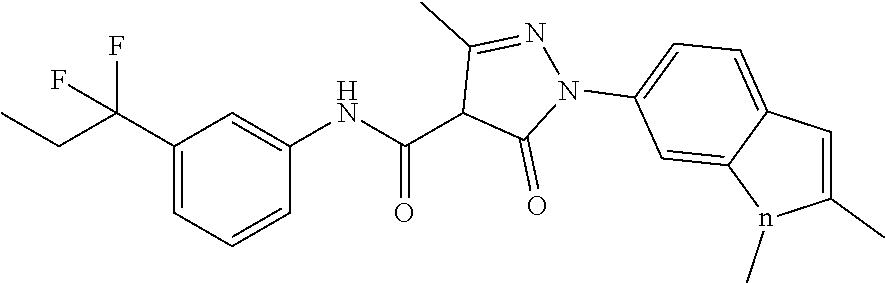
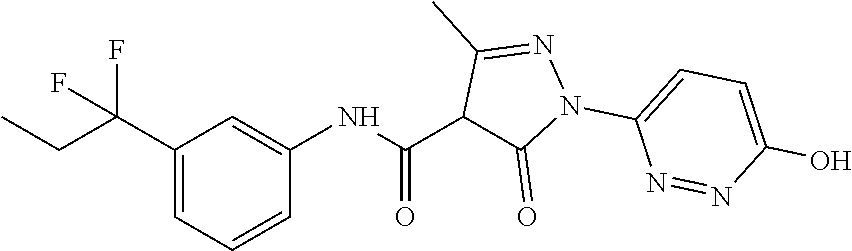
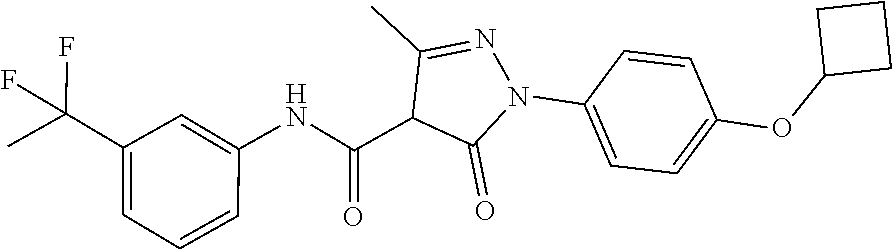
  • this invention is directed to the compounds presented in Table 1, pharmaceutical compositions and/or method of use thereof:
  • this invention is directed to the compounds listed hereinabove, pharmaceutical compositions and/or method of use thereof, wherein the compound is pharmaceutically acceptable salt, optical isomer, tautomer, hydrate, N-oxide, reverse amide analog, prodrug, isotopic variant (deuterated analog), PROTAC, pharmaceutical product or any combination thereof.
  • the compounds are Acyl-CoA Synthetase Short-Chain Family Member 2 (ACSS2) inhibitors.
  • the A ring of formula I is phenyl, naphthyl, pyridinyl, pyrimidinyl, pyridazinyl, pyrazinyl, triazinyl, tetrazinyl, thiazolyl, isothiazolyl, oxazolyl, isoxazolyl, imidazolyl, 1-methylimidazole, isoquinoline, pyrazolyl, pyrrolyl, furanyl, thiophene-yl, isoquinolinyl, indolyl, 1H-indole, isoindolyl, naphthyl, anthracenyl, benzimidazolyl, indazolyl, benzothiophene, 2H-indazole, triazolyl, 4,5,6,7-tetrahydro-2H-indazole, 3H-indol-3-one, purinyl, benzoxazoly
  • cyclohexyl bicyclo [2.1.1]hexane, bicyclo [2.2.1]heptane, bicyclo [3.1.1]heptane, cubane, bicyclo[2.2.2]octane) or C 3 -C 8 heterocyclic ring including but not limited to: tetrahydropyran, piperidine, 1-methylpiperidine, tetrahydrothiophene 1,1-dioxide, 1-(piperidin-1-yl)ethanone or morpholine.
  • the A ring of formula I is phenyl. In some embodiments, the A ring is naphtyl. In some embodiments, the A ring is pyridinyl. In some embodiments, the A ring is pyrimidinyl. In some embodiments, the A ring is pyridazinyl. In some embodiments, A is pyrazinyl. In some embodiments, the A ring is triazinyl. In some embodiments, the A ring is tetrazinyl. In some embodiments, the A ring is thiazolyl. In some embodiments, the A ring is isothiazolyl. In some embodiments, the A ring is oxazolyl.
  • the A ring is isoxazolyl. In some embodiments, the A ring is imidazolyl. In some embodiments, the A ring is 1-methylimidazole. In some embodiments, the A ring is pyrazolyl. In some embodiments, the A ring is pyrrolyl. In some embodiments, the A ring is furanyl. In some embodiments, the A ring is thiophene-yl. In some embodiments, the A ring is indolyl. In some embodiments, the A ring is indenyl. In some embodiments, the A ring is 2,3-dihydroindenyl. In some embodiments, the A ring is tetrahydronaphthyl.
  • the A ring is isoindolyl. In some embodiments, the A ring is naphthyl. In some embodiments, the A ring is anthracenyl. In some embodiments, the A ring is benzimidazolyl. In some embodiments, the A ring is indazolyl. In some embodiments, the A ring is purinyl. In some embodiments, the A ring is benzoxazolyl. In some embodiments, the A ring is benzisoxazolyl. In some embodiments, the A ring is benzothiazolyl. In some embodiments, the A ring is quinazolinyl. In some embodiments, the A ring is quinoxalinyl.
  • the A ring is cinnolinyl. In some embodiments, the A ring is phthalazinyl. In some embodiments, the A ring is quinolinyl. In some embodiments, the A ring is isoquinolinyl. In some embodiments, the A ring is 3,4-dihydro-2H-benzo[b][1,4]dioxepine. In some embodiments, the A ring is benzo[d][1,3]dioxole. In some embodiments, the A ring is benzofuran-2(3H)-one. In some embodiments, the A ring is benzodioxolyl. In some embodiments, the A ring is acridinyl.
  • the A ring is benzofuranyl. In some embodiments, the A ring is isobenzofuranyl. In some embodiments, the A ring is benzothiophenyl. In some embodiments, the A ring is benzo[c]thiophenyl. In some embodiments, the A ring is benzodioxolyl. In some embodiments, the A ring is thiadiazolyl. In some embodiments, the A ring is oxadiaziolyl. In some embodiments, the A ring is 7-oxo-6H,7H-[1,3]thiazolo[4,5-d]pyrimidine.
  • the A ring is [1,3]thiazolo[5,4-b]pyridine. In some embodiments, the A ring is thieno[3,2-d]pyrimidin-4(3H)-one. In some embodiments, the A ring is 4-oxo-4H-thieno[3,2-d][1,3]thiazin. In some embodiments, the A ring is pyrido[2,3-b]pyrazin or pyrido[2,3-b]pyrazin-3(4H)-one. In some embodiments, the A ring is quinoxalin-2(1H)-one. In some embodiments, the A ring is 1H-indole.
  • the A ring is 2H-indazole. In some embodiments, the A ring is 4,5,6,7-tetrahydro-2H-indazole. In some embodiments, the A ring is 3H-indol-3-one. In some embodiments, the A ring is 1,3-benzoxazolyl. In some embodiments, the A ring is 1,3-benzothiazole. In some embodiments, the A ring is 4,5,6,7-tetrahydro-1,3-benzothiazole. In some embodiments, the A ring is 1-benzofuran. In some embodiments, the A ring is [1,3]oxazolo[4,5-b]pyridine.
  • the A ring is imidazo[2,1-b][1,3]thiazole. In some embodiments, the A ring is 4H,5H,6H-cyclopenta[d][1,3]thiazole. In some embodiments, the A ring is 5H,6H,7H,8H-imidazo[1,2-a]pyridine. In some embodiments, the A ring is 2H,3H-imidazo[2,1-b][1,3]thiazole. In some embodiments, the A ring is imidazo[1,2-a]pyridine. In some embodiments, the A ring is pyrazolo[1,5-a]pyridine.
  • the A ring is imidazo[1,2-a]pyrazine. In some embodiments, the A ring is imidazo[1,2-a]pyrimidine. In some embodiments, the A ring is 4H-thieno[3,2-b]pyrrole. In some embodiments, the A ring is 1H-pyrrolo[2,3-b]pyridine. In some embodiments, the A ring is 1H-pyrrolo[3,2-b]pyridine. In some embodiments, the A ring is 7H-pyrrolo[2,3-d]pyrimidine. In some embodiments, the A ring is oxazolo[5,4-b]pyridine.
  • the A ring is thiazolo[5,4-b]pyridine. In some embodiments, the A ring is triazolyl. In some embodiments, the A ring is benzoxadiazole. In some embodiments, the A ring is benzo[c][1,2,5]oxadiazolyl. In some embodiments, the A ring is 1H-imidazo[4,5-b]pyridine. In some embodiments, the A ring is 3H-imidazo[4,5-c]pyridine. In some embodiments, the A ring is a C 3 -C 8 cycloalkyl. In some embodiments, the A ring is C 3 —C heterocyclic ring.
  • the A ring is tetrahydropyran. In some embodiments, the A ring is piperidine. In some embodiments, the A ring is 1-(piperidin-1-yl)ethanone. In some embodiments, the A ring is morpholine. In some embodiments, the A ring is thieno[3,2-c]pyridine. In some embodiments, the A ring is 1-methylpiperidine. In some embodiments, the A ring is tetrahydrothiophene 1,1-dioxide. In some embodiments, the A ring is cyclohexyl. In some embodiments, the A ring is indole.
  • the A ring is 1,3-dihydroisobenzofuran. In some embodiments, the A ring is benzofuran. In some embodiments, the A ring is 1,3-dihydroisobenzofuran. In other embodiments, A is single fused or bridged C 3 -C 10 cycloalkyl. In other embodiments, A is cyclohexyl. In other embodiments, A is bicyclo[2.1.1]hexane. In other embodiments, A is bicyclo[2.2.1]heptane. In other embodiments, A is bicyclo[3.1.1]heptane. In other embodiments, A is cubane. In other embodiments, A is bicyclo [2.2.2]octane.
  • the B ring of formula I is phenyl, naphthyl, pyridinyl, pyrimidinyl, pyridazinyl, pyrazinyl, triazinyl, tetrazinyl, thiazolyl, isothiazolyl, oxazolyl, isoxazolyl, imidazolyl, 1-methylimidazole, isoquinoline, pyrazolyl, pyrrolyl, furanyl, thiophene-yl, isoquinolinyl, indolyl, 1H-indole, isoindolyl, naphthyl, anthracenyl, benzimidazolyl, indazolyl, benzothiophene, 2H-indazole, triazolyl, 4,5,6,7-tetrahydro-2H-indazole, 3H-indol-3-one, purinyl, benzoxazoly
  • the B ring of formula I is phenyl. In some embodiments, the B ring is naphthyl. In some embodiments, the B ring is pyridinyl. In some embodiments, the B ring is pyrimidinyl. In some embodiments, the B ring is pyridazinyl. In some embodiments, the B ring is pyrazinyl. In some embodiments, the B ring is triazinyl. In some embodiments, the B ring is tetrazinyl. In some embodiments, the B ring is thiazolyl. In some embodiments, the B ring is isothiazolyl. In some embodiments, the B ring is oxazolyl.
  • the B ring is isoxazolyl. In some embodiments, the B ring is imidazolyl. In some embodiments, the B ring is 1-methylimidazole. In some embodiments, the B ring is pyrazolyl. In some embodiments, the B ring is pyrrolyl. In some embodiments, the B ring is furanyl. In some embodiments, the B ring is thiophene-yl. In some embodiments, the B ring is isoquinolinyl. In some embodiments, the B ring is indolyl. In some embodiments, the B ring is isoindolyl. In some embodiments, the B ring is naphthyl.
  • the B ring is anthracenyl. In some embodiments, the B ring is benzimidazolyl. In some embodiments, the B ring is 2,3-dihydro-1H-benzo[d]imidazole. In some embodiments, the B ring is indazolyl. In some embodiments, the B ring is purinyl. In some embodiments, the B ring is benzoxazolyl. In some embodiments, the B ring is benzisoxazolyl. In some embodiments, the B ring is benzothiazolyl. In some embodiments, the B ring is quinazolinyl. In some embodiments, the B ring is quinoxalinyl.
  • the B ring is 1,2,3,4-tetrahydroquinoxaline. In other embodiments, B is 1-(pyridin-1(2H)-yl)ethanone. In some embodiments, the B ring is benzo[d][1,3]dioxole. In some embodiments, the B ring is benzofuran-2(3H)-one. In some embodiments, the B ring is benzodioxolyl. In some embodiments, the B ring is tetrahydronaphthyl. In some embodiments, the B ring is cinnolinyl. In some embodiments, the B ring is phthalazinyl. In some embodiments, the B ring is quinolinyl.
  • the B ring is isoquinolinyl. In some embodiments, the B ring is acridinyl. In some embodiments, the B ring is benzofuranyl. In some embodiments, the B ring is isobenzofuranyl. In some embodiments, the B ring is benzothiophenyl. In some embodiments, the B ring is benzo[c]thiophenyl. In some embodiments, the B ring is benzodioxolyl. In some embodiments, the B ring is thiadiazolyl. In some embodiments, the B ring is oxadiaziolyl.
  • the B ring is 7-oxo-6H,7H-[1,3]thiazolo[4,5-d]pyrimidine. In some embodiments, the B ring is [1,3]thiazolo[5,4-b]pyridine. In some embodiments, the C ring is thieno[3,2-d]pyrimidin-4(3H)-one. In some embodiments, the B ring is 4-oxo-4H-thieno[3,2-d][1,3]thiazin. In some embodiments, the B ring is pyrido[2,3-b]pyrazin or pyrido[2,3-b]pyrazin-3(4H)-one.
  • the B ring is quinoxalin-2(1H)-one. In some embodiments, the B ring is 1H-indole. In some embodiments, the B ring is 2H-indazole. In some embodiments, the B ring is 4,5,6,7-tetrahydro-2H-indazole. In some embodiments, the B ring is 3H-indol-3-one. In some embodiments, the B ring is 1,3-benzoxazolyl. In some embodiments, the B ring is 1,3-benzothiazole. In some embodiments, the B ring is 4,5,6,7-tetrahydro-1,3-benzothiazole.
  • the B ring is 1-benzofuran.
  • the C ring is [1,3]oxazolo[4,5-b]pyridine.
  • the B ring is imidazo[2,1-b][1,3]thiazole.
  • the B ring is 4H,5H,6H-cyclopenta[d][1,3]thiazole.
  • the C ring is 5H,6H,7H,8H-imidazo[1,2-a]pyridine.
  • the B ring is 2H,3H-imidazo[2,1-b][1,3]thiazole.
  • the B ring is imidazo[1,2-a]pyridine.
  • the B ring is pyrazolo[1,5-a]pyridine. In some embodiments, the B ring is imidazo[1,2-a]pyrazine. In some embodiments, the B ring is imidazo[1,2-a]pyrimidine. In some embodiments, the B ring is 4H-thieno[3,2-b]pyrrole. In some embodiments, the B ring is 1H-pyrrolo[2,3-b]pyridine, In some embodiments, the B ring is 1H-pyrrolo[3,2-b]pyridine. In some embodiments, the B ring is 7H-pyrrolo[2,3-d]pyrimidine.
  • the B ring is oxazolo[5,4-b]pyridine. In some embodiments, the B ring is thiazolo[5,4-b]pyridine. In some embodiments, the B ring is triazolyl. In some embodiments, the B ring is benzoxadiazole. In some embodiments, the B ring is benzo[c][1,2,5]oxadiazolyl. In some embodiments, the B ring is 1H-imidazo[4,5-b]pyridine. In some embodiments, the B ring is 3H-imidazo[4,5-c]pyridine. In some embodiments, the B ring is a C 3 -C 8 cycloalkyl.
  • the B ring is C 3 -C 8 heterocyclic ring. In some embodiments, the B ring is tetrahydropyran. In some embodiments, the B ring is piperidine. In some embodiments, the B ring is 1-(piperidin-1-yl)ethanone. In some embodiments, the B ring is morpholine. In some embodiments, the B ring is thieno[3,2-c]pyridine. In some embodiments, the B ring is 1-methylpiperidine. In some embodiments, the B ring is tetrahydrothiophene 1,1-dioxide. In some embodiments, the B ring is indole.
  • the B ring is 1,3-dihydroisobenzofuran. In some embodiments, the B ring is benzofuran. In some embodiments, the B ring is cyclohexyl. In some embodiments, the B ring is 1,3-dihydroisobenzofuran. In other embodiments, B is bicyclo[2.1.1]hexane. In other embodiments, B is bicyclo[2.2.1]heptane. In other embodiments, B is bicyclo[3.1.1]heptane. In other embodiments, B is cubane. In other embodiments, B is bicyclo [2.2.2]octane.
  • compound of formula I is substituted by R 1 and R 2 .
  • Single substituents can be present at the ortho, meta, or para positions.
  • R 1 of formula I-V is H. In other embodiments, R 1 is D. In some embodiments, R 1 is F. In some embodiments, R 1 is Cl. In some embodiments, R 1 is Br. In some embodiments, R 1 is I. In some embodiments, R 1 is OH. In some embodiments, R 1 is SH. In some embodiments, R 1 is R 8 —OH. In some embodiments, R 1 is CH 2 —OH. In some embodiments, R 1 is R 8 —SH. In some embodiments, R 1 is —R 8 —O—R 10 . In some embodiments, R 1 is —CH 2 —O—CH 3 . In other embodiments, R 1 is R 8 -aryl.
  • R 1 is CH 2 -3-methoxy-phenyl. In other embodiments, R 1 is benzyl. In other embodiments, R 1 is CH 2 -1-methoxy-phenyl. In other embodiments, R 1 is CH 2 -4-chloro-phenyl. In other embodiments, R 1 is CH 2 CH 2 -phenyl. In other embodiments, R 1 is C 1 -C 5 linear or branched haloalkyl. In other embodiments, R 1 is CF 3 . In other embodiments, R 1 is CF 2 CH 3 . In other embodiments, R 1 is CF 2 CH 2 CH 3 . In other embodiments, R 1 is CH 2 CH 2 CF 3 .
  • R 1 is CF 2 CH(CH 3 ) 2 . In other embodiments, R 1 is CF(CH 3 )—CH(CH 3 ) 2 . In other embodiments, R 1 is CD 3 . In other embodiments, R 1 is OCD 3 . In some embodiments, R 1 is CN. In some embodiments, R 1 is NO 2 . In some embodiments, R 1 is —CH 2 CN. In some embodiments, R 1 is —R 8 CN. In some embodiments, R 1 is NH 2 . In some embodiments, R 1 is NHR. In some embodiments, R 1 is N(R) 2 . In some embodiments, R 1 is R 8 —N(R 10 )(R 11 ).
  • R 1 is CH 2 —NH 2 . In some embodiments, R 1 is CH 2 —N(CH 3 ) 2 . In other embodiments, R 1 is R 9 —R 8 —N(R 10 )(R 11 ). In other embodiments, R 1 is C ⁇ C—CH 2 —NH 2 . In other embodiments, R 1 is B(OH) 2 . In some embodiments, R 1 is —OC(O)CF 3 . In some embodiments, R 1 is —OCH 2 Ph. In some embodiments, R 1 is NHC(O)—R 10 . In some embodiments, R 1 is NHC(O)CH 3 . In some embodiments, R 1 is NHCO—N(R 10 )(R 11 ).
  • R 1 is NHC(O)N(CH 3 ) 2 . In some embodiments, R 1 is COOH. In some embodiments, R 1 is —C(O)Ph. In other embodiments, R 1 is —C(O)-aryl. In other embodiments, R 1 is C(O)-1-methyl-phenyl. In other embodiments, R 1 is C(O)-4-methyl-phenyl. In other embodiments, R 1 is C(O)-3-methyl-phenyl. In other embodiments, R 1 is C(O)-phenol. In other embodiments, R 1 is C(O)-4-hydroxy-phenyl. In other embodiments, R 1 is C(O)-3-hydroxy-phenyl.
  • R 1 is C(O)-2-hydroxy-phenyl. In some embodiments, R 1 is C(O)O—R 10 . In some embodiments, R 1 is C(O)O—CH 3 . In some embodiments, R 1 is C(O)—R 10 . In some embodiments, R 1 is C(O)—CH 3 . In other embodiments, R 1 is C(O)—CH 2 CH 2 CH 3 . In some embodiments, R 1 is C(O)O—CH(CH 3 ) 2 . In some embodiments, R 1 is C(O)O—CH 2 CH 3 ). In some embodiments, R 1 is R 8 —C(O)—R 10 .
  • R 1 is CH 2 C(O)CH 3 ). In some embodiments, R 1 is C(O)H. In some embodiments, R 1 is C(O)—R 10 . In some embodiments, R 1 is C(O)—CH 3 . In some embodiments, R 1 is C(O)—CH 2 CH 3 . In some embodiments, R 1 is C(O)—CH 2 CH 2 CH 3 ). In some embodiments, R 1 is C 1 -C 5 linear or branched C(O)-haloalkyl. In some embodiments, R 1 is C(O)—CF 3 . In some embodiments, R 1 is —C(O)NH 2 . In some embodiments, R 1 is C(O)NHR.
  • R 1 is C(O)N(R 10 )(R 11 ). In some embodiments, R 1 is C(O)N(CH 3 ) 2 . In some embodiments, R 1 is SO 2 R. In other embodiments, R 1 is SO 2 -Ph. In other embodiments, R 1 is SO 2 -toluene. In other embodiments, R 1 is SO 2 —CH 3 . In some embodiments, R 1 is SO 2 N(R 10 )(R 11 ). In some embodiments, R 1 is SO 2 N(CH 3 ) 2 . In some embodiments, R 1 is C 1 -C 5 linear or branched, substituted or unsubstituted alkyl.
  • R 1 is methyl, 2, 3, or 4-CH 2 —C 6 H 4 —Cl, ethyl, propyl, iso-propyl, t-Bu, iso-butyl, pentyl, benzyl, or C(CH 3 )(OH)Ph, each represents a separate embodiment according to this invention.
  • R 1 is CH 2 -3-methoxy-phenyl.
  • R 1 is CH 2 -1-methoxy-phenyl.
  • R 1 is CH 2 -4-chloro-phenyl.
  • R 1 is CH 2 CH 2 -phenyl.
  • R 1 is C 1 -C 5 linear or branched haloalkyl. In other embodiments, R 1 is CF 2 CH 3 . In other embodiments, R 1 is CH 2 CF 3 . In other embodiments, R 1 is CF 2 CH 2 CH 3 . In other embodiments, R 1 is CF 3 . In other embodiments, R 1 is CF 2 CH 2 CH 3 . In other embodiments, R 1 is CH 2 CH 2 CF 3 . In other embodiments, R 1 is CF 2 CH(CH 3 ) 2 . In other embodiments, R 1 is CF(CH 3 )—CH(CH 3 ) 2 .
  • R 1 is substituted or unsubstituted C 1 -C 5 linear or branched or C 3 -C 8 cyclic alkoxy.
  • R 1 is methoxy, ethoxy, propoxy, isopropoxy or O—CH 2 -cyclopropyl, O-cyclobutyl, O-cyclopentyl, O-cyclohexyl, 1-butoxy, 2-butoxy, 0-tBu, each represents a separate embodiment according to this invention.
  • R 1 is substituted or unsubstituted C 1 -C 5 linear or branched or C 3 -C 8 cyclic alkoxy wherein at least one methylene group (CH 2 ) in the alkoxy is replaced with an oxygen atom (O).
  • R 1 is O-1-oxacyclobutyl, O-2-oxacyclobutyl, each represents a separate embodiment according to this invention.
  • R 1 is C 1 -C 5 linear or branched thioalkoxy.
  • R 1 is S—CH 3 .
  • R 1 is C 1 -C 5 linear or branched haloalkoxy.
  • R 1 is OCF 3 .
  • R 1 is OCHF 2 . In some embodiments, R 1 is C 1 -C 5 linear or branched alkoxyalkyl. In some embodiments, R 1 is substituted or unsubstituted C 3 -C 8 cycloalkyl. In some embodiments, R 1 is cyclopropyl. In some embodiments, R 1 is cyclopentyl. In some embodiments, R 1 is substituted or unsubstituted C 3 -C 8 heterocyclic ring.
  • R 1 is thiophene, oxazole, oxadiazole, imidazole, furane, triazole, tetrazole, pyridine (2, 3, or 4-pyridine), pyrimidine, pyrazine, 1 or 2-oxacyclobutane, indole, protonated or deprotonated pyridine oxide, 3-methyl-4H-1,2,4-triazole, 5-methyl-1,2,4-oxadiazole, each represents a separate embodiment according to this invention.
  • R 1 is 2-methyl-4-pyridine.
  • R 1 is 2,6-dimethyl-4-pyridine.
  • R 1 is 3,5-dimethyl-4-pyridine.
  • R 1 is 2,5-dimethyl-4-pyridine. In other embodiments, R 1 is 3-methyl-4-pyridine. In other embodiments, R 1 is 5-methyl-2-pyridine. In other embodiments, R 1 is 3-methyl-2-pyridine. In other embodiments, R 1 is 3-ethyl-2-pyridine. In other embodiments, R 1 is 3-isopropyl-2-pyridine. In other embodiments, R 1 is 3-propyl-2-pyridine. In other embodiments, R 1 is 3-phenyl-2-pyridine. In other embodiments, R 1 is 4-methyl-2-pyridine. In other embodiments, R 1 is 6-methyl-2-pyridine. In other embodiments, R 1 is 5-methyl-2-pyridine.
  • R 1 is pyrimidine. In other embodiments, R 1 is 5-methyl-pyrimidine. In other embodiments, R 1 is pyrazine. In some embodiments, R 1 is methyl substituted oxazole. In some embodiments, R 1 is methyl substituted oxadiazole. In some embodiments, R 1 is methyl substituted imidazole. In other embodiments, R 1 is thiophene. In other embodiments, R 1 is triazole. In other embodiments, R 1 is tetrazole. In other embodiments, R 1 is indole. In some embodiments, R 1 is substituted aryl. In some embodiments, R 1 is phenyl.
  • substitutions include: F, Cl, Br, I, C 1 -C 5 linear or branched alkyl (e.g. methyl, ethyl), OH, alkoxy, N(R) 2 , CF 3 , phenyl, halophenyl, (benzyloxy)phenyl, CN, NO 2 or any combination thereof.
  • R 1 is CH(CF 3 )(NH—R 10 ).
  • R 1 is 2,3, or 4 bromophenyl, each is a separate embodiment according to this invention.
  • substitutions include: F, Cl, Br, I, C 1 -C 5 linear or branched alkyl (e.g.
  • R 1 and R 2 are joint together to form a 5 or 6 membered substituted or unsubstituted, aliphatic or aromatic, carbocyclic or heterocyclic single or fused ring. In some embodiments, R 1 and R 2 are joined together to form a 5 or 6 membered heterocyclic ring. In some embodiments, R 1 and R 2 are joint together to form a heterocyclic single ring. In some embodiments, R 1 and R 2 are joined together to form a [1,3]dioxole ring. In some embodiments, R 1 and R 2 are joined together to form a furan-2(3H)-one ring. In some embodiments, R 1 and R 2 are joint together to form a benzene ring.
  • R 1 and R 2 are joined together to form a pyridine ring. In some embodiments, R 1 and R 2 are joined together to form a morpholine ring. In some embodiments, R 1 and R 2 are joined together to form a piperazine ring. In some embodiments, R 1 and R 2 are joined together to form an imidazole ring. In some embodiments, R 1 and R 2 are joined together to form a pyrrole ring. In some embodiments, R 1 and R 2 are joined together to form a cyclohexene ring. In some embodiments, R 1 and R 2 are joined together to form a pyrazine ring. In some embodiments, R 1 and R 2 are joint together to forma pyrrol ring.
  • R 1 and R 2 are joint together to forma 1-methyl-H-pyrrole. In some embodiments, R 1 and R 2 are joint together to form a 1-benzyl-1H-pyrrole ring. In some embodiments, R 1 and R 2 are joint together to form a 5 or 6 membered substituted or unsubstituted, aliphatic or aromatic, carbocyclic or heterocyclic ring fused to another 5 or 6 membered substituted or unsubstituted, aliphatic or aromatic, carbocyclic or heterocyclic ring. In some embodiments, R 1 and R 2 are joint together to form a 7,8-dihydro-5H-pyrano[4,3-b]pyridine.
  • R 2 of formula I-V is H. In other embodiments, R 2 is D. In some embodiments, R 2 is F. In some embodiments, R 2 is Cl. In some embodiments, R 2 is Br. In some embodiments, R 2 is I. In other embodiments, R 2 is R 8 -aryl. In other embodiments, R 2 is CH 2 -3-methoxy-phenyl. In other embodiments, R 2 is benzyl. In other embodiments, R 2 is CH 2 -1-methoxy-phenyl. In other embodiments, R 2 is CH 2 -4-chloro-phenyl. In other embodiments, R 2 is CH 2 CH 2 -phenyl. In some embodiments, R 2 is OH.
  • R 2 is SH. In some embodiments, R 2 is R 8 —OH. In some embodiments, R 2 is CH 2 —OH. In some embodiments, R 2 is R 8 —SH. In some embodiments, R 1 is —R 8 —O—R 10 . In some embodiments, R 2 is —CH 2 —O—CH 3 . In other embodiments, R 2 is C 1 -C 5 linear or branched haloalkyl. In other embodiments, R 2 is CF 3 . In other embodiments, R 2 is CF 2 CH 3 . In other embodiments, R 2 is CF 2 CH 3 . In other embodiments, R 2 is CH 2 CF 3 .
  • R 2 is CF 2 CH 2 CH 3 . In other embodiments, R 2 is CF 3 . In other embodiments, R 2 is CF 2 CH 2 CH 3 . In other embodiments, R 2 is CH 2 CH 2 CF 3 . In other embodiments, R 2 is CF 2 CH(CH 3 ) 2 . In other embodiments, R 2 is CF(CH 3 )—CH(CH 3 ) 2 . In other embodiments, R 2 is CD 3 . In other embodiments, R 2 is OCD 3 . In some embodiments, R 2 is CN. In some embodiments, R 2 is NO 2 . In some embodiments, R 2 is —CH 2 CN. In some embodiments, R 2 is —R 8 CN.
  • R 2 is NH 2 . In some embodiments, R 2 is NHR. In some embodiments, R 2 is N(R) 2 . In some embodiments, R 2 is R 8 —N(R 10 )(R 11 ). In other embodiments, R 2 is CH 2 —NH 2 . In some embodiments, R 2 is CH 2 —N(CH 3 ) 2 . In other embodiments, R 2 is R 9 —R 8 —N(R 10 )(R 11 ). In other embodiments, R 2 is C ⁇ C—CH 2 —NH 2 . In other embodiments, R 2 is B(OH) 2 . In some embodiments, R 2 is —OC(O)CF 3 .
  • R 2 is —OCH 2 Ph. In some embodiments, R 2 is NHC(O)—R 10 . In some embodiments, R 2 is NHC(O)CH 3 . In some embodiments, R 2 is NHCO—N(R 10 )(R 11 ). In some embodiments, R 2 is NHC(O)N(CH 3 ) 2 . In some embodiments, R 2 is COOH. In some embodiments, R 2 is —C(O)Ph. In other embodiments, R 2 is —C(O)-aryl. In other embodiments, R 2 is C(O)-1-methyl-phenyl. In other embodiments, R 2 is C(O)-4-methyl-phenyl.
  • R 2 is C(O)-3-methyl-phenyl. In other embodiments, R 2 is C(O)-phenol. In other embodiments, R 2 is C(O)-4-hydroxy-phenyl. In other embodiments, R 2 is C(O)-3-hydroxy-phenyl. In other embodiments, R 2 is C(O)-2-hydroxy-phenyl. In some embodiments, R 2 is C(O)O—R 10 . In some embodiments, R 2 is C(O)O—CH(CH 3 ) 2 . In some embodiments, R 2 is C(O)O—CH 3 . In some embodiments, R 2 is C(O)O—CH 2 CH 3 ).
  • R 2 is R 8 —C(O)—R 10 . In some embodiments, R 2 is CH 2 C(O)CH 3 ). In some embodiments, R 2 is C(O)H. In some embodiments, R 2 is C(O)—R 10 . In some embodiments, R 2 is C(O)—CH 3 . In some embodiments, R 2 is C(O)—CH 2 CH 3 . In some embodiments, R 2 is C(O)—CH 2 CH 2 CH 3 ). In some embodiments, R 2 is C 1 -C 5 linear or branched C(O)-haloalkyl. In some embodiments, R 2 is C(O)—CF 3 . In some embodiments, R 2 is —C(O)NH 2 .
  • R 2 is C(O)NHR. In some embodiments, R 2 is C(O)N(R 10 )(R 1 ). In some embodiments, R 2 is C(O)N(CH 3 ) 2 . In some embodiments, R 2 is SO 2 R. In other embodiments, R 2 is SO 2 -Ph. In other embodiments, R 2 is SO 2 -toluene. In other embodiments, R 2 is SO 2 —CH 3 . In some embodiments, R 2 is SO 2 N(R 10 )(R 11 ). In some embodiments, R 2 is SO 2 N(CH 3 ) 2 .
  • R 2 is C 1 -C 5 linear or branched, substituted or unsubstituted alkyl.
  • R 2 is methyl, 2, 3, or 4-CH 2 —C 6 H 4 —Cl, ethyl, propyl, iso-propyl, t-Bu, iso-butyl, pentyl, benzyl or C(CH 3 )(OH)Ph; each represents a separate embodiment according to this invention.
  • R 2 is benzyl.
  • R 2 is CH 2 -3-methoxy-phenyl.
  • R 2 is CH 2 —I-methoxy-phenyl.
  • R 2 is CH 2 -4-chloro-phenyl. In other embodiments, R 2 is CH 2 CH 2 -phenyl. In some embodiments, R 2 is C 1 -C 5 linear or branched haloalkyl In other embodiments, R 2 is CF 2 CH 3 . In other embodiments, R 2 is CH 2 CF 3 . In other embodiments, R 2 is CF 2 CH 2 CH 3 . In other embodiments, R 2 is CF 3 . In other embodiments, R 2 is CF 2 CH 2 CH 3 . In other embodiments, R 2 is CH 2 CH 2 CF 3 . In other embodiments, R 2 is CF 2 CH(CH 3 ) 2 .
  • R 2 is CF(CH 3 )—CH(CH 3 ) 2 .
  • R 2 is substituted or unsubstituted C 1 -C 5 linear or branched or C 3 -C 8 cyclic alkoxy.
  • R 2 is methoxy, ethoxy, propoxy, isopropoxy or O—CH 2 -cyclopropyl, O-cyclobutyl, O-cyclopentyl, O-cyclohexyl, O-1-oxacyclobutyl, 0-2-oxacyclobutyl, 1-butoxy, 2-butoxy, 0-tBu, each represents a separate embodiment according to this invention.
  • R 2 is substituted or unsubstituted C 1 -C 5 linear or branched or C 3 -C 8 cyclic alkoxy wherein at least one methylene group (CH) in the alkoxy is replaced with an oxygen atom (0).
  • R 2 is O-1-oxacyclobutyl or O-2-oxacyclobutyl, each represents a separate embodiment according to this invention.
  • R 2 is C 1 -C 5 linear or branched thioalkoxy.
  • R 2 is S—CH 3 .
  • R 2 is C 1 -C 5 linear or branched haloalkoxy.
  • R 2 is OCF 3 .
  • R 2 is OCHF 2 . In some embodiments, R 2 is C 1 -C 5 linear or branched alkoxyalkyl. In some embodiments, R 2 is substituted or unsubstituted C 3 -C 8 cycloalkyl. In some embodiments, R 2 is cyclopropyl. In some embodiments, R 2 is cyclopentyl. In some embodiments, R 2 is substituted or unsubstituted C 3 -C 8 heterocyclic ring.
  • R 2 is thiophene, oxazole, oxadiazole, imidazole, furane, triazole, tetrazole, pyridine (2, 3, or 4-pyridine), pyrimidine, pyrazine, 1 or 2-oxacyclobutane, indole, protonated or deprotonated pyridine oxide, 3-methyl-4H-1,2,4-triazole, 5-methyl-1,2,4-oxadiazole, each represents a separate embodiment according to this invention.
  • R 2 is 2-methyl-4-pyridine.
  • R 2 is 2,6-dimethyl-4-pyridine.
  • R 2 is 3,5-dimethyl-4-pyridine.
  • R 2 is 2,5-dimethyl-4-pyridine. In other embodiments, R 2 is 3-methyl-4-pyridine. In other embodiments, R 2 is 5-methyl-2-pyridine. In other embodiments, R 2 is 3-methyl-2-pyridine. In other embodiments, R 2 is 3-ethyl-2-pyridine. In other embodiments, R 2 is 3-isopropyl-2-pyridine. In other embodiments, R 2 is 3-propyl-2-pyridine. In other embodiments, R 2 is 3-phenyl-2-pyridine. In other embodiments, R 2 is 4-methyl-2-pyridine. In other embodiments, R 2 is 6-methyl-2-pyridine. In other embodiments, R 2 is 5-methyl-2-pyridine.
  • R 2 is pyrimidine. In other embodiments, R 2 is 5-methyl-pyrimidine. In other embodiments, R 2 is pyrazine. In some embodiments, R 2 is methyl substituted oxazole. In some embodiments, R 2 is methyl substituted oxadiazole. In some embodiments, R 2 is methyl substituted imidazole. In some embodiments, R 2 is thiophene. In some embodiments, R 2 is triazole. In other embodiments, R 2 is tetrazole. In some embodiments, R 2 is substituted aryl. In some embodiments, R 2 is phenyl.
  • substitutions include: F, Cl, Br, I, C 1 -C 5 linear or branched alkyl (e.g. methyl, ethyl, propyl, isopropyl), OH, alkoxy, N(R) 2 , CF 3 , aryl, phenyl, halophenyl, (benzyloxy)phenyl, CN, NO 2 or any combination thereof.
  • R 2 is CH(CF 3 )(NH—R 10 ).
  • R 2 is 2, 3, or 4 bromophenyl, each represents a separate embodiment according to this invention.
  • substitutions include: F, Cl, Br, I, C 1 -C 5 linear or branched alkyl (e.g. methyl, ethyl), OH, alkoxy, N(R) 2 , CF 3 , aryl, phenyl, halophenyl, (benzyloxy)phenyl, CN, NO 2 or any combination thereof; each is a separate embodiment according to this invention.
  • R 1 and R 2 of compound of formula I-V are both H. In some embodiments, at least one of R 1 and R 2 is not H.
  • compound of formula I-V is substituted by R 3 and R 4 .
  • Single substituents can be present at the ortho, meta, or para positions.
  • R 3 of formula I-V is H. In some embodiments, R 3 is F. In some embodiments, R 3 is Cl. In some embodiments, R 3 is Br. In some embodiments, R 3 is I. In some embodiments, R 3 is OH. In some embodiments, R 3 is SH. In some embodiments, R 3 is R 8 —OH. In some embodiments, R 3 is CH 2 —OH. In some embodiments, R 3 is R 8 —SH. In some embodiments, R 3 is —R 8 —O—R 10 . In some embodiments, R 3 is CH 2 —O—CH 3 . In other embodiments, R 3 is C 1 -C 5 linear or branched haloalkyl.
  • R 3 is C 2 -C 5 linear or branched haloalkyl. In other embodiments, R 3 is C 3 -C 8 linear or branched haloalkyl. In other embodiments, R 3 is C 2 -C 6 linear or branched haloalkyl. In other embodiments, R 3 is C 2 -C 7 linear or branched haloalkyl. In other embodiments, R 3 is CF 2 CH 3 . In other embodiments, R 3 is CH 2 CF 3 . In other embodiments, R 3 is CF 2 CH 2 CH 3 . In other embodiments, R 3 is CF 3 . In other embodiments, R 3 is CF 2 CH 2 CH 3 . In other embodiments, R 3 is CF 3 . In other embodiments, R 3 is CF 2 CH 2 CH 3 .
  • R 3 is CH 2 CH 2 CF 3 . In other embodiments, R 3 is CF 2 CH(CH 3 ) 2 . In other embodiments, R 3 is CF(CH 3 )—CH(CH 3 ) 2 . In other embodiments, R 3 is CD 3 . In other embodiments, R 3 is OCD 3 . In some embodiments, R 3 is CN. In some embodiments, R 3 is NO 2 . In some embodiments, R 3 is —CH 2 CN. In some embodiments, R 3 is —R 8 CN. In some embodiments, R 3 is NH 2 . In some embodiments, R 3 is NHR. In some embodiments, R 3 is N(R) 2 .
  • R 3 is R 8 —N(R 10 )(R 11 ). In some embodiments, R 3 is CH 2 —NH 2 . In some embodiments, R 3 is CH 2 —N(CH 3 ) 2 . In other embodiments, R 3 is R 9 —R 8 —N(R 10 )(R 11 ). In other embodiments, R 3 is C ⁇ C—CH 2 —NH 2 . In other embodiments, R 3 is B(OH) 2 . In some embodiments, R 3 is —OC(O)CF 3 . In some embodiments, R 3 is —OCH 2 Ph. In some embodiments, R 3 is —NHCO—R 10 . In some embodiments, R 3 is NHC(O)CH 3 ).
  • R 3 is NHCO—N(R 10 )(R 11 ). In some embodiments, R 3 is NHC(O)N(CH 3 ) 2 . In other embodiments, R 3 is R 8 —C(O)N(R 10 )(R 11 ). In other embodiments, R 3 is CF 2 C(O)N[(CH 3 )(OCH 3 )]. In some embodiments, R 3 is COOH. In some embodiments, R 3 is —C(O)Ph. In some embodiments, R 3 is C(O)O—R 10 . In some embodiments, R 3 is C(O)O—CH 3 . In some embodiments, R 3 is C(O)O—CH 2 CH 3 .
  • R 3 is R 8 —C(O)—R 10 . In some embodiments, R 3 is CH 2 C(O)CH 3 . In some embodiments, R 3 is C(O)H. In some embodiments, R 3 is C 1 -C 5 linear or branched C(O)—R 10 . In some embodiments, R 3 is C(O)—CH 3 . In some embodiments, R 3 is C(O)—CH 2 CH 3 . In some embodiments, R 3 is C(O)—CH 2 CH 2 CH 3 . In some embodiments, R 3 is C 1 -C 5 linear or branched C(O)-haloalkyl. In some embodiments, R 3 is C(O)—CF 3 .
  • R 3 is —C(O)NH 2 . In some embodiments, R 3 is C(O)NHR. In some embodiments, R 3 is C(O)N(R 10 )(R 11 ). In some embodiments, R 3 is C(O)N(CH 3 ) 2 . In some embodiments, R 3 is SO 2 R. In some embodiments, R 3 is SO 2 N(R 10 )(R 11 ). In some embodiments, R 3 is SO 2 N(CH 3 ) 2 . In some embodiments, R 3 is substituted or unsubstituted C 1 -C 5 linear or branched or C 3 -C 8 cyclic alkyl.
  • R 3 is methyl, C(OH)(CH 3 )(Ph), ethyl, propyl, iso-propyl, t-Bu, iso-butyl, 2-butyl, pentyl, tert-pentyl, 1-ethylcyclopropyl, benzyl or C(CH 3 )(OH)Ph; each represents a separate embodiment of this invention.
  • R 3 is C 1 -C 5 linear branched or cyclic haloalkyl.
  • R 3 is CF 3 .
  • R 3 is CF 2 CH 3 .
  • R 3 is CF 2 CH 2 CH 3 .
  • R 3 is CF 2 CHFCH 3 . In other embodiments, R 3 is CHFCHFCH 3 , In other embodiments, R 3 is CH 2 CH 2 CF 3 . In other embodiments, R 3 is CF 2 CH(CH 3 ) 2 . In other embodiments, R 3 is CF(CH 3 )—CH(CH 3 ) 2 . In other embodiments, R 3 is CF 2 -cyclopropyl. In other embodiments, R 3 is CF 2 -cyclopentyl. In other embodiments, R 3 is substituted or unsubstituted C 1 -C 5 linear or branched or C 3 -C 8 cyclic haloalkenyl.
  • R 3 is CF ⁇ CH—CH 3 E, Z or combination thereof. In other embodiments, R 3 is CF ⁇ C—(CH 3 ) 2 ). In some embodiments, R 3 is substituted or unsubstituted C 1 -C 5 linear or branched or C 3 -C 8 cyclic alkoxy. In some embodiments, R 3 is methoxy, ethoxy, propoxy, isopropoxy, O—CH 2 -cyclopropyl; each represents a separate embodiment of this invention. In some embodiments, R 3 is C 1 -C 5 linear or branched thioalkoxy. In some embodiments, R 3 is C 1 -C 5 linear or branched haloalkoxy.
  • R 3 is C 1 -C 5 linear or branched alkoxyalkyl. In some embodiments, R 3 is substituted or unsubstituted C 3 -C 8 cycloalkyl. In some embodiments, R 3 is cyclopropyl. In some embodiments, R 3 is cyclopentyl. In some embodiments, R 3 is substituted or unsubstituted C 3 -C 8 heterocyclic ring.
  • R 3 is thiophene, oxazole, isoxazole, imidazole, furane, pyrrole, 1-methyl-pyrrol, imidazole, 1-methyl-imidazole, triazole, pyridine (2, 3, or 4-pyridine), pyrimidine, pyrazine, oxacyclobutane (1 or 2-oxacyclobutane), indole, 3-methyl-4H-1,2,4-triazole, 5-methyl-1,2,4-oxadiazole; each represents a separate embodiment of this invention.
  • R 3 is substituted or unsubstituted aryl.
  • R 3 is phenyl.
  • substitutions include: F, Cl, Br, I, C 1 -C 5 linear or branched alkyl, OH, alkoxy, N(R) 2 , CF 3 , phenyl, halophenyl, (benzyloxy)phenyl, CN, NO 2 or any combination thereof.
  • R 3 is CH(CF 3 )(NH—R 10 ).
  • R 3 and R 4 are joint together to form a 5 or 6 membered substituted or unsubstituted, aliphatic or aromatic, carbocyclic or heterocyclic ring. In some embodiments, R 3 and R 4 are joint together to form a 5 or 6 membered carbocyclic ring. In some embodiments, R 3 and R 4 are joined together to form a 5 or 6 membered heterocyclic ring. In some embodiments, R 3 and R 4 are joined together to form a dioxole ring. [1,3]dioxole ring. In some embodiments, R 3 and R 4 are joined together to form a dihydrofuran-2(3H)-one ring.
  • R 3 and R 4 are joined together to form a furan-2(3H)-one ring. In some embodiments, R 3 and R 4 are joined together to form a benzene ring. In some embodiments, R 3 and R 4 are joint together to form an imidazole ring. In some embodiments, R 3 and R 4 are joined together to form a pyridine ring. In some embodiments, R 3 and R 4 are joined together to form a pyrrole ring. In some embodiments, R 3 and R 4 are joined together to form a cyclohexene ring. In some embodiments, R 3 and R 4 are joined together to form a cyclopentene ring. In some embodiments, R 4 and R 3 are joint together to form a dioxepine ring.
  • R 4 of formula I-IV is H. In some embodiments, R 4 is F. In some embodiments, R 4 is Cl. In some embodiments, R 4 is Br. In some embodiments, R 4 is I. In some embodiments, R 4 is OH. In some embodiments, R 4 is SH. In some embodiments, R 4 is R 8 —OH. In some embodiments, R 4 is CH 2 —OH. In some embodiments, R 4 is R 8 —SH. In some embodiments, R 4 is —R 8 —O—R 10 . In some embodiments, R 4 is CH 2 —O—CH 3 . In other embodiments, R 4 is CD 3 . In other embodiments, R 4 is OCD 3 . In some embodiments, R 4 is CN.
  • R 4 is NO 2 . In some embodiments, R 4 is —CH 2 CN. In some embodiments, R 4 is —R 8 CN. In some embodiments, R 4 is NH 2 . In some embodiments, R 4 is NHR. In some embodiments, R 4 is N(R) 2 . In some embodiments, R 4 is R 8 —N(R 10 )(R 11 ). In other embodiments, R 4 is CH 2 —NH 2 . In some embodiments, R 4 is CH 2 —N(CH 3 ) 2 . In other embodiments, R 4 is R 8 —C(O)N(R 10 )(R 11 ).
  • R 4 is CF 2 C(O)N[(CH 3 )(OCH 3 )]. In other embodiments, R 4 is R 9 —R 8 —N(R 10 )(R 11 ). In other embodiments, R 4 is C ⁇ C—CH 2 —NH 2 . In other embodiments, R 4 is B(OH) 2 . In some embodiments, R 4 is —OC(O)CF 3 . In some embodiments, R 4 is —OCH 2 Ph. In some embodiments, R 4 is —NHCO—R 10 . In some embodiments, R 4 is NHC(O)CH 3 ). In some embodiments, R 4 is NHCO—N(R 10 )(R 11 ).
  • R 4 is NHC(O)N(CH 3 ) 2 . In some embodiments, R 4 is COOH. In some embodiments, R 4 is —C(O)Ph. In some embodiments, R 4 is C(O)O—R 10 . In some embodiments, R 4 is C(O)O—CH 3 . In some embodiments, R 4 is C(O)O—CH 2 CH 3 . In some embodiments, R 4 is R 8 —C(O)—R 10 . In some embodiments, R 4 is CH 2 C(O)CH 3 . In some embodiments, R 4 is C(O)H. In some embodiments, R 4 is C 1 -C 5 linear or branched C(O)—R 10 .
  • R 4 is C(O)—CH 3 . In some embodiments, R 4 is C(O)—CH 2 CH 3 . In some embodiments, R 4 is C(O)—CH 2 CH 2 CH 3 . In some embodiments, R 4 is C 1 -C 5 linear or branched C(O)-haloalkyl. In some embodiments, R 4 is C(O)—CF 3 . In some embodiments, R 4 is —C(O)NH 2 . In some embodiments, R 4 is C(O)NHR. In some embodiments, R 4 is C(O)N(R 10 )(R 1 1). In some embodiments, R 4 is C(O)N(CH 3 ) 2 .
  • R 4 is SO 2 R. In some embodiments, R 4 is SO 2 N(R 10 )(R 11 ). In some embodiments, R 4 is SO 2 N(CH 3 ) 2 . In some embodiments, R 4 is substituted or unsubstituted C 1 -C 5 linear or branched or C 3 -C 8 cyclic alkyl.
  • R 4 is methyl, C(OH)(CH 3 )(Ph), ethyl, propyl, iso-propyl, t-Bu, iso-butyl, 2-butyl, pentyl, tert-pentyl, 1-ethylcyclopropyl, benzyl or C(CH 3 )(OH)Ph; each represents a separate embodiment of this invention.
  • R 4 is substituted or unsubstituted C 1 -C 5 linear or branched or C 3 -C 8 cyclic haloalkyl.
  • R 4 is C 2 -C 5 linear, branched or cyclic haloalkyl.
  • R 4 is C 2 -C 6 linear or branched or cyclic haloalkyl. In other embodiments, R 4 is C 2 -C 7 linear, branched or cyclic haloalkyl. In other embodiments, R 4 is C 3 -C 8 linear, branched or cyclic haloalkyl. In other embodiments, R 4 is CF 2 CH 3 . In other embodiments, R 4 is CH 2 CF 3 . In other embodiments, R 4 is CF 2 CH 2 CH 3 . In other embodiments, R 4 is CF 2 CHFCH 3 . In other embodiments, R 4 is CHFCHFCH 3 , In other embodiments, R 4 is CF 3 .
  • R 4 is CF 2 CH 2 CH 3 . In other embodiments, R 4 is CH 2 CH 2 CF 3 . In other embodiments, R 4 is CF 2 CH(CH 3 ) 2 . In other embodiments, R 4 is CF(CH 3 )—CH(CH 3 ) 2 . In other embodiments, R 4 is CF 2 -cyclopropyl. In other embodiments, R 4 is CF 2 -cyclopentyl. In other embodiments, R 4 is substituted or unsubstituted C 1 -C 5 linear or branched or C 3 -C 8 cyclic haloalkenyl. In other embodiments, R 4 is CF ⁇ CH—CH 3 E, Z or combination thereof.
  • R 4 is CF ⁇ C—(CH 3 ) 2 ). In some embodiments, R 4 is substituted or unsubstituted C 1 -C 5 linear or branched or C 3 -C 8 cyclic alkoxy. In some embodiments, R 4 is methoxy, ethoxy, propoxy, isopropoxy, O—CH 2 -cyclopropyl; each represents a separate embodiment of this invention. In some embodiments, R 4 is C 1 -C 5 linear or branched thioalkoxy. In some embodiments, R 4 is C 1 -C 5 linear or branched haloalkoxy. In some embodiments, R 4 is C 1 -C 5 linear or branched alkoxyalkyl.
  • R 4 is substituted or unsubstituted C 3 -C 8 cycloalkyl. In some embodiments, R 4 is cyclopropyl. In some embodiments, R 4 is cyclopentyl. In some embodiments, R 4 is substituted or unsubstituted C 3 -C 8 heterocyclic ring.
  • R 4 is thiophene, oxazole, isoxazole, imidazole, furane, pyrrole, 1-methyl-pyrrol, imidazole, 1-methyl-imidazole, triazole, pyridine (2, 3, or 4-pyridine), pyrimidine, pyrazine, oxacyclobutane (1 or 2-oxacyclobutane), indole, 3-methyl-4H-1,2,4-triazole, 5-methyl-1,2,4-oxadiazole; each represents a separate embodiment of this invention.
  • R 4 is substituted or unsubstituted aryl.
  • R 4 is phenyl.
  • substitutions include: F, Cl, Br, I, C 1 -C 5 linear or branched alkyl, OH, alkoxy, N(R) 2 , CF 3 , aryl, phenyl, halophenyl, (benzyloxy)phenyl, CN, NO 2 or any combination thereof.
  • R 4 is CH(CF 3 )(NH—R 10 ).
  • R 3 and R 4 of compound of formula I-V are both H. In some embodiments, at least one of R 3 and R 4 is not H. In some embodiments, if R 3 is H, then R 4 is not H. In some embodiments, if R 4 is H, then R 3 is not H.
  • R 5 of compound of formula I-IV is H.
  • R 5 is C 1 -C 5 linear or branched, substituted or unsubstituted alkyl.
  • R 5 is methyl, CH 2 SH, ethyl, iso-propyl; each represent a separate embodiment of this invention.
  • R 5 is C 1 -C 5 linear or branched haloalkyl.
  • R 5 is CF 2 CH 3 .
  • R 5 is CH 2 CF 3 .
  • R 5 is CF 2 CH 2 CH 3 .
  • R 5 is CF 3 .
  • R 5 is CF 2 CH 2 CH 3 .
  • R 5 is CF 3 .
  • R 5 is CF 2 CH 2 CH 3 .
  • R 5 is CH 2 CH 2 CF 3 . In other embodiments, R 5 is CF 2 CH(CH 3 ) 2 . In other embodiments, R 5 is CF(CH 3 )—CH(CH 3 ) 2 . In some embodiments, R 5 is R 8 -aryl. In some embodiments, R 5 is CH 2 -Ph. In other embodiments, R 5 is C(O)—R 10 . In other embodiments, R 5 is C(O)—CH 3 . In some embodiments, R 5 is substituted or unsubstituted aryl. In some embodiments, R 5 is phenyl. In some embodiments, R 5 is substituted or unsubstituted heteroaryl.
  • R 5 is pyridine. In some embodiments, R 5 is 2-pyridine. In some embodiments, R 5 is 3-pyridine. In some embodiments, R 5 is 4-pyridine. In some embodiments, substitutions include: F, Cl, Br, I, C 1 -C 5 linear or branched alkyl, OH, alkoxy, N(R) 2 , CF 3 , phenyl, halophenyl, (benzyloxy)phenyl, CN, NO 2 or any combination thereof.
  • n of compound of formula I-II is 0. In some embodiments, n is 0 or 1. In some embodiments, n is between 1 and 3. In some embodiments, n is between 1 and 4. In some embodiments, n is between 0 and 2. In some embodiments, n is between 0 and 3. In some embodiments, n is between 0 and 4. In some embodiments, n is 1. In some embodiments, n is 2. In some embodiments, n is 3. In some embodiments, n is 4.
  • m of compound of formula I-II is 0. In some embodiments, m is 0 or 1. In some embodiments, m is between 1 and 3. In some embodiments, m is between 1 and 4. In some embodiments, m is between 0 and 2. In some embodiments, m is between 0 and 3. In some embodiments, m is between 0 and 4. In some embodiments, m is 1. In some embodiments, m is 2. In some embodiments, m is 3. In some embodiments, m is 4.
  • 1 of compound of formula I-II is 0. In some embodiments, l is 0 or 1. In some embodiments, l is between 1 and 3. In some embodiments, l is between 1 and 4. In some embodiments, l is between 0 and 2. In some embodiments, l is between 0 and 3. In some embodiments, l is between 0 and 4. In some embodiments, l is 1. In some embodiments, l is 2. In some embodiments, l is 3. In some embodiments, l is 4.
  • k of compound of formula I-II is 0. In some embodiments, k is 0 or 1. In some embodiments, k is between 1 and 3. In some embodiments, k is between 1 and 4. In some embodiments, k is between 0 and 2. In some embodiments, k is between 0 and 3. In some embodiments, k is between 0 and 4. In some embodiments, k is 1. In some embodiments, k is 2. In some embodiments, k is 3. In some embodiments, k is 4.
  • n, m, l and/or k are limited to the number of available positions for substitution, i.e. to the number of CH or NH groups minus one. Accordingly, if A and/or B rings are, for example, furanyl, thiophenyl or pyrrolyl, n, m, l and k are between 0 and 2; and if A and/or B rings are, for example, oxazolyl, imidazolyl or thiazolyl, n, m, l and k are either 0 or 1; and if A and/or B rings are, for example, oxadiazolyl or thiadiazolyl, n, m, l and k are 0.
  • R 6 of compound of formula I-III is H. In some embodiments, R 6 is C 1 -C 5 linear or branched alkyl. In some embodiments, R 6 is methyl. In some embodiments, R 6 is ethyl. In some embodiments, R 6 is C(O)R wherein R is C 1 -C 5 linear or branched alkyl, C 1 -C 5 linear or branched alkoxy, phenyl, aryl or heteroaryl. In some embodiments, R 6 is S(O) 2 R wherein R is C 1 -C 5 linear or branched alkyl, C 1 -C 5 linear or branched alkoxy, phenyl, aryl or heteroaryl.
  • R 8 of compound of formula I-V is CH 2 . In some embodiments, R 8 is CH 2 CH 2 . In some embodiments, R 8 is CH 2 CH 2 CH 2 . In some embodiments, R 8 is CH 2 CH 2 CH 2 CH 2 . In other embodiments, R 8 is CF 2 . In other embodiments, R 8 is CF 2 CF 2 .
  • p is 1. In some embodiments, p is 2. In some embodiments, p is 3. In some embodiments, p is 4. In some embodiments, p is 5. In some embodiments, p is between 1 and 3. In some embodiments, p is between 1 and 5. In some embodiments, p is between 1 and 10.
  • R 9 of compound of formula I-V is C ⁇ C. In some embodiments, R 9 is C ⁇ C—C ⁇ C. In some embodiments, R 9 is CH ⁇ CH. In some embodiments, R 9 is CH ⁇ CH—CH ⁇ CH.
  • q of compound of formula I-V is 2. In some embodiments, q is 4. In some embodiments, q is 6. In some embodiments, q is 8. In some embodiments, q is between 2 and 6.
  • R 10 of compound of formula I-V is H. In some embodiments, R 10 is C 1 -C 5 linear or branched alkyl. In some embodiments, R 10 is methyl. In some embodiments, R 10 is ethyl. In some embodiments, R 10 is propyl. In some embodiments, R 10 is isopropyl. In some embodiments, R 10 is butyl. In some embodiments, R 10 is isobutyl. In some embodiments, R 10 is t-butyl. In some embodiments, R 10 is cyclopropyl. In some embodiments, R 10 is pentyl. In some embodiments, R 10 is isopentyl. In some embodiments, R 10 is neopentyl. In some embodiments, R 10 is benzyl. In some embodiments, R 10 is C(O)R. In some embodiments, R 10 is S(O) 2 R.
  • R 11 of compound of formula I-V is H. In some embodiments, R 11 is C 1 -C 5 linear or branched alkyl. In some embodiments, R 11 is methyl. In some embodiments, R 11 is ethyl. In some embodiments, R 10 is propyl. In some embodiments, Ra is isopropyl. In some embodiments, R 11 is butyl. In some embodiments, R 11 is isobutyl. In some embodiments, R 11 is t-butyl. In some embodiments, R 11 is cyclopropyl. In some embodiments, R 11 is pentyl. In some embodiments, R 11 is isopentyl. In some embodiments, R 11 is neopentyl. In some embodiments, R 11 is benzyl. In some embodiments, R 11 is C(O)R. In some embodiments, R 11 is S(O) 2 R.
  • R of compound of formula I-V is H. In other embodiments, R is C 1 -C 5 linear or branched alkyl. In other embodiments, R is methyl. In other embodiments, R is ethyl. In other embodiments, R is C 1 -C 5 linear or branched alkoxy. In other embodiments, R is phenyl. In other embodiments, R is aryl. In other embodiments, R is toluene. In other embodiments, R is heteroaryl. In other embodiments, two gem R substituents are joint together to form a 5 or 6 membered heterocyclic ring.
  • Q 1 of compound of formula I-III is O. In other embodiments, Q 1 is S. In other embodiments, Q 1 is N—OH. In other embodiments, Q 1 is CH 2 . In other embodiments, Q 1 is C(R) 2 . In other embodiments, Q 1 is N—OMe.
  • Q 2 of compound of formula I-III is O. In other embodiments, Q 2 is S. In other embodiments, Q 2 is N—OH. In other embodiments, Q 2 is CH 2 . In other embodiments, Q 2 is C(R) 2 . In other embodiments, Q 2 is N—OMe.
  • X 1 of compound of formula II is C. In other embodiments, X 1 is N.
  • X 2 of compound of formula II is C. In other embodiments, X 2 is N.
  • X 3 of compound of formula II-V is C. In other embodiments, X 3 is N.
  • X 4 of compound of formula II-IV is C. In other embodiments, X 4 is N.
  • X 5 of compound of formula II is C. In other embodiments, X 5 is N.
  • X 6 of compound of formula II-III is C. In other embodiments, X 6 is N.
  • X 7 of compound of formula II-V is C. In other embodiments, X 7 is N.
  • X 8 of compound of formula II-IV is C. In other embodiments, X 8 is N.
  • X 9 of compound of formula II is C. In other embodiments, X 9 is N.
  • X 10 of compound of formula II is C. In other embodiments, X 10 is N.
  • single or fused aromatic or heteroaromatic ring systems can be any such ring, including but not limited to phenyl, naphthyl, pyridinyl, (2-, 3-, and 4-pyridinyl), quinolinyl, pyrimidinyl, pyridazinyl, pyrazinyl, triazinyl, tetrazinyl, thiazolyl, isothiazolyl, oxazolyl, isoxazolyl, imidazolyl, 1-methylimidazole, pyrazolyl, pyrrolyl, furanyl, thiophene-yl, quinolinyl, isoquinolinyl, 2,3-dihydroindenyl, indenyl, tetrahydronaphthyl, 3,4-dihydro-2H-benzo[b][1,4]dioxepine benzodioxolyl, benzo
  • alkyl can be any straight- or branched-chain alkyl group containing up to about 30 carbons unless otherwise specified.
  • an alkyl includes C 1 -C 5 carbons.
  • an alkyl includes C 1 -C 6 carbons.
  • an alkyl includes C 1 -C 8 carbons.
  • an alkyl includes C 1 -C 10 carbons.
  • an alkyl is a C 1 -C 12 carbons.
  • an alkyl is a C 1 -C 20 carbons.
  • branched alkyl is an alkyl substituted by alkyl side chains of 1 to 5 carbons.
  • the alkyl group may be unsubstituted.
  • the alkyl group may be substituted by a halogen, haloalkyl, hydroxyl, alkoxy, carbonyl, amido, alkylamido, dialkylamido, cyano, nitro, CO 2 H, amino, alkylamino, dialkylamino, carboxyl, thio, thioalkyl, C 1 -C 5 linear or branched haloalkoxy, CF 3 , phenyl, halophenyl, (benzyloxy)phenyl, —CH 2 CN, NH 2 , NH-alkyl, N(alkyl) 2 , —OC(O)CF 3 , —OCH 2 Ph, —NHCO-alkyl, —C(O)Ph, C(O)O-alkyl, C(O)H, —C(O)NH 2 or any combination thereof.
  • the alkyl group can be a sole substituent or it can be a component of a larger substituent, such as in an alkoxy, alkoxyalkyl, haloalkyl, arylalkyl, alkylamino, dialkylamino, alkylamido, alkylurea, etc.
  • Preferred alkyl groups are methyl, ethyl, and propyl, and thus halomethyl, dihalomethyl, trihalomethyl, haloethyl, dihaloethyl, trihaloethyl, halopropyl, dihalopropyl, trihalopropyl, methoxy, ethoxy, propoxy, arylmethyl, arylethyl, arylpropyl, methylamino, ethylamino, propylamino, dimethylamino, diethylamino, methylamido, acetamido, propylamido, halomethylamido, haloethylamido, halopropylamido, methyl-urea, ethyl-urea, propyl-urea, 2, 3, or 4-CH 2 —C 6 H 4 —Cl, C(OH)(CH 3 )(Ph), etc.
  • alkenyl can be any straight- or branched-chain alkenyl group containing up to about 30 carbons as defined hereinabove for the term “alkyl” and at least one carbon-carbon double bond. Accordingly, the term alkenyl as defined herein includes also alkadienes, alkatrienes, alkatetraenes, and so on. In some embodiments, the alkenyl group contains one carbon-carbon double bond. In some embodiments, the alkenyl group contains two, three, four, five, six, seven or eight carbon-carbon double bonds; each represents a separate embodiment according to this invention.
  • alkenyl groups include: Ethenyl, Propenyl, Butenyl (i.e., 1-Butenyl, trans-2-Butenyl, cis-2-Butenyl, and Isobutylenyl), Pentene (i.e., 1-Pentenyl, cis-2-Pentenyl, and trans-2-Pentenyl), Hexene (e.g., 1-Hexenyl, (E)-2-Hexenyl, (Z)-2-Hexenyl, (E)-3-Hexenyl, (Z)-3-Hexenyl, 2-Methyl-1-Pentene, etc.), which may all be substituted as defined herein above for the term “alkyl”.
  • alkynyl can be any straight- or branched-chain alkynyl group containing up to about 30 carbons as defined hereinabove for the term “alkyl” and at least one carbon-carbon triple bond. Accordingly, the term alkynyl as defined herein includes also alkadiynes, alkatriynes, alkatetraynes, and so on. In some embodiments, the alkynyl group contains one carbon-carbon triple bond. In some embodiments, the alkynyl group contains two, three, four, five, six, seven or eight carbon-carbon triple bonds; each represents a separate embodiment according to this invention.
  • alkynyl groups include: acetylenyl, Propynyl, Butynyl (i.e., 1-Butynyl, 2-Butynyl, and Isobutylynyl), Pentyne (i.e., 1-Pentynyl, 2-Pentenyl), Hexyne (e.g., 1-Hexynyl, 2-Hexeynyl, 3-Hexynyl, etc.), which may all be substituted as defined herein above for the term “alkyl”.
  • aryl refers to any aromatic ring that is directly bonded to another group and can be either substituted or unsubstituted.
  • the aryl group can be a sole substituent, or the aryl group can be a component of a larger substituent, such as in an arylalkyl, arylamino, arylamido, etc.
  • Exemplary aryl groups include, without limitation, phenyl, tolyl, xylyl, furanyl, naphthyl, pyridinyl, pyrimidinyl, pyridazinyl, pyrazinyl, triazinyl, thiazolyl, oxazolyl, isooxazolyl, pyrazolyl, imidazolyl, thiophene-yl, pyrrolyl, indolyl, phenylmethyl, phenylethyl, phenylamino, phenylamido, 3-methyl-4H-1,2,4-triazolyl, 5-methyl-1,2,4-oxadiazolyl, etc.
  • Substitutions include but are not limited to: F, Cl, Br, I, C 1 -C 5 linear or branched alkyl, C 1 -C 5 linear or branched haloalkyl, C 1 -C 5 linear or branched alkoxy, C 1 -C 5 linear or branched haloalkoxy, CF 3 , phenyl, halophenyl, (benzyloxy)phenyl, CN, NO 2 , —CH 2 CN, NH 2 , NH-alkyl, N(alkyl) 2 , hydroxyl, —OC(O)CF 3 , —OCH 2 Ph, —NHCO-alkyl, COOH, —C(O)Ph, C(O)O— alkyl, C(O)H, —C(O)NH 2 or any combination thereof.
  • alkoxy refers to an ether group substituted by an alkyl group as defined above. Alkoxy refers both to linear and to branched alkoxy groups. Nonlimiting examples of alkoxy groups are methoxy, ethoxy, propoxy, iso-propoxy, tert-butoxy.
  • aminoalkyl refers to an amine group substituted by an alkyl group as defined above.
  • Aminoalkyl refers to monoalkylamine, dialkylamine or trialkylamine.
  • Nonlimiting examples of aminoalkyl groups are —N(Me) 2 , —NHMe, —NH 3 .
  • haloalkyl group refers, in some embodiments, to an alkyl group as defined above, which is substituted by one or more halogen atoms, e.g. by F, Cl, Br or I.
  • haloalkyl include but is not limited to fluoroalkyl, i.e., to an alkyl group bearing at least one fluorine atom.
  • Nonlimiting examples of haloalkyl groups are CF 3 , CF 2 CF 3 , CF 2 CH 3 , CH 2 CF 3 , CF 2 CH 2 CH 3 , CH 2 CH 2 CF 3 , CF 2 CH(CH 3 ) 2 and CF(CH 3 )—CH(CH 3 ) 2 .
  • haloalkenyl refers, in some embodiments, to an alkenyl group as defined above, which is substituted by one or more halogen atoms, e.g. by F, Cl, Br or I.
  • haloalkenyl include but is not limited to fluoroalkenyl, i.e., to an alkenyl group bearing at least one fluorine atom, as well as their respective isomers if applicable (i.e., E, Z and/or cis and trans).
  • Nonlimiting examples of haloalkenyl groups are CFCF 2 , CF ⁇ CH—CH 3 , CFCH 2 , CHCF 2 , CFCHCH 3 , CHCHCF 3 , and CF ⁇ C—(CH 3 ) 2 (both E and Z isomers where applicable).
  • halophenyl refers, in some embodiments, to a phenyl substitutent which is substituted by one or more halogen atoms, e.g. by F, Cl, Br or I. In one embodiment, the halophenyl is 4-chlorophenyl.
  • alkoxyalkyl refers, in some embodiments, to an alkyl group as defined above, which is substituted by alkoxy group as defined above, e.g. by methoxy, ethoxy, propoxy, i-propoxy, t-butoxy etc.
  • alkoxyalkyl groups are —CH 2 —O—CH 3 , —CH 2 —O—CH(CH 3 ) 2 , —CH 2 —O—C(CH 3 ) 3 , —CH 2 —CH 2 —O—CH 3 , —CH 2 —CH 2 —O—CH(CH 3 ) 2 , —CH 2 —CH 2 —O—C(CH 3 ) 3 .
  • a “cycloalkyl” or “carbocyclic” group refers, In various embodiments, to a ring structure comprising carbon atoms as ring atoms, which may be either saturated or unsaturated, substituted or unsubstituted, single or fused.
  • the cycloalkyl is a 3-10 membered ring. In some embodiments the cycloalkyl is a 3-12 membered ring. In some embodiments the cycloalkyl is a 6 membered ring. In some embodiments the cycloalkyl is a 5-7 membered ring. In some embodiments the cycloalkyl is a 3-8 membered ring.
  • the cycloalkyl group may be unsubstituted or substituted by a halogen, alkyl, haloalkyl, hydroxyl, alkoxy, carbonyl, amido, alkylamido, dialkylamido, cyano, nitro, CO 2 H, amino, alkylamino, dialkylamino, carboxyl, thio, thioalkyl, C 1 -C 5 linear or branched haloalkoxy, CF 3 , phenyl, halophenyl, (benzyloxy)phenyl, —CH 2 CN, NH 2 , NH-alkyl, N(alkyl) 2 , —OC(O)CF 3 , —OCH 2 Ph, —NHCO-alkyl, —C(O)Ph, C(O)O-alkyl, C(O)H, —C(O)NH 2 or any combination thereof.
  • the cycloalkyl ring may be fused to another saturated or unsaturated cycloalkyl or heterocyclic 3-8 membered ring. In some embodiments, the cycloalkyl ring is a saturated ring. In some embodiments, the cycloalkyl ring is an unsaturated ring.
  • Non limiting examples of a cycloalkyl group comprise cyclohexyl, cyclohexenyl, cyclopropyl, cyclopropenyl, cyclopentyl, cyclopentenyl, cyclobutyl, cyclobutenyl, cycloctyl, cycloctadienyl (COD), cycloctaene (COE) etc.
  • a “heterocycle” or “heterocyclic” group refers, in various embodiments, to a ring structure comprising in addition to carbon atoms, sulfur, oxygen, nitrogen or any combination thereof, as part of the ring.
  • a “heteroaromatic ring” refers in various embodiments, to an aromatic ring structure comprising in addition to carbon atoms, sulfur, oxygen, nitrogen or any combination thereof, as part of the ring.
  • the heterocycle or heteroaromatic ring is a 3-10 membered ring.
  • the heterocycle or heteroaromatic ring is a 3-12 membered ring.
  • the heterocycle or heteroaromatic ring is a 6 membered ring.
  • the heterocycle or heteroaromatic ring is a 5-7 membered ring. In some embodiments the heterocycle or heteroaromatic ring is a 3-8 membered ring. In some embodiments, the heterocycle group or heteroaromatic ring may be unsubstituted or substituted by a halogen, alkyl, haloalkyl, hydroxyl, alkoxy, carbonyl, amido, alkylamido, dialkylamido, cyano, nitro, CO 2 H, amino, alkylamino, dialkylamino, carboxyl, thio, thioalkyl, C 1 -C 5 linear or branched haloalkoxy, CF 3 , phenyl, halophenyl, (benzyloxy)phenyl, —CH 2 CN, NH 2 , NH-alkyl, N(alkyl) 2 , —OC(O)CF 3 , —OCH 2 Ph, —NH
  • the heterocycle ring or heteroaromatic ring may be fused to another saturated or unsaturated cycloalkyl or heterocyclic 3-8 membered ring.
  • the heterocyclic ring is a saturated ring.
  • the heterocyclic ring is an unsaturated ring.
  • Non limiting examples of a heterocyclic ring or heteroaromatic ring systems comprise pyridine, piperidine, morpholine, piperazine, thiophene, pyrrole, benzodioxole, benzofuran-2(3H)-one, benzo[d][1,3]dioxole, indole, oxazole, isoxazole, imidazole and 1-methylimidazole, furane, triazole, pyrimidine, pyrazine, oxacyclobutane (1 or 2-oxacyclobutane), naphthalene, tetrahydrothiophene 1,1-dioxide, thiazole, benzimidazole, piperidine, 1-methylpiperidine, isoquinoline, 1,3-dihydroisobenzofuran, benzofuran, 3-methyl-4H-1,2,4-triazole, 5-methyl-1,2,4-oxadiazole, or in
  • this invention provides a compound of this invention or its isomer, metabolite, pharmaceutically acceptable salt, pharmaceutical product, tautomer, hydrate, N-oxide, reverse amide analog, prodrug, isotopic variant (deuterated analog), PROTAC, polymorph, or crystal or combinations thereof.
  • this invention provides an isomer of the compound of this invention.
  • this invention provides a metabolite of the compound of this invention.
  • this invention provides a pharmaceutically acceptable salt of the compound of this invention.
  • this invention provides a pharmaceutical product of the compound of this invention.
  • this invention provides a tautomer of the compound of this invention.
  • this invention provides a hydrate of the compound of this invention. In some embodiments, this invention provides an N-oxide of the compound of this invention. In some embodiments, this invention provides a reverse amide analog of the compound of this invention. In some embodiments, this invention provides a prodrug of the compound of this invention. In some embodiments, this invention provides an isotopic variant (including but not limited to deuterated analog) of the compound of this invention. In some embodiments, this invention provides a PROTAC (Proteolysis targeting chimera) of the compound of this invention. In some embodiments, this invention provides a polymorph of the compound of this invention. In some embodiments, this invention provides a crystal of the compound of this invention.
  • PROTAC Proteolysis targeting chimera
  • this invention provides composition comprising a compound of this invention, as described herein, or, In some embodiments, a combination of an isomer, metabolite, pharmaceutically acceptable salt, pharmaceutical product, tautomer, hydrate, N-oxide, reverse amide analog, prodrug, isotopic variant (deuterated analog), PROTAC, polymorph, or crystal of the compound of this invention.
  • compounds 378-382 of this invention are non limiting examples of PROTAC compounds.
  • compounds 378-382 of this invention are designed to be heterodimeric degrading compounds.
  • the term “isomer” includes, but is not limited to, stereoisomers including optical isomers and analogs, structural isomers and analogs, conformational isomers and analogs, and the like.
  • the isomer is a stereoisomer.
  • the isomer is an optical isomer.
  • Certain compounds of the present invention may exist in particular geometric or stereoisomeric forms.
  • the present invention contemplates all such compounds, including cis- and trans-isomers, R- and S-enantiomers, diastereomers, the racemic mixtures thereof, and other mixtures thereof, as falling within the scope of the invention.
  • Additional asymmetric carbon atoms may be present in a substituent such as an alkyl group. All such isomers, as well as mixtures thereof, are included in this invention.
  • this invention encompasses the use of various stereoisomers of the compounds of the invention. It will be appreciated by those skilled in the art that the compounds of the present invention may contain at least one chiral center. Accordingly, the compounds used in the methods of the present invention may exist in, and be isolated in, optically-active or racemic forms.
  • the compounds according to this invention may further exist as stereoisomers which may be also optically-active isomers (e.g., enantiomers such as (R) or (S)), as enantiomerically enriched mixtures, racemic mixtures, or as single diastereomers, diastereomeric mixtures, or any other stereoisomers, including but not limited to: (R)(R), (R)(S), (S)(S), (S)(R), (R)(R)(R), (R)(R)(S), (R)(S)(R), (S)(R)(R), (R)(S)(R), (S)(R)(S), (S)(R)(S), (S)(S)(R)(R) or (S)(S)(S)(S) stereoisomers.
  • enantiomers such as (R) or (S)
  • stereoisomers e.g., enantiomers such as (R) or (S)
  • Some compounds may also exhibit polymorphism. It is to be understood that the present invention encompasses any racemic, optically-active, polymorphic, or stereroisomeric form, or mixtures thereof, which form possesses properties useful in the treatment of the various conditions described herein.
  • optically-active forms for example, by resolution of the racemic form by recrystallization techniques, by synthesis from optically-active starting materials, by chiral synthesis, or by chromatographic separation using a chiral stationary phase).
  • the compounds of the present invention can also be present in the form of a racemic mixture, containing substantially equivalent amounts of stereoisomers.
  • the compounds of the present invention can be prepared or otherwise isolated, using known procedures, to obtain a stereoisomer substantially free of its corresponding stereoisomer (i.e., substantially pure).
  • substantially pure it is intended that a stereoisomer is at least about 95% pure, more preferably at least about 98% pure, most preferably at least about 99% pure.
  • Compounds of the present invention can also be in the form of a hydrate, which means that the compound further includes a stoichiometric or non-stoichiometric amount of water bound by non-covalent intermolecular forces.
  • Compounds of the present invention may exist in the form of one or more of the possible tautomers and depending on the particular conditions it may be possible to separate some or all of the tautomers into individual and distinct entities. It is to be understood that all of the possible tautomers, including all additional enol and keto tautomers and/or isomers are hereby covered. For example the following tautomers, but not limited to these, are included:
  • the invention includes “pharmaceutically acceptable salts” of the compounds of this invention, which may be produced, by reaction of a compound of this invention with an acid or base. Certain compounds, particularly those possessing acid or basic groups, can also be in the form of a salt, preferably a pharmaceutically acceptable salt.
  • pharmaceutically acceptable salt refers to those salts that retain the biological effectiveness and properties of the free bases or free acids, which are not biologically or otherwise undesirable.
  • the salts are formed with inorganic acids such as hydrochloric acid, hydrobromic acid, sulfuric acid, nitric acid, phosphoric acid and the like, and organic acids such as acetic acid, propionic acid, glycolic acid, pyruvic acid, oxylic acid, maleic acid, malonic acid, succinic acid, fumaric acid, tartaric acid, citric acid, benzoic acid, cinnamic acid, mandelic acid, methanesulfonic acid, ethanesulfonic acid, p-toluenesulfonic acid, salicylic acid, N-acetylcysteine and the like.
  • Other salts are known to those of skill in the art and can readily be adapted for use in accordance with the present invention.
  • Suitable pharmaceutically-acceptable salts of amines of compounds the compounds of this invention may be prepared from an inorganic acid or from an organic acid.
  • examples of inorganic salts of amines are bisulfates, borates, bromides, chlorides, hemisulfates, hydrobromates, hydrochlorates, 2-hydroxyethylsulfonates (hydroxyethanesulfonates), iodates, iodides, isothionates, nitrates, persulfates, phosphate, sulfates, sulfamates, sulfanilates, sulfonic acids (alkylsulfonates, arylsulfonates, halogen substituted alkylsulfonates, halogen substituted arylsulfonates), sulfonates and thiocyanates.
  • examples of organic salts of amines may be selected from aliphatic, cycloaliphatic, aromatic, araliphatic, heterocyclic, carboxylic and sulfonic classes of organic acids, examples of which are acetates, arginines, aspartates, ascorbates, adipates, anthranilates, algenates, alkane carboxylates, substituted alkane carboxylates, alginates, benzenesulfonates, benzoates, bisulfates, butyrates, bicarbonates, bitartrates, citrates, camphorates, camphorsulfonates, cyclohexylsulfamates, cyclopentanepropionates, calcium edetates, camsylates, carbonates, clavulanates, cinnamates, dicarboxylates, digluconates, dodecylsulfonates, dihydrochlorides, decanoates, enan
  • examples of inorganic salts of carboxylic acids or hydroxyls may be selected from ammonium, alkali metals to include lithium, sodium, potassium, cesium; alkaline earth metals to include calcium, magnesium, aluminium; zinc, barium, cholines, quaternary ammoniums.
  • examples of organic salts of carboxylic acids or hydroxyl may be selected from arginine, organic amines to include aliphatic organic amines, alicyclic organic amines, aromatic organic amines, benzathines, t-butylamines, benethamines (N-benzylphenethylamine), dicyclohexylamines, dimethylamines, diethanolamines, ethanolamines, ethylenediamines, hydrabamines, imidazoles, lysines, methylamines, meglamines, N-methyl-D-glucamines, N,N′-dibenzylethylenediamines, nicotinamides, organic amines, ornithines, pyridines, picolies, piperazines, procain, tris(hydroxymethyl)methylamines, triethylamines, triethanolamines, trimethylamines, tromethamines and ureas.
  • the salts may be formed by conventional means, such as by reacting the free base or free acid form of the product with one or more equivalents of the appropriate acid or base in a solvent or medium in which the salt is insoluble or in a solvent such as water, which is removed in vacuo or by freeze drying or by exchanging the ions of a existing salt for another ion or suitable ion-exchange resin.
  • compositions including a pharmaceutically acceptable carrier and a compound according to the aspects of the present invention.
  • the pharmaceutical composition can contain one or more of the above-identified compounds of the present invention.
  • the pharmaceutical composition of the present invention will include a compound of the present invention or its pharmaceutically acceptable salt, as well as a pharmaceutically acceptable carrier.
  • pharmaceutically acceptable carrier refers to any suitable adjuvants, carriers, excipients, or stabilizers, and can be in solid or liquid form such as, tablets, capsules, powders, solutions, suspensions, or emulsions.
  • the composition will contain from about 0.01 to 99 percent, preferably from about 20 to 75 percent of active compound(s), together with the adjuvants, carriers and/or excipients. While individual needs may vary, determination of optimal ranges of effective amounts of each component is within the skill of the art.
  • Typical dosages comprise about 0.01 to about 100 mg/kg body wt.
  • the preferred dosages comprise about 0.1 to about 100 mg/kg body wt.
  • the most preferred dosages comprise about 1 to about 100 mg/kg body wt.
  • Treatment regimen for the administration of the compounds of the present invention can also be determined readily by those with ordinary skill in art. That is, the frequency of administration and size of the dose can be established by routine optimization, preferably while minimizing any side effects.
  • the solid unit dosage forms can be of the conventional type.
  • the solid form can be a capsule and the like, such as an ordinary gelatin type containing the compounds of the present invention and a carrier, for example, lubricants and inert fillers such as, lactose, sucrose, or cornstarch.
  • these compounds are tabulated with conventional tablet bases such as lactose, sucrose, or cornstarch in combination with binders like acacia, cornstarch, or gelatin, disintegrating agents, such as cornstarch, potato starch, or alginic acid, and a lubricant, like stearic acid or magnesium stearate.
  • the tablets, capsules, and the like can also contain a binder such as gum tragacanth, acacia, corn starch, or gelatin; excipients such as dicalcium phosphate; a disintegrating agent such as corn starch, potato starch, alginic acid; a lubricant such as magnesium stearate; and a sweetening agent such as sucrose, lactose, or saccharin.
  • a binder such as gum tragacanth, acacia, corn starch, or gelatin
  • excipients such as dicalcium phosphate
  • a disintegrating agent such as corn starch, potato starch, alginic acid
  • a lubricant such as magnesium stearate
  • a sweetening agent such as sucrose, lactose, or saccharin.
  • a liquid carrier such as a fatty oil.
  • tablets can be coated with shellac, sugar, or both.
  • a syrup can contain, in addition to active ingredient, sucrose as a sweetening agent, methyl and propylparabens as preservatives, a dye, and flavoring such as cherry or orange flavor.
  • these active compounds can be incorporated with excipients and used in the form of tablets, capsules, elixirs, suspensions, syrups, and the like.
  • Such compositions and preparations should contain at least 0.1% of active compound.
  • the percentage of the compound in these compositions can, of course, be varied and can conveniently be between about 2% to about 60% of the weight of the unit.
  • the amount of active compound in such therapeutically useful compositions is such that a suitable dosage will be obtained.
  • Preferred compositions according to the present invention are prepared so that an oral dosage unit contains between about 1 mg and 800 mg of active compound.
  • the active compounds of the present invention may be orally administered, for example, with an inert diluent, or with an assimilable edible carrier, or they can be enclosed in hard or soft shell capsules, or they can be compressed into tablets, or they can be incorporated directly with the food of the diet.
  • the pharmaceutical forms suitable for injectable use include sterile aqueous solutions or dispersions and sterile powders for the extemporaneous preparation of sterile injectable solutions or dispersions.
  • the form should be sterile and should be fluid to the extent that easy syringability exists. It should be stable under the conditions of manufacture and storage and should be preserved against the contaminating action of microorganisms, such as bacteria and fungi.
  • the carrier can be a solvent or dispersion medium containing, for example, water, ethanol, polyol (e.g., glycerol, propylene glycol, and liquid polyethylene glycol), suitable mixtures thereof, and vegetable oils.
  • the compounds or pharmaceutical compositions of the present invention may also be administered in injectable dosages by solution or suspension of these materials in a physiologically acceptable diluent with a pharmaceutical adjuvant, carrier or excipient.
  • a pharmaceutical adjuvant, carrier or excipient include, but are not limited to, sterile liquids, such as water and oils, with or without the addition of a surfactant and other pharmaceutically and physiologically acceptable components.
  • Illustrative oils are those of petroleum, animal, vegetable, or synthetic origin, for example, peanut oil, soybean oil, or mineral oil.
  • water, saline, aqueous dextrose and related sugar solution, and glycols, such as propylene glycol or polyethylene glycol, are preferred liquid carriers, particularly for injectable solutions.
  • active compounds may also be administered parenterally.
  • Solutions or suspensions of these active compounds can be prepared in water suitably mixed with a surfactant such as hydroxypropylcellulose.
  • Dispersions can also be prepared in glycerol, liquid polyethylene glycols, and mixtures thereof in oils.
  • Illustrative oils are those of petroleum, animal, vegetable, or synthetic origin, for example, peanut oil, soybean oil, or mineral oil.
  • water, saline, aqueous dextrose and related sugar solution, and glycols such as, propylene glycol or polyethylene glycol, are preferred liquid carriers, particularly for injectable solutions. Under ordinary conditions of storage and use, these preparations contain a preservative to prevent the growth of microorganisms.
  • the compounds of the present invention in solution or suspension may be packaged in a pressurized aerosol container together with suitable propellants, for example, hydrocarbon propellants like propane, butane, or isobutane with conventional adjuvants.
  • suitable propellants for example, hydrocarbon propellants like propane, butane, or isobutane with conventional adjuvants.
  • the materials of the present invention also may be administered in a non-pressurized form such as in a nebulizer or atomizer.
  • the compounds of this invention are administered in combination with an anti-cancer agent.
  • the anti-cancer agent is a monoclonal antibody.
  • the monoclonal antibodies are used for diagnosis, monitoring, or treatment of cancer.
  • monoclonal antibodies react against specific antigens on cancer cells.
  • the monoclonal antibody acts as a cancer cell receptor antagonist.
  • monoclonal antibodies enhance the patient's immune response.
  • monoclonal antibodies act against cell growth factors, thus blocking cancer cell growth.
  • anti-cancer monoclonal antibodies are conjugated or linked to anti-cancer drugs, radioisotopes, other biologic response modifiers, other toxins, or a combination thereof. In various embodiments, anti-cancer monoclonal antibodies are conjugated or linked to a compound of this invention as described hereinabove.
  • the compounds of this invention are administered in combination with an agent treating Alzheimer's disease.
  • the compounds of this invention are administered in combination with an anti-viral agent.
  • the compounds of this invention are administered in combination with at least one of the following: chemotherapy, molecularly-targeted therapies, DNA damaging agents, hypoxia-inducing agents, or immunotherapy, each possibility represents a separate embodiment of this invention.
  • Yet another aspect of the present invention relates to a method of treating cancer that includes selecting a subject in need of treatment for cancer and administering to the subject a pharmaceutical composition comprising a compound according to the first aspect of the present invention and a pharmaceutically acceptable carrier under conditions effective to treat cancer.
  • administering can be accomplished in any manner effective for delivering the compounds or the pharmaceutical compositions to the cancer cells or precancerous cells.
  • exemplary modes of administration include, without limitation, administering the compounds or compositions orally, topically, transdermally, parenterally, subcutaneously, intravenously, intramuscularly, intraperitoneally, by intranasal instillation, by intracavitary or intravesical instillation, intraocularly, intraarterially, intralesionally, or by application to mucous membranes, such as, that of the nose, throat, and bronchial tubes.
  • the invention provides compounds and compositions, including any embodiment described herein, for use in any of the methods of this invention.
  • use of a compound of this invention or a composition comprising the same will have utility in inhibiting, suppressing, enhancing or stimulating a desired response in a subject, as will be understood by one skilled in the art.
  • the compositions may further comprise additional active ingredients, whose activity is useful for the particular application for which the compound of this invention is being administered.
  • Acetate is an important source of acetyl-CoA in hypoxia. Inhibition of acetate metabolism may impair tumor growth.
  • the nucleocytosolic acetyl-CoA synthetase enzyme, ACSS2 supplies a key source of acetyl-CoA for tumors by capturing acetate as a carbon source.
  • ACSS2 is expressed in a large proportion of human tumors, and its activity is responsible for the majority of cellular acetate uptake into both lipids and histones.
  • ACSS2 was identified in an unbiased functional genomic screen as a critical enzyme for the growth and survival of breast and prostate cancer cells cultured in hypoxia and low serum. Indeed, high expression of ACSS2 is frequently found in invasive ductal carcinomas of the breast, triple-negative breast cancer, glioblastoma, ovarian cancer, pancreatic cancer and lung cancer, and often directly correlates with higher-grade tumors and poorer survival compared with tumors that have low ACSS2 expression. These observations may qualify ACSS2 as a targetable metabolic vulnerability of a wide spectrum of tumors.
  • this invention is directed to a method of treating, suppressing, reducing the severity, reducing the risk of developing or inhibiting cancer comprising administering a compound of this invention to a subject suffering from cancer under conditions effective to treat, suppress, reduce the severity, reduce the risk of developing, or inhibit the cancer.
  • the compound is an ACSS2 inhibitor.
  • the compound is selective to ACSS2.
  • the compound is selective to ACSS1.
  • the compound is selective to both ACSS2 and ACSS1.
  • the compound is selective to ACSS2, ACSS1, AACS, ACSF2 and ACSL5.
  • the cancer is early cancer.
  • the cancer is advanced cancer.
  • the cancer is invasive cancer.
  • the cancer is metastatic cancer.
  • the cancer is drug resistant cancer.
  • the cancer is selected from the list presented below:
  • bladder urothelial carcinoma
  • Myelodysplasia Cancer breast (inflammatory) Cancer, cervix Cancer, endometrium Cancer, esophagus Cancer, head and neck (squamous cell carcinoma) Cancer
  • kidney renal cell carcinoma
  • kidney renal cell carcinoma, clear cell
  • liver hepatocellular carcinoma
  • lung non-small cell
  • NSCLC non-small cell
  • metastatic to brain
  • nasopharynx Cancer solid tumor Cancer
  • stomach Carcinoma adrenocortical Glioblastoma multiforme Leukemia, acute myeloid Leukemia, chronic lymphocytic Lymphoma, Hodgkin's (classical) Lymphoma, diffuse large B-cell Lymphoma, primary central nervous system Melanoma, malignant Melanoma, uveal Meningioma Multiple myeloma Cancer, breast Cancer Cancer, anus Cancer, anus (squamous cell) Cancer,
  • the cancer is selected from the list of: hepatocellular carcinoma, melanoma (e.g., BRAF mutant melanoma), glioblastoma, breast cancer, prostate cancer, liver cancer, brain cancer, Lewis lung carcinoma (LLC), colon carcinoma, pancreatic cancer, renal cell carcinoma, and mammary carcinoma.
  • melanoma e.g., BRAF mutant melanoma
  • LLC Lewis lung carcinoma
  • the cancer is selected from the list of: melanoma, non-small cell lung cancer, kidney cancer, bladder cancer, head and neck cancers, Hodgkin lymphoma, Merkel cell skin cancer (Merkel cell carcinoma), esophagus cancer; gastroesophageal junction cancer; liver cancer, (hepatocellular carcinoma); lung cancer, (small cell) (SCLC); stomach cancer; upper urinary tract cancer, (urothelial carcinoma); multiforme Glioblastoma; Multiple myeloma; anus cancer, (squamous cell); cervix cancer; endometrium cancer; nasopharynx cancer; ovary cancer; metastatic pancreas cancer; solid tumor cancer; adrenocortical Carcinoma; HTLV-1-associated adult T-cell leukemia-lymphoma; uterine Leiomyosarcoma; acute myeloid Leukemia; chronic lymphocytic Leukemia; diffuse large B-cell Lymphoma
  • the cancer is selected from the list of: glioblastoma, melanoma, lymphoma, breast cancer, ovarian cancer, glioma, digestive system cancer, central nervous system cancer, hepatocellular cancer, hematological cancer, colon cancer or any combination thereof.
  • the compound is any one of the compounds listed in Table 1; each compound represents a separate embodiment according to this invention.
  • this invention is directed to a method of treating, suppressing, reducing the severity, reducing the risk of developing or inhibiting melanoma comprising administering a compound of this invention to a subject suffering from melanoma under conditions effective to treat, suppress, reduce the severity, reduce the risk of developing, or inhibit the melanoma.
  • the melanoma is early melanoma.
  • the melanoma is advanced melanoma.
  • the melanoma is invasive melanoma.
  • the melanoma is metastatic melanoma.
  • the melanoma is drug resistant melanoma.
  • the melanoma is BRAF mutant melanoma.
  • the compound is an ACSS2 inhibitor. In some embodiments, the compound is selective to ACSS2. In some embodiments, the compound is selective to ACSS1. In some embodiments, the compound is selective to both ACSS2 and ACSS1. In some embodiments, the compound is selective to ACSS2, ACSS1, AACS, ACSF2 and ACSL5. In some embodiments, the compound is any one of the compounds listed in Table 1; each compound represents a separate embodiment according to this invention.
  • Acetyl-CoA synthetases that catalyse the conversion of acetate to acetyl-CoA have now been implicated in the growth of hepatocellular carcinoma, glioblastoma, breast cancer and prostate cancer.
  • Hepatocellular carcinoma is a deadly form of liver cancer, and it is currently the second leading cause of cancer-related deaths worldwide (European Association For The Study Of The Liver; European Organisation For Research And Treatment Of Cancer, 2012).
  • the survival rate for HCC patients is low. Considering its rising prevalence, more targeted and effective treatment strategies are highly desirable for HCC.
  • this invention is directed to a method of treating, suppressing, reducing the severity, reducing the risk of developing or inhibiting hepatocellular carcinoma (HCC) comprising administering a compound of this invention to a subject suffering from hepatocellular carcinoma (HCC) under conditions effective to treat, suppress, reduce the severity, reduce the risk of developing, or inhibit the hepatocellular carcinoma (HCC).
  • HCC hepatocellular carcinoma
  • HCC is early hepatocellular carcinoma
  • HCC is advanced hepatocellular carcinoma
  • HCC is invasive hepatocellular carcinoma
  • the hepatocellular carcinoma (HCC) is metastatic hepatocellular carcinoma (HCC). In some embodiments, the hepatocellular carcinoma (HCC) is drug resistant hepatocellular carcinoma (HCC).
  • the compound is an ACSS2 inhibitor. In some embodiments, the compound is selective to ACSS2. In some embodiments, the compound is selective to ACSS1. In some embodiments, the compound is selective to both ACSS2 and ACSS1. In some embodiments, the compound is selective to ACSS2, ACSS1, AACS, ACSF2 and ACSL5. In some embodiments, the compound is any one of the compounds listed in Table 1; each compound represents a separate embodiment according to this invention.
  • ACSS2-mediated acetate metabolism contributes to lipid synthesis and aggressive growth in glioblastoma and breast cancer.
  • Nuclear ACSS2 is shown to activate HIF-2alpha by acetylation and thus accelerate growth and metastasis of HIF2alpha-driven cancers such as certain Renal Cell Carcinoma and Glioblastomas (Chen, R. et al. Coordinate regulation of stress signaling and epigenetic events by Acss2 and HIF-2 in cancer cells, Plos One, 12 (12) 1-31, 2017).
  • this invention is directed to a method of treating, suppressing, reducing the severity, reducing the risk of developing or inhibiting glioblastoma comprising administering a compound of this invention to a subject suffering from glioblastoma under conditions effective to treat, suppress, reduce the severity, reduce the risk of developing, or inhibit the glioblastoma.
  • the glioblastoma is early glioblastoma.
  • the glioblastoma is advanced glioblastoma.
  • the glioblastoma is invasive glioblastoma.
  • the glioblastoma is metastatic glioblastoma.
  • the glioblastoma is drug resistant glioblastoma.
  • the compound is an ACSS2 inhibitor. In some embodiments, the compound is selective to ACSS2. In some embodiments, the compound is selective to ACSS1. In some embodiments, the compound is selective to both ACSS2 and ACSS1. In some embodiments, the compound is selective to ACSS2, ACSS1, AACS, ACSF2 and ACSL5. In some embodiments, the compound is any one of the compounds listed in Table 1; each compound represents a separate embodiment according to this invention.
  • this invention is directed to a method of treating, suppressing, reducing the severity, reducing the risk of developing or inhibiting Renal Cell Carcinoma comprising administering a compound of this invention to a subject suffering from Renal Cell Carcinoma under conditions effective to treat, suppress, reduce the severity, reduce the risk of developing, or inhibit the Renal Cell Carcinoma.
  • the Renal Cell Carcinoma is early Renal Cell Carcinoma.
  • the Renal Cell Carcinoma is advanced Renal Cell Carcinoma.
  • the Renal Cell Carcinoma is invasive Renal Cell Carcinoma.
  • the Renal Cell Carcinoma is metastatic Renal Cell Carcinoma.
  • the Renal Cell Carcinoma is drug resistant Renal Cell Carcinoma.
  • the compound is an ACSS2 inhibitor. In some embodiments, the compound is selective to ACSS2. In some embodiments, the compound is selective to ACSS1. In some embodiments, the compound is selective to both ACSS2 and ACSS1. In some embodiments, the compound is selective to ACSS2, ACSS1, AACS, ACSF2 and ACSL5. In some embodiments, the compound is any one of the compounds listed in Table 1; each compound represents a separate embodiment according to this invention.
  • this invention is directed to a method of treating, suppressing, reducing the severity, reducing the risk of developing or inhibiting breast cancer comprising administering a compound of this invention to a subject suffering from breast cancer under conditions effective to treat, suppress, reduce the severity, reduce the risk of developing, or inhibit the breast cancer.
  • the breast cancer is early breast cancer.
  • the breast cancer is advanced breast cancer.
  • the breast cancer is invasive breast cancer.
  • the breast cancer is metastatic breast cancer.
  • the breast cancer is drug resistant breast cancer.
  • the compound is an ACSS2 inhibitor.
  • the compound is selective to ACSS2.
  • the compound is selective to ACSS1.
  • the compound is selective to both ACSS2 and ACSS1. In some embodiments, the compound is selective to ACSS2, ACSS1, AACS, ACSF2 and ACSL5. In some embodiments, the compound is any one of the compounds listed in Table 1; each compound represents a separate embodiment according to this invention.
  • this invention is directed to a method of treating, suppressing, reducing the severity, reducing the risk of developing or inhibiting prostate cancer comprising administering a compound of this invention to a subject suffering from prostate cancer under conditions effective to treat, suppress, reduce the severity, reduce the risk of developing, or inhibit the prostate cancer.
  • the prostate cancer is early prostate cancer.
  • the prostate cancer is advanced prostate cancer.
  • the prostate cancer is invasive prostate cancer.
  • the prostate cancer is metastatic prostate cancer.
  • the prostate cancer is drug resistant prostate cancer.
  • the compound is an ACSS2 inhibitor.
  • the compound is selective to ACSS2.
  • the compound is selective to ACSS1.
  • the compound is selective to both ACSS2 and ACSS1. In some embodiments, the compound is selective to ACSS2, ACSS1, AACS, ACSF2 and ACSL5. In some embodiments, the compound is any one of the compounds listed in Table 1; each compound represents a separate embodiment according to this invention.
  • this invention is directed to a method of treating, suppressing, reducing the severity, reducing the risk of developing or inhibiting liver cancer comprising administering a compound of this invention to a subject suffering from liver cancer under conditions effective to treat, suppress, reduce the severity, reduce the risk of developing, or inhibit the liver cancer.
  • the liver cancer is early liver cancer.
  • the liver cancer is advanced liver cancer.
  • the liver cancer is invasive liver cancer.
  • the liver cancer is metastatic liver cancer.
  • the liver cancer is drug resistant liver cancer.
  • the compound is an ACSS2 inhibitor.
  • the compound is selective to ACSS2.
  • the compound is selective to ACSS1.
  • the compound is selective to both ACSS2 and ACSS1. In some embodiments, the compound is selective to ACSS2, ACSS1, AACS, ACSF2 and ACSL5. In some embodiments, the compound is any one of the compounds listed in Table 1; each compound represents a separate embodiment according to this invention.
  • Nuclear ACSS2 is also shown to promote lysosomal biogenesis, autophagy and to promote brain tumorigenesis by affecting Histone H3 acetylation (Li, X et al.: Nucleus-Translocated ACSS2 Promotes Gene Transcription for Lysosomal Biogenesis and Autophagy, Molecular Cell 66, 1-14, 2017).
  • this invention is directed to a method of treating, suppressing, reducing the severity, reducing the risk of developing or inhibiting brain cancer comprising administering a compound of this invention to a subject suffering from brain cancer under conditions effective to treat, suppress, reduce the severity, reduce the risk of developing, or inhibit the brain cancer.
  • the brain cancer is early brain cancer.
  • the brain cancer is advanced brain cancer.
  • the brain cancer is invasive brain cancer.
  • the brain cancer is metastatic brain cancer.
  • the brain cancer is drug resistant brain cancer.
  • the compound is an ACSS2 inhibitor.
  • the compound is selective to ACSS2.
  • the compound is selective to ACSS1.
  • the compound is selective to both ACSS2 and ACSS1. In some embodiments, the compound is selective to ACSS2, ACSS1, AACS, ACSF2 and ACSL5. In some embodiments, the compound is any one of the compounds listed in Table 1; each compound represents a separate embodiment according to this invention.
  • this invention is directed to a method of treating, suppressing, reducing the severity, reducing the risk of developing or inhibiting pancreatic cancer comprising administering a compound of this invention to a subject suffering from pancreatic cancer under conditions effective to treat, suppress, reduce the severity, reduce the risk of developing, or inhibit the pancreatic cancer.
  • the pancreatic cancer is early pancreatic cancer.
  • the pancreatic cancer is advanced pancreatic cancer.
  • the pancreatic cancer is invasive pancreatic cancer.
  • the pancreatic cancer is metastatic pancreatic cancer.
  • the pancreatic cancer is drug resistant pancreatic cancer.
  • the compound is an ACSS2 inhibitor.
  • the compound is selective to ACSS2. In some embodiments, the compound is selective to ACSS1. In some embodiments, the compound is selective to both ACSS2 and ACSS1. In some embodiments, the compound is selective to ACSS2, ACSS1, AACS, ACSF2 and ACSL5. In some embodiments, the compound is any one of the compounds listed in Table 1; each compound represents a separate embodiment according to this invention.
  • this invention is directed to a method of treating, suppressing, reducing the severity, reducing the risk of developing or inhibiting Lewis lung carcinoma (LLC) comprising administering a compound of this invention to a subject suffering from Lewis lung carcinoma (LLC) under conditions effective to treat, suppress, reduce the severity, reduce the risk of developing, or inhibit the Lewis lung carcinoma (LLC).
  • the Lewis lung carcinoma (LLC) is early Lewis lung carcinoma (LLC).
  • the Lewis lung carcinoma (LLC) is advanced Lewis lung carcinoma (LLC).
  • the Lewis lung carcinoma (LLC) is invasive Lewis lung carcinoma (LLC).
  • the Lewis lung carcinoma (LLC) is metastatic Lewis lung carcinoma (LLC).
  • the Lewis lung carcinoma is drug resistant Lewis lung carcinoma (LLC).
  • the compound is an ACSS2 inhibitor. In some embodiments, the compound is selective to ACSS2. In some embodiments, the compound is selective to ACSS1. In some embodiments, the compound is selective to both ACSS2 and ACSS1. In some embodiments, the compound is selective to ACSS2, ACSS1, AACS, ACSF2 and ACSL5. In some embodiments, the compound is any one of the compounds listed in Table 1; each compound represents a separate embodiment according to this invention.
  • this invention is directed to a method of treating, suppressing, reducing the severity, reducing the risk of developing or inhibiting colon carcinoma comprising administering a compound of this invention to a subject suffering from colon carcinoma under conditions effective to treat, suppress, reduce the severity, reduce the risk of developing, or inhibit the colon carcinoma.
  • the colon carcinoma is early colon carcinoma.
  • the colon carcinoma is advanced colon carcinoma.
  • the colon carcinoma is invasive colon carcinoma.
  • the colon carcinoma is metastatic colon carcinoma.
  • the colon carcinoma is drug resistant colon carcinoma.
  • the compound is a ‘program cell death receptor 1’ (PD-1) modulator.
  • the compound is an ACSS2 inhibitor.
  • the compound is selective to ACSS2. In some embodiments, the compound is selective to ACSS1. In some embodiments, the compound is selective to both ACSS2 and ACSS1. In some embodiments, the compound is selective to ACSS2, ACSS1, AACS, ACSF2 and ACSL5. In some embodiments, the compound is any one of the compounds listed in Table 1; each compound represents a separate embodiment according to this invention.
  • this invention is directed to a method of treating, suppressing, reducing the severity, reducing the risk of developing or inhibiting mammary carcinoma comprising administering a compound of this invention to a subject suffering from mammary carcinoma under conditions effective to treat, suppress, reduce the severity, reduce the risk of developing, or inhibit the mammary carcinoma.
  • the mammary carcinoma is early mammary carcinoma.
  • the mammary carcinoma is advanced mammary carcinoma.
  • the mammary carcinoma is invasive mammary carcinoma.
  • the mammary carcinoma is metastatic mammary carcinoma.
  • the mammary carcinoma is drug resistant mammary carcinoma.
  • the compound is an ACSS2 inhibitor.
  • the compound is selective to ACSS2. In some embodiments, the compound is selective to ACSS1. In some embodiments, the compound is selective to both ACSS2 and ACSS1. In some embodiments, the compound is selective to ACSS2, ACSS1, AACS, ACSF2 and ACSL5. In some embodiments, the compound is any one of the compounds listed in Table 1; each compound represents a separate embodiment according to this invention.
  • this invention is directed to a method of suppressing, reducing or inhibiting tumor growth in a subject, comprising administering a compound according to this invention, to a subject under conditions effective to suppress, reduce or inhibit said tumor growth in said subject.
  • the subject is suffering from proliferative disorder.
  • the proliferative disorder is cancer.
  • the tumor is cancerous.
  • the tumor growth is enhanced by increased acetate uptake by cancer cells or said tumor.
  • the increase in acetate uptake is mediated by ACSS2.
  • the cancer cells are under hypoxic stress.
  • the compound is an ACSS2 inhibitor.
  • the compound is selective to ACSS2.
  • the compound is selective to ACSS1. In some embodiments, the compound is selective to both ACSS2 and ACSS1. In some embodiments, the compound is selective to ACSS2, ACSS1, AACS, ACSF2 and ACSL5. In some embodiments, the tumor growth is suppressed due to suppression of lipid synthesis (e.g., fatty acid) induced by ACSS2 mediated acetate metabolism to acetyl-CoA. In some embodiments, the tumor growth is suppressed due to suppression of the regulation of histones acetylation and function induced by ACSS2 mediated acetate metabolism to acetyl-CoA. In some embodiments, the synthesis is suppressed under hypoxia (hypoxic stress). In some embodiments, the compound is any one of the compounds listed in Table 1; each compound represents a separate embodiment according to this invention.
  • this invention is directed to a method of suppressing, reducing or inhibiting lipid synthesis and/or regulating histones acetylation and function in a cell, comprising contacting a compound of this invention, with a cell under conditions effective to suppress, reduce or inhibit lipid synthesis and/or regulating histones acetylation and function in said cell.
  • the method is carried out in vitro.
  • the method is carried out in vivo.
  • the lipid synthesis is induced by ACSS2 mediated acetate metabolism to acetyl-CoA.
  • regulating histones acetylation and function is induced by ACSS2 mediated acetate metabolism to acetyl-CoA.
  • the cell is cancer cell.
  • the lipid is fatty acid.
  • the acetate metabolism to acetyl-CoA is carried out under hypoxia (i.e., hypoxic stress).
  • the compound is an ACSS2 inhibitor.
  • the compound is selective to ACSS2.
  • the compound is selective to ACSS1.
  • the compound is selective to both ACSS2 and ACSS1.
  • the compound is selective to ACSS2, ACSS1, AACS, ACSF2 and ACSL5.
  • the compound is any one of the compounds listed in Table 1; each compound represents a separate embodiment according to this invention.
  • this invention is directed to a method of suppressing, reducing or inhibiting fatty-acid accumulation in the liver, comprising administering a compound of this invention to a subject in need thereof, under conditions effective to suppress, reduce or inhibit fatty-acid accumulation in the liver of said subject.
  • the fatty-acid accomulation is induced by ACSS2 mediated acetate metabolism to acetyl-CoA.
  • the subject suffers from a fatty liver condition.
  • the acetate metabolism to acetyl-CoA in the liver is carried out under hypoxia (i.e., hypoxic stress).
  • the compound is an ACSS2 inhibitor.
  • the compound is selective to ACSS2. In some embodiments, the compound is selective to ACSS1. In some embodiments, the compound is selective to both ACSS2 and ACSS1. In some embodiments, the compound is selective to ACSS2, ACSS1, AACS, ACSF2 and ACSL5. In some embodiments, the compound is any one of the compounds listed in Table 1; each compound represents a separate embodiment according to this invention.
  • this invention is directed to a method of binding an ACSS2 inhibitor compound to an ACSS2 enzyme, comprising the step of contacting an ACSS2 enzyme with an ACSS2 inhibitor compound of this invention, in an amount effective to bind the ACSS2 inhibitor compound to the ACSS2 enzyme.
  • the method is carried out in vitro. In another embodiment, the method is carried out in vivo.
  • the compound is any one of the compounds listed in Table 1; each compound represents a separate embodiment according to this invention.
  • this invention is directed to a method of suppressing, reducing or inhibiting acetyl-CoA synthesis from acetate in a cell, comprising contacting a compound according to this invention with a cell, under conditions effective to suppress, reduce or inhibit acetyl-CoA synthesis from acetate in said cell.
  • the cell is a cancer cell.
  • the method is carried out in vitro.
  • the method is carried out in vivo.
  • the synthesis is mediated by ACSS2.
  • the compound is an ACSS2 inhibitor.
  • the compound is selective to ACSS2.
  • the compound is selective to ACSS1.
  • the compound is selective to both ACSS2 and ACSS1. In some embodiments, the compound is selective to ACSS2, ACSS1, AACS, ACSF2 and ACSL5. In some embodiments, the cell is under hypoxic stress. In some embodiments, the compound is any one of the compounds listed in Table 1; each compound represents a separate embodiment according to this invention.
  • this invention is directed to a method of suppressing, reducing or inhibiting acetate metabolism in a cancer cell, comprising contacting a compound according to this invention with a cancer cell, under conditions effective to suppress, reduce or inhibit acetate metabolism in said cell.
  • the acetate metabolism is mediated by ACSS2.
  • the compound is an ACSS2 inhibitor.
  • the compound is selective to ACSS2.
  • the compound is selective to ACSS1.
  • the compound is selective to both ACSS2 and ACSS1.
  • the compound is selective to ACSS2, ACSS1, AACS, ACSF2 and ACSL5.
  • the cancer cell is under hypoxic stress.
  • the compound is any one of the compounds listed in Table 1; each compound represents a separate embodiment according to this invention.
  • this invention provides methods for treating, suppressing, reducing the severity, reducing the risk, or inhibiting metastatic cancer comprising the step of administering to said subject a compound of this invention and/or an isomer, metabolite, pharmaceutically acceptable salt, pharmaceutical product, tautomer, hydrate, N-oxide, reverse amide analog, prodrug, isotopic variant (e.g., deuterated analog), PROTAC, polymorph, or crystal of said compound, or any combination thereof.
  • the compound is an ACSS2 inhibitor.
  • the compound is selective to ACSS2.
  • the compound is selective to ACSS1.
  • the compound is selective to both ACSS2 and ACSS1.
  • the compound is selective to ACSS2, ACSS1, AACS, ACSF2 and ACSL5.
  • the cancer is melanoma. In some embodiments, the cancer is hepatocellular carcinoma. In some embodiments, the cancer is glioblastoma. In some embodiments, the cancer is breast cancer. In some embodiments, the cancer is prostate cancer. In some embodiments, the cancer is liver cancer. In some embodiments, the cancer is brain cancer. In some embodiments, the cancer is Lewis lung carcinoma. In some embodiments, the cancer is colon carcinoma. In some embodiments, the cancer is mammary carcinoma. In some embodiments, the cancer is pancreatic cancer.
  • this invention provides methods for increasing the survival of a subject suffering from metastatic cancer comprising the step of administering to said subject a compound of this invention and/or an isomer, metabolite, pharmaceutically acceptable salt, pharmaceutical product, tautomer, hydrate, N-oxide, reverse amide analog, prodrug, isotopic variant (e.g., deuterated analog), PROTAC, polymorph, or crystal of said compound, or any combination thereof.
  • the compound is an ACSS2 inhibitor.
  • the compound is selective to ACSS2.
  • the compound is selective to ACSS1.
  • the compound is selective to both ACSS2 and ACSS1.
  • the compound is selective to ACSS2, ACSS1, AACS, ACSF2 and ACSL5.
  • the cancer is melanoma. In some embodiments, the cancer is hepatocellular carcinoma. In some embodiments, the cancer is glioblastoma. In some embodiments, the cancer is breast cancer. In some embodiments, the cancer is prostate cancer. In some embodiments, the cancer is liver cancer. In some embodiments, the cancer is brain cancer. In some embodiments, the cancer is Lewis lung carcinoma. In some embodiments, the cancer is colon carcinoma. In some embodiments, the cancer is mammary carcinoma. In some embodiments, the cancer is pancreatic cancer.
  • this invention provides methods for treating, suppressing, reducing the severity, reducing the risk, or inhibiting advanced cancer comprising the step of administering to said subject a compound of this invention and/or an isomer, metabolite, pharmaceutically acceptable salt, pharmaceutical product, tautomer, hydrate, N-oxide, reverse amide analog, prodrug, isotopic variant (e.g., deuterated analog), PROTAC, polymorph, or crystal of said compound, or any combination thereof.
  • the compound is an ACSS2 inhibitor.
  • the compound is selective to ACSS2.
  • the compound is selective to ACSS1.
  • the compound is selective to both ACSS2 and ACSS1.
  • the compound is selective to ACSS2, ACSS1, AACS, ACSF2 and ACSL5.
  • the cancer is melanoma. In some embodiments, the cancer is hepatocellular carcinoma. In some embodiments, the cancer is glioblastoma. In some embodiments, the cancer is breast cancer. In some embodiments, the cancer is prostate cancer. In some embodiments, the cancer is liver cancer. In some embodiments, the cancer is brain cancer. In some embodiments, the cancer is Lewis lung carcinoma. In some embodiments, the cancer is colon carcinoma. In some embodiments, the cancer is mammary carcinoma. In some embodiments, the cancer is pancreatic cancer.
  • this invention provides methods for increasing the survival of a subject suffering from advanced cancer comprising the step of administering to said subject a compound of this invention and/or an isomer, metabolite, pharmaceutically acceptable salt, pharmaceutical product, tautomer, hydrate, N-oxide, reverse amide analog, prodrug, isotopic variant (e.g., deuterated analog), PROTAC, polymorph, or crystal of said compound, or any combination thereof.
  • the compound is an ACSS2 inhibitor.
  • the compound is selective to ACSS2.
  • the compound is selective to ACSS1.
  • the compound is selective to both ACSS2 and ACSS1.
  • the compound is selective to ACSS2, ACSS1, AACS, ACSF2 and ACSL5.
  • the cancer is melanoma. In some embodiments, the cancer is hepatocellular carcinoma. In some embodiments, the cancer is glioblastoma. In some embodiments, the cancer is breast cancer. In some embodiments, the cancer is prostate cancer. In some embodiments, the cancer is liver cancer. In some embodiments, the cancer is brain cancer. In some embodiments, the cancer is Lewis lung carcinoma. In some embodiments, the cancer is colon carcinoma. In some embodiments, the cancer is mammary carcinoma. In some embodiments, the cancer is pancreatic cancer.
  • the compounds of the present invention are useful in the treatment, reducing the severity, reducing the risk, or inhibition of cancer, metastatic cancer, advanced cancer, drug resistant cancer, and various forms of cancer.
  • the cancer is hepatocellular carcinoma, melanoma (e.g., BRAF mutant melanoma), glioblastoma, breast cancer, prostate cancer, liver cancer, brain cancer, pancreatic cancer, Lewis lung carcinoma (LLC), colon carcinoma, renal cell carcinoma, and/or mammary carcinoma; each represents a separate embodiment according to this invention.
  • melanoma e.g., BRAF mutant melanoma
  • LLC Lewis lung carcinoma
  • colon carcinoma renal cell carcinoma, and/or mammary carcinoma
  • Preferred compounds of the present invention are selectively disruptive to cancer cells, causing ablation of cancer cells but preferably not normal cells. Significantly, harm to normal cells is minimized because the cancer cells are susceptible to disruption at much lower concentrations of the compounds of the present invention.
  • other types of cancers that may be treatable with the ACSS2 inhibitors according to this invention include: adrenocortical carcinoma, anal cancer, bladder cancer, brain tumor, brain stem tumor, breast cancer, glioma, cerebellar astrocytoma, cerebral astrocytoma, ependymoma, medulloblastoma, supratentorial primitive neuroectodermal, pineal tumors, hypothalamic glioma, carcinoid tumor, carcinoma, cervical cancer, colon cancer, central nervous system (CNS) cancer, endometrial cancer, esophageal cancer, extrahepatic bile duct cancer, Ewing's family of tumors (Pnet), extracranial germ cell tumor, eye cancer, intraocular melanoma, gallbladder cancer, gastric cancer, germ cell tumor, extragonadal, gestational trophoblastic tumor, head and neck cancer, hypopharyngeal cancer, islet cell carcinoma, laryngeal
  • metastatic cancer refers to a cancer that spread (metastasized) from its original site to another area of the body. Virtually all cancers have the potential to spread. Whether metastases develop depends on the complex interaction of many tumor cell factors, including the type of cancer, the degree of maturity (differentiation) of the tumor cells, the location and how long the cancer has been present, as well as other incompletely understood factors. Metastases spread in three ways—by local extension from the tumor to the surrounding tissues, through the bloodstream to distant sites or through the lymphatic system to neighboring or distant lymph nodes. Each kind of cancer may have a typical route of spread. The tumor is called by the primary site (ex. breast cancer that has spread to the brain is called metastatic breast cancer to the brain).
  • “drug-resistant cancer” refers to cancer cells that acquire resistance to chemotherapy. Cancer cells can acquire resistance to chemotherapy by a range of mechanisms, including the mutation or overexpression of the drug target, inactivation of the drug, or elimination of the drug from the cell. Tumors that recur after an initial response to chemotherapy may be resistant to multiple drugs (they are multidrug resistant). In the conventional view of drug resistance, one or several cells in the tumor population acquire genetic changes that confer drug resistance. Accordingly, the reasons for drug resistance, inter alia, are: a) some of the cells that are not killed by the chemotherapy mutate (change) and become resistant to the drug. Once they multiply, there may be more resistant cells than cells that are sensitive to the chemotherapy; b) Gene amplification.
  • a cancer cell may produce hundreds of copies of a particular gene. This gene triggers an overproduction of protein that renders the anticancer drug ineffective; c) cancer cells may pump the drug out of the cell as fast as it is going in using a molecule called p-glycoprotein; d) cancer cells may stop taking in the drugs because the protein that transports the drug across the cell wall stops working; e) the cancer cells may learn how to repair the DNA breaks caused by some anti-cancer drugs; f) cancer cells may develop a mechanism that inactivates the drug.
  • P-gp P-glycoprotein
  • This protein is a clinically important transporter protein belonging to the ATP-binding cassette family of cell membrane transporters.
  • resistant cancer refers to drug-resistant cancer as described herein above. In some embodiments “resistant cancer” refers to cancer cells that acquire resistance to any treatment such as chemotherapy, radiotherapy or biological therapy.
  • this invention is directed to treating, suppressing, reducing the severity, reducing the risk, or inhibiting cancer in a subject, wherein the subject has been previously treated with chemotherapy, radiotherapy or biological therapy.
  • “Chemotherapy” refers to chemical treatment for cancer such as drugs that kill cancer cells directly. Such drugs are referred as “anti-cancer” drugs or “antineoplastics.”
  • Today's therapy uses more than 100 drugs to treat cancer. To cure a specific cancer. Chemotherapy is used to control tumor growth when cure is not possible; to shrink tumors before surgery or radiation therapy; to relieve symptoms (such as pain); and to destroy microscopic cancer cells that may be present after the known tumor is removed by surgery (called adjuvant therapy). Adjuvant therapy is given to prevent a possible cancer reoccurrence.
  • Radiotherapy refers to high energy x-rays and similar rays (such as electrons) to treat disease.
  • Radiotherapy works by destroying the cancer cells in the treated area. Although normal cells can also be damaged by the radiotherapy, they can usually repair themselves. Radiotherapy treatment can cure some cancers and can also reduce the chance of a cancer coming back after surgery. It may be used to reduce cancer symptoms.
  • Bio therapy refers to substances that occur naturally in the body to destroy cancer cells. There are several types of treatment including: monoclonal antibodies, cancer growth inhibitors, vaccines and gene therapy. Biological therapy is also known as immunotherapy.
  • the pharmaceutical composition can also contain, or can be administered in conjunction with, other therapeutic agents or treatment regimen presently known or hereafter developed for the treatment of various types of cancer.
  • other therapeutic agents or treatment regimen include, without limitation, radiation therapy, immunotherapy, chemotherapy, surgical intervention, and combinations thereof.
  • ACSS2 is highly expressed in many cancer tissues, and its upregulation by hypoxia and low nutrient availability indicates that it is an important enzyme for coping with the typical stresses within the tumor microenvironment and, as such, a potential Achilles heel.
  • highly stressed regions of tumors have been shown to select for apoptotic resistance and promote aggressive behaviour, treatment resistance and relapse.
  • the combination of ACSS2 inhibitors with a therapy that specifically targets well-oxygenated regions of tumors could prove to be an effective regimen.
  • the compound according to this invention is administered in combination with an anti-cancer therapy.
  • therapies include but are not limited to: chemotherapy, immunotherapy, radiotherapy, biological therapy, surgical intervention, and combinations thereof.
  • the compound according to this invention is administered in combination with a therapy that specifically targets well-oxygenated regions of tumors.
  • the compound according to this invention is administered in combination with radiotherapy.
  • the compound is administered in combination with an anti-cancer agent by administering the compounds as herein described, alone or in combination with other agents.
  • the composition for cancer treatment of the present invention can be used together with existing chemotherapy drugs or be made as a mixture with them.
  • a chemotherapy drug includes, for example, alkylating agents, nitrosourea agents, antimetabolites, antitumor antibiotics, alkaloids derived from plant, topoisomerase inhibitors, hormone therapy medicines, hormone antagonists, aromatase inhibitors, P-glycoprotein inhibitors, platinum complex derivatives, other immunotherapeutic drugs, and other anticancer agents.
  • they can be used together with hypoleukocytosis (neutrophil) medicines that are cancer treatment adjuvant, thrombopenia medicines, antiemetic drugs, and cancer pain medicines for patient's QOL recovery or be made as a mixture with them.
  • this invention is directed to a method of destroying a cancerous cell comprising: providing a compound of this invention and contacting the cancerous cell with the compound under conditions effective to destroy the contacted cancerous cell.
  • the cells to be destroyed can be located either in vivo or ex vivo (i.e., in culture).
  • the cancer is selected from the group consisting of melanoma, non-small cell lung cancer, kidney cancer, bladder cancer, head and neck cancers, Hodgkin lymphoma, glioblastoma, renal cell carcinoma, Merkel cell skin cancer (Merkel cell carcinoma), and combinations thereof.
  • the cancer is selected from the group consisting of: melanoma, non-small cell lung cancer, kidney cancer, bladder cancer, head and neck cancers, Hodgkin lymphoma, glioblastoma, Merkel cell skin cancer (Merkel cell carcinoma), esophagus cancer; gastroesophageal junction cancer; liver cancer, (hepatocellular carcinoma); lung cancer, (small cell) (SCLC); stomach cancer; upper urinary tract cancer, (urothelial carcinoma); multiforme Glioblastoma; Multiple myeloma; anus cancer, (squamous cell); cervix cancer; endometrium cancer; nasopharynx cancer; ovary cancer; metastatic pancreas cancer; solid tumor cancer; adrenocortical Carcinoma; HTLV-1-associated adult T-cell leukemia-lymphoma; uterine Leiomyosarcoma; acute myeloid Leukemia; chronic lymphocytic Leukemia
  • a still further aspect of the present invention relates to a method of treating or preventing a cancerous condition that includes: providing a compound of the present invention and then administering an effective amount of the compound to a patient in a manner effective to treat or prevent a cancerous condition.
  • the patient to be treated is characterized by the presence of a precancerous condition, and the administering of the compound is effective to prevent development of the precancerous condition into the cancerous condition. This can occur by destroying the precancerous cell prior to or concurrent with its further development into a cancerous state.
  • the patient to be treated is characterized by the presence of a cancerous condition
  • the administering of the compound is effective either to cause regression of the cancerous condition or to inhibit growth of the cancerous condition, i.e., stopping its growth altogether or reducing its rate of growth.
  • This preferably occurs by destroying cancer cells, regardless of their location in the patient body. That is, whether the cancer cells are located at a primary tumor site or whether the cancer cells have metastasized and created secondary tumors within the patient body.
  • this invention is directed to a method of treating, suppressing, reducing the severity, reducing the risk of developing or inhibiting human alcoholism in a subject, comprising administering a compound of this invention, to a subject suffering from alcoholism under conditions effective to treat, suppress, reduce the severity, reduce the risk of developing, or inhibit alcoholism in said subject.
  • the compound is an ACSS2 inhibitor.
  • the compound is selective to ACSS2.
  • the compound is selective to ACSS1.
  • the compound is selective to both ACSS2 and ACSS1.
  • the compound is selective to ACSS2, ACSS1, AACS, ACSF2 and ACSL5.
  • the compound is any one of the compounds listed in Table 1; each compound represents a separate embodiment according to this invention.
  • Non-alcoholic steatohepatitis (NASH) and alcoholic steatohepatitis (ASH) have a similar pathogenesis and histopathology but a different etiology and epidemiology.
  • NASH and ASH are advanced stages of non-alcoholic fatty liver disease (NAFLD) and alcoholic fatty liver disease (AFLD).
  • NAFLD is characterized by excessive fat accumulation in the liver (steatosis), without any other evident causes of chronic liver diseases (viral, autoimmune, genetic, etc.), and with an alcohol consumption ⁇ 20-30 g/day.
  • AFLD is defined as the presence of steatosis and alcohol consumption >20-30 g/day.
  • this invention is directed to a method of treating, suppressing, reducing the severity, reducing the risk of developing or inhibiting alcoholic steatohepatitis (ASH) in a subject, comprising administering a compound of this invention, to a subject suffering from alcoholic steatohepatitis (ASH) under conditions effective to treat, suppress, reduce the severity, reduce the risk of developing, or inhibit alcoholic steatohepatitis (ASH) in said subject.
  • the compound is an ACSS2 inhibitor.
  • the compound is selective to ACSS2.
  • the compound is selective to ACSS1.
  • the compound is selective to both ACSS2 and ACSS1.
  • the compound is selective to ACSS2, ACSS1, AACS, ACSF2 and ACSL5.
  • the compound is any one of the compounds listed in Table 1; each compound represents a separate embodiment according to this invention.
  • this invention is directed to a method of treating, suppressing, reducing the severity, reducing the risk of developing or inhibiting non alcoholic fatty liver disease (NAFLD) in a subject, comprising administering a compound of this invention, to a subject suffering from non alcoholic fatty liver disease (NAFLD) under conditions effective to treat, suppress, reduce the severity, reduce the risk of developing, or inhibit non alcoholic fatty liver disease (NAFLD) in said subject.
  • the compound is an ACSS2 inhibitor.
  • the compound is selective to ACSS2.
  • the compound is selective to ACSS1.
  • the compound is selective to both ACSS2 and ACSS1.
  • the compound is selective to ACSS2, ACSS1, AACS, ACSF2 and ACSL5.
  • the compound is any one of the compounds listed in Table 1; each compound represents a separate embodiment according to this invention.
  • this invention is directed to a method of treating, suppressing, reducing the severity, reducing the risk of developing or inhibiting non-alcoholic steatohepatitis (NASH) in a subject, comprising administering a compound of this invention, to a subject suffering from non-alcoholic steatohepatitis (NASH) under conditions effective to treat, suppress, reduce the severity, reduce the risk of developing, or inhibit non-alcoholic steatohepatitis (NASH) in said subject.
  • the compound is an ACSS2 inhibitor.
  • the compound is selective to ACSS2.
  • the compound is selective to ACSS1.
  • the compound is selective to both ACSS2 and ACSS1.
  • the compound is selective to ACSS2, ACSS1, AACS, ACSF2 and ACSL5.
  • the compound is any one of the compounds listed in Table 1; each compound represents a separate embodiment according to this invention.
  • ACSS2-mediated acetyl-CoA synthesis from acetate has also been shown to be necessary for human cytomegalovirus infection. It has been shown that glucose carbon can be converted to acetate and used to make cytosolic acetyl-CoA by acetyl-CoA synthetase short-chain family member 2 (ACSS2) for lipid synthesis, which is important for HCMV-induced lipogenesis and the viral growth. Accordingly, ACSS2 inhibitors are expected to be useful as an antiviral therapy, and in the treatment of HCMV infection.
  • this invention is directed to a method of treating, suppressing, reducing the severity, reducing the risk of developing or inhibiting a viral infection in a subject, comprising administering a compound of this invention, to a subject suffering from a viral infection under conditions effective to treat, suppress, reduce the severity, reduce the risk of developing, or inhibit the viral infection in said subject.
  • the viral infection is HCMV.
  • the compound is an ACSS2 inhibitor.
  • the compound is selective to ACSS2.
  • the compound is selective to ACSS1.
  • the compound is selective to both ACSS2 and ACSS1.
  • the compound is selective to ACSS2, ACSS1, AACS, ACSF2 and ACSL5.
  • the compound is any one of the compounds listed in Table 1; each compound represents a separate embodiment according to this invention.
  • mice lacking ACSS2 showed reduced body weight and hepatic steatosis in a diet-induced obesity model (Z. Huang et al., “ACSS2 promotes systemic fat storage and utilization through selective regulation of genes involved in lipid metabolism” PNAS 115, (40), E9499-E9506, 2018).
  • this invention is directed to a method of treating, suppressing, reducing the severity, reducing the risk of developing or inhibiting a metabolic disorder in a subject, comprising administering a compound of this invention, to a subject suffering from a metabolic disorder under conditions effective to treat, suppress, reduce the severity, reduce the risk of developing, or inhibit the metabolic disorder in said subject.
  • the metabolic disorder is obesity.
  • the metabolic disorder is weight gain.
  • the metabolic disorder is hepatic steatosis.
  • the metabolic disorder is fatty liver disease.
  • the compound is an ACSS2 inhibitor.
  • the compound is selective to ACSS2.
  • the compound is selective to ACSS1.
  • the compound is selective to both ACSS2 and ACSS1. In some embodiments, the compound is selective to ACSS2, ACSS1, AACS, ACSF2 and ACSL5. In some embodiments, the compound is any one of the compounds listed in Table 1; each compound represents a separate embodiment according to this invention.
  • this invention is directed to a method of treating, suppressing, reducing the severity, reducing the risk of developing or inhibiting obesity in a subject, comprising administering a compound of this invention, to a subject suffering from obesity under conditions effective to treat, suppress, reduce the severity, reduce the risk of developing, or inhibit the obesity in said subject.
  • the compound is an ACSS2 inhibitor.
  • the compound is selective to ACSS2.
  • the compound is selective to ACSS1.
  • the compound is selective to both ACSS2 and ACSS1.
  • the compound is selective to ACSS2, ACSS1, AACS, ACSF2 and ACSL5.
  • the compound is any one of the compounds listed in Table 1; each compound represents a separate embodiment according to this invention.
  • this invention is directed to a method of treating, suppressing, reducing the severity, reducing the risk of developing or inhibiting weight gain in a subject, comprising administering a compound of this invention, to a subject suffering from weight gain under conditions effective to treat, suppress, reduce the severity, reduce the risk of developing, or inhibit the weight gain in said subject.
  • the compound is an ACSS2 inhibitor.
  • the compound is selective to ACSS2.
  • the compound is selective to ACSS1.
  • the compound is selective to both ACSS2 and ACSS1.
  • the compound is selective to ACSS2, ACSS1, AACS, ACSF2 and ACSL5.
  • the compound is any one of the compounds listed in Table 1; each compound represents a separate embodiment according to this invention.
  • this invention is directed to a method of treating, suppressing, reducing the severity, reducing the risk of developing or inhibiting hepatic steatosis in a subject, comprising administering a compound of this invention, to a subject suffering from hepatic steatosis under conditions effective to treat, suppress, reduce the severity, reduce the risk of developing, or inhibit the hepatic steatosis in said subject.
  • the compound is an ACSS2 inhibitor.
  • the compound is selective to ACSS2.
  • the compound is selective to ACSS1.
  • the compound is selective to both ACSS2 and ACSS1.
  • the compound is selective to ACSS2, ACSS1, AACS, ACSF2 and ACSL5.
  • the compound is any one of the compounds listed in Table 1; each compound represents a separate embodiment according to this invention.
  • this invention is directed to a method of treating, suppressing, reducing the severity, reducing the risk of developing or inhibiting fatty liver disease in a subject, comprising administering a compound of this invention, to a subject suffering from fatty liver disease under conditions effective to treat, suppress, reduce the severity, reduce the risk of developing, or inhibit the fatty liver disease in said subject.
  • the compound is an ACSS2 inhibitor.
  • the compound is selective to ACSS2.
  • the compound is selective to ACSS1.
  • the compound is selective to both ACSS2 and ACSS1.
  • the compound is selective to ACSS2, ACSS1, AACS, ACSF2 and ACSL5.
  • the compound is any one of the compounds listed in Table 1; each compound represents a separate embodiment according to this invention.
  • ACSS2 is also shown to enter the nucleus under certain condition (hypoxia, high fat etc.) and to affect histone acetylation and crotonylation by making available acetyl-CoA and crotonyl-CoA and thereby regulate gene expression. For example, ACSS2 decrease is shown to lower levels of nuclear acetyl-CoA and histone acetylation in neurons affecting the expression of many neuronal genes. In the hippocampus such redIt was found that uctions in ACSS2 lead to effects on memory and neuronal plasticity (Mews P, et al., Nature, Vol 546, 381, 2017).
  • this invention is directed to a method of treating, suppressing, reducing the severity, reducing the risk of developing or inhibiting neuropsychiatric disease or disorder in a subject, comprising administering a compound of this invention, to a subject suffering from neuropsychiatric disease or disorder under conditions effective to treat, suppress, reduce the severity, reduce the risk of developing, or inhibit the neuropsychiatric disease or disorder in said subject.
  • the neuropsychiatric disease or disorder is selected from: anxiety, depression, schizophrenia, autism and/or or post-traumatic stress disorder; each represents a separate embodiment according to this invention.
  • the compound is an ACSS2 inhibitor. In some embodiments, the compound is selective to ACSS2.
  • the compound is selective to ACSS1. In some embodiments, the compound is selective to both ACSS2 and ACSS1. In some embodiments, the compound is selective to ACSS2, ACSS1, AACS, ACSF2 and ACSL5. In some embodiments, the compound is any one of the compounds listed in Table 1; each compound represents a separate embodiment according to this invention.
  • this invention is directed to a method of treating, suppressing, reducing the severity, reducing the risk of developing or inhibiting anxiety in a subject, comprising administering a compound of this invention, to a subject suffering from anxiety under conditions effective to treat, suppress, reduce the severity, reduce the risk of developing, or inhibit the anxiety in said subject.
  • the compound is an ACSS2 inhibitor.
  • the compound is selective to ACSS2.
  • the compound is selective to ACSS1.
  • the compound is selective to both ACSS2 and ACSS1.
  • the compound is selective to ACSS2, ACSS1, AACS, ACSF2 and ACSL5.
  • the compound is any one of the compounds listed in Table 1; each compound represents a separate embodiment according to this invention.
  • this invention is directed to a method of treating, suppressing, reducing the severity, reducing the risk of developing or inhibiting depression disorder in a subject, comprising administering a compound of this invention, to a subject suffering from depression under conditions effective to treat, suppress, reduce the severity, reduce the risk of developing, or inhibit the depression in said subject.
  • the compound is an ACSS2 inhibitor.
  • the compound is selective to ACSS2.
  • the compound is selective to ACSS1.
  • the compound is selective to both ACSS2 and ACSS1.
  • the compound is selective to ACSS2, ACSS1, AACS, ACSF2 and ACSL5.
  • the compound is any one of the compounds listed in Table 1; each compound represents a separate embodiment according to this invention.
  • this invention is directed to a method of treating, suppressing, reducing the severity, reducing the risk of developing or inhibiting post-traumatic stress disorder disorder in a subject, comprising administering a compound of this invention, to a subject suffering from post-traumatic stress disorder under conditions effective to treat, suppress, reduce the severity, reduce the risk of developing, or inhibit the post-traumatic stress disorder in said subject.
  • the compound is an ACSS2 inhibitor.
  • the compound is selective to ACSS2.
  • the compound is selective to ACSS1.
  • the compound is selective to both ACSS2 and ACSS1.
  • the compound is selective to ACSS2, ACSS1, AACS, ACSF2 and ACSL5.
  • the compound is any one of the compounds listed in Table 1; each compound represents a separate embodiment according to this invention.
  • this invention is directed to a method of treating, suppressing, reducing the severity, reducing the risk of developing or inhibiting inflammatory condition in a subject, comprising administering a compound of this invention, to a subject suffering from inflammatory condition under conditions effective to treat, suppress, reduce the severity, reduce the risk of developing, or inhibit the inflammatory condition in said subject.
  • the compound is an ACSS2 inhibitor.
  • the compound is selective to ACSS2.
  • the compound is selective to ACSS1.
  • the compound is selective to both ACSS2 and ACSS1.
  • the compound is selective to ACSS2, ACSS1, AACS, ACSF2 and ACSL5.
  • the compound is any one of the compounds listed in Table 1; each compound represents a separate embodiment according to this invention.
  • this invention is directed to a method of treating, suppressing, reducing the severity, reducing the risk of developing or inhibiting an autoimmune disease or disorder in a subject, comprising administering a compound of this invention, to a subject suffering from an autoimmune disease or disorder under conditions effective to treat, suppress, reduce the severity, reduce the risk of developing, or inhibit the autoimmune disease or disorder in said subject.
  • the compound is an ACSS2 inhibitor.
  • the compound is selective to ACSS2.
  • the compound is selective to ACSS1.
  • the compound is selective to both ACSS2 and ACSS1.
  • the compound is selective to ACSS2, ACSS1, AACS, ACSF2 and ACSL5.
  • the compound is any one of the compounds listed in Table 1; each compound represents a separate embodiment according to this invention.
  • subject or patient refers to any mammalian patient, including without limitation, humans and other primates, dogs, cats, horses, cows, sheep, pigs, rats, mice, and other rodents.
  • the subject is male.
  • the subject is female.
  • the methods as described herein may be useful for treating either males or females.
  • administering can be accomplished in any manner effective for delivering the compounds or the pharmaceutical compositions to the cancer cells or precancerous cells.
  • exemplary modes of administration include, without limitation, administering the compounds or compositions orally, topically, transdermally, parenterally, subcutaneously, intravenously, intramuscularly, intraperitoneally, by intranasal instillation, by intracavitary or intravesical instillation, intraocularly, intraarterially, intralesionally, or by application to mucous membranes, such as, that of the nose, throat, and bronchial tubes.
  • N-(3-methoxyphenyl)-3-methyl-5-oxo-1-phenyl-4H-pyrazole-4-carboxamide 45 mg, 139.17 umol, 1.00 eq
  • BBr 3 348 mg, 1.39 mmol, 10.00 eq
  • the mixture was stirred at 20° C. for 30 hours. It was quenched with MeOH (50 mL), and concentrated in vacuum. The residue was purified by prep-HPLC (column: Luna C18 150*25 5u; mobile phase: [water (0.225% FA)-ACN]; B %: 22%-49%, 10 min).
  • N-(3-hydroxyphenyl)-3-methyl-5-oxo-1-phenyl-4H-pyrazole-4-carboxamide 15 mg, 48.13 umol, 34.59% yield, 99.26% purity
  • reaction mixture was diluted with DCM (100 mL), washed with water (50 mL ⁇ 2) and brine (50 mL), then dried over Na 2 SO 4 , filtered and concentrated under vacuo.
  • N-(3-methoxyphenyl)-3-methyl-5-oxo-1-phenyl-4H-pyrazole-4-carboxamide 45 mg, 139.17 umol, 1.00 eq
  • BBr 3 348 mg, 1.39 mmol, 10.00 eq
  • the mixture was stirred at 20° C. for 30 hours. It was quenched with MeOH (50 mL), and concentrated in vacuum. The residue was purified by prep-HPLC (column: Luna C18 150*25 5u; mobile phase: [water (0.225% FA)-ACN]; B %: 22%-49%, 10 min).
  • N-(3-hydroxyphenyl)-3-methyl-5-oxo-1-phenyl-4H-pyrazole-4-carboxamide 15 mg, 48.13 umol, 34.59% yield, 99.26% purity

Landscapes

  • Health & Medical Sciences (AREA)
  • Veterinary Medicine (AREA)
  • Chemical & Material Sciences (AREA)
  • Medicinal Chemistry (AREA)
  • Pharmacology & Pharmacy (AREA)
  • Life Sciences & Earth Sciences (AREA)
  • Animal Behavior & Ethology (AREA)
  • General Health & Medical Sciences (AREA)
  • Public Health (AREA)
  • Epidemiology (AREA)
  • Oncology (AREA)
  • Chemical Kinetics & Catalysis (AREA)
  • General Chemical & Material Sciences (AREA)
  • Nuclear Medicine, Radiotherapy & Molecular Imaging (AREA)
  • Organic Chemistry (AREA)
  • Pharmaceuticals Containing Other Organic And Inorganic Compounds (AREA)

Abstract

The present invention relates to novel ACSS2 inhibitors having activity as anti-cancer therapy, treatment of alcoholism, and viral infection (e.g., CMV), composition and methods of preparation thereof, and uses thereof for treating viral infection, alcoholism, alcoholic steatohepatitis (ASH), non-alcoholic steatohepatitis (NASH), obesity/weight gain, anxiety, depression, post-traumatic stress disorder, inflammatory/autoimmune conditions and cancer, including metastatic cancer, advanced cancer, and drug resistant cancer of various types.

Description

CROSS-REFERENCE TO RELATED APPLICATIONS
This application is a Continuation-In-Part of U.S. application Ser. No. 16/411,168, filed May 14, 2019, which is a Continuation-In-Part of PCT Application Number PCT/IL2018/051232, filed Nov. 15, 2018; which claims priority of U.S. Provisional Application Ser. No. 62/586,195, filed Nov. 15, 2017. This application is a Continuation-In-Part of PCT Application Number PCT/IL2020/050526, filed May 14, 2020; which claims priority of U.S. Provisional Application Ser. No. 62/847,348, filed May 14, 2019 and from U.S. application Ser. No. 16/411,168, filed May 14, 2019; all of these applications are herein incorporated by reference in their entirely.
FIELD OF THE INVENTION
The present invention relates to novel ACSS2 inhibitors, composition and methods of preparation thereof, and uses thereof for treating viral infection (e.g. CMV), alcoholism, alcoholic steatohepatitis (ASH), non-alcoholic steatohepatitis (NASH), metabolic disorders including: obesity, weight gain and hepatic steatosis, neuropsychiatric diseases including: anxiety, depression, schizophrenia, autism and post-traumatic stress disorder, inflammatory/autoimmune conditions and cancer, including metastatic cancer, advanced cancer, and drug resistant cancer of various types.
BACKGROUND OF THE INVENTION
Cancer is the second most common cause of death in the United States, exceeded only by heart disease. In the United States, cancer accounts for 1 of every 4 deaths. The 5-year relative survival rate for all cancer patients diagnosed in 1996-2003 is 66%, up from 50% in 1975-1977 (Cancer Facts & Figures American Cancer Society: Atlanta, GA (2008)). The rate of new cancer cases decreased by an average 0.6% per year among men between 2000 and 2009 and stayed the same for women. From 2000 through 2009, death rates from all cancers combined decreased on average 1.8% per year among men and 1.4% per year among women. This improvement in survival reflects progress in diagnosing at an earlier stage and improvements in treatment. Discovering highly effective anticancer agents with low toxicity is a primary goal of cancer research.
Cell growth and proliferation are intimately coordinated with metabolism. Potentially distinct differences in metabolism between normal and cancerous cells have sparked a renewed interest in targeting metabolic enzymes as an approach to the discovery of new anticancer therapeutics.
It is now appreciated that cancer cells within metabolically stressed microenvironments, herein defined as those with low oxygen and low nutrient availability (i.e., hypoxia conditions), adopt many tumor-promoting characteristics, such as genomic instability, altered cellular bioenergetics and invasive behaviour. In addition, these cancer cells are often intrinsically resistant to cell death and their physical isolation from the vasculature at the tumor site can compromise successful immune responses, drug delivery and therapeutic efficiency, thereby promoting relapse and metastasis, which ultimately translates into drastically reduced patient survival. Therefore, there is an absolute requirement to define therapeutic targets in metabolically stressed cancer cells and to develop new delivery techniques to increase therapeutic efficacy. For instance, the particular metabolic dependence of cancer cells on alternative nutrients (such as acetate) to support energy and biomass production may offer opportunities for the development of novel targeted therapies.
Acetyl-CoA Synthetase Enzyme, ACSS2 as a Target for Cancer Treatment
Acetyl-CoA represents a central node of carbon metabolism that plays a key role in bioenergetics, cell proliferation, and the regulation of gene expression. Highly glycolytic or hypoxic tumors must produce sufficient quantities of this metabolite to support cell growth and survival under nutrient-limiting conditions. Acetate is an important source of acetyl-CoA in hypoxia. Inhibition of acetate metabolism may impair tumor growth. The nucleocytosolic acetyl-CoA synthetase enzyme, ACSS2, supplies a key source of acetyl-CoA for tumors by capturing acetate as a carbon source. Despite exhibiting no gross deficits in growth or development, adult mice lacking ACSS2 exhibit a significant reduction in tumor burden in two different models of hepatocellular carcinoma. ACSS2 is expressed in a large proportion of human tumors, and its activity is responsible for the majority of cellular acetate uptake into both lipids and histones. Further, ACSS2 was identified in an unbiased functional genomic screen as a critical enzyme for the growth and survival of breast and prostate cancer cells cultured in hypoxia and low serum. High expression of ACSS2 is frequently found in invasive ductal carcinomas of the breast, triple-negative breast cancer, glioblastoma, ovarian cancer, pancreatic cancer and lung cancer, and often directly correlates with higher-grade tumors and poorer survival compared with tumors that have low ACSS2 expression. These observations may qualify ACSS2 as a targetable metabolic vulnerability of a wide spectrum of tumors.
Due to the nature of tumorigenesis, cancer cells constantly encounter environments in which nutrient and oxygen availability is severely compromised. In order to survive these harsh conditions, cancer cell transformation is often coupled with large changes in metabolism to satisfy the demands for energy and biomass imposed by continued cellular proliferation. Several recent reports discovered that acetate is used as an important nutritional source by some types of breast, prostate, liver and brain tumors in an acetyl-CoA synthetase 2 (ACSS2)-dependent manner. It was shown that acetate and ACSS2 supplied a significant fraction of the carbon within the fatty acid and phospholipid pools (Comerford et. al. Cell 2014; Mashimo et. al. Cell 2014; Schug et al Cancer Cell 2015*). High levels of ACSS2 due to copy-number gain or high expression were found to correlate with disease progression in human breast prostate and brain tumors. Furthermore, ACSS2, which is essential for tumor growth under hypoxic conditions, is dispensable for the normal growth of cells, and mice lacking ACSS2 demonstrated normal phenotype (Comerford et. al. 2014). The switch to increased reliance on ACSS2 is not due to genetic alterations, but rather due to metabolic stress conditions in the tumor microenvironment. Under normal oxidative conditions, acetyl-CoA is typically produced from citrate via citrate lyase activity. However, under hypoxia, when cells adapt to anaerobic metabolism, acetate becomes a key source for acetyl-CoA and hence, ACSS2 becomes essential and is, defacto, synthetically lethal with hypoxic conditions (see Schug et. al., Cancer Cell, 2015, 27:1, pp. 57-71). The accumulative evidences from several studies suggest that ACSS2 may be a targetable metabolic vulnerability of a wide spectrum of tumors.
In certain tumors expressing ACSS2, there is a strict dependency on acetate for their growth or survival, then selective inhibitors of this nonessential enzyme might represent an unusually ripe opportunity for the development of new anticancer therapeutics. If the normal human cells and tissues are not heavily reliant on the activity of the ACSS2 enzyme, it is possible that such agents might inhibit the growth of ACSS2-expressing tumors with a favorable therapeutic window.
Non-alcoholic steatohepatitis (NASH) and alcoholic steatohepatitis (ASH) have a similar pathogenesis and histopathology but a different etiology and epidemiology. NASH and ASH are advanced stages of non-alcoholic fatty liver disease (NAFLD) and alcoholic fatty liver disease (AFLD). NAFLD is characterized by excessive fat accumulation in the liver (steatosis), without any other evident causes of chronic liver diseases (viral, autoimmune, genetic, etc.), and with an alcohol consumption ≤20-30 g/day. On the contrary, AFLD is defined as the presence of steatosis and alcohol consumption >20-30 g/day.
Hepatocyte ethanol metabolism produces free acetate as its endproduct which, largely in other tissues, can be incorporated into acetyl-coenzyme A (acetylcoA) for use in Krebs cycle oxidation, fatty acid synthesis, or as a substrate for protein acetylation. This conversion is catalyzed by the acyl-coenzyme A synthetase short-chain family members 1 and 2 (ACSS1 and ACSS2). The role of acetyl-coA synthesis in control of inflammation opens a novel field of study into the relationship between cellular energy supply and inflammatory disease. It has been shown that ethanol enhances macrophage cytokine production by uncoupling gene transcription from its normal regulatory mechanisms through increased histone acetylation, and that the conversion of the ethanol metabolite acetate to acetyl-coA is crucial to this process.
It was suggested that inflammation is enhanced in acute alcoholic hepatitis in which acetyl-coA synthetases are up-regulated and convert the ethanol metabolite acetate to an excess of acetyl-coA which increases proinflammatory cytokine gene histone acetylation by increased substrate concentration and histone deacetylases (HDAC) inhibition, leading to enhanced gene expression and perpetuation of the inflammatory response. The clinical implication of these findings is that modulation of HDAC or ACSS activity might affect the clinical course of alcoholic liver injury in humans. If inhibitors of ACSS1 and 2 can modulate ethanol-associated histone changes without affecting the flow of acetyl-coA through the normal metabolic pathways, then they have the potential to become much needed effective therapeutic options in acute alcoholic hepatitis. Therefore, synthesis of metabolically available acetyl-coA from acetate is critical to the increased acetylation of proinflammatory gene histones and consequent enhancement of the inflammatory response in ethanol-exposed macrophages. This mechanism is a potential therapeutic target in acute alcoholic hepatitis.
Cytosolic acetyl-CoA is the precursor of multiple anabolic reactions including de-novo fatty acids (FA) synthesis. Inhibition of FA synthesis may favorably affect the morbidity and mortality associated with Fatty-liver metabolic syndromes (Wakil S J, Abu-Elheiga L A. 2009. ‘Fatty acid metabolism: Target for metabolic syndrome’. J. Lipid Res.) and because of the pivotal role of Acetyl-CoA Carboxylase (ACC) in regulating fatty acid metabolism, ACC inhibitors are under investigation as clinical drug targets in several metabolic diseases, including nonalcoholic fatty liver disease (NAFLD) and nonalcoholic steatohepatitis (NASH). Inhibition of ACSS2 is expected to directly reduce fatty-acid accumulation in the liver through its effect on Acetyl-CoA flux from acetate that is present in the liver at high levels due to the hepatocyte ethanol metabolism. Furthermore, ACSS2 inhibitors are expected to have a better safety profile than ACC inhibitors since they are expected only to affect the flux from Acetate that is not a major source for Ac-CoA in normal conditions (Harriman G et. al., 2016. “Acetyl-CoA carboxylase inhibition by ND-630 reduces hepatic steatosis, improves insulin sensitivity, and modulates dyslipidemia in rats” PNAS). In addition, mice lacking ACSS2 showed reduced body weight and hepatic steatosis in a diet-induced obesity model (Z. Huang et al., ACSS2 promotes systemic fat storage and utilization through selective regulation of genes involved in lipid metabolism PNAS 115, (40), E9499-E9506, 2018).
ACSS2 is also shown to enter the nucleus under certain condition (hypoxia, high fat etc.) and to affect histone acetylation and crotonylation by making available acetyl-CoA and crotonyl-CoA and thereby regulate gene expression. For example, ACSS2 decrease is shown to lower levels of nuclear acetyl-CoA and histone acetylation in neurons affecting the expression of many neuronal genes. In the hippocampus such reductions in ACSS2 lead to effects on memory and neuronal plasticity (Mews P, et al., Nature, Vol 546, 381, 2017). Such epigenetic modifications are implicated in neuropsychiatric diseases such as anxiety, PTSD, depression etc. (Graff, J et al. Histone acetylation: molecular mnemonics on chromatin. Nat Rev. Neurosci. 14, 97-111 (2013)). Thus, an inhibitor of ACSS2 may find useful application in these conditions.
Nuclear ACSS2 is also shown to promote lysosomal biogenesis, autophagy and to promote brain tumorigenesis by affecting Histone H3 acetylation (Li, X et al.: Nucleus-Translocated ACSS2 Promotes Gene Transcription for Lysosomal Biogenesis and Autophagy, Molecular Cell 66, 1-14, 2017). In addition, nuclear ACSS2 is shown to activate HIF-2alpha by acetylation and thus accelerate growth and metastasis of HIF2alpha-driven cancers such as certain Renal Cell Carcinoma and Glioblastomas (Chen, R. et al. Coordinate regulation of stress signaling and epigenetic events by ACSS2 and HIF-2 in cancer cells, Plos One, 12 (12) 1-31, 2017).
SUMMARY OF THE INVENTION
This invention provides a method of treating, suppressing, reducing the severity, reducing the risk of developing or inhibiting cancer comprising administering a compound represented by the structure of formula (I)-(V), and by the structures listed in Table 1, as defined herein below, to a subject suffering from cancer under conditions effective to treat, suppress, reduce the severity, reduce the risk of developing, or inhibit said cancer. In various embodiments, the cancer is selected from the list of: hepatocellular carcinoma, melanoma (e.g., BRAF mutant melanoma), glioblastoma, breast cancer (e.g., invasive ductal carcinomas of the breast, triple-negative breast cancer), prostate cancer, liver cancer, brain cancer, ovarian cancer, lung cancer, Lewis lung carcinoma (LLC), colon carcinoma, pancreatic cancer, renal cell carcinoma and mammary carcinoma. In various embodiments, the cancer is early cancer, advanced cancer, invasive cancer, metastatic cancer, drug resistant cancer or any combination thereof. In various embodiments, the subject has been previously treated with chemotherapy, immunotherapy, radiotherapy, biological therapy, surgical intervention, or any combination thereof. In various embodiments, the compound is administered in combination with an anti-cancer therapy. In various embodiments, the anti-cancer therapy is chemotherapy, immunotherapy, radiotherapy, biological therapy, surgical intervention, or any combination thereof.
This invention further provides a method of suppressing, reducing or inhibiting tumor growth in a subject, comprising administering a compound represented by the structure of formula (I)-(V), and by the structures listed in Table 1, as defined herein below, to a subject, under conditions effective to suppress, reduce or inhibit said tumor growth in said subject. In various embodiments, the subject is suffering from cancer. In various embodiments, the tumor is cancerous. In various embodiments, the tumor growth is enhanced by increased acetate uptake by cancer cells of said tumor. In various embodiments, the increased acetate uptake is mediated by ACSS2. In various embodiments, the cancer cells are under hypoxic stress. In various embodiments, the tumor growth is suppressed due to suppression of lipid (e.g., fatty acid) synthesis and/or histones synthesis induced by ACSS2 mediated acetate metabolism to acetyl-CoA. In various embodiments, the tumor growth is suppressed due to suppressed regulation of histones acetylation and function induced by ACSS2 mediated acetate metabolism to acetyl-CoA.
This invention further provides a method of binding an ACSS2 inhibitor compound to an ACSS2 enzyme, comprising the step of contacting an ACSS2 enzyme with an ACSS2 inhibitor compound represented by the structure of formula (I)-(V), and by the structures listed in Table 1, as defined herein below, in an amount effective to bind the ACSS2 inhibitor compound to the ACSS2 enzyme.
This invention further provides a method of suppressing, reducing or inhibiting acetyl-CoA synthesis from acetate in a cell, comprising contacting a compound represented by the structure of formula (I)-(V), and by the structures listed in Table 1, as defined herein below, with a cell, under conditions effective to suppress, reduce or inhibit acetyl-CoA synthesis from acetate in said cell. In various embodiments, the cell is a cancer cell. In various embodiments, the synthesis is mediated by ACSS2.
This invention further provides a method of treating, suppressing, reducing the severity, reducing the risk of developing or inhibiting human alcoholism in a subject, comprising administering a compound represented by the structure of formula (I)-(V), and by the structures listed in Table 1, as defined herein below, to a subject suffering from alcoholism under conditions effective to treat, suppress, reduce the severity, reduce the risk of developing, or inhibit alcoholism in said subject.
This invention further provides a method of treating, suppressing, reducing the severity, reducing the risk of developing or inhibiting a viral infection in a subject, comprising administering a compound represented by the structure of formula (I)-(V), and by the structures listed in Table 1, as defined herein below, to a subject suffering from a viral infection under conditions effective to treat, suppress, reduce the severity, reduce the risk of developing, or inhibit the viral infection in said subject. In various embodiments, the viral infection is human cytomegalovirus (HCMV) infection.
This invention further provides a method of treating, suppressing, reducing the severity, reducing the risk of developing or inhibiting a non-alcoholic steatohepatitis (NASH) in a subject, comprising administering a compound represented by the structure of formula (I)-(V), and by the structures listed in Table 1, as defined herein below, to a subject suffering from non-alcoholic steatohepatitis (NASH) under conditions effective to treat, suppress, reduce the severity, reduce the risk of developing, or inhibit the non-alcoholic steatohepatitis (NASH) in said subject.
This invention further provides a method of treating, suppressing, reducing the severity, reducing the risk of developing or inhibiting an alcoholic steatohepatitis (ASH) in a subject, comprising administering a compound represented by the structure of formula (I)-(V), and by the structures listed in Table 1, as defined herein below, to a subject suffering from an alcoholic steatohepatitis (ASH) under conditions effective to treat, suppress, reduce the severity, reduce the risk of developing, or inhibit the alcoholic steatohepatitis (ASH) in said subject.
This invention further provides a method of treating, suppressing, reducing the severity, reducing the risk of developing or inhibiting a metabolic disorder in a subject, comprising administering a compound represented by the structure of formula (I)-(V), and by the structures listed in Table 1, as defined herein below, to a subject suffering from metabolic disorder under conditions effective to treat, suppress, reduce the severity, reduce the risk of developing, or inhibit metabolic disorder in said subject. In various embodiment, the metabolic disorder is selected from: obesity, weight gain, hepatic steatosis and fatty liver disease.
This invention further provides a method of treating, suppressing, reducing the severity, reducing the risk of developing or inhibiting a neuropsychiatric disease or disorder in a subject, comprising administering a compound represented by the structure of formula (I)-(V), and by the structures listed in Table 1, as defined herein below, to a subject suffering from neuropsychiatric disease or disorder under conditions effective to treat, suppress, reduce the severity, reduce the risk of developing, or inhibit neuropsychiatric disease or disorder in said subject. In some embodiments, the neuropsychiatric disease or disorder is selected from: anxiety, depression, schizophrenia, autism and post-traumatic stress disorder.
This invention further provides a method of treating, suppressing, reducing the severity, reducing the risk of developing or inhibiting inflammatory condition in a subject, comprising administering a compound represented by the structure of formula (I)-(V), and by the structures listed in Table 1, as defined herein below, to a subject suffering from inflammatory condition under conditions effective to treat, suppress, reduce the severity, reduce the risk of developing, or inhibit inflammatory condition in said subject.
This invention further provides a method of treating, suppressing, reducing the severity, reducing the risk of developing or inhibiting an autoimmune disease or disorder in a subject, comprising administering a compound represented by the structure of formula (I)-(V), and by the structures listed in Table 1, as defined herein below, to a subject suffering from an autoimmune disease or disorder under conditions effective to treat, suppress, reduce the severity, reduce the risk of developing, or inhibit the autoimmune disease or disorder in said subject.
BRIEF DESCRIPTION OF THE DRAWINGS
The subject matter regarded as the invention is particularly pointed out and distinctly claimed in the concluding portion of the specification. The invention, however, both as to organization and method of operation, together with objects, features, and advantages thereof, may best be understood by reference to the following detailed description when read with the accompanying drawings in which:
FIG. 1 depicts a general synthetic scheme for compounds of the invention.
FIG. 2 depicts a synthetic scheme for compound 204.
FIG. 3 depicts a synthetic scheme for compound 133.
FIG. 4 depicts the oral pharmacokinetic profile of compound 265 in mice after administration of a single 5 mg/kg dose.
FIG. 5 depicts the thermal stabilization of recombinant ACSS2 protein by compound 261 in Nano-DSF assay in the presence of different substrates (ATP and CoA) combinations.
FIG. 6 depicts a PK/PD study. Inhibition of 13C-acetate incorporation into fatty-acid (palmitate) in-vivo by compounds 242 and 328.
FIG. 7 depicts that Compounds 265 and 296 inhibits tumor growth in-vivo in MDA-MB-468 xenograft model.
It will be appreciated that for simplicity and clarity of illustration, elements shown in the figures have not necessarily been drawn to scale. For example, the dimensions of some of the elements may be exaggerated relative to other elements for clarity. Further, where considered appropriate, reference numerals may be repeated among the figures to indicate corresponding or analogous elements.
DETAILED DESCRIPTION OF THE INVENTION
In various embodiments, this invention is directed to a compound represented by the structure of formula (I):
Figure US12133852-20241105-C00001

wherein
    • A and B rings are each independently a single or fused aromatic (e.g., phenyl) or heteroaromatic (e.g., indole, 2-, 3- or 4-pyridine, naphthalene, thiazole, benzimidazole, thiophene, imidazole, 1-methylimidazole, benzofuran, B: quinoline, indole, benzothiophene, indazole, benzimidazole, 1H-pyrrolo[3,2-c]pyridine, quinoxaline, cinnoline, pyrazine, pyridazine, benzofurane) ring system, or a single fused or bridged C3-C10 cycloalkyl (e.g. cyclohexyl, bicyclo[2.1.1]hexane, bicyclo[2.2.1]heptane, bicyclo[3.1.1]heptane, cubane, bicyclo[2.2.2]octane) or a single or fused C3-C10 heterocyclic ring (e.g., benzofuran-2(3H)-one, benzo[d][1,3]dioxole, tetrahydrothiophene 1,1-dioxide, piperidine, 1-methylpiperidine, isoquinoline and 1,3-dihydroisobenzofuran);
    • R1 and R2 are each independently H, D, F, Cl, Br, I, OH, SH, R8—OH (e.g., CH2—OH), R8—SH, —R8—O—R10, (e.g., —CH2—O—CH3), R8-aryl (e.g., CH2-3-methoxy-phenyl, benzyl, CH2-1-methoxy-phenyl, CH2-4-chloro-phenyl, CH2CH2-phenyl), CF3, CD3, OCD3, CN, NO2, —CH2CN, —R8CN, NH2, NHR, N(R)2, R8—N(R10)(R11) (e.g., CH2—NH2, CH2—N(CH3)2), R9—R8—N(R10)(R11) (e.g., C≡C—CH2—NH2), B(OH)2, —OC(O)CF3, —OCH2Ph, NHC(O)—R10 (e.g., NHC(O)CH3), NHCO—N(R10)(R11) (e.g., NHC(O)N(CH3)2), COOH, —C(O)Ph, —C(O)-aryl (e.g., C(O)-1-methyl-phenyl, C(O)-4-methyl-phenyl, C(O)-3-methyl-phenyl, C(O)-phenol, C(O)-4-hydroxy-phenyl, C(O)-3-hydroxy-phenyl), C(O)-2-hydroxy-phenyl, C(O)O—R10 (e.g. C(O)O—CH3, C(O)O—CH(CH3)2, C(O)O—CH2CH3), R8—C(O)—R10 (e.g., CH2C(O)CH3), C(O)H, C(O)—R10 (e.g., C(O)—CH3, C(O)—CH2CH3, C(O)—CH2CH2CH3), C1-C5 linear or branched C(O)-haloalkyl (e.g., C(O)—CF3), —C(O)NH2, C(O)NHR, C(O)N(R10)(R11) (e.g., C(O)N(CH3)2), SO2R (e.g., SO2-Ph, SO2-toluene, SO2—CH3), SO2N(R10)(R11) (e.g., SO2N(CH3)2, SO2NHC(O)CH3), substituted or unsubstituted C1-C5 linear or branched or C3-C8 cyclic alkyl (e.g., methyl, 2, 3, or 4-CH2—C6H4—Cl, ethyl, propyl, iso-propyl, cyclopropyl, t-Bu, iso-butyl, pentyl, benzyl, C(CH3)(OH)Ph, CH2-3-methoxy-phenyl, CH2-1-methoxy-phenyl, CH2-4-chloro-phenyl, CH2CH2-phenyl), C1-C5 linear or branched haloalkyl (e.g., CF3, CF2CH3, CH2CF3, CF2CH2CH3, CH2CH2CF3, CF2CH(CH3)2, CF(CH3)—CH(CH3)2, CF2CH-cyclopropyl), substituted or unsubstituted C1-C5 linear or branched or C3-C8 cyclic alkoxy (e.g. methoxy, ethoxy, propoxy, isopropoxy, O—CH2-cyclopropyl, O-cyclobutyl, O-cyclopentyl, O-cyclohexyl, 1-butoxy, 2-butoxy, O-tBu), optionally wherein at least one methylene group (CH2) in the alkoxy is replaced with an oxygen atom (e.g., O-1-oxacyclobutyl, 0-2-oxacyclobutyl), C1-C5 linear or branched thioalkoxy (e.g., S—CH3), C1-C5 linear or branched haloalkoxy (e.g., OCF3, OCHF2), C1-C5 linear or branched alkoxyalkyl, substituted or unsubstituted C3-C8 cycloalkyl (e.g., cyclopropyl, cyclopentyl), substituted or unsubstituted C3-C8 heterocyclic ring (e.g., 3-methyl-4H-1,2,4-triazole, 5-methyl-1,2,4-oxadiazole, thiophene, oxazole, oxadiazole, imidazole, furane, triazole, tetrazole, pyridine (2, 3, or 4-pyridine), 2-methyl-4-pyridine, 2,6-dimethyl-4-pyridine, 3,5-dimethyl-4-pyridine, 2,5-dimethyl-4-pyridine, 3-methyl-4-pyridine, 5-methyl-2-pyridine, 3-methyl-2-pyridine, 3-ethyl-2-pyridine, 3-isopropyl-2-pyridine, 3-propyl-2-pyridine, 3-phenyl-2-pyridine, 4-methyl-2-pyridine, 6-methyl-2-pyridine, 5-methyl-2-pyridine, pyrimidine, 5-methyl-pyrimidine, pyrazine, oxacyclobutane (1 or 2-oxacyclobutane), indole, protonated or deprotonated pyridine oxide), substituted or unsubstituted aryl (e.g., phenyl) (wherein substitutions include: F, Cl, Br, I, C1-C5 linear or branched alkyl (e.g. methyl, ethyl, propyl, isopropyl), OH, alkoxy, N(R)2, CF3, aryl, phenyl, halophenyl, (benzyloxy)phenyl, CN, NO2 or any combination thereof), CH(CF3)(NH—R10);
    • or R2 and R1 are joint together to form a 5 or 6 membered substituted or unsubstituted, aliphatic or aromatic, carbocyclic or heterocyclic single or fused ring (e.g., [1,3]dioxole, furan-2(3H)-one, benzene, pyridine, pyrrol, 1-methyl-1H-pyrrole, 1-benzyl-1H-pyrrole, 7,8-dihydro-5H-pyrano[4,3-b]pyridine);
    • R3 and R4 are each independently H, F, Cl, Br, I, OH, SH, R8—OH (e.g., CH2—OH), R8—SH, —R8—O—R10, (e.g., CH2—O—CH3) CF3, CD3, OCD3, CN, NO2, —CH2CN, —R8CN, NH2, NHR, N(R)2, R8—N(R10)(R11) (e.g., CH2—NH2, CH2—N(CH3)2), R8—C(O)N(R10)(R11) (e.g., CF2C(O)N[(CH3)(OCH3)]) R9—R8—N(R10)(R11), B(OH)2, —OC(O)CF3, —OCH2Ph, —NHCO—R10 (e.g., NHC(O)CH3), NHCO—N(R10)(R11) (e.g., NHC(O)N(CH3)2), COOH, —C(O)Ph, C(O)O—R10 (e.g. C(O)O—CH3, C(O)O—CH2CH3), R8—C(O)—R10 (e.g., CH2C(O)CH3), C(O)H, C(O)—R10 (e.g., C(O)—CH3, C(O)—CH2CH3, C(O)—CH2CH2CH3), C1-C5 linear or branched C(O)-haloalkyl (e.g., C(O)—CF3), —C(O)NH2, C(O)NHR, C(O)N(R10)(R11) (e.g., C(O)N(CH3)2), SO2R, SO2N(R10)(R11) (e.g., SO2N(CH3)2), substituted or unsubstituted C1-C5 linear or branched or C3-C8 cyclic alkyl (e.g., methyl, C(OH)(CH3)(Ph), ethyl, propyl, iso-propyl, t-Bu, iso-butyl, 2-butyl, pentyl, tert-pentyl, 1-ethylcyclopropyl, C(CH3)(OH)Ph), C1-C5 linear or branched or C3-C8 cyclic haloalkyl (e.g., CF3, CF2CH3, CH2CF3, CF2CH2CH3, CF2CHFCH3, CHFCHFCH3, CH2CH2CF3, CF2CH(CH3)2, CF(CH3)—CH(CH3)2, CF2-cyclopropyl, CF2-cyclopentyl), substituted or unsubstituted C1-C5 linear or branched or C3-C8 cyclic cyclic haloalkenyl (e.g. CF═CH—CH3 E, Z, CF═C—(CH3)2), substituted or unsubstituted C1-C5 linear or branched or C3-C8 cyclic alkoxy (e.g. methoxy, ethoxy, propoxy, isopropoxy, O—CH2-cyclopropyl), C1-C5 linear or branched thioalkoxy, C1-C5 linear or branched haloalkoxy, C1-C5 linear or branched alkoxyalkyl, substituted or unsubstituted C3-C8 cycloalkyl (e.g., cyclopropyl, cyclopentyl), substituted or unsubstituted C3-C8 heterocyclic ring (e.g., 3-methyl-4H-1,2,4-triazole, 5-methyl-1,2,4-oxadiazole, thiophene, oxazole, isoxazole, imidazole, furane, pyrrole, 1-methyl-pyrrol, imidazole, 1-methyl-imidazole, triazole, pyridine (2, 3, or 4-pyridine), pyrimidine, pyrazine, oxacyclobutane (1 or 2-oxacyclobutane), indole), substituted or unsubstituted aryl (e.g., phenyl), (wherein substitutions include: F, Cl, Br, I, C1-C5 linear or branched alkyl, OH, alkoxy, N(R)2, CF3, aryl, phenyl, halophenyl, (benzyloxy)phenyl, CN, NO2 or any combination thereof), CH(CF3)(NH—R10);
    • or R3 and R4 are joint together to form a 5 or 6 membered substituted or unsubstituted, aliphatic or aromatic, carbocyclic or heterocyclic ring (e.g., [1,3]dioxole, furan-2(3H)-one, benzene, cyclopentane, imidazole, pyrrol);
    • R5 is H, C1-C5 linear or branched, substituted or unsubstituted alkyl (e.g., methyl, CH2SH, ethyl, iso-propyl), C1-C5 linear or branched haloalkyl (e.g., CF3, CF2CH3, CH2CF3, CF2CH2CH3, CH2CH2CF3, CF2CH(CH3)2, CF(CH3)—CH(CH3)2), R8-aryl (e.g., CH2-Ph), C(O)—R10 (e.g., C(O)—CH3), substituted or unsubstituted aryl (e.g., phenyl), substituted or unsubstituted heteroaryl (e.g., pyridine (2, 3, and 4-pyridine), (wherein substitutions include: F, Cl, Br, I, C1-C5 linear or branched alkyl, OH, alkoxy, N(R)2, CF3, phenyl, halophenyl, (benzyloxy)phenyl, CN, NO2 or any combination thereof);
    • R6 is H, C1-C5 linear or branched alkyl (e.g., methyl), C(O)R, or S(O)2R;
    • R8 is [CH2]p or [CF2]p
      • wherein p is between 1 and 10;
    • R9 is [CH]q, [C]q
      • wherein q is between 2 and 10;
    • R10 and Ru are each independently H, C1-C5 linear or branched alkyl (e.g., methyl, ethyl), C(O)R, or S(O)2R;
    • R is H, C1-C5 linear or branched alkyl (e.g., methyl, ethyl), C1-C5 linear or branched alkoxy, phenyl, aryl (e.g., toluene) or heteroaryl, or two gem R substituents are joint together to form a 5 or 6 membered heterocyclic ring;
    • m, n, l and k are each independently an integer between 0 and 4;
    • Q1 and Q2 are each independently S, O, N—OH, CH2, C(R)2 or N—OMe;
    • or its pharmaceutically acceptable salt, optical isomer, tautomer, hydrate, N-oxide, reverse amide analog, prodrug, isotopic variant (e.g., deuterated analog), PROTAC, pharmaceutical product or any combination thereof.
In various embodiments, if rings A and B are each independently a phenyl or a fused aromatic ring system (e.g. naphtyl), then R1, R2, R3 and R4 cannot be H, alkyl, alkoxy, halide, or CF3. In some embodiments, if rings A and B are both phenyls, then R1 and R2 cannot be both H. In some embodiments, if rings A and B are both phenyls, then R3 and R4 cannot be both H. In some embodiments, if rings A and B are each independently a phenyl or a fused aromatic ring system, then R5 cannot be aryl. In some embodiments, ring B is not tetrahydrothiophene 1,1-dioxide. In some embodiments, ring A is not tetrahydrothiophene 1,1-dioxide.
In various embodiments, this invention is directed to a compound represented by the structure of formula (I):
Figure US12133852-20241105-C00002

wherein
    • A and B rings are each independently a single or fused aromatic (e.g., phenyl) or heteroaromatic (e.g., indole, 2-, 3- or 4-pyridine, naphthalene, thiazole, benzimidazole, thiophene, imidazole, 1-methylimidazole, benzofuran, B: quinoline, indole, benzothiophene, indazole, benzimidazole, 1H-pyrrolo[3,2-c]pyridine, quinoxaline, cinnoline, pyrazine, pyridazine, benzofurane) ring system, or a single fused or bridged C3-C10 cycloalkyl (e.g. cyclohexyl, bicyclo[2.1.1]hexane, bicyclo[2.2.1]heptane, bicyclo[3.1.1]heptane, cubane, bicyclo [2.2.2]octane) or a single or fused C3-C10 heterocyclic ring (e.g., benzofuran-2(3H)-one, benzo[d][1,3]dioxole, tetrahydrothiophene 1,1-dioxide, piperidine, 1-methylpiperidine, isoquinoline and 1,3-dihydroisobenzofuran);
    • R1 and R2 are each independently H, D, F, Cl, Br, I, OH, SH, R8—OH (e.g., CH2—OH), R8—SH, —R8—O—R10, (e.g., —CH2—O—CH3), R8-aryl (e.g., CH2-3-methoxy-phenyl, benzyl, CH2-1-methoxy-phenyl, CH2-4-chloro-phenyl, CH2CH2-phenyl), CF3, CD3, OCD3, CN, NO2, —CH2CN, —R8CN, NH2, NHR, N(R)2, R8—N(R10)(R11) (e.g., CH2—NH2, CH2—N(CH3)2), R9—R8—N(R10)(R11) (e.g., C≡C—CH2—NH2), B(OH)2, —OC(O)CF3, —OCH2Ph, NHC(O)—R10 (e.g., NHC(O)CH3), NHCO—N(R10)(R11) (e.g., NHC(O)N(CH3)2), COOH, —C(O)Ph, —C(O)-aryl (e.g., C(O)-1-methyl-phenyl, C(O)-4-methyl-phenyl, C(O)-3-methyl-phenyl, C(O)-phenol, C(O)-4-hydroxy-phenyl, C(O)-3-hydroxy-phenyl), C(O)-2-hydroxy-phenyl, C(O)O—R10 (e.g. C(O)O—CH3, C(O)O—CH(CH3)2, C(O)O—CH2CH3), R8—C(O)—R10 (e.g., CH2C(O)CH3), C(O)H, C(O)—R10 (e.g., C(O)—CH3, C(O)—CH2CH3, C(O)—CH2CH2CH3), C1-C5 linear or branched C(O)-haloalkyl (e.g., C(O)—CF3), —C(O)NH2, C(O)NHR, C(O)N(R10)(R11) (e.g., C(O)N(CH3)2), SO2R (e.g., SO2-Ph, SO2-toluene, SO2—CH3), SO2N(R10)(R11) (e.g., SO2N(CH3)2, SO2NHC(O)CH3), C1-C5 linear or branched, substituted or unsubstituted alkyl (e.g., methyl, 2, 3, or 4-CH2—C6H4—Cl, ethyl, propyl, iso-propyl, cyclopropyl, t-Bu, iso-butyl, pentyl, benzyl, C(CH3)(OH)Ph, CH2-3-methoxy-phenyl, CH2-1-methoxy-phenyl, CH2-4-chloro-phenyl, CH2CH2-phenyl), C1-C5 linear or branched haloalkyl (e.g., CF3, CF2CH3, CH2CF3, CF2CH2CH3, CH2CH2CF3, CF2CH(CH3)2, CF(CH3)—CH(CH3)2, CF2CH-cyclopropyl), substituted or unsubstituted C1-C5 linear or branched or C3-C8 cyclic alkoxy (e.g. methoxy, ethoxy, propoxy, isopropoxy, O—CH2-cyclopropyl, O-cyclobutyl, O-cyclopentyl, O-cyclohexyl, 1-butoxy, 2-butoxy, O-tBu), optionally wherein at least one methylene group (CH2) in the alkoxy is replaced with an oxygen atom (e.g., O-1-oxacyclobutyl, O-2-oxacyclobutyl), C1-C5 linear or branched thioalkoxy (e.g., S—CH3), C1-C5 linear or branched haloalkoxy (e.g., OCF3, OCHF2), C1-C5 linear or branched alkoxyalkyl, substituted or unsubstituted C3-C8 cycloalkyl (e.g., cyclopropyl, cyclopentyl), substituted or unsubstituted C3-C8 heterocyclic ring (e.g., 3-methyl-4H-1,2,4-triazole, 5-methyl-1,2,4-oxadiazole, thiophene, oxazole, oxadiazole, imidazole, furane, triazole, tetrazole, pyridine (2, 3, or 4-pyridine), 2-methyl-4-pyridine, 2,6-dimethyl-4-pyridine, 3,5-dimethyl-4-pyridine, 2,5-dimethyl-4-pyridine, 3-methyl-4-pyridine, 5-methyl-2-pyridine, 3-methyl-2-pyridine, 3-ethyl-2-pyridine, 3-isopropyl-2-pyridine, 3-propyl-2-pyridine, 3-phenyl-2-pyridine, 4-methyl-2-pyridine, 6-methyl-2-pyridine, 5-methyl-2-pyridine, pyrimidine, 5-methyl-pyrimidine, pyrazine, oxacyclobutane (1 or 2-oxacyclobutane), indole, protonated or deprotonated pyridine oxide), substituted or unsubstituted aryl (e.g., phenyl) (wherein substitutions include: F, Cl, Br, I, C1-C5 linear or branched alkyl (e.g. methyl, ethyl, propyl, isopropyl), OH, alkoxy, N(R)2, CF3, aryl, phenyl, halophenyl, (benzyloxy)phenyl, CN, NO2 or any combination thereof), CH(CF3)(NH—R10);
    • or R2 and R1 are joint together to form a 5 or 6 membered substituted or unsubstituted, aliphatic or aromatic, carbocyclic or heterocyclic single or fused ring (e.g., [1,3]dioxole, furan-2(3H)-one, benzene, pyridine, pyrrol, 1-methyl-1H-pyrrole, 1-benzyl-1H-pyrrole, 7,8-dihydro-5H-pyrano[4,3-b]pyridine);
    • R3 is C2-C5 linear, branched or cyclic haloalkyl, (e.g., CF2CH3, CH2CF3, CF2CH2CH3, CF2CHFCH3, CHFCHFCH3, CH2CH2CF3, CF2CH(CH3)2, CF(CH3)—CH(CH3)2, CF2-cyclopropyl, CF2-cyclopentyl) or substituted or unsubstituted C1-C5 linear or branched or C3-C8 cyclic haloalkenyl (e.g. CF═CH—CH3 E, Z, CF═C—(CH3)2);
    • R4 is H, F, Cl, Br, I, OH, SH, R8—OH (e.g., CH2—OH), R8—SH, —R8—O—R10, (e.g., CH2—O—CH3)CF3, CD3, OCD3, CN, NO2, —CH2CN, —R8CN, NH2, NHR, N(R)2, R8—N(R10)(R11) (e.g., CH2—NH2, CH2—N(CH3)2), R8—C(O)N(R10)(R11) (e.g., CF2C(O)N[(CH3)(OCH3)]) R9—R8—N(R10)(R11), B(OH)2, —OC(O)CF3, —OCH2Ph, —NHCO—R10 (e.g., NHC(O)CH3), NHCO—N(R10)(R11) (e.g., NHC(O)N(CH3)2), COOH, —C(O)Ph, C(O)O—R10 (e.g. C(O)O—CH3, C(O)O—CH2CH3), R8—C(O)—R10 (e.g., CH2C(O)CH3), C(O)H, C(O)—R10 (e.g., C(O)—CH3, C(O)—CH2CH3, C(O)—CH2CH2CH3), C1-C5 linear or branched C(O)-haloalkyl (e.g., C(O)—CF3), —C(O)NH2, C(O)NHR, C(O)N(R10)(R11) (e.g., C(O)N(CH3)2), SO2R, SO2N(R10)(R11) (e.g., SO2N(CH3)2), substituted or unsubstituted C1-C5 linear or branched or C3-C8 cyclic alkyl (e.g., methyl, C(OH)(CH3)(Ph), ethyl, propyl, iso-propyl, t-Bu, iso-butyl, 2-butyl, pentyl, tert-pentyl, 1-ethylcyclopropyl, C(CH3)(OH)Ph), substituted or unsubstituted C1-C5 linear or branched or C3-C8 cyclic haloalkyl (e.g., CF3, CF2CH3, CH2CF3, CF2CH2CH3, CF2CHFCH3, CHFCHFCH3, CH2CH2CF3, CF2CH(CH3)2, CF(CH3)—CH(CH3)2, CF2-cyclopropyl, CF2-cyclopentyl), substituted or unsubstituted C1-C5 linear or branched or C3-C8 cyclic haloalkenyl (e.g. CF═CH—CH3 E, Z, CF═C—(CH3)2), substituted or unsubstituted C1-C5 linear or branched or C3-C8 cyclic alkoxy (e.g. methoxy, ethoxy, propoxy, isopropoxy, O—CH2-cyclopropyl), C1-C5 linear or branched thioalkoxy, C1-C5 linear or branched haloalkoxy, C1-C5 linear or branched alkoxyalkyl, substituted or unsubstituted C3-C8 cycloalkyl (e.g., cyclopropyl, cyclopentyl), substituted or unsubstituted C3-C8 heterocyclic ring (e.g., 3-methyl-4H-1,2,4-triazole, 5-methyl-1,2,4-oxadiazole, thiophene, oxazole, isoxazole, imidazole, furane, pyrrole, 1-methyl-pyrrol, imidazole, 1-methyl-imidazole, triazole, pyridine (2, 3, or 4-pyridine), pyrimidine, pyrazine, oxacyclobutane (1 or 2-oxacyclobutane), indole), substituted or unsubstituted aryl (e.g., phenyl), (wherein substitutions include: F, Cl, Br, I, C1-C5 linear or branched alkyl, OH, alkoxy, N(R)2, CF3, aryl, phenyl, halophenyl, (benzyloxy)phenyl, CN, NO2 or any combination thereof), CH(CF3)(NH—R10);
    • R5 is H, C1-C5 linear or branched, substituted or unsubstituted alkyl (e.g., methyl, CH2SH, ethyl, iso-propyl), C1-C5 linear or branched haloalkyl (e.g., CF3, CF2CH3, CH2CF3, CF2CH2CH3, CH2CH2CF3, CF2CH(CH3)2, CF(CH3)—CH(CH3)2), R8-aryl (e.g., CH2-Ph), C(O)—R10 (e.g., C(O)—CH3), substituted or unsubstituted aryl (e.g., phenyl), substituted or unsubstituted heteroaryl (e.g., pyridine (2, 3, and 4-pyridine), (wherein substitutions include: F, Cl, Br, I, C1-C5 linear or branched alkyl, OH, alkoxy, N(R)2, CF3, phenyl, halophenyl, (benzyloxy)phenyl, CN, NO2 or any combination thereof);
    • R6 is H, C1-C5 linear or branched alkyl (e.g., methyl), C(O)R, or S(O)2R;
    • R8 is [CH2]p or [CF2]p
      • wherein p is between 1 and 10;
    • R9 is [CH]q, [C]q
      • wherein q is between 2 and 10;
    • R10 and R11 are each independently H, C1-C5 linear or branched alkyl (e.g., methyl, ethyl), C(O)R, or S(O)2R;
    • R is H, C1-C5 linear or branched alkyl (e.g., methyl, ethyl), C1-C5 linear or branched alkoxy, phenyl, aryl (e.g., toluene) or heteroaryl, or two gem R substituents are joint together to form a 5 or 6 membered heterocyclic ring;
    • m, n, l and k are each independently an integer between 0 and 4;
    • Q1 and Q2 are each independently S, O, N—OH, CH2, C(R)2 or N—OMe; or its pharmaceutically acceptable salt, optical isomer, tautomer, hydrate, N-oxide, reverse amide analog, prodrug, isotopic variant (e.g., deuterated analog), PROTAC, pharmaceutical product or any combination thereof.
In various embodiments, this invention is directed to a compound represented by the structure of formula (II)
Figure US12133852-20241105-C00003

wherein
    • R1 and R2 are each independently H, D, F, Cl, Br, I, OH, SH, R8—OH (e.g., CH2—OH), R8—SH, —R8—O—R10, (e.g., —CH2—O—CH3), R8-aryl (e.g., CH2-3-methoxy-phenyl, benzyl, CH2-1-methoxy-phenyl, CH2-4-chloro-phenyl, CH2CH2-phenyl), CF3, CD3, OCD3, CN, NO2, —CH2CN, —R8CN, NH2, NHR, N(R)2, R8—N(R10)(R11) (e.g., CH2—NH2, CH2—N(CH3)2), R9—R8—N(R10)(R11) (e.g., C≡C—CH2—NH2), B(OH)2, —OC(O)CF3, —OCH2Ph, NHC(O)—R10 (e.g., NHC(O)CH3), NHCO—N(R10)(R11) (e.g., NHC(O)N(CH3)2), COOH, —C(O)Ph, —C(O)-aryl (e.g., C(O)-1-methyl-phenyl, C(O)-4-methyl-phenyl, C(O)-3-methyl-phenyl, C(O)-phenol, C(O)-4-hydroxy-phenyl, C(O)-3-hydroxy-phenyl), C(O)-2-hydroxy-phenyl, C(O)O—R10 (e.g. C(O)O—CH3, C(O)O—CH(CH3)2, C(O)O—CH2CH3), R8—C(O)—R10 (e.g., CH2C(O)CH3), C(O)H, C(O)—R10 (e.g., C(O)—CH3, C(O)—CH2CH3, C(O)—CH2CH2CH3), C1-C5 linear or branched C(O)-haloalkyl (e.g., C(O)—CF3), —C(O)NH2, C(O)NHR, C(O)N(R10)(R11) (e.g., C(O)N(CH3)2), SO2R (e.g., SO2-Ph, SO2-toluene, SO2—CH3), SO2N(R10)(R11) (e.g., SO2N(CH3)2, SO2NHC(O)CH3), C1-C5 linear or branched, substituted or unsubstituted alkyl (e.g., methyl, 2, 3, or 4-CH2—C6H4—Cl, ethyl, propyl, iso-propyl, cyclopropyl, t-Bu, iso-butyl, pentyl, benzyl, C(CH3)(OH)Ph, CH2-3-methoxy-phenyl, CH2-1-methoxy-phenyl, CH2-4-chloro-phenyl, CH2CH2-phenyl), C1-C5 linear or branched haloalkyl (e.g., CF3, CF2CH3, CH2CF3, CF2CH2CH3, CH2CH2CF3, CF2CH(CH3)2, CF(CH3)—CH(CH3)2, CF2CH-cyclopropyl), substituted or unsubstituted C1-C5 linear or branched or C3-C8 cyclic alkoxy (e.g. methoxy, ethoxy, propoxy, isopropoxy, O—CH2-cyclopropyl, O-cyclobutyl, O-cyclopentyl, O-cyclohexyl, 1-butoxy, 2-butoxy, O-tBu), optionally wherein at least one methylene group (CH2) in the alkoxy is replaced with an oxygen atom (e.g., O-1-oxacyclobutyl, O-2-oxacyclobutyl), C1-C5 linear or branched thioalkoxy (e.g., S—CH3), C1-C5 linear or branched haloalkoxy (e.g., OCF3, OCHF2), C1-C5 linear or branched alkoxyalkyl, substituted or unsubstituted C3-C8 cycloalkyl (e.g., cyclopropyl, cyclopentyl), substituted or unsubstituted C3-C8 heterocyclic ring (e.g., 3-methyl-4H-1,2,4-triazole, 5-methyl-1,2,4-oxadiazole, thiophene, oxazole, oxadiazole, imidazole, furane, triazole, tetrazole, pyridine (2, 3, or 4-pyridine), 2-methyl-4-pyridine, 2,6-dimethyl-4-pyridine, 3,5-dimethyl-4-pyridine, 2,5-dimethyl-4-pyridine, 3-methyl-4-pyridine, 5-methyl-2-pyridine, 3-methyl-2-pyridine, 3-ethyl-2-pyridine, 3-isopropyl-2-pyridine, 3-propyl-2-pyridine, 3-phenyl-2-pyridine, 4-methyl-2-pyridine, 6-methyl-2-pyridine, 5-methyl-2-pyridine, pyrimidine, 5-methyl-pyrimidine, pyrazine, oxacyclobutane (1 or 2-oxacyclobutane), indole, protonated or deprotonated pyridine oxide), substituted or unsubstituted aryl (e.g., phenyl) (wherein substitutions include: F, Cl, Br, I, C1-C5 linear or branched alkyl (e.g. methyl, ethyl, propyl, isopropyl), OH, alkoxy, N(R)2, CF3, aryl, phenyl, halophenyl, (benzyloxy)phenyl, CN, NO2 or any combination thereof), CH(CF3)(NH—R10);
    • or R2 and R1 are joint together to form a 5 or 6 membered substituted or unsubstituted, aliphatic or aromatic, carbocyclic or heterocyclic single or fused ring (e.g., [1,3]dioxole, furan-2(3H)-one, benzene, pyridine, pyrrol, 1-methyl-1H-pyrrole, 1-benzyl-1H-pyrrole, 7,8-dihydro-5H-pyrano[4,3-b]pyridine);
    • R3 and R4 are each independently H, F, Cl, Br, I, OH, SH, R8—OH (e.g., CH2—OH), R8—SH, —R8—O—R10, (e.g., CH2—O—CH3) CF3, CD3, OCD3, CN, NO2, —CH2CN, —R8CN, NH2, NHR, N(R)2, R8—N(R10)(R11) (e.g., CH2—NH2, CH2—N(CH3)2), R8—C(O)N(R10)(R11) (e.g., CF2C(O)N[(CH3)(OCH3)]) R9—R8—N(R10)(R11), B(OH)2, —OC(O)CF3, —OCH2Ph, —NHCO—R10 (e.g., NHC(O)CH3), NHCO—N(R10)(R11) (e.g., NHC(O)N(CH3)2), COOH, —C(O)Ph, C(O)O—R10 (e.g. C(O)O—CH3, C(O)O—CH2CH3), R8—C(O)—R10 (e.g., CH2C(O)CH3), C(O)H, C(O)—R10 (e.g., C(O)—CH3, C(O)—CH2CH3, C(O)—CH2CH2CH3), C1-C5 linear or branched C(O)-haloalkyl (e.g., C(O)—CF3), —C(O)NH2, C(O)NHR, C(O)N(R10)(R11) (e.g., C(O)N(CH3)2), SO2R, SO2N(R10)(R11) (e.g., SO2N(CH3)2), substituted or unsubstituted C1-C5 linear or branched or C3-C8 cyclic alkyl (e.g., methyl, C(OH)(CH3)(Ph), ethyl, propyl, iso-propyl, t-Bu, iso-butyl, 2-butyl, pentyl, tert-pentyl, 1-ethylcyclopropyl, C(CH3)(OH)Ph), substituted or unsubstituted C1-C5 linear or branched or C3-C8 cyclic haloalkyl (e.g., CF3, CF2CH3, CH2CF3, CF2CH2CH3, CF2CHFCH3, CHFCHFCH3, CH2CH2CF3, CF2CH(CH3)2, CF(CH3)—CH(CH3)2, CF2-cyclopropyl, CF2-cyclopentyl), substituted or unsubstituted C1-C5 linear or branched or C3-C8 cyclic haloalkenyl (e.g. CF═CH—CH3 E, Z, CF═C—(CH3)2), substituted or unsubstituted C1-C5 linear or branched or C3-C8 cyclic alkoxy (e.g. methoxy, ethoxy, propoxy, isopropoxy, O—CH2-cyclopropyl), C1-C5 linear or branched thioalkoxy, C1-C5 linear or branched haloalkoxy, C1-C5 linear or branched alkoxyalkyl, substituted or unsubstituted C3-C8 cycloalkyl (e.g., cyclopropyl, cyclopentyl), substituted or unsubstituted C3-C8 heterocyclic ring (e.g., 3-methyl-4H-1,2,4-triazole, 5-methyl-1,2,4-oxadiazole, thiophene, oxazole, isoxazole, imidazole, furane, pyrrole, 1-methyl-pyrrol, imidazole, 1-methyl-imidazole, triazole, pyridine (2, 3, or 4-pyridine), pyrimidine, pyrazine, oxacyclobutane (1 or 2-oxacyclobutane), indole), substituted or unsubstituted aryl (e.g., phenyl), (wherein substitutions include: F, Cl, Br, I, C1-C5 linear or branched alkyl, OH, alkoxy, N(R)2, CF3, aryl, phenyl, halophenyl, (benzyloxy)phenyl, CN, NO2 or any combination thereof), CH(CF3)(NH—R10);
    • or R3 and R4 are joint together to form a 5 or 6 membered substituted or unsubstituted, aliphatic or aromatic, carbocyclic or heterocyclic ring (e.g., [1,3]dioxole, furan-2(3H)-one, benzene, cyclopentane, imidazole, pyrrol);
    • R5 is H, C1-C5 linear or branched, substituted or unsubstituted alkyl (e.g., methyl, CH2SH, ethyl, iso-propyl), C1-C5 linear or branched haloalkyl (e.g., CF3, CF2CH3, CH2CF3, CF2CH2CH3, CH2CH2CF3, CF2CH(CH3)2, CF(CH3)—CH(CH3)2), R8-aryl (e.g., CH2-Ph), C(O)—R10 (e.g., C(O)—CH3), substituted or unsubstituted aryl (e.g., phenyl), substituted or unsubstituted heteroaryl (e.g., pyridine (2, 3, and 4-pyridine), (wherein substitutions include: F, Cl, Br, I, C1-C5 linear or branched alkyl, OH, alkoxy, N(R)2, CF3, phenyl, halophenyl, (benzyloxy)phenyl, CN, NO2 or any combination thereof);
    • R6 is H, C1-C5 linear or branched alkyl (e.g., methyl), C(O)R, or S(O)2R;
    • R8 is [CH2]p or [CF2]p
      • wherein p is between 1 and 10;
    • R9 is [CH]q, [C]q
      • wherein q is between 2 and 10;
    • R10 and R11 are each independently H, C1-C5 linear or branched alkyl (e.g., methyl, ethyl), C(O)R, or S(O)2R;
    • R is H, C1-C5 linear or branched alkyl (e.g., methyl, ethyl), C1-C5 linear or branched alkoxy, phenyl, aryl (e.g., toluene) or heteroaryl, or two gem R substituents are joint together to form a 5 or 6 membered heterocyclic ring;
    • m, n, l and k are each independently an integer between 0 and 4;
    • Q1 and Q2 are each independently S, O, N—OH, CH2, C(R)2 or N—OMe;
    • X1, X2, X3, X4, X5, X6, X7, X8, X9 or X10 are each independently C or N;
    • or its pharmaceutically acceptable salt, optical isomer, tautomer, hydrate, N-oxide, reverse amide analog, prodrug, isotopic variant (e.g., deuterated analog), PROTAC, pharmaceutical product or any combination thereof.
In various embodiments, if X1, X2, X3, X4, X5, X6, X7, X8, X9 or X10 are all C, then R1, R2, R3 and R4 cannot be H, alkyl, alkoxy, halide, or CF3. In some embodiments, R1 and R2 cannot be both H. In some embodiments, R3 and R4 cannot be both H. In some embodiments, if X1, X2, X3, X4, X5, X6, X7, X8, X9 or X10 are all C, then R cannot be aryl.
In various embodiments, this invention is directed to a compound represented by the structure of formula (III)
Figure US12133852-20241105-C00004

wherein
    • R1 and R2 are each independently H, D, F, Cl, Br, I, OH, SH, R8—OH (e.g., CH2—OH), R8—SH, —R8—O—R10, (e.g., —CH2—O—CH3), R8-aryl (e.g., CH2-3-methoxy-phenyl, benzyl, CH2-1-methoxy-phenyl, CH2-4-chloro-phenyl, CH2CH2-phenyl), CF3, CD3, OCD3, CN, NO2, —CH2CN, —R8CN, NH2, NHR, N(R)2, R8—N(R10)(R11) (e.g., CH2—NH2, CH2—N(CH3)2), R9—R8—N(R10)(R11) (e.g., C≡C—CH2—NH2), B(OH)2, —OC(O)CF3, —OCH2Ph, NHC(O)—R10 (e.g., NHC(O)CH3), NHCO—N(R10)(R11) (e.g., NHC(O)N(CH3)2), COOH, —C(O)Ph, —C(O)-aryl (e.g., C(O)-1-methyl-phenyl, C(O)-4-methyl-phenyl, C(O)-3-methyl-phenyl, C(O)-phenol, C(O)-4-hydroxy-phenyl, C(O)-3-hydroxy-phenyl), C(O)-2-hydroxy-phenyl, C(O)O—R10 (e.g. C(O)O—CH3, C(O)O—CH(CH3)2, C(O)O—CH2CH3), R8—C(O)—R10 (e.g., CH2C(O)CH3), C(O)H, C(O)—R10 (e.g., C(O)—CH3, C(O)—CH2CH3, C(O)—CH2CH2CH3), C1-C5 linear or branched C(O)-haloalkyl (e.g., C(O)—CF3), —C(O)NH2, C(O)NHR, C(O)N(R10)(R11) (e.g., C(O)N(CH3)2), SO2R (e.g., SO2-Ph, SO2-toluene, SO2—CH3), SO2N(R10)(R11) (e.g., SO2N(CH3)2, SO2NHC(O)CH3), C1-C5 linear or branched, substituted or unsubstituted alkyl (e.g., methyl, 2, 3, or 4-CH2—C6H4—Cl, ethyl, propyl, iso-propyl, cyclopropyl, t-Bu, iso-butyl, pentyl, benzyl, C(CH3)(OH)Ph, CH2-3-methoxy-phenyl, CH2-1-methoxy-phenyl, CH2-4-chloro-phenyl, CH2CH2-phenyl), C1-C5 linear or branched haloalkyl (e.g., CF3, CF2CH3, CH2CF3, CF2CH2CH3, CH2CH2CF3, CF2CH(CH3)2, CF(CH3)—CH(CH3)2, CF2CH-cyclopropyl), substituted or unsubstituted C1-C5 linear or branched or C3-C8 cyclic alkoxy (e.g. methoxy, ethoxy, propoxy, isopropoxy, O—CH2-cyclopropyl, O-cyclobutyl, O-cyclopentyl, O-cyclohexyl, 1-butoxy, 2-butoxy, O-tBu), optionally wherein at least one methylene group (CH2) in the alkoxy is replaced with an oxygen atom (e.g., O-1-oxacyclobutyl, O-2-oxacyclobutyl), C1-C5 linear or branched thioalkoxy (e.g., S—CH3), C1-C5 linear or branched haloalkoxy (e.g., OCF3, OCHF2), C1-C5 linear or branched alkoxyalkyl, substituted or unsubstituted C3-C8 cycloalkyl (e.g., cyclopropyl, cyclopentyl), substituted or unsubstituted C3-C8 heterocyclic ring (e.g., 3-methyl-4H-1,2,4-triazole, 5-methyl-1,2,4-oxadiazole, thiophene, oxazole, oxadiazole, imidazole, furane, triazole, tetrazole, pyridine (2, 3, or 4-pyridine), 2-methyl-4-pyridine, 2,6-dimethyl-4-pyridine, 3,5-dimethyl-4-pyridine, 2,5-dimethyl-4-pyridine, 3-methyl-4-pyridine, 5-methyl-2-pyridine, 3-methyl-2-pyridine, 3-ethyl-2-pyridine, 3-isopropyl-2-pyridine, 3-propyl-2-pyridine, 3-phenyl-2-pyridine, 4-methyl-2-pyridine, 6-methyl-2-pyridine, 5-methyl-2-pyridine, pyrimidine, 5-methyl-pyrimidine, pyrazine, oxacyclobutane (1 or 2-oxacyclobutane), indole, protonated or deprotonated pyridine oxide), substituted or unsubstituted aryl (e.g., phenyl) (wherein substitutions include: F, Cl, Br, I, C1-C5 linear or branched alkyl (e.g. methyl, ethyl, propyl, isopropyl), OH, alkoxy, N(R)2, CF3, aryl, phenyl, halophenyl, (benzyloxy)phenyl, CN, NO2 or any combination thereof), CH(CF3)(NH—R10);
    • or R2 and R1 are joint together to form a 5 or 6 membered substituted or unsubstituted, aliphatic or aromatic, carbocyclic or heterocyclic single or fused ring (e.g., [1,3]dioxole, furan-2(3H)-one, benzene, pyridine, pyrrol, 1-methyl-1H-pyrrole, 1-benzyl-1H-pyrrole, 7,8-dihydro-5H-pyrano[4,3-b]pyridine);
    • R3 and R4 are each independently H, F, Cl, Br, I, OH, SH, R8—OH (e.g., CH2—OH), R8—SH, —R8—O—R10, (e.g., CH2—O—CH3) CF3, CD3, OCD3, CN, NO2, —CH2CN, —R8CN, NH2, NHR, N(R)2, R8—N(R10)(R11) (e.g., CH2—NH2, CH2—N(CH3)2), R8—C(O)N(R10)(R11) (e.g., CF2C(O)N[(CH3)(OCH3)]) R9—R8—N(R10)(R11), B(OH)2, —OC(O)CF3, —OCH2Ph, —NHCO—R10 (e.g., NHC(O)CH3), NHCO—N(R10)(R11) (e.g., NHC(O)N(CH3)2), COOH, —C(O)Ph, C(O)O—R10 (e.g. C(O)O—CH3, C(O)O—CH2CH3), R8—C(O)—R10 (e.g., CH2C(O)CH3), C(O)H, C(O)—R10 (e.g., C(O)—CH3, C(O)—CH2CH3, C(O)—CH2CH2CH3), C1-C5 linear or branched C(O)-haloalkyl (e.g., C(O)—CF3), —C(O)NH2, C(O)NHR, C(O)N(R10)(R11) (e.g., C(O)N(CH3)2), SO2R, SO2N(R10)(R11) (e.g., SO2N(CH3)2), substituted or unsubstituted C1-C5 linear or branched or C3-C8 cyclic alkyl (e.g., methyl, C(OH)(CH3)(Ph), ethyl, propyl, iso-propyl, t-Bu, iso-butyl, 2-butyl, pentyl, tert-pentyl, 1-ethylcyclopropyl, C(CH3)(OH)Ph), substituted or unsubstituted C1-C5 linear or branched or C3-C8 cyclic haloalkyl (e.g., CF3, CF2CH3, CH2CF3, CF2CH2CH3, CF2CHFCH3, CHFCHFCH3, CH2CH2CF3, CF2CH(CH3)2, CF(CH3)—CH(CH3)2, CF2-cyclopropyl, CF2-cyclopentyl), substituted or unsubstituted C1-C5 linear or branched or C3-C8 cyclic haloalkenyl (e.g. CF═CH—CH3 E, Z, CF═C—(CH3)2), substituted or unsubstituted C1-C5 linear or branched or C3-C8 cyclic alkoxy (e.g. methoxy, ethoxy, propoxy, isopropoxy, O—CH2-cyclopropyl), C1-C5 linear or branched thioalkoxy, C1-C5 linear or branched haloalkoxy, C1-C5 linear or branched alkoxyalkyl, substituted or unsubstituted C3-C8 cycloalkyl (e.g., cyclopropyl, cyclopentyl), substituted or unsubstituted C3-C8 heterocyclic ring (e.g., 3-methyl-4H-1,2,4-triazole, 5-methyl-1,2,4-oxadiazole, thiophene, oxazole, isoxazole, imidazole, furane, pyrrole, 1-methyl-pyrrol, imidazole, 1-methyl-imidazole, triazole, pyridine (2, 3, or 4-pyridine), pyrimidine, pyrazine, oxacyclobutane (1 or 2-oxacyclobutane), indole), substituted or unsubstituted aryl (e.g., phenyl), (wherein substitutions include: F, Cl, Br, I, C1-C5 linear or branched alkyl, OH, alkoxy, N(R)2, CF3, aryl, phenyl, halophenyl, (benzyloxy)phenyl, CN, NO2 or any combination thereof), CH(CF3)(NH—R10);
    • or R3 and R4 are joint together to form a 5 or 6 membered substituted or unsubstituted, aliphatic or aromatic, carbocyclic or heterocyclic ring (e.g., [1,3]dioxole, furan-2(3H)-one, benzene, cyclopentane, imidazole, pyrrol);
    • R5 is H, C1-C5 linear or branched, substituted or unsubstituted alkyl (e.g., methyl, CH2SH, ethyl, iso-propyl), C1-C5 linear or branched haloalkyl (e.g., CF3, CF2CH3, CH2CF3, CF2CH2CH3, CH2CH2CF3, CF2CH(CH3)2, CF(CH3)—CH(CH3)2), R8-aryl (e.g., CH2-Ph), C(O)—R10 (e.g., C(O)—CH3), substituted or unsubstituted aryl (e.g., phenyl), substituted or unsubstituted heteroaryl (e.g., pyridine (2, 3, and 4-pyridine), (wherein substitutions include: F, Cl, Br, I, C1-C5 linear or branched alkyl, OH, alkoxy, N(R)2, CF3, phenyl, halophenyl, (benzyloxy)phenyl, CN, NO2 or any combination thereof);
    • R6 is H, C1-C5 linear or branched alkyl (e.g., methyl), C(O)R, or S(O)2R;
    • R8 is [CH2]p or [CF2]p
      • wherein p is between 1 and 10;
    • R9 is [CH]q, [C]q
      • wherein q is between 2 and 10;
    • R10 and Ru are each independently H, C1-C5 linear or branched alkyl (e.g., methyl, ethyl), C(O)R, or S(O)2R;
    • R is H, C1-C5 linear or branched alkyl (e.g., methyl, ethyl), C1-C5 linear or branched alkoxy, phenyl, aryl (e.g., toluene) or heteroaryl, or two gem R substituents are joint together to form a 5 or 6 membered heterocyclic ring;
    • Q1 and Q2 are each independently S, O, N—OH, CH2, C(R)2 or N—OMe;
    • X3 and X4 are each independently C or N, wherein if X3 is N, then R4 is absent;
    • X6, X7 and X8 are each independently C or N, wherein if X8 is N, then R2 is absent;
    • or its pharmaceutically acceptable salt, optical isomer, tautomer, hydrate, N-oxide, reverse amide analog, prodrug, isotopic variant (e.g., deuterated analog), PROTAC, pharmaceutical product or any combination thereof.
In various embodiments, if X3, X4, X6, X7, or X8 are all C, then R1, R2, R3 and R4 cannot be H, alkyl, alkoxy, halide, or CF3. In some embodiments, R1 and R2 cannot be both H. In some embodiments, R3 and R4 cannot be both H. In some embodiments, if X3, X4, X6, X7, or X8 are all C, then R5 cannot be aryl.
In various embodiments, this invention is directed to a compound represented by the structure of formula (IV)
Figure US12133852-20241105-C00005

wherein
    • R1 and R2 are each independently H, D, F, Cl, Br, I, OH, SH, R8—OH (e.g., CH2—OH), R8—SH, —R8—O—R10, (e.g., —CH2—O—CH3), R8-aryl (e.g., CH2-3-methoxy-phenyl, benzyl, CH2-1-methoxy-phenyl, CH2-4-chloro-phenyl, CH2CH2-phenyl), CF3, CD3, OCD3, CN, NO2, —CH2CN, —R8CN, NH2, NHR, N(R)2, R8—N(R10)(R11) (e.g., CH2—NH2, CH2—N(CH3)2), R9—R8—N(R10)(R11) (e.g., C≡C—CH2—NH2), B(OH)2, —OC(O)CF3, —OCH2Ph, NHC(O)—R10 (e.g., NHC(O)CH3), NHCO—N(R10)(R11) (e.g., NHC(O)N(CH3)2), COOH, —C(O)Ph, —C(O)-aryl (e.g., C(O)-1-methyl-phenyl, C(O)-4-methyl-phenyl, C(O)-3-methyl-phenyl, C(O)-phenol, C(O)-4-hydroxy-phenyl, C(O)-3-hydroxy-phenyl), C(O)-2-hydroxy-phenyl, C(O)O—R10 (e.g. C(O)O—CH3, C(O)O—CH(CH3)2, C(O)O—CH2CH3), R8—C(O)—R10 (e.g., CH2C(O)CH3), C(O)H, C(O)—R10 (e.g., C(O)—CH3, C(O)—CH2CH3, C(O)—CH2CH2CH3), C1-C5 linear or branched C(O)-haloalkyl (e.g., C(O)—CF3), —C(O)NH2, C(O)NHR, C(O)N(R10)(R11) (e.g., C(O)N(CH3)2), SO2R (e.g., SO2-Ph, SO2-toluene, SO2—CH3), SO2N(R10)(R11) (e.g., SO2N(CH3)2, SO2NHC(O)CH3), C1-C5 linear or branched, substituted or unsubstituted alkyl (e.g., methyl, 2, 3, or 4-CH2—C6H4—Cl, ethyl, propyl, iso-propyl, cyclopropyl, t-Bu, iso-butyl, pentyl, benzyl, C(CH3)(OH)Ph, CH2-3-methoxy-phenyl, CH2-1-methoxy-phenyl, CH2-4-chloro-phenyl, CH2CH2-phenyl), C1-C5 linear or branched haloalkyl (e.g., CF3, CF2CH3, CH2CF3, CF2CH2CH3, CH2CH2CF3, CF2CH(CH3)2, CF(CH3)—CH(CH3)2, CF2CH-cyclopropyl), substituted or unsubstituted C1-C5 linear or branched or C3-C8 cyclic alkoxy (e.g. methoxy, ethoxy, propoxy, isopropoxy, O—CH2-cyclopropyl, O-cyclobutyl, O-cyclopentyl, O-cyclohexyl, 1-butoxy, 2-butoxy, O-tBu), optionally wherein at least one methylene group (CH2) in the alkoxy is replaced with an oxygen atom (e.g., O-1-oxacyclobutyl, O-2-oxacyclobutyl), C1-C5 linear or branched thioalkoxy (e.g., S—CH3), C1-C5 linear or branched haloalkoxy (e.g., OCF3, OCHF2), C1-C5 linear or branched alkoxyalkyl, substituted or unsubstituted C3-C8 cycloalkyl (e.g., cyclopropyl, cyclopentyl), substituted or unsubstituted C3-C8 heterocyclic ring (e.g., 3-methyl-4H-1,2,4-triazole, 5-methyl-1,2,4-oxadiazole, thiophene, oxazole, oxadiazole, imidazole, furane, triazole, tetrazole, pyridine (2, 3, or 4-pyridine), 2-methyl-4-pyridine, 2,6-dimethyl-4-pyridine, 3,5-dimethyl-4-pyridine, 2,5-dimethyl-4-pyridine, 3-methyl-4-pyridine, 5-methyl-2-pyridine, 3-methyl-2-pyridine, 3-ethyl-2-pyridine, 3-isopropyl-2-pyridine, 3-propyl-2-pyridine, 3-phenyl-2-pyridine, 4-methyl-2-pyridine, 6-methyl-2-pyridine, 5-methyl-2-pyridine, pyrimidine, 5-methyl-pyrimidine, pyrazine, oxacyclobutane (1 or 2-oxacyclobutane), indole, protonated or deprotonated pyridine oxide), substituted or unsubstituted aryl (e.g., phenyl) (wherein substitutions include: F, Cl, Br, I, C1-C5 linear or branched alkyl (e.g. methyl, ethyl, propyl, isopropyl), OH, alkoxy, N(R)2, CF3, aryl, phenyl, halophenyl, (benzyloxy)phenyl, CN, NO2 or any combination thereof), CH(CF3)(NH—R10);
    • or R2 and R1 are joint together to form a 5 or 6 membered substituted or unsubstituted, aliphatic or aromatic, carbocyclic or heterocyclic single or fused ring (e.g., [1,3]dioxole, furan-2(3H)-one, benzene, pyridine, pyrrol, 1-methyl-1H-pyrrole, 1-benzyl-1H-pyrrole, 7,8-dihydro-5H-pyrano[4,3-b]pyridine);
    • R3 and R4 are each independently H, F, Cl, Br, I, OH, SH, R8—OH (e.g., CH2—OH), R8—SH, —R8—O—R10, (e.g., CH2—O—CH3) CF3, CD3, OCD3, CN, NO2, —CH2CN, —R8CN, NH2, NHR, N(R)2, R8—N(R10)(R11) (e.g., CH2—NH2, CH2—N(CH3)2), R8—C(O)N(R10)(R11) (e.g., CF2C(O)N[(CH3)(OCH3)]) R9—R8—N(R10)(R11), B(OH)2, —OC(O)CF3, —OCH2Ph, —NHCO—R10 (e.g., NHC(O)CH3), NHCO—N(R10)(R11) (e.g., NHC(O)N(CH3)2), COOH, —C(O)Ph, C(O)O—R10 (e.g. C(O)O—CH3, C(O)O—CH2CH3), R8—C(O)—R10 (e.g., CH2C(O)CH3), C(O)H, C(O)—R10 (e.g., C(O)—CH3, C(O)—CH2CH3, C(O)—CH2CH2CH3), C1-C5 linear or branched C(O)-haloalkyl (e.g., C(O)—CF3), —C(O)NH2, C(O)NHR, C(O)N(R10)(R11) (e.g., C(O)N(CH3)2), SO2R, SO2N(R10)(R11) (e.g., SO2N(CH3)2), substituted or unsubstituted C1-C5 linear or branched or C3-C8 cyclic alkyl (e.g., methyl, C(OH)(CH3)(Ph), ethyl, propyl, iso-propyl, t-Bu, iso-butyl, 2-butyl, pentyl, tert-pentyl, 1-ethylcyclopropyl, C(CH3)(OH)Ph), substituted or unsubstituted C1-C5 linear or branched or C3-C8 cyclic haloalkyl (e.g., CF3, CF2CH3, CH2CF3, CF2CH2CH3, CF2CHFCH3, CHFCHFCH3, CH2CH2CF3, CF2CH(CH3)2, CF(CH3)—CH(CH3)2, CF2-cyclopropyl, CF2-cyclopentyl), substituted or unsubstituted C1-C5 linear or branched or C3-C8 cyclic haloalkenyl (e.g. CF═CH—CH3 E, Z, CF═C—(CH3)2), substituted or unsubstituted C1-C5 linear or branched or C3-C8 cyclic alkoxy (e.g. methoxy, ethoxy, propoxy, isopropoxy, O—CH2-cyclopropyl), C1-C5 linear or branched thioalkoxy, C1-C5 linear or branched haloalkoxy, C1-C5 linear or branched alkoxyalkyl, substituted or unsubstituted C3-C8 cycloalkyl (e.g., cyclopropyl, cyclopentyl), substituted or unsubstituted C3-C8 heterocyclic ring (e.g., 3-methyl-4H-1,2,4-triazole, 5-methyl-1,2,4-oxadiazole, thiophene, oxazole, isoxazole, imidazole, furane, pyrrole, 1-methyl-pyrrol, imidazole, 1-methyl-imidazole, triazole, pyridine (2, 3, or 4-pyridine), pyrimidine, pyrazine, oxacyclobutane (1 or 2-oxacyclobutane), indole), substituted or unsubstituted aryl (e.g., phenyl), (wherein substitutions include: F, Cl, Br, I, C1-C5 linear or branched alkyl, OH, alkoxy, N(R)2, CF3, aryl, phenyl, halophenyl, (benzyloxy)phenyl, CN, NO2 or any combination thereof), CH(CF3)(NH—R10);
    • or R3 and R4 are joint together to form a 5 or 6 membered substituted or unsubstituted, aliphatic or aromatic, carbocyclic or heterocyclic ring (e.g., [1,3]dioxole, furan-2(3H)-one, benzene, cyclopentane, imidazole, pyrrol);
    • R5 is H, C1-C5 linear or branched, substituted or unsubstituted alkyl (e.g., methyl, CH2SH, ethyl, iso-propyl), C1-C5 linear or branched haloalkyl (e.g., CF3, CF2CH3, CH2CF3, CF2CH2CH3, CH2CH2CF3, CF2CH(CH3)2, CF(CH3)—CH(CH3)2), R8-aryl (e.g., CH2-Ph), C(O)—R10 (e.g., C(O)—CH3), substituted or unsubstituted aryl (e.g., phenyl), substituted or unsubstituted heteroaryl (e.g., pyridine (2, 3, and 4-pyridine), (wherein substitutions include: F, Cl, Br, I, C1-C5 linear or branched alkyl, OH, alkoxy, N(R)2, CF3, phenyl, halophenyl, (benzyloxy)phenyl, CN, NO2 or any combination thereof);
    • R8 is [CH2]p or [CF2]p
      • wherein p is between 1 and 10;
    • R9 is [CH]q, [C]q
      • wherein q is between 2 and 10;
    • R10 and Ru are each independently H, C1-C5 linear or branched alkyl (e.g., methyl, ethyl), C(O)R, or S(O)2R;
    • R is H, C1-C5 linear or branched alkyl (e.g., methyl, ethyl), C1-C5 linear or branched alkoxy, phenyl, aryl (e.g., toluene) or heteroaryl, or two gem R substituents are joint together to form a 5 or 6 membered heterocyclic ring;
    • X3 and X4 are each independently C or N, wherein if X3 is N, then R4 is absent;
    • X7 and X8 are each independently C or N, wherein if X8 is N, then R2 is absent;
    • or its pharmaceutically acceptable salt, optical isomer, tautomer, hydrate, N-oxide, reverse amide analog, prodrug, isotopic variant (e.g., deuterated analog), PROTAC, pharmaceutical product or any combination thereof.
In various embodiments, if X3, X4, X7, or X8 are all C, then R1, R2, R3 and R4 cannot be H, alkyl, alkoxy, halide, or CF3. In some embodiments, R1 and R2 cannot be both H. In some embodiments, R3 and R4 cannot be both H. In some embodiments, if X3, X4, X7, or X8 are all C, then R5 cannot be aryl.
In various embodiments, this invention is directed to a compound represented by the structure of formula (V)
Figure US12133852-20241105-C00006

wherein
    • R1 and R2 are each independently H, D, F, Cl, Br, I, OH, SH, R8—OH (e.g., CH2—OH), R8—SH, —R8—O—R10, (e.g., —CH2—O—CH3), R8-aryl (e.g., CH2-3-methoxy-phenyl, benzyl, CH2-1-methoxy-phenyl, CH2-4-chloro-phenyl, CH2CH2-phenyl), CF3, CD3, OCD3, CN, NO2, —CH2CN, —R8CN, NH2, NHR, N(R)2, R8—N(R10)(R11) (e.g., CH2—NH2, CH2—N(CH3)2), R9—R8—N(R10)(R11) (e.g., C≡C—CH2—NH2), B(OH)2, —OC(O)CF3, —OCH2Ph, NHC(O)—R10 (e.g., NHC(O)CH3), NHCO—N(R10)(R11) (e.g., NHC(O)N(CH3)2), COOH, —C(O)Ph, —C(O)-aryl (e.g., C(O)-1-methyl-phenyl, C(O)-4-methyl-phenyl, C(O)-3-methyl-phenyl, C(O)-phenol, C(O)-4-hydroxy-phenyl, C(O)-3-hydroxy-phenyl), C(O)-2-hydroxy-phenyl, C(O)O—R10 (e.g. C(O)O—CH3, C(O)O—CH(CH3)2, C(O)O—CH2CH3), R8—C(O)—R10 (e.g., CH2C(O)CH3), C(O)H, C(O)—R10 (e.g., C(O)—CH3, C(O)—CH2CH3, C(O)—CH2CH2CH3), C1-C5 linear or branched C(O)-haloalkyl (e.g., C(O)—CF3), —C(O)NH2, C(O)NHR, C(O)N(R10)(R11) (e.g., C(O)N(CH3)2), SO2R (e.g., SO2-Ph, SO2-toluene, SO2—CH3), SO2N(R10)(R11) (e.g., SO2N(CH3)2, SO2NHC(O)CH3), C1-C5 linear or branched, substituted or unsubstituted alkyl (e.g., methyl, 2, 3, or 4-CH2—C6H4—Cl, ethyl, propyl, iso-propyl, cyclopropyl, t-Bu, iso-butyl, pentyl, benzyl, C(CH3)(OH)Ph, CH2-3-methoxy-phenyl, CH2-1-methoxy-phenyl, CH2-4-chloro-phenyl, CH2CH2-phenyl), C1-C5 linear or branched haloalkyl (e.g., CF3, CF2CH3, CH2CF3, CF2CH2CH3, CH2CH2CF3, CF2CH(CH3)2, CF(CH3)—CH(CH3)2, CF2CH-cyclopropyl), substituted or unsubstituted C1-C5 linear or branched or C3-C8 cyclic alkoxy (e.g. methoxy, ethoxy, propoxy, isopropoxy, O—CH2-cyclopropyl, O-cyclobutyl, O-cyclopentyl, O-cyclohexyl, 1-butoxy, 2-butoxy, O-tBu), optionally wherein at least one methylene group (CH2) in the alkoxy is replaced with an oxygen atom (e.g., O-1-oxacyclobutyl, O-2-oxacyclobutyl), C1-C5 linear or branched thioalkoxy (e.g., S—CH3), C1-C5 linear or branched haloalkoxy (e.g., OCF3, OCHF2), C1-C5 linear or branched alkoxyalkyl, substituted or unsubstituted C3-C8 cycloalkyl (e.g., cyclopropyl, cyclopentyl), substituted or unsubstituted C3-C8 heterocyclic ring (e.g., 3-methyl-4H-1,2,4-triazole, 5-methyl-1,2,4-oxadiazole, thiophene, oxazole, oxadiazole, imidazole, furane, triazole, tetrazole, pyridine (2, 3, or 4-pyridine), 2-methyl-4-pyridine, 2,6-dimethyl-4-pyridine, 3,5-dimethyl-4-pyridine, 2,5-dimethyl-4-pyridine, 3-methyl-4-pyridine, 5-methyl-2-pyridine, 3-methyl-2-pyridine, 3-ethyl-2-pyridine, 3-isopropyl-2-pyridine, 3-propyl-2-pyridine, 3-phenyl-2-pyridine, 4-methyl-2-pyridine, 6-methyl-2-pyridine, 5-methyl-2-pyridine, pyrimidine, 5-methyl-pyrimidine, pyrazine, oxacyclobutane (1 or 2-oxacyclobutane), indole, protonated or deprotonated pyridine oxide), substituted or unsubstituted aryl (e.g., phenyl) (wherein substitutions include: F, Cl, Br, I, C1-C5 linear or branched alkyl (e.g. methyl, ethyl, propyl, isopropyl), OH, alkoxy, N(R)2, CF3, aryl, phenyl, halophenyl, (benzyloxy)phenyl, CN, NO2 or any combination thereof), CH(CF3)(NH—R10);
    • or R2 and R1 are joint together to form a 5 or 6 membered substituted or unsubstituted, aliphatic or aromatic, carbocyclic or heterocyclic single or fused ring (e.g., [1,3]dioxole, furan-2(3H)-one, benzene, pyridine, pyrrol, 1-methyl-1H-pyrrole, 1-benzyl-1H-pyrrole, 7,8-dihydro-5H-pyrano[4,3-b]pyridine);
    • R3 is H, F, Cl, Br, I, OH, SH, R8—OH (e.g., CH2—OH), R8—SH, —R8—O—R10, (e.g., CH2—O—CH3) CF3, CD3, OCD3, CN, NO2, —CH2CN, —R8CN, NH2, NHR, N(R)2, R8—N(R10)(R11) (e.g., CH2—NH2, CH2—N(CH3)2), R8—C(O)N(R10)(R11) (e.g., CF2C(O)N[(CH3)(OCH3)]) R9—R8—N(R10)(R11), B(OH)2, —OC(O)CF3, —OCH2Ph, —NHCO—R10 (e.g., NHC(O)CH3), NHCO—N(R10)(R11) (e.g., NHC(O)N(CH3)2), COOH, —C(O)Ph, C(O)O—R10 (e.g. C(O)O—CH3, C(O)O—CH2CH3), R8—C(O)—R10 (e.g., CH2C(O)CH3), C(O)H, C(O)—R10 (e.g., C(O)—CH3, C(O)—CH2CH3, C(O)—CH2CH2CH3), C1-C5 linear or branched C(O)-haloalkyl (e.g., C(O)—CF3), —C(O)NH2, C(O)NHR, C(O)N(R10)(R11) (e.g., C(O)N(CH3)2), SO2R, SO2N(R10)(R11) (e.g., SO2N(CH3)2), substituted or unsubstituted C1-C5 linear or branched or C3-C8 cyclic alkyl (e.g., methyl, C(OH)(CH3)(Ph), ethyl, propyl, iso-propyl, t-Bu, iso-butyl, 2-butyl, pentyl, tert-pentyl, 1-ethylcyclopropyl, C(CH3)(OH)Ph), substituted or unsubstituted C1-C5 linear or branched or C3-C8 cyclic haloalkyl (e.g., CF3, CF2CH3, CH2CF3, CF2CH2CH3, CF2CHFCH3, CHFCHFCH3, CH2CH2CF3, CF2CH(CH3)2, CF(CH3)—CH(CH3)2, CF2-cyclopropyl, CF2-cyclopentyl), substituted or unsubstituted C1-C5 linear or branched or C3-C8 cyclic haloalkenyl (e.g. CF═CH—CH3 E, Z, CF═C—(CH3)2), substituted or unsubstituted C1-C5 linear or branched or C3-C8 cyclic alkoxy (e.g. methoxy, ethoxy, propoxy, isopropoxy, O—CH2-cyclopropyl), C1-C5 linear or branched thioalkoxy, C1-C5 linear or branched haloalkoxy, C1-C5 linear or branched alkoxyalkyl, substituted or unsubstituted C3-C8 cycloalkyl (e.g., cyclopropyl, cyclopentyl), substituted or unsubstituted C3-C8 heterocyclic ring (e.g., 3-methyl-4H-1,2,4-triazole, 5-methyl-1,2,4-oxadiazole, thiophene, oxazole, isoxazole, imidazole, furane, pyrrole, 1-methyl-pyrrol, imidazole, 1-methyl-imidazole, triazole, pyridine (2, 3, or 4-pyridine), pyrimidine, pyrazine, oxacyclobutane (1 or 2-oxacyclobutane), indole), substituted or unsubstituted aryl (e.g., phenyl), (wherein substitutions include: F, Cl, Br, I, C1-C5 linear or branched alkyl, OH, alkoxy, N(R)2, CF3, aryl, phenyl, halophenyl, (benzyloxy)phenyl, CN, NO2 or any combination thereof), CH(CF3)(NH—R10);
    • R8 is [CH2]p or [CF2]p
      • wherein p is between 1 and 10;
    • R9 is [CH]q, [C]q
      • wherein q is between 2 and 10;
    • R10 and Ru are each independently H, C1-C5 linear or branched alkyl (e.g., methyl, ethyl), C(O)R, or S(O)2R;
    • R is H, C1-C5 linear or branched alkyl (e.g., methyl, ethyl), C1-C5 linear or branched alkoxy, phenyl, aryl (e.g., toluene) or heteroaryl, or two gem R substituents are joint together to form a 5 or 6 membered heterocyclic ring;
    • X3 and X7 are each independently C or N;
    • or its pharmaceutically acceptable salt, optical isomer, tautomer, hydrate, N-oxide, reverse amide analog, prodrug, isotopic variant (e.g., deuterated analog), PROTAC, pharmaceutical product or any combination thereof.
In various embodiments, if X3 and X7 are both C, then R1, R2, and R3 cannot be H, alkyl, alkoxy, halide, or CF3. In some embodiments, R1 and R2 cannot be both H. In some embodiments, R1, R2 and R3 cannot be all H. In some embodiments, R3 is C2-C5 haloalkyl.
In some embodiments, A of compound of formula I is a phenyl. In other embodiments, A is pyridinyl. In other embodiments, A is 2-pyridinyl. In other embodiments, A is 3-pyridinyl. In other embodiments, A is 4-pyridinyl. In other embodiments, A is naphthyl. In other embodiments, A is benzothiazolyl. In other embodiments, A is benzimidazolyl. In other embodiments, A is quinolinyl. In other embodiments, A is isoquinolinyl. In other embodiments, A is indolyl. In other embodiments, A is tetrahydronaphthyl. In other embodiments, A is indenyl. In other embodiments, A is benzofuran-2(3H)-one. In other embodiments, A is benzo[d][1,3]dioxole. In other embodiments, A is naphthalene. In other embodiments, A is tetrahydrothiophene1,1-dioxide. In other embodiments, A is thiazole. In other embodiments, A is benzimidazole. In others embodiment, A is piperidine. In other embodiments, A is 1-methylpiperidine. In other embodiments, A is imidazole. In other embodiments, A is 1-methylimidazole. In other embodiments, A is thiophene. In other embodiments, A is isoquinoline. In other embodiments, A is indole. In other embodiments, A is 1,3-dihydroisobenzofuran. In other embodiments, A is benzofuran. In other embodiments, A is benzothiophene. In other embodiments, A is indazole. In other embodiments, A is benzimidazole. In other embodiments, A is 1H-pyrrolo[3,2-c]pyridine. In other embodiments, A is quinoxaline. In other embodiments, A is cinnoline. In other embodiments, A is pyrazine. In other embodiments, A is single fused or bridged C3-C10 cycloalkyl. In other embodiments, A is cyclohexyl. In other embodiments, A is bicyclo[2.1.1]hexane. In other embodiments, A is bicyclo[2.2.1]heptane. In other embodiments, A is bicyclo[3.1.1]heptane. In other embodiments, A is cubane. In other embodiments, A is bicyclo [2.2.2]octane.
In some embodiments, B of compound of formula I is a phenyl ring. In other embodiments, B is pyridinyl. In other embodiments, B is 2-pyridinyl. In other embodiments, B is 3-pyridinyl. In other embodiments, B is 4-pyridinyl. In other embodiments, B is naphthyl. In other embodiments, B is indolyl. In other embodiments, B is benzimidazolyl. In other embodiments, B is benzothiazolyl. In other embodiments, B is quinoxalinyl. In other embodiments, B is tetrahydronaphthyl. In other embodiments, B is quinolinyl. In other embodiments, B is isoquinolinyl. In other embodiments, B is indenyl. In other embodiments, B is naphthalene. In other embodiments, B is tetrahydrothiophene1,1-dioxide. In other embodiments, B is thiazole. In other embodiments, B is benzimidazole. In other embodiments, B is piperidine. In other embodiments, B is 1-methylpiperidine. In other embodiments, B is imidazole. In other embodiments, B is 1-methylimidazole. In other embodiments, B is thiophene. In other embodiments, B is isoquinoline. In other embodiments, B is 1,3-dihydroisobenzofuran. In other embodiments, B is benzofuran. In other embodiments, B is benzothiophene. In other embodiments, B is indazole. In other embodiments, B is 1H-pyrrolo[3,2-c]pyridine. In other embodiments, B is cinnoline. In other embodiments, B is pyrazine. In other embodiments, B is single fused or bridged C3-C10 cycloalkyl. In other embodiments, B is cyclohexyl. In other embodiments, B is bicyclo [2.1.1]hexane. In other embodiments, B is bicyclo[2.2.1]heptane. In other embodiments, B is bicyclo[3.1.1]heptane. In other embodiments, B is cubane. In other embodiments, B is bicyclo [2.2.2]octane.
In some embodiments, R1 of compound of formula I-V is H. In other embodiments, R1 is D. In other embodiments, R1 is F. In other embodiments, R1 is Cl. In other embodiments, R1 is Br. In other embodiments, R1 is I. In other embodiments, R1 is R8-aryl. In other embodiments, R1 is CH2-3-methoxy-phenyl. In other embodiments, R1 is benzyl. In other embodiments, R1 is CH2-1-methoxy-phenyl. In other embodiments, R1 is CH2-4-chloro-phenyl. In other embodiments, R1 is CH2CH2-phenyl. In other embodiments, R1 is C1-C5 linear or branched haloalkyl. In other embodiments, R1 is CF3. In other embodiments, R1 is CF2CH3. In other embodiments, R1 is CF2CH2CH3. In other embodiments, R1 is CH2CH2CF3. In other embodiments, R1 is CF2CH(CH3)2. In other embodiments, R1 is CF(CH3)—CH(CH3)2. In other embodiments, R1 is OCD3. In other embodiments, R1 is CN. In other embodiments, R1 is NO2. In other embodiments, R1 is NH2. In other embodiments, R1 is N(R)2. In other embodiments, R1 is R8—N(R10)(R11). In other embodiments, R1 is CH2—NH2. In other embodiments, R1 is CH2—N(CH3)2). In other embodiments, R1 is R9—R8—N(R10)(R11). In other embodiments, R1 is C≡C—CH2—NH2. In other embodiments, R1 is B(OH)2. In other embodiments, R1 is NHC(O)—R10. In other embodiments, R1 is NHC(O)CH3. In other embodiments, R1 is NHCO—N(R10)(R11). In other embodiments, R1 is NHC(O)N(CH3)2. In other embodiments, R1 is COOH. In other embodiments, R1 is —C(O)Ph. In other embodiments, R1 is —C(O)-aryl. In other embodiments, R1 is C(O)-1-methyl-phenyl. In other embodiments, R1 is C(O)-4-methyl-phenyl. In other embodiments, R1 is C(O)-3-methyl-phenyl. In other embodiments, R1 is C(O)-phenol. In other embodiments, R1 is C(O)-4-hydroxy-phenyl. In other embodiments, R1 is C(O)-3-hydroxy-phenyl. In other embodiments, R1 is C(O)-2-hydroxy-phenyl. In other embodiments, R1 is C(O)O—R10. In other embodiments, R1 is C(O)—R10. In other embodiments, R1 is C(O)—CH3. In other embodiments, R1 is C(O)—CH2CH2CH3. In other embodiments, R1 is C(O)O—CH(CH3)2. In other embodiments, R1 is C(O)O—CH3. In other embodiments, R1 is SO2R. In other embodiments, R1 is SO2-Ph. In other embodiments, R1 is SO2-toluene. In other embodiments, R1 is SO2—CH3. In other embodiments, R1 is SO2N(R10)(R11). In other embodiments, R1 is SO2N(CH3)2. In other embodiments, R1 is SO2NHC(O)CH3. In other embodiments, R1 is substituted or unsubstituted C1-C5 linear or branched or C3-C8 cyclic alkyl. In other embodiments, R1 is methyl. In other embodiments, R1 is 2-CH2—C6H4—Cl. In other embodiments, R1 is 3-CH2—C6H4—Cl. In other embodiments, R1 is 4-CH2—C6H4—Cl. In other embodiments, R1 is ethyl. In other embodiments, R1 is propyl. In other embodiments, R1 is iso-propyl. In other embodiments, R1 is cyclopropyl. In other embodiments, R1 is t-Bu. In other embodiments, R1 is iso-butyl. In other embodiments, R1 is pentyl. In other embodiments, R1 is benzyl. In other embodiments, R1 is CH2-3-methoxy-phenyl. In other embodiments, R1 is CH2-1-methoxy-phenyl. In other embodiments, R1 is CH2-4-chloro-phenyl. In other embodiments, R1 is CH2CH2-phenyl. In other embodiments, R1 is C1-C5 linear or branched haloalkyl. In other embodiments, R1 is CF2CH2CH3. In other embodiments, R1 is C(CH3)(OH)Ph. In other embodiments, R1 is substituted or unsubstituted C3-C8 cycloalkyl (e.g., cyclopropyl, cyclopentyl). In other embodiments, R1 is substituted or unsubstituted C1-C5 linear or branched or C3-C8 cyclic alkoxy. In other embodiments, R1 is methoxy. In other embodiments, R1 is ethoxy. In other embodiments, R1 is propoxy. In other embodiments, R1 is isopropoxy. In other embodiments, R1 is O—CH2-cyclopropyl. In other embodiments, R1 is O-cyclobutyl. In other embodiments, R1 is O-cyclopentyl. In other embodiments, R1 is O-cyclohexyl. In other embodiments, R1 is O-1-oxacyclobutyl. In other embodiments, R1 is O-2-oxacyclobutyl. In other embodiments, R1 is 1-butoxy. In other embodiments, R1 is 2-butoxy. In other embodiments, R1 is O-tBu. In other embodiments, R1 is substituted or unsubstituted C1-C5 linear or branched or C3-C8 cyclic alkoxy wherein at least one methylene group (CH2) in the alkoxy is replaced with an oxygen atom (O). In other embodiments, R1 is O-1-oxacyclobutyl. In other embodiments, R1 is O-2-oxacyclobutyl. In other embodiments, R1 is C1-C5 linear or branched thioalkoxy. In other embodiments, R1 is S—CH3. In other embodiments, R1 is C1-C5 linear or branched haloalkoxy. In other embodiments, R1 is OCF3. In other embodiments, R1 is OCHF2. In other embodiments, R1 is substituted or unsubstituted C3—C cycloalkyl. In other embodiments, R1 is cyclopropyl. In other embodiments, R1 is substituted or unsubstituted C3-C8 heterocyclic ring. In other embodiments, R1 is oxazole. In other embodiments, R1 is methyl substituted oxazole. In other embodiments, R1 is oxadiazole. In other embodiments, R1 is methyl substituted oxadiazole. In other embodiments, R1 is imidazole. In other embodiments, R1 is methyl substituted imidazole. In other embodiments, R1 is thiophene. In other embodiments, R1 is triazole. In other embodiments, R1 is pyridine. In other embodiments, R1 is 2-pyridine. In other embodiments, R1 is 3-pyridine. In other embodiments, R1 is 4-pyridine. In other embodiments, R1 is 2-methyl-4-pyridine. In other embodiments, R1 is 2,6-dimethyl-4-pyridine. In other embodiments, R1 is 3,5-dimethyl-4-pyridine. In other embodiments, R1 is 2,5-dimethyl-4-pyridine. In other embodiments, R1 is 3-methyl-4-pyridine. In other embodiments, R1 is 5-methyl-2-pyridine. In other embodiments, R1 is 3-methyl-2-pyridine. In other embodiments, R1 is 3-ethyl-2-pyridine. In other embodiments, R1 is 3-isopropyl-2-pyridine. In other embodiments, R1 is 3-propyl-2-pyridine. In other embodiments, R1 is 3-phenyl-2-pyridine. In other embodiments, R1 is 4-methyl-2-pyridine. In other embodiments, R1 is 6-methyl-2-pyridine. In other embodiments, R1 is 5-methyl-2-pyridine. In other embodiments, R1 is tetrazole. In other embodiments, R1 is pyrimidine. In other embodiments, R1 is 5-methyl-pyrimidine. In other embodiments, R1 is pyrazine. In other embodiments, R1 is oxacyclobutane. In other embodiments, R1 is 1-oxacyclobutane. In other embodiments, R1 is 2-oxacyclobutane. In other embodiments, R1 is indole. In other embodiments, R1 is pyridine oxide. In other embodiments, R1 is protonated pyridine oxide. In other embodiments, R1 is deprotonated pyridine oxide. In other embodiments, R1 is 3-methyl-4H-1,2,4-triazole. In other embodiments, R1 is 5-methyl-1,2,4-oxadiazole. In other embodiments, R1 is substituted or unsubstituted aryl. In other embodiments, R1 is phenyl. In other embodiments, R1 is bromophenyl. In other embodiments, R1 is 2-bromophenyl. In other embodiments, R1 is 3-bromophenyl. In other embodiments, R1 is 4-bromophenyl. In other embodiments, R1 is R8—N(R10)(R11). In other embodiments, R1 is CH2—NH2. In other embodiments, substitutions include: F, Cl, Br, I, C1-C5 linear or branched alkyl (e.g. methyl, ethyl, propyl, isopropyl), OH, alkoxy, N(R)2, CF3, aryl, phenyl, halophenyl, (benzyloxy)phenyl, CN, NO2 or any combination thereof; each is a separate embodiment according to this invention.
In some embodiments, R2 of compound of formula I-V is H. In other embodiments, R2 is D. In other embodiments, R2 is F. In other embodiments, R2 is Cl. In other embodiments, R2 is Br. In other embodiments, R2 is I. In other embodiments, R2 is R8-aryl. In other embodiments, R2 is CH2-3-methoxy-phenyl. In other embodiments, R2 is benzyl. In other embodiments, R2 is CH2-1-methoxy-phenyl. In other embodiments, R2 is CH2-4-chloro-phenyl. In other embodiments, R2 is CH2CH2-phenyl. In other embodiments, R2 is C1-C5 linear or branched haloalkyl. In other embodiments, R2 is CF3. In other embodiments, R2 is CF2CH3. In other embodiments, R2 is CF2CH2CH3. In other embodiments, R2 is CH2CH2CF3. In other embodiments, R2 is CF2CH(CH3)2. In other embodiments, R2 is CF(CH3)—CH(CH3)2. In other embodiments, R2 is OCD3. In other embodiments, R2 is CN. In other embodiments, R2 is NO2. In other embodiments, R2 is NH2. In other embodiments, R2 is N(R)2. In other embodiments, R2 is R8—N(R10)(R11). In other embodiments, R2 is CH2—NH2. In other embodiments, R2 is CH2—N(CH3)2). In other embodiments, R2 is R9—R8—N(R10)(R11). In other embodiments, R2 is C≡C—CH2—NH2. In other embodiments, R2 is B(OH)2. In other embodiments, R2 is NHC(O)—R10. In other embodiments, R2 is NHC(O)CH3. In other embodiments, R2 is NHCO—N(R10)(R11). In other embodiments, R2 is NHC(O)N(CH3)2. In other embodiments, R2 is COOH. In other embodiments, R1 is —C(O)Ph. In other embodiments, R2 is —C(O)-aryl. In other embodiments, R2 is C(O)-1-methyl-phenyl. In other embodiments, R2 is C(O)-4-methyl-phenyl. In other embodiments, R2 is C(O)-3-methyl-phenyl. In other embodiments, R2 is C(O)-phenol. In other embodiments, R2 is C(O)-4-hydroxy-phenyl. In other embodiments, R2 is C(O)-3-hydroxy-phenyl. In other embodiments, R2 is C(O)-2-hydroxy-phenyl. In other embodiments, R2 is C(O)O—R10. In other embodiments, R2 is C(O)—R10. In other embodiments, R2 is C(O)—CH3. In other embodiments, R1 is C(O)—CH2CH2CH3. In other embodiments, R2 is C(O)O—CH(CH3)2. In other embodiments, R2 is C(O)O—CH3. In other embodiments, R1 is SO2R. In other embodiments, R2 is SO2-Ph. In other embodiments, R2 is SO2-toluene. In other embodiments, R2 is SO2—CH3. In other embodiments, R2 is SO2N(R10)(R11). In other embodiments, R2 is SO2N(CH3)2. In other embodiments, R2 is SO2NHC(O)CH3. In other embodiments, R2 is substituted or unsubstituted C1-C5 linear or branched or C3-C8 cyclic alkyl. In other embodiments, R2 is methyl. In other embodiments, R2 is 2-CH2—C6H4—Cl. In other embodiments, R2 is 3-CH2—C6H4—Cl. In other embodiments, R2 is 4-CH2—C6H4—Cl. In other embodiments, R2 is ethyl. In other embodiments, R2 is propyl. In other embodiments, R2 is iso-propyl. In other embodiments, R2 is cyclopropyl. In other embodiments, R2 is t-Bu. In other embodiments, R2 is iso-butyl. In other embodiments, R2 is pentyl. In other embodiments, R2 is benzyl. In other embodiments, R2 is CH2-3-methoxy-phenyl. In other embodiments, R2 is CH2-1-methoxy-phenyl. In other embodiments, R2 is CH2-4-chloro-phenyl. In other embodiments, R2 is CH2CH2-phenyl. In other embodiments, R2 is C1-C5 linear or branched haloalkyl. In other embodiments, R1 is CF2CH2CH3. In other embodiments, R2 is C(CH3)(OH)Ph. In other embodiments, R2 is substituted or unsubstituted C3-C8 cycloalkyl (e.g., cyclopropyl, cyclopentyl). In other embodiments, R2 is substituted or unsubstituted C1-C5 linear or branched or C3-C8 cyclic alkoxy. In other embodiments, R2 is methoxy. In other embodiments, R2 is ethoxy. In other embodiments, R2 is propoxy. In other embodiments, R2 is isopropoxy. In other embodiments, R2 is O—CH2-cyclopropyl. In other embodiments, R2 is O-cyclobutyl. In other embodiments, R2 is O-cyclopentyl. In other embodiments, R2 is O-cyclohexyl. In other embodiments, R2 is O-1-oxacyclobutyl. In other embodiments, R2 is O-2-oxacyclobutyl. In other embodiments, R2 is 1-butoxy. In other embodiments, R2 is 2-butoxy. In other embodiments, R2 is O-tBu. In other embodiments, R2 is substituted or unsubstituted C1-C5 linear or branched or C3-C8 cyclic alkoxy wherein at least one methylene group (CH2) in the alkoxy is replaced with an oxygen atom (O). In other embodiments, R2 is O-1-oxacyclobutyl. In other embodiments, R2 is O-2-oxacyclobutyl. In other embodiments, R2 is C1-C5 linear or branched thioalkoxy. In other embodiments, R2 is S—CH3. In other embodiments, R2 is C1-C5 linear or branched haloalkoxy. In other embodiments, R2 is OCF3. In other embodiments, R2 is OCHF2. In other embodiments, R2 is substituted or unsubstituted C3—C cycloalkyl. In other embodiments, R2 is cyclopropyl. In other embodiments, R2 is substituted or unsubstituted C3-C8 heterocyclic ring. In other embodiments, R2 is oxazole or methyl substituted oxazole. In other embodiments, R2 is oxadiazole or methyl substituted oxadiazole. In other embodiments, R2 is imidazole or methyl substituted imidazole. In other embodiments, R2 is thiophene. In other embodiments, R2 is triazole. In other embodiments, R2 is pyridine. In other embodiments, R2 is 2-pyridine. In other embodiments, R2 is 3-pyridine. In other embodiments, R2 is 4-pyridine. In other embodiments, R2 is 2-methyl-4-pyridine. In other embodiments, R2 is 2,6-dimethyl-4-pyridine. In other embodiments, R2 is 3,5-dimethyl-4-pyridine. In other embodiments, R2 is 2,5-dimethyl-4-pyridine. In other embodiments, R2 is 3-methyl-4-pyridine. In other embodiments, R2 is 5-methyl-2-pyridine. In other embodiments, R2 is 3-methyl-2-pyridine. In other embodiments, R2 is 3-ethyl-2-pyridine. In other embodiments, R2 is 3-isopropyl-2-pyridine. In other embodiments, R2 is 3-propyl-2-pyridine. In other embodiments, R2 is 3-phenyl-2-pyridine. In other embodiments, R2 is 4-methyl-2-pyridine. In other embodiments, R2 is 6-methyl-2-pyridine. In other embodiments, R2 is 5-methyl-2-pyridine. In other embodiments, R2 is tetrazole. In other embodiments, R2 is pyrimidine. In other embodiments, R2 is 5-methyl-pyrimidine. In other embodiments, R2 is pyrazine. In other embodiments, R2 is oxacyclobutane. In other embodiments, R2 is 1-oxacyclobutane. In other embodiments, R2 is 2-oxacyclobutane. In other embodiments, R2 is indole. In other embodiments, R2 is pyridine oxide. In other embodiments, R2 is protonated pyridine oxide. In other embodiments, R2 is deprotonated pyridine oxide. In other embodiments, R2 is 3-methyl-4H-1,2,4-triazole. In other embodiments, R2 is 5-methyl-1,2,4-oxadiazole. In other embodiments, R2 is substituted or unsubstituted aryl. In other embodiments, R2 is phenyl. In other embodiments, R2 is bromophenyl. In other embodiments, R2 is 2-bromophenyl. In other embodiments, R2 is 3-bromophenyl. In other embodiments, R2 is 4-bromophenyl. In other embodiments, R2 is R8—N(R10)(R11). In other embodiments, R2 is CH2—NH2. In other embodiments, substitutions include: F, Cl, Br, I, C1-C5 linear or branched alkyl (e.g. methyl, ethyl, propyl, isopropyl), OH, alkoxy, N(R)2, CF3, aryl, phenyl, halophenyl, (benzyloxy)phenyl, CN, NO2 or any combination thereof; each is a separate embodiment according to this invention.
In some embodiments, R1 and R2 of compound of formula I-V are joint together to forma 5 or 6 membered substituted or unsubstituted, aliphatic or aromatic, carbocyclic or heterocyclic single or fused ring. In some embodiments, R1 and R2 are joint together to form a heterocyclic single ring. In some embodiments, R1 and R2 are joint together to form a [1,3]dioxole ring. In some embodiments, R1 and R2 are joint together to form a furanone ring (e.g., furan-2(3H)-one). In some embodiments, R1 and R2 are joint together to form a benzene ring. In some embodiments, R1 and R2 are joint together to form a pyridine ring. In some embodiments, R1 and R2 are joint together to form a pyrrol ring. In some embodiments, R1 and R2 are joint together to form a 1-methyl-1H-pyrrole. In some embodiments, R1 and R2 are joint together to form a 1-benzyl-1H-pyrrole ring. In some embodiments, R1 and R2 are joint together to form a 5 or 6 membered substituted or unsubstituted, aliphatic or aromatic, carbocyclic or heterocyclic ring fused to another 5 or 6 membered substituted or unsubstituted, aliphatic or aromatic, carbocyclic or heterocyclic ring. In some embodiments, R1 and R2 are joint together to form a 7,8-dihydro-5H-pyrano[4,3-b]pyridine.
In some embodiments, R1 and R2 of compound of formula I-V are both H. In some embodiments, at least one of R1 and R2 is not H.
In some embodiments, R3 of compound of formula I-V is H. In other embodiments, R3 is Cl. In other embodiments, R3 is I. In other embodiments, R3 is F. In other embodiments, R3 is Br. In other embodiments, R3 is OH. In other embodiments, R3 is CD3. In other embodiments, R3 is OCD3. In other embodiments, R3 is CN. In other embodiments, R3 is R8—OH. In other embodiments, R3 is CH2—OH. In other embodiments, R3 is —R8—O—R10. In other embodiments, R3 is CH2—O—CH3. In other embodiments, R3 is R8—N(R10)(R11). In other embodiments, R3 is CH2—NH2. In other embodiments, R3 is CH2—N(CH3)2. In other embodiments, R3 is R8—C(O)N(R10)(R11). In other embodiments, R3 is CF2C(O)N[(CH3)(OCH3)]. In other embodiments, R3 is COOH. In other embodiments, R3 is C(O)O—R10. In other embodiments, R3 is C(O)O—CH2CH3. In other embodiments, R3 is R8—C(O)—R10. In other embodiments, R3 is CH2C(O)CH3. In other embodiments, R3 is C(O)—R10. In other embodiments, R3 is C(O)—CH3. In other embodiments, R3 is C(O)—CH2CH3. In other embodiments, R3 is C(O)—CH2CH2CH3. In other embodiments, R3 is C1-C5 linear or branched C(O)-haloalkyl. In other embodiments, R3 is C(O)—CF3. In other embodiments, R3 is C(O)N(R10)(R11). In other embodiments, R3 is C(O)N(CH3)2). In other embodiments, R3 is SO2N(R10)(R11). In other embodiments, R3 is SO2N(CH3)2. In other embodiments, R3 is linear, branched or cyclic, substituted or unsubstituted alkyl. In other embodiments, R3 is methyl. In other embodiments, R3 is C(OH)(CH3)(Ph). In other embodiments, R3 is ethyl. In other embodiments, R3 is propyl. In other embodiments, R3 is iso-propyl. In other embodiments, R3 is t-Bu. In other embodiments, R3 is iso-butyl. In other embodiments, R3 is 2-butyl. In other embodiments, R3 is tert-pentyl. In other embodiments, R3 is 1-ethylcyclopropyl. In other embodiments, R3 is pentyl. In other embodiments, R3 is C(CH3)(OH)Ph. In other embodiments, R3 is substituted or unsubstituted C1-C5 linear or branched or C3-C8 cyclic haloalkyl. In other embodiments, R3 is C2-C5 linear, branched or cyclic haloalkyl. In other embodiments, R3 is C2-C6 linear or branched or cyclic haloalkyl. In other embodiments, R3 is C2-C7 linear, branched or cyclic haloalkyl. In other embodiments, R3 is C3-C8 linear, branched or cyclic haloalkyl. In other embodiments, R3 is CF2CH3. In other embodiments, R3 is CH2CF3. In other embodiments, R3 is CF2CH2CH3. In other embodiments, R3 is CF2CHFCH3. In other embodiments, R3 is CHFCHFCH3, In other embodiments, R3 is CF3. In other embodiments, R3 is CH2CF2CH3. In other embodiments, R3 is CH2CH2CF3. In other embodiments, R3 is CF2CH(CH3)2. In other embodiments, R3 is CF(CH3)—CH(CH3)2. In other embodiments, R3 is CF2-cyclopropyl. In other embodiments, R3 is CF2-cyclopentyl. In other embodiments, R3 is substituted or unsubstituted C1-C5 linear or branched or C3-C8 cyclic haloalkenyl. In other embodiments, R3 is CF═CH—CH3 E, Z or combination thereof. In other embodiments, R3 is CF═C—(CH3)2). In other embodiments, R3 is substituted or unsubstituted C1-C5 linear or branched or C3-C8 cyclic alkoxy. In other embodiments, R3 is C1-C5 linear, branched or cyclic alkoxy. In other embodiments, R3 is methoxy. In other embodiments, R3 is isopropoxy. In other embodiments, R3 is substituted or unsubstituted C3-C8 cycloalkyl. In other embodiments, R3 is cyclopropyl. In other embodiments, R3 is cyclopentyl. In other embodiments, R3 is substituted or unsubstituted C3-C8 heterocyclic ring. In other embodiments, R3 is thiophene. In other embodiments, R3 is oxazole. In other embodiments, R3 is isoxazole. In other embodiments, R3 is imidazole. In other embodiments, R3 is furane. In other embodiments, R3 is pyrrole. In other embodiments, R3 is 1-methyl-pyrrol. In other embodiments, R3 is imidazole. In other embodiments, R3 is 1-methyl-imidazole. In other embodiments, R3 is triazole. In other embodiments, R3 is pyridine. In other embodiments, R3 is 2-pyridine. In other embodiments, R3 is 3-pyridine. In other embodiments, R3 is 4-pyridine. In other embodiments, R3 is pyrimidine. In other embodiments, R3 is pyrazine. In other embodiments, R3 is oxacyclobutane. In other embodiments, R3 is 1-oxacyclobutane. In other embodiments, R3 is 2-oxacyclobutane. In other embodiments, R3 is indole. In other embodiments, R3 is 3-methyl-4H-1,2,4-triazole. In other embodiments, R3 is 5-methyl-1,2,4-oxadiazole. In other embodiments, R3 is substituted or unsubstituted aryl. In other embodiments, R3 is phenyl. In other embodiments, R3 is CH(CF3)(NH—R10). In other embodiments, substitutions include: F, Cl, Br, I, C1-C5 linear or branched alkyl, OH, alkoxy, N(R)2, CF3, aryl, phenyl, halophenyl, (benzyloxy)phenyl, CN, NO2 or any combination thereof; each is a separate embodiment according to this invention.
In some embodiments, R4 of compound of formula I-IV is H. In other embodiments, R4 is Cl. In other embodiments, R4 is I. In other embodiments, R4 is F. In other embodiments, R4 is Br. In other embodiments, R4 is OH. In other embodiments, R4 is CD3. In other embodiments, R4 is OCD3. In other embodiments, R4 is CN. In other embodiments, R4 is R8—OH. In other embodiments, R4 is CH2—OH. In other embodiments, R4 is —R8—O—R10. In other embodiments, R4 is CH2—O—CH3. In other embodiments, R4 is R8—N(R10)(R11). In other embodiments, R4 is CH2—NH2. In other embodiments, R4 is CH2—N(CH3)2. In other embodiments, R4 is R8—C(O)N(R10)(R11). In other embodiments, R4 is CF2C(O)N[(CH3)(OCH3)]. In other embodiments, R4 is COOH. In other embodiments, R4 is C(O)O—R10. In other embodiments, R4 is C(O)O—CH2CH3. In other embodiments, R4 is R8—C(O)—R10. In other embodiments, R4 is CH2C(O)CH3. In other embodiments, R4 is C(O)—R10. In other embodiments, R4 is C(O)—CH3. In other embodiments, R4 is C(O)—CH2CH3. In other embodiments, R4 is C(O)—CH2CH2CH3. In other embodiments, R4 is C1-C5 linear or branched C(O)-haloalkyl. In other embodiments, R4 is C(O)—CF3. In other embodiments, R4 is C(O)N(R10)(R11). In other embodiments, R4 is C(O)N(CH3)2). In other embodiments, R4 is SO2N(R10)(R11). In other embodiments, R4 is SO2N(CH3)2. In other embodiments, R4 is substituted or unsubstituted C1-C5 linear or branched or C3-C8 cyclic alkyl. In other embodiments, R4 is methyl. In other embodiments, R4 is C(OH)(CH3)(Ph). In other embodiments, R4 is ethyl. In other embodiments, R4 is propyl. In other embodiments, R4 is iso-propyl. In other embodiments, R4 is t-Bu. In other embodiments, R4 is iso-butyl. In other embodiments, R4 is 2-butyl. In other embodiments, R4 is tert-pentyl. In other embodiments, R4 is 1-ethylcyclopropyl. In other embodiments, R4 is pentyl. In other embodiments, R4 is C(CH3)(OH)Ph. In other embodiments, R4 is substituted or unsubstituted C1-C5 linear or branched or C3-C8 cyclic haloalkyl. In other embodiments, R4 is C2-C5 linear, branched or cyclic haloalkyl. In other embodiments, R4 is C2-C6 linear or branched or cyclic haloalkyl. In other embodiments, R4 is C2-C7 linear, branched or cyclic haloalkyl. In other embodiments, R4 is C3-C8 linear, branched or cyclic haloalkyl. In other embodiments, R4 is CF2CH3. In other embodiments, R4 is CH2CF3. In other embodiments, R4 is CF2CH2CH3. In other embodiments, R4 is CF2CHFCH3. In other embodiments, R4 is CHFCHFCH3, In other embodiments, R4 is CF3. In other embodiments, R4 is CH2CF2CH3. In other embodiments, R4 is CH2CH2CF3. In other embodiments, R4 is CF2CH(CH3)2. In other embodiments, R4 is CF(CH3)—CH(CH3)2. In other embodiments, R4 is CF2-cyclopropyl. In other embodiments, R4 is CF2-cyclopentyl. In other embodiments, R4 is substituted or unsubstituted C1-C5 linear or branched or C3-C8 cyclic haloalkenyl. In other embodiments, R4 is CF═CH—CH3 E, Z or combination thereof. In other embodiments, R4 is CF═C—(CH3)2). In other embodiments, R4 is substituted or unsubstituted C1-C5 linear or branched or C3-C8 cyclic alkoxy. In other embodiments, R4 is C1-C5 linear, branched or cyclic alkoxy. In other embodiments, R4 is methoxy. In other embodiments, R4 is isopropoxy. In other embodiments, R4 is substituted or unsubstituted C3-C8 cycloalkyl. In other embodiments, R4 is cyclopropyl. In other embodiments, R4 is cyclopentyl. In other embodiments, R4 is substituted or unsubstituted C3-C8 heterocyclic ring. In other embodiments, R4 is thiophene. In other embodiments, R4 is oxazole. In other embodiments, R4 is isoxazole. In other embodiments, R4 is imidazole. In other embodiments, R4 is furane. In other embodiments, R4 is pyrrole. In other embodiments, R4 is 1-methyl-pyrrol. In other embodiments, R4 is imidazole. In other embodiments, R4 is 1-methyl-imidazole. In other embodiments, R4 is triazole. In other embodiments, R4 is pyridine. In other embodiments, R4 is 2-pyridine. In other embodiments, R4 is 3-pyridine. In other embodiments, R4 is 4-pyridine. In other embodiments, R4 is pyrimidine. In other embodiments, R4 is pyrazine. In other embodiments, R4 is oxacyclobutane. In other embodiments, R4 is 1-oxacyclobutane. In other embodiments, R4 is 2-oxacyclobutane. In other embodiments, R4 is indole. In other embodiments, R4 is 3-methyl-4H-1,2,4-triazole. In other embodiments, R4 is 5-methyl-1,2,4-oxadiazole. In other embodiments, R4 is substituted or unsubstituted aryl. In other embodiments, R4 is phenyl. In other embodiments, R4 is CH(CF3)(NH—R10). In other embodiments, substitutions include: F, Cl, Br, I, C1-C5 linear or branched alkyl, OH, alkoxy, N(R)2, CF3, aryl, phenyl, halophenyl, (benzyloxy)phenyl, CN, NO2 or any combination thereof; each is a separate embodiment according to this invention.
In some embodiments, R3 and R4 of compound of formula I-IV are joint together to form a [1,3]dioxole ring. In some embodiments, R3 and R4 are joint together to form a furanone ring (e.g., furan-2(3H)-one). In some embodiments, R3 and R4 are joint together to form a benzene ring. In some embodiments, R3 and R4 are joint together to form a cyclopentene ring. In some embodiments, R3 and R4 are joint together to form an imidazole ring. In some embodiments, R3 and R4 are joint together to form a pyrrol ring.
In some embodiments, R3 and R4 of compound of formula I-V are both H. In some embodiments, at least one of R3 and R4 is not H. In some embodiments, if R3 is H, then R4 is not H. In some embodiments, if R4 is H, then R3 is not H.
In some embodiments, R5 of compound of formula I-IV is H. In other embodiments, R5 is C1-C5 linear or branched, substituted or unsubstituted alkyl. In other embodiments, R5 is methyl. In other embodiments, R5 is CH2SH. In other embodiments, R5 is ethyl. In other embodiments, R5 is iso-propyl. In other embodiments, R5 is C1-C5 linear or branched haloalkyl. In other embodiments, R5 is CF2CH3. In other embodiments, R5 is CH2CF3. In other embodiments, R5 is CF2CH2CH3. In other embodiments, R5 is CF3. In other embodiments, R5 is CF2CH2CH3. In other embodiments, R5 is CH2CH2CF3. In other embodiments, R5 is CF2CH(CH3)2. In other embodiments, R5 is CF(CH3)—CH(CH3)2. In other embodiments, R5 is R8-aryl. In other embodiments, R5 is CH2-Ph (i.e., benzyl). In other embodiments, R5 is C(O)—R10. In other embodiments, R5 is C(O)—CH3. In other embodiments, R5 is substituted or unsubstituted aryl. In other embodiments, R5 is phenyl. In other embodiments, R5 is substituted or unsubstituted heteroaryl. In other embodiments, R5 is pyridine. In other embodiments, R5 is 2-pyridine. In other embodiments, R5 is 3-pyridine. In other embodiments, R5 is 4-pyridine.
In some embodiments, R6 of compound of formula I-III is H. In other embodiments, R6 is C1-C5 linear or branched alkyl. In other embodiments, R6 is methyl.
In some embodiments, R5 of compound of formula I-V is CH2. In other embodiments, R8 is CH2CH2. In other embodiments, R8 is CH2CH2CH2. In other embodiments, R8 is CF2. In other embodiments, R8 is CF2CF2.
In some embodiments, p of compound of formula I-V is 1. In other embodiments, p is 2. In other embodiments, p is 3.
In some embodiments, R9 of compound of formula I-V is C≡C.
In some embodiments, q of compound of formula I-V is 2.
In some embodiments, R10 of compound of formula I-V is C1-C5 linear or branched alkyl. In other embodiments, R10 is H. In other embodiments, R10 is CH3. In other embodiments, R10 is CH2CH3.
In other embodiments, R10 is CH2CH2CH3.
In some embodiments, Ru of compound of formula I-V is C1-C5 linear or branched alkyl. In other embodiments, R10 is H. In other embodiments, R1 is CH3.
In some embodiments, R of compound of formula I-V is H. In other embodiments, R is C1-C5 linear or branched alkyl. In other embodiments, R is methyl. In other embodiments, R is ethyl. In other embodiments, R is phenyl. In other embodiments, R is aryl. In other embodiments, R is toluene.
In some embodiments, m of compound of formula I-II is 1. In other embodiments, m is 0.
In some embodiments, n of compound of formula I-II is 1. In other embodiments, n is 0.
In some embodiments, k of compound of formula I-II is 1. In other embodiments, k is 0.
In some embodiments, l of compound of formula I-II is 1. In other embodiments, l is 0.
In some embodiments, Q1 of compound of formula I-III is O.
In some embodiments, Q2 of compound of formula I-III is O.
In some embodiments, X1 of compound of formula II is C. In other embodiments, X1 is N.
In some embodiments, X2 of compound of formula II is C. In other embodiments, X2 is N.
In some embodiments, X3 of compound of formula II-V is C. In other embodiments, X3 is N.
In some embodiments, X4 of compound of formula II-IV is C. In other embodiments, X4 is N.
In some embodiments, X5 of compound of formula II is C. In other embodiments, X5 is N.
In some embodiments, X6 of compound of formula II-III is C. In other embodiments, X6 is N.
In some embodiments, X7 of compound of formula II-V is C. In other embodiments, X7 is N.
In some embodiments, X8 of compound of formula II-IV is C. In other embodiments, X8 is N.
In some embodiments, X9 of compound of formula II is C. In other embodiments, X9 is N.
In some embodiments, X10 of compound of formula II is C. In other embodiments, X10 is N.
In various embodiments, this invention is directed to the compounds presented in Table 1, pharmaceutical compositions and/or method of use thereof:
TABLE 1
Com-
pound
name Structure
100
Figure US12133852-20241105-C00007
101
Figure US12133852-20241105-C00008
102
Figure US12133852-20241105-C00009
103
Figure US12133852-20241105-C00010
104
Figure US12133852-20241105-C00011
105
Figure US12133852-20241105-C00012
106
Figure US12133852-20241105-C00013
107
Figure US12133852-20241105-C00014
108
Figure US12133852-20241105-C00015
109
Figure US12133852-20241105-C00016
110
Figure US12133852-20241105-C00017
111
Figure US12133852-20241105-C00018
112
Figure US12133852-20241105-C00019
113
Figure US12133852-20241105-C00020
114
Figure US12133852-20241105-C00021
115
Figure US12133852-20241105-C00022
116
Figure US12133852-20241105-C00023
117
Figure US12133852-20241105-C00024
118
Figure US12133852-20241105-C00025
119
Figure US12133852-20241105-C00026
120
Figure US12133852-20241105-C00027
121
Figure US12133852-20241105-C00028
122
Figure US12133852-20241105-C00029
123
Figure US12133852-20241105-C00030
124
Figure US12133852-20241105-C00031
125
Figure US12133852-20241105-C00032
126
Figure US12133852-20241105-C00033
127
Figure US12133852-20241105-C00034
128
Figure US12133852-20241105-C00035
129
Figure US12133852-20241105-C00036
130
Figure US12133852-20241105-C00037
131
Figure US12133852-20241105-C00038
132
Figure US12133852-20241105-C00039
133
Figure US12133852-20241105-C00040
134
Figure US12133852-20241105-C00041
135
Figure US12133852-20241105-C00042
136
Figure US12133852-20241105-C00043
137
Figure US12133852-20241105-C00044
138
Figure US12133852-20241105-C00045
139
Figure US12133852-20241105-C00046
140
Figure US12133852-20241105-C00047
141
Figure US12133852-20241105-C00048
142
Figure US12133852-20241105-C00049
143
Figure US12133852-20241105-C00050
144
Figure US12133852-20241105-C00051
145
Figure US12133852-20241105-C00052
146
Figure US12133852-20241105-C00053
147
Figure US12133852-20241105-C00054
148
Figure US12133852-20241105-C00055
149
Figure US12133852-20241105-C00056
150
Figure US12133852-20241105-C00057
152
Figure US12133852-20241105-C00058
153
Figure US12133852-20241105-C00059
154
Figure US12133852-20241105-C00060
155
Figure US12133852-20241105-C00061
156
Figure US12133852-20241105-C00062
157
Figure US12133852-20241105-C00063
158
Figure US12133852-20241105-C00064
159
Figure US12133852-20241105-C00065
160
Figure US12133852-20241105-C00066
161
Figure US12133852-20241105-C00067
162
Figure US12133852-20241105-C00068
164
Figure US12133852-20241105-C00069
165
Figure US12133852-20241105-C00070
166
Figure US12133852-20241105-C00071
167
Figure US12133852-20241105-C00072
168
Figure US12133852-20241105-C00073
169
Figure US12133852-20241105-C00074
170
Figure US12133852-20241105-C00075
171
Figure US12133852-20241105-C00076
172
Figure US12133852-20241105-C00077
173
Figure US12133852-20241105-C00078
174
Figure US12133852-20241105-C00079
176
Figure US12133852-20241105-C00080
182
Figure US12133852-20241105-C00081
183
Figure US12133852-20241105-C00082
184
Figure US12133852-20241105-C00083
185
Figure US12133852-20241105-C00084
186
Figure US12133852-20241105-C00085
187
Figure US12133852-20241105-C00086
188
Figure US12133852-20241105-C00087
189
Figure US12133852-20241105-C00088
190
Figure US12133852-20241105-C00089
191
Figure US12133852-20241105-C00090
192
Figure US12133852-20241105-C00091
193
Figure US12133852-20241105-C00092
194
Figure US12133852-20241105-C00093
195
Figure US12133852-20241105-C00094
196
Figure US12133852-20241105-C00095
197
Figure US12133852-20241105-C00096
198
Figure US12133852-20241105-C00097
199
Figure US12133852-20241105-C00098
200
Figure US12133852-20241105-C00099
201
Figure US12133852-20241105-C00100
202
Figure US12133852-20241105-C00101
203
Figure US12133852-20241105-C00102
204
Figure US12133852-20241105-C00103
205
Figure US12133852-20241105-C00104
206
Figure US12133852-20241105-C00105
207
Figure US12133852-20241105-C00106
208
Figure US12133852-20241105-C00107
209
Figure US12133852-20241105-C00108
210
Figure US12133852-20241105-C00109
211
Figure US12133852-20241105-C00110
212
Figure US12133852-20241105-C00111
213
Figure US12133852-20241105-C00112
214
Figure US12133852-20241105-C00113
215
Figure US12133852-20241105-C00114
216
Figure US12133852-20241105-C00115
217
Figure US12133852-20241105-C00116
218
Figure US12133852-20241105-C00117
219
Figure US12133852-20241105-C00118
220
Figure US12133852-20241105-C00119
221
Figure US12133852-20241105-C00120
222
Figure US12133852-20241105-C00121
223
Figure US12133852-20241105-C00122
224
Figure US12133852-20241105-C00123
226
Figure US12133852-20241105-C00124
227
Figure US12133852-20241105-C00125
228
Figure US12133852-20241105-C00126
229
Figure US12133852-20241105-C00127
230
Figure US12133852-20241105-C00128
231
Figure US12133852-20241105-C00129
232
Figure US12133852-20241105-C00130
233
Figure US12133852-20241105-C00131
234
Figure US12133852-20241105-C00132
235
Figure US12133852-20241105-C00133
236
Figure US12133852-20241105-C00134
237
Figure US12133852-20241105-C00135
238
Figure US12133852-20241105-C00136
239
Figure US12133852-20241105-C00137
240
Figure US12133852-20241105-C00138
241
Figure US12133852-20241105-C00139
242
Figure US12133852-20241105-C00140
243
Figure US12133852-20241105-C00141
244
Figure US12133852-20241105-C00142
245
Figure US12133852-20241105-C00143
246
Figure US12133852-20241105-C00144
247
Figure US12133852-20241105-C00145
248
Figure US12133852-20241105-C00146
249
Figure US12133852-20241105-C00147
250
Figure US12133852-20241105-C00148
251
Figure US12133852-20241105-C00149
252
Figure US12133852-20241105-C00150
253
Figure US12133852-20241105-C00151
254
Figure US12133852-20241105-C00152
255
Figure US12133852-20241105-C00153
256
Figure US12133852-20241105-C00154
257
Figure US12133852-20241105-C00155
258
Figure US12133852-20241105-C00156
259
Figure US12133852-20241105-C00157
260
Figure US12133852-20241105-C00158
261
Figure US12133852-20241105-C00159
252
Figure US12133852-20241105-C00160
263
Figure US12133852-20241105-C00161
264
Figure US12133852-20241105-C00162
265
Figure US12133852-20241105-C00163
266
Figure US12133852-20241105-C00164
267
Figure US12133852-20241105-C00165
268
Figure US12133852-20241105-C00166
269
Figure US12133852-20241105-C00167
270
Figure US12133852-20241105-C00168
271
Figure US12133852-20241105-C00169
272
Figure US12133852-20241105-C00170
273
Figure US12133852-20241105-C00171
274
Figure US12133852-20241105-C00172
275
Figure US12133852-20241105-C00173
276
Figure US12133852-20241105-C00174
277
Figure US12133852-20241105-C00175
278
Figure US12133852-20241105-C00176
279
Figure US12133852-20241105-C00177
280
Figure US12133852-20241105-C00178
281
Figure US12133852-20241105-C00179
282
Figure US12133852-20241105-C00180
283
Figure US12133852-20241105-C00181
284
Figure US12133852-20241105-C00182
285
Figure US12133852-20241105-C00183
286
Figure US12133852-20241105-C00184
287
Figure US12133852-20241105-C00185
288
Figure US12133852-20241105-C00186
289
Figure US12133852-20241105-C00187
290
Figure US12133852-20241105-C00188
291
Figure US12133852-20241105-C00189
292
Figure US12133852-20241105-C00190
293
Figure US12133852-20241105-C00191
294
Figure US12133852-20241105-C00192
295
Figure US12133852-20241105-C00193
296
Figure US12133852-20241105-C00194
297
Figure US12133852-20241105-C00195
298
Figure US12133852-20241105-C00196
299
Figure US12133852-20241105-C00197
300
Figure US12133852-20241105-C00198
301
Figure US12133852-20241105-C00199
302
Figure US12133852-20241105-C00200
303
Figure US12133852-20241105-C00201
304
Figure US12133852-20241105-C00202
305
Figure US12133852-20241105-C00203
306
Figure US12133852-20241105-C00204
307
Figure US12133852-20241105-C00205
308
Figure US12133852-20241105-C00206
309
Figure US12133852-20241105-C00207
310
Figure US12133852-20241105-C00208
311
Figure US12133852-20241105-C00209
312
Figure US12133852-20241105-C00210
313
Figure US12133852-20241105-C00211
314
Figure US12133852-20241105-C00212
315
Figure US12133852-20241105-C00213
316
Figure US12133852-20241105-C00214
317
Figure US12133852-20241105-C00215
318
Figure US12133852-20241105-C00216
319
Figure US12133852-20241105-C00217
320
Figure US12133852-20241105-C00218
321
Figure US12133852-20241105-C00219
322
Figure US12133852-20241105-C00220
323
Figure US12133852-20241105-C00221
324
Figure US12133852-20241105-C00222
325
Figure US12133852-20241105-C00223
326
Figure US12133852-20241105-C00224
327
Figure US12133852-20241105-C00225
328
Figure US12133852-20241105-C00226
329
Figure US12133852-20241105-C00227
330
Figure US12133852-20241105-C00228
331
Figure US12133852-20241105-C00229
332
Figure US12133852-20241105-C00230
333
Figure US12133852-20241105-C00231
334
Figure US12133852-20241105-C00232
335
Figure US12133852-20241105-C00233
336
Figure US12133852-20241105-C00234
337
Figure US12133852-20241105-C00235
339
Figure US12133852-20241105-C00236
340
Figure US12133852-20241105-C00237
341
Figure US12133852-20241105-C00238
342
Figure US12133852-20241105-C00239
343
Figure US12133852-20241105-C00240
344
Figure US12133852-20241105-C00241
345
Figure US12133852-20241105-C00242
346
Figure US12133852-20241105-C00243
347
Figure US12133852-20241105-C00244
348
Figure US12133852-20241105-C00245
349
Figure US12133852-20241105-C00246
350
Figure US12133852-20241105-C00247
351
Figure US12133852-20241105-C00248
352
Figure US12133852-20241105-C00249
353
Figure US12133852-20241105-C00250
354
Figure US12133852-20241105-C00251
355
Figure US12133852-20241105-C00252
356
Figure US12133852-20241105-C00253
357
Figure US12133852-20241105-C00254
358
Figure US12133852-20241105-C00255
359
Figure US12133852-20241105-C00256
360
Figure US12133852-20241105-C00257
361
Figure US12133852-20241105-C00258
362
Figure US12133852-20241105-C00259
363
Figure US12133852-20241105-C00260
364
Figure US12133852-20241105-C00261
365
Figure US12133852-20241105-C00262
366
Figure US12133852-20241105-C00263
367
Figure US12133852-20241105-C00264
368
Figure US12133852-20241105-C00265
369
Figure US12133852-20241105-C00266
370
Figure US12133852-20241105-C00267
371
Figure US12133852-20241105-C00268
372
Figure US12133852-20241105-C00269
373
Figure US12133852-20241105-C00270
374
Figure US12133852-20241105-C00271
375
Figure US12133852-20241105-C00272
376
Figure US12133852-20241105-C00273
377
Figure US12133852-20241105-C00274
378
Figure US12133852-20241105-C00275
379
Figure US12133852-20241105-C00276
380
Figure US12133852-20241105-C00277
381
Figure US12133852-20241105-C00278
382
Figure US12133852-20241105-C00279
383
Figure US12133852-20241105-C00280
384
Figure US12133852-20241105-C00281
385
Figure US12133852-20241105-C00282
386
Figure US12133852-20241105-C00283
387
Figure US12133852-20241105-C00284
388
Figure US12133852-20241105-C00285
389
Figure US12133852-20241105-C00286
390
Figure US12133852-20241105-C00287
391
Figure US12133852-20241105-C00288
392
Figure US12133852-20241105-C00289
393
Figure US12133852-20241105-C00290
394
Figure US12133852-20241105-C00291
395
Figure US12133852-20241105-C00292
396
Figure US12133852-20241105-C00293
397
Figure US12133852-20241105-C00294
398
Figure US12133852-20241105-C00295
399
Figure US12133852-20241105-C00296
400
Figure US12133852-20241105-C00297
401
Figure US12133852-20241105-C00298
402
Figure US12133852-20241105-C00299
403
Figure US12133852-20241105-C00300
404
Figure US12133852-20241105-C00301
405
Figure US12133852-20241105-C00302
406
Figure US12133852-20241105-C00303
407
Figure US12133852-20241105-C00304
408
Figure US12133852-20241105-C00305
409
Figure US12133852-20241105-C00306
410
Figure US12133852-20241105-C00307
461
Figure US12133852-20241105-C00308
462
Figure US12133852-20241105-C00309
463
Figure US12133852-20241105-C00310
464
Figure US12133852-20241105-C00311
465
Figure US12133852-20241105-C00312
466
Figure US12133852-20241105-C00313
467
Figure US12133852-20241105-C00314
468
Figure US12133852-20241105-C00315
470
Figure US12133852-20241105-C00316
471
Figure US12133852-20241105-C00317
472
Figure US12133852-20241105-C00318
473
Figure US12133852-20241105-C00319
474
Figure US12133852-20241105-C00320
475
Figure US12133852-20241105-C00321
476
Figure US12133852-20241105-C00322
477
Figure US12133852-20241105-C00323
478
Figure US12133852-20241105-C00324
479
Figure US12133852-20241105-C00325
480
Figure US12133852-20241105-C00326
481
Figure US12133852-20241105-C00327
482
Figure US12133852-20241105-C00328
483
Figure US12133852-20241105-C00329
484
Figure US12133852-20241105-C00330
485
Figure US12133852-20241105-C00331
486
Figure US12133852-20241105-C00332
487
Figure US12133852-20241105-C00333
488
Figure US12133852-20241105-C00334
489
Figure US12133852-20241105-C00335
490
Figure US12133852-20241105-C00336
491
Figure US12133852-20241105-C00337
492
Figure US12133852-20241105-C00338
493
Figure US12133852-20241105-C00339
494
Figure US12133852-20241105-C00340
495
Figure US12133852-20241105-C00341
496
Figure US12133852-20241105-C00342
497
Figure US12133852-20241105-C00343
498
Figure US12133852-20241105-C00344
499
Figure US12133852-20241105-C00345
500
Figure US12133852-20241105-C00346
501
Figure US12133852-20241105-C00347
502
Figure US12133852-20241105-C00348
503
Figure US12133852-20241105-C00349
504
Figure US12133852-20241105-C00350
505
Figure US12133852-20241105-C00351
506
Figure US12133852-20241105-C00352
507
Figure US12133852-20241105-C00353
508
Figure US12133852-20241105-C00354
509
Figure US12133852-20241105-C00355
510
Figure US12133852-20241105-C00356
511
Figure US12133852-20241105-C00357
512
Figure US12133852-20241105-C00358
516
Figure US12133852-20241105-C00359
524
Figure US12133852-20241105-C00360
529
Figure US12133852-20241105-C00361
530
Figure US12133852-20241105-C00362
531
Figure US12133852-20241105-C00363
532
Figure US12133852-20241105-C00364
534
Figure US12133852-20241105-C00365
535
Figure US12133852-20241105-C00366
536
Figure US12133852-20241105-C00367
537
Figure US12133852-20241105-C00368
538
539
540
541
Figure US12133852-20241105-C00369
542
Figure US12133852-20241105-C00370
543
Figure US12133852-20241105-C00371
544
Figure US12133852-20241105-C00372
545
Figure US12133852-20241105-C00373
546
Figure US12133852-20241105-C00374
547
Figure US12133852-20241105-C00375
548
Figure US12133852-20241105-C00376
549
Figure US12133852-20241105-C00377
550
Figure US12133852-20241105-C00378
551
Figure US12133852-20241105-C00379
552
Figure US12133852-20241105-C00380
553
Figure US12133852-20241105-C00381
554
Figure US12133852-20241105-C00382
555
Figure US12133852-20241105-C00383
556
Figure US12133852-20241105-C00384
557
Figure US12133852-20241105-C00385
558
Figure US12133852-20241105-C00386
559
Figure US12133852-20241105-C00387
560
Figure US12133852-20241105-C00388
561
Figure US12133852-20241105-C00389
562
Figure US12133852-20241105-C00390
563
Figure US12133852-20241105-C00391
564
Figure US12133852-20241105-C00392
565
Figure US12133852-20241105-C00393
566
Figure US12133852-20241105-C00394
567
Figure US12133852-20241105-C00395
568
Figure US12133852-20241105-C00396
569
Figure US12133852-20241105-C00397
570
Figure US12133852-20241105-C00398
571
Figure US12133852-20241105-C00399
572
Figure US12133852-20241105-C00400
573
Figure US12133852-20241105-C00401
574
Figure US12133852-20241105-C00402
575
Figure US12133852-20241105-C00403
576
Figure US12133852-20241105-C00404
577
Figure US12133852-20241105-C00405
578
Figure US12133852-20241105-C00406
579
Figure US12133852-20241105-C00407
580
Figure US12133852-20241105-C00408
581
Figure US12133852-20241105-C00409
582
Figure US12133852-20241105-C00410
583
Figure US12133852-20241105-C00411
584
Figure US12133852-20241105-C00412
585
Figure US12133852-20241105-C00413
586
Figure US12133852-20241105-C00414
587
Figure US12133852-20241105-C00415
588
Figure US12133852-20241105-C00416
589
Figure US12133852-20241105-C00417
590
Figure US12133852-20241105-C00418
591
Figure US12133852-20241105-C00419
592
Figure US12133852-20241105-C00420
It is well understood that in structures presented in this invention wherein the nitrogen atom has less than 3 bonds, H atoms are present to complete the valence of the nitrogen.
In some embodiments, this invention is directed to the compounds listed hereinabove, pharmaceutical compositions and/or method of use thereof, wherein the compound is pharmaceutically acceptable salt, optical isomer, tautomer, hydrate, N-oxide, reverse amide analog, prodrug, isotopic variant (deuterated analog), PROTAC, pharmaceutical product or any combination thereof. In some embodiments, the compounds are Acyl-CoA Synthetase Short-Chain Family Member 2 (ACSS2) inhibitors.
In various embodiments, the A ring of formula I is phenyl, naphthyl, pyridinyl, pyrimidinyl, pyridazinyl, pyrazinyl, triazinyl, tetrazinyl, thiazolyl, isothiazolyl, oxazolyl, isoxazolyl, imidazolyl, 1-methylimidazole, isoquinoline, pyrazolyl, pyrrolyl, furanyl, thiophene-yl, isoquinolinyl, indolyl, 1H-indole, isoindolyl, naphthyl, anthracenyl, benzimidazolyl, indazolyl, benzothiophene, 2H-indazole, triazolyl, 4,5,6,7-tetrahydro-2H-indazole, 3H-indol-3-one, purinyl, benzoxazolyl, 1,3-benzoxazolyl, benzisoxazolyl, benzothiazolyl, 1,3-benzothiazole, 4,5,6,7-tetrahydro-1,3-benzothiazole, quinazolinyl, quinoxalinyl, cinnolinyl, phthalazinyl, quinolinyl, isoquinolinyl, 2,3-dihydroindenyl, indenyl, tetrahydronaphthyl, 3,4-dihydro-2H-benzo[b][1,4]dioxepine, benzo[d][1,3]dioxole, acridinyl, benzofuranyl, 1-benzofuran, isobenzofuranyl, benzofuran-2(3H)-one, benzothiophenyl, benzoxadiazole, benzo[c][1,2,5]oxadiazolyl, benzo[c]thiophenyl, benzodioxolyl, benzo[d][1,3]dioxole, thiadiazolyl, [1,3]oxazolo[4,5-b]pyridine, oxadiaziolyl, imidazo[2,1-b][1,3]thiazole, 4H,5H,6H-cyclopenta[d][1,3]thiazole, 5H,6H,7H,8H-imidazo[1,2-a]pyridine, 7-oxo-6H,7H-[1,3]thiazolo[4,5-d]pyrimidine, [1,3]thiazolo[5,4-b]pyridine, 2H,3H-imidazo[2,1-b][1,3]thiazole, thieno[3,2-d]pyrimidin-4(3H)-one, 4-oxo-4H-thieno[3,2-d][1,3]thiazin, imidazo[1,2-a]pyridine, 1H-imidazo[4,5-b]pyridine, 1H-imidazo[4,5-c]pyridine, 3H-imidazo[4,5-c]pyridine, pyrazolo[1,5-a]pyridine, imidazo[1,2-a]pyrazine, imidazo[1,2-a]pyrimidine, 1H-pyrrolo[2,3-b]pyridine, pyrido[2,3-b]pyrazine, pyrido[2,3-b]pyrazin-3(4H)-one, 4H-thieno[3,2-b]pyrrole, quinoxalin-2(1H)-one, 1H-pyrrolo[3,2-b]pyridine, 1H-pyrrolo[3,2-c]pyridine, 7H-pyrrolo[2,3-d]pyrimidine, oxazolo[5,4-b]pyridine, thiazolo[5,4-b]pyridine, thieno[3,2-c]pyridine, 1,3-dihydroisobenzofuran each definition is a separate embodiment according to this invention; or A is single fused or bridged C3-C8 cycloalkyl (e.g. cyclohexyl, bicyclo [2.1.1]hexane, bicyclo [2.2.1]heptane, bicyclo [3.1.1]heptane, cubane, bicyclo[2.2.2]octane) or C3-C8 heterocyclic ring including but not limited to: tetrahydropyran, piperidine, 1-methylpiperidine, tetrahydrothiophene 1,1-dioxide, 1-(piperidin-1-yl)ethanone or morpholine.
In various embodiments, the A ring of formula I is phenyl. In some embodiments, the A ring is naphtyl. In some embodiments, the A ring is pyridinyl. In some embodiments, the A ring is pyrimidinyl. In some embodiments, the A ring is pyridazinyl. In some embodiments, A is pyrazinyl. In some embodiments, the A ring is triazinyl. In some embodiments, the A ring is tetrazinyl. In some embodiments, the A ring is thiazolyl. In some embodiments, the A ring is isothiazolyl. In some embodiments, the A ring is oxazolyl. In some embodiments, the A ring is isoxazolyl. In some embodiments, the A ring is imidazolyl. In some embodiments, the A ring is 1-methylimidazole. In some embodiments, the A ring is pyrazolyl. In some embodiments, the A ring is pyrrolyl. In some embodiments, the A ring is furanyl. In some embodiments, the A ring is thiophene-yl. In some embodiments, the A ring is indolyl. In some embodiments, the A ring is indenyl. In some embodiments, the A ring is 2,3-dihydroindenyl. In some embodiments, the A ring is tetrahydronaphthyl. In some embodiments, the A ring is isoindolyl. In some embodiments, the A ring is naphthyl. In some embodiments, the A ring is anthracenyl. In some embodiments, the A ring is benzimidazolyl. In some embodiments, the A ring is indazolyl. In some embodiments, the A ring is purinyl. In some embodiments, the A ring is benzoxazolyl. In some embodiments, the A ring is benzisoxazolyl. In some embodiments, the A ring is benzothiazolyl. In some embodiments, the A ring is quinazolinyl. In some embodiments, the A ring is quinoxalinyl. In some embodiments, the A ring is cinnolinyl. In some embodiments, the A ring is phthalazinyl. In some embodiments, the A ring is quinolinyl. In some embodiments, the A ring is isoquinolinyl. In some embodiments, the A ring is 3,4-dihydro-2H-benzo[b][1,4]dioxepine. In some embodiments, the A ring is benzo[d][1,3]dioxole. In some embodiments, the A ring is benzofuran-2(3H)-one. In some embodiments, the A ring is benzodioxolyl. In some embodiments, the A ring is acridinyl. In some embodiments, the A ring is benzofuranyl. In some embodiments, the A ring is isobenzofuranyl. In some embodiments, the A ring is benzothiophenyl. In some embodiments, the A ring is benzo[c]thiophenyl. In some embodiments, the A ring is benzodioxolyl. In some embodiments, the A ring is thiadiazolyl. In some embodiments, the A ring is oxadiaziolyl. In some embodiments, the A ring is 7-oxo-6H,7H-[1,3]thiazolo[4,5-d]pyrimidine. In some embodiments, the A ring is [1,3]thiazolo[5,4-b]pyridine. In some embodiments, the A ring is thieno[3,2-d]pyrimidin-4(3H)-one. In some embodiments, the A ring is 4-oxo-4H-thieno[3,2-d][1,3]thiazin. In some embodiments, the A ring is pyrido[2,3-b]pyrazin or pyrido[2,3-b]pyrazin-3(4H)-one. In some embodiments, the A ring is quinoxalin-2(1H)-one. In some embodiments, the A ring is 1H-indole. In some embodiments, the A ring is 2H-indazole. In some embodiments, the A ring is 4,5,6,7-tetrahydro-2H-indazole. In some embodiments, the A ring is 3H-indol-3-one. In some embodiments, the A ring is 1,3-benzoxazolyl. In some embodiments, the A ring is 1,3-benzothiazole. In some embodiments, the A ring is 4,5,6,7-tetrahydro-1,3-benzothiazole. In some embodiments, the A ring is 1-benzofuran. In some embodiments, the A ring is [1,3]oxazolo[4,5-b]pyridine. In some embodiments, the A ring is imidazo[2,1-b][1,3]thiazole. In some embodiments, the A ring is 4H,5H,6H-cyclopenta[d][1,3]thiazole. In some embodiments, the A ring is 5H,6H,7H,8H-imidazo[1,2-a]pyridine. In some embodiments, the A ring is 2H,3H-imidazo[2,1-b][1,3]thiazole. In some embodiments, the A ring is imidazo[1,2-a]pyridine. In some embodiments, the A ring is pyrazolo[1,5-a]pyridine. In some embodiments, the A ring is imidazo[1,2-a]pyrazine. In some embodiments, the A ring is imidazo[1,2-a]pyrimidine. In some embodiments, the A ring is 4H-thieno[3,2-b]pyrrole. In some embodiments, the A ring is 1H-pyrrolo[2,3-b]pyridine. In some embodiments, the A ring is 1H-pyrrolo[3,2-b]pyridine. In some embodiments, the A ring is 7H-pyrrolo[2,3-d]pyrimidine. In some embodiments, the A ring is oxazolo[5,4-b]pyridine. In some embodiments, the A ring is thiazolo[5,4-b]pyridine. In some embodiments, the A ring is triazolyl. In some embodiments, the A ring is benzoxadiazole. In some embodiments, the A ring is benzo[c][1,2,5]oxadiazolyl. In some embodiments, the A ring is 1H-imidazo[4,5-b]pyridine. In some embodiments, the A ring is 3H-imidazo[4,5-c]pyridine. In some embodiments, the A ring is a C3-C8 cycloalkyl. In some embodiments, the A ring is C3—C heterocyclic ring. In some embodiments, the A ring is tetrahydropyran. In some embodiments, the A ring is piperidine. In some embodiments, the A ring is 1-(piperidin-1-yl)ethanone. In some embodiments, the A ring is morpholine. In some embodiments, the A ring is thieno[3,2-c]pyridine. In some embodiments, the A ring is 1-methylpiperidine. In some embodiments, the A ring is tetrahydrothiophene 1,1-dioxide. In some embodiments, the A ring is cyclohexyl. In some embodiments, the A ring is indole. In some embodiments, the A ring is 1,3-dihydroisobenzofuran. In some embodiments, the A ring is benzofuran. In some embodiments, the A ring is 1,3-dihydroisobenzofuran. In other embodiments, A is single fused or bridged C3-C10 cycloalkyl. In other embodiments, A is cyclohexyl. In other embodiments, A is bicyclo[2.1.1]hexane. In other embodiments, A is bicyclo[2.2.1]heptane. In other embodiments, A is bicyclo[3.1.1]heptane. In other embodiments, A is cubane. In other embodiments, A is bicyclo [2.2.2]octane.
In various embodiments, the B ring of formula I is phenyl, naphthyl, pyridinyl, pyrimidinyl, pyridazinyl, pyrazinyl, triazinyl, tetrazinyl, thiazolyl, isothiazolyl, oxazolyl, isoxazolyl, imidazolyl, 1-methylimidazole, isoquinoline, pyrazolyl, pyrrolyl, furanyl, thiophene-yl, isoquinolinyl, indolyl, 1H-indole, isoindolyl, naphthyl, anthracenyl, benzimidazolyl, indazolyl, benzothiophene, 2H-indazole, triazolyl, 4,5,6,7-tetrahydro-2H-indazole, 3H-indol-3-one, purinyl, benzoxazolyl, 1,3-benzoxazolyl, benzisoxazolyl, benzothiazolyl, 1,3-benzothiazole, 4,5,6,7-tetrahydro-1,3-benzothiazole, quinazolinyl, quinoxalinyl, cinnolinyl, phthalazinyl, quinolinyl, isoquinolinyl, 2,3-dihydroindenyl, indenyl, tetrahydronaphthyl, 3,4-dihydro-2H-benzo[b][1,4]dioxepine, benzo[d][1,3]dioxole, acridinyl, benzofuranyl, 1-benzofuran, isobenzofuranyl, benzofuran-2(3H)-one, benzothiophenyl, benzoxadiazole, benzo[c][1,2,5]oxadiazolyl, benzo[c]thiophenyl, benzodioxolyl, benzo[d][1,3]dioxole, thiadiazolyl, [1,3]oxazolo[4,5-b]pyridine, oxadiaziolyl, imidazo[2,1-b][1,3]thiazole, 4H,5H,6H-cyclopenta[d][1,3]thiazole, 5H,6H,7H,8H-imidazo[1,2-a]pyridine, 7-oxo-6H,7H-[1,3]thiazolo[4,5-d]pyrimidine, [1,3]thiazolo[5,4-b]pyridine, 2H,3H-imidazo[2,1-b][1,3]thiazole, thieno[3,2-d]pyrimidin-4(3H)-one, 4-oxo-4H-thieno[3,2-d][1,3]thiazin, imidazo[1,2-a]pyridine, 1H-imidazo[4,5-b]pyridine, 1H-imidazo[4,5-c]pyridine, 3H-imidazo[4,5-c]pyridine, pyrazolo[1,5-a]pyridine, imidazo[1,2-a]pyrazine, imidazo[1,2-a]pyrimidine, 1H-pyrrolo[2,3-b]pyridine, pyrido[2,3-b]pyrazine, pyrido[2,3-b]pyrazin-3(4H)-one, 4H-thieno[3,2-b]pyrrole, quinoxalin-2(1H)-one, 1H-pyrrolo[3,2-b]pyridine, 1H-pyrrolo[3,2-c]pyridine, 7H-pyrrolo[2,3-d]pyrimidine, oxazolo[5,4-b]pyridine, thiazolo[5,4-b]pyridine, thieno[3,2-c]pyridine, 1,3-dihydroisobenzofuran each definition is a separate embodiment according to this invention.
In various embodiments, the B ring of formula I is phenyl. In some embodiments, the B ring is naphthyl. In some embodiments, the B ring is pyridinyl. In some embodiments, the B ring is pyrimidinyl. In some embodiments, the B ring is pyridazinyl. In some embodiments, the B ring is pyrazinyl. In some embodiments, the B ring is triazinyl. In some embodiments, the B ring is tetrazinyl. In some embodiments, the B ring is thiazolyl. In some embodiments, the B ring is isothiazolyl. In some embodiments, the B ring is oxazolyl. In some embodiments, the B ring is isoxazolyl. In some embodiments, the B ring is imidazolyl. In some embodiments, the B ring is 1-methylimidazole. In some embodiments, the B ring is pyrazolyl. In some embodiments, the B ring is pyrrolyl. In some embodiments, the B ring is furanyl. In some embodiments, the B ring is thiophene-yl. In some embodiments, the B ring is isoquinolinyl. In some embodiments, the B ring is indolyl. In some embodiments, the B ring is isoindolyl. In some embodiments, the B ring is naphthyl. In some embodiments, the B ring is anthracenyl. In some embodiments, the B ring is benzimidazolyl. In some embodiments, the B ring is 2,3-dihydro-1H-benzo[d]imidazole. In some embodiments, the B ring is indazolyl. In some embodiments, the B ring is purinyl. In some embodiments, the B ring is benzoxazolyl. In some embodiments, the B ring is benzisoxazolyl. In some embodiments, the B ring is benzothiazolyl. In some embodiments, the B ring is quinazolinyl. In some embodiments, the B ring is quinoxalinyl. In some embodiments, the B ring is 1,2,3,4-tetrahydroquinoxaline. In other embodiments, B is 1-(pyridin-1(2H)-yl)ethanone. In some embodiments, the B ring is benzo[d][1,3]dioxole. In some embodiments, the B ring is benzofuran-2(3H)-one. In some embodiments, the B ring is benzodioxolyl. In some embodiments, the B ring is tetrahydronaphthyl. In some embodiments, the B ring is cinnolinyl. In some embodiments, the B ring is phthalazinyl. In some embodiments, the B ring is quinolinyl. In some embodiments, the B ring is isoquinolinyl. In some embodiments, the B ring is acridinyl. In some embodiments, the B ring is benzofuranyl. In some embodiments, the B ring is isobenzofuranyl. In some embodiments, the B ring is benzothiophenyl. In some embodiments, the B ring is benzo[c]thiophenyl. In some embodiments, the B ring is benzodioxolyl. In some embodiments, the B ring is thiadiazolyl. In some embodiments, the B ring is oxadiaziolyl. In some embodiments, the B ring is 7-oxo-6H,7H-[1,3]thiazolo[4,5-d]pyrimidine. In some embodiments, the B ring is [1,3]thiazolo[5,4-b]pyridine. In some embodiments, the C ring is thieno[3,2-d]pyrimidin-4(3H)-one. In some embodiments, the B ring is 4-oxo-4H-thieno[3,2-d][1,3]thiazin. In some embodiments, the B ring is pyrido[2,3-b]pyrazin or pyrido[2,3-b]pyrazin-3(4H)-one. In some embodiments, the B ring is quinoxalin-2(1H)-one. In some embodiments, the B ring is 1H-indole. In some embodiments, the B ring is 2H-indazole. In some embodiments, the B ring is 4,5,6,7-tetrahydro-2H-indazole. In some embodiments, the B ring is 3H-indol-3-one. In some embodiments, the B ring is 1,3-benzoxazolyl. In some embodiments, the B ring is 1,3-benzothiazole. In some embodiments, the B ring is 4,5,6,7-tetrahydro-1,3-benzothiazole. In some embodiments, the B ring is 1-benzofuran. In some embodiments, the C ring is [1,3]oxazolo[4,5-b]pyridine. In some embodiments, the B ring is imidazo[2,1-b][1,3]thiazole. In some embodiments, the B ring is 4H,5H,6H-cyclopenta[d][1,3]thiazole. In some embodiments, the C ring is 5H,6H,7H,8H-imidazo[1,2-a]pyridine. In some embodiments, the B ring is 2H,3H-imidazo[2,1-b][1,3]thiazole. In some embodiments, the B ring is imidazo[1,2-a]pyridine. In some embodiments, the B ring is pyrazolo[1,5-a]pyridine. In some embodiments, the B ring is imidazo[1,2-a]pyrazine. In some embodiments, the B ring is imidazo[1,2-a]pyrimidine. In some embodiments, the B ring is 4H-thieno[3,2-b]pyrrole. In some embodiments, the B ring is 1H-pyrrolo[2,3-b]pyridine, In some embodiments, the B ring is 1H-pyrrolo[3,2-b]pyridine. In some embodiments, the B ring is 7H-pyrrolo[2,3-d]pyrimidine. In some embodiments, the B ring is oxazolo[5,4-b]pyridine. In some embodiments, the B ring is thiazolo[5,4-b]pyridine. In some embodiments, the B ring is triazolyl. In some embodiments, the B ring is benzoxadiazole. In some embodiments, the B ring is benzo[c][1,2,5]oxadiazolyl. In some embodiments, the B ring is 1H-imidazo[4,5-b]pyridine. In some embodiments, the B ring is 3H-imidazo[4,5-c]pyridine. In some embodiments, the B ring is a C3-C8 cycloalkyl. In some embodiments, the B ring is C3-C8 heterocyclic ring. In some embodiments, the B ring is tetrahydropyran. In some embodiments, the B ring is piperidine. In some embodiments, the B ring is 1-(piperidin-1-yl)ethanone. In some embodiments, the B ring is morpholine. In some embodiments, the B ring is thieno[3,2-c]pyridine. In some embodiments, the B ring is 1-methylpiperidine. In some embodiments, the B ring is tetrahydrothiophene 1,1-dioxide. In some embodiments, the B ring is indole. In some embodiments, the B ring is 1,3-dihydroisobenzofuran. In some embodiments, the B ring is benzofuran. In some embodiments, the B ring is cyclohexyl. In some embodiments, the B ring is 1,3-dihydroisobenzofuran. In other embodiments, B is bicyclo[2.1.1]hexane. In other embodiments, B is bicyclo[2.2.1]heptane. In other embodiments, B is bicyclo[3.1.1]heptane. In other embodiments, B is cubane. In other embodiments, B is bicyclo [2.2.2]octane.
In various embodiments, compound of formula I is substituted by R1 and R2. Single substituents can be present at the ortho, meta, or para positions.
In various embodiments, R1 of formula I-V is H. In other embodiments, R1 is D. In some embodiments, R1 is F. In some embodiments, R1 is Cl. In some embodiments, R1 is Br. In some embodiments, R1 is I. In some embodiments, R1 is OH. In some embodiments, R1 is SH. In some embodiments, R1 is R8—OH. In some embodiments, R1 is CH2—OH. In some embodiments, R1 is R8—SH. In some embodiments, R1 is —R8—O—R10. In some embodiments, R1 is —CH2—O—CH3. In other embodiments, R1 is R8-aryl. In other embodiments, R1 is CH2-3-methoxy-phenyl. In other embodiments, R1 is benzyl. In other embodiments, R1 is CH2-1-methoxy-phenyl. In other embodiments, R1 is CH2-4-chloro-phenyl. In other embodiments, R1 is CH2CH2-phenyl. In other embodiments, R1 is C1-C5 linear or branched haloalkyl. In other embodiments, R1 is CF3. In other embodiments, R1 is CF2CH3. In other embodiments, R1 is CF2CH2CH3. In other embodiments, R1 is CH2CH2CF3. In other embodiments, R1 is CF2CH(CH3)2. In other embodiments, R1 is CF(CH3)—CH(CH3)2. In other embodiments, R1 is CD3. In other embodiments, R1 is OCD3. In some embodiments, R1 is CN. In some embodiments, R1 is NO2. In some embodiments, R1 is —CH2CN. In some embodiments, R1 is —R8CN. In some embodiments, R1 is NH2. In some embodiments, R1 is NHR. In some embodiments, R1 is N(R)2. In some embodiments, R1 is R8—N(R10)(R11). In other embodiments, R1 is CH2—NH2. In some embodiments, R1 is CH2—N(CH3)2. In other embodiments, R1 is R9—R8—N(R10)(R11). In other embodiments, R1 is C≡C—CH2—NH2. In other embodiments, R1 is B(OH)2. In some embodiments, R1 is —OC(O)CF3. In some embodiments, R1 is —OCH2Ph. In some embodiments, R1 is NHC(O)—R10. In some embodiments, R1 is NHC(O)CH3. In some embodiments, R1 is NHCO—N(R10)(R11). In some embodiments, R1 is NHC(O)N(CH3)2. In some embodiments, R1 is COOH. In some embodiments, R1 is —C(O)Ph. In other embodiments, R1 is —C(O)-aryl. In other embodiments, R1 is C(O)-1-methyl-phenyl. In other embodiments, R1 is C(O)-4-methyl-phenyl. In other embodiments, R1 is C(O)-3-methyl-phenyl. In other embodiments, R1 is C(O)-phenol. In other embodiments, R1 is C(O)-4-hydroxy-phenyl. In other embodiments, R1 is C(O)-3-hydroxy-phenyl. In other embodiments, R1 is C(O)-2-hydroxy-phenyl. In some embodiments, R1 is C(O)O—R10. In some embodiments, R1 is C(O)O—CH3. In some embodiments, R1 is C(O)—R10. In some embodiments, R1 is C(O)—CH3. In other embodiments, R1 is C(O)—CH2CH2CH3. In some embodiments, R1 is C(O)O—CH(CH3)2. In some embodiments, R1 is C(O)O—CH2CH3). In some embodiments, R1 is R8—C(O)—R10. In some embodiments, R1 is CH2C(O)CH3). In some embodiments, R1 is C(O)H. In some embodiments, R1 is C(O)—R10. In some embodiments, R1 is C(O)—CH3. In some embodiments, R1 is C(O)—CH2CH3. In some embodiments, R1 is C(O)—CH2CH2CH3). In some embodiments, R1 is C1-C5 linear or branched C(O)-haloalkyl. In some embodiments, R1 is C(O)—CF3. In some embodiments, R1 is —C(O)NH2. In some embodiments, R1 is C(O)NHR. In some embodiments, R1 is C(O)N(R10)(R11). In some embodiments, R1 is C(O)N(CH3)2. In some embodiments, R1 is SO2R. In other embodiments, R1 is SO2-Ph. In other embodiments, R1 is SO2-toluene. In other embodiments, R1 is SO2—CH3. In some embodiments, R1 is SO2N(R10)(R11). In some embodiments, R1 is SO2N(CH3)2. In some embodiments, R1 is C1-C5 linear or branched, substituted or unsubstituted alkyl. In some embodiments, R1 is methyl, 2, 3, or 4-CH2—C6H4—Cl, ethyl, propyl, iso-propyl, t-Bu, iso-butyl, pentyl, benzyl, or C(CH3)(OH)Ph, each represents a separate embodiment according to this invention. In other embodiments, R1 is CH2-3-methoxy-phenyl. In other embodiments, R1 is CH2-1-methoxy-phenyl. In other embodiments, R1 is CH2-4-chloro-phenyl. In other embodiments, R1 is CH2CH2-phenyl. In some embodiments, R1 is C1-C5 linear or branched haloalkyl. In other embodiments, R1 is CF2CH3. In other embodiments, R1 is CH2CF3. In other embodiments, R1 is CF2CH2CH3. In other embodiments, R1 is CF3. In other embodiments, R1 is CF2CH2CH3. In other embodiments, R1 is CH2CH2CF3. In other embodiments, R1 is CF2CH(CH3)2. In other embodiments, R1 is CF(CH3)—CH(CH3)2. In some embodiments, R1 is substituted or unsubstituted C1-C5 linear or branched or C3-C8 cyclic alkoxy. In some embodiments, R1 is methoxy, ethoxy, propoxy, isopropoxy or O—CH2-cyclopropyl, O-cyclobutyl, O-cyclopentyl, O-cyclohexyl, 1-butoxy, 2-butoxy, 0-tBu, each represents a separate embodiment according to this invention. In other embodiments, R1 is substituted or unsubstituted C1-C5 linear or branched or C3-C8 cyclic alkoxy wherein at least one methylene group (CH2) in the alkoxy is replaced with an oxygen atom (O). In some embodiments, R1 is O-1-oxacyclobutyl, O-2-oxacyclobutyl, each represents a separate embodiment according to this invention. In some embodiments, R1 is C1-C5 linear or branched thioalkoxy. In other embodiments, R1 is S—CH3. In some embodiments, R1 is C1-C5 linear or branched haloalkoxy. In some embodiments, R1 is OCF3. In some embodiments, R1 is OCHF2. In some embodiments, R1 is C1-C5 linear or branched alkoxyalkyl. In some embodiments, R1 is substituted or unsubstituted C3-C8 cycloalkyl. In some embodiments, R1 is cyclopropyl. In some embodiments, R1 is cyclopentyl. In some embodiments, R1 is substituted or unsubstituted C3-C8 heterocyclic ring. In some embodiments, R1 is thiophene, oxazole, oxadiazole, imidazole, furane, triazole, tetrazole, pyridine (2, 3, or 4-pyridine), pyrimidine, pyrazine, 1 or 2-oxacyclobutane, indole, protonated or deprotonated pyridine oxide, 3-methyl-4H-1,2,4-triazole, 5-methyl-1,2,4-oxadiazole, each represents a separate embodiment according to this invention. In other embodiments, R1 is 2-methyl-4-pyridine. In other embodiments, R1 is 2,6-dimethyl-4-pyridine. In other embodiments, R1 is 3,5-dimethyl-4-pyridine. In other embodiments, R1 is 2,5-dimethyl-4-pyridine. In other embodiments, R1 is 3-methyl-4-pyridine. In other embodiments, R1 is 5-methyl-2-pyridine. In other embodiments, R1 is 3-methyl-2-pyridine. In other embodiments, R1 is 3-ethyl-2-pyridine. In other embodiments, R1 is 3-isopropyl-2-pyridine. In other embodiments, R1 is 3-propyl-2-pyridine. In other embodiments, R1 is 3-phenyl-2-pyridine. In other embodiments, R1 is 4-methyl-2-pyridine. In other embodiments, R1 is 6-methyl-2-pyridine. In other embodiments, R1 is 5-methyl-2-pyridine. In other embodiments, R1 is pyrimidine. In other embodiments, R1 is 5-methyl-pyrimidine. In other embodiments, R1 is pyrazine. In some embodiments, R1 is methyl substituted oxazole. In some embodiments, R1 is methyl substituted oxadiazole. In some embodiments, R1 is methyl substituted imidazole. In other embodiments, R1 is thiophene. In other embodiments, R1 is triazole. In other embodiments, R1 is tetrazole. In other embodiments, R1 is indole. In some embodiments, R1 is substituted aryl. In some embodiments, R1 is phenyl. In some embodiments, substitutions include: F, Cl, Br, I, C1-C5 linear or branched alkyl (e.g. methyl, ethyl), OH, alkoxy, N(R)2, CF3, phenyl, halophenyl, (benzyloxy)phenyl, CN, NO2 or any combination thereof. In some embodiments, R1 is CH(CF3)(NH—R10). In some embodiments, R1 is 2,3, or 4 bromophenyl, each is a separate embodiment according to this invention. In other embodiments, substitutions include: F, Cl, Br, I, C1-C5 linear or branched alkyl (e.g. methyl, ethyl, propyl, isopropyl), OH, alkoxy, N(R)2, CF3, aryl, phenyl, halophenyl, (benzyloxy)phenyl, CN, NO2 or any combination thereof; each is a separate embodiment according to this invention.
In some embodiments, R1 and R2 are joint together to form a 5 or 6 membered substituted or unsubstituted, aliphatic or aromatic, carbocyclic or heterocyclic single or fused ring. In some embodiments, R1 and R2 are joined together to form a 5 or 6 membered heterocyclic ring. In some embodiments, R1 and R2 are joint together to form a heterocyclic single ring. In some embodiments, R1 and R2 are joined together to form a [1,3]dioxole ring. In some embodiments, R1 and R2 are joined together to form a furan-2(3H)-one ring. In some embodiments, R1 and R2 are joint together to form a benzene ring. In some embodiments, R1 and R2 are joined together to form a pyridine ring. In some embodiments, R1 and R2 are joined together to form a morpholine ring. In some embodiments, R1 and R2 are joined together to form a piperazine ring. In some embodiments, R1 and R2 are joined together to form an imidazole ring. In some embodiments, R1 and R2 are joined together to form a pyrrole ring. In some embodiments, R1 and R2 are joined together to form a cyclohexene ring. In some embodiments, R1 and R2 are joined together to form a pyrazine ring. In some embodiments, R1 and R2 are joint together to forma pyrrol ring. In some embodiments, R1 and R2 are joint together to forma 1-methyl-H-pyrrole. In some embodiments, R1 and R2 are joint together to form a 1-benzyl-1H-pyrrole ring. In some embodiments, R1 and R2 are joint together to form a 5 or 6 membered substituted or unsubstituted, aliphatic or aromatic, carbocyclic or heterocyclic ring fused to another 5 or 6 membered substituted or unsubstituted, aliphatic or aromatic, carbocyclic or heterocyclic ring. In some embodiments, R1 and R2 are joint together to form a 7,8-dihydro-5H-pyrano[4,3-b]pyridine.
In various embodiments, R2 of formula I-V is H. In other embodiments, R2 is D. In some embodiments, R2 is F. In some embodiments, R2 is Cl. In some embodiments, R2 is Br. In some embodiments, R2 is I. In other embodiments, R2 is R8-aryl. In other embodiments, R2 is CH2-3-methoxy-phenyl. In other embodiments, R2 is benzyl. In other embodiments, R2 is CH2-1-methoxy-phenyl. In other embodiments, R2 is CH2-4-chloro-phenyl. In other embodiments, R2 is CH2CH2-phenyl. In some embodiments, R2 is OH. In some embodiments, R2 is SH. In some embodiments, R2 is R8—OH. In some embodiments, R2 is CH2—OH. In some embodiments, R2 is R8—SH. In some embodiments, R1 is —R8—O—R10. In some embodiments, R2 is —CH2—O—CH3. In other embodiments, R2 is C1-C5 linear or branched haloalkyl. In other embodiments, R2 is CF3. In other embodiments, R2 is CF2CH3. In other embodiments, R2 is CF2CH3. In other embodiments, R2 is CH2CF3. In other embodiments, R2 is CF2CH2CH3. In other embodiments, R2 is CF3. In other embodiments, R2 is CF2CH2CH3. In other embodiments, R2 is CH2CH2CF3. In other embodiments, R2 is CF2CH(CH3)2. In other embodiments, R2 is CF(CH3)—CH(CH3)2. In other embodiments, R2 is CD3. In other embodiments, R2 is OCD3. In some embodiments, R2 is CN. In some embodiments, R2 is NO2. In some embodiments, R2 is —CH2CN. In some embodiments, R2 is —R8CN. In some embodiments, R2 is NH2. In some embodiments, R2 is NHR. In some embodiments, R2 is N(R)2. In some embodiments, R2 is R8—N(R10)(R11). In other embodiments, R2 is CH2—NH2. In some embodiments, R2 is CH2—N(CH3)2. In other embodiments, R2 is R9—R8—N(R10)(R11). In other embodiments, R2 is C≡C—CH2—NH2. In other embodiments, R2 is B(OH)2. In some embodiments, R2 is —OC(O)CF3. In some embodiments, R2 is —OCH2Ph. In some embodiments, R2 is NHC(O)—R10. In some embodiments, R2 is NHC(O)CH3. In some embodiments, R2 is NHCO—N(R10)(R11). In some embodiments, R2 is NHC(O)N(CH3)2. In some embodiments, R2 is COOH. In some embodiments, R2 is —C(O)Ph. In other embodiments, R2 is —C(O)-aryl. In other embodiments, R2 is C(O)-1-methyl-phenyl. In other embodiments, R2 is C(O)-4-methyl-phenyl. In other embodiments, R2 is C(O)-3-methyl-phenyl. In other embodiments, R2 is C(O)-phenol. In other embodiments, R2 is C(O)-4-hydroxy-phenyl. In other embodiments, R2 is C(O)-3-hydroxy-phenyl. In other embodiments, R2 is C(O)-2-hydroxy-phenyl. In some embodiments, R2 is C(O)O—R10. In some embodiments, R2 is C(O)O—CH(CH3)2. In some embodiments, R2 is C(O)O—CH3. In some embodiments, R2 is C(O)O—CH2CH3). In some embodiments, R2 is R8—C(O)—R10. In some embodiments, R2 is CH2C(O)CH3). In some embodiments, R2 is C(O)H. In some embodiments, R2 is C(O)—R10. In some embodiments, R2 is C(O)—CH3. In some embodiments, R2 is C(O)—CH2CH3. In some embodiments, R2 is C(O)—CH2CH2CH3). In some embodiments, R2 is C1-C5 linear or branched C(O)-haloalkyl. In some embodiments, R2 is C(O)—CF3. In some embodiments, R2 is —C(O)NH2. In some embodiments, R2 is C(O)NHR. In some embodiments, R2 is C(O)N(R10)(R1). In some embodiments, R2 is C(O)N(CH3)2. In some embodiments, R2 is SO2R. In other embodiments, R2 is SO2-Ph. In other embodiments, R2 is SO2-toluene. In other embodiments, R2 is SO2—CH3. In some embodiments, R2 is SO2N(R10)(R11). In some embodiments, R2 is SO2N(CH3)2. In some embodiments, R2 is C1-C5 linear or branched, substituted or unsubstituted alkyl. In some embodiments, R2 is methyl, 2, 3, or 4-CH2—C6H4—Cl, ethyl, propyl, iso-propyl, t-Bu, iso-butyl, pentyl, benzyl or C(CH3)(OH)Ph; each represents a separate embodiment according to this invention. In other embodiments, R2 is benzyl. In other embodiments, R2 is CH2-3-methoxy-phenyl. In other embodiments, R2 is CH2—I-methoxy-phenyl. In other embodiments, R2 is CH2-4-chloro-phenyl. In other embodiments, R2 is CH2CH2-phenyl. In some embodiments, R2 is C1-C5 linear or branched haloalkyl In other embodiments, R2 is CF2CH3. In other embodiments, R2 is CH2CF3. In other embodiments, R2 is CF2CH2CH3. In other embodiments, R2 is CF3. In other embodiments, R2 is CF2CH2CH3. In other embodiments, R2 is CH2CH2CF3. In other embodiments, R2 is CF2CH(CH3)2. In other embodiments, R2 is CF(CH3)—CH(CH3)2. In some embodiments, R2 is substituted or unsubstituted C1-C5 linear or branched or C3-C8 cyclic alkoxy. In some embodiments, R2 is methoxy, ethoxy, propoxy, isopropoxy or O—CH2-cyclopropyl, O-cyclobutyl, O-cyclopentyl, O-cyclohexyl, O-1-oxacyclobutyl, 0-2-oxacyclobutyl, 1-butoxy, 2-butoxy, 0-tBu, each represents a separate embodiment according to this invention. In other embodiments, R2 is substituted or unsubstituted C1-C5 linear or branched or C3-C8 cyclic alkoxy wherein at least one methylene group (CH) in the alkoxy is replaced with an oxygen atom (0). In some embodiments, R2 is O-1-oxacyclobutyl or O-2-oxacyclobutyl, each represents a separate embodiment according to this invention. In some embodiments, R2 is C1-C5 linear or branched thioalkoxy. In other embodiments, R2 is S—CH3. In some embodiments, R2 is C1-C5 linear or branched haloalkoxy. In some embodiments, R2 is OCF3. In some embodiments, R2 is OCHF2. In some embodiments, R2 is C1-C5 linear or branched alkoxyalkyl. In some embodiments, R2 is substituted or unsubstituted C3-C8 cycloalkyl. In some embodiments, R2 is cyclopropyl. In some embodiments, R2 is cyclopentyl. In some embodiments, R2 is substituted or unsubstituted C3-C8 heterocyclic ring. In some embodiments, R2 is thiophene, oxazole, oxadiazole, imidazole, furane, triazole, tetrazole, pyridine (2, 3, or 4-pyridine), pyrimidine, pyrazine, 1 or 2-oxacyclobutane, indole, protonated or deprotonated pyridine oxide, 3-methyl-4H-1,2,4-triazole, 5-methyl-1,2,4-oxadiazole, each represents a separate embodiment according to this invention. In other embodiments, R2 is 2-methyl-4-pyridine. In other embodiments, R2 is 2,6-dimethyl-4-pyridine. In other embodiments, R2 is 3,5-dimethyl-4-pyridine. In other embodiments, R2 is 2,5-dimethyl-4-pyridine. In other embodiments, R2 is 3-methyl-4-pyridine. In other embodiments, R2 is 5-methyl-2-pyridine. In other embodiments, R2 is 3-methyl-2-pyridine. In other embodiments, R2 is 3-ethyl-2-pyridine. In other embodiments, R2 is 3-isopropyl-2-pyridine. In other embodiments, R2 is 3-propyl-2-pyridine. In other embodiments, R2 is 3-phenyl-2-pyridine. In other embodiments, R2 is 4-methyl-2-pyridine. In other embodiments, R2 is 6-methyl-2-pyridine. In other embodiments, R2 is 5-methyl-2-pyridine. In other embodiments, R2 is pyrimidine. In other embodiments, R2 is 5-methyl-pyrimidine. In other embodiments, R2 is pyrazine. In some embodiments, R2 is methyl substituted oxazole. In some embodiments, R2 is methyl substituted oxadiazole. In some embodiments, R2 is methyl substituted imidazole. In some embodiments, R2 is thiophene. In some embodiments, R2 is triazole. In other embodiments, R2 is tetrazole. In some embodiments, R2 is substituted aryl. In some embodiments, R2 is phenyl. In some embodiments, substitutions include: F, Cl, Br, I, C1-C5 linear or branched alkyl (e.g. methyl, ethyl, propyl, isopropyl), OH, alkoxy, N(R)2, CF3, aryl, phenyl, halophenyl, (benzyloxy)phenyl, CN, NO2 or any combination thereof. In some embodiments, R2 is CH(CF3)(NH—R10). In some embodiments, R2 is 2, 3, or 4 bromophenyl, each represents a separate embodiment according to this invention. In other embodiments, substitutions include: F, Cl, Br, I, C1-C5 linear or branched alkyl (e.g. methyl, ethyl), OH, alkoxy, N(R)2, CF3, aryl, phenyl, halophenyl, (benzyloxy)phenyl, CN, NO2 or any combination thereof; each is a separate embodiment according to this invention.
In some embodiments, R1 and R2 of compound of formula I-V are both H. In some embodiments, at least one of R1 and R2 is not H.
In various embodiments, compound of formula I-V is substituted by R3 and R4. Single substituents can be present at the ortho, meta, or para positions.
In various embodiments, R3 of formula I-V is H. In some embodiments, R3 is F. In some embodiments, R3 is Cl. In some embodiments, R3 is Br. In some embodiments, R3 is I. In some embodiments, R3 is OH. In some embodiments, R3 is SH. In some embodiments, R3 is R8—OH. In some embodiments, R3 is CH2—OH. In some embodiments, R3 is R8—SH. In some embodiments, R3 is —R8—O—R10. In some embodiments, R3 is CH2—O—CH3. In other embodiments, R3 is C1-C5 linear or branched haloalkyl. In other embodiments, R3 is C2-C5 linear or branched haloalkyl. In other embodiments, R3 is C3-C8 linear or branched haloalkyl. In other embodiments, R3 is C2-C6 linear or branched haloalkyl. In other embodiments, R3 is C2-C7 linear or branched haloalkyl. In other embodiments, R3 is CF2CH3. In other embodiments, R3 is CH2CF3. In other embodiments, R3 is CF2CH2CH3. In other embodiments, R3 is CF3. In other embodiments, R3 is CF2CH2CH3. In other embodiments, R3 is CH2CH2CF3. In other embodiments, R3 is CF2CH(CH3)2. In other embodiments, R3 is CF(CH3)—CH(CH3)2. In other embodiments, R3 is CD3. In other embodiments, R3 is OCD3. In some embodiments, R3 is CN. In some embodiments, R3 is NO2. In some embodiments, R3 is —CH2CN. In some embodiments, R3 is —R8CN. In some embodiments, R3 is NH2. In some embodiments, R3 is NHR. In some embodiments, R3 is N(R)2. In some embodiments, R3 is R8—N(R10)(R11). In some embodiments, R3 is CH2—NH2. In some embodiments, R3 is CH2—N(CH3)2. In other embodiments, R3 is R9—R8—N(R10)(R11). In other embodiments, R3 is C≡C—CH2—NH2. In other embodiments, R3 is B(OH)2. In some embodiments, R3 is —OC(O)CF3. In some embodiments, R3 is —OCH2Ph. In some embodiments, R3 is —NHCO—R10. In some embodiments, R3 is NHC(O)CH3). In some embodiments, R3 is NHCO—N(R10)(R11). In some embodiments, R3 is NHC(O)N(CH3)2. In other embodiments, R3 is R8—C(O)N(R10)(R11). In other embodiments, R3 is CF2C(O)N[(CH3)(OCH3)]. In some embodiments, R3 is COOH. In some embodiments, R3 is —C(O)Ph. In some embodiments, R3 is C(O)O—R10. In some embodiments, R3 is C(O)O—CH3. In some embodiments, R3 is C(O)O—CH2CH3. In some embodiments, R3 is R8—C(O)—R10. In some embodiments, R3 is CH2C(O)CH3. In some embodiments, R3 is C(O)H. In some embodiments, R3 is C1-C5 linear or branched C(O)—R10. In some embodiments, R3 is C(O)—CH3. In some embodiments, R3 is C(O)—CH2CH3. In some embodiments, R3 is C(O)—CH2CH2CH3. In some embodiments, R3 is C1-C5 linear or branched C(O)-haloalkyl. In some embodiments, R3 is C(O)—CF3. In some embodiments, R3 is —C(O)NH2. In some embodiments, R3 is C(O)NHR. In some embodiments, R3 is C(O)N(R10)(R11). In some embodiments, R3 is C(O)N(CH3)2. In some embodiments, R3 is SO2R. In some embodiments, R3 is SO2N(R10)(R11). In some embodiments, R3 is SO2N(CH3)2. In some embodiments, R3 is substituted or unsubstituted C1-C5 linear or branched or C3-C8 cyclic alkyl. In some embodiments, R3 is methyl, C(OH)(CH3)(Ph), ethyl, propyl, iso-propyl, t-Bu, iso-butyl, 2-butyl, pentyl, tert-pentyl, 1-ethylcyclopropyl, benzyl or C(CH3)(OH)Ph; each represents a separate embodiment of this invention. In some embodiments, R3 is C1-C5 linear branched or cyclic haloalkyl. In other embodiments, R3 is CF3. In other embodiments, R3 is CF2CH3. In other embodiments, R3 is CF2CH2CH3. In other embodiments, R3 is CF2CHFCH3. In other embodiments, R3 is CHFCHFCH3, In other embodiments, R3 is CH2CH2CF3. In other embodiments, R3 is CF2CH(CH3)2. In other embodiments, R3 is CF(CH3)—CH(CH3)2. In other embodiments, R3 is CF2-cyclopropyl. In other embodiments, R3 is CF2-cyclopentyl. In other embodiments, R3 is substituted or unsubstituted C1-C5 linear or branched or C3-C8 cyclic haloalkenyl. In other embodiments, R3 is CF═CH—CH3 E, Z or combination thereof. In other embodiments, R3 is CF═C—(CH3)2). In some embodiments, R3 is substituted or unsubstituted C1-C5 linear or branched or C3-C8 cyclic alkoxy. In some embodiments, R3 is methoxy, ethoxy, propoxy, isopropoxy, O—CH2-cyclopropyl; each represents a separate embodiment of this invention. In some embodiments, R3 is C1-C5 linear or branched thioalkoxy. In some embodiments, R3 is C1-C5 linear or branched haloalkoxy. In some embodiments, R3 is C1-C5 linear or branched alkoxyalkyl. In some embodiments, R3 is substituted or unsubstituted C3-C8 cycloalkyl. In some embodiments, R3 is cyclopropyl. In some embodiments, R3 is cyclopentyl. In some embodiments, R3 is substituted or unsubstituted C3-C8 heterocyclic ring. In some embodiments, R3 is thiophene, oxazole, isoxazole, imidazole, furane, pyrrole, 1-methyl-pyrrol, imidazole, 1-methyl-imidazole, triazole, pyridine (2, 3, or 4-pyridine), pyrimidine, pyrazine, oxacyclobutane (1 or 2-oxacyclobutane), indole, 3-methyl-4H-1,2,4-triazole, 5-methyl-1,2,4-oxadiazole; each represents a separate embodiment of this invention. In some embodiments, R3 is substituted or unsubstituted aryl. In some embodiments, R3 is phenyl. In some embodiments, substitutions include: F, Cl, Br, I, C1-C5 linear or branched alkyl, OH, alkoxy, N(R)2, CF3, phenyl, halophenyl, (benzyloxy)phenyl, CN, NO2 or any combination thereof. In some embodiments, R3 is CH(CF3)(NH—R10).
In some embodiments, R3 and R4 are joint together to form a 5 or 6 membered substituted or unsubstituted, aliphatic or aromatic, carbocyclic or heterocyclic ring. In some embodiments, R3 and R4 are joint together to form a 5 or 6 membered carbocyclic ring. In some embodiments, R3 and R4 are joined together to form a 5 or 6 membered heterocyclic ring. In some embodiments, R3 and R4 are joined together to form a dioxole ring. [1,3]dioxole ring. In some embodiments, R3 and R4 are joined together to form a dihydrofuran-2(3H)-one ring. In some embodiments, R3 and R4 are joined together to form a furan-2(3H)-one ring. In some embodiments, R3 and R4 are joined together to form a benzene ring. In some embodiments, R3 and R4 are joint together to form an imidazole ring. In some embodiments, R3 and R4 are joined together to form a pyridine ring. In some embodiments, R3 and R4 are joined together to form a pyrrole ring. In some embodiments, R3 and R4 are joined together to form a cyclohexene ring. In some embodiments, R3 and R4 are joined together to form a cyclopentene ring. In some embodiments, R4 and R3 are joint together to form a dioxepine ring.
In various embodiments, R4 of formula I-IV is H. In some embodiments, R4 is F. In some embodiments, R4 is Cl. In some embodiments, R4 is Br. In some embodiments, R4 is I. In some embodiments, R4 is OH. In some embodiments, R4 is SH. In some embodiments, R4 is R8—OH. In some embodiments, R4 is CH2—OH. In some embodiments, R4 is R8—SH. In some embodiments, R4 is —R8—O—R10. In some embodiments, R4 is CH2—O—CH3. In other embodiments, R4 is CD3. In other embodiments, R4 is OCD3. In some embodiments, R4 is CN. In some embodiments, R4 is NO2. In some embodiments, R4 is —CH2CN. In some embodiments, R4 is —R8CN. In some embodiments, R4 is NH2. In some embodiments, R4 is NHR. In some embodiments, R4 is N(R)2. In some embodiments, R4 is R8—N(R10)(R11). In other embodiments, R4 is CH2—NH2. In some embodiments, R4 is CH2—N(CH3)2. In other embodiments, R4 is R8—C(O)N(R10)(R11). In other embodiments, R4 is CF2C(O)N[(CH3)(OCH3)]. In other embodiments, R4 is R9—R8—N(R10)(R11). In other embodiments, R4 is C≡C—CH2—NH2. In other embodiments, R4 is B(OH)2. In some embodiments, R4 is —OC(O)CF3. In some embodiments, R4 is —OCH2Ph. In some embodiments, R4 is —NHCO—R10. In some embodiments, R4 is NHC(O)CH3). In some embodiments, R4 is NHCO—N(R10)(R11). In some embodiments, R4 is NHC(O)N(CH3)2. In some embodiments, R4 is COOH. In some embodiments, R4 is —C(O)Ph. In some embodiments, R4 is C(O)O—R10. In some embodiments, R4 is C(O)O—CH3. In some embodiments, R4 is C(O)O—CH2CH3. In some embodiments, R4 is R8—C(O)—R10. In some embodiments, R4 is CH2C(O)CH3. In some embodiments, R4 is C(O)H. In some embodiments, R4 is C1-C5 linear or branched C(O)—R10. In some embodiments, R4 is C(O)—CH3. In some embodiments, R4 is C(O)—CH2CH3. In some embodiments, R4 is C(O)—CH2CH2CH3. In some embodiments, R4 is C1-C5 linear or branched C(O)-haloalkyl. In some embodiments, R4 is C(O)—CF3. In some embodiments, R4 is —C(O)NH2. In some embodiments, R4 is C(O)NHR. In some embodiments, R4 is C(O)N(R10)(R1 1). In some embodiments, R4 is C(O)N(CH3)2. In some embodiments, R4 is SO2R. In some embodiments, R4 is SO2N(R10)(R11). In some embodiments, R4 is SO2N(CH3)2. In some embodiments, R4 is substituted or unsubstituted C1-C5 linear or branched or C3-C8 cyclic alkyl. In some embodiments, R4 is methyl, C(OH)(CH3)(Ph), ethyl, propyl, iso-propyl, t-Bu, iso-butyl, 2-butyl, pentyl, tert-pentyl, 1-ethylcyclopropyl, benzyl or C(CH3)(OH)Ph; each represents a separate embodiment of this invention. In other embodiments, R4 is substituted or unsubstituted C1-C5 linear or branched or C3-C8 cyclic haloalkyl. In other embodiments, R4 is C2-C5 linear, branched or cyclic haloalkyl. In other embodiments, R4 is C2-C6 linear or branched or cyclic haloalkyl. In other embodiments, R4 is C2-C7 linear, branched or cyclic haloalkyl. In other embodiments, R4 is C3-C8 linear, branched or cyclic haloalkyl. In other embodiments, R4 is CF2CH3. In other embodiments, R4 is CH2CF3. In other embodiments, R4 is CF2CH2CH3. In other embodiments, R4 is CF2CHFCH3. In other embodiments, R4 is CHFCHFCH3, In other embodiments, R4 is CF3. In other embodiments, R4 is CF2CH2CH3. In other embodiments, R4 is CH2CH2CF3. In other embodiments, R4 is CF2CH(CH3)2. In other embodiments, R4 is CF(CH3)—CH(CH3)2. In other embodiments, R4 is CF2-cyclopropyl. In other embodiments, R4 is CF2-cyclopentyl. In other embodiments, R4 is substituted or unsubstituted C1-C5 linear or branched or C3-C8 cyclic haloalkenyl. In other embodiments, R4 is CF═CH—CH3 E, Z or combination thereof. In other embodiments, R4 is CF═C—(CH3)2). In some embodiments, R4 is substituted or unsubstituted C1-C5 linear or branched or C3-C8 cyclic alkoxy. In some embodiments, R4 is methoxy, ethoxy, propoxy, isopropoxy, O—CH2-cyclopropyl; each represents a separate embodiment of this invention. In some embodiments, R4 is C1-C5 linear or branched thioalkoxy. In some embodiments, R4 is C1-C5 linear or branched haloalkoxy. In some embodiments, R4 is C1-C5 linear or branched alkoxyalkyl. In some embodiments, R4 is substituted or unsubstituted C3-C8 cycloalkyl. In some embodiments, R4 is cyclopropyl. In some embodiments, R4 is cyclopentyl. In some embodiments, R4 is substituted or unsubstituted C3-C8 heterocyclic ring. In some embodiments, R4 is thiophene, oxazole, isoxazole, imidazole, furane, pyrrole, 1-methyl-pyrrol, imidazole, 1-methyl-imidazole, triazole, pyridine (2, 3, or 4-pyridine), pyrimidine, pyrazine, oxacyclobutane (1 or 2-oxacyclobutane), indole, 3-methyl-4H-1,2,4-triazole, 5-methyl-1,2,4-oxadiazole; each represents a separate embodiment of this invention. In some embodiments, R4 is substituted or unsubstituted aryl. In some embodiments, R4 is phenyl. In some embodiments, substitutions include: F, Cl, Br, I, C1-C5 linear or branched alkyl, OH, alkoxy, N(R)2, CF3, aryl, phenyl, halophenyl, (benzyloxy)phenyl, CN, NO2 or any combination thereof. In some embodiments, R4 is CH(CF3)(NH—R10).
In some embodiments, R3 and R4 of compound of formula I-V are both H. In some embodiments, at least one of R3 and R4 is not H. In some embodiments, if R3 is H, then R4 is not H. In some embodiments, if R4 is H, then R3 is not H.
In various embodiments, R5 of compound of formula I-IV is H. In some embodiments, R5 is C1-C5 linear or branched, substituted or unsubstituted alkyl. In some embodiments, R5 is methyl, CH2SH, ethyl, iso-propyl; each represent a separate embodiment of this invention. In some embodiments, R5 is C1-C5 linear or branched haloalkyl. In other embodiments, R5 is CF2CH3. In other embodiments, R5 is CH2CF3. In other embodiments, R5 is CF2CH2CH3. In other embodiments, R5 is CF3. In other embodiments, R5 is CF2CH2CH3. In other embodiments, R5 is CH2CH2CF3. In other embodiments, R5 is CF2CH(CH3)2. In other embodiments, R5 is CF(CH3)—CH(CH3)2. In some embodiments, R5 is R8-aryl. In some embodiments, R5 is CH2-Ph. In other embodiments, R5 is C(O)—R10. In other embodiments, R5 is C(O)—CH3. In some embodiments, R5 is substituted or unsubstituted aryl. In some embodiments, R5 is phenyl. In some embodiments, R5 is substituted or unsubstituted heteroaryl. In some embodiments, R5 is pyridine. In some embodiments, R5 is 2-pyridine. In some embodiments, R5 is 3-pyridine. In some embodiments, R5 is 4-pyridine. In some embodiments, substitutions include: F, Cl, Br, I, C1-C5 linear or branched alkyl, OH, alkoxy, N(R)2, CF3, phenyl, halophenyl, (benzyloxy)phenyl, CN, NO2 or any combination thereof.
In various embodiments, n of compound of formula I-II is 0. In some embodiments, n is 0 or 1. In some embodiments, n is between 1 and 3. In some embodiments, n is between 1 and 4. In some embodiments, n is between 0 and 2. In some embodiments, n is between 0 and 3. In some embodiments, n is between 0 and 4. In some embodiments, n is 1. In some embodiments, n is 2. In some embodiments, n is 3. In some embodiments, n is 4.
In various embodiments, m of compound of formula I-II is 0. In some embodiments, m is 0 or 1. In some embodiments, m is between 1 and 3. In some embodiments, m is between 1 and 4. In some embodiments, m is between 0 and 2. In some embodiments, m is between 0 and 3. In some embodiments, m is between 0 and 4. In some embodiments, m is 1. In some embodiments, m is 2. In some embodiments, m is 3. In some embodiments, m is 4.
In various embodiments, 1 of compound of formula I-II is 0. In some embodiments, l is 0 or 1. In some embodiments, l is between 1 and 3. In some embodiments, l is between 1 and 4. In some embodiments, l is between 0 and 2. In some embodiments, l is between 0 and 3. In some embodiments, l is between 0 and 4. In some embodiments, l is 1. In some embodiments, l is 2. In some embodiments, l is 3. In some embodiments, l is 4.
In various embodiments, k of compound of formula I-II is 0. In some embodiments, k is 0 or 1. In some embodiments, k is between 1 and 3. In some embodiments, k is between 1 and 4. In some embodiments, k is between 0 and 2. In some embodiments, k is between 0 and 3. In some embodiments, k is between 0 and 4. In some embodiments, k is 1. In some embodiments, k is 2. In some embodiments, k is 3. In some embodiments, k is 4.
It is understood that for heterocyclic rings, n, m, l and/or k are limited to the number of available positions for substitution, i.e. to the number of CH or NH groups minus one. Accordingly, if A and/or B rings are, for example, furanyl, thiophenyl or pyrrolyl, n, m, l and k are between 0 and 2; and if A and/or B rings are, for example, oxazolyl, imidazolyl or thiazolyl, n, m, l and k are either 0 or 1; and if A and/or B rings are, for example, oxadiazolyl or thiadiazolyl, n, m, l and k are 0.
In various embodiments, R6 of compound of formula I-III is H. In some embodiments, R6 is C1-C5 linear or branched alkyl. In some embodiments, R6 is methyl. In some embodiments, R6 is ethyl. In some embodiments, R6 is C(O)R wherein R is C1-C5 linear or branched alkyl, C1-C5 linear or branched alkoxy, phenyl, aryl or heteroaryl. In some embodiments, R6 is S(O)2R wherein R is C1-C5 linear or branched alkyl, C1-C5 linear or branched alkoxy, phenyl, aryl or heteroaryl.
In various embodiments, R8 of compound of formula I-V is CH2. In some embodiments, R8 is CH2CH2. In some embodiments, R8 is CH2CH2CH2. In some embodiments, R8 is CH2CH2CH2CH2. In other embodiments, R8 is CF2. In other embodiments, R8 is CF2CF2.
In various embodiments, p is 1. In some embodiments, p is 2. In some embodiments, p is 3. In some embodiments, p is 4. In some embodiments, p is 5. In some embodiments, p is between 1 and 3. In some embodiments, p is between 1 and 5. In some embodiments, p is between 1 and 10.
In some embodiments, R9 of compound of formula I-V is C≡C. In some embodiments, R9 is C≡C—C≡C. In some embodiments, R9 is CH═CH. In some embodiments, R9 is CH═CH—CH═CH.
In some embodiments, q of compound of formula I-V is 2. In some embodiments, q is 4. In some embodiments, q is 6. In some embodiments, q is 8. In some embodiments, q is between 2 and 6.
In various embodiments, R10 of compound of formula I-V is H. In some embodiments, R10 is C1-C5 linear or branched alkyl. In some embodiments, R10 is methyl. In some embodiments, R10 is ethyl. In some embodiments, R10 is propyl. In some embodiments, R10 is isopropyl. In some embodiments, R10 is butyl. In some embodiments, R10 is isobutyl. In some embodiments, R10 is t-butyl. In some embodiments, R10 is cyclopropyl. In some embodiments, R10 is pentyl. In some embodiments, R10 is isopentyl. In some embodiments, R10 is neopentyl. In some embodiments, R10 is benzyl. In some embodiments, R10 is C(O)R. In some embodiments, R10 is S(O)2R.
In various embodiments, R11 of compound of formula I-V is H. In some embodiments, R11 is C1-C5 linear or branched alkyl. In some embodiments, R11 is methyl. In some embodiments, R11 is ethyl. In some embodiments, R10 is propyl. In some embodiments, Ra is isopropyl. In some embodiments, R11 is butyl. In some embodiments, R11 is isobutyl. In some embodiments, R11 is t-butyl. In some embodiments, R11 is cyclopropyl. In some embodiments, R11 is pentyl. In some embodiments, R11 is isopentyl. In some embodiments, R11 is neopentyl. In some embodiments, R11 is benzyl. In some embodiments, R11 is C(O)R. In some embodiments, R11 is S(O)2R.
In various embodiments, R of compound of formula I-V is H. In other embodiments, R is C1-C5 linear or branched alkyl. In other embodiments, R is methyl. In other embodiments, R is ethyl. In other embodiments, R is C1-C5 linear or branched alkoxy. In other embodiments, R is phenyl. In other embodiments, R is aryl. In other embodiments, R is toluene. In other embodiments, R is heteroaryl. In other embodiments, two gem R substituents are joint together to form a 5 or 6 membered heterocyclic ring.
In various embodiments, Q1 of compound of formula I-III is O. In other embodiments, Q1 is S. In other embodiments, Q1 is N—OH. In other embodiments, Q1 is CH2. In other embodiments, Q1 is C(R)2. In other embodiments, Q1 is N—OMe.
In various embodiments, Q2 of compound of formula I-III is O. In other embodiments, Q2 is S. In other embodiments, Q2 is N—OH. In other embodiments, Q2 is CH2. In other embodiments, Q2 is C(R)2. In other embodiments, Q2 is N—OMe.
In various embodiments, X1 of compound of formula II is C. In other embodiments, X1 is N.
In various embodiments, X2 of compound of formula II is C. In other embodiments, X2 is N.
In various embodiments, X3 of compound of formula II-V is C. In other embodiments, X3 is N.
In various embodiments, X4 of compound of formula II-IV is C. In other embodiments, X4 is N.
In various embodiments, X5 of compound of formula II is C. In other embodiments, X5 is N.
In various embodiments, X6 of compound of formula II-III is C. In other embodiments, X6 is N.
In various embodiments, X7 of compound of formula II-V is C. In other embodiments, X7 is N.
In various embodiments, X8 of compound of formula II-IV is C. In other embodiments, X8 is N.
In various embodiments, X9 of compound of formula II is C. In other embodiments, X9 is N.
In various embodiments, X10 of compound of formula II is C. In other embodiments, X10 is N.
As used herein, “single or fused aromatic or heteroaromatic ring systems” can be any such ring, including but not limited to phenyl, naphthyl, pyridinyl, (2-, 3-, and 4-pyridinyl), quinolinyl, pyrimidinyl, pyridazinyl, pyrazinyl, triazinyl, tetrazinyl, thiazolyl, isothiazolyl, oxazolyl, isoxazolyl, imidazolyl, 1-methylimidazole, pyrazolyl, pyrrolyl, furanyl, thiophene-yl, quinolinyl, isoquinolinyl, 2,3-dihydroindenyl, indenyl, tetrahydronaphthyl, 3,4-dihydro-2H-benzo[b][1,4]dioxepine benzodioxolyl, benzo[d][1,3]dioxole, tetrahydronaphthyl, indolyl, 1H-indole, isoindolyl, anthracenyl, benzimidazolyl, 2,3-dihydro-1H-benzo[d]imidazolyl, indazolyl, 2H-indazole, triazolyl, 4,5,6,7-tetrahydro-2H-indazole, 3H-indol-3-one, purinyl, benzoxazolyl, 1,3-benzoxazolyl, benzisoxazolyl, benzothiazolyl, 1,3-benzothiazole, 4,5,6,7-tetrahydro-1,3-benzothiazole, quinazolinyl, quinoxalinyl, 1,2,3,4-tetrahydroquinoxaline, 1-(pyridin-1(2H)-yl)ethanone, cinnolinyl, phthalazinyl, quinolinyl, isoquinolinyl, acridinyl, benzofuranyl, 1-benzofuran, isobenzofuranyl, benzofuran-2(3H)-one, benzothiophenyl, benzoxadiazole, benzo[c][1,2,5]oxadiazolyl, benzo[c]thiophenyl, benzodioxolyl, thiadiazolyl, [1,3]oxazolo[4,5-b]pyridine, oxadiaziolyl, imidazo[2,1-b][1,3]thiazole, 4H,5H,6H-cyclopenta[d][1,3]thiazole, 5H,6H,7H,8H-imidazo[1,2-a]pyridine, 7-oxo-6H,7H-[1,3]thiazolo[4,5-d]pyrimidine, [1,3]thiazolo[5,4-b]pyridine, 2H,3H-imidazo[2,1-b][1,3]thiazole, thieno[3,2-d]pyrimidin-4(3H)-one, 4-oxo-4H-thieno[3,2-d][1,3]thiazin, imidazo[1,2-a]pyridine, 1H-imidazo[4,5-b]pyridine, 1H-imidazo[4,5-c]pyridine, 3H-imidazo[4,5-c]pyridine, pyrazolo[1,5-a]pyridine, imidazo[1,2-a]pyrazine, imidazo[1,2-a]pyrimidine, 1H-pyrrolo[2,3-b]pyridine, pyrido[2,3-b]pyrazine, pyrido[2,3-b]pyrazin-3(4H)-one, 4H-thieno[3,2-b]pyrrole, quinoxalin-2(1H)-one, 1H-pyrrolo[3,2-b]pyridine, 7H-pyrrolo[2,3-d]pyrimidine, oxazolo[5,4-b]pyridine, thiazolo[5,4-b]pyridine, thieno[3,2-c]pyridine, 3-methyl-4H-1,2,4-triazole, 5-methyl-1,2,4-oxadiazole, etc.
As used herein, the term “alkyl” can be any straight- or branched-chain alkyl group containing up to about 30 carbons unless otherwise specified. In various embodiments, an alkyl includes C1-C5 carbons. In some embodiments, an alkyl includes C1-C6 carbons. In some embodiments, an alkyl includes C1-C8 carbons. In some embodiments, an alkyl includes C1-C10 carbons. In some embodiments, an alkyl is a C1-C12 carbons. In some embodiments, an alkyl is a C1-C20 carbons. In some embodiments, branched alkyl is an alkyl substituted by alkyl side chains of 1 to 5 carbons. In various embodiments, the alkyl group may be unsubstituted. In some embodiments, the alkyl group may be substituted by a halogen, haloalkyl, hydroxyl, alkoxy, carbonyl, amido, alkylamido, dialkylamido, cyano, nitro, CO2H, amino, alkylamino, dialkylamino, carboxyl, thio, thioalkyl, C1-C5 linear or branched haloalkoxy, CF3, phenyl, halophenyl, (benzyloxy)phenyl, —CH2CN, NH2, NH-alkyl, N(alkyl)2, —OC(O)CF3, —OCH2Ph, —NHCO-alkyl, —C(O)Ph, C(O)O-alkyl, C(O)H, —C(O)NH2 or any combination thereof.
The alkyl group can be a sole substituent or it can be a component of a larger substituent, such as in an alkoxy, alkoxyalkyl, haloalkyl, arylalkyl, alkylamino, dialkylamino, alkylamido, alkylurea, etc. Preferred alkyl groups are methyl, ethyl, and propyl, and thus halomethyl, dihalomethyl, trihalomethyl, haloethyl, dihaloethyl, trihaloethyl, halopropyl, dihalopropyl, trihalopropyl, methoxy, ethoxy, propoxy, arylmethyl, arylethyl, arylpropyl, methylamino, ethylamino, propylamino, dimethylamino, diethylamino, methylamido, acetamido, propylamido, halomethylamido, haloethylamido, halopropylamido, methyl-urea, ethyl-urea, propyl-urea, 2, 3, or 4-CH2—C6H4—Cl, C(OH)(CH3)(Ph), etc.
As used herein, the term “alkenyl” can be any straight- or branched-chain alkenyl group containing up to about 30 carbons as defined hereinabove for the term “alkyl” and at least one carbon-carbon double bond. Accordingly, the term alkenyl as defined herein includes also alkadienes, alkatrienes, alkatetraenes, and so on. In some embodiments, the alkenyl group contains one carbon-carbon double bond. In some embodiments, the alkenyl group contains two, three, four, five, six, seven or eight carbon-carbon double bonds; each represents a separate embodiment according to this invention. Non limiting examples of alkenyl groups include: Ethenyl, Propenyl, Butenyl (i.e., 1-Butenyl, trans-2-Butenyl, cis-2-Butenyl, and Isobutylenyl), Pentene (i.e., 1-Pentenyl, cis-2-Pentenyl, and trans-2-Pentenyl), Hexene (e.g., 1-Hexenyl, (E)-2-Hexenyl, (Z)-2-Hexenyl, (E)-3-Hexenyl, (Z)-3-Hexenyl, 2-Methyl-1-Pentene, etc.), which may all be substituted as defined herein above for the term “alkyl”.
As used herein, the term “alkynyl” can be any straight- or branched-chain alkynyl group containing up to about 30 carbons as defined hereinabove for the term “alkyl” and at least one carbon-carbon triple bond. Accordingly, the term alkynyl as defined herein includes also alkadiynes, alkatriynes, alkatetraynes, and so on. In some embodiments, the alkynyl group contains one carbon-carbon triple bond. In some embodiments, the alkynyl group contains two, three, four, five, six, seven or eight carbon-carbon triple bonds; each represents a separate embodiment according to this invention. Non limiting examples of alkynyl groups include: acetylenyl, Propynyl, Butynyl (i.e., 1-Butynyl, 2-Butynyl, and Isobutylynyl), Pentyne (i.e., 1-Pentynyl, 2-Pentenyl), Hexyne (e.g., 1-Hexynyl, 2-Hexeynyl, 3-Hexynyl, etc.), which may all be substituted as defined herein above for the term “alkyl”.
As used herein, the term “aryl” refers to any aromatic ring that is directly bonded to another group and can be either substituted or unsubstituted. The aryl group can be a sole substituent, or the aryl group can be a component of a larger substituent, such as in an arylalkyl, arylamino, arylamido, etc. Exemplary aryl groups include, without limitation, phenyl, tolyl, xylyl, furanyl, naphthyl, pyridinyl, pyrimidinyl, pyridazinyl, pyrazinyl, triazinyl, thiazolyl, oxazolyl, isooxazolyl, pyrazolyl, imidazolyl, thiophene-yl, pyrrolyl, indolyl, phenylmethyl, phenylethyl, phenylamino, phenylamido, 3-methyl-4H-1,2,4-triazolyl, 5-methyl-1,2,4-oxadiazolyl, etc. Substitutions include but are not limited to: F, Cl, Br, I, C1-C5 linear or branched alkyl, C1-C5 linear or branched haloalkyl, C1-C5 linear or branched alkoxy, C1-C5 linear or branched haloalkoxy, CF3, phenyl, halophenyl, (benzyloxy)phenyl, CN, NO2, —CH2CN, NH2, NH-alkyl, N(alkyl)2, hydroxyl, —OC(O)CF3, —OCH2Ph, —NHCO-alkyl, COOH, —C(O)Ph, C(O)O— alkyl, C(O)H, —C(O)NH2 or any combination thereof.
As used herein, the term “alkoxy” refers to an ether group substituted by an alkyl group as defined above. Alkoxy refers both to linear and to branched alkoxy groups. Nonlimiting examples of alkoxy groups are methoxy, ethoxy, propoxy, iso-propoxy, tert-butoxy.
As used herein, the term “aminoalkyl” refers to an amine group substituted by an alkyl group as defined above. Aminoalkyl refers to monoalkylamine, dialkylamine or trialkylamine. Nonlimiting examples of aminoalkyl groups are —N(Me)2, —NHMe, —NH3.
A “haloalkyl” group refers, in some embodiments, to an alkyl group as defined above, which is substituted by one or more halogen atoms, e.g. by F, Cl, Br or I. The term “haloalkyl” include but is not limited to fluoroalkyl, i.e., to an alkyl group bearing at least one fluorine atom. Nonlimiting examples of haloalkyl groups are CF3, CF2CF3, CF2CH3, CH2CF3, CF2CH2CH3, CH2CH2CF3, CF2CH(CH3)2 and CF(CH3)—CH(CH3)2.
A “haloalkenyl” group refers, in some embodiments, to an alkenyl group as defined above, which is substituted by one or more halogen atoms, e.g. by F, Cl, Br or I. The term “haloalkenyl” include but is not limited to fluoroalkenyl, i.e., to an alkenyl group bearing at least one fluorine atom, as well as their respective isomers if applicable (i.e., E, Z and/or cis and trans). Nonlimiting examples of haloalkenyl groups are CFCF2, CF═CH—CH3, CFCH2, CHCF2, CFCHCH3, CHCHCF3, and CF═C—(CH3)2 (both E and Z isomers where applicable).
A “halophenyl” group refers, in some embodiments, to a phenyl substitutent which is substituted by one or more halogen atoms, e.g. by F, Cl, Br or I. In one embodiment, the halophenyl is 4-chlorophenyl.
An “alkoxyalkyl” group refers, in some embodiments, to an alkyl group as defined above, which is substituted by alkoxy group as defined above, e.g. by methoxy, ethoxy, propoxy, i-propoxy, t-butoxy etc. Nonlimiting examples of alkoxyalkyl groups are —CH2—O—CH3, —CH2—O—CH(CH3)2, —CH2—O—C(CH3)3, —CH2—CH2—O—CH3, —CH2—CH2—O—CH(CH3)2, —CH2—CH2—O—C(CH3)3.
A “cycloalkyl” or “carbocyclic” group refers, In various embodiments, to a ring structure comprising carbon atoms as ring atoms, which may be either saturated or unsaturated, substituted or unsubstituted, single or fused. In some embodiments the cycloalkyl is a 3-10 membered ring. In some embodiments the cycloalkyl is a 3-12 membered ring. In some embodiments the cycloalkyl is a 6 membered ring. In some embodiments the cycloalkyl is a 5-7 membered ring. In some embodiments the cycloalkyl is a 3-8 membered ring. In some embodiments, the cycloalkyl group may be unsubstituted or substituted by a halogen, alkyl, haloalkyl, hydroxyl, alkoxy, carbonyl, amido, alkylamido, dialkylamido, cyano, nitro, CO2H, amino, alkylamino, dialkylamino, carboxyl, thio, thioalkyl, C1-C5 linear or branched haloalkoxy, CF3, phenyl, halophenyl, (benzyloxy)phenyl, —CH2CN, NH2, NH-alkyl, N(alkyl)2, —OC(O)CF3, —OCH2Ph, —NHCO-alkyl, —C(O)Ph, C(O)O-alkyl, C(O)H, —C(O)NH2 or any combination thereof. In some embodiments, the cycloalkyl ring may be fused to another saturated or unsaturated cycloalkyl or heterocyclic 3-8 membered ring. In some embodiments, the cycloalkyl ring is a saturated ring. In some embodiments, the cycloalkyl ring is an unsaturated ring. Non limiting examples of a cycloalkyl group comprise cyclohexyl, cyclohexenyl, cyclopropyl, cyclopropenyl, cyclopentyl, cyclopentenyl, cyclobutyl, cyclobutenyl, cycloctyl, cycloctadienyl (COD), cycloctaene (COE) etc.
A “heterocycle” or “heterocyclic” group refers, in various embodiments, to a ring structure comprising in addition to carbon atoms, sulfur, oxygen, nitrogen or any combination thereof, as part of the ring. A “heteroaromatic ring” refers in various embodiments, to an aromatic ring structure comprising in addition to carbon atoms, sulfur, oxygen, nitrogen or any combination thereof, as part of the ring. In some embodiments the heterocycle or heteroaromatic ring is a 3-10 membered ring. In some embodiments the heterocycle or heteroaromatic ring is a 3-12 membered ring. In some embodiments the heterocycle or heteroaromatic ring is a 6 membered ring. In some embodiments the heterocycle or heteroaromatic ring is a 5-7 membered ring. In some embodiments the heterocycle or heteroaromatic ring is a 3-8 membered ring. In some embodiments, the heterocycle group or heteroaromatic ring may be unsubstituted or substituted by a halogen, alkyl, haloalkyl, hydroxyl, alkoxy, carbonyl, amido, alkylamido, dialkylamido, cyano, nitro, CO2H, amino, alkylamino, dialkylamino, carboxyl, thio, thioalkyl, C1-C5 linear or branched haloalkoxy, CF3, phenyl, halophenyl, (benzyloxy)phenyl, —CH2CN, NH2, NH-alkyl, N(alkyl)2, —OC(O)CF3, —OCH2Ph, —NHCO-alkyl, —C(O)Ph, C(O)O-alkyl, C(O)H, —C(O)NH2 or any combination thereof. In some embodiments, the heterocycle ring or heteroaromatic ring may be fused to another saturated or unsaturated cycloalkyl or heterocyclic 3-8 membered ring. In some embodiments, the heterocyclic ring is a saturated ring. In some embodiments, the heterocyclic ring is an unsaturated ring. Non limiting examples of a heterocyclic ring or heteroaromatic ring systems comprise pyridine, piperidine, morpholine, piperazine, thiophene, pyrrole, benzodioxole, benzofuran-2(3H)-one, benzo[d][1,3]dioxole, indole, oxazole, isoxazole, imidazole and 1-methylimidazole, furane, triazole, pyrimidine, pyrazine, oxacyclobutane (1 or 2-oxacyclobutane), naphthalene, tetrahydrothiophene 1,1-dioxide, thiazole, benzimidazole, piperidine, 1-methylpiperidine, isoquinoline, 1,3-dihydroisobenzofuran, benzofuran, 3-methyl-4H-1,2,4-triazole, 5-methyl-1,2,4-oxadiazole, or indole.
In various embodiments, this invention provides a compound of this invention or its isomer, metabolite, pharmaceutically acceptable salt, pharmaceutical product, tautomer, hydrate, N-oxide, reverse amide analog, prodrug, isotopic variant (deuterated analog), PROTAC, polymorph, or crystal or combinations thereof. In various embodiments, this invention provides an isomer of the compound of this invention. In some embodiments, this invention provides a metabolite of the compound of this invention. In some embodiments, this invention provides a pharmaceutically acceptable salt of the compound of this invention. In some embodiments, this invention provides a pharmaceutical product of the compound of this invention. In some embodiments, this invention provides a tautomer of the compound of this invention. In some embodiments, this invention provides a hydrate of the compound of this invention. In some embodiments, this invention provides an N-oxide of the compound of this invention. In some embodiments, this invention provides a reverse amide analog of the compound of this invention. In some embodiments, this invention provides a prodrug of the compound of this invention. In some embodiments, this invention provides an isotopic variant (including but not limited to deuterated analog) of the compound of this invention. In some embodiments, this invention provides a PROTAC (Proteolysis targeting chimera) of the compound of this invention. In some embodiments, this invention provides a polymorph of the compound of this invention. In some embodiments, this invention provides a crystal of the compound of this invention. In some embodiments, this invention provides composition comprising a compound of this invention, as described herein, or, In some embodiments, a combination of an isomer, metabolite, pharmaceutically acceptable salt, pharmaceutical product, tautomer, hydrate, N-oxide, reverse amide analog, prodrug, isotopic variant (deuterated analog), PROTAC, polymorph, or crystal of the compound of this invention. In another embodiment, compounds 378-382 of this invention are non limiting examples of PROTAC compounds. In another embodiment, compounds 378-382 of this invention are designed to be heterodimeric degrading compounds.
In various embodiments, the term “isomer” includes, but is not limited to, stereoisomers including optical isomers and analogs, structural isomers and analogs, conformational isomers and analogs, and the like. In some embodiments, the isomer is a stereoisomer. In another embodiment, the isomer is an optical isomer.
Certain compounds of the present invention may exist in particular geometric or stereoisomeric forms. The present invention contemplates all such compounds, including cis- and trans-isomers, R- and S-enantiomers, diastereomers, the racemic mixtures thereof, and other mixtures thereof, as falling within the scope of the invention. Additional asymmetric carbon atoms may be present in a substituent such as an alkyl group. All such isomers, as well as mixtures thereof, are included in this invention.
In various embodiments, this invention encompasses the use of various stereoisomers of the compounds of the invention. It will be appreciated by those skilled in the art that the compounds of the present invention may contain at least one chiral center. Accordingly, the compounds used in the methods of the present invention may exist in, and be isolated in, optically-active or racemic forms. The compounds according to this invention may further exist as stereoisomers which may be also optically-active isomers (e.g., enantiomers such as (R) or (S)), as enantiomerically enriched mixtures, racemic mixtures, or as single diastereomers, diastereomeric mixtures, or any other stereoisomers, including but not limited to: (R)(R), (R)(S), (S)(S), (S)(R), (R)(R)(R), (R)(R)(S), (R)(S)(R), (S)(R)(R), (R)(S)(S), (S)(R)(S), (S)(S)(R) or (S)(S)(S) stereoisomers. Some compounds may also exhibit polymorphism. It is to be understood that the present invention encompasses any racemic, optically-active, polymorphic, or stereroisomeric form, or mixtures thereof, which form possesses properties useful in the treatment of the various conditions described herein.
It is well known in the art how to prepare optically-active forms (for example, by resolution of the racemic form by recrystallization techniques, by synthesis from optically-active starting materials, by chiral synthesis, or by chromatographic separation using a chiral stationary phase).
The compounds of the present invention can also be present in the form of a racemic mixture, containing substantially equivalent amounts of stereoisomers. In some embodiments, the compounds of the present invention can be prepared or otherwise isolated, using known procedures, to obtain a stereoisomer substantially free of its corresponding stereoisomer (i.e., substantially pure). By substantially pure, it is intended that a stereoisomer is at least about 95% pure, more preferably at least about 98% pure, most preferably at least about 99% pure.
Compounds of the present invention can also be in the form of a hydrate, which means that the compound further includes a stoichiometric or non-stoichiometric amount of water bound by non-covalent intermolecular forces.
As used herein, when some chemical functional group (e.g. alkyl or aryl) is said to be “substituted”, it is herein defined that one or more substitutions are possible.
Compounds of the present invention may exist in the form of one or more of the possible tautomers and depending on the particular conditions it may be possible to separate some or all of the tautomers into individual and distinct entities. It is to be understood that all of the possible tautomers, including all additional enol and keto tautomers and/or isomers are hereby covered. For example the following tautomers, but not limited to these, are included:
Tautomerization of the Imidazole Ring
Figure US12133852-20241105-C00421

Tautomerization of the Pyrazolone Ring:
Figure US12133852-20241105-C00422
The invention includes “pharmaceutically acceptable salts” of the compounds of this invention, which may be produced, by reaction of a compound of this invention with an acid or base. Certain compounds, particularly those possessing acid or basic groups, can also be in the form of a salt, preferably a pharmaceutically acceptable salt. The term “pharmaceutically acceptable salt” refers to those salts that retain the biological effectiveness and properties of the free bases or free acids, which are not biologically or otherwise undesirable. The salts are formed with inorganic acids such as hydrochloric acid, hydrobromic acid, sulfuric acid, nitric acid, phosphoric acid and the like, and organic acids such as acetic acid, propionic acid, glycolic acid, pyruvic acid, oxylic acid, maleic acid, malonic acid, succinic acid, fumaric acid, tartaric acid, citric acid, benzoic acid, cinnamic acid, mandelic acid, methanesulfonic acid, ethanesulfonic acid, p-toluenesulfonic acid, salicylic acid, N-acetylcysteine and the like. Other salts are known to those of skill in the art and can readily be adapted for use in accordance with the present invention.
Suitable pharmaceutically-acceptable salts of amines of compounds the compounds of this invention may be prepared from an inorganic acid or from an organic acid. In various embodiments, examples of inorganic salts of amines are bisulfates, borates, bromides, chlorides, hemisulfates, hydrobromates, hydrochlorates, 2-hydroxyethylsulfonates (hydroxyethanesulfonates), iodates, iodides, isothionates, nitrates, persulfates, phosphate, sulfates, sulfamates, sulfanilates, sulfonic acids (alkylsulfonates, arylsulfonates, halogen substituted alkylsulfonates, halogen substituted arylsulfonates), sulfonates and thiocyanates.
In various embodiments, examples of organic salts of amines may be selected from aliphatic, cycloaliphatic, aromatic, araliphatic, heterocyclic, carboxylic and sulfonic classes of organic acids, examples of which are acetates, arginines, aspartates, ascorbates, adipates, anthranilates, algenates, alkane carboxylates, substituted alkane carboxylates, alginates, benzenesulfonates, benzoates, bisulfates, butyrates, bicarbonates, bitartrates, citrates, camphorates, camphorsulfonates, cyclohexylsulfamates, cyclopentanepropionates, calcium edetates, camsylates, carbonates, clavulanates, cinnamates, dicarboxylates, digluconates, dodecylsulfonates, dihydrochlorides, decanoates, enanthuates, ethanesulfonates, edetates, edisylates, estolates, esylates, fumarates, formates, fluorides, galacturonates gluconates, glutamates, glycolates, glucorate, glucoheptanoates, glycerophosphates, gluceptates, glycollylarsanilates, glutarates, glutamate, heptanoates, hexanoates, hydroxymaleates, hydroxycarboxlic acids, hexylresorcinates, hydroxybenzoates, hydroxynaphthoates, hydrofluorates, lactates, lactobionates, laurates, malates, maleates, methylenebis(beta-oxynaphthoate), malonates, mandelates, mesylates, methane sulfonates, methylbromides, methylnitrates, methylsulfonates, monopotassium maleates, mucates, monocarboxylates, naphthalenesulfonates, 2-naphthalenesulfonates, nicotinates, nitrates, napsylates, N-methylglucamines, oxalates, octanoates, oleates, pamoates, phenylacetates, picrates, phenylbenzoates, pivalates, propionates, phthalates, phenylacetate, pectinates, phenylpropionates, palmitates, pantothenates, polygalacturates, pyruvates, quinates, salicylates, succinates, stearates, sulfanilate, subacetates, tartrates, theophyllineacetates, p-toluenesulfonates (tosylates), trifluoroacetates, terephthalates, tannates, teoclates, trihaloacetates, triethiodide, tricarboxylates, undecanoates and valerates.
In various embodiments, examples of inorganic salts of carboxylic acids or hydroxyls may be selected from ammonium, alkali metals to include lithium, sodium, potassium, cesium; alkaline earth metals to include calcium, magnesium, aluminium; zinc, barium, cholines, quaternary ammoniums.
In some embodiments, examples of organic salts of carboxylic acids or hydroxyl may be selected from arginine, organic amines to include aliphatic organic amines, alicyclic organic amines, aromatic organic amines, benzathines, t-butylamines, benethamines (N-benzylphenethylamine), dicyclohexylamines, dimethylamines, diethanolamines, ethanolamines, ethylenediamines, hydrabamines, imidazoles, lysines, methylamines, meglamines, N-methyl-D-glucamines, N,N′-dibenzylethylenediamines, nicotinamides, organic amines, ornithines, pyridines, picolies, piperazines, procain, tris(hydroxymethyl)methylamines, triethylamines, triethanolamines, trimethylamines, tromethamines and ureas.
In various embodiments, the salts may be formed by conventional means, such as by reacting the free base or free acid form of the product with one or more equivalents of the appropriate acid or base in a solvent or medium in which the salt is insoluble or in a solvent such as water, which is removed in vacuo or by freeze drying or by exchanging the ions of a existing salt for another ion or suitable ion-exchange resin.
Pharmaceutical Composition
Another aspect of the present invention relates to a pharmaceutical composition including a pharmaceutically acceptable carrier and a compound according to the aspects of the present invention. The pharmaceutical composition can contain one or more of the above-identified compounds of the present invention. Typically, the pharmaceutical composition of the present invention will include a compound of the present invention or its pharmaceutically acceptable salt, as well as a pharmaceutically acceptable carrier. The term “pharmaceutically acceptable carrier” refers to any suitable adjuvants, carriers, excipients, or stabilizers, and can be in solid or liquid form such as, tablets, capsules, powders, solutions, suspensions, or emulsions.
Typically, the composition will contain from about 0.01 to 99 percent, preferably from about 20 to 75 percent of active compound(s), together with the adjuvants, carriers and/or excipients. While individual needs may vary, determination of optimal ranges of effective amounts of each component is within the skill of the art. Typical dosages comprise about 0.01 to about 100 mg/kg body wt. The preferred dosages comprise about 0.1 to about 100 mg/kg body wt. The most preferred dosages comprise about 1 to about 100 mg/kg body wt. Treatment regimen for the administration of the compounds of the present invention can also be determined readily by those with ordinary skill in art. That is, the frequency of administration and size of the dose can be established by routine optimization, preferably while minimizing any side effects.
The solid unit dosage forms can be of the conventional type. The solid form can be a capsule and the like, such as an ordinary gelatin type containing the compounds of the present invention and a carrier, for example, lubricants and inert fillers such as, lactose, sucrose, or cornstarch. In some embodiments, these compounds are tabulated with conventional tablet bases such as lactose, sucrose, or cornstarch in combination with binders like acacia, cornstarch, or gelatin, disintegrating agents, such as cornstarch, potato starch, or alginic acid, and a lubricant, like stearic acid or magnesium stearate.
The tablets, capsules, and the like can also contain a binder such as gum tragacanth, acacia, corn starch, or gelatin; excipients such as dicalcium phosphate; a disintegrating agent such as corn starch, potato starch, alginic acid; a lubricant such as magnesium stearate; and a sweetening agent such as sucrose, lactose, or saccharin. When the dosage unit form is a capsule, it can contain, in addition to materials of the above type, a liquid carrier such as a fatty oil.
Various other materials may be present as coatings or to modify the physical form of the dosage unit. For instance, tablets can be coated with shellac, sugar, or both. A syrup can contain, in addition to active ingredient, sucrose as a sweetening agent, methyl and propylparabens as preservatives, a dye, and flavoring such as cherry or orange flavor.
For oral therapeutic administration, these active compounds can be incorporated with excipients and used in the form of tablets, capsules, elixirs, suspensions, syrups, and the like. Such compositions and preparations should contain at least 0.1% of active compound. The percentage of the compound in these compositions can, of course, be varied and can conveniently be between about 2% to about 60% of the weight of the unit. The amount of active compound in such therapeutically useful compositions is such that a suitable dosage will be obtained. Preferred compositions according to the present invention are prepared so that an oral dosage unit contains between about 1 mg and 800 mg of active compound.
The active compounds of the present invention may be orally administered, for example, with an inert diluent, or with an assimilable edible carrier, or they can be enclosed in hard or soft shell capsules, or they can be compressed into tablets, or they can be incorporated directly with the food of the diet.
The pharmaceutical forms suitable for injectable use include sterile aqueous solutions or dispersions and sterile powders for the extemporaneous preparation of sterile injectable solutions or dispersions. In all cases, the form should be sterile and should be fluid to the extent that easy syringability exists. It should be stable under the conditions of manufacture and storage and should be preserved against the contaminating action of microorganisms, such as bacteria and fungi. The carrier can be a solvent or dispersion medium containing, for example, water, ethanol, polyol (e.g., glycerol, propylene glycol, and liquid polyethylene glycol), suitable mixtures thereof, and vegetable oils.
The compounds or pharmaceutical compositions of the present invention may also be administered in injectable dosages by solution or suspension of these materials in a physiologically acceptable diluent with a pharmaceutical adjuvant, carrier or excipient. Such adjuvants, carriers and/or excipients include, but are not limited to, sterile liquids, such as water and oils, with or without the addition of a surfactant and other pharmaceutically and physiologically acceptable components. Illustrative oils are those of petroleum, animal, vegetable, or synthetic origin, for example, peanut oil, soybean oil, or mineral oil. In general, water, saline, aqueous dextrose and related sugar solution, and glycols, such as propylene glycol or polyethylene glycol, are preferred liquid carriers, particularly for injectable solutions.
These active compounds may also be administered parenterally. Solutions or suspensions of these active compounds can be prepared in water suitably mixed with a surfactant such as hydroxypropylcellulose. Dispersions can also be prepared in glycerol, liquid polyethylene glycols, and mixtures thereof in oils. Illustrative oils are those of petroleum, animal, vegetable, or synthetic origin, for example, peanut oil, soybean oil, or mineral oil. In general, water, saline, aqueous dextrose and related sugar solution, and glycols such as, propylene glycol or polyethylene glycol, are preferred liquid carriers, particularly for injectable solutions. Under ordinary conditions of storage and use, these preparations contain a preservative to prevent the growth of microorganisms.
For use as aerosols, the compounds of the present invention in solution or suspension may be packaged in a pressurized aerosol container together with suitable propellants, for example, hydrocarbon propellants like propane, butane, or isobutane with conventional adjuvants. The materials of the present invention also may be administered in a non-pressurized form such as in a nebulizer or atomizer.
In various embodiments, the compounds of this invention are administered in combination with an anti-cancer agent. In various embodiments, the anti-cancer agent is a monoclonal antibody. In some embodiments, the monoclonal antibodies are used for diagnosis, monitoring, or treatment of cancer. In various embodiments, monoclonal antibodies react against specific antigens on cancer cells. In various embodiments, the monoclonal antibody acts as a cancer cell receptor antagonist. In various embodiments, monoclonal antibodies enhance the patient's immune response. In various embodiments, monoclonal antibodies act against cell growth factors, thus blocking cancer cell growth. In various embodiments, anti-cancer monoclonal antibodies are conjugated or linked to anti-cancer drugs, radioisotopes, other biologic response modifiers, other toxins, or a combination thereof. In various embodiments, anti-cancer monoclonal antibodies are conjugated or linked to a compound of this invention as described hereinabove.
In various embodiments, the compounds of this invention are administered in combination with an agent treating Alzheimer's disease.
In various embodiments, the compounds of this invention are administered in combination with an anti-viral agent.
In various embodiments, the compounds of this invention are administered in combination with at least one of the following: chemotherapy, molecularly-targeted therapies, DNA damaging agents, hypoxia-inducing agents, or immunotherapy, each possibility represents a separate embodiment of this invention.
Yet another aspect of the present invention relates to a method of treating cancer that includes selecting a subject in need of treatment for cancer and administering to the subject a pharmaceutical composition comprising a compound according to the first aspect of the present invention and a pharmaceutically acceptable carrier under conditions effective to treat cancer.
When administering the compounds of the present invention, they can be administered systemically or, alternatively, they can be administered directly to a specific site where cancer cells or precancerous cells are present. Thus, administering can be accomplished in any manner effective for delivering the compounds or the pharmaceutical compositions to the cancer cells or precancerous cells. Exemplary modes of administration include, without limitation, administering the compounds or compositions orally, topically, transdermally, parenterally, subcutaneously, intravenously, intramuscularly, intraperitoneally, by intranasal instillation, by intracavitary or intravesical instillation, intraocularly, intraarterially, intralesionally, or by application to mucous membranes, such as, that of the nose, throat, and bronchial tubes.
Biological Activity
In various embodiments, the invention provides compounds and compositions, including any embodiment described herein, for use in any of the methods of this invention. In various embodiments, use of a compound of this invention or a composition comprising the same, will have utility in inhibiting, suppressing, enhancing or stimulating a desired response in a subject, as will be understood by one skilled in the art. In some embodiments, the compositions may further comprise additional active ingredients, whose activity is useful for the particular application for which the compound of this invention is being administered.
Acetate is an important source of acetyl-CoA in hypoxia. Inhibition of acetate metabolism may impair tumor growth. The nucleocytosolic acetyl-CoA synthetase enzyme, ACSS2, supplies a key source of acetyl-CoA for tumors by capturing acetate as a carbon source. Despite exhibiting no gross deficits in growth or development, adult mice lacking ACSS2 exhibit a significant reduction in tumor burden in two different models of hepatocellular carcinoma. ACSS2 is expressed in a large proportion of human tumors, and its activity is responsible for the majority of cellular acetate uptake into both lipids and histones. Further, ACSS2 was identified in an unbiased functional genomic screen as a critical enzyme for the growth and survival of breast and prostate cancer cells cultured in hypoxia and low serum. Indeed, high expression of ACSS2 is frequently found in invasive ductal carcinomas of the breast, triple-negative breast cancer, glioblastoma, ovarian cancer, pancreatic cancer and lung cancer, and often directly correlates with higher-grade tumors and poorer survival compared with tumors that have low ACSS2 expression. These observations may qualify ACSS2 as a targetable metabolic vulnerability of a wide spectrum of tumors.
Therefore, in various embodiments, this invention is directed to a method of treating, suppressing, reducing the severity, reducing the risk of developing or inhibiting cancer comprising administering a compound of this invention to a subject suffering from cancer under conditions effective to treat, suppress, reduce the severity, reduce the risk of developing, or inhibit the cancer. In some embodiments, the compound is an ACSS2 inhibitor. In some embodiments, the compound is selective to ACSS2. In some embodiments, the compound is selective to ACSS1. In some embodiments, the compound is selective to both ACSS2 and ACSS1. In some embodiments, the compound is selective to ACSS2, ACSS1, AACS, ACSF2 and ACSL5. In some embodiments, the cancer is early cancer. In some embodiments, the cancer is advanced cancer. In some embodiments, the cancer is invasive cancer. In some embodiments, the cancer is metastatic cancer. In some embodiments, the cancer is drug resistant cancer. In some embodiments, the cancer is selected from the list presented below:
Cancer, bladder (urothelial carcinoma)
Myelodysplasia
Cancer, breast (inflammatory)
Cancer, cervix
Cancer, endometrium
Cancer, esophagus
Cancer, head and neck (squamous cell
carcinoma)
Cancer, kidney (renal cell carcinoma)
Cancer, kidney (renal cell carcinoma, clear
cell)
Cancer, liver (hepatocellular carcinoma)
Cancer, lung (non-small cell) (NSCLC)
Cancer, metastatic (to brain)
Cancer, nasopharynx
Cancer, solid tumor
Cancer, stomach
Carcinoma, adrenocortical
Glioblastoma multiforme
Leukemia, acute myeloid
Leukemia, chronic lymphocytic
Lymphoma, Hodgkin's (classical)
Lymphoma, diffuse large B-cell
Lymphoma, primary central nervous
system
Melanoma, malignant
Melanoma, uveal
Meningioma
Multiple myeloma
Cancer, breast
Cancer
Cancer, anus
Cancer, anus (squamous cell)
Cancer, biliary
Cancer, bladder, muscle invasive urothelial
carcinoma
Cancer, breast metastatic
Cancer, colorectal
Cancer, colorectal metastatic
Cancer, fallopian tube
Cancer, gastroesophageal junction
(adenocarcinoma)
Cancer, larynx (squamous cell)
Cancer, lung (non-small cell) (NSCLC)
(squamous cell carcinoma)
Cancer, lung (non-small cell) (NSCLC)
metastatic
Cancer, lung (small cell) (SCLC)
(extensive)
Cancer, merkel cell
Cancer, mouth
Cancer, ovary
Cancer, ovary (epithelial)
Cancer, pancreas
Cancer, pancreas (adenocarcinoma)
Cancer, pancreas metastatic
Cancer, penis
Cancer, penis (squamous cell carcinoma)
Cancer, peritoneum
Cancer, prostate (castration-resistant)
Cancer, prostate (castration-resistant),
metastatic
Cancer, rectum
Cancer, skin (basal cell carcinoma)
Cancer, skin (squamous cell carcinoma)
Cancer, small intestine (adenocarcinoma)
Cancer, testis
Cancer, thymus
Cancer, thyroid, anaplastic
Cholangiocarcinoma
Chordoma
Cutaneous T-cell lymphoma
Digestive-gastrointestinal cancer
Familial pheochromocytoma-
paraganglioma
Glioma
HTLV-1-associated adult T-cell leukemia-
lymphoma
Hematologic-blood cancer
Hepatitis C (HCV)
Infection, papillomaviral respiratory
Leiomyosarcoma, uterine
Leukemia, acute lymphocytic
Leukemia, chronic myeloid
Lymphoma, T-cell
Lymphoma, follicular
Lymphoma, primary mediastinal large B-
cell
Lymphoma, testicular, diffuse large B-cell
Melanoma
Mesothelioma, malignant
Mesothelioma, pleural
Mycosis fungoides
Neuroendocrine cancer
Oral epithelial dysplasia
Sarcoma
Sepsis, severe
Sezary syndrome
Smoldering myeloma
Soft tissue sarcoma
T-cell lymphoma, nasal natural killer (NK)
cell
T-cell lymphoma, peripheral
In some embodiments, the cancer is selected from the list of: hepatocellular carcinoma, melanoma (e.g., BRAF mutant melanoma), glioblastoma, breast cancer, prostate cancer, liver cancer, brain cancer, Lewis lung carcinoma (LLC), colon carcinoma, pancreatic cancer, renal cell carcinoma, and mammary carcinoma. In some embodiments, the cancer is selected from the list of: melanoma, non-small cell lung cancer, kidney cancer, bladder cancer, head and neck cancers, Hodgkin lymphoma, Merkel cell skin cancer (Merkel cell carcinoma), esophagus cancer; gastroesophageal junction cancer; liver cancer, (hepatocellular carcinoma); lung cancer, (small cell) (SCLC); stomach cancer; upper urinary tract cancer, (urothelial carcinoma); multiforme Glioblastoma; Multiple myeloma; anus cancer, (squamous cell); cervix cancer; endometrium cancer; nasopharynx cancer; ovary cancer; metastatic pancreas cancer; solid tumor cancer; adrenocortical Carcinoma; HTLV-1-associated adult T-cell leukemia-lymphoma; uterine Leiomyosarcoma; acute myeloid Leukemia; chronic lymphocytic Leukemia; diffuse large B-cell Lymphoma; follicular Lymphoma; uveal Melanoma; Meningioma; pleural Mesothelioma; Myelodysplasia; Soft tissue sarcoma; breast cancer; colon cancer; Cutaneous T-cell lymphoma; and peripheral T-cell lymphoma. In some embodiments, the cancer is selected from the list of: glioblastoma, melanoma, lymphoma, breast cancer, ovarian cancer, glioma, digestive system cancer, central nervous system cancer, hepatocellular cancer, hematological cancer, colon cancer or any combination thereof. In some embodiments, the compound is any one of the compounds listed in Table 1; each compound represents a separate embodiment according to this invention.
It has been shown that glucose-independent acetate metabolism promotes melanoma cell survival and tumor growth. Glucose-starved melanoma cells are highly dependent on acetate to sustain ATP levels, cell viability and proliferation. Conversely, depletion of ACSS1 or ACSS2 reduced melanoma tumor growth in mice. Collectively, this data demonstrates acetate metabolism as a liability in melanoma.
Accordingly, in various embodiments, this invention is directed to a method of treating, suppressing, reducing the severity, reducing the risk of developing or inhibiting melanoma comprising administering a compound of this invention to a subject suffering from melanoma under conditions effective to treat, suppress, reduce the severity, reduce the risk of developing, or inhibit the melanoma. In some embodiments, the melanoma is early melanoma. In some embodiments, the melanoma is advanced melanoma. In some embodiments, the melanoma is invasive melanoma. In some embodiments, the melanoma is metastatic melanoma. In some embodiments, the melanoma is drug resistant melanoma. In some embodiments, the melanoma is BRAF mutant melanoma. In some embodiments, the compound is an ACSS2 inhibitor. In some embodiments, the compound is selective to ACSS2. In some embodiments, the compound is selective to ACSS1. In some embodiments, the compound is selective to both ACSS2 and ACSS1. In some embodiments, the compound is selective to ACSS2, ACSS1, AACS, ACSF2 and ACSL5. In some embodiments, the compound is any one of the compounds listed in Table 1; each compound represents a separate embodiment according to this invention.
Acetyl-CoA synthetases that catalyse the conversion of acetate to acetyl-CoA have now been implicated in the growth of hepatocellular carcinoma, glioblastoma, breast cancer and prostate cancer.
Hepatocellular carcinoma (HCC) is a deadly form of liver cancer, and it is currently the second leading cause of cancer-related deaths worldwide (European Association For The Study Of The Liver; European Organisation For Research And Treatment Of Cancer, 2012). Despite a number of available treatment strategies, the survival rate for HCC patients is low. Considering its rising prevalence, more targeted and effective treatment strategies are highly desirable for HCC.
In various embodiments, this invention is directed to a method of treating, suppressing, reducing the severity, reducing the risk of developing or inhibiting hepatocellular carcinoma (HCC) comprising administering a compound of this invention to a subject suffering from hepatocellular carcinoma (HCC) under conditions effective to treat, suppress, reduce the severity, reduce the risk of developing, or inhibit the hepatocellular carcinoma (HCC). In some embodiments, the hepatocellular carcinoma (HCC) is early hepatocellular carcinoma (HCC). In some embodiments, the hepatocellular carcinoma (HCC) is advanced hepatocellular carcinoma (HCC). In some embodiments, the hepatocellular carcinoma (HCC) is invasive hepatocellular carcinoma (HCC). In some embodiments, the hepatocellular carcinoma (HCC) is metastatic hepatocellular carcinoma (HCC). In some embodiments, the hepatocellular carcinoma (HCC) is drug resistant hepatocellular carcinoma (HCC). In some embodiments, the compound is an ACSS2 inhibitor. In some embodiments, the compound is selective to ACSS2. In some embodiments, the compound is selective to ACSS1. In some embodiments, the compound is selective to both ACSS2 and ACSS1. In some embodiments, the compound is selective to ACSS2, ACSS1, AACS, ACSF2 and ACSL5. In some embodiments, the compound is any one of the compounds listed in Table 1; each compound represents a separate embodiment according to this invention.
ACSS2-mediated acetate metabolism contributes to lipid synthesis and aggressive growth in glioblastoma and breast cancer.
Nuclear ACSS2 is shown to activate HIF-2alpha by acetylation and thus accelerate growth and metastasis of HIF2alpha-driven cancers such as certain Renal Cell Carcinoma and Glioblastomas (Chen, R. et al. Coordinate regulation of stress signaling and epigenetic events by Acss2 and HIF-2 in cancer cells, Plos One, 12 (12) 1-31, 2017).
Therefore, and in various embodiments, this invention is directed to a method of treating, suppressing, reducing the severity, reducing the risk of developing or inhibiting glioblastoma comprising administering a compound of this invention to a subject suffering from glioblastoma under conditions effective to treat, suppress, reduce the severity, reduce the risk of developing, or inhibit the glioblastoma. In some embodiments, the glioblastoma is early glioblastoma. In some embodiments, the glioblastoma is advanced glioblastoma. In some embodiments, the glioblastoma is invasive glioblastoma. In some embodiments, the glioblastoma is metastatic glioblastoma. In some embodiments, the glioblastoma is drug resistant glioblastoma. In some embodiments, the compound is an ACSS2 inhibitor. In some embodiments, the compound is selective to ACSS2. In some embodiments, the compound is selective to ACSS1. In some embodiments, the compound is selective to both ACSS2 and ACSS1. In some embodiments, the compound is selective to ACSS2, ACSS1, AACS, ACSF2 and ACSL5. In some embodiments, the compound is any one of the compounds listed in Table 1; each compound represents a separate embodiment according to this invention.
Therefore, and in various embodiments, this invention is directed to a method of treating, suppressing, reducing the severity, reducing the risk of developing or inhibiting Renal Cell Carcinoma comprising administering a compound of this invention to a subject suffering from Renal Cell Carcinoma under conditions effective to treat, suppress, reduce the severity, reduce the risk of developing, or inhibit the Renal Cell Carcinoma. In some embodiments, the Renal Cell Carcinoma is early Renal Cell Carcinoma. In some embodiments, the Renal Cell Carcinoma is advanced Renal Cell Carcinoma. In some embodiments, the Renal Cell Carcinoma is invasive Renal Cell Carcinoma. In some embodiments, the Renal Cell Carcinoma is metastatic Renal Cell Carcinoma. In some embodiments, the Renal Cell Carcinoma is drug resistant Renal Cell Carcinoma. In some embodiments, the compound is an ACSS2 inhibitor. In some embodiments, the compound is selective to ACSS2. In some embodiments, the compound is selective to ACSS1. In some embodiments, the compound is selective to both ACSS2 and ACSS1. In some embodiments, the compound is selective to ACSS2, ACSS1, AACS, ACSF2 and ACSL5. In some embodiments, the compound is any one of the compounds listed in Table 1; each compound represents a separate embodiment according to this invention.
In various embodiments, this invention is directed to a method of treating, suppressing, reducing the severity, reducing the risk of developing or inhibiting breast cancer comprising administering a compound of this invention to a subject suffering from breast cancer under conditions effective to treat, suppress, reduce the severity, reduce the risk of developing, or inhibit the breast cancer. In some embodiments, the breast cancer is early breast cancer. In some embodiments, the breast cancer is advanced breast cancer. In some embodiments, the breast cancer is invasive breast cancer. In some embodiments, the breast cancer is metastatic breast cancer. In some embodiments, the breast cancer is drug resistant breast cancer. In some embodiments, the compound is an ACSS2 inhibitor. In some embodiments, the compound is selective to ACSS2. In some embodiments, the compound is selective to ACSS1. In some embodiments, the compound is selective to both ACSS2 and ACSS1. In some embodiments, the compound is selective to ACSS2, ACSS1, AACS, ACSF2 and ACSL5. In some embodiments, the compound is any one of the compounds listed in Table 1; each compound represents a separate embodiment according to this invention.
In various embodiments, this invention is directed to a method of treating, suppressing, reducing the severity, reducing the risk of developing or inhibiting prostate cancer comprising administering a compound of this invention to a subject suffering from prostate cancer under conditions effective to treat, suppress, reduce the severity, reduce the risk of developing, or inhibit the prostate cancer. In some embodiments, the prostate cancer is early prostate cancer. In some embodiments, the prostate cancer is advanced prostate cancer. In some embodiments, the prostate cancer is invasive prostate cancer. In some embodiments, the prostate cancer is metastatic prostate cancer. In some embodiments, the prostate cancer is drug resistant prostate cancer. In some embodiments, the compound is an ACSS2 inhibitor. In some embodiments, the compound is selective to ACSS2. In some embodiments, the compound is selective to ACSS1. In some embodiments, the compound is selective to both ACSS2 and ACSS1. In some embodiments, the compound is selective to ACSS2, ACSS1, AACS, ACSF2 and ACSL5. In some embodiments, the compound is any one of the compounds listed in Table 1; each compound represents a separate embodiment according to this invention.
In various embodiments, this invention is directed to a method of treating, suppressing, reducing the severity, reducing the risk of developing or inhibiting liver cancer comprising administering a compound of this invention to a subject suffering from liver cancer under conditions effective to treat, suppress, reduce the severity, reduce the risk of developing, or inhibit the liver cancer. In some embodiments, the liver cancer is early liver cancer. In some embodiments, the liver cancer is advanced liver cancer. In some embodiments, the liver cancer is invasive liver cancer. In some embodiments, the liver cancer is metastatic liver cancer. In some embodiments, the liver cancer is drug resistant liver cancer. In some embodiments, the compound is an ACSS2 inhibitor. In some embodiments, the compound is selective to ACSS2. In some embodiments, the compound is selective to ACSS1. In some embodiments, the compound is selective to both ACSS2 and ACSS1. In some embodiments, the compound is selective to ACSS2, ACSS1, AACS, ACSF2 and ACSL5. In some embodiments, the compound is any one of the compounds listed in Table 1; each compound represents a separate embodiment according to this invention.
Nuclear ACSS2 is also shown to promote lysosomal biogenesis, autophagy and to promote brain tumorigenesis by affecting Histone H3 acetylation (Li, X et al.: Nucleus-Translocated ACSS2 Promotes Gene Transcription for Lysosomal Biogenesis and Autophagy, Molecular Cell 66, 1-14, 2017).
In various embodiments, this invention is directed to a method of treating, suppressing, reducing the severity, reducing the risk of developing or inhibiting brain cancer comprising administering a compound of this invention to a subject suffering from brain cancer under conditions effective to treat, suppress, reduce the severity, reduce the risk of developing, or inhibit the brain cancer. In some embodiments, the brain cancer is early brain cancer. In some embodiments, the brain cancer is advanced brain cancer. In some embodiments, the brain cancer is invasive brain cancer. In some embodiments, the brain cancer is metastatic brain cancer. In some embodiments, the brain cancer is drug resistant brain cancer. In some embodiments, the compound is an ACSS2 inhibitor. In some embodiments, the compound is selective to ACSS2. In some embodiments, the compound is selective to ACSS1. In some embodiments, the compound is selective to both ACSS2 and ACSS1. In some embodiments, the compound is selective to ACSS2, ACSS1, AACS, ACSF2 and ACSL5. In some embodiments, the compound is any one of the compounds listed in Table 1; each compound represents a separate embodiment according to this invention.
In various embodiments, this invention is directed to a method of treating, suppressing, reducing the severity, reducing the risk of developing or inhibiting pancreatic cancer comprising administering a compound of this invention to a subject suffering from pancreatic cancer under conditions effective to treat, suppress, reduce the severity, reduce the risk of developing, or inhibit the pancreatic cancer. In some embodiments, the pancreatic cancer is early pancreatic cancer. In some embodiments, the pancreatic cancer is advanced pancreatic cancer. In some embodiments, the pancreatic cancer is invasive pancreatic cancer. In some embodiments, the pancreatic cancer is metastatic pancreatic cancer. In some embodiments, the pancreatic cancer is drug resistant pancreatic cancer. In some embodiments, the compound is an ACSS2 inhibitor. In some embodiments, the compound is selective to ACSS2. In some embodiments, the compound is selective to ACSS1. In some embodiments, the compound is selective to both ACSS2 and ACSS1. In some embodiments, the compound is selective to ACSS2, ACSS1, AACS, ACSF2 and ACSL5. In some embodiments, the compound is any one of the compounds listed in Table 1; each compound represents a separate embodiment according to this invention.
In various embodiments, this invention is directed to a method of treating, suppressing, reducing the severity, reducing the risk of developing or inhibiting Lewis lung carcinoma (LLC) comprising administering a compound of this invention to a subject suffering from Lewis lung carcinoma (LLC) under conditions effective to treat, suppress, reduce the severity, reduce the risk of developing, or inhibit the Lewis lung carcinoma (LLC). In some embodiments, the Lewis lung carcinoma (LLC) is early Lewis lung carcinoma (LLC). In some embodiments, the Lewis lung carcinoma (LLC) is advanced Lewis lung carcinoma (LLC). In some embodiments, the Lewis lung carcinoma (LLC) is invasive Lewis lung carcinoma (LLC). In some embodiments, the Lewis lung carcinoma (LLC) is metastatic Lewis lung carcinoma (LLC). In some embodiments, the Lewis lung carcinoma (LLC) is drug resistant Lewis lung carcinoma (LLC). In some embodiments, the compound is an ACSS2 inhibitor. In some embodiments, the compound is selective to ACSS2. In some embodiments, the compound is selective to ACSS1. In some embodiments, the compound is selective to both ACSS2 and ACSS1. In some embodiments, the compound is selective to ACSS2, ACSS1, AACS, ACSF2 and ACSL5. In some embodiments, the compound is any one of the compounds listed in Table 1; each compound represents a separate embodiment according to this invention.
In various embodiments, this invention is directed to a method of treating, suppressing, reducing the severity, reducing the risk of developing or inhibiting colon carcinoma comprising administering a compound of this invention to a subject suffering from colon carcinoma under conditions effective to treat, suppress, reduce the severity, reduce the risk of developing, or inhibit the colon carcinoma. In some embodiments, the colon carcinoma is early colon carcinoma. In some embodiments, the colon carcinoma is advanced colon carcinoma. In some embodiments, the colon carcinoma is invasive colon carcinoma. In some embodiments, the colon carcinoma is metastatic colon carcinoma. In some embodiments, the colon carcinoma is drug resistant colon carcinoma. In some embodiments, the compound is a ‘program cell death receptor 1’ (PD-1) modulator. In some embodiments, the compound is an ACSS2 inhibitor. In some embodiments, the compound is selective to ACSS2. In some embodiments, the compound is selective to ACSS1. In some embodiments, the compound is selective to both ACSS2 and ACSS1. In some embodiments, the compound is selective to ACSS2, ACSS1, AACS, ACSF2 and ACSL5. In some embodiments, the compound is any one of the compounds listed in Table 1; each compound represents a separate embodiment according to this invention.
In various embodiments, this invention is directed to a method of treating, suppressing, reducing the severity, reducing the risk of developing or inhibiting mammary carcinoma comprising administering a compound of this invention to a subject suffering from mammary carcinoma under conditions effective to treat, suppress, reduce the severity, reduce the risk of developing, or inhibit the mammary carcinoma. In some embodiments, the mammary carcinoma is early mammary carcinoma. In some embodiments, the mammary carcinoma is advanced mammary carcinoma. In some embodiments, the mammary carcinoma is invasive mammary carcinoma. In some embodiments, the mammary carcinoma is metastatic mammary carcinoma. In some embodiments, the mammary carcinoma is drug resistant mammary carcinoma. In some embodiments, the compound is an ACSS2 inhibitor. In some embodiments, the compound is selective to ACSS2. In some embodiments, the compound is selective to ACSS1. In some embodiments, the compound is selective to both ACSS2 and ACSS1. In some embodiments, the compound is selective to ACSS2, ACSS1, AACS, ACSF2 and ACSL5. In some embodiments, the compound is any one of the compounds listed in Table 1; each compound represents a separate embodiment according to this invention.
In various embodiments, this invention is directed to a method of suppressing, reducing or inhibiting tumor growth in a subject, comprising administering a compound according to this invention, to a subject under conditions effective to suppress, reduce or inhibit said tumor growth in said subject. In various embodiments, the subject is suffering from proliferative disorder. In some embodiments, the proliferative disorder is cancer. In various embodiments, the tumor is cancerous. In some embodiments, the tumor growth is enhanced by increased acetate uptake by cancer cells or said tumor. In some embodiments, the increase in acetate uptake is mediated by ACSS2. In some embodiments, the cancer cells are under hypoxic stress. In some embodiments, the compound is an ACSS2 inhibitor. In some embodiments, the compound is selective to ACSS2. In some embodiments, the compound is selective to ACSS1. In some embodiments, the compound is selective to both ACSS2 and ACSS1. In some embodiments, the compound is selective to ACSS2, ACSS1, AACS, ACSF2 and ACSL5. In some embodiments, the tumor growth is suppressed due to suppression of lipid synthesis (e.g., fatty acid) induced by ACSS2 mediated acetate metabolism to acetyl-CoA. In some embodiments, the tumor growth is suppressed due to suppression of the regulation of histones acetylation and function induced by ACSS2 mediated acetate metabolism to acetyl-CoA. In some embodiments, the synthesis is suppressed under hypoxia (hypoxic stress). In some embodiments, the compound is any one of the compounds listed in Table 1; each compound represents a separate embodiment according to this invention.
In various embodiments, this invention is directed to a method of suppressing, reducing or inhibiting lipid synthesis and/or regulating histones acetylation and function in a cell, comprising contacting a compound of this invention, with a cell under conditions effective to suppress, reduce or inhibit lipid synthesis and/or regulating histones acetylation and function in said cell. In various embodiments, the method is carried out in vitro. In various embodiments, the method is carried out in vivo. In various embodiments, the lipid synthesis is induced by ACSS2 mediated acetate metabolism to acetyl-CoA. In various embodiments, regulating histones acetylation and function is induced by ACSS2 mediated acetate metabolism to acetyl-CoA. In various embodiments, the cell is cancer cell. In various embodiments, the lipid is fatty acid. In various embodiments, the acetate metabolism to acetyl-CoA is carried out under hypoxia (i.e., hypoxic stress). In some embodiments, the compound is an ACSS2 inhibitor. In some embodiments, the compound is selective to ACSS2. In some embodiments, the compound is selective to ACSS1. In some embodiments, the compound is selective to both ACSS2 and ACSS1. In some embodiments, the compound is selective to ACSS2, ACSS1, AACS, ACSF2 and ACSL5. In some embodiments, the compound is any one of the compounds listed in Table 1; each compound represents a separate embodiment according to this invention.
In various embodiments, this invention is directed to a method of suppressing, reducing or inhibiting fatty-acid accumulation in the liver, comprising administering a compound of this invention to a subject in need thereof, under conditions effective to suppress, reduce or inhibit fatty-acid accumulation in the liver of said subject. In various embodiments, the fatty-acid accomulation is induced by ACSS2 mediated acetate metabolism to acetyl-CoA. In various embodiments, the subject suffers from a fatty liver condition. In various embodiments, the acetate metabolism to acetyl-CoA in the liver is carried out under hypoxia (i.e., hypoxic stress). In some embodiments, the compound is an ACSS2 inhibitor. In some embodiments, the compound is selective to ACSS2. In some embodiments, the compound is selective to ACSS1. In some embodiments, the compound is selective to both ACSS2 and ACSS1. In some embodiments, the compound is selective to ACSS2, ACSS1, AACS, ACSF2 and ACSL5. In some embodiments, the compound is any one of the compounds listed in Table 1; each compound represents a separate embodiment according to this invention.
In various embodiments, this invention is directed to a method of binding an ACSS2 inhibitor compound to an ACSS2 enzyme, comprising the step of contacting an ACSS2 enzyme with an ACSS2 inhibitor compound of this invention, in an amount effective to bind the ACSS2 inhibitor compound to the ACSS2 enzyme. In some embodiments, the method is carried out in vitro. In another embodiment, the method is carried out in vivo. In some embodiments, the compound is any one of the compounds listed in Table 1; each compound represents a separate embodiment according to this invention.
In various embodiments, this invention is directed to a method of suppressing, reducing or inhibiting acetyl-CoA synthesis from acetate in a cell, comprising contacting a compound according to this invention with a cell, under conditions effective to suppress, reduce or inhibit acetyl-CoA synthesis from acetate in said cell. In some embodiments, the cell is a cancer cell. In some embodiments, the method is carried out in vitro. In another embodiment, the method is carried out in vivo. In some embodiments, the synthesis is mediated by ACSS2. In some embodiments, the compound is an ACSS2 inhibitor. In some embodiments, the compound is selective to ACSS2. In some embodiments, the compound is selective to ACSS1. In some embodiments, the compound is selective to both ACSS2 and ACSS1. In some embodiments, the compound is selective to ACSS2, ACSS1, AACS, ACSF2 and ACSL5. In some embodiments, the cell is under hypoxic stress. In some embodiments, the compound is any one of the compounds listed in Table 1; each compound represents a separate embodiment according to this invention.
In various embodiments, this invention is directed to a method of suppressing, reducing or inhibiting acetate metabolism in a cancer cell, comprising contacting a compound according to this invention with a cancer cell, under conditions effective to suppress, reduce or inhibit acetate metabolism in said cell. In some embodiments, the acetate metabolism is mediated by ACSS2. In some embodiments, the compound is an ACSS2 inhibitor. In some embodiments, the compound is selective to ACSS2. In some embodiments, the compound is selective to ACSS1. In some embodiments, the compound is selective to both ACSS2 and ACSS1. In some embodiments, the compound is selective to ACSS2, ACSS1, AACS, ACSF2 and ACSL5. In some embodiments, the cancer cell is under hypoxic stress. In some embodiments, the compound is any one of the compounds listed in Table 1; each compound represents a separate embodiment according to this invention.
In various embodiments, this invention provides methods for treating, suppressing, reducing the severity, reducing the risk, or inhibiting metastatic cancer comprising the step of administering to said subject a compound of this invention and/or an isomer, metabolite, pharmaceutically acceptable salt, pharmaceutical product, tautomer, hydrate, N-oxide, reverse amide analog, prodrug, isotopic variant (e.g., deuterated analog), PROTAC, polymorph, or crystal of said compound, or any combination thereof. In some embodiments, the compound is an ACSS2 inhibitor. In some embodiments, the compound is selective to ACSS2. In some embodiments, the compound is selective to ACSS1. In some embodiments, the compound is selective to both ACSS2 and ACSS1. In some embodiments, the compound is selective to ACSS2, ACSS1, AACS, ACSF2 and ACSL5. In some embodiments, the cancer is melanoma. In some embodiments, the cancer is hepatocellular carcinoma. In some embodiments, the cancer is glioblastoma. In some embodiments, the cancer is breast cancer. In some embodiments, the cancer is prostate cancer. In some embodiments, the cancer is liver cancer. In some embodiments, the cancer is brain cancer. In some embodiments, the cancer is Lewis lung carcinoma. In some embodiments, the cancer is colon carcinoma. In some embodiments, the cancer is mammary carcinoma. In some embodiments, the cancer is pancreatic cancer.
In various embodiments, this invention provides methods for increasing the survival of a subject suffering from metastatic cancer comprising the step of administering to said subject a compound of this invention and/or an isomer, metabolite, pharmaceutically acceptable salt, pharmaceutical product, tautomer, hydrate, N-oxide, reverse amide analog, prodrug, isotopic variant (e.g., deuterated analog), PROTAC, polymorph, or crystal of said compound, or any combination thereof. In some embodiments, the compound is an ACSS2 inhibitor. In some embodiments, the compound is selective to ACSS2. In some embodiments, the compound is selective to ACSS1. In some embodiments, the compound is selective to both ACSS2 and ACSS1. In some embodiments, the compound is selective to ACSS2, ACSS1, AACS, ACSF2 and ACSL5. In some embodiments, the cancer is melanoma. In some embodiments, the cancer is hepatocellular carcinoma. In some embodiments, the cancer is glioblastoma. In some embodiments, the cancer is breast cancer. In some embodiments, the cancer is prostate cancer. In some embodiments, the cancer is liver cancer. In some embodiments, the cancer is brain cancer. In some embodiments, the cancer is Lewis lung carcinoma. In some embodiments, the cancer is colon carcinoma. In some embodiments, the cancer is mammary carcinoma. In some embodiments, the cancer is pancreatic cancer.
In various embodiments, this invention provides methods for treating, suppressing, reducing the severity, reducing the risk, or inhibiting advanced cancer comprising the step of administering to said subject a compound of this invention and/or an isomer, metabolite, pharmaceutically acceptable salt, pharmaceutical product, tautomer, hydrate, N-oxide, reverse amide analog, prodrug, isotopic variant (e.g., deuterated analog), PROTAC, polymorph, or crystal of said compound, or any combination thereof. In some embodiments, the compound is an ACSS2 inhibitor. In some embodiments, the compound is selective to ACSS2. In some embodiments, the compound is selective to ACSS1. In some embodiments, the compound is selective to both ACSS2 and ACSS1. In some embodiments, the compound is selective to ACSS2, ACSS1, AACS, ACSF2 and ACSL5. In some embodiments, the cancer is melanoma. In some embodiments, the cancer is hepatocellular carcinoma. In some embodiments, the cancer is glioblastoma. In some embodiments, the cancer is breast cancer. In some embodiments, the cancer is prostate cancer. In some embodiments, the cancer is liver cancer. In some embodiments, the cancer is brain cancer. In some embodiments, the cancer is Lewis lung carcinoma. In some embodiments, the cancer is colon carcinoma. In some embodiments, the cancer is mammary carcinoma. In some embodiments, the cancer is pancreatic cancer.
In various embodiments, this invention provides methods for increasing the survival of a subject suffering from advanced cancer comprising the step of administering to said subject a compound of this invention and/or an isomer, metabolite, pharmaceutically acceptable salt, pharmaceutical product, tautomer, hydrate, N-oxide, reverse amide analog, prodrug, isotopic variant (e.g., deuterated analog), PROTAC, polymorph, or crystal of said compound, or any combination thereof. In some embodiments, the compound is an ACSS2 inhibitor. In some embodiments, the compound is selective to ACSS2. In some embodiments, the compound is selective to ACSS1. In some embodiments, the compound is selective to both ACSS2 and ACSS1. In some embodiments, the compound is selective to ACSS2, ACSS1, AACS, ACSF2 and ACSL5. In some embodiments, the cancer is melanoma. In some embodiments, the cancer is hepatocellular carcinoma. In some embodiments, the cancer is glioblastoma. In some embodiments, the cancer is breast cancer. In some embodiments, the cancer is prostate cancer. In some embodiments, the cancer is liver cancer. In some embodiments, the cancer is brain cancer. In some embodiments, the cancer is Lewis lung carcinoma. In some embodiments, the cancer is colon carcinoma. In some embodiments, the cancer is mammary carcinoma. In some embodiments, the cancer is pancreatic cancer.
The compounds of the present invention are useful in the treatment, reducing the severity, reducing the risk, or inhibition of cancer, metastatic cancer, advanced cancer, drug resistant cancer, and various forms of cancer. In a preferred embodiment the cancer is hepatocellular carcinoma, melanoma (e.g., BRAF mutant melanoma), glioblastoma, breast cancer, prostate cancer, liver cancer, brain cancer, pancreatic cancer, Lewis lung carcinoma (LLC), colon carcinoma, renal cell carcinoma, and/or mammary carcinoma; each represents a separate embodiment according to this invention. Based upon their believed mode of action, it is believed that other forms of cancer will likewise be treatable or preventable upon administration of the compounds or compositions of the present invention to a patient. Preferred compounds of the present invention are selectively disruptive to cancer cells, causing ablation of cancer cells but preferably not normal cells. Significantly, harm to normal cells is minimized because the cancer cells are susceptible to disruption at much lower concentrations of the compounds of the present invention.
In various embodiments, other types of cancers that may be treatable with the ACSS2 inhibitors according to this invention include: adrenocortical carcinoma, anal cancer, bladder cancer, brain tumor, brain stem tumor, breast cancer, glioma, cerebellar astrocytoma, cerebral astrocytoma, ependymoma, medulloblastoma, supratentorial primitive neuroectodermal, pineal tumors, hypothalamic glioma, carcinoid tumor, carcinoma, cervical cancer, colon cancer, central nervous system (CNS) cancer, endometrial cancer, esophageal cancer, extrahepatic bile duct cancer, Ewing's family of tumors (Pnet), extracranial germ cell tumor, eye cancer, intraocular melanoma, gallbladder cancer, gastric cancer, germ cell tumor, extragonadal, gestational trophoblastic tumor, head and neck cancer, hypopharyngeal cancer, islet cell carcinoma, laryngeal cancer, leukemia, acute lymphoblastic, leukemia, oral cavity cancer, liver cancer, lung cancer, non-small cell lung cancer, small cell, lymphoma, AIDS-related lymphoma, central nervous system (primary), lymphoma, cutaneous T-cell, lymphoma, Hodgkin's disease, non-Hodgkin's disease, malignant mesothelioma, melanoma, Merkel cell carcinoma, metasatic squamous carcinoma, multiple myeloma, plasma cell neoplasms, mycosis fungoides, myelodysplastic syndrome, myeloproliferative disorders, nasopharyngeal cancer, neuroblastoma, oropharyngeal cancer, osteosarcoma, ovarian cancer, ovarian epithelial cancer, ovarian germ cell tumor, ovarian low malignant potential tumor, pancreatic cancer, exocrine, pancreatic cancer, islet cell carcinoma, paranasal sinus and nasal cavity cancer, parathyroid cancer, penile cancer, pheochromocytoma cancer, pituitary cancer, plasma cell neoplasm, prostate cancer, rhabdomyosarcoma, rectal cancer, renal cancer, renal cell cancer, salivary gland cancer, Sezary syndrome, skin cancer, cutaneous T-cell lymphoma, skin cancer, Kaposi's sarcoma, skin cancer, melanoma, small intestine cancer, soft tissue sarcoma, soft tissue sarcoma, testicular cancer, thymoma, malignant, thyroid cancer, urethral cancer, uterine cancer, sarcoma, unusual cancer of childhood, vaginal cancer, vulvar cancer, Wilms' tumor, hepatocellular cancer, hematological cancer or any combination thereof. In some embodiments the cancer is invasive. In some embodiments the cancer is metastatic cancer. In some embodiments the cancer is advanced cancer. In some embodiments the cancer is drug resistant cancer.
In various embodiments “metastatic cancer” refers to a cancer that spread (metastasized) from its original site to another area of the body. Virtually all cancers have the potential to spread. Whether metastases develop depends on the complex interaction of many tumor cell factors, including the type of cancer, the degree of maturity (differentiation) of the tumor cells, the location and how long the cancer has been present, as well as other incompletely understood factors. Metastases spread in three ways—by local extension from the tumor to the surrounding tissues, through the bloodstream to distant sites or through the lymphatic system to neighboring or distant lymph nodes. Each kind of cancer may have a typical route of spread. The tumor is called by the primary site (ex. breast cancer that has spread to the brain is called metastatic breast cancer to the brain).
In various embodiments “drug-resistant cancer” refers to cancer cells that acquire resistance to chemotherapy. Cancer cells can acquire resistance to chemotherapy by a range of mechanisms, including the mutation or overexpression of the drug target, inactivation of the drug, or elimination of the drug from the cell. Tumors that recur after an initial response to chemotherapy may be resistant to multiple drugs (they are multidrug resistant). In the conventional view of drug resistance, one or several cells in the tumor population acquire genetic changes that confer drug resistance. Accordingly, the reasons for drug resistance, inter alia, are: a) some of the cells that are not killed by the chemotherapy mutate (change) and become resistant to the drug. Once they multiply, there may be more resistant cells than cells that are sensitive to the chemotherapy; b) Gene amplification. A cancer cell may produce hundreds of copies of a particular gene. This gene triggers an overproduction of protein that renders the anticancer drug ineffective; c) cancer cells may pump the drug out of the cell as fast as it is going in using a molecule called p-glycoprotein; d) cancer cells may stop taking in the drugs because the protein that transports the drug across the cell wall stops working; e) the cancer cells may learn how to repair the DNA breaks caused by some anti-cancer drugs; f) cancer cells may develop a mechanism that inactivates the drug. One major contributor to multidrug resistance is overexpression of P-glycoprotein (P-gp). This protein is a clinically important transporter protein belonging to the ATP-binding cassette family of cell membrane transporters. It can pump substrates including anticancer drugs out of tumor cells through an ATP-dependent mechanism; g) Cells and tumors with activating RAS mutations are relatively resistant to most anti-cancer agents. Thus, the resistance to anticancer agents used in chemotherapy is the main cause of treatment failure in malignant disorders, provoking tumors to become resistant. Drug resistance is the major cause of cancer chemotherapy failure.
In various embodiments “resistant cancer” refers to drug-resistant cancer as described herein above. In some embodiments “resistant cancer” refers to cancer cells that acquire resistance to any treatment such as chemotherapy, radiotherapy or biological therapy.
In various embodiments, this invention is directed to treating, suppressing, reducing the severity, reducing the risk, or inhibiting cancer in a subject, wherein the subject has been previously treated with chemotherapy, radiotherapy or biological therapy.
In various embodiments “Chemotherapy” refers to chemical treatment for cancer such as drugs that kill cancer cells directly. Such drugs are referred as “anti-cancer” drugs or “antineoplastics.” Today's therapy uses more than 100 drugs to treat cancer. To cure a specific cancer. Chemotherapy is used to control tumor growth when cure is not possible; to shrink tumors before surgery or radiation therapy; to relieve symptoms (such as pain); and to destroy microscopic cancer cells that may be present after the known tumor is removed by surgery (called adjuvant therapy). Adjuvant therapy is given to prevent a possible cancer reoccurrence.
In various embodiments, “Radiotherapy” (also referred herein as “Radiation therapy”) refers to high energy x-rays and similar rays (such as electrons) to treat disease. Many people with cancer will have radiotherapy as part of their treatment. This can be given either as external radiotherapy from outside the body using x-rays or from within the body as internal radiotherapy. Radiotherapy works by destroying the cancer cells in the treated area. Although normal cells can also be damaged by the radiotherapy, they can usually repair themselves. Radiotherapy treatment can cure some cancers and can also reduce the chance of a cancer coming back after surgery. It may be used to reduce cancer symptoms.
In various embodiments “Biological therapy” refers to substances that occur naturally in the body to destroy cancer cells. There are several types of treatment including: monoclonal antibodies, cancer growth inhibitors, vaccines and gene therapy. Biological therapy is also known as immunotherapy.
When the compounds or pharmaceutical compositions of the present invention are administered to treat, suppress, reduce the severity, reduce the risk, or inhibit a cancerous condition, the pharmaceutical composition can also contain, or can be administered in conjunction with, other therapeutic agents or treatment regimen presently known or hereafter developed for the treatment of various types of cancer. Examples of other therapeutic agents or treatment regimen include, without limitation, radiation therapy, immunotherapy, chemotherapy, surgical intervention, and combinations thereof.
It is this kind of metabolic plasticity—the ability to exploit and survive on a variety of nutritional sources—that confers resistance to many of the current cancer metabolism drugs as monotherapies. Interestingly, ACSS2 is highly expressed in many cancer tissues, and its upregulation by hypoxia and low nutrient availability indicates that it is an important enzyme for coping with the typical stresses within the tumor microenvironment and, as such, a potential Achilles heel. Moreover, highly stressed regions of tumors have been shown to select for apoptotic resistance and promote aggressive behaviour, treatment resistance and relapse. In this way, the combination of ACSS2 inhibitors with a therapy that specifically targets well-oxygenated regions of tumors (for example, radiotherapy) could prove to be an effective regimen.
Accordingly, and in various embodiments, the compound according to this invention, is administered in combination with an anti-cancer therapy. Examples of such therapies include but are not limited to: chemotherapy, immunotherapy, radiotherapy, biological therapy, surgical intervention, and combinations thereof. In some embodiments, the compound according to this invention is administered in combination with a therapy that specifically targets well-oxygenated regions of tumors. In some embodiments, the compound according to this invention is administered in combination with radiotherapy.
In various embodiments, the compound is administered in combination with an anti-cancer agent by administering the compounds as herein described, alone or in combination with other agents.
In various embodiments, the composition for cancer treatment of the present invention can be used together with existing chemotherapy drugs or be made as a mixture with them. Such a chemotherapy drug includes, for example, alkylating agents, nitrosourea agents, antimetabolites, antitumor antibiotics, alkaloids derived from plant, topoisomerase inhibitors, hormone therapy medicines, hormone antagonists, aromatase inhibitors, P-glycoprotein inhibitors, platinum complex derivatives, other immunotherapeutic drugs, and other anticancer agents. Further, they can be used together with hypoleukocytosis (neutrophil) medicines that are cancer treatment adjuvant, thrombopenia medicines, antiemetic drugs, and cancer pain medicines for patient's QOL recovery or be made as a mixture with them.
In various embodiments, this invention is directed to a method of destroying a cancerous cell comprising: providing a compound of this invention and contacting the cancerous cell with the compound under conditions effective to destroy the contacted cancerous cell. According to various embodiments of destroying the cancerous cells, the cells to be destroyed can be located either in vivo or ex vivo (i.e., in culture).
In some embodiments, the cancer is selected from the group consisting of melanoma, non-small cell lung cancer, kidney cancer, bladder cancer, head and neck cancers, Hodgkin lymphoma, glioblastoma, renal cell carcinoma, Merkel cell skin cancer (Merkel cell carcinoma), and combinations thereof. In some embodiments, the cancer is selected from the group consisting of: melanoma, non-small cell lung cancer, kidney cancer, bladder cancer, head and neck cancers, Hodgkin lymphoma, glioblastoma, Merkel cell skin cancer (Merkel cell carcinoma), esophagus cancer; gastroesophageal junction cancer; liver cancer, (hepatocellular carcinoma); lung cancer, (small cell) (SCLC); stomach cancer; upper urinary tract cancer, (urothelial carcinoma); multiforme Glioblastoma; Multiple myeloma; anus cancer, (squamous cell); cervix cancer; endometrium cancer; nasopharynx cancer; ovary cancer; metastatic pancreas cancer; solid tumor cancer; adrenocortical Carcinoma; HTLV-1-associated adult T-cell leukemia-lymphoma; uterine Leiomyosarcoma; acute myeloid Leukemia; chronic lymphocytic Leukemia; diffuse large B-cell Lymphoma; follicular Lymphoma; uveal Melanoma; Meningioma; pleural Mesothelioma; Myelodysplasia; Soft tissue sarcoma; breast cancer; colon cancer; pancreatic cancer, Cutaneous T-cell lymphoma; peripheral T-cell lymphoma or any combination thereof.
A still further aspect of the present invention relates to a method of treating or preventing a cancerous condition that includes: providing a compound of the present invention and then administering an effective amount of the compound to a patient in a manner effective to treat or prevent a cancerous condition.
According to one embodiment, the patient to be treated is characterized by the presence of a precancerous condition, and the administering of the compound is effective to prevent development of the precancerous condition into the cancerous condition. This can occur by destroying the precancerous cell prior to or concurrent with its further development into a cancerous state.
According to other embodiments, the patient to be treated is characterized by the presence of a cancerous condition, and the administering of the compound is effective either to cause regression of the cancerous condition or to inhibit growth of the cancerous condition, i.e., stopping its growth altogether or reducing its rate of growth. This preferably occurs by destroying cancer cells, regardless of their location in the patient body. That is, whether the cancer cells are located at a primary tumor site or whether the cancer cells have metastasized and created secondary tumors within the patient body.
ACSS2 gene has recently been suggested to be associated with human alcoholism and ethanol intake. Accordingly, in various embodiments, this invention is directed to a method of treating, suppressing, reducing the severity, reducing the risk of developing or inhibiting human alcoholism in a subject, comprising administering a compound of this invention, to a subject suffering from alcoholism under conditions effective to treat, suppress, reduce the severity, reduce the risk of developing, or inhibit alcoholism in said subject. In some embodiments, the compound is an ACSS2 inhibitor. In some embodiments, the compound is selective to ACSS2. In some embodiments, the compound is selective to ACSS1. In some embodiments, the compound is selective to both ACSS2 and ACSS1. In some embodiments, the compound is selective to ACSS2, ACSS1, AACS, ACSF2 and ACSL5. In some embodiments, the compound is any one of the compounds listed in Table 1; each compound represents a separate embodiment according to this invention.
Non-alcoholic steatohepatitis (NASH) and alcoholic steatohepatitis (ASH) have a similar pathogenesis and histopathology but a different etiology and epidemiology. NASH and ASH are advanced stages of non-alcoholic fatty liver disease (NAFLD) and alcoholic fatty liver disease (AFLD). NAFLD is characterized by excessive fat accumulation in the liver (steatosis), without any other evident causes of chronic liver diseases (viral, autoimmune, genetic, etc.), and with an alcohol consumption ≤20-30 g/day. On the contrary, AFLD is defined as the presence of steatosis and alcohol consumption >20-30 g/day.
It has been shown that synthesis of metabolically available acetyl-coA from acetate is critical to the increased acetylation of proinflammatory gene histones and consequent enhancement of the inflammatory response in ethanol-exposed macrophages. This mechanism is a potential therapeutic target in acute alcoholic hepatitis.
Accordingly, in various embodiments, this invention is directed to a method of treating, suppressing, reducing the severity, reducing the risk of developing or inhibiting alcoholic steatohepatitis (ASH) in a subject, comprising administering a compound of this invention, to a subject suffering from alcoholic steatohepatitis (ASH) under conditions effective to treat, suppress, reduce the severity, reduce the risk of developing, or inhibit alcoholic steatohepatitis (ASH) in said subject. In some embodiments, the compound is an ACSS2 inhibitor. In some embodiments, the compound is selective to ACSS2. In some embodiments, the compound is selective to ACSS1. In some embodiments, the compound is selective to both ACSS2 and ACSS1. In some embodiments, the compound is selective to ACSS2, ACSS1, AACS, ACSF2 and ACSL5. In some embodiments, the compound is any one of the compounds listed in Table 1; each compound represents a separate embodiment according to this invention.
Accordingly, in various embodiments, this invention is directed to a method of treating, suppressing, reducing the severity, reducing the risk of developing or inhibiting non alcoholic fatty liver disease (NAFLD) in a subject, comprising administering a compound of this invention, to a subject suffering from non alcoholic fatty liver disease (NAFLD) under conditions effective to treat, suppress, reduce the severity, reduce the risk of developing, or inhibit non alcoholic fatty liver disease (NAFLD) in said subject. In some embodiments, the compound is an ACSS2 inhibitor. In some embodiments, the compound is selective to ACSS2. In some embodiments, the compound is selective to ACSS1. In some embodiments, the compound is selective to both ACSS2 and ACSS1. In some embodiments, the compound is selective to ACSS2, ACSS1, AACS, ACSF2 and ACSL5. In some embodiments, the compound is any one of the compounds listed in Table 1; each compound represents a separate embodiment according to this invention.
In various embodiments, this invention is directed to a method of treating, suppressing, reducing the severity, reducing the risk of developing or inhibiting non-alcoholic steatohepatitis (NASH) in a subject, comprising administering a compound of this invention, to a subject suffering from non-alcoholic steatohepatitis (NASH) under conditions effective to treat, suppress, reduce the severity, reduce the risk of developing, or inhibit non-alcoholic steatohepatitis (NASH) in said subject. In some embodiments, the compound is an ACSS2 inhibitor. In some embodiments, the compound is selective to ACSS2. In some embodiments, the compound is selective to ACSS1. In some embodiments, the compound is selective to both ACSS2 and ACSS1. In some embodiments, the compound is selective to ACSS2, ACSS1, AACS, ACSF2 and ACSL5. In some embodiments, the compound is any one of the compounds listed in Table 1; each compound represents a separate embodiment according to this invention.
ACSS2-mediated acetyl-CoA synthesis from acetate has also been shown to be necessary for human cytomegalovirus infection. It has been shown that glucose carbon can be converted to acetate and used to make cytosolic acetyl-CoA by acetyl-CoA synthetase short-chain family member 2 (ACSS2) for lipid synthesis, which is important for HCMV-induced lipogenesis and the viral growth. Accordingly, ACSS2 inhibitors are expected to be useful as an antiviral therapy, and in the treatment of HCMV infection.
Therefore, in various embodiments, this invention is directed to a method of treating, suppressing, reducing the severity, reducing the risk of developing or inhibiting a viral infection in a subject, comprising administering a compound of this invention, to a subject suffering from a viral infection under conditions effective to treat, suppress, reduce the severity, reduce the risk of developing, or inhibit the viral infection in said subject. In some embodiments, the viral infection is HCMV. In some embodiments, the compound is an ACSS2 inhibitor. In some embodiments, the compound is selective to ACSS2. In some embodiments, the compound is selective to ACSS1. In some embodiments, the compound is selective to both ACSS2 and ACSS1. In some embodiments, the compound is selective to ACSS2, ACSS1, AACS, ACSF2 and ACSL5. In some embodiments, the compound is any one of the compounds listed in Table 1; each compound represents a separate embodiment according to this invention.
It was found that mice lacking ACSS2 showed reduced body weight and hepatic steatosis in a diet-induced obesity model (Z. Huang et al., “ACSS2 promotes systemic fat storage and utilization through selective regulation of genes involved in lipid metabolism” PNAS 115, (40), E9499-E9506, 2018).
Accordingly, in various embodiments, this invention is directed to a method of treating, suppressing, reducing the severity, reducing the risk of developing or inhibiting a metabolic disorder in a subject, comprising administering a compound of this invention, to a subject suffering from a metabolic disorder under conditions effective to treat, suppress, reduce the severity, reduce the risk of developing, or inhibit the metabolic disorder in said subject. In some embodiments, the metabolic disorder is obesity. In other embodiments, the metabolic disorder is weight gain. In other embodiments, the metabolic disorder is hepatic steatosis. In other embodiments, the metabolic disorder is fatty liver disease. In some embodiments, the compound is an ACSS2 inhibitor. In some embodiments, the compound is selective to ACSS2. In some embodiments, the compound is selective to ACSS1. In some embodiments, the compound is selective to both ACSS2 and ACSS1. In some embodiments, the compound is selective to ACSS2, ACSS1, AACS, ACSF2 and ACSL5. In some embodiments, the compound is any one of the compounds listed in Table 1; each compound represents a separate embodiment according to this invention.
In various embodiments, this invention is directed to a method of treating, suppressing, reducing the severity, reducing the risk of developing or inhibiting obesity in a subject, comprising administering a compound of this invention, to a subject suffering from obesity under conditions effective to treat, suppress, reduce the severity, reduce the risk of developing, or inhibit the obesity in said subject. In some embodiments, the compound is an ACSS2 inhibitor. In some embodiments, the compound is selective to ACSS2. In some embodiments, the compound is selective to ACSS1. In some embodiments, the compound is selective to both ACSS2 and ACSS1. In some embodiments, the compound is selective to ACSS2, ACSS1, AACS, ACSF2 and ACSL5. In some embodiments, the compound is any one of the compounds listed in Table 1; each compound represents a separate embodiment according to this invention.
In various embodiments, this invention is directed to a method of treating, suppressing, reducing the severity, reducing the risk of developing or inhibiting weight gain in a subject, comprising administering a compound of this invention, to a subject suffering from weight gain under conditions effective to treat, suppress, reduce the severity, reduce the risk of developing, or inhibit the weight gain in said subject. In some embodiments, the compound is an ACSS2 inhibitor. In some embodiments, the compound is selective to ACSS2. In some embodiments, the compound is selective to ACSS1. In some embodiments, the compound is selective to both ACSS2 and ACSS1. In some embodiments, the compound is selective to ACSS2, ACSS1, AACS, ACSF2 and ACSL5. In some embodiments, the compound is any one of the compounds listed in Table 1; each compound represents a separate embodiment according to this invention.
In various embodiments, this invention is directed to a method of treating, suppressing, reducing the severity, reducing the risk of developing or inhibiting hepatic steatosis in a subject, comprising administering a compound of this invention, to a subject suffering from hepatic steatosis under conditions effective to treat, suppress, reduce the severity, reduce the risk of developing, or inhibit the hepatic steatosis in said subject. In some embodiments, the compound is an ACSS2 inhibitor. In some embodiments, the compound is selective to ACSS2. In some embodiments, the compound is selective to ACSS1. In some embodiments, the compound is selective to both ACSS2 and ACSS1. In some embodiments, the compound is selective to ACSS2, ACSS1, AACS, ACSF2 and ACSL5. In some embodiments, the compound is any one of the compounds listed in Table 1; each compound represents a separate embodiment according to this invention.
In various embodiments, this invention is directed to a method of treating, suppressing, reducing the severity, reducing the risk of developing or inhibiting fatty liver disease in a subject, comprising administering a compound of this invention, to a subject suffering from fatty liver disease under conditions effective to treat, suppress, reduce the severity, reduce the risk of developing, or inhibit the fatty liver disease in said subject. In some embodiments, the compound is an ACSS2 inhibitor. In some embodiments, the compound is selective to ACSS2. In some embodiments, the compound is selective to ACSS1. In some embodiments, the compound is selective to both ACSS2 and ACSS1. In some embodiments, the compound is selective to ACSS2, ACSS1, AACS, ACSF2 and ACSL5. In some embodiments, the compound is any one of the compounds listed in Table 1; each compound represents a separate embodiment according to this invention.
ACSS2 is also shown to enter the nucleus under certain condition (hypoxia, high fat etc.) and to affect histone acetylation and crotonylation by making available acetyl-CoA and crotonyl-CoA and thereby regulate gene expression. For example, ACSS2 decrease is shown to lower levels of nuclear acetyl-CoA and histone acetylation in neurons affecting the expression of many neuronal genes. In the hippocampus such redIt was found that uctions in ACSS2 lead to effects on memory and neuronal plasticity (Mews P, et al., Nature, Vol 546, 381, 2017). Such epigenetic modifications are implicated in neuropsychiatric diseases such as anxiety, PTSD, depression etc. (Graff, J et al. Histone acetylation: molecular mnemonics on chromatin. Nat Rev. Neurosci. 14, 97-111 (2013)). Thus, an inhibitor of ACSS2 may find useful application in these conditions.
Accordingly, in various embodiments, this invention is directed to a method of treating, suppressing, reducing the severity, reducing the risk of developing or inhibiting neuropsychiatric disease or disorder in a subject, comprising administering a compound of this invention, to a subject suffering from neuropsychiatric disease or disorder under conditions effective to treat, suppress, reduce the severity, reduce the risk of developing, or inhibit the neuropsychiatric disease or disorder in said subject. In some embodiments, the neuropsychiatric disease or disorder is selected from: anxiety, depression, schizophrenia, autism and/or or post-traumatic stress disorder; each represents a separate embodiment according to this invention. In some embodiments, the compound is an ACSS2 inhibitor. In some embodiments, the compound is selective to ACSS2. In some embodiments, the compound is selective to ACSS1. In some embodiments, the compound is selective to both ACSS2 and ACSS1. In some embodiments, the compound is selective to ACSS2, ACSS1, AACS, ACSF2 and ACSL5. In some embodiments, the compound is any one of the compounds listed in Table 1; each compound represents a separate embodiment according to this invention.
In various embodiments, this invention is directed to a method of treating, suppressing, reducing the severity, reducing the risk of developing or inhibiting anxiety in a subject, comprising administering a compound of this invention, to a subject suffering from anxiety under conditions effective to treat, suppress, reduce the severity, reduce the risk of developing, or inhibit the anxiety in said subject. In some embodiments, the compound is an ACSS2 inhibitor. In some embodiments, the compound is selective to ACSS2. In some embodiments, the compound is selective to ACSS1. In some embodiments, the compound is selective to both ACSS2 and ACSS1. In some embodiments, the compound is selective to ACSS2, ACSS1, AACS, ACSF2 and ACSL5. In some embodiments, the compound is any one of the compounds listed in Table 1; each compound represents a separate embodiment according to this invention.
In various embodiments, this invention is directed to a method of treating, suppressing, reducing the severity, reducing the risk of developing or inhibiting depression disorder in a subject, comprising administering a compound of this invention, to a subject suffering from depression under conditions effective to treat, suppress, reduce the severity, reduce the risk of developing, or inhibit the depression in said subject. In some embodiments, the compound is an ACSS2 inhibitor. In some embodiments, the compound is selective to ACSS2. In some embodiments, the compound is selective to ACSS1. In some embodiments, the compound is selective to both ACSS2 and ACSS1. In some embodiments, the compound is selective to ACSS2, ACSS1, AACS, ACSF2 and ACSL5. In some embodiments, the compound is any one of the compounds listed in Table 1; each compound represents a separate embodiment according to this invention.
In various embodiments, this invention is directed to a method of treating, suppressing, reducing the severity, reducing the risk of developing or inhibiting post-traumatic stress disorder disorder in a subject, comprising administering a compound of this invention, to a subject suffering from post-traumatic stress disorder under conditions effective to treat, suppress, reduce the severity, reduce the risk of developing, or inhibit the post-traumatic stress disorder in said subject. In some embodiments, the compound is an ACSS2 inhibitor. In some embodiments, the compound is selective to ACSS2. In some embodiments, the compound is selective to ACSS1. In some embodiments, the compound is selective to both ACSS2 and ACSS1. In some embodiments, the compound is selective to ACSS2, ACSS1, AACS, ACSF2 and ACSL5. In some embodiments, the compound is any one of the compounds listed in Table 1; each compound represents a separate embodiment according to this invention.
In some embodiments, this invention is directed to a method of treating, suppressing, reducing the severity, reducing the risk of developing or inhibiting inflammatory condition in a subject, comprising administering a compound of this invention, to a subject suffering from inflammatory condition under conditions effective to treat, suppress, reduce the severity, reduce the risk of developing, or inhibit the inflammatory condition in said subject. In some embodiments, the compound is an ACSS2 inhibitor. In some embodiments, the compound is selective to ACSS2. In some embodiments, the compound is selective to ACSS1. In some embodiments, the compound is selective to both ACSS2 and ACSS1. In some embodiments, the compound is selective to ACSS2, ACSS1, AACS, ACSF2 and ACSL5. In some embodiments, the compound is any one of the compounds listed in Table 1; each compound represents a separate embodiment according to this invention.
In some embodiments, this invention is directed to a method of treating, suppressing, reducing the severity, reducing the risk of developing or inhibiting an autoimmune disease or disorder in a subject, comprising administering a compound of this invention, to a subject suffering from an autoimmune disease or disorder under conditions effective to treat, suppress, reduce the severity, reduce the risk of developing, or inhibit the autoimmune disease or disorder in said subject. In some embodiments, the compound is an ACSS2 inhibitor. In some embodiments, the compound is selective to ACSS2. In some embodiments, the compound is selective to ACSS1. In some embodiments, the compound is selective to both ACSS2 and ACSS1. In some embodiments, the compound is selective to ACSS2, ACSS1, AACS, ACSF2 and ACSL5. In some embodiments, the compound is any one of the compounds listed in Table 1; each compound represents a separate embodiment according to this invention.
As used herein, subject or patient refers to any mammalian patient, including without limitation, humans and other primates, dogs, cats, horses, cows, sheep, pigs, rats, mice, and other rodents. In various embodiments, the subject is male. In some embodiments, the subject is female. In some embodiments, while the methods as described herein may be useful for treating either males or females.
When administering the compounds of the present invention, they can be administered systemically or, alternatively, they can be administered directly to a specific site where cancer cells or precancerous cells are present. Thus, administering can be accomplished in any manner effective for delivering the compounds or the pharmaceutical compositions to the cancer cells or precancerous cells. Exemplary modes of administration include, without limitation, administering the compounds or compositions orally, topically, transdermally, parenterally, subcutaneously, intravenously, intramuscularly, intraperitoneally, by intranasal instillation, by intracavitary or intravesical instillation, intraocularly, intraarterially, intralesionally, or by application to mucous membranes, such as, that of the nose, throat, and bronchial tubes.
The following examples are presented in order to more fully illustrate the preferred embodiments of the invention. They should in no way, however, be construed as limiting the broad scope of the invention.
EXAMPLES Example 1 Synthetic Details for Compounds of the Invention (FIGS. 1-3)
Experimental Procedure:
General Procedure I: Synthesis of Hydrazine 2
Figure US12133852-20241105-C00423
To a round-bottom flask equipped with a magnetic stir bar were added amine 1 (1.0 eq), water and hydrochloride acid (12 M, 10 eq). Then a saturated solution of sodium nitrite (1.2 eq) in water was added into the previous solution at 0° C. The mixture was stirred at 0˜5° C. for 0.5 h. Then a solution of tin(II) chloride dihydrate (2.2 eq) in hydrochloride acid (12 M, 15.0 eq) was added at 0-5° C. dropwise. The mixture was stirred at 5° C. for 0.5 h. The resulting precipitate was collected by filtration to afford 2 as hydrochloride. Sometimes, the hydrazine was dissolved in water and needed to be extracted from the aqueous layer after neutralized the reaction solution.
General Procedure II: The General Synthesis of Pyrazol 4
Figure US12133852-20241105-C00424
To a round-bottom flask equipped with a magnetic stir bar was added compound 3 (1.0 eq) followed by the addition of acetic acid. Then compound 2 (1.0 eq) was added into the mixture. The mixture was stirred at 80° C. under an atmosphere of nitrogen for 3˜10 h. The solution was concentrated and the residue was triturated with ethyl acetate or ethanol to give compound 4.
General Procedure III: The General Synthesis of Active Ester 6
Figure US12133852-20241105-C00425
To a round-bottom flask equipped with a magnetic stir bar were added compound 4 (1.0 eq) and dichloromethane. Then triethylamine (2.0 eq) was added to the solution and the reaction mixture was stirred at 25° C. for 0.5 h. Compound 5 (1.0 eq) was added and the solution was stirred at 25° C. for 2.5 h under an atmosphere of nitrogen. The reaction solution was concentrated in vacuum to give compound 6 which was used directly for next step.
General Procedure IV: The General Synthesis of Final Compounds 100-592—(Method 1)
Figure US12133852-20241105-C00426
To a round-bottom flask equipped with a magnetic stir bar was added compound 6 (1.80 eq) in acetonitrile. Then benzotriazol-1-ol (2.0 eq), amine 7 (1.0 eq) and diisopropylethylamine (3.0 eq) were added. The mixture was stirred at 70° C. for 2 h before concentrated. The residue was purified by prep-HPLC to afford target compounds.
General Procedure V: The General Synthesis of Final Compounds 100-592—(Method 2)
Figure US12133852-20241105-C00427
To a solution of compound 4 (1.0 eq) in dichloromethane (1˜10 mL) was added triethylamine (2.0 eq) with stirring. Compound 8 (1.00 eq) was added and the mixture was stirred at 20° C. for 10 h. The reaction mixture was concentrated under vacuum, and the residue was purified by prep-HPLC to give the target compounds.
Compounds were synthesized according to the general schemes outlined above unless disclosed otherwise.
Synthetic Details and Analytical Data for Compound of the Invention
N-(3-hydroxyphenyl)-3-methyl-5-oxo-1-phenyl-4H-pyrazole-4-carboxamide
Figure US12133852-20241105-C00428
To a solution of N-(3-methoxyphenyl)-3-methyl-5-oxo-1-phenyl-4H-pyrazole-4-carboxamide (45 mg, 139.17 umol, 1.00 eq) in DCM (5 mL) was added BBr3 (348 mg, 1.39 mmol, 10.00 eq) at 0° C. The mixture was stirred at 20° C. for 30 hours. It was quenched with MeOH (50 mL), and concentrated in vacuum. The residue was purified by prep-HPLC (column: Luna C18 150*25 5u; mobile phase: [water (0.225% FA)-ACN]; B %: 22%-49%, 10 min). N-(3-hydroxyphenyl)-3-methyl-5-oxo-1-phenyl-4H-pyrazole-4-carboxamide (15 mg, 48.13 umol, 34.59% yield, 99.26% purity) was obtained as a white solid.
N-(3-isopropylphenyl)-3-methyl-5-oxo-1-phenyl-4,5-dihydro-1H-pyrazole-4-carboxamide Compound ID: 100
Figure US12133852-20241105-C00429
LCMS: m/z 336.1 [M+H]+;
1H NMR (400 MHz, DMSO-d6) δ 10.68 (s, 1H), 7.74 (d, J=7.6 Hz, 2H), 7.56-7.41 (m, 4H), 7.37-7.29 (m, 1H), 7.23 (t, J=7.6 Hz, 1H), 6.92 (d, J=8.0 Hz, 1H), 2.95-2.80 (m, 1H), 2.55 (s, 3H), 1.21 (d, J=6.8 Hz, 6H).
3-methyl-5-oxo-1-phenyl-N-(3-(thiophen-2-yl)phenyl)-4,5-dihydro-1H-pyrazole-4-carboxamide
Compound ID: 101
Figure US12133852-20241105-C00430
LCMS: m/z 376.2 [M+H]+;
1H NMR (400 MHz, DMSO-d6) δ 10.81 (s, 1H), 8.03 (s, 1H), 7.74 (d, J=7.6 Hz, 2H), 7.58-7.45 (m, 5H), 7.37-7.29 (m, 3H), 7.14 (dd, J=4.0, 5.2 Hz, 1H), 2.56 (s, 3H).
N-([1,1′-biphenyl]-3-yl)-3-methyl-5-oxo-1-phenyl-4,5-dihydro-1H-pyrazole-4-carboxamide
Compound ID: 102
Figure US12133852-20241105-C00431
LCMS: m/z 370.1 [M+H]+;
1H NMR (400 MHz, DMSO-d6) δ 10.84 (s, 1H), 7.99 (s, 1H), 7.75 (d, J=7.7 Hz, 2H), 7.65 (d, J=7.4 Hz, 2H), 7.56 (d, J=8.8 Hz, 1H), 7.54-7.45 (m, 4H), 7.43-7.35 (m, 2H), 7.34-7.28 (m, 2H), 2.55 (s, 3H)
N-(3-(methoxymethyl)phenyl)-3-methyl-5-oxo-1-phenyl-4,5-dihydro-1H-pyrazole-4-carboxamide
Compound ID: 103
Figure US12133852-20241105-C00432
LCMS: m/z 338.2[M+H]+;
1H NMR (400 MHz, DMSO-d6) δ 11.18 (s, 1H), 8.13 (s, 1H), 8.06 (s, 2H), 7.60 (s, 1H), 7.49 (d, J=8.0 Hz, 1H), 7.30 (s, 2H), 7.20 (t, J=7.6 Hz, 1H), 7.00 (s, 1H), 6.84 (d, J=7.6 Hz, 1H), 4.37 (s, 2H), 3.29 (s, 3H), 2.28 (s, 3H).
3-methyl-5-oxo-1-phenyl-N-(3-(pyridin-4-yl)phenyl)-4,5-dihydro-1H-pyrazole-4-carboxamide
Compound ID: 104
Figure US12133852-20241105-C00433
LCMS: m/z 371.3 [M+H]+;
1H NMR (400 MHz, DMSO-d6) δ 10.99 (s, 1H), 8.71 (d, J=5.2 Hz, 2H), 8.16 (d, J=13.8 Hz, 1H), 7.88-7.78 (m, 4H), 7.77-7.65 (m, 1H), 7.53-7.45 (m, 4H), 7.27 (t, J=7.2 Hz, 1H), 2.49 (s, 3H).
N-(3-(aminomethyl)phenyl)-3-methyl-5-oxo-1-phenyl-4,5-dihydro-1H-pyrazole-4-carboxamide
Compound ID: 223
Figure US12133852-20241105-C00434
LCMS: m/z 323.2 [M+H]+;
1H NMR (400 MHz, DMSO-d6) δ 10.81 (s, 1H), 8.35 (br s, 2H), 7.80-7.75 (m, 2H), 7.75-7.69 (m, 2H), 7.52 (t, J=8.0 Hz, 2H), 7.41-7.29 (m, 2H), 7.15 (d, J=7.6 Hz, 1H), 4.00 (d, J=5.6 Hz, 2H), 2.57 (s, 3H).
N-(4-(N,N-dimethylsulfamoyl)phenyl)-3-methyl-5-oxo-1-phenyl-4,5-dihydro-1H-pyrazole-4-carboxamide
Compound ID: 105
Figure US12133852-20241105-C00435
LCMS: m/z 401.2 [M+H]+;
1H NMR (400 MHz, METHANOL-d4) δ 8.16 (s, 1H), 7.87 (d, J=8.8 Hz, 2H), 7.77 (d, J=7.8 Hz, 2H), 7.71 (d, J=8.8 Hz, 2H), 7.43 (t, J=8.0 Hz, 2H), 7.27-7.18 (m, 1H), 2.68 (s, 6H), 2.47 (s, 3H).
3-methyl-5-oxo-1-phenyl-N-(tetrahydrofuran-3-yl)-4,5-dihydro-1H-pyrazole-4-carboxamide
Compound ID: 106
Figure US12133852-20241105-C00436
LCMS: m/z 288.1 [M+H]+;
1H NMR (400 MHz, DMSO-d6) δ 8.62 (br s, 1H), 7.71 (d, J=7.6 Hz, 2H), 7.48 (t, J=7.6 Hz, 2H), 7.28 (t, J=7.6 Hz, 1H), 4.43 (s, 1H), 3.85-3.77 (m, 2H), 3.76-3.69 (m, 1H), 3.49 (dd, J=3.6, 8.8 Hz, 1H), 2.47 (s, 3H), 2.23-2.13 (m, 1H), 1.78-1.68 (m, 1H)
N-(3-(1H-imidazol-2-yl)phenyl)-3-methyl-5-oxo-1-phenyl-4,5-dihydro-1H-pyrazole-4-carboxamide
Compound ID: 107
Figure US12133852-20241105-C00437
LCMS: m/z 360.1 [M+H]+;
1H NMR (400 MHz, METHANOL-d4) δ 8.19 (s, 1H), 7.83-7.74 (d, J=8.4 Hz, 3H), 7.57-7.49 (m, 4H), 7.43 (t, J=7.6 Hz, 2H), 7.22 (t, J=7.2 Hz, 1H), 2.47 (s, 3H)
N-(3-(furan-2-yl)phenyl)-3-methyl-5-oxo-1-phenyl-4,5-dihydro-1H-pyrazole-4-carboxamide
Compound ID: 108
Figure US12133852-20241105-C00438
LCMS: m/z 360.2 [M+H]+;
1H NMR (400 MHz, DMSO-d6) δ 10.82 (s, 1H), 8.10-7.96 (m, 1H), 7.86-7.67 (m, 3H), 7.61-7.43 (m, 3H), 7.41-7.34 (m, 2H), 7.33-7.27 (m, 1H), 6.94 (d, J=3.2 Hz, 1H), 6.60 (dd, J=1.6, 3.2 Hz, 1H), 2.54 (s, 3H)
3-methyl-5-oxo-1-phenyl-N-(3-(pyrazin-2-yl)phenyl)-4,5-dihydro-1H-pyrazole-4-carboxamide
Compound ID: 109
Figure US12133852-20241105-C00439
LCMS: m/z 372.1 [M+H]+;
1H NMR (400 MHz, DMSO-d6) δ 10.86 (s, 1H), 9.24 (d, J=1.6 Hz, 1H), 8.74-8.73 (m, 1H), 8.63 (d, J=2.4 Hz, 1H), 8.44 (t, J=2.0 Hz, 1H), 7.81 (d, J=7.6 Hz, 1H), 7.77-7.73 (m, 3H), 7.56-7.47 (m, 3H), 7.34 (t, J=7.6 Hz, 1H), 2.58 (s, 3H).
1-(4-(N,N-dimethylsulfamoyl)phenyl)-3-methyl-5-oxo-N-phenyl-4,5-dihydro-1H-pyrazole-4-carboxamide
Compound ID: 110
Figure US12133852-20241105-C00440
LCMS: m/z 401.2 [M+H]+;
1H NMR (400 MHz, DMSO-d6) δ=11.00 (s, 1H), 8.39 (d, J=8.8 Hz, 2H), 7.66 (d, J=8.8 Hz, 2H), 7.59 (d, J=7.6 Hz, 2H), 7.23 (t, J=7.6 Hz, 2H), 6.89 (t, J=7.2 Hz, 1H), 2.58 (s, 6H), 2.27 (s, 3H).
N-(3-(hydroxymethyl)phenyl)-3-methyl-5-oxo-1-phenyl-4,5-dihydro-1H-pyrazole-4-carboxamide
Compound ID: 111
Figure US12133852-20241105-C00441
LCMS: m/z 324.1 [M+H]+;
1H NMR (400 MHz, DMSO-d6) δ 10.69 (s, 1H), 7.72 (d, J=7.6 Hz, 2H), 7.57-7.54 (m, 1H), 7.52-7.50 (m, 3H), 7.34-7.25 (m, 1H), 7.25-7.23 (m, 1H), 6.98 (d, J=7.6 Hz, 1H), 4.48 (s, 2H), 2.55 (s, 3H).
3-methyl-5-oxo-1-phenyl-N-(tetrahydro-2H-pyran-4-yl)-4,5-dihydro-1H-pyrazole-4-carboxamide
Figure US12133852-20241105-C00442

Compound ID: 112
LCMS: m/z 302.2 [M+H]+;
1H NMR (400 MHz, DMSO-d6) δ 8.47 (s, 1H), 7.75 (d, J=8.0 Hz, 2H), 7.44 (t, J=7.6 Hz, 2H), 7.23 (t, J=7.2 Hz, 1H), 3.96-3.92 (m, 1H), 3.83-3.80 (m, 2H), 3.41 (t, J=10.4 Hz, 2H), 2.43 (s, 3H), 1.80 (d, J=10.8 Hz, 2H), 1.45-1.37 (m, 2H).
Ethyl 3-(3-methyl-5-oxo-1-phenyl-4,5-dihydro-1H-pyrazole-4-carboxamido)benzoate
Compound ID: 113
Figure US12133852-20241105-C00443
LCMS: m/z 366.2 [M+H]+;
1H NMR (400 MHz, DMSO-d6) δ 10.94 (s, 1H), 8.31 (t, J=2.0 Hz, 1H), 7.81-7.76 (m, 3H), 7.62 (d, J=7.6 Hz, 1H), 7.52-7.43 (m, 3H), 7.29 (t, J=7.6 Hz, 1H), 4.33 (q, J=7.2 Hz, 2H), 2.52 (s, 3H), 1.38 (t, J=7.2 Hz, 3H).
N-(3-butyrylphenyl)-3-methyl-5-oxo-1-phenyl-4,5-dihydro-1H-pyrazole-4-carboxamide
Compound ID: 114
Figure US12133852-20241105-C00444
LCMS: m/z 364.1 [M+H]+;
1H NMR (400 MHz, DMSO-d6) δ 10.93 (s, 1H), 8.25 (t, J=1.6 Hz, 1H), 7.82 (dd, J=1.2, 8.0 Hz, 3H), 7.62 (d, J=8.0 Hz, 1H), 7.51-7.44 (m, 3H), 7.32-7.26 (m, 1H), 2.99 (t, J=7.2 Hz, 2H), 2.52 (s, 3H), 1.64 (q, J=7.2 Hz, 2H), 0.94 (t, J=8.0 Hz, 3H).
N-(3-(tert-butyl)phenyl)-3-methyl-5-oxo-1-phenyl-4,5-dihydro-1H-pyrazole-4-carboxamide
Compound ID: 115
Figure US12133852-20241105-C00445
LCMS: m/z 350.3 [M+H]+;
1H NMR (400 MHz, DMSO-d6) δ 10.72 (s, 1H), 7.76 (d, J=7.6 Hz, 2H), 7.58 (s, 1H), 7.50-7.45 (m, 3H), 7.27-7.21 (m, 1H), 7.20 (t, J=7.6 Hz, 1H), 7.03 (d, J=7.6 Hz, 1H), 2.49 (s, 3H), 1.27 (s, 9H).
3-(3-methyl-5-oxo-1-phenyl-4,5-dihydro-1H-pyrazole-4-carboxamido)benzoic acid
Compound ID: 116
Figure US12133852-20241105-C00446
LCMS: m/z 338.2 [M+H]+;
1H NMR (400 MHz, DMSO-d6) δ 13.12 (s, 1H), 10.84 (s, 1H), 8.31 (s, 1H), 7.79-7.70 (m, 3H), 7.64-7.59 (m, 1H), 7.57-7.49 (m, 2H), 7.44 (s, 1H), 7.33 (s, 1H), 2.56 (s, 3H).
3-methyl-5-oxo-1-phenyl-N-(3-propionylphenyl)-4,5-dihydro-1H-pyrazole-4-carboxamide
Compound ID: 117
Figure US12133852-20241105-C00447
LCMS: m/z 350.2 [M+H]+;
1H NMR (400 MHz, DMSO-d6) δ 10.86 (s, 1H), 8.21 (d, J=1.6 Hz, 1H), 7.80 (d, J=7.6 Hz, 1H), 7.74 (d, J=7.6 Hz, 2H), 7.60 (d, J=8.0 Hz, 1H), 7.49 (t, J=7.6 Hz, 2H), 7.44-7.42 (d, J=8.0 Hz, 1H), 7.26 (d, J=7.6 Hz, 1H), 3.05 (q, J=7.2 Hz, 2H), 2.54 (s, 3H), 1.10 (t, J=7.2 Hz, 3H).
3-methyl-5-oxo-N-(3-pentylphenyl)-1-phenyl-4,5-dihydro-1H-pyrazole-4-carboxamide
Compound ID: 118
Figure US12133852-20241105-C00448
LCMS: m/z 364.3 [M+H]+;
1H NMR (400 MHz, DMSO-d6) δ=10.66 (s, 1H), 7.74 (d, J=8.0 Hz, 2H), 7.52-7.51 (m, 2H), 7.51-7.49 (m, 2H), 7.45-7.43 (m, 1H), 7.24-7.15 (t, J=6.8 Hz, 1H), 6.88-6.81 (J=7.2 Hz, 1H), 2.57-2.52 (m, 5H), 1.62-1.51 (m, 2H), 1.35-1.23 (m, 4H), 0.86 (s, 3H).
N-(3-cyclopropylphenyl)-3-methyl-5-oxo-1-phenyl-4,5-dihydro-1H-pyrazole-4-carboxamide
Compound ID: 119
Figure US12133852-20241105-C00449
LCMS: m/z 334.2 [M+H]+;
1H NMR (400 MHz, DMSO-d6) δ 10.64 (s, 1H), 7.73 (d, J=7.6 Hz, 2H), 7.54-7.49 (m, 2H), 7.36-7.32 (m, 3H), 7.17 (t, J=8.0 Hz, 1H), 6.75 (d, J=7.6 Hz, 1H), 2.54 (s, 3H), 1.90-1.89 (m, 1H), 0.95-0.92 (m, 2H), 0.66-0.64 (m, 2H).
4-(4-((3-acetylphenyl)carbamoyl)-3-methyl-5-oxo-4,5-dihydro-1H-pyrazol-1-yl)benzoic acid
Compound ID: 120
Figure US12133852-20241105-C00450
LCMS: m/z 380.2 [M+H]+;
1H NMR (400 MHz, METHANOL-d4) δ 8.35 (s, 1H), 8.09-8.01 (m, 4H), 7.83-7.81 (m, 1H), 7.67 (d, J=4.4 Hz, 1H), 7.47-7.44 (m, 1H), 2.62 (s, 3H), 2.53 (s, 3H).
3-methyl-5-oxo-1-phenyl-N-(4-piperidyl)-4H-pyrazole-4-carboxamide
Compound ID: 121
Figure US12133852-20241105-C00451
LCMS: m/z 301.2 [M+H]+;
1H NMR (400 MHz, METHANOL-d4) 6=8.36 (s, 1H), 7.73 (d, J=8.0 Hz, 2H), 7.40 (t, J=7.6 Hz, 2H), 7.28-7.05 (m, 1H), 4.24-3.98 (m, 1H), 3.40-3.34 (m, 2H), 3.18-3.07 (m, 2H), 2.40 (s, 3H), 2.25-2.06 (m, 2H), 1.87-1.64 (m, 2H)
3-methyl-5-oxo-N-(3-oxo-1,3-dihydroisobenzofuran-5-yl)-1-phenyl-4,5-dihydro-1H-pyrazole-4-carboxamide
Compound ID: 122
Figure US12133852-20241105-C00452
LCMS: m/z 350.0 [M+H]+;
1H NMR (400 MHz, DMSO-d6) δ=10.99 (s, 1H), 8.37 (s, 1H), 7.80-7.77 (m, 3H), 7.75-7.69 (m, 1H), 7.54-7.49 (m, 2H), 7.38-7.31 (m, 1H), 5.36 (s, 2H), 2.54 (s, 3H).
3-(4-((3-acetylphenyl)carbamoyl)-3-methyl-5-oxo-4,5-dihydro-1H-pyrazol-1-yl)benzoic acid
Compound ID: 123
Figure US12133852-20241105-C00453
LCMS: m/z 380.0 [M+H]+;
1H NMR (400 MHz, DMSO-d6) δ 10.82 (s, 1H), 8.38 (s, 1H), 8.26 (t, J=2.0 Hz, 1H), 8.10-8.04 (m, 1H), 7.85 (d, J=8.0 Hz, 2H), 7.64-7.62 (m, 2H), 7.47 (d, J=8.0 Hz, 1H), 2.59 (s, 3H), 2.56 (s, 3H)
3-methyl-N-(3-(oxazol-2-yl)phenyl)-5-oxo-1-phenyl-4,5-dihydro-1H-pyrazole-4-carboxamide
Compound ID: 124
Figure US12133852-20241105-C00454
LCMS: m/z 361.1 [M+H]+;
1H NMR (400 MHz, DMSO-d6) δ 10.95 (s, 1H), 8.47 (s, 1H), 8.23 (s, 1H), 7.78 (d, J=8.0 Hz, 2H), 7.62 (dd, J=7.6, 18.4 Hz, 2H), 7.53-7.44 (m, 3H), 7.39 (s, 1H), 7.32-7.26 (m, 1H), 2.53 (s, 3H)
N-(3-ethylphenyl)-3-methyl-5-oxo-1-(pyridin-4-yl)-4,5-dihydro-1H-pyrazole-4-carboxamide
Compound ID: 125
Figure US12133852-20241105-C00455
LCMS: m/z 323.1 [M+H]+;
1H NMR (400 MHz, METHANOL-d4) δ 8.46-8.60 (m, 4H), 7.47 (s, 1H), 7.41 (d, J=8.0 Hz, 1H), 7.20 (t, J=8.0 Hz, 1H), 6.89 (d, J=7.6 Hz, 1H), 2.64 (q, J=7.6 Hz, 2H), 2.44 (s, 3H), 1.25 (t, J=7.6 Hz, 3H)
N-(3-ethylphenyl)-5-oxo-1,3-diphenyl-4,5-dihydro-1H-pyrazole-4-carboxamide
Compound ID: 126
Figure US12133852-20241105-C00456
LCMS: m/z 384.2 [M+H]+;
1H NMR (400 MHz, DMSO-d6) δ 11.00-10.73 (s, 1H), 7.84 (d, J=7.6 Hz, 4H), 7.59-7.46 (m, 6H), 7.44-7.39 (m, 1H), 7.38-7.33 (m, 1H), 7.25-7.15 (m, 1H), 6.88 (d, J=8.0 Hz, 1H), 2.57 (d, J=7.6 Hz, 2H), 1.17 (t, J=7.6 Hz, 3H).
N-(3-ethylphenyl)-3-methyl-5-oxo-1-(4-(trifluoromethyl)phenyl)-4,5-dihydro-1H-pyrazole-4-carboxamide
Compound ID: 127
Figure US12133852-20241105-C00457
LCMS: m/z 390.2 [M+H]+;
1H NMR (400 MHz, CHLOROFORM-d) δ 7.83 (s, 2H), 7.65 (s, 2H), 7.39-7.29 (m, 2H), 7.22 (s, 1H), 6.98 (d, J=7.2 Hz, 1H), 2.62 (d, J=7.2 Hz, 2H), 2.54 (s, 3H), 1.22 (t, J=7.6 Hz, 3H).
N-(3-ethylphenyl)-3-isopropyl-5-oxo-1-phenyl-4,5-dihydro-1H-pyrazole-4-carboxamide
Compound ID: 128
Figure US12133852-20241105-C00458
LCMS: m/z 350.3 [M+H]+;
1H NMR (400 MHz, DMSO-d6) δ 10.90 (s, 1H), 7.67 (d, J=8.0 Hz, 2H), 7.53 (t, J=8.0 Hz, 2H), 7.47 (s, 1H), 7.42 (d, J=8.0 Hz, 1H), 7.34 (d, J=8.0 Hz, 1H), 7.20 (t, J=7.6 Hz, 1H), 6.88 (d, J=8.0 Hz, 1H), 3.95-3.91 (m, 1H), 2.59-2.51 (m, 2H), 1.32 (d, J=7.2 Hz, 6H), 1.18 (t, J=7.6 Hz, 3H).
3-benzyl-N-(3-ethylphenyl)-5-oxo-1-phenyl-4,5-dihydro-1H-pyrazole-4-carboxamide
Compound ID: 129
Figure US12133852-20241105-C00459
LCMS: m/z 398.3 [M+H]+;
1H NMR (400 MHz, DMSO-d6) δ 10.74 (s, 1H), 7.72 (d, J=8.0 Hz, 2H), 7.54 (t, J=8.0 Hz, 2H), 7.45-7.43 (m, 4H), 7.43-7.41 (m, 3H), 7.34-7.32 (m, 2H), 6.88 (d, J=7.8 Hz, 1H), 4.36 (s, 2H), 2.59 (q, J=7.8 Hz, 2H), 1.17 (t, J=7.5 Hz, 3H).
N-(3-ethylphenyl)-5-oxo-1-phenyl-3-(trifluoromethyl)-4,5-dihydro-1H-pyrazole-4-carboxamide
Compound ID: 130
Figure US12133852-20241105-C00460
LCMS: m/z 376.2 [M+H]+;
1H NMR (400 MHz, DMSO-d6) δ 11.03 (s, 1H), 8.02 (d, J=8.0 Hz, 2H), 7.49 (s, 1H), 7.42-7.40 (m, 3H), 7.24-7.13 (m, 2H), 6.81-6.79 (d, J=8.0 Hz, 1H), 2.53-2.61 (m, 2H), 1.18 (t, J=7.6 Hz, 3H).
N-(3-((dimethylamino)methyl)phenyl)-3-methyl-5-oxo-1-phenyl-4,5-dihydro-1H-pyrazole-4-carboxamide
Compound ID: 131
Figure US12133852-20241105-C00461
LCMS: m/z 351.2 [M+H]+;
1H NMR (400 MHz, METHANOL-d4) δ 7.80-7.77 (m, 3H), 7.65-7.58 (m, 1H), 7.44-7.36 (m, 3H), 7.23-7.20 (m, 1H), 7.07 (d, J=7.6 Hz, 1H), 4.21 (s, 2H), 2.80 (s, 6H), 2.45 (s, 3H)
3-methyl-5-oxo-1-phenyl-N-(3-(pyrimidin-5-yl)phenyl)-4,5-dihydro-1H-pyrazole-4-carboxamide
Compound ID: 132
Figure US12133852-20241105-C00462
LCMS: m/z 372.2 [M+H]+;
1H NMR (400 MHz, DMSO-d6) δ 10.83 (s, 1H), 9.20 (s, 1H), 9.12 (s, 2H), 8.01 (s, 1H), 7.74 (d, J=7.6 Hz, 1H), 7.74-7.72 (m, 2H), 7.55-7.51 (t, J=8.0 Hz, 2H), 7.49-7.47 (m, 2H), 7.47-7.34 (m, 1H), 2.58 (s, 3H).
N-(3-ethylphenyl)-5-oxo-1-phenyl-4,5-dihydro-1H-pyrazole-4-carboxamide
Compound ID: 133
Figure US12133852-20241105-C00463
To a solution of 2-phenyl-4H-pyrazol-3-one (200 mg, 1.24 mmol, 1.00 eq) in DCM (5 mL) was added TEA (501.77 mg, 4.96 mmol, 690.19 uL, 4.00 eq) followed by 1-ethyl-3-isocyanato-benzene (0.4 M, 10 mL, 3.23 eq) at 0° C. The solution was allowed to warm to 20° C. for 1.5 hours. The solution was concentrated. The residue was suspended in MeOH (5 mL) and precipitate was filtered off. The filtrate was concentrated. The residue was purified by prep-HPLC to give the desired compound as a yellow solid.
LCMS: m/z 308.0 [M+H]+;
1H NMR (400 MHz, DMSO-d6) δ 10.31 (s, 1H), 8.28 (s, 1H), 7.78 (d, J=8.4 Hz, 2H), 7.53-7.47 (m, 4H), 7.32-7.29 (m, 1H), 7.28-7.23 (m, 1H), 6.90 (d, J=7.6 Hz, 1H), 2.57 (q, J=7.6 Hz, 2H), 1.19 (t, J=7.6 Hz, 3H)
1-(4-ethoxyphenyl)-N-(3-ethylphenyl)-3-methyl-5-oxo-4,5-dihydro-1H-pyrazole-4-carboxamide
Compound ID: 134
Figure US12133852-20241105-C00464
LCMS: m/z 285.1 [M−80];
1H NMR (400 MHz, DMSO-d6) δ 8.51 (s, 1H), 8.43 (s, 1H), 7.33 (d, J=8.8 Hz, 2H), 7.30 (s, 1H), 7.24-7.19 (m, 1H), 7.16 (t, J=7.6 Hz, 1H), 6.84 (d, J=7.2 Hz, 2H), 6.80 (d, J=7.6 Hz, 1H), 3.97 (q, J=6.8 Hz, 2H), 2.56 (q, J=7.6 Hz, 2H), 2.52 (s, 3H), 1.30 (t, J=6.8 Hz, 3H), 1.17 (t, J=7.6 Hz, 3H).
ethyl 4-(3-methyl-5-oxo-1-phenyl-4,5-dihydro-1H-pyrazole-4-carboxamido)picolinate
Compound ID: 135
Figure US12133852-20241105-C00465
LCMS: m/z 367.0 [M+H]+;
1H NMR (400 MHz, DMSO-d6) δ 11.81 (s, 1H), 8.51 (d, J=6.0 Hz, 1H), 8.44 (s, 1H), 7.87 (d, J=7.6 Hz, 3H), 7.44 (t, J=7.6 Hz, 2H), 7.20 (t, J=7.6 Hz, 1H), 4.39 (q, J=6.8 Hz, 2H), 2.43 (s, 3H), 1.36 (t, J=6.8 Hz, 3H)
3-ethyl-N-(3-ethylphenyl)-5-oxo-1-phenyl-4,5-dihydro-1H-pyrazole-4-carboxamide
Compound ID: 136
Figure US12133852-20241105-C00466
LCMS: m/z 336.2 [M+H]+;
1H NMR (400 MHz, DMSO-d6) δ 10.74 (s, 1H), 7.72 (d, J=8.0 Hz, 2H), 7.53 (t, J=7.6 Hz, 2H), 7.48 (s, 1H), 7.43 (d, J=7.6 Hz, 1H), 7.38-7.30 (m, 1H), 7.21 (t, J=7.6 Hz, 1H), 6.89 (d, J=7.6 Hz, 1H), 2.97 (q, J=7.6 Hz, 2H), 2.59 (q, J=7.6 Hz, 2H), 1.28 (t, J=7.6 Hz, 3H), 1.18 (t, J=7.6 Hz, 3H).
N-(3-ethylphenyl)-5-oxo-1-phenyl-3-(pyridin-4-yl)-4,5-dihydro-1H-pyrazole-4-carboxamide
Compound ID: 137
Figure US12133852-20241105-C00467
LCMS: m/z 385.3 [M+H]+;
1H NMR (400 MHz, DMSO-d6) δ 11.79 (s, 1H), 8.81 (q, J=6.4 Hz, 4H), 8.21 (d, J=7.6 Hz, 2H), 7.49-7.40 (m, 4H), 7.18 (t, J=7.6 Hz, 2H), 6.81 (d, J=7.6 Hz, 1H), 2.58 (q, J=7.6 Hz, 2H), 1.19 (t, J=7.6 Hz, 3H).
N-(3-ethylphenyl)-1-(4-methoxyphenyl)-3-methyl-5-oxo-4,5-dihydro-1H-pyrazole-4-carboxamide
Compound ID: 138
Figure US12133852-20241105-C00468
LCMS: m/z 352.0 [M+H]+;
1H NMR (400 MHz, CHLOROFORM-d) δ 7.39 (s, 1H), 7.31 (d, J=7.6 Hz, 3H), 7.21 (t, J=7.6 Hz, 1H), 6.94 (d, J=7.2 Hz, 1H), 6.81 (d, J=7.2 Hz, 2H), 3.74 (s, 3H), 2.62 (q, J=7.2 Hz, 2H), 2.41 (s, 3H), 1.22 (t, J=7.6 Hz, 3H).
N-(3-(N,N-dimethylsulfamoyl)phenyl)-3-methyl-5-oxo-1-phenyl-4,5-dihydro-1H-pyrazole-4-carboxamide
Compound ID: 139
Figure US12133852-20241105-C00469
LCMS: m/z 401.0 [M+H]+;
1H NMR (400 MHz, DMSO-d6) δ 10.98 (s, 1H), 8.26 (t, J=1.6 Hz, 1H), 7.73 (d, J=8.0 Hz, 3H), 7.58 (t, J=7.6 Hz, 1H), 7.53 (t, J=8.0 Hz, 2H), 7.39 (d, J=8.0 Hz, 1H), 7.36-7.29 (m, 1H), 2.63 (s, 6H), 2.55 (s, 3H).
3-methyl-5-oxo-1-phenyl-N-(3-propylphenyl)-4,5-dihydro-1H-pyrazole-4-carboxamide
Compound ID: 140
Figure US12133852-20241105-C00470
LCMS: m/z 336.1 [M+H]+;
1H NMR (400 MHz, DMSO-d6) δ 10.70 (s, 1H), 7.76 (d, J=7.6 Hz, 2H), 7.51 (t, J=8.0 Hz, 2H), 7.46 (s, 1H), 7.43 (d, J=8.0 Hz, 1H), 7.30 (t, J=7.6 Hz, 1H), 7.20 (t, J=7.6 Hz, 1H), 6.86 (d, J=7.6 Hz, 1H), 2.55 (s, 2H), 2.53 (s, 3H), 1.64-1.54 (m, 2H), 0.90 (t, J=7.6 Hz, 3H).
N-(3-(1,1-difluoroethyl)phenyl)-3-methyl-5-oxo-1-phenyl-4,5-dihydro-1H-pyrazole-4-carboxamide
Compound ID: 141
Figure US12133852-20241105-C00471
LCMS: m/z 358.1 [M+H]+;
1H NMR (400 MHz, DMSO-d6) δ 10.90 (s, 1H), 7.95 (s, 1H), 7.76 (d, J=7.6 Hz, 2H), 7.62 (d, J=8.0 Hz, 1H), 7.51 (t, J=7.6 Hz, 2H), 7.42 (t, J=8.0 Hz, 1H), 7.30 (t, J=7.6 Hz, 1H), 7.21 (d, J=8.0 Hz, 1H), 2.53 (s, 3H), 1.96 (t, J=18.8 Hz, 3H)
N-(3-ethylphenyl)-1-(4-isopropoxyphenyl)-3-methyl-5-oxo-4,5-dihydro-1H-pyrazole-4-carboxamide
Compound ID: 142
Figure US12133852-20241105-C00472
LCMS: m/z 380.3 [M+H]+;
1H NMR (400 MHz, DMSO-d6) δ 10.88 (s, 1H), 7.69 (s, 2H), 7.45 (s, 1H), 7.41 (d, J=8.0 Hz, 1H), 7.17 (t, J=7.6 Hz, 1H), 7.01-6.94 (m, 2H), 6.82 (d, J=7.2 Hz, 1H), 4.61 (td, J=5.6, 11.2 Hz, 1H), 2.62-2.53 (q, J=7.6 Hz, 2H), 2.42 (s, 3H), 1.27 (d, J=6.0 Hz, 6H), 1.18 (t, J=7.6 Hz, 3H)
1-(4-(cyclopropylmethoxy)phenyl)-N-(3-ethylphenyl)-3-methyl-5-oxo-4,5-dihydro-1H-pyrazole-4-carboxamide
Compound ID: 143
Figure US12133852-20241105-C00473
LCMS: m/z 392.2 [M+H]+;
1H NMR (400 MHz, DMSO-d6) δ 10.77 (s, 1H), 7.61 (d, J=9.2 Hz, 2H), 7.46 (s, 1H), 7.42 (d, J=8.0 Hz, 1H), 7.20 (t, J=8.0 Hz, 1H), 7.03 (d, J=9.2 Hz, 2H), 6.86 (d, J=7.6 Hz, 1H), 3.85 (d, J=6.8 Hz, 2H), 2.58 (q, J=7.6 Hz, 2H), 2.48 (s, 3H), 1.28-1.21 (m, 1H), 1.18 (t, J=7.6 Hz, 3H), 0.63-0.54 (m, 2H), 0.38-0.30 (m, 2H).
1-(4-acetamidophenyl)-N-(3-ethylphenyl)-3-methyl-5-oxo-4,5-dihydro-1H-pyrazole-4-carboxamide
Compound ID: 144
Figure US12133852-20241105-C00474
LCMS: m/z 379.2 [M+H]+;
1H NMR (400 MHz, DMSO-d6) δ 10.70 (s, 1H), 10.07 (s, 1H), 7.69 (d, J=8.0 Hz, 2H), 7.62 (d, J=8.8 Hz, 2H), 7.46 (s, 1H), 7.42 (d, J=8.0 Hz, 1H), 7.20 (t, J=8.0 Hz, 1H), 6.87 (d, J=7.2 Hz, 1H), 2.58 (q, J=8.0 Hz, 2H), 2.51 (s, 3H), 2.06 (s, 3H), 1.17 (t, J=7.6 Hz, 3H)
3-methyl-5-oxo-N-(3-(2-oxopropyl)phenyl)-1-phenyl-4,5-dihydro-1H-pyrazole-4-carboxamide
Compound ID: 145
Figure US12133852-20241105-C00475
LCMS: m/z 350.2 [M+H]+;
1H NMR (400 MHz, DMSO-d6) δ 10.71 (s, 1H), 7.74 (d, J=8.0 Hz, 2H), 7.54-7.49 (t, J=7.2 Hz, 3H), 7.47 (s, 1H), 7.31 (t, J=7.6 Hz, 1H), 7.25 (t, J=7.6 Hz, 1H), 6.86 (d, J=7.6 Hz, 1H), 3.74 (s, 2H), 2.54 (s, 3H), 2.13 (s, 3H).
N-(3-cyclopentylphenyl)-3-methyl-5-oxo-1-phenyl-4,5-dihydro-1H-pyrazole-4-carboxamide
Figure US12133852-20241105-C00476

Compound ID: 146
LCMS: m/z 362.2 [M+H]+;
1H NMR (400 MHz, DMSO-d6) δ 10.65 (s, 1H), 7.79-7.68 (d, J=7.8 Hz, 2H), 7.55-7.51 (m, 3H), 7.40 (d, J=8.0 Hz, 1H), 7.33 (d, J=7.6 Hz, 1H), 7.21 (t, J=8.0 Hz, 1H), 6.93 (d, J=7.6 Hz, 1H), 2.99-2.90 (m, 1H), 2.55 (s, 3H), 2.04-1.97 (m, 2H), 1.82-1.71 (m, 2H), 1.69-1.59 (m, 2H), 1.58-1.48 (m, 2H).
N-(3-isobutylphenyl)-3-methyl-5-oxo-1-phenyl-4,5-dihydro-1H-pyrazole-4-carboxamide
Compound ID: 147
Figure US12133852-20241105-C00477
LCMS: m/z 350.1 [M+H]+;
1H NMR (400 MHz, DMSO-d6) δ 10.70 (s, 1H), 7.76 (d, J=8.0 Hz, 2H), 7.51 (d, J=7.6 Hz, 2H), 7.49-7.42 (m, 2H), 7.30-7.25 (m, 1H), 7.22-7.20 (m, 1H), 6.83-6.80 (m, 1H), 2.67 (s, 3H), 2.42 (d, J=7.2 Hz, 2H), 1.85-1.81 (m, 1H), 0.87 (d, J=6.8 Hz, 6H)
N-(3-(1H-imidazol-2-yl)phenyl)-3-methyl-5-oxo-1-(4-(trifluoromethyl)phenyl)-4,5-dihydro-1H-pyrazole-4-carboxamide
Compound ID: 148
Figure US12133852-20241105-C00478
LCMS: m/z 428.2 [M+H]+;
1H NMR (400 MHz, DMSO-d6) δ 11.09 (s, 1H), 8.26 (s, 1H), 8.18 (d, J=8.4 Hz, 2H), 8.01 (d, J=8.0 Hz, 1H), 7.81 (s, 3H), 7.80 (s, 1H), 7.67 (d, J=7.6 Hz, 1H), 7.56 (t, J=8.0 Hz, 1H), 2.48 (s, 3H).
N-(3-(1H-imidazol-2-yl)phenyl)-3-methyl-5-oxo-1-(3-(trifluoromethyl)phenyl)-4,5-dihydro-1H-pyrazole-4-carboxamide
Figure US12133852-20241105-C00479

Compound ID: 149
LCMS: m/z 428.0 [M+H]+;
1H NMR (400 MHz, DMSO-d6) δ 10.98 (s, 1H), 8.37 (s, 1H), 8.23 (s, 1H), 8.13 (d, J=8.8 Hz, 1H), 8.07 (d, J=8.0 Hz, 1H), 7.82 (s, 2H), 7.74-7.71 (m, 2H), 7.60-7.56 (m, 2H), 2.54 (s, 3H).
3-methyl-5-oxo-N-(3-(pyrazin-2-yl)phenyl)-1-(4-(trifluoromethyl)phenyl)-4,5-dihydro-1H-pyrazole-4-carboxamide
Compound ID: 150
Figure US12133852-20241105-C00480
LCMS: m/z 440.0 [M+H]+;
1H NMR (400 MHz, DMSO-d6) δ 10.80 (s, 1H), 9.24 (d, J=1.6 Hz, 1H), 8.74 (dd, J=1.6, 2.4 Hz, 1H), 8.63 (d, J=2.4 Hz, 1H), 8.44 (s, 1H), 8.08 (d, J=8.8 Hz, 2H), 7.87 (d, J=8.8 Hz, 2H), 7.83-7.71 (m, 2H), 7.47 (t, J=7.6 Hz, 1H), 2.55 (s, 3H).
3-methyl-5-oxo-1-phenyl-N-(3-(2,2,2-trifluoroacetyl)phenyl)-4,5-dihydro-1H-pyrazole-4-carboxamide
Compound ID: 152
Figure US12133852-20241105-C00481
LCMS: m/z 408.3 [M+H+H2O]+;
1H NMR (400 MHz, DMSO-d6) δ 10.77 (s, 1H), 7.82 (s, 1H), 7.74-7.71 (m, 2H), 7.55-7.51 (m, 3H), 7.36-7.32 (m, 3H), 2.56 (s, 3H)
19F NMR (400 MHz, DMSO-d6) δ: −82.71 (s, 3F).
N-(3-ethylphenyl)-3-methyl-1-(4-nitrophenyl)-5-oxo-4,5-dihydro-1H-pyrazole-4-carboxamide
Compound ID: 153
Figure US12133852-20241105-C00482
LCMS: m/z 367.2 [M+H]+;
1H NMR (400 MHz, DMSO-d6) δ 10.48 (s, 1H), 8.37 (d, J=9.2 Hz, 2H), 8.12 (d, J=9.6 Hz, 2H), 7.47 (s, 1H), 7.44 (d, J=8.0 Hz, 1H), 7.21 (t, J=8.0 Hz, 1H), 6.87 (d, J=7.6 Hz, 1H), 2.58 (q, J=7.6 Hz, 2H), 2.54 (s, 3H), 1.18 (t, J=7.6 Hz, 3H).
1-(4-aminophenyl)-N-(3-ethylphenyl)-3-methyl-5-oxo-4,5-dihydro-1H-pyrazole-4-carboxamide
Compound ID: 154
Figure US12133852-20241105-C00483
LCMS: m/z 337.2 [M+H]+;
1H NMR (400 MHz, DMSO-d6) δ 10.80 (s, 1H), 7.45 (s, 1H), 7.41 (d, J=8.4 Hz, 1H), 7.28 (d, J=6.8 Hz, 2H), 7.20 (t, J=7.6 Hz, 1H), 6.86 (d, J=7.6 Hz, 1H), 6.69 (d, J=8.4 Hz, 2H), 2.57 (q, J=7.6 Hz, 2H), 2.47 (s, 3H), 1.17 (t, J=7.6 Hz, 3H)
1-(4-(3,3-dimethylureido)phenyl)-N-(3-ethylphenyl)-3-methyl-5-oxo-4,5-dihydro-1H-pyrazole-4-carboxamide
Compound ID: 155
Figure US12133852-20241105-C00484
LCMS: m/z 408.3 [M+H]+;
1H NMR (400 MHz, DMSO-d6) δ 10.90 (s, 1H), 8.32 (s, 1H), 7.67 (s, 2H), 7.50 (d, J=9.2 Hz, 2H), 7.45 (s, 1H), 7.41 (d, J=8.4 Hz, 1H), 7.16 (t, J=7.6 Hz, 1H), 6.81 (d, J=7.6 Hz, 1H), 2.93 (s, 6H), 2.56 (q, J=7.6 Hz, 2H), 2.41 (s, 3H), 1.17 (t, J=7.6 Hz, 3H).
N-(3-ethylphenyl)-5-oxo-1-phenyl-3-(pyridin-2-yl)-4,5-dihydro-1H-pyrazole-4-carboxamide
Compound ID: 156
Figure US12133852-20241105-C00485
LCMS: m/z 385.1 [M+H]+;
1H NMR (400 MHz, DMSO-d6) δ 12.03 (s, 1H), 9.00 (s, 1H), 8.65 (d, J=7.6 Hz, 1H), 8.49 (t, J=7.6 Hz, 1H), 8.21 (d, J=8.0 Hz, 2H), 7.90 (t, J=2.4 Hz, 1H), 7.53 (d, J=8.0 Hz, 1H), 7.50-7.46 (m, 3H), 7.30 (t, J=7.6 Hz, 1H), 7.25 (t, J=7.6 Hz, 1H), 6.98 (d, J=7.6 Hz, 1H), 2.66-2.60 (q, J=7.6 Hz, 2H), 1.21 (t, J=7.6 Hz, 3H).
N-(3-ethylphenyl)-5-oxo-1-phenyl-3-(pyridin-3-yl)-4,5-dihydro-1H-pyrazole-4-carboxamide
Compound ID: 157
Figure US12133852-20241105-C00486
LCMS: m/z 385.2 [M+H]+;
1H NMR (400 MHz, DMSO-d6) δ 11.66 (s, 1H), 9.68 (s, 1H), 9.11 (d, J=8.0 Hz, 1H), 8.81 (d, J=5.2 Hz, 1H), 8.20 (d, J=7.6 Hz, 2H), 8.04 (dd, J=5.6, 8.0 Hz, 1H), 7.49 (s, 1H), 7.47-7.37 (m, 3H), 7.16 (td, J=7.6, 10.0 Hz, 2H), 6.81 (d, J=7.6 Hz, 1H), 2.58 (q, J=7.6 Hz, 2H), 1.19 (t, J=7.6 Hz, 3H).
N-(3-ethylphenyl)-3-methyl-5-oxo-1-(4-propoxyphenyl)-4,5-dihydro-1H-pyrazole-4-carboxamide
Compound ID: 158
Figure US12133852-20241105-C00487
LCMS: m/z 380.1 [M+H]+;
1H NMR (400 MHz, DMSO-d6) δ 13.24 (s, 1H), 10.71 (s, 1H), 7.56 (d, J=9.2 Hz, 2H), 7.47-7.45 (m, 1H), 7.43-7.41 (m, 1H), 7.22-7.20 (m, 1H), 7.07 (d, J=8.8 Hz, 2H), 6.88 (d, J=7.6 Hz, 1H), 3.97 (t, J=6.4 Hz, 2H), 2.61-2.58 (m, 2H), 2.57 (s, 3H), 1.76 (t, J=6.8 Hz, 2H), 1.18 (t, J=7.6 Hz, 3H), 0.99 (t, J=7.6 Hz, 3H).
3-(4-((3-(furan-2-yl)phenyl)carbamoyl)-3-methyl-5-oxo-4,5-dihydro-1H-pyrazol-1-yl)benzoic acid
Compound ID: 159
Figure US12133852-20241105-C00488
LCMS: m/z 404.0 [M+H]+;
1H NMR (400 MHz, METHANOL-d4) δ 8.33 (s, 1H), 7.89-8.10 (m, 3H), 7.66-7.63 (m, 1H), 7.55 (d, J=1.2 Hz, 1H), 7.48-7.40 (m, 2H), 7.36-7.34 (m, 1H), 6.78 (d, J=3.2 Hz, 1H), 6.52-6.50 (m, 1H), 2.63 (s, 3H).
1-(4-(N,N-dimethylsulfamoyl)phenyl)-N-(3-(furan-2-yl)phenyl)-3-methyl-5-oxo-4,5-dihydro-1H-pyrazole-4-carboxamide
Compound ID: 160
Figure US12133852-20241105-C00489
LCMS: m/z 467.1 [M+H]+;
1H NMR (400 MHz, METHANOL-d4) δ 8.19-8.05 (m, 3H), 7.88 (d, J=8.4 Hz, 2H), 7.57 (d, J=1.2 Hz, 1H), 7.50 (d, J=7.6 Hz, 1H), 7.45-7.39 (m, 1H), 7.38-7.31 (m, 1H), 6.80 (d, J=3.2 Hz, 1H), 6.54 (dd, J=1.6, 3.2 Hz, 1H), 2.73 (s, 6H), 2.58 (s, 3H).
3-methyl-5-oxo-1-phenyl-N-(3-(2,2,2-trifluoroethyl)phenyl)-4,5-dihydro-1H-pyrazole-4-carboxamide
Compound ID: 161
Figure US12133852-20241105-C00490
LCMS: m/z 376.0 [M+H]+;
1H NMR (400 MHz, DMSO-d6) δ 10.83 (s, 1H), 7.78 (d, J=7.6 Hz, 2H), 7.67 (s, 1H), 7.60 (d, J=8.0 Hz, 1H), 7.50 (t, J=8.0 Hz, 2H), 7.34-7.25 (m, 2H), 7.01 (d, J=7.6 Hz, 1H), 3.63 (q, J=11.6 Hz, 2H), 2.52 (s, 3H).
N-(3-(furan-2-yl)phenyl)-3-methyl-5-oxo-1-(4-(trifluoromethyl)phenyl)-4,5-dihydro-1H-pyrazole-4-carboxamide
Figure US12133852-20241105-C00491

Compound ID: 162
LCMS: m/z 428.0 [M+H]+;
1H NMR (400 MHz, DMSO-d6) δ 10.74 (s, 1H), 8.10 (d, J=8.0 Hz, 2H), 8.06 (s, 1H), 7.86 (s, 2H), 7.75 (s, 1H), 7.48 (s, 1H), 7.35 (s, 2H), 6.97-6.89 (m, 1H), 6.60 (s, 1H), 2.53 (s, 3H).
3-methyl-5-oxo-N-(3-(pyrazin-2-yl)phenyl)-1-(3-(trifluoromethyl)phenyl)-4,5-dihydro-1H-pyrazole-4-carboxamide
Compound ID: 166
Figure US12133852-20241105-C00492
LCMS: m/z 440.2 [M+H]+;
1H NMR (400 MHz, DMSO-d6) δ 10.81 (s, 1H), 9.25 (d, J=1.6 Hz, 1H), 8.77-8.71 (m, 1H), 8.63 (d, J=2.4 Hz, 1H), 8.44 (t, J=1.6 Hz, 1H), 8.28 (s, 1H), 8.12 (d, J=9.6 Hz, 1H), 7.80 (dd, J=2.0, 7.6 Hz, 2H), 7.74 (t, J=8.0 Hz, 1H), 7.62 (d, J=7.6 Hz, 1H), 7.48 (t, J=8.0 Hz, 1H), 2.55 (s, 3H).
3-methyl-5-oxo-N,1-diphenyl-4,5-dihydro-1H-pyrazole-4-carboxamide
Compound ID: 182
Figure US12133852-20241105-C00493
LCMS: m/z 294.2 [M+H]+;
1H NMR (400 MHz, DMSO-d6) δ 13.39 (s, 1H), 10.68 (s, 1H), 7.75 (d, J=8.4 Hz, 2H), 7.62 (dd, J=7.6, 1.2 Hz, 2H), 7.52 (t, J=8.0 Hz, 2H), 7.34-7.29 (m, 3H), 7.03 (t, J=8.0 Hz, 1H), 2.57 (s, 3H).
N-(3-acetylphenyl)-3-methyl-5-oxo-1-phenyl-4,5-dihydro-1H-pyrazole-4-carboxamide
Compound ID: 183 Batch 2
Figure US12133852-20241105-C00494
LCMS: m/z 336.2 [M+H]+;
1H NMR (400 MHz, DMSO-d6) δ 10.84 (s, 1H), 8.24 (s, 1H), 7.84 (d, J=8.0 Hz, 1H), 7.74 (d, J=7.6 Hz, 2H), 7.64 (d, J=8.0 Hz, 1H), 7.55 (t, J=8.0 Hz, 2H), 7.48 (t, J=8.0 Hz, 1H), 7.38-7.31 (m, 1H), 2.60 (s, 3H), 2.58 (s, 3H)
N-(3-ethylphenyl)-3-methyl-5-oxo-1-phenyl-4,5-dihydro-1H-pyrazole-4-carboxamide
Compound ID: 184
Figure US12133852-20241105-C00495
LCMS: m/z 322.2 [M+H]+;
1H NMR (400 MHz, DMSO-d6) δ 10.65 (s, 1H), 7.71 (dd, J=1.0, 8.4 Hz, 2H), 7.57-7.50 (m, 2H), 7.47 (s, 1H), 7.44 (d, J=8.0 Hz, 1H), 7.37-7.29 (m, 1H), 7.22 (t, J=7.6 Hz, 1H), 6.89 (d, J=7.6 Hz, 1H), 2.62-2.57 (m, 2H), 2.56 (s, 3H), 1.18 (t, J=7.6 Hz, 3H).
1H NMR (400 MHz, CHLOROFORM-d) δ 8.02 (s, 1H), 7.95 (d, J=8.0 Hz, 1H), 7.86 (br s, 1H), 7.69 (d, J=7.6 Hz, 1H), 7.43 (t, J=8.0 Hz, 1H), 2.61 (s, 3H), 2.22 (s, 3H).
3-methyl-N-(naphthalen-1-yl)-5-oxo-1-phenyl-4,5-dihydro-1H-pyrazole-4-carboxamide
Compound ID: 185
Figure US12133852-20241105-C00496
LCMS: m/z 344.2 [M+H]+;
1H NMR (400 MHz, MeOH) δ 8.28-8.30 (d, J=8.0 Hz, 2H), 7.86-7.88 (d, J=8.0 Hz, 1H), 7.72-7.74 (d, J=8.0 Hz, 2H), 7.63-7.65 (d, J=8.0 Hz, 1H), 7.45-7.57 (m, 5H), 7.36 (t, J=8.0 Hz, 1H), 3.31 (s, 1H).
N-benzyl-3-methyl-5-oxo-1-phenyl-4,5-dihydro-1H-pyrazole-4-carboxamide
Compound ID: 186
Figure US12133852-20241105-C00497
LCMS: m/z 308.0 [M+H]+;
1H NMR (400 MHz, DMSO-d6) δ 8.8 (s, 1H), 7.68-7.71 (m, 2H), 7.49 (t, J=8.8, 2H), 7.23-7.32 (m, 6H), 4.54 (s, 2H), 2.54-2.56 (m, 3H).
1-isopropyl-3-methyl-5-oxo-N-phenyl-4,5-dihydro-1H-pyrazole-4-carboxamide
Compound ID: 187
Figure US12133852-20241105-C00498
LCMS: m/z 260.1 [M+H]+;
1H NMR (400 MHz, DMSO-d6) δ 10.84 (s, 1H), 7.56 (d, J=7.6, 2H), 7.29 (t, J=8.0, 2H), 7.00 (t, J=7.2, 1H), 4.50-4.57 (m, 1H), 2.45 (s, 3H), 1.28 (d, J=6.8 Hz, 6H).
N-(4-methoxyphenyl)-3-methyl-5-oxo-1-phenyl-4,5-dihydro-1H-pyrazole-4-carboxamide
Compound ID: 188
Figure US12133852-20241105-C00499
LCMS: m/z 324.1 [M+H]+;
1H NMR (400 MHz, DMSO-d6) δ 13.24 (s, 1H), 10.52 (s, 1H), 7.72 (d, J=7.6 Hz, 2H), 7.55-7.50 (m, 4H), 7.35-7.32 (m, 1H), 6.90 (d, J=7.2 Hz, 2H), 3.73 (s, 3H), 2.55 (s, 3H)
N-(4-fluorophenyl)-3-methyl-5-oxo-1-phenyl-4,5-dihydro-1H-pyrazole-4-carboxamide
Compound ID: 189
Figure US12133852-20241105-C00500
LCMS: m/z 312.0 [M+H]+;
1H NMR (400 MHz, DMSO-d6) δ=13.18 (s, 1H), 10.68 (s, 1H), 7.73-7.72 (m, 2H), 7.71-7.64 (m, 2H), 7.64-7.52 (m, 2H), 7.40-7.30 (m, 1H), 7.18-7.15 (m, 2H), 2.55 (s, 3H)
1,5-dimethyl-3-oxo-N,2-diphenyl-2,3-dihydro-1H-pyrazole-4-carboxamide
Compound ID: 190
Figure US12133852-20241105-C00501
LCMS: m/z 308.3 [M+H]+;
1H NMR (400 MHz, DMSO-d6) δ=10.60 (s, 1H), 7.59 (d, J=8.0 Hz, 2H), 7.48 (t, J=7.6 Hz, 2H), 7.38 (t, J=7.6 Hz, 1H), 7.29 (d, J=7.6 Hz, 2H), 7.23 (t, J=7.6 Hz, 2H), 6.98 (t, J=7.2 Hz, 1H), 3.27 (s, 3H), 2.72 (s, 3H).
3-methyl-5-oxo-1-phenyl-N-(pyridin-3-yl)-4,5-dihydro-1H-pyrazole-4-carboxamide
Compound ID: 191
Figure US12133852-20241105-C00502
LCMS: m/z 295.2 [M+H]+;
1H NMR (400 MHz, DMSO-d6) δ=11.32 (s, 1H), 8.83 (s, 1H), 8.13-8.09 (m, 2H), 8.01 (d, J=8.0 Hz, 2H), 7.35 (t, J=8.0 Hz, 3H), 7.07 (t, J=7.6 Hz, 1H), 2.34 (s, 3H).
5-hydroxy-3-methyl-N-phenyl-1-(pyridin-2-yl)-1H-pyrazole-4-carboxamide
Compound ID: 192
Figure US12133852-20241105-C00503
LCMS: m/z 295.0 [M+H]+;
1H NMR (400 MHz, DMSO-d6) δ=10.53 (s, 1H), 8.49 (d, J=8.0 Hz, 1H), 8.40 (d, J=8.0 Hz, 1H), 8.02 (d, J=8.0 Hz, 1H), 7.61 (d, J=8.0 Hz, 2H), 7.29-7.35 (m, 3H), 7.03 (d, J=8.0 Hz, 1H), 2.52 (s, 3H).
3-methyl-5-oxo-N-phenyl-1-(pyridin-4-yl)-4,5-dihydro-1H-pyrazole-4-carboxamide
Compound ID: 193
Figure US12133852-20241105-C00504
LCMS: m/z 295.2 [M+H]+;
1H NMR (400 MHz, DMSO-d6) δ=10.51 (s, 1H), 8.65-8.41 (m, 4H), 7.57 (d, J=7.6 Hz, 2H), 7.25 (t, J=7.2 Hz, 2H), 6.93 (t, J=7.2 Hz, 1H), 2.32 (s, 3H).
1-benzyl-5-hydroxy-3-methyl-N-phenyl-1H-pyrazole-4-carboxamide
Compound ID: 194
Figure US12133852-20241105-C00505
LCMS: m/z 308.1 [M+H]+;
1H NMR (400 MHz, DMSO-d6) δ 10.80 (s, 1H), 7.59 (d, J=7.6 Hz, 2H), 7.37 (t, J=7.6 Hz, 2H), 7.30 (t, J=8.0 Hz, 3H), 7.23 (d, J=7.2 Hz, 2H), 7.01 (t, J=8.0 Hz, 1H), 4.98 (s, 2H), 2.41 (s, 3H).
3-methyl-5-oxo-N-phenyl-1-(pyridin-3-yl)-4,5-dihydro-1H-pyrazole-4-carboxamide
Compound ID: 195
Figure US12133852-20241105-C00506
LCMS: m/z 295.1 [M+H]+;
1H NMR (400 MHz, DMSO-d6) δ 10.60 (s, 1H), 9.38 (s, 1H), 8.71 (d, J=8.0 Hz, 1H), 8.52 (dd, J=1.2, 5.2 Hz, 1H), 7.86 (dd, J=5.2, 8.4 Hz, 1H), 7.60 (d, J=7.6 Hz, 2H), 7.28 (t, J=8.0 Hz, 2H), 7.06-6.88 (m, 1H), 2.42 (s, 3H).
1,3-dimethyl-5-oxo-N-phenyl-4,5-dihydro-1H-pyrazole-4-carboxamide
Compound ID: 196
Figure US12133852-20241105-C00507
LCMS: m/z 232.2 [M+H]+;
1H NMR (400 MHz, DMSO-d6) δ 10.80 (s, 1H), 7.59 (d, J=7.6 Hz, 2H), 7.28-7.32 (m, 2H), 6.99-7.03 (m, 1H), 3.35 (s, 3H), 2.43 (s, 3H).
1-(4-methoxyphenyl)-3-methyl-5-oxo-N-phenyl-4,5-dihydro-1H-pyrazole-4-carboxamide
Compound ID: 197
Figure US12133852-20241105-C00508
LCMS: m/z 324.1 [M+H]+;
1H NMR (400 MHz, DMSO-d6) δ 10.76 (s, 1H), 7.59-7.61 (m, 4H), 7.29 (t, J=8.0 Hz, 2H), 7.06-7.07 (m, 2H), 7.00-7.05 (m, 1H), 3.79 (s, 3H), 2.48 (s, 3H).
1H NMR (400 MHz, DMSO-d6) δ 12.58 (s, 1H), 8.72 (d, J=7.2 Hz, 1H), 7.90 (dd, J=1.6, 8.0 Hz, 1H), 7.46-7.34 (m, 1H), 7.18 (t, J=7.2 Hz, 2H), 6.93-6.85 (m, 2H), 6.79 (s, 3H), 4.29 (m, 1H), 3.88-3.69 (m, 1H), 2.45-2.36 (m, 1H), 2.04-1.90 (m, 2H), 1.84-1.69 (m, 1H), 1.68-1.60 (m, 1H), 1.59-1.47 (m, 1H).
5-hydroxy-3-methyl-1-(naphthalen-2-yl)-N-phenyl-1H-pyrazole-4-carboxamide
Compound ID: 198
Figure US12133852-20241105-C00509
LCMS: m/z 366.0 [M+H]+;
1H NMR (400 MHz, DMSO-d6) δ 10.73 (s, 1H), 8.24 (s, 1H), 8.07 (d, J=8.8 Hz, 1H), 8.05-7.94 (m, 3H), 7.64 (d, J=7.6 Hz, 2H), 7.63-7.49 (m, 2H), 7.32 (t, J=8.0 Hz, 2H), 7.03 (t, J=7.2 Hz, 1H), 2.58 (s, 3H)
N,3-dimethyl-5-oxo-1-phenyl-4,5-dihydro-1H-pyrazole-4-carboxamide
Compound ID: 199
Figure US12133852-20241105-C00510
LCMS: m/z 232.1 [M+H]+;
1H NMR (400 MHz, CHLOROFORM-d) δ 11.10 (s, 1H), 7.96 (s, 1H), 7.45 (m, 2H), 7.37 (m, 2H), 7.29 (m, 1H), 2.78 (s, 3H), 2.40 (s, 3H).
N-isopropyl-3-methyl-5-oxo-1-phenyl-4,5-dihydro-1H-pyrazole-4-carboxamide
Compound ID: 200
Figure US12133852-20241105-C00511
LCMS: m/z 260.2 [M+H]+;
1H NMR (400 MHz, DMSO-d6) δ 12.83 (s, 1H), 8.30 (s, 1H), 7.70 (d, J=7.6 Hz, 2H), 7.47 (t, J=8.0 Hz, 2H), 7.27 (t, J=7.2 Hz, 1H), 4.00 (dt, J=12.8, 6.4 Hz, 1H), 2.46 (s, 3H), 1.12 (d, J=6.8 Hz, 6H)
3-methyl-5-oxo-N-phenyl-1-(4-(trifluoromethyl)phenyl)-4,5-dihydro-1H-pyrazole-4-carboxamide
Compound ID: 201
Figure US12133852-20241105-C00512
LCMS: m/z 362.1 [M+H]+;
1H NMR (400 MHz, DMSO-d6) δ 10.56 (s, 1H), 8.03 (d, J=8.4 Hz, 2H), 7.89 (d, J=8.8 Hz, 2H), 7.62 (dd, J=8.8, 1.2 Hz, 2H), 7.32 (t, J=8.0 Hz, 2H), 7.04 (t, J=7.2 Hz, 1H), 2.57 (s, 3H)
1-(1,1-dioxidotetrahydrothiophen-3-yl)-3-methyl-5-oxo-N-phenyl-4,5-dihydro-1H-pyrazole-4-carboxamide
Compound ID: 202
Figure US12133852-20241105-C00513
LCMS: m/z 336.0 [M+H]+;
1H NMR (400 MHz, DMSO-d6) δ 10.54 (s, 1H), 7.56 (d, J=8.0 Hz, 2H), 7.30 (t, J=7.6 Hz, 2H), 7.02 (t, J=7.6 Hz, 1H), 5.15-5.04 (m, 1H), 3.58-3.52 (m, 1H), 3.50-3.42 (m, 1H), 3.36-3.20 (m, 2H), 2.49-2.46 (m, 2H), 2.44 (s, 3H)
N-(4-acetylphenyl)-3-methyl-5-oxo-1-phenyl-4,5-dihydro-1H-pyrazole-4-carboxamide
Compound ID: 203
Figure US12133852-20241105-C00514
LCMS: m/z 336.2 [M+H]+;
1H NMR (400 MHz, DMSO-d6) δ 11.33 (s, 1H), 7.95-7.85 (m, 4H), 7.73 (d, J=8.4 Hz, 2H), 7.41 (t, J=8.0 Hz, 2H), 7.15 (t, J=7.6 Hz, 1H), 2.40 (s, 3H)
N,3-dimethyl-5-oxo-N,1-diphenyl-4,5-dihydro-1H-pyrazole-4-carboxamide
Compound ID: 204
Figure US12133852-20241105-C00515
To a solution of N-methylaniline (6.26 g, 58.45 mmol, 6.35 mL, 1.10 eq) and TEA (10.75 g, 106.27 mmol, 14.79 mL, 2.00 eq) in DCM (100 mL) was added ethyl 3-chloro-3-oxo-propanoate (8.00 g, 53.13 mmol, 6.67 mL, 1.00 eq) dropwise at 0° C., then was allowed to warm to 15° C. and stirred for 1.5 hrs. The reaction mixture was diluted with DCM (100 mL), washed with water (50 mL×2) and brine (50 mL), then dried over Na2SO4, filtered and concentrated under vacuo. The residue was purified by column chromatography on silica gel (PE:EA=15:1 to 10:1) to give the desired product ethyl 3-(N-methylanilino)-3-oxo-propanoate (4.90 g, 20.30 mmol, 38.20% yield, 91.65% purity) as yellow oil.
LCMS: m/z 222.2 [M+H]+;
Figure US12133852-20241105-C00516
To a solution of MgCl2 (372.97 mg, 3.92 mmol, 160.76 uL, 0.95 eq) in MeCN (30 mL) was added ethyl 3-(N-methylanilino)-3-oxo-propanoate (1.00 g, 4.14 mmol, 1.00 eq) at 0° C., then TEA (792.77 mg, 7.83 mmol, 1.09 mL, 1.89 eq) was added, the mixture was stirred at 0° C. for 15 min, then acetyl chloride (307.49 mg, 3.92 mmol, 279.54 uL, 0.95 eq) was added. The mixture was stirred at 0° C. for 1 hr and then heated to 20° C. and stirred for 12 hrs. The reaction mixture was quenched by HCl solution (6M, 20 mL), then extracted with EA (50 mL×3), the organic layers were combined and washed with water (50 mL) and brine (50 mL), then dried over Na2SO4, filtered and concentrated under vacuo to give the crude desired product ethyl (E)-3-hydroxy-2-[methyl(phenyl)carbamoyl]but-2-enoate (1.1 g, crude) as yellow oil.
LCMS: m/z 264.1 [M+H]+;
Figure US12133852-20241105-C00517
To a solution of ethyl (E)-3-hydroxy-2-[methyl(phenyl)carbamoyl]but-2-enoate (150.10 mg, 570.10 umol, 1.00 eq) in AcOH (5 mL) was added phenylhydrazine (184.95 mg, 1.71 mmol, 168.14 uL, 3.00 eq) at 25° C., the mixture was heated to 25° C. and stirred for 12 hrs. The reaction mixture was concentrated under vacuo. MeOH (5 mL) was added into the residue, then filtered. The filtrate was purified by Prep-HPLC to give the desired product N,3-dimethyl-5-oxo-N,1-diphenyl-4H-pyrazole-4-carboxamide (32 mg, 102.76 umol, 18.03% yield, 98.70% purity) as a white solid.
LCMS: m/z 308.1 [M+H]+;
1H NMR (400 MHz, DMSO-d6+D2O) δ 7.48 (d, J=7.6 Hz, 2H), 7.38 (t, J=7.2 Hz, 2H), 7.28 (t, J=8.0 Hz, 2H), 7.23-7.10 (m, 4H), 3.31 (s, 3H), 1.98 (s, 3H)
N-(4-hydroxyphenyl)-3-methyl-5-oxo-1-phenyl-4,5-dihydro-1H-pyrazole-4-carboxamide
Compound ID: 205
Figure US12133852-20241105-C00518
LCMS: m/z 310.2 [M+H]+;
1H NMR (400 MHz, DMSO-d6) δ 13.07 (s, 1H), 10.42 (s, 1H), 9.17 (s, 1H), 7.72 (d, J=7.6 Hz, 2H), 7.52 (d, J=7.6 Hz, 2H), 7.41-7.38 (m, 2H), 7.38-7.31 (m, 1H), 6.72-6.69 (m, 2H), 2.53 (s, 3H)
3-(3-methyl-5-oxo-1-phenyl-4,5-dihydro-1H-pyrazole-4-carboxamido)benzoate
Compound ID: 206
Figure US12133852-20241105-C00519
LCMS: m/z 352.2 [M+H]+;
1H NMR (400 MHz, DMSO-d6) δ 11.03 (s, 1H), 8.36 (s, 1H), 7.83 (d, J=6.8 Hz, 2H), 7.76 (d, J=8.8 Hz, 1H), 7.59 (d, J=7.2 Hz, 1H), 7.48-7.42 (m, 3H), 7.25-7.23 (m, 1H), 3.86 (s, 3H), 2.47 (s, 3H).
N-benzoyl-3-methyl-5-oxo-1-phenyl-4,5-dihydro-1H-pyrazole-4-carboxamide
Compound ID: 207
Figure US12133852-20241105-C00520
LCMS: m/z 322.1 [M+H]+;
1H NMR (400 MHz, DMSO-d6) δ 12.42 (s, 1H), 7.97 (d, J=7.6 Hz, 2H), 7.74 (d, J=7.6 Hz, 2H), 7.68-7.62 (m, 1H), 7.61-7.55 (m, 2H), 7.52 (t, J=8.0 Hz, 2H), 7.37-7.28 (m, 1H), 2.52 (s, 3H)
3-methyl-5-oxo-1-phenyl-N-(3-(trifluoromethyl)phenyl)-4,5-dihydro-1H-pyrazole-4-carboxamide
Compound ID: 208
Figure US12133852-20241105-C00521
LCMS: m/z 362.0 [M+H]+;
1H NMR (400 MHz, DMSO-d6) δ 10.95 (s, 1H), 8.28 (s, 1H), 7.72 (d, J=8.0 Hz, 2H), 7.67 (d, J=8.4 Hz, 1H), 7.57-7.50 (m, 3H), 7.38 (d, J=7.6 Hz, 1H), 7.36-7.29 (m, 1H), 2.55 (s, 3H)
N-(2,3-dihydro-1H-inden-5-yl)-3-methyl-5-oxo-1-phenyl-4,5-dihydro-1H-pyrazole-4-carboxamide
Compound ID: 209
Figure US12133852-20241105-C00522
LCMS: m/z 334.1 [M+H]+;
1H NMR (400 MHz, DMSO-d6) δ 10.63 (s, 1H), 7.75 (d, J=7.6 Hz, 2H), 7.58 (s, 1H), 7.52 (t, J=7.6 Hz, 2H), 7.34-7.26 (m, 2H), 7.14 (d, J=8.0 Hz, 1H), 2.87-2.79 (m, 4H), 2.54 (s, 3H), 2.06-1.97 (m, 2H)
N-(3-chlorophenyl)-3-methyl-5-oxo-1-phenyl-4,5-dihydro-1H-pyrazole-4-carboxamide
Compound ID: 210
Figure US12133852-20241105-C00523
LCMS: m/z 350.2 [M+Na]*;
1H NMR (400 MHz, DMSO-d6) δ 10.84 (s, 1H), 8.05-7.91 (m, 1H), 7.79-7.65 (m, 2H), 7.56-7.47 (m, 2H), 7.36-7.26 (m, 3H), 7.14-7.00 (m, 1H), 2.54 (s, 3H).
N-(3-methoxyphenyl)-3-methyl-5-oxo-1-phenyl-4,5-dihydro-1H-pyrazole-4-carboxamide
Compound ID: 211
Figure US12133852-20241105-C00524
LCMS: m/z 324.2 [M+H]+;
1H NMR (400 MHz, DMSO-d6) δ 10.71 (s, 1H), 7.75-7.66 (m, 2H), 7.52 (t, J=7.6 Hz, 2H), 7.39 (t, J=2.4 Hz, 1H), 7.36-7.29 (m, 1H), 7.24-7.16 (m, 1H), 7.08-7.04 (m, 1H), 6.61 (dd, J=1.6, 8.0 Hz, 1H), 3.75 (s, 3H), 2.54 (s, 3H)
3-methyl-5-oxo-1-phenyl-N-(m-tolyl)-4,5-dihydro-1H-pyrazole-4-carboxamide
Compound ID: 212
Figure US12133852-20241105-C00525
LCMS: m/z 308.1 [M+H]+;
1H NMR (400 MHz, DMSO-d6) δ 10.72 (s, 1H), 7.78 (d, J=8.0 Hz, 2H), 7.53-7.44 (m, 3H), 7.40 (d, J=8.0 Hz, 1H), 7.27 (t, J=8.0 Hz, 1H), 7.17 (t, J=7.6 Hz, 1H), 6.83 (d, J=7.6 Hz, 1H), 2.53 (s, 3H), 2.28 (s, 3H)
3-methyl-5-oxo-1-phenyl-N-(3-(pyrazin-2-yl)phenyl)-4,5-dihydro-1H-pyrazole-4-carboxamide
Compound ID: 213
Figure US12133852-20241105-C00526
LCMS: m/z 336.1 [M+H]+;
1H NMR (400 MHz, DMSO-d6) δ 11.81 (s, 1H), 8.42 (d, J=8.0 Hz, 1H), 7.89 (dd, J=1.2, 7.6 Hz, 1H), 7.77 (d, J=7.6 Hz, 2H), 7.56-7.45 (m, 3H), 7.27 (t, J=7.2 Hz, 1H), 7.19-7.10 (m, 1H), 2.57 (s, 3H), 2.51-2.55 (m, 3H)
3-methyl-5-oxo-1-phenyl-N-(pyridin-2-yl)-4,5-dihydro-1H-pyrazole-4-carboxamide
Compound ID: 214
Figure US12133852-20241105-C00527
LCMS: m/z 295.0 [M+H]+;
1H NMR (400 MHz, DMSO-d6) δ 11.64 (s, 1H), 8.27 (d, J=4.4 Hz, 1H), 8.11-8.00 (m, 1H), 7.95-7.76 (m, 3H), 7.45 (t, J=7.6 Hz, 2H), 7.22 (t, J=7.6 Hz, 1H), 7.12 (t, J=6.8 Hz, 1H), 2.46 (s, 3H).
N-(3-bromophenyl)-3-methyl-5-oxo-1-phenyl-4,5-dihydro-1H-pyrazole-4-carboxamide
Compound ID: 215
Figure US12133852-20241105-C00528
LCMS: m/z 371.9 [M+H]+;
1H NMR (400 MHz, DMSO-d6) δ=10.84 (s, 1H), 8.14 (s, 1H), 7.74 (d, J=8.0 Hz, 2H), 7.53 (t, J=7.6 Hz, 2H), 7.40 (d, J=7.6 Hz, 1H), 7.35-7.19 (m, 3H), 2.54 (s, 3H).
3-methyl-5-oxo-1-phenyl-N-(pyridin-4-yl)-4,5-dihydro-1H-pyrazole-4-carboxamide
Compound ID: 216
Figure US12133852-20241105-C00529
LCMS: m/z 295.0 [M+H]+;
1H NMR (400 MHz, DMSO-d6) δ 12.58 (s, 1H), 8.49 (d, J=6.8 Hz, 2H), 8.14-7.97 (m, 4H), 7.32 (t, J=7.6 Hz, 2H), 7.03 (t, J=7.6 Hz, 1H), 2.27 (s, 3H)
13C NMR (101 MHz, DMSO-d) δ 165.63, 163.57, 154.18, 149.06, 142.29, 141.04, 128.79, 122.97, 118.23, 113.47, 93.82, 15.84
3-methyl-5-oxo-1-phenyl-N-(thiazol-2-yl)-4,5-dihydro-1H-pyrazole-4-carboxamide
Compound ID: 217
Figure US12133852-20241105-C00530
LCMS: m/z 301.2 [M+H]+;
1H NMR (400 MHz, METHANOL-d4) δ 7.65 (d, J=7.6 Hz, 2H), 7.54 (t, J=8.0 Hz, 2H), 7.47 (d, J=3.6 Hz, 1H), 7.43-7.34 (m, 1H), 7.16 (d, J=3.6 Hz, 1H), 2.63 (s, 3H).
(2S)-2-(3-methyl-5-oxo-1-phenyl-4,5-dihydro-1H-pyrazole-4-carboxamido)propanoic acid
Compound ID: 218
Figure US12133852-20241105-C00531
LCMS: m/z 290.4 [M+H]+;
1H NMR (400 MHz, DMSO-d6) δ 12.72 (s, 1H), 8.77 (d, J=6.4 Hz, 1H), 7.72 (d, J=8.0 Hz, 2H), 7.49 (t, J=8.0 Hz, 2H), 7.28 (t, J=8.0 Hz, 1H), 4.41 (m, 1H), 2.47 (s, 3H), 1.34 (d, J=7.2 Hz, 3H).
N-(1H-benzo[d]imidazol-5-yl)-3-methyl-5-oxo-1-phenyl-4,5-dihydro-1H-pyrazole-4-carboxamide
Compound ID: 219
Figure US12133852-20241105-C00532
LCMS: m/z 334.2 [M+H]+;
1H NMR (400 MHz, DMSO-d6) δ=11.05 (d, J=9.2 Hz, 1H), 9.49 (d, J=14.8 Hz, 1H), 8.51 (d, J=1.6 Hz, 1H), 7.86-7.70 (m, 3H), 7.59-7.44 (m, 3H), 7.33 (t, J=7.2 Hz, 1H), 2.59 (d, J=4.0 Hz, 3H).
N-(3-(dimethylcarbamoyl)phenyl)-3-methyl-5-oxo-1-phenyl-4,5-dihydro-1H-pyrazole-4-carboxamide
Compound ID: 220
Figure US12133852-20241105-C00533
LCMS: m/z 365.3 [M+H]+;
1H NMR (400 MHz, DMSO-d6) δ 10.81 (s, 1H), 7.79 (t, J=1.6 Hz, 1H), 7.76-7.69 (m, 2H), 7.56-7.47 (m, 3H), 7.37 (t, J=8.0 Hz, 1H), 7.35-7.29 (m, 1H), 7.04 (d, J=7.6 Hz, 1H), 3.08-2.84 (m, 6H), 2.54 (s, 3H).
3-methyl-1-(1-methylpiperidin-4-yl)-5-oxo-N-phenyl-4,5-dihydro-1H-pyrazole-4-carboxamide
Compound ID: 221
Figure US12133852-20241105-C00534
LCMS: m/z 315.2 [M+H]+;
1H NMR (400 MHz, DMSO-d6) δ 11.19 (s, 1H), 8.16 (s, 1H), 7.52 (d, J=7.6 Hz, 2H), 7.19 (t, J=7.6 Hz, 2H), 6.84 (t, J=7.6 Hz, 1H), 4.25-4.15 (m, 1H), 3.34-3.33 (m, 2H), 2.93 (t, J=12.0 Hz, 2H), 2.68 (s, 3H), 2.15 (s, 3H), 2.14-2.03 (m, 2H), 1.78 (d, J=11.7 Hz, 2H)
N-(3-hydroxyphenyl)-3-methyl-5-oxo-1-phenyl-4,5-dihydro-1H-pyrazole-4-carboxamide
Compound ID: 222
Figure US12133852-20241105-C00535
To a solution of N-(3-methoxyphenyl)-3-methyl-5-oxo-1-phenyl-4H-pyrazole-4-carboxamide (45 mg, 139.17 umol, 1.00 eq) in DCM (5 mL) was added BBr3 (348 mg, 1.39 mmol, 10.00 eq) at 0° C. The mixture was stirred at 20° C. for 30 hours. It was quenched with MeOH (50 mL), and concentrated in vacuum. The residue was purified by prep-HPLC (column: Luna C18 150*25 5u; mobile phase: [water (0.225% FA)-ACN]; B %: 22%-49%, 10 min). N-(3-hydroxyphenyl)-3-methyl-5-oxo-1-phenyl-4H-pyrazole-4-carboxamide (15 mg, 48.13 umol, 34.59% yield, 99.26% purity) was obtained as a white solid.
LCMS: m/z 310.2 [M+H]+;
1H NMR (400 MHz, DMSO-d6) δ 10.76 (s, 1H), 9.28 (s, 1H), 7.86 (d, J=7.6 Hz, 2H), 7.44 (t, J=7.6 Hz, 2H), 7.25 (t, J=2.0 Hz, 1H), 7.23-7.17 (m, 1H), 7.08-7.02 (m, 1H), 6.92-6.87 (m, 1H), 6.39 (dd, J=1.6, 7.2 Hz, 1H), 2.45 (s, 3H).
3-(3-methyl-5-oxo-4-((3-(pyrazin-2-yl)phenyl)carbamoyl)-4,5-dihydro-1H-pyrazol-1-yl)benzoate
Compound ID: 164
Figure US12133852-20241105-C00536
LCMS: (ESI) m/z 430.1 [M+H]+.
1H NMR: (400 MHz, MeOD-d4) δ: 9.11 (d, J=0.8 Hz, 1H), 8.67 (d, J=2.0 Hz, 1H), 8.52 (d, J=2.4 Hz, 1H), 8.41 (s, 1H), 8.32 (s, 1H), 7.99-7.97 (m, 2H), 7.79 (d, J=7.6 Hz, 1H), 7.75-7.70 (m, 1H), 7.66-7.63 (m, 1H), 7.51-7.48 (m, 1H), 3.95 (s, 3H), 2.63 (s, 3H).
N-(3-(furan-2-yl)phenyl)-3-methyl-5-oxo-1-(3-(trifluoromethyl)phenyl)-4,5-dihydro-1H-pyrazole-4-carboxamide
Compound ID: 165
Figure US12133852-20241105-C00537
Compound 165 was obtained via general procedure IV from 3-methyl-5-oxo-1-(3-(trifluoromethyl)phenyl)-4,5-dihydro-1H-pyrazole-4-carboxylate and 3-(furan-2-yl)aniline.
LCMS: (ESI) m/z 428.0 [M+H]+.
1H NMR: (400 MHz, DMSO-d6) δ: 10.64 (s, 1H), 8.21 (s, 1H), 8.09-8.06 (m, 2H), 7.79-7.75 (m, 2H), 7.66 (d, J=7.6 Hz, 1H), 7.51 (dt, J=2.0 Hz, 7.6 Hz, 1H), 7.40-7.34 (m, 2H), 6.95 (d, J=2.8 Hz, 1H), 6.60 (dd, J=1.6 Hz, 3.2 Hz, 1H), 2.58 (s, 3H).
Methyl 3-(4-((3-(1H-imidazol-2-yl)phenyl)carbamoyl)-3-methyl-5-oxo-4,5-dihydro-1H-pyrazol-1-yl)benzoate
Compound ID: 167
Figure US12133852-20241105-C00538
Compound 167 was obtained via general procedure IV from 1-(3-(methoxycarbonyl)phenyl)-3-methyl-5-oxo-4,5-dihydro-1H-pyrazole-4-carboxylate and 3-(1H-imidazol-2-yl)aniline.
LCMS: (ESI) m/z 418.1 [M+H]+.
1H NMR: (400 MHz, MeOD-d4) δ: 8.56 (d, J=2.0 Hz, 1H), 8.21 (d, J=2.0 Hz, 1H), 8.12-8.09 (m, 1H), 7.83-7.80 (m, 2H), 7.58 (s, 2H), 7.55-7.51 (m, 3H), 3.93 (s, 3H), 2.46 (s, 3H).
1-(benzo[d][1,3]dioxol-5-yl)-N-(3-ethylphenyl)-3-methyl-5-oxo-4,5-dihydro-1H-pyrazole-4-carboxamide
Compound ID: 168
Figure US12133852-20241105-C00539
Compound 168 was obtained via general procedure V.
LCMS: m/z: 366.0 [M+H]+.
1H NMR: (400 MHz, MeOD-d4) δ: 7.46 (s, 1H), 7.42 (d, J=8.0 Hz, 1H), 7.22 (t, J=7.6 Hz, 1H), 7.17 (d, J=1.6 Hz, 1H), 7.07 (dd, J=1.6, 8.4 Hz, 1H), 6.97-6.89 (m, 2H), 6.04 (s, 2H), 2.64 (q, J=7.6 Hz, 2H), 2.56 (s, 3H), 1.24 (t, J=7.6 Hz, 3H).
3-(3-methyl-4-((3-(oxazol-2-yl)phenyl)carbamoyl)-5-oxo-4,5-dihydro-1H-pyrazol-1-yl)benzoic acid
Compound ID: 170
Figure US12133852-20241105-C00540
To a solution of methyl 3-[3-methyl-4-[(3-oxazol-2-ylphenyl)carbamoyl]-5-oxo-4H-pyrazol-1-yl]benzoate (20.0 mg, 47.8 umol, 1.0 eq) in methanol (1 mL) and water (0.5 mL) was added lithium hydroxide monohydrate (5.01 mg, 119 umol, 2.5 eq). The solution was stirred at 25° C. for 3 h. The solution was adjusted to pH=3 by addition of hydrochloric acid (6 N) and the mixture was concentrated. The residue was purified by prep-HPLC (column: Boston Green ODS 150*30 5u; mobile phase: [water(0.225% FA)-ACN]; B %: 37%-61%, 10 min) to give 10.0 mg (40% yield) of Compound 170 as a white solid.
LCMS: (ESI) m/z 405.1 [M+H]+.
1H NMR: (400 MHz, MeOD-d4) δ: 8.43 (s, 1H), 8.35 (s, 1H), 8.08-7.99 (m, 3H), 7.76-7.73 (m, 2H), 7.71-7.70 (m, 1H), 7.47 (t, J=7.6 Hz, 1H), 7.30 (s, 1H), 2.63 (s, 3H).
N-(3-(1H-imidazol-2-yl)phenyl)-1-(3-(N,N-dimethylsulfamoyl)phenyl)-3-methyl-5-oxo-4,5-dihydro-1H-pyrazole-4-carboxamide
Compound ID: 171
Figure US12133852-20241105-C00541
Compound 171 was obtained via general procedure IV from 4-nitrophenyl 1-(3-(N,N-dimethylsulfamoyl)phenyl)-3-methyl-5-oxo-4,5-dihydro-1H-pyrazole-4-carboxylate and 3-(1H-imidazol-2-yl)aniline.
LCMS: (ESI) m/z 467.0 [M+H]+;
1H NMR: (400 MHz, DMSO-d6) δ: 11.32 (s, 1H), 8.66 (s, 1H), 8.39 (d, J=8.0 Hz, 1H), 8.20 (s, 1H), 8.01 (d, J=7.6 Hz, 1H), 7.71 (s, 2H), 7.58 (t, J=8.0 Hz, 1H), 7.54-7.45 (m, 2H), 7.34 (d, J=7.6 Hz, 1H), 2.63 (s, 6H), 2.30 (s, 3H).
3-(4-((3-(1H-imidazol-2-yl)phenyl)carbamoyl)-3-methyl-5-oxo-4,5-dihydro-1H-pyrazol-1-yl)benzoic acid
Compound ID: 172
Figure US12133852-20241105-C00542
Compound 172 was obtained via the similar synthetic method of Compound 170 from Compound 167.
LCMS: (ESI) m/z 404.0 [M+H]+.
1H NMR: (400 MHz, MeOD-d4) δ: 8.51 (s, 1H), 8.24 (s, 1H), 8.05-7.91 (m, 1H), 7.91-7.84 (m, 2H), 7.63 (s, 2H), 7.58-7.54 (m, 3H), 2.51 (s, 3H).
N-(3-(1H-imidazol-2-yl)phenyl)-1-(4-(N,N-dimethylsulfamoyl)phenyl)-3-methyl-5-oxo-4,5-dihydro-1H-pyrazole-4-carboxamide
Compound ID: 173
Figure US12133852-20241105-C00543
LCMS: m/z 467.1 [M+H]+;
1H NMR (400 MHz, METHANOL-d4) δ 8.35 (s, 1H), 7.99 (q, J=8.8 Hz, 4H), 7.90-7.86 (m, 1H), 7.69 (s, 2H), 7.66-7.61 (m, 2H), 2.75 (s, 6H), 2.72 (s, 3H)
N-(3-(4H-1,2,4-triazol-3-yl)phenyl)-3-methyl-5-oxo-1-phenyl-4,5-dihydro-1H-pyrazole-4-carboxamide
Compound ID: 174
Figure US12133852-20241105-C00544
Compound 174 was obtained via general procedure IV.
LCMS: (ESI) m/z 361.0 [M+H]+;
1H NMR: (400 MHz, DMSO-d6) δ: 10.84 (s, 1H), 8.44 (br s, 1H), 8.33 (s, 1H), 7.74 (d, J=7.6 Hz, 2H), 7.69 (d, J=7.6 Hz, 2H), 7.53 (t, J=8.0 Hz, 2H), 7.46-7.40 (m, 1H), 7.36-7.30 (m, 1H), 2.57 (s, 3H).
N-(3-(1-(ethylamino)-2,2,2-trifluoroethyl)phenyl)-3-methyl-5-oxo-1-phenyl-4,5-dihydro-1H-pyrazole-4-carboxamide
Compound ID: 176
Figure US12133852-20241105-C00545
Compound 176 was obtained via general procedure IV.
LCMS: (ESI) m/z 419.2 [M+H]+.
1H NMR: (400 MHz, DMSO-d6) δ: 10.94 (s, 1H), 7.94 (s, 1H), 7.81-7.79 (m, 1H), 7.76-7.74 (m, 3H), 7.54-7.46 (m, 3H), 7.34-7.19 (m, 2H), 5.44-5.37 (m, 1H), 2.83-2.85 (m, 2H), 2.67 (s, 3H), 1.19-1.10 (m, 3H).
3-(3-methyl-5-oxo-4-((3-(pyrazin-2-yl)phenyl)carbamoyl)-4,5-dihydro-1H-pyrazol-1-yl)benzoic acid
Compound ID: 169
Figure US12133852-20241105-C00546
To a solution of methyl 3-[3-methyl-5-oxo-4-[(3-pyrazin-2-ylphenyl)carbamoyl]-4H-pyrazol-1-yl]benzoate (145 mg, 320 umol, 1.0 eq) in methanol (6 mL) and water (2 mL) was added lithium hydroxide monohydrate (33.6 mg, 801 umol, 2.5 eq). The solution was stirred at 25° C. for 16 h. The solution was adjusted to pH=2 by aqueous hydrochloric acid (6 N) and precipitate was formed. The suspension was filtered and filter cake was dried in vacuo to give 125 mg (87% yield) of Compound 169 as a yellow solid.
LCMS: (ESI) m/z 416.1 [M+H]+.
1H NMR: (400 MHz, MeOD-d6) δ: 9.14 (s, 1H), 8.70 (s, 1H), 8.55 (s, 1H), 8.45 (s, 1H), 8.33 (s, 1H), 8.04 (d, J=8.0 Hz, 1H), 7.97 (d, J=6.8 Hz, 1H), 7.82 (d, J=8.4 Hz, 1H), 7.75 (d, J=8.4 Hz, 1H), 7.70-7.60 (m, 1H), 7.55-7.51 (m, 1H), 2.67 (s, 3H).
4-((3-ethylphenyl)carbamoyl)-3-methyl-1-(4-(methylamino)phenyl)-1H-pyrazol-5-yl dimethylcarbamate
Compound ID: 224
Figure US12133852-20241105-C00547
LCMS: m/z 422.1 [M+H]+;
1H NMR (400 MHz, DMSO-d6) δ 9.50 (s, 1H), 7.51 (s, 1H), 7.41 (d, J=8.0 Hz, 1H), 7.26-7.16 (m, 3H), 6.92 (d, J=7.6 Hz, 1H), 6.62 (d, J=8.8 Hz, 2H), 6.04-5.97 (m, 1H), 3.02 (s, 3H), 2.79 (s, 3H), 2.71 (d, J=4.8 Hz, 3H), 2.59 (q, J=7.6 Hz, 2H), 2.37 (s, 3H), 1.18 (t, J=7.6 Hz, 3H).
N-(3-(1,1-difluoroethyl)phenyl)-3-methyl-5-oxo-1-(4-(trifluoromethoxy)phenyl)-4,5-dihydro-1H-pyrazole-4-carboxamide
Compound ID: 226
Figure US12133852-20241105-C00548
Compound 226 was obtained via general procedure IV from 3-methyl-5-oxo-1-(4-(trifluoromethoxy)phenyl)-4,5-dihydro-1H-pyrazole-4-carboxylate and 3-(1,1-difluoroethyl)aniline. LCMS: (ESI) m/z 442.1 [M+H]+.
1H NMR: (400 MHz, DMSO-d6) δ: 10.77 (s, 1H), 7.94 (s, 1H), 7.91-7.84 (m, 2H), 7.65-7.58 (m, 1H), 7.53 (d, J=8.0 Hz, 2H), 7.42 (t, J=8.0 Hz, 1H), 7.24-7.18 (m, 1H), 2.54 (s, 3H), 1.96 (t, J=18.8 Hz, 3H).
3-methyl-1-(3-(oxazol-2-yl)phenyl)-5-oxo-N-(3-(pyrazin-2-yl)phenyl)-4,5-dihydro-1H-pyrazole-4-carboxamide
Compound ID: 227
Figure US12133852-20241105-C00549
Compound 227 was obtained via general procedure IV from 3-methyl-1-(3-(oxazol-2-yl)phenyl)-5-oxo-4,5-dihydro-1H-pyrazole-4-carboxylate and 3-(pyrazin-2-yl)aniline.
LCMS: (ESI) m/z 439.0 [M+H]+.
1H NMR: (400 MHz, DMSO-d6) δ: 10.92 (s, 1H), 9.24 (s, 1H), 8.74 (s, 1H), 8.63 (d, J=2.4 Hz, 1H), 8.55 (s, 1H), 8.44 (s, 1H), 8.28 (s, 1H), 8.00 (d, J=8.0 Hz, 1H), 7.85 (d, J=7.6 Hz, 1H), 7.82-7.75 (m, 2H), 7.64 (t, J=8.0 Hz, 1H), 7.47 (t, J=8.0 Hz, 1H), 7.44 (s, 1H), 2.54 (s, 3H).
N-(3-(furan-2-yl)phenyl)-3-methyl-1-(3-(oxazol-2-yl)phenyl)-5-oxo-4,5-dihydro-1H-pyrazole-4-carboxamide
Compound ID: 228
Figure US12133852-20241105-C00550
Compound 228 was obtained via general procedure IV from 3-methyl-1-(3-(oxazol-2-yl)phenyl)-5-oxo-4,5-dihydro-1H-pyrazole-4-carboxylate and 3-(furan-2-yl)aniline.
LCMS: (ESI) m/z 427.2 [M+H]+.
1H NMR: (400 MHz, DMSO-d6) δ: 10.7 (s, 1H), 8.45 (t, J=1.6 Hz, 1H), 8.28 (s, 1H), 8.09-8.04 (m, 1H), 7.91 (dd, J=1.6, 8.0 Hz, 2H), 7.75 (d, J=1.2 Hz, 1H), 7.71-7.65 (m, 1H), 7.51 (td, J=2.0, 7.2 Hz, 1H), 7.44 (s, 1H), 7.40-7.33 (m, 2H), 6.94 (d, J=3.2 Hz, 1H), 6.59 (dd, J=1.6, 3.2 Hz, 1H), 2.58 (s, 3H).
N-(3-(1,1-difluoroethyl)phenyl)-3-methyl-1-(3-(5-methyloxazol-2-yl)phenyl)-5-oxo-4,5-dihydro-1H-pyrazole-4-carboxamide
Compound ID: 229
Figure US12133852-20241105-C00551
Compound 229 was obtained via general procedure IV from 3-methyl-1-(3-(5-methyloxazol-2-yl)phenyl)-5-oxo-4,5-dihydro-1H-pyrazole-4-carboxylate and 3-(1,1-difluoroethyl)aniline.
LCMS: (ESI) m/z 439.2 [M+H]+.
1H NMR: (400 MHz, MeOD-d4) δ: 8.40 (s, 1H), 7.93 (s, 1H), 7.88 (d, J=6.8 Hz, 2H), 7.64 (d, J=7.6 Hz, 1H), 7.59 (t, J=8.0 Hz, 1H), 7.39 (t, J=8.0 Hz, 1H), 7.21 (d, J=8.0 Hz, 1H), 6.94 (s, 1H), 2.56 (s, 3H), 2.44 (s, 3H), 1.86-1.99 (m, 3H).
N-(3-(1,1-difluoroethyl)phenyl)-3-methyl-1-(3-(oxazol-2-yl)phenyl)-5-oxo-4,5-dihydro-1H-pyrazole-4-carboxamide
Compound ID: 230
Figure US12133852-20241105-C00552
Compound 230 was obtained via general procedure IV from 3-methyl-1-(3-(oxazol-2-yl)phenyl)-5-oxo-4,5-dihydro-1H-pyrazole-4-carboxylate and 3-(1,1-difluoroethyl)aniline.
LCMS: (ESI) m/z 425.1 [M+H]+.
1H NMR: (400 MHz, MeOD-d4) δ: 8.42 (s, 1H), 8.03 (s, 1H), 7.98 (d, J=7.6 Hz, 1H), 7.93 (s, 1H), 7.88 (d, J=8.0 Hz, 1H), 7.70-7.60 (m, 2H), 7.41 (t, J=8.0 Hz, 1H), 7.34 (s, 1H), 7.23 (d, J=7.6 Hz, 1H), 2.61 (s, 3H), 1.93 (t, J=18.4 Hz, 3H).
N-(3-(1,1-difluoroethyl)phenyl)-3-methyl-5-oxo-1-(pyridin-4-yl)-4,5-dihydro-1H-pyrazole-4-carboxamide
Compound ID: 231
Figure US12133852-20241105-C00553
Compound 231 was obtained via general procedure IV from 3-methyl-5-oxo-1-(pyridin-4-yl)-4,5-dihydro-1H-pyrazole-4-carboxylate and 3-(1,1-difluoroethyl)aniline.
LCMS: (ESI) m/z 358.9 [M+H]+.
1H NMR: (400 MHz, DMSO-d6) δ: 14.35 (br s, 1H), 10.65 (s, 1H), 8.63 (d, J=7.2 Hz, 4H), 7.94 (s, 1H), 7.58 (d, J=8.0 Hz, 1H), 7.38 (t, J=7.6 Hz, 1H), 7.13 (d, J=8.4 Hz, 1H), 2.34 (s, 3H), 1.96 (t, J=18.8 Hz, 3H).
3-methyl-5-oxo-N-(3-(pyrazin-2-yl)phenyl)-1-(pyridin-4-yl)-4,5-dihydro-1H-pyrazole-4-carboxamide
Compound ID: 232
Figure US12133852-20241105-C00554
Compound 232 was obtained via general procedure IV from 3-methyl-5-oxo-1-(pyridin-4-yl)-4,5-dihydro-1H-pyrazole-4-carboxylate and 3-(pyrazin-2-yl)aniline.
LCMS: (ESI) m/z 372.9 [M+H]+;
1H NMR (400 MHz, DMSO-d6) δ: 14.31 (br s, 1H), 10.69 (s, 1H), 9.22 (s, 1H), 8.74 (d, J=2.4 Hz, 1H), 8.69-8.45 (m, 5H), 8.41 (t, J=2.0 Hz, 1H), 7.72 (t, J=6.8 Hz, 2H), 7.43 (t, J=8.0 Hz, 1H), 2.34 (s, 3H).
N-(3-(1H-imidazol-2-yl)phenyl)-3-methyl-5-oxo-1-(pyridin-4-yl)-4,5-dihydro-1H-pyrazole-4-carboxamide
Compound ID: 233
Figure US12133852-20241105-C00555
Compound 233 was obtained via general procedure IV from 3-methyl-5-oxo-1-(pyridin-4-yl)-4,5-dihydro-1H-pyrazole-4-carboxylate and 3-(1H-imidazol-2-yl)aniline.
LCMS: (ESI) m/z 361.0 [M+H]+.
1H NMR: (400 MHz, MeOD-d4) δ: 8.65 (d, J=6.4 Hz, 2H), 8.59-8.55 (m, 2H), 8.35 (t, J=1.6 Hz, 1H), 7.75 (d, J=7.6 Hz, 1H), 7.66 (s, 2H), 7.62-7.52 (m, 2H), 2.46 (s, 3H).
isopropyl 3-(3-methyl-5-oxo-4-((3-(pyrazin-2-yl)phenyl)carbamoyl)-4,5-dihydro-1H-pyrazol-1-yl)benzoate
Compound ID: 234
Figure US12133852-20241105-C00556
234 was obtained via general procedure IV from 1-(3-(isopropoxycarbonyl)phenyl)-3-methyl-5-oxo-4,5-dihydro-1H-pyrazole-4-carboxylate and 3-(pyrazin-2-yl)aniline.
LCMS: (ESI) m/z 458.0 [M+H]+.
1H NMR: (400 MHz, CDCl3-d) δ: 10.61 (s, 1H), 8.99 (s, 1H), 8.59 (s, 1H), 8.51 (s, 1H), 8.31 (s, 1H), 8.06 (s, 1H), 7.83 (d, J=7.2 Hz, 2H), 7.57 (d, J=6.8 Hz, 2H), 7.42-7.37 (m, 2H), 5.20-5.14 (m, 1H), 2.60 (s, 3H), 1.33 (d, J=6.4 Hz, 6H).
isopropyl 3-(4-((3-(1H-imidazol-2-yl)phenyl)carbamoyl)-3-methyl-5-oxo-4,5-dihydro-1H-pyrazol-1-yl)benzoate
Compound ID: 235
Figure US12133852-20241105-C00557
Compound 235 was obtained via general procedure IV from 1-(3-(isopropoxycarbonyl)phenyl)-3-methyl-5-oxo-4,5-dihydro-1H-pyrazole-4-carboxylate and 3-(1H-imidazol-2-yl)aniline.
LCMS: (ESI) m/z 446.1 [M+H]+.
1H NMR: (400 MHz, MeOD-d4) δ: 8.52 (s, 1H), 8.20 (s, 1H), 8.10-8.08 (m, 1H), 7.83 (t, J=6.4 Hz, 2H), 7.58-7.52 (m, 5H), 5.28-5.21 (m, 1H), 2.47 (s, 3H), 1.40 (d, J=6.4 Hz, 6H).
isopropyl 3-(4-((3-(1,1-difluoroethyl)phenyl)carbamoyl)-3-methyl-5-oxo-4,5-dihydro-1H-pyrazol-1-yl)benzoate
Compound ID: 236
Figure US12133852-20241105-C00558
Compound 236 was obtained via general procedure IV from 1-(3-(isopropoxycarbonyl)phenyl)-3-methyl-5-oxo-4,5-dihydro-1H-pyrazole-4-carboxylate and 3-(1,1-difluoroethyl)aniline.
LCMS: (ESI) m/z 444.2 [M+H]+.
1H NMR: (400 MHz, MeOD-d4) δ: 8.28 (s, 1H), 8.01-7.92 (m, 3H), 7.65 (t, J=8.0 Hz, 2H), 7.42-7.39 (m, 1H), 7.25 (d, J=7.6 Hz, 1H), 5.30-5.23 (m, 1H), 2.64 (s, 3H), 1.93 (t, J=18.4 Hz, 3H), 1.40 (d, J=6.4 Hz, 6H).
isopropyl 3-(4-((3-(furan-2-yl)phenyl)carbamoyl)-3-methyl-5-oxo-4,5-dihydro-1H-pyrazol-1-yl)benzoate
Compound ID: 237
Figure US12133852-20241105-C00559
Compound 237 was obtained via general procedure IV from 1-(3-(isopropoxycarbonyl)phenyl)-3-methyl-5-oxo-4,5-dihydro-1H-pyrazole-4-carboxylate and 3-(furan-2-yl)aniline.
LCMS: (ESI) m/z 446.2 [M+H]+.
1H NMR: (400 MHz, MeOD-d4) δ: 8.34 (s, 1H), 8.08 (s, 1H), 8.06-7.94 (m, 2H), 7.62 (t, J=8.0 Hz, 1H), 7.55 (s, 1H), 7.47 (d, J=8.0 Hz, 1H), 7.40-7.34 (m, 2H), 6.78 (d, J=3.2 Hz, 1H), 6.53-6.51 (m, 1H), 5.28-5.24 (m, 1H), 2.61 (s, 3H), 1.40 (d, J=6.0 Hz, 6H).
isopropyl 3-(3-methyl-4-((3-(oxazol-2-yl)phenyl)carbamoyl)-5-oxo-4,5-dihydro-1H-pyrazol-1-yl)benzoate
Compound ID: 238
Figure US12133852-20241105-C00560
To a solution of 3-[3-methyl-4-[(3-oxazol-2-ylphenyl)carbamoyl]-5-oxo-4H-pyrazol-1-yl]benzoic acid (36.0 mg, 86.5 umol, 1.0 eq) in isopropanol (2 mL) was added thionyl chloride (1.64 g, 13.8 mmol, 159 eq). The solution was stirred at 70° C. for 12 h. The solution was concentrated. The residue was purified by prep-HPLC (column: Phenomenex Synergi C18 150*25*10 um; mobile phase: [water(0.225% FA)-ACN]; B %: 45%-75%, 10 min) to give 25.0 mg (64% yield) of Compound 238 as a white solid.
LCMS: (ESI) m/z 447.1 [M+H]+.
1H NMR: (400 MHz, MeOD-d4) δ: 8.34 (s, 1H), 8.24 (s, 1H), 8.08 (s, 1H), 7.91 (d, J=8.4 Hz, 3H), 7.68 (t, J=7.6 Hz, 2H), 7.58 (t, J=8.0 Hz, 1H), 7.42 (t, J=8.0 Hz, 1H), 7.27 (s, 1H), 5.25-5.21 (m, 1H), 2.58 (s, 3H), 1.38 (d, J=6.0 Hz, 6H).
N-(3-(isoxazol-3-yl)phenyl)-3-methyl-5-oxo-1-phenyl-4,5-dihydro-1H-pyrazole-4-carboxamide
Compound ID: 239
Figure US12133852-20241105-C00561
Compound 239 was obtained via general procedure IV from 3-(isoxazol-3-yl)aniline and 3-methyl-5-oxo-1-phenyl-4,5-dihydro-1H-pyrazole-4-carboxylate.
LCMS: (ESI) m/z: 360.9 [M+H]+.
1H NMR (400 MHz, DMSO-d4) δ: 10.92 (s, 1H), 8.21 (d, J=1.6 Hz, 1H), 7.95-7.93 (m, 1H), 7.75-7.73 (m, 3H), 7.60-7.58 (m, 1H), 7.53-7.50 (m, 4H), 7.33-7.30 (m, 1H), 2.54 (s, 3H).
N-(3-(furan-2-yl)phenyl)-3-methyl-5-oxo-1-(pyridin-4-yl)-4,5-dihydro-1H-pyrazole-4-carboxamide
Compound ID: 240
Figure US12133852-20241105-C00562
Compound 240 was obtained via general procedure IV from 3-methyl-5-oxo-1-(pyridin-4-yl)-4,5-dihydro-1H-pyrazole-4-carboxylate and 3-(furan-2-yl)aniline.
LCMS: (ESI) m/z 361.0 [M+H]+.
1H NMR: (400 MHz, MeOD-d4) δ: 8.53 (q, J=6.4 Hz, 4H), 8.05 (s, 1H), 7.55 (d, J=1.2 Hz, 1H), 7.47 (d, J=8.0 Hz, 1H), 7.38-7.30 (m, 2H), 6.78 (d, J=2.8 Hz, 1H), 6.52 (dd, J=3.2, 1.6 Hz, 1H), 2.45 (s, 3H).
1-(4-methoxyphenyl)-3-methyl-5-oxo-N-(3-(pyrazin-2-yl)phenyl)-4,5-dihydro-1H-pyrazole-4-carboxamide
Compound ID: 241
Figure US12133852-20241105-C00563
Compound 241 was obtained via general procedure IV from 1-(4-methoxyphenyl)-3-methyl-5-oxo-4,5-dihydro-1H-pyrazole-4-carboxylate and 3-(pyrazin-2-yl)aniline.
LCMS: (ESI) m/z 402.0 [M+H]+.
1H NMR: (400 MHz, DMSO-d) δ: 11.04 (s, 1H), 9.23 (d, J=1.2 Hz, 1H), 8.77-8.70 (m, 1H), 8.62 (d, J=2.4 Hz, 1H), 8.42 (s, 1H), 7.80-7.72 (m, 2H), 7.68 (d, J=8.8 Hz, 2H), 7.46 (t, J=8.0 Hz, 1H), 7.04 (d, J=8.8 Hz, 2H), 3.79 (s, 3H), 2.48 (s, 3H).
N-(3-(1,1-difluoroethyl)phenyl)-1-(6-methoxypyridin-3-yl)-3-methyl-5-oxo-4,5-dihydro-1H-pyrazole-4-carboxamide
Compound ID: 242
Figure US12133852-20241105-C00564
Compound 242 was obtained via general procedure IV from 1-(6-methoxypyridin-3-yl)-3-methyl-5-oxo-4,5-dihydro-1H-Pyrazole-4-carboxylate and 3-(1,1-difluoroethyl)aniline.
LCMS: (ESI) m/z 388.9 [M+H]+.
1H NMR: (400 MHz, DMSO-d6) δ: 10.79 (s, 1H), 8.47 (d, J=2.4 Hz, 1H), 8.02 (dd, J=2.8, 8.8 Hz, 1H), 7.94 (s, 1H), 7.61 (d, J=8.0 Hz, 1H), 7.42 (t, J=8.0 Hz, 1H), 7.21 (d, J=8.0 Hz, 1H), 6.99 (d, J=8.8 Hz, 1H), 3.90 (s, 3H), 2.53 (s, 3H), 1.96 (t, J=18.8 Hz, 3H).
1-(6-methoxypyridin-3-yl)-3-methyl-5-oxo-N-(3-(pyrazin-2-yl)phenyl)-4,5-dihydro-1H-pyrazole-4-carboxamide
Compound ID: 243
Figure US12133852-20241105-C00565
Compound 243 was obtained via general procedure IV from 1-(6-methoxypyridin-3-yl)-3-methyl-5-oxo-4,5-dihydro-1H-Pyrazole-4-carboxylate and 3-(pyrazin-2-yl)aniline.
LCMS: (ESI) m/z 403.2 [M+H]+.
1H NMR: (400 MHz, DMSO-d6) δ: 10.85 (s, 1H), 9.23 (s, 1H), 8.76-8.70 (m, 1H), 8.62 (d, J=2.4 Hz, 1H), 8.50 (d, J=2.4 Hz, 1H), 8.43 (s, 1H), 8.06 (dd, J=2.8, 8.8 Hz, 1H), 7.79 (d, J=7.6 Hz, 1H), 7.75 (d, J=7.6 Hz, 1H), 7.47 (t, J=8.0 Hz, 1H), 6.98 (d, J=8.8 Hz, 1H), 3.89 (s, 3H), 2.52 (s, 3H).
N-(3-(1H-imidazol-2-yl)phenyl)-1-(6-methoxypyridin-3-yl)-3-methyl-5-oxo-4,5-dihydro-1H-pyrazole-4-carboxamide
Compound ID: 244
Figure US12133852-20241105-C00566
Compound 244 was obtained via general procedure IV from 1-(6-methoxypyridin-3-yl)-3-methyl-5-oxo-4,5-dihydro-1H-Pyrazole-4-carboxylate and 3-(1H-imidazol-2-yl)aniline.
LCMS: (ESI) m/z 391.0 [M+H]+.
1H NMR: (400 MHz, DMSO-d6) δ: 11.38 (s, 1H), 8.80 (d, J=2.4 Hz, 1H), 8.34 (dd, J=2.4, 8.8 Hz, 1H), 8.21 (s, 1H), 7.91 (d, J=7.6 Hz, 1H), 7.64 (s, 2H), 7.53-7.41 (m, 2H), 6.80 (d, J=8.8 Hz, 1H), 3.84 (s, 3H), 2.29 (s, 3H).
1-(6-methoxypyridin-3-yl)-3-methyl-N-(3-(oxazol-2-yl)phenyl)-5-oxo-4,5-dihydro-1H-pyrazole-4-carboxamide
Compound ID: 245
Figure US12133852-20241105-C00567
Compound 245 was obtained via general procedure IV from 1-(6-methoxypyridin-3-yl)-3-methyl-5-oxo-4,5-dihydro-1H-Pyrazole-4-carboxylate and 3-(oxazol-2-yl)aniline.
LCMS: (ESI) m/z 414.0 [M+Na]+.
1H NMR: (400 MHz, DMSO-d6) δ: 10.94 (s, 1H), 8.56 (s, 1H), 8.44 (s, 1H), 8.22 (s, 1H), 8.11 (d, J=6.0 Hz, 1H), 7.66-7.55 (m, 2H), 7.47-7.41 (m, 1H), 7.38 (s, 1H), 6.94 (d, J=8.8 Hz, 1H), 3.88 (s, 3H), 2.47 (s, 3H).
N-(3-(furan-2-yl)phenyl)-1-(6-methoxypyridin-3-yl)-3-methyl-5-oxo-4,5-dihydro-1H-pyrazole-4-carboxamide
Compound ID: 246
Figure US12133852-20241105-C00568
Compound 246 was obtained via general procedure IV from 1-(6-methoxypyridin-3-yl)-3-methyl-5-oxo-4,5-dihydro-1H-Pyrazole-4-carboxylate and 3-(furan-2-yl)aniline.
LCMS: (ESI) m/z 391.0 [M+H]+.
1H NMR: (400 MHz, DMSO-d6) δ: 10.73 (s, 1H), 8.47 (d, J=2.4 Hz, 1H), 8.07-8.00 (m, 2H), 7.75 (s, 1H), 7.49-7.43 (m, 1H), 7.40-7.30 (m, 2H), 7.00 (d, J=8.8 Hz, 1H), 6.93 (d, J=3.2 Hz, 1H), 6.60 (dd, J=1.6, 3.2 Hz, 1H), 3.90 (s, 3H), 2.54 (s, 3H).
N-(3-(furan-2-yl)phenyl)-1-(3-methoxyphenyl)-3-methyl-5-oxo-4,5-dihydro-1H-pyrazole-4-carboxamide
Compound ID: 247
Figure US12133852-20241105-C00569
Compound 247 was obtained via general procedure IV from 1-(3-methoxyphenyl)-3-methyl-5-oxo-4,5-dihydro-1H-pyrazole-4-carboxylate and 3-(furan-2-yl)aniline.
LCMS: (ESI) m/z 390.0 [M+H]+.
1H NMR: (400 MHz, DMSO-d6) δ: 10.86 (s, 1H), 8.05 (s, 1H), 7.75 (d, J=0.8 Hz, 1H), 7.48-7.47 (m, 2H), 7.40-7.33 (m, 4H), 6.93 (d, J=3.6 Hz, 1H), 6.83-6.75 (m, 1H), 6.59 (d, J=3.2 Hz, 1H), 3.81 (s, 3H), 2.50 (s, 3H).
N-(3-(1H-imidazol-2-yl)phenyl)-1-(3-methoxyphenyl)-3-methyl-5-oxo-4,5-dihydro-1H-pyrazole-4-carboxamide
Compound ID: 248
Figure US12133852-20241105-C00570
Compound 248 was obtained via general procedure IV from 1-(3-methoxyphenyl)-3-methyl-5-oxo-4,5-dihydro-1H-pyrazole-4-carboxylate and 3-(1H-imidazol-2-yl)aniline.
LCMS: (ESI) m/z 390.1 [M+H]+.
1H NMR: (400 MHz, DMSO-d6) δ: 11.43 (s, 1H), 8.20 (s, 1H), 7.98-7.90 (m, 1H), 7.79 (d, J=2.0 Hz, 1H), 7.68 (d, J=8.0 Hz, 1H), 7.61 (s, 2H), 7.50-7.47 (m, 1H), 7.46-7.25 (m, 1H), 7.23-7.20 (m, 1H), 6.60-6.57 (m, 1H), 3.76 (s, 3H), 2.32 (s, 3H).
1-(3-methoxyphenyl)-3-methyl-5-oxo-N-(3-(pyrazin-2-yl)phenyl)-4,5-dihydro-1H-pyrazole-4-carboxamide
Compound ID: 249
Figure US12133852-20241105-C00571
Compound 249 was obtained via general procedure IV from 1-(3-methoxyphenyl)-3-methyl-5-oxo-4,5-dihydro-1H-pyrazole-4-carboxylate and 3-(pyrazin-2-yl)aniline.
LCMS: (ESI) m/z 402.2 [M+H]+.
1H NMR: (400 MHz, DMSO-d6) δ: 10.88 (s, 1H), 9.24 (d, J=1.6 Hz, 1H), 8.74 (d, J=0.4 Hz, 1H), 8.62 (d, J=2.4 Hz, 1H), 8.43 (t, J=1.6 Hz, 1H), 7.90-7.78 (m, 2H), 7.50-7.36 (m, 4H), 6.90-6.86 (m, 1H), 3.82 (s, 3H), 2.55 (s, 3H).
N-(3-(1,1-difluoroethyl)phenyl)-1-(3-methoxyphenyl)-3-methyl-5-oxo-4,5-dihydro-1H-pyrazole-4-carboxamide
Compound ID: 250
Figure US12133852-20241105-C00572
Compound 250 was obtained via general procedure IV from 1-(3-methoxyphenyl)-3-methyl-5-oxo-4,5-dihydro-1H-pyrazole-4-carboxylate and 3-(1,1-difluoroethyl)aniline.
LCMS: (ESI) m/z 388.1 [M+H]+.
1H NMR: (400 MHz, MeOD-d4) δ: 7.92 (s, 1H), 7.70-7.63 (m, 1H), 7.40 (t, J=8.0 Hz, 2H), 7.33 (d, J=2.0 Hz, 1H), 7.24 (t, J=8.4 Hz, 2H), 6.92 (d, J=2.0 Hz, 1H), 3.86 (s, 3H), 2.59 (s, 3H), 1.92 (t, J=22.4 Hz, 3H).
1-(3-methoxyphenyl)-3-methyl-N-(3-(oxazol-2-yl)phenyl)-5-oxo-4,5-dihydro-1H-pyrazole-4-carboxamide
Compound ID: 251
Figure US12133852-20241105-C00573
Compound 251 was obtained via general procedure IV from 1-(3-methoxyphenyl)-3-methyl-5-oxo-4,5-dihydro-1H-pyrazole-4-carboxylate and 3-(oxazol-2-yl)aniline.
LCMS: (ESI) m/z 391.0 [M+H]+.
1H NMR: (400 MHz, DMSO-d6) δ: 10.87 (s, 1H), 8.46 (s, 1H), 8.23 (s, 1H), 7.67-7.64 (m, 2H), 7.50-7.35 (m, 5H), 6.90 (d, J=2.0 Hz, 1H), 3.82 (s, 3H), 2.56 (s, 3H).
N-(3-(1,1-difluoroethyl)phenyl)-1-(3-(N,N-dimethylsulfamoyl)phenyl)-3-methyl-5-oxo-4,5-dihydro-1H-pyrazole-4-carboxamide
Compound ID: 252
Figure US12133852-20241105-C00574
Compound 252 was obtained via general procedure IV from 3-(1,1-difluoroethyl)aniline and 4-nitrophenyl 1-(3-(N,N-dimethylsulfamoyl)phenyl)-3-methyl-5-oxo-4,5-dihydro-1H-pyrazole-4-carboxylate.
LCMS: (ESI) m/z 464.9 [M+H]+.
1H NMR: (400 MHz, MeOD-d4) δ: 8.19 (s, 1H), 8.00 (d, J=7.2 Hz, 1H), 7.92 (s, 1H), 7.82-7.73 (m, 2H), 7.65 (d, J=8.4 Hz, 1H), 7.41 (t, J=7.6 Hz, 1H), 7.25 (d, J=7.6 Hz, 1H), 2.77 (s, 6H), 2.66 (s, 3H), 1.93 (t, J=18.0 Hz, 3H).
N-(3-(1,1-difluoroethyl)phenyl)-1-(4-(N,N-dimethylsulfamoyl)phenyl)-3-methyl-5-oxo-4,5-dihydro-1H-pyrazole-4-carboxamide
Compound ID: 253
Figure US12133852-20241105-C00575
Compound 253 was obtained via general procedure IV from 3-(1,1-difluoroethyl)aniline and 1-(4-(N,N-dimethylsulfamoyl)phenyl)-3-methyl-5-oxo-4,5-dihydro-1H-pyrazole-4-carboxylate.
LCMS: (ESI) m/z: 465.0 [M+H]+.
1H NMR: (400 MHz, MeOD-d4) δ: 8.13 (d, J=8.8 Hz, 2H), 7.91 (s, 1H), 7.84 (d, J=8.8 Hz, 2H), 7.64 (d, J=8.0 Hz, 1H), 7.39 (t, J=7.6 Hz, 1H), 7.21 (d, J=7.6 Hz, 1H), 2.70 (s, 6H), 2.53 (s, 3H), 1.92 (t, J=18.0 Hz, 3H).
1-(4-(N,N-dimethylsulfamoyl)phenyl)-3-methyl-N-(3-(oxazol-2-yl)phenyl)-5-oxo-4,5-dihydro-1H-pyrazole-4-carboxamide
Compound ID: 254
Figure US12133852-20241105-C00576
Compound 254 was obtained via general procedure IV from 3-(oxazol-2-yl)aniline and 1-(4-(N,N-dimethylsulfamoyl)phenyl)-3-methyl-5-oxo-4,5-dihydro-1H-pyrazole-4-carboxylate.
LCMS: (ESI) m/z 468.0 [M+H]+.
1H NMR: (400 MHz, DMSO-d6) δ: 10.86 (s, 1H), 8.47 (s, 1H), 8.23 (s, 1H), 8.16 (d, J=8.8 Hz, 2H), 7.84 (d, J=8.8 Hz, 2H), 7.63 (d, J=8.0 Hz, 2H), 7.50-7.43 (m, 1H), 7.39 (s, 1H), 2.64-2.61 (s, 6H), 2.53 (s, 3H).
N-[3-(1H-imidazol-2-yl)phenyl]-1-(4-methoxyphenyl)-3-methyl-5-oxo-4H-pyrazole-4-carboxamide
Compound ID: 255
Figure US12133852-20241105-C00577
Compound 255 was obtained via general procedure IV from 1-(4-methoxyphenyl)-3-methyl-5-oxo-4,5-dihydro-1H-pyrazole-4-carboxylate and 3-(1H-imidazol-2-yl)aniline.
LCMS: (ESI) m/z 390.0 [M+H]+.
1H NMR: (400 MHz, MeOD-d4) δ: 8.27 (s, 1H), 7.85-7.82 (m, 1H), 7.66 (s, 2H), 7.62-7.60 (m, 2H), 7.51 (dd, J=9.2, 2.0 Hz, 2H), 7.10 (dd, J=9.2, 2.0 Hz, 2H), 3.86 (s, 3H), 2.63 (s, 3H).
1-(4-methoxyphenyl)-3-methyl-N-(3-(oxazol-2-yl)phenyl)-5-oxo-4,5-dihydro-1H-pyrazole-4-carboxamide
Compound ID: 256
Figure US12133852-20241105-C00578
Compound 256 was obtained via general procedure IV from 1-(4-methoxyphenyl)-3-methyl-5-oxo-4,5-dihydro-1H-pyrazole-4-carboxylate and 3-(oxazol-2-yl)aniline.
LCMS: (ESI) m/z 391.0 [M+H]+.
1H NMR: (400 MHz, MeOD-d4) δ: 8.41 (s, 1H), 8.00 (s, 1H), 7.74 (d, J=7.6 Hz, 1H), 7.70 (d, J=8.0 Hz, 1H), 7.53 (d, J=8.8 Hz, 2H), 7.47 (t, J=8.0 Hz, 1H), 7.30 (s, 1H), 7.07 (d, J=9.2 Hz, 2H), 3.85 (s, 3H), 2.59 (s, 3H).
3-methyl-N-(3-(oxazol-2-yl)phenyl)-5-oxo-1-(3-(trifluoromethyl)phenyl)-4,5-dihydro-1H-pyrazole-4-carboxamide
Compound ID: 257
Figure US12133852-20241105-C00579
Compound 257 was obtained via general procedure IV from 3-methyl-5-oxo-1-(3-(trifluoromethyl)phenyl)-4,5-dihydro-1H-pyrazole-4-carboxylate and 3-(oxazol-2-yl)aniline.
LCMS: (ESI) m/z 429.3 [M+H]+.
1H NMR: (400 MHz, DMSO-d6) δ: 10.74 (s, 1H), 8.48 (t, J=1.6 Hz, 1H), 8.22-8.21 (m, 2H), 8.08 (d, J=8.4 Hz, 1H), 7.76 (t, J=8.0 Hz, 1H), 7.66-7.60 (m, 3H), 7.47 (t, J=8.0 Hz, 1H), 7.39 (d, J=0.8 Hz, 1H), 2.57 (s, 3H).
3-(4-((3-(1,1-difluoroethyl)phenyl)carbamoyl)-3-methyl-5-oxo-4,5-dihydro-1H-pyrazol-1-yl)benzoic acid
Compound ID: 258
Figure US12133852-20241105-C00580
Compound 258 was obtained via similar synthetic method of Compound 170 from Compound 261.
LCMS: (ESI) m/z 402.2 [M+H]+.
1H NMR: (400 MHz, MeOD-d4) δ: 8.31 (s, 1H), 8.03 (d, J=7.6 Hz, 1H), 7.97-7.92 (m, 2H), 7.68-7.62 (m, 2H), 7.45-7.40 (m, 1H), 7.25 (d, J=8.0 Hz, 1H), 2.65 (s, 3H), 1.93 (t, J=18.4 Hz, 3H).
methyl 3-(3-methyl-4-((3-(oxazol-2-yl)phenyl)carbamoyl)-5-oxo-4,5-dihydro-1H-pyrazol-1-yl)benzoate
Compound ID: 259
Figure US12133852-20241105-C00581
Compound 259 was obtained via general procedure IV from 1-(3-(methoxycarbonyl)phenyl)-3-methyl-5-oxo-4,5-dihydro-1H-pyrazole-4-carboxylate and 3-(oxazol-2-yl)aniline.
LCMS: (ESI) m/z 419.2 [M+H]+.
1H NMR: (400 MHz, DMSO-d6) δ: 10.83 (s, 1H), 8.48 (d, J=2.0 Hz, 1H), 8.48-8.40 (m, 1H), 8.23 (s, 1H), 8.15-8.05 (m, 1H), 7.90-7.80 (m, 1H), 7.69-7.64 (m, 3H), 7.49-7.46 (m, 1H), 7.40-7.39 (m, 1H), 3.91 (s, 3H), 2.56 (s, 3H).
N-(5-ethylthiophen-2-yl)-3-methyl-5-oxo-1-phenyl-4,5-dihydro-1H-pyrazole-4-carboxamide
Compound ID: 260
Figure US12133852-20241105-C00582
Compound 260 was obtained via general procedure IV from 5-ethylthiophen-2-amine and 3-methyl-5-oxo-1-phenyl-4,5-dihydro-1H-pyrazole-4-carboxylate.
LCMS: (ESI) m/z 328.0 [M+H]+.
1H NMR: (400 Hz, DMSO-d6) δ: 11.22 (s, 1H), 7.73 (d, J=7.6 Hz, 2H), 7.53-7.48 (m, 2H), 7.33-7.28 (m, 1H), 6.54 (d, J=4.0 Hz, 1H), 6.50 (d, J=3.6 Hz, 1H), 2.68 (q, J=7.2 Hz, 2H), 2.52 (s, 3H), 1.22 (t, J=7.6 Hz, 3H).
methyl 3-(4-((3-(1,1-difluoroethyl)phenyl)carbamoyl)-3-methyl-5-oxo-4,5-dihydro-1H-pyrazol-1-yl)benzoate (261)
Compound ID: 261
Figure US12133852-20241105-C00583
Compound 261 was obtained via general procedure IV from 1-(3-(methoxycarbonyl)phenyl)-3-methyl-5-oxo-4,5-dihydro-1H-pyrazole-4-carboxylate and 3-(1,1-difluoroethyl)aniline.
LCMS: (ESI) m/z 416.2 [M+H]+.
1H NMR: (400 MHz, MeOD-d4) δ: 8.32 (s, 1H), 8.02 (d, J=7.6 Hz, 1H), 7.95 (d, J=1.2 Hz, 1H), 7.92 (s, 1H), 7.69-7.62 (m, 2H), 7.42-7.40 (m, 1H), 7.25 (d, J=7.6 Hz, 1H), 3.95 (s, 3H), 2.65 (s, 3H), 1.93 (t, J=18.0 Hz, 3H).
1-(4-(N,N-dimethylsulfamoyl)phenyl)-3-methyl-5-oxo-N-(3-(pyrazin-2-yl)phenyl)-4,5-dihydro-1H-pyrazole-4-carboxamide (262)
Compound ID: 262
Figure US12133852-20241105-C00584
Compound 262 was obtained via general procedure IV from 1-(4-(N,N-dimethylsulfamoyl)phenyl)-3-methyl-5-oxo-4,5-dihydro-1H-pyrazole-4-carboxylate and 3-(pyrazin-2-yl)aniline.
LCMS: (ESI) m/z: 479.0 [M+H]+.
1H NMR: (400 MHz, DMSO-d6) δ: 10.89 (s, 1H), 9.24 (s, 1H), 8.78-8.69 (m, 1H), 8.63 (d, J=2.4 Hz, 1H), 8.44 (s, 1H), 8.19 (d, J=8.8 Hz, 2H), 7.84 (d, J=8.8 Hz, 2H), 7.80-7.73 (m, 2H), 7.47 (t, J=8.0 Hz, 1H), 2.62 (s, 6H), 2.52 (s, 3H).
1-(3-(N,N-dimethylsulfamoyl)phenyl)-N-(3-(furan-2-yl)phenyl)-3-methyl-5-oxo-4,5-dihydro-1H-pyrazole-4-carboxamide (263)
Compound ID: 263
Figure US12133852-20241105-C00585
Compound 263 was obtained via general procedure IV from 4-nitrophenyl 1-(3-(N,N-dimethylsulfamoyl)phenyl)-3-methyl-5-oxo-4,5-dihydro-1H-pyrazole-4-carboxylate and 3-(furan-2-yl)aniline.
LCMS: (ESI) m/z 467.0 [M+H]+,
1H NMR: (400 MHz, DMSO-d6) δ: 10.80 (s, 1H), 8.34 (s, 1H), 8.25 (d, J=8.0 Hz, 1H), 8.06 (s, 1H), 7.75 (d, J=1.2 Hz, 1H), 7.71 (t, J=8.0 Hz, 1H), 7.57-7.46 (m, 2H), 7.38-7.31 (m, 2H), 6.93 (d, J=3.2 Hz, 1H), 6.59 (m, 1H), 2.66 (s, 6H), 2.48 (s, 3H).
N-(3-(1,1-difluoroethyl)phenyl)-3-methyl-5-oxo-1-(4-(trifluoromethyl)phenyl)-4,5-dihydro-1H-pyrazole-4-carboxamide (264)
Compound ID: 264
Figure US12133852-20241105-C00586
Compound 264 was obtained via general procedure IV from 3-methyl-5-oxo-1-(4-(trifluoromethyl)phenyl)-4,5-dihydro-1H-pyrazole-4-carboxylate and 3-(1,1-difluoroethyl)aniline.
LCMS: (ESI) m/z 426.2 [M+H]+.
1H NMR: (400 MHz, MeOD-d4) δ: 7.92 (d, J=8.4 Hz, 3H), 7.84 (d, J=8.8 Hz, 2H), 7.64 (d, J=7.6 Hz, 1H), 7.41 (t, J=8.0 Hz, 1H), 7.25 (d, J=8.0 Hz, 1H), 2.66 (s, 3H), 1.93 (t, J=18.0 Hz, 3H).
N-(3-(1,1-difluoroethyl)phenyl)-1-(4-methoxyphenyl)-3-methyl-5-oxo-4,5-dihydro-1H-pyrazole-4-carboxamide (265)
Compound ID: 265
Figure US12133852-20241105-C00587
Step 1: Synthesis of 1-(4-methoxyphenyl)-3-methyl-1H-pyrazol-5(4H)-one (241-A)
Figure US12133852-20241105-C00588
241-A was obtained via general procedure II from (4-methoxyphenyl)hydrazine.
LCMS: (ESI) m/z 205.1 [M+H]+.
Step 2: Synthesis of 4-nitrophenyl 1-(4-methoxyphenyl)-3-methyl-5-oxo-4,5-dihydro-1H-pyrazole-4-carboxylate (241-B)
Figure US12133852-20241105-C00589
241-B was obtained via general procedure III from 241-A.
LCMS: (ESI) m/z 370.1 [M+H]+.
Compound 265 was obtained via general procedure IV from 1-(4-methoxyphenyl)-3-methyl-5-oxo-4,5-dihydro-1H-pyrazole-4-carboxylate (241-B) and 3-(1,1-difluoroethyl)aniline.
LCMS: (ESI) m/z 388.2 [M+H]+.
1H NMR: (400 MHz, MeOD-d4) δ: 7.90 (s, 1H), 7.62 (d, J=8.0 Hz, 1H), 7.52-7.48 (m, 2H), 7.40 (t, J=8.0 Hz, 1H), 7.24 (d, J=7.6 Hz, 1H), 7.10-7.06 (m, 2H), 3.85 (s, 3H), 2.60 (s, 3H), 1.92 (t, J=18.4 Hz, 3H).
N-(3-(furan-2-yl)phenyl)-1-(4-methoxyphenyl)-3-methyl-5-oxo-4,5-dihydro-1H-pyrazole-4-carboxamide (266)
Compound ID: 266
Figure US12133852-20241105-C00590
Compound 266 was obtained via general procedure IV from 1-(4-methoxyphenyl)-3-methyl-5-oxo-4,5-dihydro-1H-pyrazole-4-carboxylate and 3-(furan-2-yl)aniline.
LCMS: (ESI) m/z 390.0 [M+H]+.
1H NMR: (400 MHz, DMSO-d6) δ: 10.83 (s, 1H), 8.05 (s, 1H), 7.76 (d, J=0.8 Hz, 1H), 7.59 (d, J=9.2 Hz, 2H), 7.46 (dt, J=7.2, 2.0 Hz, 1H), 7.39-7.35 (m, 2H), 7.09 (d, J=8.8 Hz, 2H), 6.94 (d, J=3.2 Hz, 1H), 6.60 (dd, J=3.2, 1.6 Hz, 1H), 3.81 (s, 3H), 2.54 (s, 3H).
N-(3-ethylphenyl)-3-methyl-5-oxo-1-(quinolin-7-yl)-4,5-dihydro-1H-pyrazole-4-carboxamide (267)
Compound ID: 267
Figure US12133852-20241105-C00591
Compound 267 was obtained via general procedure II from 3-methyl-1-(quinolin-7-yl)-1H-pyrazol-5(4H)-one and 1-ethyl-3-isocyanatobenzene.
LCMS: (ESI) m/z 373.0 [M+H]+.
1H NMR (400 MHz, DMSO-d6) δ: 10.83 (s, 1H), 9.02 (d, J=3.6 Hz, 1H), 8.85 (br s, 1H), 8.73 (br s, 1H), 8.60 (br s, 1H), 8.18 (d, J=9.2 Hz, 1H), 7.68 (dd, J=5.2, 8.0 Hz, 1H), 7.48 (s, 1H), 7.42 (d, J=8.2 Hz, 1H), 7.17 (t, J=7.6 Hz, 1H), 6.80 (d, J=7.6 Hz, 1H), 2.58 (q, J=7.6 Hz, 2H), 2.40 (s, 3H), 1.19 (t, J=7.6 Hz, 3H).
3-methyl-N-(1-methyl-1H-imidazol-2-yl)-5-oxo-1-phenyl-4,5-dihydro-1H-pyrazole-4-carboxamide (268)
Compound ID: 268
Figure US12133852-20241105-C00592
Compound 268 was obtained via general procedure IV from 1-methyl-H-imidazol-2-amine and 3-methyl-5-oxo-1-phenyl-4,5-dihydro-1H-pyrazole-4-carboxylate.
LCMS: (ESI) m/z 298.1.1 [M+H]+.
1H NMR: (400 MHz, DMSO-d6) δ: 13.38 (d, J=2.4 Hz, 1H), 12.99 (s, 1H), 8.04 (d, J=7.6 Hz, 2H), 7.40-7.29 (m, 3H), 7.07 (d, J=7.6 Hz, 2H), 3.82 (s, 3H), 2.32 (s, 3H).
methyl 3-(4-((3-(furan-2-yl)phenyl)carbamoyl)-3-methyl-5-oxo-4,5-dihydro-1H-pyrazol-1-yl)benzoate (269)
Compound ID: 269
Figure US12133852-20241105-C00593
Compound 269 was obtained via general procedure IV from 1-(3-(methoxycarbonyl)phenyl)-3-methyl-5-oxo-4,5-dihydro-1H-pyrazole-4-carboxylate and 3-(furan-2-yl)aniline.
LCMS: (ESI) m/z 418.1 [M+H]+.
1H NMR: (400 MHz, MeOD-d4) δ: 8.41 (s, 1H), 8.06 (s, 1H), 8.02 (d, J=8.0 Hz, 1H), 7.96 (d, J=8.0 Hz, 1H), 7.70-7.60 (m, 1H), 7.56 (s, 1H), 7.55-7.47 (m, 1H), 7.45-7.40 (m, 1H), 7.35 (d, J=8.0 Hz, 1H), 6.78 (d, J=3.2 Hz, 1H), 6.53-6.51 (m, 1H), 3.95 (s, 3H), 2.61 (s, 3H).
N-(3-(furan-2-yl)phenyl)-3-methyl-5-oxo-1-(4-(trifluoromethyl)phenyl)-4,5-dihydro-1H-pyrazole-4-carboxamide (270)
Compound ID: 270
Figure US12133852-20241105-C00594
Compound 270 was obtained via general procedure IV from 3-methyl-5-oxo-1-(4-(trifluoromethyl)phenyl)-4,5-dihydro-1H-pyrazole-4-carboxylate and 3-(oxazol-2-yl)aniline.
LCMS: (ESI) m/z 428.9 [M+H]+.
1H NMR: (400 MHz, MeOD-d4) δ: 8.40 (s, 1H), 7.99 (s, 1H), 7.96 (d, J=7.6 Hz, 2H), 7.80 (d, J=7.6 Hz, 2H), 7.73 (t, J=8.0 Hz, 2H), 7.47 (t, J=7.2 Hz, 1H), 7.30 (s, 1H), 2.63 (s, 3H).
N-(3-(1,1-difluoroethyl)phenyl)-3-methyl-5-oxo-1-(3-(trifluoromethyl)phenyl)-4,5-dihydro-1H-pyrazole-4-carboxamide (271)
Compound ID: 271
Figure US12133852-20241105-C00595
Compound 271 was obtained via general procedure IV from 3-methyl-5-oxo-1-(3-(trifluoromethyl)phenyl)-4,5-dihydro-1H-pyrazole-4-carboxylate and 3-(1,1-difluoroethyl)aniline.
LCMS: (ESI) m/z 426.3 [M+H]+.
1H NMR: (400 MHz, DMSO-d6) δ: 10.86 (br s, 1H), 8.33 (s, 1H), 8.15 (d, J=8.4 Hz, 1H), 7.92 (s, 1H), 7.37-7.61 (m, 2H), 7.51 (d, J=8.0 Hz, 1H), 7.37 (t, J=8.0 Hz, 1H), 7.14 (d, J=7.6 Hz, 1H), 2.44 (s, 3H), 1.94 (t, J=18.8 Hz, 3H).
1-(3-(N,N-dimethylsulfamoyl)phenyl)-3-methyl-5-oxo-N-(3-(pyrazin-2-yl)phenyl)-4,5-dihydro-1H-pyrazole-4-carboxamide (272)
Compound ID: 272
Figure US12133852-20241105-C00596
Compound 272 was obtained via general procedure IV from 4-nitrophenyl 1-(3-(N,N-dimethylsulfamoyl)phenyl)-3-methyl-5-oxo-4,5-dihydro-1H-pyrazole-4-carboxylate and 3-(pyrazin-2-yl)aniline.
LCMS: (ESI) m/z 479.0 [M+H]+.
1H NMR: (400 MHz, DMSO-d6): δ: 10.75 (s, 1H), 9.25 (s, 1H), 8.78-8.72 (d, J=2.4 Hz, 1H), 8.63 (d, J=2.4 Hz, 1H), 8.45 (s, 1H), 8.24 (s, 1H), 8.20-8.10 (m, 1H), 7.85-7.75 (m, 3H), 7.63 (d, J=7.6 Hz, 1H), 7.49 (t, J=8.0 Hz, 1H), 2.67 (s, 6H), 2.57 (s, 3H).
N-(3-(1H-imidazol-2-yl)phenyl)-3-methyl-1-(3-(oxazol-2-yl)phenyl)-5-oxo-4,5-dihydro-1H-pyrazole-4-carboxamide (279)
Compound ID: 279
Figure US12133852-20241105-C00597
Compound 279 was obtained via general procedure IV from 3-methyl-1-(3-(oxazol-2-yl)phenyl)-5-oxo-4,5-dihydro-1H-pyrazole-4-carboxylate and 3-(1H-imidazol-2-yl)aniline.
LCMS: (ESI) m/z 427.0 [M+H]+.
1H NMR: (400 MHz, DMSO-d6) δ: 11.05 (s, 1H), 8.60 (s, 1H), 8.30 (s, 1H), 8.25 (s, 1H), 8.12-8.06 (m, 1H), 7.99-7.93 (m, 1H), 7.88 (d, J=7.6 Hz, 1H), 7.82 (s, 2H), 7.74 (d, J=8.0 Hz, 1H), 7.69-7.64 (m, 1H), 7.62-7.56 (m, 1H), 7.45 (s, 1H), 2.57 (s, 3H).
N-(3-(1,1-difluoroethyl)phenyl)-3-methyl-1-(3-(5-methyl-1,3,4-oxadiazol-2-yl)phenyl)-5-oxo-4,5-dihydro-1H-pyrazole-4-carboxamide (280)
Compound ID: 280
Figure US12133852-20241105-C00598
Compound 280 was obtained via general procedure IV from 3-methyl-1-(3-(5-methyl-1,3,4-oxadiazol-2-yl)phenyl)-5-oxo-4,5-dihydro-1H-pyrazole-4-carboxylate and 3-(1,1-difluoroethyl)aniline.
LCMS: (ESI) m/z 440.3 [M+H]+.
1H NMR: (400 MHz, DMSO-d6) δ: 10.99 (br s, 1H), 8.61 (br s, 1H), 8.16 (d, J=8.4 Hz, 1H), 7.95 (s, 1H), 7.75 (d, J=7.6 Hz, 1H), 7.57-7.69 (m, 2H), 7.39 (t, J=7.6 Hz, 1H), 7.15 (d, J=7.6 Hz, 1H), 2.61 (s, 3H), 2.44 (s, 3H), 1.96 (t, J=18.4 Hz, 3H).
N-(3-(1,1-difluoroethyl)phenyl)-1-(3-hydroxy-4-methoxyphenyl)-3-methyl-5-oxo-4,5-dihydro-1H-pyrazole-4-carboxamide (281)
Compound ID: 281
Figure US12133852-20241105-C00599
To a solution of 1-(3-(benzyloxy)-4-methoxyphenyl)-N-(3-(1,1-difluoroethyl)phenyl)-3-methyl-5-oxo-4,5-dihydro-1H-pyrazole-4-carboxamide (5.0 mg, 7.43 umol, 1.0 eq) in tetrahydrofuran (1 mL) was added palladium (5.00 mg, 10% purity on barium sulfate) under nitrogen. The mixture was stirred under hydrogen (15 Psi) at 25° C. for 12 h. The reaction mixture was filtered, and the filtrate was concentrated to give a yellow solid. The solid was purified by prep-HPLC (column: Boston Green ODS 150*30 5u; mobile phase: [water(0.225% formic acid)-ACN]; B %: 35%-65%, 10 min) to give 3.00 mg (92% yield) of Compound 281 as a white solid.
LCMS: (ESI) m/z 404.1 [M+H]+.
1H NMR: (400 MHz, MeOD-d4) δ: 8.33 (br s, 1H), 7.93 (s, 1H), 7.64 (d, J=7.6 Hz, 1H), 7.39 (t, J=8.0 Hz, 1H), 7.14-7.22 (m, 2H), 6.99 (d, J=8.4 Hz, 1H), 3.89 (s, 3H), 2.46 (s, 3H), 1.94 (t, J=18.0 Hz, 3H).
N-benzyl-3-methyl-5-oxo-1-phenyl-4,5-dihydro-1H-pyrazole-4-carboxamide (282)
Compound ID: 282
Figure US12133852-20241105-C00600
Compound 282 was obtained via general procedure IV from (4-nitrophenyl)3-methyl-1-[3-(5-methyl-1,2,4-oxadiazol-3-yl)phenyl]-5-oxo-4H-pyrazole-4-carboxylate and 3-(1,1-difluoroethyl)aniline.
LCMS: (ESI) m/z: 440.0 [M+H]+;
1H NMR (400 MHz, DMSO-d6) δ: 10.87 (s, 1H), 8.53 (s, 1H), 8.04 (s, 1H), 7.96 (s, 1H), 7.89-7.86 (m, 1H), 7.68 (t, J=8.8 Hz, 2H), 7.43 (t, J=7.6 Hz, 1H), 7.19 (d, J=8.4 Hz, 1H), 2.71 (s, 3H), 1.97 (t, J=18.8 Hz, 3H).
3-methyl-N-(4-methylthiophen-3-yl)-5-oxo-1-phenyl-4,5-dihydro-1H-pyrazole-4-carboxamide (283)
Compound ID: 283
Figure US12133852-20241105-C00601
Compound 283 was obtained via general procedure IV from 4-methylthiophen-3-amine and 3-methyl-5-oxo-1-phenyl-4,5-dihydro-1H-pyrazole-4-carboxylate.
LCMS: (ESI) m/z 314.0 [M+H]+.
1H NMR: (400 MHz, MeOD-d4) δ: 7.72 (d, J=8.0 Hz, 2H), 7.52 (t, J=8.0 Hz, 2H), 7.26 (t, J=7.6 Hz, 1H), 6.52 (s, 1H), 6.43 (s, 1H), 2.50 (s, 3H), 2.18 (s, 3H).
N-(5-ethylthiophen-3-yl)-3-methyl-5-oxo-1-phenyl-4,5-dihydro-1H-pyrazole-4-carboxamide (284)
Compound ID: 284
Figure US12133852-20241105-C00602
Compound 284 was obtained via general procedure IV from 3-methyl-5-oxo-1-phenyl-4,5-dihydro-1H-pyrazole-4-carboxylate and 4-ethylthiophen-2-amine.
LCMS: (ESI) m/z 328.2 [M+H]+.
1H NMR: (400 MHz, MeOD-d4) δ: 7.70 (d, J=7.6 Hz, 2H), 7.48 (t, J=7.6 Hz, 2H), 7.36-7.21 (m, 2H), 6.84 (s, 1H), 2.81 (q, J=7.6 Hz, 2H), 2.54 (s, 3H), 1.30 (t, J=7.6 Hz, 3H).
N-(4-ethylthiophen-2-yl)-3-methyl-5-oxo-1-phenyl-4,5-dihydro-1H-pyrazole-4-carboxamide (285)
Compound ID: 285
Figure US12133852-20241105-C00603
Compound 285 was obtained via general procedure IV from 4-ethylthiophen-2-amine and 3-methyl-5-oxo-1-phenyl-4,5-dihydro-1H-pyrazole-4-carboxylate.
LCMS: (ESI) m/z: 328.2 [M+H]+.
1H NMR (400 MHz, MeOD-d4) δ: 7.66 (d, J=8.0 Hz, 2H), 7.51 (t, J=8.0 Hz, 2H), 7.36 (t, J=7.6 Hz, 1H), 6.61 (s, 1H), 6.50 (s, 1H), 2.54-2.59 (m, 5H), 1.21 (t, J=7.6 Hz, 3H).
3-(dimethylamino)-1-(3-nitrophenyl)prop-2-en-1-one (286)
Compound ID: 286
Figure US12133852-20241105-C00604
Compound 286 was obtained via general procedure IV from 3-(dimethylamino)-1-(3-nitrophenyl)prop-2-en-1-one and 3-(1,1-difluoroethyl)aniline.
LCMS: (ESI) m/z: 391.0 [M+H]+.
1H NMR (400 MHz, DMSO-d6) δ: 11.02 (s, 1H), 7.93 (s, 1H), 7.67 (d, J=8.8 Hz, 2H), 7.60 (d, J=8.8 Hz, 1H), 7.40 (t, J=8.0 Hz, 1H), 7.16 (d, J=8.0 Hz, 1H), 7.02 (d, J=9.2 Hz, 2H), 2.46 (s, 3H), 1.95 (t, J=18.8 Hz, 3H).
N-(3-(1,1-difluoroethyl)phenyl)-1-(3,4-dimethoxyphenyl)-3-methyl-5-oxo-4,5-dihydro-1H-pyrazole-4-carboxamide (287)
Compound ID: 287
Figure US12133852-20241105-C00605
Compound 287 was obtained via general procedure IV from 1-(3,4-dimethoxyphenyl)-3-methyl-5-oxo-4,5-dihydro-1H-pyrazole-4-carboxylate and 3-(1,1-difluoroethyl)aniline.
LCMS: (ESI) m/z 418.0 [M+H]+.
1H NMR: (400 MHz, MeOD-d4) δ: 7.90 (s, 1H), 7.64 (d, J=8.0 Hz, 1H), 7.39 (t, J=8.0 Hz, 1H), 7.32 (d, J=2.0 Hz, 1H), 7.22-7.17 (m, 2H), 7.06 (d, J=8.4 Hz, 1H), 3.90 (s, 3H), 3.87 (s, 3H), 2.55 (s, 3H), 1.92 (t, J=18.0 Hz, 3H).
N-(3-ethylthiophen-2-yl)-3-methyl-5-oxo-1-phenyl-4,5-dihydro-1H-pyrazole-4-carboxamide (288)
Compound ID: 288
Figure US12133852-20241105-C00606
Compound 288 was obtained via general procedure IV from 3-ethylthiophen-2-amine and 3-methyl-5-oxo-1-phenyl-4,5-dihydro-1H-pyrazole-4-carboxylate.
LCMS: (ESI) m/z: 328.1 [M+H]+
1H NMR (400 MHz, DMSO-d6) δ: 11.36 (s, 1H), 7.73 (d, J=7.6 Hz, 2H), 7.52 (t, J=7.6 Hz, 2H), 7.32 (t, J=7.2 Hz, 1H), 6.88 (d, J=5.6 Hz, 1H), 6.80 (d, J=5.6 Hz, 1H), 2.56-2.50 (m, 5H), 1.18 (t, J=7.2 Hz, 3H).
N-(3-(furan-2-yl)phenyl)-3-methyl-1-(3-(oxazol-2-yl)-4-(trifluoromethoxy)phenyl)-5-oxo-4,5-dihydro-1H-pyrazole-4-carboxamide (292)
Compound ID: 292
Figure US12133852-20241105-C00607
Compound 292 was obtained via general procedure IV from 3-methyl-1-(3-(oxazol-2-yl)-4-(trifluoromethoxy)phenyl)-5-oxo-4,5-dihydro-1H-pyrazole-4-carboxylate and 3-(furan-2-yl)aniline.
LCMS: (ESI) m/z 511.0 [M+H]+.
1H NMR: (400 MHz, DMSO-d6) δ: 10.79 (s, 1H), 8.71 (s, 1H), 8.40 (s, 1H), 8.17-8.14 (m, 1H), 8.07 (s, 1H), 7.76 (s, 1H), 7.70-7.60 (m, 1H), 7.54-7.50 (m, 2H), 7.36-7.34 (m, 2H), 6.95 (d, J=3.2 Hz, 1H), 6.61 (t, J=1.6 Hz, 1H), 2.54 (s, 3H).
3-methyl-5-oxo-1-phenyl-N-(thiazol-2-yl)-4,5-dihydro-1H-pyrazole-4-carboxamide (293)
Compound ID: 293
Figure US12133852-20241105-C00608
Compound 293 was obtained via general procedure IV from N-[3-(3-methyl-5-oxo-4H-pyrazol-1-yl)phenyl]sulfonylacetamide and 3-(1,1-difluoroethyl)aniline.
LCMS: (ESI) m/z: 479.0 [M+H]+;
1H NMR (400 MHz, DMSO-d6) δ: 12.08 (s, 1H), 11.09 (s, 1H), 8.64 (s, 1H), 8.37 (s, 1H), 7.95 (s, 1H), 7.61-7.59 (m, 3H), 7.37 (t, J=7.6 Hz, 1H), 7.11 (d, J=8.4 Hz, 1H), 2.36 (s, 3H), 1.96 (t, J=18.8 Hz, 3H), 1.95 (s, 3H).
1-(3-(N-acetylsulfamoyl)-4-(trifluoromethoxy)phenyl)-N-(3-(1,1-difluoroethyl)phenyl)-3-methyl-5-oxo-4,5-dihydro-1H-pyrazole-4-carboxamide (294)
Compound ID: 294
Figure US12133852-20241105-C00609
Compound 294 was obtained via general procedure IV from N-((5-(3-methyl-5-oxo-4,5-dihydro-1H-pyrazol-1-yl)-2-(trifluoromethoxy)phenyl)sulfonyl)acetamide and 3-(1,1-difluoroethyl)aniline.
LCMS: (ESI) m/z: 563.0 [M+H]+.
1H NMR: (400 MHz, MeOD-d4) δ: 8.44 (d, J=2.8 Hz, 1H), 8.21 (dd, J=2.8, 9.2 Hz, 1H), 7.92 (s, 1H), 7.71-7.63 (m, 2H), 7.41 (t, J=8.0 Hz, 1H), 7.25 (d, J=7.6 Hz, 1H), 2.66 (s, 3H), 2.03 (s, 3H), 1.93 (t, J=18.0 Hz, 3H).
N-(5-(1,1-difluoroethyl)thiophen-3-yl)-3-methyl-5-oxo-1-(4-(trifluoromethoxy)phenyl)-4,5-dihydro-1H-pyrazole-4-carboxamide (295)
Compound ID: 295
Figure US12133852-20241105-C00610
Compound 295 was obtained via general procedure IV from 3-methyl-5-oxo-1-(4-(trifluoromethoxy)phenyl)-4,5-dihydro-1H-pyrazole-4-carboxylate and 5-(1,1-difluoroethyl)thiophen-3-amine.
LCMS: (ESI) m/z: 448.0 [M+H]+.
1H NMR (400 MHz, DMSO-d6) δ: 10.99 (s, 1H), 8.02 (d, J=8.8 Hz, 2H), 7.63 (s, 1H), 7.54 (s, 1H), 7.42 (d, J=8.8 Hz, 2H), 2.42 (s, 3H), 2.08 (t, J=18.4 Hz, 3H).
N-(4-(1,1-difluoroethyl)thiophen-2-yl)-3-methyl-5-oxo-1-(4-(trifluoromethoxy)phenyl)-4,5-dihydro-1H-pyrazole-4-carboxamide (296)
Compound ID: 296
Figure US12133852-20241105-C00611
Compound 296 was obtained via general procedure IV from 3-methyl-5-oxo-1-(4-(trifluoromethoxy)phenyl)-4,5-dihydro-1H-pyrazole-4-carboxylate and 5-(1,1-difluoroethyl)thiophen-3-amine.
LCMS: (ESI) m/z: 448.0 [M+H]+.
1H NMR: (400 MHz, DMSO-d6) δ: 11.41 (s, 1H), 7.90 (d, J=8.8 Hz, 2H), 7.53 (d, J=8.8 Hz, 2H), 7.21 (s, 1H), 6.88 (d, J=1.6 Hz, 1H), 2.52 (s, 3H), 1.94 (t, J=18.4 Hz, 3H).
1-(4-(1H-tetrazol-5-yl)phenyl)-N-(3-(1,1-difluoroethyl)phenyl)-3-methyl-5-oxo-4,5-dihydro-1H-pyrazole-4-carboxamide (297)
Compound ID: 297
Figure US12133852-20241105-C00612
To a mixture of N-[3-(1,1-difluoroethyl)phenyl]-1-[4-[1-[(4-methoxyphenyl)methyl]tetrazol-5-yl]phenyl]-3-methyl-5-oxo-4H-pyrazole-4-carboxamide (15.0 mg, 25.9 umol, 1.0 eq) in methanol (10 mL) was added palladium hydroxide (15.0 mg, 10% on carbon). The mixture was stirred at 20° C. for 12 h under an atmosphere of hydrogen (15 psi). The solution was filtered through a celite pad and the filtrate was concentrated. The residue was purified by prep-HPLC (column: Kromasil 150*25 mm*10 um; mobile phase: [water(0.225% FA)-ACN]; B %: 40%-70%, 8 min) to give 2.30 mg (19% yield) of Compound 297 as a white solid.
LCMS: (ESI) m/z 426.1 [M+H]+.
1H NMR: (400 MHz, MeOD-d6) δ: 8.18 (s, 2H), 8.12-8.05 (m, 2H), 7.92 (s, 1H), 7.64 (d, J=8.0 Hz, 1H), 7.38 (t, J=8.0 Hz, 1H), 7.18 (d, J=3.2 Hz, 1H), 2.48 (s, 3H), 1.93 (t, J=18.4 Hz, 3H).
N-(3-(1,1-difluoroethyl)phenyl)-1-(4-(difluoromethoxy)phenyl)-3-methyl-5-oxo-4,5-dihydro-1H-pyrazole-4-carboxamide (298)
Compound ID: 298
Figure US12133852-20241105-C00613
Compound 298 was obtained via general procedure IV from 1-(4-(difluoromethoxy)phenyl)-3-methyl-5-oxo-4,5-dihydro-1H-pyrazole-4-carboxylate and 3-(1,1-difluoroethyl)aniline.
LCMS: (ESI) m/z: 424.2 [M+H]+.
1H NMR: (400 MHz, MeOD-d4) δ: 7.90 (s, 1H), 7.69-7.66 (m, 2H), 7.62 (d, J=8.0 Hz, 1H), 7.40 (t, J=8.0 Hz, 1H), 7.32-7.30 (m, 2H), 7.24 (d, J=7.6 Hz, 1H), 6.89 (t, J=72.0 Hz, 1H), 2.61 (d, J=3.6 Hz, 3H), 1.92 (t, J=18.0 Hz, 3H).
1-(3-(N-acetylsulfamoyl)-4-(trifluoromethoxy)phenyl)-N-(3-(furan-2-yl)phenyl)-3-methyl-5-oxo-4,5-dihydro-1H-pyrazole-4-carboxamide (299)
Compound ID: 299
Figure US12133852-20241105-C00614
Compound 299 was obtained via general procedure IV from 1-(3-(N-acetylsulfamoyl)-4-(trifluoromethoxy)phenyl)-3-methyl-5-oxo-4,5-dihydro-1H-pyrazole-4-carboxylate and 3-(furan-2-yl)aniline.
LCMS: (ESI) m/z: 565.0 [M+H]+.
1H NMR: (400 MHz, DMSO-d6) δ: 12.41 (br s, 1H), 11.05 (s, 1H), 8.83 (s, 1H), 8.53 (d, J=8.0 Hz, 1H), 8.04 (s, 1H), 7.73 (d, J=1.6 Hz, 1H), 7.49-7.45 (m, 2H), 7.28-7.25 (m, 2H), 6.89 (d, J=3.6 Hz, 1H), 6.59-6.56 (m, 1H), 2.29 (s, 3H), 1.95 (s, 3H).
N-(3-(1,1-difluoroethyl)phenyl)-1-(4-methoxy-3-(1-methyl-1H-imidazol-2-yl)phenyl)-3-methyl-5-oxo-4,5-dihydro-1H-pyrazole-4-carboxamide (300)
Compound ID: 300
Figure US12133852-20241105-C00615
Compound 300 was obtained via general procedure IV from 1-(4-methoxy-3-(1-methyl-1H-imidazol-2-yl)phenyl)-3-methyl-5-oxo-4,5-dihydro-1H-pyrazole-4-carboxylate and 3-(1,1-difluoroethyl)aniline.
LCMS: (ESI) m/z 468.1 [M+H]+.
1H NMR: (400 MHz, DMSO-d6) δ: 11.39 (s, 1H), 8.13-8.15 (m, 2H), 7.92 (s, 1H), 7.57 (d, J=8.4 Hz, 1H), 7.30-7.32 (m, 1H), 7.26 (s, 1H), 7.10 (d, J=9.2 Hz, 1H), 7.04 (d, J=8.8 Hz, 2H), 3.78 (s, 3H), 3.48 (s, 3H), 2.24 (s, 3H), 1.94 (t, J=18.8 Hz, 3H).
N-(3-(1,1-difluoroethyl)phenyl)-1-(4-methoxy-3-(oxazol-2-yl)phenyl)-3-methyl-5-oxo-4,5-dihydro-1H-pyrazole-4-carboxamide (301)
Compound ID: 301
Figure US12133852-20241105-C00616
Compound 301 was obtained via general procedure IV from 1-(4-methoxy-3-(oxazol-2-yl)phenyl)-3-methyl-5-oxo-4,5-dihydro-1H-pyrazole-4-carboxylate and 3-(1,1-difluoroethyl)aniline.
LCMS: (ESI) m/z 455.1 [M+H]+.
1H NMR: (400 MHz, DMSO-d6) δ: 10.83 (s, 1H), 8.23 (d, J=17.6 Hz, 2H), 7.95 (s, 1H), 7.83 (d, J=7.2 Hz, 1H), 7.64 (d, J=7.2 Hz, 1H), 7.39 (m, 3H), 7.21 (d, J=6.8 Hz, 1H), 3.93 (s, 3H), 2.54 (s, 3H), 1.96 (t, J=18.4 Hz, 3H).
N-(3-(1,1-difluoroethyl)phenyl)-1-(4-methoxy-2-methylphenyl)-3-methyl-5-oxo-4,5-dihydro-1H-pyrazole-4-carboxamide (302)
Compound ID: 302
Figure US12133852-20241105-C00617
Compound 302 was obtained via general procedure IV from 1-(4-methoxy-2-methylphenyl)-3-methyl-5-oxo-4,5-dihydro-1H-pyrazole-4-carboxylate and 3-(1,1-difluoroethyl)aniline.
LCMS: (ESI) m/z 402.3 [M+H]+.
1H NMR: (400 MHz, MeOD-d4) δ: 7.90 (s, 1H), 7.62 (d, J=8.0 Hz, 1H), 7.40 (t, J=8.0 Hz, 1H), 7.29 (d, J=8.4 Hz, 1H), 7.24 (d, J=7.6 Hz, 1H), 6.98 (d, J=2.8 Hz, 1H), 6.92 (d, J=2.8 Hz, 1H), 3.84 (s, 3H), 2.58 (s, 3H), 2.21 (s, 3H), 1.92 (t, J=18.4 Hz, 3H).
N-(3-(1,1-difluoroethyl)phenyl)-1-(4-methoxy-3-methylphenyl)-3-methyl-5-oxo-4,5-dihydro-1H-pyrazole-4-carboxamide (303)
Compound ID: 303
Figure US12133852-20241105-C00618
Compound 303 was obtained via general procedure IV from 1-(4-methoxy-3-methylphenyl)-3-methyl-5-oxo-4,5-dihydro-1H-pyrazole-4-carboxylate and 3-(1,1-difluoroethyl)aniline.
LCMS: (ESI) m/z 402.2 [M+H]+.
1H NMR: (400 MHz, MeOD-d4) δ: 7.90 (s, 1H), 7.62 (d, J=7.6 Hz, 1H), 7.33-7.48 (m, 3H), 7.21 (d, J=7.2 Hz, 1H), 7.00 (d, J=8.0 Hz, 1H), 3.86 (s, 3H), 2.53 (s, 3H), 2.24 (s, 3H), 1.92 (t, J=18.0 Hz, 3H).
N-(3-(1,1-difluoroethyl)phenyl)-1-(5-methoxypyridin-2-yl)-3-methyl-5-oxo-4,5-dihydro-1H-pyrazole-4-carboxamide (304)
Compound ID: 304
Figure US12133852-20241105-C00619
Compound 304 was obtained via general procedure IV from 1-(5-methoxypyridin-2-yl)-3-methyl-5-oxo-4,5-dihydro-1H-pyrazole-4-carboxylate and 3-(1,1-difluoroethyl)aniline.
LCMS: (ESI) m/z: 389.1 [M+H]+.
1H NMR: (400 MHz, MeOD-d4) δ: 8.12 (s, 1H), 8.06-8.04 (m, 1H), 7.88 (s, 1H), 7.60 (d, J=5.6 Hz, 1H), 7.53-7.50 (m, 1H), 7.37-7.35 (m, 1H), 7.18 (d, J=7.6 Hz, 1H), 3.58 (s, 3H), 2.52 (s, 3H), 1.90 (t, J=18.0 Hz, 3H).
N-[3-(1,1-difluoroethyl)phenyl]-1-[4-(difluoromethoxy)-3-(2-pyridyl)phenyl]-3-methyl-5-oxo-4H-pyrazole-4-carboxamide (327)
Compound ID: 327
Figure US12133852-20241105-C00620
Compound 320 was obtained via general procedure IV from 1-[4-(difluoromethoxy)-3-(2-pyridyl)phenyl]-3-methyl-5-oxo-4H-pyrazole-4-carboxylate and 3-(1,1-difluoroethyl)aniline.
LCMS: (ESI) m/z 500.9 [M+H]+.
1H NMR: (400 MHz, DMSO-d6): δ 10.78 (s, 1H), 8.76 (s, 1H), 8.17 (d, J=2.4 Hz, 1H), 8.05-7.95 (m, 3H), 7.83 (d, J=8.0 Hz, 1H), 7.68-7.60 (m, 1H), 7.51-7.27 (m, 3H), 7.23-7.08 (m, 2H), 2.56 (s, 3H), 1.96 (t, J=18.8 Hz, 3H).
N-[3-(1,1-difluoroethyl)phenyl]-1-[4-(difluoromethoxy)-3-pyrazin-2-yl-phenyl]-3-methyl-5-oxo-4H-pyrazole-4-carboxamide (328)
Compound ID: 328
Figure US12133852-20241105-C00621
Compound 328 was obtained via general procedure IV from (4-nitrophenyl) 1-[4-(difluoromethoxy)-3-pyrazin-2-yl-phenyl]-3-methyl-5-oxo-4H-pyrazole-4-carboxylate and 3-(1,1-difluoroethyl)aniline.
LCMS: (ESI) m/z: 502.0 [M+H]+;
1H NMR: (400 MHz, MeOD-d4) δ: 9.08 (s, 1H), 8.76 (d, J=1.6 Hz, 1H), 8.61 (d, J=2.4 Hz, 1H), 8.23 (d, J=2.8 Hz, 1H), 7.92-7.89 (m, 2H), 7.70-7.62 (m, 1H), 7.50 (d, J=8.8 Hz, 1H), 7.41-7.39 (m, 1H), 7.23 (d, J=7.6 Hz, 1H), 6.96 (t, J=73.6 Hz, 1H), 2.61 (s, 3H), 1.92 (t, J=18.4 Hz, 3H).
1-[4-(difluoromethoxy)phenyl]-3-methyl-N-[3-(oxetan-3-yl)phenyl]-5-oxo-4H-pyrazole-4-carboxamide (329)
Compound ID: 329
Figure US12133852-20241105-C00622
Compound 329 was obtained via general procedure IV from 3-(oxetan-3-yl)aniline and 4-nitrophenyl 1-(4-(difluoromethoxy)phenyl)-3-methyl-5-oxo-4,5-dihydro-1H-pyrazole-4-carboxylate.
LCMS: (ESI) m/z: 416.0 [M+H]+.
1H NMR: (400 MHz, DMSO-d6) δ: 10.73 (s, 1H), 7.81 (d, J=9. Hz, 2H), 7.71 (s, 1H), 7.52-7.46 (m, 1H), 7.36-7.25 (m, 4H), 7.11-7.03 (m, 1H), 4.95 (dd, J=6.0, 8.4 Hz, 2H), 4.66-4.59 (m, 2H), 4.30-4.18 (m, 1H), 2.54 (s, 3H).
N-[3-(1,1-difluoropropyl)phenyl]-1-(4-methoxyphenyl)-3-methyl-5-oxo-4H-pyrazole-4-carboxamide (330)
Compound ID: 330
Figure US12133852-20241105-C00623
Compound 330 was obtained via general procedure IV from 3-(1,1-difluoropropyl)aniline and 1-(4-methoxyphenyl)-3-methyl-5-oxo-4,5-dihydro-1H-pyrazole-4-carboxylate.
LCMS: (ESI) m/z: 401.9 [M+H]+.
1H NMR (400 MHz, DMSO-d6) δ: 10.94 (s, 1H), 7.90 (s, 1H), 7.66-7.56 (m, 3H), 7.41 (t, J=8.0 Hz, 1H), 7.14 (d, J=7.6 Hz, 1H), 7.06 (d, J=8.8 Hz, 2H), 3.80 (s, 3H), 2.27-2.11 (m, 2H), 0.92 (t, J=7.6 Hz, 3H).
N-(3-(1,1-difluoroethyl)phenyl)-1-(4-methoxy-3-(pyridin-2-yl)phenyl)-3-methyl-5-oxo-4,5-dihydro-1H-pyrazole-4-carboxamide (331)
Compound ID: 331
Figure US12133852-20241105-C00624
Compound 331 was obtained via general procedure IV from 4-nitrophenyl 1-(4-methoxy-3-(pyridin-2-yl)phenyl)-3-methyl-5-oxo-4,5-dihydro-1H-pyrazole-4-carboxylate and 3-(1,1-difluoroethyl)aniline.
LCMS: (ESI) m/z: 465.0 [M+H]+.
1H NMR (400 MHz, MeOD-d4) δ: 8.63 (d, J=4.8 Hz, 1H), 7.96-7.90 (m, 4H), 7.76 (dd, J=2.4, 8.8 Hz), 7.62 (d, J=8.4 Hz, 1H), 7.46-7.43 (m, 1H), 7.38 (t, J=7.6 Hz, 1H), 7.26 (d, J=9.2 Hz, 1H), 7.20 (d, J=8.0 Hz, 1H), 3.91 (s, 3H), 2.53 (s, 3H), 1.92 (t, J=18.4 Hz, 3H).
N-(3-(1,1-difluoroethyl)phenyl)-1-(4-methoxy-3-(pyrazin-2-yl)phenyl)-3-methyl-5-oxo-4,5-dihydro-1H-pyrazole-4-carboxamide (332)
Compound ID: 332
Figure US12133852-20241105-C00625
Compound 332 was obtained via general procedure IV from 4-nitrophenyl 1-(4-methoxy-3-(pyrazin-2-yl)phenyl)-3-methyl-5-oxo-4,5-dihydro-1H-pyrazole-4-carboxylate and 3-(1,1-difluoroethyl)aniline.
LCMS: (ESI) m/z: 466.0 [M+H]+.
1H NMR (400 MHz, DMSO-d6) δ: 10.86 (s, 1H), 9.19 (d, J=1.6 Hz, 1H), 8.78 (d, J=2.0 Hz, 1H), 8.62 (d, J=2.4 Hz, 1H), 8.14 (d, J=2.8 Hz, 1H), 7.94 (s, 1H), 7.81 (dd, J=2.8, 8.8 Hz, 1H), 7.64 (d, J=7.6 Hz, 1H), 7.42 (t, J=8.0 Hz, 1H), 7.38 (d, J=8.8 Hz, 1H), 7.21 (d, J=7.6 Hz, 1H), 3.94 (s, 3H), 2.55 (s, 3H), 1.96 (t, J=18.8 Hz, 3H).
1-(3-(aminomethyl)phenyl)-N-(3-(1,1-difluoroethyl)phenyl)-3-methyl-5-oxo-4,5-dihydro-1H-pyrazole-4-carboxamide (335)
Compound ID: 335
Figure US12133852-20241105-C00626
To a 50 mL flask equipped with a magnetic stir bar was added N-(3-(1,1-difluoroethyl)phenyl)-1-(3-((1,3-dioxoisoindolin-2-yl)methyl)phenyl)-3-methyl-5-oxo-4,5-dihydro-1H-pyrazole-4-carboxamide (60.0 mg, 72.3 umol, 1.0 eq) followed by the addition of acetonitrile (1 mL). The solution was cooled to 0° C. Next, hydrazine hydrate (11.6 mg, 232 umol, 3.2 eq) was added dropwise. The mixture was allowed to warm to 25° C. and stir for 0.5 h. The mixture was concentrated under reduced pressure affording the crude product. The crude product was purified by prep-HPLC: column: Xtimate C18 150*25 mm*5 um; mobile phase: [water (0.05% ammonia hydroxide v/v)-ACN]; B %: 15%-30%, 10 min to give 20.0 mg (72% yield) of Compound 335 as a white solid.
LCMS: (ESI) m/z: 387.3 [M+H]+.
1H NMR (400 MHz, DMSO-d6) δ: 11.4 (s, 1H), 8.17-8.15 (m, 2H), 7.92 (s, 1H), 7.67-7.60 (m, 1H), 7.43-7.28 (m, 2H), 7.05 (d, J=8.0 Hz, 1H), 7.03 (s, 1H), 3.93 (s, 1H), 2.26 (s, 3H), 1.96 (t, J=18.4 Hz, 3H).
4-nitrophenyl 1-(4-(difluoromethoxy)-3-(5-methyloxazol-2-yl)phenyl)-3-methyl-5-oxo-4,5-dihydro-1H-pyrazole-4-carboxylate (336)
Compound ID: 336
Figure US12133852-20241105-C00627
Compound 336 was obtained via general procedure IV from 4-nitrophenyl 1-(4-(difluoromethoxy)-3-(5-methyloxazol-2-yl)phenyl)-3-methyl-5-oxo-4,5-dihydro-1H-pyrazole-4-carboxylate.
LCMS: (ESI) m/z 505.0 [M+H]+.
1H NMR: (400 MHz, MeOD-d4) δ: 8.30 (d, J=2.0 Hz, 1H), 7.92 (s, 1H), 7.85 (d, J=6.8 Hz, 1H), 7.63 (d, J=6.8 Hz, 1H), 7.50 (d, J=8.8 Hz, 1H), 7.41 (t, J=6.8 Hz, 1H), 7.24 (d, J=8.0 Hz, 1H), 7.13-6.75 (m, 2H), 2.64 (s, 3H), 2.44 (s, 3H), 1.93 (t, J=18.4 Hz, 3H).
1-(4-(difluoromethoxy)phenyl)-N-(3-(1-hydroxy-1-phenylethyl)phenyl)-3-methyl-5-oxo-4,5-dihydro-1H-pyrazole-4-carboxamide (337)
Compound ID: 337
Figure US12133852-20241105-C00628
Compound 337 was obtained via the general procedure IV from 1-(3-aminophenyl)-1-phenylethanol and 4-nitrophenyl 1-(4-(difluoromethoxy)phenyl)-3-methyl-5-oxo-4,5-dihydro-1H-pyrazole-4-carboxylate.
LCMS: (ESI) m/z 502.0 [M+Na]+.
1H NMR: (400 MHz, MeOD-d4) δ: 7.69-7.63 (m, 2H), 7.60 (s, 1H), 7.58 (d, J=8.0 Hz, 1H), 7.44 (d, J=1.6 Hz, 2H), 7.30-7.27 (m, 5H), 7.27-7.25 (m, 2H), 6.87 (t, J=74.0 Hz, 1H), 2.57 (s, 3H), 1.91 (s, 3H).
Synthesis of 3-(1,1-difluoroethyl)-N-(1-(4-(difluoromethoxy)phenyl)-3-methyl-5-oxo-4,5-dihydro-1H-pyrazol-4-yl)benzamide (341)
Compound ID: 341
Figure US12133852-20241105-C00629
To a 50 mL round-bottom flask equipped with a magnetic stir bar was added 3-(1,1-difluoroethyl)benzoic acid (38.9 mg, 192 umol, 1.1 eq) followed by the addition of pyridine (4.0 mL). Then 1-(3-dimethylaminopropyl)-3-ethylcarbodimidehydrochloride (39.4 mg, 206 umol, 1.2 eq) was added at 25° C. The mixture was stirred at 25° C. for 5 min. Then 4-amino-1-(4-(difluoromethoxy)phenyl)-3-methyl-1H-pyrazol-5(4H)-one (50.0 mg, 171 umol, 1.0 eq) was added at 25° C. The reaction mixture was stirred at 25° C. for 30 min. The mixture was concentrated and the residue was purified by preparative HPLC: (column: Phenomenex Synergi C18 150*25*10 um; mobile phase: [water(0.225% FA)-ACN]; B %: 35%-65%, 10 min) to give 25.0 mg (34% yield) of Compound 341 as a white solid.
LCMS: (ESI) m/z 424.0 [M+H]+
1H NMR: (400 MHz, MeOD-d4) δ: 8.18 (s, 1H), 8.09 (d, J=7.6 Hz, 1H), 7.77 (d, J=7.6 Hz, 1H), 7.72 (d, J=9.2 Hz, 2H), 7.67-7.58 (m, 1H), 7.27 (d, J=8.8 Hz, 2H), 7.08-6.66 (m, 1H), 2.24 (s, 3H), 1.98 (t, J=18.0 Hz, 3H).
Synthesis of N-(3-(1,1-difluoroethyl)phenyl)-1-(1H-indol-5-yl)-3-methyl-5-oxo-4,5-dihydro-1H-pyrazole-4-carboxamide (342)
Compound ID: 342
Figure US12133852-20241105-C00630
To a solution of N-(3-(1,1-difluoroethyl)phenyl)-3-methyl-5-oxo-1-(1-tosyl-1H-indol-5-yl)-4,5-dihydro-1H-pyrazole-4-carboxamide (50.0 mg, 90.8 umol, 1.0 eq) in methanol (5.0 mL) was added potassium hydroxide (20.4 mg, 363 umol, 4.0 eq). The solution was stirred at 60° C. for 1 h. The solution was concentrated. The residue was purified by prep-HPLC (column: Shim-pack C18 150*25*10 um; mobile phase: [water(0.225% FA)-ACN]; B %: 35%-65%, 10 min) to give 19.0 mg (44% yield) of Compound 342 as a yellow solid.
LCMS: (ESI) m/z 397.0 [M+H]+.
1H NMR: (400 MHz, MeOD-d4) δ: 7.92 (s, 1H), 7.75 (d, J=1.8 Hz, 1H), 7.63 (dd, J=1.2, 8.2 Hz, 1H), 7.54 (d, J=8.6 Hz, 1H), 7.41 (t, J=7.8 Hz, 1H), 7.37 (d, J=3.1 Hz, 1H), 7.29 (dd, J=1.8, 8.6 Hz, 1H), 7.23 (dd, J=0.6, 7.8 Hz, 1H), 6.57 (d, J=2.6 Hz, 1H), 2.61 (s, 3H), 1.92 (t, J=18.2 Hz, 3H).
Synthesis of 1-(4-bromophenyl)-N-[3-(1,1-difluoroethyl)phenyl]-3-methyl-5-oxo-4H-pyrazole-4-carboxamide (344)
Compound ID: 344
Figure US12133852-20241105-C00631
Compound 344 was obtained via general procedure IV from (4-nitrophenyl) 1-(4-bromophenyl)-3-methyl-5-oxo-4H-pyrazole-4-carboxylate and 3-(1,1-difluoroethyl)aniline.
LCMS: (ESI) m/z: 436.0 [M+H]+.
1H NMR (400 MHz, DMSO-d6) δ: 11.27 (s, 1H), 8.10 (d, J=8.8 Hz, 2H), 7.92 (s, 1H), 7.56 (br d, J=8.4 Hz, 1H), 7.44 (d, J=8.8 Hz, 2H), 7.33 (t, J=8.0 Hz, 1H), 7.05 (br d, J=7.6 Hz, 1H), 2.25 (s, 3H), 1.94 (t, J=18.8 Hz, 3H).
N-[3-(1,1-difluoroethyl)phenyl]-1-[4-methoxy-3-(1-oxidopyridin-1-ium-4-yl)phenyl]-3-methyl-5-oxo-4H-pyrazole-4-carboxamide (345)
Compound ID: 345
Figure US12133852-20241105-C00632
To a solution of Compound 353 (20.0 mg, 41.9 umol, 1.0 eq) in acetic acid (0.50 mL) was added hydrogen peroxide (1.18 g, 10.4 mmol, 249 eq). The reaction was purified by prep-HPLC (column: Phenomenex Synergi C18 150*25*10 um; mobile phase: [water(0.225% FA)-ACN]; B %: 17%-47%, 10 min) to give 5.00 mg (24% yield) of Compound 345 as a white solid.
LCMS: (ESI) m/z 481.2 [M+H]+.
1H NMR: (400 MHz, MeOD-d4) δ: 8.56 (d, J=5.8 Hz, 2H), 7.94-7.86 (m, 3H), 7.74 (d, J=8.0 Hz, 1H), 7.67-7.58 (m, 2H), 7.45 (t, J=7.8 Hz, 1H), 7.34 (d, J=7.6 Hz, 1H), 7.22 (d, J=8.8 Hz, 1H), 2.17 (s, 3H), 1.91 (t, J=18.4 Hz, 3H).
1-[4-(difluoromethoxy)phenyl]-N-(1H-indol-7-yl)-3-methyl-5-oxo-4H-pyrazole-4-carboxamide (346)
Compound ID: 346
Figure US12133852-20241105-C00633
Compound 346 was obtained via general procedure IV from 4-nitrophenyl 1-(4-(difluoromethoxy)phenyl)-3-methyl-5-oxo-4,5-dihydro-1H-pyrazole-4-carboxylate and 1H-indol-7-amine.
LCMS: (ESI) m/z 399.0 [M+H]+.
1H NMR (400 MHz, DMSO-d6) δ: 10.92 (br s, 2H), 7.94 (br d, J=8.8 Hz, 2H), 7.33 (t, J=2.8 Hz, 1H), 7.32-7.26 (m, 3H), 7.24 (t, J=72.8 Hz, 1H), 7.05 (d, J=8.0 Hz, 1H), 6.97-6.91 (m, 1H), 6.44 (dd, J=2.0, 2.8 Hz, 1H), 2.53 (s, 3H).
1-[4-(difluoromethoxy)phenyl]-N-(1H-indol-5-yl)-3-methyl-5-oxo-4H-pyrazole-4-carboxamide (347)
Compound ID: 347
Figure US12133852-20241105-C00634
Compound 347 was obtained via general procedure IV from 4-nitrophenyl 1-(4-(difluoromethoxy)phenyl)-3-methyl-5-oxo-4,5-dihydro-1H-pyrazole-4-carboxylate and 1H-indol-5-amine.
LCMS: (ESI) m/z 399.0 [M+H]+.
1H NMR: (400 MHz, DMSO-d6) δ: 10.97 (br s, 1H), 10.51 (s, 1H), 7.94 (d, J=2.0 Hz, 1H), 7.85-7.75 (m, 2H), 7.35-7.29 (m, 4H), 7.27 (t, J=73.0 Hz, 1H), 7.16 (dd, J=2.0, 8.8 Hz, 1H), 6.36 (t, J=2.0 Hz, 1H), 2.55 (s, 3H).
N-[3-(1,1-difluoroethyl)phenyl]-3-methyl-1-[4-(oxetan-3-yl)phenyl]-5-oxo-4H-pyrazole-4-carboxamide (348)
Compound ID: 348
Figure US12133852-20241105-C00635
Compound 348 was obtained via general procedure IV from 4-nitrophenyl 3-methyl-1-(4-(oxetan-3-yl)phenyl)-5-oxo-4,5-dihydro-1H-pyrazole-4-carboxylate and 3-(1,1-difluoroethyl)aniline.
LCMS: (ESI) m/z: 414.2 [M+H]+.
1H NMR (400 MHz, MeOD-d4) δ: 7.91 (s, 1H), 7.70 (d, J=8.4 Hz, 2H), 7.64 (br d, J=8.0 Hz, 1H), 7.58 (d, J=8.4 Hz, 2H), 7.40 (t, J=8.0 Hz, 1H), 7.23 (d, J=7.6 Hz, 1H), 5.12 (dd, J=6.0, 8.4 Hz, 2H), 4.78 (s, 2H), 4.40-4.30 (m, 1H), 2.59 (s, 3H), 1.92 (t, J=18.0 Hz, 3H).
1-[4-(difluoromethoxy)phenyl]-N-(1H-indol-6-yl)-3-methyl-5-oxo-4H-pyrazole-4-carboxamide (349)
Compound ID: 349
Figure US12133852-20241105-C00636
Compound 349 was obtained via general procedure IV from 4-nitrophenyl 1-(4-(difluoromethoxy)phenyl)-3-methyl-5-oxo-4,5-dihydro-1H-pyrazole-4-carboxylate and 1H-indol-6-amine.
LCMS: (ESI) m/z 399.1 [M+H]+.
1H NMR: (400 MHz, DMSO-d6) δ: 10.97 (br s, 1H), 10.60 (s, 1H), 8.06 (s, 1H), 7.81-7.76 (m, 2H), 7.44 (d, J=8.4 Hz, 1H), 7.35 (d, J=8.8 Hz, 2H), 7.28 (t, J=73.6 Hz, 1H), 7.27-7.24 (m, 1H), 6.93 (dd, J=1.6, 8.4 Hz, 1H), 6.38-6.33 (m, 1H), 2.57 (s, 3H).
Synthesis of 1-(4-(difluoromethoxy)phenyl)-N-(1H-indol-4-yl)-3-methyl-5-oxo-4,5-dihydro-1H-pyrazole-4-carboxamide (350)
Compound ID: 350
Figure US12133852-20241105-C00637
Compound 350 was obtained via general procedure IV from 4-nitrophenyl 1-(4-(difluoromethoxy)phenyl)-3-methyl-5-oxo-4,5-dihydro-1H-pyrazole-4-carboxylate and 1H-indol-4-amine.
LCMS: (ESI) m/z 399.0 [M+H]+.
1H NMR: (400 MHz, DMSO-d6) δ: 11.15 (br s, 1H), 11.05 (s, 1H), 7.95 (dd, J=0.6, 7.6 Hz, 1H), 7.87-7.78 (m, 2H), 7.47 (s, 1H), 7.36 (d, J=8.8 Hz, 2H), 7.33-7.30 (m, 1H), 7.28 (s, 1H), 7.13-7.07 (m, 1H), 7.06-6.95 (m, 1H), 6.56 (s, 1H), 3.33 (s, 43H), 2.57 (s, 5H)
N-(3-(1,1-difluoroethyl)phenyl)-1-(4-(difluoromethoxy)-3-(5-methyl-1,3,4-oxadiazol-2-yl)phenyl)-3-methyl-5-oxo-4,5-dihydro-1H-pyrazole-4-carboxamide (351)
Compound ID: 351
Figure US12133852-20241105-C00638
Compound 351 was obtained via general procedure IV from 4-nitrophenyl 1-(4-(difluoromethoxy)-3-(5-methyl-1,3,4-oxadiazol-2-yl)phenyl)-3-methyl-5-oxo-4,5-dihydro-1H-pyrazole-4-carboxylate and 3-(1,1-difluoroethyl)aniline.
LCMS: (ESI) m/z 506.0 [M+H]+.
1H NMR: (400 MHz, MeOD-d4) δ: 8.40 (d, J=2.4 Hz, 1H), 8.00 (dd, J=2.6, 8.9 Hz, 1H), 7.91 (s, 1H), 7.64 (br d, J=8.0 Hz, 1H), 7.58 (d, J=8.8 Hz, 1H), 7.41 (t, J=8.0 Hz, 1H), 7.24 (br d, J=7.6 Hz, 1H), 7.00 (s, 1H), 2.65 (d, J=8.4 Hz, 6H), 1.93 (t, J=18.2 Hz, 3H)
N-(3-(1,1-difluoroethyl)phenyl)-1-(4-methoxy-3-(5-methyloxazol-2-yl)phenyl)-3-methyl-5-oxo-4,5-dihydro-1H-pyrazole-4-carboxamide (352)
Compound ID: 352
Figure US12133852-20241105-C00639
Compound 352 was obtained via general procedure IV from 4-nitrophenyl 1-(4-methoxy-3-(5-methyloxazol-2-yl)phenyl)-3-methyl-5-oxo-4,5-dihydro-1H-pyrazole-4-carboxylate and 3-(1,1-difluoroethyl)aniline.
LCMS: (ESI) m/z: 469.0 [M+H]+.
1H NMR (400 MHz, MeOD-d4) δ: 8.09 (s, 1H), 7.91 (s, 1H), 7.72 (dd, J=2.0, 8.8 Hz, 1H), 7.63 (d, J=8.0 Hz, 1H), 7.41 (t, J=8.0 Hz, 1H), 7.33 (d, J=9.2 Hz, 1H), 7.24 (d, J=7.6 Hz, 1H), 6.97 (s, 1H), 3.99 (s, 3H), 2.62 (s, 3H), 2.42 (s, 3H), 1.92 (t, J=18.4 Hz, 3H).
N-(3-(1,1-difluoroethyl)phenyl)-1-(4-methoxy-3-(pyridin-4-yl)phenyl)-3-methyl-5-oxo-4,5-dihydro-1H-pyrazole-4-carboxamide
Compound ID: 353
Figure US12133852-20241105-C00640
Compound 353 was obtained via general procedure IV from 4-nitrophenyl 1-(4-methoxy-3-(pyridin-4-yl)phenyl)-3-methyl-5-oxo-4,5-dihydro-1H-pyrazole-4-carboxylate.
LCMS: (ESI) m/z 465.1 [M+H]+.
1H NMR: (400 MHz, MeOD-d4) δ: 8.83 (d, J=6.8 Hz, 2H), 8.29 (d, J=5.6 Hz, 2H), 7.94 (s, 1H), 7.90 (s, 1H), 7.81 (d, J=2.4 Hz, 1H), 7.79 (d, J=2.8 Hz, 1H), 7.45-7.42 (m, 2H), 7.29-7.27 (m, 1H), 4.00 (s, 3H), 2.65 (s, 3H), 1.94 (t, J=18.0 Hz, 3H).
1-(4-methoxyphenyl)-3-methyl-N-[3-(oxetan-3-yl)phenyl]-5-oxo-4H-pyrazole-4-carboxamide (354)
Compound ID: 354
Figure US12133852-20241105-C00641
Compound 354 was obtained via general procedure IV from 3-(oxetan-3-yl)aniline and 1-(4-methoxyphenyl)-3-methyl-5-oxo-4,5-dihydro-1H-pyrazole-4-carboxylate.
LCMS: (ESI) m/z: 380.2 [M+H]+.
1H NMR: (400 MHz, MeOD-d4) δ: 7.75 (s, 1H), 7.54-7.46 (m, 3H), 7.34 (t, J=8.0 Hz, 1H), 7.14 (d, J=7.6 Hz, 1H), 7.09 (d, J=9.2 Hz, 2H), 5.09 (dd, J=6.0, 8.4 Hz, 2H), 4.79-4.70 (m, 2H), 4.34-4.23 (m, 1H), 3.86 (s, 3H), 2.61 (s, 3H).
1-(3-(3-aminoprop-1-yn-1-yl)phenyl)-N-(3-(1,1-difluoroethyl)phenyl)-3-methyl-5-oxo-4,5-dihydro-1H-pyrazole-4-carboxamide hydrochloride (356)
Compound ID: 356
Figure US12133852-20241105-C00642
To a 4 mL round-cylinder flask equipped with a magnetic stir bar was added tert-butyl (3-(3-(4-((3-(1,1-difluoroethyl)phenyl)carbamoyl)-3-methyl-5-oxo-4,5-dihydro-1H-pyrazol-1-yl)phenyl)prop-2-yn-1-yl)carbamate (80 mg, crude) followed by the addition of dichloromethane (3 mL). The solution was cooled to 0° C. Then trifluoroacetic acid (0.5 mL) was added drop-wise. The mixture was stirred at 0° C. for 15 min. The mixture was quenched with 4 mL of water and the pH value was adjusted to 7 by saturated aqueous sodium bicarbonate. The resulting mixture was washed with dichloromethane (10 mL×3) and the aqueous phase was dried by lyophilization. The obtained yellow solid was purified by prep-HPLC (column: Phenomenex Synergi C18 150*25*10 um; mobile phase: [water(0.05% HC)-ACN]; B %: 19%-39%, 9 min) to give 2.3 mg (3% yield) of 356 as a yellow solid.
LCMS: (ESI) m/z 411.0 [M+H]+.
1H NMR: (400 MHz, MeOD-d4) δ: 7.91 (br d, J=9.2 Hz, 2H), 7.65 (br t, J=8.4 Hz, 2H), 7.57 (t, J=8.0 Hz, 1H), 7.52-7.47 (m, 1H), 7.42 (t, J=8.0 Hz, 1H), 7.26 (d, J=8.0 Hz, 1H), 4.08 (s, 2H), 2.65 (s, 3H), 1.93 (t, J=18.0 Hz, 3H).
N-[3-(1,1-difluoroethyl)phenyl]-1-[4-methoxy-3-(1-oxidopyridin-1-ium-3-yl)phenyl]-3-methyl-5-oxo-4H-pyrazole-4-carboxamide (340)
Compound ID: 340
Figure US12133852-20241105-C00643
To a 10 mL round-bottom flask equipped with a magnetic stir bar and a reflux condenser was added Compound 320 (30.0 mg, 63.4 umol, 1.0 eq), followed by the addition of acetic acid (500 uL). Then hydrogen dioxide (590 mg, 5.20 mmol, 30% purity, 209 eq) was added into the mixture dropwise at 25° C. The mixture was heated to 80° C. and stirred for 2 h. The mixture was concentrated under reduced pressure affording the crude product. The crude product was purified by preparative HPLC: (column: Phenomenex Synergi C18 150*25*10 um; mobile phase: [water (0.225% FA)-ACN]; B %: 24%-54%, 10 min) to give 2.50 mg (8% yield) of Compound 340 as a white solid.
LCMS: (ESI) m/z: 481.1 [M+H]+.
1H NMR (400 MHz, MeOD-d4) δ: 8.69 (s, 1H), 8.49 (s, 1H), 8.01 (d, J=8.0 Hz, 1H), 7.90-7.86 (m, 2H), 7.84 (d, J=2.8 Hz, 1H), 7.74 (d, J=8.8 Hz, 1H), 7.53-7.42 (m, 2H), 7.34 (d, J=8.0 Hz, 1H), 7.21 (d, J=8.8 Hz, 1H), 3.87 (s, 3H), 2.17 (s, 3H), 1.91 (t, J=18.4 Hz, 3H).
Synthesis of (4-(4-((3-(1,1-difluoroethyl)phenyl)carbamoyl)-3-methyl-5-oxo-4,5-dihydro-1H-pyrazol-1-yl)phenyl)boronic acid (357)
Compound ID: 357
Figure US12133852-20241105-C00644
To a solution of N-(3-(1,1-difluoroethyl)phenyl)-3-methyl-5-oxo-1-(4-(4,4,5,5-tetramethyl-1,3,2-dioxaborolan-2-yl)phenyl)-4,5-dihydro-1H-pyrazole-4-carboxamide (270 mg, 559 umol, 1.0 eq) in acetonitrile (3.0 mL) was added hydrochloric acid (6 M, 3.0 mL). The solution was stirred at 50° C. for 0.5 h. The solution was concentrated. The residue was purified by prep-HPLC (column: Phenomenex Synergi C18 150*25*10 um; mobile phase: [water(0.225% FA)-ACN]; B %: 28%-58%, 10 min) to give 15.0 mg (7% yield) of Compound 357 as a pink solid.
LCMS: (ESI) m/z 401.9 [M+H]+.
1H NMR: (400 MHz, MeOD-d4) δ: 7.97-7.75 (m, 3H), 7.73-7.53 (m, 3H), 7.47-7.35 (m, 1H), 7.24 (br d, J=7.6 Hz, 1H), 2.65-2.58 (m, 3H), 1.93 (t, J=18.2 Hz, 3H)
1-(4-(tert-butoxy)phenyl)-N-(3-(1,1-difluoroethyl)phenyl)-3-methyl-5-oxo-4,5-dihydro-1H-pyrazole-4-carboxamide (324)
Compound ID: 324
Figure US12133852-20241105-C00645
Compound 324 was obtained via general procedure IV from 4-nitrophenyl 1-(4-(tert-butoxy)phenyl)-3-methyl-5-oxo-4,5-dihydro-1H-pyrazole-4-carboxylate and 3-(1,1-difluoroethyl)aniline.
LCMS: (ESI) m/z: 430.0 [M+H]+.
1H NMR: (400 MHz, MeOD-d4) δ: 7.91 (s, 1H), 7.63 (d, J=8.0 Hz, 1H), 7.58-7.53 (m, 2H), 7.40 (t, J=8.0 Hz, 1H), 7.24-7.21 (m, 1H), 7.16-7.13 (m, 2H), 2.58 (s, 3H), 1.92 (t, J=18.4 Hz, 3H), 1.38 (s, 9H).
N-(3-(1,1-difluoroethyl)phenyl)-1-(4-methoxy-3-(pyrimidin-5-yl)phenyl)-3-methyl-5-oxo-4,5-dihydro-1H-pyrazole-4-carboxamide (323)
Compound ID: 323
Figure US12133852-20241105-C00646
Compound 323 was obtained via general procedure IV from 4-nitrophenyl 1-(4-methoxy-3-(pyrimidin-5-yl)phenyl)-3-methyl-5-oxo-4,5-dihydro-1H-pyrazole-4-carboxylate and 3-(1,1-difluoroethyl)aniline.
LCMS: (ESI) m/z: 466.1 [M+H]+.
1H NMR: (400 MHz, MeOD-d4) δ: 9.11 (s, 1H), 9.03 (s, 2H), 7.91 (s, 1H), 7.74-7.71 (m, 2H), 7.63 (d, J=8.0 Hz, 1H), 7.40 (t, J=8.0 Hz, 1H), 7.31 (d, J=8.8 Hz, 1H), 7.23 (d, J=8.0 Hz, 1H), 3.93 (s, 3H), 2.59 (s, 3H), 1.92 (t, J=18.4 Hz, 3H).
1-[4-(cyclohexoxy)phenyl]-N-[3-(1,1-difluoroethyl)phenyl]-3-methyl-5-oxo-4H-pyrazole-4-carboxamide (322)
Compound ID: 322
Figure US12133852-20241105-C00647
Compound 322 was obtained via general procedure IV from (4-nitrophenyl) 1-[4-(cyclohexoxy)phenyl]-3-methyl-5-oxo-4H-pyrazole-4-carboxylate and 3-(1,1-difluoroethyl)aniline.
LCMS: (ESI) m/z 456.2 [M+H]+.
1H NMR: (400 MHz, DMSO-d6) δ: 10.98 (s, 1H), 7.93 (s, 1H), 7.60 (d, J=8.8 Hz, 3H), 7.41 (t, J=8.0 Hz, 1H), 7.18 (br d, J=8.0 Hz, 1H), 7.09-6.99 (m, 2H), 4.43-4.31 (m, 1H), 4.43-4.31 (m, 1H), 2.48 (s, 3H), 2.03-1.83 (m, 5H), 1.78-1.65 (m, 2H), 1.60-1.50 (m, 1H), 1.49-1.33 (m, 4H), 1.33-1.20 (m, 1H).
N-[3-(1,1-difluoroethyl)phenyl]-3-methyl-5-oxo-1-(4-sec-butoxyphenyl)-4H-pyrazole-4-carboxamide (321)
Compound ID: 321
Figure US12133852-20241105-C00648
Compound 321 was obtained via general procedure IV from (4-nitrophenyl) 3-methyl-5-oxo-1-(4-sec-butoxyphenyl)-4H-pyrazole-4-carboxylate and 3-(1,1-difluoroethyl)aniline.
LCMS: (ESI) m/z 430.2 [M+H]+.
1H NMR: (400 MHz, DMSO-d6) δ: 7.90 (s, 1H), 7.62 (d, J=8.0 Hz, 1H), 7.51 (d, J=8.8 Hz, 2H), 7.39 (t, J=8.0 Hz, 1H), 7.22 (d, J=73.6 Hz, 1H), 7.02 (d, J=9.2 Hz, 1H), 4.45-4.34 (m, 1H), 2.55 (s, 3H), 1.92 (t, J=18.4 Hz, 3H), 1.75-1.64 (m, 2H), 1.29 (d, J=6.4 Hz, 3H), 1.00 (t, J=7.2 Hz, 3H).
N-(3-(1,1-difluoroethyl)phenyl)-1-(4-methoxy-3-(pyridin-3-yl)phenyl)-3-methyl-5-oxo-4,5-dihydro-1H-pyrazole-4-carboxamide (320)
Compound ID: 320
Figure US12133852-20241105-C00649
Compound 320 was obtained via general procedure IV from 4-nitrophenyl 1-(4-methoxy-3-(pyridin-3-yl)phenyl)-3-methyl-5-oxo-4,5-dihydro-1H-pyrazole-4-carboxylate and 3-(1,1-difluoroethyl)aniline.
LCMS: (ESI) m/z: 465.1 [M+H]+.
1H NMR: (400 MHz, MeOD-d4) δ: 8.79 (d, J=2.0 Hz, 1H), 8.53 (dd, J=1.2, 4.8 Hz, 1H), 8.14 (td, J=2.0, 8.0 Hz, 1H), 7.91 (s, 1H), 7.72-7.69 (m, 2H), 7.64 (d, J=7.6 Hz, 1H), 7.57 (dd, J=5.2, 8.0 Hz), 7.40 (t, J=8.0 Hz, 1H), 7.29-7.27 (m, 1H), 7.22 (d, J=7.6 Hz, 1H), 3.90 (s, 3H), 2.57 (s, 3H), 1.93 (t, J=18.0 Hz, 3H).
1-[4-(cyclopentoxy)phenyl]-N-[3-(1,1-difluoroethyl)phenyl]-3-methyl-5-oxo-4H-pyrazole-4-carboxamide (319)
Compound ID: 319
Figure US12133852-20241105-C00650
Compound 319 was obtained via general procedure IV from (4-nitrophenyl) 1-[4-(cyclopentoxy)phenyl]-3-methyl-5-oxo-4H-pyrazole-4-carboxylate and 3-(1,1-difluoroethyl)aniline.
LCMS: (ESI) m/z 442.2 [M+H]+.
1H NMR: (400 MHz, DMSO-d6) δ: 10.90 (s, 1H), 7.93 (s, 1H), 7.61 (d, J=8.4 Hz, 1H), 7.57-7.52 (m, 2H), 7.42 (t, J=8.0 Hz, 1H), 7.21 (d, J=8.0 Hz, 1H), 7.07-7.01 (m, 2H), 4.90-4.83 (m, 1H), 2.52 (s, 3H), 2.03-1.88 (m, 5H), 1.78-1.68 (m, 4H), 1.65-1.55 (m, 2H).
N-[3-(1,1-difluoroethyl)phenyl]-1-(4-isopropoxyphenyl)-3-methyl-5-oxo-4H-pyrazole-4-carboxamide (318)
Compound ID: 318
Figure US12133852-20241105-C00651
Compound 318 was obtained via general procedure IV from (4-nitrophenyl) 1-(4-isopropoxyphenyl)-3-methyl-5-oxo-4H-pyrazole-4-carboxylate and 3-(1,1-difluoroethyl)aniline.
LCMS: (ESI) m/z 416.0 [M+H]+.
1H NMR: (400 MHz, DMSO-d6) δ: 11.32 (s, 1H), 8.66 (s, 1H), 8.39 (d, J=8.0 Hz, 1H), 8.20 (s, 1H), 8.01 (d, J=7.6 Hz, 1H), 7.71 (s, 2H), 7.58 (t, J=8.0 Hz, 1H), 7.54-7.45 (m, 2H), 7.34 (d, J=7.6 Hz, 1H), 2.63 (s, 6H), 2.30 (s, 3H).
N-[3-(1,1-difluoroethyl)phenyl]-3-methyl-5-oxo-1-(4-propoxyphenyl)-4H-pyrazole-4-carboxamide (317)
Compound ID: 317
Figure US12133852-20241105-C00652
Compound 317 was obtained via general procedure IV from (4-nitrophenyl) 3-methyl-5-oxo-1-(4-propoxyphenyl)-4H-pyrazole-4-carboxylate and 3-(1,1-difluoroethyl)aniline.
LCMS: (ESI) m/z 416.3 [M+H]+.
1H NMR: (400 MHz, MeOD-d4) δ: 7.90 (s, 1H), 7.62 (d, J=8.0 Hz, 1H), 7.49 (d, J=8.4 Hz, 2H), 7.40 (t, J=8.0 Hz, 1H), 7.23 (d, J=8.0 Hz, 1H), 7.08-7.05 (m, 2H), 4.01-3.97 (m, 2H), 2.59 (s, 3H), 1.92 (t, J=18.4 Hz, 3H), 1.85-1.79 (m, 2H), 1.06 (t, J=7.2 Hz, 3H).
N-(3-(1,1-difluoroethyl)phenyl)-1-(4-(difluoromethoxy)-3-(pyrimidin-5-yl)phenyl)-3-methyl-5-oxo-4,5-dihydro-1H-pyrazole-4-carboxamide (316)
Compound ID: 316
Figure US12133852-20241105-C00653
Compound 316 was obtained via general procedure IV from 4-nitrophenyl 1-(4-(difluoromethoxy)-3-(pyrimidin-5-yl)phenyl)-3-methyl-5-oxo-4,5-dihydro-1H-pyrazole-4-carboxylate and 3-(1,1-difluoroethyl)aniline.
LCMS: (ESI) m/z: 502.1 [M+H]+.
1H NMR: (400 MHz, MeOD-d4) δ: 9.18 (s, 1H), 9.03 (s, 2H), 7.98 (d, J=2.4 Hz, 1H), 7.90 (t, J=5.6 Hz, 2H), 7.63 (d, J=8.4 Hz, 1H), 7.48 (d, J=8.8 Hz, 1H), 7.39 (t, J=7.6 Hz, 1H), 7.21 (d, J=7.6 Hz, 1H), 6.89 (t, J=73.2 Hz, 1H), 2.56 (s, 3H), 1.92 (t, J=18.0 Hz, 3H).
N-(3-(1,1-difluoroethyl)phenyl)-1-(4-(difluoromethoxy)-3-(pyridin-4-yl)phenyl)-3-methyl-5-oxo-4,5-dihydro-1H-pyrazole-4-carboxamide (315)
Compound ID: 315
Figure US12133852-20241105-C00654
Compound 315 was obtained via general procedure IV from 4-nitrophenyl 1-(4-(difluoromethoxy)-3-(pyridin-4-yl)phenyl)-3-methyl-5-oxo-4,5-dihydro-1H-pyrazole-4-carboxylate and 3-(1,1-difluoroethyl)aniline.
LCMS: (ESI) m/z: 501.1 [M+H]+.
1H NMR: (400 MHz, MeOD-d4) δ: 8.67 (d, J=5.6 Hz, 2H), 8.01 (d, J=2.4 Hz, 1H), 7.93-7.90 (m, 2H), 7.78 (d, J=5.6 Hz, 2H), 7.63 (d, J=8.0 Hz, 1H), 7.45 (d, J=9.2 Hz, 1H), 7.39 (t, J=7.6 Hz, 1H), 7.20 (d, J=7.6 Hz, 1H), 6.85 (t, J=73.2 Hz, 1H), 2.53 (s, 3H), 1.92 (t, J=18.0 Hz, 3H).
N-(3-(1,1-difluoroethyl)phenyl)-1-(2-fluoro-4-methoxyphenyl)-3-methyl-5-oxo-4,5-dihydro-1H-pyrazole-4-carboxamide (314)
Compound ID: 314
Figure US12133852-20241105-C00655
Compound 314 was obtained via general procedure IV from 4-nitrophenyl 1-(2-fluoro-4-methoxyphenyl)-3-methyl-5-oxo-4,5-dihydro-1H-pyrazole-4-carboxylate and 3-(1,1-difluoroethyl)aniline.
LCMS: (ESI) m/z: 406.1 [M+H]+.
1H NMR: (400 MHz, MeOD-d4) δ: 7.90 (s, 1H), 7.62-7.60 (m, 1H), 7.45 (t, J=8.8 Hz, 1H), 7.40 (t, J=8.0 Hz, 1H), 7.23 (d, J=8.0 Hz, 1H), 6.97-6.91 (m, 2H), 3.87 (s, 3H), 2.57 (s, 3H), 1.92 (t, J=18.4 Hz, 3H).
N-[3-(1,1-difluoroethyl)phenyl]-1-(4-methoxy-3-phenyl-phenyl)-3-methyl-5-oxo-4H-pyrazole-4-carboxamide (313)
Compound ID: 313
Figure US12133852-20241105-C00656
Compound 313 was obtained via general procedure IV from (4-nitrophenyl) 1-(4-methoxy-3-phenyl-phenyl)-3-methyl-5-oxo-4H-pyrazole-4-carboxylate and 3-(1,1-difluoroethyl)aniline.
LCMS: (ESI) m/z 464.0 [M+H]+.
1H NMR: (400 MHz, MeOD-d4) δ: 7.91 (s, 1H), 7.62-7.53 (m, 5H), 7.43-7.40 (m, 3H), 7.38-7.33 (m, 1H), 7.24 (d, J=7.6 Hz, 2H), 3.86 (s, 3H), 2.61 (s, 3H), 1.92 (t, J=18.4 Hz, 3H).
N-(3-(1,1-difluoroethyl)phenyl)-1-(6-(difluoromethoxy)-[1,1′-biphenyl]-3-yl)-3-methyl-5-oxo-4,5-dihydro-1H-pyrazole-4-carboxamide (312)
Compound ID: 312
Figure US12133852-20241105-C00657
Compound 312 was obtained via general procedure IV from 4-nitrophenyl 1-(4-(difluoromethoxy)phenyl)-3-methyl-5-oxo-4,5-dihydro-1H-pyrazole-4-carboxylate and 3-(1,1-difluoroethyl)aniline.
LCMS: (ESI) m/z: 500.1 [M+H]+.
1H NMR: (400 MHz, MeOD-d4) δ: 7.92 (s, 1H), 7.80 (d, J=2.4 Hz, 1H), 7.72 (dd, J=2.8, 8.8 Hz, 1H), 7.63 (d, J=8.4 Hz, 1H), 7.56 (d, J=8.0 Hz, 2H), 7.46 (t, J=7.2 Hz, 2H), 7.42-7.38 (m, 3H), 7.22 (d, J=8.0 Hz, 1H), 6.71 (t, J=74.0 Hz, 1H), 2.59 (s, 3H), 1.92 (t, J=18.4 Hz, 3H).
1-difluoroethyl)phenyl]-1-[4-(difluoromethoxy)-3-methoxy-phenyl]-3-methyl-5-oxo-4H-pyrazole-4-carboxamide (311)
Compound ID: 311
Figure US12133852-20241105-C00658
Compound 311 was obtained via general procedure IV from (4-nitrophenyl) 1-[4-(difluoromethoxy)-3-methoxy-phenyl]-3-methyl-5-oxo-4H-pyrazole-4-carboxylate and 3-(1,1-difluoroethyl)aniline.
LCMS: (ESI) m/z 454.1 [M+H]+.
1H NMR: (400 MHz, MeOD-d4) δ: 7.92 (s, 1H), 7.65 (d, J=8.0 Hz, 1H), 7.55 (s, 1H), 7.43-7.31 (m, 1H), 7.30-7.22 (m, 3H), 6.79 (t, J=75.2 Hz, 1H), 3.98 (s, 3H), 2.64 (s, 3H), 1.94 (t, J=18.4 Hz, 3H).
N-(3-(1,1-difluoroethyl)phenyl)-1-(4-(difluoromethoxy)-3-(pyridin-3-yl)phenyl)-3-methyl-5-oxo-4,5-dihydro-1H-pyrazole-4-carboxamide (310)
Compound ID: 310
Figure US12133852-20241105-C00659
Compound 310 was obtained via general procedure IV from 4-nitrophenyl 1-(4-(difluoromethoxy)-3-(pyridin-3-yl)phenyl)-3-methyl-5-oxo-4,5-dihydro-1H-pyrazole-4-carboxylate and 3-(1,1-difluoroethyl)aniline.
LCMS: (ESI) m/z 501.1 [M+H]+.
1H NMR: (400 MHz, MeOD-d4) δ: 8.80 (s, 1H), 8.63-8.61 (m, 1H), 8.19-8.15 (m, 1H), 7.90 (d, J=2.4 Hz, 2H), 7.82 (d, J=2.4 Hz, 1H), 7.65-7.62 (m, 2H), 7.49 (d, J=8.8 Hz, 1H), 7.41-7.35 (m, 1H), 7.25-7.20 (m, 1H), 6.87 (t, J=73.2 Hz, 1H), 2.60 (s, 3H), 1.92 (t, J=13.2 Hz, 3H).
N-(3-(1,1-difluoroethyl)phenyl)-1-(4-(difluoromethoxy)-2-fluorophenyl)-3-methyl-5-oxo-4,5-dihydro-1H-pyrazole-4-carboxamide (309)
Compound ID: 309
Figure US12133852-20241105-C00660
Compound 309 was obtained via general procedure IV from 4-nitrophenyl 1-(4-(difluoromethoxy)-2-fluorophenyl)-3-methyl-5-oxo-4,5-dihydro-1H-pyrazole-4-carboxylate and 3-(1,1-difluoroethyl)aniline.
LCMS: (ESI) m/z: 442.1 [M+H]+.
1H NMR: (400 MHz, MeOD-d4) δ: 7.90 (s, 1H), 7.67-7.60 (m, 2H), 7.41 (t, J=8.0 Hz, 1H), 7.28-7.23 (m, 2H), 7.19-6.82 (m, 2H), 2.61 (s, 3H), 1.92 (t, J=18.4 Hz, 3H).
1-(4-cyclopropylphenyl)-N-(3-(1,1-difluoroethyl)phenyl)-3-methyl-5-oxo-4,5-dihydro-1H-pyrazole-4-carboxamide (308)
Compound ID: 308
Figure US12133852-20241105-C00661
Compound 308 was obtained via general procedure IV from 4-nitrophenyl 1-(4-cyclopropylphenyl)-3-methyl-5-oxo-4,5-dihydro-1H-pyrazole-4-carboxylate and 3-(1,1-difluoroethyl)aniline.
LCMS: (ESI) m/z: 398.1 [M+H]+.
1H NMR: (400 MHz, MeOD-d4) δ: 7.91 (s, 1H), 7.63 (d, J=8.4 Hz, 1H), 7.48 (d, J=8.4 Hz, 2H), 7.41 (t, J=7.6 Hz, 1H), 7.24 (d, J=8.4 Hz, 3H), 2.61 (s, 3H), 2.00-1.98 (m, 1H), 1.92 (t, J=18.4 Hz, 2H), 1.04-1.00 (m, 2H), 0.74-0.72 (m, 2H).
1-(4-(difluoromethoxy)phenyl)-N-((1S,3S,4R)-3,4-dihydroxycyclohexyl)-3-methyl-5-oxo-4,5-dihydro-1H-pyrazole-4-carboxamide (307)
Compound ID: 307
Figure US12133852-20241105-C00662
To a solution of N-(3,4-bis((tert-butyldimethylsilyl)oxy)cyclohexyl)-1-(4-(difluoromethoxy)phenyl)-3-methyl-5-oxo-4,5-dihydro-1H-pyrazole-4-carboxamide (40.0 mg, 59.6 umol, 1.0 eq) in dichloromethane (1 mL) was added dropwise hydrogen chloride/methanol (4 M, 59 uL, 4.0 eq) at 0° C., then the mixture was stirred at 15° C. for 1 h. The mixture was concentrated in vacuo to give brown solid. The solid was purified by prep-HPLC (column: Phenomenex Synergi C18 150*25*10 um; mobile phase: [water(0.1% trifluoroacetic acid)-ACN]; B %: 10%-40%, 9 min) to give 19.0 mg (80% yield) of Compound 307 as a white solid.
LCMS: (ESI) m/z 398.2 [M+H]+.
1H NMR: (400 MHz, MeOD-d4) δ: 7.63 (d, J=8.8 Hz, 2H), 7.29 (d, J=8.8 Hz, 2H), 6.89 (t, J=73.2 Hz, 1H), 3.95 (dt, J=4.4 Hz, 8.8 Hz, 1H), 3.78-3.86 (m, 1H), 3.71 (dt, J=3.2 Hz, 9.6 Hz, 1H), 2.56 (s, 3H), 1.84-1.94 (m, 2H), 1.70-1.79 (m, 1H), 1.61-1.70 (m, 2H), 1.52-1.61 (m, 1H).
N-(5-(1,1-difluoroethyl)-2-(hydroxymethyl)phenyl)-1-(4-(difluoromethoxy)phenyl)-3-methyl-5-oxo-4,5-dihydro-1H-pyrazole-4-carboxamide (306)
Compound ID: 306
Figure US12133852-20241105-C00663
A solution of N-[2-[[tert-butyl(dimethyl)silyl]oxymethyl]-5-(1,1-difluoroethyl)phenyl]-1-[4-(difluoromethoxy)phenyl]-3-methyl-5-oxo-4H-pyrazole-4-carboxamide (80.0 mg, 141 umol, 1.0 eq) in hydrochloric acid/methanol (4 M, 5 mL) was stirred at 15° C. for 5 min. The solution was concentrated. The residue was purified by prep-HPLC (column: Luna C18 150*25 5u; mobile phase: [water(0.225% FA)-ACN]; B %: 46%-66%, 7.8 min) to give 30 mg (45% yield) of Compound 306 as a white solid.
LCMS: (ESI) m/z 454.1 [M+H]+.
1H NMR: (400 MHz, MeOD-d4) δ: 8.36 (s, 1H), 7.70-7.67 (m, 2H), 7.50 (s, J=8.0 Hz, 1H), 7.32-7.27 (m, 3H), 6.89 (t, J=73.6 Hz, 1H), 4.73 (s, 2H), 2.61 (s, 3H), 1.93 (t, J=18.4 Hz, 3H).
1-(2-(tert-butyl)-4-methoxyphenyl)-N-(3-(1,1-difluoroethyl)phenyl)-3-methyl-5-oxo-4,5-dihydro-1H-pyrazole-4-carboxamide (305)
Compound ID: 305
Figure US12133852-20241105-C00664
Compound 305 was obtained via general procedure IV from 4-nitrophenyl 1-(2-(tert-butyl)-4-methoxyphenyl)-3-methyl-5-oxo-4,5-dihydro-1H-pyrazole-4-carboxylate and 3-(1,1-difluoroethyl)aniline.
LCMS: (ESI) m/z 444.2 [M+H]+.
1H NMR: (400 MHz, MeOD-d4) δ: 7.91 (s, 1H), 7.65-7.61 (m, 1H), 7.40 (t, J=8.0 Hz, 1H), 7.23 (d, J=7.6 Hz, 1H), 7.16 (d, J=2.8 Hz, 1H), 7.10 (d, J=8.8 Hz, 1H), 6.95-6.92 (m, 1H), 3.85 (s, 3H), 2.58 (s, 3H), 1.92 (t, J=18.0 Hz, 3H), 1.34 (s, 9H).
Synthesis of 298 Step 1: Synthesis of (4-(difluoromethoxy)phenyl)hydrazine (298-A)
Figure US12133852-20241105-C00665
298-A was obtained via general procedure I from 4-(difluoromethoxy)aniline.
LCMS: (ESI) m/z: 175.1 [M+H]+.
Step 2: Synthesis of 1-(4-(difluoromethoxy)phenyl)-3-methyl-1H-pyrazol-5(4H)-one (298-B)
Figure US12133852-20241105-C00666
298-B was obtained via general procedure II from 298-A.
LCMS: (ESI) m/z: 241.2 [M+H]+.
Step 3: Synthesis of 4-nitrophenyl 1-(4-(difluoromethoxy)phenyl)-3-methyl-5-oxo-4,5-dihydro-1H-pyrazole-4-carboxylate (298-C)
Figure US12133852-20241105-C00667
298-C was obtained via general procedure III from 298-B.
LCMS: (ESI) m/z: 406.0 [M+H]+.
Step 4: Synthesis of N-(3-(1,1-difluoroethyl)phenyl)-1-(4-(difluoromethoxy)phenyl)-3-methyl-5-oxo-4,5-dihydro-1H-pyrazole-4-carboxamide (298)
Compound ID: 298
Figure US12133852-20241105-C00668
298 was obtained via general procedure IV from 298-C and 3-(1,1-difluoroethyl)aniline.
LCMS: (ESI) m/z: 424.2 [M+H]+.
1H NMR: (400 MHz, MeOD-d4) δ: 7.90 (s, 1H), 7.69-7.66 (m, 2H), 7.62 (d, J=8.0 Hz, 1H), 7.40 (t, J=8.0 Hz, 1H), 7.32-7.30 (m, 2H), 7.24 (d, J=7.6 Hz, 1H), 6.89 (t, J=72.0 Hz, 1H), 2.61 (d, J=3.6 Hz, 3H), 1.92 (t, J=18.0 Hz, 3H).
Synthesis of 409
Step 1: Synthesis of 1-(3-(dibenzylamino)phenyl)ethanone (409-A)
Figure US12133852-20241105-C00669
A mixture of 1-(3-aminophenyl)ethanone (10.0 g, 74.0 mmol, 1.0 eq), bromomethylbenzene (31.6 g, 185 mmol, 2.5 eq) and potassium carbonate (30.7 g, 222 mmol, 3.0 eq) in acetonitrile (150 mL) was heated to 70° C. and stirred for 5 h. The mixture was diluted with water (250 mL) and extracted with ethyl acetate (150 mL×3). The combined organic layer was washed with brine (200 mL), dried over anhydrous sodium sulfate, filtered, and concentrated. The crude product was purified by silica gel column chromatography (petroleum ether/ethyl acetate=10/1) to give 16.0 g (69% yield) of 409-A as a yellow solid.
LCMS: (ESI) m/z: 316.1 [M+H]+.
1H NMR (400 MHz, CDCl3-d) δ: 7.25-7.15 (m, 13H), 6.83 (d, J=8.0 Hz, 1H), 4.62 (s, 4H), 2.41 (s, 3H).
Step 2: Synthesis of 2-(3-(dibenzylamino)phenyl)-3-methylbutan-2-ol (409-B)
Figure US12133852-20241105-C00670
To a solution of 409-A (7.00 g, 22.2 mmol, 1.0 eq) in tetrahydrofuran (100 mL) was added dropwise isopropylmagnesium bromide (3 M, 22.2 mL, 3.0 eq) at 0° C. under nitrogen atmosphere. The mixture was slowly warmed to 25° C. and stirred for 12 h. The reaction mixture was quenched by addition saturated ammonia chloride aqueous (200 mL) and extracted with ethyl acetate (200 mL×2). The combined organic layer was washed with brine (300 mL), dried over anhydrous sodium sulfate, filtered and concentrated. The residue was purified by column chromatography (petroleum ether/ethyl acetate=80/1) to give 3.70 g (38% yield) of 409-B as a yellow oil.
LCMS: (ESI) m/z: 360.3 [M+H]+.
Step 3: Synthesis of 2-(3-aminophenyl)-3-methylbutan-2-ol (409-C)
Figure US12133852-20241105-C00671
To a solution of 409-B (3.70 g, 8.44 mmol, 1.0 eq) in methanol (50 mL) was added palladium (200 mg, 10% purity in carbon). The mixture was stirred at 25° C. for 12 h under hydrogen (50 psi). The mixture was filtered through a celite pad and the filtrate was concentrated. The residue was purified by column chromatography (petroleum ether/ethyl acetate=3/1) to give 650 mg (42% yield) of 409-C as a light yellow solid.
LCMS: (ESI) m/z: 180.1 [M+H]+.
1H NMR (400 MHz, CDCl3-d) δ: 7.15-7.09 (m, 1H), 6.82-6.76 (m, 2H), 6.60-6.54 (m, 1H), 3.68 (br s, 2H), 2.04-1.98 (m, 1H), 1.49 (s, 3H), 0.91 (d, J=6.8 Hz, 3H), 0.82 (d, J=6.8 Hz, 3H).
Step 4: Synthesis of 1-(4-(difluoromethoxy)phenyl)-N-(3-(2-hydroxy-3-methylbutan-2-yl)phenyl)-3-methyl-5-oxo-4,5-dihydro-1H-pyrazole-4-carboxamide (409-D)
Figure US12133852-20241105-C00672
409-D was obtained via general procedure IV from 409-C and 298-C.
LCMS: (ESI) m/z: 446.1 [M+H]+.
Step 5: Synthesis of 1-(4-(difluoromethoxy)phenyl)-N-(3-(2-fluoro-3-methylbutan-2-yl)phenyl)-3-methyl-5-oxo-4,5-dihydro-1H-pyrazole-4-carboxamide (409)
Compound ID: 409
Figure US12133852-20241105-C00673
To a solution of 409-D (0.160 g, 320 umol, 1.0 eq) in dichloromethane (5 mL) was added diethylaminosulfur trifluoride (103 mg, 639 umol, 2.0 eq). The mixture was stirred at 25° C. for 0.5 h. The mixture was concentrated. The residue was purified by prep-HPLC (column: Phenomenex Synergi C18 150*30 mm*4 um; mobile phase: [water (0.225% formic acid)-acetonitrile]; B %: 55%-85%, 10 min) to give 21.0 mg (14% yield) of 409 as a yellow solid.
LCMS: (ESI) m/z: 448.0 [M+H]+.
1H NMR (400 MHz, MeOD-d4) δ: 7.69 (d, J=8.0 Hz, 2H), 7.62 (s, 1H), 7.54 (d, J=8.4 Hz, 1H), 7.36-7.28 (m, 3H), 7.06 (d, J=8.0 Hz, 1H), 6.90 (t, J=73.6 Hz, 1H), 2.62 (s, 3H), 2.15-2.09 (m, 1H), 1.62 (d, J=22.8 Hz, 3H), 0.97 (d, J=6.8 Hz, 3H), 0.85 (d, J=6.8 Hz, 3H).
Synthesis of 408 Step 1: Synthesis of 4-bromo-2-iodo-6-nitro-aniline (408-A)
Figure US12133852-20241105-C00674
A solution of 4-bromo-2-nitro-aniline (8.00 g, 36.9 mmol, 1.0 eq) in acetic acid (48 mL) was heated to 80° C. Then N-iodosuccinimide (12.4 g, 55.3 mmol, 1.5 eq) was added into the mixture. It was stirred at 80° C. for 2 h. The reaction mixture was quenched with ice-cooled water (100 mL) and neutralized with saturated sodium carbonate (60 mL) solution. The mixture was extracted with ethyl acetate (60 mL×3) and the organic layer was washed with saturated sodium carbonate (100 mL) solution, water (3×100 mL) and brine (100 mL). The organic layer was dried over sodium sulfate, filtered and concentrated to give 14.0 g (crude) of 408-A as a brown solid.
1H NMR: (400 MHz, CDCl3-d) δ: 8.32 (d, J=2.4 Hz, 1H), 8.02 (d, J=2.4 Hz, 1H), 6.68 (br s, 2H).
Step 2: Synthesis of 4-bromo-2-nitro-6-(2-trimethylsilylethynyl)aniline (408-B)
Figure US12133852-20241105-C00675
[1,1-Bis(diphenylphosphino)ferrocene]dichloropalladium (II) (819 mg, 1.17 mmol, 0.050 eq), Copper (I) iodide (222 mg, 1.17 mmol, 0.05 eq) and triethylamine (11.80 g, 117 mmol, 5.0 eq) was added into the solution of 408-A (8.00 g, 23.3 mmol, 1.0 eq) in tetrahydrofuran (80 mL). Then ethynyl(trimethyl)silane (2.75 g, 28.0 mmol, 1.2 eq) was added into the mixture dropwise. It was stirred at 25° C. for 3 h under nitrogen. The two batches were combined, and the reaction mixture was concentrated to give a residue. The residue was purified by column chromatography on silica gel (petroleum ether/ethyl acetate=1/0) to give 8.76 g (crude) of 408-B as a yellow solid.
1H NMR: (400 MHz, CDCl3-d) δ: 8.26 (d, J=2.4 Hz, 1H), 7.65 (d, J=2.4 Hz, 1H), 6.73 (br s, 2H), 0.30 (s, 9H).
Step 3: 5-bromo-7-nitro-1H-indole (408-C)
Figure US12133852-20241105-C00676
Potassium tert-butoxide (3.12 g, 27.8 mmol, 2.0 eq) was added into the solution of 408-B (4.35 g, 13.9 mmol, 1.0 eq) in 1-methyl-2-pyrrolidinone (40 mL). It was stirred at 25° C. for 12 h. The reaction was diluted with water (100 mL) and adjusted pH to 7 with hydrochloric acid (1 M). Then the mixture was extracted with ethyl acetic (100 mL×3) and the organic layer was washed with water (300 mL×3) and brine (300 mL). The organic layer was dried over sodium sulfate, filtered and concentrated to obtain 4.36 g (crude) of 408-C as a brown solid.
1H NMR: (400 MHz, DMSO-d6) δ: 12.09 (br s, 1H), 8.29 (d, J=1.2 Hz, 1H), 8.16 (d, J=2.0 Hz, 1H), 7.59 (t, J=2.8 Hz, 1H), 6.73 (dd, J=2.0, 1.2 Hz, 1H).
Step 4: Synthesis of 1-(7-nitro-1H-indol-5-yl)ethanone (408-D)
Figure US12133852-20241105-C00677
A mixture of 408-C (2.00 g, 8.30 mmol, 1.0 eq), tributyl(1-ethoxyvinyl)stannane (8.99 g, 24.9 mmol, 3.0 eq), tetrakis(triphenylphosphine)palladium(0) (959 mg, 830 umol, 0.10 eq), lithium chloride anhydrous (1.06 g, 24.9 mmol, 3.0 eq) in dioxane (60 mL) was degassed and purged with nitrogen for 3 times, and then the mixture was stirred at 100° C. for 12 h under nitrogen. The reaction mixture was cooled to room temperature. Hydrochloric acid (60 mL, 1 M) was added into the mixture, and stirred for 30 min at 25° C. The mixture was extracted with ethyl acetic (60 mL×3) and the organic layer was washed with water (200 mL×3) and brine (200 mL). The organic layer was dried over sodium sulfate, filtered and concentrated to obtain the residue. The residue was purified by column chromatography on silica gel (petroleum ether/ethyl acetate, from 1/0 to 3/1) to give 1.70 g (85% yield) of 408-D as a brown solid.
1H NMR: (400 MHz, CDCl3-d) δ: 10.15 (br s, 1H), 8.79 (d, J=1.6 Hz, 1H), 8.64 (s, 1H), 7.67-7.65 (m, 1H), 6.86 (dd, J=2.0, 1.2 Hz, 1H), 2.74 (s, 3H).
Step 5: Synthesis of 1-(7-amino-1H-indol-5-yl)ethanone (408-E)
Figure US12133852-20241105-C00678
Palladium (20.0 mg, 10% purity on carbon) was added into the solution of 408-D (200 mg, 980 umol, 1.0 eq) in methanol (3 mL). It was stirred at 25° C. for 10 min under hydrogen (15 psi). The slurry was filtered and the filtrate was concentrated under reduced pressure to give 130 mg (65% yield) of 408-E as brown oil.
LCMS: (ESI) m/z: 175.1 [M+H]+.
Step 6: Synthesis of N-(5-acetyl-H-indol-7-yl)-1-[4-(difluoromethoxy)phenyl]-3-methyl-5-oxo-4H-pyrazole-4-carboxamide (408)
Compound ID: 408
Figure US12133852-20241105-C00679
408 was obtained via general procedure IV from 408-E and 298-C.
LCMS: (ESI) m/z: 441.0 [M+H]+.
1H NMR: (400 MHz, MeOD-d4) δ: 8.17 (d, J=1.2 Hz, 1H), 7.92 (d, J=1.2 Hz, 1H), 7.82 (d, J=9.2 Hz, 2H), 7.37 (d, J=2.8 Hz, 1H), 7.26 (d, J=8.8 Hz, 2H), 6.85 (m, 2H), 2.66 (s, 3H), 2.57 (s, 3H).
Synthesis of 407 Step 1: Synthesis of (E)-2-hydroxy-5-nitrobenzaldehyde oxime (407-A)
Figure US12133852-20241105-C00680
To a 500 mL round-bottom flask equipped with a magnetic stir bar and a reflux condenser was added 2-hydroxy-5-nitro-benzaldehyde (25.0 g, 150 mmol, 1.0 eq) followed by the addition of ethanol (300 mL). Then hydroxylamine hydrochloride (52.0 g, 748 mmol, 5.0 eq), pyridine (23.7 g, 299 mmol, 2.0 eq) was added into the mixture dropwise at 25° C. The mixture was heated to 60° C. and stirred for 3 hr. The mixture was concentrated under reduced pressure to give a residue. The residue was partitioned between ethyl acetate (1 L) and hydrochloric acid (800 mL, 1 M). The ethyl acetate layer was washed again with hydrochloric acid (400 mL, 1 M), water (2×300 mL), and brine (400 mL), dried over anhydrous sodium sulfate, filtered and concentrated to give 54.9 g (94% yield) of 188-A as a yellow solid.
LCMS: (ESI) m/z: 183.1 [M+H]+.
Step 2: Synthesis of 2-hydroxy-5-nitrobenzonitrile (407-B)
Figure US12133852-20241105-C00681
To a 1 L round-bottom flask equipped with a magnetic stir bar was added 407-A, triphenylphosphine (83.8 g, 319 mmol, 2.5 eq) followed by the addition of dichloromethane (600 mL). The solution was cooled to 0° C. Next, diisopropyl azodicarboxylate (64.6 g, 319 mmol, 2.5 eq) was added dropwise. The mixture was allowed to warm to 25° C. and stirred for 12 hr. To the mixture was added sodium hydroxide solution (1 M, 2 L). The resulting mixture was transferred to a separatory funnel, the organic layer was washed again with sodium hydroxide (1 M, 500 mL). The pH of combined aqueous layer was adjusted to 3 by hydrochloric acid (6 M). The resulting mixture was extracted with ethyl acetate (700 mL×3). The combined organic layer was washed with brine (600 mL), dried over anhydrous sodium sulfate, filtered, and concentrated under reduced pressure affording 22.0 g (94% yield) of 407-B as a yellow solid.
LCMS: (ESI) m/z: 164.9 [M+H]+.
Step 3: Synthesis of N′,2-dihydroxy-5-nitrobenzimidamide (407-C)
Figure US12133852-20241105-C00682
To a 50 mL round-bottom flask equipped with a magnetic stir bar and a reflux condenser was added 407-B (15.0 g, 81.9 mmol, 1.0 eq), Hydroxylamine hydrochloride (28.5 g, 410 mmol, 5.0 eq) followed by the addition of ethanol (150 mL). Then a solution of sodium carbonate (43.4 g, 409.55 mmol, 5.0 eq) in water (150 mL) was added into the mixture dropwise at 25° C. The mixture was heated to 75° C. and stirred for 12 hr. The mixture was concentrated under reduced pressure to give a residue. The residue was dissolved in water (1 L) and the pH of the mixture was adjusted to 2 by hydrochloric acid solution (6 M). The mixture was transferred to a separatory funnel, and the aqueous layer mixture was extracted with ethyl acetate (200 mL×2). The combined organic layer was washed with hydrochloric acid solution (2 M, 200 mL), the combined aqueous layer was concentrated under reduced pressure affording a residue. The residue was added to methanol (100 mL), the mixture was filtered, the filtrate was concentrated under reduced pressure to give 28.0 g (crude) of 407-C as a yellow solid.
LCMS: (ESI) m/z: 198.0 [M+H]+.
Step 4: Synthesis of 2-(5-methyl-1,2,4-oxadiazol-3-yl)-4-nitrophenol (407-D)
Figure US12133852-20241105-C00683
To a 250 mL round-bottom flask equipped with a magnetic stir bar and a reflux condenser was added 407-C (14.0 g, 71.01 mmol, 1.0 eq) followed by the addition of acetic oxide (100 mL). The mixture was heated to 80° C. and stirred for 2 hr. The mixture was concentrated under reduced pressure to give a residue. The residue was dissolved in water (150 mL) and ethyl acetate (50 mL). The mixture was transferred to a separatory funnel, and the aqueous layer mixture was extracted with ethyl acetate (30 mL×2). The combined organic layer was washed with brine, dried over anhydrous sodium sulfate, filtered, and concentrated under reduced pressure affording a residue. The residue was purified by silica gel column chromatography (petroleum ether/ethyl acetate, from 2/1 to 1/2) to give 4.70 g (22% yield) of 407-D as a yellow solid.
LCMS: (ESI) m/z: 222.0 [M+H]+.
Step 5: Synthesis of 3-(2-(difluoromethoxy)-5-nitrophenyl)-5-methyl-1,2,4-oxadiazole (407-E)
Figure US12133852-20241105-C00684
To a 250 mL round-bottom flask equipped with a magnetic stir bar was added 407-D (4.50 g, 14.7 mmol, 1.0 eq), sodium carbonate (3.11 g, 29.3 mmol, 2.0 eq) followed by the addition of dimethylformamide (100 mL). Next (2-chloro-2,2-difluoro-acetyl)oxysodium (4.47 g, 29.3 mmol, 2.0 eq) was added into the mixture dropwise at 25° C. The mixture was heated to 100° C. and stirred for 2 hr. The mixture was concentrated under reduced pressure to give a residue. The residue was dissolved in water (100 mL). The mixture was extracted with ethyl acetate (40 mL×3). The combined organic layer was washed with brine (50 mL), dried over anhydrous sodium sulfate, filtered and concentrated to give a residue. The residue was purified by column chromatography on silica gel (petroleum ether/ethyl acetate, 10/1) to give a yellow solid. The solid was dissolved in ethyl acetate (30 mL) and water (30 mL) and the pH of the mixture was adjusted to 9 by sodium hydroxide solution (2 M). The mixture was transferred to a separatory funnel, and the aqueous layer mixture was extracted with ethyl acetate (20 mL×2). The combined organic layer was washed with brine (40 mL), dried over anhydrous sodium sulfate, filtered, and concentrated under reduced pressure affording 1.00 g (24% yield) of 407-E as a yellow solid.
LCMS: (ESI) m/z: 272.0 [M+H]+.
Step 6: Synthesis of 4-(difluoromethoxy)-3-(5-methyl-1,2,4-oxadiazol-3-yl)aniline (407-F)
Figure US12133852-20241105-C00685
To a 100 ml round-bottom flask equipped with a magnetic stir bar and a reflux condenser was added 407-E (700 mg, 2.49 mmol, 1.0 eq), iron (696 mg, 12.5 mmol, 5.0 eq), ammonium chloride (666 mg, 12.5 mmol, 5.0 eq) followed by the addition of ethanol (20 mL), water (20 mL). The mixture was heated to 50° C. and stirred for 1 hr. The mixture was filtered, the filter cake was washed by ethanol. The filtrate was concentrated under reduced pressure to give a residue. The residue was partitioned between water (30 mL) and ethyl acetate (20 mL). The resulting mixture was transferred to a separatory funnel, and the aqueous layer mixture was extracted with ethyl acetate (20 mL×2). The combined organic layer was washed with brine (3 mL), dried over anhydrous sodium sulfate, filtered, and concentrated under reduced pressure to give 540 mg (87.36% yield) of 407-F as a brown solid.
LCMS: (ESI) m/z: 222.3 [M−F]+.
Step 7: Synthesis of 3-(2-(difluoromethoxy)-5-hydrazinylphenyl)-5-methyl-1,2,4-oxadiazole (407-G)
Figure US12133852-20241105-C00686
407-G was obtained via general procedure I from 407-F
LCMS: (ESI) m/z: 257.1 [M+H]+.
Step 8: Synthesis of 1-(4-(difluoromethoxy)-3-(5-methyl-1,2,4-oxadiazol-3-yl)phenyl)-3-methyl-1H-pyrazol-5(4H)-one (407-H)
Figure US12133852-20241105-C00687
407-H was obtained via general procedure II from 407-G
LCMS: (ESI) m/z: 323.0 [M+H]+.
Step 9: Synthesis of 4-nitrophenyl 1-(4-(difluoromethoxy)-3-(5-methyl-1,2,4-oxadiazol-3-yl)phenyl)-3-methyl-5-oxo-4,5-dihydro-1H-pyrazole-4-carboxylate (407-I)
Figure US12133852-20241105-C00688
407-I was obtained via general procedure III from 407-H.
LCMS: (ESI) m/z: 488.0 [M+H]+.
Step 10: Synthesis of N-(3-(1,1-difluoroethyl)phenyl)-1-(4-(difluoromethoxy)-3-(5-methyl-1,2,4-oxadiazol-3-yl)phenyl)-3-methyl-5-oxo-4,5-dihydro-1H-pyrazole-4-carboxamide (407)
Compound ID: 407
Figure US12133852-20241105-C00689
407 was obtained via general procedure IV from 407 and 3-(1,1-difluoroethyl)aniline
LCMS: (ESI) m/z: 506.0 [M+H]+.
1H NMR (400 MHz, MeOD-d4) δ: 8.38 (d, J=2.4 Hz, 1H), 7.92-7.94 (m, 2H), 7.64 (d, J=8.4 Hz, 1H), 7.55 (d, J=8.8 Hz, 1H), 7.41 (t, J=7.6 Hz, 1H), 7.24-7.26 (m, 1H), 6.93 (t, J=74.0 Hz, 1H), 2.67 (d, J=17.6 Hz, 6H), 1.93 (t, J=18.4 Hz, 3H).
Synthesis of 405 Step 1: Synthesis of 1H-benzo[d]imidazol-5-amine (405-A)
Figure US12133852-20241105-C00690
To a 100 mL round-bottom flask equipped with a magnetic stir bar was added 5-nitro-1H-benzimidazole (10.0 g, 61.3 mmol, 1.0 eq) followed by the addition of ethanol (100 mL) and water (20 mL). Then ammonium chloride (16.4 g, 307 mmol, 5.0 eq) and iron powder (17.1 g, 307 mmol, 5.0 eq) were added into the mixture at 25° C. The mixture was stirred at 70° C. for 12 hr. The mixture was filtered and concentrated under reduced pressure to give a yellow solid. The yellow solid was purified by C-18 reversed phase column (ammonium hydroxide) to give 6.20 g (74% yield) of 405-A as a red solid.
LCMS: (ESI) m/z: 134.3 [M+H]+.
1H NMR (400 MHz, DMSO-d6) δ: 8.13 (s, 1H), 7.29 (d, J=8.4 Hz, 1H), 6.71 (d, J=1.6 Hz, 1H), 6.58 (dd, J1, J2=2.0, 8.4 Hz, 1H).
Step 2: Synthesis of 5-hydrazinyl-1H-benzo[d]imidazole (405-B)
Figure US12133852-20241105-C00691
405-B was obtained via general procedure I from 405-A
LCMS: (ESI) m/z: 149.1 [M+H]+.
Step 3: Synthesis of 1-(H-benzo[d]imidazol-5-yl)-3-methyl-1H-pyrazol-5(4H)-one (405-C)
Figure US12133852-20241105-C00692
405-C was obtained via general procedure II from 405-B
LCMS: (ESI) m/z: 215.1 [M+H]+.
Step 4: Synthesis of 1-(1,1-difluoroethyl)-3-isocyanatobenzene (405-D)
Figure US12133852-20241105-C00693
To a suspension of triphosgene (755 mg, 2.55 mmol, 0.40 eq) in dichloromethane (15 mL) was added a solution of 3-(1,1-difluoroethyl)aniline (1.00 g, 6.36 mmol, 1.0 eq) and triethylamine (400 mg, 3.95 mmol, 6.2e-1 eq) in dichloromethane (5 mL) dropwise at 0° C. The mixture was stirred at 0° C. for 1 h to give 1.17 g (92% yield) of 405-D as a brown liquid in dichloromethane (20 mL).
Step 5: Synthesis of 1-(1H-benzo[d]imidazol-5-yl)-N-(3-(1,1-difluoroethyl)phenyl)-3-methyl-5-oxo-4,5-dihydro-1H-pyrazole-4-carboxamide (405)
Compound ID: 405
Figure US12133852-20241105-C00694
To a 50 mL round-bottom flask equipped with a magnetic stir bar was added 405-C (50.0 mg, 214 umol, 1.0 eq) followed by the addition of dichloromethane (2 mL). Next, 405-D (92.9 mg, 467 umol, 2.2 eq) and N-ethyl-N-isopropylpropan-2-amine (121 mg, 934 umol, 4.4 eq) were added dropwise. The mixture was stirred at 25° C. for 1 hr. The mixture was concentrated under reduced pressure to give a yellow oil. The yellow oil was purified by prep-HPLC (column: Waters Xbridge 150*25 5u; mobile phase: [water (0.05% ammonia hydroxide v/v)-acetonitrile]; B %: 2%-32%, 10 min) to give 1.50 mg (2% yield) of 405 as a yellow oil.
LCMS: (ESI) m/z: 398.3 [M+H]+.
1H NMR (400 MHz, DMSO-d6) δ: 12.23 (br s, 1H), 11.52 (s, 1H), 8.34 (d, J=1.6 Hz, 1H), 8.09 (s, 1H), 8.00-7.91 (m, 2H), 7.58 (br d, J=8.0 Hz, 1H), 7.48 (br d, J=8.8 Hz, 1H), 7.33 (t, J=8.0 Hz, 1H), 7.04 (d, J=7.6 Hz, 1H), 2.27 (s, 3H), 1.95 (t, J=18.8 Hz, 3H).
Synthesis of 404 Step 1: Synthesis of 1-(3-bromophenyl)-3-methyl-1H-pyrazol-5(4H)-one (404-A)
Figure US12133852-20241105-C00695
404-A was obtained via general procedure II from (3-bromophenyl)hydrazine
LCMS: (ESI) m/z: 254.0 [M+H]+.
Step 2: Synthesis of 4-nitrophenyl 1-(3-bromophenyl)-3-methyl-5-oxo-4,5-dihydro-1H-pyrazole-4-carboxylate (404-B)
Figure US12133852-20241105-C00696
404-B was obtained via general procedure III from 404-A
LCMS: (ESI) m/z: 254.0 [M+H]+.
Step 3: Synthesis of 1-(3-bromophenyl)-N-(3-(1,1-difluoroethyl)phenyl)-3-methyl-5-oxo-4,5-dihydro-1H-pyrazole-4-carboxamide (404)
Compound ID: 404
Figure US12133852-20241105-C00697
404 was obtained via general procedure IV from 404-B
LCMS: (ESI) m/z: 438.1 [M+H]+.
1H NMR (400 MHz, MeOD-d4) δ: 7.97 (s, 1H), 7.91 (s, 1H), 7.69 (d, J=7.6 Hz, 1H), 7.62 (d, J=7.6 Hz, 1H), 7.46-7.49 (m, 1H), 7.37-7.43 (m, 2H), 7.23 (d, J=8.0 Hz, 1H), 2.58 (s, 3H), 1.92 (t, J=18.0 Hz, 3H).
Synthesis of 403 Step 1: Synthesis of 5-bromo-2-hydroxy-3-nitro-benzaldehyde (403-A)
Figure US12133852-20241105-C00698
To a solution of 5-bromo-2-hydroxy-benzaldehyde (10.0 g, 49.8 mmol, 1.0 eq) in acetic acid (50 mL) was added dropwise nitric acid (4.10 g, 65.1 mmol, 1.3 eq) at 10° C. The mixture was slowly warmed to 25° C. and stirred for 1 h. The mixture was poured into ice water (300 mL) and extracted with ethyl acetate (200 mL×2). The combined organic layer was washed with brine (300 mL), dried over anhydrous sodium sulfate, filtered and concentrated under reduced pressure to give a residue. The residue was triturated with methyl tert-butyl ether (30 mL), the solid was collected and dried in vacuo to give 7.20 g (crude) of 403-A as a yellow solid.
1H NMR: (400 MHz, CDCl3-d) δ: 11.25 (s, 1H), 10.38 (s, 1H), 8.47 (d, J=2.4 Hz, 1H), 8.20 (d, J=2.4 Hz, 1H).
Step 2: Synthesis of ethyl 5-bromo-7-nitro-benzofuran-2-carboxylate (403-B)
Figure US12133852-20241105-C00699
To a solution of 403-A (6.80 g, 27.6 mmol, 1.0 eq) in toluene (100 mL) was added diethyl bromomalonate (7.27 g, 30.4 mmol, 5 mL, 1.1 eq), potassium carbonate (5.73 g, 41.5 mmol, 1.5 eq) and tetrabutylammonium bromide (891 mg, 2.76 mmol, 0.10 eq). The mixture was heated 110° C. and stirred for 20 h. The mixture was diluted with water (100 mL) and the pH of mixture was adjusted to 6 by using hydrochloric acid (1 M), then extracted with ethyl acetate (100 mL×3). The combined organic layer was washed with brine (200 mL), dried over anhydrous sodium sulfate, filtered and concentrated under reduced pressure to give a residue. The crude product was purified by silica gel column chromatography (petroleum ether/ethyl acetate, from 100/1 to 5/1) to give 2.00 g (22% yield) of 403-B as a yellow solid.
LCMS: (ESI) m/z: 313.9 [M+H]+.
1H NMR: (400 MHz, CDCl3-d) δ: 8.42 (d, J=1.6 Hz, 1H), 8.15 (d, J=2.0 Hz, 1H), 7.59 (s, 1H), 4.50 (q, J=7.2 Hz, 2H), 1.46 (t, J=7.2 Hz, 3H).
Step 3: Synthesis of 5-bromo-7-nitro-benzofuran-2-carboxylic acid (403-C)
Figure US12133852-20241105-C00700
To a solution of 403-B (2.00 g, 5.99 mmol, 1.0 eq) in methyl alcohol (20 mL) was added lithium hydroxide hydrate (802 mg, 19.1 mmol, 3.2 eq), water (20 mL) and tetrahydrofuran (20 mL). The mixture was stirred at 20° C. for 1 h. The mixture was concentrated under reduced pressure dried over, then diluted with water (50 mL) and the pH of mixture was adjusted to 2 by using hydrochloric acid (1 M), next extracted with ethyl acetate (40 mL×3), The combined organic layer was washed with brine (50 mL), dried over anhydrous sodium sulfate, and concentrated under reduced pressure affording 1.60 g (crude) of 403-C as a yellow solid.
LCMS: (ESI) m/z: 286.0 [M+H]+.
Step 4: Synthesis of 5-bromo-7-nitro-benzofuran (403-D)
Figure US12133852-20241105-C00701
To 403-C (1.60 g, 5.59 mmol, 1.0 eq) were added quinoline (10 mL) and copper powder (389 mg, 6.13 mmol, 1.1 eq). The mixture was stirred at 200° C. for 0.5 hr. The mixture was adjusted with hydrochloric acid (1 M) aqueous to pH=2 and extracted with ethyl acetate (100 mL×2). The combined organic layer was washed with brine (100 mL), dried over anhydrous sodium sulfate, filtered and concentrated under reduced pressure to give a residue. The residue was purified by silica gel column chromatography (petroleum ether/ethyl acetate, from 50/1 to 20/1) to give 1.00 g (74% yield) of 403-D as a brown solid.
1H NMR: (400 MHz, CDCl3-d) δ: 8.30 (d, J=1.6 Hz, 1H), 8.07 (d, J=1.6 Hz, 1H), 7.87 (d, J=2.4 Hz, 1H), 6.91 (d, J=2.0 Hz, 1H).
Step 5: Synthesis of 1-(7-nitrobenzofuran-5-yl)ethanone (403-E)
Figure US12133852-20241105-C00702
A mixture of 403-D (0.900 g, 3.72 mmol, 1.0 eq), tributyl(1-ethoxyvinyl)stannane (4.03 g, 11.2 mmol, 3.0 eq), tetrakis(triphenylphosphine)platinum (430 mg, 372 umol, 0.10 eq), lithium chloride (473 mg, 11.2 mmol, 3.0 eq) in dioxane (15 mL) was degassed and purged with nitrogen for 3 times, and then the mixture was stirred at 100° C. for 12 hr under nitrogen atmosphere. The reaction mixture was cooled to room temperature. hydrochloric acid (15 ml, 1 M) was added into the mixture, and stirred for 30 min at 20° C. The mixture was extracted with ethyl acetate (15×3 mL) and the combined organic layer were washed with brine (20 mL), then dried over anhydrous sodium sulfate, filtered and concentrated to obtain the residue. The residue was purified by silica gel column chromatography (petroleum ether/ethyl acetate, from 30/1 to 10/1) to give 300 mg (39% yield) of 403-E as a black brown solid.
LCMS: (ESI) m/z: 205.0 [M+H]+.
1H NMR: (400 MHz, CDCl3-d) δ: 8.73 (d, J=1.2 Hz, 1H), 8.53 (d, J=1.6 Hz, 1H), 7.89 (d, J=2.0 Hz, 1H), 7.01 (d, J=2.0 Hz, 1H), 2.70 (s, 3H).
Step 6: Synthesis of 5-(2-methyl-1,3-dithiolan-2-yl)-7-nitro-benzofuran (403-F)
Figure US12133852-20241105-C00703
To a solution of 403-E (200 mg, 975 umol, 1.0 eq) in dichloromethane (10 mL) was added ethane-1,2-dithiol (275 mg, 2.92 mmol, 3.0 eq) and boron trifluoride diethyl etherate (415 mg, 2.92 mmol, 3.0 eq). The mixture was stirred at 20° C. for 12 h. The mixture was concentrated under reduced pressure to give a residue. The residue was purified by silica gel column chromatography (petroleum ether/ethyl acetate, from 30/1 to 10/1) to give 0.100 g (36% yield) of 403-F as a yellow oil.
1H NMR: (400 MHz, CDCl3-d) δ: 8.64 (d, J=1.6 Hz, 1H), 8.37 (d, J=2.0 Hz, 1H), 7.85 (d, J=2.0 Hz, 1H), 6.92 (d, J=2.0 Hz, 1H), 3.57-3.51 (m, 2H), 3.45-3.38 (m, 2H), 2.24 (s, 3H).
Step 7: Synthesis of 5-(1,1-difluoroethyl)-7-nitro-benzofuran (403-G)
Figure US12133852-20241105-C00704
To a solution of 1-iodopyrrolidine-2,5-dione (320 mg, 1.42 mmol, 4.0 eq) in dichloromethane (5 mL) was added dropwise pyridine hydrogenfluoride (151 mg, 1.07 mmol, 3.0 eq) at −78° C. under nitrogen atmosphere. After the addition, a solution of 403-F (100 mg, 355 umol, 1.0 eq) in dichloromethane (2 mL) was added dropwise at −78° C. The mixture was stirred at −78° C. for 0.5 hr. The mixture was poured in cool saturated sodium bicarbonate until the pH=7, then extracted with dichloromethane (30 mL×3). The combined organic layer was washed with saturated natrium sulfurosum aqueous (30 mL), dried over anhydrous sodium sulfate, filtered and concentrated under reduced pressure to give 50.0 mg (crude) of 403-G as a yellow solid.
1H NMR: (400 MHz, CDCl3-d) δ: 8.33 (s, 1H), 8.11 (s, 1H), 7.93 (d, J=2.0 Hz, 1H), 7.00 (d, J=2.4 Hz, 1H), 2.03 (t, J=18.0 Hz, 3H).
Step 8: Synthesis of 5-(1,1-difluoroethyl)benzofuran-7-amine (403-H)
Figure US12133852-20241105-C00705
To a solution of 403-G (40.0 mg, 176 umol, 1.0 eq) in ethyl alcohol (2.5 mL) was added a solution of ammonium chloride (47.1 mg, 880 umol, 5.0 eq) in water (0.5 mL), following added iron powder (49.2 mg, 880 umol, 5.0 eq). The mixture was stirred at 80° C. for 1 hr. The mixture was diluted with water (20 mL), and then extracted with ethyl acetate (20 mL×3). The combined organic layer was washed with brine (20 mL), dried over anhydrous sodium sulfate, filtered and concentrated under reduced pressure to give 35.0 mg (crude) of 403-H as a yellow oil.
LCMS: (ESI) m/z: 198.1 [M+H]+.
Step 9: Synthesis of N-[5-(1,1-difluoroethyl)benzofuran-7-yl]-1-[4-(difluoromethoxy)phenyl]-3-methyl-5-oxo-4H-pyrazole-4-carboxamide (403)
Compound ID: 403
Figure US12133852-20241105-C00706
A mixture of 403-H (35 mg, 178 umol, 1.0 eq), 298-C (144 mg, 355 umol, 2.0 eq), hydroxybenzotriazole (28.8 mg, 213 umol, 1.2 eq), triethylamine (53.9 mg, 533 umol, 3.0 eq) in acetonitrile (5 mL) was stirred at 70° C. for 12 hr. The residue was purified by prep-TLC (dichloromethane:methyl alcohol=10:1) to afford 50.0 mg crude product, then purified by prep-HPLC (column: Phenomenex Synergi C 18150*30 mm*4 um; mobile phase: [water (0.225% formic acid)-acetonitrile]; B %: 45%-75%, 10 min), and then freeze-dried to give 13.1 mg (14% yield) of 403 as a pink solid.
LCMS: (ESI) m/z: 464.0 [M+H]+.
1H NMR: (400 MHz, MeOD-d4) δ: 8.49 (s, 1H), 7.86 (J=2.0 Hz, 1H), 7.75 (d, J=8.8 Hz, 2H), 7.51 (s, 1H), 7.29 (d, J=8.8 Hz, 2H), 7.07-6.69 (m, 2H), 2.60 (s, 3H), 1.99 (t, J=18.0 Hz, 3H).
Synthesis of 402 Step 1: Synthesis of 1,3-dibromo-2-methoxy-5-nitrobenzene (402-A)
Figure US12133852-20241105-C00707
To a 50 mL round-bottom flask equipped with a magnetic stir bar was added 2,6-dibromo-4-nitro-phenol (4.00 g, 13.5 mmol, 1.0 eq) followed by the addition of potassium carbonate (5.59 g, 40.4 mmol, 3.0 eq) and N,N-dimethylformamide (15 mL). Then iodomethane (9.56 g, 67.7 mmol, 5.0 eq) was added into the mixture at 25° C. The mixture was stirred at 25° C. for 10 h. It was quenched with 100 mL of water and stirred for 10 min. The resulting solid was collected with filtration and washed with sodium hydroxide (20 mL, 1 M). The solid was dried in vacuo to afford 2.90 g (69% yield) of 402-A as a yellow solid.
Step 2: Synthesis of 3,5-dibromo-4-methoxyaniline (402-B)
Figure US12133852-20241105-C00708
To a solution of 402-A (1.20 g, 3.86 mmol, 1.0 eq) in ethanol (20 mL) and water (1 mL) was added iron powder (2.16 g, 38.6 mmol, 10 eq) and ammonium chloride (2.06 g, 38.6 mmol, 10 eq). The reaction mixture was stirred at 80° C. for 5 h. It was filtered and the filter cake was washed with ethyl acetate (20 mL×2). The combined filtrate was concentrated in vacuo. It was purified by silica gel column chromatography (ethyl acetate/petroleum ether, from 0/1 to 1/1) to afford 0.900 g (82% yield) of 402-B as off-white solid.
LCMS: (ESI) m/z: 281.9 [M+H]+.
1H NMR (400 MHz, CDCl3-d) δ: 6.82 (s, 2H), 3.87 (s, 3H), 3.60 (s, 2H).
Step 3: Synthesis of (3,5-dibromo-4-methoxyphenyl)hydrazine (402-C)
Figure US12133852-20241105-C00709
402-C was obtained via general procedure I from 402-B
LCMS: (ESI) m/z: 296.8 [M+H]+.
Step 4: Synthesis of 1-(3,5-dibromo-4-methoxyphenyl)-3-methyl-1H-pyrazol-5(4H)-one (402-D)
Figure US12133852-20241105-C00710
402-D was obtained via general procedure II from 402-C
1H NMR (400 MHz, DMSO-d6) δ: 8.00 (s, 2H), 5.37 (s, 1H), 3.80 (s, 3H), 2.11 (s, 3H).
Step 5: Synthesis of 4-nitrophenyl 1-(3,5-dibromo-4-methoxyphenyl)-3-methyl-5-oxo-4,5-dihydro-1H-pyrazole-4-carboxylate (402-E)
Figure US12133852-20241105-C00711
402-E was obtained via general procedure III from 402-D
LCMS: (ESI) m/z: 527.8 [M+H]+.
Step 6: Synthesis of 1-(3,5-dibromo-4-methoxyphenyl)-N-(3-(1,1-difluoroethyl)phenyl)-3-methyl-5-oxo-4,5-dihydro-1H-pyrazole-4-carboxamide (402-F)
Figure US12133852-20241105-C00712
402-F was obtained via general procedure IV from 402-E and 3-(1,1-difluoroethyl)aniline
LCMS: (ESI) m/z: 546.1 [M+H]+.
Step 7: Synthesis of N-(3-(1,1-difluoroethyl)phenyl)-1-(2′-methoxy-[1,1′:3′,1″-terphenyl]-5′-yl)-3-methyl-5-oxo-4,5-dihydro-1H-pyrazole-4-carboxamide (402)
Compound ID: 402
Figure US12133852-20241105-C00713
To a solution of phenylboronic acid (19.1 mg, 156 umol, 2.5 eq), 402-F (0.0350 g, 62.6 umol, 1.0 eq) and sodium bicarbonate (26.3 mg, 313 umol, 5.0 eq) in water (1 mL) and dioxane (4 mL) was added cyclopentyl(diphenyl)phosphane; dichloropalladium; iron (4.58 mg, 6.26 umol, 0.10 eq) under nitrogen. The reaction mixture was stirred at 80° C. for 10 h. The reaction was diluted with 5 mL of water, extracted with ethyl acetate (10 mL×3). The combined organic layer was concentrated in vacuo. The residue was purified by prep-TLC (ethyl acetate) to afford an impure product, and further purified by prep-HPLC column: Phenomenex Synergi C18 150*25*10 um; mobile phase: [water (0.1% trifluoroacetic acid)-acetonitrile]; B %: 70%-90%, 10 min to afford 8.10 mg (11% yield) of 402 as pink solid.
LCMS: (ESI) m/z: 540.3 [M+H]+.
1H NMR (400 MHz, MeOD-d4) δ: 7.94 (s, 1H), 7.73-7.65 (m, 7H), 7.52-7.47 (m, 4H), 7.45-7.40 (m, 3H), 7.27 (br d, J=7.6 Hz, 1H), 3.18 (s, 3H), 2.65 (s, 3H), 1.97 (t, J=7.6 Hz, 3H).
Synthesis of 398 Step 1: Synthesis of N-(3-(1,1-difluoroethyl)phenyl)-1-(4-(difluoromethoxy)phenyl)-N,3-dimethyl-5-oxo-4,5-dihydro-1H-pyrazole-4-carboxamide (398)
Compound ID: 398
Figure US12133852-20241105-C00714
To a solution of 298 (200 mg, 472 umol, 1.0 eq) in tetrahydrofuran (5 mL) was added tetra-butyl ammonium fluoride (1 M in tetrahydrofuran, 567 uL, 1.2 eq) and iodomethane (100 mg, 708 umol, 1.5 eq). The mixture was stirred at 25° C. for 12 h. The mixture was concentrated. The residue was purified by prep-TLC (petroleum ether/ethyl acetate, 3/1) to give 14.3 mg (7% yield) of 398 as white solid.
LCMS: (ESI) m/z: 438.2 [M+H]+.
1H NMR: (400 MHz, MeOD-d4) δ: 7.88 (s, 1H), 7.59 (d, J=8.0 Hz, 1H), 7.50 (d, J=8.8 Hz, 2H), 7.42-7.36 (m, 3H), 7.24 (d, J=8.0 Hz, 1H), 6.98 (t, J=73.6 Hz, 1H), 3.41 (s, 3H), 2.76 (s, 3H), 1.91 (t, J=18.4 Hz, 3H).
Synthesis of 397 Step 1: Synthesis of methyl 5-acetyl-2-methyl-3-nitrobenzoate (397-A)
Figure US12133852-20241105-C00715
A mixture of methyl methyl 5-bromo-2-methyl-3-nitro-benzoate (5.74 g, 20.9 mmol, 1.0 eq), tributyl(1-ethoxyvinyl)stannane (15.1 g, 41.89 mmol, 2.0 eq), tetrakis(triphenylphosphine)platinum (1.21 g, 1.05 mmol, 0.050 eq), and lithium chloride (2.66 g, 62.8 mmol, 3.0 eq) in dioxane (70 mL) was degassed and purged with nitrogen for 3 times, and then the mixture was stirred at 100° C. for 12 hr under nitrogen atmosphere. The reaction mixture was cooled to room temperature. Hydrochloric acid (70 ml, 1 M) was added into the mixture, and stirred for 30 min at 25° C. The mixture was extracted with ethyl acetate (60 ml×2). The organic layer was washed with the saturation of potassium fluoride (100 mL) and brine (100 mL). The organic layer was dried over anhydrous sodium sulfate, filtered and concentrated to give 7.70 g (crude) of 397-A as a brown solid.
1H NMR (400 MHz, CDCl3-d) δ: 8.55 (d, J=1.6 Hz, 1H), 8.39 (d, J=1.6 Hz, 1H), 3.99 (s, 3H), 2.70 (s, 3H), 2.67 (s, 3H).
Step 2: Synthesis of methyl 2-methyl-5-(2-methyl-1,3-dithiolan-2-yl)-3-nitrobenzoate (397-B)
Figure US12133852-20241105-C00716
397-A (7.70 g, 32.5 mmol, 1.0 eq) and ethane-1,2-dithiol (9.17 g, 97.4 mmol, 3.0 eq) was dissolved in dichloromethane (70 mL). Boron trifluoride etherate (13.8 g, 97.4 mmol, 3.0 eq) was added into the mixture. It was stirred at 25° C. for 5 hr. The reaction was quenched with water (70 mL) and extracted with dichloromethane (50 mL×2). The organic layer was washed with water (100 mL×3) and brine (100 mL). The organic layer was dried over anhydrous sodium sulfate, filtered and concentrated to obtain the crude product. The residue was purified by silica gel column chromatography (petroleum ether/ethyl acetate, from 1/0 to 10/1) to give 9.00 g (crude) of 397-B as a white solid.
1H NMR (400 MHz, CDCl3-d) δ: 8.36 (d, J=2.0 Hz, 1H), 8.28 (d, J=2.0 Hz, 1H), 3.96 (s, 3H), 3.54-3.48 (m, 2H), 3.38-3.34 (m, 2H), 2.60 (s, 3H), 2.15 (s, 3H).
Step 3: Synthesis of methyl 5-(1,1-difluoroethyl)-2-methyl-3-nitrobenzoate (397-C)
Figure US12133852-20241105-C00717
1-iodopyrrolidine-2,5-dione (20.1 g, 89.4 mmol, 4.0 eq) was dissolved in dichloromethane (50 mL) at −78° C. Hydrogen fluoride-pyridine (9.49 g, 67.01 mmol, 8.62 mL, 3.0 eq) was added into the solution of 397-B (7.00 g, 22.3 mmol, 1.0 eq) in dichloromethane (30 mL) was added into the mixture. It was stirred at −78° C. for 1 hr. The reaction was quenched with the saturation of sodium sulfite (100 mL). The mixture was extracted with ethyl acetate (50 mL×2) and the organic layer was washed with water (100 mL×3) and brine (100 mL). The organic layer was dried over anhydrous sodium sulfate, filtered and concentrated to obtain a residue. The residue was purified by silica gel column chromatography (petroleum ether/ethyl acetate, from 1/0 to 10/1) to give 2.30 g (crude) of 397-C as a colorless oil.
1H NMR (400 MHz, CDCl3-d) δ: 8.13 (s, 1H), 7.99 (d, J=1.2 Hz, 1H), 3.98 (s, 3H), 2.67 (s, 3H), 1.97 (t, J=18.4 Hz, 3H).
Step 4: Synthesis of methyl 2-(bromomethyl)-5-(1,1-difluoroethyl)-3-nitrobenzoate (397-D)
Figure US12133852-20241105-C00718
1-bromopyrrolidine-2,5-dione (1.81 g, 10.2 mmol, 1.2 eq) was added into the solution of 397-C (2.20 g, 8.49 mmol, 1.0 eq) in carbon tetrachloride (20 mL). benzoyl peroxide (206 mg, 849 umol, 0.10 eq) was added into the mixture. It was stirred at 80° C. for 12 hr under nitrogen atmosphere. 1-bromopyrrolidine-2,5-dione (906 mg, 5.09 mmol, 0.60 eq) and benzoyl peroxide (103 mg, 424 umol, 0.050 eq) was added into the mixture. It was stirred at 80° C. for 5 hr under nitrogen atmosphere. The reaction mixture was filtered to give the filtrate. Then it was concentrated to give 3.40 g (crude) of 397-D as a yellow oil.
1H NMR (400 MHz, CDCl3-d) δ: 8.22 (d, J=1.2 Hz, 1H), 8.10 (s, 1H), 5.17 (s, 2H), 4.03 (s, 3H), 1.98 (t, J=18.4 Hz, 3H).
Step 5: Synthesis of 6-(1,1-difluoroethyl)-4-nitroisobenzofuran-1(3H)-one (397-E)
Figure US12133852-20241105-C00719
397-D (3.40 g, 10.1 mmol, 1.0 eq) was dissolved in dioxane (150 mL) and water (150 mL). It was stirred at 100° C. for 5 hr. The reaction mixture was concentrated to remove dioxane. Then the residue aqueous was extracted with ethyl acetate (50 mL×2) and the organic layer washed with water (100 mL×2) and brine (100 mL). The organic layer was dried over anhydrous sodium sulfate, filtered and concentrated to obtain the residue. The residue was purified by silica gel column chromatography (petroleum ether/ethyl acetate=1/0 to 5/1) to give 1.50 g (crude) of 397-E as a white solid.
1H NMR (400 MHz, CDCl3-d) δ: 8.67 (s, 1H), 8.41 (s, 1H), 5.80 (s, 2H), 2.05 (t, J=18.0 Hz, 3H).
Step 6: Synthesis of 6-(1,1-difluoroethyl)-4-nitro-1,3-dihydroisobenzofuran-1-ol (397-F)
Figure US12133852-20241105-C00720
Diisobutylaluminum hydride (1 M, 8.22 mL, 2.0 eq) was added into the solution of 397-E (1.00 g, 4.11 mmol, 1.0 eq) in dichloromethane (10 mL) at −78° C. under nitrogen. It was stirred at −78° C. for 2 h. The reaction mixture was added into the ice saturation of ammonium chloride (10 mL). It was extracted with dichloromethane (10 mL) and the organic layer was washed with water (20 mL×3) and brine (20 mL). The organic layer was dried over anhydrous sodium sulfate, filtered and concentrated to give 750 mg (crude) of 397-F as a yellow solid.
1H NMR (400 MHz, CDCl3-d) δ: 8.41 (s, 1H), 7.93 (s, 1H), 6.63 (br s, 1H), 5.68 (d, J=16.0 Hz, 1H), 5.51 (d, J=16.0 Hz, 1H), 3.25 (br s, 1H), 2.01 (t, J=18.0 Hz, 3H).
Step 7: Synthesis of 6-(1,1-difluoroethyl)-4-nitro-1,3-dihydroisobenzofuran-1- yl 2,2,2-trifluoroacetate (397-G)
Figure US12133852-20241105-C00721
To a solution of 397-F (750 mg, 3.06 mmol, 1.0 eq) in dichloromethane (7 mL) was added triethylsilane (925 mg, 7.95 mmol, 2.6 eq) and trifluoroacetic acid (384 mg, 3.36 mmol, 1.1 eq) at 0° C. The reaction was stirred at 25° C. for 2 h. The reaction was quenched with the saturation of sodium bicarbonate (30 mL). The mixture was extracted with dichloromethane (30 mL×2) and the organic layer was washed with water (100 mL×3) and brine (100 mL). The organic layer was dried over anhydrous sodium sulfate, filtered and concentrated to obtain the crude product. The residue was purified by silica gel column chromatography (petroleum ether/ethyl acetate=1/0 to 10/1) to give 170 mg (crude) of 397-G as a yellow solid.
1H NMR (400 MHz, CDCl3-d) δ: 8.39 (s, 1H), 7.88 (s, 1H), 6.79 (d, J=1.6 Hz, 1H), 5.73-5.58 (m, 2H), 1.97 (t, J=18.4 Hz, 3H).
Step 8: Synthesis of 6-(1,1-difluoroethyl)-4-nitro-1,3-dihydroisobenzofuran-1-ol (397-H)
Figure US12133852-20241105-C00722
To a solution of 397-G (140 mg, 410 umol, 1.0 eq) in dichloromethane (5 mL) was added triethylsilane (124 mg, 1.07 mmol, 2.6 eq) and trifluoroacetic acid (51.5 mg, 451 umol, 1.1 eq) at 0° C. The reaction was stirred at 25° C. for 12 h. The reaction was quenched with the saturation of sodium bicarbonate (20 mL). The mixture was extracted with dichloromethane (20 mL×2) and the organic layer was washed with water (50 mL×3) and brine (50 mL). The organic layer was dried over anhydrous sodium sulfate, filtered and concentrated to give 110 mg (crude) of 397-H as a yellow solid.
1H NMR (400 MHz, CDCl3-d) δ: 8.29 (s, 1H), 7.71 (s, 1H), 5.56 (s, 2H), 5.23 (s, 2H), 1.99 (t, J=18.0 Hz, 3H).
Step 9: Synthesis of 6-(1,1-difluoroethyl)-1,3-dihydroisobenzofuran-4-amine (397-I)
Figure US12133852-20241105-C00723
Pd/C (8 mg, 10% purity) was added into the solution of 397-H (80.0 mg, 349 umol, 1.0 eq) in methanol (8 mL). It was stirred at 25° C. for 1 h under hydrogen (15 psi). The slurry was filtered and the filtrate was concentrated under reduced pressure to give 70.0 mg (crude) of 397-I as a white solid.
LCMS: (ESI) m/z: 200.0 [M+H]+.
Step 10: Synthesis of N-(6-(1,1-difluoroethyl)-1,3-dihydroisobenzofuran-4-yl)-1-(4-(difluoromethoxy)phenyl)-3-methyl-5-oxo-4,5-dihydro-1H-pyrazole-4-carboxamide (397)
Compound ID: 397
Figure US12133852-20241105-C00724
397 was obtained via general procedure IV from 298-C and 397-G
LCMS: (ESI) m/z: 466.2 [M+H]+.
1H NMR (400 MHz, MeOD-d4) δ: 8.28 (s, 1H), 7.71 (d, J=8.0 Hz, 2H), 7.30 (d, J=8.0 Hz, 2H), 7.18 (s, 1H), 6.88 (t, J=76 Hz, 1H), 5.16 (s, 2H), 5.13 (s, 2H), 2.59 (s, 3H), 1.94 (t, J=18.4 Hz, 3H).
Synthesis of 396
Step 1: Synthesis of 3-bromo-4-methoxyaniline (396-A)
Figure US12133852-20241105-C00725
To a solution of 2-bromo-1-methoxy-4-nitro-benzene (1.00 g, 4.31 mmol, 1.0 eq) in ethanol (10 mL)/water (2 mL) was added iron powder (2.41 g, 43.1 mmol, 10 eq) and ammonium chloride (2.31 g, 43.1 mmol, 10 eq), the mixture was stirred at 80° C. for 2 h. The suspension was filtered and the filtrated was concentrated. The residue was purified by silica gel column chromatography (petroleum ether/ethyl acetate, from 5/1 to 2/1) to give 700 mg (78% yield) of 396-A as a brown solid.
LCMS: (ESI) m/z: 204.2 [M+H]+.
Step 2: Synthesis of (3-bromo-4-methoxyphenyl)hydrazine (396-B)
Figure US12133852-20241105-C00726
396-B was obtained via general procedure I from 396-A.
LCMS: (ESI) m/z: 201.9 [M-NH]+.
1H NMR: (400 MHz, DMSO-d6) δ: 10.20 (brs, 2H), 7.31 (s, 1H), 7.07-7.02 (m, 2H), 3.77 (s, 3H).
Step 3: Synthesis of 1-(3-bromo-4-methoxyphenyl)-3-methyl-1H-pyrazol-5(4H)-one (396-C)
Figure US12133852-20241105-C00727
396-C was obtained via general procedure II from 396-B.
LCMS: (ESI) m/z: 282.9 [M+H]+.
Step 4: Synthesis of 4-nitrophenyl 1-(3-bromo-4-methoxyphenyl)-3-methyl-5-oxo-4,5-dihydro-1H-pyrazole-4-carboxylate (396-D)
Figure US12133852-20241105-C00728
396-D was obtained via general procedure III from 396-C.
LCMS: (ESI) m/z: 448.0 [M+H]+.
Step 5: Synthesis of 1-(3-bromo-4-methoxyphenyl)-N-(3-(1,1-difluoroethyl)phenyl)-3-methyl-5-oxo-4,5-dihydro-1H-pyrazole-4-carboxamide (396-E)
Figure US12133852-20241105-C00729
396-E was obtained via general procedure IV from 396-D and 3-(1,1-difluoroethyl)aniline.
LCMS: (ESI) m/z: 466.2 [M+H]+.
Step 6: Synthesis of N-[3-(1,1-difluoroethyl)phenyl]-1-(4-methoxy-3-methyl-5-phenyl-phenyl)-3-methyl-5-oxo-4H-pyrazole-4-carboxamide (396)
Compound ID: 396
Figure US12133852-20241105-C00730
To a solution of 396-E (100 mg, 214 umol, 1.0 eq) and (4-phenylphenyl)boronic acid (84.9 mg, 429 umol, 2.0 eq) in dioxane (5 mL)/water (2 mL) was added 1,1-bis(diphenylphosphino)ferrocene-palladium(II)dichloride dichloromethane complex (17.5 mg, 21.5 umol, 0.10 eq) and sodium bicarbonate (36.0 mg, 429 umol, 2.0 eq). The suspension was degassed under vacuum and purged with nitrogen several times. The mixture was stirred under nitrogen at 80° C. for 2 h. The solution was poured into water (10 mL), extracted with ethyl acetate (10 mL×3). The combined organic phase was washed with brine (20 mL), dried with anhydrous sodium sulfate, filtered and concentrated. The residue was purified by silica column (petroleum ether/ethyl acetate, from 2/1 to 1/1) to afford the crude product. The crude product was purified by preparative HPLC (column: Phenomenex Synergi C18 150*30 mm*4 um; mobile phase: [water (0.225% formic acid)-acetonitrile]; B %: 60%-90%, 12 min) to give 44.7 mg (38% yield) of 396 as a white solid.
LCMS: (ESI) m/z: 540.3 [M+H]+.
1H NMR: (400 MHz, DMSO-d6) δ: 10.91 (s, 1H), 7.94 (s, 1H), 7.77-7.71 (m, 6H), 7.66-7.63 (m, 3H), 7.50 (t, J=7.6 Hz, 2H), 7.44-7.39 (m, 2H), 7.28 (d, J=9.6 Hz, 1H), 7.20 (d, J=7.6 Hz, 1H), 3.85 (s, 3H), 2.54 (s, 3H), 1.96 (t, J=18.8 Hz, 3H).
Synthesis of 393
Step 1: Synthesis of N-(3-chloro-5-methyl-phenyl)-1-[4-(difluoromethoxy)phenyl]-3-methyl-5-oxo-4H-pyrazole-4-carboxamide (393-A)
Figure US12133852-20241105-C00731
393-A was obtained via general procedure IV from 298-C and 3-chloro-5-methylaniline.
LCMS: (ESI) m/z: 408.1 [M+H]+.
Step 2: Synthesis of N-(3-chloro-5-methyl-phenyl)-1-[4-(difluoromethoxy)phenyl]-N,3-dimethyl-5-oxo-4H-pyrazole-4-carboxamide (393)
Compound ID: 393
Figure US12133852-20241105-C00732
393 was obtained via similar procedure of 395 from 393-A and iodomethane
LCMS: (ESI) m/z: 422.2 [M+H]+.
1H NMR (400 MHz, MeOD-d4) δ: 7.65 (s, 1H), 7.50 (d, J=8.8 Hz, 2H), 7.38 (d, J=8.8 Hz, 2H), 7.19 (s, 1H), 6.97 (t, J=73.2 Hz, 1H), 6.92 (s, 1H), 3.41 (s, 3H), 2.74 (s, 3H), 2.31 (s, 3H)
Synthesis of 392
Step 1: Synthesis of N-(3-chloro-5-methoxy-phenyl)-1-[4-(difluoromethoxy)phenyl]-3-methyl-5-oxo-4H-pyrazole-4-carboxamide (392-A)
Figure US12133852-20241105-C00733
392-A was obtained via general procedure IV from 298-C and 3-chloro-5-methoxyaniline.
LCMS: (ESI) m/z: 424.1 [M+H]+.
Step 2: Synthesis of N-(3-chloro-5-methoxy-phenyl)-1-[4-(difluoromethoxy)phenyl]-N,3-dimethyl-5-oxo-4H-pyrazole-4-carboxamide (392)
Compound ID: 392
Figure US12133852-20241105-C00734
392 was obtained via similar procedure of 395 from 392-A and iodomethane
LCMS: (ESI) m/z: 438.2 [M+H]+.
1H NMR (400 MHz, MeOD-d4) δ: 7.49 (d, J=8.8 Hz, 2H), 7.38 (d, J=8.8 Hz, 2H), 7.28 (t, J=2.0 Hz, 1H), 7.16 (s, 1H), 6.97 (t, J=73.2 Hz, 1H), 6.67 (t, J=2.0 Hz, 1H), 3.79 (s, 3H), 3.41 (s, 3H), 2.74 (s, 3H).
Synthesis of 391
Step 1: Synthesis of N-(3,5-dichloro-4-fluoro-phenyl)-1-[4-(difluoromethoxy)phenyl]-N,3-dimethyl-5-oxo-4H-pyrazole-4-carboxamide (391)
Compound ID: 391
Figure US12133852-20241105-C00735
391 was obtained via similar procedure of 395.
LCMS: (ESI) m/z: 460.1 [M+H]+.
1H NMR (400 MHz, MeOD-d4) δ: 7.77 (s, 1H), 7.76 (s, 1H), 7.49 (d, J=8.8 Hz, 2H), 7.38 (d, J=9.2 Hz, 2H), 6.97 (t, J=73.6 Hz, 1H), 3.41 (s, 3H), 2.74 (s, 3H).
Synthesis of 385
Step 1: Synthesis of methyl 2-methoxy-5-nitrobenzoate (385-A)
Figure US12133852-20241105-C00736
To a solution of 2-hydroxy-5-nitro-benzoic acid (25.5 g, 139 mmol, 1.0 eq) in N,N-dimethylformide (150 mL) was added potassium carbonate (48.1 g, 348 mmol, 2.5 eq) followed by iodomethane (79.1 g, 557 mmol, 4.0 eq). The solution was stirred at 60° C. for 2 h. The solution was filtered and the filtrate was concentrated. The residue was partitioned between ethyl acetate (500 mL) and water (300 mL). The aqueous layer was extracted with ethyl acetate (100 mL×2). The combined organic layer was washed with brine (300 mL), dried over sodium sulfate, filtered and concentrated to give 30.0 g (crude) of 385-A as a yellow solid.
1H NMR: (400 MHz, MeOD-d4) δ: 8.70 (d, J=2.8 Hz, 1H), 8.37 (dd, J=2.8, 9.2 Hz, 1H), 7.07 (d, J=9.2 Hz, 1H), 4.03 (s, 3H), 3.94 (s, 3H).
Step 2: Synthesis of 2-methoxy-5-nitrobenzohydrazide (385-B)
Figure US12133852-20241105-C00737
To a solution of 385-A (15.0 g, 71.0 mmol, 1.0 eq) in methanol (100 mL) was added hydrazine (5.81 g, 177 mmol, 2.5 eq). The solution was stirred at 70° C. for 1 h. The solution was concentrated. The residue was triturated with methanol (20 mL) to give 11.5 g (72% yield) of 385-B as a brown solid.
LCMS: (ESI) m/z: 212.2 [M+H]+.
1H NMR: (400 MHz, DMSO-d6) δ: 9.47 (br s, 1H), 8.43 (d, J=2.8 Hz, 1H), 8.34 (dd, J=2.8, 9.2 Hz, 1H), 7.35 (d, J=9.2 Hz, 1H), 4.62 (br s, 2H), 3.99 (s, 3H).
Step 3: Synthesis of 3-(2-methoxy-5-nitrophenyl)-5-methyl-4H-1,2,4-triazole (385-C)
Figure US12133852-20241105-C00738
To a solution of acetamidine; hydrochloride (5.37 g, 56.8 mmol, 1.5 eq) in methanol (70 mL) was added sodium methanolate (5 M, 12 mL, 1.6 eq). The solution was stirred at 20° C. for 30 min, and then a solution of 385-B (8.5 g, 37.9 mmol, 1.0 eq) in methanol (70 mL) was added. The resulting solution was stirred at 20° C. for 12 h. Then the solution was heated to 75° C. for 12 h. The solution was poured into water (200 mL) and the mixture was adjusted to pH=5 by addition of aqueous concentrated hydrogen chloride (12 M). The mixture was then partitioned between saturated sodium bicarbonate (300 mL) and ethyl acetate (200 mL). The aqueous layer was extracted with ethyl acetate (100 mL×2). The combined organic layer was washed with brine (200 mL), dried over sodium sulfate, filtered and concentrated to give a yellow solid. The yellow solid was triturated with ethyl acetate (20 mL) to give 7.40 g (82% yield) of 385-C as a yellow solid.
LCMS: (ESI) m/z: 235.2 [M+H]+.
1H NMR: (400 MHz, DMSO-d6) δ: 13.76-13.67 (m, 1H), 8.85-8.55 (m, 1H), 8.40-8.31 (m, 1H), 7.47-7.34 (m, 1H), 4.10-3.84 (m, 3H), 2.42-2.34 (m, 3H).
Step 4: Synthesis of 3-(2-methoxy-5-nitrophenyl)-4-(4-methoxybenzyl)-5-methyl-4H-1,2,4-triazole (385-D)
Figure US12133852-20241105-C00739
To a solution of 385-C (3.00 g, 12.6 mmol, 1.0 eq) in N,N-dimethylformide (30 mL) was added cesium carbonate (6.15 g, 18.9 mmol, 1.5 eq) followed by 1-(chloromethyl)-4-methoxybenzene (2.37 g, 15.1 mmol, 1.2 eq). The solution was stirred at 60° C. for 2 h. The solution was filtered and the filtrate was partitioned between ethyl acetate (200 mL) and water (300 mL). The aqueous layer was extracted with ethyl acetate (100 mL×2). The combined organic layer was washed with brine (150 mL), dried over sodium sulfate, filtered and concentrated to give 7.00 g (crude) of 385-D as a yellow oil.
LCMS: (ESI) m/z: 355.3 [M+H]+.
Step 5: Synthesis of 4-methoxy-3-(4-(4-methoxybenzyl)-5-methyl-4H-1,2,4-triazol-3-yl)aniline (385-E)
Figure US12133852-20241105-C00740
To a solution of 385-D (7.00 g, 19.8 mmol, 1.0 eq) in ethanol (40 mL) and water (8 mL) was added iron powder (11.0 g, 197 mmol, 10 eq) followed by ammonium chloride (10.5 g, 197 mmol, 10 eq). The solution was stirred at 80° C. for 1 h. The solution was filtered through a celite pad and the filtrate was concentrated. The residue was dissolved in ethyl acetate (200 mL) and the mixture was washed with saturated sodium bicarbonate (200 mL), brine (150 mL), dried over sodium sulfate, filtered and concentrated to give 4.70 g (crude) of 385-E as a brown oil.
LCMS: (ESI) m/z: 325.4 [M+H]+.
Step 6: Synthesis of 3-(5-hydrazinyl-2-methoxyphenyl)-4-(4-methoxybenzyl)-5-methyl-4H-1,2,4-triazole (385-F)
Figure US12133852-20241105-C00741
385-F was obtained via general procedure I from 385-E.
LCMS: (ESI) m/z: 340.3 [M+H]+.
Step 7: Synthesis of 1-(4-methoxy-3-(4-(4-methoxybenzyl)-5-methyl-4H-1,2,4-triazol-3-yl)phenyl)-3-methyl-1H-pyrazol-5(4H)-one (385-G)
Figure US12133852-20241105-C00742
385-G was obtained via general procedure II from 385-F.
LCMS: (ESI) m/z: 406.1 [M+H]+.
Step 8: Synthesis of 4-nitrophenyl 1-(4-methoxy-3-(4-(4-methoxybenzyl)-5-methyl-4H-1,2,4-triazol-3-yl)phenyl)-3-methyl-5-oxo-4,5-dihydro-1H-pyrazole-4-carboxylate (385-H)
Figure US12133852-20241105-C00743
385-H was obtained via general procedure III from 385-G.
LCMS: (ESI) m/z: 571.2 [M+H]+.
Step 9: Synthesis of N-(3-(1,1-difluoroethyl)phenyl)-1-(4-methoxy-3-(4-(4-methoxybenzyl)-5-methyl-4H-1,2,4-triazol-3-yl)phenyl)-3-methyl-5-oxo-4,5-dihydro-1H-pyrazole-4-carboxamide (385-I)
Figure US12133852-20241105-C00744
385-I was obtained via general procedure IV from 385-H.
LCMS: (ESI) m/z: 589.2 [M+H]+.
Step 10: Synthesis of N-(3-(1,1-difluoroethyl)phenyl)-1-(4-methoxy-3-(5-methyl-4H-1,2,4-triazol-3-yl)phenyl)-3-methyl-5-oxo-4,5-dihydro-1H-pyrazole-4-carboxamide (385)
Compound ID: 385
Figure US12133852-20241105-C00745
To a solution of 385-I (50.0 mg, 84.9 umol, 1.0 eq) in methanol (8 mL) was added palladium (20.0 mg, 10% on carbon). The solution was stirred at 15° C. for 12 h under hydrogen (15 psi). The solution was filtered through a celite pad and the filtrate was concentrated. The residue was purified by prep-HPLC (column: Xtimate C18 150*25 mm*5 um; mobile phase: [water (0.05% ammonia hydroxide v/v)-acetonitrile]; B %: 1%-31%, 10 min) to give 9.10 mg (22% yield) of 385 as a white solid.
LCMS: (ESI) m/z: 469.4 [M+H]+.
1H NMR: (400 MHz, MeOD-d4) δ: 8.39 (d, J=2.8 Hz, 1H), 7.92 (s, 1H), 7.85 (dd, J=2.8, 9.2 Hz, 1H), 7.63 (dd, J=1.2, 8.0 Hz, 1H), 7.36 (t, J=8.0 Hz, 1H), 7.24 (d, J=9.2 Hz, 1H), 7.16 (d, J=7.6 Hz, 1H), 4.02 (s, 3H), 2.45 (s, 3H), 2.42 (s, 3H), 1.92 (t, J=18.4 Hz, 3H).
Synthesis of 383
Step 1: Synthesis of 2-chloro-5-(difluoromethoxy)pyridine (383-A)
Figure US12133852-20241105-C00746
To a solution of 6-chloropyridin-3-ol (5.80 g, 44.8 mmol, 1.0 eq) and (2-chloro-2,2-difluoro-acetyl)oxysodium (10.2 g, 67.2 mmol, 1.5 eq) in N,N-dimethyl-formamide (60 mL) was added sodium carbonate (7.12 g, 67.2 mmol, 1.5 eq), the solution was stirred at 100° C. for 12 h. The solution was poured into water (200 mL), extracted with ethyl acetate (200 mL×3). The combined organic phase was washed with brine (200 mL), dried with anhydrous sodium sulfate, filtered and concentrated. The residue was purified by silica column (petroleum ether/ethyl acetate, from 1/0 to 20/1) to give 6.20 g (77% yield) of 383-A as a colorless oil.
LCMS: (ESI) m/z: 180.0 [M+H]+.
1H NMR: (400 MHZ, CDCl3-d) δ: 8.26 (d, J=2.8 Hz, 1H), 7.49-7.46 (m, 1H), 7.34 (d, J=8.4 Hz, 1H), 6.55 (t, J=72.0 Hz, 1H).
Step 2: Synthesis of [5-(difluoromethoxy)-2-pyridyl]hydrazine (383-B)
Figure US12133852-20241105-C00747
The solution of 383-A (2.00 g, 11.1 mmol, 1.0 eq) in hydrazine hydrate (10.3 g, 174 mmol, 16 eq) was stirred at 160° C. for 1 h under microwave (2 bar). The suspension was filtered. The filter cake was dried under vacuum to give 1.90 g (97% yield) of 383-B as a white solid.
LCMS: (ESI) m/z: 176.1 [M+H]+.
Step 3: Synthesis of 2-[5-(difluoromethoxy)-2-pyridyl]-5-methyl-4H-pyrazol-3-one (383-C)
Figure US12133852-20241105-C00748
383-C was obtained via general procedure II from 383-B.
LCMS: (ESI) m/z: 242.1 [M+H]+.
Step 4: Synthesis of 4-nitrophenyl 1-(5-(difluoromethoxy)pyridin-2-yl)-3-methyl-5-oxo-4,5-dihydro-1H-pyrazole-4-carboxylate (383-D)
Figure US12133852-20241105-C00749
383-D was obtained via general procedure III from 383-C.
LCMS: (ESI) m/z: 429.2 [M+Na]+.
Step 5: Synthesis of 1-[5-(difluoromethoxy)-2-pyridyl]-N-[3-(1,1-difluoropropyl)phenyl]-3-methyl-5-oxo-4H-pyrazole-4-carboxamide (383)
Compound ID: 383
Figure US12133852-20241105-C00750
383 was obtained via general procedure IV from 383-D.
LCMS: (ESI) m/z: 439.1 [M+H]+.
1H NMR: (400 MHZ, MeOD-d4) δ: 8.46 (d, J=8.8 Hz, 1H), 8.35 (s, 1H), 7.87 (s, 1H), 7.81 (dd, J=8.8 Hz, 2.0 Hz, 1H), 7.66 (d, J=8.0 Hz, 1H, 7.42 (t, J=7.6 Hz, 1H), 7.20 (d, J=7.6 Hz, 1H), 6.93 (t, J=72.8 Hz, 1H), 2.64 (s, 3H), 2.24-2.12 (m, 2H), 0.99 (t, J=7.6 Hz, 3H).
Synthesis of 377
Step 1: Synthesis of 2-[2-(difluoromethoxy)-5-nitro-phenyl]-4,4,5,5-tetramethyl-1,3,2-dioxaborolane (377-A)
Figure US12133852-20241105-C00751
To a mixture of 312-A (7.00 g, 21.2 mmol, 1.0 eq), 4,4,5,5-tetramethyl-2-(4,4,5,5-tetramethyl-1,3,2-dioxaborolan-2-yl)-1,3,2-dioxaborolane (10.7 g, 42.3 mmol, 2.0 eq), potassium acetate (6.23 g, 63.5 mmol, 3.0 eq) in dioxane (80 mL) was added 1,1-bis(diphenylphosphino)ferrocene]dichloropalladium(II) (774 mg, 1.06 mmol, 0.050 eq). The solution was degassed under vacuum and purged with nitrogen several times. The mixture was stirred under nitrogen at 85° C. for 12 hr. The reaction mixture was filtered, and the filter cake was washed with ethyl acetate. The filtrate was concentrated under reduced pressure to give a residue. The crude product was purified by silica gel column chromatography (petroleum ether/ethyl acetate, from 1/0 to 10/1) to give 9.00 g (crude) of 377-A as an off-white solid.
1H NMR: (400 MHz, CDCl3-d) δ: 8.60 (d, J=2.8 Hz, 1H), 8.32-8.25 (m, 1H), 7.24 (d, J=2.2 Hz, 1H), 6.79-6.39 (m, 1H), 1.50-1.50 (m, 1H), 1.35 (s, 12H).
Step 2: Synthesis of 2-[2-(difluoromethoxy)-5-nitro-phenyl]pyridine (377-B)
Figure US12133852-20241105-C00752
To a solution of 377-A (6.00 g, 19.0 mmol, 1.0 eq) and 2-bromopyridine (3.26 g, 20.6 mmol, 1.1 eq) in dioxane (60 mL) was added a solution of cesium carbonate (13.4 g, 41.2 mmol, 2.2 eq) in water (15 mL) and 1,1-bis(diphenylphosphino)ferrocene]dichloropalladium(II) (503 mg, 687 umol, 3.6e-2 eq). The suspension was degassed under vacuum and purged with nitrogen several times. The mixture was stirred under nitrogen at 80° C. for 2 hr. To the reaction mixture was added water (100 mL), and the reaction mixture was extracted with ethyl acetate (100 mL×3). The combined organic layer was dried over with sodium sulfate, filtered, concentrated under reduced pressure to give a residue. The crude product was purified by silica gel column chromatography (petroleum ether/ethyl acetate, from 1/0 to 5/1) to give 1.90 g (37% yield) of 377-B as a light yellow solid.
LCMS: (ESI) m/z: 267.1 [M+H]+.
Step 3: Synthesis of 4-(difluoromethoxy)-3-(2-pyridyl)aniline (377-C)
Figure US12133852-20241105-C00753
To a solution of 377-B (1.90 g, 6.96 mmol, 1.0 eq) in ethanol (3 mL) was added Pd/C (200 mg, 10% purity) under nitrogen. The suspension was degassed under vacuum and purged with hydrogen several times. The mixture was stirred under hydrogen (15 psi) at 25° C. for 2 hr. The reaction mixture was filtered, concentrated under reduced pressure to give 1.65 g (99% yield) of 377-C as a off-white gum.
LCMS: (ESI) m/z: 237.0 [M+H]+.
Step 4: Synthesis of [4-(difluoromethoxy)-3-(2-pyridyl)phenyl]hydrazine (377-D)
Figure US12133852-20241105-C00754
377-D was obtained via general procedure I from 377-C.
LCMS: (ESI) m/z: 252.1 [M+H]+.
Step 5: Synthesis of 2-[4-(difluoromethoxy)-3-(2-pyridyl)phenyl]-5-methyl-4H-pyrazol-3-one (377-E)
Figure US12133852-20241105-C00755
377-E was obtained via general procedure II from 377-D.
LCMS: (ESI) m/z: 318.1 [M+H]+.
Step 6: Synthesis of (4-nitrophenyl) 1-[4-(difluoromethoxy)-3-(2-pyridyl)phenyl]-3-methyl-5-oxo-4H-pyrazole-4-carboxylate (377-F)
Figure US12133852-20241105-C00756
377-F was obtained via general procedure III from 377-E.
LCMS: (ESI) m/z: 483.1 [M+H]+.
Step 7: Synthesis of 1-[4-(difluoromethoxy)-3-(2-pyridyl)phenyl]-N-[3-(1,1-difluoropropyl)phenyl]-3-methyl-5-oxo-4H-pyrazole-4-carboxamide (377)
Compound ID: 377
Figure US12133852-20241105-C00757
377 was obtained via general procedure IV from 377-F and 3-(1,1-difluoropropyl)aniline.
LCMS: (ESI) m/z: 515.1 [M+H]+.
1H NMR: (400 MHz, DMSO-d6) δ: 10.79 (s, 1H), 8.89-8.64 (m, 1H), 8.18 (d, J=2.8 Hz, 1H), 7.97 (dt, J=1.8, 7.8 Hz, 1H), 7.94-7.88 (m, 2H), 7.82 (d, J=7.8 Hz, 1H), 7.67-7.60 (m, 1H), 7.51-7.45 (m, 2H), 7.42 (t, J=7.8 Hz, 1H), 7.28 (s, 1H), 7.16 (d, J=7.8 Hz, 1H), 7.09 (s, 1H), 2.55 (s, 3H), 2.29-2.10 (m, 2H), 0.92 (t, J=7.4 Hz, 3H).
Synthesis of 371
Step 1: Synthesis of 2-(4-(4-methoxybenzyl)-5-methyl-4H-1,2,4-triazol-3-yl)-4-nitrophenol (371-A)
Figure US12133852-20241105-C00758
To a solution of 385-D (3.30 g, 8.95 mmol, 1.0 eq) in N,N-dimethylformamide (30 mL) was added lithium chloride (7.90 g, 186 mmol, 20.8 eq) followed by 4-methylbenzenesulfonic acid hydrate (35.4 g, 186 mmol, 20.8 eq). The solution was heated to 130° C. and stirred for 36 h. The solution was partitioned between ethyl acetate (150 mL) and water (200 mL). The aqueous layer was extracted with ethyl acetate (100 mL). The combined organic layer was washed with brine (100 mL), dried over anhydrous sodium sulfate, filtered and concentrated. The residue was triturated with methanol (10 mL) to give 1.30 g (42% yield) of 371-A as a white solid.
LCMS: (ESI) m/z: 341.1 [M+H]+.
Step 2: Synthesis of 3-(2-(difluoromethoxy)-5-nitrophenyl)-4-(4-methoxybenzyl)-5-methyl-4H-1,2,4-triazole (371-B)
Figure US12133852-20241105-C00759
To a solution of 371-A (1.30 g, 3.82 mmol, 1.0 eq) in N,N-dimethylformamide (15 mL) was added sodium carbonate (809 mg, 7.64 mmol, 2.0 eq) followed by (2-chloro-2,2-difluoro-acetyl)oxysodium (874 mg, 5.73 mmol, 1.5 eq). The solution was stirred at 100° C. for 1 h. The solution was partitioned between ethyl acetate (100 mL) and water (200 mL). The aqueous layer was extracted with ethyl acetate (100 mL×3). The combined organic layer was washed with brine (200 mL), dried over anhydrous sodium sulfate, filtered and concentrated. The residue was purified by column chromatography on silica gel (petroleum ether/ethyl acetate, 3/1) to give 1.40 g (94% yield) of 371-B as a yellow solid.
LCMS: (ESI) m/z: 390.8 [M+H]+.
1H NMR: (400 MHz, MeOD-d4) δ: 8.73 (d, J=3.2 Hz, 1H), 8.34 (dd, J=3.2, 9.2 Hz, 1H), 7.55 (d, J=9.2 Hz, 1H), 7.39 (t, J=73.6 Hz, 1H), 7.28 (d, J=8.8 Hz, 2H), 6.92 (d, J=8.8 Hz, 2H), 5.37 (s, 2H), 3.73 (s, 3H), 2.49 (s, 3H).
Step 3: Synthesis of 4-(difluoromethoxy)-3-(4-(4-methoxybenzyl)-5-methyl-4H-1,2,4-triazol-3-yl)aniline (371-C)
Figure US12133852-20241105-C00760
371-C was obtained via the similar synthetic method of 385-D from 371-B and iron powder.
LCMS: (ESI) m/z: 361.0 [M+H]+.
Step 4: Synthesis of 3-(2-(difluoromethoxy)-5-hydrazinylphenyl)-4-(4-methoxybenzyl)-5-methyl-4H-1,2,4-triazole (371-D)
Figure US12133852-20241105-C00761
371-D was obtained via general procedure I from 371-C.
LCMS: (ESI) m/z: 376.1 [M+H]+.
Step 5: Synthesis of 1-(4-(difluoromethoxy)-3-(4-(4-methoxybenzyl)-5-methyl-4H-1,2,4-triazol-3-yl)phenyl)-3-methyl-1H-pyrazol-5(4H)-one (371-E)
Figure US12133852-20241105-C00762
371-E was obtained via general procedure II from 371-D.
LCMS: (ESI) m/z: 442.0 [M+H]+.
Step 6: Synthesis of 4-nitrophenyl 1-(4-(difluoromethoxy)-3-(4-(4-methoxybenzyl)-5-methyl-4H-1,2,4-triazol-3-yl)phenyl)-3-methyl-5-oxo-4,5-dihydro-1H-pyrazole-4-carboxylate (371-F)
Figure US12133852-20241105-C00763
371-F was obtained via general procedure III from 371-E.
LCMS: (ESI) m/z: 606.8 [M+H]+.
Step 7: Synthesis of N-(3-(1,1-difluoroethyl)phenyl)-1-(4-(difluoromethoxy)-3-(4-(4-methoxybenzyl)-5-methyl-4H-1,2,4-triazol-3-yl)phenyl)-3-methyl-5-oxo-4,5-dihydro-1H-pyrazole-4-carboxamide (371-G)
Figure US12133852-20241105-C00764
371-G was obtained via general procedure IV from 371-F.
LCMS: (ESI) m/z: 624.9 [M+H]+.
Step 8: Synthesis of N-(3-(1,1-difluoroethyl)phenyl)-1-(4-(difluoromethoxy)-3-(5-methyl-4H-1,2,4-triazol-3-yl)phenyl)-3-methyl-5-oxo-4,5-dihydro-1H-pyrazole-4-carboxamide (371)
Compound ID: 371
Figure US12133852-20241105-C00765
371 was obtained via the similar synthetic method of 385 from 371-G and hydrogen.
LCMS: (ESI) m/z: 505.3 [M+H]+.
1H NMR: (400 MHz, MeOD-d4) δ: 8.32 (d, J=2.0 Hz, 1H), 8.00-7.85 (m, 2H), 7.65 (d, J=8.4 Hz, 1H), 7.46 (d, J=8.8 Hz, 1H), 7.41 (t, J=8.0 Hz, 1H), 7.22 (d, J=7.6 Hz, 1H), 6.90 (t, J=73.6 Hz, 1H), 2.56 (s, 3H), 2.51 (s, 3H), 1.94 (t, J=18.4 Hz, 3H).
Synthesis of 370
Step 1: Synthesis of 1-(4-(difluoromethoxy)-3-(4-(4-methoxybenzyl)-5-methyl-4H-1,2,4-triazol-3-yl)phenyl)-N-(3-(1,1-difluoropropyl)phenyl)-3-methyl-5-oxo-4,5-dihydro-1H-pyrazole-4-carboxamide (370-A)
Figure US12133852-20241105-C00766
370-A was obtained via general procedure IV from 371-F and 3-(1,1-difluoropropyl)aniline.
LCMS: (ESI) m/z: 639.1 [M+H]+.
Step 2: Synthesis of 1-(4-(difluoromethoxy)-3-(5-methyl-4H-1,2,4-triazol-3-yl)phenyl)-N-(3-(1,1-difluoropropyl)phenyl)-3-methyl-5-oxo-4,5-dihydro-1H-pyrazole-4-carboxamide (370)
Compound ID: 370
Figure US12133852-20241105-C00767
370 was obtained via the similar synthetic method of 371 from 370-A and hydrogen.
LCMS: (ESI) m/z: 519.1 [M+H]+.
1H NMR: (400 MHz, MeOD-d4) δ: 8.32 (d, J=2.8 Hz, 1H), 7.93 (dd, J=2.4, 8.8 Hz, 1H), 7.87 (s, 1H), 7.64 (d, J=8.8 Hz, 1H), 7.44 (d, J=8.8 Hz, 1H), 7.39 (t, J=8.0 Hz, 1H), 7.16 (d, J=7.6 Hz, 1H), 6.88 (t, J=74.0, 1H), 2.53 (s, 3H), 2.49 (s, 3H), 2.28-2.08 (m, 2H), 0.98 (t, J=7.6 Hz, 3H).
Synthesis of 369
Step 1: Synthesis of N-[3-(1,1-difluoropropyl)phenyl]-3-methyl-5-oxo-1-[1-(p-tolylsulfonyl)indol-6-yl]-4H-pyrazole-4-carboxamide (369-A)
Figure US12133852-20241105-C00768
369-A was obtained via general procedure IV from 410-E and 3-(1,1-difluoropropyl)aniline
LCMS: (ESI) m/z: 565.1 [M+H]+.
Step 2: Synthesis of N-[3-(1,1-difluoropropyl)phenyl]-1-(1H-indol-6-yl)-3-methyl-5-oxo-4H-pyrazole-4-carboxamide (369)
Compound ID: 369
Figure US12133852-20241105-C00769
369 was obtained via similar procedure of 410 from 369-A and potassium hydroxide
LCMS: (ESI) m/z: 411.2 [M+H]+.
1H NMR: (400 MHz, MeOD-d4) δ: 7.87 (s, 1H), 7.70 (d, J=8.4 Hz, 1H), 7.65 (s, 2H), 7.44-7.36 (m, 2H), 7.20 (d, J=8.4 Hz, 2H), 6.54 (d, J=2.8 Hz, 1H), 2.62 (s, 3H), 2.18 (m, 2H), 0.98 (t, J=7.4 Hz, 3H).
Synthesis of 368
Step 1: Synthesis of N-[3-(1,1-difluoropropyl)phenyl]-1-(4-methoxy-3-phenyl-phenyl)-3-methyl-5-oxo-4H-pyrazole-4-carboxamide (368)
Compound ID: 368
Figure US12133852-20241105-C00770
368 was obtained via general procedure IV from 313-E and 3-(1,1-difluoropropyl)aniline
LCMS: (ESI) m/z: 478.3 [M+H]+.
1H NMR: (400 MHz, MeOD-d4) δ: 7.87 (s, 1H), 7.66-7.62 (m, 1H), 7.59-7.54 (m, 4H), 7.44-7.38 (m, 3H), 7.36-7.33 (m, 1H), 7.25 (d, J=8.4 Hz, 1H), 7.20 (d, J=8.4 Hz, 1H), 3.87 (s, 3H), 2.61 (s, 3H), 2.26-2.11 (m, 2H), 0.98 (t, J=7.2 Hz, 3H).
Synthesis of 367
Step 1: Synthesis of 1-(1-benzylindol-6-yl)-N-[3-(1,1-difluoroethyl)phenyl]-3-methyl-5-oxo-4H-pyrazole-4-carboxamide (367)
Compound ID: 367
Figure US12133852-20241105-C00771
To a solution of 410 (100 mg, 227 umol, 1.0 eq) in N,N-dimethyl formamide (5 mL) was added sodium hydride (12.9 mg, 322 umol, 60% purity, 1.4 eq) at 0° C. slowly under nitrogen, the mixture was stirred 0.5 h, then the (bromomethyl)benzene (36.7 mg, 214 umol, 9.5e-1.0 eq) was injected and the mixture was stirred at 20° C. for 0.5 h. The mixture was quenched with water (30 mL), then extracted with ethyl acetate (20 mL×3), the combined organic layer was washed with brine (30 mL×1), dried over anhydrous sodium sulfate, filtered and concentrated under reduced pressure to give a residue. The residue was purified by prep-TLC (dichloromethane/methanol=10/1) to give a crude product, then the crude product was purified by column: (Boston Green ODS 150*30 mm*5 um; mobile phase: [water (0.225% formic acid)-acetonitrile]; B %: 55%-85%, 10 min) to give 23.1 mg (21% yield) of 367 as a white solid.
LCMS: (ESI) m/z: 487.2[M+H]+.
1H NMR: (400 MHz, DMSO-d6) δ: 10.95 (s, 1H), 7.95 (s, 1H), 7.81 (s, 1H), 7.69 (d, J=8.4 Hz, 1H), 7.60 (s, 1H), 7.58 (d, J=3.2 Hz, 1H), 7.42 (s, 1H), 7.36-7.29 (m, 3H), 7.28-7.23 (m, 1H), 7.22-7.16 (m, 3H), 6.58 (d, J=3.2 Hz, 1H), 5.46 (s, 2H), 2.53 (s, 3H), 1.96 (t, J=18.8 Hz, 3H).
Synthesis of 366
Step 1: Synthesis of N-[3-(1,1-difluoroethyl)phenyl]-3-methyl-1-(1-methylindol-6-yl)-5-oxo-4H-pyrazole-4-carboxamide (366)
Compound ID: 366
Figure US12133852-20241105-C00772
366 was obtained via similar procedure of 367 from 410 and iodomethane
LCMS: (ESI) m/z: 411.1 [M+H]+.
1H NMR: (400 MHz, DMSO-d6) δ: 10.99 (s, 1H), 7.95 (s, 1H), 7.81-7.76 (m, 1H), 7.68-7.62 (m, 2H), 7.44-7.40 (m, 2H), 7.34 (dd, J=8.8, 2.0 Hz, 1H), 7.21 (d, J=7.6 Hz, 1H), 6.49 (dd, J=2.8, 0.8 Hz, 1H), 3.83 (s, 3H), 2.56 (s, 3H), 1.96 (t, J=18.8 Hz, 3H).
Synthesis of 364
Step 1: Synthesis of N-[3-(1,1-difluoroethyl)phenyl]-1-(1-isopropylindol-6-yl)-3-methyl-5-oxo-4H-pyrazole-4-carboxamide (364)
Compound ID: 364
Figure US12133852-20241105-C00773
364 was obtained via similar procedure of 367 from 410 and 2-iodopropane
LCMS: (ESI) m/z: 439.3[M+H]+.
1H NMR: (400 MHz, DMSO-d6) δ: 10.99 (s, 1H), 7.95 (s, 1H), 7.84 (s, 1H), 7.65 (d, J=8.4 Hz, 2H), 7.59 (d, J=3.2 Hz, 1H), 7.42 (t, J=7.6 Hz, 1H), 7.34 (dd, J=8.4, 1.6 Hz, 1H), 7.21 (d, J=7.6 Hz, 1H), 6.53 (d, J=3.2 Hz, 1H), 4.82-4.70 (m, 1H), 2.56 (s, 3H), 1.96 (t, J=18.8 Hz, 3H), 1.49 (d, J=6.8 Hz, 6H).
Synthesis of 363
Step 1: Synthesis of N-[3-(1,1-difluoroethyl)phenyl]-3-methyl-5-oxo-1-(1-propylindol-6-yl)-4H-pyrazole-4-carboxamide (363)
Compound ID: 363
Figure US12133852-20241105-C00774
363 was obtained via similar procedure of 367 from 410 and 1-iodopropane
LCMS: (ESI) m/z: 439.2[M+H]+.
1H NMR: (400 MHz, DMSO-d6) δ: 10.97 (s, 1H), 7.96 (s, 1H), 7.78 (s, 1H), 7.68-7.62 (m, 2H), 7.48 (d, J=3.2 Hz, 1H), 7.43 (t, J=8.0 Hz, 1H), 7.31 (dd, J=8.4, 2.0 Hz, 1H), 7.21 (d, J=8.0 Hz, 1H), 6.50 (d, J=2.8 Hz, 1H), 4.16 (t, J=7.0 Hz, 2H), 2.57 (s, 3H), 1.96 (t, J=18.8 Hz, 3H), 1.81 (d, J=7.2 Hz, 2H), 0.86 (t, J=7.4 Hz, 3H).
Synthesis of 362
Step 1: Synthesis of 2-methyl-1-(3-nitrophenyl)propan-1-one (362-A)
Figure US12133852-20241105-C00775
Nitric acid (2.53 g, 38.1 mmol, 2.8 eq) was added to sulfuric acid (8.33 g, 84.9 mmol, 6.3 eq) with stirring at −5° C., the resulting solution was added drop-wise to another solution of 2-methyl-1-phenyl-propan-1-one (2.00 g, 13.5 mmol, 1.0 eq) in sulfuric acid (5 mL) at −10° C. The reaction was stirred at −10° C. for 30 mins. The reaction mixture was poured into ice-water (100 mL), and the resulting mixture was extracted with ethyl acetate (20 mL×3). The combined organic layer was washed with saturated sodium bicarbonater solution (30 mL) and concentrated in vacuo. The residue was purified by silica gel column chromatography (petroleum ether/ethyl acetate, 20/1) to afford 1.50 g (58% yield) of 362-A as yellow oil.
1H NMR (400 MHz, CDCl3-d) δ: 8.78 (t, J=2.0 Hz, 1H), 8.47-8.38 (m, 1H), 8.32-8.23 (m, 1H), 7.70 (t, J=8.0 Hz, 1H), 3.64-3.53 (m, J=6.8 Hz, 1H), 1.27 (d, J=6.8 Hz, 6H).
Step 2: Synthesis of 1-(1,1-difluoro-2-methylpropyl)-3-nitrobenzene (362-B)
Figure US12133852-20241105-C00776
To a solution of 362-A (1.00 g, 5.18 mmol, 1.0 eq) in chloroform (5 mL) was added diethylaminosulfur trifluoride (2.70 g, 16.8 mmol, 3.2 eq). The reaction was stirred at 70° C. for 10 h. It was quenched with 50 mL of saturated sodium bicarbonate and extracted with dichloromethane (20 mL×3). The combined organic layer was concentrated in vacuo. The residue was purified by silica gel column chromatography (ethyl acetate/petroleum ether, 1/20) to afford 0.650 g (58% yield) of 362-B as yellow oil.
1H NMR (400 MHz, CDCl3-d) δ: 7.63-7.56 (m, 1H), 7.52-7.46 (m, 0.5H), 7.45-7.38 (m, 1H), 7.36-7.29 (m, 0.5H), 7.25 (d, J=1.6 Hz, 0.5H), 7.17 (dd, J=2.4, 3.2 Hz, 0.5H), 3.66 (q, J=7.2 Hz, 1H), 1.50 (s, 6H).
Step 3: Synthesis of 3-(1,1-difluoro-2-methylpropyl)aniline (362-C)
Figure US12133852-20241105-C00777
A suspension of 362-B (300 mg, 1.39 mmol, 1.0 eq), iron powder (779 mg, 13.9 mmol, 10 eq) and ammonium chloride (746 mg, 13.9 mmol, 10 eq) in ethanol (8 mL) and water (2 mL) was stirred at 70° C. for 1 h. It was concentrated to remove ethanol. The result solution was diluted with 10 mL of water and extracted with ethyl acetate (10 mL×3). The combined organic layer was concentrated in vacuo to afford 0.150 g (crude) of 362-C as light-yellow oil.
1H NMR (400 MHz, CDCl3-d) δ: 7.19 (t, J=7.8 Hz, 1H), 6.82 (d, J=7.8 Hz, 1H), 6.75 (s, 1H), 6.72 (dd, J=2.0, 8.0 Hz, 1H), 3.53 (br s, 2H), 2.39-2.24 (m, 1H), 1.00 (d, J=6.8 Hz, 6H).
Step 4: Synthesis of N-(3-(1,1-difluoro-2-methylpropyl)phenyl)-1-(4-(difluoromethoxy)phenyl)-3-methyl-5-oxo-4,5-dihydro-1H-pyrazole-4-carboxamide (362)
Compound ID: 362
Figure US12133852-20241105-C00778
362 was obtained via general procedure IV from 298-C and 362-C
LCMS: (ESI) m/z: 452.2 [M+H]+.
1H NMR (400 MHz, MeOD-d4) δ: 7.83 (s, 1H), 7.72-7.63 (m, 3H), 7.43-7.28 (m, 3H), 7.17 (d, J=8.0 Hz, 1H), 6.91 (t, J=73.6 Hz, 1H), 2.62 (s, 3H), 2.37 (qd, J=6.8, 14.0 Hz, 1H), 1.00 (d, J=6.8 Hz, 6H).
Synthesis of 361
Step 1: Synthesis of N-[3-(1,1-difluoroethyl)phenyl]-3-methyl-5-oxo-1-(1-phenylindol-6-yl)-4H-pyrazole-4-carboxamide (361)
Compound ID: 361
Figure US12133852-20241105-C00779
A mixture of 410 (100 mg, 242 umol, 1.0 eq), iodobenzene (69.5 mg, 341 umol, 1.4 eq), N,N′-dimethylethane-1,2-diamine (6.00 mg, 68.1 umol, 2.8e-1 eq), cesium carbonate (222 mg, 681 umol, 2.81 eq) and copper iodide (8.65 mg, 45.4 umol, 1.8e-1 eq) in N,N-dimethylformamide (3 mL) was degassed and purged with nitrogen for 3 times, and then the mixture was stirred at 80° C. for 12 hr under nitrogen atmosphere. The mixture was quenched with water (30 ml), then extracted with ethyl acetate (20 mL×3). The combined organic phase was washed with brine (30 mL) and dried over with anhydrous sodium sulfate, filtered and concentrated under reduced pressure to give a residue. The residue was purified by pre-HPLC (column: Boston Green ODS 150*30 mm*5 um; mobile phase: [water (0.225% formic acid)-acetonitrile]; B %: 53%-83%, 10 min) to give 8.30 mg (7% yield) of 361 as a yellow solid.
LCMS: (ESI) m/z: 473.3[M+H]+.
1H NMR: (400 MHz, MeOD-d4) δ: 7.91 (s, 1H), 7.82-7.76 (m, 2H), 7.64-7.56 (m, 6H), 7.45-7.34 (m, 3H), 7.23 (d, J=8.0 Hz, 1H), 6.76 (d, J=3.2 Hz, 1H), 2.60 (s, 3H), 1.92 (t, J=18.2 Hz, 3H).
Synthesis of 360
Step 1: Synthesis of N-[3-(1,1-difluoropropyl)phenyl]-1-(1-isopropylindol-6-yl)-3-methyl-5-oxo-4H-pyrazole-4-carboxamide (360)
Compound ID: 360
Figure US12133852-20241105-C00780
360 was obtained via similar procedure of 364 from 369 and 2-iodopropane.
LCMS: (ESI) m/z: 453.3[M+H]+.
1H NMR: (400 MHz, DMSO-d6) δ: 10.98 (s, 1H), 7.92 (s, 1H), 7.83 (s, 1H), 7.67-7.60 (m, 3H), 7.43 (t, J=7.6 Hz, 1H), 7.32 (dd, J=8.4, 1.6 Hz, 1H), 7.16 (d, J=7.6 Hz, 1H), 6.53 (d, J=3.2 Hz, 1H), 4.80-4.72 (m, 1H), 2.56 (s, 3H), 2.26-2.15 (m, 2H), 1.48 (d, J=6.4 Hz, 6H), 0.92 (t, J=7.6 Hz, 3H).
Synthesis of 359
Step 1: Synthesis of N-[3-(1,1-difluoropropyl)phenyl]-3-methyl-5-oxo-1-(1-propylindol-6-yl)-4H-pyrazole-4-carboxamide (359)
Compound ID: 359
Figure US12133852-20241105-C00781
359 was obtained via similar procedure of 363 from 369 and 1-iodopropane.
LCMS: (ESI) m/z: 453.3[M+H]+.
1H NMR: (400 MHz, DMSO-d6) δ: 10.98 (s, 1H), 7.92 (s, 1H), 7.79 (s, 1H), 7.70-7.60 (m, 2H), 7.48 (d, J=3.2 Hz, 1H), 7.42 (t, J=8.0 Hz, 1H), 7.32 (dd, J=8.4, 2.0 Hz, 1H), 7.16 (d, J=7.6 Hz, 1H), 6.50 (d, J=2.8 Hz, 1H), 4.16 (t, J=7.2 Hz, 2H), 2.56 (s, 3H), 2.26-2.13 (m, 2H), 1.86-1.76 (m, 2H), 0.92 (t, J=7.6 Hz, 3H), 0.85 (t, J=7.2 Hz, 3H).
Synthesis of 462
Step 1: Synthesis of N-[3-(1,1-difluoropropyl)phenyl]-3-methyl-1-(1-methylindol-6-yl)-5-oxo-4H-pyrazole-4-carboxamide (462)
Compound ID: 462
Figure US12133852-20241105-C00782
462 was obtained via similar procedure of 366 from 369 and iodomethane.
LCMS: (ESI) m/z: 425.2[M+H]+.
1H NMR: (400 MHz, DMSO-d6) δ: 11.02 (s, 1H), 7.92 (s, 1H), 7.80 (s, 1H), 7.71-7.57 (m, 2H), 7.50-7.32 (m, 3H), 7.15 (d, J=7.6 Hz, 1H), 6.56-6.43 (m, 1H), 3.82 (s, 3H), 2.54 (s, 3H), 2.25-2.15 (m, 2H), 0.92 (t, J=7.2 Hz, 3H).
Synthesis of 463
Step 1: Synthesis of 1-(1-benzylindol-6-yl)-N-[3-(1,1-difluoropropyl)phenyl]-3-methyl-5-oxo-4H-pyrazole-4-carboxamide (463)
Compound ID: 463
Figure US12133852-20241105-C00783
463 was obtained via similar procedure of 367 from 369 and (bromomethyl)benzene.
LCMS: (ESI) m/z: 501.3 [M+H]+.
1H NMR: (400 MHz, DMSO-d6) δ: 10.95 (s, 1H), 7.91 (s, 1H), 7.81 (s, 1H), 7.69 (d, J=8.4 Hz, 1H), 7.63-7.56 (m, 2H), 7.42 (s, 1H), 7.35-7.30 (m, 3H), 7.26 (d, J=7.2 Hz, 1H), 7.20-7.14 (m, 3H), 6.58 (d, J=3.2 Hz, 1H), 5.46 (s, 2H), 2.53 (s, 3H), 2.20 (br d, J=7.5 Hz, 2H), 0.92 (t, J=7.6 Hz, 3H).
Synthesis of 464
Step 1: Synthesis of cyclopropyl(3-nitrophenyl)methanone (464-A)
Figure US12133852-20241105-C00784
Nitric acid (4.20 g, 63.3 mmol, 4.6 eq) was added to sulfuric acid (11.0 g, 113 mmol, 8.2 eq) with stirring at −5° C., the resulting solution was added drop-wise to another solution of cyclopropyl(phenyl)methanone (2.00 g, 13.7 mmol, 1.0 eq) in sulfuric acid (5 mL) at −10° C. The reaction was stirred at −10° C. for 30 mins. The reaction mixture was poured into ice-water (100 mL), and the resulting mixture was extracted with ethyl acetate (20 mL×3). The combined organic layer was washed with saturated sodium bicarbonate solution (30 mL) and concentrated in vacuo. The residue was purified by silica gel column chromatography (petroleum ether/ethyl acetate, 20/1) to give 2.00 g (76% yield) of 464-A as light-yellow oil.
1H NMR (400 MHz, CDCl3-d) δ: 8.78 (t, J=1.9 Hz, 1H), 8.36-8.34 (m, 1H), 8.28-8.25 (m, 1H), 7.61 (t, J=8.0 Hz, 1H), 2.65-2.63 (m, 1H), 1.28-1.22 (m, 2H), 1.14-1.06 (m, 2H).
Step 2: Synthesis of 1-(cyclopropyldifluoromethyl)-3-nitrobenzene (464-B)
Figure US12133852-20241105-C00785
To a solution of 464-A (2.00 g, 10.5 mmol, 1.0 eq) in chloroform (8 mL) was added bis(2-methoxyethyl)aminosulfur trifluoride (4.63 g, 20.9 mmol, 2.0 eq) under nitrogen, the mixture was stirred at 70° C. for 12 hr. The mixture was quenched by water (100 ml) and extracted with ethyl acetate (50 mL×3), the combined organic layer was washed with brine (150 mL), dried over anhydrous sodium sulfate, filtered and concentrated in vacuo. The residue was purified by silica gel column chromatography (petroleum ether/ethyl acetate, from 30/1 to 20/1) to give 250 mg (11% yield) of 464-B as a yellow oil
1H NMR (400 MHz, CDCl3-d) δ: 0.69-0.91 (m, 5H) 7.62-7.67 (m, 1H) 7.88-7.91 (m, 1H) 8.30-8.34 (m, 1H) 8.41-8.44 (m, 1H).
Step 3: Synthesis of 3-(cyclopropyldifluoromethyl)aniline (464-C)
Figure US12133852-20241105-C00786
To a solution of 464-B (250 mg, 1.17 mmol, 1.0 eq) in ethanol (10 mL) and water (1 mL) was added iron powder (655 mg, 11.7 mmol, 10 eq) and ammonium chloride (627 mg, 11.7 mmol, 10 eq), the mixture was stirred at 70° C. for 12 hr. The reaction was diluted by water (100 mL) and extracted with ethyl acetate (100 mL×3), the combined organic layer was washed with brine (300 mL), dried over anhydrous sodium sulfate, filtered and concentrated in vacuo to give 200 mg (crude) of 464-C as a yellow oil.
LCMS: (ESI) m/z: 184.1 [M+H]+.
Step 4: Synthesis of N-(3-(cyclopropyldifluoromethyl)phenyl)-1-(5-(difluoromethoxy)pyridin-2-yl)-3-methyl-5-oxo-4,5-dihydro-1H-pyrazole-4-carboxamide (464)
Compound ID: 464
Figure US12133852-20241105-C00787
464 was obtained via general procedure IV from 383-D and 464-C.
LCMS: (ESI) m/z: 451.2 [M+H]+.
1H NMR (400 MHz, DMSO-d6) δ: 10.69 (s, 1H), 8.45 (d, J=9.2 Hz, 1H), 8.40 (d, J=2.4 Hz, 1H), 7.96 (s, 1H), 7.91 (dd, J=8.8 Hz, 2.4 Hz, 1H), 7.61 (d, J=8.4 Hz, 1H), 7.42 (t, J=8.0 Hz, 1H), 7.33 (t, J=73.2 Hz, 1H), 7.21 (d, J=7.6 Hz, 1H), 2.55 (s, 3H), 1.75-1.64 (m, 1H), 0.72-0.62 (m, 4H).
Synthesis of 470
Step 1: Synthesis of cyclopentyl(3-nitrophenyl)methanone (470-A)
Figure US12133852-20241105-C00788
Nitric acid (2.12 g, 31.9 mmol, 4.6 eq) was added to sulfuric acid (5.56 g, 56.7 mmol, 8.2 eq) with stirring at −5° C., the resulting solution was added drop-wise to another solution of cyclopentyl(phenyl)methanone (1.20 g, 6.89 mmol, 1.0 eq) in sulfuric acid (5 mL) at −10° C. The reaction was stirred at −10° C. for 30 mins. The reaction mixture was poured into ice-water (100 mL), and the resulting mixture was extracted with ethyl acetate (20 mL×3). The combined organic layer was washed with saturated sodium bicarbonater solution (30 mL) and concentered in vacuo. The residue was purified by silica gel column chromatography (petroleum ether/ethyl acetate, 20/1) to afford 0.600 g (40% yield) of 470-A as light-yellow oil.
1H NMR (400 MHz, DMSO-d6) δ: 8.65 (t, J=2.0 Hz, 1H), 8.49-8.41 (m, 2H), 7.84 (t, J=8.0 Hz, 1H), 3.96-3.92 (m, 1H), 1.97-1.86 (m, 2H), 1.83-1.70 (m, 2H), 1.70-1.58 (m, 4H).
Step 2: Synthesis of 1-(cyclopentyldifluoromethyl)-3-nitrobenzene (470-B)
Figure US12133852-20241105-C00789
Diethylaminosulfur trifluoride (582 mg, 3.61 mmol, 5.3 eq) was added to a solution of 470-A (0.150 g, 684 umol, 1.0 eq) in chloroform (2 mL). The reaction was stirred at 70° C. for 12 hr. The reaction mixture was poured into ice-water (100 mL), and the resulting mixture was extracted with ethyl acetate (20 mL×3). The combined organic layer was washed with saturated sodium bicarbonater solution (30 mL) and concentrated in vacuo. The residue was purified by silica gel column chromatography (petroleum ether/ethyl acetate=20/1) to afford 0.150 g (91% yield) of 470-B as light-yellow oil.
1H NMR (400 MHz, CDCl3-d) δ: 8.27 (s, 1H), 8.22 (br d, J=8.2 Hz, 1H), 7.74 (d, J=7.8 Hz, 1H), 7.60-7.48 (m, 1H), 2.63-2.48 (m, 1H), 1.69-1.52 (m, 6H), 1.52-1.48 (m, 2H).
Step 3: Synthesis of 3-(cyclopentyldifluoromethyl)aniline (470-C)
Figure US12133852-20241105-C00790
A suspension of 470-B (0.100 g, 415 umol, 1.0 eq), iron powder (232 mg, 4.15 mmol, 10 eq) and ammonium chloride (222 mg, 4.15 mmol, 10 eq) in ethanol (8 mL) and water (2 mL) was stirred at 70° C. for 1 h. It was concentrated to remove ethanol. The result solution was diluted with water (10 mL) and extracted with ethyl acetate (10 mL×3). The combined organic layer was concentrated in vacuo to afford 0.100 g (crude) of 470-C as light-yellow oil.
LCMS: (ESI) m/z: 212.1 [M+H]+.
Step 4: Synthesis of N-(3-(cyclopentyldifluoromethyl)phenyl)-1-(4-(difluoromethoxy)phenyl)-3-methyl-5-oxo-4,5-dihydro-1H-pyrazole-4-carboxamide (470)
Compound ID: 470
Figure US12133852-20241105-C00791
470 was obtained via general procedure IV from 298-C and 470-C.
LCMS: (ESI) m/z: 478.2 [M+H]+.
1H NMR (400 MHz, MeOD-d4) δ: 7.86 (s, 1H), 7.73 (d, J=8.8 Hz, 2H), 7.63 (br d, J=8.2 Hz, 1H), 7.39 (t, J=7.8 Hz, 1H), 7.28 (d, J=8.8 Hz, 2H), 7.18 (d, J=7.8 Hz, 1H), 7.07-6.68 (m, 1H), 2.76-2.66 (m, 1H), 2.57 (s, 3H), 1.71-1.55 (m, 8H)
Synthesis of 471
Step 1: Synthesis of ethyl 2,2-difluoro-2-(3-nitrophenyl)acetate (471-A)
Figure US12133852-20241105-C00792
To a solution of 1-iodo-3-nitro-benzene (10.0 g, 40.2 mmol, 1.0 eq) and ethyl 2-bromo-2,2-difluoro-acetate (10.6 g, 52.2 mmol, 1.3 eq) in dimethyl sulfoxide (100 mL) was added copper powder (7.66 g, 120 mmol, 3.0 eq). The solution was stirred at 70° C. for 16 h under nitrogen atmosphere. The solution was diluted with ethyl acetate (200 mL) and the mixture was stirred for 15 min. The mixture was filtered through a celite pad and the filtrate was washed with aqueous hydrochloric acid (1 M, 350 mL). The aqueous layer was extracted with ethyl acetate (100 mL×2). The combined organic layer was washed with brine (250 mL), dried over anhydrous sodium sulfate, filtered and concentrated. The residue was purified by column chromatography on silica gel (petroleum ether/ethyl acetate, from 30/1 to 20/1) to give 4.50 g (46% yield) of 471-A as a yellow oil.
1H NMR (400 MHz, CDCl3-d) δ: 8.51 (s, 1H), 8.39 (dd, J=1.2, 8.4 Hz, 1H), 7.97 (d, J=8.0 Hz, 1H), 7.70 (t, J=8.0 Hz, 1H), 4.35 (q, J=7.2 Hz, 2H), 1.34 (t, J=7.2 Hz, 3H).
Step 2: Synthesis of ethyl 2-(3-aminophenyl)-2,2-difluoroacetate (471-B)
Figure US12133852-20241105-C00793
To a solution of 471-A (4.50 g, 18.4 mmol, 1.0 eq) in ethanol (50 mL) and water (10 mL) was added iron powder (5.12 g, 91.8 mmol, 5.0 eq) and ammonium chloride (4.91 g, 91.8 mmol, 5.0 eq). The solution was stirred at 60° C. for 2 h. The solution was filtered through a celite pad and the filtrate was concentrated. The residue was partitioned between ethyl acetate (100 mL) and water (300 mL). The aqueous layer was extracted with ethyl acetate (70 mL×2). The combined organic layer was washed with brine (150 mL), dried over anhydrous sodium sulfate, filtered and concentrated. The residue was purified by column chromatography on silica gel (petroleum ether/ethyl acetate, from 10/1 to 5/1) to give 3.87 g (74% yield) of 471-B as a yellow oil.
1H NMR (400 MHz, CDCl3-d) δ: 7.22 (t, J=8.0 Hz, 1H), 6.98 (dd, J=0.4, 7.6 Hz, 1H), 6.90 (s, 1H), 6. (dd, J=1.2, 7.6 Hz, 1H), 4.30 (q, J=7.2 Hz, 2H), 3.81 (br s, 2H), 1.31 (t, J=7.2 Hz, 3H).
Step 3: Synthesis of ethyl 2-(3-((tert-butoxycarbonyl)amino)phenyl)-2,2-difluoroacetate (471-C)
Figure US12133852-20241105-C00794
To a solution of 471-B (3.87 g, 18.0 mmol, 1.0 eq) in toluene (25 mL) was added di-tert-butyl dicarbonate (5.89 g, 27.0 mmol, 1.5 eq). The solution was stirred at 80° C. for 12 h. The solution was concentrated. The residue was purified by column chromatography on silica gel (petroleum ether/ethyl acetate, 10/1) to give 2.68 g (47% yield) of 471-C a yellow oil.
1H NMR (400 MHz, CDCl3-d) δ: 7.62-7.53 (m, 2H), 7.37 (t, J=8.4 Hz, 1H), 7.31-7.24 (m, 1H), 6.63 (br s, 1H), 4.31 (q, J=7.2 Hz, 2H), 1.53 (s, 9H), 1.32 (t, J=7.2 Hz, 3H).
Step 4: Synthesis of 2-(3-((tert-butoxycarbonyl)amino)phenyl)-2,2-difluoroacetic acid (471-D)
Figure US12133852-20241105-C00795
To a solution of 471-C (2.68 g, 8.48 mmol, 1.0 eq) in ethanol (20 mL) and water (5 mL) was added sodium hydroxide (850 mg, 21.3 mmol, 2.5 eq). The solution was stirred at 15° C. for 12 h. The organic solvent was removed under reduced pressure and the residue was diluted with water (50 mL). The mixture was adjusted to pH=2 by addition of aqueous hydrochloric acid (1 M). The mixture was extracted with ethyl acetate (100 mL×2). The combined organic layer was washed with brine (150 mL), dried over anhydrous sodium sulfate, filtered and concentrated to give 2.25 g (90% yield) of 471-D a yellow gum.
1H NMR (400 MHz, CDCl3-d) δ: 7.54 (br s, 1H), 7.43 (d, J=7.6 Hz, 1H), 7.31 (t, J=7.6 Hz, 1H), 7.25 (d, J=0.8 Hz, 1H), 5.72 (br s, 2H), 1.50 (s, 9H).
Step 5: Synthesis of tert-butyl (3-(1,1-difluoro-2-(methoxy(methyl)amino)-2-oxoethyl)phenyl)carbamate (471-E)
Figure US12133852-20241105-C00796
To a solution of 471-D (2.25 g, 7.82 mmol, 1.0 eq) in ethyl acetate (30 mL) was added propylphosphonic anhydride (9.95 g, 15.6 mmol, 50% purity, 2.0 eq) and N,N-diisopropylethylamine (4.04 g, 31.3 mmol, 4.0 eq). Then N-methoxymethanamine (1.07 g, 10.9 mmol, 1.4 eq, hydrochloride) was added. The solution was stirred at 15° C. for 12 h. The solution was diluted with ethyl acetate (50 ml) and washed with water (100 mL). The aqueous layer was extracted with ethyl acetate (50×2 mL). The combined organic layer was dried over anhydrous sodium sulfate, filtered and concentrated. The residue was purified by column chromatography on silica gel (petroleum ether/ethyl acetate, 5/1) to give 1.98 g (75% yield) of 471-E as a light yellow gum.
1H NMR (400 MHz, CDCl3-d) δ: 7.57 (d, J=7.2 Hz, 1H), 7.49 (s, 1H), 7.36 (t, J=8.0 Hz, 1H), 7.20 (d, J=7.6 Hz, 1H), 6.62 (br s, 1H), 4.13 (q, J=7.2 Hz, 1H), 3.54 (br s, 3H), 3.22 (s, 3H), 1.55 (s, 9H).
Step 6: Synthesis of 2-(3-aminophenyl)-2,2-difluoro-N-methoxy-N-methylacetamide (471-F)
Figure US12133852-20241105-C00797
To a solution of 471-E (600 mg, 1.77 mmol, 1.0 eq) in dichloromethane (10 mL) was added hydrochloric acid/ethyl acetate (4 M, 4 mL, 9.0 eq). The solution was stirred at 20° C. for 1 h. The solution was added to saturated sodium bicarbonate solution (50 mL) and extracted with dichloromethane (50 mL×2). The combined organic layer was washed with brine (50 mL), dried over anhydrous sodium sulfate, filtered and concentrated. The residue was purified by prep-TLC (petroleum ether/ethyl acetate, 2/1) to give 330 mg (79% yield) of 471-F a yellow gum.
LCMS: (ESI) m/z: 231.2 [M+H]+.
1H NMR (400 MHz, CDCl3-d) δ: 7.22 (t, J=8.0 Hz, 1H), 6.94 (dd, J=0.8, 8.0 Hz, 1H), 6.85 (s, 1H), 6.78-6.75 (m, 1H), 3.52 (br s, 3H), 3.23 (s, 3H).
Step 7: Synthesis of N-(3-(1,1-difluoro-2-(methoxy(methyl)amino)-2-oxoethyl)phenyl)-1-(4-(difluoromethoxy)-3-(pyridin-2-yl)phenyl)-3-methyl-5-oxo-4,5-dihydro-1H-pyrazole-4-carboxamide (471)
Compound ID: 471
Figure US12133852-20241105-C00798
471 was obtained via general procedure IV from 377-F and 471-F.
LCMS: (ESI) m/z: 574.3 [M+H]+.
1H NMR (400 MHz, MeOD-d4) δ: 8.70 (d, J=4.4 Hz, 1H), 8.07-7.98 (m, 3H), 7.88-7.84 (m, 2H), 7.67 (d, J=8.0 Hz, 1H), 7.53-7.42 (m, 3H), 7.21 (d, J=8.0 Hz, 1H), 6.89 (t, J=73.6 Hz, 1H), 3.51 (s, 3H), 3.24 (s, 3H), 2.60 (s, 3H).
Synthesis of 472
Step 1: Synthesis of N-[3-(1,1-difluoropropyl)phenyl]-3-methyl-5-oxo-1-(1-phenylindol-6-yl)-4H-pyrazole-4-carboxamide (472)
Compound ID: 472
Figure US12133852-20241105-C00799
472 was obtained via similar procedure of 361 from 369 and iodobenzene.
LCMS: (ESI) m/z: 487.2[M+H]+.
1H NMR: (400 MHz, DMSO-d6) δ: 11.05 (br s, 1H), 8.04 (br s, 1H), 7.90 (s, 1H), 7.56-7.73 (m, 8H), 7.41-7.47 (m, 1H), 7.38 (t, J=7.6 Hz, 1H), 7.10 (d, J=7.6 Hz, 1H), 6.72 (d, J=3.2 Hz, 1H), 2.44 (br s, 3H), 2.14-2.24 (m, 2H), 0.92 (t, J=7.2 Hz, 3H).
Synthesis of 474
Step 1: Synthesis of di-tert-butyl 1-(quinolin-7-yl)hydrazine-1,2-dicarboxylate (474-A)
Figure US12133852-20241105-C00800
To a 100 mL round-bottom flask equipped with a magnetic stir bar was added 7-bromoquinoline (2.00 g, 9.61 mmol, 1.0 eq), tert-butyl N-(tert-butoxycarbonylamino)carbamate (3.35 g, 14.4 mmol, 1.5 eq), 1,10-phenanthroline (866 mg, 4.81 mmol, 0.50 eq), cesium carbonate (6.26 g, 19.2 mmol, 2.0 eq) followed by the addition of N,N-dimethylformamide (50 mL). Then copper (I) iodide (1.83 g, 9.61 mmol, 1.0 eq) was added into the mixture. The flask was then evacuated and backfilled with nitrogen for three times. The mixture was stirred at 80° C. under an atmosphere of nitrogen for 12 hr. The mixture was concentrated in vacuum directly to give a residue. Then the residue was diluted with saturated ammonium chloride solution (200 mL) and ethyl acetate 80 (mL) and filtered, the filtrate was extracted with ethyl acetate (50 mL×2). The combined organic layer was washed with water (50 mL) and brine (50 mL), dried over anhydrous sodium sulfate, filtered, and concentrated under reduced pressure affording a residue. The residue was purified by silica gel column chromatography (petroleum ether/ethyl acetate, from 5/1 to 3/1) to give 1.43 g (38% yield) of 474-A as a light yellow oil.
LCMS: (ESI) m/z: 360.1 [M+H]+.
Step 2: Synthesis of 7-hydrazinylquinoline (474-B)
Figure US12133852-20241105-C00801
To a 50 mL round-bottom flask equipped with a magnetic stir bar was added 474-A (0.700 g, 1.95 mmol, 1.0 eq) followed by the addition of ethyl acetate (5 mL). Then hydrogen chloride/ethyl acetate (4 M, 5 mL, 10 eq) was added into the mixture. The mixture was stirred at 30° C. for 3 h. The mixture was concentrated under reduced pressure to give 540 mg (crude, hydrochloride) of 474-B as a light yellow solid.
LCMS: (ESI) m/z: 160.3 [M+H]+.
Step 3: Synthesis of 3-methyl-1-(quinolin-7-yl)-1H-pyrazol-5(4H)-one (474-C)
Figure US12133852-20241105-C00802
474-C was obtained via general procedure II from 474-B
LCMS: (ESI) m/z: 226.1 [M+H]+.
Step 4: Synthesis of 4-nitrophenyl 3-methyl-5-oxo-1-(quinolin-7-yl)-4,5-dihydro-1H-pyrazole-4-carboxylate (474-D)
Figure US12133852-20241105-C00803
474-D was obtained via general procedure III from 474-C
LCMS: (ESI) m/z: 391.1 [M+H]+.
Step 5: Synthesis of N-(3-(1,1-difluoropropyl)phenyl)-3-methyl-5-oxo-1-(quinolin-7-yl)-4,5-dihydro-1H-pyrazole-4-carboxamide (474)
Compound ID: 474
Figure US12133852-20241105-C00804
474 was obtained via general procedure IV from 474-D
LCMS: (ESI) m/z: 423.1 [M+H]+.
1H NMR (MeOD-d4, 400 MHz) δ: 8.91 (d, J=4.4 Hz, 1H), 8.65-8.68 (m, 2H), 8.46 (d, J=7.6 Hz, 1H), 8.14 (d, J=9.2 Hz, 1H), 7.86 (s, 1H), 7.65 (d, J=8.0 Hz, 2H), 7.39 (t, J=8.0 Hz, 1H), 7.16 (d, J=8.0 Hz, 1H), 2.53 (s, 3H), 2.12-2.26 (m, 2H), 0.99 (t, J=7.6 Hz, 3H).
Synthesis of 475
Step 1: Synthesis of (1H-benzo[d][1,2,3]triazol-1-yl)(phenyl)methanone (475-A)
Figure US12133852-20241105-C00805
475-A was obtained via similar procedure of 478-A from 1H-benzotriazole and benzoyl chloride
Step 2: Synthesis of 1-(1-benzoylindol-6-yl)-N-[3-(1,1-difluoropropyl)phenyl]-3-methyl-5-oxo-4H-pyrazole-4-carboxamide (475)
Compound ID: 475
Figure US12133852-20241105-C00806
475 was obtained via similar procedure of 478 from 369 and 475-A.
LCMS: (ESI) m/z: 515.2 [M+H]+.
1H NMR: (400 MHz, DMSO-d6) δ: 10.90 (s, 1H), 8.75 (d, J=1.6 Hz, 1H), 7.93 (s, 1H), 7.83-7.79 (m, 3H), 7.74-7.69 (m, 2H), 7.64 (d, J=7.6 Hz, 3H), 7.46 (d, J=3.6 Hz, 1H), 7.43 (t, J=8.0 Hz, 1H), 7.16 (d, J=8.0 Hz, 1H), 6.82 (d, J=3.6 Hz, 1H), 2.58 (s, 3H), 2.25-2.15 (m, 2H), 0.92 (t, J=7.6 Hz, 3H).
Synthesis of 476
Step 1: Synthesis of N-(3-(1,1-difluoropropyl)phenyl)-3-methyl-5-oxo-1-(1-(phenylsulfonyl)-1H-indol-6-yl)-4,5-dihydro-1H-pyrazole-4-carboxamide (476)
Compound ID: 476
Figure US12133852-20241105-C00807
476 was obtained via similar procedure of 367 from 369 and benzenesulfonyl chloride.
LCMS: (ESI) m/z: 551.1 [M+H]+.
1H NMR (400 MHz, DMSO-d6) δ: 10.88 (s, 1H), 8.46 (s, 1H), 8.04-8.00 (m, 2H), 7.96 (s, 1H), 7.85 (d, J=3.6 Hz, 1H), 7.70 (t, J=8.8 Hz, 2H), 7.64-7.58 (m, 4H), 7.43 (t, J=8.0 Hz, 1H), 7.16 (d, J=7.6 Hz, 1H), 6.89 (d, J=4.0 Hz, 1H), 2.56 (s, 3H), 2.25-2.16 (m, 2H), 0.93 (t, J=7.2 Hz, 3H).
Synthesis of 477
Step 1: Synthesis of N-[3-(1,1-difluoropropyl)phenyl]-3-methyl-5-oxo-1-[1-(2-phenylethyl)indol-6-yl]-4H-pyrazole-4-carboxamide (477)
Compound ID: 477
Figure US12133852-20241105-C00808
477 was obtained via similar procedure of 367 from 369 and 2-iodoethylbenzene.
LCMS: (ESI) m/z: 515.2[M+H]+.
1H NMR: (400 MHz, DMSO-d6) δ: 10.99 (s, 1H), 7.93 (s, 1H), 7.84 (s, 1H), 7.67-7.61 (m, 2H), 7.43 (t, J=8.0 Hz, 1H), 7.36-7.31 (m, 2H), 7.29-7.25 (m, 2H), 7.24-7.19 (m, 3H), 7.16 (d, J=8.0 Hz, 1H), 6.44 (d, J=3.2 Hz, 1H), 4.44 (t, J=7.6 Hz, 2H), 3.11 (t, J=7.2 Hz, 2H), 2.58 (s, 3H), 2.26-2.15 (m, 2H), 0.92 (t, J=7.6 Hz, 3H).
Synthesis of 478
Step 1: Synthesis of 1-(benzotriazol-1-yl)butan-1-one (478-A)
Figure US12133852-20241105-C00809
To a solution of 1H-benzotriazole (0.500 g, 4.20 mmol, 1.0 eq) in dichloromethane (5 mL) was added triethylamine (1.30 g, 12.6 mmol, 3.0 eq) under 25° C., it was stirred 15 min, Then the butanoyl chloride (0.540 g, 5.04 mmol, 1.2 eq) was added into the solution. The mixture was stirred at 25° C. for 15 min. The mixture was concentrated in vacuum directly to give 0.750 g (crude) of 478-A as a yellow solid.
Step 2: Synthesis of 1-(1-butanoylindol-6-yl)-N-[3-(1,1-difluoropropyl)phenyl]-3-methyl-5-oxo-4H-pyrazole-4-carboxamide (478)
Compound ID: 478
Figure US12133852-20241105-C00810
To a solution of 367 (80.0 mg, 195 umol, 1.0 eq) in N,N-dimethyl formamide (1 mL) was added sodium hydride (16.0 mg, 404 umol, 60% purity, 2.1 eq) under 0° C., it was stirred at 5 min. Then the 478-A (46.0 mg, 242 umol, 1.2 eq) was added into the solution. The mixture was stirred at 0° C. for 10 min. The mixture was quenched with hydrochloric acid (20 mL, 0.5 M), then extracted with ethyl acetate (10 mL×3), the combined organic layer was washed with brine (20 mL×1), dried over anhydrous sodium sulfate, filtered and concentrated under reduced pressure to give a residue. The residue was purified by pre-HPLC (column: Phenomenex Synergi C18 150*25*10 um; mobile phase: [water(0.225% formic acid)-acetonitrile]; B %: 52%-82%, 10 min) to give 13.0 mg (14% yield) of 478 as a yellow solid.
LCMS: (ESI) m/z: 481.2 [M+H]+.
1H NMR: (400 MHz, DMSO-d6) δ: 10.89 (s, 1H), 8.75 (s, 1H), 8.00 (d, J=3.6 Hz, 1H), 7.92 (s, 1H), 7.75 (d, J=8.8 Hz, 1H), 7.66-7.60 (m, 2H), 7.43 (t, J=8.0 Hz, 1H), 7.17 (d, J=7.6 Hz, 1H), 6.80 (d, J=3.6 Hz, 1H), 3.06 (t, J=7.2 Hz, 2H), 2.57 (s, 3H), 2.26-2.15 (m, 2H), 1.78-1.71 (m, 2H), 1.01 (t, J=7.6 Hz, 3H), 0.92 (t, J=7.6 Hz, 3H).
Synthesis of 479
Step 1: Synthesis of (1H-benzo[d][1,2,3]triazol-1-yl)(o-tolyl)methanone (479-A)
Figure US12133852-20241105-C00811
479-A was obtained via similar procedure of 478-A from 1H-benzotriazole and 2-methylbenzoyl chloride.
Step 2: Synthesis of N-[3-(1,1-difluoropropyl)phenyl]-3-methyl-1-[1-(2-methylbenzoyl)indol-6-yl]-5-oxo-4H-pyrazole-4-carboxamide (479)
Compound ID: 479
Figure US12133852-20241105-C00812
479 was obtained via similar procedure of 478 from 369 and 479-A.
LCMS: (ESI) m/z: 529.2[M+H]+.
1H NMR: (400 MHz, DMSO-d6) δ: 10.88 (s, 1H), 8.78 (d, J=1.6 Hz, 1H), 7.93 (s, 1H), 7.81 (d, J=8.4 Hz, 1H), 7.71 (dd, J=8.4, 2.0 Hz, 1H), 7.67-7.63 (m, 1H), 7.53 (d, J=7.6 Hz, 2H), 7.46-7.38 (m, 3H), 7.17 (d, J=7.6 Hz, 1H), 7.11 (d, J=3.6 Hz, 1H), 6.79 (d, J=3.6 Hz, 1H), 2.59 (s, 3H), 2.28 (s, 3H), 2.25-2.15 (m, 2H), 0.92 (t, J=7.6 Hz, 3H).
Synthesis of 480
Step 1: Synthesis of (1H-benzo[d][1,2,3]triazol-1-yl)(p-tolyl)methanone (480-A)
Figure US12133852-20241105-C00813
480-A was obtained via similar procedure of 478-A from 1H-benzotriazole and 4-methylbenzoyl chloride
Step 2: Synthesis of N-[3-(1,1-difluoropropyl)phenyl]-3-methyl-1-[1-(4-methylbenzoyl)indol-6-yl]-5-oxo-4H-pyrazole-4-carboxamide (480)
Compound ID: 480
Figure US12133852-20241105-C00814
480 was obtained via similar procedure of 478 from 369 and 480-A.
LCMS: (ESI) m/z: 529.2[M+H]+.
1H NMR: (400 MHz, DMSO-d6) δ: 10.91 (s, 1H), 8.72 (d, J=1.6 Hz, 1H), 7.92 (s, 1H), 7.80 (d, J=8.4 Hz, 1H), 7.70 (d, J=8.0 Hz, 3H), 7.64 (d, J=8.0 Hz, 1H), 7.49 (d, J=3.6 Hz, 1H), 7.46-7.40 (m, 3H), 7.16 (d, J=7.6 Hz, 1H), 6.81 (d, J=3.6 Hz, 1H), 2.57 (s, 3H), 2.44 (s, 3H), 2.26-2.15 (m, 2H), 0.92 (t, J=7.6 Hz, 3H).
Synthesis of 481
Step 1: Synthesis of N-(3-(cyclopropyldifluoromethyl)phenyl)-1-(4-(difluoromethoxy)phenyl)-3-methyl-5-oxo-4,5-dihydro-1H-pyrazole-4-carboxamide (481)
Compound ID: 481
Figure US12133852-20241105-C00815
481 was obtained via general procedure IV from 298-C
and 464-C.
LCMS: (ESI) m/z: 450.0 [M+H]+.
1HNMR (400 MHz, MeOD-d4) δ: 7.92 (s, 1H), 7.69 (d, J=2.0 Hz, 2H), 7.63 (d, J=8.0 Hz, 1H), 7.41 (t, J=8.0 Hz, 1H), 7.32 (d, J=8.0 Hz, 2H), 7.26 (d, J=7.6 Hz, 1H), 6.91 (t, J=73.6 Hz, 1H), 2.63 (s, 3H), 1.66-1.54 (m, 1H), 0.72-0.69 (m, 4H).
Synthesis of 482
Step 1: Synthesis of 4-((tert-butyldimethylsilyl)oxy)benzoic acid (482-A)
Figure US12133852-20241105-C00816
482-A was obtained via similar procedure of 493-A from 4-hydroxybenzoic acid and tert-butylchlorodimethylsilane
LCMS: (ESI) m/z: 253.1 [M+H]+.
Step 2: Synthesis of 4-((tert-butyldimethylsilyl)oxy)benzoyl chloride (482-B)
Figure US12133852-20241105-C00817
482-B was obtained via similar procedure of 493-B from 482-A and oxalyl chloride
Step 3: Synthesis of (1H-benzo[d][1,2,3]triazol-1-yl)(4-((tert-butyldimethylsilyl)oxy)phenyl)methanone (482-C)
Figure US12133852-20241105-C00818
482-C was obtained via similar procedure of 493-C from 482-B and 1H-benzo[d][1,2,3]triazole
Step 4: Synthesis of N-(3-(1,1-difluoropropyl)phenyl)-1-(1-(4-hydroxybenzoyl)-1H-indol-6-yl)-3-methyl-5-oxo-4,5-dihydro-1H-pyrazole-4-carboxamide (482)
Compound ID: 482
Figure US12133852-20241105-C00819
482 was obtained via similar procedure of 493 from 482-C and 369
LCMS: (ESI) m/z: 531.1 [M+H]+
1H NMR (400 MHz, DMSO-d6) δ: 10.92 (s, 1H), 10.45 (s, 1H), 8.66 (s, 1H), 7.92 (s, 1H), 7.79 (d, J=8.6 Hz, 1H), 7.74-7.66 (m, 3H), 7.63 (br d, J=8.6 Hz, 1H), 7.60-7.55 (m, 1H), 7.42 (t, J=8.0 Hz, 1H), 7.16 (br d, J=7.6 Hz, 1H), 7.06-6.92 (m, 2H), 6.79 (d, J=3.6 Hz, 1H), 2.56 (s, 3H), 2.20 (dt, J=7.6, 16.4 Hz, 2H), 0.92 (t, J=7.2, 3H).
Synthesis of 483
Step 1: Synthesis of (1H-benzo[d][1,2,3]triazol-1-yl)(m-tolyl)methanone (483-A)
Figure US12133852-20241105-C00820
483-A was obtained via similar procedure of 478-A from 1H-benzotriazole and 3-methylbenzoyl chloride
Step 2: Synthesis of N-[3-(1,1-difluoropropyl)phenyl]-3-methyl-1-[1-(3-methylbenzoyl)indol-6-yl]-5-oxo-4H-pyrazole-4-carboxamide (483)
Compound ID: 483
Figure US12133852-20241105-C00821
483 was obtained via similar procedure of 478 from 369 and 483-A.
LCMS: (ESI) m/z: 529.2[M+H]+.
1H NMR: (400 MHz, DMSO-d6) δ: 10.88 (s, 1H), 8.72 (d, J=1.6 Hz, 1H), 7.93 (s, 1H), 7.82 (d, J=8.4 Hz, 1H), 7.68 (dd, J=8.4, 2.0 Hz, 1H), 7.64 (d, J=9.2 Hz, 1H), 7.61 (s, 1H), 7.59-7.56 (m, 1H), 7.54-7.49 (m, 2H), 7.47 (d, J=3.6 Hz, 1H), 7.43 (t, J=8.0 Hz, 1H), 7.17 (d, J=7.6 Hz, 1H), 6.82 (d, J=3.6 Hz, 1H), 2.59 (s, 3H), 2.43 (s, 3H), 2.26-2.15 (m, 2H), 0.92 (t, J=7.6 Hz, 3H).
Synthesis of 484
Step 1: Synthesis of N-methoxy-N-methylisonicotinamide (484-A)
Figure US12133852-20241105-C00822
To a suspension of isonicotinic acid (3.00 g, 24.4 mmol, 1.0 eq) in dichloromethane (30 mL) was added N,N-carbonyldiimidazole (4.74 g, 29.2 mmol, 1.2 eq). The mixture was stirred at 25° C. for 0.5 h. Then N-methoxymethanamine (2.85 g, 29.2 mmol, 1.2 eq, hydrochloride) was added. The mixture was stirred at 25° C. for 12 h. The mixture was concentrated in vacuo. The residue was adjusted with saturated sodium bicarbonate aqueous to pH=8 and extracted with ethyl acetate (30 mL×5). The combined organic layer was dried over anhydrous sodium sulfate, filtered and concentrated to give 4.50 g (crude) of 484-A as a light yellow oil.
1H NMR (400 MHz, CDCl3-d) δ: 8.71 (d, J=6.0 Hz, 2H), 7.53 (d, J=6.0 Hz, 2H), 3.55 (s, 3H), 3.38 (s, 3H).
Step 2: Synthesis of 1-(pyridin-4-yl)propan-1-one (484-B)
Figure US12133852-20241105-C00823
To a solution of 484-A (1.00 g, 6.02 mmol, 1.0 eq) in tetrahydrofuran (10 mL) was added dropwise ethylmagnesium bromide (3 M, 4.0 mL, 2.0 eq) at −78° C. The mixture was stirred at −78° C. for 1 h. The reaction mixture was quenched by addition saturated ammonium chloride aqueous (30 mL), and then extracted with ethyl acetate (30 mL×2). The combined organic layer was washed with brine (30 mL×1), dried over anhydrous sodium sulfate, filtered and concentrated under reduced pressure to give a residue. The residue was purified by silica gel column chromatography (petroleum ether/ethyl acetate, from 5/1 to 3/1) to give 0.450 g (55% yield) of 484-B as a colorless oil.
1H NMR (400 MHz, CDCl3-d) δ: 8.81 (d, J=6.0 Hz, 2H), 7.74 (d, J=6.0 Hz, 2H), 3.02 (q, J=7.2 Hz, 2H), 1.25 (t, J=7.2 Hz, 3H).
Step 3: Synthesis of 4-propionylpyridine 1-oxide (484-C)
Figure US12133852-20241105-C00824
To a solution of 484-B (0.450 g, 3.33 mmol, 1.0 eq) in dichloromethane (10 mL) was added 3-chlorobenzenecarboperoxoic acid (676 mg, 3.33 mmol, 85% purity, 1.0 eq). The mixture was stirred at 25° C. for 12 hr. The mixture was concentrated directly. The residue was purified by silica gel column chromatography (petroleum ether/ethyl acetate=3/1 to ethyl acetate/methanol=10/1) to give 0.480 g (95% yield) of 484-C as a white solid.
1H NMR (400 MHz, CDCl3-d) δ: 8.26 (d, J=7.2 Hz, 2H), 7.83 (d, J=7.2 Hz, 2H), 2.97 (q, J=7.2 Hz, 2H), 1.25 (t, J=7.2 Hz, 3H).
Step 4: Synthesis of 2-(4-propionylpyridin-2-yl)isoindoline-1,3-dione (484-D)
Figure US12133852-20241105-C00825
To a solution of 484-C (0.380 g, 2.51 mmol, 1.0 eq) in dichloromethane (10 mL) were added isoindoline-1,3-dione (370 mg, 2.51 mmol, 1.0 eq), 4-methylbenzene-1-sulfonyl chloride (719 mg, 3.77 mmol, 1.5 eq) and N,N-diisopropylethylamine (650 mg, 5.03 mmol, 2.0 eq). The mixture was stirred at 25° C. for 1 hr. The mixture was concentrated in vacuo. The residue was purified by silica gel column chromatography (petroleum ether/ethyl acetate, from 5/1 to 2/1) to give 0.740 g (73% yield) of 484-D as a light yellow solid.
LCMS: (ESI) m/z: 281.0 [M+H]+.
1H NMR (400 MHz, CDCl3-d) δ: 8.86 (d, J=5.2 Hz, 1H), 8.01 (dd, J=3.2, 5.2 Hz, 2H), 7.92-7.89 (m, 1H), 7.87-7.79 (m, 3H), 3.06 (q, J=7.2 Hz, 2H), 1.27 (t, J=7.2 Hz, 3H).
Step 5: Synthesis of 2-(4-(1,1-difluoropropyl)pyridin-2-yl)isoindoline-1,3-dione (484-E)
Figure US12133852-20241105-C00826
To a solution of 484-D (0.640 g, 2.01 mmol, 1.0 eq) in chloroform (10 mL) was added diethylaminosulfur trifluoride (1.62 g, 10.1 mmol, 5.0 eq). The mixture was stirred at 50° C. for 2 hr. The reaction mixture was poured into saturated sodium bicarbonate aqueous (20 mL) and extracted with ethyl acetate (20 mL×2). The combined organic layer was washed with brine (20 mL×1), dried over anhydrous sodium sulfate, filtered and concentrated under reduced pressure to give a residue. The residue was purified by silica gel column (petroleum ether/ethyl acetate, from 10/1 to 5/1) to give 0.450 g (73% yield) of 484-E as a yellow gum.
LCMS: (ESI) m/z: 303.1 [M+H]+.
1H NMR (400 MHz, CDCl3-d) δ: 8.70 (d, J=5.2 Hz, 1H), 7.93 (dd, J=3.2, 5.2 Hz, 2H), 7.76 (dd, J=3.2, 5.2 Hz, 2H), 7.48 (s, 1H), 7.37 (d, J=5.2 Hz, 1H), 2.17-2.06 (m, 2H), 0.99 (t, J=7.6 Hz, 3H).
Step 6: Synthesis of 4-(1,1-difluoropropyl)pyridin-2-amine (484-F)
Figure US12133852-20241105-C00827
To a solution of 484-E (0.450 g, 1.47 mmol, 1.0 eq) in ethanol (5 mL) was added hydrazine hydrate (174 mg, 2.95 mmol, 85% purity, 2.0 eq). The mixture was stirred at 25° C. for 1 hr. The mixture was diluted with dichloromethane (10 ml) and filtered. The organic layer was washed with water (10 mL), dried over anhydrous sodium sulfate, filtered and concentrated to give 0.220 g (87% yield) of 484-F as a light yellow solid.
1H NMR (400 MHz, CDCl3-d) δ: 8.13 (d, J=5.2 Hz, 1H), 6.69 (dd, J=5.2, 1.2 Hz, 1H), 6.57 (s, 1H), 4.59 (br s, 2H), 2.14-2.03 (m, 2H), 0.99 (t, J=7.6 Hz, 3H).
Step 7: Synthesis of 1-(4-(difluoromethoxy)phenyl)-N-(4-(1,1-difluoropropyl)pyridin-2-yl)-3-methyl-5-oxo-4,5-dihydro-1H-pyrazole-4-carboxamide (484)
Figure US12133852-20241105-C00828
484 was obtained via general procedure IV from 402-C and 484-E.
LCMS: (ESI) m/z: 439.1 [M+H]+.
1H NMR (400 MHz, MeOD-d4) δ: 8.38-8.33 (m, 2H), 7.70 (d, J=8.8 Hz, 2H), 7.30 (d, J=8.8 Hz, 2H), 7.20 (dd, J=1.6, 5.2 Hz, 1H), 6.89 (t, J=73.2 Hz, 1H), 2.61 (s, 3H), 2.26-2.16 (m, 2H), 1.02 (t, J=7.6 Hz, 3H).
Synthesis of 485
Step 1: Synthesis of di-tert-butyl 1-(benzo[b]thiophen-6-yl)hydrazine-1,2-dicarboxylate (485-A)
Figure US12133852-20241105-C00829
485-A was obtained via similar procedure of 410-B from 6-bromobenzo[b]thiophene and di-tert-butyl hydrazine-1,2-dicarboxylate.
1H NMR (400 MHz, DMSO-d6) δ: 8.29 (br s, 1H), 7.83 (d, J=8.8 Hz, 1H), 7.79-7.78 (m, 1H), 7.53-7.51 (m, 1H), 7.46 (d, J=5.6 Hz, 1H).
Step 2: Synthesis of benzo[b]thiophen-6-ylhydrazine (485-B)
Figure US12133852-20241105-C00830
485-B was obtained via similar procedure of 410-C from 485-A and ethyl acetate/hydrochloride
LCMS: (ESI) m/z: 149.2 [M-NH2+H]+.
Step 3: Synthesis of 1-(benzo[b]thiophen-6-yl)-3-methyl-1H-pyrazol-5(4H)-one (485-C)
Figure US12133852-20241105-C00831
485-C was obtained via general procedure II from 485-B
LCMS: (ESI) m/z: 231.1 [M+H]+
Step 4: Synthesis of 4-nitrophenyl 1-(benzo[b]thiophen-6-yl)-3-methyl-5-oxo-4,5-dihydro-1H-pyrazole-4-carboxylate (485-D)
Figure US12133852-20241105-C00832
485-D was obtained via general procedure III from 485-C
LCMS: (ESI) m/z: 396.0 [M+H]+.
Step 5: Synthesis of 1-(benzo[b]thiophen-6-yl)-N-(3-(1,1-difluoropropyl)phenyl)-3-methyl-5-oxo-4,5-dihydro-1H-pyrazole-4-carboxamide (485)
Compound ID: 485
Figure US12133852-20241105-C00833
485 was obtained via general procedure IV from 485-D
LCMS: (ESI) m/z: 428.0 [M+H]+.
1H NMR (400 MHz, MeOD-d4) δ: 8.22 (s, 1H), 8.01 (d, J=8.4 Hz, 1H), 7.88 (s, 1H), 7.70 (d, J=5.6 Hz, 1H), 7.65-7.62 (m, 2H), 7.46 (d, J=5.2 Hz, 1H), 7.42 (t, J=8.0 Hz, 1H), 7.21 (d, J=7.6 Hz, 1H), 2.65 (s, 3H), 2.25-2.14 (m, 2H), 0.98 (t, J=7.6 Hz, 3H).
Synthesis of 486
Step 1: Synthesis of 1-(pyridin-2-yl)propan-1-one (486-A)
Figure US12133852-20241105-C00834
To solution of pyridine-2-carbonitrile (10.0 g, 96.1 mmol, 1.0 eq) in tetrahydrofuran (80 mL) was added dropwise ethylmagnesium bromide (3 M, 38.4 mL, 1.2 eq) at −75° C., the reaction mixture was stirred at −75° C. for hr. Then the reaction was warmed to 25° C., stirred at 25° C. for 3 hr. The mixture was quenched by slow addition of hydrochloric acid solution (2 M, 50 mL). The pH of mixture was adjusted to 8-9 by using sodium hydroxide (2 M). The resulting mixture was transferred to a separatory funnel, and the aqueous layer mixture was extracted with ethyl acetate (50 mL×3). The combined organic layer was washed with brine (100 mL), dried over anhydrous sodium sulfate, filtered, and concentrated under reduced pressure. The crude product was purified by silica gel column chromatography (petroleum ether/ethyl acetate, from 1/0 to 10/1) to give 9.50 g (73% yield) of 486-A as a yellow oil.
1H NMR (400 MHz, CDCl3-d) δ: 8.66-8.65 (m, 1H), 8.03-8.01 (m, 1H), 7.81 (td, J=1.6, 7.6 Hz, 1H), 7.46-7.44 (m, 1H), 3.23 (q, J=7.2 Hz, 2H), 1.20 (t, J=7.2 Hz, 3H).
Step 2: Synthesis of 2-propionylpyridine 1-oxide (486-B)
Figure US12133852-20241105-C00835
To a solution of 486-A (2.00 g, 14.8 mmol, 1 eq) in dichloromethane (30 mL) was added 3-chlorobenzoperoxoic acid (3.60 g, 17.8 mmol, 85% purity, 1.2 eq). The mixture was stirred at 25° C. for 4 hr. The mixture was concentrated under reduced pressure. The crude product was purified by silica gel column chromatography (from petroleum ether/ethyl acetate, from 5/1 to dichloromethane/methanol, 10/1) to give 1.00 g (45% yield) of 486-B as a brown oil.
1H NMR (400 MHz, CDCl3-d) δ: 8.20 (dd, J=0.8, 6.4 Hz, 1H), 7.65 (dd, J=2.4, 7.8 Hz, 1H), 7.37-7.29 (m, 2H), 3.23 (q, J=7.2 Hz, 2H), 1.20 (t, J=7.2 Hz, 3H).
Step 3: Synthesis of 2-(6-propionylpyridin-2-yl)isoindoline-1,3-dione (486-C)
Figure US12133852-20241105-C00836
To a solution of 486-B (1.00 g, 6.62 mmol, 1.0 eq) in dichloromethane (10 mL) were added isoindoline-1,3-dione (974 mg, 6.62 mmol, 1.0 eq), 4-methylbenzene-1-sulfonyl chloride (1.89 g, 9.93 mmol, 1.5 eq) and N,N-diisopropylethylamine (1.71 g, 13.2 mmol, 2.0 eq). The mixture was stirred at 25° C. for 2 hr. The reaction mixture was concentrated under reduced pressure. The crude product was purified by silica gel column chromatography (petroleum ether/ethyl acetate, from 10/1 to 3/1) to give 1.60 g (81% yield) of 486-C as a light brown solid.
1H NMR (400 MHz, DMSO-d6) δ: 8.25 (t, J=8.0 Hz, 1H), 8.07-8.01 (m, 3H), 7.99-7.95 (m, 2H), 7.86-7.83 (m, 1H), 3.13 (q, J=7.2 Hz, 2H), 1.10 (t, J=7.2 Hz, 3H).
Step 4: Synthesis of 2-(6-(1,1-difluoropropyl)pyridin-2-yl)isoindoline-1,3-dione (486-D)
Figure US12133852-20241105-C00837
To a solution of 486-C (1.00 g, 3.34 mmol, 1.0 eq) in chloroform (20 mL) was added diethylaminosulfur trifluoride (5.39 g, 33.4 mmol, 10 eq). The suspension was degassed under vacuum and purged with nitrogen several times. The solution was then stirred at 70° C. for 4 hours. The mixture was quenched by slow addition of water (50 mL). The resulting mixture was transferred to a separatory funnel, and the aqueous layer mixture was extracted with ethyl acetate (30 mL×3). The combined organic layer was washed with brine (50 mL), dried over anhydrous sodium sulfate, filtered, and concentrated under reduced pressure. The crude product was purified by silica gel column chromatography (petroleum ether/ethyl acetate, from 1/0 to 10/1) to give 800 mg (63% yield) of 486-D as a light yellow solid.
1H NMR (400 MHz, DMSO-d6) δ: 8.24 (t, J=8.0 Hz, 1H), 8.03-7.94 (m, 4H), 7.83-7.81 (m, 1H), 7.73 (d, J=8.0 Hz, 1H), 2.36-2.24 (m, 2H), 0.95 (t, J=7.6 Hz, 3H).
Step 5: Synthesis of 6-(1,1-difluoropropyl)pyridin-2-amine (486-E)
Figure US12133852-20241105-C00838
To a solution of 486-D (800 mg, 2.12 mmol, 1.00 eq) in ethanol (30 mL) was added hydrazine hydrate (212 mg, 4.24 mmol, 100% purity, 2.0 eq), the reaction mixture was stirred at 25° C. for 1 hr. To the reaction mixture was added dichloromethane (50 mL). The suspension was filtered through a pad of celite. The celite pad was eluted with dichloromethane (50 mL). The filtrate was washed with water (50 mL×2), the organic layer was washed with brine (50 mL), dried over anhydrous sodium sulfate, filtered, and concentrated under reduced pressure. The crude product was purified by silica gel column chromatography (petroleum ether/ethyl acetate, from 1/0 to 10/1) to give 350 mg (87% yield) of 486-E as a light yellow oil.
LCMS: (ESI) m/z: 173.1 [M+H]+.
Step 6: Synthesis of 1-(4-(difluoromethoxy)phenyl)-N-(6-(1,1-difluoropropyl)pyridin-2-yl)-3-methyl-5-oxo-4,5-dihydro-1H-pyrazole-4-carboxamide (486)
Compound ID: 486
Figure US12133852-20241105-C00839
486 was obtained via general procedure IV from 298-C and 486-E
LCMS: (ESI) m/z: 439.0[M+H]+.
1H NMR (400 MHz, MeOD-d4) δ: 8.33 (d, J=8.4 Hz, 1H), 7.88 (t, J=8.0 Hz, 1H), 7.68-7.66 (m, 2H), 7.36-7.31 (m, 3H), 6.91 (t, J=73.6 Hz, 1H), 2.64 (s, 3H), 2.37-2.25 (m, 2H), 0.96 (t, J=7.6 Hz, 3H)
Synthesis of 487
Step 1: Synthesis of 6-bromo-1-tosyl-1H-indazole (487-A)
Figure US12133852-20241105-C00840
487-A was obtained via similar procedure of 410-A from 6-bromo-1H-indazole and 4-methylbenzene-1-sulfonyl chloride.
1H NMR (DMSO-d6, 400 MHz) δ: 8.55 (d, J=0.4 Hz, 1H), 8.28 (s, 1H), 7.84-7.86 (m, 2H), 7.59 (dd, J=8.4, 1.6 Hz, 1H), 7.41 (d, J=8.8 Hz, 3H), 2.33 (s, 3H).
Step 2: Synthesis of di-tert-butyl 1-(1-tosyl-1H-indazol-6-yl)hydrazine-1,2-dicarboxylate (487-B)
Figure US12133852-20241105-C00841
487-B was obtained via similar procedure of 410-B from 487-A and di-tert-butyl hydrazine-1,2-dicarboxylate.
1H NMR (CDCl3-d, 400 MHz) δ: 8.27 (s, 1H), 8.11 (s, 1H), 7.87 (d, J=8.4 Hz, 2H), 7.74 (d, J=8.4 Hz, 1H), 7.58 (s, 1H), 7.25 (d, J=8.0 Hz, 2H), 6.90-7.15 (m, 1H), 2.37 (s, 3H), 1.55 (s, 18H).
Step 3: Synthesis of 6-hydrazinyl-1-tosyl-1H-indazole (487-C)
Figure US12133852-20241105-C00842
487-C was obtained via similar procedure of 410-C from 487-B and ethyl acetate/hydrochloride
LCMS: (ESI) m/z: 303.1 [M+H]+.
Step 4: Synthesis of 3-methyl-1-(1-tosyl-H-indazol-6-yl)-1H-pyrazol-5(4H)-one (487-D)
Figure US12133852-20241105-C00843
487-D was obtained via general procedure II from 487-C
LCMS: (ESI) m/z: 369.1 [M+H]+.
Step 5: Synthesis of 4-nitrophenyl 3-methyl-5-oxo-1-(1-tosyl-1H-indazol-6-yl)-4,5-dihydro-1H-pyrazole-4-carboxylate (487-E)
Figure US12133852-20241105-C00844
487-E was obtained via general procedure III from 487-D
LCMS: (ESI) m/z: 534.0 [M+H]+.
Step 6: Synthesis of N-[3-(1,1-difluoropropyl)phenyl]-3-methyl-5-oxo-1-[1-(p-tolylsulfonyl)indazol-6-yl]-4H-pyrazole-4-carboxamide (487)
Compound ID: 487
Figure US12133852-20241105-C00845
487 was obtained via general procedure IV from 487-E
LCMS: (ESI) m/z: 566.2[M+H]+.
1H NMR: (400 MHz, MeOD-d4) δ: 8.70 (s, 1H), 8.32 (s, 1H), 7.94-7.90 (m, 3H), 7.87 (d, J=12.8 Hz, 2H), 7.69 (d, J=7.2 Hz, 1H), 7.41 (s, 1H), 7.34 (d, J=8.0 Hz, 2H), 7.18 (d, J=7.6 Hz, 1H), 2.59 (s, 3H), 2.36 (s, 3H), 2.24-2.15 (m, 2H), 0.99 (t, J=7.6 Hz, 3H).
Synthesis of 488
Step 1: Synthesis of di-tert-butyl 1-(quinoxalin-6-yl)hydrazine-1,2-dicarboxylate (488-A)
Figure US12133852-20241105-C00846
488-A was obtained via similar procedure of 474-A from 6-bromoquinoxaline and tert-butyl N-(tert-butoxycarbonylamino)carbamate.
LCMS: (ESI) m/z: 361.1 [M+H]+.
Step 2: Synthesis of 6-hydrazinylquinoxaline (488-B)
Figure US12133852-20241105-C00847
To a 100 mL round-bottom flask equipped with a magnetic stir bar was added 474-A (4.00 g, 10.8 mmol, 1.0 eq) followed by the addition of ethyl acetate (25 mL). Then hydrogen chloride/ethyl acetate (4 M, 25 mL, 9.2 eq) was added into the mixture. The mixture was stirred at 35° C. for 12 h. The mixture was concentrated under reduced pressure to give a residue. The residue was dissolved in water (4 mL). The pH of the solution was adjusted by sodium hydroxide solution (2 M) to 11. The mixture was filtered to give 0.600 g (32% yield) of 488-B as a yellow solid.
LCMS: (ESI) m/z: 161.1 [M+H]+.
Step 3: Synthesis of 3-methyl-1-(quinoxalin-6-yl)-1H-pyrazol-5(4H)-one (488-C)
Figure US12133852-20241105-C00848
488-C was obtained via general procedure II from 488-B
LCMS: (ESI) m/z: 227.1 [M+H]+.
Step 4: Synthesis of 4-nitrophenyl 3-methyl-5-oxo-1-(quinoxalin-6-yl)-4,5-dihydro-1H-pyrazole-4-carboxylate (488-D)
Figure US12133852-20241105-C00849
488-D was obtained via general procedure III from 488-C
LCMS: (ESI) m/z: 253.1 [M-(p-NO2-PhO)]+.
Step 5: Synthesis of N-(3-(1,1-difluoropropyl)phenyl)-3-methyl-5-oxo-1-(quinoxalin-6-yl)-4,5-dihydro-1H-pyrazole-4-carboxamide (488)
Compound ID: 488
Figure US12133852-20241105-C00850
488 was obtained via general procedure IV from 488-D
LCMS: (ESI) m/z: 424.1 [M+H]+.
1H NMR (MeOD-d4, 400 MHz) δ: 8.84 (s, 1H), 8.78 (s, 1H), 8.72 (s, 1H), 8.60 (dd, J=2.4, 9.2 Hz, 1H), 8.10 (d, J=9.6 Hz, 1H), 7.89 (s, 1H), 7.67 (d, J=8.0 Hz, 1H), 7.40 (t, J=7.6 Hz, 1H), 7.17 (s, 1H), 2.51 (s, 3H), 2.10-2.30 (m, 2H), 1.00 (t, J=7.2 Hz, 3H).
Synthesis of 489
Step 1: Synthesis of 2-chloro-5-hydrazinylpyrazine (489-A)
Figure US12133852-20241105-C00851
The solution of 2,5-dichloropyrazine (1.00 g, 6.71 mmol, 1.0 eq) in 2-propanol (5 mL) was added hydrazine hydrate (791 mg, 13.4 mmol, 85% purity, 2.0 eq), the solution was stirred at 50° C. for 12 h. The suspension was filtered and the filter cake was washed with water (1 mL×3). The filter cake was dried under vacuum to give 450 mg (46% yield) of 489-A as a white solid.
1H NMR (400 MHz, DMSO-d6) δ: 8.16 (s, 1H), 8.03 (d, J=1.2 Hz, 1H), 7.92 (d, J=1.6 Hz, 1H), 4.33 (s, 2H).
Step 2: Synthesis of 1-(5-chloropyrazin-2-yl)-3-methyl-1H-pyrazol-5(4H)-one (489-B)
Figure US12133852-20241105-C00852
489-B was obtained via general procedure II from 489-A
LCMS: (ESI) m/z: 211.0 [M+H]+.
1H NMR (400 MHz, MeOD-d4) δ: 9.42 (s, 1H), 8.49 (s, 1H), 2.28 (s, 3H).
Step 3: Synthesis of 4-nitrophenyl 1-(5-chloropyrazin-2-yl)-3-methyl-5-oxo-4,5-dihydro-1H-pyrazole-4-carboxylate (489-C)
Figure US12133852-20241105-C00853
489-C was obtained via general procedure III from 489-B
LCMS: (ESI) m/z: 376.0 [M+H]+.
Step 4: Synthesis of 1-(5-chloropyrazin-2-yl)-N-(3-(1,1-difluoropropyl)phenyl)-3-methyl-5-oxo-4,5-dihydro-1H-pyrazole-4-carboxamide (489)
Compound ID: 489
Figure US12133852-20241105-C00854
489 was obtained via general procedure IV from 489-C
LCMS: (ESI) m/z: 407.9 [M+H]+.
1H NMR (400 MHz, MeOD-d4) δ: 9.50 (s, 1H), 8.52 (s, 1H), 7.87 (s, 1H), 7.63 (s, J=8.0 Hz, 1H), 7.41 (t, J=7.6 Hz, 1H), 7.20 (d, J=7.6 Hz, 1H), 2.65 (s, 3H), 2.26-2.14 (m, 2H), 0.99 (t, J=7.6 Hz, 3H).
Synthesis of 490
Step 1: Synthesis of 3-chloro-6-hydrazinylpyridazine (490-A)
Figure US12133852-20241105-C00855
490-A was obtained via similar procedure of 489-A from 3,6-dichloropyridazine and hydrazine hydrate.
LCMS: (ESI) m/z: 145.0 [M+H]+.
Step 2: Synthesis of 1-(6-chloropyridazin-3-yl)-3-methyl-1H-pyrazol-5(4H)-one (490-B)
Figure US12133852-20241105-C00856
490-B was obtained via general procedure II from 490-A
LCMS: (ESI) m/z: 211.0 [M+H]+.
Step 3: Synthesis of 4-nitrophenyl 1-(6-methoxypyridazin-3-yl)-3-methyl-5-oxo-4,5-dihydro-1H-pyrazole-4-carboxylate (490-C)
Figure US12133852-20241105-C00857
490-C was obtained via general procedure III from 490-B
LCMS: (ESI) m/z: 237.0 [M-(p-NO2-PhO)]+.
Step 4: Synthesis of 1-(6-chloropyridazin-3-yl)-N-(3-(1,1-difluoropropyl)phenyl)-3-methyl-5-oxo-4,5-dihydro-1H-pyrazole-4-carboxamide (490)
Compound ID: 490
Figure US12133852-20241105-C00858
490 was obtained via general procedure IV from 490-C
LCMS: (ESI) m/z: 407.9 [M+H]+.
1H NMR (400 MHz, MeOD-d4) δ: 8.77 (d, J=9.2 Hz, 1H), 7.92 (d, J=9.6 Hz, 1H), 7.87 (s, 1H), 7.65 (d, J=8.0 Hz, 1H), 7.43 (t, J=8.0 Hz, 1H), 7.21 (d, J=7.2 Hz, 1H), 2.65 (s, 3H), 2.27-2.14 (m, 2H), 1.00 (t, J=7.2 Hz, 3H).
Synthesis of 491
Step 1: Synthesis of 1-bromo-3-(2,2-diethoxyethoxy)benzene (491-A)
Figure US12133852-20241105-C00859
To a suspension of sodium hydride (1.27 g, 31.8 mmol, 60% purity, 1.1 eq) in N,N-dimethylformamide (10 mL) was added dropwise a solution of 3-bromophenol (5.00 g, 28.9 mmol, 1.0 eq) in N,N-dimethylformamide (30 mL) at 0° C. The reaction was degassed under vacuum and purged with nitrogen several times. The reaction mixture was stirred at 0° C. for 1 hr, then to the reaction mixture was added 2-bromo-1,1-diethoxy-ethane (6.83 g, 34.7 mmol, 1.2 eq) at 0° C. under nitrogen. The reaction was stirred at 25° C. for 12 hr under nitrogen. The mixture was quenched by slow addition of ice water (200 mL). The resulting mixture was transferred to a separatory funnel, and the aqueous layer mixture was extracted with ethyl acetate (50 mL×3). The combined organic layer was washed with brine (100 mL), dried over anhydrous sodium sulfate, filtered, and concentrated under reduced pressure. The crude product was purified by silica gel column chromatography (petroleum ether/ethyl acetate, from 1/0 to 10/1) to give 15.5 g (93% yield) of 491-A as a light yellow oil.
1H NMR (400 MHz, CDCl3-d) δ: 7.14-7.09 (m, 3H), 6.88-6.85 (m, 1H), 4.82 (t, J=5.2 Hz, 1H), 3.99 (d, J=5.2 Hz, 2H), 3.81-3.71 (m, 2H), 3.60-3.59 (m, 2H), 1.27-1.24 (m, 6H).
Step 2: Synthesis of 6-bromobenzofuran (491-B)
Figure US12133852-20241105-C00860
To a solution of polyphosphoric acid (30.0 g) in chlorobenzene (30 mL) was added dropwise a solution of 491-A (14.0 g, 48.4 mmol, 1.0 eq) in chlorobenzene (30 mL), the reaction mixture was stirred at 130° C. for 12 hr. The pH of mixture was adjusted to 7-8 by using saturated aqueous sodium hydroxide (2 M). The resulting mixture was transferred to a separatory funnel, and the aqueous layer mixture was extracted with ethyl acetate (200 mL×3). The combined organic layers were washed with brine (300 mL), dried over anhydrous sodium sulfate, filtered, and concentrated under reduced pressure. The crude product was purified by silica gel column chromatography (petroleum ether/ethyl acetate, from 1/0 to 10/1) to give 5.50 g (crude) of the mixture of 491-B and 492-A.
1H NMR (400 MHz, CDCl3-d) δ: 7.72 (s, 1H), 7.69 (d, J=2.0 Hz, 1H), 7.62 (d, J=2.0 Hz, 1H), 7.49 (d, J=8.4 Hz, 2H), 7.43 (d, J=8.0 Hz, 1H), 7.41-7.38 (m, 1H), 7.20 (t, J=8.0 Hz, 1H), 6.87-6.82 (m, 1H), 6.80-6.74 (m, 1H).
Step 3: Synthesis of di-tert-butyl 1-(benzofuran-6-yl)hydrazine-1,2-dicarboxylate (491-C)
Figure US12133852-20241105-C00861
491-C was obtained via similar procedure of 410-B from 491-B and di-tert-butyl hydrazine-1,2-dicarboxylate.
1H NMR (400 MHz, DMSO-d6) δ: 9.78-9.70 (m, 1H), 8.62-8.59 (m, 2H), 8.27-7.93 (m, 2H), 7.62-7.42 (m, 2H), 7.33-7.17 (m, 2H), 6.94-6.90 (m, 1H), 1.40 (s, 36H).
Step 4: Synthesis of benzofuran-6-ylhydrazine (491-D)
Figure US12133852-20241105-C00862
491-D was obtained via similar procedure of 410-C from 491-C and ethyl acetate/hydrochloride
LCMS: (ESI) m/z: 149.1 [M+H]+.
Step 5: Synthesis of 1-(benzofuran-6-yl)-3-methyl-1H-pyrazol-5(4H)-one (491-E)
Figure US12133852-20241105-C00863
491-E was obtained via general procedure II from 491-D
1H NMR (400 MHz, CDCl3-d) δ: 7.98 (s, 1H), 7.71 (dd, J=2.0, 8.4 Hz, 1H), 7.56 (d, J=2.0 Hz, 1H), 7.52 (d, J=8.8 Hz, 1H), 6.69 (dd, J=0.8, 2.0 Hz, 1H), 3.44 (s, 2H), 2.16 (s, 3H).
Step 6: Synthesis of 4-nitrophenyl 1-(benzofuran-6-yl)-3-methyl-5-oxo-4,5-dihydro-1H-pyrazole-4-carboxylate (491-F)
Figure US12133852-20241105-C00864
491-F was obtained via general procedure III from 491-E
LCMS: (ESI) m/z: 380.1 [M+H]+.
Step 7: Synthesis of 1-(benzofuran-6-yl)-N-(3-(1,1-difluoropropyl)phenyl)-3-methyl-5-oxo-4,5-dihydro-1H-pyrazole-4-carboxamide (491)
Compound ID: 491
Figure US12133852-20241105-C00865
491 was obtained via general procedure IV from 491-F
LCMS: (ESI) m/z: 412.1 [M+H]+.
1H NMR (400 MHz, MeOD-d4) δ: 7.88-7.86 (m, 3H), 7.76 (d, J=8.4 Hz, 1H), 7.65 (d, J=8.4 Hz, 1H), 7.54 (dd, J=1.6, 8.4 Hz, 1H), 7.41 (t, J=8.0 Hz, 1H), 7.19 (d, J=7.6 Hz, 1H), 6.93 (d, J=1.6 Hz, 1H), 2.62 (s, 3H), 2.25-2.12 (m, 2H), 0.98 (t, J=7.2 Hz, 3H).
Synthesis of 492
Step 1: Synthesis of 4-bromobenzofuran (492-A)
Figure US12133852-20241105-C00866
492-A was obtained via similar procedure of 491-B from 491-A and polyphosphoric acid.
1H NMR (400 MHz, CDCl3-d) δ: 7.72 (s, 1H), 7.69 (d, J=2.0 Hz, 1H), 7.62 (d, J=2.0 Hz, 1H), 7.49 (d, J=8.4 Hz, 2H), 7.43 (d, J=8.0 Hz, 1H), 7.41-7.38 (m, 1H), 7.20 (t, J=8.0 Hz, 1H), 6.87-6.82 (m, 1H), 6.80-6.74 (m, 1H).
Step 2: Synthesis of di-tert-butyl 1-(benzofuran-4-yl)hydrazine-1,2-dicarboxylate (492-B)
Figure US12133852-20241105-C00867
492-B was obtained via similar procedure of 491-C from 492-A and di-tert-butyl hydrazine-1,2-dicarboxylate.
1H NMR (400 MHz, DMSO-d6) δ: 9.78-9.70 (m, 1H), 8.62-8.59 (m, 2H), 8.27-7.93 (m, 2H), 7.62-7.42 (m, 2H), 7.33-7.17 (m, 2H), 6.94-6.90 (m, 1H), 1.40 (s, 36H).
Step 3: Synthesis of benzofuran-4-ylhydrazine (492-C)
Figure US12133852-20241105-C00868
492-C was obtained via similar procedure of 491-D from 492-B and ethyl acetate/hydrochloride
LCMS: (ESI) m/z: 149.1 [M+H]+.
Step 4: Synthesis of 1-(benzofuran-4-yl)-3-methyl-1H-pyrazol-5(4H)-one (492-D)
Figure US12133852-20241105-C00869
492-D was obtained via general procedure II from 492-C
1H NMR (400 MHz, CDCl3-d) δ: 7.64-7.62 (m, 2H), 7.43 (d, J=8.4 Hz, 1H), 7.33 (t, J=8.0 Hz, 1H), 7.03 (dd, J=0.8, 2.0 Hz, 1H), 3.52 (s, 2H), 2.26 (s, 3H).
Step 5: Synthesis of 4-nitrophenyl 1-(benzofuran-4-yl)-3-methyl-5-oxo-4,5-dihydro-1H-pyrazole-4-carboxylate (492-E)
Figure US12133852-20241105-C00870
492-E was obtained via general procedure III from 492-D
LCMS: (ESI) m/z: 380.1 [M+H]+.
Step 6: Synthesis of 1-(benzofuran-4-yl)-N-(3-(1,1-difluoropropyl)phenyl)-3-methyl-5-oxo-4,5-dihydro-1H-pyrazole-4-carboxamide (492)
Compound ID: 492
Figure US12133852-20241105-C00871
492 was obtained via general procedure IV from 492-E
LCMS: (ESI) m/z: 412.1 [M+H]+.
1H NMR (400 MHz, MeOD-d4) δ: 7.88-7.87 (m, 2H), 7.66-7.63 (m, 2H), 7.48 (t, J=8.0 Hz, 1H), 7.41 (t, J=7.2 Hz, 2H), 7.20 (d, J=8.0 Hz, 1H), 6.96 (dd, J=0.8, 2.0 Hz, 1H), 2.65 (s, 3H), 2.23-2.13 (m, 2H), 0.98 (t, J=7.2 Hz, 3H).
Synthesis of 493
Step 1: Synthesis of 3-((tert-butyldimethylsilyl)oxy)benzoic acid (493-A)
Figure US12133852-20241105-C00872
To a 50 mL round-bottom flask equipped with a magnetic stir bar was added 3-hydroxybenzoic acid (1.00 g, 7.24 mmol, 1.0 eq) followed by the addition of dichloromethane (10 mL) and triethylamine (2.20 g, 21.7 mmol, 3.0 eq). Then a solution of tert-butylchlorodimethylsilane (2.18 g, 14.5 mmol, 2.0 eq) in dichloromethane (5 mL) was added into the mixture. The mixture was stirred at 25° C. for 2 hr. The mixture was concentrated under reduced pressure to give a residue. The residue was dissolved in tetrahydrofuran (10 mL). To the mixture was added sodium hydroxide solution (2 M, 4 mL). The result solution was stirred at 25° C. for 0.5 h. The solution was diluted with water (10 mL), then the pH of the mixture was adjusted to 6 by hydrochloric acid solution (1 M). The mixture was extracted with ethyl acetate (10 mL×3). The combined organic layer was washed with brine (10 mL), dried over anhydrous sodium sulfate, filtered, and concentrated under reduced pressure affording a residue. The residue was purified by silica gel column chromatography (petroleum ether/ethyl acetate, from 100/1 to 50/1) to give 1.80 g (96% yield) of 493-A as a light yellow solid.
LCMS: (ESI) m/z: 253.1 [M+H]+.
Step 2: Synthesis of 3-((tert-butyldimethylsilyl)oxy)benzoyl chloride (493-B)
Figure US12133852-20241105-C00873
To a 50 mL round-bottom flask equipped with a magnetic stir bar was added 493-A (1.00 g, 3.85 mmol, 1.0 eq) followed by the addition of dichloromethane (10 mL) and N,N-dimethylformamide (28.2 mg, 385 umol, 0.10 eq). The solution was cooled to 0° C. Next, a solution of oxalyl chloride (733 mg, 5.78 mmol, 1.5 eq) in dichloromethane (5 mL) was added dropwise. The mixture was allowed to warm to 25° C. and stir for 1 hr. The mixture was concentrated under reduced pressure to give 1.00 g (crude) of 493-B as a yellow oil.
Step 3: Synthesis of (1H-benzo[d][1,2,3]triazol-1-yl)(3-((tert-butyldimethylsilyl)oxy)phenyl)methanone (493-C)
Figure US12133852-20241105-C00874
To a 50 mL round-bottom flask equipped with a magnetic stir bar was added 1H-benzotriazole (330 mg, 2.77 mmol, 1.5 eq), triethylamine (187 mg, 1.85 mmol, 1.0 eq) followed by the addition of dichloromethane (10 mL). Then a solution of 493-B (500 mg, 1.85 mmol, 1.0 eq) in dichloromethane (5 mL) was added into the mixture. The mixture was stirred at 25° C. for 2 hr. The mixture was concentrated under reduced pressure to give 700 mg (crude) of 493-C as a yellow solid.
Step 4: Synthesis of N-(3-(1,1-difluoropropyl)phenyl)-1-(1-(3-hydroxybenzoyl)-1H-indol-6-yl)-3-methyl-5-oxo-4,5-dihydro-1H-pyrazole-4-carboxamide (493)
Compound ID: 493
Figure US12133852-20241105-C00875
To a 10 mL round-bottom flask equipped with a magnetic stir bar was added 369 (100 mg, 244 umol, 1.0 eq) followed by the addition of N,N-dimethylformamide (2 mL). Then sodium hydride (19.5 mg, 487 umol, 60% purity, 2.0 eq) was added into the mixture at 0° C. The mixture was stirred at 0° C. for 10 min. To the mixture was added a solution of 493-C (129 mg, 365 umol, 1.5 eq) in N,N-dimethylformamide (2 mL) dropwise. The mixture was stirred at 0° C. for 10 min. The mixture was quenched with hydrochloric acid solution (2 mL, 1M). The mixture was extracted with ethyl acetate (2 mL×3). The combined organic layer was washed with brine (5 mL), dried over anhydrous sodium sulfate, filtered, and concentrated under reduced pressure affording a residue. The residue was purified by prep-HPLC (column: UniSil 3-100 C18 UItra (150*25 mm*3 um); mobile phase: [water (0.225% formic acid)-acetonitrile]; B %: 50%-80%, 10 min) to give 24.5 mg (19% yield) of 493 as a yellow solid.
LCMS: (ESI) m/z: 531.0 [M+H]+.
1H NMR (MeOD-d4, 400 MHz) δ: 8.80 (s, 1H), 7.87 (s, 1H), 7.73 (d, J=7.6 Hz, 1H), 7.63-7.66 (m, 2H), 7.37-7.41 (m, 3H), 7.14-7.18 (m, 3H), 7.07 (J=2.0, 8.4 Hz, 1H), 6.68 (d, J=3.6 Hz, 1H), 2.51 (s, 3H), 2.11-2.27 (m, 2H), 0.98 (t, J=7.2 Hz, 3H).
Synthesis of 494
Step 1: Synthesis of 1-nitro-3-(prop-1-yn-1-yl)benzene (494-A)
Figure US12133852-20241105-C00876
To a solution of 1-ethynyl-3-nitro-benzene (1.00 g, 6.80 mmol, 1.0 eq) in tetrahydrofuran (10 mL) was added sodium bis(trimethylsilyl)amide (1 M, 20.4 mL, 3.0 eq) at −78° C. under nitrogen atmosphere. The mixture was stirred at −78° C. for 30 min. Then iodomethane (2.89 g, 20.4 mmol, 3.0 eq) was added. The mixture was slowly warmed to 25° C. and stirred for 12 h. The reaction mixture was quenched by addition hydrochloric acid aqueous (1 M, 50 mL), and then extracted with ethyl acetate (30 mL×2). The combined organic layer was washed with brine (30 mL×1), dried over anhydrous sodium sulfate, filtered and concentrated under reduced pressure to give a residue. The residue was purified by silica gel column chromatography (pure petroleum ether) to give 0.900 g (82% yield) of 494-A was obtained as a colorless oil.
1H NMR (400 MHz, CDCl3-d) δ: 8.24 (t, J=2.0 Hz, 1H), 8.15-8.09 (m, 1H), 7.68 (d, J=8.0 Hz, 1H), 7.46 (t, J=8.0 Hz, 1H), 2.09 (s, 3H).
Step 2: Synthesis of 3-(prop-1-yn-1-yl)aniline (494-B)
Figure US12133852-20241105-C00877
To a solution of 494-A (0.900 g, 5.58 mmol, 1.0 eq) in ethanol (10 mL) and water (3 mL) were added iron powder (1.56 g, 27.9 mmol, 5.0 eq) and ammonium chloride (1.49 g, 27.9 mmol, 5.0 eq). The mixture was stirred at 80° C. for 2 hr. The mixture was diluted with ethyl acetate (50 mL), then filtered through diatomite. The filtrate was collected and washed with brine (50 mL), the organic layer was dried over anhydrous sodium sulfate, filtered and concentrated to give 0.750 g (crude) of 494-B as a yellow oil.
LCMS: (ESI) m/z: 132.3 [M+H]+.
Step 3: Synthesis of tert-butyl (3-(prop-1-yn-1-yl)phenyl)carbamate (494-C)
Figure US12133852-20241105-C00878
A solution of 494-B (0.750 g, 5.72 mmol, 1.0 eq) and di-tert-butyl dicarbonate (1.50 g, 6.86 mmol, 1.2 eq) of tetrahydrofuran (10 mL) was stirred at 70° C. for 12 hr. mixture was concentrated. The residue was purified by silica gel column chromatography (petroleum ether/ethyl acetate, from 30/1 to 10/1) to give 1.20 g (88% yield) of 494-C as a yellow oil.
LCMS: (ESI) m/z: 254.1 [M+Na]+.
1H NMR (400 MHz, CDCl3-d) δ: 7.41 (s, 1H), 7.30-7.27 (m, 1H), 7.20 (t, J=7.6 Hz, 1H), 7.06 (d, J=7.6 Hz, 1H), 6.42 (br s, 1H), 2.03 (s, 3H), 1.52 (s, 9H).
Step 4: Synthesis of tert-butyl N-tert-butoxycarbonyl-N-(3-prop-1-ynylphenyl)carbamate (494-D)
Figure US12133852-20241105-C00879
To a solution of 494-C (0.960 g, 4.03 mmol, 1.0 eq) and di-tert-butyl dicarbonate (1.05 g, 4.83 mmol, 1.2 eq) in tetrahydrofuran (10 mL) was added triethylamine (611 mg, 6.04 mmol, 1.5 eq) and N,N-dimethylpyridin-4-amine (98.4 mg, 805 umol, 0.20 eq). The mixture was stirred at 50° C. for 12 hr. The mixture was concentrated to give a residue. The residue was purified by silica gel column chromatography (petroleum ether/ethyl acetate, 10/1) to give 1.20 g (90% yield) of 494-D as a yellow solid.
LCMS: (ESI) m/z: 685.3 [2M+Na]+.
Step 5: Synthesis of tert-butyl N-tert-butoxycarbonyl-N-(3-prop-1-enylphenyl)carbamate (494-E)
Figure US12133852-20241105-C00880
To a solution of 494-D (0.530 g, 1.60 mmol, 1.0 eq) in tetrahydrofuran (10 mL) were added bis(triphenylphosphine)palladium(II)dichloride (56.1 mg, 80.0 umol, 0.050 eq), zinc powder (627 mg, 9.60 mmol, 6.0 eq) and diiodozinc (1 M, 1.60 mL, 1.0 eq). The suspension was degassed and purged with hydrogen for 3 times. The mixture was stirred under hydrogen (50 psi) at 25° C. for 12 hr. The mixture was poured into saturated sodium bicarbonate aqueous (30 mL) and extracted with ethyl acetate (30 mL×2). The combined organic layers were washed with brine (30 mL×2), dried over anhydrous sodium sulfate, filtered and concentrated under reduced pressure to give a residue. The residue was purified by silica gel column chromatography (petroleum ether/ethyl acetate, from 20/1 to 10/1) to give 0.500 g (87% yield) of 494-E as a yellow oil.
LCMS: (ESI) m/z: 689.3 [2M+Na]+.
Step 5: Synthesis of tert-butyl N-tert-butoxycarbonyl-N-[3-(1-fluoro-2-iodo-propyl)phenyl]carbamate
(494-F)
Figure US12133852-20241105-C00881
To a solution of 494-E (0.300 g, 837 umol, 1.0 eq) in dichloromethane (6 mL) was added 1-iodopyrrolidine-2,5-dione (297 mg, 1.32 mmol, 1.6 eq) and dihydrogen tetrabutylammonium fluoride (398 mg, 1.32 mmol, 1.6 eq) at 0° C. The mixture was warmed to 25° C. and stirred for 4 h. The mixture was concentrated. The residue was diluted with ethyl acetate (20 mL) and washed with hydrochloric acid aqueous (0.1M, 20 mL×2). The organic layer was dried over anhydrous sodium sulfate, filtered and concentrated under reduced pressure to give a residue. The residue was purified by silica gel column chromatography (petroleum ether/ethyl acetate, 50/1) to give 0.350 g (87% yield) of 494-F as a yellow oil.
LCMS: (ESI) m/z: 368.1 [M+H-2tBu]+.
Step 6: Synthesis of tert-butyl N-tert-butoxycarbonyl-N-[3-(1-fluoroprop-1-enyl)phenyl]carbamate (494-G)
Figure US12133852-20241105-C00882
To a solution of 494-F (0.300 g, 626 umol, 1.0 eq) in dichloromethane (5 mL) was added 1,8-diazabicyclo[5.4.0]undec-7-ene (143 mg, 939 umol, 1.5 eq). The mixture was stirred at 25° C. for 12 hr. The mixture was concentrated in vacuo. The residue was purified by silica gel column chromatography (petroleum ether/ethyl acetate, 50/1) to give 140 mg (51% yield) of 494-G as a yellow oil.
LCMS: (ESI) m/z: 725.1 [2M+Na]+.
Step 7: Synthesis of (Z)-3-(1-fluoroprop-1-en-1-yl)aniline (494-H)
Figure US12133852-20241105-C00883
To a solution of 494-G (140 mg, 319 umol, 1.0 eq) in dichloromethane (1.5 mL) was added hydrochloride/dioxane (4 M, 0.5 mL, 6.3 eq) at 0° C. The mixture was stirred at 0° C. for 0.5 hr. The mixture was concentrated in vacuo. The residue was adjusted with saturated sodium bicarbonate aqueous to pH=8 and extracted with ethyl acetate (10 mL×2). The combined organic layer was dried over anhydrous sodium sulfate, filtered and concentrated under reduced pressure to give a residue. The residue was purified by prep-HPLC (column: Waters Xbridge 150*25 mm*5 um; mobile phase: [water (10 mM ammonium bicarbonate)-acetonitrile]; B %: 36%-56%, 10 min), then freeze-dried to give 18.0 mg (37% yield) of 494-H as a yellow oil.
1H NMR (400 MHz, CDCl3-d) δ: 7.13 (t, J=7.6 Hz, 1H), 6.90 (d, J=7.6 Hz, 1H), 6.82 (t, J=2.0 Hz, 1H), 6.63 (dd, J=8.0, 2.0 Hz, 1H), 5.43 (dq, J=37.2, 7.2 Hz, 1H), 3.88-3.51 (m, 2H), 1.80 (dd, J=7.2, 2.4 Hz, 3H).
Step 8: Synthesis of (Z)-1-(4-(difluoromethoxy)phenyl)-N-(3-(1-fluoroprop-1-en-1-yl)phenyl)-3-methyl-5-oxo-4,5-dihydro-1H-pyrazole-4-carboxamide (494)
Compound ID: 494
Figure US12133852-20241105-C00884
494 was obtained via general procedure IV from 298-C and 494-H.
LCMS: (ESI) m/z: 418.1 [M+H]+.
1H NMR (400 MHz, MeOD-d4) δ: 7.85 (s, 1H), 7.74 (d, J=8.8 Hz, 2H), 7.53 (d, J=8.0 Hz, 1H), 7.31 (t, J=8.0 Hz, 1H), 7.27 (d, J=8.8 Hz, 2H), 7.21 (d, J=8.0 Hz, 1H), 7.05 (t, J=74.0 Hz, 1H), 5.58 (dq, J=37.2, 7.2 Hz, 1H), 2.55 (s, 3H), 1.80 (dd, J=7.2, 2.4 Hz, 3H).
Synthesis of 495
Step 1: Synthesis of (E)-3-(1-fluoroprop-1-en-1-yl)aniline (495-A)
Figure US12133852-20241105-C00885
495-A was obtained via similar procedure of 494-H from 494-G and hydrochloride/dioxane.
1H NMR (400 MHz, CDCl3-d) δ: 7.19 (t, J=7.6 Hz, 1H), 6.89 (d, J=7.6 Hz, 1H), 6.80 (t, J=2.0 Hz, 1H), 6.69 (dd, J=8.0, 2.0 Hz, 1H), 5.43 (dq, J=22.4, 7.6 Hz, 1H), 3.73 (br s, 2H), 1.79 (dd, J=7.6, 2.4 Hz, 3H).
Step 2: Synthesis of (E)-1-(4-(difluoromethoxy)phenyl)-N-(3-(1-fluoroprop-1-en-1-yl)phenyl)-3-methyl-5-oxo-4,5-dihydro-1H-pyrazole-4-carboxamide (495)
Compound ID: 495
Figure US12133852-20241105-C00886
495 was obtained via general procedure IV from 298-C and 495-A.
LCMS: (ESI) m/z: 418.1 [M+H]+.
1H NMR (400 MHz, MeOD-d4) δ: 7.86 (s, 1H), 7.73 (d, J=8.8 Hz, 2H), 7.57 (d, J=8.4 Hz, 1H), 7.38 (t, J=8.0 Hz, 1H), 7.28 (d, J=8.8 Hz, 2H), 7.19 (d, J=7.6 Hz, 1H), 7.06 (br t, J=74.0 Hz, 1H), 5.45 (dq, J=22.4, 7.6 Hz, 1H), 2.57 (s, 3H), 1.82 (dd, J=7.6, 2.4 Hz, 3H).
Synthesis of 496
Step 1: Synthesis of diethoxyphosphoryl-(3-nitrophenyl)methanol (496-A)
Figure US12133852-20241105-C00887
3-nitrobenzaldehyde (5.00 g, 33.1 mmol, 1.0 eq) was dissolved in 1-ethoxyphosphonoyloxyethane (4.60 g, 33.1 mmol, 1.0 eq) at 40° C. The solution was brought to 25° C. and potassium fluoride (9.60 g, 165 mmol, 5.0 eq) was added. The mixture was stirred vigorously for 15 min. The reaction mixture was partitioned between ethyl acetate (100 mL) and water (100 mL). The organic phase was separated, washed with brine (100 mL×1), dried over anhydrous sodium sulfate, filtered and concentrated under reduced pressure to give a residue. The residue was triturated with methyl tertiary-butyl ether (30 mL) to give 8.50 g (89% yield) of 496-A as a light yellow solid.
LCMS: (ESI) m/z: 290.1 [M+H]+.
1H NMR (400 MHz, CDCl3-d) δ: 8.41 (d, J=2.0 Hz, 1H), 8.18 (d, J=8.0 Hz, 1H), 7.83 (d, J=7.6 Hz, 1H), 7.55 (t, J=8.0 Hz, 1H), 5.17 (dd, J=5.2, 11.2 Hz, 1H), 4.75 (t, J=6.0 Hz, 1H), 4.19-4.08 (m, 4H), 1.33-1.25 (m, 6H).
Step 2: Synthesis of 1-[diethoxyphosphoryl(fluoro)methyl]-3-nitro-benzene (496-B)
Figure US12133852-20241105-C00888
To a solution of 496-A (5.00 g, 17.3 mmol, 1.0 eq) in dichloromethane (50 mL) was added dropwise a solution of diethylamine group sulfur trifluoride (4.20 g, 26 mmol, 1.5 eq) in dichloromethane (10 mL) at −78° C. The mixture was slowly warmed to 25° C. and stirred for 12 h. The reaction mixture was poured into saturated sodium bicarbonate aqueous (100 mL) and extracted with dichloromethane (100 mL×2). The combined organic layer was washed with brine (100 mL×1), dried over anhydrous sodium sulfate, filtered and concentrated under reduced pressure to give a residue. The residue was purified by silica gel column chromatography (petroleum ether/ethyl acetate, from 10/1 to 3/1) to give 3.50 g (70% yield) of 496-B as a yellow oil.
1H NMR (400 MHz, CDCl3-d) δ: 8.34 (d, J=1.2 Hz, 1H), 8.24 (d, J=8.4 Hz, 1H), 7.82 (d, J=8.0 Hz, 1H), 7.61 (t, J=8.0 Hz, 1H), 5.79 (dd, J=44.4, 8.8 Hz, 1H), 4.23-4.08 (m, 4H), 1.37-1.26 (m, 6H).
Step 3: Synthesis of 1-(1-fluoro-2-methyl-prop-1-enyl)-3-nitro-benzene (496-C)
Figure US12133852-20241105-C00889
To a solution of 496-B (200 mg, 687 umol, 1.0 eq) in tetrahydrofuran (5 mL) was added lithium diisopropylamide (2 M, 687 uL, 2.0 eq) under −78° C., it was stirred at −78° C. for 30 min, then the acetone (120 mg, 2.06 mmol, 3.0 eq) was added into the solution. The mixture was stirred at 25° C. for 30 min. The mixture was quenched with saturated ammonium chloride (30 mL), then extracted with ethyl acetate (20 mL×2). The combined organic layer was washed with brine (40 mL), dried over anhydrous sodium sulfate, filtered and concentrated under reduced pressure to give 130 mg (crude) of 496-C as a black brown oil.
1H NMR (400 MHz, CDCl3-d) δ: 8.29 (s, 1H), 8.20-8.16 (m, 1H), 7.75 (d, J=7.6 Hz, 1H), 7.57 (t, J=8.0 Hz, 1H), 1.90 (d, J=3.6 Hz, 3H), 1.85 (d, J=2.8 Hz, 3H).
Step 4: Synthesis of 3-(1-fluoro-2-methyl-prop-1-enyl)aniline (496-D)
Figure US12133852-20241105-C00890
To a solution of 496-C (130 mg, 666 umol, 1.0 eq) in ethanol (2.5 mL) was added water (0.5 mL), ammonium chloride (178 mg, 3.33 mmol, 5.0 eq) and iron powder (186 mg, 3.33 mmol, 5.0 eq). The mixture was stirred at 70° C. for 12 h. The suspension was filtered and the filtrate was concentrated under reduced pressure to give a residue. The residue was purified by silica gel column chromatography (petroleum ether/ethyl acetate, from 50/1 to 5/1) to give 80.0 mg (61% yield) of 496-D as a yellow liquid.
LCMS: (ESI) m/z: 166.1 [M+H]+.
Step 5: Synthesis of 1-[4-(difluoromethoxy)phenyl]-N-[3-(1-fluoro-2-methyl-prop-1-enyl)phenyl]-3-methyl-5-oxo-4H-pyrazole-4-carboxamide (496)
Compound ID: 496
Figure US12133852-20241105-C00891
To a solution of 496-D (80.0 mg, 407 umol, 1.0 eq) in acetonitrile (3 mL) was added triethylamine (123 mg, 1.22 mmol, 3.0 eq) and 298-C (330 mg, 814 umol, 2.0 eq). The mixture was stirred at 70° C. for 12 h. The mixture was concentrated in vacuum directly, then diluted with ethyl acetate (20 mL), the organic layer was washed with hydrochloric acid (15 mL, 0.5 M), the organic layer was dried over anhydrous sodium sulfate, filtered and concentrated to obtain the residue. The residue was purified by pre-TLC (petroleum ether/ethyl acetate, 0/1) to give the crude product. The crude product was purified by prep-HPLC (column: UniSil 3-100 C18 UItra (150*25 mm*3 um); mobile phase: [water (0.225% formic acid)-acetonitrile]; B %: 50%-80%, 10 min) to give 15.6 mg (9% yield) of 496 as a yellow solid.
LCMS: (ESI) m/z: 432.2 [M+H]+.
1H NMR: (400 MHz, MeOD-d4) δ: 7.76 (s, 1H), 7.70 (d, J=8.8 Hz, 2H), 7.54 (d, J=8.0 Hz, 1H), 7.34 (t, J=8.0 Hz, 1H), 7.30 (d, J=8.4 Hz, 2H), 7.12 (d, J=7.6 Hz, 1H), 6.90 (t, J=74.0 Hz, 1H), 2.59 (s, 3H), 1.83 (dd, J=10.8, 3.2 Hz, 6H).
Synthesis of 497
Step 1: Synthesis of 6-bromo-1H-indole-3-carbaldehyde (497-A)
Figure US12133852-20241105-C00892
Phosphoryl trichloride (4.89 g, 31.9 mmol, 1.3 eq) was added into N,N-dimethylformamide (14.3 g, 195 mmol, 7.6 eq) dropwise at 0° C. It was stirred at 0° C. for 30 min. 6-bromo-1H-indole (5.00 g, 25.5 mmol, 1.0 eq) in N,N-dimethylformamide (30 mL) was added into the mixture. It was stirred at 25° C. for 3 h. The reaction was quenched with water (100 mL). The slurry was filtered to give 4.80 g (83% yield) of 497-A as a red solid.
LCMS: (ESI) m/z: 224.3 [M+H]+.
1H NMR (400 MHz, DMSO-d6) δ: 12.22 (s, 1H), 9.93 (s, 1H), 8.32 (d, J=3.2 Hz, 1H), 8.02 (d, J=8.4 Hz, 1H), 7.71 (d, J=1.6 Hz, 1H), 7.36 (dd, J=8.8, 2.0 Hz, 1H).
Step 2: Synthesis of 6-bromo-3-methyl-1H-indole (497-B)
Figure US12133852-20241105-C00893
To a solution of 497-A (3.80 g, 16.8 mmol, 1.0 eq) in tetrahydrofuran (40 mL) was added aluminum(III) lithium hydride (1.27 g, 33.6 mmol, 2.0 eq) at 0° C. It was stirred at 70° C. for 4 h under nitrogen. The reaction was quenched with hydrochloric acid solution (1 M, 100 mL) and then extracted with ethyl acetate (50 mL×2). The organic layer was washed with brine (100 mL). The organic layer was dried over anhydrous sodium sulfate, filtered and concentrated to give 3.60 g (crude) of 497-B as a yellow solid.
LCMS: (ESI) m/z: 210.1 [M+H]+.
Step 3: Synthesis of 6-bromo-3-methyl-1-tosyl-1H-indole (497-C)
Figure US12133852-20241105-C00894
497-C was obtained via similar procedure of 410-A from 497-B and 4-methylbenzene-1-sulfonyl chloride.
1H NMR (400 MHz, DMSO-d6) δ: 8.03 (d, J=1.6 Hz, 1H), 7.84 (d, J=8.4 Hz, 2H), 7.62 (d, J=0.8 Hz, 1H), 7.53-7.50 (m, 1H), 7.45-7.42 (m, 1H), 7.40 (d, J=8.0 Hz, 2H), 2.32 (s, 3H), 2.19 (d, J=1.2 Hz, 3H).
Step 4: Synthesis of di-tert-butyl 1-(3-methyl-1-tosyl-1H-indol-6-yl)hydrazine-1,2-dicarboxylate (497-D)
Figure US12133852-20241105-C00895
497-D was obtained via similar procedure of 410-B from 497-C and di-tert-butyl hydrazine-1,2-dicarboxylate.
LCMS: (ESI) m/z: 538.1 [M+H]+.
Step 5: Synthesis of 6-hydrazinyl-3-methyl-1-tosyl-1H-indole (497-E)
Figure US12133852-20241105-C00896
497-E was obtained via similar procedure of 410-C from 497-D and ethyl acetate/hydrochloride
LCMS: (ESI) m/z: 316.1 [M+H]+.
Step 6: Synthesis of 3-methyl-1-(3-methyl-1-tosyl-1H-indol-6-yl)-1H-pyrazol-5(4H)-one (497-F)
Figure US12133852-20241105-C00897
497-F was obtained via general procedure II from 497-E
1H NMR (400 MHz, DMSO-d6) δ: 8.28 (d, J=1.2 Hz, 1H), 7.84 (d, J=8.4 Hz, 2H), 7.63-7.58 (m, 3H), 7.36 (d, J=8.0 Hz, 2H), 5.67 (s, 1H), 2.30 (s, 3H), 2.25 (s, 3H), 2.21 (d, J=0.8 Hz, 3H).
Step 7: Synthesis of 4-nitrophenyl 3-methyl-1-(3-methyl-1-tosyl-1H-indol-6-yl)-5-oxo-4,5-dihydro-1H-pyrazole-4-carboxylate (497-G)
Figure US12133852-20241105-C00898
497-G was obtained via general procedure III from 497-F
LCMS: (ESI) m/z: 546.9 [M+H]+.
Step 8: Synthesis of N-(3-(1,1-difluoropropyl)phenyl)-3-methyl-1-(3-methyl-1-tosyl-1H-indol-6-yl)-5-oxo-4,5-dihydro-1H-pyrazole-4-carboxamide (497-H)
Figure US12133852-20241105-C00899
497-H was obtained via general procedure IV from 502-G
LCMS: (ESI) m/z: 579.0 [M+H]+.
Step 9: Synthesis of N-(3-(1,1-difluoropropyl)phenyl)-3-methyl-1-(3-methyl-1H-indol-6-yl)-5-oxo-4,5-dihydro-1H-pyrazole-4-carboxamide (497-I)
Figure US12133852-20241105-C00900
497-I was obtained via similar procedure of 410 from 497-H and potassium hydroxide.
LCMS: (ESI) m/z: 425.0 [M+H]+.
Step 10: Synthesis of N-(3-(1,1-difluoropropyl)phenyl)-1-(1,3-dimethyl-1H-indol-6-yl)-3-methyl-5-oxo-4,5-dihydro-1H-pyrazole-4-carboxamide (497)
Compound ID: 497
Figure US12133852-20241105-C00901
497 was obtained via similar procedure of 366 from 497-I and iodomethane.
LCMS: (ESI) m/z: 439.1 [M+H]+.
1H NMR (400 MHz, DMSO-d6) δ: 11.04 (br s, 1H), 7.91 (s, 1H), 7.75 (s, 1H), 7.63 (d, J=9.2 Hz, 1H), 7.58 (d, J=8.4 Hz, 1H), 7.42 (t, J=8.0 Hz, 1H), 7.37 (d, J=8.4 Hz, 1H), 7.13-7.17 (m, 2H), 3.75 (s, 3H), 2.53 (br s, 3H), 2.27 (d, J=0.4 Hz, 3H), 2.17-2.24 (m, 2H), 0.92 (t, J=7.6 Hz, 3H).
Synthesis of 498
Step 1: Synthesis of 6-chloro-2-iodo-3-methoxypyridine (498-A)
Figure US12133852-20241105-C00902
To a solution of 223-A (3.00 g, 11.7 mmol, 1.0 eq) in acetonitrile (30 mL) was added potassium carbonate (3.25 g, 23.5 mmol, 2.0 eq). Iodomethane (2.50 g, 17.6 mmol, 1.5 eq) was added into the mixture. It was stirred at 50° C. for 1 h. The reaction mixture was quenched with water (100 mL) and then extracted with ethyl acetate (100 mL). The organic layer was washed with brine (100 mL). The organic layer was dried over anhydrous sodium sulfate, filtered and concentrated to give 2.80 g (88% yield) of 498-A as a yellow solid.
1H NMR (400 MHz, DMSO-d6) δ: 7.50-7.47 (m, 1H), 7.44-7.41 (m, 1H), 3.88 (s, 3H).
Step 2: Synthesis of 6-chloro-3-methoxy-2-phenylpyridine (498-B)
Figure US12133852-20241105-C00903
498-B was obtained via similar procedure of 223-C from 498-A and phenylboronic acid.
LCMS: (ESI) m/z: 220.1 [M+H]+.
Step 3: Synthesis of di-tert-butyl 1-(5-methoxy-6-phenylpyridin-2-yl)hydrazine-1,2-dicarboxylate (498-C)
Figure US12133852-20241105-C00904
498-C was obtained via similar procedure of 410-B from 498-B and di-tert-butyl hydrazine-1,2-dicarboxylate.
LCMS: (ESI) m/z: 416.2 [M+H]+.
Step 4: Synthesis of 6-hydrazinyl-3-methoxy-2-phenylpyridine (498-D)
Figure US12133852-20241105-C00905
498-D was obtained via similar procedure of 410-C from 498-C and ethyl acetate/hydrochloride.
LCMS: (ESI) m/z: 216.1 [M+H]+.
Step 5: Synthesis of 1-(5-methoxy-6-phenylpyridin-2-yl)-3-methyl-1H-pyrazol-5(4H)-one (498-E)
Figure US12133852-20241105-C00906
498-E was obtained via general procedure II from 498-D
1H NMR (400 MHz, DMSO-d6) δ: 12.00-11.53 (m, 1H), 8.32 (d, J=8.8 Hz, 1H), 8.02 (d, J=6.8 Hz, 1H), 7.84 (br d, J=8.4 Hz, 1H), 7.76-7.65 (m, 1H), 7.53-7.39 (m, 3H), 5.45-5.11 (m, 1H), 3.90-3.86 (m, 3H), 2.20-2.14 (m, 3H).
Step 6: Synthesis of 4-nitrophenyl 1-(5-methoxy-6-phenylpyridin-2-yl)-3-methyl-5-oxo-4,5-dihydro-1H-pyrazole-4-carboxylate (498-F)
Figure US12133852-20241105-C00907
498-F was obtained via general procedure III from 498-E
LCMS: (ESI) m/z: 447.3 [M+H]+.
Step 7: Synthesis of N-(3-(1,1-difluoropropyl)phenyl)-1-(5-methoxy-6-phenylpyridin-2-yl)-3-methyl-5-oxo-4,5-dihydro-1H-pyrazole-4-carboxamide (498)
Compound ID: 498
Figure US12133852-20241105-C00908
498 was obtained via general procedure IV from 498-F.
LCMS: (ESI) m/z: 479.1 [M+H]+.
1H NMR (400 MHz, DMSO-d6) δ: 10.80 (s, 1H), 8.27 (d, J=9.2 Hz, 1H), 8.02-7.99 (m, 2H), 7.92 (s, 1H), 7.83 (d, J=9.2 Hz, 1H), 7.65 (d, J=8.0 Hz, 1H), 7.51-7.42 (m, 4H), 7.18 (d, J=7.6 Hz, 1H), 3.90 (s, 3H), 2.59 (s, 3H), 2.27-2.17 (m, 2H), 0.93 (t, J=7.6 Hz, 3H).
Synthesis of 499
Step 1: Synthesis of 6-bromo-1-(4-methoxybenzyl)-1H-indazole (499-A)
Figure US12133852-20241105-C00909
To a solution of 6-bromo-1H-indazole (1.60 g, 8.12 mmol, 1.0 eq) in N,N-dimethylformamide (15 mL) was added potassium carbonate (2.24 g, 16.2 mmol, 2.0 eq), it was stirred at 25° C. for 30 min, then the 1-(chloromethyl)-4-methoxy-benzene (1.53 g, 9.74 mmol, 1.2 eq) in N,N-dimethylformamide (3 mL) was added into the solution. The mixture was stirred at 50° C. for 2.5 h. The reaction mixture was quenched by addition water (150 mL), and extracted with ethyl acetate (50 mL×3). The combined organic layer was washed with brine (100 mL), dried over anhydrous sodium sulfate, filtered and concentrated under reduced pressure to give 2.50 g (97% yield) of 499-A as a brown liquid.
LCMS: (ESI) m/z: 319.0 [M+H]+.
Step 2: Synthesis of di-tert-butyl 1-(1-(4-methoxybenzyl)-1H-indazol-6-yl)hydrazine-1,2-dicarboxylate (499-B)
Figure US12133852-20241105-C00910
499-B was obtained via similar procedure of 410-B from 499-A and di-tert-butyl hydrazine-1,2-dicarboxylate.
LCMS: (ESI) m/z: 469.2 [M+H]+.
Step 3: Synthesis of 6-hydrazinyl-1-(4-methoxybenzyl)-1H-indazole (499-C)
Figure US12133852-20241105-C00911
499-C was obtained via similar procedure of 410-C from 499-B and ethyl acetate/hydrochloride
LCMS: (ESI) m/z: 269.1 [M+H]+.
Step 4: Synthesis of 1-(1-(4-methoxybenzyl)-1H-indazol-6-yl)-3-methyl-1H-pyrazol-5(4H)-one (499-D)
Figure US12133852-20241105-C00912
499-D was obtained via general procedure II from 499-C
LCMS: (ESI) m/z: 335.1 [M+H]+.
Step 5: Synthesis of 4-nitrophenyl 1-(1-(4-methoxybenzyl)-1H-indazol-6-yl)-3-methyl-5-oxo-4,5-dihydro-1H-pyrazole-4-carboxylate (499-E)
Figure US12133852-20241105-C00913
499-E was obtained via general procedure III from 499-D
LCMS: (ESI) m/z: 500.1 [M+H]+.
Step 6: Synthesis of N-(3-(1,1-difluoropropyl)phenyl)-1-(1-(4-methoxybenzyl)-1H-indazol-6-yl)-3-methyl-5-oxo-4,5-dihydro-1H-pyrazole-4-carboxamide (499-F)
Figure US12133852-20241105-C00914
499-F was obtained via general procedure IV from 499-E.
LCMS: (ESI) m/z: 532.2 [M+H]+.
Step 7: Synthesis of N-[3-(1,1-difluoropropyl)phenyl]-1-(1H-indazol-6-yl)-3-methyl-5-oxo-4H-pyrazole-4-carboxamide (499)
Compound ID: 499
Figure US12133852-20241105-C00915
To a solution of 499-F (800 mg, 1.51 mmol, 1.0 eq) in methanol (5 mL) was added Pd/C (200 mg, 10% purity). It was stirred at 25° C. for 12 h under hydrogen (15 psi). The suspension was filtered and the filtrate concentrated under reduced pressure to give the residue. The residue was purified by silica gel column chromatography (petroleum ether/ethyl acetate=10/1 to 0/1) twice time to give the crude product. The crude product was purified by prep-TLC (ethyl acetate/methanol, 10/1) to give the impure product. The impure product was purified by prep-HPLC (column: Phenomenex Gemini-NX C18 75*30 mm*3 um; mobile phase: [water (0.225% formic acid)-acetonitrile]; B %: 35%-65%, 7 min) to give 7.40 mg (1% yield) of 499 as a yellow solid.
LCMS: (ESI) m/z: 412.1 [M+H]+.
1H NMR (400 MHz, MeOD-d4) δ: 8.09 (d, J=5.2 Hz, 1H), 7.94-7.84 (m, 3H), 7.65 (d, J=7.6 Hz, 1H), 7.52 (d, J=8.8 Hz, 1H), 7.40 (t, J=8.0 Hz, 1H), 7.18 (d, J=7.6 Hz, 1H), 2.58 (s, 3H), 2.23-2.13 (m, 2H), 0.98 (t, J=7.6 Hz, 3H).
Synthesis of 500
Step 1: Synthesis of 6-bromo-1-(4-methoxybenzyl)-1H-benzo[d]imidazole (500-A)
Figure US12133852-20241105-C00916
500-A was obtained via similar procedure of 499 from 6-bromo-1H-benzimidazole and 1-(chloromethyl)-4-methoxy-benzene.
1H NMR (400 MHz, DMSO-d6) δ: 8.44 (d, J=8.4 Hz, 1H), 7.83 (dd, J=5.6, 1.6 Hz, 1H), 7.56 (dd, J=30.8, 8.4 Hz, 1H), 7.37-7.32 (m, 1H), 7.32-7.27 (m, 2H), 6.92-6.87 (m, 2H), 5.41 (s, 2H), 3.71 (d, J=2.8 Hz, 3H).
Step 2: Synthesis of di-tert-butyl 1-(1-(4-methoxybenzyl)-1H-benzo[d]imidazol-6-yl)hydrazine-1,2-dicarboxylate (500-B)
Figure US12133852-20241105-C00917
500-B was obtained via similar procedure of 499-B from 500-A and di-tert-butyl hydrazine-1,2-dicarboxylate.
LCMS: (ESI) m/z: 469.2 [M+H]+.
Step 3: Synthesis of 6-hydrazinyl-1-(4-methoxybenzyl)-1H-benzo[d]imidazole (500-C)
Figure US12133852-20241105-C00918
500-C was obtained via similar procedure of 499-C from 500-B and ethyl acetate/hydrochloride
LCMS: (ESI) m/z: 269.1 [M+H]+.
Step 4: Synthesis of 1-(1-(4-methoxybenzyl)-1H-benzo[d]imidazol-6-yl)-3-methyl-1H-pyrazol-5(4H)-one (500-D)
Figure US12133852-20241105-C00919
500-D was obtained via general procedure II from 500-C
1H NMR (400 MHz, DMSO-d6) δ: 8.42 (br d, J=12.8 Hz, 1H), 7.86-7.72 (m, 1H), 7.70-7.63 (m, 1H), 7.57-7.51 (m, 1H), 7.27 (dd, J=22.0, 8.8 Hz, 2H), 6.90 (dd, J=8.8, 2.8 Hz, 2H), 5.44 (br d, J=2.8 Hz, 2H), 3.72-3.70 (m, 3H), 2.14-2.08 (m, 3H).
Step 5: Synthesis of 1-(1,1-difluoropropyl)-3-isocyanatobenzene (500-E)
Figure US12133852-20241105-C00920
500-E was obtained via similar procedure of 405-D from 3-(1,1-difluoropropyl)aniline and triphosgene.
Step 6: Synthesis of N-(3-(1,1-difluoropropyl)phenyl)-1-(1-(4-methoxybenzyl)-1H-benzo[d]imidazol-6-yl)-3-methyl-5-oxo-4,5-dihydro-1H-pyrazole-4-carboxamide (500-F)
Figure US12133852-20241105-C00921
500-F was obtained via similar procedure of 405 from 500-D and 500-E.
LCMS: (ESI) m/z: 532.3 [M+H]+.
Step 6: Synthesis of 1-(1H-benzo[d]imidazol-6-yl)-N-(3-(1,1-difluoropropyl)phenyl)-3-methyl-5-oxo-4,5-dihydro-1H-pyrazole-4-carboxamide (500)
Compound ID: 500
Figure US12133852-20241105-C00922
500 was obtained via similar procedure of 499 from 500-F and hydrogen.
LCMS: (ESI) m/z: 412.1 [M+H]+.
1H NMR (400 MHz, MeOD-d4) δ: 8.38 (s, 1H), 8.22 (s, 1H), 8.02 (s, 1H), 7.87 (s, 1H), 7.77-7.69 (m, 2H), 7.65 (d, J=8.4 Hz, 1H), 7.38 (t, J=8.0 Hz, 1H), 7.14 (br d, J=7.2 Hz, 1H), 2.50 (s, 3H), 2.23-2.14 (m, 2H), 0.98 (t, J=7.6 Hz, 3H).
Synthesis of 501
Step 1: Synthesis of 4-(3-methyl-5-oxo-4,5-dihydro-1H-pyrazol-1-yl)benzonitrile (501-A)
Figure US12133852-20241105-C00923
501-A was obtained via general procedure II from 4-hydrazinobenzonitrile
1H NMR (400 MHz, CDCl3-d) δ: 2.24 (s, 3H) 3.47-3.52 (m, 1H) 3.49 (s, 1H) 7.68 (d, J=8.88 Hz, 2H) 8.08 (d, J=8.88 Hz, 2H).
Step 2: Synthesis of 4-nitrophenyl 1-(4-cyanophenyl)-3-methyl-5-oxo-4,5-dihydro-1H-pyrazole-4-carboxylate (501-B)
Figure US12133852-20241105-C00924
501-B was obtained via general procedure III from 501-A
LCMS: (ESI) m/z: 365.2 [M+H]+.
Step 3: Synthesis of 1-(4-cyanophenyl)-N-(3-(1,1-difluoropropyl)phenyl)-3-methyl-5-oxo-4,5-dihydro-1H-pyrazole-4-carboxamide (501)
Compound ID: 501
Figure US12133852-20241105-C00925
501 was obtained via general procedure IV from 501-B and 3-(1,1-difluoropropyl)aniline
LCMS: (ESI) m/z: 397.2 [M+H]+.
1H NMR (400 MHz, DMSO-d6) δ: 0.92 (t, J=7.4 Hz, 3H) 2.20 (m, 2H) 2.54 (s, 3H) 7.16 (d, J=8.0 Hz, 1H) 7.42 (t, J=8.0 Hz, 1H) 7.61 (d, J=8.0 Hz, 1H) 7.91 (s, 1H) 7.94-8.00 (m, 2H) 8.00-8.04 (m, 2H) 10.66 (s, 1H).
Synthesis of 502
Step 1: Synthesis of (E)-2-(4-bromo-2-nitro-phenyl)-N,N-dimethyl-ethenamine (502-A)
Figure US12133852-20241105-C00926
To a solution of 4-bromo-1-methyl-2-nitro-benzene (10.0 g, 46.3 mmol, 1.0 eq) in N,N-dimethyl formamide (20 mL) was added N,N-dimethyl formamide dimethyl acetal (36.0 g, 301 mmol, 6.5 eq). The mixture was stirred at 110° C. for 12 h. The mixture was quenched with water (500 mL), then extracted with ethyl acetate (300 mL×2). The combined organic layer was washed with brine (400 mL), dried over anhydrous sodium sulfate, filtered and concentrated under reduced pressure to give 12.0 g (96% yield) of 502-A as a red liquid.
1H NMR (400 MHz, CDCl3-d) δ: 7.99 (d, J=2.0 Hz, 1H), 7.39 (d, J=2.0 Hz, 1H), 7.34-7.30 (m, 1H), 6.96 (d, J=13.2 Hz, 1H), 5.82 (d, J=13.2 Hz, 1H), 2.92 (s, 6H).
Step 2: Synthesis of (Z)-3-(4-bromo-2-nitro-phenyl)-4-(dimethylamino)but-3-en-2-one (502-B)
Figure US12133852-20241105-C00927
To a solution of 502-A (12.0 g, 42.4 mmol, 1.0 eq) in tetrahydrofuran (60 mL) was added pyridine (5.40 g, 67.9 mmol, 1.6 eq) and acetyl chloride (4.70 g, 59.4 mmol, 1.4 eq). The mixture was stirred at 50° C. for 12 h. The mixture was concentrated in vacuum and diluted with water (150 mL), then extracted with ethyl acetate (80 mL×3). The combined organic layer was washed with brine (150 mL), dried over anhydrous sodium sulfate, filtered and concentrated under reduced pressure to give 12.4 g (crude) of 502-B as a red liquid.
LCMS: (ESI) m/z: 313.0, 315.0 [M+H]+.
Step 3: Synthesis of 1-(4-bromo-2-nitro-phenyl)propan-2-one (502-C)
Figure US12133852-20241105-C00928
To a solution of 502-B (12.4 g, 39.6 mmol, 1.0 eq) in dioxane (150 mL) was added water (30 mL) The mixture was stirred at 110° C. for 16 h. The mixture was concentrated in vacuum to give a residue and diluted with water (150 mL), then extracted with ethyl acetate (80 mL×3), the combined organic layer was washed with brine (100 mL), dried over anhydrous sodium sulfate, filtered and concentrated under reduced pressure to give the crude product. The crude product was purified by silica gel column chromatography (petroleum ether/ethyl acetate, from 30/1 to 1/1) to give 7.00 g (63% yield) of 502-C as a yellow solid.
LCMS: (ESI) m/z: 258.0, 260.0 [M+H]+.
Step 4: Synthesis of 1-(4-bromo-2-nitro-phenyl)propan-2-one (502-D)
Figure US12133852-20241105-C00929
To a solution of 502-C (3.00 g, 10.7 mmol, 1.0 eq) in acetic acid (30 mL) was added iron powder (3.60 g, 64.2 mmol, 6.0 eq) slowly. The mixture was stirred at 110° C. for 12 h. The mixture was diluted with water (200 mL), then filtered and the aqueous phase was extracted with ethyl acetate (80 mL×3). The combined organic layer was washed was brine (150 mL), dried over anhydrous sodium sulfate, filtered and concentrated under reduced pressure to give 4.50 g (crude) of 502-D as a brown red solid.
LCMS: (ESI) m/z: 209.9, 212.0 [M+H]+.
Step 5: Synthesis of 6-bromo-2-methyl-1-tosyl-1H-indole (502-E)
Figure US12133852-20241105-C00930
502-E was obtained via similar procedure of 410-A from 502-D and 4-methylbenzene-1-sulfonyl chloride.
1H NMR (400 MHz, CDCl3-d) δ: 8.37 (br s, 1H), 7.67 (d, J=8.4 Hz, 2H), 7.32 (dd, J=8.4, 1.6 Hz, 1H), 7.25 (t, J=7.2 Hz, 3H), 6.30 (s, 1H), 2.57 (d, J=1.2 Hz, 3H), 2.37 (s, 3H).
Step 6: Synthesis of di-tert-butyl 1-(2-methyl-1-tosyl-1H-indol-6-yl)hydrazine-1,2-dicarboxylate (502-F)
Figure US12133852-20241105-C00931
502-F was obtained via similar procedure of 410-B from 502-E and di-tert-butyl hydrazine-1,2-dicarboxylate.
1H NMR (400 MHz, CDCl3-d) δ: 8.22 (br s, 1H), 7.67 (d, J=7.2 Hz, 2H), 7.31 (d, J=7.6 Hz, 2H), 7.21 (d, J=8.0 Hz, 2H), 6.29 (s, 1H), 2.56 (d, J=0.8 Hz, 3H), 2.35 (s, 3H), 1.53-1.48 (m, 18H).
Step 7: Synthesis of 6-hydrazinyl-2-methyl-1-tosyl-1H-indole (502-G)
Figure US12133852-20241105-C00932
502-G was obtained via similar procedure of 410-C from 502-F and ethyl acetate/hydrochloride
LCMS: (ESI) m/z: 299.1 [M-NH2]+.
Step 8: Synthesis of 3-methyl-1-(2-methyl-1-tosyl-1H-indol-6-yl)-1H-pyrazol-5(4H)-one (502-H)
Figure US12133852-20241105-C00933
502-H was obtained via general procedure II from 502-G
LCMS: (ESI) m/z: 382.0 [M+H]+.
Step 9: Synthesis of 4-nitrophenyl 3-methyl-1-(2-methyl-1-tosyl-1H-indol-6-yl)-5-oxo-4,5-dihydro-1H-pyrazole-4-carboxylate (502-I)
Figure US12133852-20241105-C00934
502-I was obtained via general procedure III from 502-H
LCMS: (ESI) m/z: 547.1 [M+H]+.
Step 10: Synthesis of N-(3-(1,1-difluoropropyl)phenyl)-3-methyl-1-(2-methyl-1-tosyl-1H-indol-6-yl)-5-oxo-4,5-dihydro-1H-pyrazole-4-carboxamide (502-J)
Figure US12133852-20241105-C00935
502-J was obtained via general procedure IV from 502-I.
LCMS: (ESI) m/z: 579.1 [M+H]+.
Step 11: Synthesis of N-[3-(1,1-difluoropropyl)phenyl]-3-methyl-1-(2-methyl-1H-indol-6-yl)-5-oxo-4H-pyrazole-4-carboxamide (502-K)
Figure US12133852-20241105-C00936
502-K was obtained via similar procedure of 410 from 502-J and potassium hydroxide.
LCMS: (ESI) m/z: 425.1 [M+H]+.
Step 12: Synthesis of N-[3-(1,1-difluoropropyl)phenyl]-1-(1,2-dimethylindol-6-yl)-3-methyl-5-oxo-4H-pyrazole-4-carboxamide (502)
Compound ID: 502
Figure US12133852-20241105-C00937
502 was obtained via similar procedure of 366 from 502-K and iodomethane.
LCMS: (ESI) m/z: 439.2 [M+H]+.
1H NMR: (400 MHz, DMSO-d6) δ: 11.04 (s, 1H), 7.91 (s, 1H), 7.73 (s, 1H), 7.63 (d, J=8.0 Hz, 1H), 7.52 (d, J=8.4 Hz, 1H), 7.42 (t, J=7.6 Hz, 1H), 7.29 (d, J=8.0 Hz, 1H), 7.15 (d, J=7.6 Hz, 1H), 6.27 (s, 1H), 3.69 (s, 3H), 2.54 (s, 3H), 2.43 (s, 3H), 2.25-2.15 (m, 2H), 0.92 (t, J=7.2 Hz, 3H).
Synthesis of 503
Step 1: Synthesis of tert-butyl (5-cyanopyridin-3-yl)carbamate (503-A)
Figure US12133852-20241105-C00938
To a solution of 5-bromopyridine-3-carbonitrile (3.00 g, 16.4 mmol, 1.0 eq) and tert-butyl carbamate (3.84 g, 32.8 mmol, 2.0 eq) in dioxane (10 mL) was added cesium carbonate (10.7 g, 32.8 mmol, 2.0 eq), palladium acetate (368 mg, 1.64 mmol, 0.10 eq) and dicyclohexyl-[2-[2,4,6-tri(propan-2-yl)phenyl]phenyl]phosphane (3.13 g, 6.56 mmol, 0.40 eq). The reaction mixture was degassed and purged with nitrogen for 3 times, and then the mixture was stirred at 100° C. for 12 hr under nitrogen atmosphere. To the reaction mixture was added water (100 mL), and the aqueous layer mixture was extracted with ethyl acetate (30 mL×3). The combined organic layer was washed with brine (50 mL), dried over anhydrous sodium sulfate, filtered, and concentrated under reduced pressure. The crude product was purified by silica gel column chromatography (petroleum ether/ethyl acetate, from 10/1 to 5/1) to give 3.60 g (100% yield) of 503-A as a yellow solid.
LCMS: (ESI) m/z: 220.1 [M+H]+.
Step 2: Synthesis of 5-aminonicotinonitrile (503-B)
Figure US12133852-20241105-C00939
The solution of 503-A (200 mg, 910 umol, 1.0 eq) in dichloromethane (2 mL) and trifluoroacetic acid (2 mL) was stirred at 25° C. for hr. The reaction mixture was concentrated under reduced pressure to give 200 mg (crude, trifluoroacetic acid salt) of 503-B as a light yellow solid.
LCMS: (ESI) m/z: 120.1 [M+H]+.
Step 3: Synthesis of N-(5-cyanopyridin-3-yl)-1-(4-(difluoromethoxy)phenyl)-3-methyl-5-oxo-4,5-dihydro-1H-pyrazole-4-carboxamide (503)
Compound ID: 503
Figure US12133852-20241105-C00940
503 was obtained via general procedure IV from 298-C and 503-B
LCMS: (ESI) m/z: 386.2 [M+H]+.
1H NMR (400 MHz, MeOD-d4) δ: 8.97 (d, J=2.4 Hz, 1H), 8.66 (t, J=2.0 Hz, 1H), 8.57 (d, J=1.6 Hz, 1H), 7.70 (d, J=8.8 Hz, 2H), 7.33 (d, J=9.2 Hz, 2H), 6.90 (d, J=74.0 Hz, 1H), 2.62 (s, 3H).
Synthesis of 504
Step 1: Synthesis of tert-butyl (2-cyanopyridin-4-yl)carbamate (504-A)
Figure US12133852-20241105-C00941
504-A was obtained via similar procedure of 503-A from 4-chloropyridine-2-carbonitrile and tert-butyl carbamate.
LCMS: (ESI) m/z: 220.1 [M+H]+.
Step 2: Synthesis of 4-aminopicolinonitrile (504-B)
Figure US12133852-20241105-C00942
504-B was obtained via similar procedure of 503-B from 504-A and trifluoroacetic acid.
LCMS: (ESI) m/z: 120.1 [M+H]+.
Step 3: Synthesis of N-(2-cyanopyridin-4-yl)-1-(4-(difluoromethoxy)phenyl)-3-methyl-5-oxo-4,5-dihydro-1H-pyrazole-4-carboxamide (504)
Compound ID: 504
Figure US12133852-20241105-C00943
504 was obtained via general procedure IV from 298-C and 504-B
LCMS: (ESI) m/z: 386.2 [M+H]+.
1H NMR (400 MHz, MeOD-d4) δ: 8.50 (d, J=5.6 Hz, 1H), 8.31 (d, J=2.0 Hz, 1H), 7.79 (dd, J=6.0, 2.4 Hz, 1H), 7.71 (d, J=9.2 Hz, 2H), 7.31 (d, J=8.8 Hz, 2H), 6.89 (t, J=73.6 Hz, 1H), 2.59 (s, 3H).
Synthesis of 505
Step 1: Synthesis of (2-fluoro-4-methoxyphenyl)hydrazine (505-A)
Figure US12133852-20241105-C00944
505-A was obtained via general procedure I from 2-fluoro-4-methoxyaniline.
LCMS: (ESI) m/z: 157.1 [M+H]+.
Step 2: Synthesis of 1-(2-fluoro-4-methoxyphenyl)-3-methyl-1H-pyrazol-5(4H)-one (505-B)
Figure US12133852-20241105-C00945
505-B was obtained via general procedure II from 505-A
LCMS: (ESI) m/z: 223.2 [M+H]+.
Step 3: Synthesis of 4-nitrophenyl 1-(2-fluoro-4-methoxyphenyl)-3-methyl-5-oxo-4,5-dihydro-1H-pyrazole-4-carboxylate (505-C)
Figure US12133852-20241105-C00946
505-C was obtained via general procedure III from 505-B
LCMS: (ESI) m/z: 388.0 [M+H]+.
Step 4: Synthesis of N-(3-(1,1-difluoropropyl)phenyl)-1-(2-fluoro-4-methoxyphenyl)-3-methyl-5-oxo-4,5-dihydro-1H-pyrazole-4-carboxamide (505)
Compound ID: 505
Figure US12133852-20241105-C00947
505 was obtained via general procedure IV from 505-C and 3-(1,1-difluoropropyl)aniline
LCMS: (ESI) m/z: 420.1 [M+H]+.
1H NMR (MeOD-d4, 400 MHz) δ: 7.85 (s, 1H), 7.1 (d, J=8.0 Hz, 1H), 7.46 (t, J=8.4 Hz, 1H), 7.40 (t, J=8.0 Hz, 1H), 7.19 (d, J=7.6 Hz, 1H), 6.90-6.98 (m, 2H), 3.86 (s, 3H), 2.58 (s, 3H), 2.12-2.22 (m, 2H), 0.97 (t, J=7.6 Hz, 3H).
Synthesis of 506
Step 1: Synthesis of tert-butyl (2-propionylpyridin-4-yl)carbamate (506-A)
Figure US12133852-20241105-C00948
506-A was obtained via similar procedure of 486-A from 504-A and ethylmagnesium bromide.
LCMS: (ESI) m/z: 251.1 [M+H]+.
Step 2: Synthesis of 1-(4-aminopyridin-2-y)propan-1-one (506-B)
Figure US12133852-20241105-C00949
506-B was obtained via similar procedure of 503-B from 506-A and trifluoroacetic acid.
LCMS: (ESI) m/z: 151.3 [M+H]+.
Step 3: Synthesis of 2-(2-propionylpyridin-4-yl)isoindoline-1,3-dione (506-C)
Figure US12133852-20241105-C00950
To a solution of 506-B (1.25 g, 4.73 mmol, 1.0 eq, trifluoroacetic acid salt) and isobenzofuran-1,3-dione (2.10 g, 14.2 mmol, 3.0 eq) in toluene (20 mL) was added triethylamine (1.44 g, 14.2 mmol, 3.0 eq), the reaction mixture was degassed and purged with nitrogen for 3 times, and then the mixture was stirred at 110° C. for 4 hr under nitrogen atmosphere. To the reaction mixture was added water (20 mL), and the water phase was extracted by ethyl acetate (10 mL×3) and the combined organic phase was washed with brine (20 mL), dried over anhydrous sodium sulfate, filtered, and concentrated under reduced pressure. The crude product was purified by silica gel column chromatography (petroleum ether/ethyl acetate, from 10/1 to 5/1) to give 650 mg (49% yield) of 506-C as a white solid.
1H NMR (400 MHz, CDCl3-d) δ: 8.81 (d, J=5.2 Hz, 1H), 8.33 (d, J=2.4 Hz, 1H), 8.03-8.01 (m, 2H), 7.87-7.85 (m, 2H), 7.77 (dd, J=5.2, 2.0 Hz, 1H), 3.29 (q, J=7.2 Hz, 2H), 1.26 (t, J=7.2 Hz, 3H).
Step 4: Synthesis of 2-(2-(1,1-difluoropropyl)pyridin-4-yl)isoindoline-1,3-dione (506-D)
Figure US12133852-20241105-C00951
506-D was obtained via similar procedure of 486-D from 506-C and diethylaminosulfur trifluoride.
LCMS: (ESI) m/z: 303.0 [M+H]+.
1H NMR (400 MHz, CDCl3-d) δ: 8.80 (d, J=5.2 Hz, 1H), 8.00-8.01 (m, 2H), 7.96 (d, J=1.6 Hz, 1H), 7.82-7.85 (m, 2H), 7.69 (dd, J=5.2, 1.6 Hz, 1H), 2.31-2.45 (m, 2H), 1.05 (t, J=7.6 Hz, 3H).
Step 5: Synthesis of 2-(1,1-difluoropropyl)pyridin-4-amine (506-E)
Figure US12133852-20241105-C00952
506-E was obtained via similar procedure of 486-E from 506-D and hydrazine hydrate.
LCMS: (ESI) m/z: 173.1 [M+H]+.
Step 6: Synthesis of 1-(4-(difluoromethoxy)phenyl)-N-(2-(1,1-difluoropropyl)pyridin-4-yl)-3-methyl-5-oxo-4,5-dihydro-1H-pyrazole-4-carboxamide (506)
Compound ID: 506
Figure US12133852-20241105-C00953
506 was obtained via general procedure IV from 298-C and 506-E
LCMS: (ESI) m/z: 439.2 [M+H]+.
1H NMR (400 MHz, MeOD-d4) δ: 8.51 (d, J=6.0 Hz, 1H), 8.17 (d, J=2.0 Hz, 1H), 7.93 (dd, J=6.0, 2.0 Hz, 1H), 7.69 (dd, J=6.8, 2.0 Hz, 2H), 7.33 (d, J=9.2 Hz, 2H), 6.91 (t, J=73.6, 1H), 2.62 (s, 3H), 2.28-2.38 (m, 2H), 1.03 (t, J=7.6 Hz, 3H).
Synthesis of 507
Step 1: Synthesis of 6-chloro-1-(phenylsulfonyl)-1H-pyrrolo[3,2-c]pyridine (507-A)
Figure US12133852-20241105-C00954
507-A was obtained via similar procedure of 410-A from 6-chloro-1H-pyrrolo[3,2-c]pyridine and benzenesulfonyl chloride.
1H NMR (400 MHz, CDCl3-d) δ: 8.63 (s, 1H), 7.91-7.94 (m, 3H), 7.64 (t, J=7.6 Hz, 1H), 7.58 (d, J=3.6 Hz, 1H), 7.53 (t, J=8.0 Hz, 1H), 6.73 (d, J=3.6 Hz, 1H).
Step 2: Synthesis of tert-butyl (1-(phenylsulfonyl)-1H-pyrrolo[3,2-c]pyridin-6-yl)carbamate (507-B)
Figure US12133852-20241105-C00955
A mixture of 507-A (3.00 g, 10.3 mmol, 1.0 eq), tert-butyl carbamate (2.40 g, 20.5 mmol, 2.0 eq), palladium acetate (230 mg, 1.02 mmol, 0.10 eq), dicyclohexyl-[2-[2,4,6-tri(propan-2-yl)phenyl]phenyl]phosphane (489 mg, 1.02 mmol, 0.10 eq) and cesium carbonate (5.01 g, 15.4 mmol, 1.5 eq) in dioxane (50 mL) was degassed and purged with nitrogen for 3 times, and then the mixture was stirred at 100° C. for 2 hr under nitrogen atmosphere. The reaction mixture was partitioned between ethyl acetate (150 mL) and water (150 mL). The organic phase was separated, washed with brine (150 mL), dried over anhydrous sodium sulfate, filtered and concentrated under reduced pressure to give a residue. The residue was purified by silica gel column chromatography (petroleum ether/ethyl acetate, from 10/1 to 3/1) to give 4.00 g (64% yield) of 507-B as a light yellow solid.
LCMS: (ESI) m/z: 374.1 [M+H]+.
Step 3: Synthesis of tert-butyl 1-(1-(phenylsulfonyl)-1H-pyrrolo[3,2-c]pyridin-6-yl)hydrazinecarboxylate (507-C)
Figure US12133852-20241105-C00956
To a suspension of sodium hydride (49.0 mg, 1.23 mmol, 60% purity, 1.5 eq) in N,N-dimethylformamide (5 mL) was added a solution of 507-B (0.500 g, 817 umol, 1.0 eq) in N,N-dimethylformamide (5 mL) at 0° C. under nitrogen atmosphere. The mixture was stirred at 25° C. for 15 min. Then a solution of amino 4-nitrobenzoate (223 mg, 1.23 mmol, 1.5 eq) in N,N-dimethylformamide (5 mL) was added at 0° C. The mixture was stirred at 25° C. for another 15 min. The reaction mixture was quenched by addition saturated ammonium chloride aqueous (50 mL), and then extracted with ethyl acetate (50 mL×1). The combined organic layer was washed with brine (50 mL×1), dried over anhydrous sodium sulfate, filtered and concentrated under reduced pressure to give a residue. The residue was purified by silica gel column chromatography (petroleum ether/ethyl acetate, from 5/1 to 0/1) to give 0.150 g (40% yield) of 507-C as a yellow oil.
LCMS: (ESI) m/z: 389.0 [M+H]+.
1H NMR (400 MHz, CDCl3-d) δ: 8.66 (s, 1H), 8.12 (s, 1H), 7.92 (d, J=7.6 Hz, 2H), 7.63-7.58 (m, 1H), 7.55 (d, J=3.6 Hz, 1H), 7.52-7.48 (m, 2H), 6.70 (d, J=4.0 Hz, 1H), 4.82 (br s, 2H), 1.56 (s, 9H).
Step 4: Synthesis of 6-hydrazinyl-1-(phenylsulfonyl)-1H-pyrrolo[3,2-c]pyridine (507-D)
Figure US12133852-20241105-C00957
507-D was obtained via similar procedure of 410-C from 507-C and ethyl acetate/hydrochloride
LCMS: (ESI) m/z: 289.1 [M+H]+.
Step 5: Synthesis of 3-methyl-1-(1-(phenylsulfonyl)-1H-pyrrolo[3,2-c]pyridin-6-yl)-1H-pyrazol-5(4H)-one (507-E)
Figure US12133852-20241105-C00958
507-E was obtained via general procedure II from 507-D
LCMS: (ESI) m/z: 355.2 [M+H]+.
1H NMR (400 MHz, CDCl3-d) δ: 8.50-8.47 (m, 2H), 8.02 (d, J=7.6 Hz, 2H), 7.60 (d, J=3.6 Hz, 2H), 7.54 (d, J=7.6 Hz, 2H), 6.73 (d, J=3.6 Hz, 1H), 5.45 (s, 1H), 2.31 (s, 3H).
Step 6: Synthesis of 4-nitrophenyl 3-methyl-5-oxo-1-(1-(phenylsulfonyl)-1H-pyrrolo[3,2-c]pyridin-6-yl)-4,5-dihydro-1H-pyrazole-4-carboxylate (507-F)
Figure US12133852-20241105-C00959
507-F was obtained via general procedure III from 507-E
LCMS: (ESI) m/z: 381.0 [M-(p-NO2-PhO)]+.
Step 7: Synthesis of N-(3-(1,1-difluoropropyl)phenyl)-3-methyl-5-oxo-1-(1-(phenylsulfonyl)-1H-pyrrolo[3,2-c]pyridin-6-yl)-4,5-dihydro-1H-pyrazole-4-carboxamide (507-G)
Figure US12133852-20241105-C00960
507-G was obtained via general procedure IV from 507-F
LCMS: (ESI) m/z: 552.1 [M+H]+.
Step 8: Synthesis of N-(3-(1,1-difluoropropyl)phenyl)-3-methyl-5-oxo-1-(1H-pyrrolo[3,2-c]pyridin-6-yl)-4,5-dihydro-1H-pyrazole-4-carboxamide (507)
Compound ID: 507
Figure US12133852-20241105-C00961
507 was obtained via similar procedure of 410 from 507-G and potassium hydroxide.
LCMS: (ESI) m/z: 412.2 [M+H]+.
1H NMR (400 MHz, MeOD-d4) δ: 8.77 (s, 1H), 8.35 (s, 1H), 8.11 (s, 1H), 7.86 (s, 1H), 7.70-7.56 (m, 2H), 7.43-7.35 (m, 1H), 7.15 (d, J=7.6 Hz, 1H), 6.84 (s, 1H), 2.48 (s, 3H), 2.21-2.15 (m 2H), 0.99 (t, J=7.6 Hz, 3H)
Synthesis of 508
Step 1: Synthesis of 3-methyl-1-(4-(methylsulfonyl)phenyl)-1H-pyrazol-5(4H)-one (508-A)
Figure US12133852-20241105-C00962
508-A was obtained via general procedure II from (4-methylsulfonylphenyl)hydrazine.
LCMS: (ESI) m/z: 253.0 [M+H]+.
Step 2: Synthesis of 4-nitrophenyl 3-methyl-1-(4-(methylsulfonyl)phenyl)-5-oxo-4,5-dihydro-1H-pyrazole-4-carboxylate (508-B)
Figure US12133852-20241105-C00963
508-B was obtained via general procedure III from 508-A
LCMS: (ESI) m/z: 418.1 [M+H]+.
Step 3: Synthesis of N-(3-(1,1-difluoropropyl)phenyl)-3-methyl-1-(4-(methylsulfonyl)phenyl)-5-oxo-4,5-dihydro-1H-pyrazole-4-carboxamide (508)
Compound ID: 508
Figure US12133852-20241105-C00964
508 was obtained via general procedure IV from 508-B and 3-(1,1-difluoropropyl)aniline
LCMS: (ESI) m/z: 450.2 [M+H]+.
1H NMR (400 MHz, DMSO-d6) δ: 0.93 (t, J=7.2 Hz, 3H) 2.21 (m, 2H) 2.53 (s, 3H) 3.24 (s, 3H) 7.14 (d, J=8.0 Hz, 1H) 7.42 (t, J=8.0 Hz, 1H) 7.62 (d, J=8.0 Hz, 1H) 7.93 (s, 1H) 8.01 (d, J=8.2 Hz, 2H) 8.17 (d, J=8.2 Hz, 2H) 10.83 (s, 1H).
Synthesis of 509
Step 1: Synthesis of methyl 2-(benzyloxy)benzoate (509-A)
Figure US12133852-20241105-C00965
To a 100 mL round-bottom flask equipped with a magnetic stir bar was added methyl 2-hydroxybenzoate (1.00 g, 6.57 mmol, 1.0 eq) followed by the addition of propan-2-one (20 mL). Then potassium carbonate (1.36 g, 9.86 mmol, 1.5 eq) and (bromomethyl)benzene (1.24 g, 7.23 mmol, 1.1 eq) was added into the mixture. The mixture was stirred at 60° C. for 3 hr. The mixture was filtrated and the filter cake was washed with propan-2-one (10 mL). The filtrate was concentrated under reduced pressure affording the residue as colorless oil. The residue was purified by silica gel column chromatography (petroleum ether/ethyl acetate, from 1/0 to 50/1) to give 1.60 g (98% yield) of (509-A) as a colorless oil.
LCMS: (ESI) m/z: 243.1 [M+H]+.
1H NMR (DMSO-d6, 400 MHz) δ: 7.68 (d, 1H, J=8.0, 7.6 Hz), 7.48-7.54 (m, 3H), 7.38-7.41 (m, 2H), 7.29-7.33 (m, 1H), 7.22 (d, 1H, J=8.4 Hz), 7.00-7.04 (m, 1H), 5.21 (s, 2H), 3.80 (s, 3H).
Step 2: Synthesis of 2-(benzyloxy)benzoic acid (509-B)
Figure US12133852-20241105-C00966
To a 100 mL round-bottom flask equipped with a magnetic stir bar was added 509-A (800 mg, 3.30 mmol, 1.0 eq) followed by the addition of methanol (6 mL) and water (2 mL). Then sodium hydroxide (396 mg, 9.91 mmol, 3.0 eq) was added into the mixture. The mixture was stirred at 50° C. for 2 hr. The mixture was concentrated under reduced pressure affording the residue as white solid. The residue was dissolved in water (10 mL), the pH of the mixture was adjusted to 4 by using hydrochloric acid (2 M). The resulting mixture was transferred to a separatory funnel, and the aqueous layer mixture was extracted with ethyl acetate (10 mL×3). The combined organic layer was washed with brine (25 mL), dried over anhydrous sodium sulfate, filtered, and concentrated under reduced pressure affording 660 mg (88% yield) of 509-B as a yellow oil.
LCMS: (ESI) m/z: 229.4 [M+H]+.
Step 3: Synthesis of 2-(benzyloxy)benzoyl chloride (509-C)
Figure US12133852-20241105-C00967
509-C was obtained via similar procedure of 493-B from 509-B and oxalyl chloride.
Step 4: Synthesis of (1H-benzo[d][1,2,3]triazol-1-yl)(2-(benzyloxy)phenyl)methanone (509-D)
Figure US12133852-20241105-C00968
509-D was obtained via similar procedure of 493-C from 509-C and 1H-benzotriazole.
Step 5: Synthesis of 1-(1-(2-(benzyloxy)benzoyl)-1H-indol-6-yl)-N-(3-(1,1-difluoropropyl)phenyl)-3-methyl-5-oxo-4,5-dihydro-1H-pyrazole-4-carboxamide (509-E)
Figure US12133852-20241105-C00969
509-E was obtained via similar procedure of 493 from 509-D and 369.
LCMS: (ESI) m/z: 621.1 [M+H]+.
Step 6: Synthesis of N-(3-(1,1-difluoropropyl)phenyl)-1-(1-(2-hydroxybenzoyl)-1H-indol-6-yl)-3-methyl-5-oxo-4,5-dihydro-1H-pyrazole-4-carboxamid (509)
Compound ID: 509
Figure US12133852-20241105-C00970
To a 10 mL round-bottom flask equipped with a magnetic stir bar was added 509-E (30.0 mg, 48.3 umol, 1.0 eq), triethylsilane (11.2 mg, 96.7 umol, 2.0 eq) followed by the addition of tetrahydrofuran (2 mL). Then Pd/C (10.0 mg, 10% purity) was added into the mixture. The mixture was stirred at 25° C. for 0.5 h. The mixture was filtered, the filtrate was concentrated under reduced pressure to give a residue. The residue was purified by prep-HPLC (column: Phenomenex Gemini-NX C18 75*30 mm*3 um; mobile phase: [water (0.225% formic acid)-acetonitrile]; B %: 45%-75%, 7 min) to give 3.30 mg (13% yield) of 509 as a white solid.
LCMS: (ESI) m/z: 531.3 [M+H]+.
1H NMR (MeOD-d4, 400 MHz) δ: 8.76 (s, 1H), 8.16 (s, 1H), 7.88 (s, 1H), 7.61-7.71 (m, 3H), 7.36-7.48 (m, 3H), 7.24 (d, J=3.6 Hz, 1H), 7.17 (d, J=8.0 Hz, 1H), 6.95-7.04 (m, 2H), 6.66 (d, J=3.6 Hz, 1H), 2.57 (s, 3H), 2.09-2.27 (m, 2H), 0.98 (t, J=7.2 Hz, 3H).
Synthesis of 510
Step 1: Synthesis of N-(3-(1,1-difluoropropyl)phenyl)-1-(6-hydroxypyridazin-3-yl)-3-methyl-5-oxo-4,5-dihydro-1H-pyrazole-4-carboxamide (510-A)
Figure US12133852-20241105-C00971
To a solution of 490 (100 mg, 201.08 umol, 1 eq) in dimethyl sulfoxide (5 mL) was added sodium hydroxide (1 M, 5 mL, 25 eq), the solution was stirred at 50° C. for 12 h to give 100 mg (crude) of 510-A in the reaction solution, which was used to next step directly.
LCMS: (ESI) m/z: 390.1 [M+H]+.
Step 2: Synthesis of N-(3-(1,1-difluoropropyl)phenyl)-1-(6-methoxypyridazin-3-yl)-3-methyl-5-oxo-4,5-dihydro-1H-pyrazole-4-carboxamide (510)
Compound ID: 510
Figure US12133852-20241105-C00972
To a solution of 510-A (100 mg, 256 umol, 1.0 eq) in dimethyl sulfoxide (1 mL)/water (1 mL) was added iodomethane (40.1 mg, 283 umol 1.1 eq), the solution was stirred at 25° C. for 12 h. The solution was concentrated to give a residue. The residue was purified by prep-HPLC (column: Phenomenex Gemini-NX C18 75*30 mm*3 um; mobile phase: [water (0.1% trifluoroacetic acid)-acetonitrile]; B %: 35%-45%, 7 min) and prep-HPLC (column: Phenomenex Gemini-NX C18 75*30 mm*3 um; mobile phase: [water (0.1% trifluoroacetic acid)-acetonitrile]; B %: 40%-50%, 7 min) to give 5.80 mg (6% yield) of 510 as a yellow solid.
LCMS: (ESI) m/z: 404.2 [M+H]+.
1HNMR (400 MHz, MeOD-d4) δ: 8.54 (d, J=10.0 Hz, 1H), 7.85 (s, 1H), 7.63 (d, J=8.4 Hz, 1H), 7.41 (d, J=8.0 Hz, 1H), 7.19 (t, J=7.6 Hz, 1H), 7.15 (d, J=10.0 Hz, 1H), 3.79 (s, 3H), 2.63 (s, 3H), 2.15-2.23 (m, 2H), 0.98 (t, J=7.2 Hz, 3H).
Synthesis of 511
Step 1: Synthesis of 1-(5-bromopyridin-3-yl)propan-1-one (511-A)
Figure US12133852-20241105-C00973
To a solution of 5-bromopyridine-3-carboxylic acid (5.00 g, 24.8 mmol, 1.0 eq) in N,N-dimethylformamide (1 mL)/dichloromethane (80 mL) was added oxalyl dichloride (4.71 g, 37.1 mmol, 1.5 eq) at 0° C. under nitrogen atmosphere. The reaction was stirred at 25° C. for 1 h. The reaction mixture was concentrated under reduced pressure to give a residue A.
To a solution of 2,2′-oxybis(N,N-dimethylethanamine) (4.76 g, 29.7 mmol, 1.2 eq) in tetrahydrofuran (40 mL) was added ethylmagnesium bromide (3 M, 9.90 mL, 1.2 eq) at 0° C. The mixture was stirred at 0-5° C. for 15 min to give a solution B
To a solution of the residue A in tetrahydrofuran (40 mL) was added solution B at −75° C., the reaction was degassed and purged with nitrogen for 3 times, and then the mixture was stirred at −75° C. for 1 hr under nitrogen atmosphere. Then the reaction was warmed to 25° C., stirred at 25° C. for 3 hr. The mixture was quenched by slow addition of hydrochloric acid solution (1 M, 100 mL). The pH of mixture was adjusted to 9-10 by using sodium hydroxide solution (2 M). The resulting mixture was transferred to a separatory funnel, and the aqueous layer mixture was extracted with ethyl acetate (30 mL×3). The combined organic layer was washed with brine (50 mL), dried over anhydrous sodium sulfate, filtered, and concentrated under reduced pressure. The crude product was purified by silica gel column chromatography (petroleum ether/ethyl acetate, from 10/1 to 5/1) to give 2.40 g (42% yield) of 511-A as a white solid.
LCMS: (ESI) m/z: 213.9, 215.9 [M+H]+.
Step 2: Synthesis of tert-butyl (5-propionylpyridin-3-yl)carbamate (511-B)
Figure US12133852-20241105-C00974
511-B was obtained via similar procedure of 503-A from 511-A and tert-butyl carbamate.
LCMS: (ESI) m/z: 251.1 [M+H]+.
Step 3: Synthesis of 1-(5-aminopyridin-3-yl)propan-1-one (511-C)
Figure US12133852-20241105-C00975
511-C was obtained via similar procedure of 503-B from 511-B and trifluoroacetic acid.
LCMS: (ESI) m/z: 151.1 [M+H]+.
Step 4: Synthesis of 2-(5-propionylpyridin-3-yl)isoindoline-1,3-dione (511-D)
Figure US12133852-20241105-C00976
511-D was obtained via similar procedure of 506-C from 511-C and isobenzofuran-1,3-dione.
LCMS: (ESI) m/z: 281.1 [M+H]+.
Step 5: Synthesis of 2-(5-(1,1-difluoropropyl)pyridin-3-yl)isoindoline-1,3-dione (511-E)
Figure US12133852-20241105-C00977
511-E was obtained via similar procedure of 486-D from 511-D and diethylaminosulfur trifluoride.
LCMS: (ESI) m/z: 303.1 [M+H]+.
1H NMR (400 MHz, CDCl3-d) δ: 8.89 (d, J=2.4 Hz, 1H), 8.75 (d, J=1.2 Hz, 1H), 8.00-8.03 (m, 2H), 7.98 (t, J=2.4 Hz, 1H), 7.85-7.87 (m, 2H), 2.18-2.28 (m, 2H), 1.08 (t, J=7.6 Hz, 3H).
Step 6: Synthesis of 5-(1,1-difluoropropyl)pyridin-3-amine (511-F)
Figure US12133852-20241105-C00978
511-F was obtained via similar procedure of 486-E from 511-E and hydrazine hydrate.
LCMS: (ESI) m/z: 173.1 [M+H]+.
Step 7: Synthesis of 1-(4-(difluoromethoxy)phenyl)-N-(5-(1,1-difluoropropyl)pyridin-3-yl)-3-methyl-5-oxo-4,5-dihydro-1H-pyrazole-4-carboxamide (511)
Compound ID: 511
Figure US12133852-20241105-C00979
511 was obtained via general procedure IV from 298-C and 511-F
LCMS: (ESI) m/z: 439.2 [M+H]+.
1H NMR (400 MHz, MeOD-d4) δ: 8.91 (s, 1H), 8.39 (s, 2H), 7.70 (d, J=2.0 Hz, 2H), 7.32 (d, J=9.2 Hz, 2H), 6.90 (t, J=73.6 Hz, 1H), 2.61 (s, 3H), 2.20-2.30 (m, 2H), 1.03 (t, J=7.2 Hz, 3H).
Synthesis of 512
Step 1: Synthesis of N-(3-(1,1-difluoropropyl)phenyl)-1-(5-hydroxypyrazin-2-yl)-3-methyl-5-oxo-4,5-dihydro-1H-pyrazole-4-carboxamide (512-A)
Figure US12133852-20241105-C00980
To a solution of 489 (350 mg, 730 umol, 1.0 eq) in dimethyl sulfoxide (15 mL) was added sodium hydroxide (1 M, 15 mL, 21 eq), the solution was stirred at 50° C. for 12 h. The pH of mixture was adjusted to 7 by using hydrochloric acid (1 M), and concentrated under reduced pressure affording a residue. The crude product was purified by C-18 reversed phase column (0.1% trifluoroacetic acid) to give 105 mg (23% yield) of 512-A as a white solid.
LCMS: (ESI) m/z: 390.1 [M+H]+.
Step 2: Synthesis of N-(3-(1,1-difluoropropyl)phenyl)-1-(5-methoxypyrazin-2-yl)-3-methyl-5-oxo-4,5-dihydro-1H-pyrazole-4-carboxamide (512)
Compound ID: 512
Figure US12133852-20241105-C00981
To a solution of 512-A (50 mg, 84.8 umol, 1.0 eq) in dichloromethane (4 mL) was added diazomethyl(trimethyl)silane (2 M, 42.4 uL, 1.0 eq) at 0° C. under nitrogen, the solution was stirred at 25° C. for 2 h. The mixture was quenched by slow addition of water. The solution mixture was transferred to a separatory funnel, and the aqueous layer mixture was extracted with dichloromethane (5 mL×3). The combined organic layer was washed with brine (10 mL), dried over anhydrous sodium sulfate, filtered, and concentrated under reduced pressure affording a residue. The mixture was further purification by pre-HPLC (column: Xtimate C18 150*40 mm*10 um; mobile phase: [water (0.05% ammonia hydroxide v/v)-acetonitrile]; B %: 13%-43%, 10 min) to give 7.10 mg (21% yield) of 512 as a white solid.
LCMS: (ESI) m/z: 404.2 [M+H]+.
1H NMR (400 MHz, MeOD-d4) δ: 8.03 (s, 1H), 7.90 (s, 1H), 7.83 (s, 1H), 7.60 (d, J=8.4 Hz, 1H), 7.40 (t, J=8.0 Hz, 1H), 7.19 (d, J=8.0 Hz, 1H), 3.51 (s, 3H), 2.74 (s, 3H), 2.17 (m, 2H), 0.97 (t, J=7.2 Hz, 3H).
Synthesis of 516
Step 1: Synthesis of (2-bromo-4-methoxyphenyl)hydrazine (516-A)
Figure US12133852-20241105-C00982
516-A was obtained via general procedure I from 2-bromo-4-methoxyaniline
LCMS: (ESI) m/z: 202.2 [M-NH2]+.
Step 2: Synthesis of 1-(2-bromo-4-methoxyphenyl)-3-methyl-1H-pyrazol-5(4H)-one (516-B)
Figure US12133852-20241105-C00983
516-B was obtained via general procedure II from 516-A
LCMS: (ESI) m/z: 282.9 [M+H]+.
Step 3: Synthesis of 1-(2-acetyl-4-methoxyphenyl)-3-methyl-1H-pyrazol-5(4H)-one (516-C)
Figure US12133852-20241105-C00984
A mixture of 516-B (600 mg, 2.12 mmol, 1.0 eq), tributyl(1-ethoxyvinyl)stannane (1.53 g, 4.24 mmol, 2.0 eq), bis(triphenylphosphine)palladium(II)dichloride (149 mg, 213 umol, 0.10 eq) and copper iodide (40.4 mg, 212 umol, 0.10 eq) in dioxane (10 mL) was degassed and purged with nitrogen for 3 times, and then the mixture was stirred at 90° C. for 12 h under nitrogen. The reaction mixture was added into hydrochloric acid (1 M, 30 mL). Then it was added into the saturation of potassium fluoride (30 mL). The mixture was concentrated under reduced pressure to give a residue. The crude product was purified by C-18 reversed-phase column (0.1% formic acid condition, 35%-55% acetonitrile) to give 70.0 mg (13% yield) of 516-C as a yellow solid.
LCMS: (ESI) m/z: 247.2 [M+H]+.
Step 4: Synthesis of 1-(2-acetyl-4-methoxyphenyl)-N-(3-(1,1-difluoropropyl)phenyl)-3-methyl-5-oxo-4,5-dihydro-1H-pyrazole-4-carboxamide (516)
Compound ID: 516
Figure US12133852-20241105-C00985
516 was obtained via similar procedure of 405 from 516-C and 500-E.
LCMS: (ESI) m/z: 444.2 [M+H]+.
1H NMR (400 MHz, DMSO-d6) δ: 7.86 (s, 1H), 7.60-7.34 (m, 3H), 7.28-7.16 (m, 2H), 7.15-7.08 (m, 1H), 3.84 (s, 3H), 2.78 (s, 1H), 2.43 (s, 2H), 2.32 (s, 2H), 2.24-2.14 (m, 2H), 2.02 (s, 1H), 0.91 (t, J=7.2 Hz, 3H).
Synthesis of 524
Step 1: Synthesis of (Z)-2,4-dibromo-1-(2-bromovinyl)benzene (524-A)
Figure US12133852-20241105-C00986
To a solution of bromomethyl(triphenyl)phosphonium; bromide (5.45 g, 12.5 mmol, 1.1 eq) in tetrahydrofuran (80 mL) was added potassium tert-butoxide (1 M, 12.5 mL, 1.1 eq) at −78° C., when the color of the solution changed to light yellow, 2,4-dibromobenzaldehyde (3.00 g, 11.4 mmol, 1.0 eq) was added into the mixture. The mixture was stirred at −78° C. for 2 hr. The reaction mixture was quenched by saturated ammonium chloride solution (150 mL) at 0° C., and extracted with ethyl acetate (70 mL×3). The combined organic layer was washed with brine (200 mL), dried over anhydrous sodium sulfate, filtered and concentrated under reduced pressure to give a residue. The residue was purified by silica gel column chromatography (pure petroleum ether) to give 2.35 g (61% yield) of 524-A as a white solid.
1H NMR (400 MHz, CDCl3-d) δ: 7.78 (d, J=2.0 Hz, 1H), 7.70-7.64 (m, 1H), 7.48 (dd, J=2.0, 8.0 Hz, 1H), 7.13 (d, J=8.0 Hz, 1H), 6.62 (d, J=8.0 Hz, 1H).
Step 2: Synthesis of di-tert-butyl 7-bromocinnoline-1,2-dicarboxylate (524-B)
Figure US12133852-20241105-C00987
To a solution of 524-A (2.35 g, 6.89 mmol, 1.0 eq) and tert-butyl N-(tert-butoxycarbonylamino)carbamate (6.41 g, 27.6 mmol, 4.0 eq) in dioxane (80 mL) was added copper iodide (657 mg, 3.45 mmol, 0.50 eq), potassium carbonate (3.81 g, 27.6 mmol, 4.0 eq), N1,N2-dimethylethane-1,2-diamine (304 mg, 3.45 mmol, 0.50 eq). The mixture was stirred at 90° C. for 12 hr under nitrogen atmosphere. The reaction mixture was diluted with water (100 mL) and extracted with ethyl acetate (30 mL×3). The combined organic layer was washed with brine (100 mL), dried over anhydrous sodium sulfate, filtered and concentrated under reduced pressure to give a residue. The residue was purified by silica gel column chromatography (petroleum ether/ethyl acetate, from 15/1 to 10/1) to give 2.50 g (87% yield) of 524-B as a yellow oil.
LCMS: (ESI) m/z: 433.0 [M+Na]+.
Step 3: Synthesis of di-tert-butyl 7-(1,2-bis(tert-butoxycarbonyl)hydrazinyl)cinnoline-1,2-dicarboxylate (524-C)
Figure US12133852-20241105-C00988
524-C was obtained via similar procedure of 524-B from 524-B and tert-butyl N-(tert-butoxycarbonylamino)carbamate
LCMS: (ESI) m/z: 580.4 [M+H2O]+.
Step 4: Synthesis of 7-hydrazinylcinnoline (524-D)
Figure US12133852-20241105-C00989
To a solution of 524-C (10.0 g, 17.8 mmol, 1.0 eq) in ethyl acetate (50 mL) was added hydrogen chloride/ethyl acetate (4 M, 50.0 mL, 11 eq) at 0° C. The mixture was stirred at 25° C. for 2 hr. The reaction mixture was concentrated under reduced pressure to give 3.49 g (crude, hydrochloride) of 524-D as a yellow solid.
LCMS: (ESI) m/z: 161.2 [M+H]+.
Step 5: Synthesis of 1-(cinnolin-7-yl)-3-methyl-1H-pyrazol-5(4H)-one (524-E)
Figure US12133852-20241105-C00990
524-E was obtained via general procedure II from 524-D
LCMS: (ESI) m/z: 227.2 [M+H]+.
Step 6: Synthesis of 4-nitrophenyl 1-(cinnolin-7-yl)-3-methyl-5-oxo-4,5-dihydro-1H-pyrazole-4-carboxylate (524-F)
Figure US12133852-20241105-C00991
524-F was obtained via general procedure III from 524-E
LCMS: (ESI) m/z: 253.2 [M-(p-NO2-PhO)]+.
Step 7: Synthesis of 1-(cinnolin-7-yl)-N-(3-(1,1-difluoropropyl)phenyl)-3-methyl-5-oxo-4,5-dihydro-1H-pyrazole-4-carboxamide (524)
Compound ID: 524
Figure US12133852-20241105-C00992
524 was obtained via general procedure IV from 524-F
LCMS: (ESI) m/z: 424.1 [M+H]+.
1H NMR (400 MHz, DMSO-d6) δ: 11.15 (s, 1H), 9.25 (d, J=7.6 Hz, 1H), 9.07 (s, 1H), 8.78 (d, J=8.8 Hz, 1H), 8.14-8.04 (m, 2H), 7.93 (s, 1H), 7.61 (d, J=7.6 Hz, 1H), 7.47-7.43 (m, 1H), 7.37 (t, J=8.4 Hz, 1H), 7.10-7.02 (m, 1H), 2.38 (s, 3H), 2.25-2.15 (m, 2H), 0.93 (t, J=7.6 Hz, 3H).
Synthesis of 529
Step 1: Synthesis of methyl 1-(4-methoxyphenyl)-5-oxo-4,5-dihydro-1H-pyrazole-3-carboxylate (529-A)
Figure US12133852-20241105-C00993
To a solution of (4-methoxyphenyl)hydrazine (10.0 g, 57.3 mmol, 1.0 eq, hydrochloride) in methanol (100 mL) was added dimethyl but-2-ynedioate (10.0 g, 70.4 mmol, 1.2 eq) at 0° C. Then triethylamine (11.6 g, 115 mmol, 2.0 eq) was added slowly over 1 hr. The solution was stirred at 25° C. for 16 hr. The solvent was removed under reduced pressure and the residue was dissolved in ethyl acetate (50 mL). After washing with aqueous hydrochloric acid (1 M, 50 mL), the solvent was removed under reduced pressure. The precipitate was slurried in ethyl acetate and collected by filtration to give 7.00 g (crude) of 529-A as a black brown solid.
LCMS: (ESI) m/z: 249.1 [M+H]+.
Step 2: Synthesis of 1-(4-methoxyphenyl)-5-oxo-4,5-dihydro-1H-pyrazole-3-carboxylic acid (529-B)
Figure US12133852-20241105-C00994
To a solution of 529-A (1.00 g, 4.03 mmol, 1.0 eq) in methanol (10 mL) and water (10 mL) was added sodium hydroxide (1.61 g, 40.3 mmol, 10 eq), the mixture was stirred at 25° C. for 1 hr. The pH of the mixture was adjusted to 3 with diluted hydrochloric acid (1 M). Then the mixture was extracted with ethyl acetate (20 mL×2). The combined organic phase was washed with brine (20 mL) and dried over anhydrous sodium sulfate. The mixture was filtered and evaporated under reduced pressure to give 1.00 g (crude) of 529-B as a black brown solid.
LCMS: (ESI) m/z: 235.1 [M+H]+.
Step 3: Synthesis of N-methoxy-1-(4-methoxyphenyl)-N-methyl-5-oxo-4,5-dihydro-1H-pyrazole-3-carboxamide (529-C)
Figure US12133852-20241105-C00995
To a solution of 529-B (1.00 g, 4.27 mmol, 1.0 eq), N-methoxymethanamine (1.25 g, 12.8 mmol, 3.0 eq, hydrochloride), 1H-benzo[d][1,2,3]triazol-1-ol (1.15 g, 8.54 mmol, 2.0 eq), triethylamine (864 mg, 8.54 mmol, 2.0 eq) in dichloromethane (20 mL) was added N-[3-(dimethylamino)propyl]-N-ethylcarbodiimide hydrochloride (1.64 g, 8.54 mmol, 2.0 eq). The reaction mixture was stirred at 25° C. for 12 hr. The solution was concentrated under reduced pressure, and dissolved in ethyl acetate (20 mL). The mixture was then washed with water (20 mL×2) and brine (20 mL), dried over anhydrous sodium sulfate. The organic layer was filtered and concentrated under reduced pressure to provide a residue. The residue was purified by column chromatography (SiO2, petroleum/ethyl acetate=2/1 to 1/2) to give 350 mg (30% yield) of 529-C as a light yellow solid.
LCMS: (ESI) m/z: 278.0 [M+H]+.
Step 4: Synthesis of 3-acetyl-1-(4-methoxyphenyl)-1H-pyrazol-5(4H)-one (529-D)
Figure US12133852-20241105-C00996
A solution of methylmagnesium bromide (3 M, 1.26 mL, 3.0 eq) was added into a solution of 529-C (350 mg, 1.26 mmol, 1.0 eq) in tetrahydrofuran (10 mL) via string over a period of 10 min at −75° C. under nitrogen atmosphere. The reaction mixture was stirred at −75° C. for 4 hr under nitrogen atmosphere. The reaction was quenched by addition of methanol (1 mL). Then the pH of the mixture was adjusted to 3 with diluted hydrochloride acid (1 M). Ethyl acetate (20 mL) and water (20 mL) was added and organic layer was separated. The aqueous phase was extracted with ethyl acetate (20 mL×2). The combined organic layer was washed with brine (20 mL) and dried over anhydrous sodium sulfate, filtered, and concentrated under reduced pressure to give 320 mg (crude) of 529-D as a green solid.
LCMS: (ESI) m/z: 233.1 [M+H]+.
Step 5: Synthesis of 4-nitrophenyl 3-acetyl-1-(4-methoxyphenyl)-5-oxo-4,5-dihydro-1H-pyrazole-4-carboxylate (529-E)
Figure US12133852-20241105-C00997
529-E was obtained via general procedure III from 529-D
LCMS: (ESI) m/z: 398.2 [M+H]+.
Step 6: Synthesis of 3-acetyl-N-(3-(1,1-difluoropropyl)phenyl)-1-(4-methoxyphenyl)-5-oxo-4,5-dihydro-1H-pyrazole-4-carboxamide (529)
Compound ID: 529
Figure US12133852-20241105-C00998
529 was obtained via general procedure IV from 529-E
LCMS: (ESI) m/z: 430.1 [M+H]+.
1H NMR (400 MHz, MeOD-d4) δ: 7.92 (s, 1H), 7.85-7.71 (m, 3H), 7.50-7.41 (m, 1H), 7.29-7.23 (m, 1H), 7.07 (d, J=8.8 Hz, 2H), 3.86 (s, 3H), 2.73 (s, 3H), 2.26-2.11 (m, 2H), 1.00 (t, J=7.6 Hz, 3H).
Synthesis of 530
Step 1: Synthesis of 3-bromo-4-methoxyaniline (530-A)
Figure US12133852-20241105-C00999
A suspension of 2-bromo-1-methoxy-4-nitro-benzene (25.0 g, 108 mmol, 1.0 eq), iron powder (30.1 g, 539 mmol, 5.0 eq), ammonium chloride (28.8 g, 539 mmol, 5.0 eq) in ethanol (250 mL)/water (80 mL) was stirred at 80° C. for 8 hr. The reaction mixture was filtered, and the filtrate was diluted with water (500 mL). The aqueous layer was extracted with ethyl acetate (150 mL×3), the combined organic layer was washed with water (200 mL×3), washed with brine (200 mL), dried over anhydrous sodium sulfate, filtered, and concentrated under reduced pressure to give 22.5 g (crude) of 530-A as a red solid.
LCMS: (ESI) m/z: 202.0 [M+H]+.
Step 2: Synthesis of (3-bromo-4-methoxyphenyl)hydrazine (530-B)
Figure US12133852-20241105-C01000
530-B was obtained via general procedure I from 530-A
LCMS: (ESI) m/z: 217.0 [M+H]+.
Step 3: Synthesis of 1-(3-bromo-4-methoxyphenyl)-3-methyl-1H-pyrazol-5(4H)-one (530-C)
Figure US12133852-20241105-C01001
530-C was obtained via general procedure II from 530-B
LCMS: (ESI) m/z: 284.9 [M+H]+.
Step 4: Synthesis of 4-nitrophenyl 1-(3-bromo-4-methoxyphenyl)-3-methyl-5-oxo-4,5-dihydro-1H-pyrazole-4-carboxylate (530-D)
Figure US12133852-20241105-C01002
530-D was obtained via general procedure III from 530-C
LCMS: (ESI) m/z: 447.9 [M+H]+.
Step 5: Synthesis of 1-(3-bromo-4-methoxyphenyl)-N-(3-(1,1-difluoropropyl)phenyl)-3-methyl-5-oxo-4,5-dihydro-1H-pyrazole-4-carboxamide (530-E)
Figure US12133852-20241105-C01003
530-E was obtained via general procedure IV from 530-D
LCMS: (ESI) m/z: 480.9 [M+H]+.
1H NMR (400 MHz, MeOD-d4) δ: 7.86 (s, 2H), 7.62 (d, J=7.2 Hz, 1H), 7.57 (d, J=6.4 Hz, 1H), 7.39 (t, J=7.6 Hz, 1H), 7.18 (d, J=7.2 Hz, 1H), 7.14 (d, J=7.6 Hz, 1H), 3.91 (s, 3H), 2.56 (s, 3H), 2.13-2.22 (m, 2H), 0.98 (t, J=7.2 Hz, 3H).
Step 6: Synthesis of N-(3-(1,1-difluoropropyl)phenyl)-1-(4-methoxy-3-(2-methylpyridin-4-yl)phenyl)-3-methyl-5-oxo-4,5-dihydro-1H-pyrazole-4-carboxamide (530)
Compound ID: 530
Figure US12133852-20241105-C01004
A suspension of 530-E (200 mg, 371 umol, 1.0 eq), (2-methyl-4-pyridyl)boronic acid (76.1 mg, 556 umol, 1.5 eq), 1,1-bis(diphenylphosphino)ferrocene]dichloropalladium(II) (27.1 mg, 37.1 umol, 0.10 eq) and cesium carbonate (242 mg, 741 umol, 2.0 eq) in dioxane (5 mL) and water (0.5 mL) was degassed under vacuum and purged with nitrogen several times, then the reaction was stirred at 80° C. for 12 hr. The reaction mixture was filtered, and the filtrate was concentrated under reduced pressure. The crude product was purified by preparative HPLC: (Phenomenex Gemini C18 column: Phenomenex Luna C18 150*25 mm*10 um; mobile phase: [water (0.225% formic acid)-acetonitrile]; B %: 20%-50%, 10 min) to give 54.0 mg (30% yield) of 530 as a light yellow solid.
LCMS: (ESI) m/z: 493.3 [M+H]+.
1H NMR (400 MHz, MeOD-d4) δ: 8.53 (d, J=6.0 Hz, 1H), 7.81-7.90 (m, 5H), 7.65 (d, J=9.2 Hz, 1H), 7.38 (t, J=8.0 Hz, 1H), 7.28 (d, J=8.8 Hz, 1H), 7.15 (d, J=8.0 Hz, 1H), 3.92 (s, 3H), 2.71 (s, 3H), 2.50 (s, 3H), 2.13-2.23 (m, 2H), 0.98 (t, J=7.6 Hz, 3H).
Synthesis of 531
Step 1: Synthesis of N-(3-(1,1-difluoropropyl)phenyl)-1-(3-(2,6-dimethylpyridin-4-yl)-4-methoxyphenyl)-3-methyl-5-oxo-4,5-dihydro-1H-pyrazole-4-carboxamide (531)
Compound ID: 531
Figure US12133852-20241105-C01005
531 was obtained via similar procedure of 530 from 530-E and (2,6-dimethyl-4-pyridyl)boronic acid.
LCMS: (ESI) m/z: 507.3 [M+H]+.
1H NMR (400 MHz, MeOD-d4) δ: 7.83-7.91 (m, 5H), 7.66 (d, J=8.0 Hz, 1H), 7.37 (t, J=8.0 Hz, 1H), 7.26 (d, J=8.8 Hz, 1H), 7.13 (d, J=7.6 Hz, 1H), 3.92 (s, 3H), 2.71 (s, 6H), 2.46 (s, 3H), 2.11-2.25 (m, 2H), 0.98 (t, J=7.6 Hz, 3H).
Synthesis of 532
Step 1: Synthesis of N-(3-(1,1-difluoropropyl)phenyl)-1-(4-methoxy-3-(3-methylpyridin-4-yl)phenyl)-3-methyl-5-oxo-4,5-dihydro-1H-pyrazole-4-carboxamide (532)
Compound ID: 532
Figure US12133852-20241105-C01006
532 was obtained via similar procedure of 530 from 530-E and (3-methyl-4-pyridyl)boronic acid.
LCMS: (ESI) m/z: 493.3 [M+H]+.
1H NMR (400 MHz, MeOD-d4) δ: 8.50 (s, 1H), 8.46 (d, J=4.8 Hz, 1H), 7.85 (s, 1H), 7.76 (dd, J=8.8, 2.8 Hz, 1H), 7.63 (d, J=8.4 Hz, 1H), 7.53 (d, J=2.8 Hz, 1H), 7.44 (d, J=5.2 Hz, 1H), 7.39 (t, J=8.0 Hz, 1H), 7.26 (d, J=8.8 Hz, 1H), 7.16 (d, J=7.6 Hz, 1H), 3.84 (s, 3H), 2.53 (s, 3H), 2.24 (s, 3H), 2.13-2.21 (m, 2H), 0.97 (t, J=7.6 Hz, 3H).
Synthesis of 534
Step 1: Synthesis of N-(3-(1,1-difluoropropyl)phenyl)-1-(4-methoxy-3-(4,4,5,5-tetramethyl-1,3,2-dioxaborolan-2-yl)phenyl)-3-methyl-5-oxo-4,5-dihydro-1H-pyrazole-4-carboxamide (534-A)
Figure US12133852-20241105-C01007
A solution of 530-E (500 mg, 927 umol, 1.0 eq), 4,4,5,5-tetramethyl-2-(4,4,5,5-tetramethyl-1,3,2-dioxaborolan-2-yl)-1,3,2-dioxaborolane (471 mg, 1.85 mmol, 2.0 eq), potassium acetate (273 mg, 2.78 mmol, 3.0 eq) and 1,1-bis(diphenylphosphino)ferrocene]dichloropalladium(II) (67.8 mg, 92.7 umol, 0.10 eq) in N,N-dimethylformamide (15 mL) was degassed under vacuum and purged with nitrogen several times, then the reaction was stirred under nitrogen at 110° C. for 2 hr in 2 batches. The reaction mixture was diluted with water (30 mL), the aqueous layer was extracted with ethyl acetate (5 mL×3). The combined organic layer was washed with brine, dried over anhydrous sodium sulfate, filtered and concentrated under reduced pressure to give 1.60 g (crude) of 534-A as black brown oil.
LCMS: (ESI) m/z: 258.1 [M+H]+.
Step 2: Synthesis of N-(3-(1,1-difluoropropyl)phenyl)-1-(4-methoxy-3-(5-methylpyridin-2-yl)phenyl)-3-methyl-5-oxo-4,5-dihydro-1H-pyrazole-4-carboxamide (534)
Compound ID: 534
Figure US12133852-20241105-C01008
534 was obtained via similar procedure of 530 from 2-bromo-5-methylpyridine and 534-A.
LCMS: (ESI) m/z: 493.2 [M+H]+.
1H NMR (400 MHz, CDCl3-d) δ: 10.58 (s, 1H), 8.49 (s, 1H), 7.78-7.66 (m, 3H), 7.63-7.53 (m, 2H), 7.40-7.30 (m, 2H), 7.14 (d, J=7.6 Hz, 1H), 6.71 (d, J=8.8 Hz, 1H), 3.62 (s, 3H), 2.61 (s, 3H), 2.43 (s, 3H), 2.10-2.20 (m, 2H), 0.99 (t, J=7.4 Hz, 3H).
Synthesis of 535
Step 1: Synthesis of N-(3-(1,1-difluoropropyl)phenyl)-1-(4-methoxy-3-(3-methylpyridin-2-yl)phenyl)-3-methyl-5-oxo-4,5-dihydro-1H-pyrazole-4-carboxamide (535)
Compound ID: 535
Figure US12133852-20241105-C01009
535 was obtained via similar procedure of 530 from 2-bromo-3-methylpyridine and 534-A.
LCMS: (ESI) m/z: 493.2 [M+H]+
1H NMR (400 MHz, MeOD-d4) δ: 8.75-8.65 (m, 1H), 8.48 (d, J=8.0 Hz, 1H), 7.93 (dd, J=5.6, 8.0 Hz, 1H), 7.87-7.81 (m, 2H), 7.78 (d, J=2.6 Hz, 1H), 7.63 (d, J=8.2 Hz, 1H), 7.47-7.38 (m, 2H), 7.20 (d, J=7.8 Hz, 1H), 3.92 (s, 3H), 2.62 (s, 3H), 2.42 (s, 3H), 2.24-2.09 (m, 2H), 0.97 (t, J=7.4 Hz, 3H).
Synthesis of 536
Step 1: Synthesis of N-(3-(1,1-difluoropropyl)phenyl)-1-(4-methoxy-3-(6-methylpyridin-2-yl)phenyl)-3-methyl-5-oxo-4,5-dihydro-1H-pyrazole-4-carboxamide (536)
Compound ID: 536
Figure US12133852-20241105-C01010
536 was obtained via similar procedure of 530 from 2-bromo-6-methylpyridine and 534-A.
LCMS: (ESI) m/z: 493.4 [M+H]+.
1H NMR (400 MHz, MeOD-d4) δ: 8.07 (t, J=7.6 Hz, 1H), 7.93 (d, J=2.4 Hz, 1H), 7.82-7.85 (m, 3H), 7.64 (d, J=7.6 Hz, 1H), 7.50 (d, J=8.0 Hz, 1H), 7.38 (t, J=8.0 Hz, 1H), 7.30 (d, J=8.8 Hz, 1H), 7.15 (d, J=7.6 Hz, 1H), 3.92 (s, 3H), 2.70 (s, 3H), 2.51 (s, 3H), 2.13-2.23 (m, 2H), 0.98 (t, J=7.6 Hz, 3H).
Synthesis of 537
Step 1: Synthesis of N-(3-(1,1-difluoropropyl)phenyl)-1-(4-methoxy-3-(4-methylpyridin-2-yl)phenyl)-3-methyl-5-oxo-4,5-dihydro-1H-pyrazole-4-carboxamide (537)
Compound ID: 537
Figure US12133852-20241105-C01011
537 was obtained via similar procedure of 530 from 2-bromo-4-methylpyridine and 534-A.
LCMS: (ESI) m/z: 493.3 [M+H]+.
1H NMR (400 MHz, MeOD-d4) δ: 8.54 (d, J=5.2 Hz, 1H), 7.97 (d, J=2.4 Hz, 1H), 7.94 (s, 1H), 7.85-7.87 (m, 2H), 7.64 (d, J=8.4 Hz, 1H), 7.52 (d, J=4.8 Hz, 1H), 7.38 (t, J=7.6 Hz, 1H), 7.30 (d, J=8.8 Hz, 1H), 7.15 (d, J=7.6 Hz, 1H), 3.94 (s, 3H), 2.59 (s, 3H), 2.50 (s, 3H), 2.13-2.23 (m, 2H), 0.98 (t, J=7.6 Hz, 3H).
Analytical Data for Compound of the Invention:
Compound
Number IUPAC name, Mass Spectra and H-NMR data
359 N-[3-(1,1-difluoropropyl)phenyl]-3-methyl-5-oxo-1-(1-propylindol-6-yl)-4H-
pyrazole-4-carboxamide
LCMS: (ESI) m/z: 453.3[M + H]+;
1H NMR: (400 MHz, DMSO-d6) δ: 10.98 (s, 1H), 7.92 (s, 1H), 7.79 (s, 1H), 7.70-
7.60 (m, 2H), 7.48 (d, J = 3.2 Hz, 1H), 7.42 (t, J = 8.0 Hz, 1H), 7.32 (dd, J = 8.4, 2.0 Hz,
1H), 7.16 (d, J = 7.6 Hz, 1H), 6.50 (d, J = 2.8 Hz, 1H), 4.16 (t, J = 7.2 Hz, 2H), 2.56 (s,
3H), 2.26-2.13 (m, 2H), 1.86-1.76 (m, 2H), 0.92 (t, J = 7.6 Hz, 3H), 0.85 (t, J = 7.2
Hz, 3H).
360 N-[3-(1,1-difluoropropyl)phenyl]-1-(1-isopropylindol-6-yl)-3-methyl-5-oxo-4H-
pyrazole-4-carboxamide
LCMS: (ESI) m/z: 453.3[M + H]+;
1H NMR: (400 MHz, DMSO-d6) δ: 10.98 (s, 1H), 7.92 (s, 1H), 7.83 (s, 1H), 7.67-
7.60 (m, 3H), 7.43 (t, J = 7.6 Hz, 1H), 7.32 (dd, J = 8.4, 1.6 Hz, 1H), 7.16 (d, J = 7.6 Hz,
1H), 6.53 (d, J = 3.2 Hz, 1H), 4.80-4.72 (m, 1H), 2.56 (s, 3H), 2.26-2.15 (m, 2H),
1.48 (d, J = 6.4 Hz, 6H), 0.92 (t, J = 7.6 Hz, 3H).
361 N-[3-(1,1-difluoroethyl)phenyl]-3-methyl-5-oxo-1-(1-phenylindol-6-yl)-4H-
pyrazole-4-carboxamide
LCMS: (ESI) m/z: 473.3[M + H]+;
1H NMR: (400 MHz, MeOD-d4) δ: 7.91 (s, 1H), 7.82-7.76 (m, 2H), 7.64-7.56 (m,
6H), 7.45-7.34 (m, 3H), 7.23 (d, J = 8.0 Hz, 1H), 6.76 (d, J = 3.2 Hz, 1H), 2.60 (s,
3H), 1.92 (t, J = 18.2 Hz, 3H).
362 N-(3-(1,1-difluoro-2-methylpropyl)phenyl)-1-(4-(difluoromethoxy)phenyl)-3-
methyl-5-oxo-4,5-dihydro-1H-pyrazole-4-carboxamide
LCMS: (ESI) m/z: 452.2 [M + H]+;
1H NMR (400 MHz, MeOD-d4) δ: 7.83 (s, 1H), 7.72-7.63 (m, 3H), 7.43-7.28 (m,
3H), 7.17 (d, J = 8.0 Hz, 1H), 6.91 (t, J = 73.6 Hz, 1H), 2.62 (s, 3H), 2.37 (qd, J =
6.8, 14.0 Hz, 1H), 1.00 (d, J = 6.8 Hz, 6H).
363 N-[3-(1,1-difluoroethyl)phenyl]-3-methyl-5-oxo-1-(1-propylindol-6-yl)-4H-
pyrazole-4-carboxamide
LCMS: (ESI) m/z: 439.2[M + H]+;
1H NMR: (400 MHz, DMSO-d6) δ: 10.97 (s, 1H), 7.96 (s, 1H), 7.78 (s, 1H), 7.68-
7.62 (m, 2H), 7.48 (d, J = 3.2 Hz, 1H), 7.43 (t, J = 8.0 Hz, 1H), 7.31 (dd, J = 8.4, 2.0
Hz, 1H), 7.21 (d, J = 8.0 Hz, 1H), 6.50 (d, J = 2.8 Hz, 1H), 4.16 (t, J = 7.0 Hz, 2H), 2.57
(s, 3H), 1.96 (t, J = 18.8 Hz, 3H), 1.81 (d, J = 7.2 Hz, 2H), 0.86 (t, J = 7.4 Hz, 3H).
364 N-[3-(1,1-difluoroethyl)phenyl]-1-(1-isopropylindol-6-yl)-3-methyl-5-oxo-4H-
pyrazole-4-carboxamide
LCMS: (ESI) m/z: 439.3[M + H]+;
1H NMR: (400 MHz, DMSO-d6) δ: 10.99 (s, 1H), 7.95 (s, 1H), 7.84 (s, 1H), 7.65
(d, J = 8.4 Hz, 2H), 7.59 (d, J = 3.2 Hz, 1H), 7.42 (t, J = 7.6 Hz, 1H), 7.34 (dd, J = 8.4,
1.6 Hz, 1H), 7.21 (d, J = 7.6 Hz, 1H), 6.53 (d, J = 3.2 Hz, 1H), 4.82-4.70 (m, 1H), 2.56
(s, 3H), 1.96 (t, J = 18.8 Hz, 3H), 1.49 (d, J = 6.8 Hz, 6H).
366 N-[3-(1,1-difluoroethyl)phenyl]-3-methyl-1-(1-methylindol-6-yl)-5-oxo-4H-
pyrazole-4-carboxamide
LCMS: (ESI) m/z: 411.1[M + H]+;
1H NMR: (400 MHz, DMSO-d6) δ: 10.99 (s, 1H), 7.95 (s, 1H), 7.81-7.76 (m, 1H),
7.68-7.62 (m, 2H), 7.44-7.40 (m, 2H), 7.34 (dd, J = 8.8, 2.0 Hz, 1H), 7.21 (d, J = 7.6
Hz, 1H), 6.49 (dd, J = 2.8, 0.8 Hz, 1H), 3.83 (s, 3H), 2.56 (s, 3H), 1.96 (t, J = 18.8 Hz,
3H).
367 1-(1-benzylindol-6-yl)-N-[3-(1,1-difluoroethyl)phenyl]-3-methyl-5-oxo-4H-
pyrazole-4-carboxamide
LCMS: (ESI) m/z: 487.2[M + H]+;
1H NMR: (400 MHz, DMSO-d6) δ: 10.95 (s, 1H), 7.95 (s, 1H), 7.81 (s, 1H), 7.69
(d, J = 8.4 Hz, 1H), 7.60 (s, 1H), 7.58 (d, J = 3.2 Hz, 1H), 7.42 (s, 1H), 7.36-7.29 (m,
3H), 7.28-7.23 (m, 1H), 7.22-7.16 (m, 3H), 6.58 (d, J = 3.2 Hz, 1H), 5.46 (s, 2H),
2.53 (s, 3H), 1.96 (t, J = 18.8 Hz, 3H).
368 N-[3-(1,1-difluoropropyl)phenyl]-1-(4-methoxy-3-phenyl-phenyl)-3-methyl-5-oxo-
4H-pyrazole-4-carboxamide
LCMS: (ESI) m/z: 478.3 [M + H]+;
1H NMR: (400 MHz, MeOD-d4) δ: 7.87 (s, 1H), 7.66-7.62 (m, 1H), 7.59-7.54 (m,
4H), 7.44-7.38 (m, 3H), 7.36-7.33 (m, 1H), 7.25 (d, J = 8.4 Hz, 1H), 7.20 (d, J =
8.4 Hz, 1H), 3.87 (s, 3H), 2.61 (s, 3H), 2.26-2.11 (m, 2H), 0.98 (t, J = 7.2 Hz, 3H).
369 N-[3-(1,1-difluoropropyl)phenyl]-1-(1H-indol-6-yl)-3-methyl-5-oxo-4H-pyrazole-4-
carboxamide
LCMS: (ESI) m/z: 411.2 [M + H]+;
1H NMR: (400 MHz, MeOD-d4) δ: 7.87 (s, 1H), 7.70 (d, J = 8.4 Hz, 1H), 7.65 (s,
2H), 7.44-7.36 (m, 2H), 7.20 (d, J = 8.4 Hz, 2H), 6.54 (d, J = 2.8 Hz, 1H), 2.62 (s,
3H), 2.18 (m, 2H), 0.98 (t, J = 7.4 Hz, 3H).
370 1-(4-(difluoromethoxy)-3-(5-methyl-4H-1,2,4-triazol-3-yl)phenyl)-N-(3-(1,1-
difluoropropyl)phenyl)-3-methyl-5-oxo-4,5-dihydro-1H-pyrazole-4-carboxamide
LCMS: (ESI) m/z: 519.1 [M + H]+;
1H NMR: (400 MHz, MeOD-d4) δ: 8.32 (d, J = 2.8 Hz, 1H), 7.93 (dd, J = 2.4, 8.8
Hz, 1H), 7.87 (s, 1H), 7.64 (d, J = 8.8 Hz, 1H), 7.44 (d, J = 8.8 Hz, 1H), 7.39 (t, J =
8.0 Hz, 1H), 7.16 (d, J = 7.6 Hz, 1H), 6.88(t, J = 74.0, 1H), 2.53 (s, 3H), 2.49 (s,
3H), 2.28-2.08 (m, 2H), 0.98 (t, J = 7.6 Hz, 3H).
371 N-(3-(1,1-difluoroethyl)phenyl)-1-(4-(difluoromethoxy)-3-(5-methyl-4H-1,2,4-
triazol-3-yl)phenyl)-3-methyl-5-oxo-4,5-dihydro-1H-pyrazole-4-carboxamide
LCMS: (ESI) m/z: 505.3 [M + H]+;
1H NMR: (400 MHz, MeOD-d4) δ: 8.32 (d, J = 2.0 Hz, 1H), 8.00-7.85 (m, 2H),
7.65 (d, J = 8.4 Hz, 1H), 7.46 (d, J = 8.8 Hz, 1H), 7.41 (t, J = 8.0 Hz, 1H), 7.22 (d,
J = 7.6 Hz, 1H), 6.90 (t, J = 73.6 Hz, 1H), 2.56 (s, 3H), 2.51 (s, 3H), 1.94 (t, J = 18.4
Hz, 3H).
377 1-[4-(difluoromethoxy)-3-(2-pyridyl)phenyl]-N-[3-(1,1-difluoropropyl)phenyl]-3-
methyl-5-oxo-4H-pyrazole-4-carboxamide
LCMS: (ESI) m/z: 515.1 [M + H]+;
1H NMR: (400 MHz, DMSO-d6) δ: 10.79 (s, 1H), 8.89-8.64 (m, 1H), 8.18 (d, J =
2.8 Hz, 1H), 7.97 (dt, J = 1.8, 7.8 Hz, 1H), 7.94-7.88 (m, 2H), 7.82 (d, J = 7.8 Hz,
1H), 7.67-7.60 (m, 1H), 7.51-7.45 (m, 2H), 7.42 (t, J = 7.8 Hz, 1H), 7.28 (s, 1H),
7.16 (d, J = 7.8 Hz, 1H), 7.09 (s, 1H), 2.55 (s, 3H), 2.29-2.10 (m, 2H), 0.92 (t, J =
7.4 Hz, 3H).
383 1-[5-(difluoromethoxy)-2-pyridyl]-N-[3-(1,1-difluoropropyl)phenyl]-3-methyl-5-
oxo-4H-pyrazole-4-carboxamide
LCMS: (ESI) m/z: 439.1 [M + H]+;
1H NMR: (400 MHZ, MeOD-d4) δ: 8.46(d, J = 8.8 Hz, 1H), 8.35(s, 1H), 7.87(s,
1H), 7.81(dd, J = 8.8 Hz, 2.0Hz, 1H), 7.66(d, J = 8.0 Hz, 1H, 7.42(t, J = 7.6 Hz, 1H),
7.20(d, J = 7.6 Hz, 1H), 6.93 (t, J = 72.8 Hz, 1H), 2.64(s, 3H), 2.24-2.12(m, 2H),
0.99(t, J = 7.6 Hz, 3H).
385 N-(3-(1,1-difluoroethyl)phenyl)-1-(4-methoxy-3-(5-methyl-4H-1,2,4-triazol-3-
yl)phenyl)-3-methyl-5-oxo-4,5-dihydro-1H-pyrazole-4-carboxamide
LCMS: (ESI) m/z: 469.4 [M + H]+;
1H NMR: (400 MHz, MeOD-d4) δ: 8.39 (d, J = 2.8 Hz, 1H), 7.92 (s, 1H), 7.85 (dd,
J = 2.8, 9.2 Hz, 1H), 7.63 (dd, J = 1.2, 8.0 Hz, 1H), 7.36 (t, J = 8.0 Hz, 1H), 7.24 (d,
J = 9.2 Hz, 1H), 7.16 (d, J = 7.6 Hz, 1H), 4.02 (s, 3H), 2.45 (s, 3H), 2.42 (s, 3H),
1.92 (t, J = 18.4 Hz, 3H).
391 N-(3,5-dichloro-4-fluoro-phenyl)-1-[4-(difluoromethoxy)phenyl]-N,3-dimethyl-5-
oxo-4H-pyrazole-4-carboxamide
LCMS: (ESI) m/z: 460.1 [M + H]+;
1H NMR (400 MHz, MeOD-d4) δ: 7.77 (s, 1H), 7.76 (s, 1H), 7.49 (d, J = 8.8 Hz,
2H), 7.38 (d, J = 9.2 Hz, 2H), 6.97 (t, J = 73.6 Hz, 1H), 3.41 (s, 3H), 2.74 (s, 3H).
392 N-(3-chloro-5-methoxy-phenyl)-1-[4-(difluoromethoxy)phenyl]-N,3-dimethyl-5-
oxo-4H-pyrazole-4-carboxamide
LCMS: (ESI) m/z: 438.2 [M + H]+;
1H NMR (400 MHz, MeOD-d4) δ: 7.49 (d, J = 8.8 Hz, 2H), 7.38 (d, J = 8.8 Hz,
2H), 7.28 (t, J = 2.0 Hz, 1H), 7.16 (s, 1H), 6.97 (t, J = 73.2 Hz, 1H), 6.67 (t, J = 2.0
Hz, 1H), 3.79 (s, 3H), 3.41 (s, 3H), 2.74 (s, 3H).
393 N-(3-chloro-5-methyl-phenyl)-1-[4-(difluoromethoxy)phenyl]-N,3-dimethyl-5-oxo-
4H-pyrazole-4-carboxamide
LCMS: (ESI) m/z: 422.2 [M + H]+;
1H NMR (400 MHz, MeOD-d4) δ: 7.65 (s, 1H), 7.50 (d, J = 8.8 Hz, 2H), 7.38 (d, J =
8.8 Hz, 2H), 7.19 (s, 1H), 6.97 (t, J = 73.2 Hz, 1H), 6.92 (s, 1H), 3.41 (s, 3H), 2.74
(s, 3H), 2.31 (s, 3H).
394 N-(3-chloro-5-fluoro-phenyl)-1-[4-(difluoromethoxy)phenyl]-N,3-dimethyl-5-oxo-
4H-pyrazole-4-carboxamide
LCMS: (ESI) m/z: 426.2 [M + H]+.
1H NMR (400 MHz, MeOD-d4) δ: 7.51-7.46 (m, 4H), 7.38 (d, J = 9.2 Hz, 2H), 6.97
(t, J = 73.2 Hz, 1H), 6.89-6.87 (m, 1H), 3.41 (s, 3H), 2.74 (s, 3H).
395 N-(3-chlorophenyl)-1-[4-(difluoromethoxy)phenyl]-N,3-dimethyl-5-oxo-4H-
pyrazole-4-carboxamide
LCMS: (ESI) m/z: 408.0 [M + H]+;
1H NMR (400 MHz, MeOD-d4) δ: 7.86 (t, J = 2.4 Hz, 1H), 7.49 (d, J = 9.2 Hz, 2H),
7.38 (d, J = 8.8 Hz, 2H), 7.36-7.35 (m, 1H), 7.28 (t, J = 8.0 Hz, 1H), 7.08-7.05 (m,
1H), 6.97 (t, J = 73.2 Hz, 1H), 3.40 (s, 3H), 2.74 (s, 3H).
396 N-[3-(1,1-difluoroethyl)phenyl]-1-(4-methoxy-3-methyl-5-phenyl-phenyl)-3-
methyl-5-oxo-4H-pyrazole-4-carboxamide
LCMS: (ESI) m/z: 540.3 [M + H]+;
1H NMR: (400 MHz, DMSO-d6) δ: 10.91(s, 1H), 7.94(s, 1H), 7.77-7.71(m, 6H),
7.66-7.63(m, 3H), 7.50(t, J = 7.6 Hz, 2H), 7.44-7.39(m, 2H), 7.28(d, J = 9.6 Hz, 1H),
7.20(d, J = 7.6 Hz, 1H), 3.85(s, 3H), 2.54(s, 3H), 1.96(t, J = 18.8 Hz, 3H).
397 N-(6-(1,1-difluoroethyl)-1,3-dihydroisobenzofuran-4-yl)-1-(4-
(difluoromethoxy)phenyl)-3-methyl-5-oxo-4,5-dihydro-1H-pyrazole-4-carboxamide
LCMS: (ESI) m/z: 466.2 [M + H]+;
1H NMR (400 MHz, MeOD-d4) δ: 8.28 (s, 1H), 7.71 (d, J = 8.0 Hz, 2H), 7.30 (d, J =
8.0 Hz, 2H), 7.18 (s, 1H), 6.88 (t, J = 76 Hz, 1H), 5.16 (s, 2H), 5.13 (s, 2H), 2.59
(s, 3H), 1.94 (t, J = 18.4 Hz, 3H).
398 N-(3-(1,1-difluoroethyl)phenyl)-1-(4-(difluoromethoxy)phenyl)-N,3-dimethyl-5-
oxo-4,5-dihydro-1H-pyrazole-4-carboxamide
LCMS: (ESI) m/z: 438.2 [M + H]+;
1H NMR: (400 MHz, MeOD-d4) δ: 7.88 (s, 1H), 7.59 (d, J = 8.0 Hz, 1H), 7.50 (d,
J = 8.8 Hz, 2H), 7.42-7.36 (m, 3H), 7.24 (d, J = 8.0 Hz, 1H), 6.98 (t, J = 73.6 Hz, 1H),
3.41 (s, 3H), 2.76 (s, 3H), 1.91 (t, J = 18.4 Hz, 3H).
402 N-(3-(1,1-difluoroethyl)phenyl)-1-(2′-methoxy-[1,1′:3′,1″-terphenyl]-5′-yl)-3-
methyl-5-oxo-4,5-dihydro-1H-pyrazole-4-carboxamide
LCMS: (ESI) m/z: 540.3 [M + H]+;
1H NMR (400 MHz, MeOD-d4) δ: 7.94 (s, 1H), 7.73-7.65 (m, 7H), 7.52-7.47 (m,
4H), 7.45-7.40 (m, 3H), 7.27 (br d, J = 7.6 Hz, 1H), 3.18 (s, 3H), 2.65 (s, 3H), 1.97
(t, J = 7.6 Hz, 3H).
403 N-[5-(1,1-difluoroethyl)benzofuran-7-yl]-1-[4-(difluoromethoxy)phenyl]-3-methyl-
5-oxo-4H-pyrazole-4-carboxamide
LCMS: (ESI) m/z: 464.2 [M + H]+;
1H NMR: (400 MHz, MeOD-d4) δ: 8.49 (s, 1H), 8.08 (s, 1H) 7.86 (J = 2.0 Hz, 1H),
7.75 (d, J = 8.8 Hz, 2H), 7.51 (s, 1H), 7.29 (d, J = 8.8 Hz, 2H), 7.07-6.69 (m, 2H),
2.60 (s, 3H), 1.99 (t, J = 18.0 Hz, 3H).
404 1-(3-bromophenyl)-N-(3-(1,1-difluoroethyl)phenyl)-3-methyl-5-oxo-4,5-dihydro-
1H-pyrazole-4-carboxamide
LCMS: (ESI) m/z: 438.1 [M + H]+;
1H NMR (400 MHz, MeOD-d4) δ: 7.97 (s, 1H), 7.91 (s, 1H), 7.69 (d, J = 7.6 Hz,
1H), 7.62 (d, J = 7.6 Hz, 1H), 7.46-7.49 (m, 1H), 7.37-7.43 (m, 2H), 7.23 (d, J = 8.0
Hz, 1H), 2.58 (s, 3H), 1.92 (t, J = 18.0 Hz, 3H).
405 1-(1H-benzo[d]imidazol-5-yl)-N-(3-(1,1-difluoroethyl)phenyl)-3-methyl-5-oxo-4,5-
dihydro-1H-pyrazole-4-carboxamide
LCMS: (ESI) m/z: 398.3 [M + H]+;
1H NMR (400 MHz, DMSO-d6) δ: 12.23 (br s, 1H), 11.52 (s, 1H), 8.34 (d, J = 1.6
Hz, 1H), 8.09 (s, 1H), 8.00-7.91 (m, 2H), 7.58 (br d, J = 8.0 Hz, 1H), 7.48 (br d, J =
8.8 Hz, 1H), 7.33 (t, J = 8.0 Hz, 1H), 7.04 (d, J = 7.6 Hz, 1H), 2.27 (s, 3H), 1.95 (t, J =
18.8 Hz, 3H).
407 N-(3-(1,1-difluoroethyl)phenyl)-1-(4-(difluoromethoxy)-3-(5-methyl-1,2,4-
oxadiazol-3-yl)phenyl)-3-methyl-5-oxo-4,5-dihydro-1H-pyrazole-4-carboxamide
LCMS: (ESI) m/z: 506.0 [M + H]+;
1H NMR (400 MHz, MeOD-d4) δ: 8.38 (d, J = 2.4 Hz, 1 H), 7.92-7.94 (m, 2 H), 7.64
(d, J = 8.4 Hz, 1 H), 7.55 (d, J = 8.8 Hz, 1 H), 7.41 (t, J = 7.6 Hz, 1 H), 7.24-7.26 (m, 1
H), 6.93 (t, J = 74.0 Hz, 1 H), 2.67 (d, J = 17.6 Hz, 6 H), 1.93 (t, J = 18.4 Hz, 3 H).
408 N-(5-acetyl-1H-indol-7-yl)-1-[4-(difluoromethoxy)phenyl]-3-methyl-5-oxo-4H-
pyrazole-4-carboxamide
LCMS: (ESI) m/z: 441.0 [M + H]+;
1H NMR: (400 MHz, MeOD-d4) δ: 8.17 (d, J = 1.2 Hz, 1H), 7.92 (d, J = 1.2 Hz,
1H), 7.82 (d, J = 9.2 Hz, 2H), 7.37 (d, J = 2.8 Hz, 1H), 7.26 (d, J = 8.8 Hz, 2H), 6.85
(m, 2H), 2.66 (s, 3H), 2.57 (s, 3H).
409 1-(4-(difluoromethoxy)phenyl)-N-(3-(2-fluoro-3-methylbutan-2-yl)phenyl)-3-
methyl-5-oxo-4,5-dihydro-1H-pyrazole-4-carboxamide
LCMS: (ESI) m/z: 448.0 [M + H]+;
1HNMR (400 MHz, MeOD-d4) δ: 7.69 (d, J = 8.0 Hz, 2H), 7.62 (s, 1H), 7.54 (d, J =
8.4 Hz, 1H), 7.36-7.28 (m, 3H), 7.06 (d, J = 8.0 Hz, 1H), 6.90 (t, J = 73.6 Hz, 1H),
2.62 (s, 3H), 2.15-2.09 (m, 1H), 1.62 (d, J = 22.8 Hz, 3H), 0.97 (d, J = 6.8 Hz, 3H),
0.85 (d, J = 6.8 Hz, 3H).
410 N-[3-(1,1-difluoroethyl)phenyl]-1-(1H-indol-6-yl)-3-methyl-5-oxo-4H-pyrazole-4-
carboxamide
LCMS: (ESI) m/z: 397.4 [M + H]+;
1H NMR: (400 MHz, MeOD-d4) δ: 7.92 (s, 1H), 7.71 (d, J = 8.4 Hz, 1H), 7.65 (s,
2H), 7.44-7.36 (m, 2H), 7.25 (d, J = 0.4 Hz, 1H), 7.18 (dd, J = 8.4, 2.0 Hz, 1H), 6.54
(dd, J = 3.2, 0.8 Hz, 1H), 2.63 (s, 3H), 1.92 (t, J = 18.0 Hz, 3H).
462 N-[3-(1,1-difluoropropyl)phenyl]-3-methyl-1-(1-methylindol-6-yl)-5-oxo-4H-
pyrazole-4-carboxamide
LCMS: (ESI) m/z: 425.2[M + H]+;
1H NMR: (400 MHz, DMSO-d6) δ: 11.02 (s, 1H), 7.92 (s, 1H), 7.80 (s, 1H), 7.71-
7.57 (m, 2H), 7.50-7.32 (m, 3H), 7.15 (d, J = 7.6 Hz, 1H), 6.56-6.43 (m, 1H), 3.82
(s, 3H), 2.54 (s, 3H), 2.25-2.15 (m, 2H), 0.92 (t, J = 7.2 Hz, 3H).
463 1-(1-benzylindol-6-yl)-N-[3-(1,1-difluoropropyl)phenyl]-3-methyl-5-oxo-4H-
pyrazole-4-carboxamide
LCMS: (ESI) m/z: 501.3 [M + H]+;
1H NMR: (400 MHz, DMSO-d6) δ: 10.95 (s, 1H), 7.91 (s, 1H), 7.81 (s, 1H), 7.69
(d, J = 8.4 Hz, 1H), 7.63-7.56 (m, 2H), 7.42 (s, 1H), 7.35-7.30 (m, 3H), 7.26 (d,
J = 7.2 Hz, 1H), 7.20-7.14 (m, 3H), 6.58 (d, J = 3.2 Hz, 1H), 5.46 (s, 2H), 2.53 (s,
3H), 2.20 (br d, J = 7.5 Hz, 2H), 0.92 (t, J = 7.6 Hz, 3H).
464 N-(3-(cyclopropyldifluoromethyl)phenyl)-1-(5-(difluoromethoxy)pyridin-2-yl)-3-
methyl-5-oxo-4,5-dihydro-1H-pyrazole-4-carboxamide
LCMS: (ESI) m/z: 451.2 [M + H]+;
1H NMR(400 MHz, DMSO-d6) δ: 10.69(s, 1H), 8.45(d, J = 9.2 Hz, 1H), 8.40(d, J =
2.4 Hz, 1H), 7.96(s, 1H), 7.91(dd, J = 8.8 Hz, 2.4 Hz, 1H), 7.61(d, J = 8.4 Hz, 1H),
7.42(t, J = 8.0 Hz, 1H), 7.33(t, J = 73.2 Hz, 1H), 7.21(d, J = 7.6 Hz, 1H), 2.55(s, 3H),
1.75-1.64(m, 1H), 0.72-0.62(m, 4H).
470 N-(3-(cyclopentyldifluoromethyl)phenyl)-1-(4-(difluoromethoxy)phenyl)-3-methyl-
5-oxo-4,5-dihydro-1H-pyrazole-4-carboxamide
LCMS: (ESI) m/z: 478.2 [M + H]+;
1H NMR (400 MHz, MeOD-d4) δ: 7.86 (s, 1H), 7.73 (d, J = 8.8 Hz, 2H), 7.63 (br d,
J = 8.2 Hz, 1H), 7.39 (t, J = 7.8 Hz, 1H), 7.28 (d, J = 8.8 Hz, 2H), 7.18 (d, J = 7.8
Hz, 1H), 7.07-6.68 (m, 1H), 2.76-2.66 (m, 1H), 2.57 (s, 3H), 1.71-1.55 (m, 8H).
471 N-(3-(1,1-difluoro-2-(methoxy(methyl)amino)-2-oxoethyl)phenyl)-1-(4-
(difluoromethoxy)-3-(pyridin-2-yl)phenyl)-3-methyl-5-oxo-4,5-dihydro-1H-
pyrazole-4-carboxamide
LCMS: (ESI) m/z: 574.3 [M + H]+;
1H NMR (400 MHz, MeOD-d4) δ: 8.70 (d, J = 4.4 Hz, 1H), 8.07-7.98 (m, 3H), 7.88-7.84
(m, 2H), 7.67 (d, J = 8.0 Hz, 1H), 7.53-7.42 (m, 3H), 7.21 (d, J = 8.0 Hz, 1H),
6.89 (t, J = 73.6 Hz, 1H), 3.51 (s, 3H), 3.24 (s, 3H), 2.60 (s, 3H).
472 N-[3-(1,1-difluoropropyl)phenyl]-3-methyl-5-oxo-1-(1-phenylindol-6-yl)-4H-
pyrazole-4-carboxamide
LCMS: (ESI) m/z: 487.2[M + H]+;
1H NMR: (400 MHz, DMSO-d6) δ: 11.05 (br s, 1H), 8.04 (br s, 1H), 7.90 (s, 1H),
7.56-7.73 (m, 8H), 7.41-7.47 (m, 1H), 7.38 (t, J = 7.6 Hz, 1H), 7.10 (d, J = 7.6 Hz,
1H), 6.72 (d, J = 3.2 Hz, 1H), 2.44 (br s, 3H), 2.14-2.24 (m, 2H), 0.92 (t, J = 7.2 Hz,
3H).
474 N-(3-(1,1-difluoropropyl)phenyl)-3-methyl-5-oxo-1-(quinolin-7-yl)-4,5-dihydro-1H-
pyrazole-4-carboxamide
LCMS: (ESI) m/z: 423.1 [M + H]+;
1H NMR (MeOD-d4, 400 MHz) δ: 8.91 (d, J = 4.4 Hz, 1H), 8.65-8.68 (m, 2H), 8.46
(d, J = 7.6 Hz, 1H), 8.14 (d, J = 9.2 Hz, 1H), 7.86 (s, 1H), 7.65 (d, J = 8.0 Hz, 2H), 7.39
(t, J = 8.0 Hz, 1H), 7.16 (d, J = 8.0 Hz, 1H), 2.53 (s, 3H), 2.12-2.26 (m, 2H), 0.99 (t,
J = 7.6 Hz, 3H).
475 1-(1-benzoylindol-6-yl)-N-[3-(1,1-difluoropropyl)phenyl]-3-methyl-5-oxo-4H-
pyrazole-4-carboxamide
LCMS: (ESI) m/z: 515.2 [M + H]+;
1H NMR: (400 MHz, DMSO-d6) δ: 10.90 (s, 1H), 8.75 (d, J = 1.6 Hz, 1H), 7.93 (s,
1H), 7.83-7.79 (m, 3H), 7.74-7.69 (m, 2H), 7.64 (d, J = 7.6 Hz, 3H), 7.46 (d, J =
3.6 Hz, 1H), 7.43 (t, J = 8.0 Hz, 1H), 7.16 (d, J = 8.0 Hz, 1H), 6.82 (d, J = 3.6 Hz,
1H), 2.58 (s, 3H), 2.25-2.15 (m, 2H), 0.92 (t, J = 7.6 Hz, 3H).
476 N-(3-(1,1-difluoropropyl)phenyl)-3-methyl-5-oxo-1-(1-(phenylsulfonyl)-1H-indol-
6-yl)-4,5-dihydro-1H-pyrazole-4-carboxamide
LCMS: (ESI) m/z: 551.1 [M + H]+;
1H NMR (400 MHz, DMSO-d6) δ: 10.88 (s, 1H), 8.46 (s, 1H), 8.04-8.00 (m, 2H),
7.96 (s, 1H), 7.85 (d, J = 3.6 Hz, 1H), 7.70 (t, J = 8.8 Hz, 2H), 7.64-7.58 (m, 4H),
7.43 (t, J = 8.0 Hz, 1H), 7.16 (d, J = 7.6 Hz, 1H), 6.89 (d, J = 4.0 Hz, 1H), 2.56 (s,
3H), 2.25-2.16 (m, 2H), 0.93 (t, J = 7.2 Hz, 3H).
477 N-[3-(1,1-difluoropropyl)phenyl]-3-methyl-5-oxo-1-[1-(2-phenylethyl)indol-6-yl]-
4H-pyrazole-4-carboxamide
LCMS: (ESI) m/z: 515.2[M + H]+;
1H NMR: (400 MHz, DMSO-d6) δ: 10.99 (s, 1H), 7.93 (s, 1H), 7.84 (s, 1H), 7.67-
7.61 (m, 2H), 7.43 (t, J = 8.0 Hz, 1H), 7.36-7.31 (m, 2H), 7.29-7.25 (m, 2H), 7.24-
7.19 (m, 3H), 7.16 (d, J = 8.0 Hz, 1H), 6.44 (d, J = 3.2 Hz, 1H), 4.44 (t, J = 7.6 Hz,
2H), 3.11 (t, J = 7.2 Hz, 2H), 2.58 (s, 3H), 2.26-2.15 (m, 2H), 0.92 (t, J = 7.6 Hz,
3H).
478 1-(1-butanoylindol-6-yl)-N-[3-(1,1-difluoropropyl)phenyl]-3-methyl-5-oxo-4H-
pyrazole-4-carboxamide
LCMS: (ESI) m/z: 481.2 [M + H]+;
1H NMR: (400 MHz, DMSO-d6) δ: 10.89 (s, 1H), 8.75 (s, 1H), 8.00 (d, J = 3.6 Hz,
1H), 7.92 (s, 1H), 7.75 (d, J = 8.8 Hz, 1H), 7.66-7.60 (m, 2H), 7.43 (t, J = 8.0 Hz,
1H), 7.17 (d, J = 7.6 Hz, 1H), 6.80 (d, J = 3.6 Hz, 1H), 3.06 (t, J = 7.2 Hz, 2H), 2.57
(s, 3H), 2.26-2.15 (m, 2H), 1.78-1.71 (m, 2H), 1.01 (t, J = 7.6 Hz, 3H), 0.92 (t, J =
7.6 Hz, 3H).
479 N-[3-(1,1-difluoropropyl)phenyl]-3-methyl-1-[1-(2-methylbenzoyl)indol-6-yl]-5-
oxo-4H-pyrazole-4-carboxamide
LCMS: (ESI) m/z: 529.2[M + H]+;
1H NMR: (400 MHz, DMSO-d6) δ: 10.88 (s, 1H), 8.78 (d, J = 1.6 Hz, 1H), 7.93 (s,
1H), 7.81 (d, J = 8.4 Hz, 1H), 7.71 (dd, J = 8.4, 2.0 Hz, 1H), 7.67-7.63 (m, 1H),
7.53 (d, J = 7.6 Hz, 2H), 7.46-7.38 (m, 3H), 7.17 (d, J = 7.6 Hz, 1H), 7.11 (d, J = 3.6
Hz, 1H), 6.79 (d, J = 3.6 Hz, 1H), 2.59 (s, 3H), 2.28 (s, 3H), 2.25-2.15 (m, 2H), 0.92
(t, J = 7.6 Hz, 3H).
480 N-[3-(1,1-difluoropropyl)phenyl]-3-methyl-1-[1-(4-methylbenzoyl)indol-6-yl]-5-
oxo-4H-pyrazole-4-carboxamide
LCMS: (ESI) m/z: 529.2[M + H]+;
1H NMR: (400 MHz, DMSO-d6) δ: 10.91 (s, 1H), 8.72 (d, J = 1.6 Hz, 1H), 7.92 (s,
1H), 7.80 (d, J = 8.4 Hz, 1H), 7.70 (d, J = 8.0 Hz, 3H), 7.64 (d, J = 8.0 Hz, 1H), 7.49
(d, J = 3.6 Hz, 1H), 7.46-7.40 (m, 3H), 7.16 (d, J = 7.6 Hz, 1H), 6.81 (d, J = 3.6 Hz,
1H), 2.57 (s, 3H), 2.44 (s, 3H), 2.26-2.15 (m, 2H), 0.92 (t, J = 7.6 Hz, 3H).
481 N-(3-(cyclopropyldifluoromethyl)phenyl)-1-(4-(difluoromethoxy)phenyl)-3-methyl-
5-oxo-4,5-dihydro-1H-pyrazole-4-carboxamide
LCMS: (ESI) m/z: 450.0 [M + H]+;
1HNMR(400 MHz, MeOD-d4) δ: 7.92(s, 1H), 7.69(d, J = 2.0 Hz, 2H), 7.63(d, J = 8.0
Hz, 1H), 7.41(t, J = 8.0 Hz, 1H), 7.32(d, J = 8.0 Hz, 2H), 7.26(d, J = 7.6 Hz, 1H),
6.91(t, J = 73.6 Hz, 1H), 2.63(s, 3H), 1.66-1.54(m, 1H), 0.72-0.69(m, 4H).
482 N-(3-(1,1-difluoropropyl)phenyl)-1-(1-(4-hydroxybenzoyl)-1H-indol-6-yl)-3-
methyl-5-oxo-4,5-dihydro-1H-pyrazole-4-carboxamide
LCMS: (ESI) m/z: 531.1 [M + H]+;
1H NMR (400 MHz, DMSO-d6) δ: 10.92 (s, 1H), 10.45 (s, 1H), 8.66 (s, 1H), 7.92
(s, 1H), 7.79 (d, J = 8.6 Hz, 1H), 7.74-7.66 (m, 3H), 7.63 (br d, J = 8.6 Hz, 1H),
7.60-7.55 (m, 1H), 7.42 (t, J = 8.0 Hz, 1H), 7.16 (br d, J = 7.6 Hz, 1H), 7.06-6.92
(m, 2H), 6.79 (d, J = 3.6 Hz, 1H), 2.56 (s, 3H), 2.20 (dt, J = 7.6, 16.4 Hz, 2H), 0.92
(t, J = 7.2, 3H).
483 N-[3-(1,1-difluoropropyl)phenyl]-3-methyl-1-[1-(3-methylbenzoyl)indol-6-yl]-5-
oxo-4H-pyrazole-4-carboxamide
LCMS: (ESI) m/z: 529.2[M + H]+;
1H NMR: (400 MHz, DMSO-d6) δ: 10.88 (s, 1H), 8.72 (d, J = 1.6 Hz, 1H), 7.93 (s,
1H), 7.82 (d, J = 8.4 Hz, 1H), 7.68 (dd, J = 8.4, 2.0 Hz, 1H), 7.64 (d, J = 9.2 Hz,
1H), 7.61 (s, 1H), 7.59-7.56 (m, 1H), 7.54-7.49 (m, 2H), 7.47 (d, J = 3.6 Hz, 1H),
7.43 (t, J = 8.0 Hz, 1H), 7.17 (d, J = 7.6 Hz, 1H), 6.82 (d, J = 3.6 Hz, 1H), 2.59 (s,
3H), 2.43 (s, 3H), 2.26-2.15 (m, 2H), 0.92 (t, J = 7.6 Hz, 3H).
484 1-(4-(difluoromethoxy)phenyl)-N-(4-(1,1-difluoropropyl)pyridin-2-yl)-3-methyl-5-
oxo-4,5-dihydro-1H-pyrazole-4-carboxamide
LCMS: (ESI) m/z: 439.1 [M + H]+;
1H NMR (400 MHz, MeOD-d4) δ: 8.38-8.33 (m, 2H), 7.70 (d, J = 8.8 Hz, 2H), 7.30
(d, J = 8.8 Hz, 2H), 7.20 (dd, J = 1.6, 5.2 Hz, 1H), 6.89 (t, J = 73.2 Hz, 1H), 2.61 (s,
3H), 2.26-2.16 (m, 2H), 1.02 (t, J = 7.6 Hz, 3H).
485 1-(benzo[b]thiophen-6-yl)-N-(3-(1,1-difluoropropyl)phenyl)-3-methyl-5-oxo-4,5-
dihydro-1H-pyrazole-4-carboxamide
LCMS: (ESI) m/z: 428.0 [M + H]+;
1H NMR (400 MHz, MeOD-d4) δ: 8.22 (s, 1H), 8.01 (d, J = 8.4 Hz, 1H), 7.88 (s,
1H), 7.70 (d, J = 5.6 Hz, 1H), 7.65-7.62 (m, 2H), 7.46 (d, J = 5.2 Hz, 1H), 7.42 (t, J =
8.0 Hz, 1H), 7.21 (d, J = 7.6 Hz, 1H), 2.65 (s, 3H), 2.25-2.14 (m, 2H), 0.98 (t, J =
7.6 Hz, 3H).
486 1-(4-(difluoromethoxy)phenyl)-N-(6-(1,1-difluoropropyl)pyridin-2-yl)-3-methyl-5-
oxo-4,5-dihydro-1H-pyrazole-4-carboxamide
LCMS: (ESI) m/z: 439.0[M + H]+;
1H NMR (400 MHz, MeOD-d4) δ: 8.33 (d, J = 8.4 Hz, 1H), 7.88 (t, J = 8.0 Hz, 1H),
7.68-7.66 (m, 2H), 7.36-7.31 (m, 3H), 6.91 (t, J = 73.6 Hz, 1H), 2.64 (s, 3H), 2.37-
2.25 (m, 2H), 0.96 (t, J = 7.6 Hz, 3H)
487 N-[3-(1,1-difluoropropyl)phenyl]-3-methyl-5-oxo-1-[1-(p-tolylsulfonyl)indazol-6-
yl]-4H-pyrazole-4-carboxamide
LCMS: (ESI) m/z: 566.2[M + H]+;
1H NMR: (400 MHz, MeOD-d4) δ: 8.70 (s, 1H), 8.32 (s, 1H), 7.94-7.90 (m, 3H),
7.87 (d, J = 12.8 Hz, 2H), 7.69 (d, J = 7.2 Hz, 1H), 7.41 (s, 1H), 7.34 (d, J = 8.0 Hz,
2H), 7.18 (d, J = 7.6 Hz, 1H), 2.59 (s, 3H), 2.36 (s, 3H), 2.24-2.15 (m, 2H), 0.99 (t,
J = 7.6 Hz, 3H).
488 N-(3-(1,1-difluoropropyl)phenyl)-3-methyl-5-oxo-1-(quinoxalin-6-yl)-4,5-dihydro-
1H-pyrazole-4-carboxamide
LCMS: (ESI) m/z: 424.1 [M + H]+;
1H NMR (MeOD-d4, 400 MHz) δ: 8.84 (s, 1H), 8.78 (s, 1H), 8.72 (s, 1H), 8.60 (dd,
J = 2.4, 9.2 Hz, 1H), 8.10 (d, J = 9.6 Hz, 1H), 7.89 (s, 1H), 7.67 (d, J = 8.0 Hz, 1H), 7.40
(t, J = 7.6 Hz, 1H), 7.17 (s, 1H), 2.51 (s, 3H), 2.10-2.30 (m, 2H), 1.00 (t, J = 7.2 Hz,
3H).
489 1-(5-chloropyrazin-2-yl)-N-(3-(1,1-difluoropropyl)phenyl)-3-methyl-5-oxo-4,5-
dihydro-1H-pyrazole-4-carboxamide
LCMS: (ESI) m/z: 407.9 [M + H]+;
1H NMR(400 MHz, MeOD-d4) δ: 9.50(s, 1H), 8.52(s, 1H), 7.87(s, 1H), 7.63(s, J =
8.0 Hz, 1H), 7.41(t, J = 7.6 Hz, 1H), 7.20(d, J = 7.6 Hz, 1H), 2.65(s, 3H), 2.26-
2.14(m, 2H), 0.99(t, J = 7.6 Hz, 3H).
490 1-(6-chloropyridazin-3-yl)-N-(3-(1,1-difluoropropyl)phenyl)-3-methyl-5-oxo-4,5-
dihydro-1H-pyrazole-4-carboxamide
LCMS: (ESI) m/z: 407.9 [M + H]+;
1H NMR (400 MHz, MeOD-d4) δ: 8.77(d, J = 9.2 Hz, 1H), 7.92(d, J = 9.6 Hz, 1H),
7.87(s, 1H), 7.65(d, J = 8.0 Hz, 1H), 7.43(t, J = 8.0 Hz, 1H), 7.21(d, J = 7.2 Hz, 1H),
2.65(s, 3H), 2.27-2.14(m, 2H), 1.00(t, J = 7.2 Hz, 3H).
491 1-(benzofuran-6-yl)-N-(3-(1,1-difluoropropyl)phenyl)-3-methyl-5-oxo-4,5-dihydro-
1H-pyrazole-4-carboxamide
LCMS: (ESI) m/z: 412.1[M + H]+;
1H NMR (400 MHz, MeOD-d4) δ: 7.88-7.86 (m, 3H), 7.76 (d, J = 8.4 Hz, 1H),
7.65(d, J = 8.4 Hz, 1H), 7.54 (dd, J = 1.6, 8.4 Hz, 1H), 7.41 (t, J = 8.0 Hz, 1H), 7.19
(d, J = 7.6 Hz, 1H), 6.93(d, J = 1.6 Hz, 1H), 2.62 (s, 3H), 2.25-2.12 (m, 2H), 0.98
(t, J = 7.2 Hz, 3H).
492 1-(benzofuran-4-yl)-N-(3-(1,1-difluoropropyl)phenyl)-3-methyl-5-oxo-4,5-dihydro-
1H-pyrazole-4-carboxamide
LCMS: (ESI) m/z: 412.1 [M + H]+;
1H NMR (400 MHz, MeOD-d4) δ: 7.88-7.87 (m, 2H), 7.66-7.63 (m, 2H), 7.48 (t,
J = 8.0 Hz, 1H), 7.41 (t, J = 7.2 Hz, 2H), 7.20 (d, J = 8.0 Hz, 1H), 6.96 (dd, J = 0.8,
2.0 Hz, 1H), 2.65 (s, 3H), 2.23-2.13 (m, 2H), 0.98 (t, J = 7.2 Hz, 3H).
493 N-(3-(1,1-difluoropropyl)phenyl)-1-(1-(3-hydroxybenzoyl)-1H-indol-6-yl)-3-
methyl-5-oxo-4,5-dihydro-1H-pyrazole-4-carboxamide
LCMS: (ESI) m/z: 531.0 [M + H]+;
1H NMR (MeOD-d4, 400 MHz) δ: 8.80 (s, 1H), 7.87 (s, 1H), 7.73 (d, J = 7.6 Hz,
1H), 7.63-7.66 (m, 2H), 7.37-7.41 (m, 3H), 7.14-7.18 (m, 3H), 7.07 (J = 2.0, 8.4 Hz,
1H), 6.68 (d, J = 3.6 Hz, 1H), 2.51 (s, 3H), 2.11-2.27 (m, 2H), 0.98 (t, J = 7.2 Hz, 3H).
494 (Z)-1-(4-(difluoromethoxy)phenyl)-N-(3-(1-fluoroprop-1-en-1-yl)phenyl)-3-methyl-
5-oxo-4,5-dihydro-1H-pyrazole-4-carboxamide
LCMS: (ESI) m/z: 418.1 [M + H]+;
1H NMR (400 MHz, MeOD-d4) δ: 7.85 (s, 1H), 7.74 (d, J = 8.8 Hz, 2H), 7.53 (d, J =
8.0 Hz, 1H), 7.31 (t, J = 8.0 Hz, 1H), 7.27 (d, J = 8.8 Hz, 2H), 7.21 (d, J = 8.0 Hz,
1H), 7.05 (t, J = 74.0 Hz, 1H), 5.58 (dq, J = 37.2, 7.2 Hz, 1H), 2.55 (s, 3H), 1.80 (dd,
J = 7.2, 2.4 Hz, 3H).
495 (E)-1-(4-(difluoromethoxy)phenyl)-N-(3-(1-fluoroprop-1-en-1-yl)phenyl)-3-methyl-
5-oxo-4,5-dihydro-1H-pyrazole-4-carboxamide
LCMS: (ESI) m/z: 418.1 [M + H]+;
1H NMR (400 MHz, MeOD-d4) δ: 7.86 (s, 1H), 7.73 (d, J = 8.8 Hz, 2H), 7.57 (d, J =
8.4 Hz, 1H), 7.38 (t, J = 8.0 Hz, 1H), 7.28 (d, J = 8.8 Hz, 2H), 7.19 (d, J = 7.6 Hz,
1H), 7.06 (br t, J = 74.0 Hz, 1H), 5.45 (dq, J = 22.4, 7.6 Hz, 1H), 2.57 (s, 3H), 1.82
(dd, J = 7.6, 2.4 Hz, 3H).
496 1-[4-(difluoromethoxy)phenyl]-N-[3-(1-fluoro-2-methyl-prop-1-enyl)phenyl]-3-
methyl-5-oxo-4H-pyrazole-4-carboxamide
LCMS: (ESI) m/z: 432.2 [M + H]+;
1H NMR: (400 MHz, MeOD-d4) δ: 7.76 (s, 1H), 7.70 (d, J = 8.8 Hz, 2H), 7.54 (d, J =
8.0 Hz, 1H), 7.34 (t, J = 8.0 Hz, 1H), 7.30 (d, J = 8.4 Hz, 2H), 7.12 (d, J = 7.6 Hz,
1H), 6.90 (t, J = 74.0 Hz, 1H), 2.59 (s, 3H), 1.83 (dd, J = 10.8, 3.2 Hz, 6H).
497 N-(3-(1,1-difluoropropyl)phenyl)-1-(1,3-dimethyl-1H-indol-6-yl)-3-methyl-5-oxo-
4,5-dihydro-1H-pyrazole-4-carboxamide
LCMS: (ESI) m/z: 439.1 [M + H]+;
1H NMR (400 MHz, DMSO-d6) δ: 11.04 (br s, 1H), 7.91 (s, 1H), 7.75 (s, 1H), 7.63
(d, J = 9.2 Hz, 1H), 7.58 (d, J = 8.4 Hz, 1H), 7.42 (t, J = 8.0 Hz, 1H), 7.37 (d, J = 8.4
Hz, 1H), 7.13-7.17 (m, 2H), 3.75 (s, 3H), 2.53 (br s, 3H), 2.27 (d, J = 0.4 Hz, 3H),
2.17-2.24 (m, 2H), 0.92 (t, J = 7.6 Hz, 3H).
498 N-(3-(1,1-difluoropropyl)phenyl)-1-(5-methoxy-6-phenylpyridin-2-yl)-3-methyl-5-
oxo-4,5-dihydro-1H-pyrazole-4-carboxamide
LCMS: (ESI) m/z: 479.1 [M + H]+;
1H NMR (400 MHz, DMSO-d6) δ: 10.80 (s, 1H), 8.27 (d, J = 9.2 Hz, 1H), 8.02-
7.99 (m, 2H), 7.92 (s, 1H), 7.83 (d, J = 9.2 Hz, 1H), 7.65 (d, J = 8.0 Hz, 1H), 7.51-
7.42 (m, 4H), 7.18 (d, J = 7.6 Hz, 1H), 3.90 (s, 3H), 2.59 (s, 3H), 2.27-2.17 (m, 2H),
0.93 (t, J = 7.6 Hz, 3H).
499 N-[3-(1,1-difluoropropyl)phenyl]-1-(1H-indazol-6-yl)-3-methyl-5-oxo-4H-pyrazole-
4-carboxamide
LCMS: (ESI) m/z: 412.1 [M + H]+;
1H NMR (400 MHz, MeOD-d4) δ: 8.09 (d, J = 5.2 Hz, 1H), 7.94-7.84 (m, 3H),
7.65 (d, J = 7.6 Hz, 1H), 7.52 (d, J = 8.8 Hz, 1H), 7.40 (t, J = 8.0 Hz, 1H), 7.18 (d, J =
7.6 Hz, 1H), 2.58 (s, 3H), 2.23-2.13 (m, 2H), 0.98 (t, J = 7.6 Hz, 3H).
500 1-(1H-benzo[d]imidazol-6-yl)-N-(3-(1,1-difluoropropyl)phenyl)-3-methyl-5-oxo-
4,5-dihydro-1H-pyrazole-4-carboxamide
LCMS: (ESI) m/z: 412.1 [M + H]+;
1H NMR (400 MHz, MeOD-d4) δ: 8.38 (s, 1H), 8.22 (s, 1H), 8.02 (s, 1H), 7.87 (s,
1H), 7.77-7.69 (m, 2H), 7.65 (d, J = 8.4 Hz, 1H), 7.38 (t, J = 8.0 Hz, 1H), 7.14 (br d,
J = 7.2 Hz, 1H), 2.50 (s, 3H), 2.23-2.14 (m, 2H), 0.98 (t, J = 7.6 Hz, 3H).
501 1-(4-cyanophenyl)-N-(3-(1,1-difluoropropyl)phenyl)-3-methyl-5-oxo-4,5-dihydro-
1H-pyrazole-4-carboxamide
LCMS: (ESI) m/z: 397.2 [M + H]+;
1H NMR (400 MHz, DMSO-d6) δ: 0.92 (t, J = 7.4 Hz, 3 H) 2.20 (m, 2 H) 2.54 (s, 3
H) 7.16 (d, J = 8.0 Hz, 1 H) 7.42 (t, J = 8.0 Hz, 1 H) 7.61 (d, J = 8.0 Hz, 1 H) 7.91 (s, 1
H) 7.94-8.00 (m, 2 H) 8.00-8.04 (m, 2 H) 10.66 (s, 1 H).
502 N-[3-(1,1-difluoropropyl)phenyl]-1-(1,2-dimethylindol-6-yl)-3-methyl-5-oxo-4H-
pyrazole-4-carboxamide
LCMS: (ESI) m/z: 439.2 [M + H]+;
1H NMR: (400 MHz, DMSO-d6) δ: 11.04 (s, 1H), 7.91 (s, 1H), 7.73 (s, 1H), 7.63
(d, J = 8.0 Hz, 1H), 7.52 (d, J = 8.4 Hz, 1H), 7.42 (t, J = 7.6 Hz, 1H), 7.29 (d, J = 8.0
Hz, 1H), 7.15 (d, J = 7.6 Hz, 1H), 6.27 (s, 1H), 3.69 (s, 3H), 2.54 (s, 3H), 2.43 (s,
3H), 2.25-2.15 (m, 2H), 0.92 (t, J = 7.2 Hz, 3H).
503 N-(5-cyanopyridin-3-yl)-1-(4-(difluoromethoxy)phenyl)-3-methyl-5-oxo-4,5-
dihydro-1H-pyrazole-4-carboxamide
LCMS: (ESI) m/z: 386.2 [M + H]+;
1H NMR (400 MHz, MeOD-d4) δ: 8.97 (d, J = 2.4 Hz, 1H), 8.66 (t, J = 2.0 Hz, 1H),
8.57 (d, J = 1.6 Hz, 1H), 7.70 (d, J = 8.8 Hz, 2H), 7.33 (d, J = 9.2 Hz, 2H), 6.90 (d, J =
74.0 Hz, 1H), 2.62 (s, 3H).
504 N-(2-cyanopyridin-4-yl)-1-(4-(difluoromethoxy)phenyl)-3-methyl-5-oxo-4,5-
dihydro-1H-pyrazole-4-carboxamide
LCMS: (ESI) m/z: 386.2 [M + H]+;
1H NMR (400 MHz, MeOD-d4) δ: 8.50 (d, J = 5.6 Hz, 1H), 8.31 (d, J = 2.0 Hz,
1H), 7.79 (dd, J = 6.0, 2.4 Hz, 1H), 7.71 (d, J = 9.2 Hz, 2H), 7.31 (d, J = 8.8 Hz,
2H), 6.89 (t, J = 73.6 Hz, 1H), 2.59 (s, 3H).
505 N-(3-(1,1-difluoropropyl)phenyl)-1-(2-fluoro-4-methoxyphenyl)-3-methyl-5-oxo-
4,5-dihydro-1H-pyrazole-4-carboxamide
LCMS: (ESI) m/z: 420.1 [M + H]+;
1H NMR (MeOD-d4, 400 MHz) δ: 7.85 (s, 1H), 7.1 (d, 1H, J = 8.0 Hz), 7.46 (t, 1H,
J = 8.4 Hz), 7.40 (t, 1H, J = 8.0 Hz), 7.19 (d, 1H, J = 7.6 Hz), 6.90-6.98 (m, 2H), 3.86 (s,
3H), 2.58 (s, 3H), 2.12-2.22(m, 2H), 0.97 (t, J = 7.6 Hz, 3H).
506 1-(4-(difluoromethoxy)phenyl)-N-(2-(1,1-difluoropropyl)pyridin-4-yl)-3-methyl-5-
oxo-4,5-dihydro-1H-pyrazole-4-carboxamide
LCMS: (ESI) m/z: 439.2 [M + H]+;
1H NMR (400 MHz, MeOD-d4) δ: 8.51 (d, J = 6.0z, 1H), 8.17 (d, J = 2.0 Hz, 1H),
7.93 (dd, J = 6.0, 2.0 Hz, 1H), 7.69 (dd, J = 6.8, 2.0 Hz, 2H), 7.33 (d, J = 9.2 Hz,
2H), 6.91 (t, J = 73.6, 1H), 2.62 (s, 3H), 2.28-2.38 (m, 2H), 1.03 (t, J = 7.6 Hz, 3H).
507 N-(3-(1,1-difluoropropyl)phenyl)-3-methyl-5-oxo-1-(1H-pyrrolo[3,2-c]pyridin-6-
yl)-4,5-dihydro-1H-pyrazole-4-carboxamide
LCMS: (ESI) m/z: 412.2 [M + H]+;
1H NMR (400 MHz, MeOD-d4) δ: 8.77 (s, 1H), 8.35 (s, 1H), 8.11 (s, 1H), 7.86 (s,
1H), 7.70-7.56 (m, 2H), 7.43-7.35 (m, 1H), 7.15 (d, J = 7.6 Hz, 1H), 6.84 (s, 1H),
2.48 (s, 3H), 2.21-2.15 (m 2H), 0.99 (t, J = 7.6 Hz, 3H)
508 N-(3-(1,1-difluoropropyl)phenyl)-3-methyl-1-(4-(methylsulfonyl)phenyl)-5-oxo-4,5-
dihydro-1H-pyrazole-4-carboxamide
LCMS: (ESI) m/z: 450.2 [M + H]+;
1H NMR (400 MHz, DMSO-d6) δ: 0.93 (t, J = 7.2 Hz, 3 H) 2.21 (m, 2 H) 2.53 (s, 3
H) 3.24 (s, 3 H) 7.14 (d, J = 8.0 Hz, 1 H) 7.42 (t, J = 8.0 Hz, 1 H) 7.62 (d, J = 8.0 Hz, 1
H) 7.93 (s, 1 H) 8.01 (d, J = 8.2 Hz, 2 H) 8.17 (d, J = 8.2 Hz, 2 H) 10.83 (s, 1 H).
509 N-(3-(1,1-difluoropropyl)phenyl)-1-(1-(2-hydroxybenzoyl)-1H-indol-6-yl)-3-
methyl-5-oxo-4,5-dihydro-1H-pyrazole-4-carboxamid
LCMS: (ESI) m/z: 531.3 [M + H]+;
1H NMR (MeOD-d4, 400 MHz) δ: 8.76 (s, 1H), 8.16 (s, 1H), 7.88 (s, 1H), 7.61-7.71
(m, 3H), 7.36-7.48 (m, 3H), 7.24 (d, J = 3.6 Hz, 1H), 7.17 (d, J = 8.0 Hz, 1H), 6.95-
7.04 (m, 2H), 6.66 (d, J = 3.6 Hz, 1H), 2.57 (s, 3H), 2.09-2.27 (m, 2H), 0.98 (t, J = 7.2
Hz, 3H).
510 N-(3-(1,1-difluoropropyl)phenyl)-1-(6-methoxypyridazin-3-yl)-3-methyl-5-oxo-4,5-
dihydro-1H-pyrazole-4-carboxamide
LCMS: (ESI) m/z: 404.2 [M + H]+;
1HNMR (400 MHz, MeOD-d4) δ: 8.54(d, J = 10.0 Hz, 1H), 7.85(s, 1H), 7.63(d, J =
8.4 Hz, 1H), 7.41(d, J = 8.0 Hz, 1H), 7.19(t, J = 7.6 Hz, 1H), 7.15(d, J = 10.0 Hz, 1H),
3.79 (s, 3 H), 2.63 (s, 3 H), 2.15-2.23(m, 2H), 0.98(t, J = 7.2 Hz, 3H).
511 1-(4-(difluoromethoxy)phenyl)-N-(5-(1,1-difluoropropyl)pyridin-3-yl)-3-methyl-5-
oxo-4,5-dihydro-1H-pyrazole-4-carboxamide
LCMS: (ESI) m/z: 439.2 [M + H]+;
1H NMR (400 MHz, MeOD-d4) δ: 8.91 (s, 1H), 8.39 (s, 2H), 7.70 (d, J = 2.0 Hz,
2H), 7.32 (d, J = 9.2 Hz, 2H), 6.90 (t, J = 73.6 Hz, 1H), 2.61 (s, 3H), 2.20-2.30 (m,
2H), 1.03 (t, J = 7.2 Hz, 3H).
512 N-(3-(1,1-difluoropropyl)phenyl)-1-(5-methoxypyrazin-2-yl)-3-methyl-5-oxo-4,5-
dihydro-1H-pyrazole-4-carboxamide
LCMS: (ESI) m/z: 404.2 [M + H]+;
1H NMR (400 MHz, MeOD-d4) δ: 8.03 (s, 1H), 7.90 (s, 1H), 7.83 (s, 1H), 7.60 (br
d, J = 8.4 Hz, 1H), 7.40 (t, J = 8.0 Hz, 1H), 7.19 (d, J = 8.0 Hz, 1H), 3.51 (s, 3H),
2.74 (s, 3H), 2.17 (m, 2H), 0.97 (t, J = 7.2 Hz, 3H).
513 7-(3-(1,1-difluoropropyl)phenyl)-3-(4-methoxyphenyl)-6,7-dihydropyrazolo[3,4-
c]azepine-4,8(2H,5H)-dione
LCMS: (ESI) m/z: 426.2 [M + H]+;
1H NMR (400 MHz, DMSO-d6) δ: 7.65-7.68 (m, 2 H), 7.62 (s, 1 H), 7.57-7.60
(m, 2 H), 7.46-7.48 (m, 1 H), 6.98-7.01 (m, 2 H), 4.10-4.12 (m, 2 H), 3.81 (s, 3
H), 3.00-3.02 (m, 2 H), 2.19-2.32 (m, 2 H), 0.95 (t, J = 7.4 Hz, 3 H).
514 2-benzyl-6-(3-(1,1-difluoropropyl)phenyl)-3-(4-methoxyphenyl)isoindolin-1-one
LCMS: (ESI) m/z: 484.2 [M + H]+;
1H NMR (400 MHz, CDCl3-d) δ: 8.17 (s, 1H), 7.74-7.66 (m, 3H), 7.55-7.47 (m,
2H), 7.35-7.28 (m, 3H), 7.24-7.18 (m, 3H), 7.02 (d, J = 8.8 Hz, 2H), 6.91 (d, J = 8.8
Hz, 2H), 5.42 (d, J = 14.8 Hz, 1H), 5.26 (s, 1H), 3.84 (s, 3H), 3.75 (d, J = 14.8 Hz, 1H),
2.28-2.14 (m, 2H), 1.03 (t, J = 7.6 Hz, 3H).
515 6-(3-(1,1-difluoropropyl)phenyl)-3-(4-methoxyphenyl)isoindolin-1-one
LCMS: (ESI) m/z: 394.2 [M + H]+;
1H NMR (400 MHz, CDCl3-d) δ: 8.13 (d, J = 1.6 Hz, 1H), 7.72 (m, 3H), 7.50(d,
J = 7.6 Hz, 2H), 7.31(d, J = 8.0 Hz, 1H), 7.21(d, J = 8.8 Hz, 2H), 6.91(d, J = 8.8 Hz, 2H),
6.48(s, 1H), 5.65(s, 1H), 3.82(s, 3H), 2.21(q, J = 8.4 Hz, 2H), 1.03(t, 7.2 Hz, 3H).
516 1-(2-acetyl-4-methoxyphenyl)-N-(3-(1,1-difluoropropyl)phenyl)-3-methyl-5-oxo-
4,5-dihydro-1H-pyrazole-4-carboxamide
LCMS: (ESI) m/z: 444.2 [M + H]+;
1H NMR (400 MHz, DMSO-d6) δ: 7.86 (s, 1H), 7.60-7.34 (m, 3H), 7.28-7.16 (m,
2H), 7.15-7.08 (m, 1H), 3.84 (s, 3H), 2.78 (s, 1H), 2.43 (s, 2H), 2.32 (s, 2H), 2.24-
2.14 (m, 2H), 2.02 (s, 1H), 0.91 (t, J = 7.2 Hz, 3H).
517 methyl 4-(2-((3-(1,1-difluoropropyl)phenyl)amino)-1-hydroxyethyl)-5-(4-
methoxyphenyl)-1H-pyrazole-3-carboxylate (517)
LCMS: (ESI) m/z: 446.3 [M + H]+.
1H NMR (400 MHz, CDCl3-d) δ: 7.35 (d, J = 8.60 Hz, 2 H), 7.15 (t, J = 7.88 Hz, 1 H),
6.97 (d, J = 8.60 Hz, 2 H), 6.77 (d, J = 7.60 Hz, 1 H), 6.63 (s, 1 H), 6.57 (d, J = 8.00 Hz,
1 H), 4.99 (s, 1 H), 4.02 (s, 3 H), 3.85 (s, 3 H), 3.34-3.50 (m, 2 H), 2.04-2.14
(m, 2 H), 0.97 (t, J = 7.44 Hz, 3 H).
518 6-(3-(1,1-difluoropropyl)phenyl)-3-(4-methoxyphenyl)-5,6-dihydropyrazolo[3,4-
e][1,3]oxazin-7(2H)-one
LCMS: (ESI) m/z: 400.2 [M + H]+;
1H NMR (400 MHz, MeOD-d4) δ: 7.69-7.88 (m, 2H), 7.55-7.59 (m, 2H), 7.46-7.51
(m, 2H), 7.01-7.03 (m, 2H), 5.75 (s, 2H), 3.84 (s, 3H), 2.16-2.26 (m, 2H), 1.01 (t, J =
7.6 Hz, 3H).
519 6-(3-(1,1-difluoropropyl)phenyl)-3-(4-methoxyphenyl)-2H-pyrazolo[4,3-
d]pyrimidin-7(6H)-one
LCMS: (ESI) m/z: 397.1 [M + H]+;
1H NMR (400 MHz, MeOD-d4) δ: 8.33-8.03 (m, 3H), 7.74-7.64 (m, 3H), 7.64-
7.58 (m, 1H), 7.04 (d, J = 8.0 Hz, 2H), 3.86 (s, 3H), 2.32-2.16 (m, 2H), 1.02 (t, J =
7.2 Hz, 3H).
520 7-(3-(1,1-difluoropropyl)phenyl)-3-(4-methoxyphenyl)-6,7-dihydro-2H-
pyrazolo[3,4-f][1,4]oxazepin-8(5H)-one
LCMS: (ESI) m/z: 414.1 [M + H]+;
1H NMR (400 MHz, MeOD-d4) δ: 7.88 (d, J = 8.4 Hz, 2H), 7.56 (t, J = 8.0, 1H),
7.51 (s, 1H), 7.45-7.47 (m, 2H), 6.97 (d, J = 8.8 Hz, 2H), 4.63-4.65 (m, 2H), 4.17-
4.19 (m, 2H), 3.83 (s, 3H), 2.16-2.26 (m, 2H), 1.01 (t, J = 7.6 Hz, 3H).
521 N-(3-(1,1-difluoropropyl)phenyl)-1-(4-methoxyphenyl)-3,3-dimethyl-5-
oxopyrazolidine-4-carboxamide
LCMS: (ESI) m/z: 418.1 [M + H]+;
1H NMR (400 MHz, CDCl3-d) δ: 10.29 (br s, 1H), 7.74-7.67 (m, 4H), 7.40-7.34
(m, 1H), 7.22 (d, J = 7.6 Hz, 1H), 6.96-6.89 (m, 2H), 4.54 (br s, 1H), 3.82 (s, 3H),
3.49 (s, 1H), 2.18-2.09 (m, 2H), 1.70 (s, 3H), 1.31 (s, 3H), 0.98 (t, J = 7.6 Hz, 3H).
522 6-(3-(1,1-difluoropropyl)phenyl)-4-hydroxy-3-(4-methoxyphenyl)-5,6-dihydro-2H-
pyrazolo[3,4-c]pyridin-7(4H)-one
LCMS: (ESI) m/z: 414.1 [M + H]+;
1H NMR (400 MHz, MeOD-d4) δ: 7.79-7.82 (m, 2 H), 7.61 (s, 1 H), 7.54-7.60
(m, 2 H), 7.46-7.49 (m, 1 H), 7.08-7.10 (m, 2 H), 4.99 (dd, J = 2.80, 2.00 Hz, 1
H), 4.98-4.99 (m, 1 H), 4.40-4.45 (m, 1 H), 3.97-4.00 (m, 1 H), 3.88 (s, 3 H),
2.18-2.28(m, 2 H), ), 1.02 (t, J = 7.40 Hz, 3 H).
523 6-(3-(1,1-difluoropropyl)phenyl)-3-(4-methoxyphenyl)-2H-pyrazolo[3,4-c]pyridin-
7(6H)-one
LCMS: (ESI) m/z: 396.0 [M + H]+;
1H NMR (400 MHz, MeOD-d4) δ: 7.83 (d, J = 8.8 Hz, 2H), 7.64 (d, J = 2.0 Hz,
4H), 7.24 (d, J = 7.4 Hz, 1H), 7.11 (d, J = 8.8 Hz, 2H), 7.02 (d, J = 7.4 Hz, 1H), 3.89
(s, 3H), 2.34-2.18 (m, 2H), 1.05 (d, J = 7.6 Hz, 3H).
524 1-(cinnolin-7-yl)-N-(3-(1,1-difluoropropyl)phenyl)-3-methyl-5-oxo-4,5-dihydro-1H-
pyrazole-4-carboxamide
LCMS: (ESI) m/z: 424.1 [M + H]+;
1H NMR (400 MHz, DMSO-d6) δ: 11.15 (s, 1H), 9.25 (d, J = 7.6 Hz, 1H), 9.07 (s,
1H), 8.78 (d, J = 8.8 Hz, 1H), 8.14-8.04(m, 2H), 7.93(s, 1H), 7.61(d, J = 7.6 Hz, 1 H),
7.47-7.43(m, 1H), 7.37(t, J = 8.4 Hz, 1 H), 7.10-7.02(m, 1 H), 2.38 (s, 3H), 2.25-
2.15 (m, 2H), 0.93 (t, J = 7.6 Hz, 3H).
525 6-(3-(1,1-difluoropropyl)phenyl)-3-(4-methoxyphenyl)-7,7-dimethyl-6,7-dihydro-
2H-pyrazolo[4,3-d]pyrimidine
LCMS: (ESI) m/z: 411.3 [M + H]+;
1H NMR (400 MHz, MeOD-d4) δ: 7.57 (d, J = 8.8 Hz, 2H), 7.49 (d, J = 8.4 Hz,
1H), 7.05 (dd, J = 1.6, 8.4 Hz, 1H), 7.02-6.98 (m, 2H), 6.96 (d, J = 8.8 Hz, 2H),
3.81 (s, 3H), 2.20-1.98 (m, 8H), 0.94 (t, J = 7.4 Hz, 3H).
526 N-(3-(1,1-difluoropropyl)phenyl)-2-(4-methoxyphenyl)-5,5-dimethyl-3-oxo-1,2-
diazabicyclo[2.1.1]hexane-4-carboxamide
LCMS: (ESI) m/z: 430.3 [M + H]+;
1H NMR (400 MHz, MeOD-d4) δ: 7.74-7.70 (m, 2H), 7.57 (s, 1H), 7.51-7.45 (m,
2H), 7.28-7.27 (m, 1H), 6.96-6.91 (m, 2H), 3.97-3.90 (m, 2H), 3.79 (s, 3H), 2.24-
2.11 (m, 2H), 1.50 (s, 3H), 1.30 (s, 3H), 0.97 (t, J = 7.6 Hz, 3H).
527 N-(3-(1,1-difluoropropyl)phenyl)-5-hydroxy-5-(4-methoxyphenyl)-2-methyl-4-oxo-
4,5-dihydro-1H-pyrrole-3-carboxamide
LCMS: (ESI) m/z: 417.3 [M + H]+;
1H NMR (400 MHz, CDCl3-d) δ: 10.01 (s, 1H), 7.69 (s, 1H), 7.63 (d, J = 8.4 Hz,
1H), 7.38-7.33 (m, 3H), 7.16 (d, J = 8.0 Hz, 1H), 6.92-6.88 (m, 2H), 6.64 (s, 1H),
3.80 (s, 3H), 2.74 (s, 3H), 2.20-2.11 (m, 2H), 0.97 (t, J = 7.2 Hz, 3H).
528 1-(4-methoxyphenyl)-3-methyl-6-phenyl-6,7-dihydro-1H-pyrrolo[3,4-c]pyridazin-
5(4H)-one
LCMS: (ESI) m/z: 334.1 [M + H]+;
1H NMR (400 MHz, CDCl3-d) δ: 7.59 (d, J = 8.0 Hz, 2H), 7.32-7.25 (m, 4H), 7.03
(t, J = 7.2 Hz, 1H), 6.97-6.95 (m, 2H), 4.24 (s, 2H), 3.84 (s, 3H), 3.20 (s, 2H), 2.04
(s, 3H).
529 3-acetyl-N-(3-(1,1-difluoropropyl)phenyl)-1-(4-methoxyphenyl)-5-oxo-4,5-dihydro-
1H-pyrazole-4-carboxamide
LCMS: (ESI) m/z: 430.1 [M + H]+;
1H NMR (400 MHz, MeOD-d4) δ: 7.92 (s, 1H), 7.85-7.71 (m, 3H), 7.50-7.41 (m,
1H), 7.29-7.23 (m, 1H), 7.07 (d, J = 8.8 Hz, 2H), 3.86 (s, 3H), 2.73 (s, 3H), 2.26-
2.11 (m, 2H), 1.00 (t, J = 7.6 Hz, 3H).
530 N-(3-(1,1-difluoropropyl)phenyl)-1-(4-methoxy-3-(2-methylpyridin-4-yl)phenyl)-3-
methyl-5-oxo-4,5-dihydro-1H-pyrazole-4-carboxamide
LCMS: (ESI) m/z: 493.3 [M + H]+;
1H NMR (400 MHz, MeOD-d4) δ: 8.53 (d, J = 6.0 Hz, 1H), 7.81-7.90 (m, 5H), 7.65
(d, J = 9.2 Hz, 1H), 7.38 (t, J = 8.0 Hz, 1H), 7.28 (d, J = 8.8 Hz, 1H), 7.15 (d, J = 8.0
Hz, 1H), 3.92 (s, 3H), 2.71 (s, 3H), 2.50 (s, 3H), 2.13-2.23 (m, 2H), 0.98 (t, J = 7.6
Hz, 3H).
531 N-(3-(1,1-difluoropropyl)phenyl)-1-(3-(2,6-dimethylpyridin-4-yl)-4-
methoxyphenyl)-3-methyl-5-oxo-4,5-dihydro-1H-pyrazole-4-carboxamide
LCMS: (ESI) m/z: 507.3 [M + H]+;
1H NMR (400 MHz, MeOD-d4) δ: 7.83-7.91 (m, 5H), 7.66 (d, J = 8.0 Hz, 1H), 7.37
(t, J = 8.0 Hz, 1H), 7.26 (d, J = 8.8 Hz, 1H), 7.13 (d, J = 7.6 Hz, 1H), 3.92 (s, 3H),
2.71 (s, 6H), 2.46 (s, 3H), 2.11-2.25 (m, 2H), 0.98 (t, J = 7.6 Hz, 3H).
532 N-(3-(1,1-difluoropropyl)phenyl)-1-(4-methoxy-3-(3-methylpyridin-4-yl)phenyl)-3-
methyl-5-oxo-4,5-dihydro-1H-pyrazole-4-carboxamide
LCMS: (ESI) m/z: 493.3 [M + H]+;
1H NMR (400 MHz, MeOD-d4) δ: 8.50 (s, 1H), 8.46 (d, J = 4.8 Hz, 1H), 7.85 (s,
1H), 7.76 (dd, J = 8.8, 2.8 Hz, 1H), 7.63 (d, J = 8.4 Hz, 1H), 7.53 (d, J = 2.8 Hz,
1H), 7.44 (d, J = 5.2 Hz, 1H), 7.39 (t, J = 8.0 Hz, 1H), 7.26 (d, J = 8.8 Hz, 1H), 7.16
(d, J = 7.6 Hz, 1H), 3.84 (s, 3H), 2.53 (s, 3H), 2.24 (s, 3H), 2.13-2.21 (m, 2H), 0.97
(t, J = 7.6 Hz, 3H).
534 N-(3-(1,1-difluoropropyl)phenyl)-1-(4-methoxy-3-(5-methylpyridin-2-yl)phenyl)-3-
methyl-5-oxo-4,5-dihydro-1H-pyrazole-4-carboxamide
LCMS: (ESI) m/z: 493.2 [M + H]+;
1H NMR (400 MHz, CDCl3-d) δ: 10.58 (s, 1H), 8.49 (s, 1H), 7.78-7.66 (m, 3H),
7.63-7.53 (m, 2H), 7.40-7.30 (m, 2H), 7.14 (d, J = 7.6 Hz, 1H), 6.71 (d, J = 8.8 Hz,
1H), 3.62 (s, 3H), 2.61 (s, 3H), 2.43 (s, 3H), 2.10-2.20 (m, 2H), 0.99 (t, J = 7.4 Hz,
3H).
535 N-(3-(1,1-difluoropropyl)phenyl)-1-(4-methoxy-3-(3-methylpyridin-2-yl)phenyl)-3-
methyl-5-oxo-4,5-dihydro-1H-pyrazole-4-carboxamide
LCMS: (ESI) m/z: 493.2 [M + H]+;
1H NMR (400 MHz, MeOD-d4) δ: 8.75-8.65 (m, 1H), 8.48 (d, J = 8.0 Hz, 1H),
7.93 (dd, J = 5.6, 8.0 Hz, 1H), 7.87-7.81 (m, 2H), 7.78 (d, J = 2.6 Hz, 1H), 7.63 (d,
J = 8.2 Hz, 1H), 7.47-7.38 (m, 2H), 7.20 (d, J = 7.8 Hz, 1H), 3.92 (s, 3H), 2.62 (s,
3H), 2.42 (s, 3H), 2.24-2.09 (m, 2H), 0.97 (t, J = 7.4 Hz, 3H).
536 N-(3-(1,1-difluoropropyl)phenyl)-1-(4-methoxy-3-(6-methylpyridin-2-yl)phenyl)-3-
methyl-5-oxo-4,5-dihydro-1H-pyrazole-4-carboxamide
LCMS: (ESI) m/z: 493.4 [M + H]+;
1H NMR (400 MHz, MeOD-d4) δ: 8.07 (t, J = 7.6 Hz, 1H), 7.93 (d, J = 2.4 Hz, 1H),
7.82-7.85 (m, 3H), 7.64 (d, J = 7.6 Hz, 1H), 7.50 (d, J = 8.0 Hz, 1H), 7.38 (t, J = 8.0
Hz, 1H), 7.30 (d, J = 8.8 Hz, 1H), 7.15 (d, J = 7.6 Hz, 1H), 3.92 (s, 3H), 2.70 (s, 3H),
2.51 (s, 3H), 2.13-2.23 (m, 2H), 0.98 (t, J = 7.6 Hz, 3H).
537 N-(3-(1,1-difluoropropyl)phenyl)-1-(4-methoxy-3-(4-methylpyridin-2-yl)phenyl)-3-
methyl-5-oxo-4,5-dihydro-1H-pyrazole-4-carboxamide
LCMS: (ESI) m/z: 493.3 [M + H]+;
1H NMR (400 MHz, MeOD-d4) δ: 8.54 (d, J = 5.2 Hz, 1H), 7.97 (d, J = 2.4 Hz,
1H), 7.94 (s, 1H), 7.85-7.87 (m, 2H), 7.64 (d, J = 8.4 Hz, 1H), 7.52 (d, J = 4.8 Hz,
1H), 7.38 (t, J = 7.6 Hz, 1H), 7.30 (d, J = 8.8 Hz, 1H), 7.15 (d, J = 7.6 Hz, 1H), 3.94
(s, 3H), 2.59 (s, 3H), 2.50 (s, 3H), 2.13-2.23 (m, 2H), 0.98 (t, J = 7.6 Hz, 3H).
Example 2 Biological Activity of Compounds of the Invention
ACSS2 Cell-Free Activity Assay (Cell-Free IC50)
The assay is based on a coupling reaction with Pyrophosphatase: ACSS2 is converting ATP+CoA+Acetate=>AMP+ pyrophosphate+Acetyl-CoA (Ac-CoA). Pyrophosphatase converts pyrophosphate, a product of the ACSS2 reaction, to phosphate which can be detected by measuring the absorbance at 620 nm after incubation with the Biomol green reagent (Enzo life Science, BML-AK111).
Cell-Free IC50 Determination:
10 nM of human ACSS2 protein (OriGene Technologies, Inc) was incubated for 90 minutes at 37 C with various compounds' concentrations in a reaction containing 50 mM Hepes pH 7.5, 10 mM DTT, 90 mM KCl, 0.006% Tween-20, 0.1 mg/ml BSA, 2 mM MgCl2, 10 M CoA, 5 mM NaAc, 300 μM ATP and 0.5 U/ml Pyrophosphatase (Sigma). At the end of the reaction, Biomol Green was added for 30 minutes at RT and the activity was measured by reading the absorbance at 620 nm. IC50 values were calculated using non-linear regression curve fit with 0% and 100% constrains (CDD Vault, Collaborative Drug Discovery, Inc.).
Results:
The results are presented in Table 2 below:
TABLE 2
ACSS2 cell-free activity assay results (Cell-free IC50).
From From From From
1E−5 μM 6E−3 μM 0.1 μM 1 μM
ACSS2 PPase IC50 to to to to Above
assay: IC50 (uM) 6E−3 μM 0.1 μM 1 μM 100 uM 100 uM
Compounds number 226 159 233 111 186
261 168 123 118 187
271 237 146 131 190
242 142 125 122 192
228 259 173 105 193
265 244 132 116 194
269 255 100 126 195
250 263 135 121 196
247 149 174 112 199
246 231 153 104 200
141 251 144 128 202
230 257 155 129 204
236 107 154 130 213
266 169 254 134 214
253 138 147 136 217
229 240 110 137 221
264 124 270 152 106
164 170 103 156
275 274 260 157
165 235 133 176
252 184 139 239
166 171 120 268
108 277 115 182
227 245 209 185
258 158 102 188
241 272 283 189
249 143 284 191
220 215 285 197
117 114 288 198
243 238 290 201
248 162 302 203
145 127 329 205
119 232 339 207
234 113 340 212
167 256 341 216
276 150 345 218
109 267 346 222
206 172 347 223
280 273 349 224
281 262 350 278
282 148 358
286 101 373
287 160 391
289 103 392
291 161 393
292 183 394
297 208 395
298 210 397
300 211 408
301 215 409
303 140 470
304 279 471
305 293 503
306 294 504
307 295 512
308 296 529
309 299
310 333
311 335
312 337
313 348
314 354
315 356
316 362
317 365
318 376
319 384
320 385
321 396
322 397
323 400
324 401
325 402
326 403
327 405
328 461
330 465
331 466
332 467
334 473
336 477
342 480
343 483
344 484
351 487
352 490
353 496
355 506
357 516
359 524
360
361
363
364
366
367
368
369
370
371
372
374
375
377
378
379
380
381
382
383
386
387
388
389
390
399
404
406
407
410
462
463
464
468
472
474
475
476
478
479
481
482
485
486
488
489
491
492
493
494
495
497
498
499
500
501
502
505
507
508
509
510
511
530
531
532
534
535
536
537

ACSS2 cellular activity assay (Cellular IC50)
The cellular activity of ACSS2 was based on tracing the incorporation of carbons from 13C-Acetate into fatty-acids.
Cell Treatment:
BT474/MDA-MB-468 cells growing in DMEM+25 mM D-glucose+1 mM sodium pyruvate+10% FBS+2 mM glutamine were plated in 12-well plates at 0.4×10⁶ cells/well. The cells were then incubated at CO2 incubator for 24 hrs at hypoxic conditions (1% O2) before treated with compounds. At day 2, the medium was replaced to DMEM medium containing 15 mM Glucose, 1 mM Pyruvate, 0.65 mM Glutamine, 1% Dialyzed serum, 3.5 ug/ml Biotin, 0.2 mM 13C-Acetate and various concentrations of the compounds. The cells were incubated for 5 hours at CO2 incubator in hypoxic conditions (1% O2). At the end of the 5 hours' incubation, the cells were washed twice with cold PBS, harvested in 1 ml PBS and transfer into V-shaped HPLC glass vials and centrifuge for 10 min at 600 g at 4 C. The supernatant was removed, and the cells' pellets were stored at −80° C. until taken for saponification.
Saponification Assay
The cells pellets were resuspended with 0.5 ml of the 90% Methanol, 10% H2O, 0.3M NaOH mixture and incubated at 80° C. for 60 min. Following the incubation, 50 μl formic acid and 0.4 ml hexane were added and the mixture was vortexed for 2 minutes. The vials were left few minutes for phases separation and then 200 μl of the top hexane phase extracted to a new glass vial. The hexane was dried under nitrogen and reconstituted in 100 μl of Methanol:Acetonitrile 5:3 mixture. The solution transferred to Eppendorf tubes, spun down at 17000 G for 20 min and transferred to LC-MS vials.
LCMS Method
The analysis was performed with Thermo Q Exactive mass spectrometer with HESI probe and Dionex Ultimate 3000 UHPLC system. The separations were performed on Phenomenex Kintex 2.6u XB-C18 100A 150×2.10 mm column by injecting 5 ul of each sample. The chromatography started with a linear gradient from 85% to 100% of organic solvent (Methanol:Acetonitrile 1:1) versus 10 mM Ammonium Acetate buffer pH 4.7 for 3.5 minutes, followed by 4.5 minutes of isocratic 100% organic solvent and then 3 minutes of isocratic initial conditions, at a flow rate of 0.3 ul/min. The MS source conditions that were used: capillary temperature 325° C., sheath flow 25, aux flow 15, spray voltage 3.8 kV, aux temperature 300° C. The data collected from Negative ion mode at resolution of 70000 at Full-MS mode in 75-1000 m/z range.
LCMS Results Analysis
The analysis of 13C acetate incorporation into fatty acids (palmitate, myristate and stearate) performed on TraceFinder 3.2.512.0. The negative control areas and 13C isotopic theoretical natural abundance were subtracted from the samples areas. Total 13C incorporation for each fatty-acid (palmitate, myristate and stearate) was calculated and presented as percentage of the total amount. Cellular EC50 values were calculated using a non-linear regression curve fit with 0% and 100% constrains (CDD Vault, Collaborative Drug Discovery, Inc.)
Results:
The results are presented in Tables 3 and 4 below:
TABLE 3
13C acetate incorporation into fatty acids (BT474 cells).
IC50 (nM) BT474
Myristate Palmitate Stearate
<100 nM 141, 108 141, 108, 117 141, 117, 108
100 nM < IC50 < 1000 nM 117, 138, 138, 140, 142, 119, 138, 140, 142, 119, 109,
140, 142, 109, 220, 206, 124 220, 206, 124, 107, 114,
208, 215, 184
>1000 nM 107, 114, 208, 183
215, 184, 183
TABLE 4
13C acetate incorporation into fatty acids (BT474 cells).
IC50 (nM) MDA-MB-468
Myristate Palmitate Stearate
<100 nM 141, 108, 165, 141, 108, 165, 119, 141, 108, 165, 119, 117,
119, 117, 138, 117, 138, 145, 164, 138, 145, 164, 109, 220,
145, 164, 109, 167 109, 220, 167, 166 167, 166, 140
100 nM < IC50 < 1000 nM 220, 166, 140, 140, 107, 142, 107, 142, 124, 168, 208
107, 142, 124, 124, 168, 208
168, 208
>1000 nM 159, 169 159, 169 159, 169

Fatty-Acid Assay
Testing the inhibitory effect of compounds on the cellular activity of ACSS2 was done by tracing the incorporation of 13C from 13C-acetate into fatty-acids in MDA-MB-468 cells under hypoxic conditions of 1% 02. The assay was done for 5 hours in DMEM with 5.5 mM glucose, 1 mM sodium Pyruvate, 0.65 mM Glutamine, 3.5 ug/ml Biotin, 1% dialyzed serum, 0.5 mM 13C-acetate and with different concentrations of the inhibitors. At the end of the incubation, the cells were washed with cold PBS, harvested into glass tubes and undergo saponification. The level of 13C incorporation into Palmitate was done by LC-MS analysis and the level of inhibition was calculated with PRISM software.
TABLE 5
Fatty-acid assay: Incorporation of 13C-Acetate
for compounds of the invention.
Compound FA IC50 MDA468 (nM)
107 +++
108 +++
109 ++
117 +++
119 +++
124 +
138 +++
140 +
141 +++
142 +
145 +
149 +
159 +
164 +
165 +++
166 +
167 +
168 +++
169 +
206 ++
208 +
220 +
226 ++
227 ++
228 +++
229 +
230 +++
231 +
234 +
235 +
236 +++
237 +
241 ++
242 +++
243 +
244 +
246 +++
247 +++
248 +
249 +++
250 +++
251 ++
252 ++
253 +++
255 +
257 +
258 +
259 +
261 +++
263 +++
264 +++
265 +++
266 +++
269 +++
271 +++
279 +
280 +++
282 +++
286 +++
287 +++
289 +++
291 +++
292 +++
297 +
298 +++
300 +++
301 +++
303 +++
304 +++
305 +
306 +++
307 +
308 +++
309 +++
310 +++
311 +++
312 ++
313 +++
314 +++
315 +++
316 +++
317 +++
318 +++
319 +++
320 +++
321 +++
322 +++
323 +++
324 +++
325 +++
326 +++
327 +++
328 +++
330 +++
331 +++
332 +++
+++ 0.5 nM to 50 nM
++ 50 nM to 100 nm
+ >100 nM
Example 3 Pharmacokinetic Profile of Compound 265 in Mice
Compound 265 was dosed by the oral (5 mg/kg) and iv (1 mg/kg) routes in mice and compound levels in plasma were determined by LC/MS, at various timepoints within 24 hours. The oral pharmacokinetic profile of compound 265 after oral administration of a single 5 mg/kg dose is shown in FIG. 4 . It demonstrates good bioavailability (74%), t1/2 of 6.51 hr (po) and low clearance (0.59 ml/min/kg).
Example 4 Thermal Stabilization of Recombinant ACSS2 Protein by ACSS2 Inhibitors
Thermal stabilization of recombinant ACSS2 protein by ACSS2 inhibitors. Interaction between the compound and recombinant ACSS2 protein was done by non-labeled Nano-DSF technic using the parameters described below. NanoDSF is a modified differential scanning fluorimetry method to determine protein stability that uses tryptophan or tyrosine fluorescence to monitor protein unfolding. The binding of compound to the protein leads to thermal stabilization that is quantified as the delta in the thermal melting points.
Assay conditions were as follows:
    • ACSS2 protein: 0.03 mg/ml
    • instrument Prometheus NT.48
    • capillary type: nanoDSF High Sensitivity Capillaries
    • Compound: 261 at different concentrations
    • Assay Buffer:
      • a) Buffer A: 50 mM HEPES pH 7.5, 150 mM NaCl, 5 mM MgCl2, 0.005% Tween
      • b) Buffer B: Buffer A+0.3 mM ATP
      • c) Buffer C: Buffer A+0.3 mM ATP+0.01 mM CoA
        Results:
The results are presented in FIG. 5 .
The Nano-DSF assay shows that Compound 261 induced dose-dependent thermal shift in the melting temperature of ACSS2 as expected from a direct binder. The shift was higher in the presence of ATP or ATP and CoA implying that the binding of the compound to ACSS2 was facilitated by the presence of ATP. These results demonstrate an ATP cooperative mode of binding of Compound 261 to ACSS2.
Example 5 Binding of ACSS2 Inhibitor to Recombinant ACSS2 Protein by Label Free MST
Binding of ACSS2 inhibitor to recombinant ACSS2 protein by Label Free MST. MicroScale Thermophoresis (MST) is an optical fluorescent method that records the changes in fluorescence of a target molecule as a function of temperature and the concentration of the cognate ligand molecule. The binding of small-molecules to the target proteins lead to changes in the fluorescence that can be measured and translated into binding Kd.
Assay conditions were as follows:
    • Protein: 200 nM ACSS2
    • Instrument: Monolith NT.LF
    • capillary type Monolith NT.LF standard capillaries
    • compound 261 100 μM-3 nM
    • Assay Buffers:
    • Buffer A: 50 mM Hepes pH 7.5, 150 mM NaCl, 5 mM MgCl2, 0.005% Tween20
    • Buffer B: 50 mM Hepes pH 7.5, 150 mM NaCl, 5 mM MgCl2, 0.005% Tween-20, 0.3 mM ATP
    • Buffer C: 50 mM Hepes pH 7.5, 150 mM NaCl, 5 mM MgCl2, 0.005% Tween-20, 0.3 mM ATP, 0.01 mM CoA
    • Buffer D: 50 mM Hepes pH 7.5, 150 mM NaCl, 5 mM MgCl2, 0.005% Tween-20, 0.01 mM CoA
      Results:
The results are presented in Table 6 below.
TABLE 6
The effects of ATP and CoA on the binding
affinity of Compound 261 to ACSS2.
Compound Buffer Kd [uM] Fluorescence
261 A 0.46 ± 0.21
B (+ATP) 0.03 ± 0.01
C (+ATP, +CoA) 0.04 ± 0.02
D (+CoA) 0.61 ± 0.17
The binding Kds of Compound 261 to ACSS2 showed 10 fold reduction when ATP was added to the buffer, from 0.46 and 0.61 nM without ATP to 0.03 and 0.04 nM with ATP. These results demonstrate that the binding mode of the compound to ACSS2 protein is cooperative with ATP.
Example 6 PK-PD Study to Test the Inhibition of 13C-Acetyl-CoA Incorporation into Fatty-Acid
Overnight fasted Female C57BL/6J mice (3n/group) were dosed at time=0 h with the indicated compound at 50 mg/kg IP (vehicle: 20% Solutol, 80% 0.2M Phosphate buffer pH 7.0). At time 1 h, 13C-ETOH (2.25 gr/kg 13C-ETOH dissolved in saline to a total volume of 10 ml/kg) were administrated by PO. At time 3 h plasma samples were taken for Fatty-acid analysis by Mass-spectrometry. The incorporation of 13C into palmitate was done by Mass-spectrometry after saponification of the samples and the percent incorporation of 13C was calculated.
Results:
The results are shown at FIG. 6 . The results demonstrate the inhibition of ACSS2 by the two compounds in-vivo. 13C-ETOH is converted in the body to 13C-Acetate, the substrate of ACSS2 to form Ac-CoA which is the building block for de-novo fatty-acid synthesis. Compounds 328 and 242, both given at 50 mg/kg iv, inhibit 13C-Acetate incorporation into fatty-acids (palmitate) at 87% and 84% respectively.
Example 7 Acyl-CoA Synthetases Selectivity Panel
The biochemical assays for testing the selectivity of the compounds according to this invention, were done using human recombinant proteins (Cusabio, China). The readout of the assays was AMP levels, the substrate of the reactions, by HPLC method. The acyl substrates (Sigma-Aldrich) of the assays were as followed: ACSS1/ACSS2—Acetate, AACS—Acetoacetyl, ACSF2—Octanoate and ACSL5—Palmitate. The protein in this panel include ACSS1, the closest homolog of ACSS2, in addition to representative short/medium/long chain acyl-CoA syntatases.
Results:
The results are summarized in Table 7 below.
TABLE 7
Selectivity of compounds according to the invention against
several Acyl-CoA synthetases in biochemical assays.
COMPOUND HPLC BASED ACTIVITY ASSAYS IC50 (UM)
(SC5090) ACSS2 ACSS1 AACS ACSF2 ACSL5
261 <0.001 1-10 24 46 >100
108 <0.001 10-100 84 36 76
269 <0.001 10-100 19 28 45
265 <0.001 1-10 171 152 >100
266 <0.001 10-100 64 51 35
141 0.001-0.01 10-100 149 160 >100
264 0.001-0.01 1-10 52 43 115
The results demonstrate that the compounds are highly selective to ACSS2 with 1000-100000 fold selectivity to ACSS2 compared to its closest homolog ACSS1.
Example 8 In-Vivo Efficacy Study of Compound 265 and 298 in MDA-MB-468 Breast Cancer Cells Xenograft
An in-vivo efficacy study was carried out by Charles-River Laboratories at the Freiburg, Germany site.
Tumor fragments from Breast cancer cell line MDA-MB-468 passaged as subcutaneous xenograft were subcutaneously implanted into female NMRI nude mice (Crl:NMRI-Foxn1nu). The animals were randomized into groups (n=10) when tumors volume reached 50 to 250 mm3. Vehicle control or compound 265 or compound 298 at 100 mg/kg were dosed orally once daily. Body weights and tumor volume [mm3] by caliper were measured twice weekly.
The results are shown in FIG. 7 .
The results show a significant tumor growth delay in the groups that were treated with 100 mg/kg of either compound 265, or its close analog Compound 298 (FIG. 7 ). The two compounds showed antitumor effect upon daily oral dosing in an acetate avid xenograft model (MDA-MB-468) whereas showed, as expected, no efficacy in a model that does not utilize acetate (HCT116).
In summary—the compounds of the invention show excellent rodent PK and stand-alone anti tumor efficacy in tumor xenografts characterized by high avidity for acetate and high expression of ACSS2.

Claims (17)

What is claimed:
1. A method of suppressing, reducing or inhibiting tumor growth in a subject comprising administering a compound represented by the structure of formula (I):
Figure US12133852-20241105-C01012
wherein
A and B rings are each independently a single or fused aromatic or heteroaromatic ring system, or a single or fused C3-C10 cycloalkyl or a single or fused C3-C10 heterocyclic ring;
R1 and R2 are each independently H, D, F, Cl, Br, I, OH, SH, R8—OH, CH2—OH, R8—SH, —R8—O—R10, —CH2—O—CH3, R8-aryl, CH2-3-methoxy-phenyl, benzyl, CH2-1-methoxy-phenyl, CH2-4-chloro-phenyl, CH2CH2-phenyl, CF3, CD3, OCD3, CN, NO2, —CH2CN, —R8CN, NH2, NHR, N(R)2, R8—N(R10)(R11), CH2—NH2, CH2—N(CH3)2, R9—R8—N(R10)(R11), C≡C—CH2—NH2, B(OH)2, —OC(O)CF3, —OCH2Ph, NHC(O)—R10, NHC(O)CH3, NHCO—N(R10)(R11), NHC(O)N(CH3)2, COOH, —C(O)Ph, —C(O)-aryl, C(O)-1-methyl-phenyl, C(O)-4-methyl-phenyl, C(O)-3-methyl-phenyl, C(O)-phenol, C(O)-4-hydroxy-phenyl, C(O)-3-hydroxy-phenyl, C(O)-2-hydroxy-phenyl, C(O)O—R10, C(O)O—CH3, C(O)O—CH(CH3)2, C(O)O—CH2CH3, R8—C(O)—R10, CH2C(O)CH3, C(O)H, C(O)—R10, C(O)—CH3, C(O)—CH2CH3, C(O)—CH2CH2CH3, C1-C5 linear or branched C(O)-haloalkyl, C(O)—CF3, —C(O)NH2, C(O)NHR, C(O)N(R10)(R11), C(O)N(CH3)2, SO2R, SO2-Ph, SO2-toluene, SO2—CH3, SO2N(R10)(R11), SO2N(CH3)2, SO2NHC(O)CH3, substituted or unsubstituted C1-C5 linear or branched or C3-C8 cyclic alkyl, methyl, 2, 3, or 4-CH2—C6H4—Cl, ethyl, propyl, iso-propyl, cyclopropyl, t-Bu, iso-butyl, pentyl, benzyl, C(CH3)(OH)Ph, CH2-3-methoxy-phenyl, CH2-1-methoxy-phenyl, CH2-4-chloro-phenyl, CH2CH2-phenyl, C1-C5 linear or branched haloalkyl, CF3, CF2CH3, CH2CF3, CF2CH2CH3, CH2CH2CF3, CF2CH(CH3)2, CF(CH3)—CH(CH3)2, CF2CH-cyclopropyl, substituted or unsubstituted C1-C5 linear or branched or C3-C8 cyclic alkoxy, methoxy, ethoxy, propoxy, isopropoxy, O—CH2-cyclopropyl, O-cyclobutyl, O-cyclopentyl, O-cyclohexyl, 1-butoxy, 2-butoxy, O-tBu, substituted or unsubstituted C1-C5 linear or branched or C3-C8 cyclic alkoxy wherein at least one methylene group (CH2) in the alkoxy is replaced with an oxygen atom, O-1-oxacyclobutyl, O-2-oxacyclobutyl, C1-C5 linear or branched thioalkoxy, S—CH3, C1-C5 linear or branched haloalkoxy, OCF3, OCHF2, C1-C5 linear or branched alkoxyalkyl, substituted or unsubstituted C3-C8 cycloalkyl, cyclopropyl, cyclopentyl, substituted or unsubstituted C3-C8 heterocyclic ring, 3-methyl-4H-1,2,4-triazole, 5-methyl-1,2,4-oxadiazole, thiophene, oxazole, oxadiazole, imidazole, furan, triazole, tetrazole, pyridine (2, 3, or 4-pyridine), 2-methyl-4-pyridine, 2,6-dimethyl-4-pyridine, 3,5-dimethyl-4-pyridine, 2,5-dimethyl-4-pyridine, 3-methyl-4-pyridine, 5-methyl-2-pyridine, 3-methyl-2-pyridine, 3-ethyl-2-pyridine, 3-isopropyl-2-pyridine, 3-propyl-2-pyridine, 3-phenyl-2-pyridine, 4-methyl-2-pyridine, 6-methyl-2-pyridine, 5-methyl-2-pyridine, pyrimidine, 5-methyl-pyrimidine, pyrazine, oxacyclobutane (1 or 2-oxacyclobutane), indole, protonated or deprotonated pyridine oxide, substituted or unsubstituted aryl, phenyl, (wherein substitutions include: F, Cl, Br, I, C1-C5 linear or branched alkyl, methyl, ethyl, propyl, isopropyl, OH, alkoxy, N(R)2, CF3, aryl, phenyl, halophenyl, (benzyloxy)phenyl, CN, NO2 or any combination thereof;
or R2 and R1 are joined to form a 5 or 6 membered substituted or unsubstituted, aliphatic or aromatic, carbocyclic or heterocyclic single or fused ring;
R3 and R4 are each independently H, F, Cl, Br, I, OH, SH, R8—OH, CH2—OH, R8—SH, —R8—O—R10, CH2—O—CH3, CF3, CD3, OCD3, CN, NO2, —CH2CN, —R8CN, NH2, NHR, N(R)2, R8—N(R10)(R11), CH2—NH2, CH2—N(CH3)2, R8—C(O)N(R10)(R11), CF2C(O)N[(CH3)(OCH3)], R9—R8—N(R10)(R11), B(OH)2, —OC(O)CF3, —OCH2Ph, —NHCO—R10, NHC(O)CH3, NHCO—N(R10)(R11), NHC(O)N(CH3)2, COOH, —C(O)Ph, C(O)O—R10, C(O)O—CH3, C(O)O—CH2CH3, R8—C(O)—R10, CH2C(O)CH3, C(O)H, C(O)—R10, C(O)—CH3, C(O)—CH2CH3, C(O)—CH2CH2CH3, C1-C5 linear or branched C(O)-haloalkyl, C(O)—CF3, —C(O)NH2, C(O)NHR, C(O)N(R10)(R11), C(O)N(CH3)2, SO2R, SO2N(R10)(R11), SO2N(CH3)2, C1-C5 linear or branched or C3-C8 cyclic, substituted or unsubstituted alkyl, methyl, C(OH)(CH3)(Ph), ethyl, propyl, iso-propyl, t-Bu, iso-butyl, 2-butyl, pentyl, tert-pentyl, 1-ethylcyclopropyl, C(CH3)(OH)Ph, C1-C5 linear or branched or C3-C8 cyclic haloalkyl, CF3, CF2CH3, CH2CF3, CF2CH2CH3, CF2CHFCH3, CHFCHFCH3, CH2CH2CF3, CF2CH(CH3)2, CF(CH3)—CH(CH3)2, CF2-cyclopropyl, CF2-cyclopentyl, C1-C5 linear or branched or C3-C8 cyclic haloalkenyl, CF═CH—CH3 E, Z, CF═C—(CH3)2, C1-C5 linear or branched or C3-C8 cyclic alkoxy, methoxy, ethoxy, propoxy, isopropoxy, O—CH2-cyclopropyl, C1-C5 linear or branched thioalkoxy, C1-C5 linear or branched haloalkoxy, C1-C5 linear or branched alkoxyalkyl, substituted or unsubstituted C3-C8 cycloalkyl, cyclopropyl, cyclopentyl, substituted or unsubstituted C3-C8 heterocyclic ring, 3-methyl-4H-1,2,4-triazole, 5-methyl-1,2,4-oxadiazole, thiophene, oxazole, isoxazole, imidazole, furan, pyrrole, 1-methyl-pyrrole, imidazole, 1-methyl-imidazole, triazole, pyridine (2, 3, or 4-pyridine), pyrimidine, pyrazine, oxacyclobutane (1 or 2-oxacyclobutane), indole, substituted or unsubstituted aryl or phenyl; wherein substitutions include: F, Cl, Br, I, C1-C5 linear or branched alkyl, OH, alkoxy, N(R)2, CF3, aryl, phenyl, halophenyl, (benzyloxy)phenyl, CN, NO2 or any combination thereof;
or R3 and R4 are joined to form a 5 or 6 membered substituted or unsubstituted, aliphatic or aromatic, carbocyclic or heterocyclic ring;
R5 is H, C1-C5 linear or branched, substituted or unsubstituted alkyl, methyl, CH2SH, ethyl, iso-propyl, C1-C5 linear or branched haloalkyl, CF3, CF2CH3, CH2CF3, CF2CH2CH3, CH2CH2CF3, CF2CH(CH3)2, CF(CH3)—CH(CH3)2, R8-aryl, CH2-Ph, C(O)—R10, C(O)—CH3, substituted or unsubstituted aryl, phenyl, substituted or unsubstituted heteroaryl, pyridine (2, 3, and 4-pyridine); wherein substitutions include: F, Cl, Br, I, C1-C5 linear or branched alkyl, OH, alkoxy, N(R)2, CF3, phenyl, halophenyl, (benzyloxy)phenyl, CN, NO2 or any combination thereof;
R6 is H, C1-C5 linear or branched alkyl, methyl, C(O)R, or S(O)2R;
R8 is [CH2]p or [CF2]p
wherein p is between 1 and 10;
R9 is [CH]q, [C]q
wherein q is between 2 and 10;
R10 and R11 are each independently H, C1-C5 linear or branched alkyl, methyl, ethyl, C(O)R, or S(O)2R;
R is H, C1-C5 linear or branched alkyl, methyl, ethyl, C1-C5 linear or branched alkoxy, phenyl, aryl, toluene or heteroaryl, or two gem R substituents are joined to form a 5 or 6 membered heterocyclic ring;
m, n, l and k are each independently an integer between 0 and 4;
Q1 and Q2 are each independently S, O, N—OH, CH2, C(R)2 or N—OMe;
or its pharmaceutically acceptable salt thereof, to a subject, under conditions effective to suppress, reduce or inhibit said tumor growth in said subject.
2. The method of claim 1, wherein the tumor is cancerous; or
wherein the subject is suffering from cancer; or
wherein the tumor growth is enhanced by increased acetate uptake by cancer cells of said tumor; or
wherein the tumor growth is suppressed due to suppression of lipid synthesis and/or regulating histones acetylation and function induced by ACSS2 mediated acetate metabolism to acetyl-CoA.
3. The method of claim 2, wherein the cancer cells are under hypoxic stress; or
wherein the increased acetate uptake is mediated by ACSS2; or
wherein the lipid is a fatty acid.
4. The method of claim 1, wherein the compound is characterized by R3 being C2-C5 linear, branched or cyclic haloalkyl, CF2CH3, CH2CF3, CF2CH2CH3, CF2CHFCH3, CHFCHFCH3, CH2CH2CF3, CF2CH (CH3)2, CF (CH3)—CH (CH3)2, CF2-cyclopropyl, CF2-cyclopentyl, substituted or unsubstituted C1-C5 linear or branched or C3-C8 cyclic haloalkenyl, CF═CH—CH3 or CF═C—(CH3)2,
or a pharmaceutically acceptable salt thereof.
5. The method of claim 4, wherein the compound is represented by the structure of formula (II):
Figure US12133852-20241105-C01013
wherein
X1, X2, X3, X4, X5, X6, X7, X8, X9 or X10 are each independently C or N,
or a pharmaceutically acceptable salt thereof.
6. The method of claim 5, wherein the compound is represented by the structure of formula (IV):
Figure US12133852-20241105-C01014
or a pharmaceutically acceptable salt thereof, wherein
if X3 is N, then R4 is absent; and
if X8 is N, then R2 is absent.
7. The method of claim 5, wherein the compound is represented by the structure of formula (V):
Figure US12133852-20241105-C01015
or a pharmaceutically acceptable salt thereof.
8. The method of claim 7, wherein R3 is CF2CH3, R1 is H or pyridine, and R2 is OCH3, C(O)OCH3, CF3 or OCHF2, or a pharmaceutically acceptable salt thereof.
9. The method of claim 1, wherein the compound is represented by one of the following structures:
100
Figure US12133852-20241105-C01016
101
Figure US12133852-20241105-C01017
102
Figure US12133852-20241105-C01018
103
Figure US12133852-20241105-C01019
104
Figure US12133852-20241105-C01020
105
Figure US12133852-20241105-C01021
106
Figure US12133852-20241105-C01022
107
Figure US12133852-20241105-C01023
108
Figure US12133852-20241105-C01024
109
Figure US12133852-20241105-C01025
110
Figure US12133852-20241105-C01026
111
Figure US12133852-20241105-C01027
112
Figure US12133852-20241105-C01028
113
Figure US12133852-20241105-C01029
114
Figure US12133852-20241105-C01030
115
Figure US12133852-20241105-C01031
116
Figure US12133852-20241105-C01032
117
Figure US12133852-20241105-C01033
118
Figure US12133852-20241105-C01034
119
Figure US12133852-20241105-C01035
120
Figure US12133852-20241105-C01036
121
Figure US12133852-20241105-C01037
122
Figure US12133852-20241105-C01038
123
Figure US12133852-20241105-C01039
124
Figure US12133852-20241105-C01040
125
Figure US12133852-20241105-C01041
126
Figure US12133852-20241105-C01042
127
Figure US12133852-20241105-C01043
128
Figure US12133852-20241105-C01044
129
Figure US12133852-20241105-C01045
130
Figure US12133852-20241105-C01046
131
Figure US12133852-20241105-C01047
132
Figure US12133852-20241105-C01048
133
Figure US12133852-20241105-C01049
134
Figure US12133852-20241105-C01050
135
Figure US12133852-20241105-C01051
136
Figure US12133852-20241105-C01052
137
Figure US12133852-20241105-C01053
138
Figure US12133852-20241105-C01054
139
Figure US12133852-20241105-C01055
140
Figure US12133852-20241105-C01056
141
Figure US12133852-20241105-C01057
142
Figure US12133852-20241105-C01058
143
Figure US12133852-20241105-C01059
144
Figure US12133852-20241105-C01060
145
Figure US12133852-20241105-C01061
146
Figure US12133852-20241105-C01062
147
Figure US12133852-20241105-C01063
148
Figure US12133852-20241105-C01064
149
Figure US12133852-20241105-C01065
150
Figure US12133852-20241105-C01066
152
Figure US12133852-20241105-C01067
153
Figure US12133852-20241105-C01068
154
Figure US12133852-20241105-C01069
155
Figure US12133852-20241105-C01070
156
Figure US12133852-20241105-C01071
157
Figure US12133852-20241105-C01072
158
Figure US12133852-20241105-C01073
159
Figure US12133852-20241105-C01074
160
Figure US12133852-20241105-C01075
161
Figure US12133852-20241105-C01076
162
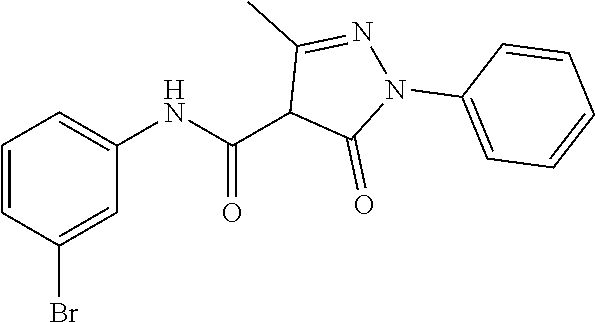
Figure US12133852-20241105-C01077
164
Figure US12133852-20241105-C01078
165
Figure US12133852-20241105-C01079
166
Figure US12133852-20241105-C01080
167
Figure US12133852-20241105-C01081
168
Figure US12133852-20241105-C01082
169
Figure US12133852-20241105-C01083
170
Figure US12133852-20241105-C01084
171
Figure US12133852-20241105-C01085
172
Figure US12133852-20241105-C01086
173
Figure US12133852-20241105-C01087
174
Figure US12133852-20241105-C01088
176
Figure US12133852-20241105-C01089
182
Figure US12133852-20241105-C01090
183
Figure US12133852-20241105-C01091
184
Figure US12133852-20241105-C01092
185
Figure US12133852-20241105-C01093
186
Figure US12133852-20241105-C01094
187
Figure US12133852-20241105-C01095
188
Figure US12133852-20241105-C01096
189
Figure US12133852-20241105-C01097
190
Figure US12133852-20241105-C01098
191
Figure US12133852-20241105-C01099
192
Figure US12133852-20241105-C01100
193
Figure US12133852-20241105-C01101
194
Figure US12133852-20241105-C01102
195
Figure US12133852-20241105-C01103
196
Figure US12133852-20241105-C01104
197
Figure US12133852-20241105-C01105
198
Figure US12133852-20241105-C01106
199
Figure US12133852-20241105-C01107
200
Figure US12133852-20241105-C01108
201
Figure US12133852-20241105-C01109
202
Figure US12133852-20241105-C01110
203
Figure US12133852-20241105-C01111
204
Figure US12133852-20241105-C01112
205
Figure US12133852-20241105-C01113
206
Figure US12133852-20241105-C01114
207
Figure US12133852-20241105-C01115
208
Figure US12133852-20241105-C01116
209
Figure US12133852-20241105-C01117
210
Figure US12133852-20241105-C01118
211
Figure US12133852-20241105-C01119
212
Figure US12133852-20241105-C01120
213
Figure US12133852-20241105-C01121
214
Figure US12133852-20241105-C01122
215
Figure US12133852-20241105-C01123
216
Figure US12133852-20241105-C01124
217
Figure US12133852-20241105-C01125
218
Figure US12133852-20241105-C01126
219
Figure US12133852-20241105-C01127
220
Figure US12133852-20241105-C01128
221
Figure US12133852-20241105-C01129
222
Figure US12133852-20241105-C01130
223
Figure US12133852-20241105-C01131
224
Figure US12133852-20241105-C01132
226
Figure US12133852-20241105-C01133
227
Figure US12133852-20241105-C01134
228
Figure US12133852-20241105-C01135
229
Figure US12133852-20241105-C01136
230
Figure US12133852-20241105-C01137
231
Figure US12133852-20241105-C01138
232
Figure US12133852-20241105-C01139
233
Figure US12133852-20241105-C01140
234
Figure US12133852-20241105-C01141
235
Figure US12133852-20241105-C01142
236
Figure US12133852-20241105-C01143
237
Figure US12133852-20241105-C01144
238
Figure US12133852-20241105-C01145
239
Figure US12133852-20241105-C01146
240
Figure US12133852-20241105-C01147
241
Figure US12133852-20241105-C01148
242
Figure US12133852-20241105-C01149
243
Figure US12133852-20241105-C01150
244
Figure US12133852-20241105-C01151
245
Figure US12133852-20241105-C01152
246
Figure US12133852-20241105-C01153
247
Figure US12133852-20241105-C01154
248
Figure US12133852-20241105-C01155
249
Figure US12133852-20241105-C01156
250
Figure US12133852-20241105-C01157
251
Figure US12133852-20241105-C01158
252
Figure US12133852-20241105-C01159
253
Figure US12133852-20241105-C01160
254
Figure US12133852-20241105-C01161
255
Figure US12133852-20241105-C01162
256
Figure US12133852-20241105-C01163
257
Figure US12133852-20241105-C01164
258
Figure US12133852-20241105-C01165
259
Figure US12133852-20241105-C01166
260
Figure US12133852-20241105-C01167
261
Figure US12133852-20241105-C01168
262
Figure US12133852-20241105-C01169
263
Figure US12133852-20241105-C01170
264
Figure US12133852-20241105-C01171
265
Figure US12133852-20241105-C01172
266
Figure US12133852-20241105-C01173
267
Figure US12133852-20241105-C01174
268
Figure US12133852-20241105-C01175
269
Figure US12133852-20241105-C01176
270
Figure US12133852-20241105-C01177
271
Figure US12133852-20241105-C01178
272
Figure US12133852-20241105-C01179
273
Figure US12133852-20241105-C01180
274
Figure US12133852-20241105-C01181
275
Figure US12133852-20241105-C01182
276
Figure US12133852-20241105-C01183
277
Figure US12133852-20241105-C01184
278
Figure US12133852-20241105-C01185
279
Figure US12133852-20241105-C01186
280
Figure US12133852-20241105-C01187
281
Figure US12133852-20241105-C01188
282
Figure US12133852-20241105-C01189
283
Figure US12133852-20241105-C01190
284
Figure US12133852-20241105-C01191
285
Figure US12133852-20241105-C01192
286
Figure US12133852-20241105-C01193
287
Figure US12133852-20241105-C01194
288
Figure US12133852-20241105-C01195
289
Figure US12133852-20241105-C01196
290
Figure US12133852-20241105-C01197
291
Figure US12133852-20241105-C01198
292
Figure US12133852-20241105-C01199
293
Figure US12133852-20241105-C01200
294
Figure US12133852-20241105-C01201
295
Figure US12133852-20241105-C01202
296
Figure US12133852-20241105-C01203
297
Figure US12133852-20241105-C01204
298
Figure US12133852-20241105-C01205
299
Figure US12133852-20241105-C01206
300
Figure US12133852-20241105-C01207
301
Figure US12133852-20241105-C01208
302
Figure US12133852-20241105-C01209
303
Figure US12133852-20241105-C01210
304
Figure US12133852-20241105-C01211
305
Figure US12133852-20241105-C01212
306
Figure US12133852-20241105-C01213
307
Figure US12133852-20241105-C01214
308
Figure US12133852-20241105-C01215
309
Figure US12133852-20241105-C01216
310
Figure US12133852-20241105-C01217
311
Figure US12133852-20241105-C01218
312
Figure US12133852-20241105-C01219
313
Figure US12133852-20241105-C01220
314
Figure US12133852-20241105-C01221
315
Figure US12133852-20241105-C01222
316
Figure US12133852-20241105-C01223
317
Figure US12133852-20241105-C01224
318
Figure US12133852-20241105-C01225
319
Figure US12133852-20241105-C01226
320
Figure US12133852-20241105-C01227
321
Figure US12133852-20241105-C01228
322
Figure US12133852-20241105-C01229
323
Figure US12133852-20241105-C01230
324
Figure US12133852-20241105-C01231
325
Figure US12133852-20241105-C01232
326
Figure US12133852-20241105-C01233
327
Figure US12133852-20241105-C01234
328
Figure US12133852-20241105-C01235
329
Figure US12133852-20241105-C01236
330
Figure US12133852-20241105-C01237
331
Figure US12133852-20241105-C01238
332
Figure US12133852-20241105-C01239
333
Figure US12133852-20241105-C01240
334
Figure US12133852-20241105-C01241
335
Figure US12133852-20241105-C01242
336
Figure US12133852-20241105-C01243
337
Figure US12133852-20241105-C01244
339
Figure US12133852-20241105-C01245
340
Figure US12133852-20241105-C01246
341
Figure US12133852-20241105-C01247
342
Figure US12133852-20241105-C01248
343
Figure US12133852-20241105-C01249
344
Figure US12133852-20241105-C01250
345
Figure US12133852-20241105-C01251
346
Figure US12133852-20241105-C01252
347
Figure US12133852-20241105-C01253
348
Figure US12133852-20241105-C01254
349
Figure US12133852-20241105-C01255
350
Figure US12133852-20241105-C01256
351
Figure US12133852-20241105-C01257
352
Figure US12133852-20241105-C01258
353
Figure US12133852-20241105-C01259
354
Figure US12133852-20241105-C01260
355
Figure US12133852-20241105-C01261
356
Figure US12133852-20241105-C01262
357
Figure US12133852-20241105-C01263
358
Figure US12133852-20241105-C01264
359
Figure US12133852-20241105-C01265
360
Figure US12133852-20241105-C01266
361
Figure US12133852-20241105-C01267
362
Figure US12133852-20241105-C01268
363
Figure US12133852-20241105-C01269
364
Figure US12133852-20241105-C01270
365
Figure US12133852-20241105-C01271
366
Figure US12133852-20241105-C01272
367
Figure US12133852-20241105-C01273
368
Figure US12133852-20241105-C01274
369
Figure US12133852-20241105-C01275
370
Figure US12133852-20241105-C01276
371
Figure US12133852-20241105-C01277
372
Figure US12133852-20241105-C01278
373
Figure US12133852-20241105-C01279
374
Figure US12133852-20241105-C01280
375
Figure US12133852-20241105-C01281
376
Figure US12133852-20241105-C01282
377
Figure US12133852-20241105-C01283
378
Figure US12133852-20241105-C01284
379
Figure US12133852-20241105-C01285
380
Figure US12133852-20241105-C01286
381
Figure US12133852-20241105-C01287
382
Figure US12133852-20241105-C01288
383
Figure US12133852-20241105-C01289
384
Figure US12133852-20241105-C01290
385
Figure US12133852-20241105-C01291
386
Figure US12133852-20241105-C01292
387
Figure US12133852-20241105-C01293
388
Figure US12133852-20241105-C01294
389
Figure US12133852-20241105-C01295
390
Figure US12133852-20241105-C01296
391
Figure US12133852-20241105-C01297
392
Figure US12133852-20241105-C01298
393
Figure US12133852-20241105-C01299
394
Figure US12133852-20241105-C01300
395
Figure US12133852-20241105-C01301
396
Figure US12133852-20241105-C01302
397
Figure US12133852-20241105-C01303
398
Figure US12133852-20241105-C01304
399
Figure US12133852-20241105-C01305
400
Figure US12133852-20241105-C01306
401
Figure US12133852-20241105-C01307
402
Figure US12133852-20241105-C01308
403
Figure US12133852-20241105-C01309
404
Figure US12133852-20241105-C01310
405
Figure US12133852-20241105-C01311
406
Figure US12133852-20241105-C01312
407
Figure US12133852-20241105-C01313
408
Figure US12133852-20241105-C01314
409
Figure US12133852-20241105-C01315
410
Figure US12133852-20241105-C01316
461
Figure US12133852-20241105-C01317
462
Figure US12133852-20241105-C01318
463
Figure US12133852-20241105-C01319
464
Figure US12133852-20241105-C01320
465
Figure US12133852-20241105-C01321
466
Figure US12133852-20241105-C01322
467
Figure US12133852-20241105-C01323
468
Figure US12133852-20241105-C01324
470
Figure US12133852-20241105-C01325
471
Figure US12133852-20241105-C01326
472
Figure US12133852-20241105-C01327
473
Figure US12133852-20241105-C01328
474
Figure US12133852-20241105-C01329
475
Figure US12133852-20241105-C01330
476
Figure US12133852-20241105-C01331
477
Figure US12133852-20241105-C01332
478
Figure US12133852-20241105-C01333
479
Figure US12133852-20241105-C01334
480
Figure US12133852-20241105-C01335
481
Figure US12133852-20241105-C01336
482
Figure US12133852-20241105-C01337
483
Figure US12133852-20241105-C01338
484
Figure US12133852-20241105-C01339
485
Figure US12133852-20241105-C01340
486
Figure US12133852-20241105-C01341
487
Figure US12133852-20241105-C01342
488
Figure US12133852-20241105-C01343
489
Figure US12133852-20241105-C01344
490
Figure US12133852-20241105-C01345
491
Figure US12133852-20241105-C01346
492
Figure US12133852-20241105-C01347
493
Figure US12133852-20241105-C01348
494
Figure US12133852-20241105-C01349
495
Figure US12133852-20241105-C01350
496
Figure US12133852-20241105-C01351
497
Figure US12133852-20241105-C01352
498
Figure US12133852-20241105-C01353
499
Figure US12133852-20241105-C01354
500
Figure US12133852-20241105-C01355
501
Figure US12133852-20241105-C01356
502
Figure US12133852-20241105-C01357
503
Figure US12133852-20241105-C01358
504
Figure US12133852-20241105-C01359
505
Figure US12133852-20241105-C01360
506
Figure US12133852-20241105-C01361
507
Figure US12133852-20241105-C01362
508
Figure US12133852-20241105-C01363
509
Figure US12133852-20241105-C01364
510
Figure US12133852-20241105-C01365
511
Figure US12133852-20241105-C01366
512
Figure US12133852-20241105-C01367
516
Figure US12133852-20241105-C01368
524
Figure US12133852-20241105-C01369
529
Figure US12133852-20241105-C01370
530
Figure US12133852-20241105-C01371
531
Figure US12133852-20241105-C01372
532
Figure US12133852-20241105-C01373
534
Figure US12133852-20241105-C01374
535
Figure US12133852-20241105-C01375
536
Figure US12133852-20241105-C01376
537
Figure US12133852-20241105-C01377
538
Figure US12133852-20241105-C01378
539
Figure US12133852-20241105-C01379
540
Figure US12133852-20241105-C01380
541
Figure US12133852-20241105-C01381
542
Figure US12133852-20241105-C01382
543
Figure US12133852-20241105-C01383
544
Figure US12133852-20241105-C01384
545
Figure US12133852-20241105-C01385
546
Figure US12133852-20241105-C01386
547
Figure US12133852-20241105-C01387
548
Figure US12133852-20241105-C01388
549
Figure US12133852-20241105-C01389
550
Figure US12133852-20241105-C01390
551
Figure US12133852-20241105-C01391
552
Figure US12133852-20241105-C01392
553
Figure US12133852-20241105-C01393
554
Figure US12133852-20241105-C01394
555
Figure US12133852-20241105-C01395
556
Figure US12133852-20241105-C01396
557
Figure US12133852-20241105-C01397
558
Figure US12133852-20241105-C01398
559
Figure US12133852-20241105-C01399
560
Figure US12133852-20241105-C01400
561
Figure US12133852-20241105-C01401
562
Figure US12133852-20241105-C01402
563
Figure US12133852-20241105-C01403
564
Figure US12133852-20241105-C01404
565
Figure US12133852-20241105-C01405
566
Figure US12133852-20241105-C01406
567
Figure US12133852-20241105-C01407
568
Figure US12133852-20241105-C01408
569
Figure US12133852-20241105-C01409
570
Figure US12133852-20241105-C01410
571
Figure US12133852-20241105-C01411
572
Figure US12133852-20241105-C01412
573
Figure US12133852-20241105-C01413
574
Figure US12133852-20241105-C01414
575
Figure US12133852-20241105-C01415
576
Figure US12133852-20241105-C01416
577
Figure US12133852-20241105-C01417
578
Figure US12133852-20241105-C01418
579
Figure US12133852-20241105-C01419
580
Figure US12133852-20241105-C01420
581
Figure US12133852-20241105-C01421
582
Figure US12133852-20241105-C01422
583
Figure US12133852-20241105-C01423
584
Figure US12133852-20241105-C01424
585
Figure US12133852-20241105-C01425
586
Figure US12133852-20241105-C01426
587
Figure US12133852-20241105-C01427
588
Figure US12133852-20241105-C01428
589
Figure US12133852-20241105-C01429
590
Figure US12133852-20241105-C01430
591
Figure US12133852-20241105-C01431
592
Figure US12133852-20241105-C01432
10. The method of claim 1, wherein the subject has been previously treated with chemotherapy, immunotherapy, radiotherapy, biological therapy, surgical intervention, or any combination thereof.
11. The method of claim 1, wherein the subject has BRAF mutant melanoma.
12. The method of claim 1, wherein the subject has invasive ductal carcinoma of the breast or triple-negative breast cancer.
13. The method of claim 6, wherein the subject has a cancer selected from the list of:
hepatocellular carcinoma, melanoma, glioblastoma, breast cancer, prostate cancer, liver cancer, brain cancer, ovarian cancer, lung cancer, Lewis lung carcinoma (LLC), colon carcinoma, pancreatic cancer, renal cell carcinoma and mammary carcinoma.
14. The method of claim 6, wherein the subject has been previously treated with chemotherapy, immunotherapy, radiotherapy, biological therapy, surgical intervention, or any combination thereof.
15. The method of claim 6, wherein the subject has BRAF mutant melanoma.
16. The method of claim 6, wherein the subject has invasive ductal carcinoma of the breast or triple-negative breast cancer.
17. The method of claim 1, wherein the subject has a cancer selected from the list of: hepatocellular carcinoma, melanoma, glioblastoma, breast cancer, prostate cancer, liver cancer, brain cancer, ovarian cancer, lung cancer, Lewis lung carcinoma (LLC), colon carcinoma, pancreatic cancer, renal cell carcinoma and mammary carcinoma.
US17/088,613 2017-11-15 2020-11-04 ACSS2 inhibitors and methods of use thereof Active 2041-02-08 US12133852B2 (en)

Priority Applications (2)

Application Number Priority Date Filing Date Title
US17/088,613 US12133852B2 (en) 2017-11-15 2020-11-04 ACSS2 inhibitors and methods of use thereof
US18/936,271 US20250186433A1 (en) 2017-11-15 2024-11-04 Acss2 inhibitors and methods of use thereof

Applications Claiming Priority (6)

Application Number Priority Date Filing Date Title
US201762586195P 2017-11-15 2017-11-15
PCT/IL2018/051232 WO2019097515A1 (en) 2017-11-15 2018-11-15 Acss2 inhibitors and methods of use thereof
US201962847348P 2019-05-14 2019-05-14
US16/411,168 US10851064B2 (en) 2017-11-15 2019-05-14 ACSS2 inhibitors and methods of use thereof
PCT/IL2020/050526 WO2020230136A1 (en) 2019-05-14 2020-05-14 Acss2 inhibitors and methods of use thereof
US17/088,613 US12133852B2 (en) 2017-11-15 2020-11-04 ACSS2 inhibitors and methods of use thereof

Related Parent Applications (3)

Application Number Title Priority Date Filing Date
PCT/IL2018/050526 Continuation-In-Part WO2018211501A1 (en) 2017-05-14 2018-05-14 Method and system for generating and managing a regulation engine
US16/411,168 Continuation-In-Part US10851064B2 (en) 2017-11-15 2019-05-14 ACSS2 inhibitors and methods of use thereof
PCT/IL2020/050526 Continuation-In-Part WO2020230136A1 (en) 2017-11-15 2020-05-14 Acss2 inhibitors and methods of use thereof

Related Child Applications (1)

Application Number Title Priority Date Filing Date
US18/936,271 Division US20250186433A1 (en) 2017-11-15 2024-11-04 Acss2 inhibitors and methods of use thereof

Publications (2)

Publication Number Publication Date
US20220305010A1 US20220305010A1 (en) 2022-09-29
US12133852B2 true US12133852B2 (en) 2024-11-05

Family

ID=83364035

Family Applications (2)

Application Number Title Priority Date Filing Date
US17/088,613 Active 2041-02-08 US12133852B2 (en) 2017-11-15 2020-11-04 ACSS2 inhibitors and methods of use thereof
US18/936,271 Pending US20250186433A1 (en) 2017-11-15 2024-11-04 Acss2 inhibitors and methods of use thereof

Family Applications After (1)

Application Number Title Priority Date Filing Date
US18/936,271 Pending US20250186433A1 (en) 2017-11-15 2024-11-04 Acss2 inhibitors and methods of use thereof

Country Status (1)

Country Link
US (2) US12133852B2 (en)

Citations (14)

* Cited by examiner, † Cited by third party
Publication number Priority date Publication date Assignee Title
DE140966C (en)
DE2324893A1 (en) 1973-05-17 1974-12-12 Hoechst Ag 5-Phenylcarbamoyl-4-methyl-1-hydroxy-imidazoles - with coccidiostatic and trematocidal activity
US3905997A (en) 1974-06-21 1975-09-16 Warner Lambert Co 3-Aryl-5-oxo-2-pyrazoline-4-carboxanilides and process therefor
US4207317A (en) * 1978-03-13 1980-06-10 Ciba-Geigy Corporation 1-Aryl-4-carbamoyl-pyrazolin-5-ones
JPH11291635A (en) 1998-04-06 1999-10-26 Mitsubishi Paper Mills Ltd Thermal recording material
WO2003013484A2 (en) 2001-08-07 2003-02-20 F. Hoffmann-La Roche Ag N-monoacylated derivatives of o-phenylenediamines, their six membered heterocyclic analogues and their use as pharmaceutical agents
WO2003024448A2 (en) 2001-09-14 2003-03-27 Methylgene, Inc. Inhibitors of histone deacetylase
WO2007026215A1 (en) 2005-08-29 2007-03-08 Glenmark Pharmaceuticals S.A. Pyrazole derivatives as cannabinoid receptor ligands, pharmaceutical compositions containing? them, and processes for their preparation
WO2011143425A2 (en) 2010-05-12 2011-11-17 Vertex Pharmaceuticals Incorporated Compounds useful as inhibitors of atr kinase
WO2013159224A1 (en) 2012-04-25 2013-10-31 University Of Manitoba 2-carbamo(thio)yl-1,3- dioxopropyl derivatives in cancer therapy
WO2015175845A1 (en) 2014-05-15 2015-11-19 Peloton Therapeutics, Inc. Benzimidazole derivatives and uses thereof
US20170190689A1 (en) 2016-01-05 2017-07-06 Incyte Corporation Pyridine and pyridimine compounds as pi3k-gamma inhibitors
WO2019097515A1 (en) 2017-11-15 2019-05-23 Metabomed Ltd Acss2 inhibitors and methods of use thereof
WO2020230134A1 (en) 2019-05-14 2020-11-19 Metabomed Ltd Acss2 inhibitors and methods of use thereof

Patent Citations (14)

* Cited by examiner, † Cited by third party
Publication number Priority date Publication date Assignee Title
DE140966C (en)
DE2324893A1 (en) 1973-05-17 1974-12-12 Hoechst Ag 5-Phenylcarbamoyl-4-methyl-1-hydroxy-imidazoles - with coccidiostatic and trematocidal activity
US3905997A (en) 1974-06-21 1975-09-16 Warner Lambert Co 3-Aryl-5-oxo-2-pyrazoline-4-carboxanilides and process therefor
US4207317A (en) * 1978-03-13 1980-06-10 Ciba-Geigy Corporation 1-Aryl-4-carbamoyl-pyrazolin-5-ones
JPH11291635A (en) 1998-04-06 1999-10-26 Mitsubishi Paper Mills Ltd Thermal recording material
WO2003013484A2 (en) 2001-08-07 2003-02-20 F. Hoffmann-La Roche Ag N-monoacylated derivatives of o-phenylenediamines, their six membered heterocyclic analogues and their use as pharmaceutical agents
WO2003024448A2 (en) 2001-09-14 2003-03-27 Methylgene, Inc. Inhibitors of histone deacetylase
WO2007026215A1 (en) 2005-08-29 2007-03-08 Glenmark Pharmaceuticals S.A. Pyrazole derivatives as cannabinoid receptor ligands, pharmaceutical compositions containing? them, and processes for their preparation
WO2011143425A2 (en) 2010-05-12 2011-11-17 Vertex Pharmaceuticals Incorporated Compounds useful as inhibitors of atr kinase
WO2013159224A1 (en) 2012-04-25 2013-10-31 University Of Manitoba 2-carbamo(thio)yl-1,3- dioxopropyl derivatives in cancer therapy
WO2015175845A1 (en) 2014-05-15 2015-11-19 Peloton Therapeutics, Inc. Benzimidazole derivatives and uses thereof
US20170190689A1 (en) 2016-01-05 2017-07-06 Incyte Corporation Pyridine and pyridimine compounds as pi3k-gamma inhibitors
WO2019097515A1 (en) 2017-11-15 2019-05-23 Metabomed Ltd Acss2 inhibitors and methods of use thereof
WO2020230134A1 (en) 2019-05-14 2020-11-19 Metabomed Ltd Acss2 inhibitors and methods of use thereof

Non-Patent Citations (62)

* Cited by examiner, † Cited by third party
Title
Banerjee et al. "Small molecule ACSS2 inhibitors target acetate metabolizing tumor cells in hypoxic conditions" [abstract]. In: Proceedings of the American Association for Cancer Research Annual Meeting 2018; Apr. 14-18, 2018; Chicago, IL. Philadelphia (PA): AACR. Cancer Research (Jul. 2018), vol. 78, Issue: 13—Suppl. Abstract No. 3510. DOI: <10.1158/1538-7445.AM2018-3510>. Retrieved from URL: <https://cancerres.aacrjournals.org/content/78/13_Supplement/3510>. Also see: <https://www.curadev.in/images/AACR_2018_Annual_Meeting.jpg>. Jul. 31, 2018 (Jul. 31, 2018).
Björnson et al. "Stratification of hepatocellular carcinoma patients based on acetate utilization" Cell reports. Dec. 1, 2015;13(9):2014-26.
Bulusu et al. "Acetate recapturing by nuclear acetyl-CoA synthetase 2 prevents loss of histone acetylation during oxygen and serum limitation" Cell reports. Jan. 17, 2017;18(3):647-58.
CAS Registry No. 1375980-06-5, CA Index Name: 1H-Pyrazole-4-carboxamide, N-(6-ethyl-2-benzothiazolyl)-4,5-dihydro-3-methyl-5-oxo-1-(tetrahydro-1,1-dioxido-3-thienyl)-, Entered STN: Jun. 7, 2012.
CAS Registry No. 1376380-77-6, CA Index Name: 1H-Pyrazole-4-carboxamide, N-[4-(3-fluorophenyl)-2-thiazolyl]-4,5-dihydro-3-methyl-5-oxo-1-(tetrahydro-1,1-dioxido-3-thienyl)-, Entered STN: Jun. 7, 2012.
CAS Registry No. 1423624-35-4, CA Index Name: 1H-Pyrazole-4-carboxamide, N-(2-chloro-3-pyridinyl)-4,5-dihydro-3-methyl-5-oxo-1-(tetrahydro-1,1-dioxido-3-thienyl)-, Entered STN: Mar. 14, 2013.
CAS Registry No. 1423670-51-2, CA Index Name: 1H-Pyrazole-4-carboxamide, 4,5-dihydro-3-methyl-5-oxo-N-phenyl-1-(tetrahydro-1,1-dioxido-3-thienyl), Entered STN: Mar. 14, 2013.
CAS Registry No. 1423725-39-6, CA Index Name: 1H-Pyrazole-4-carboxamide, N-1,3-benzodioxol-5-yl-4,5-dihydro-3-methyl-5-oxo-1-(tetrahydro-1,1-dioxido-3-thienyl)—Entered STN: Mar. 14, 2013.
CAS Registry No. 1424083-43-1, CA Index Name: 1H-Pyrazole-4-carboxamide, 4,5-dihydro-3-methyl-5-oxo-N-3-pyridinyl-1-(tetrahydro-1,1-dioxido-3-thienyl), Entered STN: Mar. 15, 2013.
CAS Registry No. 1424179-52-1, CA Index Name: 1H-Pyrazole-4-carboxamide, 4,5-dihydro-3-methyl-5-oxo-1-(tetrahydro-1,1-dioxido-3-thienyl)-N-1,3,4-thiadiazol-2-yl, Entered STN: Mar. 15, 2013.
CAS Registry No. 1424277-15-5, CA Index Name: 1H-Pyrazole-4-carboxamide, 4,5-dihydro-3-methyl-5-oxo-1-(tetrahydro-1,1-dioxido-3-thienyl)-N-2-thiazolyl, Entered STN: Mar. 15, 2013.
CAS Registry No. 1427938-63-3, CA Index Name: 1H-Pyrazole-4-carboxamide, 4,5-dihydro-3-methyl-5-oxo-N-2-pyridinyl-1-(tetrahydro-1,1-dioxido-3-thienyl)-, Entered STN: Apr. 11, 2013.
CAS Registry No. 1444608-50-7, CA Index Name: 1H-Pyrazole-4-carboxamide, 1-(2,4-dimethylphenyl)-4,5-dihydro-3-methyl-5-oxo-N-(tetrahydro-1,1-dioxido-3-thienyl)-, Entered STN: Jul. 16, 2013.
CAS Registry No. 1444612-86-5, CA Index Name: 1H-Pyrazole-4-carboxamide, 1-(3-chlorophenyl)-4,5-dihydro-3-methyl-5-oxo-N-(tetrahydro-1,1-dioxido-3-thienyl)-, Entered STN: Jun. 16, 2013.
CAS Registry No. 1444619-19-5, CA Index Name: 1H-Pyrazole-4-carboxamide, 1-(4-fluorophenyl)-4,5-dihydro-3-methyl-5-oxo-N-(tetrahydro-1,1-dioxido-3-thienyl)-, Entered STN: Jul. 16, 2013.
CAS Registry No. 1787906-31-3, CA Index Name: 1H-Pyrazole-4-carboxamide, 4,5-dihydro-3-methyl-N-[3-methyl-1-(phenylmethyl)-1H-pyrazol-5-yl]-5-oxo-1-phenyl-, Entered STN: Jun. 25, 2015.
CAS Registry No. 1791350-17-8, CA Index Name: 1H-Pyrazole-4-carboxamide, 1-(2,4-dimethylphenyl)-4,5-dihydro-3-methyl-N-[1-(1-methylethyl)-1H-pyrazol-5-yl]-5-oxo-, Entered STN: Jun. 30, 2015.
CAS Registry No. 1808705-10-3, CA Index Name: 1H-Pyrazole-4-carboxamide, 1-(4,6-dimethyl-2-pyrimidinyl)-4,5-dihydro-3-methyl-N-[2-(1-methylethyl)phenyl]-5-oxo-, Entered STN: Sep. 30, 2015.
CAS Registry No. 483276-31-9, CA Index Name: 1H-Pyrazole-4-carboxamide, N-(4-chlorophenyl)-1-[4-(4-chlorophenyl)-2-thiazolyl]-4,5-dihydro-5-oxo-3-phenyl-, Entered STN: Jan. 30, 2003.
CAS Registry No. 483276-32-0, CA Index Name: 1H-Pyrazole-4-carbothioamide, 1-[4-(4-chlorophenyl)-2-thiazolyl]-4,5-dihydro-5-oxo-N,3-diphenyl-, Entered STN: Jan. 30, 2003.
CAS Registry No. 97635-51-3; CA Index Name: Benzamide, 3-amino-N-[2,5- dihydro-5-oxo-1-(2,4,5-trichlorophenyl)-1H-pyrazol-4-yl]-; Entered STN: Aug. 18, 1985.
Chen et al. "Coordinate regulation of stress signaling and epigenetic events by Acss2 and HIF-2" in cancer cells. PloS one. Dec. 27, 2017;12(12):e0190241.
Chen et al. "The acetate/ACSS2 switch regulates HIF-2 stress signaling in the tumor cell microenvironment" PloS one. Feb. 17, 2015;10(2):e0116515.
Chen et al. "TM6SF2 E167K variant, a novel genetic susceptibility variant, contributing to nonalcoholic fatty liver disease" Journal of clinical and translational hepatology. Dec. 28, 2015;3(4):265.
Comerford et al. "Acetate dependence of tumors" Cell. Dec. 18, 2014;159(7):1591-602.
El-Desoky et al. "Utility of isothiocyanates in heterocyclic synthesis" Sulfur Letters. Jan. 1, 2002;25(5):199-205.
Ertel et al. Synthese von 1-Hydroxyimidazolen und 1-Hydroxyimidazol-3-oxiden. Liebigs Ann. Chem. (1974), vol. 1974, issue 9, pp. 1399-1406. First published: Oct. 17, 1974. DOI: <10.1002/jlac.197419740904>. URL: <https://booksc.org/book/1592532/9b03fe>. Oct. 17, 1974 (Oct. 17, 1974) p. 1399.
Gaffer et al. "Synthesis and antioxidant activity of some new thiazolyl-pyrazolone derivatives" Journal of Heterocyclic Chemistry. Jan. 2017;54(1):331-40.
Gao et al. "Acetate functions as an epigenetic metabolite to promote lipid synthesis under hypoxia. Nature communications" Jun. 30, 2016;7:11960.
Gräff et al. "Histone acetylation: molecular mnemonics on the chromatin" Nature Reviews Neuroscience. Feb. 2013;14(2):97.
Harriman et al. "Acetyl-CoA carboxylase inhibition by ND-630 reduces hepatic steatosis, improves insulin sensitivity, and modulates dyslipidemia in rats" Proceedings of the National Academy of Sciences. Mar. 29, 2016;113(13):E1796-805.
Hosios et al. "Acetate metabolism in cancer cells" Cancer & metabolism. Dec. 2014;2(1):27.
Huang et al. "ACSS2 promotes systemic fat storage and utilization through selective regulation of genes involved in lipid metabolism" Proceedings of the National Academy of Sciences. Oct. 2, 2018;115(40):E9499-506.
International Search Report for PCT Application No. PCT/IL2018/051232 dated Jan. 30, 2019.
International Search Report for PCT Application No. PCT/IL2020/050524 dated May 14, 2020.
Kamphorst et al. "Quantitative analysis of acetyl-CoA production in hypoxic cancer cells reveals substantial contribution from acetate" Cancer & metabolism. Dec. 2014;2(1):23.
Kort, M. E., Atkinson, R. N., Thomas, J. B., Drizin, I., Johnson, M. S., Secrest, M. A., . & Matulenko, M. A. (2010). Subtype-selective Nav1. 8 sodium channel blockers: Identification of potent, orally active nicotinamide derivatives. Bioorganic & medicinal chemistry letters, 20(22), 6812-6815.
Lakhter et al. "Glucose—independent acetate metabolism promotes melanoma cell survival and tumor growth" Journal of Biological Chemistry. Oct. 14, 2016;291(42):21869-79.
Li et al. "Nucleus-translocated ACSS2 promotes gene transcription for lysosomal biogenesis and autophagy" Molecular cell. Jun. 1, 2017;66(5):684-97.
Linchenko et al. "Cyclizations in the reactions of isocyanates with compounds containing active methylene groups in the presence of triethylamine" Russian chemical bulletin. May 2006;55(5):873-8.
Lyssiotis et al. "Acetate fuels the cancer engine. Cell" Dec. 18, 2014;159(7):1492-4.
Márquez et al. "Tricarboxylic Acid Cycle Activity and Remodeling of Glycerophosphocholine Lipids Support Cytokine Induction in Response to Fungal Patterns" Cell reports. Apr. 9, 2019;27(2):525-36.
Marzouk et al. "Synthesis and characterization of novel pyrazolone derivatives" European Journal of Chemistry. Mar. 31, 2014;5(1):24-32.
Mashimo et al. "Acetate is a bloenergetic substrate for human glioblastoma and brain metastases" Cell. Dec. 18, 2014;159(7):1603-14.
McKnight SL. "A hypothetical means of treating or preventing cancer" Cancer & metabolism. May 2014;2(1):O7.
Mews et al. "Acetyl-CoA synthetase regulates histone acetylation and hippocampal memory" Nature. Jun. 2017;546(7658):381.
Nikitina et al. "Synthesis and antiviral activity of 1-hydroxy-2-(2-hydroxyphenyl) imidazoles against vaccinia virus" Russian Chemical Bulletin. Mar. 2019;68(3):634-7.
PubChem Compound CID 137186565. National Center for Biotechnology Information. Create date: Jan. 25, 2019. URL: <https://pubchem.ncbi.nlm.nih.gov/compound/137186565>. & ZINC604419253. URL: <http://zinc.docking.org/substances/ZINC000604419253/>. Jan. 25, 2019 (Jan. 25, 2019).
Ribeiro et al. "Possible involvement of ACSS2 gene in alcoholism" Journal of Neural Transmission. Sep. 1, 2017:124(9):1151-8.
Saeed, A., Ejaz, S. A., Khurshid, A., Hassan, S., al-Rashida, M., Latif, M., . . . & Iqbal, J. (2015). Synthesis, characterization and biological evaluation of N-(2, 3-dimethyl-5-oxo- 1-phenyl-2, 5-dihydro-1 H-pyrazol-4-yl) benzamides. RSC advances, 5(105), 86428-86439.
Santeusanio et al. "Divergent approach to thiazolylidene derivatives: a perspective on the synthesis of a heterocyclic skeleton from B-amidothioamides reactivity" The Journal of organic chemistry. Sep. 15, 2017;82(18):9773-8.
Schug et al. "Acetyl-CoA synthetase 2 promotes acetate utilization and maintains cancer cell growth under metabolic stress" Cancer cell. Jan. 12, 2015;27(1):57-71.
Schug et al. "The metabolic fate of acetate in cancer" Nature Reviews Cancer. Nov. 2016;16(11):708.
Vysochan et al. "ACSS2-mediated acetyl-CoA synthesis from acetate is necessary for human cytomegalovirus infection" Proceedings of the National Academy of Sciences. Feb. 21, 2017;114(8):E1528-35.
Wakil et al. "Fatty acid metabolism: target for metabolic syndrome" Journal of lipid research. Apr. 1, 2009;50(Supplement):S138-43.
Wen et al. "Glucose-derived acetate and ACSS2 as key players in cisplatin resistance in bladder cancer" Biochimica et Biophysica Acta (BBA)—Molecular and Cell Biology of Lipids. Mar. 1, 2019;1864(3):413-21.
Yoshii et al. "Acetate/acetyl-CoA metabolism associated with cancer fatty acid synthesis: overview and application" Cancer letters. Jan. 28, 2015;356(2):211-6.
Yoshii et al. "Cytosolic acetyl-CoA synthetase affected tumor cell survival under hypoxia: the possible function in tumor acetyl-CoA/acetate metabolism" Cancer science. May 2009;100(5):821-7.
Yoshii et al. "Tumor uptake of radiolabeled acetate reflects the expression of cytosolic acetyl-CoA synthetase: implications for the mechanism of acetate PET" Nuclear medicine and biology. Oct. 1, 2009;36(7):771-7.
Yun et al. "The importance of acetyl coenzyme A synthetase for 11C-acetate uptake and cell survival in hepatocellular carcinoma" Journal of nuclear medicine. Aug. 1, 2009;50(8):1222-8.
Zhao et al. "ATP-citrate lyase controls a glucose-to-acetate metabolic switch" Cell reports. Oct. 18, 2016;17(4):1037-52.
Zlotorynski E. "Gene expression: ACSS2 boosts local histone acetylation" Nature Reviews Molecular Cell Biology. Jun. 7, 2017;18(7):405.

Also Published As

Publication number Publication date
US20220305010A1 (en) 2022-09-29
US20250186433A1 (en) 2025-06-12

Similar Documents

Publication Publication Date Title
US10851064B2 (en) ACSS2 inhibitors and methods of use thereof
US12441689B2 (en) ACSS2 inhibitors and methods of use thereof
EP2739143B1 (en) Preparation and methods of use for ortho-aryl 5- membered heteroaryl-carboxamide containing multi-targeted kinase inhibitors
US20250059174A1 (en) Pharmaceutical Compounds and Compositions as C-Kit Kinase Inhibitors
US12133852B2 (en) ACSS2 inhibitors and methods of use thereof
JP2022551180A (en) isocitrate dehydrogenase (IDH) inhibitors
HK40035174A (en) Acss2 inhibitors and methods of use thereof
HK40035174B (en) Acss2 inhibitors and methods of use thereof
CN120603827A (en) Novel heterocyclic compounds

Legal Events

Date Code Title Description
FEPP Fee payment procedure

Free format text: ENTITY STATUS SET TO UNDISCOUNTED (ORIGINAL EVENT CODE: BIG.); ENTITY STATUS OF PATENT OWNER: SMALL ENTITY

FEPP Fee payment procedure

Free format text: ENTITY STATUS SET TO SMALL (ORIGINAL EVENT CODE: SMAL); ENTITY STATUS OF PATENT OWNER: SMALL ENTITY

AS Assignment

Owner name: METABOMED LTD, ISRAEL

Free format text: ASSIGNMENT OF ASSIGNORS INTEREST;ASSIGNORS:NAKACHE, PHILIPPE;EREZ, OMRI;BOTTI, SIMONE;AND OTHERS;SIGNING DATES FROM 20201109 TO 20201112;REEL/FRAME:054483/0549

STPP Information on status: patent application and granting procedure in general

Free format text: DOCKETED NEW CASE - READY FOR EXAMINATION

STPP Information on status: patent application and granting procedure in general

Free format text: NON FINAL ACTION MAILED

AS Assignment

Owner name: METABOMED LTD., ISRAEL

Free format text: ASSIGNMENT OF ASSIGNORS INTEREST;ASSIGNOR:EPIVARIO, INC.;REEL/FRAME:066390/0883

Effective date: 20231227

AS Assignment

Owner name: EPIVARIO, INC., PENNSYLVANIA

Free format text: CORRECTIVE ASSIGNMENT TO CORRECT THE THE CONVEYING AND RECEIVING PARTY DATA PREVIOUSLY RECORDED AT REEL: 66390 FRAME: 883. ASSIGNOR(S) HEREBY CONFIRMS THE ASSIGNMENT;ASSIGNOR:METABOMED LTD.;REEL/FRAME:066929/0501

Effective date: 20231227

STPP Information on status: patent application and granting procedure in general

Free format text: RESPONSE TO NON-FINAL OFFICE ACTION ENTERED AND FORWARDED TO EXAMINER

STPP Information on status: patent application and granting procedure in general

Free format text: NOTICE OF ALLOWANCE MAILED -- APPLICATION RECEIVED IN OFFICE OF PUBLICATIONS

ZAAA Notice of allowance and fees due

Free format text: ORIGINAL CODE: NOA

ZAAB Notice of allowance mailed

Free format text: ORIGINAL CODE: MN/=.

STPP Information on status: patent application and granting procedure in general

Free format text: AWAITING TC RESP., ISSUE FEE NOT PAID

STPP Information on status: patent application and granting procedure in general

Free format text: NOTICE OF ALLOWANCE MAILED -- APPLICATION RECEIVED IN OFFICE OF PUBLICATIONS

STPP Information on status: patent application and granting procedure in general

Free format text: PUBLICATIONS -- ISSUE FEE PAYMENT RECEIVED

STPP Information on status: patent application and granting procedure in general

Free format text: AWAITING TC RESP, ISSUE FEE PAYMENT VERIFIED

STPP Information on status: patent application and granting procedure in general

Free format text: AWAITING TC RESP, ISSUE FEE PAYMENT VERIFIED

STPP Information on status: patent application and granting procedure in general

Free format text: PUBLICATIONS -- ISSUE FEE PAYMENT VERIFIED

STCF Information on status: patent grant

Free format text: PATENTED CASE