US12132956B2 - Method and apparatuses for sending and receiving a video - Google Patents
Method and apparatuses for sending and receiving a video Download PDFInfo
- Publication number
- US12132956B2 US12132956B2 US17/768,637 US202017768637A US12132956B2 US 12132956 B2 US12132956 B2 US 12132956B2 US 202017768637 A US202017768637 A US 202017768637A US 12132956 B2 US12132956 B2 US 12132956B2
- Authority
- US
- United States
- Prior art keywords
- base layer
- segment
- bitrate
- initial
- layer segment
- Prior art date
- Legal status (The legal status is an assumption and is not a legal conclusion. Google has not performed a legal analysis and makes no representation as to the accuracy of the status listed.)
- Active, expires
Links
Images


Classifications
-
- H—ELECTRICITY
- H04—ELECTRIC COMMUNICATION TECHNIQUE
- H04N—PICTORIAL COMMUNICATION, e.g. TELEVISION
- H04N21/00—Selective content distribution, e.g. interactive television or video on demand [VOD]
- H04N21/20—Servers specifically adapted for the distribution of content, e.g. VOD servers; Operations thereof
- H04N21/23—Processing of content or additional data; Elementary server operations; Server middleware
- H04N21/234—Processing of video elementary streams, e.g. splicing of video streams or manipulating encoded video stream scene graphs
- H04N21/2343—Processing of video elementary streams, e.g. splicing of video streams or manipulating encoded video stream scene graphs involving reformatting operations of video signals for distribution or compliance with end-user requests or end-user device requirements
- H04N21/234327—Processing of video elementary streams, e.g. splicing of video streams or manipulating encoded video stream scene graphs involving reformatting operations of video signals for distribution or compliance with end-user requests or end-user device requirements by decomposing into layers, e.g. base layer and one or more enhancement layers
-
- H—ELECTRICITY
- H04—ELECTRIC COMMUNICATION TECHNIQUE
- H04N—PICTORIAL COMMUNICATION, e.g. TELEVISION
- H04N21/00—Selective content distribution, e.g. interactive television or video on demand [VOD]
- H04N21/20—Servers specifically adapted for the distribution of content, e.g. VOD servers; Operations thereof
- H04N21/23—Processing of content or additional data; Elementary server operations; Server middleware
- H04N21/239—Interfacing the upstream path of the transmission network, e.g. prioritizing client content requests
- H04N21/2393—Interfacing the upstream path of the transmission network, e.g. prioritizing client content requests involving handling client requests
-
- H—ELECTRICITY
- H04—ELECTRIC COMMUNICATION TECHNIQUE
- H04N—PICTORIAL COMMUNICATION, e.g. TELEVISION
- H04N21/00—Selective content distribution, e.g. interactive television or video on demand [VOD]
- H04N21/20—Servers specifically adapted for the distribution of content, e.g. VOD servers; Operations thereof
- H04N21/23—Processing of content or additional data; Elementary server operations; Server middleware
- H04N21/24—Monitoring of processes or resources, e.g. monitoring of server load, available bandwidth, upstream requests
- H04N21/2402—Monitoring of the downstream path of the transmission network, e.g. bandwidth available
-
- H—ELECTRICITY
- H04—ELECTRIC COMMUNICATION TECHNIQUE
- H04N—PICTORIAL COMMUNICATION, e.g. TELEVISION
- H04N21/00—Selective content distribution, e.g. interactive television or video on demand [VOD]
- H04N21/20—Servers specifically adapted for the distribution of content, e.g. VOD servers; Operations thereof
- H04N21/25—Management operations performed by the server for facilitating the content distribution or administrating data related to end-users or client devices, e.g. end-user or client device authentication, learning user preferences for recommending movies
- H04N21/262—Content or additional data distribution scheduling, e.g. sending additional data at off-peak times, updating software modules, calculating the carousel transmission frequency, delaying a video stream transmission, generating play-lists
-
- H—ELECTRICITY
- H04—ELECTRIC COMMUNICATION TECHNIQUE
- H04N—PICTORIAL COMMUNICATION, e.g. TELEVISION
- H04N21/00—Selective content distribution, e.g. interactive television or video on demand [VOD]
- H04N21/20—Servers specifically adapted for the distribution of content, e.g. VOD servers; Operations thereof
- H04N21/25—Management operations performed by the server for facilitating the content distribution or administrating data related to end-users or client devices, e.g. end-user or client device authentication, learning user preferences for recommending movies
- H04N21/262—Content or additional data distribution scheduling, e.g. sending additional data at off-peak times, updating software modules, calculating the carousel transmission frequency, delaying a video stream transmission, generating play-lists
- H04N21/26258—Content or additional data distribution scheduling, e.g. sending additional data at off-peak times, updating software modules, calculating the carousel transmission frequency, delaying a video stream transmission, generating play-lists for generating a list of items to be played back in a given order, e.g. playlist, or scheduling item distribution according to such list
-
- H—ELECTRICITY
- H04—ELECTRIC COMMUNICATION TECHNIQUE
- H04N—PICTORIAL COMMUNICATION, e.g. TELEVISION
- H04N21/00—Selective content distribution, e.g. interactive television or video on demand [VOD]
- H04N21/20—Servers specifically adapted for the distribution of content, e.g. VOD servers; Operations thereof
- H04N21/25—Management operations performed by the server for facilitating the content distribution or administrating data related to end-users or client devices, e.g. end-user or client device authentication, learning user preferences for recommending movies
- H04N21/266—Channel or content management, e.g. generation and management of keys and entitlement messages in a conditional access system, merging a VOD unicast channel into a multicast channel
- H04N21/2662—Controlling the complexity of the video stream, e.g. by scaling the resolution or bitrate of the video stream based on the client capabilities
-
- H—ELECTRICITY
- H04—ELECTRIC COMMUNICATION TECHNIQUE
- H04N—PICTORIAL COMMUNICATION, e.g. TELEVISION
- H04N21/00—Selective content distribution, e.g. interactive television or video on demand [VOD]
- H04N21/40—Client devices specifically adapted for the reception of or interaction with content, e.g. set-top-box [STB]; Operations thereof
- H04N21/43—Processing of content or additional data, e.g. demultiplexing additional data from a digital video stream; Elementary client operations, e.g. monitoring of home network or synchronising decoder's clock; Client middleware
- H04N21/44—Processing of video elementary streams, e.g. splicing a video clip retrieved from local storage with an incoming video stream or rendering scenes according to encoded video stream scene graphs
- H04N21/4402—Processing of video elementary streams, e.g. splicing a video clip retrieved from local storage with an incoming video stream or rendering scenes according to encoded video stream scene graphs involving reformatting operations of video signals for household redistribution, storage or real-time display
- H04N21/440227—Processing of video elementary streams, e.g. splicing a video clip retrieved from local storage with an incoming video stream or rendering scenes according to encoded video stream scene graphs involving reformatting operations of video signals for household redistribution, storage or real-time display by decomposing into layers, e.g. base layer and one or more enhancement layers
-
- H—ELECTRICITY
- H04—ELECTRIC COMMUNICATION TECHNIQUE
- H04N—PICTORIAL COMMUNICATION, e.g. TELEVISION
- H04N21/00—Selective content distribution, e.g. interactive television or video on demand [VOD]
- H04N21/40—Client devices specifically adapted for the reception of or interaction with content, e.g. set-top-box [STB]; Operations thereof
- H04N21/43—Processing of content or additional data, e.g. demultiplexing additional data from a digital video stream; Elementary client operations, e.g. monitoring of home network or synchronising decoder's clock; Client middleware
- H04N21/442—Monitoring of processes or resources, e.g. detecting the failure of a recording device, monitoring the downstream bandwidth, the number of times a movie has been viewed, the storage space available from the internal hard disk
- H04N21/44209—Monitoring of downstream path of the transmission network originating from a server, e.g. bandwidth variations of a wireless network
-
- H—ELECTRICITY
- H04—ELECTRIC COMMUNICATION TECHNIQUE
- H04N—PICTORIAL COMMUNICATION, e.g. TELEVISION
- H04N21/00—Selective content distribution, e.g. interactive television or video on demand [VOD]
- H04N21/40—Client devices specifically adapted for the reception of or interaction with content, e.g. set-top-box [STB]; Operations thereof
- H04N21/45—Management operations performed by the client for facilitating the reception of or the interaction with the content or administrating data related to the end-user or to the client device itself, e.g. learning user preferences for recommending movies, resolving scheduling conflicts
- H04N21/462—Content or additional data management e.g. creating a master electronic programme guide from data received from the Internet and a Head-end or controlling the complexity of a video stream by scaling the resolution or bit-rate based on the client capabilities
- H04N21/4621—Controlling the complexity of the content stream or additional data, e.g. lowering the resolution or bit-rate of the video stream for a mobile client with a small screen
-
- H—ELECTRICITY
- H04—ELECTRIC COMMUNICATION TECHNIQUE
- H04N—PICTORIAL COMMUNICATION, e.g. TELEVISION
- H04N21/00—Selective content distribution, e.g. interactive television or video on demand [VOD]
- H04N21/40—Client devices specifically adapted for the reception of or interaction with content, e.g. set-top-box [STB]; Operations thereof
- H04N21/47—End-user applications
- H04N21/482—End-user interface for programme selection
-
- H—ELECTRICITY
- H04—ELECTRIC COMMUNICATION TECHNIQUE
- H04N—PICTORIAL COMMUNICATION, e.g. TELEVISION
- H04N21/00—Selective content distribution, e.g. interactive television or video on demand [VOD]
- H04N21/40—Client devices specifically adapted for the reception of or interaction with content, e.g. set-top-box [STB]; Operations thereof
- H04N21/47—End-user applications
- H04N21/482—End-user interface for programme selection
- H04N21/4825—End-user interface for programme selection using a list of items to be played back in a given order, e.g. playlists
-
- H—ELECTRICITY
- H04—ELECTRIC COMMUNICATION TECHNIQUE
- H04N—PICTORIAL COMMUNICATION, e.g. TELEVISION
- H04N21/00—Selective content distribution, e.g. interactive television or video on demand [VOD]
- H04N21/80—Generation or processing of content or additional data by content creator independently of the distribution process; Content per se
- H04N21/83—Generation or processing of protective or descriptive data associated with content; Content structuring
- H04N21/845—Structuring of content, e.g. decomposing content into time segments
-
- H—ELECTRICITY
- H04—ELECTRIC COMMUNICATION TECHNIQUE
- H04N—PICTORIAL COMMUNICATION, e.g. TELEVISION
- H04N21/00—Selective content distribution, e.g. interactive television or video on demand [VOD]
- H04N21/80—Generation or processing of content or additional data by content creator independently of the distribution process; Content per se
- H04N21/83—Generation or processing of protective or descriptive data associated with content; Content structuring
- H04N21/845—Structuring of content, e.g. decomposing content into time segments
- H04N21/8456—Structuring of content, e.g. decomposing content into time segments by decomposing the content in the time domain, e.g. in time segments
Definitions
- the present disclosure relates to the networking domain, particularly to adaptive streaming technologies applicable to video consumption on any kind of networks and devices.
- Adaptive bitrate (ABR) streaming is a technique used in streaming multimedia over computer networks.
- ABR technologies built upon Hyper-Text Transfer Protocol (HTTP) delivery, are growing in usage. They may support video consumption from rendering devices over any kind of (e.g., wireless, broadband) networks.
- ABR may be based on available network bandwidth and/or on player buffer levels. Low latency video applications, trying to keep buffers small may favour bandwidth based ABR rather than ABR based on buffer levels.
- Bandwidth based ABR may be based on bandwidth estimation for determining the (e.g., best) quality that can be downloaded over a given connection at a given time. Available bandwidth may be estimated, for example, by requesting a video segment and measuring the speed at which the video segment is downloaded.
- video segments may be delivered in burst (i.e., as fast as possible) without consideration for the video bitrate.
- the video segments may, for example, be of small size.
- the video segment delivery may also be bounded by the encoder output rate, which may be constant, and may, for example, correspond to the requested quality.
- a method for receiving a video comprising:
- an apparatus for receiving a video comprising a processor configured to:
- a method for transmitting a video comprising:
- an apparatus for transmitting a video comprising a processor configured to:
- FIG. 1 illustrates an example of an overhead resulting from a scalable coding compared to a non-scalable coding, according to an embodiment
- FIG. 2 depicts an example of a method for receiving a video according to an embodiment
- FIG. 3 A illustrates an example of an encoding scheme combining scalable and non-scalable features according to an embodiment
- FIG. 3 B shows an exemplary sequence of request and response packets illustrating a receiver successfully probing for an available bandwidth according to an embodiment
- FIG. 3 C shows another exemplary sequence of request and response packets illustrating a receiver unsuccessfully probing for an available bandwidth according to an embodiment
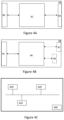
- FIG. 4 A illustrates a processing device for receiving a video according to an embodiment
- FIG. 4 C represents an exemplary architecture of any of the processing devices of FIGS. 4 A and 4 B according to an embodiment.
- processor or “controller” should not be construed to refer exclusively to hardware capable of executing software, and may implicitly include, without limitation, digital signal processor (DSP) hardware, read only memory (ROM) for storing software, random access memory (RAM), and non-volatile storage.
- DSP digital signal processor
- ROM read only memory
- RAM random access memory
- any switches shown in the figures are conceptual only. Their function may be carried out through the operation of program logic, through dedicated logic, through the interaction of program control and dedicated logic, or even manually, the particular technique being selectable by the implementer as more specifically understood from the context.
- any element expressed as a means for performing a specified function is intended to encompass any way of performing that function including, for example, a) a combination of circuit elements that performs that function or b) software in any form, including, therefore, firmware, microcode or the like, combined with appropriate circuitry for executing that software to perform the function.
- the disclosure as defined by such claims resides in the fact that the functionalities provided by the various recited means are combined and brought together in the manner which the claims call for. It is thus regarded that any means that can provide those functionalities are equivalent to those shown herein.
- any of the following “/”, “and/or”, and “at least one of”, for example, in the cases of “A/B”, “A and/or B” and “at least one of A and B”, is intended to encompass the selection of the first listed option (A) only, or the selection of the second listed option (B) only, or the selection of both options (A and B).
- such phrasing is intended to encompass the selection of the first listed option (A) only, or the selection of the second listed option (B) only, or the selection of the third listed option (C) only, or the selection of the first and the second listed options (A and B) only, or the selection of the first and third listed options (A and C) only, or the selection of the second and third listed options (B and C) only, or the selection of all three options (A and B and C).
- This may be extended, as is clear to one of ordinary skill in this and related arts, for as many items as are listed.
- Embodiments described herein are related to ABR streaming of video content.
- ABR video streaming may be seen as a method of video streaming over HTTP where the source (e.g., video) content may be (e.g., video) encoded at multiple bitrates into respectively multiple streams, the different bitrate streams being segmented into (e.g., small) temporal video segments, a (e.g., each) segment being independently decodable.
- a streaming client e.g., receiver
- the receiver may be made aware of the availability of (e.g., segments of) streams at different bitrates, by a manifest file. When starting, the receiver may request the video segments, for example, from the lowest bitrate stream.
- the receiver may request subsequent segments with any of the next higher bitrates. If the receiver determines the download speed for a video segment is lower than the bitrate of the video segment, because, for example, the network throughput may have deteriorated, the receiver may request the next subsequent segment at a lower bitrate.
- the segment size may vary depending on a particular implementation or application.
- a video segment duration may be of any duration between, for example, two hundred milliseconds and ten 10 seconds.
- ABR streaming may be according to the Moving Picture Expert Group (MPEG) Dynamic Adaptive Streaming over HTTP (DASH) standard.
- MPEG Moving Picture Expert Group
- DASH Dynamic Adaptive Streaming over HTTP
- ABR streaming may be according to the Adobe HTTP Dynamic Streaming.
- ABR streaming may be according to the Apple HTTP Live Streaming method.
- ABR streaming may be according to Microsoft Smooth Streaming. Any ABR streaming technology is compatible with embodiments described herein.
- a bitrate at which a segment of video may be requested may correspond to a bitrate at which the segment may be encoded.
- a receiver may be assured of having enough data for continuous (e.g., uninterrupted) playout on a condition that playout begins at least after an amount of data corresponding to a (e.g., given) time multiplied by bitrate bits have been received.
- the (e.g., given) time may, for example, be indicated (e.g., specified) in a received manifest (e.g., the playout may begin at a (e.g., given) time after the first bit is received).
- a bitrate of a segment may represent an amount of network bandwidth (e.g., bits per second) averaged, for example, on a given duration, which when provisioned in the network may allow (e.g., ensure) a stability of the buffer level of the receiver and/or no disruption in the video played out by the receiver.
- Embodiments described herein are related to bandwidth based ABR techniques for receiving a video stream.
- ABR streaming a request for a video segment may be transmitted. After a round trip time (RTT) the requested video segment may be received at the available bandwidth.
- RTT round trip time
- the term available bandwidth refers to the (e.g., download) network throughput being available to a receiver, such as for example and without limitation an amount of received data (e.g., any of bits, bytes and packets) over time. If the network connection is not saturated (e.g., congested), the download bandwidth may be higher than the (e.g., video encoded) bitrate.
- the download may complete relatively early (e.g., relative to a play out time) and the receiver may pause (e.g., wait) before sending the next request (because, for example, the receiver buffers may be full).
- the download bandwidth may be equal to (or close to) the (e.g., video encoded) bitrate, and the download may progress at a similar speed as the playback.
- the next request may be sent (e.g., immediately) after, or before the end of the download to accommodate for the latency of the network (e.g., RTT).
- low latency applications may use short video segments (e.g., as short as two hundred milliseconds).
- Low latency applications may be, for example, any of live video streaming and fast start applications (e.g., wherein the time elapsing between requesting a content and playing back that content is reduced, for example to a low (e.g., minimum) value).
- Estimating an available bandwidth on receiving short video segments by, for example, measuring a speed at which a segment of video is downloaded may provide inaccurate results.
- the video segment delivery may be bounded by the encoder output rate, which may be constant, and may, for example, correspond to the requested quality.
- the receiver, measuring a speed at which such video segments are downloaded may not be able to determine whether more bandwidth could be available for requesting a higher quality video segment.
- scalable video coding may be used together with different (e.g., network delivery) priorities.
- the combination of scalable coding wherein different (e.g., multiple) layers of video may be requested to be delivered using different (e.g., network) priorities may allow to obtain a better (e.g., the best) quality (e.g., with the highest available bitrate) for the content while mitigating possible video play out disruptions.
- the term priority refers to a level of importance allocated to a given segment for being delivered (e.g., transmitted) over the network.
- Different techniques may be used for providing different (e.g., network delivery, transmission) priorities, by prioritizing the transmission of some data over some other data.
- a priority may be a delivery network (e.g., protocol) priority such as e.g., any of an HTTP2 priority, a Quick User Datagram Protocol Internet Connections (QUIC) priority, Differentiated Services (DiffServ) priority, a layer two priority (e.g., IEEE 802.1p), . . . .
- a delivery network e.g., protocol
- QUIC Quick User Datagram Protocol Internet Connections
- DiffServ Differentiated Services
- layer two priority e.g., IEEE 802.1p
- the time for requesting (e.g., sending the request for) the second (e.g., enhancement layer) segment may be such that the transmission of the second (e.g., enhancement layer) segment may start after the transmission of the first (e.g., base layer) segment may terminate.
- This may be referred to herein as request pipelining.
- the first and second segments may be requested via HTTP1.1 which may be based on a single (e.g., TCP) connection e.g., to a server.
- Request pipelining e.g., based on a single TCP connection, may allow to prioritize the delivery of the first requested segment over the second requested segment, by ensuring the server will sequentially transmit the first and the second segments in the requested order.
- the first segment (e.g., base layer segment) and the second segment (e.g., enhancement layer) may be requested via two different parallel (e.g., TCP) connections, wherein the second segment may be requested a given time after the first segment may have been requested.
- the given time may be chosen, such that the transmission of the second segment may start sometime after the transmission of the first segment started (e.g., possibly before but close to the completion of the first segment transmission).
- Any networking/transmission prioritization technique may be compatible with the embodiments disclosed herein.
- Scalable video coding may be seen as a technique where video is coded in a base layer and any number of enhancement layers. If only the base layer is decoded, a first level of (e.g., basic) quality may be obtained. If an enhancement layer is decoded, (in addition to the base layer), an enhanced quality may be obtained. If several enhancement layers are decoded (together with a base layer), the obtained quality may be improved (e.g., enhanced) further. According to embodiments, obtaining an enhanced quality of a video may be any of improving (e.g., increasing) a signal to noise ratio, a resolution and a frame rate of the video.
- a first level of (e.g., basic) quality may be obtained.
- an enhancement layer is decoded, (in addition to the base layer)
- an enhanced quality may be obtained. If several enhancement layers are decoded (together with a base layer), the obtained quality may be improved (e.g., enhanced) further.
- obtaining an enhanced quality of a video may be any of improving
- the scalable video coding technique may be according to the SVC standard (Annex G extension of the H264/MPEG-4 AVC video compression standard).
- the scalable video coding technique may be according to the Scalable High Efficiency Video Coding (SHVC) standard, an extension of the H265/MPEG-HEVC standard.
- the scalable video coding technique may be according to any of VP9 and Scalable Video Technology for AV1 (SVT-AV1). Any scalable encoding technique where different layers or video may be encoded and transmitted independently from each other may be compatible with the embodiments described herein.
- FIG. 1 illustrates an example of an overhead resulting from using a scalable coding compared to a non-scalable coding for targeting a same level of quality, according to an embodiment.
- FIG. 1 is illustrated though the example of SVC/AVC as scalable and non-scalable video coding techniques.
- a piece of video may be encoded by a non-scalable video coding (e.g., AVC) at three different quality levels Q 1 , Q 2 , Q 3 , resulting in three video segments 11 , 12 , 13 corresponding to three different bitrates, the higher the quality, the higher the bitrate, as illustrated on FIG. 1 .
- AVC non-scalable video coding
- a same piece of video may be encoded with a scalable video coding (e.g., SVC) resulting in a base layer (BL) segment 111 , and two enhancement layer (EL) segments 112 , 113 respectively targeting the same quality levels Q 1 , Q 2 and Q 3 as the three AVC segments 11 , 12 , 13 .
- SVC scalable video coding
- the SVC encoded BL segment 111 (being an AVC segment) targeting the same quality level Q 1 as the AVC encoded segment 11 , corresponds to the same encoded bitrate as illustrated by FIG. 1 .
- the SVC BL segment 111 combined with the first enhancement layer EL 1 segment 112 targeting the same quality level Q 2 as the AVC encoded segment 12 corresponds to a higher encoded bitrate than the AVC encoded segment 12 .
- the difference between both bitrates represents the overhead 110 of a scalable encoded multi-layer video compared to a non-scalable encoded video for a same quality level.
- ABR streaming with (e.g., only) SVC encoded segments would result in a decreased quality compared to ABR streaming with (e.g., only) AVC encoded segments for a given network bandwidth, due to the SVC/AVC overhead.
- Embodiments disclosed herein may allow probing the available network bandwidth beyond downloading a video segment, while improving the quality of the received content and the use of the available bandwidth without risking degrading the playout quality as the bandwidth is estimated.
- an enhancement layer segment may be requested in addition to a base layer segment for a same video.
- the enhancement layer may be requested, for example, in a low priority (e.g., any of HTTP2, QUIC, Diffserv, delayed request), so that the base layer may be delivered in priority.
- a subsequent base layer segment may be requested at a higher quality (e.g., at a bitrate lower than or equal to the sum of the bitrates of the previously requested base layer and enhancement layer segments). If, for example, at a playback time, the enhancement layer segment is not obtained, it may be determined that the quality cannot be increased and subsequent requests for enhancement layer segments may be cancelled (e.g., not transmitted).
- probing may repeat (e.g., any of immediately, regularly, periodically, . . . ) to detect available bandwidth variations.
- FIG. 2 depicts an example of a method for receiving a video according to an embodiment.
- a base layer (BL) segment of the video (e.g., encoded) at a first BL bitrate may be requested by a receiver apparatus towards an ABR transmitting apparatus, which may be referred to herein as an ABR server.
- a request packet may be transmitted by the receiver to the ABR server for requesting a BL segment of the video (e.g., encoded) at a first BL bitrate.
- an enhancement layer (EL) segment of the video (e.g., encoded) at a first EL bitrate, corresponding to a same temporal portion as the requested BL segment, may be requested to the ABR server, to be delivered at a lower priority than the requested BL segment.
- a request packet may be transmitted by the receiver to the ABR server for requesting an EL segment, corresponding to the same temporal portion of the video as the requested BL segment.
- the EL segment may be requested to be transmitted by the ABR server at a lower priority than the requested BL segment.
- the request for the BL segment and the request for the EL segment may be transmitted by the receiver into a single request packets or different request packets.
- the step S 24 of requesting an EL segment corresponding to the same temporal portion of the video may allow to probe the available bandwidth, beyond what may be used for receiving the BL segment.
- a BL segment of the video may be requested without probing for available bandwidth (e.g., without requesting an EL segment corresponding to the same temporal portion of the video). Probing for available bandwidth may be done, for example, on a regular basis (e.g., based on any of a constant amount of time, a constant number of requested segments, etc.)
- the requested BL segment may be received (e.g., decoded and played out) by the receiver.
- the requested EL segment being transmitted in a lower priority than the requested BL segment, may be timely received, for being decoded and successfully played out by the receiver, or may not be timely received (e.g., not entirely received before a given time related to a playout time of the EL/BL segment).
- a step S 26 it may be determined whether the requested EL segment is timely received or not (e.g., entirely received before a given time).
- a requested EL segment may be determined to be timely received on a condition that the requested EL segment was (e.g., totally) received at a time allowing the EL segment to be decoded (e.g. and presented/displayed) in accordance with the playout time (e.g., without creating any video playout disruption).
- a requested EL segment may be determined to be timely received on a condition that the EL segment is received, decoded and ready for display at a time the BL segment may be displayed.
- a requested EL segment may be determined to be timely received on a condition that a picture may be rendered (e.g., may be displayable) based on the received EL and BL segments.
- a requested EL segment may be determined to be timely received if the EL segment is received according to a criterion, which (e.g., when met) may allow the requested EL segment to be decoded and played out (e.g., successfully, without disruption).
- a criterion which (e.g., when met) may allow the requested EL segment to be decoded and played out (e.g., successfully, without disruption).
- any of a BL and EL segment may comprise one or more encoded frames (e.g., images), sequentially encapsulated in the segment.
- the frame located at the beginning of the segment e.g., transmitted/received first
- the frame located at the end of the segment e.g., transmitted/received last
- a criterion, upon which an EL segment may be determined as timely received may be, for example, that data corresponding to the last encoded frame (e.g., image) of the EL segment are (e.g.
- the decoding time of a frame may be, for example, the decoding time of the previous frame plus the frame duration.
- the criterion may be that data corresponding to all (e.g., each) encoded frames of the EL segment are (e.g. entirely) received before the decoding time of this frame.
- a decoding time of, for example, the first encoded frame of a segment may be obtained (e.g., determined) by adding a reception time of (e.g., the first bit of) the first encoded frame of the segment to a buffering time.
- the buffering time may be, for example, greater than or equal to a time transmitted in a manifest together with the bitrate of the segment for characterising the bandwidth properties of the segment as described above.
- Any technique for determining a criterion according to which an EL segment is to be (e.g., totally) received for allowing the EL segment to be decoded (e.g., and displayed) without creating any video playout disruption, is compatible with the embodiments described herein.
- the following (e.g., subsequent) segment of the video in the video timeline may be requested in the form of a BL segment (e.g., encoded) at a second BL bitrate, higher than the first BL bitrate.
- a BL segment e.g., encoded
- Timely receiving a requested EL segment may indicate a bandwidth availability for increasing the bitrate of the next (e.g., subsequent) requested BL segment.
- the EL segment is not timely received, for example, not entirely received when the playout of the segment should start, it may be determined that there may not be enough bandwidth available for improving the quality (e.g., increasing the bitrate) of the next (e.g., subsequent) segment, and the next (e.g., subsequent) segment may be requested at the same bitrate as the last requested BL segment (e.g., the first BL bitrate).
- the next (e.g., subsequent) segment may be requested at the same bitrate as the last requested BL segment (e.g., the first BL bitrate).
- probing for available bandwidth by requesting (e.g., transmitting a packet requesting) an EL segment may be performed with different levels on intensity. For example, probing may be performed at each request transmission for a BL segment. In another example, probing may be regularly performed, by requesting an EL segment every N BL segment request, N being an integer value, for example of any value between two and one hundred. In yet another example, probing may be performed on a regular time basis, for example at expiration of a periodic timer.
- the bitrate for the next (e.g., subsequent) BL segment request is increased on a further condition that more than one successive EL segments are timely received (e.g., received before a playout timeout, received in time to be decoded and rendered).
- more than one successive EL segments are timely received (e.g., received before a playout timeout, received in time to be decoded and rendered).
- increasing the bitrate for a subsequent BL segment after having timely received a single EL segment may impact the user experience. Indeed, increasing the bitrate of subsequent BL segments too aggressively may result in requesting BL segments encoded at a bitrate above the available bandwidth, leading to playout disruptions.
- Increasing the bitrate of a subsequent BL segment request on the further condition that more than one successive EL segments are timely received may allow to preserve an ideal video quality despite of oscillating available bandwidth conditions. For example, requesting (and successfully receiving) a BL and an EL for several successive segments before switching to a higher quality BL segment may allow a smooth playback if bandwidth oscillates (e.g., the playback remains uninterrupted, and quality may be enhanced or not at each segment). This may also allow the receiver to converge to the highest possible quality, once bandwidth stabilizes.
- the receiver may (e.g., decide to) not decode a received EL segment so as to avoid the video quality to oscillate.
- the receiver may for example (e.g., decide to) decode an EL segment, after having (e.g., successfully) received a number of successive EL segments.
- the number of successive EL segments may be e.g., any value between, for example, two and ten.
- FIG. 3 A illustrates an example of an encoding scheme combining scalable and non-scalable features according to an embodiment.
- a same temporal portion of a video may be available as four BL segments 31 , 32 , 33 , 34 encoded at respectively a first BL bitrate BR 1 , a second BL bitrate BR 2 , a third BL bitrate BR 3 and a fourth BL bitrate BR 4 .
- the same temporal portion of the video may be further available as a first 311 , a second 321 and a third 323 EL segments, wherein the first EL segment 311 may be an enhancement layer of the first BL segment 31 , the second EL segment 321 may be an enhancement layer of the second BL segment 32 , and the third EL segment 323 may be an enhancement layer of the third BL segment 33 .
- the first 311 , second 321 and third 323 EL segments may be encoded at respectively a first EL bitrate BR 11 , a second EL bitrate BR 12 and a third EL bitrate BR 13 .
- a receiver may request with a given priority the first BL segment 31 encoded at the first bitrate BR 1 , and with a lower priority the first EL segment 311 encoded at the first EL bitrate BR 11 .
- the different bitrate values may be determined so that the sum of the first EL bitrate BR 11 and the first BL bitrate BR 1 are greater than or equal to the second BL bitrate BR 2 .
- the different bitrate values may be further determined, so that the sum of the second EL bitrate BR 12 and the second BL bitrate BR 2 are greater than or equal to the third BL bitrate BR 3 , and so that the sum of the third EL bitrate BR 13 and the third BL bitrate BR 3 are greater than or equal to the fourth BL bitrate BR 4 .
- Such an encoding scheme wherein the sum of the bitrates of the BL segment and the EL segment for a same temporal portion is greater than or equal to the (e.g., next) higher level of bitrate that may be requested for a subsequent BL segment, may allow probing for an available bandwidth while receiving (e.g., downloading) the EL layer segment and determining whether the next higher level of bitrate may be (e.g., safely, successfully) requested for a subsequent BL segment (e.g., for being received within the available bandwidth).
- the next higher level of bitrate may be (e.g., safely, successfully) requested for a subsequent BL segment (e.g., for being received within the available bandwidth).
- the sums of the bitrates of the BL segment and the EL segment BR 1 +BR 11 , BR 2 +BR 12 , BR 3 +BR 13 for a same temporal portion may be (e.g., substantially) equal to respectively the (e.g., next) higher level of bitrate BR 2 , BR 3 , BR 4 .
- substantially equal it is meant herein at least within a tolerance of, for example, five percent.
- FIG. 3 B shows an exemplary sequence of request and response packets illustrating a receiver successfully probing for an available bandwidth 30 B.
- the receiver may transmit a first request packet RA requesting a first BL segment 31 A of a first temporal portion A of the video, encoded at a first bitrate BR 1 .
- the first BL segment 31 A for the first temporal portion A may be received.
- the receiver may transmit a second request packet RB requesting a second BL segment 31 B of a second temporal portion B of the video (e.g., subsequent to the temporal portion A), and encoded at the first bitrate BR 1 .
- the receiver may also request an EL segment 311 B of the second temporal portion B of the video, with a lower priority and encoded at the an EL bitrate BR 11 for probing the available bandwidth (e.g., up to BR 11 ).
- the available bandwidth e.g., up to BR 11
- both the BL segment 31 B and the EL segment 311 B may be timely received (e.g., received in time to be decoded and rendered).
- a further packet RC may be transmitted for requesting (e.g., again) a BL segment 31 C of a subsequent temporal portion C of the video encoded at the first BL bitrate BR 1 , as well as an EL layer segment 311 C of the same temporal portion C of the video encoded at the EL bitrate BR 11 . If the EL segment 311 C, transmitted with a lower priority is timely received (e.g., received in time to be decoded and rendered), a request RD for a BL segment 31 D of the next temporal portion D of the video at a second BL bitrate BR 2 may be transmitted.
- the second BL bitrate BR 2 may be higher than the first BL bitrate BR 1 and lower than or equal to the sum of the first BL bitrate BR 1 and the EL bitrate BR 11 .
- the available bandwidth was successfully probed above the second BL bitrate BR 2 , the BL segment 31 D encoded at the second BL bitrate BR 2 may be successfully received, decoded and played out.
- FIG. 3 C illustrates another exemplary sequence of request and response packets illustrating a receiver unsuccessfully probing for an available bandwidth 30 C according to an embodiment.
- FIG. 3 C shows a similar sequence of packets as FIG. 3 B , with the difference that the available bandwidth 30 C is lower than the sum of the first BL bitrate BR 1 and the EL bitrate BR 11 .
- FIG. 3 C only a part 311 B 1 , 311 C 1 of the EL segments for the corresponding portions of video B, C may be timely received (e.g., before a playout time of the corresponding portion of video), and the receiver may keep the first BL bitrate BR 1 for requesting RD′ the next BL segment (for the subsequent portion of video D).
- Only receiving a part 311 B 1 , 311 C 1 of the EL segments, and missing (e.g., not receiving) a remaining part 311 B 2 , 311 C 2 of the EL segments (e.g., before a deadline) allows to determine keeping requesting the next BL segment 31 D′ at the same BL bitrate BR 1 (e.g., not increasing the BL bitrate to the next higher level).
- FIG. 3 D shows an example of an encoding scheme combining scalable and non-scalable features according to an embodiment.
- multiple enhancement layer EL 1 , EL 2 , EL 3 segments 311 , 312 , 313 of a BL segment 31 may be available at respectively a first BR 11 , a second BR 12 and a third BR 13 bitrate.
- Multiple enhancement layer EL 1 , EL 2 segments 321 , 322 of a BL segment 32 may also be available at respectively a further first BR 21 , a second BR 22 .
- multiple enhancement layer segments may be requested with decreasing priorities.
- the third EL segment 313 may be requested (to be delivered) with a lower priority than the second EL segment 312 , which may be requested (to be delivered) with a lower priority than the first EL segment 311 , which may be requested (to be delivered) with a lower priority than the BL segment 31 .
- the BL subsequent segment may be requested at a BL bitrate BR 4 , lower than or equal to the sum of bitrates of timely received enhancement layer segments and the first base layer bitrate (BR 1 +BR 11 +BR 12 +BR 13 ).
- Requesting (and timely receiving) multiple enhancement layer segments with decreasing priorities, corresponding to a same temporal portion of the video as the requested BL segment may allow to accelerate to quality improvement, for example at the beginning of an ABR session, or after a sudden available bandwidth increase.
- the receiver may directly switch from the first BL bitrate BR 1 to the highest BL bitrate BR 4 for requesting the next (e.g., subsequent) BL segment. This allows the receiver to stabilize faster to the best possible quality within the available bandwidth.
- multiple EL segments may be applied only to the first segments (e.g., the first minute) of video, the remaining part of the video (e.g., after the first minute) being available as BL and single EL segments.
- first segments e.g., the first minute
- the remaining part of the video e.g., after the first minute
- CDN content delivery network
- Embodiments disclosed herein allow to improve the quality of the rendered content during the bandwidth estimation, as the content obtained while probing the available bandwidth contributes to improve the rendered quality.
- the receiver may keep requesting segments of video at a BL (e.g., lower) quality with a single EL layer, thus avoiding playback freezes which may be detrimental to user experience, while still allowing to leverage potentially available bandwidth.
- a BL e.g., lower
- playback freezes which may be detrimental to user experience
- the receiver may keep requesting segments of video at a BL (e.g., lower) quality with a single EL layer, thus avoiding playback freezes which may be detrimental to user experience, while still allowing to leverage potentially available bandwidth.
- BL e.g., lower
- playback freezes which may be detrimental to user experience
- Keeping requesting a BL segment and a single EL segment allows to always provide the best possible quality for a given (and varying) available bandwidth.
- switching to (e.g., pure AVC) BL segments allows to further improve the rendered quality (by avoiding the scalable coding overhead).
- a manifest describing information about a video may be received.
- a manifest may be an MPEG DASH media presentation description (MPD).
- the manifest may for example include a list of (e.g., all) representations (and e.g., their characteristics) of the video, that may be available to the receiver. Based on the representations (e.g., characteristics), a receiver (e.g., player) may be able to determine which segment may be requested (e.g., to the server).
- the characteristics of a representation may include any of a (e.g., unique) identifier, a bitrate, a quality level information related to at least one other representation(s), and an information on a (e.g., possible) relationship between (e.g., several) representation(s) (such as e.g., dependency, complementarity, . . . ).
- EL segment may be described via a dependent representation information, indicating (e.g., all the) representation's identifiers from which the EL segment may depend and that may (e.g., need to) be received by the receiver (e.g., player) for decoding and/or display the EL segment.
- dependent representation information indicating (e.g., all the) representation's identifiers from which the EL segment may depend and that may (e.g., need to) be received by the receiver (e.g., player) for decoding and/or display the EL segment.
- the (e.g., unique) identifier, bitrate, quality level, relationship information between representation(s) may respectively correspond to the following DASH attributes: @id, @bandwidth, @qualityRanking, @dependancyId.
- a @bandwidth attribute for a dependent representation may be the sum of the bitrate of the (e.g., current) representation and the bitrates of (e.g., all) representation(s) from which the (e.g., current) representation may depend.
- the @dependancyId attribute may be, for example, a whitespace separated list of values of (e.g., unique) identifiers (e.g., @id).
- a receiver receiving a manifest file describing a video content, may determine, based on the representation characteristics included in the manifest file, the BL and the EL segments to request (e.g., via their corresponding bitrate, (e.g., unique) identifiers, and relationship information between representations (e.g., layer segments).
- bitrate e.g., unique
- relationship information between representations e.g., layer segments.
- a manifest may be transmitted (and/or received) as a (e.g., bitstream) signal comprising:
- a receiver receiving a manifest file as, for example, described above, may request a BL segment, for example identified by the first identifier of the manifest.
- the receiver may determine the EL layer corresponding to the same temporal portion of the video as the requested BL segment, based on the fourth information element of the manifest, indicating a dependency of the second (EL) segment to the first (BL) segment.
- the receiver may request (e.g., send a packet requesting transmission of) that EL segment for probing the available bandwidth.
- the receiver may determine which subsequent BL segment to request if the EL segment is timely received.
- the subsequent BL segment may be determined at least based on its bitrate (being lower than or equal to a sum of the bitrates of the preceding BL and EL segments.)
- FIG. 4 A illustrates a processing device 4 A for receiving a video according to an embodiment.
- the processing device 4 A may comprise a network interface 40 for connection to a network, the network interface 40 being configured to send (e.g., transmit) request packets for requesting segments of the video, and to receive response packets comprising the requested segments.
- the network interface 40 may be any of:
- any network interface allowing to send and receive data and/or control packets may be compatible with embodiments described herein.
- the network interface 40 may be coupled to a processing module 42 , configured to request (e.g., send to the network interface 40 a packet for requesting) a base layer segment encoded at a first base layer bitrate and an enhancement layer segment corresponding to a same temporal portion of the video, the enhancement layer segment being requested to be delivered at a lower priority than the base layer segment.
- a processing module 42 configured to request (e.g., send to the network interface 40 a packet for requesting) a base layer segment encoded at a first base layer bitrate and an enhancement layer segment corresponding to a same temporal portion of the video, the enhancement layer segment being requested to be delivered at a lower priority than the base layer segment.
- the processing module 42 may be further configured to request a base layer subsequent segment of a subsequent portion of the video, the base layer subsequent segment being requested at a second base layer bitrate, higher than the first base layer bitrate, on a condition that the first enhancement layer segment is timely received (e.g., received in time to be decoded and displayed) on any of the processing device 4 A and an external display means coupled to the processing device 4 A.
- the processing module 42 may be further configured to process (e.g., decode) the received video segments, and to send the decoded video to a video output 44 such as a display means.
- the display means may be external to the device and the output 44 may send the video to display to an external display means.
- the display means internal or external, may be any of a personal computer screen, a TV screen, a tablet screen, a smartphone screen. More generally any display means allowing to display a video may be compatible with embodiments described herein.
- FIG. 4 B illustrates a processing device 4 B for transmitting a video according to an embodiment.
- the processing device 4 B may comprise a network interface 45 for connection to a network, the network interface 45 being configured to receive request packets, requesting segments of the video, and to send (e.g., transmit) response packets comprising the requested segments of video.
- the network interface 45 may be any of:
- any network interface allowing to send and receive data and/or control packets may be compatible with embodiments described herein.
- the network interface 45 may be coupled to a processing module 46 , configured to receive, from the network interface 45 , a request for a base layer segment encoded at a first base layer bitrate and for an enhancement layer segment encoded at an enhancement layer bitrate, the base layer segment and the enhancement layer segment corresponding to a same temporal portion of the video.
- the processing module 46 may be further configured to send to the network interface 45 for transmission the base layer segment and the enhancement layer segment, the enhancement layer segment being transmitted at a lower priority than the base layer segment.
- the processing module 46 may be further configured, upon receiving a further request for a base layer subsequent segment of a subsequent portion of the video, to send for transmission the base layer subsequent segment encoded at a second base layer bitrate, lower than or equal to a sum of the first base layer bitrate and the enhancement layer bitrate.
- the processing module 46 may be coupled to an optional video encoder 47 , configured to encode video segments are different encoded bitrates.
- the video encoder 47 may be configured to encode any of base layer and enhancement layer segments of any temporal portion of the video according to any embodiments described herein.
- the processing module 46 may be coupled to an optional storage module 48 , configured to store video segments encoded at different encoded bitrates.
- the video encoder may be configured to store any of base layer and enhancement layer segments of any temporal portion of the video according to any embodiments described herein.
- the storage module 48 may be internal or external to the processing device 4 B.
- the storage module 48 may be any non-transitory digital data support, e.g. any of RAM, ROM, EPROM, a SD Card, Hard Disk Drive, CD-ROM, DVD . . . .
- FIG. 4 C represents an exemplary architecture of the processing devices 4 A, 4 B described herein, according to an.
- the processing device 4 4 B may comprise one or more processor(s) 410 , which may be, for example, any of a CPU, a GPU a DSP (English acronym of Digital Signal Processor), along with internal memory 420 (e.g. any of RAM, ROM, EPROM).
- the processing device 4 A, 4 B may comprise any number of Input/Output interface(s) 430 adapted to send output information and/or to allow a user to enter commands and/or data (e.g. any of a keyboard, a mouse, a touchpad, a webcam, a display), and/or to send/receive data over a network interface; and a power source 440 which may be external to the processing device 4 A, 4 B.
- the processing device 4 A, 4 B may further comprise a computer program stored in the memory 420 .
- the computer program may comprise instructions which, when executed by the processing device 4 A, 4 B, in particular by the processor(s) 410 , make the processing device 4 A, 4 B carrying out the processing method described with reference to FIG. 2 .
- the computer program may be stored externally to the processing device 4 A, 4 B on a non-transitory digital data support, e.g. on an external storage medium such as any of a SD Card, HDD, CD-ROM, DVD, a read-only and/or DVD drive, a DVD Read/Write drive, all known in the art.
- the processing device 4 A, 4 B may comprise an interface to read the computer program. Further, the processing device 4 A, 4 B may access any number of Universal Serial Bus (USB)-type storage devices (e.g., “memory sticks.”) through corresponding USB ports (not shown).
- USB Universal Serial Bus
- the processing device 4 A may be any of a set top box device, a TV set, a digital media player/renderer device, an Internet gateway, a mobile device, a communication device, a game device, a tablet (or tablet computer), a smartphone, a laptop computer, a desktop computer.
- the processing device 4 B may be any of a (e.g., set of) server (for example of a CDN), a desktop computer, a laptop computer, an access point, wired or wireless, an internet gateway, a router, a laptop computer, a networking device.
- a server for example of a CDN
- a method for receiving a video comprises:
- a method for transmitting a video comprises:
- an apparatus for receiving a video comprises a processor configured to:
- an apparatus for transmitting a video comprises a processor configured to:
- bitstream signal comprising a video.
- the bitstream signal comprises:
- the base layer subsequent segment may requested at the first base layer bitrate if the enhancement layer segment is not timely received (e.g., not received in time to be decoded and rendered).
- the base layer subsequent segment may be requested at the second base layer bitrate on a further condition that more than one successive enhancement layer segment are timely received (e.g., received in time to be decoded and rendered).
- the enhancement layer segment may be encoded at a first enhancement layer bitrate, the sum of the first enhancement layer bitrate and the first base layer bitrate being greater than or equal to the second base layer bitrate.
- the enhancement layer segment may be encoded at a first enhancement layer bitrate, the sum of the first enhancement layer bitrate and the first base layer bitrate being equal to the second base layer bitrate.
- the (any of requesting, transmitting) method further comprises requesting at least one further enhancement layer segment corresponding to the same temporal portion of the video as the base layer segment, the further enhancement layer segment being requested to be delivered at a lower priority than the enhancement layer segment.
- the base layer subsequent segment is requested at a third base layer bitrate, the further enhancement layer segment being encoded at a second enhancement layer bitrate, the sum of the first enhancement layer bitrate, the second enhancement layer bitrate and the first base layer bitrate being greater than or equal to the third base layer bitrate.
- the (any of requesting, transmitting) method further comprises requesting multiple enhancement layer segments corresponding to the same temporal portion of the video as the base layer segment, the enhancement layer segments being requested to be delivered with decreasing priorities
- the base layer subsequent segment is requested at a fourth base layer bitrate, the sum of bitrates of timely received enhancement layer segments and the first base layer bitrate being greater than or equal to the fourth base layer bitrate.
- bitstream signal comprising a manifest describing characteristics of video segments of a video.
- the bitstream signal comprises:
- bitstream signal is received and any of the enhancement layer segment and the base layer subsequent segment are determined based on the received bitstream.
- a computer program product comprises program code instructions executable by a processor for performing any of the receiving and transmitting methods implemented in any of its variants.
- a computer program product for is also disclosed.
- the computer program product comprises program code instructions executable by a processor for performing any of the receiving and transmitting implemented in any of its variants
- the present embodiments may be employed in any combination or sub-combination.
- the variants described for the receiving methods and/or apparatus are equally applicable to the transmitting method and/or apparatus, and/or bitstream signals.
- Embodiments described herein are not limited to the described variants, and any arrangement of variants and embodiments may be used.
- the embodiments described herein are not limited to the described scalable/non-scalable video coding/decoding methods and ABR streaming techniques. Any other type of scalable coding/decoding and/or ABR streaming methods are compatible with the embodiments described herein.
- any characteristic, variant or embodiment described for a method is compatible with an apparatus device comprising means for processing the disclosed method, with a device comprising a processor configured to process the disclosed method, with a computer program product comprising program code instructions and with a non-transitory computer-readable storage medium storing program instructions.
Landscapes
- Engineering & Computer Science (AREA)
- Multimedia (AREA)
- Signal Processing (AREA)
- Databases & Information Systems (AREA)
- Human Computer Interaction (AREA)
- Computer Networks & Wireless Communication (AREA)
- Two-Way Televisions, Distribution Of Moving Picture Or The Like (AREA)
- Compression Or Coding Systems Of Tv Signals (AREA)
Abstract
Description
-
- requesting a base layer segment encoded at a first base layer bitrate and an enhancement layer segment corresponding to a same temporal portion of the video, the enhancement layer segment being requested to be delivered at a lower priority than the base layer segment;
- requesting a base layer subsequent segment of a subsequent portion of the video, the base layer subsequent segment being requested at a second base layer bitrate, higher than the first base layer bitrate, on a condition that the first enhancement layer segment is timely received (e.g., received in time to be (e.g., successfully) decoded and rendered).
-
- request a base layer segment encoded at a first base layer bitrate and an enhancement layer segment corresponding to a same temporal portion of the video, at a lower priority than the base layer segment;
- request a base layer subsequent segment of a subsequent portion of the video, the base layer subsequent segment being requested at a second base layer bitrate, higher than the first base layer bitrate, on a condition that the first enhancement layer segment is timely received (e.g., received in time to be (e.g., successfully) decoded and rendered) by the apparatus.
-
- receiving a request for a base layer segment encoded at a first base layer bitrate and for an enhancement layer segment encoded at an enhancement layer bitrate, the base layer segment and the enhancement layer segment corresponding to a same temporal portion of the video;
- transmitting the base layer segment and the enhancement layer segment, the enhancement layer segment being transmitted at a lower priority than the base layer segment;
- upon receiving a further request for a base layer subsequent segment of a subsequent portion of the video, transmitting the base layer subsequent segment encoded at a second base layer bitrate, lower than or equal to a sum of the first base layer bitrate and the enhancement layer bitrate.
-
- receive a request for a base layer segment encoded at a first base layer bitrate and for an enhancement layer segment encoded at an enhancement layer bitrate, the base layer segment and the enhancement layer segment corresponding to a same temporal portion of the video;
- transmitting the base layer segment and the enhancement layer segment, the enhancement layer segment being transmitted at a lower priority than the base layer segment;
- upon receiving a further request for a base layer subsequent segment of a subsequent portion of the video, transmitting the base layer subsequent segment encoded at a second base layer bitrate, lower than or equal to a sum of the first base layer bitrate and the enhancement layer bitrate.
-
- a first identifier of a first segment of a video;
- a first information element indicating a first bitrate at which the first segment is encoded;
- a second identifier of a second segment of the video;
- a second information element indicating a second bitrate at which the second segment is encoded;
- a third identifier of a third segment of the video;
- a third information element indicating a third bitrate at which the third segment is encoded;
- a fourth information element indicating a dependency of the second segment to the first segment;
- wherein
- the first segment, the second segment and the third segment correspond to a same temporal portion of the video, and
- the third bitrate is lower than or equal to a sum of the first bitrate and the second bitrate.
-
- a wireless local area network interface such as Bluetooth, Wi-Fi in any flavour, or any kind of wireless interface of the IEEE 802 family of network interfaces;
- a wired LAN interface such as Ethernet, IEEE 802.3 or any wired interface of the IEEE 802 family of network interfaces;
- a wired bus interface such as USB, FireWire, or any kind of wired bus technology.
- a broadband cellular wireless network interface such a 2G/3G/4G/5G cellular wireless network interface compliant to the 3GPP specification in any of its releases;
- a wide area network interface such a xDSL, FFTx or a WiMAX interface.
-
- a wireless local area network interface such as Bluetooth, Wi-Fi in any flavour, or any kind of wireless interface of the IEEE 802 family of network interfaces;
- a wired LAN interface such as Ethernet, IEEE 802.3 or any wired interface of the IEEE 802 family of network interfaces;
- a wired bus interface such as USB, FireWire, or any kind of wired bus technology.
- a broadband cellular wireless network interface such a 2G/3G/4G/5G cellular wireless network interface compliant to the 3GPP specification in any of its releases;
- a wide area network interface such a xDSL, FFTx or a WiMAX interface.
-
- requesting a base layer segment encoded at a first base layer bitrate and an enhancement layer segment corresponding to a same temporal portion of the video, at a lower priority than the base layer segment;
- requesting a base layer subsequent segment of a subsequent portion of the video, the base layer subsequent segment being requested at a second base layer bitrate, higher than the first base layer bitrate, on a condition that the first enhancement layer segment is timely received (e.g., received in time to be decoded and rendered).
-
- receiving a request for a base layer segment encoded at a first base layer bitrate and for an enhancement layer segment encoded at an enhancement layer bitrate, the base layer segment and the enhancement layer segment corresponding to a same temporal portion of the video;
- transmitting the base layer segment and the enhancement layer segment, the enhancement layer segment being transmitted at a lower priority than the base layer segment;
- upon receiving a further request for a base layer subsequent segment of a subsequent portion of the video, transmitting the base layer subsequent segment encoded at a second base layer bitrate, lower than or equal to a sum of the first base layer bitrate and the enhancement layer bitrate.
-
- request a base layer segment encoded at a first base layer bitrate and an enhancement layer segment corresponding to a same temporal portion of the video, the enhancement layer segment being requested to be delivered at a lower priority than the base layer segment;
- request a base layer subsequent segment of a subsequent portion of the video, the base layer subsequent segment being requested at a second base layer bitrate, higher than the first base layer bitrate, on a condition that the first enhancement layer segment is timely received by the apparatus (e.g., received in time to be decoded by the apparatus and to be displayed on any of the apparatus and a display means coupled to the apparatus).
-
- receive a request for a base layer segment encoded at a first base layer bitrate and for an enhancement layer segment encoded at an enhancement layer bitrate, the base layer segment and the enhancement layer segment corresponding to a same temporal portion of the video;
- transmitting the base layer segment and the enhancement layer segment, the enhancement layer segment being transmitted at a lower priority than the base layer segment;
- upon receiving a further request for a base layer subsequent segment of a subsequent portion of the video, transmitting the base layer subsequent segment encoded at a second base layer bitrate, lower than or equal to a sum of the first base layer bitrate and the enhancement layer bitrate.
-
- a base layer segment of a video, encoded at a first base layer bitrate,
- an enhancement layer segment of the video, encoded at an enhancement layer bitrate, the base layer segment and the enhancement layer segment corresponding to a same temporal portion of the video, the enhancement layer segment being adapted to be transmitted at a lower priority than the base layer segment;
- a base layer subsequent segment of a subsequent portion of the video, the base layer subsequent segment being encoded at a second base layer bitrate, lower than or equal to a sum of the first base layer bitrate and the enhancement layer bitrate.
-
- a first identifier of a first segment of the video;
- a first information element indicating a first bitrate at which the first segment is encoded;
- a second identifier of a second segment of the video;
- a second information element indicating a second bitrate at which the second segment is encoded;
- a third identifier of a third segment of the video;
- a third information element indicating a third bitrate at which the third segment is encoded;
- a fourth information element indicating a dependency of the second segment to the first segment;
- wherein
- the first segment, the second segment and the third segment correspond to a same temporal portion of the video, and
the third bitrate is lower than or equal to a sum of the first bitrate and the second bitrate.
Claims (20)
Applications Claiming Priority (4)
| Application Number | Priority Date | Filing Date | Title |
|---|---|---|---|
| EP19315125 | 2019-10-15 | ||
| EP19315125.5 | 2019-10-15 | ||
| EP19315125 | 2019-10-15 | ||
| PCT/EP2020/078989 WO2021074269A1 (en) | 2019-10-15 | 2020-10-15 | Method and apparatuses for sending and receiving a video |
Publications (2)
| Publication Number | Publication Date |
|---|---|
| US20230254533A1 US20230254533A1 (en) | 2023-08-10 |
| US12132956B2 true US12132956B2 (en) | 2024-10-29 |
Family
ID=68581727
Family Applications (1)
| Application Number | Title | Priority Date | Filing Date |
|---|---|---|---|
| US17/768,637 Active 2040-12-30 US12132956B2 (en) | 2019-10-15 | 2020-10-15 | Method and apparatuses for sending and receiving a video |
Country Status (5)
| Country | Link |
|---|---|
| US (1) | US12132956B2 (en) |
| EP (1) | EP4046386A1 (en) |
| KR (1) | KR102862248B1 (en) |
| CN (2) | CN114902685B (en) |
| WO (1) | WO2021074269A1 (en) |
Families Citing this family (4)
| Publication number | Priority date | Publication date | Assignee | Title |
|---|---|---|---|---|
| US12382061B2 (en) * | 2022-01-17 | 2025-08-05 | Nokia Technologies Oy | Predictive and residual coding of sparse signals for weight update compression |
| CN117014622A (en) * | 2022-04-29 | 2023-11-07 | 华为技术有限公司 | A video frame processing method, equipment, video system, medium and chip |
| US20250380018A1 (en) * | 2024-06-07 | 2025-12-11 | Adeia Guides Inc. | Methods and systems to improve segment bitrate selection in abr streaming |
| CN119766793B (en) * | 2025-03-05 | 2025-12-26 | 合肥六角形半导体有限公司 | A video stream transmission method, apparatus, device, and storage medium |
Citations (29)
| Publication number | Priority date | Publication date | Assignee | Title |
|---|---|---|---|---|
| WO2000002392A2 (en) * | 1998-07-06 | 2000-01-13 | Koninklijke Philips Electronics N.V. | Scalable video coding system |
| US20050117641A1 (en) | 2003-12-01 | 2005-06-02 | Jizheng Xu | Enhancement layer switching for scalable video coding |
| US20060087970A1 (en) * | 2004-10-25 | 2006-04-27 | Alcatel Usa Sourcing, L.P. | Method for encoding a multimedia content |
| WO2006048842A1 (en) | 2004-11-05 | 2006-05-11 | Koninklijke Philips Electronics N.V. | System and method for transmitting layered video over qos enabled wlans |
| WO2006080655A1 (en) | 2004-10-18 | 2006-08-03 | Samsung Electronics Co., Ltd. | Apparatus and method for adjusting bitrate of coded scalable bitsteam based on multi-layer |
| US20070121719A1 (en) * | 2003-09-29 | 2007-05-31 | Koninklijke Philips Electronicss N.V. | System and method for combining advanced data partitioning and fine granularity scalability for efficient spatiotemporal-snr scalability video coding and streaming |
| EP2034736A1 (en) | 2007-09-07 | 2009-03-11 | Nokia Siemens Networks Oy | Method and device for processing data and communication system comprising such device |
| US20100158134A1 (en) * | 2005-09-29 | 2010-06-24 | Peng Yin | Method and Apparatus for Contrained Variable Bit Rate (VBR) Video Encoding |
| US20110103445A1 (en) | 2008-07-16 | 2011-05-05 | Peter Jax | Method and apparatus for synchronizing highly compressed enhancement layer data |
| EP2360923A1 (en) | 2010-02-24 | 2011-08-24 | Thomson Licensing | Method for selectively requesting adaptive streaming content and a device implementing the method |
| CN102316313A (en) | 2010-06-29 | 2012-01-11 | 凌阳科技股份有限公司 | Low-complexity bit rate control method in embedded real-time video compression system |
| EP2408205A1 (en) | 2010-07-12 | 2012-01-18 | Alcatel Lucent | A video server, video client and method of scalable encoding video files |
| CN102469072A (en) | 2010-11-08 | 2012-05-23 | 华为技术有限公司 | Streaming media service method, system and client |
| US20120254455A1 (en) | 2011-03-30 | 2012-10-04 | Verizon Patent And Licensing Inc. | Downloading video using excess bandwidth |
| CN102763450A (en) | 2010-02-11 | 2012-10-31 | 上海贝尔股份有限公司 | Transmission method and device for scalable coding stream in relay network |
| US20130013803A1 (en) | 2010-04-01 | 2013-01-10 | Guillaume Bichot | Method for recovering content streamed into chunk |
| CN103210642A (en) | 2010-10-06 | 2013-07-17 | 数码士有限公司 | Method for transmitting a scalable http stream for natural reproduction upon the occurrence of expression-switching during http streaming |
| US20140032719A1 (en) | 2012-07-30 | 2014-01-30 | Shivendra Panwar | Streamloading content, such as video content for example, by both downloading enhancement layers of the content and streaming a base layer of the content |
| US20140303984A1 (en) * | 2013-04-05 | 2014-10-09 | Dts, Inc. | Layered audio coding and transmission |
| US20170094279A1 (en) * | 2015-09-29 | 2017-03-30 | Dolby Laboratories Licensing Corporation | Feature Based Bitrate Allocation in Non-Backward Compatible Multi-Layer Codec Via Machine Learning |
| WO2017141001A1 (en) | 2016-02-15 | 2017-08-24 | V-Nova Limited | Dynamically adaptive bitrate streaming |
| US20180007395A1 (en) | 2015-01-12 | 2018-01-04 | Nokia Technologies Oy | A Method, An Apparatus and a Computer Readable Storage Medium for Video Streaming |
| WO2018029471A1 (en) | 2016-08-09 | 2018-02-15 | V-Nova Limited | Adaptive content delivery network |
| KR20180024841A (en) | 2016-08-31 | 2018-03-08 | 주식회사 구루미디어 | Streaming service server and control method thereof |
| WO2018115572A2 (en) | 2016-12-22 | 2018-06-28 | Nokia Technologies Oy | An apparatus, a method and a computer program for video coding and decoding |
| GB2562243A (en) | 2017-05-08 | 2018-11-14 | V Nova Int Ltd | Channel switching |
| CN108900518A (en) | 2018-07-09 | 2018-11-27 | 南京邮电大学 | Believable software definition cloud network data distribution systems |
| US20180359297A1 (en) | 2015-12-04 | 2018-12-13 | Telefonaktiebolaget Lm Ericsson (Publ) | Technique for adaptive streaming of temporally scaling media segment levels |
| EP3424216A1 (en) | 2016-03-03 | 2019-01-09 | V-Nova International Limited | Adaptive video quality |
-
2020
- 2020-10-15 US US17/768,637 patent/US12132956B2/en active Active
- 2020-10-15 KR KR1020227014762A patent/KR102862248B1/en active Active
- 2020-10-15 CN CN202080076860.7A patent/CN114902685B/en active Active
- 2020-10-15 EP EP20789176.3A patent/EP4046386A1/en active Pending
- 2020-10-15 CN CN202410306498.8A patent/CN118200627A/en active Pending
- 2020-10-15 WO PCT/EP2020/078989 patent/WO2021074269A1/en not_active Ceased
Patent Citations (34)
| Publication number | Priority date | Publication date | Assignee | Title |
|---|---|---|---|---|
| WO2000002392A2 (en) * | 1998-07-06 | 2000-01-13 | Koninklijke Philips Electronics N.V. | Scalable video coding system |
| US6292512B1 (en) | 1998-07-06 | 2001-09-18 | U.S. Philips Corporation | Scalable video coding system |
| US20070121719A1 (en) * | 2003-09-29 | 2007-05-31 | Koninklijke Philips Electronicss N.V. | System and method for combining advanced data partitioning and fine granularity scalability for efficient spatiotemporal-snr scalability video coding and streaming |
| US20050117641A1 (en) | 2003-12-01 | 2005-06-02 | Jizheng Xu | Enhancement layer switching for scalable video coding |
| WO2006080655A1 (en) | 2004-10-18 | 2006-08-03 | Samsung Electronics Co., Ltd. | Apparatus and method for adjusting bitrate of coded scalable bitsteam based on multi-layer |
| US20060087970A1 (en) * | 2004-10-25 | 2006-04-27 | Alcatel Usa Sourcing, L.P. | Method for encoding a multimedia content |
| WO2006048842A1 (en) | 2004-11-05 | 2006-05-11 | Koninklijke Philips Electronics N.V. | System and method for transmitting layered video over qos enabled wlans |
| CN101053215A (en) | 2004-11-05 | 2007-10-10 | 皇家飞利浦电子股份有限公司 | System and method for transmitting layered video over QoS enabled WLANs |
| US20100158134A1 (en) * | 2005-09-29 | 2010-06-24 | Peng Yin | Method and Apparatus for Contrained Variable Bit Rate (VBR) Video Encoding |
| EP2034736A1 (en) | 2007-09-07 | 2009-03-11 | Nokia Siemens Networks Oy | Method and device for processing data and communication system comprising such device |
| US20110103445A1 (en) | 2008-07-16 | 2011-05-05 | Peter Jax | Method and apparatus for synchronizing highly compressed enhancement layer data |
| CN102763450A (en) | 2010-02-11 | 2012-10-31 | 上海贝尔股份有限公司 | Transmission method and device for scalable coding stream in relay network |
| EP2360923A1 (en) | 2010-02-24 | 2011-08-24 | Thomson Licensing | Method for selectively requesting adaptive streaming content and a device implementing the method |
| US20130013803A1 (en) | 2010-04-01 | 2013-01-10 | Guillaume Bichot | Method for recovering content streamed into chunk |
| CN102316313A (en) | 2010-06-29 | 2012-01-11 | 凌阳科技股份有限公司 | Low-complexity bit rate control method in embedded real-time video compression system |
| EP2408205A1 (en) | 2010-07-12 | 2012-01-18 | Alcatel Lucent | A video server, video client and method of scalable encoding video files |
| CN103210642A (en) | 2010-10-06 | 2013-07-17 | 数码士有限公司 | Method for transmitting a scalable http stream for natural reproduction upon the occurrence of expression-switching during http streaming |
| US20130204973A1 (en) | 2010-10-06 | 2013-08-08 | Humax Co., Ltd. | Method for transmitting a scalable http stream for natural reproduction upon the occurrence of expression-switching during http streaming |
| CN102469072A (en) | 2010-11-08 | 2012-05-23 | 华为技术有限公司 | Streaming media service method, system and client |
| US20130254418A1 (en) | 2010-11-08 | 2013-09-26 | Huawei Technologies Co., Ltd. | Method, system, and client for streaming media service |
| US20120254455A1 (en) | 2011-03-30 | 2012-10-04 | Verizon Patent And Licensing Inc. | Downloading video using excess bandwidth |
| US20140032719A1 (en) | 2012-07-30 | 2014-01-30 | Shivendra Panwar | Streamloading content, such as video content for example, by both downloading enhancement layers of the content and streaming a base layer of the content |
| US20140303984A1 (en) * | 2013-04-05 | 2014-10-09 | Dts, Inc. | Layered audio coding and transmission |
| US20180007395A1 (en) | 2015-01-12 | 2018-01-04 | Nokia Technologies Oy | A Method, An Apparatus and a Computer Readable Storage Medium for Video Streaming |
| US20170094279A1 (en) * | 2015-09-29 | 2017-03-30 | Dolby Laboratories Licensing Corporation | Feature Based Bitrate Allocation in Non-Backward Compatible Multi-Layer Codec Via Machine Learning |
| US20180359297A1 (en) | 2015-12-04 | 2018-12-13 | Telefonaktiebolaget Lm Ericsson (Publ) | Technique for adaptive streaming of temporally scaling media segment levels |
| WO2017141001A1 (en) | 2016-02-15 | 2017-08-24 | V-Nova Limited | Dynamically adaptive bitrate streaming |
| US20200128293A1 (en) * | 2016-02-15 | 2020-04-23 | V-Nova International Limited | Dynamically adaptive bitrate streaming |
| EP3424216A1 (en) | 2016-03-03 | 2019-01-09 | V-Nova International Limited | Adaptive video quality |
| WO2018029471A1 (en) | 2016-08-09 | 2018-02-15 | V-Nova Limited | Adaptive content delivery network |
| KR20180024841A (en) | 2016-08-31 | 2018-03-08 | 주식회사 구루미디어 | Streaming service server and control method thereof |
| WO2018115572A2 (en) | 2016-12-22 | 2018-06-28 | Nokia Technologies Oy | An apparatus, a method and a computer program for video coding and decoding |
| GB2562243A (en) | 2017-05-08 | 2018-11-14 | V Nova Int Ltd | Channel switching |
| CN108900518A (en) | 2018-07-09 | 2018-11-27 | 南京邮电大学 | Believable software definition cloud network data distribution systems |
Non-Patent Citations (8)
| Title |
|---|
| Bentaleb et al., "A Survey on Bitrate Adaptation Schemes for Streaming Media Over HTTP", Institute of Electrical and Electronics Engineers, IEEE Communications Surveys & Tutorials, vol. 21, No. 1, Aug. 3, 2018, 25 pages. |
| English Translation for Korean Patent Application No. KR2018024841, entitled Streaming Service Server and Control Method Thereof, published Mar. 3, 2018, 29 pages. |
| Huang et al., "Delay Adaptive Transmission Method for Scalable Video Streaming Based on OpenFlow", Journal on Communications, vol. 34, No. 11, Nov. 2013, pp. 121-128. |
| Huysegems et al., "SVC-Based HTTP Adaptive Streaming", Alcatel-Lucent, Bell Labs Technical Journal., vol. 16, No. 4, Mar. 14, 2012, 17 pages. |
| ITU-T, , "Advanced Video Coding for Generic Audiovisual Services", Recommendation ITU-T H.264, Series H: Audiovisual and Multimedia Systems, Infrastructure of Audiovisual Services—Coding of Moving Video, Feb. 2014, 790 pages. |
| ITU-T, , "High Efficiency Video Coding", Recommendation ITU-T H.265, Series H: Audiovisual and Multimedia Systems, Infrastructure of Audiovisual Services—Coding of Moving Video, Oct. 2014, 540 pages. |
| Rivaz, et al., "AV1 Bitstream & Decoding Process Specification", The Alliance for Open Media, AC1 Bitstream Specification V 1.0.0, AOMediaCodec/ac1-spec project, Jun. 25, 2018, 677 pages. |
| Wen, et al., "Parallel Merge/Skip Mode for HEVC", JCTVC-G387, Hong Kong University of Science and Technology, Joint Collaborative Team on Video Coding (JCT-VC) of ITU-T SG16 WP3 and ISO/IEC JTC1/SC29/WG11, 7th Meeting: Geneva, CH, Nov. 21-30, 2011, pp. 1-13. |
Also Published As
| Publication number | Publication date |
|---|---|
| US20230254533A1 (en) | 2023-08-10 |
| KR102862248B1 (en) | 2025-09-19 |
| CN114902685B (en) | 2024-03-22 |
| WO2021074269A1 (en) | 2021-04-22 |
| KR20220075401A (en) | 2022-06-08 |
| CN118200627A (en) | 2024-06-14 |
| CN114902685A (en) | 2022-08-12 |
| EP4046386A1 (en) | 2022-08-24 |
Similar Documents
| Publication | Publication Date | Title |
|---|---|---|
| US12132956B2 (en) | Method and apparatuses for sending and receiving a video | |
| CN105393516B (en) | Method, device and computer readable storage medium for quality optimization using buffer and range constraints in adaptive streaming | |
| US10225620B1 (en) | System and method for effectuating selective ABR segment delivery for ABR bandwidth control | |
| TWI526062B (en) | Quality-aware rate adaptation techniques for dash streaming | |
| US20200344282A1 (en) | Adaptive streaming with early client indication | |
| US20190069038A1 (en) | System and method for providing fast abr startup with selective abr segment delivery | |
| US9332050B2 (en) | Media streaming with adaptation | |
| CN104956631B (en) | Apparatus and method for performing link-aware adaptive streaming | |
| CN104429041B (en) | Adaptive stream-aware nodes, encoders, and clients capable of smooth quality transitions | |
| US10757481B2 (en) | Class-based intelligent multiplexing over unmanaged networks | |
| US20100202509A1 (en) | Near real time delivery of variable bit rate media streams | |
| US11374998B1 (en) | Adaptive bitrate streaming stall mitigation | |
| JP2007089137A (en) | Adaptive media playout with server media processing for robust streaming | |
| CN107210999B (en) | Link-aware streaming adaptation | |
| CN105556922B (en) | DASH in the network means adaptive | |
| US20230269421A1 (en) | Client, server, reception method and transmission method complied to moving picture experts group-dynamic adpative streaming over http standard | |
| CN104967872A (en) | Live broadcasting method and server based on dynamic self-adaptive code rate transport protocol HLS streaming media | |
| CN113508601B (en) | Client and method for managing a streaming session of multimedia content at a client | |
| US20160014181A1 (en) | Content transfer method, content transfer apparatus and content receiving apparatus | |
| Shuai | Dynamic adaptive video streaming with minimal buffer sizes | |
| Ansari | Thesis |
Legal Events
| Date | Code | Title | Description |
|---|---|---|---|
| FEPP | Fee payment procedure |
Free format text: ENTITY STATUS SET TO UNDISCOUNTED (ORIGINAL EVENT CODE: BIG.); ENTITY STATUS OF PATENT OWNER: LARGE ENTITY |
|
| STPP | Information on status: patent application and granting procedure in general |
Free format text: DOCKETED NEW CASE - READY FOR EXAMINATION |
|
| STPP | Information on status: patent application and granting procedure in general |
Free format text: NON FINAL ACTION MAILED |
|
| AS | Assignment |
Owner name: INTERDIGITAL MADISON PATENT HOLDINGS, SAS, FRANCE Free format text: ASSIGNMENT OF ASSIGNORS INTEREST;ASSIGNOR:INTERDIGITAL CE PATENT HOLDINGS, SAS;REEL/FRAME:065465/0293 Effective date: 20231023 |
|
| STPP | Information on status: patent application and granting procedure in general |
Free format text: RESPONSE TO NON-FINAL OFFICE ACTION ENTERED AND FORWARDED TO EXAMINER |
|
| STPP | Information on status: patent application and granting procedure in general |
Free format text: FINAL REJECTION MAILED |
|
| STPP | Information on status: patent application and granting procedure in general |
Free format text: RESPONSE AFTER FINAL ACTION FORWARDED TO EXAMINER |
|
| STPP | Information on status: patent application and granting procedure in general |
Free format text: ADVISORY ACTION MAILED |
|
| STPP | Information on status: patent application and granting procedure in general |
Free format text: DOCKETED NEW CASE - READY FOR EXAMINATION |
|
| STPP | Information on status: patent application and granting procedure in general |
Free format text: NON FINAL ACTION MAILED |
|
| STPP | Information on status: patent application and granting procedure in general |
Free format text: RESPONSE TO NON-FINAL OFFICE ACTION ENTERED AND FORWARDED TO EXAMINER |
|
| STPP | Information on status: patent application and granting procedure in general |
Free format text: NOTICE OF ALLOWANCE MAILED -- APPLICATION RECEIVED IN OFFICE OF PUBLICATIONS |
|
| STPP | Information on status: patent application and granting procedure in general |
Free format text: PUBLICATIONS -- ISSUE FEE PAYMENT VERIFIED |
|
| STCF | Information on status: patent grant |
Free format text: PATENTED CASE |