US12129229B2 - Amarouciaxanthin A esters and uses thereof - Google Patents
Amarouciaxanthin A esters and uses thereof Download PDFInfo
- Publication number
- US12129229B2 US12129229B2 US18/558,067 US202218558067A US12129229B2 US 12129229 B2 US12129229 B2 US 12129229B2 US 202218558067 A US202218558067 A US 202218558067A US 12129229 B2 US12129229 B2 US 12129229B2
- Authority
- US
- United States
- Prior art keywords
- compound
- formula
- cosmetic
- disease
- composition
- Prior art date
- Legal status (The legal status is an assumption and is not a legal conclusion. Google has not performed a legal analysis and makes no representation as to the accuracy of the status listed.)
- Active
Links
Images


Classifications
-
- C—CHEMISTRY; METALLURGY
- C07—ORGANIC CHEMISTRY
- C07C—ACYCLIC OR CARBOCYCLIC COMPOUNDS
- C07C49/00—Ketones; Ketenes; Dimeric ketenes; Ketonic chelates
- C07C49/20—Unsaturated compounds containing keto groups bound to acyclic carbon atoms
- C07C49/24—Unsaturated compounds containing keto groups bound to acyclic carbon atoms containing hydroxy groups
- C07C49/242—Unsaturated compounds containing keto groups bound to acyclic carbon atoms containing hydroxy groups containing rings other than six-membered aromatic rings
-
- A—HUMAN NECESSITIES
- A23—FOODS OR FOODSTUFFS; TREATMENT THEREOF, NOT COVERED BY OTHER CLASSES
- A23L—FOODS, FOODSTUFFS OR NON-ALCOHOLIC BEVERAGES, NOT OTHERWISE PROVIDED FOR; PREPARATION OR TREATMENT THEREOF
- A23L33/00—Modifying nutritive qualities of foods; Dietetic products; Preparation or treatment thereof
- A23L33/10—Modifying nutritive qualities of foods; Dietetic products; Preparation or treatment thereof using additives
-
- A—HUMAN NECESSITIES
- A61—MEDICAL OR VETERINARY SCIENCE; HYGIENE
- A61K—PREPARATIONS FOR MEDICAL, DENTAL OR TOILETRY PURPOSES
- A61K31/00—Medicinal preparations containing organic active ingredients
- A61K31/12—Ketones
- A61K31/122—Ketones having the oxygen directly attached to a ring, e.g. quinones, vitamin K1, anthralin
-
- A—HUMAN NECESSITIES
- A61—MEDICAL OR VETERINARY SCIENCE; HYGIENE
- A61K—PREPARATIONS FOR MEDICAL, DENTAL OR TOILETRY PURPOSES
- A61K31/00—Medicinal preparations containing organic active ingredients
- A61K31/21—Esters, e.g. nitroglycerine, selenocyanates
- A61K31/215—Esters, e.g. nitroglycerine, selenocyanates of carboxylic acids
-
- A—HUMAN NECESSITIES
- A61—MEDICAL OR VETERINARY SCIENCE; HYGIENE
- A61K—PREPARATIONS FOR MEDICAL, DENTAL OR TOILETRY PURPOSES
- A61K8/00—Cosmetics or similar toiletry preparations
- A61K8/18—Cosmetics or similar toiletry preparations characterised by the composition
- A61K8/30—Cosmetics or similar toiletry preparations characterised by the composition containing organic compounds
- A61K8/33—Cosmetics or similar toiletry preparations characterised by the composition containing organic compounds containing oxygen
- A61K8/37—Esters of carboxylic acids
-
- A—HUMAN NECESSITIES
- A61—MEDICAL OR VETERINARY SCIENCE; HYGIENE
- A61P—SPECIFIC THERAPEUTIC ACTIVITY OF CHEMICAL COMPOUNDS OR MEDICINAL PREPARATIONS
- A61P35/00—Antineoplastic agents
-
- A—HUMAN NECESSITIES
- A61—MEDICAL OR VETERINARY SCIENCE; HYGIENE
- A61P—SPECIFIC THERAPEUTIC ACTIVITY OF CHEMICAL COMPOUNDS OR MEDICINAL PREPARATIONS
- A61P9/00—Drugs for disorders of the cardiovascular system
-
- A—HUMAN NECESSITIES
- A61—MEDICAL OR VETERINARY SCIENCE; HYGIENE
- A61Q—SPECIFIC USE OF COSMETICS OR SIMILAR TOILETRY PREPARATIONS
- A61Q19/00—Preparations for care of the skin
- A61Q19/08—Anti-ageing preparations
-
- C—CHEMISTRY; METALLURGY
- C07—ORGANIC CHEMISTRY
- C07C—ACYCLIC OR CARBOCYCLIC COMPOUNDS
- C07C403/00—Derivatives of cyclohexane or of a cyclohexene or of cyclohexadiene, having a side-chain containing an acyclic unsaturated part of at least four carbon atoms, this part being directly attached to the cyclohexane or cyclohexene or cyclohexadiene rings, e.g. vitamin A, beta-carotene, beta-ionone
- C07C403/24—Derivatives of cyclohexane or of a cyclohexene or of cyclohexadiene, having a side-chain containing an acyclic unsaturated part of at least four carbon atoms, this part being directly attached to the cyclohexane or cyclohexene or cyclohexadiene rings, e.g. vitamin A, beta-carotene, beta-ionone having side-chains substituted by six-membered non-aromatic rings, e.g. beta-carotene
-
- A—HUMAN NECESSITIES
- A23—FOODS OR FOODSTUFFS; TREATMENT THEREOF, NOT COVERED BY OTHER CLASSES
- A23V—INDEXING SCHEME RELATING TO FOODS, FOODSTUFFS OR NON-ALCOHOLIC BEVERAGES AND LACTIC OR PROPIONIC ACID BACTERIA USED IN FOODSTUFFS OR FOOD PREPARATION
- A23V2002/00—Food compositions, function of food ingredients or processes for food or foodstuffs
-
- A—HUMAN NECESSITIES
- A23—FOODS OR FOODSTUFFS; TREATMENT THEREOF, NOT COVERED BY OTHER CLASSES
- A23V—INDEXING SCHEME RELATING TO FOODS, FOODSTUFFS OR NON-ALCOHOLIC BEVERAGES AND LACTIC OR PROPIONIC ACID BACTERIA USED IN FOODSTUFFS OR FOOD PREPARATION
- A23V2200/00—Function of food ingredients
- A23V2200/30—Foods, ingredients or supplements having a functional effect on health
- A23V2200/318—Foods, ingredients or supplements having a functional effect on health having an effect on skin health and hair or coat
-
- A—HUMAN NECESSITIES
- A23—FOODS OR FOODSTUFFS; TREATMENT THEREOF, NOT COVERED BY OTHER CLASSES
- A23V—INDEXING SCHEME RELATING TO FOODS, FOODSTUFFS OR NON-ALCOHOLIC BEVERAGES AND LACTIC OR PROPIONIC ACID BACTERIA USED IN FOODSTUFFS OR FOOD PREPARATION
- A23V2250/00—Food ingredients
- A23V2250/30—Other Organic compounds
-
- C—CHEMISTRY; METALLURGY
- C07—ORGANIC CHEMISTRY
- C07B—GENERAL METHODS OF ORGANIC CHEMISTRY; APPARATUS THEREFOR
- C07B2200/00—Indexing scheme relating to specific properties of organic compounds
- C07B2200/07—Optical isomers
-
- C—CHEMISTRY; METALLURGY
- C07—ORGANIC CHEMISTRY
- C07B—GENERAL METHODS OF ORGANIC CHEMISTRY; APPARATUS THEREFOR
- C07B2200/00—Indexing scheme relating to specific properties of organic compounds
- C07B2200/09—Geometrical isomers
-
- C—CHEMISTRY; METALLURGY
- C07—ORGANIC CHEMISTRY
- C07C—ACYCLIC OR CARBOCYCLIC COMPOUNDS
- C07C2601/00—Systems containing only non-condensed rings
- C07C2601/12—Systems containing only non-condensed rings with a six-membered ring
- C07C2601/14—The ring being saturated
-
- C—CHEMISTRY; METALLURGY
- C07—ORGANIC CHEMISTRY
- C07C—ACYCLIC OR CARBOCYCLIC COMPOUNDS
- C07C2601/00—Systems containing only non-condensed rings
- C07C2601/12—Systems containing only non-condensed rings with a six-membered ring
- C07C2601/16—Systems containing only non-condensed rings with a six-membered ring the ring being unsaturated
Definitions
- the invention relates to amarouciaxanthin A esters, their method of preparation, compositions comprising them as well as their medical and cosmetic uses.
- Amarouciaxanthin A is a naturally occurring xanthophyll which was first isolated from Amaroucium pliciferum (J Nat Prod, 1985, 48, 606-613). It is one of the main metabolites of fucoxanthin in mice after oral administration and the postulated metabolism is deacetylation of fucoxanthin (FCX) into fucoxanthinol followed by rearrangement in the liver to ACX (Drug Metab Dispos, 2004, 32, 205-211).
- FCX fucoxanthin
- FCX is widely distributed in brown seaweeds, diatoms and dinoflagellates and it is commercially available from natural extracts. Unfortunately there are no direct sources to obtain ACX or its derivatives since it is present in nature in only small amounts. It has been previously obtained either from natural extracts after a tedious purification process or by a very long chemical synthesis with low total yield and the risk of not fully controlling its chiral centers (Org Lett, 2013, 15, 5310-5313).
- ACX prodrugs which can be synthesized in good yields, with no isomerization of the chiral centers, and which directly transform into ACX after administration, without intermediate metabolites as occurs when administering FCX.
- ACX esters in particular the acetate ester, spontaneously transform into ACX and its cis-isomers in the body.
- This ester may be easily obtained from commercially available fucoxanthin by means of a one-pot single step synthesis with total conversions and no risk of isomerization of the chiral centers.
- the acetate ester can be used as a precursor of ACX to obtain pure ACX, further ACX ester derivatives or other fucoxanthin metabolites.
- the invention relates to a compound of formula (I)
- R is selected from the group consisting of linear or branched C 1 -C 4 alkyl, or a stereoisomer thereof.
- the invention relates to a process for preparing a compound as defined in the first aspect, which comprises:
- R is selected from the group consisting of linear or branched C 2 -C 4 alkyl.
- the third aspect relates to the use of a compound according to the first aspect for the preparation of amarouciaxanthin A and/or a composition comprising amarouciaxanthin A and paracentrone.
- the fourth aspect relates to a process for preparing amarouciaxanthin A comprising treating the compound according to the first aspect with an esterase, preferably a lipase.
- the fifth aspect relates to a composition
- a composition comprising a compound according to the first aspect and a compound of formula (VI), preferably of formula (VIa)
- R is selected from the group consisting of linear or branched C 2 -C 4 alkyl, preferably methyl, preferably a compound of formula (VIa), preferably a compound of formula (VIa) wherein R is methyl.
- the sixth aspect relates to a pharmaceutical composition
- a pharmaceutical composition comprising a compound according to the first aspect or a composition according to the fifth aspect.
- the seventh aspect relates to a compound according to first aspect, a composition according to the fifth aspect or pharmaceutical composition according to the sixth aspect, for use in medicine.
- the eighth aspect relates to a compound according to the first aspect, a composition according to the fifth aspect or pharmaceutical composition according to the sixth aspect, for use in the treatment and/or prevention of a disease selected form the group consisting of cancer, a cardiovascular disease, an intestinal flora imbalance, an inflammatory disease, an autoimmune disease, fibrosis, a bacterial infection, a neurological disease, a hyperuricemic-related disease, a senescence-related disorder, a lipid related disease, glucocorticoid induced muscle atrophy, a bone-related disease, an ocular disease, an angiogenic related disease, psoriasis, eczema, atopic dermatitis, and a thyroid-related disorder.
- a disease selected form the group consisting of cancer, a cardiovascular disease, an intestinal flora imbalance, an inflammatory disease, an autoimmune disease, fibrosis, a bacterial infection, a neurological disease, a hyperuricemic-related disease, a sen
- the ninth aspect relates to a food, a cosmeceutical, a nutraceutical, or a cosmetic composition comprising a compound according to the first aspect or a composition according to the fifth aspect.
- the tenth aspect relates to a cosmetic method for preventing and/or decreasing cutaneous senescence and/or for ameliorating the cosmetic adverse effects of aging comprising administering the compound according to the first aspect, a composition according to the fifth aspect or the food, cosmeceutical, nutraceutical or cosmetic composition according to the ninth aspect, to a subject in need thereof.
- FIG. 1 shows the plasma concentration of amarouciaxanthin A after oral delivery of amarouciaxanthin A acetate.
- the first aspect of the invention relates to a compound of formula (I)
- R is selected from the group consisting of linear or branched C 1 -C 4 alkyl, or a stereoisomer thereof.
- alkyl refers to a straight or branched hydrocarbon chain radical consisting of carbon and hydrogen atoms, containing no unsaturation, having one to four carbon atoms, and which is attached to the rest of the molecule by a single bond, e. g., methyl, ethyl, n-propyl, iso-propyl, n-butyl, tert-butyl, iso-butyl, and sec-butyl.
- the alkyl is methyl.
- stereoisomer makes reference to compounds made up of the same atoms bonded by the same sequence of bonds but having different three-dimensional structures which are not interchangeable.
- the compound of the invention is a compound of formula (Ia)
- the compound of the invention is a compound of formula (I) wherein R is methyl.
- the compound of the invention is a compound of formula (Ia) wherein R is methyl, i.e. amarouciaxanthin A acetate.
- the second aspect of the invention relates to a process for preparing a compound as defined in the first aspect, which comprises:
- R is selected from the group consisting of linear or branched C 2 -C 4 alkyl.
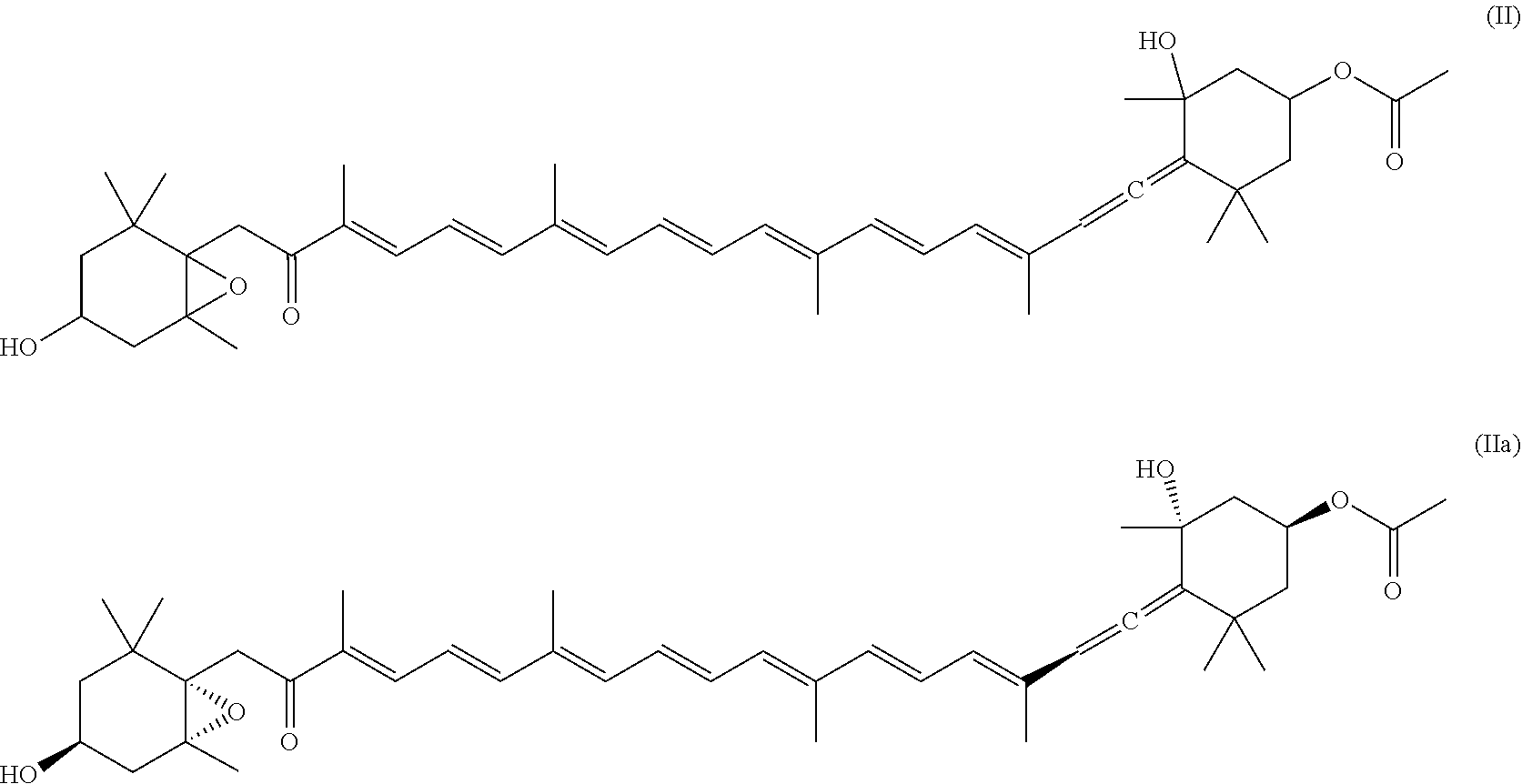
- step a) When step a) is carried out with a compound of formula (II), a compound of formula (III) is obtained in this step, a compound of formula (I) wherein R is methyl is obtained in step b), a compound of formula (IV) is obtained in step c1) and a compound of formula (I) wherein R is C 2 -C 4 alkyl is obtained in step c2).
- step a) When step a) is carried out with a compound of formula (IIa), a compound of formula (IIIa) is obtained in this step, a compound of formula (Ia) wherein R is methyl is obtained in step b), a compound of formula (IVa) is obtained in step c1) and a compound of formula (Ia) wherein R is C 2 -C 4 alkyl is obtained in step c2).
- the oxidant of step a) may be any suitable oxidant capable of providing the compound of formula (III) or (IIIa).
- suitable oxidant are tetra-n-propylammonium perruthenate (TPAP) and 2-iodoxybenzoic acid (IBX), preferably TPAP.
- Co-oxidants may also be used in step a).
- suitable co-oxidants are N-methylmorpholine N-oxide (NMO).
- step a) is carried out using TPAP as oxidant and NMO as co-oxidant.
- step a) is preferably carried out in an organic solvent such as dichloromethane, acetonitrile, acetone, methyl ethyl ketone, ethyl acetate, tetrahydrofuran or mixtures thereof, preferably dichloromethane.
- organic solvent such as dichloromethane, acetonitrile, acetone, methyl ethyl ketone, ethyl acetate, tetrahydrofuran or mixtures thereof, preferably dichloromethane.
- step a) is preferably carried out at a temperature in the range of 15° C. to 35° C.
- the amount of oxidant used in step a) is preferably from 0.01 to 0.5 mol with respect to each mol of the compound of formula (II) or (IIa), more preferably from 0.05 to 0.2 mol.
- the amount of co-oxidant used in step a) is preferably from 1.5 to 5 mol with respect to each mol of the compound of formula (II) or (IIa), more preferably from 1.5 to 2.5 mol.
- Step a) is preferably carried out with the removal of water.
- molecular sieves of 4 ⁇ may be used in step a).
- step a) is carried out without the removal of water.
- step a) is carried out for 0.5 to 5 h.
- Step a) provides a compound of formula (III) or (IIIa).
- step a) is carried out with a compound of formula (II)
- a compound of formula (III) is obtained in this step.
- step a) is carried out with a compound of formula (IIa)
- a compound of formula (IIIa) is obtained in this step.
- a base preferably a base selected from the group consisting of N-methylmorpholine and triethylamine
- step a The compound of formula (III) or (IIIa) is obtained in step a).
- the amount of SiO 2 used in step b) is preferably from 10 to 50 mol with respect to each mol of the compound of formula (II) or (IIa).
- Step b) is carried out in the presence of a base.
- suitable bases are N-methylmorpholine, trimethylamine, N,N-diisopropylethylamine and mixtures thereof, preferably N-methylmorpholine.
- the amount of base used in step b) is preferably from 0.1 to 5 mol with respect to each mol of the compound of formula (II) or (IIa).
- step a) is carried out in the presence of NMO as co-oxidant, providing N-methylmorpholine as a subproduct, which is then used as the base in step b).
- steps a) and b) are carried out one-pot.
- step b) is preferably carried out in an organic solvent such as dichloromethane, acetonitrile, acetone, methyl ethyl ketone, ethyl acetate, tetrahydrofuran or mixtures thereof, preferably dichloromethane.
- organic solvent such as dichloromethane, acetonitrile, acetone, methyl ethyl ketone, ethyl acetate, tetrahydrofuran or mixtures thereof, preferably dichloromethane.
- step b) is preferably carried out at a temperature in the range of 15° C. to 35° C.
- step b) is carried out for 0.5 to 24 h.
- Step b) provides a compound of formula (I) or (Ia) wherein R is methyl.
- step b) is carried out with a compound of formula (III)
- a compound of formula (I) wherein R is methyl is obtained in this step.
- step b) is carried out with a compound of formula (IIIa)
- a compound of formula (Ia) is obtained in this step.
- step c) is not performed.
- step c) is performed.
- Step c) comprises steps c1) and c2).
- Step c1) is converting the compound of formula (I) or (Ia) wherein R is methyl to a compound of formula (IV) or (IVa)
- esterase preferably a lipase
- step b The compound of formula (IV) or (IVa) is obtained in step b).
- esterase capable of providing compound (IV) or (IVa) from a compound of formula (I) or (Ia), respectively, may be used.
- esterases are lipase and cholesterol esterase, preferably a lipase.
- Step c1) is preferably carried out in the presence of an emulsifier such as sodium taurocholate, sodium dodecyl sulfate or a hydrate thereof.
- an emulsifier such as sodium taurocholate, sodium dodecyl sulfate or a hydrate thereof.
- step c1) is carried out in an aqueous solvent, preferably at a pH of 6.5 to 7.5, more preferably, step c1) is carried out in phosphate-buffered saline solution (PBS).
- PBS phosphate-buffered saline solution
- step c1) is preferably carried out at a temperature in the range of 30° C. to 45° C.
- step c1) is carried out for 2 to 24 h.
- Step c1) provides a compound of formula (IV) or (IVa).
- step c1) is carried out using a compound of formula (I)
- a compound of formula (IV) is obtained in this step.
- step c1) is carried out using a compound of formula (Ia)
- a compound of formula (IVa) is obtained in this step.
- step c2) of esterification of the compound of formula (IV) or (IVa) with a carboxylic acid of formula (V)
- R is a linear or branched C 2 -C 4 alkyl, in the presence of a coupling agent, preferably a carbodiimide, more preferably a carbodiimide selected from the group consisting of dicyclohexylcarbodiimide (DDC), diisopropylcarbodiimide (DIC) and ethyl-(N′,N′-dimethylamino)propylcarbodiimide (EDC) or a salt thereof, and in the presence of 4-(dimethylamino)pyridine (DMAP), to give a compound of formula (I) or (Ia)
- a coupling agent preferably a carbodiimide, more preferably a carbodiimide selected from the group consisting of dicyclohexylcarbodiimide (DDC), diisopropylcarbodiimide (DIC) and ethyl-(N′,N′-dimethylamino)propylcarbodiimide (
- R is selected from the group consisting of linear or branched C 2 -C 4 alkyl.
- step c1 The compound of formula (IV) or (IVa) is obtained in step c1).
- the coupling agent used in step c2) may be any suitable coupling agent known in the art for esterification of a carboxylic acid with an alcohol.
- suitable coupling agents are carbodiimides, preferably dicyclohexylcarbodiimide (DDC), diisopropylcarbodiimide (DIC) and ethyl-(N′,N′-dimethylamino)propylcarbodiimide (EDC) or a salt thereof.
- DDC dicyclohexylcarbodiimide
- DIC diisopropylcarbodiimide
- EDC ethyl-(N′,N′-dimethylamino)propylcarbodiimide
- the esterification reaction of step c2) is carried out in the presence of DMAP.
- step c2 Preferably, from 1 to 2 mol of coupling agent with respect to each mol of carboxylic acid (V) is used in step c2).
- step c2) Preferably from 0.01 to 0.5 mol of DMAP with respect to each mol of carboxylic acid of formula (V) is used in step c2).
- step c2 Preferably, from 1 to 2 mol of compound of formula (IV) or (IVa) with respect to each mol of carboxylic acid of formula (V) is used in step c2).
- step c2) is carried out in an organic solvent, such as dichloromethane, N,N-dimethylformamide or mixtures thereof.
- organic solvent such as dichloromethane, N,N-dimethylformamide or mixtures thereof.
- step c2) is preferably carried out at a temperature in the range of 0° C. to 30° C.
- step c2) is carried out for 1 to 15 h.
- Step c2) provides a compound of formula (I) or (Ia) wherein R is selected from the group consisting of linear or branched C 2 -C 4 alkyl.
- step c2) is carried out using a compound of formula (IV)
- a compound of formula (I) wherein R is selected from the group consisting of linear or branched C 2 -C 4 alkyl is obtained in this step.
- step c2) is carried out using a compound of formula (IVa)
- a compound of formula (Ia) wherein R is selected from the group consisting of linear or branched C 2 -C 4 alkyl is obtained in this step.
- step a) and/or b) of the process of the invention is carried out in the presence of water, in particular with more than 0.05 mol of water with respect to each mol of compound of formula (II) or (IIa).
- water in particular with more than 0.05 mol of water with respect to each mol of compound of formula (II) or (IIa).
- R is selected from the group consisting of linear or branched C 2 -C 4 alkyl, preferably methyl, preferably a compound of formula (VIa), preferably a compound of formula (VIa) wherein R is methyl.
- a compound of formula (VI) or (VIa) can be obtained with heating the compound of formula (I) or (Ia) at 60 to 90° C. in the presence of water.
- step a) is carried out in the presence of water.
- step a) is carried without the presence of water.
- a water removing agent such as 4 ⁇ molecular sieves
- step b) is carried out in the presence of water.
- step b) is carried out without the presence of water.
- a water removing agent such as 4 ⁇ molecular sieves
- both steps a) and b) are carried out in the presence of water. In another embodiment, both steps a) and b) are carried out without the presence of water.
- a water removing agent such as 4 ⁇ molecular sieves, may be used.
- presence of water refers to an amount of water of 0.1% by volume to 100% by volume, preferably 100%. This amount of water is determined with respect to the solvents present in the reaction medium without taking into account the water removed by any water removal agent.
- the third aspect relates to the use of a compound according to the first aspect for the preparation of amarouciaxanthin A and/or a composition comprising amarouciaxanthin A and paracentrone.
- the compound of formula (I) or (Ia) of the first aspect preferably a compound of formula (Ia), preferably wherein R is methyl, may be used for the preparation of amarouciaxanthin A.
- Amarouciaxanthin A may be obtained, for example, by carrying out steps a), b) and c1) of the process of the invention, as described above.
- the compound of formula (I) or (Ia) of the first aspect may be used for the preparation of a compound of formula (VI) or (VIa) as described above, preferably a compound of formula (VIa), preferably wherein R is methyl (i.e. paracentrone acetate).
- the compound of formula (VI) or (VIa), preferably a compound of formula (VIa), preferably wherein R is methyl may be obtained, for example, by carrying out steps a) and/or b) of the process of the invention, as described above in the presence of water.
- This process yields a mixture of a compound of formula (I) or (Ia) and a compound of formula (VI) or (VIa), preferably a mixture of a compound of formula (Ia) and a compound of formula (VIa), preferably wherein R is methyl.
- the compound of formula (I) or (Ia) of the first aspect preferably a compound of formula (Ia), preferably wherein R is methyl, may be used for the preparation of amarouciaxanthin A and paracentrone.
- Amarouciaxanthin A and paracentrone may be obtained, for example, by carrying out steps a), b) and c1) of the process of the invention, as described above, and wherein said steps a) and/or b) are carried out in the presence of water.
- the fourth aspect relates to a process for preparing amarouciaxanthin A comprising treating the compound of formula (I) or (Ia) of the first aspect, preferably a compound of formula (Ia), preferably wherein R is methyl, with an esterase, preferably a lipase.
- an esterase preferably a lipase.
- An additional aspect relates to a process for preparing paracentrone comprising treating the compound of formula (VI) or (VIa) described above, preferably a compound of formula (VIa), preferably wherein R is methyl, with an esterase, preferably a lipase.
- an esterase preferably a lipase.
- the fifth aspect relates to a composition
- a composition comprising a compound of formula (I) or (Ia) according to the first aspect, preferably a compound of formula (Ia), preferably wherein R is methyl, and a compound of formula (VI) or (VIa) as described above, preferably a compound of formula (VIa), preferably wherein R is methyl.
- the amount of compound of formula (I) or (Ia) in the composition of the fifth aspect is from 10 to 99.9 wt % with respect to the total weight of the composition, preferably from 40 to 99 wt %.
- the amount of compound of formula (VI) or (VIa) in the composition of the fifth aspect if 1 to 60 wt % with respect to the total weight of the composition
- the sixth aspect relates to a pharmaceutical composition
- a pharmaceutical composition comprising a compound of formula (I) or (Ia) according to the first aspect, preferably a compound of formula (Ia), preferably wherein R is methyl, or a composition according to the fifth aspect.
- composition relates to a composition comprising at least a combination provided by the present invention together with a pharmaceutically acceptable carrier.
- pharmaceutically acceptable vehicle refers to a non-toxic solid, semisolid or liquid filler, diluent, encapsulating material or formulation auxiliary of any conventional type.
- a pharmaceutically acceptable carrier is essentially non-toxic to recipients at the employed dosages and concentrations and is compatible with other ingredients of the formulation. The number and the nature of the pharmaceutically acceptable carriers depend on the desired administration form.
- the pharmaceutically acceptable carriers are known and may be prepared by methods well known in the art.
- Each carrier must be “acceptable” in the sense of being compatible with the other ingredients of the formulation and not injurious to the patient.
- materials which can serve as pharmaceutically-acceptable carriers include: (a) sugars (e.g. lactose, glucose and sucrose), (b) starches (e.g. corn starch and potato starch), (c) cellulose and its derivatives (e.g.
- antioxidants examples include: (a) water soluble antioxidants (e.g. sodium lauryl sulfate and magnesium stearate), as well as coloring agents, release agents, coating agents, sweetening, flavoring and perfuming agents, preservatives and antioxidants can also be present in the compositions.
- pharmaceutically-acceptable antioxidants include: (a) water soluble antioxidants (e.g.
- antioxidants e.g. ascorbyl palmitate, butylated hydroxyanisole (BHA), butylated hydroxytoluene (BHT), lecithin, propyl gallate or ⁇ -tocopherol
- metal chelating agents e.g. citric acid, ethylenediamine tetraacetic acid (EDTA), sorbitol, tartaric acid or phosphoric acid.
- the pharmaceutical product comprises a vehicle or carrier suitable for topical or oral administration.
- the pharmaceutical product may be formulated into tablets, pills, capsules, sachets, granules, powders, suspensions, emulsions, anhydrous or hydrous topical formulations and solutions.
- the pharmaceutical acceptable carriers or vehicles are well-known to those skilled in the art and are readily available to the public. It is preferred that the pharmaceutically acceptable carrier or vehicle be one which is chemically inert to the active formulation and each of its components and one which has no detrimental side effects or toxicity under the conditions of use.
- the pharmaceutical product is adapted as a delivery system for transporting the therapeutic agent orally, parenterally or intravenously into the circulatory system of a subject.
- the composition can contain minor amounts of wetting or emulsifying agents, or pH buffering agents.
- the composition can be a liquid solution, suspension, emulsion, gel, polymer, or sustained release formulation.
- the composition can be formulated with traditional binders and carriers, as would be known in the art.
- Formulations can include standard carriers such as pharmaceutical grades of mannitol, lactose, starch, magnesium stearate, sodium saccharide, cellulose, magnesium carbonate, etc., inert carriers having well established functionality in the manufacture of pharmaceuticals.
- Various delivery systems are known and can be used to administer a therapeutic of the present invention including encapsulation in liposomes, microparticles, microcapsules and the like.
- the combination or pharmaceutical composition of the invention is comprised in a composition also including a solubilizing agent and a local anesthetic to ameliorate any pain at the site of the injection.
- the ingredients are supplied either separately or mixed together in unit dosage form, for example, as a dry lyophilized powder or water free concentrate in a hermetically sealed container such as an ampule or sachette indicating the quantity of active agent.
- the composition is to be administered by infusion, it can be dispensed with an infusion bottle containing sterile pharmaceutical grade water or saline.
- an ampule of sterile water for injection or saline can be provided so that the ingredients may be mixed prior to administration.
- Formulations suitable for oral administration include liquid solutions, dissolved in diluents, such as water or saline; capsules, sachets, tablets, lozenges, each containing a predetermined amount of the combination of the invention; powders; suspensions in an appropriate liquid; and emulsions.
- Liquid dosage forms for oral administration may include emulsions, solutions, suspensions, syrups and elixirs pharmaceutically acceptable containing inert diluents commonly used in the technique, such as water.
- Those compositions may also comprise adjuvants such as wetting agents, emulsifying and suspending agents, and sweetening agents, flavoring and perfuming agents.
- Solid dosage forms for oral administration may include conventional capsules, sustained release capsules, conventional tablets, sustained-release tablets, chewable tablets, sublingual tablets, effervescent tablets, pills, suspensions, powders, granules and gels.
- the active compounds can be mixed with at least one inert excipient such as sucrose, lactose or starch.
- Such dosage forms can also comprise, as in normal practice, additional substances other than inert diluents, e.g. lubricating agents such as magnesium stearate.
- the dosage forms may also comprise buffering agents. Tablets and pills can be prepared with enteric coatings.
- parenteral formulations can be presented in unit-dose or multi-dose sealed containers, such as ampules and vials, and can be stored in freeze-dried (lyophilized) conditions requiring only the addition of the sterile liquid carrier, for example, water for injections, immediately prior to use.
- sterile liquid carrier for example, water for injections
- the pharmaceutical composition of the invention can be administered by topical, transdermal or subcutaneous route.
- topical or transdermal administration include but are not limited to iontophoresis, sonophoresis, electroporation, mechanical pressure, osmotic pressure gradient, occlusive dressing, microinjections, needle-less injections by means of pressure, microelectric patches and any combination thereof.
- the excipients will be chosen depending on the pharmaceutical dosage form selected.
- Injectable preparations for example, aqueous or oleaginous suspensions
- sterile injectable may be formulated according with the technique known using suitable dispersing agents, wetting agents and/or suspending agents.
- suitable dispersing agents wetting agents and/or suspending agents.
- suitable vehicles and solvents water, Ringer's solution and isotonic sodium chloride solution.
- Sterile oils are also conventionally used as solvents or suspending media.
- the pharmaceutical composition of the invention is administered by topical route.
- the pharmaceutical compositions of the invention can be formulated as creams, gels, lotions, liquids, pomades, spray solutions, dispersions, solid bars, emulsions, microemulsions and similars which may be formulated according to conventional methods that use suitable excipients, such as, for example, emulsifiers, surfactants, thickening agents, coloring agents and combinations of two or more thereof.
- compositions of the invention may be administered in the form of transdermal patches or iontophoresis devices.
- Suitable transdermal patches are well known by the person skilled in the art.
- Several drug delivery systems are known and can be used to administer the combination of the invention, including, for example, encapsulation in liposomes, microbubbles, emulsions, microparticles, microcapsules, nanoparticles, nanocapsules and similars.
- the required dosage can be administered as a single unit or in a sustained release form.
- the pharmaceutical composition is encapsulated in liposomes.
- the orally administrable form of a combination according to the invention is in a sustained release form further comprises at least one coating or matrix.
- the coating or sustained release matrix include, without limitation, natural polymers, semisynthetic or synthetic water-insoluble, modified, waxes, fats, fatty alcohols, fatty acids, natural semisynthetic or synthetic plasticizers, or a combination of two or more of them. Enteric coatings may be applied using conventional processes known to experts in the art.
- Another aspect relates to a food, a cosmeceutical, a nutraceutical, or a cosmetic composition comprising a compound according to the first aspect or a composition according to the fifth aspect.
- the term “food” is any substance or product of any nature, solid or liquid, natural or processed which due to its characteristics, applications, components, preparation and state of preservation, can usually or ideally be used for some of the following purposes: a) as normal nutrition for human beings or animals or as pleasurable foods; or b) as dietetic products, in special cases of human or animal food (feed).
- feed includes all the natural materials and finished products of any origin which, separately or conveniently mixed with one another, are suitable as animal food.
- a ready-to-eat food is that which does not need to be diluted by means of an aqueous solution suitable for consumption for example.
- the ingredients present in a ready-to-eat food are balanced and there is no need to add additional ingredients to the food to make it ready to eat, such considered by a person skilled in the art.
- a concentrated food is that in which one or more ingredients are present at a higher concentration than in a ready-to-eat food, therefore for use it is necessary to dilute it by means of an aqueous solution suitable for consumption for example.
- Non-limiting, illustrative examples of foods provided by this invention include both dairy products and derivatives, for example, fermented milks, yoghurt, kephir, curd, cheeses, butters, ice creams, milk-based desserts, etc., and non-dairy products, such as baked products, cakes and pastries, cereals, chocolates, jams, juices, other fruit derivatives, oils and margarines, prepared dishes, etc.
- dairy products and derivatives for example, fermented milks, yoghurt, kephir, curd, cheeses, butters, ice creams, milk-based desserts, etc.
- non-dairy products such as baked products, cakes and pastries, cereals, chocolates, jams, juices, other fruit derivatives, oils and margarines, prepared dishes, etc.
- the term “cosmeceutical product” refers to a product suitable for use in the body or animal body comprising one or more cosmeceutical products (functional cosmetics, dermaceuticals or active cosmetics), i.e., topical hybrid products with cosmetic-pharmaceutical characteristics containing active ingredients having effect on user's skin, hair and/or nails, at higher and more effective concentrations, therefore they are located in an intermediate level between cosmetic and drug.
- cosmeceutical products include essential oils, ceramides, enzymes, minerals, peptides, vitamins, etc.
- the term “nutraceutical product” refers to a product suitable for use in human beings or animals, comprising one or more natural products with therapeutic action which provide a health benefit or have been associated with disease prevention or reduction, and it includes dietary supplements presented in a non-food matrix (e.g., capsules, powder, etc.) of a concentrated natural bioactive product usually present (or not) in the foods and which, when taken in a dose higher than that existing in those foods, exerts a favorable effect on health which is greater than effect which the normal food may have.
- a non-food matrix e.g., capsules, powder, etc.
- the term “nutraceutical product” includes isolated or purified food products as well as additives or food supplements which are generally presented in dosage forms normally used orally, for example, capsules, tablets, sachets, drinkable phials, etc.; such products provide a physiological benefit or protection against diseases, generally against chronic diseases.
- the nutraceutical product provided by the invention can contain, in addition to the xanthophylls, one or more nutraceuticals (products or substances associated with disease prevention or reduction), for example, flavonoids, omega-3 fatty acids, etc., and/or one or more prebiotics (non-digestible food ingredients which stimulate probiotic activity and/or growth), for example, oligofructose, pectin, inulin, galacto-oligosaccharides, lactulose, human milk oligosaccharides, dietary fiber, etc.
- nutraceuticals products or substances associated with disease prevention or reduction
- prebiotics non-digestible food ingredients which stimulate probiotic activity and/or growth
- oligofructose for example, pectin, inulin, galacto-oligosaccharides, lactulose, human milk oligosaccharides, dietary fiber, etc.
- the term “nutritional composition” of the present invention relates to a food product that beneficially affects one or more functions of the body, so as to provide better health and wellness. Accordingly, such a nutritional composition may be intended for the prevention and/or treatment of a disease or a disease causing factor. Therefore, the term “nutritional composition” of the present invention can be used as a synonym for functional food or foods for particular nutritional purposes, or medical food. A nutritional composition is similar to that of a conventional food and consumed as part of a normal diet appearance.
- cosmetic composition or “personal care composition”, as used herein, refers to a composition suitable for use in personal hygiene of human beings or animals, or in order to enhance the natural beauty or change the body appearance without affecting the structure or functions of the human or animal body, comprising one or more products providing such effects.
- the cosmetic composition provided by the invention can contain, in addition to the combination of the invention, one or more cosmetics or cosmetic products, i.e., substances or mixtures intended to be placed in contact with the external parts of the human or animal body (e.g., epidermis, hair system, nails, lips, etc.) or with the teeth and the buccal mucosa, for the exclusive or main purpose of cleaning them, perfuming them, changing their appearance, protecting them, keeping them in good condition or correcting body odors.
- cosmetically acceptable vehicles include the products contained in the INCI (International Nomenclature of Cosmetic Ingredients) list.
- Cosmetic or personal care compositions include products such as balms, pads, pomades, creams, etc. oils, surfactants, humectants, botanical extracts, vitamins, antioxidants, sunscreen agents, perfumes, preservatives, and the like.
- humectants, botanical extracts, vitamins, antioxidants and sunscreen agents are examples of the like.
- the ingredients as described hereinabove are preferably provided in a cosmetic composition that may be formulated into a cream, gel, lotion, oil, ointment, powder, stick, cake, or other forms that can be topically applied.
- the resulting cosmetic composition may be in the form of a liquid, solid, semi-solid, dispersion, suspension, solution or emulsion, and it can be either aqueous-based or anhydrous.
- the cosmetic compositions of the invention may also be in the form of color cosmetic compositions, such as foundation makeup, mascara, lip color, blush, eye shadow, and the like. Certain other derivatives are lipophilic in nature and will more likely be found in the oil phase of the emulsion.
- the combination of the invention is preferably found in the water phase of the emulsion or encapsulated in an aqueous phase within liposomes.
- cosmetic effective amount relates to the sufficient amount of a compound (i.e of the combination of the invention) to provide the desired effect and it will generally be determined, by among other causes, the characteristics of the compound itself and the cosmetic effect to be achieved.
- the dosage for obtaining a cosmetic effective amount it will also depend on a range of factors, such as, for example, age, weight, sex or tolerance of the animal, preferably a mammal and more preferably human.
- the cosmetic composition of the invention is administered by topical route.
- Adequate formulations for topical administration of the composition of the invention are detailed in the context of the pharmaceutical compositions of the invention and equally apply to the cosmetic composition of the invention.
- the cosmetic composition of the invention is incorporated in a fabric, a non-woven fabric or a medical device.
- said fabric, non-woven fabric or medical device include but are not limited to bandages, gauzes, t-shirts, panty hose, socks, underwear, girdles, gloves, diapers, sanitary napkins, dressings, bedspreads, towelettes, adhesive patches, non-adhesive patches, occlusive patches, microelectric patches and face masks.
- ACX ACX for treating and/or preventing a variety of medical conditions
- cancer Satomi Y, Anticancer Res. 2017; 37(4): 1557-62; Méresse S et al., Int J Mol Sci. 2020 Dec. 4; 21(23); Peng J et al., Mar Drugs. 2011 Oct. 10; 9(10):1806-28), cardiovascular disease, hypertension, portal hypertension, pulmonary arterial hypertension, hyperglycemia, diabetes (Type 2), insulin resistance, as hepatoprotective and for lipid management related diseases (Peng J et al., Mar Drugs. 2011 Oct. 10; 9(10):1806-28), metabolic syndrome and diabetes prevention (Maeda H. J Oleo Sci.
- Drugs 2021, 19, 114 glucocorticoid induced muscle atrophy (Zhiyin L et al. Biomed Pharmacother. 2021 Apr. 14; 139:111590), bone health (Walsh P J et al. Mar Drugs. 2019 Feb. 28; 17(3)), age related macular degeneration (Chen S-J et al. Mar Drugs. 2021 Feb. 18; 19(2)), eczema, atopic dermatitis and itch (Natsume C et al. Int J Mol Sci. 2020 Mar. 22; 21(6)) and thyroid-related disorders (Yang H et al., Biol Trace Elem Res. 2021 May; 199(5):1877-1884).
- ACX esters of formula (I) or (Ia) are prodrugs of ACX, which are spontaneously transformed into ACX and its cis-isomer in the body.
- the esters of the present invention are suitable for the treatment and prevention of the same diseases as reported for ACX.
- the invention relates to a compound of formula (I) or (Ia) according to first aspect, a composition according to the fifth aspect or pharmaceutical composition according to the sixth aspect, for use in medicine.
- the invention relates to a compound of formula (I) or (Ia) according to the first aspect, a composition according to the fifth aspect or pharmaceutical composition according to the sixth aspect, for use in the treatment and/or prevention of a disease selected form the group consisting of cancer, a cardiovascular disease, an intestinal flora imbalance, an inflammatory disease, an autoimmune disease, fibrosis, a bacterial infection, a neurological disease, a hyperuricemic-related disease, a senescence-related disorder, a lipid related disease, glucocorticoid induced muscle atrophy, a bone-related disease, an ocular disease, an angiogenic related disease, psoriasis, eczema, atopic dermatitis, and a thyroid-related disorder.
- a disease selected form the group consisting of cancer, a cardiovascular disease, an intestinal flora imbalance, an inflammatory disease, an autoimmune disease, fibrosis, a bacterial infection, a neurological disease, a hyperuricemic
- the invention relates to the use of a compound of formula (I) or (Ia) according to the first aspect, a composition according to the fifth aspect or pharmaceutical composition according to the sixth aspect, in the manufacture of a medicament for the treatment and/or prevention of a disease selected form the group consisting of cancer, a cardiovascular disease, an intestinal flora imbalance, an inflammatory disease, an autoimmune disease, fibrosis, a bacterial infection, a neurological disease, a hyperuricemic-related disease, a senescence-related disorder, a lipid related disease, glucocorticoid induced muscle atrophy, a bone-related disease, an ocular disease, an angiogenic related disease, psoriasis, eczema, atopic dermatitis, and a thyroid-related disorder.
- a disease selected form the group consisting of cancer, a cardiovascular disease, an intestinal flora imbalance, an inflammatory disease, an autoimmune disease, fibrosis, a bacterial infection, a neurological
- the invention relates to a method of treatment and/or prevention of a disease selected form the group consisting of cancer, a cardiovascular disease, an intestinal flora imbalance, an inflammatory disease, an autoimmune disease, fibrosis, a bacterial infection, a neurological disease, a hyperuricemic-related disease, a senescence-related disorder, a lipid related disease, glucocorticoid induced muscle atrophy, a bone-related disease, an ocular disease, an angiogenic related disease, psoriasis, eczema, atopic dermatitis, and a thyroid-related disorder, comprising administering to a subject in need thereof a compound of formula (I) or (Ia) according to the first aspect, a composition according to the fifth aspect or pharmaceutical composition according to the sixth aspect.
- a disease selected form the group consisting of cancer, a cardiovascular disease, an intestinal flora imbalance, an inflammatory disease, an autoimmune disease, fibrosis, a bacterial infection,
- prevention relates to the administration of a combination according to the invention or of a medicament comprising said combination to a subject who has not been diagnosed as possibly having the disease, but who would normally be expected to develop said disease or be at increased risk for said disease.
- the prevention intends to avoid the appearance of said disease.
- the prevention may be complete (e.g. the total absence of a disease).
- the prevention may also be partial, such that for example the occurrence of a disease in a subject is less than that which would have occurred without the administration of the composition of the present invention.
- Prevention also refers to reduced susceptibility to a clinical condition.
- treatment refers to any type of therapy, which is aimed at terminating, preventing, ameliorating or reducing the susceptibility to a clinical condition as described herein.
- the term treatment relates to prophylactic treatment (i.e. a therapy to reduce the susceptibility to a clinical condition), of a disorder or a condition as defined herein.
- prophylactic treatment i.e. a therapy to reduce the susceptibility to a clinical condition
- treatment treating
- treating and their equivalent terms refer to obtaining a desired pharmacologic or physiologic effect, covering any treatment of a pathological condition or disorder in a mammal, including a human.
- treatment includes (1) preventing the disorder from occurring or recurring in a subject, (2) inhibiting the disorder, such as arresting its development, (3) stopping or terminating the disorder or, at least, symptoms associated therewith, so that the host no longer suffers from the disorder or its symptoms, such as causing regression of the disorder or its symptoms, for example, by restoring or repairing a lost, missing or defective function, or stimulating an inefficient process, or (4) relieving, alleviating, or ameliorating the disorder, or symptoms associated therewith, where ameliorating is used in a broad sense to refer to at least a reduction in the magnitude of a parameter.
- cancer refers to a disease characterized by uncontrolled cell division (or by an increase of survival or apoptosis resistance) and by the ability of said cells to invade other neighbouring tissues (invasion) and spread to other areas of the body where the cells are not normally located (metastasis) through the lymphatic and blood vessels, circulate through the bloodstream, and then invade normal tissues elsewhere in the body.
- tumours are classified as being either benign or malignant: benign tumours are tumours that cannot spread by invasion or metastasis, i.e., they only grow locally; whereas malignant tumours are tumours that are capable of spreading by invasion and metastasis.
- cancer includes, but is not limited to, the following types of cancer: breast cancer; biliary tract cancer; bladder cancer; brain cancer including glioblastomas, in particular glioblastoma multiforme, and medulloblastomas; cervical cancer; head and neck carcinoma; choriocarcinoma; colon cancer, colorectal cancer; endometrial cancer; esophageal cancer; gastric cancer; hematological neoplasms including acute lymphocytic and myelogenous leukemia; T-cell acute lymphoblastic leukemia/lymphoma; hairy cell leukemia; chronic myelogenous leukemia, multiple myeloma; AIDS-associated leukemias and adult T-cell leukemia/lymphoma; intraepithelial neoplasms including Bowen's disease and Paget's disease; liver cancer, hepatoma; lung cancer, pleural mesothelioma; lymphomas including Ho
- the cancer is as gastric, duodenal, liver, hematologic, breast, glioma, bladder, pancreatic, prostate, colorectal, cervical, nasopharyngeal, lung, kidney, metastasis, melanoma, sarcoma, neural, or skin cancer.
- the cardiovascular disease is hypertension, portal hypertension, pulmonary arterial hypertension, hyperglycemia, type 2 diabetes, insulin resistance, metabolic syndrome or coronary atherosclerosis.
- the inflammatory disease is anaphylactic shock, sepsis or cytokine storm.
- the autoimmune diseases is lupus, sarcoidosis, chronic obstructive pulmonary disease, asthma, primary biliary cholangitis, sclerosing cholangitis, autoimmune hepatitis, inflammatory bowel disease, Crohn's disease, multiple sclerosis and ulcerative colitis.
- Fibrosis as used herein relates to is the formation of excess fibrous connective tissue in an organ or tissue in a reparative or reactive process. Although fibrosis may be a benign state, the present invention relates preferably to fibrosis in a pathological state. In a particular embodiment, the fibrosis is liver fibrosis, renal fibrosis, lung fibrosis, myocardial fibrosis, interstitial fibrosis, IGG4-related fibrosis, sclerodermia or retroperitoneal fibrosis.
- the neurological disease is Parkinson's disease, Alzheimer's disease, dementia, depression or cerebral ischemia.
- the hyperuricemic-related disease is rheumatoid arthritis, gout or kidney stones.
- the lipid related disease is obesity, cholesterol, triglyceridaemia, non-alcoholic steatohepatitis or non-alcoholic fatty liver disease.
- the bone related diseases is bone loss.
- the ocular disease is as glaucoma, diabetic retinopathy or age related macular degeneration.
- the angiogenesis related disease is hemorrhagic telangiectasia.
- the invention relates to a cosmetic method for preventing and/or decreasing cutaneous senescence and/or for ameliorating the cosmetic adverse effects of aging comprising administering the compound of formula (I) or (Ia), preferably of formula (Ia), preferably wherein R is methyl, according to the first aspect, a composition according to the fifth aspect or the food, cosmeceutical, nutraceutical or cosmetic composition according to the ninth aspect, to a subject in need thereof.
- cosmetic method relates to a method used to enhance the appearance of the skin in a subject.
- Cosmetic compositions used in the cosmetic method of the invention include skin-care creams, lotions, powders, lipsticks, eye and facial makeup, towelettes, gels, deodorants, hand sanitizer, baby products, bath oils, bubble baths, bath salts, butters and many other types of products.
- Skin aging is a multi-factorial process that affects nearly every aspect of its biology and function; it is driven by both intrinsic (e.g., time, genetic factors, hormones) and extrinsic (e.g., UV exposure, pollution, cigarette smoke) factors. Skin aging is also produced by senescence.
- intrinsic e.g., time, genetic factors, hormones
- extrinsic e.g., UV exposure, pollution, cigarette smoke
- Senescent cells are characterized by their inability to proliferate, resistance to apoptosis, and secretion of factors that promote inflammation and tissue deterioration.
- Senescent keratinocytes and fibroblasts appear to accumulate with age in human skin. Moreover, senescent cells express genes that have long-range, pleiotropic effects-degradative enzymes, growth factors, and inflammatory cytokines.
- Cosmetic adverse effects of aging relates to characteristics of intrinsic or chronological aging and include as a way of illustrative non limitative visible signs such as thin and dry skin, fine wrinkles, decreased elasticity, aberrant pigmentation, hair graying and hair loss.
- “Cutaneous senescence”, as used herein relates to means the state of growing old and particularly damage to the epidermal cells of human skin which results from partial damage or complete destruction of the cells, conversion of imide bonds to amide bonds in collagen and/or elastin caused by toxic byproducts of oxygen metabolism, free-radical pathology mechanisms or by photo-damage and generalized aging.
- the cosmetic method of the invention is intended to decrease epidermal cell and thereby cutaneous senescence in a human by reducing or inhibiting senescence, including one or more affects such as reversing photo-damage or other regenerative effects, such as increasing underlying skin vascularity, increasing the rate of cellular replication and desquamation producing a more youthful appearance, increasing collagen synthesis and homogeneity, delaying cutaneous atrophy and thinning of epidermis and dermis, and the like.
- affects such as reversing photo-damage or other regenerative effects, such as increasing underlying skin vascularity, increasing the rate of cellular replication and desquamation producing a more youthful appearance, increasing collagen synthesis and homogeneity, delaying cutaneous atrophy and thinning of epidermis and dermis, and the like.
- the combination of the invention may be administered in a cosmetic effective amount.
- Cosmetic effective amount relates to the sufficient amount of a compound or composition of the invention to provide the desired effect and it will generally be determined, by among other causes, the characteristics of the compound itself and the cosmetic effect to be achieved.
- the dosage for obtaining a cosmetic effective amount it will also depend on a range of factors, such as, for example, age, weight, sex or tolerance of the animal, preferably a mammal and more preferably human.
- the cosmetic composition of the invention is administered by topical route.
- Adequate formulations for topical administration of the combination of the invention have been detailed in the context of the cosmetic compositions of the invention and equally apply to the cosmetic method of the invention.
- the cosmetic composition of the invention is incorporated in a fabric, a non-woven fabric or a medical device.
- said fabric, non-woven fabric or medical device include but are not limited to bandages, gauzes, t-shirts, panty hose, socks, underwear, girdles, gloves, diapers, sanitary napkins, dressings, bedspreads, towelettes, adhesive patches, non-adhesive patches, occlusive patches, microelectric patches and face masks.
- NMR spectra were acquired on a Varian 400 MHz or a 500 MHz instrument. 1H chemical shifts are quoted relative to deuterated solvent.
- Fucoxanthin (1 eq), NMO monohydrate (2 eq) and freshly dried 4 ⁇ molecular sieves are dissolved with dichloromethane (DCM).
- TPAP (0.12 eq) is added at room temperature.
- SiO 2 (30 eq) is added to the reaction.
- the reaction is stirred at room temperature until complete conversion.
- the reaction is filtered to remove the SiO 2 .
- the filtrate is washed with aqueous 5% Na 2 S 2 O 3 .
- the organic layer is washed twice with brine, dried with Na 2 SO 4 , filtered and evaporated to dryness. The residue is dried using high-vacuum to obtain the desired compound as a red solid.
- Amarouciaxanthin A acetate is mixed with water and heated to 70° C. Once the reaction does not evolve, it is cooled down and extracted with dichloromethane. The organic layer is dried, filtered and evaporated to dryness. The resulting residue is purified by SiO 2 column chromatography to obtain the desired compound as a brown solid.
- Amarouciaxanthin A acetate (1 eq) and sodium taurocholate (30 eq) are dissolved in MeOH. The solvent is evaporated to dryness. The residue is dissolved in phosphate-buffered saline (PBS, pH 7) and lipase (1340 U/mg compound) is added. The reaction is shaken at 37° C. until maximum conversion (aprox 80%). The reaction is quenched with MeOH and extracted with Et 2 O and brine. The aqueous layer is extracted with Et 2 O until no colour is observed in the organic layer. The combined organic layers are dried, filtered and evaporated to dryness. The residue is purified by SiO 2 column chromatography and amarouciaxanthin A was obtained as a red solid and the unreacted amarouciaxanthin A acetate is recovered.
- PBS phosphate-buffered saline
- Immunocompetent mice from the strain Hsd:ICR (CD-1) (females, 6-7 weeks old from ENVIGO), were housed under sterile conditions at a constant temperature of 20-22° C. and relative humidity (45-65%) under daily cycles of light/darkness (12 hours). Sterilized water and food were available ad libitum.
- Amarouciaxanthin A acetate (ACX-Ac) was dissolved at 1 mg/mL in a suitable vehicle and sterilized by filtration. Animals were weighted before the assay to determine the appropriate dispensing volume at 10 mL/kg. Formulation was administered once, intragastrically, at 10 mg/kg. Blood was collected at different time points, as stated in Table 1. It was extracted either through the facial vein or by intracardiac puncture (end points), on recipients containing 5 ⁇ L of 0.5 M EDTA.
- ACX-Ac was not detected in plasma samples when administered orally.
- the absorption of ACX was subsequently analyzed ( FIG. 1 ).
- the estimated maximum observed plasma concentration (Cmax) was determined to be 9.35 ⁇ M; while the area under the concentration-time curve (AUCt) was calculated to be 80.59 ⁇ M ⁇ h.
Landscapes
- Health & Medical Sciences (AREA)
- Chemical & Material Sciences (AREA)
- Organic Chemistry (AREA)
- Life Sciences & Earth Sciences (AREA)
- Veterinary Medicine (AREA)
- Animal Behavior & Ethology (AREA)
- General Health & Medical Sciences (AREA)
- Public Health (AREA)
- Pharmacology & Pharmacy (AREA)
- Medicinal Chemistry (AREA)
- Chemical Kinetics & Catalysis (AREA)
- Nuclear Medicine, Radiotherapy & Molecular Imaging (AREA)
- Engineering & Computer Science (AREA)
- General Chemical & Material Sciences (AREA)
- Epidemiology (AREA)
- Cardiology (AREA)
- Bioinformatics & Cheminformatics (AREA)
- Heart & Thoracic Surgery (AREA)
- Emergency Medicine (AREA)
- Mycology (AREA)
- Polymers & Plastics (AREA)
- Food Science & Technology (AREA)
- Nutrition Science (AREA)
- Birds (AREA)
- Gerontology & Geriatric Medicine (AREA)
- Dermatology (AREA)
- Pharmaceuticals Containing Other Organic And Inorganic Compounds (AREA)
- Cosmetics (AREA)
- Acyclic And Carbocyclic Compounds In Medicinal Compositions (AREA)
- Organic Low-Molecular-Weight Compounds And Preparation Thereof (AREA)
- Preparation Of Compounds By Using Micro-Organisms (AREA)
- Luminescent Compositions (AREA)
Abstract

Description

wherein R is selected from the group consisting of linear or branched C1-C4 alkyl, or a stereoisomer thereof.
-
- a) reacting a compound of formula (II) or (IIa)

-
- with an oxidant, preferably an oxidant selected from the group consisting of tetra-n-propylammonium perruthenate (TPAP) and 2-iodoxybenzoic acid (IBX) and optionally also in the presence of a co-oxidant, preferably N-methylmorpholine N-oxide (NMO), to give a compound of formula (III) or (IIIa)

-
- b) treating the compound of formula (III) or (IIIa) with SiO2 in the presence of a base, preferably a base selected from the group consisting of N-methylmorpholine and triethylamine, to give a compound of formula (I) or (Ia) wherein R is methyl, and
- c) wherein if the compound of formula (I) or (Ia) R is a linear or branched C2-C4 alkyl, the process further comprises:
- c1) converting the compound of formula (I) or (Ia) wherein R is methyl to a compound of formula (IV) or (IVa)

-
-
- by treatment with an esterase, preferably a lipase, and
- c2) esterification of the compound of formula (IV) or (IVa) with a carboxylic acid of formula (V)
-

-
-
- wherein R is a linear or branched C2-C4 alkyl,
- in the presence of a coupling agent, preferably a carbodiimide, more preferably a carbodiimide selected from the group consisting of dicyclohexylcarbodiimide (DDC), diisopropylcarbodiimide (DIC) and ethyl-(N′,N′-dimethylamino)propylcarbodiimide (EDC) or a salt thereof, and in the presence of 4-(dimethylamino)pyridine (DMAP), to give a compound of formula (I) or (Ia)
-

wherein R is selected from the group consisting of linear or branched C2-C4 alkyl.


wherein R is selected from the group consisting of linear or branched C1-C4 alkyl, or a stereoisomer thereof.

wherein R is as previously defined
-
- a) reacting a compound of formula (II) or (IIa)
-
- with an oxidant, preferably an oxidant selected from the group consisting of tetra-n-propylammonium perruthenate (TPAP) and 2-iodoxybenzoic acid (IBX) and optionally also in the presence of a co-oxidant, preferably N-methylmorpholine N-oxide (NMO), to give a compound of formula (III) or (IIIa)

-
- b) treating the compound of formula (III) or (IIIa) with SiO2 in the presence of a base, preferably a base selected from the group consisting of N-methylmorpholine and triethylamine, to give a compound of formula (I) or (Ia) wherein R is methyl, and
- c) wherein if the compound of formula (I) or (Ia) R is a linear or branched C2-C4 alkyl, the process further comprises:
- c1) converting the compound of formula (I) or (Ia) wherein R is methyl to a compound of formula (IV) or (IVa)

-
-
- by treatment with an esterase, preferably a lipase, and
- c2) esterification of the compound of formula (IV) or (IVa) with a carboxylic acid of formula (V)
-

-
-
- wherein R is a linear or branched C2-C4 alkyl,
- in the presence of a coupling agent, preferably a carbodiimide, more preferably a carbodiimide selected from the group consisting of dicyclohexylcarbodiimide (DDC), diisopropylcarbodiimide (DIC) and ethyl-(N′,N′-dimethylamino)propylcarbodiimide (EDC) or a salt thereof, and in the presence of 4-(dimethylamino)pyridine (DMAP), to give a compound of formula (I) or (Ia)
-

wherein R is selected from the group consisting of linear or branched C2-C4 alkyl.

by treatment with an esterase, preferably a lipase.

wherein R is a linear or branched C2-C4 alkyl,
in the presence of a coupling agent, preferably a carbodiimide, more preferably a carbodiimide selected from the group consisting of dicyclohexylcarbodiimide (DDC), diisopropylcarbodiimide (DIC) and ethyl-(N′,N′-dimethylamino)propylcarbodiimide (EDC) or a salt thereof, and in the presence of 4-(dimethylamino)pyridine (DMAP), to give a compound of formula (I) or (Ia)

wherein R is selected from the group consisting of linear or branched C2-C4 alkyl.
-
- the oxidant of step a) is TPAP,
- step a) is carried out in the presence of a co-oxidant,
- the co-oxidant in step a) is NMO; and/or
- the base in step b) is N-methylmorpholine.

wherein R is selected from the group consisting of linear or branched C2-C4 alkyl, preferably methyl, preferably a compound of formula (VIa), preferably a compound of formula (VIa) wherein R is methyl.
| Reagent | Oxidized fucoxanthin | One pot SiO2 addition |
| IBX | 100% conversion | Mixture oxidized |
| fucoxanthin + | ||
| desired compound | ||
| Dess-Martin periodinane | 55% conversion | — |
| Swern oxidation | 10% conversion | — |
| TPAP | 100% conversion | 100% conversion |
| TABLE 1 |
| Treatment groups in the ACX-Ac oral kinetic assay. |
| Number of | ||
| Group | animals | Blood extraction |
| 1 | 3 | 2 min, | 8 h |
| 2 | 3 | 30 min, | 24 h |
| 3 | 3 | 2 h, | 48 h |
| 4 | 3 | 4 h, | 72 h |
| 5 | 3 | 15 min, | 16 |
| 6 | 3 | 1 h, | 36 h |
Claims (14)


Applications Claiming Priority (4)
| Application Number | Priority Date | Filing Date | Title |
|---|---|---|---|
| EP21382644 | 2021-07-16 | ||
| EP21382644.9A EP4119538B1 (en) | 2021-07-16 | 2021-07-16 | Amarouciaxanthin a esters and uses thereof |
| EP21382644.9 | 2021-07-16 | ||
| PCT/EP2022/070001 WO2023285703A1 (en) | 2021-07-16 | 2022-07-18 | Amarouciaxanthin a esters and uses thereof |
Publications (2)
| Publication Number | Publication Date |
|---|---|
| US20240239733A1 US20240239733A1 (en) | 2024-07-18 |
| US12129229B2 true US12129229B2 (en) | 2024-10-29 |
Family
ID=77168138
Family Applications (1)
| Application Number | Title | Priority Date | Filing Date |
|---|---|---|---|
| US18/558,067 Active US12129229B2 (en) | 2021-07-16 | 2022-07-18 | Amarouciaxanthin A esters and uses thereof |
Country Status (14)
| Country | Link |
|---|---|
| US (1) | US12129229B2 (en) |
| EP (1) | EP4119538B1 (en) |
| JP (1) | JP7642107B2 (en) |
| KR (1) | KR102744190B1 (en) |
| CN (1) | CN117321032B (en) |
| AU (1) | AU2022312171B2 (en) |
| CA (1) | CA3218361C (en) |
| ES (1) | ES2971596T3 (en) |
| HR (1) | HRP20231676T1 (en) |
| IL (1) | IL307897B2 (en) |
| MX (1) | MX2023012924A (en) |
| PL (1) | PL4119538T3 (en) |
| WO (1) | WO2023285703A1 (en) |
| ZA (1) | ZA202309924B (en) |
Families Citing this family (1)
| Publication number | Priority date | Publication date | Assignee | Title |
|---|---|---|---|---|
| EP4306101A1 (en) * | 2022-07-14 | 2024-01-17 | Gat Therapeutics S.L. | Compositions comprising amarouciaxanthin a esters and uses thereof |
Citations (3)
| Publication number | Priority date | Publication date | Assignee | Title |
|---|---|---|---|---|
| EP3705109A1 (en) | 2019-03-05 | 2020-09-09 | Greenaltech, S.L. | Carotenoids in the treatment of senescence-related diseases |
| CN112804996A (en) | 2019-03-05 | 2021-05-14 | 加特治疗有限公司 | Use of carotenoids in the treatment of age-related disorders |
| CN115715804A (en) | 2019-03-05 | 2023-02-28 | 阿尔加克蒂夫有限公司 | Use of carotenoids in the treatment of age-related disorders |
Family Cites Families (1)
| Publication number | Priority date | Publication date | Assignee | Title |
|---|---|---|---|---|
| CA93534A (en) | 1904-07-09 | 1905-06-06 | Henry C. Miller | Collar trimming machine |
-
2021
- 2021-07-16 PL PL21382644.9T patent/PL4119538T3/en unknown
- 2021-07-16 HR HRP20231676TT patent/HRP20231676T1/en unknown
- 2021-07-16 ES ES21382644T patent/ES2971596T3/en active Active
- 2021-07-16 EP EP21382644.9A patent/EP4119538B1/en active Active
-
2022
- 2022-07-18 CN CN202280035018.8A patent/CN117321032B/en active Active
- 2022-07-18 WO PCT/EP2022/070001 patent/WO2023285703A1/en not_active Ceased
- 2022-07-18 JP JP2023579284A patent/JP7642107B2/en active Active
- 2022-07-18 MX MX2023012924A patent/MX2023012924A/en unknown
- 2022-07-18 KR KR1020237041957A patent/KR102744190B1/en active Active
- 2022-07-18 IL IL307897A patent/IL307897B2/en unknown
- 2022-07-18 US US18/558,067 patent/US12129229B2/en active Active
- 2022-07-18 AU AU2022312171A patent/AU2022312171B2/en active Active
- 2022-07-18 CA CA3218361A patent/CA3218361C/en active Active
-
2023
- 2023-10-24 ZA ZA2023/09924A patent/ZA202309924B/en unknown
Patent Citations (3)
| Publication number | Priority date | Publication date | Assignee | Title |
|---|---|---|---|---|
| EP3705109A1 (en) | 2019-03-05 | 2020-09-09 | Greenaltech, S.L. | Carotenoids in the treatment of senescence-related diseases |
| CN112804996A (en) | 2019-03-05 | 2021-05-14 | 加特治疗有限公司 | Use of carotenoids in the treatment of age-related disorders |
| CN115715804A (en) | 2019-03-05 | 2023-02-28 | 阿尔加克蒂夫有限公司 | Use of carotenoids in the treatment of age-related disorders |
Non-Patent Citations (37)
| Title |
|---|
| Akira Asai et al., "Biotransformation of Fucoxanthinol Into Amarouciaxanthin a in Mice and HEPG2 Cells: Formation and Cytotoxicity of Fucoxanthin Metabolites," Drug Metabolism and Disposition, Feb. 2004, pp. 205-211, vol. 32. |
| Chika Natsume et al., "Fucoxanthin Ameliorates Atopic Dermatitis Symptoms by Regulating Keratinocytes and Regulatory Innate Lymphoid Cells," Int J Mol Sci., Mar. 2020, 21, 2180. |
| Decision to Grant a European Patent for EP Application No. 21382644.9, mailed Nov. 3, 2023. |
| Extended European Search Report for EP Application No. 21382644.9, mailed Feb. 17, 2022. |
| First Office Action for China Application No. 202280035018.8, mailed Feb. 4, 2024. |
| Han Xiao et al., "Advances in Studies on the Pharmacological Activities of Fucoxanthin," Marine Drugs, Dec. 2020, 18, 634. |
| Haoyue Yang et al., "Effect of Fucoxanthin Administration on Thyroid Gland Injury Induced by Cadmium in Mice," Biological Trace Element Research, Jul. 2020. |
| Hayato Maeda, "Nutraceutical Effects of Fucoxanthin for Obesity and Diabetes Therapy: A Review," Journal of Oleo Science, Jan. 2015, pp. 125-132, vol. 64, No. 2. |
| International Search Report and Written Opinion for PCT/EP2022/070001, mailed Nov. 24, 2022. |
| Jiawen Zheng et al., "Protective Effects of Fucoxanthin against Alcoholic Liver Injury by Activation of Nrf2-Mediated Antioxidant Defense and Inhibition of TLR4-Mediated Inflammation," Marine Drugs, Sep. 2019, 17, 552. |
| Jingqian Su et al., "Fucoxanthin, a Marine Xanthophyll Isolated From Conticribra weissflogii ND-8: Preventive Anti-Inflammatory Effect in a Mouse Model of Sepsis," Frontiers in Pharmacology, Aug. 2019, vol. 10, Article 906. |
| Juan Peng et al., "Fucoxanthin, a Marine Carotenoid Present in Brown Seaweeds and Diatoms: Metabolism and Bioactivities Relevant to Human Health," Marine Drugs, Oct. 2011, pp. 1, 806-1, 828, vol. 9, No. 10. |
| Koji Mikami et al., "Biosynthetic Pathway and Health Benefits of Fucoxanthin, an Algae-Specific Xanthophyll in Brown Seaweeds," Int J Mol Sci. Jul. 2013, pp. 13, 763-13, 781, vol. 14. |
| Liao Zhiyin et al., "Fucoxanthin rescues dexamethasone induced C2C12 myotubes atrophy," Biomedicine & Pharmacotherapy, Apr. 2021, 139, 111590. |
| Lixun Hu et al., "Neuroprotective role of fucoxanthin against cerebral ischemic/reperfusion injury through activation of Nrf2/HO-1 signaling," Biomedicine & Pharmacotherapy, Oct. 2018, pp. 1, 484-1, 489, 106. |
| Minkyung Bae et al., "Health benefits of fucoxanthin in the prevention of chronic diseases," Biochim Biophys Acta Mol Cell Biol Lipids, Nov. 2020, 1865, 158618. |
| Miyashita Kazuo, et al., Nutraceutical characteristics of the brown seaweed carotenoid fucoxanthin, Archives of Biochemistry and Biophysics, Jun. 15, 2020, vol. 686, Article No. 108364, p. 1-35. |
| Naoki Takatani et al., "Fucoxanthin inhibits hepatic oxidative stress, inflammation, and fibrosis in diet-induced nonalcoholic steatohepatitis model mice," Biochemical and Biophysical Research Communications, May 2020, pp. 305-310, 528. |
| Notice of Reasons for Refusal dated Jun. 25, 2024, in JP 2023579284. |
| Pamela J. Walsh et al., "The Osteogenic Potential of Brown Seaweed Extracts," Marine Drugs, Feb. 2019, 17, 141. |
| Rulin Wang et al., "Antiurolithiatic effect of Fucoxanthin on ethylene glycol-induced renal calculus in experimental rats," Journal of King Saud University—Science, Jan. 2020, pp. 1, 896-1, 901, 32. |
| Shiro Komba et al., "Fucoxanthin Derivatives: Synthesis and their Chemical Properties," Journal of Oleo Science, May 2015, pp. 1, 009-1, 018, vol. 64, No. 9. |
| Shiu-Jau Chen et al., "Cytoprotective Potential of Fucoxanthin in Oxidative Stress-Induced Age-Related Macular Degeneration and Retinal Pigment Epithelial Cell Senescence In Vivo and In Vitro," Marine Drugs, Feb. 2021, 19, 114. |
| So Young Kang et al., "Antiaging Potential of Fucoxanthin Concentrate Derived from Phaeodactylum tricornutum," J Cosmet Sci., Mar. 2020, pp. 53-64, 71. |
| Statchi, Satsuma ark shell miso soup, [online], Dec. 6, 2005, [Retrieved Jun. 17, 2024], https://cookpad.com/recipe/229673. |
| Sun Young Ma et al., "Fucoxanthin inhibits profibrotic protein expression in vitro and attenuates bleomycin-induced lung fibrosis in vivo," European Journal of Pharmacology, Jun. 2017, pp. 199-207, 811. |
| Takao Matsuno, "Carotenoids of Tunicates7 111. The Structural Elucidation of Two New Marine Carotenoids, Amarouciaxanthin A and B," J Nat Prod, Jul. 1985, pp. 606-613, vol. 48, No. 4. |
| Takashi Hashimoto, et al., The distribution and accumulation of fucoxanthin and its metabolites are oral administration in mice, British Journal of Nutrition, Jan. 2009, vol. 102, No. 2, p. 242-248. |
| Takashi Maoka, et al., New C37 Skeletal Carotenoid from the Clam, Paphia mabillis, J. Agric. Food Chem., Dec. 2008, vol. 56, No. 24, p. 12069-12072. |
| Tomasz M. Karpinski et al., "Fucoxanthin—An Antibacterial Carotenoid," Antioxidants, Jul. 2019, 8, 239. |
| Xiaoling Li et al., "Fucoxanthin attenuates LPS-induced acute lung injury via inhibition of the TLR4/MyD88 signaling axis," Aging, Dec. 2020, pp. 2, 655-2, 667, vol. 13, No. 2. |
| Xinjun Yang et al., "Assessment of the Therapeutic Effects of Fucoxanthin by Attenuating Inflammation in Ovalbumin-Induced Asthma in an Experimental Animal Model," Journal of Environmental Pathology, Toxicology and Oncology, Jan. 2019, pp. 229-238, 38(3). |
| Yamano Yumiko et al., "Stereocontrolled First Total Syntheses of Amarouciaxanthin A and B," Organic Letters, Oct. 2013, pp. 5, 310-5, 313, vol. 15, No. 20. |
| Yoshiko Satomi, "Antitumor and Cancer-preventative Function of Fucoxanthin: A Marine Carotenoid," Anticancer Research, Apr. 2017, pp. 1, 557-1, 562, vol. 37, No. 4. |
| Yuan-Ping Yang et al., "Anti-inflammatory effect of fucoxanthin on dextran sulfate sodium-induced colitis in mice," Natural Product Research, Nov. 2018, pp. 1791-1795. |
| Yumiko Yamano et al., "Stereocontrolled First Total Syntheses of Amarouciaxanthin A and B," Organic Letters, Oct. 2013, pp. 5, 310-5, 313, vol. 15, No. 20. |
| Zulfiia Guvatova et al., "Protective effects of carotenoid fucoxanthin in fibroblasts cellular senescence," Mechanisms of Ageing and Development, May 2020, 189, 111260. |
Also Published As
| Publication number | Publication date |
|---|---|
| PL4119538T3 (en) | 2024-03-18 |
| JP7642107B2 (en) | 2025-03-07 |
| CN117321032A (en) | 2023-12-29 |
| ZA202309924B (en) | 2024-02-28 |
| EP4119538A1 (en) | 2023-01-18 |
| JP2024525410A (en) | 2024-07-12 |
| EP4119538B1 (en) | 2023-11-29 |
| MX2023012924A (en) | 2024-05-21 |
| KR20230170141A (en) | 2023-12-18 |
| BR112023022578A2 (en) | 2024-02-06 |
| US20240239733A1 (en) | 2024-07-18 |
| AU2022312171B2 (en) | 2024-03-28 |
| EP4119538C0 (en) | 2023-11-29 |
| AU2022312171A1 (en) | 2023-11-09 |
| CA3218361C (en) | 2024-06-11 |
| ES2971596T3 (en) | 2024-06-06 |
| CA3218361A1 (en) | 2023-01-19 |
| CN117321032B (en) | 2024-10-15 |
| HRP20231676T1 (en) | 2024-03-15 |
| IL307897B2 (en) | 2024-08-01 |
| WO2023285703A1 (en) | 2023-01-19 |
| KR102744190B1 (en) | 2024-12-18 |
| IL307897A (en) | 2023-12-01 |
| IL307897B1 (en) | 2024-04-01 |
Similar Documents
| Publication | Publication Date | Title |
|---|---|---|
| WO2019242691A1 (en) | Paclitaxel-lipid-polysaccharide dual-type conjugate, preparation method therefor and use thereof | |
| JP6664319B2 (en) | Anti-aging agent for skin and concentrated solution of resveratrol 3-O-α-glucoside | |
| KR101800498B1 (en) | Composition for improving skin wrinkle comprising extract or compounds derived from unripe apple | |
| CN111434652B (en) | Diuracil, its use and its preparation method | |
| TWI648257B (en) | Compounds from antrodia camphorata, method for preparing the same and use thereof | |
| TW202102242A (en) | Fermentation product ofphyllanthus emblica extract and preparation and use of the same | |
| US12129229B2 (en) | Amarouciaxanthin A esters and uses thereof | |
| CN104220041A (en) | Anti-aging agent containing arctigenin derivative | |
| JP6406636B2 (en) | Cosmetic or skin preparation | |
| AU2014315877B2 (en) | Composition containing monoacetyldiacylglycerol compound as active ingredient for preventing or treating atopic dermatitis | |
| JP6238190B2 (en) | Composition for promoting collagen production, promoting elastin production and / or promoting keratinocyte migration | |
| AU2007234746B2 (en) | Naphthalenedione compounds | |
| BR112023022578B1 (en) | AMAROUCIAXANTHIN A ESTERS, THEIR PRODUCTION PROCESS, THEIR USE, COMPOSITIONS COMPRISING THE COMPOUND | |
| KR20120122974A (en) | Glycosyl ceramide compound, and composition comprising the compound | |
| US20230381273A1 (en) | Nanoparticle in which antibacterial peptide is encapsulated with chitosan and use thereof | |
| HK40097615A (en) | Amarouciaxanthin a esters and uses thereof | |
| EP2842558A1 (en) | Cgrp responsiveness promoter | |
| JP2017510630A (en) | Compositions and methods for inhibiting triglyceride synthesis by synergistic combination of botanical formulations | |
| HK40097615B (en) | Amarouciaxanthin a esters and uses thereof | |
| WO2006106992A1 (en) | Melanin production inhibitory agent | |
| KR101906896B1 (en) | Composition Comprising Thymol and Myrcene for Preventing or Treating in Atopic Dermatitis as Active Ingredient | |
| CN110198950B (en) | Novel ergosterol glycoside derivatives | |
| CN104262302A (en) | L-ascorbic acid-6-(E-2-caproleic acid)ester or derivatives thereof and application thereof | |
| JPWO2010137335A1 (en) | Composition for promoting turnover, comprising α-lipoic acid nanoparticles | |
| JP4822246B2 (en) | Antiallergic agent |
Legal Events
| Date | Code | Title | Description |
|---|---|---|---|
| AS | Assignment |
Owner name: GAT THERAPEUTICS, S.L., SPAIN Free format text: ASSIGNMENT OF ASSIGNORS INTEREST;ASSIGNORS:GARCIA-DELGADO BANCHS, NOEMI;RUIZ CANOVAS, EUGENIA;MERCADE ROCA, JAUME;SIGNING DATES FROM 20220801 TO 20220822;REEL/FRAME:065390/0540 |
|
| FEPP | Fee payment procedure |
Free format text: ENTITY STATUS SET TO UNDISCOUNTED (ORIGINAL EVENT CODE: BIG.); ENTITY STATUS OF PATENT OWNER: SMALL ENTITY |
|
| FEPP | Fee payment procedure |
Free format text: ENTITY STATUS SET TO SMALL (ORIGINAL EVENT CODE: SMAL); ENTITY STATUS OF PATENT OWNER: SMALL ENTITY |
|
| STPP | Information on status: patent application and granting procedure in general |
Free format text: NOTICE OF ALLOWANCE MAILED -- APPLICATION RECEIVED IN OFFICE OF PUBLICATIONS |
|
| STPP | Information on status: patent application and granting procedure in general |
Free format text: NOTICE OF ALLOWANCE MAILED -- APPLICATION RECEIVED IN OFFICE OF PUBLICATIONS |
|
| STPP | Information on status: patent application and granting procedure in general |
Free format text: PUBLICATIONS -- ISSUE FEE PAYMENT VERIFIED |
|
| STCF | Information on status: patent grant |
Free format text: PATENTED CASE |