US12087430B2 - Information processing apparatus, information processing method, and non-transitory storage medium - Google Patents
Information processing apparatus, information processing method, and non-transitory storage medium Download PDFInfo
- Publication number
- US12087430B2 US12087430B2 US17/365,829 US202117365829A US12087430B2 US 12087430 B2 US12087430 B2 US 12087430B2 US 202117365829 A US202117365829 A US 202117365829A US 12087430 B2 US12087430 B2 US 12087430B2
- Authority
- US
- United States
- Prior art keywords
- information
- inference
- image data
- medical image
- inference model
- Prior art date
- Legal status (The legal status is an assumption and is not a legal conclusion. Google has not performed a legal analysis and makes no representation as to the accuracy of the status listed.)
- Active, expires
Links
Images




Classifications
-
- G—PHYSICS
- G16—INFORMATION AND COMMUNICATION TECHNOLOGY [ICT] SPECIALLY ADAPTED FOR SPECIFIC APPLICATION FIELDS
- G16H—HEALTHCARE INFORMATICS, i.e. INFORMATION AND COMMUNICATION TECHNOLOGY [ICT] SPECIALLY ADAPTED FOR THE HANDLING OR PROCESSING OF MEDICAL OR HEALTHCARE DATA
- G16H30/00—ICT specially adapted for the handling or processing of medical images
- G16H30/40—ICT specially adapted for the handling or processing of medical images for processing medical images, e.g. editing
-
- G—PHYSICS
- G06—COMPUTING OR CALCULATING; COUNTING
- G06N—COMPUTING ARRANGEMENTS BASED ON SPECIFIC COMPUTATIONAL MODELS
- G06N20/00—Machine learning
-
- G—PHYSICS
- G06—COMPUTING OR CALCULATING; COUNTING
- G06N—COMPUTING ARRANGEMENTS BASED ON SPECIFIC COMPUTATIONAL MODELS
- G06N5/00—Computing arrangements using knowledge-based models
- G06N5/04—Inference or reasoning models
-
- G—PHYSICS
- G06—COMPUTING OR CALCULATING; COUNTING
- G06T—IMAGE DATA PROCESSING OR GENERATION, IN GENERAL
- G06T7/00—Image analysis
- G06T7/0002—Inspection of images, e.g. flaw detection
- G06T7/0012—Biomedical image inspection
- G06T7/0014—Biomedical image inspection using an image reference approach
-
- G—PHYSICS
- G16—INFORMATION AND COMMUNICATION TECHNOLOGY [ICT] SPECIALLY ADAPTED FOR SPECIFIC APPLICATION FIELDS
- G16H—HEALTHCARE INFORMATICS, i.e. INFORMATION AND COMMUNICATION TECHNOLOGY [ICT] SPECIALLY ADAPTED FOR THE HANDLING OR PROCESSING OF MEDICAL OR HEALTHCARE DATA
- G16H30/00—ICT specially adapted for the handling or processing of medical images
- G16H30/20—ICT specially adapted for the handling or processing of medical images for handling medical images, e.g. DICOM, HL7 or PACS
-
- G—PHYSICS
- G16—INFORMATION AND COMMUNICATION TECHNOLOGY [ICT] SPECIALLY ADAPTED FOR SPECIFIC APPLICATION FIELDS
- G16H—HEALTHCARE INFORMATICS, i.e. INFORMATION AND COMMUNICATION TECHNOLOGY [ICT] SPECIALLY ADAPTED FOR THE HANDLING OR PROCESSING OF MEDICAL OR HEALTHCARE DATA
- G16H50/00—ICT specially adapted for medical diagnosis, medical simulation or medical data mining; ICT specially adapted for detecting, monitoring or modelling epidemics or pandemics
- G16H50/20—ICT specially adapted for medical diagnosis, medical simulation or medical data mining; ICT specially adapted for detecting, monitoring or modelling epidemics or pandemics for computer-aided diagnosis, e.g. based on medical expert systems
-
- G—PHYSICS
- G16—INFORMATION AND COMMUNICATION TECHNOLOGY [ICT] SPECIALLY ADAPTED FOR SPECIFIC APPLICATION FIELDS
- G16H—HEALTHCARE INFORMATICS, i.e. INFORMATION AND COMMUNICATION TECHNOLOGY [ICT] SPECIALLY ADAPTED FOR THE HANDLING OR PROCESSING OF MEDICAL OR HEALTHCARE DATA
- G16H50/00—ICT specially adapted for medical diagnosis, medical simulation or medical data mining; ICT specially adapted for detecting, monitoring or modelling epidemics or pandemics
- G16H50/70—ICT specially adapted for medical diagnosis, medical simulation or medical data mining; ICT specially adapted for detecting, monitoring or modelling epidemics or pandemics for mining of medical data, e.g. analysing previous cases of other patients
-
- G—PHYSICS
- G06—COMPUTING OR CALCULATING; COUNTING
- G06N—COMPUTING ARRANGEMENTS BASED ON SPECIFIC COMPUTATIONAL MODELS
- G06N5/00—Computing arrangements using knowledge-based models
- G06N5/02—Knowledge representation; Symbolic representation
-
- G—PHYSICS
- G06—COMPUTING OR CALCULATING; COUNTING
- G06T—IMAGE DATA PROCESSING OR GENERATION, IN GENERAL
- G06T2207/00—Indexing scheme for image analysis or image enhancement
- G06T2207/20—Special algorithmic details
- G06T2207/20081—Training; Learning
Definitions
- the present disclosure relates to an information processing apparatus which selects an appropriate inference model from a plurality of inference models based on supplementary information supplement to medical image data that is an inference target, an information processing method, and a non-transitory storage medium.
- a plurality of inference models which perform inference about a disease is provided on a platform such as a medical cloud service or a workstation for processing medical image data, and a user can receive an inference result by inputting medical image data that is an inference target to a desired inference model.
- medical image data used for training the inference model vary depending on a disease (e.g., pneumothorax, lung nodule, or cerebral infraction) that is an inference target and a type of medical image data based on a type of imaging apparatus or an imaging region.
- the user selects an inference model to be applied to medical image data that is an inference target, and inputs the medical image data to the selected inference model to execute inference processing.
- the user can apply a plurality of inference models thereto without selecting an inference model.
- the processing efficiency will be low because the inference models are trained under different conditions, and thus the user has to check medical image data to be input thereto depending on the inference models and has to determine an appropriate result from a plurality of inference results obtained by the plurality of inference models.
- a technique for determining whether medical image data input to an image data processing apparatus is a processing target i.e., data appropriate for the processing
- a technique of acquiring supplementary information about medical image data and determining whether the medical image data is a processing target appropriate for temporal subtraction processing has been discussed in Japanese Patent Application Laid-Open No. 2019-0129989.
- the present disclosure is directed to a technique of selecting an inference model appropriate for medical image data that is an inference target from a plurality of inference models while reducing time and effort of the user.
- an information processing apparatus includes an inference model information acquisition unit configured to acquire information about each inference model comprising a plurality of inference models, a supplementary information acquisition unit configured to acquire supplementary information supplement to medical image data that is an inference target acquired by imaging a test subject, and an inference model selection unit configured to select an inference model to be applied to the medical image data from the plurality of inference models based on the information about each of the inference models and the supplementary information, wherein the medical image data is an inference target.
- an inference model information acquisition unit configured to acquire information about each inference model comprising a plurality of inference models
- a supplementary information acquisition unit configured to acquire supplementary information supplement to medical image data that is an inference target acquired by imaging a test subject
- an inference model selection unit configured to select an inference model to be applied to the medical image data from the plurality of inference models based on the information about each of the inference models and the supplementary information, wherein the medical image data is an inference target.
- FIG. 1 is a block diagram illustrating a configuration of an information processing apparatus according to a first exemplary embodiment.
- FIG. 3 is a flowchart illustrating processing according to the first exemplary embodiment.
- FIGS. 4 A and 4 B are diagrams illustrating an example of information acquired in the first exemplary embodiment.
- FIGS. 5 A, 5 B, and 5 C are diagrams illustrating an example of a selection result of an inference model according to the first exemplary embodiment.
- FIG. 6 is a table illustrating an example of a map representing whether information about an inference model matches supplementary information.
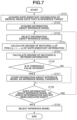
- FIG. 7 is a flowchart illustrating processing according to a second exemplary embodiment.
- FIGS. 8 A, 8 B, 8 C, and 8 D are diagrams illustrating an example of a calculation result of a degree of matching for each inference model according to the second exemplary embodiment.
- FIGS. 9 A, 9 B, 9 C, 9 D, and 9 E are diagrams illustrating an example of a calculation result of a degree of matching for each inference model according to a third exemplary embodiment.
- FIG. 10 is a block diagram illustrating an information processing apparatus according to a fourth exemplary embodiment.
- FIG. 11 is a flowchart illustrating processing according to the fourth exemplary embodiment.
- FIGS. 12 A and 12 B are diagrams illustrating an example of information acquired as a result of the processing in step S 1104 in FIG. 11
- an information processing apparatus checks each item which constitutes supplementary information supplement to medical image data that is an inference target against each item which constitutes information about each of inference models that constitute a plurality of inference models to determine whether the items match each other. Then, based on the determination result, the information processing apparatus selects an inference model appropriate for the medical image data that is an inference target from the plurality of inference models.
- an information processing apparatus 100 includes an supplementary information acquisition unit 101 which acquires supplementary information supplement to medical image data that is an inference target, an inference model information acquisition unit 102 which acquires information about each of inference models constituting a plurality of inference models that perform inference about a predetermined disease, and an inference model selection unit 103 which selects an inference model to be applied to medical image data that is an inference target from a plurality of inference models based on the supplementary information and the information about the inference model.
- the inference model selection unit 103 further includes an inference model determination unit 106 which determines whether the supplementary information conforms to the information about the inference model.
- the information processing apparatus 100 is connected to a database 105 via a communication network 104 .
- the supplementary information acquisition unit 101 acquires various types of information (hereinafter, referred to as supplementary information) supplement to medical image data that is an inference target acquired by imaging a test subject.
- supplementary information is information about a type of imaging apparatus, an imaging region, and an imaging condition.
- Various types of supplementary information will be described below.
- an item describing the type of imaging apparatus is information indicating a type of medical image data imaging apparatus for generating medical image data that is an inference target. Examples of the type of medical image data imaging apparatus include the following.
- an item describing an imaging region is information indicating a region of a test subject imaged by the imaging apparatus.
- the item describing an imaging region is information indicating a specific region such as a head region, a cervical region, a chest region, an abdominal region, a pelvic region, or four limbs, or information indicating a range such as an entire body or a thoracoabdominal region.
- an imaging condition is information including a plurality of items relating to conditions when imaging is executed, and examples thereof include use/non-use of a contrast medium, and a slice thickness.
- information about a condition unique to an imaging apparatus may be included in the imaging condition. For example, when a CT apparatus is used as the imaging apparatus for acquiring medical image data, information indicating a window level and a window width for displaying medical image data, such as a mediastinum condition and a lung field condition, may be included in the imaging condition.
- information indicating an imaging sequence such as T1, T2, and FLAIR may be included in the imaging condition.
- the inference model information acquisition unit 102 acquires information about an inference model from the database 105 connected thereto via the communication network 104 .
- the information about the inference model is information relating to training data used for training the inference model, i.e., information about a disease name relating to a ground truth label which constitutes the training data and/or information about ground truth image data used for training the inference model.
- model information and the above-described information about an inference model are stored in the database 105 in association with each other.
- the inference model information acquisition unit 102 can acquire the information at a desired timing.
- the model information about the inference model refers to information necessary for the inference model to perform inference.
- the model information may be information about a network structure and a weight if the inference model employs an inference method using a neural network.
- the database 105 is connected to the information processing apparatus 100 via the communication network 104 , the configuration is not limited thereto.
- the database 105 can be any medium from which the information processing apparatus 100 can acquire information about the inference model.
- the database 105 may be in a storage area of a hard disk physically associated with the information processing apparatus 100 .
- the inference model selection unit 103 receives a determination result from the inference model determination unit 106 , and selects one inference model from a plurality of inference models based on the information about each of the inference models acquired by the inference model information acquisition unit 102 .
- the inference model determination unit 106 determines whether each of the inference models is appropriate for performing inference on the medical image data that is an inference target, and transmits a determination result to the inference model selection unit 103 .
- FIG. 2 is a block diagram illustrating an example of a hardware configuration of the information processing apparatus 100 .
- a central processing unit (CPU) 201 mainly controls operation of constituent elements.
- a main memory 202 stores a control program to be executed by the CPU 201 , and provides a work area used when the CPU 201 executes the program.
- a magnetic disk 203 stores an operating system (OS), a device driver of a peripheral device, and programs for implementing various types of application software including a program for executing the processing described below.
- the CPU 201 executes the program stored in the main memory 202 or the magnetic disk 203 , so that functions (software) of the information processing apparatus 100 illustrated in FIG. 1 and the processing illustrated in the below-described flowcharts are implemented.
- a display memory 204 temporarily stores display data.
- a monitor 205 is, for example, a cathode-ray tube (CRT) monitor or a liquid crystal monitor which displays image data and text data based on the data stored in the display memory 204 .
- CTR cathode-ray tube
- a user executes input by pointing and input of characters via a mouse 206 and a keyboard 207 , respectively.
- Each of the above-described constituent elements is communicably connected to each other via a common bus 208 .
- the CPU 201 is one example of a processor.
- the information processing apparatus 100 may include at least one of a graphics processing unit (GPU) and a field-programmable gate array (FPGA) in addition to the CPU 201 .
- the information processing apparatus 100 may include at least one of the GPU and the FPGA instead of the CPU 201 .
- Each of the main memory 202 and the magnetic disk 203 corresponds to an example of a memory.
- the supplementary information acquisition unit 101 acquires supplementary information supplement to medical image data that is an inference target.
- the supplementary information acquisition unit 101 acquires the supplementary information corresponding to the medical image data that is an inference target, for example, by using a Digital Imaging and Communications in Medicine (DICOM) header. It is specified that information corresponding to each item is to be described in the DICOM header in a form of a tag consisting of a pair of four-digit numbers.
- DICOM Digital Imaging and Communications in Medicine
- a type of imaging apparatus is recorded in a tag ( 0008 , 0060 ), and information about an examination region is recorded in a tag ( 0018 , 0015 ). Further, information about a flow rate of a contrast medium is described in a tag ( 0018 , 1046 ), and information about a period of flow of the contrast medium is described in a tag ( 0018 , 1047 ). Thus, it is possible to determine whether the contrast medium is administered.
- FIG. 4 A illustrates an example of the supplementary information supplement to medical image data that is an inference target acquired by the supplementary information acquisition unit 101 .
- the supplementary information is supplement to medical image data which has been acquired by a CT apparatus imaging a chest region of a test subject without administering the contrast medium.
- the supplementary information acquisition unit 101 can acquire the supplementary information not only from the DICOM header but also from a text file associated with the medical image data.
- the inference model information acquisition unit 102 acquires information about each inference model from the database 105 .
- Examples of the information about each inference model acquired by the inference model information acquisition unit 102 are illustrated in FIG. 4 B .
- the information about each inference model illustrated in FIG. 4 B indicates information about training data used for training the inference model.
- a target disease name is information relating to a ground truth label
- the type of imaging apparatus, an imaging region, an imaging condition, use/non-use of a contrast medium, and a slice thickness are information relating to the ground truth image data.
- training data which consists of a pair of information relating to the ground truth label and information relating to the ground truth image data is used.
- step S 303 the inference model selection unit 103 selects apiece of information about an inference model from among pieces of information about inference models in FIG. 4 B acquired in step S 302 , and transmits the selected piece of information to the inference model determination unit 106 .
- steps S 304 to S 306 based on the supplementary information supplement to the medical image data that is an inference target acquired in step S 301 and the information about the inference model transmitted by the inference model selection unit 103 in step S 303 , the inference model determination unit 106 determines whether the inference model indicated by the information about the inference model is appropriate for performing inference on the medical image data that is an inference target.
- step S 304 the inference model determination unit 106 compares the items constituting the information about the inference model with the items constituting the supplementary information, and determines whether information input to the item of the type of imaging apparatus of the information about the inference model matches information input to that of the supplementary information.
- step S 305 the inference model determination unit 106 determines whether information input to the item of the imaging region among the items constituting the information about the inference model matches information input to the item of the imaging region among the items constituting the supplementary information.
- step S 306 the inference model determination unit 106 determines whether information input to the item of the use/non-use of a contrast medium among the items constituting the information about the inference model matches information input to the item of the use/non-use of a contrast medium among the items constituting the supplementary information.
- the inference model determination unit 106 sequentially determines whether information input to each of the items constituting the supplementary information of the medical image data that is an inference target match information input to each of the items constituting the information about the inference model. If all pieces of information input to the items match respective pieces of information input to the respective items (YES in step S 306 ), the processing proceeds to step S 307 . If any one of the pieces of information input to the items does not match (NO in step S 306 ), the processing proceeds to step S 308 .
- the inference model determination unit 106 may execute determination based on any one of the items of the type of imaging apparatus, the imaging region, and the use/non-use of the contrast medium, or may execute the determination based on an item selected by the user.
- step S 307 the inference model determination unit 106 stores the information about the inference model transmitted by the inference model selection unit 103 in step S 303 as a candidate to be output to the inference model selection unit 103 .
- step S 308 the inference model selection unit 103 determines whether there is information about an inference model on which the determination in steps S 304 to S 306 has not yet been executed. If the information exists (YES in step S 308 ), the processing returns to step S 303 . If the information does not exist (NO in step S 308 ), the processing proceeds to step S 309 .
- step S 309 the inference model selection unit 103 acquires information about the inference model, which has been determined by the inference model determination unit 106 as having the pieces of information input to the items that match the pieces of information input to the items of the supplementary information in step S 307 , to select an inference model for performing inference on the medical image data that is an inference target from the plurality of inference models.
- FIGS. 5 A, 5 B, and 5 C illustrate an example of information about an inference model which completely matches the supplementary information of the medical image data that is an inference target and which is selected by the inference model selection unit 103 based on the supplementary information of the medical image data that is an inference target illustrated in FIG. 4 A and the information about each inference model illustrated in FIG. 4 B .
- an inference model appropriate for the medical image data that is an inference target can be selected while reducing a load on the user.
- the inference model determination unit 106 determines whether the information input to the items of the type of imaging apparatus, the imaging region, and the use/non-use of a contrast medium of the supplementary information of the medical image data matches the information input to the items of the inference model.
- the information to be checked for determination is not limited to the above information.
- the inference model determination unit 106 may also execute the determination by using another item of the supplementary information such as a slice thickness, a window level, or a window width, or the user may set in advance the information to be checked from among the pieces of information input to the items constituting the acquired supplementary information.
- the inference model determination unit 106 determines whether the information input to the items constituting the supplementary information matches the information input to the items constituting the information about the inference model.
- a determination method is not limited to a method of determining whether the pieces of information input to the items of the supplementary information completely match the pieces of information input to the respective items of the information about the inference model.
- information input to an item is character string information such as the information in the imaging region
- a map which indicates a specific character string as a match may be provided in advance, so that the inference model determination unit 106 can determine the match by referring to the map.
- FIG. 6 illustrates an example of the map to be referenced by the inference model determination unit 106 when the items to be compared by the inference model determination unit 106 is the item of the information about an imaging region.
- a circle (o) mark indicates pieces of information determined to be conformable when the information in the item of the imaging region, which is one of the items constituting the supplementary information of the medical image data that is an inference target, is checked against the information in the item of the imaging region, which is one of the items constituting the information about the inference model.
- the inference model determination unit 106 refers to the map in FIG. 6 and determines that the supplementary information and the information about the inference model match in a case where “thoracoabdominal region” is the information input to the item of the imaging region, which is one of the items constituting the medical image data that is an inference target, and in a case where “chest region” or “abdominal region” is the information input to the item of the imaging region, which is one of the items constituting the information about the inference model.
- the inference model determination unit 106 can determine that information about an inference model with the imaging region of a chest region or an abdominal region matches the supplementary information.
- the inference model selection unit 103 can select an appropriate inference model from a plurality of inference models while saving time and effort of the user.
- a method which employs a map indicating a relationship between character strings is particularly effective to check information expressed in specific words, i.e., information in the item of the imaging region such as “chest region” or “abdominal region”, with each other.
- a range of numerical values in which the inference model determination unit 106 determines as a match may be set in advance. For example, when information input to the item of the slice thickness, which is one of the items of the supplementary information of the medical image data that is an inference target is 3 mm, the inference model determination unit 106 determines that information in the item of the slice thickness matches if the information input in the item of the slice thickness, which is one of the items of the information about the inference model, is a value within a range of plus or minus 1 mm, i.e., 2 mm to 4 mm.
- the inference model determination unit 106 may determine that the supplementary information and the information about the inference model match by a method different for each of the items, or a method specified depending on a type of information input to the item. Further, a map and conditions such as a threshold value and a range of numerical values that are set in advance to determine whether the information in the items match, may be set for each inference model.
- the inference model determination unit 106 included in the inference model selection unit 103 checks the information input to each of the items constituting the supplementary information of the medical image data that is an inference target acquired by the supplementary information acquisition unit 101 against the information input to each of the items constituting the information about the inference model acquired by the inference model information acquisition unit 102 . Then, if the information input to the items matches the information input to the respective items, the inference model selection unit 103 selects the inference model, the items of which have matched the respective items, as an inference model to be used for performing inference on the medical image data from the plurality of inference models.
- a degree of matching between the items constituting the supplementary information of the medical image data that is an inference target and the items constituting the information about the inference model is calculated by the inference model determination unit 106 . Then, based on the degree of matching, the inference model selection unit 103 selects an inference model used for performing inference on the medical image data that is an inference target. The inference model determination unit 106 applies a threshold value to the calculated degree of matching to determine whether the inference model is appropriate for the medical image data that is an inference target.
- the processing procedure performed by the information processing apparatus 100 for determining whether the inference model is appropriate and for selecting an inference model to be applied to the medical image data that is an inference target from a plurality of inference models based on the determination result will be described with reference to FIG. 7 .
- steps S 701 , S 702 , and S 703 is similar to the processing in steps S 301 , S 302 , and S 303 of the flowchart in FIG. 3 according to the first exemplary embodiment. Thus, description thereof will be omitted.
- An index number allocated to each of the items is represented by “j”, and the number of items is represented by “n”.
- the degree of matching r ij of each of the items is calculated by the inference model determination unit 106 .
- the inference model determination unit 106 may use a method described in the first exemplary embodiment as a degree of matching. In a case where numerical information is input to the item j, the inference model determination unit 106 may calculate an absolute value of a difference between numerical values input to the items and use the absolute value as the degree of matching.
- the inference model determination unit 106 calculates the degree of matching r ij between the items based on a formula 1, where x j represents the numerical value of the item j of the supplementary information of the medical image data that is an inference target and y ij represents the numerical value of the item j of the information about an inference model i.
- a calculation method of a degree of matching of the item about a slice thickness executed by the inference model determination unit 106 will be described with respect to a case where 1.5 mm is input as the numerical information to the item about the slice thickness constituting the supplementary information of the medical image data that is an inference target.
- i represents an index number allocated to the inference model
- N represents the number of inference models.
- FIGS. 8 A, 8 B, 8 C, and 8 D illustrate an example of a degree of matching of the inference model with the supplementary information.
- the inference model determination unit 106 calculates the degree of matching based on the formula 2 by using the supplementary information of the medical image data that is an inference target illustrated in FIG. 4 A and the information about each inference model illustrated in FIG. 4 B .
- FIG. 8 C illustrates a result of calculation of the degree of matching for an item by the inference model determination unit 106 .
- the degree of matching for the item about a slice thickness is calculated by the inference model determination unit 106 based on the formula 1.
- FIG. 8 D illustrates a result of calculation of the degree of matching between the supplementary information supplement to the medical image data that is an inference target and the information about the inference model by the inference model determination unit 106 based on the formula 2 by using the result illustrated in FIG. 8 C .
- step S 706 the inference model determination unit 106 sets a threshold value to the degree of matching calculated as illustrated in FIG. 8 D , and determines whether the inference model is appropriate for the input medical image data by determining whether the calculated degree of matching is the set threshold value or more. Then, based on a result of determination by the inference model determination unit 106 , the inference model selection unit 103 selects an inference model for performing inference on the medical image data that is an inference target from the plurality of inference models.
- the user can freely set the threshold value used by the inference model determination unit 106 .
- the inference model determination unit 106 determines that the inference models 2 and 4 are appropriate for the medical image data that is an inference target.
- steps S 707 , S 708 , and S 709 is similar to the processing in steps S 307 , S 308 , and S 309 according to the first exemplary embodiment. Thus, description thereof will be omitted.
- the inference model determination unit 106 calculates a degree of matching between the supplementary information of medical image data that is an inference target and the information about an inference model, and applies a threshold value to the calculated degree of matching to determine whether the inference model indicated by the information about the inference model is appropriate for the medical image data that is an inference target. Therefore, the inference model selection unit 103 can flexibly select an inference model from a plurality of inference models for performing inference about diseases.
- the inference model determination unit 106 calculates a degree of matching between the supplementary information and information about each inference model and applies a threshold value to the calculated degree of matching to determine whether the inference model indicated by the information about each inference model is appropriate for the medical image data that is an inference target.
- the inference model determination unit 106 calculates a degree of matching with consideration for priority of each item of the supplementary information. Then, based on the calculated degree of matching, the inference model selection unit 103 selects an inference model for performing inference on medical image data that is an inference target from a plurality of inference models. In the present exemplary embodiment, the inference model selection unit 103 sets a weight on each of the items, and selects an inference model based on the degree of matching for each of the items and the weight set thereto.
- the processing procedure according to the present exemplary embodiment is similar to the processing procedure described in the second exemplary embodiment. However, in step S 705 , the degree of matching R i between the supplementary information of the medical image data that is an inference target and the information about the inference model is calculated by a different method.
- the inference model determination unit 106 sets a weight to each of the items j constituting the respective pieces of information and calculates a weighted sum.
- the weight w j is set so that the sum becomes 1.
- FIGS. 9 A, 9 B, 9 C, 9 D, and 9 E are diagrams illustrating an example of calculation of a degree of matching of each inference model based on the weights for the items set by the inference model determination unit 106 and the degree of matching of each item illustrated in FIG. 8 C .
- the inference model determination unit 106 sets a threshold value to the calculated degree of matching between the pieces of information as illustrated in FIG. 9 E , and determines whether the inference model indicated by the information about the inference model is appropriate for performing inference on the medical image data that is an inference target by determining whether the calculated degree of matching is the threshold value or more. In a case where a threshold value to be applied to the calculation result in FIG. 9 E is set to 0.7, the inference model determination unit 106 determines that the inference models 2 , 4 , and 5 are appropriate for performing inference on the medical image data that is an inference target.
- the inference model determination unit 106 calculates a degree of matching with consideration for priority of each item. Therefore, the inference model selection unit 103 can select an inference model to be applied to the medical image data that is an inference target from a plurality of inference models for performing inference about diseases depending on importance of the item.
- an appropriate inference model is selected by using the supplementary information of medical image data that is an inference target and the information about the inference model.
- an supplementary information acquisition unit 1001 further acquires information about a test subject, and transmits the acquired information about the test subject to a disease estimation unit. Then, the disease estimation unit estimates a disease candidate based on the acquired information about the test subject, and an inference model selection unit 1003 selects an appropriate inference model from a plurality of inference models based on a result of estimation executed by the disease estimation unit.
- an information processing apparatus 1000 includes a disease estimation unit 1005 for estimating a candidate of disease from the information about a test subject.
- the information processing apparatus 1000 is connected to a database 1007 and a medical information system 1008 via a communication network 1006 .
- systems used at the hospital such as a hospital information system (HIS) and an electronic health record system, are collectively called the medical information system 1008 .
- An inference model information acquisition unit 1002 is similar to that of the first exemplary embodiment, so that description thereof will be omitted.
- the supplementary information acquisition unit 1001 which acquires supplementary information of medical image data that is an inference target further acquires test subject information from the medical information system 1008 connected thereto via the communication network 1006 .
- the test subject information acquired by the supplementary information acquisition unit 1001 refers to medical interview information or information described in the electronic health record. While the hospital information system and the electronic health record system are described as examples of the system from which the supplementary information acquisition unit 1001 acquires the test subject information, a system from which the information is acquired is not limited to the above as long as the test subject information can be acquired therefrom.
- the disease estimation unit 1005 estimates a disease candidate based on the test subject information further acquired by the supplementary information acquisition unit 1001 .
- an inference model determination unit 1004 determines whether the inference model indicated by the information about the inference model is appropriate for performing inference on the medical image data that is an inference target.
- the configuration of the information processing apparatus 1000 according to the fourth exemplary embodiment has been described as the above.
- step S 1101 the supplementary information acquisition unit 1001 acquires supplementary information supplement to medical image data that is an inference target.
- the supplementary information acquisition unit 1001 further acquires the test subject information from the medical information system 1008 .
- the test subject information the supplementary information acquisition unit 1001 acquires either medical interview information of the test subject or information in an electronic health record of the test subject or both from the medical information system 1008 .
- information such as a test subject name and a test subject ID are described in a DICOM header.
- the supplementary information acquisition unit 1001 makes an inquiry to a database of a system, such as the electronic health record system, that constitutes the medical information system 1008 using the above-described items to acquire information about the corresponding test subject.
- a disease estimation unit 1105 estimates a disease candidate based on either the medical interview information or the information in the electronic health record that are the test subject information acquired by the supplementary information acquisition unit 1001 in step S 1103 or both.
- a method of listing the disease names is not limited to the above-described method.
- the supplementary information acquisition unit 1001 may determine the disease candidates by checking a response to a question in the interview against a pre-registered rule, or may estimate the disease candidates using a known technique such as machine learning based on the response to the question.
- estimation is executed in such a way that pneumothorax and aortic dissection are added to the disease candidates if symptoms include a chest pain.
- an electronic health record is acquired as the test subject information, information about past medical history is extracted and added to the disease candidates.
- step S 1105 the inference model selection unit 1003 selects one piece of information from pieces of information about the inference models acquired in step S 1102 .
- step S 1106 the inference model determination unit 1004 determines whether the target disease name described in the information about the inference model selected in step S 1105 is included in the disease candidate estimated in step S 1104 . If the inference model determination unit 1004 determines that the target disease name is included (YES in step S 1106 ), the processing proceeds to step S 1107 . If the inference model determination unit 1004 determines that the target disease name is not included (NO in step S 1106 ), the processing proceeds to step S 1111 .
- steps S 1107 to S 1112 is similar to the processing in steps S 304 to S 309 according to the first exemplary embodiment. Thus, description thereof will be omitted.
- the processing procedure in steps S 1107 to S 1112 may be replaced with the processing in steps S 705 to S 709 according to the second exemplary embodiment.
- the supplementary information acquisition unit 1001 further acquires the information about a test subject, and the disease estimation unit 1005 estimates a disease candidate based on the information about the test subject, so that the inference model determination unit 1004 can determine whether an inference model is appropriate for performing inference on the medical image data that is an inference target. Further, based on a result of determination executed by the inference model determination unit 1004 , the inference model selection unit 1003 can select an inference model appropriate for performing inference on the medical image data that is an inference target from a plurality of inference models.
- the present invention can also be realized by executing the following processing.
- software a program that implements functions of the above-described exemplary embodiments is supplied to a system or an apparatus via a network or various storage media, and a computer (or a CPU or a micro-processing unit (MPU)) of the system or the apparatus reads and executes the program.
- a computer or a CPU or a micro-processing unit (MPU) of the system or the apparatus reads and executes the program.
- Embodiment(s) of the present invention can also be realized by a computer of a system or apparatus that reads out and executes computer executable instructions (e.g., one or more programs) recorded on a storage medium (which may also be referred to more fully as a ‘non-transitory computer-readable storage medium’) to perform the functions of one or more of the above-described embodiment(s) and/or that includes one or more circuits (e.g., application specific integrated circuit (ASIC)) for performing the functions of one or more of the above-described embodiment(s), and by a method performed by the computer of the system or apparatus by, for example, reading out and executing the computer executable instructions from the storage medium to perform the functions of one or more of the above-described embodiment(s) and/or controlling the one or more circuits to perform the functions of one or more of the above-described embodiment(s).
- computer executable instructions e.g., one or more programs
- a storage medium which may also be referred to more fully as a
- the computer may comprise one or more processors (e.g., central processing unit (CPU), micro processing unit (MPU)) and may include a network of separate computers or separate processors to read out and execute the computer executable instructions.
- the computer executable instructions may be provided to the computer, for example, from a network or the storage medium.
- the storage medium may include, for example, one or more of a hard disk, a random-access memory (RAM), a read only memory (ROM), a storage of distributed computing systems, an optical disk (such as a compact disc (CD), digital versatile disc (DVD), or Blu-ray Disc (BD)TM), a flash memory device, a memory card, and the like.
Landscapes
- Engineering & Computer Science (AREA)
- Health & Medical Sciences (AREA)
- Medical Informatics (AREA)
- Public Health (AREA)
- General Health & Medical Sciences (AREA)
- Theoretical Computer Science (AREA)
- Epidemiology (AREA)
- Primary Health Care (AREA)
- Data Mining & Analysis (AREA)
- Radiology & Medical Imaging (AREA)
- Nuclear Medicine, Radiotherapy & Molecular Imaging (AREA)
- General Physics & Mathematics (AREA)
- Physics & Mathematics (AREA)
- Software Systems (AREA)
- Biomedical Technology (AREA)
- Computer Vision & Pattern Recognition (AREA)
- Evolutionary Computation (AREA)
- Artificial Intelligence (AREA)
- Computing Systems (AREA)
- General Engineering & Computer Science (AREA)
- Mathematical Physics (AREA)
- Pathology (AREA)
- Databases & Information Systems (AREA)
- Computational Linguistics (AREA)
- Quality & Reliability (AREA)
- Apparatus For Radiation Diagnosis (AREA)
- Image Analysis (AREA)
- Measuring And Recording Apparatus For Diagnosis (AREA)
Abstract
Description
-
- Computed Radiography (CR) apparatus
- Computed Tomography (CT) apparatus
- Magnetic Resonance Imaging (MRI) apparatus
- Positron Emission Tomography (PET) apparatus
- Single Photon Emission Computed Tomography (SPECT) image data capturing apparatus
- Ultrasound System (US) apparatus
Herein, max represents a maximum value and min represents a minimum value of the numerical values xj and yij (i=1, . . . , N).
<
R i=Σj=1 n w j r ij (3)
Claims (11)
Applications Claiming Priority (2)
| Application Number | Priority Date | Filing Date | Title |
|---|---|---|---|
| JP2020-115381 | 2020-07-03 | ||
| JP2020115381A JP2022013077A (en) | 2020-07-03 | 2020-07-03 | Information processing device, information processing method and program |
Publications (2)
| Publication Number | Publication Date |
|---|---|
| US20220005589A1 US20220005589A1 (en) | 2022-01-06 |
| US12087430B2 true US12087430B2 (en) | 2024-09-10 |
Family
ID=79167812
Family Applications (1)
| Application Number | Title | Priority Date | Filing Date |
|---|---|---|---|
| US17/365,829 Active 2042-11-17 US12087430B2 (en) | 2020-07-03 | 2021-07-01 | Information processing apparatus, information processing method, and non-transitory storage medium |
Country Status (2)
| Country | Link |
|---|---|
| US (1) | US12087430B2 (en) |
| JP (2) | JP2022013077A (en) |
Citations (15)
| Publication number | Priority date | Publication date | Assignee | Title |
|---|---|---|---|---|
| JPH0512352A (en) | 1990-11-22 | 1993-01-22 | Toshiba Corp | Medical diagnosis support system |
| US20190057314A1 (en) * | 2015-10-26 | 2019-02-21 | Netradyne Inc | Joint processing for embedded data inference |
| US20190122073A1 (en) * | 2017-10-23 | 2019-04-25 | The Charles Stark Draper Laboratory, Inc. | System and method for quantifying uncertainty in reasoning about 2d and 3d spatial features with a computer machine learning architecture |
| US20190200977A1 (en) * | 2017-12-28 | 2019-07-04 | Ethicon Llc | Method for usage of the shroud as an aspect of sensing or controlling a powered surgical device, and a control algorithm to adjust its default operation |
| US20190206565A1 (en) * | 2017-12-28 | 2019-07-04 | Ethicon Llc | Method for operating surgical instrument systems |
| JP2019129989A (en) | 2018-01-31 | 2019-08-08 | コニカミノルタ株式会社 | Medical image processing device |
| US20190371433A1 (en) * | 2018-06-03 | 2019-12-05 | Beijing Curacloud Technology Co., Ltd. | Method and system for anatomical tree structure analysis |
| US20190392547A1 (en) * | 2018-06-26 | 2019-12-26 | International Business Machines Corporation | Determining Appropriate Medical Image Processing Pipeline Based on Machine Learning |
| US20200227160A1 (en) * | 2019-01-15 | 2020-07-16 | Youngblood Ip Holdings, Llc | Health data exchange platform |
| US20200323464A1 (en) * | 2019-04-11 | 2020-10-15 | Siemens Healthcare Gmbh | Artificial intelligence-based copd assessment |
| US20210042577A1 (en) * | 2019-08-08 | 2021-02-11 | Alegion, Inc. | Confidence-driven workflow orchestrator for data labeling |
| US20210158525A1 (en) * | 2018-08-14 | 2021-05-27 | Canon Kabushiki Kaisha | Medical image processing apparatus, medical image processing method, computer-readable medium, and learned model |
| US20210202072A1 (en) * | 2019-12-27 | 2021-07-01 | Coreline Soft Co., Ltd. | Medical image diagnosis assistance apparatus and method for providing user-preferred style based on medical artificial neural network |
| US20210304402A1 (en) * | 2020-03-30 | 2021-09-30 | Varian Medical Systems International Ag | Systems and methods for pseudo image data augmentation for training machine learning models |
| US20210397254A1 (en) * | 2020-06-12 | 2021-12-23 | University Of Washington | Eye tracking in near-eye displays |
Family Cites Families (10)
| Publication number | Priority date | Publication date | Assignee | Title |
|---|---|---|---|---|
| JPH06208575A (en) * | 1993-01-08 | 1994-07-26 | Hitachi Ltd | Disease name automatic assignment processing method and system |
| JP3530431B2 (en) * | 1999-10-14 | 2004-05-24 | 日本電信電話株式会社 | Network image diagnosis support system and image interpretation server |
| JP2002109071A (en) * | 2000-09-28 | 2002-04-12 | Hiroko Oki | Medical treatment support method, device therefor, and recording medium recorded with program therefor |
| EP1535462A2 (en) * | 2002-09-04 | 2005-06-01 | Eastman Kodak Company | Patient identification method for x-ray film user-interfaces |
| JP2004288047A (en) * | 2003-03-24 | 2004-10-14 | Fujitsu Ltd | Medical support system and medical support program |
| AU2004251359B2 (en) * | 2003-06-25 | 2009-01-22 | Siemens Medical Solutions Usa, Inc. | Systems and methods for automated diagnosis and decision support for breast imaging |
| JP5175752B2 (en) * | 2009-01-22 | 2013-04-03 | 株式会社東芝 | Medical image processing device |
| JP5880332B2 (en) * | 2012-07-25 | 2016-03-09 | コニカミノルタ株式会社 | Image processing apparatus and program |
| JP6237353B2 (en) * | 2014-03-07 | 2017-11-29 | コニカミノルタ株式会社 | Image processing apparatus, image photographing system, and image processing program |
| JP2020098515A (en) * | 2018-12-19 | 2020-06-25 | キヤノンメディカルシステムズ株式会社 | Control unit and control system |
-
2020
- 2020-07-03 JP JP2020115381A patent/JP2022013077A/en active Pending
-
2021
- 2021-07-01 US US17/365,829 patent/US12087430B2/en active Active
-
2023
- 2023-12-11 JP JP2023208258A patent/JP7700201B2/en active Active
Patent Citations (15)
| Publication number | Priority date | Publication date | Assignee | Title |
|---|---|---|---|---|
| JPH0512352A (en) | 1990-11-22 | 1993-01-22 | Toshiba Corp | Medical diagnosis support system |
| US20190057314A1 (en) * | 2015-10-26 | 2019-02-21 | Netradyne Inc | Joint processing for embedded data inference |
| US20190122073A1 (en) * | 2017-10-23 | 2019-04-25 | The Charles Stark Draper Laboratory, Inc. | System and method for quantifying uncertainty in reasoning about 2d and 3d spatial features with a computer machine learning architecture |
| US20190200977A1 (en) * | 2017-12-28 | 2019-07-04 | Ethicon Llc | Method for usage of the shroud as an aspect of sensing or controlling a powered surgical device, and a control algorithm to adjust its default operation |
| US20190206565A1 (en) * | 2017-12-28 | 2019-07-04 | Ethicon Llc | Method for operating surgical instrument systems |
| JP2019129989A (en) | 2018-01-31 | 2019-08-08 | コニカミノルタ株式会社 | Medical image processing device |
| US20190371433A1 (en) * | 2018-06-03 | 2019-12-05 | Beijing Curacloud Technology Co., Ltd. | Method and system for anatomical tree structure analysis |
| US20190392547A1 (en) * | 2018-06-26 | 2019-12-26 | International Business Machines Corporation | Determining Appropriate Medical Image Processing Pipeline Based on Machine Learning |
| US20210158525A1 (en) * | 2018-08-14 | 2021-05-27 | Canon Kabushiki Kaisha | Medical image processing apparatus, medical image processing method, computer-readable medium, and learned model |
| US20200227160A1 (en) * | 2019-01-15 | 2020-07-16 | Youngblood Ip Holdings, Llc | Health data exchange platform |
| US20200323464A1 (en) * | 2019-04-11 | 2020-10-15 | Siemens Healthcare Gmbh | Artificial intelligence-based copd assessment |
| US20210042577A1 (en) * | 2019-08-08 | 2021-02-11 | Alegion, Inc. | Confidence-driven workflow orchestrator for data labeling |
| US20210202072A1 (en) * | 2019-12-27 | 2021-07-01 | Coreline Soft Co., Ltd. | Medical image diagnosis assistance apparatus and method for providing user-preferred style based on medical artificial neural network |
| US20210304402A1 (en) * | 2020-03-30 | 2021-09-30 | Varian Medical Systems International Ag | Systems and methods for pseudo image data augmentation for training machine learning models |
| US20210397254A1 (en) * | 2020-06-12 | 2021-12-23 | University Of Washington | Eye tracking in near-eye displays |
Non-Patent Citations (2)
| Title |
|---|
| Justin Ker , "Deep Learning Applications in Medical Image Analysis," Mar. 13, 2018,IEEE Access , vol. 6,2018, pp. 9375-9385. * |
| M.R. Avendi , "A combined deep-learning and deformable-model approach to fully automatic segmentation of the left ventricle in cardiac MRI," Feb. 6, 2016, Medical Image Analysis 30 (2016) ,pp. 110-117. * |
Also Published As
| Publication number | Publication date |
|---|---|
| JP7700201B2 (en) | 2025-06-30 |
| JP2022013077A (en) | 2022-01-18 |
| JP2024026331A (en) | 2024-02-28 |
| US20220005589A1 (en) | 2022-01-06 |
Similar Documents
| Publication | Publication Date | Title |
|---|---|---|
| US11636378B2 (en) | Information processing apparatus, information processing method, and information processing system | |
| US10853449B1 (en) | Report formatting for automated or assisted analysis of medical imaging data and medical diagnosis | |
| JP6975253B2 (en) | Learning and applying contextual similarity between entities | |
| US8560341B2 (en) | Medical image processing apparatus, medical image processing method, and program | |
| US10726344B2 (en) | Diagnosis support apparatus and method of controlling the same | |
| JP6818424B2 (en) | Diagnostic support device, information processing method, diagnostic support system and program | |
| US12027267B2 (en) | Information processing apparatus, information processing system, information processing method, and non-transitory computer-readable storage medium for computer-aided diagnosis | |
| EP2812828B1 (en) | Interactive optimization of scan databases for statistical testing | |
| CN108784655A (en) | Rapid evaluation for medical patient and consequences analysis | |
| US20180286504A1 (en) | Challenge value icons for radiology report selection | |
| US20230142909A1 (en) | Clinically meaningful and personalized disease progression monitoring incorporating established disease staging definitions | |
| US11893735B2 (en) | Similarity determination apparatus, similarity determination method, and similarity determination program | |
| US20220005589A1 (en) | Information processing apparatus, information processing method, and non-transitory storage medium | |
| JP6543308B2 (en) | INFORMATION PROCESSING APPARATUS, OPERATION METHOD OF INFORMATION PROCESSING APPARATUS, AND INFORMATION PROCESSING SYSTEM | |
| US12597518B2 (en) | Incorporating clinical and economic objectives for medical AI deployment in clinical decision making | |
| US20180350470A1 (en) | Information processing apparatus, information processing method, information processing system, and storage medium | |
| US11923072B2 (en) | Image diagnosis supporting device and image processing method | |
| JP7346419B2 (en) | Learning and applying contextual similarities between entities | |
| US10699426B2 (en) | Registration apparatus, registration method, and registration program | |
| JP6193964B2 (en) | Information processing apparatus, information processing apparatus operating method, and information processing system | |
| US20200075163A1 (en) | Diagnostic decision support for patient management | |
| US12633412B2 (en) | Information processing apparatus, information processing method and storage medium | |
| US20250104844A1 (en) | Anatomical positioning framework | |
| US20260057266A1 (en) | Data estimation device, data estimation method, and recording medium | |
| US20230178240A1 (en) | Information processing apparatus, information processing method and storage medium |
Legal Events
| Date | Code | Title | Description |
|---|---|---|---|
| FEPP | Fee payment procedure |
Free format text: ENTITY STATUS SET TO UNDISCOUNTED (ORIGINAL EVENT CODE: BIG.); ENTITY STATUS OF PATENT OWNER: LARGE ENTITY |
|
| AS | Assignment |
Owner name: CANON KABUSHIKI KAISHA, JAPAN Free format text: ASSIGNMENT OF ASSIGNORS INTEREST;ASSIGNORS:TOBA, SHUHEI;HIRANO, YOSHINORI;SIGNING DATES FROM 20210614 TO 20210616;REEL/FRAME:057178/0447 |
|
| STPP | Information on status: patent application and granting procedure in general |
Free format text: DOCKETED NEW CASE - READY FOR EXAMINATION |
|
| STPP | Information on status: patent application and granting procedure in general |
Free format text: NON FINAL ACTION MAILED |
|
| STPP | Information on status: patent application and granting procedure in general |
Free format text: RESPONSE TO NON-FINAL OFFICE ACTION ENTERED AND FORWARDED TO EXAMINER |
|
| STPP | Information on status: patent application and granting procedure in general |
Free format text: NOTICE OF ALLOWANCE MAILED -- APPLICATION RECEIVED IN OFFICE OF PUBLICATIONS |
|
| STPP | Information on status: patent application and granting procedure in general |
Free format text: AWAITING TC RESP., ISSUE FEE NOT PAID |
|
| STPP | Information on status: patent application and granting procedure in general |
Free format text: PUBLICATIONS -- ISSUE FEE PAYMENT VERIFIED |
|
| STCF | Information on status: patent grant |
Free format text: PATENTED CASE |