US12086156B2 - Method and device for storing data in a distributed database - Google Patents
Method and device for storing data in a distributed database Download PDFInfo
- Publication number
- US12086156B2 US12086156B2 US18/276,361 US202218276361A US12086156B2 US 12086156 B2 US12086156 B2 US 12086156B2 US 202218276361 A US202218276361 A US 202218276361A US 12086156 B2 US12086156 B2 US 12086156B2
- Authority
- US
- United States
- Prior art keywords
- data
- columns
- copies
- nodes
- row
- Prior art date
- Legal status (The legal status is an assumption and is not a legal conclusion. Google has not performed a legal analysis and makes no representation as to the accuracy of the status listed.)
- Active
Links
Images




Classifications
-
- G—PHYSICS
- G06—COMPUTING OR CALCULATING; COUNTING
- G06F—ELECTRIC DIGITAL DATA PROCESSING
- G06F11/00—Error detection; Error correction; Monitoring
- G06F11/07—Responding to the occurrence of a fault, e.g. fault tolerance
- G06F11/14—Error detection or correction of the data by redundancy in operations
-
- G—PHYSICS
- G06—COMPUTING OR CALCULATING; COUNTING
- G06F—ELECTRIC DIGITAL DATA PROCESSING
- G06F16/00—Information retrieval; Database structures therefor; File system structures therefor
- G06F16/20—Information retrieval; Database structures therefor; File system structures therefor of structured data, e.g. relational data
- G06F16/22—Indexing; Data structures therefor; Storage structures
- G06F16/221—Column-oriented storage; Management thereof
-
- G—PHYSICS
- G06—COMPUTING OR CALCULATING; COUNTING
- G06F—ELECTRIC DIGITAL DATA PROCESSING
- G06F16/00—Information retrieval; Database structures therefor; File system structures therefor
- G06F16/20—Information retrieval; Database structures therefor; File system structures therefor of structured data, e.g. relational data
- G06F16/23—Updating
- G06F16/2379—Updates performed during online database operations; commit processing
-
- G—PHYSICS
- G06—COMPUTING OR CALCULATING; COUNTING
- G06F—ELECTRIC DIGITAL DATA PROCESSING
- G06F16/00—Information retrieval; Database structures therefor; File system structures therefor
- G06F16/20—Information retrieval; Database structures therefor; File system structures therefor of structured data, e.g. relational data
- G06F16/27—Replication, distribution or synchronisation of data between databases or within a distributed database system; Distributed database system architectures therefor
Definitions
- the following refers to the field of database technology, more specifically, to a method and device for storing data in a distributed database.
- on-line transaction processing OLTP On-Line Transaction Processing
- row storage that is, data tables are stored continuously by row, so that the transaction-based transactions processed for the row are very efficient.
- On-line Analytical Processing OLAP is data-oriented analysis, massive data queries but usually only a few columns of data per data table are used, so column storage is usually used, which reduces the amount of data read and projection operations, processing more efficient.
- HTAP Hybrid Transactional/Analytical Processing
- the first type of hybrid storage scheme is the existence of complete row storage data and column storage data
- the second type of hybrid storage scheme is a hybrid row and column, such as PAX (Partition Attributes Cross), that is, the division of multiple rows into blocks, storage by column within blocks, usually the row block is exactly the size of a page.
- PAX Partition Attributes Cross
- the distributed database while supporting row and column storage, the distributed database also needs to support data fragmentation and consistency among multiple copies of data, which increase the complexity and processing delay of the distributed database storage engine. Therefore, a more concise mixed storage solution with ranks and columns is needed, and a solution suitable for hardware acceleration is preferable.
- An aspect relates to a method for storing data in a distributed database to solve the technical problems of low data storage efficiency and low reliability of the distributed database in the conventional art.
- the data in the distributed database are stored according to a row storage mode and a column storage mode, respectively, the method comprising:
- determining the number of copies of the original data and the number of copies of the redundant data based on the attribute information and the number of failure-resistant nodes in the row in which the target row data is located specifically:
- determining the number of original data copies and the number of redundant data copies based on the attribute information and the number of failure-resistant nodes in the row in which the target row data is located specifically:
- the changes include adding, updating or deleting, and the preset synchronization strategy includes log synchronization.
- embodiments of the present invention also propose a device for storing data in a distributed database, characterized in that, the data in the distributed database is stored in accordance with a row storage mode and a column storage mode, respectively, the device comprising:
- the determination module specifically for:
- the determination module specifically for:
- the changes include adding, updating or deleting, and the preset synchronization strategy includes log synchronization.
- the changed target row data is obtained based on a preset synchronization policy; the number of original data copies and the number of redundant data copies are determined based on the attribute information and the number of failure-resistant nodes of the target row in which the target row data is located; the target row data is coded according to a preset Erasure code algorithm based on the number of original data copies and the number of redundant data copies, generating coded data including the original data with the number of original data copies and the redundant data with the number of redundant data copies; the coded data are equally distributed to different nodes in the distributed database by column or column group for storage; where the attribute information includes the number of bytes of each column in the target row or the number of columns in the target row, the number of failure-resistant nodes is the number of nodes storing each copy of redundant data, and the data in the distributed database are stored in accordance with the row storage mode and column storage mode, which can support the efficient execution of OLAP system and OLTP
- FIG. 1 illustrates a flow diagram of a method for storing data in a distributed database proposed by an embodiment of the present invention
- FIG. 2 illustrates a schematic diagram of the principle of data storage pattern change
- FIG. 3 illustrates a schematic diagram of the principle of coded data recovery
- FIG. 5 illustrates a schematic diagram of the principle of coding and decoding based on the corrective coding algorithm in another embodiment of the present invention
- FIG. 7 illustrates a schematic diagram of the information in the columns of the bmsql_stock table in the TPC-C test set in an embodiment of the present invention
- FIG. 8 illustrates a schematic diagram of the results of data distribution corresponding to FIG. 7 ;
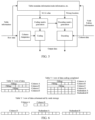
- FIG. 9 illustrates a schematic diagram of the structure of a device for storing data in a distributed database proposed by an embodiment of the present invention.
- Embodiments of the invention provide a method for storing data in a distributed database, the data in the distributed database are stored according to a row storage mode and a column storage mode, that is, a hybrid scheme that uses row and column coexistence and stores the complete data separately. As shown in FIG. 1 , the method comprises the following steps:
- step S 101 when a change is detected in the data in the row storage mode, obtaining the target row data that has changed based on a preset synchronization policy.
- the changes include adding, updating or deleting, and the preset synchronization strategy includes log synchronization.
- Step S 102 determining the number of original data copies and the number of redundant data copies based on the attribute information and the number of failure-resistant nodes of the target row in which the target row data is located.
- the attribute information includes the number of bytes of each column in the target row or the number of columns in the target row, and the number of failure-resistant nodes is the number of nodes storing each copy of the redundant data, so long as the number of failed or faulty nodes in the distributed database is not greater than the number of failure-resistant nodes, the data in the remaining nodes can be used to recover the original data.
- the attribute information and the number of anti-failure nodes the number of original data copies and the number of redundant data copies can be determined, and the number of original data copies corresponds to the original data in the corrective coding algorithm, and the number of redundant data copies corresponds to the redundant data in the corrective coding algorithm.
- the attribute information is the number of bytes for each column in the target row
- determining the number of copies of the original data and the number of copies of the redundant data based on the attribute information and the number of failure-resistant nodes in the row in which the target row data is located, specifically:
- the attribute information is the number of bytes of each column in each target row, determining the number of original data copies based on the sum of the number of bytes in each the row, determining the number of redundant data copies based on the product of the number of failure-resistant nodes and the maximum number of bytes in each the number of bytes.
- Erasure code is a data protection method in which M (i.e., the number of original data copies) of the original data are coded to form K (i.e., the number of redundant data copies) of the redundant data to form M+K of the coded data, so that when any K copies of data are lost, the remaining data can be used to recover the original data and achieve the protection capability of K:M.
- Erasure code algorithm requires the same size of the data, but the actual application of the database table column field types are not equal, so the data column M value of the Erasure code is usually not equal to the number of columns of line data. At the same time, the same column of data also need to be stored together, in order to take advantage of the column storage.
- the data granularity selection and final data distribution in the code need to do the corresponding processing, and further constraints on the selection of the number of redundant data K, for example, if a column of data contains three copies of encoded data, the redundant data K at least not less than 3 to ensure that the column of data loss, to successfully recover the lost data,
- FIG. 2 shows the schematic diagram of data storage pattern change
- FIG. 3 shows the schematic diagram of encoded data recovery, in FIG. 2 and FIG. 3 , A, B . . . C, D are the original data, r1, r2 are the redundant data obtained by encoding.
- the data granularity of the Erasure code is most simply calculated in bytes by row and distributed to the nodes by column.
- determining the number of original data copies and the number of redundant data copies based on the attribute information and the number of failure-resistant nodes in the row in which the target row data is located specifically:
- each logical table of the database has different column attributes, while the field types of the columns can be variable-length data types. This results in different tables with different row lengths, and even for the same table, the length of each row may be different.
- the database can support up to 1.6 TB of rows, and the maximum number of columns per table can be between 250 and 1600 (depending on the type of columns), so the coding by row length and distribution by column can only be used for scenarios where the length of rows is small, the number of columns is small, and the length of rows is relatively fixed, and the automatic generation of coding matrix and decoding matrix is supported, as shown in FIG. 4 .
- each cell can be a single column or a column group.
- the number of columns in each row is taken as M value, and if the length of each column is not the same, the filling process is carried out.
- the generation matrix and decoding matrix of each table can be solidified without changing with the length of the rows, as shown in FIG. 5 for the corresponding coding and decoding principle based on the Erasure code algorithm, and FIG. 6 for the corresponding data storage principle.
- the attribute information is the number of columns
- the internal data bit width of the hardware implementation is large enough, it is also possible to not group the number of the columns, the number of original data copies and the number of redundant data copies are determined based on the number of columns, the number of failure-resistant nodes and combined with the number of nodes in the distributed database.
- Step S 103 coding the target row data in accordance with a predetermined corrective coding algorithm based on the number of original data copies and the number of redundant data copies, generating coded data comprising original data of the number of original data copies and redundant data of the number of redundant data copies.
- the predetermined Erasure code algorithm may include RS (Reed-solomon) code algorithm, array code algorithm, LDPC (Low Density Parity Check Code) algorithm, LRC (Locally Repairable Code) algorithm.
- the target row data is coded according to the pre-defined Erasure code algorithm, that is, the target row data is divided to obtain the original data of the number of original data copies, and the original data of the number of original data copies is coded to obtain the redundant data of the redundant data of the number of redundant data copies, so as to obtain multiple copies of coded data consisting of the original data of the number of original data copies and the redundant data of the redundant data of the number of redundant data copies.
- Step S 104 distributing each copy of the coded data equally by column or group of columns to different nodes in the distributed database for storage.
- the coded data are distributed equally to different nodes in the distributed database for storage; if there is coded data corresponding to the column group, the coded data are distributed equally to different nodes in the distributed database by column or column group for storage, so as to complete the column-oriented storage of the row data, and complete the column data slicing and data reliability at the same time.
- the changed target row data is obtained based on a preset synchronization policy; the number of original data copies and the number of redundant data copies are determined based on the attribute information and the number of failure-resistant nodes of the target row in which the target row data is located; the target row data is coded according to a preset Erasure code algorithm based on the number of original data copies and the number of redundant data copies, generating coded data including the original data with the number of original data copies and the redundant data with the number of redundant data copies; the coded data are equally distributed to different nodes in the distributed database by column or column group for storage; where the attribute information includes the number of bytes of each column in the target row or the number of columns in the target row, the number of failure-resistant nodes is the number of nodes storing each copy of redundant data, and the data in the distributed database are stored in accordance with the row storage mode and column storage mode, which can support the efficient execution of OLAP system and OLTP
- FIG. 7 there are 17 columns and a total of 9 server nodes (i.e., nodes) available for deployment, which are required to resist the failure of three server nodes at the same time and still maintain the reliability of the data.
- 9 server nodes i.e., nodes
- the three columns s_w_id, s_i_id, and s_quantity are selected as a group of columns for coding according to the historical data or the relevance of each column data query. In this way, the 17 columns are divided into three large groups:
- the corresponding node data is also lost. However, the original data can still be recovered by obtaining the remaining data for coding.
- Embodiments of the present application also present a device for storing data in a distributed database, the data in the distributed database is stored in accordance with a row storage mode and a column storage mode, respectively, as shown in FIG. 9 , the device comprising:
- the determination module specifically for:
- the determination module specifically for:
- the changes include adding, updating or deleting, and the preset synchronization strategy includes log synchronization.
Landscapes
- Engineering & Computer Science (AREA)
- Theoretical Computer Science (AREA)
- Databases & Information Systems (AREA)
- Physics & Mathematics (AREA)
- General Engineering & Computer Science (AREA)
- General Physics & Mathematics (AREA)
- Data Mining & Analysis (AREA)
- Software Systems (AREA)
- Computing Systems (AREA)
- Quality & Reliability (AREA)
- Information Retrieval, Db Structures And Fs Structures Therefor (AREA)
Abstract
Description
-
- when a change is detected in the data in the row storage mode, obtaining the target row data that has changed based on a preset synchronization policy;
- determining the number of original data copies and the number of redundant data copies based on the attribute information and the number of failure-resistant nodes of the target row in which the target row data is located;
- coding the target row data in accordance with a predetermined corrective coding algorithm based on the number of original data copies and the number of redundant data copies, generating coded data comprising original data of the number of original data copies and redundant data of the number of redundant data copies;
- distributing each copy of the coded data equally by column or group of columns to different nodes in the distributed database for storage;
- wherein, the attribute information comprises the number of bytes of each column in the target row or the number of columns in the target row, the number of failure-resistant nodes being the number of nodes storing each copy of the redundant data.
-
- determining the number of original data copies based on the sum of the number of bytes in each the row;
- determining the number of redundant data copies based on the product of the number of failure-resistant nodes and the maximum number of bytes in each the number of bytes.
-
- determining the number of original data copies based on the number of columns or the number of cells in each grouping;
- determining the number of redundant data copies based on the number of failure-resistant nodes;
- wherein, the grouping is generated by dividing the number of columns according to predetermined grouping rules, the number of cells in each the grouping being equal, each the cell being a single column or a group of columns;
- the group of columns is generated after grouping a plurality of columns based on query relevance or after grouping based on the sum of the byte lengths of the columns.
M=Ceiling(L,n)
K=(M/n)*n1
-
- wherein, M is the number of original data copies, K is the number of redundant data copies, L is the number of columns, the number of columns is the original number of columns or the number of columns after subsuming existing columns, n is the number of nodes in the distributed database where valid data information is stored, n1 is the number of failure-resistant nodes, Ceiling is a ceiling function.
-
- an acquisition module, for obtaining the target row data that has changed based on a preset synchronization policy, when a change is detected in the data in the row storage mode;
- a determination module, for determining the number of original data copies and the number of redundant data copies based on the attribute information and the number of failure-resistant nodes of the target row in which the target row data is located;
- an coding module, for coding the target row data in accordance with a predetermined corrective coding algorithm based on the number of original data copies and the number of redundant data copies, generating coded data comprising original data of the number of original data copies and redundant data of the number of redundant data copies;
- a distribution module, distributing each copy of the coded data equally by column or group of columns to different nodes in the distributed database for storage;
- wherein, the attribute information comprises the number of bytes of each column in the target row or the number of columns in the target row, the number of failure-resistant nodes being the number of nodes storing each copy of the redundant data.
-
- determining the number of original data copies based on the sum of the number of bytes in each the row;
- determining the number of redundant data copies based on the product of the number of failure-resistant nodes and the maximum number of bytes in each the number of bytes.
-
- determining the number of original data copies based on the number of columns or the number of cells in each grouping;
- determining the number of redundant data copies based on the number of failure-resistant nodes;
- wherein, the grouping is generated by dividing the number of columns according to predetermined grouping rules, the number of cells in each the grouping being equal, each the cell being a single column or a group of columns;
- the group of columns is generated after grouping a plurality of columns based on query relevance or after grouping based on the sum of the byte lengths of the columns.
M=Ceiling(L,n)
K=(M/n)*n1
-
- wherein, M is the number of original data copies, K is the number of redundant data copies, L is the number of columns, the number of columns is the original number of columns or the number of columns after subsuming existing columns, n is the number of nodes in the distributed database where valid data information is stored, n1 is the number of failure-resistant nodes, Ceiling is a ceiling function.
-
- determining the number of original data copies based on the sum of the number of bytes in each the row;
- determining the number of redundant data copies based on the product of the number of failure-resistant nodes and the maximum number of bytes in each the number of bytes.
-
- determining the number of original data copies based on the number of columns or the number of cells in each grouping;
- determining the number of redundant data copies based on the number of failure-resistant nodes;
- wherein, the grouping is generated by dividing the number of columns according to predetermined grouping rules, the number of cells in each the grouping being equal, each the cell being a single column and/or a group of columns, the group of columns is generated after grouping a plurality of columns based on query relevance or after grouping based on the sum of the byte lengths of the columns.
M=Ceiling(L,n)
K=(M/n)*n1
-
- wherein, M is the number of original data copies, K is the number of redundant data copies, L is the number of columns, the number of columns is the original number of columns or the number of columns after subsuming existing columns, n is the number of nodes in the distributed database where valid data information is stored, n1 is the number of failure-resistant nodes, Ceiling is a ceiling function.
-
- the first group: (s_w_id, s_i_id, s_quantity), s_ytd, s_order_cnt, s_remote_cnt, s_data
- the second group: s_dist_01, s_dist_02, s_dist_03, s_dist_04, s_dist_05
- the third group: s_dist_06, s_dist_07, s_dist_08, s_dist_09, s_dist_10
- for each row of the table, the data is coded by the same generation matrix to obtain three sets of coded code words (i.e., encoded data):
- the first group: (s_w_id, s_i_id, s_quantity), s_ytd, s_order_cnt, s_remote_cnt, s_data, r1, r2, r3
- the second group: s_dist_01, s_dist_02, s_dist_03, s_dist_04, s_dist_05, r4, r5, r6
- the third group: s_dist_06, s_dist_07, s_dist_08, s_dist_09, s_dist_10, r7, r8, r9
- the three code words are then distributed by column/column group for nodes, and the distribution of one row of data is shown in
FIG. 8 .
-
- an
acquisition module 901, for obtaining the target row data that has changed based on a preset synchronization policy, when a change is detected in the data in the row storage mode; - a
determination module 902, for determining the number of original data copies and the number of redundant data copies based on the attribute information and the number of failure-resistant nodes of the target row in which the target row data is located; - an
coding module 903, for coding the target row data in accordance with a predetermined corrective coding algorithm based on the number of original data copies and the number of redundant data copies, generating coded data comprising original data of the number of original data copies and redundant data of the number of redundant data copies; - a
distribution module 904, distributing each copy of the coded data equally by column or group of columns to different nodes in the distributed database for storage; - wherein, the attribute information comprises the number of bytes of each column in the target row or the number of columns in the target row, the number of failure-resistant nodes being the number of nodes storing each copy of the redundant data.
- an
-
- determining the number of original data copies based on the sum of the number of bytes in each the row;
- determining the number of redundant data copies based on the product of the number of failure-resistant nodes and the maximum number of bytes in each the number of bytes.
-
- determining the number of original data copies based on the number of columns or the number of cells in each grouping;
- determining the number of redundant data copies based on the number of failure-resistant nodes;
- wherein, the grouping is generated by dividing the number of columns according to predetermined grouping rules, the number of cells in each the grouping being equal, each the cell being a single column or a group of columns, the group of columns is generated after grouping a plurality of columns based on query relevance or after grouping based on the sum of the byte lengths of the columns.
M=Ceiling(L,n)
K=(M/n)*n1
-
- wherein, M is the number of original data copies, K is the number of redundant data copies, L is the number of columns, the number of columns is the original number of columns or the number of columns after subsuming existing columns, n is the number of nodes in the distributed database where valid data information is stored, n1 is the number of failure-resistant nodes, Ceiling is a ceiling function.
Claims (10)
M=Ceiling(L,n)
K=(M/n)*n1
M=Ceiling(L,n)
K=(M/n)*n1
Applications Claiming Priority (3)
| Application Number | Priority Date | Filing Date | Title |
|---|---|---|---|
| CN202111488732.6A CN113901069B (en) | 2021-12-08 | 2021-12-08 | Data storage method and device of distributed database |
| CN202111488732.6 | 2021-12-08 | ||
| PCT/CN2022/081884 WO2023103213A1 (en) | 2021-12-08 | 2022-06-14 | Data storage method and device for distributed database |
Publications (2)
| Publication Number | Publication Date |
|---|---|
| US20240037119A1 US20240037119A1 (en) | 2024-02-01 |
| US12086156B2 true US12086156B2 (en) | 2024-09-10 |
Family
ID=79025651
Family Applications (1)
| Application Number | Title | Priority Date | Filing Date |
|---|---|---|---|
| US18/276,361 Active US12086156B2 (en) | 2021-12-08 | 2022-06-14 | Method and device for storing data in a distributed database |
Country Status (3)
| Country | Link |
|---|---|
| US (1) | US12086156B2 (en) |
| CN (1) | CN113901069B (en) |
| WO (1) | WO2023103213A1 (en) |
Families Citing this family (6)
| Publication number | Priority date | Publication date | Assignee | Title |
|---|---|---|---|---|
| CN113901069B (en) * | 2021-12-08 | 2022-03-15 | 威讯柏睿数据科技(北京)有限公司 | Data storage method and device of distributed database |
| CN114565501B (en) * | 2022-02-21 | 2024-03-22 | 格兰菲智能科技有限公司 | Data loading method and device for convolution operation |
| CN115114294B (en) * | 2022-06-30 | 2025-06-17 | 深圳市腾讯计算机系统有限公司 | Adaptive method, device and computer equipment for database storage mode |
| CN115964445B (en) * | 2023-02-23 | 2024-03-05 | 合肥申威睿思信息科技有限公司 | Multi-copy implementation method and device for distributed database |
| CN117216068A (en) * | 2023-11-07 | 2023-12-12 | 本原数据(北京)信息技术有限公司 | Data storage method, device and storage medium supporting database mixed load |
| CN121050662B (en) * | 2025-11-03 | 2026-01-30 | 苏州元脑智能科技有限公司 | An erasure coding method and electronic device for a distributed storage system |
Citations (12)
| Publication number | Priority date | Publication date | Assignee | Title |
|---|---|---|---|---|
| CN101840377A (en) | 2010-05-13 | 2010-09-22 | 上海交通大学 | Data storage method based on RS (Reed-Solomon) erasure codes |
| US20160042019A1 (en) | 2010-03-08 | 2016-02-11 | Microsoft Technology Licensing, Llc | Columnar Storage of a Database Index |
| US20160078079A1 (en) | 2014-09-17 | 2016-03-17 | Futurewei Technologies, Inc. | Statement based migration for adaptively building and updating a column store database from a row store database based on query demands using disparate database systems |
| CN107077480A (en) | 2014-09-17 | 2017-08-18 | 华为技术有限公司 | The method and system of column storage database is adaptively built from the row data storage storehouse of current time based on query demand |
| US20180101308A1 (en) * | 2015-03-31 | 2018-04-12 | International Business Machines Corporation | Storing data utilizing a maximum accessibility approach in a dispersed storage network |
| CN110347344A (en) | 2019-07-19 | 2019-10-18 | 北京计算机技术及应用研究所 | A Method for Automatically Configuring Block Storage Based on Distributed Storage System |
| CN110515541A (en) | 2019-07-29 | 2019-11-29 | 西安交通大学 | Correcting and eleting codes non-alignment data-updating method in distributed storage |
| CN110618895A (en) | 2019-09-29 | 2019-12-27 | 北京天融信网络安全技术有限公司 | Data updating method and device based on erasure codes and storage medium |
| CN112835743A (en) | 2021-01-25 | 2021-05-25 | 中央财经大学 | Distributed ledger data storage optimization method, device, electronic device and medium |
| CN113901069A (en) | 2021-12-08 | 2022-01-07 | 威讯柏睿数据科技(北京)有限公司 | Data storage method and device of distributed database |
| US20220253355A1 (en) * | 2015-06-30 | 2022-08-11 | Pure Storage, Inc. | Synchronizing Replicated Data in a Storage Network |
| US20230396673A1 (en) * | 2020-10-29 | 2023-12-07 | Telefonaktiebolaget Lm Ericsson (Publ) | Checking State Consistency in a Log Replication Configuration |
Family Cites Families (8)
| Publication number | Priority date | Publication date | Assignee | Title |
|---|---|---|---|---|
| US9483516B2 (en) * | 2014-03-14 | 2016-11-01 | Sap Se | Multi-version concurrency control across row store and column store |
| CN105095247B (en) * | 2014-05-05 | 2018-07-17 | 中国电信股份有限公司 | symbol data analysis method and system |
| US20160078085A1 (en) * | 2014-09-17 | 2016-03-17 | Futurewei Technologies, Inc. | Method and system for adaptively building and updating a column store database from a row store database based on query demands |
| CN106557494B (en) * | 2015-09-25 | 2019-09-20 | 北京国双科技有限公司 | Update the method and device of column storage table |
| CN107977285A (en) * | 2017-12-19 | 2018-05-01 | 郑州云海信息技术有限公司 | A kind of data modification method, device and the medium of correcting and eleting codes memory mechanism |
| CN108959587B (en) * | 2018-07-10 | 2021-03-02 | 上海达梦数据库有限公司 | Data updating method and device based on column storage, server and storage medium |
| CN111625394B (en) * | 2020-05-27 | 2023-03-21 | 成都信息工程大学 | Data recovery method, device and equipment based on erasure codes and storage medium |
| CN113064919B (en) * | 2021-03-31 | 2022-11-22 | 北京达佳互联信息技术有限公司 | Data processing method, data storage system, computer device and storage medium |
-
2021
- 2021-12-08 CN CN202111488732.6A patent/CN113901069B/en active Active
-
2022
- 2022-06-14 WO PCT/CN2022/081884 patent/WO2023103213A1/en not_active Ceased
- 2022-06-14 US US18/276,361 patent/US12086156B2/en active Active
Patent Citations (12)
| Publication number | Priority date | Publication date | Assignee | Title |
|---|---|---|---|---|
| US20160042019A1 (en) | 2010-03-08 | 2016-02-11 | Microsoft Technology Licensing, Llc | Columnar Storage of a Database Index |
| CN101840377A (en) | 2010-05-13 | 2010-09-22 | 上海交通大学 | Data storage method based on RS (Reed-Solomon) erasure codes |
| US20160078079A1 (en) | 2014-09-17 | 2016-03-17 | Futurewei Technologies, Inc. | Statement based migration for adaptively building and updating a column store database from a row store database based on query demands using disparate database systems |
| CN107077480A (en) | 2014-09-17 | 2017-08-18 | 华为技术有限公司 | The method and system of column storage database is adaptively built from the row data storage storehouse of current time based on query demand |
| US20180101308A1 (en) * | 2015-03-31 | 2018-04-12 | International Business Machines Corporation | Storing data utilizing a maximum accessibility approach in a dispersed storage network |
| US20220253355A1 (en) * | 2015-06-30 | 2022-08-11 | Pure Storage, Inc. | Synchronizing Replicated Data in a Storage Network |
| CN110347344A (en) | 2019-07-19 | 2019-10-18 | 北京计算机技术及应用研究所 | A Method for Automatically Configuring Block Storage Based on Distributed Storage System |
| CN110515541A (en) | 2019-07-29 | 2019-11-29 | 西安交通大学 | Correcting and eleting codes non-alignment data-updating method in distributed storage |
| CN110618895A (en) | 2019-09-29 | 2019-12-27 | 北京天融信网络安全技术有限公司 | Data updating method and device based on erasure codes and storage medium |
| US20230396673A1 (en) * | 2020-10-29 | 2023-12-07 | Telefonaktiebolaget Lm Ericsson (Publ) | Checking State Consistency in a Log Replication Configuration |
| CN112835743A (en) | 2021-01-25 | 2021-05-25 | 中央财经大学 | Distributed ledger data storage optimization method, device, electronic device and medium |
| CN113901069A (en) | 2021-12-08 | 2022-01-07 | 威讯柏睿数据科技(北京)有限公司 | Data storage method and device of distributed database |
Non-Patent Citations (1)
| Title |
|---|
| International Search Report issued Aug. 17, 2022 for PCT/CN2022/081884. |
Also Published As
| Publication number | Publication date |
|---|---|
| WO2023103213A1 (en) | 2023-06-15 |
| CN113901069B (en) | 2022-03-15 |
| CN113901069A (en) | 2022-01-07 |
| US20240037119A1 (en) | 2024-02-01 |
Similar Documents
| Publication | Publication Date | Title |
|---|---|---|
| US12086156B2 (en) | Method and device for storing data in a distributed database | |
| US10331641B2 (en) | Hash database configuration method and apparatus | |
| KR101813431B1 (en) | Method and system for distributing data in a distributed storage system | |
| US20220358008A1 (en) | Wide stripe data storage and constructing, repairing and updating method thereof | |
| EP4213038A1 (en) | Data processing method and apparatus based on distributed storage, device, and medium | |
| CN112328700B (en) | A distributed database | |
| CN110262922A (en) | Erasure code update method and system based on copy data log | |
| CN120233958B (en) | Data read-write request processing method, electronic device, storage medium and program product | |
| CN113157715B (en) | Erasure code data center rack collaborative updating method | |
| US20230418827A1 (en) | Processing multi-column streams during query execution via a database system | |
| US12346324B2 (en) | Communicating updates to system metadata via a database system | |
| US20210326320A1 (en) | Data segment storing in a database system | |
| US12267378B2 (en) | Data stream processing system and methods for use therewith | |
| CN107797884A (en) | A kind of cloud storage fault-tolerance approach adaptively switched based on duplication and correcting and eleting codes | |
| CN116501264B (en) | Data storage method, device, system, equipment and readable storage medium | |
| CN108153759B (en) | Data transmission method, middle-tier server and system for distributed database | |
| CN111258508A (en) | Metadata management method in distributed object storage | |
| CN118673086B (en) | Data processing method, device, electronic device and computer readable storage medium | |
| CN110928839A (en) | Storage method and system for international freight rate data | |
| CN116756247B (en) | Data restoration method, device, computer equipment and storage medium | |
| CN119759940A (en) | Data query method, device, equipment, storage medium and program product of distributed database | |
| WO2018119976A1 (en) | Efficient data layout optimization method for data warehouse system | |
| Zhao et al. | G-update: A group-based update scheme for heterogenous erasure-coded storage systems | |
| CN115964445B (en) | Multi-copy implementation method and device for distributed database | |
| Teng et al. | FastCheck: fast checkpointing and recovery for DNN training via parallel transmission and compression |
Legal Events
| Date | Code | Title | Description |
|---|---|---|---|
| AS | Assignment |
Owner name: HEFEI SWAYCHIP INFORMATION TECHNOLOGY INC., CHINA Free format text: ASSIGNMENT OF ASSIGNORS INTEREST;ASSIGNORS:ZHOU, MIN;XIANG, JUNLING;LIU, RUIMIN;REEL/FRAME:064523/0663 Effective date: 20230703 |
|
| FEPP | Fee payment procedure |
Free format text: ENTITY STATUS SET TO UNDISCOUNTED (ORIGINAL EVENT CODE: BIG.); ENTITY STATUS OF PATENT OWNER: SMALL ENTITY |
|
| FEPP | Fee payment procedure |
Free format text: ENTITY STATUS SET TO SMALL (ORIGINAL EVENT CODE: SMAL); ENTITY STATUS OF PATENT OWNER: SMALL ENTITY |
|
| STPP | Information on status: patent application and granting procedure in general |
Free format text: NON FINAL ACTION MAILED |
|
| STPP | Information on status: patent application and granting procedure in general |
Free format text: RESPONSE TO NON-FINAL OFFICE ACTION ENTERED AND FORWARDED TO EXAMINER |
|
| STPP | Information on status: patent application and granting procedure in general |
Free format text: NOTICE OF ALLOWANCE MAILED -- APPLICATION RECEIVED IN OFFICE OF PUBLICATIONS |
|
| STPP | Information on status: patent application and granting procedure in general |
Free format text: PUBLICATIONS -- ISSUE FEE PAYMENT VERIFIED |
|
| STCF | Information on status: patent grant |
Free format text: PATENTED CASE |