US12084435B2 - Pyridine ring-substituted pyridazinol compounds and derivatives, preparation methods, herbicidal compositions and applications thereof - Google Patents
Pyridine ring-substituted pyridazinol compounds and derivatives, preparation methods, herbicidal compositions and applications thereof Download PDFInfo
- Publication number
- US12084435B2 US12084435B2 US16/966,686 US201816966686A US12084435B2 US 12084435 B2 US12084435 B2 US 12084435B2 US 201816966686 A US201816966686 A US 201816966686A US 12084435 B2 US12084435 B2 US 12084435B2
- Authority
- US
- United States
- Prior art keywords
- alkyl
- substituted
- aryl
- heteroaryl
- cycloalkyl
- Prior art date
- Legal status (The legal status is an assumption and is not a legal conclusion. Google has not performed a legal analysis and makes no representation as to the accuracy of the status listed.)
- Active, expires
Links
Classifications
-
- C—CHEMISTRY; METALLURGY
- C07—ORGANIC CHEMISTRY
- C07D—HETEROCYCLIC COMPOUNDS
- C07D409/00—Heterocyclic compounds containing two or more hetero rings, at least one ring having sulfur atoms as the only ring hetero atoms
- C07D409/14—Heterocyclic compounds containing two or more hetero rings, at least one ring having sulfur atoms as the only ring hetero atoms containing three or more hetero rings
-
- A—HUMAN NECESSITIES
- A01—AGRICULTURE; FORESTRY; ANIMAL HUSBANDRY; HUNTING; TRAPPING; FISHING
- A01N—PRESERVATION OF BODIES OF HUMANS OR ANIMALS OR PLANTS OR PARTS THEREOF; BIOCIDES, e.g. AS DISINFECTANTS, AS PESTICIDES OR AS HERBICIDES; PEST REPELLANTS OR ATTRACTANTS; PLANT GROWTH REGULATORS
- A01N43/00—Biocides, pest repellants or attractants, or plant growth regulators containing heterocyclic compounds
- A01N43/48—Biocides, pest repellants or attractants, or plant growth regulators containing heterocyclic compounds having rings with two nitrogen atoms as the only ring hetero atoms
- A01N43/58—1,2-Diazines; Hydrogenated 1,2-diazines
-
- A—HUMAN NECESSITIES
- A01—AGRICULTURE; FORESTRY; ANIMAL HUSBANDRY; HUNTING; TRAPPING; FISHING
- A01N—PRESERVATION OF BODIES OF HUMANS OR ANIMALS OR PLANTS OR PARTS THEREOF; BIOCIDES, e.g. AS DISINFECTANTS, AS PESTICIDES OR AS HERBICIDES; PEST REPELLANTS OR ATTRACTANTS; PLANT GROWTH REGULATORS
- A01N43/00—Biocides, pest repellants or attractants, or plant growth regulators containing heterocyclic compounds
- A01N43/48—Biocides, pest repellants or attractants, or plant growth regulators containing heterocyclic compounds having rings with two nitrogen atoms as the only ring hetero atoms
- A01N43/60—1,4-Diazines; Hydrogenated 1,4-diazines
-
- A—HUMAN NECESSITIES
- A01—AGRICULTURE; FORESTRY; ANIMAL HUSBANDRY; HUNTING; TRAPPING; FISHING
- A01N—PRESERVATION OF BODIES OF HUMANS OR ANIMALS OR PLANTS OR PARTS THEREOF; BIOCIDES, e.g. AS DISINFECTANTS, AS PESTICIDES OR AS HERBICIDES; PEST REPELLANTS OR ATTRACTANTS; PLANT GROWTH REGULATORS
- A01N43/00—Biocides, pest repellants or attractants, or plant growth regulators containing heterocyclic compounds
- A01N43/64—Biocides, pest repellants or attractants, or plant growth regulators containing heterocyclic compounds having rings with three nitrogen atoms as the only ring hetero atoms
- A01N43/66—1,3,5-Triazines, not hydrogenated and not substituted at the ring nitrogen atoms
- A01N43/68—1,3,5-Triazines, not hydrogenated and not substituted at the ring nitrogen atoms with two or three nitrogen atoms directly attached to ring carbon atoms
- A01N43/70—Diamino—1,3,5—triazines with only one oxygen, sulfur or halogen atom or only one cyano, thiocyano (—SCN), cyanato (—OCN) or azido (—N3) group directly attached to a ring carbon atom
-
- A—HUMAN NECESSITIES
- A01—AGRICULTURE; FORESTRY; ANIMAL HUSBANDRY; HUNTING; TRAPPING; FISHING
- A01N—PRESERVATION OF BODIES OF HUMANS OR ANIMALS OR PLANTS OR PARTS THEREOF; BIOCIDES, e.g. AS DISINFECTANTS, AS PESTICIDES OR AS HERBICIDES; PEST REPELLANTS OR ATTRACTANTS; PLANT GROWTH REGULATORS
- A01N43/00—Biocides, pest repellants or attractants, or plant growth regulators containing heterocyclic compounds
- A01N43/713—Biocides, pest repellants or attractants, or plant growth regulators containing heterocyclic compounds having rings with four or more nitrogen atoms as the only ring hetero atoms
-
- A—HUMAN NECESSITIES
- A01—AGRICULTURE; FORESTRY; ANIMAL HUSBANDRY; HUNTING; TRAPPING; FISHING
- A01N—PRESERVATION OF BODIES OF HUMANS OR ANIMALS OR PLANTS OR PARTS THEREOF; BIOCIDES, e.g. AS DISINFECTANTS, AS PESTICIDES OR AS HERBICIDES; PEST REPELLANTS OR ATTRACTANTS; PLANT GROWTH REGULATORS
- A01N43/00—Biocides, pest repellants or attractants, or plant growth regulators containing heterocyclic compounds
- A01N43/72—Biocides, pest repellants or attractants, or plant growth regulators containing heterocyclic compounds having rings with nitrogen atoms and oxygen or sulfur atoms as ring hetero atoms
- A01N43/74—Biocides, pest repellants or attractants, or plant growth regulators containing heterocyclic compounds having rings with nitrogen atoms and oxygen or sulfur atoms as ring hetero atoms five-membered rings with one nitrogen atom and either one oxygen atom or one sulfur atom in positions 1,3
- A01N43/76—1,3-Oxazoles; Hydrogenated 1,3-oxazoles
-
- A—HUMAN NECESSITIES
- A01—AGRICULTURE; FORESTRY; ANIMAL HUSBANDRY; HUNTING; TRAPPING; FISHING
- A01N—PRESERVATION OF BODIES OF HUMANS OR ANIMALS OR PLANTS OR PARTS THEREOF; BIOCIDES, e.g. AS DISINFECTANTS, AS PESTICIDES OR AS HERBICIDES; PEST REPELLANTS OR ATTRACTANTS; PLANT GROWTH REGULATORS
- A01N43/00—Biocides, pest repellants or attractants, or plant growth regulators containing heterocyclic compounds
- A01N43/72—Biocides, pest repellants or attractants, or plant growth regulators containing heterocyclic compounds having rings with nitrogen atoms and oxygen or sulfur atoms as ring hetero atoms
- A01N43/74—Biocides, pest repellants or attractants, or plant growth regulators containing heterocyclic compounds having rings with nitrogen atoms and oxygen or sulfur atoms as ring hetero atoms five-membered rings with one nitrogen atom and either one oxygen atom or one sulfur atom in positions 1,3
- A01N43/78—1,3-Thiazoles; Hydrogenated 1,3-thiazoles
-
- A—HUMAN NECESSITIES
- A01—AGRICULTURE; FORESTRY; ANIMAL HUSBANDRY; HUNTING; TRAPPING; FISHING
- A01N—PRESERVATION OF BODIES OF HUMANS OR ANIMALS OR PLANTS OR PARTS THEREOF; BIOCIDES, e.g. AS DISINFECTANTS, AS PESTICIDES OR AS HERBICIDES; PEST REPELLANTS OR ATTRACTANTS; PLANT GROWTH REGULATORS
- A01N43/00—Biocides, pest repellants or attractants, or plant growth regulators containing heterocyclic compounds
- A01N43/72—Biocides, pest repellants or attractants, or plant growth regulators containing heterocyclic compounds having rings with nitrogen atoms and oxygen or sulfur atoms as ring hetero atoms
- A01N43/82—Biocides, pest repellants or attractants, or plant growth regulators containing heterocyclic compounds having rings with nitrogen atoms and oxygen or sulfur atoms as ring hetero atoms five-membered rings with three ring hetero atoms
-
- A—HUMAN NECESSITIES
- A01—AGRICULTURE; FORESTRY; ANIMAL HUSBANDRY; HUNTING; TRAPPING; FISHING
- A01N—PRESERVATION OF BODIES OF HUMANS OR ANIMALS OR PLANTS OR PARTS THEREOF; BIOCIDES, e.g. AS DISINFECTANTS, AS PESTICIDES OR AS HERBICIDES; PEST REPELLANTS OR ATTRACTANTS; PLANT GROWTH REGULATORS
- A01N43/00—Biocides, pest repellants or attractants, or plant growth regulators containing heterocyclic compounds
- A01N43/72—Biocides, pest repellants or attractants, or plant growth regulators containing heterocyclic compounds having rings with nitrogen atoms and oxygen or sulfur atoms as ring hetero atoms
- A01N43/84—Biocides, pest repellants or attractants, or plant growth regulators containing heterocyclic compounds having rings with nitrogen atoms and oxygen or sulfur atoms as ring hetero atoms six-membered rings with one nitrogen atom and either one oxygen atom or one sulfur atom in positions 1,4
-
- A—HUMAN NECESSITIES
- A01—AGRICULTURE; FORESTRY; ANIMAL HUSBANDRY; HUNTING; TRAPPING; FISHING
- A01N—PRESERVATION OF BODIES OF HUMANS OR ANIMALS OR PLANTS OR PARTS THEREOF; BIOCIDES, e.g. AS DISINFECTANTS, AS PESTICIDES OR AS HERBICIDES; PEST REPELLANTS OR ATTRACTANTS; PLANT GROWTH REGULATORS
- A01N47/00—Biocides, pest repellants or attractants, or plant growth regulators containing organic compounds containing a carbon atom not being member of a ring and having no bond to a carbon or hydrogen atom, e.g. derivatives of carbonic acid
- A01N47/08—Biocides, pest repellants or attractants, or plant growth regulators containing organic compounds containing a carbon atom not being member of a ring and having no bond to a carbon or hydrogen atom, e.g. derivatives of carbonic acid the carbon atom having one or more single bonds to nitrogen atoms
- A01N47/10—Carbamic acid derivatives, i.e. containing the group —O—CO—N<; Thio analogues thereof
- A01N47/16—Carbamic acid derivatives, i.e. containing the group —O—CO—N<; Thio analogues thereof the nitrogen atom being part of a heterocyclic ring
-
- A—HUMAN NECESSITIES
- A01—AGRICULTURE; FORESTRY; ANIMAL HUSBANDRY; HUNTING; TRAPPING; FISHING
- A01N—PRESERVATION OF BODIES OF HUMANS OR ANIMALS OR PLANTS OR PARTS THEREOF; BIOCIDES, e.g. AS DISINFECTANTS, AS PESTICIDES OR AS HERBICIDES; PEST REPELLANTS OR ATTRACTANTS; PLANT GROWTH REGULATORS
- A01N57/00—Biocides, pest repellants or attractants, or plant growth regulators containing organic phosphorus compounds
- A01N57/18—Biocides, pest repellants or attractants, or plant growth regulators containing organic phosphorus compounds having phosphorus-to-carbon bonds
- A01N57/24—Biocides, pest repellants or attractants, or plant growth regulators containing organic phosphorus compounds having phosphorus-to-carbon bonds containing heterocyclic radicals
-
- C—CHEMISTRY; METALLURGY
- C07—ORGANIC CHEMISTRY
- C07D—HETEROCYCLIC COMPOUNDS
- C07D401/00—Heterocyclic compounds containing two or more hetero rings, having nitrogen atoms as the only ring hetero atoms, at least one ring being a six-membered ring with only one nitrogen atom
- C07D401/02—Heterocyclic compounds containing two or more hetero rings, having nitrogen atoms as the only ring hetero atoms, at least one ring being a six-membered ring with only one nitrogen atom containing two hetero rings
- C07D401/04—Heterocyclic compounds containing two or more hetero rings, having nitrogen atoms as the only ring hetero atoms, at least one ring being a six-membered ring with only one nitrogen atom containing two hetero rings directly linked by a ring-member-to-ring-member bond
Definitions
- the invention belongs to the technical field of agricultural chemicals, and in particular relates to a pyridine ring-substituted pyridazinol compound and a derivatives thereof, preparation method, herbicidal composition and application thereof.
- the present invention provides a pyridine ring-substituted pyridazinol compound and a derivative, preparation method, herbicidal composition and use thereof.
- the compound and the derivative, as well as the composition thereof have very high herbicidal activity and good selectivity, and are safe for crops.
- X is halogen, cyano, C 1 ⁇ 8 alkyl, halogenated C 1 ⁇ 8 alkyl, C 1 ⁇ 8 alkoxy, halogenated C 1 ⁇ 8 alkoxy, R 1 R 2 N—(C ⁇ O)—, R 1 R 2 N—, hydroxy, or aryl, said aryl is unsubstituted or substituted with 1 ⁇ 5 substituents independently selected from the group consisting of halogen, cyano, nitro, hydroxy, carboxyl, sulfhydryl, amino, and a halogen-containing or not containing group selected from C 1 ⁇ 8 alkyl, C 3 ⁇ 8 cycloalkyl, C 3 ⁇ 8 cycloalkyl-C 1 ⁇ 8 alkyl, C 2 ⁇ 8 alkenyl, C 2 ⁇ 8 alkynyl, C 1 ⁇ 8 alkoxy, C 1 ⁇ 8 alkylcarbonyl, C 1 ⁇ 8 alkoxycarbonyl
- X is fluorine, chlorine, bromine, cyano, C 1 ⁇ 6 alkyl, halogenated C 1 ⁇ 6 alkyl, C 1 ⁇ 6 alkoxy, halogenated C 1 ⁇ 6 alkoxy, R 1 R 2 N—(C ⁇ O)—, R 1 R 2 N—, hydroxy, or phenyl, said phenyl is unsubstituted or substituted with 1 ⁇ 3 substituents independently selected from the group consisting of halogen, cyano, nitro, hydroxy, carboxyl, sulfhydryl, amino, and a halogen-containing or not containing group selected from C 1 ⁇ 6 alkyl, C 3 ⁇ 6 cycloalkyl, C 3 ⁇ 6 cycloalkyl-C 1 ⁇ 6 alkyl, C 2 ⁇ 6 alkenyl, C 2 ⁇ 6 alkynyl, C 1 ⁇ 6 alkoxy, C 1 ⁇ 6 alkylcarbonyl, C 1 ⁇
- the aryl is selected from
- heteroaryl is selected from
- R′ is hydrogen, nitro, hydroxy, amino, a fluoro-, chloro-, or bromo-containing or not containing group selected from C 1 ⁇ 6 alkyl, C 2 ⁇ 6 alkenyl, C 2 ⁇ 6 alkynyl, C 3 ⁇ 6 cycloalkyl, C 5-6 cycloalkenyl, C 3 ⁇ 6 cycloalkyl-C 1 ⁇ 6 alkyl, C 1 ⁇ 6 alkoxy, C 2 ⁇ 6 alkenyloxy, C 2 ⁇ 6 alkynyloxy, C 3 ⁇ 6 cycloalkyloxy, C 1 ⁇ 6 alkoxy-C 1 ⁇ 6 alkyl, C 1 ⁇ 6 alkoxycarbonyl, C 1 ⁇ 6 alkylsulfanylcarbonyl, C 1 ⁇ 6 alkylsulfonyl, C 1 ⁇ 6 alkylsulfonyl-C 1 ⁇ 6 alkyl, C 1 ⁇ 6 alkylcarbonyl,
- aryl aryl-C 1 ⁇ 6 alkyl, aryloxy, aryl-C 1 ⁇ 6 alkyloxy, aryloxy-C 1 ⁇ 6 alkyl, arylcarbonyl, arylsulfonyl, heteroaryl, heteroaryl-C 1 ⁇ 6 alkyl, heteroaryloxy, heteroaryl-C 1 ⁇ 6 alkyloxy, heteroaryloxy-C 1 ⁇ 6 alkyl, heteroarylcarbonyl, or heteroarylsulfonyl, each of said
- aryl, aryl-C 1 ⁇ 6 alkyl, aryloxy, aryl-C 1 ⁇ 6 alkyloxy, aryloxy-C 1 ⁇ 6 alkyl, arylcarbonyl, arylsulfonyl, heteroaryl, heteroaryl-C 1 ⁇ 6 alkyl, heteroaryloxy, heteroaryl-C 1 ⁇ 6 alkyloxy, heteroaryloxy-C 1 ⁇ 6 alkyl, heteroarylcarbonyl, or heteroarylsulfonyl is unsubstituted or substituted with 1 ⁇ 3 groups independently selected from fluorine, chlorine, bromine, cyano, nitro, hydroxy, carboxyl, sulfhydryl, amino, and a fluoro-, chloro-, or bromo-containing or not containing group selected from C 1 ⁇ 6 alkyl, C 3 ⁇ 6 cycloalkyl, C 3 ⁇ 6 cycloalkyl-C 1 ⁇ 6 alkyl, C
- X represents chlorine, cyano, methyl, ethyl, trifluoromethyl, pentafluoroethyl, difluoromethyl, monofluoromethyl, methoxy, ethoxy, trifluoromethoxy, pentafluoroethoxy or
- the salt derivative is a salt commonly used in agricultural chemicals, for example, the pyridazaine compound or the derivative may be processed into an alkali metal salt, an alkaline earth metal salt or an amine salt, or, when a basic moiety is present in the molecule, it can be processed into, for example, a sulfate, a hydrochloride, a nitrate, a phosphate, etc.
- the “alkali metal salt” may be, for example, a sodium salt, a potassium salt or a lithium salt, preferably a sodium salt or a potassium salt.
- the “alkaline earth metal salt” may be, for example, a calcium salt or a magnesium salt, preferably a calcium salt.
- the “amine salt” may be, for example, a secondary alkylamine salt, a tertiary alkylamine salt or a quaternary alkylammonium salt; a primary alkanolamine salt, a secondary alkanolamine salt, a tertiary alkanolamine salt or a quaternary alkanoammonium salt; a primary alkylalkanolamine salt, a secondary alkylalkanolamine salt, a tertiary alkylalkanolamine salt or a quaternary alkylalkanolammonium salt; or a primary alkoxyalkanolamine salt, a secondary alkoxyalkanolamine salt, a tertiary alkoxyalkanolamine salt or a quaternary alkoxyalkanol
- Solvates of the compounds of the invention are also included in the invention.
- the compound of the present invention may also have a chiral carbon atom.
- the present invention also includes an optical isomer and a mixture of optical isomers in any ratio.
- the ester derivative refers to a compound formed by bonding an acyl group (including carbonyl, thiocarbonyl, sulfinyl, sulfonyl, phosphoryl, thiophosphoryl, etc.) to the 4-hydroxy of the pyridazine ring, for example, (thio)formyl, C1 ⁇ C18 alkyl(thio)carbonyl, wherein the (thio)formyl, or C1 ⁇ C18 alkyl(thio)carbonyl is optionally substituted by a substituent [the substituent is one or more same or different substituents selected from halogen, amino, C3 ⁇ C8 cycloalkyl, C1 ⁇ C8 alkoxy, C1 ⁇ C8 alkylsulfanyl, C1 ⁇ C8 alkoxycarbonyl, C1 ⁇ C8 alkylcarbonyloxy, C1 ⁇ C8 alkylcarbonyl, C2 ⁇ C8 alkenyloxy
- Het is a 5- to 6-membered heterocyclyl, the heterocyclyl contains, besides C atoms an the 1-N, to 3 atoms or radicals follows to form the ring: O, NR b , C ⁇ O, R a and R b independently are hydrogen or C1 ⁇ C8 alkyl), C1 ⁇ C8 alkylsulfoxide, C1 ⁇ C8 alkylsulfonyl, C2 ⁇ C8 alkenylsulfonyl, C3 ⁇ C8 cycloalkylsulfonyl, wherein the C1 ⁇ C8 alkylsulfoxide, C1 ⁇ C8 alkylsulfonyl, C2 ⁇ C8 alkenylsulfonyl, or C3 ⁇ C8 cycloalkylsulfonyl is optionally substituted by a substituent (the substituent is one or more same or different substituents selected from halogen and C1 ⁇ C8 al
- Het is a 5- to 6-membered heterocyclyl, and contains, besides C atoms and the 1-N, 0 to 3 atoms or radicals as follows to form the ring: O, NR b , and C ⁇ O, R a and R b independently are hydrogen or C1 ⁇ C8 alkyl), di(C1 ⁇ C8 alkyl)phosphoryl, or di(C1 ⁇ C8 alkyl)thiophosphoryl.
- the substituent is one or more same or different substituents selected from fluorine, chlorine, bromine, C3 ⁇ C6 cycloalkyl, C1 ⁇ C6 alkoxy, C1 ⁇ C6 alkylsulfanyl, C1 ⁇ C6 alkoxycarbonyl, C1 ⁇ C6 alkylcarbonyl, C1 ⁇ C6 alkylcarbonyloxy, phenyl, phenylsulfanyl, phenoxy, and benzyloxy, wherein the phenyl, phenylsulfanyl, phenoxy or benzyloxy is optionally substituted by a substituent (the substituent is 1 ⁇ 3 same or different substituents selected from fluorine, chlorine, bromine, C1 ⁇ C6 alkyl, and C1 ⁇ C6 alkoxy) ⁇ , C3 ⁇ C6 cycl
- the substituent is 1 ⁇ 3 same or different substituents selected from fluorine, chlorine, bromine, C1 ⁇ C6 alkyl optionally substituted by a substituent (the substituent is one or more same or different substituents selected from fluorine, chlorine, bromine, and phenyl), C1 ⁇ C6 alkylcarbonyl, C1 ⁇ C6 alkoxycarbonyl, phenyl optionally substituted by a substituent (the substituent is 1 ⁇ 3 same or different substituents selected from fluorine, chlorine, and bromine), nitro, hydroxy, C1 ⁇ C6 alkoxy, phenoxy, C1 ⁇ C6 alkylsulfanyl, C2 ⁇ C6alkenylsulfanyl, and phenylsulfanyl, fused 5- to 14-membered bicyclic or tricyclic heterocyclyl(thio)carbonyl optionally substituted by a substituent (the heterocyclyl is
- the substituent is 1 ⁇ 3 same or different substituents selected from fluorine, chlorine, bromine, and C1 ⁇ C6 alkyl), C1 ⁇ C10 alkoxy(thio)carbonyl, C1 ⁇ C10 alkylsulfanyl(thio)carbonyl, wherein the C1 ⁇ C10 alkoxy(thio)carbonyl or C1 ⁇ C10 alkylsulfanyl(thio)carbonyl is optionally substituted by a substituent (the substituent is one or more same or different substituents selected from fluorine, chlorine, bromine, C1 ⁇ C6 alkoxy, and phenyl), C3 ⁇ C6 cycloalkyloxy(thio)carbonyl, C3 ⁇ C6 cycloalkylsulfanyl(thio)carbonyl, phenoxy(thio)carbonyl, phenylsulfanyl(thio)carbonyl, phenyl-C1 ⁇ C6 alky
- R a and R b independently are hydrogen or C1 ⁇ C6 alkyl), C1 ⁇ C6 alkylsulfoxide, C1 ⁇ C6 alkylsulfonyl, C2 ⁇ C6alkenylsulnylyl, C3 ⁇ C6cycloalkylsulfonyl, wherein the C1 ⁇ C6 alkylsulfoxide, C1 ⁇ C6 alkylsulfonyl, C2 ⁇ C6 alkenylsulfonyl or C3 ⁇ C6 cycloalkylsulfonyl is optionally substituted by a substituent (the substituent is one or more same or different substituents selected from fluorine, chlorine, bromine, and C1 ⁇ C6 alkylsulfonyl), phenylsulfonyl, benzylsulfonyl, naphthylsulfonyl, wherein the phenylsulfonyl,
- the substituent is 1 ⁇ 3 same or different substituents selected from fluorine, chlorine, bromine, C1 ⁇ C6 alkyl, and phenoxy optionally substituted by a substituent (the substituent is 1-3 same or different substituents selected from fluorine, chlorine, bromine, C1 ⁇ C6 alkyl, C1 ⁇ C6 halogenated alkyl, C3 ⁇ C6 cycloalkyl, and C1 ⁇ C6 alkoxycarbonyl) ⁇ , C1 ⁇ C6 alkylaminosulfonyl optionally substituted by a substituent (the substituent is one or more same or different substituents selected from fluorine, chlorine, and bromine),
- R a and R b independently are hydrogen or C1 ⁇ C6 alkyl), di(C1 ⁇ C6 alkyl)phosphoryl, or di(C1 ⁇ C6 alkyl)thiophosphoryl.
- the oxime derivative refers to a compound having an oximido group of
- R 11 , R 22 independently are hydrogen, C1 ⁇ C18 alkyl, C2 ⁇ C18 alkenyl, wherein the C1 ⁇ C18 alkyl or C2 ⁇ C18 alkenyl is optionally substituted with a substituent (the substituent is one or more same or different substituents selected from halogen atom, C1 ⁇ C8 alkoxy, C1 ⁇ C8 alkylsulfanyl, and C1 ⁇ C8 alkylamino), phenyl, phenylcarbonyl, 5- to 6-membered heteroaryl, wherein the phenyl, phenylcarbonyl or 5- to 6-membered heteroaryl is optionally substituted with a substituent (the substituent is 1 ⁇ 3 same or different substituents selected from halogen atom, C1 ⁇ C8 alkyl, C2 ⁇ C8 alkenyl, C2 ⁇ C8
- R 11 , R 22 independently may be hydrogen, C1 ⁇ C10 alkyl, C2 ⁇ C10 alkenyl, the C1 ⁇ C10 alkyl or C2 ⁇ C10 alkenyl is optionally substituted with a substituent (the substituent is one or more same or different substituents selected from fluorine, chlorine, bromine, C1 ⁇ C6 alkoxy, C1 ⁇ C6 alkylsulfanyl, and C1 ⁇ C6 alkylamino), phenyl, benzoyl, 5- to 6-membered heteroaryl, wherein the phenyl, benzoyl or 5- to 6-membered heteroaryl is optionally substituted with a substituent (the heteroaryl is
- the substituent is 1 ⁇ 3 same or different substituents selected from fluorine, chlorine, bromine, C1 ⁇ C6 alkyl, C3 ⁇ C6 cycloalkyl, C1 ⁇ C6 halogenated alkyl, C1 ⁇ C6 alkylcarbonyl, C1 ⁇ C6 alkoxy, C1 ⁇ C6 alkoxycarbonyl, C1 ⁇ C6 alkylamino, hydroxy, carboxyl, sulfhydryl, amino, cyano, nitro, and C1 ⁇ C6 alkylsulfonyl), or R 1 and R 22 form a 5- to 6-membered saturated carbocyclic ring or a 5- to 6-membered heterocyclic ring (containing at least one heteroatom such as oxygen, sulfur, nitrogen, etc.).
- the hydroxylamine derivative refers to a compound having a hydroxylamine moiety of
- R 11 ′, R 22 ′ may independently be hydrogen, C1 ⁇ C10 alkyl, C2 ⁇ C10 alkenyl, wherein the C1 ⁇ C10 alkyl or C2 ⁇ C10 alkenyl is optionally substituent with a substituent (the substituent is one or more same or different substituents selected from fluorine, chlorine, bromine), C1 ⁇ C10 alkoxycarbonyl, phenyl, or benzoyl, wherein the phenyl or benzoyl optionally substituent with a substituent (the substituent is 1 ⁇ 3 same or different substituents selected from fluorine, chlorine, bromine, C1 ⁇ C6 alkyl, C2 ⁇ C6 alkenyl, C2 ⁇ C6 alkynyl, C3 ⁇ C6 cycloalkyl, C1 ⁇ C6 halogenated alkyl, C1 ⁇ C6 alkylcarbonyl, C1 ⁇ C6 alkoxy, C1 ⁇
- the ether derivative refers to a compound formed by bonding the oxygen atom of the 4-hydroxy of the pyridazine ring with a group as follows:
- the C1 ⁇ C10 alkyl or C2 ⁇ C10 alkenyl is substituent with a substituent ⁇ the substituent is one or more same or different substituents selected from fluorine, chlorine, bromine, C1 ⁇ C6 alkoxy, C1 ⁇ C6 alkylsulfanyl, C1 ⁇ C6 alkylamino, C1 ⁇ C6 alkoxycarbonyl, and C1 ⁇ C6 alkoxycarbonyloxy ⁇ , phenyl, benzyl, or benzoyl-C1 ⁇ C6 alkyl, wherein the phenyl, benzyl or benzoyl-C1 ⁇ C6 alkyl is optionally substituent with a substituent (the substituent is 1 ⁇ 3 same or different substituents selected from fluorine, chlorine,
- a method for preparing the pyridine ring-substituted pyridazinol compound comprising the steps of:
- the reactions are carried out in the range of 20 to 150° C., preferably 50 to 130° C.
- Steps (1) is carried out in the presence of a catalyst, a base and a solvent
- the catalyst is Pd(dppf)Cl 2 CH 2 Cl 2 , Pd(dba) 2 , Pd 2 (dba) 3 , Pd(PPh 3 ) 4 , PdCl 2 , Pd(OAc) 2 , Pd(dppf)Cl 2 , Pd(PPh 3 ) 2 C 2 , or Ni(dppf)Cl 2
- the base is one or more selected from Et 3 N, NaHCO 3 , KOAc, K 2 CO 3 , K 3 PO 4 , Na 2 CO 3 , CsF, Cs 2 CO 3 , t-BuONa, EtONa, KOH, and NaOH
- the solvent is THF/water, toluene/water, DMF/water, 1,4-dioxane/water, toluene/ethanol/water, acetonitrile/water, THF, tol
- reaction route for preparing an oxime or hydroxylamine derivative is as follows:
- Reactions for preparing the ester or ether derivatives and the second step for preparing the oxime or hydroxylamine derivatives are carried out in the presence of a base and a solvent
- the base is one or more selected from the group consisting of sodium hydroxide, potassium hydroxide, sodium carbonate, potassium carbonate, sodium hydrogen carbonate, cesium carbonate, triethylamine and diisopropylethylamine
- the solvent is THF, 1,4-dioxane, toluene, 1,2-dichloroethane, ethyl acetate, acetonitrile, DMF, acetone, dichloromethane, or chloroform
- the first step for preparing the oxime and hydroxylamine derivative is carried out in the presence of a halogenation reagent and a solvent, wherein the halogenation reagent is Phenofluor/cesium fluoride or POCl 3 , and the solvent is one or more selected from the group consisting
- the compound of the present invention may exist in the form of one or more stereoisomers.
- the various isomers include enantiomers, diastereomers, and geometric isomers. These isomers and mixtures thereof are all within the scope of the invention.
- a herbicidal composition comprising component (i) the pyridine ring-substituted pyridazinol compound of Formula I or the derivative thereof.
- component (ii) one or more additional herbicides and/or safeners.
- component (iii) an agriculturally acceptable formulation auxiliary.
- the additional herbicide is selected from one of an HPPD inhibitor, a hormone herbicide, and a PDS inhibitor; preferably, the HPPD inhibitor is selected from the group consisting of Sulcotrione, Mesotrione, Topramezone, Tembotrione, Bicyclopyrone, Tefuryltrione, Benzobicyclon, Lancotrione, Shuangzuocaotong, Huanbifucaotong, Sanzuohuangcaotong, Benzuofucaotong, Pyrasulfotole, Pyrazolate, Benzofenap, Tolpyralate, Fenquinotrione, and Isoxaflutole; the hormone herbicide is selected from the group consisting of Fluroxypyr, Halauxifen-methyl, Florpyrauxifen-benzyl, Quinclorac, Quinmerac, 2-methyl-4-chlorophenoxy acetic acid, 2-methyl-4-chlorophenoxypropionic acid, MCPB, 2,4-D, Dichlorprop, 2,4-DB,
- the Fluroxypyr derivative include, but are not limited to: Fluroxypyr-mepthyl; 2-methyl-4-chlorophenoxy acetic acid, 2-methyl 4-chlorophenoxypropionic acid, MCPB dericatives include but are not limited to: sodium salts, potassium salts, dimethylammonium salts, isopropylamine salts, etc., and methyl esters, ethyl esters, isooctyl esters, ethylthio esters, etc.; the derivatives of 2,4-D, Dichlorprop and 2,4-DB derivatives include but are not limited to: salts such as sodium salts, potassium salts, dimethylammonium salts, triethanolammonium salts, isopropylamine salts, cholines, etc., and esters such as methyl esters, ethyl esters, butyl esters, isooctyl esters, etc.
- a method for controlling a harmful plant comprising applying a herbicidally effective amount of at least one of the pyridine ring-substituted pyridazinol compound or derivative thereof, or the herbicidal composition to the harmful plant or an area with the harmful plant.
- At least one of the pyridine ring-substituted pyridazinol compound or derivative thereof, or the herbicidal composition is used to control a harmful plant in a useful crop.
- the useful crop is a genetically modified crop or a crop treated by genome editing technique.
- the compounds of Formula I according to the invention have an outstanding herbicidal activity against a broad spectrum of economically important monocotyledonous and dicotyledonous harmful plants.
- the active compounds also act efficiently on perennial weeds which produce shoots from rhizomes, root stocks or other perennial organs and which are difficult to control.
- examples may be mentioned of some representatives of the monocotyledonous and dicotyledonous weed flora which can be controlled by the compounds according to the invention, without these being a restriction to certain species.
- weed species on which the active compounds act efficiently are, from amongst the monocotyledons, Avena, Lolium, Alopecurus, Phalaris, Echinochloa, Digitaria, Setaria and also Cyperus species from the annual sector and from amongst the perennial species Agropyron, Cynodon, Imperata and Sorghum , and also perennial Cyperus species.
- the spectrum of action extends to species such as, for example, Galium, Viola, Veronica, Lamium, Stellaria, Amaranthus, Sinapis, Ipomoea, Sida, Matricaria and Abutilon from amongst the annuals, and Convolvulus, Cirsium, Rumex and Artemisia in the case of the perennial weeds.
- the active compounds according to the invention also effect outstanding control of harmful plants which occur under the specific conditions of rice growing such as, for example, Echinochloa, Sagittaria, Alisma, Eleocharis, Scirpus and Cyperus .
- the compounds according to the invention are applied to the soil surface prior to germination, then the weed seedlings are either prevented completely from emerging, or the weeds grow until they have reached the cotyledon stage but then their growth stops, and, eventually, after three to four weeks have elapsed, they die completely.
- the compounds according to the invention exhibit excellent activity against Apera spica venti, Chenopodium album, Lamium purpureum, Polygonum convulvulus, Stellaria media, Veronica hederifolia, Veronica persica , Viola tricolor and against Amaranthus, Galium and Kochia species.
- the compounds according to the invention have an excellent herbicidal activity against monocotyledonous and dicotyledonous weeds, crop plants of economically important crops such as, for example, wheat, barley, rye, rice, corn, sugarbeet, cotton and soya, are not damaged at all, or only to a negligible extent. In particular, they have excellent compatibility in cereals, such as wheat, barley and corn, in particular wheat. For these reasons, the present compounds are highly suitable for selectively controlling undesired plant growth in plantings for agricultural use or in plantings of ornamentals.
- transgenic plants Owing to their herbicidal properties, these active compounds can also be employed for controlling harmful plants in crops of known or still to be developed genetically engineered plants.
- the transgenic plants generally have particularly advantageous properties, for example resistance to certain pesticides, in particular certain herbicides, resistance to plant diseases or causative organisms of plant diseases, such as certain insects or microorganisms such as fungi, bacteria or viruses.
- Other particular properties relate, for example, to the quantity, quality, storage-stability, composition and to specific ingredients of the harvested product.
- transgenic plants having an increased starch content or a modified quality of the starch or those having a different fatty acid composition of the harvested produce are known.
- the use of the compounds of Formula I according to the invention and derivatives in economically important transgenic crops of useful and ornamental plants for example of cereal, such as wheat, barley, rye, oats, millet, rice, maniok and corn, or else in crops of sugarbeet, cotton, soya, rapeseed, potato, tomato, pea and other vegetable species is preferred.
- the compounds of Formula I and derivatives can preferably be used as herbicides in crops of useful plants which are resistant or which have been made resistant by genetic engineering toward the phytotoxic effects of the herbicides.
- novel plants having modified properties can be generated with the aid of genetic engineering methods (see, for example, EP-A 0 221044, EP-A 0 131 624). For example, there have been described several cases:
- Plant cells having a reduced activity of a gene product can be prepared, for example, by expressing at least one appropriate antisense-RNA, a sense-RNA to achieve a cosuppression effect, or by expressing at least one appropriately constructed ribozyme which specifically cleaves transcripts of the abovementioned gene product.
- DNA molecules which comprise the entire coding sequence of a gene product including any flanking sequences that may be present and DNA molecules which comprise only parts of the coding sequence, it being necessary for these parts to be long enough to cause an antisense effect in the cells. It is also possible to use DNA sequences which have a high degree of homology to the coding sequences of a gene product but which are not entirely identical.
- the synthesized protein When expressing nucleic acid molecules in plants, the synthesized protein can be localized in any desired compartment of the plant cells. However, to achieve localization in a certain compartment, it is, for example, possible to link the coding region with DNA sequences which ensure localization in a certain compartment. Such sequences are known to the person skilled in the art (see, for example, Braun et al., EMBO J. 11 (1992), 3219-3227; Wolter et al., Proc. Natl. Acad. Sci. USA 85 (1988), 846-850; Sonnewald et al., Plant J. 1 (1991), 95-106).
- the transgenic plant cells can be regenerated to whole plants using known techniques.
- the active compounds according to the invention when using the active compounds according to the invention in transgenic crops, in addition to the effects against harmful plants which can be observed in other crops, there are frequently effects which are specific for the application in the respective transgenic crop, for example a modified or specifically broadened spectrum of weeds which can be controlled, modified application rates which can be used for the application, preferably good combinability with the herbicides to which the transgenic crops are resistant, and an effect on the growth and the yield of the transgenic crop plants.
- the invention therefore also provides for the use of the compounds according to the invention as herbicides for controlling harmful plants in transgenic crop plants.
- the substances according to the invention have outstanding growth-regulating properties in crop plants. They engage in the plant metabolism in a regulating manner and can this be employed for the targeted control of plant constituents and for facilitating harvesting, for example by provoking desiccation and stunted growth. Furthermore, they are also suitable for generally regulating and inhibiting undesirable vegetative growth, without destroying the plants in the process. Inhibition of vegetative growth plays an important role in many monocotyledon and dicotyledon crops because lodging can be reduced hereby, or prevented completely.
- the compounds according to the invention can be applied in the customary formulations in the form of wettable powders, emulsifiable concentrates, sprayable solutions, dusts or granules.
- the invention therefore also provides herbicidal compositions comprising compounds of Formula I.
- the compounds of Formula I can be formulated in various ways depending on the prevailing biological and/or chemico-physical parameters.
- Suitable formulation options are: wettable powders (WP), water-soluble powders (SP), water-soluble concentrates, emulsifiable concentrates (EC), emulsions (EW), such as oil-in-water and water-in-oil emulsions, sprayable solutions, suspension concentrates (SC), oil- or water-based dispersions, oil-miscible solutions, dusts (DP), capsule suspensions (CS), seed-dressing compositions, granules for broadcasting and soil application, granules (GR) in the form of microgranules, spray granules, coating granules and adsorption granules, water-dispersible granules (WG), water-soluble granules (SG), ULV formulations, microcapsules and waxes.
- WP wettable powders
- SP water-soluble powders
- EC emulsifiable concentrates
- EW emulsions
- SC suspension concentrates
- the necessary formulation auxiliaries such as inert materials, surfactants, solvents and other additives, are likewise known and are described, for example, in Watkins, “Handbook of Insecticide Dust Diluents and Carriers”, 2nd Ed., Darland Books, Caldwell N.J., H. v. Olphen, “Introduction to Clay Colloid Chemistry”; 2nd Ed., J. Wiley & Sons, N.Y.; C. Marsden, “Solvents Guide”; 2nd Ed., Interscience, N.Y. 1963; McCutcheon's “Detergents and Emulsifiers Annual”, MC Publ.
- Wettable powders are preparations which are uniformly dispersible in water and which contain, in addition to the active compound and as well as a diluent or inert substance, surfactants of ionic and/or nonionic type (wetting agents, dispersants), for example polyethoxylated alkyl phenols, polyethoxylated fatty alcohols, polyethoxylated fatty amines, fatty alcohol polyglycol ethersulfates, alkanesulfonates, alkylbenzenesulfonates, sodium ligninsulfonate, sodium 2,2′-dinaphthylmethane-6,6′-disulfonate, sodium dibutyinaphthalenesulfona-te or else sodium oleoylmethyltaurinate.
- the herbicidally active compounds are finely ground, for example in customary apparatus such as hammer mills, fan mills and air-jet mills, and are mixed
- Emulsifiable concentrates are prepared by dissolving the active compound in an organic solvent, for example butanol, cyclohexanone, dimethylformamide, xylene or else relatively high-boiling aromatic compounds or hydrocarbons or mixtures of the solvents, with the addition of one or more surfactants of ionic and/or nonionic type (emulsifiers).
- organic solvent for example butanol, cyclohexanone, dimethylformamide, xylene or else relatively high-boiling aromatic compounds or hydrocarbons or mixtures of the solvents.
- emulsifiers which can be used are calcium alkylarylsulfonates, such as Ca dodecylbenzenesulfonate, or nonionic emulsifiers, such as fatty acid polyglycol esters, alkylaryl polyglycol ethers, fatty alcohol polyglycol ethers, propylene oxide-ethylene oxide condensation products, alkyl polyethers, sorbitan esters, for example sorbitan fatty acid esters or polyoxyethylene sorbitan esters, for example polyoxyethylene sorbitan fatty acid esters.
- calcium alkylarylsulfonates such as Ca dodecylbenzenesulfonate
- nonionic emulsifiers such as fatty acid polyglycol esters, alkylaryl polyglycol ethers, fatty alcohol polyglycol ethers, propylene oxide-ethylene oxide condensation products, alkyl polyethers, sorbitan esters, for example sorbitan fatty acid est
- Dusts are obtained by grinding the active compound with finely divided solid substances, for example talc, natural clays, such as kaolin, bentonite and pyrophyllite, or diatomaceous earth.
- Suspension concentrates can be water- or oil-based. They can be prepared, for example, by wet milling using commercially customary bead mills, with or without the addition of surfactants as already mentioned above, for example, in the case of the other formulation types.
- Emulsions for example oil-in-water emulsions (EW)
- EW oil-in-water emulsions
- Granules can be prepared either by spraying the active compound onto adsorptive, granulated inert material or by applying active-compound concentrates to the surface of carriers such as sand, kaolinites or granulated inert material, by means of adhesive binders, for example polyvinyl alcohol, sodium polyacrylate or else mineral oils.
- Suitable active compounds can also be granulated in the manner which is customary for the preparation of fertilizer granules, if desired as a mixture with fertilizers.
- Water-dispersible granules are generally prepared by the customary processes, such as spray-drying, fluidized-bed granulation, disk granulation, mixing using high-speed mixers, and extrusion without solid inert material.
- the agrochemical formulations generally contain from 0.1 to 99% by weight, in particular from 0.1 to 95% by weight, of active compound of Formula I.
- concentration of active compound is, for example, from about 10 to 99% by weight, the remainder to 100% by weight consisting of customary formulation constituents.
- concentration of active compound can be from about 1 to 90%, preferably from 5 to 80%, by weight.
- Formulations in the form of dusts contain from 1 to 30% by weight of active compound, preferably most commonly from 5 to 20% by weight of active compound, while sprayable solutions contain from about 0.05 to 80%, preferably from 2 to 50%, by weight of active compound.
- the content of active compound depends partly on whether the active compound is in liquid or solid form and on the granulation auxiliaries, fillers, etc. that are used.
- the content of active compound for example, is between 1 and 95% by weight, preferably between 10 and 80% by weight.
- the formulations of active compound may comprise the tackifiers, wetting agents, dispersants, emulsifiers, penetrants, preservatives, antifreeze agents, solvents, fillers, carriers, colorants, antifoams, evaporation inhibitors and pH and viscosity regulators which are customary in each case.
- Formulations which are present in commercially available form are, if appropriate, diluted in the customary manner, for example using water in the case of wettable powders, emulsifiable concentrates, dispersions and water-dispersible granules. Products in the form of dusts, granules for soil application or broadcasting and sprayable solutions are usually not further diluted with other inert substances prior to use.
- the application rate of the compounds of Formula I required varies with the external conditions, such as temperature, humidity, the nature of the herbicide used and the like. It can vary within wide limits, for example between 0.001 and 1.0 kg/ha or more of active substance, but it is preferably between 0.005 and 750 g/ha, in particular between 0.005 and 250 g/ha.
- compound 1-1 was prepared. To a round bottom flask, compound 1-1 (1 g, 4.8 mmol), potassium carbonate (2 g, 14.4 mmol) and acetonitrile (20 mL) were charged, the reaction system was further charged with compound I-1-a (1.08 g, 7.2 mmol) in a dropwise manner at 25° C. and reacted at 25° C. for 5 h. High performance liquid chromatography detection showed the completion of the reaction. The reaction system was filtered to remove remaining potassium carbonate solid, the mother liquid was concentrated and separated through column chromatography to obtain 1 g (3.1 mmol, yield 67%) of compound I-1 (white solid).
- compound 2-1 was prepared. To a round bottom flask, compound 2-1 (2 g, 9.6 mmol), potassium carbonate (4 g, 28.8 mmol), compound I-2-a (2.4 g, 14.4 mmol) and acetonitrile (40 mL) were charged and reacted at 25° C. overnight. High performance liquid chromatography detection showed the completion of the reaction. The reaction system was filtered to remove remaining potassium carbonate solid, the mother liquid was concentrated and separated by prep-HPLC to obtain compound I-2 as a yellow solid (600 mg, yield 18.5%).
- compound 1-1 was prepared. To a 50 mL single-necked eggplant-shaped flask, compound 1-1 (1 equiv.),
- compound 1-1 was prepared. To a 50 mL single-necked eggplant-shaped flask, compound 1-1 (1 equiv.), triethyl amine (3 equiv.) and dichloromethane (5V), then charged with
- compound 1-1 was prepared. To a 50 mL eggplant-shaped flask, compound 1-1 (1 equiv.), Phenofluor (1.5 equiv.), cesium fluoride (3 equiv.) and toluene (10 V) were charged, then heated to 80° C. and stirred for 18 h. TLC detection showed the completion of the reaction. Intermediate 1-5-a was obtained after work-up. To another 50 mL single-necked eggplant-shaped flask, compound 1-5-a (1 equiv.),
- compound 1-1 was prepared.
- compound 1-1 (1 equiv.), POCI 3 (1.5 equiv.), 1,2-dichloroethane (10 V) and 5% N,N-dimethylformamide were charged, then heated to 80° C. and stirred for 6 h. TLC detection showed the completion of the reaction, then the reaction was charged with water (5V) for dissolution and extracted with 1,2-dichloroethane (5V*3), which was removed by vacuum distillation to obtain compound I-6-a.
- compound 1-6-a (1 equiv.)
- the activity level standard of harmful plant destruction i.e. growth inhibition rate
- the above described growth inhibition rates are fresh weight inhibition rates.
- the compounds of the present invention obviously have higher herbicidal activity compared with the control compounds A and B.
- Seeds of monocotyledonous and dicotyledonous weeds and main crops e.g. wheat, corn, rice, soybean, cotton, oilseed rape, millet and sorghum ) were put into a plastic pot loaded with soil and covered with 0.5-2 cm of soil.
- the test compounds of the present invention was dissolved with acetone, then added with Tween-80, diluted by a certain amount of water to reach a certain concentration, and sprayed immediately after sowing.
- the obtained seeds were incubated for 4 weeks in the greenhouse after spraying. The test results were observed 3 weeks later.
- the herbicides of the present invention mostly had excellent effect at dose of 250 g/ha, especially to weeds such as Echinochloa crusgalli, Digitaria sanguinalis and Abutilon theophrasti , etc., and many compounds had good selectivity for corn, wheat, rice, soybean, oilseed rape, etc.
- Rice field soil was loaded into a 1/1,000,000 ha pot.
- the seeds of Echinochloa crusgalli, Scirpus juncoides, Bidens tripartite and Sagittaria trifolia L. were sowed and gently covered with soil, then left to stand still in greenhouse in the state of 0.5-1 cm of water storage.
- the tuber of Sagittaria trifolia L. was planted in the next day or 2 days later. It was kept at 3-4 cm of water storage thereafter.
- the weeds were treated by dripping the WP or SC water diluents prepared according to the common preparation method of the compounds of the present invention with pipette homogeneously to achieve specified effective amount when Echinochloa crusgalli, Scirpus juncoides and Bidens tripartite reached 0.5 leaf stage and Sagittaria trifolia L. reached the time point of primary leaf stage.
- the rice field soil that loaded into the 1/1,000,000 ha pot was leveled to keep water storage at 3-4 cm depth.
- the 3 leaf stage rice japonica rice
- the compound of the present invention was treated by the same way after 5 days of transplantation.
- the compound and the composition of the present invention have good selectivity to many gramineae grasses such as zoysia japonica , bermuda grass, tall fescue, bluegrass, ryegrass and seashore paspalum etc, and are able to control many important grass weeds and broadleaf weeds.
- the compounds also show excellent selectivity and commercial value in the tests on wheat, corn, rice, sugarcane, soybean, cotton, oil sunflower, potato, orchards and vegetables in different herbicide application methods.
Landscapes
- Life Sciences & Earth Sciences (AREA)
- Organic Chemistry (AREA)
- Chemical & Material Sciences (AREA)
- Dentistry (AREA)
- Health & Medical Sciences (AREA)
- Engineering & Computer Science (AREA)
- Plant Pathology (AREA)
- General Health & Medical Sciences (AREA)
- Wood Science & Technology (AREA)
- Zoology (AREA)
- Environmental Sciences (AREA)
- Pest Control & Pesticides (AREA)
- Agronomy & Crop Science (AREA)
- Plural Heterocyclic Compounds (AREA)
- Agricultural Chemicals And Associated Chemicals (AREA)
Abstract

Description

pyridazinol

and the like, which are photosystem II inhibitors that inhibit photosynthesis by blocking electron transport and conversion of light energy.

-
- wherein, X is halogen, cyano, alkyl, halogenated alkyl, alkoxy, halogenated alkoxy, R1R2N—(C═O)—, R1R2N—, hydroxy, or unsubstituted or substituted aryl;
- Y is independently selected from hydrogen, halogen, cyano, nitro, azido, a halogen-containing or not containing group selected from alkyl, alkenyl, alkynyl, cycloalkyl, cycloalkenyl, and cycloalkylalkyl, a group selected from aryl, arylalkyl, heteroaryl, and heteroarylalkyl, which is unsubstituted or substituted, R—O—(CH2)n—, R—O—(CH2)p—O—(CH2)q—, R—O—(CH2)p—S—(CH2)q—, R—S—(CH2)n—, R—S—(CH2)p—O—(CH2)q—, R—S—(CH2)p—S—(CH2)q—, R—O—(CH2)n—(C═O)—(CH2)q—(O)m—, R—S—(CH2)n—(C═S)—(CH2)q—(S)m—, R—O—(CH2)n—(C═O)—(CH2)q—(S)m—, R—O—(CH2)n—(C═S)—(CH2)q—(O)m—, R—S—(CH2)n—(C═O)—(CH2)q—(O)m—, R—O—(CH2)n—(C═S)—(CH2)q—(S)m—, R—S—(CH2)n—(C═O)—(CH2)q—(S)m—, R—S—(CH2)n—(C═S)—(CH2)q—(O)m—, R—(C═O)—(CH2)n—, R—(C═S)—(CH2)n—, R—(C═O)—(CH2)n—O—(CH2)q—, R—(C═S)—(CH2)n—S—(CH2)q—, R—(C═O)—(CH2)n—S—(CH2)q—, R—(C═S)—(CH2)n—O—(CH2)q—, R—SO—(CH2)—(O)m—, R—SO—(CH2)—(S)m—, R—SO—(CH2)n—(NR3)m—, R—SO2—(CH2)n—(O)m—, R—SO2—(CH2)n—(S)m—, R—SO2—(CH2)n—(NR3)m, R1R2N—(CH2)n—, R1R2N—(CH2)n—O—(CH2)q—(O)m—, R1R2N—(CH2)n—O—(CH2)q—(S)m—, R1R2N—(CH2)n—O—(CH2)q—(NR3)m—, R1R2N—(CH2)n—(C═O)—(CH2)q—(O)m, R1R2N—(CH2)n—(C═O)—(CH2)q—(S)m, R1R2N—(CH2)n—(C═O)—(CH2)q—(NR3)m—, R1R2N—(CH2)n—SO2—(CH2)q—(O)m—, R1R2N—(CH2)n—SO2—(CH2)q—(S)m, R1R2N—(CH2)n—SO2—(CH2)q—(NR3)m—, R1R2PO3—(O)m—(CH2)q—, R1R2R3SiO—(CH2)q—, R1R2R3Si—(CH═CH)m—(CH2)q—, R1R2C═N—(O)m—(CH2)n—, and R1R2C═N—NH—(CH2)n—; or two adjacent Y form —OCH2O—, —CH2CH2O—, —OCH2CH2O—, —OCH(CH3)O—, —OC(CH3)2O—, —OCF2O—, —CF2CF2O—, —OCF2CF2O—, or —CH═CH—CH═CH—;
- r is an integer from 0 to 4, m is 0 or 1, n and q are independently an integer from 0 to 8, p is an integer from 1 to 8; wherein, m, n, q, p in the above substituents are valued independently, and these values render the substituents Y different from each other;
- R is hydrogen, a halogen-containing or not containing group selected from alkyl, alkenyl, alkynyl, cycloalkyl, cycloalkenyl, and cycloalkylalkyl, or a group selected from aryl, arylalkyl, heteroaryl, and heteroarylalkyl, which is unsubstituted or substituted;
- R1, R2, R3 are each independently hydrogen, nitro, hydroxy, amino, a halogen-containing or not containing group selected from alkyl, alkenyl, alkynyl, cycloalkyl, cycloalkenyl, cycloalkylalkyl, alkoxy, alkenyloxy, alkynyloxy, cycloalkyloxy, alkoxyalkyl, alkoxycarbonyl, alkylsulfanylcarbonyl, alkylsulfonyl, alkylsulfonylalkyl, alkylcarbonyl, alkylcarbonylalkyl, alkylcarbonyloxy, alkylamino, alkylaminocarbonyl, alkoxyaminocarbonyl, alkoxycarbonylalkyl, alkylaminocarbonylalkyl, trialkylsilyl, and dialkylphosphonyl, or a group selected from aryl, arylalkyl, aryloxy, arylalkyloxy, aryloxyalkyl, arylcarbonyl, arylsulfonyl, heteroaryl, heteroarylalkyl, heteroaryloxy, heteroarylalkyloxy, heteroaryloxyalkyl, heteroarylcarbonyl, and heteroarylsulfonyl, which is unsubstituted or substituted; or R1R2N— forms a 6-membered heterocyclyl, which is unsubstituted or substituted.
-
- Y is independently selected from hydrogen, halogen, cyano, nitro, azido, a halogen-containing or not containing group selected from C1˜8alkyl, C2˜8alkenyl, C2˜8alkynyl, C3˜8cycloalkyl, C5˜8cycloalkenyl, and C3˜8cycloalkyl-C1˜8alkyl, aryl, aryl-C1˜8alkyl, heteroaryl, heteroaryl-C1˜8alkyl, each of said aryl, aryl-C1˜8alkyl, heteroaryl, or heteroaryl-C1˜8alkyl is unsubstituted or substituted with 1˜5 groups independently selected from halogen, cyano, nitro, hydroxy, carboxyl, sulfhydryl, amino, and a halogen-containing or not containing group selected from C1˜8alkyl, C3˜8cycloalkyl, C3˜8cycloalkyl-C1˜8alkyl, C2˜8alkenyl, C2˜8alkynyl, C1˜8alkoxy, C1˜8alkylcarbonyl, C1˜8alkoxycarbonyl, C1˜8alkylsulfonyl, C1˜8alkylamino, and C1˜8alkylcarbonyloxy, R—O—(CH2)n—, R—O—(CH2)p—O—(CH2)q—, R—O—(CH2)p—S—(CH2)q—, R—S—(CH2)n—, R—S—(CH2)p—O—(CH2)q—, R—S—(CH2)p—S—(CH2)q—, R—O—(CH2)n—(C═O)—(CH2)q—, R—S—(CH2)n—(C═S)—(CH2)q—, R—O—(CH2)n—(C═S)—(CH2)q—, R—S—(CH2)n—(C═O)—(CH2)q—, R—O—(C═O)—(CH2)q—(O)m—, R—S—(C═S)—(CH2)q—(S)m—, R—O—(C═O)—(CH2)q—(S)m—, R—O—(C═S)—(CH2)q—(O)m—, R—S—(C═O)—(CH2)q—(O)m—, R—O—(C═S)—(CH2)q—(S)m—, R—S—(C═O)—(CH2)q—(S)m—, R—S—(C═S)—(CH2)q—(O)m—, R—O—(CH2)n—(C═O)—(O)m—, R—S—(CH2)n—(C═S)—(S)m—, R—O—(CH2)n—(C═O)—(S)m—, R—O—(CH2)n—(C═S)—(O)m—, R—S—(CH2)n—(C═O)—(O)m—, R—O—(CH2)n—(C═S)—(S)m—, R—S—(CH2)n—(C═O)—(S)m—, R—S—(CH2)n—(C═S)—(O)m—, R—(C═O)—, R—(C═S)—, R—(C═O)—(CH2)n—O—, R—(C═S)—(CH2)n—S—, R—(C═O)—(CH2)n—S—, R—(C═S)—(CH2)n—O—, R—(C═O)—O—(CH2)q—, R—(C═S)—S—(CH2)q—, R—(C═O)—S—(CH2)q—, R—(C═S)—O—(CH2)q—, R—SO—(O)m—, R—SO—(S)m—, R—SO—(NR3)m—, R—SO2—(O)m—, R—SO2—(S)m—, R—SO2—(NR3)m—, R—SO—(CH2)n—, R—SO2—(CH2)n—, R1R2N—, R1R2N—(CH2)n—O—(CH2)q—, R1R2N—(CH2)n—(C═O)—(CH2)q, R1R2N—(CH2)n—SO2—(CH2)q—, R1R2N—(CH2)n—(C═O)—(O)m—, R1R2N—(CH2)n— (C═O)—(S)m—, R1R2N—(CH2)n—(C═O)—(NR3)m—, R1R2N—(CH2)n—SO2—(O)m, R1R2N—(CH2)n—SO2—(S)m—, R1R2N—(CH2)n—SO2—(NR3)m—, R1R2N—(C═O)—(CH2)n—(O)m—, R1R2N—(C═O)—(CH2)—(S)m—, R1R2N—(C═O)—(CH2)—(NR3)m—, R1R2N—SO2—(CH2)q—(O)m, R1R2N—SO2—(CH2)q—(S)m, R1R2N—SO2—(CH2)q—(NR3)m—, R1R2N—(CH2)n—O—, R1R2N—O—(CH2)q—, R1R2PO3—(O)m, R1R2R3SiO—, R1R2R3Si—(CH═CH)m—, R1R2C═N—(O)m, and R1R2C═N—NH—; or two adjacent Y form —OCH2O—, —CH2CH2O—, —OCH2CH2O—, —OCH(CH3)O—, —OC(CH3)2O—, —OCF2O—, —CF2CF2O—, —OCF2CF2O—, or —CH═CH—CH═CH—;
- r is an integer from 0 to 4, m is 0 or 1, n and q are independently an integer from 0 to 6, p is an integer from 1 to 6; wherein, m, n, q, p in the above substituents are valued independently, and these values render the substituents Y different from each other;
- R is hydrogen, a halogen-containing or not containing group selected from C1˜8alkyl, C2˜8alkenyl, C2˜8alkynyl, C3˜8cycloalkyl, C3˜8cycloalkenyl, and C3˜8cycloalkyl-C1˜8alkyl, aryl, aryl-C1˜8alkyl, heteroaryl, or heteroaryl-C1˜8alkyl, each of said aryl, aryl-C1˜8alkyl, heteroaryl, or heteroaryl-C1˜8alkyl is unsubstituted or substituted with 1˜5 groups substituents independently selected from halogen, cyano, nitro, hydroxy, carboxyl, sulfhydryl, amino, and a halogen-containing or not containing group selected from C1˜8alkyl, C3˜8cycloalkyl, C3˜8cycloalkyl-C1˜8alkyl, C2˜8alkenyl, C2˜8alkynyl, C1˜8alkoxy, C1˜8alkylcarbonyl, C1˜8alkoxycarbonyl, C1˜8alkylsulfonyl, C1˜8alkylamino, and C1˜8alkylcarbonyloxy;
- R1, R2, R3 are each independently hydrogen, nitro, hydroxy, amino, a halogen-containing or not containing group selected from C1˜8alkyl, C2˜8alkenyl, C2˜8alkynyl, C3˜8cycloalkyl, C5˜8cycloalkenyl, C3˜8cycloalkyl-C1˜8alkyl, C1˜8alkoxy, C2˜8alkenyloxy, C2˜8alkynyloxy, C3˜8cycloalkyloxy, C1˜8alkoxy-C1˜8alkyl, C1˜8alkoxycarbonyl, C1˜8alkylcarbonyl-C1˜8alkyl, C1˜8alkylsulfanylcarbonyl, C1˜8alkylsulfonyl, C1˜8alkylsulfonyl-C1˜8alkyl, C1˜8alkylcarbonyl, C1˜8alkylcarbonyloxy, C1˜8alkylamino, C1˜8alkylaminocarbonyl, C1˜8alkoxyaminocarbonyl, C1˜8alkoxycarbonyl-C1˜8alkyl, C1˜8alkylaminocarbonyl-C1˜8alkyl, triC1˜8alkylsilyl, and diC1˜8alkylphosphonyl, aryl, aryl-C1˜8alkyl, aryloxy, aryl-C1˜8alkyloxy, aryloxy-C1˜8alkyl, arylcarbonyl, arylsulfonyl, heteroaryl, heteroaryl-C1˜8alkyl, heteroaryloxy, heteroaryl-C1˜8alkyloxy, heteroaryloxy-C1˜8alkyl, heteroarylcarbonyl, or heteroarylsulfonyl, each of said aryl, aryl-C1˜8alkyl, aryloxy, aryl-C1˜8alkyloxy, aryloxy-C1˜8alkyl, arylcarbonyl, arylsulfonyl, heteroaryl, heteroaryl-C1˜8alkyl, heteroaryloxy, heteroaryl-C1˜8alkyloxy, heteroaryloxy-C1˜8alkyl, heteroarylcarbonyl, or heteroarylsulfonyl is unsubstituted or substituted with 1˜5 groups independently selected from halogen, cyano, nitro, hydroxy, carboxyl, sulfhydryl, amino, and a halogen-containing or not containing group selected from C1˜8alkyl, C3˜8cycloalkyl, C3˜8cycloalkyl-C1˜8alkyl, C2˜8alkenyl, C2˜8alkynyl, C1˜8alkoxy, C1˜8alkylcarbonyl, C1˜8alkoxycarbonyl, C1˜8alkylsulfonyl, C1˜8alkylamino, and C1˜8alkylcarbonyloxy; or R1R2N-forms a 6-membered heterocyclyl containing or not containing other hetero atoms, which is unsubstituted or substituted by at least one group selected from the group consisting of C1˜8alkyl, halogenated C1˜8alkyl, C1˜8alkoxy, halogenated C1˜8alkoxy, C1˜8alkoxycarbonyl, and halogen.
-
- Y is independently selected from hydrogen, fluorine, chlorine, bromine, cyano, nitro, azido, a fluoro-, chloro-, or bromo-containing or not containing group selected from C1˜6alkyl, C2˜6alkenyl, C2˜6alkynyl, C3˜6cycloalkyl, C5˜6cycloalkenyl, and C3˜6cycloalkyl-C1˜6alkyl, aryl, aryl-C1˜6alkyl, heteroaryl, heteroaryl-C1˜6alkyl, each of said aryl, aryl-C1˜6alkyl, heteroaryl, or heteroaryl-C1˜6alkyl is unsubstituted or substituted with 1˜3 groups independently selected from fluorine, chlorine, bromine, cyano, nitro, hydroxy, carboxyl, sulfhydryl, amino, and a fluoro-, chloro-, or bromo-containing or not containing group selected from C1˜6alkyl, C3˜6cycloalkyl, C3˜6cycloalkyl-C1˜6alkyl, C2˜6alkenyl, C2˜6alkynyl, C1˜6alkoxy, C1˜6alkylcarbonyl, C1˜6alkoxycarbonyl, C1˜6alkylsulfonyl, C1˜6alkylamino, and C1˜6alkylcarbonyloxy, R—O—, R—O—(CH2)p—O—, R—O—(CH2)p—S—, R—S—, R—S—(CH2)p—O—, R—S—(CH2)p—S—, R—O—(C═O)—(O)m—, R—S—(C═S)—(S)m—, R—O—(C═O)—(S)m—, R—O—(C═S)—(O)m—, R—S—(C═O)—(O)m—, R—O—(C═S)—(S)m—, R—S—(C═O)—(S)m—, R—S—(C═S)—(O)m—, R—O—(C═O)—(CH2)q—, R—S—(C═S)—(CH2)q—, R—O—(C═S)—(CH2)q—, R—S—(C═O)—(CH2)q—, R—O—(CH2)—(C═O)—, R—S—(CH2)n—(C═S)—, R—O—(CH2)n—(C═S)—, R—S—(CH2)—(C═O)—, R—(C═O)—, R—(C═S)—, R—(C═O)—O—, R—(C═S)—S—, R—(C═O)—S—, R—(C═S)—O—, R—SO—, R—SO2—, R1R2N—, R1R2N—O—, R1R2N—(C═O)—(CH2)p—, R1R2N—(C═O)—(O)m—, R1R2N—(C═O)—(S)m—, R1R2N—(C═O)—(NR3)m—, R1R2N—SO2—(CH2)p—, R1R2N—SO2—, R1R2N—(CH2)p—(C═O)—, R1R2N—(CH2)p—SO2—, R1R2N—(CH2)p—O—, R1R2N—O—(CH2)p—, R1R2PO3—, R1R2R3SiO—, R1R2R3Si—, R1R2R3Si—CH═CH—, R1R2C═N—, R1R2C═N—O—, and R1R2C═N—NH—; or two adjacent Y form —CH═CH—CH═CH—;
- r is 0, 1, 2, 3 or 4, m is 0 or 1, n and q are independently 0, 1, 2, 3 or 4, p is 1, 2, 3 or 4; wherein, m, n, q, p in the above substituents are valued independently, and these values render the substituents Y different from each other;
- R is hydrogen, a fluoro-, chloro-, or bromo-containing or not containing group selected from C1˜6alkyl, C2˜6alkenyl, C2˜6alkynyl, C3˜6cycloalkyl, C1˜6cycloalkenyl, and C3˜6cycloalkyl-C1˜6alkyl, aryl, aryl-C1˜6alkyl, heteroaryl, or heteroaryl-C1˜6alkyl, each of said aryl, aryl-C1˜6alkyl, heteroaryl, or heteroaryl-C1˜6alkyl is unsubstituted or substituted with 1˜3 substituents independently selected from the group consisting of fluorine, chlorine, bromine, cyano, nitro, hydroxy, carboxyl, sulfhydryl, amino, and a fluoro-, chloro-, or bromo-containing or not containing group selected from C1˜6alkyl, C3˜6cycloalkyl, C3˜6cycloalkyl-C1˜6alkyl, C2˜6alkenyl, C2˜6alkynyl, C1˜6alkoxy, C1˜6alkylcarbonyl, C1˜6alkoxycarbonyl, C1˜6alkylsulfonyl, C1˜6alkylamino, and C1˜6alkylcarbonyloxy;
- R1, R2, R3 are each independently hydrogen, nitro, hydroxy, amino, a fluoro-, chloro-, or bromo-containing or not containing group selected from C1˜6alkyl, C2˜6alkenyl, C2˜6alkynyl, C3˜6cycloalkyl, C5˜6cycloalkenyl, C3˜6cycloalkyl-C1˜6alkyl, C1˜6alkoxy, C2˜6 alkenyloxy, C2˜6 alkynyloxy, C3˜6 cycloalkyloxy, C1˜6 alkoxy-C1˜6 alkyl, C1˜6 alkoxycarbonyl, C1˜6 alkylsulfanylcarbonyl, C1˜6 alkylsulfonyl, C1˜6 alkylsulfonyl-C1˜6 alkyl, C1˜6 alkylcarbonyl, C1˜6 alkylcarbonyl-C1˜6 alkyl, C1˜6 alkylcarbonyloxy, C1˜6 alkylamino, C1˜6 alkylaminocarbonyl, C1˜6 alkoxyaminocarbonyl, C1˜6 alkoxycarbonyl-C1˜6 alkyl, C1˜6 alkylaminocarbonyl-C1˜6 alkyl, triC1˜6 alkylsilyl, and diC1˜6 alkylphosphonyl, aryl, aryl-C1˜6 alkyl, aryloxy, aryl-C1˜6 alkyloxy, aryloxy-C1˜6 alkyl, arylcarbonyl, arylsulfonyl, heteroaryl, heteroaryl-C1˜6 alkyl, heteroaryloxy, heteroaryl-C1˜6 alkyloxy, heteroaryloxy-C1˜6 alkyl, heteroarylcarbonyl, or heteroarylsulfonyl, each of said aryl, aryl-C1˜6 alkyl, aryloxy, aryl-C1˜6 alkyloxy, aryloxy-C1˜6 alkyl, arylcarbonyl, arylsulfonyl, heteroaryl, heteroaryl-C1˜6 alkyl, heteroaryloxy, heteroaryl-C1˜6 alkyloxy, heteroaryloxy-C1˜6 alkyl, heteroarylcarbonyl, or heteroarylsulfonyl is unsubstituted or substituted with 1˜3 groups independently selected from fluorine, chlorine, bromine, cyano, nitro, hydroxy, carboxyl, sulfhydryl, amino, and a fluoro-, chloro-, or bromo-containing or not containing group selected from C1˜6 alkyl, C3˜6 cycloalkyl, C3˜6 cycloalkyl-C1˜6 alkyl, C2˜6 alkenyl, C2˜6 alkynyl, C1˜6 alkoxy, C1˜6 alkylcarbonyl, C1˜6 alkoxycarbonyl, C1˜6 alkylsulfonyl, C1˜6 alkylamino, and C1˜6 alkylcarbonyloxy; or R1R2N— is selected from

the aryl is selected from

the heteroaryl is selected from


R′ is hydrogen, nitro, hydroxy, amino, a fluoro-, chloro-, or bromo-containing or not containing group selected from C1˜6 alkyl, C2˜6 alkenyl, C2˜6 alkynyl, C3˜6 cycloalkyl, C5-6 cycloalkenyl, C3˜6 cycloalkyl-C1˜6 alkyl, C1˜6 alkoxy, C2˜6 alkenyloxy, C2˜6 alkynyloxy, C3˜6 cycloalkyloxy, C1˜6 alkoxy-C1˜6 alkyl, C1˜6 alkoxycarbonyl, C1˜6 alkylsulfanylcarbonyl, C1˜6 alkylsulfonyl, C1˜6 alkylsulfonyl-C1˜6 alkyl, C1˜6 alkylcarbonyl, C1˜6 alkylcarbonyl-C1˜6 alkyl, C1˜6 alkylcarbonyloxy, C1˜6 alkylamino, C1˜6 alkylaminocarbonyl, C1˜6 alkoxyaminocarbonyl, C1˜6 alkoxycarbonyl-C1˜6 alkyl, C1˜6 alkylaminocarbonyl-C1˜6 alkyl, triC1˜6 alkylsilyl, and diC1˜6 alkylphosphonyl,

aryl, aryl-C1˜6 alkyl, aryloxy, aryl-C1˜6 alkyloxy, aryloxy-C1˜6 alkyl, arylcarbonyl, arylsulfonyl, heteroaryl, heteroaryl-C1˜6 alkyl, heteroaryloxy, heteroaryl-C1˜6 alkyloxy, heteroaryloxy-C1˜6 alkyl, heteroarylcarbonyl, or heteroarylsulfonyl, each of said

aryl, aryl-C1˜6 alkyl, aryloxy, aryl-C1˜6 alkyloxy, aryloxy-C1˜6 alkyl, arylcarbonyl, arylsulfonyl, heteroaryl, heteroaryl-C1˜6 alkyl, heteroaryloxy, heteroaryl-C1˜6 alkyloxy, heteroaryloxy-C1˜6 alkyl, heteroarylcarbonyl, or heteroarylsulfonyl is unsubstituted or substituted with 1˜3 groups independently selected from fluorine, chlorine, bromine, cyano, nitro, hydroxy, carboxyl, sulfhydryl, amino, and a fluoro-, chloro-, or bromo-containing or not containing group selected from C1˜6 alkyl, C3˜6 cycloalkyl, C3˜6 cycloalkyl-C1˜6 alkyl, C2˜6 alkenyl, C2˜6 alkynyl, C1˜6 alkoxy, C1˜6 alkylcarbonyl, C1˜6 alkoxycarbonyl, C1˜6 alkylsulfonyl, C1˜6 alkylamino, and C1˜6 alkylcarbonyloxy.

-
- r is 0, 1, 2, 3, or 4;
- each Y independently represents hydrogen, methyl, ethyl, methoxy, ethoxy, fluorine, chlorine, bromine, amino, cyano, trifluoromethyl, or

-
- or

is


refers to an agriculturally acceptable derivative of the 4-hydroxy of the pyridazine ring of Formula I, including a salt, an ester, a hydrazine, a hydroxylamine, an ether thereof, and the like.

(Het is a 5- to 6-membered heterocyclyl, the heterocyclyl contains, besides C atoms an the 1-N, to 3 atoms or radicals follows to form the ring: O, NRb, C═O, Ra and Rb independently are hydrogen or C1˜C8 alkyl), C1˜C8 alkylsulfoxide, C1˜C8 alkylsulfonyl, C2˜C8 alkenylsulfonyl, C3˜C8 cycloalkylsulfonyl, wherein the C1˜C8 alkylsulfoxide, C1˜C8 alkylsulfonyl, C2˜C8 alkenylsulfonyl, or C3˜C8 cycloalkylsulfonyl is optionally substituted by a substituent (the substituent is one or more same or different substituents selected from halogen and C1˜C8 alkylsulfonyl), phenylsulfonyl, benzylsulfonyl, naphthylsulfonyl, wherein the phenylsulfonyl, benzylsulfonyl, or naphthylsulfonyl is optionally substituted by a substituent [the substituent is 1˜3 same or different substituents selected from halogen, C1˜C8 alkyl, halogenated C1˜C8 alkyl, cyano, C1˜C8 alkylcarbonyl, C1˜C8 alkoxycarbonyl, nitro, C1˜C8 alkoxy, halogenated C1˜C8 alkoxy, C1˜C8 alkylsulfonyl, aminoformyl optionally substituted by a substituent (the substituent is C1˜C8 alkyl), phenoxy optionally substituted by a substituent (the substituent is 1˜3 same or different substituents selected from halogen, C1˜C8 alkyl, C1˜C8 halogenated alkyl, C3˜C8 cycloalkyl, and C1˜C8 alkoxycarbonyl), C2˜C8 alkenyloxysulfonyl optionally substituted by a substituent {the substituent is 1˜3 same or different substituents selected from C3˜C8 cycloalkyl, cyano, and benzoyl optionally substituted by a substituent (the substituent is 1˜3 same or different substituents selected from halogen, C1˜C8 alkyl, C1˜C8 halogenated alkyl, C1˜C8 alkoxycarbonyl, nitro, and C1˜C8 alkylsulfonyl)}, C3˜C8 cycloalkenyloxysulfonyl optionally substituted by a substituent {the substituent is 1˜2 same or different substituents selected from oxo, and benzoyl optionally substituted by a substituent (the substituent is 1˜3 same or different substituents selected from halogen, C1˜C8 alkyl, C1˜C8 halogenated alkyl, C1˜C8 alkoxycarbonyl, nitro, and C1˜C8 alkylsulfonyl)}, and 5- or 6-membered heterocyclyloxysulfonyl optionally substituted by a substituent {the ring of the heterocyclyl contains 1 nitrogen atom, oxygen atom or sulfur atom, and may further contain 1 to 2 nitrogen atoms, the substituent is 1˜3 same or different substituents selected from halogen atom, C1˜C8 alkyl, phenoxy optionally substituted by a substituent (the substituent is 1˜3 same or different substituents selected from halogen atom, C1˜C8 alkyl, C1˜C8 halogenated alkyl, C3˜C8 cycloalkyl, and C1˜C8 alkoxycarbonyl), 2,3-dihydro-1H-indenyloxy, and benzoyl optionally substituted by a substituent (the substituent is 1˜3 same or different substituents selected from halogen atom, C1˜C8 alkyl, C1˜C8 halogenated alkyl, C1˜C8 alkoxycarbonyl, nitro, and C1˜C8 alkylsulfonyl)}], 5- to 10-membered heteroarylsulfonyl, 5- to 10-membered heterocyclyloxysulfonyl, wherein the 5- to 10-membered heteroarylsulfonyl or 5- to 10-membered heterocyclyloxysulfonyl is optionally substituted by a substituent {the ring of the heterocyclyl contains 1 nitrogen atom, oxygen atom or sulfur atom, and may further contain 1 to 2 nitrogen atoms, the substituent is 1˜3 same or different substituents selected from halogen atom, C1˜C8 alkyl, phenoxy optionally substituted by a substituent (the substituent is 1˜3 same or different substituents selected from halogen atom, C1˜C8 alkyl, C1˜C8 halogenated alkyl, C3˜C8 cycloalkyl, and C1˜C8 alkoxycarbonyl), 2,3-dihydro-1H-indenyloxy, and benzoyl optionally substituted by a substituent (the substituent is 1˜3 same or different substituents selected from halogen atom, C1˜C8 alkyl, C1˜C8 halogenated alkyl, C1˜C8 alkoxycarbonyl, nitro, and C1˜C8 alkylsulfonyl)}, C1˜C8 alkoxysulfonyl, C1˜C8 alkylaminosulfonyl optionally substituted by a substituent the substituent is one or more same or different substituents selected from halogen atom),

(Het is a 5- to 6-membered heterocyclyl, and contains, besides C atoms and the 1-N, 0 to 3 atoms or radicals as follows to form the ring: O, NRb, and C═O, Ra and Rb independently are hydrogen or C1˜C8 alkyl), di(C1˜C8 alkyl)phosphoryl, or di(C1˜C8 alkyl)thiophosphoryl.

the substituent is 1˜3 same or different substituents selected from fluorine, chlorine, bromine, C1˜C6 alkyl optionally substituted by a substituent (the substituent is one or more same or different substituents selected from fluorine, chlorine, bromine, and phenyl), C1˜C6 alkylcarbonyl, C1˜C6 alkoxycarbonyl, phenyl optionally substituted by a substituent (the substituent is 1˜3 same or different substituents selected from fluorine, chlorine, and bromine), nitro, hydroxy, C1˜C6 alkoxy, phenoxy, C1˜C6 alkylsulfanyl, C2˜C6alkenylsulfanyl, and phenylsulfanyl, fused 5- to 14-membered bicyclic or tricyclic heterocyclyl(thio)carbonyl optionally substituted by a substituent (the heterocyclyl is


the substituent is 1˜3 same or different substituents selected from fluorine, chlorine, bromine, and C1˜C6 alkyl), C1˜C10 alkoxy(thio)carbonyl, C1˜C10 alkylsulfanyl(thio)carbonyl, wherein the C1˜C10 alkoxy(thio)carbonyl or C1˜C10 alkylsulfanyl(thio)carbonyl is optionally substituted by a substituent (the substituent is one or more same or different substituents selected from fluorine, chlorine, bromine, C1˜C6 alkoxy, and phenyl), C3˜C6 cycloalkyloxy(thio)carbonyl, C3˜C6 cycloalkylsulfanyl(thio)carbonyl, phenoxy(thio)carbonyl, phenylsulfanyl(thio)carbonyl, phenyl-C1˜C6 alkyloxy(thio)carbonyl, phenyl-C1˜C6 alkylthio(thio)carbonyl, wherein the phenoxy(thio)carbonyl, phenylsulfanyl(thio)carbonyl, phenyl-C1˜C6 alkyloxy(thio)carbonyl or phenyl-C1˜C6 alkylthio(thio)carbonyl is optionally substituted by a substituent (the substituent is 1˜3 same or different substituents selected from fluorine, chlorine, bromine, C1˜C6 alkyl, cyano, C1˜C6 alkylcarbonyl, C1˜C6 alkoxycarbonyl, nitro, and C1˜C6 alkoxy), amino(thio)formyl optionally substituted by a substituent {the substituent is 1˜3 same or different substituents selected from C1˜C6 alkyl optionally substituted by a substituent (the substituent is one or more same or different substituents selected from fluorine, chlorine, and bromine), C2˜C6 alkenyl, phenyl, C1˜C6 alkylcarbonyl, C1˜C6 alkoxycarbonyl, and C1˜C6 alkoxy)},

(Het is

Ra and Rb independently are hydrogen or C1˜C6 alkyl), C1˜C6 alkylsulfoxide, C1˜C6 alkylsulfonyl, C2˜C6alkenylsulnylyl, C3˜C6cycloalkylsulfonyl, wherein the C1˜C6 alkylsulfoxide, C1˜C6 alkylsulfonyl, C2˜C6 alkenylsulfonyl or C3˜C6 cycloalkylsulfonyl is optionally substituted by a substituent (the substituent is one or more same or different substituents selected from fluorine, chlorine, bromine, and C1˜C6 alkylsulfonyl), phenylsulfonyl, benzylsulfonyl, naphthylsulfonyl, wherein the phenylsulfonyl, benzylsulfonyl or naphthylsulfonyl is optionally substituted by a substituent {the substituent is 1˜3 same or different substituents selected from fluorine, chlorine, bromine, C1˜C6 alkyl, halogenated C1˜C6 alkyl, cyano, C1˜C6 alkanocarbonyl, C1˜C6 alkoxycarbonyl, nitro, C1˜C6 alkoxy, halogenated C1˜C6 alkoxy, C1˜C6 alkylsulfonyl, aminoformyl optionally substituted by a substituent (the substituent is C1˜C6 alkyl), and phenoxy optionally substituted by a substituent (the substituent is 1˜3 same or different substituents selected from fluorine, chlorine, bromine, C1˜C6 alkyl, C1˜C8 halogenated alkyl, C3˜C6 cycloalkyl, and C1˜C6 alkoxycarbonyl)}, 5- to 10-membered heteroarylsulfonyl optionally substituted by a substituent {the heterocyclyl is


the substituent is 1˜3 same or different substituents selected from fluorine, chlorine, bromine, C1˜C6 alkyl, and phenoxy optionally substituted by a substituent (the substituent is 1-3 same or different substituents selected from fluorine, chlorine, bromine, C1˜C6 alkyl, C1˜C6 halogenated alkyl, C3˜C6 cycloalkyl, and C1˜C6 alkoxycarbonyl)}, C1˜C6 alkylaminosulfonyl optionally substituted by a substituent (the substituent is one or more same or different substituents selected from fluorine, chlorine, and bromine),

(Het is

Ra and Rb independently are hydrogen or C1˜C6 alkyl), di(C1˜C6 alkyl)phosphoryl, or di(C1˜C6 alkyl)thiophosphoryl.

formed on the 4-hydroxy of the pyridazine ring of Formula I, for example, R11, R22 independently are hydrogen, C1˜C18 alkyl, C2˜C18 alkenyl, wherein the C1˜C18 alkyl or C2˜C18 alkenyl is optionally substituted with a substituent (the substituent is one or more same or different substituents selected from halogen atom, C1˜C8 alkoxy, C1˜C8 alkylsulfanyl, and C1˜C8 alkylamino), phenyl, phenylcarbonyl, 5- to 6-membered heteroaryl, wherein the phenyl, phenylcarbonyl or 5- to 6-membered heteroaryl is optionally substituted with a substituent (the substituent is 1˜3 same or different substituents selected from halogen atom, C1˜C8 alkyl, C2˜C8 alkenyl, C2˜C8 alkynyl, C3˜C8 cycloalkyl, C1˜C8 halogenated alkyl, C1˜C8 alkylcarbonyl, C1˜C8 alkoxy, C1˜C8 alkoxycarbonyl, C1˜C8 alkylamino, hydroxy, carboxyl, sulfhydryl, amino, cyano, nitro, and C1˜C8 alkylsulfonyl, the heteroaryl contains at least one oxygen, sulfur, or nitrogen, or other heteroatoms), or R11, R22 form a 5- to 6-membered saturated carbocyclic ring or 5- to 6-membered heterocyclic ring (containing at least one heteroatom such as oxygen, sulfur, nitrogen, etc.).

the substituent is 1˜3 same or different substituents selected from fluorine, chlorine, bromine, C1˜C6 alkyl, C3˜C6 cycloalkyl, C1˜C6 halogenated alkyl, C1˜C6 alkylcarbonyl, C1˜C6 alkoxy, C1˜C6 alkoxycarbonyl, C1˜C6 alkylamino, hydroxy, carboxyl, sulfhydryl, amino, cyano, nitro, and C1˜C6 alkylsulfonyl), or R1 and R22 form a 5- to 6-membered saturated carbocyclic ring or a 5- to 6-membered heterocyclic ring (containing at least one heteroatom such as oxygen, sulfur, nitrogen, etc.).

formed on the 4-hydroxy of the pyridazine ring of Formula I, for example, R11′, R22′ independently may be hydrogen, C1˜C18 alkyl, C2˜C18 alkenyl, wherein the C1˜C18 alkyl or C2˜C18 alkenyl is optionally substituent with a substituent (the substituent is one or more same or different substituents selected from halogen atom, C1˜C8 alkoxy, C1˜C8 alkylsulfanyl, and C1˜C8 alkylamino), phenyl optionally substituent with a substituent (the substituent is 1˜3 same or different substituents selected from halogen atom, C1˜C8 alkyl, C2˜C8 alkenyl, C2˜C8 alkynyl, C3˜C8 cycloalkyl, C1˜C8 halogenated alkyl, C1˜C8 alkylcarbonyl, C1˜C8 alkoxy, C1˜C8 alkoxycarbonyl, C1˜C8 alkylamino, hydroxy, carboxyl, sulfhydryl, amino, cyano, nitro, and C1˜C8 alkylsulfonyl), C1˜C18 alkoxycarbonyl, or benzoyl optionally substituent with a substituent [the substituent is 1˜3 same or different substituents selected from halogen atom, C1˜C8 alkyl, C2˜C8 alkenyl, C2˜C8 alkynyl, C3˜C8 cycloalkyl, wherein the C1˜C8 alkyl, C2˜C8 alkenyl, C2˜C8 alkynyl or C3˜C8 cycloalkyl is optionally substituent with a substituent (the substituent is 1˜3 same or different substituents selected from halogen and phenyl), cyano, C1˜C8 alkylcarbonyl, C1˜C8 alkoxycarbonyl, C1˜C8 alkylsulfonyl, C2˜C8 alkenyloxycarbonyl optionally substituent with a substituent {the substituent is 1˜3 same or different substituents selected from C3˜C8 cycloalkyl, cyano, and benzoyl optionally substituent with a substituent (the substituent is 1˜3 same or different substituents selected from halogen atom, C1˜C8 alkyl, C1˜C8 halogenated alkyl, C1˜C8 alkoxycarbonyl, nitro, and C1˜C8 alkylsulfonyl)}, C3˜C8 cycloalkenyloxycarbonyl optionally substituent with a substituent {the substituent is 1˜2 same or different substituents selected from oxo, and benzoyl optionally substituent with a substituent (the substituent is 1˜3 same or different substituents selected from halogen atom, C1˜C8 alkyl, C1˜C8 halogenated alkyl, C1˜C8 alkoxycarbonyl, nitro, and C1˜C8 alkylsulfonyl)}, hydroxy, carboxyl, sulfhydryl, amino, phenyl, nitro, C1˜C8 alkoxy, C1˜C8 alkylamino, C1˜C8 alkylsulfanyl, wherein the C1˜C8 alkoxy, C1˜C8 alkylamino or C1˜C8 alkylsulfanyl is optionally substituent with a substituent (the substituent is 1˜3 same or different substituents selected from halogen and phenyl), phenoxy, 5- or 6-membered heterocyclyloxycarbonyl optionally substituent with a substituent {the ring of the heterocyclyl contains one nitrogen atom, oxygen atom or sulfur atom, may further contain 1 to 2 nitrogen atoms; the substituent is 1˜3 same or different substituents selected from halogen atom, C1˜C8 alkyl, phenoxy optionally substituent with a substituent (the substituent is 1˜3 same or different substituents selected from halogen atom, C1˜C8 alkyl, C1˜C8 halogenated alkyl, C3˜C8 cycloalkyl, and C1˜C8 alkoxycarbonyl), 2,3-dihydro-1H-indenyloxy, and benzoyl optionally substituent with a substituent (the substituent is 1˜3 same or different substituents selected from halogen atom, C1˜C8 alkyl, C1˜C8 halogenated alkyl, C1˜C8 alkoxycarbonyl, nitro, and C1˜C8 alkylsulfonyl)}, and 5- or 6-membered heterocyclyloxysulfonyl optionally substituent with a substituent {the ring in the heterocyclyl contains one nitrogen atom, oxygen atom or sulfur atom, and may further contain 1 or 2 nitrogen atoms; the substituent is 1˜3 same or different substituents selected from halogen atom, C1˜C8 alkyl, phenoxy optionally substituent with a substituent (the substituent is 1˜3 same or different substituents selected from halogen atom, C1˜C8 alkyl, C1˜C8 halogenated alkyl, C3˜C8 cycloalkyl, and C1˜C8 alkoxycarbonyl), 2,3-dihydro-1H-indenyloxyl, and benzoyl optionally substituent with a substituent (the substituent is 1˜3 same or different substitutions selected from halogen atom, C1˜C8 alkyl, C1˜C8 halogenated alkyl, C1˜C8 alkoxycarbonyl, nitro, and C1˜C8 alkylsulfonyl)}].
-
- (1) subjecting a compound of Formula II and a compound of Formula III to Suzuki reaction to obtain a compound of Formula IV;
- (2) subjecting a compound of Formula IV to halogenating reaction to obtain a compound of Formula V;
- (3) subjecting a compound of Formula V to hydrolysis reaction to obtain a compound of Formula I;
- wherein the reaction route is as follows:

-
- L1, L2 each independently represent halogen, preferably chlorine, bromine, or iodine.

-
- wherein, Q1 is a halogen, preferably chlorine or bromine;

-
- wherein, Q 2 is a halogen, preferably chlorine or fluorine.
-
- genetically engineered changes in crop plants in order to modify the starch synthesized in the plants (for example WO 92/11376, WO 92/14827, WO 91/19806);
- transgenic crop plants which are resistant to certain herbicides, for example, glufosinate (EP-A 0 242 236, EP-A 0 242 246), glyphosate-type (WO 92/00377), or sulfonylurea-type (EP-A 0 257 993, U.S. Pat. No. 5,013,659);
- transgenic crop plants, for example cotton, having the ability to produce Bacillus thuringiensis toxins (Bt toxins) which impart resistance to certain pests to the plants (EP-A 0 142 924, EP-A 0 193 259);
- transgenic crop plants having a modified fatty acid composition (WO 91/13972).
| TABLE 1 |
| Structure and 1HNMR data of Compound(1) |
| (1) | |
 |
|
| No. | X | Y | 1HNMR |
| 1-1 | Cl | — | 1H NMR (500 MHz, DMSO-d6) δ 13.16 (s, |
| 1H), 8.90 (d, J = 1.2 Hz, 1H), 8.41 (dd, J = | |||
| 5.0, 1.2 Hz, 1H), 8.13-8.08 (m, 1H), | |||
| 7.48-7.37 (m, 1H), 7.39 (s, 1H). | |||
| 1-2 | Cl | 2-, F | 1H NMR (500 MHz, DMSO-d6) δ 12.97 (s, |
| 1H), 8.21-8.05 (m, 2H), 7.76-7.73 (m, 1H), | |||
| 7.52 (s, 1H). | |||
| 1-3 | Cl | 4-, F | 1H NMR (500 MHz, DMSO-d6) δ 13.01 (s, |
| 1H), 8.71-8.66 (m, 1H), 8.11-7.85 (m, | |||
| 1H), 7.43 (s, 1H), 7.14-7.06 (m, 1H). | |||
| 1-4 | Cl | 5-, F | 1H NMR (500 MHz, DMSO-d6) δ 13.05 (s, |
| 1H), 8.63 (d, J = 1.5 Hz, 1H), 8.45 (dd, J = | |||
| 8.0, 1.5 Hz, 1H), 8.23-8.16 (m, 1H), 7.43 | |||
| (s, 1H). | |||
| 1-5 | Cl | 6-, F | 1H NMR (500 MHz, DMSO-d6) δ 13.05 (s, |
| 1H), 8.94 (d, J = 5.0 Hz, 1H), 8.53-8.48 | |||
| (m, 1H), 7.49 (s, 1H), 7.32 (dd, J = 11.0, | |||
| 5.5 Hz, 1H). | |||
| 1-6 | Cl | 2-, Cl | 1H NMR (500 MHz, DMSO-d6) δ 12.95 (s, |
| 1H), 8.11-8.02 (m, 2H), 7.76-7.70 (m, | |||
| 1H), 7.50 (s, 1H). | |||
| 1-7 | Cl | 4-, Cl | 1H NMR (500 MHz, DMSO-d6) δ 13.02 (s, |
| 1H), 8.88 (d, J = 1.5 Hz, 1H), 7.90 (dd, J = | |||
| 8.0, 1.5 Hz, 1H), 7.51 (d, J = 8.0 Hz, 1H), | |||
| 7.43 (s, 1H). | |||
| 1-8 | Cl | 5-, Cl | 1H NMR (500 MHz, DMSO-d6) δ 13.01 (s, |
| 1H), 8.85 (d, J = 1.0 Hz, 1H), 8.71 (d, J = | |||
| 1.0 Hz, 1H), 8.09-8.02 (m, 1H), 7.44 (s, | |||
| 1H). | |||
| 1-9 | Cl | 6-, Cl | 1H NMR (500 MHz, DMSO-d6) δ 13.21 (s, |
| 1H), 8.85 (s, 1H), 8.49 (d, J = 5.0 Hz, 1H), | |||
| 7.61 (d, J = 5.0 Hz, 1H), 7.42 (s, 1H). | |||
| 1-10 | Cl | 2-, Br | 1H NMR (500 MHz, DMSO-d6) δ 13.13 (s, |
| 1H), 8.30 (dd, J = 4.5, 1.5 Hz, 1H), 7.87- | |||
| 7.78 (m, 2H), 7.43 (s, 1H). | |||
| 1-11 | Cl | 4-, Br | 1H NMR (500 MHz, DMSO-d6) δ 13.00 (s, |
| 1H), 8.73 (d, J = 1.5 Hz, 1H), 7.81 (dd, J = | |||
| 8.0, 1.5 Hz, 1H), 7.71 (d, J = 8.0 Hz, 1H), | |||
| 7.43 (s, 1H). | |||
| 1-12 | Cl | 5-, Br | 1H NMR (500 MHz, DMSO-d6) δ 12.98 (s, |
| 1H), 8.94 (d, J = 1.0 Hz, 1H), 8.69 (d, J = | |||
| 1.5 Hz, 1H), 8.25-8.20 (m, 1H), 7.44 (s, | |||
| 1H). | |||
| 1-13 | Cl | 6-, Br | 1H NMR (500 MHz, DMSO-d6) δ 13.09 (s, |
| 1H), 8.87 (s, 1H), 8.51 (d, J = 5.0 Hz, 1H), | |||
| 7.83 (d, J = 5.0 Hz, 1H), 7.43 (s, 1H). | |||
| 1-14 | Cl | 2-, I | 1H NMR (500 MHz, DMSO-d6) δ 13.07 (s, |
| 1H), 8.24 (dd, J = 5.0, 1.0 Hz, 1H), 7.72 | |||
| (dd, J = 8.0, 5.0 Hz, 1H), 7.57 (dd, J = 8.0, | |||
| 1.0 Hz, 1H), 7.44 (s, 1H). | |||
| 1-15 | Cl | 4-, I | 1H NMR (500 MHz, DMSO-d6) δ 12.98 (s, |
| 1H), 8.53 (d, J = 1.0 Hz, 1H), 7.76 (d, J = | |||
| 8.0 Hz, 1H), 7.52 (dd, J = 8.0, 1.0 Hz, 1H), | |||
| 7.43 (s, 1H). | |||
| 1-16 | Cl | 5-, I | 1H NMR (500 MHz, DMSO-d6) δ 12.96 (s, |
| 1H), 8.84-8.78 (m, 2H), 8.33 (d, J = 1.5 | |||
| Hz, 1H), 7.44 (s, 1H). | |||
| 1-17 | Cl | 6-, I | 1H NMR (500 MHz, DMSO-d6) δ 13.03 (s, |
| 1H), 8.66 (s, 1H), 8.27 (d, J = 5.0 Hz, 1H), | |||
| 7.96 (d, J = 5.0 Hz, 1H), 7.44 (s, 1H). | |||
| 1-18 | Cl | 2-, Me | 1H NMR (500 MHz, DMSO-d6) δ 13.08 (s, |
| 1H), 8.66 (dd, J = 5.0, 1.0 Hz, 1H), 7.76- | |||
| 7.58 (m, 2H), 7.42 (s, 1H), 2.80 (s, 3H). | |||
| 1-19 | Cl | 4-, Me | 1H NMR (500 MHz, DMSO-d6) δ 12.95 (s, |
| 1H), 9.10 (d, J = 1.0 Hz, 1H), 8.10 (dd, J = | |||
| 8.0, 1.0 Hz, 1H), 7.45-7.33 (m, 2H), 2.57 | |||
| (s, 3H). | |||
| 1-20 | Cl | 5-, Me | 1H NMR (500 MHz, DMSO-d6) δ 12.96 (s, |
| 1H), 8.75-8.44 (m, 2H), 7.79-7.68 m, | |||
| 1H), 7.45 (s, 1H), 2.28 (s, 3H). | |||
| 1-21 | Cl | 6-, Me | 1H NMR (500 MHz, DMSO-d6) δ 13.11 (s, |
| 1H), 8.78 (s, 1H), 8.55 (d, J = 5.0 Hz, 1H), | |||
| 7.43 (d, J = 5.0 Hz, 2H), 2.44 (s, 3H). | |||
| 1-22 | Cl | 2-, CF3 | 1H NMR (500 MHz, DMSO-d6) δ 13.10 (s, |
| 1H), 8.72-8.64 (m, 1H), 7.86-7.79 (m, | |||
| 2H), 7.41 (s, 1H). | |||
| 1-23 | Cl | 4-, CF3 | 1H NMR (500 MHz, DMSO-d6) δ 13.06 (s, |
| 1H), 9.17 (d, J = 1.5 Hz, 1H), 8.25 (dd, J = | |||
| 8.0, 1.5 Hz, 1H), 7.75 (d, J = 8.0 Hz, 1H), | |||
| 7.42 (s, 1H). | |||
| 1-24 | Cl | 5-, CF3 | 1H NMR (500 MHz, DMSO-d6) δ 13.18 (s, |
| 1H), 9.01 (d, J = 1.5 Hz, 1H), 8.71 (s, 1H), | |||
| 8.21 (s, 1H), 7.40 (s, 1H). | |||
| 1-25 | Cl | 6-, CF3 | 1H NMR (500 MHz, DMSO-d6) δ 13.13 (s, |
| 1H), 8.92 (s, 1H), 8.63 (d, J = 5.0 Hz, 1H), | |||
| 7.75-7.70 (m, 1H), 7.39 (s, 1H). | |||
| 1-26 | Cl | 2-, CN | 1H NMR (500 MHz, DMSO-d6) δ 13.07 (s, |
| 1H), 8.69-8.56 (m, 1H), 8.15-8.04 (m, | |||
| 2H), 7.43 (s, 1H). | |||
| 1-27 | Cl | 6-, CN | 1H NMR (500 MHz, DMSO-d6) δ 13.10 (s, |
| 1H), 9.15 (s, 1H), 8.82 (d, J = 5.0 Hz, 1H), | |||
| 8.02 (d, J = 5.0 Hz, 1H), 7.42 (s, 1H). | |||
| 1-28 | Cl | 2-, OMe | 1H NMR (500 MHz, DMSO-d6) δ 13.08 (s, |
| 1H), 8.16-8.08 (m, 1H), 7.71-7.09 (m, | |||
| 2H), 7.42 (s, 1H), 4.06 (s, 3H). | |||
| 1-29 | Cl | 4-, OMe | 1H NMR (500 MHz, DMSO-d6) δ 13.17 (s, |
| 1H), 8.67 (d, J = 1.0 Hz, 1H), 7.88 (dd, J = | |||
| 8.0, 1.0 Hz, 1H), 7.39 (s, 1H), 6.98 (d, J = | |||
| 8.0 Hz, 1H), 3.90 (s, 3H). | |||
| 1-30 | Cl | 5-, OMe | 1H NMR (500 MHz, DMSO-d6) δ 13.17 (s, |
| 1H), 8.61 (d, J = 1.5 Hz, 1H), 8.23 (d, J = | |||
| 1.0 Hz, 1H), 7.60-7.55 (m, 1H), 7.39 (s, | |||
| 1H), 3.74 (s, 3H). | |||
| 1-31 | Cl | 4-, NH2 | 1H NMR (500 MHz, DMSO-d6) δ 13.16 (s, |
| 1H), 8.26-8.00 (m, 1H), 7.38 (s, 1H), | |||
| 6.82 (d, J = 8.0 Hz, 1H), 6.62 (d, J = 8.0 | |||
| Hz, 1H), 5.30 (br, 2H). | |||
| 1-32 | Cl | 5-, NH2 | 1H NMR (500 MHz, DMSO-d6) δ 13.17 (s, |
| 1H), 8.40 (d, J = 1.5 Hz, 1H), 8.05 (d, J = | |||
| 1.5 Hz, 1H), 7.39-7.30 (m, 2H), 6.18 (s, | |||
| 2H). | |||
| 1-33 | Cl | 4-,  |
1H NMR (500 MHz, DMSO-d6) δ 13.20 (s, 1H), 9.17 (d, J = 1.0 Hz, 1H), 8.18 (d, J = 8.0, 1.0 Hz, 1H), 7.83 (d, J = 8.0 Hz, 1H), 7.40 (s, 1H). |
| 1-34 | Cl | 5-,  |
1H NMR (500 MHz, DMSO-d6) δ 13.19 (s, 1H), 9.26 (d, J = 1.5 Hz, 1H), 9.11 (d, J = 1.5 Hz, 1H), 8.51-8.43 (m, 1H), 7.40 (s, 1H). |
| 1-35 | Cl | 5-,  |
|
| 1-36 | Cl | 4-,  |
|
| 1-37 | Cl | 4-,  |
|
| 1-38 | Cl | 6-,  |
1H NMR (500 MHz, DMSO-d6) δ 13.22 (s, 1H), 8.92 (s, 1H), 8.51 (d, J = 5.0 Hz, 1H), 7.47 (s, 1H), 7.25 (d, J = 5.0 Hz, 1H), 3.91 (s, 3H). |
| 1-39 | Cl | 2-,  |
1H NMR (500 MHz, DMSO-d6) δ 13.19 (s, 1H), 8.15-8.01 (m, 1H), 7.76-7.49 (m, 3H), 4.39 (q, J = 8.0 Hz, 2H), 1.36 (t, J = 8.0 Hz, 3H). |
| 1-40 | Cl | 4-,  |
1H NMR (500 MHz, DMSO-d6) δ 13.17 (s, 1H), 9.07 (d, J = 1.0 Hz, 1H), 8.10-7.79 (m, 2H), 6.57 (d, J = 8.0 Hz, 1H), 3.88- 3.75 (m, 4H), 3.55-3.41 (m, 4H). |
| 1-41 | Cl | 4-,  |
1H NMR (500 MHz, DMSO-d6) δ 13.18 (s, 1H), 9.09 (d, J = 1.3 Hz, 1H), 8.12-7.70 (m, 2H), 6.57 (d, J = 8.0 Hz, 1H), 3.66- 3.41 (m, 8H), 1.21 (s, 9H). |
| 1-42 | Cl | 4-,  |
1H NMR (500 MHz, DMSO-d6) δ 13.97 (s, 1H), 8.59 (d, J = 1.5 Hz, 1H), 7.79-7.45 (m, 2H), 7.04 (d, J = 8.0 Hz, 1H), 4.53 (s, 2H), 4.05 (t, J = 7.5 Hz, 2H), 3.33 (s, 3H), 2.40-2.10 (m, 4H). |
| 1-43 | Cl | 5-,  |
1H NMR (500 MHz, DMSO-d6) δ 12.82 (s, 1H), 8.68-8.61 (m, 2H), 8.02-7.99 (m, 1H), 7.47 (s, 1H), 4.25 (s, 2H), 3.67 (s, 3H). |
| 1-44 | Cl | 4-,  |
1H NMR (500 MHz, DMSO-d6) δ 13.00 (s, 1H), 8.97 (d, J = 1.5 Hz, 1H), 7.97-7.45 (m, 2H), 6.92 (d, J = 8.0 Hz, 1H), 3.36 (s, 3H), 3.03 (s, 3H). |
| 1-45 | Cl | 5-,  |
1H NMR (500 MHz, DMSO-d6) δ 13.20 (s, 1H), 8.61-8.28 (m, 2H), 7.59-7.40 (m, 2H), 5.22 (s, 2H), 2.61 (q, J = 8.0 Hz, 2H), 1.31 (t, J = 8.0 Hz, 3H). |
| 1-46 | Cl | 4-,  |
1H NMR (500 MHz, DMSO-d6) δ 13.17 (s, 1H), 8.69 (d, J = 1.0 Hz, 1H), 7.89 (dd, J = 8.0, 1.0 Hz, 1H), 7.39 (s, 1H), 7.06 (d, J = 8.0 Hz, 1H), 4.72 (s, 2H), 2.88 (s, 6H). |
| 1-47 | Cl | 4-,  |
1H NMR (500 MHz, DMSO-d6) δ 13.18 (s, 1H), 8.32-8.10 (m, 2H), 7.42-7.33 (m, 3H), 7.24-7.18 (m, 2H), 7.09-7.68 (m, 1H), 6.92 (d, J = 8.0 Hz, 1H), 3.31 (s, 3H). |
| 1-48 | Cl | 4-,  |
1H NMR (500 MHz, DMSO-d6) δ 13.16 (s, 1H), 8.67 (d, J = 1.0 Hz, 1H), 7.88-7.69 (m, 2H), 7.05 (d, J = 8.0 Hz, 1H), 4.05 (t, J = 7.2 Hz, 2H), 3.08 (t, J = 7.2 Hz, 2H), 2.45 (s, 6H). |
| 1-49 | Cl | 5-,  |
1H NMR (500 MHz, DMSO-d6) δ 13.17 (s, 1H), 8.91-8.72 (m, 2H), 8.18-8.10 (m, 1H), 7.39 (s, 1H), 4.67 (s, 2H), 4.35 (s, 2H), 2.31-2.18 (m, 1H), 1.88 (s, 1H), 0.66- 0.55 (m, 2H), 0.55-0.47 (m, 2H). |
| 1-50 | Cl | 4-,  |
1H NMR (500 MHz, DMSO-d6) δ 13.17 (s, 1H), 9.01 (d, J = 1.0 Hz, 1H), 8.02-7.93 (m, 2H), 7.39 (s, 1H), 3.78 (s, 6H). |
| 1-51 | Cl | 5-,  |
1H NMR (500 MHz, DMSO-d6) δ 13.18 (s, 1H), 8.83-8.44 (m, 2H), 7.77-7.65 (m, 1H), 7.39 (s, 1H), 0.21 (s, 9H). |
| 1-52 | CF3 | 4-,  |
1H NMR (500 MHz, DMSO-d6) δ 12.94 (s, 1H), 8.88 (d, J = 1.5 Hz, 1H), 7.74-7.56 (m, 2H), 7.47-7.01 (m, 2H), 6.31 (d, J = 11.0 Hz, 1H), 0.08 (s, 9H). |
| 1-53 | Cl | 4-,  |
1H NMR (500 MHz, DMSO-d6) δ 13.05 (s, 1H), 8.85 (d, J = 1.2 Hz, 1H), 7.85-7.79 (m, 2H), 7.42 (s, 1H), 0.33 (s, 9H). |
| 1-54 | Cl | 4-,  |
1H NMR (500 MHz, DMSO-d6) δ 13.16 (s, 1H), 8.89 (d, J = 1.0 Hz, 1H), 7.86 (dd, J = 8.0, 1.0 Hz, 1H), 7.43-7.37 (m, 2H), 1.92 (s, 6H). |
| 1-55 | Cl | 4-,  |
1H NMR (500 MHz, DMSO-d6) δ 13.22 (s, 1H), 8.76 (d, J = 1.5 Hz, 1H), 7.89-7.68 (m, 2H), 7.06 (d, J = 8.0 Hz, 1H), 2.48 (s, 6H). |
| 1-56 | Cl | 4-,  |
1H NMR (500 MHz, DMSO-d6) δ 12.77 (s, 1H), 10.16 (s, 1H), 8.96 (d, J = 1.0 Hz, 1H), 7.98 (dd, J = 8.0, 1.0 Hz, 1H), 7.38 (s, 1H), 6.92 (d, J = 8.0 Hz, 1H), 1.91 (s, 6H). |
| 1-57 | Cl | 2-, F 4-, F | 1H NMR (500 MHz, DMSO-d6) δ 13.12 (s, |
| 1H), 8.21-8.13 (m, 1H), 7.39 (s, 1H), | |||
| 7.12-7.01 (m, 1H). | |||
| 1-58 | Cl | 2-, F 5-, F | 1H NMR (500 MHz, DMSO-d6) δ 12.95 (s, |
| 1H), 8.58-8.38 (m, 1H), 7.86-7.62 (m, | |||
| 1H), 7.48 (s, 1H). | |||
| 1-59 | Cl | 2-, F 6-, F | 1H NMR (500 MHz, DMSO-d6) δ 13.10 (s, |
| 1H), 8.43-8.28 m, 1H), 7.38 (s, 1H), 7.31- | |||
| 7.17 (m, 1H). | |||
| 1-60 | Cl | 4-, F 5-, F | 1H NMR (500 MHz, DMSO-d6) δ 13.14 (s, |
| 1H), 8.49-8.25 (m, 1H), 7.87-7.66 (m, | |||
| 1H), 7.41 (s, 1H). | |||
| 1-61 | Cl | 4-, F 6-, F | 1H NMR (500 MHz, DMSO-d6) δ 13.12 (s, |
| 1H), 8.68-8.44 (m, 1H), 7.39 (s, 1H), | |||
| 7.11-6.98 (m, 1H). | |||
| 1-62 | Cl | 5-, F 6-, F | 1H NMR (500 MHz, DMSO-d6) δ 13.13 (s, |
| 1H), 8.65-8.53 (m, 1H), 8.43-8.31 (m, | |||
| 1H), 7.39 (s, 1H). | |||
| 1-63 | Cl | 2-, Cl 4-, Cl | 1H NMR (500 MHz, DMSO-d6) δ 13.12 (s, |
| 1H), 7.98 (d, J = 8.0 Hz, 1H), 7.59 (d, J = | |||
| 7.8 Hz, 1H), 7.39 (s, 1H). | |||
| 1-64 | Cl | 2-, Cl 5-, Cl | 1H NMR (500 MHz, DMSO-d6) δ 13.14 (s, |
| 1H), 8.75 (d, J = 1.0 Hz, 1H), 8.18 (d, J = | |||
| 1.2 Hz, 1H), 7.40 (s, 1H). | |||
| 1-65 | Cl | 2-, Cl 6-, Cl | 1H NMR (500 MHz, DMSO-d6) δ 13.09 (s, |
| 1H), 8.57 (d, J = 4.9 Hz, 1H), 7.69 (d, J = | |||
| 4.9 Hz, 1H), 7.39 (s, 1H). | |||
| 1-66 | Cl | 4-, Cl 5-, Cl | 1H NMR (500 MHz, DMSO-d6) δ 13.14 (s, |
| 1H), 8.87 (d, J = 1.0 Hz, 1H), 8.27 (d, J = | |||
| 1.2 Hz, 1H), 7.40 (s, 1H). | |||
| 1-67 | Cl | 4-, Cl 6-, Cl | 1H NMR (500 MHz, DMSO-d6) δ 13.11 (s, |
| 1H), 8.81 (s, 1H), 7.76 (s, 1H), 7.40 (s, | |||
| 1H). | |||
| 1-68 | Cl | 5-, Cl 6-, Cl | 1H NMR (500 MHz, DMSO-d6) δ 13.11 (s, |
| 1H), 8.82 (s, 1H), 8.72 (s, 1H), 7.39 (s, | |||
| 1H). | |||
| 1-69 | Cl | 2-, F 4-, Cl | 1H NMR (500 MHz, DMSO-d6) δ 12.80 (s, |
| 1H), 8.13 (dd, J = 8.0, 4.9 Hz, 1H), 7.56- | |||
| 7.47 (m, 2H). | |||
| 1-70 | Cl | 2-, F 5-, Cl | 1H NMR (500 MHz, DMSO-d6) δ 12.90 (s, |
| 1H), 8.59-8.41 (m, 1H), 8.32-8.17 (m, | |||
| 1H), 7.50 (s, 1H). | |||
| 1-71 | Cl | 2-, F 6-, Cl | 1H NMR (500 MHz, DMSO-d6) δ 13.09 (s, |
| 1H), 8.40-8.31 (m, 1H), 7.60-7.48 (m, | |||
| 1H), 7.39 (s, 1H). | |||
| 1-72 | Cl | 4-, F 5-, Cl | 1H NMR (500 MHz, DMSO-d6) δ 13.14 (s, |
| 1H), 8.71-8.62 (m, 1H), 8.34-8.22 (m, | |||
| 1H), 7.40 (s, 1H). | |||
| 1-73 | Cl | 4-, F 6-, Cl | 1H NMR (500 MHz, DMSO-d6) δ 13.12 (s, |
| 1H), 8.64 (d, J = 5.0 Hz, 1H), 7.41-7.33 | |||
| (m, 2H). | |||
| 1-74 | Cl | 5-, F 6-, Cl | 1H NMR (500 MHz, DMSO-d6) δ 13.11 (s, |
| 1H), 8.60 (s, 1H), 8.45 (d, J = 10.5 Hz, | |||
| 1H), 7.42 (s, 1H). | |||
| 1-75 | Cl | 2-, Cl 4-, F | 1H NMR (500 MHz, DMSO-d6) δ 13.12 (s, |
| 1H), 8.09 (dd, J = 8.0, 6.5 Hz, 1H), 7.40 (s, | |||
| 1H), 7.21 (dd, J = 11.5, 8.0 Hz, 1H). | |||
| 1-76 | Cl | 2-, Cl 5-, F | 1H NMR (500 MHz, DMSO-d6) δ 13.15 (s, |
| 1H), 8.74 (dd, J = 11.0, 1.3 Hz, 1H), 7.72 | |||
| (dd, J = 9.5, 1.3 Hz, 1H), 7.40 (s, 1H). | |||
| 1-77 | Cl | 2-, Cl 6-, F | 1H NMR (500 MHz, DMSO-d6) δ 13.10 (s, |
| 1H), 8.60 (dd, J = 6.9, 4.9 Hz, 1H), 7.43- | |||
| 7.38 (m, 1H), 7.39 (s, 1H). | |||
| 1-78 | Cl | 4-, Cl 5-, F | 1H NMR (500 MHz, DMSO-d6) δ 13.14 (s, |
| 1H), 8.65-8.60 (m, 1H), 7.80 (dd, J = | |||
| 10.0, 1.3 Hz, 1H), 7.40 (s, 1H). | |||
| 1-79 | Cl | 4-, Cl 6-, F | 1H NMR (500 MHz, DMSO-d6) δ 13.11 (s, |
| 1H), 8.85 (d, J = 5.1 Hz, 1H), 7.49 (d, J = | |||
| 10.9 Hz, 1H), 7.39 (s, 1H). | |||
| 1-80 | Cl | 5-, Cl 6-, F | 1H NMR (500 MHz, DMSO-d6) δ 13.13 (s, |
| 1H), 8.87 (d, J = 4.9 Hz, 1H), 8.70 (d, J = | |||
| 5.2 Hz, 1H), 7.39 (s, 1H). | |||
| 1-81 | Cl | 2-, Me 4-, Me | 1H NMR (500 MHz, DMSO-d6) δ 13.06 (s, |
| 1H), 7.63 (d, J = 8.0 Hz, 1H), 7.44-7.37 | |||
| (m, 2H), 2.81 (s, 3H), 2.55 (s, 3H). | |||
| 1-82 | Cl | 2-, Me 5-, Me | 1H NMR (500 MHz, DMSO-d6) δ 13.09 (s, |
| 1H), 8.57 (d, J = 1.3 Hz, 1H), 7.75 (d, J = | |||
| 1.0 Hz, 1H), 7.39 (s, 1H), 2.80 (s, 3H), | |||
| 2.27 (s, 3H). | |||
| 1-83 | Cl | 4-, Me 5-, Me | 1H NMR (500 MHz, DMSO-d6) δ 12.92 (s, |
| 1H), 8.99 (d, J = 1.3 Hz, 1H), 7.73 (d, J = | |||
| 1.3 Hz, 1H), 7.46 (s, 1H), 2.59 (s, 3H), | |||
| 2.31 (s, 3H). | |||
| 1-84 | Cl | 4-, Me 6-, Me | 1H NMR (500 MHz, DMSO-d6) δ 13.09 (s, |
| 1H), 8.80 (s, 1H), 7.42 (s, 1H), 7.11 (s, | |||
| 1H), 2.53 (s, 3H), 2.44 (s, 3H). | |||
| 1-85 | Cl | 5-, Me 6-, Me | 1H NMR (500 MHz, DMSO-d6) δ 13.09 (s, |
| 1H), 8.70 (s, 1H), 8.39 (s, 1H), 7.42 (s, | |||
| 1H), 2.49 (s, 3H), 2.32 (s, 3H). | |||
| 1-86 | Cl | 2-, F 4-, Me | 1H NMR (500 MHz, DMSO-d6) δ 12.98 (s, |
| 1H), 8.00-7.82 (m, 1H), 7.58-7.49 (m, | |||
| 2H), 2.56 (s, 3H). | |||
| 1-87 | Cl | 2-, F 5-, Me | 1H NMR (500 MHz, DMSO-d6) δ 12.98 (s, |
| 1H), 8.34 (d, J = 5.5 Hz, 1H), 8.08 (dd, J = | |||
| 7.0, 1.3 Hz, 1H), 7.51 (s, 1H), 2.28 (s, 3H). | |||
| 1-88 | Cl | 4-, F 5-, Me | 1H NMR (500 MHz, DMSO-d6) δ 13.18 (s, |
| 1H), 8.66-8.60 (m, 1H), 8.10-8.01 (m, | |||
| 1H), 7.39 (s, 1H), 2.30 (s, 3H). | |||
| 1-89 | Cl | 4-, F 6-, Me | 1H NMR (500 MHz, DMSO-d6) δ 13.03 (s, |
| 1H), 8.59 (d, J = 5.9 Hz, 1H), 7.43 (s, 1H), | |||
| 7.23 (d, J = 10.0 Hz, 1H), 2.47 (s, 3H). | |||
| 1-90 | Cl | 2-, Me 4-, F | 1H NMR (500 MHz, DMSO-d6) δ 13.06 (s, |
| 1H), 7.88 (dd, J = 7.9, 5.1 Hz, 1H), 7.42 (s, | |||
| 1H), 6.97 (dd, J = 11.5, 8.0 Hz, 1H), 2.83 | |||
| (s, 3H). | |||
| 1-91 | Cl | 2-, Cl 4-, Me | 1H NMR (500 MHz, DMSO-d6) δ 13.19 (s, |
| 1H), 7.84 (d, J = 8.0 Hz, 1H), 7.63 (d, J = | |||
| 8.0 Hz, 1H), 7.41 (s, 1H), 2.55 (s, 3H). | |||
| 1-92 | Cl | 2-, Cl 5-, Me | 1H NMR (500 MHz, DMSO-d6) δ 13.20 (s, |
| 1H), 8.51 (d, J = 1.3 Hz, 1H), 7.92 (d, J = | |||
| 1.3 Hz, 1H), 7.42 (s, 1H), 2.27 (s, 3H). | |||
| 1-93 | Cl | 4-, Cl 6-, Me | 1H NMR (500 MHz, DMSO-d6) δ 13.04 (s, |
| 1H), 8.76 (s, 1H), 7.42 (s, 1H), 7.40 (s, | |||
| 1H), 2.46 (s, 3H). | |||
| 1-94 | Cl | 4-, Cl 5-, Me | 1H NMR (500 MHz, DMSO-d6) δ 13.17 (s, |
| 1H), 8.83 (d, J = 1.3 Hz, 1H), 8.03 (d, J = | |||
| 1.3 Hz, 1H), 7.39 (s, 1H), 2.32 (s, 3H). | |||
| 1-95 | Cl | 2-, Me 4-, Cl | 1H NMR (500 MHz, DMSO-d6) δ 13.10 (s, |
| 1H), 7.80 (d, J = 8.0 Hz, 1H), 7.41(d, J = | |||
| 8.0 Hz, 1H), 7.32 (s, 1H), 2.84 (s, 3H). | |||
| 1-96 | Cl | 4-, Br 5-, Me | 1H NMR (500 MHz, DMSO-d6) δ 13.01 (s, |
| 1H), 8.64 (d, J = 1.3 Hz, 1H), 7.95 (d, J = | |||
| 1.3 Hz, 1H), 7.43 (s, 1H), 2.28 (s, 3H). | |||
| 1-97 | Cl | 2-, Cl 4-, CF3 | 1H NMR (500 MHz, DMSO-d6) δ 13.14 (s, |
| 1H), 7.95 (d, J = 7.8 Hz, 1H), 7.83 (d, J = | |||
| 7.8 Hz, 1H), 7.40 (s, 1H). | |||
| 1-98 | Cl | 4-, Cl 5-, CF3 | 1H NMR (500 MHz, DMSO-d6) δ 13.15 (s, |
| 1H), 8.99 (d, J = 1.3 Hz, 1H), 8.31 (d, J = | |||
| 1.3 Hz, 1H), 7.40 (s, 1H). | |||
| 1-99 | Cl | 2-, Cl 5-, CF3 | 1H NMR (500 MHz, DMSO-d6) δ 13.15 (s, |
| 1H), 8.75 (s, 1H), 8.18 (s, 1H), 7.40 (s, | |||
| 1H). | |||
| 1-100 | Cl | 4-, Cl 6-, CF3 | 1H NMR (500 MHz, DMSO-d6) δ 13.12 (s, |
| 1H), 8.88 (s, 1H), 7.71 (s, 1H), 7.40 (s, | |||
| 1H). | |||
| 1-101 | Cl | 2-,   |
1H NMR (500 MHz, DMSO-d6) δ 13.05 (s, 1H), 7.70 (d, J = 8.0 Hz, 1H), 7.49 (s, 1H), 6.38 (d, J = 8.0 Hz, 1H), 4.06 (s, 3H), 3.89 (s, 3H). |
| 1-102 | Cl | 4-,  |
1H NMR (500 MHz, DMSO-d6) δ 13.18 (s, 1H), 9.11 (d, J = 1.3 Hz, 1H), 8.08 (d, J = 1.3 Hz, 1H), 7.39 (s, 1H), 3.31 (hept, J = 7.0 Hz, 1H), 1.22 (d, J = 6.7 Hz, 6H). |
| 1-103 | Cl | 4-, COOMe 6-, Cl | 1H NMR (500 MHz, DMSO-d6) δ 13.11 (s, |
| 1H), 9.12 (s, 1H), 8.38 (s, 1H), 7.40 (s, | |||
| 1H), 3.90 (s, 3H). | |||
| 1-104 | Cl | 4-,  |
1H NMR (500 MHz, DMSO-d6) δ 13.16 (s, 1H), 8.13 (d, J = 1.3 Hz, 1H), 7.39 (s, 1H), 6.81 (d, J = 1.3 Hz, 1H), 5.44 (s, 2H), 3.83 (s, 3H). |
| 1-105 | Cl | 2-, F 4-, F 5-, F | 1H NMR (500 MHz, DMSO-d6) δ 12.66 (s, |
| 1H), 8.07-7.81 (m, 1H), 7.57 (s, 1H). | |||
| 1-106 | Cl | 2-, F 4-, F 6-, F | 1H NMR (500 MHz, DMSO-d6) δ 13.06 (s, |
| 1H), 7.40 (s, 1H), 7.10-6.88 m, 1H). | |||
| 1-107 | Cl | 2-, F 5-, F 6-, F | 1H NMR (500 MHz, DMSO-d6) δ 13.08 (s, |
| 1H), 8.56-8.30 (m, 1H), 7.40 (s, 1H). | |||
| 1-108 | Cl | 4-, F 5-, F 6-, F | 1H NMR (500 MHz, DMSO-d6) δ 13.16 (s, |
| 1H), 8.45-8.18 (m, 1H), 7.40 (s, 1H). | |||
| 1-109 | Cl | 2-, Cl 4-, Cl 5-, Cl | 1H NMR (500 MHz, DMSO-d6) δ 13.12 (s, |
| 1H), 8.32 (s, 1H), 7.40 (s, 1H). | |||
| 1-110 | Cl | 2-, Cl 4-, Cl 6-, Cl | 1H NMR (500 MHz, DMSO-d6) δ 13.10 (s, |
| 1H), 7.85 (s, 1H), 7.39 (s, 1H). | |||
| 1-111 | Cl | 2-, Cl 5-, Cl 6-, Cl | 1H NMR (500 MHz, DMSO-d6) δ 13.10 (s, |
| 1H), 8.77 (s, 1H), 7.39 (s, 1H). | |||
| 1-112 | Cl | 4-, Cl 5-, Cl 6-, Cl | 1H NMR (500 MHz, DMSO-d6) δ 13.10 (s, |
| 1H), 8.77 (s, 1H), 7.40 (s, 1H). | |||
| 1-113 | Cl | 2-, F 4-, F 5-, F 6-, F | 1H NMR (500 MHz, DMSO-d6) δ 13.11 (s, |
| 1H), 7.40 (s, 1H). | |||
| 1-114 | Cl | 2-, Cl 4-, Cl 5-, Cl 6-, Cl | 1H NMR (500 MHz, DMSO-d6) δ 13.20 (s, |
| 1H), 7.39 (s, 1H). | |||
| 1-115 | Cl | 2-,  |
1H NMR (500 MHz, DMSO-d6) δ 13.05 (s, 1H) 7.39 (s, 1H), 6.56 (d, J = 10.8 Hz, 1H), 5.71 (dq, J = 10.9, 6.4 Hz, 1H), 2.62 (s, 3H), 2.33 (s, 3H), 1.72 (dd, J = 6.5 Hz, 3H). |
| 1-116 | Me | 4-, F | 1H NMR (500 MHz, DMSO-d6) δ 12.88 (s, |
| 1H), 8.68 (dd, J = 5.5, 1.4 Hz, 1H), 8.00- | |||
| 7.82 (m, 1H), 7.14-7.01 (m, 1H), 6.82 (s, | |||
| 1H), 2.22 (s, 3H). | |||
| 1-117 | Me | 4-,  |
1H NMR (500 MHz, DMSO-d6) δ 12.96 (s, 1H), 9.57 (s, 1H), 9.12 (d, J = 1.3 Hz, 1H), 8.39 (d, J = 8.0 Hz, 1H), 8.22 (dd, J = 7.9, 1.2 Hz, 1H), 6.80 (s, 1H), 2.22 (s, 3H), 1.49 (s, 9H). |
| 1-118 | Me | 2-,  |
1H NMR (500 MHz, DMSO-d6) δ 12.87 (s, 1H), 8.59-8.33 (m, 1H), 7.51-7.39 (m, 1H), 6.97 (s, 1H), 4.04 (s, 2H), 2.22 (s, 3H), 1.90 (s, 3H). |
| 1-119 | Et | 4-, CF3 | 1H NMR (500 MHz, DMSO-d6) δ 12.18 (s, |
| 1H), 9.20 (d, J = 1.3 Hz, 1H), 8.29 (dd, J = | |||
| 7.9, 1.2 Hz, 1H), 7.78 (d, J = 7.9 Hz, 1H), | |||
| 6.78 (s, 1H), 2.60 (q, J = 8.0 Hz, 2H), 1.15 | |||
| (t, J = 8.0 Hz, 3H). | |||
| 1-120 | Et | 4-,  |
1H NMR (500 MHz, DMSO-d6) δ 12.97 (s, 1H), 9.12 (d, J = 1.4 Hz, 1H), 8.56 (s, 1H), 8.14 (dd, J = 7.9, 1.2 Hz, 1H), 7.94 (s, 1H), 7.30 (d, J = 8.0 Hz, 1H), 6.85 (s, 1H), 2.71 (s, 3H), 2.60 (q, J = 8.0 Hz, 2H), 1.16 (t, J = 8.0 Hz, 3H). |
| 1-121 | Et | 4-,  |
1H NMR (500 MHz, DMSO-d6) δ 13.11 (s, 1H), 9.05 (s, 1H), 8.34 (s, 1H), 6.82 (s, 1H), 3.26 (q, J = 8.0 Hz, 2H), 2.60 (q, J = 8.0 Hz, 2H), 1.21 (t, J = 7.9 Hz, 3H), 1.15 (t, J = 8.0 Hz, 3H). |
| 1-122 | CN | 5-, NH2 | 1H NMR (500 MHz, DMSO-d6) δ 13.19 (s, |
| 1H), 8.42 (d, J = 1.3 Hz, 1H), 8.07 (s, 1H), | |||
| 7.86 (s, 1H), 7.31 (d, J = 1.3 Hz, 1H), 6.17 | |||
| (s, 2H). | |||
| 1-123 | CN | 5-, NO2 | 1H NMR (500 MHz, DMSO-d6) δ 13.21 (s, |
| 1H), 9.57 (d, J = 1.4 Hz, 1H), 9.26 (s, 1H), | |||
| 8.97 (d, J = 1.3 Hz, 1H), 7.88 (s, 1H). | |||
| 1-124 | CN | 2-,  |
1H NMR (500 MHz, DMSO-d6) δ 13.50 (s, 1H), 9.10 (s, 1H), 8.32 (dd, J = 5.2, 1.3 Hz, 1H), 7.97 (s, 1H), 7.77 (dd, J = 8.0, 1.3 Hz, 1H), 7.30 (dd, J = 8.0, 4.9 Hz, 1H), 3.77 (s, 2H), 3.31 (q, J = 8.0 Hz, 2H), 2.90 (s, 3H), 1.17 (t, J = 8.0 Hz, 3H). |
| 1-125 | CN | 5-,  |
1H NMR (500 MHz, DMSO-d6) δ 13.03 (s, 1H), 9.94 (s, 1H), 8.70-8.63 (m, 2H), 8.14 (s, 1H), 7.93 (s, 1H), 2.07 (s, 3H). |
| 1-126 | CN | 5-,  |
1H NMR (500 MHz, DMSO-d6) δ 12.93 (s, 1H), 9.03-8.90 (m, 2H), 8.30-8.22 (m, 1H), 7.95 (s, 1H), 7.88 (s, 1H), 2.89 (s, 3H). |
| 1-127 | CN | 2-, Et 5-,  |
1H NMR (500 MHz, DMSO-d6) δ 13.09 (s, 1H), 8.90 (d, J = 1.0 Hz, 1H), 7.96 (d, J = 1.3 Hz, 1H), 7.87 (s, 1H), 5.09 (s, 2H), 2.85 (q, J = 8.0 Hz, 2H), 2.09 (s, 3H), 1.15 (t, J = 7.9 Hz, 3H). |
| 1-128 | F | 6-,  |
1H NMR (500 MHz, DMSO-d6) δ 12.77 (s, 1H), 8.57 (s, 1H), 7.97 (s, 1H), 7.58 (d, J = 5.2 Hz, 1H), 7.45 (d, J = 5.2 Hz, 1H), 5.13 (s, 2H), 2.94 (q, J = 8.0 Hz, 2H), 1.34 (t, J = 8.0 Hz, 3H). |
| 1-129 | Br | 4-, F | 1H NMR (500 MHz, DMSO-d6) δ 13.02 (s, |
| 1H), 8.70 (dd, J = 5.5, 1.2 Hz, 1H), 8.00- | |||
| 7.88 (m, 1H), 7.67 (s, 1H), 7.14-7.02 (m, | |||
| 1H). | |||
| 1-130 | Br | 2-, F 5-,  |
1H NMR (500 MHz, DMSO-d6) δ 13.13 (s, 1H), 8.58 (dd, J = 5.5, 1.3 Hz, 1H), 8.02 (dd, J = 4.9, 1.3 Hz, 1H), 7.62 (s, 1H), 6.74 (d, J = 15.0 Hz, 1H), 6.64 (d, J = 15.0 Hz, 1H). |
| 1-131 | CF2CF3 | 2-, F 4-, F | 1H NMR (500 MHz, Chloroform-d) δ 8.44- |
| 8.30 (m, 1H), 7.34 (s, 1H), 6.99-6.80 | |||
| (m, 1H), 5.11 (s, 1H). | |||
| 1-132 | CF2CF3 | 2-,  |
|
| 1-133 | CF2CF3 | 2-, F 5-, CH2CF3 | |
| 1-134 | CHF2 | 4-,  |
1H NMR (500 MHz, DMSO-d6) δ 12.99 (s, 1H), 8.75 (d, J = 1.3 Hz, 1H), 7.89 (dd, J = 8.0, 1.3 Hz, 1H), 7.43-7.33 (m, 4H), 7.35- 7.27 (m, 1H), 7.18 (d, J = 7.9 Hz, 1H), 7.01 (s, 1H), 6.68 (t, J = 73.5 Hz, 1H), 5.32 (s, 2H). |
| 1-135 | CF2CF3 | 2-, F 4-,  |
|
| 1-136 | CHF2 | 2-, F | |
| 1-137 | CH2F | 4-,  |
|
| 1-138 | CH2F | 2-,  |
|
| 1-139 |
 |
4-, CF3 | 1H NMR (500 MHz, DMSO-d6) δ 13.23 (s, 1H), 9.31 (d, J = 1.4 Hz, 1H), 8.41 (dd, J = 8.0, 1.3 Hz, 1H), 7.90 (d, J = 8.0 Hz, 1H), 7.81 (d, J = 7.3 Hz, 2H), 7.71-7.62 (m, 3H). |
| 1-140 | OMe | 4-, Ph 5-, F | 1H NMR (500 MHz, DMSO-d6) δ 13.17 (s, |
| 1H), 8.85-8.78 (m, 1H), 8.05-7.99 (m, | |||
| 2H), 7.68-7.54 (m, 1H), 7.55-7.43 (m, | |||
| 3H), 6.94 (s, 1H), 3.84 (s, 3H). | |||
| 1-141 | OMe | 4-, SO2Me 5-, Me | 1H NMR (500 MHz, DMSO-d6) δ 13.15 (s, |
| 1H), 9.02 (d, J = 1.3 Hz, 1H), 8.11 (d, J = | |||
| 1.3 Hz, 1H), 6.92 (s, 1H), 3.84 (s, 3H), | |||
| 3.26 (s, 3H), 2.38 (s, 3H). | |||
| 1-142 | OEt | 2-,  |
1H NMR (500 MHz, DMSO-d6) δ 12.42 (s, 1H), 8.78 (dd, J = 4.9, 1.3 Hz, 1H), 7.81 (dd, J = 8.0, 4.9 Hz, 1H), 7.75 (dd, J = 8.0, 1.3 Hz, 1H), 7.21-7.13 (m, 1H), 7.14- 6.99 (m, 4H), 6.93 (s, 1H), 4.66 (s, 2H), 4.39 (q, J = 6.0 Hz, 2H), 1.36 (t, J = 5.8 Hz, 3H). |
| 1-143 | OEt | 4-, F 5-, Ph | 1H NMR (500 MHz, DMSO-d6) δ 13.10 (s, |
| 1H), 8.91-8.80 (m, 1H), 8.69-8.52 (m, | |||
| 1H), 7.69-7.62 (m, 2H), 7.47-7.35 (m, | |||
| 3H), 6.96 (s, 1H), 4.39 (q, J = 6.0 Hz, 2H), | |||
| 1.36 (t, J = 5.8 Hz, 3H). | |||
| 1-144 | OCH2F | 4-,  |
1H NMR (500 MHz, DMSO-d6) δ 13.16 (s, 1H), 9.04 (d, J = 1.4 Hz, 1H), 7.90 (dd, J = 8.0, 1.3 Hz, 1H), 7.49 (d, J = 8.0 Hz, 1H), 6.97 (s, 1H), 6.79 (d, J = 68.0 Hz, 1H), 2.33 (s, 3H). |
| 1-145 | OCHF2 | 5-,  |
1H NMR (500 MHz, DMSO-d6) δ 13.14 (s, 1H), 8.98 (d, J = 1.4 Hz, 1H), 8.70 (d, J = 1.2 Hz, 1H), 7.86 (t, J = 1.2 Hz, 1H), 7.34 (s, 1H), 6.96 (t, J = 73.0 Hz, 1H), 4.37 (s, 2H), 2.28 (s, 3H). |
| 1-146 | OCF3 | 4-, CF3 6-,  |
1H NMR (500 MHz, DMSO-d6) δ 12.94 (s, 1H), 8.91 (s, 1H), 7.94 (s, 1H), 7.03 (s, 1H), 5.52 (s, 2H), 3.30 (s, 3H). |
| 1-147 | OCF2CF3 | 4-,  |
1H NMR (500 MHz, DMSO-d6) δ 13.12 (s, 1H), 8.66 (d, J = 1.4 Hz, 1H), 7.87 (dd, J = 8.0, 1.3 Hz, 1H), 7.04 (d, J = 8.0 Hz, 1H), 6.95 (s, 1H), 4.68 (t, J = 7.2 Hz, 2H), 3.83 |
| (t, J = 7.2 Hz, 2H), 3.33 (s, 3H). | |||
| 1-148 |
 |
5-,  |
1H NMR (500 MHz, DMSO-d6) δ 12.90 (s, 1H), 8.74 (d, J = 1.3 Hz, 1H), 8.44 (d, J = 1.3 Hz, 1H), 7.87 (t, J = 1.2 Hz, 1H), 6.86 (s, 1H), 3.86 (s, 2H), 2.92 (t, J = 5.6 Hz, 2H), 2.77 (t, J = 5.6 Hz, 2H), 2.44 (t, J = 5.5 Hz, 2H), 2.22 (s, 3H), 1.56- |
| 1.44 (m, 2H), 0.89 (t, J = 8.0 Hz, 3H). | |||
| 1-149 |
 |
4-,  |
1H NMR (500 MHz, DMSO-d6) δ 13.09 (s, 1H), 8.28 (s, 1H), 6.85 (s, 1H), 6.50 (s, 1H), 3.03 (hept, J = 6.8 Hz, 1H), 2.46 (s, 3H), 2.08 (s, 3H), 1.23 (d, J = 6.7 Hz, 6H). |
| 1-150 | Cl | 4-,  |
|
| 1-151 | Cl | 5-,  |
|
| 1-152 | Cl | 4-,  |
|
| 1-153 | Cl | 2-,  |
|
| 1-154 | Br | 6-,  |
|
| 1-155 | Cl | 4-,  |
|
| 1-156 | Cl | 4-,  |
|
| 1-157 | OMe | 4-,  |
|
| 1-158 | Cl | 5-,  |
|
| 1-159 | Cl | 4-,  |
|
| 1-160 | Cl | 4-,  |
|
| 1-161 | Cl | 6-,  |
|
| 1-162 | Cl | 4-,  |
|
| 1-163 | Cl | 2-,  |
|
| 1-164 | Cl | 4-,  |
|
| 1-165 | Cl | 4-,  |
|
| 1-166 | Cl | 5-,  |
|
| 1-167 | Cl | 4-,  |
|
| 1-168 | CF3 | 6-, CHF2 | |
| 1-169 | CF3 | 2-, Me 4-,  |
|
| 1-170 | CF3 | 4-,  |
|
| 1-171 | CF3 | 5-,  |
|
| 1-172 | CF3 | 5-,  |
|
| 1-173 | CF3 | 4-,  |
|
| 1-174 | CF3 | 2-, Cl 6-,  |
|
| TABLE 2 |
| Structure and 1HNMR data of Compound (2) |
| (2) |
 |
| No. | X | Y | 1H NMR |
| 2-1 | Cl | — | 1H NMR (500 MHz, DMSO-d6) δ 13.17 (s, 1H), 8.66 (d, |
| J = 5.3 Hz, 2H), 7.91 (d, J = 5.0 Hz, 2H), 7.39 (s, 1H). | |||
| 2-2 | Cl | 2, —F | 1H NMR (500 MHz, DMSO-d6) δ 13.05 (s, 1H), 8.51- |
| 8.45 (m, 2H), 7.77-7.75 (m, 1H), 7.50 (s, 1H). | |||
| 2-3 | Cl | 3, —F | 1H NMR (500 MHz, DMSO-d6) δ 12.96 (s, 1H), 8.43- |
| 8.33 (m, 1H), 7.87-7.81 (m, 1H), 7.74-7.69 (m, 1H), | |||
| 7.46 (s, 1H). | |||
| 2-4 | Cl | 2, —Cl | 1H NMR (500 MHz, DMSO-d6) δ 13.18 (s, 1H), 8.76- |
| 8.68 (m, 2H), 7.78 (d, J = 5.0 Hz, 1H), 7.42 (s, 1H). | |||
| 2-5 | Cl | 3, —Cl | 1H NMR (500 MHz, DMSO-d6) δ 12.97 (s, 1H), 8.44 (d, |
| J = 5.2 Hz, 1H), 8.25 (d, J = 1.0 Hz, 1H), 7.81 (dd, J = | |||
| 4.9, 1.0 Hz, 1H), 7.45 (s, 1H). | |||
| 2-6 | Cl | 2, —Br | 1H NMR (500 MHz, DMSO-d6) δ 13.09 (s, 1H), 8.80 (d, |
| J = 4.9 Hz, 1H), 8.74 (s, 1H), 7.85 (d, J = 5.1 Hz, 1H), | |||
| 7.43 (s, 1H). | |||
| 2-7 | CF3 | 3, —Br | 1H NMR (500 MHz, DMSO-d6) δ 12.95 (s, 1H), 8.14 (d, |
| J = 5.1 Hz, 1H), 8.03 (d, J = 1.1 Hz, 1H), 7.80 (dd, J = | |||
| 5.2, 1.0 Hz, 1H), 7.45 (s, 1H). | |||
| 2-8 | CF3 | 2, —I | 1H NMR (500 MHz, DMSO-d6) δ 13.05 (s, 1H), 8.88 (s, |
| 1H), 8.69 (d, J = 5.0 Hz, 1H), 7.52 (d, J = 5.1 Hz, 1H), | |||
| 7.44 (s, 1H). | |||
| 2-9 | Cl | 3, —I | 1H NMR (500 MHz, DMSO-d6) δ 12.94 (s, 1H), 8.25 (d, |
| J = 5.0 Hz, 1H), 8.13 (d, J = 1.0 Hz, 1H), 7.68 (dd, J = | |||
| 4.9, 1.0 Hz, 1H), 7.45 (s, 1H). | |||
| 2-10 | Cl | 2-, F 3-, F | 1H NMR (500 MHz, DMSO-d6) δ 13.13 (s, 1H), 8.18- |
| 8.02 (m, 1H), 7.69-7.53 (m, 1H), 7.39 (s, 1H). | |||
| 2-11 | Cl | 2-, F 5-, F | 1H NMR (500 MHz, DMSO-d6) δ 13.13 (s, 1H), 8.62- |
| 8.51 (m, 1H), 7.80-7.65 (m, 1H), 7.39 (s, 1H). | |||
| 2-12 | Cl | 2-, F 6-, F | 1H NMR (500 MHz, DMSO-d6) δ 12.85 (s, 1H), 8.23 (d, |
| J = 10.0 Hz, 2H), 7.47 (s, 1H). | |||
| 2-13 | Cl | 3-, F 5-, F | 1H NMR (500 MHz, DMSO-d6) δ 13.20 (s, 1H), 7.86 (d, |
| J = 7.8 Hz, 2H), 7.40 (s, 1H). | |||
| 2-14 | Cl | 3-, F 6-, F | 1H NMR (500 MHz, DMSO-d6) δ 13.13 (s, 1H) 8.62- |
| 6.45 (m, 1H), 7.80-7.63 (m, 1H), 7.39 (s, 1H). | |||
| 2-15 | Cl | 2-, Cl 3-, Cl | 1H NMR (500 MHz, DMSO-d6) δ 13.12 (s, 1H), 8.41 (d, |
| J = 4.9 Hz, 1H), 7.85 (d, J = 4.9 Hz, 1H), 7.39 (s, 1H). | |||
| 2-16 | Cl | 2-, Cl 5-, Cl | 1H NMR (500 MHz, DMSO-d6) δ 13.11 (s, 1H), 8.80 (s, |
| 1H), 8.28 (s, 1H), 7.40 (s, 1H). | |||
| 2-17 | Cl | 2-, Cl 6-, Cl | 1H NMR (500 MHz, DMSO-d6) δ 13.10 (s, 1H) ,8.72 (s, |
| 2H), 7.39 (s, 1H). | |||
| 2-18 | Cl | 3-, Cl 5-, Cl | 1H NMR (500 MHz, DMSO-d6) δ 13.19 (s, 1H), 8.36 (s, |
| 2H), 7.40 (s, 1H). | |||
| 2-19 | Cl | 3-, Cl 6-, Cl | 1H NMR (500 MHz, DMSO-d6) δ 13.11 (s, 1H), 8.80 (s, |
| 1H), 8.28 (s, 1H), 7.40 (s, 1H). | |||
| 2-20 | Cl | 2-, F 3-, Cl | 1H NMR (500 MHz, DMSO-d6) δ 13.13 (s, 1H), 8.19- |
| 8.10 (m, 1H), 7.79-7.56 (m, 1H), 7.39 (s, 1H). | |||
| 2-21 | Cl | 2-, F 5-, Cl | 1H NMR (500 MHz, DMSO-d6) δ 13.12 (s, 1H), 8.78 (d, |
| J = 7.9 Hz, 1H), 8.21 (d, J = 5.0 Hz, 1H), 7.39 (s, 1H). | |||
| 2-22 | Cl | 2-, F 6-, Cl | 1H NMR (500 MHz, DMSO-d6) δ 13.09 (s, 1H), 8.50 (s, |
| 1H), 8.45 (d, J = 7.9 Hz, 1H), 7.39 (s, 1H). | |||
| 2-23 | Cl | 3-, F 5-, Cl | 1H NMR (500 MHz, DMSO-d6) δ 13.19 (s, 1H), 8.27 (d, |
| J = 1.0 Hz, 1H), 7.96 (dd, J = 8.0, 1.0 Hz, 1H), 7.40 (s, | |||
| 1H). | |||
| 2-24 | Cl | 3-, F 6-, Cl | 1H NMR (500 MHz, DMSO-d6) δ 13.12 (s, 1H), 8.63 (s, |
| 1H), 7.87 (d, J = 7.9 Hz, 1H), 7.40 (s, 1H). | |||
| 2-25 | Cl | 2-, Cl 3-, F | 1H NMR (500 MHz, DMSO-d6) δ 13.13 (s, 1H), 8.40- |
| 8.24 (m, 1H), 7.77-7.61 (m, 1H), 7.40 (s, 1H). | |||
| 2-26 | Cl | 2-, Cl 5-, F | 1H NMR (500 MHz, DMSO-d6) δ 13.12 (s, 1H), 8.63 (d, |
| J = 5.0 Hz, 1H), 7.87 (d, J = 8.0 Hz, 1H), 7.40 (s, 1H). | |||
| 2-27 | Cl | 2-, Cl 6-, F | 1H NMR (500 MHz, DMSO-d6) δ 13.09 (s, 1H), 8.50 (s, |
| 1H), 8.45 (d, J = 9.9 Hz, 1H), 7.39 (s, 1H). | |||
| 2-28 | Cl | 3-, Cl 5-, F | 1H NMR (500 MHz, DMSO-d6) δ 13.19 (s, 1H), 8.27 (d, |
| J = 1.0 Hz, 1H), 7.99-7.93 (m, 1H), 7.40 (s, 1H). | |||
| 2-29 | Br | 3-, Cl 6-, F | 1H NMR (500 MHz, DMSO-d6) δ 13.13 (s, 1H), 8.78 (d, |
| J = 8.0 Hz, 1H), 8.20 (d, J = 5.0 Hz, 1H), 7.62 (s, 1H). | |||
| 2-30 | Cl | 2-, F 3-, F 5-, F | 1H NMR (500 MHz, DMSO-d6) δ 12.82 (s, 1H), 7.82- |
| 7.59 (m, 1H), 7.53 (s, 1H). | |||
| 2-31 | Cl | 2-, F 3-, F 6-, F | 1H NMR (500 MHz, DMSO-d6) δ 13.07 (s, 1H), 8.36- |
| 8.17 (m, 1H), 7.40 (s, 1H). | |||
| 2-32 | Cl | 2-, F 5-, F 6-, F | 1H NMR (500 MHz, DMSO-d6) δ 13.05 (s, 1H), 8.36- |
| 8.14 (m, 1H), 7.41 (s, 1H). | |||
| 2-33 | Cl | 3-, F 5-, F 6-, F | 1H NMR (500 MHz, DMSO-d6) δ 12.96 (s, 1H), 7.80- |
| 7.60 (m, 1H), 7.48 (s, 1H). | |||
| 2-34 | Cl | 2-, Cl 3-, Cl 5-, | 1H NMR (500 MHz, DMSO-d6) δ 13.12 (s, 1H), 8.35 (s, |
| Cl | 1H), 7.40 (s, 1H). | ||
| 2-35 | Cl | 2-, Cl 3-, Cl 6-, | 1H NMR (500 MHz, DMSO-d6) δ 13.11 (s, 1H), 8.77 (s, |
| Cl | 1H), 7.40 (s, 1H). | ||
| 2-36 | Cl | 2-, Cl 5-, Cl 6-, | 1H NMR (500 MHz, DMSO-d6) δ 13.11 (s, 1H), 8.77 (s, |
| Cl | 1H), 7.40 (s, 1H). | ||
| 2-37 | Cl | 3-, Cl 5-, Cl 6-, | 1H NMR (500 MHz, DMSO-d6) δ 13.12 (s, 1H), 8.35 (s, |
| Cl | 1H), 7.40 (s, 1H). | ||
| 2-38 | Cl | 2-, F 3-, F 5-, F | 1H NMR( 500 MHz, DMSO-d6) δ 13.14 (s, 1H), 7.40 (s, |
| 6-, F | 1H). | ||
| 2-39 | Cl | 2-, Cl 3-, Cl 5-, | 1H NMR (500 MHz, DMSO-d6) δ 13.11 (s, 1H), 7.40 (s, |
| Cl 6-, Cl | 1H). | ||
| 2-40 | Cl | 3-, Me | 1H NMR (500 MHz, DMSO-d6) δ 12.95 (s, 1H), 8.75 (d, |
| J = 5.0 Hz, 1H), 7.61-7.52 (m, 2H), 7.46 (s, 1H), 2.50 | |||
| s, 3H). | |||
| 2-41 | Cl | 3-, OMe | 1H NMR (500 MHz, DMSO-d6) δ 13.17 (s, 1H), 8.10 (d, |
| J = 4.9 Hz, 1H), 7.45 (d, J = 1.1 Hz, 1H), 7.39 (s, 1H), | |||
| 7.13 (dd, J = 4.9, 1.0 Hz, 1H), 3.89 (s, 3H). | |||
| 2-42 | Cl |
 |
|
| 2-43 | Cl |
 |
|
| 2-44 | Cl | 3-, CF3 | |
| 2-45 | Br | 2-, Me 5-, F | |
| 2-46 | Cl | 2-, Me 3-, Cl | |
| 2-47 | Me | 2-, Me 3-, F | |
| 2-48 | Cl | 2-, Me 5-, Cl | |
| 2-49 | CN | 2-, Me 6-, F | |
| 2-50 | Cl | 2-, Me 6-, Cl | |
| 2-51 | Cl | 3-, Me 5-, F | |
| 2-52 | Cl | 3-, Me 6-, Cl | |
| 2-53 | Cl | 3-, Me 5-, Cl | |
| 2-54 | CF2CF3 | 3-, Me 6-, F | |
| 2-55 | Cl | 5-, Me 6-, F | |
| 2-56 | F | 50, Me 6-, Cl | |
| 2-57 | Cl |
 |
|
| 2-58 | Cl | 2-, CN | |
| 2-59 | Et | 2-, NH2 | |
| 2-60 | Cl | 2-, OMe 5-, OMe | |
| 2-61 | Cl | 3-, OEt | |
| 2-62 | Cl | 3-, NH2 6-, OMe | |
| 2-63 | Cl | 5-, Me 3-, Br | |
| 2-64 | OMe | 2-, Me 3-, Me | |
| 2-65 | Cl | 3-, Me 5-, Me | |
| 2-66 | Cl | 2-, Me 5-, Me | |
| 2-67 | OCF3 | 2-, Me 6-, Me | |
| 2-68 | Cl | 3-, N3 | |
| 2-69 | Cl |
 |
|
| 2-70 | Cl |
 |
|
| 2-71 | Cl |
 |
|
| 2-72 | Cl |
 |
|
| 2-73 | Cl |
 |
|
| 2-74 | Cl |
 |
|
| 2-75 | Cl |
 |
|
| 2-76 | Cl |
 |
|
| 2-77 | Cl |
 |
|
| 2-78 | Cl |
 |
|
| 2-79 | Cl |
 |
|
| 2-80 | Cl |
 |
|
| 2-81 | Cl |
 |
|
| 2-82 | Cl |
 |
|
| 2-83 | Cl |
 |
|
| 2-84 | Cl |
 |
|
| 2-85 | Cl |
 |
|
| 2-86 | Cl |
 |
|
| 2-87 | Cl |
 |
|
| 2-88 | Cl |
 |
|
| 2-89 | Cl |
 |
|
| 2-90 | Cl |
 |
|
| 2-91 | Cl |
 |
|
| 2-92 | Cl |
 |
|
| 2-93 | Cl |
 |
|
| 2-94 | Cl |
 |
|
| 2-95 | Cl |
 |
|
| 2-96 | Cl |
 |
|
| 2-97 | Cl |
 |
|
| 2-98 | Cl |
 |
|
| 2-99 | Cl |
 |
|
| 2-100 | CH2F |
 |
|
| 2-101 | Cl |
 |
|
| 2-102 | Cl |
 |
|
| 2-103 | Cl |
 |
|
| 2-104 | Cl |
 |
|
| 2-105 | Cl |
 |
|
| 2-106 | Cl |
 |
|
| 2-107 | Cl |
 |
|
| 2-108 | Br |
 |
|
| 2-109 | Cl |
 |
|
| 2-110 | Cl |
 |
|
| 2-111 | Cl |
 |
|
| 2-112 | Cl |
 |
|
| 2-113 | Me |
 |
|
| 2-114 | Cl |
 |
|
| 2-115 | Cl |
 |
|
| 2-116 | Cl |
 |
|
| 2-117 | Cl |
 |
|
| 2-118 | Cl |
 |
|
| 2-119 | Cl |
 |
|
| 2-120 | Cl |
 |
|
| 2-121 | CHF2 |
 |
|
| 2-122 | Cl |
 |
|
| 2-123 | Cl |
 |
|
| 2-124 | CF3 |
 |
|
| 2-125 | CF3 |
 |
|
| 2-126 | CF3 | 2-, Me 6-, CF3 | |
| 2-127 | CF3 | 3-, OEt | |
| 2-128 | CF3 |
 |
|
| TABLE 3 |
| Structure and 1HNMR data of Compound (3) |
| (3) |
 |
| No. | X | Y | 1H NMR |
| 3-1 | Cl | — | 1H NMR (500 MHz, DMSO-d6) δ 13.42 (s, 1H), |
| 8.75-8.73 (m, 1H), 8.21-8.19 (m, 1H), 8.04-8.00 (m, | |||
| 1H), 7.60-7.58 (m, 1H), 7.27 (s, 1H). | |||
| 3-2 | Cl | 3-, F | 1H NMR (500 MHz, DMSO-d6) δ 13.18 (s, 1H), 8.19- |
| 8.04 (m, 1H), 7.86-7.82 (m, 1H), 7.28 (s, 1H), | |||
| 7.04-7.00 (m, 1H). | |||
| 3-3 | Cl | 4-, F | 1H NMR (500 MHz, DMSO-d6) δ 13.28 (s, 1H), 8.83 |
| (dd, J = 8.0, 1.2 Hz, 1H), 7.92 (dd, J = 8.0, 5.1 Hz, | |||
| 1H), 7.76-7.73 (m, 1H), 7.27 (s, 1H). | |||
| 3-4 | Cl | 5-, F | 1H NMR (500 MHz, DMSO-d6) δ 13.36 (s, 1H), 8.68- |
| 8.45 (m, 1H), 7.59-7.43 (m, 1.0 Hz, 1H), 7.32- | |||
| 7.25 (m, 2H). | |||
| 3-5 | Cl | 6-, F | 1H NMR (500 MHz, DMSO-d6) δ 13.47 (s, 1H), 8.42 |
| (dd, J = 5.0, 1.2 Hz, 1H), 7.76-7.73 (m, 1H), | |||
| 7.56-7.52 (m, 1H), 7.27 (s, 1H). | |||
| 3-6 | Cl | 3-, Cl | 1H NMR (500 MHz, DMSO-d6) δ 13.22 (s, 1H), 8.31- |
| 8.26 (m, 1H), 7.91-7.88 (m, 1H), 7.67-7.61 (m, | |||
| 1H), 7.28 (s, 1H). | |||
| 3-7 | Cl | 4-, Cl | 1H NMR (500 MHz, DMSO-d6) δ 13.28 (s, 1H), 8.84 |
| (d, J = 1.2 Hz, 1H), 7.99 (d, J = 8.0 Hz, 1H), 7.85 (dd, | |||
| J = 8.0, 1.0 Hz, 1H), 7.27 (s, 1H). | |||
| 3-8 | Cl | 5-, Cl | 1H NMR (500 MHz, DMSO-d6) δ 13.35 (s, 1H), 8.66 |
| (d, J = 4.9, Hz, 1H), 7.89 (d, J = 1.1 Hz, 1H), 7.60- | |||
| 7.55 (m, 1H), 7.28 (s, 1H). | |||
| 3-9 | Cl | 6-, Cl | 1H NMR (500 MHz, DMSO-d6) δ 12.98 (s, 1H), 8.64 |
| (dd, J = 4.9, 1.3 Hz, 1H), 7.85 (dd, J = 8.0, 1.3 Hz, | |||
| 1H), 7.61 (dd, J = 8.0, 4.9 Hz, 1H), 7.29 (s, 1H). | |||
| 3-10 | Cl | 3-, Br | 1H NMR (500 MHz, DMSO-d6) δ 13.23 (s, 1H), 8.28 |
| (dd, J = 8.0, 1.0 Hz, 1H), 7.65-7.62 (m, 1H), 7.48 (dd, | |||
| J = 7.0, 1.0 Hz, 1H), 7.28 (s, 1H). | |||
| 3-11 | Cl | 4-, Br | 1H NMR (500 MHz, DMSO-d6) δ 13.29 (s, 1H), 8.96 |
| (d, J = 1.3 Hz, 1H), 8.21 (dd, J = 7.9, 1.2 Hz, 1H), | |||
| 8.04 (d, J = 8.0 Hz, 1H), 7.27 (s, 1H). | |||
| 3-12 | Cl | 5-, Br | 1H NMR (500 MHz, DMSO-d6) δ 13.34 (s, 1H), 8.67 |
| (d, J = 4.9 Hz, 1H), 8.09 (d, J = 1.1 Hz, 1H), 7.70 (dd, | |||
| J = 5.2, 1.0 Hz, 1H), 7.27 (s, 1H). | |||
| 3-13 | CF3 | 6-, Br | 1H NMR (500 MHz, DMSO-d6) δ 12.78 (s, 1H), 8.73 |
| (dd, J = 5.1, 1.3 Hz, 1H), 7.98 (dd, J = 8.0, 1.3 Hz, | |||
| 1H), 7.66 (dd, J = 7.9, 5.1 Hz, 1H), 7.29 (s, 1H). | |||
| 3-14 | Cl | 3-, I | 1H NMR( 500 MHz, DMSO-d6) δ 13.24 (s, 1H), 8.17 |
| (dd, J = 8.0, 1.0 Hz, 1H), 7.76 (dd, J = 8.0, 1.0 Hz, | |||
| 1H), 7.54-7.51 (m, 1H), 7.27 (s, 1H). | |||
| 3-15 | CF3 | 4-, I | 1H NMR (500 MHz, DMSO-d6) δ 13.29 (s, 1H), 9.21 |
| (d, J = 1.1 Hz, 1H), 8.22 (dd, J = 7.9, 1.2 Hz, 1H), | |||
| 7.67 (d, J = 8.0 Hz, 1H), 7.27 (s, 1H). | |||
| 3-16 | Cl | 5-, I | 1H NMR (500 MHz, DMSO-d6) δ 13.34 (s, 1H), 8.43 |
| (d, J = 5.0 Hz, 1H), 8.25 (d, J = 1.0 Hz, 1H), 7.92 (dd, | |||
| J = 4.9, 1.0 Hz, 1H), 7.27 (s, 1H). | |||
| 3-17 | Cl | 6-, I | 1H NMR (500 MHz, DMSO-d6) δ 12.45 (s, 1H), 8.62 |
| (dd, J = 4.9, 1.3 Hz, 1H), 8.22 (dd, J = 8.0, 1.3 Hz, | |||
| 1H), 7.30 (s, 1H), 7.19 (dd, J = 8.0, 5.2 Hz, 1H). | |||
| 3-18 | Cl | 3-, F 4-, F | 1H NMR (500 MHz, DMSO-d6) δ 13.06 (s, 1H), |
| 7.97-7.90 (m, 2H), 7.28 (s, 1H). | |||
| 3-19 | Cl | 3-, F 5-, F | 1H NMR (500 MHz, DMSO-d6) δ 13.12 (s, 1H), 7.60 |
| (dd, J = 8.0, 1.0 Hz, 1H), 7.28 (s, 1H), 7.10-7.07 (m, | |||
| 1H). | |||
| 3-20 | Cl | 3-, F 6-, F | 1H NMR (500 MHz, DMSO-d6) δ 13.24 (s, 1H), 7.97- |
| 7.82 (m, 1H), 7.28 (s, 1H), 7.14-7.01 (m, 1H). | |||
| 3-21 | Cl | 4-, F 5-, F | 1H NMR (500 MHz, DMSO-d6) δ 13.22 (s, 1H), 8.83 |
| (dd, J = 8.1, 4.9 Hz, 1H), 7.57 (dd, J = 10.0, 6.5 Hz, | |||
| 1H), 7.28 (s, 1H). | |||
| 3-22 | Cl | 4-, F 6-, F | 1H NMR (500 MHz, DMSO-d6) δ 13.33 (s, 1H), 8.61- |
| 8.47 (m, 1H), 7.65-7.47 (m, 1H), 7.27 (s, 1H). | |||
| 3-23 | Cl | 5-, F 6-, F | 1H NMR (500 MHz, DMSO-d6) δ 13.42 (s, 1H), 8.45 |
| (dd, J = 6.5, 5.1 Hz, 1H), 7.30-7.22 (m, 2H). | |||
| 3-24 | Cl | 3-, Cl 4-, Cl | 1H NMR (500 MHz, DMSO-d6) δ 13.09 (s, 1H), 8.07 |
| (d, J = 8.0 Hz, 1H), 7.99 (d, J = 8.0 Hz, 1H), 7.28 (s, | |||
| 1H). | |||
| 3-25 | Cl | 3-, Cl 5-, Cl | 1H NMR (500 MHz, DMSO-d6) δ 13.14 (s, 1H), 7.99 |
| (d, J = 1.0 Hz, 1H), 7.74 (d, J = 1.0 Hz, 1H), 7.28 (s, | |||
| 1H). | |||
| 3-26 | Cl | 3-, Cl 6-, Cl | 1H NMR (500 MHz, DMSO-d6) δ 12.75 (s, 1H), 7.95 |
| (d, J = 7.8 Hz, 1H), 7.58 (d, J = 8.0 Hz, 1H), 7.30 (s, | |||
| 1H). | |||
| 3-27 | Cl | 4-, Cl 5-, Cl | 1H NMR (500 MHz, DMSO-d6) δ 13.20 (s, 1H), 8.86 |
| (s, 1H), 8.00 (s, 1H), 7.28 (s, 1H). | |||
| 3-28 | Cl | 4-, Cl 6-, Cl | 1H NMR (500 MHz, DMSO-d6) δ 12.80 (s, 1H), 8.82 |
| (d, J = 1.2 Hz, 1H), 8.06 (d, J = 1.3 Hz, 1H), 7.29 (s, | |||
| 1H). | |||
| 3-29 | Cl | 5-, Cl 6-, Cl | 1H NMR (500 MHz, DMSO-d6) δ 12.58 (s, 1H), 8.63 |
| (d, J = 5.2 Hz, 1H), 7.67 (d, J = 5.2 Hz, 1H), 7.30 (s, | |||
| 1H). | |||
| 3-30 | Cl | 3-, F 4-, Cl | 1H NMR (500 MHz, DMSO-d6) δ 13.06 (s, 1H), 8.06 |
| (dd, J = 8.0, 4.9 Hz, 1H), 7.98 (d, J = 7.9 Hz, 1H), | |||
| 7.28 (s, 1H). | |||
| 3-31 | Cl | 3-, F 5-, Cl | 1H NMR (500 MHz, DMSO-d6) δ 13.11 (s, 1H), 7.89 |
| (d, J = 1.0 Hz, 1H), 7.38 (dd, J = 10.0, 1.0 Hz, 1H), | |||
| 7.28 (s, 1H). | |||
| 3-32 | Cl | 3-, F 6-, Cl | 1H NMR (500 MHz, DMSO-d6) δ 12.70 (s, 1H), 8.07 |
| (dd, J = 7.9, 5.1 Hz, 1H), 7.30 (s, 1H), 7.21 (dd, J = | |||
| 10.0, 8.0 Hz, 1H). | |||
| 3-33 | Cl | 4-, F 5-, Cl | 1H NMR (500 MHz, DMSO-d6) δ 13.20 (s, 1H), 8.85 |
| (d, J = 8.0 Hz, 1H), 7.88 (d, J = 4.9 Hz, 1H), 7.28 (s, | |||
| 1H). | |||
| 3-34 | Cl | 4-, F 6-, Cl | 1H NMR (500 MHz, DMSO-d6) δ 12.80 (s, 1H), 8.82 |
| (dd, J = 8.0, 1.3 Hz, 1H), 7.68 (dd, J = 10.0, 1.3 Hz, | |||
| 1H), 7.29 (s, 1H). | |||
| 3-35 | Cl | 5-, F 6-, Cl | 1H NMR (500 MHz, DMSO-d6) δ 12.83 (s, 1H), 8.66 |
| (dd, J = 6.5, 5.1 Hz, 1H), 7.38 (dd, J = 10.0, 4.9 Hz, | |||
| 1H), 7.29 (s, 1H). | |||
| 3-36 | Cl | 3-, Cl 4-, F | 1H NMR (500 MHz, DMSO-d6) δ 13.09 (s, 1H), 8.01 |
| (dd, J = 8.0, 4.9 Hz, 1H), 7.88 (dd, J = 11.5, 8.0 Hz, | |||
| 1H), 7.28 (s, 1H). | |||
| 3-37 | Cl | 3-, Cl 5-, F | 1H NMR (500 MHz, DMSO-d6) δ 13.15 (s, 1H), 7.69 |
| (dd, J = 8.0, 1.0 Hz, 1H), 7.46 (dd, J = 8.0, 1.0 Hz, | |||
| 1H), 7.28 (s, 1H). | |||
| 3-38 | Cl | 3-, Cl 6-, F | 1H NMR (500 MHz, DMSO-d6) δ 13.27 (s, 1H), 7.86 |
| (dd, J = 11.5, 8.0 Hz, 1H), 7.51 (dd, J = 8.0, 5.9 Hz, | |||
| 1H), 7.27 (s, 1H). | |||
| 3-39 | Cl | 4-, Cl 5-, F | 1H NMR (500 MHz, DMSO-d6) δ 13.22 (s, 1H), 8.84 |
| (d, J = 5.0 Hz, 1H), 7.70 (d, J = 11.0 Hz, 1H), 7.28 (s, | |||
| 1H). | |||
| 3-40 | Cl | 4-, Cl 6-, F | 1H NMR (500 MHz, DMSO-d6) δ 13.33 (s, 1H), 8.61 |
| (d, J = 1.3 Hz, 1H), 7.68 (dd, J = 11.0, 1.2 Hz, 1H), | |||
| 7.27 (s, 1H). | |||
| 3-41 | Cl | 5-, Cl 6-, F | 1H NMR (500 MHz, DMSO-d6) δ 13.42 (s, 1H), 8.42 |
| (d, J = 5.2 Hz, 1H), 7.55 (dd, J = 7.5, 5.1 Hz, 1H), | |||
| 7.27 (s, 1H). | |||
| 3-42 | Cl | 3-, F 4-, F 5-, F | 1H NMR (500 MHz, DMSO-d6) δ 12.99 (s, 1H), 7.59- |
| 7.35 (m, 1H), 7.29 (s, 1H). | |||
| 3-43 | Cl | 3-, F 4-, F 6-, F | 1H NMR (500 MHz, DMSO-d6) δ 13.11 (s, 1H), 7.88- |
| 7.52 (m, 1H), 7.28 (s, 1H). | |||
| 3-44 | Cl | 3-, F 5-, F 6-, F | 1H NMR (500 MHz, DMSO-d6) δ 13.18 (s, 1H), 7.28 |
| (s, 1H), 7.08-6.86 (m, 1H). | |||
| 3-45 | Cl | 4-, F 5-, F 6-, F | 1H NMR (500 MHz, DMSO-d6) δ 10.06 (s, 1H), 8.58- |
| 8.31 (m, 1H), 7.26 (s, 1H). | |||
| 3-46 | Cl | 3-, Cl 4-, Cl 5-, Cl | 1H NMR (500 MHz, DMSO-d6) δ 13.01 (s, 1H), 8.09 |
| (s, 1H), 7.28 (s, 1H). | |||
| 3-47 | Br | 3-, Cl 4-, Cl 6-, Cl | 1H NMR (500 MHz, DMSO-d6) δ 12.58 (s, 1H), 8.22 |
| (s, 1H), 7.30 (s, 1H). | |||
| 3-48 | Cl | 3-, Cl 5-, Cl 6-, Cl | 1H NMR (500 MHz, DMSO-d6) δ 12.33 (s, 1H), 7.84 |
| (s, 1H), 7.31 (s, 1H). | |||
| 3-49 | Cl | 4-, Cl, 5-, Cl 6-, Cl | 1H NMR (500 MHz, DMSO-d6) δ 12.31 (s, 1H), 8.84 |
| (s, 1H), 7.31 (s, 1H). | |||
| 3-50 | Cl | 3-, F 4-, F 5-, F 6-, | 1H NMR (500 MHz, DMSO-d6) δ 13.06 (s, 1H), 7.26 |
| F | (s, 1H). | ||
| 3-51 | Cl | 3-, Cl 4-, Cl 5-, Cl | 1H NMR (500 MHz, DMSO-d6) δ 12.07 (s, 1H), 7.32 |
| 6-, Cl | (s, 1H). | ||
| 3-52 | Cl | 4-, 5-, together forms | |
| —CH═CH—CH═CH— | |||
| 3-53 | Cl | 3-, Me | |
| 3-54 | Cl | 3-, OMe | |
| 3-55 | Cl |
 |
|
| 3-56 | Br |
 |
|
| 3-57 | Cl | 3-, CF3 | |
| 3-58 | Cl | 3-, Me 4-, F | |
| 3-59 | Cl | 3-, Me 4-, Cl | |
| 3-60 | Br | 3-, Me 5-, F | |
| 3-61 | Cl | 3-, Me 5-, Cl | |
| 3-62 | Cl | 3-, Me 6-, F | |
| 3-63 | Me | 3-, Me 6-, Cl | |
| 3-64 | Cl | 4-, Me 5-, F | |
| 3-65 | Cl | 4-, Me 5-, Cl | |
| 3-66 | CN | 4-, Me 6-, Cl | |
| 3-67 | Cl | 4-, Me 6-, F | |
| 3-68 | Cl | 5-, Me 6-, F | |
| 3-69 | Cl | 5-, Me 6-, Cl | |
| 3-70 | Cl |
 |
|
| 3-71 | Cl | 4-, CN | |
| 3-72 | Cl | 6-, NH2 | |
| 3-73 | Cl | 3-, NH2 5-, OMe | |
| 3-74 | CH2F | 4-, OEt | |
| 3-75 | Cl | 4-, OMe 5-, OMe | |
| 3-76 | Cl | 3-, OEt | |
| 3-77 | Cl | 6-, Me 4-, Br | |
| 3-78 | Cl | 5-, Me 3-, Br | |
| 3-79 | Cl | 4-, N3 | |
| 3-80 | Cl |
 |
|
| 3-81 | Cl |
 |
|
| 3-82 | Cl |
 |
|
| 3-83 | Cl |
 |
|
| 3-84 | Cl |
 |
|
| 3-85 | Cl |
 |
|
| 3-86 | Cl |
 |
|
| 3-87 | Cl |
 |
|
| 3-88 | Cl |
 |
|
| 3-89 | Cl |
 |
|
| 3-90 | Cl |
 |
|
| 3-91 | Br |
 |
|
| 3-92 | Cl |
 |
|
| 3-93 | Cl |
 |
|
| 3-94 | Cl |
 |
|
| 3-95 | Cl |
 |
|
| 3-96 | OCHF2 |
 |
|
| 3-97 | Cl |
 |
|
| 3-98 | Cl |
 |
|
| 3-99 | Cl |
 |
|
| 3-100 | Cl |
 |
|
| 3-101 | F |
 |
|
| 3-102 | Cl |
 |
|
| 3-103 | Cl |
 |
|
| 3-104 | Cl |
 |
|
| 3-105 | Cl |
 |
|
| 3-106 | Cl |
 |
|
| 3-107 | Cl |
 |
|
| 3-108 | Cl |
 |
|
| 3-109 | Br |
 |
|
| 3-110 | OEt |
 |
|
| 3-111 | Cl |
 |
|
| 3-112 | Cl |
 |
|
| 3-113 | Cl |
 |
|
| 3-114 | Cl |
 |
|
| 3-115 | Cl |
 |
|
| 3-116 | Cl |
 |
|
| 3-117 | Cl |
 |
|
| 3-118 | Me |
 |
|
| 3-119 | Cl |
 |
|
| 3-120 | Cl |
 |
|
| 3-121 | Cl |
 |
|
| 3-122 | CN |
 |
|
| 3-123 | Cl |
 |
|
| 3-124 | Cl |
 |
|
| 3-125 | Cl |
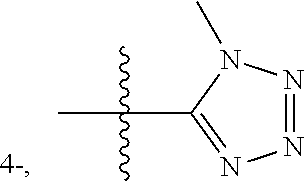 |
|
| 3-126 | Cl |
 |
|
| 3-127 | Cl |
 |
|
| 3-128 | CF2CF3 |
 |
|
| 3-129 | Cl |
 |
|
| 3-130 | Cl |
 |
|
| 3-131 | Cl |
 |
|
| 3-132 | CF3 |
 |
|
| 3-133 | CF3 |
 |
|
| 3-134 CF3 |
 |
||
| 3-135 | CF3 |
 |
|
| 3-136 | CF3 | 3-, OEt 6-, CH2F | |
| 3-137 | CF3 | 3-, F 4-, Me 5-, F | |
| TABLE 4 |
| Structure of group M in the derivative Compound I′ |
| I′ | |
 |
|
| No. | M |
| M-1 |
 |
| M-2 |
 |
| M-3 |
 |
| M-4 |
 |
| M-5 |
 |
| M-6 |
 |
| M-7 |
 |
| M-8 |
 |
| M-9 |
 |
| M-10 |
 |
| M-11 |
 |
| M-12 |
 |
| M-13 |
 |
| M-14 |
 |
| M-15 |
 |
| M-16 |
 |
| M-17 |
 |
| M-18 |
 |
| M-19 |
 |
| M-20 |
 |
| M-21 |
 |
| M-22 |
 |
| M-23 |
 |
| M-24 |
 |
| M-25 |
 |
| M-26 |
 |
| M-27 |
 |
| M-28 |
 |
| M-29 |
 |
| M-30 |
 |
| M-31 |
 |
| M-32 |
 |
| M-33 |
 |
| M-34 |
 |
| M-35 |
 |
| M-36 |
 |
| M-37 |
 |
| M-38 |
 |
| M-39 |
 |
| M-40 |
 |
| M-41 |
 |
| M-42 |
 |
| M-43 |
 |
| M-44 |
 |
| M-45 |
 |
| M-46 |
 |
| M-47 |
 |
| M-48 |
 |
| M-49 |
 |
| M-50 |
 |
| M-51 |
 |
| M-52 |
 |
| M-53 |
 |
| M-54 |
 |
| M-55 |
 |
| M-56 |
 |
| M-57 |
 |
| M-58 |
 |
| M-59 |
 |
| M-60 |
 |
| M-61 |
 |
| M-62 |
 |
| M-63 |
 |
| M-64 |
 |
| M-65 |
 |
| M-66 |
 |
| M-67 |
 |
| M-68 |
 |
| M-69 |
 |
| M-70 |
 |
| M-71 |
 |
| M-72 |
 |
| M-73 |
 |
| M-74 |
 |
| M-75 |
 |
| M-76 |
 |
| M-77 |
 |
| M-78 |
 |
| M-79 |
 |
| M-80 |
 |
| M-81 |
 |
| M-82 |
 |
| M-83 |
 |
| M-84 |
 |
| M-85 |
 |
| M-86 |
 |
| M-87 |
 |
| M-88 |
 |
| M-89 |
 |
| M-90 |
 |
| M-91 |
 |
| M-92 |
 |
| M-93 |
 |
| M-94 |
 |
| M-95 |
 |
| M-96 |
 |
| M-97 |
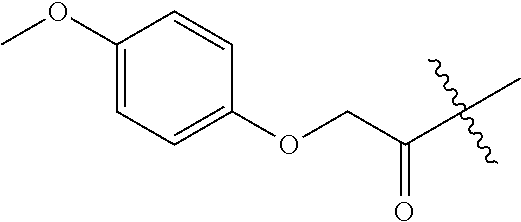 |
| M-98 |
 |
| M-99 |
 |
| M-100 |
 |
| M-101 |
 |
| M-102 |
 |
| M-103 |
 |
| M-104 |
 |
| M-105 |
 |
| M-106 |
 |
| M-107 |
 |
| M-108 |
 |
| M-109 |
 |
| M-110 |
 |
| M-111 |
 |
| M-112 |
 |
| M-113 |
 |
| M-114 |
 |
| M-115 |
 |
| M-116 |
 |
| M-117 |
 |
| M-118 |
 |
| M-119 |
 |
| M-120 |
 |
| M-121 |
 |
| M-122 |
 |
| M-123 |
 |
| M-124 |
 |
| M-125 |
 |
| M-126 |
 |
| M-127 |
 |
| M-128 |
 |
| M-129 |
 |
| M-130 |
 |
| M-131 |
 |
| M-132 |
 |
| M-133 |
 |
| M-134 |
 |
| M-135 |
 |
| M-136 |
 |
| M-137 |
 |
| M-138 |
 |
| M-139 |
 |
| M-140 |
 |
| M-141 |
 |
| M-142 |
 |
| M-143 |
 |
| M-144 |
 |
| M-145 |
 |
| M-146 |
 |
| M-147 |
 |
| M-148 |
 |
| M-149 |
 |
| M-150 |
 |
| M-151 |
 |
| M-152 |
 |
| M-153 |
 |
| M-154 |
 |
| M-155 |
 |
| M-156 |
 |
| M-157 |
 |
| M-158 |
 |
| M-159 |
 |
| M-160 |
 |
| M-161 |
 |
| M-162 |
 |
| M-163 |
 |
| M-164 |
 |
| M-165 |
 |
| M-166 |
 |
| M-167 |
 |
| M-168 |
 |
| M-169 |
 |
| M-170 |
 |
| M-171 |
 |
| M-172 |
 |
| M-173 |
 |
| M-174 |
 |
| M-175 |
 |
| M-176 |
 |
| M-177 |
 |
| M-178 |
 |
| M-179 |
 |
| M-180 |
 |
| M-181 |
 |
| M-182 |
 |
| M-183 |
 |
| M-184 |
 |
| M-185 |
 |
| M-186 |
 |
| M-187 |
 |
| M-188 |
 |
| M-189 |
 |
| M-190 |
 |
| M-191 |
 |
| M-192 |
 |
| M-193 |
 |
| M-194 |
 |
| M-195 |
 |
| M-196 |
 |
| M-197 | Me |
| M-198 | Et |
| M-199 |
 |
| M-200 | CN |
| M-201 |
 |
| M-202 |
 |
| M-203 |
 |
| M-204 |
 |
| M-205 |
 |
| M-206 |
 |
| M-207 |
 |
| M-208 |
 |
| M-209 |
 |
| M-210 |
 |
| M-211 |
 |
| M-212 |
 |
| M-213 |
 |
| M-214 |
 |
| M-215 |
 |
| M-216 |
 |
| TABLE 5 |
| Structure and 1HNMR data of the derivative Compound I′ |
| I′ | |
 |
|
| No. | X |
 |
M | 1HNMR |
| I-1 | Cl |
 |
M-63 | 1H NMR (500 MHz, Chloroform-d) δ 8.85 (d, J = 1.2 Hz, 1H), 8.64 (dd, J = 5.1, 1.3 Hz, 1H), 7.68-7.47 (m, 1H), 7.55 (dd, J = 8.1, 4.9 Hz, 1H), 7.52 (s, 1H), 3.78-3.67 (m, 4H), 3.45- 3.33 (m, 4H) |
| I-2 | Cl |
 |
M-205 | 1H NMR (500 MHz, DMSO-d6) δ 8.66 (d, J = 5.3 Hz, 2H), 7.91 (d, J = 5.0 Hz, 2H), 7.39 (s, 1H). 5.63 (q, J = 7.5 Hz, 1H), 4.39 (hept, J = 8.0 Hz, 1H), 1.49 (d, J =7.5 Hz, 3H), 1.42 (d, J = 8.0 Hz, 6H). |
| I-3 | Cl |
 |
M-123 | 1H NMR (500 MHz, Chloroform-d) δ 9.05 (d, J = 1.1 Hz, 1H), 8.64 (dd, J = 5.1, 1.3 Hz, 1H), 8.08-8.01 (m, 1H), 7.86 (s, 1H), 7.55 (dd, J = 8.0, 5.0 Hz, 1H), 3.04-2.88 (m, 4H), 1.53- 1.33 (m, 4H), 1.43-1.32 (m, 2H) |
| I-4 | Cl |
 |
M-52 | 1H NMR (500 MHz, Chloroform-d) δ 8.85 (d, J = 1.2 Hz, 1H), 8.64 (dd, J = 5.1, 1.3 Hz, 1H), 7.68-7.47 (m, 1H), 7.55 (dd, J = 8.1, 4.9 Hz, 1H), 7.52 (s, 1H), 7.31 (dd, J = 8.0, 7.5 Hz, 1H), 6.36 (dd, J = 7.5, 1.5 Hz, 1H), 5.54 (dd, J = 8.0, 1.7 Hz, 1H). |
| I-5 | Cl |
 |
M-165 | 1H NMR (500 MHz, Chloroform-d) δ 8.86 (d, J = 1.2 Hz, 1H), 8.64 (dd, J = 5.1, 1.3 Hz, 1H), 7.99-7.82 (m, 1H), 7.55 (dd, J = 8.0, 5.0 Hz, 1H), 7.42 (s, 1H), 2.56 (s, 3H), 2.43 (s, 3H). |
| I-6 | Cl |
 |
M-216 | 1H NMR (500 MHz, Chloroform-d) δ 7.55-7.47 (m, 2H), 7.41-7.33 (m, 2H), 7.16 (s, 1H), 2.59 (q, J = 8.0 Hz, 2H), 2.47 (s, 3H), 1.01 (t, J = 8.0 Hz, 3H). |
| I-7 | Cl |
 |
M-53 | (500 MHz, Chloroform-d) δ 8.88 (d, J = 1.5 Hz, 1H), 8.64 (dd, J = 5.0, 1.5 Hz, 1H), 7.99-7.83 (m, 1H), 7.55 (dd, J = 8.0, 5.0 Hz, 1H), 7.50 (s, 1H), 2.85 (t, J = 7.5 Hz, 2H), 1.94-1.80 (m, 2H), 1.38-1.20 (m, 10H), 0.89 (t, J = 7.5 Hz, 3H). |
| I-8 | Cl |
 |
M-1 | |
| I-9 | Cl |
 |
M-2 | |
| I-10 | Cl |
 |
M-7 | |
| I-11 | Cl |
 |
M-12 | |
| I-12 | Cl |
 |
M-24 | |
| I-13 | Cl |
 |
M-27 | |
| I-14 | Cl |
 |
M-37 | |
| I-15 | Cl |
 |
M-58 | |
| I-16 | Cl |
 |
M-60 | |
| I-17 | Cl |
 |
M-77 | |
| I-18 | Cl |
 |
M-92 | |
| I-19 | Cl |
 |
M-104 | |
| I-20 | Cl |
 |
M-108 | |
| I-21 | Cl |
 |
M-120 | |
| I-22 | Cl |
 |
M-121 | |
| I-23 | Cl |
 |
M-125 | |
| I-24 | Cl |
 |
M-126 | |
| I-25 | Cl |
 |
M-127 | |
| I-26 | Cl |
 |
M-128 | |
| I-27 | Cl |
 |
M-131 | |
| I-28 | Cl |
 |
M-132 | |
| I-29 | Cl |
 |
M-162 | |
| I-30 | Cl |
 |
M-168 | |
| I-31 | Cl |
 |
M-198 | |
| I-32 | Cl |
 |
M-199 | |
| I-33 | Br |
 |
M-200 | |
| I-34 | CHF2 |
 |
M-203 | |
| I-35 | Me |
 |
M-204 | |
| I-36 | OEt |
 |
M-207 | |
| I-37 | OCF3 |
 |
M-208 | |
| I-38 | CN |
 |
M-209 | |
| I-39 | F |
 |
M-211 | |


(1.1equiv.), potassium carbonate (3 equiv.) and acetonitrile (10V) were charged, then heated to 80° C. and stirred for 6 h. TLC detection showed the completion of the reaction. The reaction system was subjected to vacuum distillation to remove acetonitrile, then charged with water for dissolution and extracted with ethyl acetate (5V*3), which was then removed by vacuum distillation. The residue was separated through silica gel column chromatography (100 mesh to 200 mesh) to obtain the product with yield of 82%.
5. Synthesis of Compound I-4


(1.2 equiv.) in a dropwise manner in ice bath, and stirred at room temperature for 30 min. TLC detection showed the completion of the reaction. The reaction system was added with water (5V) and extracted with dichloromethane (5V*3), which was then removed by vacuum distillation. The residue was separated through silica gel column chromatography (100 mesh to 200 mesh) to obtain the product with yield of 76%.
6. Synthesis of Compound I-5


(1.2 equiv.), potassium carbonate (3 equiv.) and acetonitrile (10 V) were charged, then heated to 80° C. and stirred for 18 h. TLC detection showed the completion of the reaction. The reaction system was subjected to vacuum distillation to remove acetonitrile, then added with water (5V) for dissolution and extracted with ethyl acetate (5V*3), which was then removed by vacuum distillation. The residue was separated through silica gel column chromatography (100 mesh to 200 mesh) to obtain the product with yield of 62%.
7. Synthesis of Compound I-6


(1.2 equiv.), potassium hydrate (3 equiv.) and N,N-dimethyl formamide (10 V) were charged, then heated to 100° C. and stirred for 18 h. TLC detection showed the completion of the reaction, then the reaction was charged with water (5V) for dissolution and extracted with ethyl acetate (5V*3), which was then removed by vacuum distillation. The residue was separated through silica gel column chromatography (100 mesh to 200 mesh) to obtain the product with yield of 49%.
Evaluation of biological activity:
-
- Level 10: completely dead;
- Level 9: above 90% growth inhibition rate;
- Level 8: above 80% growth inhibition rate;
- Level 7: above 70% growth inhibition rate;
- Level 6: above 60% growth inhibition rate;
- Level 5: above 50% growth inhibition rate;
- Level 4: above 40% growth inhibition rate;
- Level 3: above 30% growth inhibition rate;
- Level 2: above 20% growth inhibition rate;
- Level 1: below 20% growth inhibition rate;
- Level 0: no effect.
| TABLE 6 |
| Experiment on weed control effect of compounds of Formula I |
| and their derivatives of Formula I' in Post-emergence stage |
| Com- | |||||
| pound | Amaranthus | Rorippa | Veronica | ||
| No. | retroflexus | indica | polita | Chenopodiaceae | Dose |
| 1-1 | 10 | 10 | 10 | 10 | 2000 g/ha |
| 1-2 | 10 | 10 | 10 | 10 | 2000 g/ha |
| 1-3 | 10 | 10 | 10 | 10 | 2000 g/ha |
| 1-4 | 10 | 10 | 10 | 10 | 2000 g/ha |
| 1-5 | 10 | 10 | 10 | 10 | 2000 g/ha |
| 1-6 | 10 | 10 | 7 | 10 | 2000 g/ha |
| 1-7 | 10 | 10 | 10 | 10 | 2000 g/ha |
| 1-8 | 10 | 10 | 10 | 10 | 2000 g/ha |
| 1-11 | 10 | 10 | 10 | 10 | 2000 g/ha |
| 1-23 | 10 | 10 | 10 | 10 | 2000 g/ha |
| 1-57 | 10 | 10 | 10 | 10 | 2000 g/ha |
| 1-58 | 10 | 10 | 10 | 10 | 2000 g/ha |
| 1-60 | 10 | 10 | 7 | 10 | 2000 g/ha |
| 1-63 | 10 | 10 | 10 | 10 | 2000 g/ha |
| 1-90 | 10 | 10 | 7 | 10 | 2000 g/ha |
| 1-105 | 10 | 10 | 10 | 10 | 2000 g/ha |
| 1-131 | 10 | 10 | 10 | 10 | 3000 g/ha |
| 2-3 | 10 | 10 | 10 | 10 | 1000 g/ha |
| 2-5 | 10 | 10 | 10 | 10 | 1000 g/ha |
| 2-10 | 10 | 10 | 10 | 10 | 1000 g/ha |
| 2-11 | 10 | 10 | 10 | 10 | 1000 g/ha |
| 2-13 | 10 | 10 | 10 | 10 | 1000 g/ha |
| 2-23 | 10 | 10 | 10 | 10 | 1000 g/ha |
| 3-3 | 10 | 10 | 10 | 10 | 2000 g/ha |
| 3-7 | 10 | 10 | 10 | 10 | 2000 g/ha |
| 3-8 | 10 | 10 | 10 | 10 | 2000 g/ha |
| 3-18 | 10 | 10 | 10 | 10 | 2000 g/ha |
| 3-19 | 10 | 10 | 10 | 10 | 2000 g/ha |
| 3-30 | 10 | 10 | 10 | 10 | 2000 g/ha |
| I-1 | 10 | 10 | 10 | 10 | 2000 g/ha |
| I-4 | 10 | 10 | 10 | 10 | 2000 g/ha |
| I-7 | 10 | 10 | 10 | 10 | 2000 g/ha |

| TABLE 7 |
| Results of comparison experiment |
| Echinochloa | Setaria | Digitaria | Rorippa | Galium | Veronica | ||
| Compound | crus-galli | viridis | sanguinalis | indica | aparine | polita | Dose |
| 1-1 | 8 | 10 | 7 | 10 | 9 | 9 | 300 g/ha |
| 1-2 | 10 | 10 | 8 | 10 | 9 | 10 | 300 g/ha |
| 1-4 | 8 | 10 | 8 | 10 | 10 | 10 | 300 g/ha |
| 1-7 | 10 | 10 | 8 | 10 | 9 | 10 | 300 g/ha |
| 2-3 | 10 | 10 | 10 | 10 | 10 | 10 | 300 g/ha |
| 1-7 | 8 | 9 | 7 | 10 | 9 | 9 | 300 g/ha |
| Control | 0 | 2 | 1 | 3 | 5 | 6 | 300 g/ha |
| Compound A | |||||||
| Control | 0 | 2 | 0 | 3 | 4 | 6 | 300 g/ha |
| Compound B | |||||||
Claims (15)


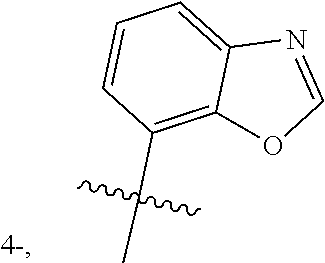


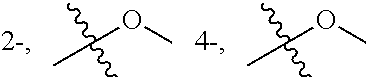


Applications Claiming Priority (5)
| Application Number | Priority Date | Filing Date | Title |
|---|---|---|---|
| CN201810104963.4 | 2018-02-02 | ||
| CN201810104963 | 2018-02-02 | ||
| CN201811035345.5A CN110878081B (en) | 2018-09-06 | 2018-09-06 | Pyridinyl ring substituted pyridazinol compounds and derivatives thereof, preparation method, weeding composition and application |
| CN201811035345.5 | 2018-09-06 | ||
| PCT/CN2018/105407 WO2019148850A1 (en) | 2018-02-02 | 2018-09-13 | Pyridine ring-substituted pyridazinol compound and derivatives thereof, preparation method, herbicidal composition, and application |
Publications (2)
| Publication Number | Publication Date |
|---|---|
| US20210032229A1 US20210032229A1 (en) | 2021-02-04 |
| US12084435B2 true US12084435B2 (en) | 2024-09-10 |
Family
ID=67479542
Family Applications (1)
| Application Number | Title | Priority Date | Filing Date |
|---|---|---|---|
| US16/966,686 Active 2041-06-15 US12084435B2 (en) | 2018-02-02 | 2018-09-13 | Pyridine ring-substituted pyridazinol compounds and derivatives, preparation methods, herbicidal compositions and applications thereof |
Country Status (2)
| Country | Link |
|---|---|
| US (1) | US12084435B2 (en) |
| WO (1) | WO2019148850A1 (en) |
Families Citing this family (2)
| Publication number | Priority date | Publication date | Assignee | Title |
|---|---|---|---|---|
| CN111820224B (en) * | 2019-04-22 | 2022-04-05 | 江苏清原农冠杂草防治有限公司 | Herbicidal composition comprising trifluoromethyl pyridazinol compound and application thereof |
| BR112022002869A2 (en) * | 2019-08-16 | 2022-05-17 | Qingdao Kingagroot Chemical Compound Co Ltd | Pyridazinol compound, derivative thereof, method of preparation for it, herbicidal composition and use of it |
Citations (27)
| Publication number | Priority date | Publication date | Assignee | Title |
|---|---|---|---|---|
| AT356966B (en) | 1978-02-14 | 1980-06-10 | Chemie Linz Ag | HERBICIDAL AGENT |
| AT375071B (en) | 1982-05-19 | 1984-06-25 | Chemie Linz Ag | METHOD FOR PRODUCING PHENYLPYRIDAZINE COMPOUNDS |
| EP0131624A1 (en) | 1983-01-17 | 1985-01-23 | Monsanto Co | PLASMIDES FOR TRANSFORMING PLANT CELLS. |
| EP0142924A2 (en) | 1983-09-26 | 1985-05-29 | Mycogen Plant Science, Inc. | Insect resistant plants |
| EP0193259A1 (en) | 1985-01-18 | 1986-09-03 | Plant Genetic Systems N.V. | Modifying plants by genetic engineering to combat or control insects |
| EP0221044A1 (en) | 1985-10-25 | 1987-05-06 | Monsanto Company | Novel plant vectors |
| EP0242236A1 (en) | 1986-03-11 | 1987-10-21 | Plant Genetic Systems N.V. | Plant cells resistant to glutamine synthetase inhibitors, made by genetic engineering |
| EP0257993A2 (en) | 1986-08-26 | 1988-03-02 | E.I. Du Pont De Nemours And Company | Nucleic acid fragment encoding herbicide resistant plant acetolactate synthase |
| US5013659A (en) | 1987-07-27 | 1991-05-07 | E. I. Du Pont De Nemours And Company | Nucleic acid fragment encoding herbicide resistant plant acetolactate synthase |
| WO1991013972A1 (en) | 1990-03-16 | 1991-09-19 | Calgene, Inc. | Plant desaturases - compositions and uses |
| DE4013734A1 (en) | 1990-04-28 | 1991-10-31 | Agrolinz Agrarchemikalien Muen | Herbicidal compsns. contg. 3-phenyl-pyridazine derivs. - active against mono- and dicotyledonous weeds in e.g. cereal, onion, tomato or peanut crops |
| WO1991019806A1 (en) | 1990-06-18 | 1991-12-26 | Monsanto Company | Increased starch content in plants |
| WO1992000377A1 (en) | 1990-06-25 | 1992-01-09 | Monsanto Company | Glyphosate tolerant plants |
| WO1992011376A1 (en) | 1990-12-21 | 1992-07-09 | Amylogene Hb | Genetically engineered modification of potato to form amylopectin-type starch |
| WO1992014827A1 (en) | 1991-02-13 | 1992-09-03 | Institut Für Genbiologische Forschung Berlin Gmbh | Plasmids containing dna-sequences that cause changes in the carbohydrate concentration and the carbohydrate composition in plants, as well as plant cells and plants containing these plasmids |
| US5362708A (en) | 1990-04-05 | 1994-11-08 | Agrolinz Agrarchemikalien Gmbh | Herbicidal agent |
| GB2340397A (en) | 1998-08-12 | 2000-02-23 | Sumitomo Chemical Co | Synergistic herbicidal compositions |
| CN1543455A (en) | 2001-08-17 | 2004-11-03 | 三共农业株式会社 | 3-phenoxy-4-pyridazinol derivatives and herbicidal compositions containing the same |
| CN101041639A (en) | 2005-03-17 | 2007-09-26 | 南开大学 | 4-substituted benzene radical pyridazine compound and weed removal active |
| CN101516868A (en) | 2006-07-17 | 2009-08-26 | 先正达参股股份有限公司 | Novel pyridazine derivatives |
| US20100004443A1 (en) * | 2006-07-26 | 2010-01-07 | Centre National De La Recherche Scientifique (C.N. | Linear pyridazine and pyrrole compounds, method for obtaining them and applications |
| CN101648914A (en) | 2009-09-07 | 2010-02-17 | 南开大学 | Method for preparing 6-methyl-3-(3,4-dichloroanilino)-4-(3-trifluoromethylphenyl)pyridazine and phytocidal activity thereof |
| JP2010235591A (en) | 2009-03-13 | 2010-10-21 | Sumitomo Chemical Co Ltd | Herbicidal composition |
| JP2011246380A (en) | 2010-05-26 | 2011-12-08 | Sumitomo Chemical Co Ltd | Pyridazine compound and use thereof |
| CN105121411A (en) | 2013-04-15 | 2015-12-02 | 杜邦公司 | Fungicidal amides |
| CN105451558A (en) | 2013-08-05 | 2016-03-30 | 先正达参股股份有限公司 | Pyrazolyl pyrrolinones and their use as herbicides |
| WO2017148787A1 (en) | 2016-03-04 | 2017-09-08 | Galapagos Nv | Novel compounds and pharmaceutical compositions thereof for the treatment of fibrosis |
-
2018
- 2018-09-13 WO PCT/CN2018/105407 patent/WO2019148850A1/en not_active Ceased
- 2018-09-13 US US16/966,686 patent/US12084435B2/en active Active
Patent Citations (30)
| Publication number | Priority date | Publication date | Assignee | Title |
|---|---|---|---|---|
| AT356966B (en) | 1978-02-14 | 1980-06-10 | Chemie Linz Ag | HERBICIDAL AGENT |
| AT375071B (en) | 1982-05-19 | 1984-06-25 | Chemie Linz Ag | METHOD FOR PRODUCING PHENYLPYRIDAZINE COMPOUNDS |
| EP0131624A1 (en) | 1983-01-17 | 1985-01-23 | Monsanto Co | PLASMIDES FOR TRANSFORMING PLANT CELLS. |
| EP0142924A2 (en) | 1983-09-26 | 1985-05-29 | Mycogen Plant Science, Inc. | Insect resistant plants |
| EP0193259A1 (en) | 1985-01-18 | 1986-09-03 | Plant Genetic Systems N.V. | Modifying plants by genetic engineering to combat or control insects |
| EP0221044A1 (en) | 1985-10-25 | 1987-05-06 | Monsanto Company | Novel plant vectors |
| EP0242236A1 (en) | 1986-03-11 | 1987-10-21 | Plant Genetic Systems N.V. | Plant cells resistant to glutamine synthetase inhibitors, made by genetic engineering |
| EP0242246A1 (en) | 1986-03-11 | 1987-10-21 | Plant Genetic Systems N.V. | Plant cells resistant to glutamine synthetase inhibitors, made by genetic engineering |
| EP0257993A2 (en) | 1986-08-26 | 1988-03-02 | E.I. Du Pont De Nemours And Company | Nucleic acid fragment encoding herbicide resistant plant acetolactate synthase |
| US5013659A (en) | 1987-07-27 | 1991-05-07 | E. I. Du Pont De Nemours And Company | Nucleic acid fragment encoding herbicide resistant plant acetolactate synthase |
| WO1991013972A1 (en) | 1990-03-16 | 1991-09-19 | Calgene, Inc. | Plant desaturases - compositions and uses |
| US5362708A (en) | 1990-04-05 | 1994-11-08 | Agrolinz Agrarchemikalien Gmbh | Herbicidal agent |
| DE4013734A1 (en) | 1990-04-28 | 1991-10-31 | Agrolinz Agrarchemikalien Muen | Herbicidal compsns. contg. 3-phenyl-pyridazine derivs. - active against mono- and dicotyledonous weeds in e.g. cereal, onion, tomato or peanut crops |
| WO1991019806A1 (en) | 1990-06-18 | 1991-12-26 | Monsanto Company | Increased starch content in plants |
| WO1992000377A1 (en) | 1990-06-25 | 1992-01-09 | Monsanto Company | Glyphosate tolerant plants |
| WO1992011376A1 (en) | 1990-12-21 | 1992-07-09 | Amylogene Hb | Genetically engineered modification of potato to form amylopectin-type starch |
| WO1992014827A1 (en) | 1991-02-13 | 1992-09-03 | Institut Für Genbiologische Forschung Berlin Gmbh | Plasmids containing dna-sequences that cause changes in the carbohydrate concentration and the carbohydrate composition in plants, as well as plant cells and plants containing these plasmids |
| GB2340397A (en) | 1998-08-12 | 2000-02-23 | Sumitomo Chemical Co | Synergistic herbicidal compositions |
| DE19937814A1 (en) | 1998-08-12 | 2000-02-24 | Sumitomo Chemical Co | Herbicidal composition comprises a 2-chloro-4-fluoro-5-(4-methyl-5-trifluoromethyl-3-pyridazinon-2-yl)phenyl(1-5C) non-cyclic hydrocarbyl ether, and fluazolate |
| CN1543455A (en) | 2001-08-17 | 2004-11-03 | 三共农业株式会社 | 3-phenoxy-4-pyridazinol derivatives and herbicidal compositions containing the same |
| CN101041639A (en) | 2005-03-17 | 2007-09-26 | 南开大学 | 4-substituted benzene radical pyridazine compound and weed removal active |
| CN101516868A (en) | 2006-07-17 | 2009-08-26 | 先正达参股股份有限公司 | Novel pyridazine derivatives |
| US20100004443A1 (en) * | 2006-07-26 | 2010-01-07 | Centre National De La Recherche Scientifique (C.N. | Linear pyridazine and pyrrole compounds, method for obtaining them and applications |
| JP2010235591A (en) | 2009-03-13 | 2010-10-21 | Sumitomo Chemical Co Ltd | Herbicidal composition |
| CN102421286A (en) | 2009-03-13 | 2012-04-18 | 住友化学株式会社 | Herbicidal composition |
| CN101648914A (en) | 2009-09-07 | 2010-02-17 | 南开大学 | Method for preparing 6-methyl-3-(3,4-dichloroanilino)-4-(3-trifluoromethylphenyl)pyridazine and phytocidal activity thereof |
| JP2011246380A (en) | 2010-05-26 | 2011-12-08 | Sumitomo Chemical Co Ltd | Pyridazine compound and use thereof |
| CN105121411A (en) | 2013-04-15 | 2015-12-02 | 杜邦公司 | Fungicidal amides |
| CN105451558A (en) | 2013-08-05 | 2016-03-30 | 先正达参股股份有限公司 | Pyrazolyl pyrrolinones and their use as herbicides |
| WO2017148787A1 (en) | 2016-03-04 | 2017-09-08 | Galapagos Nv | Novel compounds and pharmaceutical compositions thereof for the treatment of fibrosis |
Non-Patent Citations (11)
| Title |
|---|
| Braun et al., The General Mitochondrial Processing Peptidase from Potato Is an Integral Part of Cytochrome C Reductase of The Respiratory Chain, EMBO J. 11:3219-3227 (1992). |
| Christou P, Transformation Technology, Trends in Plant Science, 1:423-431 (1996). |
| Deyrup et al., Cycloadditions of 4-0xazolin-2-Ones, Tetrahedron Letters No. 36, pp. 3115-31181 1977 (Year: 1977). * |
| Deyrup, J.A. et al., Cycloadditions of 4-Oxazolin-2-ones, Tetrahedron Letters, 36:3115-3118 (1977). |
| International Patent Application No. PCT/CN2018/105407: International Search Report mailed Jun. 11, 2019. |
| Kim E-Y et al., Discovery of substituted pyrazol-4-yl pyridazinone derivatives as novel c-Met kinase inhibitors, Arch. Pharm. Res., 39:453-464 (2016). |
| Lai et al., A biocompatible inverse electron demand Diels-Alder reaction of aldehyde and tetrazine promoted by proline†New J. Chem., 2016, 40, 8194-8197, 2016 (Year: 2016). * |
| Richard B. Silverman et al., The Organic Chemistry of Drug Design and Drug Action, Second Edition, the cover and pp. 19-23, Jan. 31, 2008. |
| Secor et al., Inhibition of Barnyardgrass 4-Hydroxyphenylpyruvate Dioxygenase by Sulcotrione (Plant Physiol. (1994) 106: 1429-1433) (Year: 1994). * |
| Sonnewald et al., Transgenic Tobacco Plants Expressing Yeast-Derived Invertase In Either the Cytosol, Vacuole or Apoplast: A Powerful Tool for Studying Sucrose Metabolism and Sink/Source Interactions, Plant J. 1:95-106 (1991). |
| Wolter et al., Rbcs Genes in Solanum Tuberosum: Conservation of Transit Peptide and Exon Shuffling During Evolution, Proc. Natl. Acad. Sci. USA, 85:846-850 (1988). |
Also Published As
| Publication number | Publication date |
|---|---|
| BR112020015704A2 (en) | 2020-12-08 |
| WO2019148850A1 (en) | 2019-08-08 |
| US20210032229A1 (en) | 2021-02-04 |
Similar Documents
| Publication | Publication Date | Title |
|---|---|---|
| US20230183193A1 (en) | 4-difluoromethyl benzoyl amides with herbicidal action | |
| US20080274892A1 (en) | Novel Haloalkylsulfonanilide Derivative, Herbicide, and Method of Use Thereof | |
| US9232801B2 (en) | 1,2,4-triazine-3,5-dione-6-carboxamides and use thereof as herbicide | |
| US9988347B2 (en) | Herbicidally active arylcarboxylic acid amides | |
| AU2017219708A1 (en) | Quinazolinedione-6-carbonyl derivatives and their use as herbicides | |
| JP2018532733A (en) | Novel alkynyl-substituted 3-phenylpyrrolidine-2,4-diones and their use as herbicides | |
| US9815802B2 (en) | Herbicidally active N-(1-methyltetrazol-5-yl)benzoic acid amides | |
| US9370184B2 (en) | 6-pyridone-2-carbamoyl-azoles and their use as herbicides | |
| US20210032229A1 (en) | Pyridine ring-substituted pyridazinol compounds and derivatives, preparation methods, herbicidal compositions and applications thereof | |
| KR102687540B1 (en) | 3-Acyl-benzamide and its use as herbicide | |
| US12024500B2 (en) | Five-membered ring-substituted pyridazinol compounds and derivatives, preparation methods, herbicidal compositions and applications thereof | |
| US9988359B2 (en) | Herbicidally active benzoic acid amides | |
| US20200054011A1 (en) | Quinazolinedione-6-carbonyl derivatives and their use as herbicides | |
| EA042664B1 (en) | 4-DIFLUOROMETHYLBENZOYLAMIDES WITH HERBICIDAL ACTION |
Legal Events
| Date | Code | Title | Description |
|---|---|---|---|
| AS | Assignment |
Owner name: QINGDAO KINGAGROOT CHEMICAL COMPOUND CO., LTD., CHINA Free format text: ASSIGNMENT OF ASSIGNORS INTEREST;ASSIGNORS:LIAN, LEI;ZHENG, YURONG;HUA, RONGBAO;AND OTHERS;REEL/FRAME:053376/0601 Effective date: 20200730 |
|
| FEPP | Fee payment procedure |
Free format text: ENTITY STATUS SET TO UNDISCOUNTED (ORIGINAL EVENT CODE: BIG.); ENTITY STATUS OF PATENT OWNER: LARGE ENTITY |
|
| STPP | Information on status: patent application and granting procedure in general |
Free format text: APPLICATION DISPATCHED FROM PREEXAM, NOT YET DOCKETED |
|
| STPP | Information on status: patent application and granting procedure in general |
Free format text: DOCKETED NEW CASE - READY FOR EXAMINATION |
|
| STPP | Information on status: patent application and granting procedure in general |
Free format text: NON FINAL ACTION MAILED |
|
| STPP | Information on status: patent application and granting procedure in general |
Free format text: RESPONSE TO NON-FINAL OFFICE ACTION ENTERED AND FORWARDED TO EXAMINER |
|
| STPP | Information on status: patent application and granting procedure in general |
Free format text: NON FINAL ACTION MAILED |
|
| STPP | Information on status: patent application and granting procedure in general |
Free format text: RESPONSE TO NON-FINAL OFFICE ACTION ENTERED AND FORWARDED TO EXAMINER |
|
| STPP | Information on status: patent application and granting procedure in general |
Free format text: NOTICE OF ALLOWANCE MAILED -- APPLICATION RECEIVED IN OFFICE OF PUBLICATIONS |
|
| ZAAB | Notice of allowance mailed |
Free format text: ORIGINAL CODE: MN/=. |
|
| STPP | Information on status: patent application and granting procedure in general |
Free format text: NOTICE OF ALLOWANCE MAILED -- APPLICATION RECEIVED IN OFFICE OF PUBLICATIONS |
|
| STPP | Information on status: patent application and granting procedure in general |
Free format text: PUBLICATIONS -- ISSUE FEE PAYMENT VERIFIED |
|
| STCF | Information on status: patent grant |
Free format text: PATENTED CASE |
|
| CC | Certificate of correction |